
Toghu, sometimes written Atoghu, is the embroidered cloth of Cameroon’s Northwest Grassfields: bright thread worked in bands and circles over black or dark velvet. It was once reserved for royalty and dignitaries, and it still turns up at the occasions that matter most, which is why so many Bamenda brides want it on the wedding day. Today you’ll see it on traditional garments and on gowns cut like any Western bridal dress. When I style a Toghu bride, the cloth makes most of the decisions. Velvet is heavy and warm, embroidery is stiff where it is densest, and every accessory has to sit next to that pattern without fighting it. Below are twenty silhouettes, from regal velvet gowns to wrapper sets and lighter dresses trimmed with panels, each with what I’d watch for in the fitting room.
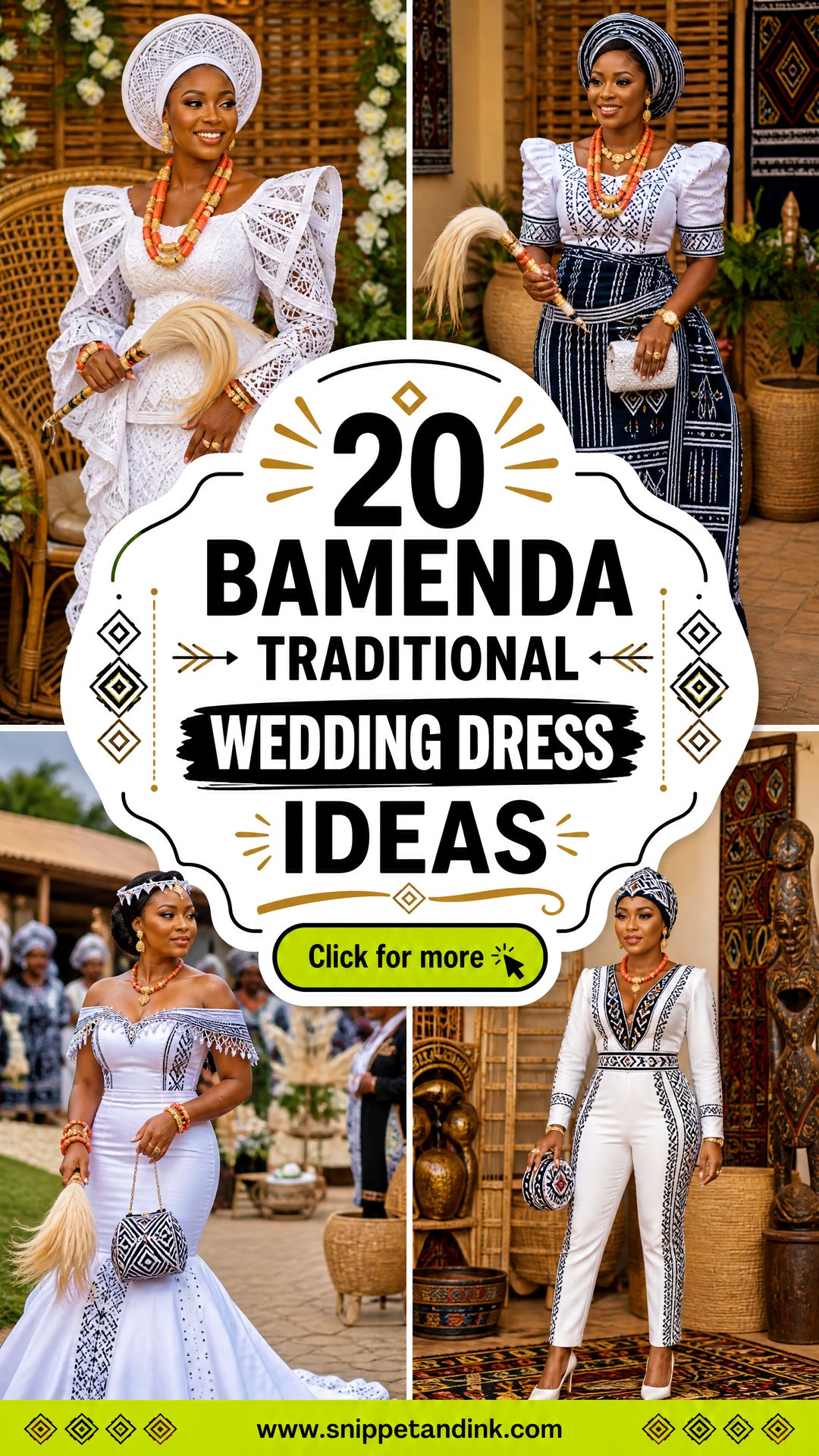
Commissioning Toghu Cloth Before the Dress Is Even Cut
The embroidered cloth is the slow part, so I start a Toghu bride with the fabric, not the sketch. Fully hand-worked pieces take weeks, and a good embroiderer often has a queue, especially in the months when most traditional weddings happen. Order it before you settle details like the sleeve length.
When you look at samples, turn them over. Hand embroidery shows small irregular knots and stitches on the back, while machine work has a dense, even mesh and often a stabilizer sheet. Both are used for bridal wear now, and machine pieces cost less and arrive faster. What matters is knowing which one you are paying for.
- Ask for enough embroidered yardage to cover the pattern pieces plus a spare strip, so a cutting mistake doesn’t mean waiting for a new panel.
- Confirm the base is true velvet, not velour or printed fabric, by checking that the pile runs one way when you brush it with your palm.
- Request that your tailor sees the cloth before quoting, since dense embroidery is harder to sew through and some tailors charge more for it.
- Plan at least two fittings in the real fabric. A muslin test fits differently once heavy velvet is on the body.
If the family is gifting an heirloom piece to be incorporated, tell the tailor at the start. Old velvet can be fragile at the folds, and they’ll want to plan the cut around any worn areas rather than discover them with scissors.
1. Black Bamenda Toghu Wedding Gown
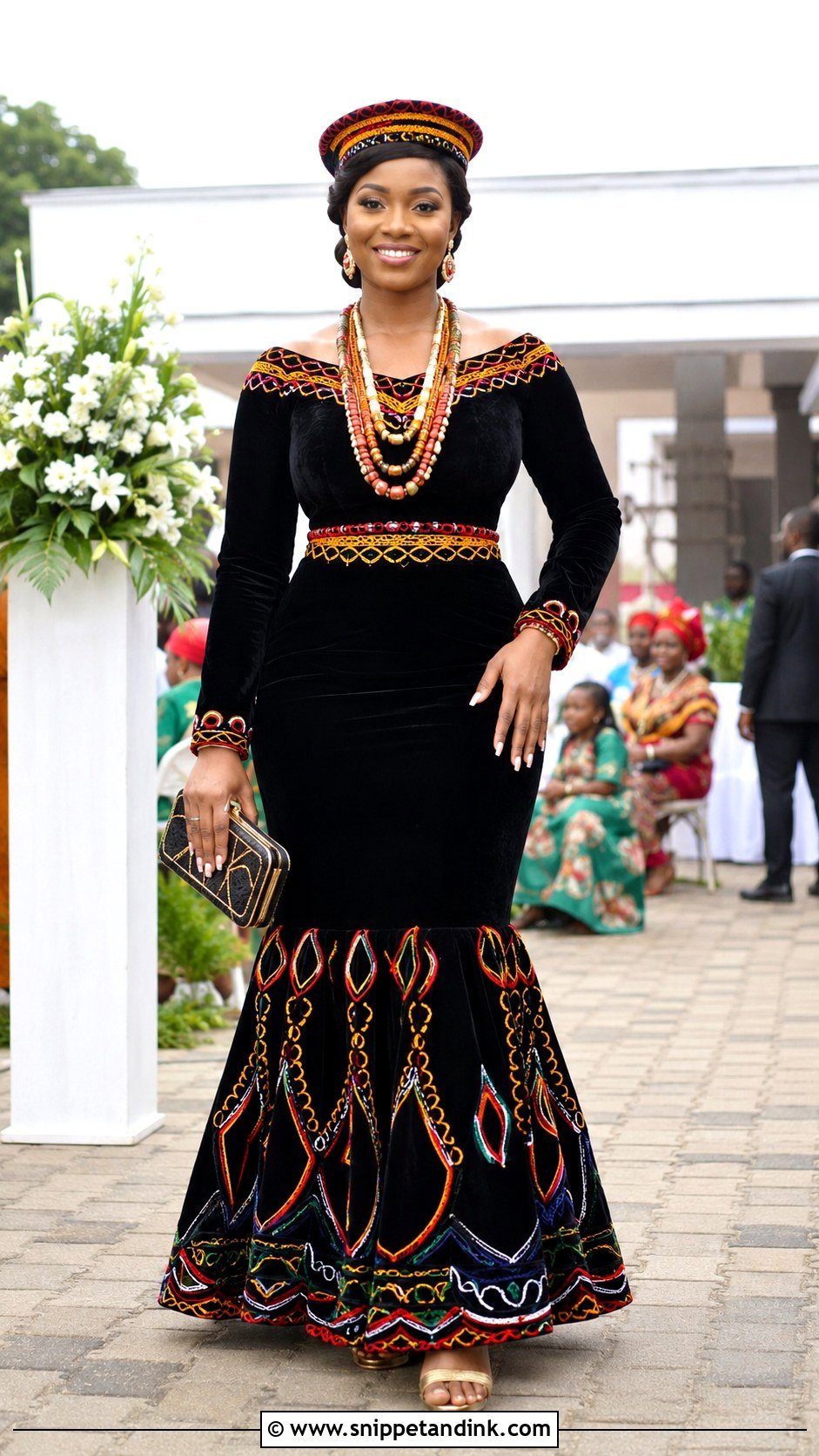
Black is the original Toghu ground, and it is still the version that reads most clearly as Grassfields cloth from across a room. Ask for the embroidery at the neckline, bodice, cuffs and hem, with a fitted waist and a skirt that flares just enough to dance in. Velvet has a nap, so every panel must be cut running the same direction or the black will look two shades different in daylight photos. I usually go with low gold heels or decorated flats. Coral, red or gold beads at the neck add warmth, provided they stop above the embroidered band. A matching cap is the formal finish; a plain headwrap softens it. Keep the clutch small and quiet.
2. White Lace Bamenda Toghu Wedding Dress
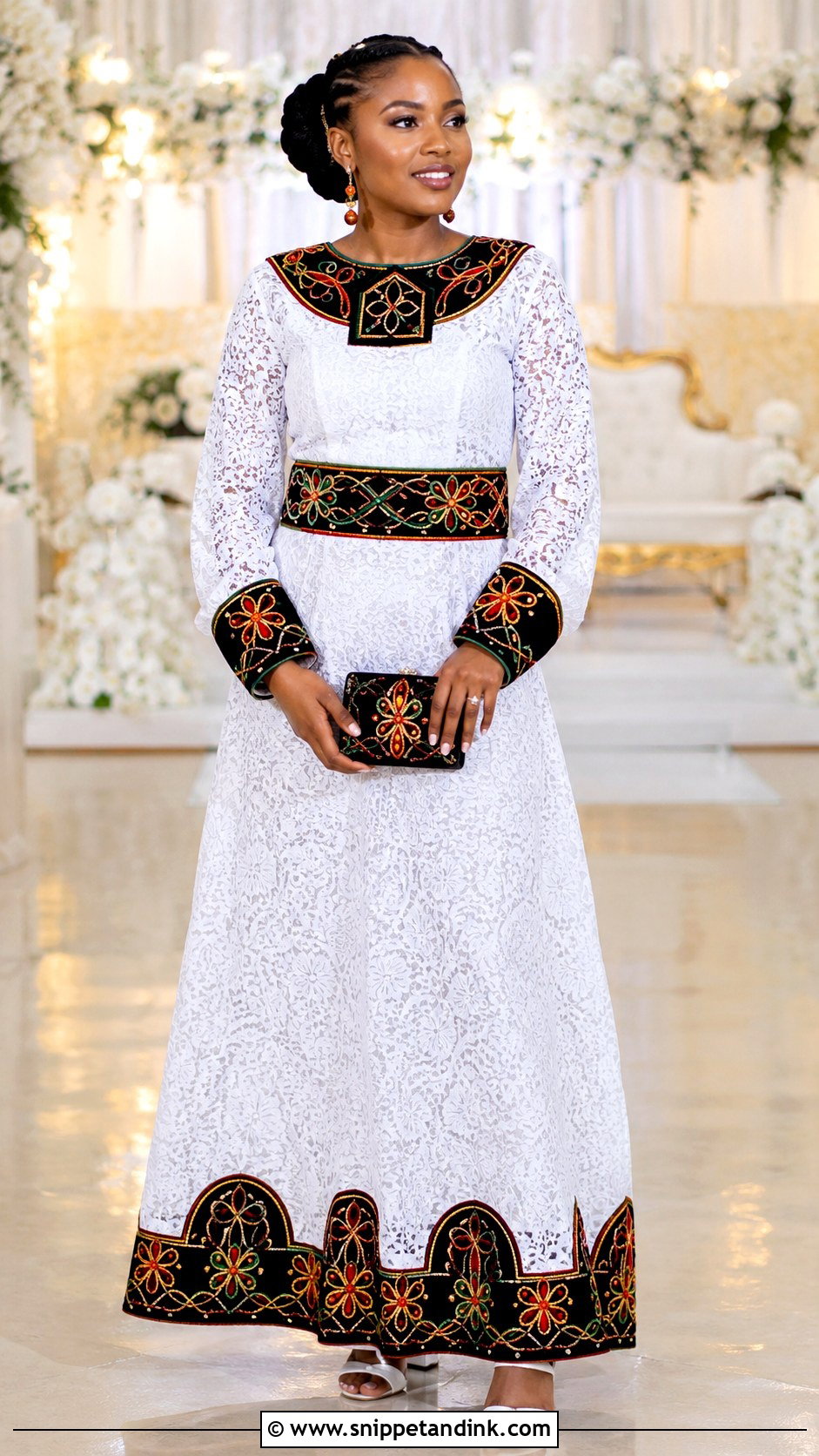
White lace with Toghu panels is a compromise I’m asked for often, usually by a bride whose family wants the cloth and who also wants a white dress moment. It works when the panels are planned, at the waist, cuffs, neckline and lower skirt, and repeated so the eye reads a pattern rather than patches. The join is where things go wrong: heavy velvet stitched straight onto fine lace pulls and puckers, so the panels need a backing or a narrow satin border between them. Choose an A-line or fit-and-flare cut, white or metallic heels, and a compact Toghu clutch. A neat headwrap, a cap, or a braided updo decorated with a few beads all suit it. If the bodice carries heavy embroidery, skip the necklace and wear small earrings with one bracelet.
3. Red Bamenda Toghu Mermaid Dress
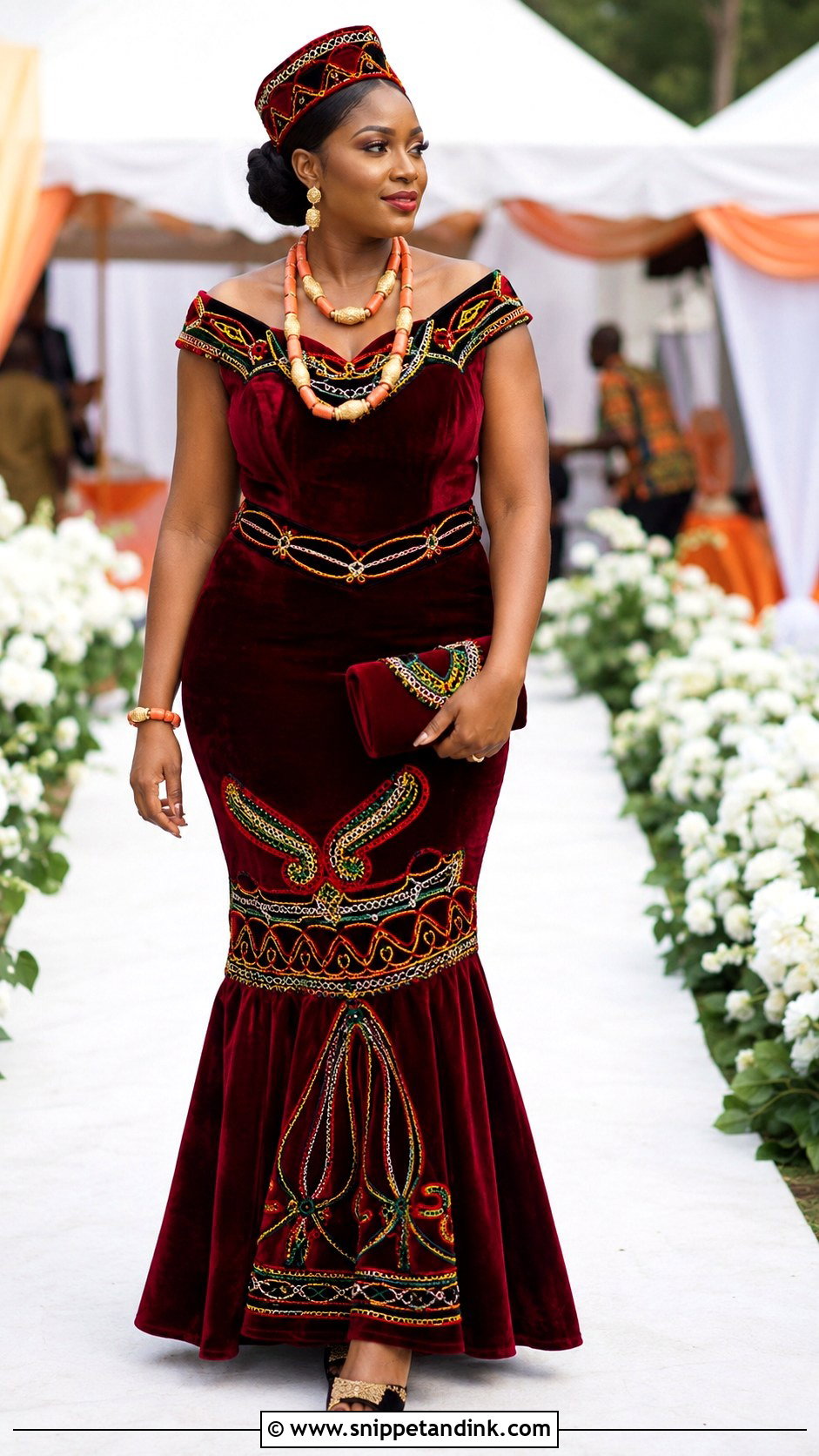
Deep red velvet takes yellow, white, orange, green and black thread brilliantly, and the mermaid cut gives it drama. It is also the hardest Toghu silhouette to move in. Velvet has almost no stretch, so a skirt fitted to the knee can turn traditional dancing into a shuffle. I ask the tailor for ease around the knees plus a secure back slit or soft godet panels before the flare starts. Black or gold block heels, an embroidered clutch and bold beads finish it. A low bun under a red-and-black cap keeps the shoulders clear. With heavy embroidery on the bodice, stud earrings are plenty. Sit in it at the fitting, then try a few dance steps, before you approve it.
4. Blue Bamenda Toghu A-Line Gown
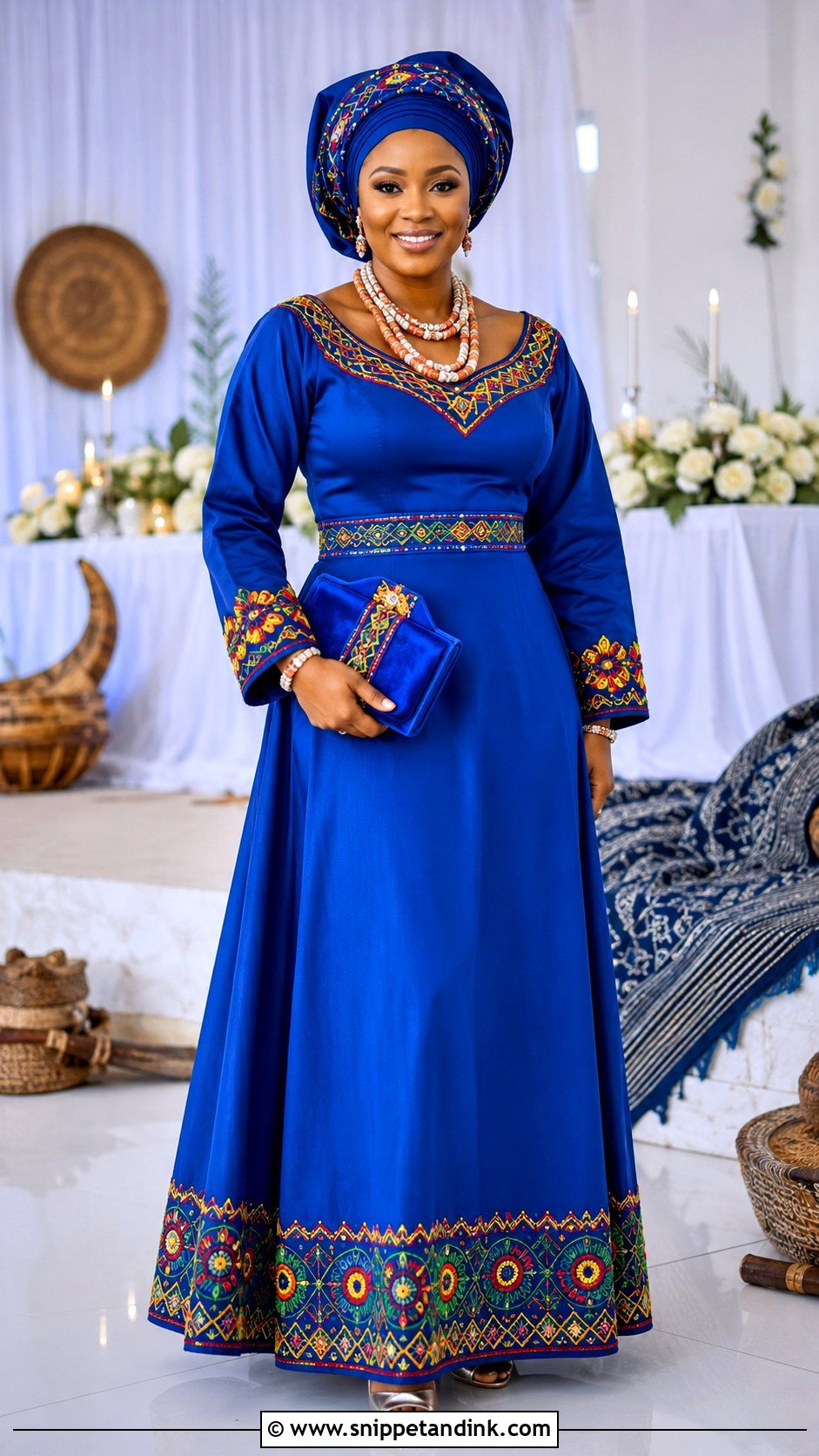
Royal blue makes the multicolored thread look fresher than it does on black, while still reading as formal. The A-line is the silhouette I recommend most for a first Toghu gown because it forgives a slightly heavy skirt and suits almost every figure. Place the embroidery at the neckline, waistband, cuffs and a wide lower border; that framing gives blue velvet structure without crowding it. Silver or gold low heels and a small blue clutch with a single embroidered panel are enough. Pick one statement necklace or a few short bead strands depending on the neckline, never both. Royal blue velvet can flash slightly purple under some indoor lighting, so check a phone photo of the fabric under the venue’s light if you can.
5. Ivory Bamenda Toghu Ball Gown
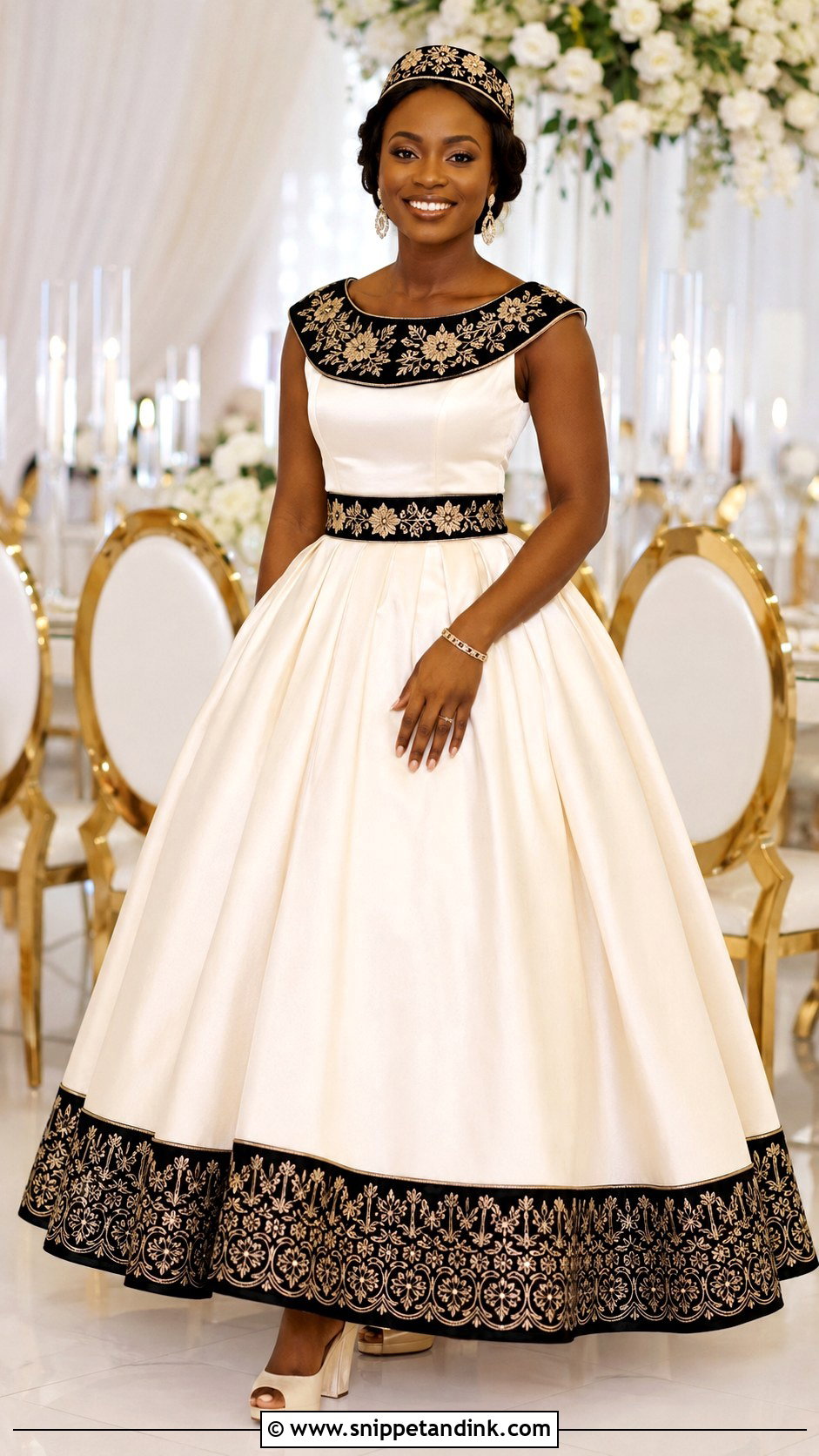
An ivory ball gown with Toghu bands at the neckline, waist and hem joins a modern bridal shape to the Grassfields textile without letting either take over. The skirt should be structured, satin or matte mikado, because a heavy embroidered border on a soft skirt drags the hem down and makes it swing awkwardly. Black velvet panels against ivory are high contrast, so make sure the dressmaker lines them up at the side seams. Ivory block heels and a black velvet clutch with matching embroidery tie it together. A sleek updo or small cap keeps the head neat. The skirt already has volume, so I’d keep any veil short, or leave it off so the embroidery shows from the back.
6. Bamenda Toghu Blouse And Wrapper Outfit
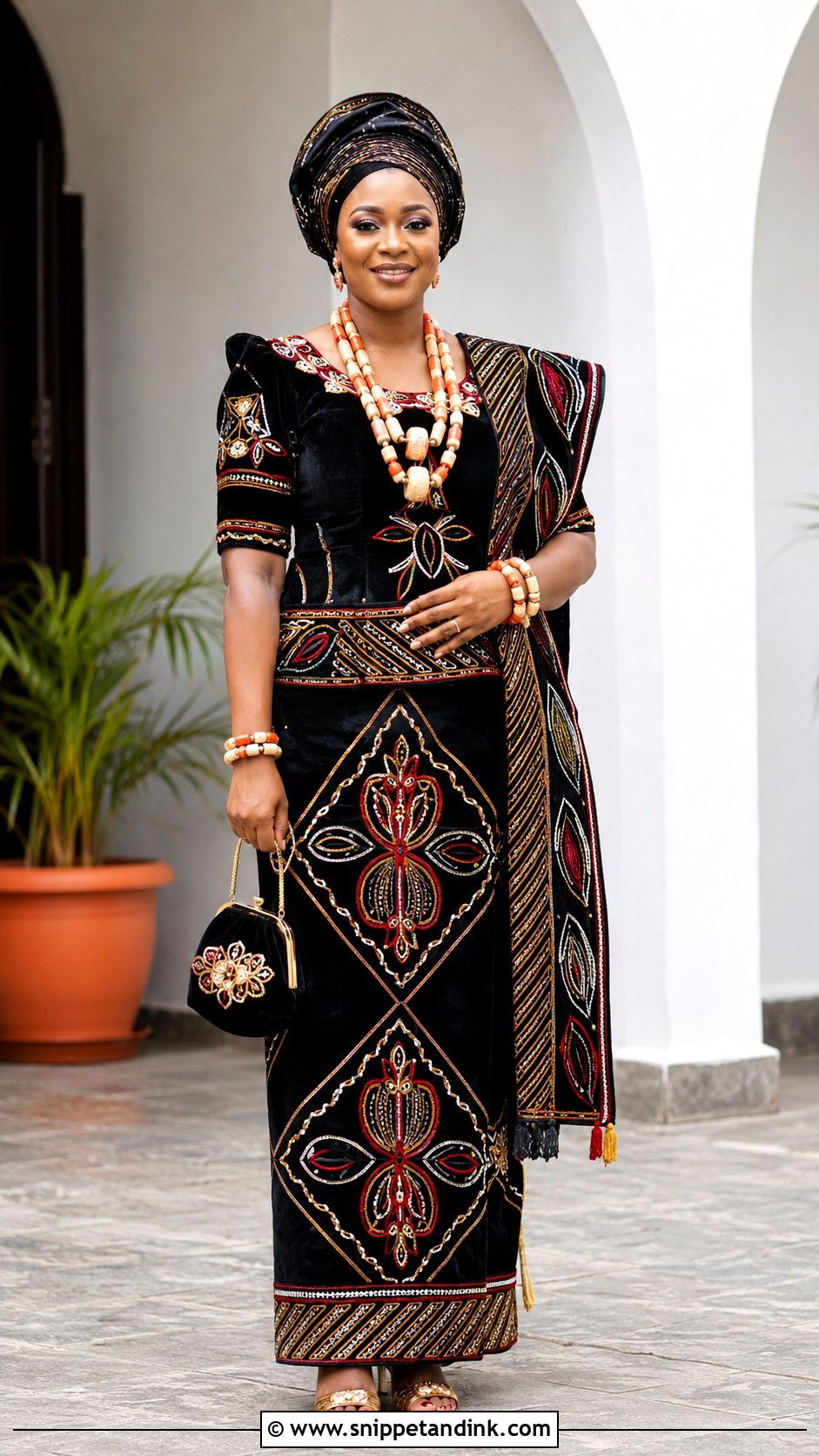
A Toghu blouse and wrapper outfit is the closest to how the cloth has traditionally been worn, and many families prefer it for the ceremony itself. The blouse needs real structure: velvet, a defined waist, elbow sleeves, and dense embroidery at the neck and cuffs. The wrapper should fall to the ankle with enough overlap that it doesn’t open when you stride. A second wrapper can go over one shoulder or around the hips. I fix the wrapper with a hidden hook or a few concealed stitches at the waist, because velvet slides against itself and a tuck alone loosens after an hour of greetings. Heeled sandals, layered beads, a headwrap in the wrapper’s colors and a small wrist bag complete it.
7. Off-Shoulder Bamenda Toghu Wedding Gown
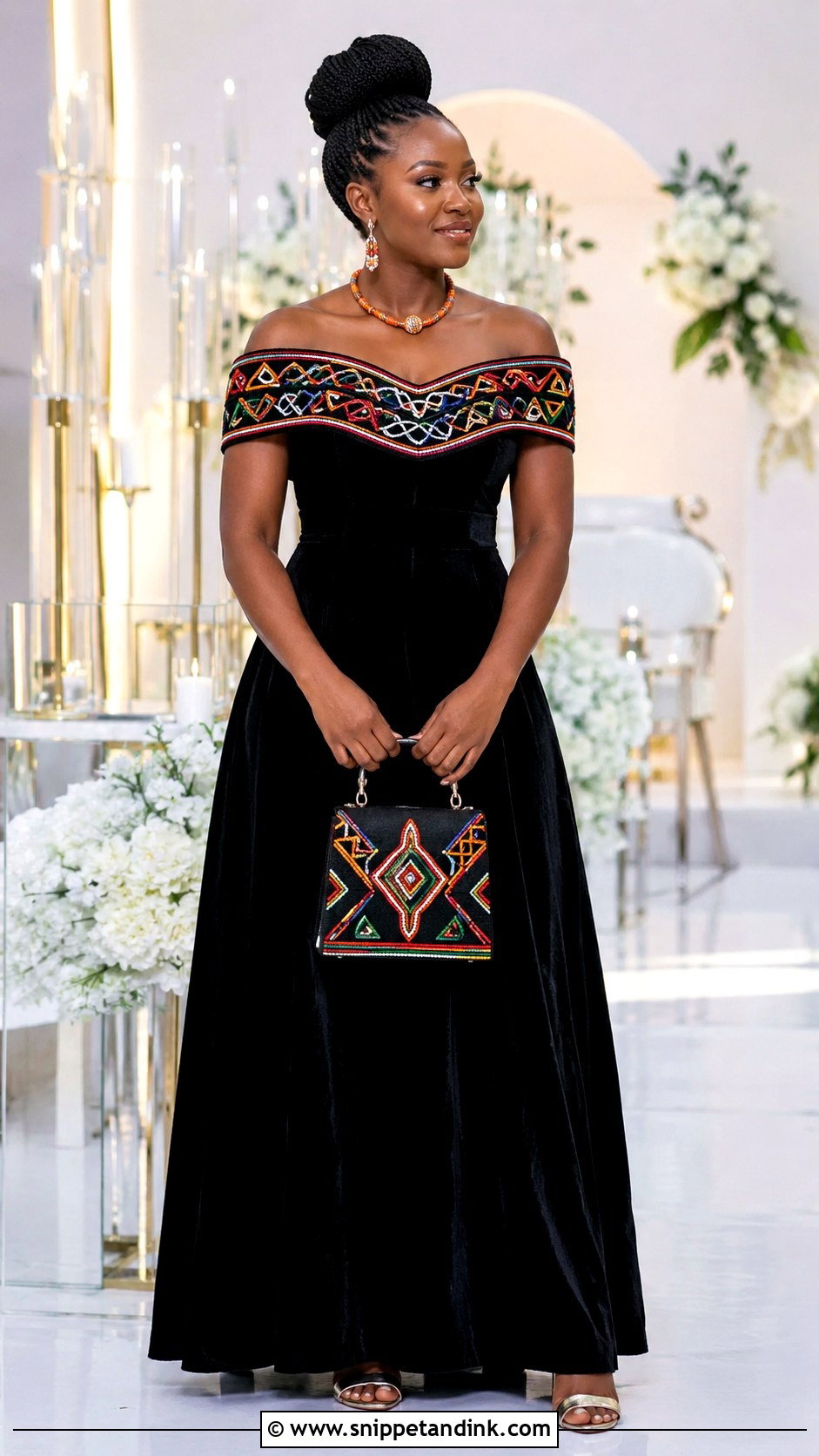
Off-shoulder Toghu needs one thing above all, a band that genuinely grips. Embroidered velvet is heavy, and a wide band across the upper arms will creep down every time you raise them to hug someone. A good tailor builds an inner grip tape or a boned waist stay into the bodice, and you can add discreet straps worked into the embroidery if you need them. The skirt should be flared or A-line to balance the close top. A short bead necklace that sits above the band, matching earrings, a small Toghu bag and low metallic heels are all you need. Wear a high braided bun or a fitted cap. Leave the shawl off unless the evening turns cold.
8. Long-Sleeve Bamenda Toghu Column Dress
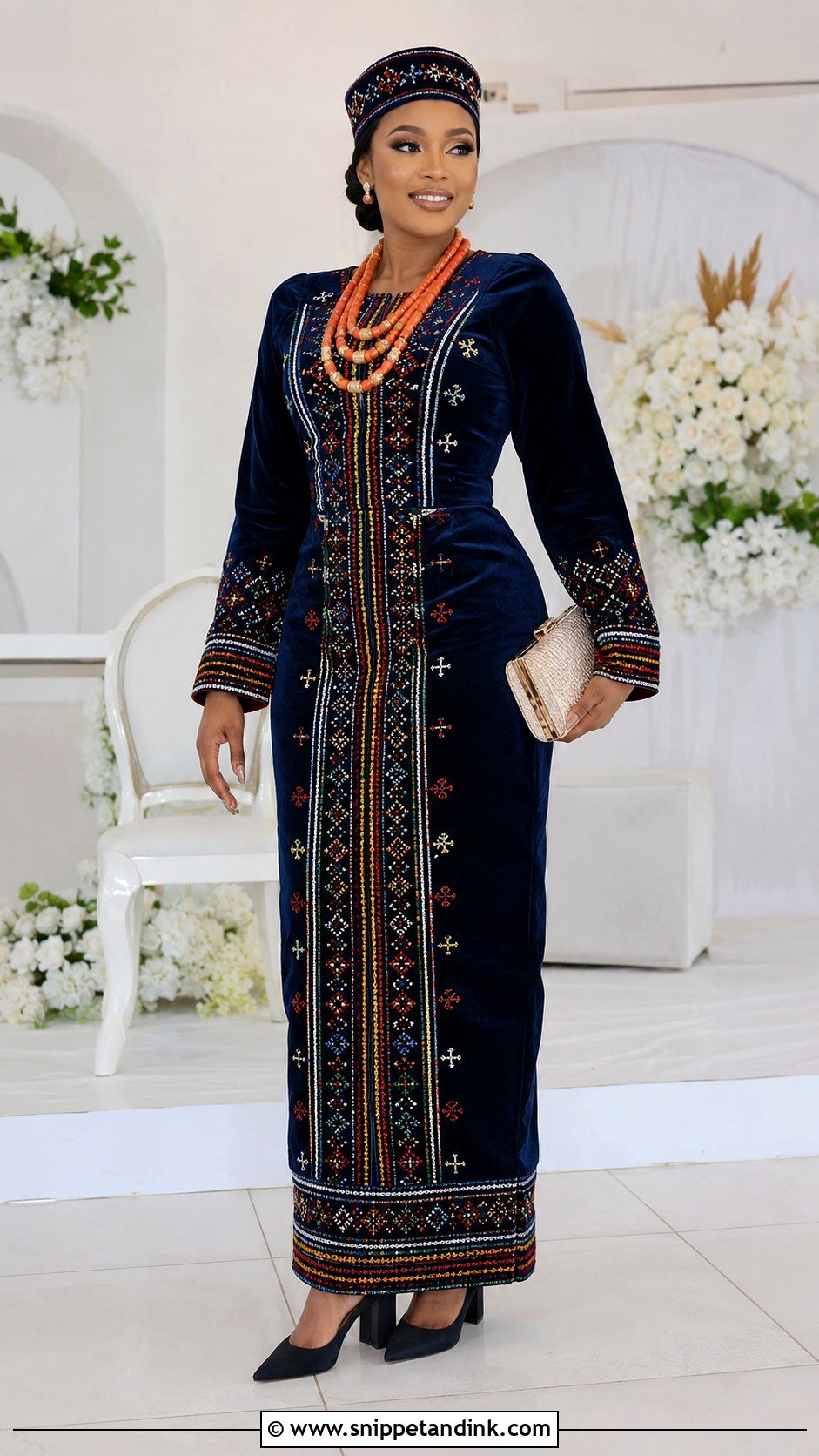
For an indoor reception or a cooler season, I like the long-sleeve column in black or navy, with bright embroidery running vertically down the front. That single line lengthens the figure, which matters because velvet adds visual weight. The mistake I see most is cutting it too tight: velvet shows every seam and every crease from sitting, so a soft lining and seams placed with care look smoother than a skintight fit. Add embroidered cuffs, a defined waistband and a small back slit for walking. Pointed block heels, a structured clutch and a cap in coordinating fabric finish the look. One layered bead necklace is plenty; keep it off the central embroidery.
9. Bamenda Toghu Cape Wedding Dress
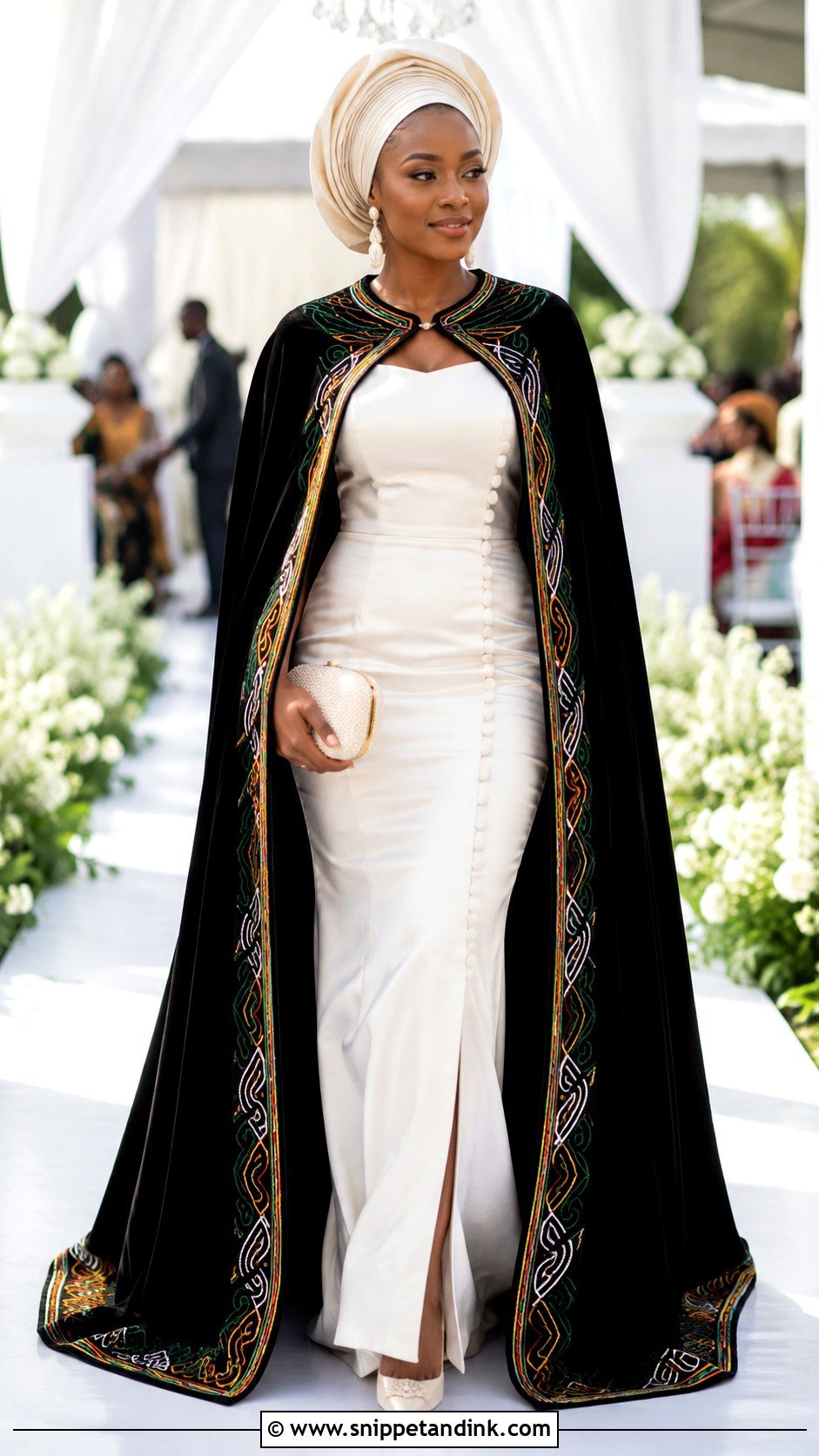
A detachable cape gives a simple fitted gown its ceremonial moment. Start with black, ivory, red or royal blue, and edge the cape with Toghu embroidery. A cape ending above the waist is easy to dance in; a floor-length one makes the entrance and then comes off. The cape will carry more weight than you expect, so ask for it to attach with sturdy hooks or snaps at the shoulder seams rather than buttons, which drag the neckline back. A neat cap or sculpted headwrap balances the width. Necklaces should stay light. The cape, gown and accessories need to share one set of embroidery colors or it reads as two outfits.
10. High-Neck Bamenda Toghu Wedding Dress
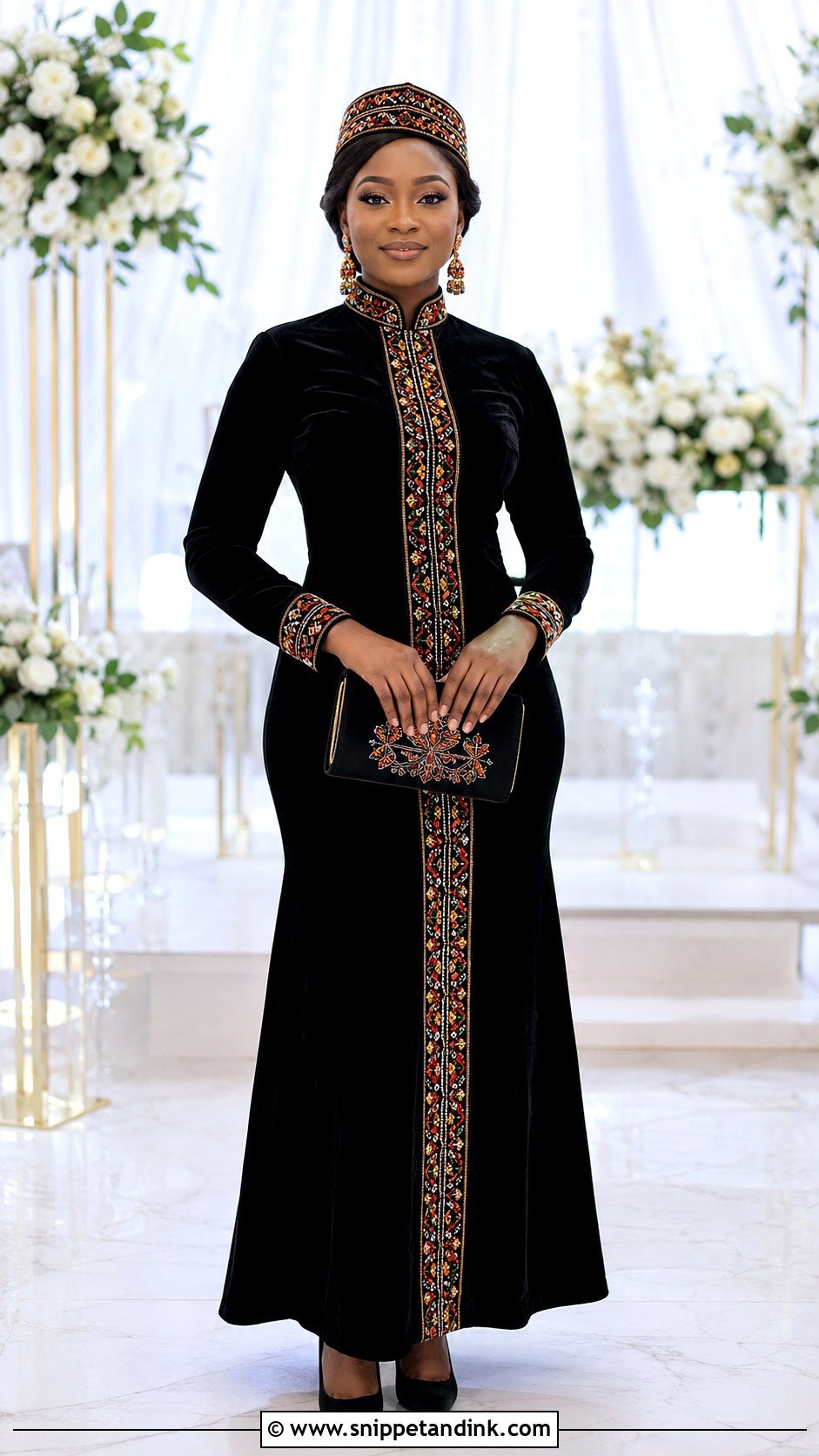
A high neck gives Toghu embroidery the most canvas around the face, and it suits families who prefer more coverage. Ask for a soft standing collar. Embroidery stiffens fabric, and a stiff collar rubs the jaw and blocks head turns during hours of greetings. The pattern can frame the collar, run down the center front and repeat at the cuffs and hem, with a gently flared skirt below. Since the neckline is already busy, swap the necklace for bead earrings. Add a coordinating cap, an embroidered clutch and low closed-toe heels, and keep the hair in a smooth bun so nothing crowds the collar. At the last fitting, sit down and turn your head both ways to be sure.
11. Short-Sleeve Bamenda Toghu A-Line Dress
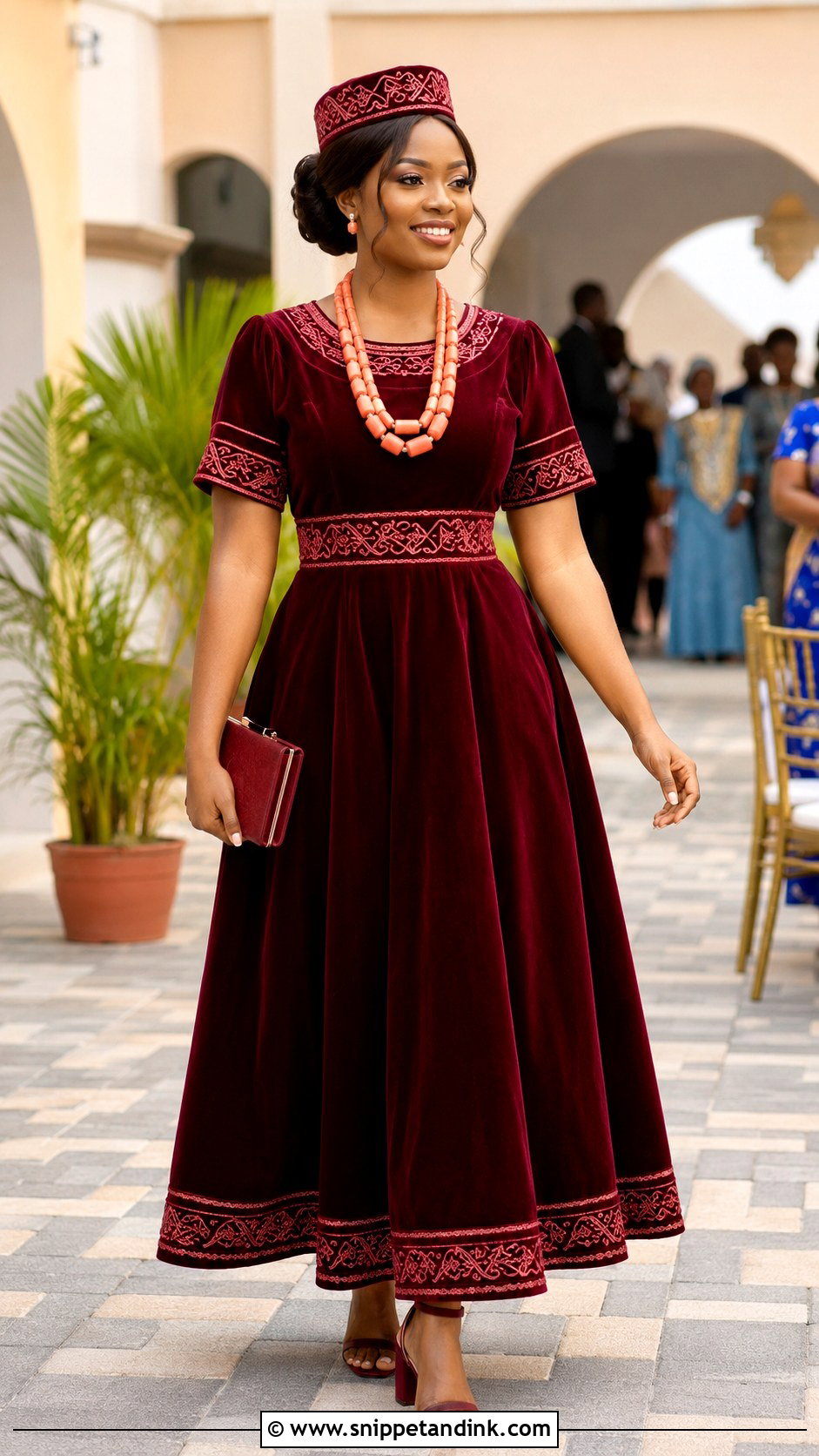
Short sleeves are the practical answer for a warm day or a program that’s mostly dancing. Wide embroidered borders on the sleeves, a fitted bodice and a natural waist give the shape; an ankle-length skirt keeps it formal. Black velvet is the classic, though deep green, burgundy or navy all carry the thread well. With dense embroidery I keep earrings and bracelets small. Medium bead strands give color without covering the bodice. A breathable cotton lining makes a real difference here, since velvet traps heat against the skin. Make sure the back closure is a zip with a hook at the top, not a row of fiddly loops that might pop once you start dancing.
12. Bamenda Toghu Peplum And Wrapper Set
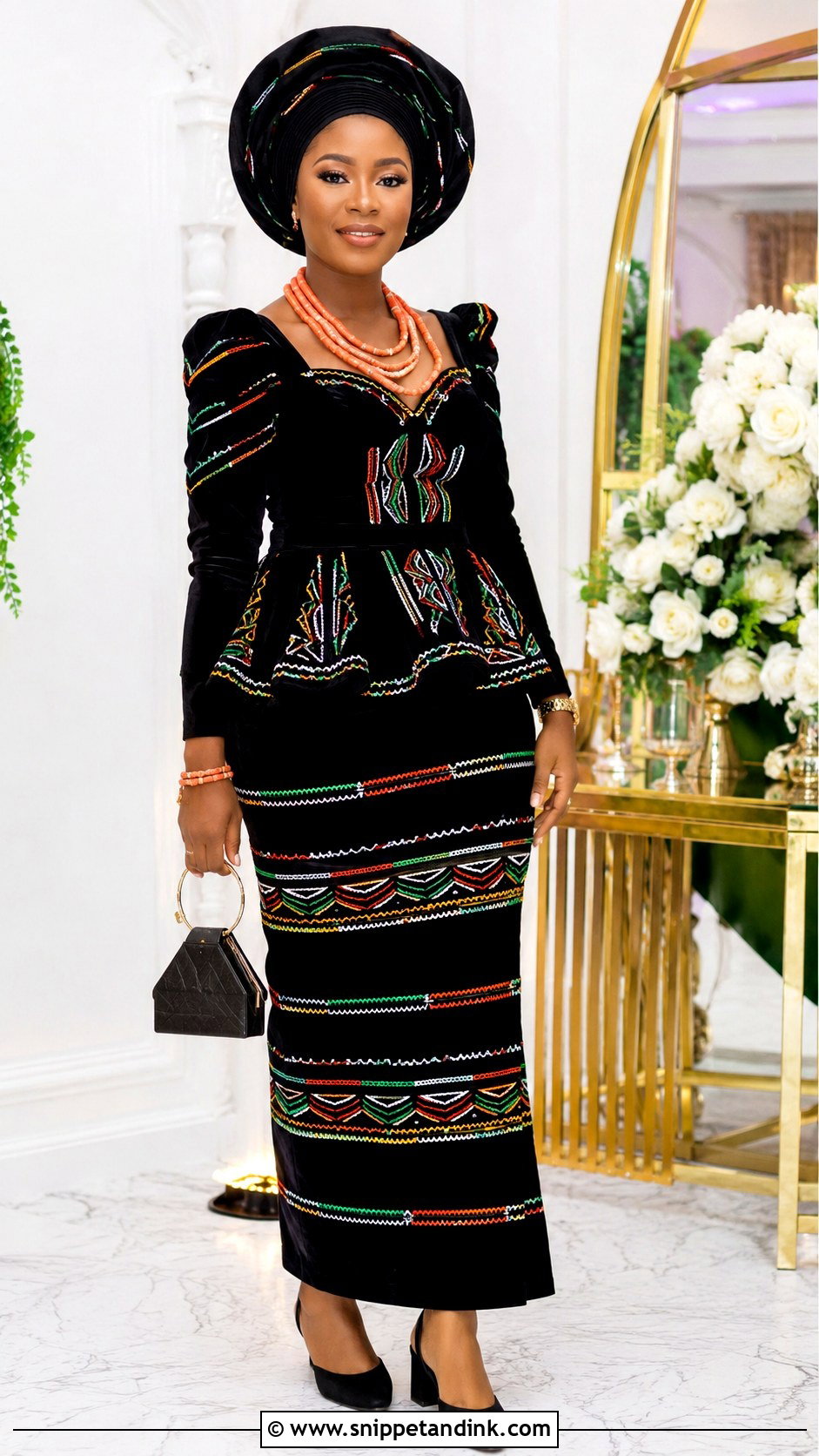
The peplum and wrapper set gives a sharply defined waist, and it is easier to alter than a gown if your measurements shift before the day. The velvet peplum can carry embroidery at the neckline, sleeves, waist seam and lower edge, over a straight or gently flared wrapper with a matching border. Watch where the peplum ends. Velvet flaring out at the widest part of the hips adds bulk, so I usually have it stop just above. Closed-toe block heels or embellished flats both work depending on the ground. A wrapped headpiece in one of the thread colors, layered beads, small earrings and a compact bag complete it. Ask the tailor to line up the blouse and skirt borders so they read as one piece in photos.
13. Bamenda Toghu Boubou Wedding Outfit
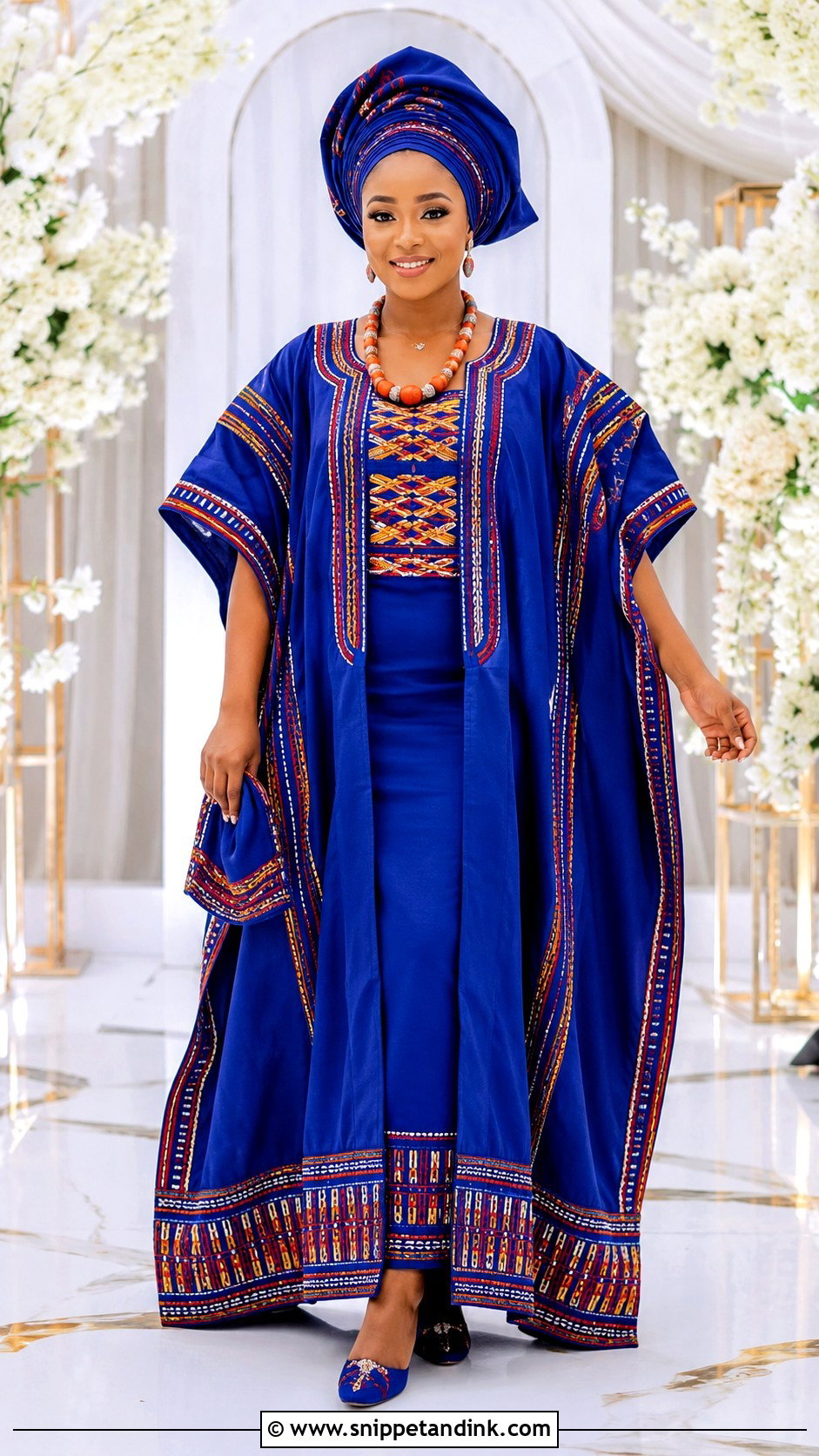
A Toghu boubou suits a bride who wants presence and room to breathe. Black, ivory, blue or burgundy all work, with embroidered panels at the neckline, chest, sleeve openings and lower border. Underneath, wear a fitted inner dress or a matching skirt and top, so the wide outer layer can move without revealing anything. A formal headwrap adds height and balances the generous shape. One bold bead necklace and simple earrings are enough. Length is where boubous fail: an embroidered hem is heavy, and if it brushes the floor it catches on heels and gets stepped on. I have it hemmed to clear the top of your shoe by a finger’s width, measured while you wear the actual shoes.
14. Bamenda Toghu Bridal Jumpsuit
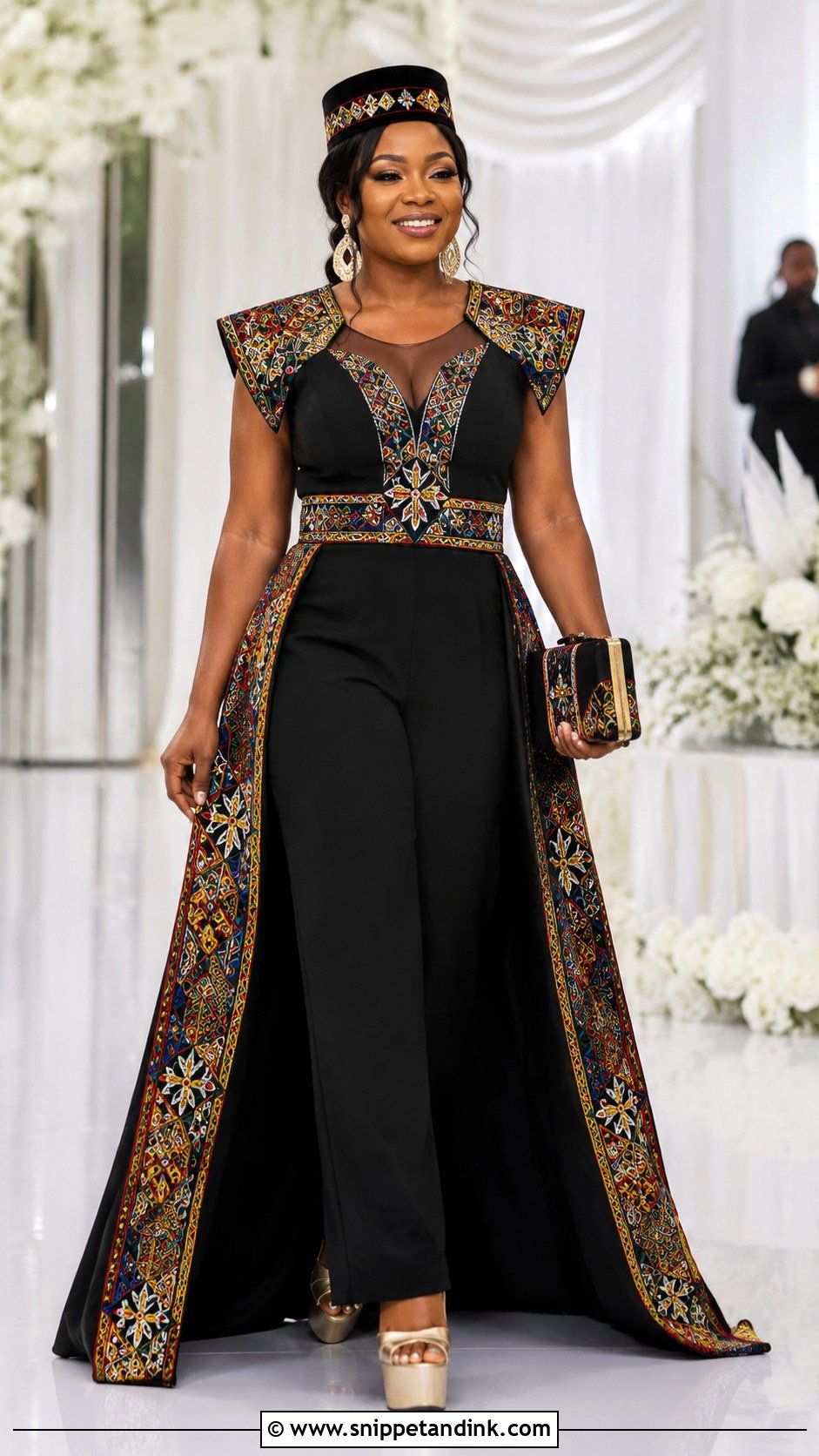
The jumpsuit is a newer take, and it’s for the bride who plans to dance all night. A wide leg, fitted waist and modest V-neck, round neck or standing collar give it enough formality. Embroidery can sit on the bodice, shoulders, waistband and outer leg seams. Add a detachable embroidered overskirt for the entrance and take it off when the music starts. A short bead necklace suits an open neckline; statement earrings suit a high collar. Check the practical details at the fitting: the closure has to be manageable in a restroom, and the seat needs room through the hips. Platform sandals or stable block heels keep the wide hem off the floor.
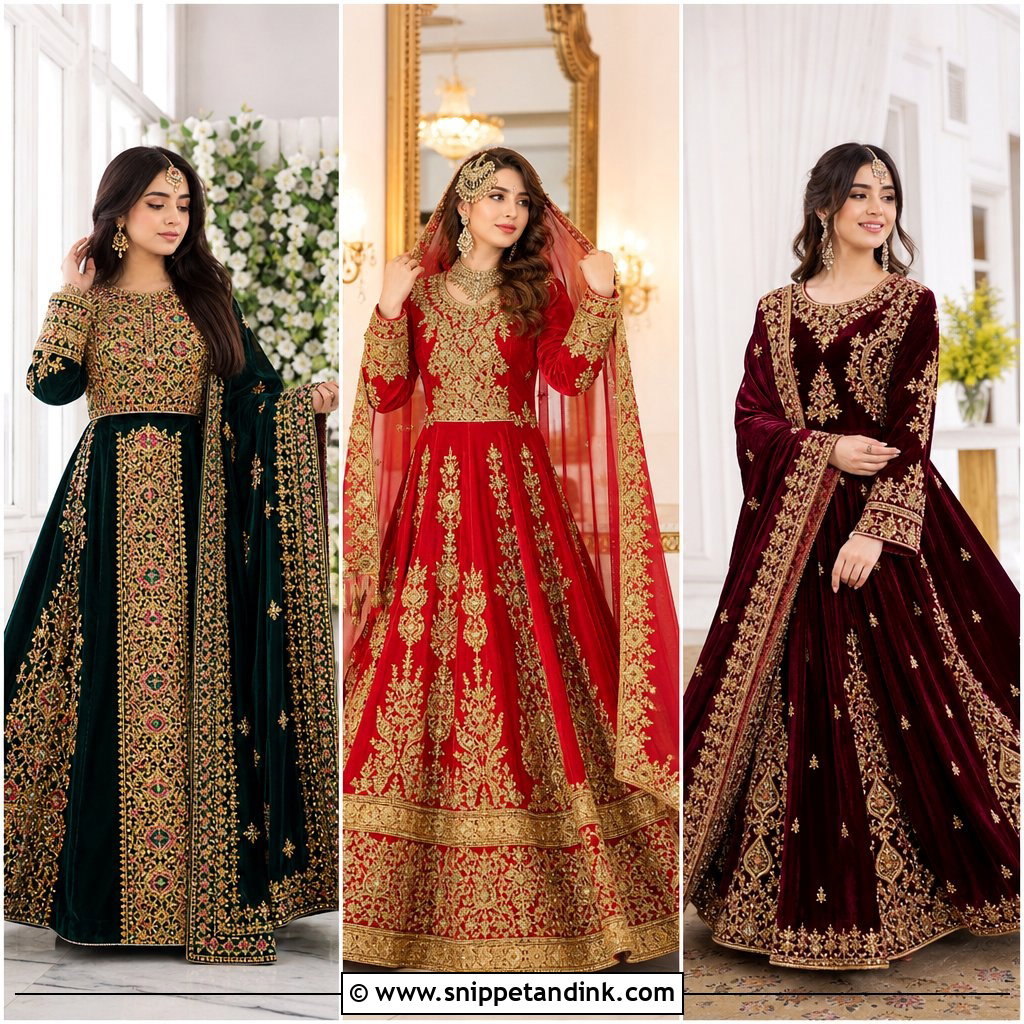

15. Bamenda Toghu Skirt Suit
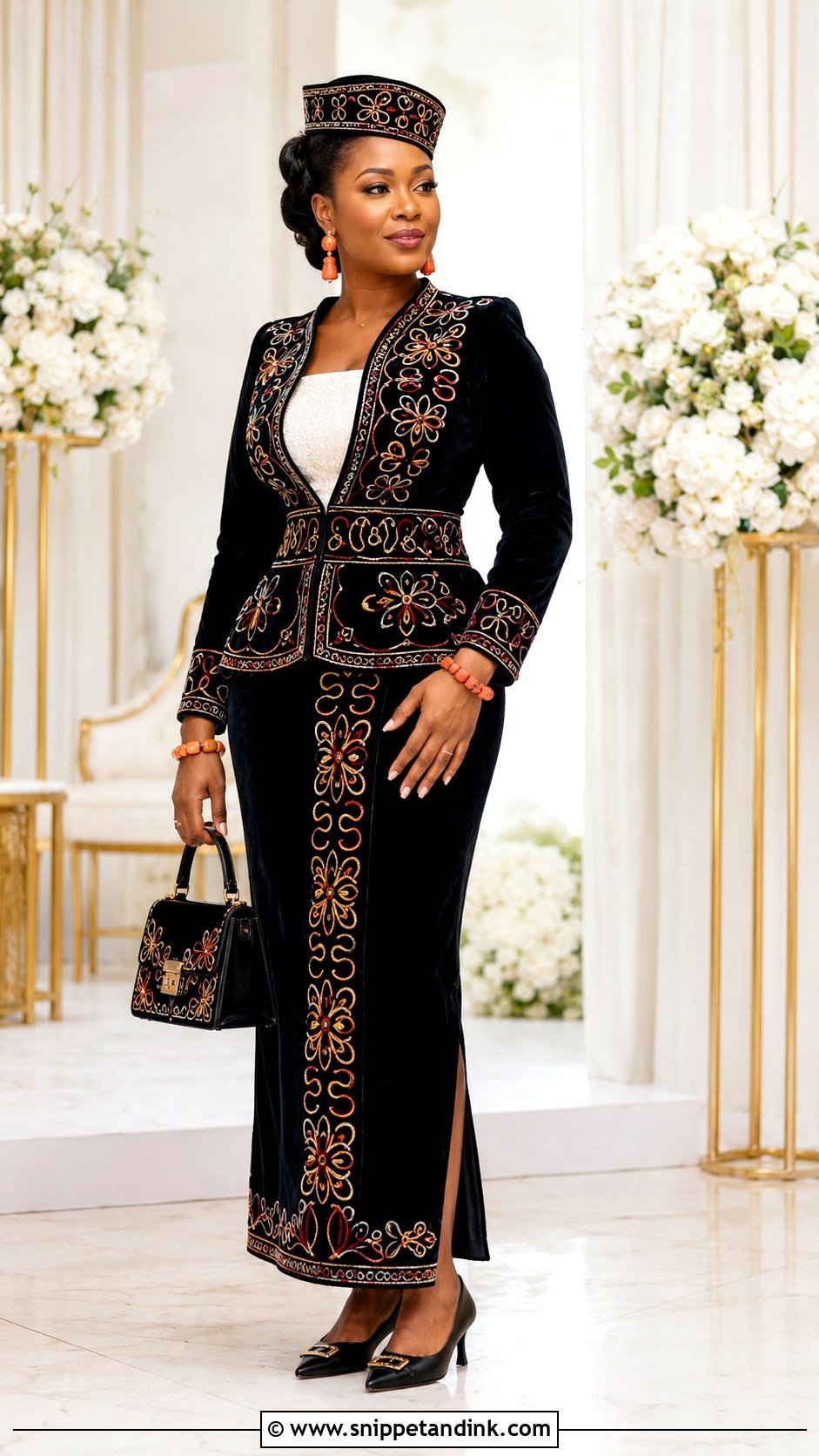
A Toghu skirt suit reads as tailored and modern, and the jacket can be worn again afterward with plain trousers. Look for a fitted embroidered jacket with a softly shaped waist and a matching ankle-length skirt, straight with a back slit or gently flared. If the jacket is cut to stay open, a simple ivory, black or red camisole goes beneath. Velvet lapels are bulky, so the jacket needs a lighter facing inside or it will stand away from the chest. Pointed low heels, a structured handbag and a compact cap finish it. Wear a bead necklace only when the neckline leaves clear space; otherwise go with earrings and bracelets. Repeat the embroidery at lapels, cuffs, waistband and skirt hem so the pieces belong together.
16. One-Shoulder Bamenda Toghu Wedding Gown
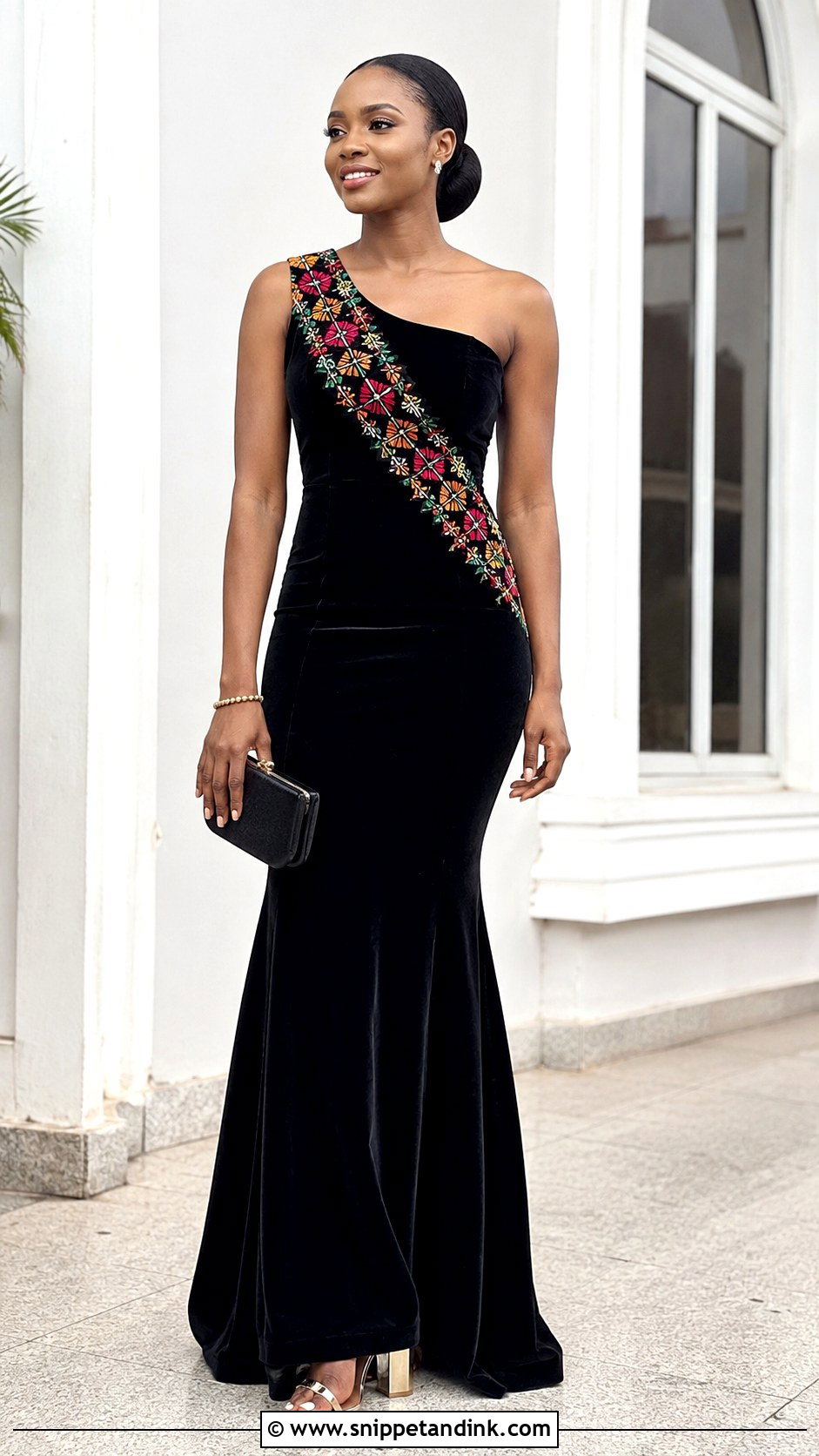
One shoulder lets you put the heaviest embroidery exactly where the eye goes first, across the shoulder and running diagonally to the waist. The rest of the gown should be plain velvet or satin, or the asymmetry loses its point. A fitted A-line or soft mermaid cut both work if there’s room to walk. Asymmetric necklines want hidden support, ideally a boned bodice with silicone grip at the top edge, since velvet on one shoulder slides toward the bare side as you move. Wear a bracelet on the bare arm and small earrings, never a necklace. A matching clutch, metallic block heels and a low bun complete the look, with a headpiece small enough not to compete.
17. Plus-Size Bamenda Toghu Empire Waist Gown
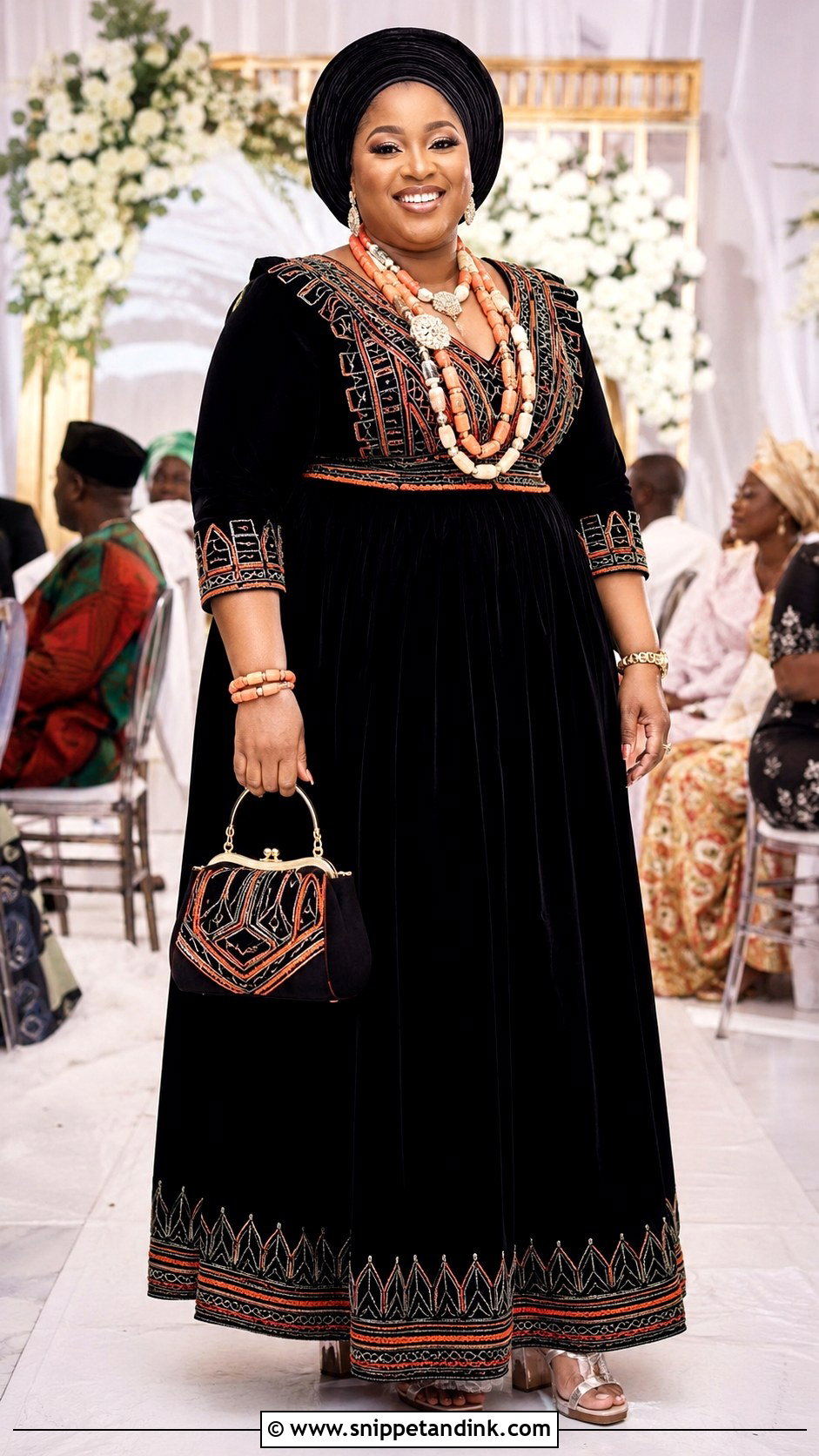
For a plus-size bride, the empire waist is one of the most comfortable ways into Toghu. The bodice fits securely under the bust and the skirt falls long and fluid, so the velvet skims rather than clings. Embroidery at the neckline, upper bodice, cuffs and hem balances top and bottom. A V-neck or soft round neck frames layered beads well, and three-quarter sleeves give coverage while leaving bracelets visible. I avoid stacking heavy fabric under the bust: a thick lining plus a velvet seam right there adds volume you don’t want. Supportive block heels or embellished flats, a coordinating bag and a medium headwrap finish it. Book at least one fitting in the finished fabric, since velvet hangs differently from the test garment.
18. Ivory Bamenda Dress With Toghu Trim
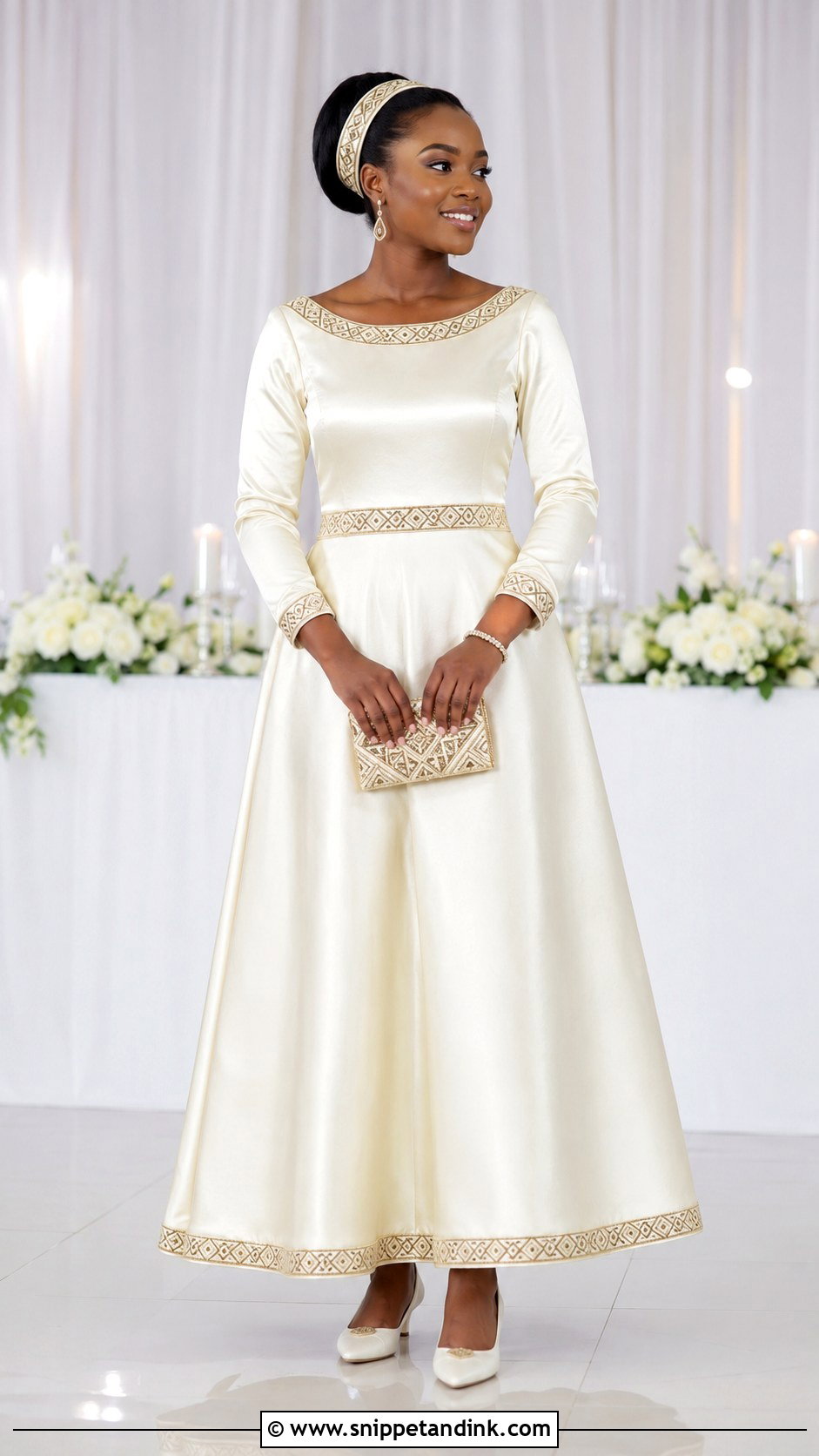
When a bride wants Toghu present but not dominant, I suggest an ivory dress with narrow trim. A clean A-line, column or fit-and-flare in matte satin, with slim Toghu borders at the neckline, waist, cuffs and hem, lets the color pop against the pale ground. The borders are usually cut from a larger piece of embroidered cloth, so ask that each strip comes from a section with a complete motif rather than a sliced circle. Ivory or black low heels and a small clutch in matching velvet work well. A slim Toghu headband or braided updo keeps it refined. Pick one bead bracelet and small drop earrings over heavy layers.
19. Green Velvet Bamenda Toghu Wedding Dress
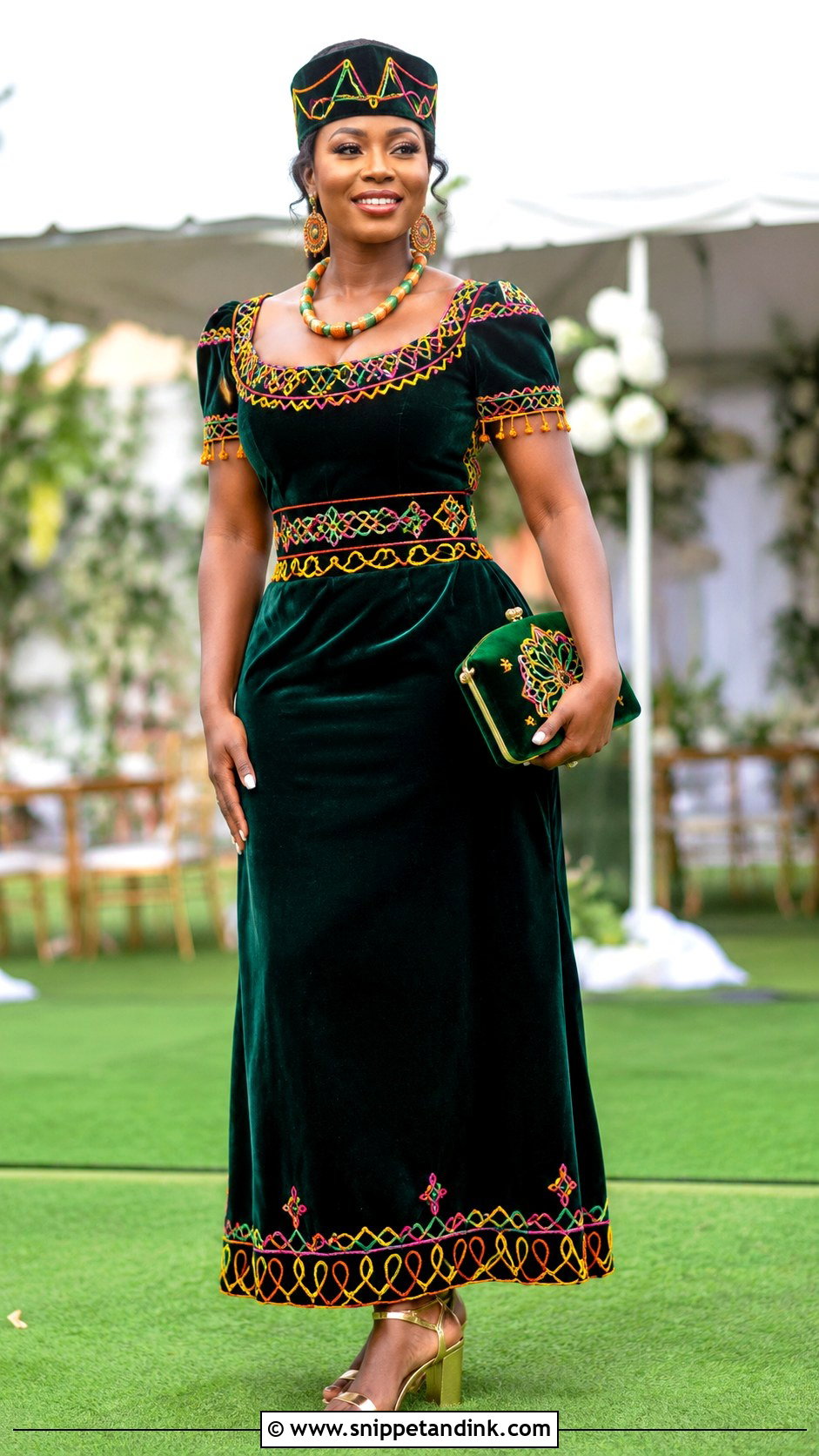
Deep green velvet is a rich alternative to black, and red, yellow, white, orange and black thread all glow against it. A fitted bodice with a softly flared skirt keeps it formal and easy to move in. Pair it with gold block heels, a small green clutch and beads that pick up one or two of the thread colors. A black-and-green cap adds contrast. Let the velvet carry the color and keep the makeup balanced. Green velvet, like any velvet, gets warm, so I’d look at shorter sleeves, a breathable lining and an open but secure neckline for a daytime event. Green also shifts a lot between daylight and warm indoor bulbs; look at the fabric in both before you commit.
20. Matching Bamenda Bride And Groom Toghu Outfit
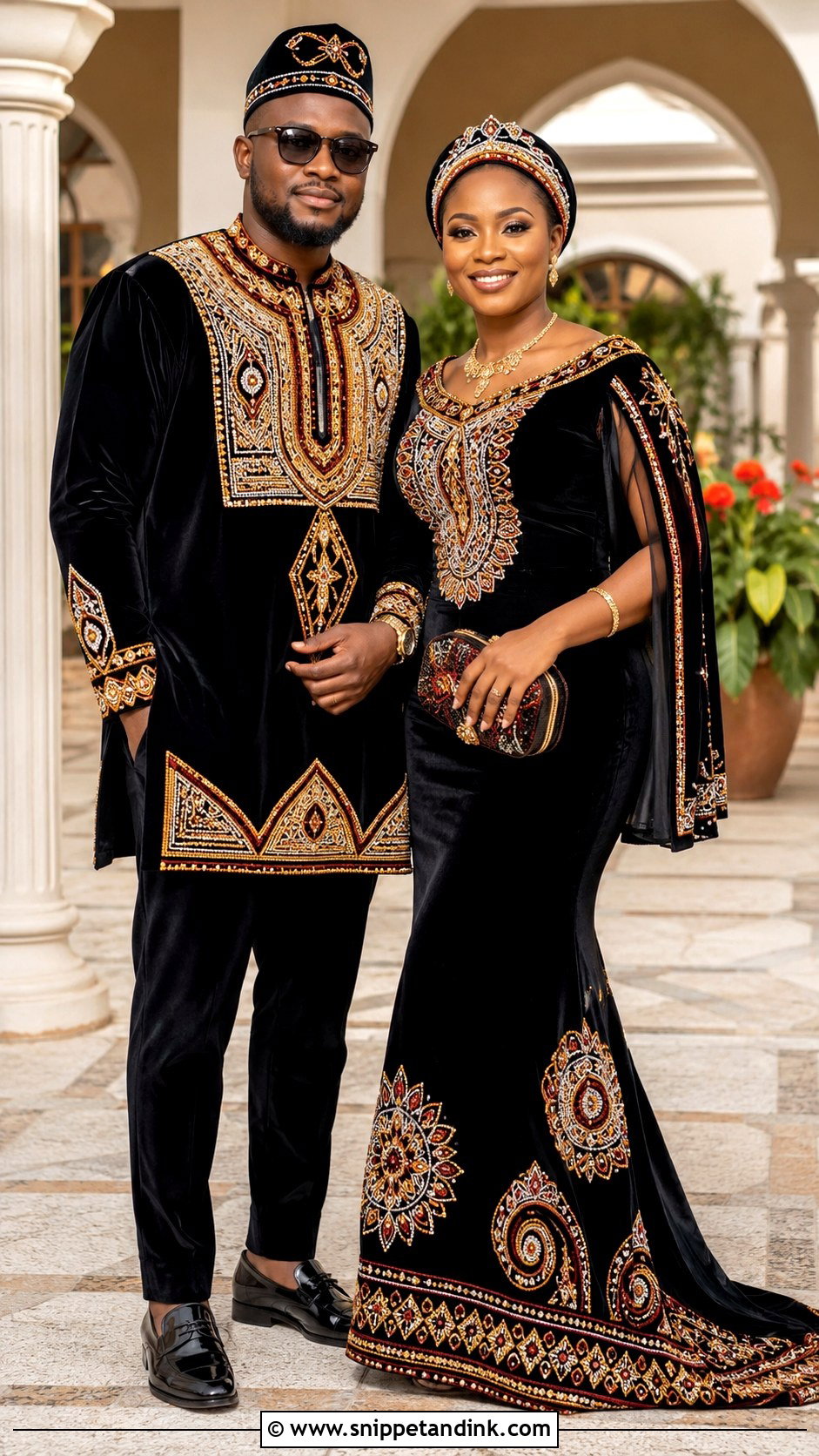
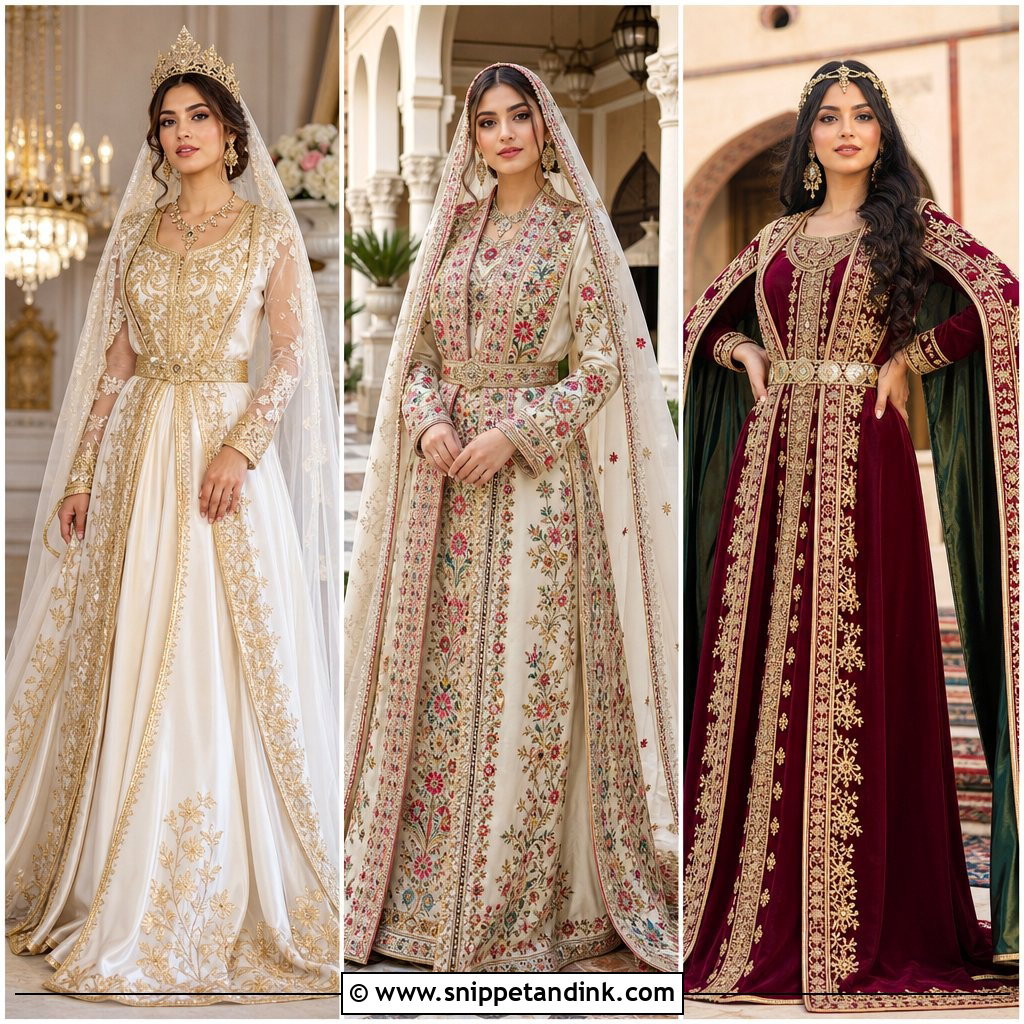
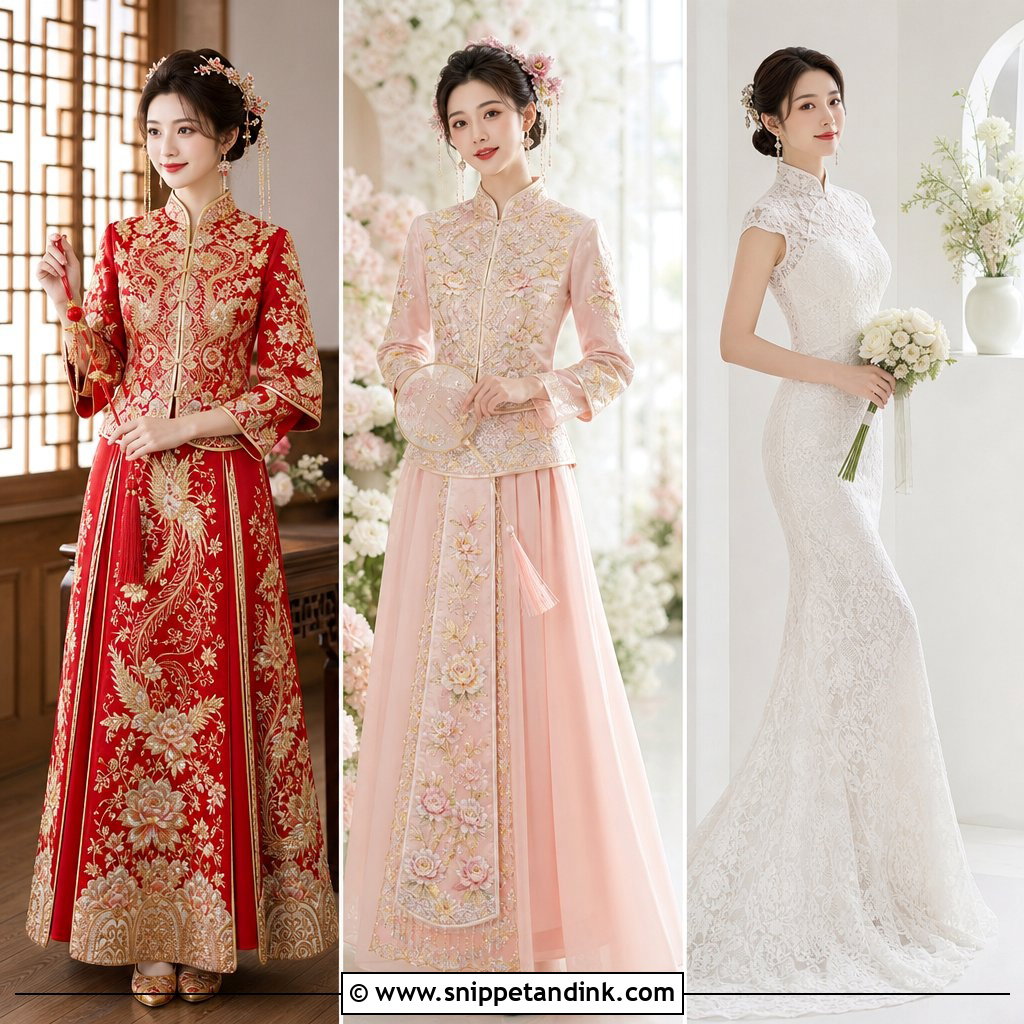
A coordinated Bamenda bride and groom outfit works best when the two garments share a cloth but not a cut. She might wear a fitted gown, wrapper set or boubou; he wears a Toghu tunic with matching trousers, a cap and formal shoes. Use the same ground fabric and thread colors, then place the embroidery to suit each body: her neckline and skirt, his chest, cuffs and trouser borders. Her beads, headpiece, clutch and shoes should answer his cap. If you can, have both outfits embroidered by the same hand or workshop in one batch, because thread dye varies between batches and the reds rarely match exactly otherwise. Book a joint fitting so the proportions look even side by side.
Surviving a Long Program in Velvet
A traditional wedding in the Grassfields can run from the morning rites well into the night, and velvet is warm. I plan for that rather than hope the weather is kind.
Heat and comfort
Ask for a cotton or other breathable lining in the bodice instead of polyester, which holds sweat against the skin. Underarm shields protect the velvet from marks you can’t easily remove. If the reception is outdoors, a lighter second outfit for the evening is not a betrayal of tradition, and many brides change anyway.
Creases and quick fixes
Velvet crushes where you sit, and the pile flattens into shiny patches. A handheld steamer passed over the back of the fabric, never pressed onto the front, lifts it in a minute. Put one in your bridal kit with safety pins, a needle threaded in black, and a lint roller for the dark ground.
Hanging and Storing the Outfit Afterward
Toghu is often passed down, so how you put it away matters. Air the garment for a day before storing it, then take it to a cleaner who handles velvet and ask them to test a corner of the embroidery first, since some threads are not colorfast.
- Hang heavy gowns on a padded hanger with the weight supported at the waist by inner hanging loops, so the shoulders don’t stretch.
- Never fold through the embroidery. If it must lie flat, roll it around acid-free tissue with the velvet facing out.
- Store it in a breathable cotton garment bag, not plastic, away from sunlight that fades the thread colors.
Wearing Toghu With Respect for the Cloth
A good Bamenda bridal outfit honors the cloth first and then fits the woman wearing it, her comfort, her personality, and the length of the day. Black velvet gowns carry the most traditional weight. White lace, ivory satin, colored velvet, wrappers, boubous and tailored separates all give you room to make it yours. In my experience the outfits that hold up are the ones where embroidery placement, supportive tailoring and wearable shoes got as much attention as color and silhouette. Work with an artisan who understands what the textile means and how it is built, then let your accessories repeat its colors quietly. Any of these looks can be your starting point.
You'll Like These Ideas:



Leave a Reply