
A smooth cake is the hardest finish I make look easy. There’s nowhere to hide: no ruffles over a dent, no rosettes over a bulge where the filling has settled. That’s also why couples love it. A clean surface lets one flower cluster, a row of pearls or a single bow carry the whole design, and it sits comfortably in a ballroom, a garden tent or a courthouse brunch. The finish itself can be buttercream, ganache, fondant or fondant over ganache, and which one I’d suggest depends as much on your venue’s temperature as on the look. Below are twenty smooth designs, with notes on what each one needs from the kitchen to stay smooth until you cut it.
Buttercream, Ganache or Fondant Under a Clean Finish
The coating decides how sharp the edges can be and how the cake will cope with your room. This is how I talk couples through it.
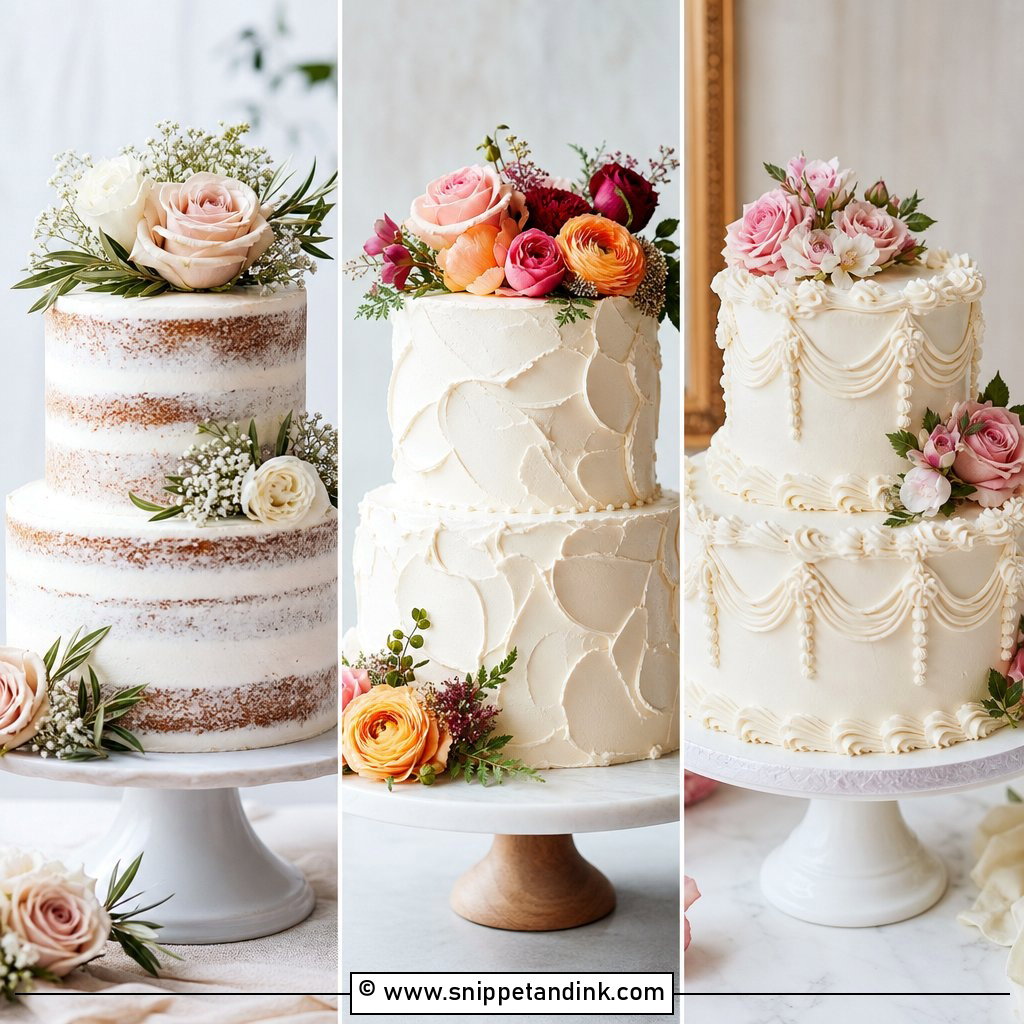
Meringue buttercream
Soft to eat and lovely in flavour, with slightly rounded edges. It’s happiest in a cool indoor venue. In a hot marquee or a sunny courtyard it softens, and a smooth surface will start to show finger marks and slumps.
Chocolate ganache
Ganache sets firm at room temperature, which is why it gives the sharpest edges and copes best with warmth. Dark chocolate ganache holds up better than white. It can be the final finish, or the base layer under fondant.
Fondant
The smoothest, brightest surface and the crispest corners, though it needs a buttercream or ganache layer underneath for flavour. Humidity is its enemy; it can go tacky or sweat.
Tell your baker the venue, the month and whether the cake will stand indoors or outside. A good baker will steer the finish to fit, and if one promises crisp buttercream edges in a midsummer field without asking where the cake will stand, I’d ask more questions.
1. White Smooth Wedding Cake
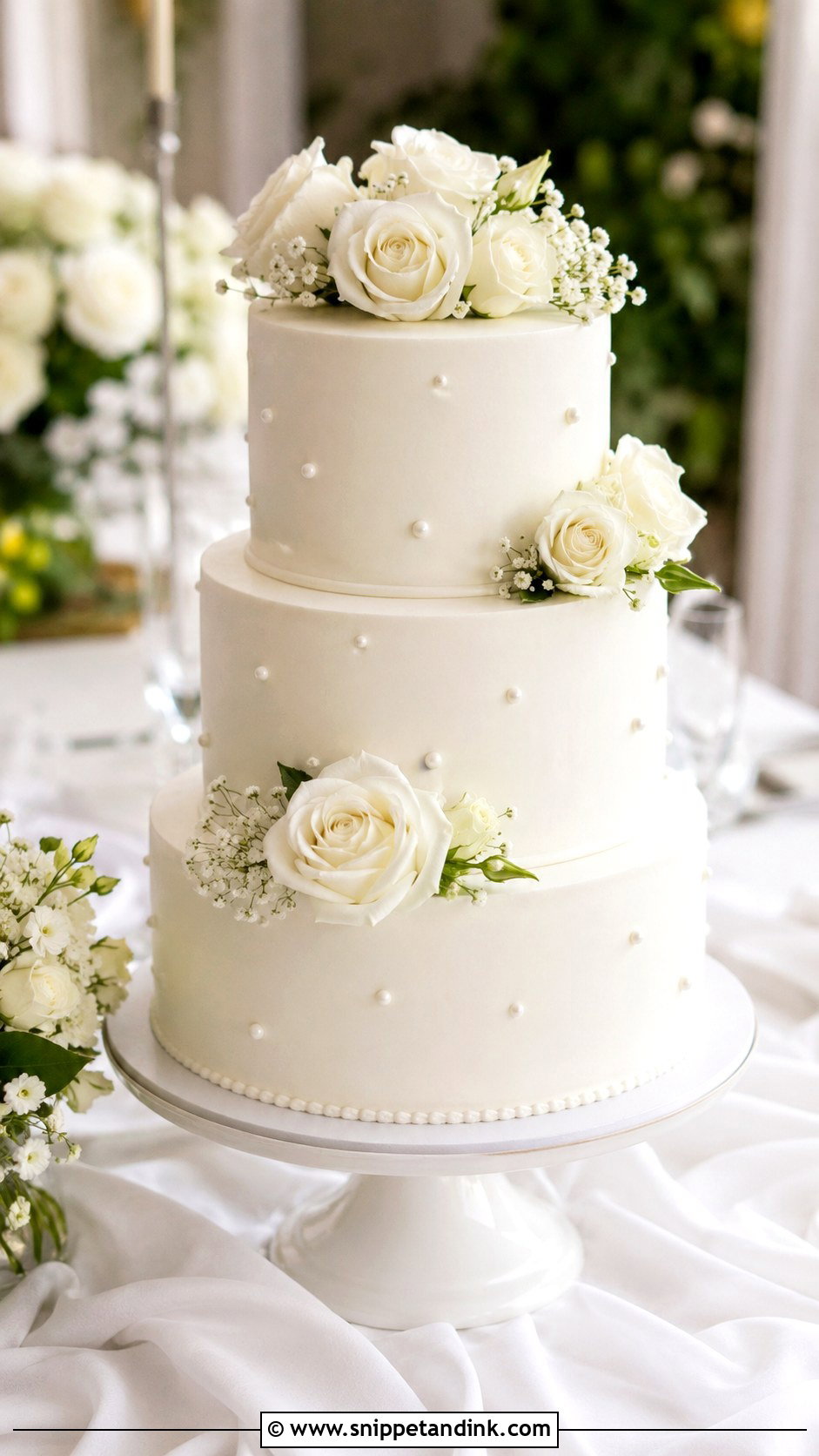
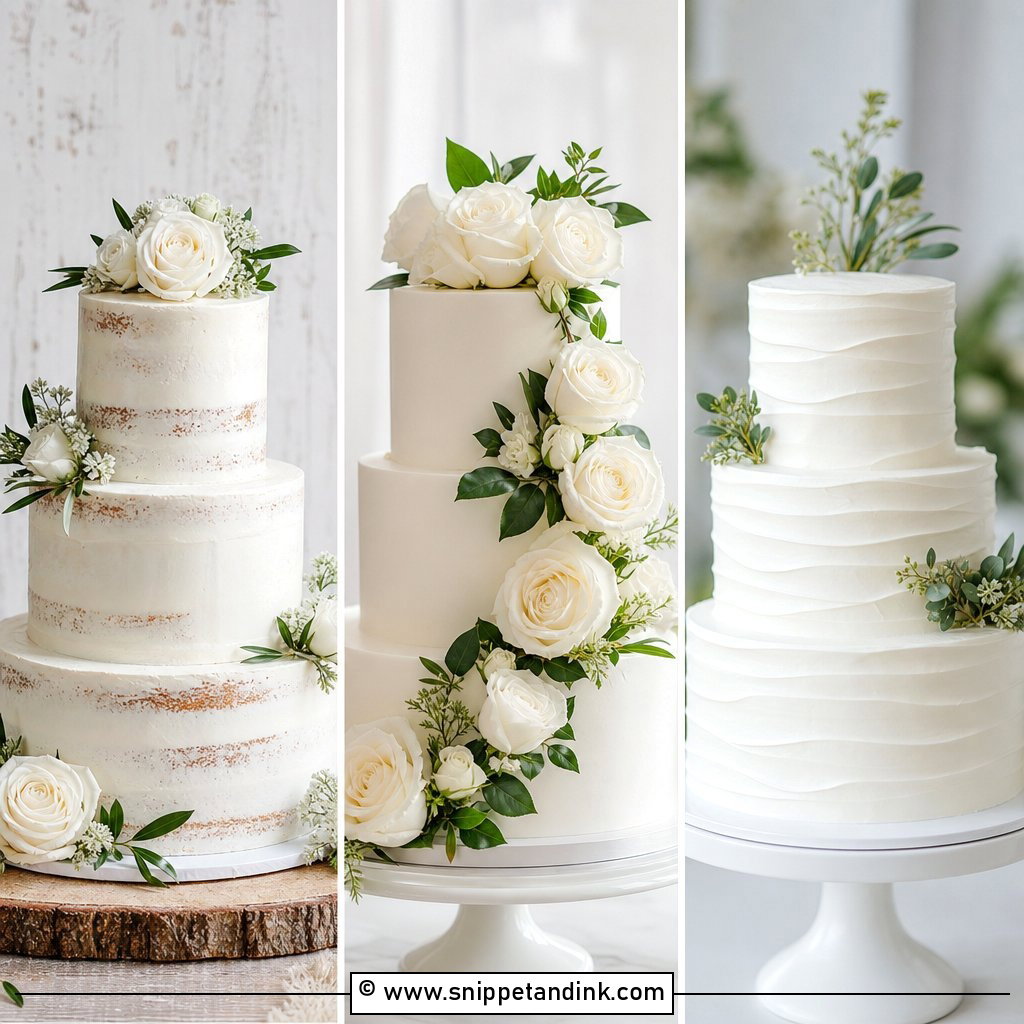
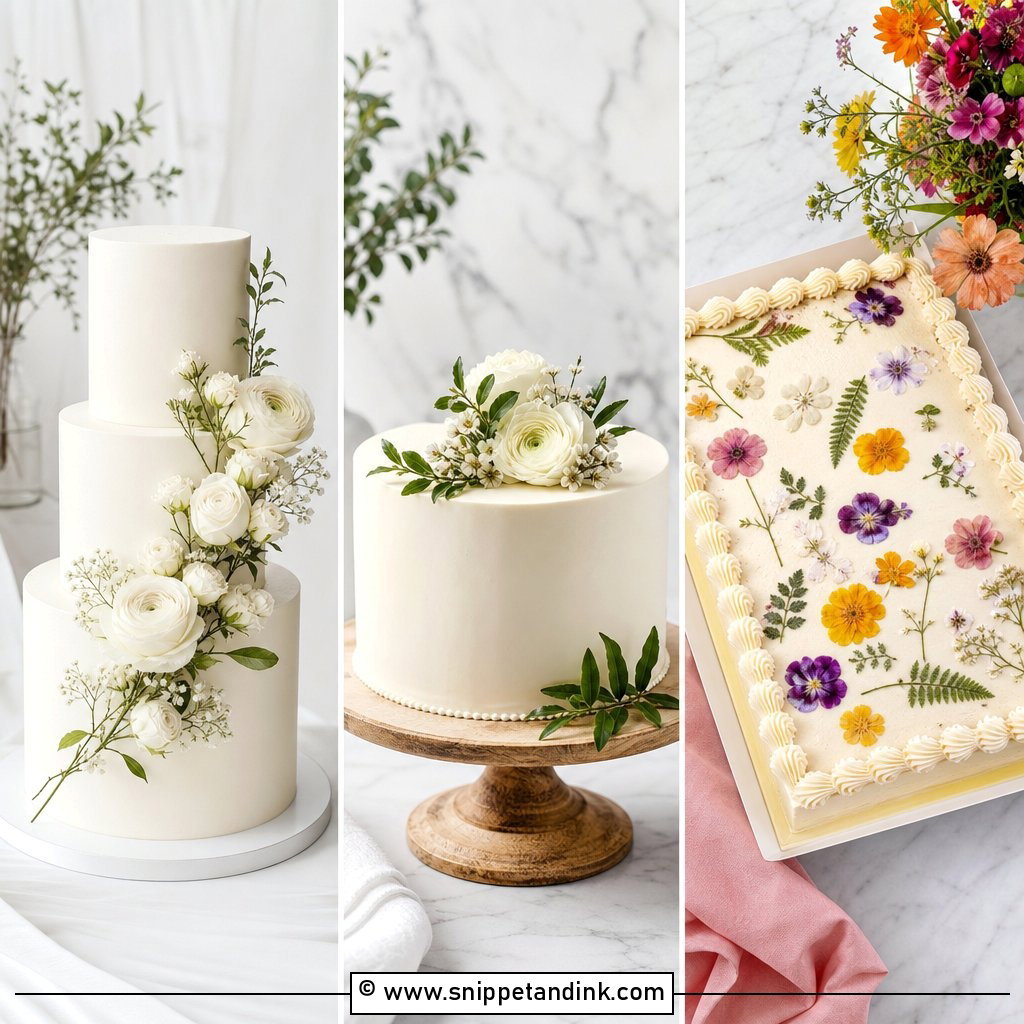
White on white is the design I’m asked for most, and it’s less simple than it looks. Pure white buttercream is hard to achieve because butter is naturally yellow, so a smooth white buttercream usually ends up a warm ivory unless the baker whitens it. If you want a true bright white, fondant gets you there, along with the extra sharp edges of a porcelain style. A few white roses, sugar pearls or a narrow ribbon at each base are all it needs. Because it carries no colour, it never fights the flowers, the linens or the dress.
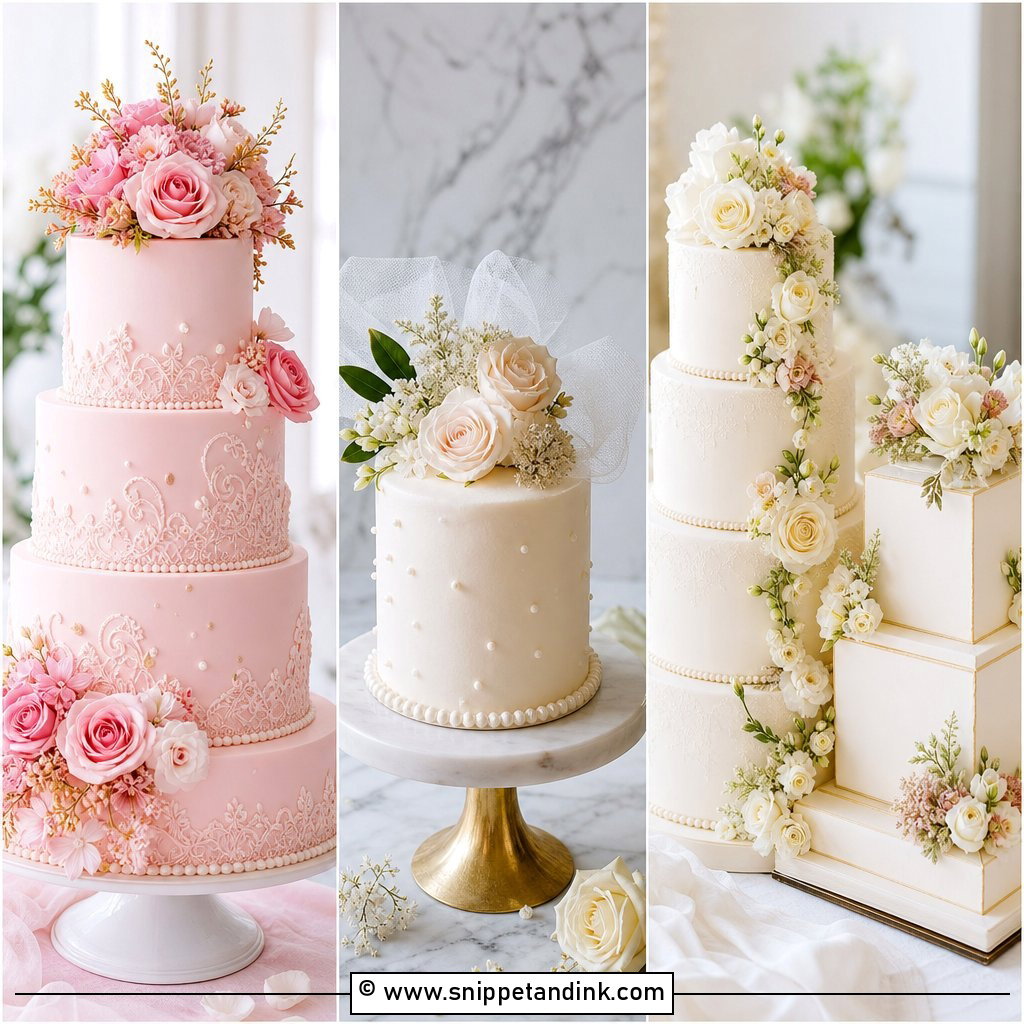
2. Two Tier Smooth Wedding Cake
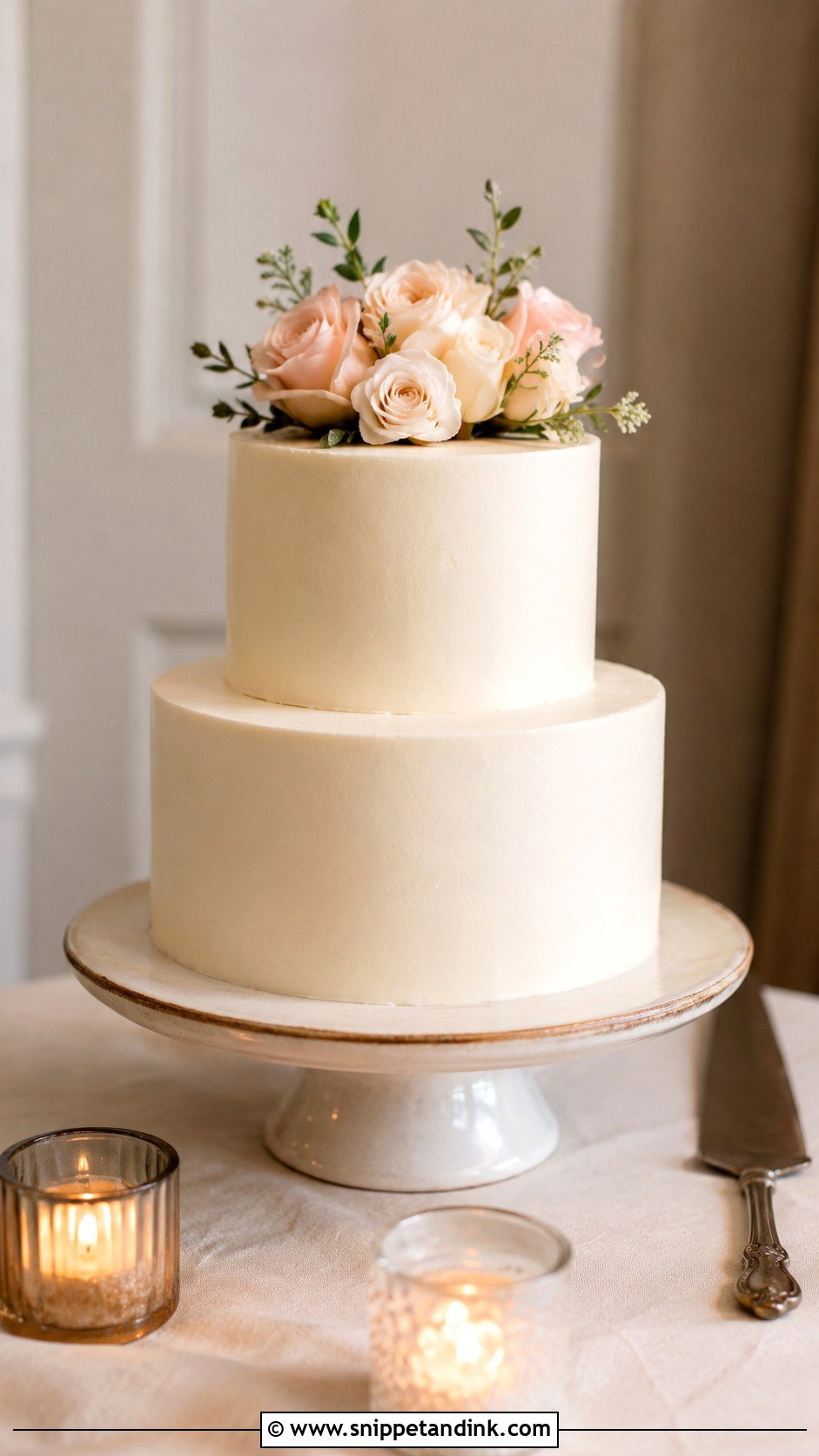
Two tiers give you a real cutting moment without a cake that needs its own table. I usually make the top tier noticeably smaller so the shape looks balanced and taller; two tiers too close in size read as a box. Keep it ivory with one floral cluster, or add a visible flavour when the first slice comes out. Couples with a bigger guest list often pair this with plain kitchen cakes of the same flavour, sliced out of sight, which is cheaper and saves the display cake from looking crowded on a small dessert table.
3. Three Tier Smooth Wedding Cake
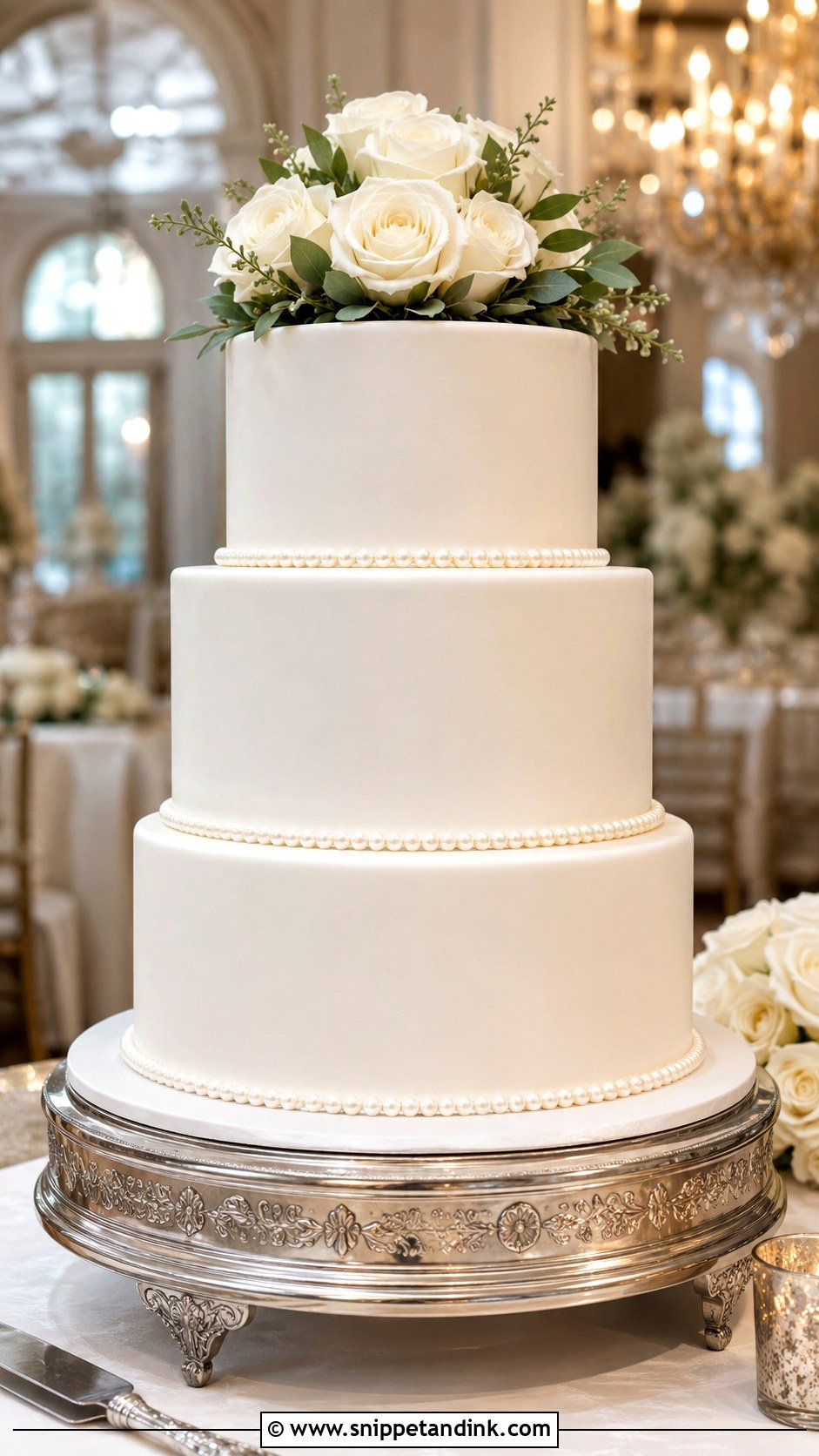
Three tiers is where a cake starts to act as a centrepiece. The smooth surface makes it read formal even when the decoration is minimal: small fresh blooms between the tiers for traditional, sharp edges and one asymmetric arrangement for modern. Each tier can be a different flavour, which I’d recommend if guests have mixed tastes. Vanilla almond, lemon raspberry and chocolate ganache cover most preferences. One practical note: three tiers need internal dowels and a central support, so ask whether the cake will be delivered stacked or assembled at the venue.
4. Smooth Buttercream Wedding Cake
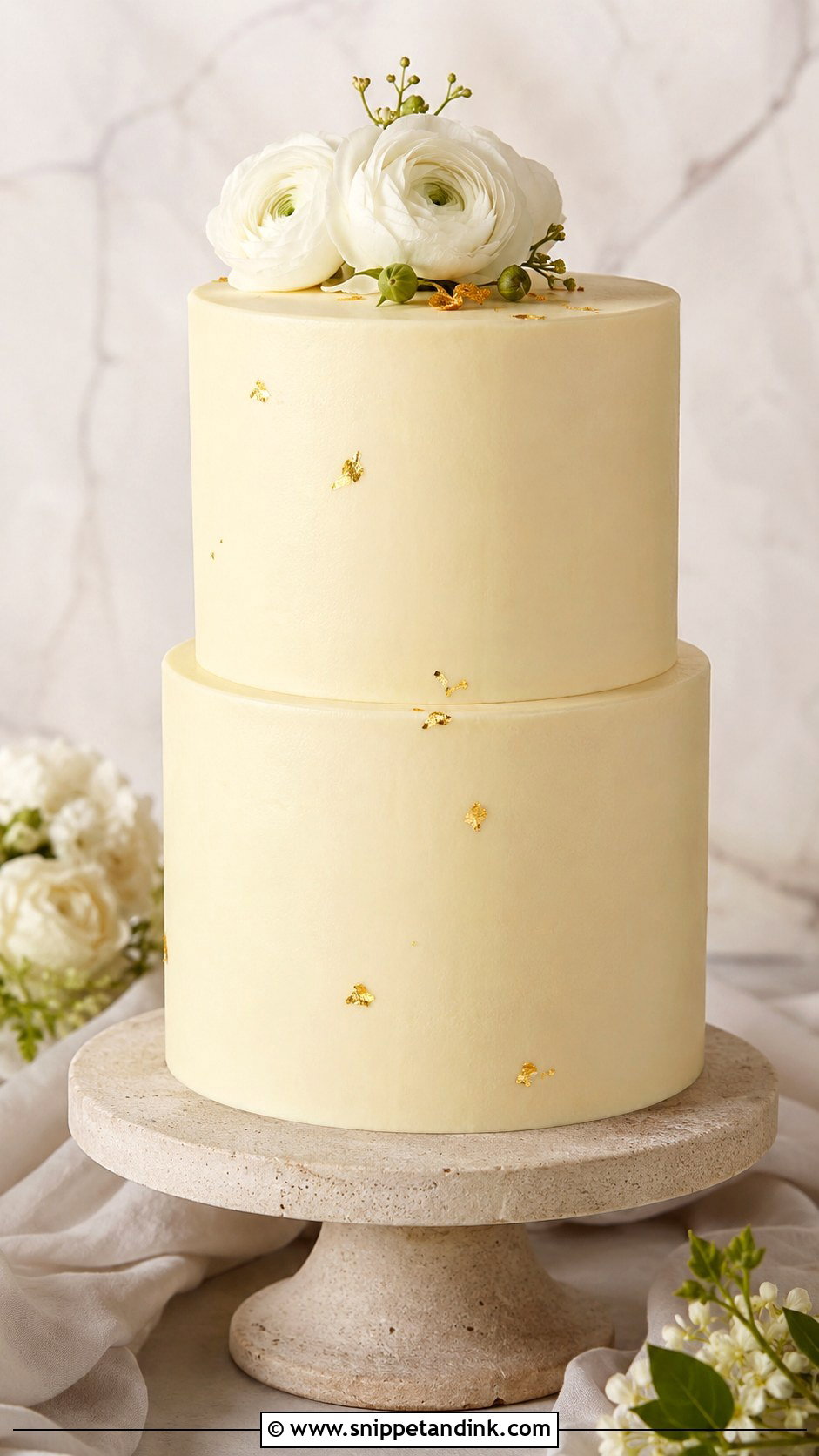
Smooth buttercream takes longer to get right than most people expect. I put on a thin crumb coat, chill it until firm, then apply the final coat and scrape it with a bench scraper against a turntable, with a hot spatula for the top edge. Swiss or Italian meringue buttercream smooths more cleanly than the sweeter, grittier American style. Ivory, blush, sage and champagne all work. The real limit is heat: buttercream softens in a warm marquee, so outdoor summer receptions need the cake kept cool until the last possible moment.
5. Smooth Fondant Wedding Cake
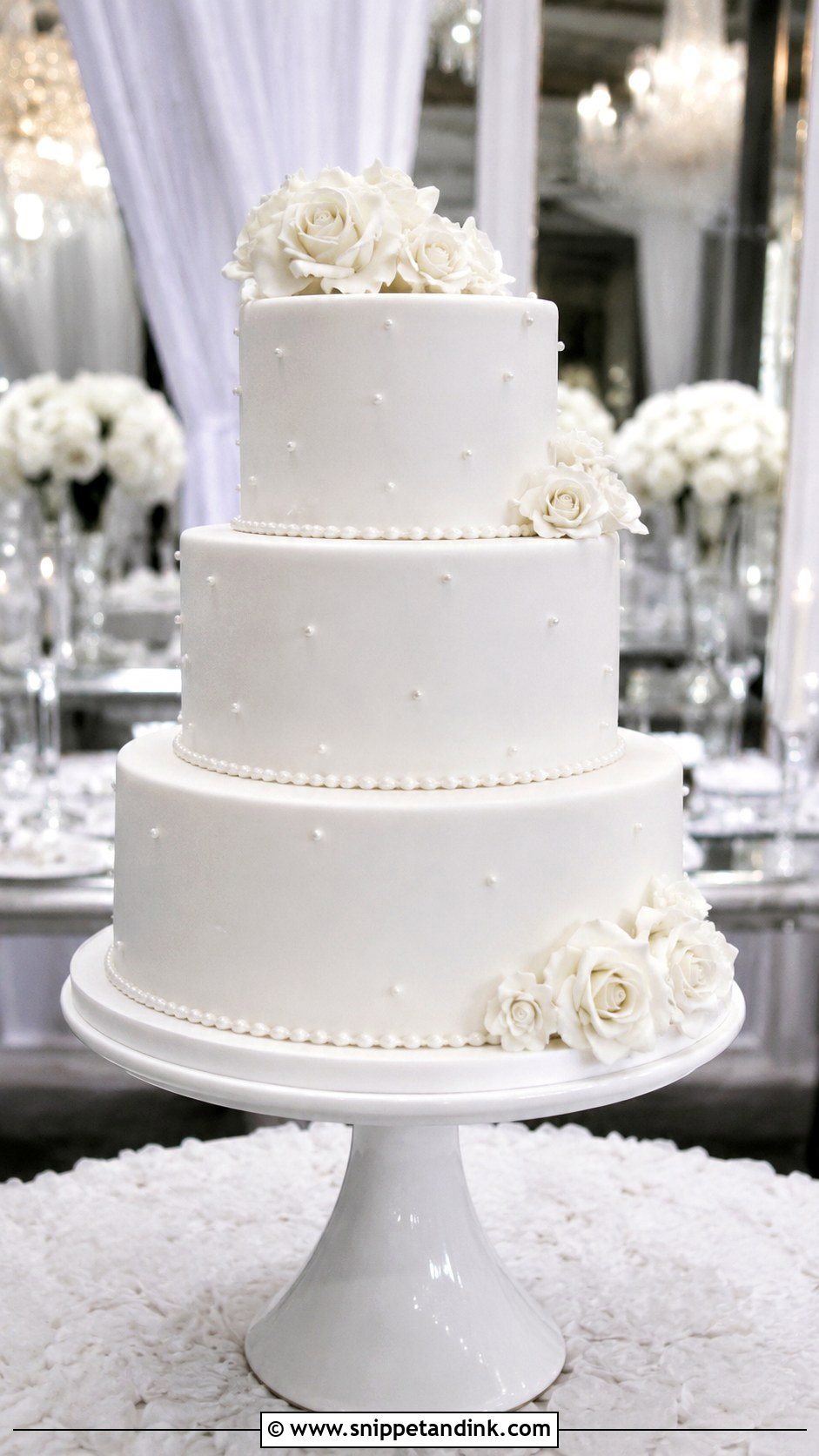
For crisp corners and a surface like porcelain, fondant is the right tool. It’s rolled thin and laid over a cake already coated in buttercream or ganache, so the flavour comes from what’s underneath; most guests peel the fondant off anyway. It’s the strongest base for sculpted bows, sugar flowers, monograms and colour blocking. Its weakness is humidity and temperature changes. A fondant cake taken from a fridge into a warm room can sweat with beads of condensation, so I let it come up to room temperature slowly in its box rather than straight onto a display table.
6. Smooth Wedding Cake With Fresh Flowers
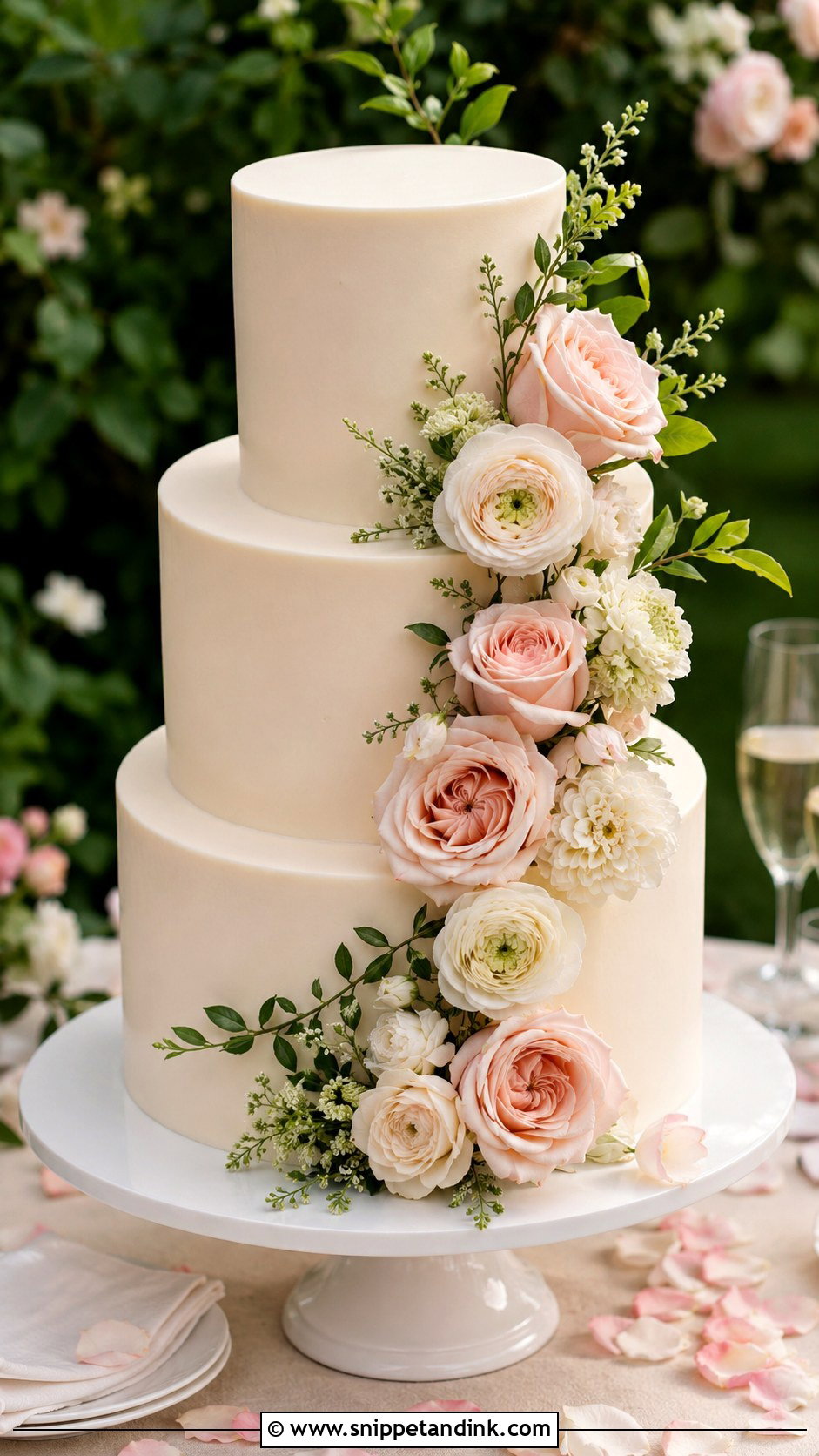
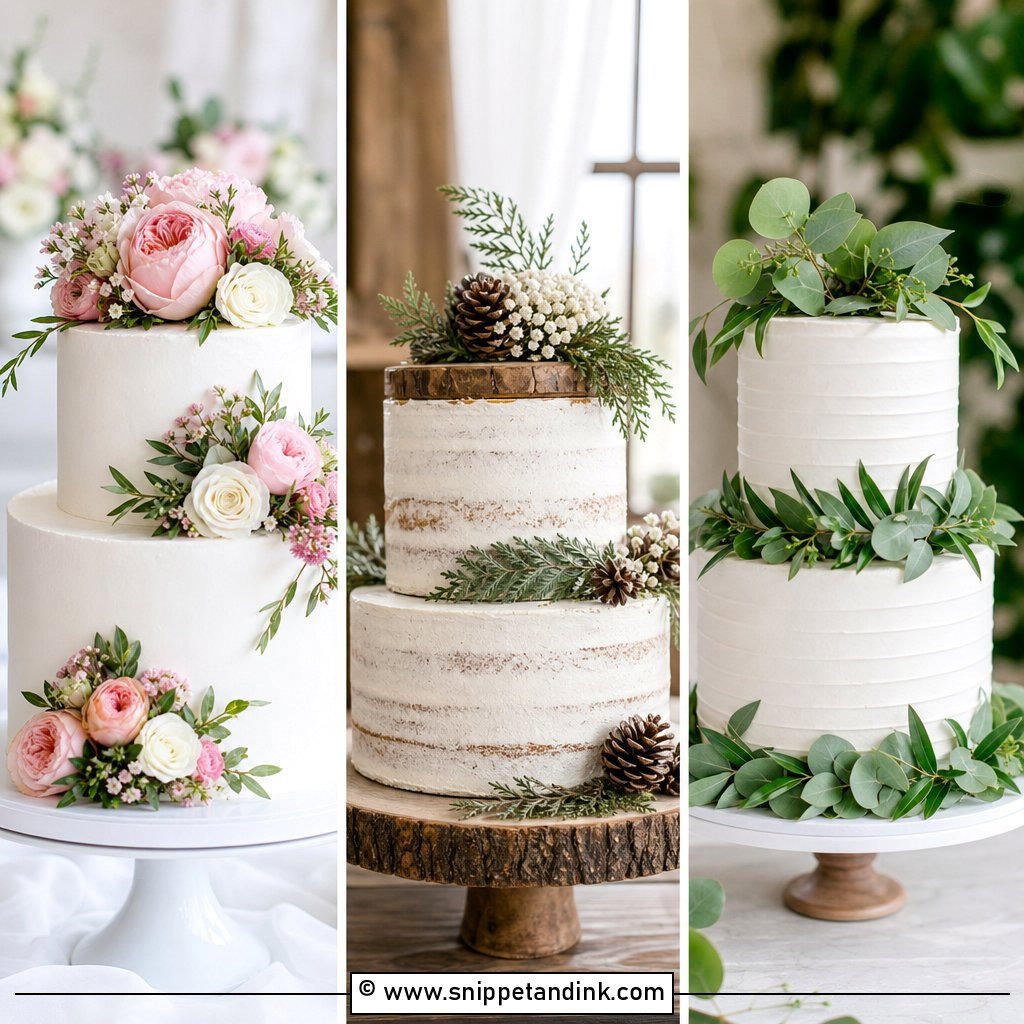
Clean icing turns the flowers into the artwork. Roses, ranunculus, orchids, lisianthus and edible pansies all sit well on a smooth tier, but not every flower is safe near food; some are toxic, and most florist stems have been sprayed. I wrap stems in floral tape and set them into food-safe picks or straws so nothing touches the cake directly, and I agree with the florist in advance who is doing the placement. A diagonal cascade is dramatic, a single side cluster restrained, and the colour can shift with any season.
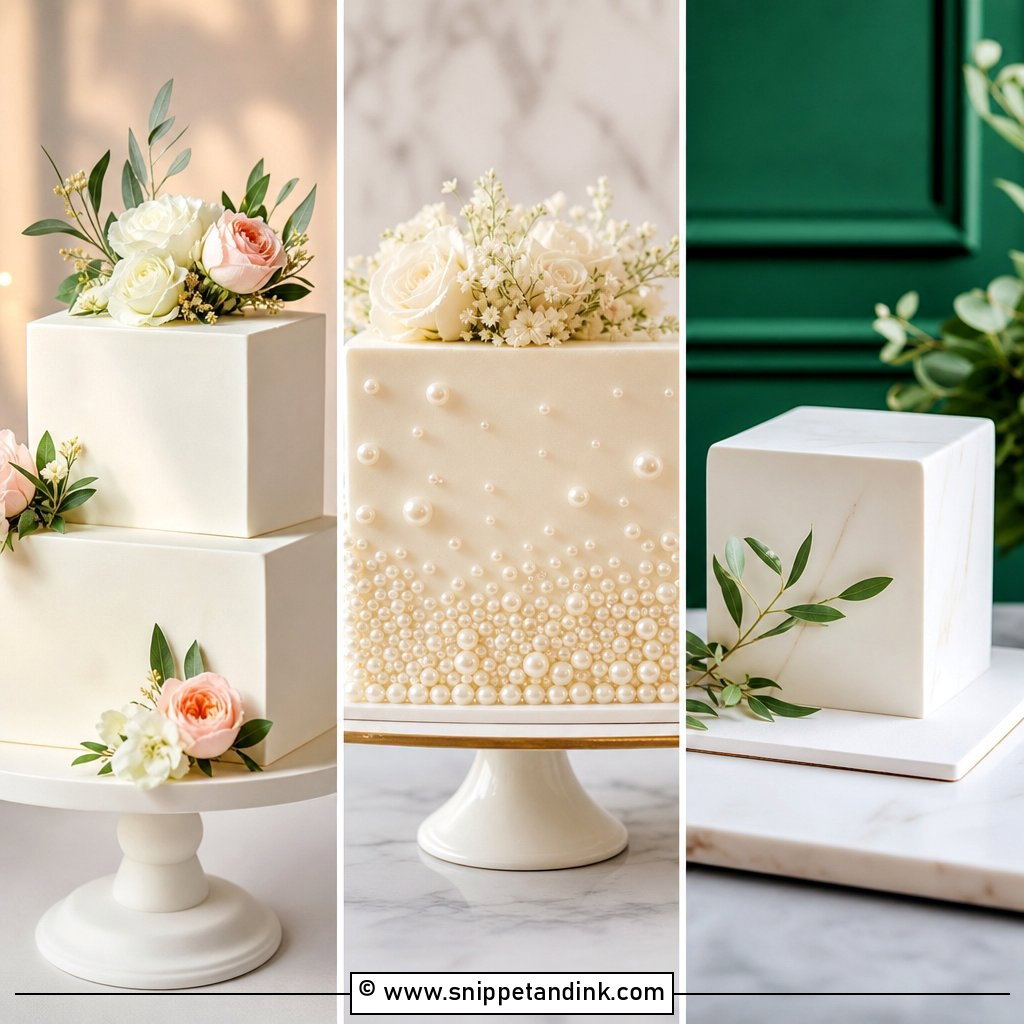
7. Smooth Wedding Cake With Pearls
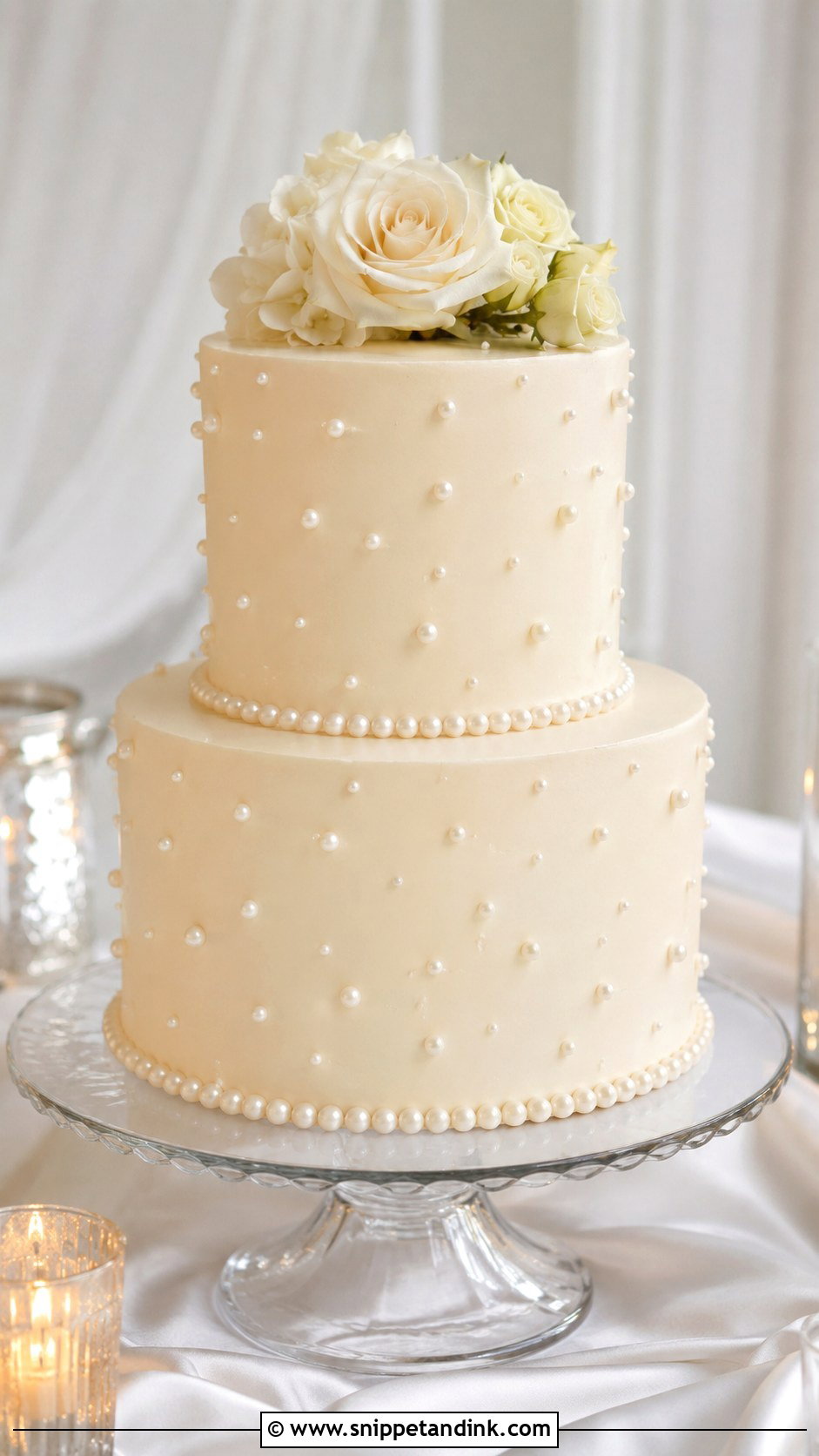
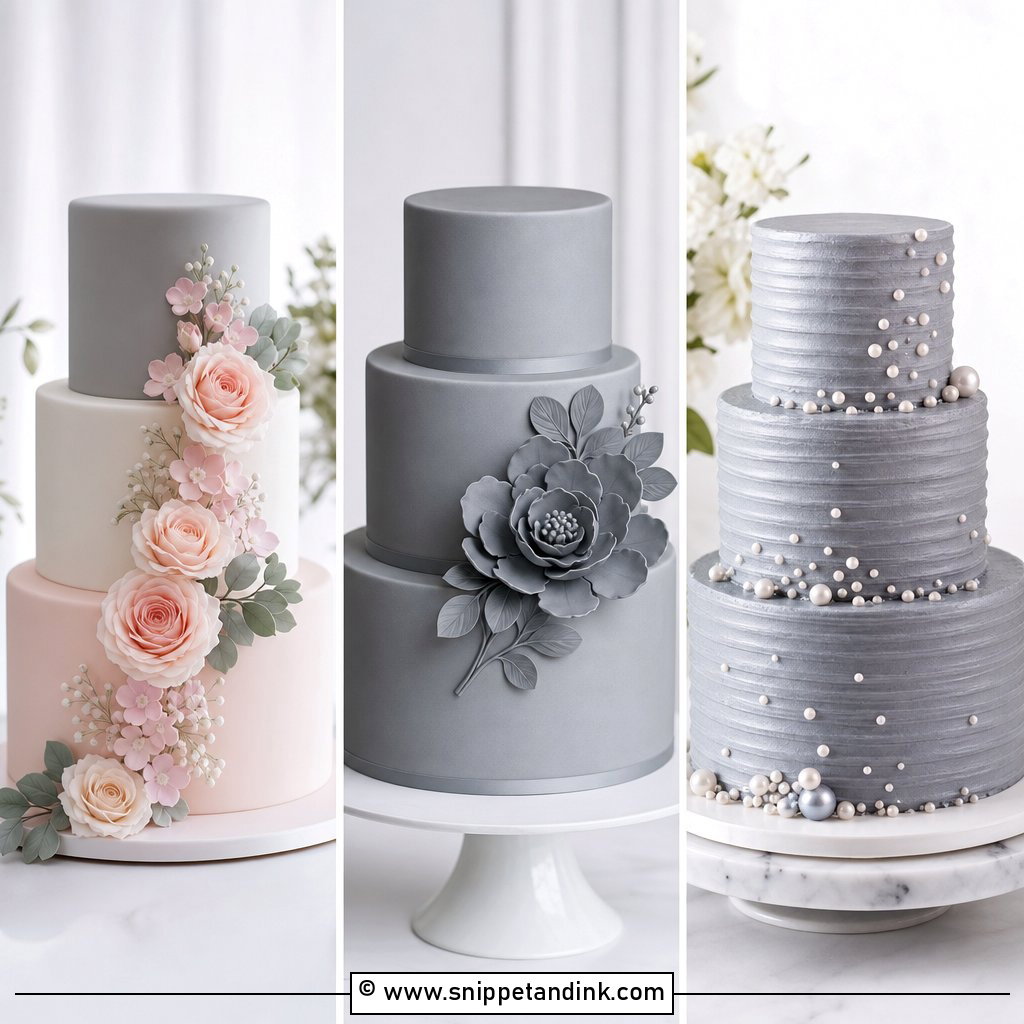
Pearls add texture without fuss. They can be sugar pearls pressed into the icing, piped buttercream dots or larger moulded pearls set in neat rows. Scattered looks modern; evenly spaced rows feel formal and slightly vintage. Sugar pearls can bleed colour if the icing is damp, so I add them once the surface has firmed. Ivory, champagne or pale blush suit them, with satin gowns and candlelight close behind.
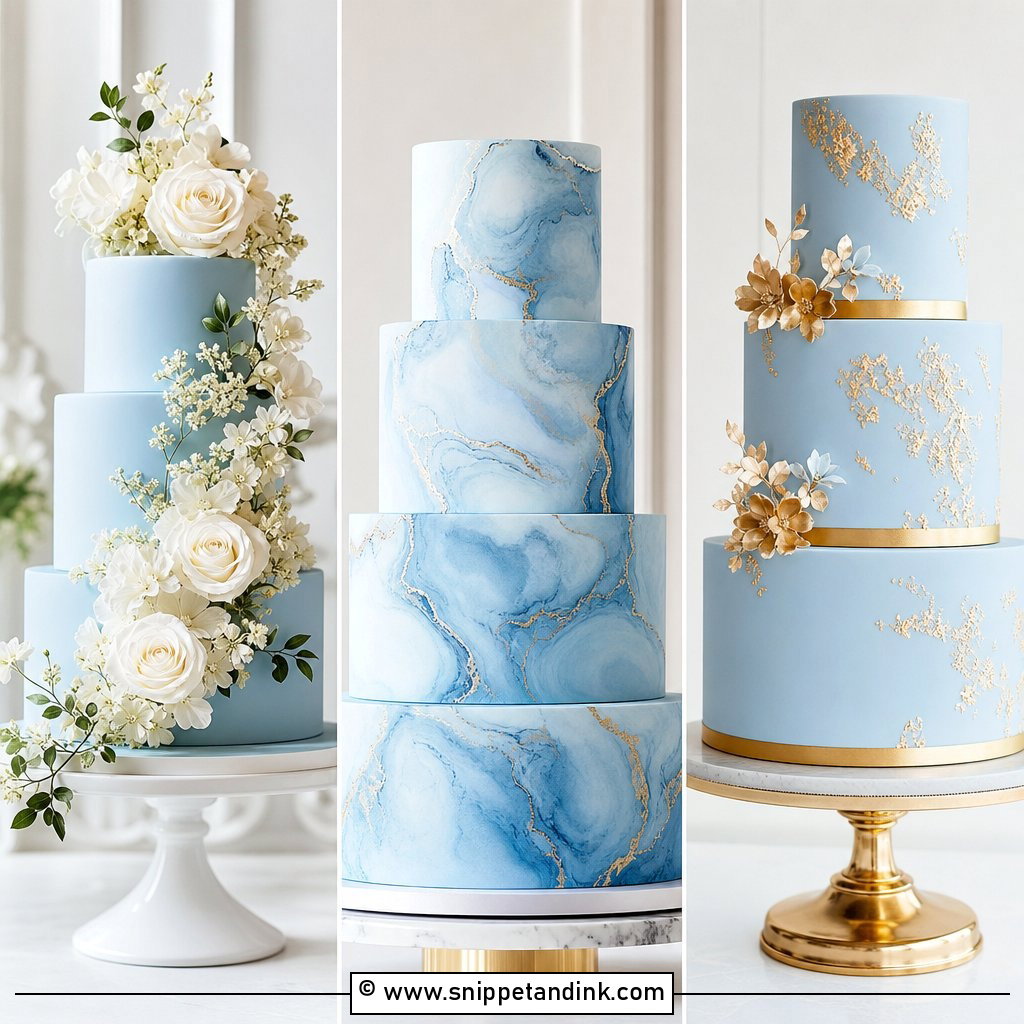
8. Smooth Wedding Cake With Gold Leaf
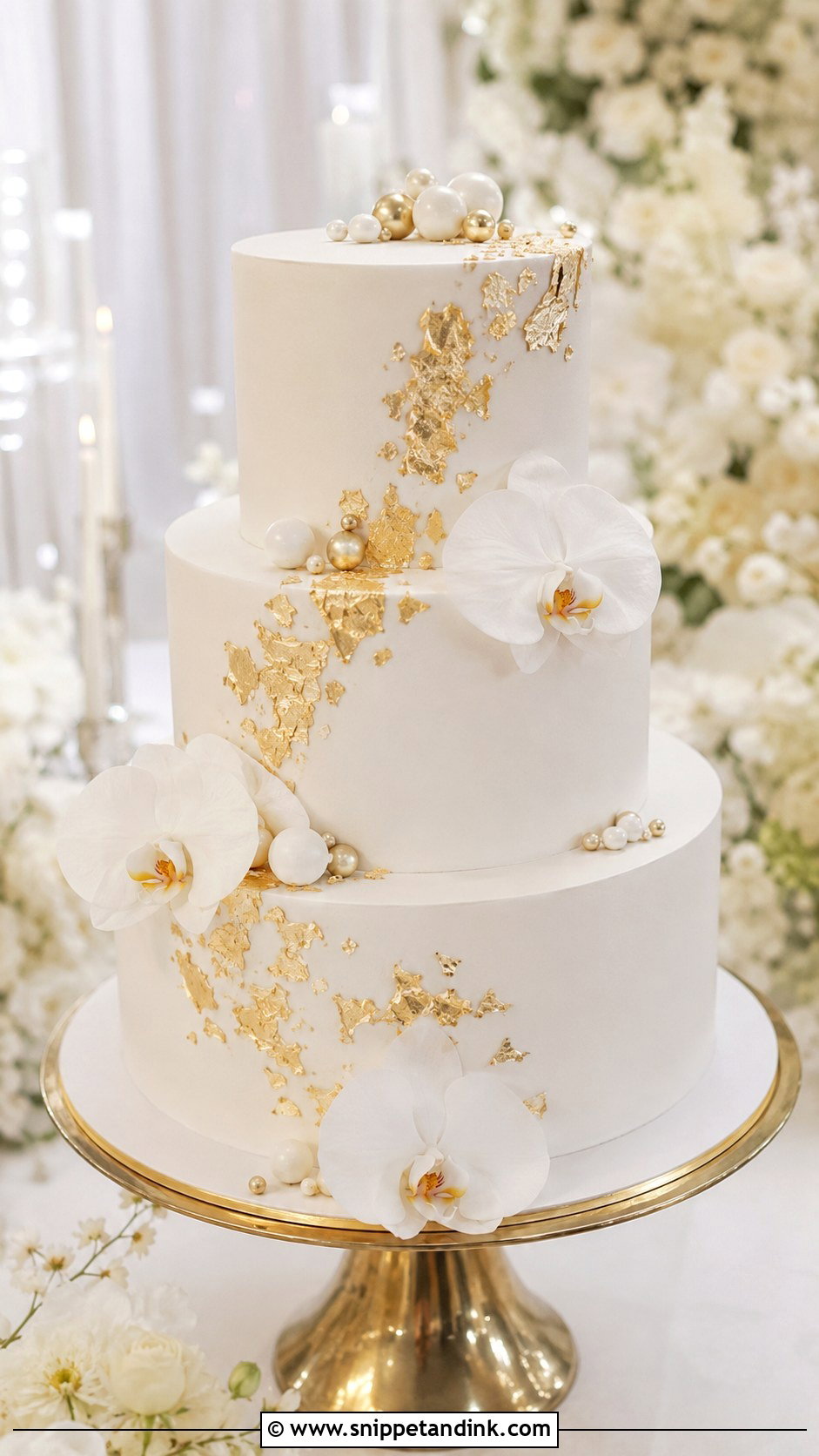
A little gold leaf goes a long way. I apply edible gold leaf with a dry soft brush along one tier edge, around a flower cluster or in a broken diagonal line, and it only sticks well to a firm, slightly tacky surface. Leaf on soft buttercream tends to wrinkle. Ivory, white, blush, sage and soft grey all make good backgrounds. Covering the whole cake rarely looks as expensive as a few deliberate touches, so I keep most of the smooth finish visible.
9. Smooth Square Wedding Cake
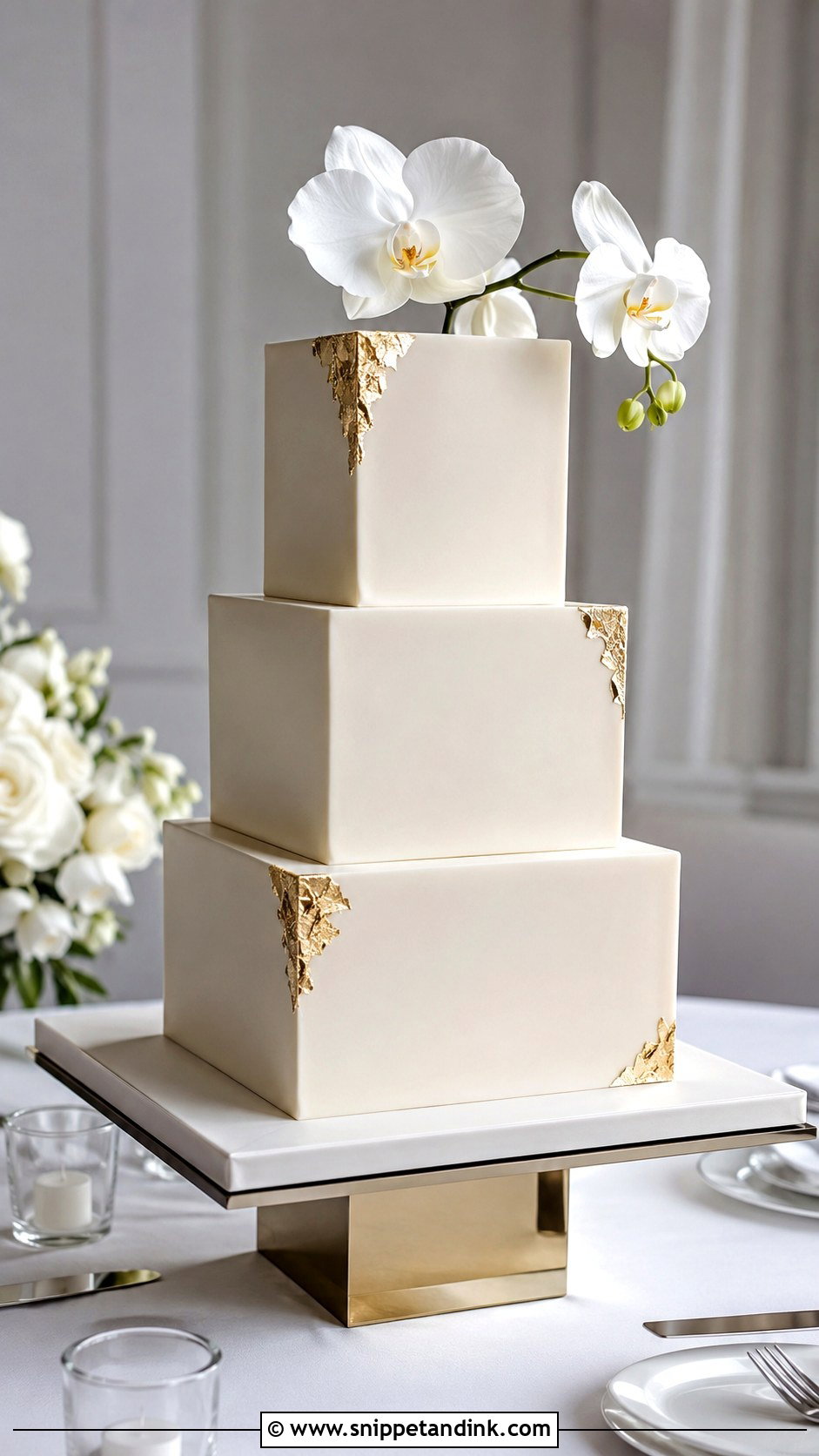
Straight sides and sharp corners make a cake feel architectural, especially next to round flower arrangements and soft linens. I’ll be honest about the work: corners are the hardest part of any smooth finish, which is why a smooth square wedding cake is usually ganached and then covered in fondant. Square tiers also give more servings than round tiers of the same width. Stack them evenly for a formal look or rotate one tier for movement, and keep decoration to a single orchid stem, a thin ribbon or a touch of gold leaf on one corner.
10. Smooth Round Wedding Cake
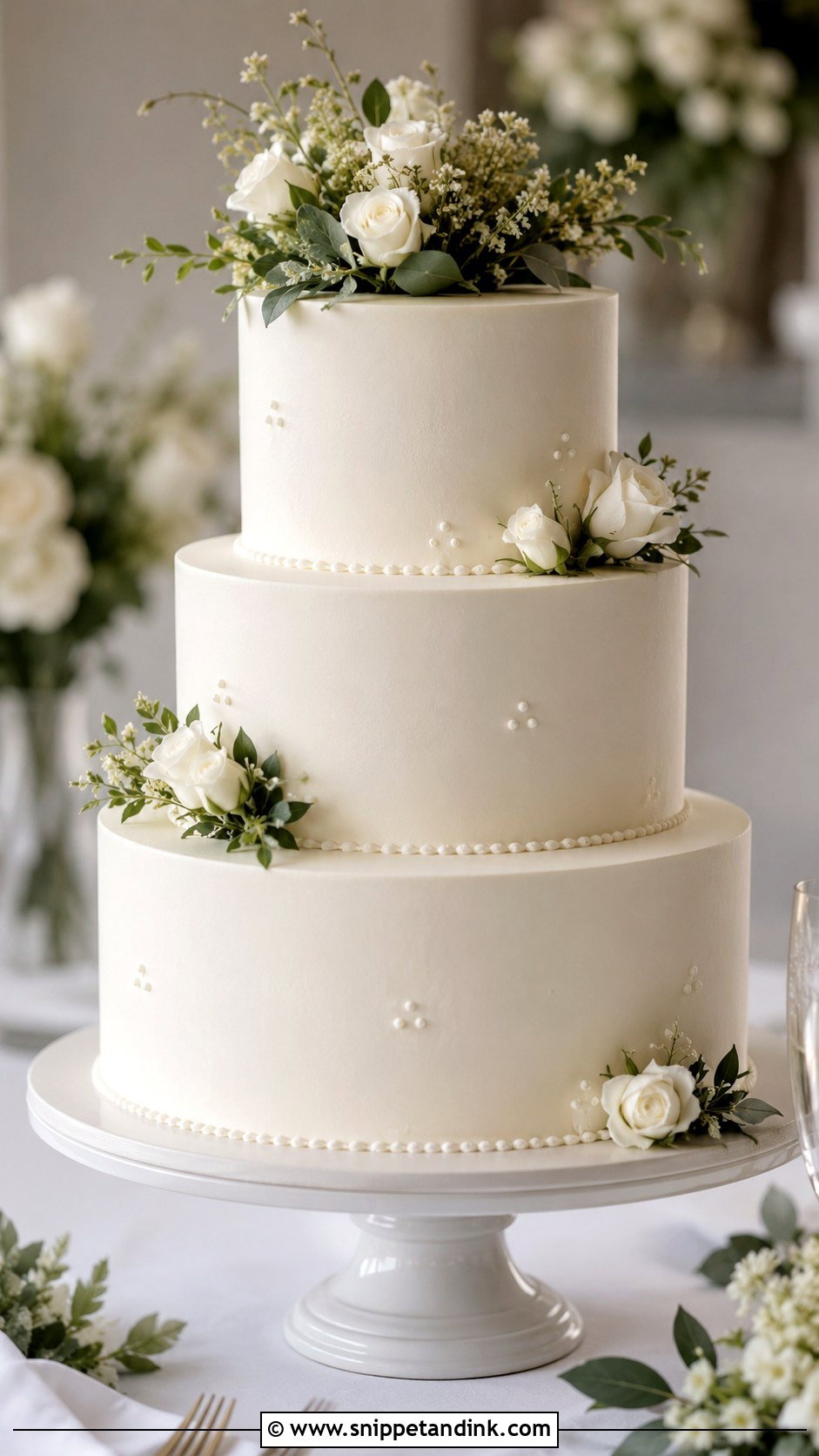
Round tiers are the most flexible shape I make. They lean romantic with roses, modern with a sculptural accent, rustic with greenery or formal with pearl piping, and they’re the easiest shape to smooth well, which is why I suggest them for mixed-style weddings. Ask for even tier spacing and a neat base border. A round cake also gives the most natural-looking cutting photos.
11. Smooth Black And White Wedding Cake
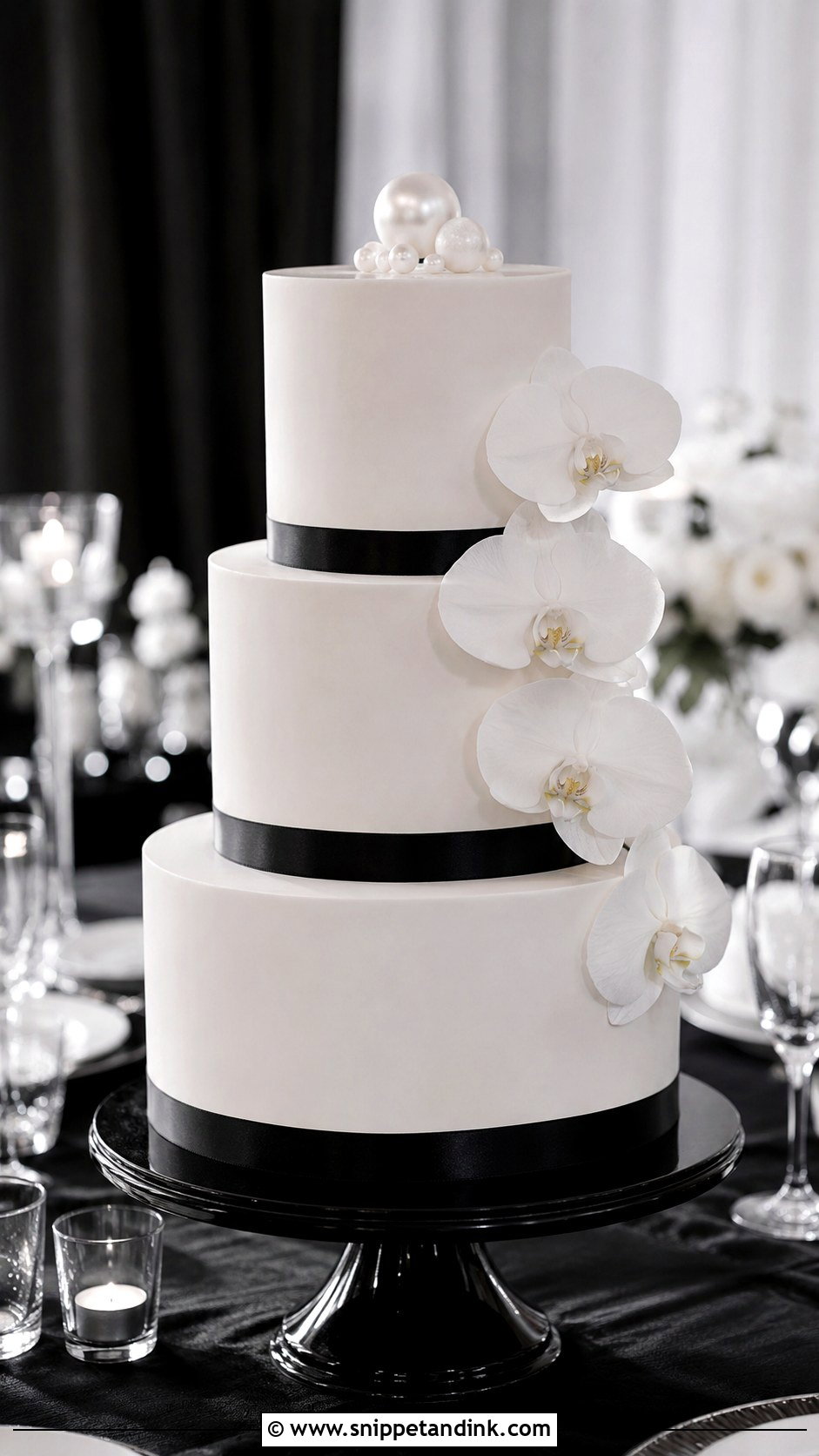
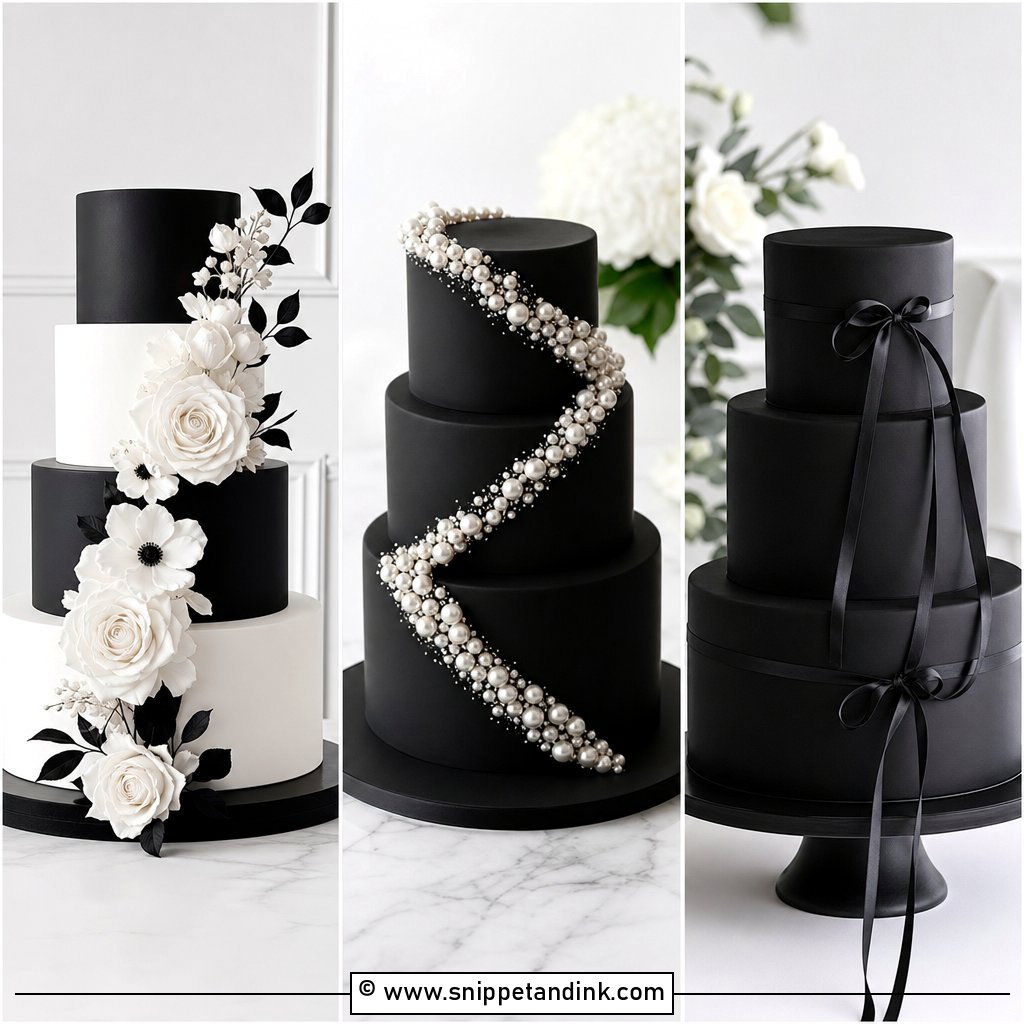
Black icing is a decision with consequences. Getting buttercream or fondant truly black takes a lot of colouring, and that can stain teeth and leave a bitter taste. I build black from a dark chocolate or black cocoa base so less dye is needed, or I keep black to ribbon, sugar silhouettes or a single bottom tier that isn’t served. White tiers with one black band, white orchids and tiny pearls look sharp at rooftop receptions, galleries and evening weddings. Charcoal is a gentler alternative if black feels too strong.
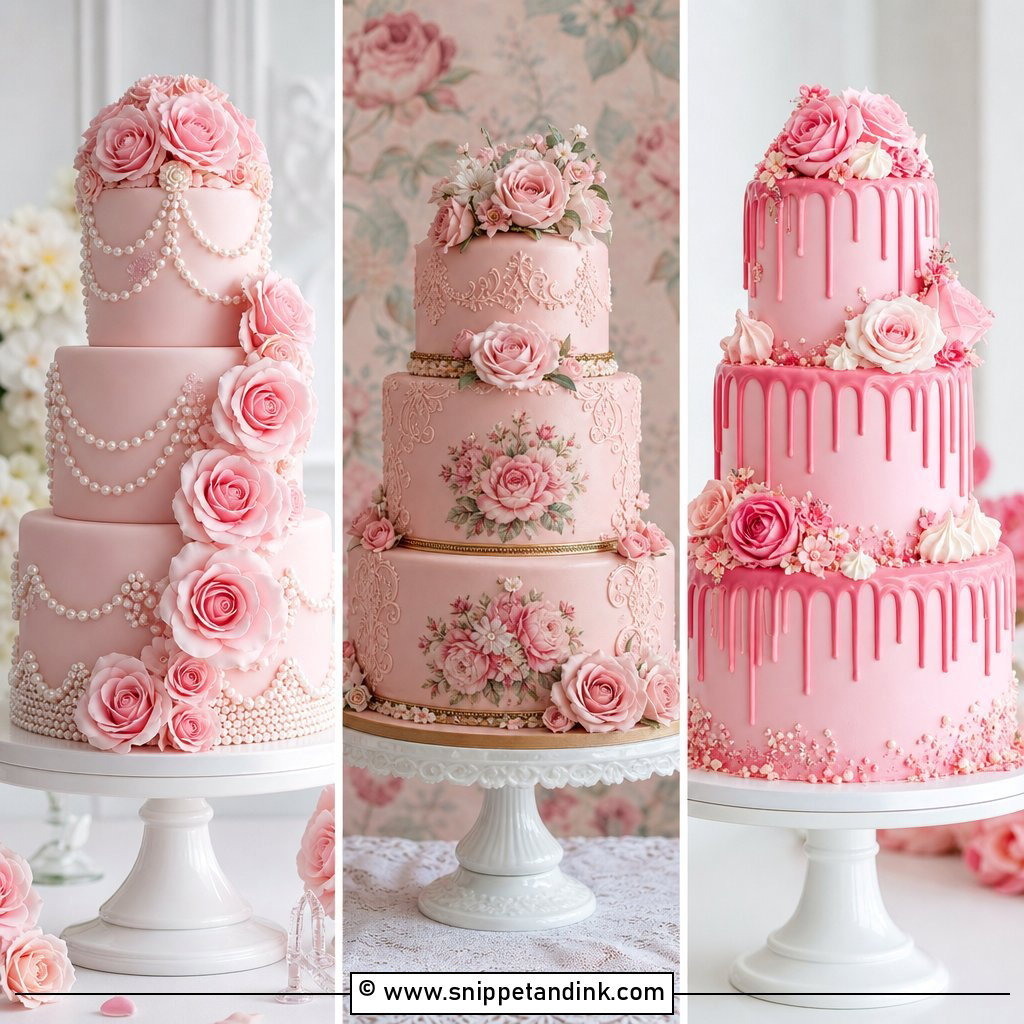
12. Smooth Blush Wedding Cake
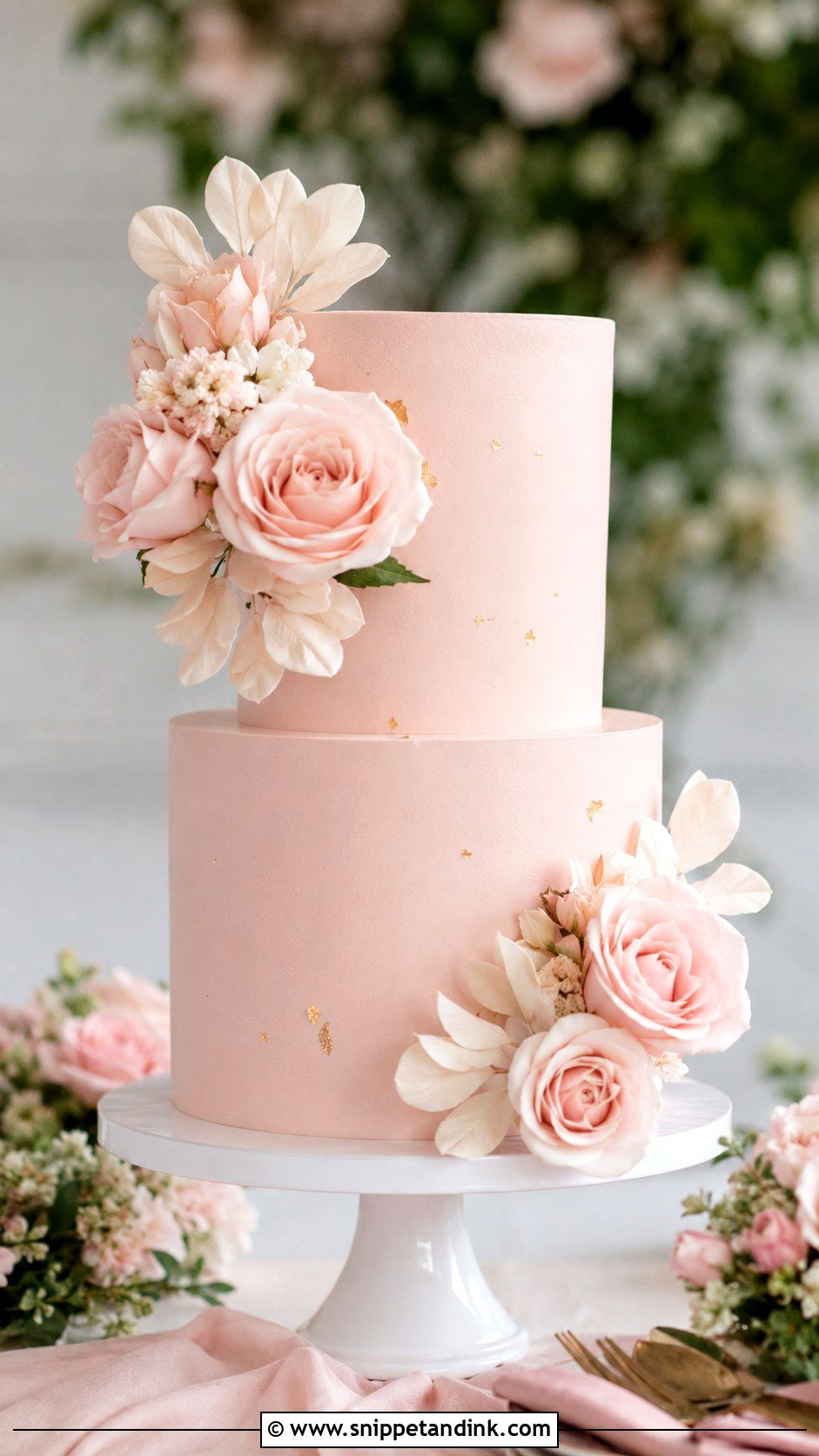
Blush works almost like a neutral on the dessert table, yet it adds warmth. A barely pink buttercream gives a soft look; smooth fondant gives a more polished one. I tint blush very lightly, because pinks deepen as they sit and can look sugary if pushed. Roses, peonies or pale sugar flowers along one side, and pairings of ivory, champagne, gold or sage, suit garden and candlelit receptions.
13. Smooth Sage Green Wedding Cake
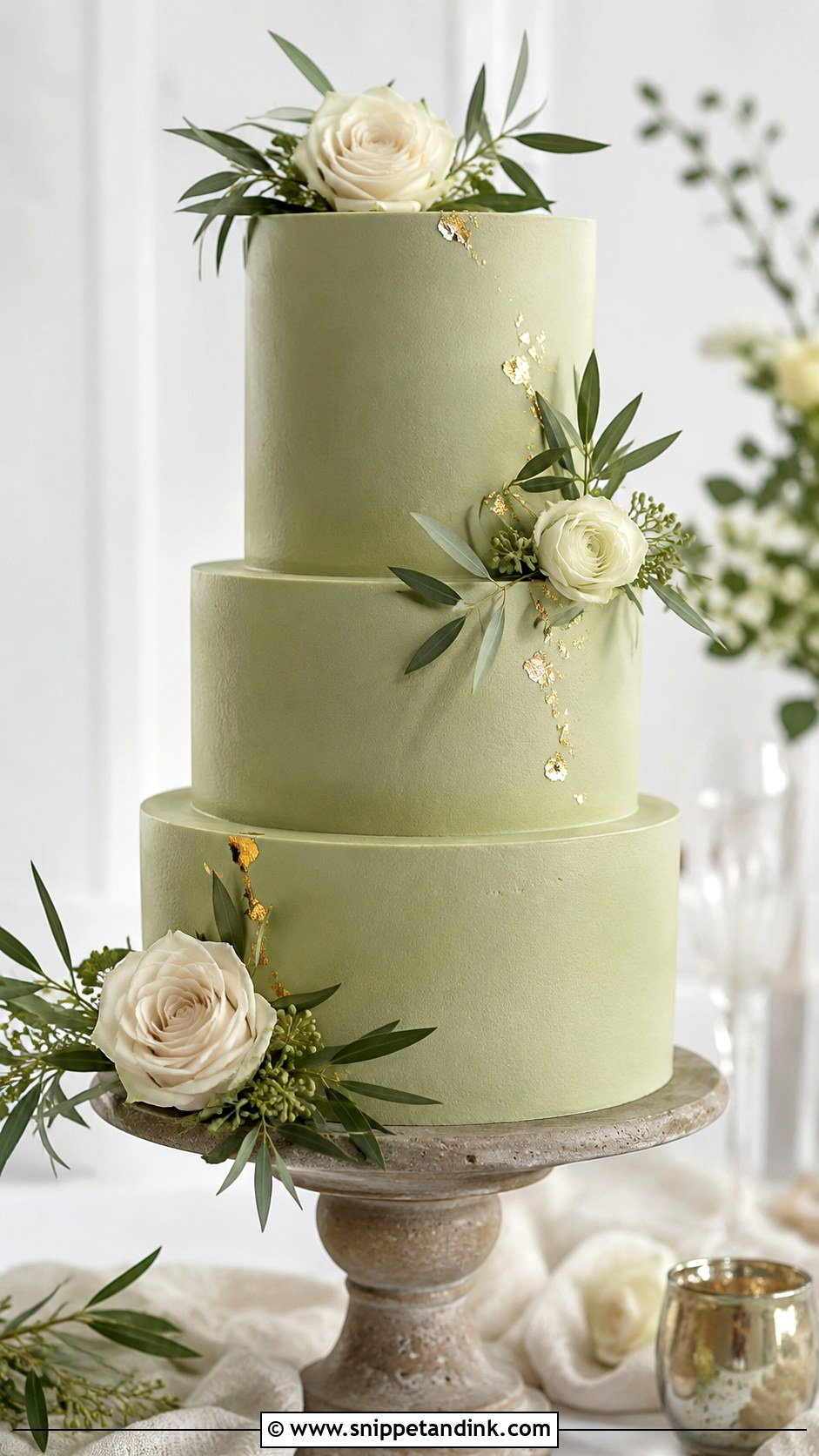
Sage reads as colour without being loud, and a smooth finish keeps it from looking rustic. White roses, olive leaves, eucalyptus-style greenery or a touch of gold leaf all suit it. Greens and other pale tints can fade if the cake sits in strong sunlight, so I’d keep this one away from a window. For flavour, lemon elderflower, vanilla bean, pistachio or almond raspberry fit the fresh colour story, and simple decoration lets the shade do the work.
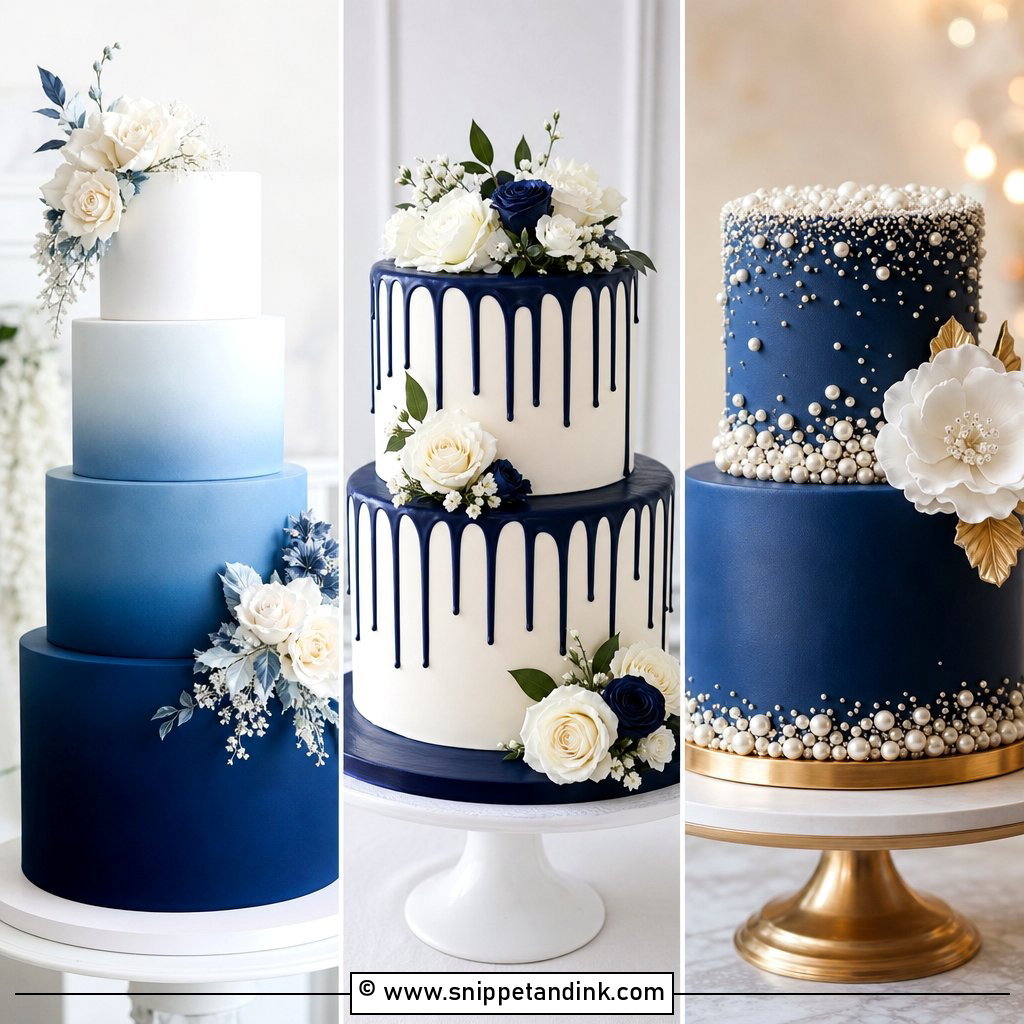
14. Smooth Blue Wedding Cake
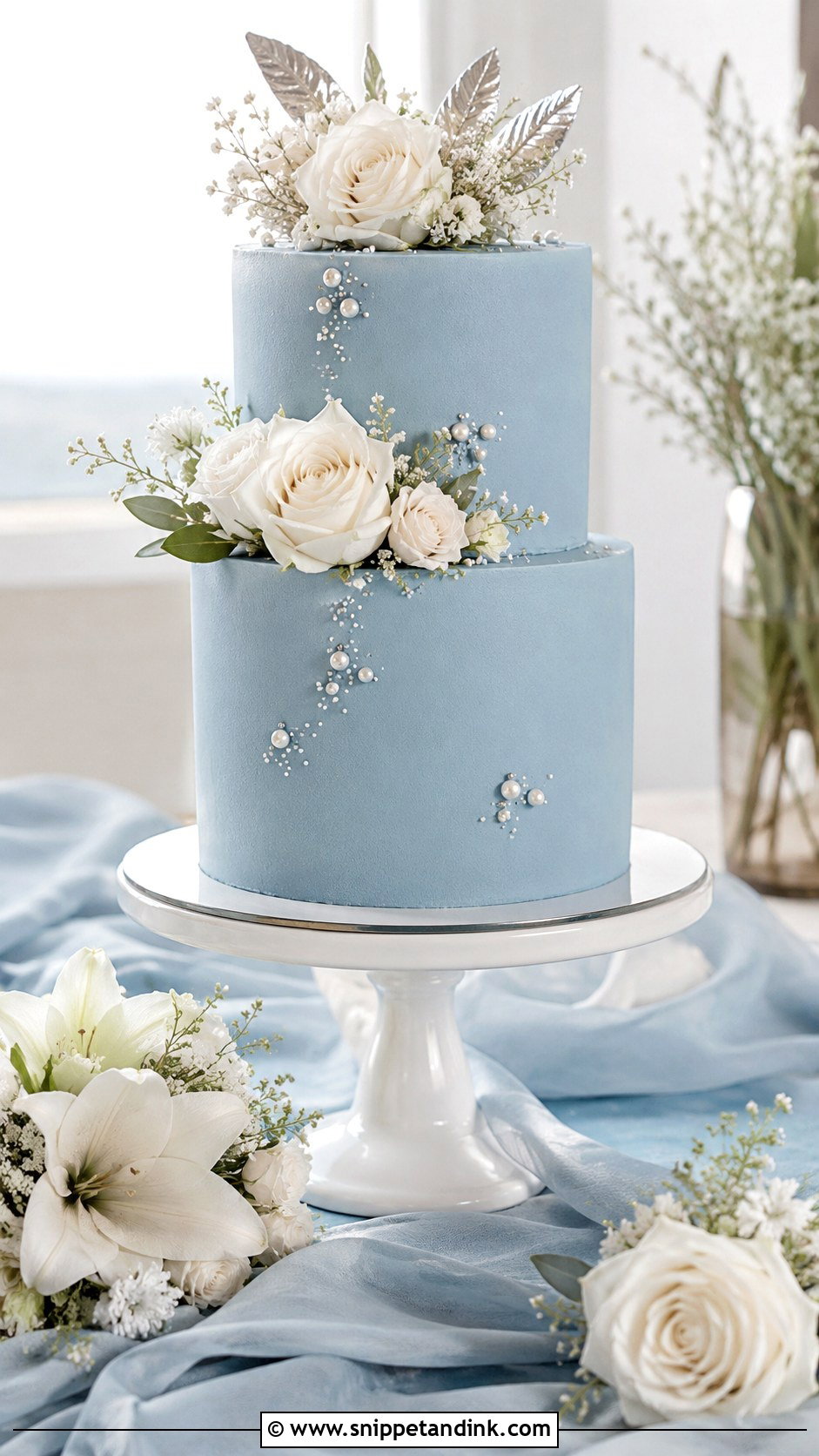
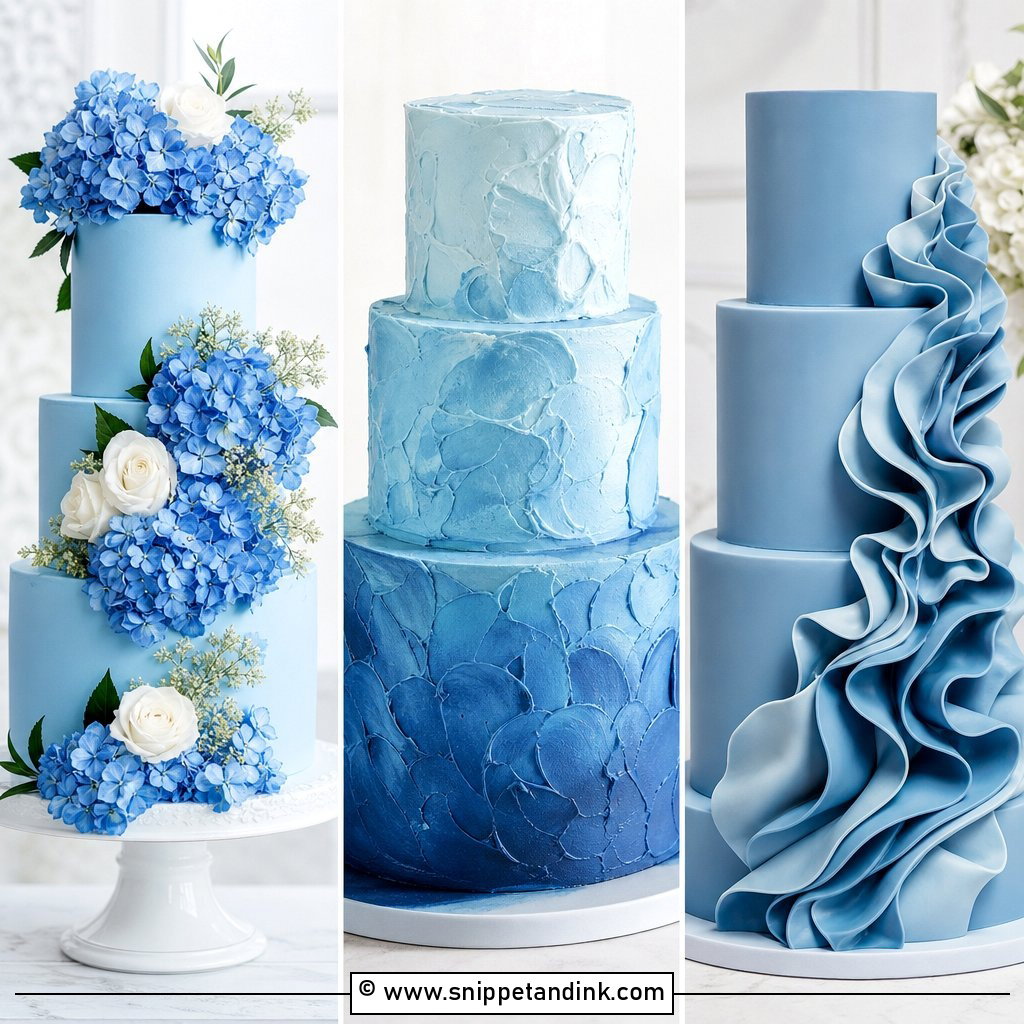
Blue changes personality with depth: pale blue is soft, dusty blue elegant, navy formal. Blue icing can fade or turn slightly green under bright light, which I’ve learned to plan around by keeping the cake shaded and colouring it close to the day. Light blue tiers with white flowers, pearl dots or silver accents look gentle, while one blue tier between two ivory ones feels more modern. Coastal and spring weddings suit it, especially on a plain stand that keeps the colour crisp.
15. Smooth Minimalist Wedding Cake
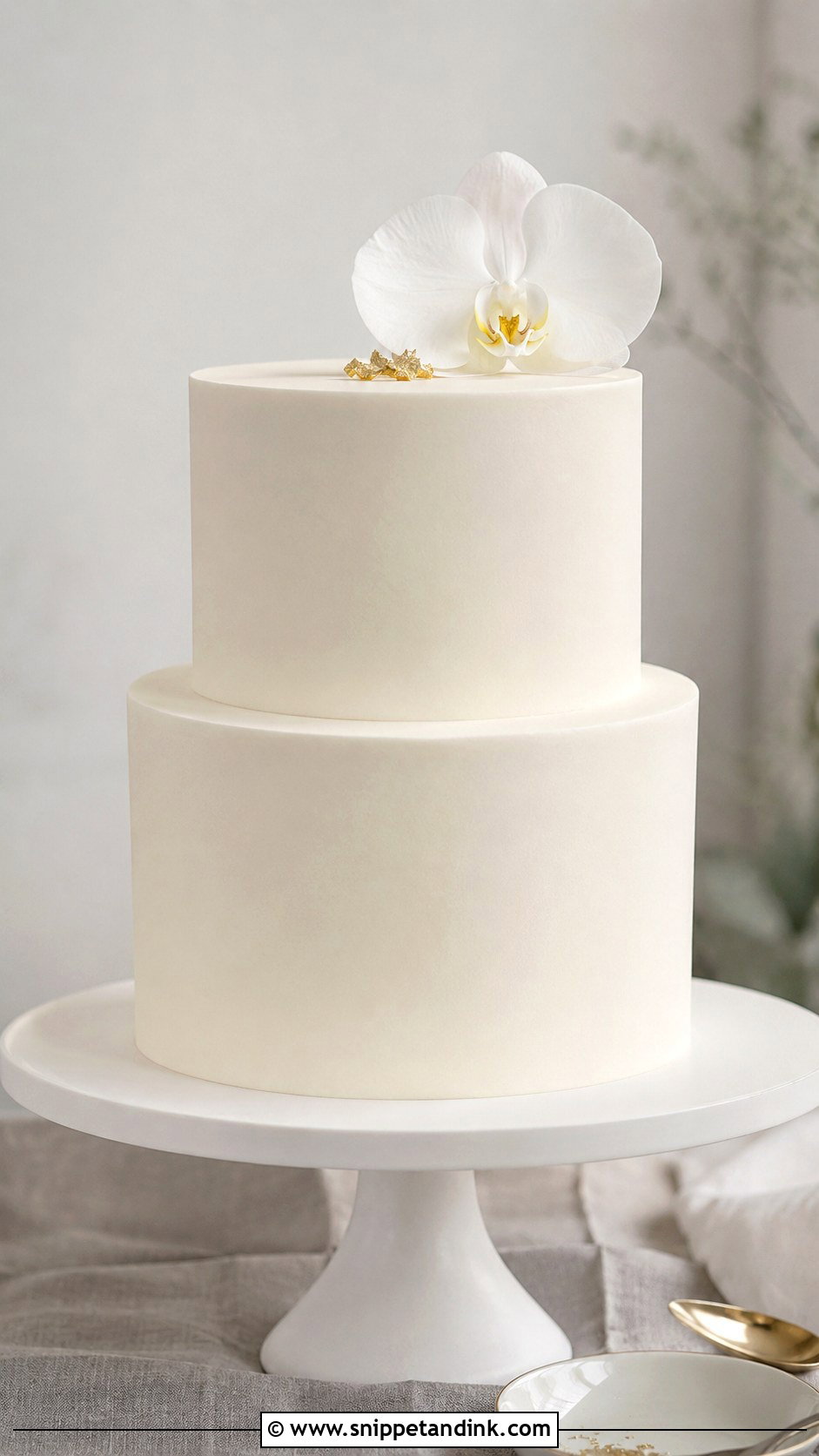
Minimalism is about one decision made well. Shape, finish and the placement of a single detail matter more than any decoration. I’d pick a clean white, ivory or soft beige surface with either sharp edges or softly rounded buttercream sides, then one focal point: a single stem, a small bow, a short pearl border or a tiny gold accent. Because nothing distracts from the surface, it must be flawless, so this isn’t the design to trust to a baker who usually hides finishes under piping. Give it a good stand and open space around it.
16. Smooth Wedding Cake With Bow
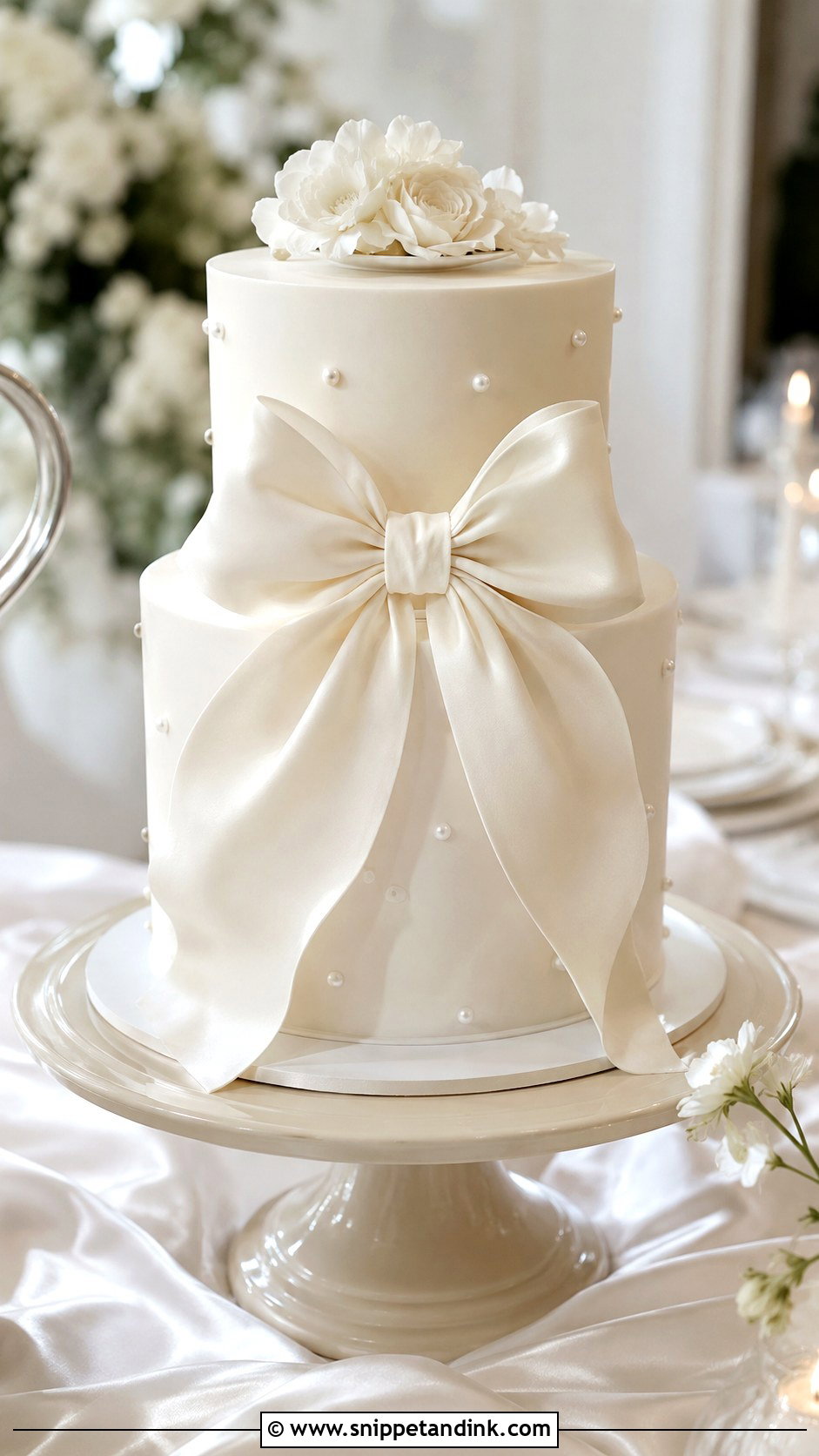
Bows bring a fashion feel to the table. The bow can be sugar, fondant, silk ribbon or buttercream, and a smooth base is what makes it look intentional rather than crowded. On a smooth wedding cake with a bow, I make large sugar bows days ahead so the loops dry hard enough to hold their shape; a fresh one droops. One big bow on the front of a tier makes a statement, smaller ones at each base feel softer. White on white is classic; black, blush or champagne bows read more editorial.
17. Smooth Wedding Cake With Piped Border
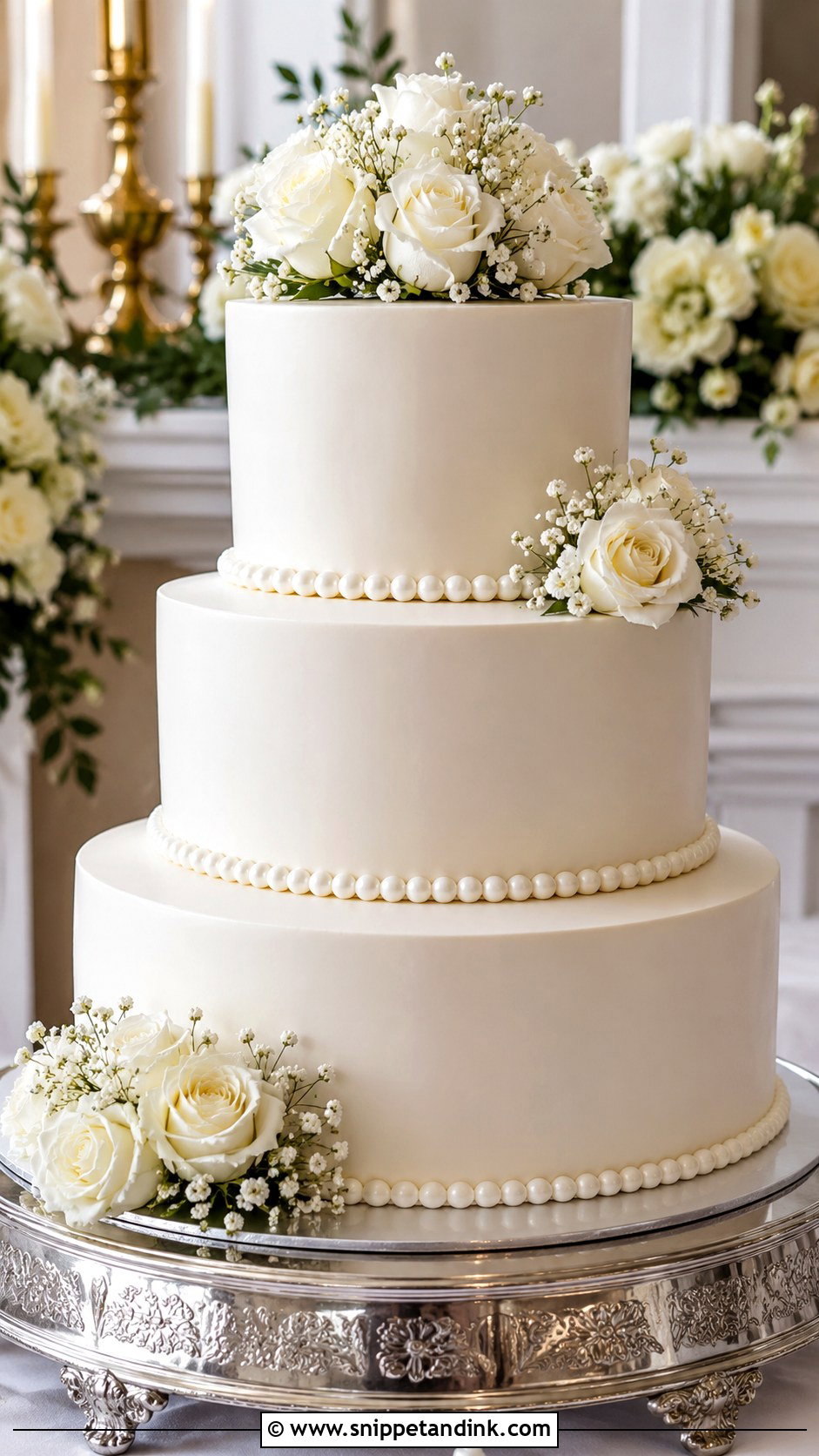
Clean sides with a finished edge: a piped border gives you both. Tiny pearls, shells, dots, scallops or a fine rope pattern all work. The border also hides the join where one tier meets the next, which is useful if the stacking isn’t quite perfect. I keep the piping small so it frames the cake rather than taking over. White or ivory buttercream feels traditional; a pale tint makes the border stand out. Chapels and vintage-style tables suit it.
18. Smooth Wedding Cake With Floral Cascade
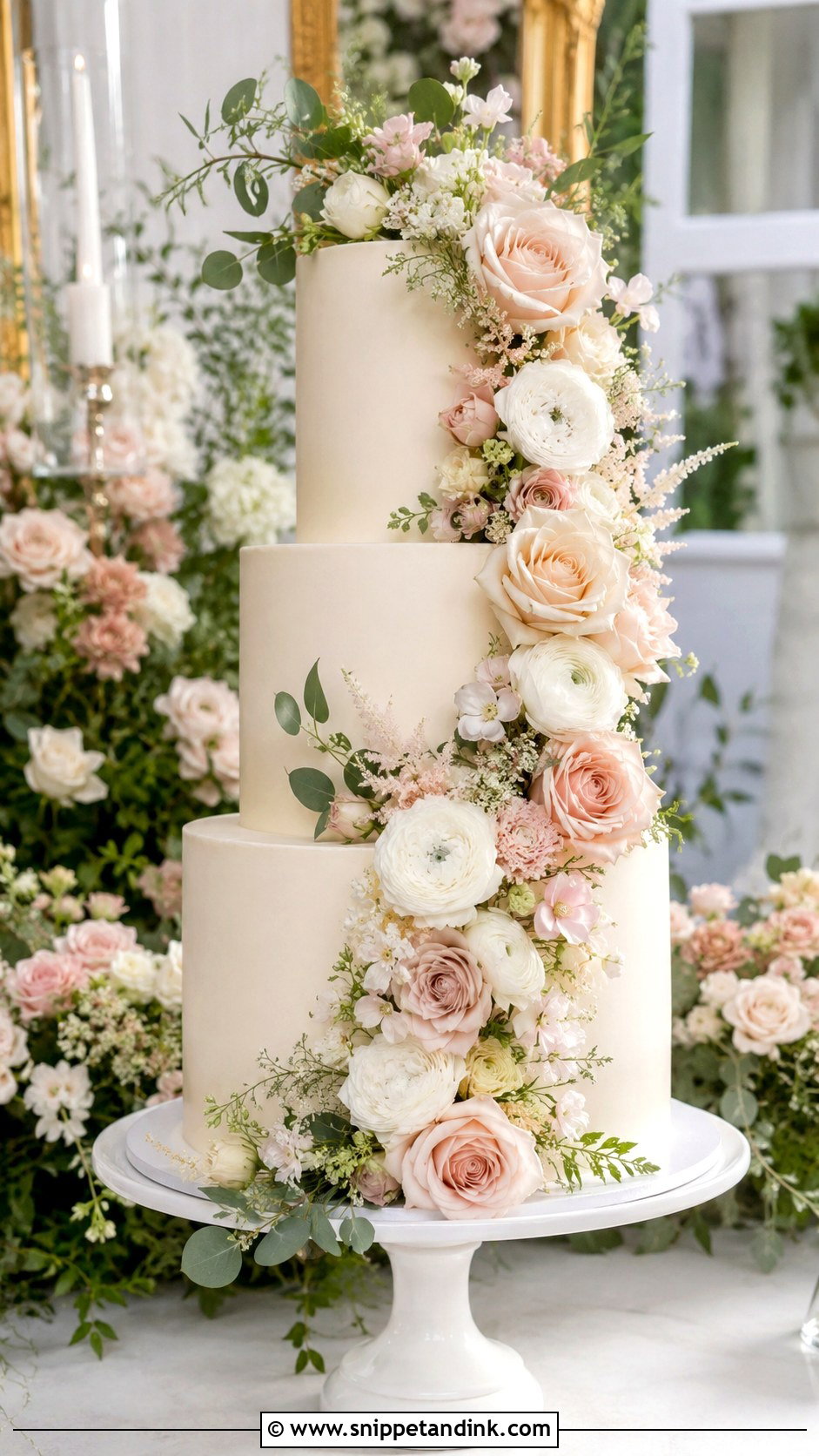
A cascade gives movement while the tiers stay clean. Flowers travel from the top tier down one side, making the cake look taller. Fresh flowers, sugar flowers or wafer paper blooms can all do it, depending on budget and whether the venue allows fresh flowers near food. Sugar flowers are the safest choice for heat because they don’t wilt, but they take real time to make, so they need ordering early. Soft white roses feel classic, blush blooms romantic and orchids modern. I keep the cascade slightly off-centre for a natural line.
19. Smooth Marble Wedding Cake
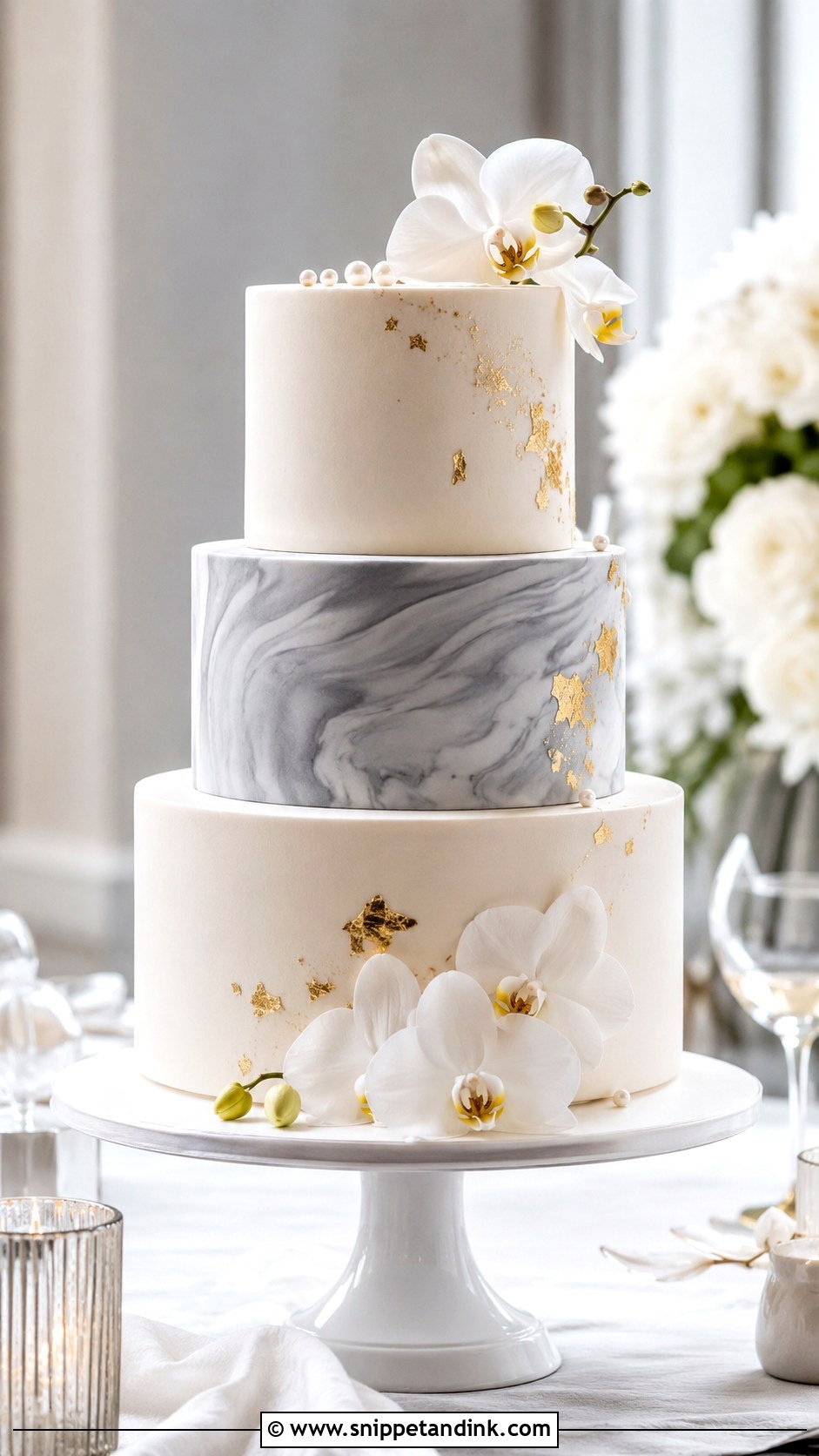
Marble gives pattern without decoration. The veining can be soft gray, blush, beige, sage or blue. Fondant gives the crispest marble because the colours are twisted together before rolling; buttercream gives a softer, painted stone effect. Gold leaf, white flowers or one acrylic topper add detail. Too much marble can look busy, so I usually mix one marbled tier with solid smooth ones. It suits modern venues, museum spaces and city hotels.

20. Smooth Single Tier Wedding Cake
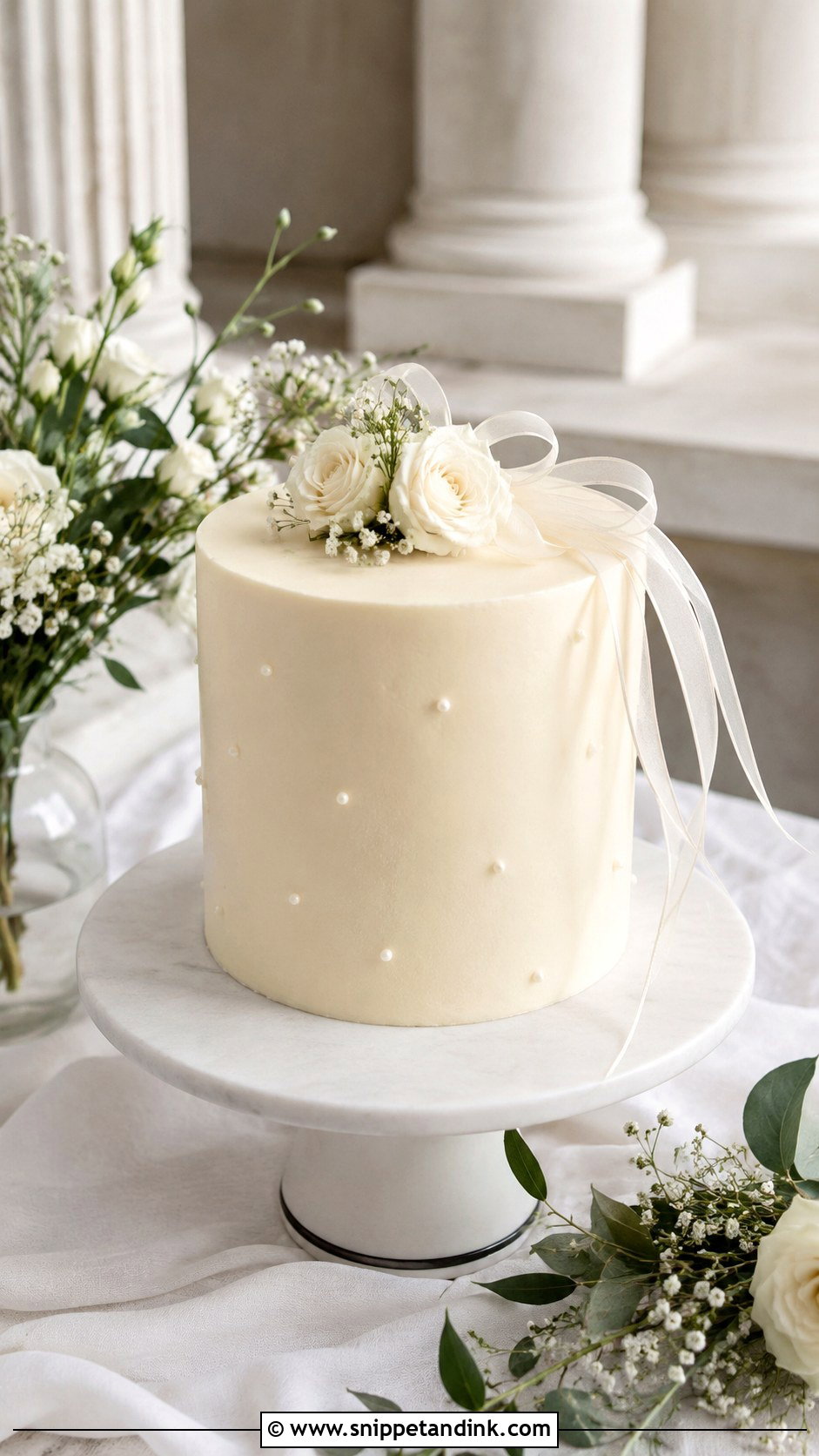
One tier is enough for an elopement, a courthouse wedding, a brunch or a table full of other desserts. A smooth single tier wedding cake has nowhere to hide, so the finish needs to be very neat and the decoration intentional: one flower cluster, a tiny bow, pearl dots or a short piped message. I often make single tiers taller than standard, which looks elegant on a pedestal stand. Pick a flavour you both genuinely love, since it’s the one cake everyone tastes.
A Perfect Surface Shows Every Bump in Transit
Textured cakes forgive a knock in the van. Smooth ones don’t. A dent, a scuff or a small crack along a fondant edge is plain to see, so how the cake travels and where it stands matter more than with any other style.
- Ask whether tiers arrive stacked or are assembled at the venue. Tall smooth cakes are often stacked on site, with a small repair kit of matching icing for touch-ups.
- The cake table needs to be level and sturdy. A slight slope shows instantly on straight sides.
- Keep the table out of direct sun, away from heaters, and away from air vents. Uneven warmth softens one side first.
- Agree the setup time with your venue so the cake isn’t sitting out for hours before guests arrive.
Getting Clean Slices Out of Smooth Tiers
Smooth cakes cut more neatly when they’re slightly cool, because the icing and filling hold their layers. For the cutting photo, a long, sharp knife works better than a decorative server. Behind the scenes, whoever slices the rest should dip the knife in hot water and wipe it between cuts, and remove every dowel and flower pick from each tier before cutting it. Mention that to your caterer, as the supports aren’t always obvious once the cake is stacked.
Simple Cakes Are Never Plain Ones
A smooth finish can be classic, modern, romantic or bold depending on shape, colour and one or two details. White tiers with fresh flowers stay safe for any venue, while sage, blush, blue, marble, pearls, bows and gold leaf make the design more personal. What matters most is a baker who is confident with a clean finish and honest about how your venue’s temperature will treat it. Get that right and one tier or three will look calm and polished from the first photo to the last slice.
You'll Like These Ideas:








Leave a Reply