
A pared-back cake still ends up as one of the most photographed things at a reception, and with so little on it, every decision shows. The ones that work are deliberate: smooth or lightly textured frosting, a simple flower, a strong shape, or one polished detail instead of six competing ones. They fit a loft, a garden, a beach or a black-tie dinner, and because nothing is hiding the cake, the flavor and finish get more attention too. These are 20 designs I’d recommend, from buttercream and fondant to fruit, pressed flowers and architectural tiers.
Briefing a Baker When Most of the Design Is Empty Space
A cake with almost no decoration is surprisingly easy to misunderstand. Simple means different things to different people, and the details that make a minimal cake look right are ones couples rarely think to mention. When you sit down with your baker, cover these.
- Edges. Say whether you want sharp, squared-off edges or softly rounded ones. It changes the look and the time involved.
- Tier height. Ask how tall each tier will be. Taller tiers look more modern; standard heights look more traditional.
- Color. Hold up a sample of your dress or table linen, because white frosting ranges from bright white to clearly ivory.
- What you don’t want. Point to the details in your reference photos you’d rather leave off. It’s often more useful than showing what you like.
- The one detail. Agree exactly where it sits and how big it is, ideally on a quick sketch.
I’d also ask to see photos of plain cakes the baker has made before, not only decorated ones. A finish with nothing on it shows skill more honestly than any sugar flower.
1. Simple White Wedding Cake
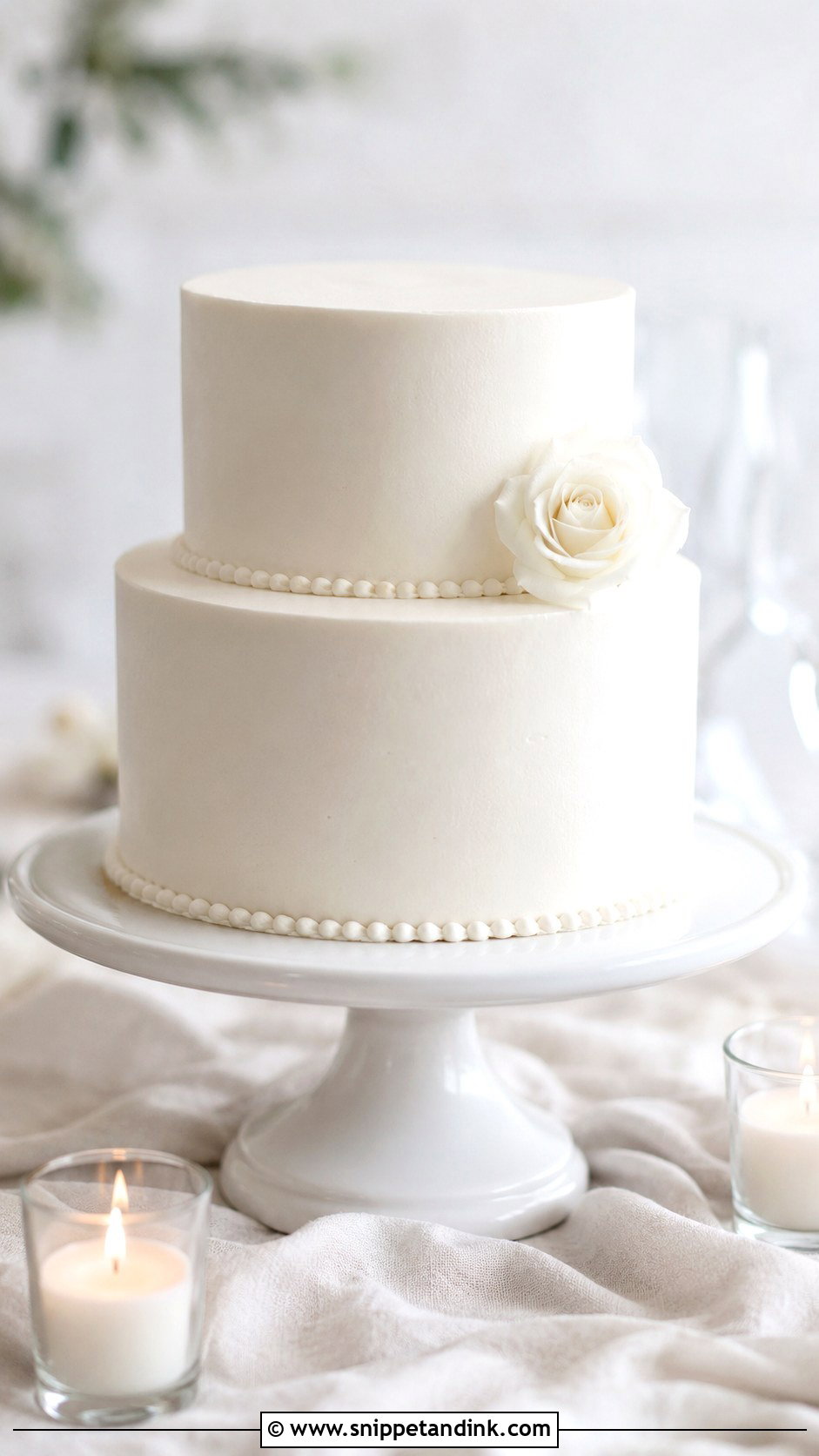
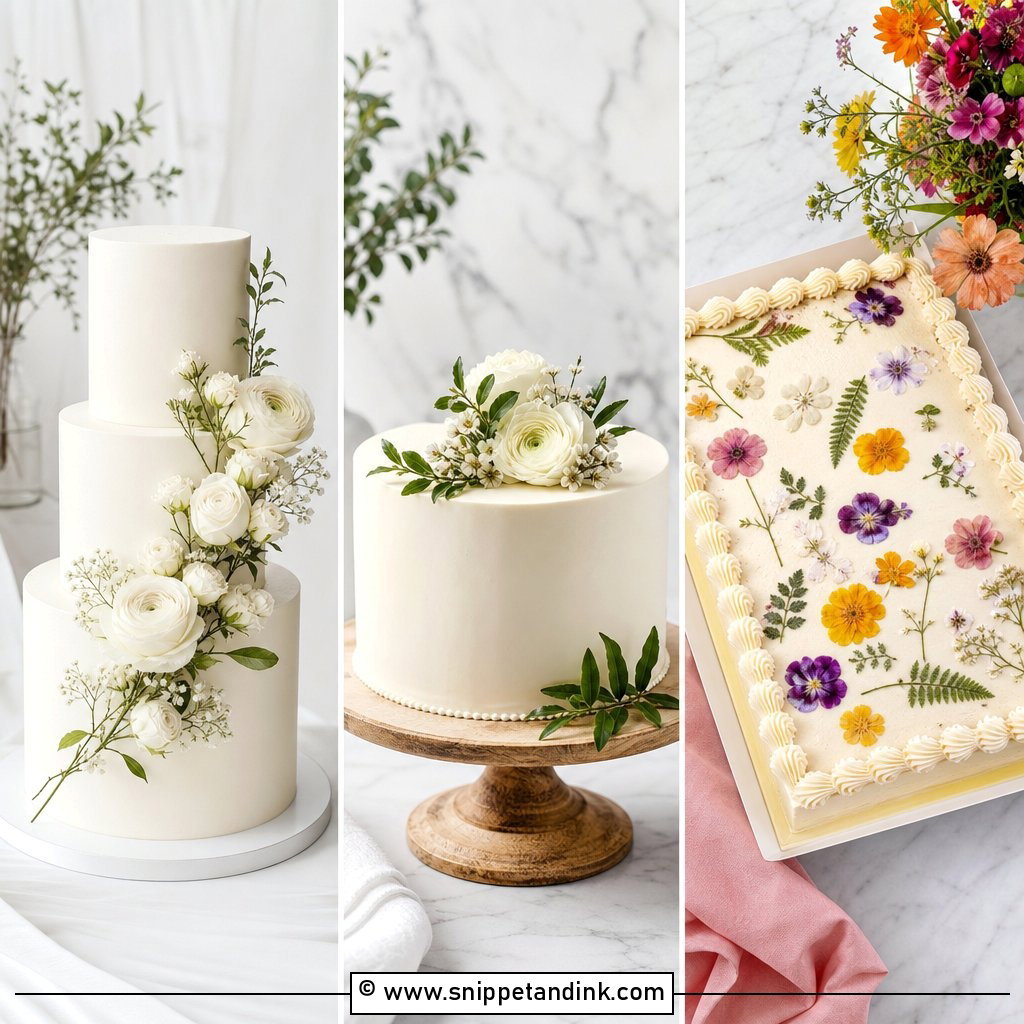
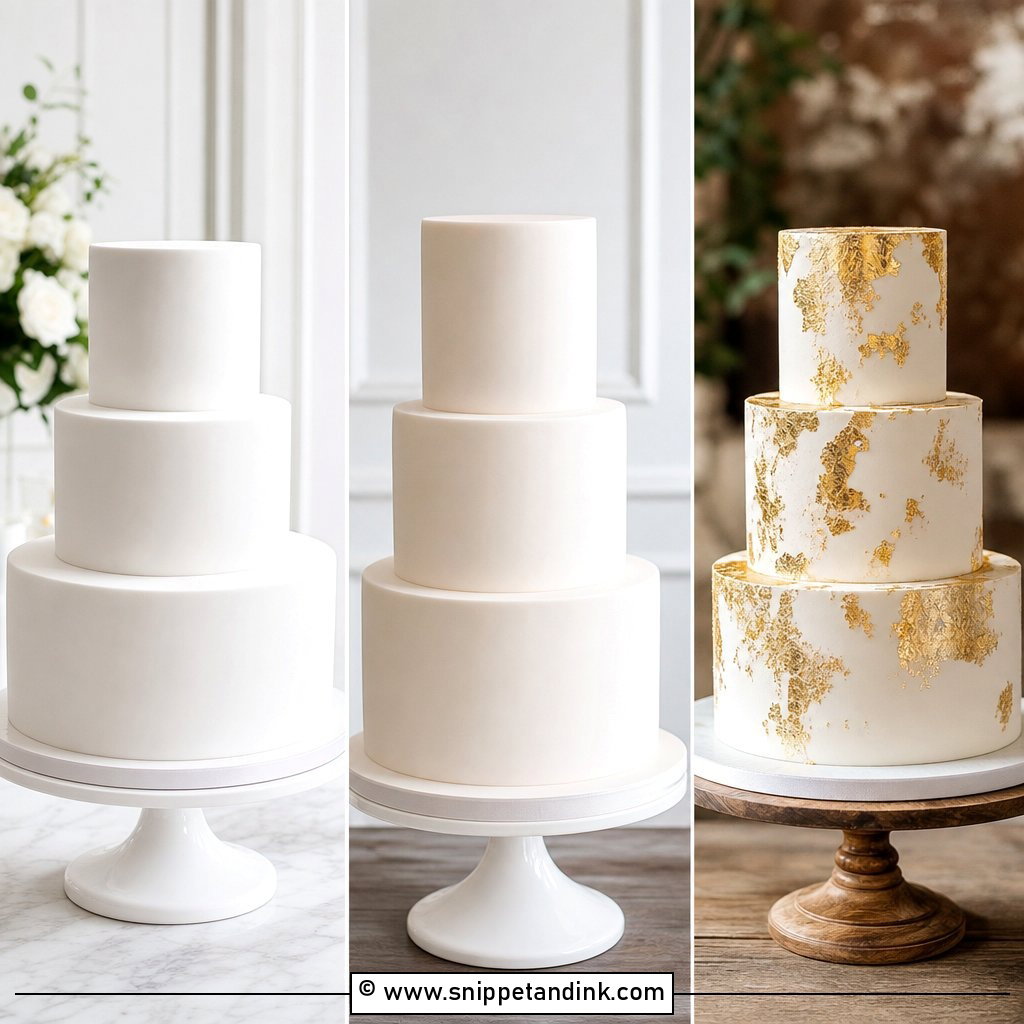
Start here if you’re unsure. A simple white wedding cake depends entirely on its finish, so my time goes into level tiers, straight sides and a clean base edge, in vanilla buttercream or fondant. Two or three tiers give enough height for photos. Keep it all white and add one small detail, perhaps a single sugar flower or a thin ribbon. Set against ivory linens, clear glass and candles, the whole table reads calm.
2. Minimalist Buttercream Wedding Cake
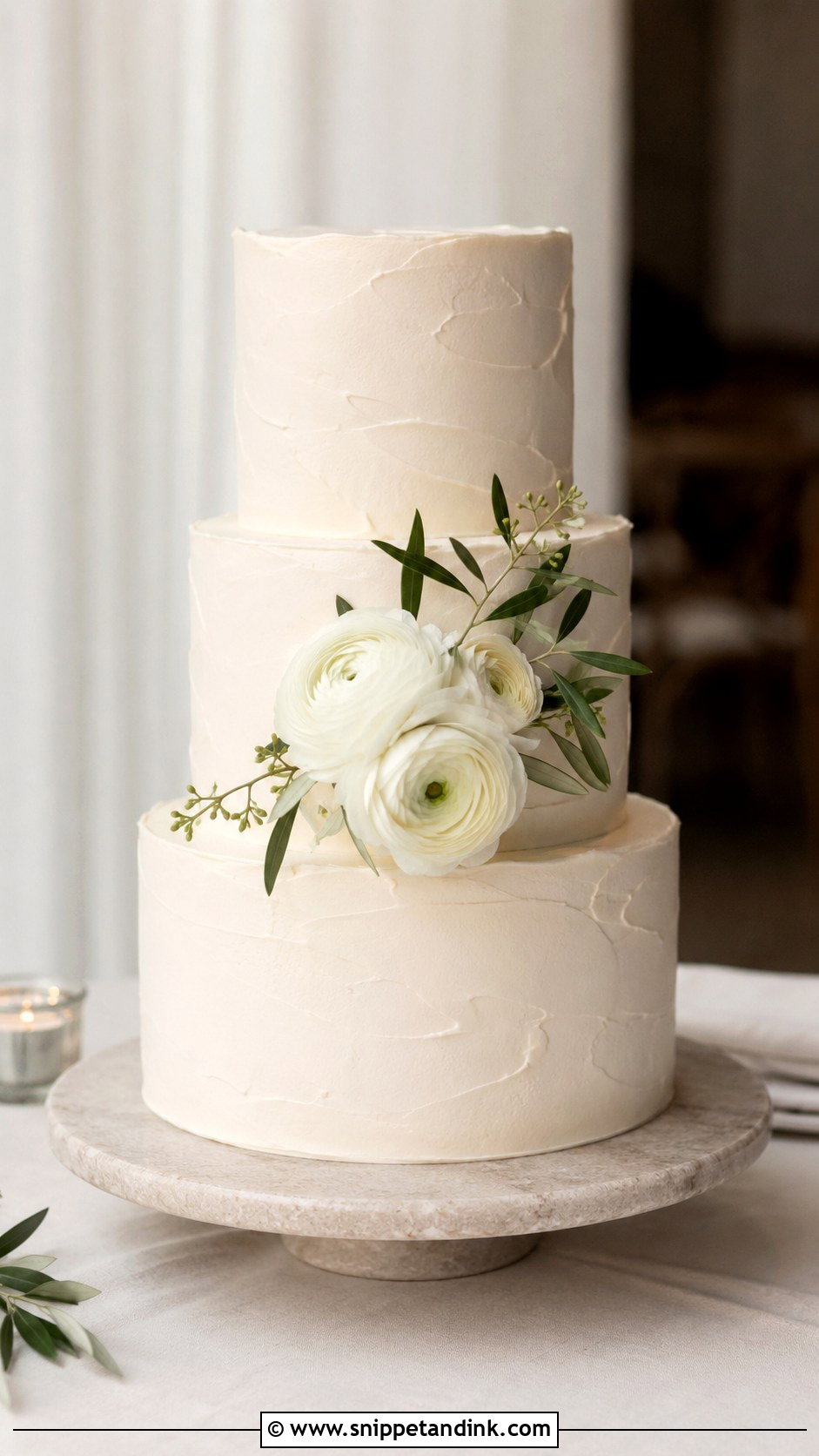
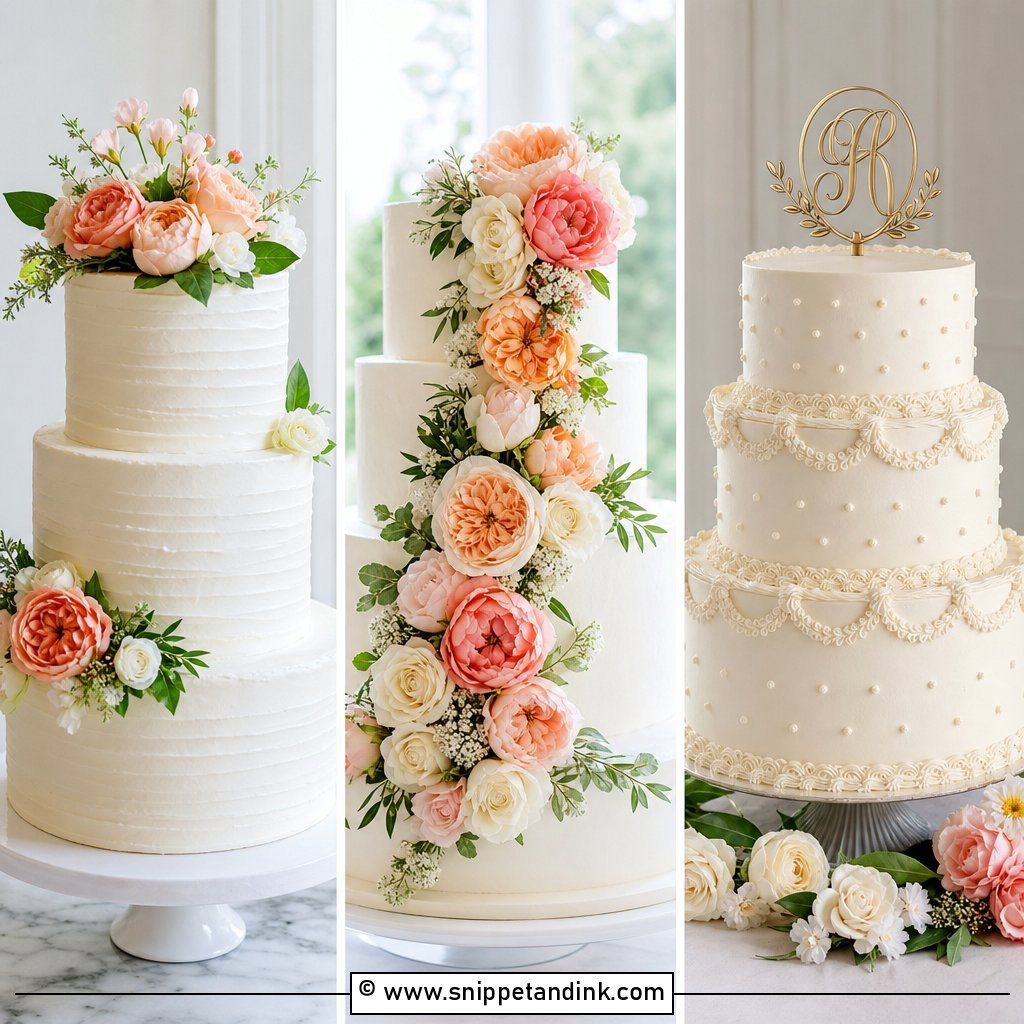
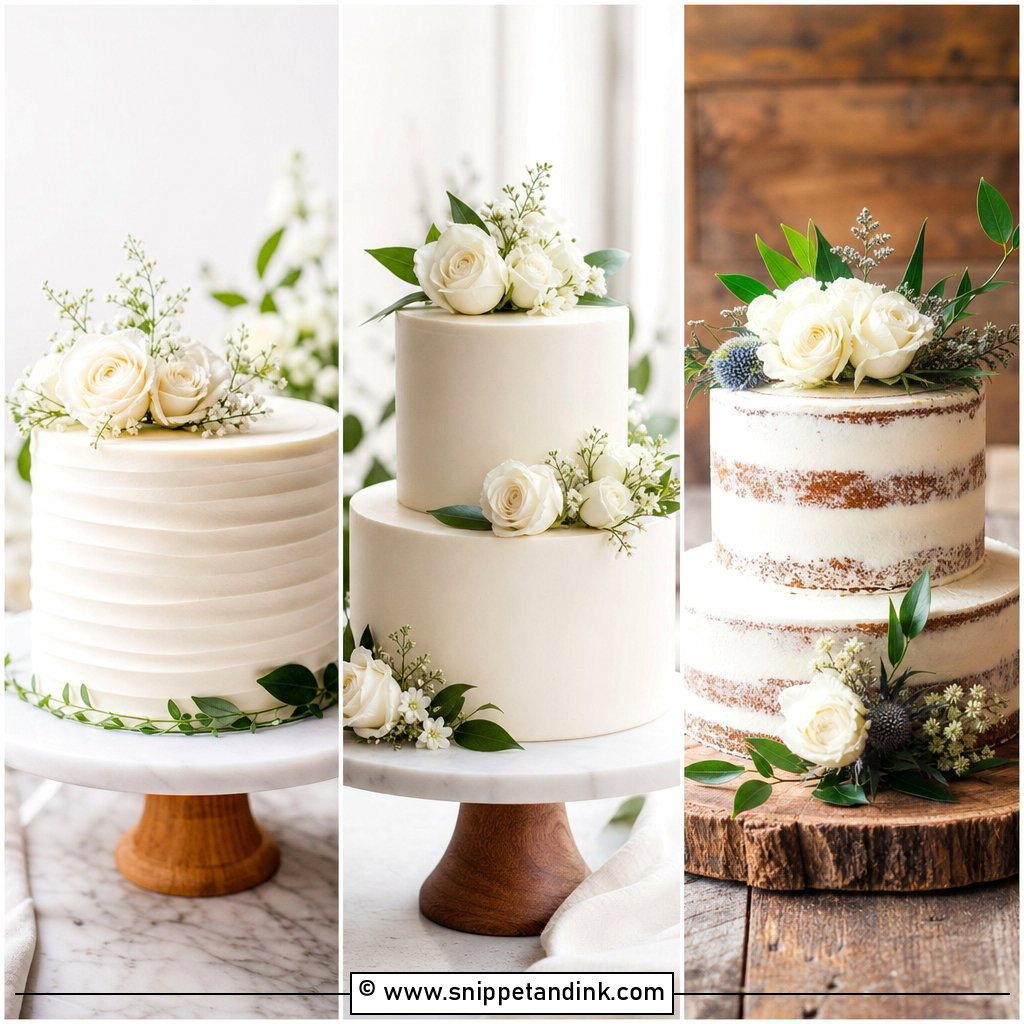
Buttercream tastes creamy and looks relaxed, which is what many couples want from a minimal cake. A smooth finish suits a modern reception; light spatula marks look handmade. One thing worth knowing before the tasting: buttercream made with real butter leans ivory rather than bright white, and that’s normal. A single cluster of fresh flowers or one stem is enough decoration. It pairs with classic flavors such as vanilla, almond, lemon and raspberry.
3. Two Tier Minimalist Wedding Cake
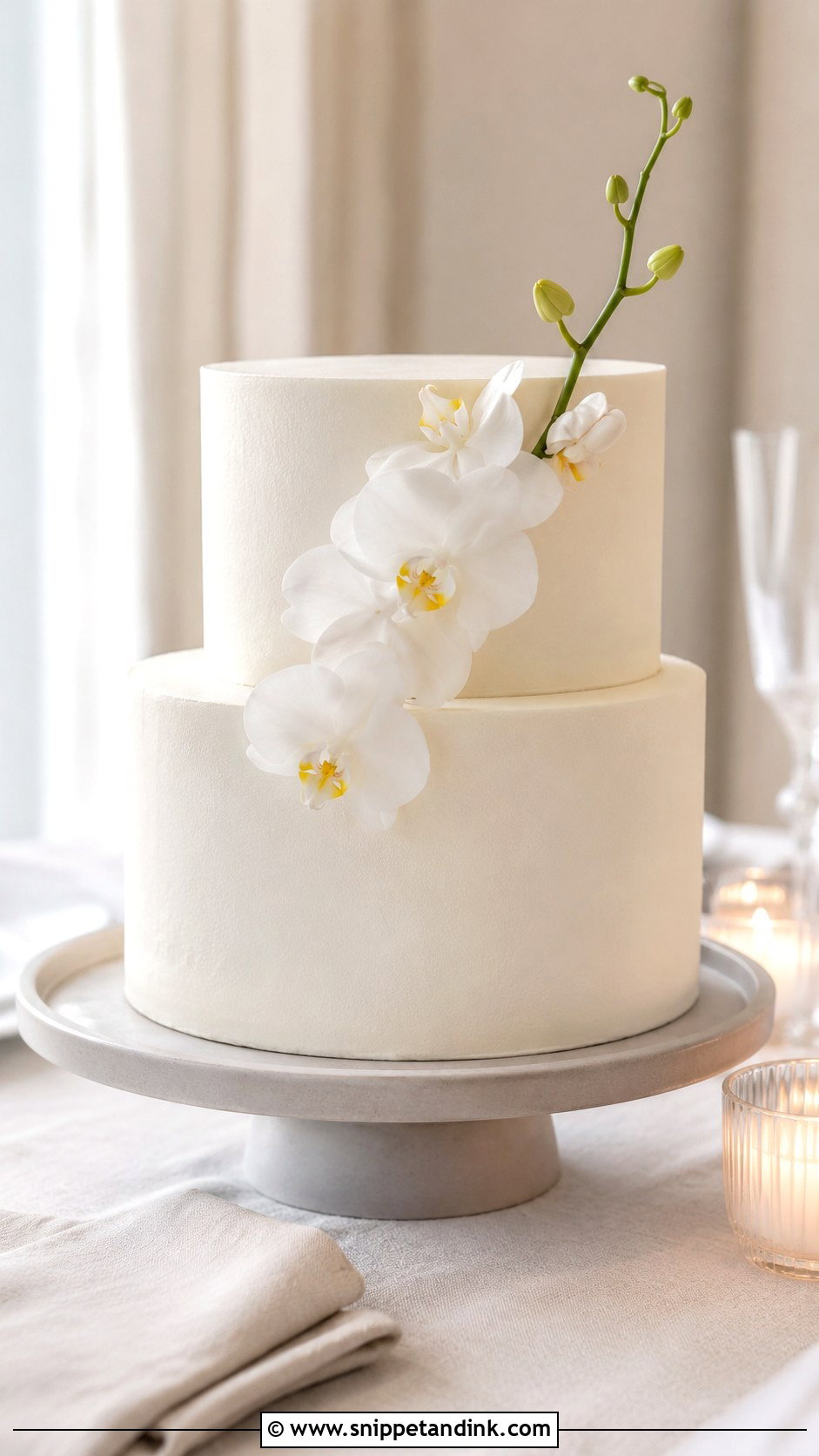
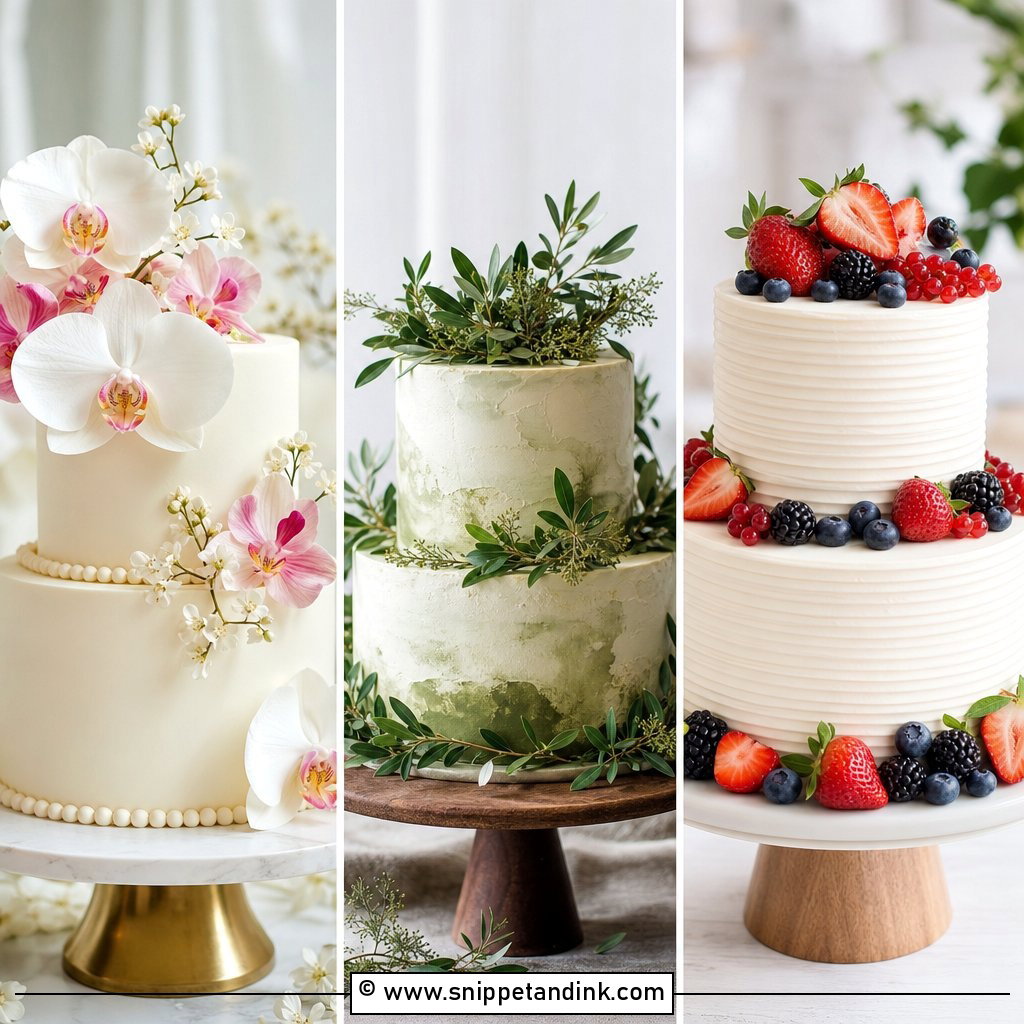
Two tiers give you a proper cake-cutting moment without a big display, which suits intimate and micro weddings. Proportion is the whole design. I usually make the bottom tier two to three inches wider in diameter than the top, so the step between them is visible across the room; tiers too close in size look like one squat cake. Smooth white buttercream, space around the tiers and one accent, such as a small spray of orchids or a satin ribbon. A simple pedestal lifts it so it doesn’t look underdressed.
4. Three Tier Minimalist Wedding Cake
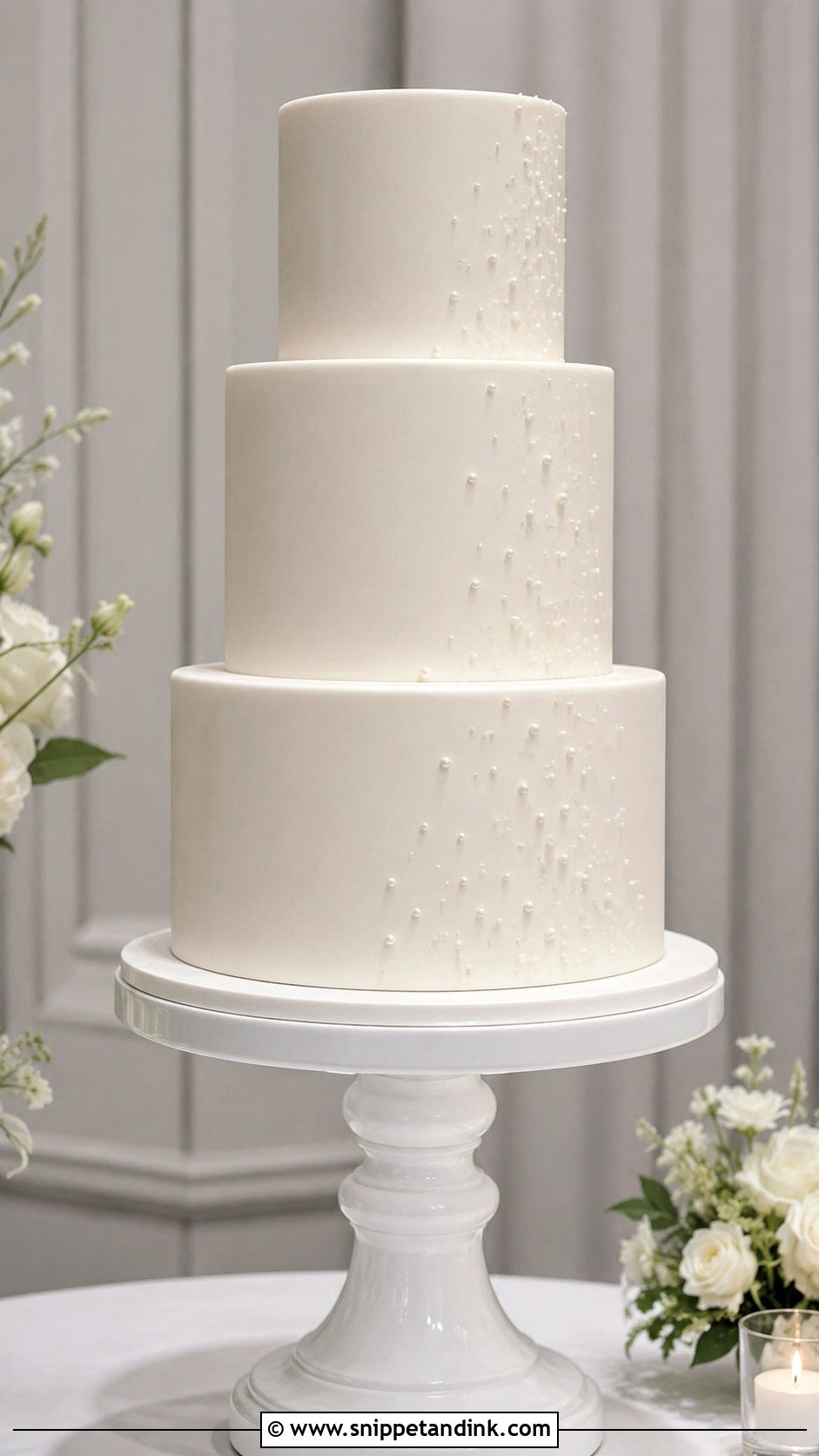
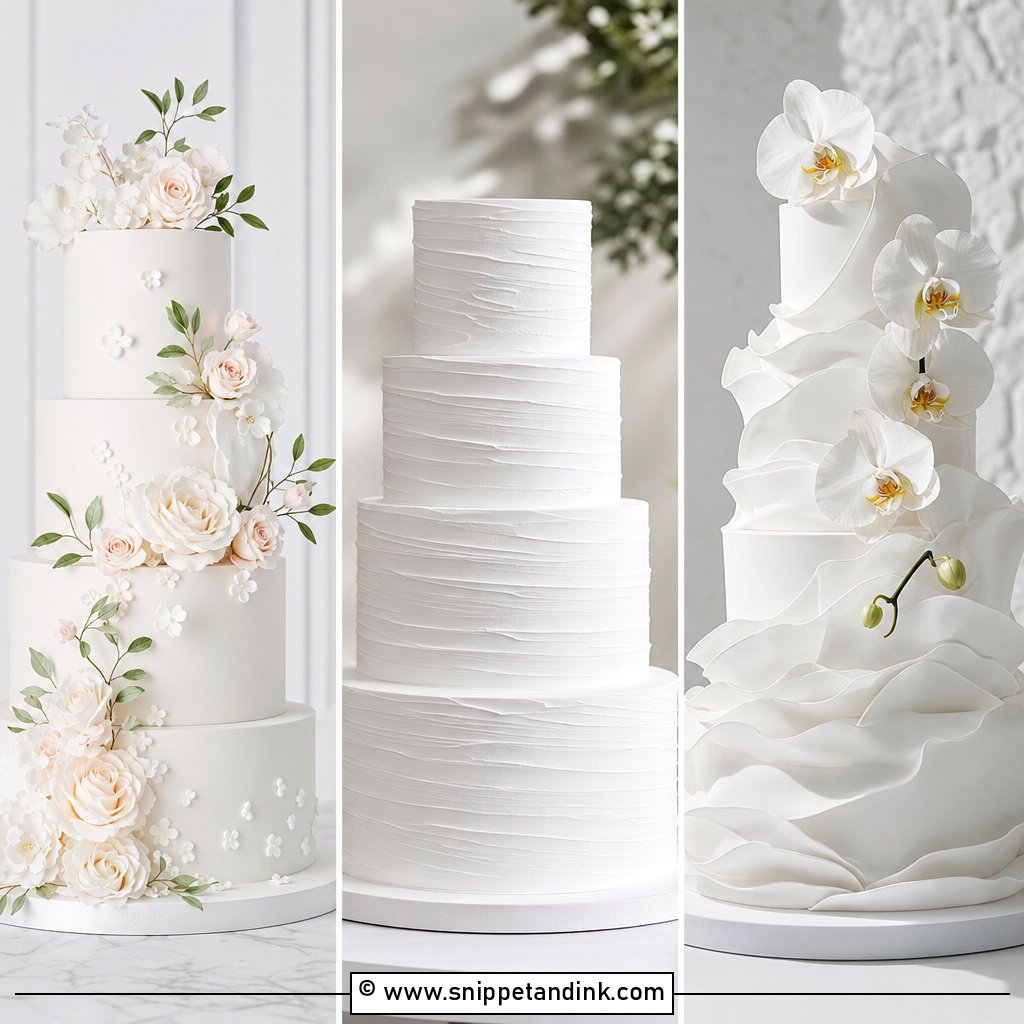
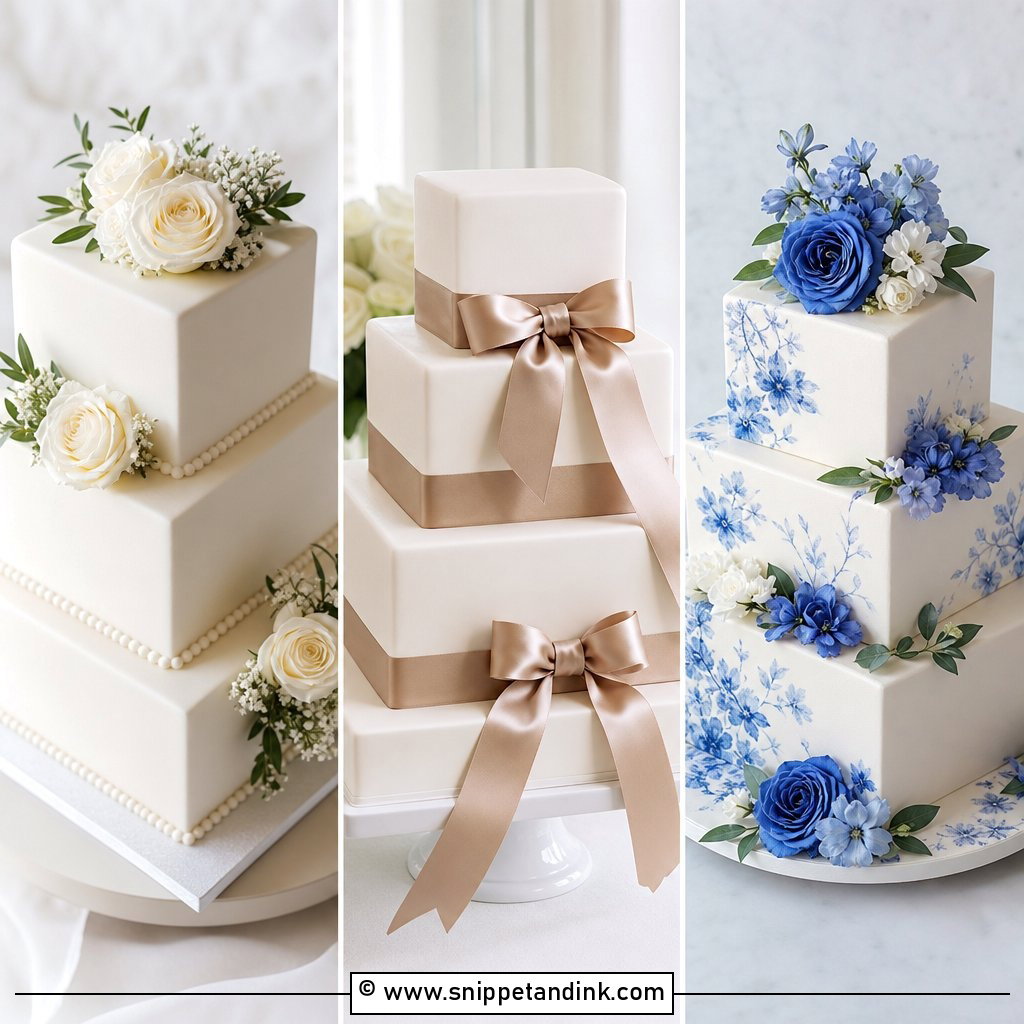
A three tier minimalist wedding cake has presence without piping, heavy florals or oversized toppers, which makes it a good fit for larger receptions. Smooth fondant gives the sharpest finish; buttercream looks softer. Keeping all three tiers one color creates a calm vertical line. If you want detail, repeat one accent on every tier, like pearl dots or fine horizontal lines, rather than giving each tier something different. On a minimal cake, repetition reads as design and variety reads as indecision.
5. Single Tier Wedding Cake
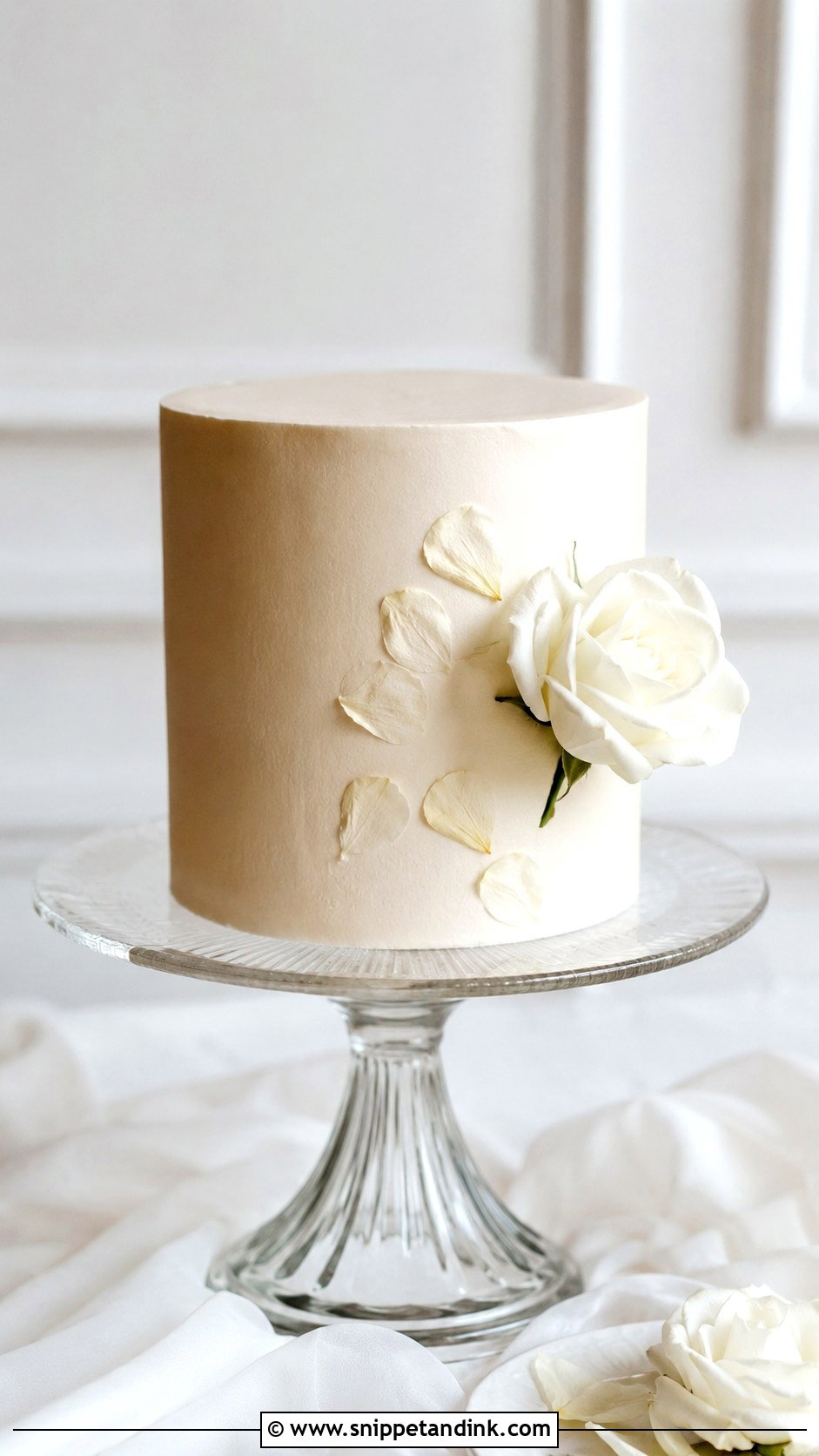
Don’t try to make a single tier look bigger than it is. Celebrate the shape instead: a taller round cake, four or more layers high, with clean sides and a neat base edge. Elopements, courthouse weddings and backyard ceremonies suit it, as does a dessert table where other sweets carry the quantity. A single white rose or a smooth ribbon wrap gives it enough romance. On a raised stand with empty space around it, it photographs as the focal point rather than an afterthought.
6. White Fondant Wedding Cake
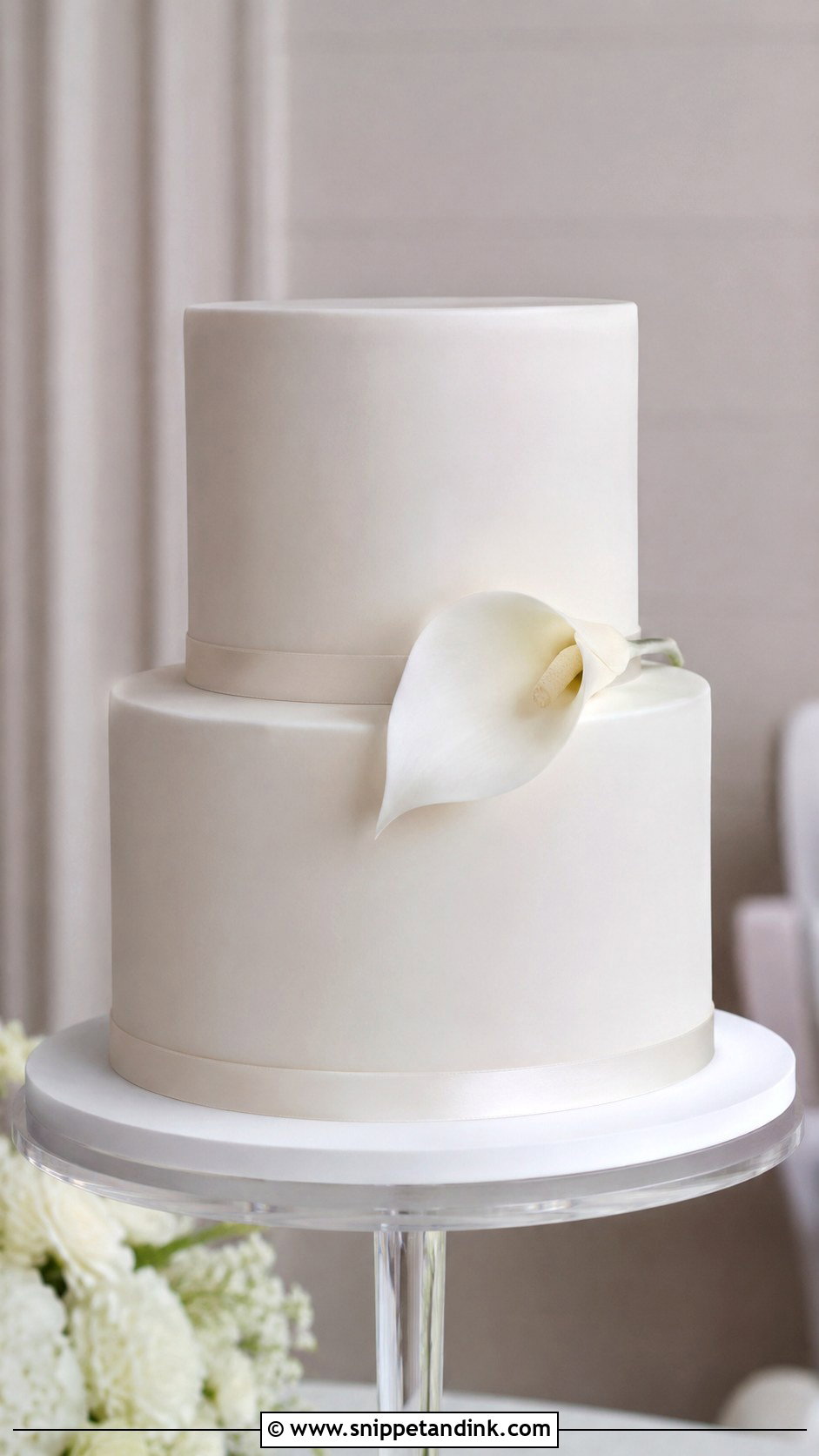
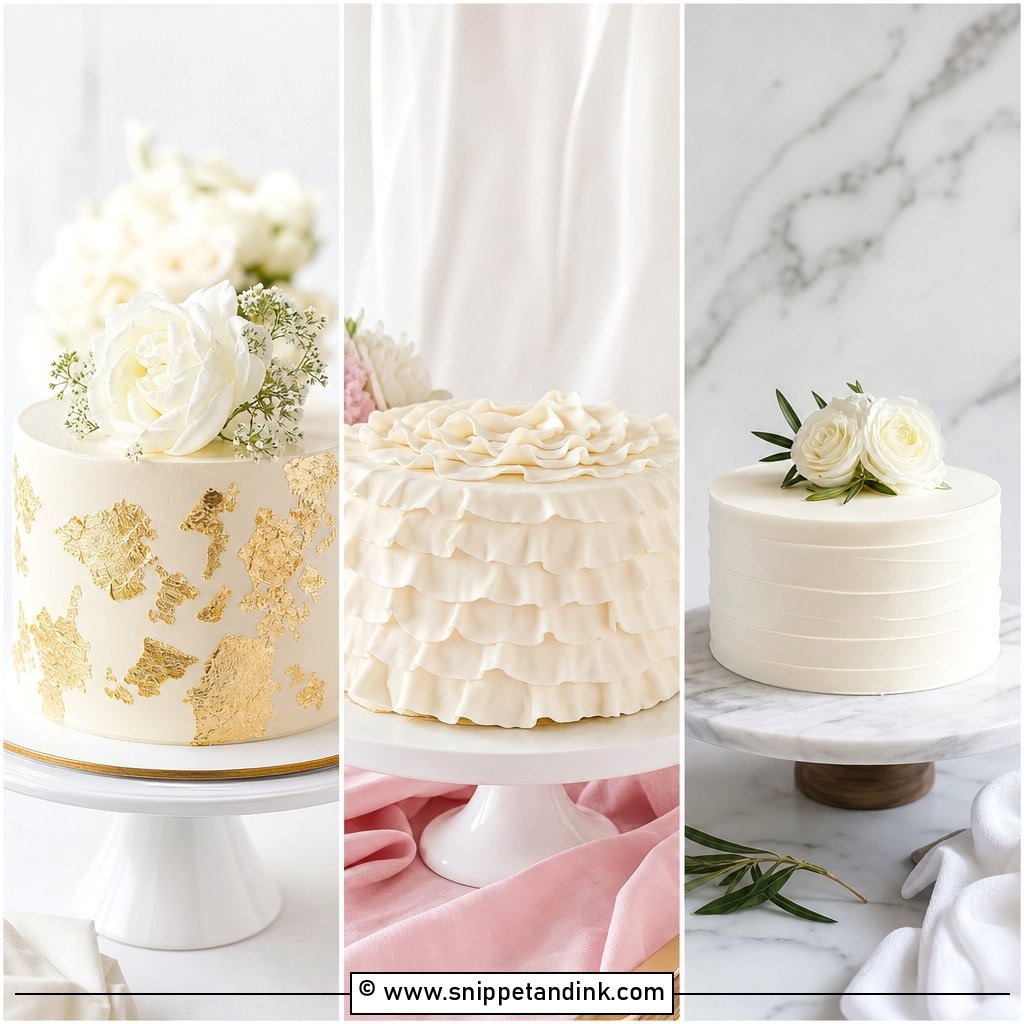
Fondant is the finish for sharp lines and a gallery-like surface. It covers small imperfections underneath and lets the shape speak, whether the tiers are round, square or oval. Keep the decoration to one sculpted sugar flower, a narrow ribbon or a small embossed detail. The usual complaint about fondant is its taste and chew, so I always pair it with a flavorful filling and a ganache layer underneath; guests who dislike fondant can peel it off and still enjoy the cake. Modern ballrooms, rooftops and hotels suit it.
7. Textured Buttercream Wedding Cake
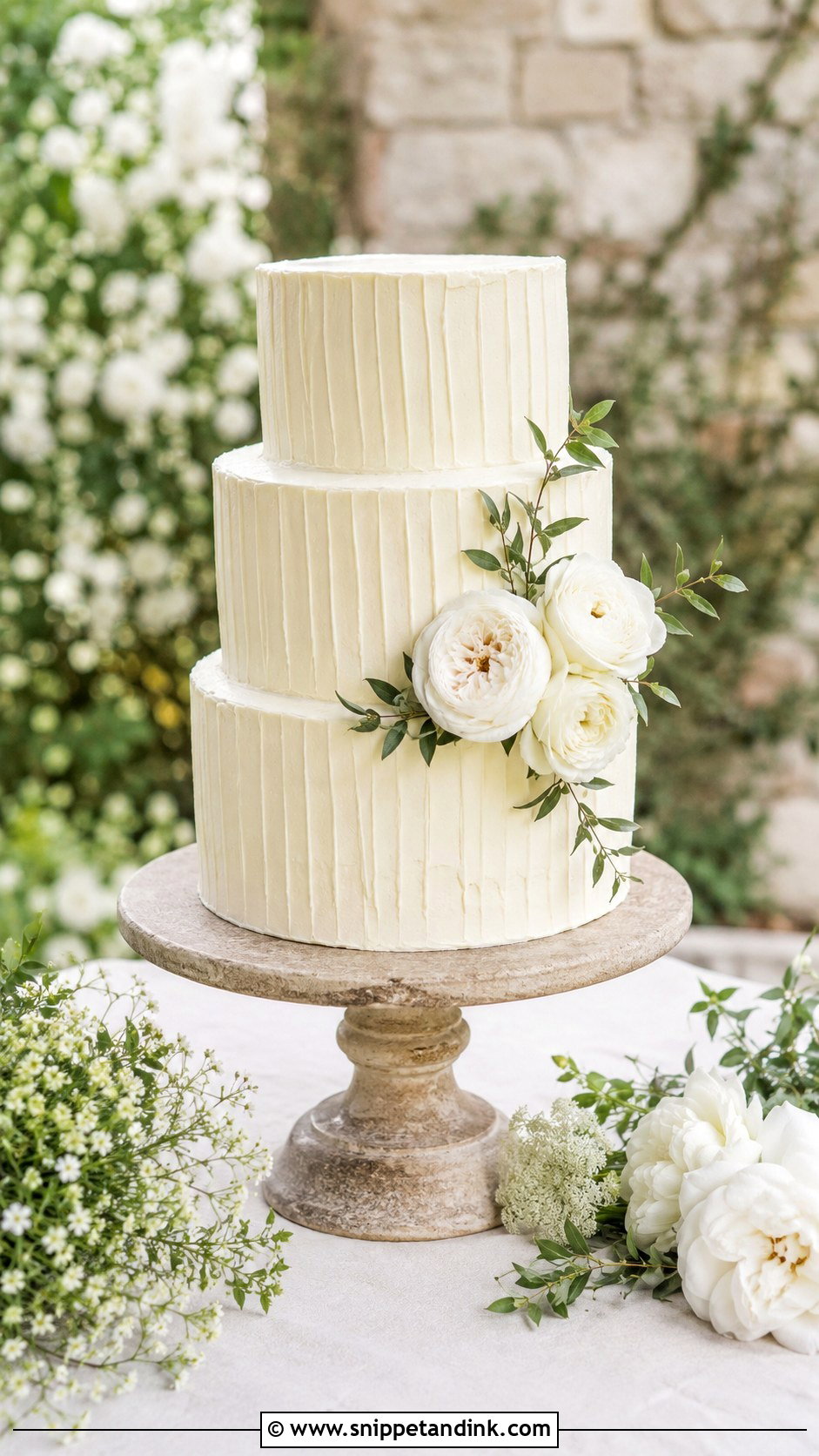
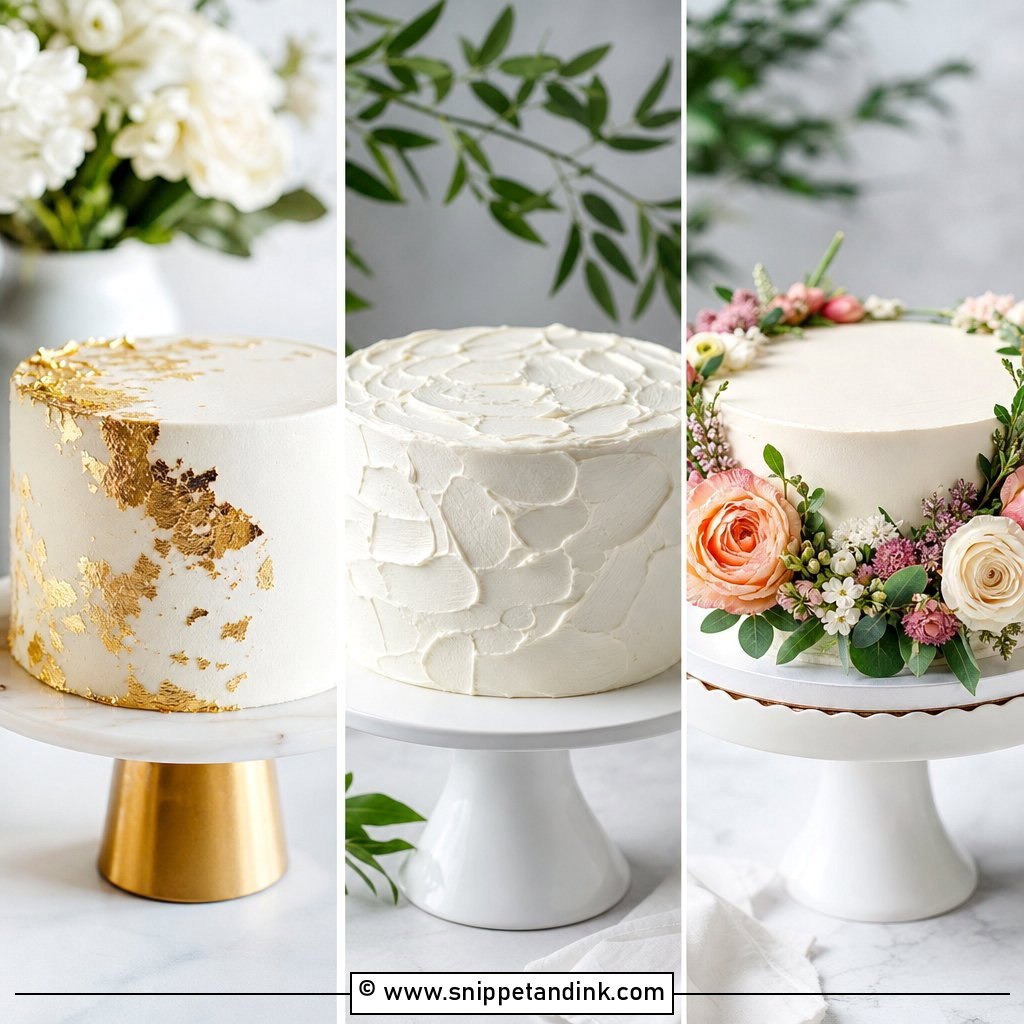
A textured buttercream wedding cake works when one texture carries the whole cake. Soft vertical lines, light stucco or gentle horizontal ridges each make plain frosting look rich, but mix two and the eye has nowhere to rest. I make ridges with a comb scraper while the turntable spins, and stucco by dabbing and dragging a palette knife. A small floral accent or a few leaves can soften it. Garden venues and bright barns suit it, since natural light picks out every ridge.
8. Pearl Wedding Cake
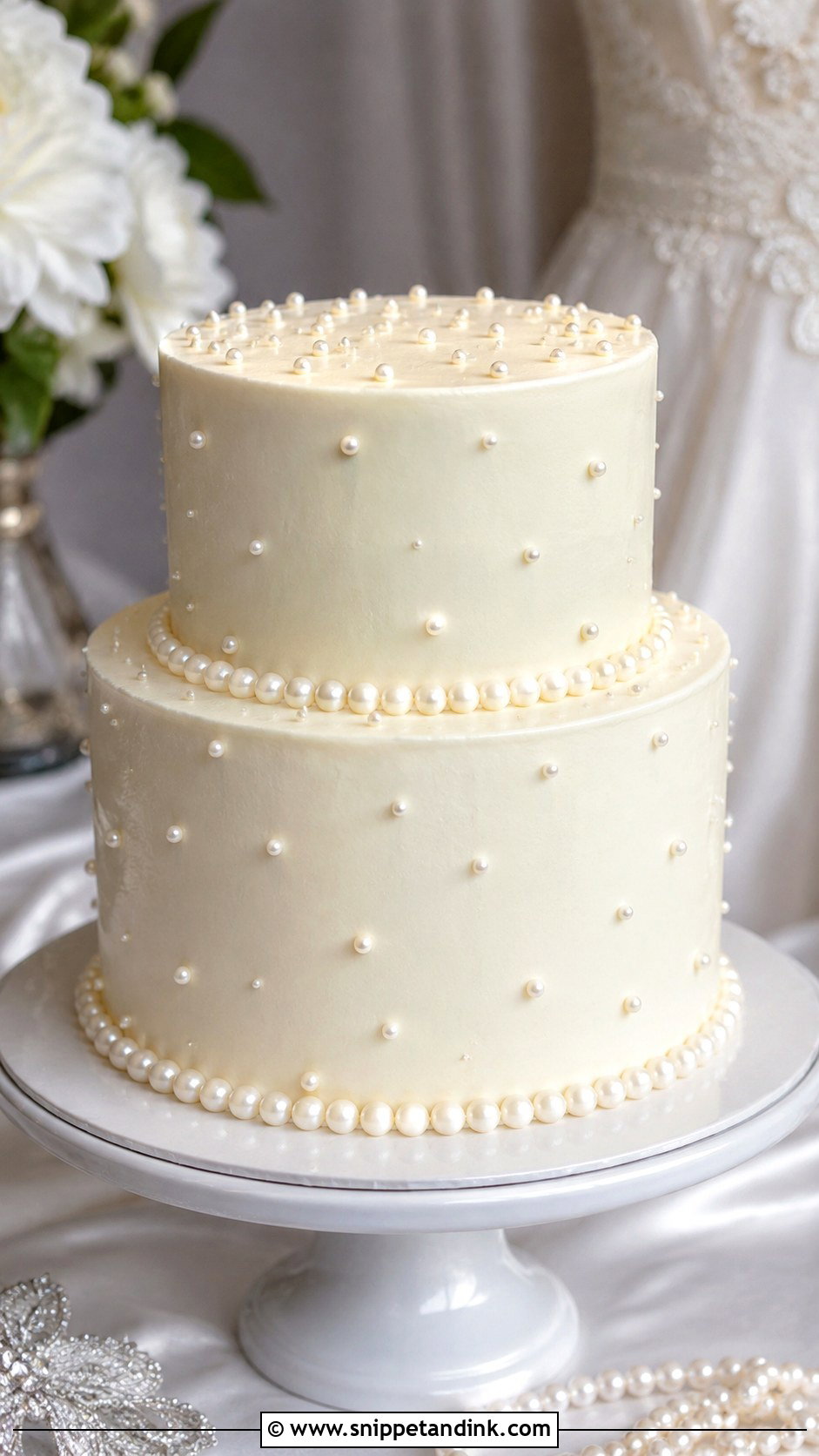
Pearls are romantic by nature, so restraint is what keeps them minimal. Tiny edible pearls scattered lightly over smooth frosting look soft; a single pearl border around each tier looks more structured. Keep the cake white or ivory and skip bold flowers. One practical warning: hard sugar pearls can be rough on teeth, so I use them sparingly or switch to soft fondant pearls on the parts that will be served. Satin dresses and pearl earrings are the natural match.
9. Small Floral Wedding Cake
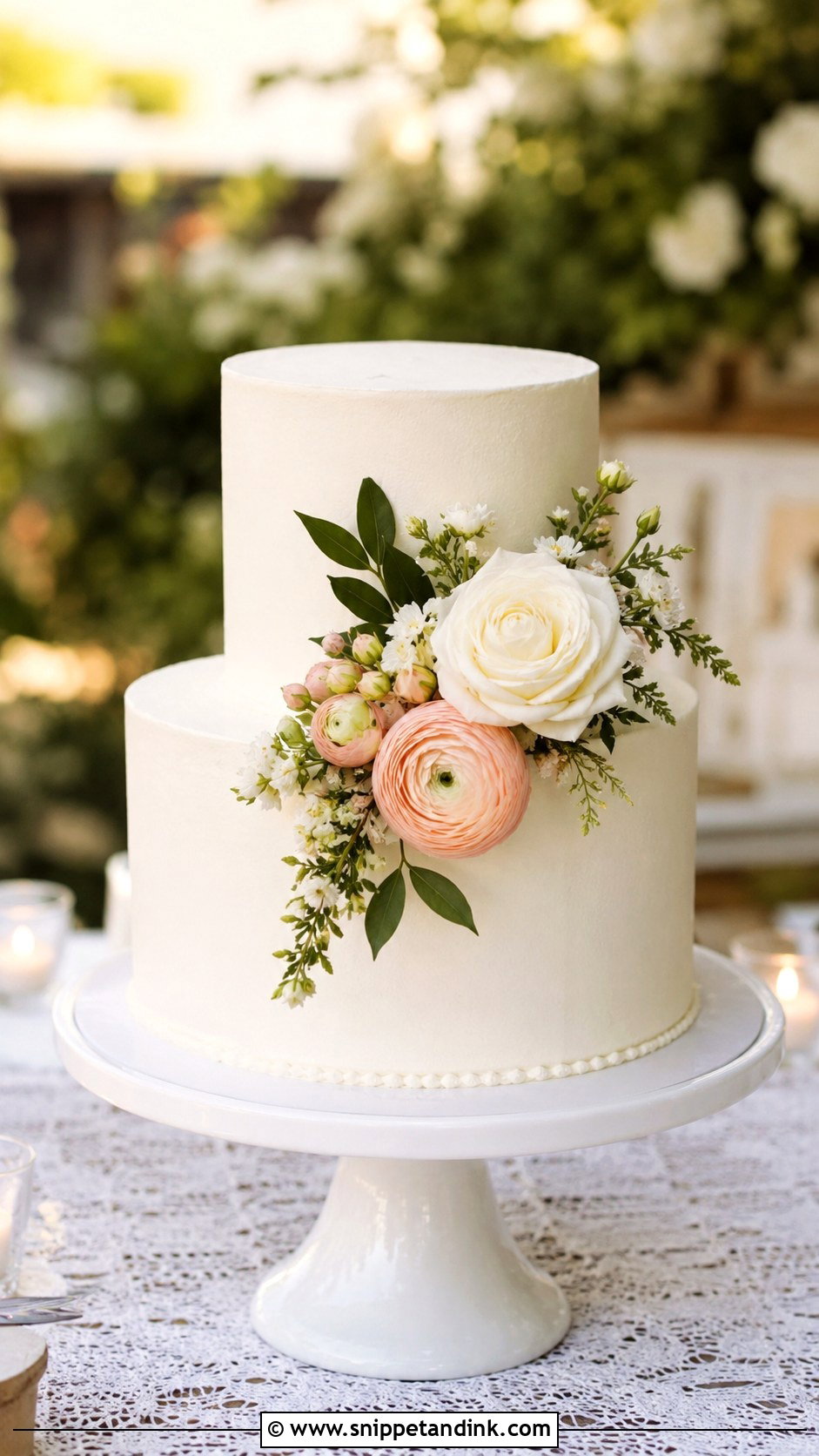
Love flowers but want a pared-back cake? Choose one floral moment instead of many. A single cluster of white roses, tiny orchids or ranunculus, or a few pressed edible flowers, is enough. Keep the frosting smooth so the blooms don’t compete with texture. Fresh, sugar and dried edible petals all work, depending on budget and venue rules. Whichever you choose, your florist and baker should agree on which flowers are food-safe and how stems are wrapped before anything touches the cake.
10. Greenery Wedding Cake
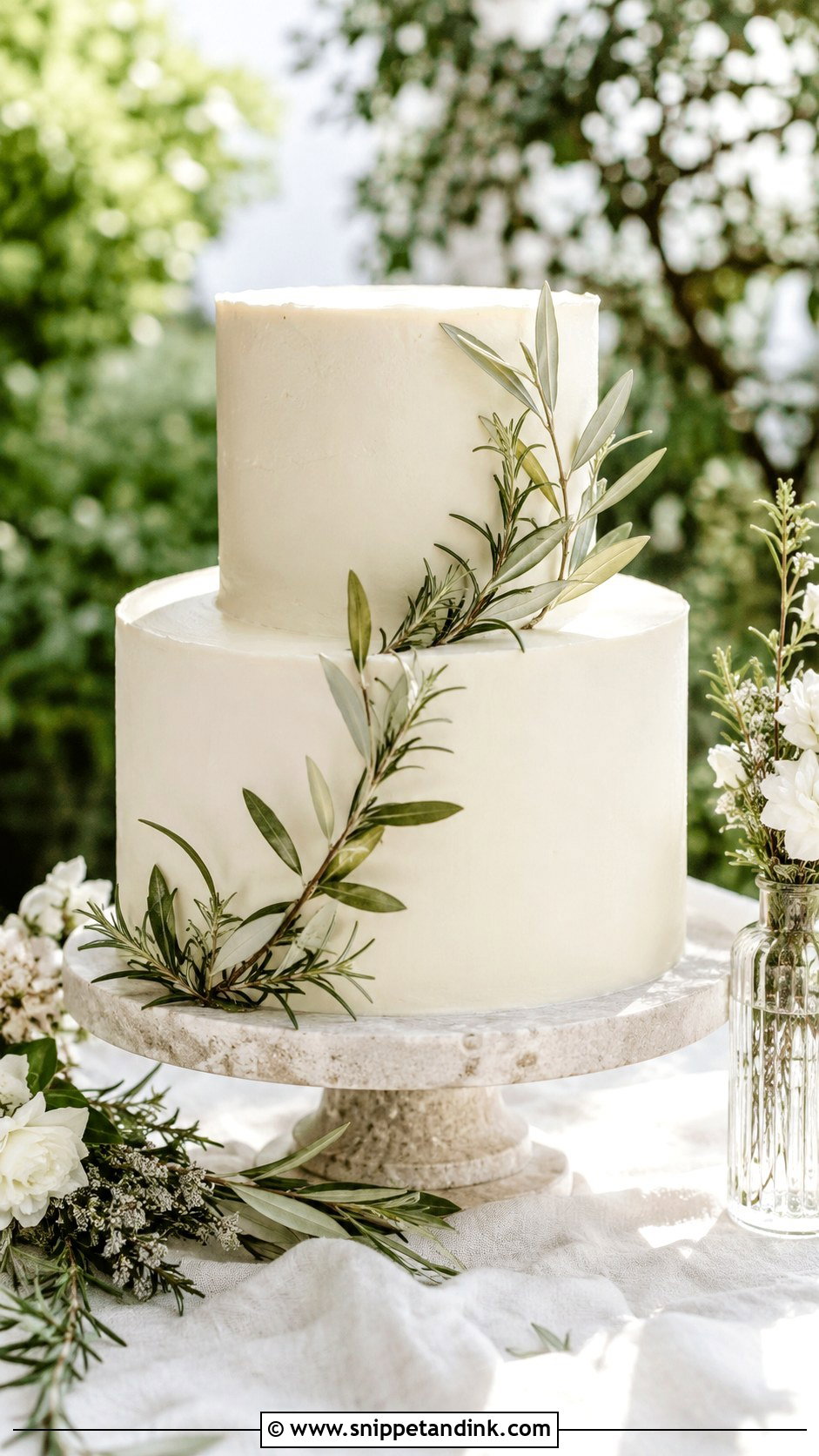
Greenery reads fresh and calm without bright color, and it suits outdoor and garden receptions. On a white or ivory cake, I place a few sprigs of food-safe greenery such as olive leaves or rosemary. Eucalyptus is popular but isn’t food-safe, which is why I recreate it in sugar instead. Keep the greenery airy rather than wrapping every tier, so each leaf looks placed. A stone stand and linen napkins complete the table.
11. Modern Square Wedding Cake
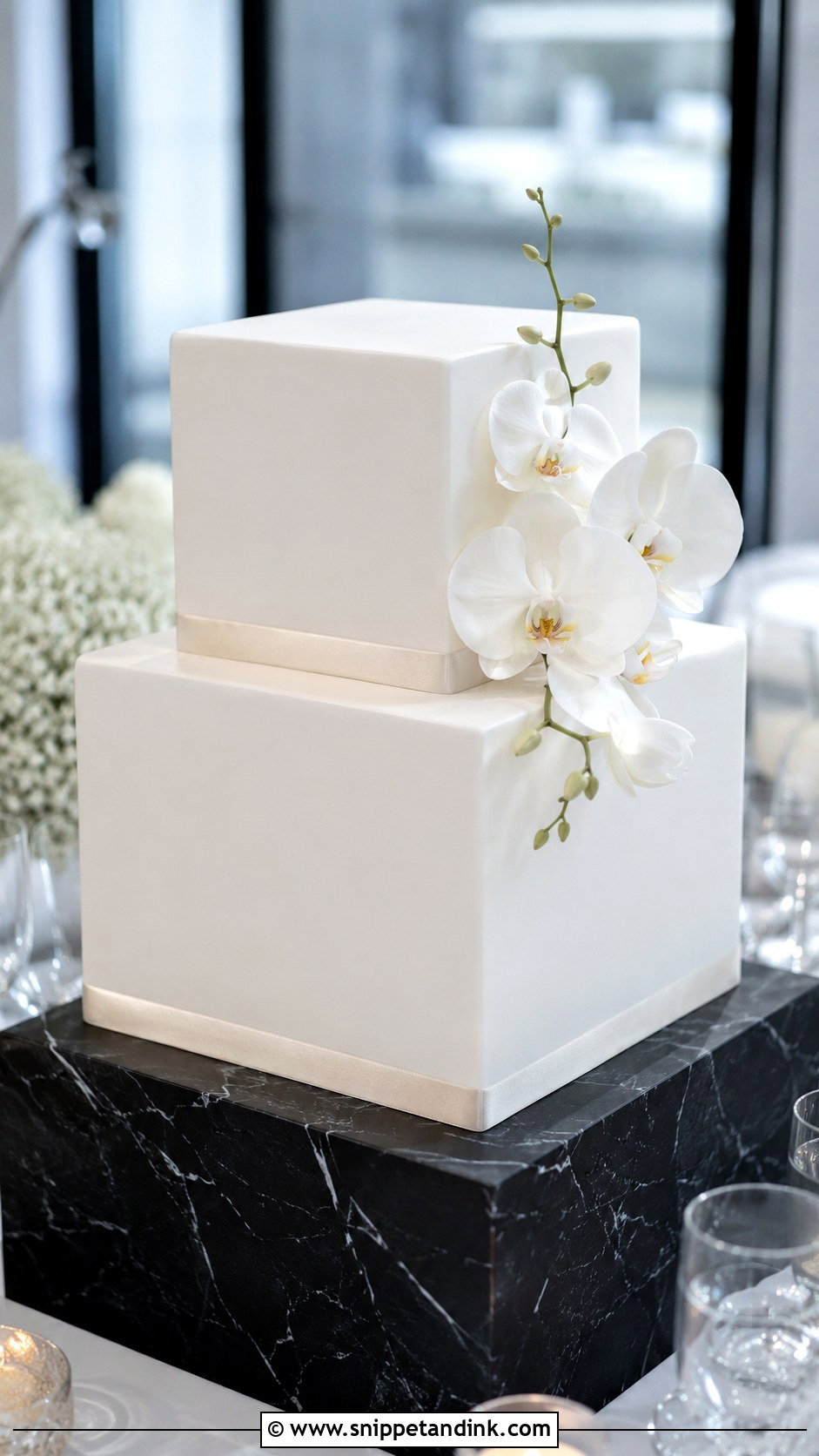
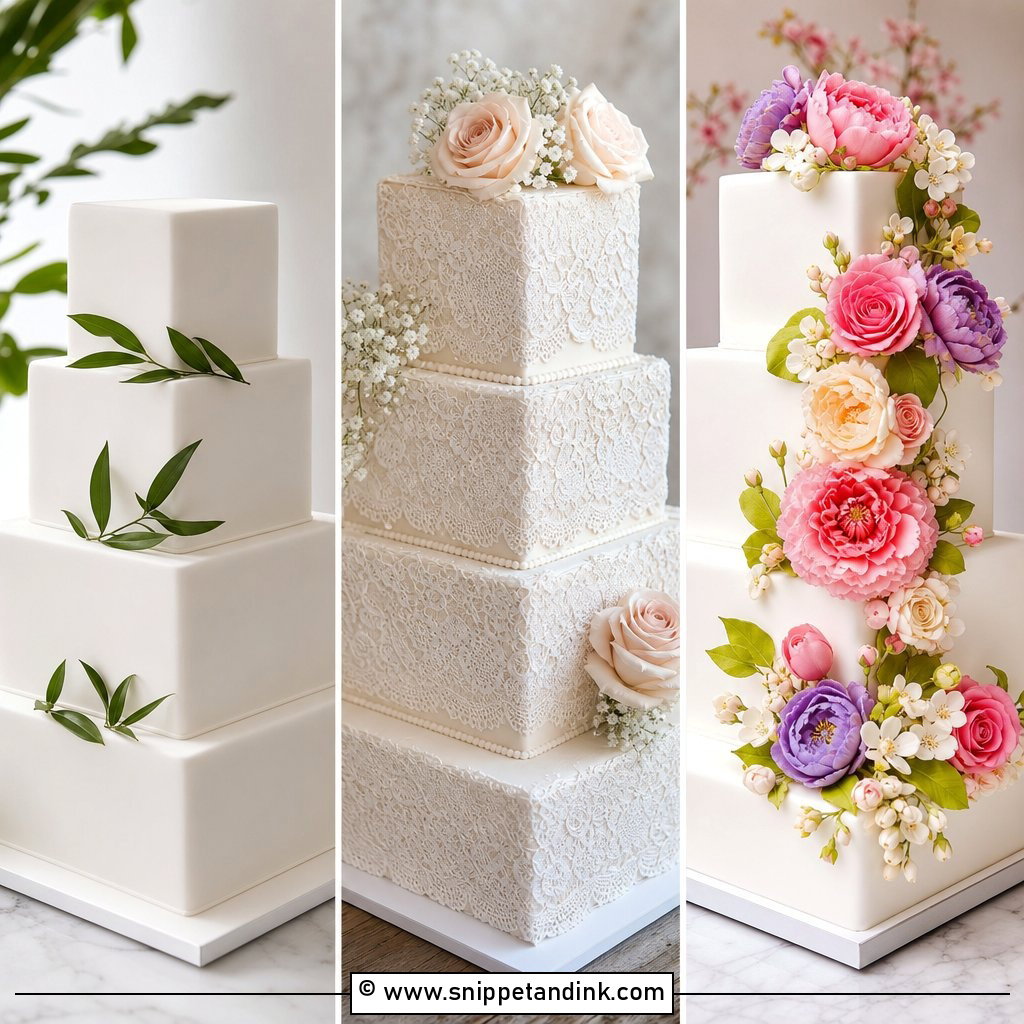
Square cakes feel architectural straight away, so they need very little help. City weddings, galleries and contemporary receptions suit them. Sharp fondant corners are the easier route. Square buttercream tiers need a baker who is confident with corners, so ask to see real examples. Keep the palette white, cream or soft beige. One floral accent placed off-center softens the geometry, while a slim ribbon or metallic line keeps it crisp.
12. Oval Wedding Cake
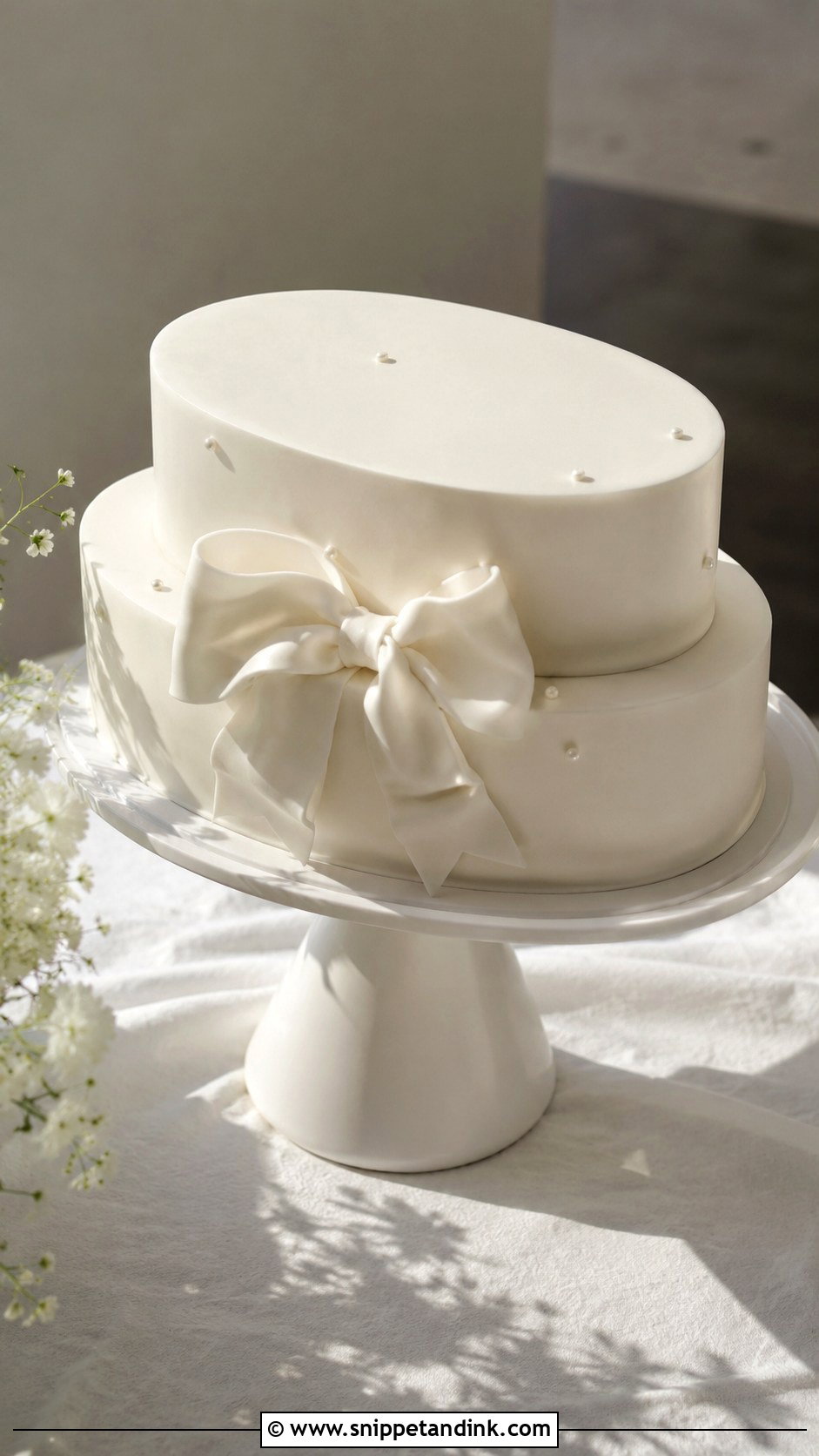
Oval is familiar but slightly unexpected. It has the softness of a round cake, while the stretched shape feels more editorial. A smooth white oval with a clean top edge holds its own undecorated, though a low floral arrangement, a sculptural sugar bow or a small pearl detail adds interest. Oval tins and boards are less common, so check your baker has the equipment and a stand that fits. It looks best from the front, so turn the long side toward guests and keep the table clear.
13. Minimalist Black And White Wedding Cake
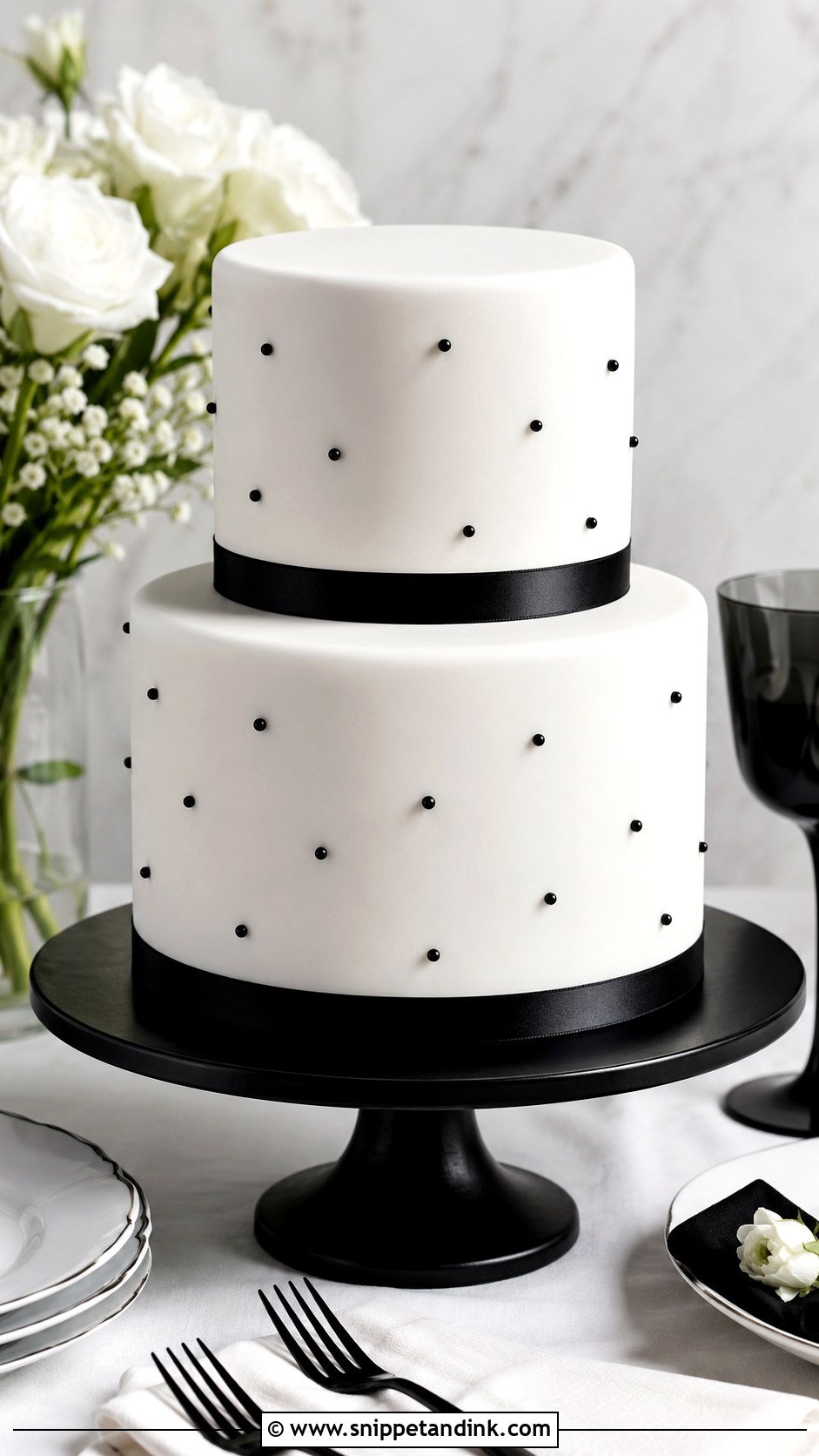
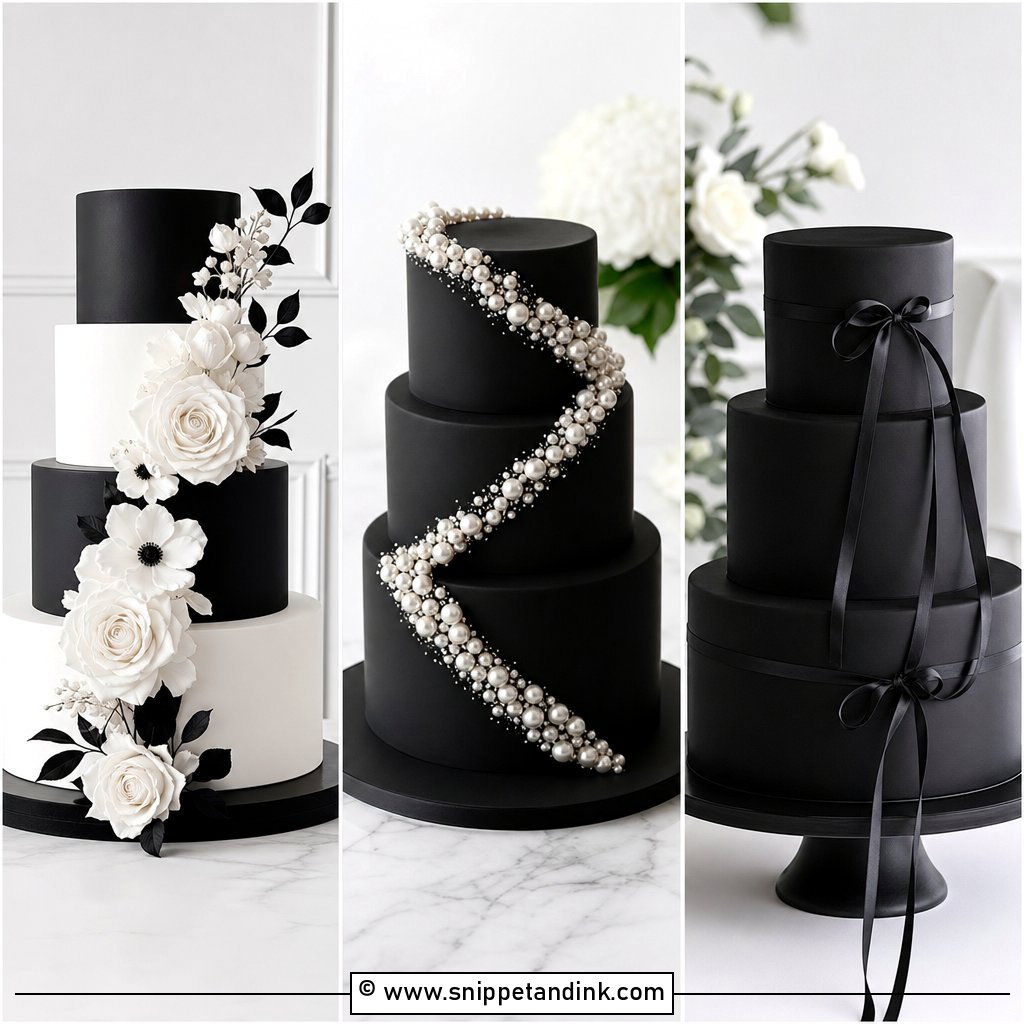
Black and white suits a formal or modern reception, provided the black stays limited. Start with white frosting and add one black satin ribbon, a slim black line or a few black sugar pearls. Reaching a true black in icing takes a lot of coloring, which can stain mouths and taste bitter, so I keep black details small or use ribbon instead. Beside black chairs and white flowers it looks sharp, and in low evening light the contrast helps the cake stand out.
14. Gold Accent Wedding Cake
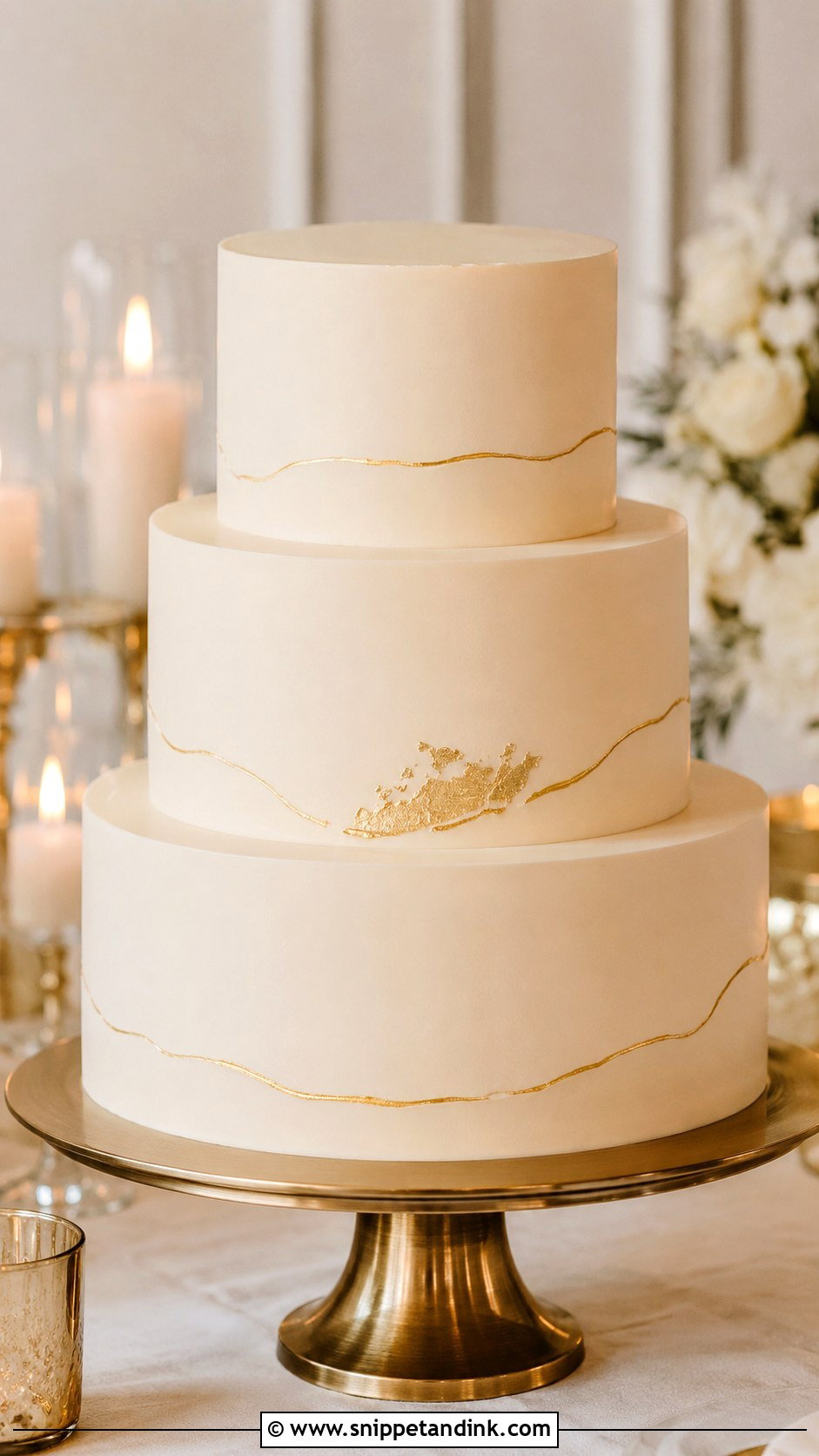
Treat gold like jewelry, not full coverage. A thin painted line, a small piece of edible gold leaf or a subtle gold base edge is enough on a plain white cake. Gold leaf is so thin it tears if you touch it, so it’s lifted with a dry soft brush and laid onto slightly tacky frosting. Keep the rest calm with smooth buttercream or fondant. Gold sits warmly with ivory frosting, beige flowers and candlelight without making the cake feel formal.
15. Marble Wedding Cake
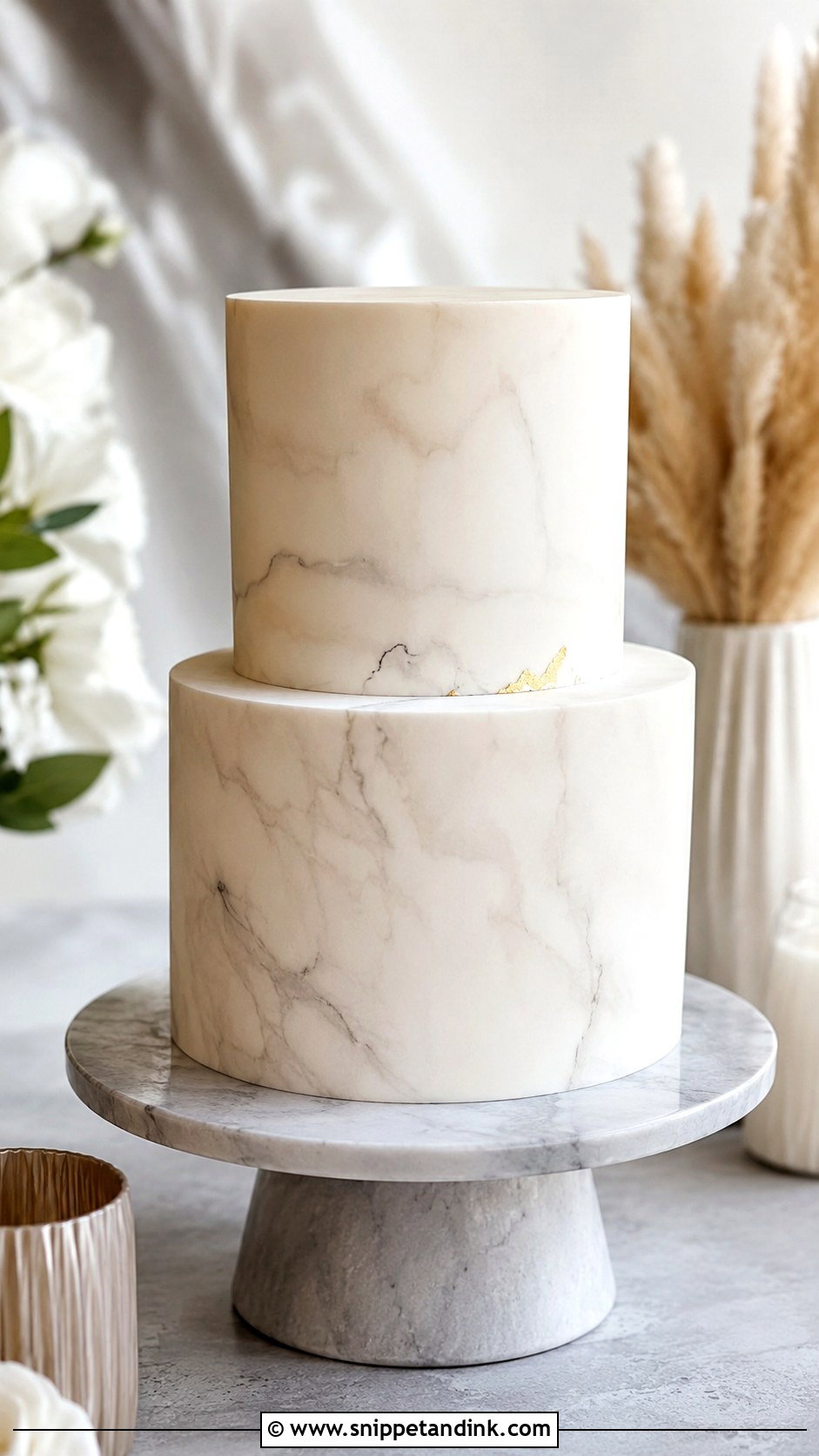
Marble adds interest without flowers or piping. Soft grey veining on white fondant looks refined, especially when the lines are thin and pale. I make it by twisting a little grey fondant into white and rolling it so the veins stretch naturally, or by painting veins by hand with diluted coloring. Marble one or two tiers and leave the others plain, or use a very light effect across the whole cake. A tiny gold accent adds warmth, and it suits stone tabletops and neutral palettes.
16. Pressed Flower Wedding Cake
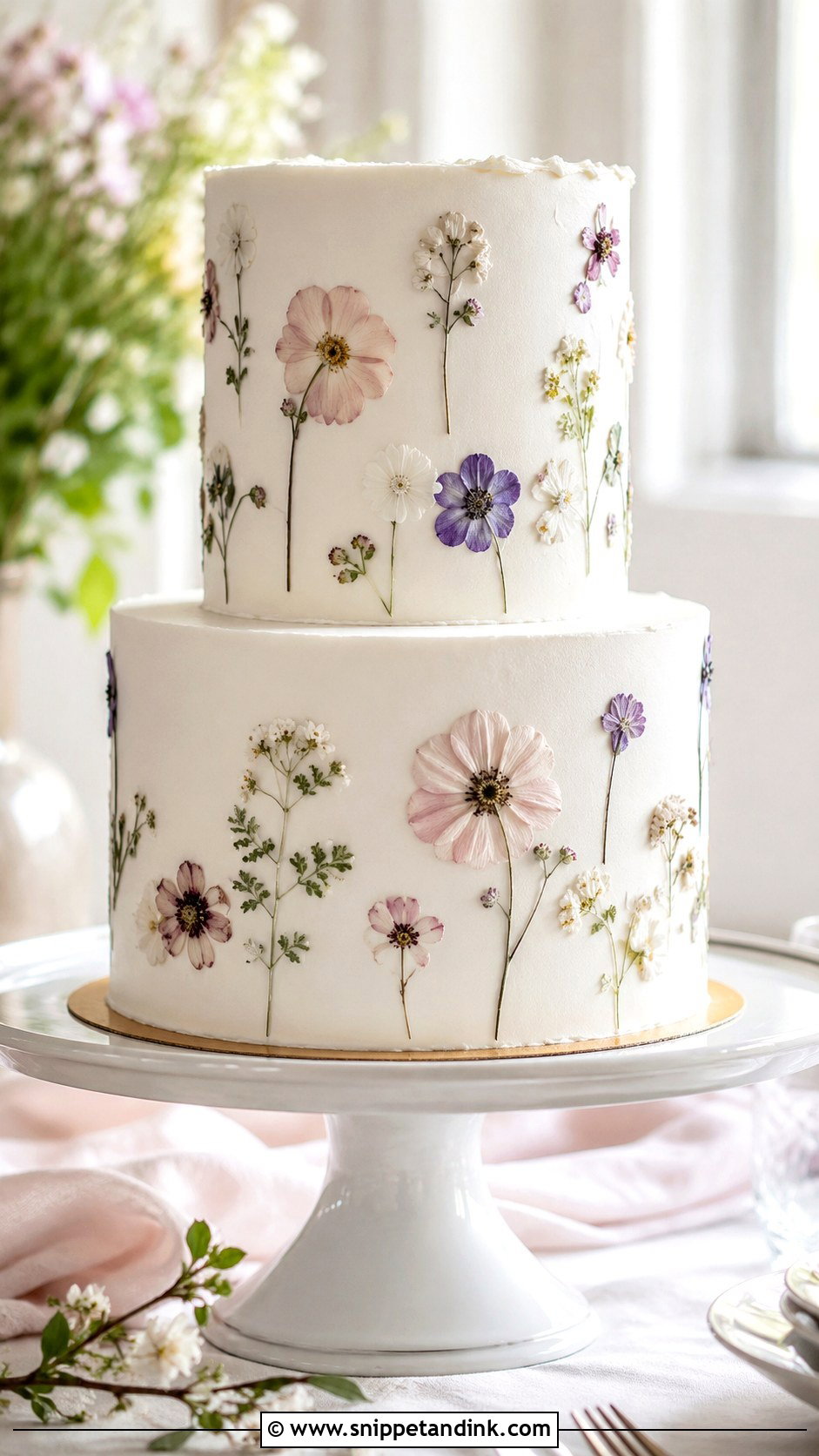
Pressed flowers stay simple when they’re spaced out, with frosting showing between them. Tiny edible blooms in white, blush, lavender or pale yellow work well; violas and pansies press especially flat. Buttercream gives a soft handmade feel, fondant a more polished one. Pressed petals can soften or darken after hours against moist frosting, so I apply them close to delivery. Ask your baker to use flowers grown for eating, because not every pretty flower is safe on a cake.
17. Naked Wedding Cake
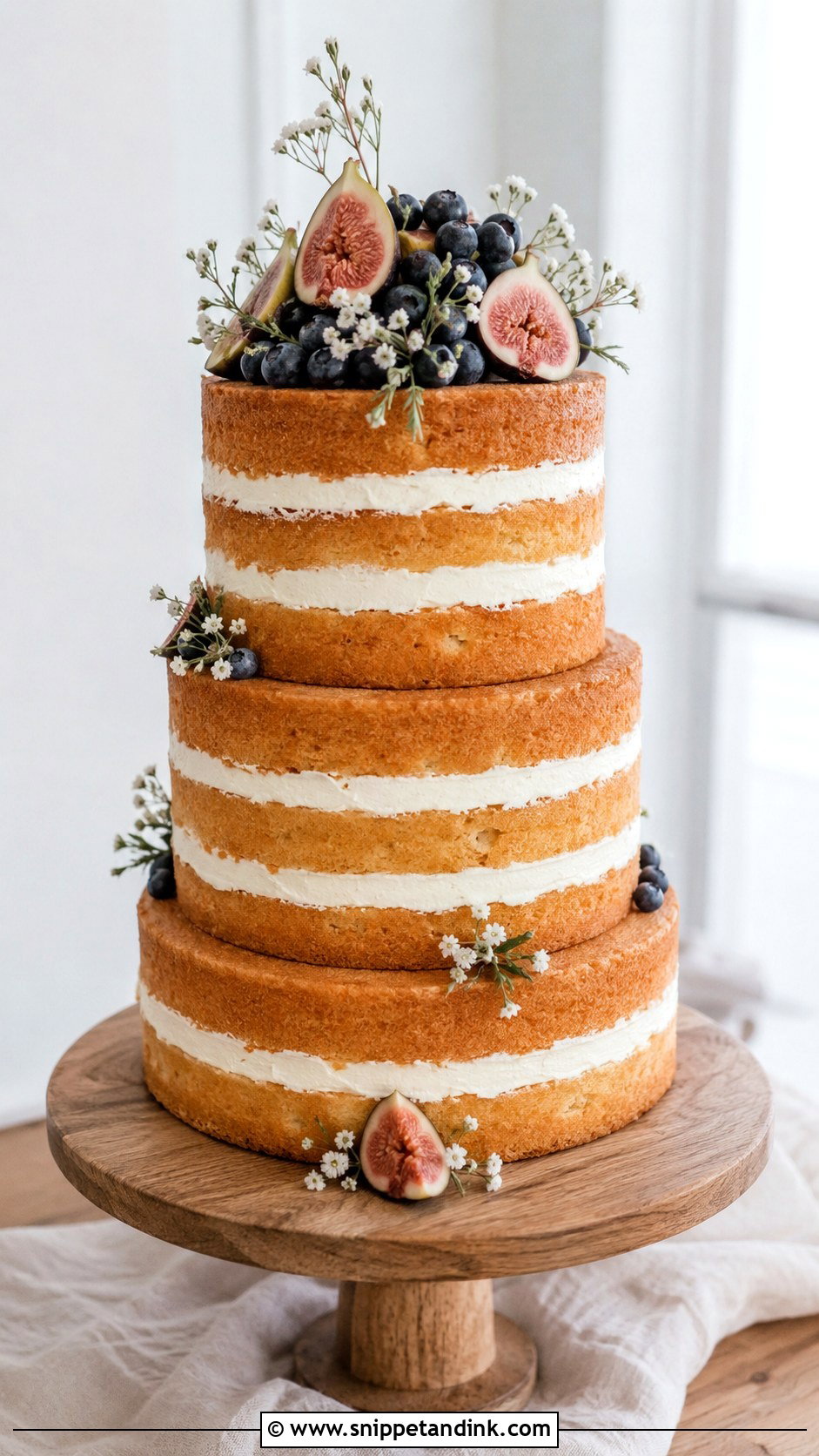
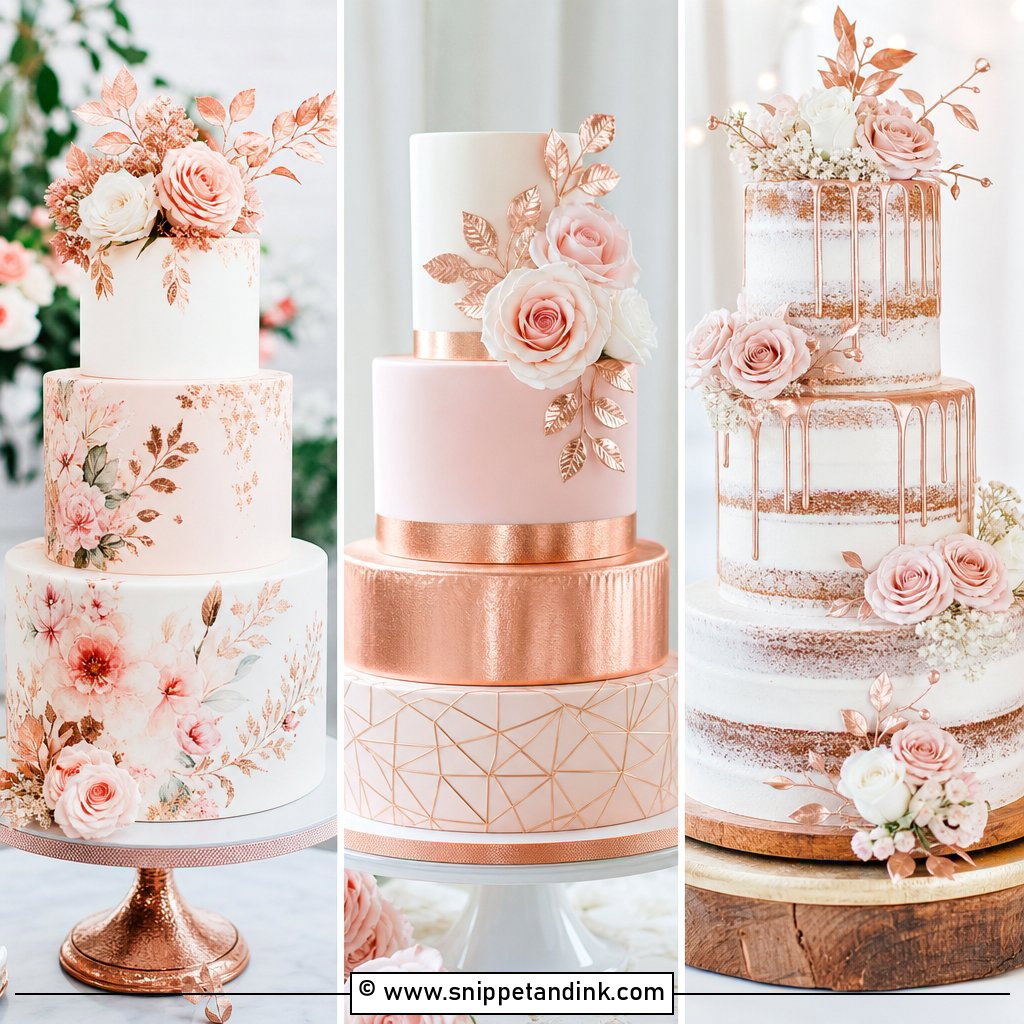
A naked cake is minimal in a rustic way. With no outer coat, the layers are on show, so I need even sponges, neat filling and just enough frosting to hold it together. Vanilla, almond, lemon and spice all suit it. A few berries, figs, herbs or simple white flowers keep it fresh. The trade-off is moisture: exposed sponge dries much faster than a frosted cake, so I brush the layers with syrup, assemble as late as possible and recommend a cool or shaded room.
18. Semi Naked Wedding Cake
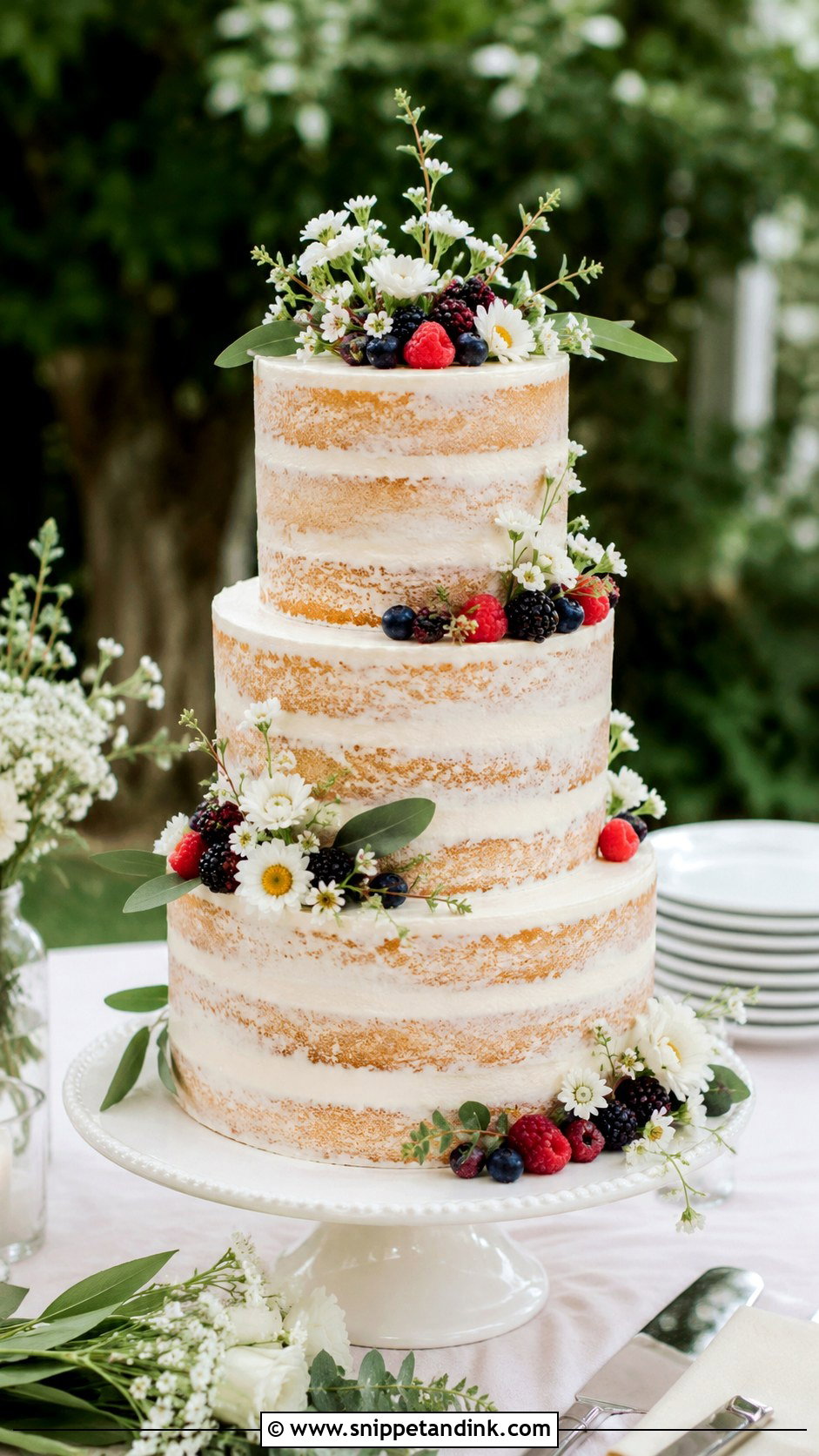
Semi-naked is the middle ground, a thin coat of buttercream scraped back so the cake peeks through. It looks natural and less formal, and it dries out more slowly than a fully naked cake. Neutral sponge and white frosting look cleanest, finished with a few fresh flowers, berries or greenery sprigs. It’s a favorite for barn weddings and garden parties. Buttercream this thin shows every crumb, though, so it takes a careful baker to keep it clean.
19. Minimalist Heart Wedding Cake
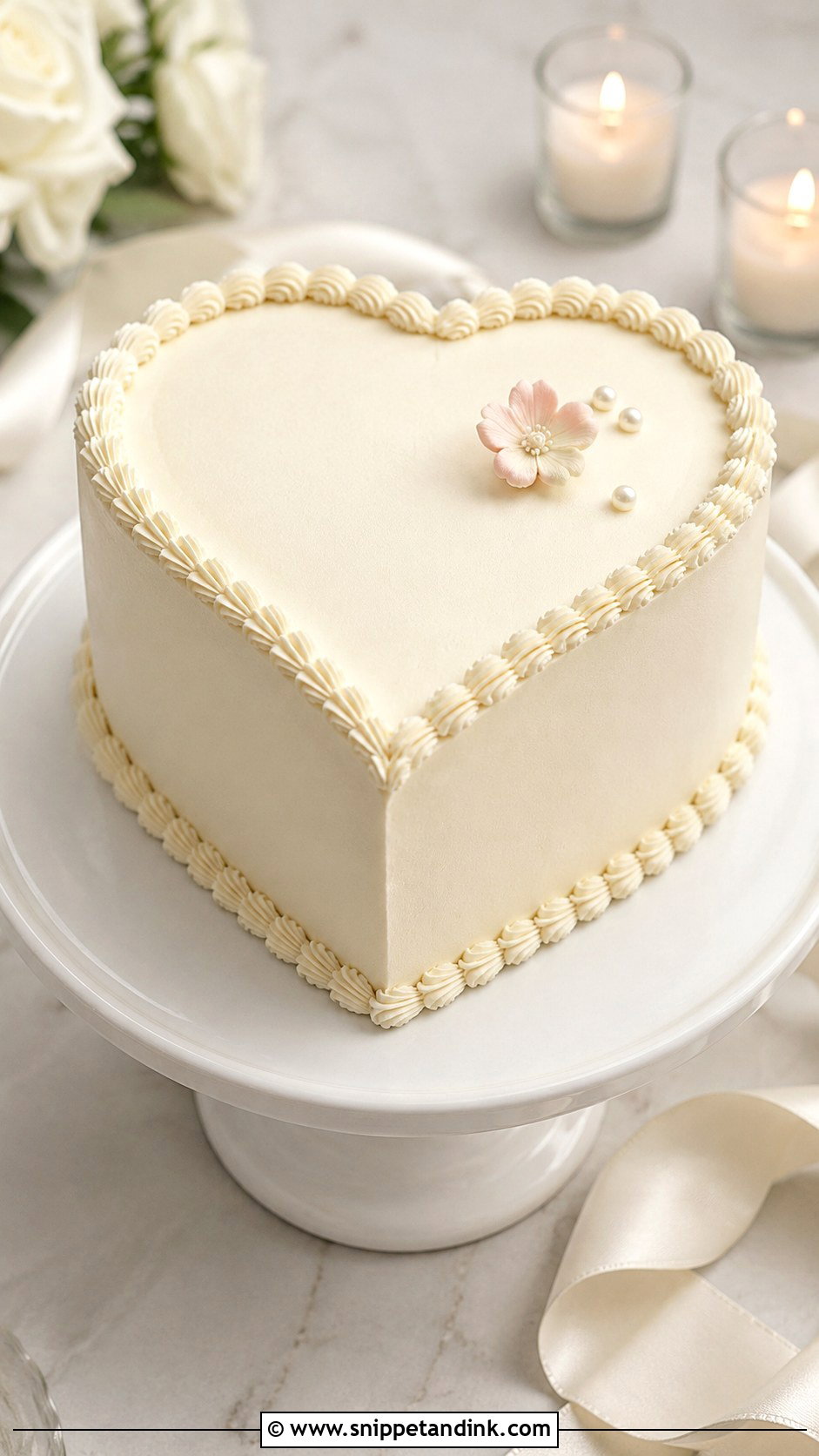
A heart cake can be sweet without becoming cute. The shape provides the personality, so smooth white buttercream, a clean piped border and one tiny floral accent or pearl detail are enough. Heart tiers are hard to smooth around the dip at the top, and that dip is where you’ll see whether your baker has made them before. Elopements, sweetheart tables and couples who want a personal cutting cake beside a dessert bar suit it. Ivory, pale blush or warm cream keep it soft.
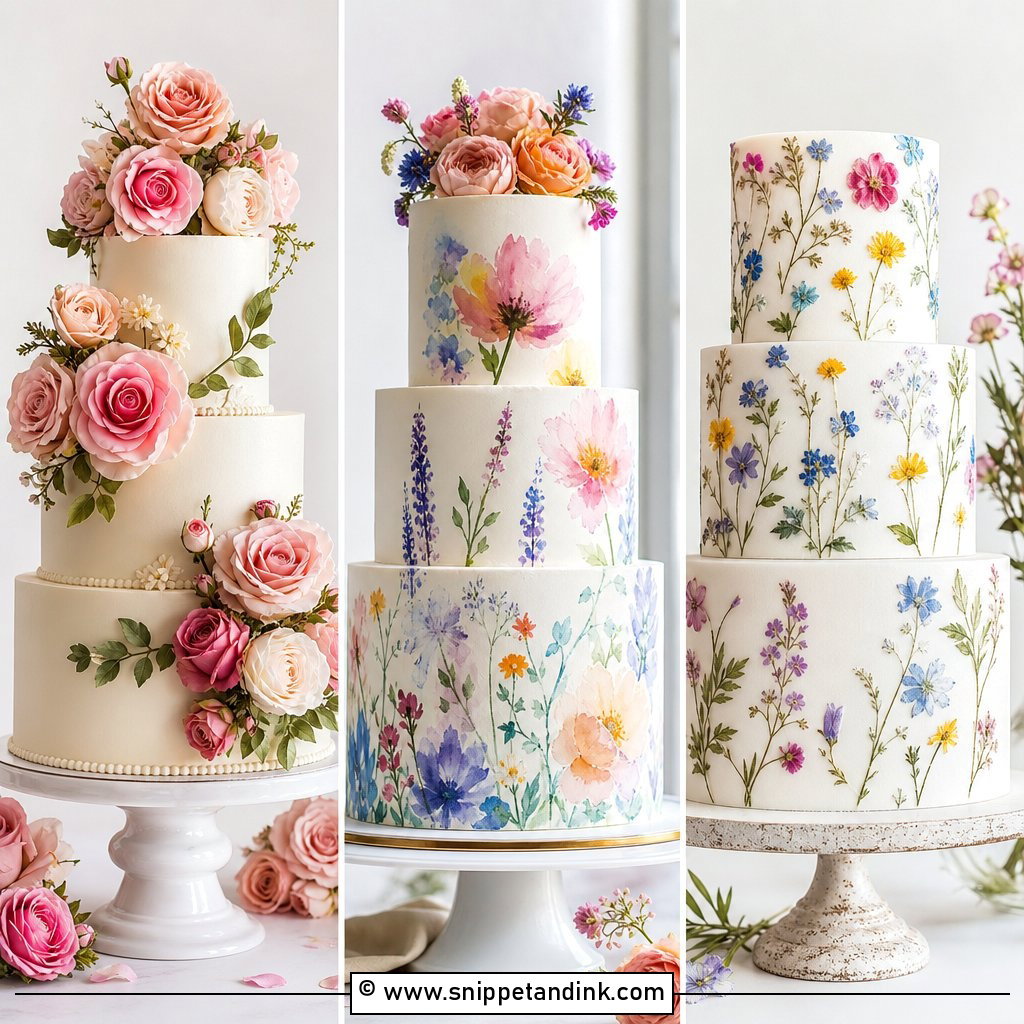

20. Mini Wedding Cake
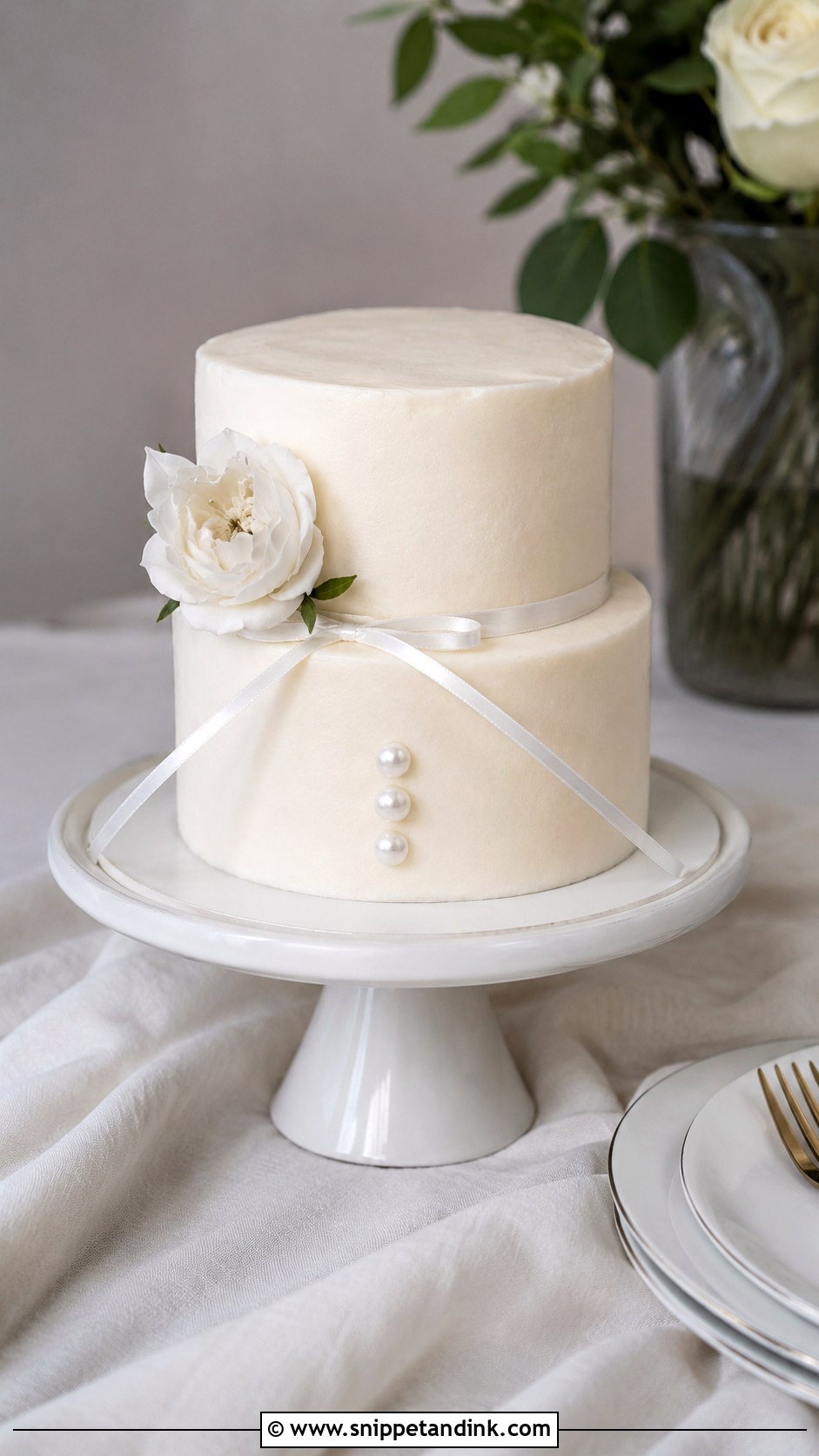
A mini wedding cake works as a personal cake for the two of you or as one small cake per table. The minimalist version should feel intentional, not like a large design shrunk down with too much decoration squeezed on top. A tiny two-layer round, smooth buttercream and one neat accent are enough. Making many minis takes far longer than one large cake, so expect a higher price per serving. Matching stands and clean plates keep a display of them tidy.
How Long Each Finish Can Sit Out on the Cake Table
Most cakes go on display before guests arrive and are cut hours later, so the finish you choose shapes how the cake looks by the time the knife comes out.
- Fondant over ganache is the most stable. It holds its shape for hours in a comfortable room, though it can bead with condensation if it goes straight from a fridge into a warm space.
- Smooth buttercream is fine in a cool room but softens in heat and direct sun, so keep it away from windows and heaters.
- Naked and semi-naked cakes are the most fragile. Exposed sponge dries at the edges within hours, so ask the venue to keep the cake covered and bring it out late.
- Fresh fruit and flowers go on close to display time. Berries can bleed juice into frosting, and flowers wilt quickly in a warm room.
If your cutting happens late in the evening, ask whether the cake can wait in a cool room until shortly before, and who on the venue team will keep an eye on it in the meantime.
Editing a Cake Down to One Detail
Minimal cakes come down to editing. Rather than asking for every pretty detail, settle the shape, the frosting, the texture and one accent that fits your day. A smooth white cake feels classic, a square one modern, a pressed flower cake romantic and a semi-naked one relaxed. Match the design to your venue, guest count and the mood of your dessert table. Bring two or three clear photos to your baker, talk through flavor and structure together, and let the restraint do the work.
You'll Like These Ideas:





Leave a Reply