
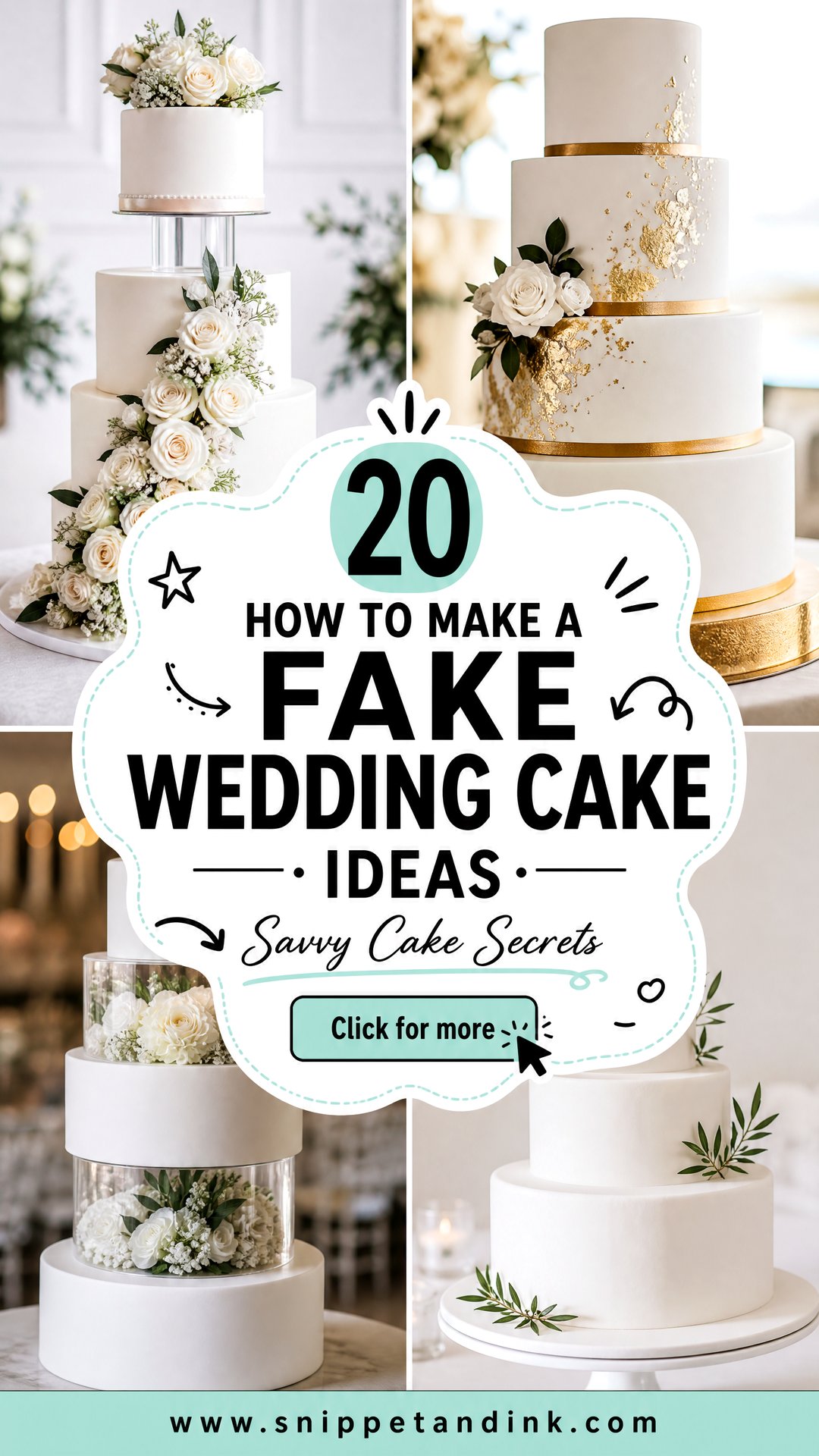
Display cakes are older than most couples realize; bakers have kept foam tiers on the shelf for years, for shop windows and for weddings where the tall cake is about the photograph more than the slice. A fake wedding cake is built on foam dummies and finished with fondant, royal icing, faux buttercream, or even spackle, then dressed with ribbon, pearls, or flowers. Some couples include one real tier to cut; others serve sheet cake from the kitchen and let the display stand untouched all night. Below are twenty finishes and setups, with what I’ve learned about making foam pass for cake.
What Gives a Dummy Cake Away Up Close
From across a room, almost any well-covered dummy passes. Guests do walk up to the cake table though, and photographers shoot it at close range. These are the giveaways I look for, and how to avoid them.
- Edges that are too sharp. Real cake settles slightly and the top edge softens. Sand a gentle curve into the foam before covering.
- A finish that’s too bright. Pure white fondant or spackle under reception lighting looks like plastic. Ivory or a touch of cream reads as food.
- No cake boards. Real tiers sit on boards that show as a thin line at the base. Use them on the dummy too, and cover the line with a border.
- Flowers pushed in dead straight. On a real cake, stems go in at an angle to avoid the sponge. Copy that.
- Shine from paint or sealant. A matte finish looks edible; gloss looks like a model.
Height is the other giveaway. Dummies come in standard depths, and many are shallower than a real tier. I often stack two dummies or add a riser under each one so the tiers look as tall as a baker’s.
1. Fake Wedding Cake With Fondant
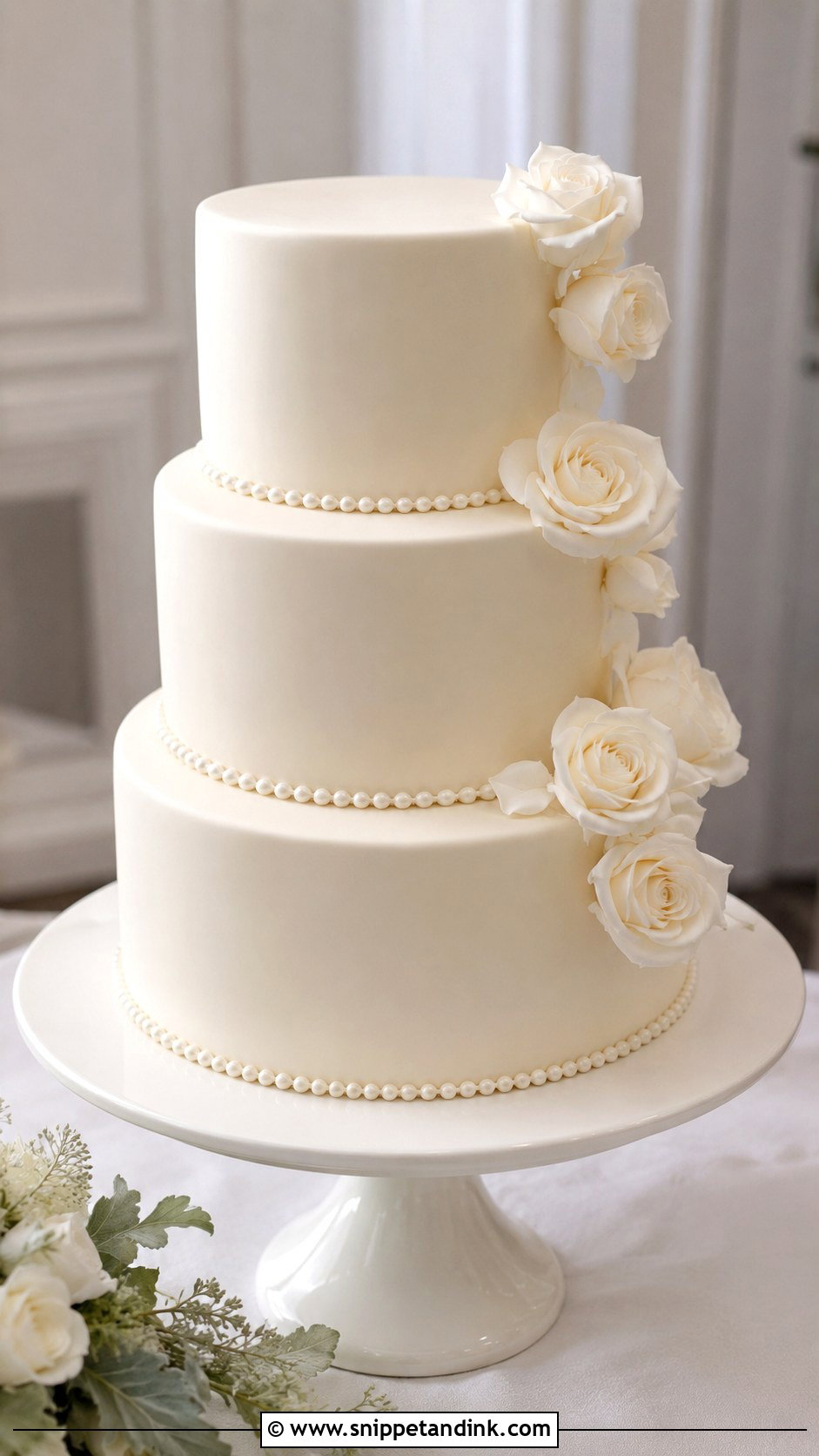
Fondant is the most convincing cover for foam because it hides the dummy completely and gives that sharp, bakery finish. I sand the top edge of each dummy into a slight curve first; a square foam edge tears fondant the moment you smooth over it. Brush the foam lightly with piping gel or shortening so the fondant grips, roll it wider than the tier, drape, and smooth from the top down. Graduated 6, 8, and 10-inch tiers make a classic three-tier stack. Stack them with royal icing between the boards and finish with ribbon or flowers.
2. Fake Wedding Cake With Buttercream
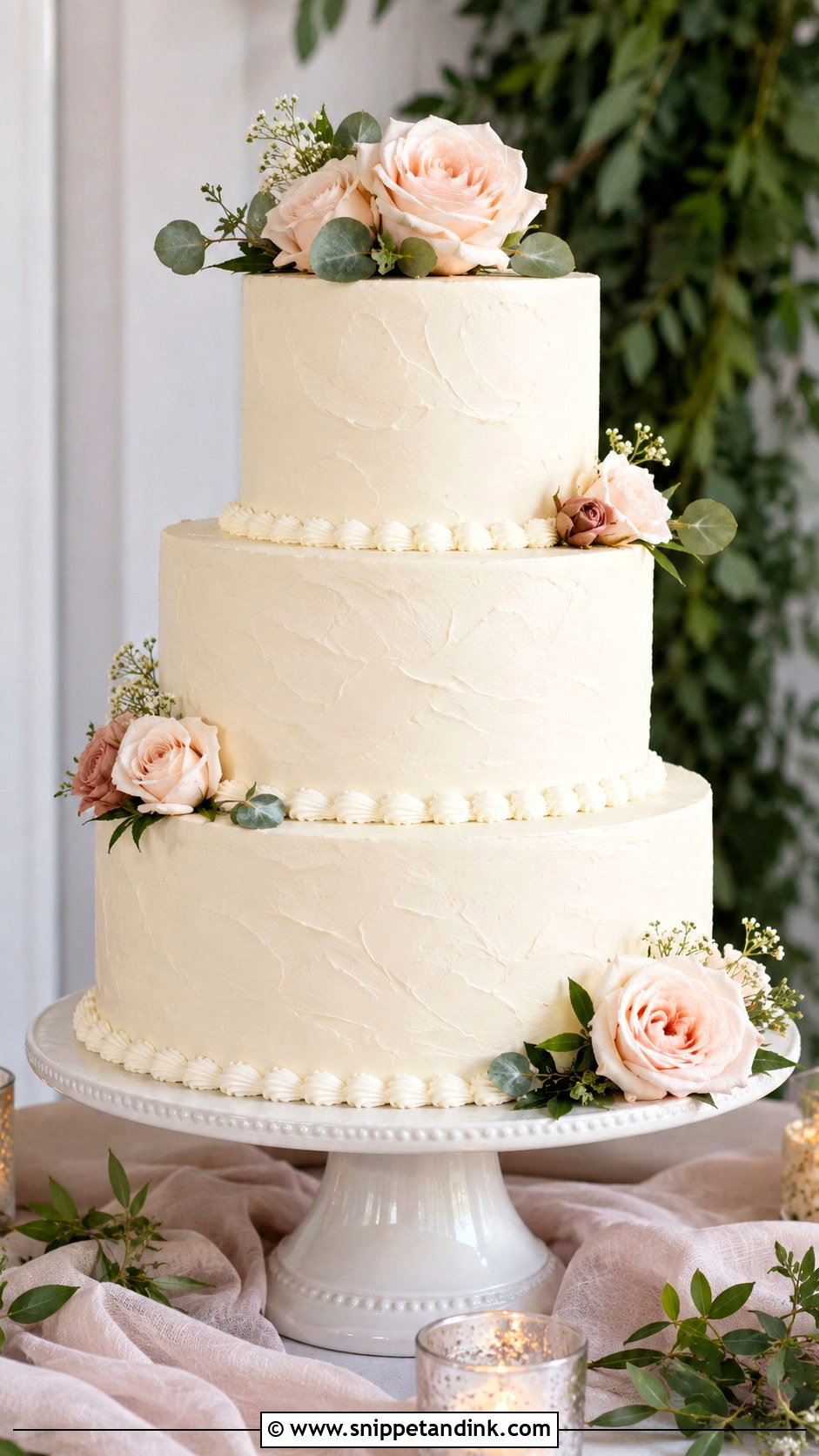
Buttercream on a dummy reads warmer than fondant, which is why many couples who order a real buttercream wedding cake want their display to match. Mount each dummy on a board first so it doesn’t skid on the turntable. A crusting buttercream, or a faux version made with shortening, firms on the surface so you can smooth it twice. Foam doesn’t flex the way sponge does, so you can scrape harder without denting it. If smoothing isn’t your strength, a light texture hides more. A piped base border and a cluster of good silk flowers finish it.
3. Fake Wedding Cake With Royal Icing
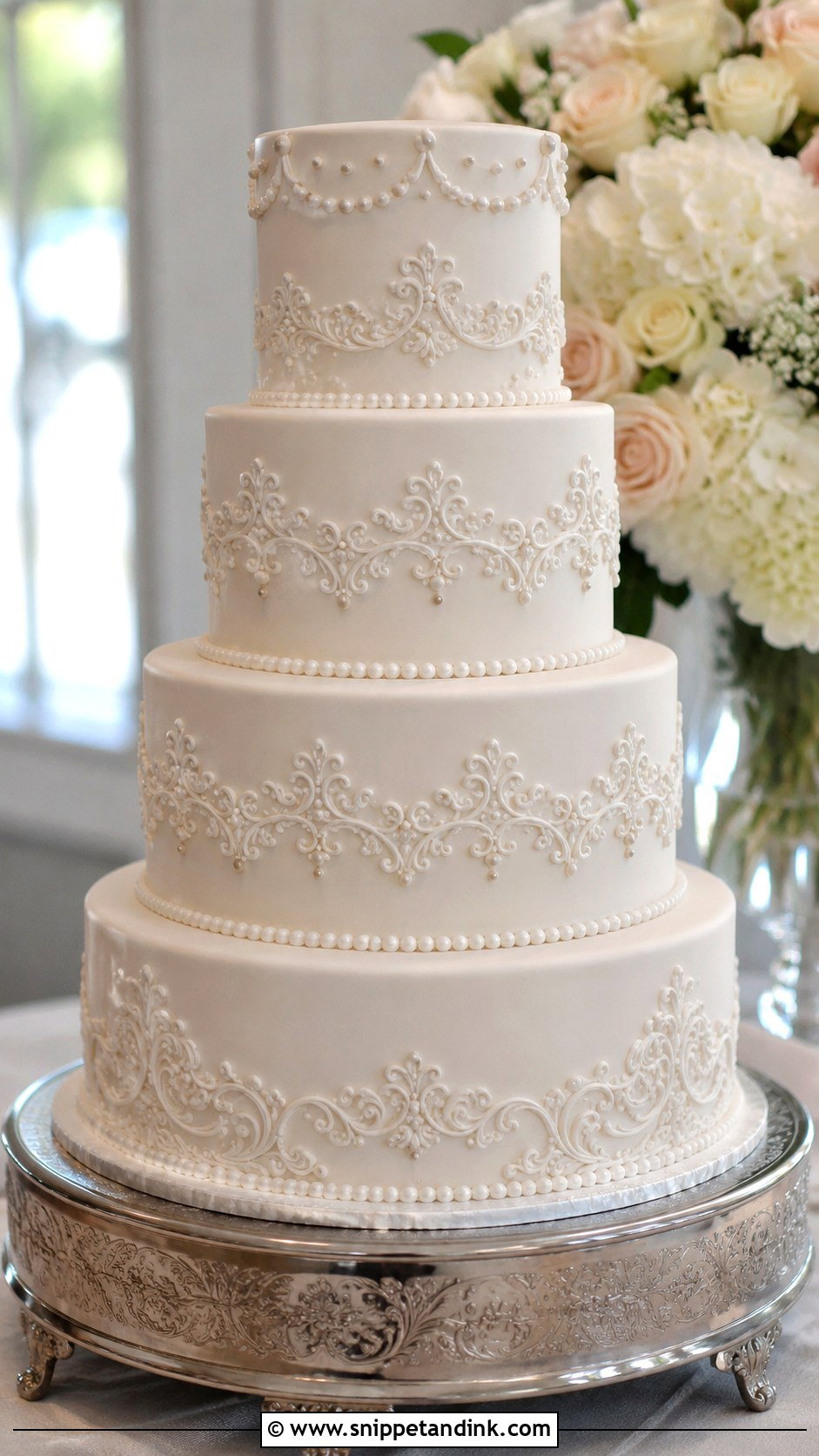
Royal icing dries rock hard, which makes it the right finish for a display meant to travel, sit under lights, and be reused. Royal icing works for detailed piping too, since lace, scrolls, and pearl borders keep crisp edges once set. I fix each tier to its board with a little hot glue or icing, apply a thin base coat, and let it dry overnight before piping. Humidity is the enemy here; in a damp room royal icing can stay soft for days, so I work with a dehumidifier or a fan nearby.
4. Fake Wedding Cake With Spackle
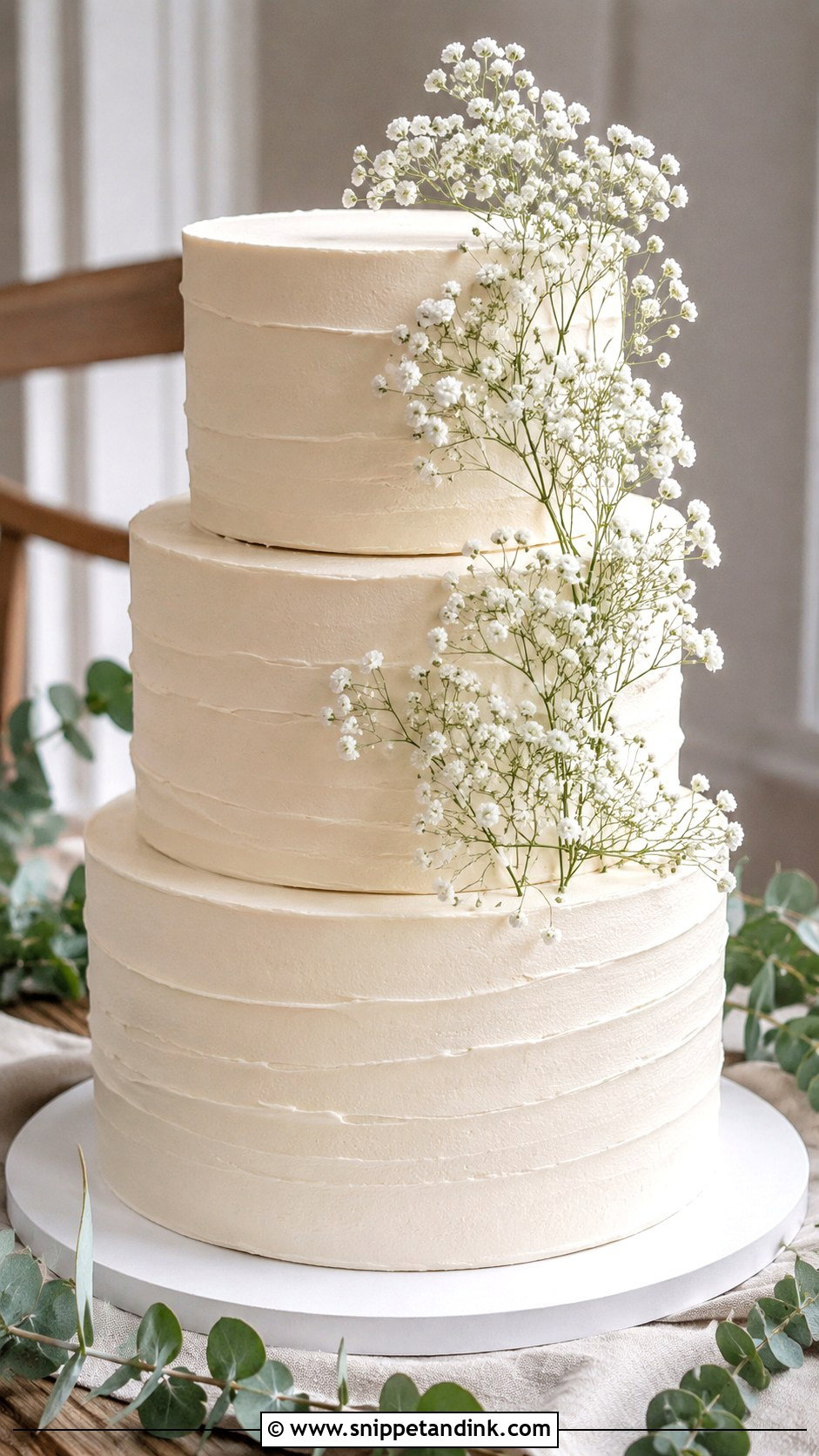
Lightweight spackle sounds odd, but it spreads like frosting and dries without ever melting, which is why it shows up in long-term displays. Work on a covered surface, apply a thin layer with an offset spatula, and scrape it smooth as you would buttercream. Once dry, a fine sanding sponge takes off small bumps. Tint it with acrylic paint or paint over it later. The one rule I’m strict about: spackle is not food, so a spackle tier should never share a board or a stand with a real tier, and nothing that touched it should touch the edible cake.
5. Fake Wedding Cake With Real Top Tier
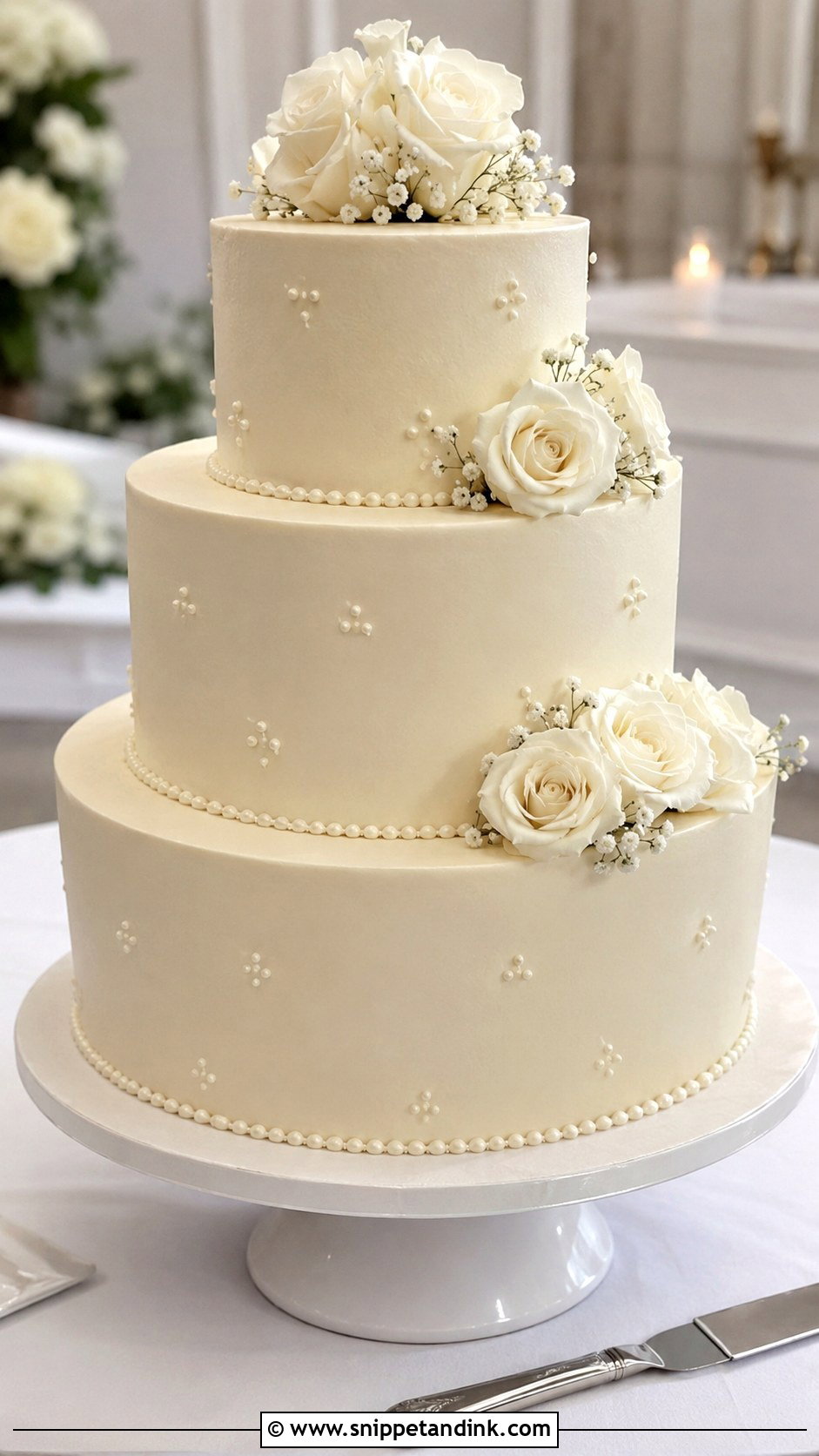
The lower tiers are foam and the top tier is real, so you still get the traditional cutting moment. Matching is the challenge: fondant, faux buttercream, and real buttercream all sit slightly differently, so I ask the baker for a sample of the frosting color and texture before decorating the dummies. The real tier needs its own board and dowels under it, even though the foam below won’t sink. Tell whoever is cutting exactly which tier is cake. Guests are served from sheet cakes in the kitchen.
6. Fake Wedding Cake With Sheet Cake
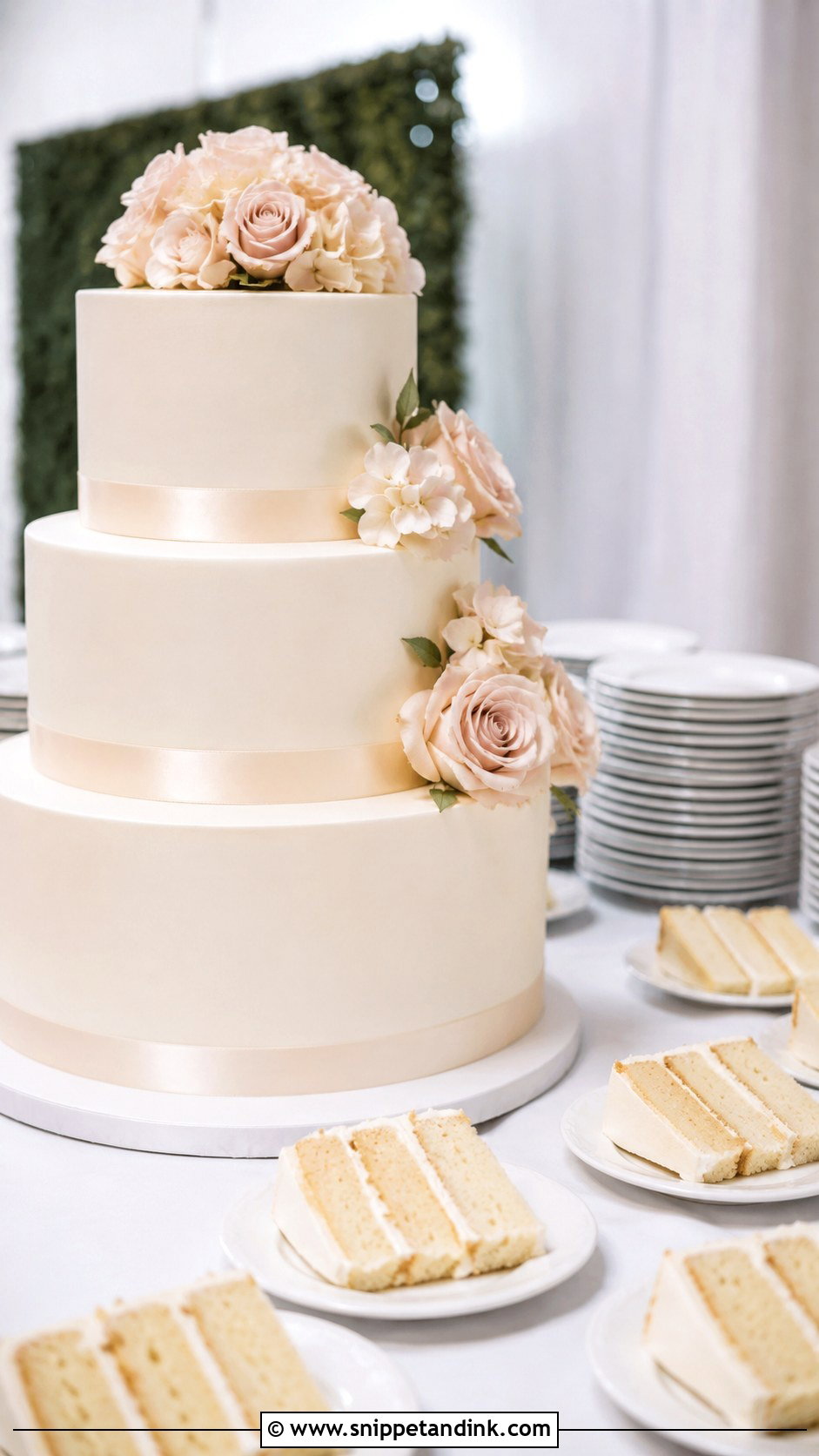
This is the most common setup I see at large weddings. A decorated foam cake stands at the front of the room, and sheet cakes are cut behind the scenes, which is faster and far cheaper per serving than tiered cake. Build the display on a strong drum with fondant or faux buttercream, and keep the colors tied to the wedding so it doesn’t look like a hired prop. Order the sheet cakes in flavors your guests will eat; vanilla, chocolate, and lemon rarely come back to the kitchen. Arrange cutting with the caterer in advance.
7. Fake Wedding Cake With Fresh Flowers
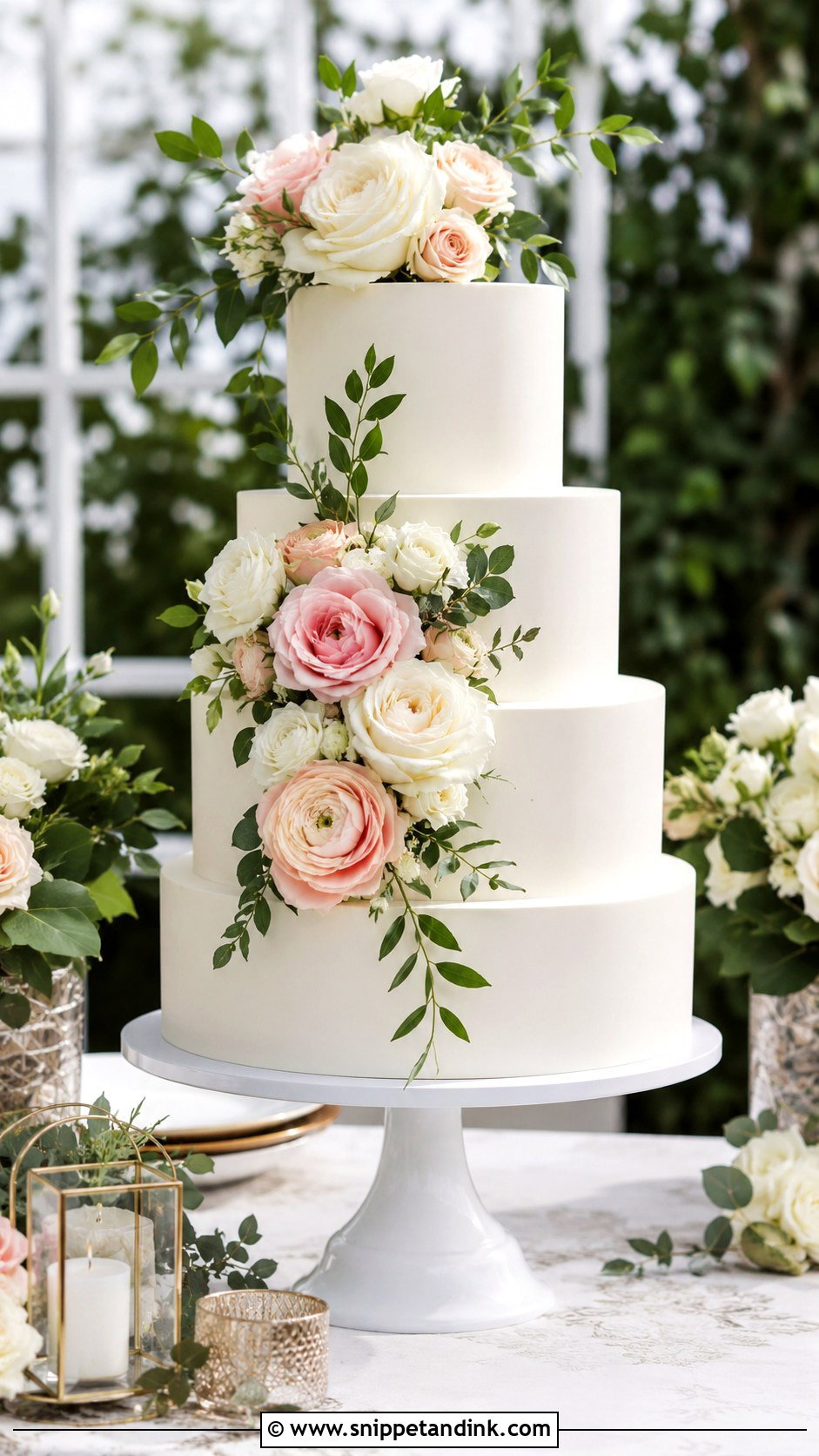
Real flowers make a dummy look expensive, but they need a plan. Finish the tiers first, then add flowers on the day so they look fresh. If any tier is real, every stem has to be wrapped in floral tape or set into a food-safe pick, because many flowers are toxic or have been sprayed. I put the larger blooms toward the base and smaller ones higher up, so the cake tapers visually. Roses, ranunculus, and orchids hold up well out of water for a few hours. Match them to the bouquet so the table and the bride look connected.
8. Fake Wedding Cake With Silk Flowers
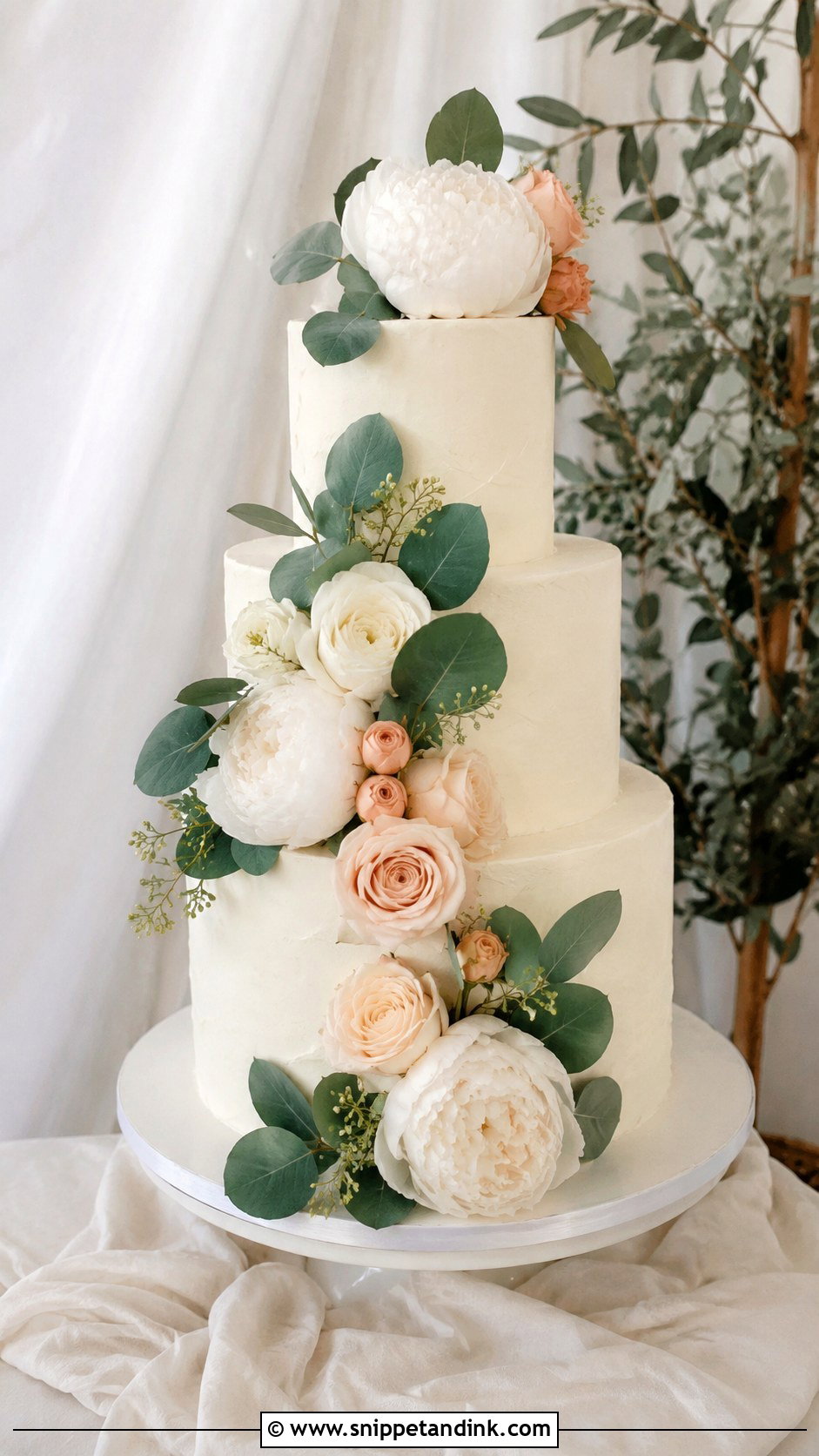
Silk flowers are what make a fake cake genuinely low-stress, because the whole thing can be finished weeks ahead. I lay the flowers out on the table first and photograph the arrangement before attaching anything. Trim stems with wire cutters and push them into the foam at a slight angle so they don’t stand stiffly straight. On a hard royal icing or spackle surface, a dot of hot glue or a hidden wire holds them. Cheap silk flowers with shiny petals and plastic centers give the whole cake away, so this is the place to spend.
9. Fake Wedding Cake With Ribbon
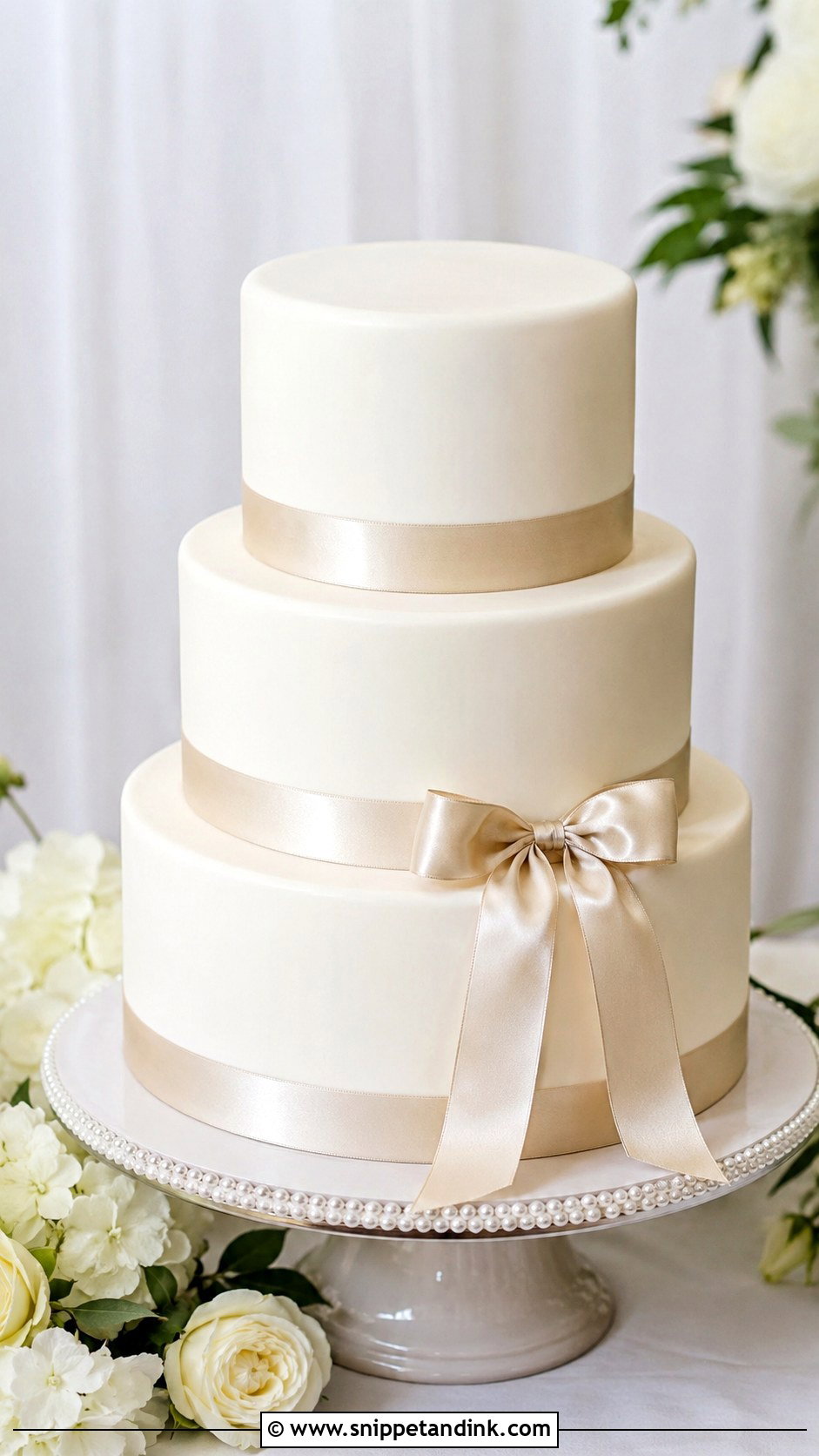
Ribbon is the simplest finish here and one of the most forgiving. Cover each tier with smooth fondant, faux buttercream, or painted spackle first. Measure the ribbon to overlap slightly at the back and fix it with small dots of icing or double-sided tape; on a dummy, pearl-headed pins are fine too. I mark a faint guide line all the way round before I start, because a ribbon that drifts uphill is the first thing a photographer’s lens finds. Satin looks formal; chiffon and velvet look softer.
10. Fake Wedding Cake With Pearl Details
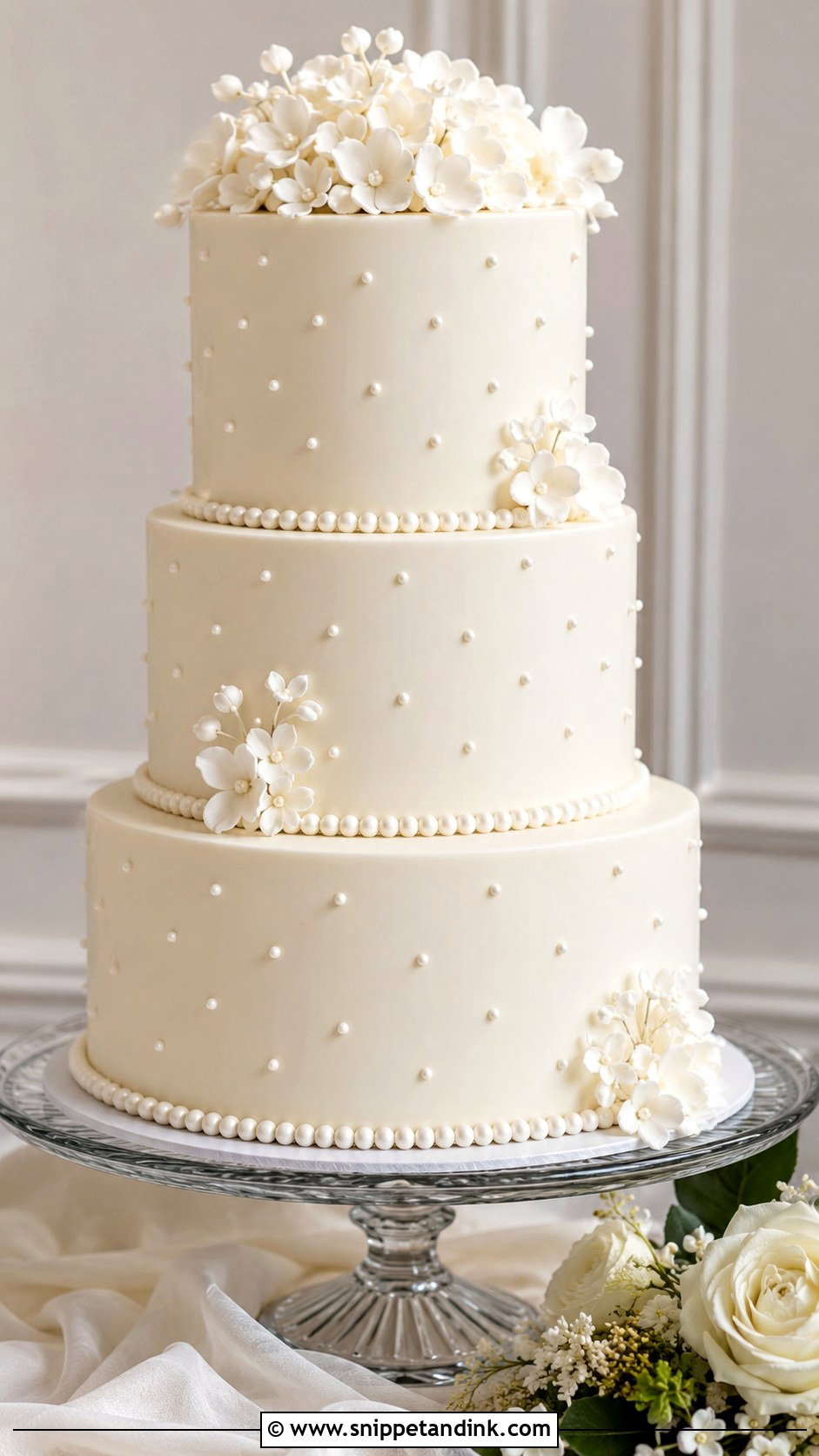
Pearls show best on a smooth white or ivory base. On a display-only cake you can use craft pearls, which are rounder and shinier than sugar pearls; if a tier is real, use sugar pearls throughout so nothing inedible ends up on a plate. Single pearls attached with royal icing make dotted borders or vertical lines. Pearl trim wrapped around the base of each tier is quicker. Space them evenly using a ruler or a strip of paper as a template. Overcrowding is the common mistake here: fewer pearls look more deliberate.
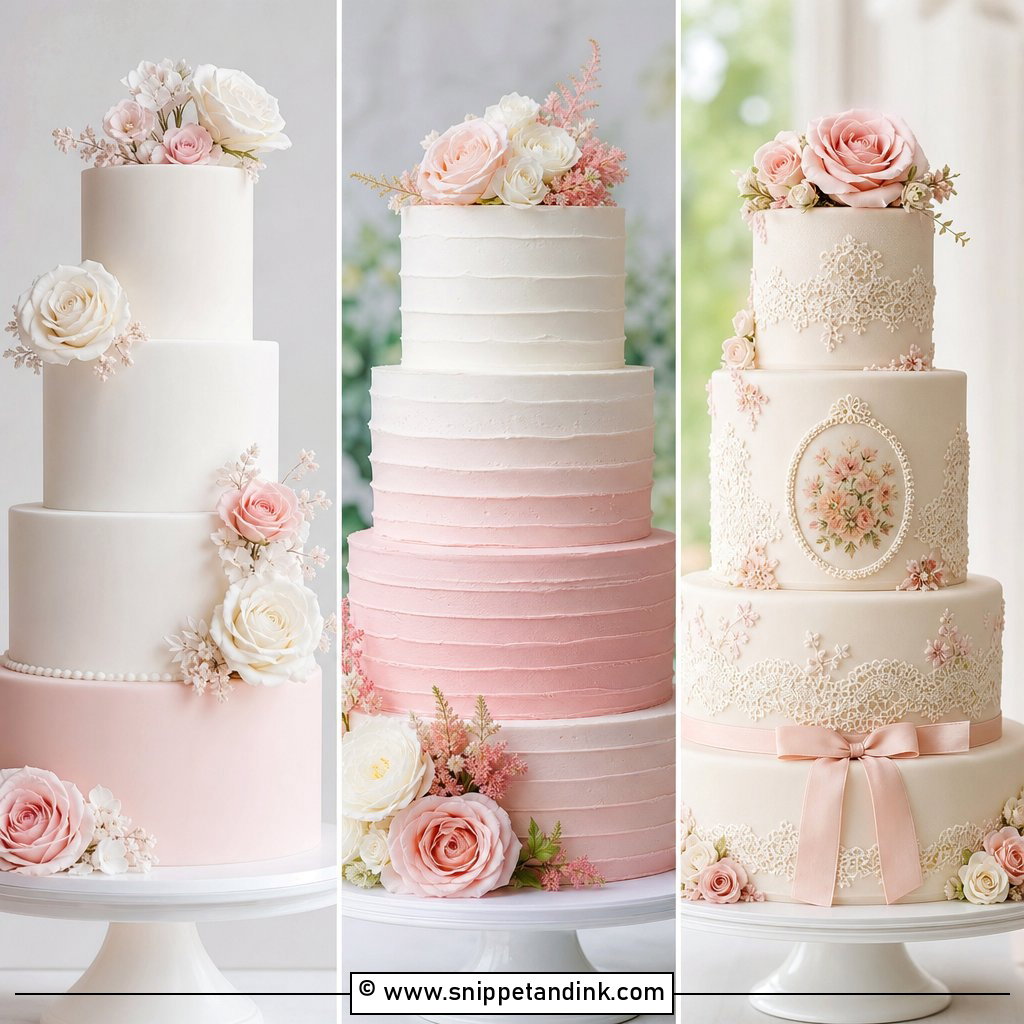
11. Fake Wedding Cake With Lace
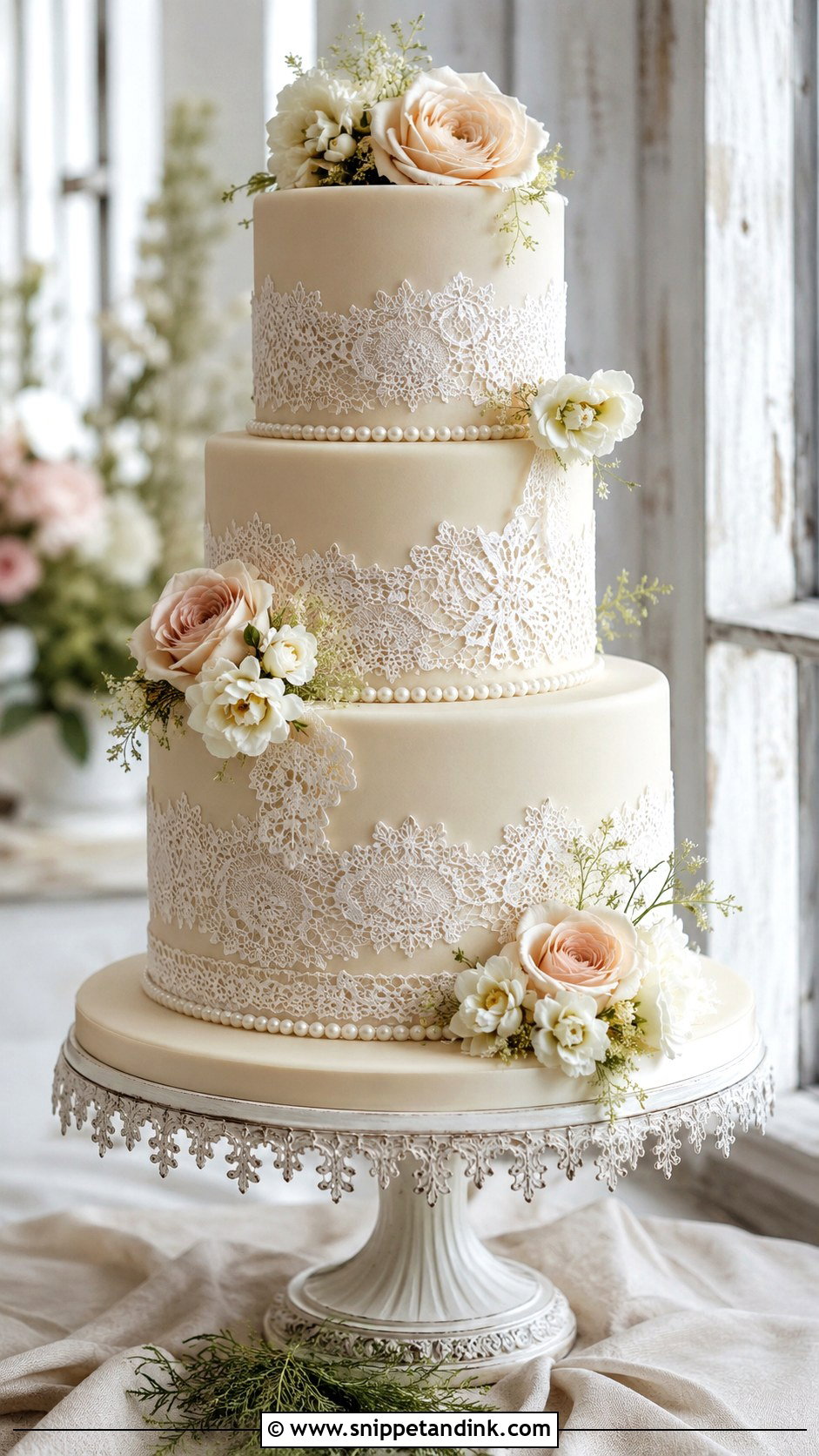
Lace needs a smooth fondant surface; on textured icing it looks lumpy. Edible lace, lace molds, and silicone mats all work, and on a display-only cake clean fabric lace is fine. I wrap lace around one tier rather than all of them, press it in gently, and join the ends at the back. If I’m piping lace in royal icing, I don’t move the cake until it has dried completely, usually overnight. A few small flowers or pearls are enough beside it.
12. Fake Wedding Cake With Gold Accents
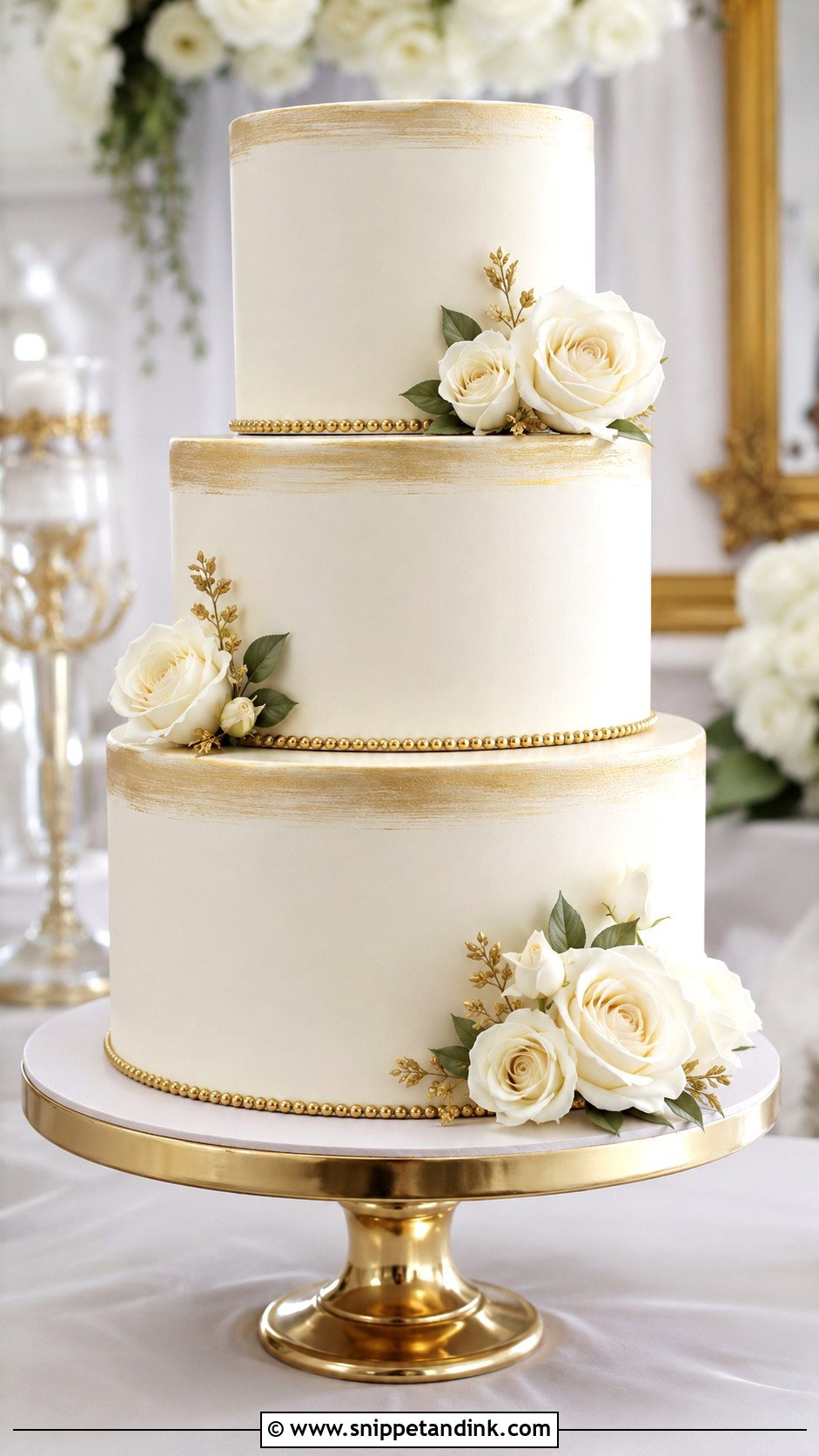
Gold works best as a highlight, not a coating. Start with white, ivory, blush, or beige tiers and decide in advance exactly where the metal goes: a painted top edge, a band at the base, gold leaf on one tier. Metallic paint mixed with a little alcohol goes on smoother than water-based paint and dries quickly. Practice on a spare dummy, since brush strokes show clearly in gold. White flowers balance it.
13. Fake Wedding Cake With Textured Buttercream
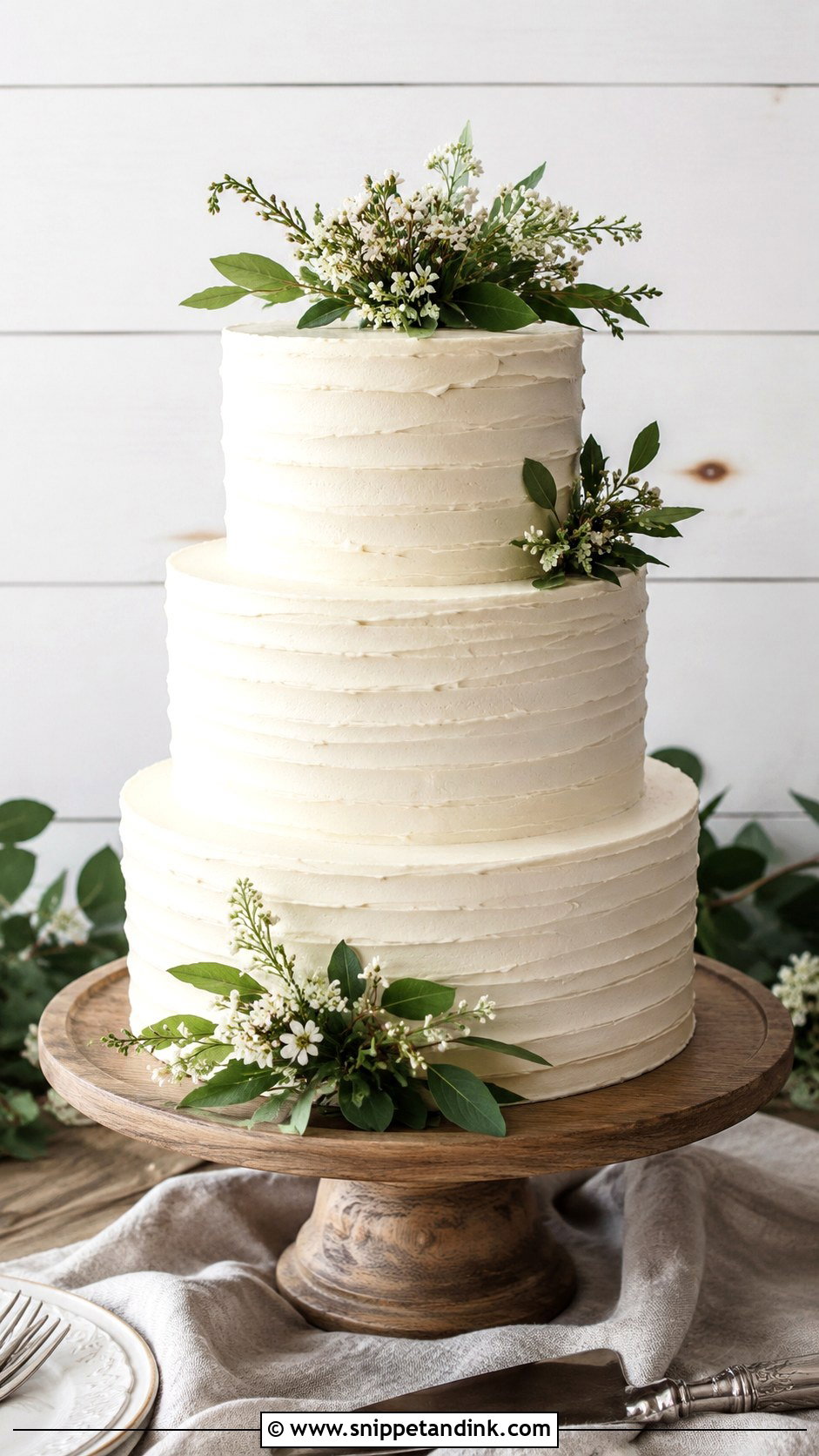
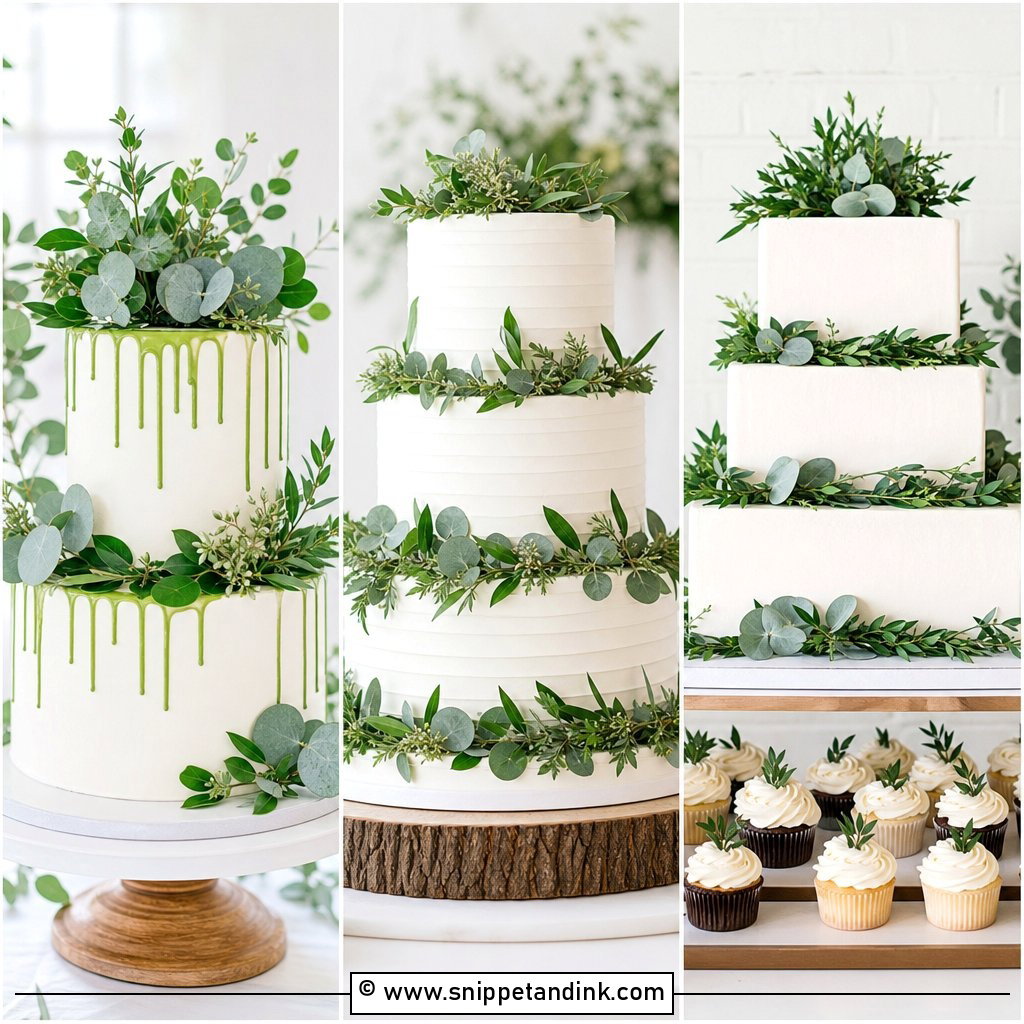
Textured faux buttercream is my recommendation for anyone attempting a fake cake for the first time. Cover the foam with crusting or faux buttercream, or lightweight spackle, then use a small spatula to make waves, ridges, or rustic strokes instead of scraping flat. Texture hides every small mistake. The thing to watch is consistency between tiers: if the bottom tier has deep swoops and the top tier has shallow ones, it looks like three different cakes. Simple greenery or a thin ribbon at the base finishes it for barn or garden receptions.
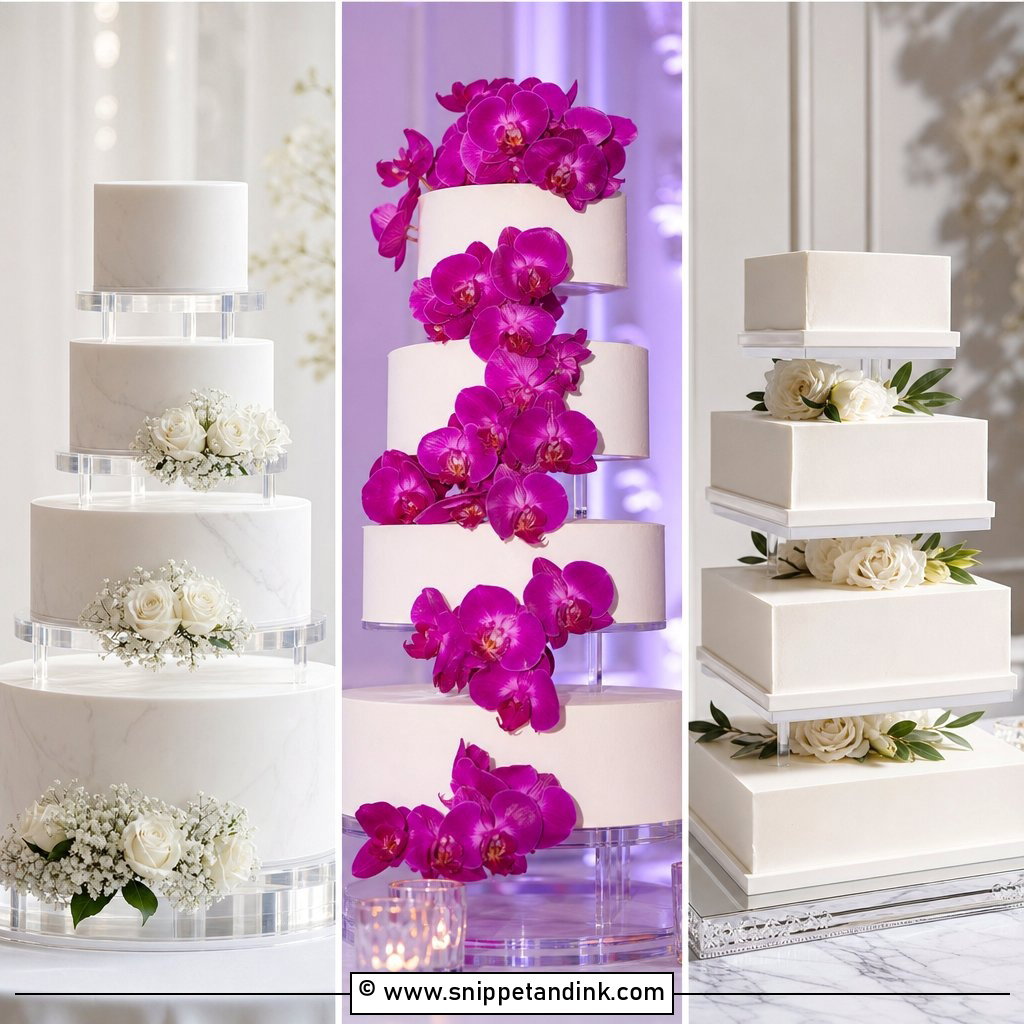
14. Fake Wedding Cake With Square Tiers
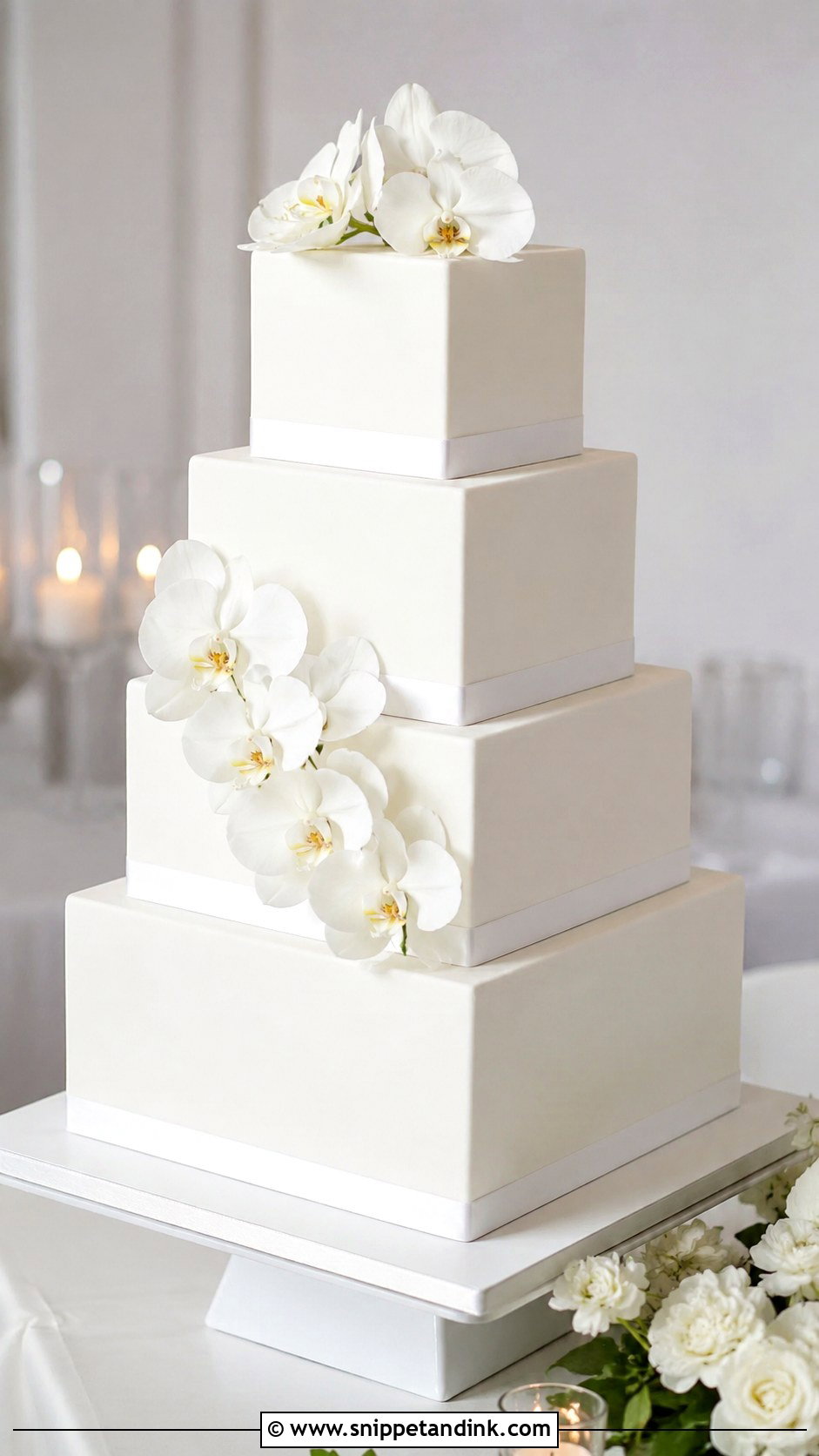
Square tiers look sharp and modern, and they’re harder to cover than rounds. I lightly round the foam corners with sandpaper before covering, because fondant tears over a true right angle. Fondant is the easiest finish on flat sides. Work one side at a time, easing the fondant into each corner rather than stretching it, and trim cleanly at the base. Line the tiers up so the corners stack directly above each other; a slight twist is obvious from the front. Ribbon, orchids, or clean piped lines suit the shape.
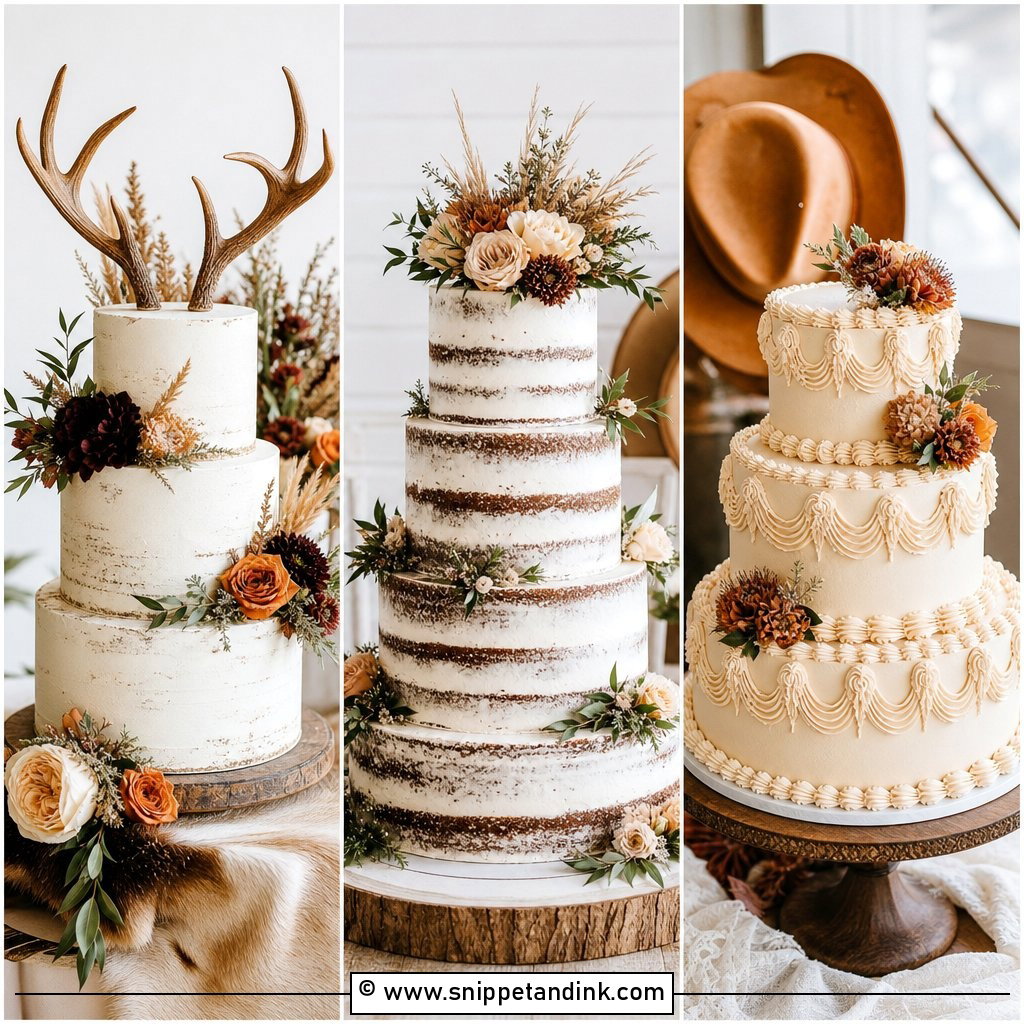
15. Fake Wedding Cake With Round Tiers
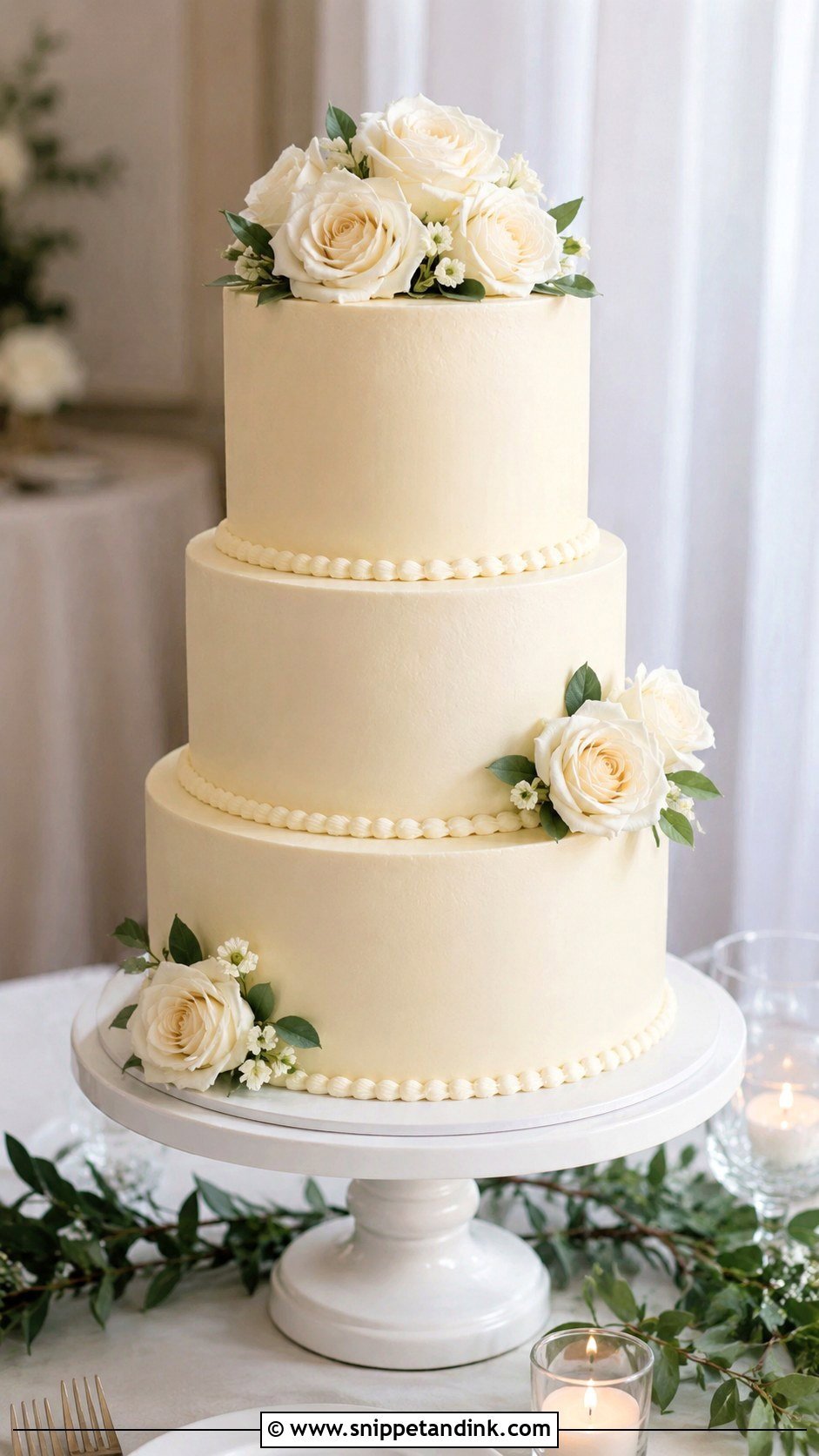
Round tiers are the classic shape and the easiest to cover. Round foam dummies come in every standard size and take fondant, buttercream, royal icing, or spackle evenly. Start with a strong drum and decorate each tier separately before stacking. Foam is so light that it spins or tips on a turntable, so I fix each dummy to a board first. Three tiers look full without being hard to move. A base border, flowers, or a simple topper completes it.
16. Fake Wedding Cake With Acrylic Separator
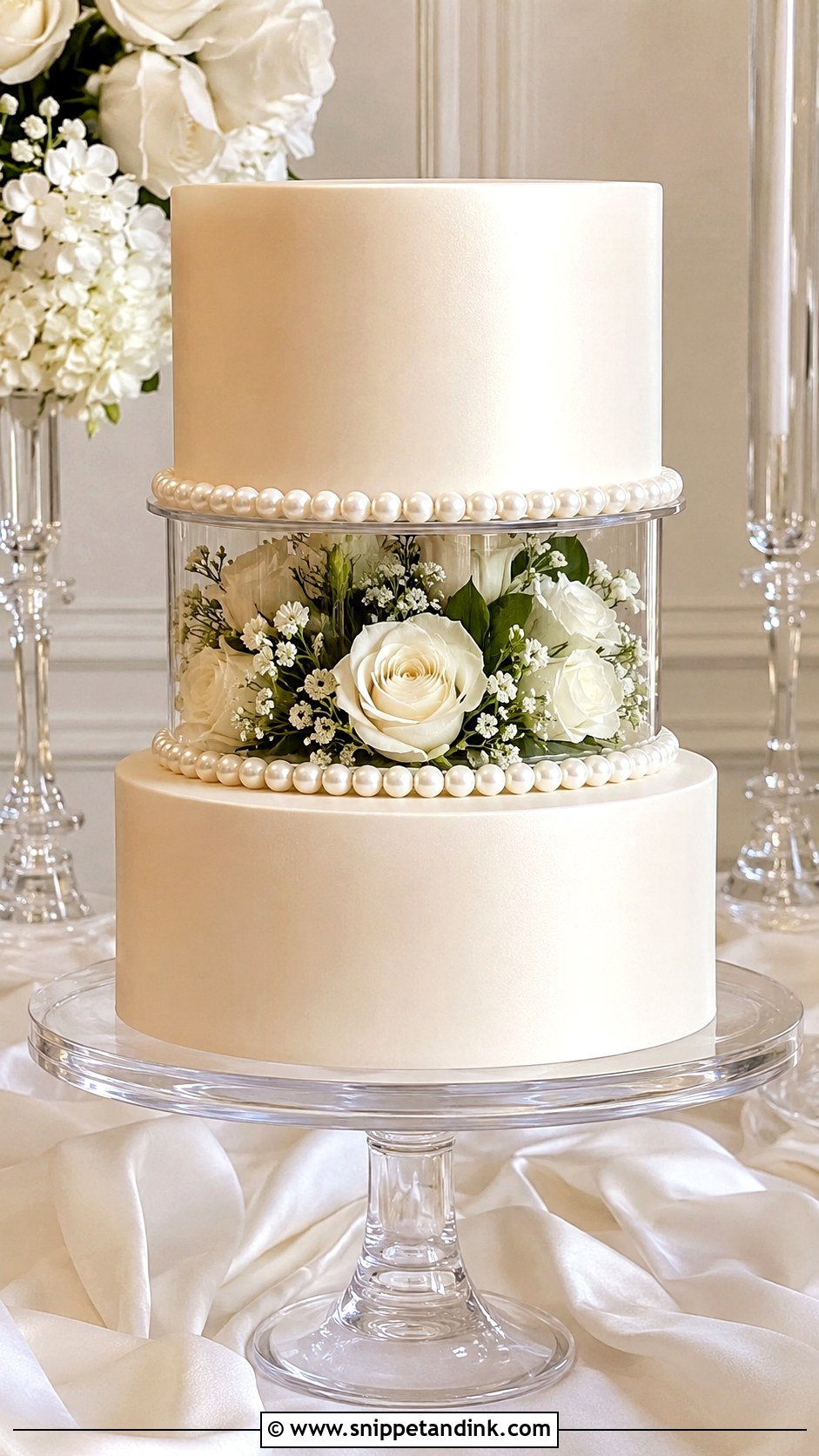
An acrylic separator lifts one tier above another and gives the cake a floating look. Decorate the foam tiers first, then place the clear spacer between the ones you want to separate. It can stay empty for a minimal look or be filled with silk flowers, pearls, or greenery. Every tier needs a firm board so the stack stays level, and I run a center dowel through the whole cake when it’s tall, since foam tiers are light enough to tip if someone knocks the table. Keep the decoration balanced above and below the separator.
17. Fake Wedding Cake With Floral Cascade
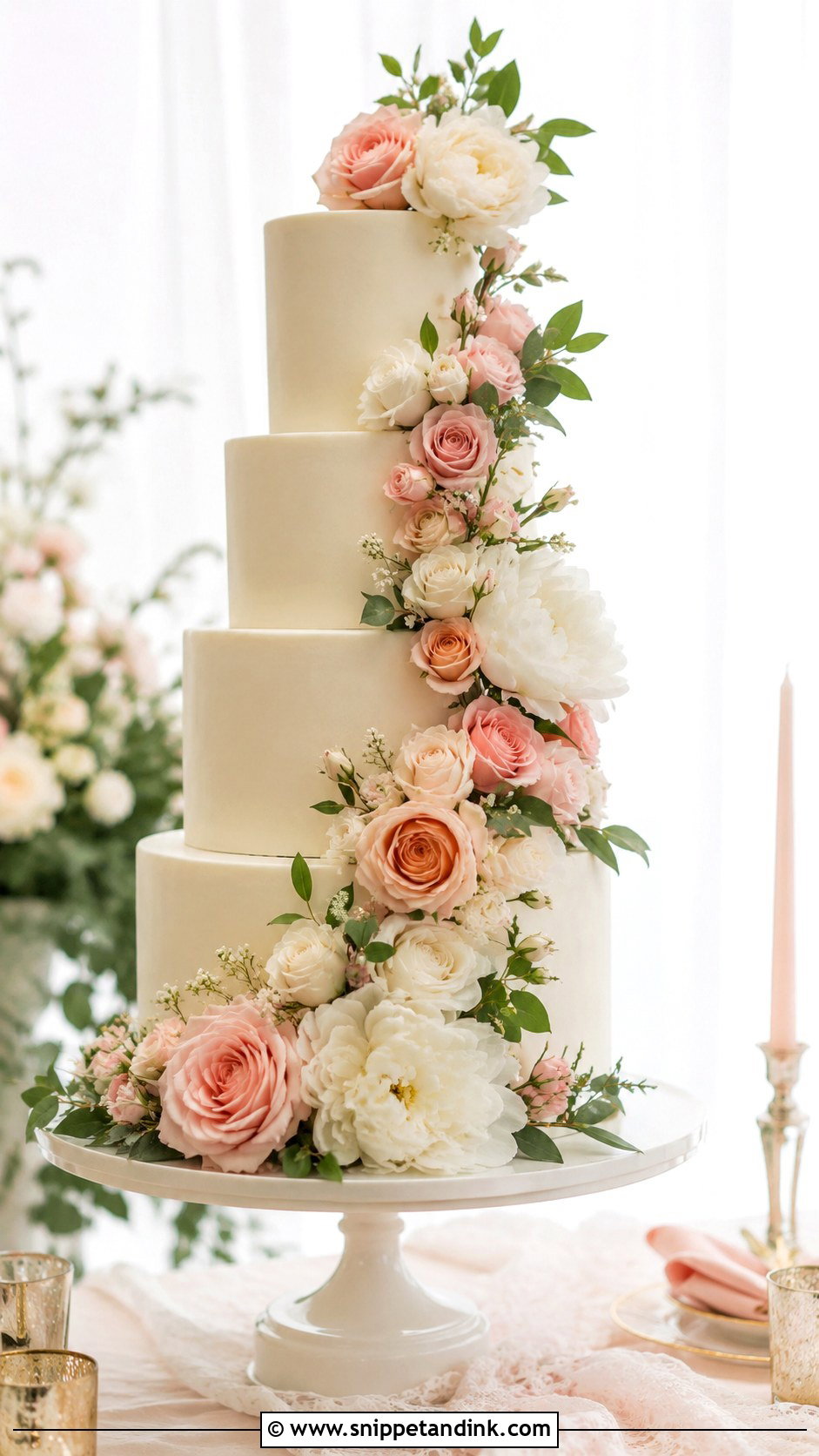
A cascade runs flowers diagonally from the top tier down one side. Cover the tiers smoothly first, then sketch the flower path on paper before attaching anything; cascades that are planned on the cake usually end up too straight. Larger blooms act as anchors and smaller flowers, leaves, and buds fill the gaps. Silk flowers are easiest for beginners, and sugar flowers look closest to a professional cake. Press every stem firmly into the foam. Keep everything else on the cake quiet.
18. Fake Wedding Cake With Minimalist Finish
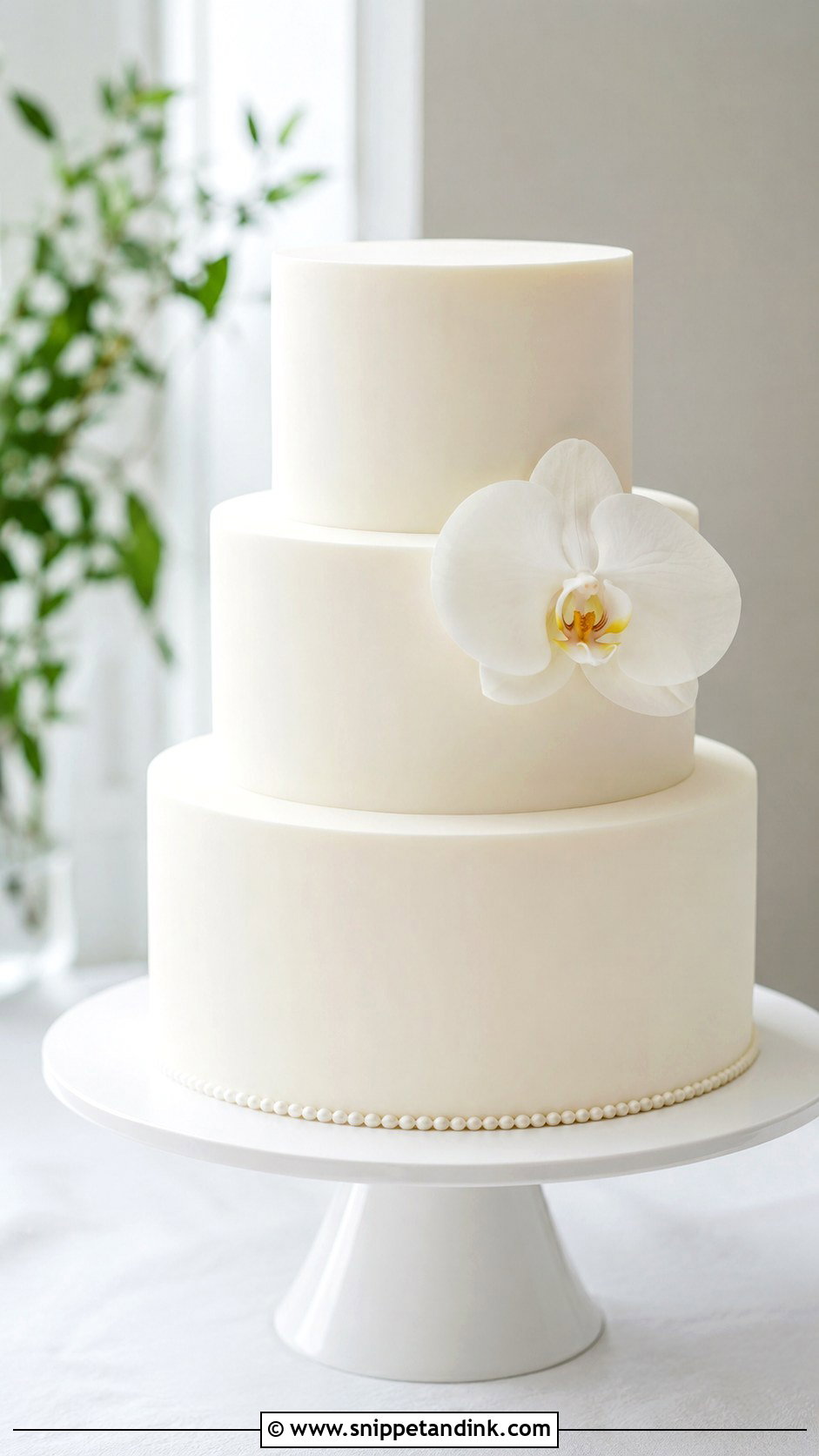
Minimal cakes hide nothing. Use smooth foam dummies, cover them in white or ivory fondant, and spend your time on sanding and edges, because any flaw stands out on a plain surface. One or two accents are enough: a thin ribbon, a single flower, a small pearl border. Proportion matters more than decoration here, so I keep the tier heights equal and the size steps even. A clean cake stand finishes the look.
19. Fake Wedding Cake With Vintage Piping
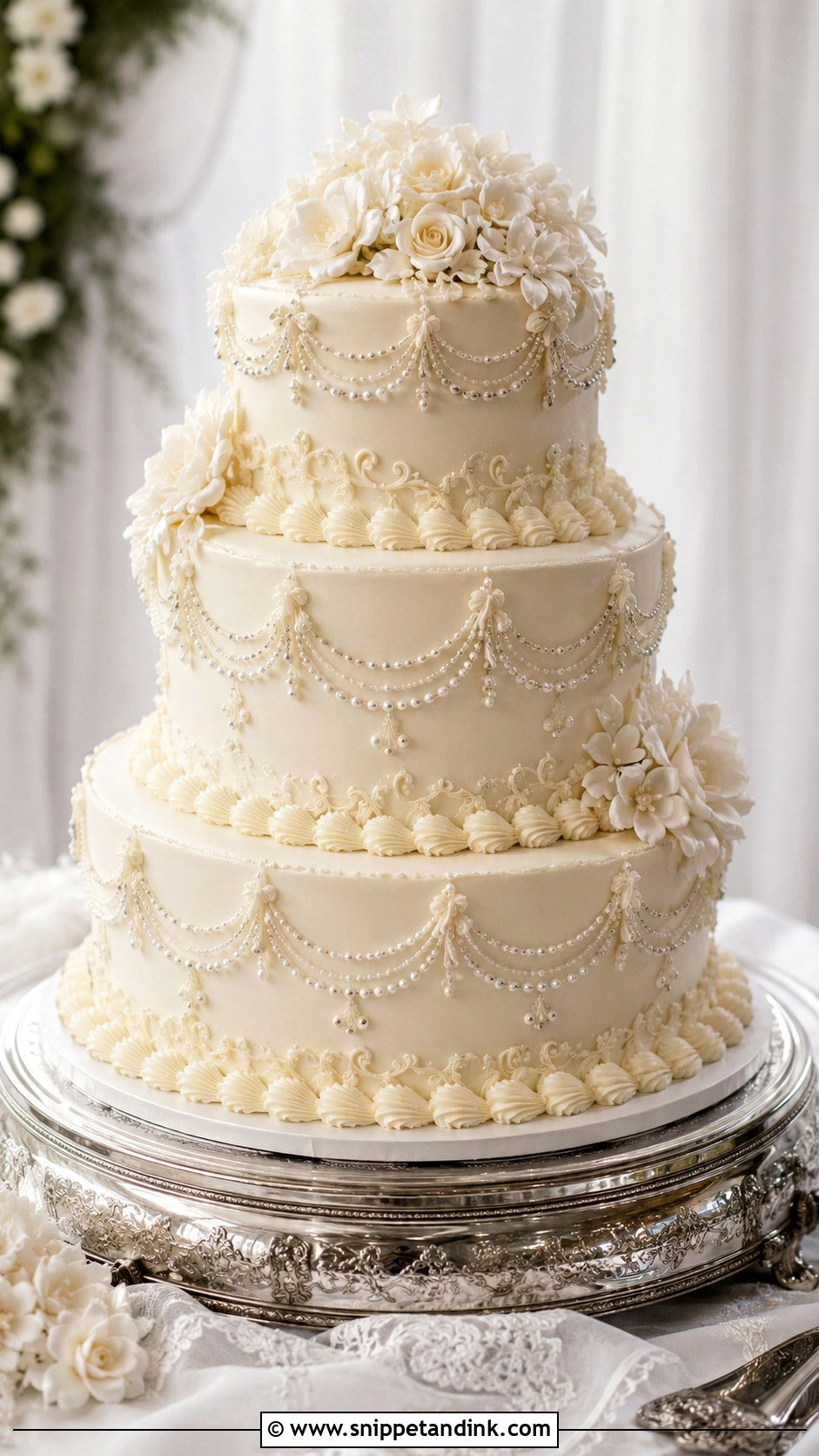
Vintage piping lets you build a highly ornate cake without baking anything. Cover the foam in fondant or a dried royal icing base, then pipe shells, swags, dots, scrolls, and overpiped borders in royal icing. Let each layer of piping dry before adding the next, so the detail stays sharp. Foam is forgiving here: if a scroll goes wrong, scrape it off and try again. I keep the piping color close to the base for a classic look. Sugar flowers or small pearls complete it.
20. Fake Wedding Cake With Hidden Cutting Slice
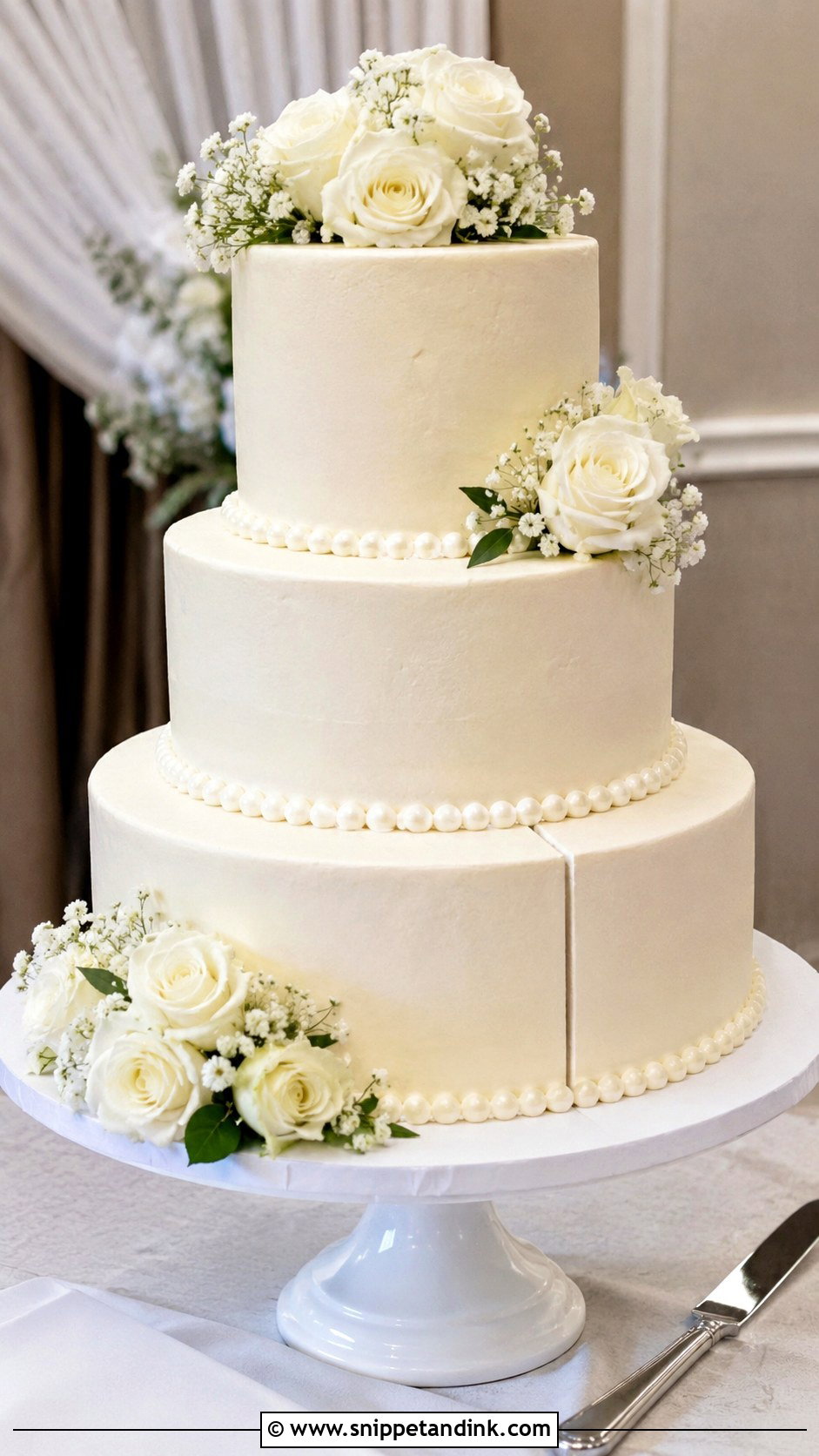
This setup gives couples the cutting photo without paying for a full real tier. Leave a small open section at the back or side of a lower foam tier, and set a real slice of cake into it shortly before the reception. The frosting on the slice must match the dummy closely, so I give the baker a color sample. It only works with clear communication: mark the cutting spot for the venue staff and rotate the cake so the real section faces the couple when it’s time to cut.
Serving Guests When the Showpiece Is Foam
A fake cake changes how dessert reaches the tables, so the caterer and venue need a plan, not a surprise. Count sheet cake in portions, not pans: ask the baker how many servings each size gives at a standard wedding slice, and add a small margin for second helpings. Confirm who cuts and plates it in the kitchen, and whether the venue charges a fee for that work.
Safety matters when foam and real cake share a table. Anything inedible, such as spackle, hot glue, craft pearls, fabric lace, metallic craft paint, and untreated flower stems, has to stay on the dummy tiers only. If one tier is real, it should be the only tier that touches food tools, and a short note for the staff saying which tier is edible saves an awkward moment with a knife.
After the wedding
A dummy cake can be kept. Lift off any fresh flowers, dust the tiers with a soft dry brush, and store the cake boxed in a cool, dry room away from sunlight, which yellows fondant and fades ribbon. Some couples keep the top tier as a keepsake; others pass the whole display on to a friend who is marrying next.
Foam Underneath, a Real Celebration on Top
A good fake cake comes down to three things: a stable structure, a clean surface, and decoration that looks like it belongs on real cake. Fondant, royal icing, faux buttercream, spackle, ribbon, pearls, lace, flowers, and metallic paint all have a place, depending on the style you want. Add one real tier, serve sheet cake, or hide a cutting slice for tradition. Plan the design, secure every tier, and match the display to the wedding, and it will hold its shape in photos from the first toast to the last dance.
You'll Like These Ideas:


Leave a Reply