
Dressing a bride for Hawaii starts with the climate, not the mood board. Warm, humid air and steady trade winds punish heavy satin, stiff boning and anything with a long train, while chiffon, crepe, light lace, silk, linen blends and soft tulle settle naturally against sand, palms and lava rock. The venue narrows it further. A beach elopement can be a slip dress and bare feet. A resort wedding often calls for a more finished gown, heels and a veil. A tropical garden can carry floral texture, lace sleeves or a modest train. Below are the shapes I’d actually put a bride in for an island wedding, with what each one asks of you on the day.
Flying Your Gown to the Islands Without Crushing It
Most Hawaii brides are flying in, so the dress has to survive a long trip before it ever sees the beach. I’d never check a wedding dress in the hold. Carry it on in a breathable garment bag, and ask the airline ahead of time whether there is a closet or overhead space you can use; some crews will hang it, but don’t count on it.
Packing well matters more than the bag:
- Finish all alterations at home, with a final fitting a week or two before you leave. Finding a seamstress at short notice on an island is stressful.
- Stuff the bodice and fold the skirt around rolled acid-free tissue so it bends rather than creases.
- Pack a handheld steamer or confirm the resort can steam it. Chiffon and crepe relax quickly; satin needs more care and a low setting.
- Hang the dress the moment you arrive, in the bathroom while the shower runs if there’s no steamer, and keep it out of direct sun from the window.
This is one more reason I steer island brides toward lighter fabrics. A chiffon A-line comes out of a bag looking almost ready; a heavily structured satin ball gown can take an hour of careful steaming.
1. Hawaii Beach Wedding Dress
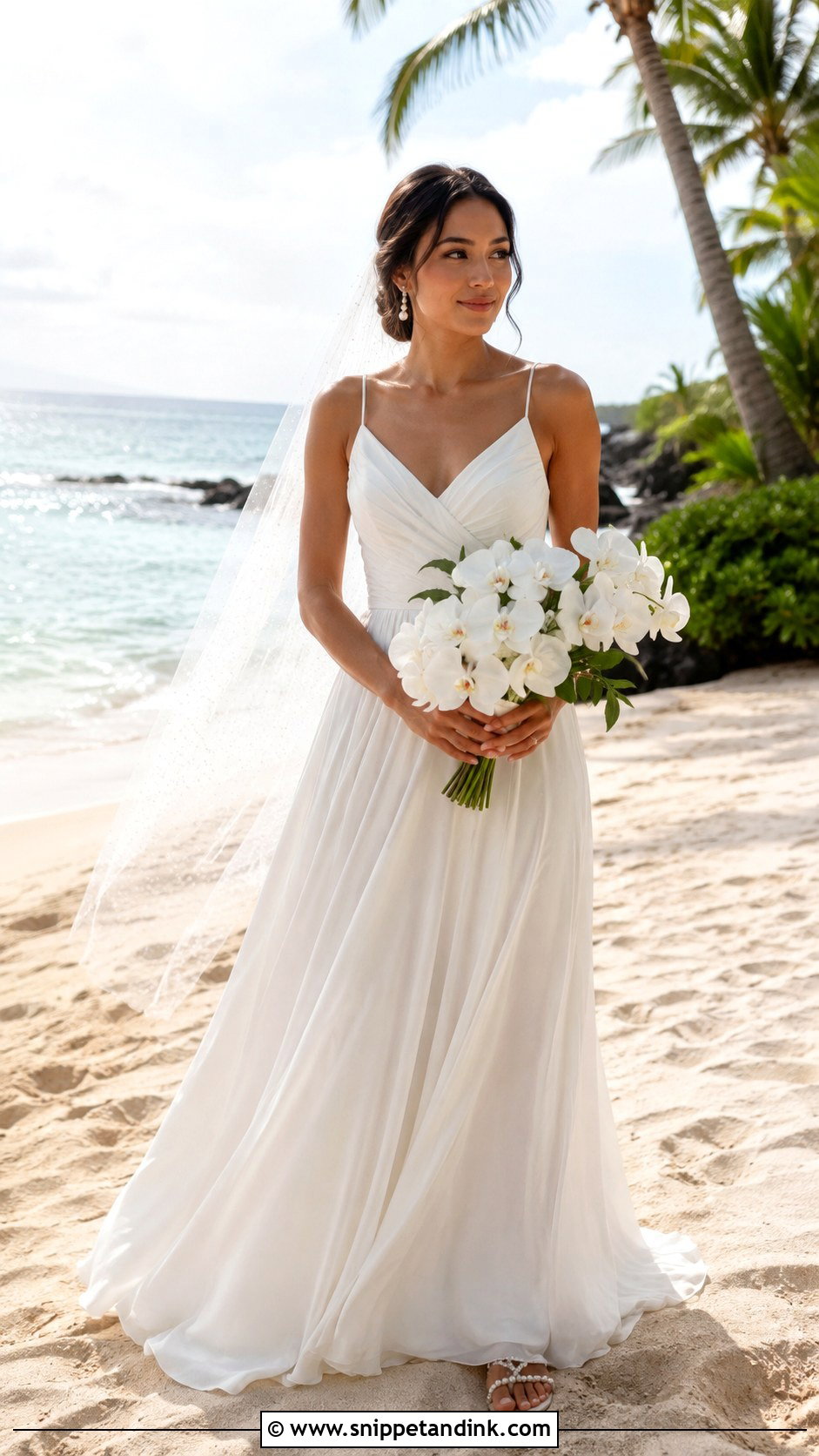
For a ceremony on the sand, I look for a chiffon or soft crepe A-line with a fitted bodice and a skirt that lifts in the breeze rather than flapping. Sweetheart, thin-strap and off-the-shoulder necklines all work, but test any off-the-shoulder band by raising your arms, since wind tugs at loose fabric more than you’d think. Flat pearl or barefoot sandals let you walk naturally on the beach. A delicate veil, pearl earrings and soft waves finish it. Keep the hem at sweep length at most; a long train scoops up wet sand and gets heavy within minutes.
2. Hawaii Boho Wedding Dress
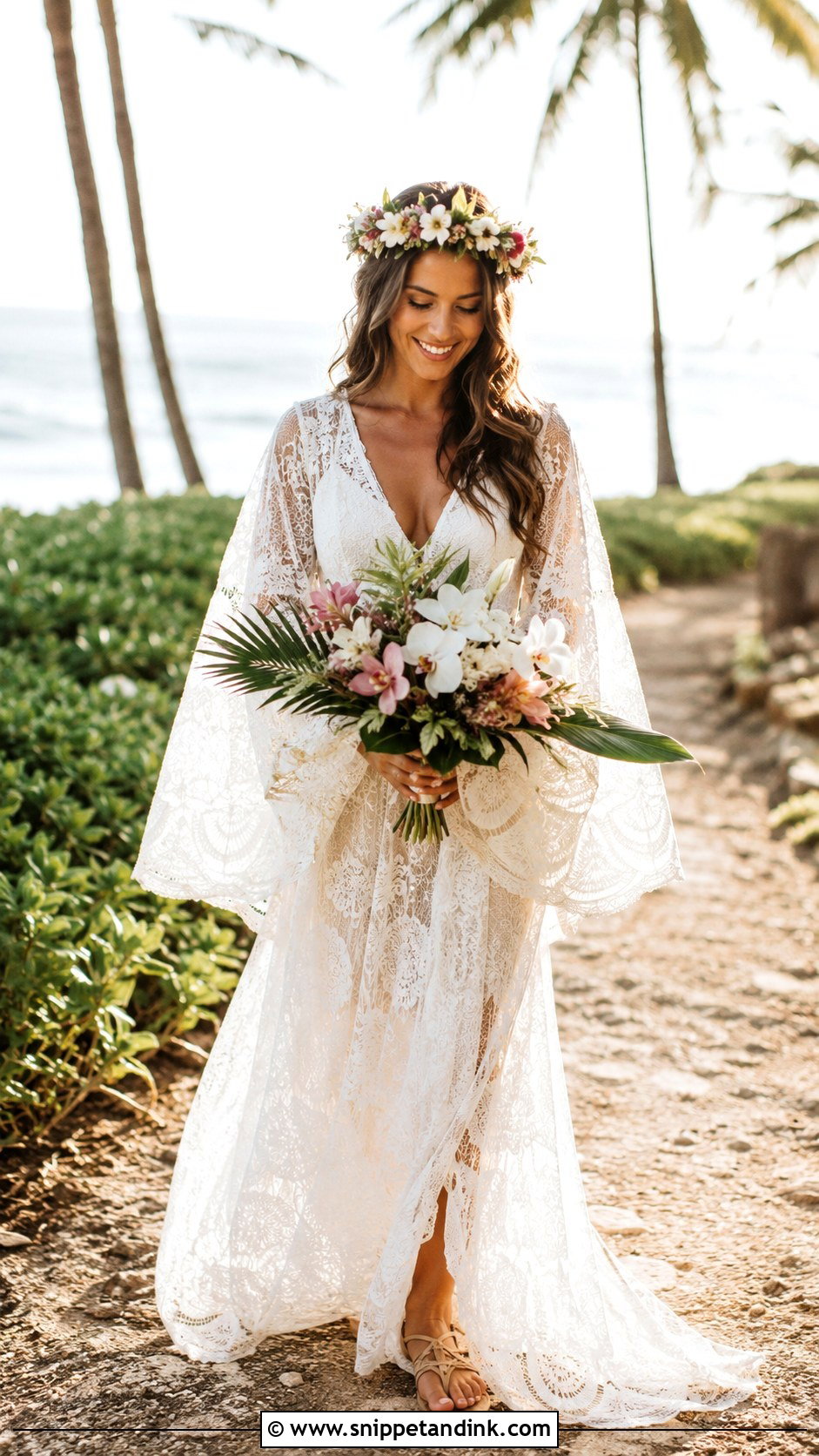
Boho suits the islands because it was designed for warmth: open lace, bell sleeves, a soft V and a skirt that moves. Cream and ivory sit more naturally against golden sand than bright white, which can look blue in strong sun. Crochet lace is heavier than chiffon, so I check that the lining is light and that the sleeves don’t trap heat at the wrist. Flat leather sandals, a floral crown, loose curls and a bouquet of orchids or palm leaves are enough. A low back or side slit helps with airflow at a sunset elopement.
3. Hawaii Slip Wedding Dress
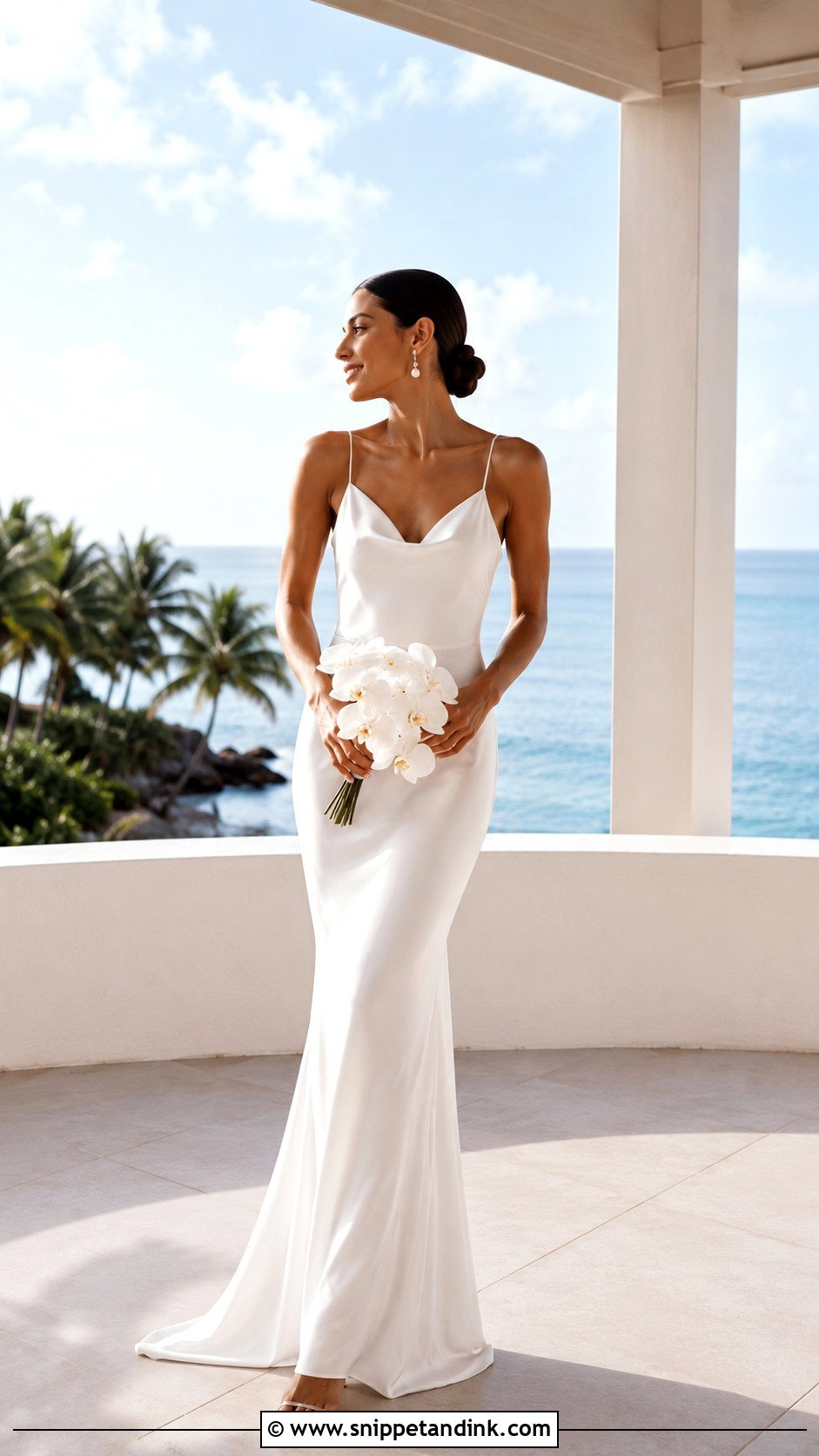
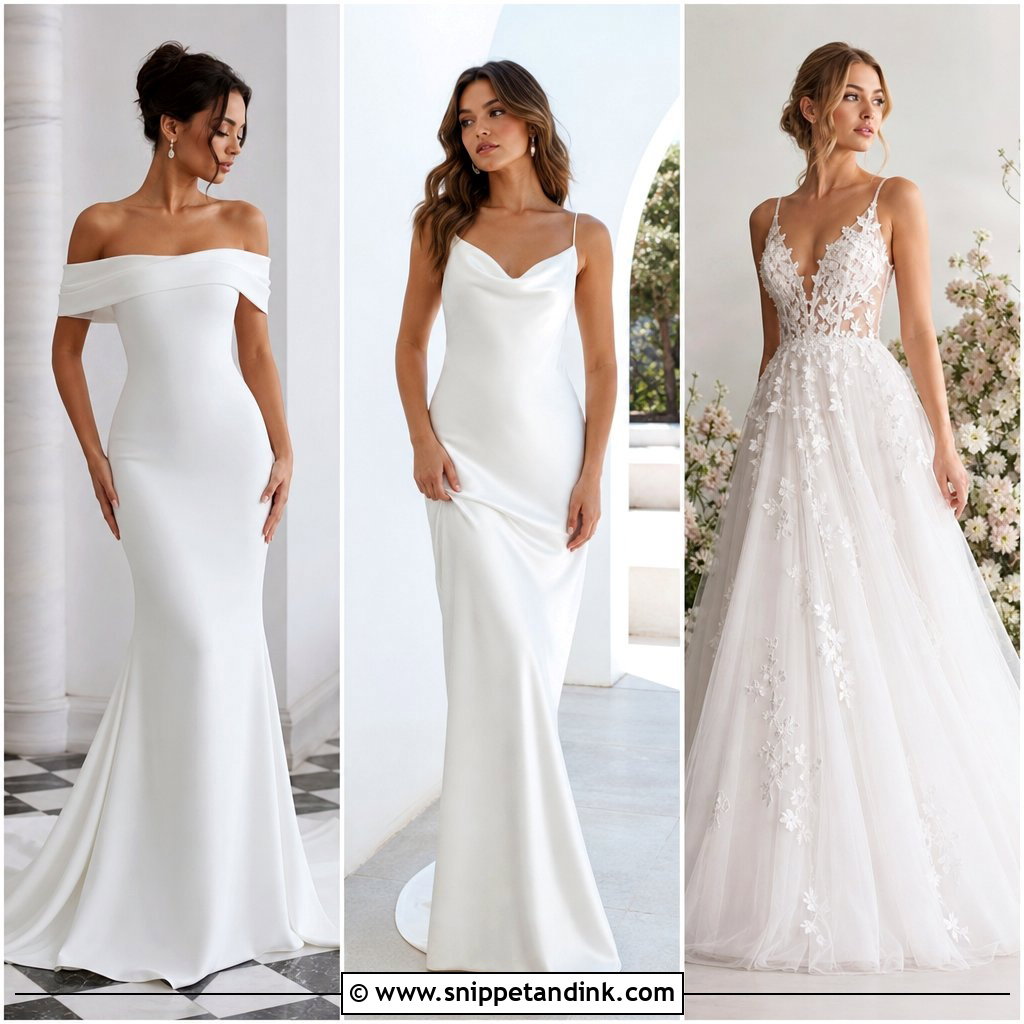
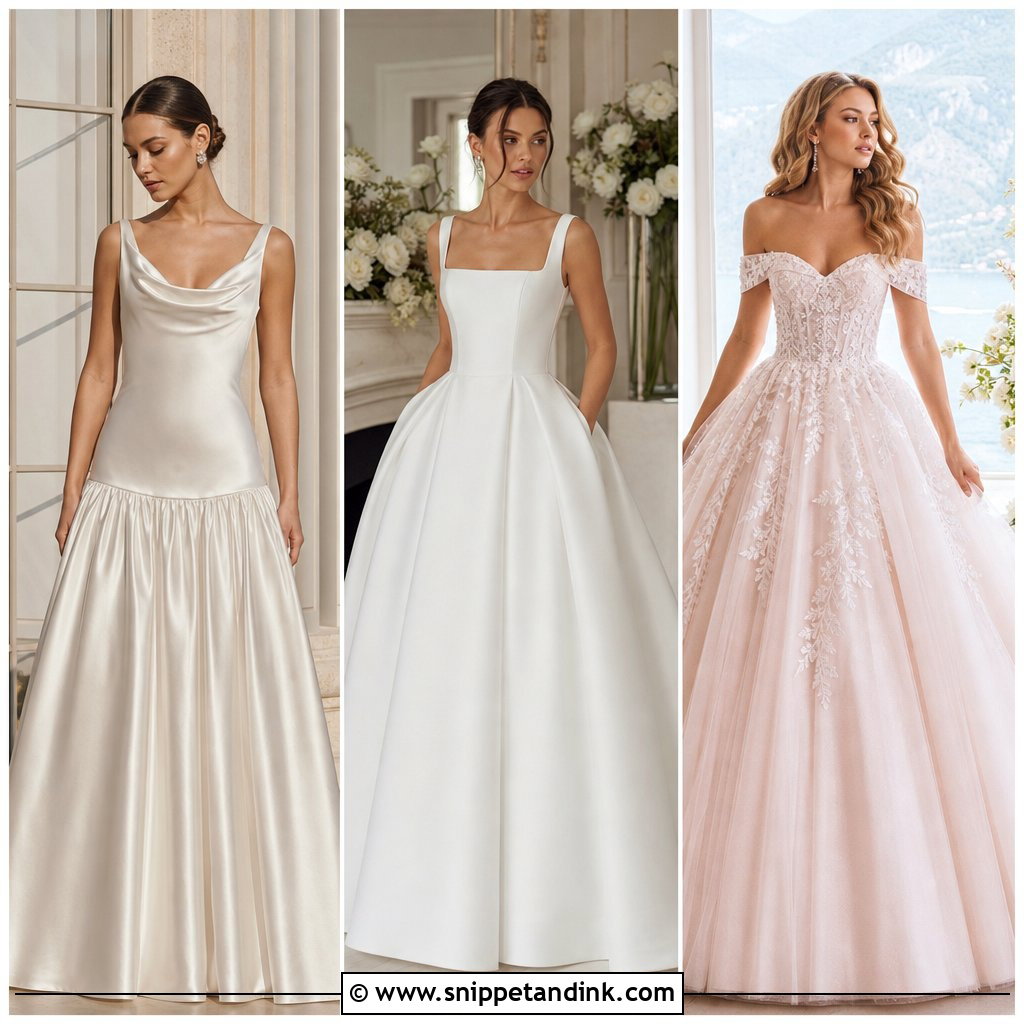
When a bride tells me she wants modern and easy to pack, the slip dress is where I start. Silk or satin cut on the bias skims the body, and a cowl or square neck keeps it simple. The honest drawback: thin satin shows sweat and every line underneath, so this is a dress for shade, an evening ceremony or a breezy terrace rather than noon on an open beach. Strappy block heels or flat metallic sandals, pearl drops, a low bun and a small orchid bouquet finish it. An organza wrap gives coverage when the wind picks up.
4. Hawaii Lace Wedding Dress
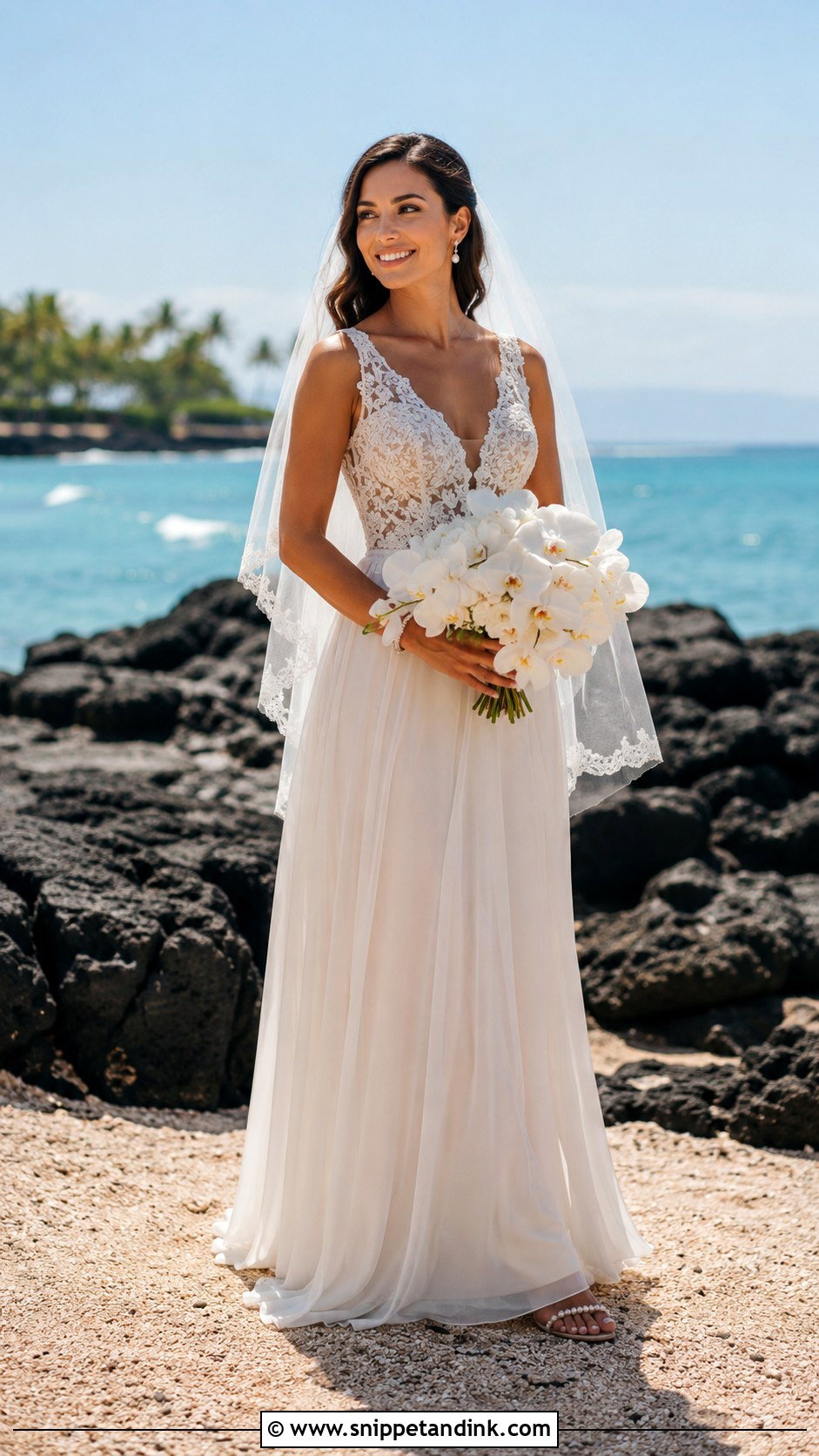
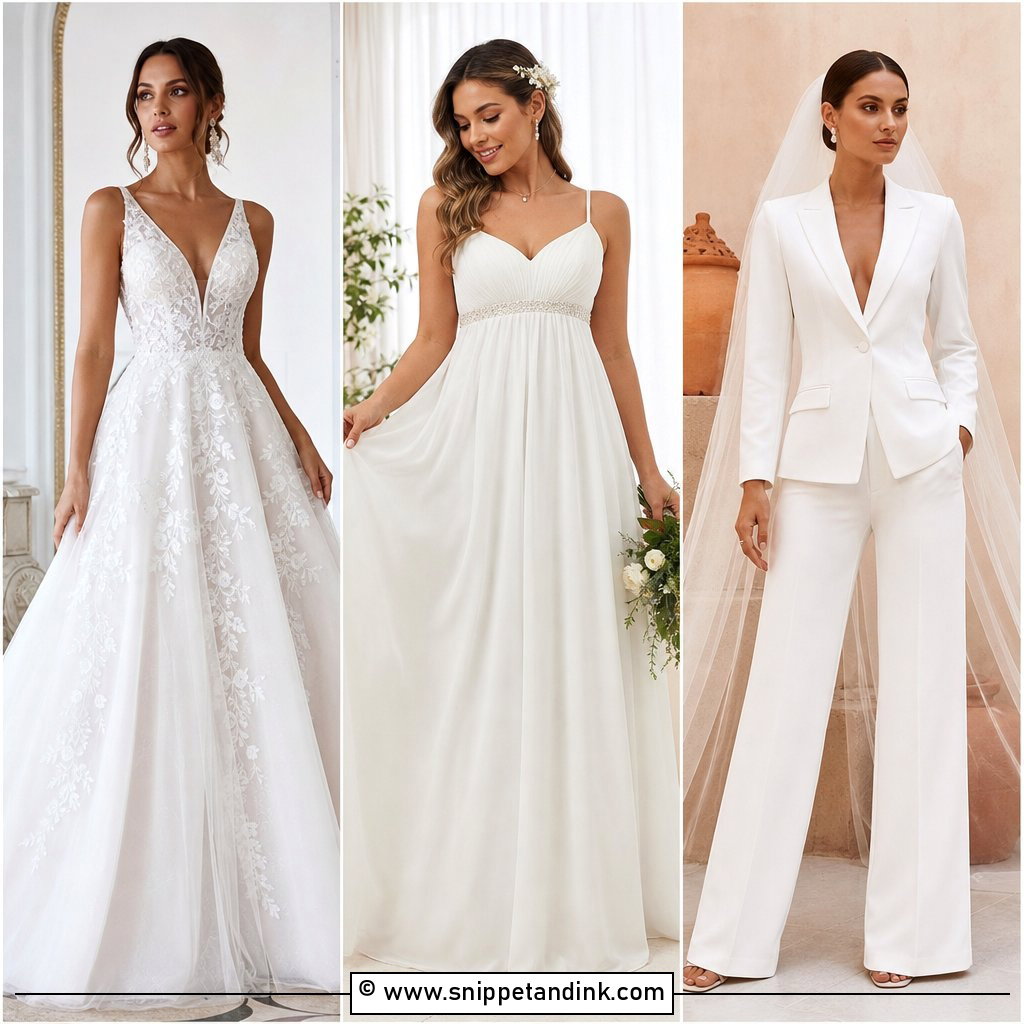
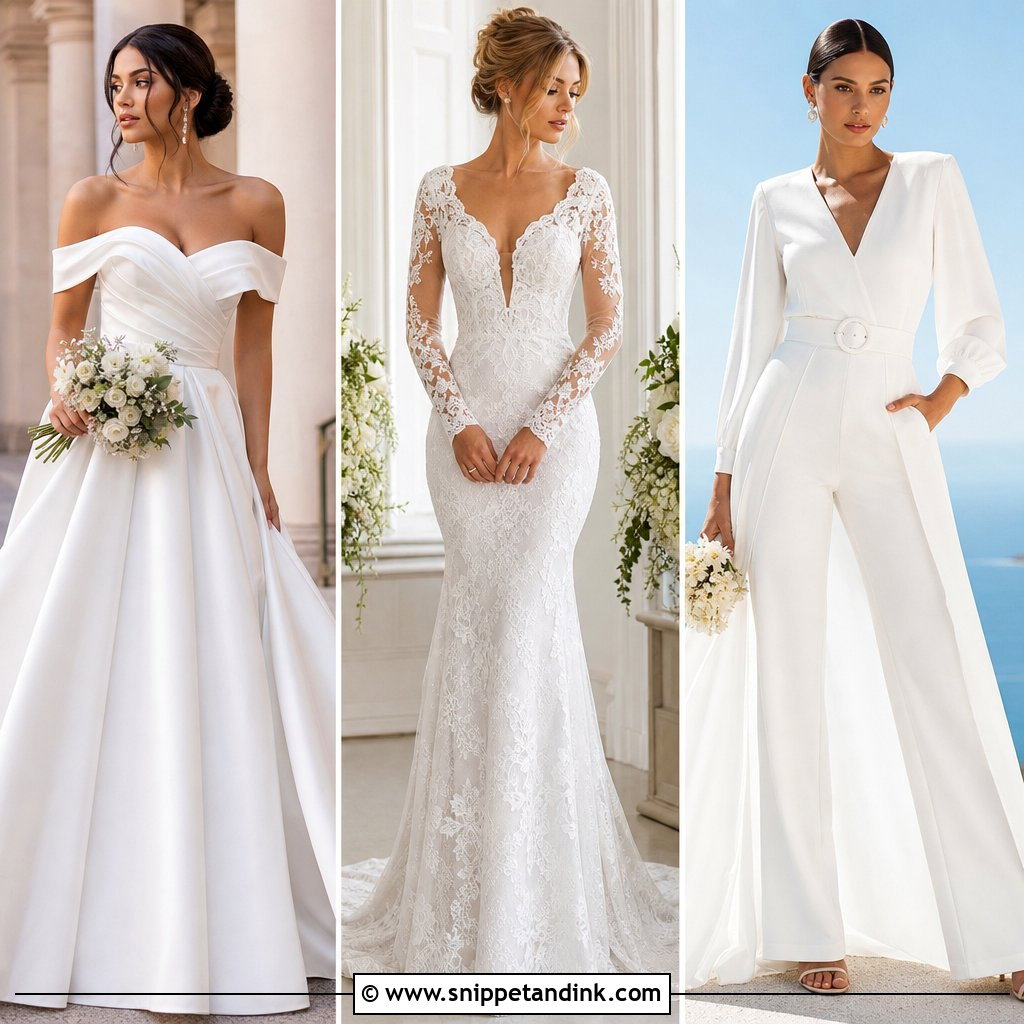
Lace and heat can get along if the lace is open. Thick corded or heavily lined lace traps warmth against the body, so I steer brides toward a fine lace bodice paired with a crepe or chiffon skirt, which gives structure without bulk. Lace straps, a scoop neck or illusion sleeves keep it traditional. Pearl sandals, a fingertip veil and white orchids or plumeria suit it, and the texture reads well against dark lava rock and green lawns. Keep the jewelry minimal; the backdrop is already doing a lot.
5. Hawaii Floral Wedding Dress
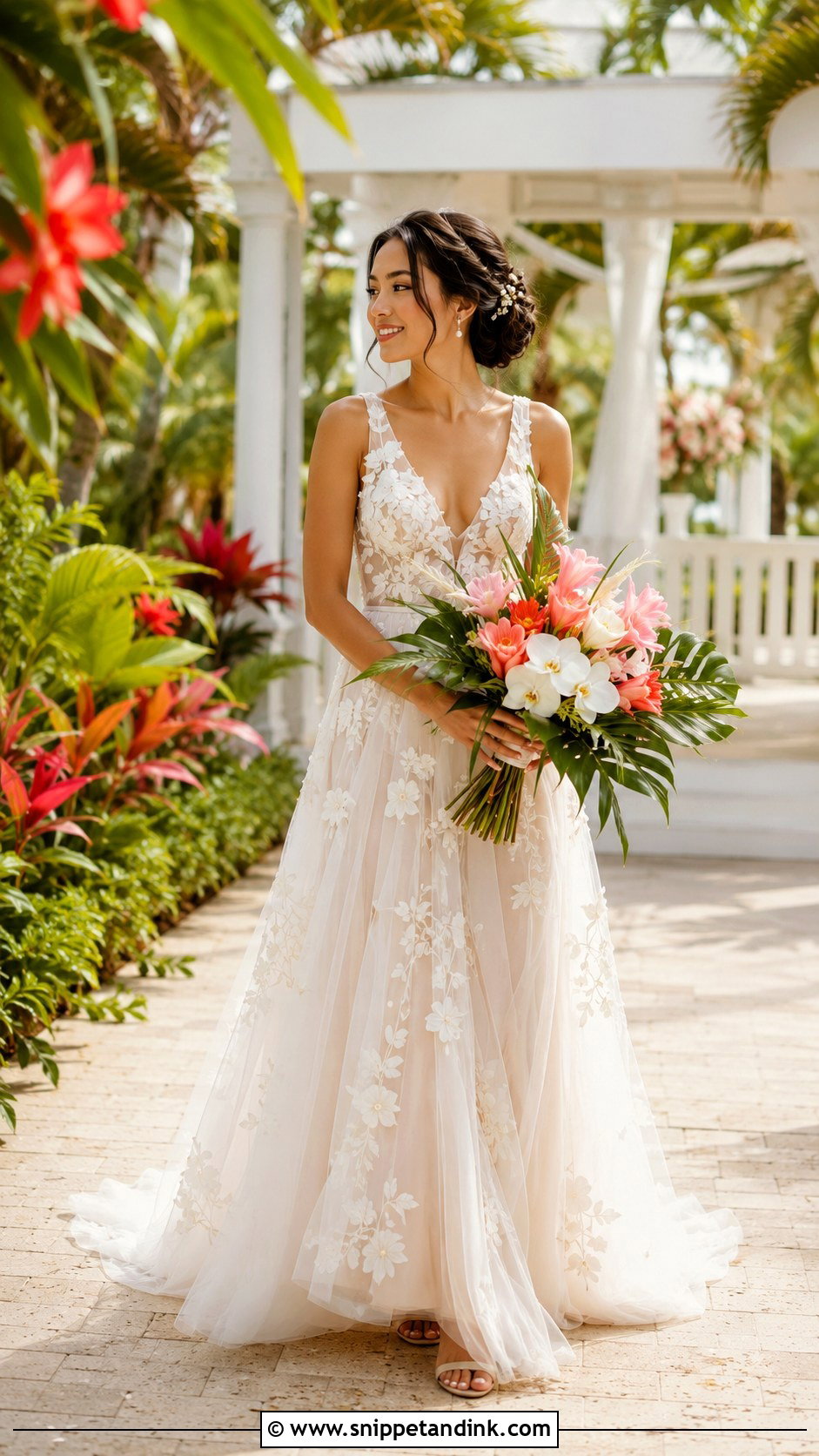
Skip the bold tropical print, which tends to look like a guest outfit, and look for florals worked into ivory fabric: soft embroidery, raised appliqué or a faint botanical pattern. A fitted bodice over tulle or organza keeps it bridal without feeling stiff. Raised appliqué can crush against a large bouquet, so I’d choose flowers that echo the dress in a smaller, looser arrangement. Nude sandals, pearl pins and soft, glowing makeup keep the whole look fresh for a resort lawn or garden.
6. Hawaii Mermaid Wedding Dress
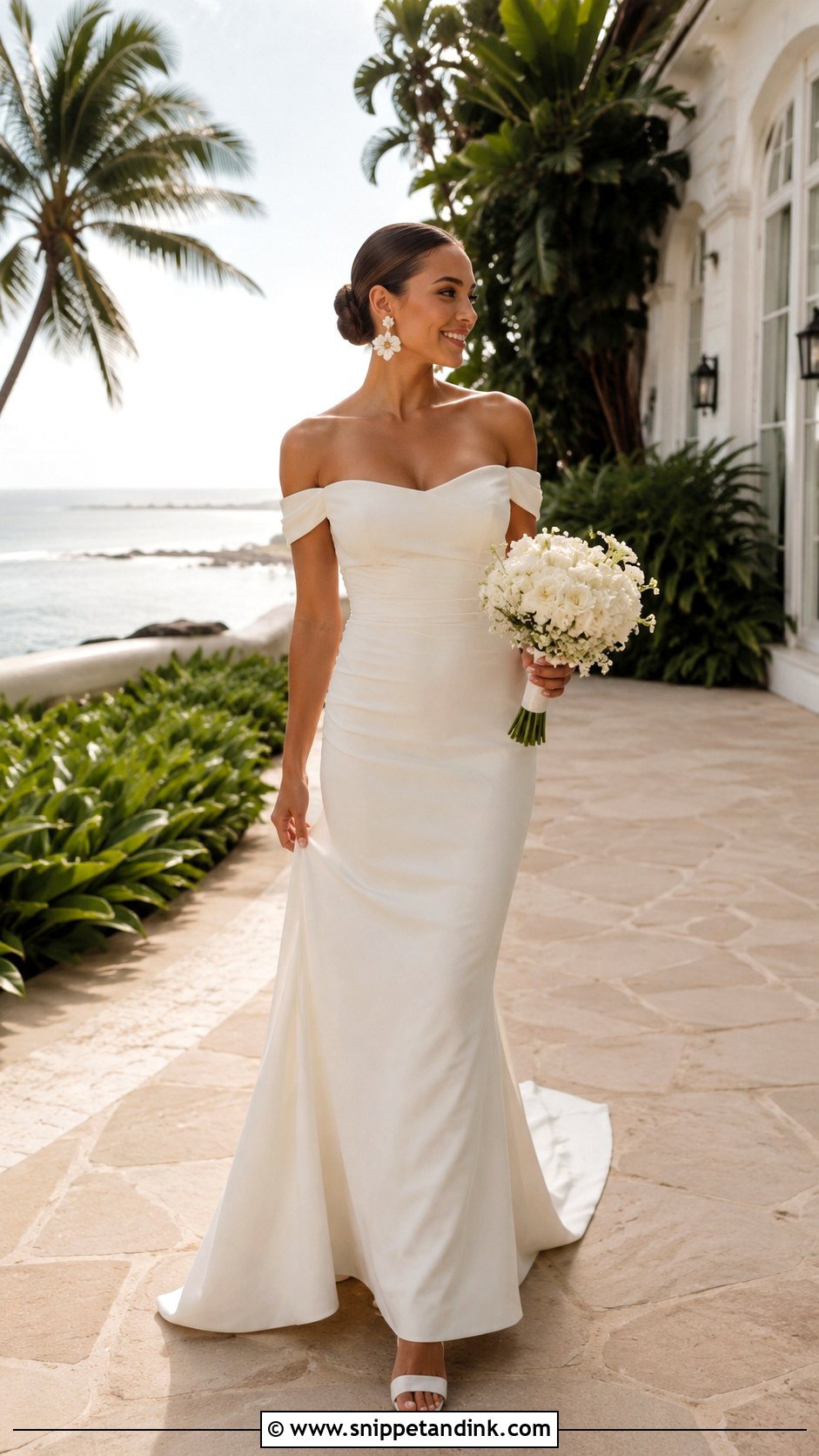
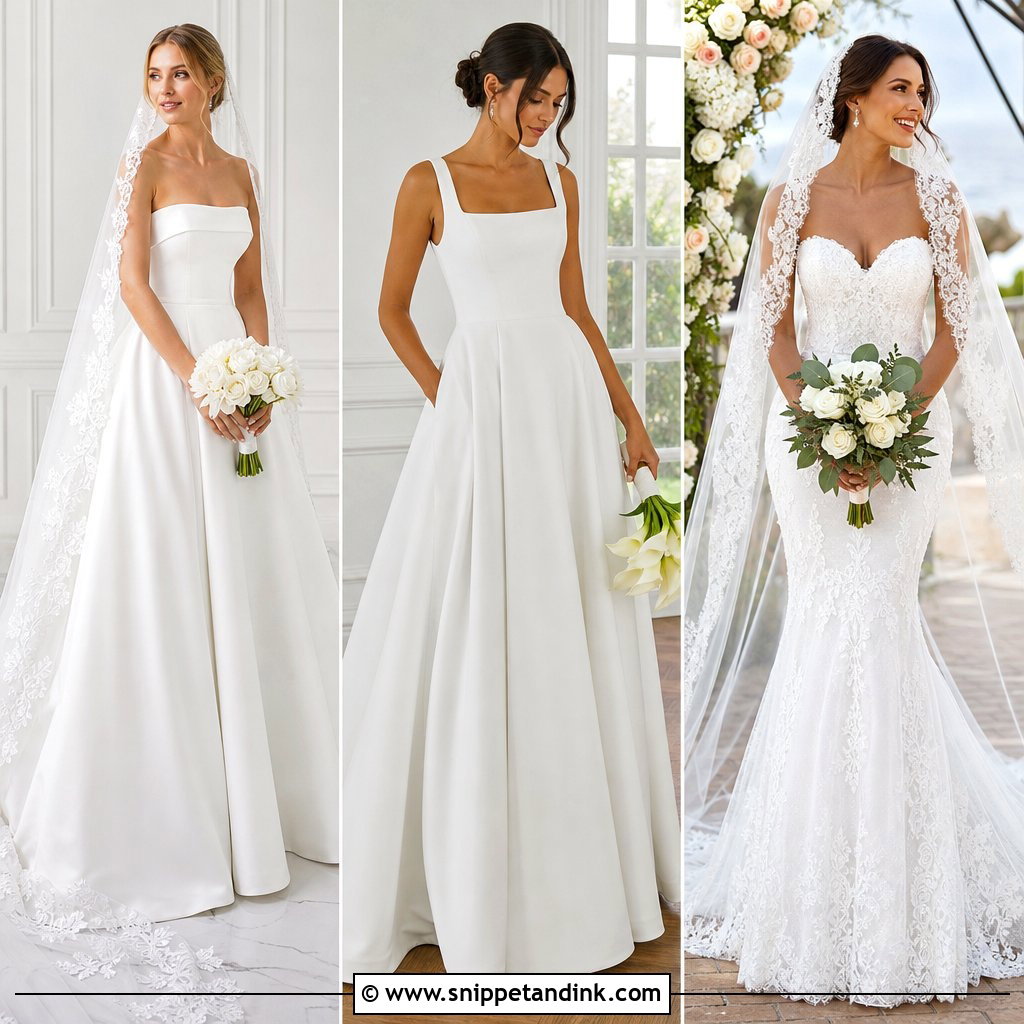
A mermaid wedding dress in the tropics needs stretch in the fabric. Lightweight crepe or stretch lace lets you walk, sit and climb into a car; a rigid satin mermaid in humidity can feel like a wetsuit by the second hour. A strapless, off-the-shoulder or halter top all balance the fitted line. I’d choose block heels for a resort and embellished flats for sand. If the ceremony is directly on the beach, ask for a smaller flare and almost no train so the hem stays out of the waterline.
7. Hawaii A Line Wedding Dress
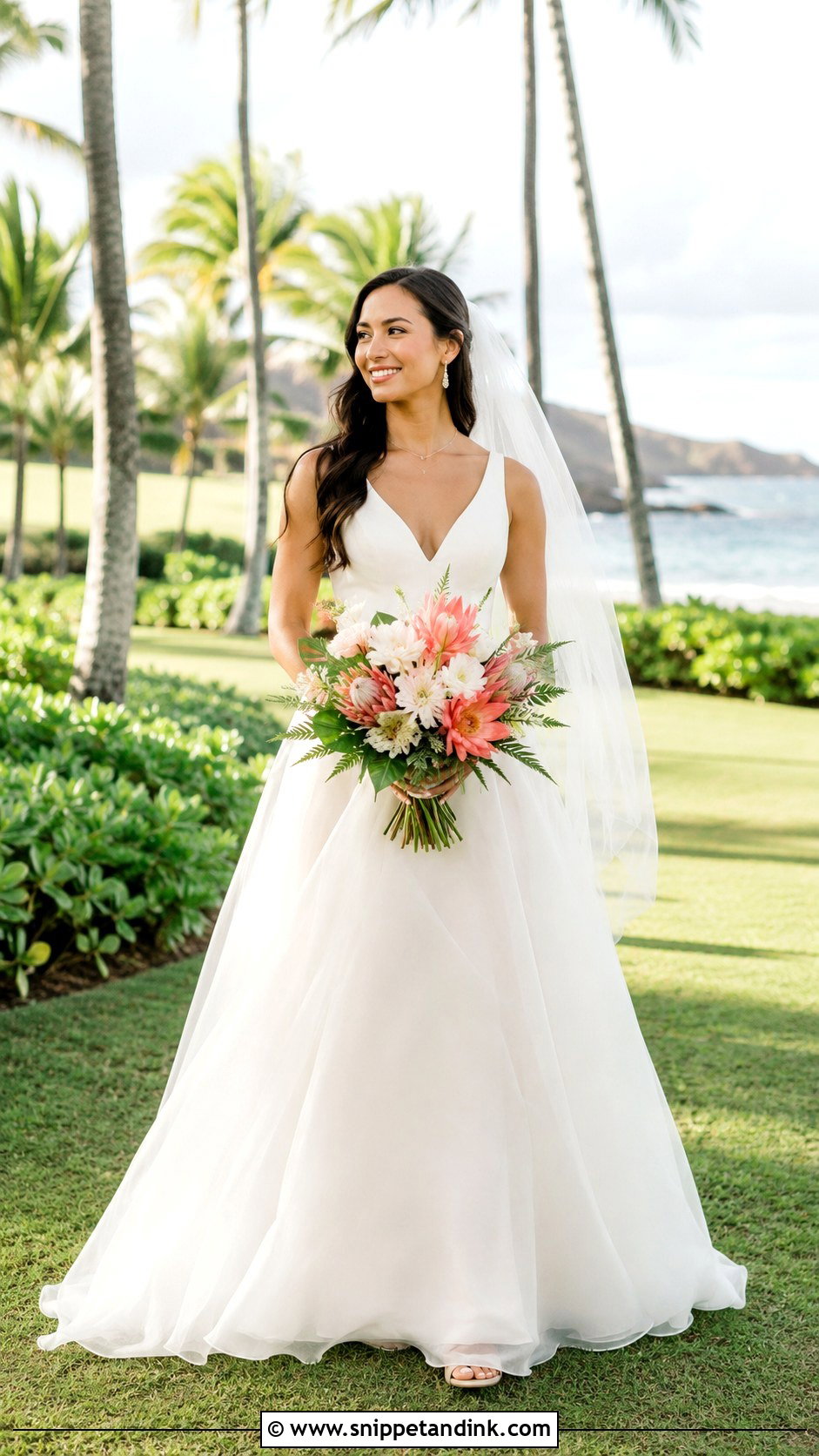
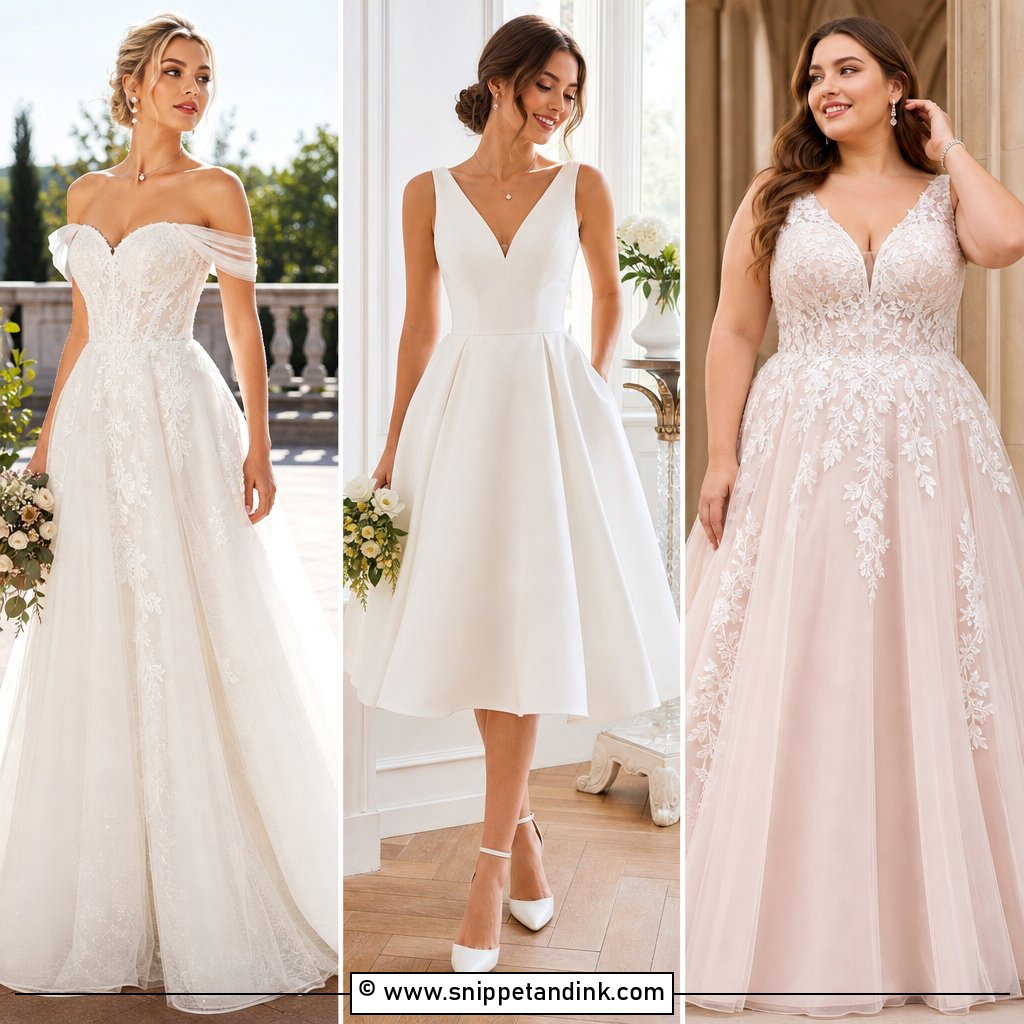
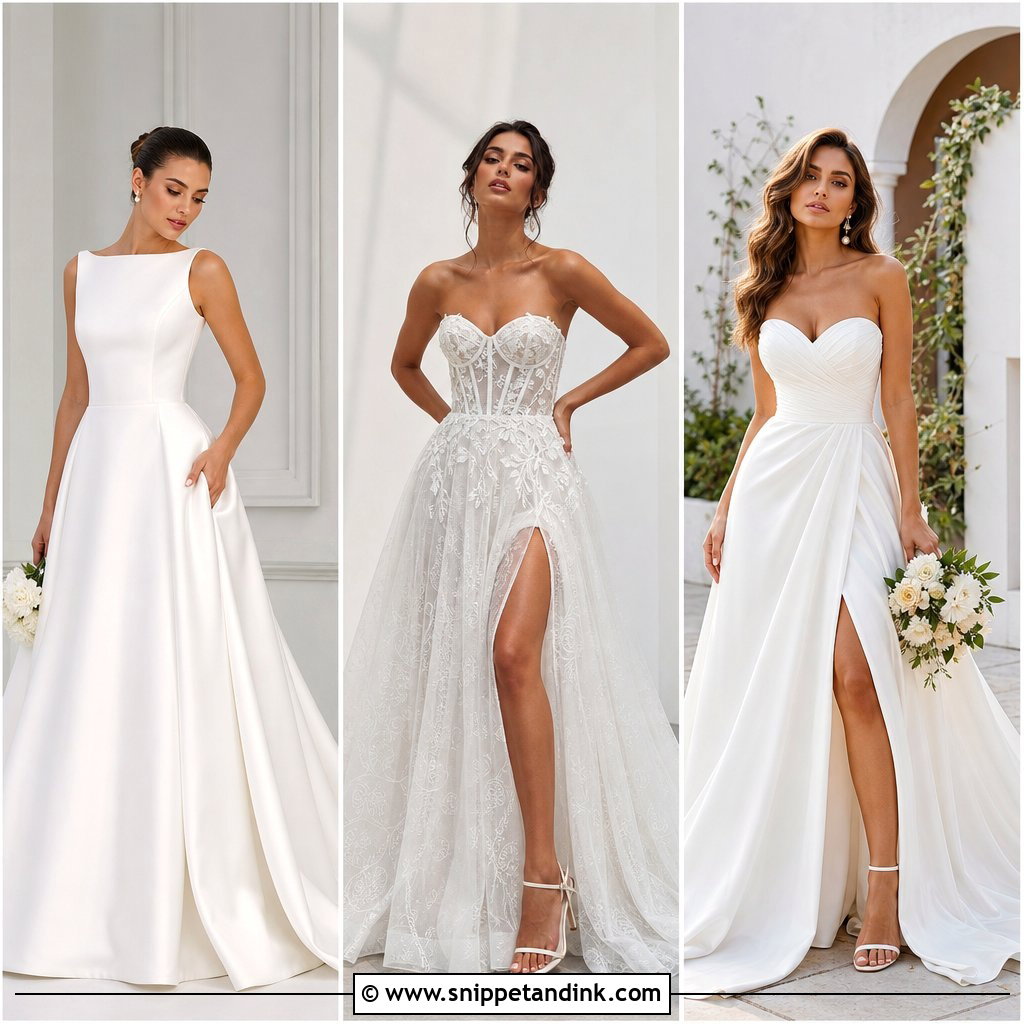
If you’re unsure, start with an A-line. It suits most bodies, works at almost any venue and is the easiest shape to walk in on sand or garden paths. In Hawaii I’d keep it light: a fitted bodice and a chiffon, organza or soft tulle skirt that floats rather than holds its own shape. Pair it with comfortable sandals, a waist-length veil and a bouquet in white, blush or coral. It gives enough volume for photos without wearing you out.
8. Hawaii Off Shoulder Wedding Dress
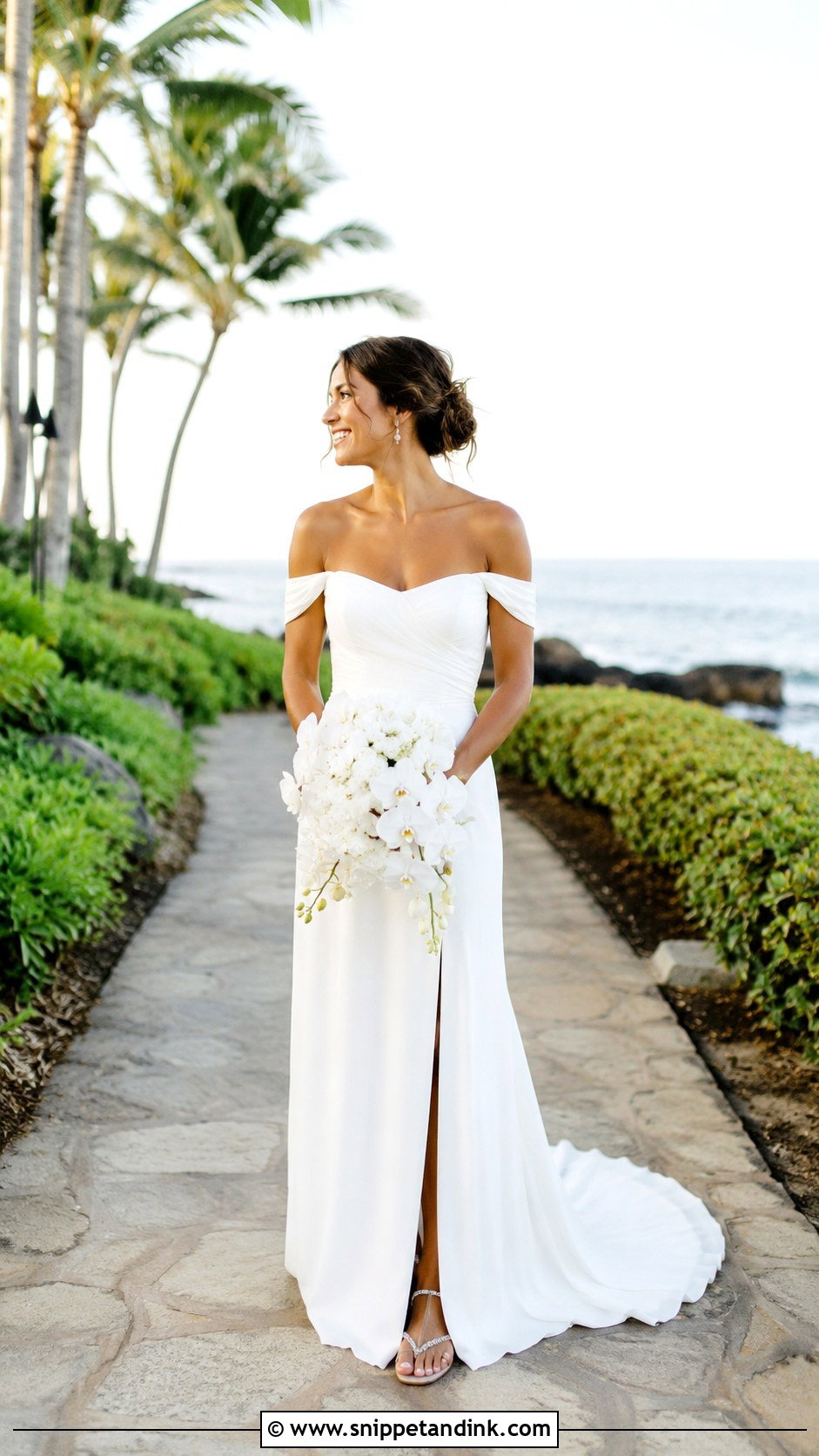
Off-the-shoulder necklines are pretty with an ocean behind them, but they are the style I fit most carefully for a windy location. The band needs a little silicone grip or elastic inside, or it creeps up toward your neck every time you lift your arms. Crepe, chiffon or lace with a flowing skirt balances the bare shoulders, and a small slit makes walking easier. Drop earrings, a loose updo and flat sandals or low block heels suit it, with orchids or anthuriums for island color.
9. Hawaii Halter Wedding Dress
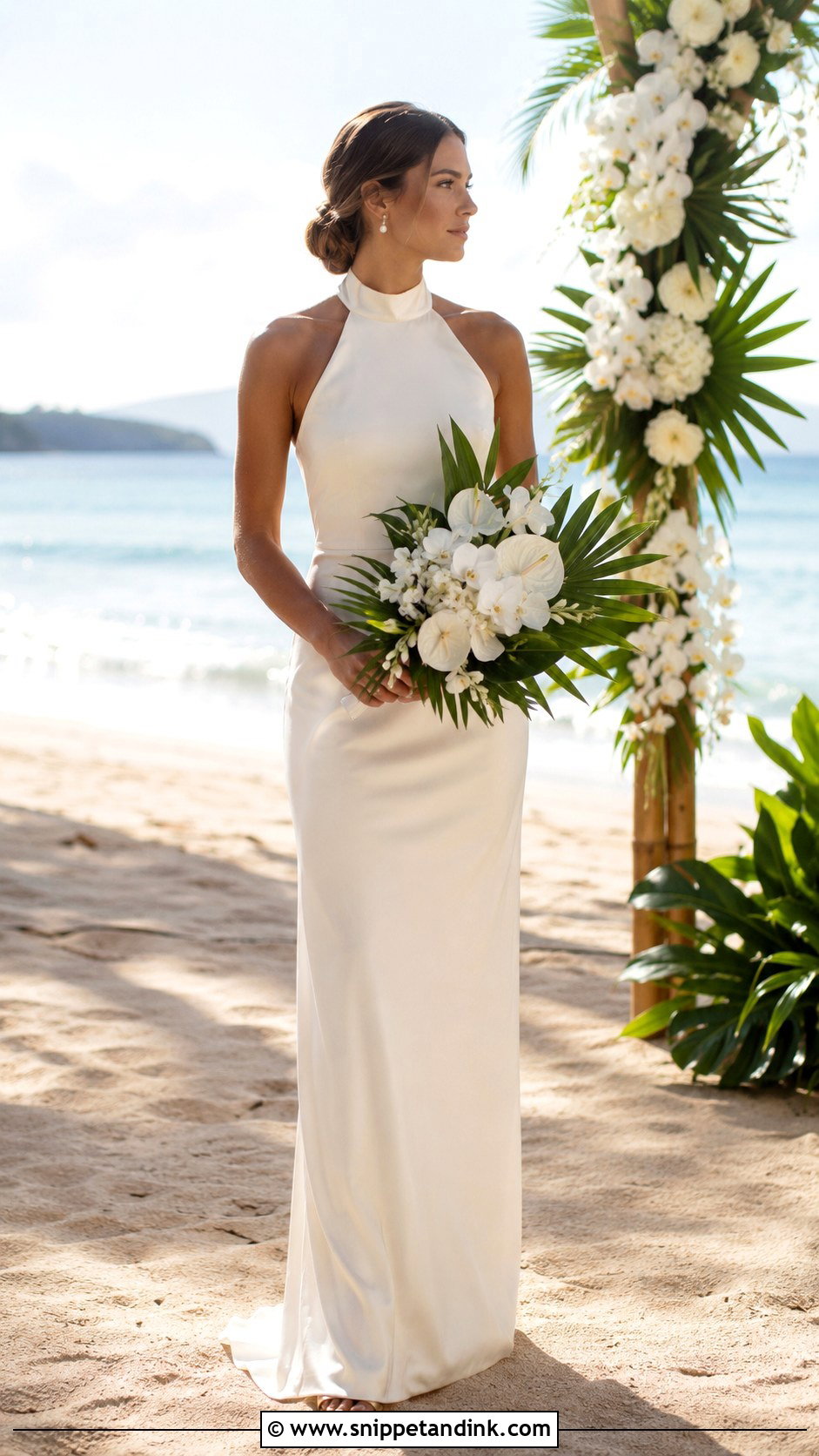
On a breezy coastline, a halter is about the most secure neckline you can wear, because it anchors at the neck. It looks sharp in simple crepe and softer over a chiffon skirt. For the beach, keep the shape a column or A-line so it moves easily. Gold sandals, small hoops or pearls, and a low bun to show the neckline finish the outfit, with palm leaves and white flowers in the bouquet. One thing to check: a halter shows shoulder tan lines, so be careful with swimsuit straps in the days before.
10. Hawaii Short Wedding Dress
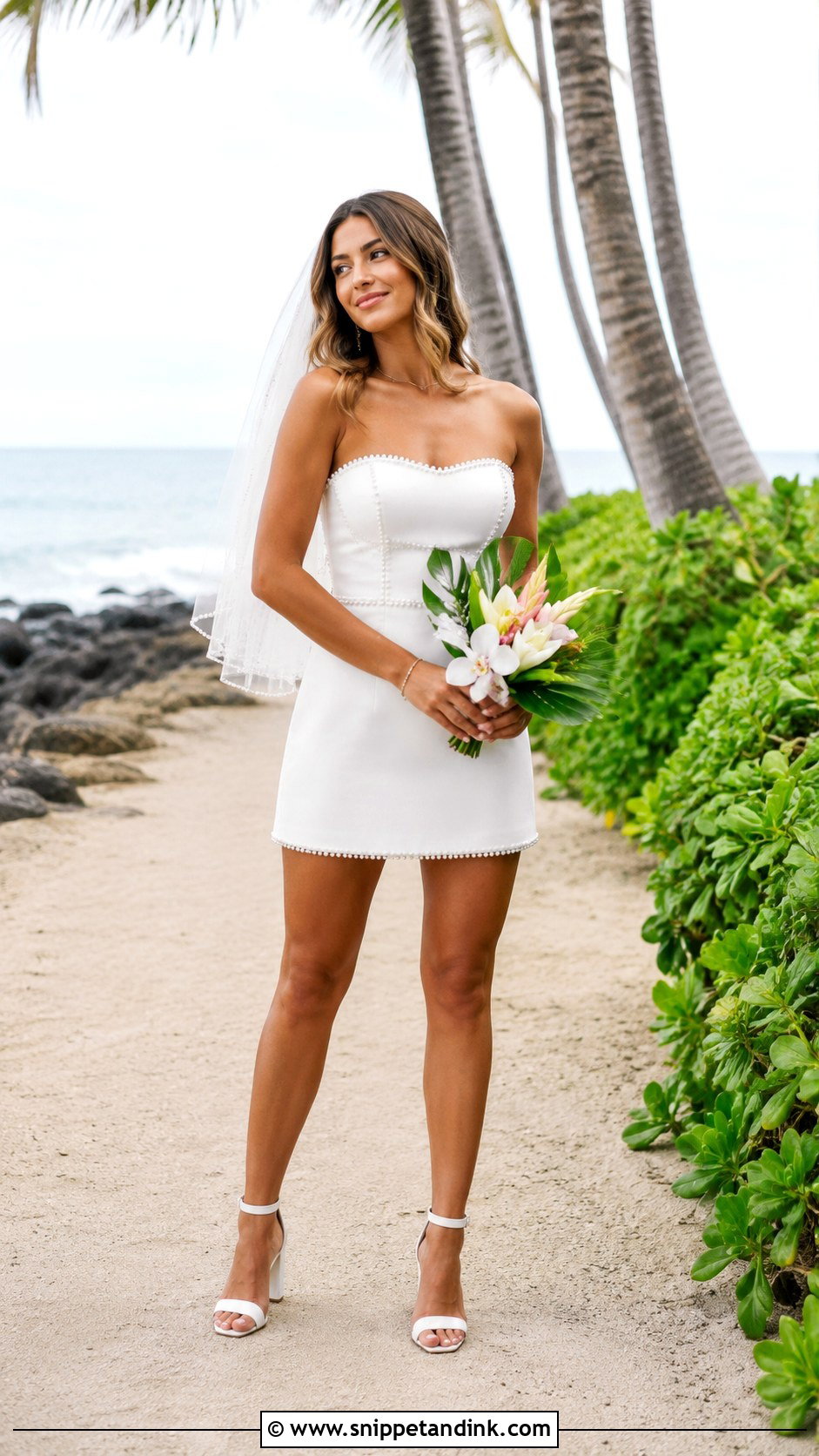
A short dress makes a lot of sense for a beach elopement, a courthouse-then-beach day or a party change. Look for bridal details so it doesn’t read as a sundress: lace, structured crepe, satin, a bow or pearl trim. Block-heel sandals, a short veil and a small bouquet keep it polished. An A-line mini or wrap gives more movement. It packs flat, stays cool and never drags on sand, which is why I suggest it to brides who want to get into the water for photos.
11. Hawaii Tea Length Wedding Dress
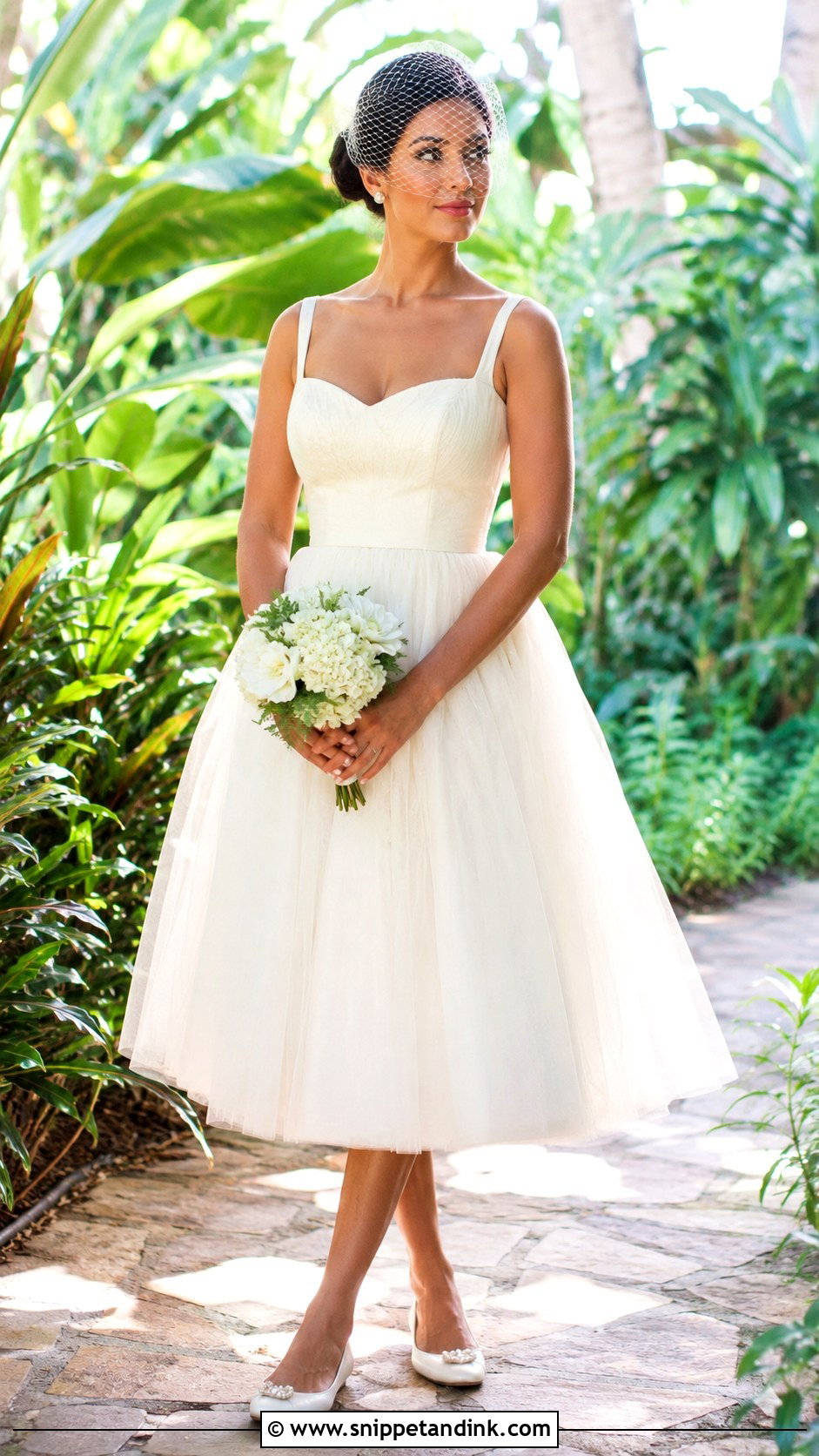
Tea length falls between knee and ankle, which is the sweet spot for uneven ground: no hem in the sand, no stepping on your skirt on stone paths. Soft tulle, organza or lace with a fitted bodice gives it a slightly retro shape. I’d pair it with pearl flats, low heels or embellished sandals depending on terrain, and keep the accessories small, such as a birdcage veil and pearl earrings. It suits garden ceremonies and daytime resort weddings where a floor-length gown would feel hot.
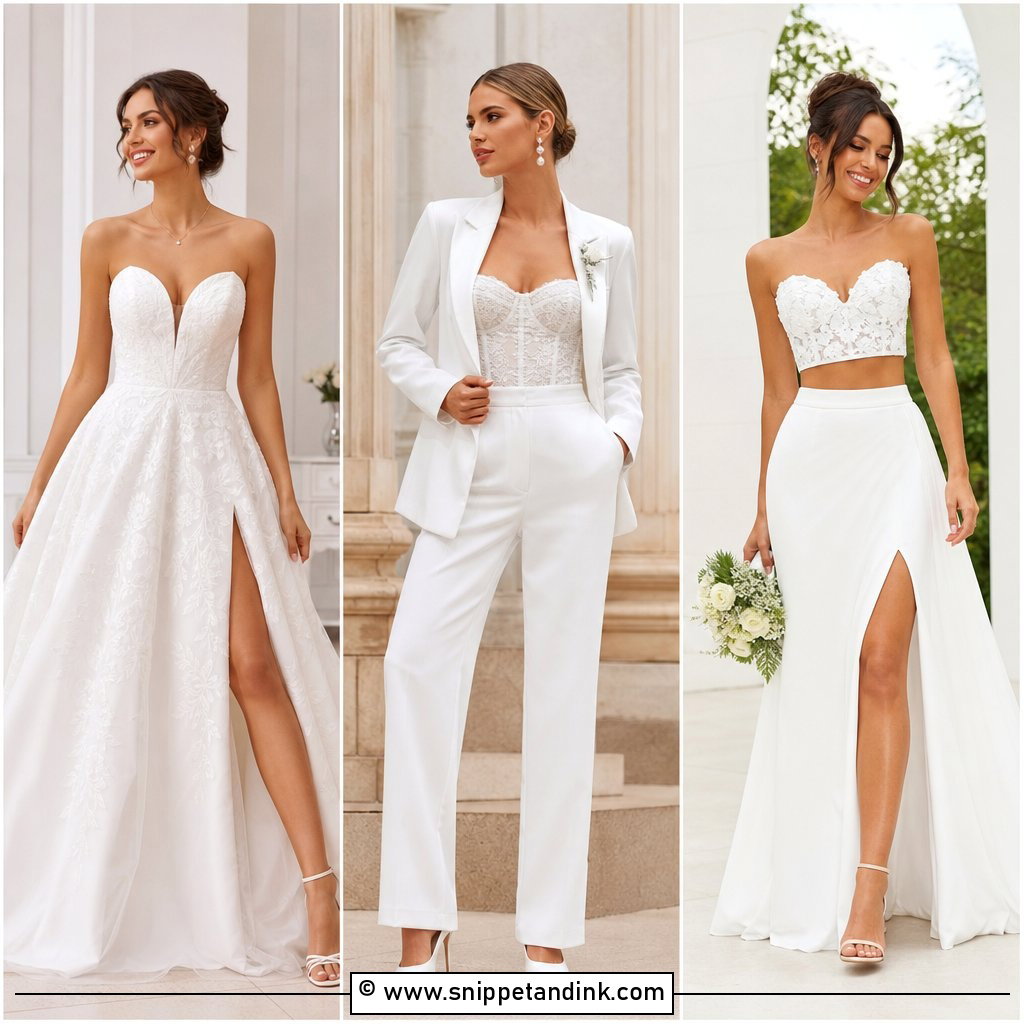
12. Hawaii Two Piece Wedding Dress
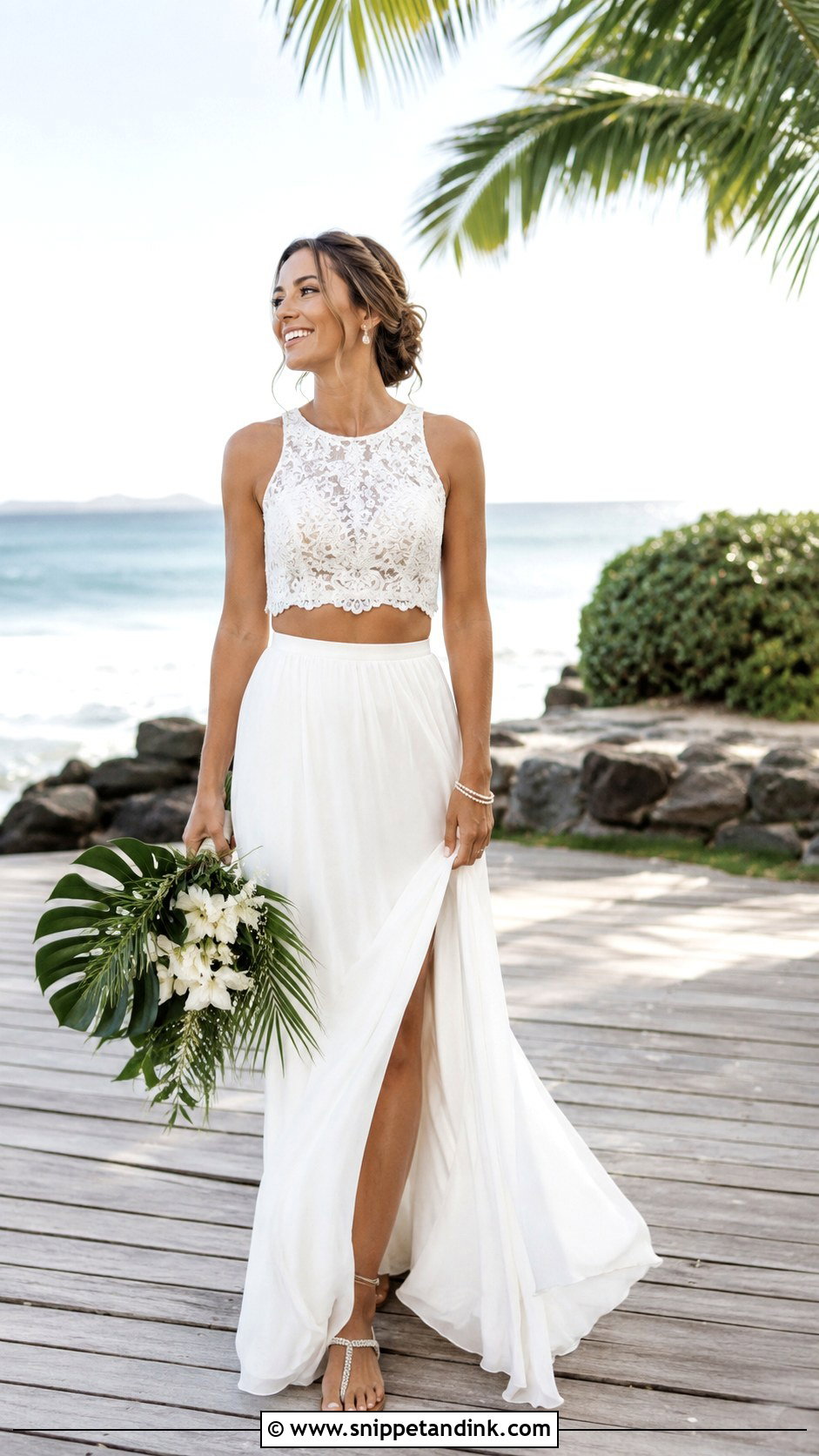
Separates give you airflow at the waist, which in humid heat is a real comfort, and they’re easy to adjust if your size shifts before the trip. A bridal crop top with a high-waisted chiffon skirt is the classic pairing; a lace top over crepe feels softer. Keep the colors in the ivory, white or champagne family so it stays bridal. Flat sandals, minimal jewelry and a loose greenery bouquet suit it. I like that brides often wear the skirt or top again afterward.
13. Hawaii Long Sleeve Wedding Dress
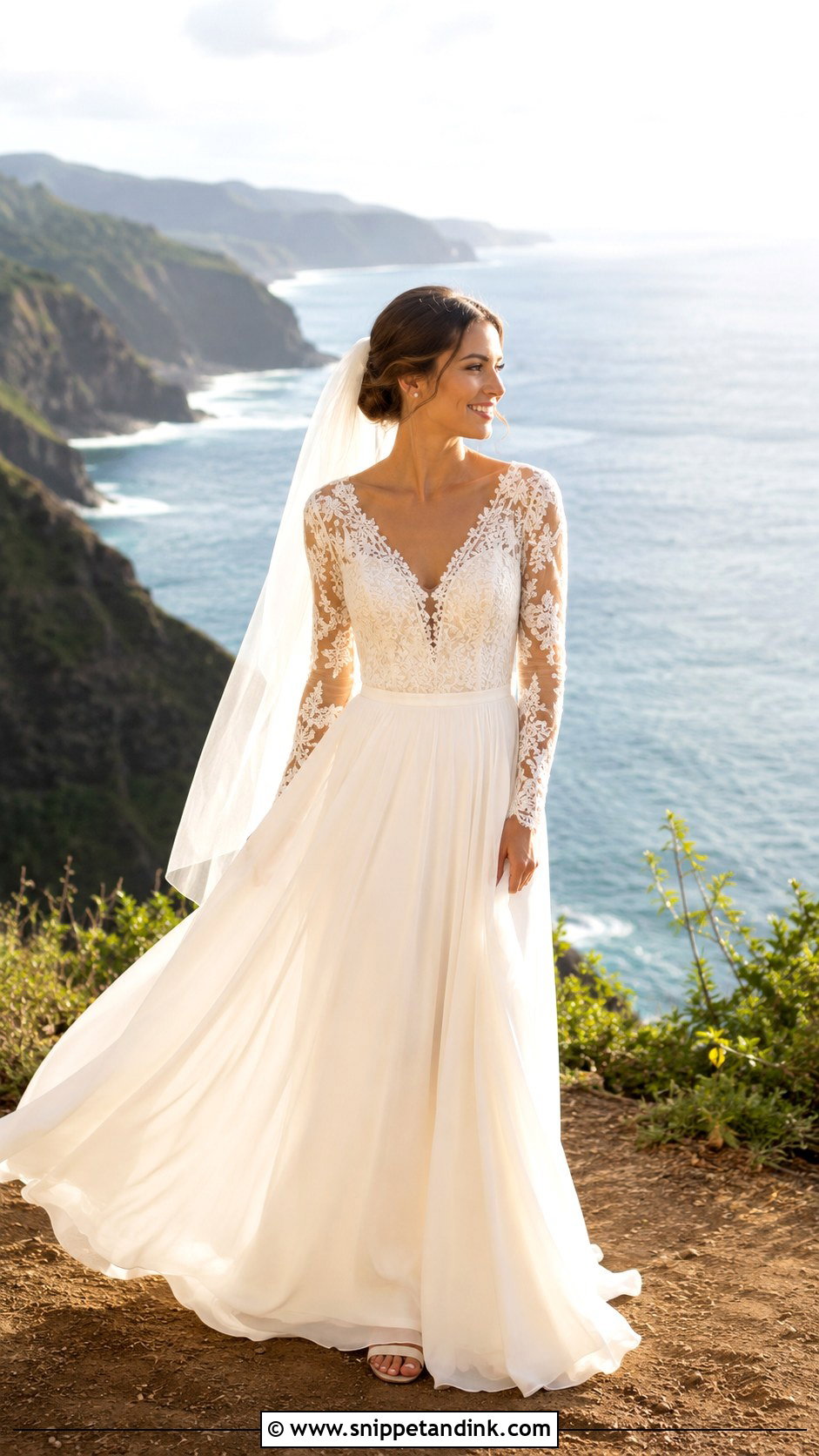
Long sleeves in Hawaii only work when they’re sheer. Lace, illusion tulle or chiffon sleeves let air through; satin or lined sleeves will be unbearable in afternoon sun. I fit the sleeve with room at the elbow, because damp skin makes a tight sleeve cling. A fitted bodice with a flowing skirt, simple sandals, pearl studs and a low chignon give a modest, refined look. It suits clifftop and evening ceremonies, when the temperature drops a little, and brides who want coverage.
14. Hawaii Backless Wedding Dress
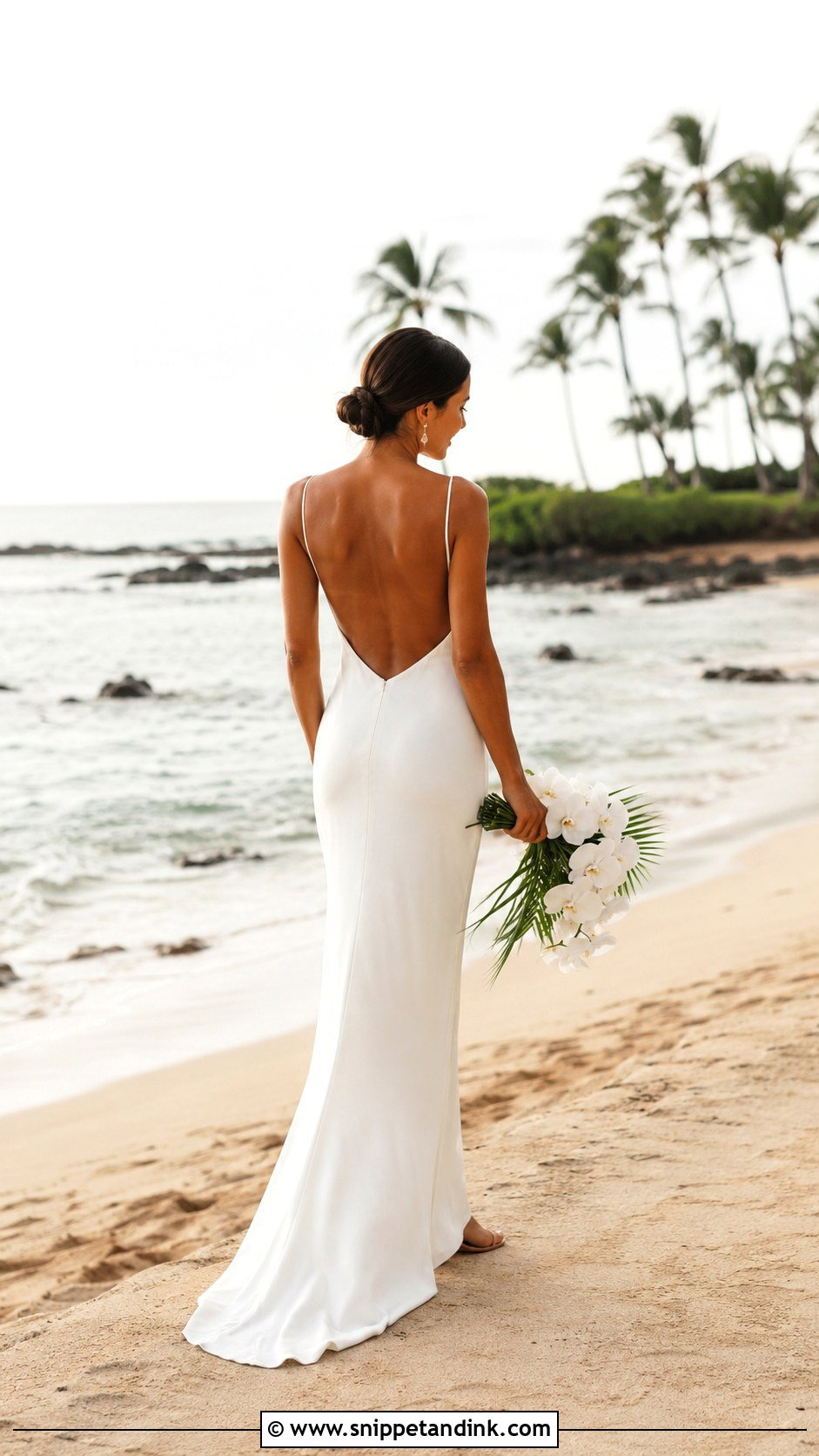
An open back is made for an ocean view behind you, and it is one of the cooler styles to wear. The front has to be truly secure, so I look for hidden structure, wider straps or a lace-up back that lets the seamstress fine-tune the fit. Crepe, satin and light lace all work. Wear a low bun or side-swept waves so the back stays visible, with delicate earrings, flat sandals and white orchids or greenery. Sunscreen on your back matters more here than with any other dress, both for burns and for patchy tan lines in photos.
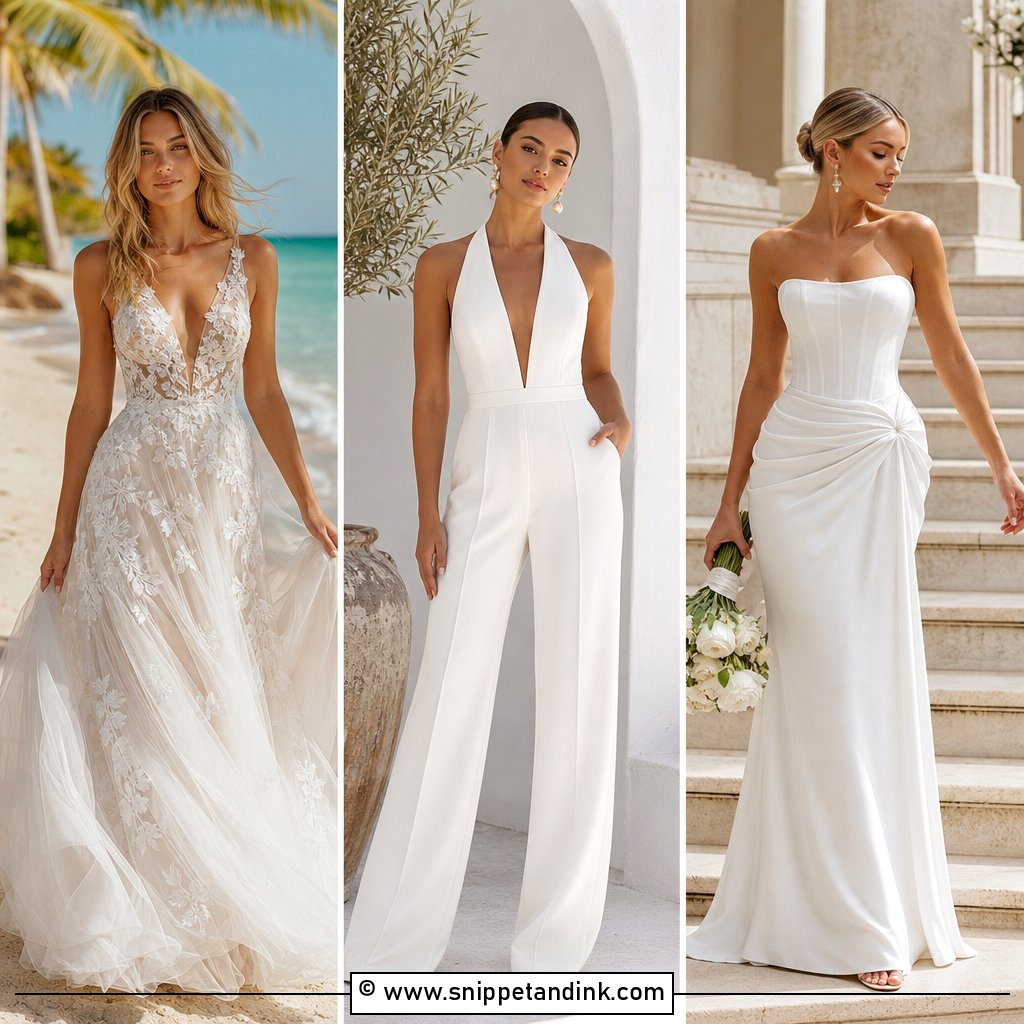


15. Hawaii Simple Wedding Dress
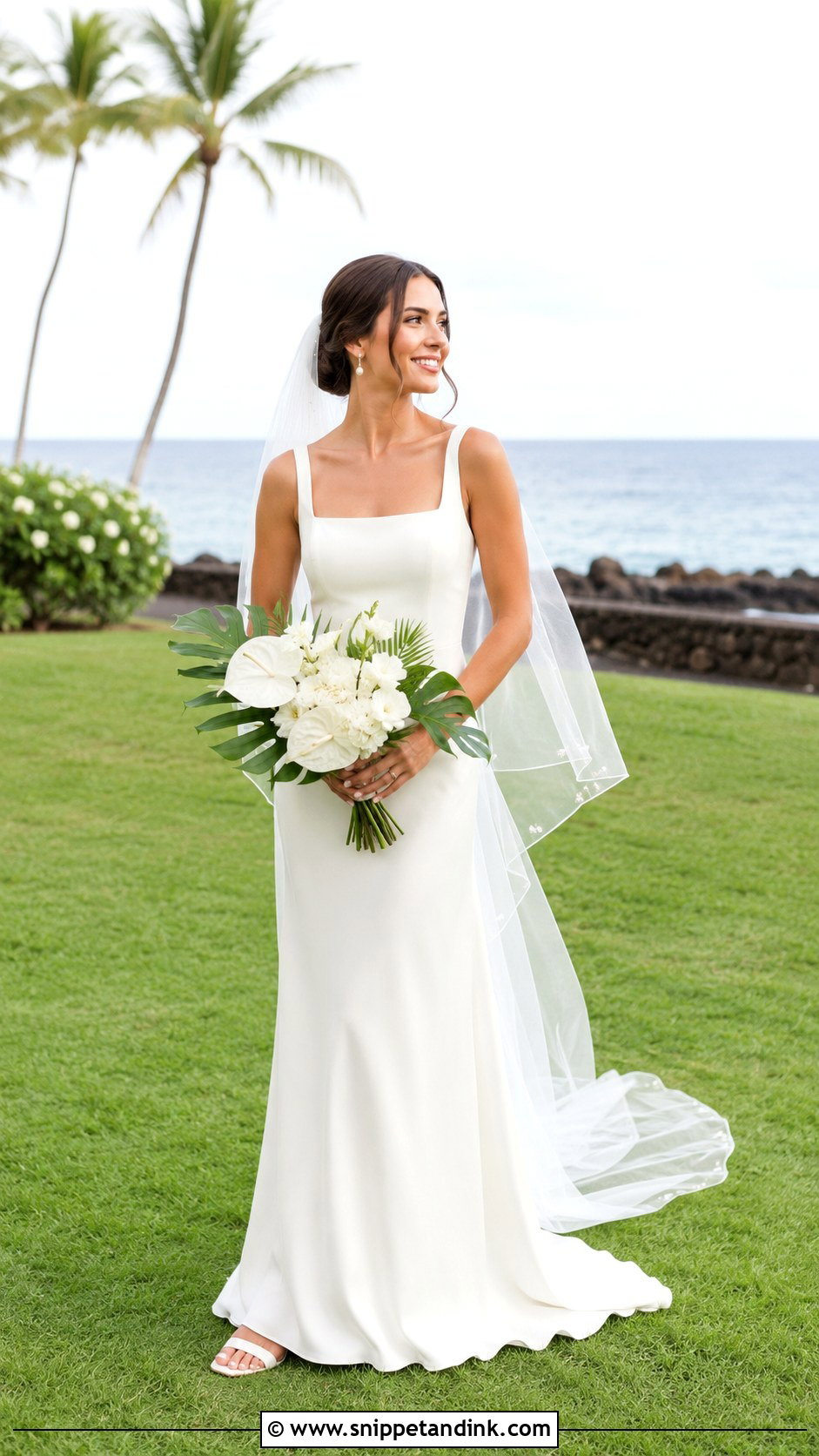
A simple dress often works best on the islands, because the scenery is already loud. A clean crepe, silk or chiffon gown with almost no embellishment and a square, scoop or subtle V-neck is easy to accessorize, easy to pack and unlikely to look dated in a decade. Pearl earrings, sleek sandals and a soft veil keep it understated. Tropical greenery in the bouquet ties it to the place. It suits a beach, a resort or a garden equally.
16. Hawaii Plus Size Wedding Dress
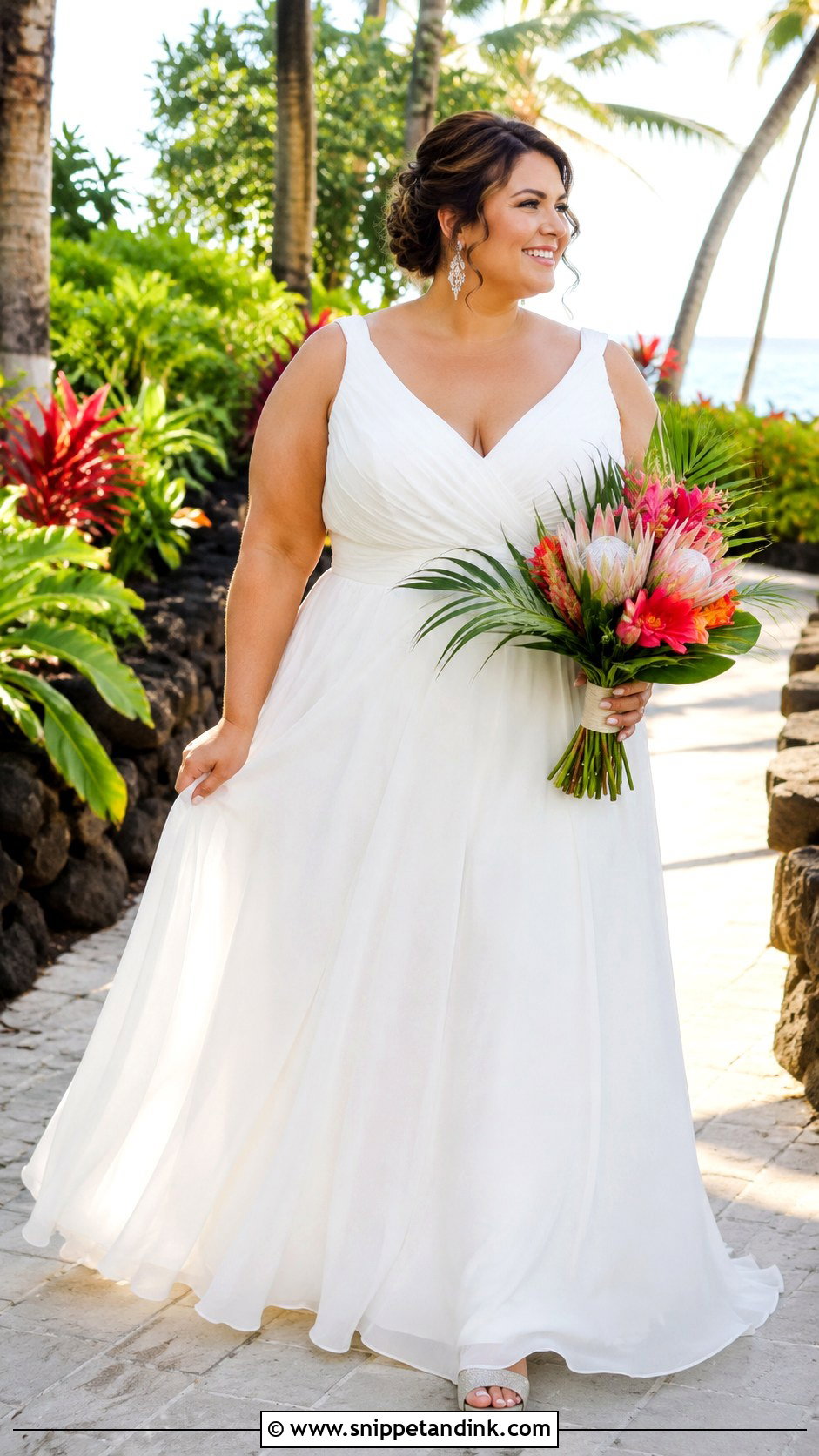
Heat changes what support feels like, so for a plus size wedding dress in Hawaii I prioritize built-in cups, wide straps and a corset back that spreads the load without needing a heavy bra underneath. A-line, empire, wrap and structured bodice gowns in chiffon, crepe or soft lace all breathe well. Avoid layered linings, which trap heat during an outdoor ceremony. A soft V or off-the-shoulder neckline is flattering, and cushioned block sandals help on sand. Statement earrings and a bouquet scaled to the gown finish it.
17. Hawaii Petite Wedding Dress
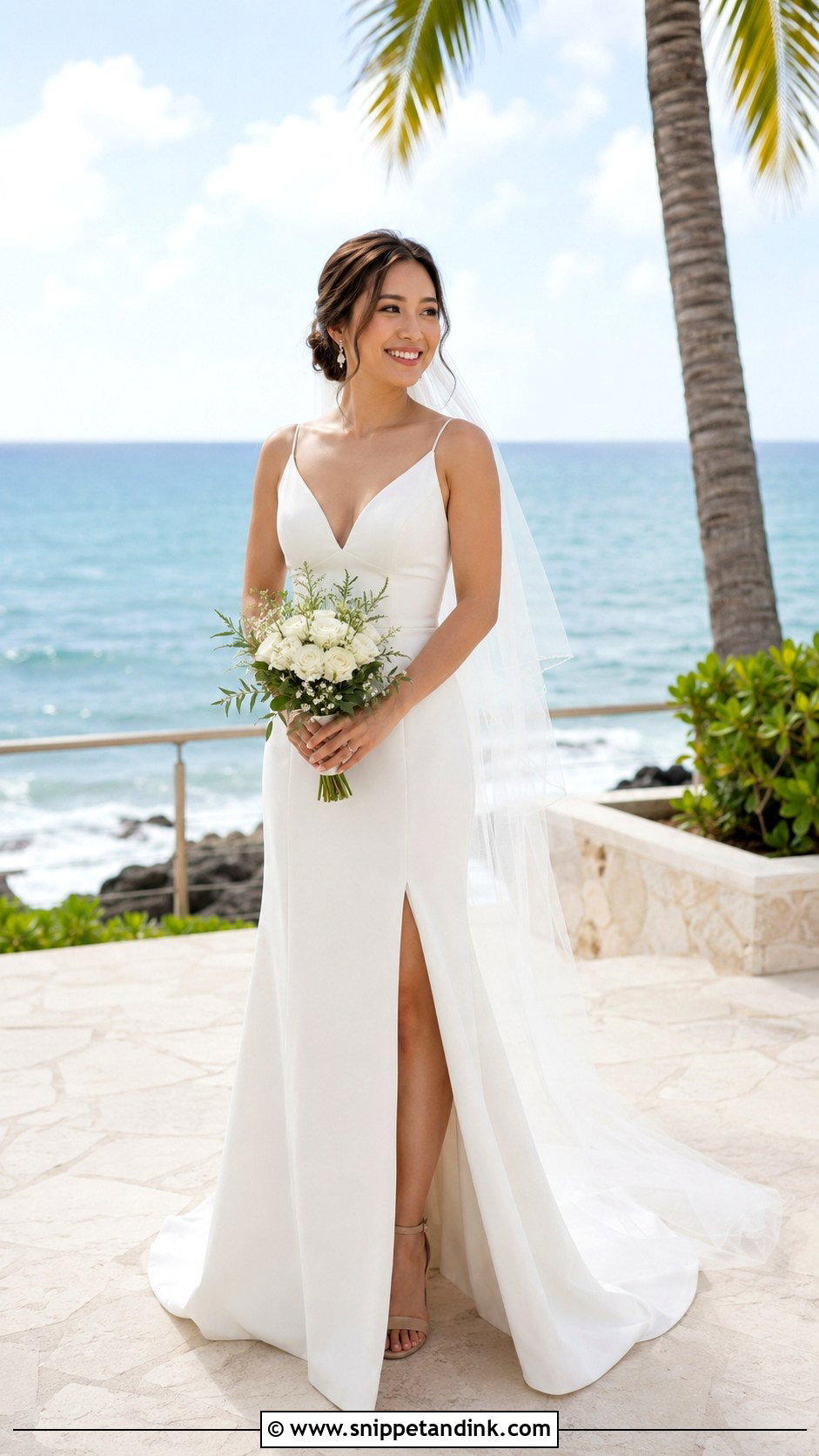
For a petite bride, volume is the enemy on a beach, because wind and fabric together swallow a smaller frame in photos. I look for a slim A-line, sheath or slip with a clean vertical line, and use a high waist, V-neck or side slit to add length. Expect to shorten the bodice and straps as well as the hem. Keep the train short. Low nude heels, delicate sandals or wedges (if the venue allows), small pearl earrings, a light veil and a compact bouquet keep the proportions right.
18. Hawaii Maternity Wedding Dress
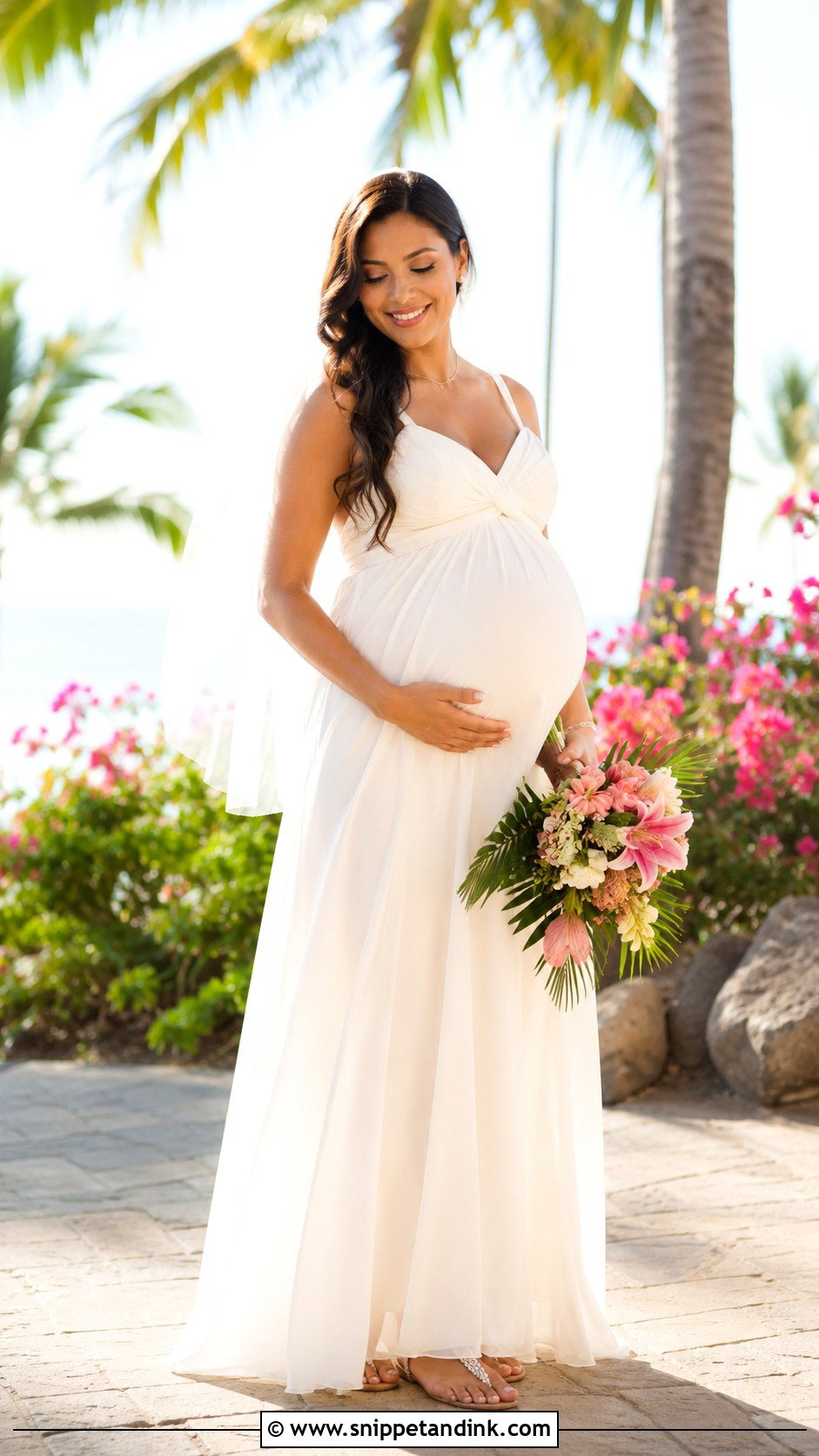
An empire waist in chiffon or stretch crepe is the most comfortable maternity shape I know. It defines the bust and falls over the bump without pressure. In heat and on a long travel day, swelling is common, so adjustable straps and a skirt with generous room matter more than usual, and I’d schedule the final fitting as close to the trip as possible. Cushioned flat sandals, delicate jewelry and a light veil suit it, and a flower crown adds an island touch. Keep the bouquet medium-sized so it doesn’t hide the dress shape.
19. Hawaii Resort Wedding Dress
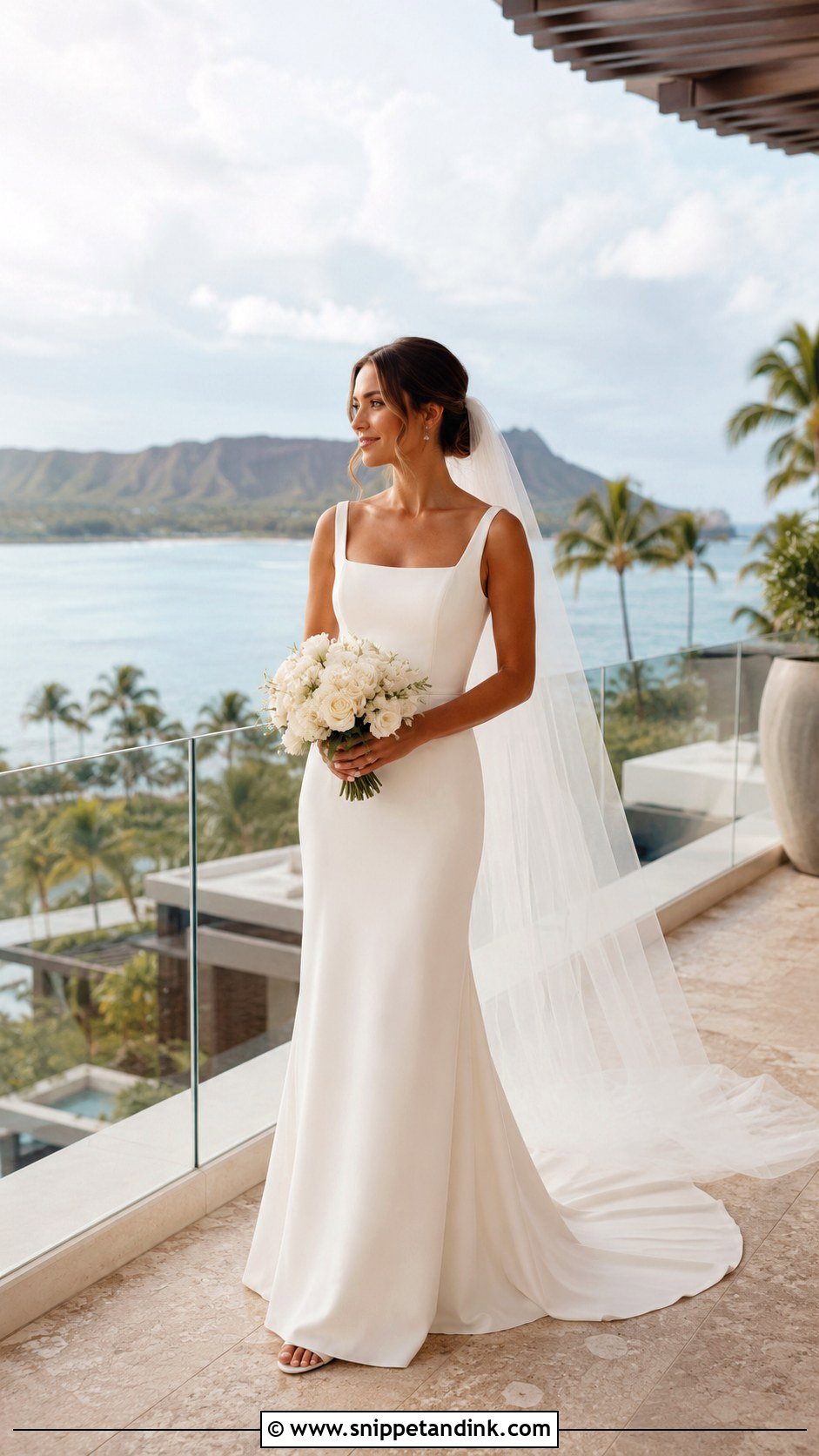
Resort venues often mean a lawn ceremony, a terrace cocktail hour and an indoor or covered reception, so you can wear a more finished gown than on the beach. Sleek crepe, satin or lace with a clean train or structured bodice works, and low heels or block sandals are fine on paved surfaces. A long veil, pearl earrings and a refined bouquet lift it. Keep the fabric breathable; take the drama from the silhouette or the veil instead of extra layers.


20. Hawaii Garden Wedding Dress
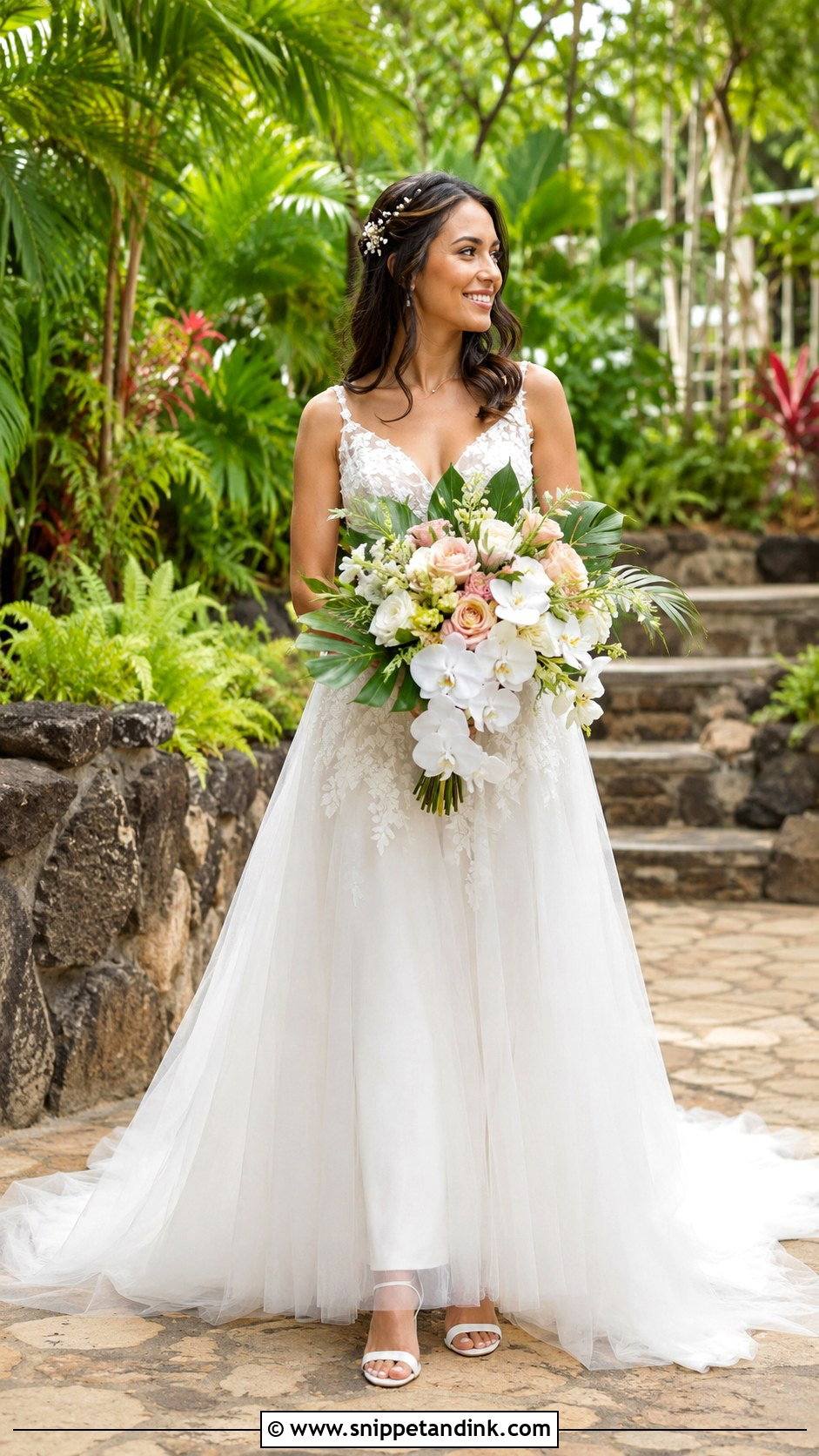
Gardens on the islands are lush and often uneven, which shapes my advice more than the flowers do. Floral lace, soft tulle or embroidery suit the setting, and a soft A-line or fit-and-flare handles grass. Choose block heels over stilettos, which sink into wet lawn. A light veil works, but I’d avoid anything that trails, since it will catch on plants and roots. Pearl pins and a bouquet of orchids, roses and leafy accents suit botanical venues and estate gardens.
21. Hawaii Sunset Wedding Dress
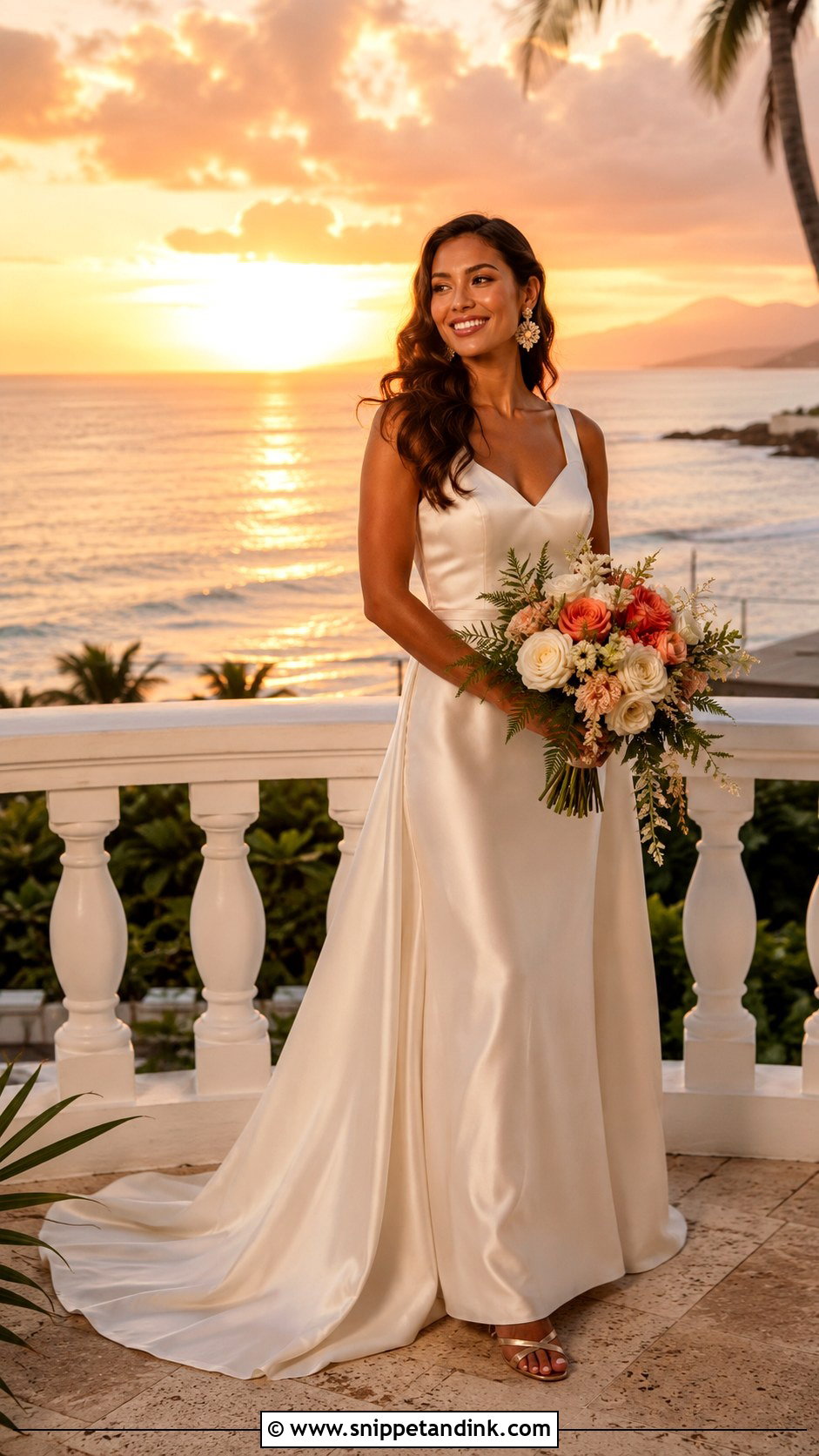
Golden hour does most of the styling for you. Soft satin, silk, chiffon and beaded tulle all glow in low sun; very shiny polyester satin can flare white in photos. Ivory, pearl, champagne or blush read warmer than stark white at sunset. A fitted bodice with a flowing skirt or a sleek slip suits the light. Gold sandals, luminous earrings and coral and cream flowers fit the palette. Secure the hair well, because the breeze usually picks up as the sun goes down.
22. Hawaii Courthouse Wedding Dress
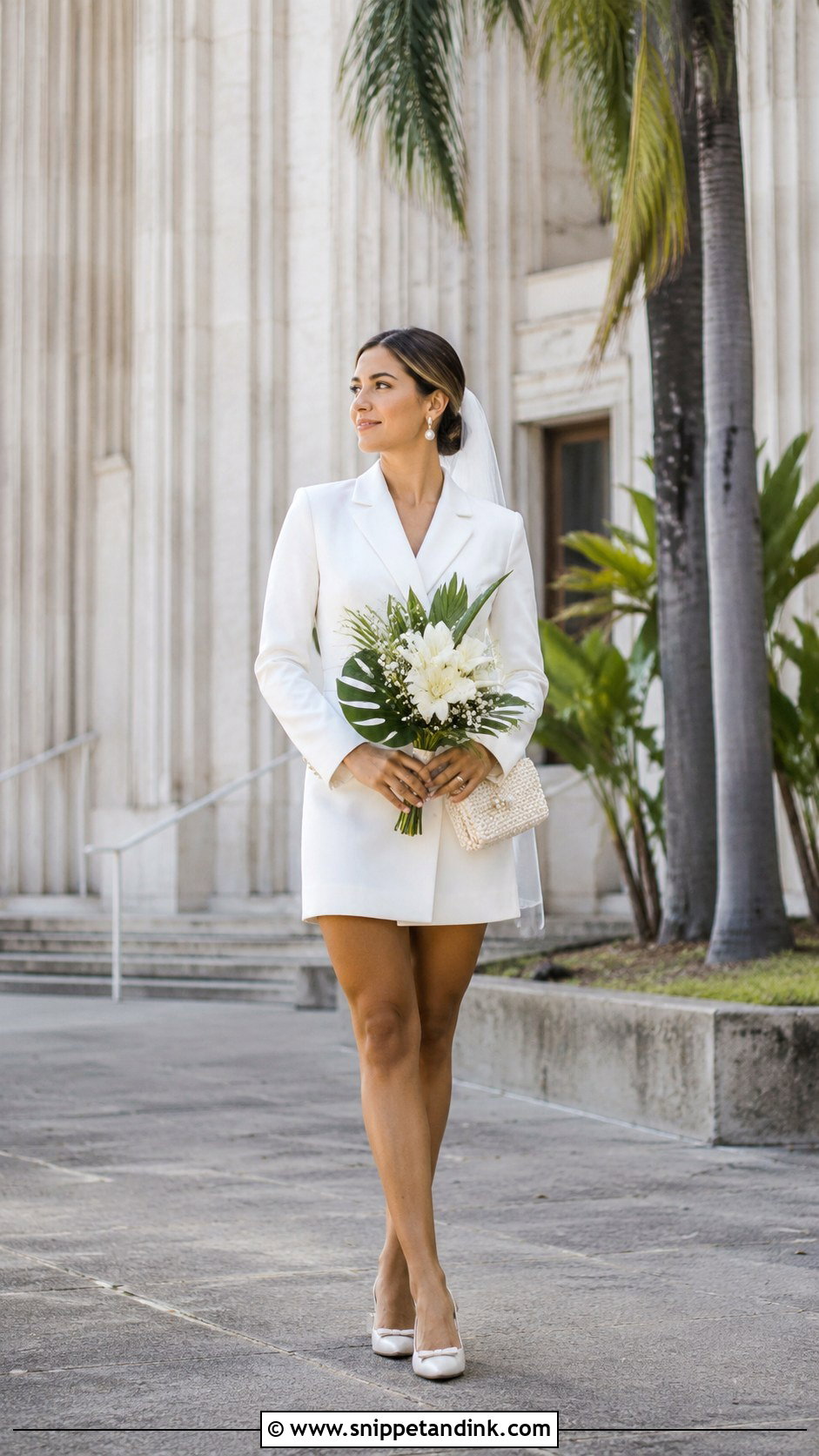
If the legal ceremony happens indoors before beach photos, dress for both. A white blazer dress, satin midi, crepe sheath or tailored jumpsuit-style bridal look looks right in an office and still works on the sand. Low heels, a small bouquet, pearl earrings and a structured clutch suit the first half of the day. I suggest packing a short veil or a fresh flower clip to add for the island portraits afterward. Everything here travels well and stays cool.
23. Hawaii Elopement Wedding Dress
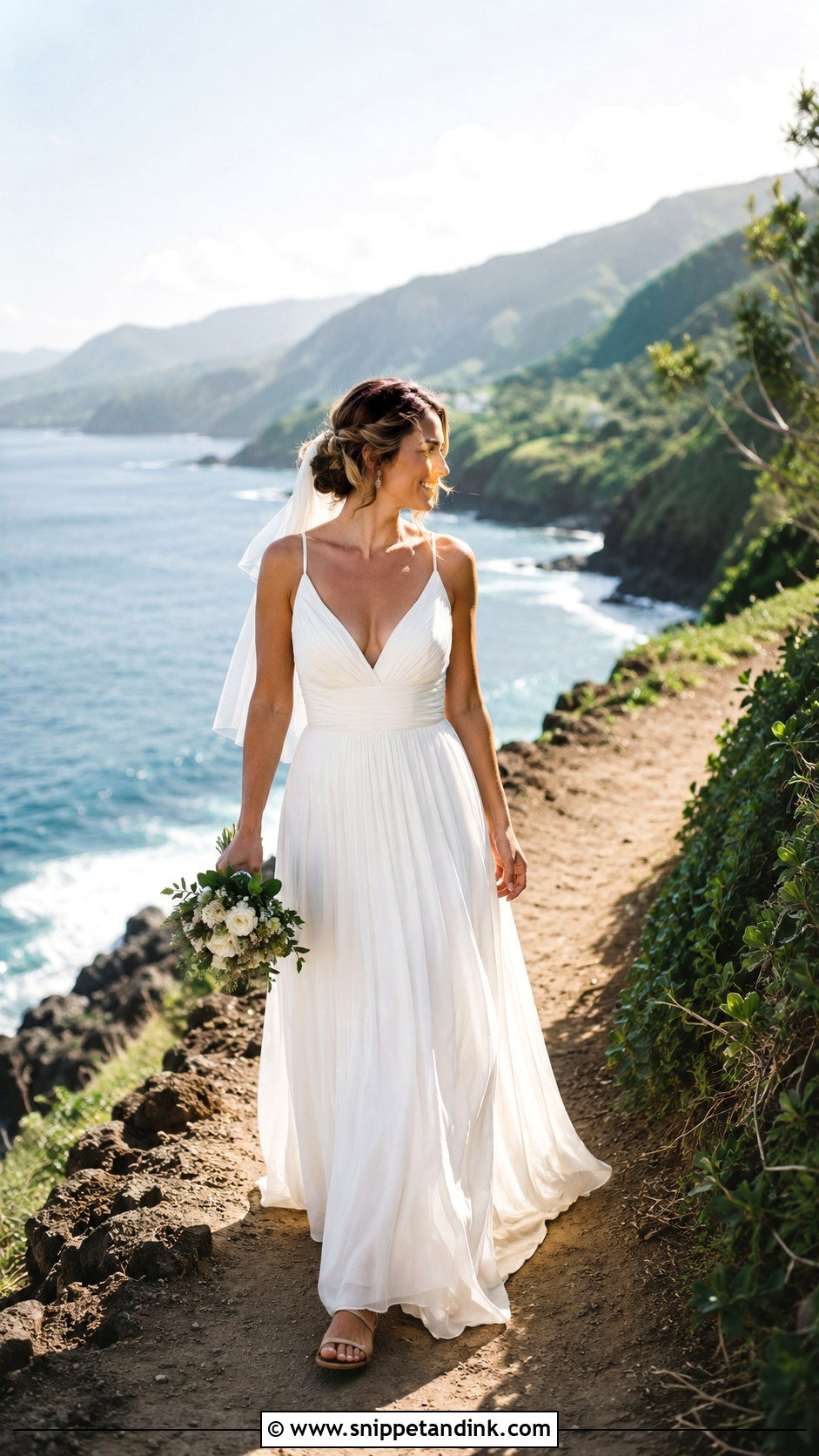
Elopements in Hawaii often involve a hike to a lookout, a scramble near a waterfall or a long walk on sand, so I treat the dress like gear as much as fashion. A chiffon A-line, soft lace sheath or simple slip packs small and moves easily. Flat sandals, a small bouquet and a hairstyle that can take humidity and wind are essential. A detachable overskirt or short veil adds drama for photos and comes off for the walk back. Check that the skirt still lets you take a high step without lifting it with both hands.
24. Hawaii Reception Wedding Dress
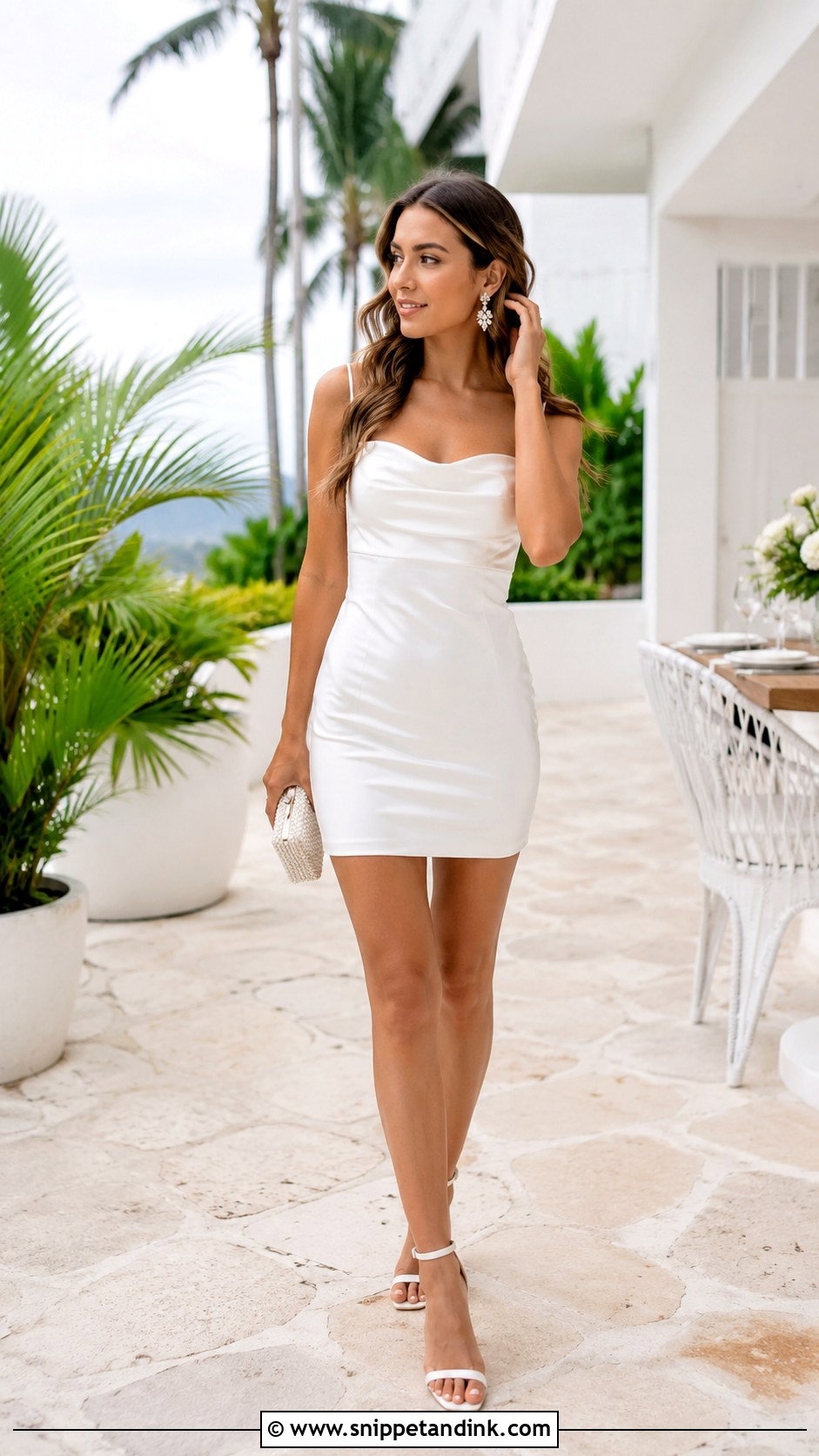
A second look for the reception lets you dance without managing a hem. A short satin dress, feather-trimmed mini, simple midi or light slip all feel festive and still bridal. Feathers wilt a little in humidity, so keep that trim for covered or air-conditioned spaces. Block heels or embellished sandals, statement earrings and a small clutch complete it. Make sure the fit is secure; a strapless mini you keep hitching up all night isn’t the relief it should be.





25. Hawaii Bridal Jumpsuit
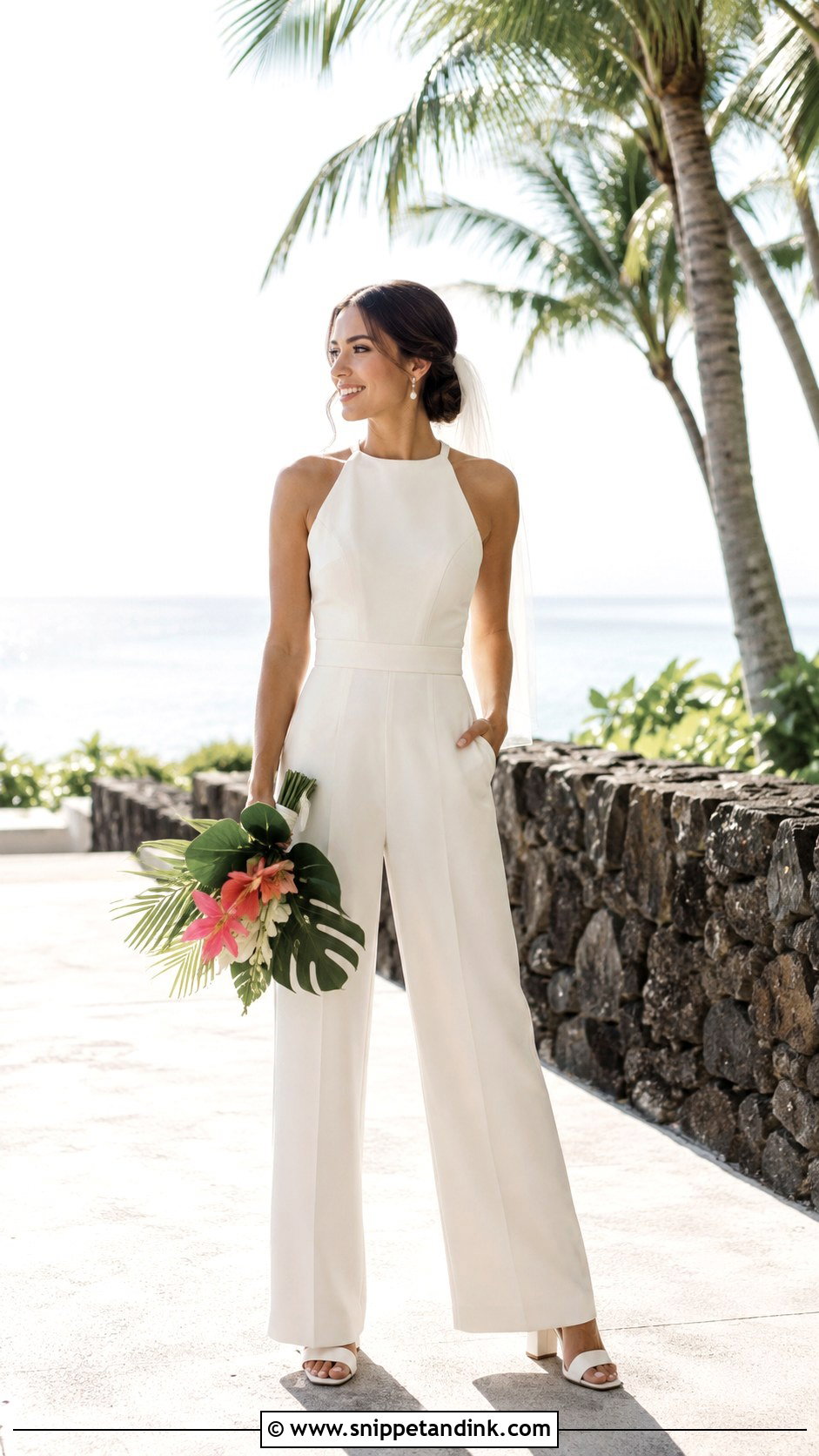
A jumpsuit is a practical answer for a bride who wants to move freely and travel light. White or ivory crepe, satin or soft tailoring with a defined waist and wide legs looks most bridal, and a halter, strapless top or lace overlay adds detail. Hem the legs for the exact shoes you’ll wear, since wide legs that drag pick up sand. Block heels or sleek sandals, pearl earrings and a small bouquet suit it, and a detachable cape or short veil gives the ceremony moment some weight.
Wearing a Fresh Lei Over an Ivory Gown
Many island ceremonies include a lei, and it’s a gesture worth honoring rather than taking off for photos. A lei is given as a sign of love and respect, so it’s traditionally worn around the shoulders, draped evenly front and back, and accepted with thanks rather than refused or removed in front of the person who gave it.
Fresh flowers do bring practical issues with a light dress. Plumeria and orchid leis are usually fine, but damp petals and pollen can mark silk and pale satin. I ask the florist to keep the lei refrigerated until shortly before the ceremony and to blot it, and on delicate fabrics I suggest an open maile style or a lei that rests on bare skin at a halter or off-the-shoulder neckline rather than on the bodice.
Plan the rest of the styling around it. A statement necklace and a lei compete, so keep to earrings, and choose a bouquet that complements the lei’s flowers instead of repeating them.
Small Fixes for Wind, Sand and Sudden Showers
Island weather changes fast, and a few small items handle most of it. Weighted veil clips or small hem weights keep a veil from wrapping round your face in the trade winds. Short showers pass quickly, so a clear umbrella and a dry towel in the car are worth more than a backup venue for most beach ceremonies.
Put sunscreen on early, at least half an hour before dressing, and let it soak in. Fresh lotion transfers to ivory fabric at the neckline and under the arms, and spray sunscreen drifting onto the bodice leaves marks that are hard to lift. Shake sand out of the hem before you sit in the car, and leave the dress hanging somewhere airy that night so damp lining can dry before it goes back in the bag.
Dress for the Wind, the Sand and the Flight Home
An island wedding gives you room to wear something lighter and simpler than you might at home, but it also asks more of the dress. Before you commit, picture the actual ground you’ll stand on, the time of day and how far you’ll walk, then choose fabric and length to suit. Breathable linings, secure straps and shoes you can stand in are what keep you comfortable. A slip dress, floral gown, boho lace, jumpsuit or classic A-line can all look polished here. Dressing for Hawaii isn’t about dressing down; it’s about letting the dress cope with the place so you don’t have to think about it.
You'll Like These Ideas:







Leave a Reply