
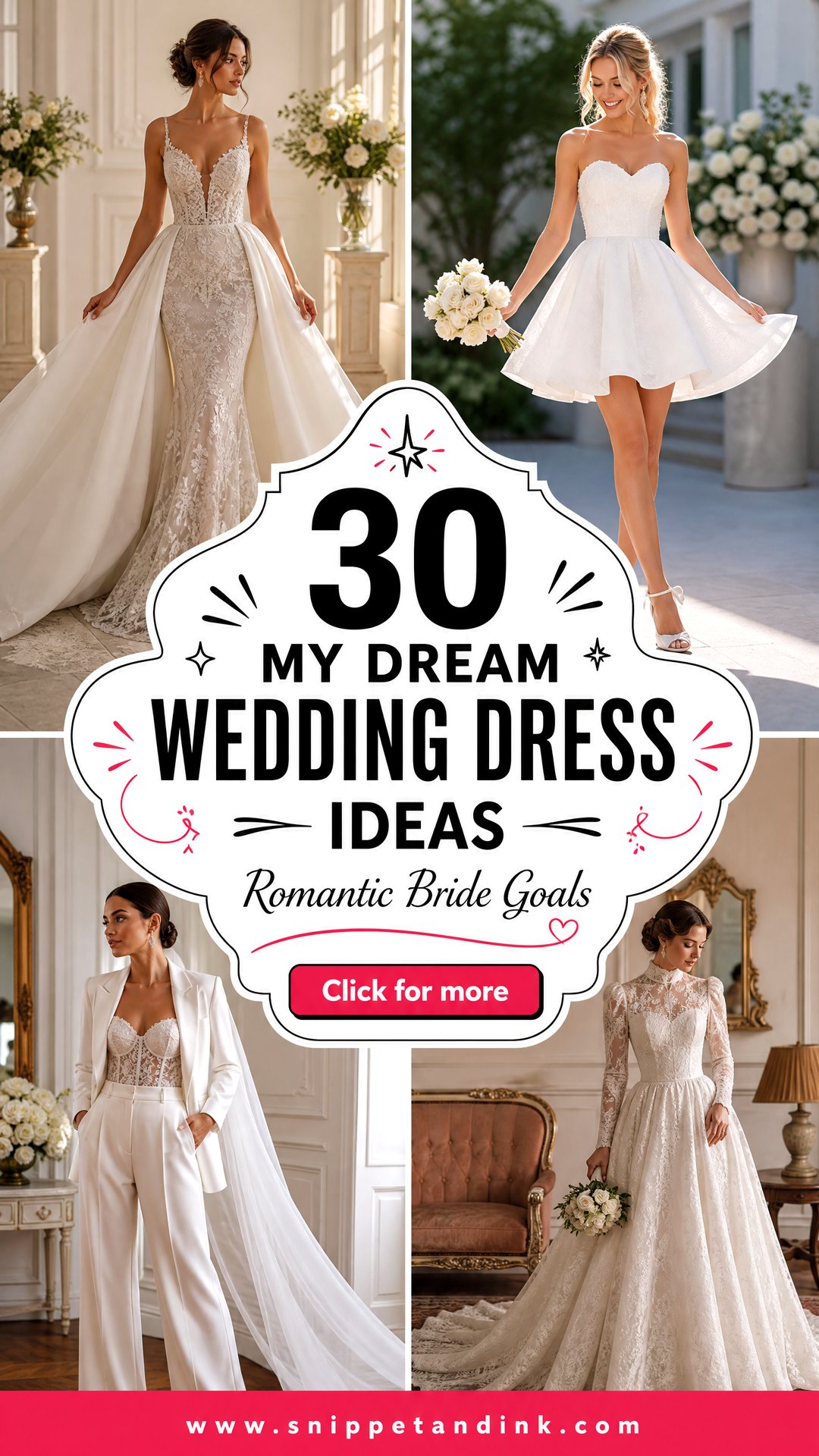
The dress a bride pictures before her first appointment is rarely the one she buys, and that’s not a bad thing. Shapes behave differently on a real body than on a model, and the gown that feels right is often one she’d have scrolled past online. Right now the racks hold clean satin, corset bodices, basque waists, pearl work, sculptural trains, minis and convertible pieces, so there’s no shortage of options. What narrows it down is practical: your venue, the season, how you want to move, and how you’ll feel looking at the photos in twenty years. Below are 30 directions to try, each styled head to toe, with my honest notes on fit and wear.
A Realistic Timeline From First Try-On to Final Fitting
Most designer gowns are made to order after you buy them, not pulled from a stockroom. Production commonly takes four to six months and sometimes longer, depending on the designer, and alterations come on top of that. So I encourage brides to start trying on nine to twelve months before the wedding where possible. Rush orders exist, but they usually cost extra and limit your choices.
How the months usually fall
Shop and order first. Once the gown arrives, the first alterations fitting typically happens around two to three months out, with a second a few weeks later and a final fitting a week or two before the wedding. Bring your actual shoes and undergarments to every one, because a hem cut for a flat won’t work with a heel.
Making the first appointment count
Wear nude, smooth underwear and bring a strapless bra if you have one. Keep your group small. Two or three people whose taste you trust give better feedback than a crowd with competing opinions, and a small group also leaves you room to hear your own reaction.
1. Satin Ball Gown Wedding Dress
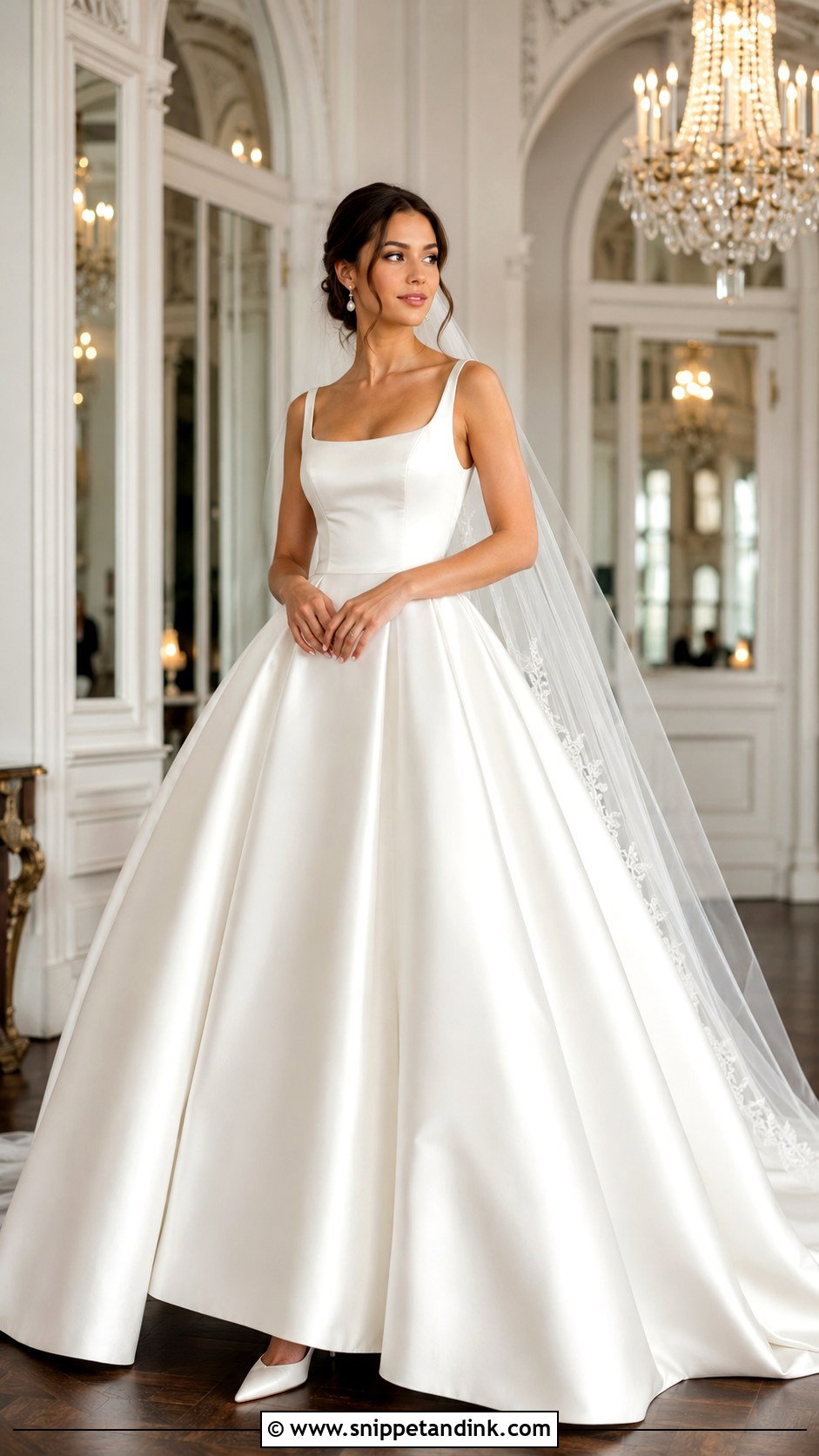
Satin and a full skirt are the image most brides carry in their heads, and in person the effect is rich and calm without any sparkle at all. A fitted bodice with a natural or basque waist gives the torso shape. What I warn brides about is weight: a satin ball gown with a proper petticoat is heavy, and you’ll feel it by the reception, so ask for a good bustle. A cathedral veil, pearl studs and pointed satin heels keep it polished, and a low bun or soft waves let the neckline show. Keep the bouquet compact so it doesn’t fight the skirt. Formal hotels and grand rooms suit it best.
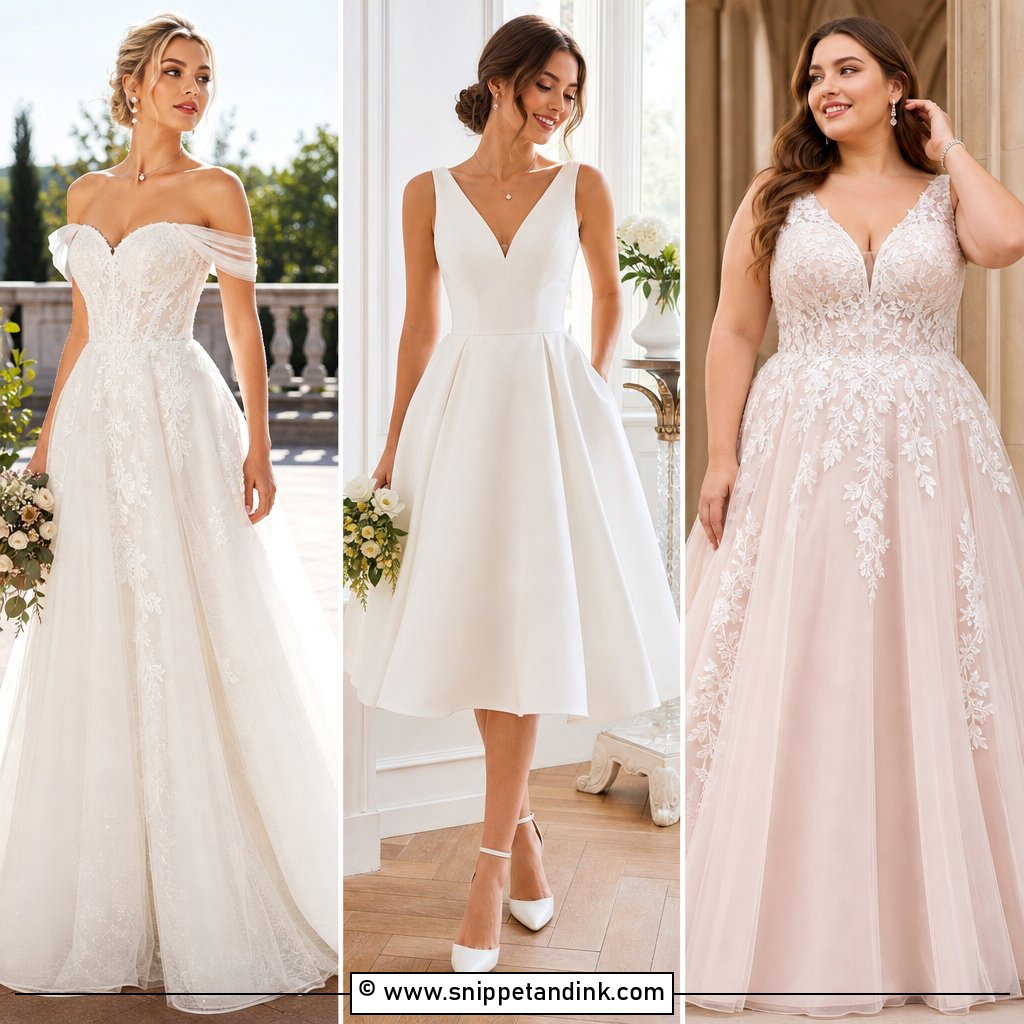
2. Lace A Line Wedding Dress
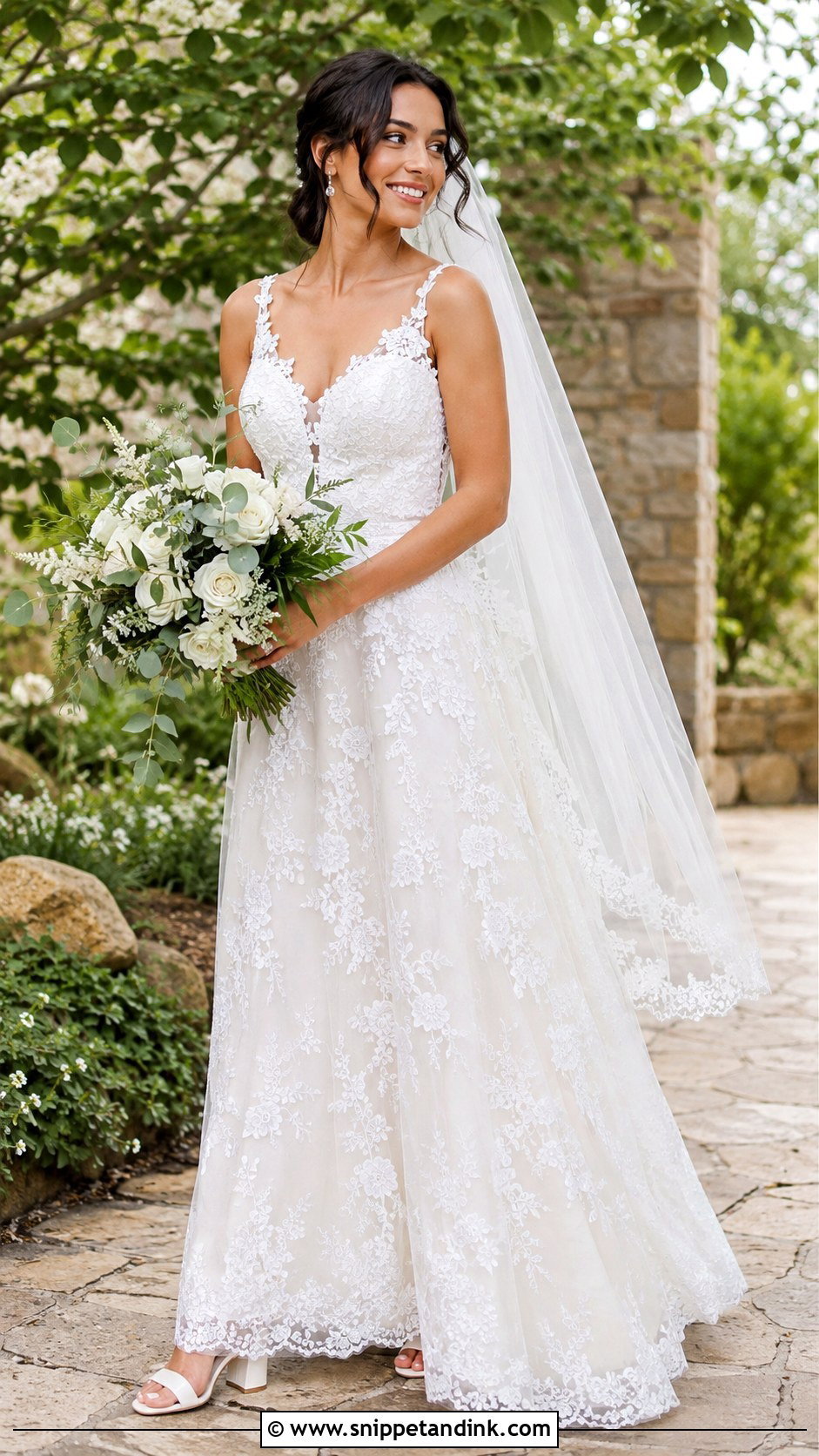
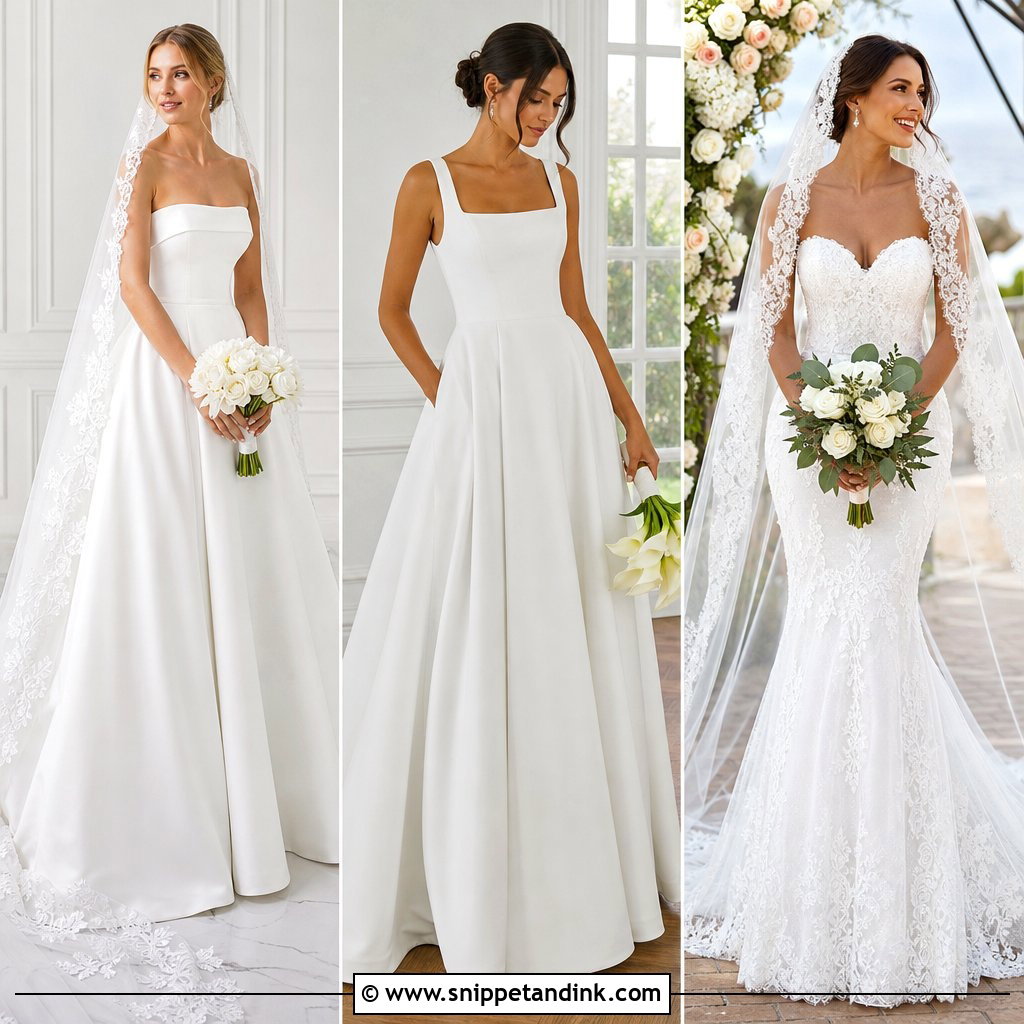
Lace on an A-line is the combination I see suit the widest range of bodies, because the skirt skims the waist and opens away from the hips. It’s easy to walk, sit and dance in. Floral lace reads romantic; geometric lace reads more modern. Look at where the appliqué sits around the waist. Well-placed lace can create definition, while badly placed motifs make the waist look wider. A fingertip veil, small drop earrings and ivory block heels finish it, and it moves between garden, estate and ballroom without looking out of place.
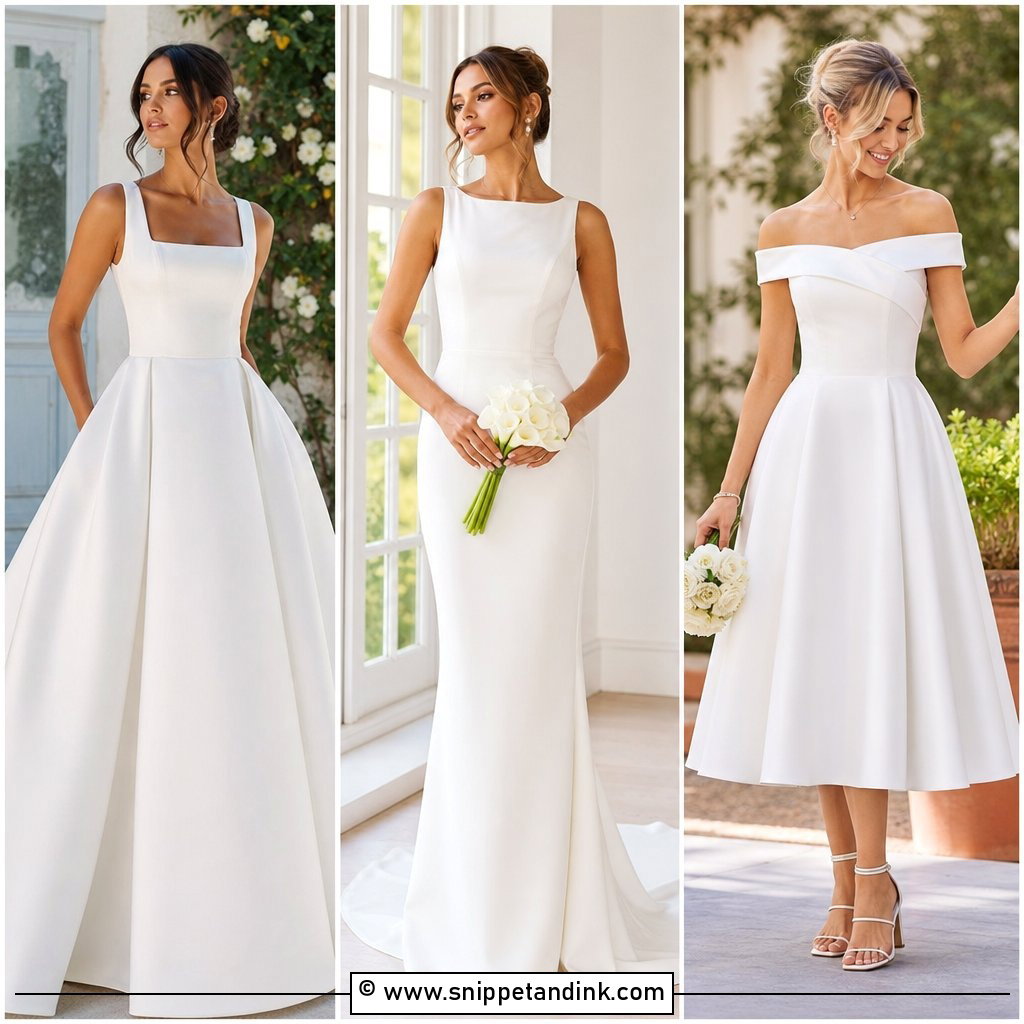
3. Minimalist Crepe Wedding Dress
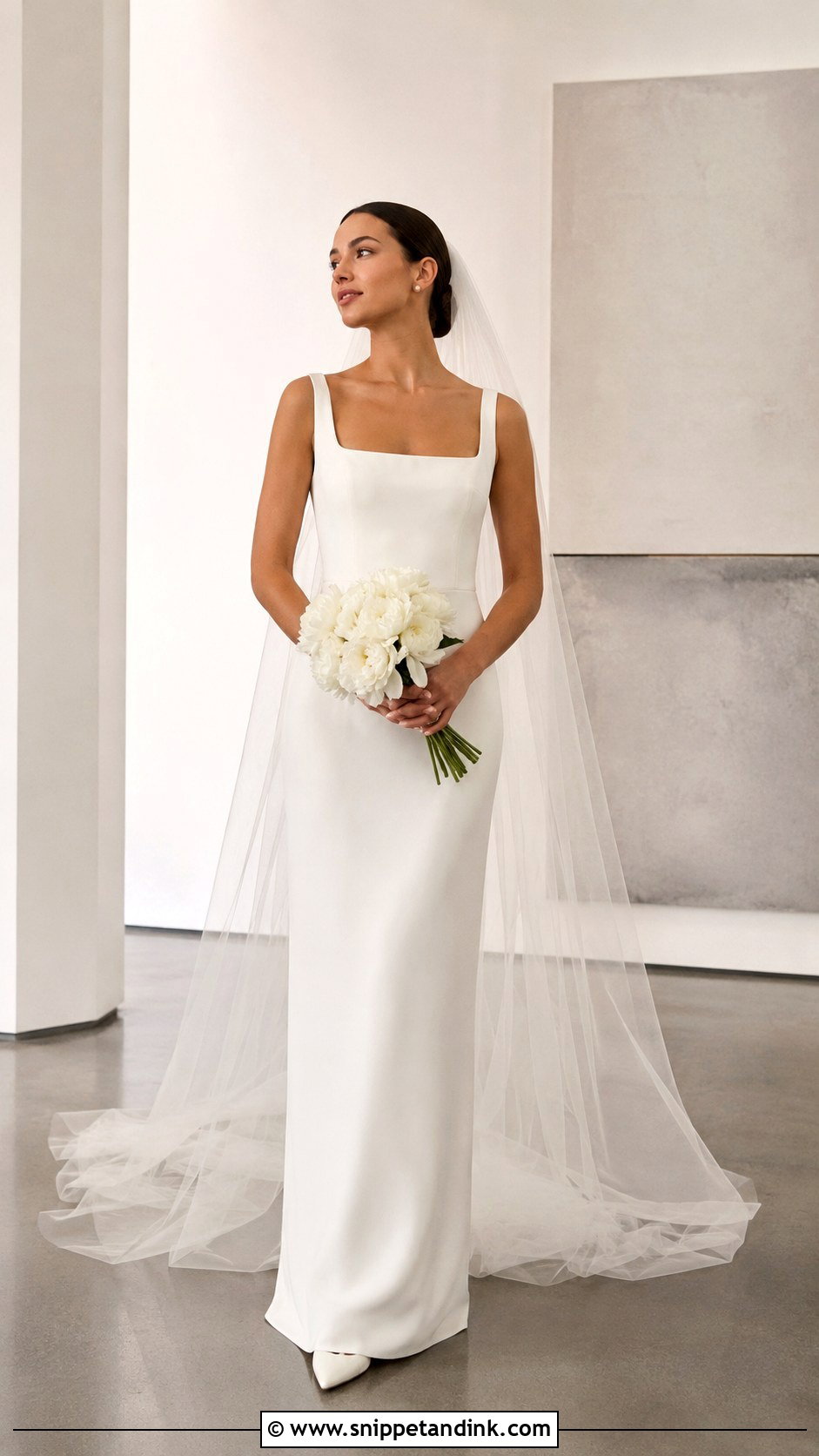
Crepe is all about the cut, and that’s both its appeal and its risk. With no lace or beading to look at, the eye goes straight to your face and the line of the gown, which photographs cleanly. It also shows every ripple of a badly fitted seam and every undergarment edge, so plan for excellent tailoring and smooth, edge-free underwear. A square, bateau or simple strapless neckline works. Pair it with pearl earrings, a long plain veil and pointed pumps or slingbacks. City weddings and gallery spaces suit it.
4. Corset Bodice Wedding Dress
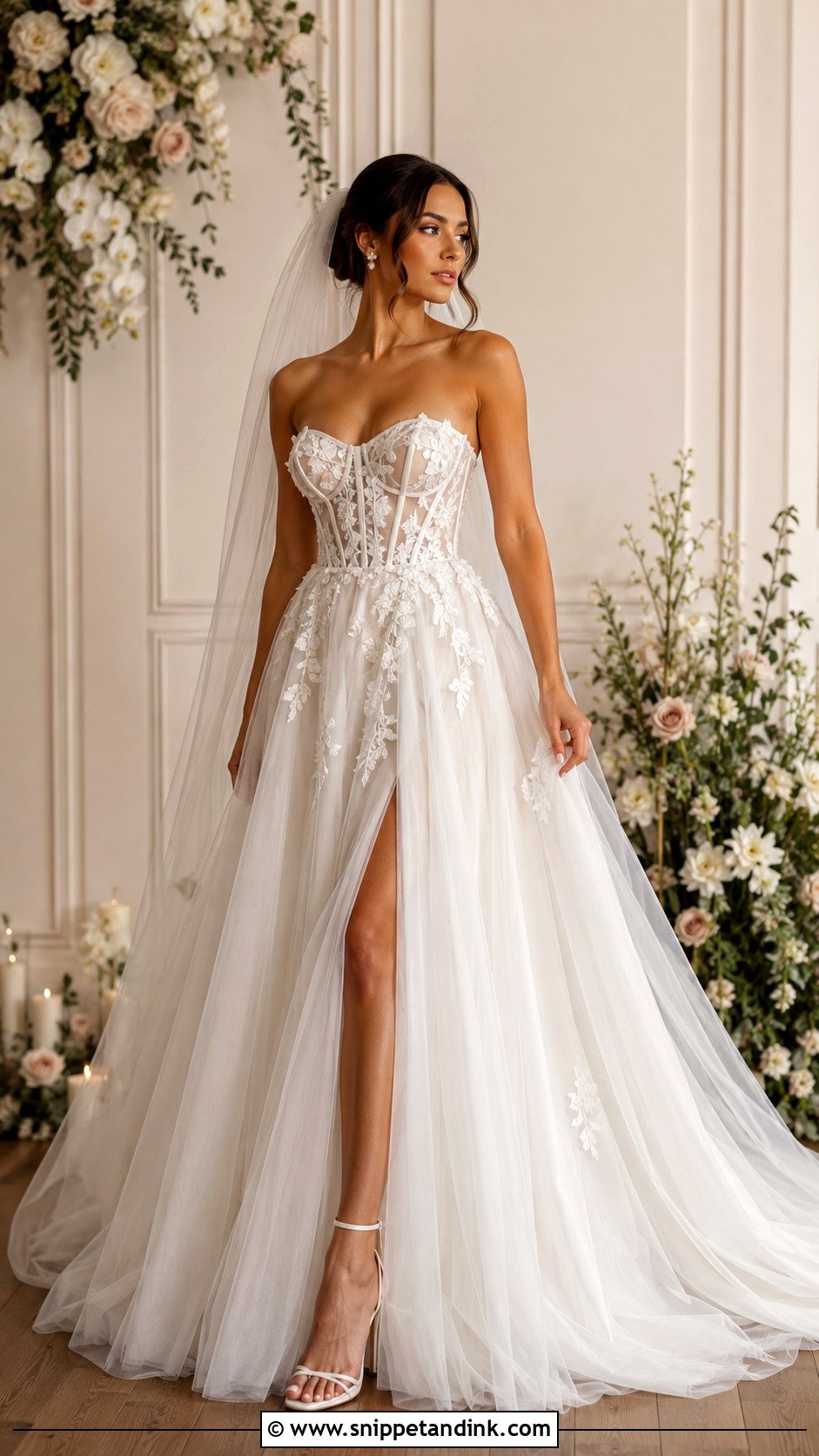
Today’s bridal corsets are softer than their historical cousins, with flexible boning that shapes the waist without the old rigidity. That structure does real work: a well-fitted corset bodice often supports the bust on its own, so you can skip a bra. It pairs with full tulle, satin or lace skirts, or a fitted silhouette. Sheer panels and embroidered appliqué add detail. The fit check I insist on is sitting and eating; if you can’t comfortably take a full breath seated, it needs letting out. A soft veil, dainty necklace and heeled sandals are enough.
5. Basque Waist Wedding Dress
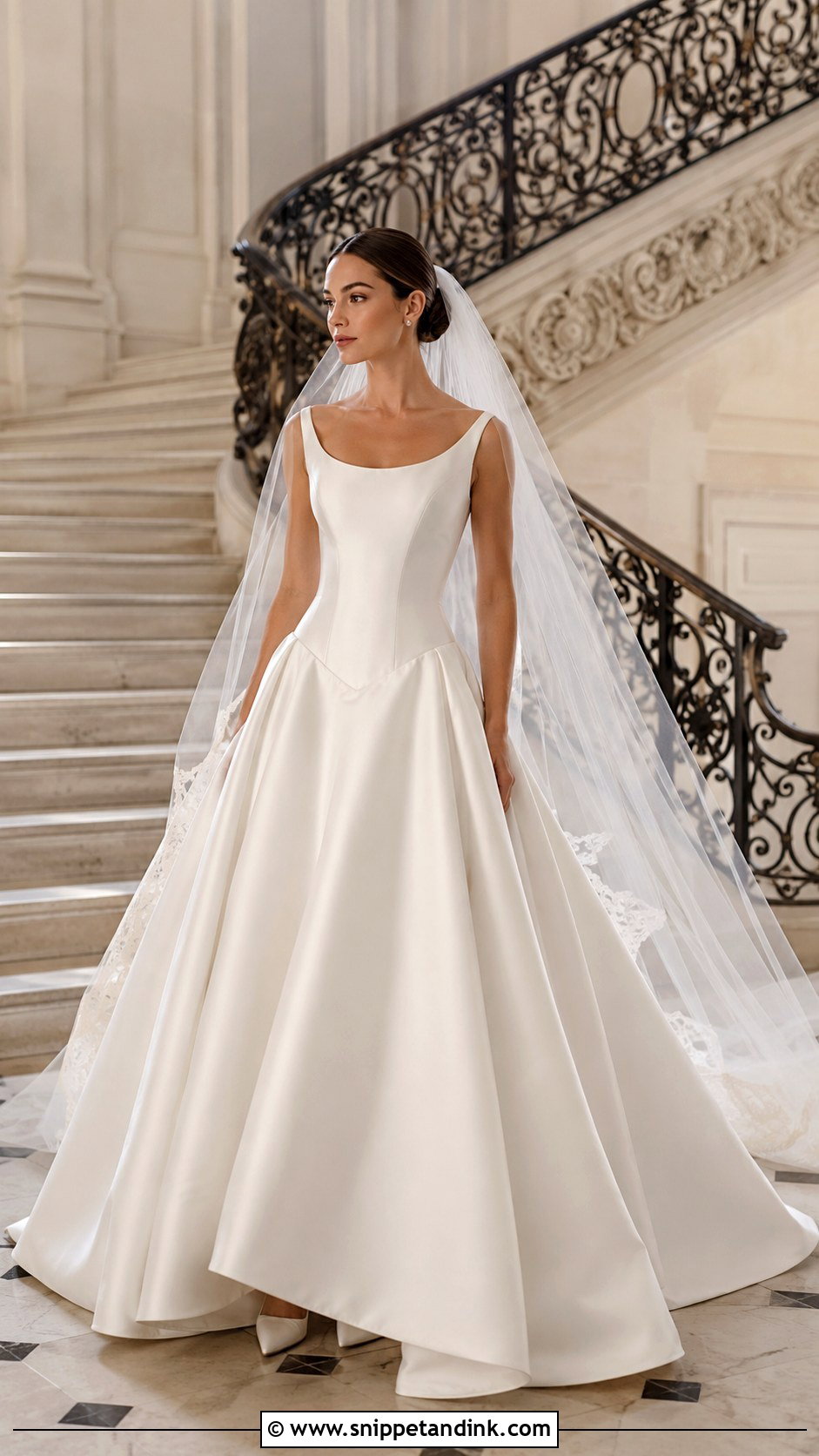
The dip of a basque waist wedding dress lengthens the torso and gives a vintage romance, and it’s one of the most dramatic shapes that still looks refined. It works best over a full skirt, where the point gives clear shape before the fabric opens. The point has to land correctly on your body, though. If it sits too low on a short torso, it cuts the legs off, so the waist is the first thing I mark at a fitting. Satin is regal, tulle soft, lace romantic. A long veil, small earrings and classic pumps finish it for historic estates and candlelit receptions.
6. Off Shoulder Wedding Dress
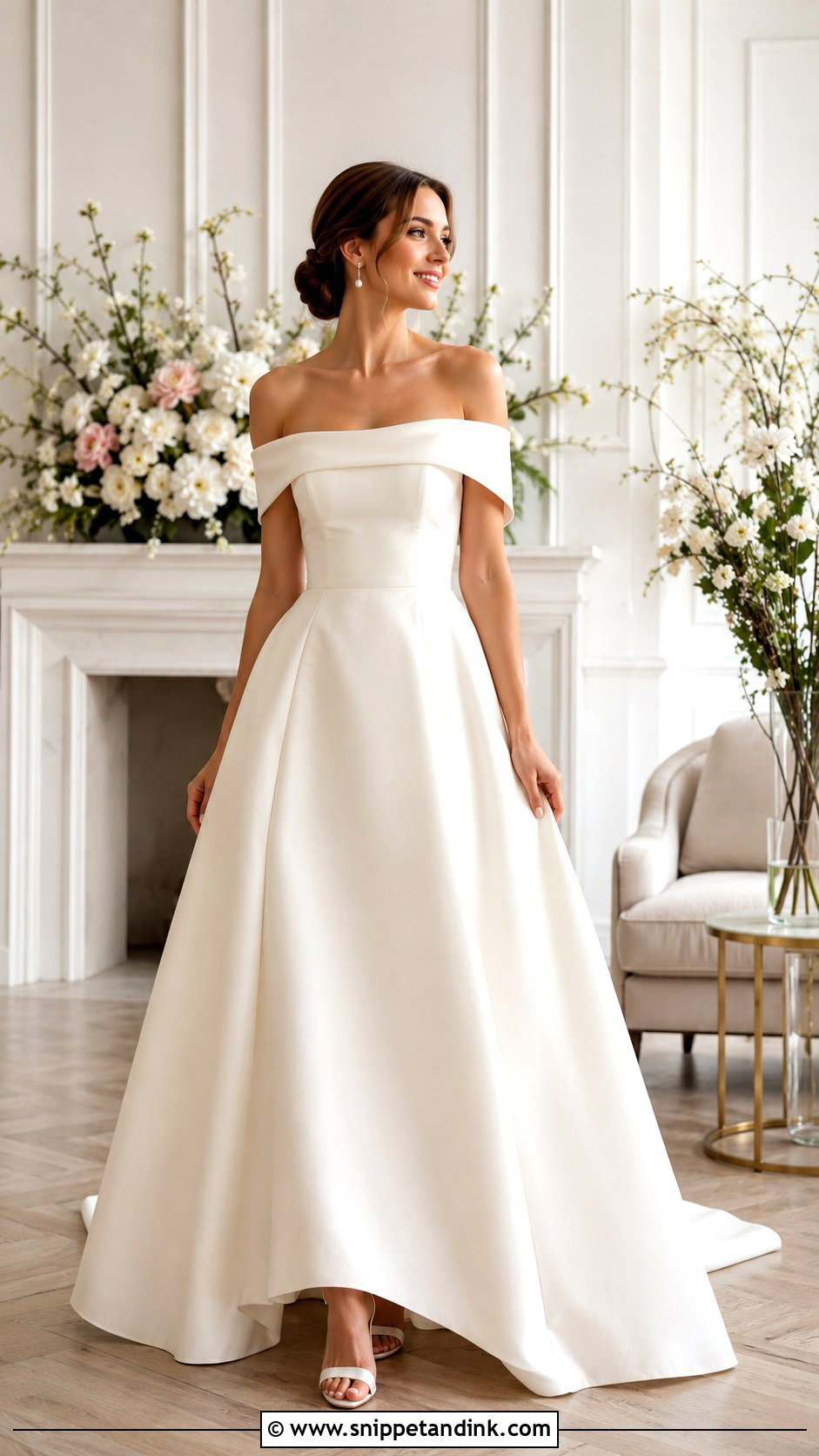
Off-shoulder necklines frame the collarbones and shoulders softly without revealing much else. They work on fitted gowns, A-lines and ball gowns. The catch is movement: off-shoulder straps sit on the upper arm, so you can’t lift your arms very high. Try hugging someone at the fitting. Skip the necklace if the neckline has folded fabric or sleeves, and choose earrings instead. A low chignon or half-up hair keeps the shoulders open, with ivory heels and a veil set behind the crown.
7. Long Sleeve Lace Wedding Dress
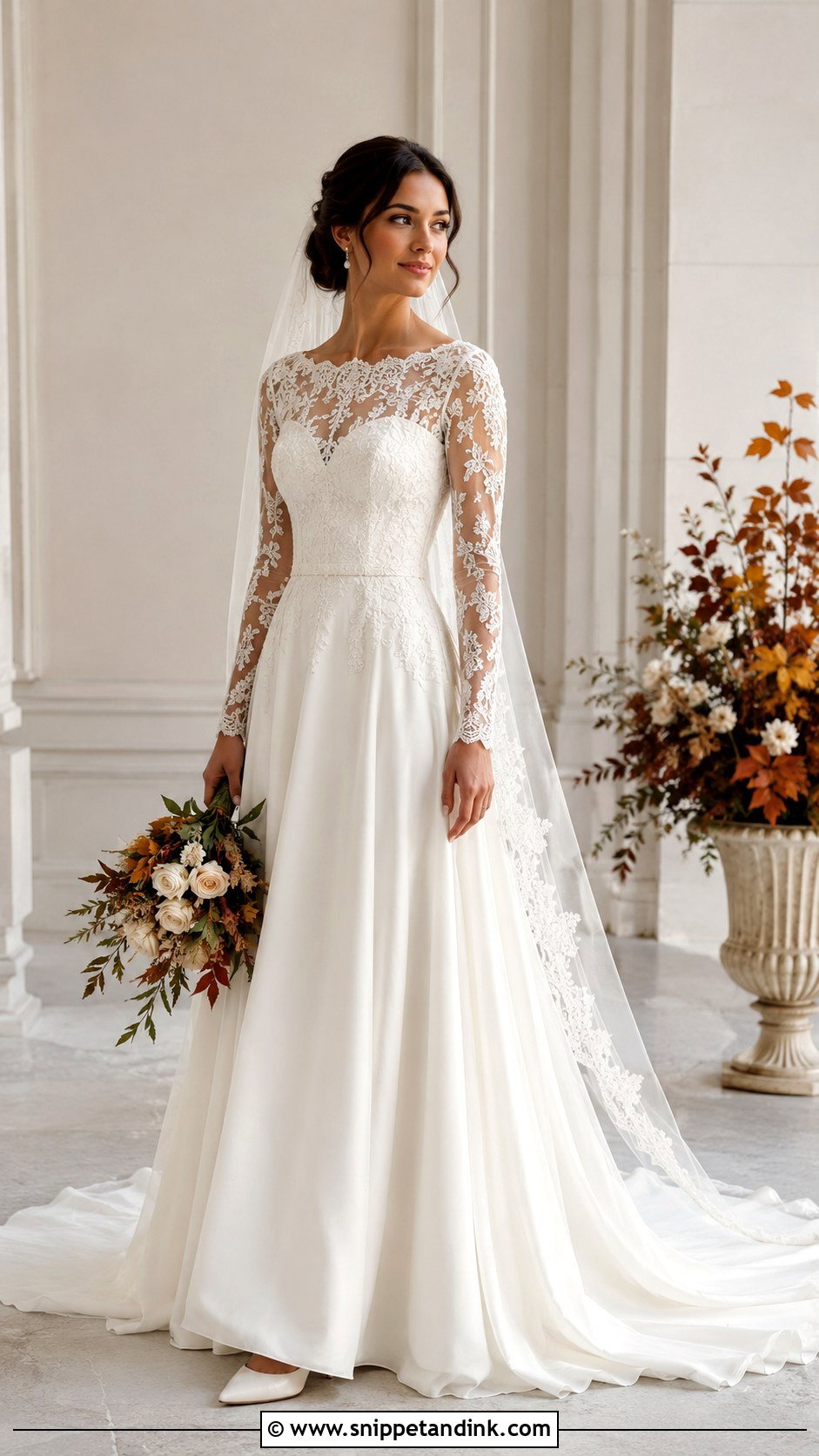
Long lace sleeves add coverage while still looking delicate, especially in sheer lace with floral appliqué. They suit fall, winter and formal weddings, and lightweight lace makes them workable in spring. Sleeves need to fit through the arms and shoulders so you can move; a tight sleeve cap is the most common problem I fix in this style. With a high neckline, keep the hair up; with a V neckline, soft waves feel more relaxed. Pearl earrings, a soft veil and closed-toe heels complete it.
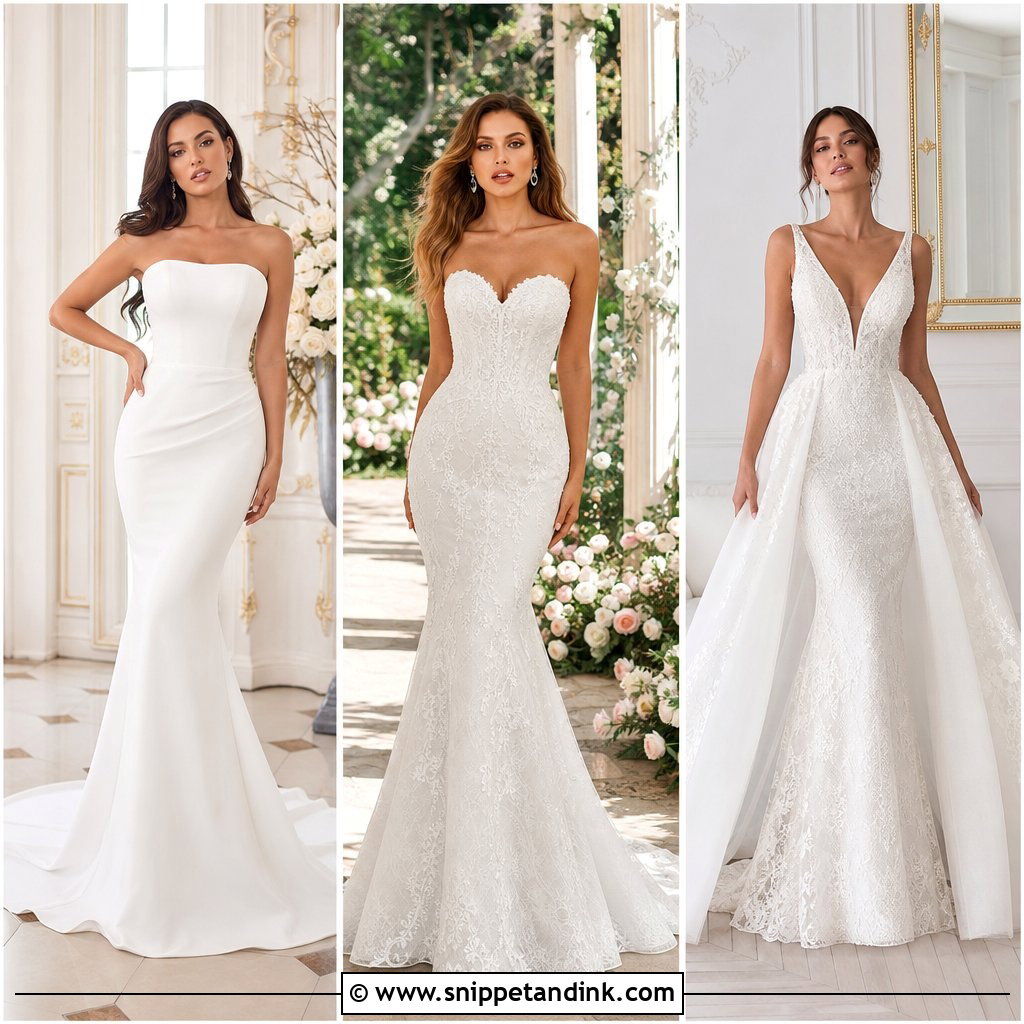
8. Strapless Column Wedding Dress
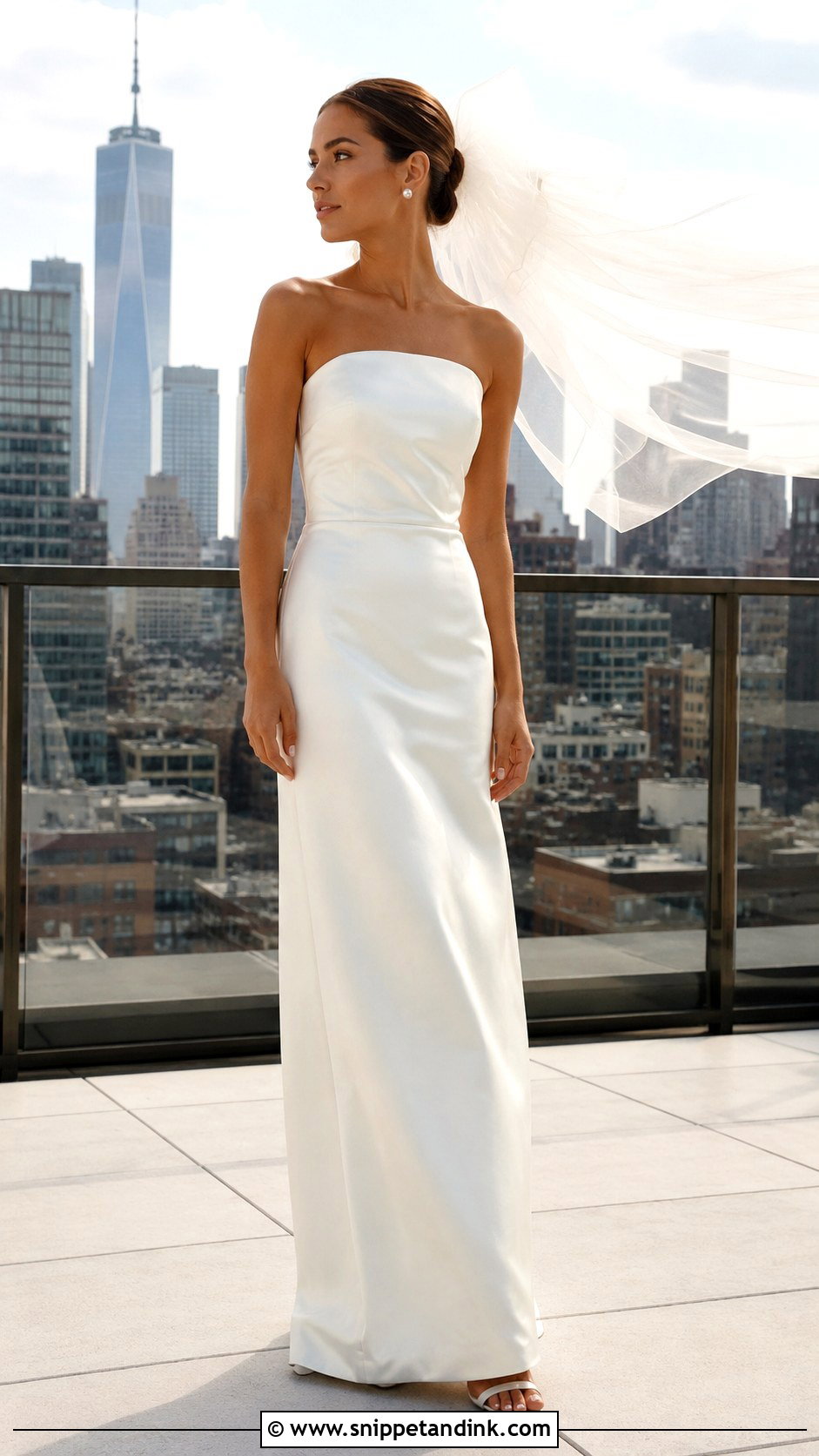
A strapless column wedding dress gives one clean vertical line from bust to hem, which lengthens the body. Everything depends on the bodice staying up. I want internal boning and a grip strip at the top edge so you can stand, walk and dance without tugging it all night. Satin gives shine, crepe structure, Mikado a crisp fashion edge. A sculptural veil, bold pearl studs and minimal heels finish it, and a statement bouquet adds personality without clutter. City, rooftop and destination weddings suit it.
9. Floral Embroidered Wedding Dress
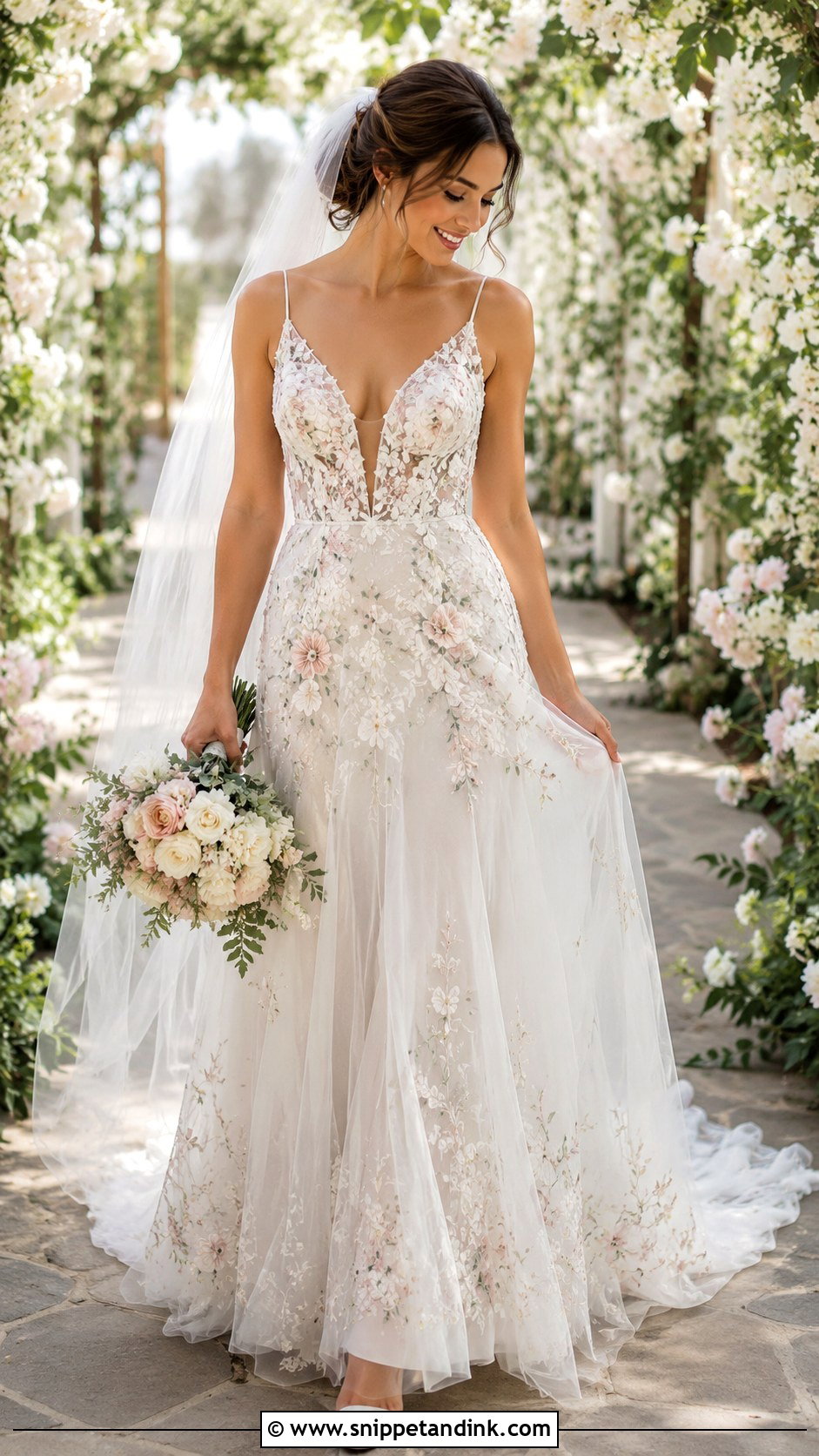
Embroidery adds detail with meaning behind it. Ivory thread keeps it subtle; blush, pale blue or champagne thread makes it visible. On tulle, organza or sheer overlays the flowers look as if they float. A simple veil, natural makeup and small earrings keep attention on the stitching. I often suggest matching the embroidered flowers to your bouquet or the venue’s planting, which ties the whole day together. Garden weddings and spring dates show it off best.
10. Pearl Embellished Wedding Dress
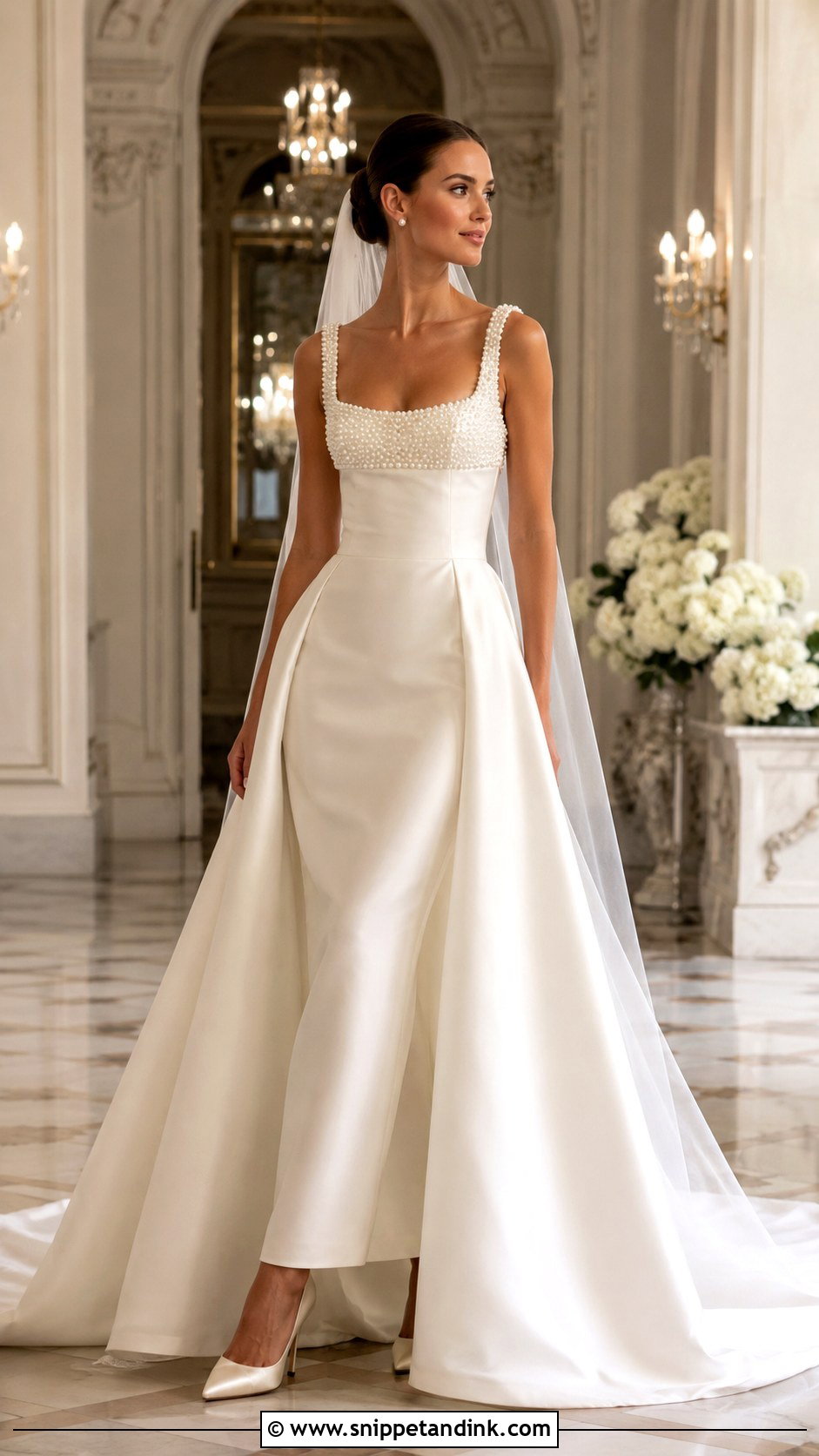
Pearls give texture and a soft glow without the bright sparkle of crystal, so they read polished rather than flashy in photos. They can sit along the bodice, sleeves, straps or neckline, or cover the gown entirely. Full pearl coverage is heavy and can catch on lace veils, so if comfort matters, choose lighter placement. Pearl studs or no extra jewelry, a clean veil, satin heels and a smooth bun keep it refined for a ballroom or evening celebration.
11. Tulle Princess Wedding Dress
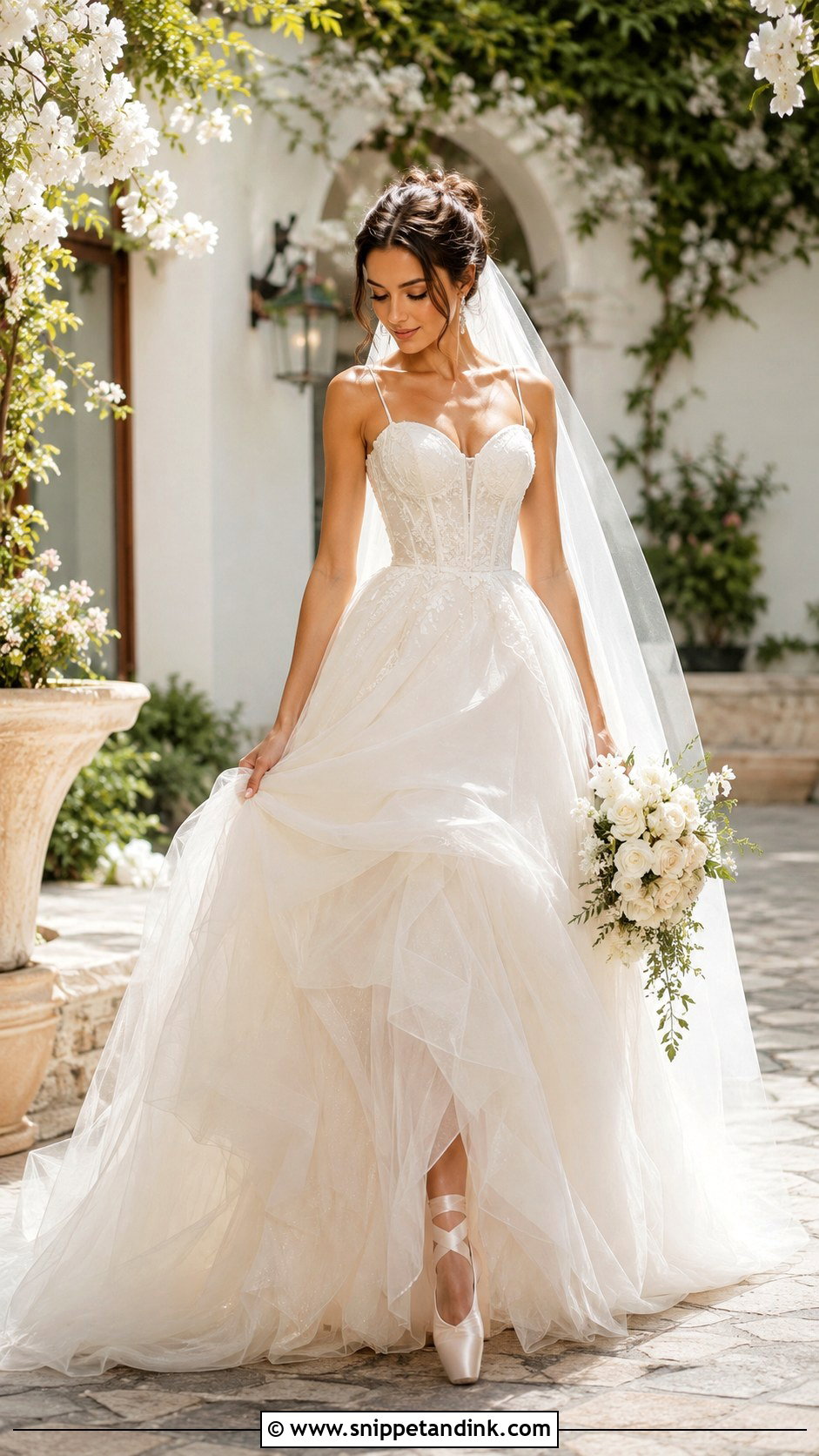
Tulle gives volume without the weight of satin or Mikado, which is why it’s the fabric for a floating skirt. It suits a fitted bodice, sweetheart neckline or delicate straps. On a petite frame, I’d choose softer layers rather than extreme volume so the dress doesn’t overpower you. Tulle also snags on prong rings, bracelets and rough floors, so expect a little wear at the hem by the end of the night. A long veil, simple earrings and ballet-style heels keep it graceful and grown-up.
12. Mermaid Wedding Dress
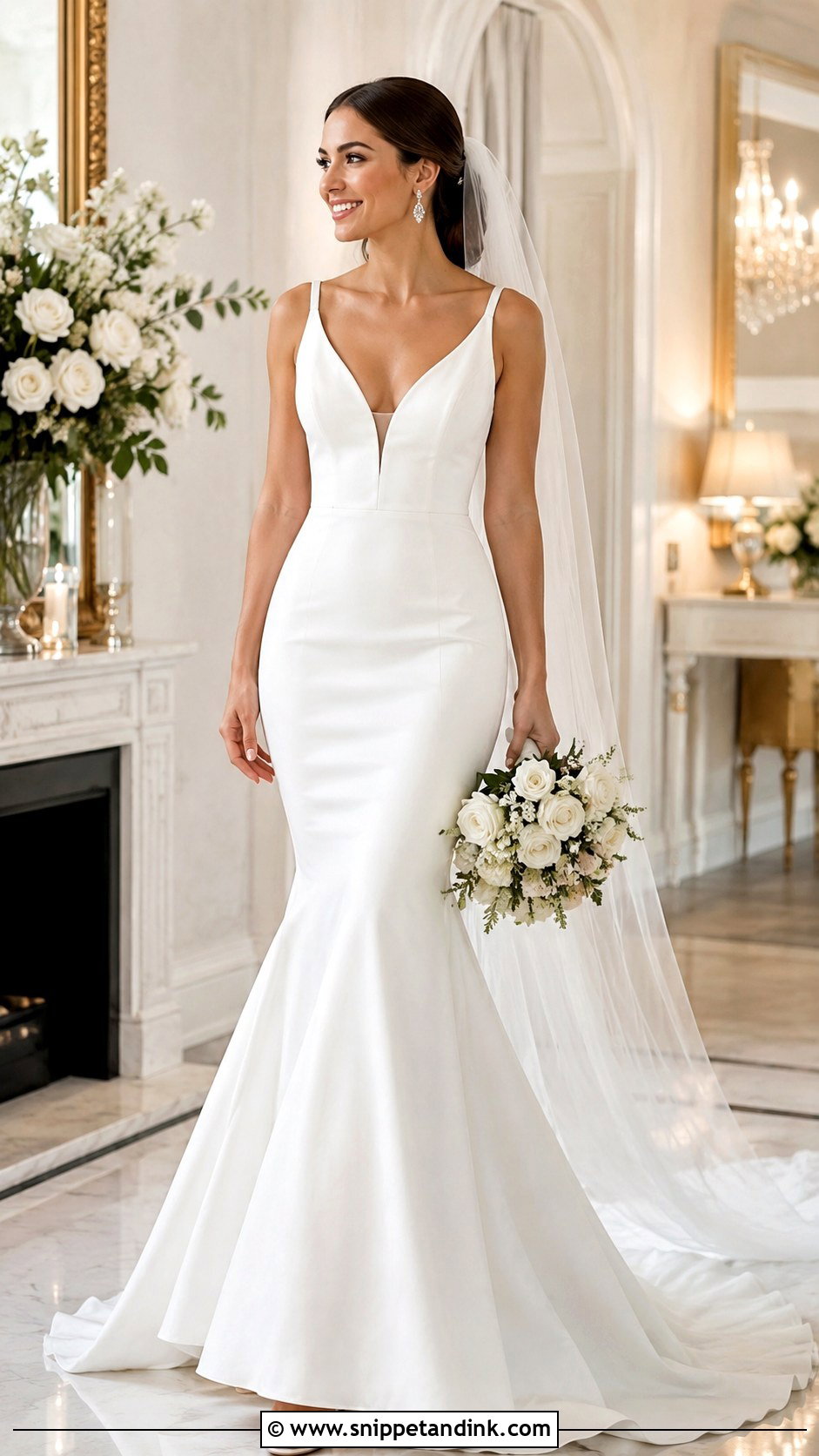
The mermaid hugs the bodice, waist and hips, then flares near the knee or lower thigh, giving a confident, curvy line and strong movement in photos. Stretch crepe is the most comfortable; lace romantic; satin polished. Where the flare starts matters: too low and you’ll shuffle rather than walk, and sitting becomes hard work. At fittings I have brides climb a step and sit in a low chair. Pair it with a long veil, sleek earrings, supportive heels and a medium bouquet so the silhouette stays the focus.
13. Sheath Wedding Dress
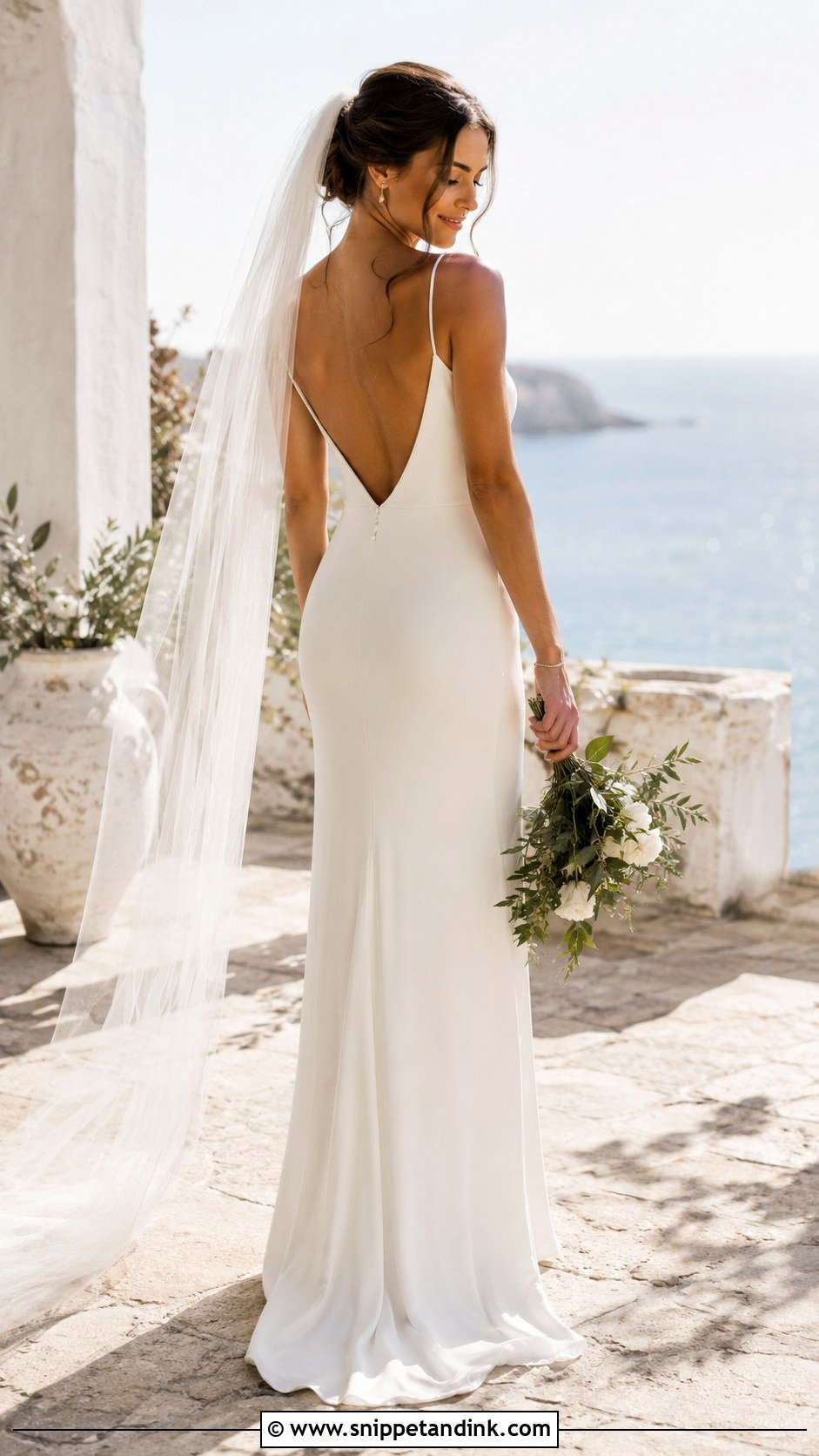
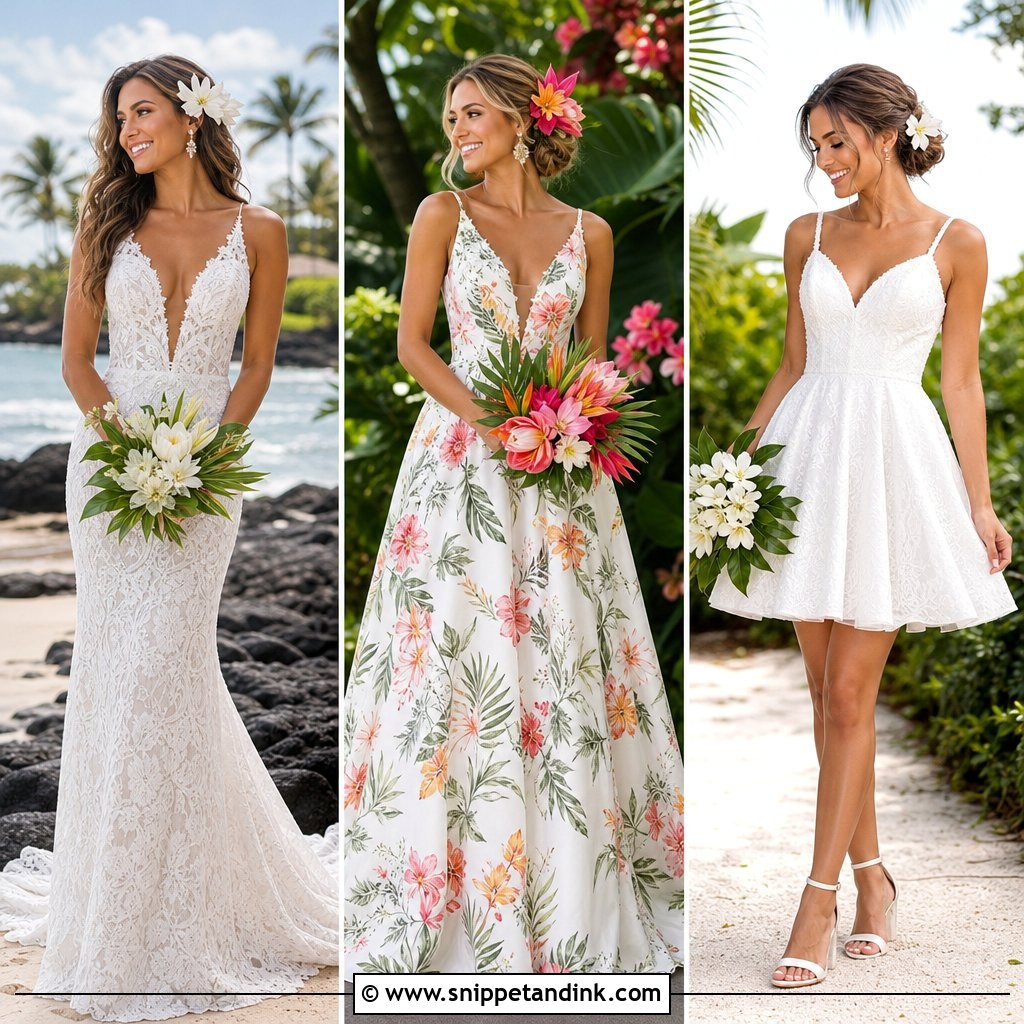
A sheath falls close to the body without a mermaid’s flare, so it moves naturally and suits beach weddings, courthouse ceremonies and intimate venues. Soft crepe, silk, lace or satin all work. Because it skims rather than holds, choose undergarments early and wear them to every fitting. Add interest with a low back, side slit, lace overlay or draped neckline if you want it. Delicate sandals, a light veil and minimal jewelry keep it relaxed but still clearly bridal.
14. High Neck Wedding Dress
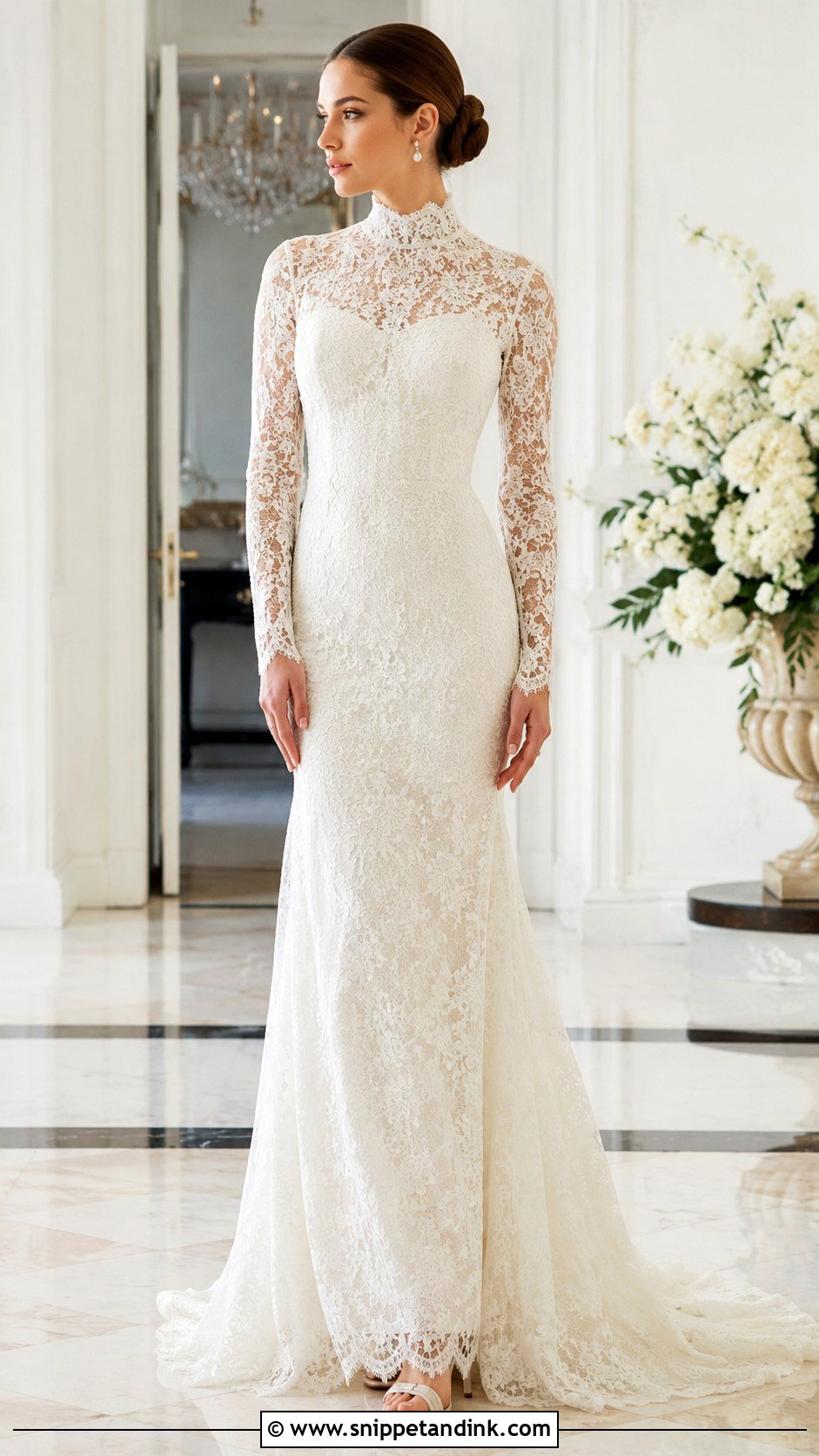
Classic in lace, modern in crepe, fashion-forward in satin: a high neckline changes character with its fabric. It gives coverage while drawing attention up to the face. I’d balance a covered front with an open back, fitted waist or moving skirt. Skip the necklace and wear earrings or a bracelet, with a clean bun or tucked waves. Choose a fabric light enough to breathe in, because a high neck in heavy satin gets warm quickly indoors.

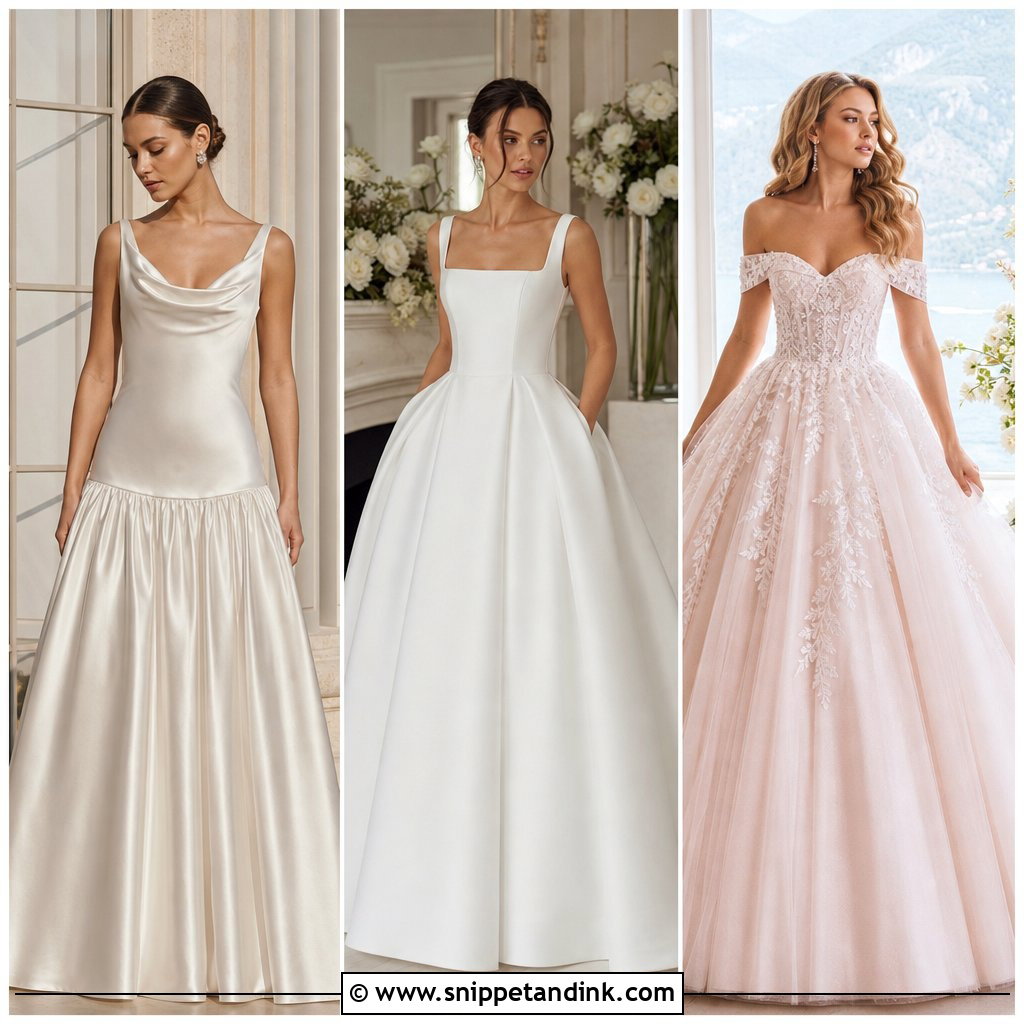

15. Square Neck Wedding Dress
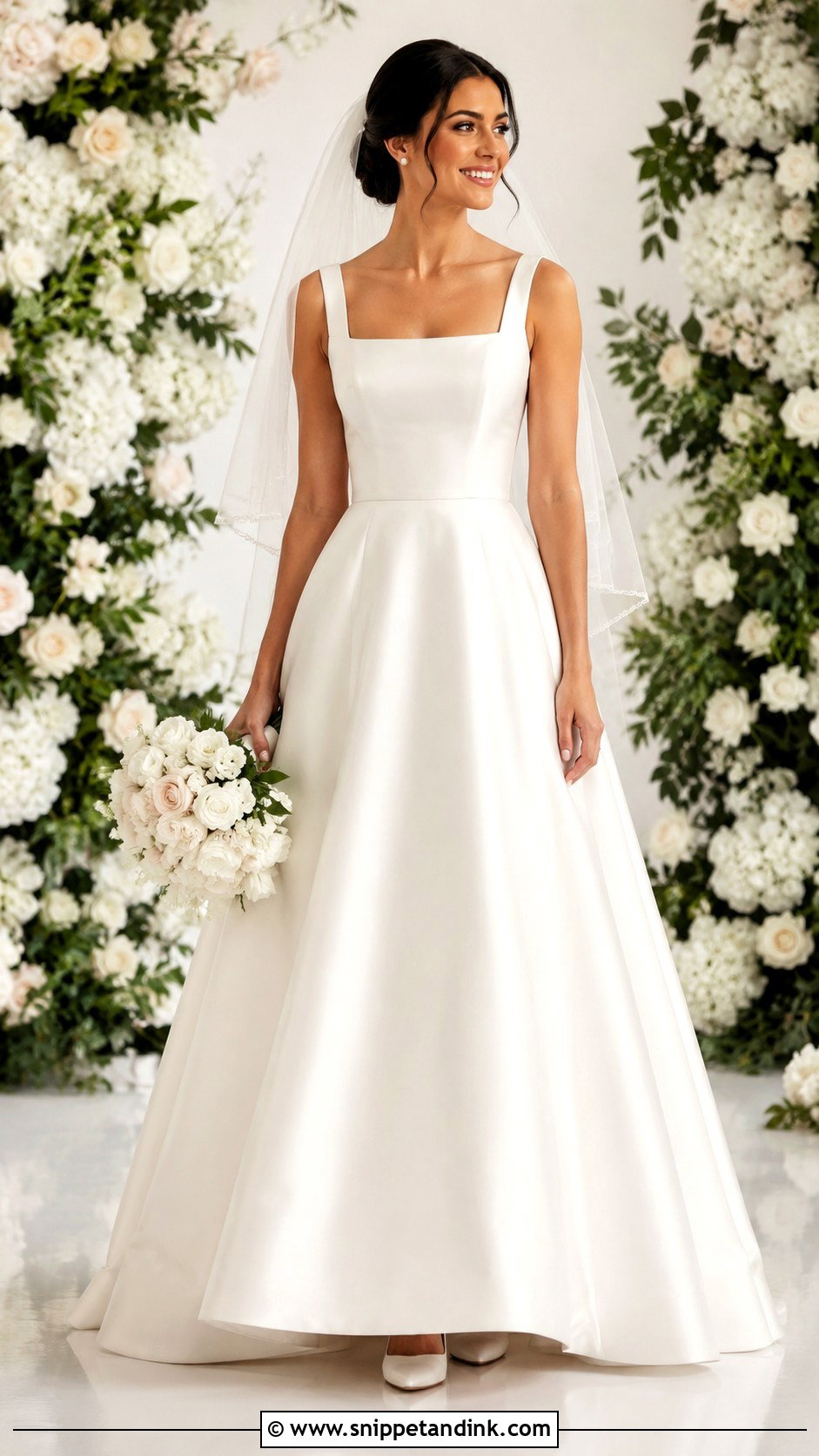
Square necklines frame the collarbones with clean lines that read classic and modern at once. They work with straps, sleeves or a structured bodice, over an A-line, column or full satin skirt. The corners must lie flat; if they buckle when you breathe in, the bodice needs adjusting at the side seams. Pearl studs, a fingertip veil and elegant heels complete it, and the strong frame around the face helps in close-up portraits.
16. Sweetheart Neckline Wedding Dress
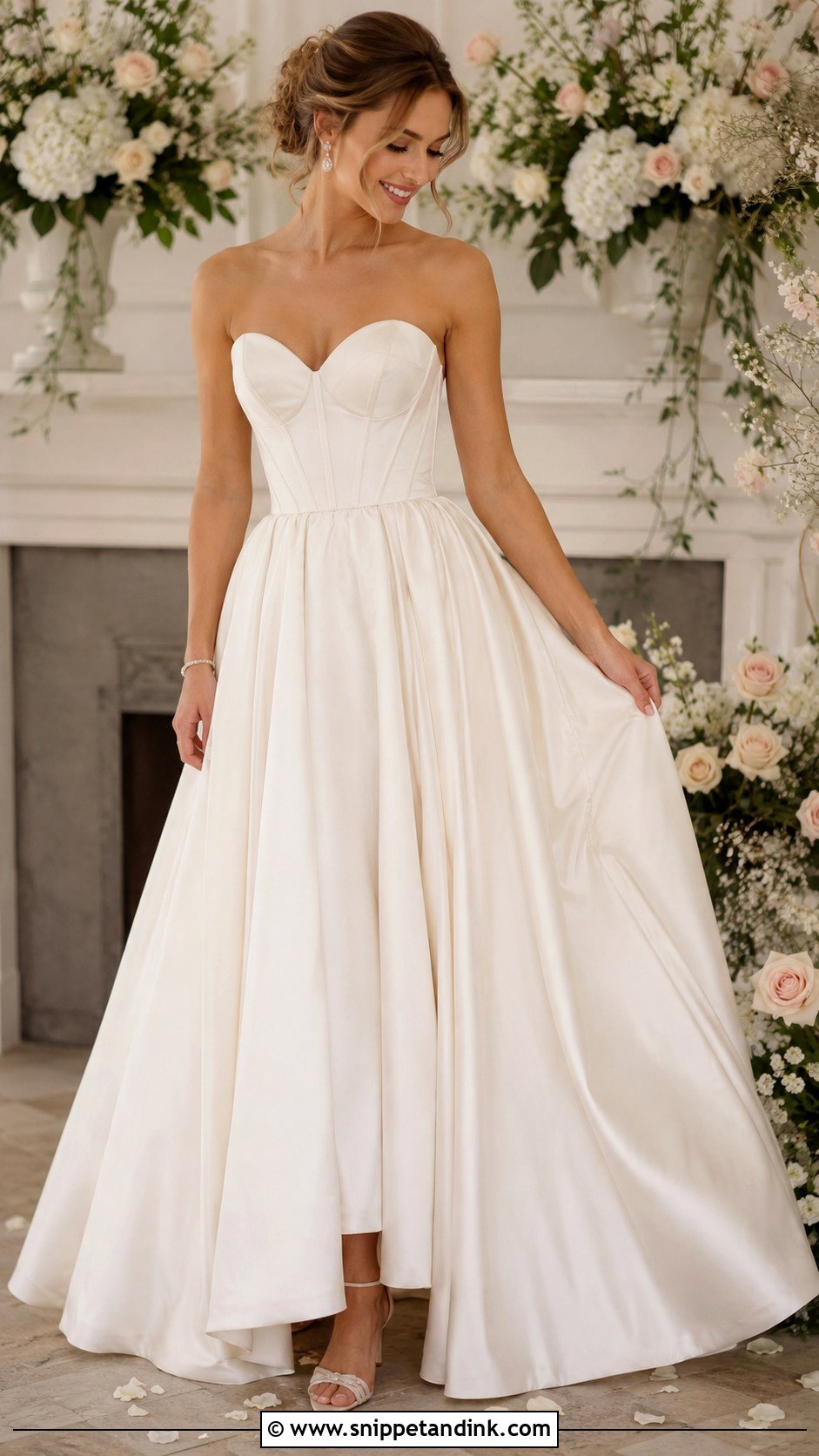
The curve of a sweetheart softens the upper body, and it suits strapless gowns, off-shoulder sleeves or delicate straps in lace, satin, tulle or organza. With an A-line and a soft veil it’s classic; with a corset bodice and full skirt it’s dramatic. Strapless sweethearts need real structure, especially for a fuller bust, so ask about boning and built-in cups. Small earrings, a dainty bracelet and comfortable heels finish it, and a simple bodice leaves room for a necklace.
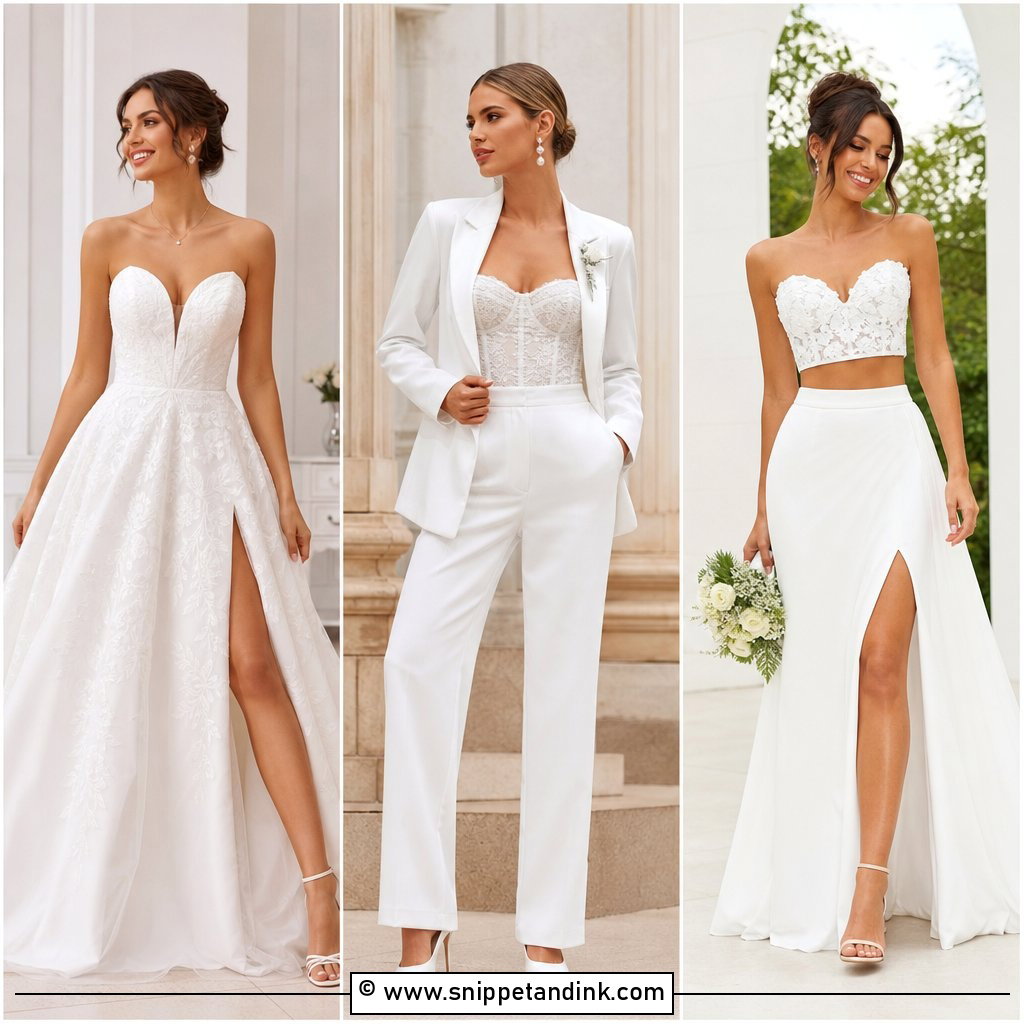
17. Open Back Wedding Dress
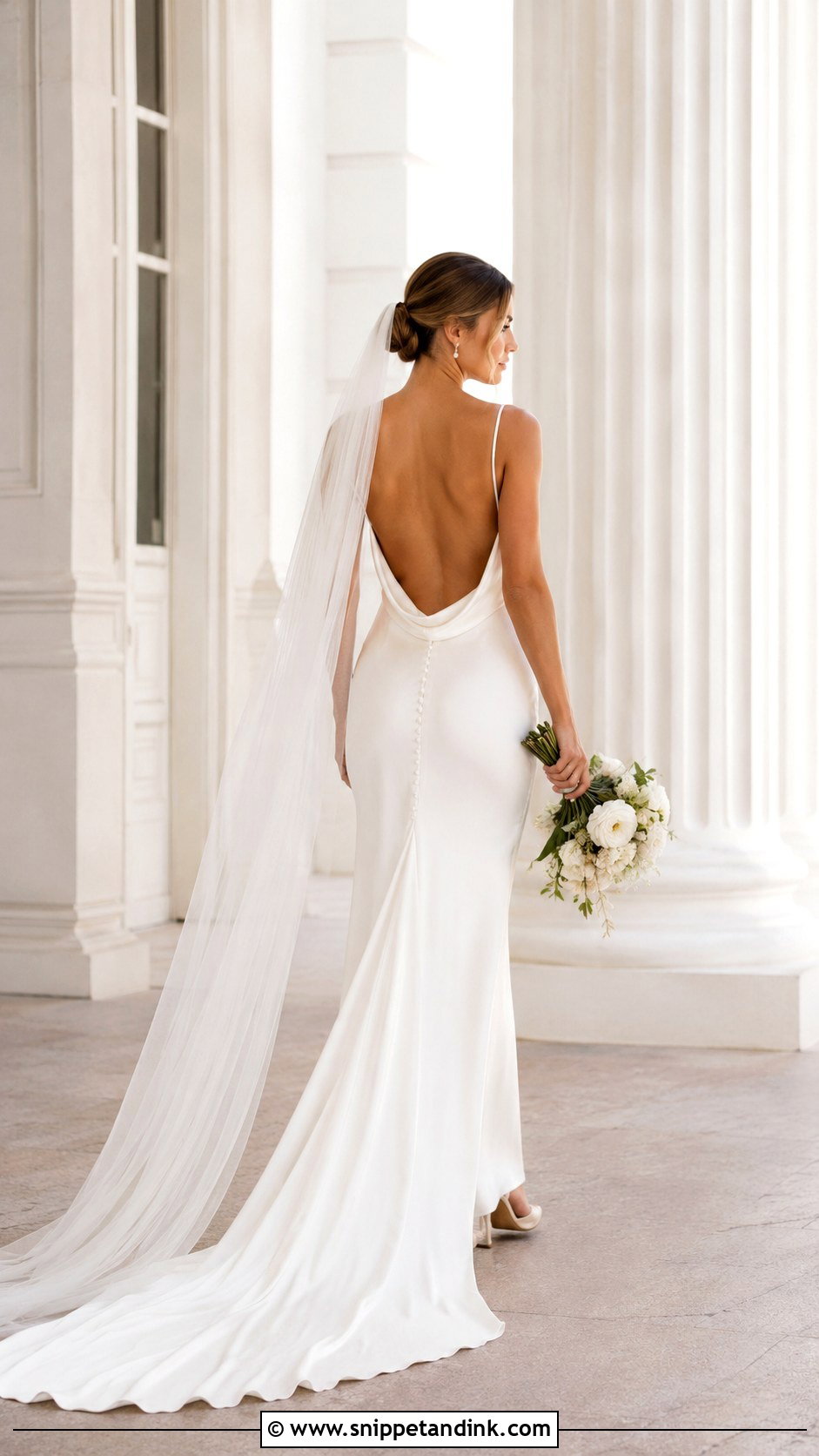
An open back gives you a second moment as you walk away down the aisle, while the front can stay simple and modest. Support is the question, since you can’t wear a standard bra. Ask for hidden cups, secure straps or internal structure, and sort shapewear early. Open backs suit fitted crepe, lace, satin columns and soft A-lines. A low bun, back necklace or a long veil you can remove after the ceremony shows the back off.
18. Bow Back Wedding Dress
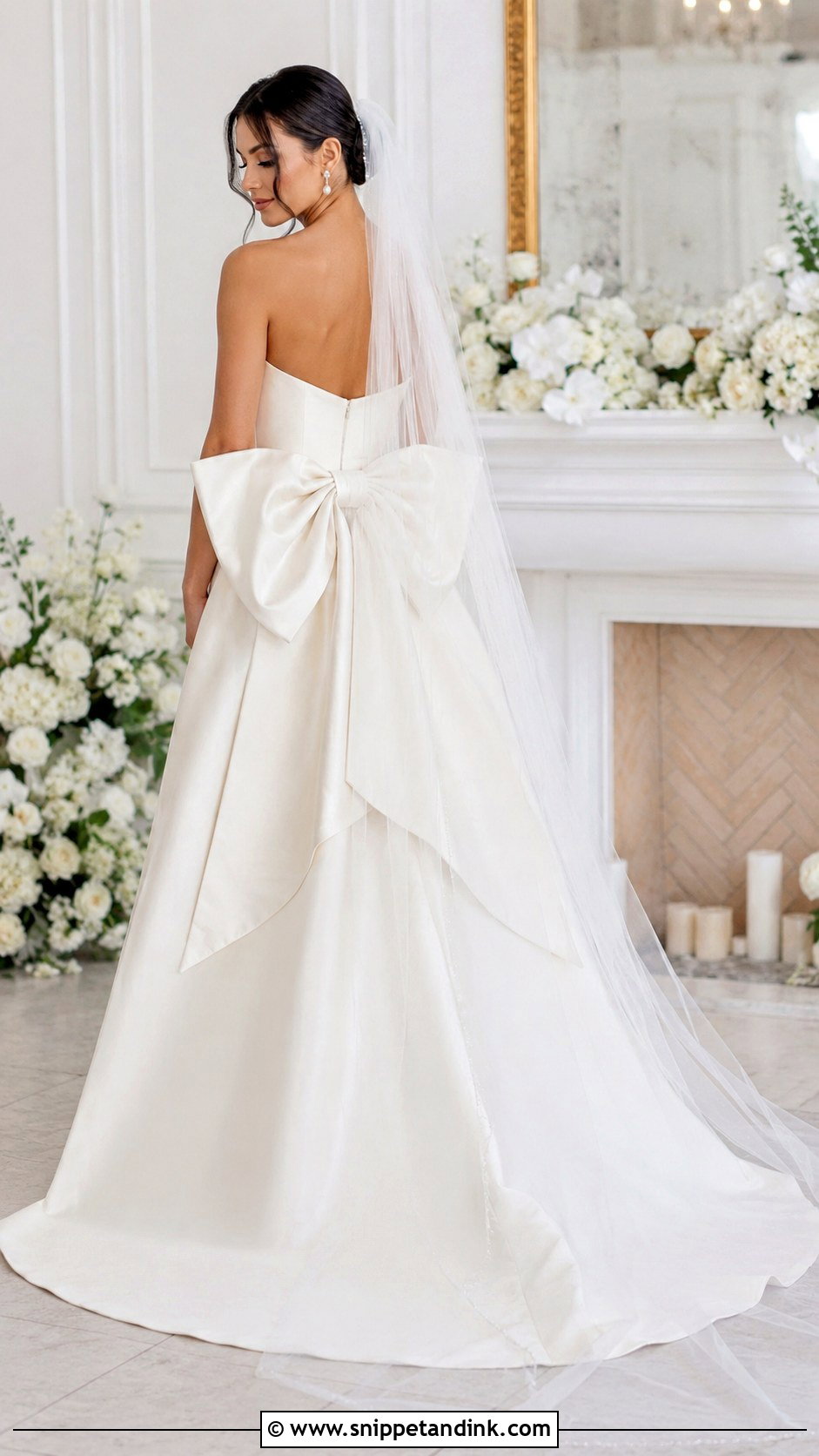
Bows range from soft and romantic to oversized and sculptural, adding personality without beading or lace. They suit satin ball gowns, column dresses and A-lines. Set the veil above the bow so it doesn’t flatten it, and keep jewelry and bouquet understated with a large bow. One practical point: a big satin bow crushes when you sit in a car or chair, so ask for interfacing to help it hold shape.
19. Detachable Overskirt Wedding Dress
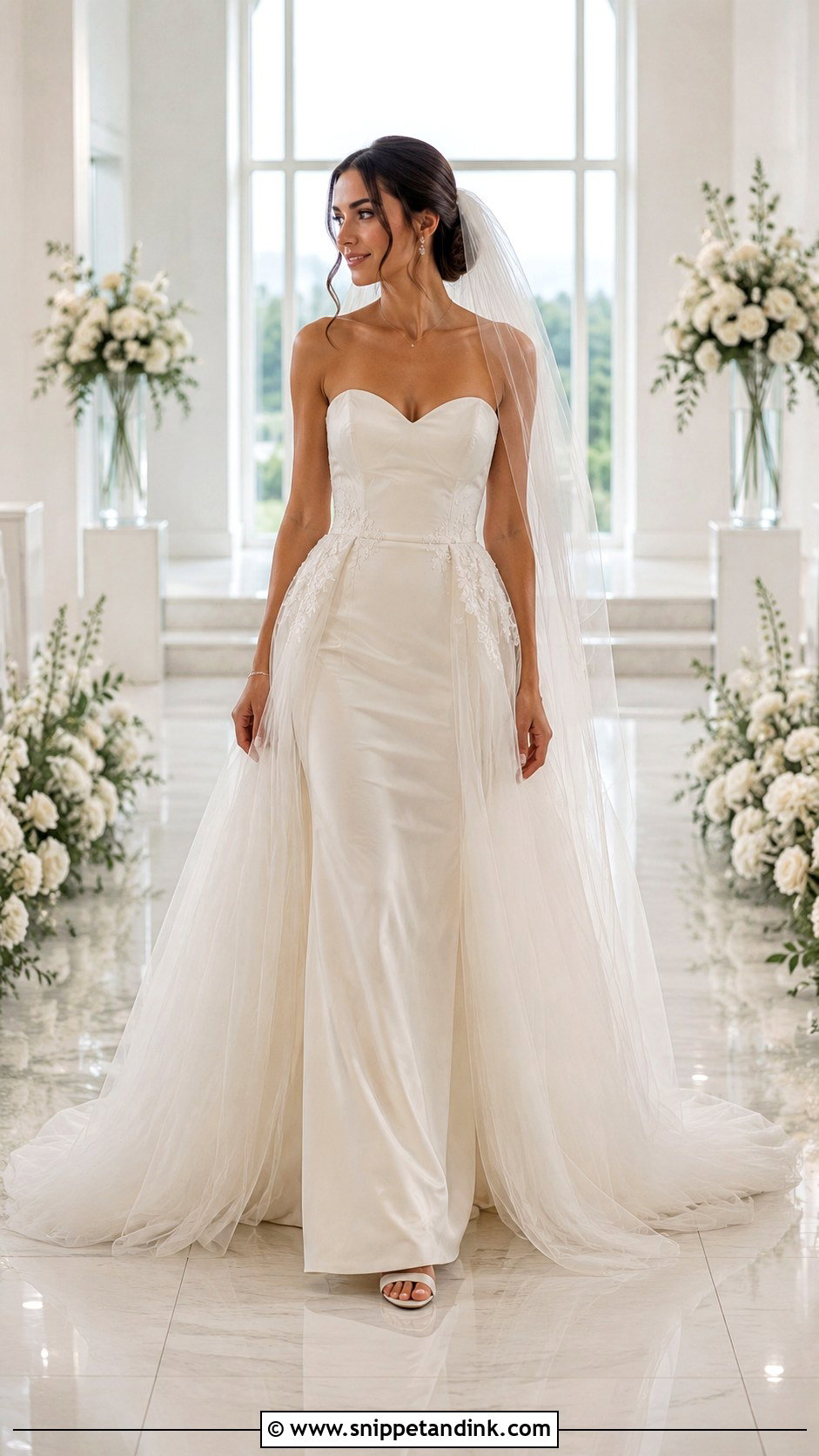
An overskirt gives you two looks: a full skirt for the ceremony and portraits, a sleeker gown for the reception. It suits fitted sheaths, mermaids and strapless styles. Ask how it fastens, because hooks and snaps at the waist come off in a minute, while a skirt sewn into the bodice doesn’t. Matching fabric keeps the change subtle; sheer tulle softens it. A long veil, clean heels and jewelry that works with both versions keep things consistent.

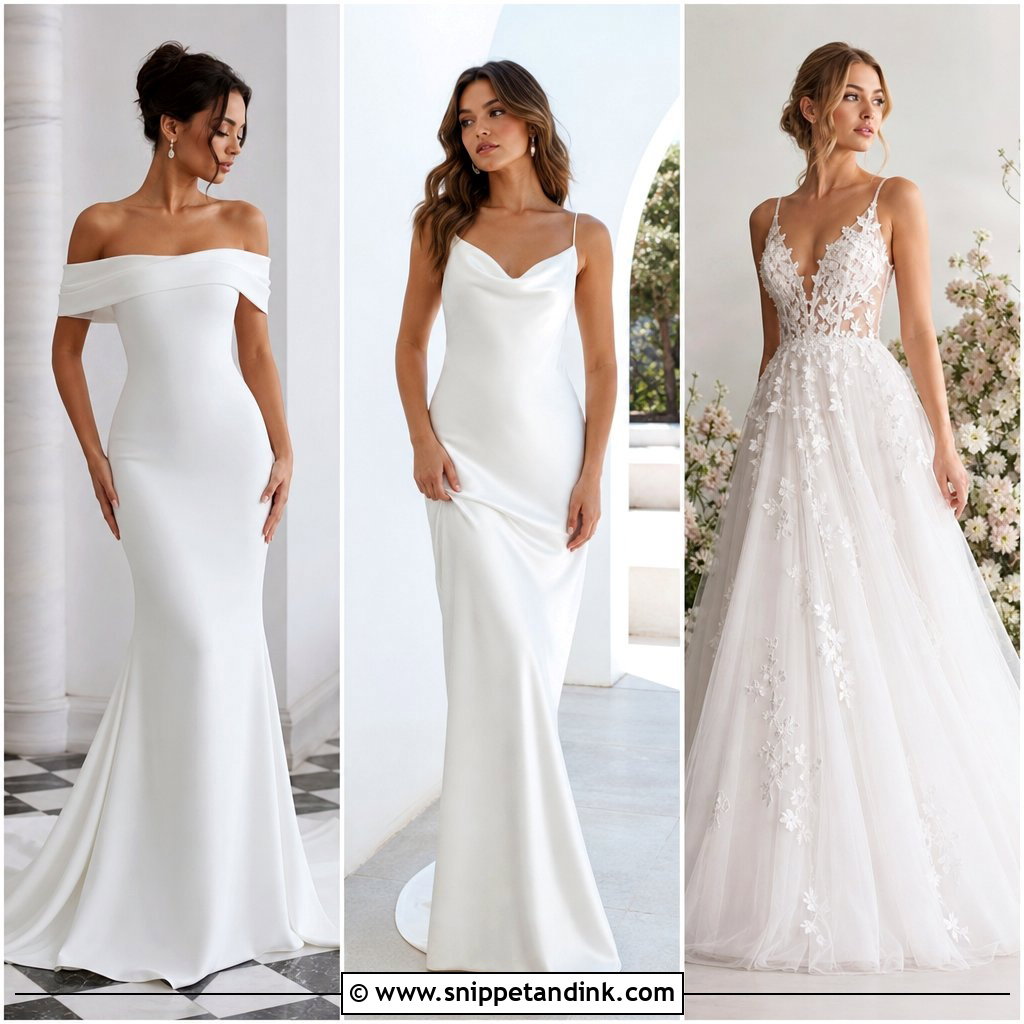


20. Convertible Wedding Dress
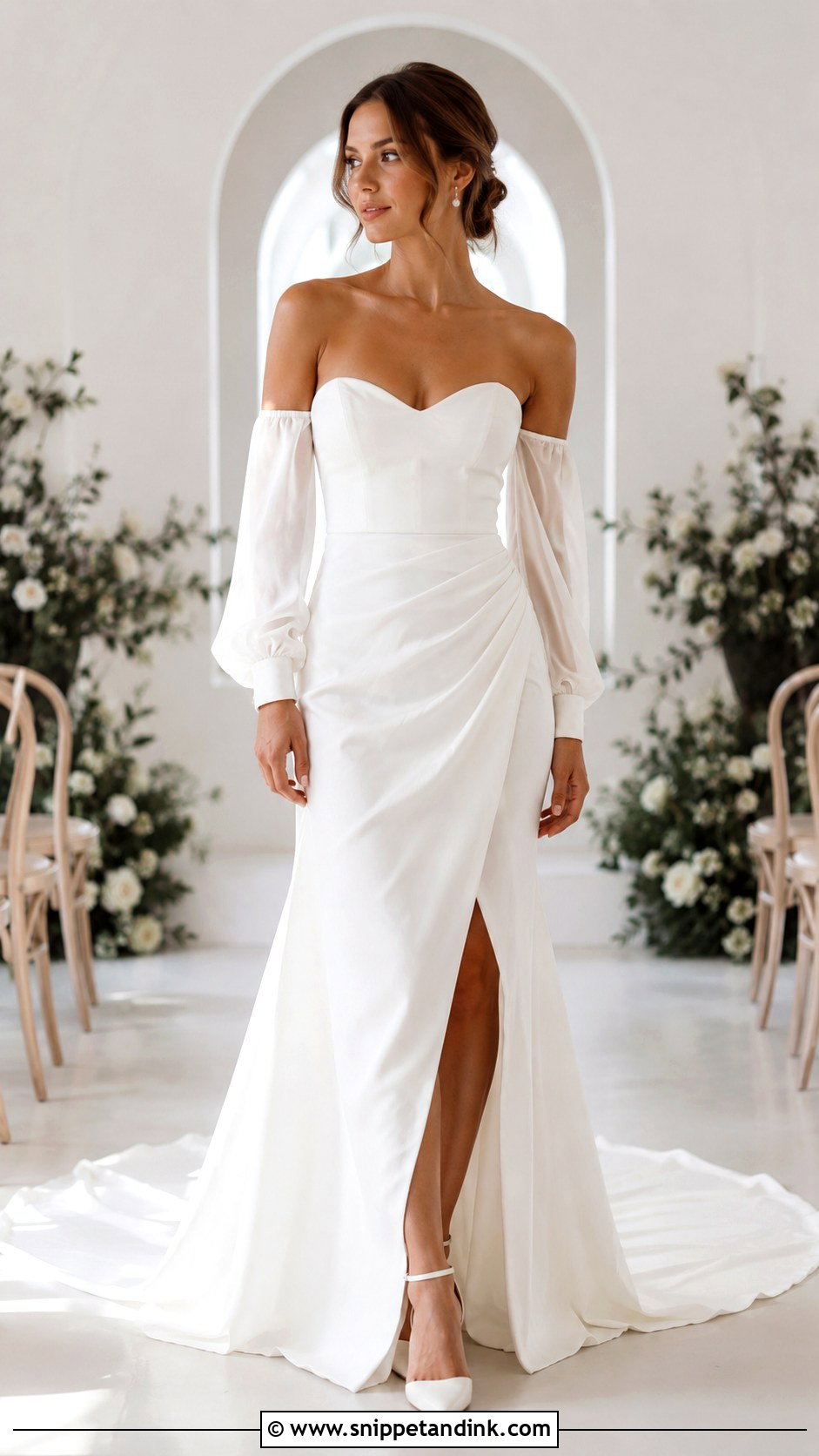
A convertible wedding dress might have removable sleeves, a detachable train, a changeable neckline or a skirt that transforms for the reception. It suits a formal ceremony followed by a relaxed party. My advice is to love the base dress on its own, then treat the add-ons as extras. It also packs well for destination weddings. Keep accessories simple enough to match every version, and practise each change with your helper before the day.
21. Short Wedding Dress
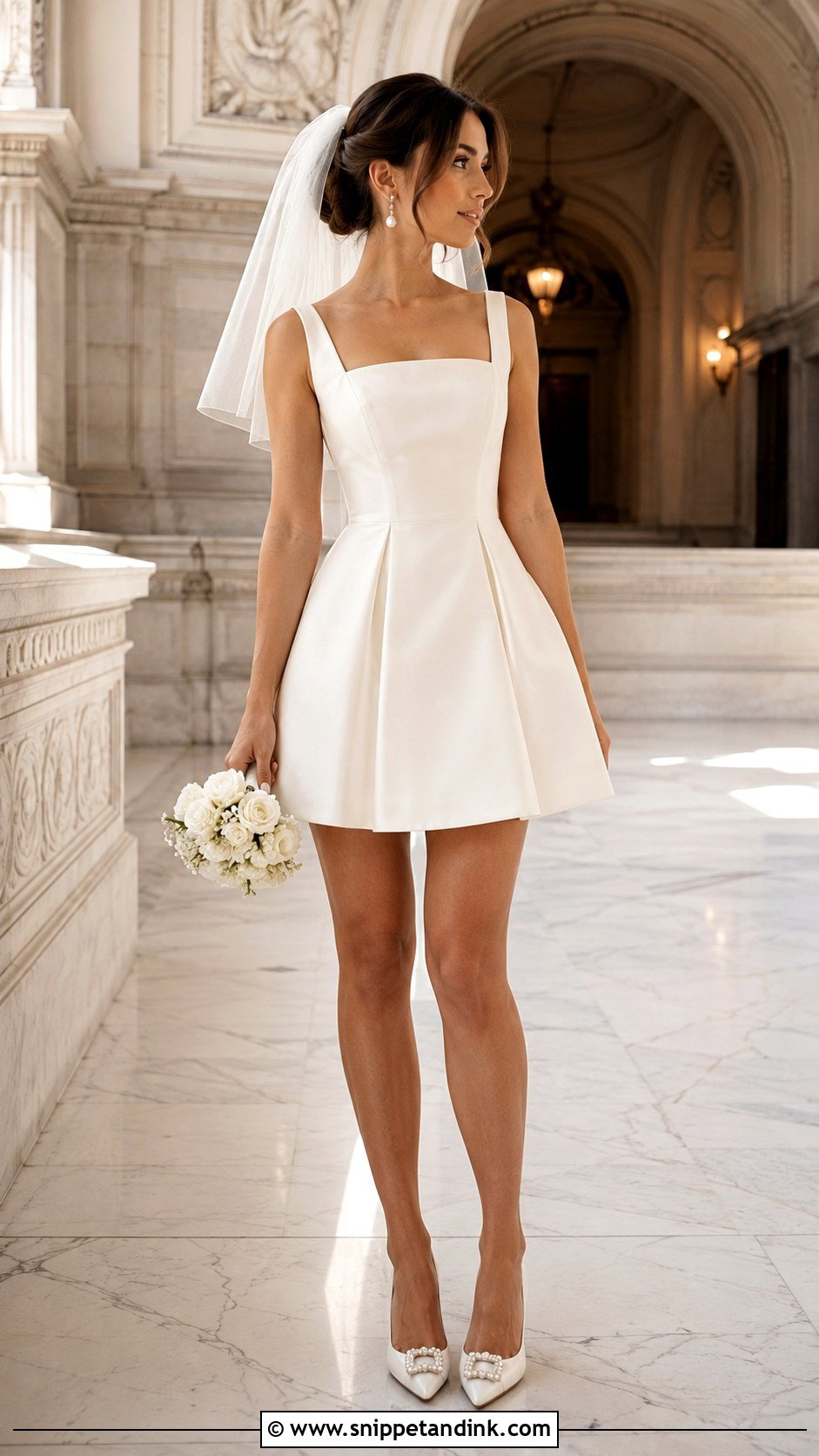
Short dresses are playful and easy to move in, and they suit courthouse ceremonies, elopements, after-parties and casual receptions. Satin looks polished, lace romantic, feathers or bows more fashion-led. With legs and shoes on show, the shoes become part of the outfit, so choose a pair that’s special but walkable. Add pearl earrings and a short veil or hair bow. Many brides wear one as a second look after a formal ceremony gown.
22. Tea Length Wedding Dress
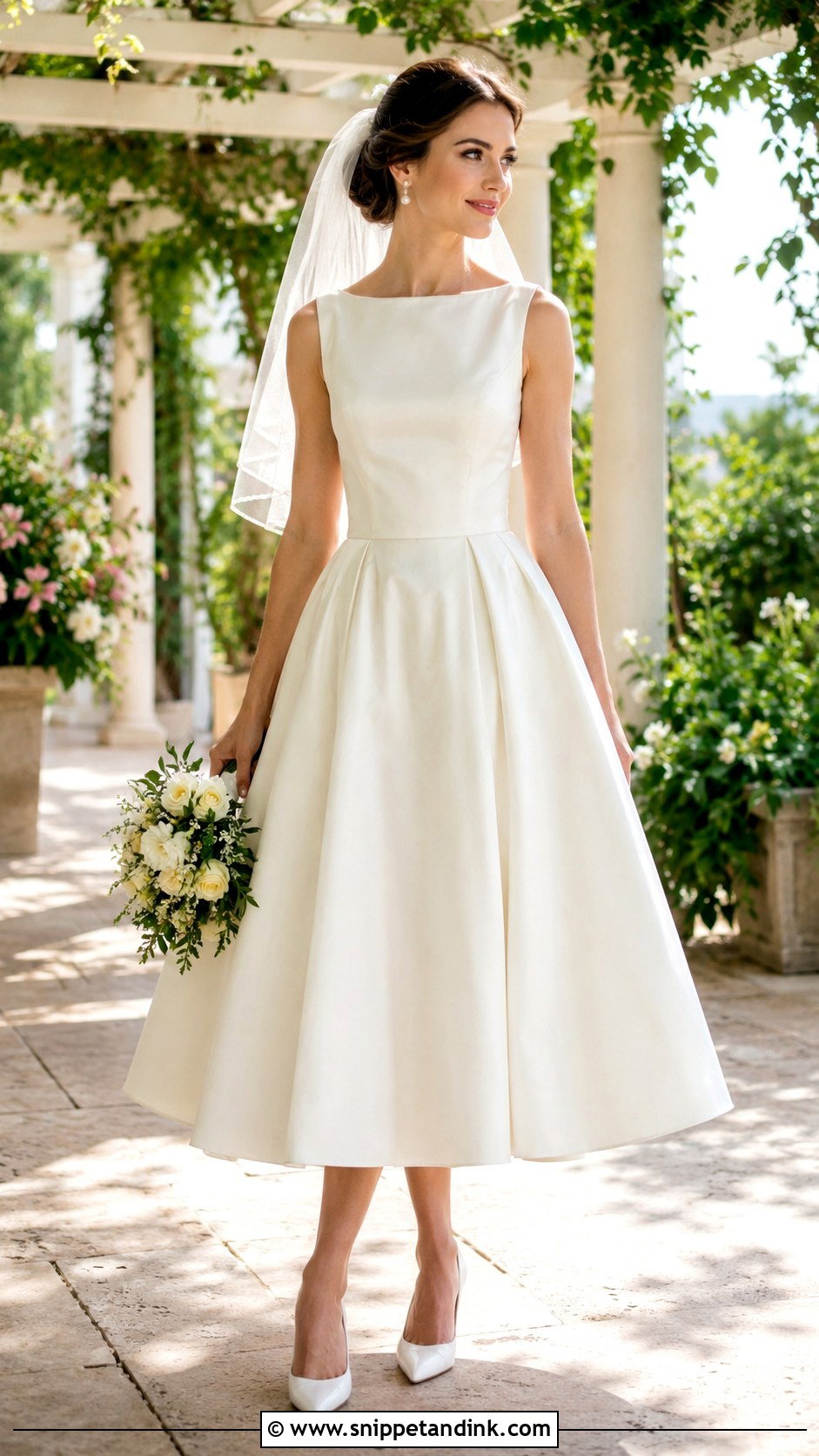
Tea length falls between knee and ankle, giving a vintage feel and showing off your shoes. It works with a fitted bodice and full skirt, lace overlays or satin. Get the hem exactly right; a few centimeters too long looks like a mistake rather than a choice. Pointed pumps, pearl earrings and a short veil finish it, and gloves or a bow push it toward retro. Daytime, garden and courthouse weddings suit it.
23. Bridal Jumpsuit Wedding Outfit
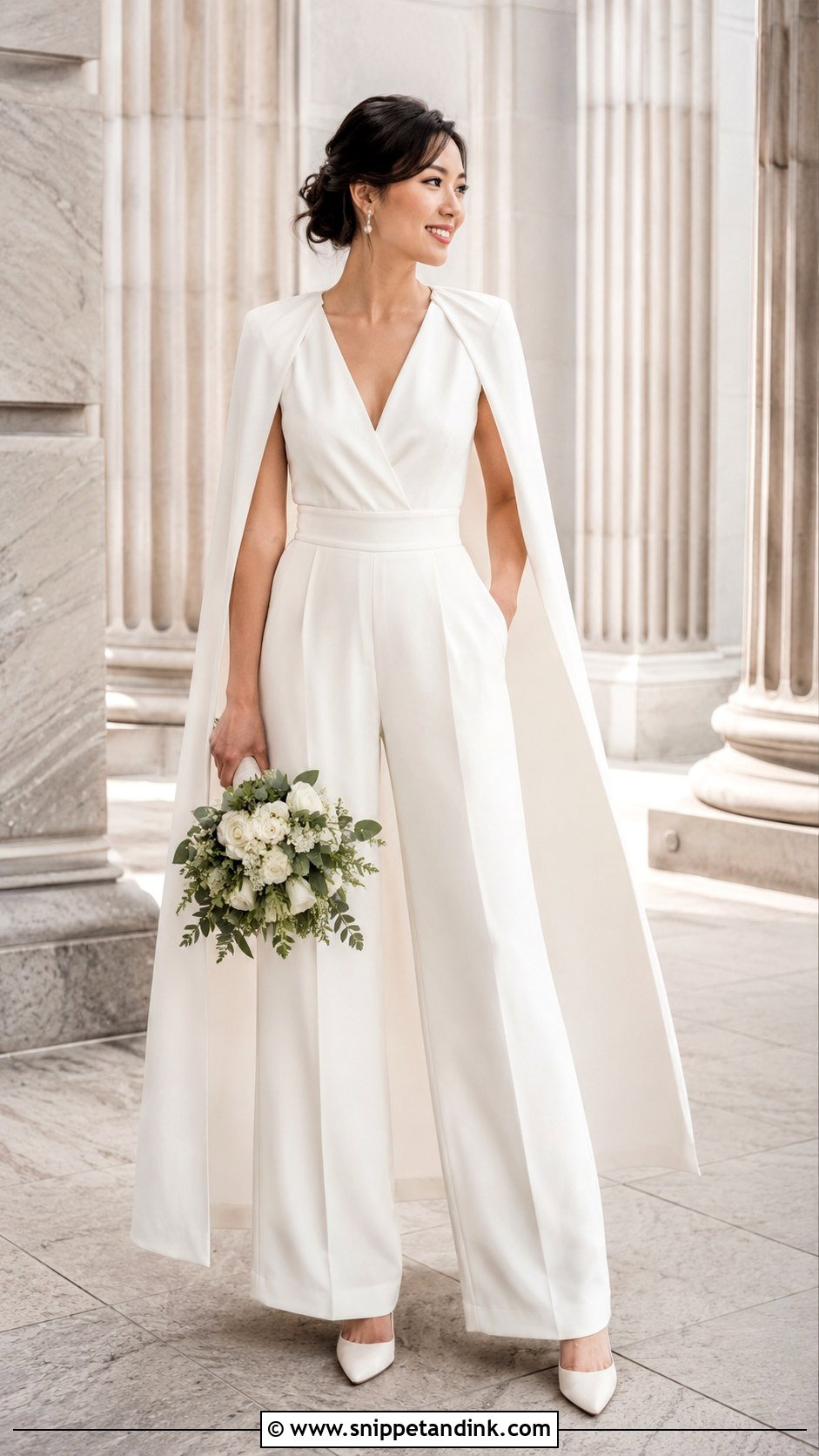
A jumpsuit gives a bride who doesn’t want a gown something chic and comfortable. Crepe makes it sleek, a cape makes it glamorous, lace sleeves make it romantic. Wide legs move like a skirt while giving the ease of trousers. Tailoring through the waist, hips and hem is everything, and the rise has to suit your torso or the fit pulls when you sit. Pointed heels, pearl earrings and a structured veil or cape finish it for a courthouse, city venue or reception change.
24. Bridal Suit Wedding Outfit
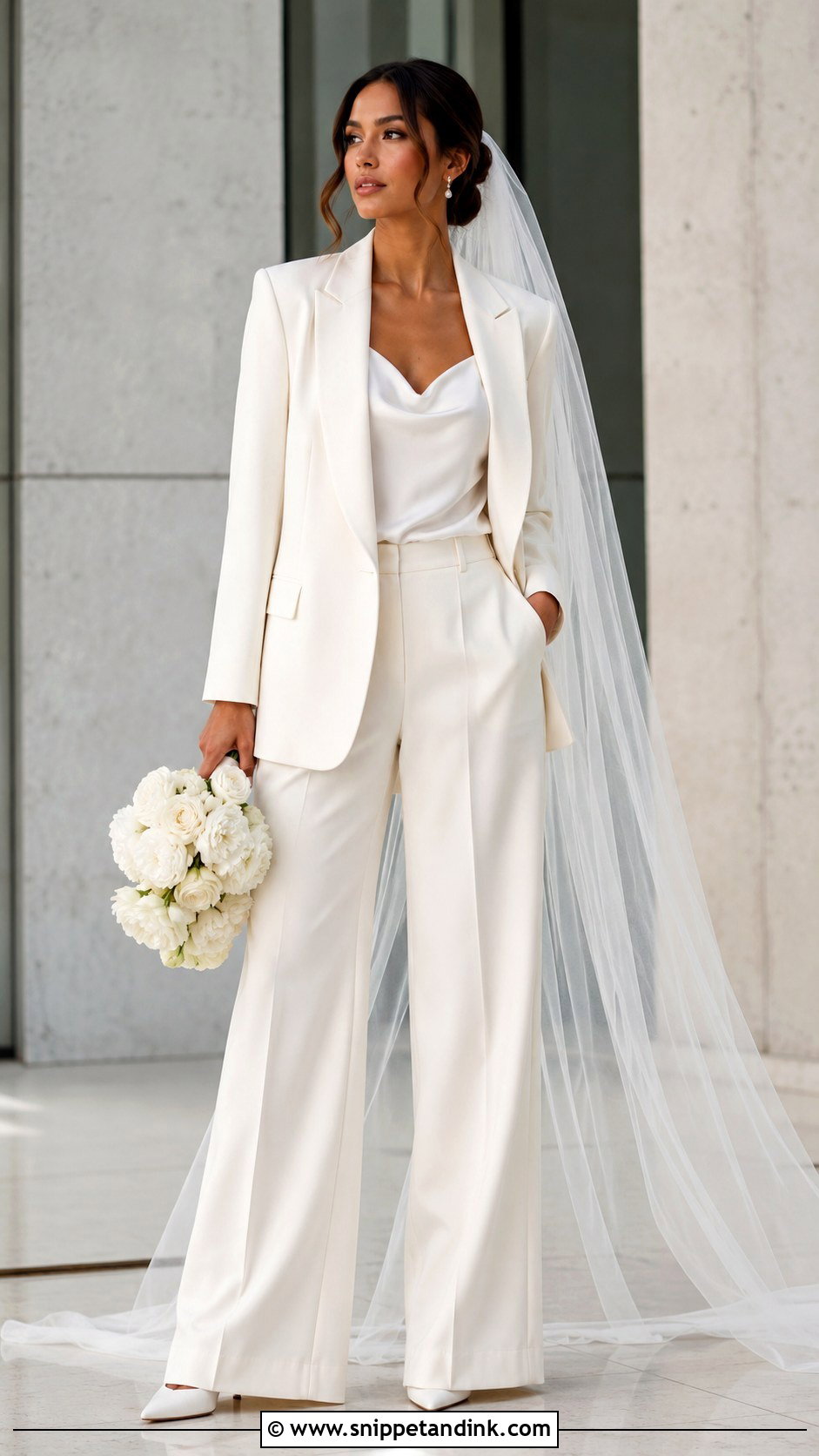
A bridal suit suits brides who love tailoring or want something different. An ivory blazer with matching trousers, a silk camisole and pointed heels make the clean version; a long veil, pearl earrings or a lace top underneath make it formal. Wide trousers soften the look; slim ones sharpen it. Fit decides everything, so have shoulders and sleeve length altered properly. Done well, it feels every bit as bridal as a gown.
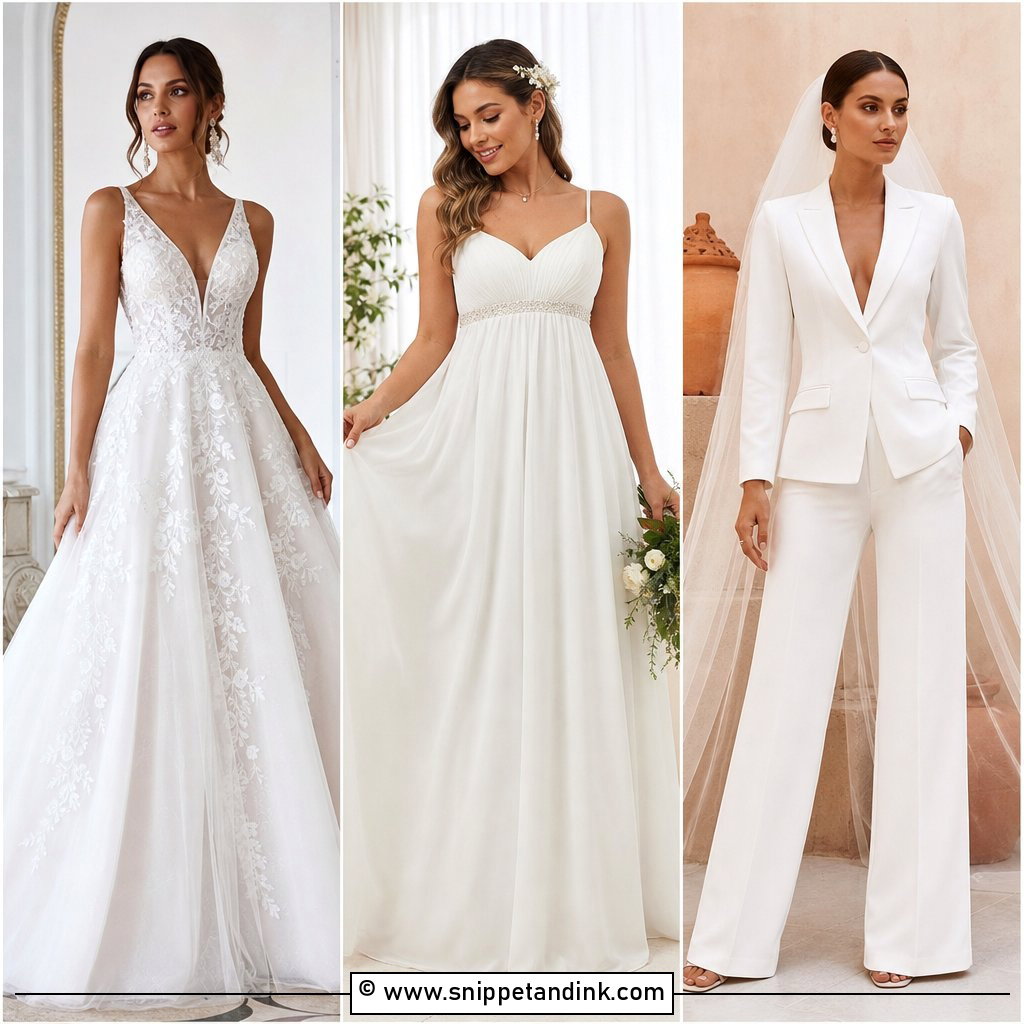



25. Two Piece Wedding Dress
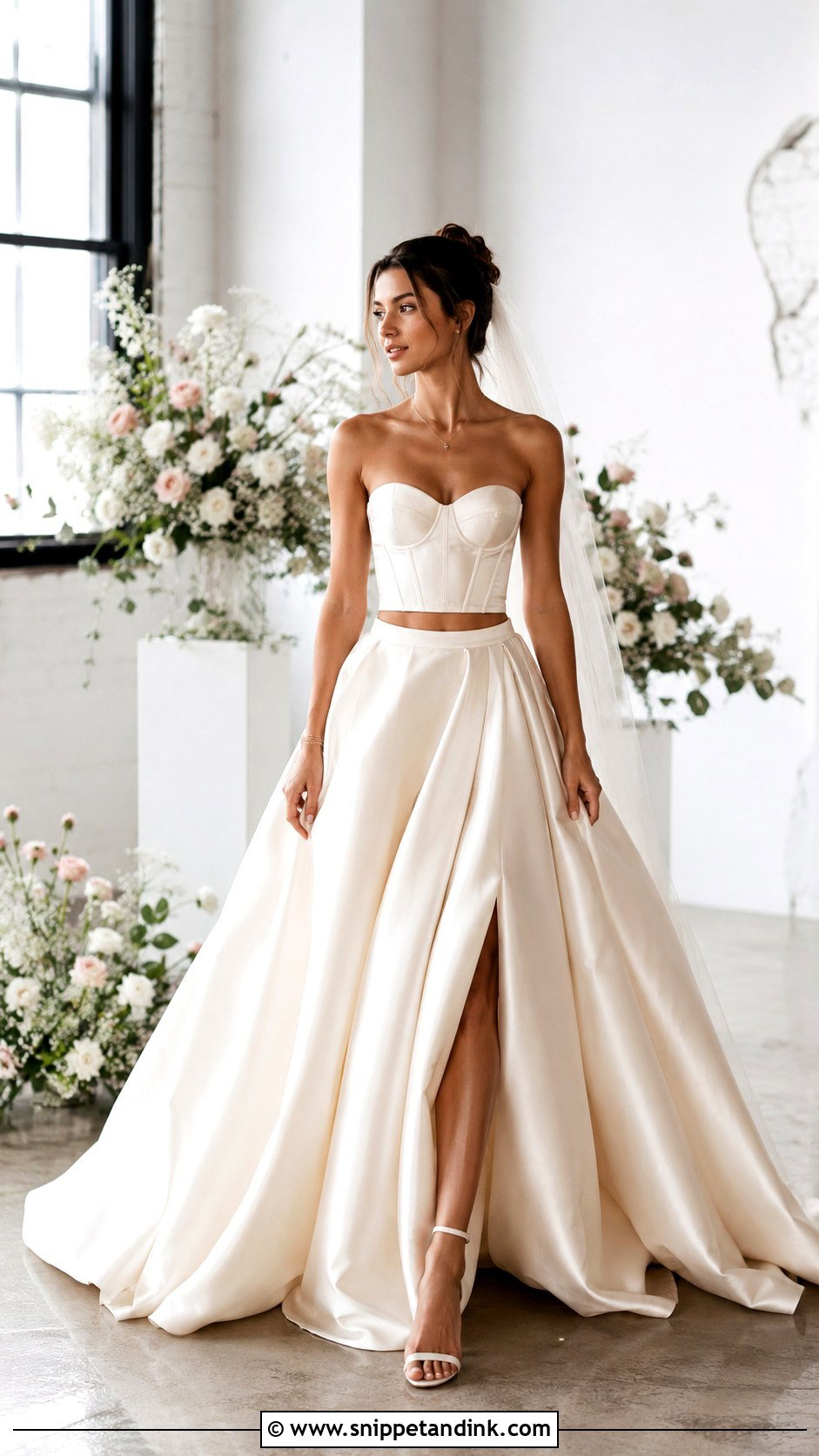
A two piece wedding dress separates top and skirt: a corset with a ball skirt, a lace crop top with an A-line, or a sleek bodice with satin. It solves a common fitting problem, different sizes on top and bottom. Link the two pieces through fabric, color or detail so the look feels intentional. Ivory varies between makers, so if you’re mixing brands, compare them side by side in daylight. A simple veil, delicate heels and minimal jewelry keep it elegant.
26. Champagne Wedding Dress
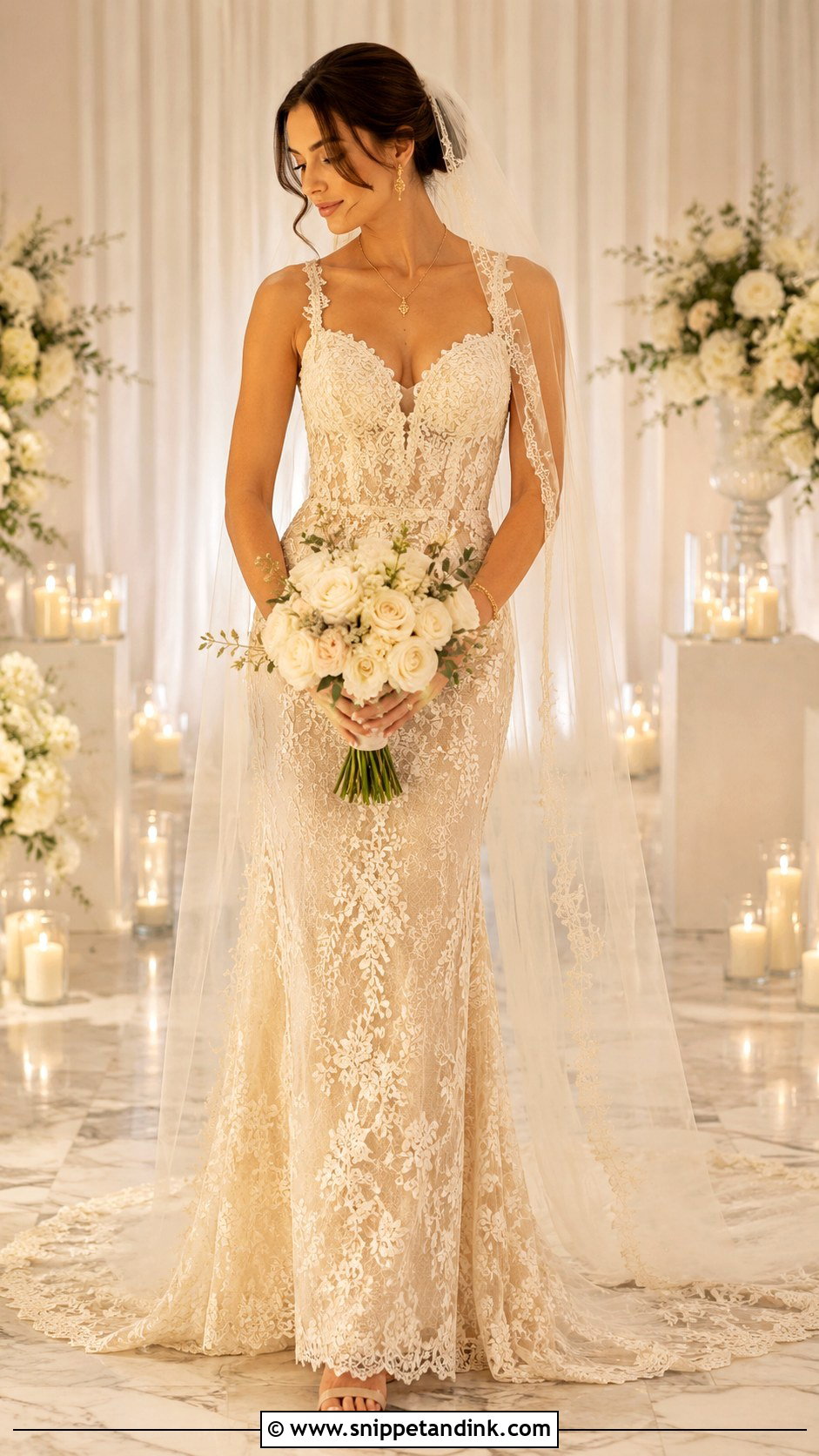
If bright white feels too stark against your skin, champagne’s warm undertone gives a glow instead. It works with lace, tulle, satin and beading. Match the veil to the dress undertone, because a cool white veil next to champagne looks grey in photos. Ivory shoes and gold jewelry suit it. Fall weddings, evening receptions and candlelit rooms flatter it most, and it still reads clearly as a wedding dress.
27. Blush Wedding Dress
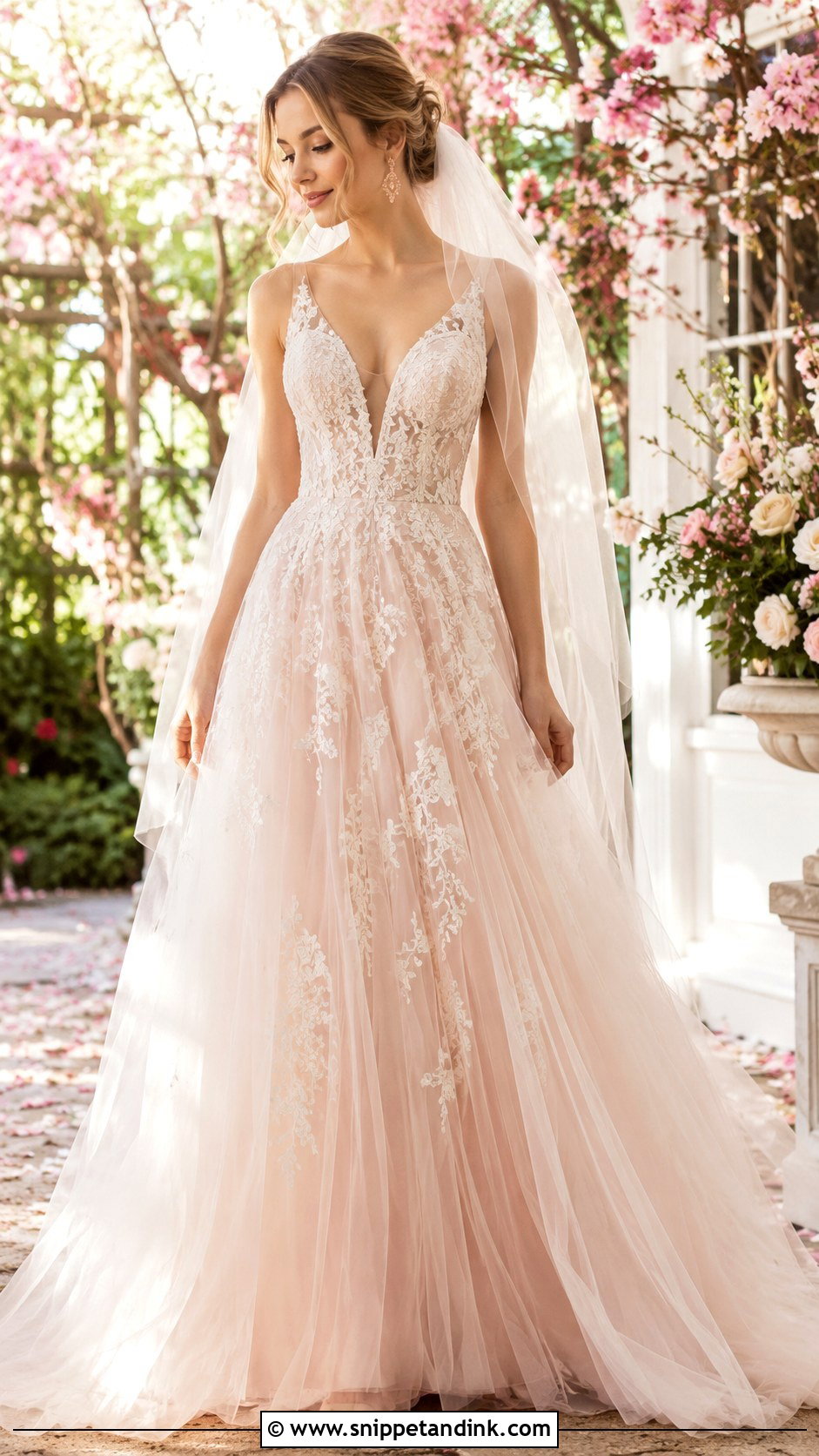
Blush adds warmth while staying bridal, and it gives lace, tulle and appliqué more depth because the color sits behind the detail. For a subtle effect, choose a blush lining under ivory lace; for more impact, full blush tulle. Try it in daylight first, as some blushes read peach on warm skin. Rose gold jewelry, nude or ivory heels and a simple veil complete it for spring, garden or romantic indoor settings.
28. Blue Wedding Dress
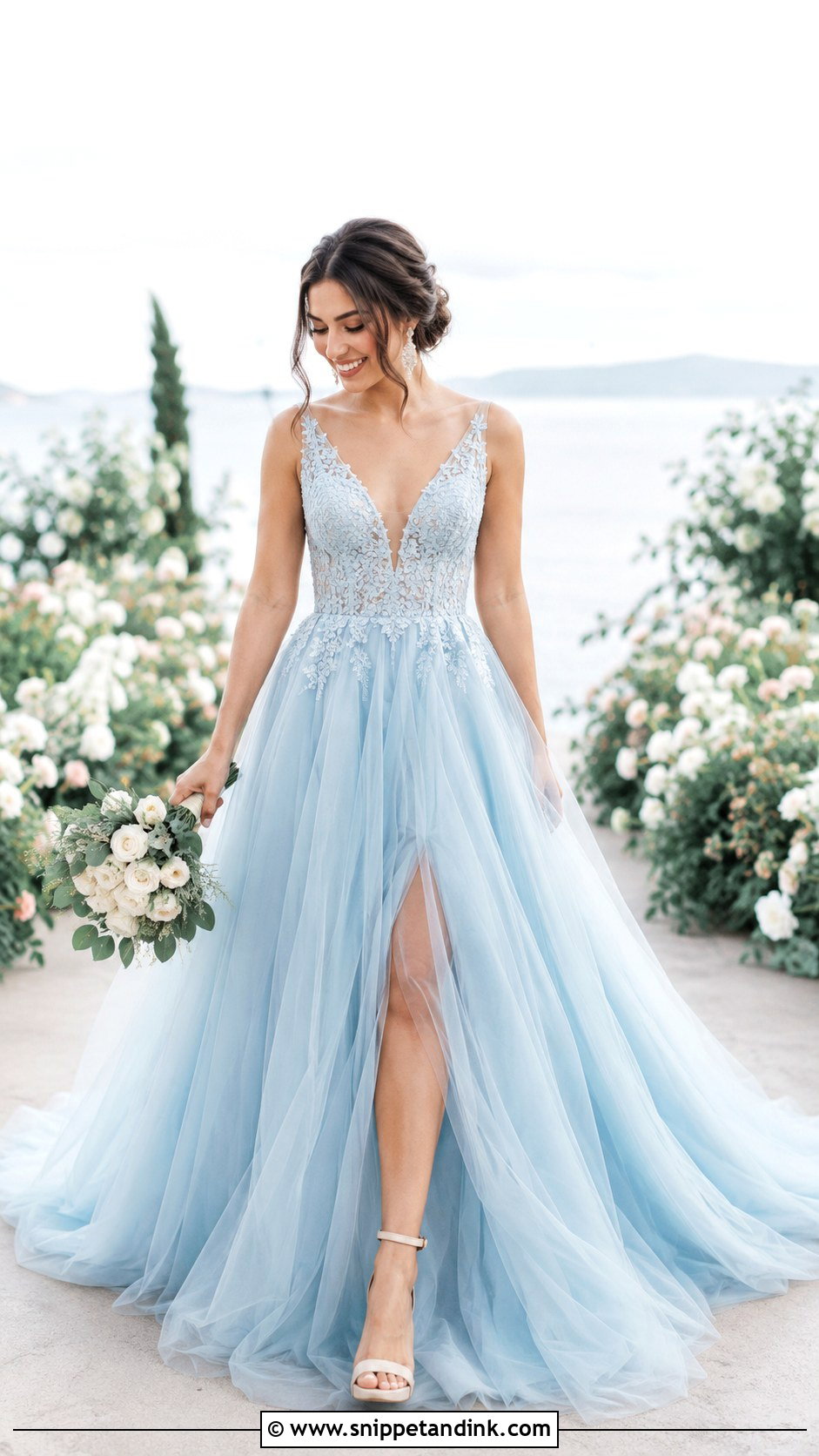
Pale blue, icy blue and powder blue still feel delicate in tulle, organza or satin. The shade has to flatter your skin, and cool blues can make some complexions look sallow, so hold the fabric to your face in natural light. Silver jewelry, ivory heels and a simple bouquet keep it refined. A white veil works over very pale blue; otherwise a matching veil blends better. Winter, coastal and garden weddings suit it.
29. Vintage Inspired Wedding Dress
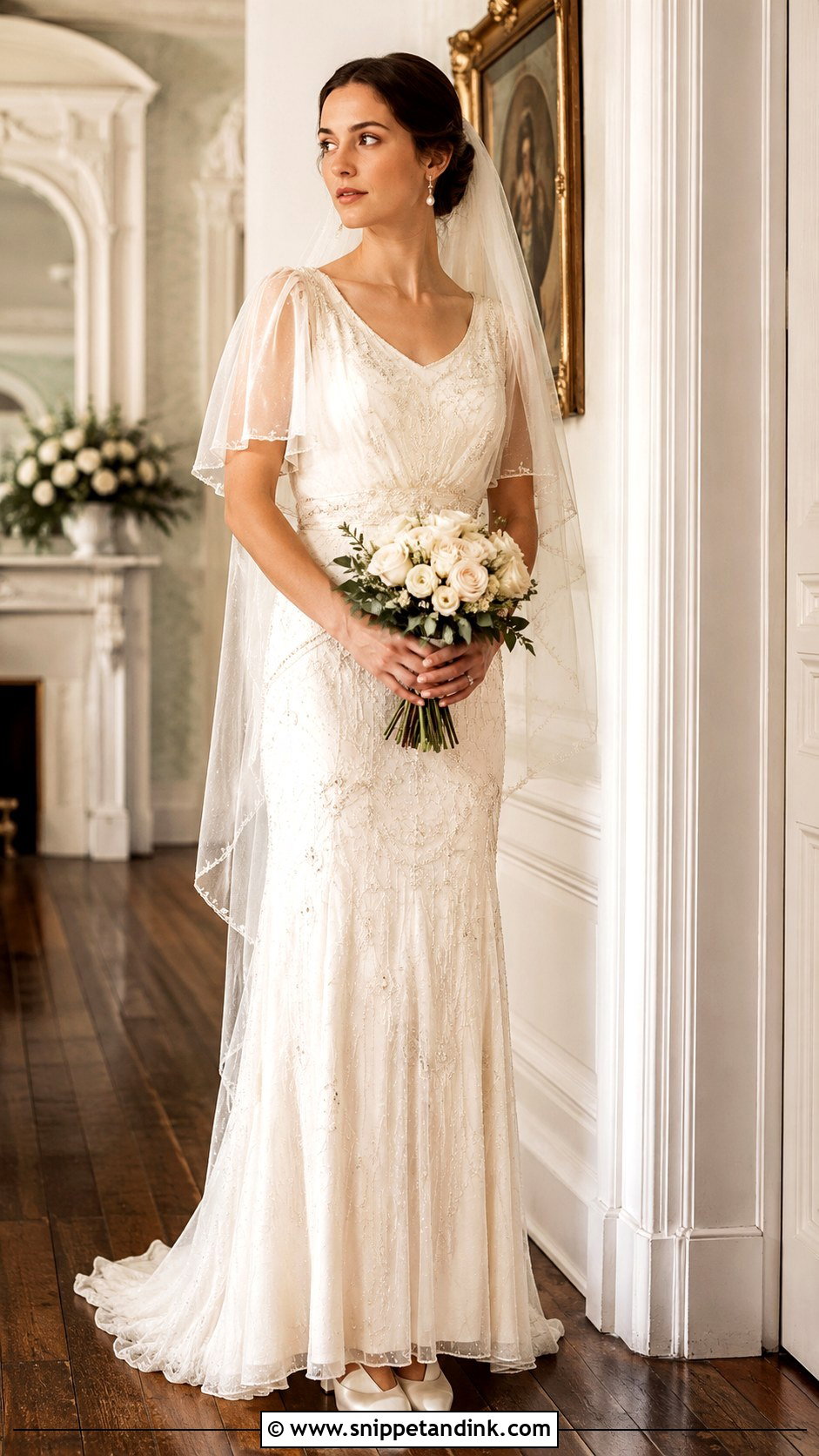
A vintage inspired wedding dress can borrow from 1920s beading, 1950s tea length, Victorian sleeves or 1990s slip dresses. The best ones feel wearable today rather than like costume. Pair it with accessories from the same era: pearl earrings, satin pumps, a soft veil or a hair comb. If you’re buying true vintage, allow extra months for specialist cleaning and alterations, since old fabric can be fragile and sizing runs small.
30. Destination Wedding Dress
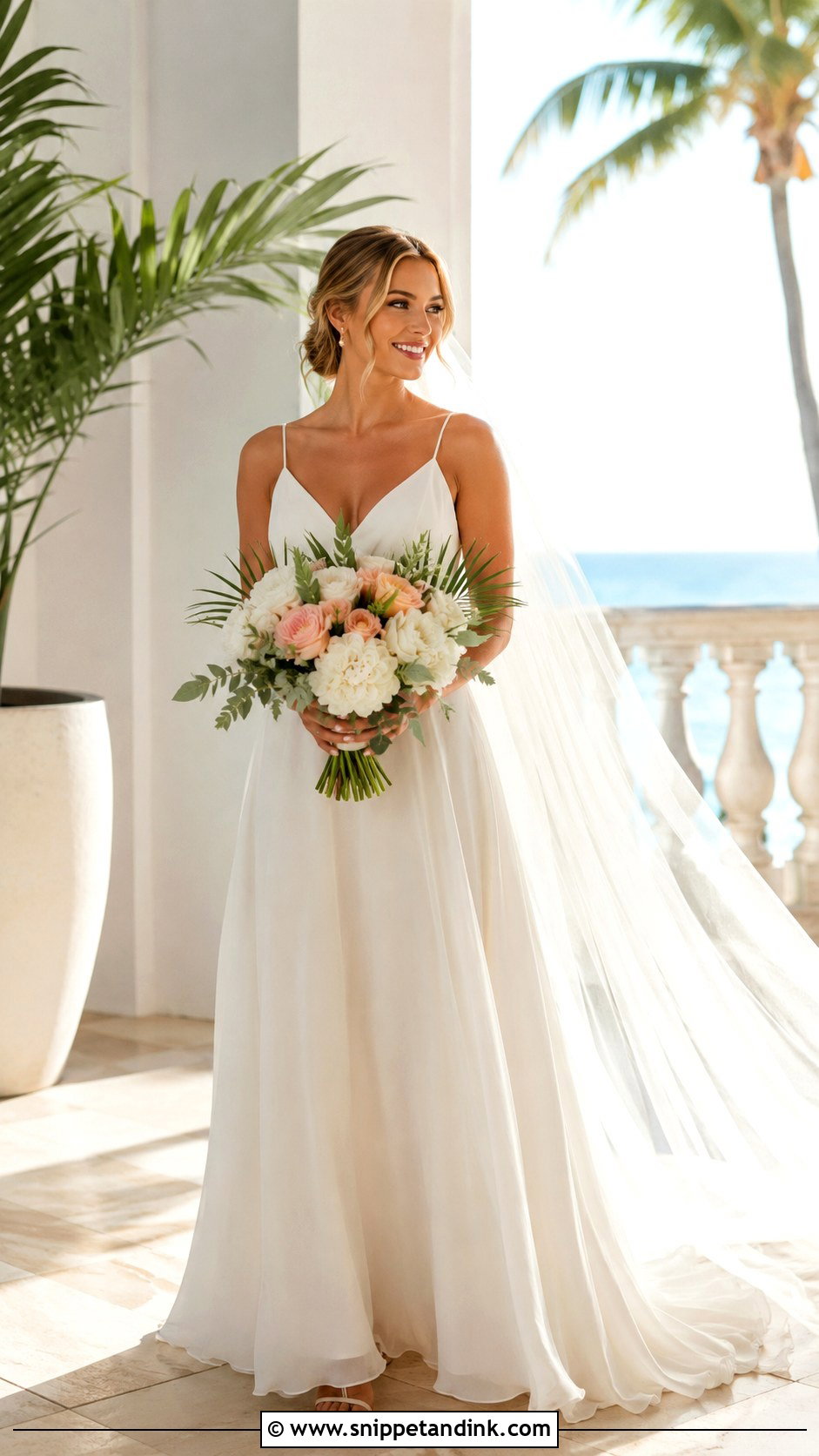
Packing comes first with a destination wedding dress, so chiffon, silk, organza, soft lace and crepe are good choices: they travel well and stay light in heat. Sheaths, slip dresses, A-lines and halters suit beaches. Carry the dress on the plane rather than checking it, and book a steamer or pressing service at the destination. Choose shoes for the ground, block heels, sandals or wedges, and skip a heavy train on sand or grass.
The Costs That Aren’t on the Price Tag
The gown’s sticker price is only part of what you’ll spend on it. Budget for these from the start so the dress you love doesn’t push you over.
- Alterations. Costs vary widely, and hemming a lace or beaded skirt takes far longer than a plain one.
- A bustle. Any train you plan to dance in needs one, and it’s often charged separately.
- Pressing or steaming. Most gowns need it after shipping and again before the day.
- Undergarments and accessories. Shapewear, a veil, shoes and jewelry add up quickly.
- Cleaning and preservation. If you want to keep the dress, plan for specialist cleaning after the wedding.
Is There Really a Moment You Just Know?
Some brides cry in the right dress. Many don’t, and that doesn’t mean they haven’t found it. What I watch for instead is quieter: you stop fidgeting with the bodice, you keep turning to look at the back, and you start talking about the day rather than the gown. If you find yourself comparing every other dress to one you’ve already tried, that’s usually your answer.
Your Gown Should Still Feel Right at the Last Dance
Shopping should feel exciting, not stressful. A satin ball gown is right for one bride; a jumpsuit, blush dress or lace A-line is right for another. Try silhouettes you think you’ll dislike, move around in each one, check it under a phone flash and picture the full outfit from veil to shoes. The dress you choose should feel as good when the music starts as it did at your first fitting.
You'll Like These Ideas:






Leave a Reply