
Tulsi Vivah mehndi sits somewhere between everyday festive henna and bridal work. The festival marks the sacred marriage of Goddess Tulsi and Lord Vishnu, so most women I draw for want something devotional and graceful that won’t get in the way of puja, cooking prasad or lighting diyas. The motifs I return to are the Tulsi plant itself, the kalash, lotus, diyas, bells, peacocks and mandalas, scaled down from bridal density. Below are twenty layouts, from a full palm to a quick back-hand trail or a single devotional motif, with notes on placement, time and how each one stains.
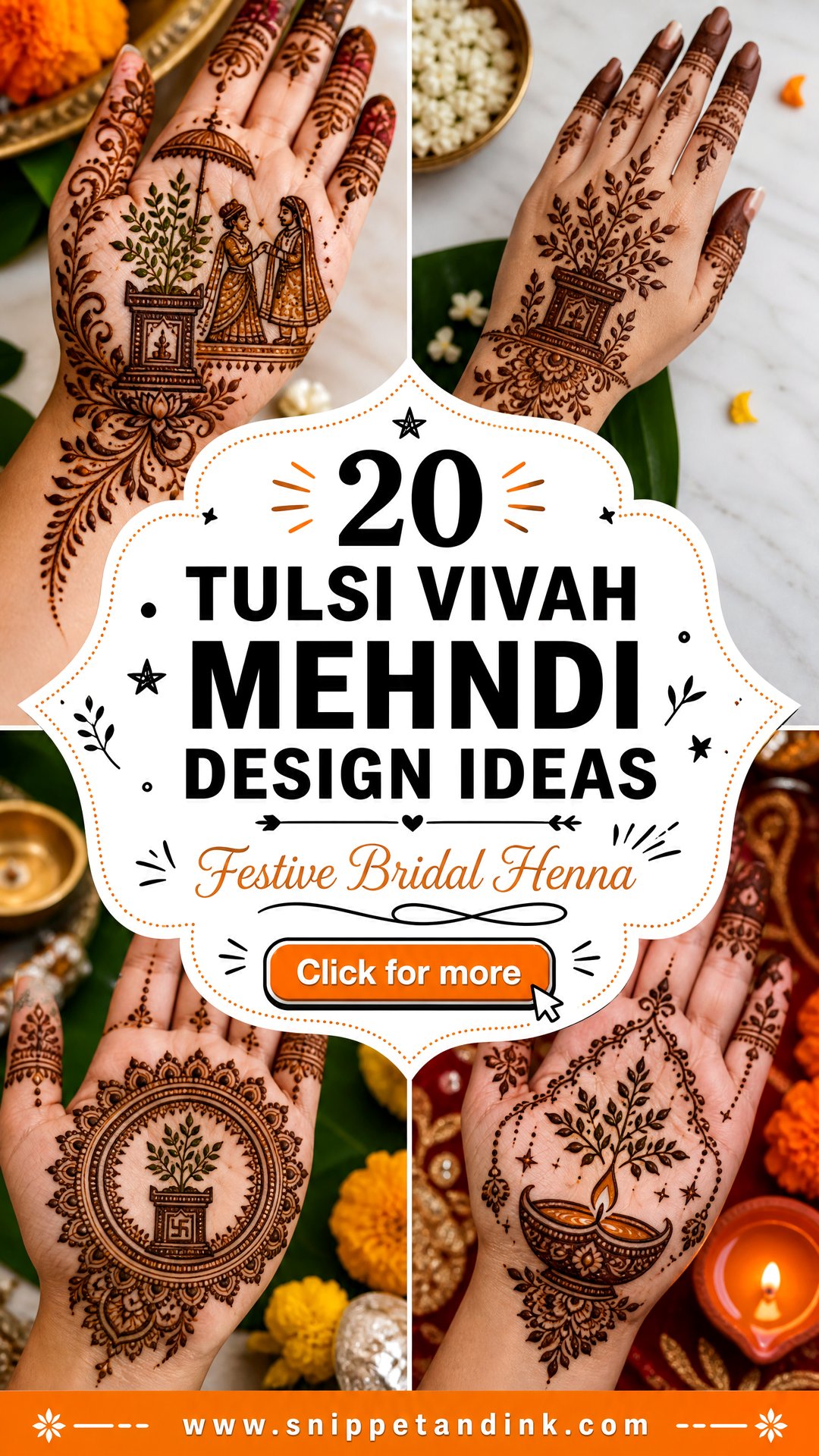
Drawing a Tulsi Plant That Actually Reads as Tulsi
Most Tulsi designs I’m shown fail on one detail: the leaves are drawn as generic teardrop shapes, so the plant could be anything. Holy basil leaves are small, oval and softly serrated, and they grow in opposite pairs up a square-ish stem. Pairing the leaves is the quickest way to make the motif recognisable.
The vrindavan, the raised planter Tulsi grows in at home, is the other anchor. I draw it as a squared base with a small arched niche where a diya would sit, then grow the plant out of the top. On a palm, I place it slightly below center so the leaves have room to rise toward the fingers.
Placement depends on your day. If you’ll be cooking prasad or handling water during puja, keep the palms light and put the main motif on the back of the hand, where it won’t be washed and rubbed.
1. Tulsi Vivah Mehndi Design For Full Hand
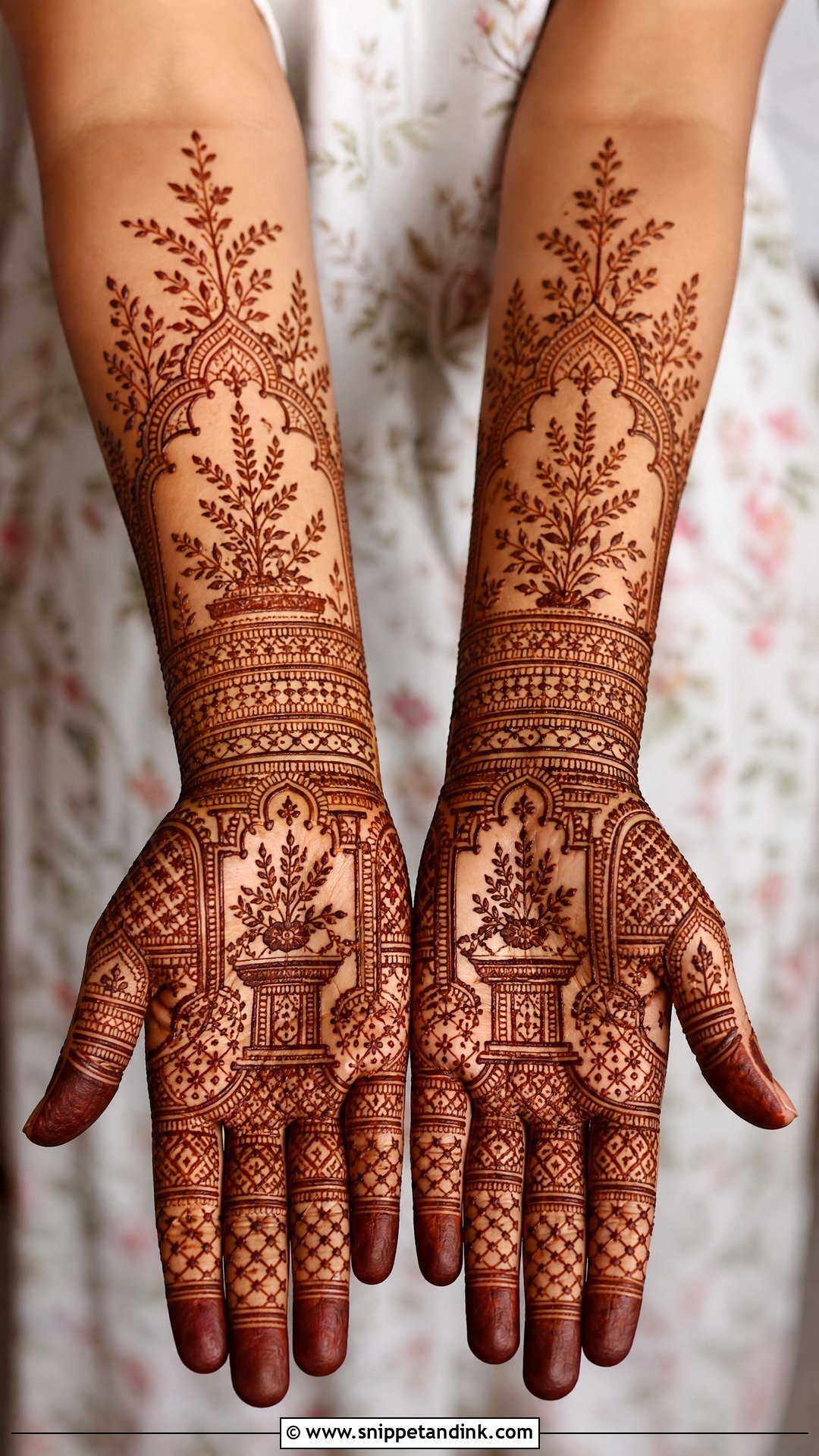
For a full hand, I put the Tulsi plant in the center of the palm first and build everything else around it, because if the filling goes in first, the plant ends up squeezed. Leaves, small flowers and dotted vines surround it; the fingers take jaali, paisley or leafy bands; the wrist gets a simple bracelet. Leave a clear border of skin around the plant so it doesn’t vanish in the filling once stained. Palms stain darkest of all, so this layout turns a deep maroon by the evening rituals if it’s applied a day or two ahead.
2. Simple Tulsi Vivah Mehndi Design
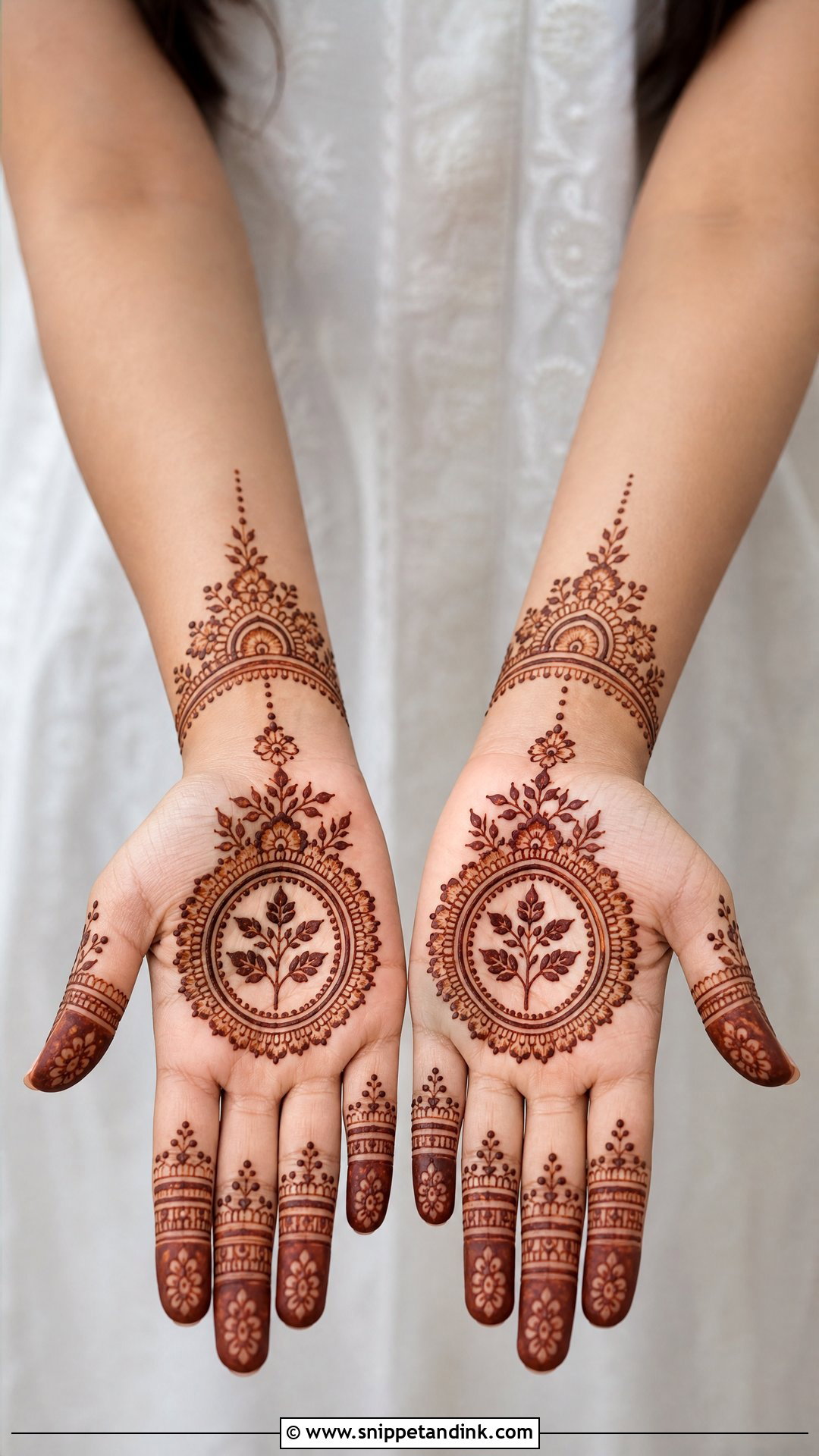
The simple version takes me about fifteen minutes a hand. A small Tulsi plant or leaf cluster in the palm, a round mandala around it, dots and tiny petals on the fingers and a narrow floral band at the wrist. It’s easy for beginners to copy at home, and it dries quickly enough that you can still help with puja preparations. Younger girls usually prefer this one. Clear spacing does more here than detail.
3. Tulsi Plant Mehndi Design
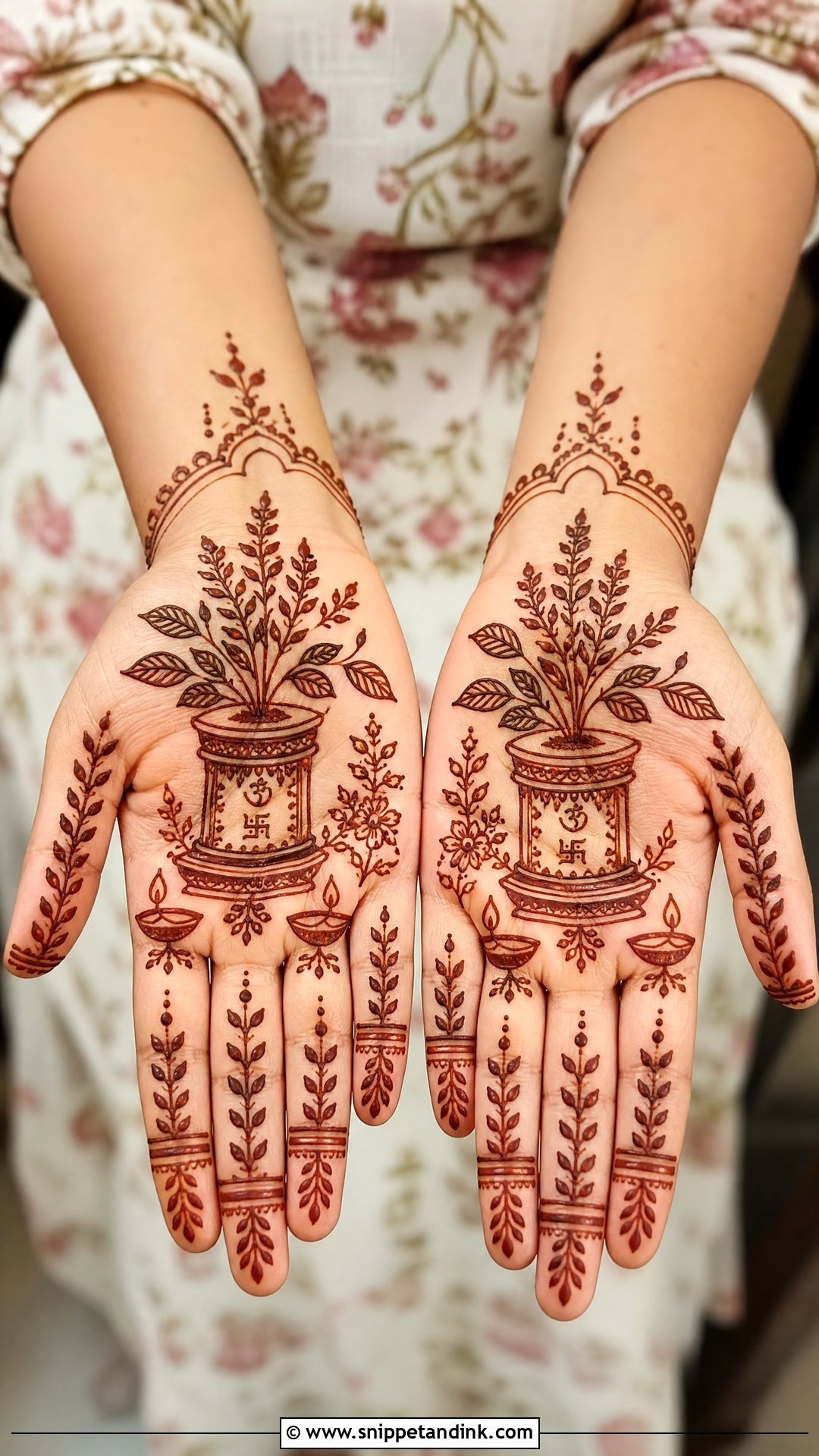
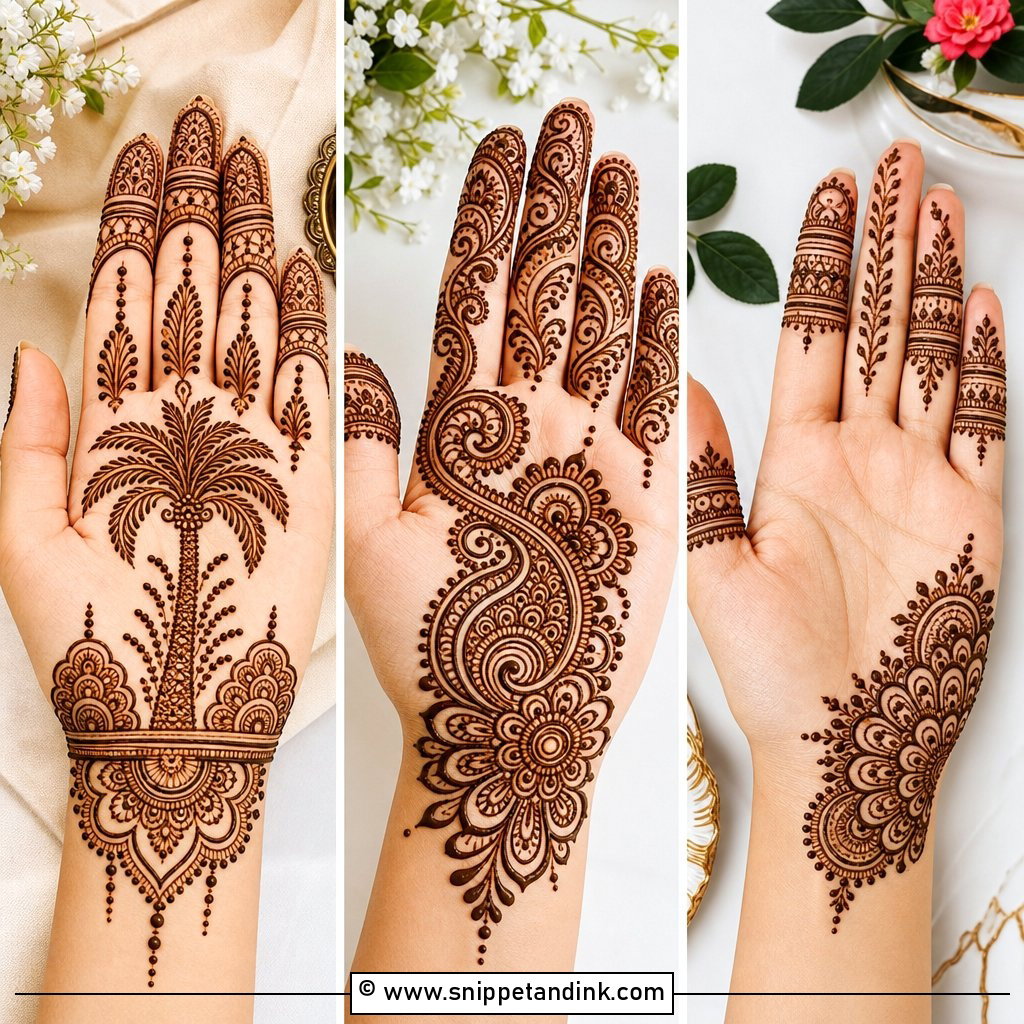
This is the most meaningful layout for the festival, and the one most often drawn wrong. A Tulsi vrindavan is the raised square planter, often with a small niche for a diya, and tulsi leaves are small and oval with slightly serrated edges, growing in opposite pairs up the stem. Get those two shapes right and anyone will recognise it. I draw the pot outline with a bolder line than the leaves so it stays crisp after staining, then add tiny diyas and flower vines. Small leaf trails on the fingers tie the hand together.
4. Tulsi Vivah Arabic Mehndi Design
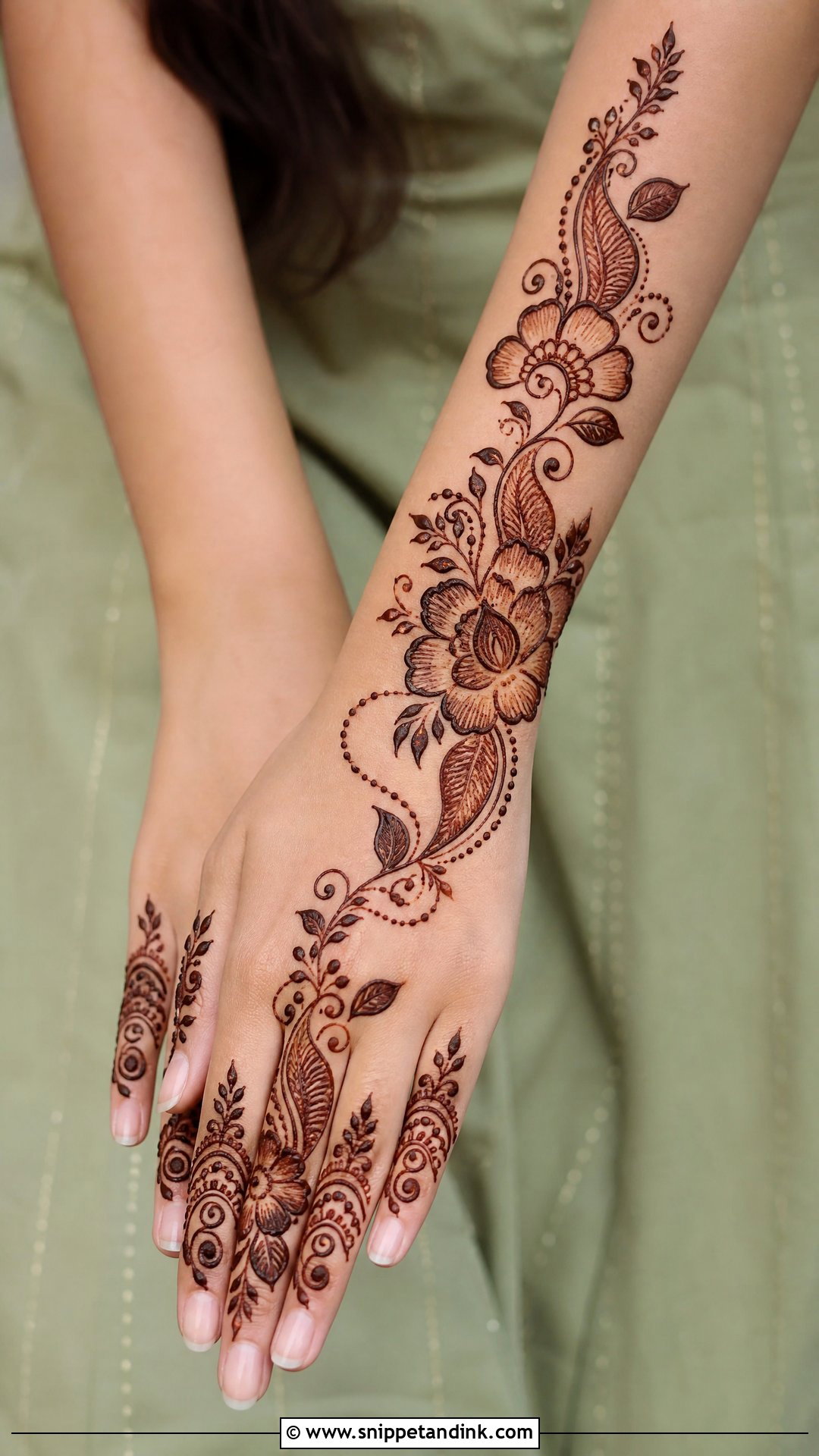
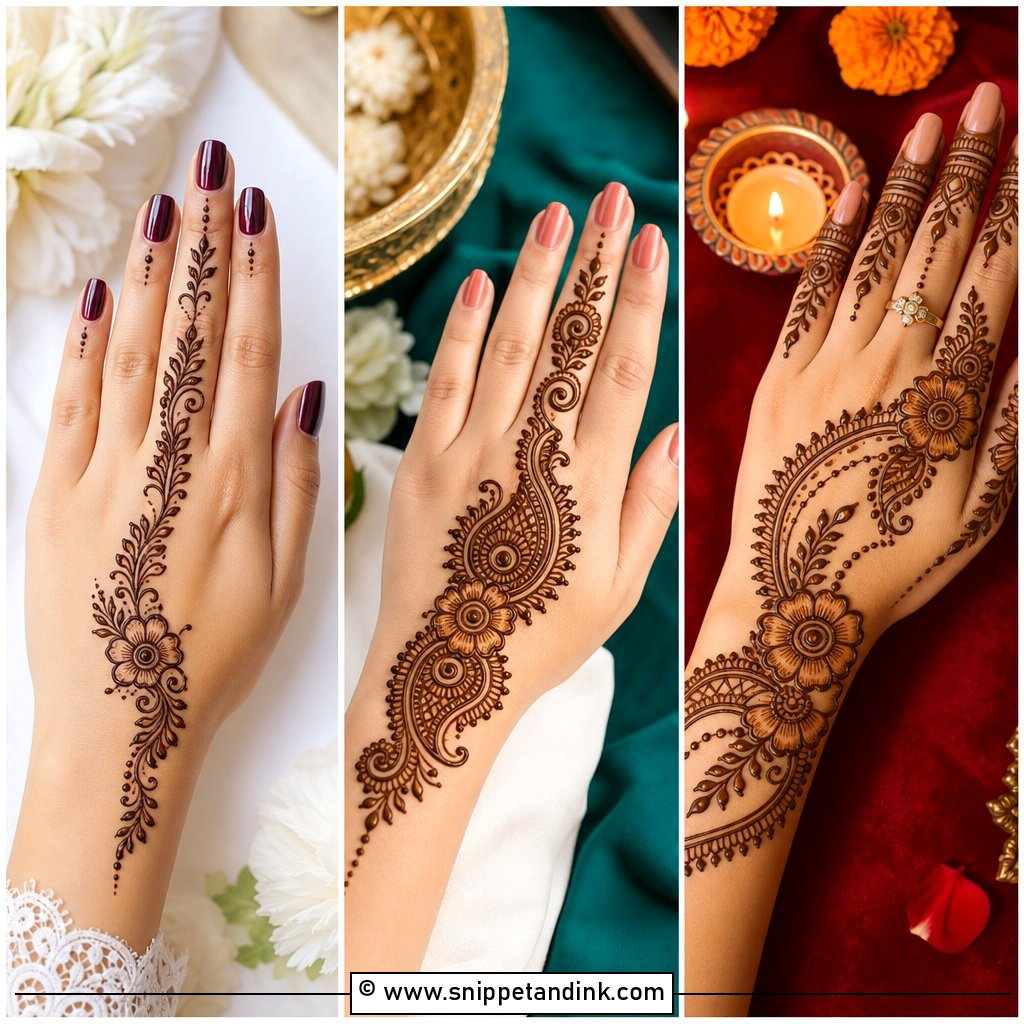
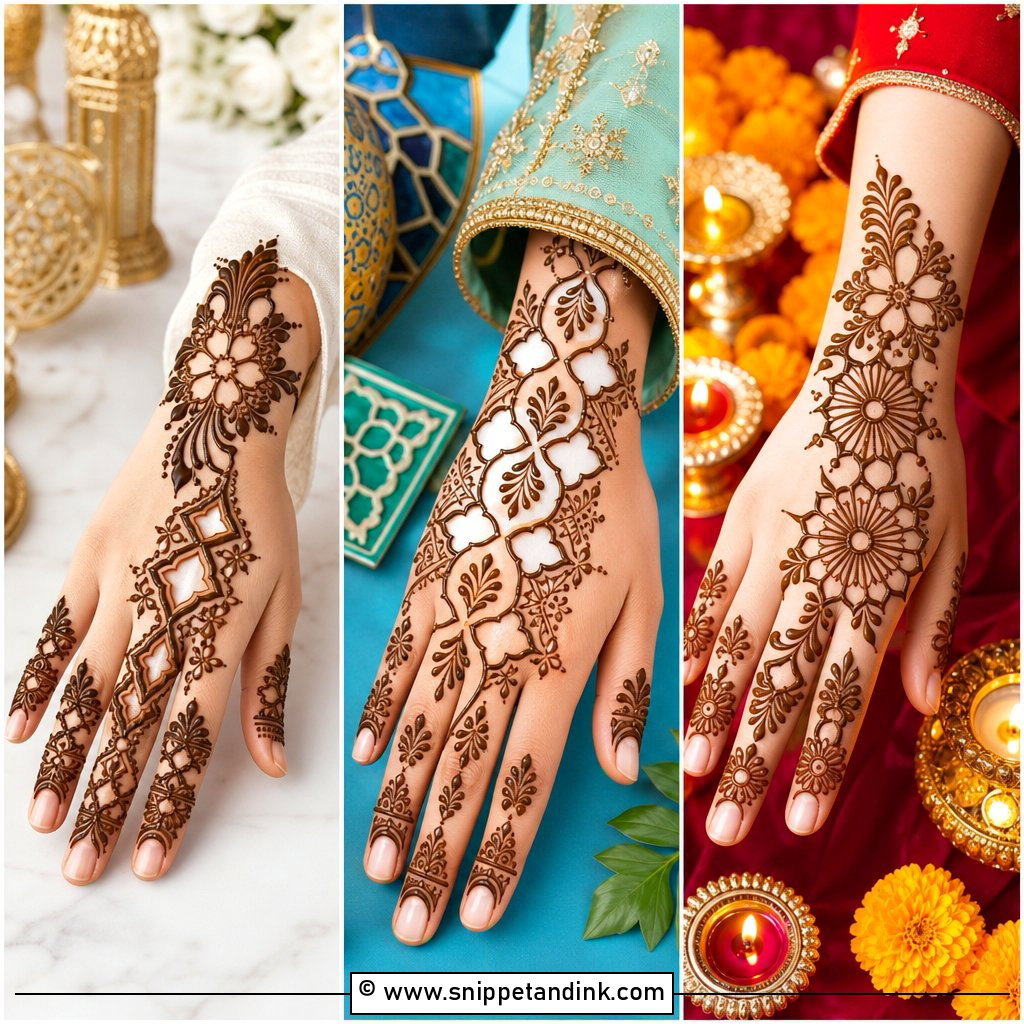
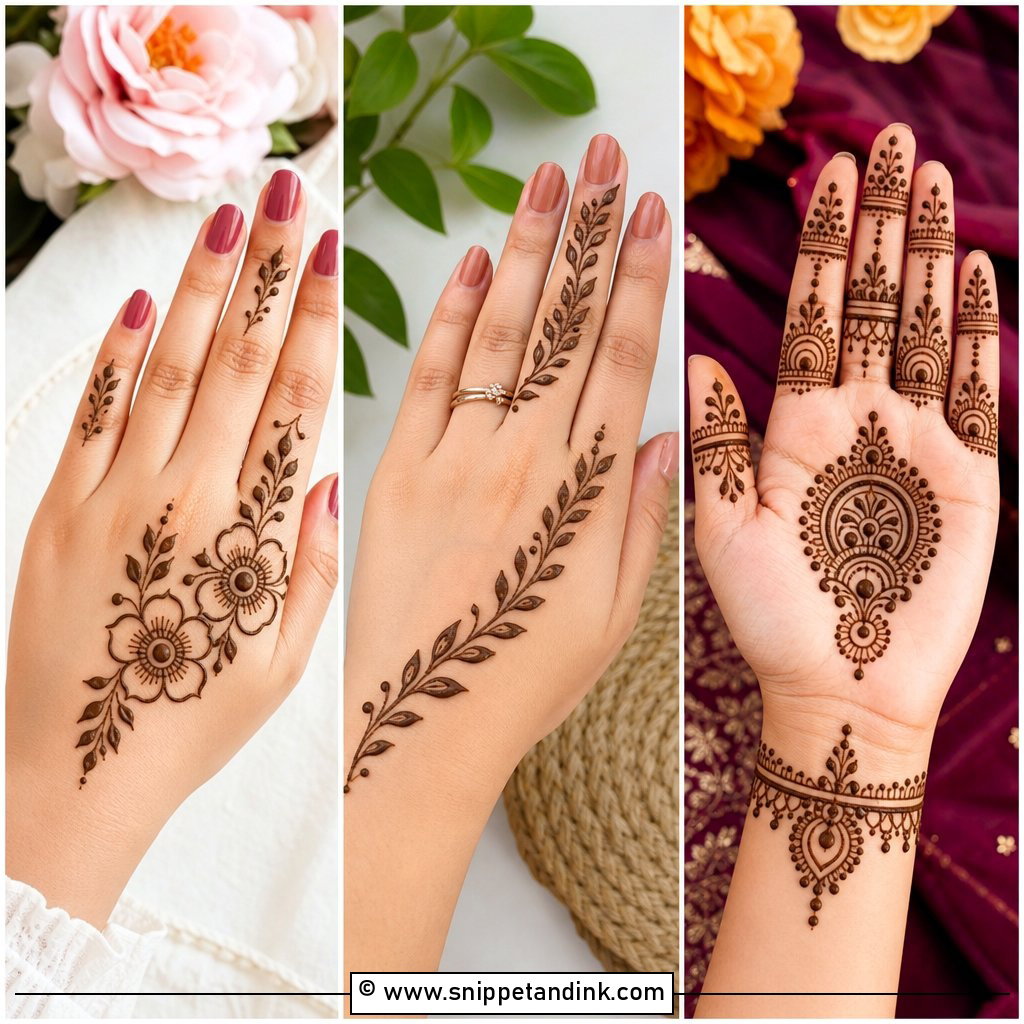
Arabic layouts are quick because they cover only a diagonal path, not the whole hand. I start a floral vine at the wrist and carry it across the back of the hand toward the index finger, with Tulsi leaves tucked between the flowers. Bold outlines, shaded petals and dotted curves give it finish. Since the shading is done by thinning the paste, it stains lighter than the outlines, which is part of the look. It’s the one I suggest for busy festival mornings, and it sits well with bangles and a simple puja saree.
5. Tulsi Vivah Back Hand Mehndi Design
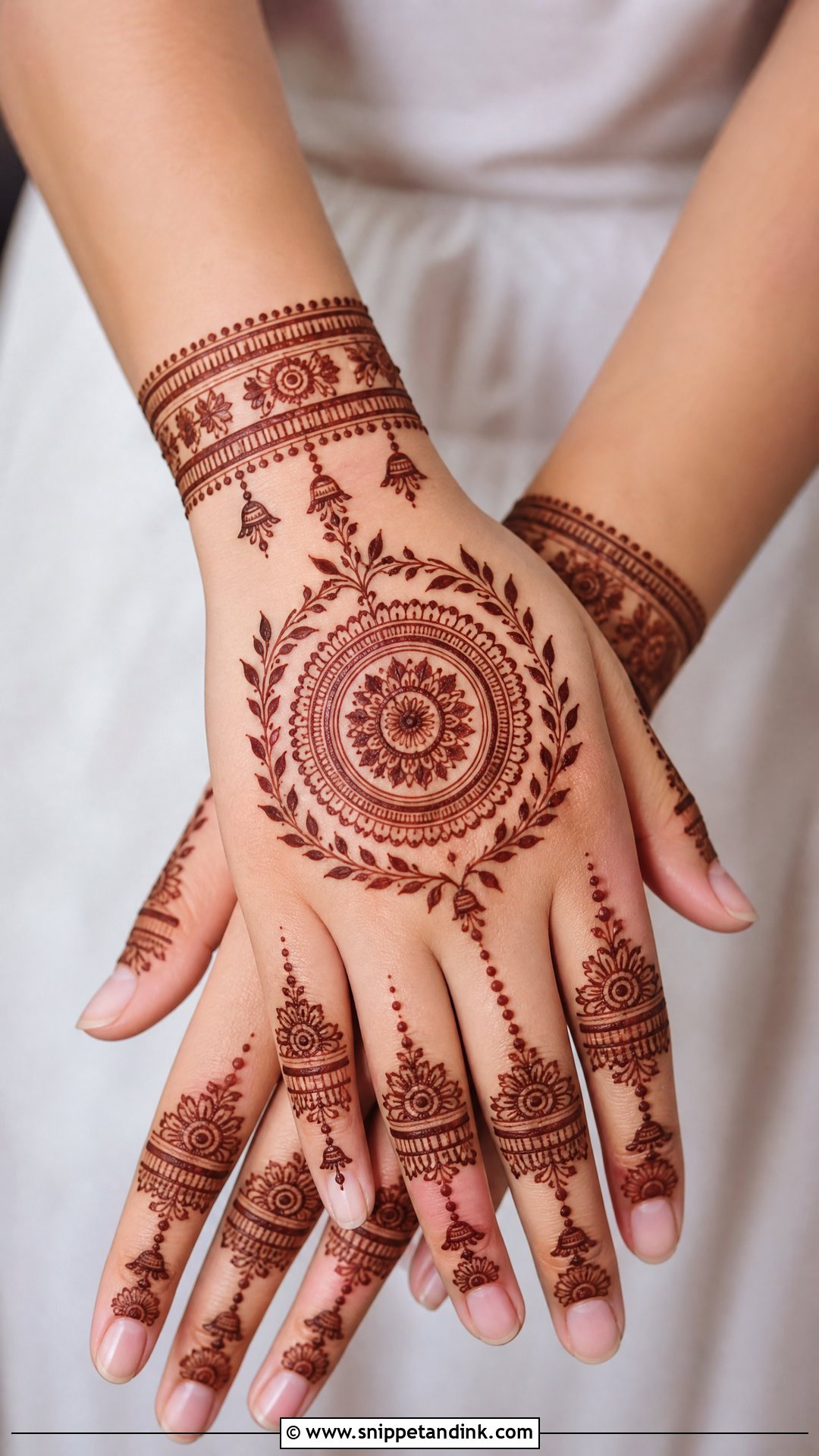
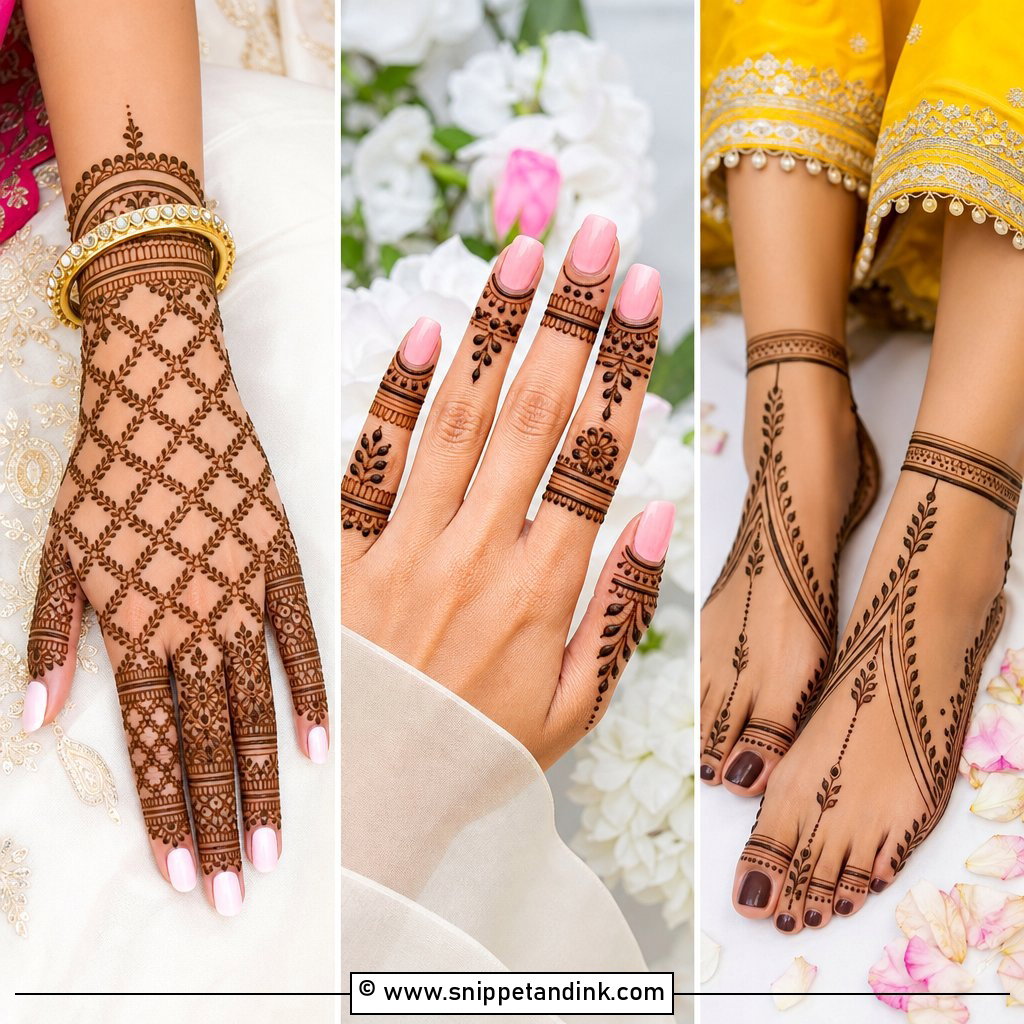
Back-hand work stains lighter than the palm, because the skin there is thinner, so I’d expect an orange-brown rather than deep maroon. A round mandala in the center with Tulsi leaf vines framing it reads clearly even at that shade. The fingers carry matching bands and dots; the wrist gets a bracelet border with leaves and bells. Keeping the palm clear is practical if you’ll be handling water and puja items. Glass bangles and a red, green or yellow outfit set it off.
6. Tulsi Vivah Front Hand Mehndi Design
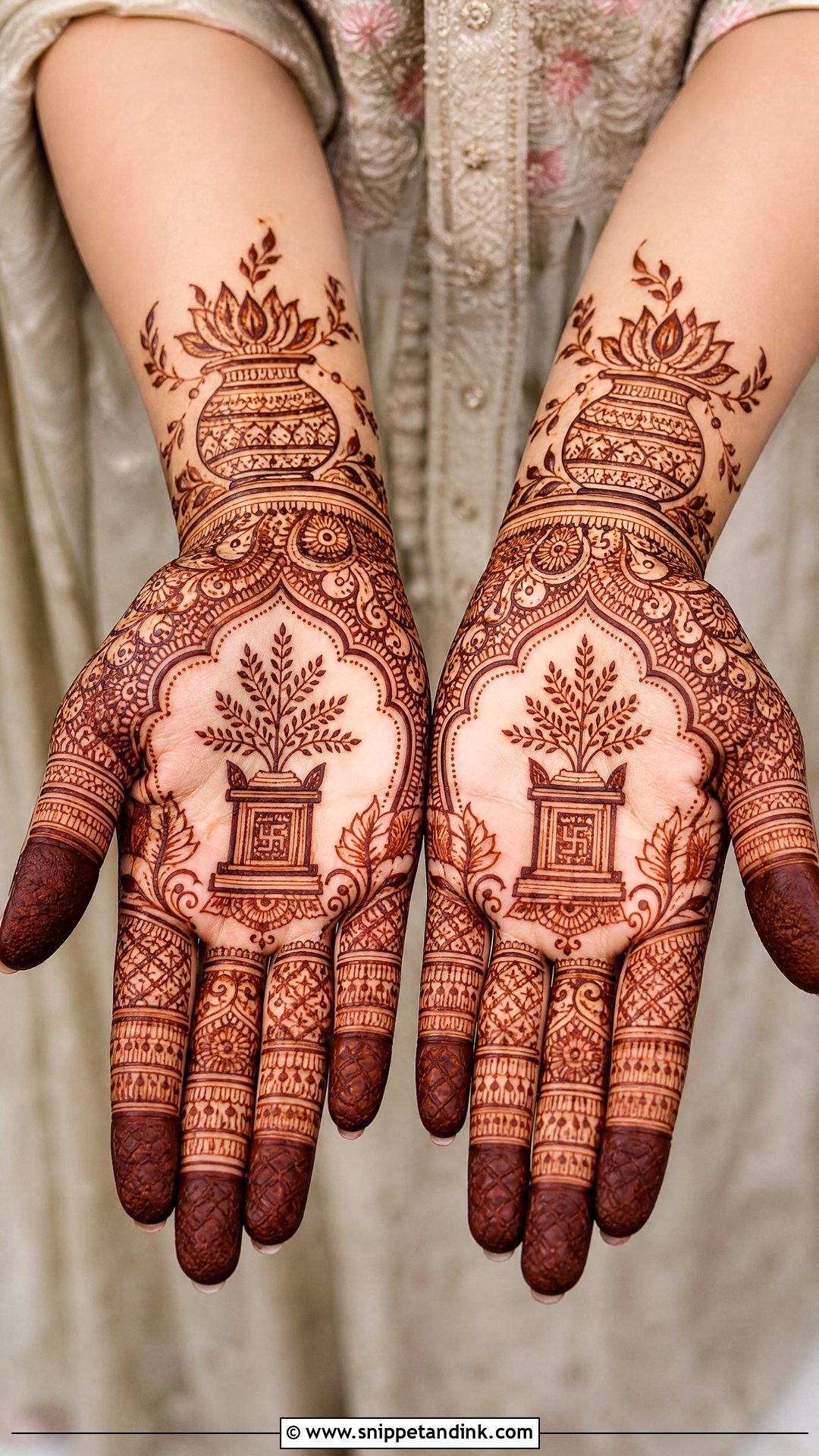
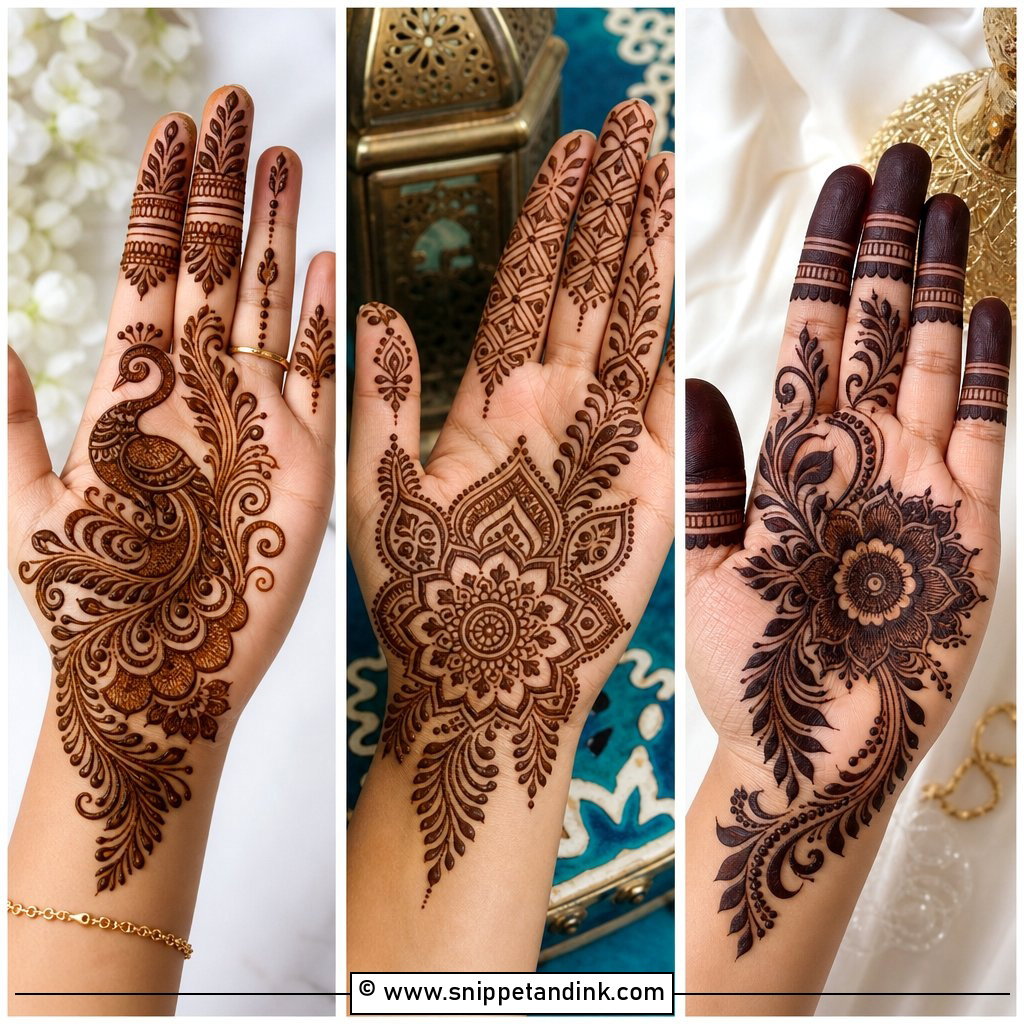
The palm is where the puja motifs belong for many women, since it’s the part of the hand that’s offered and seen during aarti. There’s room here for a Tulsi vrindavan, a lotus, a kalash or a diya in the center, built outward with paisley and leafy vines. I keep the fingers more detailed with checks and petal lines. To stop it becoming bridal-heavy, leave small gaps of bare skin in the filling. The central motif needs clean, bold strokes so it reads first.
7. Tulsi Vivah Mandala Mehndi Design
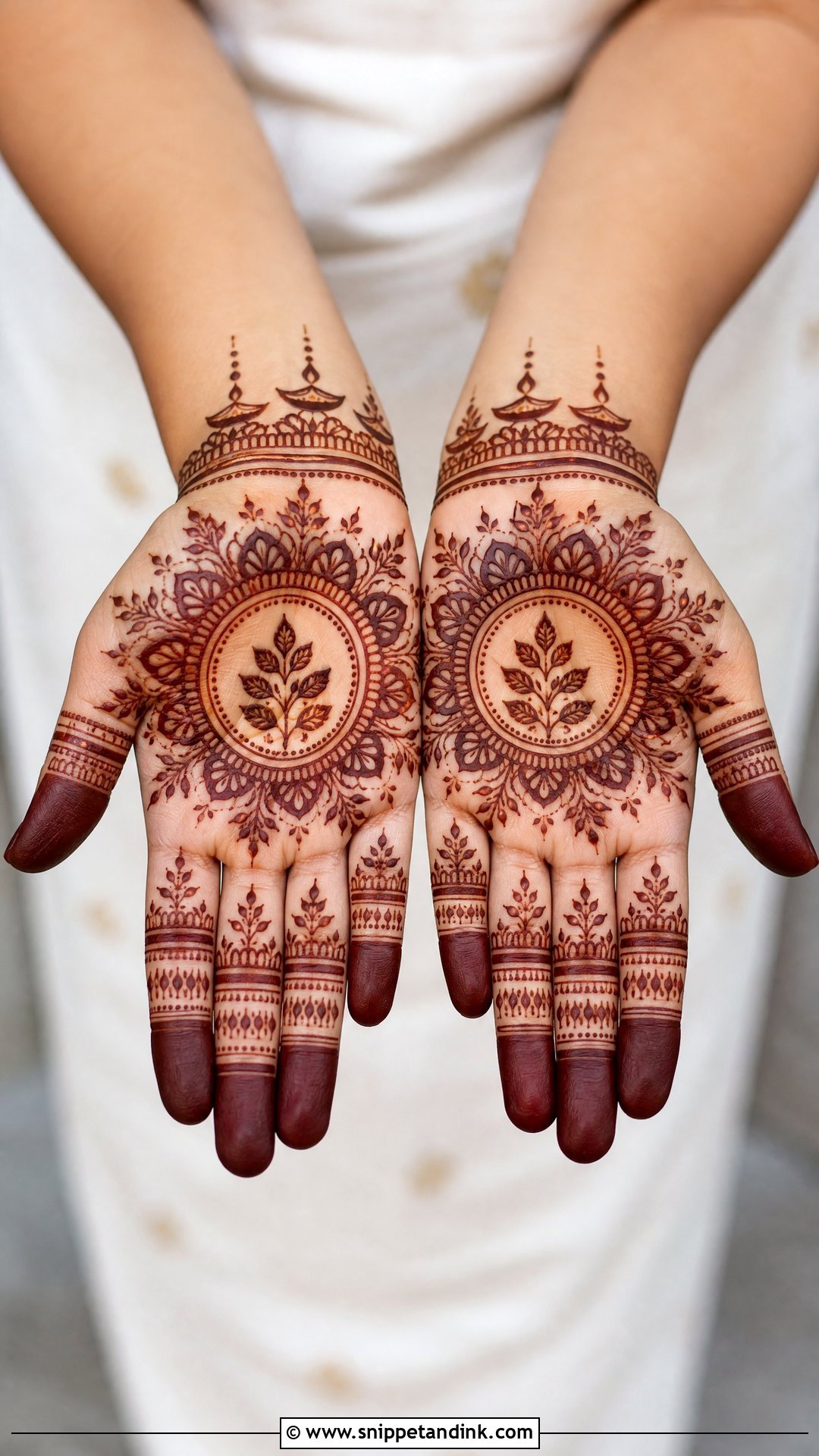
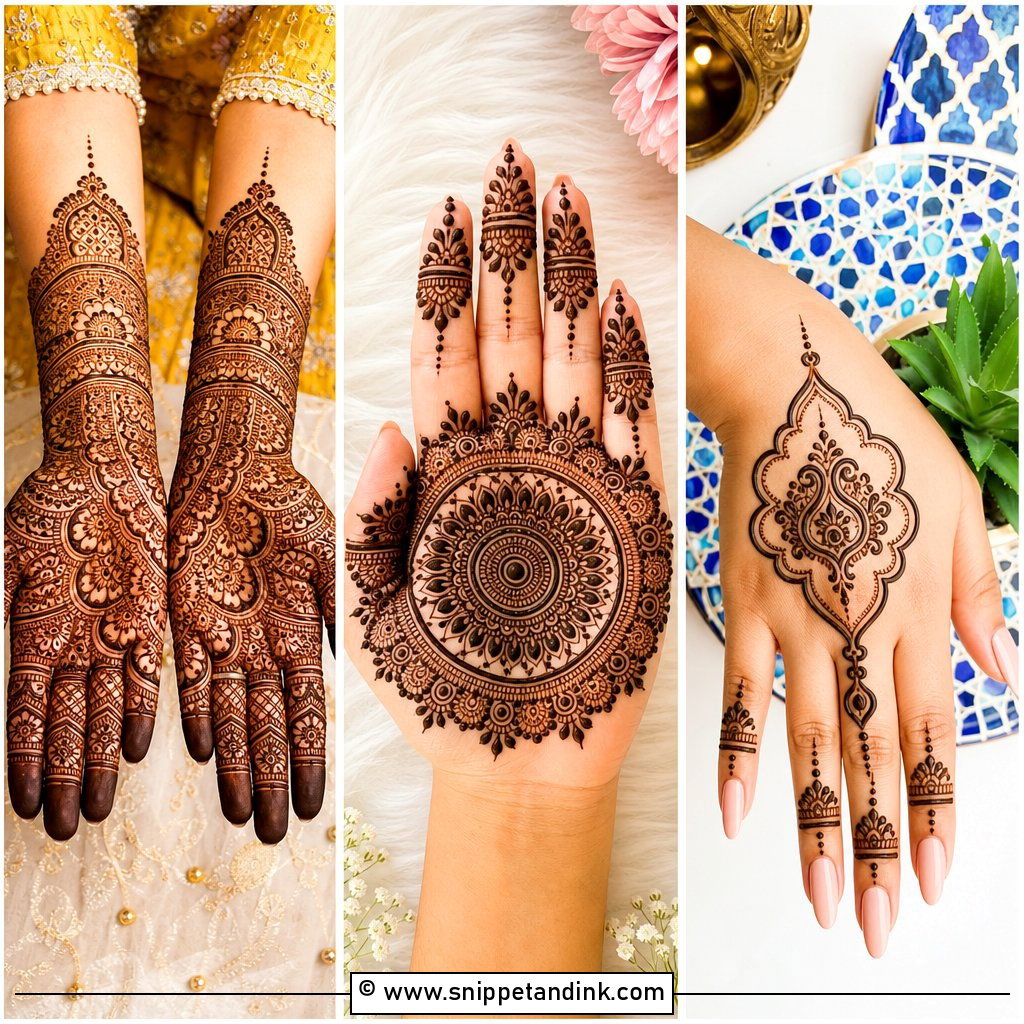
A round mandala is the layout I can scale fastest to any hand size, which is why I use it for families who want everyone done in one sitting. The circle sits on the palm or back of the hand, with small Tulsi leaves around the outer ring, a nod to the harmony of the sacred wedding. Fingers can stay minimal or get dotted chains. Tiny diyas near the wrist finish it, and both hands can match without much extra time.
8. Tulsi Vivah Lotus Mehndi Design
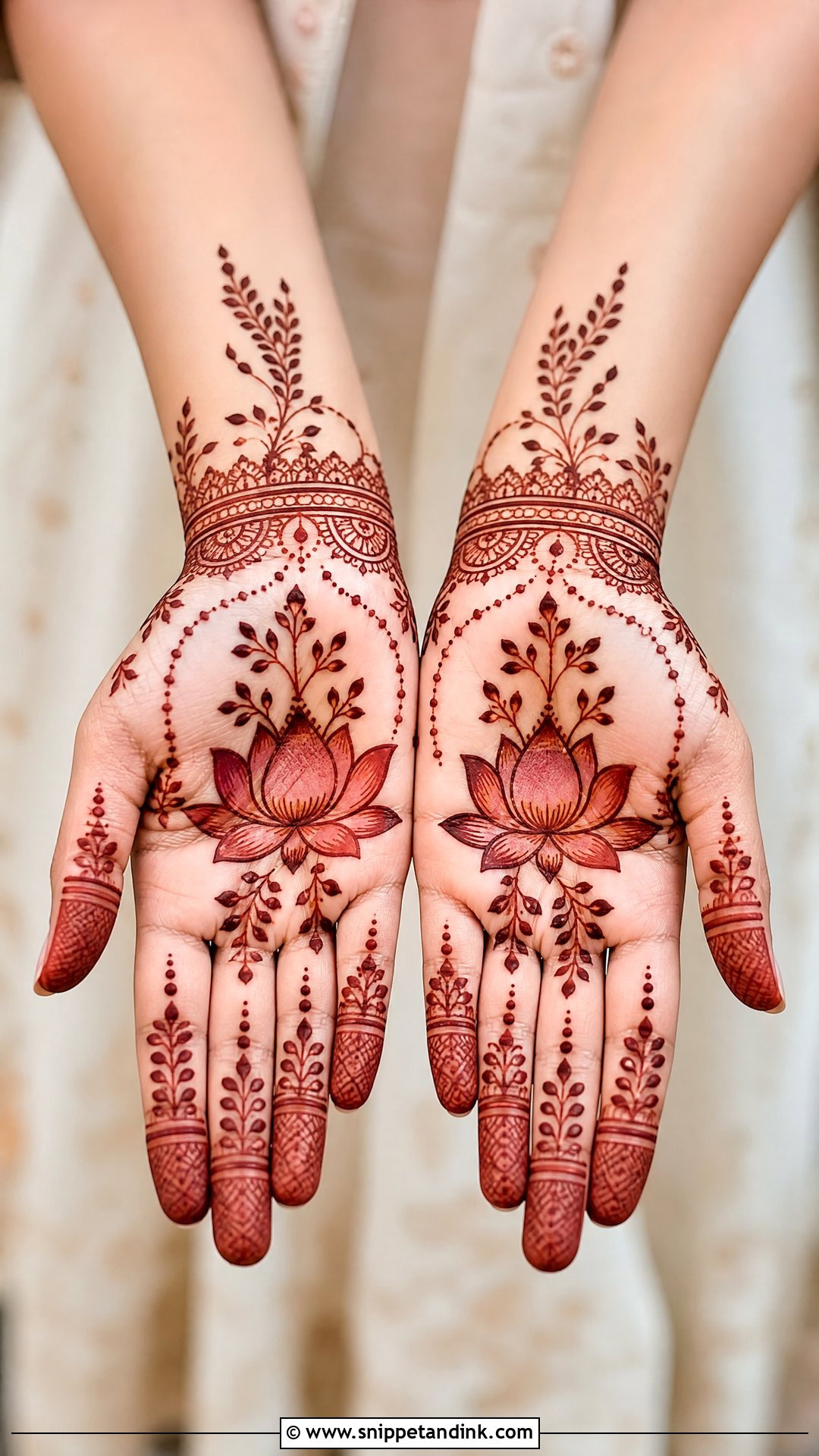
The lotus gives a softer, more rounded design than the plant motif. I use thin lines for the Tulsi leaves and slightly thicker strokes for the lotus petals, which gives depth once it stains, because thicker paste lines stain darker. Curved vines and dots fill the space around it, and a floral bracelet and shaded finger petals extend it. It suits the palm or the back of the hand. I’d keep the background light so the lotus shape stays clean.
9. Tulsi Vivah Kalash Mehndi Design
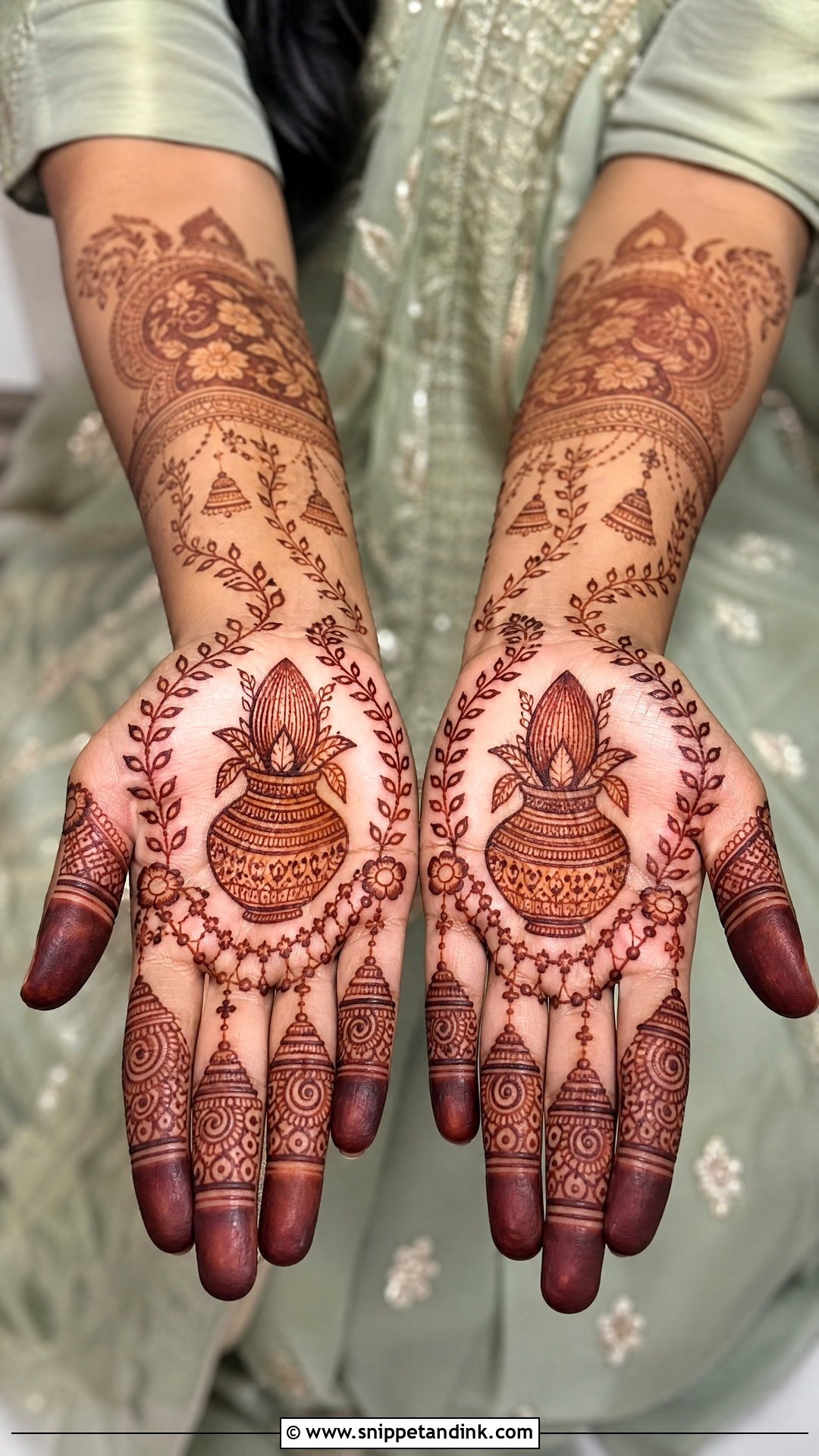
The kalash is drawn with mango leaves and a coconut on top, and some families also add a swastik or another sacred mark, if that suits your tradition; I always ask rather than assume. Tulsi leaves, flower vines and dotted borders go around it, with paisley tips and fine jaali on the fingers. The kalash is linked with prosperity and blessings, so it should stay the clear focus. A wrist band with tiny bells or diyas completes it without adding weight.
10. Tulsi Vivah Diya Mehndi Design
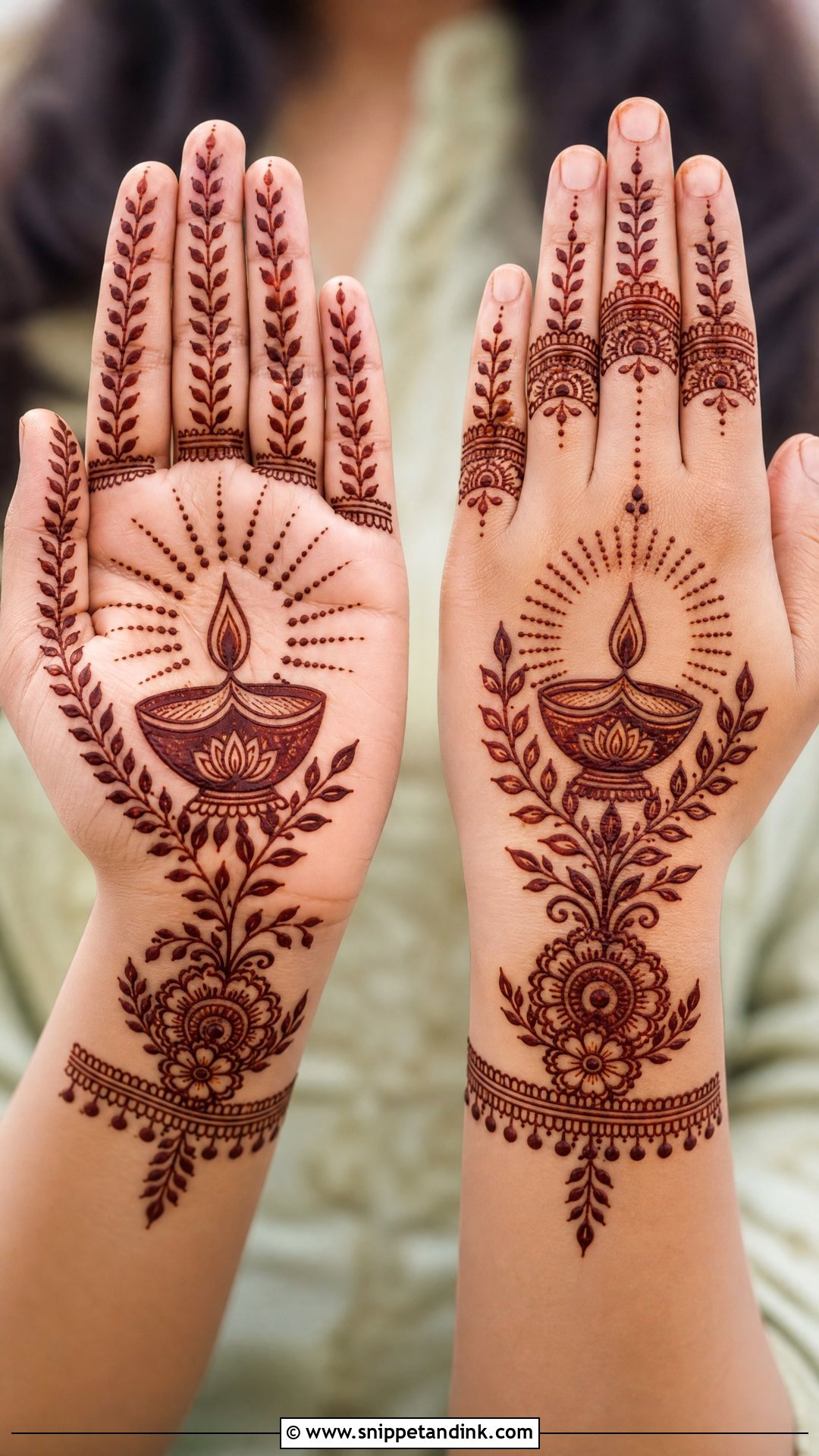
One large diya on the palm or back of the hand, surrounded by Tulsi leaves and floral arcs, is the design I suggest for women attending the evening puja, when lamps are lit around the Tulsi plant. Tiny flame shapes and dotted rays make it glow on the skin. Diya shapes are easy to draw, so it suits anyone trying mehndi at home. The fingers need only simple leafy patterns or half-filled tips.
11. Tulsi Vivah Peacock Mehndi Design
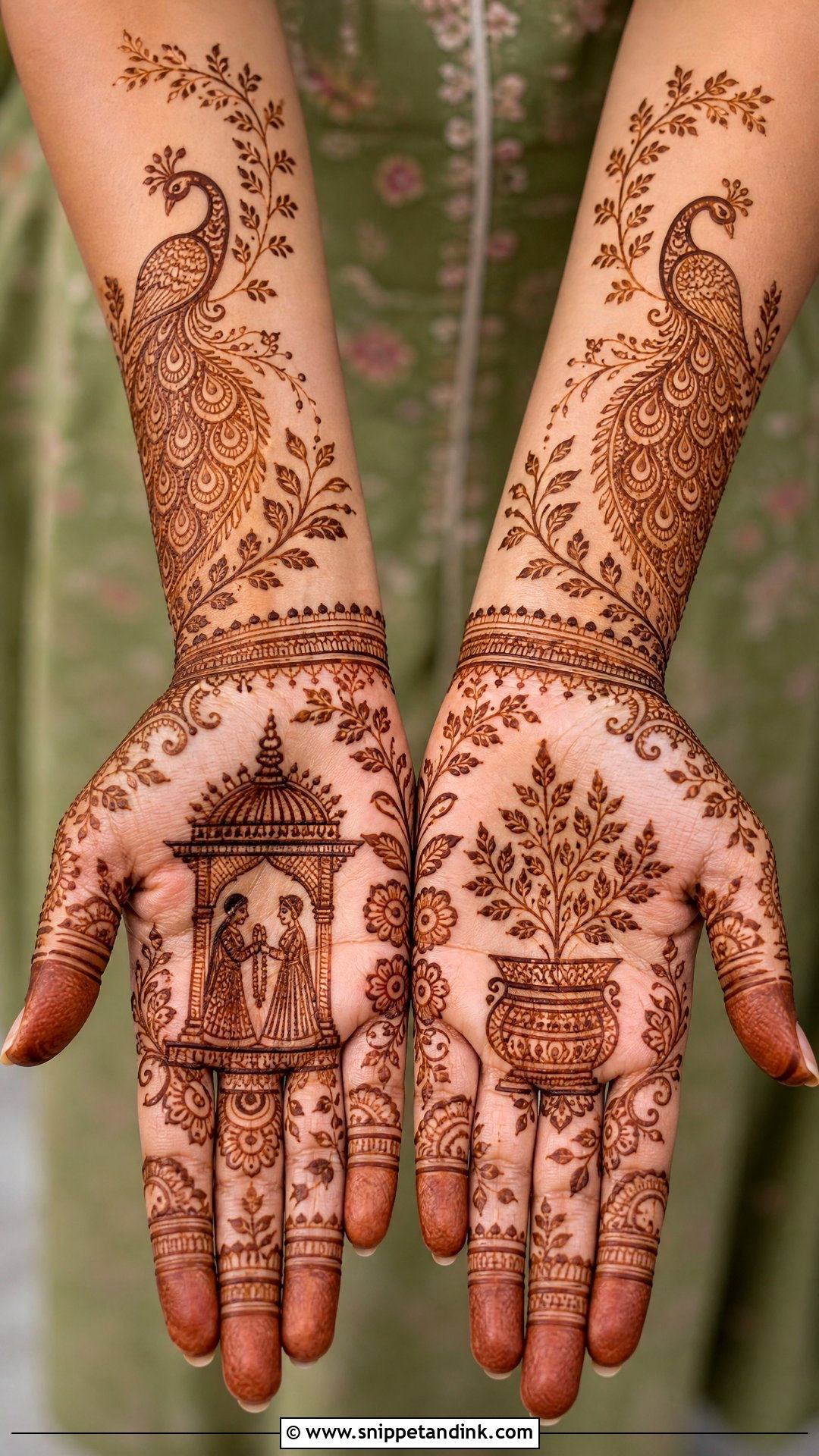
Peacocks need room, so I draw the body along one side of the palm or back of the hand and let the tail feathers fan toward the fingers. Tulsi leaves and flowers fill the gaps between the feathers, and the curved neck blends easily with paisleys and vines. The feather eyes are the detail people look for, so I leave a tiny unpainted dot in each. For a lighter version, use a single peacock with open space around it.
12. Tulsi Vivah Bridal Mehndi Design
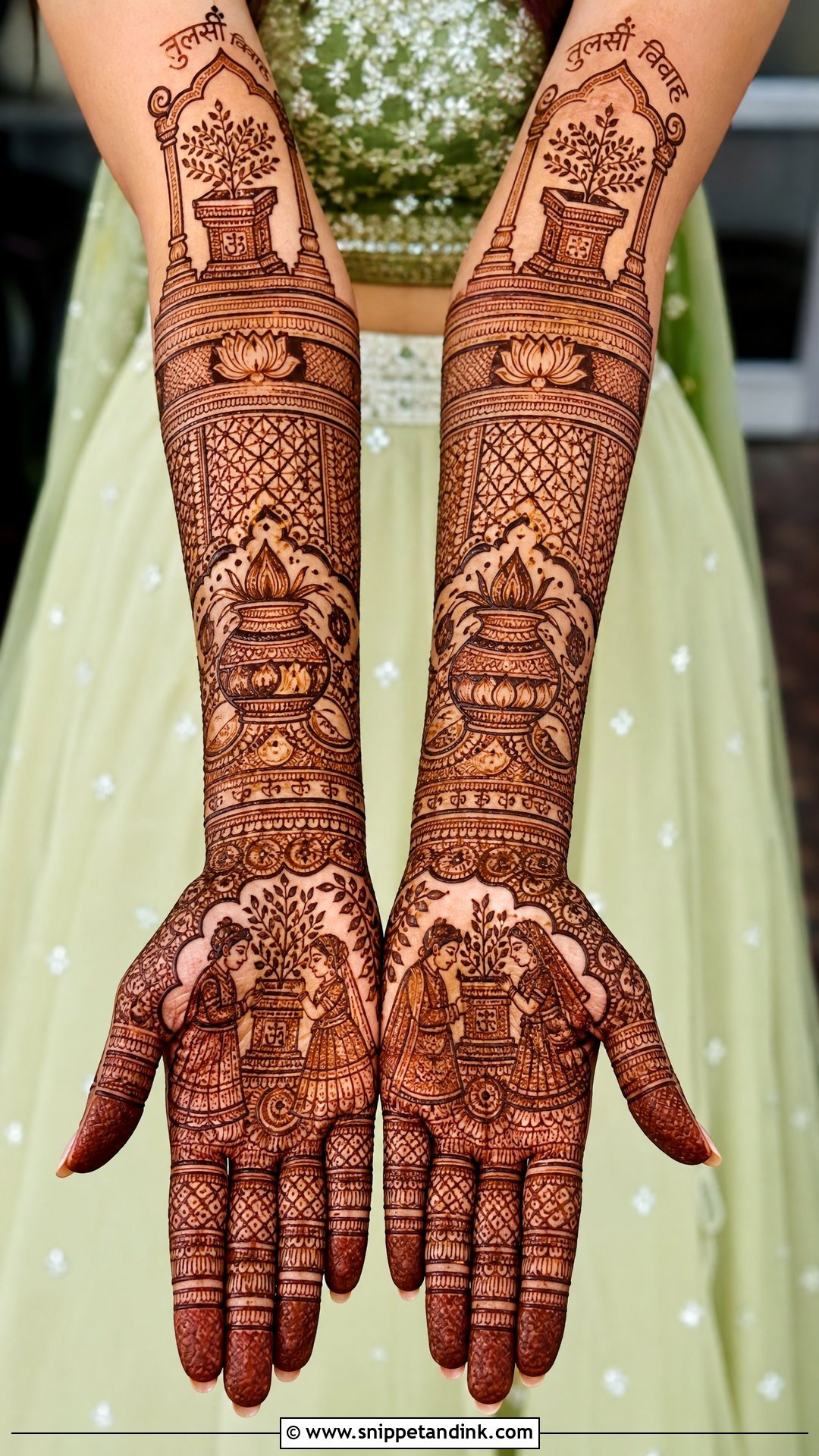
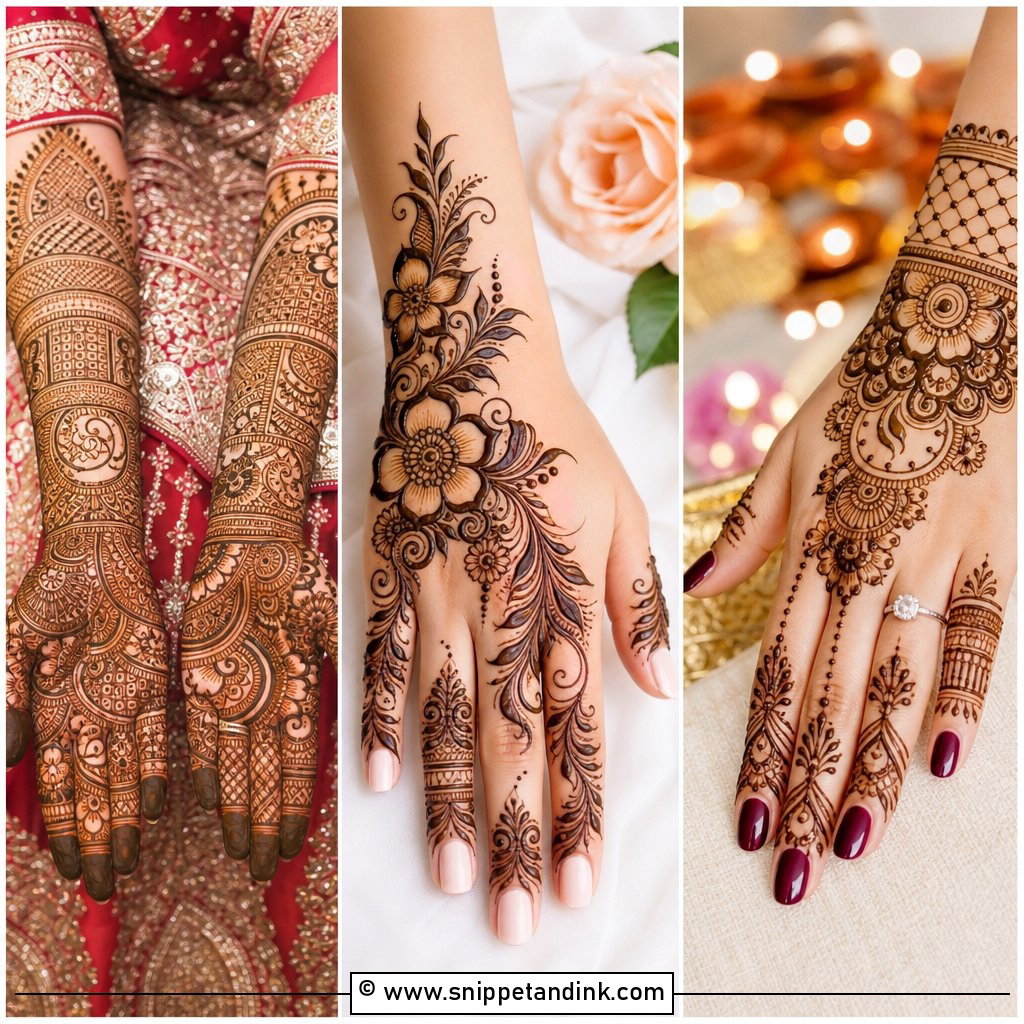
Newlyweds celebrating their first Tulsi Vivah often want something closer to bridal: palm, fingers, wrist and lower forearm covered in Tulsi leaves, lotus, kalash, paisley and fine floral filling. I keep the theme devotional rather than drawing a wedding scene, with a Tulsi vrindavan on one palm and a kalash or a Vishnu-inspired symbol on the other. Expect it to take a few hours for both hands, and plan to sit still while it dries. Silk sarees and traditional jewellery suit it.
13. Tulsi Vivah Minimal Mehndi Design
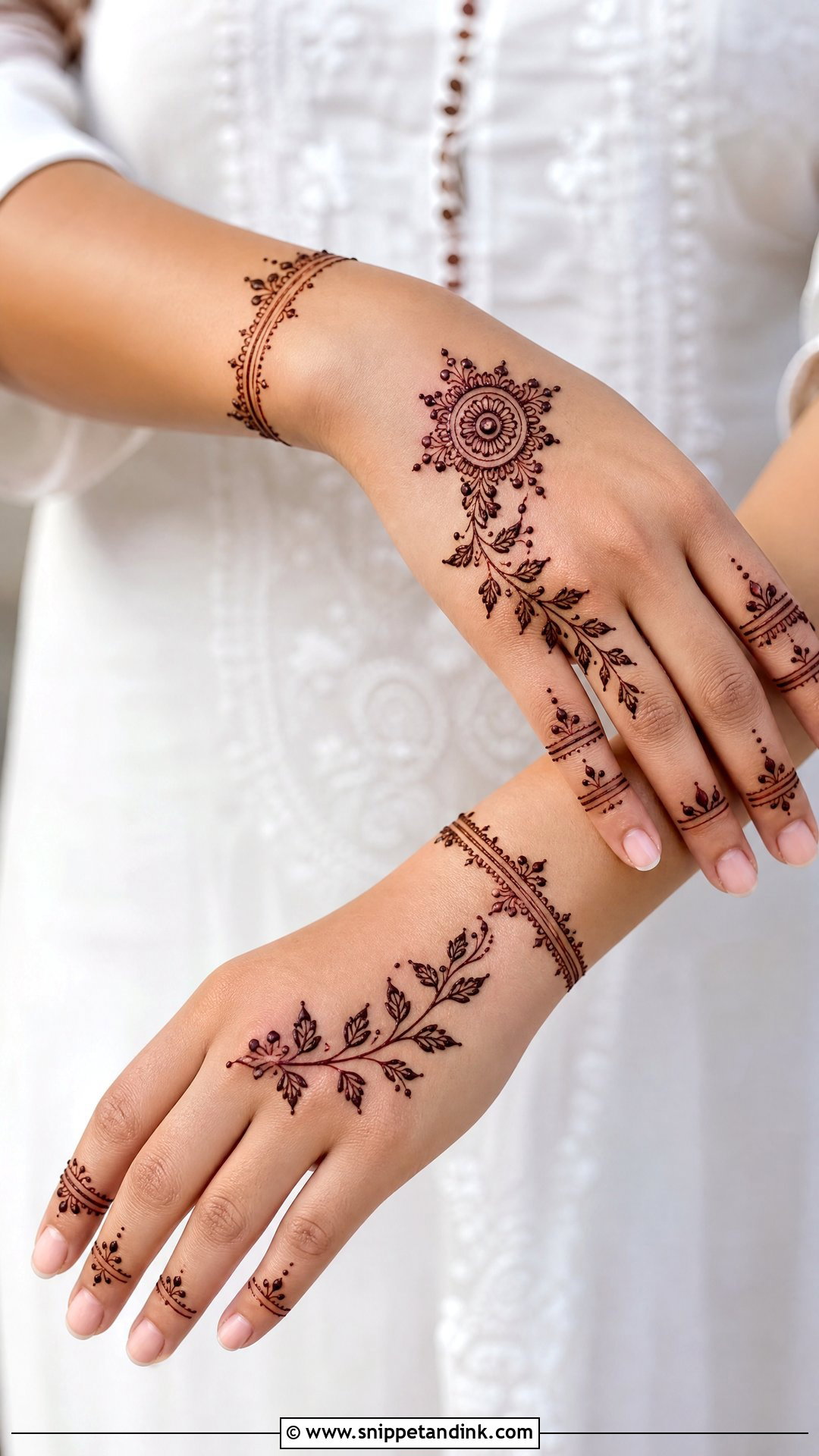
A small Tulsi leaf branch, a tiny mandala, a few dots and a slim wrist band: that’s the whole design, and it’s done in minutes. I suggest it for women going to work or college during the festival, since it looks neat with everyday clothes. Light lines on the fingers keep it delicate. The appeal is all in the spacing, and a natural reddish-brown stain is enough to make it festive.
14. Tulsi Vivah Finger Mehndi Design
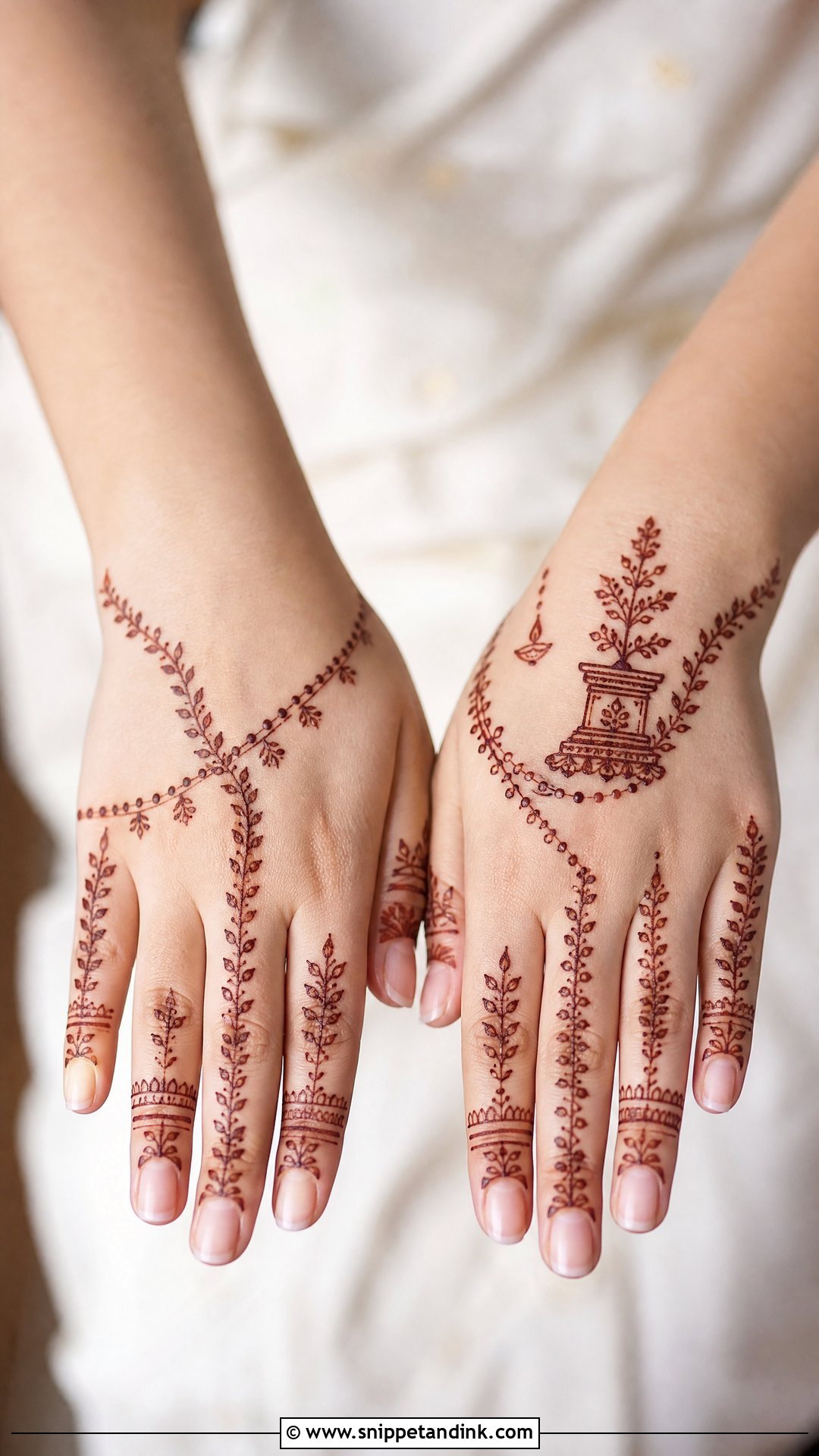
Covering just the fingers with leafy vines, dots and slim bands, then adding a tiny Tulsi plant or mandala near the wrist, gives a complete look without filling the palm. Finger designs show well with bangles and rings, and they dry faster, which helps on busy puja days. I keep the pattern similar on each finger for neatness. Fingertips stain darker than the rest of the hand, so the tips will stand out most. A small diya trail near the thumb adds a festive touch.
15. Tulsi Vivah Bracelet Mehndi Design
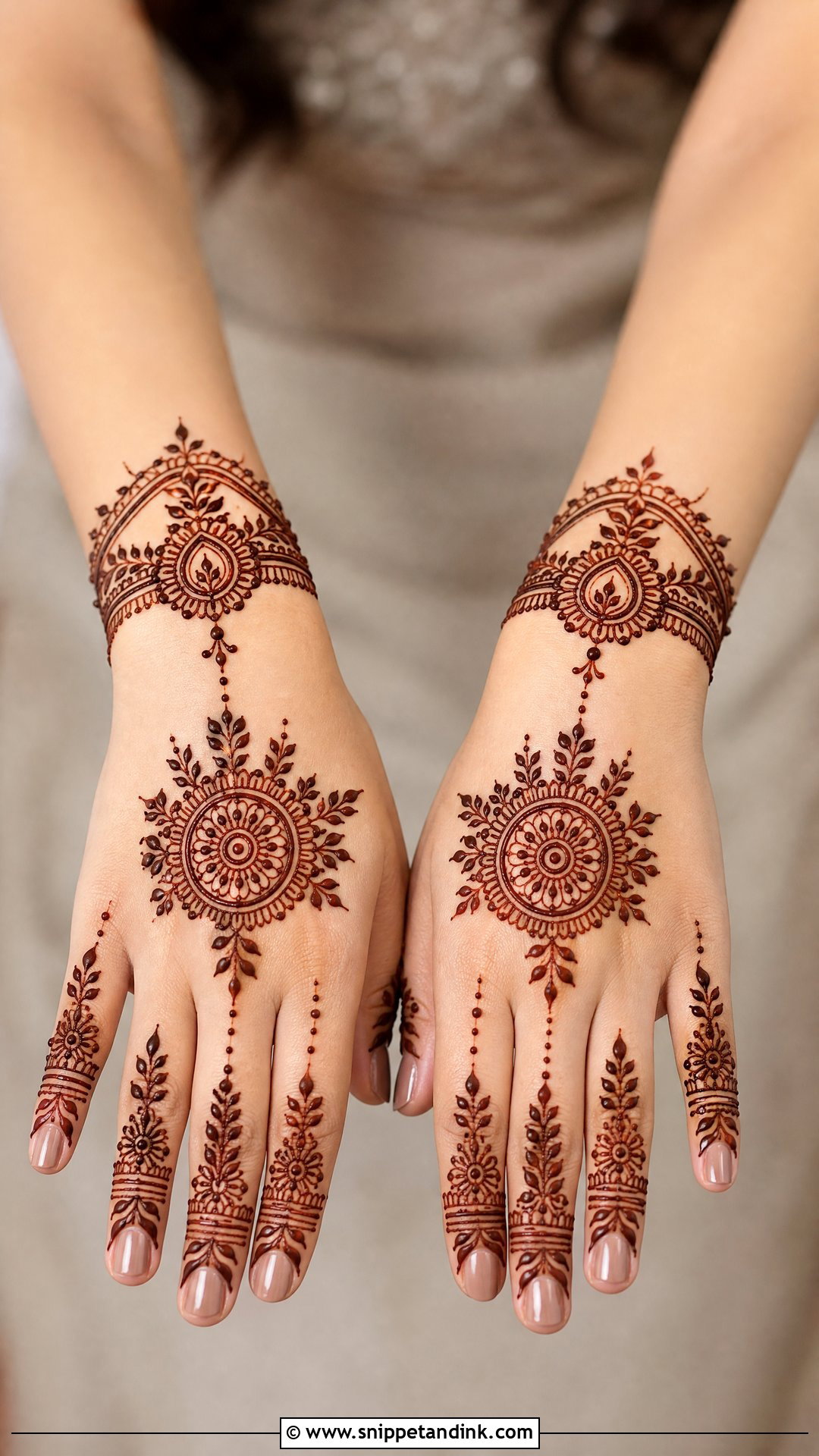
Jewellery-style mehndi starts at the wrist: a band of Tulsi leaves, small flowers and dotted chains, connected to a palm or back-hand mandala by a thin vine. The fingers can stay bare or carry matching leafy tips. With bangles on, the wrist pattern looks like an extra piece of jewellery. The band needs to be crisp and symmetrical, so I measure it by eye from the wrist crease on both sides before drawing. A small leaf cluster in the center keeps the festival theme.
16. Tulsi Vivah Jaali Mehndi Design
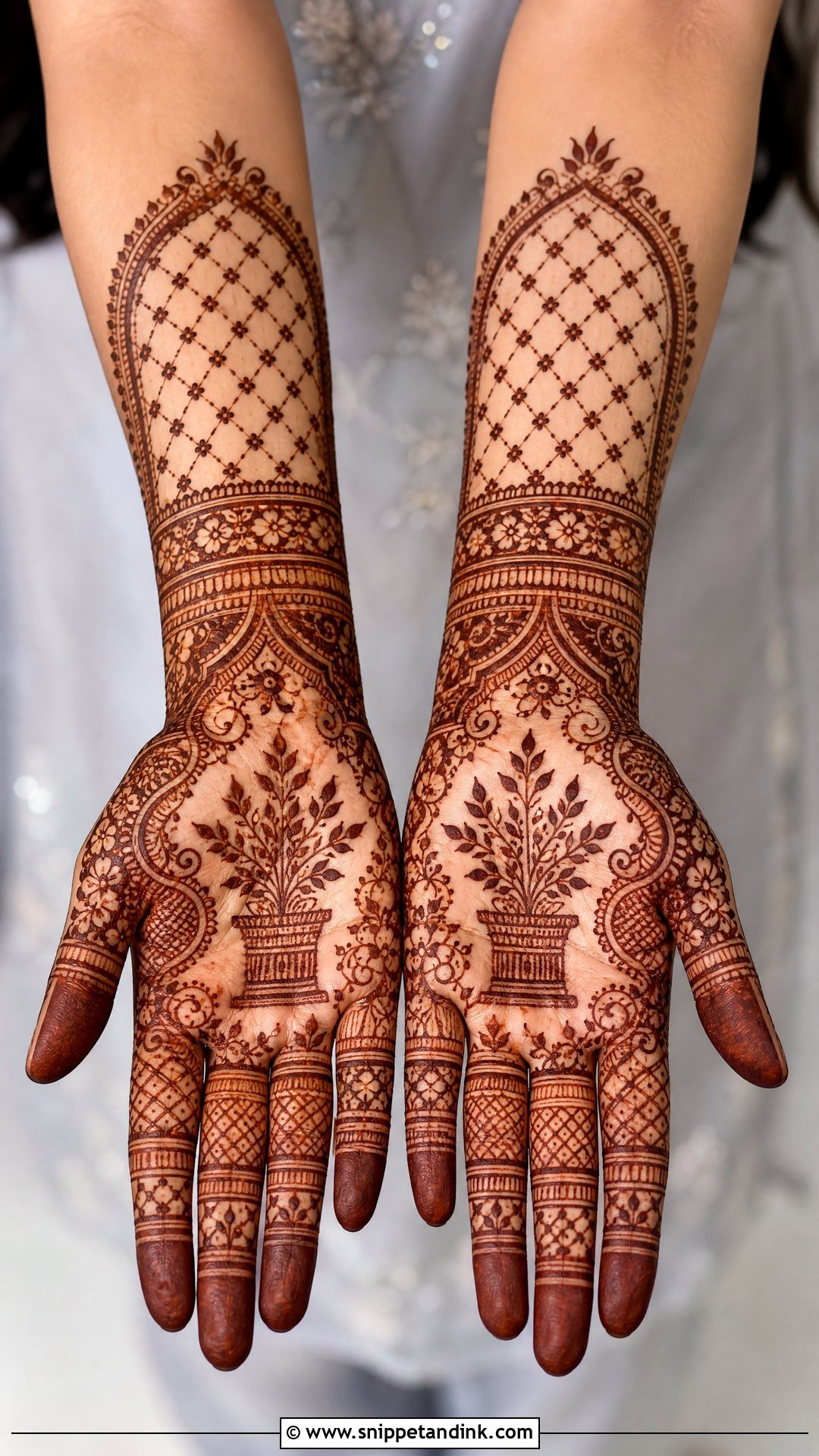
Jaali is the mesh filling, and the common mistake is drawing it too dense. When lines sit too close together they can touch while the paste is wet and fill in, so the stain comes out as a blur rather than a net. I keep the grid open, frame it with Tulsi leaves, paisleys and small flowers, and often use jaali only on the fingers and wrist with the Tulsi plant left clear in the center. Tiny dots where the lines cross make it look finished.
17. Tulsi Vivah Paisley Mehndi Design
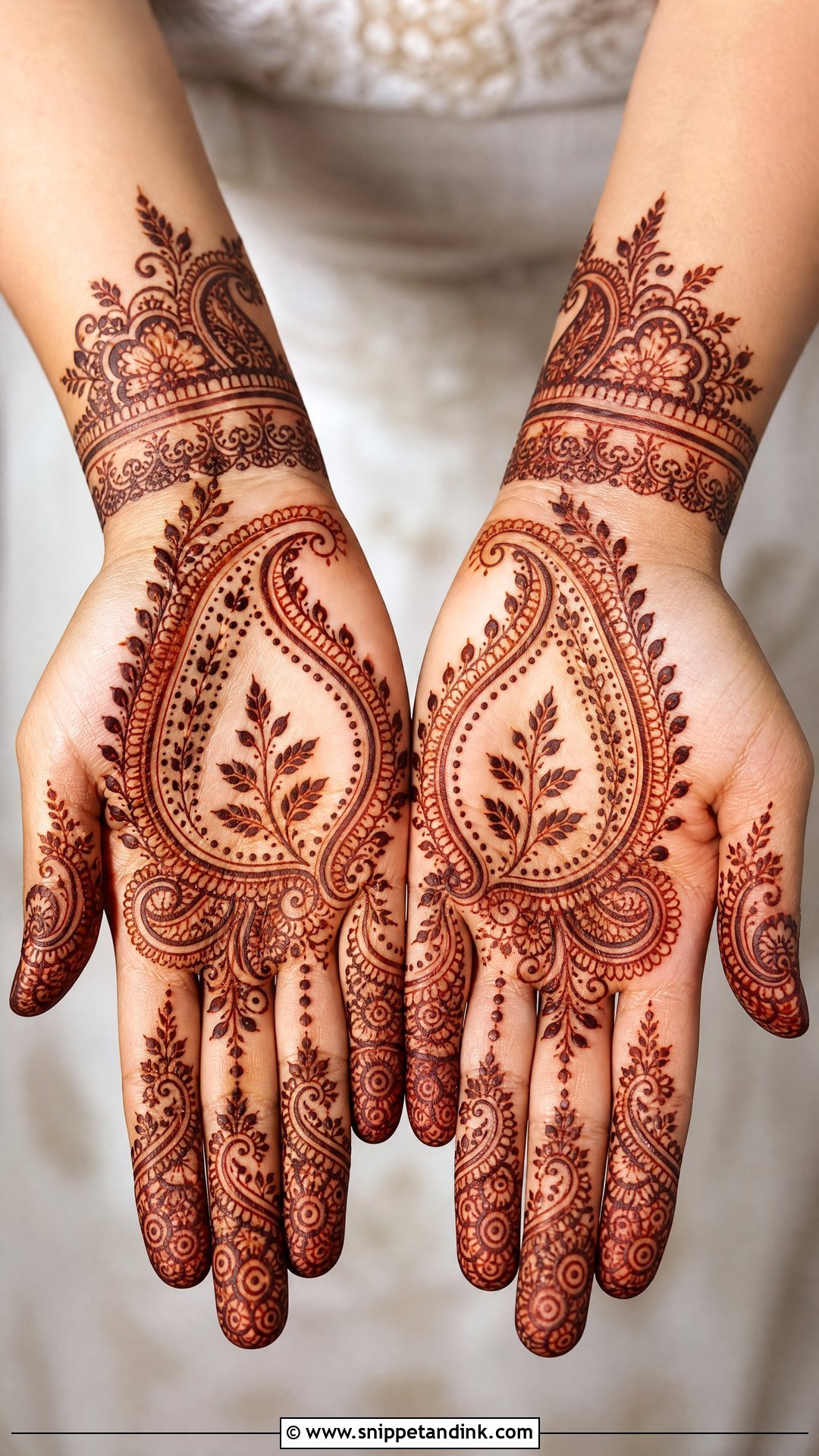
Paisleys are the most flexible shape in mehndi; their curve slides naturally into vines, dots and mandala borders. Large paisleys sit on the palm or back of the hand, with Tulsi leaves and tiny flowers filling the gaps. Small paisley tips or leafy bands on the fingers match them. To make the theme clearer, I sometimes draw a tiny Tulsi pot inside one paisley. Bold outlines with fine inner detail keep it readable.
18. Tulsi Vivah Indo Arabic Mehndi Design
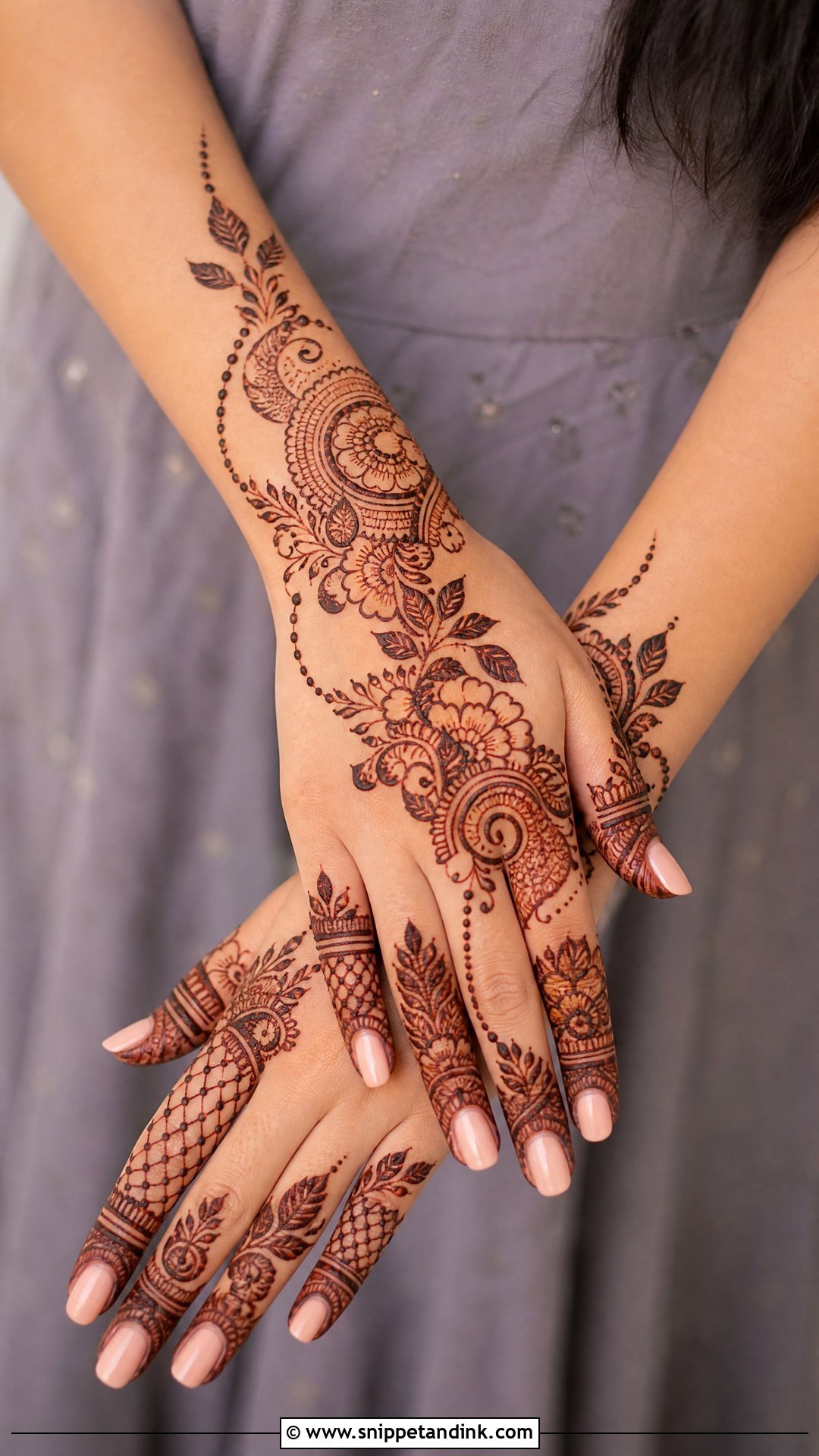
Indo-Arabic combines the open diagonal flow of Arabic work with Indian detail. I draw a diagonal floral trail across the back of the hand, then add mandalas, Tulsi leaves, paisleys and dotted chains along it. On the fingers I alternate jaali with leaf vines. It looks detailed in photos while leaving skin open, so it isn’t heavy. Keep at least one Tulsi leaf motif large enough to recognise.
19. Tulsi Vivah Foot Mehndi Design
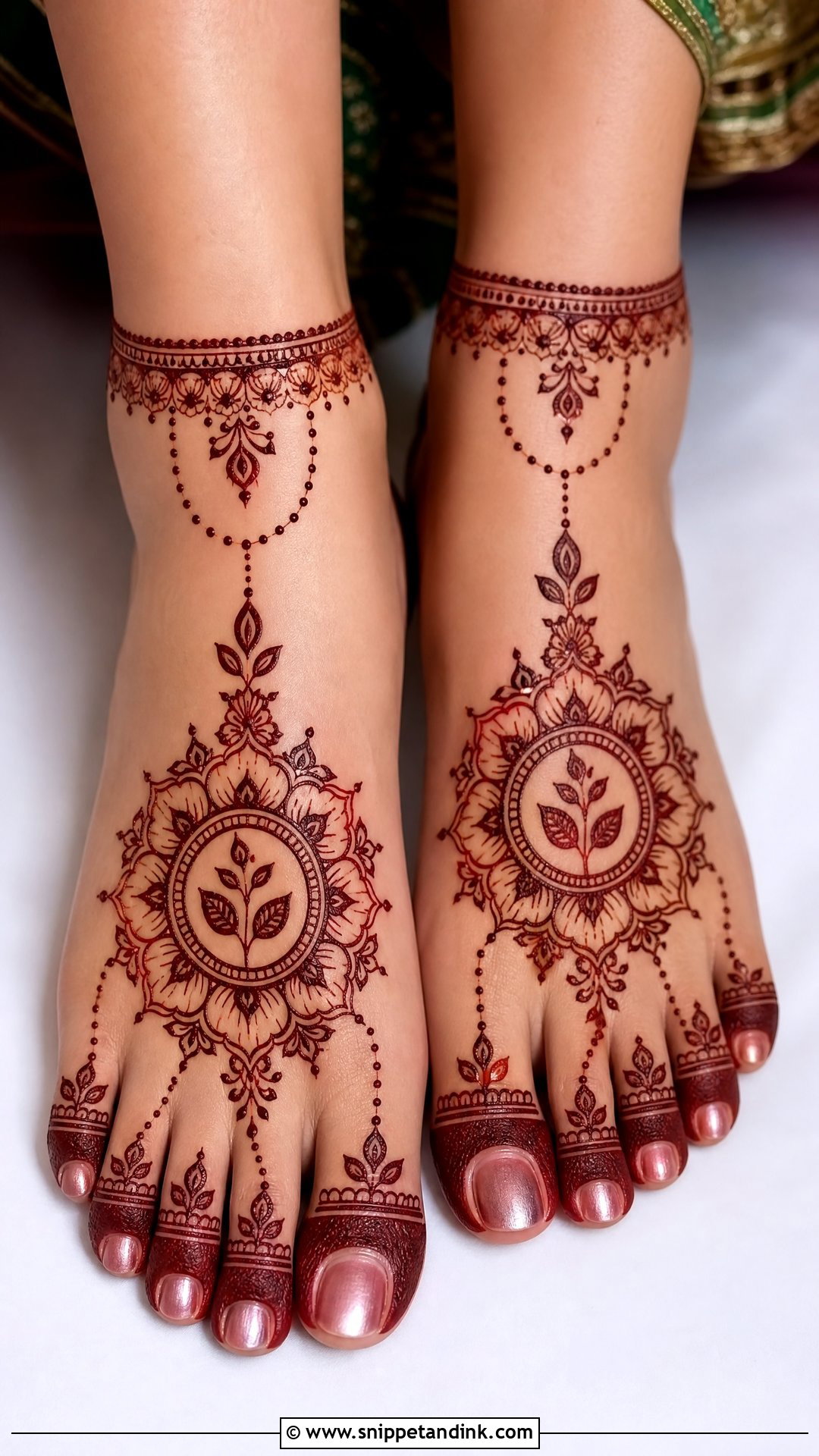
Feet stain darker than any other part of the body, so a foot design that looks light in paste comes out bold. That’s why I keep more space between motifs here: a mandala on top of the foot, Tulsi leaves, lotus petals and dotted chains, an anklet-style border and small floral toe tips. Sit with feet up while it dries and avoid walking, as paste on the sole smudges instantly. It goes well with sarees, lehengas and festive sandals.
20. Tulsi Vivah Matching Mehndi Design
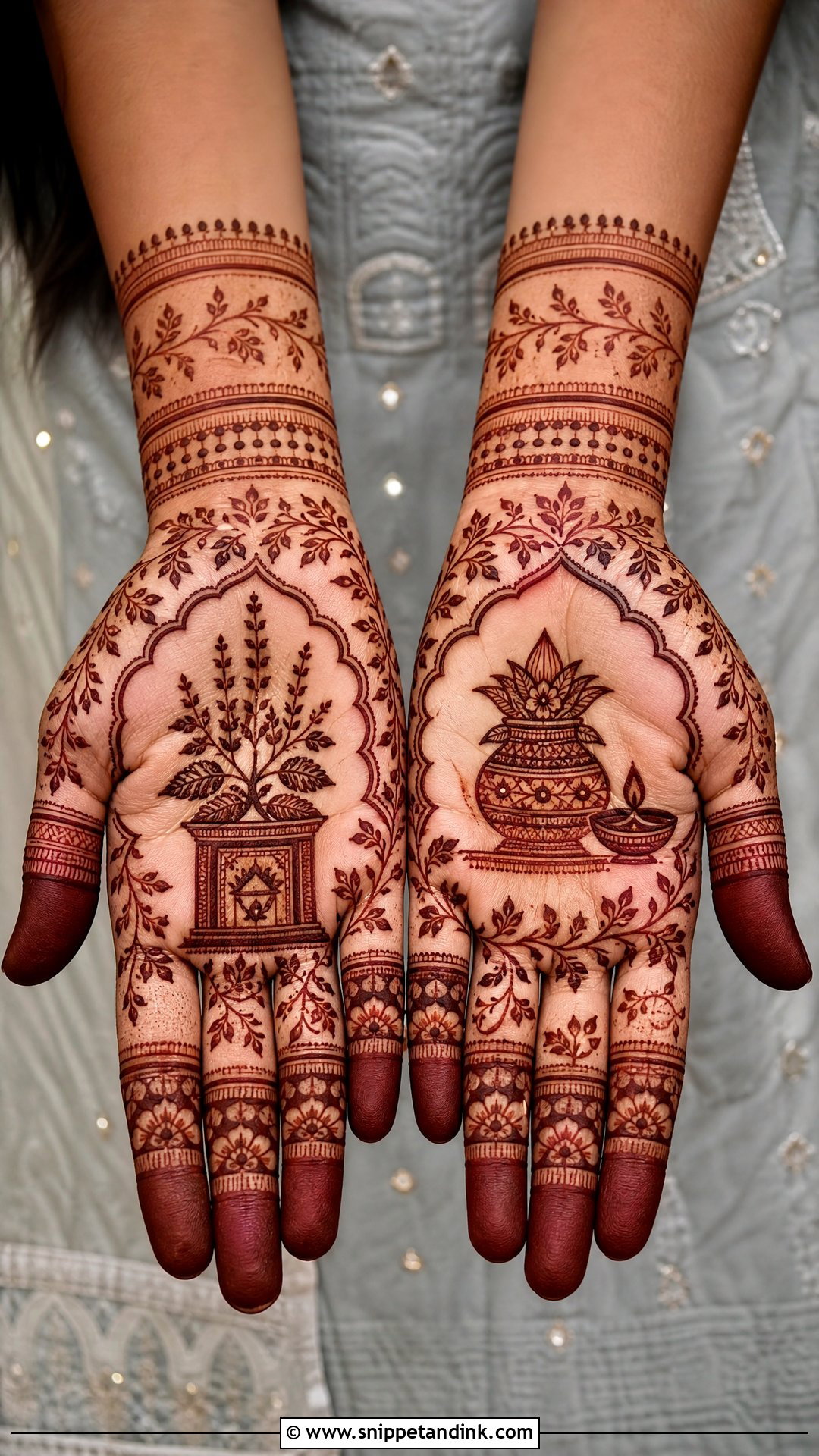
Matching hands photograph well during aarti, when both hands are raised together. I often put a Tulsi plant on one palm and a kalash or diya on the other, then repeat the flowers, leaves and borders across both so they read as a pair. The fingers should follow the same pattern family. It can be simple or heavy depending on your time, and it works nicely for sisters or mothers and daughters getting mehndi together.
When to Apply So the Stain Peaks by Evening Puja
Natural henna comes off the skin bright orange and deepens over the next day or two as it oxidises. So mehndi applied on the morning of Tulsi Vivah will still be orange at the evening puja. I’d apply it the evening before, or two days ahead for the darkest result.
- Start with clean, dry hands, without lotion or oil.
- Leave the paste on for at least six hours, overnight if you can.
- Dab a little lemon and sugar mixture on once it’s dry so it stays stuck to the skin.
- Scrape the paste off with a blunt edge rather than washing it, and keep the area away from water for as long as you can.
- Keep your hands warm. A stain develops faster on warm skin.
Cones That Shouldn’t Go Near Your Skin
Natural henna never stains black, and it never goes dark within minutes. A cone that promises either probably contains chemical dye, and so-called black henna often contains PPD, which can cause severe skin reactions and blistering. Read the cone’s ingredients, buy from a maker who lists them, and if you’re unsure, do a small patch on the inner arm a day or two before the festival. Fresh natural paste smells earthy, often of essential oils, not chemical.
Let the Tulsi Motif Lead and Keep the Rest Light
The designs that feel most right for Tulsi Vivah keep one devotional motif clear, whether that’s the plant, a kalash, a diya or a lotus, and let the leaves, mandalas and vines support it. If time is short, a back-hand trail, bracelet or finger design is plenty. For a traditional puja look, a full palm or Tulsi plant layout carries the meaning best, and newlyweds can go heavier. Whichever you pick, natural henna, good timing and a little aftercare decide how it looks on the night.
You'll Like These Ideas:




Leave a Reply