
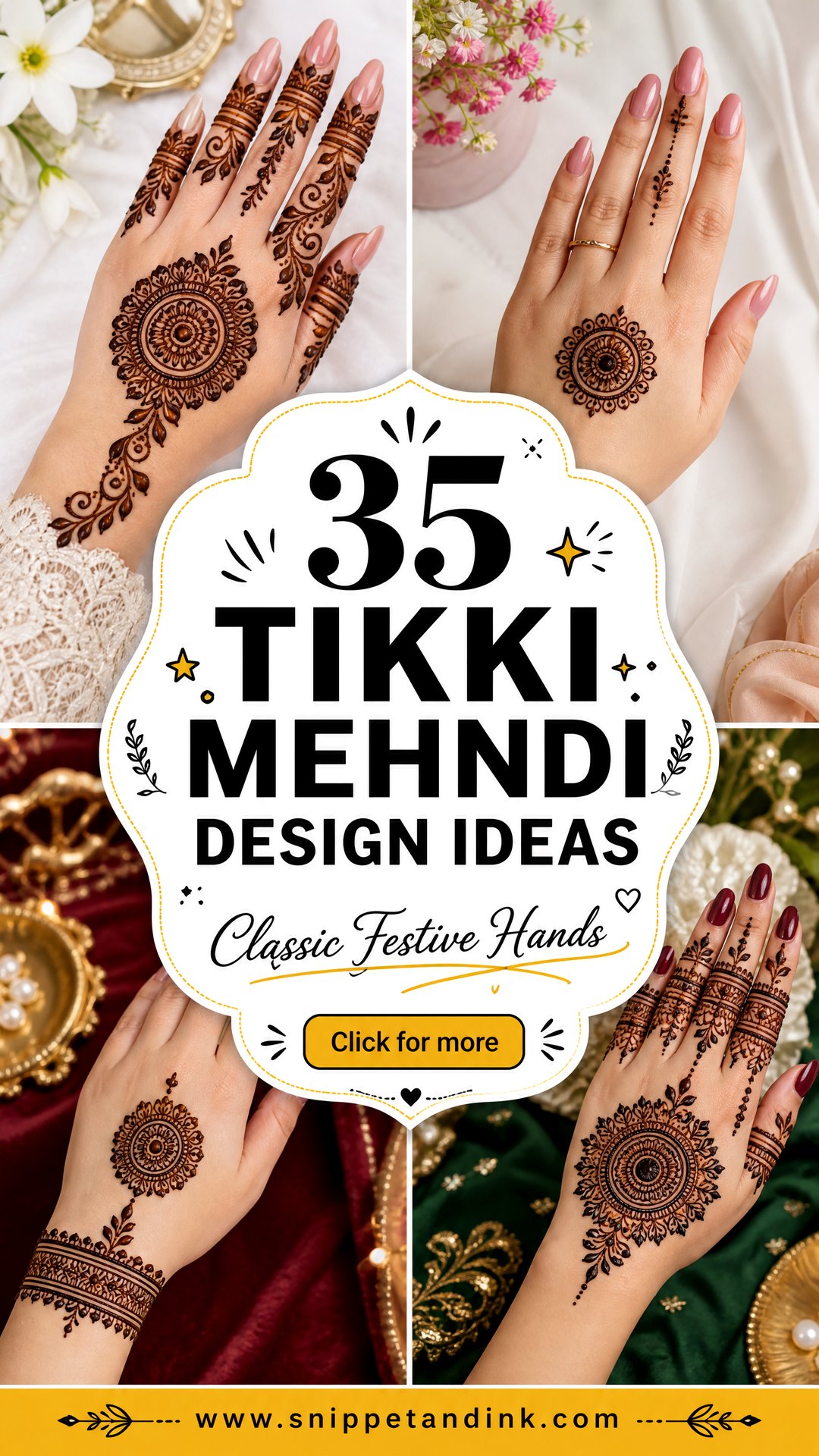
Ask an older aunt what mehndi used to look like and she’ll often draw a circle in your palm. The gol tikki is that circle: a round centre that gives the hand structure without needing a packed design. What happens around it decides the mood. Add mandala rings and it turns traditional, add an Arabic trail and it turns light, add paisleys and jaali and it turns bridal. I use it on front hands, back hands, children, bridesmaids, Eid hands and Karwa Chauth hands, because a centred circle balances small and large palms alike. Here are 35 ways to build one, with the practical notes I’d give you at the chair.
Sizing and Centring the Tikki on Your Palm
A tikki that is slightly too big or a little off-centre throws the whole hand. Before I draw anything, I ask the client to rest her hand, palm up and relaxed, on a cushion. The true centre of the palm is usually a little lower than people expect, closer to the heel of the hand than to the fingers. I place a single dot there and look at it from arm’s length before committing.
- Leave a margin: the outer ring should stop short of the thumb pad and the little-finger edge, with bare skin all round.
- Draw from the centre out. I work ring by ring, turning the hand rather than twisting my wrist, which keeps the curve even.
- Match the size to the coverage. A small circle suits minimal hands; a bridal tikki can be larger because the fillers around it carry the eye outward.
- Check it closed. I ask the client to curl her fingers gently, because the palm creases can pull a circle out of shape.
1. Simple Round Tikki Mehndi Design
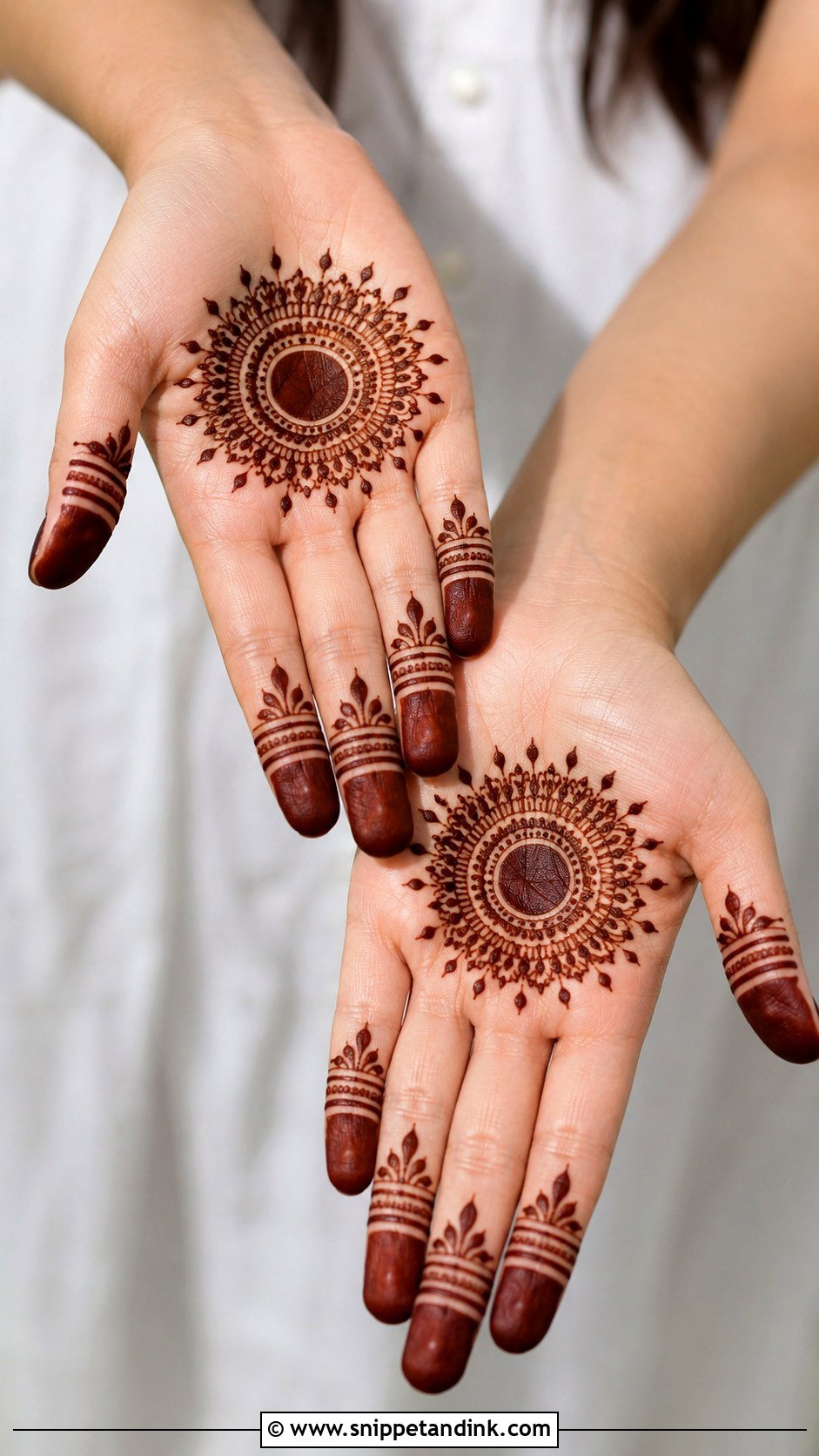
One clean circle in the centre of the palm, a ring of dots, a few small petals, curved lines and light fingertips. I keep the fingers only partly filled so the circle stays the star. The most common mistake is crowding: leave a clear margin of bare skin around the tikki and it looks bold, while the same circle with fillers pressed against it looks smudged once it stains. This is where I’d start anyone who has never held a cone.
2. Gol Tikki Mehndi Design Front Hand
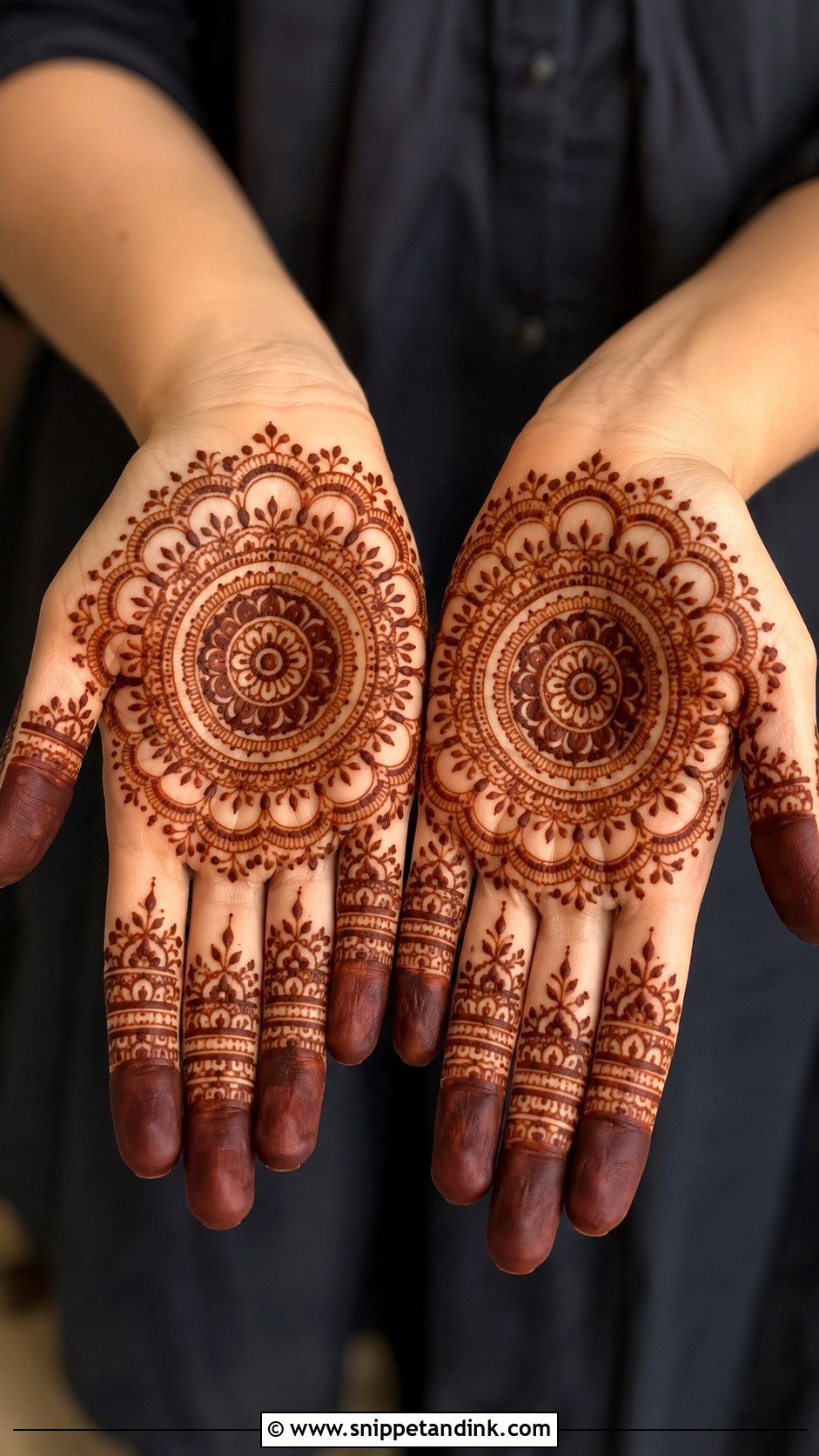
On the front hand, the round center becomes a small mandala with layers of dots, petals, scallops and fine rings, linked to the fingers by slim trails or dotted chains. Fingertips can be filled solid or given half-finger leaf detail. Medium and wide palms show this off best. On a narrow palm I shrink the circle a little and stretch the finger trails, so it doesn’t look like the tikki is squeezed between the thumb and the edge of the hand.
3. Back Hand Tikki Mehndi Design
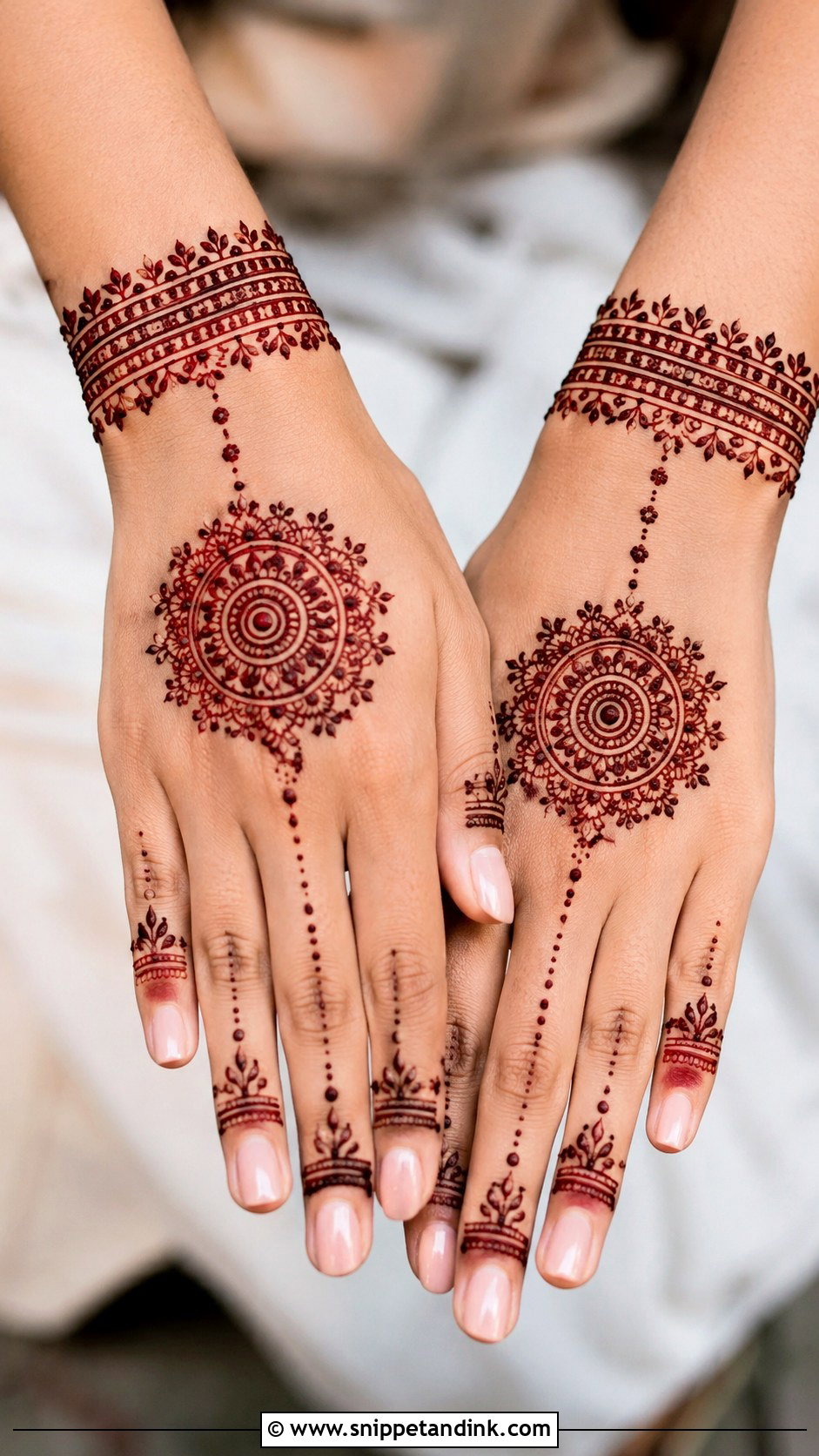
Moved to the back of the hand, the tikki starts to look like an ornament. A round floral mandala sits in the middle, dotted chains run to each finger, small flowers or bands finish the fingers, and a bracelet border closes the wrist. It’s light enough for bridesmaids. Remember that the back of the hand stains paler than the palm, so I pipe the circle’s outline a little thicker here to keep it from fading into the skin.
4. Arabic Tikki Mehndi Design
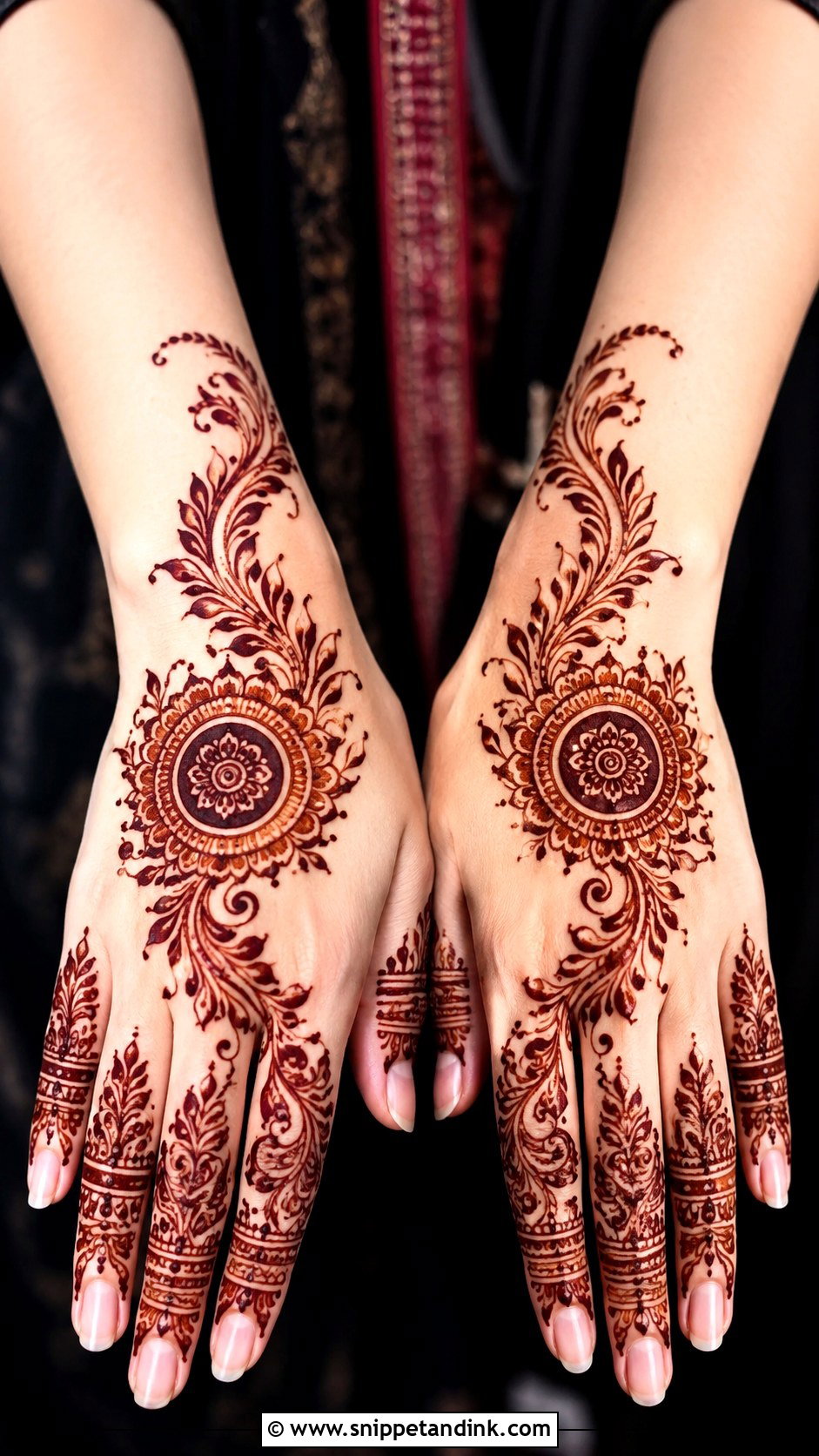
Arabic tikki gives up strict symmetry. I draw the circle bold, then let a trail of large flowers, leafy vines and curved paisleys run across the palm or back of the hand, with plenty of open skin. The fingers get diagonal bands or matching floral tips. My trick is to keep the tikki darker and the surrounding Arabic work thinner. That difference in line weight is what makes the circle read first and the trail second.
5. Indian Tikki Mehndi Design
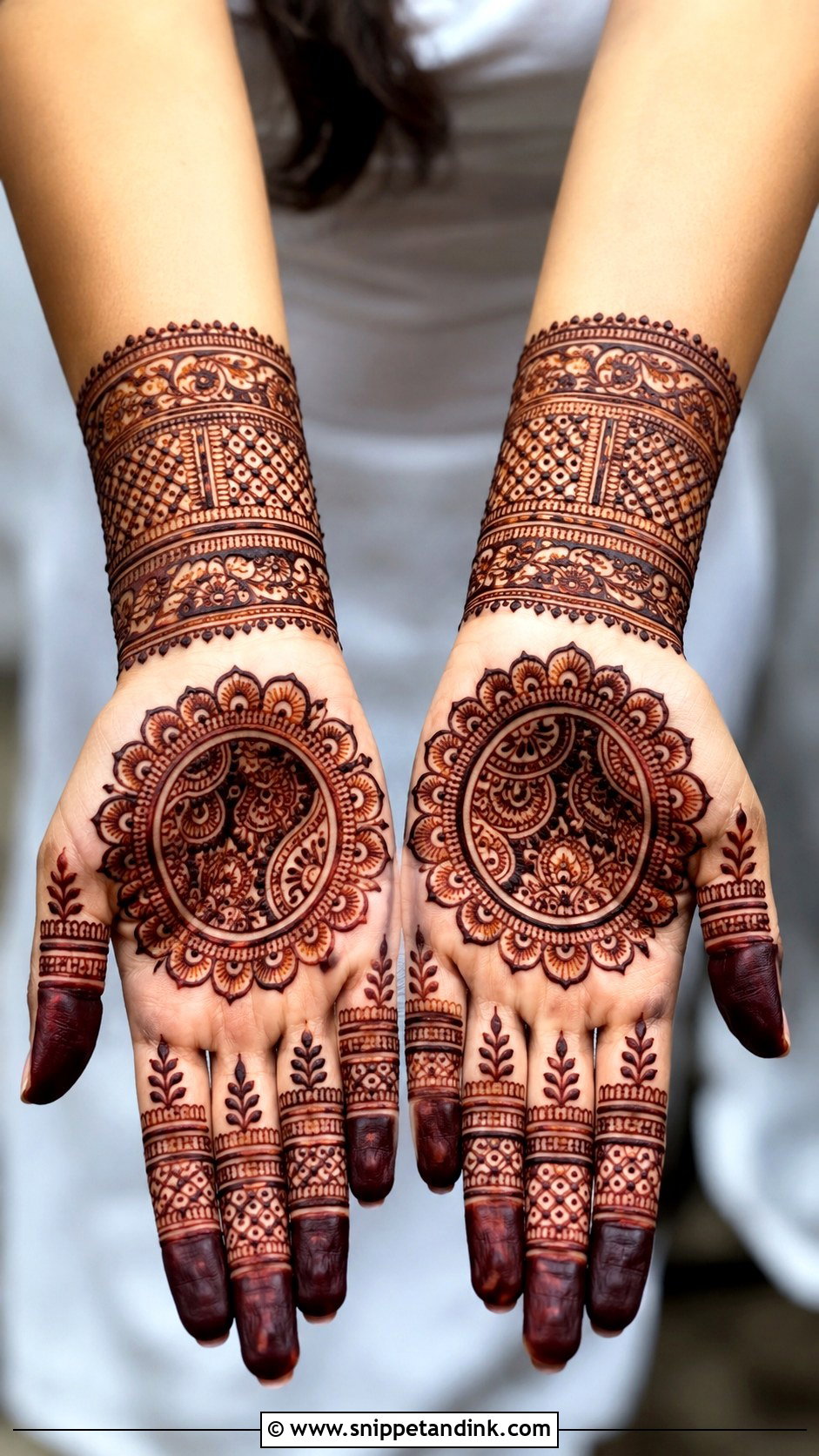
The Indian version is fuller: a strong circular mandala, then paisleys, flowers, jaali and filled fingers spreading out from it, with leaf borders hugging the circle and cuffs, bands or small peacock details at the wrist. It suits weddings, Karwa Chauth and Teej. Keep each layer around the circle the same width. When one ring is fatter than the others, the whole tikki looks wobbly, even if the circle itself is perfect.
6. Floral Tikki Mehndi Design
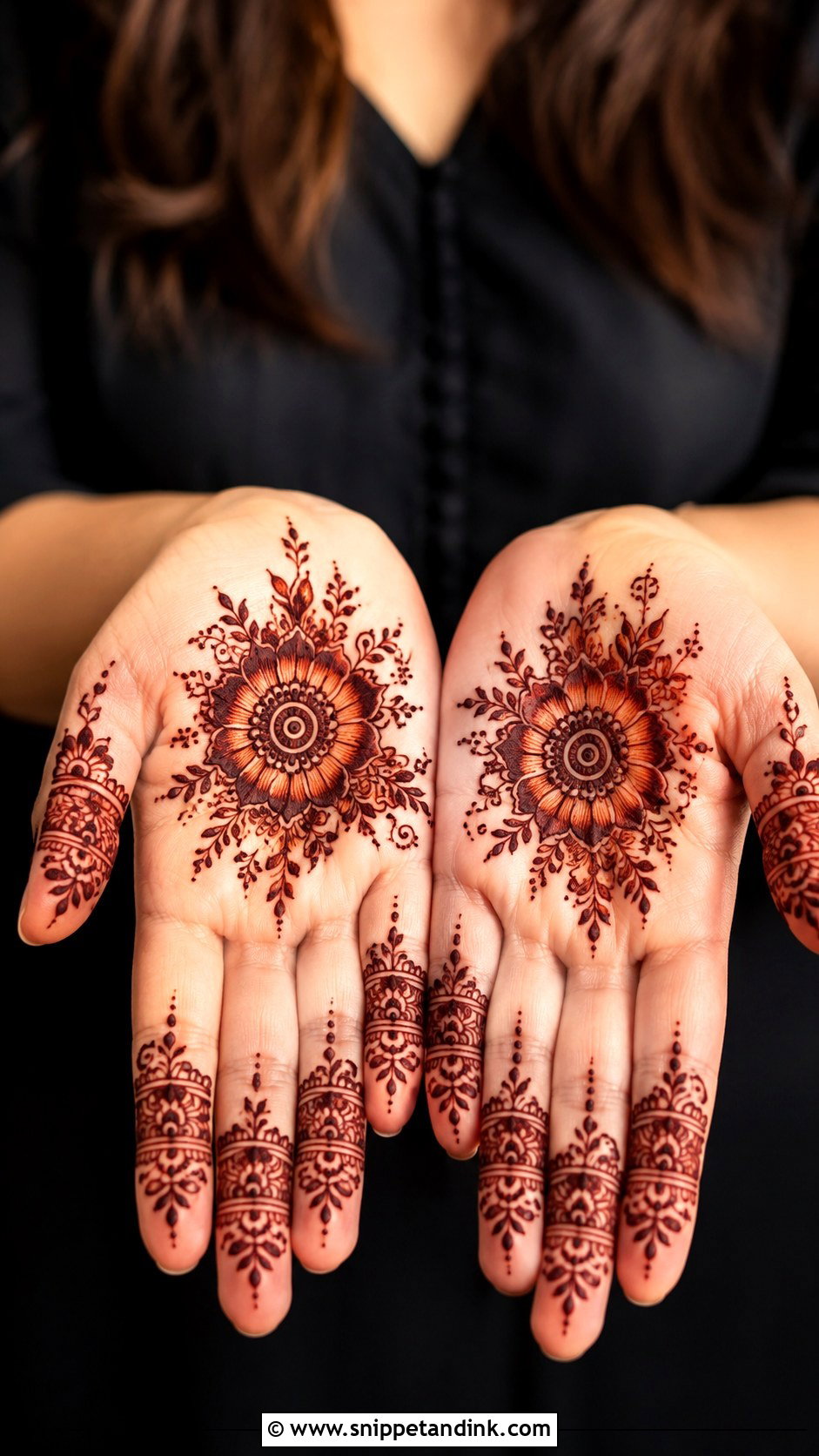
Here the tikki is a flower. I start with a small dot, then build petals around it in a ring like a blooming mandala, and extend tiny leaves, vines and dots across the palm or back of the hand. The fingers repeat small floral bands or leafy tips. Rounded petal ends matter. Pointed, uneven petals make the flower look spiky, and they’re the first thing that blurs if the paste is a little too wet.
7. Mandala Tikki Mehndi Design
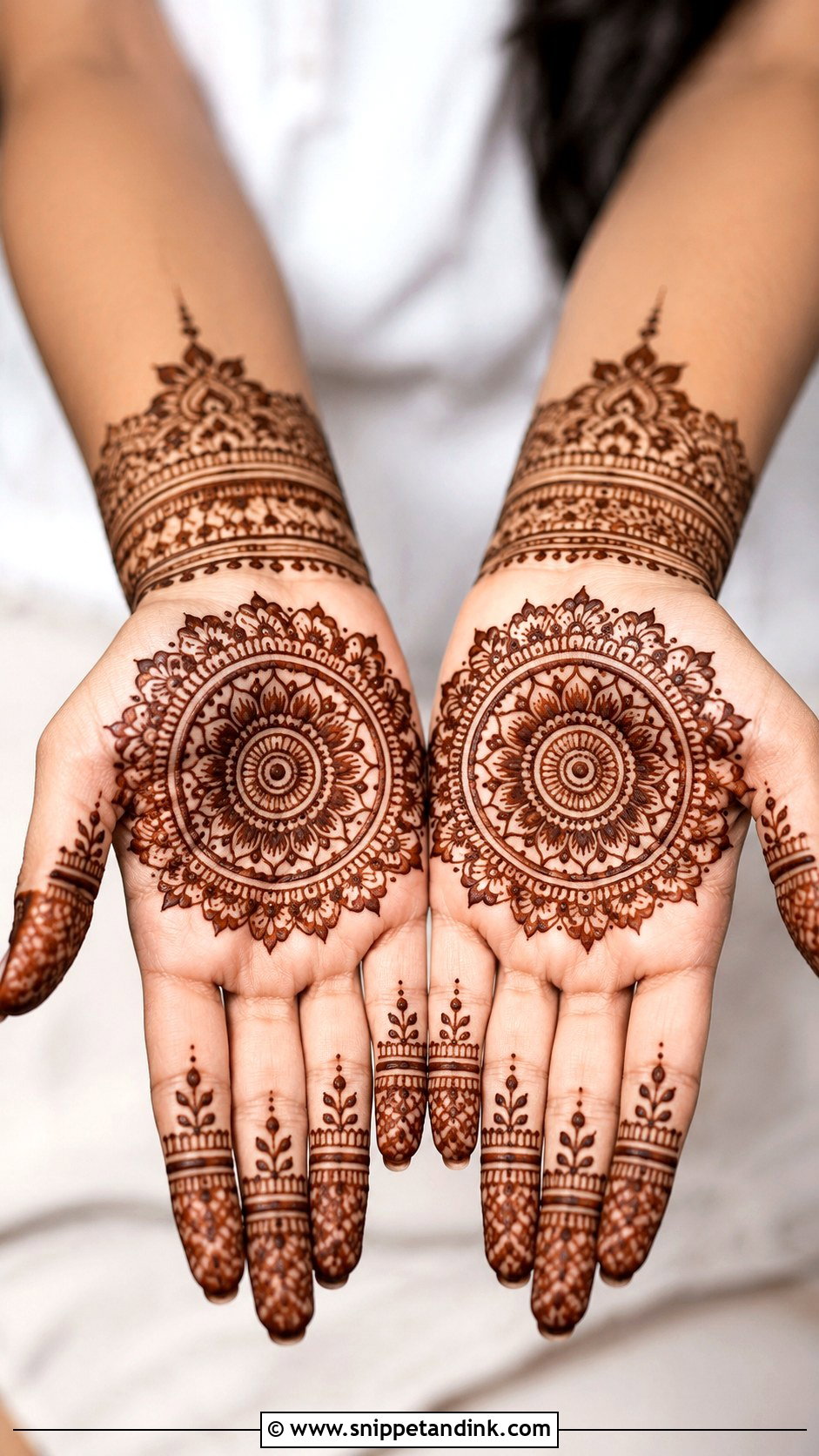
A mandala tikki is about rings: petals, dots, fine lines, small arches and leaves, each layer clearly separated from the next. The fingers stay simpler with matching bands and leafy strips. Because I can scale the mandala up or down, it fits small and large hands equally well. Leave a sliver of skin between rings. Paste spreads very slightly as it sits, and rings drawn touching each other merge into a dark band.
8. Bridal Tikki Mehndi Design
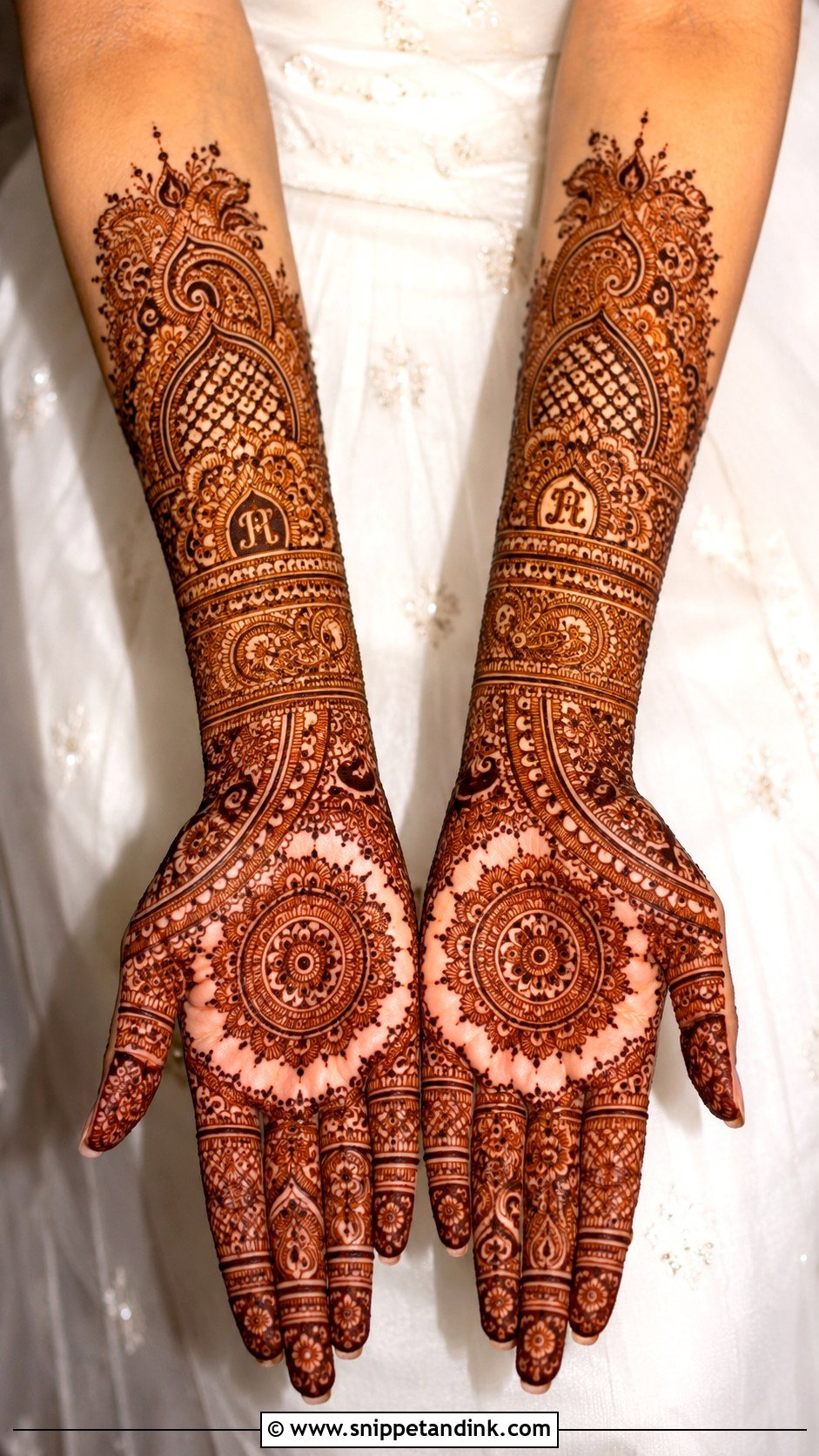
A bride who loves tradition but wants a clear focal point usually ends up here. A large, layered tikki anchors the palm, surrounded by paisleys, florals, fine jaali and filling, and the design runs from fingertips to forearm. Initials or wedding symbols can sit near the wrist without touching the main circle. I give the tikki a thicker outline than anything else on the hand. Inside heavy bridal work, an outline the same weight as the fillers simply disappears.
9. Eid Tikki Mehndi Design
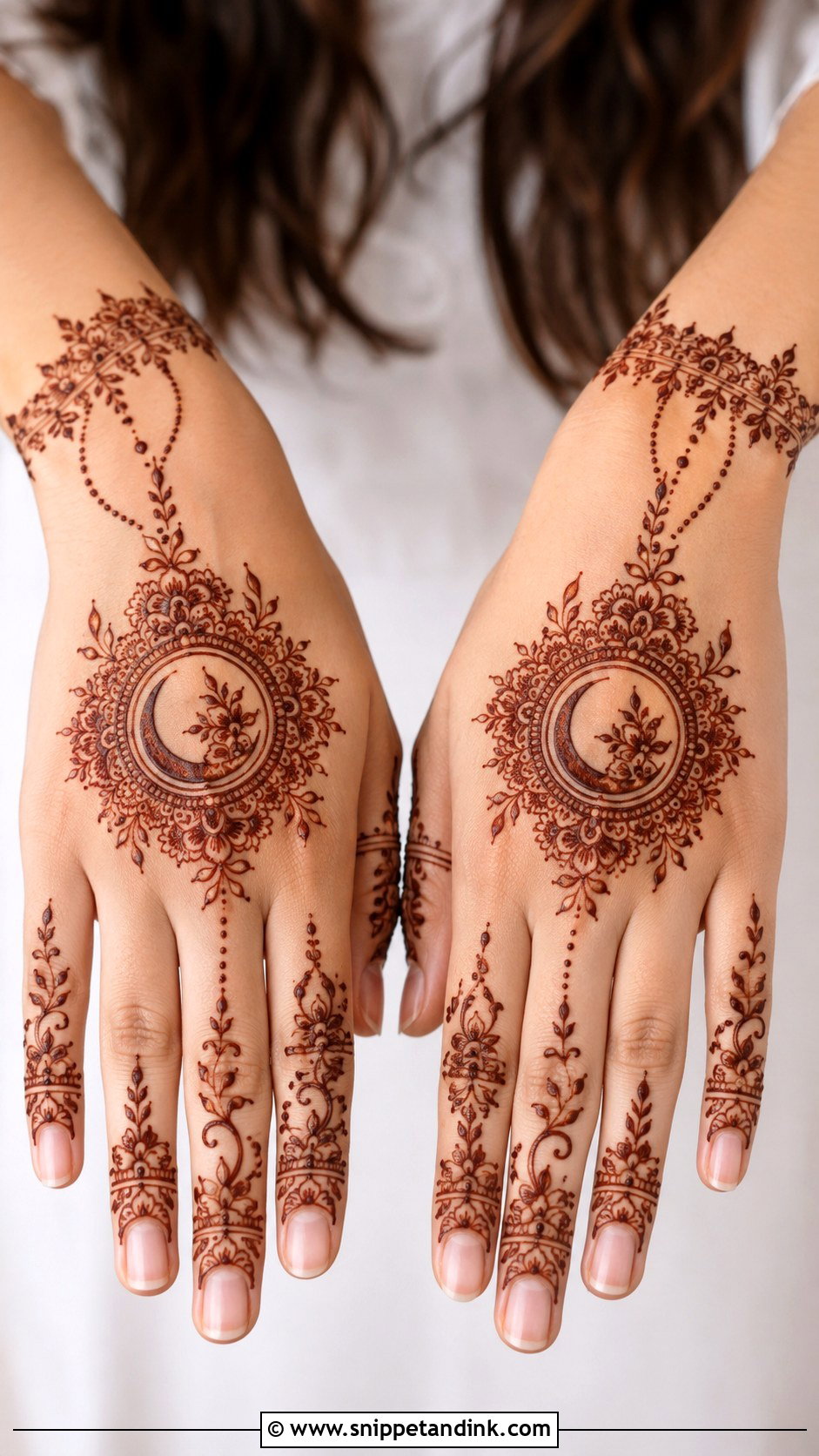
For Eid I’d go medium: a tikki on the palm or back of the hand, with crescent curves, florals, leafy trails and dotted chains, and slim bands, tiny petals or filled tips on the fingers. An Arabic side trail around the circle gives it a modern lean. Keep it open enough that the stain reads cleanly. Applied the night before, it has time to deepen by the morning prayers and the family visits.
10. Karwa Chauth Tikki Mehndi Design
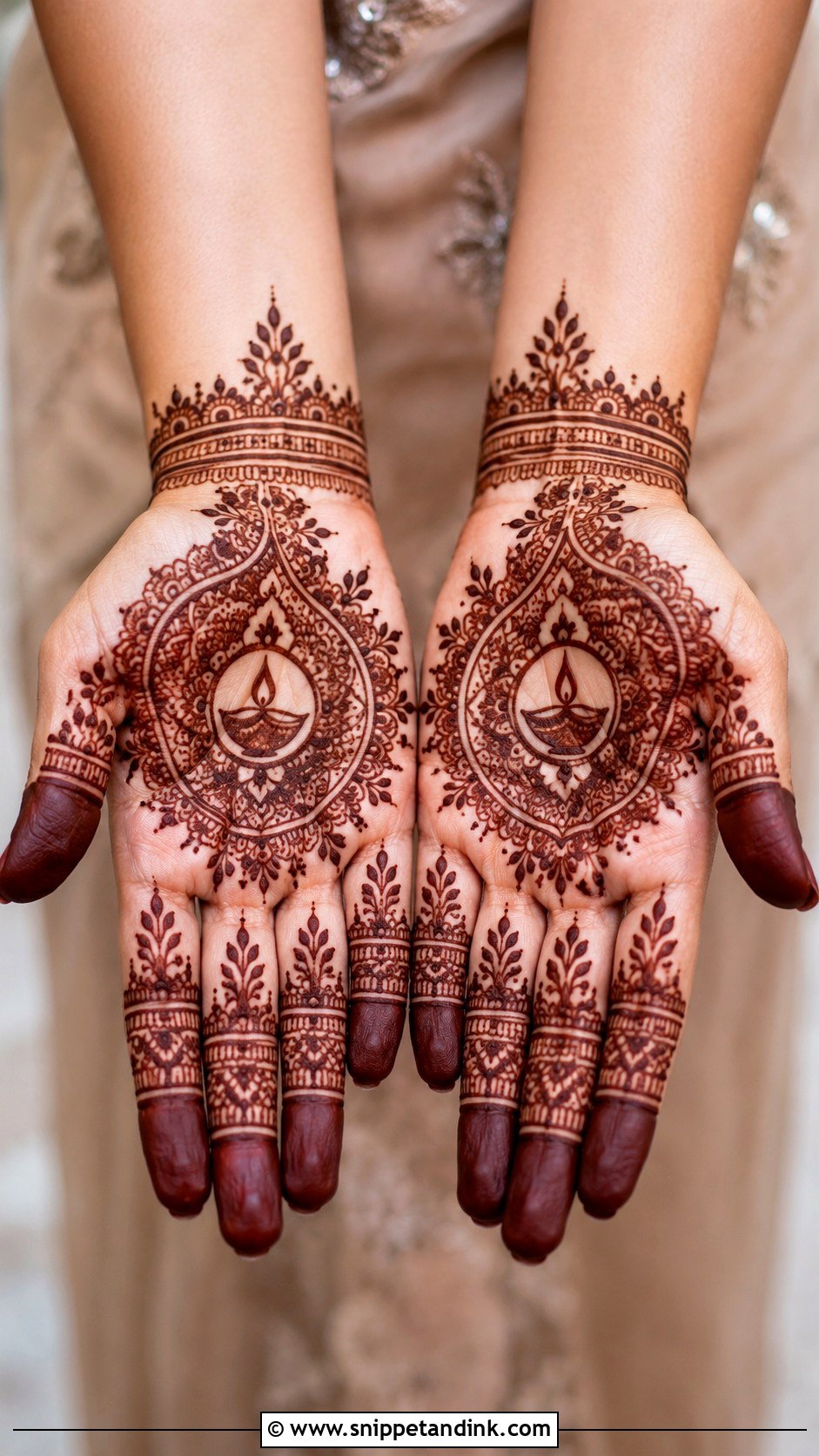
Karwa Chauth hands are usually traditional and detailed: a round tikki in the palm, paisleys, leaves, dots and bracelet bands, sometimes with a diya outline or extra circular layers for a ceremonial feel. Dark fingertips contrast well with open palm spaces. Most women I do this for are fasting the next day, so I book them the evening before. The stain has more time to darken, and nobody has to sit for an hour on an empty stomach.
11. Modern Tikki Mehndi Design
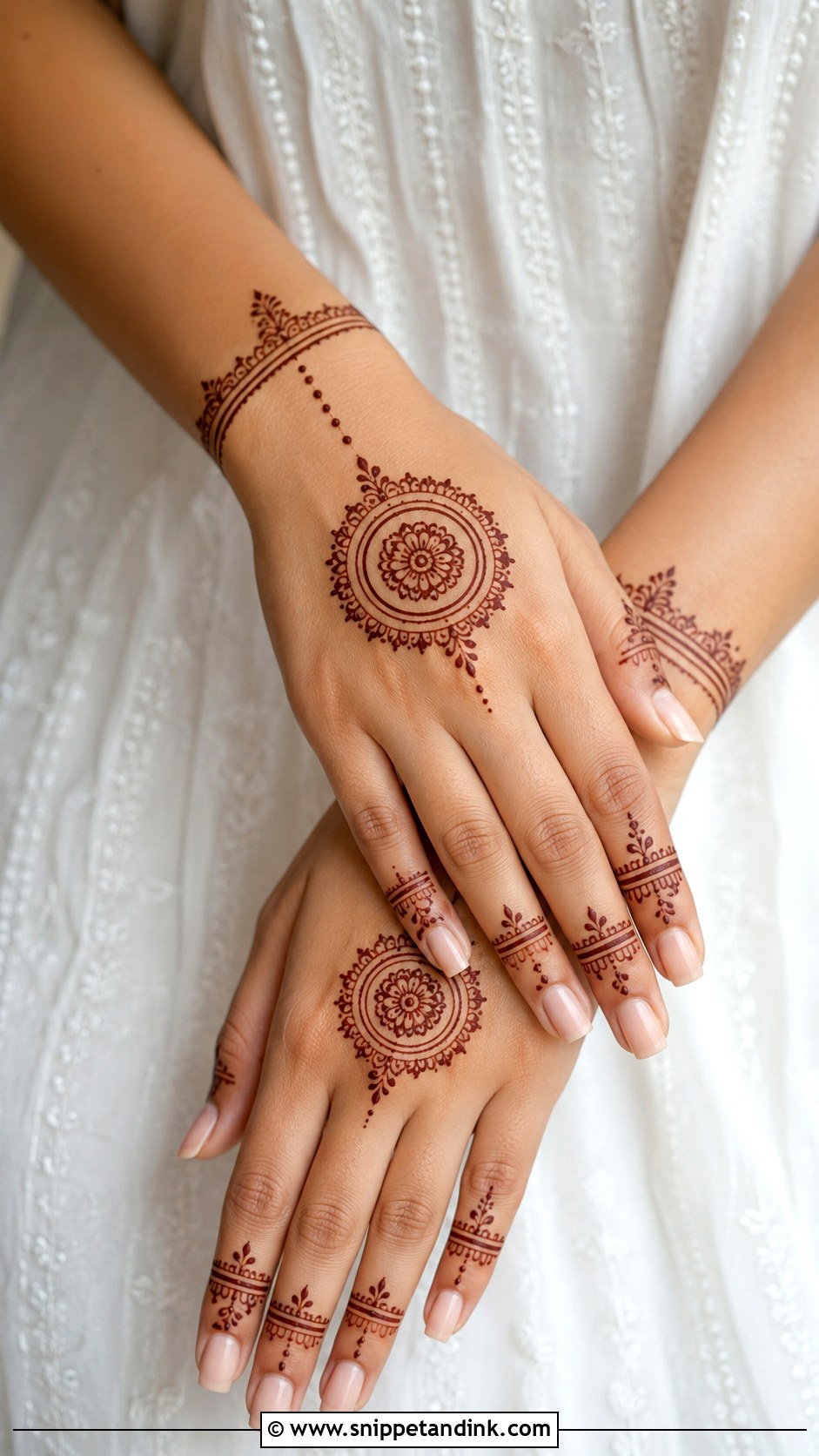
Modern tikki keeps the circle and strips back everything else. Thin outlines, small florals, geometric rings and plenty of negative space; minimal finger bands or half-finger patterns; on the back of the hand, a delicate chain to the wrist. It suits engagement parties and office celebrations. Restraint is the skill. I tell clients we’ll stop when it looks almost finished, because that’s usually the moment it’s done.
12. Minimal Tikki Mehndi Design
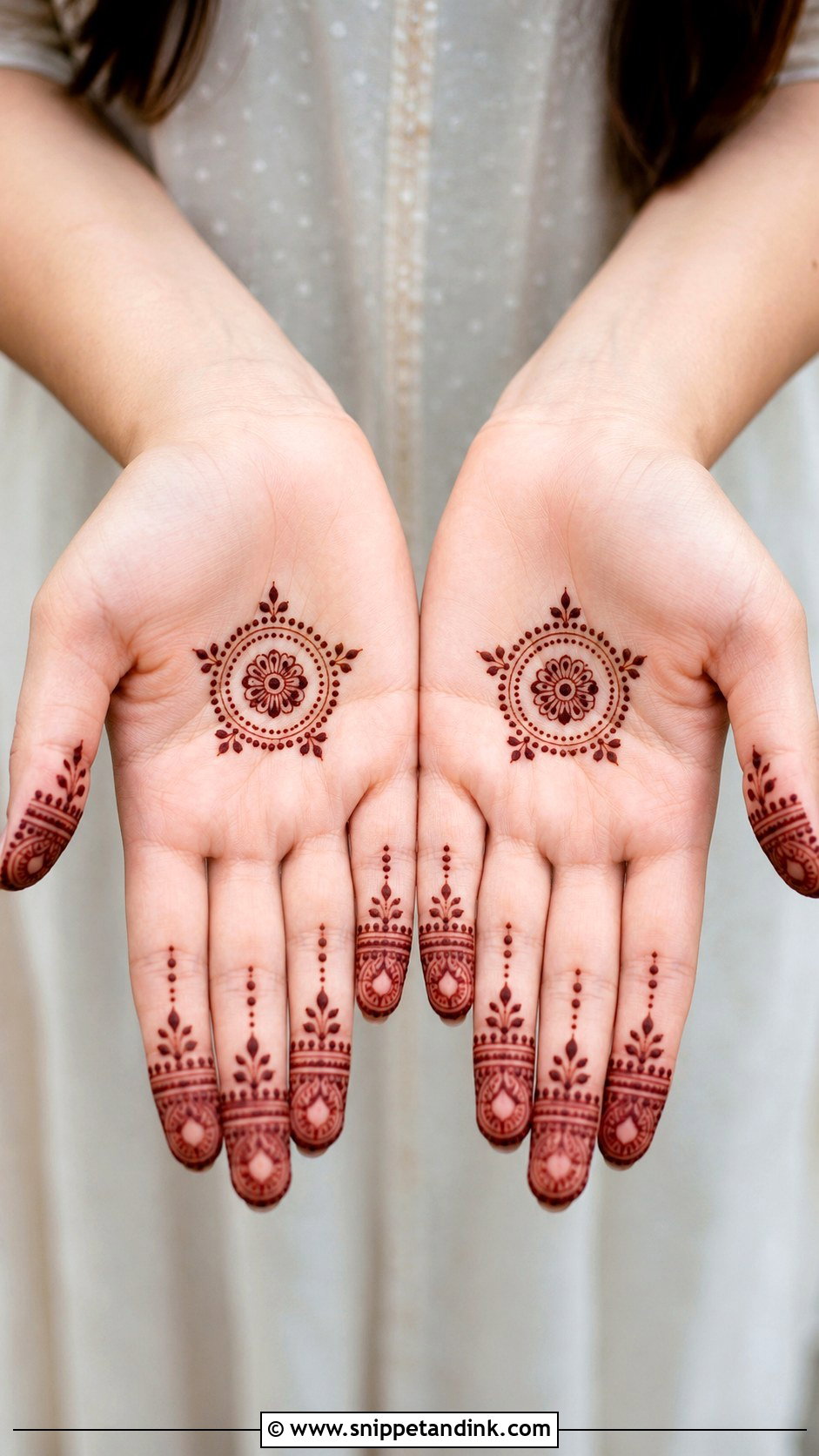
One small tikki in the palm, a couple of dot rings and light finger detail, with most of the hand left bare. On the back of the hand, a tiny mandala with dotted chains to the fingers looks subtle and neat. It’s quick, which makes it practical for kids, teens and anyone short on time. With so few elements, every dot shows. I’d rather do five evenly spaced dots than twelve uneven ones.
13. Heavy Tikki Mehndi Design
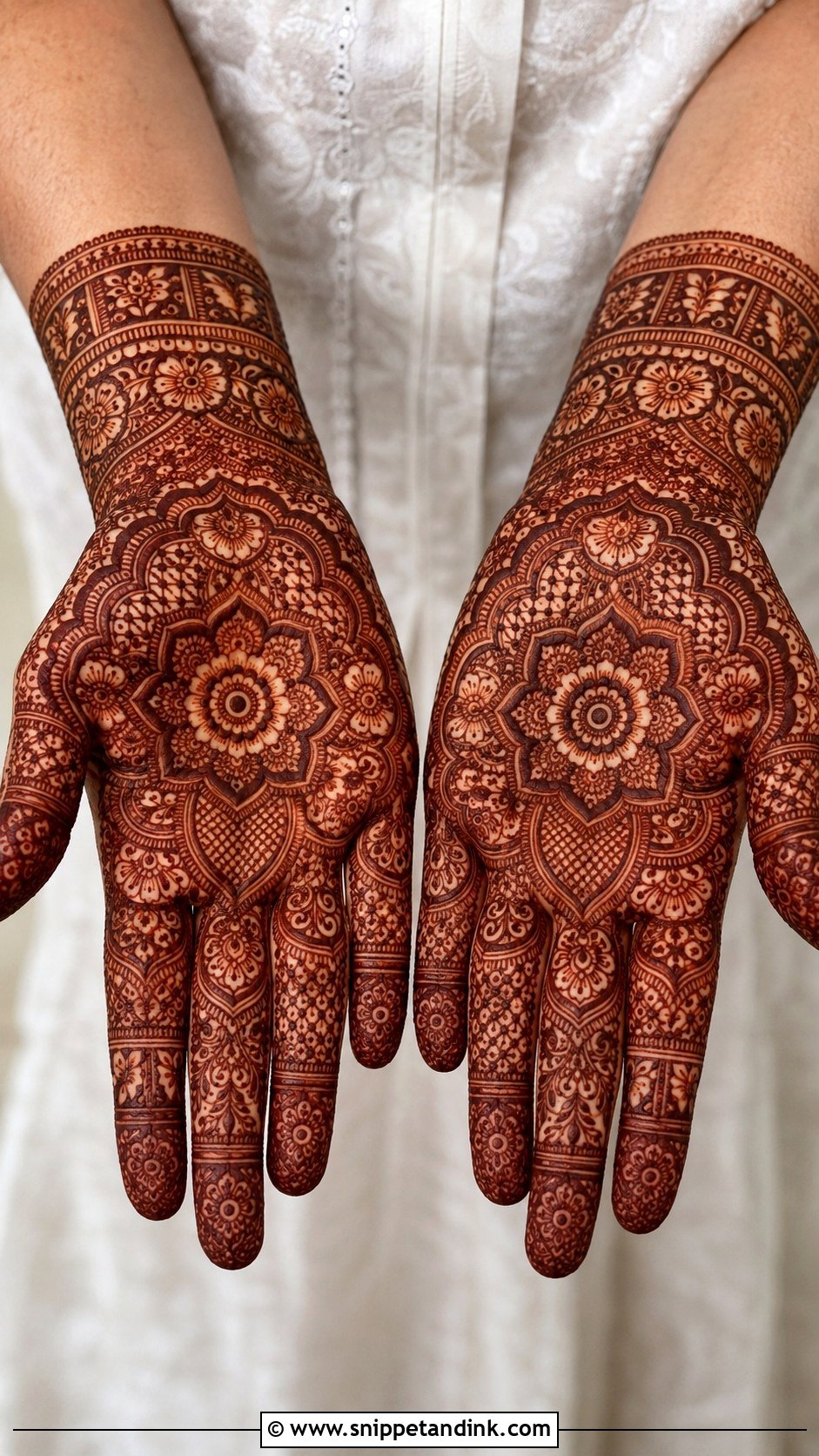
Heavy tikki surrounds a bold centre with dense paisleys, flowers, jaali and small fillers, extends to the wrist or forearm, and decorates every finger with bands, leaves, dots and shaded tips. Weddings, sangeet nights and big family functions are where it belongs. The risk is losing the circle in all that detail. I outline the tikki with a thicker line before I start any filling, then work outward, so the centre is protected.
14. Full Hand Tikki Mehndi Design
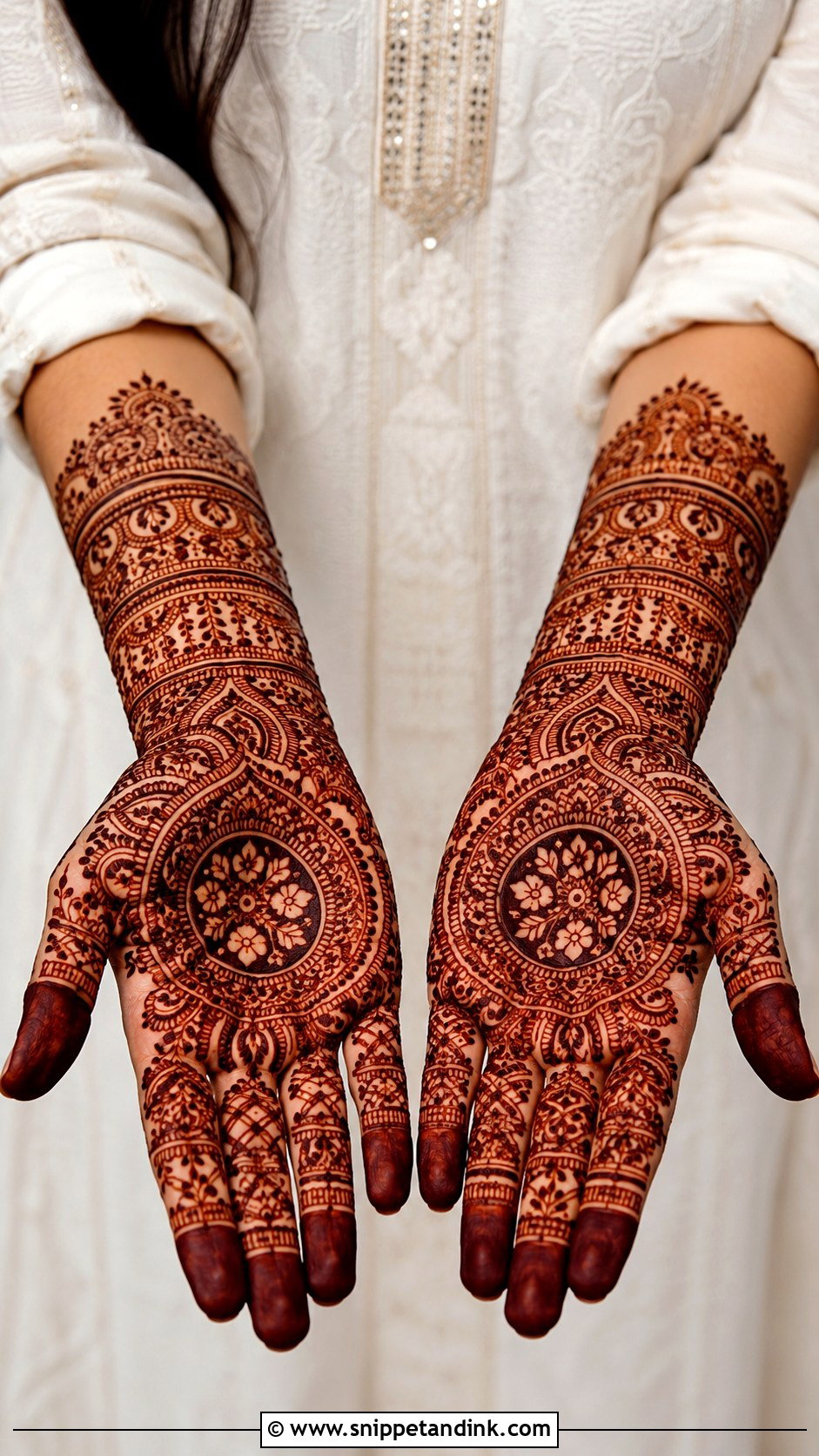
From fingertips to wrist, a Full hand tikki mehndi design puts the circle in the palm and fills the rest of the hand with coordinated paisley trails, floral panels, mandala extensions and wrist cuffs. The fingers follow the same theme, dense Indian or lighter Arabic. It suits brides, bridesmaids and close family. What makes it look professional is that every section connects to the next. I build in layers outward from the centre, never in separate patches.
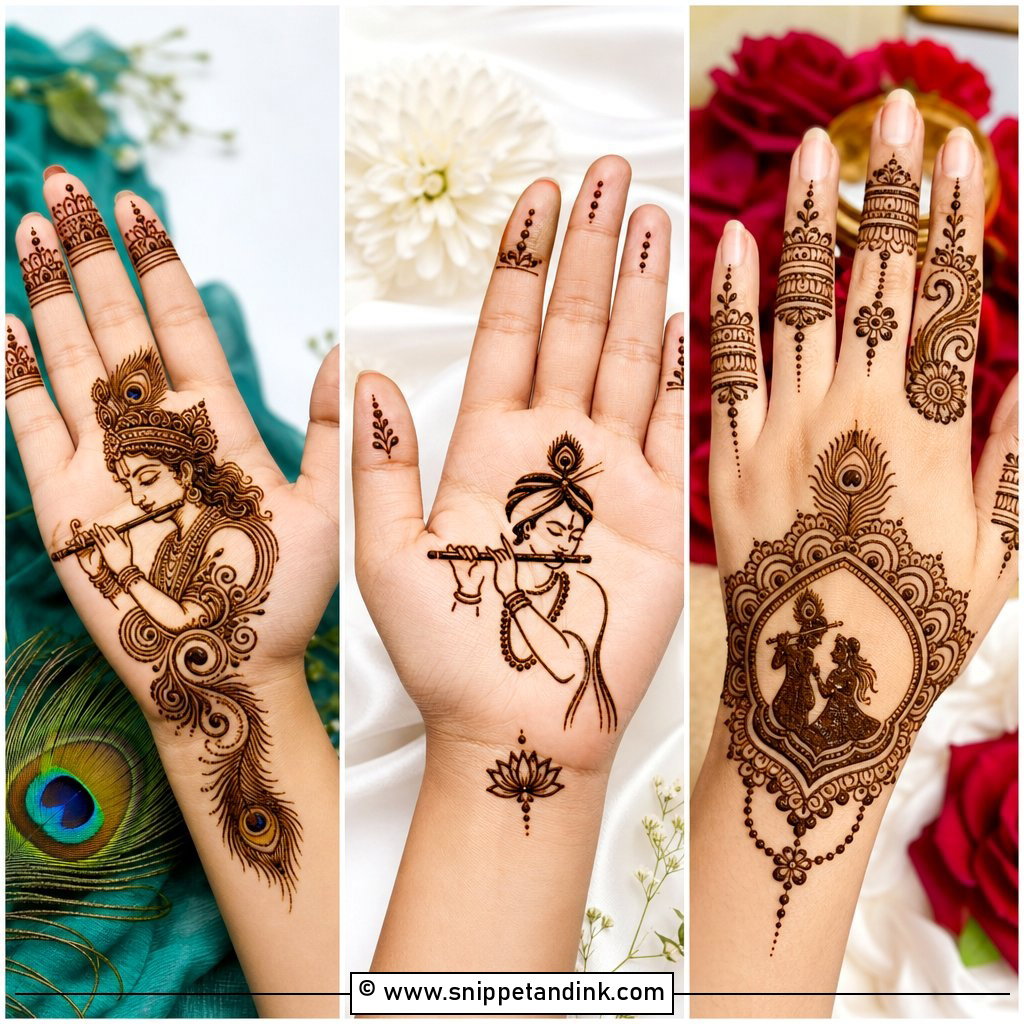

15. Half Hand Tikki Mehndi Design
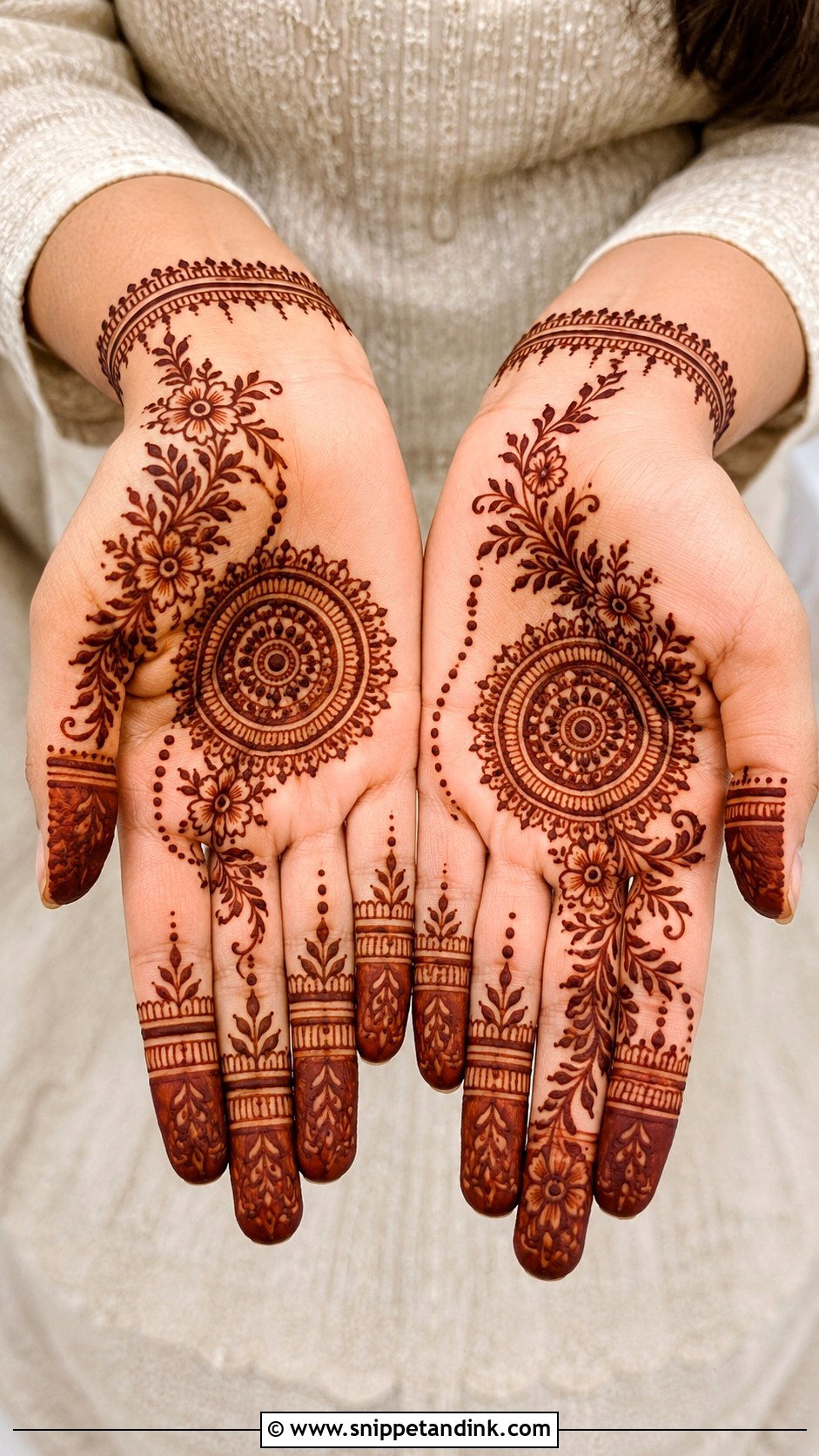
Half-hand tikki keeps the circle and extends the pattern only toward the fingers or the wrist, sometimes leaving one side open for a negative-space effect. Floral vines, dots and curves link it all. It’s comfortable and quick for casual events, bridesmaids and Eid. Give the open edge a deliberate finishing curl or border; otherwise it looks like the session ended early.
16. Finger Tikki Mehndi Design
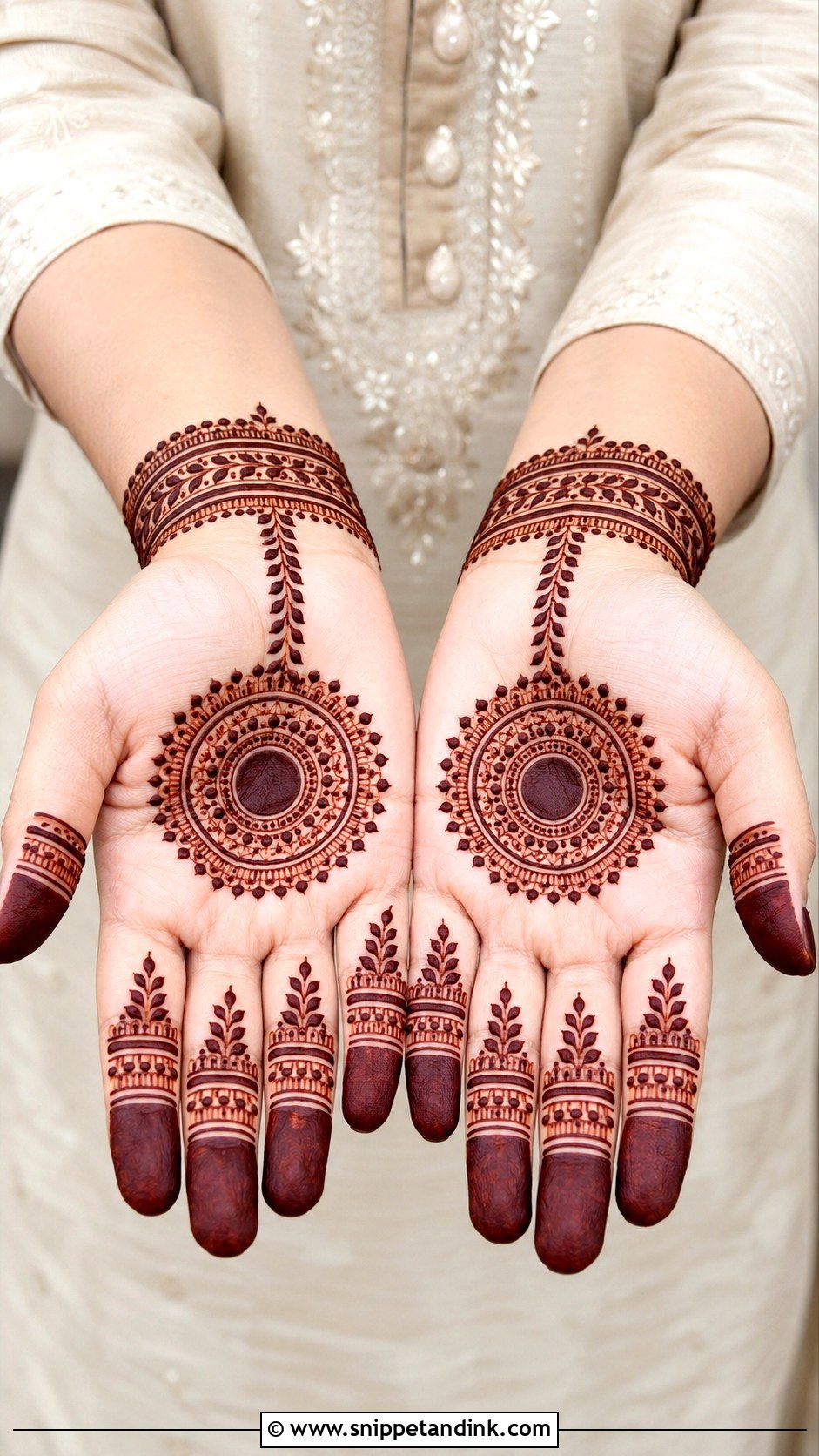
The tikki stays simple and the fingers take over: matching bands, leaf chains, dot patterns or tiny floral strips on each one. Filled fingertips on the front hand feel classic, and ring-style fingers on the back feel modern. Keep the finger patterns identical, or close to it. Fingers are the part of the hand people look at most when you talk, and mismatched ones are noticed straight away.
17. Palm Tikki Mehndi Design
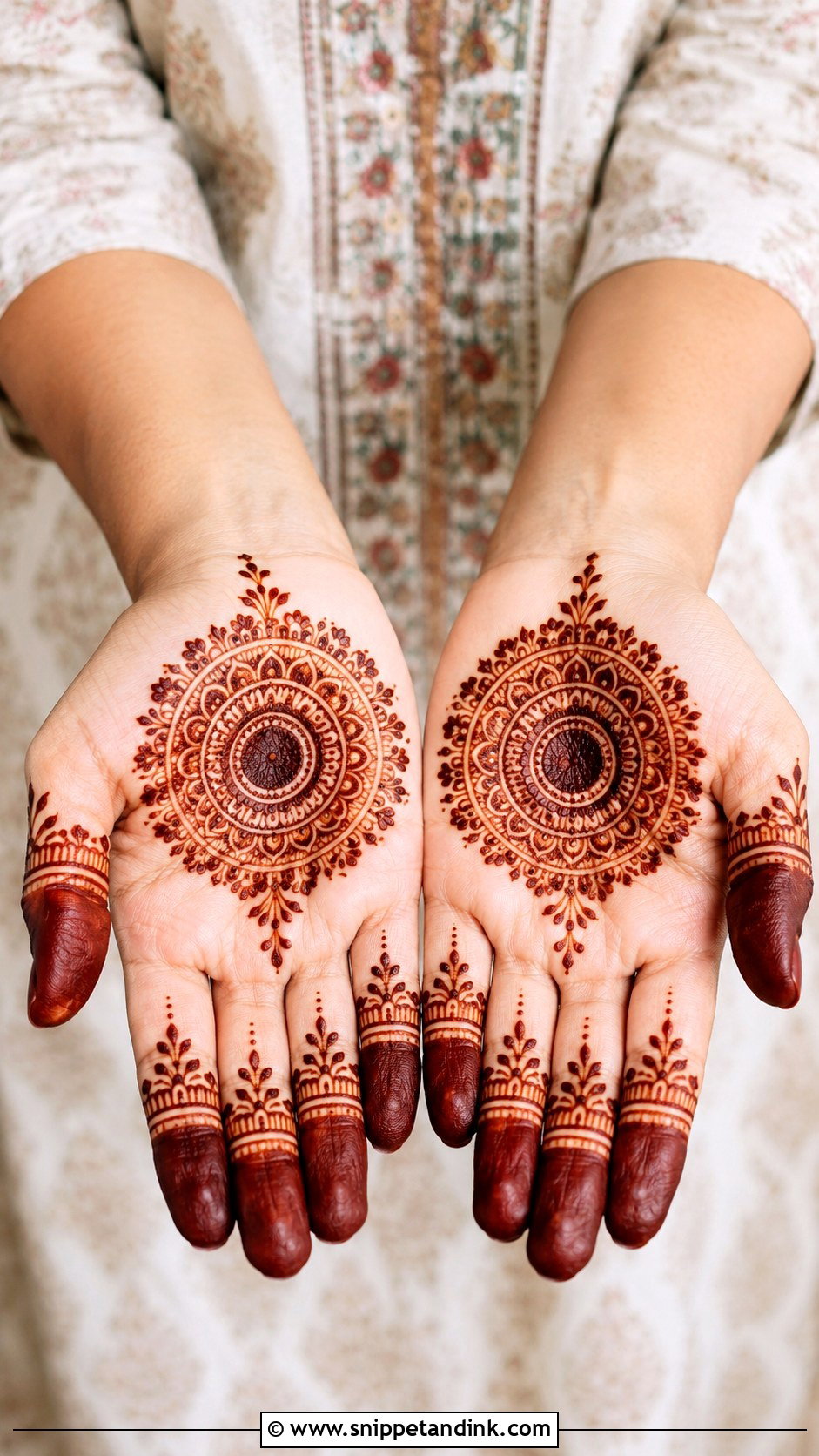
This is the most traditional tikki of all: a round centre in the middle of the palm, decorated with rings, petals, dots and small arches, and fingers kept simple or filled depending on the occasion. Beginners find it easier than it looks. The palm isn’t actually flat, though; it has a slight hollow, so I ask clients to relax the hand rather than stretch it. A circle drawn on a stretched palm goes oval when the hand relaxes.
18. Wrist Tikki Mehndi Design
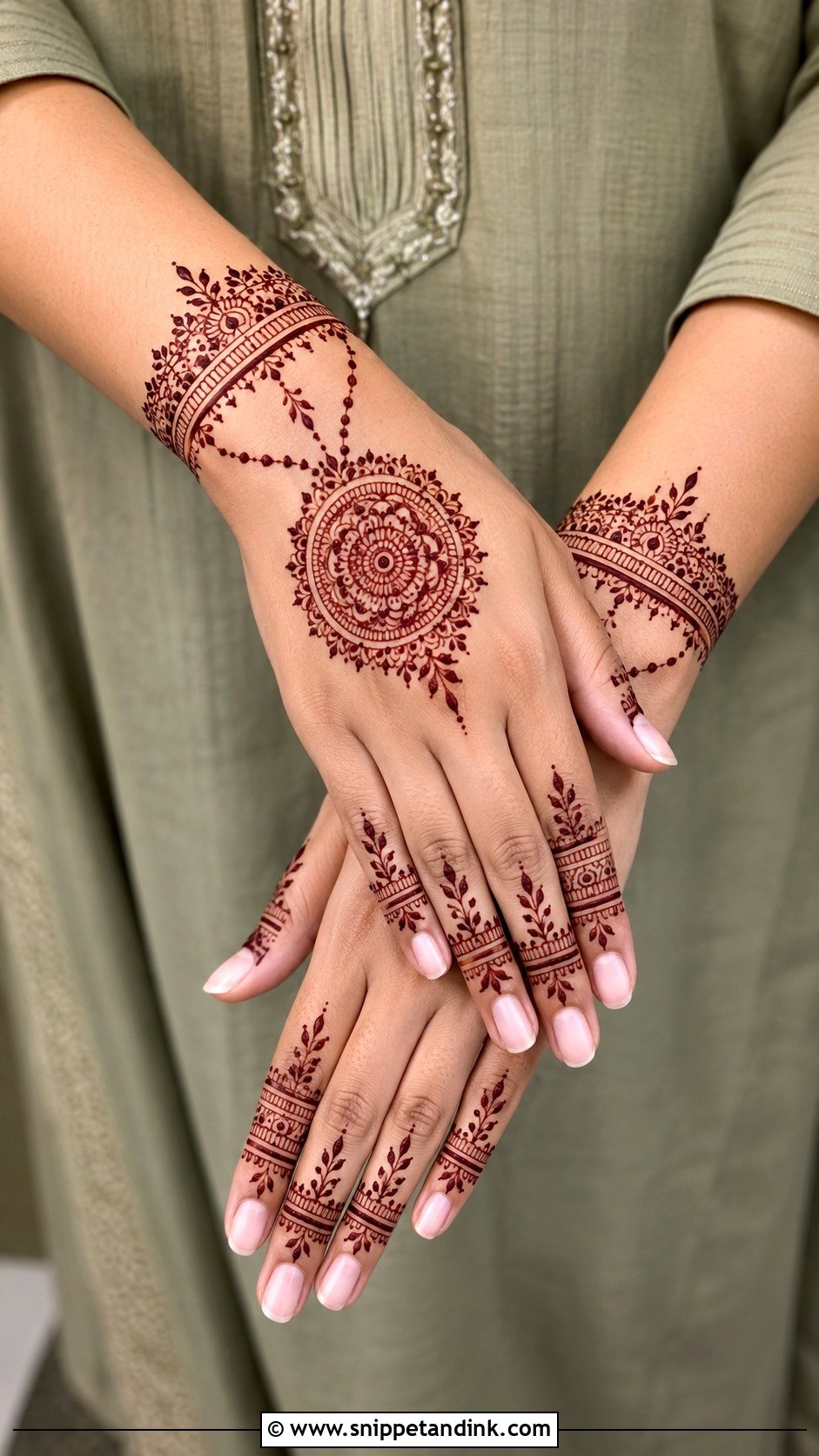
A wrist cuff turns the tikki into a piece of jewellery. The circle sits on the back of the hand or the palm and joins the wrist through dotted lines, chains, vines or slim paisley trails, while the wrist carries bands, scallops and small flowers. Keep the fingers simple so the wrist and tikki lead. The bands need even spacing, and they should sit just where your bangles rest so the two layers line up.
19. Jaali Tikki Mehndi Design
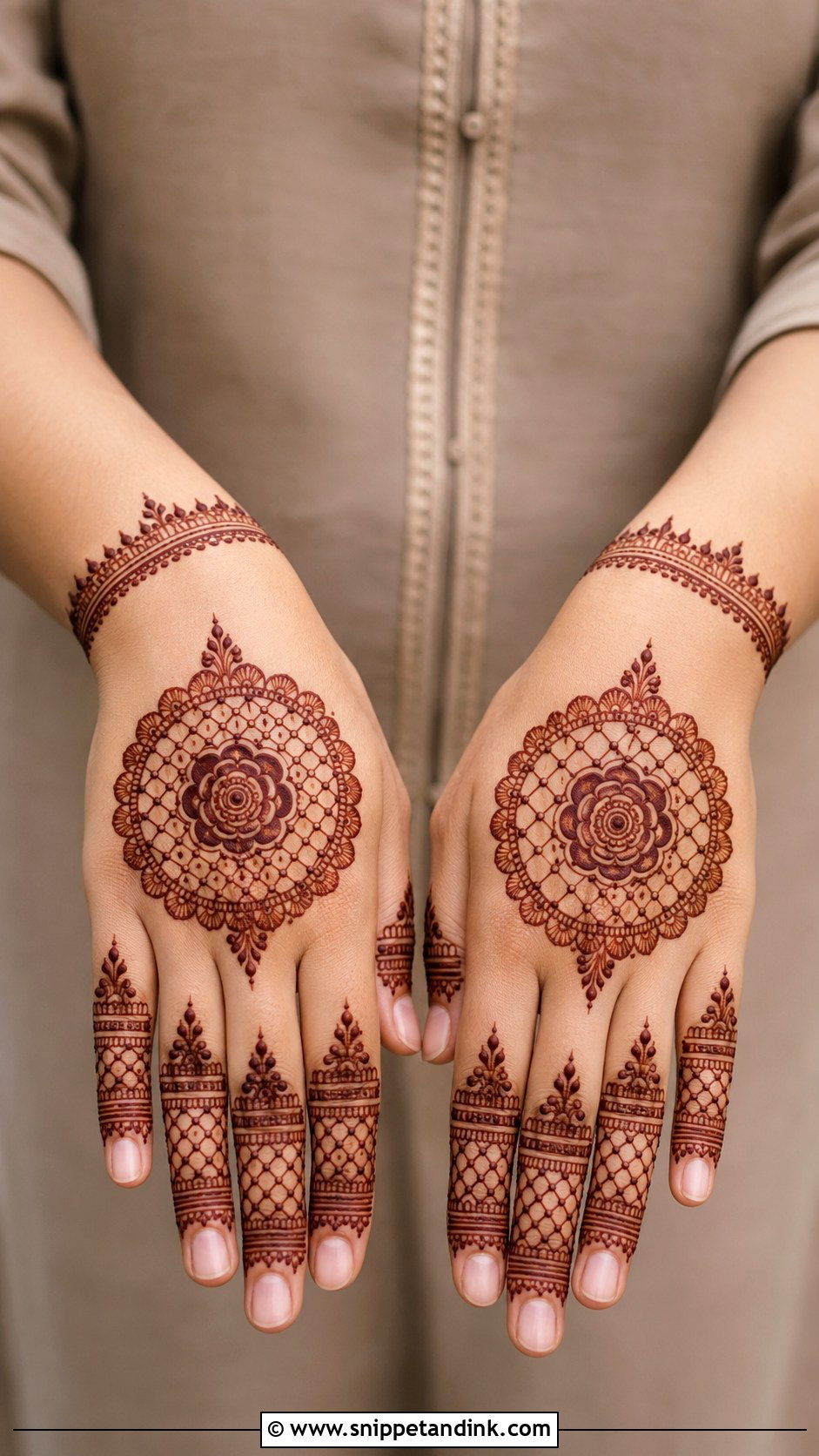
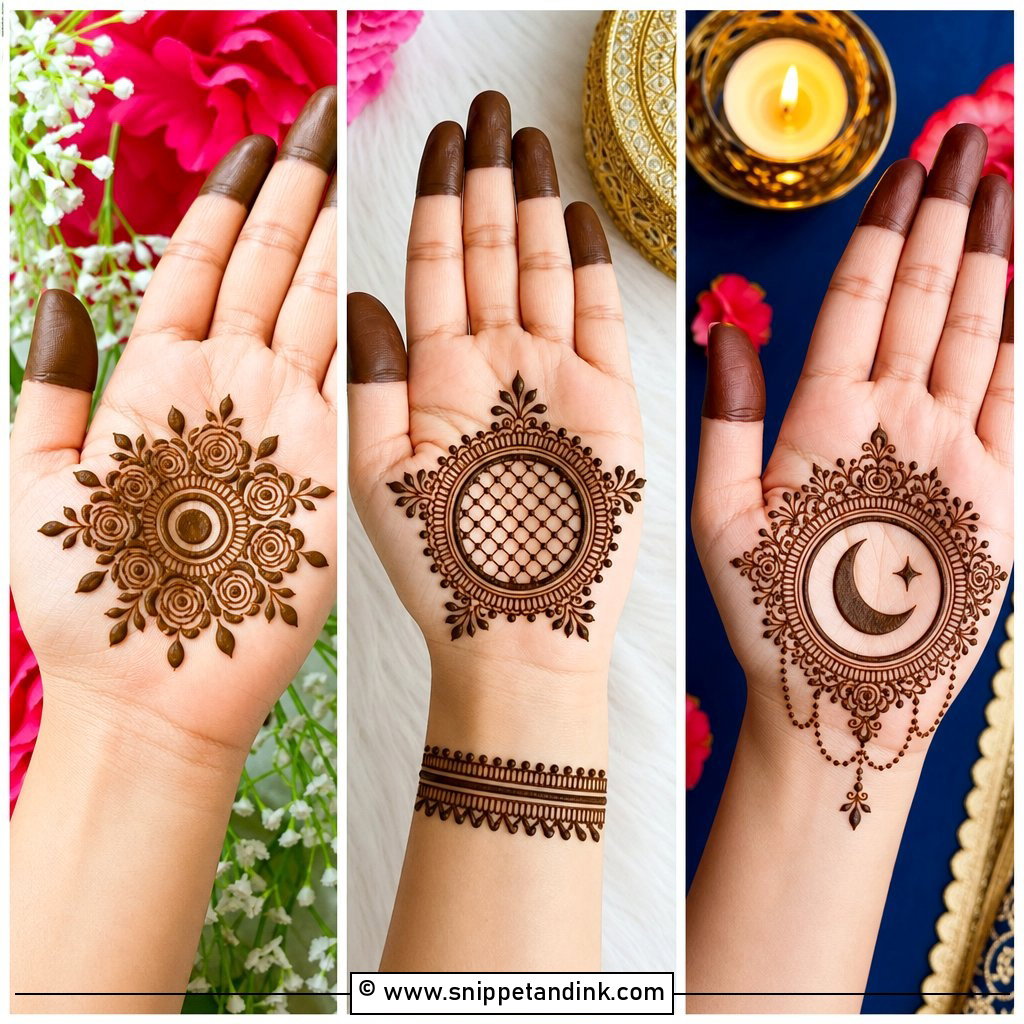
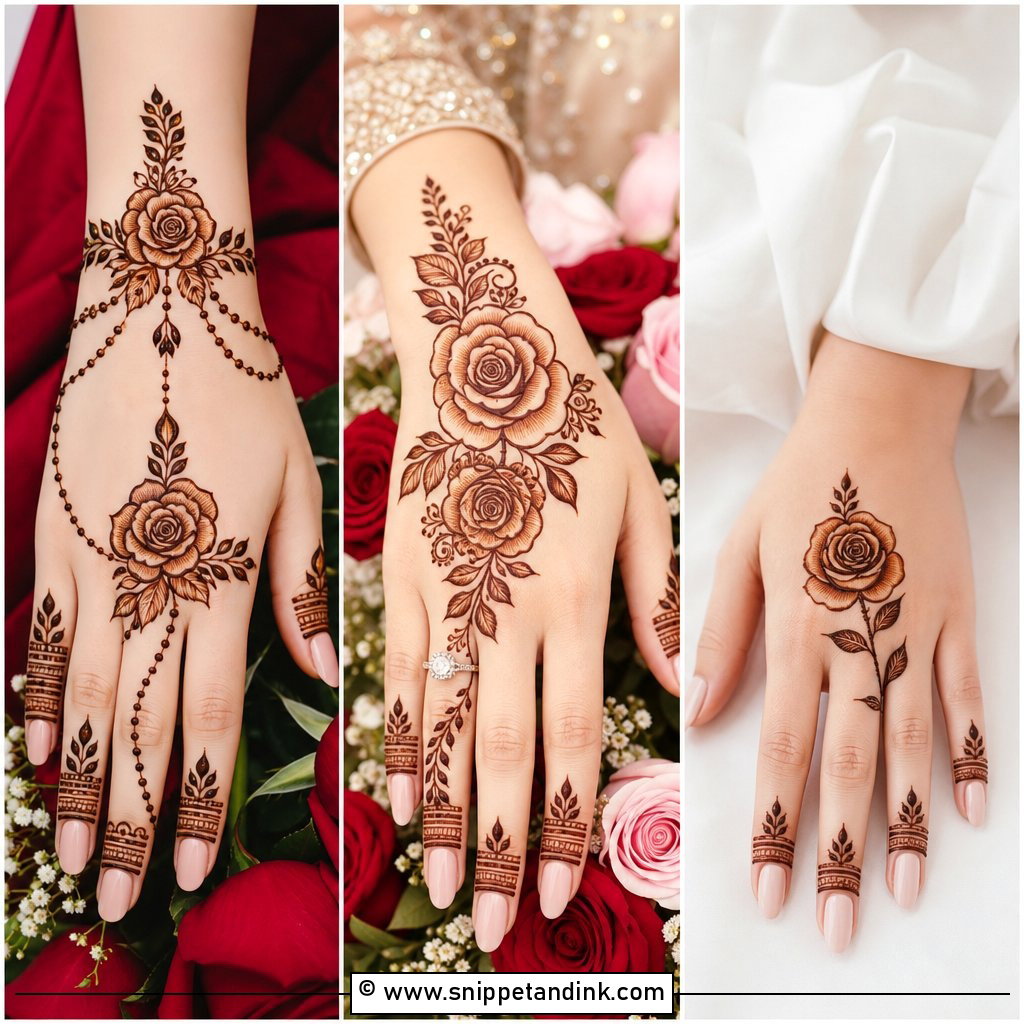
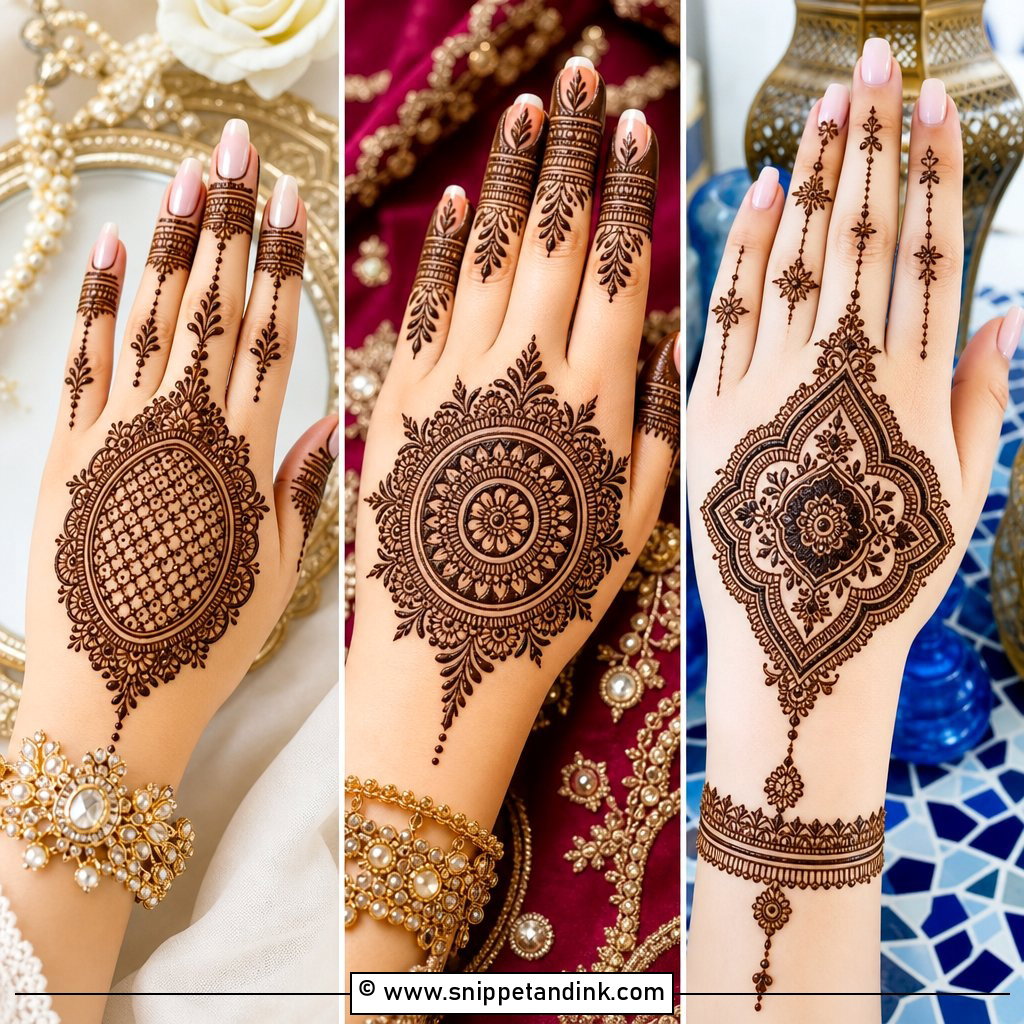
Floral or mandala tikki in the centre, crisscross mesh, tiny dots and shaded gaps around it. On the back of the hand, jaali gives a lace finish, completed with finger bands and a wrist border. It suits weddings and dressy Eid events. Uneven mesh is the failure point. I pipe all the lines in one direction first, then all the crossing lines, which keeps the diamonds consistent.

20. Paisley Tikki Mehndi Design
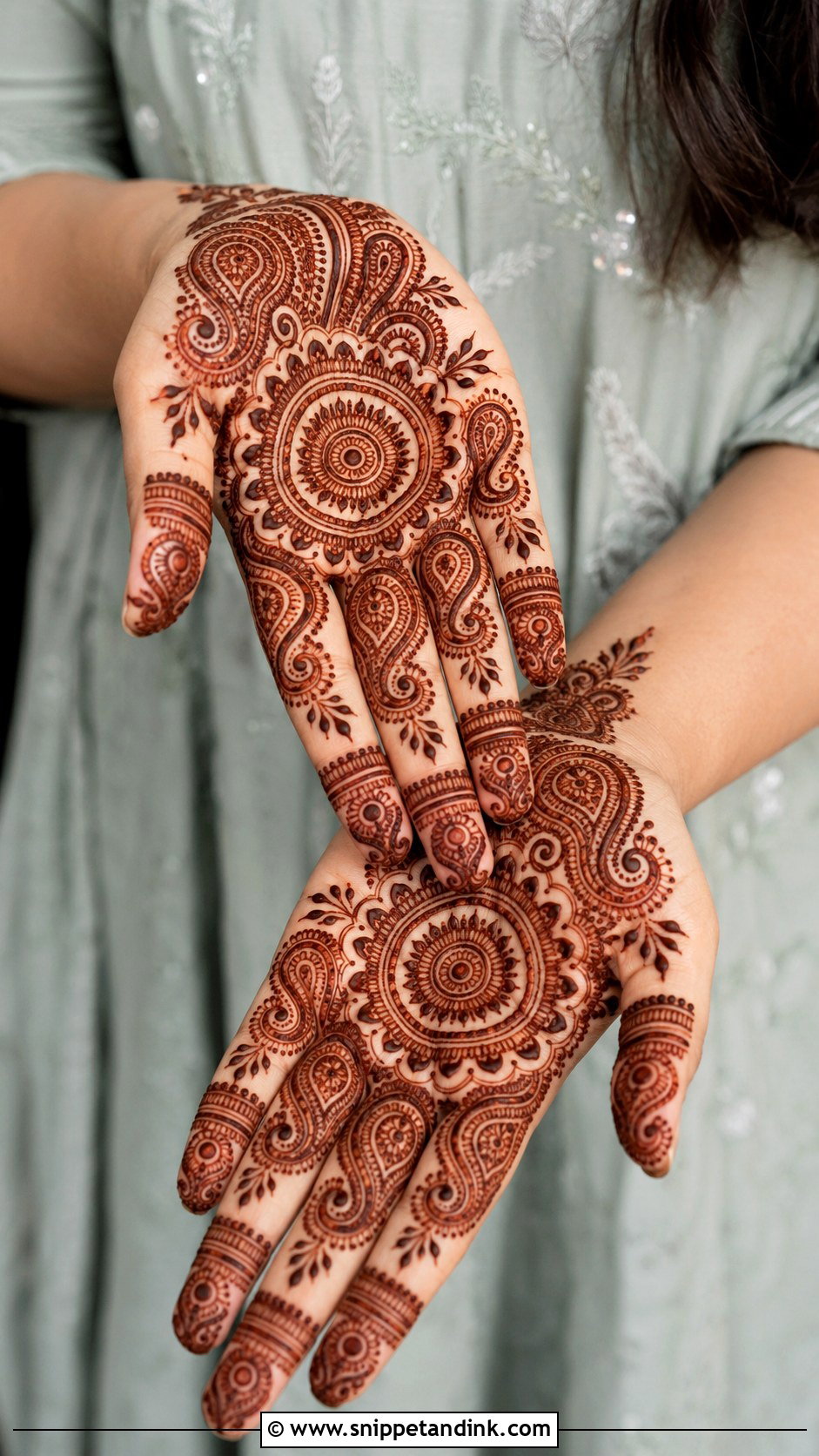
Paisleys curl around the circle like leaves in a Paisley tikki mehndi design, each one filled with dots, lines, petals or shaded strokes, with matching paisley tips or curved bands on the fingers. It suits weddings, Teej and Karwa Chauth. Paisleys spread the tikki outward naturally, so the palm fills without losing balance. For a heavier version, I run a paisley trail to the wrist; for a lighter one, just two or three accents around a bold circle.
21. Peacock Tikki Mehndi Design
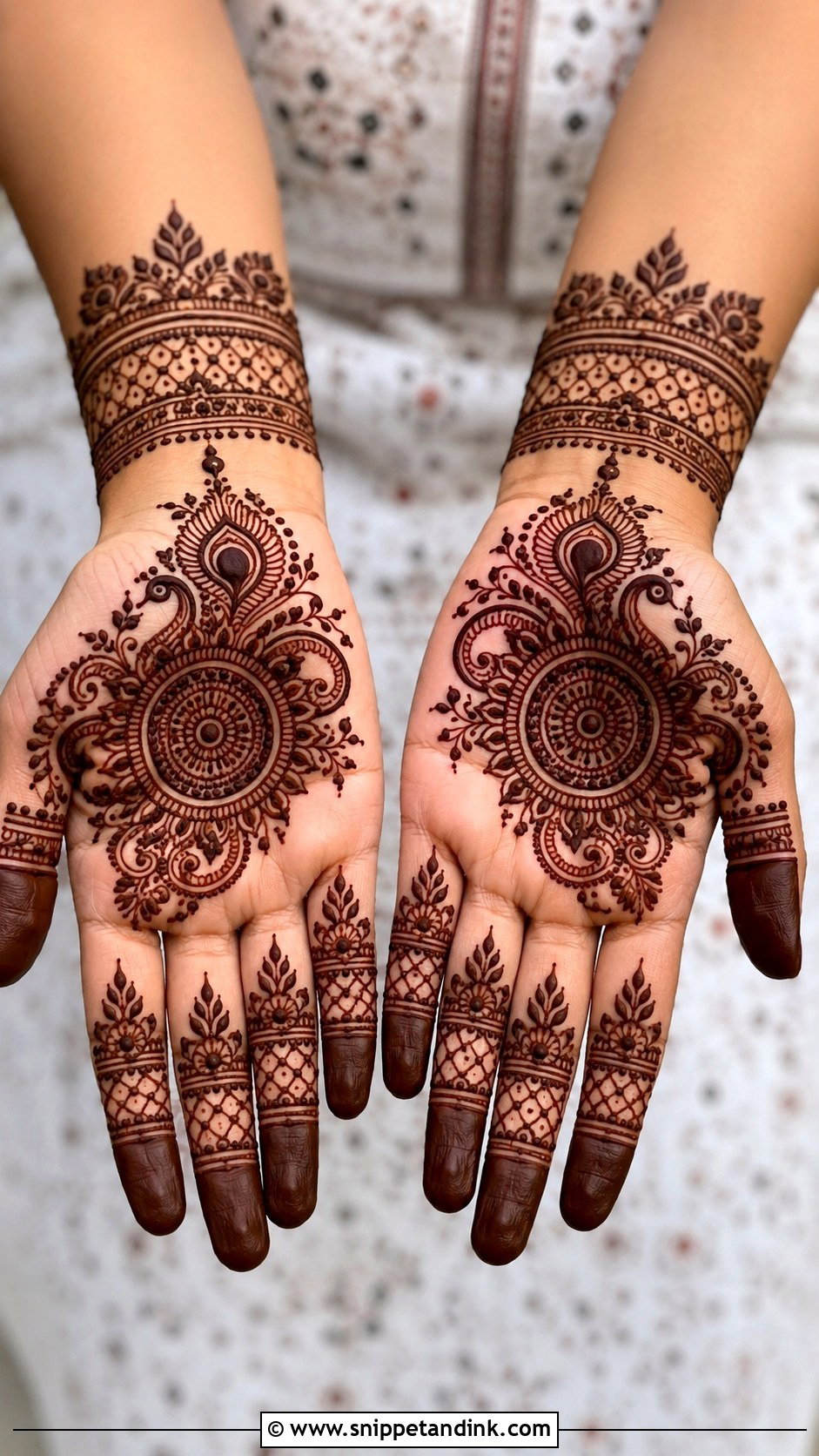
A round tikki at the centre with peacock feathers curving around it or reaching toward the wrist, finished with feather lines, dots, paisleys and florals. Bridal events love it. I keep the peacock to one side of the circle and never draw over the tikki itself; the bird should wrap the circle, not swallow it. Fine bands or leafy fingers keep the palm as the focus.
22. Lotus Tikki Mehndi Design
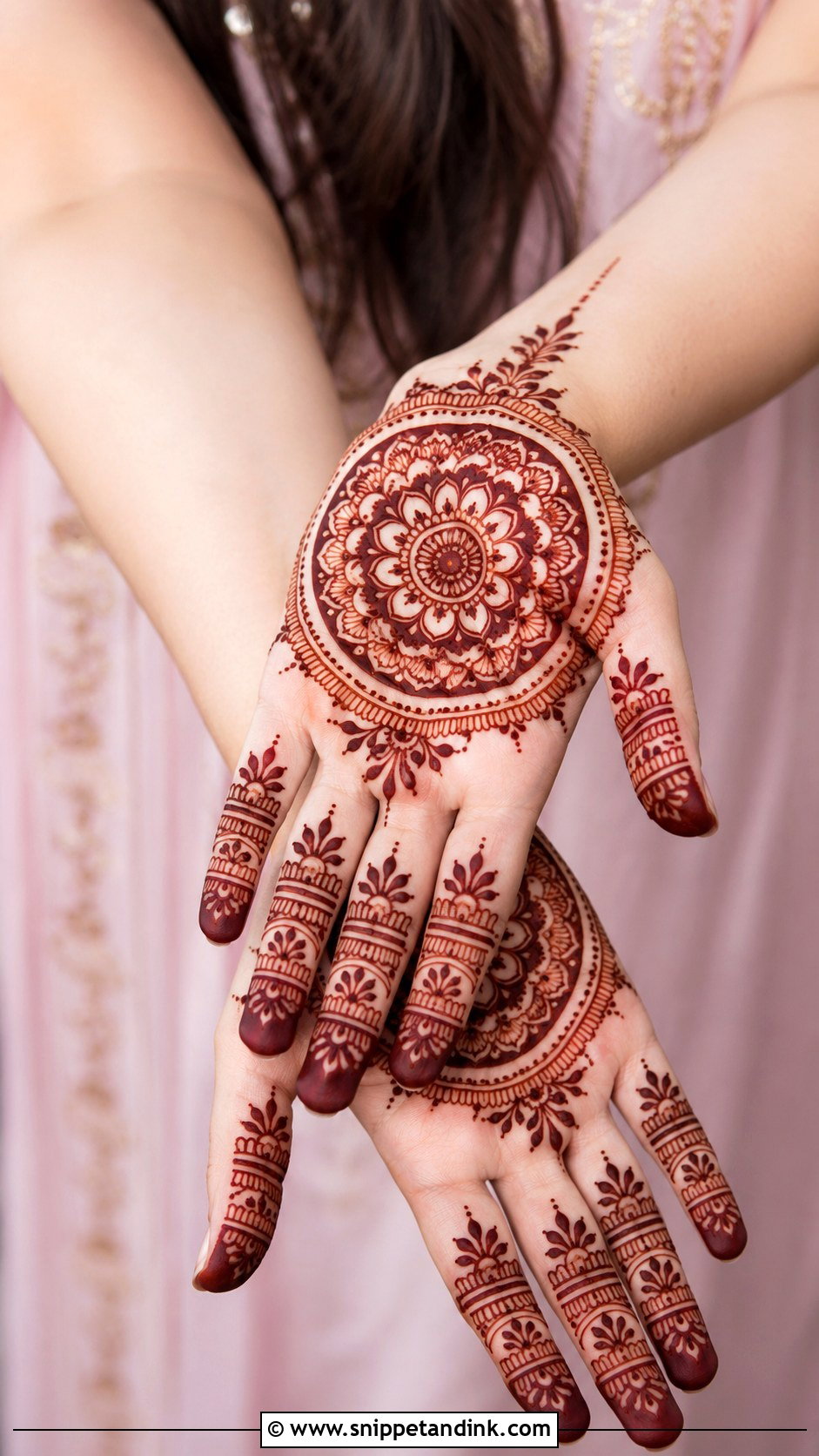
Lotus petals layered around a central dot or circle give a soft, meaningful tikki that suits pujas, festivals and daytime weddings. Tiny leaves, fine dots and curved borders finish it, with lotus buds, leafy strips or bands on the fingers. I pipe lotus petals in pairs, left and right of the centre, so the flower stays symmetrical. A bold centre with delicate outer petals gives the best stain contrast.
23. Square Tikki Mehndi Design
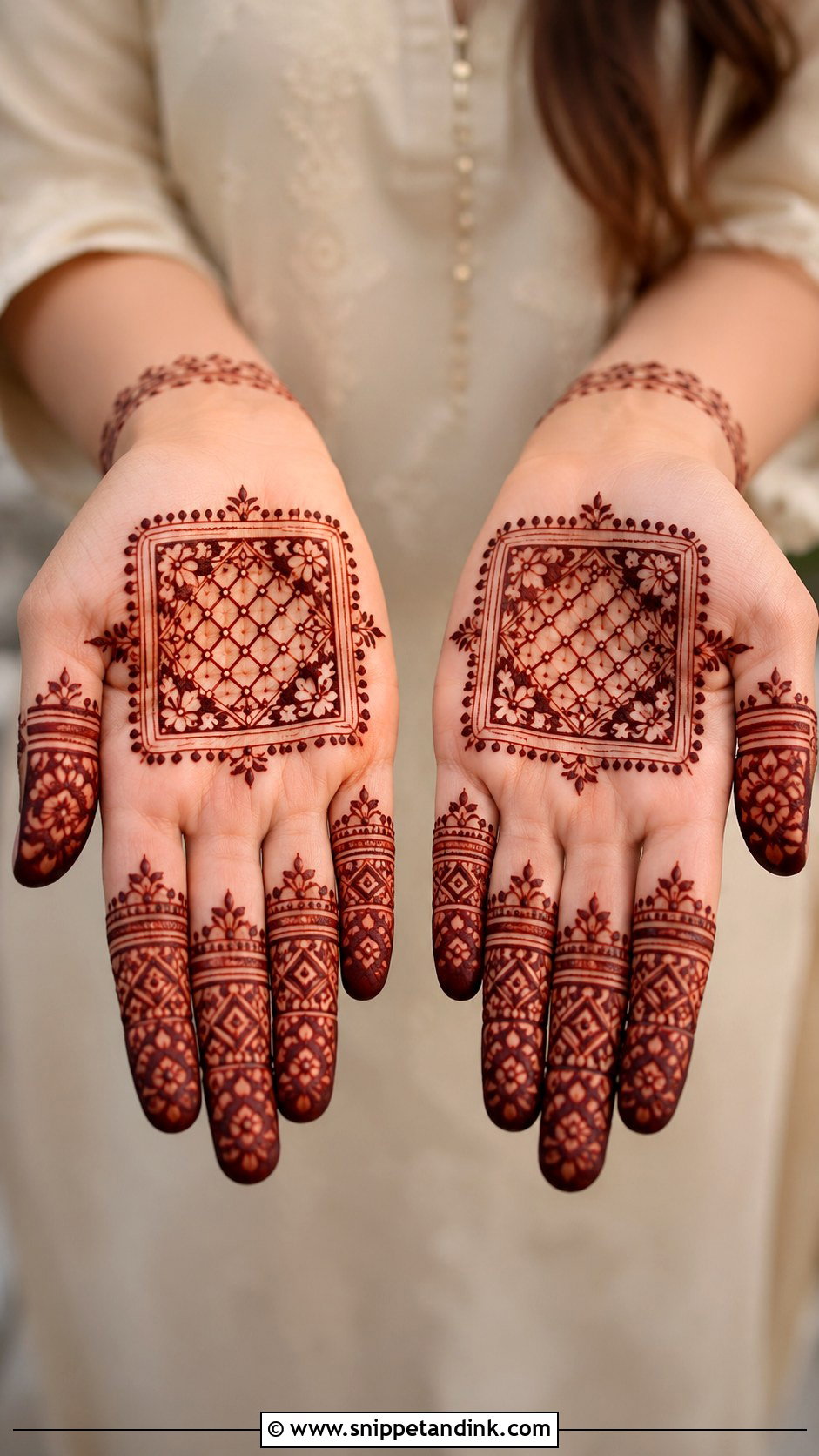
Swap the circle for a square or diamond in the palm or on the back of the hand and fill it with small flowers, dots, grid lines or mandala detail. Curved borders around the square soften it, and geometric finger lines echo the centre. It suits modern festive looks and Indo-Arabic layouts. A square is less forgiving than a circle: any tilt is obvious, so I line up one edge with the crease at the base of the fingers before I draw the rest.
24. Heart Tikki Mehndi Design
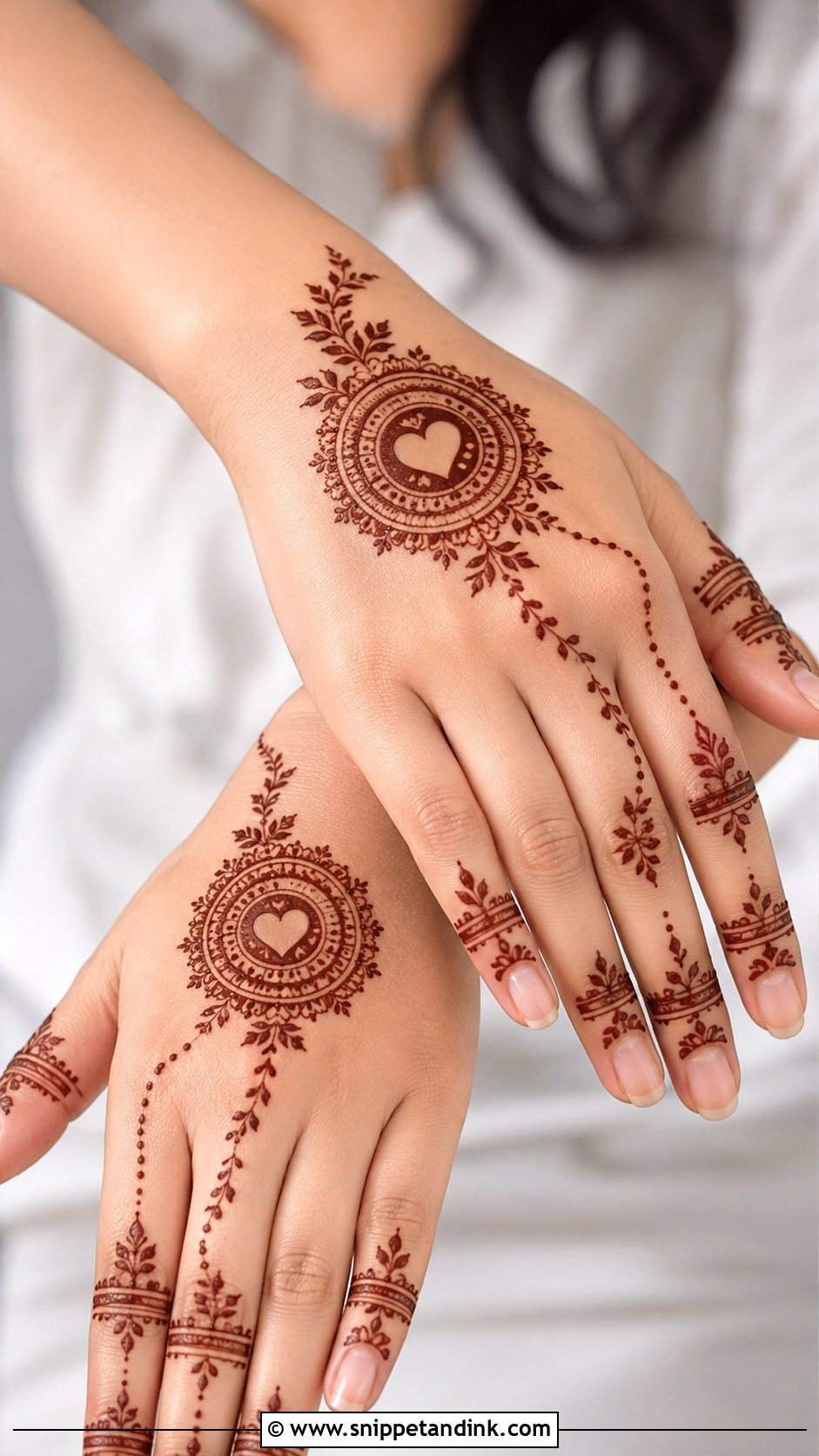
A small heart inside a round tikki, or a tikki shaped with heart curves, finished with florals, dots, vines and finger bands. Engagement functions and bridesmaids ask for this most. Keep the heart subtle, or it starts to look like a child’s design. It sits nicely on the back of the hand, joined to finger chains, or on the palm with filled tips.
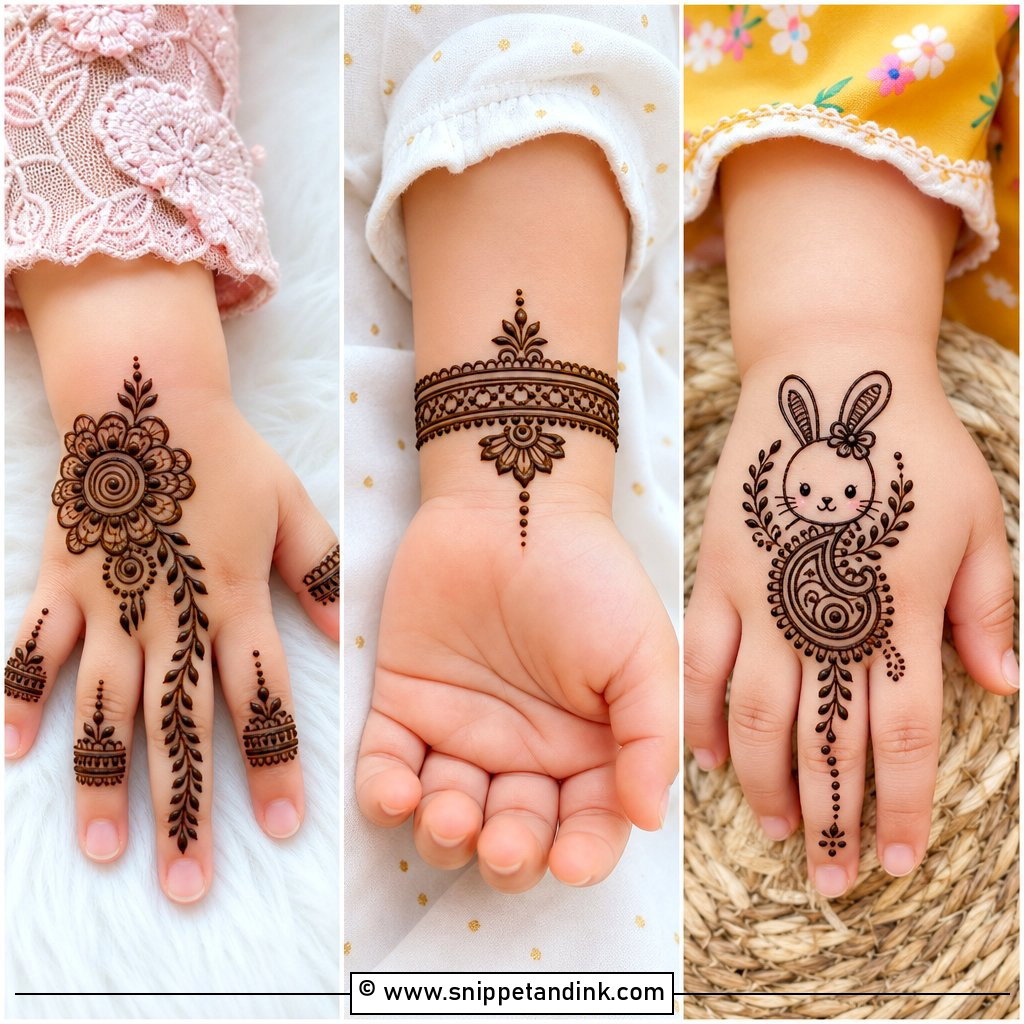
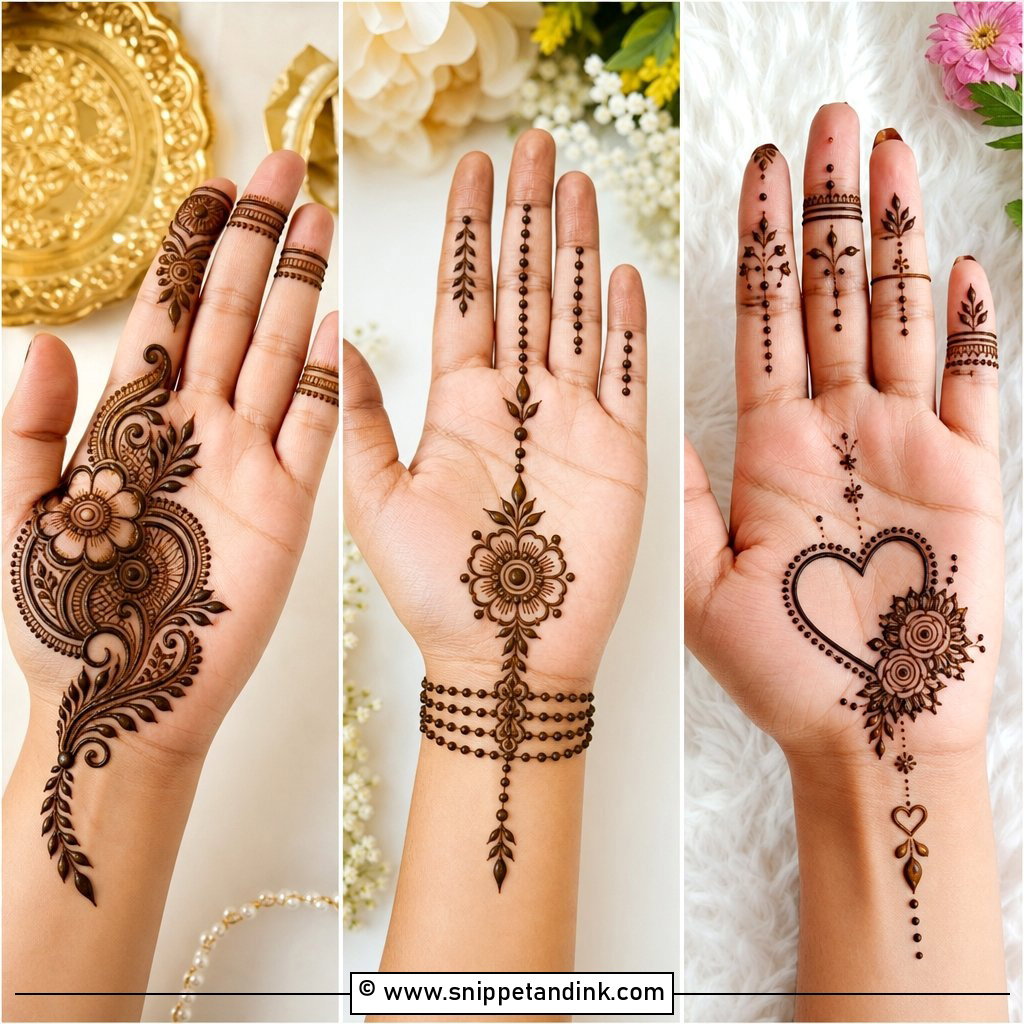
25. Kids Tikki Mehndi Design
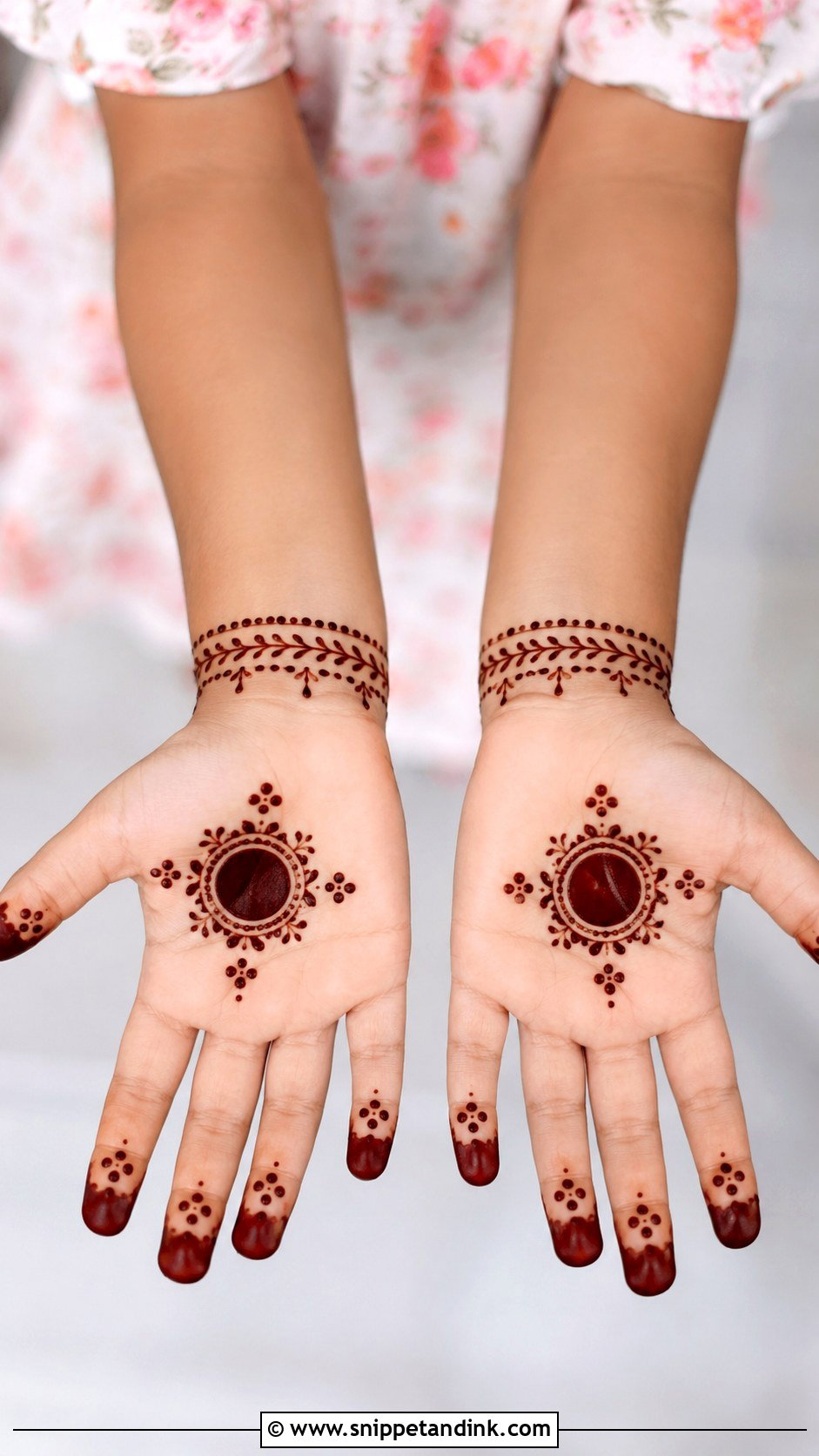
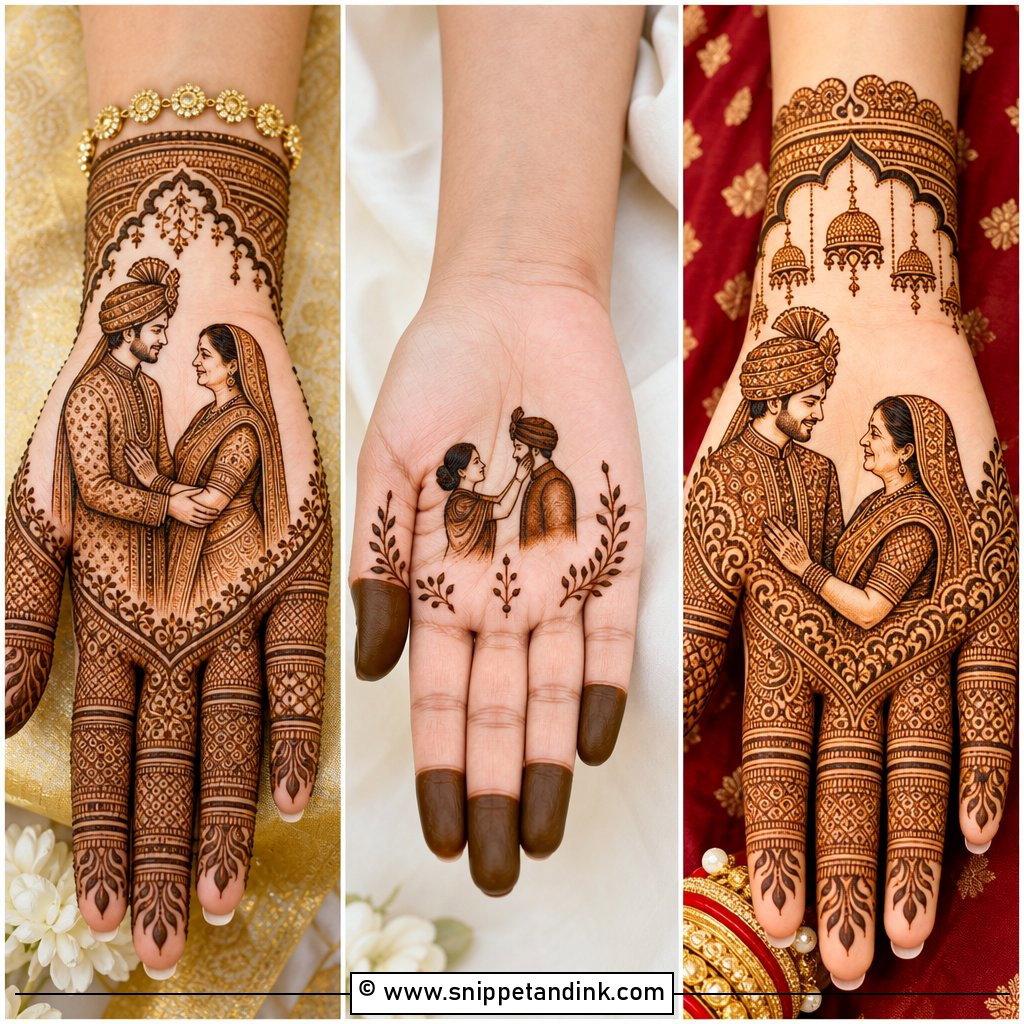
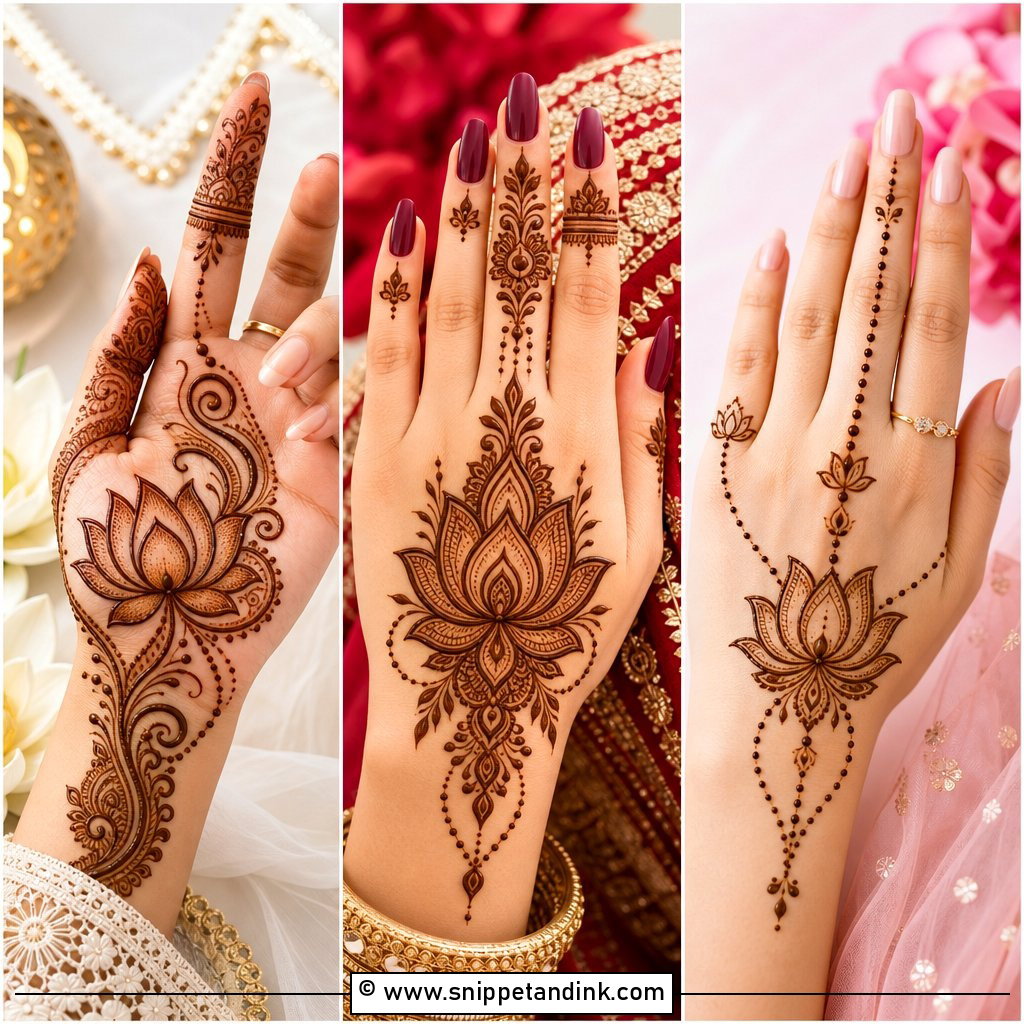
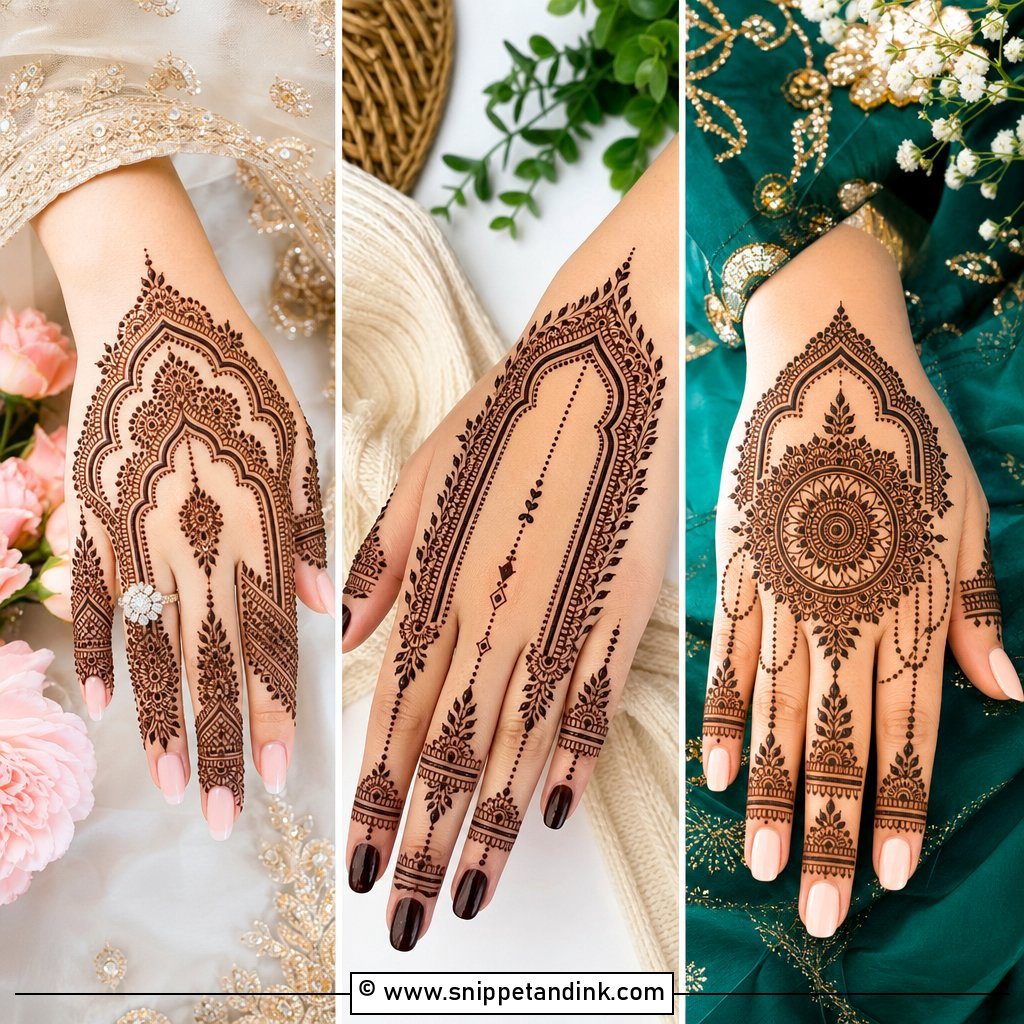
Small hands need small sittings, and a Kids tikki mehndi design can be as simple as a little round tikki in the palm with dots, tiny flowers and simple fingertips, maybe a bracelet line or a small floral trail. It dries quickly, which is half the battle with children. I skip dense filling entirely and use only natural henna paste on kids. Clear, playful shapes look right on little hands.
26. Beginner Tikki Mehndi Design
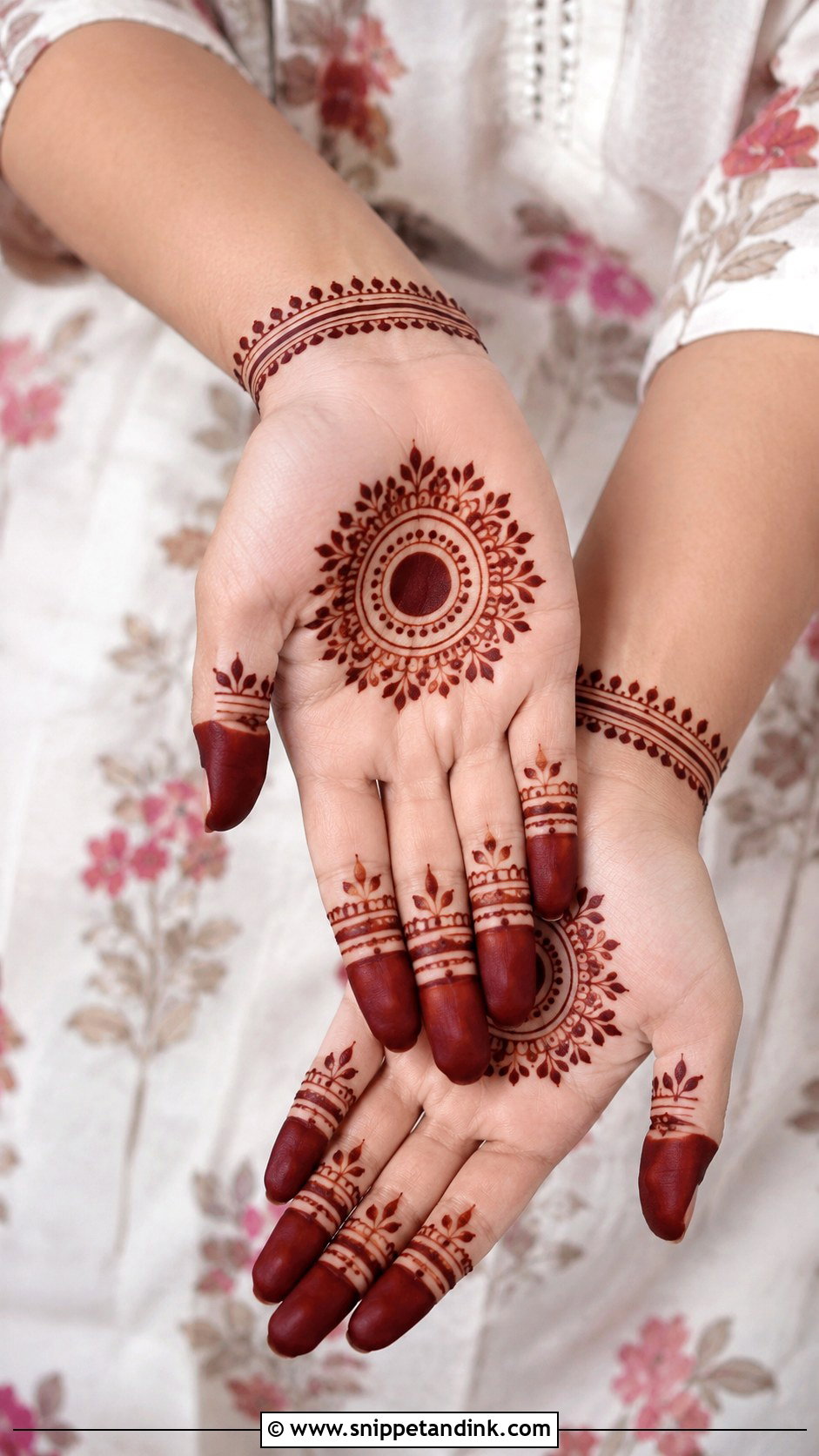
If you’re learning, build the tikki from one central circle, one ring of dots, one ring of petals and a few simple lines, then add small bands or filled tips to the fingers and a single wrist border. It teaches control, symmetry and spacing without overwhelming you. Use fewer elements and draw them well. A clean small tikki will always look better than a crowded, uneven one.
27. Shaded Tikki Mehndi Design
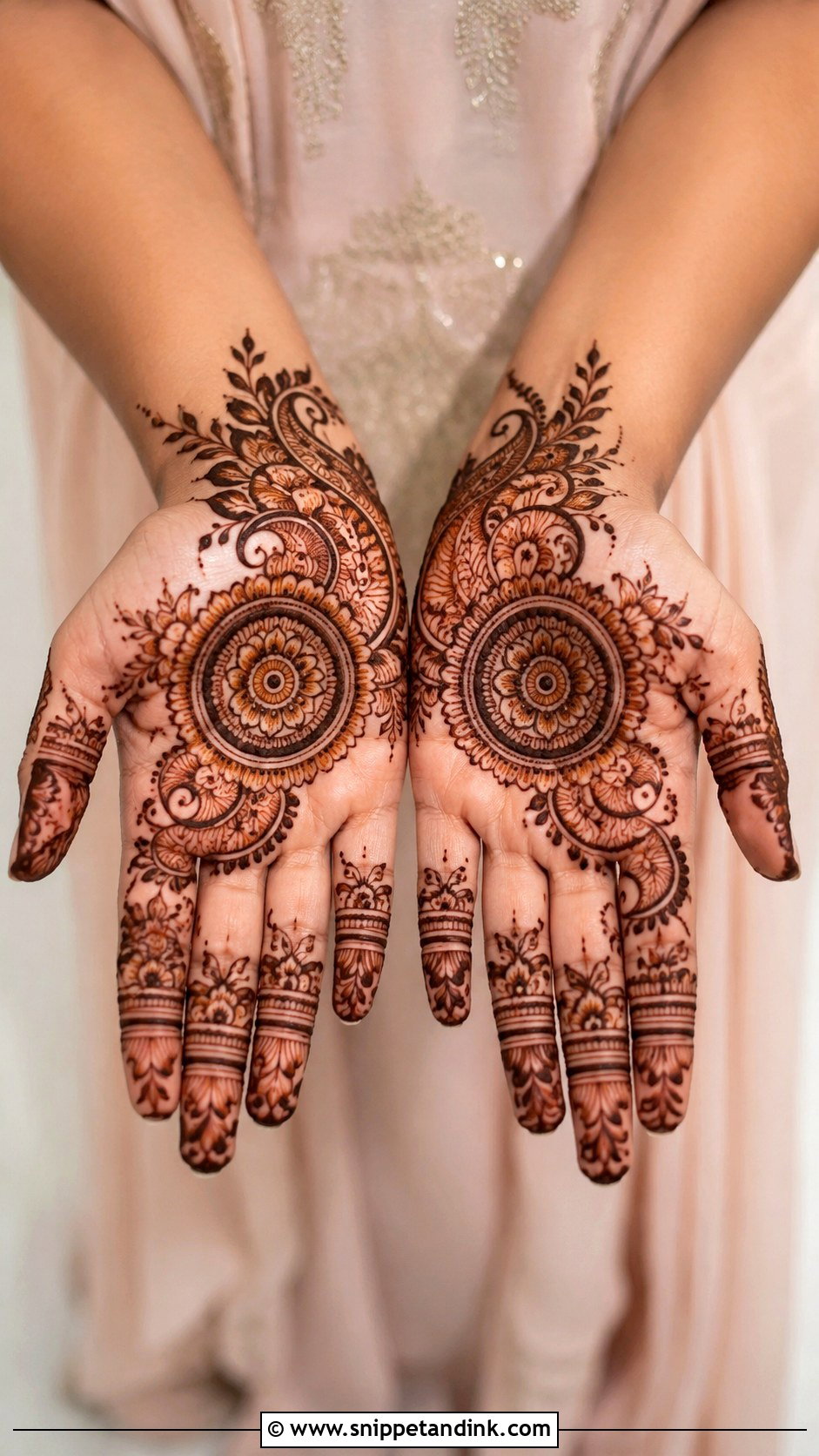
Shading adds depth without crowding: a round mandala centre with petals, leaves or paisleys lightly filled with fine strokes, plus shaded finger bands or wrist borders. It suits weddings and Eid. I shade by easing pressure on the cone and laying thin parallel strokes, not by flooding the area. Heavy shading blurs once it stains, while light strokes leave a soft gradient against the clean outline.
28. Bracelet Tikki Mehndi Design
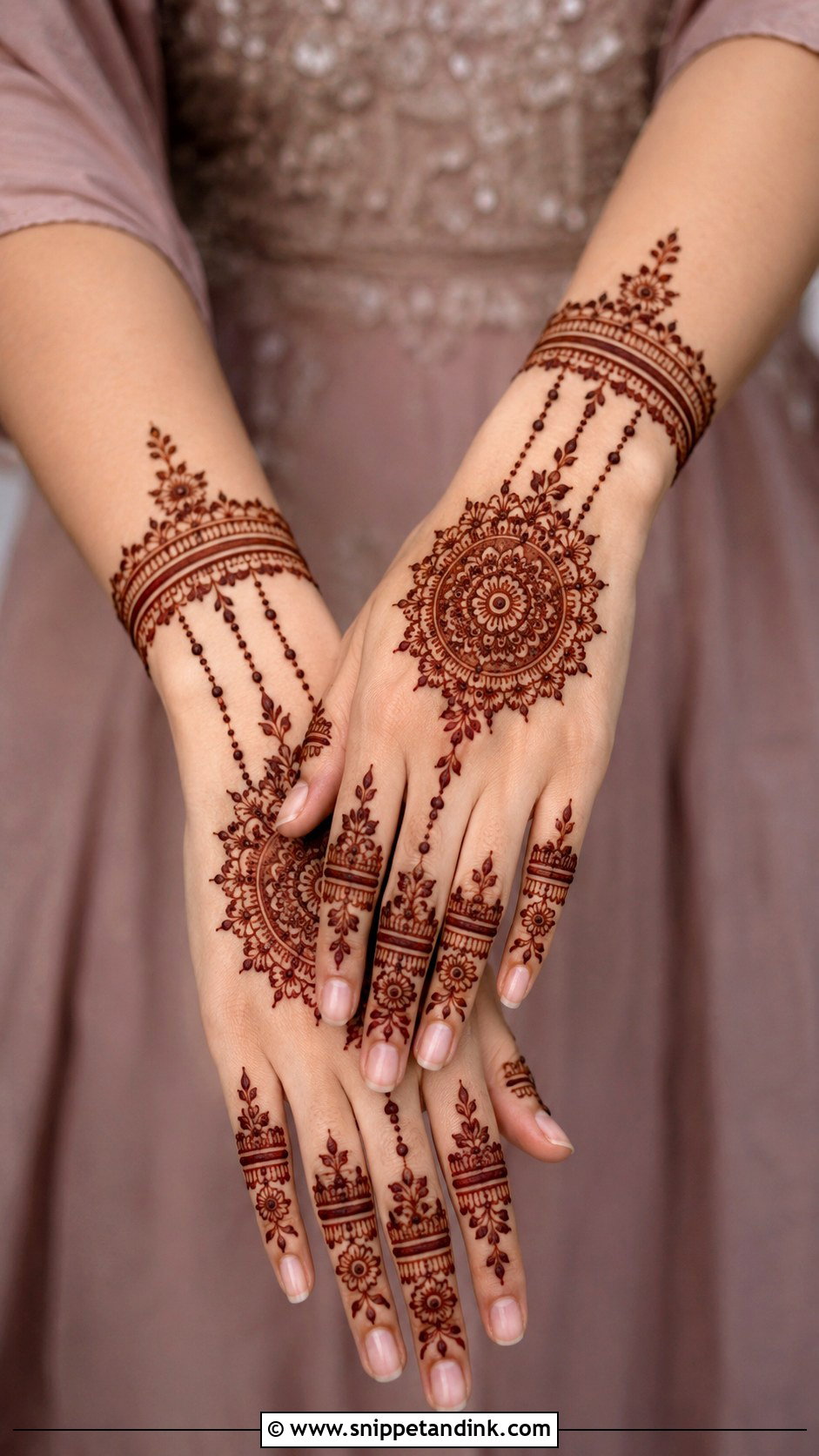
A tikki on the back of the hand, joined to the wrist by dotted chains, floral links or fine lines, with a scalloped or leafy bracelet band and ring-like details on the fingers. It’s a good choice if you don’t want heavy palm coverage. Thin chains and a bold tikki keep the balance. The chains look best when they meet the finger rings exactly at the knuckle, which I check with the fingers both straight and bent.
29. Indo Arabic Tikki Mehndi Design
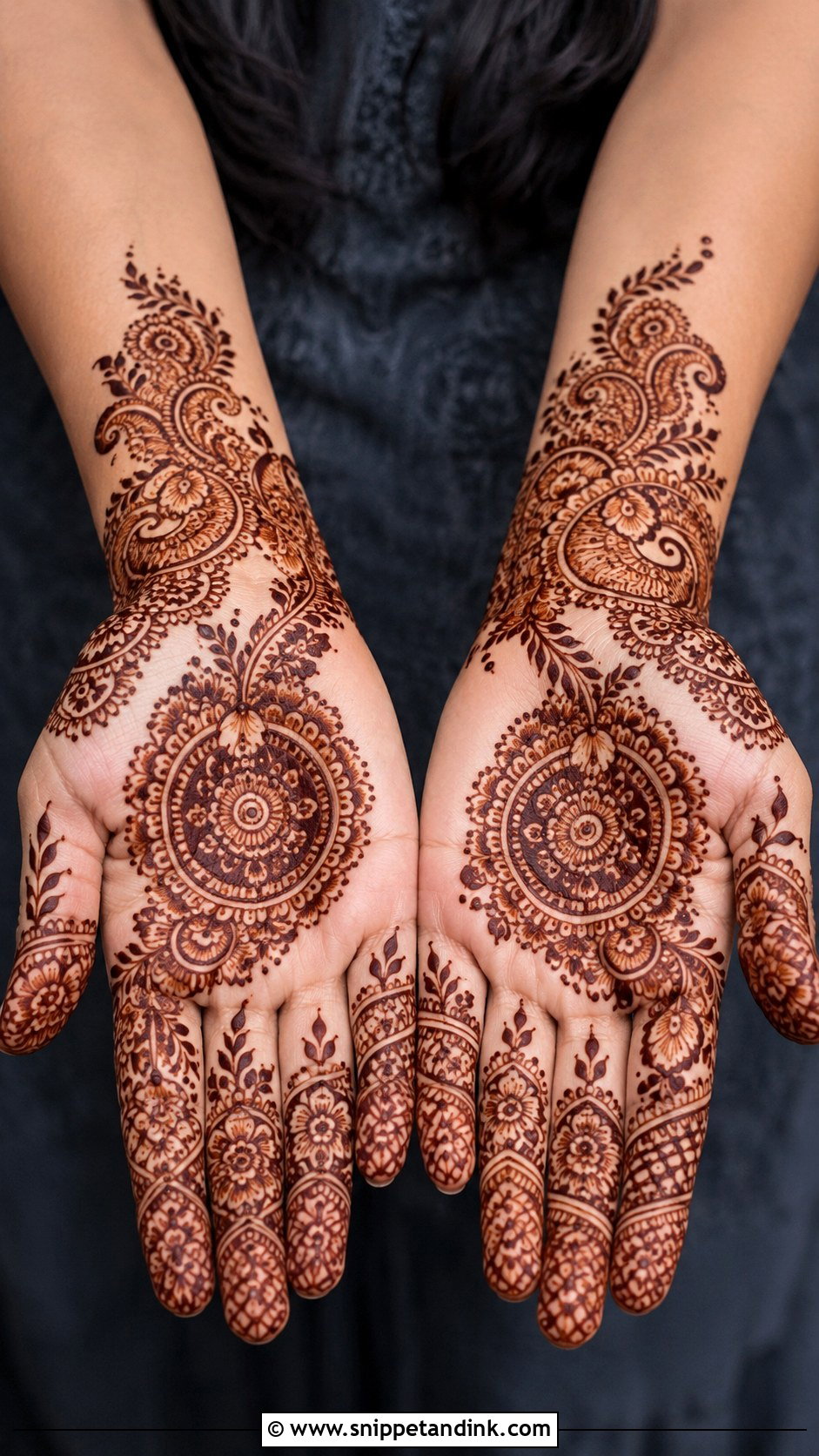
Indian symmetry meets Arabic flow: the tikki sits centred while bold flowers, paisleys and leafy trails run diagonally across the hand. There’s more open skin than in heavy Indian work and more detail than a simple Arabic trail. I use thick outlines on the main motifs and fine lines for fillers. That line-weight contrast is what gives Indo-Arabic its clean finish.
30. Moroccan Tikki Mehndi Design
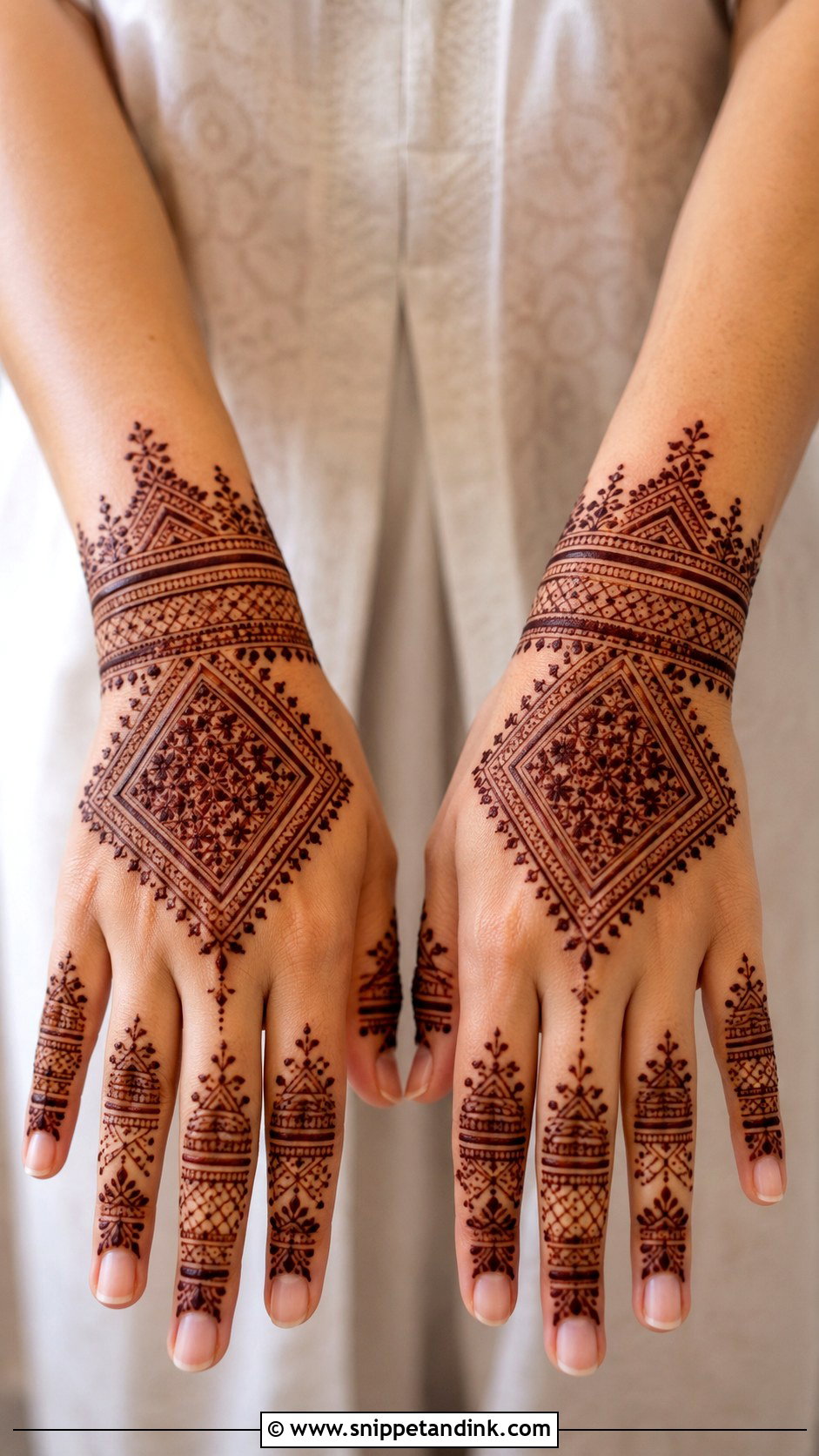
Moroccan tikki is geometric: a round or diamond centre ringed by straight lines, triangles, dots, checks and clean borders. On the back of the hand it can connect to the wrist and fingers like a patterned glove. I keep the coverage medium-light, because dense geometry turns into a solid block once the stain darkens. Straight lines need a steady hand and a well-filled cone; a half-empty cone sputters and breaks the line.
31. Gulf Tikki Mehndi Design
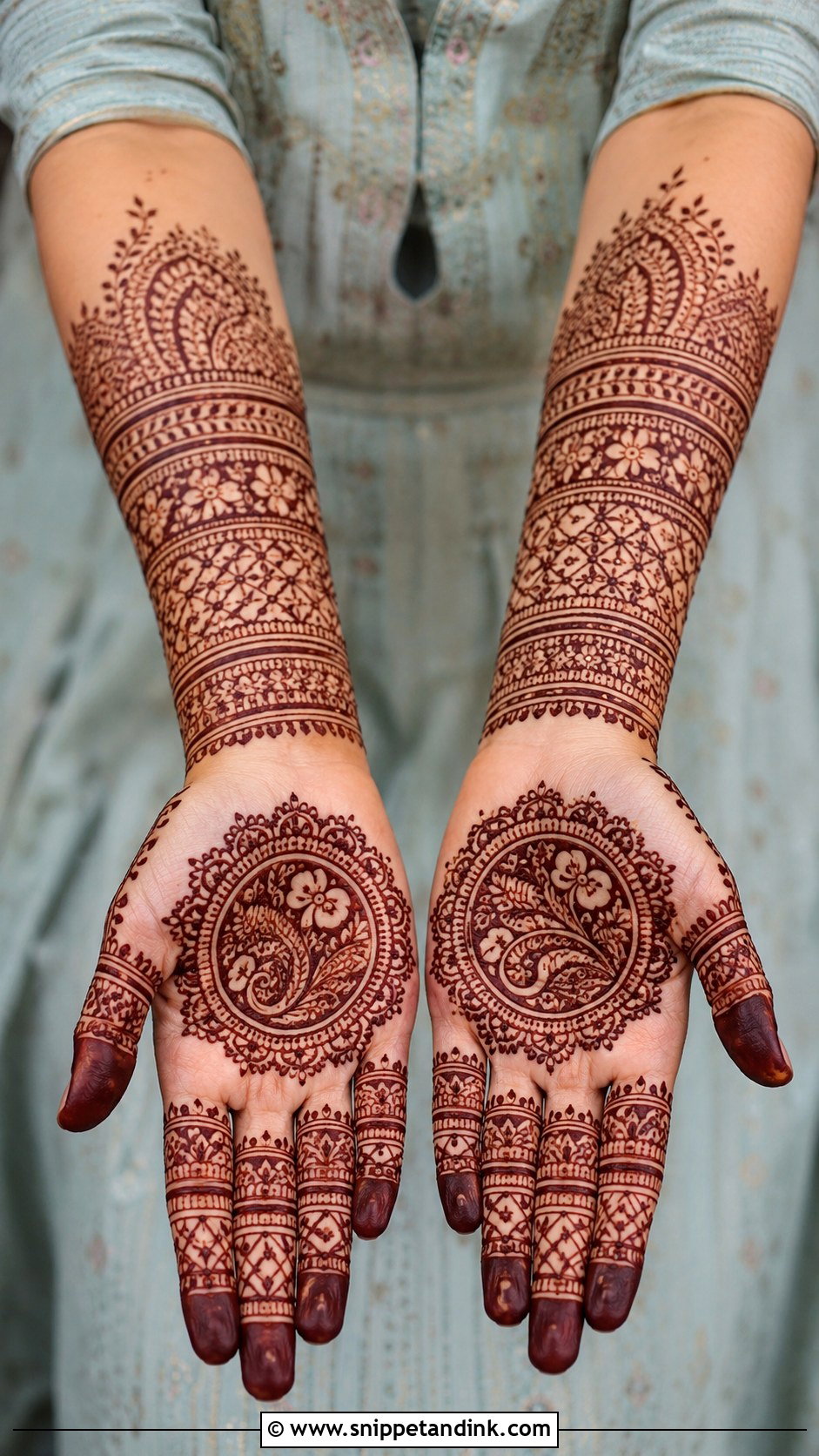
Large flowers, leafy vines and curved trails around a tikki on the palm or back of the hand, with bold tips, diagonal bands or floral strips on the fingers. In Gulf work the open skin matters as much as the filled parts. It suits Eid, weddings and family parties because it’s festive without density. I draw the outlines in one confident pass; big Gulf motifs show any hesitation.
32. Rajasthani Tikki Mehndi Design
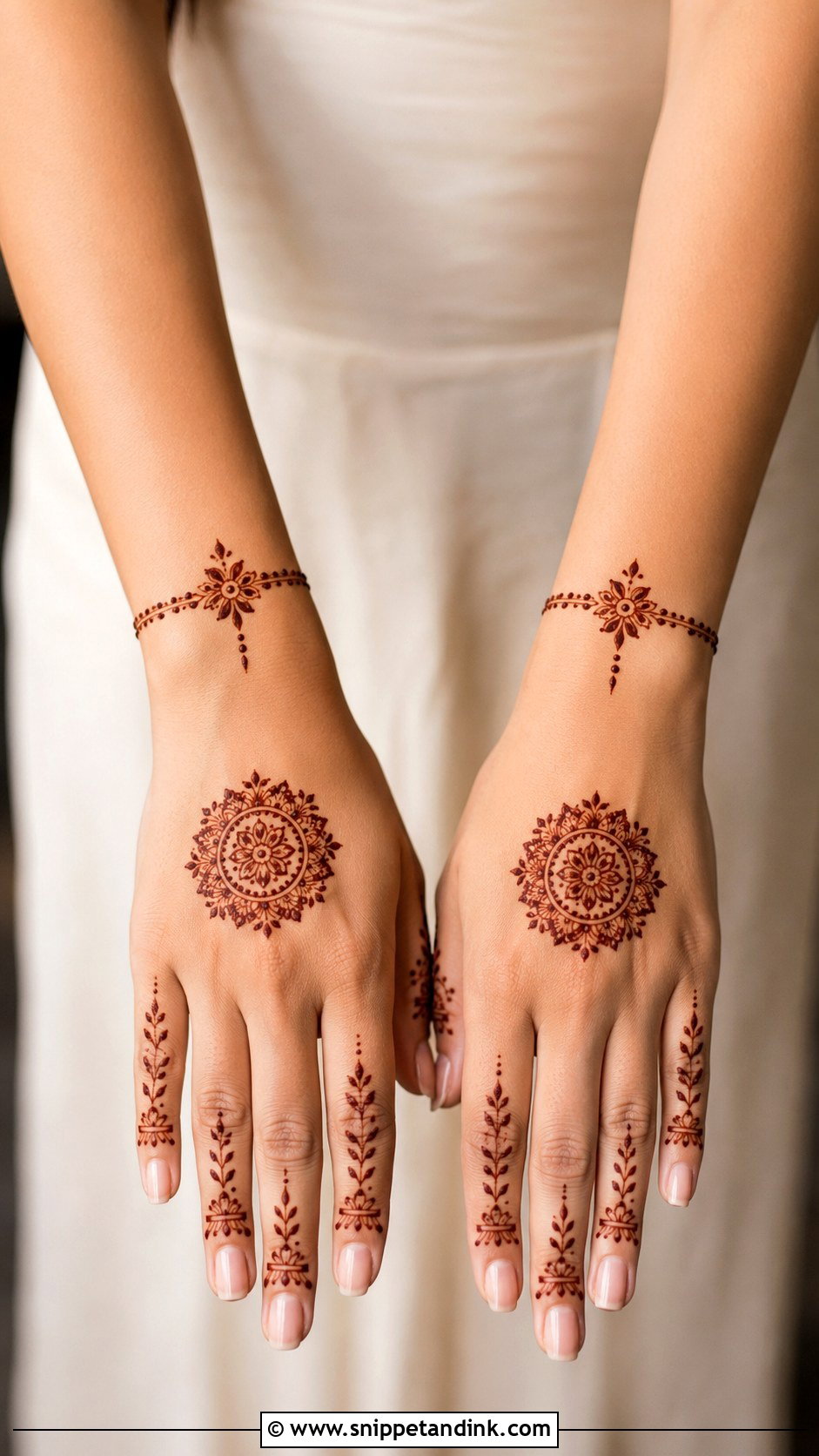
Fine paisleys, small florals, dots, leafy borders and detailed wrist bands surround the circle in a Rajasthani tikki mehndi design, sometimes with small cultural motifs in the palm for a wedding. The fingers are usually filled to match. It suits brides, married women, Teej and Karwa Chauth. Even when it’s heavy, the tikki must stay visible, so I keep a clear outline around the centre and balance the fillers across the palm.
33. Pakistani Tikki Mehndi Design
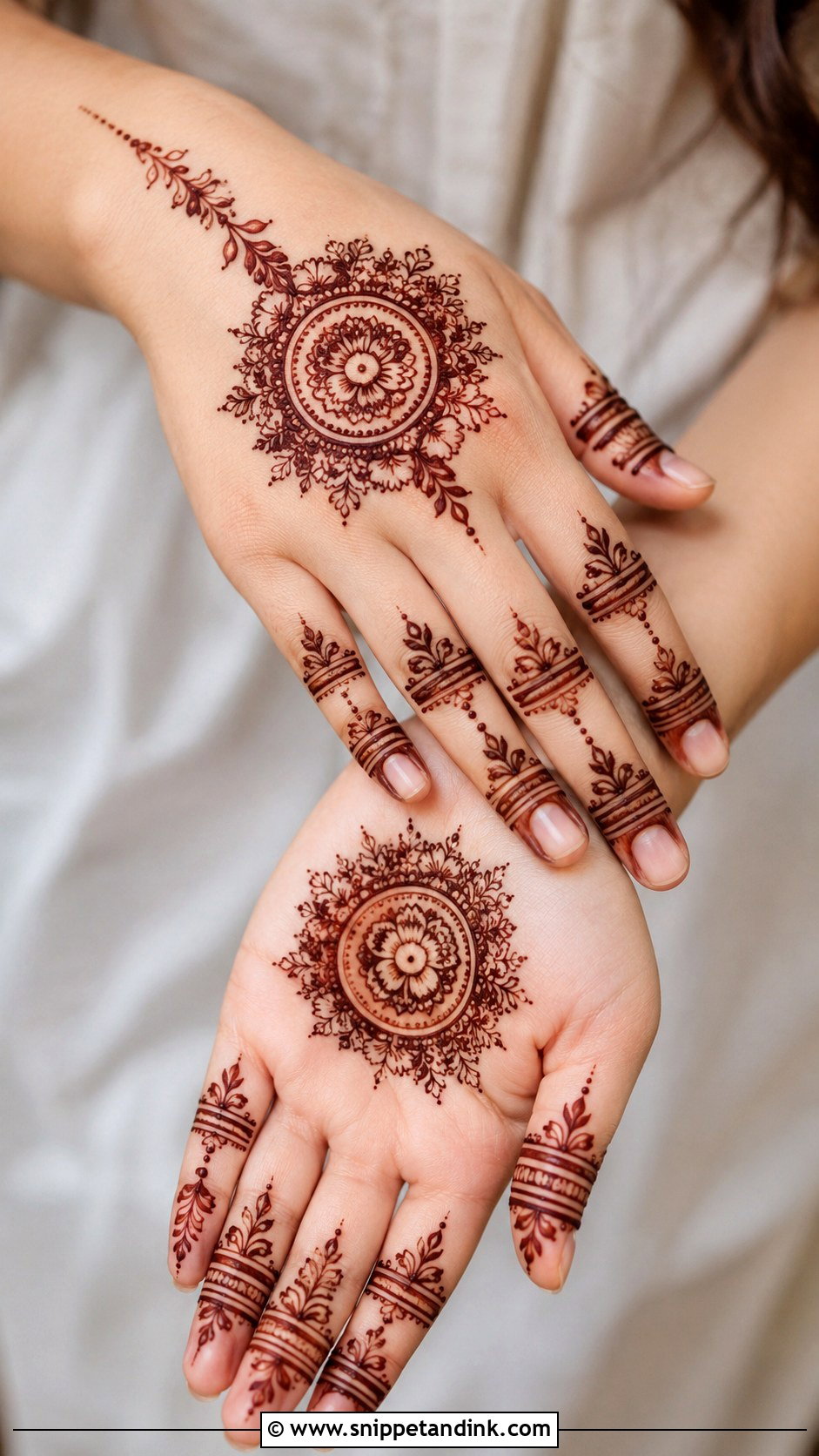
Pakistani tikki pairs a bold round mandala with delicate florals and leaves: fine bands, dots and shaded flowers on the fingers, and slim chains or vine trails linking a back-hand tikki to the wrist. It’s festive but usually lighter than full bridal work, which makes it a frequent Eid and wedding-guest request. I leave open space around the circle so the fine detail has room to show after staining.
34. Engagement Tikki Mehndi Design
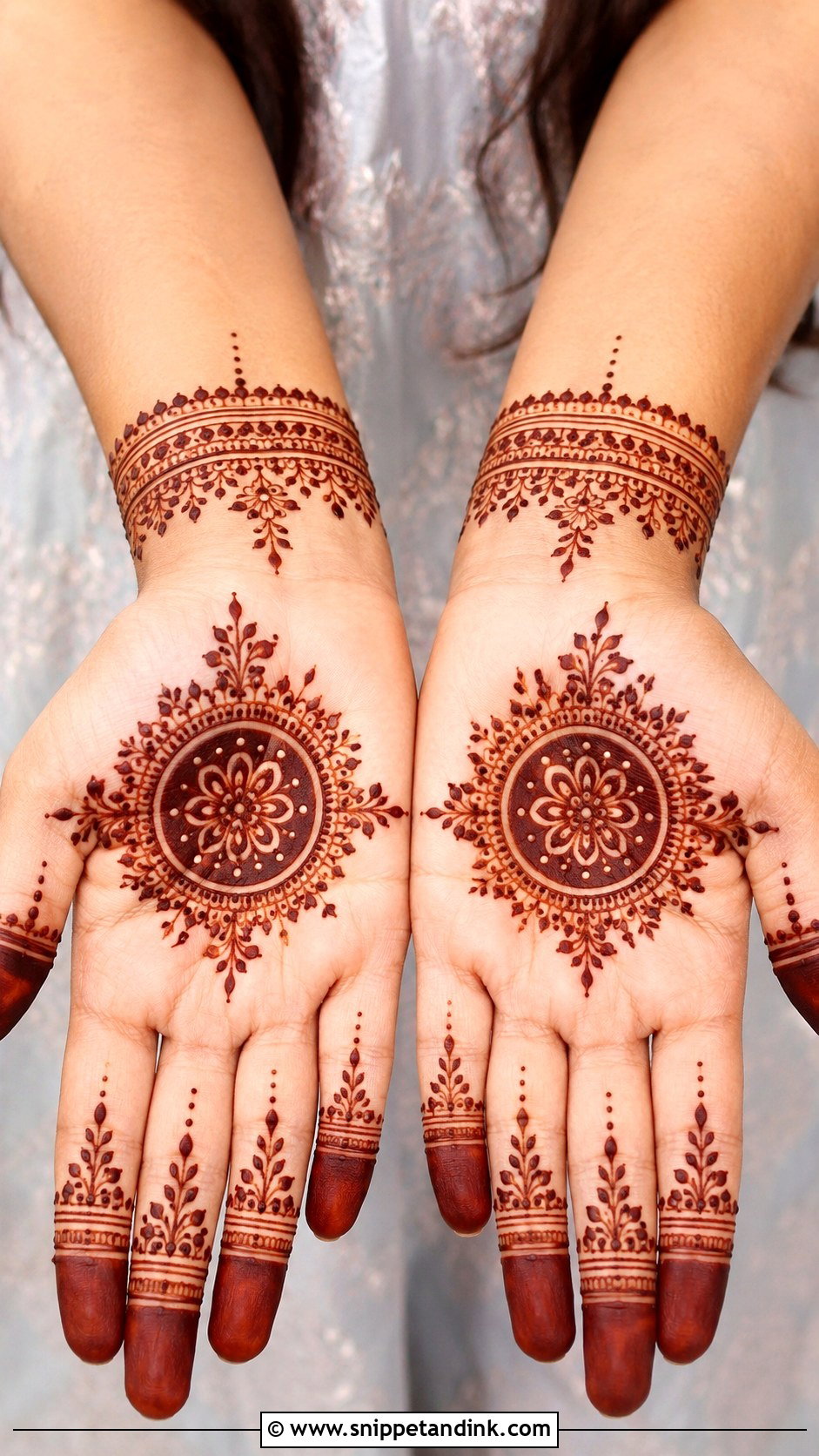
A medium tikki on the back of the hand or palm, with florals, fine dots and bracelet details, sometimes subtle initials or a ring motif near the wrist. Keep it lighter than bridal so it feels fresh. The fingers get clean bands, leafy strips or half-finger detail. Engagement photos zoom in on hands, so I keep the ring finger itself fairly clear; a ring set against solid henna loses its sparkle on camera.
35. Festival Tikki Mehndi Design
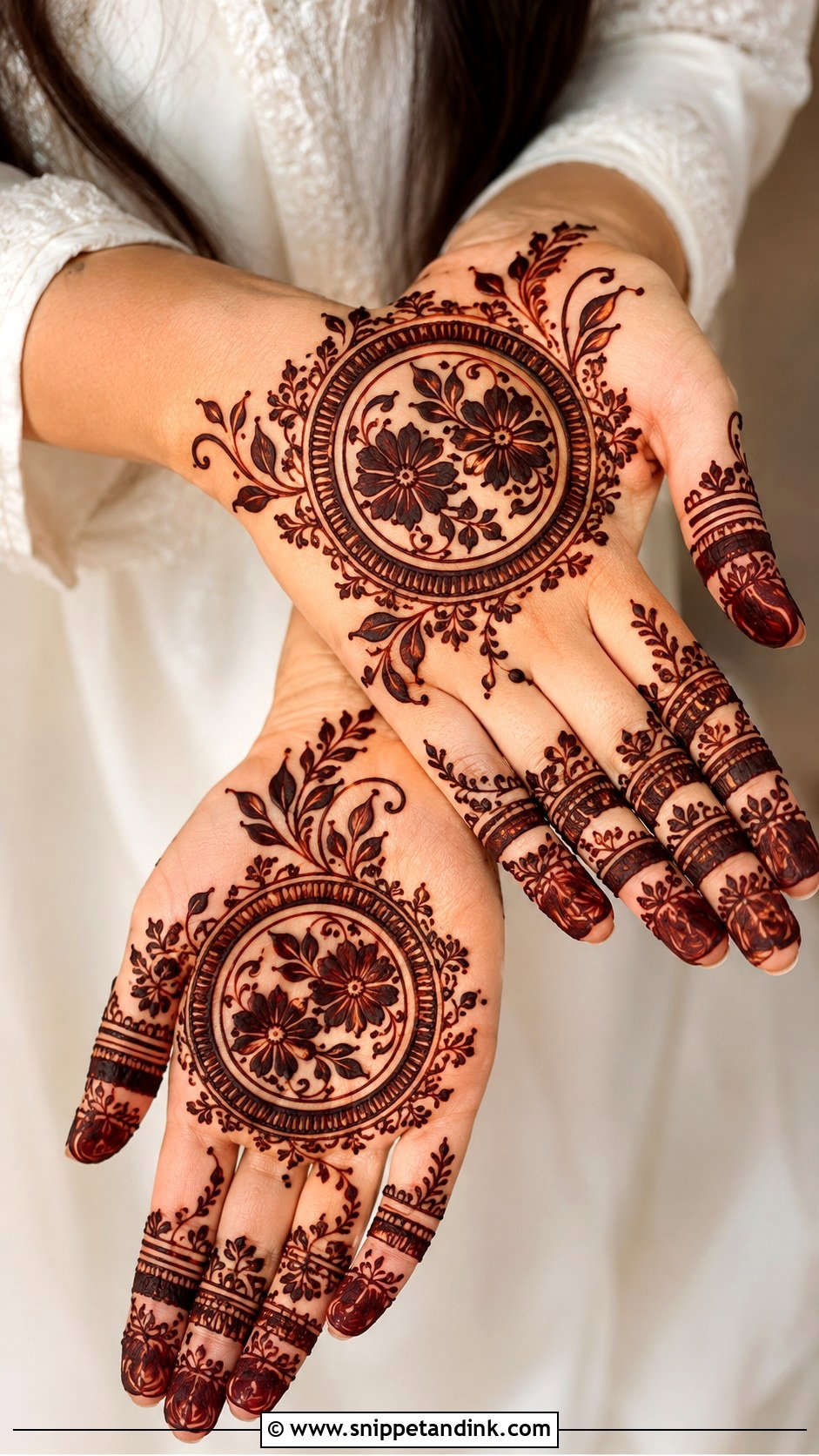
If you need one design that works at Eid, Diwali, Teej and every family gathering in between, this is it: medium coverage, a round tikki in the centre, matching florals, dots, vines and finger bands, plus a small wrist border. Choose the front hand for a classic feel or the back of the hand for a jewellery effect. It suits most outfits and ages. Clean lines, a bold tikki and light surrounding detail are all it needs.
Drawing a Tikki on Your Own Hand at Home
The tikki is the design I’d recommend to anyone doing their own henna, because it’s mostly circles and dots. Your dominant hand is the hard one to decorate, so do that hand first while you’re fresh and patient, and keep the design on it simpler.
- Wash your hands and skip lotion. Oil on the skin stops the paste from staining.
- Snip only the very tip of the cone. A small opening gives finer, more controllable lines.
- Practise a few circles on paper or a plate first to judge how hard to squeeze.
- Dot the centre, draw the first ring, then rotate your hand on a cushion as you go round.
- Let it dry, dab on a little lemon and sugar, and leave it on for several hours or overnight.
When the circle comes out lopsided
Fresh henna can be lifted within a few seconds with a damp cotton bud, though it may leave a faint mark. If the paste has already set, don’t scrub. Add an extra ring of dots or small petals around the outside, slightly wider on the flat side; a wider outer layer evens out the shape, and nobody will know the inner ring wandered.
Build Outward From One Good Circle
A tikki can be simple, bridal, modern, Arabic, floral, geometric or deeply traditional, and the circle stays the same; only what surrounds it changes. If you are new to mehndi, start with a plain round tikki and a couple of dotted rings. For a richer look, try paisley, jaali, peacock or full-hand layouts. For lighter occasions, a bracelet tikki on the back of the hand or a minimal palm circle is plenty. Decide what the day needs, then build outward from the centre.
You'll Like These Ideas:











Leave a Reply