
Indian mehndi covers an enormous range, from a bride’s packed palms and forearms to a quick mandala before a family puja. The motifs repeat across regions, paisleys, lotus, peacocks, jaali and bride and groom figures, but the way they are arranged changes with the occasion, the outfit and how long you can sit still. Here are thirty five complete hand looks I apply for weddings, Diwali, Eid, Karwa Chauth, engagements and smaller functions. With each one I have noted where it sits on the hand, what it asks of you in time, and what tends to go wrong.
Order of Beauty Appointments in the Week Before Bridal Mehndi
A bride’s mehndi sits on her skin through every function that follows, so I ask brides to plan their other treatments around it. Anything that strips or irritates the skin after henna goes on will fade the stain.
- Waxing, threading of the arms and any hand or foot treatments: two to three days before the mehndi, so skin has calmed down.
- Exfoliate hands and feet gently a day or two before, never on the day, which can leave skin sensitive.
- Manicure and pedicure: before mehndi. Soaking and scrubbing afterward will lighten the stain.
- On the day: arrive with clean, dry hands, no lotion, oil or sunscreen, and nails polished in advance if you want them painted.
Wear a top with loose or short sleeves and eat before you sit. During a long bridal session your hands are unusable for hours, and someone will need to feed you and help with your phone.
1. Full Hand Indian Bridal Mehndi Design
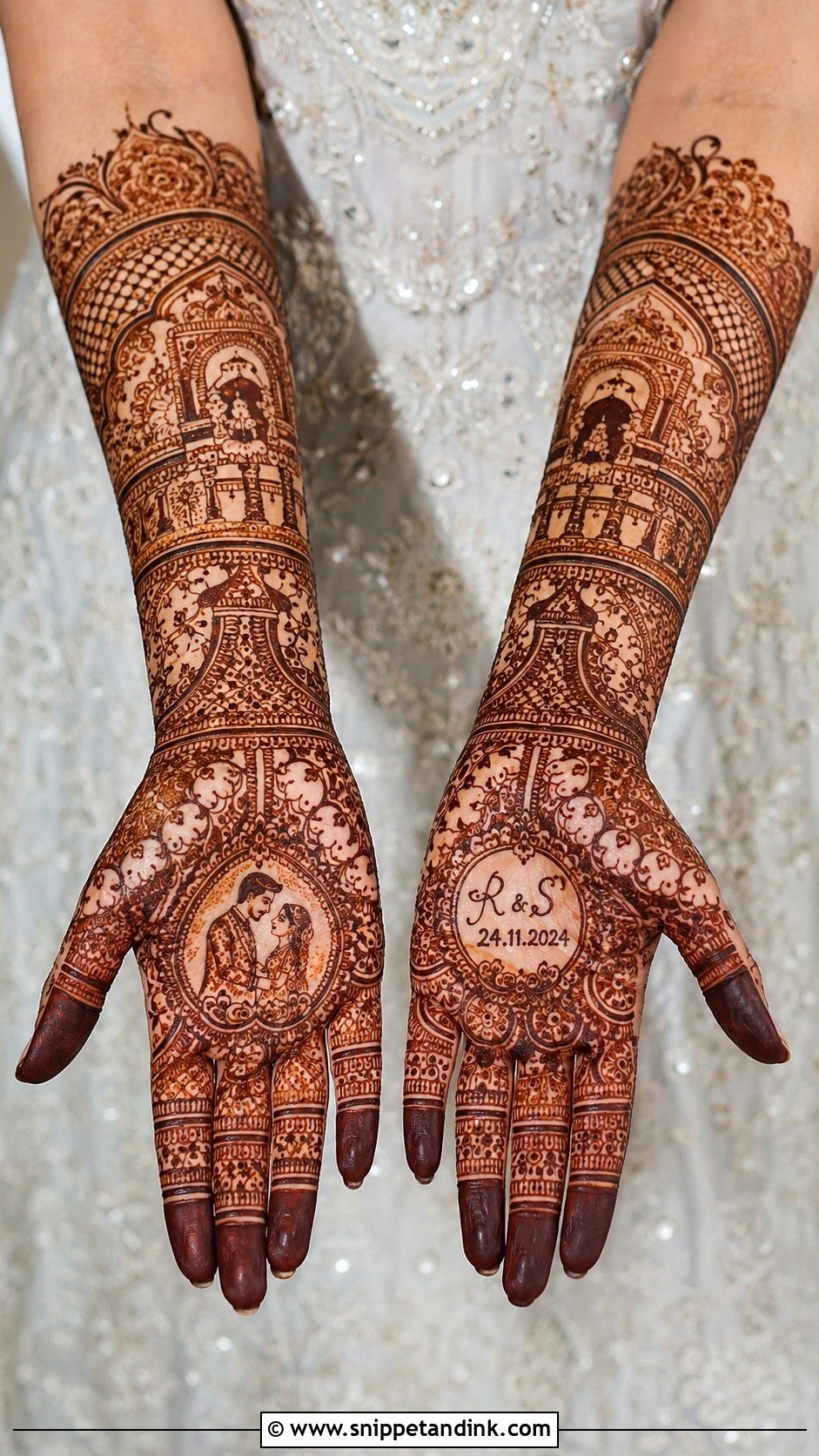
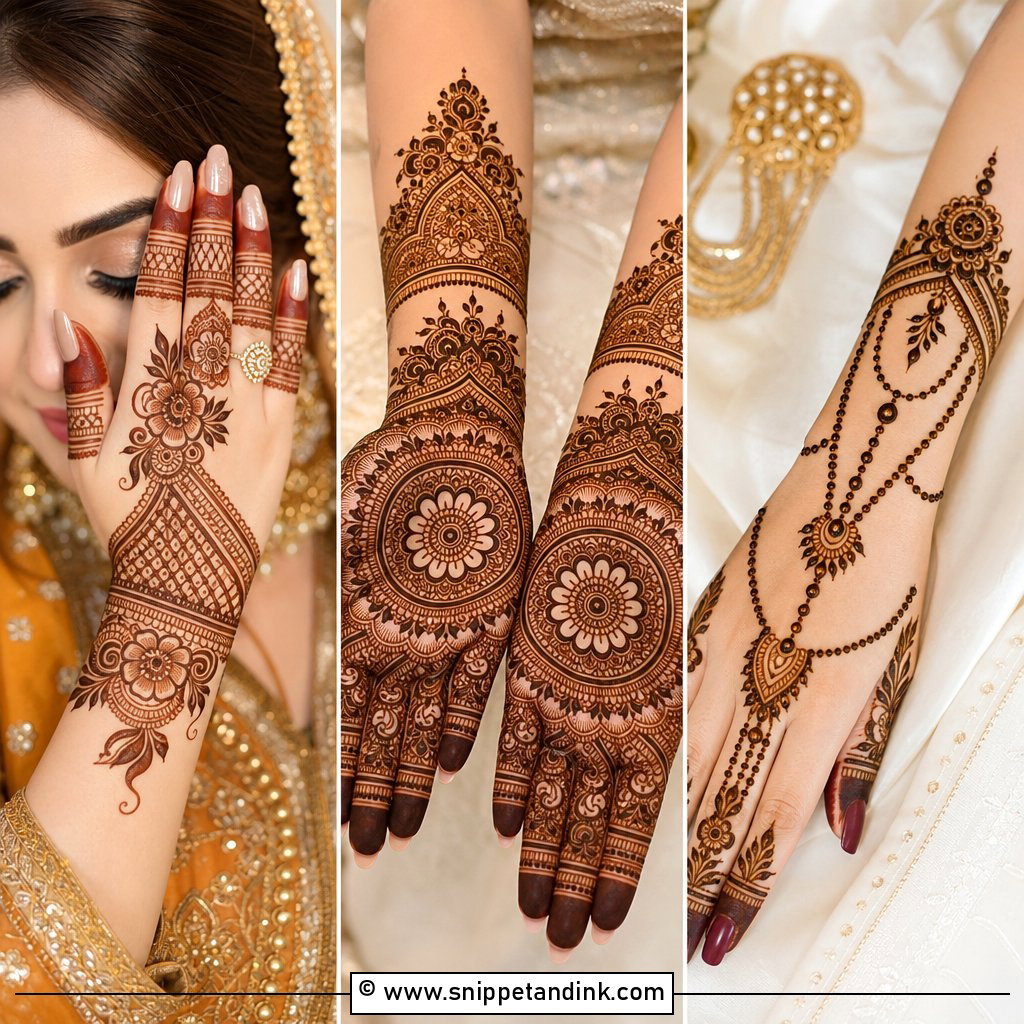
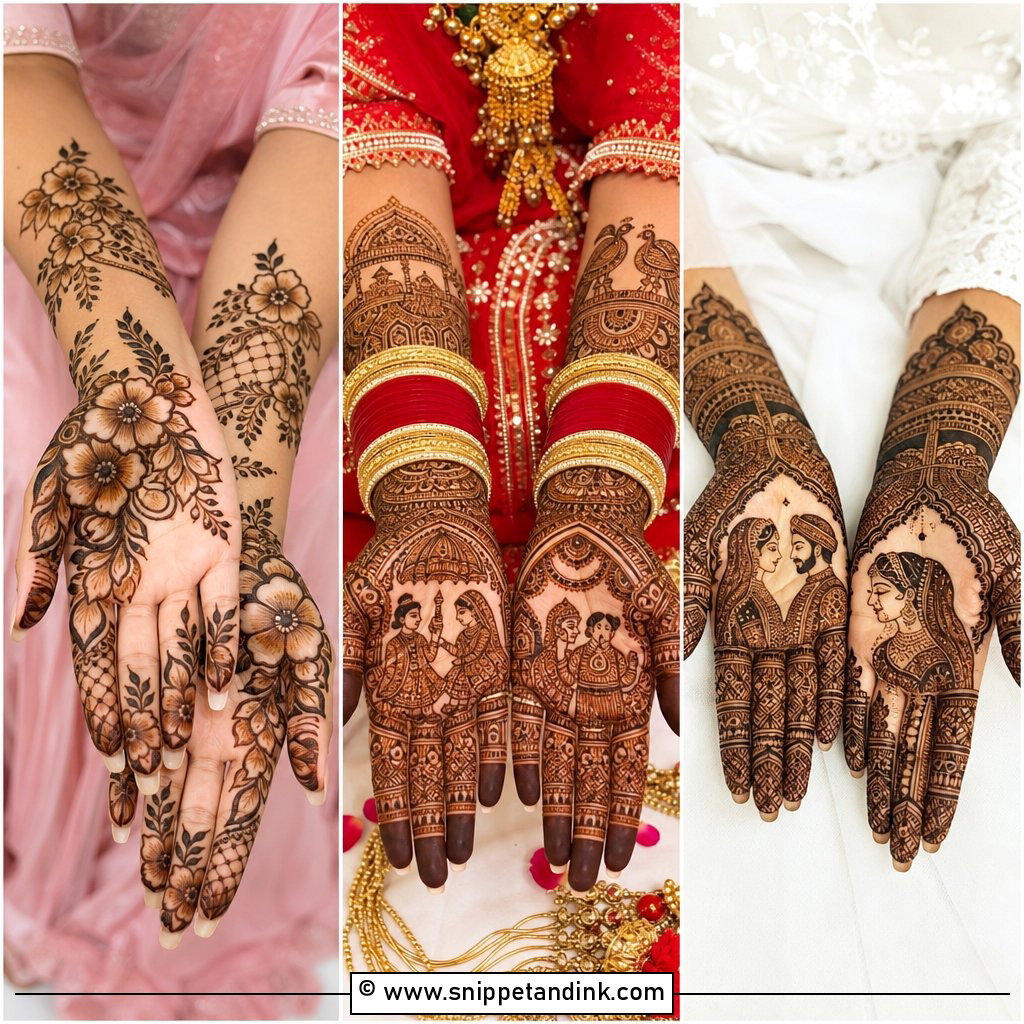
Bridal mehndi in the full Indian style covers the palms, backs of the hands, wrists and arms with tightly packed paisleys, flowers, mandalas and fillers. Density is what gives the deep maroon look in photos; from a distance, closely spaced lines blur into rich color. I keep lines fine but not hair thin, because very thin lines stain pale and break up. Initials, the wedding date, a kalash or the couple can be worked in. Expect most of a day for hands and arms, with feet adding more.
2. Simple Indian Front Hand Mehndi Design
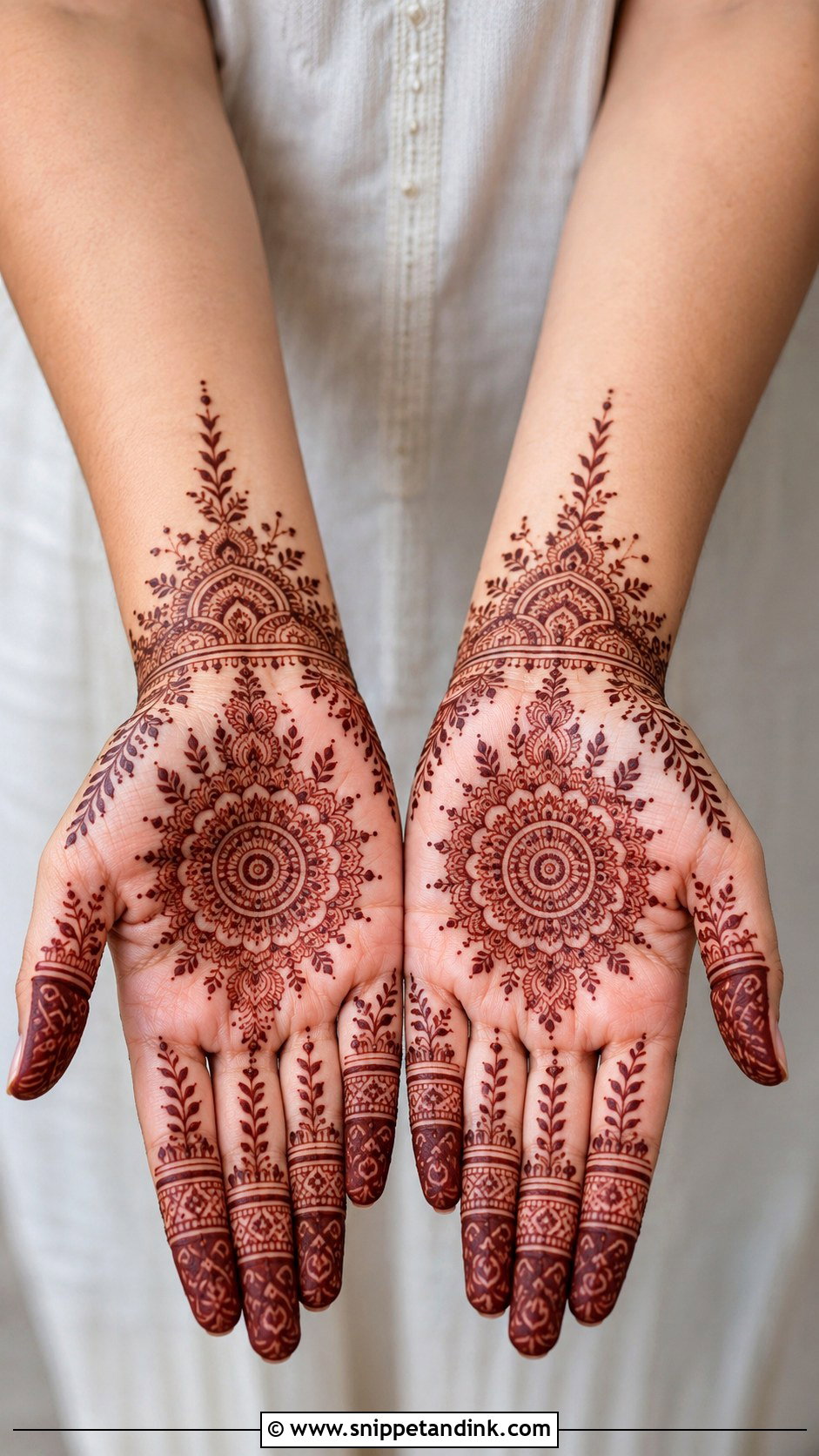
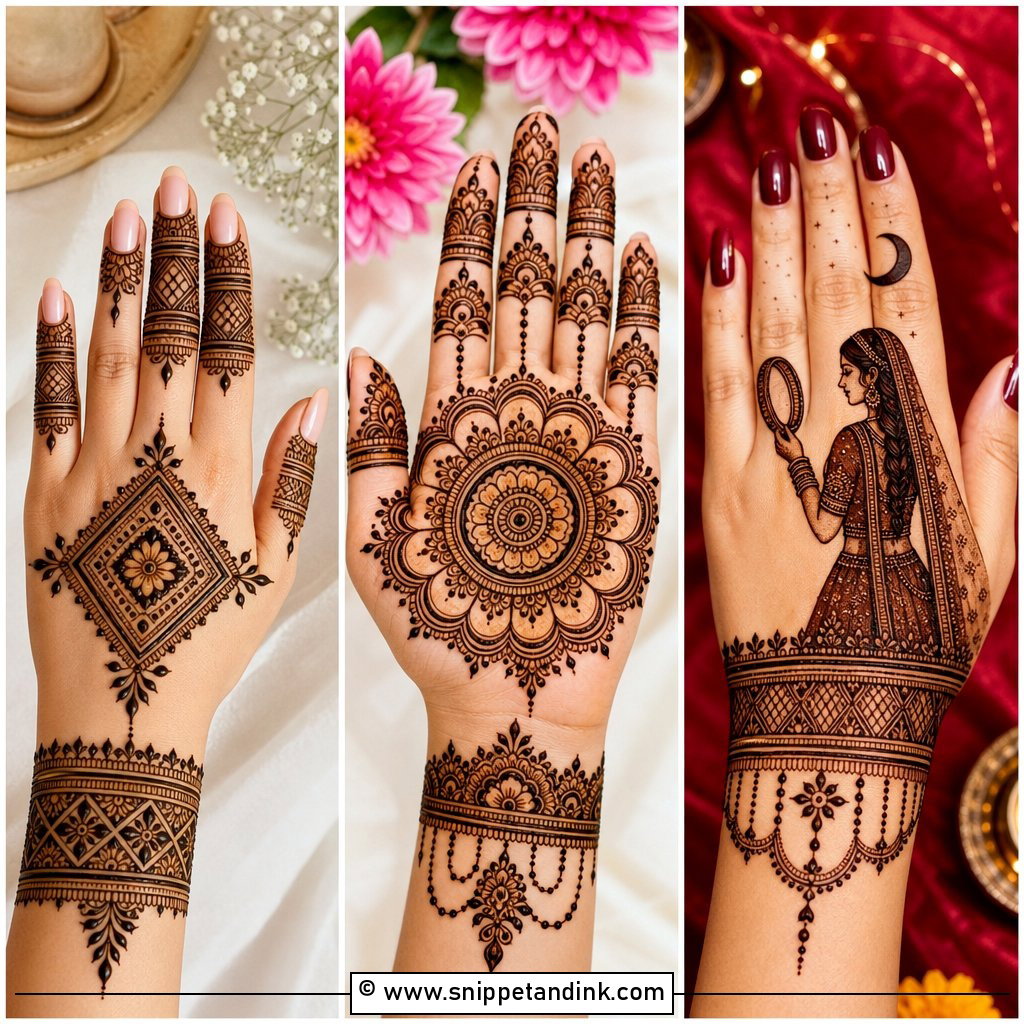
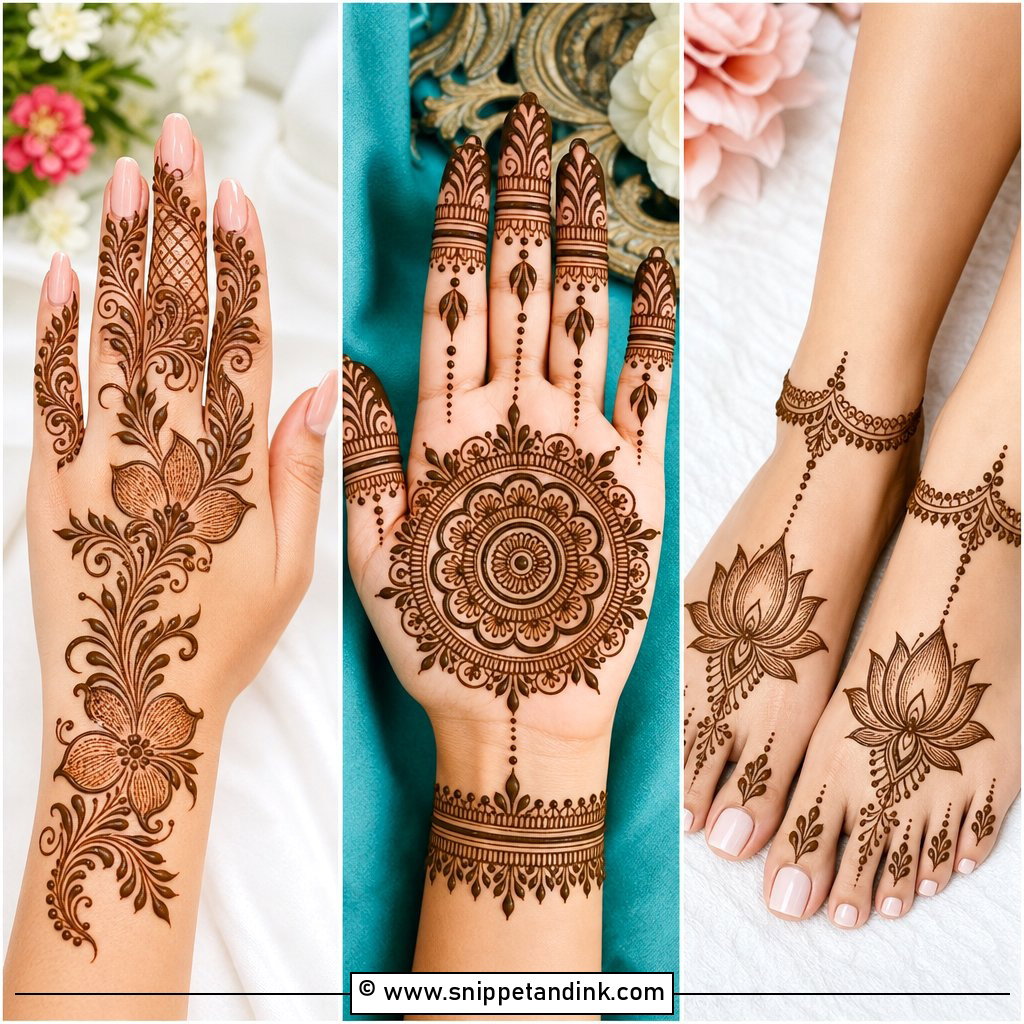
A simple Indian front hand mehndi design puts a mandala or flower in the center of the palm and runs neat bands, dots and small paisleys along the fingers. Leaving space makes it feel light, and the palm stains so well that even sparse work shows clearly. I suggest it for pujas, Raksha Bandhan and family events where you will be serving food soon after. Filled or half filled fingertips make it look traditional.
3. Indian Back Hand Mehndi Design
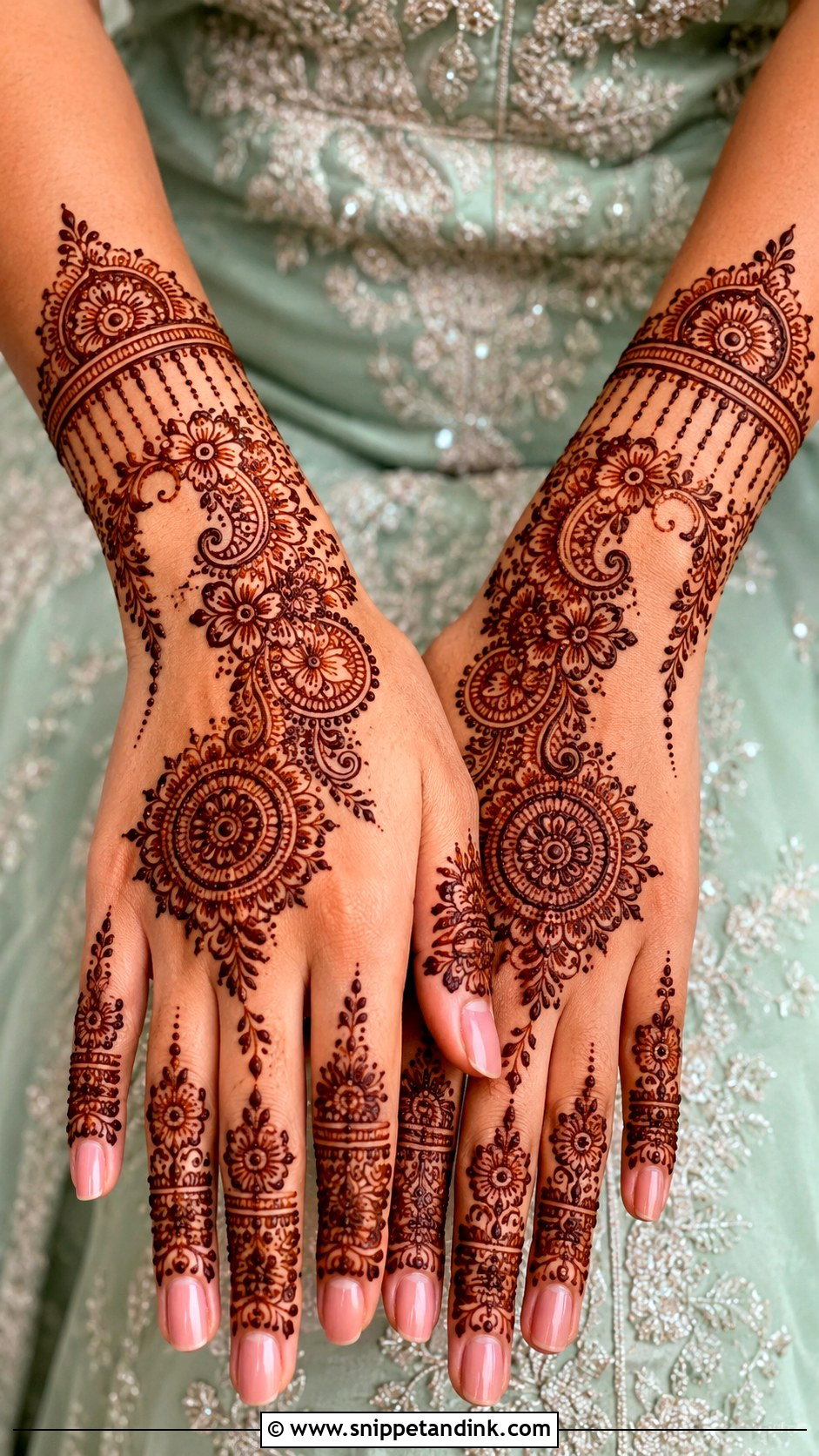
The back of the hand is what shows when you hold a clutch or adjust bangles, so I treat it like jewelry. The pattern starts at the wrist as a bracelet, crosses the hand and links to the fingers with chains or small florals. On many skin tones the back of the hand stains a shade lighter than the palm, so I keep the paste on longer there. Leafy borders and dots add a traditional finish for bridesmaids and sisters of the bride.
4. Indian Arabic Mehndi Design
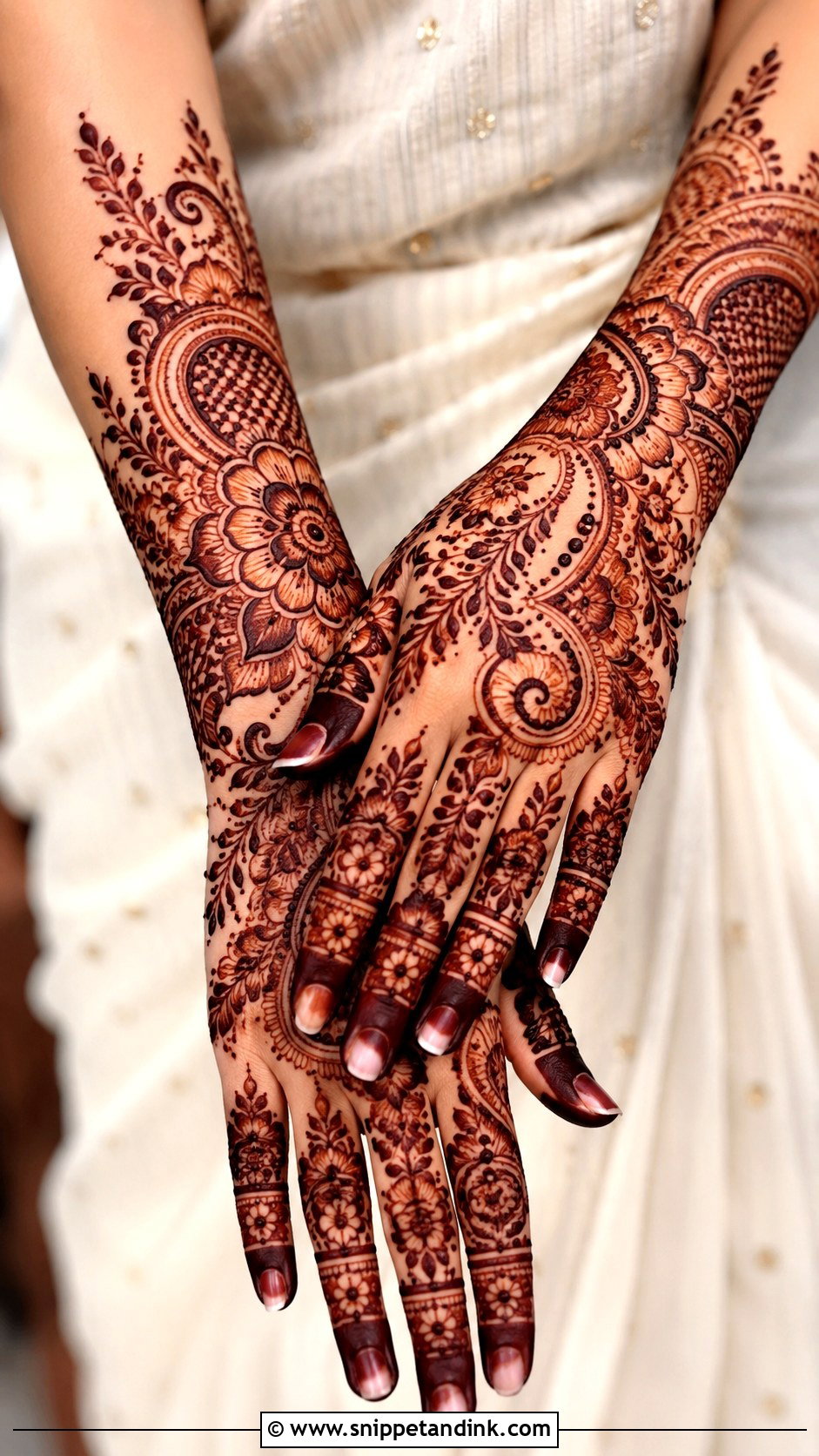
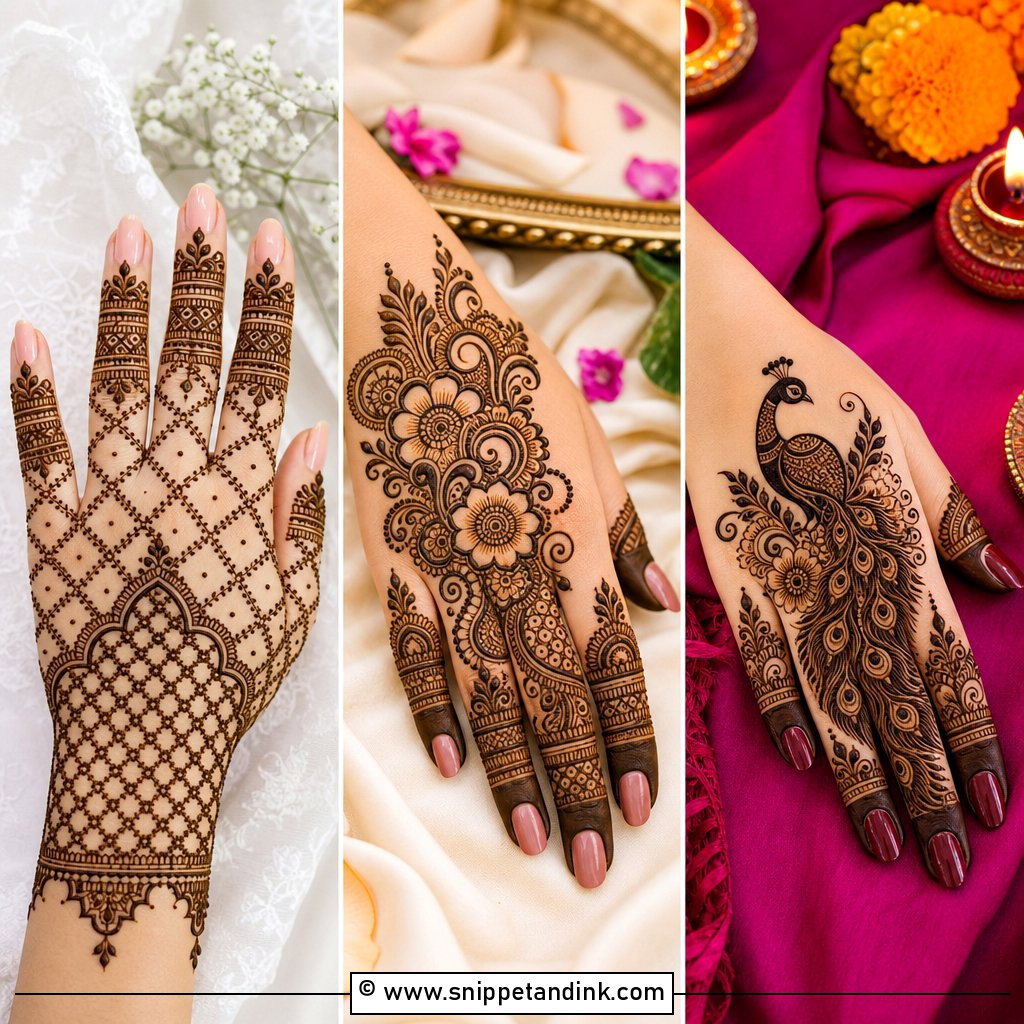
Indian Arabic runs diagonally across the palm or back hand like Arabic work, but fills the flowers and paisleys with Indian fine lines and dotted borders. It suits anyone who wants bold, visible motifs without the hours of a dense design. It also dries faster because there is less paste on the skin. I tend to recommend it to guests at engagement functions and Eid gatherings who need to get on with the evening.
5. Indo Arabic Indian Mehndi Design
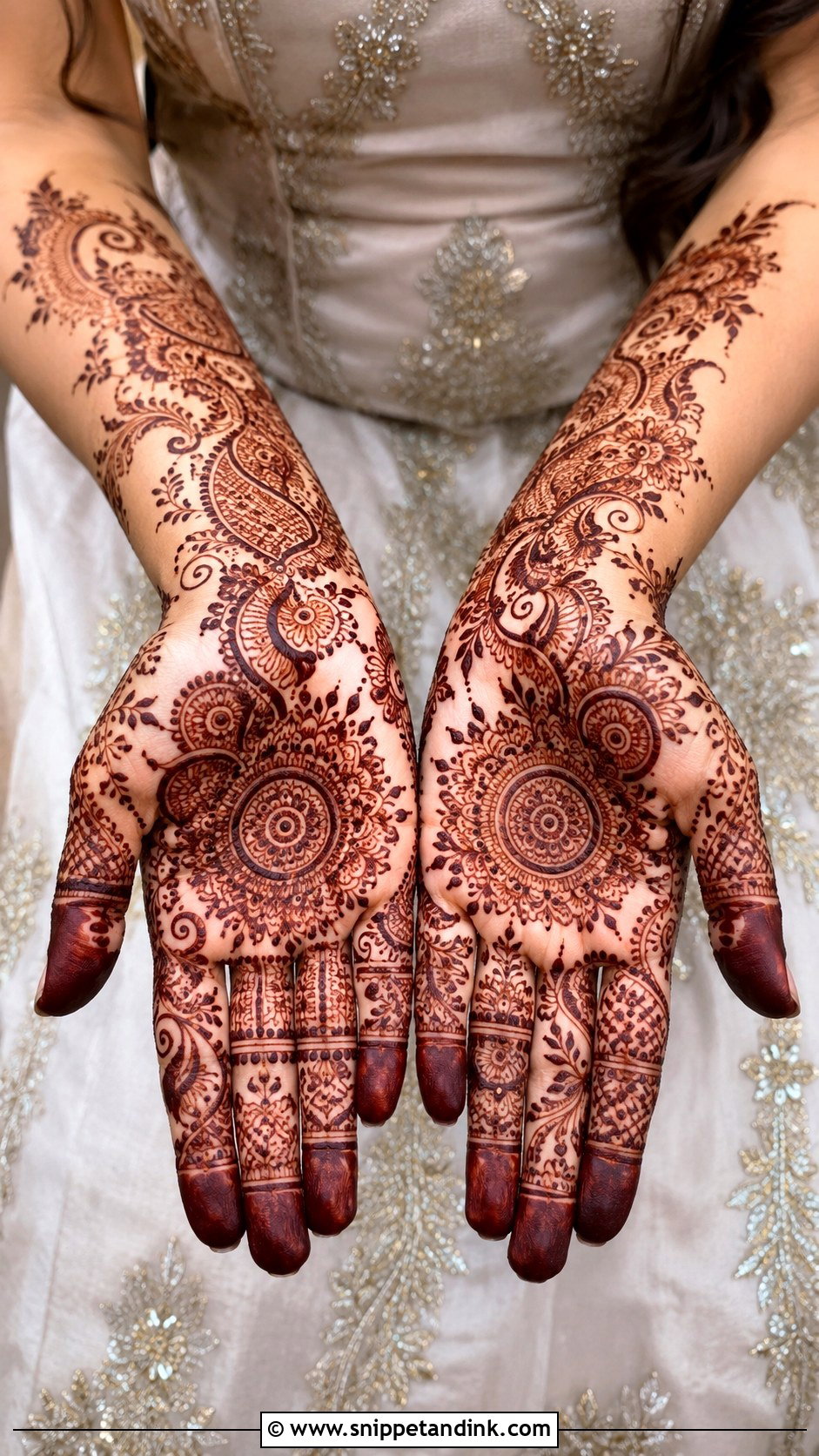
In Indo Arabic layouts I usually keep the palm Indian, with a mandala and paisleys, and let Arabic floral trails run toward the wrist and fingers. The bare skin between them is part of the design; fill it and the fusion turns into an ordinary full hand. Small kairi motifs and parallel lines on the fingertips push it toward a more Indian feel. It is a good middle path for bridesmaids and young brides who want festive without heavy.
6. Indian Mandala Mehndi Design
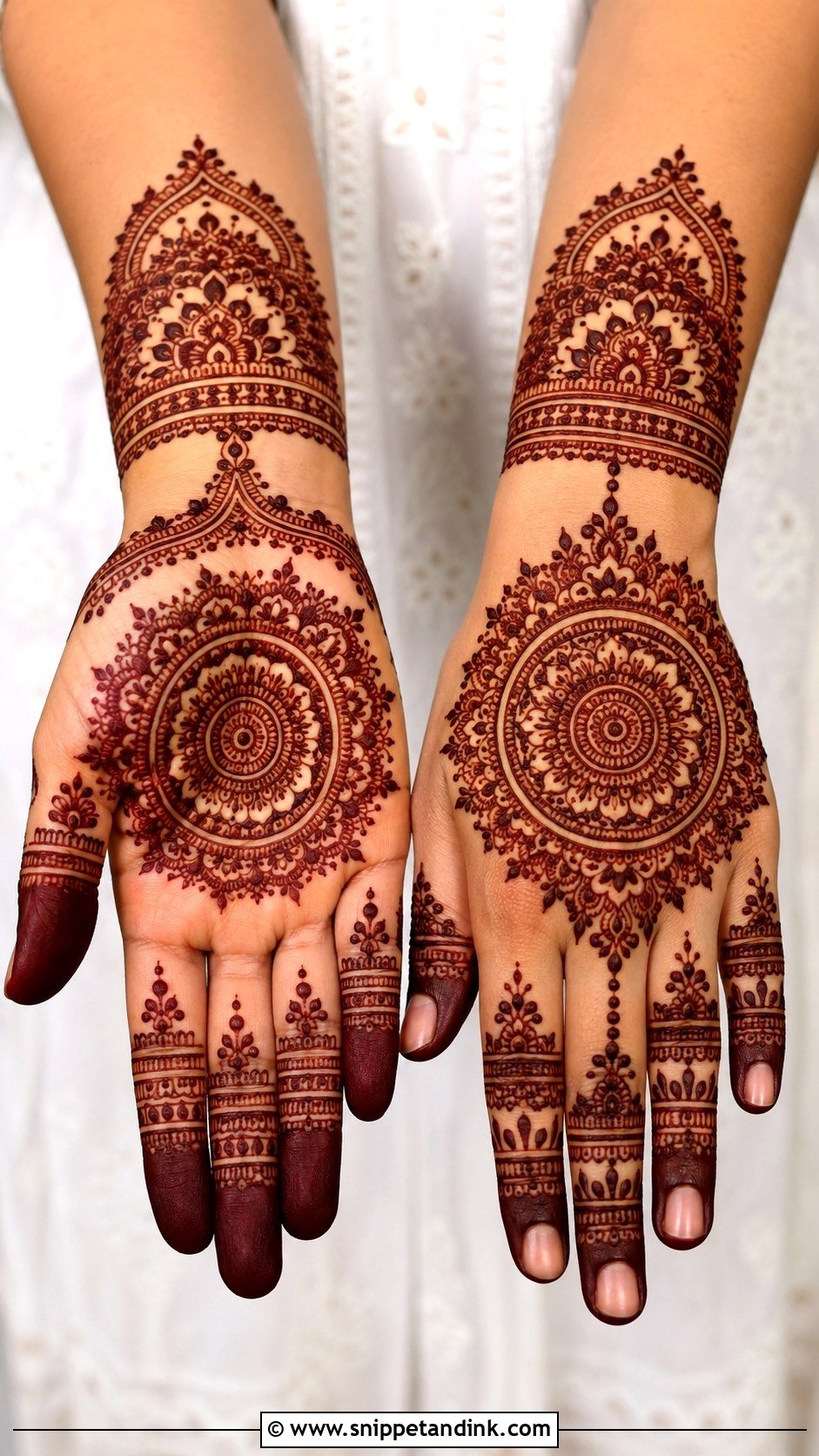
Symmetry is the whole point of a mandala design. A large round center on the palm or back hand is ringed with petals, scallops, dots and fine borders, with fingers in matching bands. I start with a tiny dot in the exact center and build outward, checking the circle from above every few rings. Mandalas suit both small and long hands, though I scale the outer rings so the circle does not wrap onto the sides of a narrow palm.
7. Indian Paisley Mehndi Design
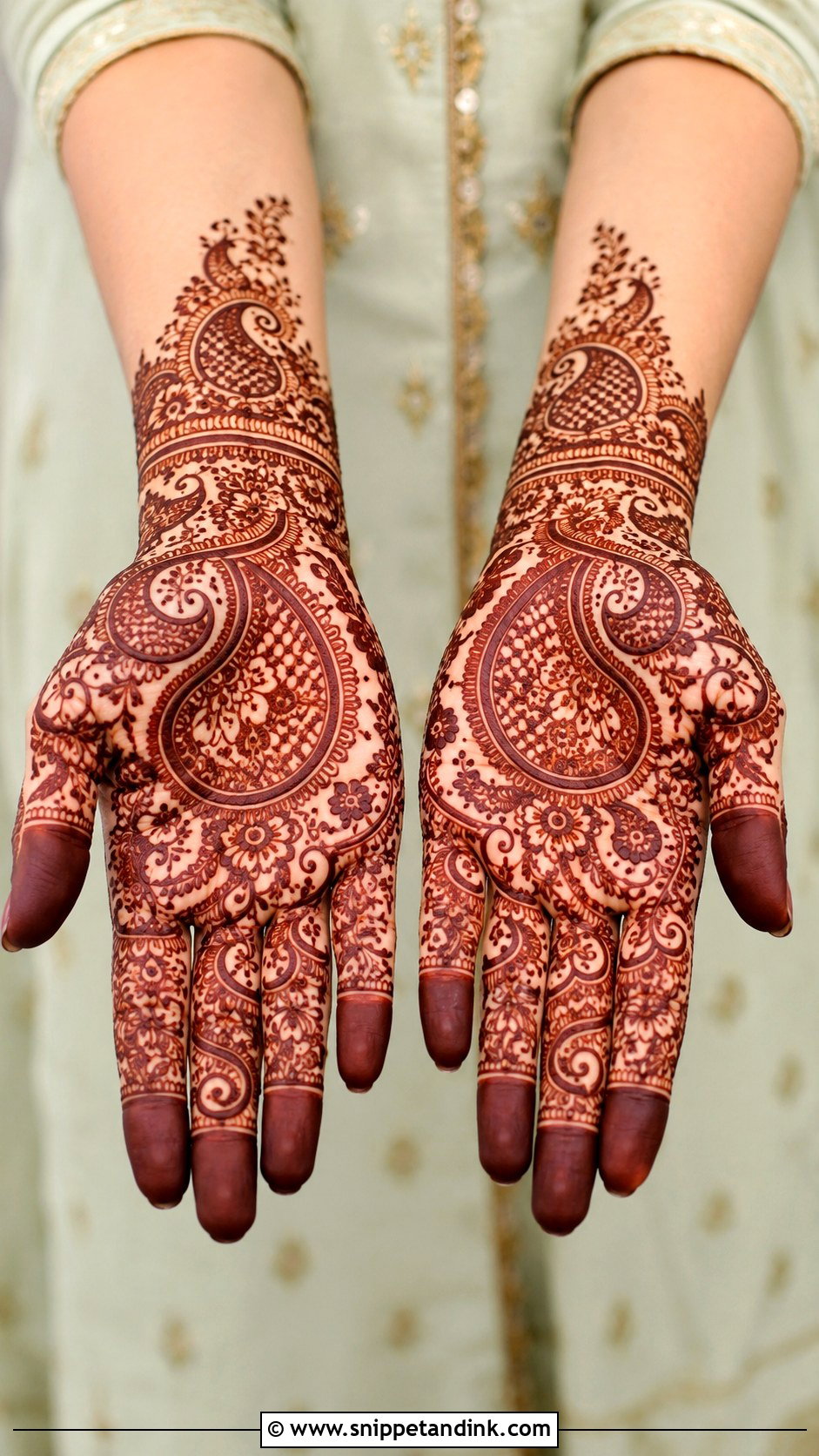
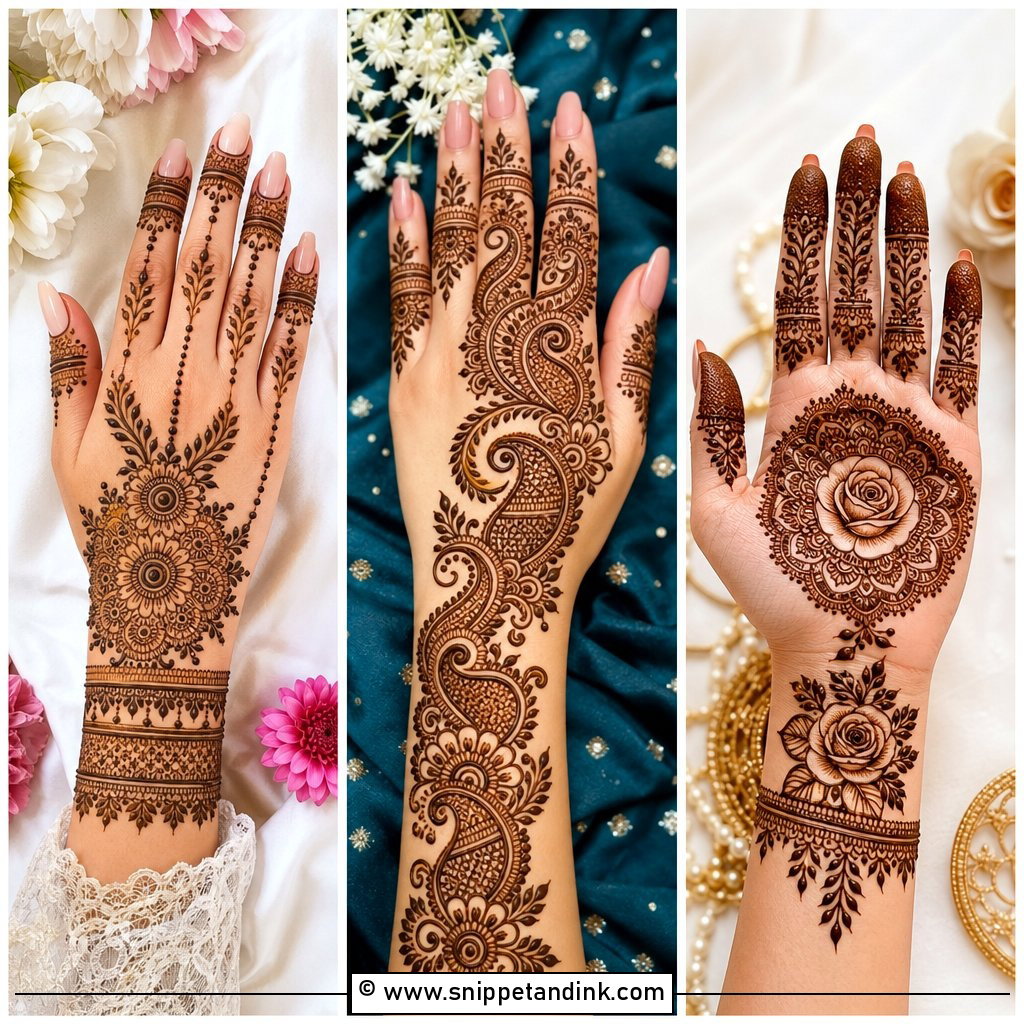
Paisleys are the backbone of Indian mehndi. Large mango shapes on the palm, filled with checks, swirls and flowers, flow into smaller ones toward the wrist. Scale matters: a broad palm can take two or three big paisleys, while narrow hands look better with smaller clusters. I thicken the outlines slightly on paisley designs, as bold edges keep the shapes readable once the stain deepens. Leafy finger bands tie it together.
8. Indian Peacock Mehndi Design
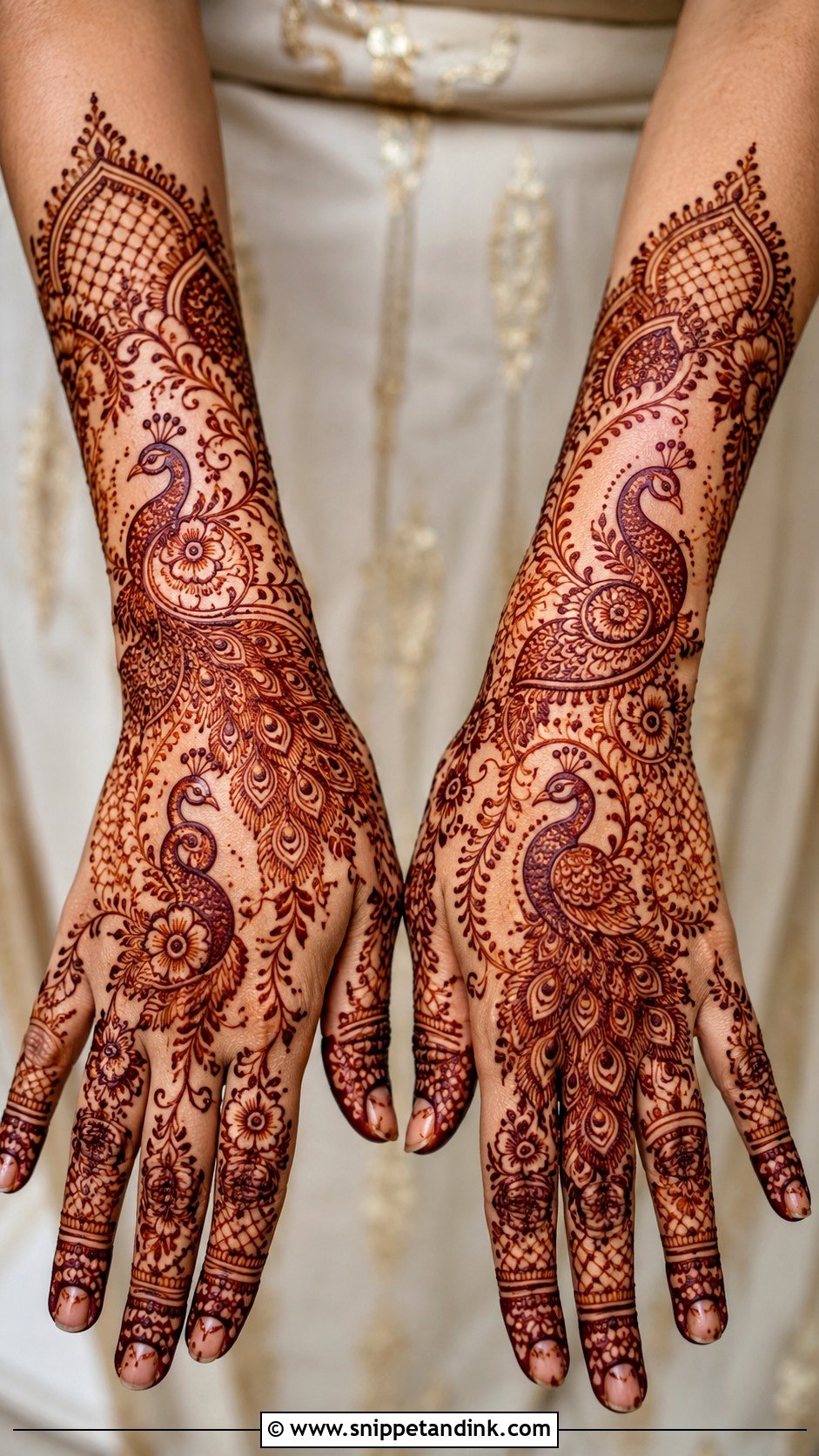
Peacocks give bridal hands a royal feel and carry an old association with grace and celebration. One large bird on the palm, wrist or back hand, with feathers spreading into paisleys, jaali and vines, reads far better than several small ones. I draw the neck and body first so the curve is right, then let the feathers fill whatever space the hand allows. Feather strokes on the fingers carry the theme. It sits naturally with silk sarees and gold jewelry.
9. Indian Lotus Mehndi Design
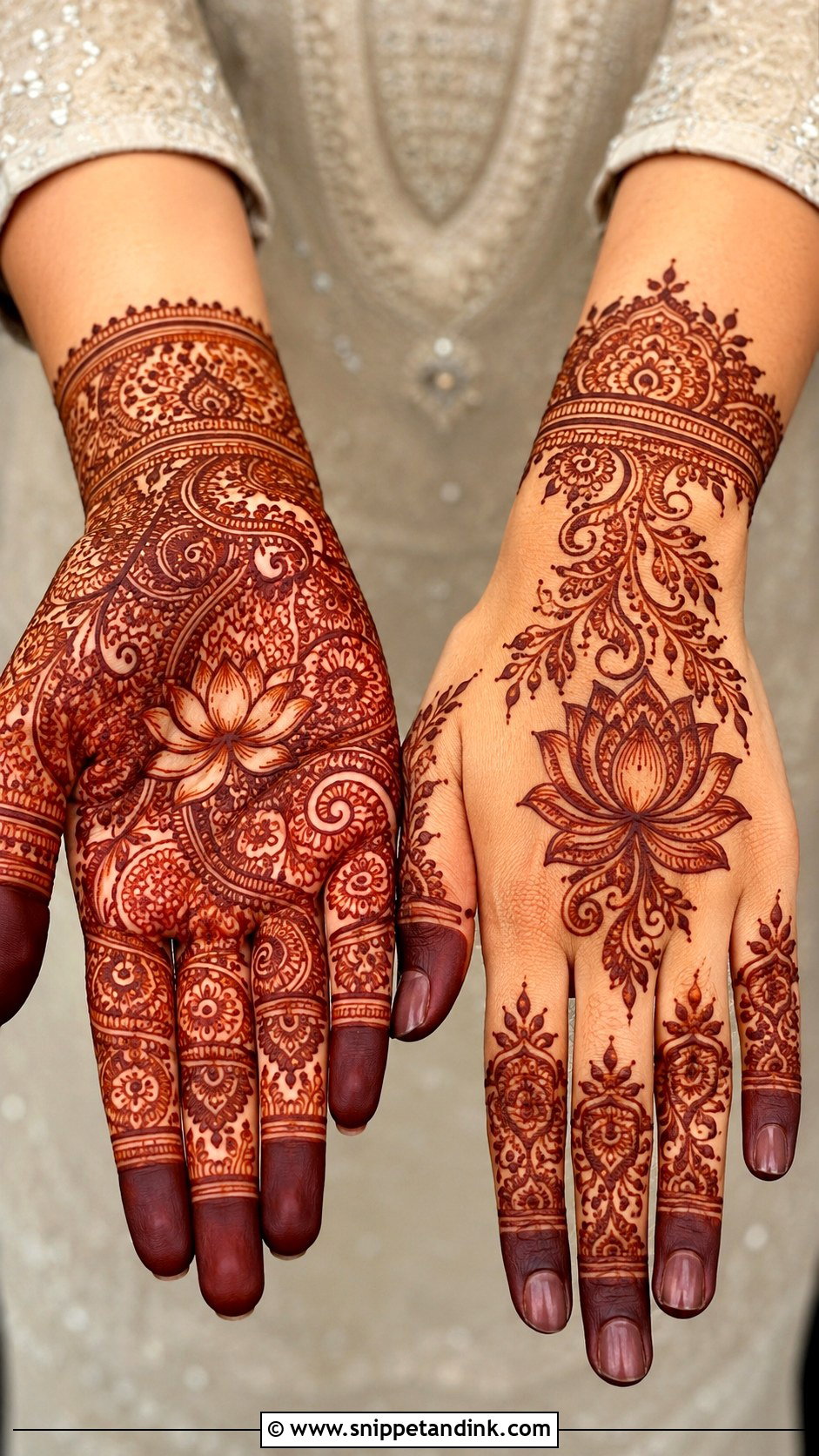
Lotus designs put an open bloom in the palm center, on a wrist cuff, or as a trail across the back of the hand. The fine lines inside the petals give it its Indian character. My main tip: leave a little space between petals. Once the stain darkens, petals that touch merge into one blob and the flower loses its shape. It pairs well with mandalas and temple borders.
10. Indian Jaali Mehndi Design
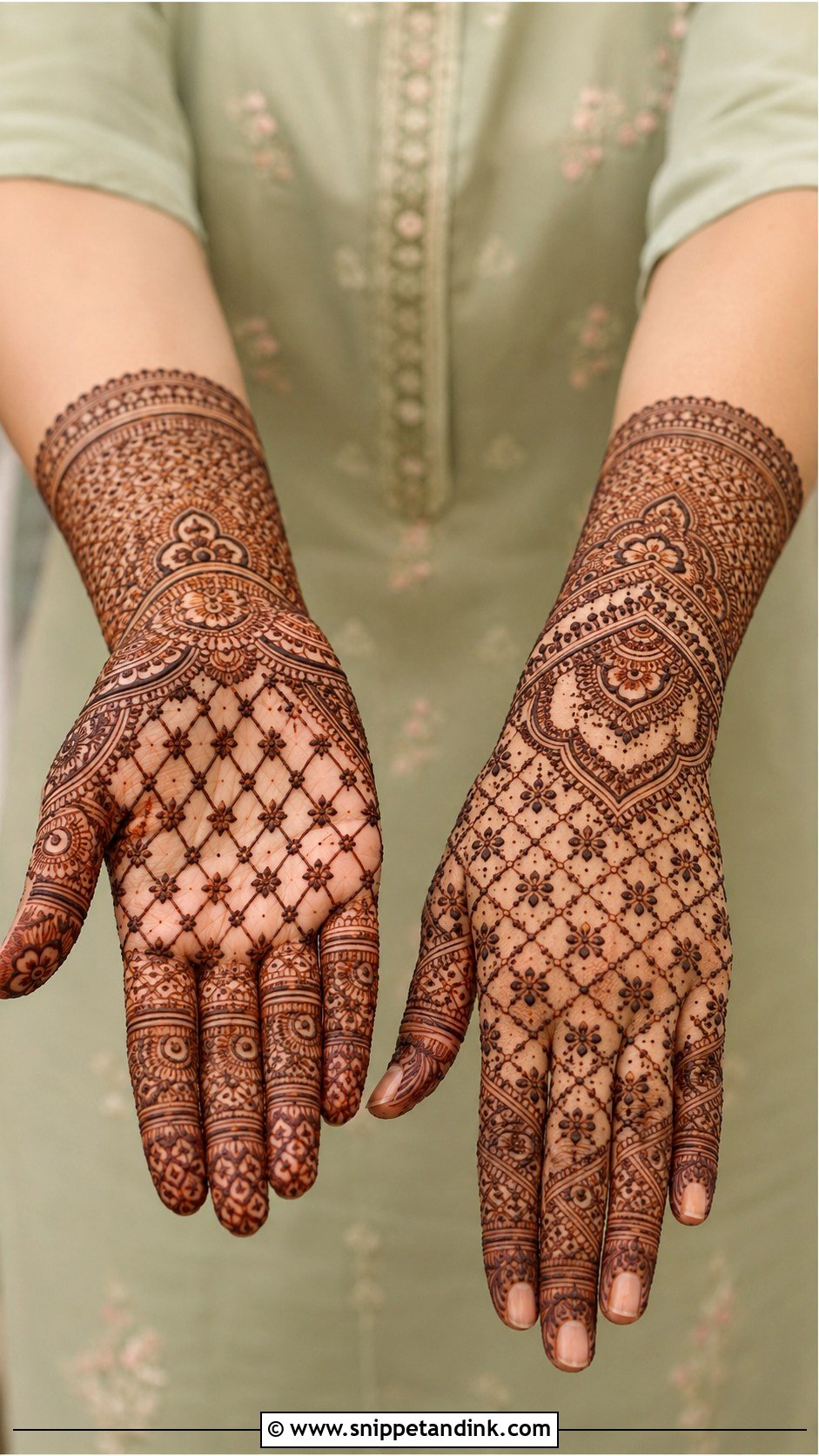
Jaali is net work: a grid of diamonds, squares or curved cells, each filled with a dot, flower or tiny diamond. It gives an embroidered, textile look that shows best in close up photos. The grid size is the decision that matters most. Too tight and it fills in as the stain develops; medium mesh stays crisp. I often keep jaali to one section and let paisleys and florals balance the rest.
11. Indian Dulha Dulhan Mehndi Design
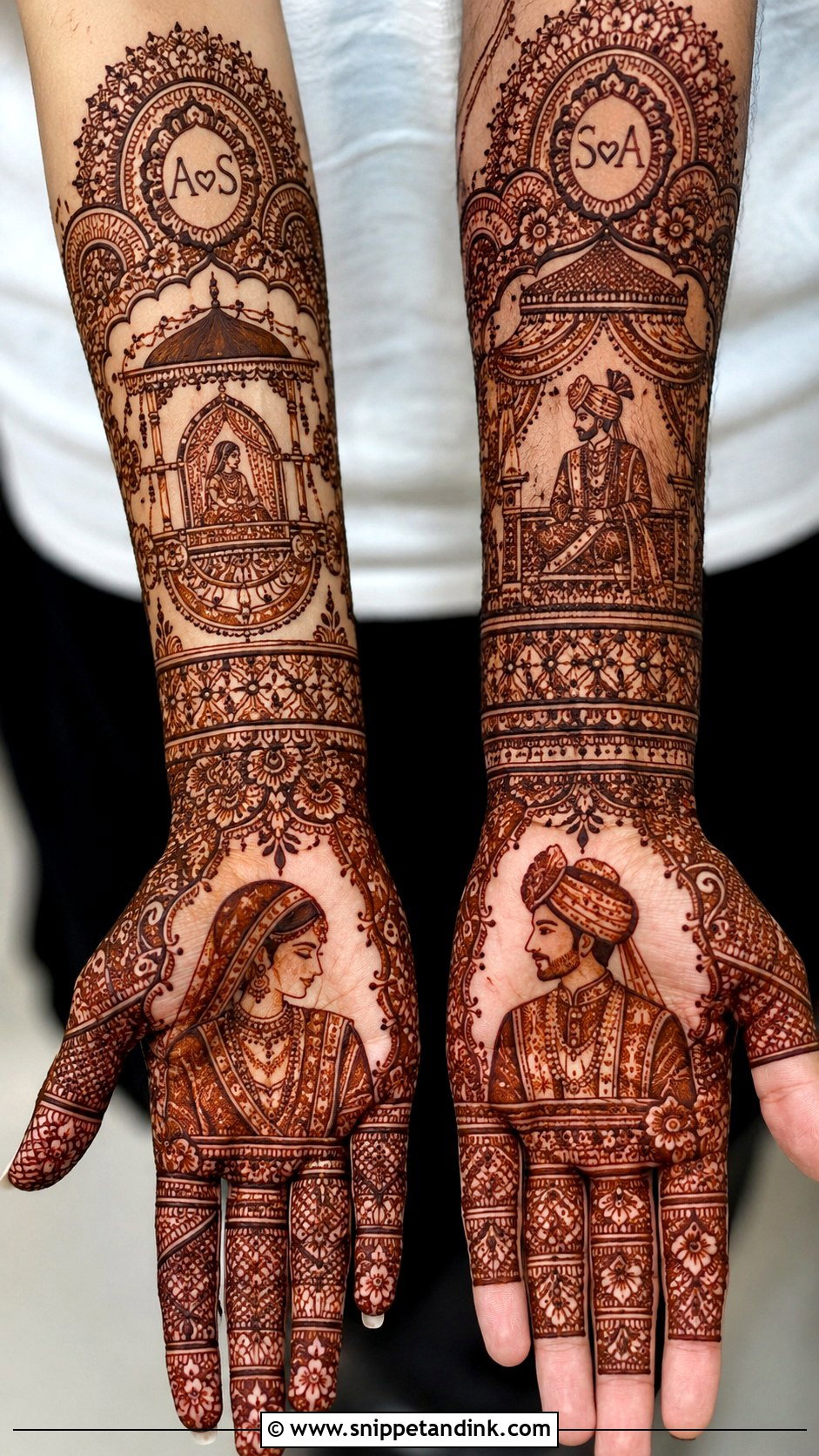
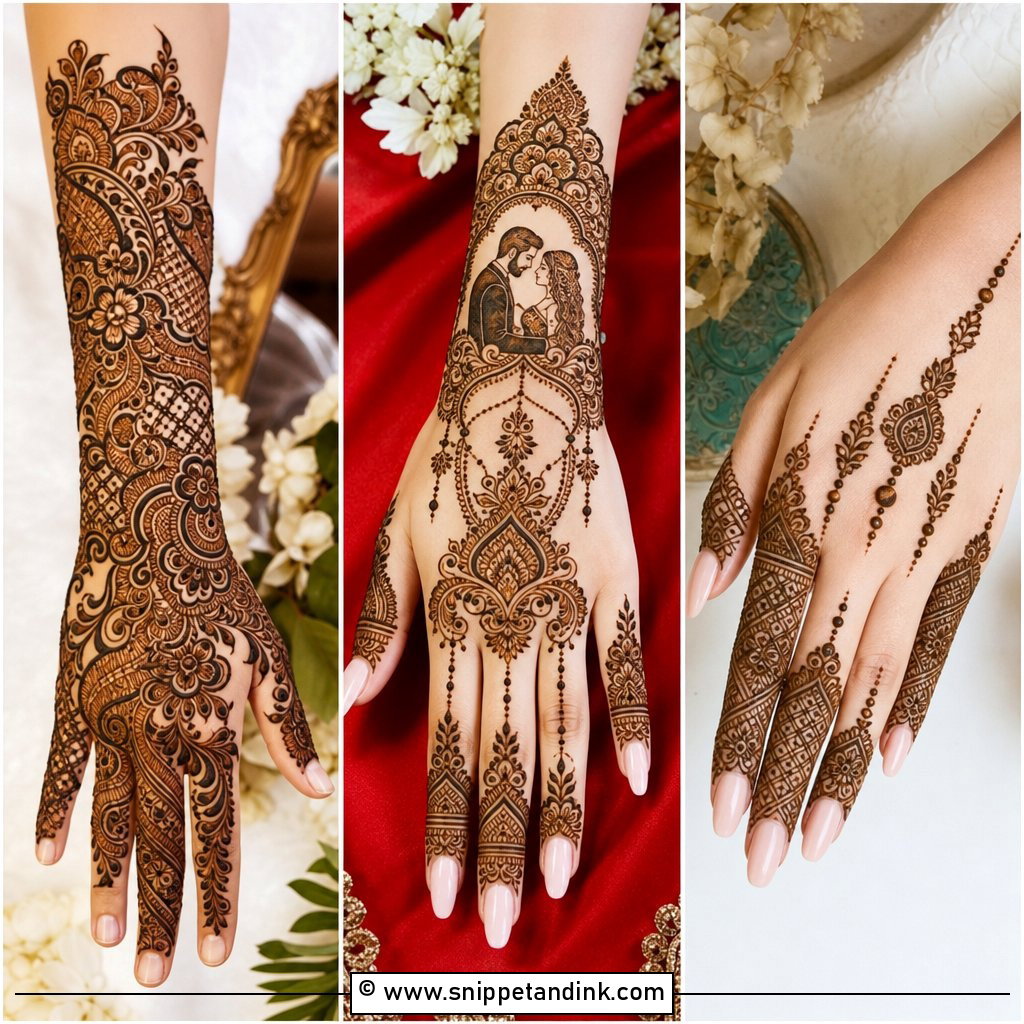
A dulha dulhan mehndi design puts the bride on one palm and the groom on the other, framed by mandalas, a doli, wedding bells and borders that often run up the forearms. Faces are the hardest part of all mehndi work; a tiny wobble changes an expression, so book an artist whose portrait work you have seen in person, not just in edited photos. Initials or the date can sit at the wrist. Plan for a longer sitting.
12. Indian Rajasthani Mehndi Design
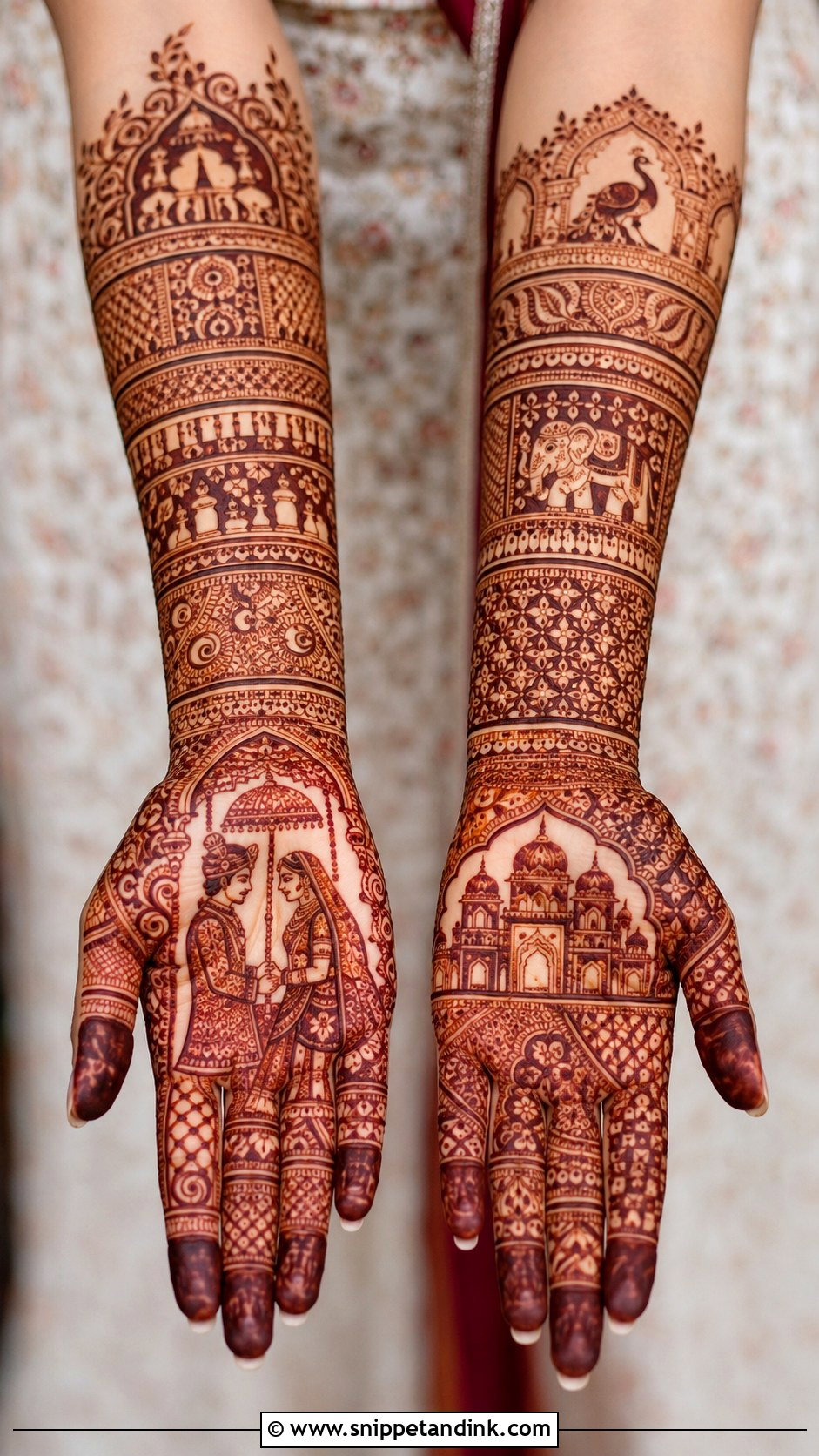
Rajasthani mehndi is storytelling work: bride-groom figures, elephants, peacocks, palaces and doli motifs set among paisleys and fine mesh, with very little empty skin. Front and back hands usually match in richness, and the forearms carry long panels. It is slow, detailed work and one of the most traditional bridal choices. I leave a slightly calmer band near the wrist so the choora and bangles have room to stand out.
13. Indian Marwari Mehndi Design
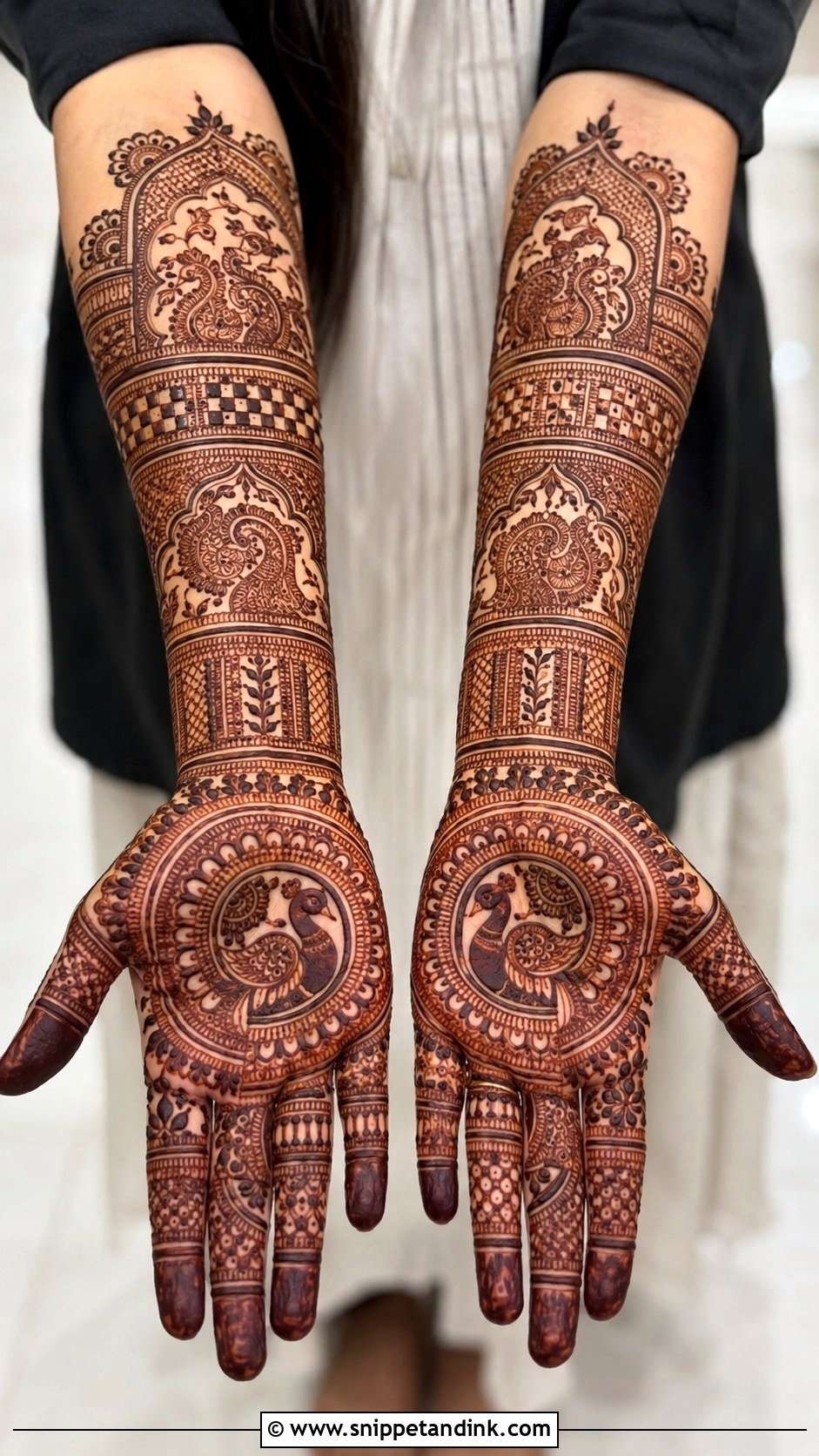
Marwari designs are dense but very organized, and the bold outlines are why they read so well. Larger motifs, paisleys, mandalas and peacocks, are outlined firmly, then filled with tiny checks, petals and curls. That structure keeps the design clear even after the stain turns deep brown. Mirror image layouts on both hands are common, so I work section by section across both hands to keep them matched. It sits well with bandhani and heavy jewelry.
14. Indian Gujarati Mehndi Design
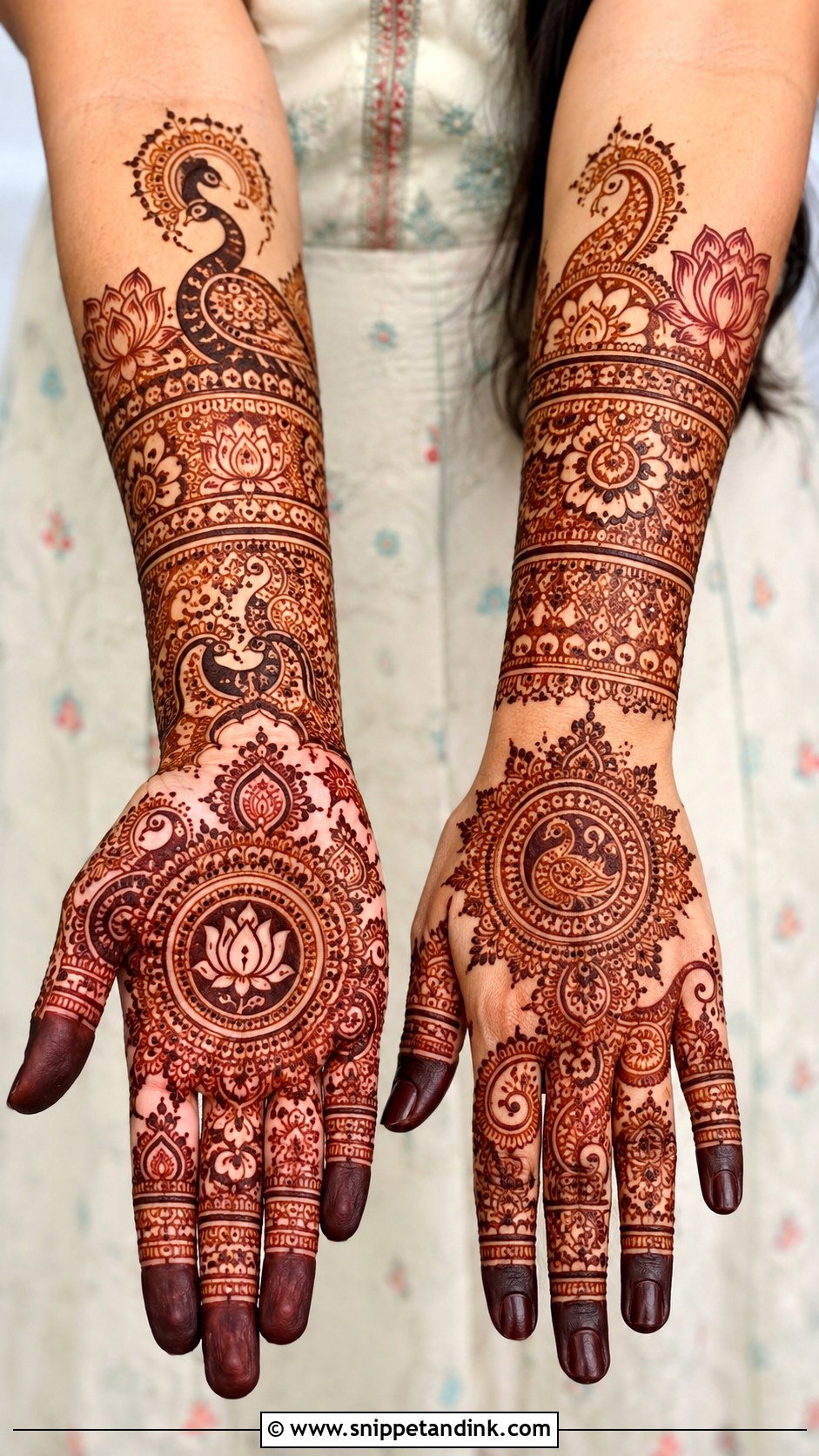
Gujarati designs often include peacocks, mango paisleys, lotus, and circular garba inspired motifs that echo Navratri. I like to draw the wrist like a kada, a solid ornamental band, which makes the hand look dressed even before jewelry. Coverage can be medium or full. Because Navratri means days of dancing and clapping, I warn people that palm designs applied right before the festival can wear at the fingertips and heel of the hand within a few nights.



15. Indian Punjabi Mehndi Design
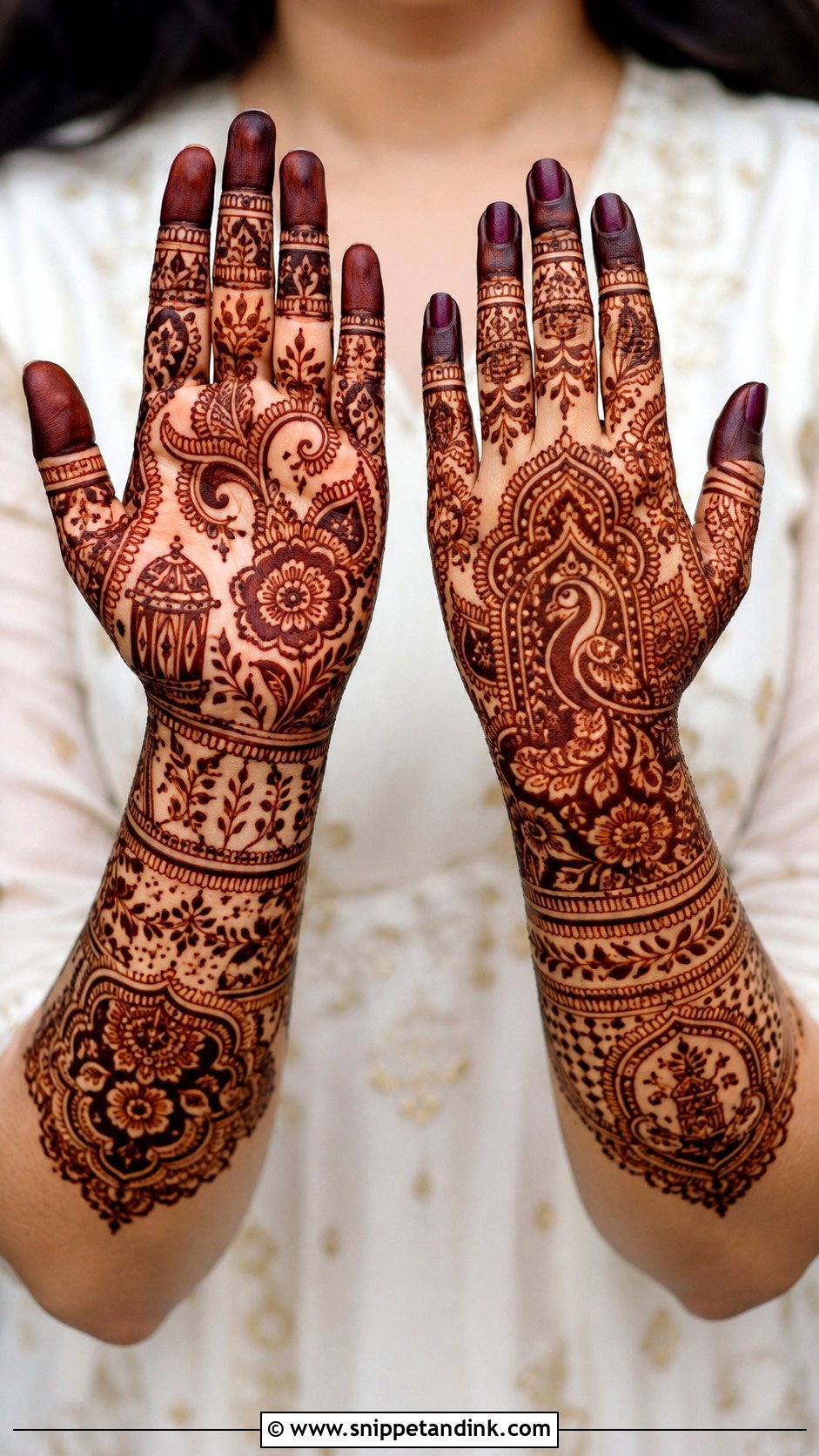
Punjabi mehndi is bold: large florals, paisleys, leafy trails, sometimes dhol or peacock details, with well filled fingers and strong outlines. Brides go for full coverage; guests often choose a medium palm or back hand. It suits bright suits and phulkari dupattas. Since the choora is worn from the wedding morning and stays on for weeks, I keep the forearm design’s top edge just above where the choora will sit so it frames the bangles.
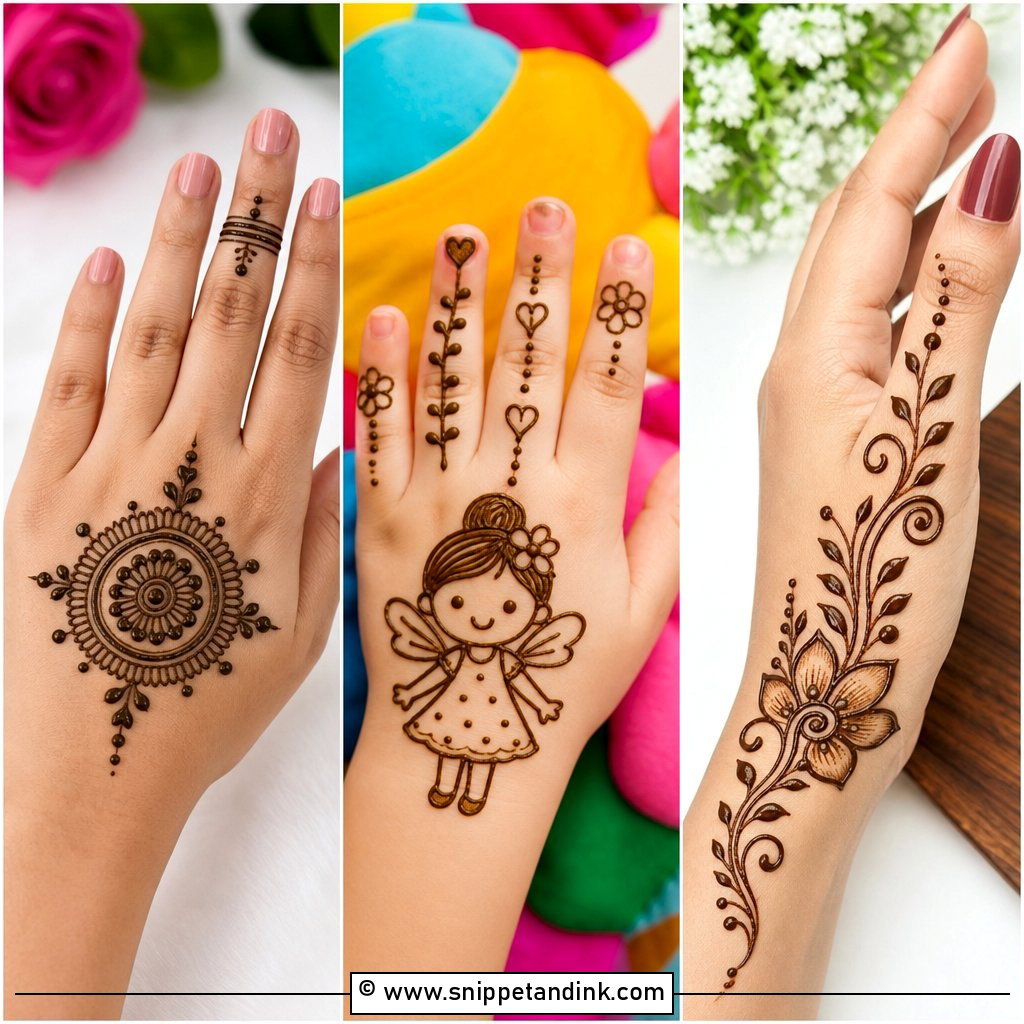
16. Indian Minimal Mehndi Design
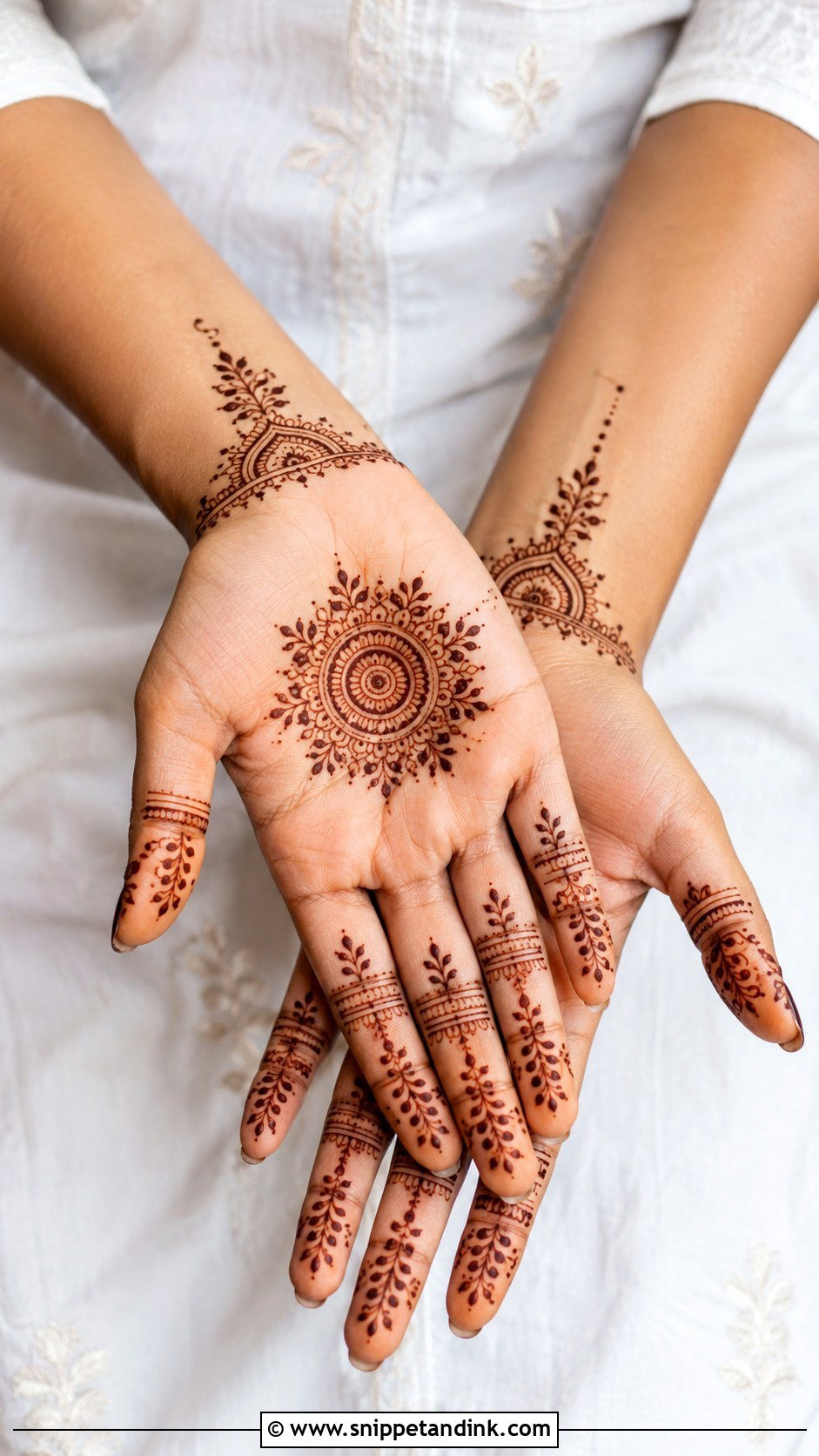
Indian style does not need heavy coverage. A small palm mandala, slim finger bands, a few florals and a delicate wrist border look polished and still traditional. I suggest it for office friendly celebrations, small pujas and anyone trying mehndi for the first time. It takes less than half an hour per hand. The risk with minimal work is that each line is exposed, so a skilled hand and a fine cone tip matter more than with dense designs.
17. Indian Floral Mehndi Design
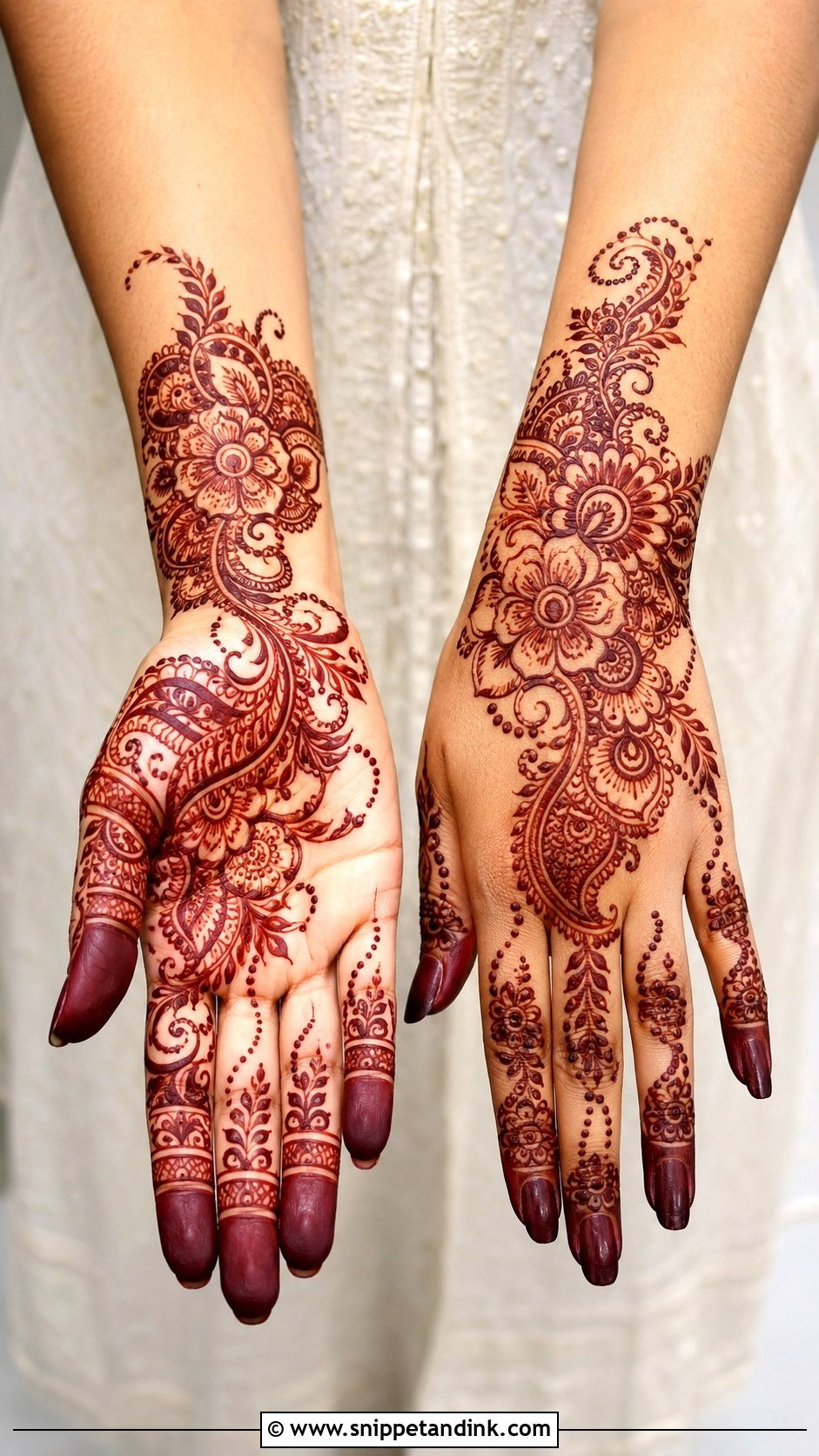
Floral designs fill the palm with blooms and leafy vines, or run a trail from the wrist to the index finger on the back of the hand. Big flowers look modern and clear; tiny petals look more traditional. On their own, open flowers can look flat, so I add Indian fillers between some petals and leave others plain. That contrast gives depth. It adapts to simple, medium or heavy coverage.
18. Indian Rose Mehndi Design
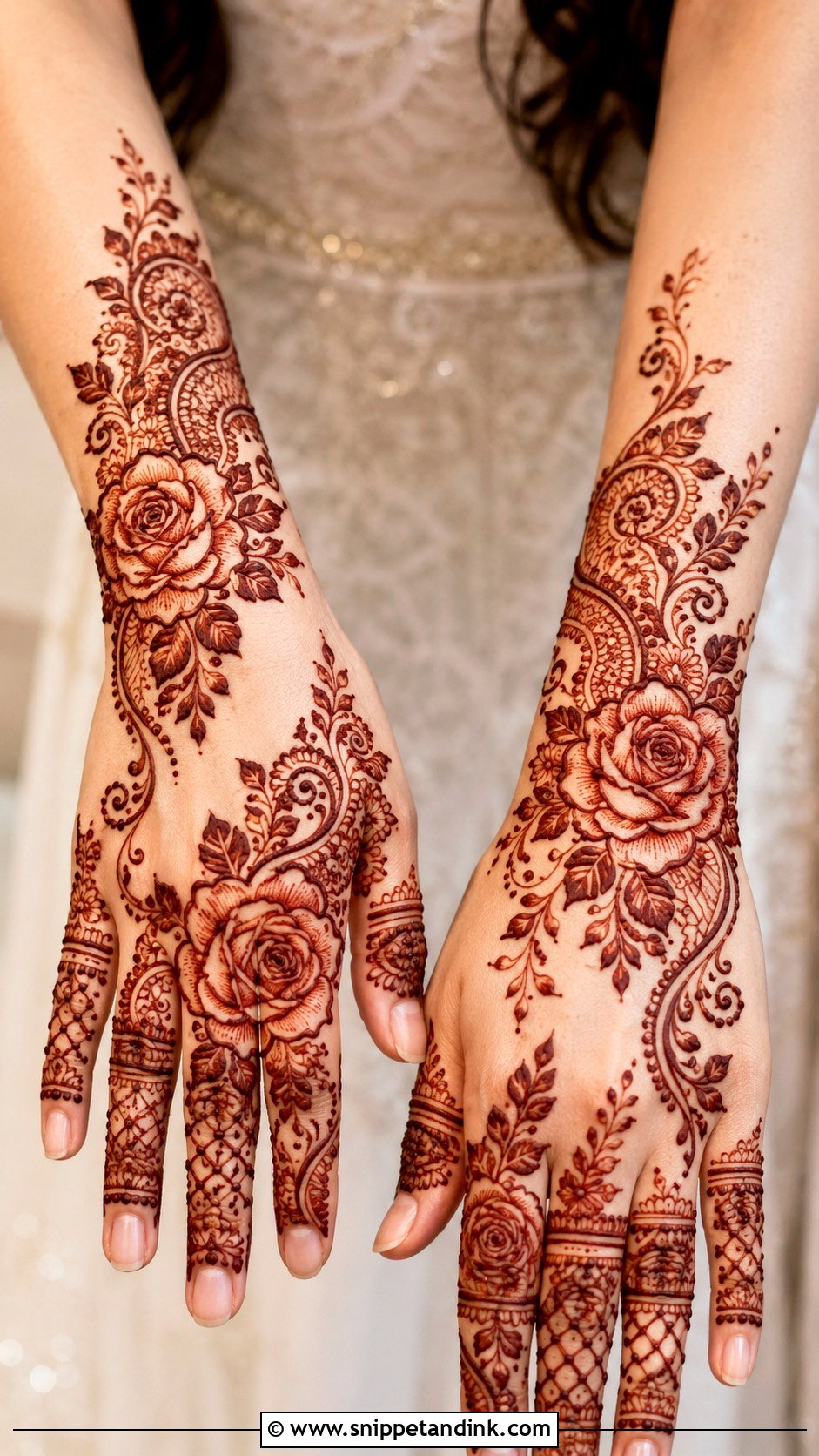
Roses in Indian mehndi rely on shading to look full. I outline each petal boldly, then shade lightly from the base so the center looks deeper. The roses sit across the palm, wrist or back hand with leaves and curved vines, and rosebuds can decorate the fingers. Heavy shading darkens too much once stained, so I keep it light. It suits engagements, sangeet nights and wedding guests.
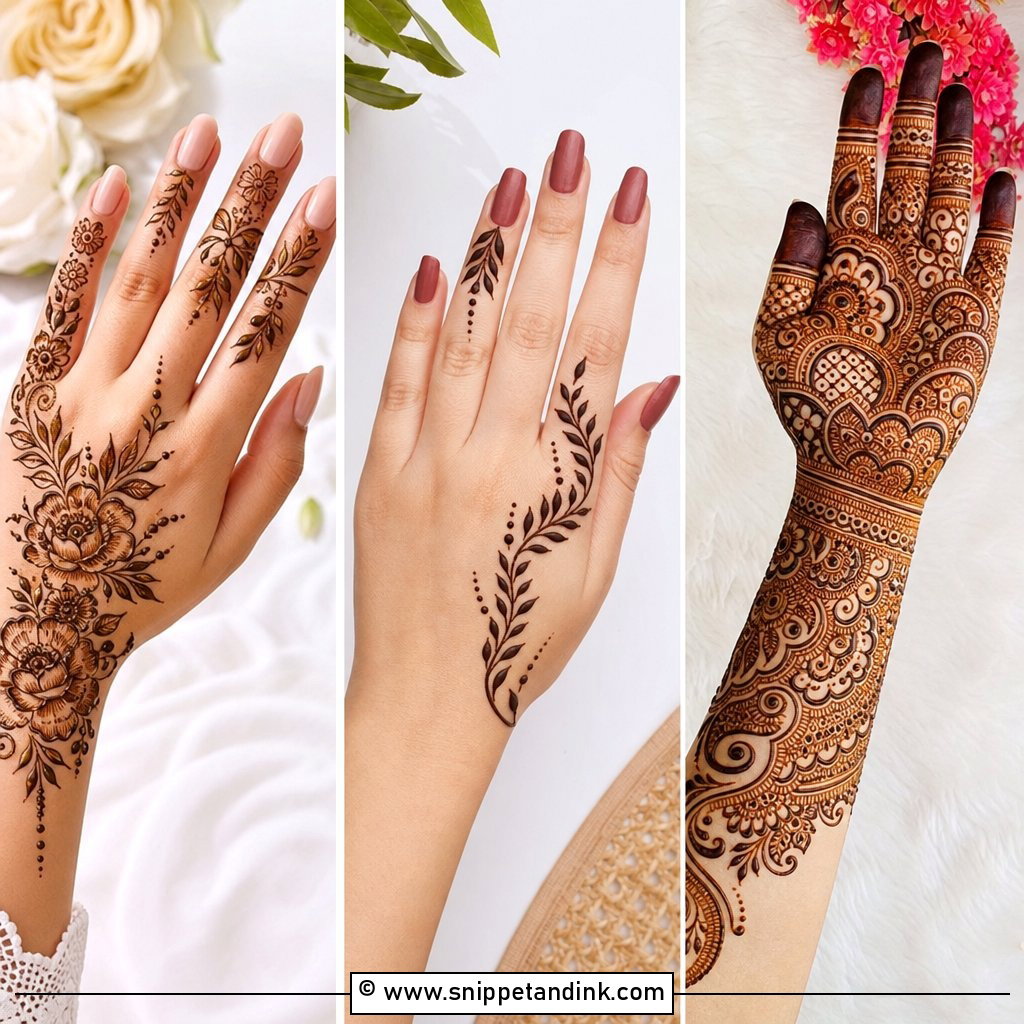
19. Indian Finger Mehndi Design
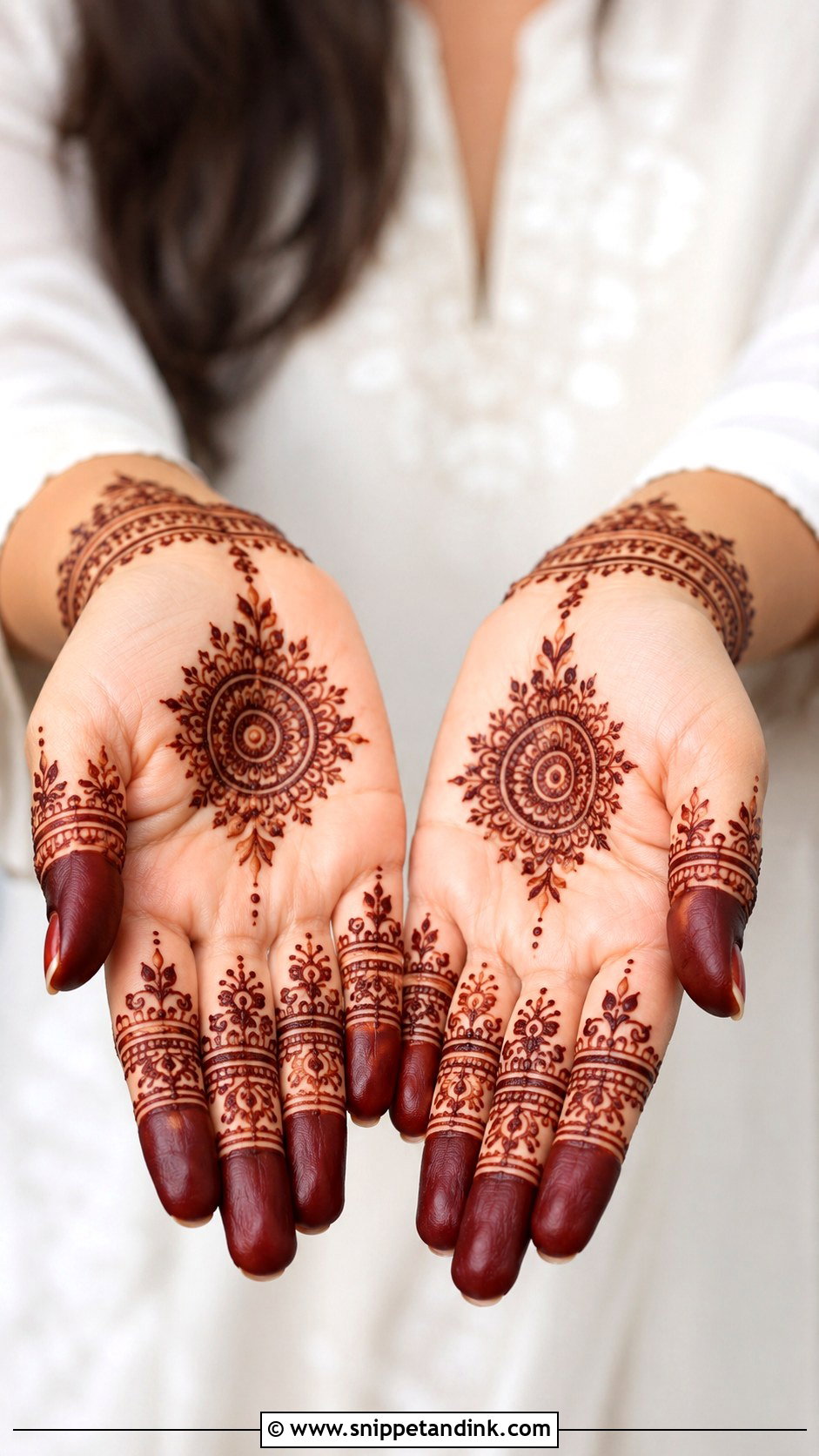
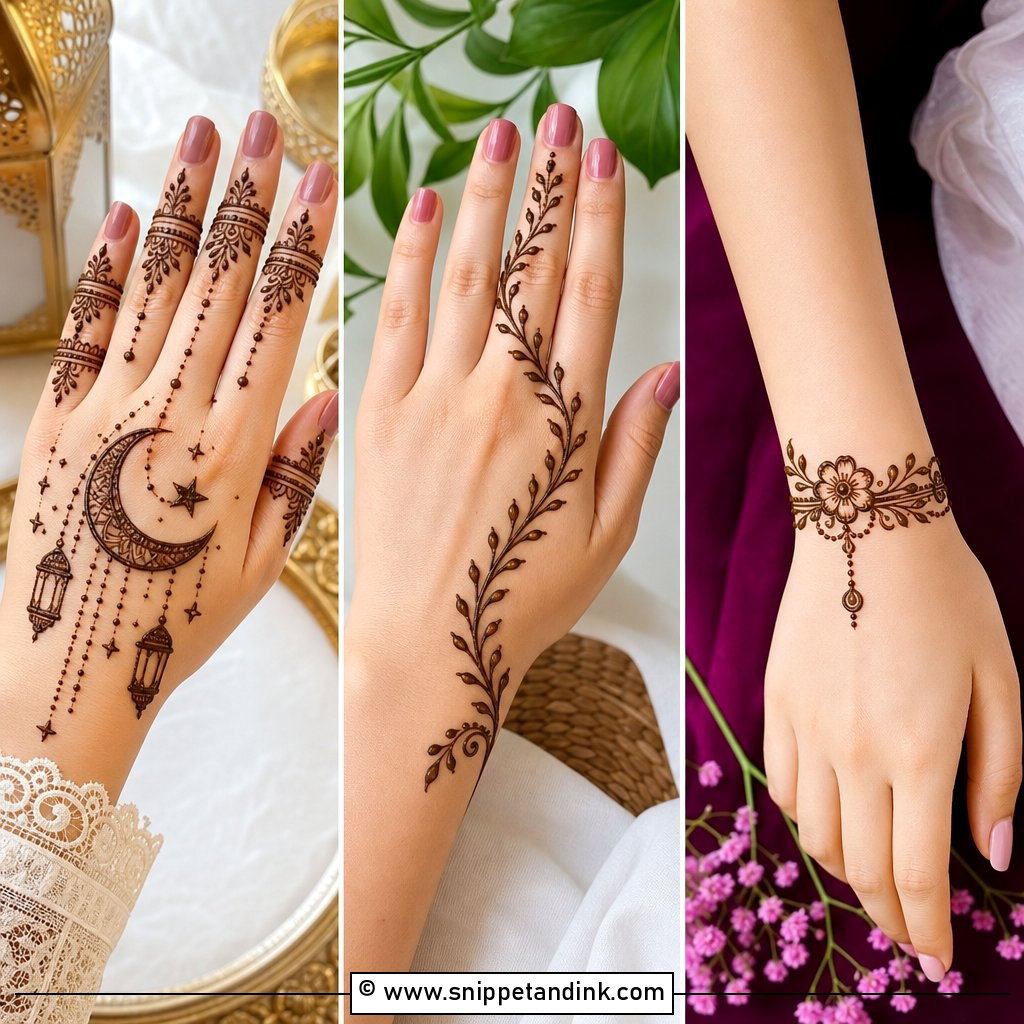
Finger focused designs fill the fingertips, add ring style bands and leafy knuckle details, and keep the rest of the hand light. Fingertips take a strong stain, so this style looks rich for little effort, and it dries quickly. Paisley tips and small lotus petals make it more Indian. The downside: fingers wash and work constantly, so the edges fade first, often within a week.

20. Indian Bracelet Mehndi Design
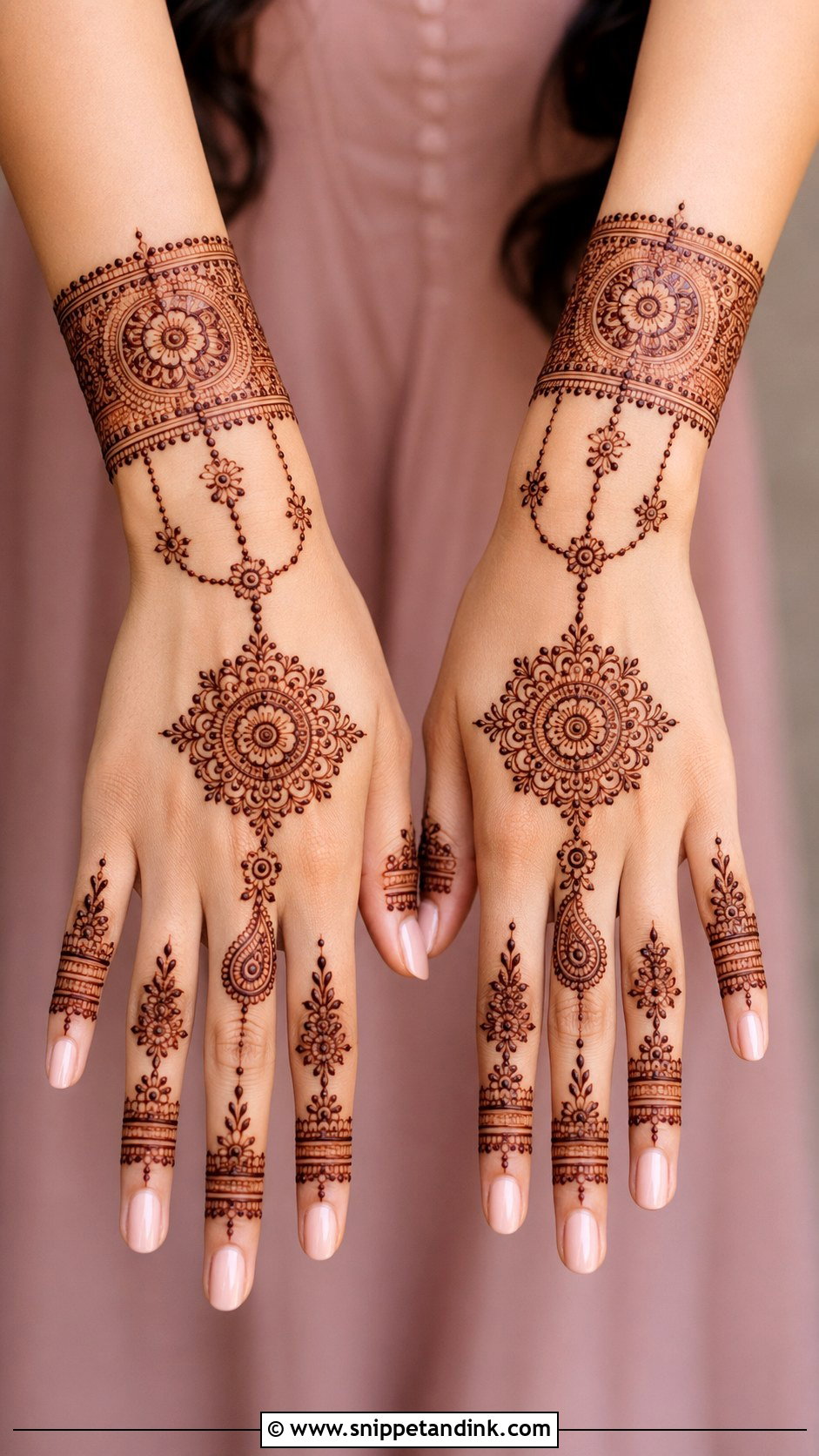
Bracelet designs put a decorated cuff around the wrist with chains, florals or a mandala running onto the back of the hand and fingers. The cuff can be thin and simple or wide and detailed for a wedding. I measure it against the client’s actual bangles before drawing so the henna cuff sits just beside them, not hidden underneath. A strong central motif on the back of the hand holds it together.
21. Indian Bangle Mehndi Design
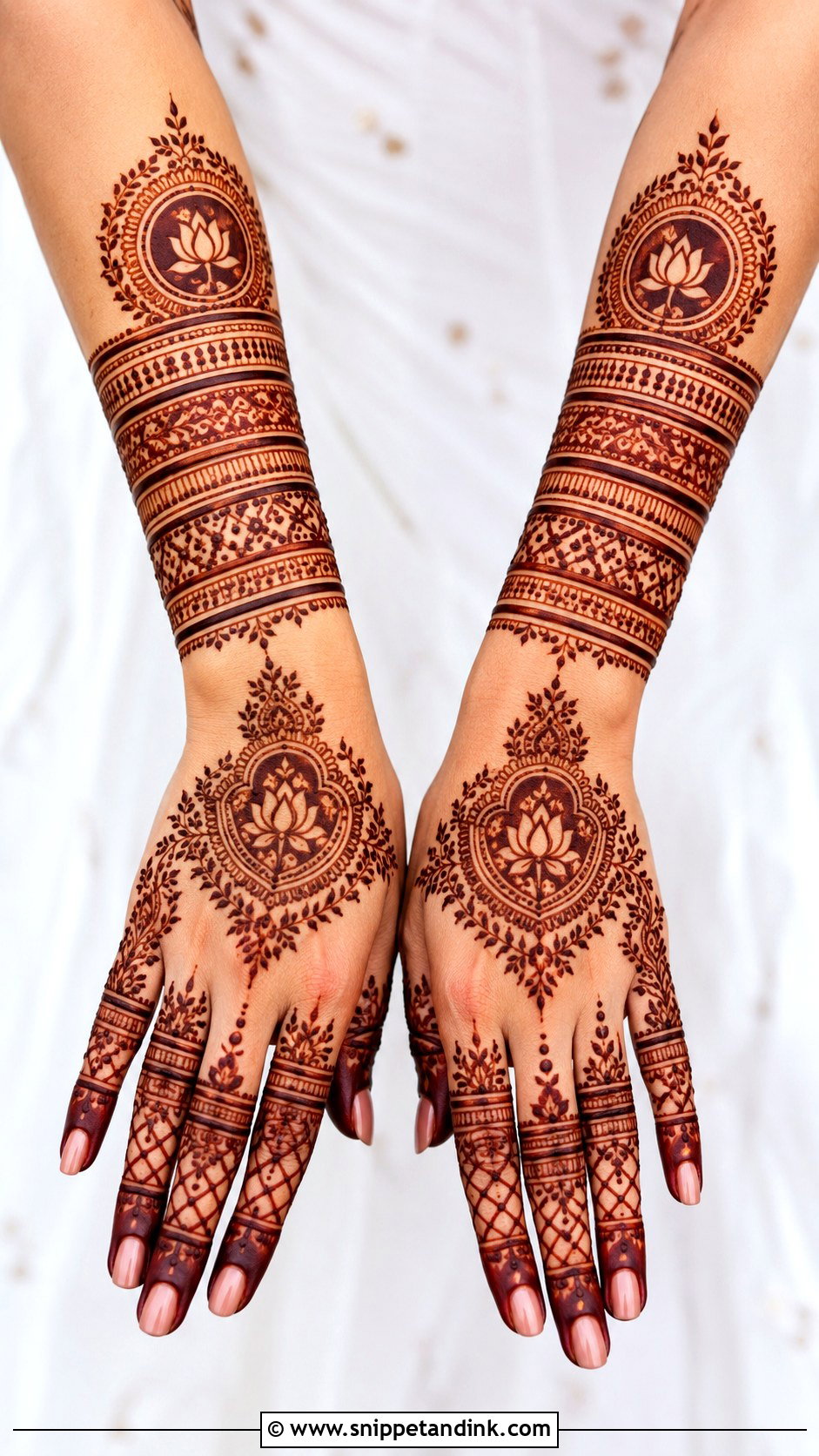
Bangle mehndi stacks several circular bands around the wrist, each filled with dots, checks, flowers or fine lines, so it looks like layered jewelry. The palm or back hand then carries a mandala, jaali patch or floral trail. The common mistake is bands that run into each other; I leave a clean gap between each one so they read as separate bangles. Under real glass or gold bangles it adds a lovely depth.
22. Indian Engagement Mehndi Design
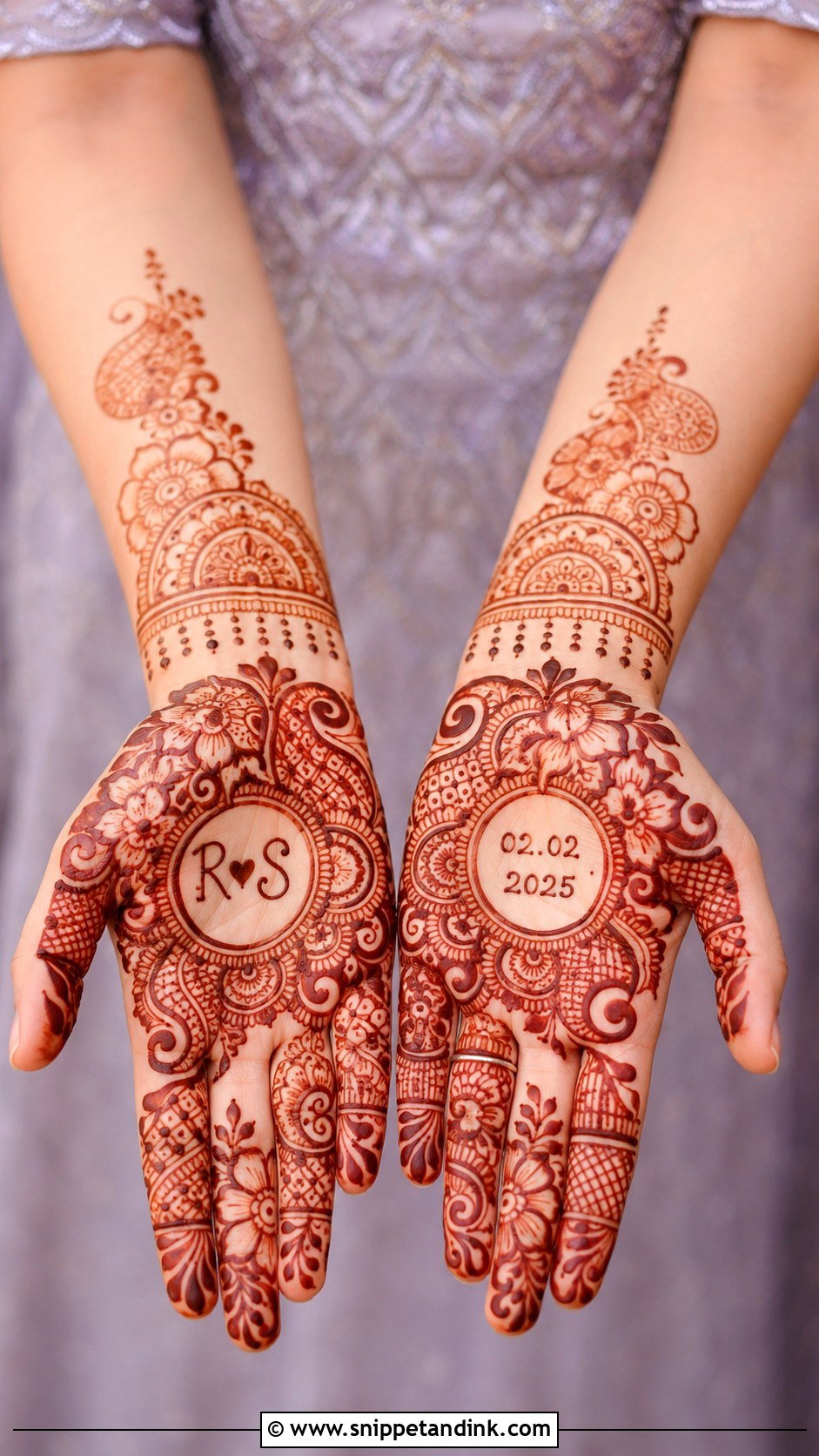
Engagement mehndi sits between guest and bridal: floral trails, ring motifs, initials, small mandalas and soft paisley borders, covering the front hand to the wrist or the back hand in a jewelry pattern. The ring finger is the focus of the day, so I keep that finger lighter and place initials near the wrist rather than right beside the ring. Medium coverage works with gowns, sarees and lehengas.
23. Indian Karwa Chauth Mehndi Design
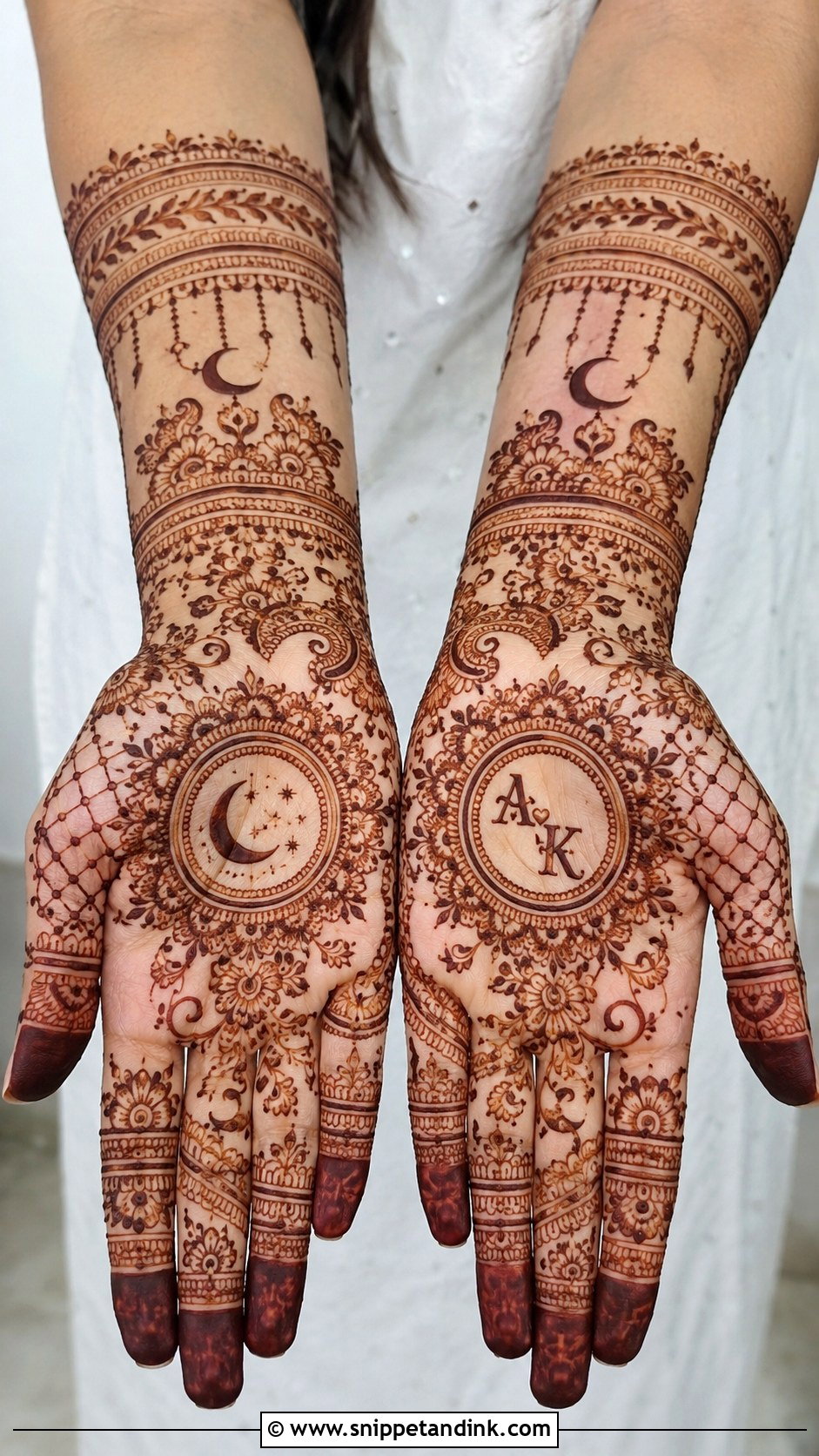
Karwa Chauth mehndi is usually applied the day before the fast, so the stain is at its best for the evening rituals. A full Indian Karwa Chauth mehndi design often includes a palm mandala, sieve inspired circles, moon motifs, paisleys and filled fingertips, sometimes with couple initials. On this day many women are fasting and tired by the afternoon, so I avoid very long sittings close to the fast. Detailed palm and light wrist is my usual compromise.
24. Indian Diwali Mehndi Design
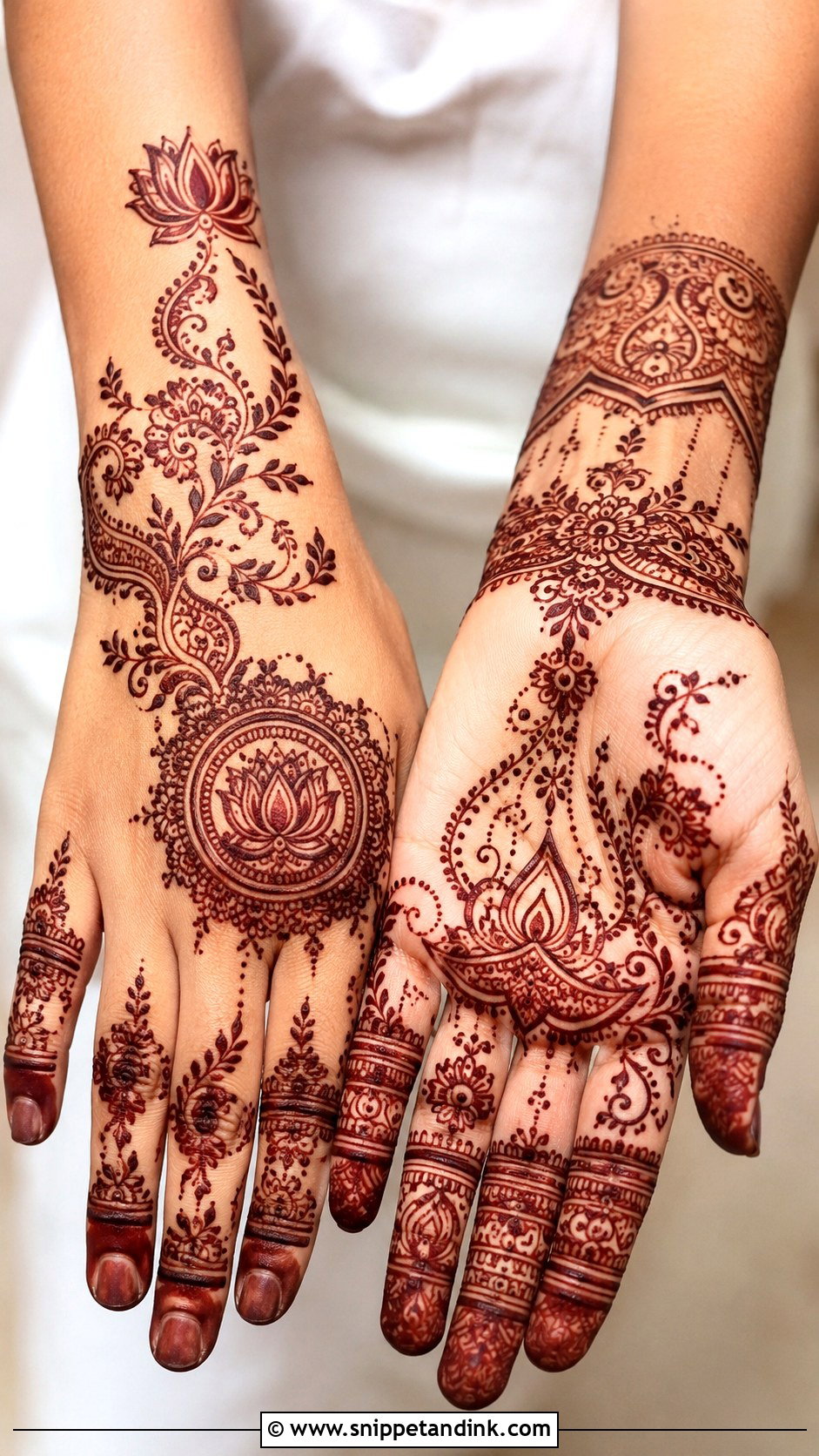
Diwali is busy: cooking, cleaning, rangoli, guests. That is why medium coverage suits most people better than full hands. Lotus, diyas, mandalas and paisleys across the palm or back hand, plus a wrist cuff or finger bands, look festive without hours of sitting. Apply it two evenings before the main day if you can; the stain will be darker, and you will not be handling food with fresh paste.


25. Indian Eid Mehndi Design
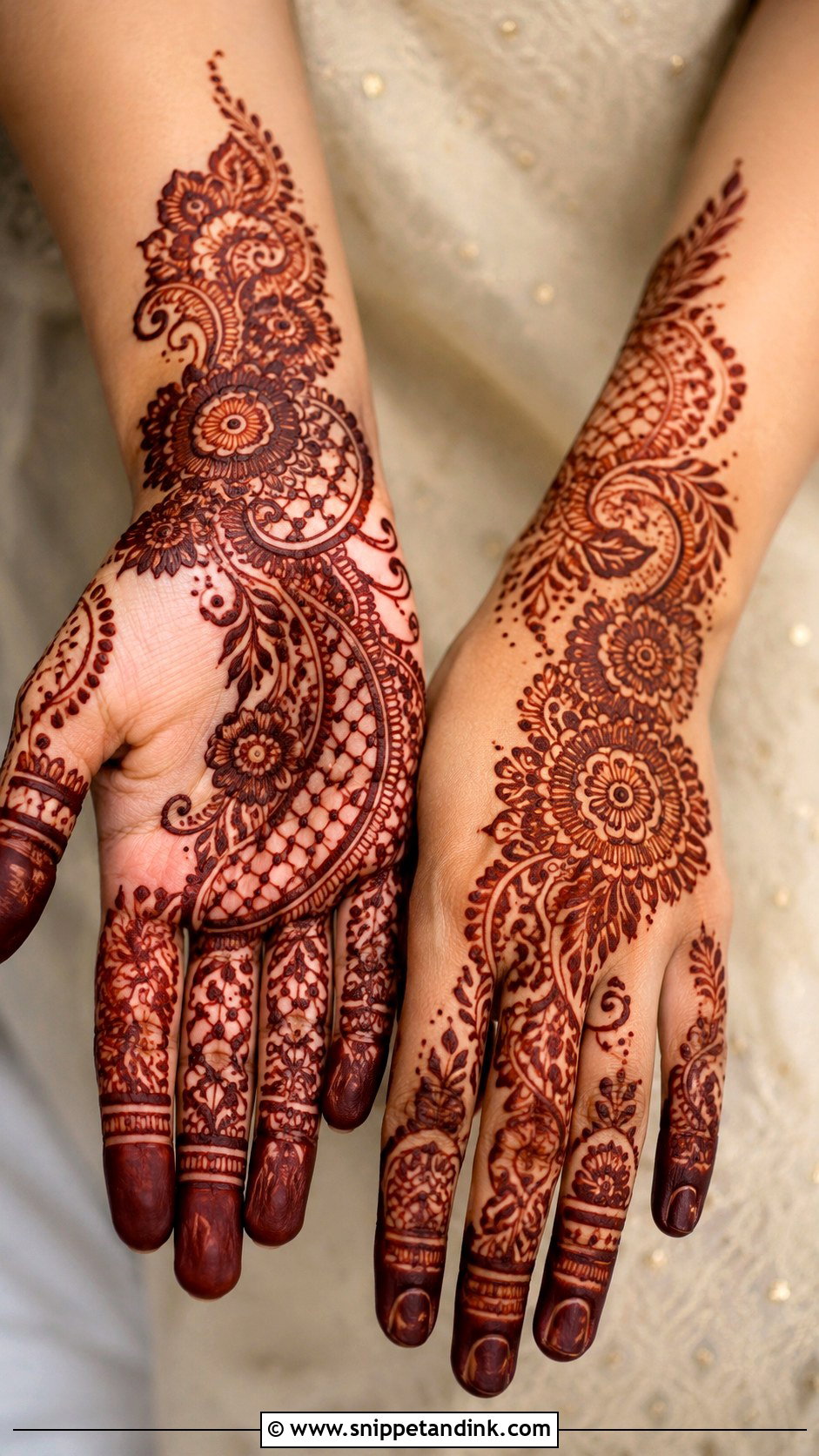
For Eid, most Indian clients choose an Indo Arabic layout: paisleys, floral trails, jaali sections and decorated fingers on the front hand, back hand or both. Open space keeps it graceful. Chaand Raat, the night before Eid, is the traditional time to apply it, and the paste should be scraped off before morning prayers. Keep the finger work balanced, as close up photos of hands holding sweets and gifts are common.
26. Indian Festival Mehndi Design
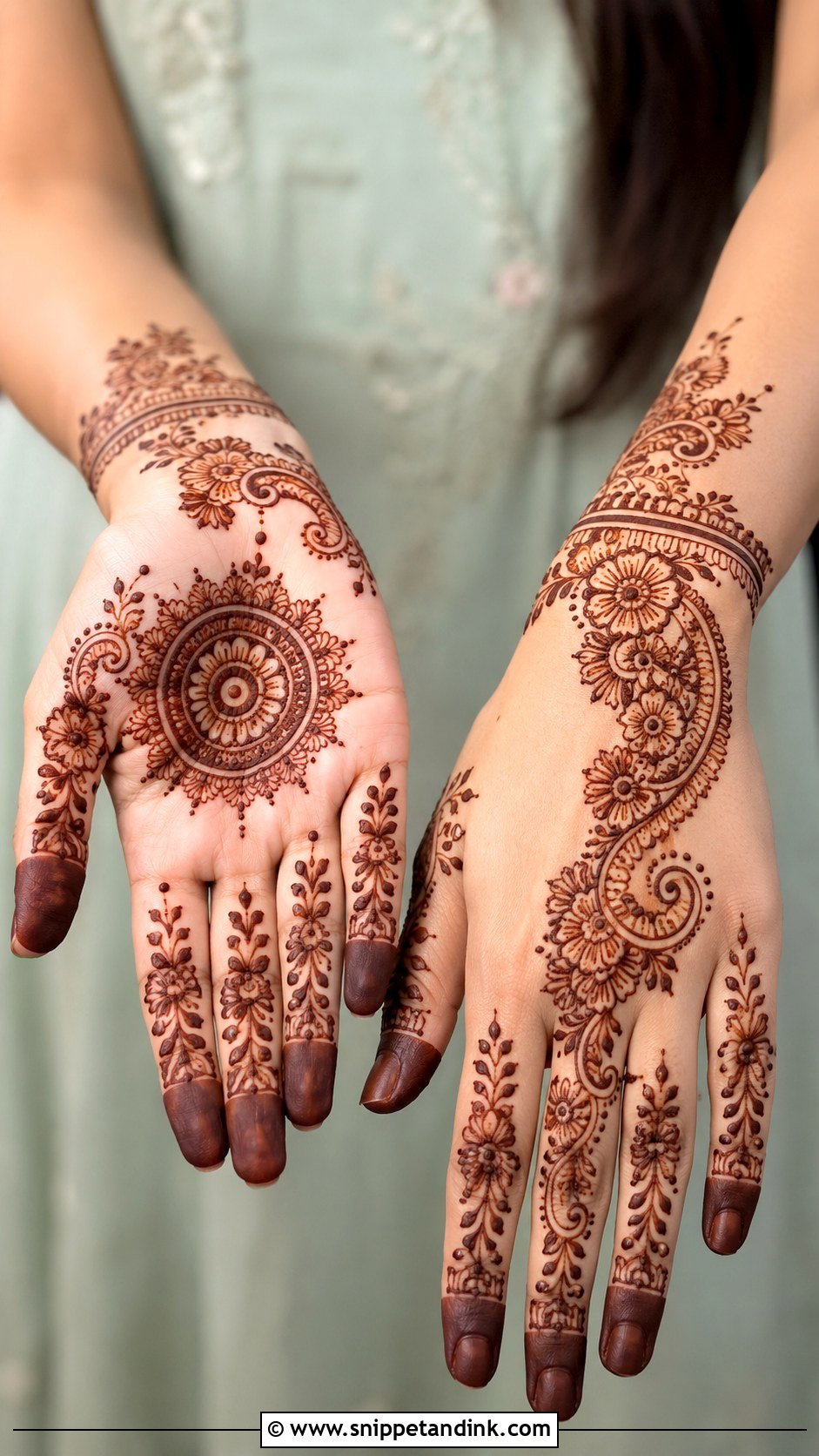
A general festival design has to work for Navratri, Raksha Bandhan, Teej, Diwali or a family pooja, so it needs to be adjustable. A palm mandala, floral corners, paisley trails, leafy fingers and a light cuff can be stripped back if time is short or filled with jaali if you have an hour. I use this layout when a whole family queues for mehndi, since it suits grandmothers and teenagers alike.
27. Indian Wedding Guest Mehndi Design
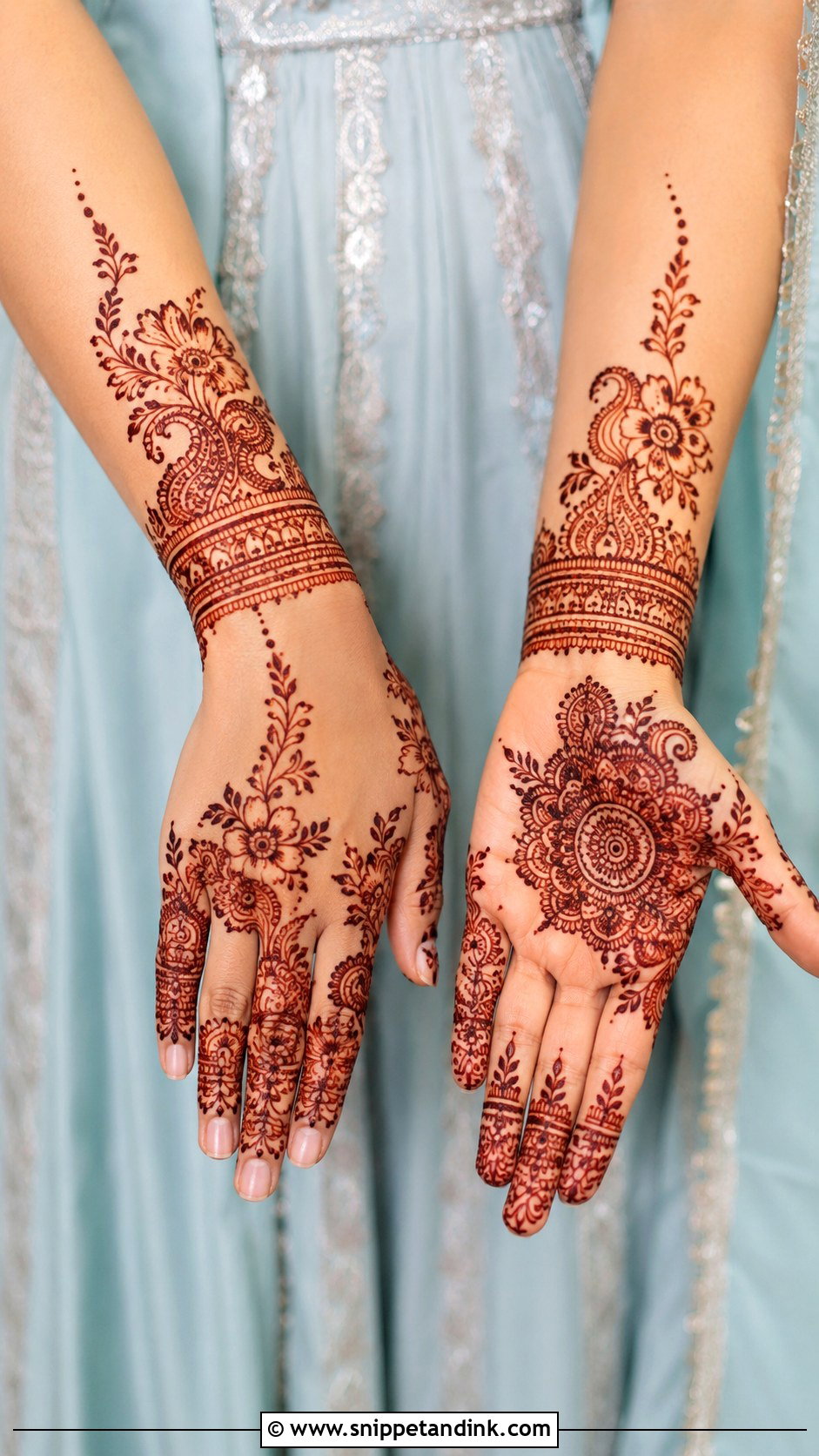
Guest mehndi should look festive without competing with the bride. Florals, paisleys and mandalas on the palm and wrist, with a bracelet or diagonal trail on the back hand, sit in that middle ground. I advise guests to skip portrait figures and dense forearm work unless they are close family. Medium coverage is easy to wear and will not take the artist’s time away from the bride on a busy mehndi night.
28. Indian Bridesmaid Mehndi Design
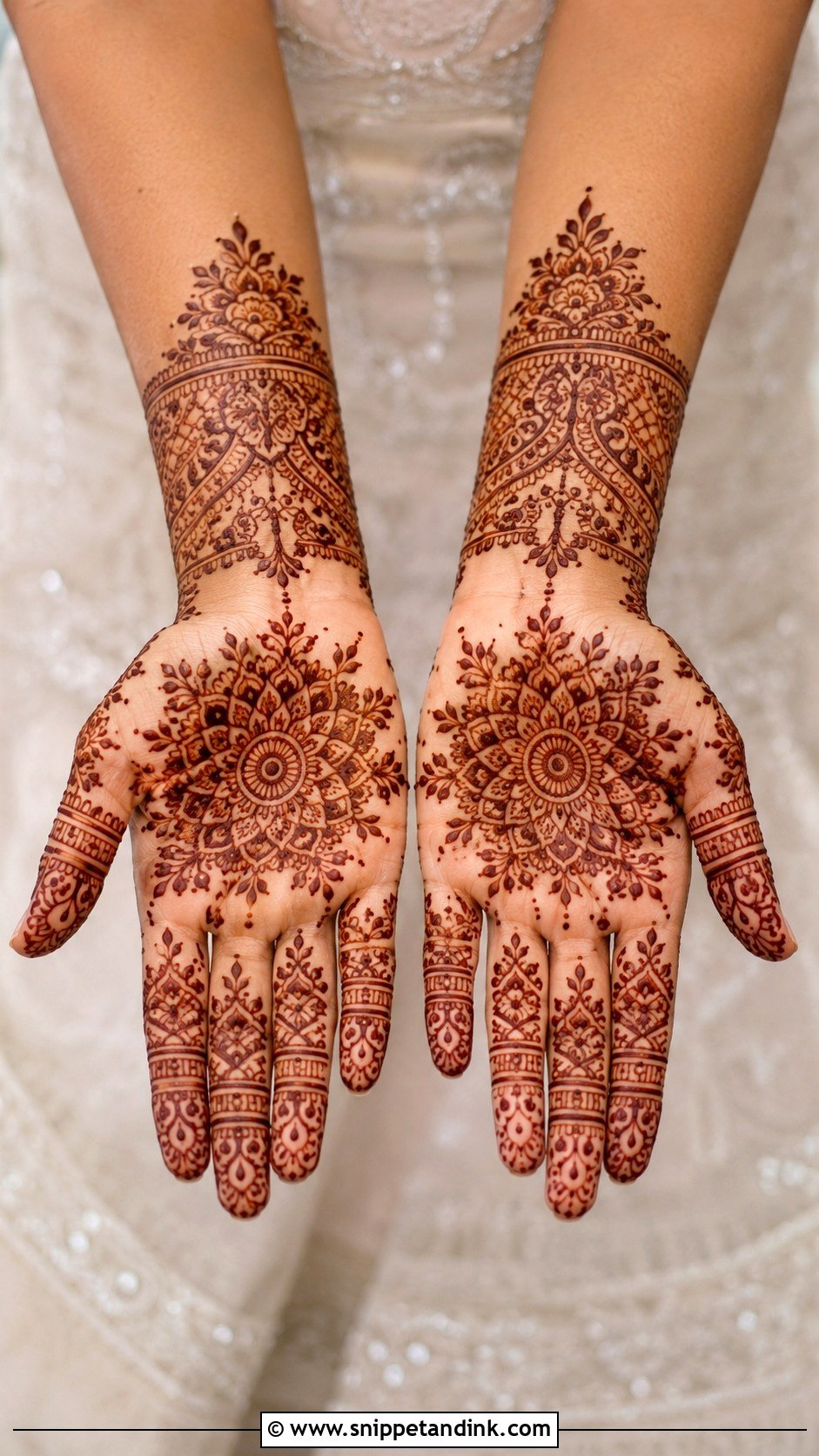
Bridesmaids should look coordinated and more detailed than guests but clearly lighter than the bride. Matching mandalas on the palms, vines on the back of the hands, wrist cuffs and neat fingers work well. They hold flowers, dupattas and jewelry in photos, so the back hand matters most. A trick I use for groups: the same wrist cuff and finger pattern on everyone, with a different palm center for each, so they match without looking stamped.
29. Indian Modern Mehndi Design
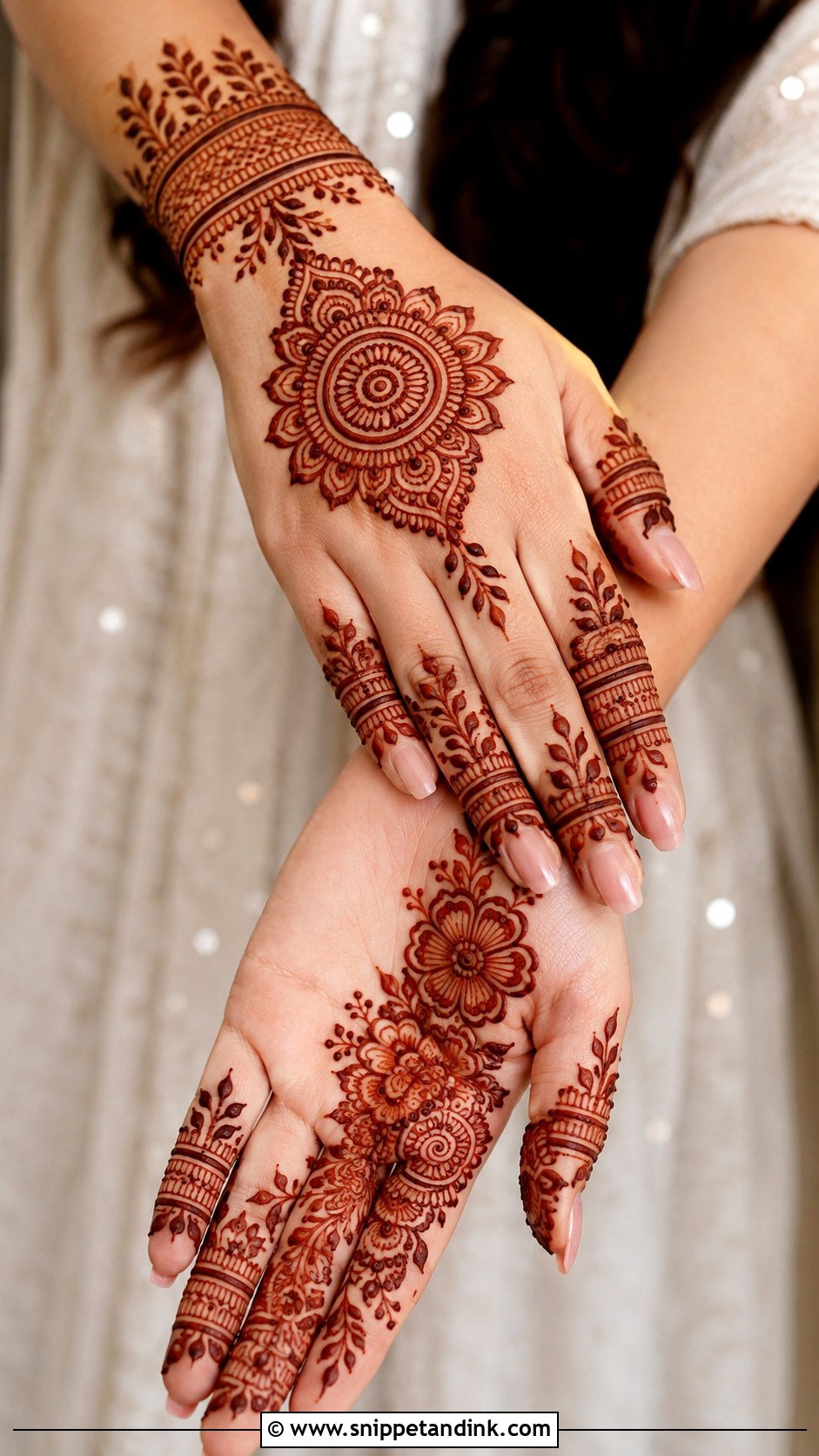
Modern Indian mehndi keeps the old motifs but places them with more space: a bold mandala, a half hand floral trail, a geometric cuff and leafy fingers. It suits younger brides, pre wedding shoots and festival looks. The risk is going too sparse and losing the Indian character. I keep fewer motifs but make each one fully detailed, and pair bold outlines with fine inner work.
30. Indian Shaded Mehndi Design
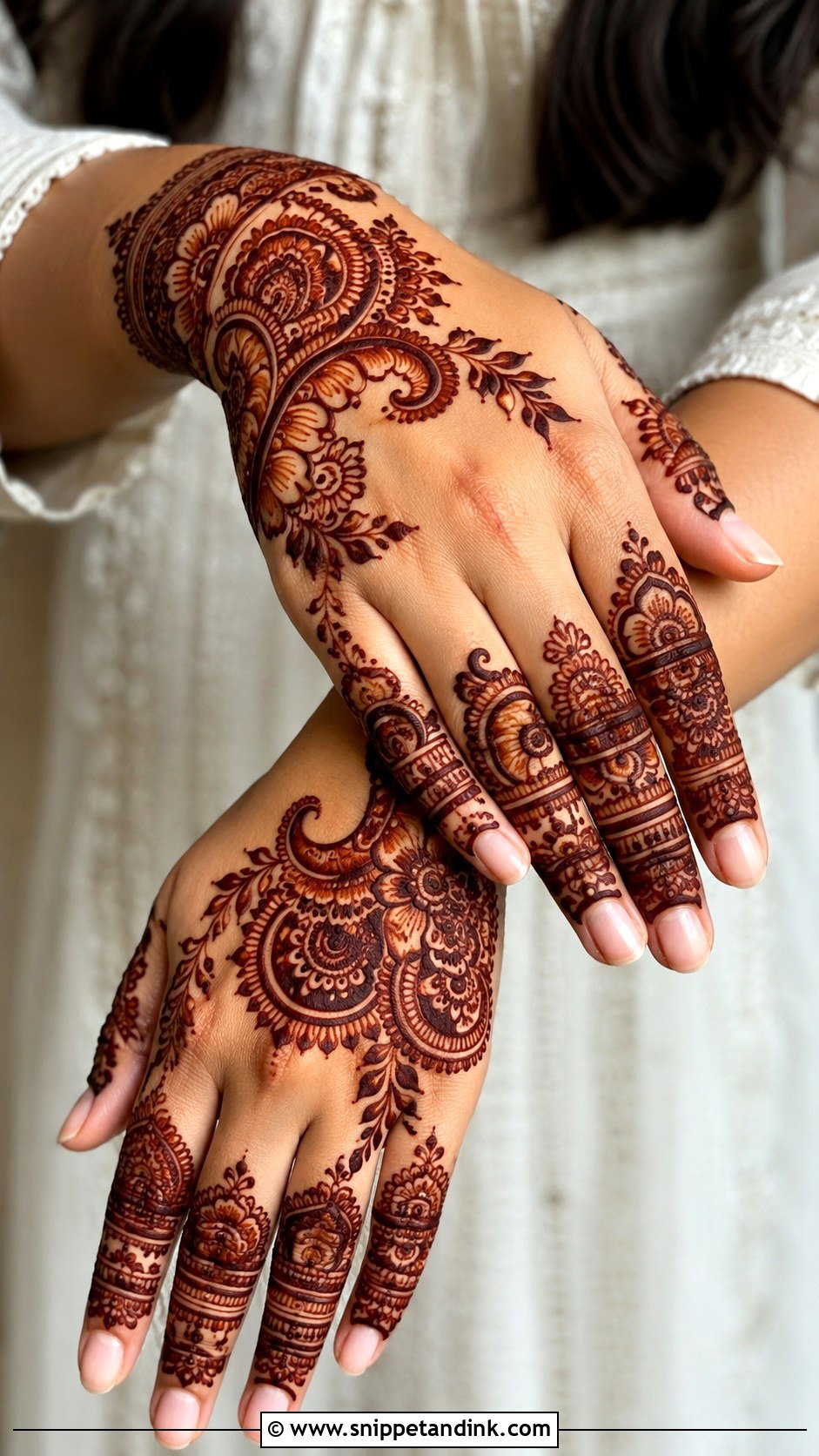
Shading gives mehndi depth without density. Flowers, paisleys and leaves are outlined clearly, then filled with soft strokes using a lighter pressure on the cone. It works on front and back hands and is popular for engagements and Eid. The order matters: I always finish all outlines first, then shade, so the edges stay crisp. Shading done before the outline is set tends to blur once stained.
31. Indian Geometric Mehndi Design
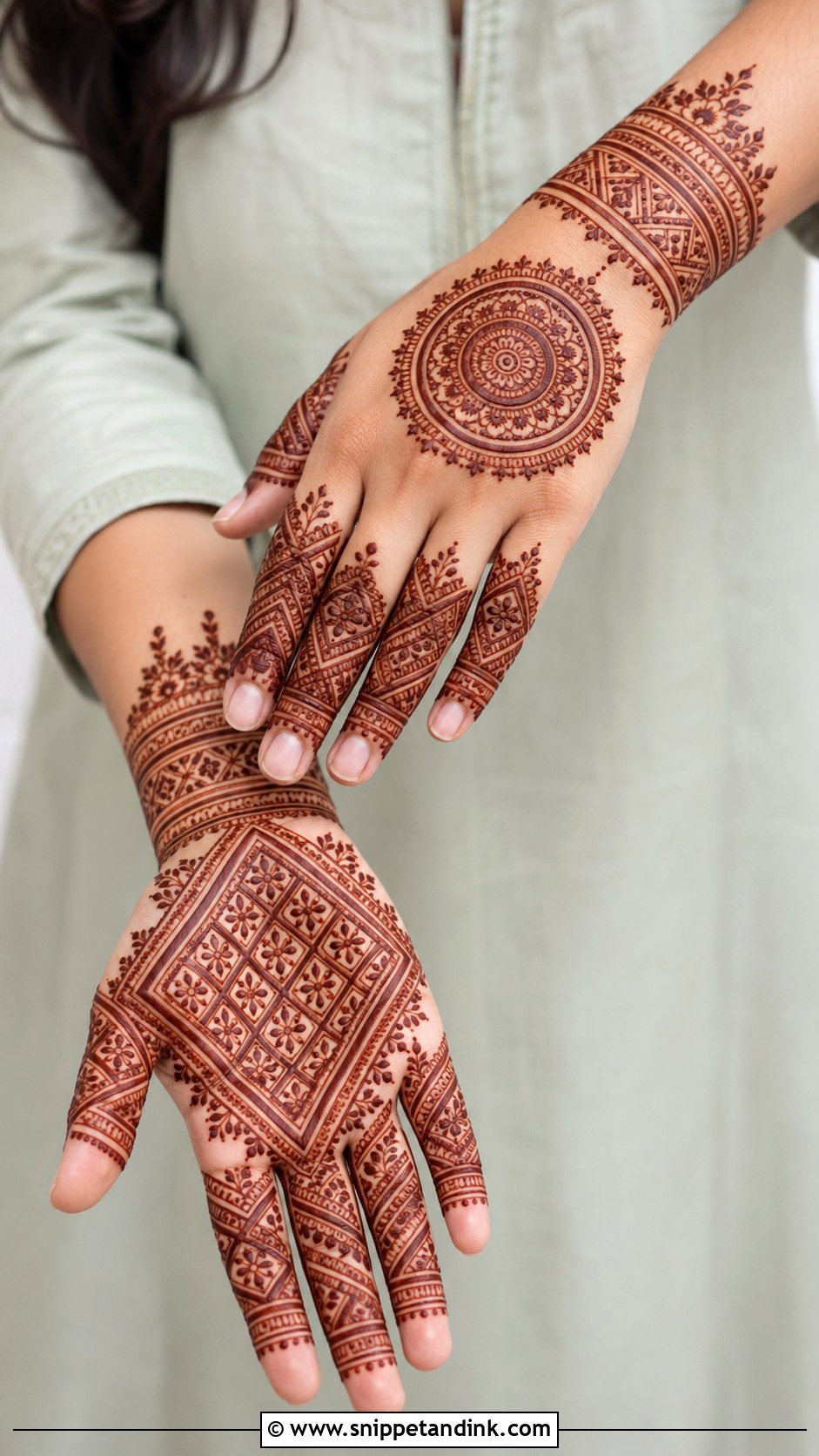
Geometric Indian designs use diamond grids, triangles, chevrons, mandalas and straight line cuffs, softened with a few lotus petals, leaves or dots. They look like embroidery or jewelry on the back of the hand. Precision is everything; one crooked line in a grid catches every eye. I mark key points with tiny dots before drawing long lines. It is a good choice for anyone tired of floral trails.
32. Indian Half Hand Mehndi Design
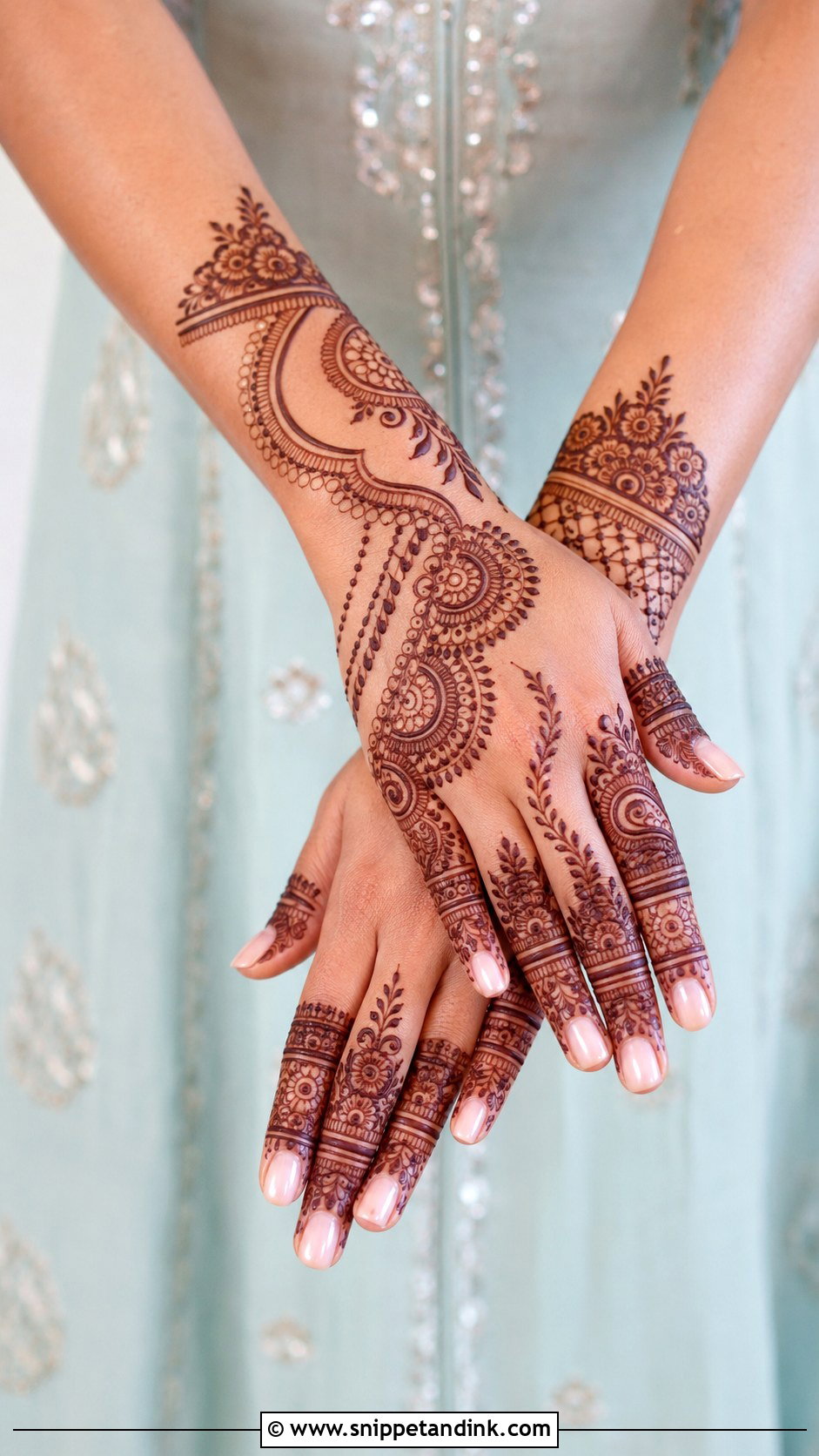
Half hand designs start at the fingers and stop near the middle of the palm, or begin at the wrist and flow upward. Mandalas with finger bands, diagonal paisley trails, floral cuffs and jaali patches all work this way. It is quick, comfortable and suits younger girls and small functions. The finish line matters: I end with a defined border or a clean curve so the open skin looks planned.
33. Indian Full Palm Mehndi Design
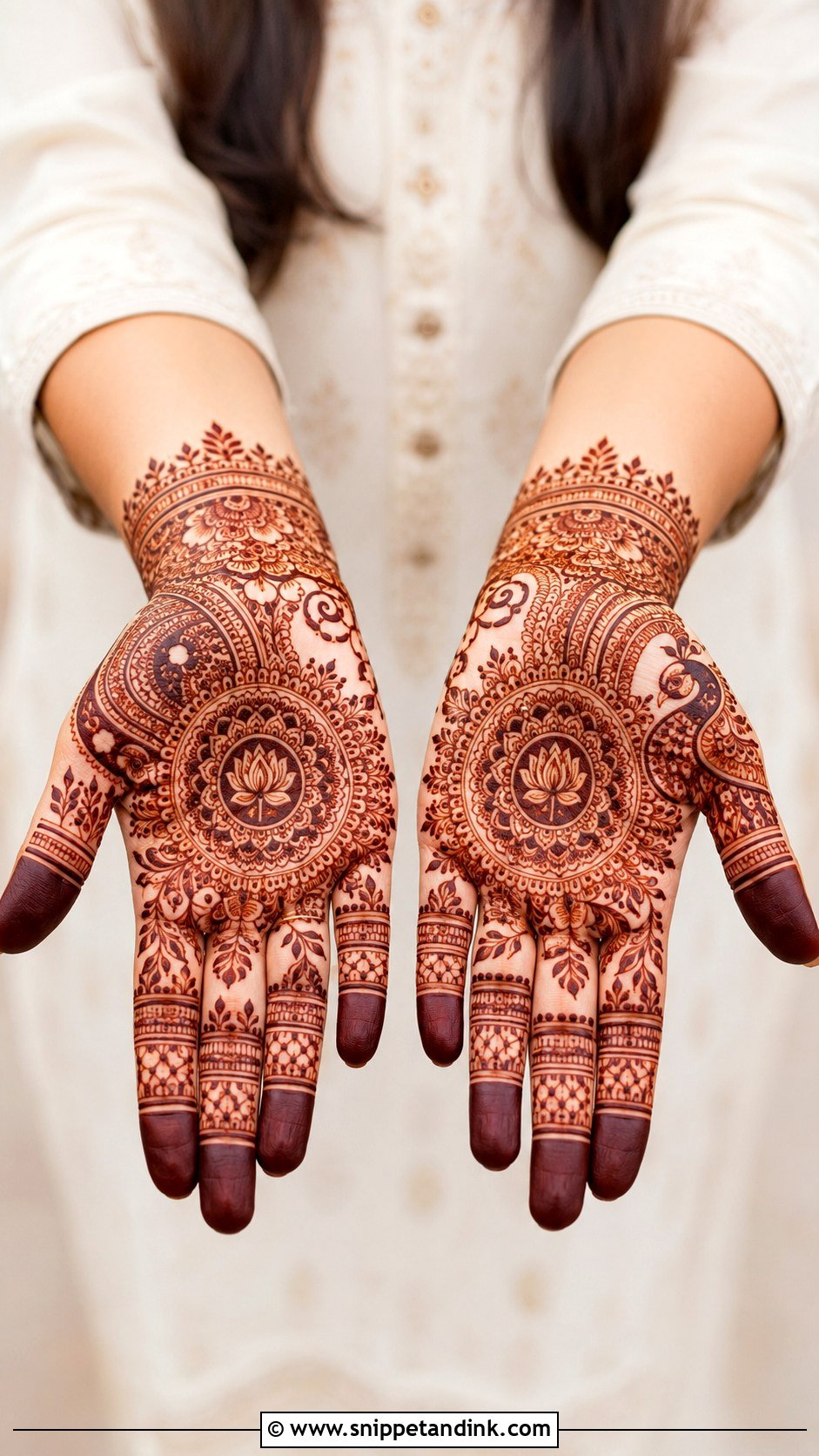
A full palm Indian mehndi design focuses on the inside of the hand: a large mandala, paisleys, lotus and peacock details, with matching finger bands and filled tips. It looks bold when the palm is open during ceremonies. Palm skin stains the darkest, so dense palm work gives deep color, especially if the paste is left on overnight. A small cuff at the wrist is enough to finish it.
34. Indian Forearm Mehndi Design
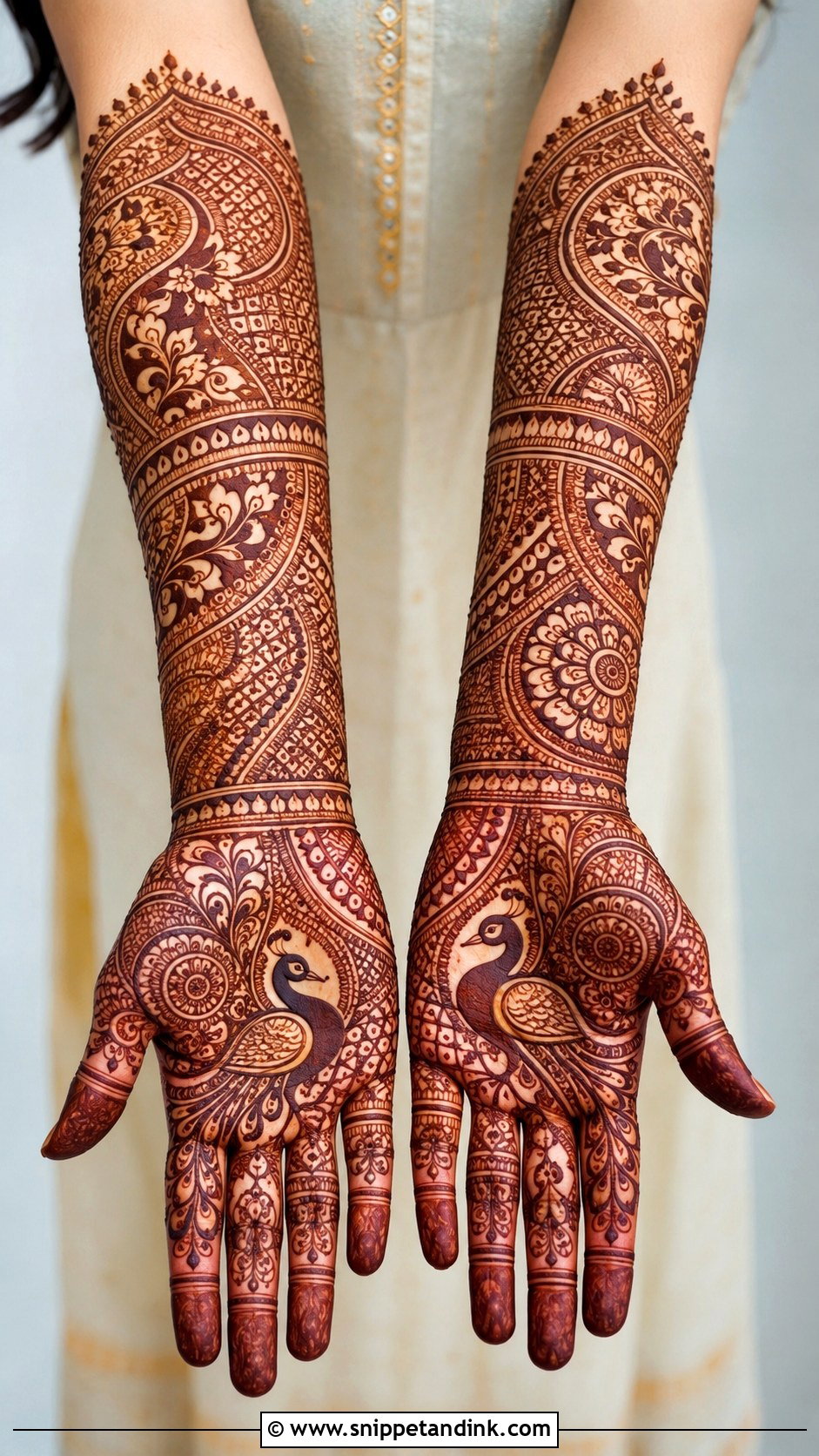
Forearm designs take the work from the fingertips or wrist up the arm with paisley panels, vines, jaali, peacocks and borders. For brides, the forearm is a natural place for names, dates, or small wedding symbols. I place larger motifs higher on the arm and finer fillers toward the hand, which keeps the flow balanced. Forearm skin stains lighter than palms, so keep the arms warm while the paste sets.
35. Indian Feet Mehndi Design
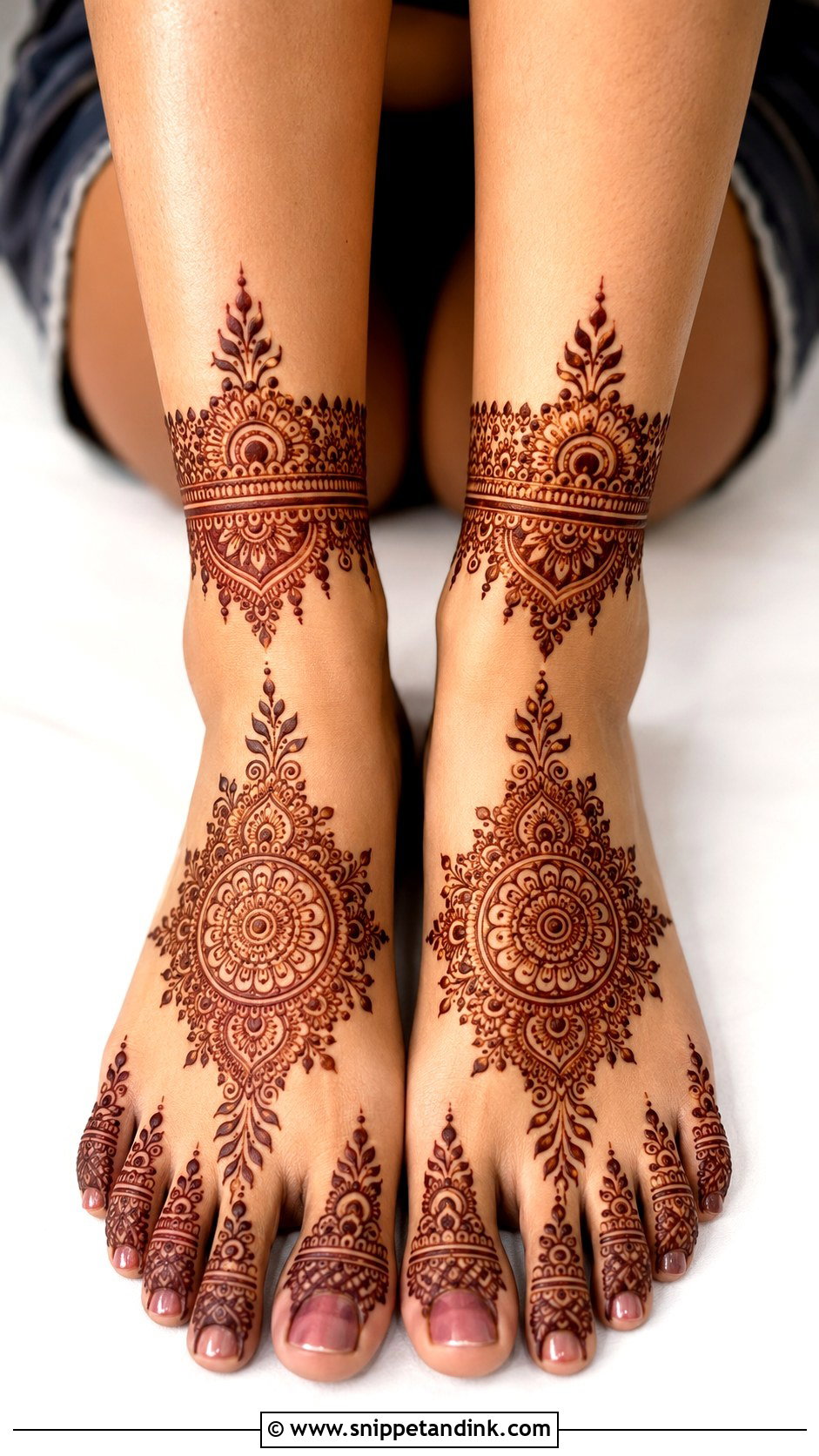
Feet mehndi covers the toes, tops of the feet, ankles and sometimes the lower legs with mandalas, paisleys, flowers and anklet borders. Feet stain deeply. For brides, feet usually go last or are done on a separate session, because you cannot walk while the paste is wet. I keep the ankle border clean so it looks like payal, and avoid heavy detail where sandal straps will rub.
Why Your Stain Will Not Look Exactly Like the Pictures
Many reference photos online were taken at the peak of the stain on the palm, sometimes with filters. Real henna varies, and I would rather you know that before the wedding than feel disappointed after.
- The palm and fingertips stain darkest; the back of the hand, wrist and arm usually come out lighter.
- It starts orange and deepens to brown or maroon over one to two days, then slowly fades over one to three weeks.
- Warm hands and long contact time darken it. Cold hands and early washing keep it pale.
- Each person’s skin takes color differently, so two sisters with the same paste can end up with different shades.
Hiding the Groom’s Name in the Bridal Design
In many families the groom is asked to find his name hidden in the bride’s mehndi, and it becomes a little game on the wedding night. I tuck the letters into a petal, a paisley or a jaali cell, small but readable. Tell me how hard you want it to be. A name buried in fine filler can take a long time to find, and some brides prefer to make it easier so the game does not drag on.
Where Indian Mehndi Goes From Here for You
Indian mehndi stretches from grand Rajasthani bridal arms to a single mandala before a puja, and all of it belongs to the same tradition. Start with the occasion and how many hours you can give, then think about the outfit and how much skin it will show. Clean lines and balanced spacing age better on the skin than crowded work, because the design will be with you for a week or more as it fades. Save the layouts that feel meaningful, show them to your artist, and let them fit the motifs to your own hands.
You'll Like These Ideas:




Leave a Reply