
Henna on a little girl is a different job from henna on a bride. The skin is thinner, the patience lasts minutes rather than hours, and whatever goes on her hand will probably end up near her mouth. So every design here is small, open and quick: flowers, dots, moons, stars, butterflies, tiny mandalas and bracelets on palms, backs of hands, fingers, wrists and ankles. Use only natural henna, never black henna, and do a patch test first. Below, I’ve noted how long each one takes and where it tends to smudge.
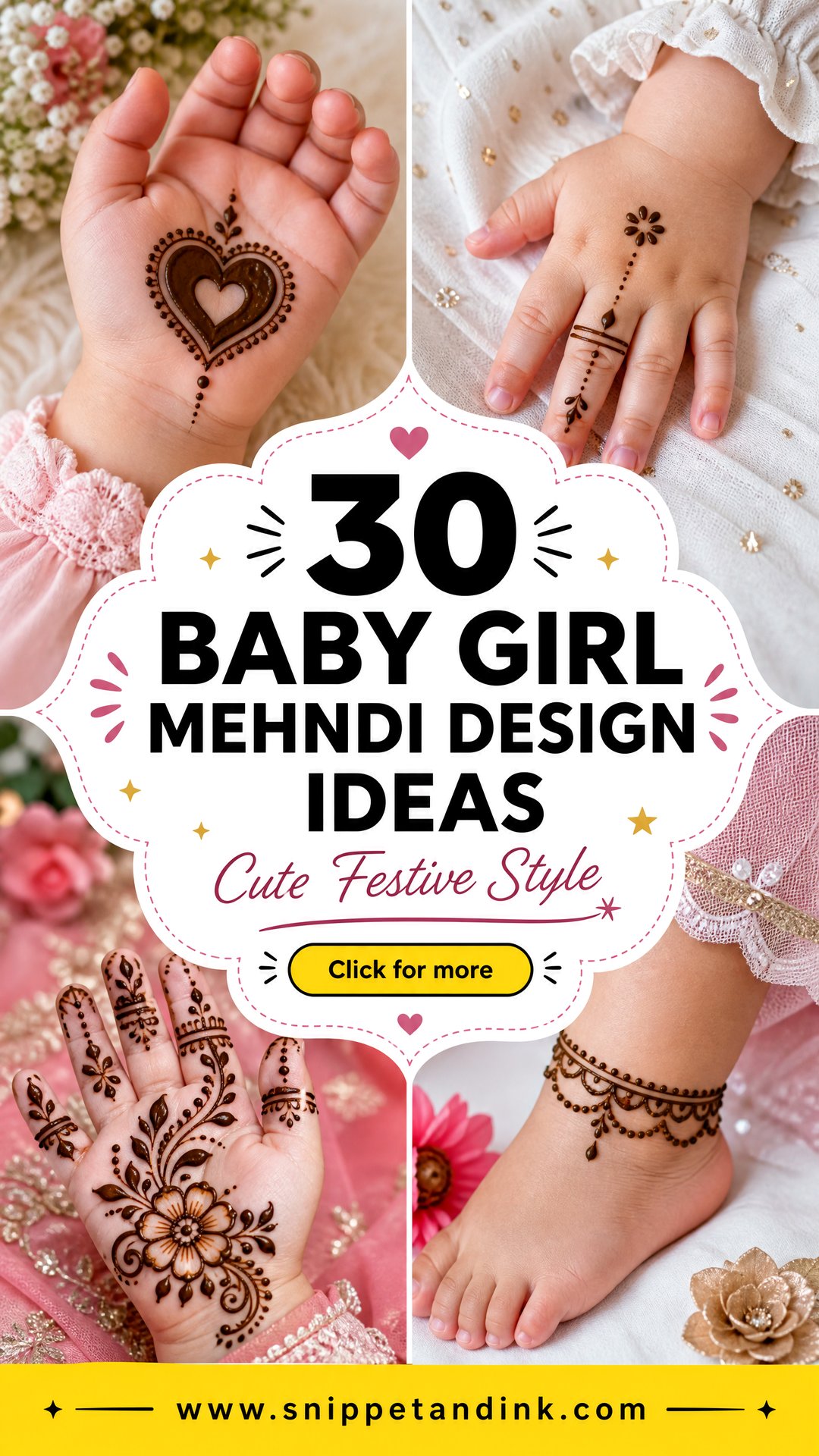
Is Your Daughter Ready for Henna Yet?
Before I draw on any baby, I ask the parents a few questions. Natural henna is gentle on most skin, but it isn’t right for every child, and the youngest babies are the ones to be most careful with.
- G6PD deficiency: children with this inherited condition should not have henna at all, because it can trigger a serious reaction in the blood. If you’re not sure, ask your doctor first.
- Age: for young infants, I’d suggest waiting or keeping it to a single tiny motif, and checking with your paediatrician beforehand.
- Skin: skip any area with eczema, a rash, a cut or nappy irritation.
- Ingredients: natural henna paste stains orange to reddish brown. Anything that promises a black stain or dries within minutes may contain PPD, which can cause severe reactions.
The patch test
Put a small dot of the same paste on the inside of the arm a day or two before the event and watch for redness, swelling or itching. Many pastes contain essential oils to deepen the stain, so for children I look for a paste with as few added oils as possible.
1. Baby Girl Simple Palm Mehndi Design
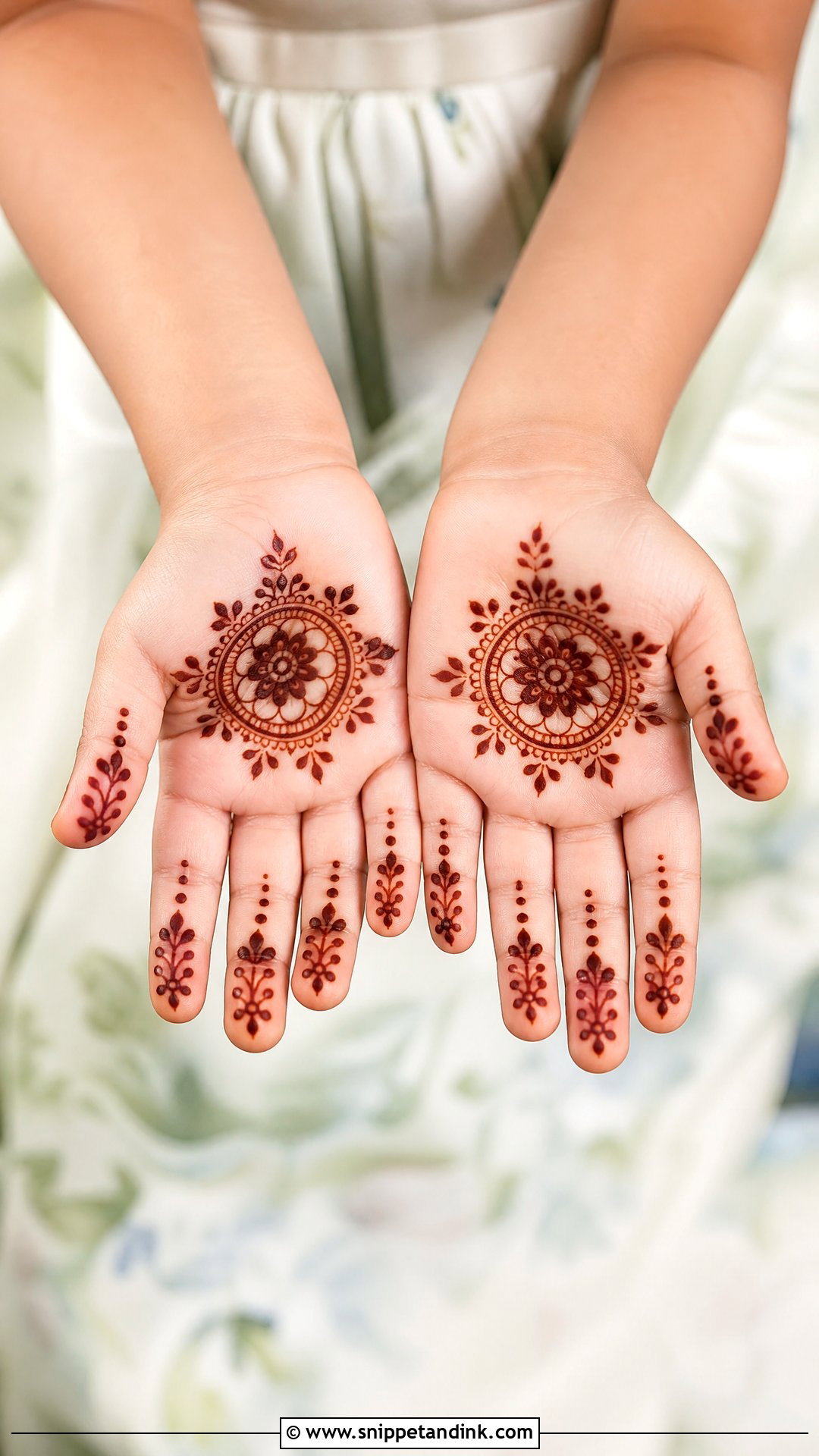
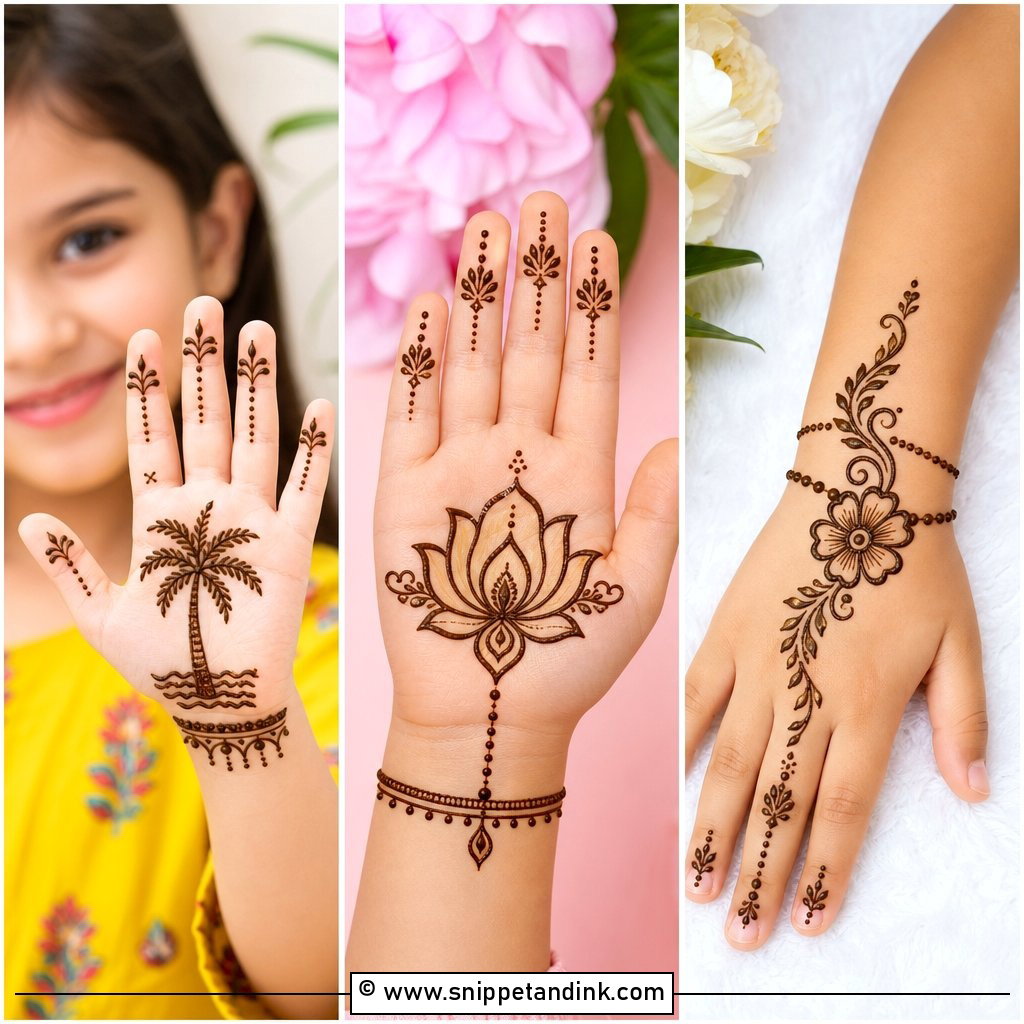
A single motif in the middle of the palm is the quickest design I do for little ones. A tiny flower, a round tikki or a soft spiral, a ring of dots, maybe one dot on each fingertip. Palms stain the darkest, so even this much shows up well. The catch is that babies clench their fists, so I only do palms on a sleeping or very calm child, and hold the hand open until the paste firms up.
2. Baby Girl Back Hand Mehndi Design
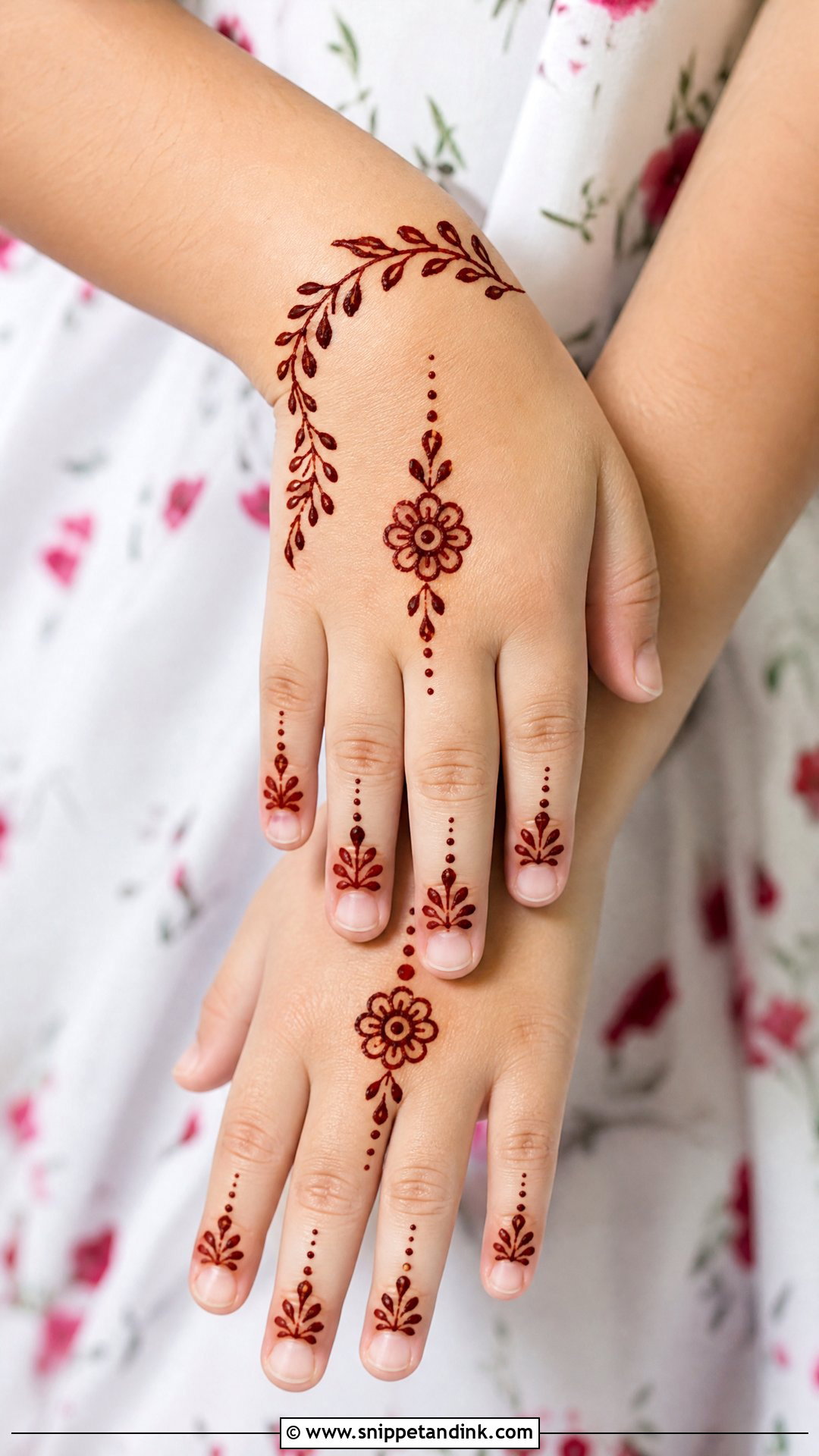
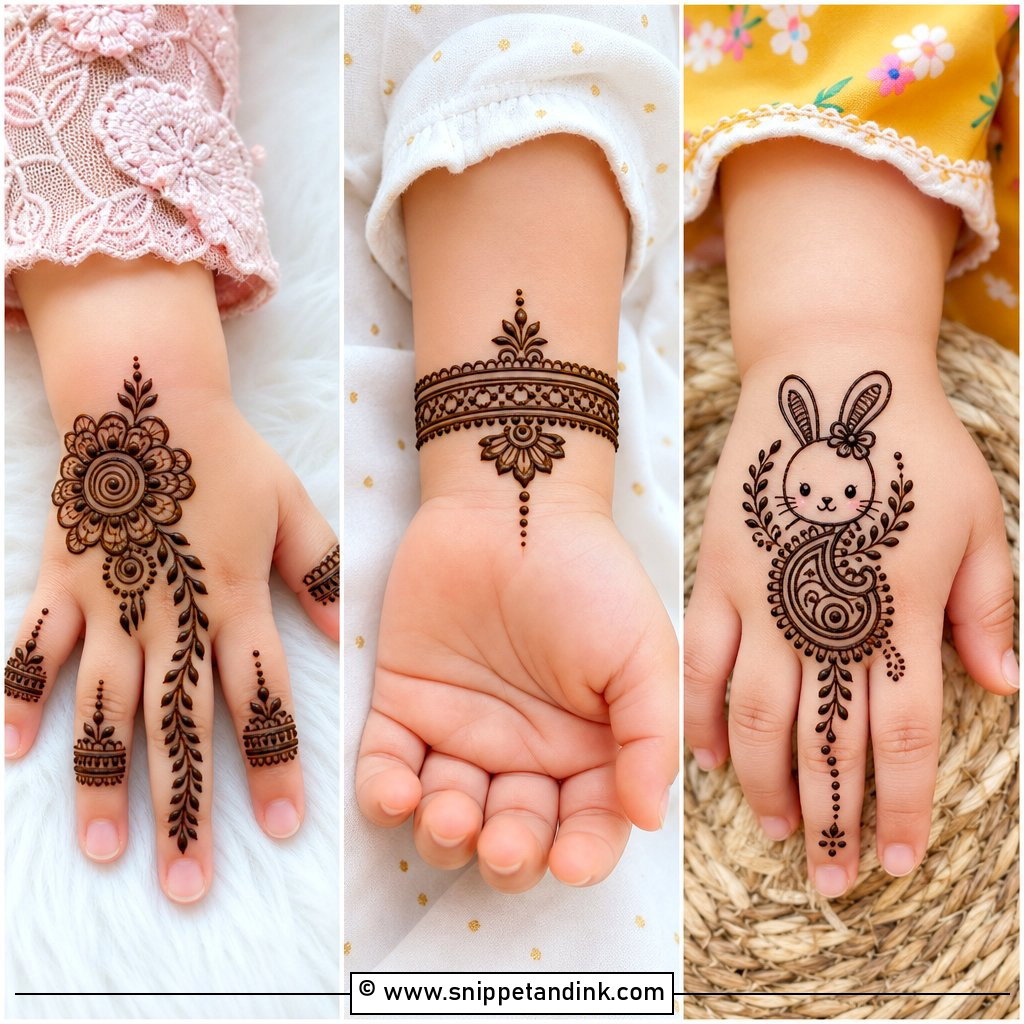
The back of the hand is my first choice for babies, because she can still grab and open her fist without wrecking the design. One small flower near the centre, a few leaves toward the wrist, a scatter of dots near the knuckles. Rounded shapes and clean gaps are what make it look sweet rather than messy. The stain comes up a little lighter here than on the palm, so I use a slightly thicker line.
3. Baby Girl Arabic Mehndi Design
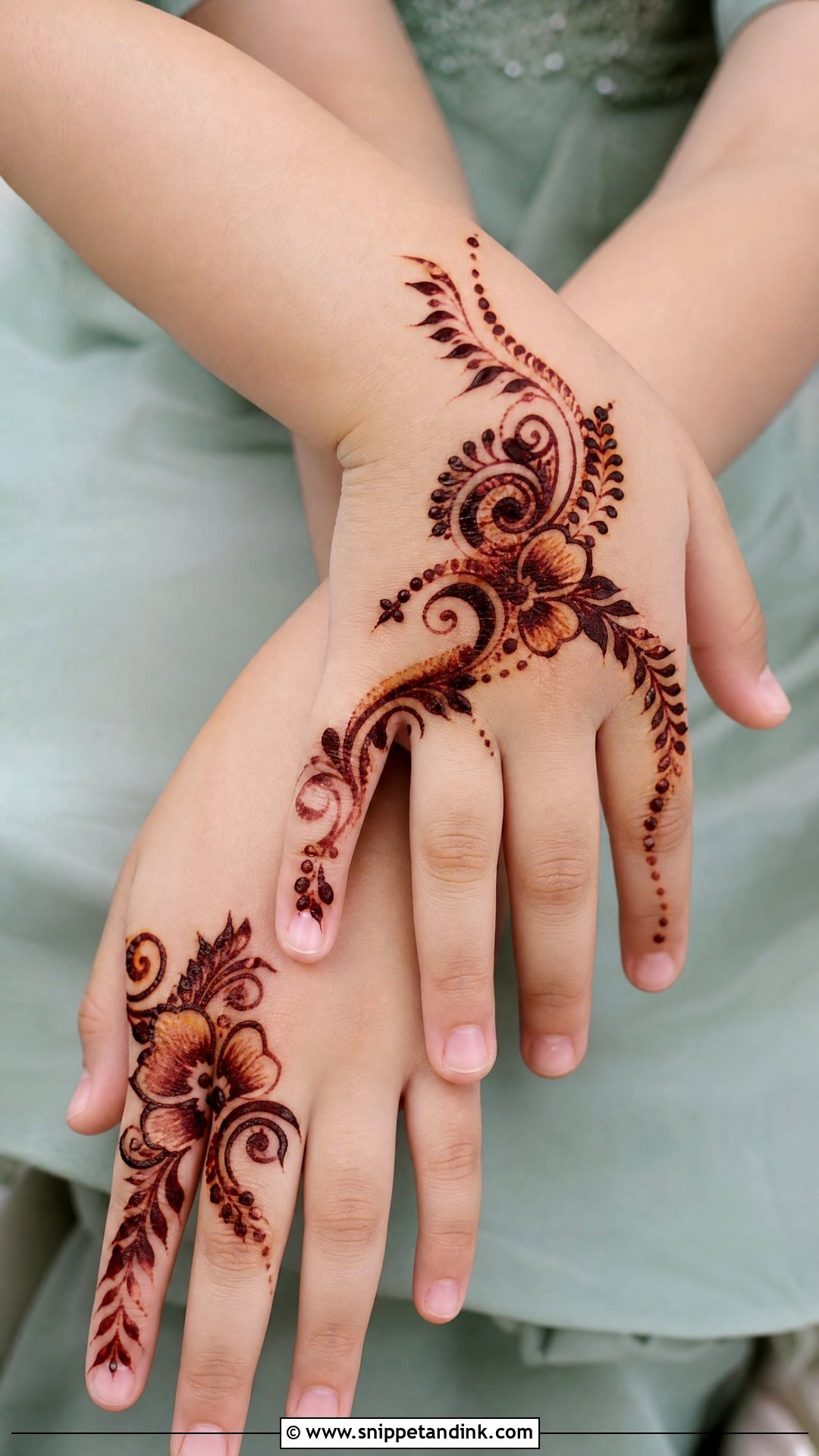
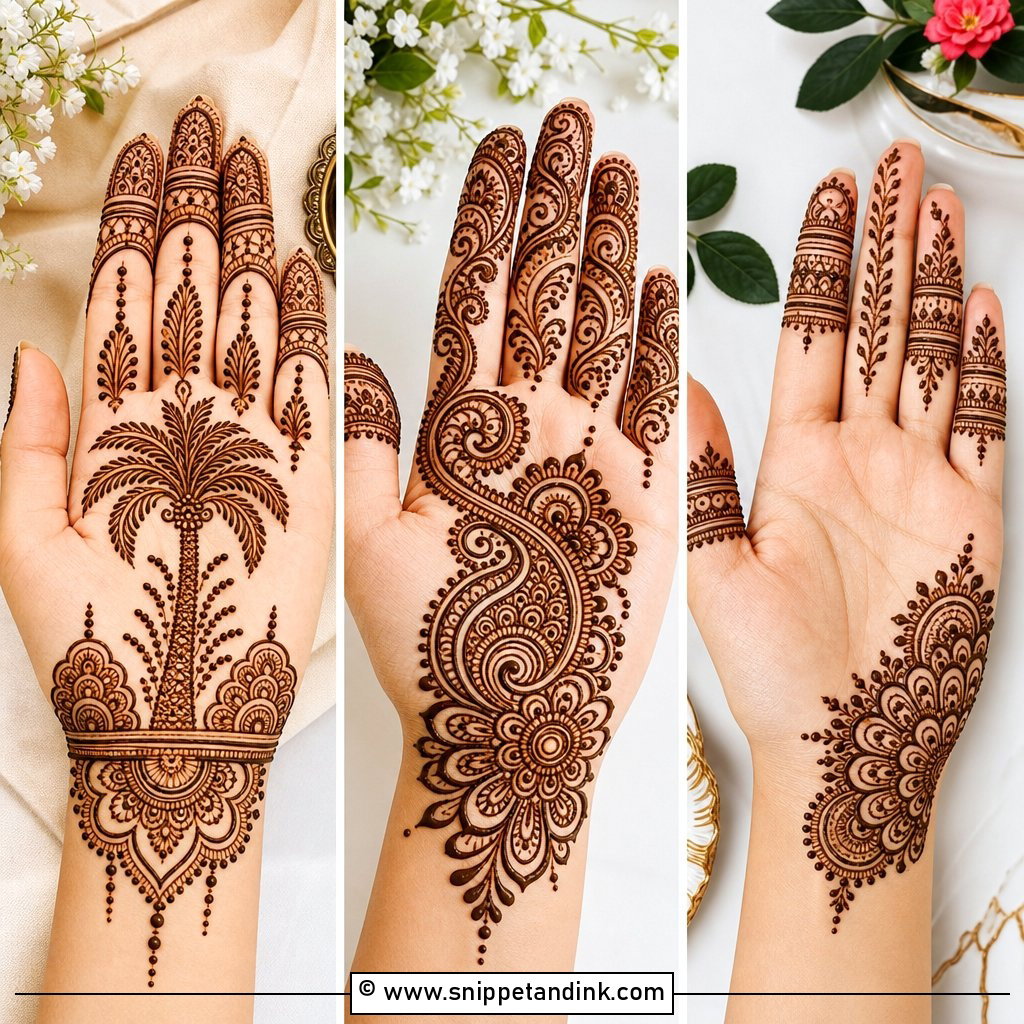
Arabic style shrinks down well: one curved vine from the wrist toward a single finger, two small flowers, some leaves and dots. Arabic designs rely on open space, which is exactly what tiny hands need. It looks grown-up enough for a mother-daughter photo at a wedding but takes only a couple of minutes. Keep every line rounded; sharp, thin points tend to blur on soft skin.
4. Baby Girl Floral Mehndi Design
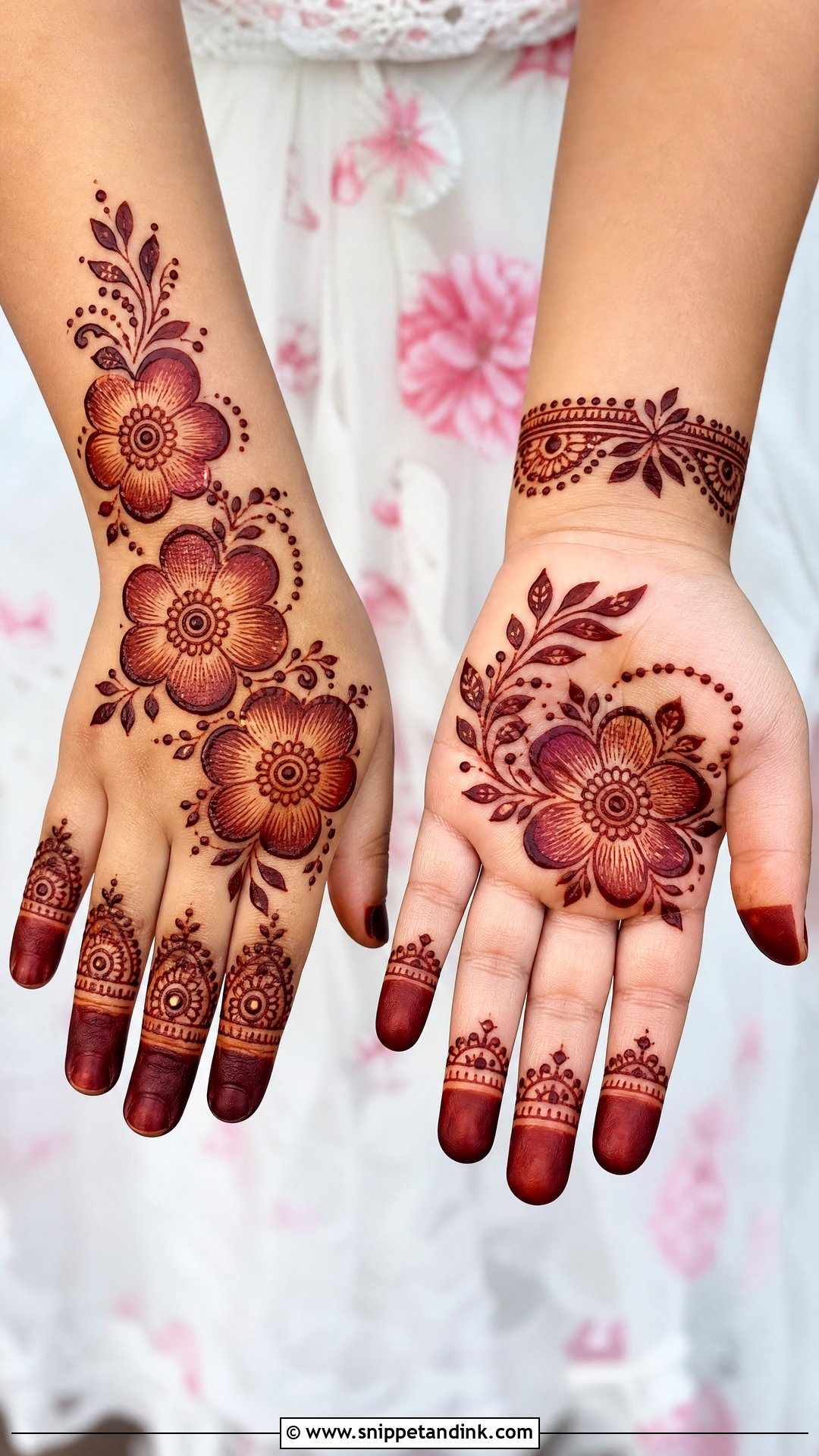
One main flower with rounded petals, a few leaves and dotted accents, and maybe leaf tips on the fingers. On a baby I skip the shading inside petals completely. Shading needs a still hand and a long sit, and on such a small flower it just fills in to a dark blob once the stain develops. Scale the flower to the hand: about the size of a coin on the back of a toddler’s hand.
5. Baby Girl Heart Mehndi Design
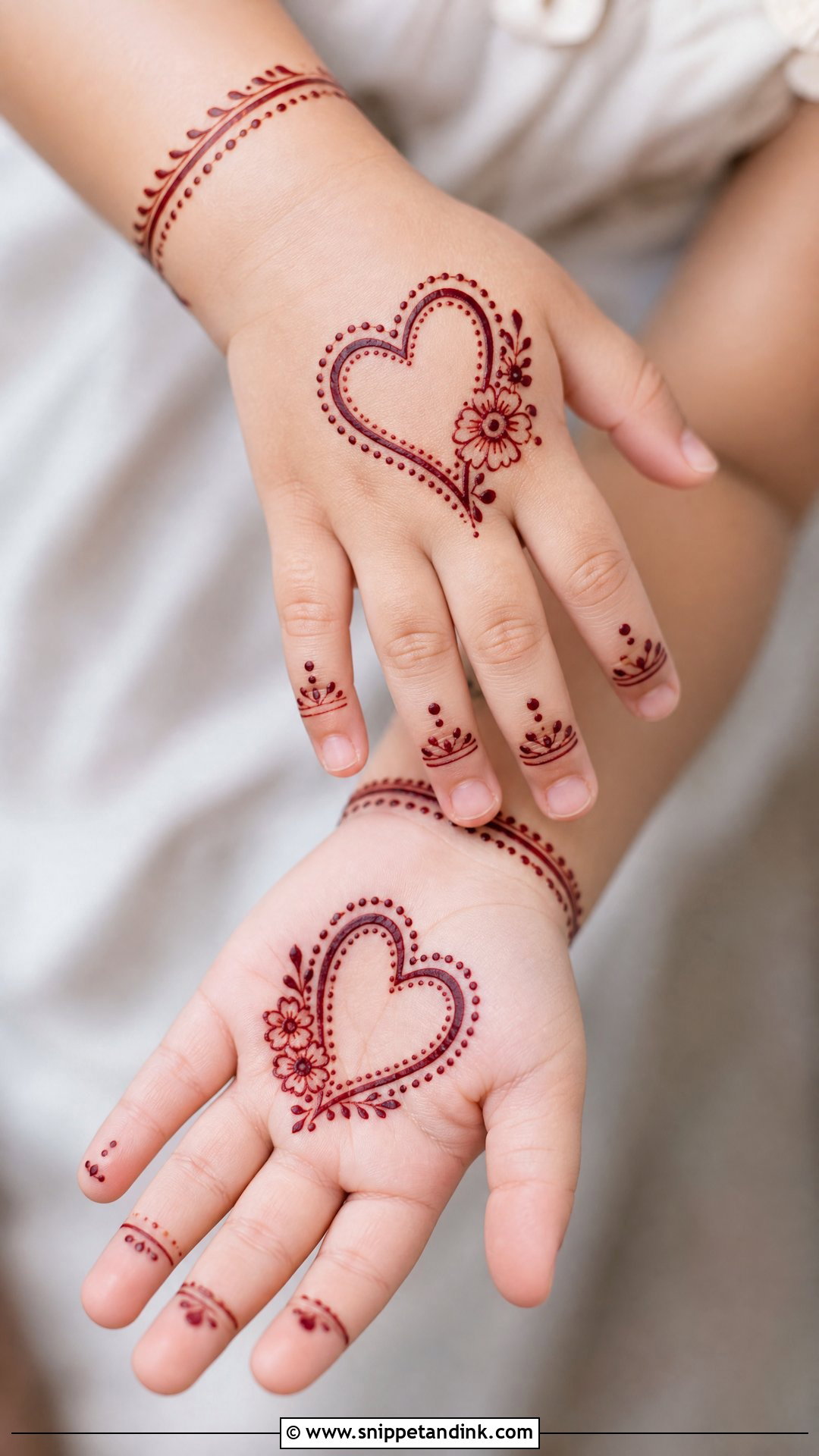
Children recognise hearts immediately, which is half the fun. One small heart on the palm or back of the hand, with dots, tiny flowers or a curved vine around it, and an optional wrist band. I draw the outline thick enough to read after staining but leave the inside mostly open. It’s quick to repeat, so it’s my go-to when several siblings want matching hands.
6. Baby Girl Star Mehndi Design
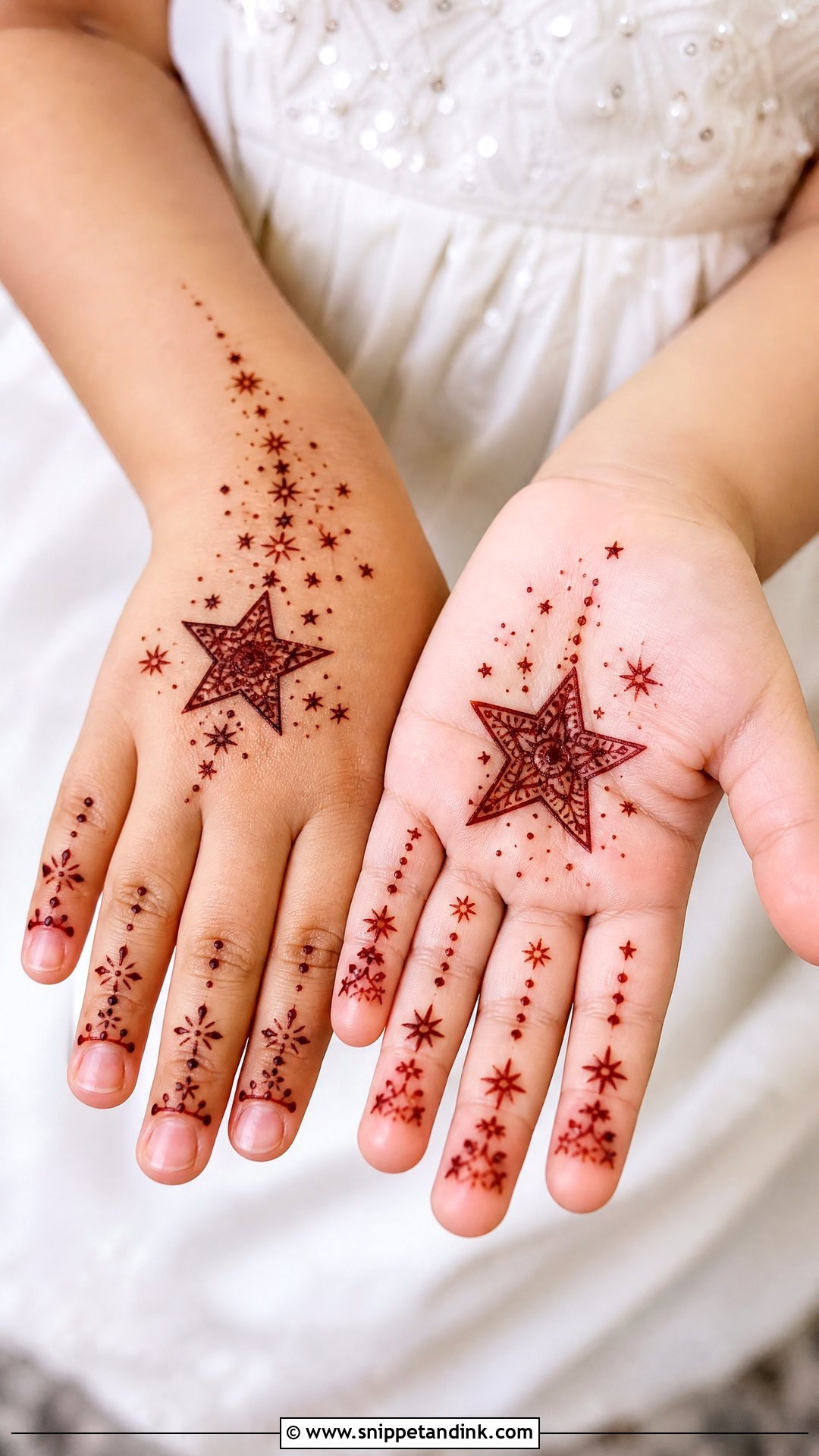
Stars are simple shapes, which makes them ideal for a child who won’t sit long. One small star with dots, a mini moon or two and a few spark strokes around it; dot clusters on the fingers. Five points can blur at the tips, so I keep the star chunky rather than spiky. It suits Eid and evening celebrations.
7. Baby Girl Moon Mehndi Design
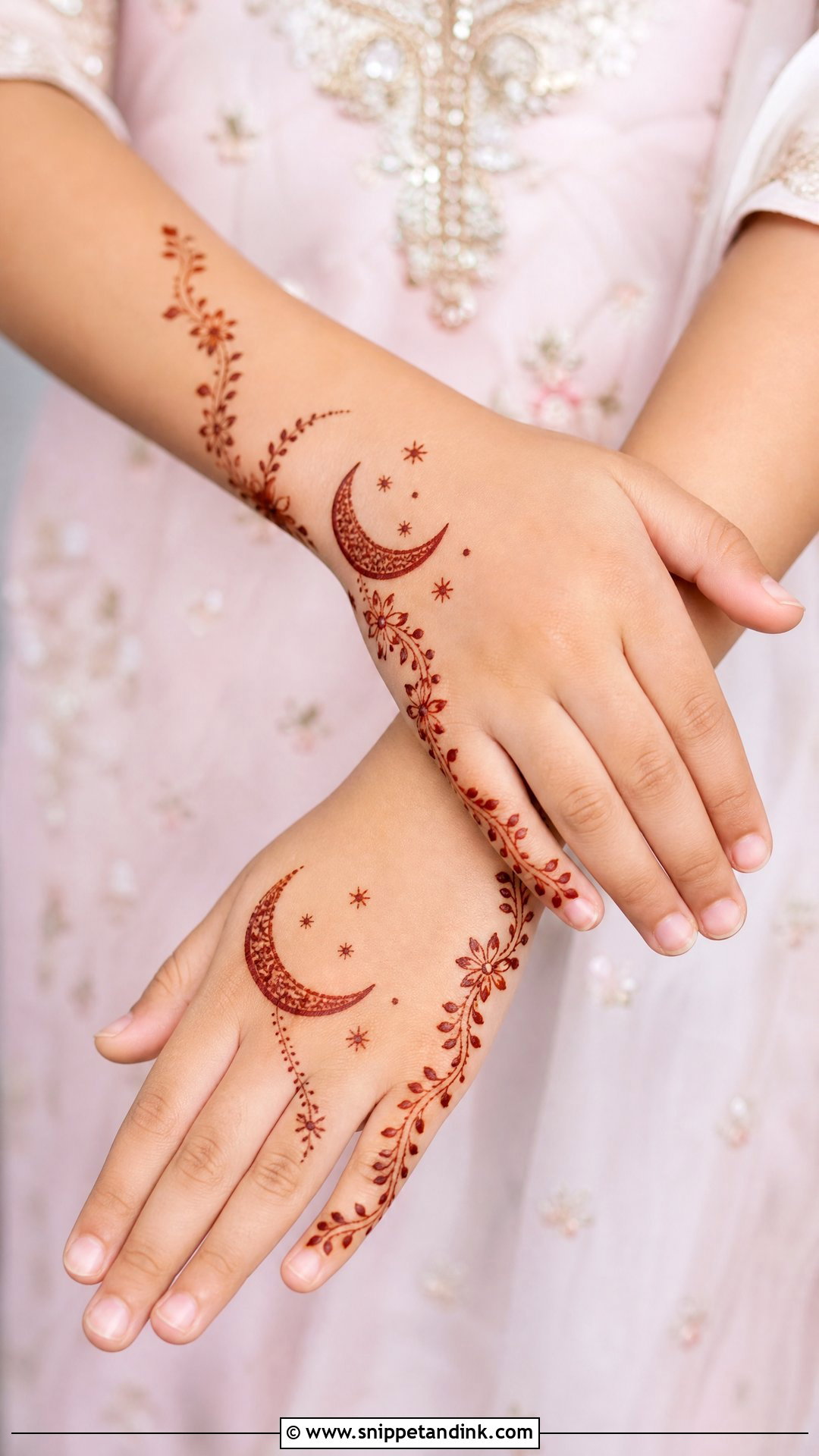
A small crescent moon is the motif mothers ask me for most at Eid. I put the crescent on the back of the hand as the focus, add a star or two and a few dots, and finish with a short wrist curve or fingertip dots. It’s done in a minute or two. Keep the crescent’s points soft; they’re the first part to smudge when a baby rubs her hand on her clothes.
8. Baby Girl Butterfly Mehndi Design
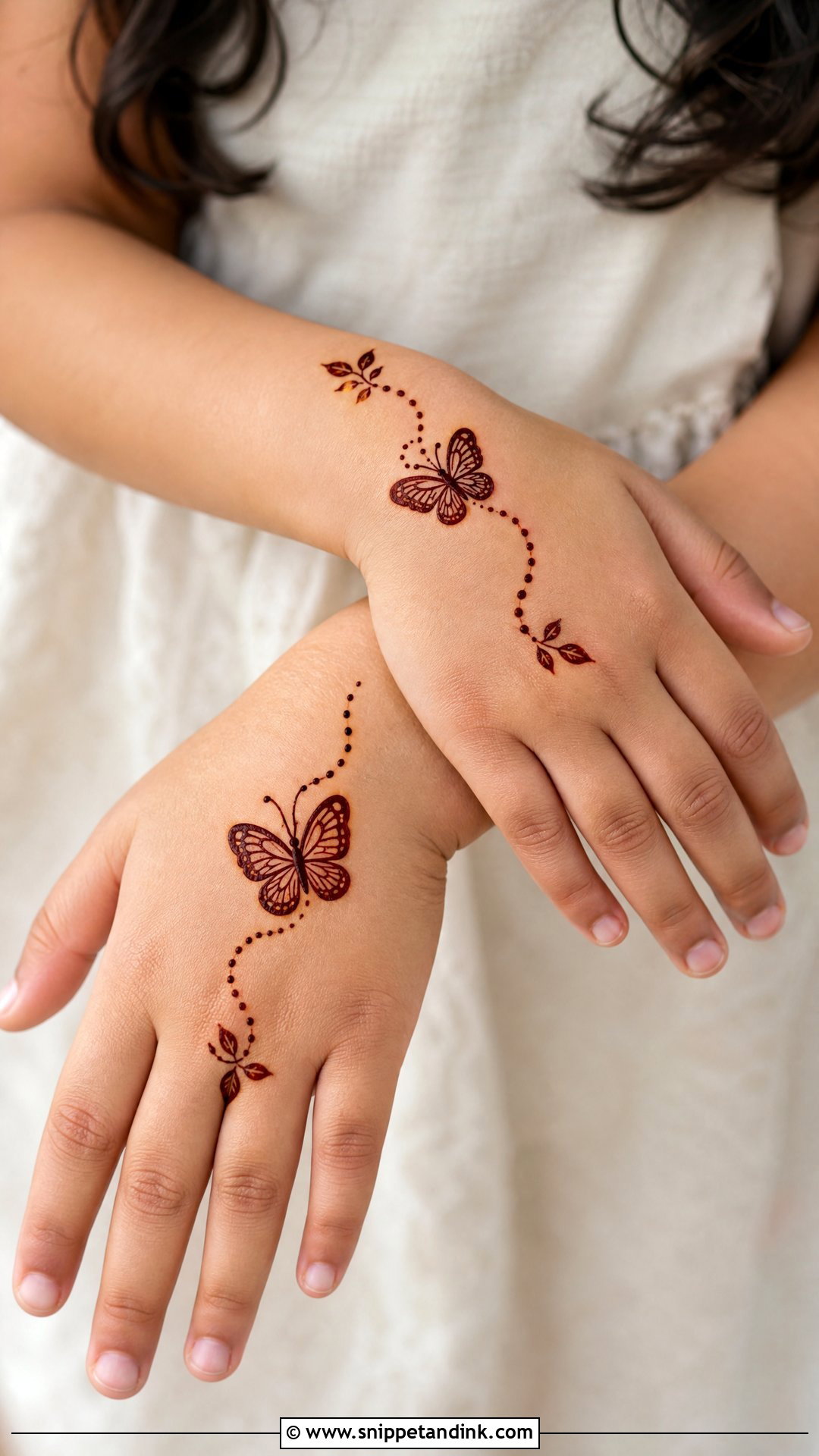
A butterfly mehndi design with rounded wings and a few dots inside them sits nicely on the back of the hand, with a dotted trail toward the wrist. I leave the palm plain so she can play freely. Resist detailed wing patterns; at this size they merge. It’s a good choice for birthdays and daytime events.
9. Baby Girl Bracelet Mehndi Design
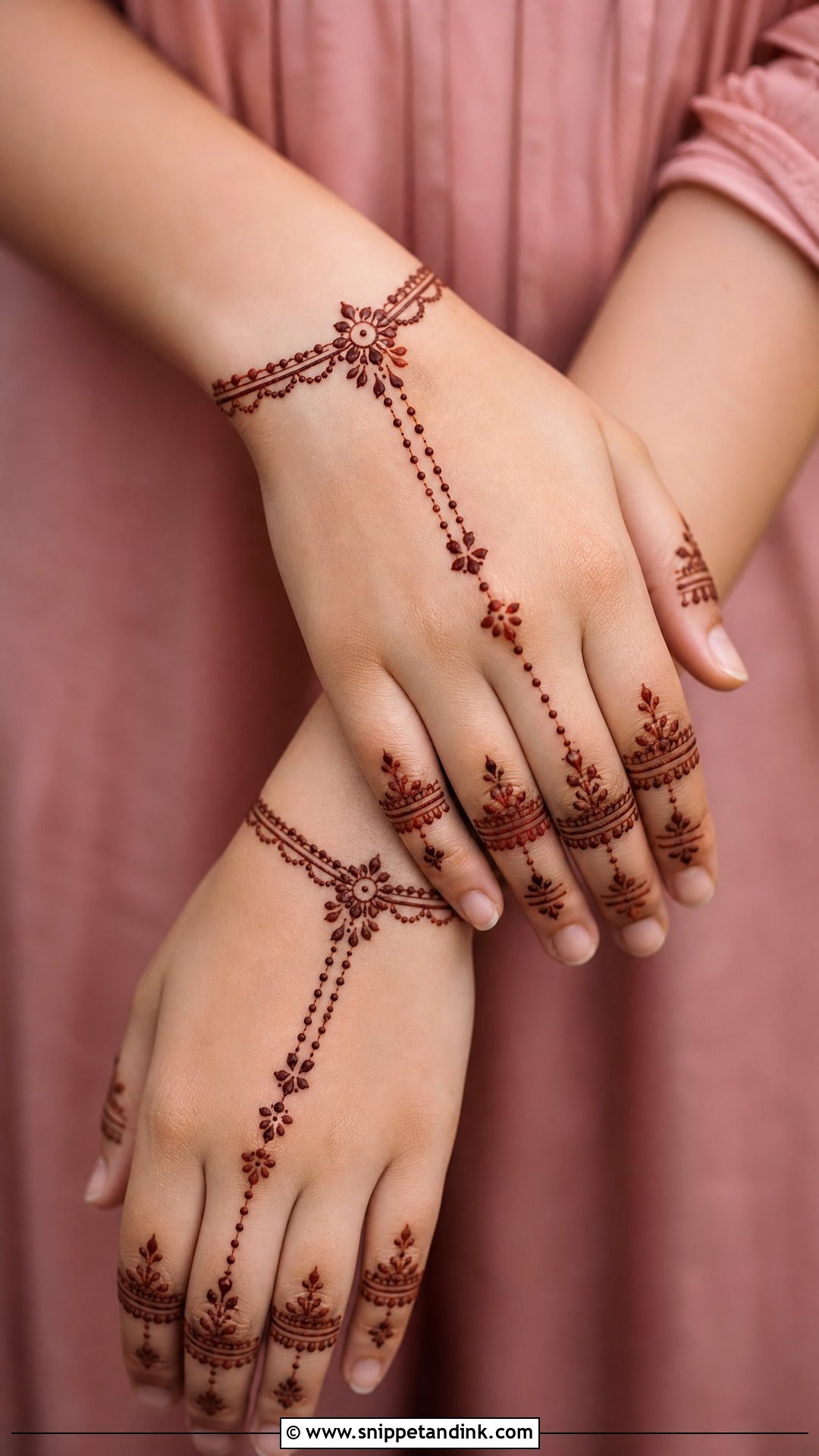
A bracelet mehndi design is a thin band of tiny flowers, dots or leaves around the wrist, linked to one finger with a light chain. It looks like jewellery and keeps most of the hand free. I like it for babies who rub their palms or suck their fingers, since the wrist is the furthest point from the mouth. Make sure the band sits above the crease where a sleeve cuff would rub it.
10. Baby Girl Finger Mehndi Design
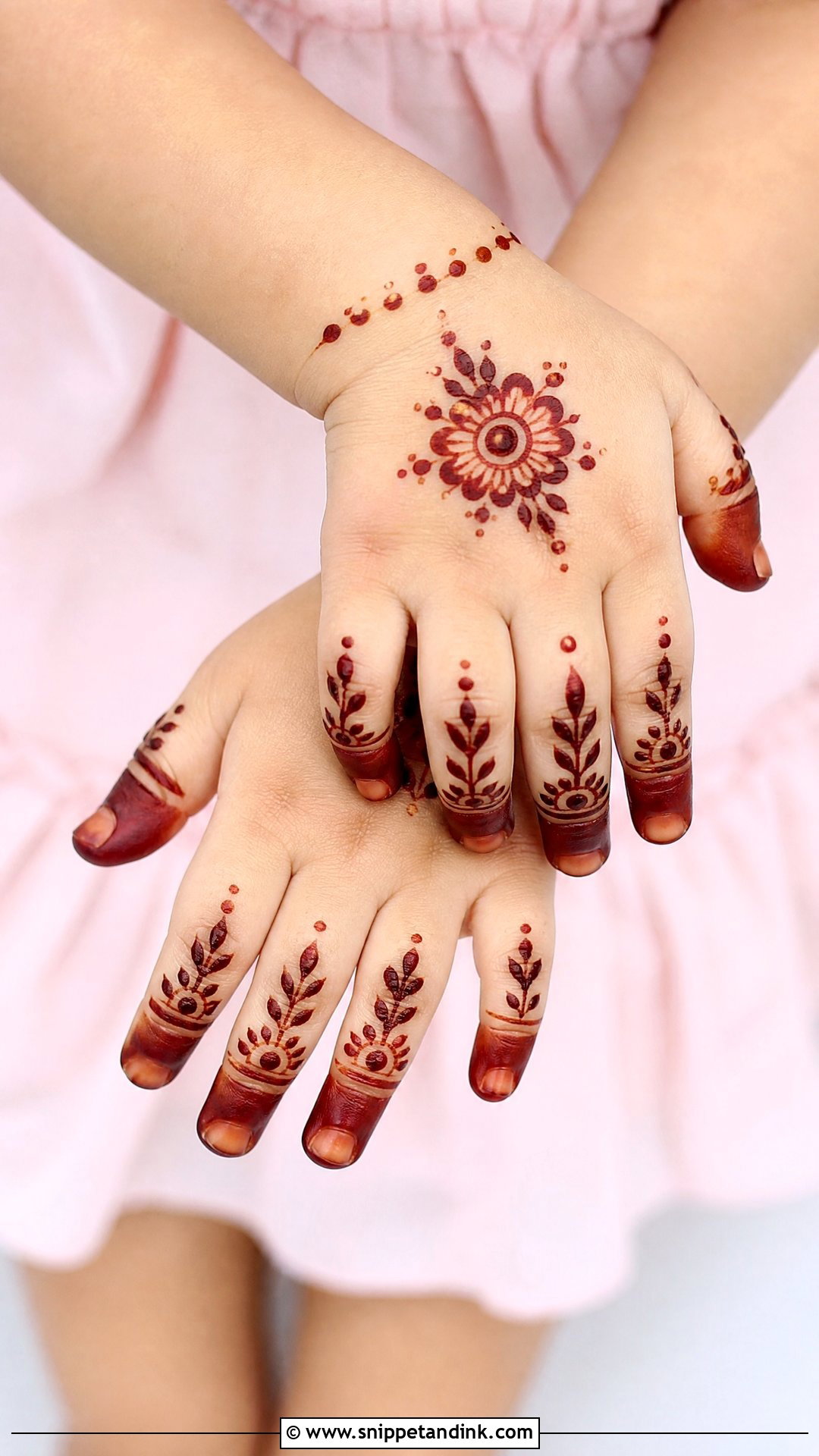
Fingers alone are enough for very young babies or parents who want only a hint of colour. Dots on each fingertip, a few leaves along one finger and maybe a small flower near the knuckle. A tiny wrist chain or back-hand dot ties it together. Finger skin stains well, so it shows up clearly. It takes only a few minutes.
11. Baby Girl Tikki Mehndi Design
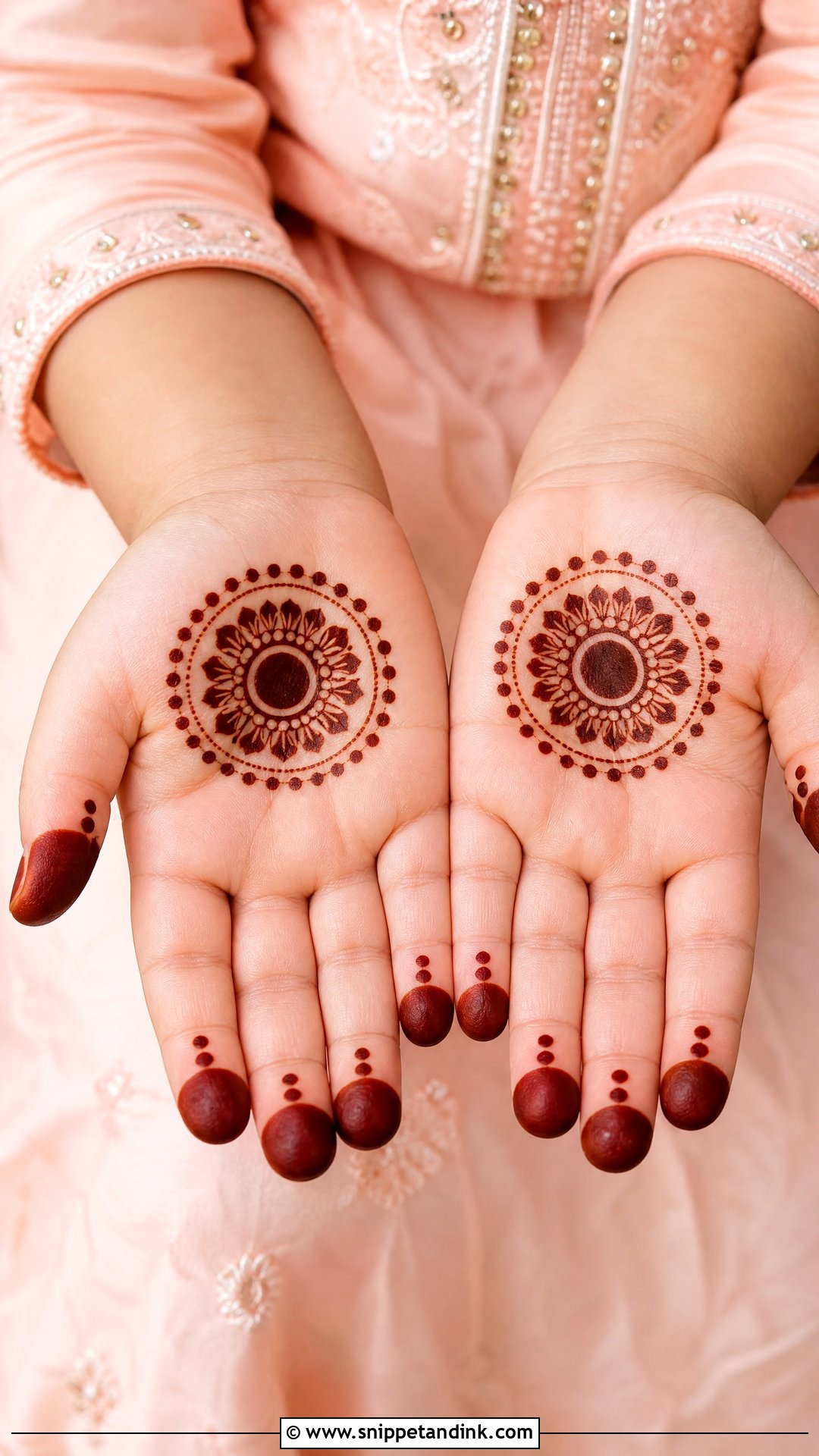
The tikki, a filled round dot in the centre of the palm, is the oldest children’s henna design I know, and it still looks right. Keep it small, about the size of a fingertip on a toddler, ring it with dots and a few petal strokes, and leave the fingers plain or dotted. A filled circle needs time to dry, so this works best during a nap.
12. Baby Girl Mandala Mehndi Design
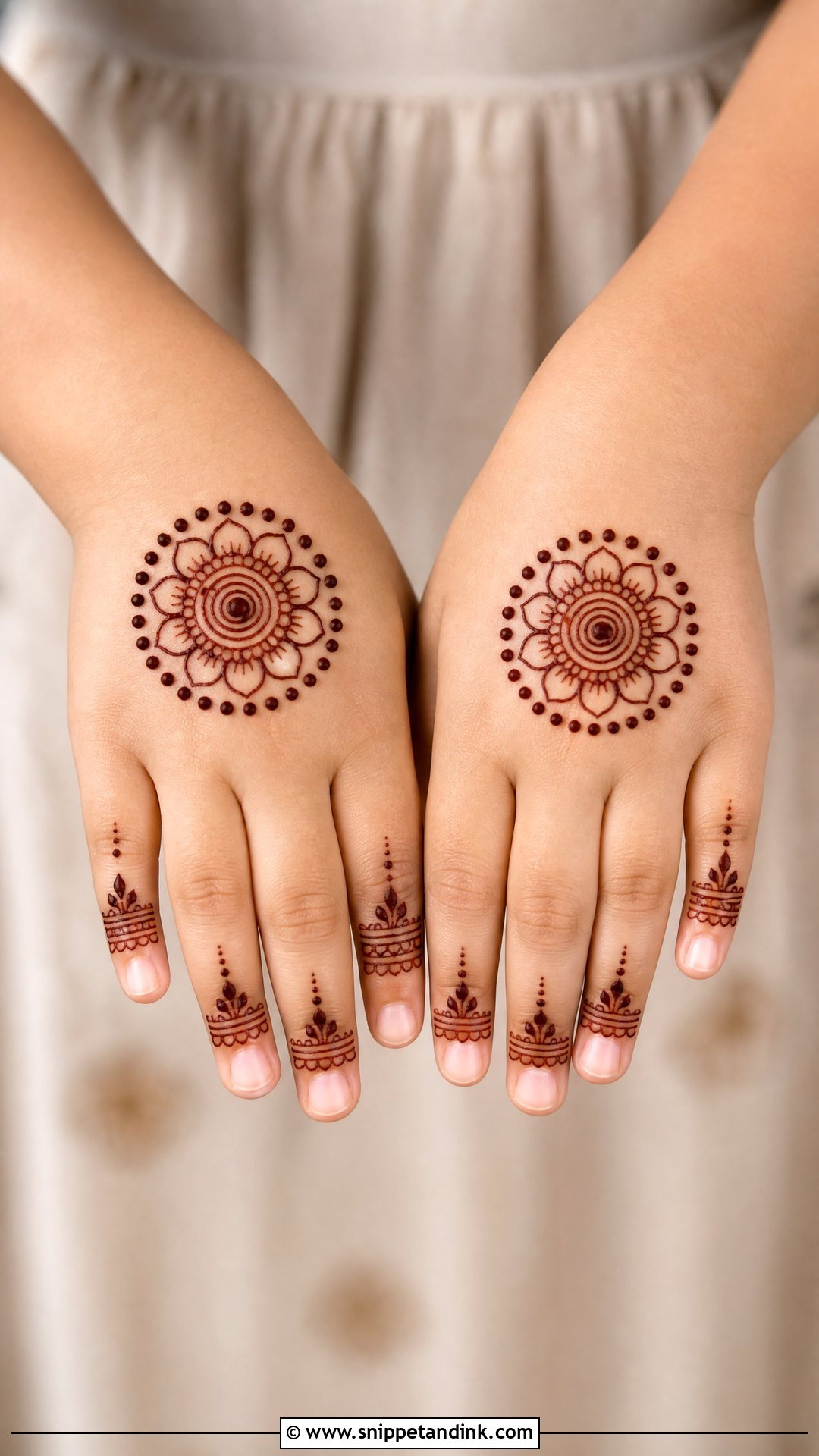
A mini mandala is a small circle with one ring of petals and a few dots, on the palm or back of the hand. One ring is plenty; layer after layer belongs to adults and looks heavy on a small hand. A short finger detail or wrist chain completes it. Smooth, rounded strokes matter more than precision here.
13. Baby Girl Leaf Vine Mehndi Design
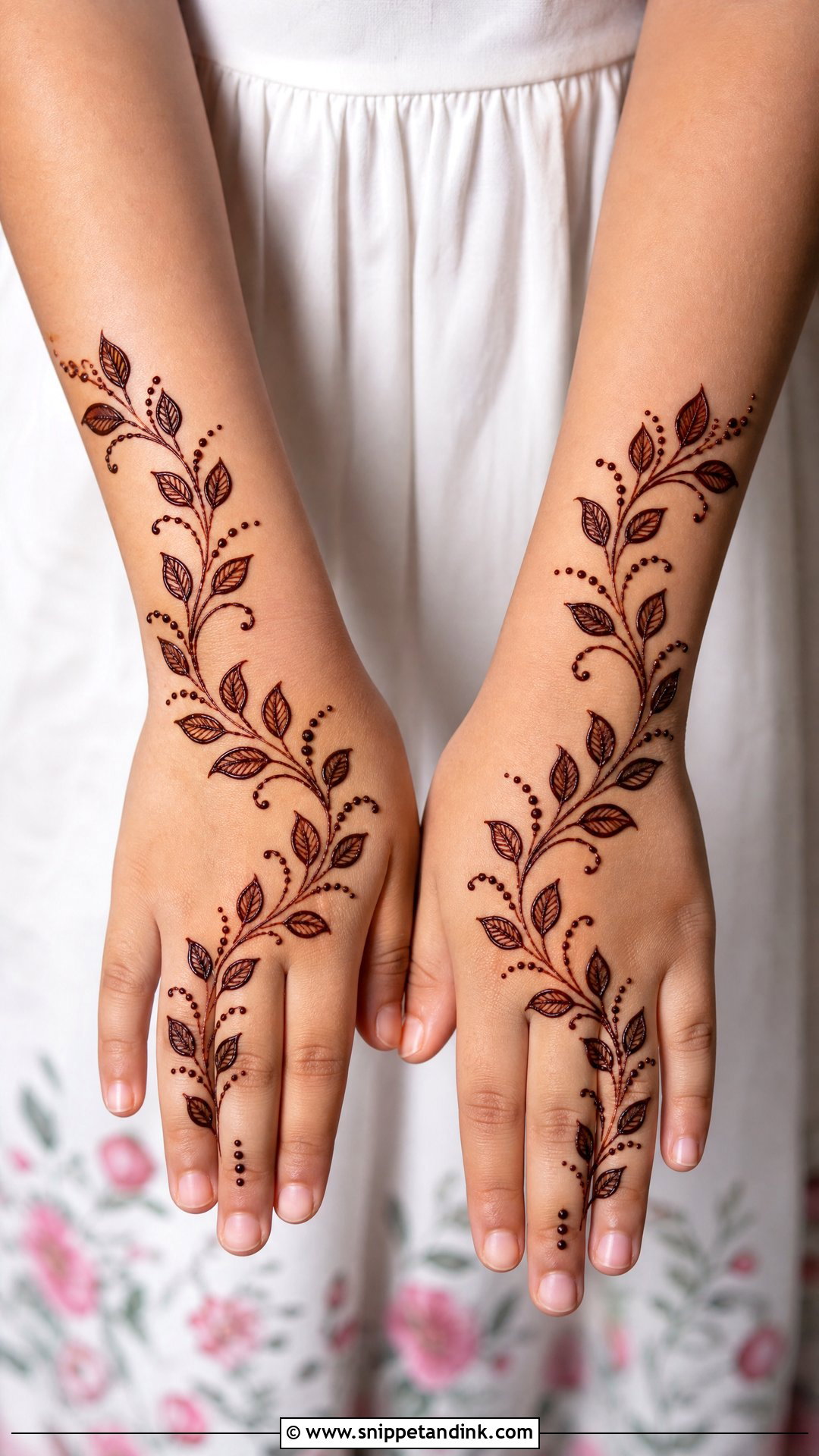
A curved line from the wrist into the middle of the hand with small leaves along it and a few dots near the fingers. Leaf vines suit chubby little hands because they follow the curve of the hand rather than sitting flat on it. Most of the skin stays open, so it dries fast. Keep the leaves rounded and evenly spaced.
14. Baby Girl Paisley Mehndi Design
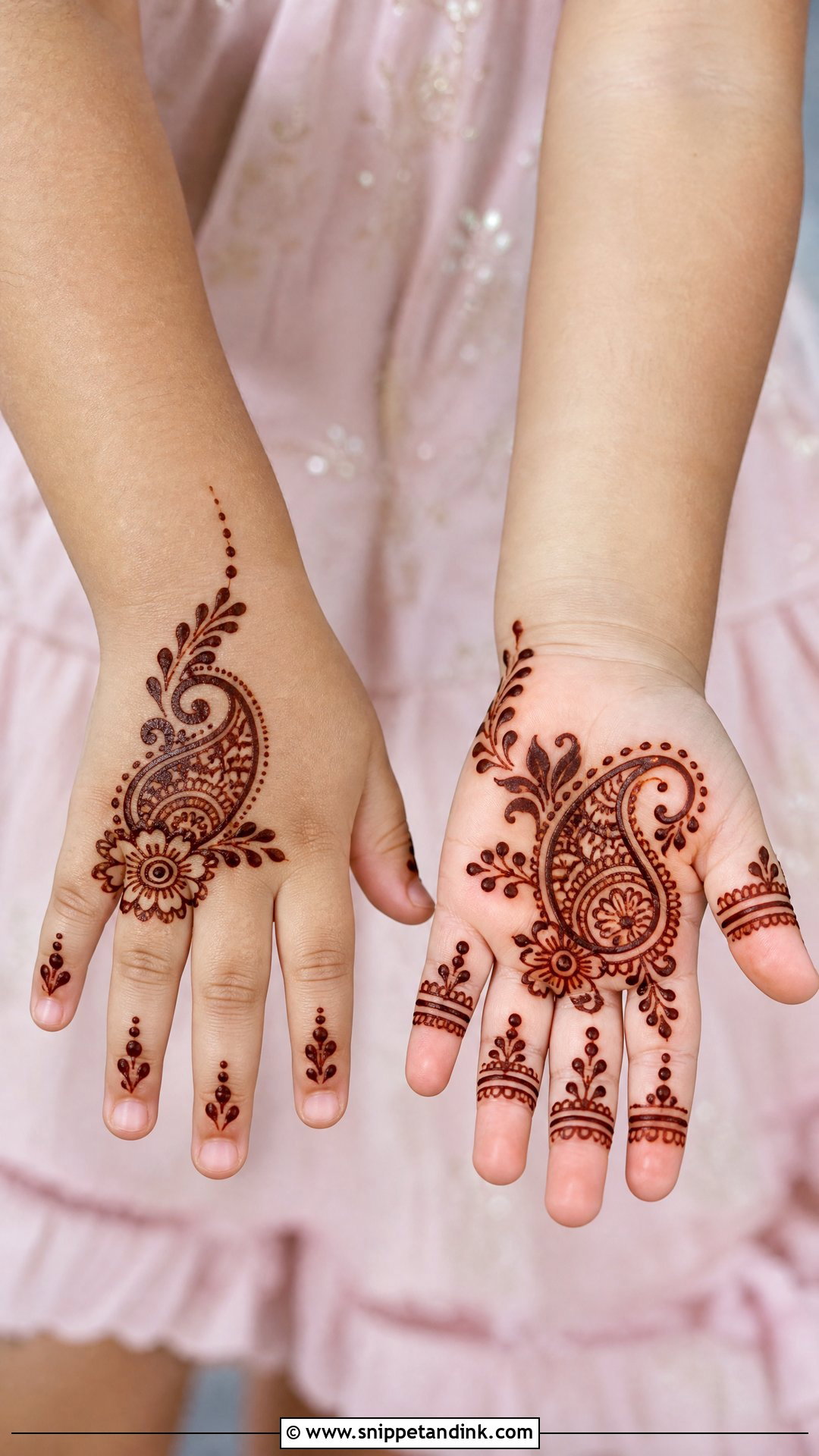
Paisley works if you strip it right back: one small teardrop with only a line or two inside, a tiny flower and a leafy curve beside it. Traditional paisleys are full of fine lines that a baby’s hand can’t hold still for. It looks festive for weddings, Diwali, Eid and family ceremonies without looking like adult henna on a small hand.

15. Baby Girl Indo Arabic Mehndi Design
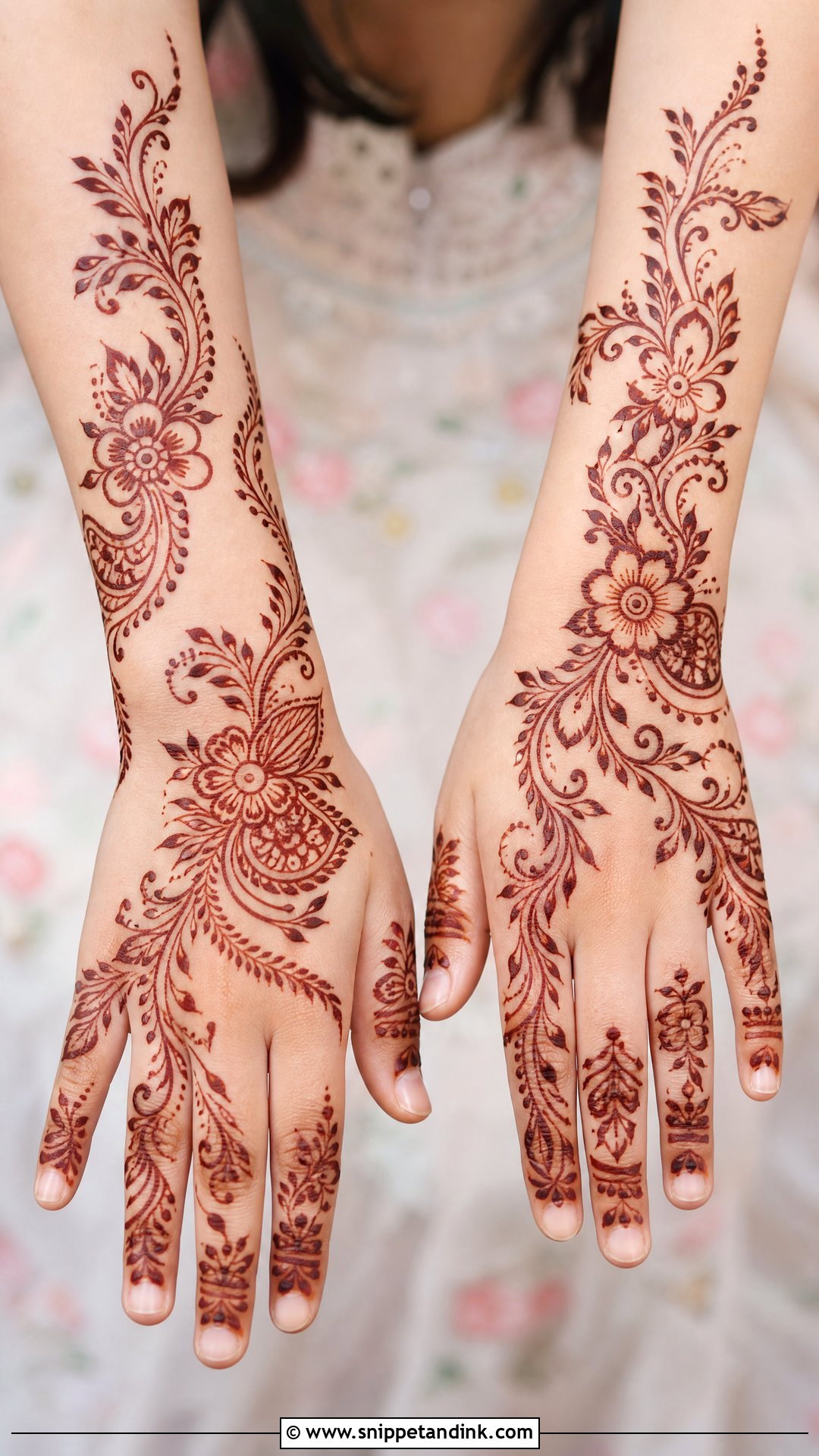
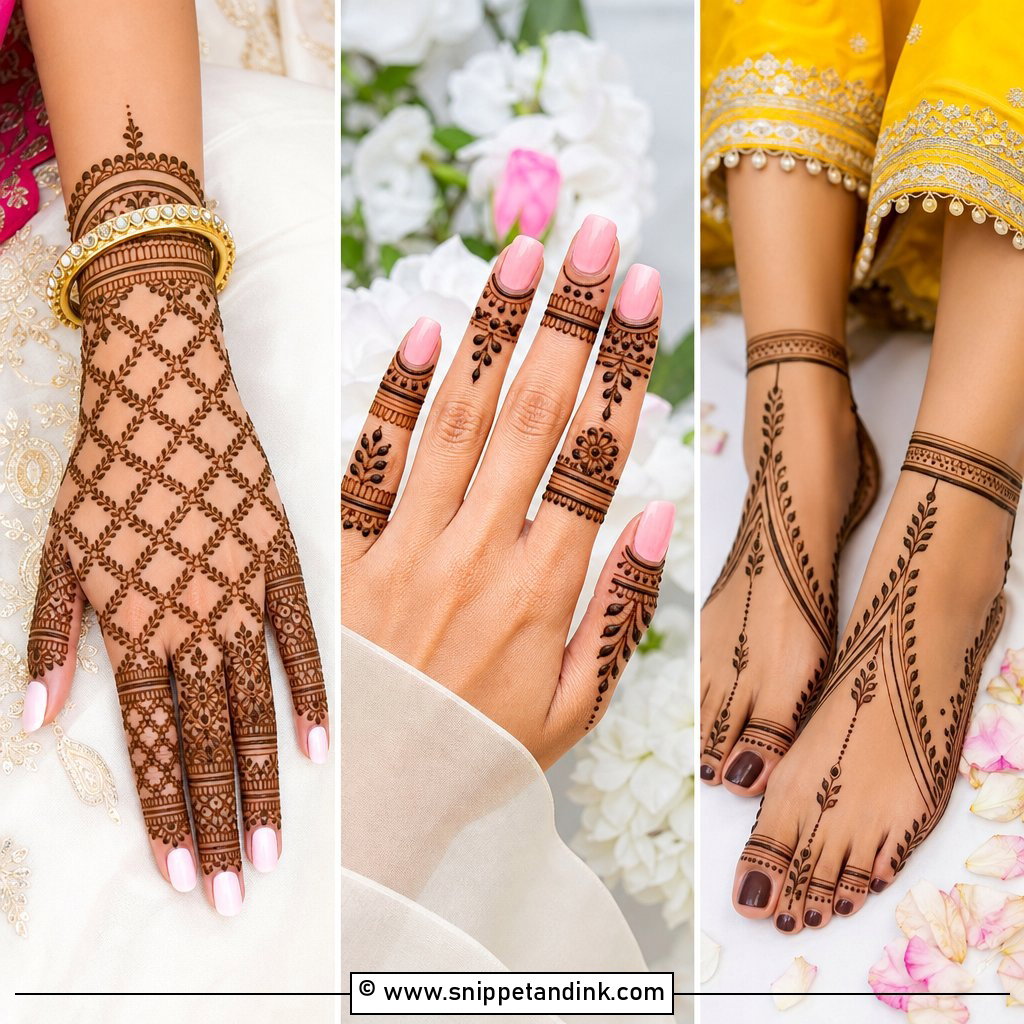
Indo-Arabic for a child is one small floral trail, a mini paisley and a few dots, with plenty of open skin, starting at the wrist and ending near one finger. I leave out the dense shading and tiny net fill completely. It’s a good fit when everyone at a family function is wearing henna and she wants to match.
16. Baby Girl Minimal Mehndi Design
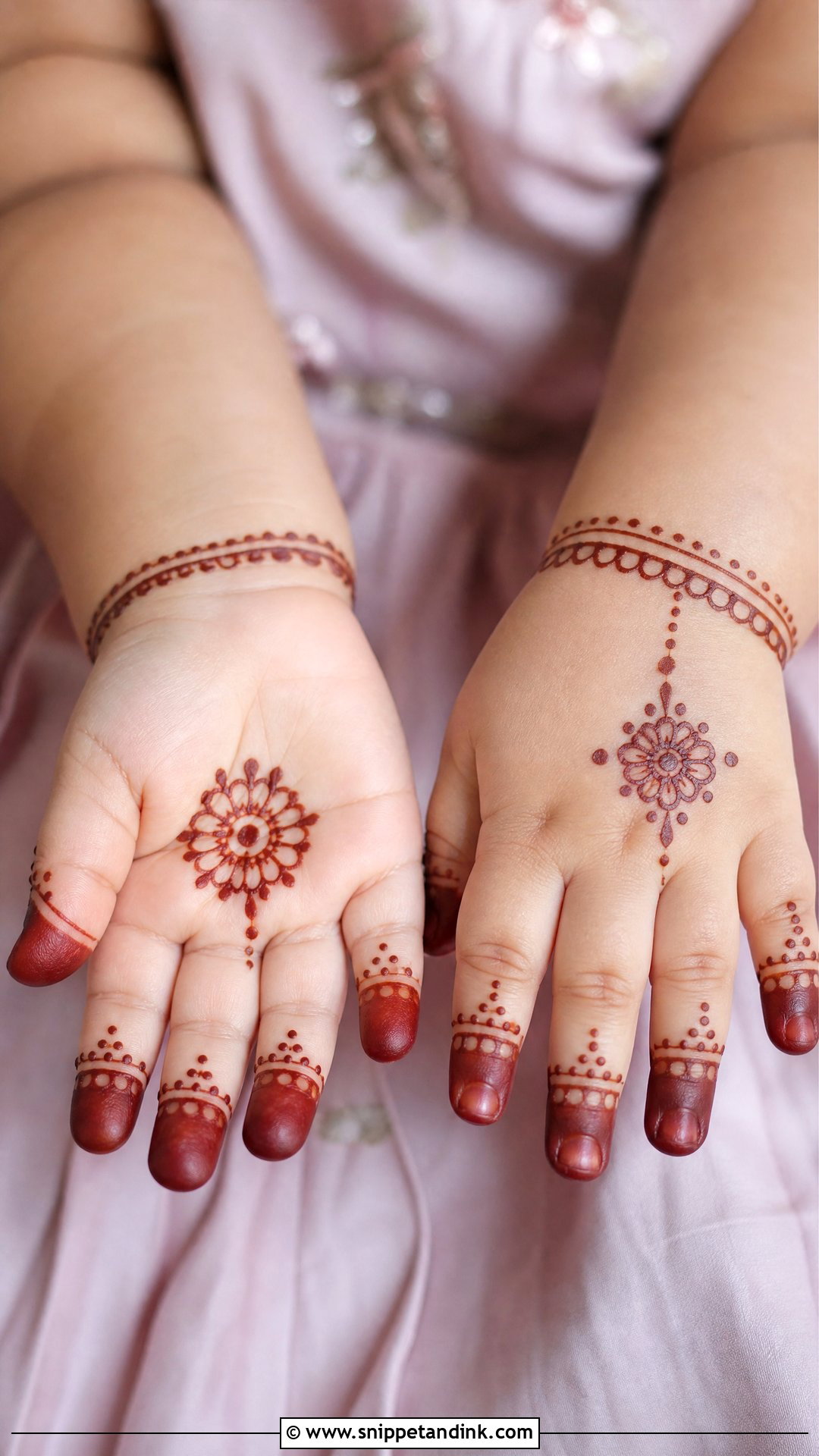
Minimal designs are my honest recommendation for babies under about a year, if they have henna at all. One tiny flower on the back of the hand with fingertip dots, or a small palm tikki with a few dots around it. It should still look placed on purpose, so I balance it carefully. Less paste means less mess, less drying time and less to get into a mouth.
17. Baby Girl Cute Eid Mehndi Design
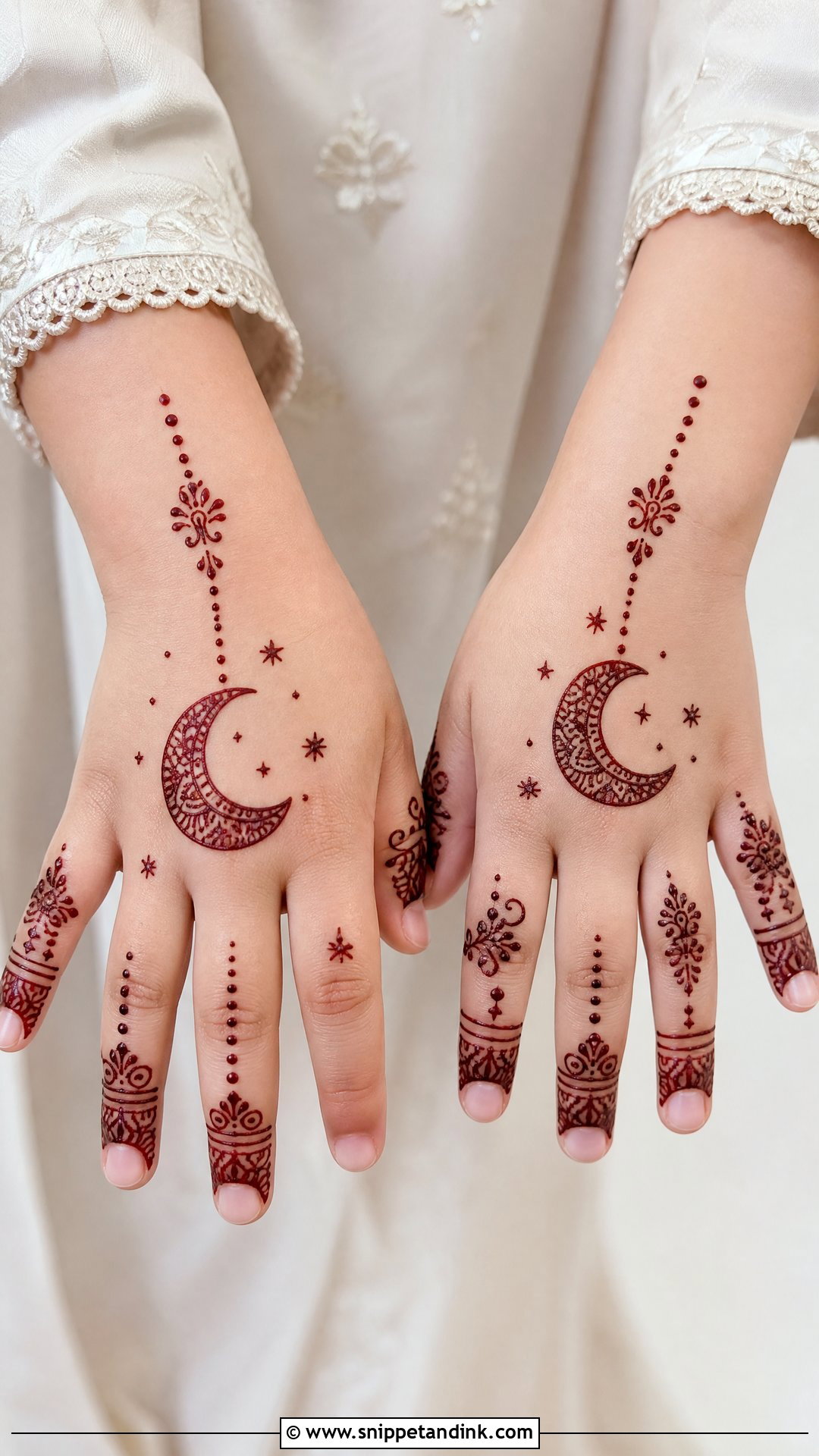
Eid mornings are hectic, so the night before is usually a better time for a child’s henna, while she sleeps. A crescent moon, tiny stars, a few dots and a soft floral touch on the back of the hand, with a short dotted trail to the wrist and a dot on each fingertip. By morning the stain is darkening, ready for the new outfit.
18. Baby Girl Wedding Mehndi Design
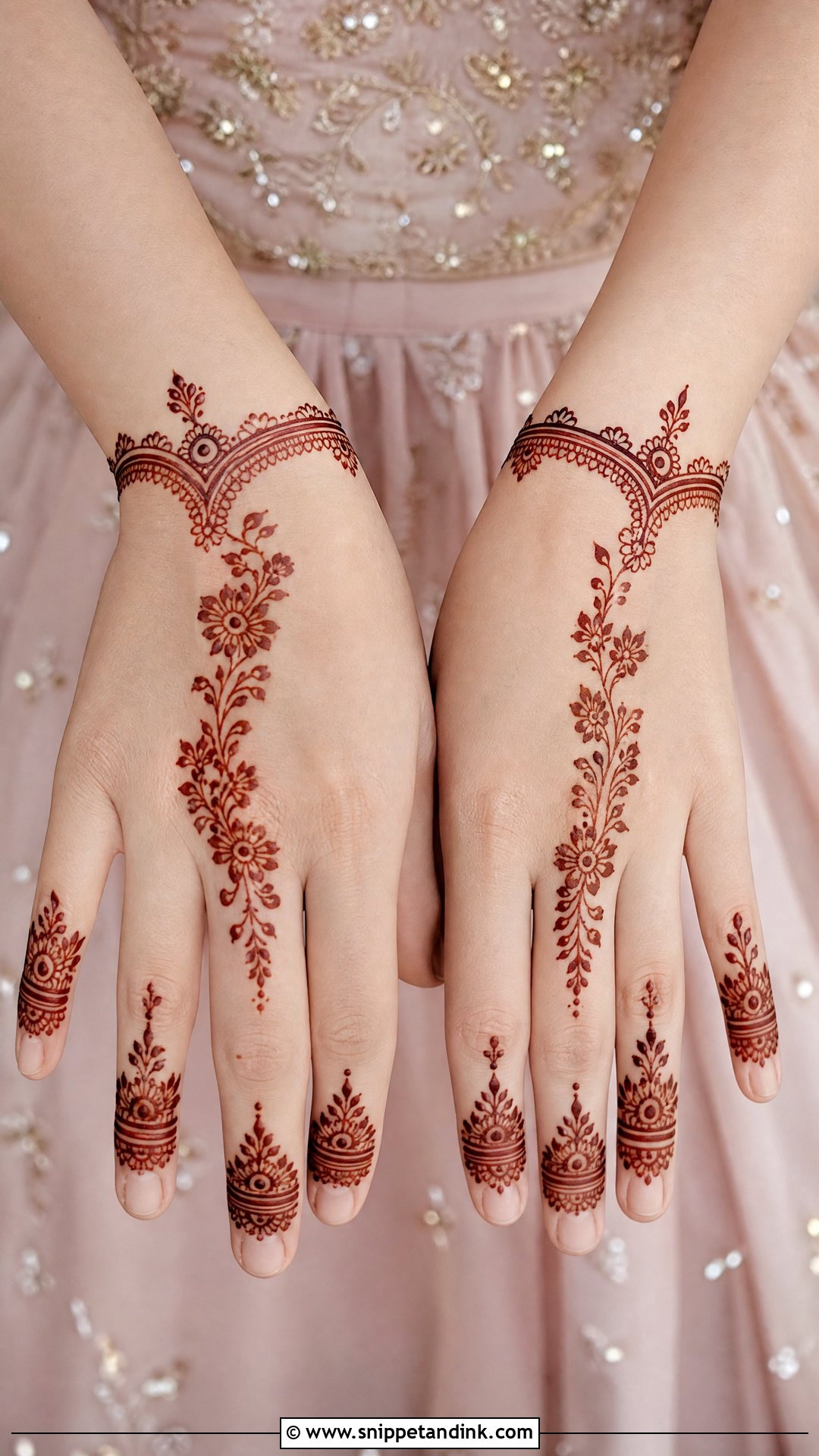
At a wedding, a little girl can have slightly more: a small floral trail on the back of her hand, a wrist bracelet and finger dots, perhaps one mini paisley. Never bridal coverage; it takes too long to dry and too long to sit still for. Leaving the palm open means she can still hold a snack and a parent’s hand during the long day.
19. Baby Girl Birthday Mehndi Design
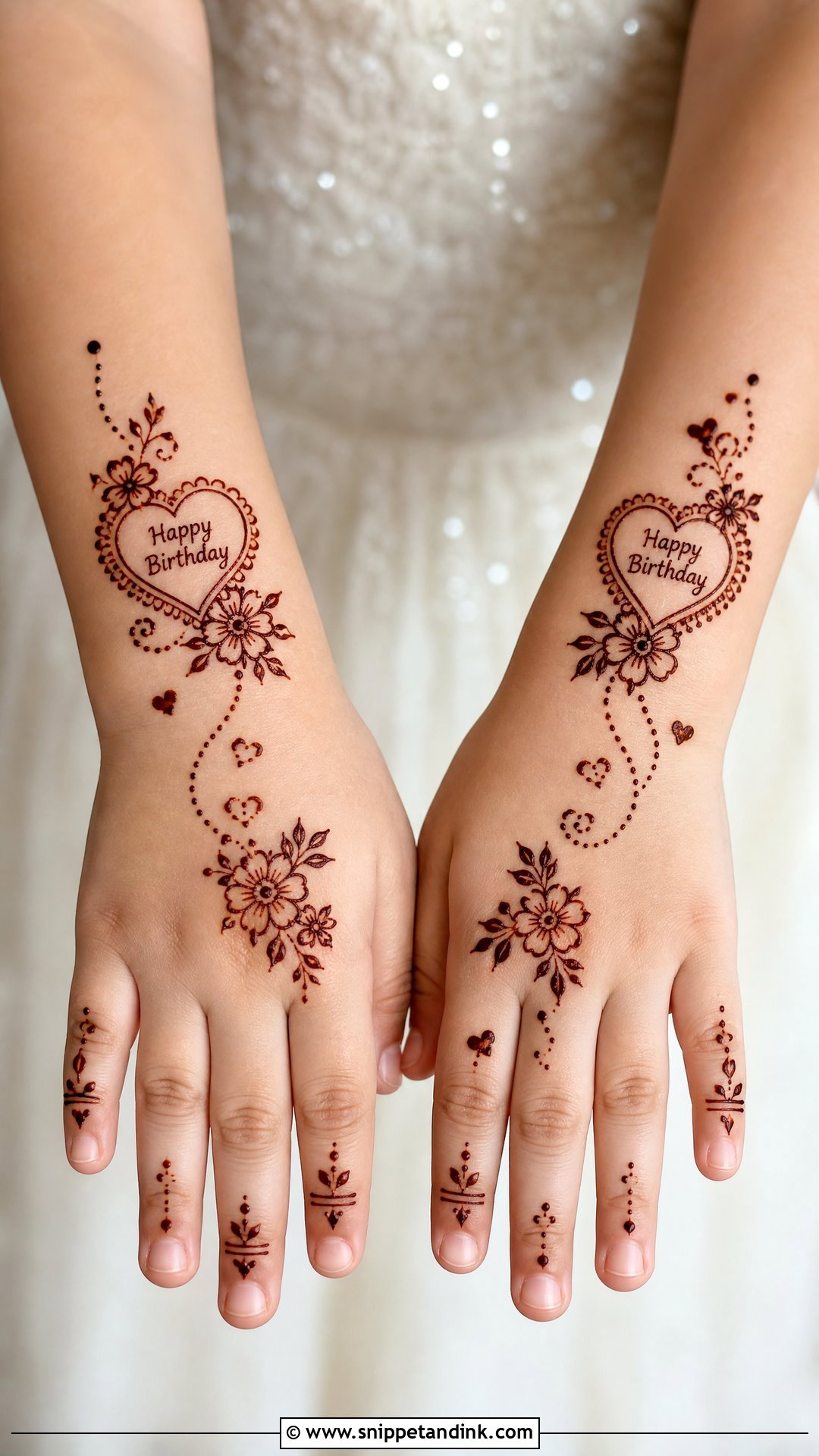
For a birthday I go playful: a small heart, a flower or a balloon shape on the back of the hand, with dotted trails and finger accents, or a wrist band with a heart at the centre. Draw it bold and simple, because birthday parties mean play, and fine detail smudges before it’s dry. Do it the evening before if you can.
20. Baby Girl Full Hand Mehndi Design
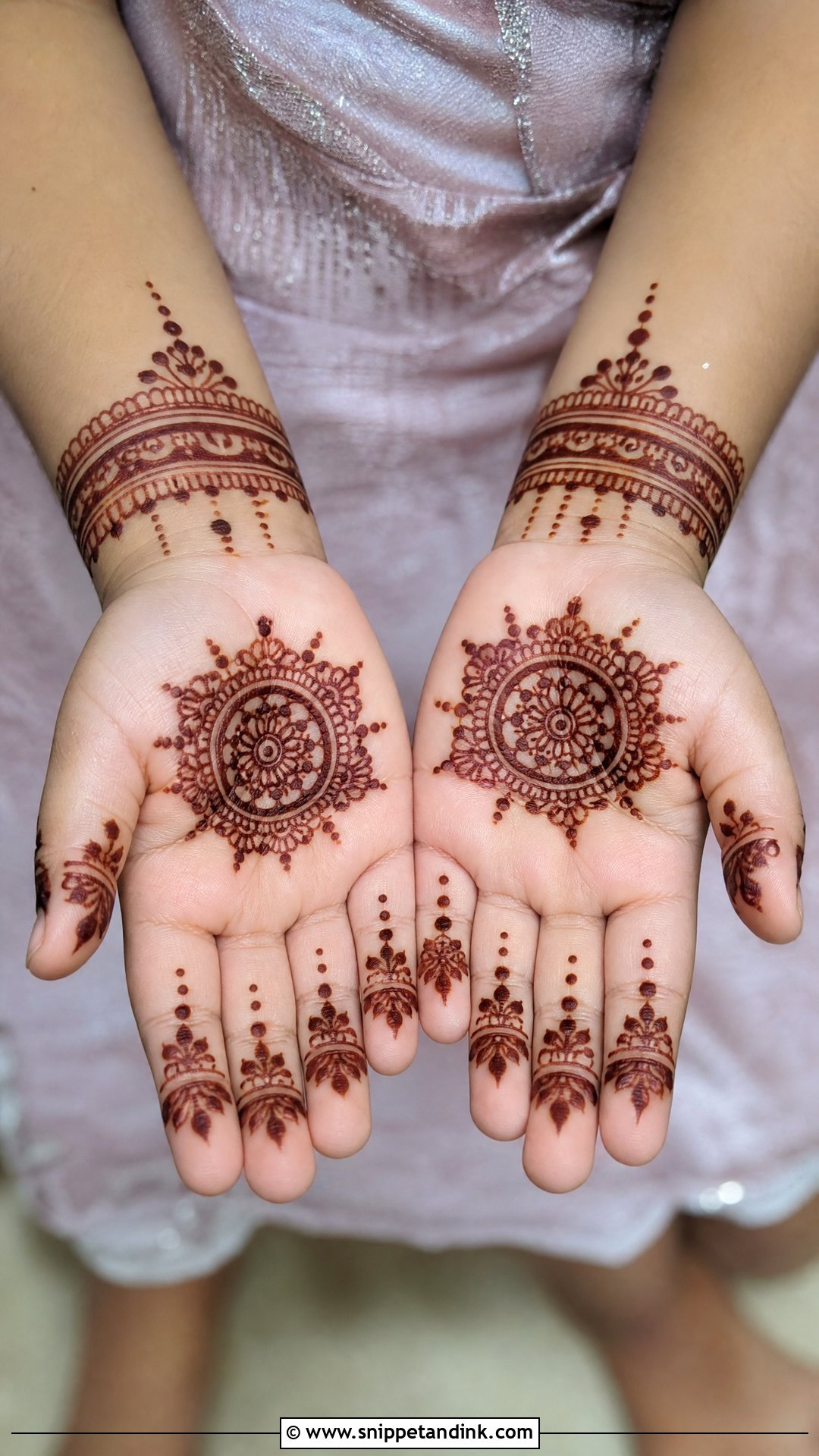
A full hand on a baby still means mostly open skin: a small palm mandala, finger dots, a wrist band and a few tiny flowers. I’d only do this for an older toddler who can sit calmly for several minutes. Larger rounded motifs work better than fine lines. If the paste goes on thickly over a big area, it cracks and flakes as she moves, so keep the lines thin.
21. Baby Girl Half Hand Mehndi Design
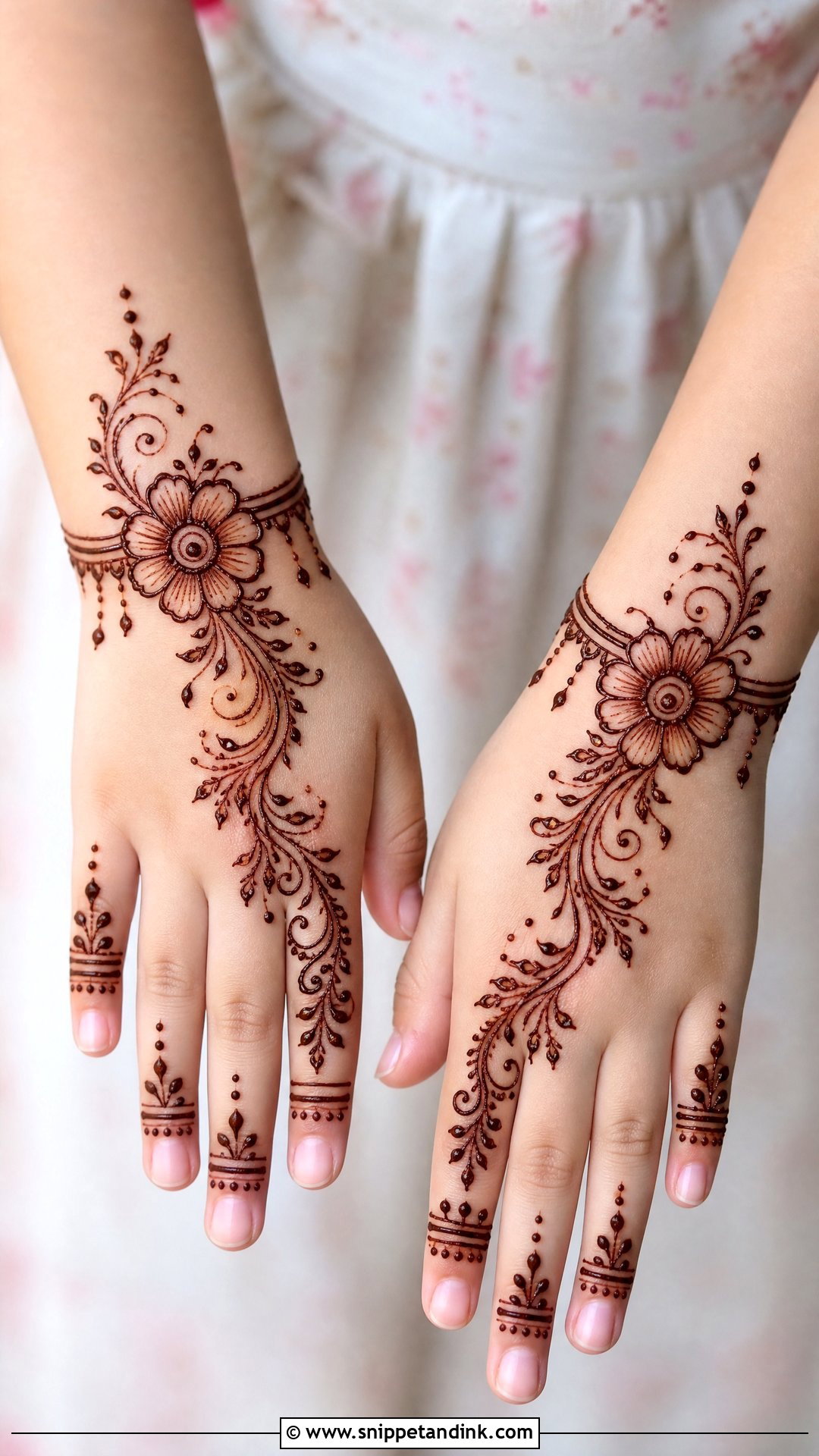
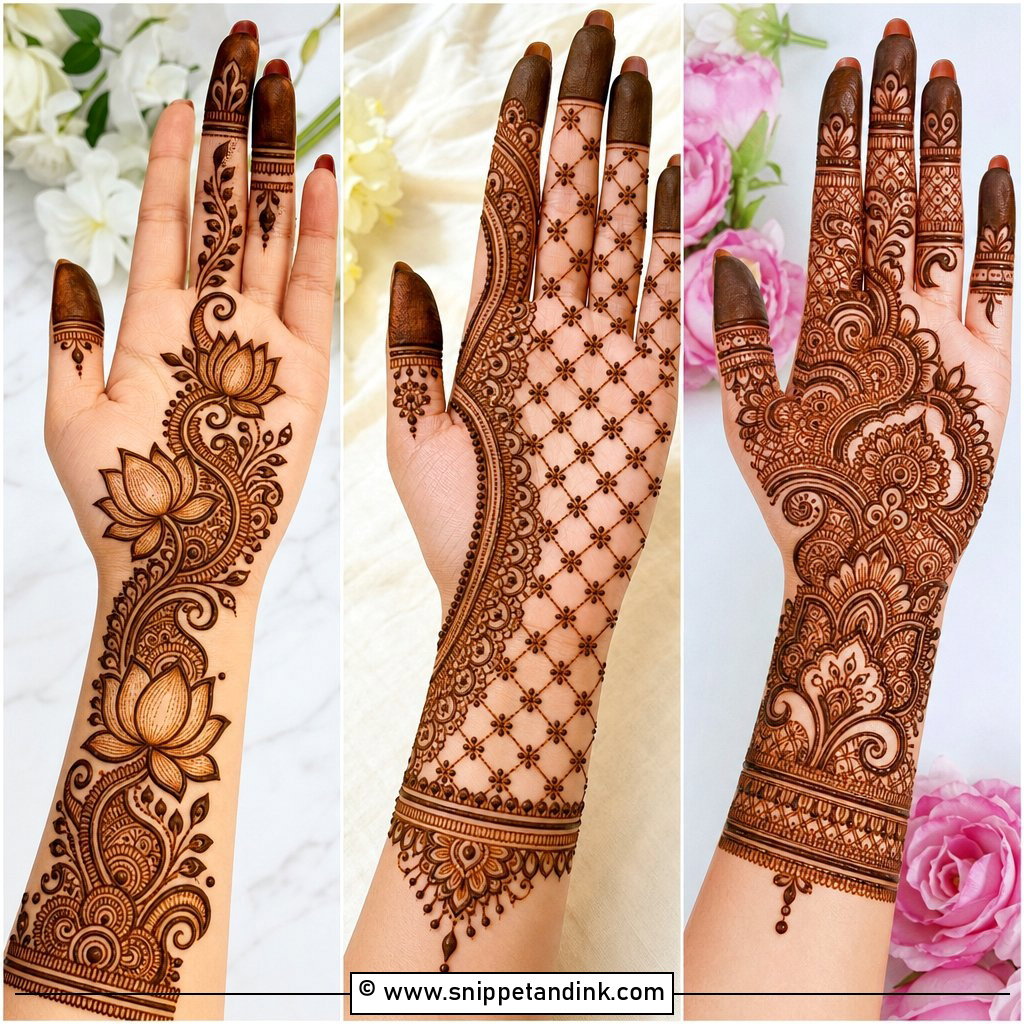
Half hand is the middle ground: a floral vine from the wrist to the centre of the back hand, dots near the fingers and a tiny bracelet, with the palm left plain or given a single tikki. It’s more decoration than a single motif but still manageable for a child who touches everything. I use it for most toddlers at weddings and Eid.
22. Baby Girl Front Hand Mehndi Design
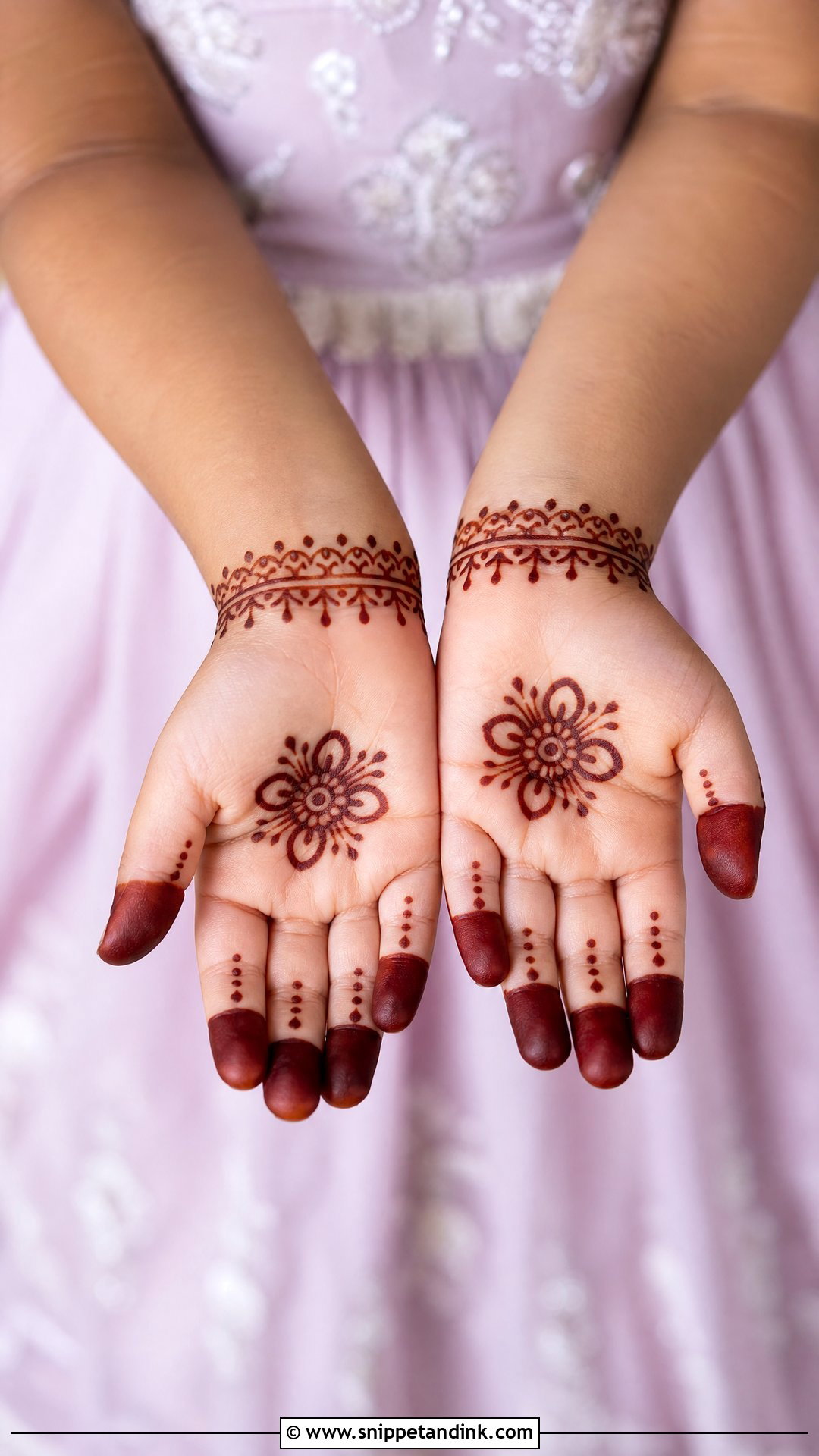
Front-hand designs put the work on the palm and fingers, which is the hardest area on a baby because the fist keeps closing. A small flower or tikki, fingertip dots and a soft curve at the wrist. Keep lines thin so there’s less wet paste to smudge, and hold the hand open for a few minutes while it sets. Palms photograph sweetly when she holds them up.
23. Baby Girl Round Mehndi Design
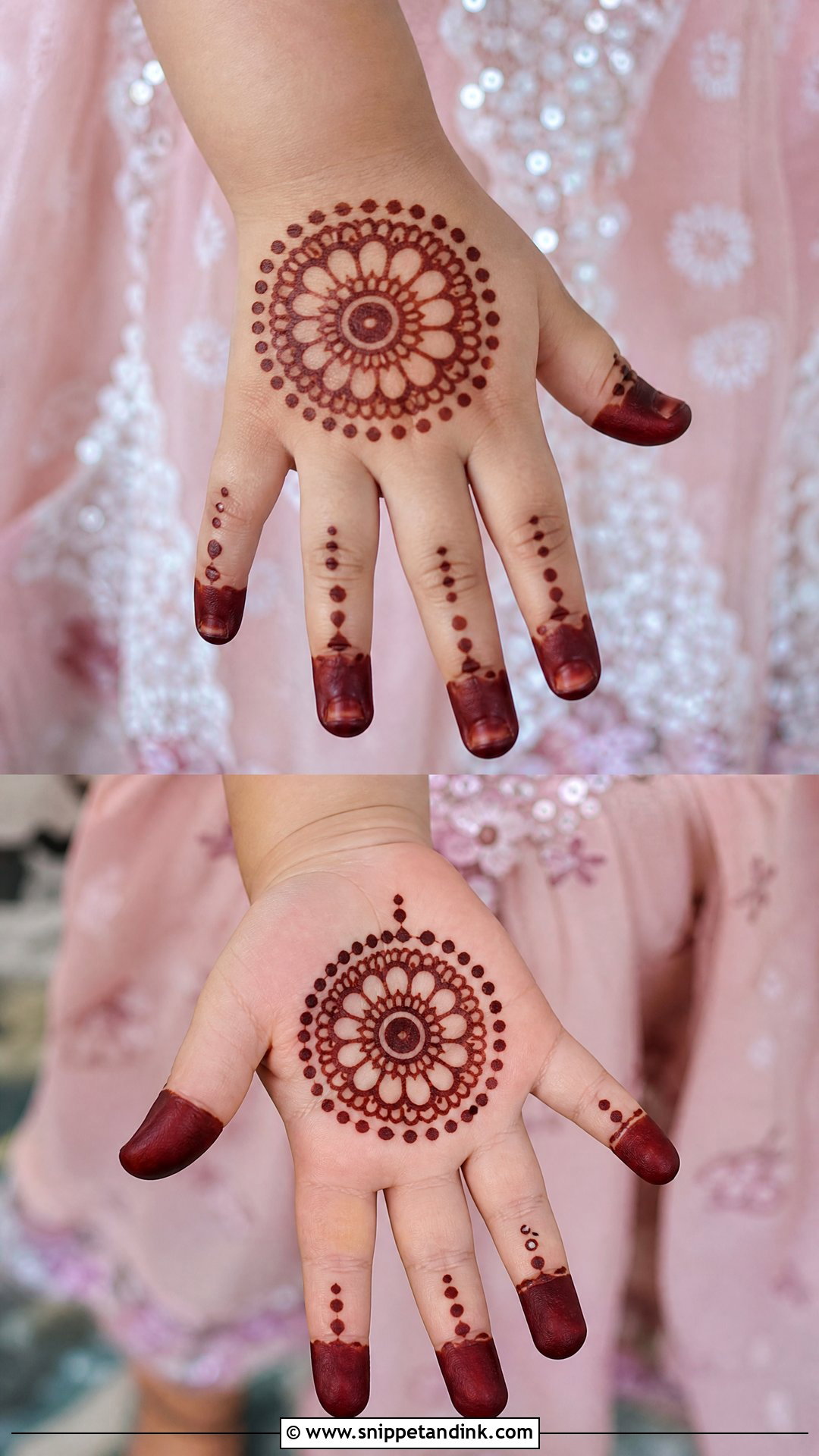
A small circle with one ring of petals, dots or short lines, on the palm or back of the hand, plus fingertip dots and a wrist curve. Round shapes are easy to centre on a moving hand and keep their outline after staining. Don’t fill the circle densely; a solid disc of paste takes longest to dry and is the first thing she’ll smear.
24. Baby Girl Flower Bracelet Mehndi Design
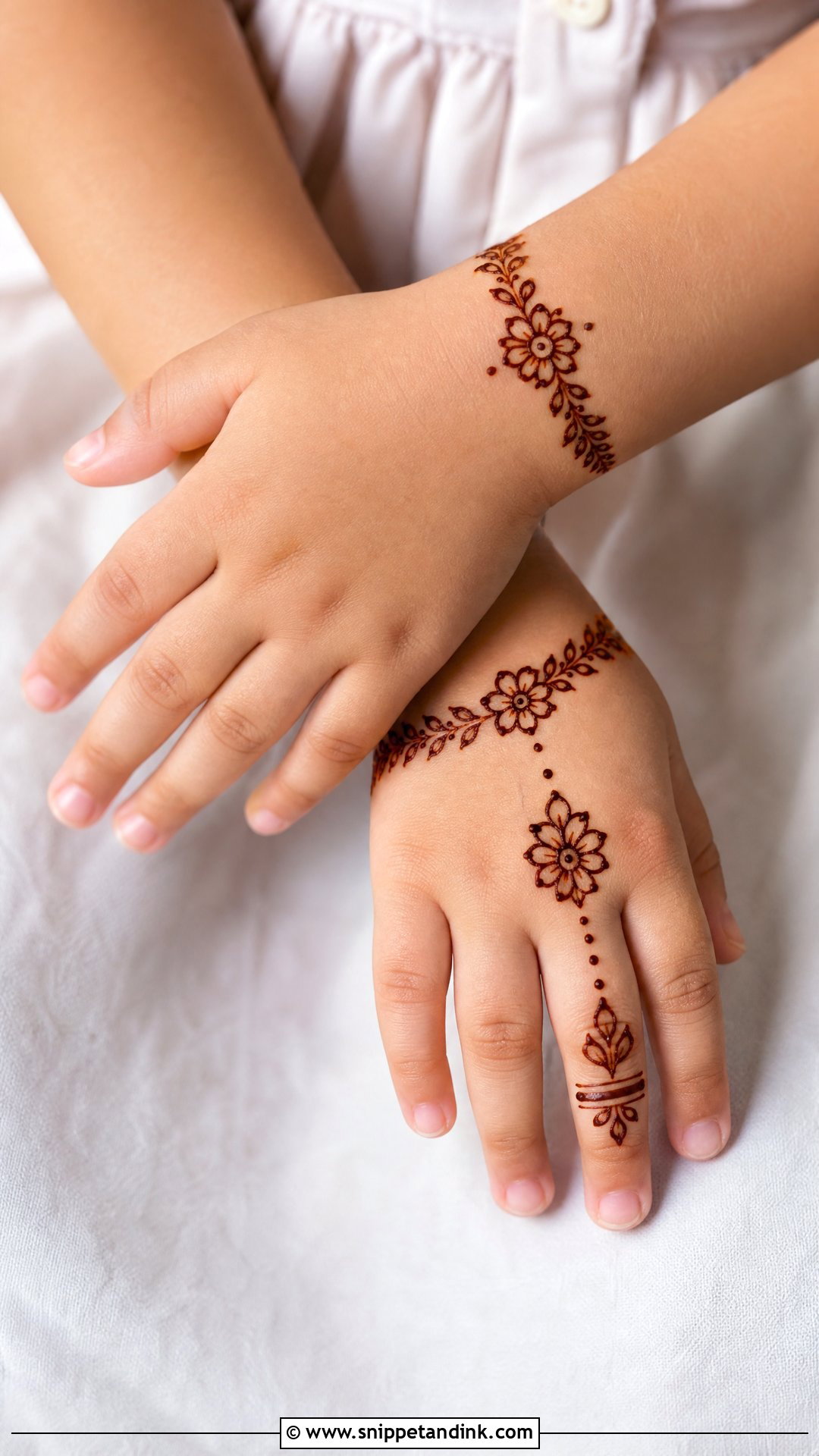
A thin wrist band with one tiny flower at the centre and dots or leaves along it, linked to a finger by a dotted chain. Because the palm and most of the back hand stay bare, there’s little to smudge. It suits a baby who dislikes henna on her hands. Keep the band light and leave space between details.
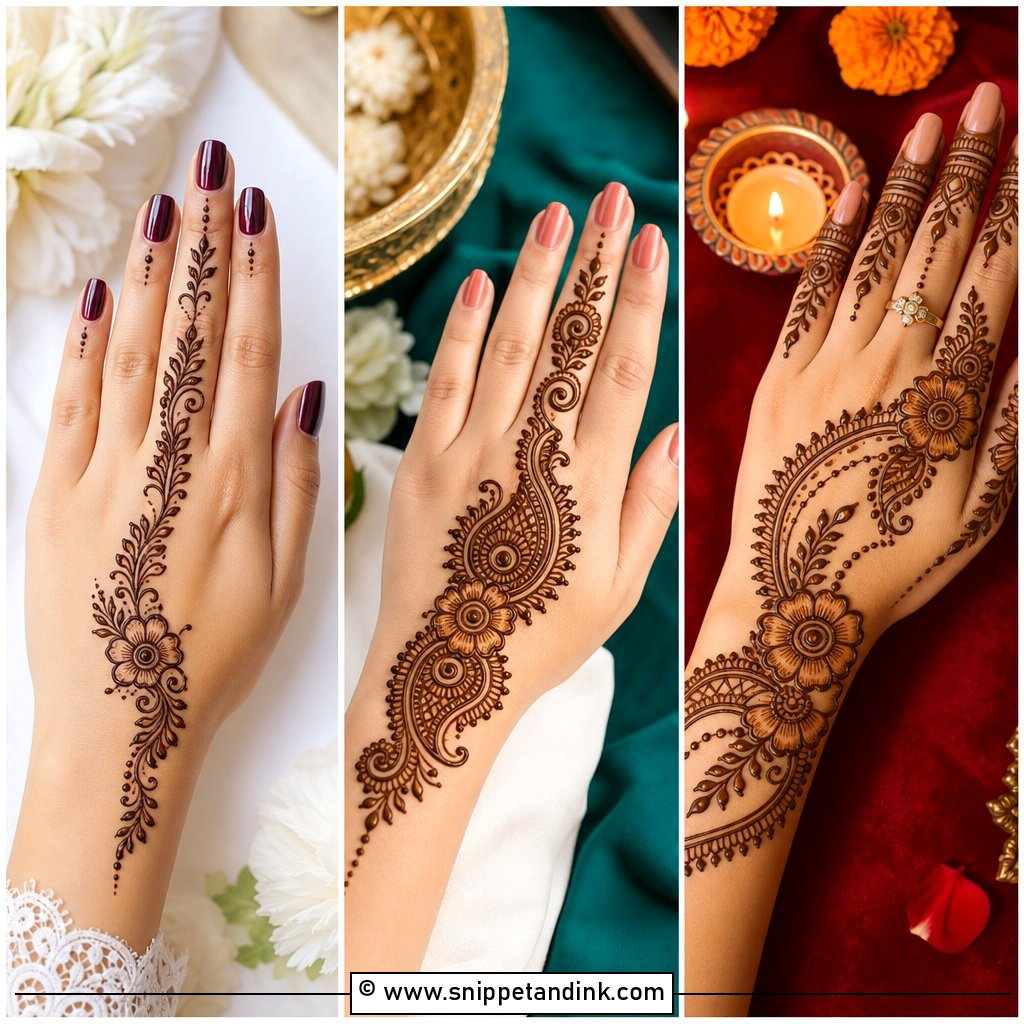
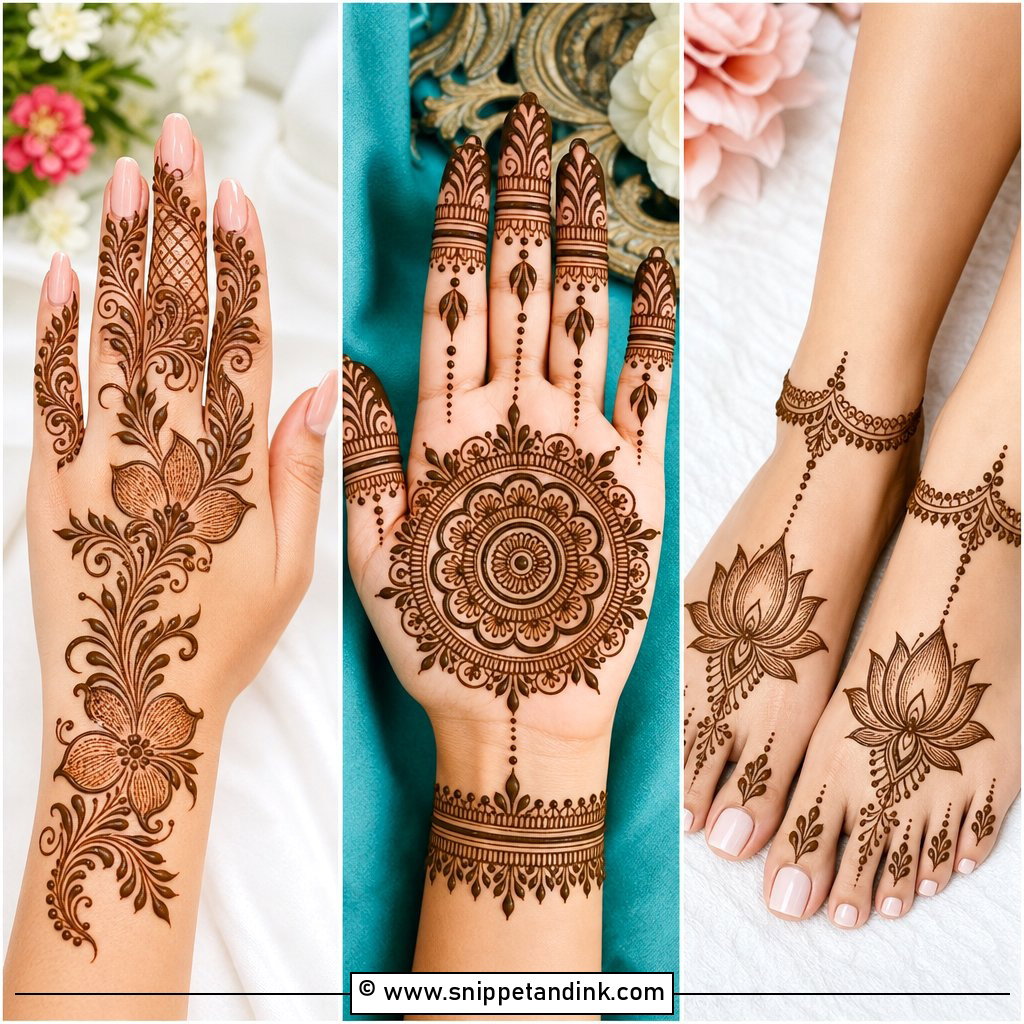
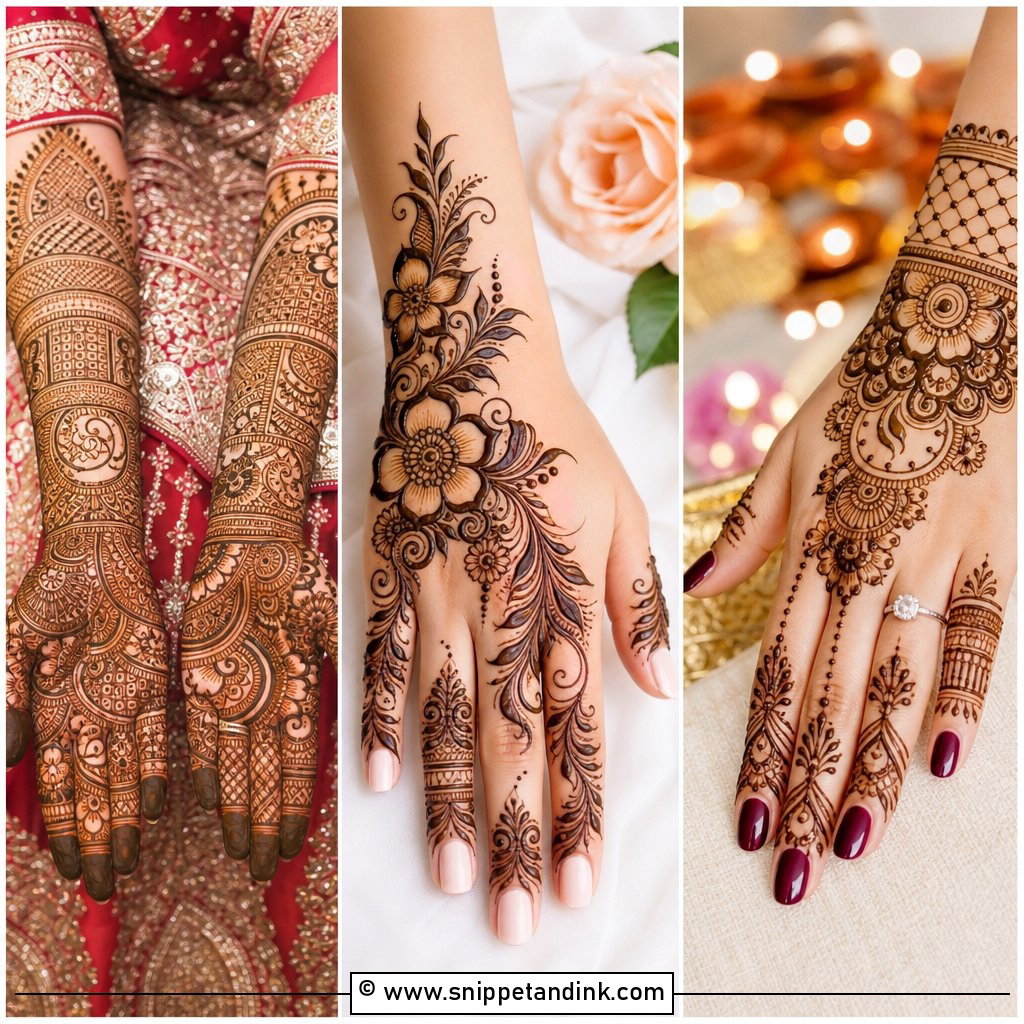
25. Baby Girl Side Hand Mehndi Design
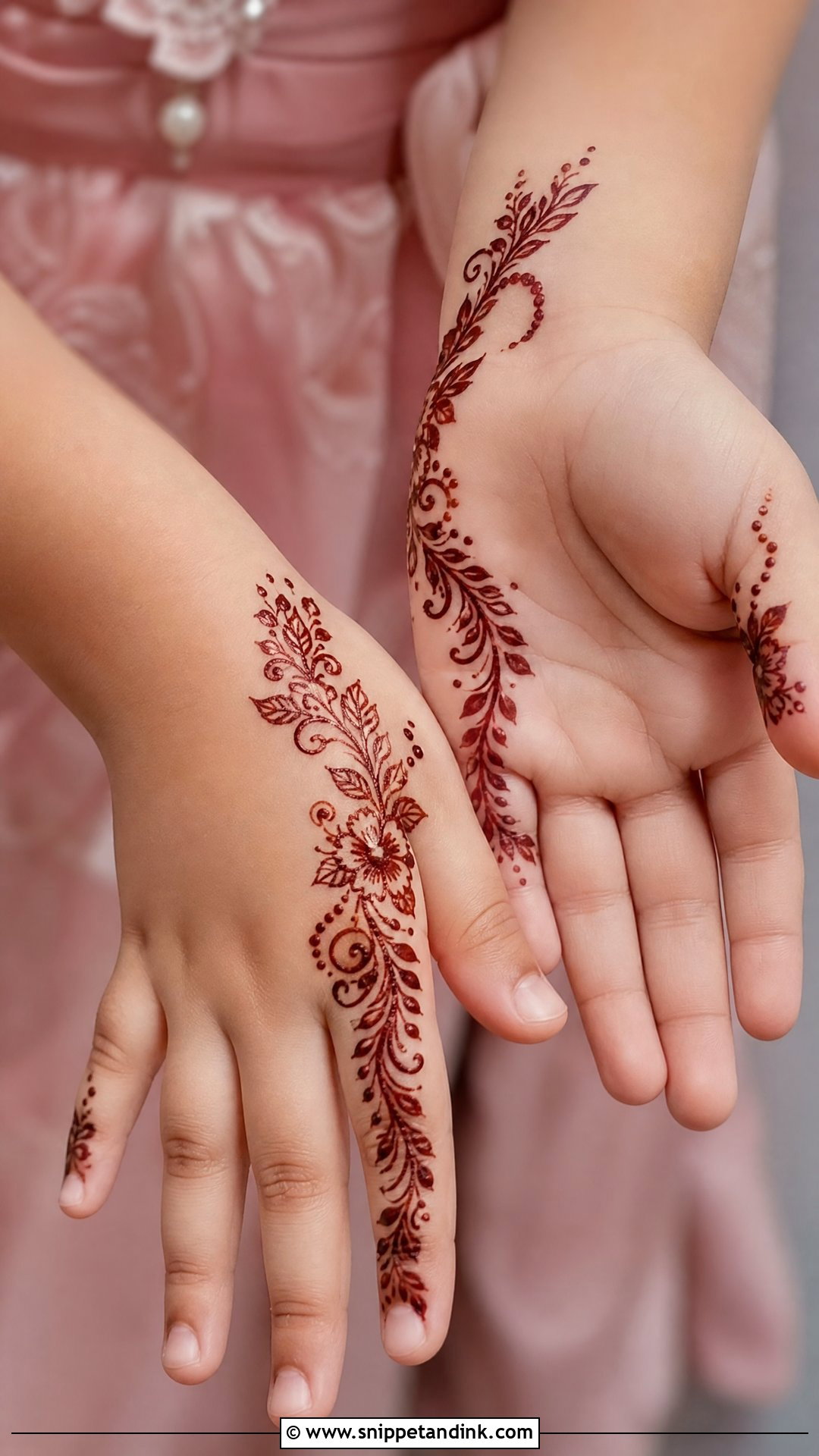
A vine running along the outer edge of the hand, from the wrist toward the little finger, with small flowers, leaves and dots. The middle of the hand stays clear, so she can grab toys freely. Keep it short and stop well before the nails; henna on the nail plate stains the nail itself and takes weeks to grow out.
26. Baby Girl Matching Mom Mehndi Design
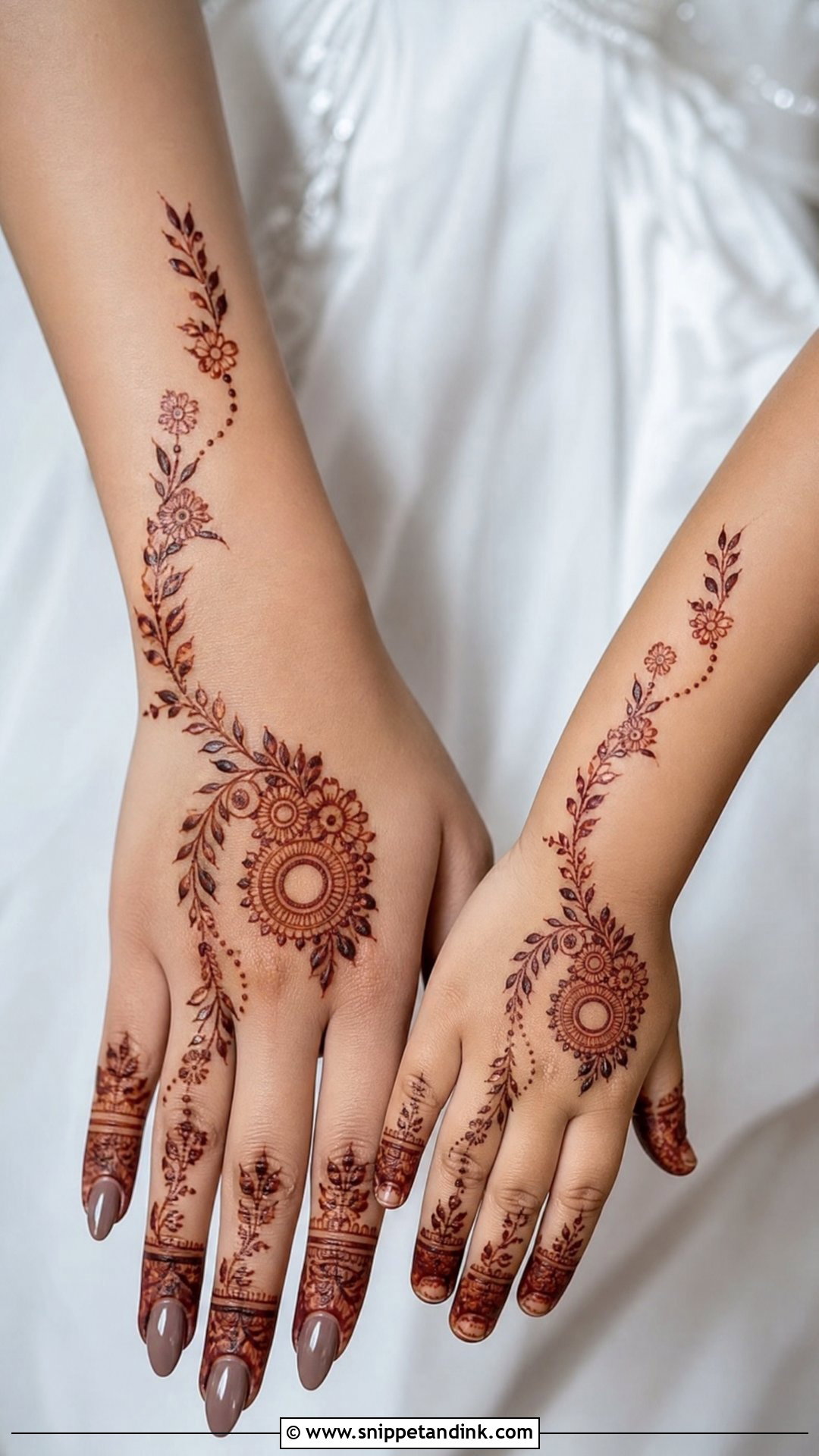
Matching mother and daughter henna is one of my favourite requests, but the baby’s version should only echo the mother’s, not copy it. If mum has a floral trail, the baby gets one flower, two leaves and a few dots on the back of her hand. If mum has a tikki, the baby gets a mini one. I usually do the baby first, while she’s still fresh and calm, then the mother.
27. Baby Girl Simple Feet Mehndi Design
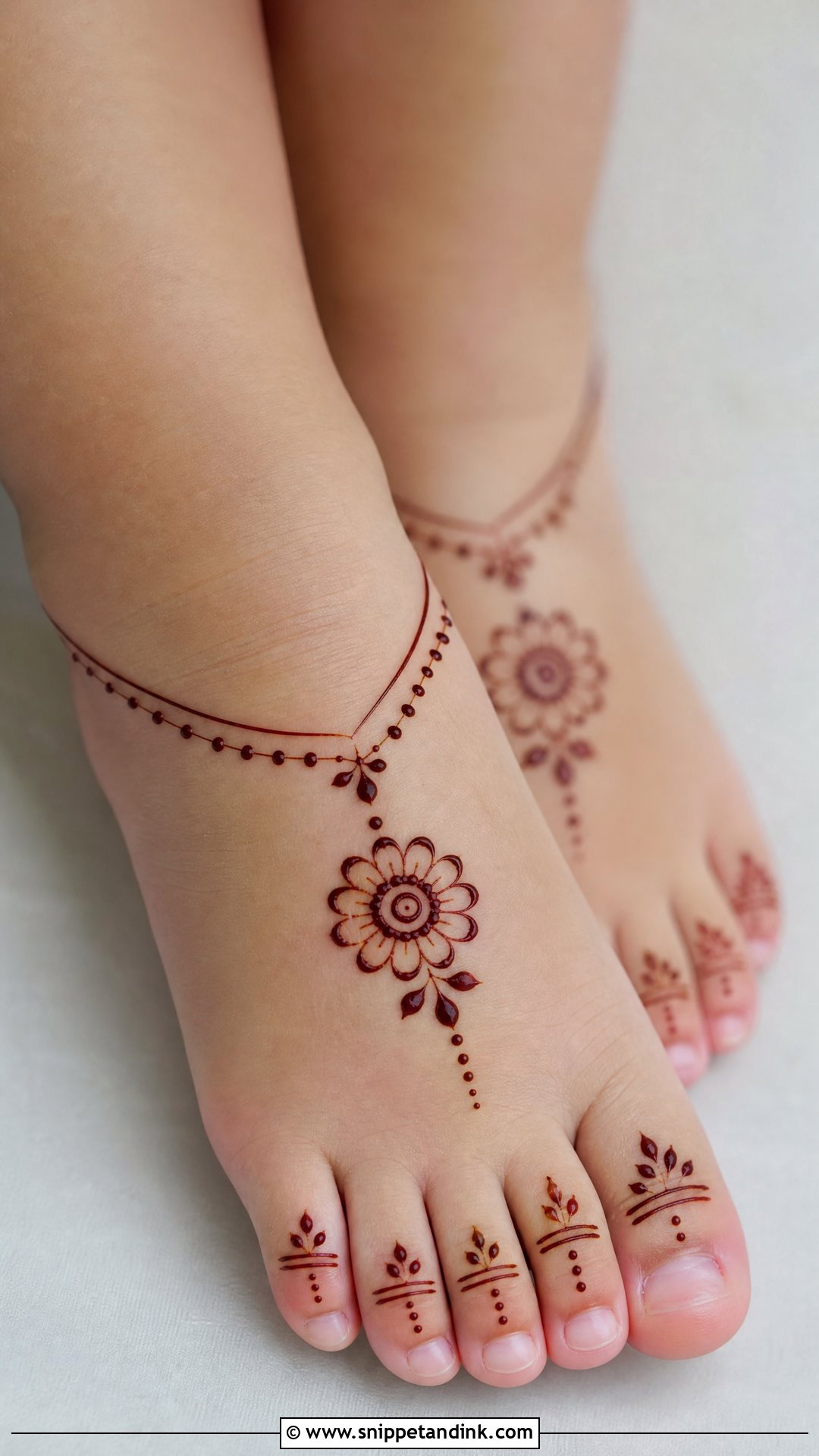
Feet are a good alternative for babies who won’t keep their hands still, since the feet are away from the mouth. A small flower, a dot cluster or an anklet line on the top of the foot. I don’t cover the soles; babies rub their feet together constantly and the paste would smear everywhere. Keep her supervised and barefoot until it’s dry.
28. Baby Girl Anklet Mehndi Design
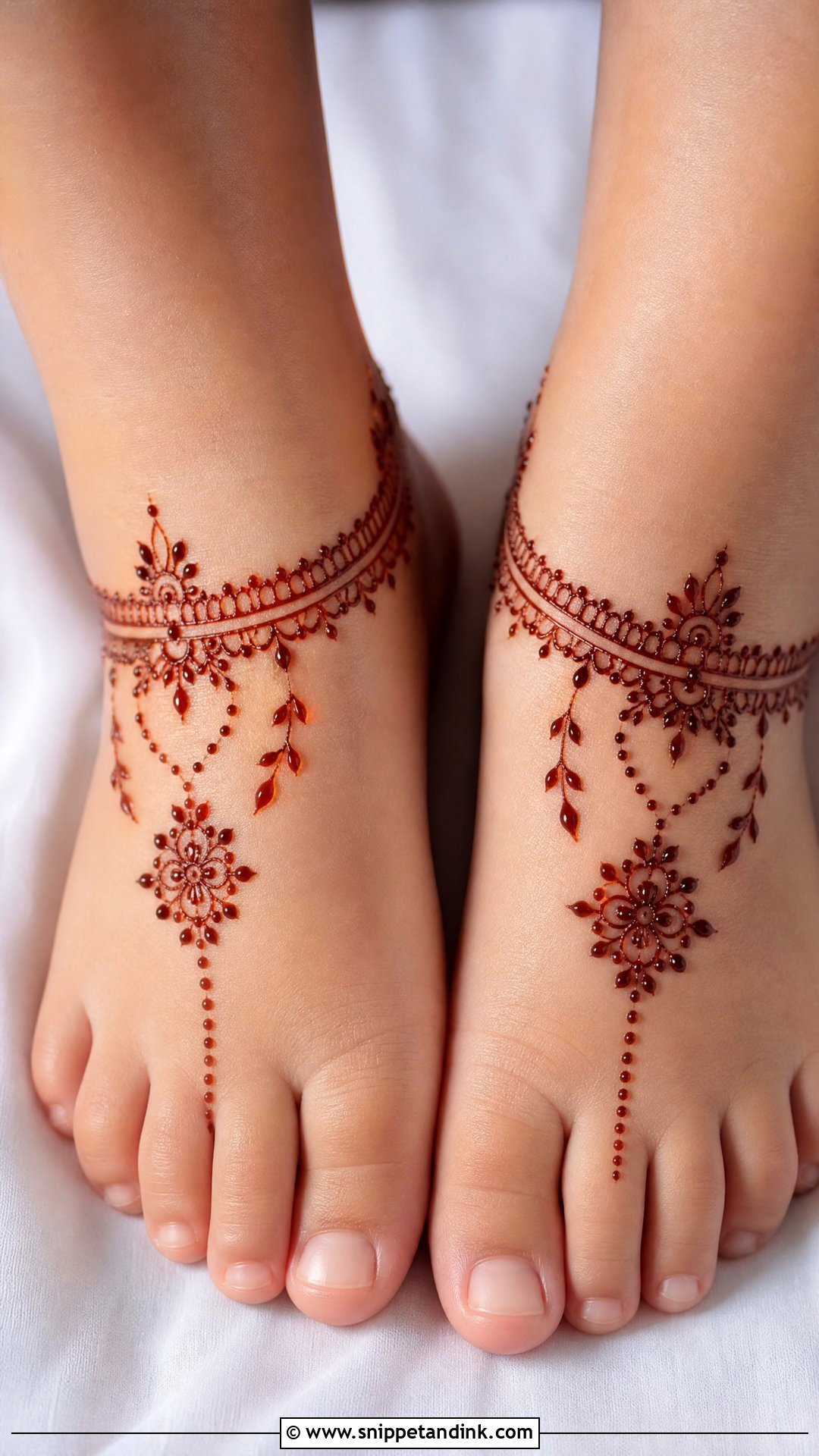
An anklet is a thin band of dots, leaves and a tiny flower around the ankle. It looks like jewellery with a traditional outfit and leaves the hands completely free. Apply it while she’s calm, ideally asleep, and keep socks and tights off until the paste has dried and flaked away.
29. Baby Girl Moroccan Mehndi Design
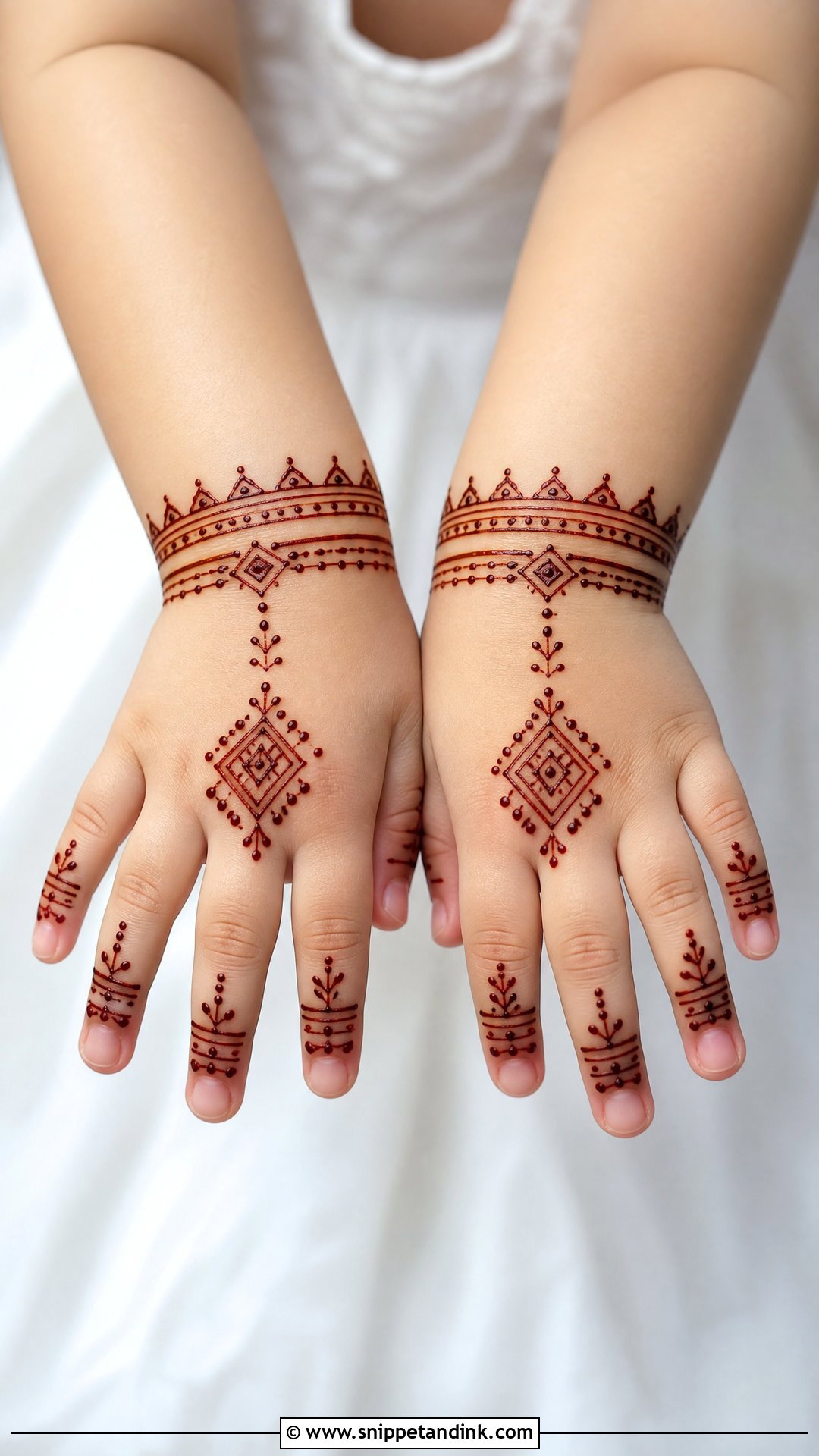
Moroccan geometry can be made child-friendly with a small diamond on the back of the hand, a few dots, short lines near the wrist and a mini band. I round off every corner, because sharp angles are hard to draw on a moving hand and look harsh at this scale. It’s a good option for parents who prefer clean patterns over flowers.
30. Baby Girl Gulf Mehndi Design
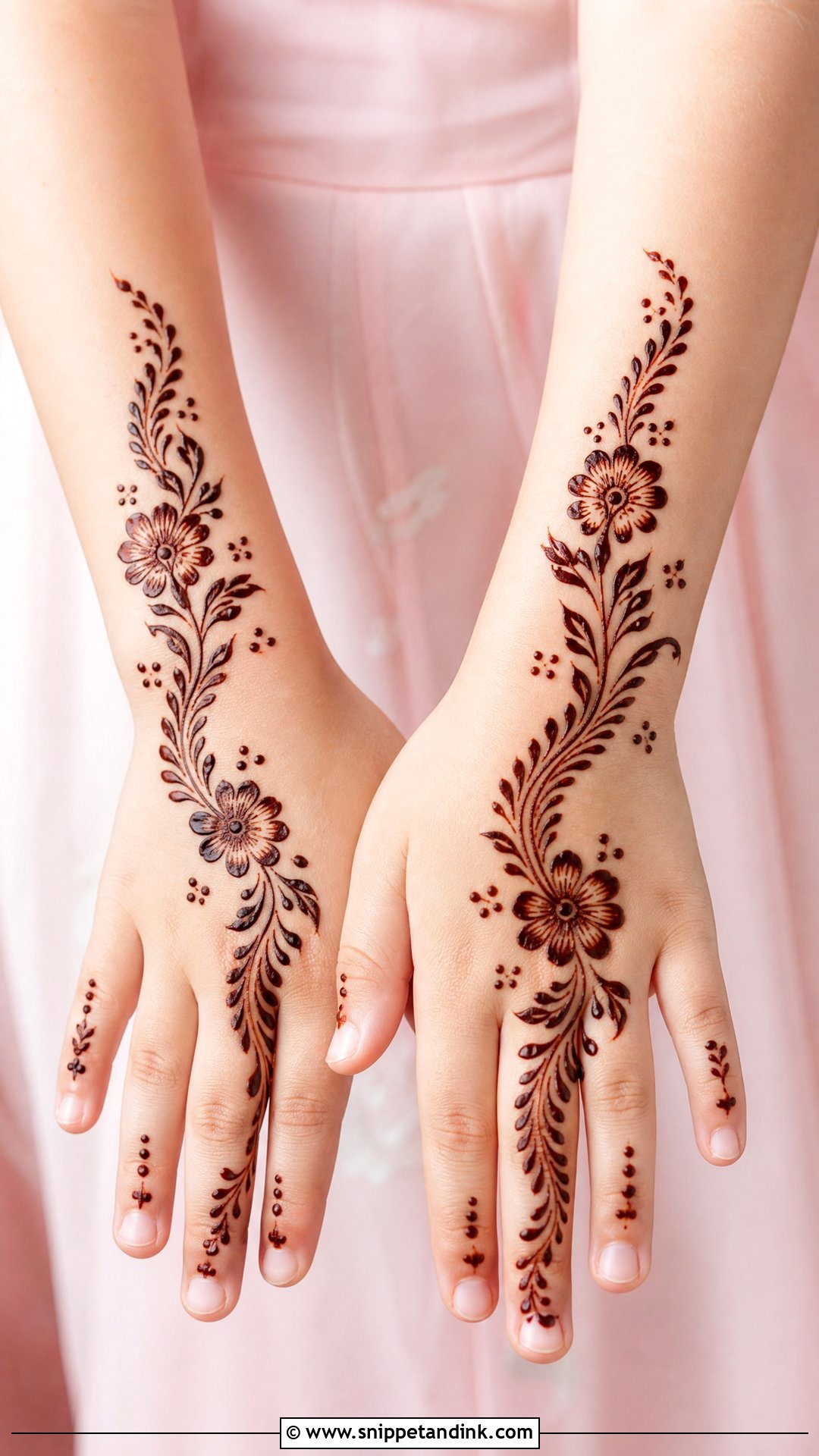
Gulf-style mehndi for a baby is one rounded flower near the wrist or on the back of the hand with a curved leafy trail toward one finger, and the rest left open. It reads a little bolder than other styles because of the big round petals. I skip the heavy fingertip fills that adult Gulf designs use. It’s pretty for Eid and weddings.
Keeping Wet Paste Out of Little Mouths
The real challenge with babies isn’t drawing the design. It’s the next hour, while the paste is still damp and her hands keep heading for her face.
- Apply during a nap or a feed, when she’s naturally still.
- Once the surface is dry to the touch, slip a loose cotton sock over the hand as a mitten.
- Leave the paste on for about an hour. That gives a light, pretty stain, which is all a child needs.
- Skip the lemon and sugar sealant adults use. It’s sticky and invites licking.
- Let the dry paste flake off, or rub it away gently with a little oil instead of scrubbing.
If you see redness, swelling or fussing at the spot, wash the paste off straight away with mild soap and water, and speak to a doctor if it doesn’t settle. A child’s stain will usually be lighter than an adult’s and fade within a week or two, which is no bad thing.
Little Hands, Light Henna
For a little girl, comfort and safety come first and the design comes second. Small, open, quick motifs, flowers, dots, moons, stars, vines, bracelets and tiny mandalas, are all she needs. Natural henna only, a patch test first, and placements away from the mouth for babies who still suck their hands. Light Arabic, floral or matching mother-and-daughter designs all suit special occasions, and a few minutes of henna is plenty for a child to feel part of the celebration.
You'll Like These Ideas:




Leave a Reply