
The palm is where henna does its best work. The skin there takes the deepest stain on the body, and the open center gives a design room to breathe, which is why most clients ask me to start in the middle of the hand. How much of the palm you cover decides whether a design feels simple, festive or bridal. Right now the requests I get most are clean mandalas, bold single flowers, lotus and paisley work, and designs that leave plenty of bare skin between motifs. Below are thirty palm ideas, from a quick pattern for a family dinner to full festival hands, with notes on how each one behaves once the paste comes off.
Why Palms Stain Darker Than the Back of the Hand
Clients often ask why the same paste gives a deep maroon on the palm and a lighter brown on the back of the hand. The answer is skin. The outer layer of skin on the palms is much thicker than elsewhere, and henna’s dye binds into that outer layer. More layer means more dye held and a deeper color.
That’s why I treat the palm as the place for the main design and the back of the hand as support. It also explains why palm stains fade faster in daily life: handwashing and constant use wear the outer skin away sooner.
What I check before applying
- The paste is natural henna only. Dark ‘black henna’ can contain PPD, a chemical dye that may cause serious skin reactions, and I won’t use it.
- Hands are washed and dry, with no lotion or oil on the skin, since a barrier blocks the dye.
- Anyone with sensitive skin does a small patch test a day or two ahead.
- The client has eaten and used the bathroom, because a full palm means hands are out of action for a while.
1. Simple Palm Mehndi Design
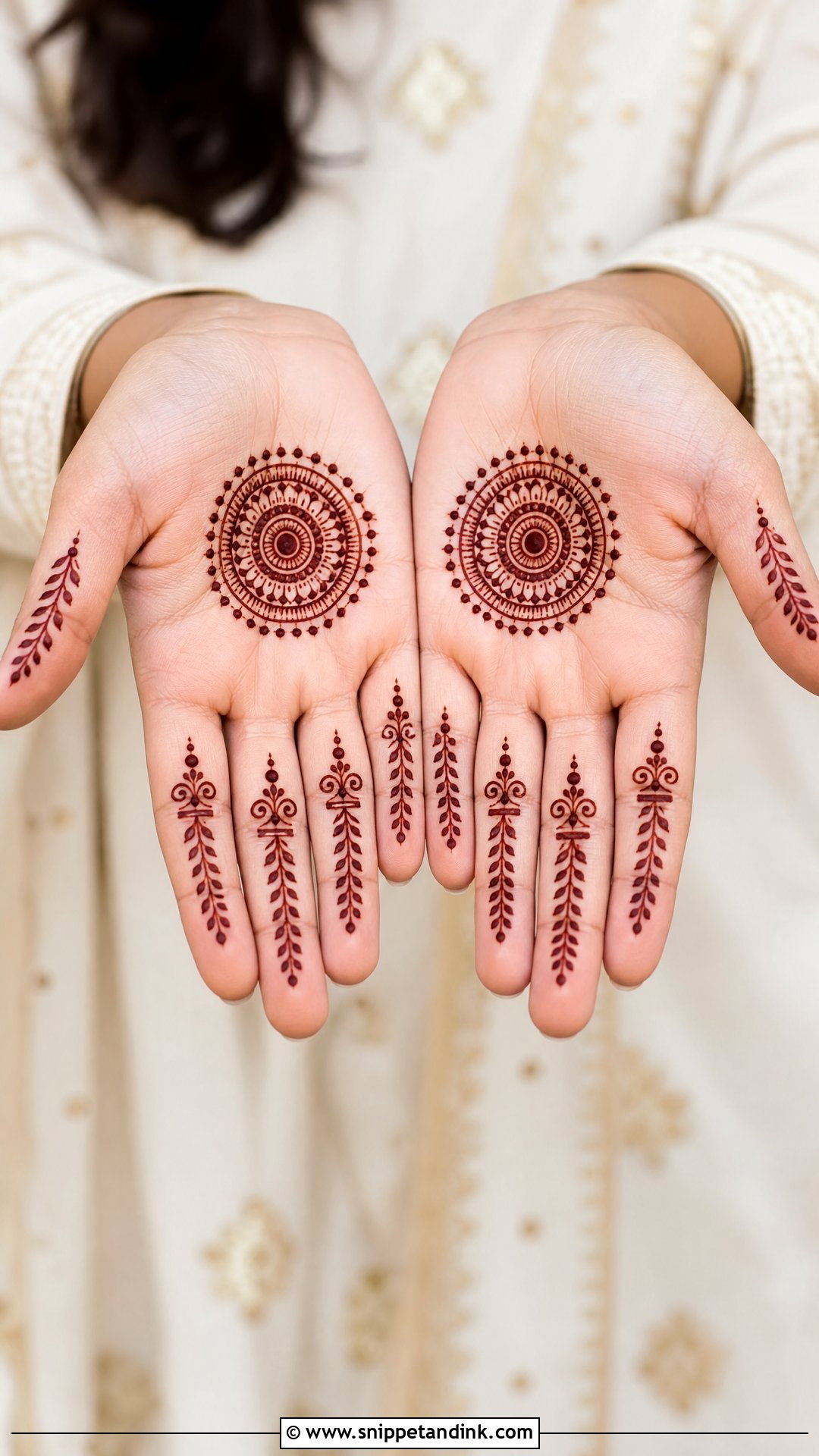
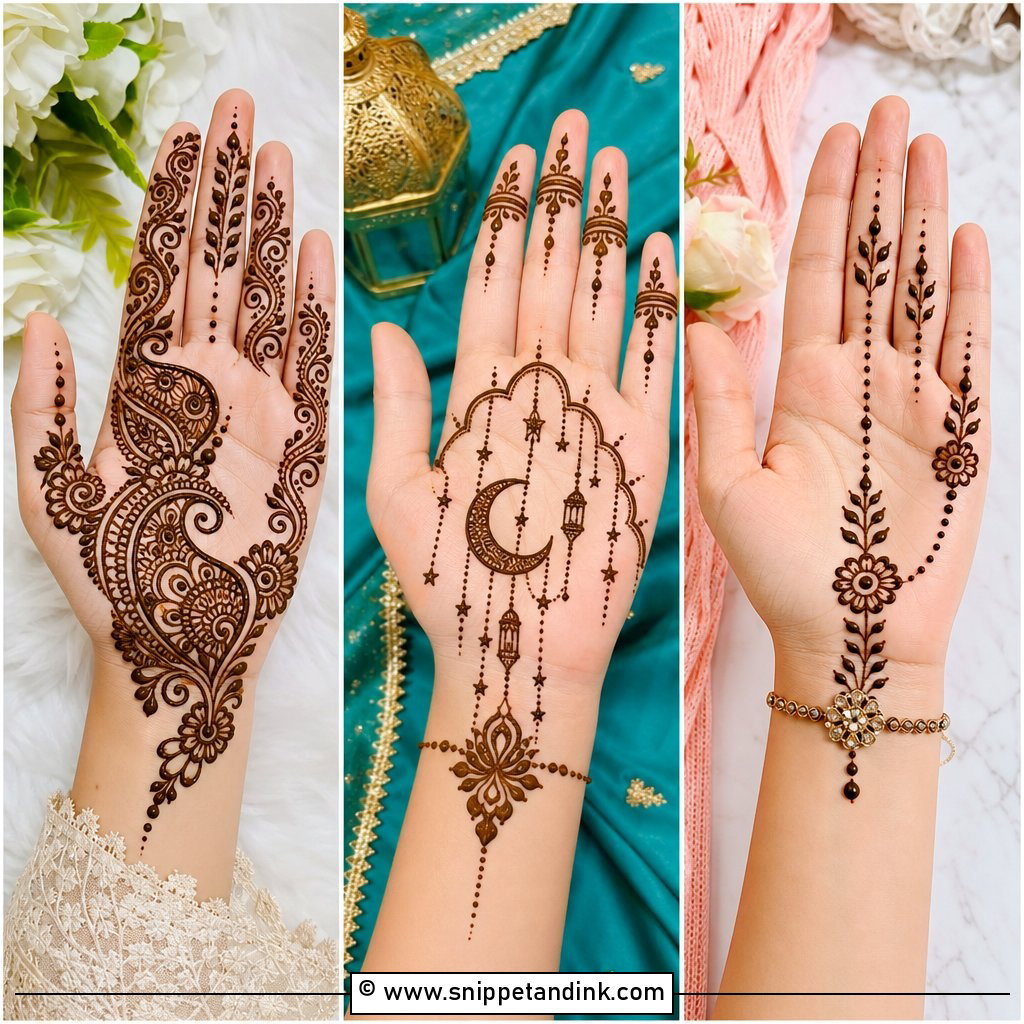
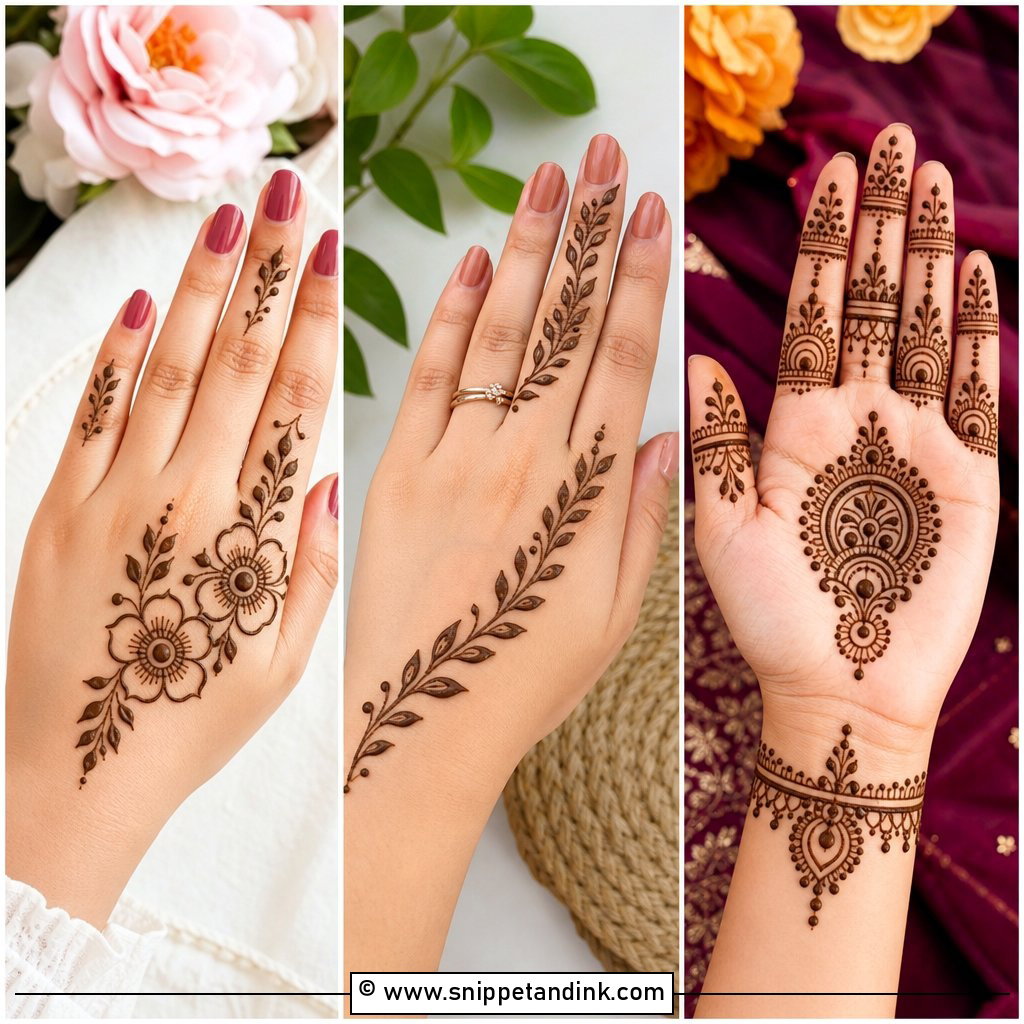
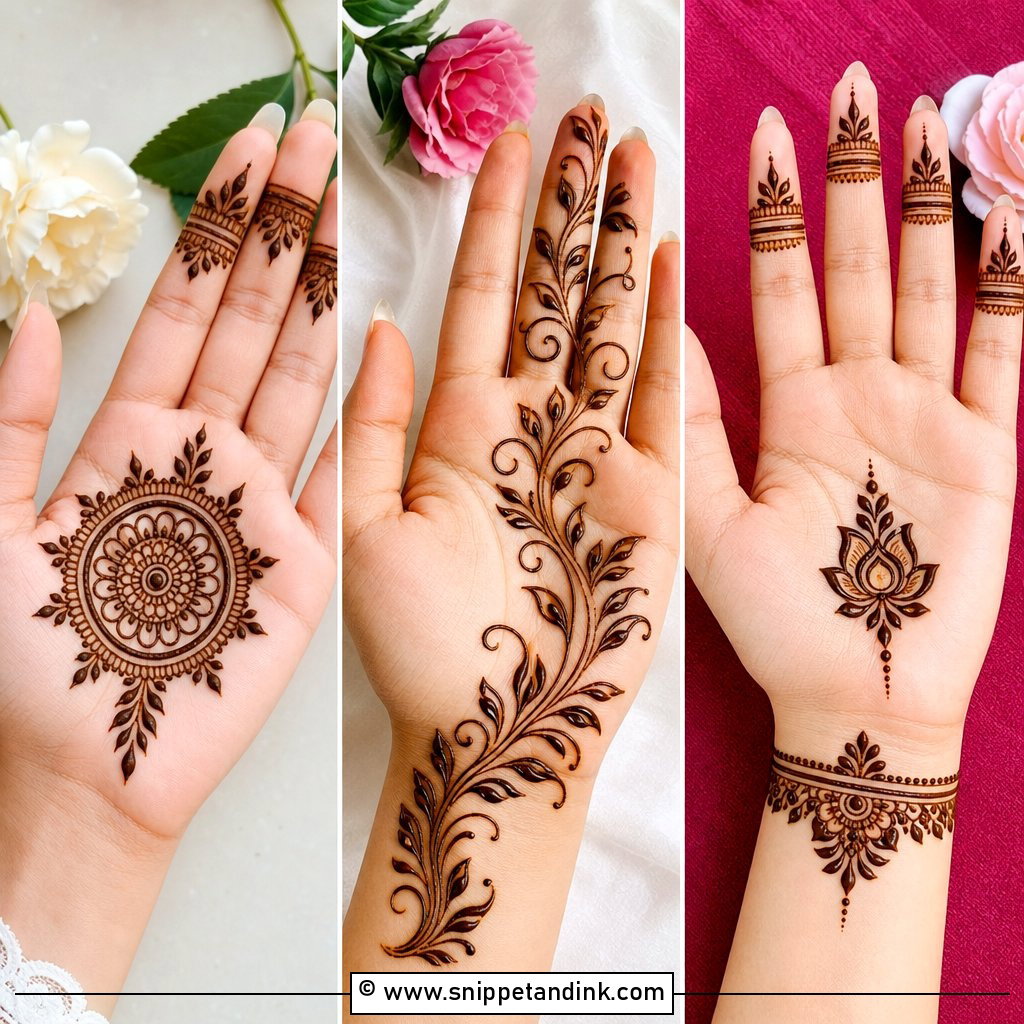
A simple palm mehndi design usually starts with a round tikki, a small mandala or one flower in the center. From there I run light dots and slim leaf trails toward the fingers and stop well before the whole hand fills. With so little paste on the skin, it dries quickly and the wearer can use her hands again within the hour. It suits kids, teens and bridesmaids. Thin finger lines keep it balanced.
2. Full Palm Mehndi Design
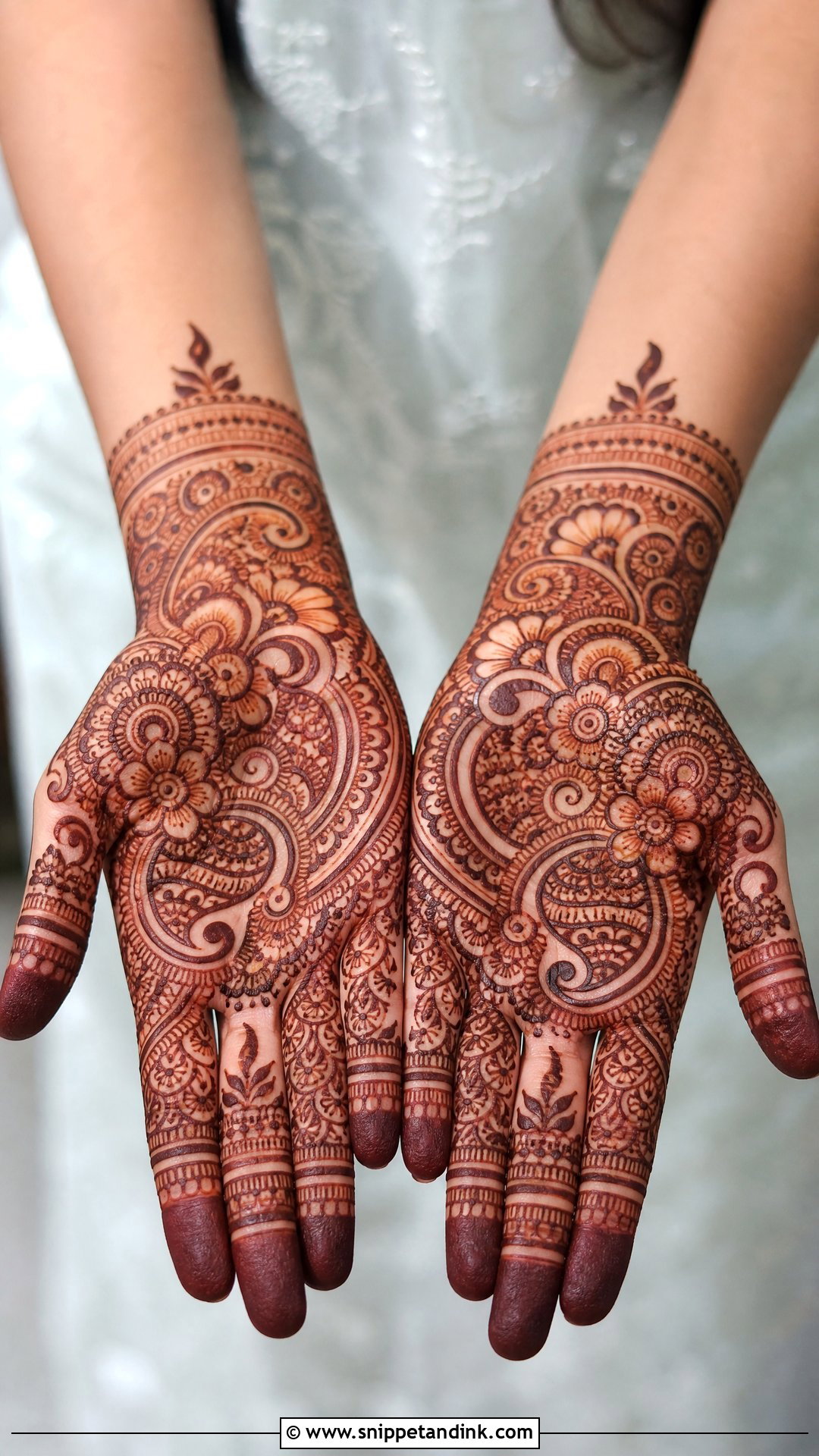
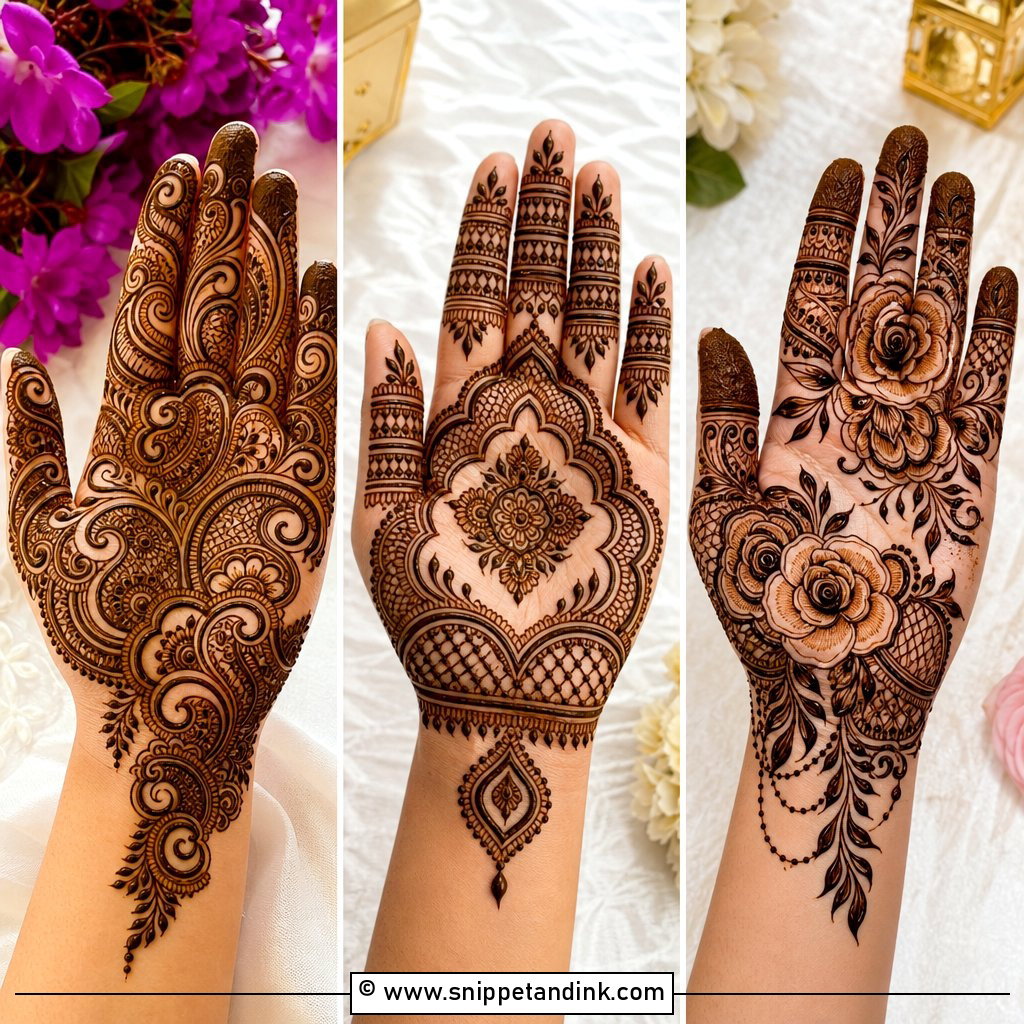
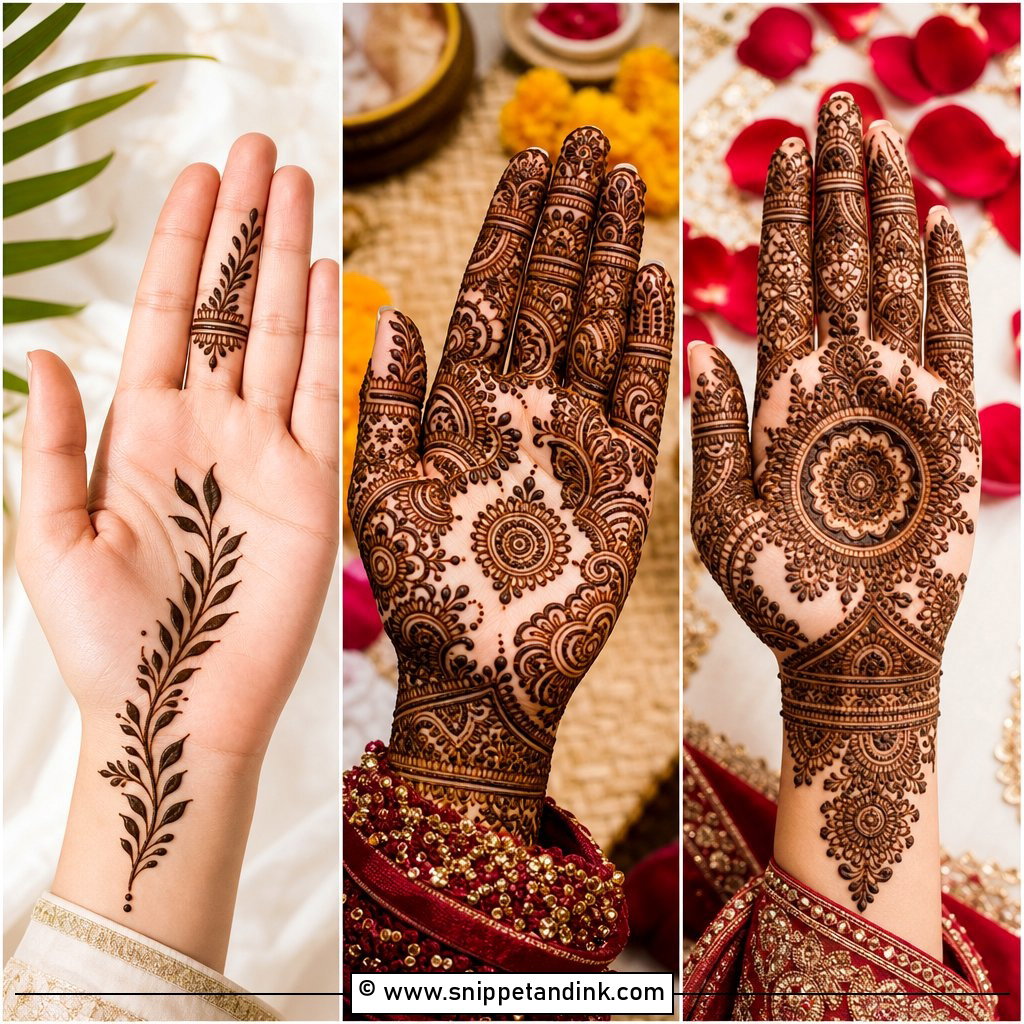
Full palm coverage doesn’t have to run far up the wrist to look complete. I fill the palm with florals, paisleys, mesh and small curved borders, but I always anchor it with one large central motif first. Without that anchor, a full palm turns into busy texture once the stain darkens and the lines thicken slightly. Fingers get matching bands or leafy patterns. It’s the coverage most people choose for weddings, Eid, Diwali and Karwa Chauth.
3. Mandala Palm Mehndi Design
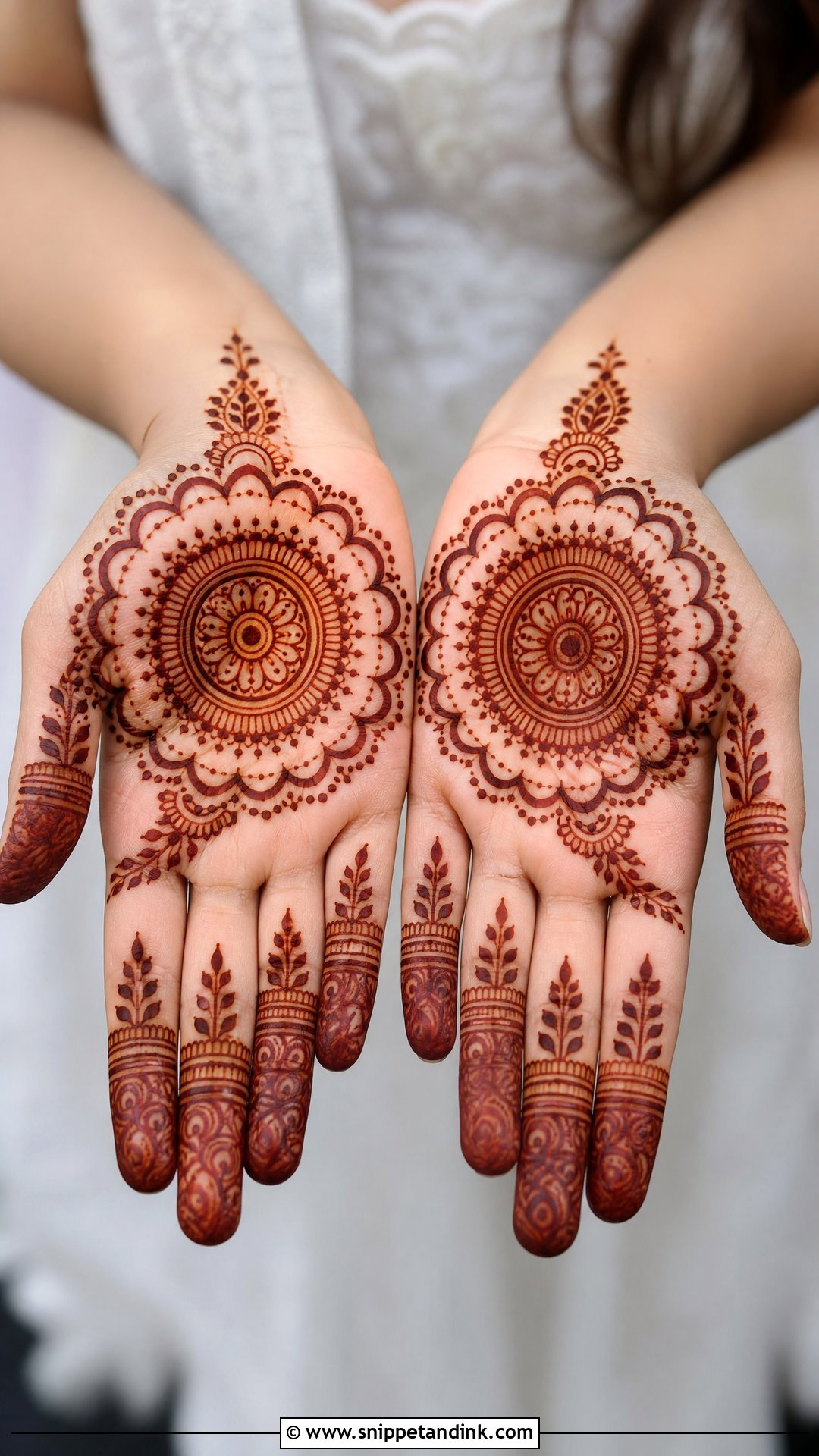
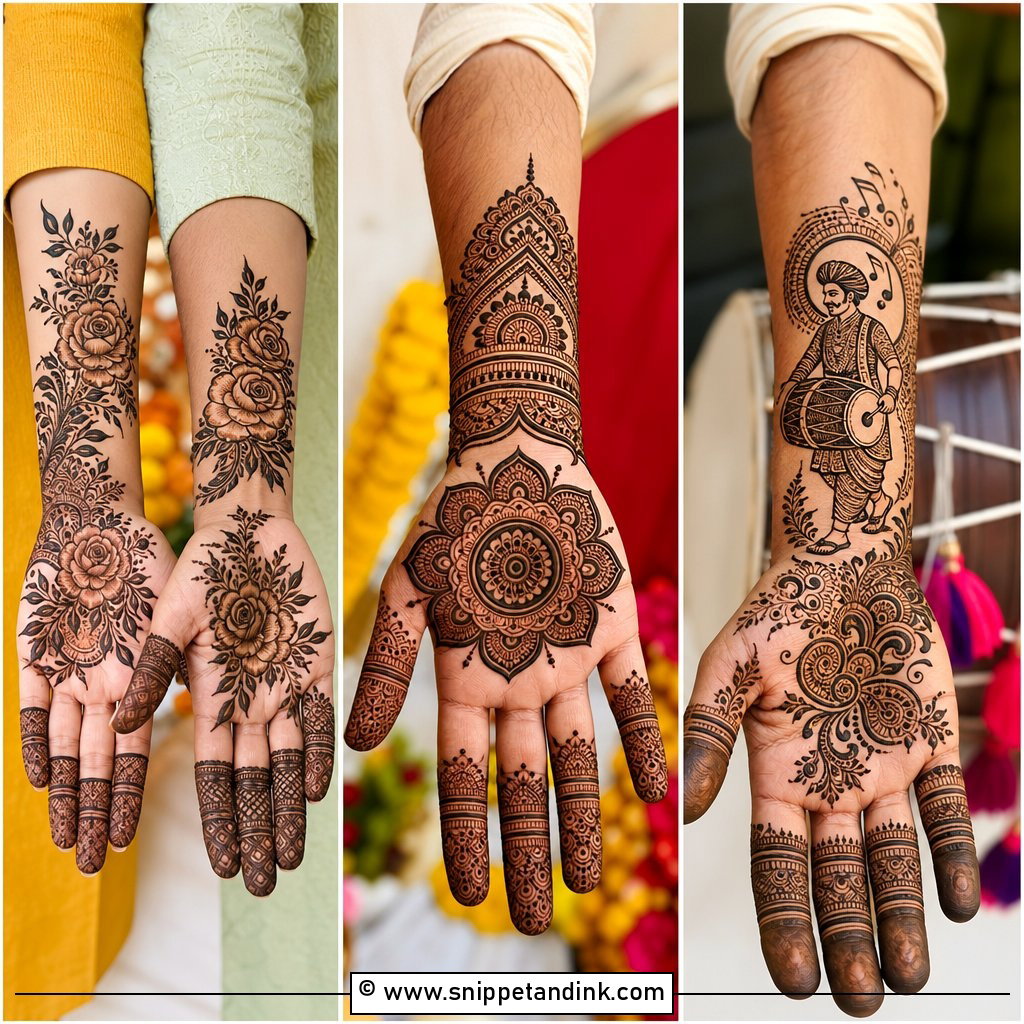
Mandalas are the first thing I learned to draw well, and the hardest to hide mistakes in. The design grows from a round center in rings of petals, scallops and dots, so any wobble in the first ring shows in every ring after it. I turn the client’s hand as I work rather than twisting my own wrist. Leave a hairline of bare skin between the rings, or they merge into one dark disc as the stain matures. Pair it with light fingers or add wrist bands for more.
4. Arabic Palm Mehndi Design
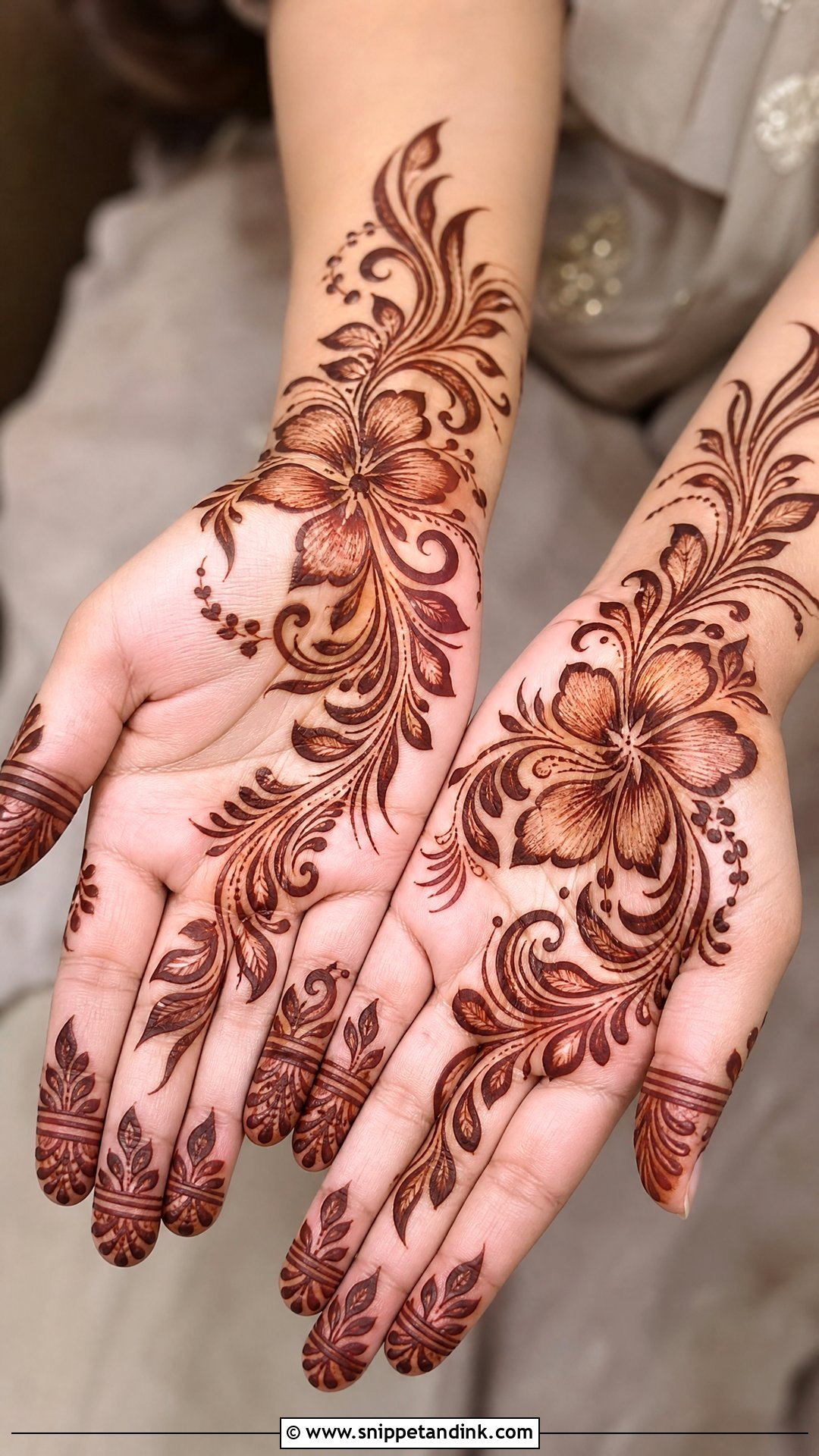
Arabic palm work is built on bold flowers and long vines moving diagonally across the hand, with generous open skin between them. That diagonal flow makes the hand look longer. A rose or lotus sits on one side and stems trail toward the fingers and wrist. I use a slightly thicker cone line for the outlines and light shading inside the petals. It’s quicker than a dense Indian pattern, which helps on a busy festival morning.
5. Indian Palm Mehndi Design
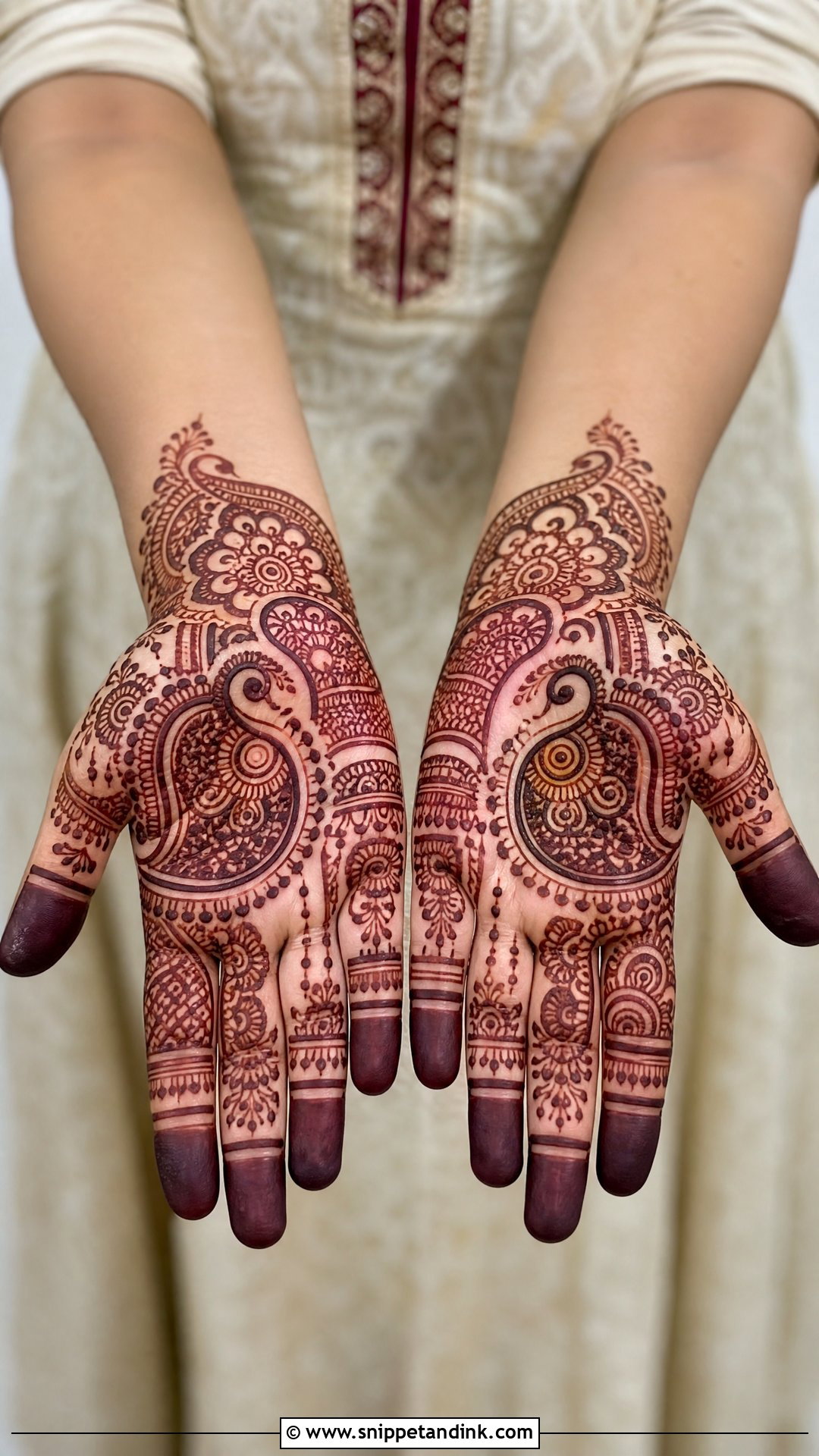
Indian palm designs are dense: paisleys, peacocks, flowers, tikki motifs, fine line fills and fully dipped fingertips. Dense coverage means more paste on the skin for longer, which tends to give a deep, even stain. The trap is crowding, so I place one major motif in the center first and build borders around it. Mirrored hands look especially rich. Small checks, dots and leaves fill gaps without losing the overall shape.
6. Floral Palm Mehndi Design
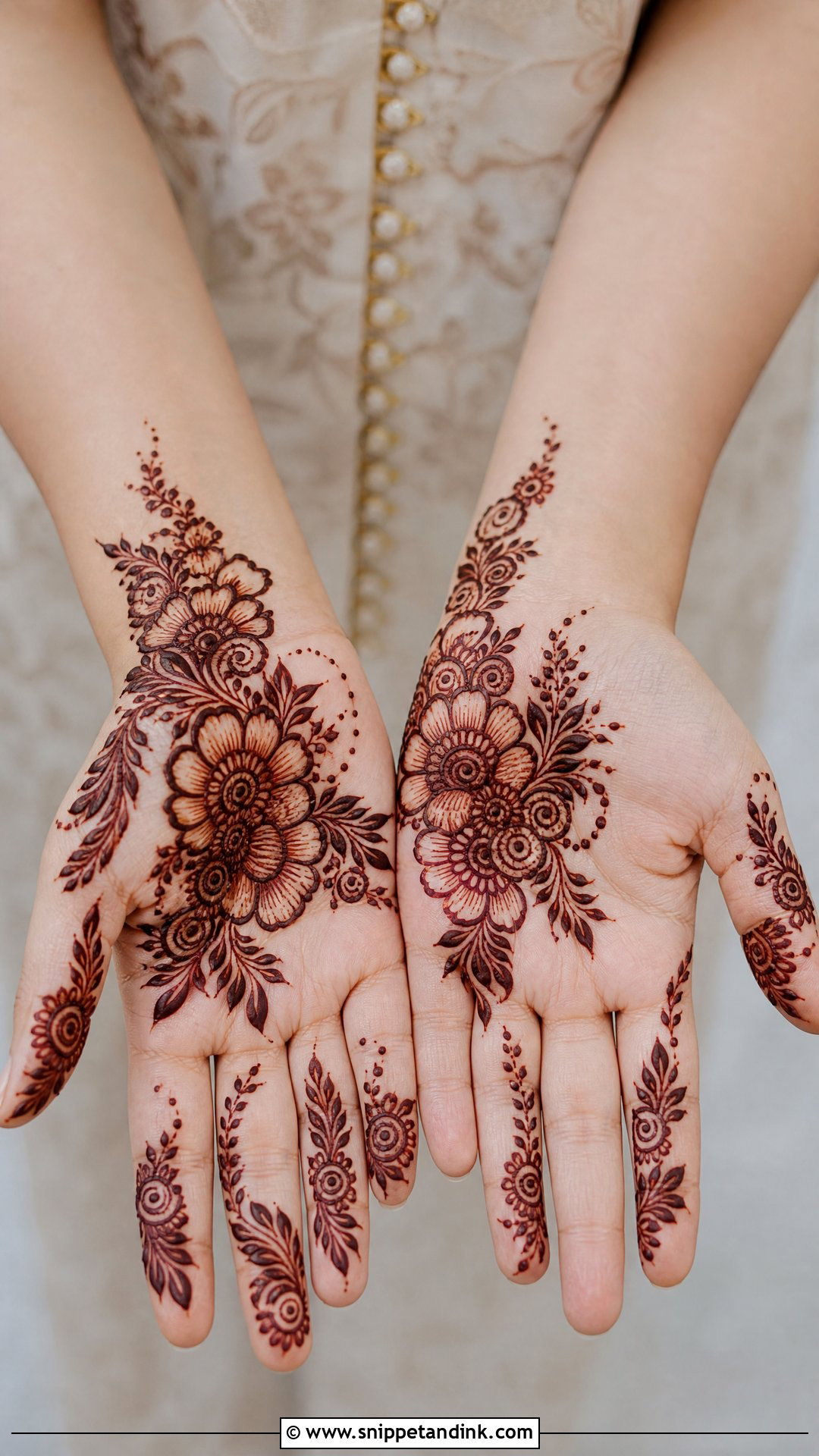
A flower is the motif almost everyone recognizes once the stain develops. One large bloom at the center, or a cluster drifting across the palm, makes even a small design feel finished. Roses, lotuses and rounded blossoms read clearly; very thin, spiky petals tend to blur. I keep the outlines bold and add small leaves for movement. Extend vines into the fingers for more, or leave the wrist bare for a lighter look at a birthday or a mehndi night.
7. Lotus Palm Mehndi Design
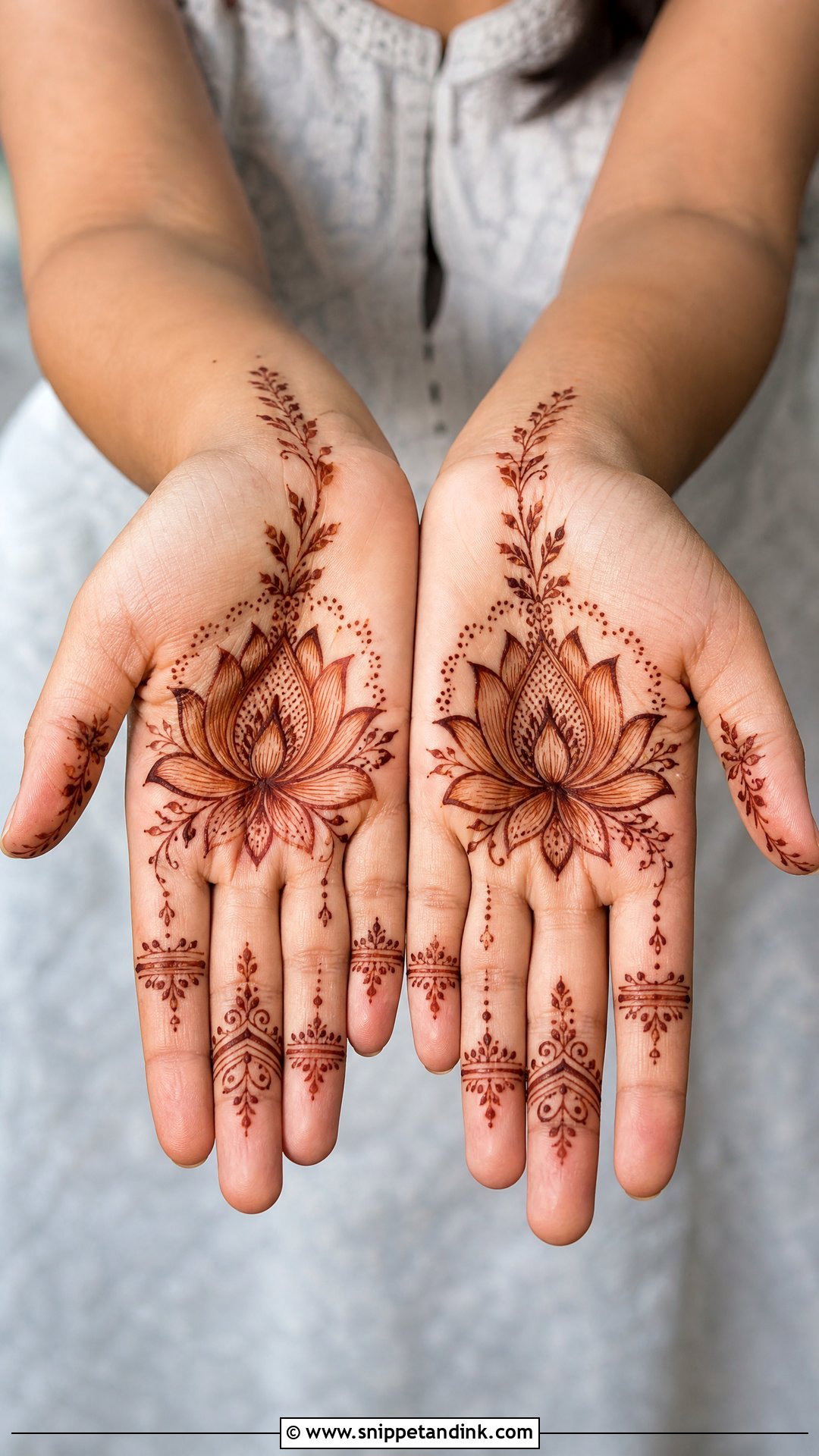
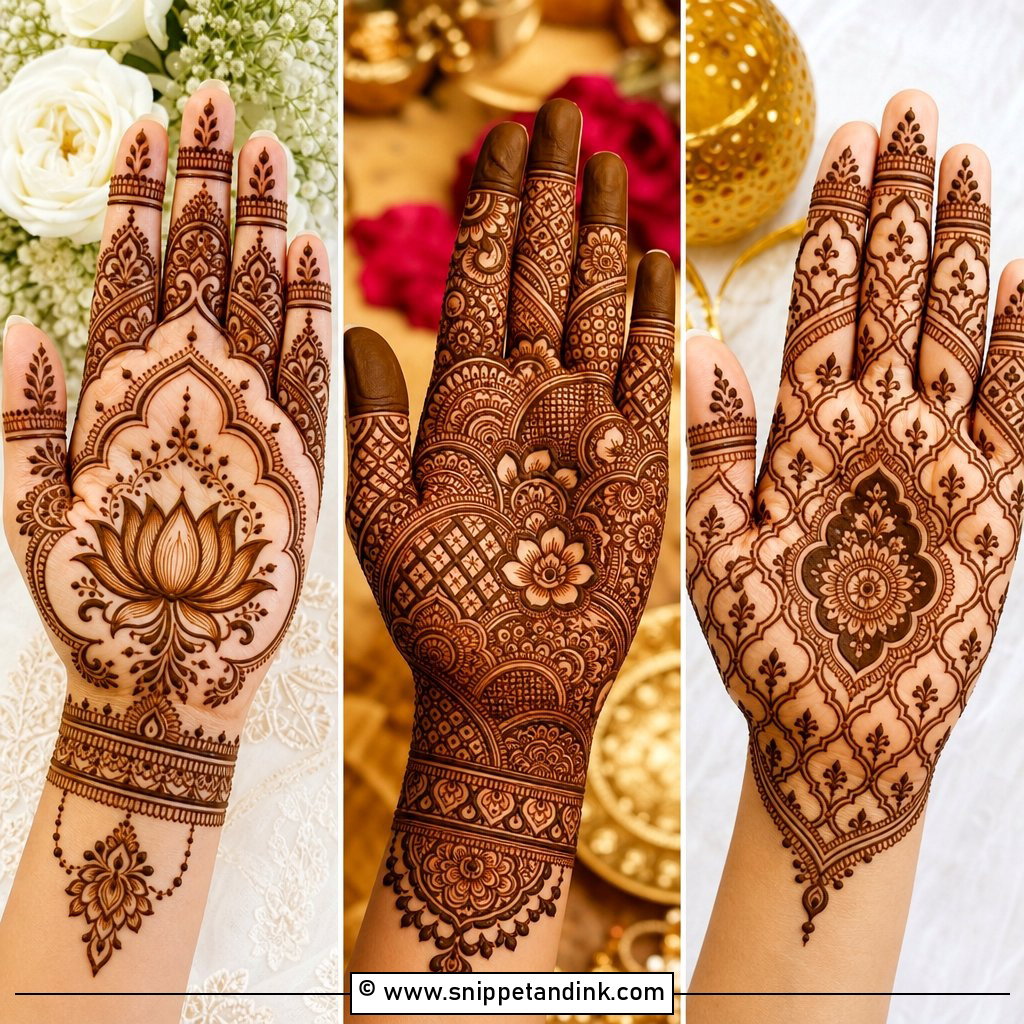
The lotus suits the palm because its layered petals already form a balanced, symmetrical shape. I draw each petal with a clear gap between layers so they don’t fuse as the henna darkens. A ring of small dots around it gives a soft halo. Simple versions pair one lotus with dotted finger lines; fuller ones add paisley borders and vines. Families often choose it for pooja and other occasions with a devotional side.
8. Paisley Palm Mehndi Design
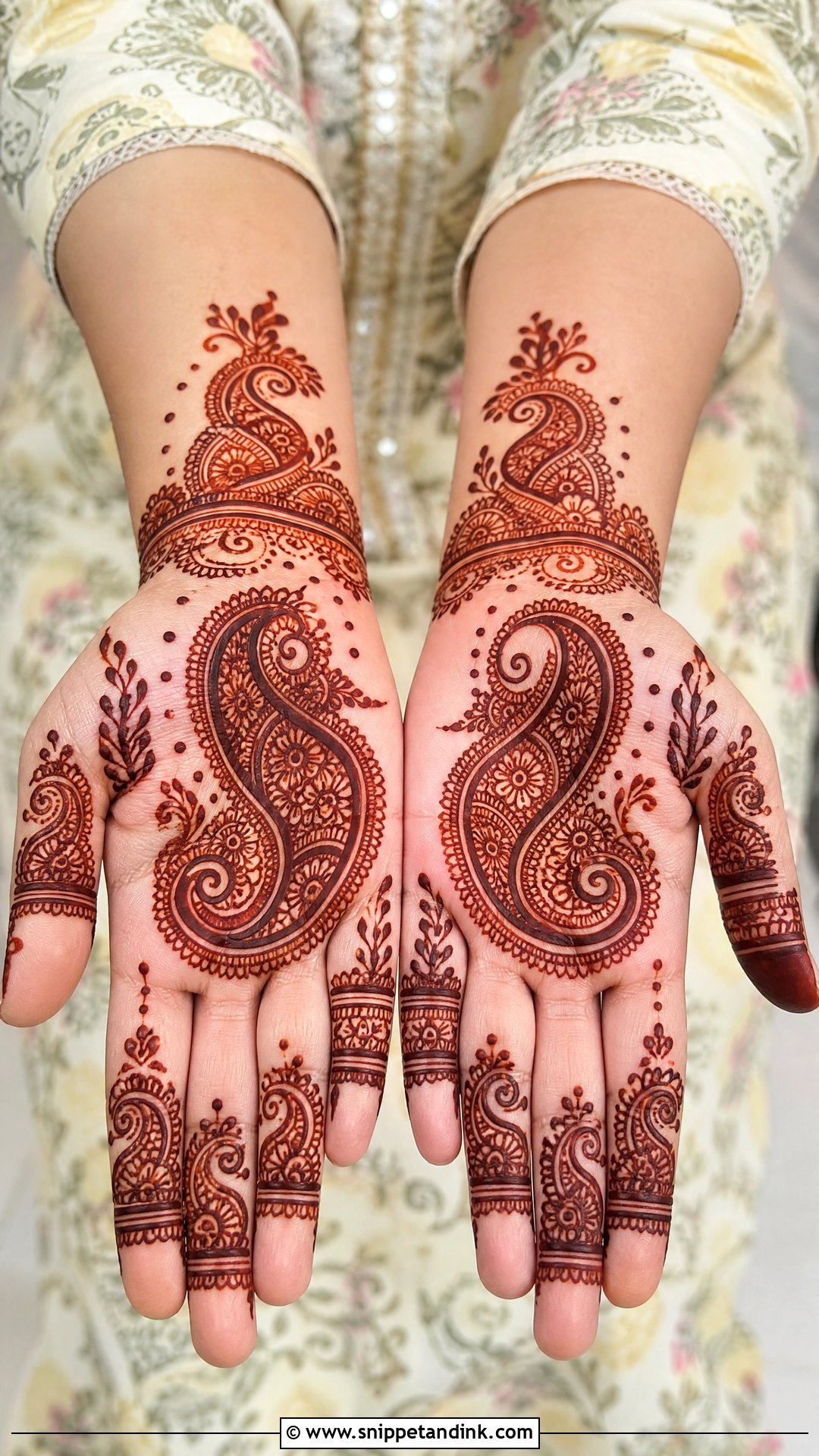
Paisleys follow the natural curve of the palm, which is why they sit so comfortably there. One large paisley in the center or a curved trail of smaller ones both work. Each can be filled with lines, dots and tiny flowers. I outline paisleys a touch thicker than the fill so the shape stays readable after staining. The same motif scales from a beginner design to dense bridal hands, with matching finger bands to tie it in.
9. Peacock Palm Mehndi Design
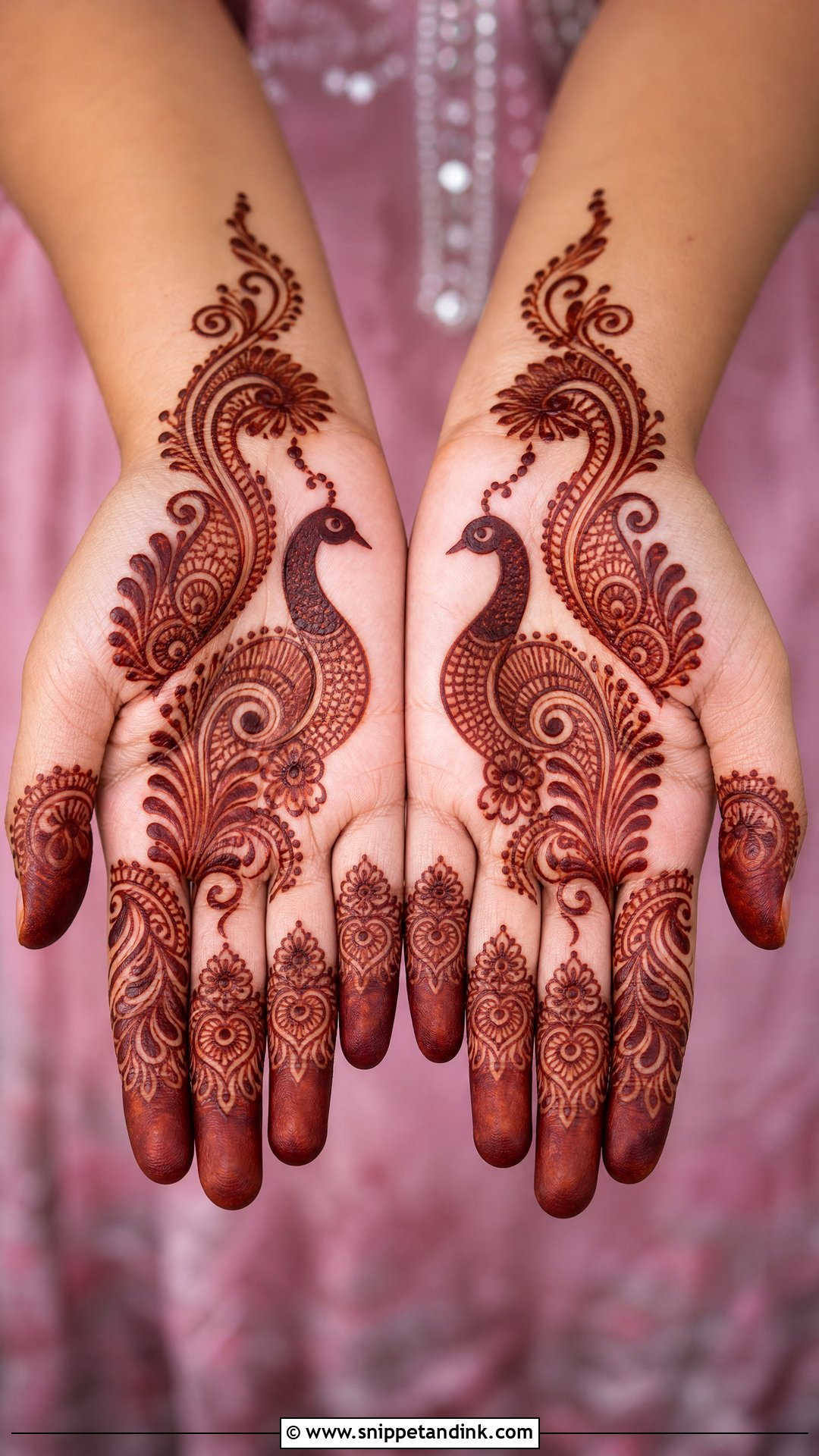
A peacock gives a palm movement and a sense of occasion. I keep the body simple and let the feathers carry the detail: teardrops, dots and curved lines opening around it or curving from the wrist toward the fingers. The common mistake is making the body too detailed, which turns into a dark blob after staining. On a small palm, I’d draw one peacock feather instead of the whole bird. Families often request it for sangeet and engagement functions.
10. Rose Palm Mehndi Design
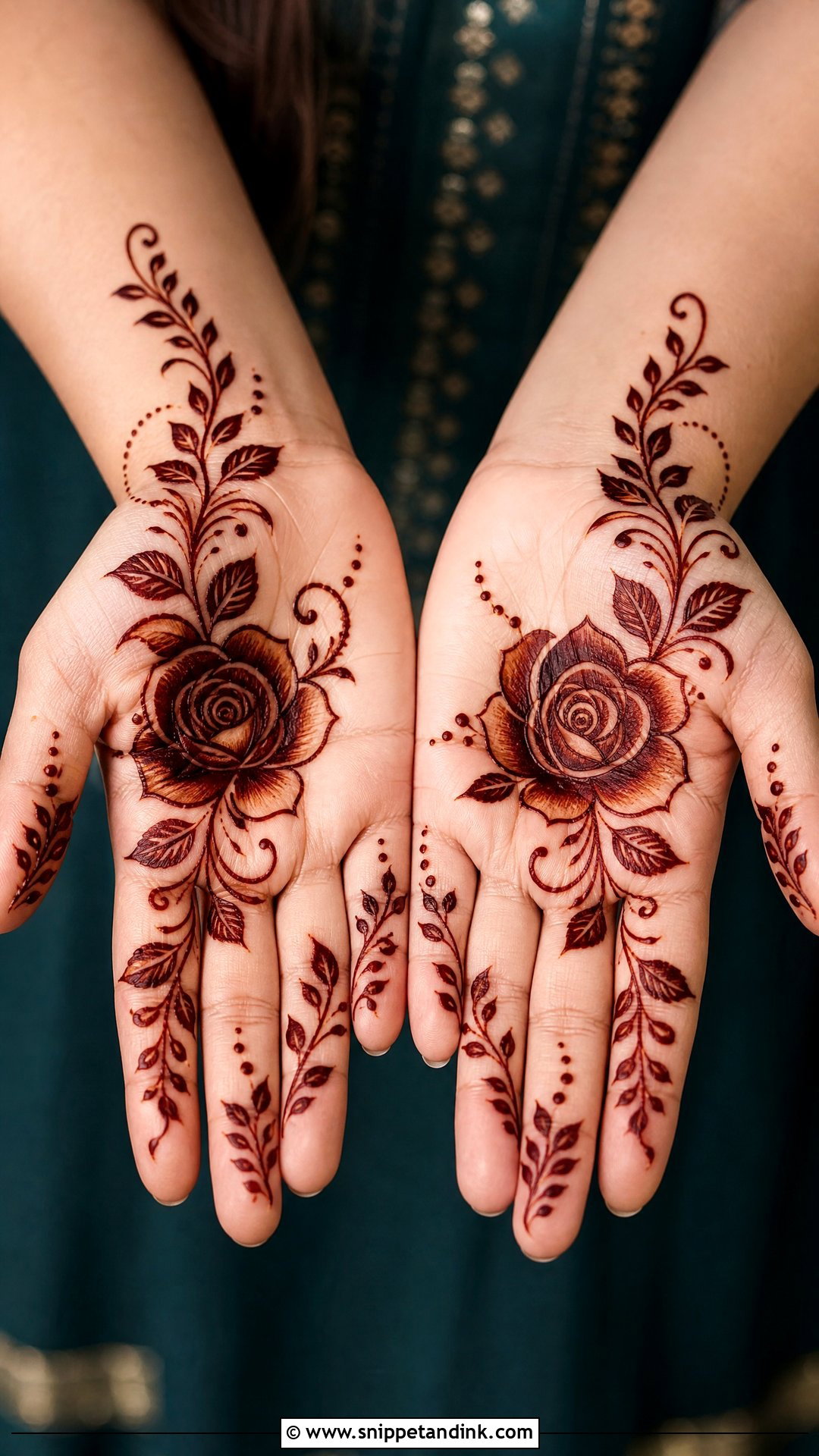
Roses have to be drawn larger than people expect. Tiny roses with tight inner curves fill in and look like spots once the stain darkens, so I keep the petals wide and the inner lines light. Place the rose in the center, or slightly off to one side for an Arabic-style flow, and connect it to the fingers with leaves and dotted trails. Leave the surrounding skin open for a bold look; add rosebuds for a fuller one.
11. Bridal Palm Mehndi Design
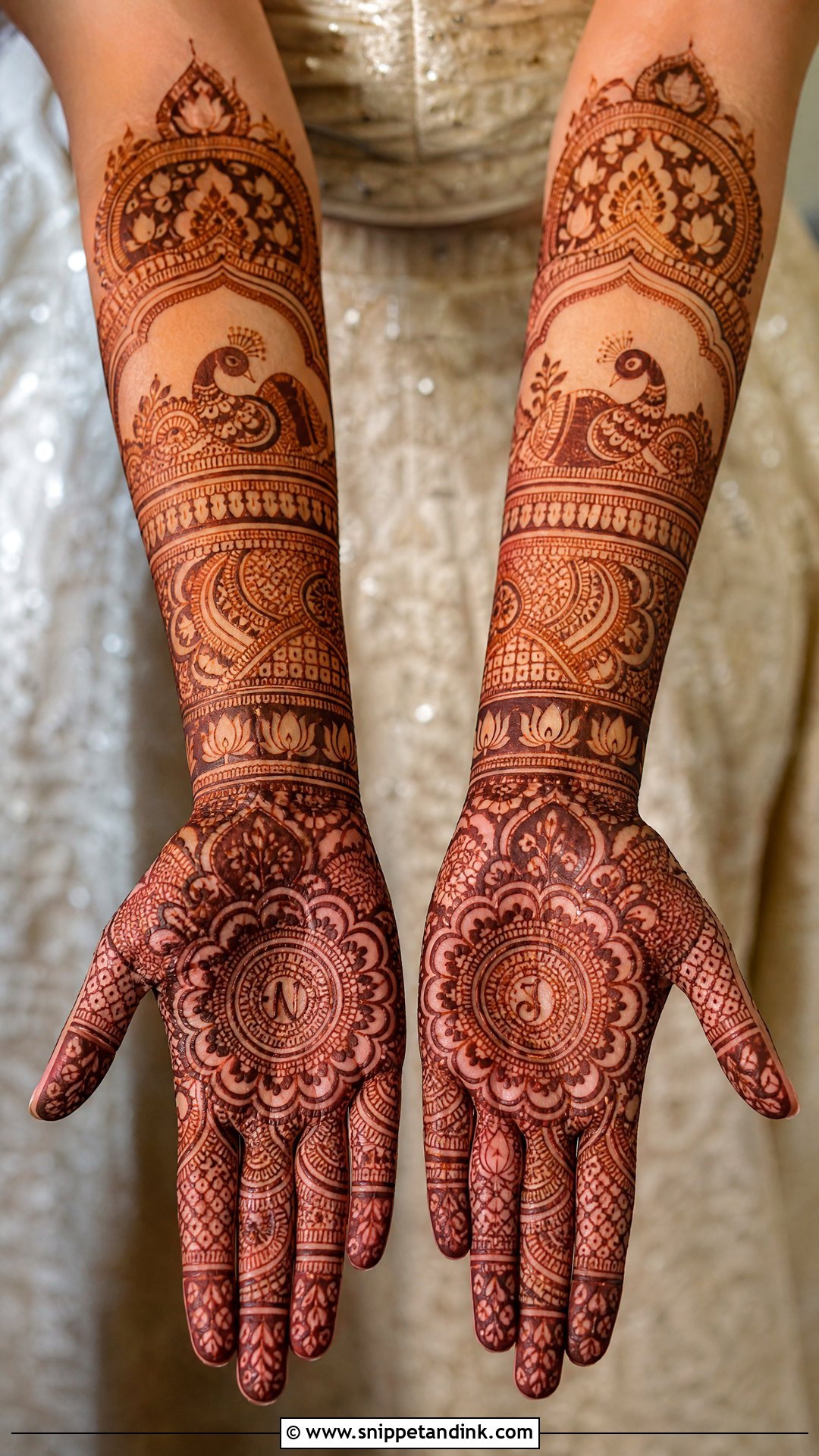
Bridal palms carry the most meaning, so I plan them with the bride before I pick up a cone. They can hold mandalas, paisleys, lotus motifs, peacocks, jaali mesh, initials or small wedding symbols. Mirrored palms that form one picture when the hands are held together are a popular request. Other brides want different motifs on each hand. Either way, keep the main design clear, so it reads rich from across the room and still shows fine detail up close.
12. Minimal Palm Mehndi Design
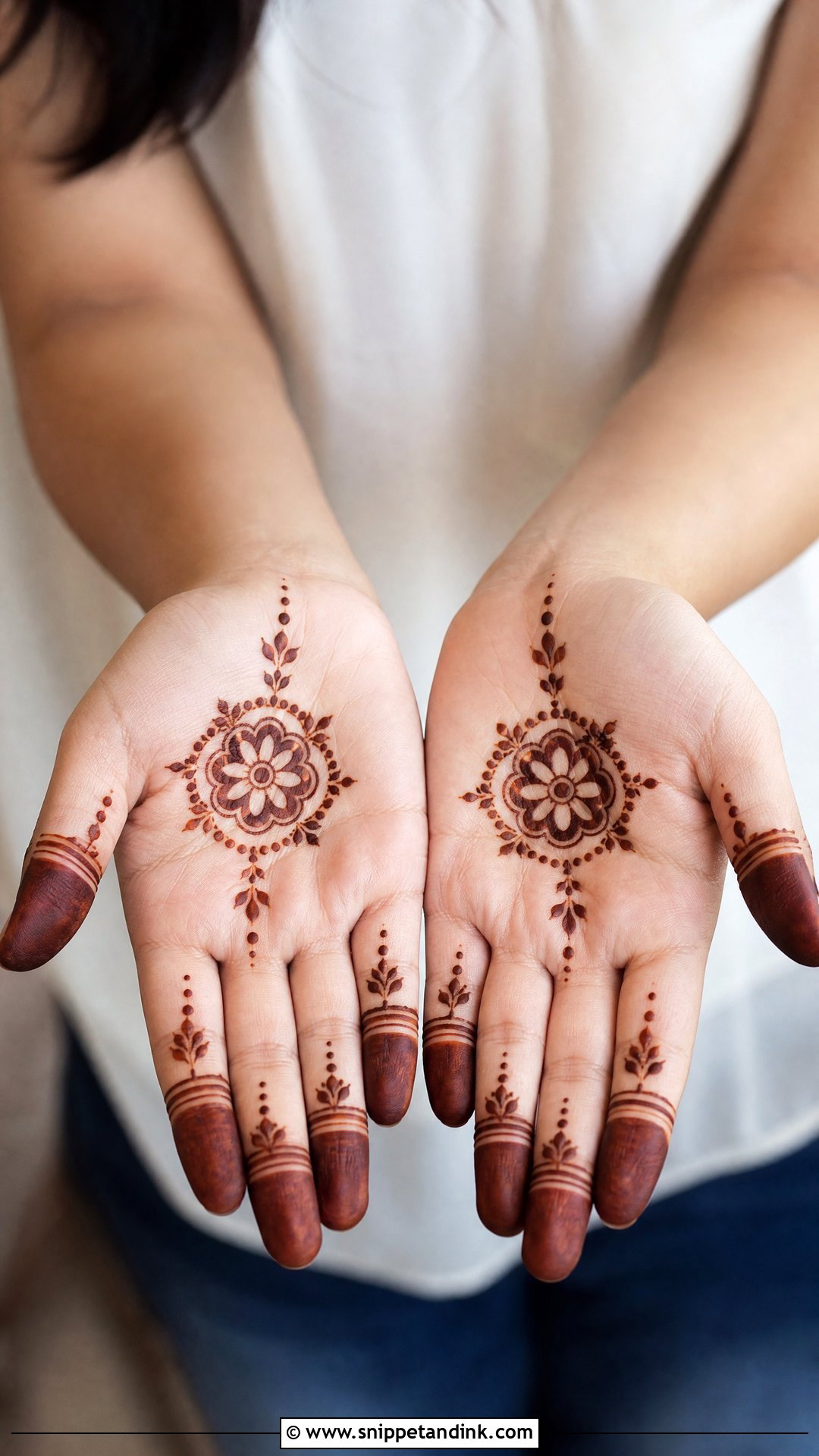
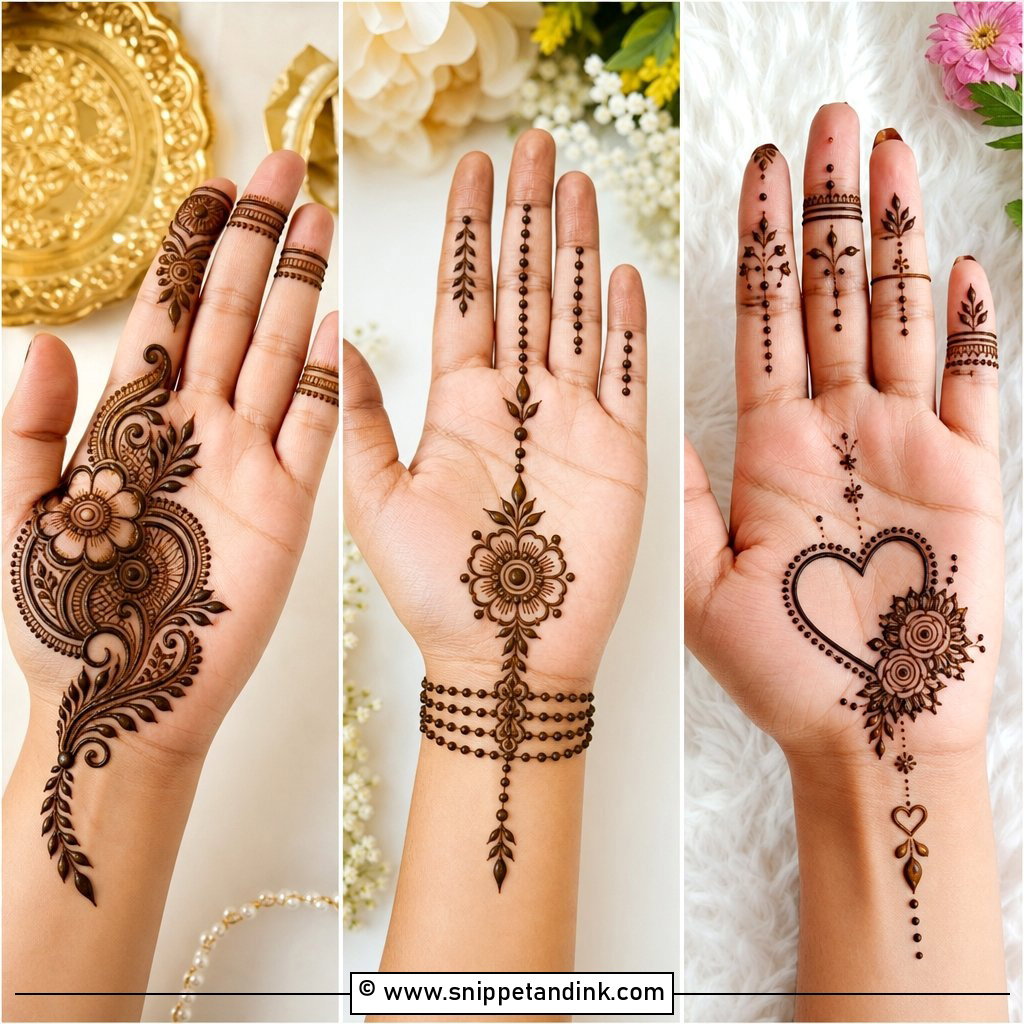
One central motif, a short floral trail or a small geometric shape, and the rest of the palm left bare. Minimal palms dry faster and feel lighter, which makes them easy to wear to work the next day. The risk is looking unfinished, so I repeat one small detail, like a dot cluster or a leaf, across the palm and fingers. It suits people who dislike heavy henna but still want something for the celebration.
13. Modern Palm Mehndi Design
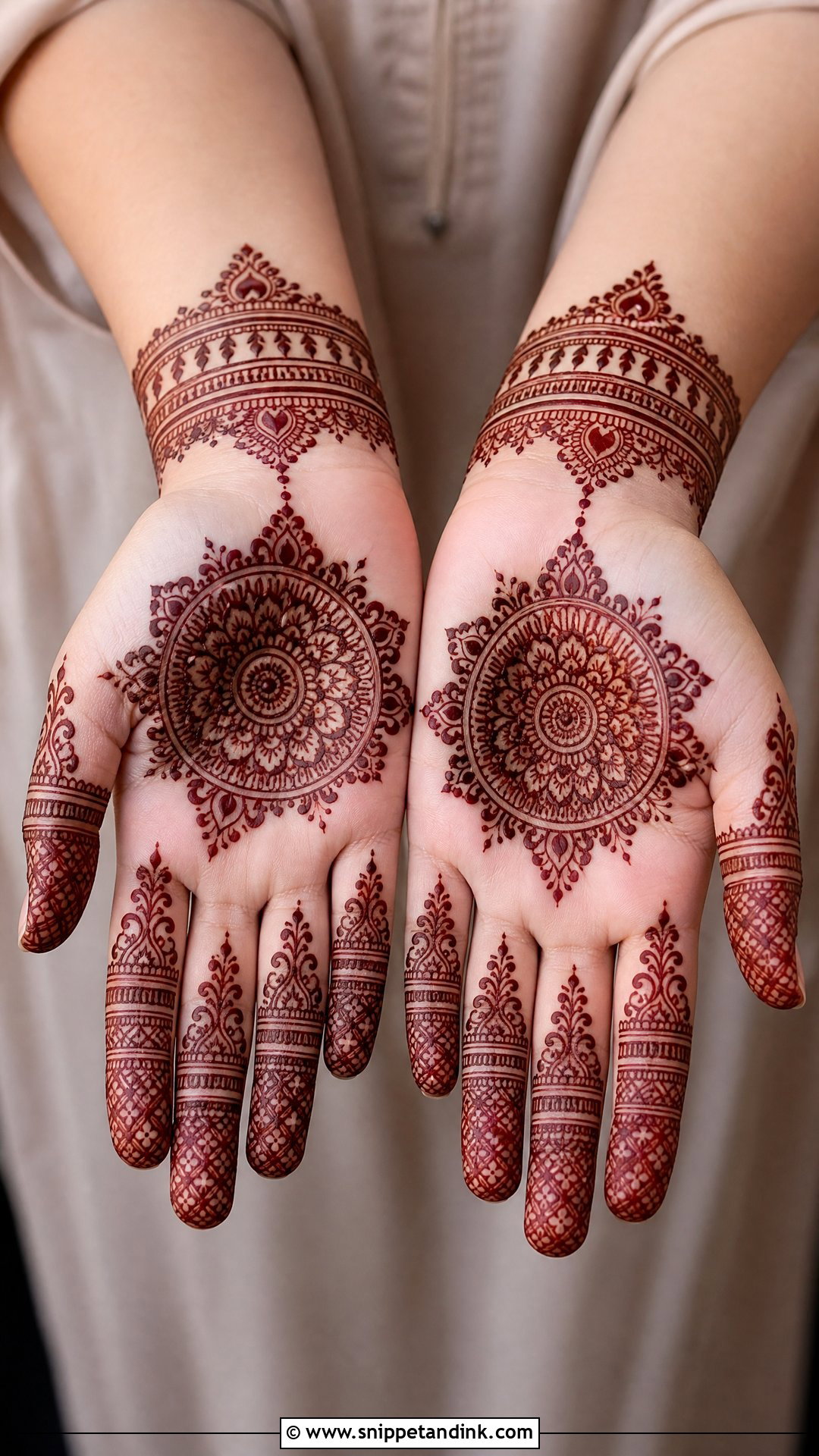
A modern palm mehndi design keeps traditional motifs but cleans up the layout. A mandala sits against open skin, a floral trail meets a geometric border, slim finger lines connect to a bold palm motif. Smooth, confident lines matter more here than in dense work, since there’s no fill to hide a shaky stroke. I’d pair one statement element, such as a lotus, with simple wrist detail.
14. Easy Palm Mehndi Design
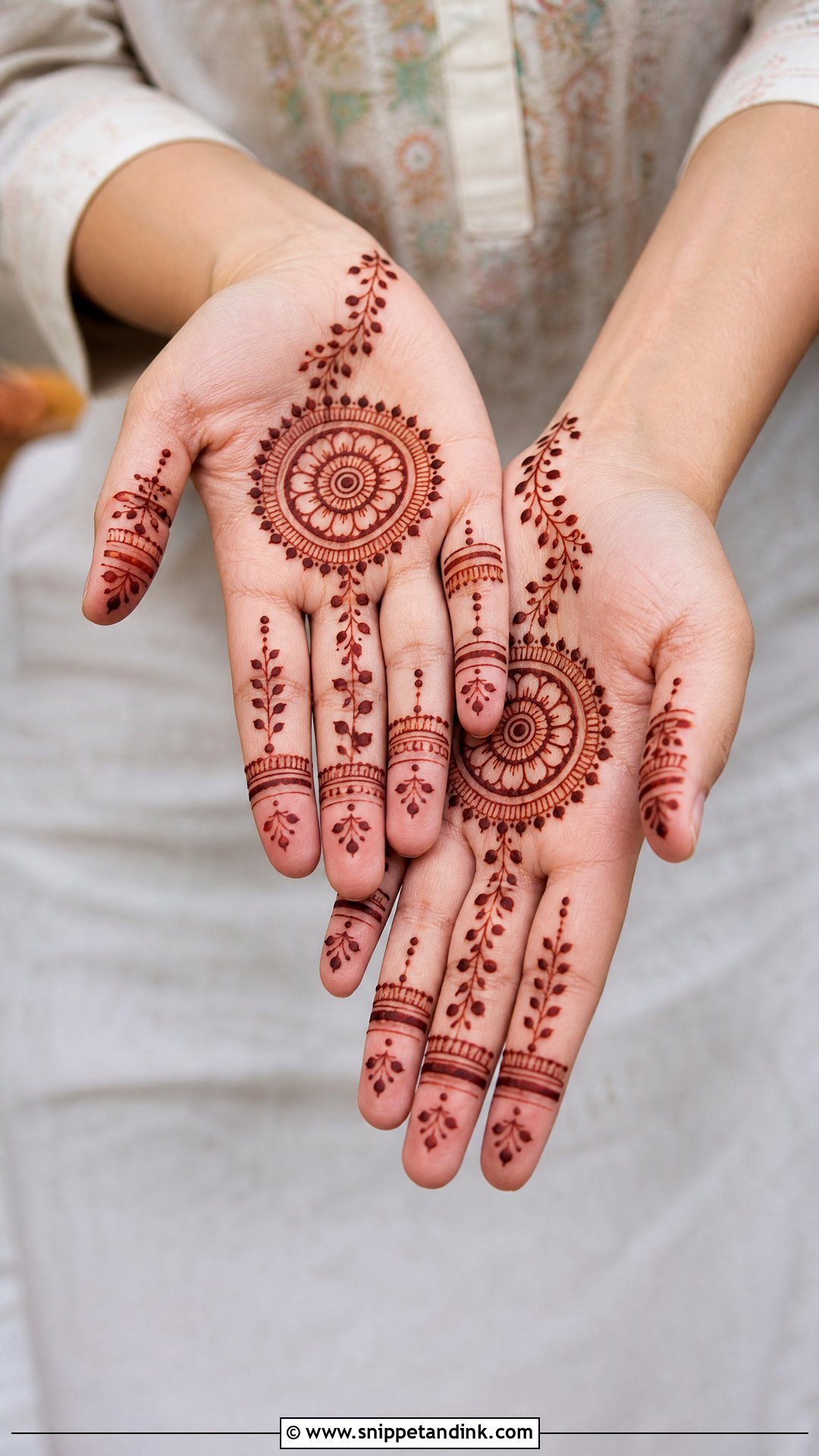
Easy designs rely on large shapes. Start with a round tikki, a flower or a half mandala in the center, ring it with dots, then draw simple vines toward the fingers. Big motifs are easier to draw, stain more evenly and look neater after drying, while small fussy details are where beginners struggle. If a line goes wrong, a dot or a leaf hides it. It’s the design I’d suggest for doing several people at home.
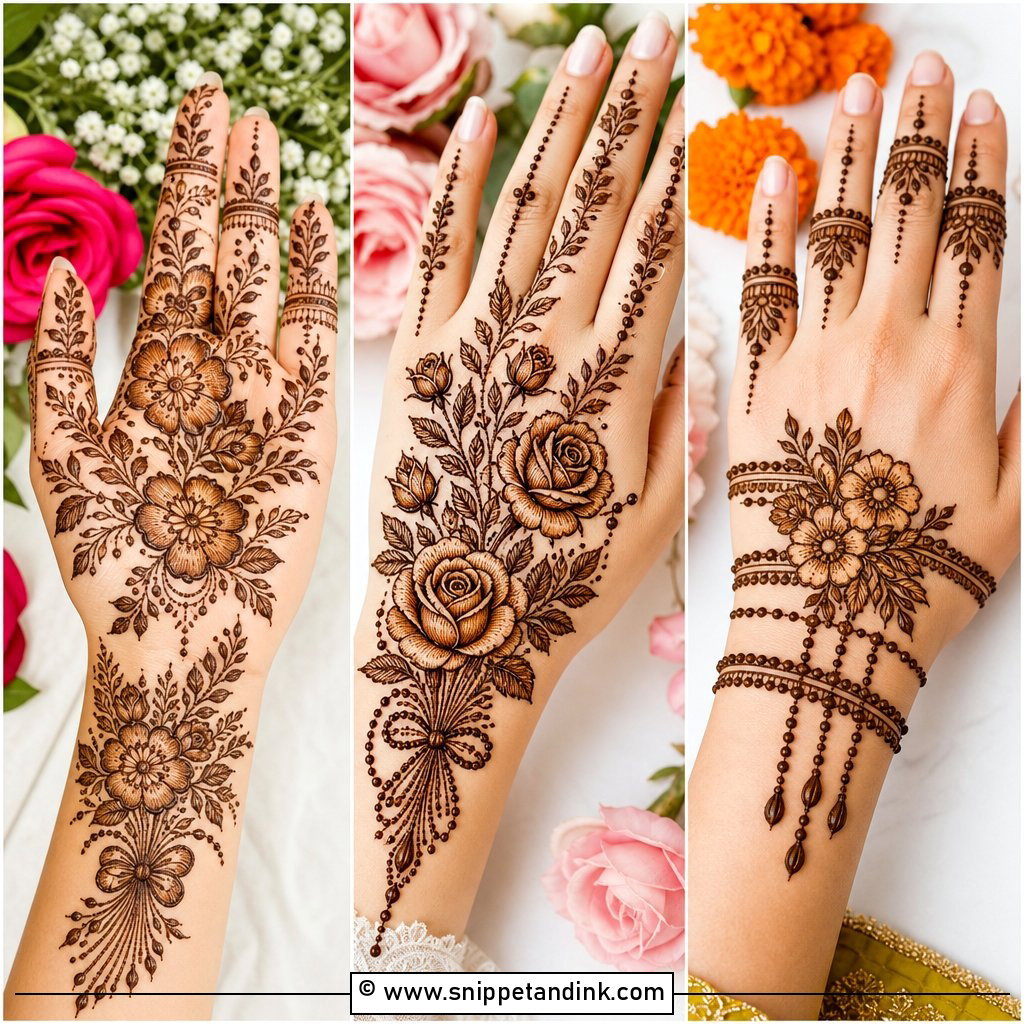
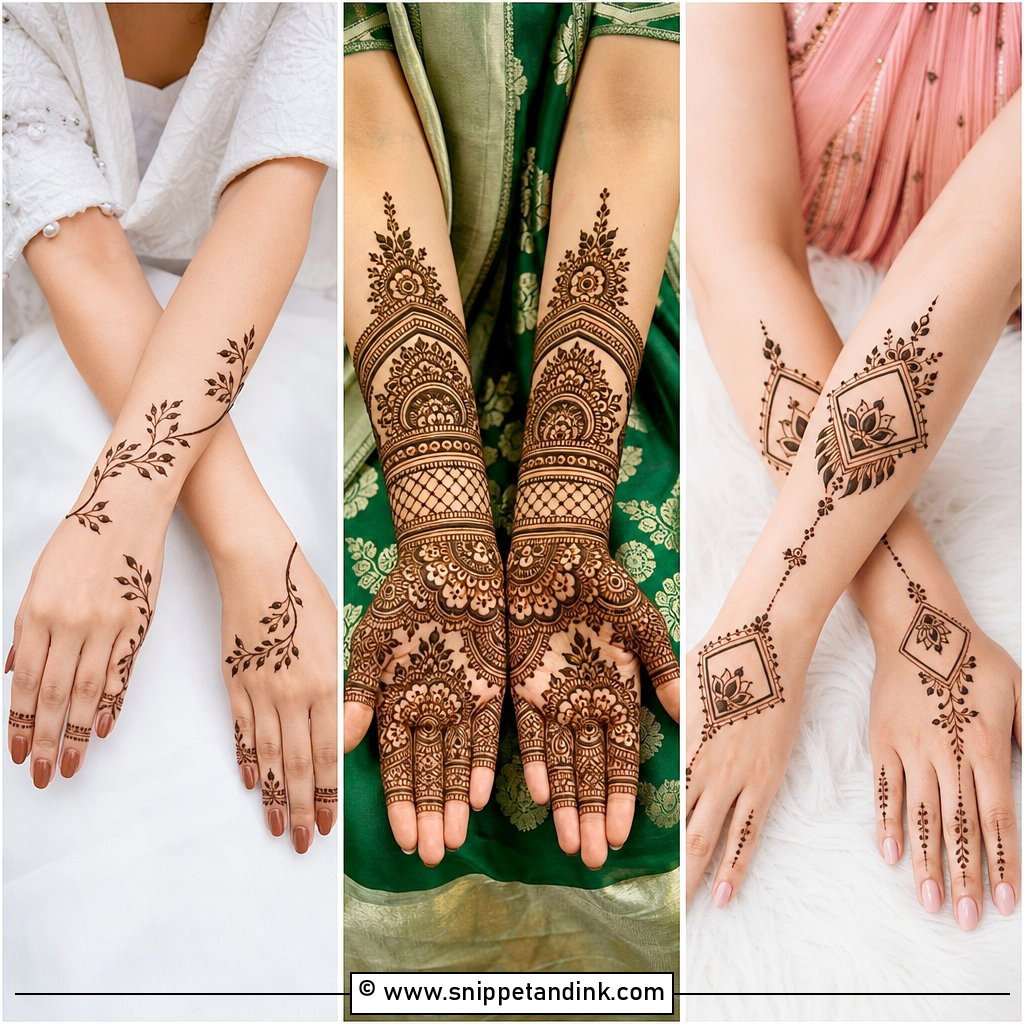
15. Back To Front Palm Mehndi Design
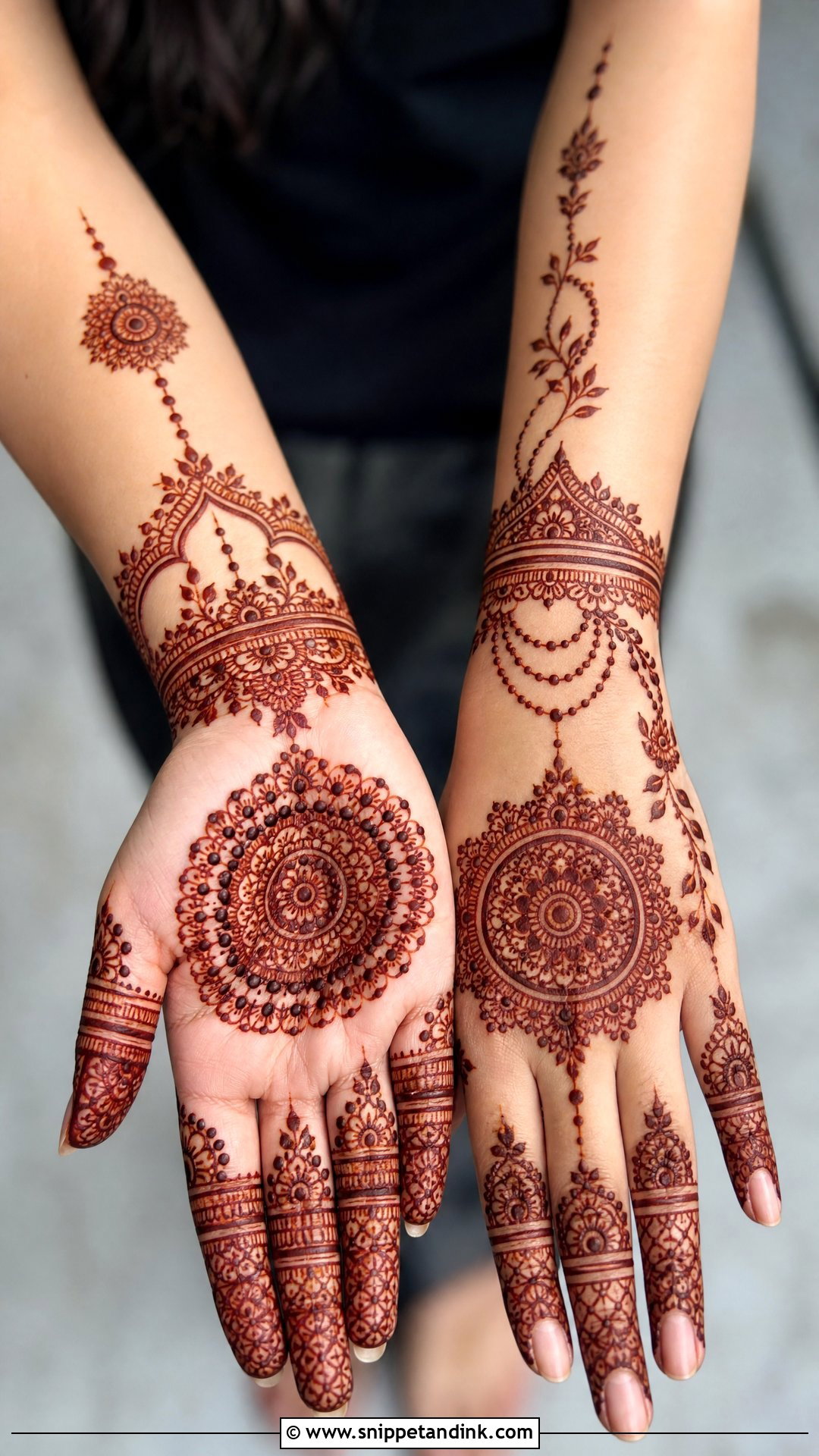
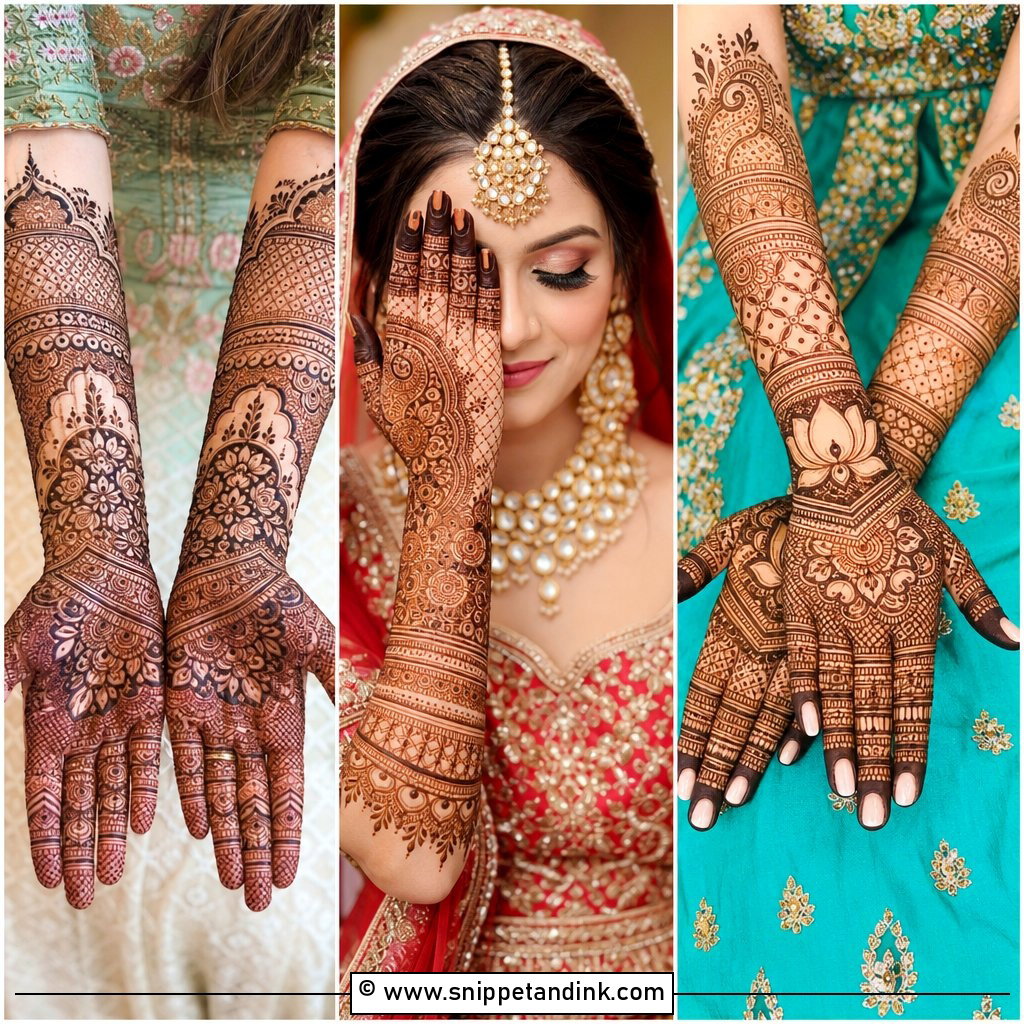
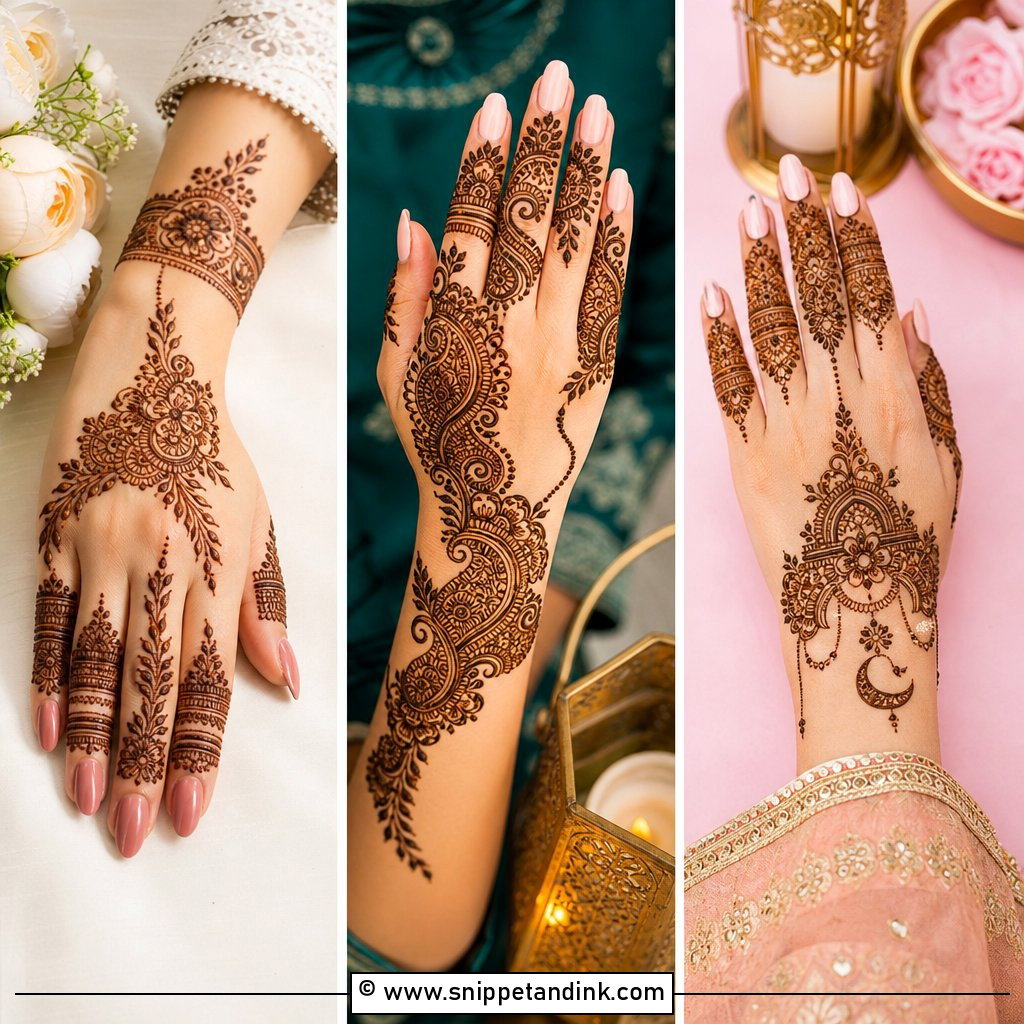
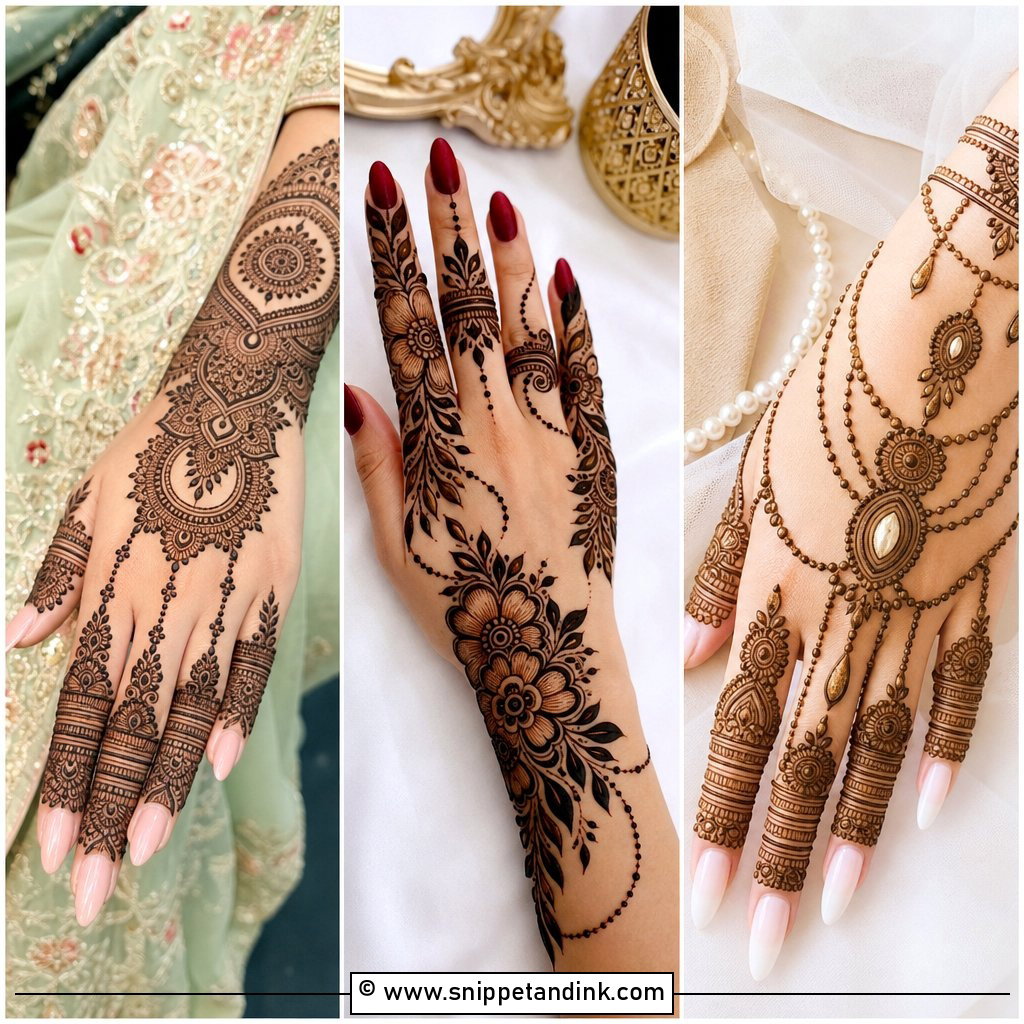
Decorating both sides of the hand makes it look finished from every angle, which matters when hands are photographed during ceremonies. The palm stays the focus; I carry the design around the side of the hand toward the wrist with a floral trail, or pair a palm mandala with a bracelet band. The back of the hand stains lighter than the palm, so I use bolder lines there to balance the color. Keep the leaves, dots and borders related on both sides.
16. Finger And Palm Mehndi Design
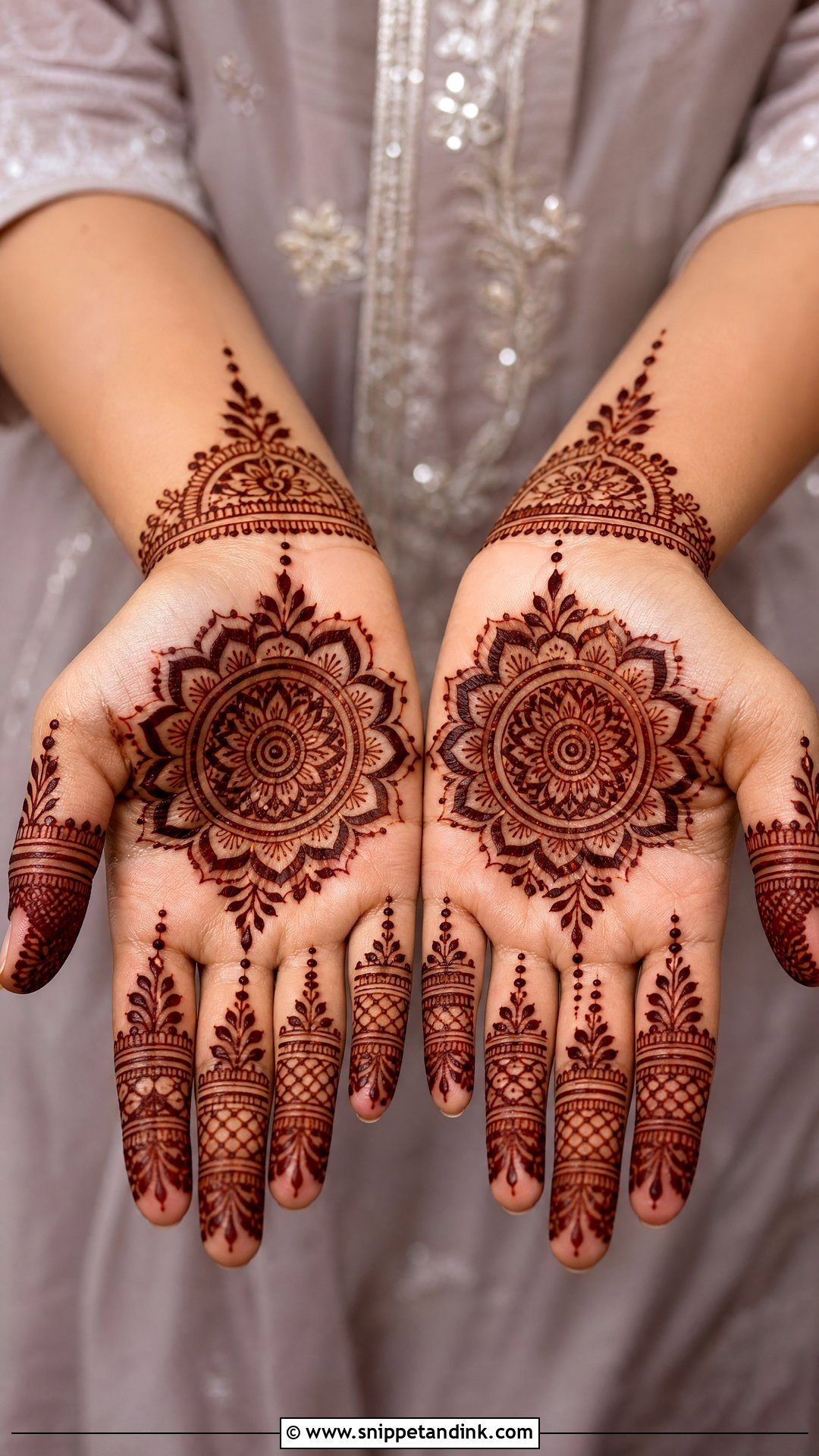
Empty fingers make a bold palm look unfinished. Leafy lines, ring-style bands, dotted chains or small floral strips complete it. My rule is to repeat one or two finger patterns rather than draw five different ones, so the hand looks calm. Fingertips stain very dark, especially if fully dipped, so I decide early whether the client wants that look. The palm itself can carry a mandala, rose, paisley or lotus.
17. Wrist And Palm Mehndi Design
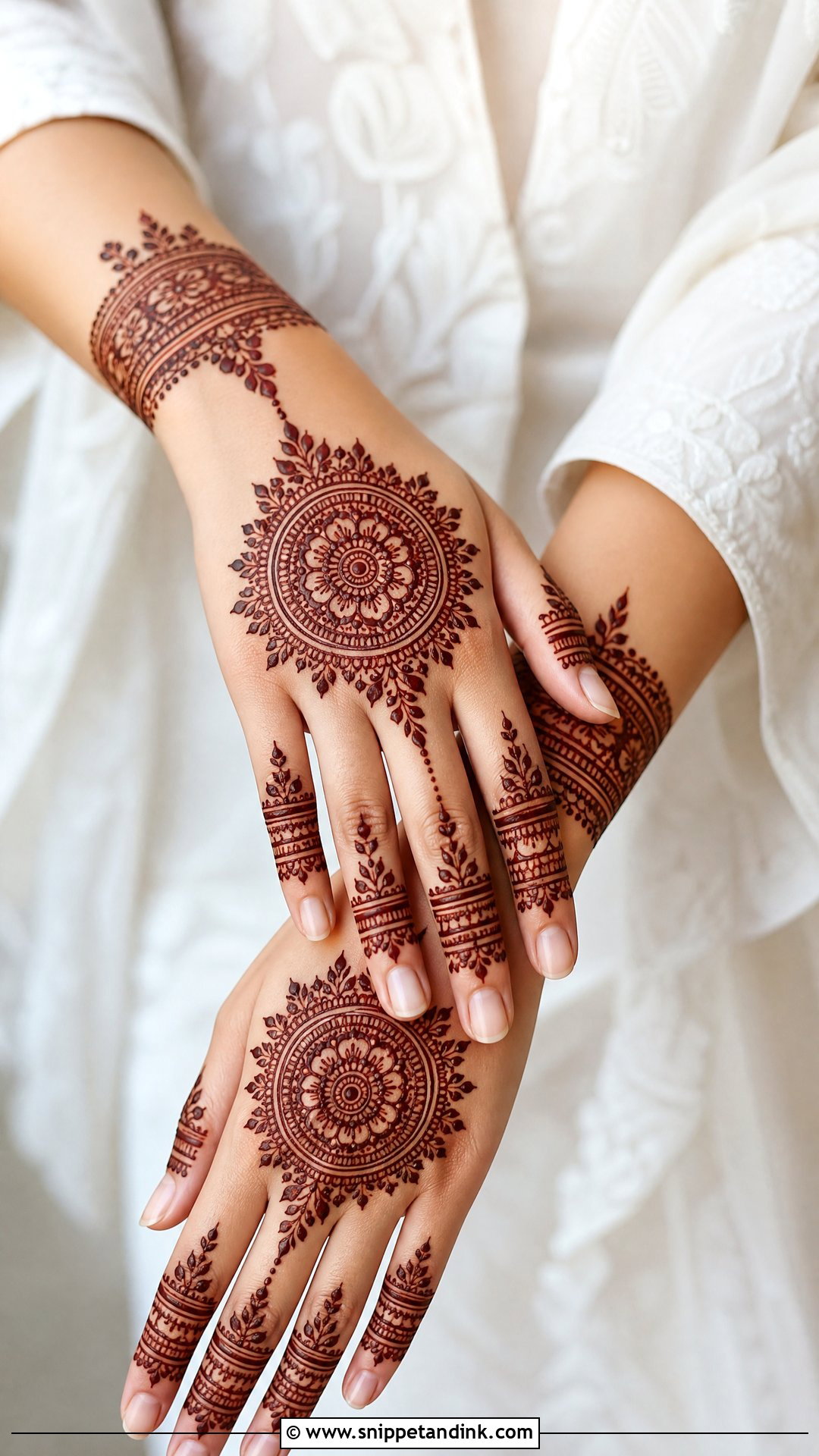
Adding a wrist band gives a jewelry-like effect without committing to full forearm coverage. The palm holds the main motif; the wrist gets a bracelet border, a cuff pattern or a leafy band, often linked with dotted chains or thin vines. I balance weight between the two: a heavy palm wants a simple wrist, a minimal palm can take a richer bracelet. The wrist stains lighter than the palm, so the border should be bolder than you’d think.
18. Jaali Palm Mehndi Design
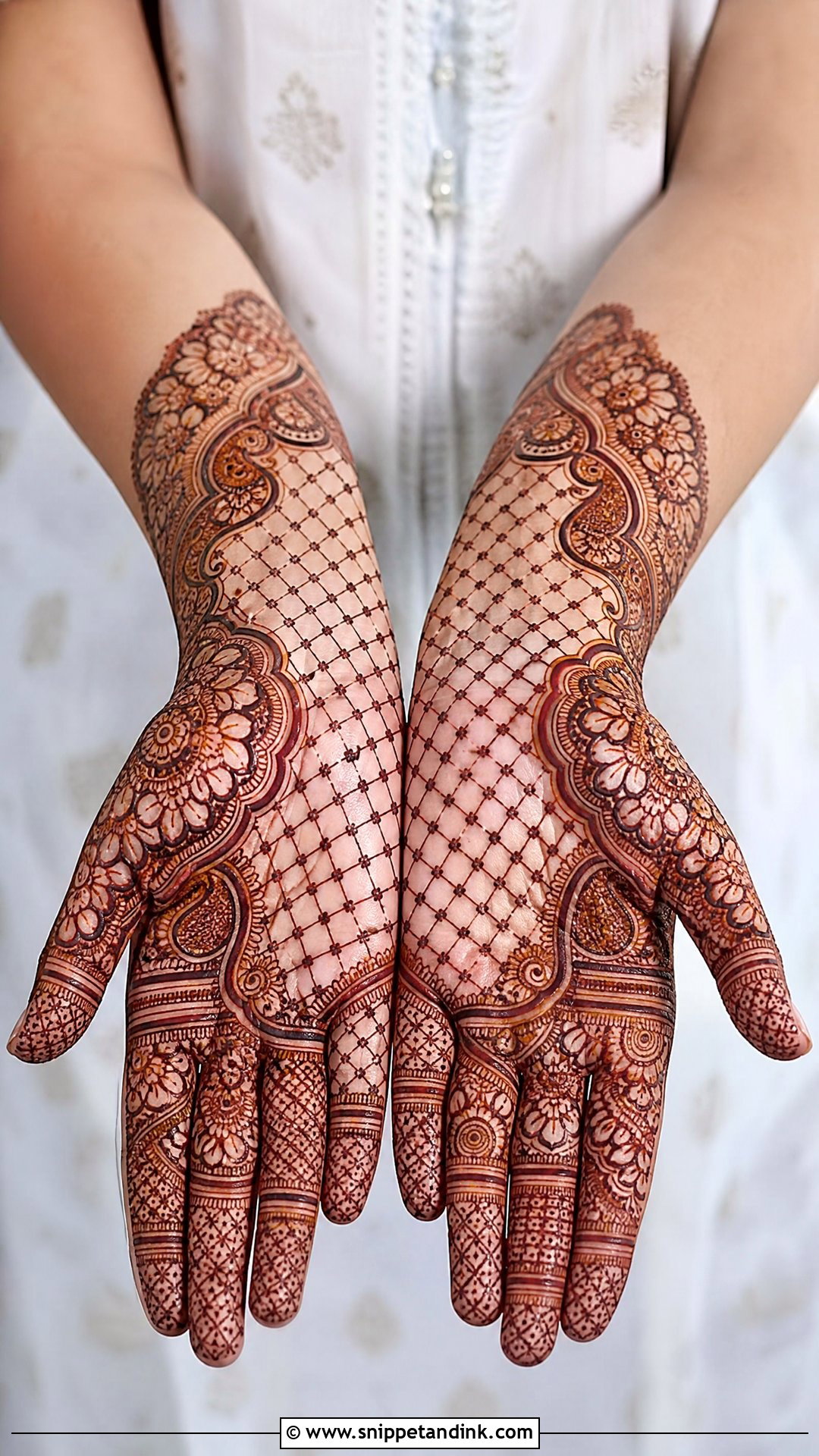
Jaali is net-like mesh, and it looks intricate while staying organized because the lines repeat. It can fill one side of the palm, sit inside a paisley or frame a mandala. I draw the grid with a fine cone tip and even spacing, then add tiny dots at the intersections. If the grid lines are too close together they bleed into a solid patch as the stain darkens. Flowers or leaves alongside keep it from feeling too geometric.
19. Geometric Palm Mehndi Design
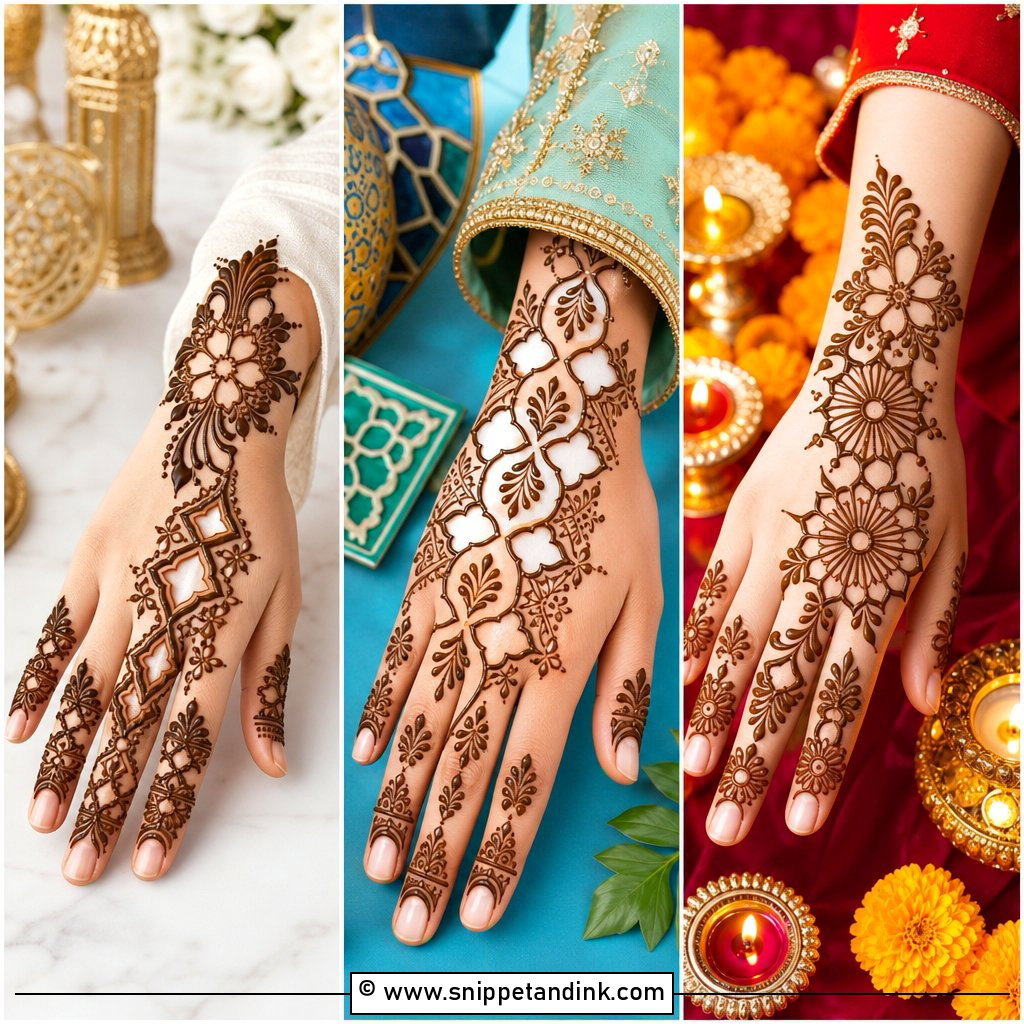
Diamonds, triangles, chevrons and symmetrical borders give a crisp, modern feel. Geometric layouts work well with open skin, so the palm doesn’t need to be packed. Straight lines are harder to draw cleanly than curves, so I steady my hand on the client’s and pull lines toward me. Small dots soften the hard edges. A central mandala with diamond mesh, or a square frame around a flower, suits someone who likes neat, organized henna.
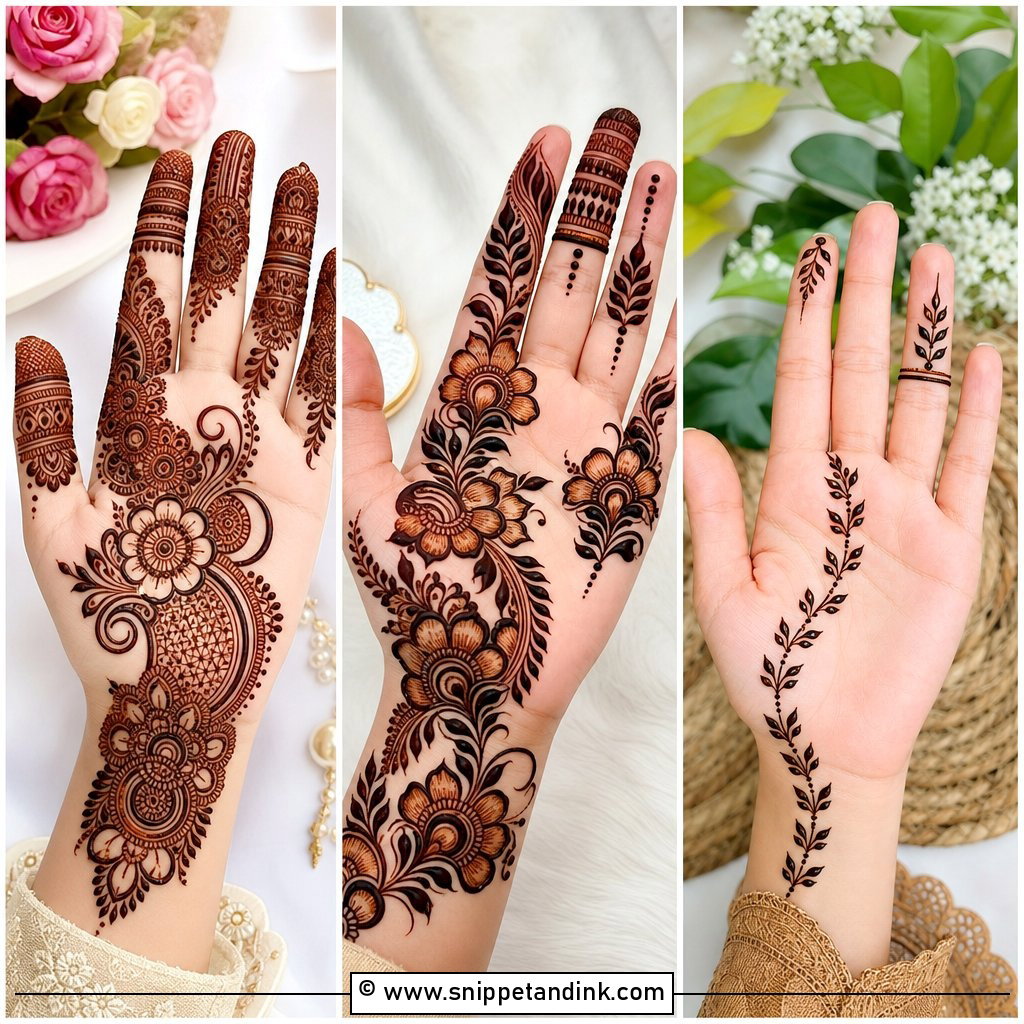
20. Indo Arabic Palm Mehndi Design
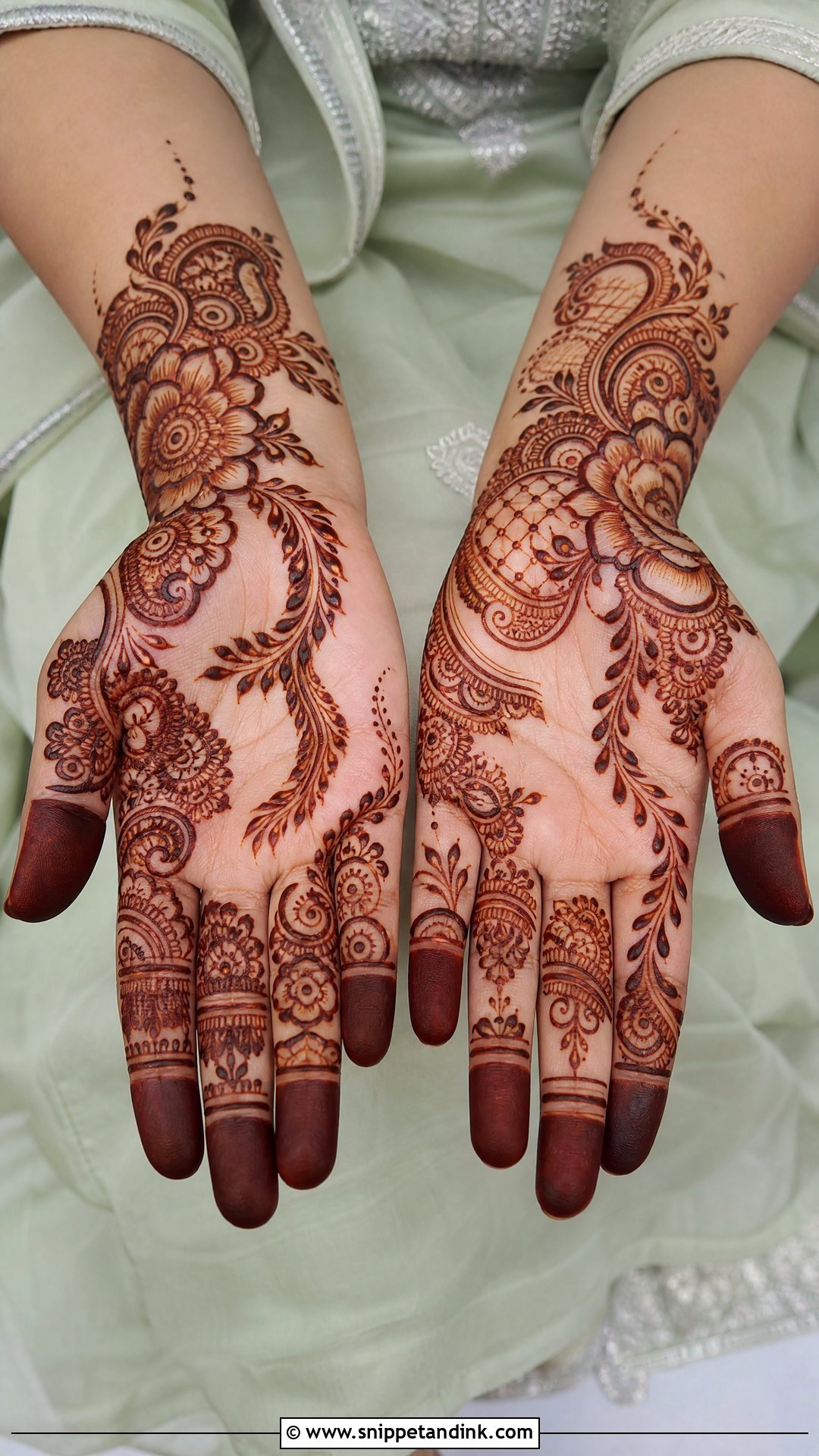
Indo-Arabic combines the bold diagonal flow of Arabic work with fine Indian fills. Large flowers and vines cross the palm, and only selected areas get tiny lines, dots and paisley accents. That mix keeps open skin while still looking rich, which is why it’s such a festival favorite. The diagonal placement flatters most hand shapes. Fingers can take Indian bands or Arabic leaf trails.
21. Moroccan Palm Mehndi Design
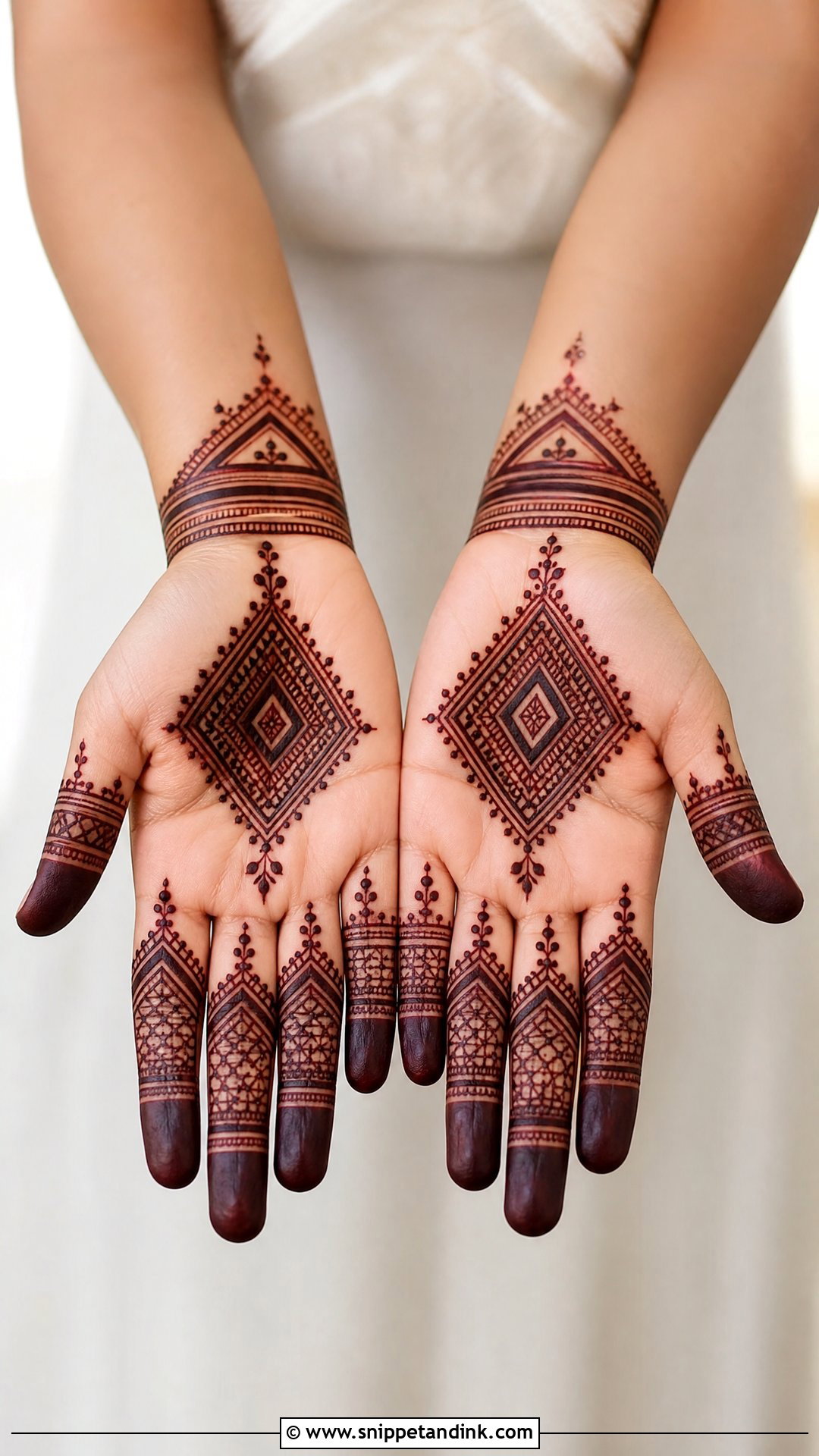
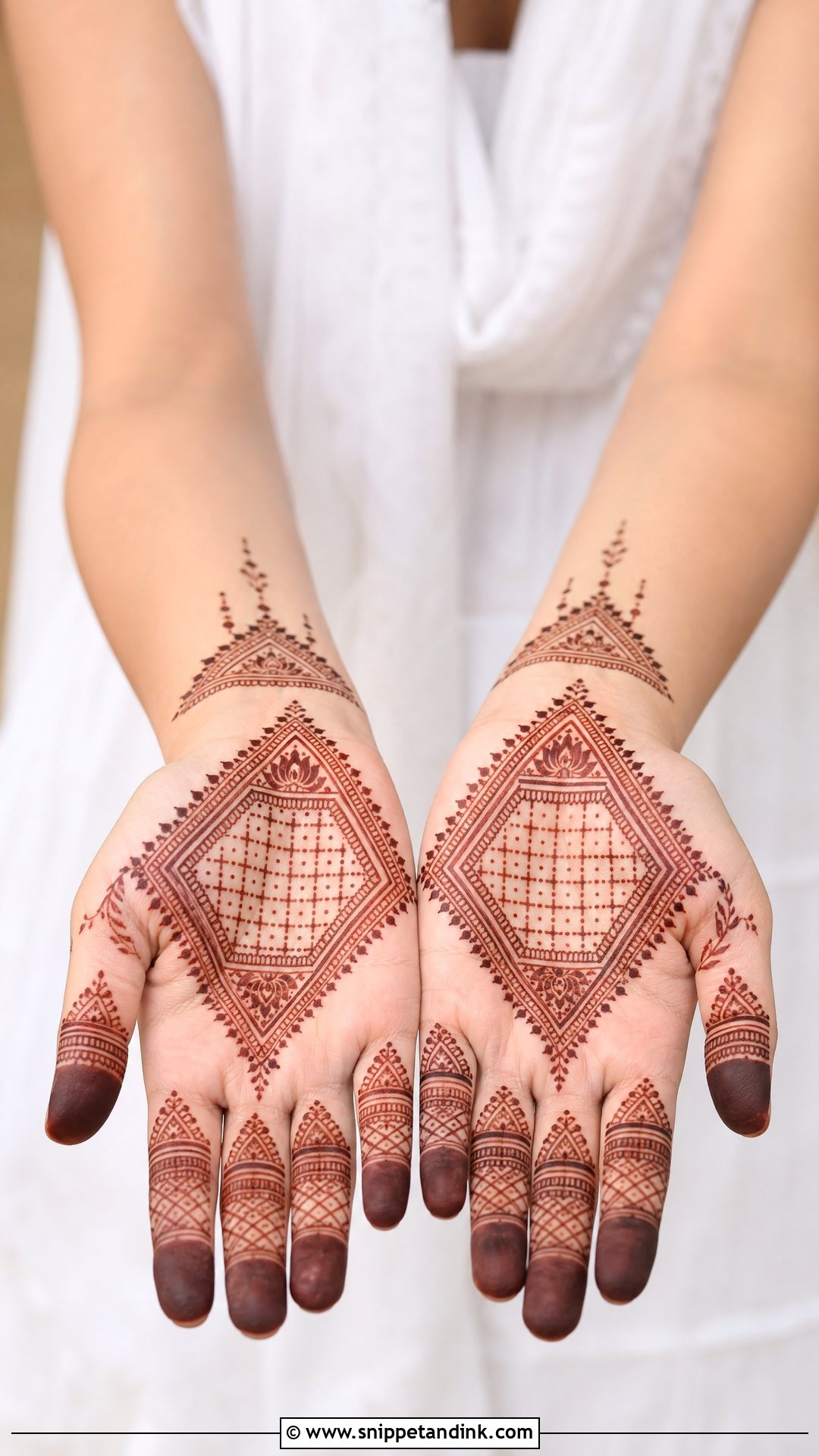
Moroccan-inspired work uses diamonds, grids, straight lines, dots and angular borders instead of curved florals. It depends on precision, so I sketch the main grid points with tiny dots first and connect them. A central diamond or geometric medallion on the palm, with matching finger patterns, can be kept minimal or filled out. A few dots soften it without changing its character. It pairs well with plain outfits.
22. Gulf Palm Mehndi Design
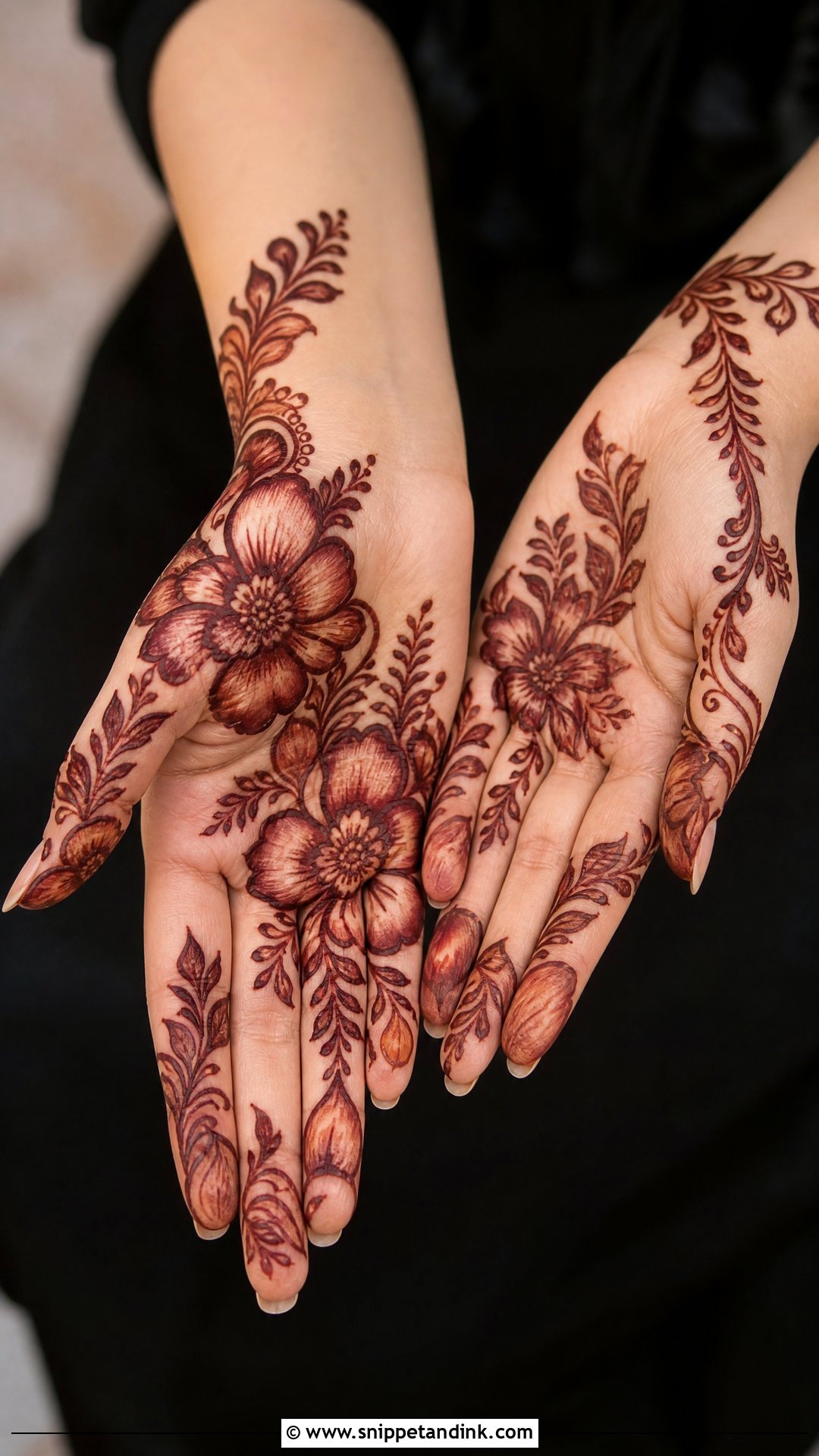
Khaleeji or Gulf-style henna is bold and airy: large florals, leaf trails, thick outlines and wide open spaces. A sweeping flower cluster might travel from the wrist side toward the fingers. Thick outlines are part of the style, so I use a slightly larger cone opening. The large motifs photograph clearly. Keep the shading soft inside petals and let the blank sections breathe, for Eid, weddings or evening parties.
23. Khafif Palm Mehndi Design
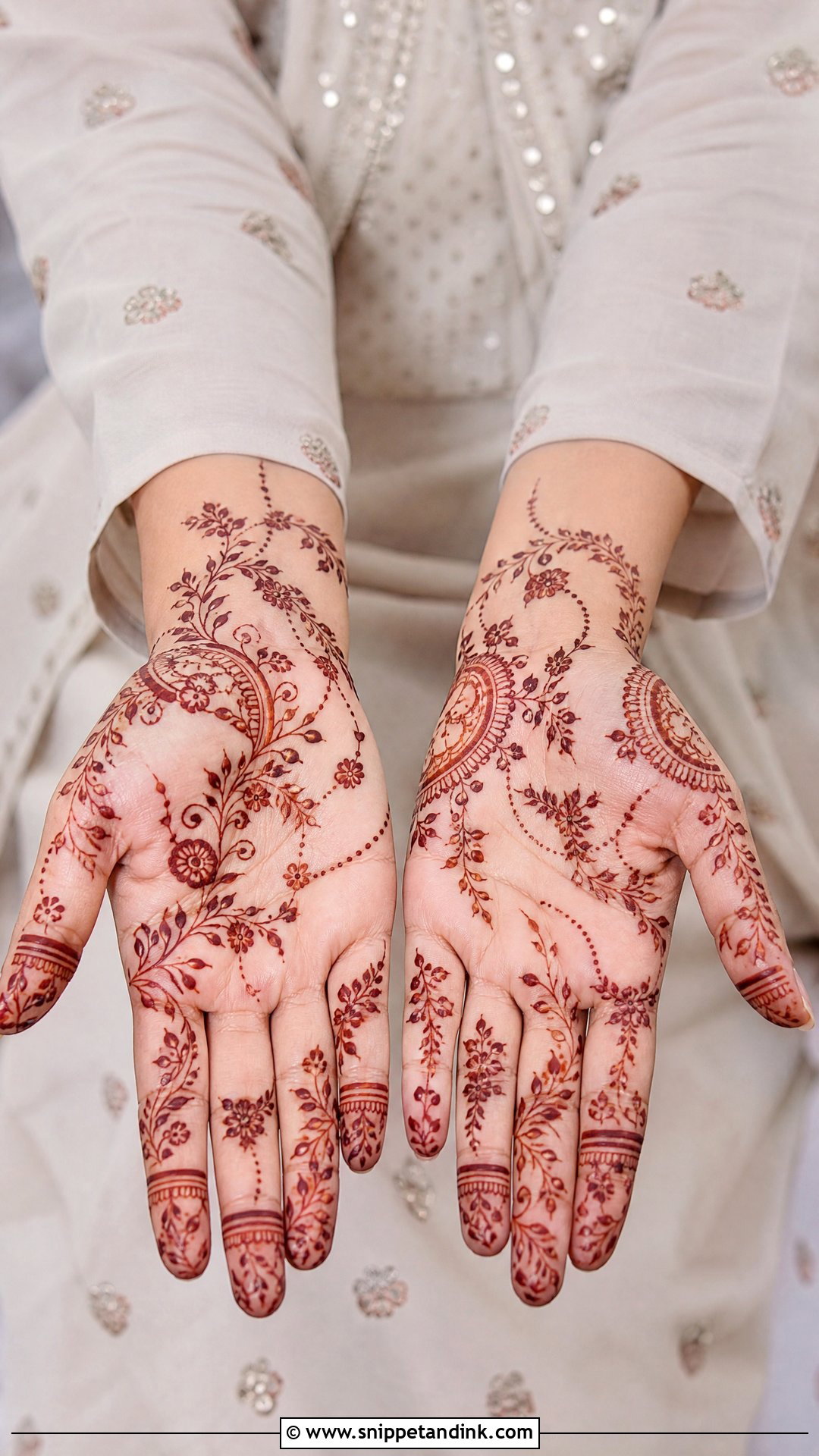
Khafif means light, and the style lives up to it: fine florals, thin vines, tiny leaves and dots with plenty of air between them. A small mandala or floral cluster sits on the palm and the rest drifts toward the fingers. Thin lines need a well-mixed, smooth paste with no lumps, or they break as they dry. It’s quicker than full bridal work, which makes it a favorite for bridesmaids and family events.
24. Festival Palm Mehndi Design
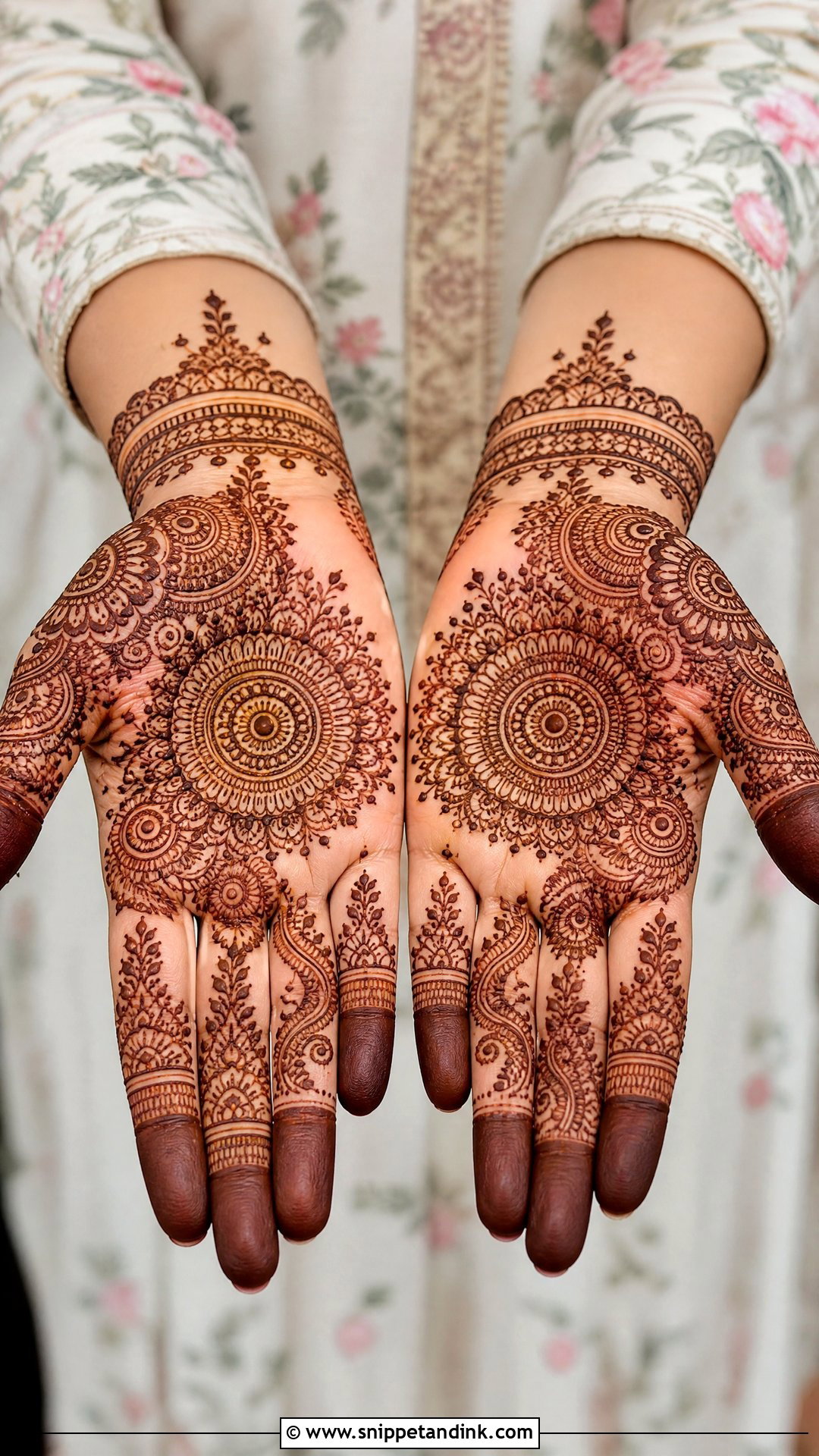
For Eid, Diwali, Teej, Raksha Bandhan or family celebrations, festival palms should look joyful and still be manageable to wear. A bold central pattern with matching smaller details on the fingers works for most occasions. If you’re applying at home, keep the design medium-dense so it dries before it smudges and stains evenly. Mirror the same motif on both hands, or use two related ones, such as a mandala and a lotus.
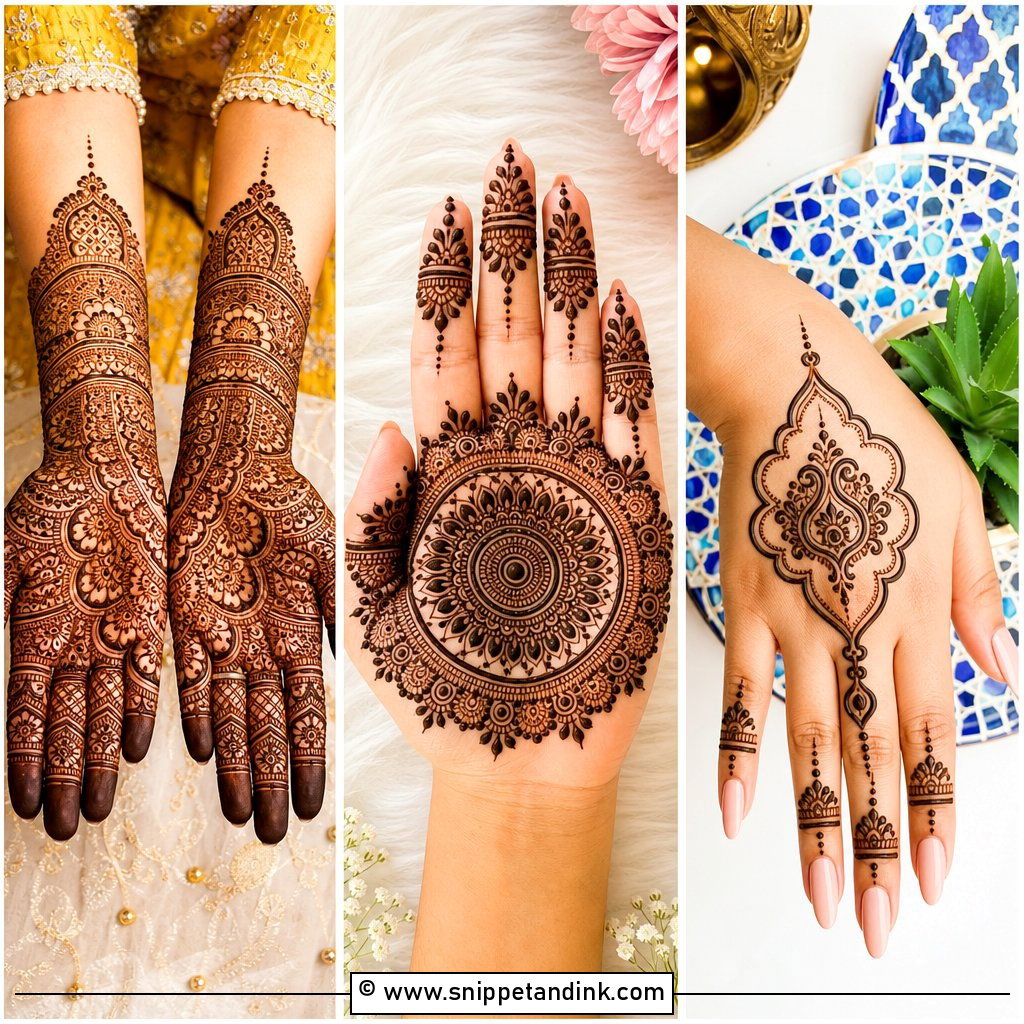
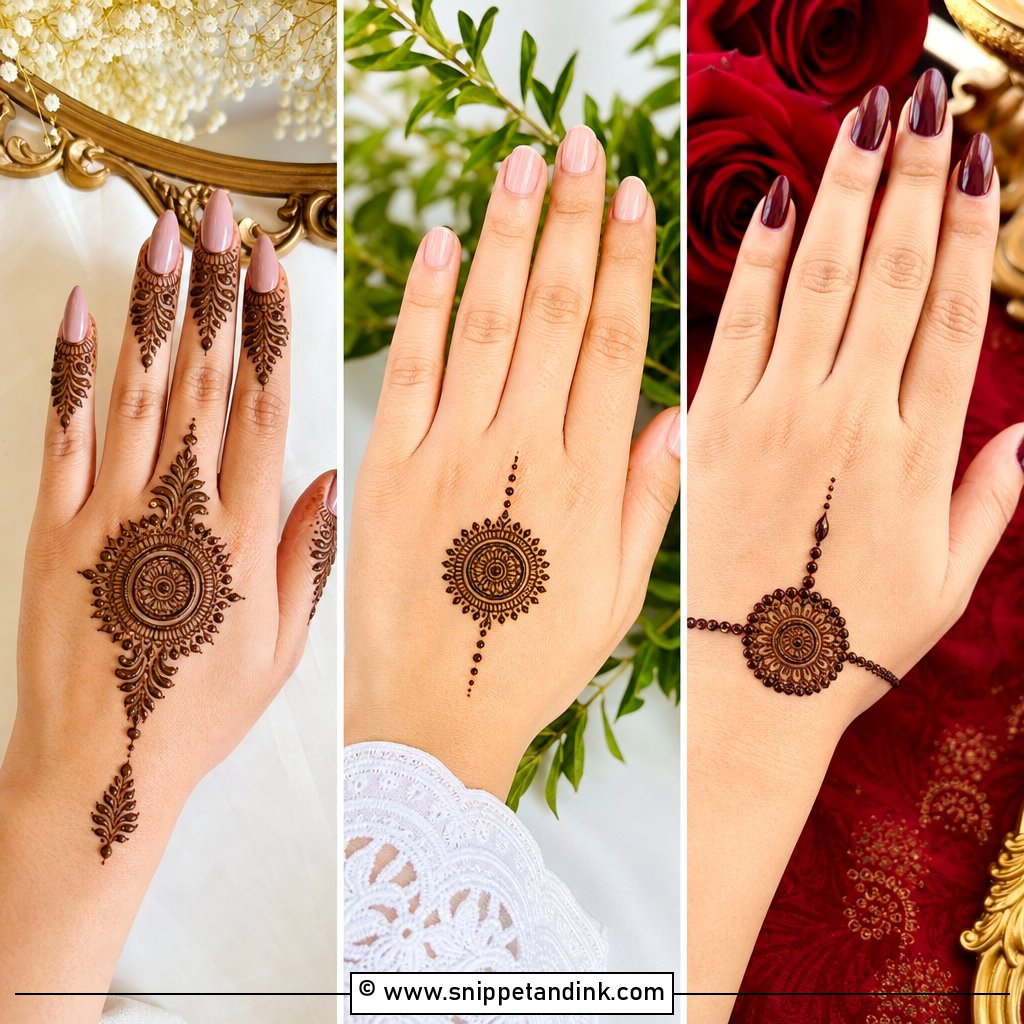
25. Eid Palm Mehndi Design
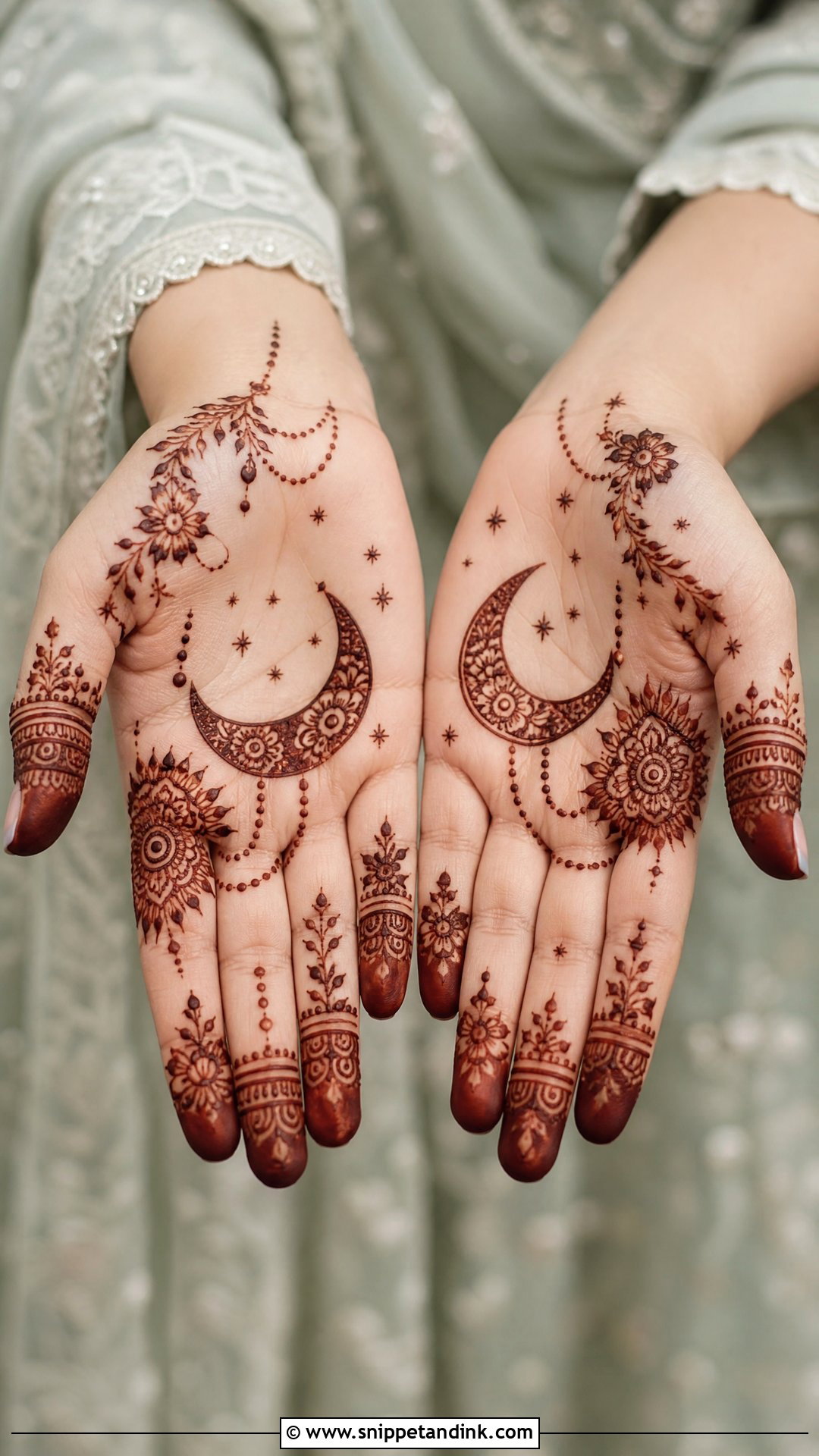
Crescent moons and stars give an Eid palm its meaning. The crescent curves naturally around a round mandala or sits beside a flower. Arabic and Khafif influences suit Eid because they’re quick to apply and leave graceful open space. Keep the fingers neat with small bands or leafy lines. For the darkest color on Eid morning, I’d apply the night before; the stain keeps darkening for a day or two after the paste comes off.
26. Diwali Palm Mehndi Design
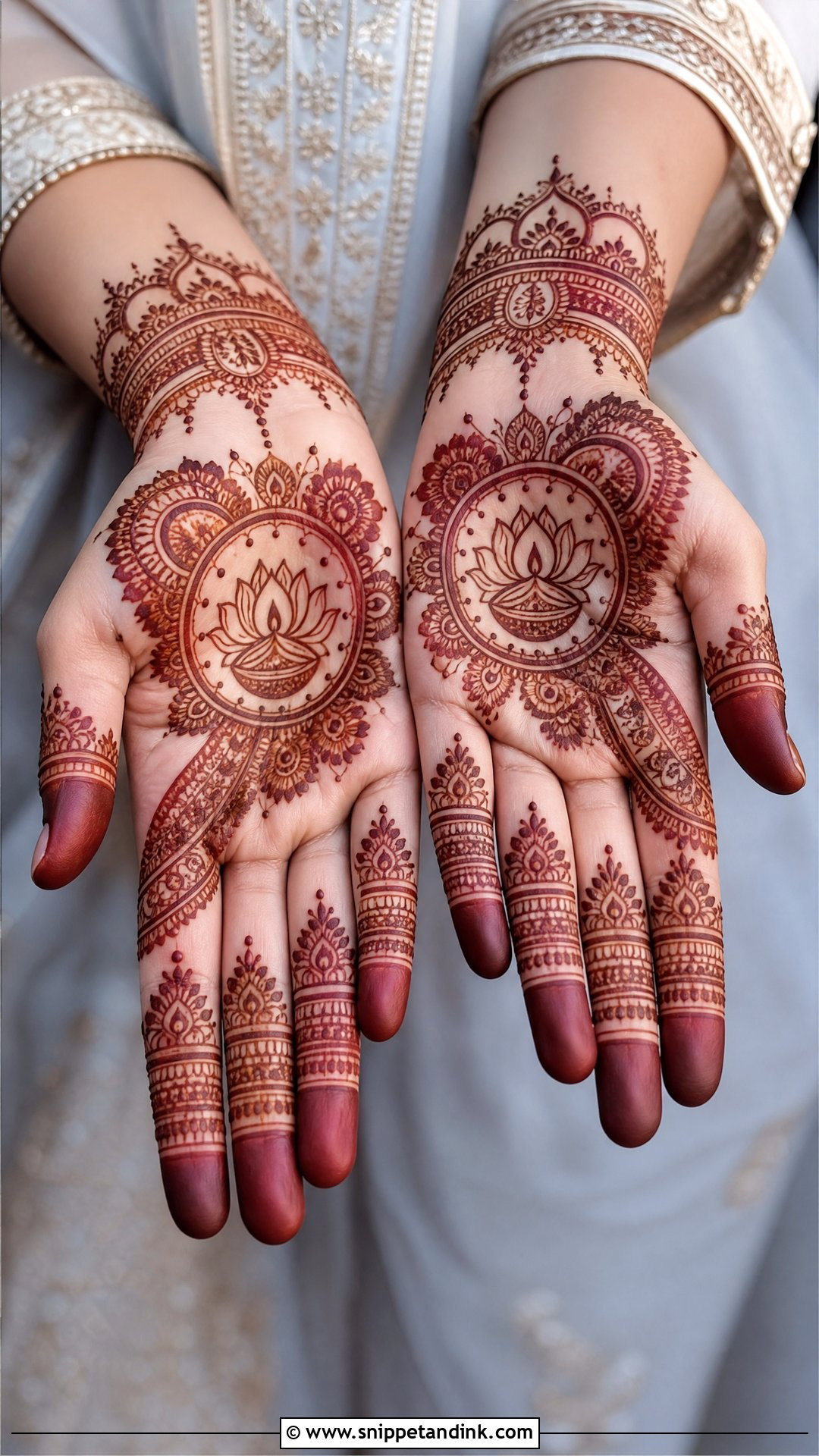
A Diwali palm can carry a central mandala, a lotus, diya-inspired curves, paisleys and dotted borders. The lotus suits the festival’s sense of symmetry, and a ring of dots around the center motif gives a glowing effect. Detail should stay clean enough to read in festive photos taken by lamp and candlelight, which are dim. If both hands should match, keep the same center and vary only the borders.
27. Kids Palm Mehndi Design
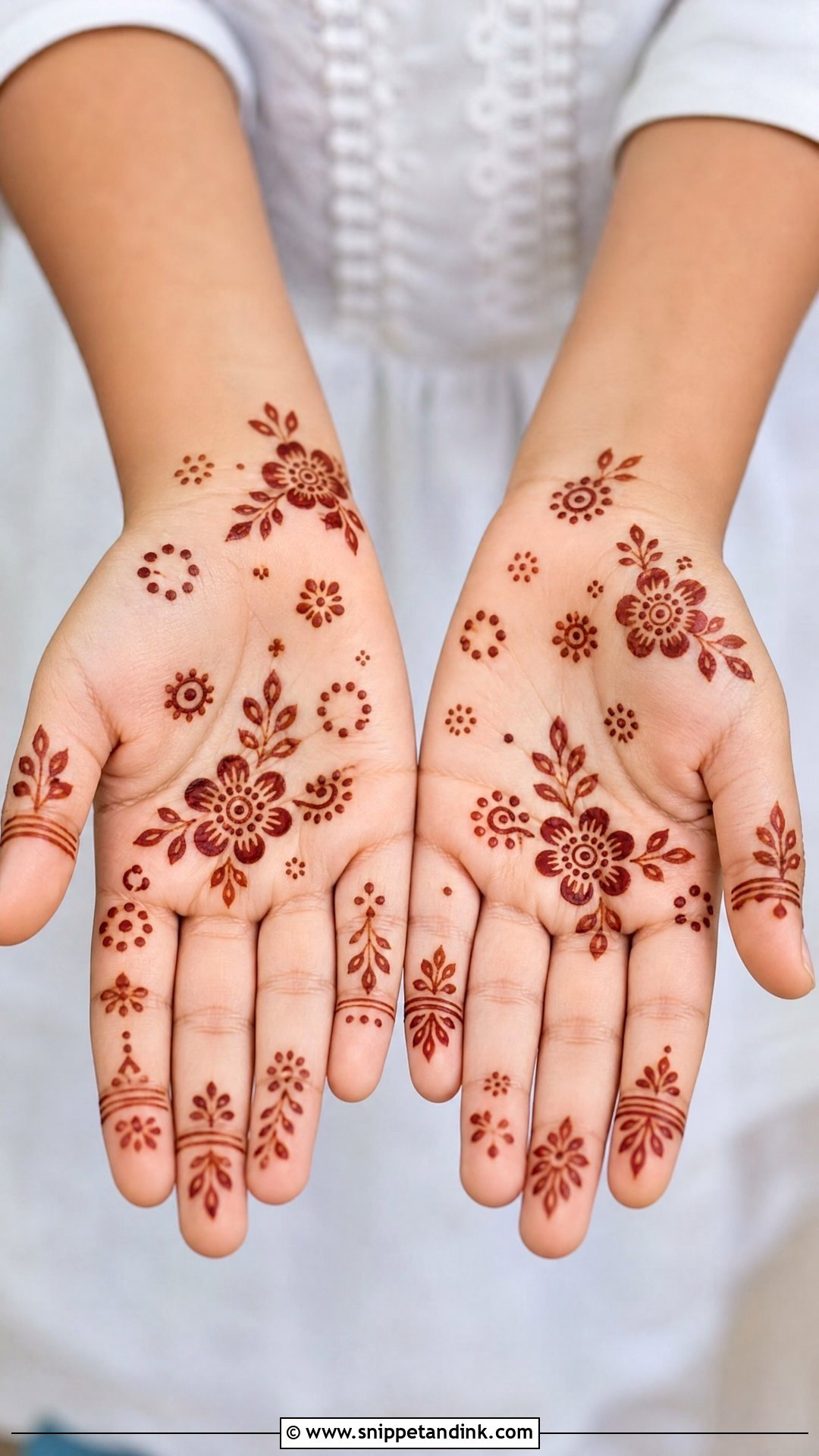
A kids palm mehndi design has to be quick, because children don’t sit still for long. A small flower, a sunburst mandala, a butterfly shape or a dotted circle is plenty, with very light fingers. Dense patterns smudge easily on small, busy hands. Rounded shapes and open spacing dry faster. I only use natural henna on children, and I’d ask parents about any skin sensitivity before starting.
28. Small Palm Mehndi Design
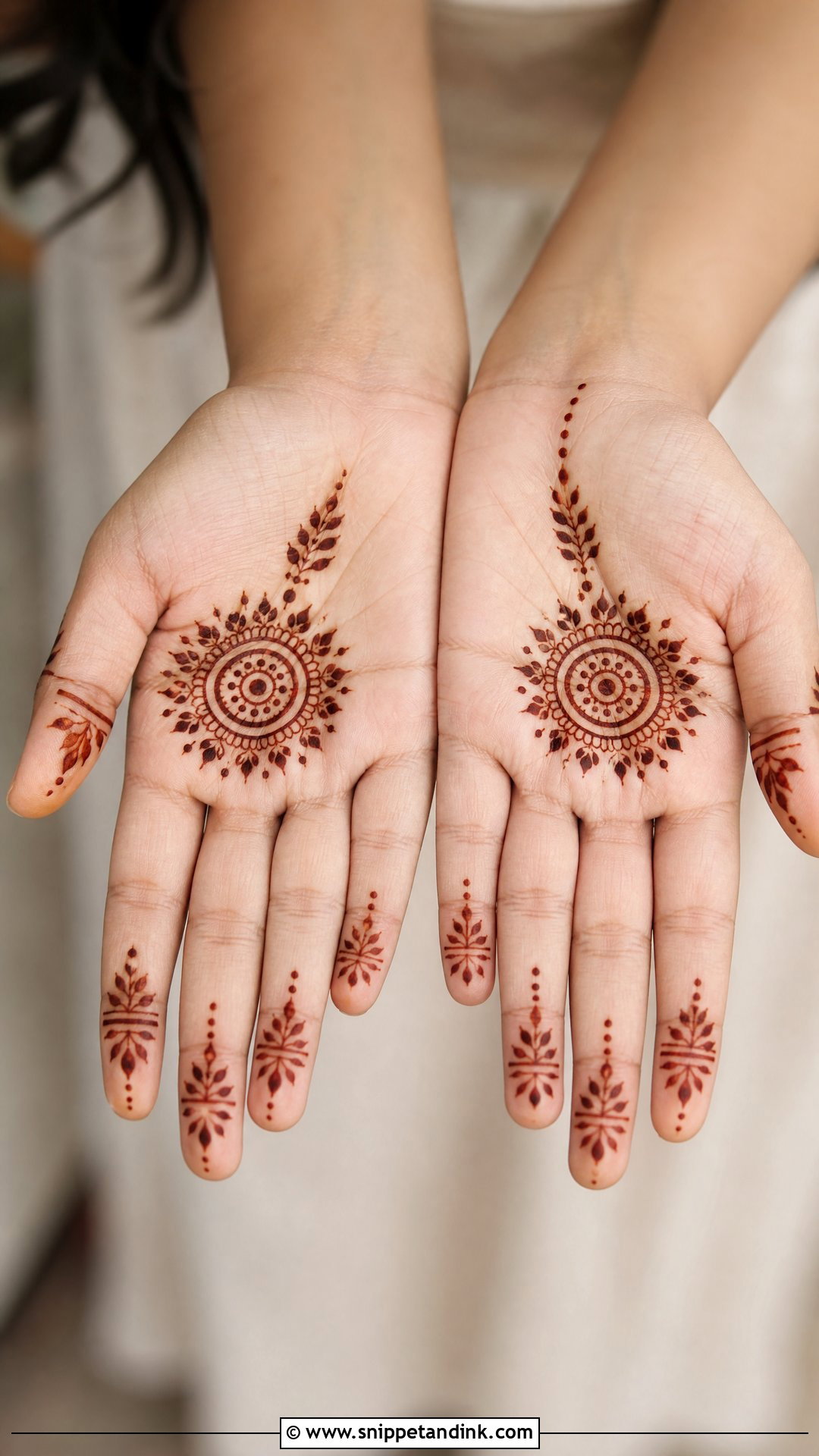
On a narrow palm or a young hand, one clear motif reads better than several crowded ones. A mini mandala, a small lotus, a rose cluster or a single paisley sits at the center with a few dots or short leaf trails. Decorating only one or two fingers looks modern. Small designs also fade more gracefully, since there’s less pattern to break up as the skin renews. Easy to match with any outfit.
29. Dark Stain Palm Mehndi Design
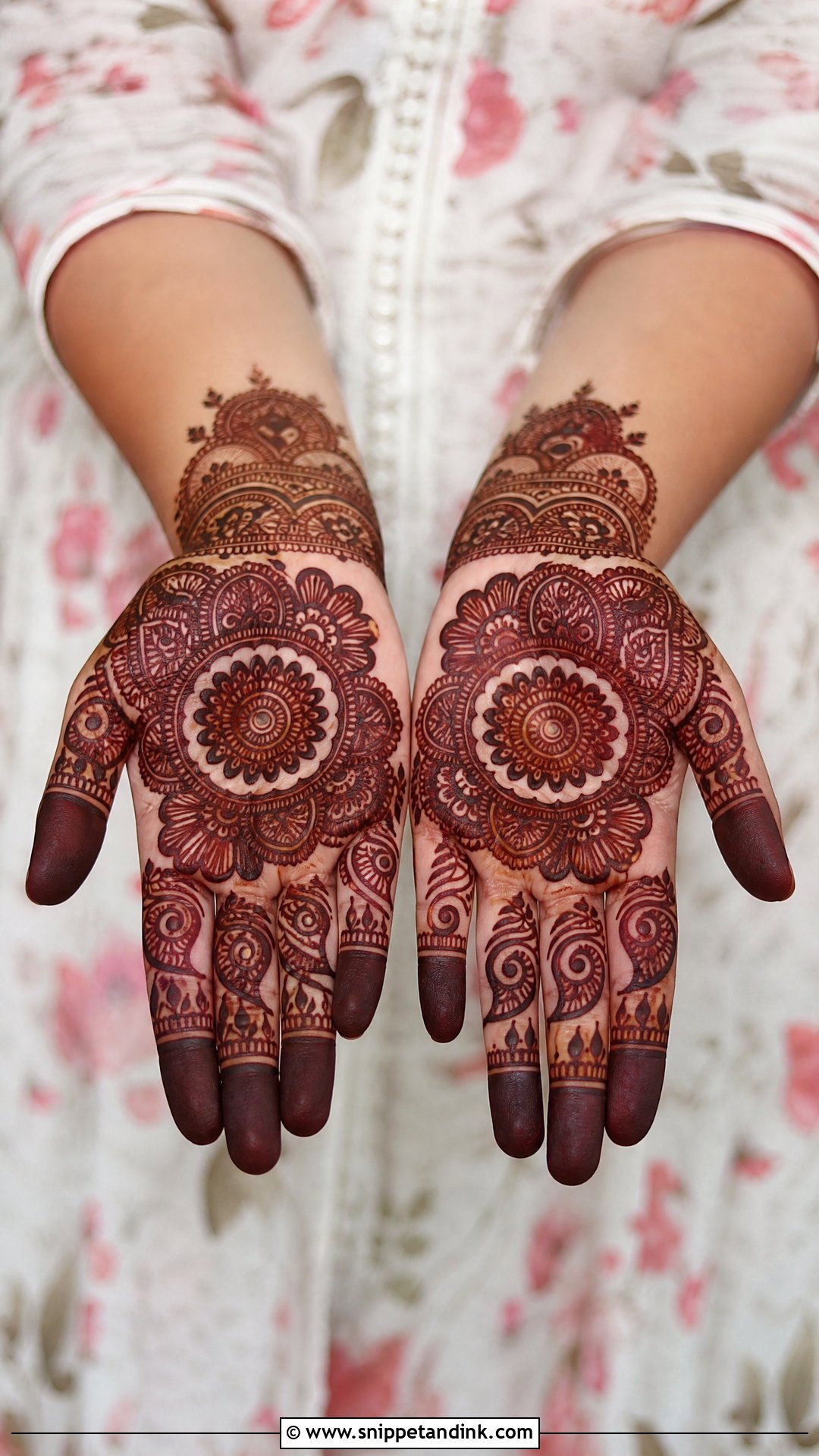
Palms naturally stain darker than the back of the hand, so designs with strong outlines, filled fingertips, thick borders and clear negative space make the most of that. Mandalas, paisleys and Arabic flowers look rich in a deep maroon. Tiny details close up as the color deepens, so skip them if you want the final stain readable. Let the paste dry fully and keep it on for several hours, then scrape it off rather than washing.
30. Front Palm Mehndi Design
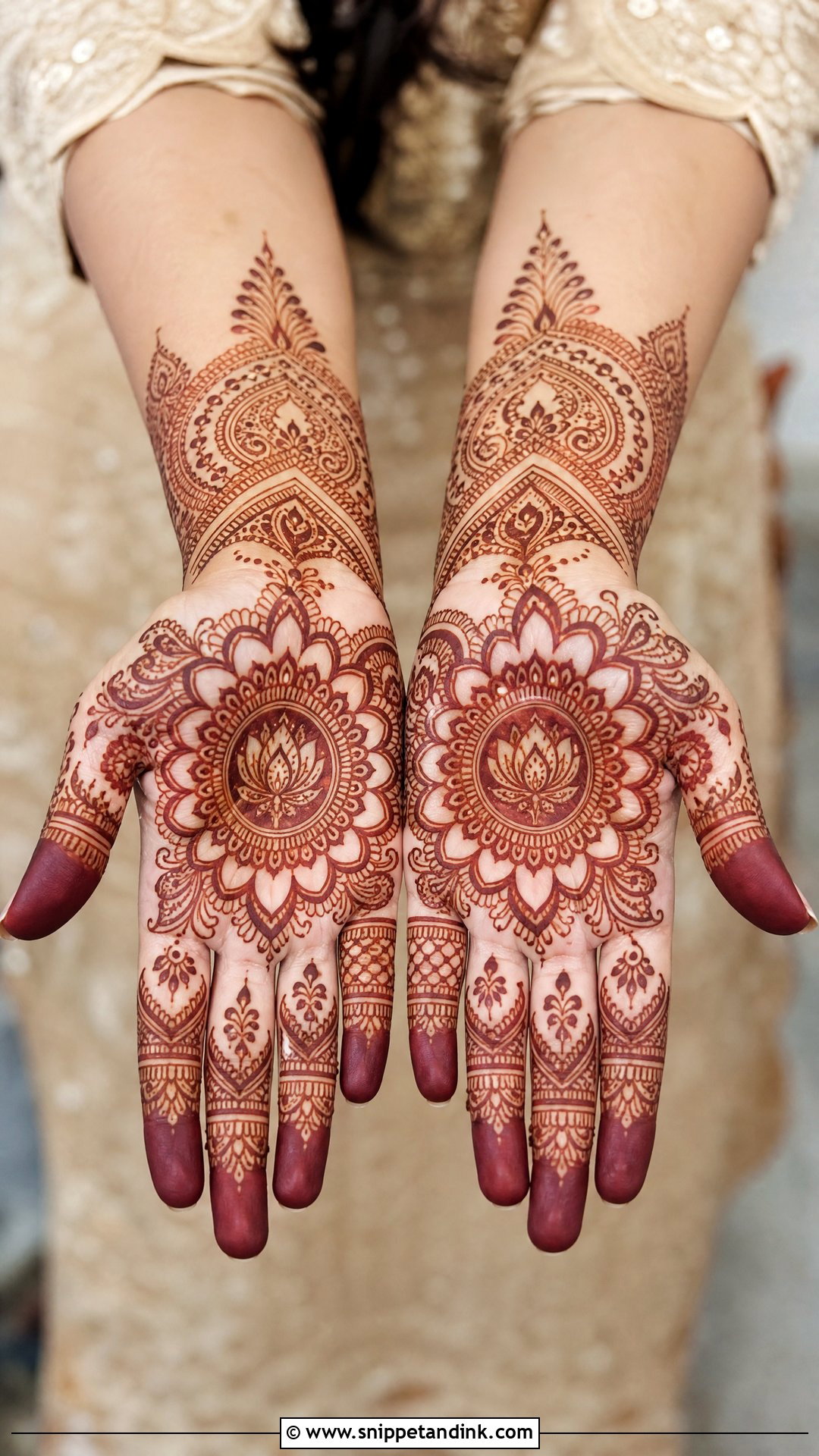
A front palm mehndi design is the one everyone sees, in greetings, in gift photos, during prayer and in wedding poses. It can be simple, full, bridal, Arabic, Indian or modern, but it always needs a focal point, because the eye lands in the center of the palm first. A mandala, lotus, rose, peacock or paisley works. I build balanced finger details and a light wrist link around it, so it reads clearly from a distance and rewards a close look.
From Orange to Maroon: The Two Days After the Paste Comes Off
When the dried paste comes off, the stain underneath is bright orange. People panic at this point, and they shouldn’t. Henna stains oxidize and deepen over roughly the next one to two days, moving through brown to a reddish maroon. That’s also why I schedule bridal mehndi a day or two before the main event, so the color peaks on the wedding day rather than the morning after.
My aftercare instructions
- Leave the paste on as long as you comfortably can, ideally several hours or overnight.
- A light dab of lemon and sugar mixture on dry paste helps it stay on the skin.
- Scrape the paste off with a blunt edge or your fingers. Don’t wash it off.
- Keep water away from the design for as long as possible, ideally the rest of the day.
- Keep your hands warm, as warmth helps the stain develop.
- Avoid soap, sanitizer and chlorine for the first day.
A palm stain usually lasts one to two weeks depending on skin and how often your hands are in water. It fades unevenly, often from the center of the palm first, so a design with clear spacing ages more gracefully than a very dense one.
Let the Occasion Set How Much Palm You Cover
The palm adapts to almost any occasion with a few choices: how much skin to cover, which motif leads, and how far the design travels onto the fingers and wrist. Mandala, lotus, paisley and Indian layouts feel traditional. Arabic, Gulf, Khafif and minimal designs feel airy. Weddings and festivals usually suit fuller palms with finger and wrist details. Think about your event, your outfit, your hand size and how long you can sit for application, and tell your mehndi artist all four.
You'll Like These Ideas:


Leave a Reply