
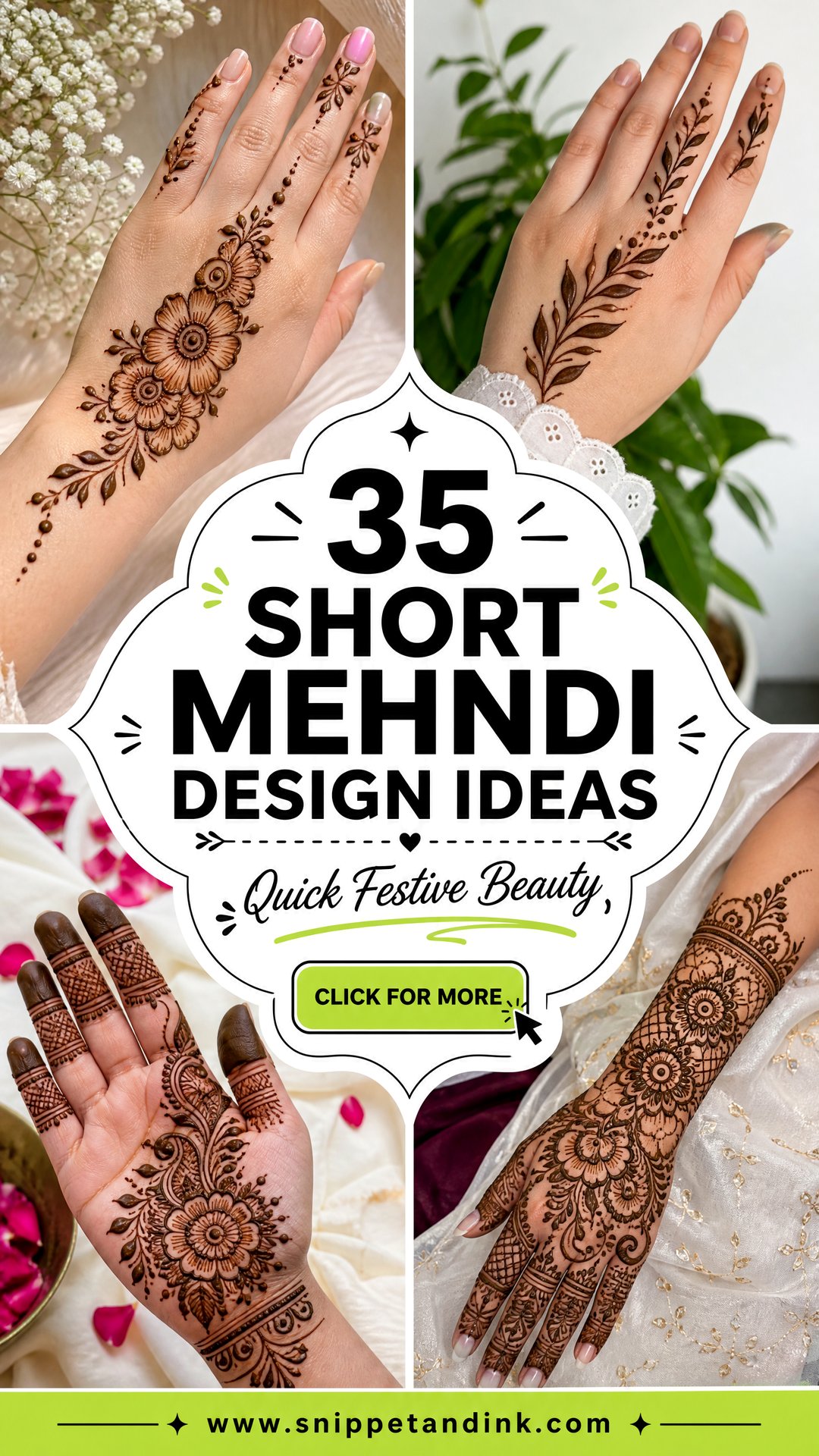
Not every function calls for a three-hour sitting. A small design can be finished in ten or fifteen minutes a hand, dries before you’ve finished your tea, and still looks deliberate when the stain comes up. Short mehndi suits Eid mornings, Diwali evenings, a cousin’s mehndi night, office parties and plain weekends. A tiny palm mandala, a neat Arabic trail, a finger design or a small back-hand flower can each stand on its own. Because these designs rely on open spacing, curves, dots and leaves, they’re also where I’d point anyone holding a cone for the first time.
Mixing a Small Batch of Paste for a Quick Home Session
Short designs are what most people try at home, and the paste matters more than the pattern. Ready-made cones are convenient, but a small fresh batch of natural paste is easy to make and gives you a much better idea of what’s going on your skin.
- Use body-art quality henna powder, sifted fine so it doesn’t clog the cone tip.
- Mix it with lemon juice to a thick, mashed-potato texture, then cover it so the surface touches the plastic wrap.
- Leave it somewhere warm for dye release. In a warm room that can take several hours; in a cold one, closer to a day. A little orange-brown colour rising on the surface tells you it’s ready.
- Stir in a small amount of sugar and a few drops of an essential oil suitable for henna, then thin with more lemon juice until it falls from a spoon in a smooth ribbon.
- Fill small cones made from cellophane or mylar, sealing the end with tape. Freeze what you won’t use the same day.
Before drawing on yourself, test a short line on paper. If the line spreads, the paste is too thin. If you have to squeeze hard to get anything out, it’s too thick or the tip needs snipping slightly wider. Ten minutes spent here saves a smudged design later.
1. Short Arabic Mehndi Design
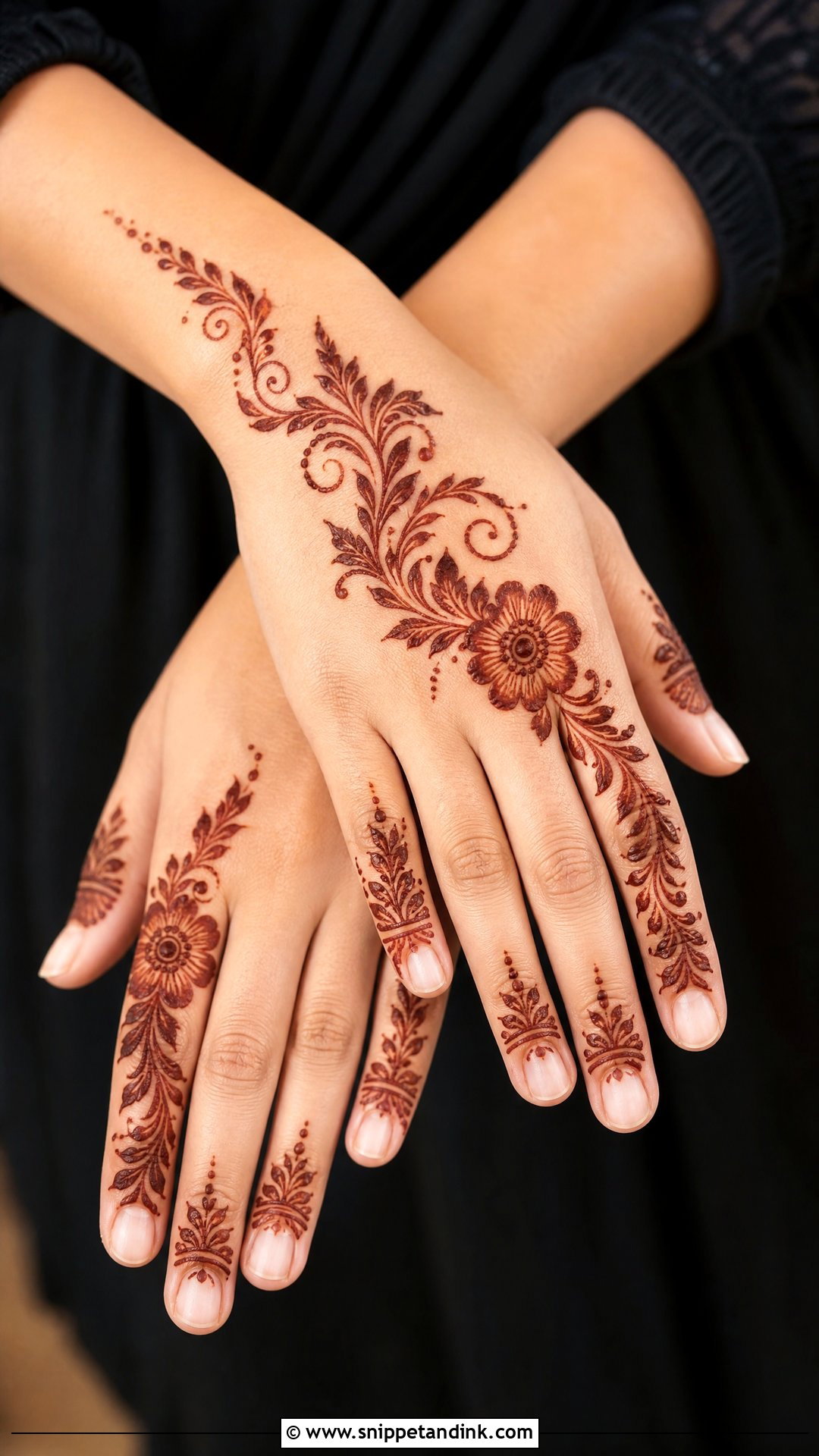
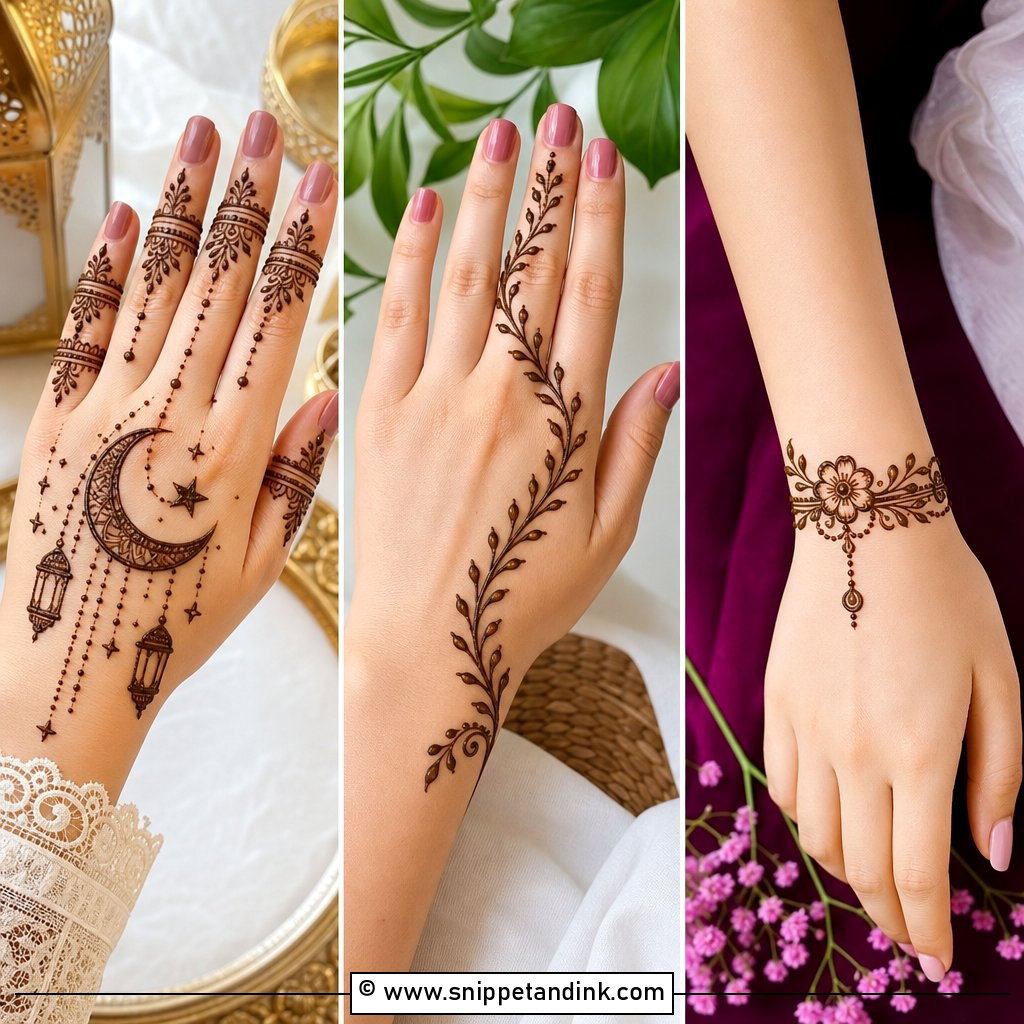
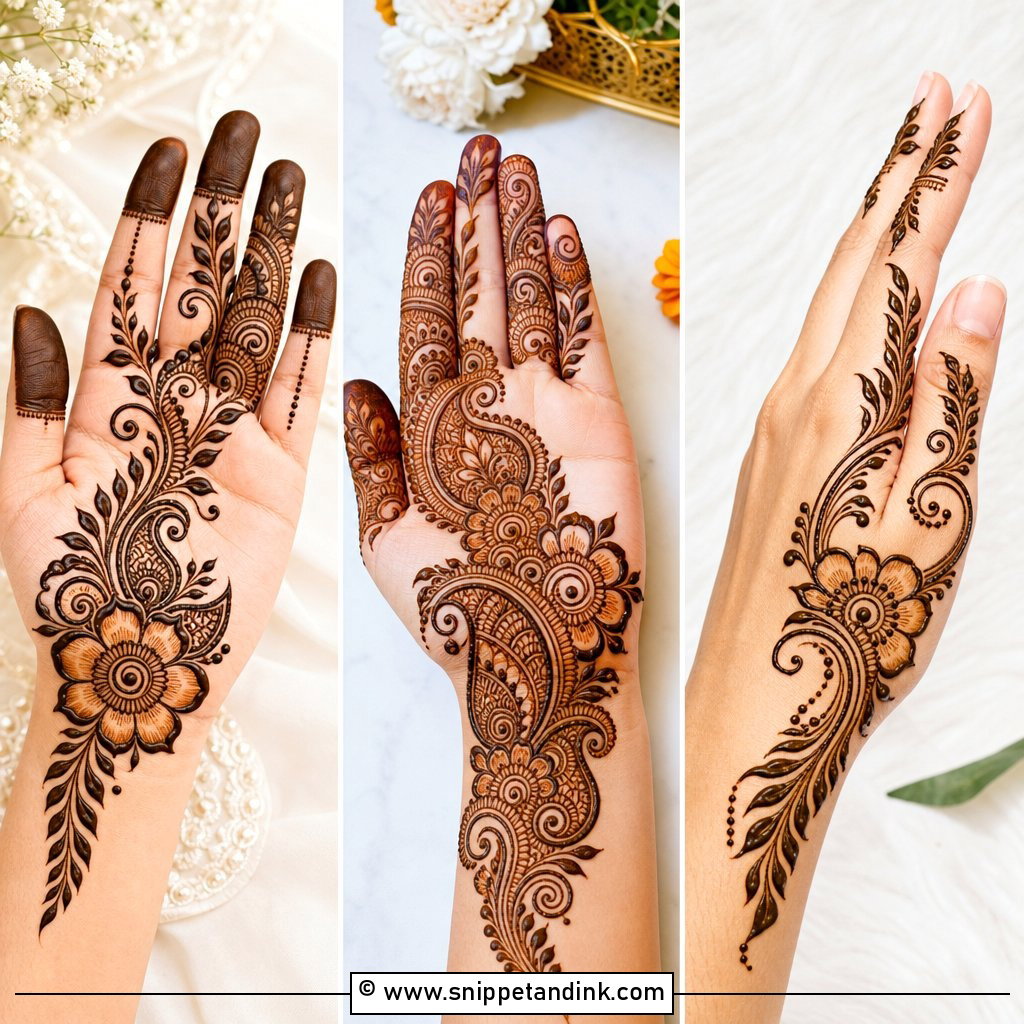
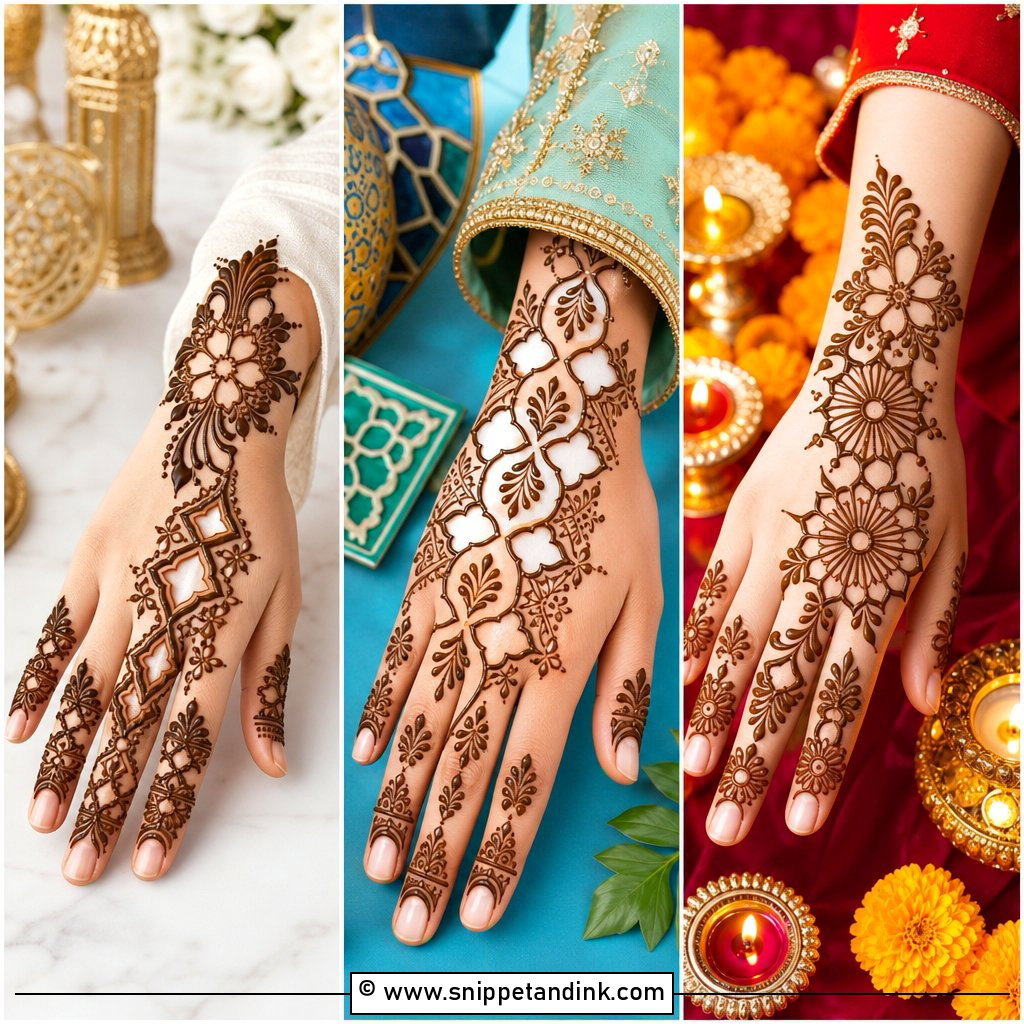
Arabic trails are the quickest way to make a hand look finished. The line runs diagonally from the wrist to one finger, leaving the rest of the palm open, built from bold flowers, leafy vines, curved stems and dots. Symmetry isn’t required, which takes a lot of pressure off beginners. I keep the flowers a little larger than you’d expect and the fillers very plain, because in a short design the flowers do the talking. Ten minutes is realistic once you’ve practised the flower shape a few times.
2. Short Front Hand Mehndi Design
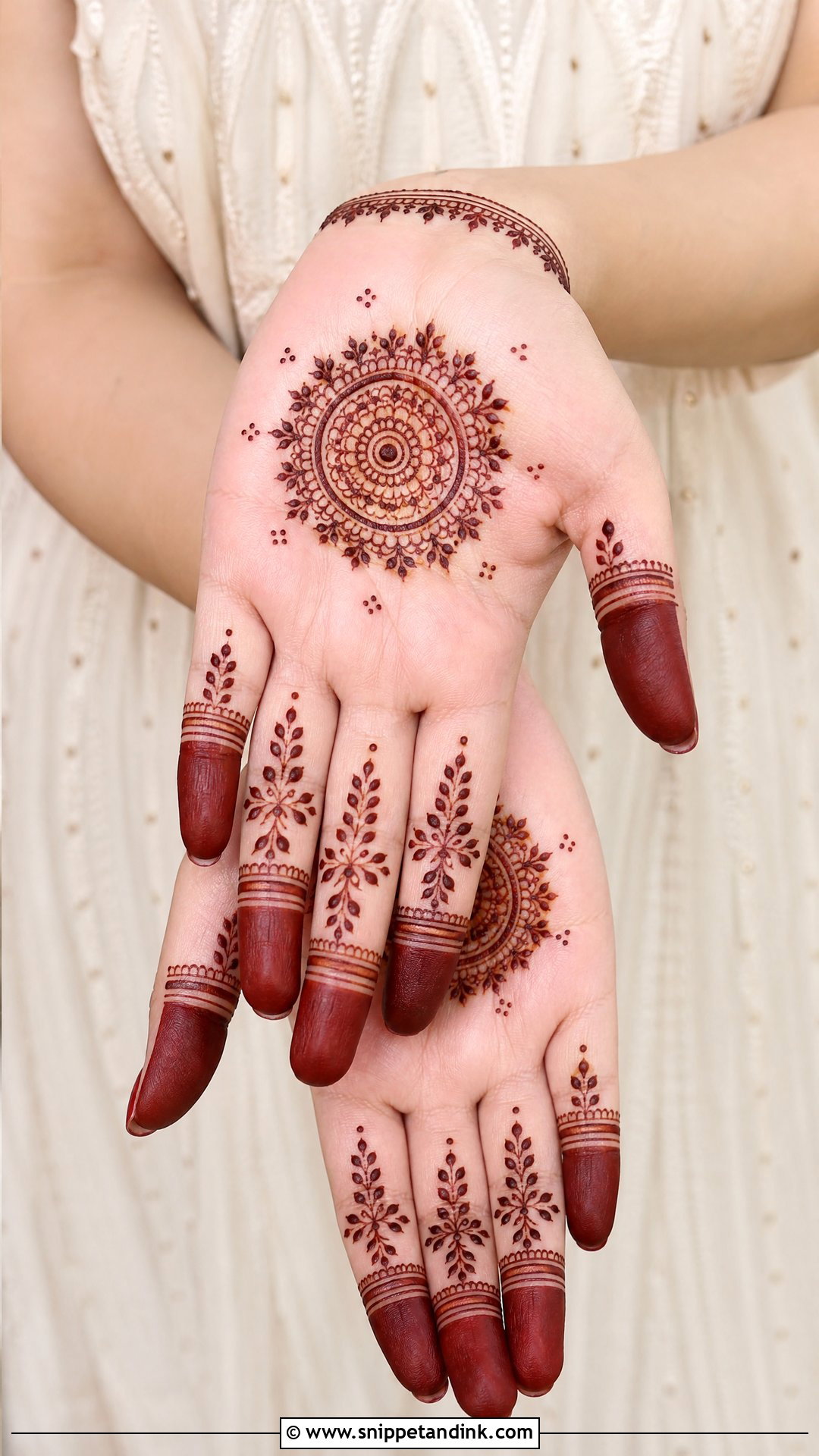
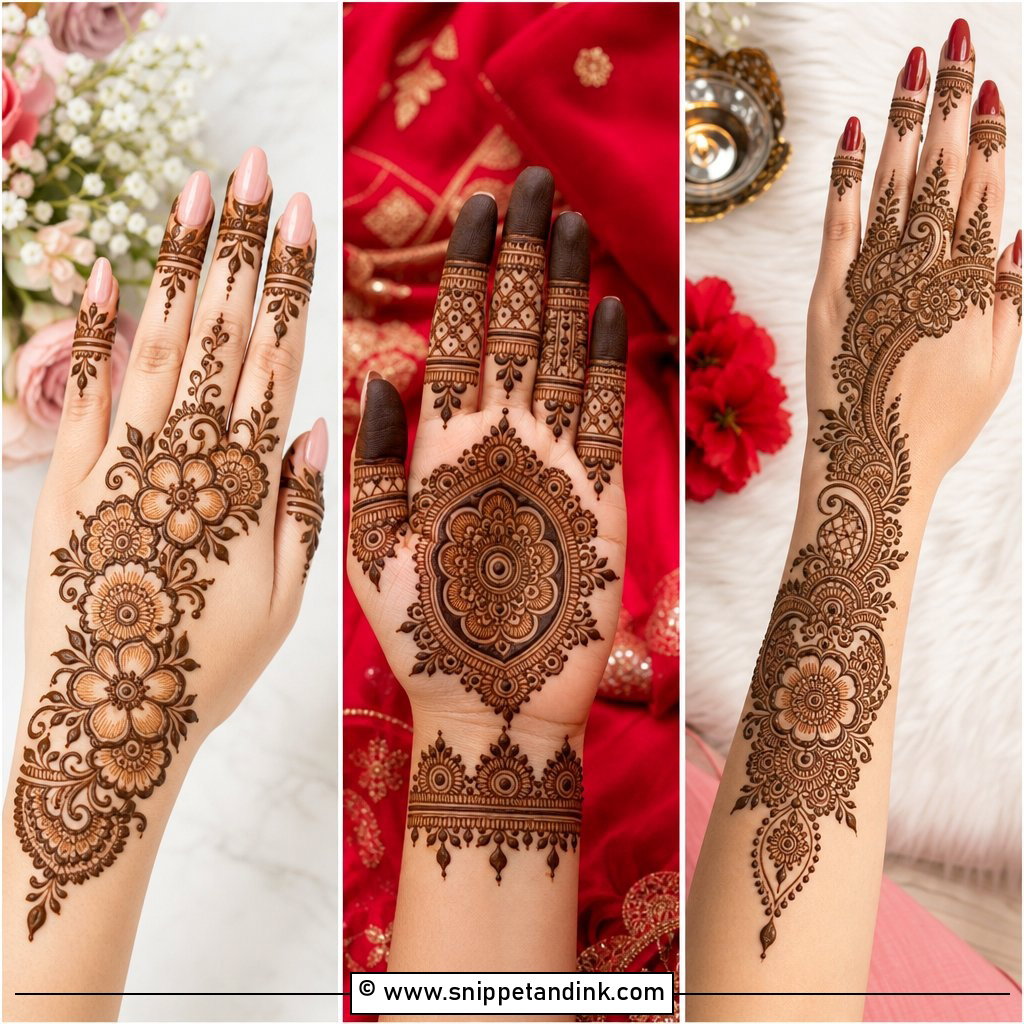
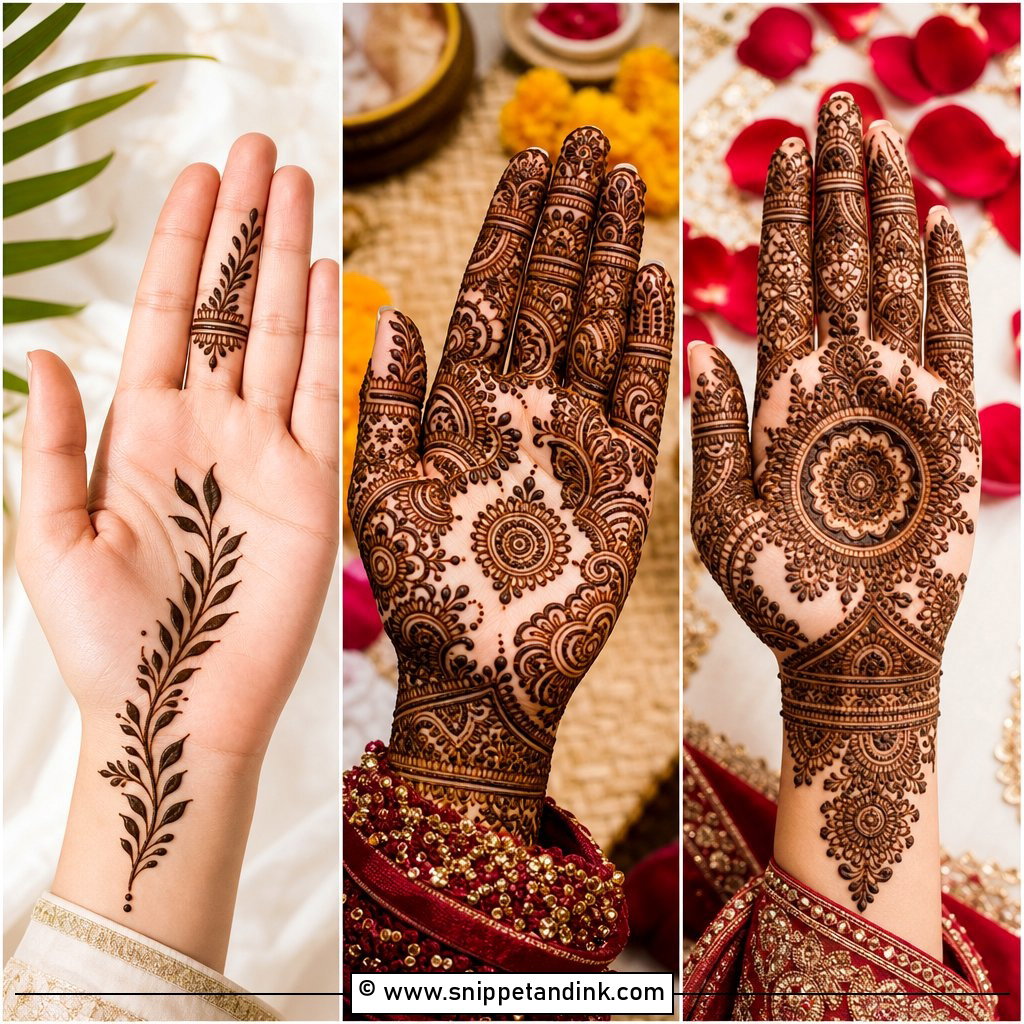
On the palm side, short means one small mandala or floral circle at the centre, simple fingertips, dots and a few leaf lines. The wrist can stay bare or take a thin band. Palms are seen constantly during greetings and meals, so I put spacing ahead of detail: a clean ring of skin around the circle reads better than any amount of filler. It’s modest, quick and stains dark, since palm skin takes colour well.
3. Short Back Hand Mehndi Design
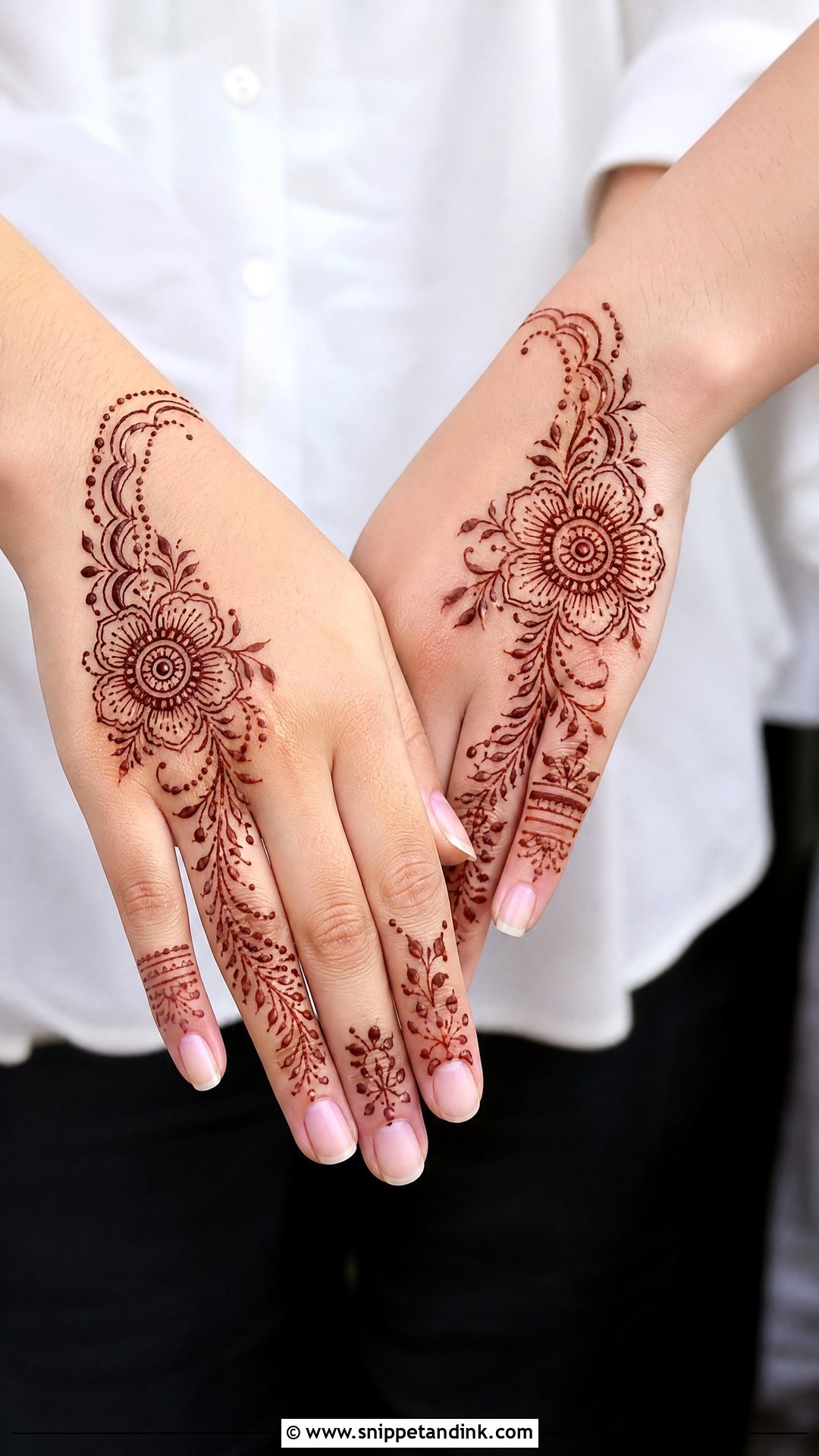
On the back of the hand, I follow the bones rather than fight them. A central flower or small mandala sits just above the knuckles, a slim vine runs toward the middle finger and a curve finishes at the wrist. Open spaces keep it fresh. It sits comfortably beside rings and bangles without competing with them, and the vertical line makes the hand look longer.
4. Short Finger Mehndi Design
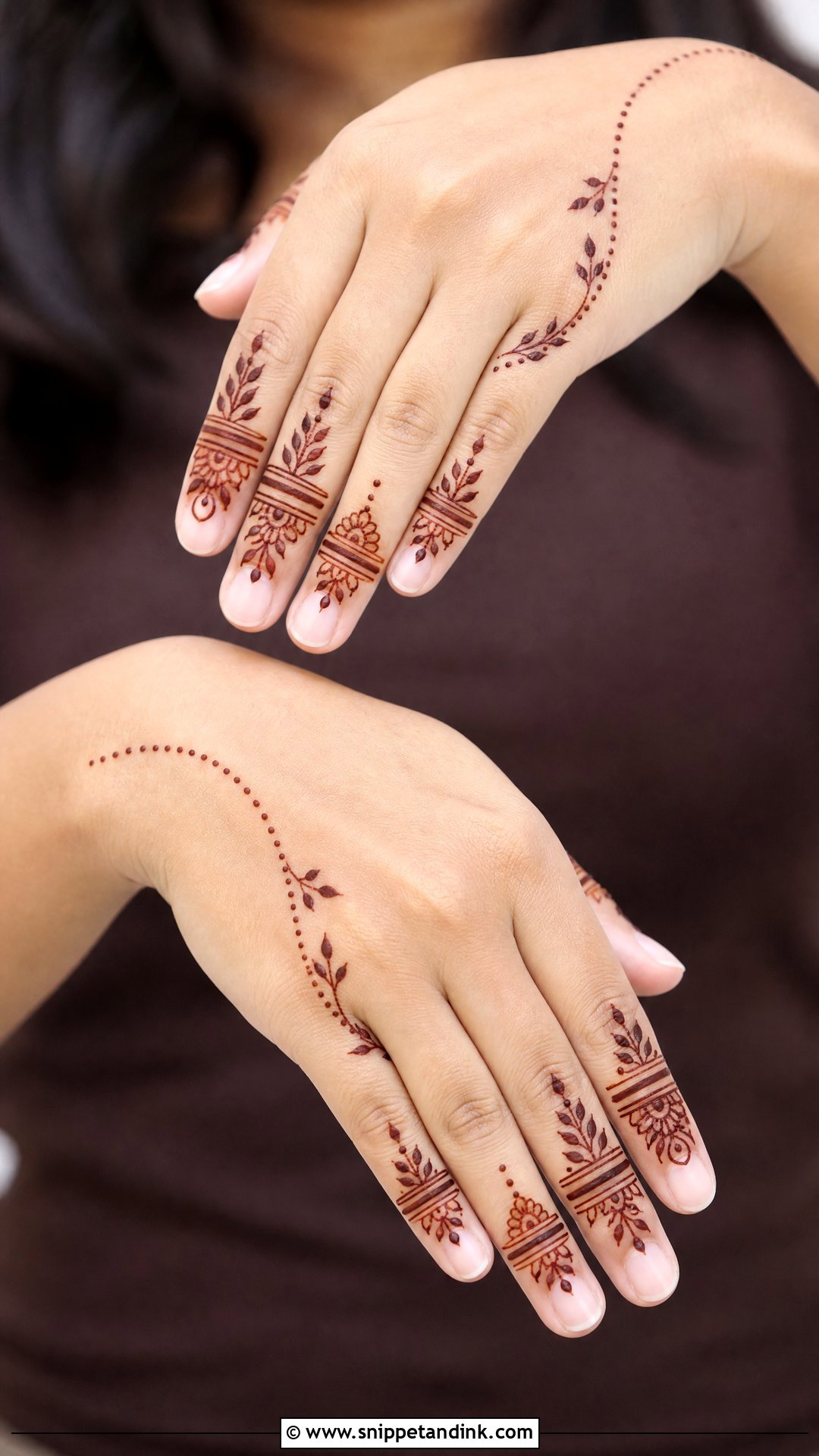
Fingers only: small bands, dots, leafy lines and half-flower tips, with the centre of the hand left clean. One small motif at the wrist ties it together if you want it. It goes on fast and dries in minutes, which matters on a busy day. Fingertips stain darker than almost anywhere else on the hand, so even this little bit of henna reads well. Repeat the same elements on each finger and it looks planned rather than doodled.
5. Short Mandala Mehndi Design
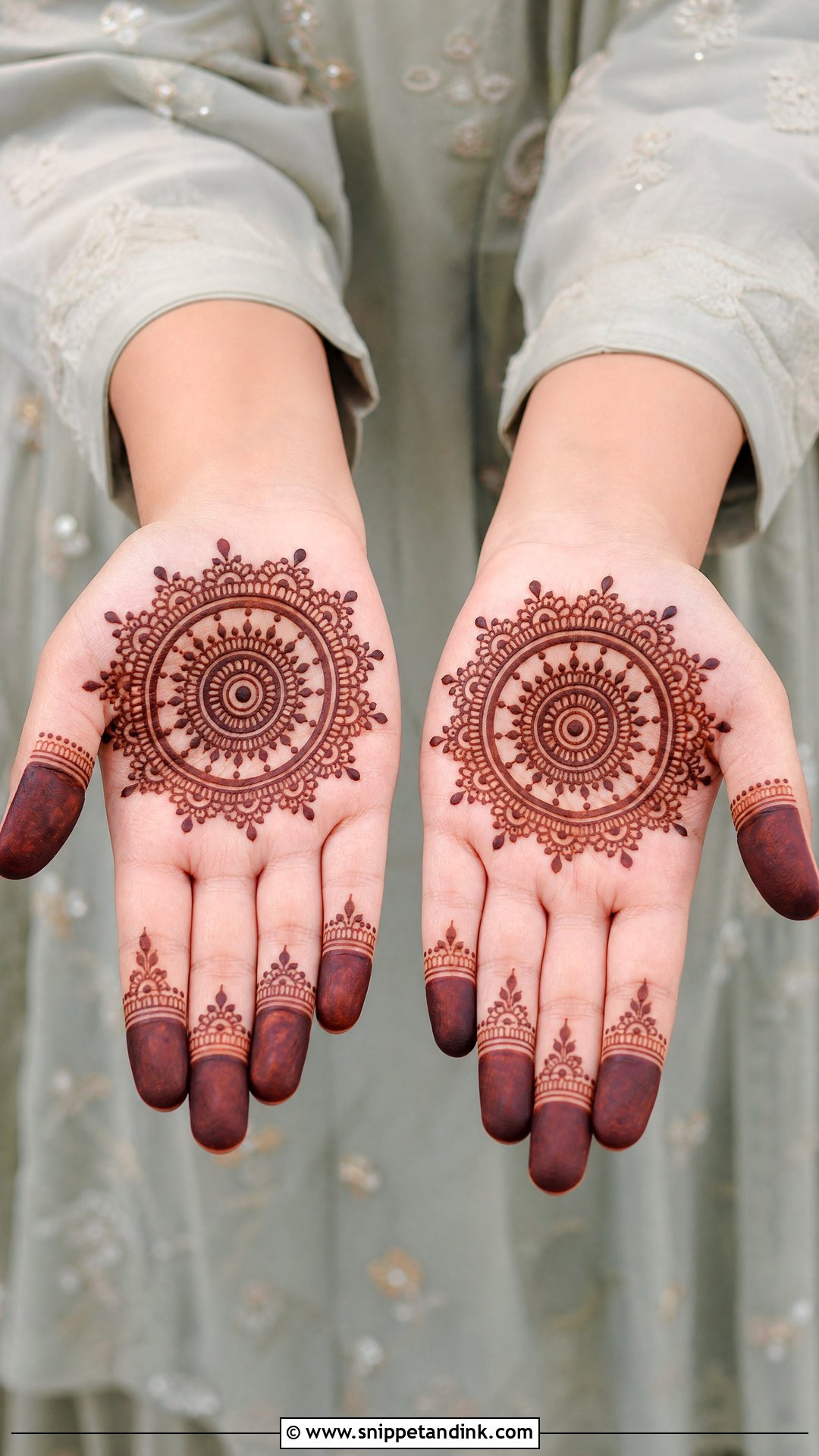
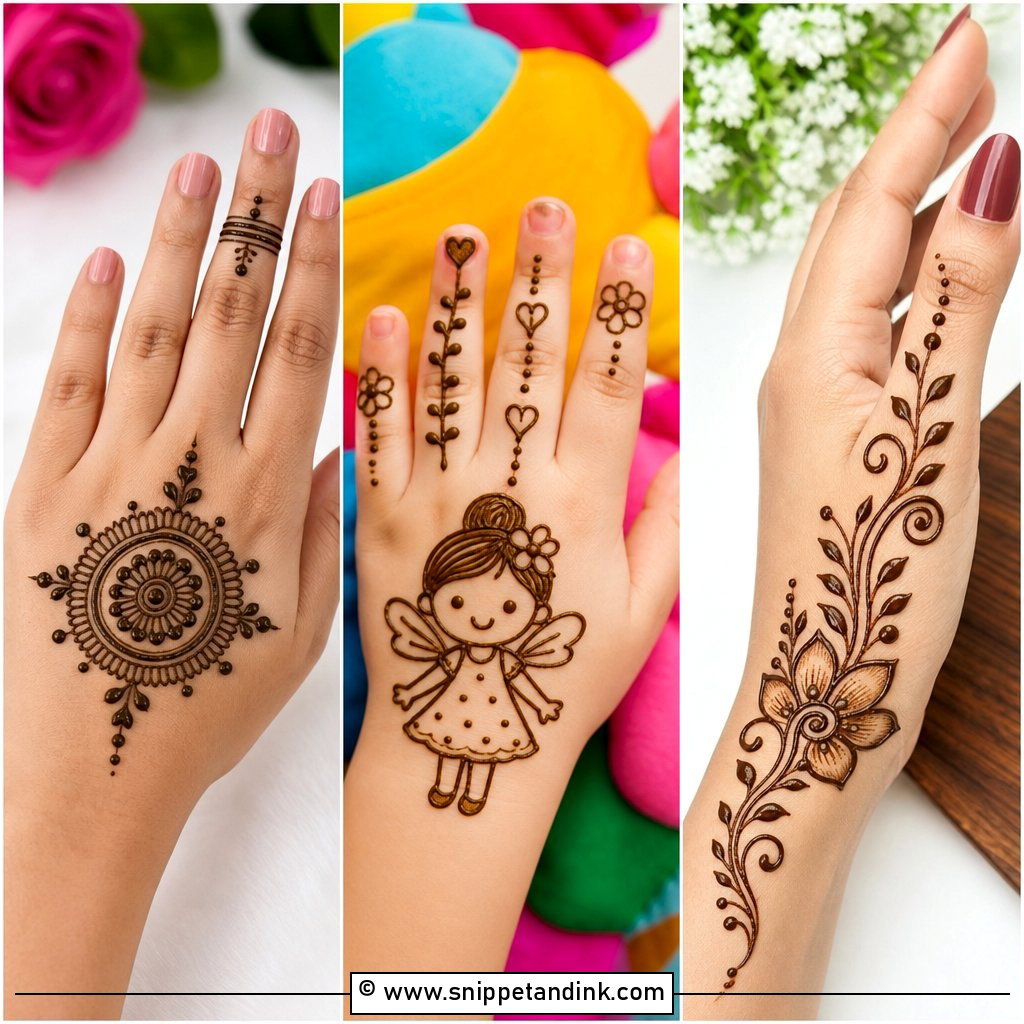
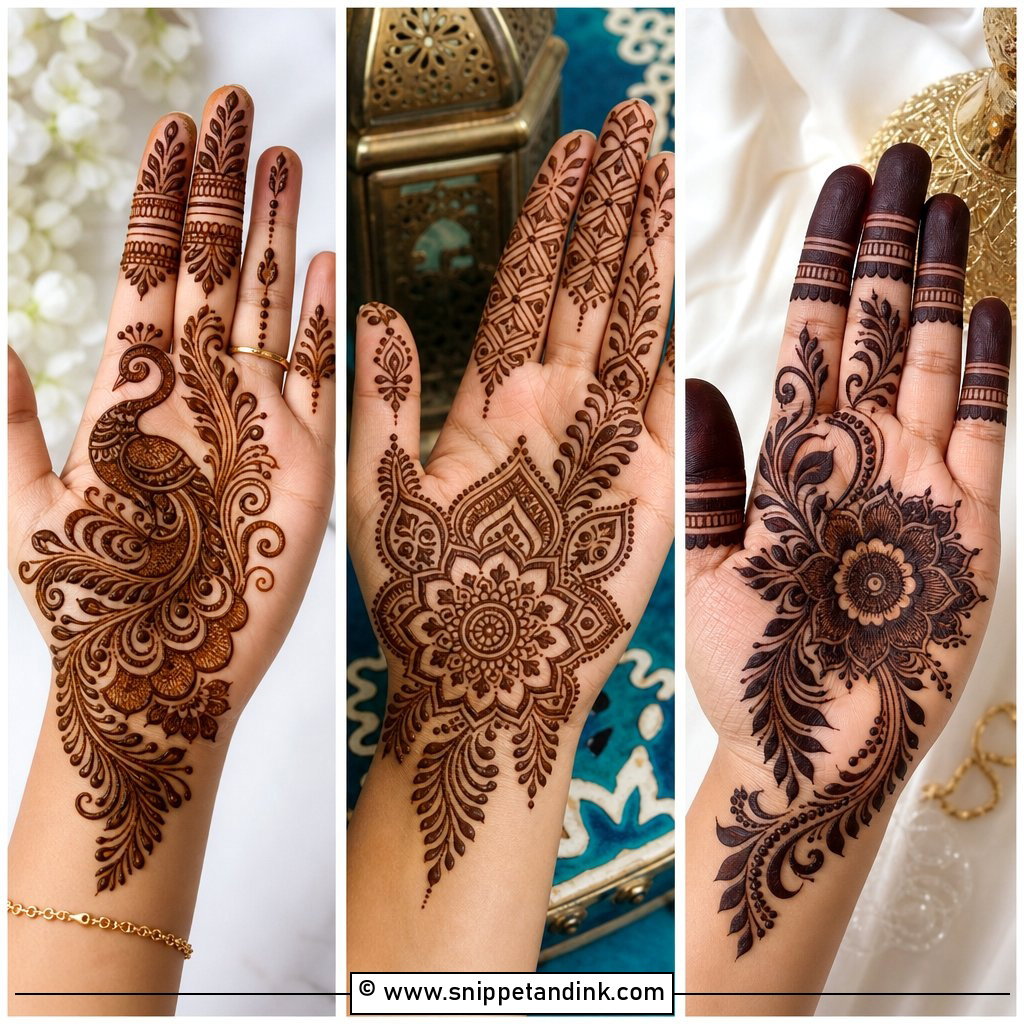
A mandala gives a classic look in a small space. One round motif on the palm or back of the hand, decorated with petals, dots and small rings, and light fingers with tips or thin bands. The circle balances itself even when the rest of the hand is bare. Beginners can build it ring by ring, which is easier than freehanding a trail. Resist adding a third and fourth ring if the first two look right; the open skin around it is what makes it stand out.
6. Short Floral Mehndi Design
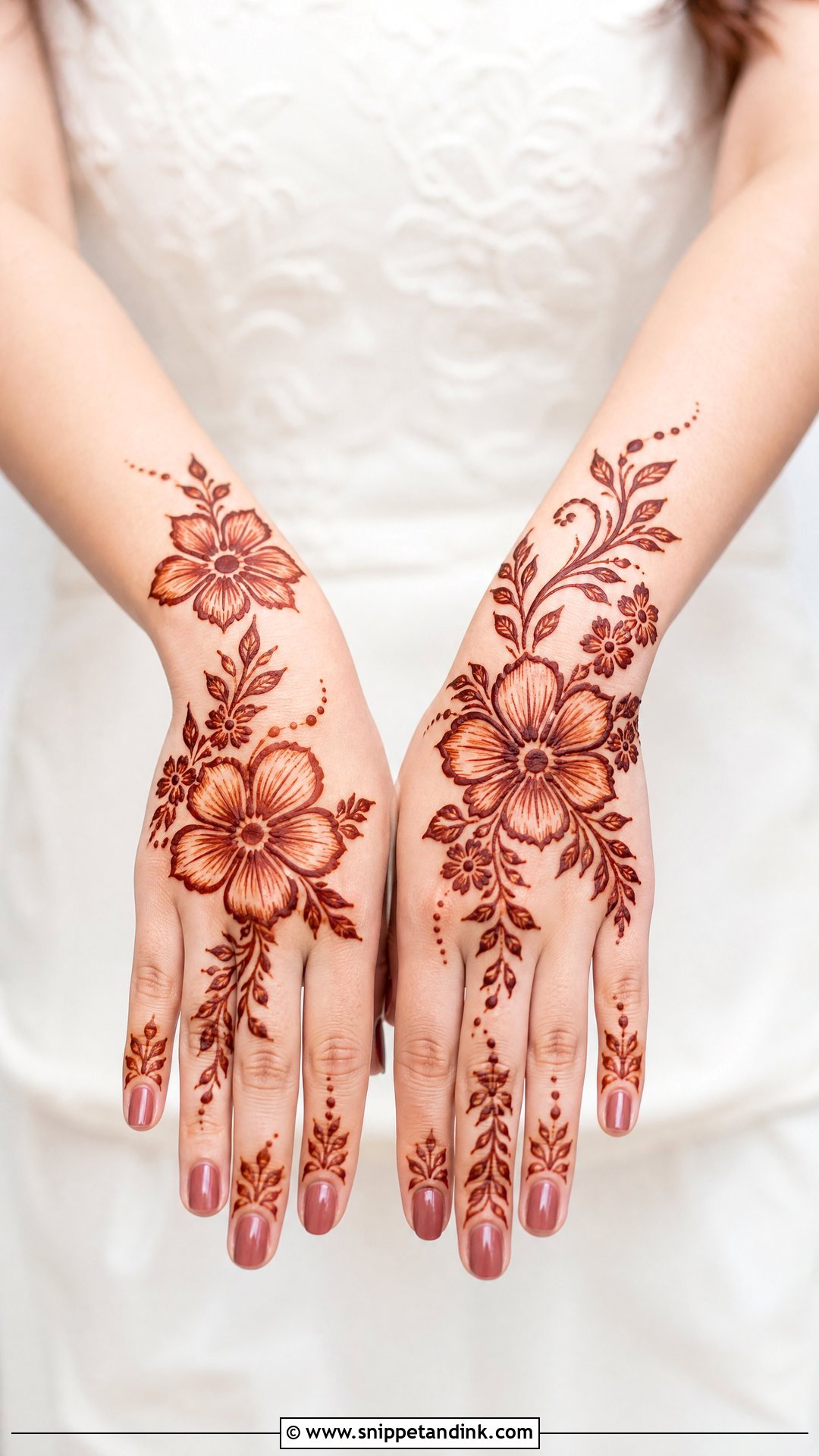
Start with one large bloom on the palm or back of the hand and follow it with two or three smaller flowers in a trail, connected by leaves, dots and curved stems. Florals switch easily between Indian and Arabic styles depending on how much you fill the petals. Open petals with light shading keep it casual; thin lines inside the petals make it dressier. I size the main flower to the hand: smaller hands get one bold bloom, wider palms can take two.
7. Short Rose Mehndi Design
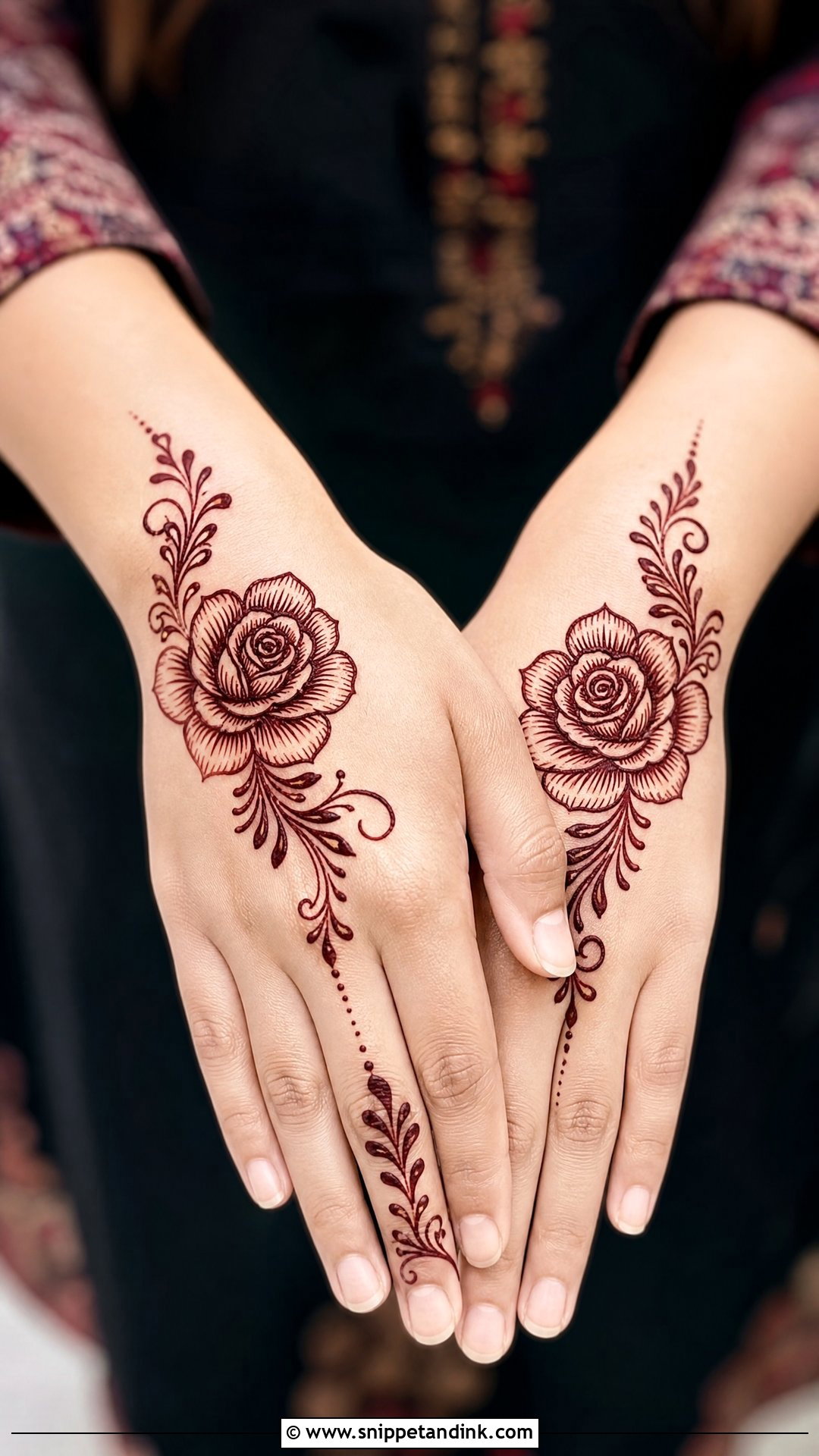
One rose near the wrist or the side of the palm, a thin vine running toward the index or middle finger, a few leaves and dots. Rose petals are the tricky part. Shade them with fine lines and leave a hairline of skin between petals, or the rose fills in once the stain develops. Keep the rest of the hand empty so the rose stays the focus. On the back of the hand it looks like a small piece of jewellery.
8. Short Leaf Mehndi Design
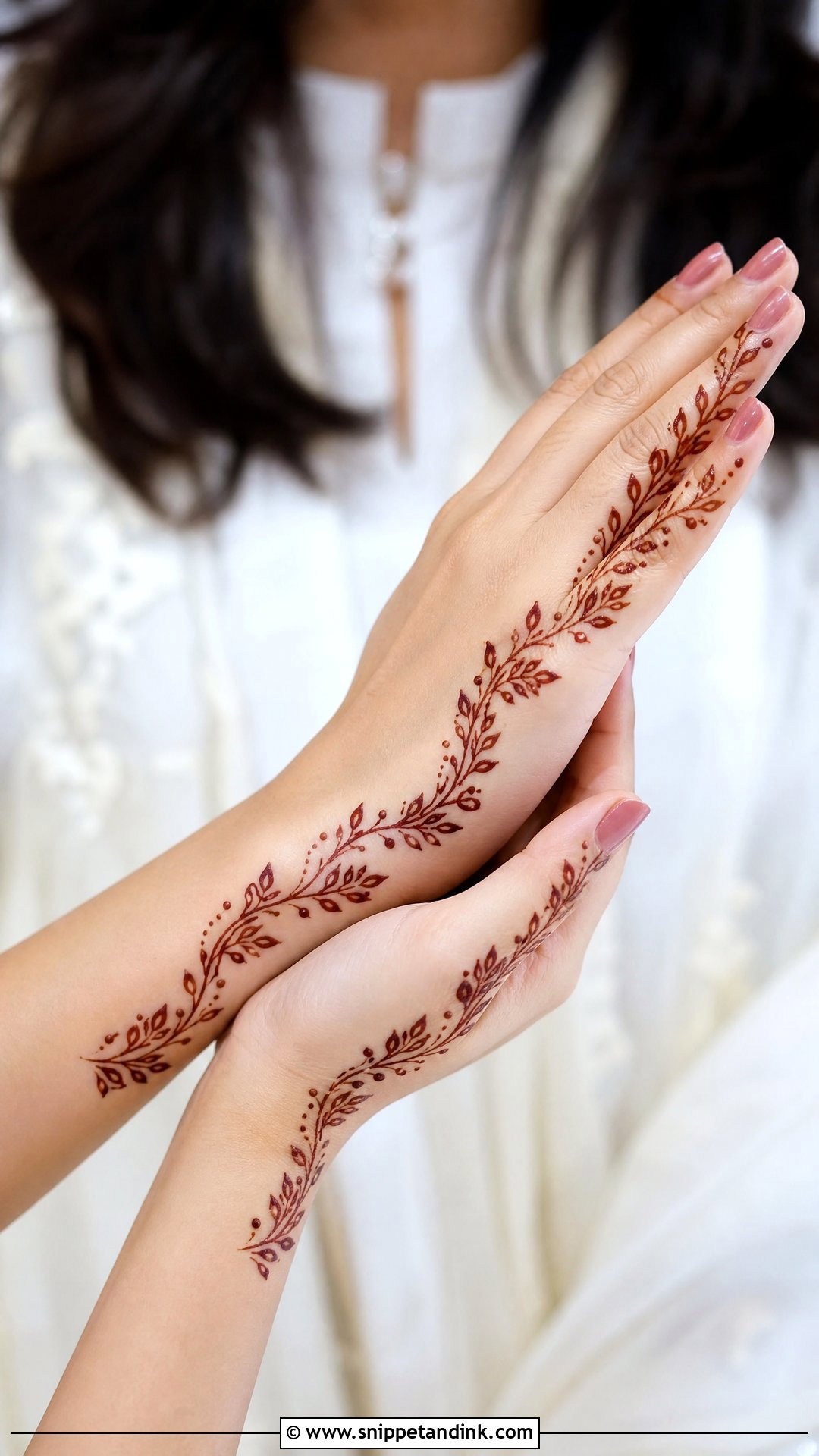
A curved vine from the wrist to one finger, built up with small paired leaves and a few dots on the sides. Leaves don’t need to match exactly, which makes this the most forgiving design here. It works on the back of the hand, the palm or along the side. I leave a gap between each leaf cluster so it reads modern; packed tightly, it starts to look like a caterpillar. It’s my go-to suggestion for someone who wants henna for an ordinary weekend.
9. Short Paisley Mehndi Design
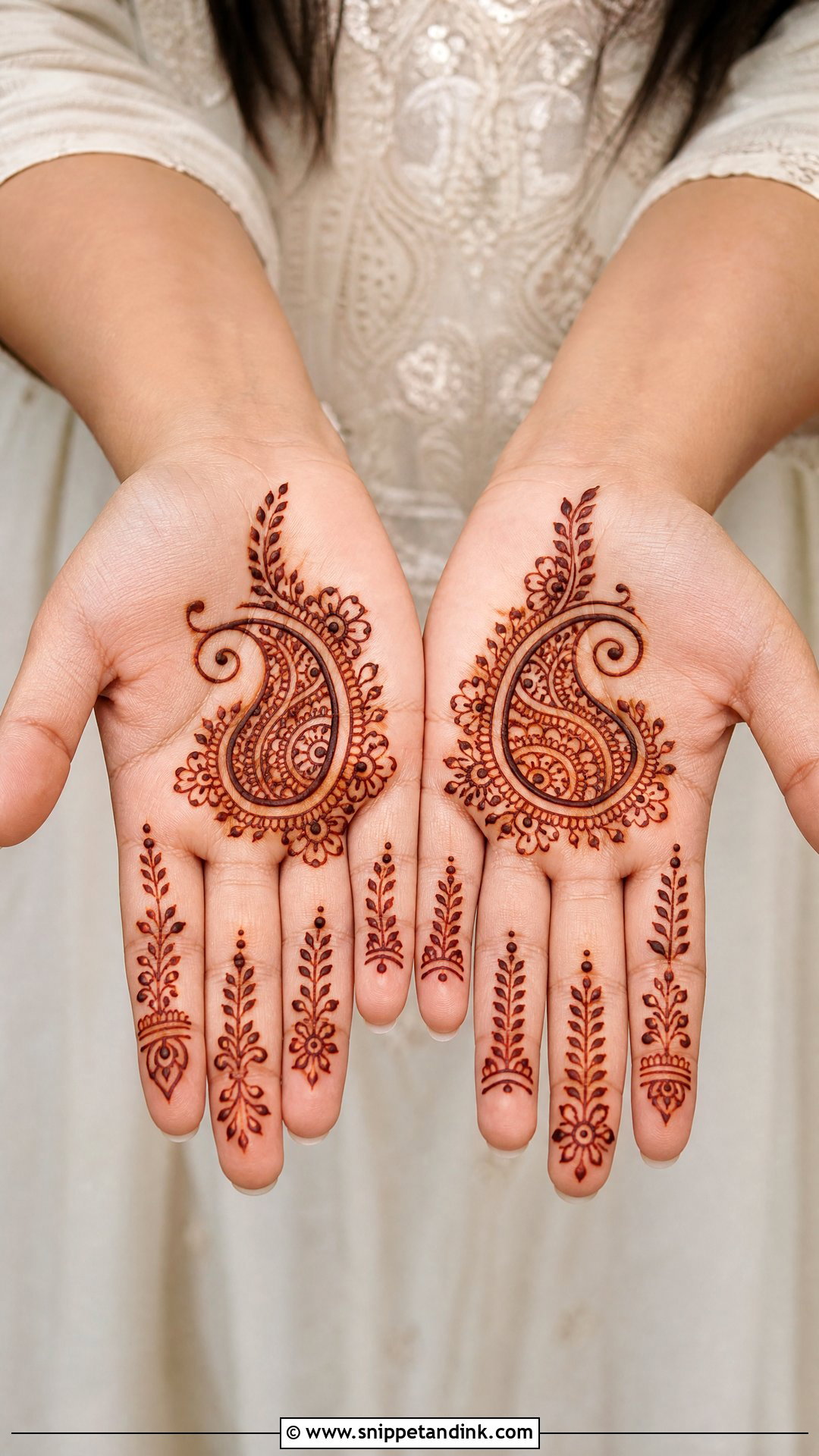
One medium paisley on the palm or back of the hand, with small flowers and leaves around it and curved lines inside. Paisley feels more dressed-up than a plain flower, which makes it useful for festive events. It also adapts to hand shape: I draw it long and slim on narrow hands and rounder on wider ones. Connect it to a finger trail or a slim wrist band to finish.
10. Short Tikki Mehndi Design
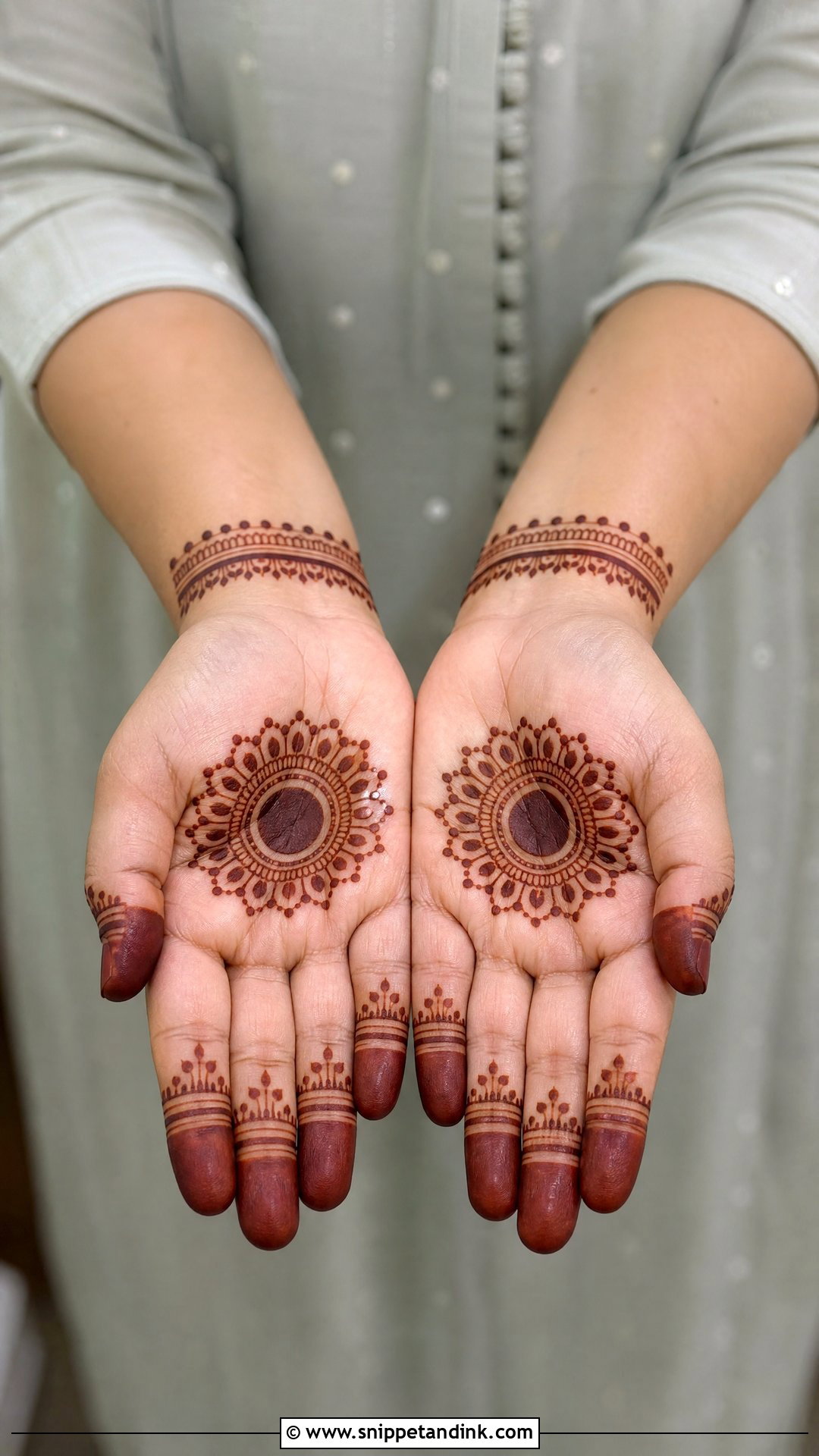
A round tikki in the centre of the palm with dots, petals or small rings around it, and matching caps, tiny vines or bands on the fingers. It’s instantly recognisable and very quick. For a modern version I leave more empty space around the tikki; for a traditional one, add a thin wrist border. If you fill the tikki solid, lay the paste in one even layer, because patchy fill stains patchily. Kids and beginners do well with it.
11. Short Indo Arabic Mehndi Design
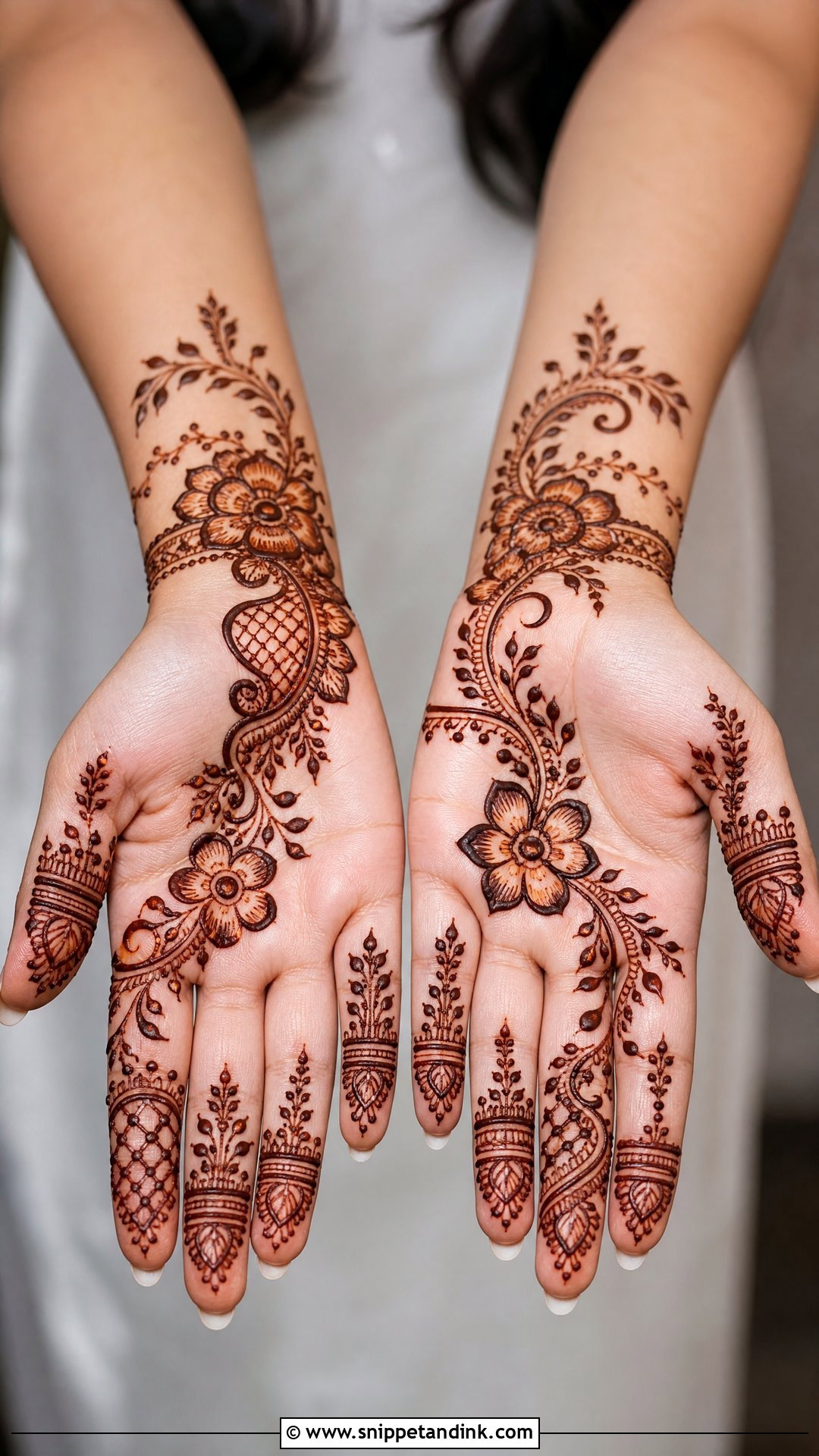
Indo-Arabic combines the flow of Arabic henna with selected Indian detail. I draw an open floral trail across the palm or back of the hand first, then fill only a few areas with fine lines, dots and small jaali. The thick outlines next to fine fillers create contrast, and that contrast is what makes a short design look professional. Leave most of the gaps alone. It fits weddings, engagements, Eid and Diwali equally well.
12. Short Jaali Mehndi Design
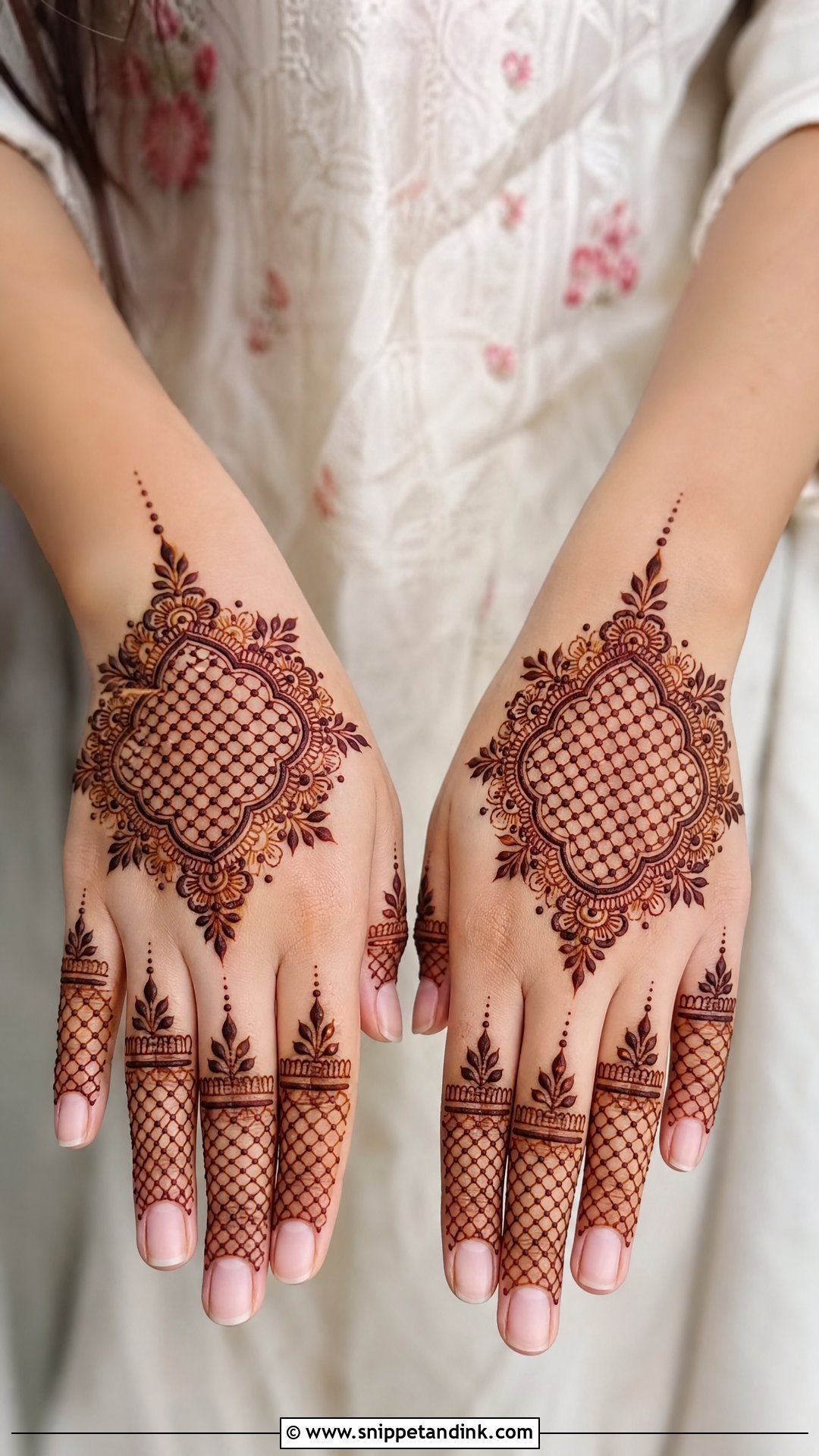
A small jaali panel on the back of the hand or the side of the palm, framed with flowers, leaves or dots so it looks part of a whole design. Keep the fingers simple, with matching lines or tiny net details. The mesh has to be evenly spaced, so I draw the outer lines of the panel first and fill inward. One small, neat panel makes a short design look far more detailed than it is.
13. Short Bracelet Mehndi Design
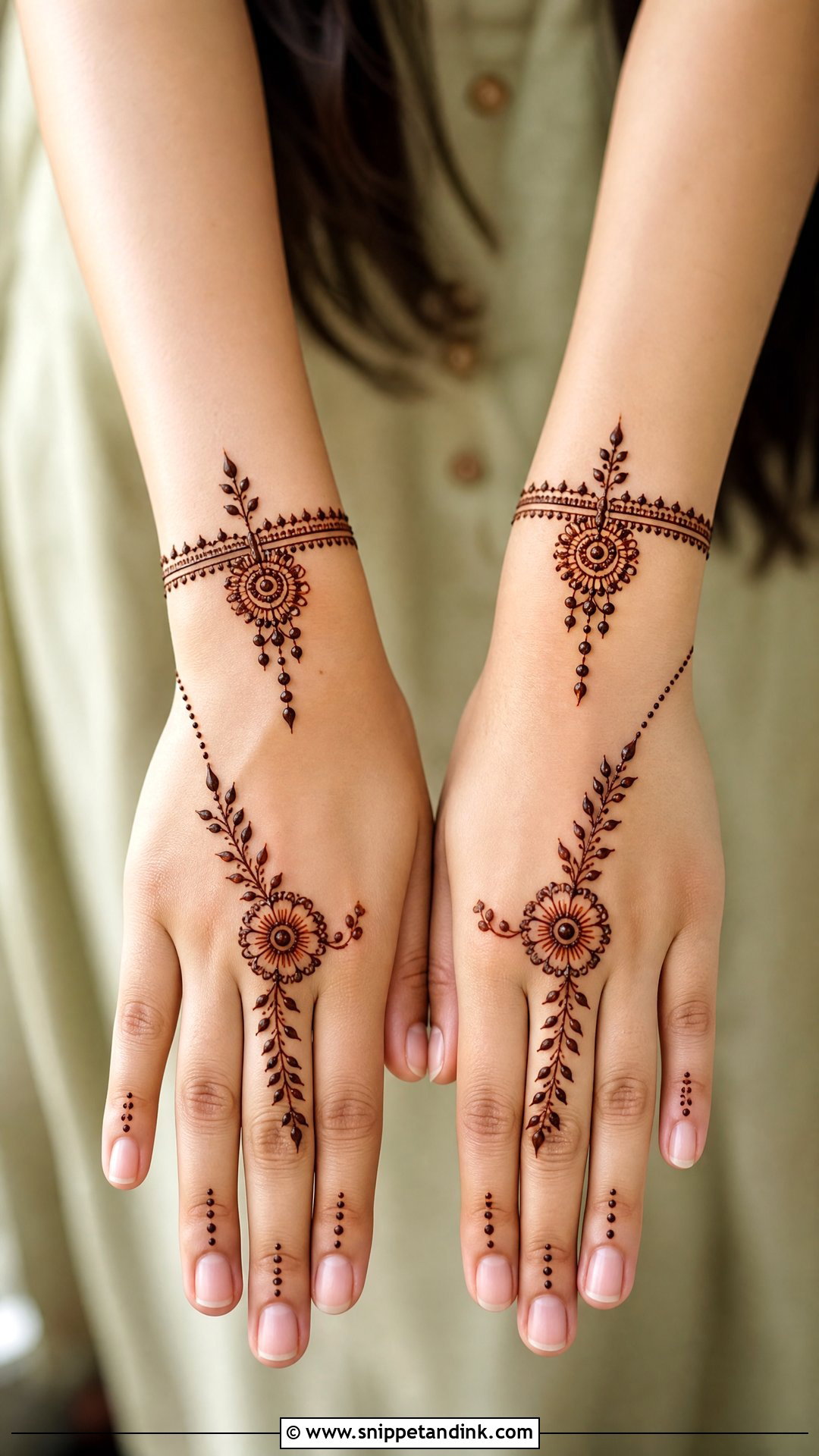
A slim band around the wrist connected to a small flower, mandala or leafy trail on the back of the hand, with dots and tiny chains for a jewellery effect. It keeps the palm completely clean, which helps if you need your hands for cooking or work. Thin bands and open spaces give a modern look; small paisleys or petal borders make it more festive. Sit the band just above the wrist crease, or it cracks each time you bend your hand.
14. Short Ring Mehndi Design
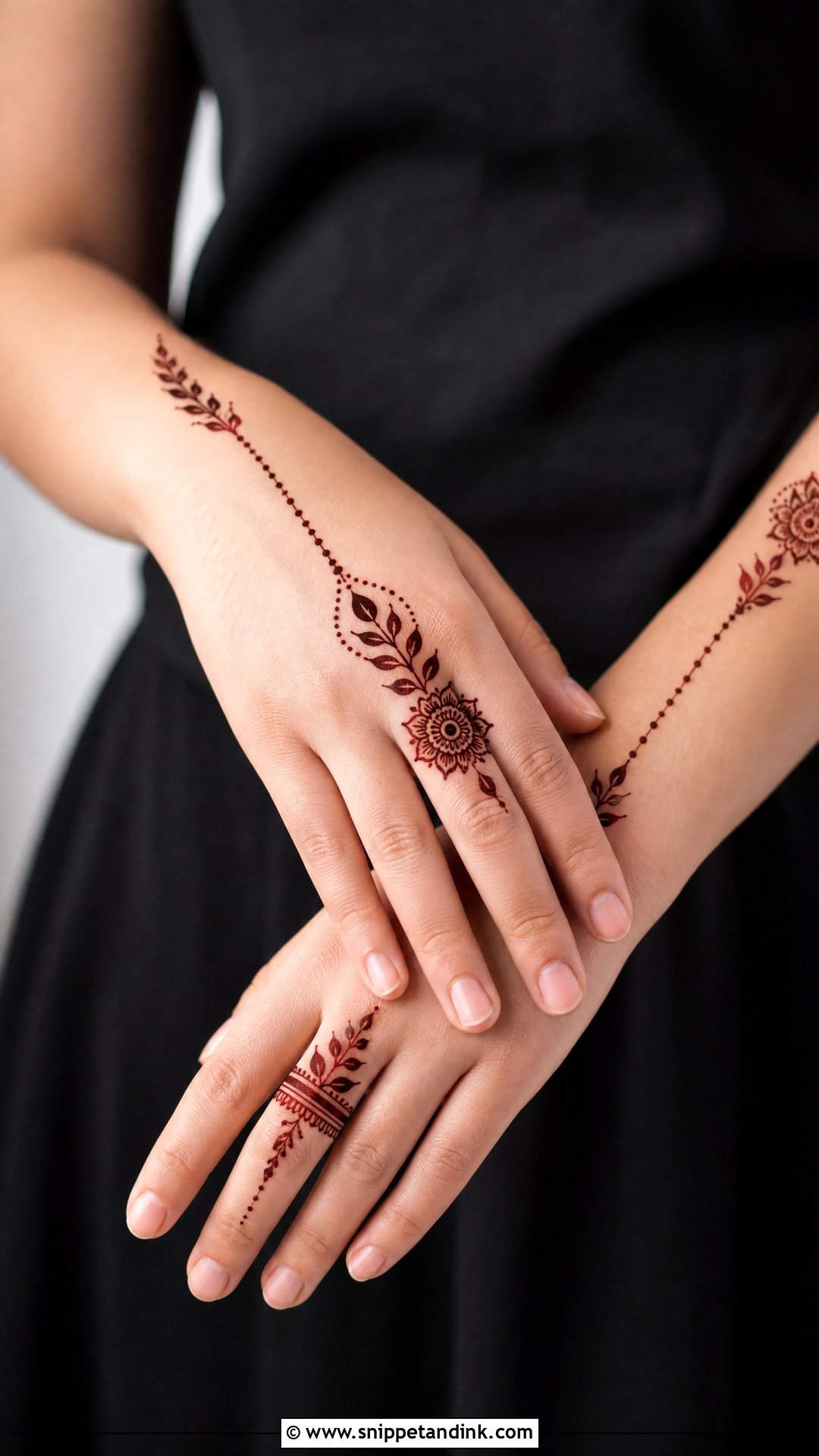
A henna ring sits around one finger and connects to a small motif on the back of the hand by dotted chains or thin lines. The motif can be a flower, mini mandala or leaf cluster, and the other fingers stay simple so the ring effect is clear. It takes very little time. If you wear real rings, put the henna ring on a different finger or draw it just above where your metal sits, so the two complement each other.

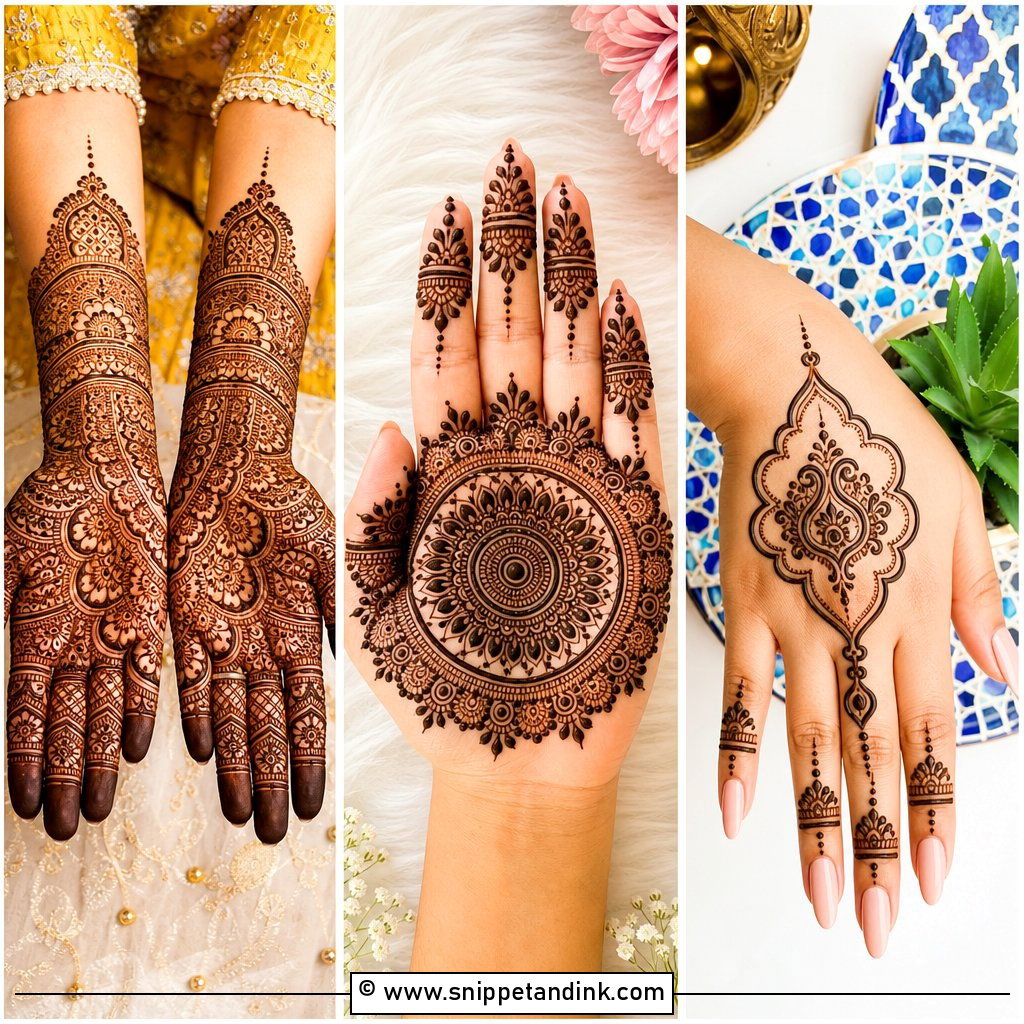
15. Short Simple Mehndi Design
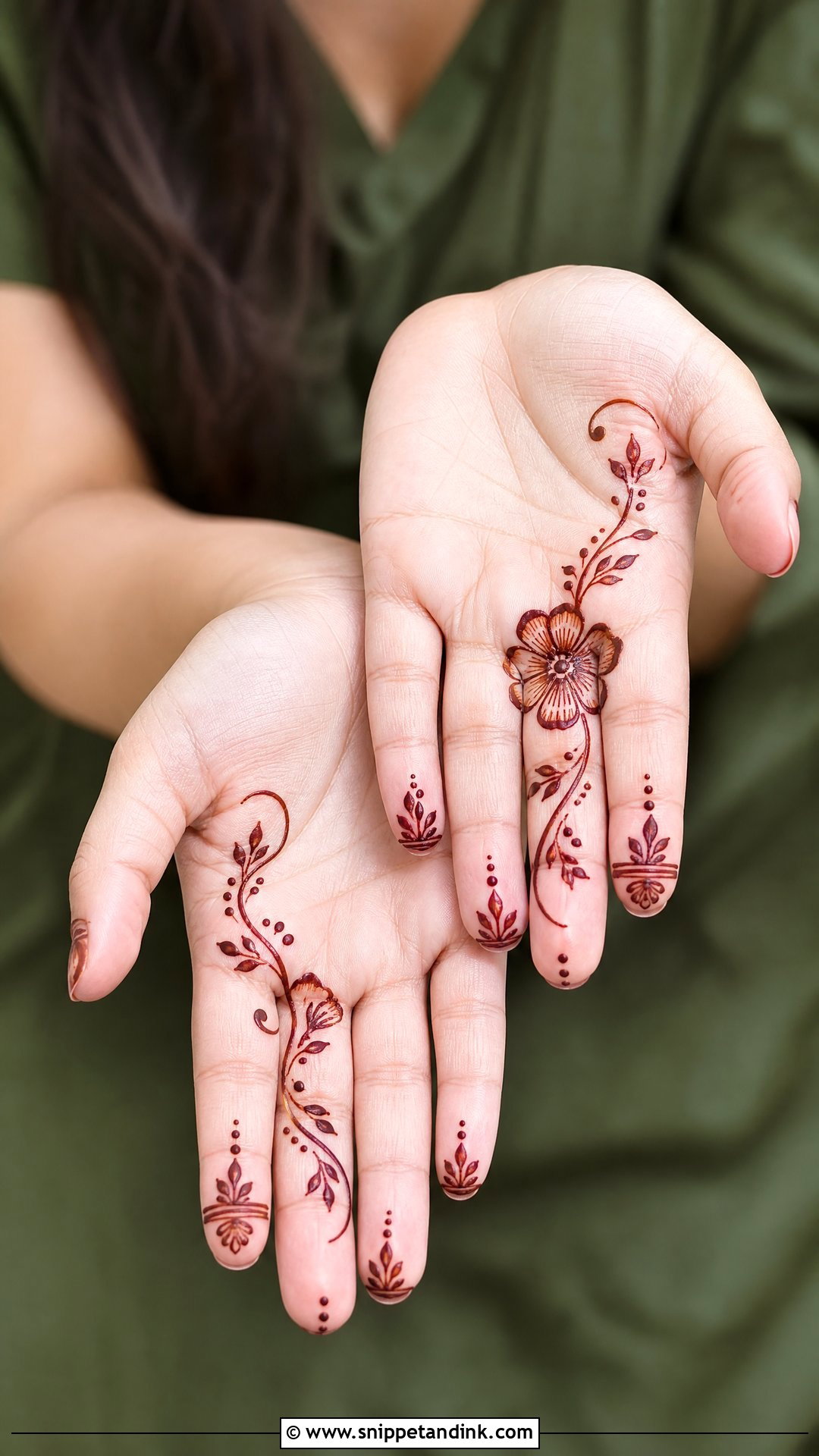
One main motif, a flower, circle or paisley, with leaves, dots and curved lines around it, and almost no filler. It suits both sides of the hand and anyone who wants to draw something with confidence. Smooth outlines are everything here; a simple design has nowhere to hide a shaky line. I tell beginners to practise the outline on paper until it comes out in one stroke. Good for everyday wear, school events and small family gatherings.
16. Short Easy Mehndi Design
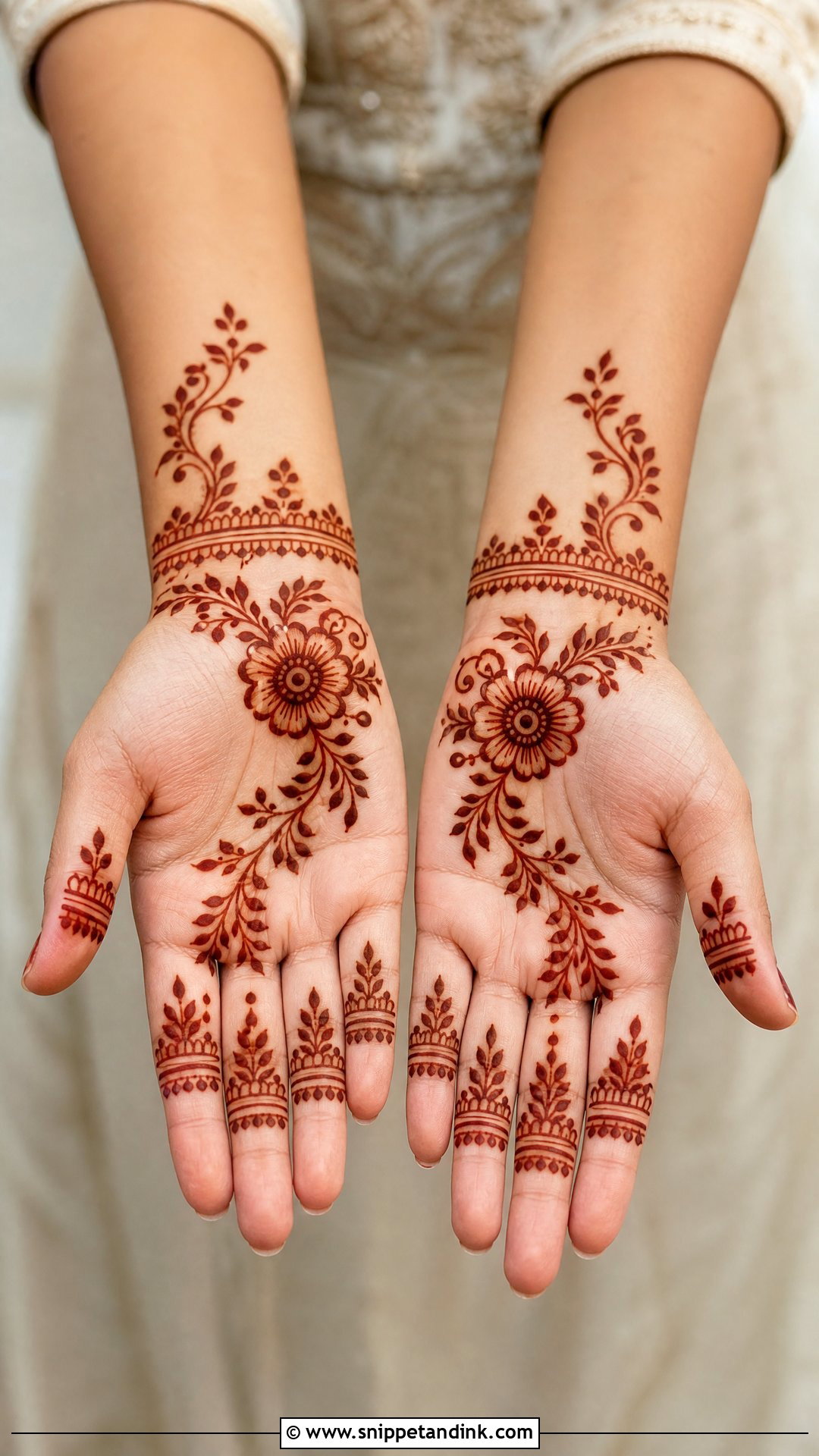
Easy shapes that look good together: a flower or small circle, a vine, dots and simple finger bands. No shading, no dense fillers, and finished in a few minutes. Repetition is what makes it look organised. If you draw a leaf on one finger, repeat that exact leaf on the wrist. It’s a sensible first design for younger girls or anyone applying henna at home.
17. Short Modern Mehndi Design
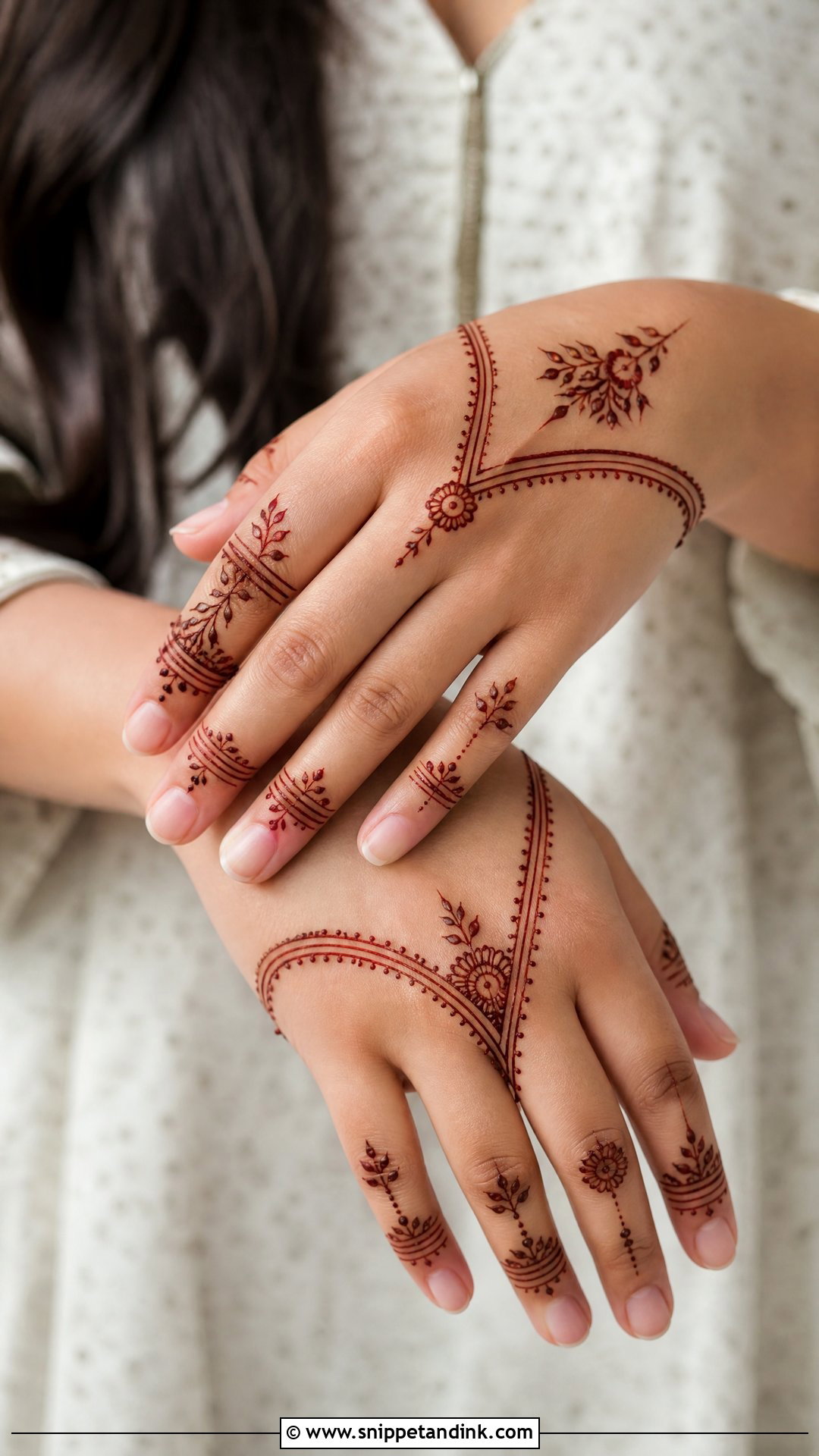
Modern short designs pick one placement, the fingers, the side of the palm or the back of the hand, and keep it clean with slim curves, tiny leaves, geometric lines and small floral accents. It should look almost like hand jewellery. Thick filled sections spoil the effect, so I keep fills small. Office events and casual parties suit it well, and the negative space looks sharper as the stain deepens over the following day.
18. Short Minimal Mehndi Design
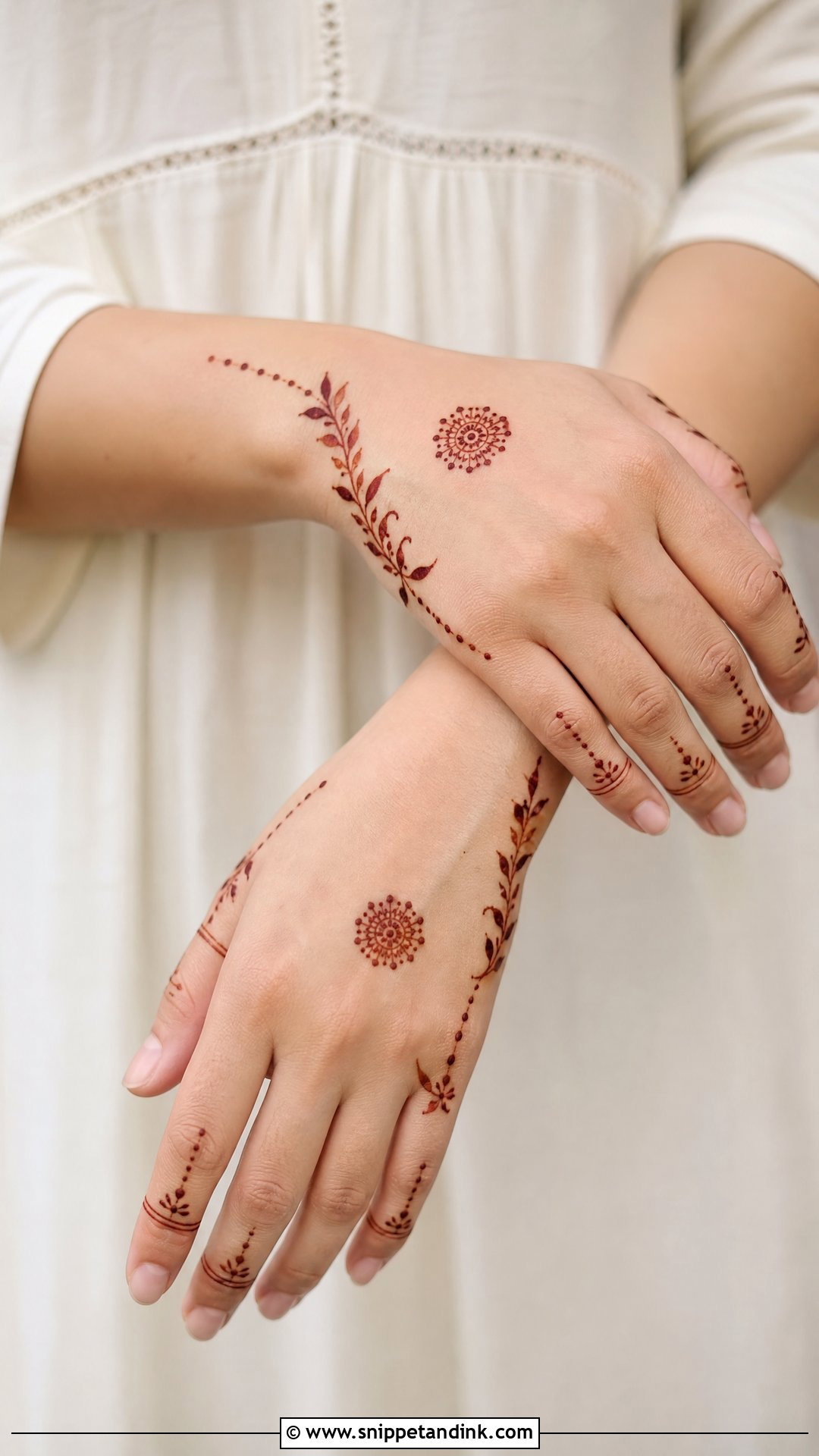
Minimal means one small area with a complete mini pattern: a tiny palm mandala with finger dots, a slim back-hand vine or a neat wrist band. It shouldn’t look unfinished, so connect the elements with dots or fine lines. People who dislike dense henna find this comfortable. Every line should earn its place; let blank skin carry the rest.
19. Short Khafif Mehndi Design
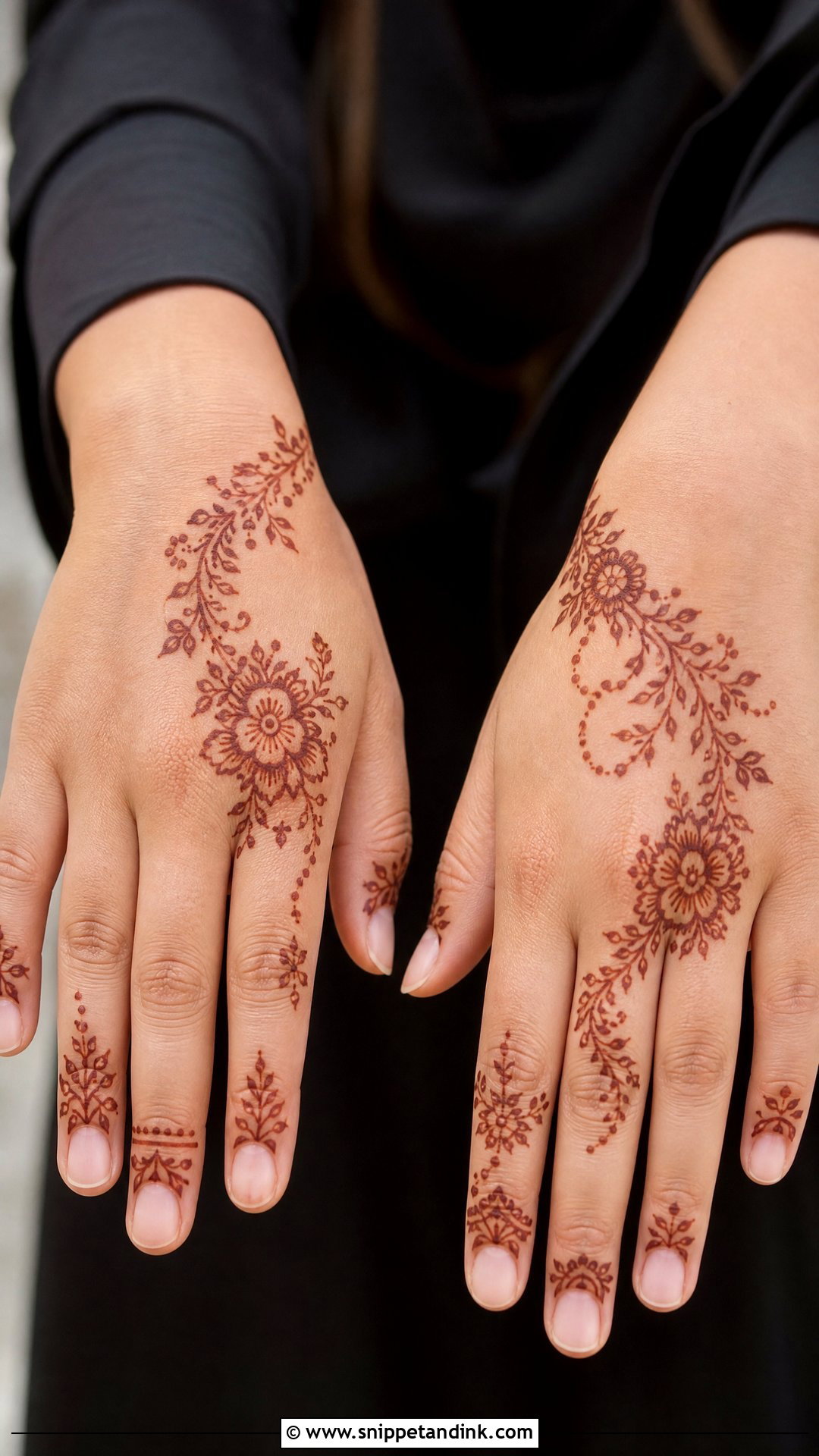
Khafif is light, detailed henna with fine florals, small leaves, airy vines and generous spacing. For a short version I keep it to the back of the hand or the palm centre and skip arm coverage: a small floral cluster with fine dotted trails does the job in much less time. Thin outlines and soft fillers are the point, so it needs a fine cone tip and paste without lumps. It suits semi-formal events where basic mehndi feels too plain.
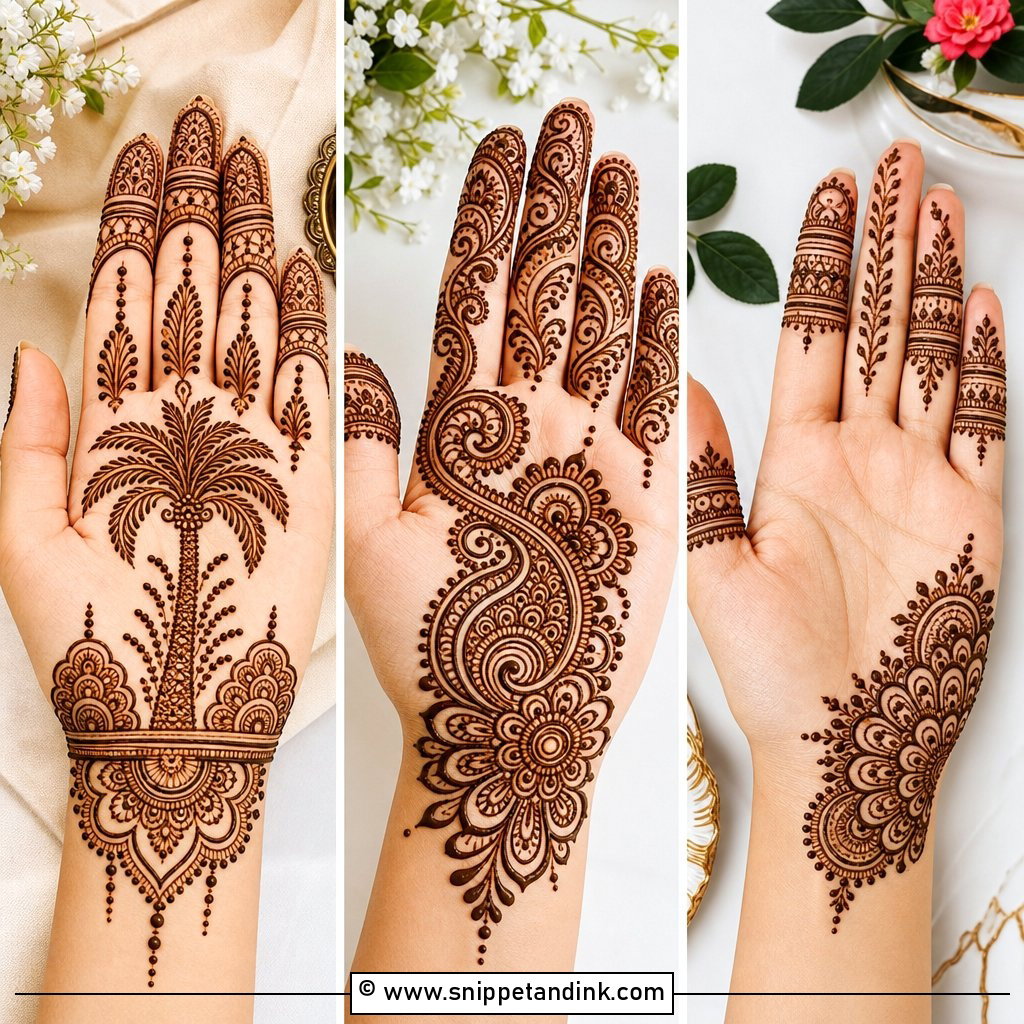

20. Short Moroccan Mehndi Design
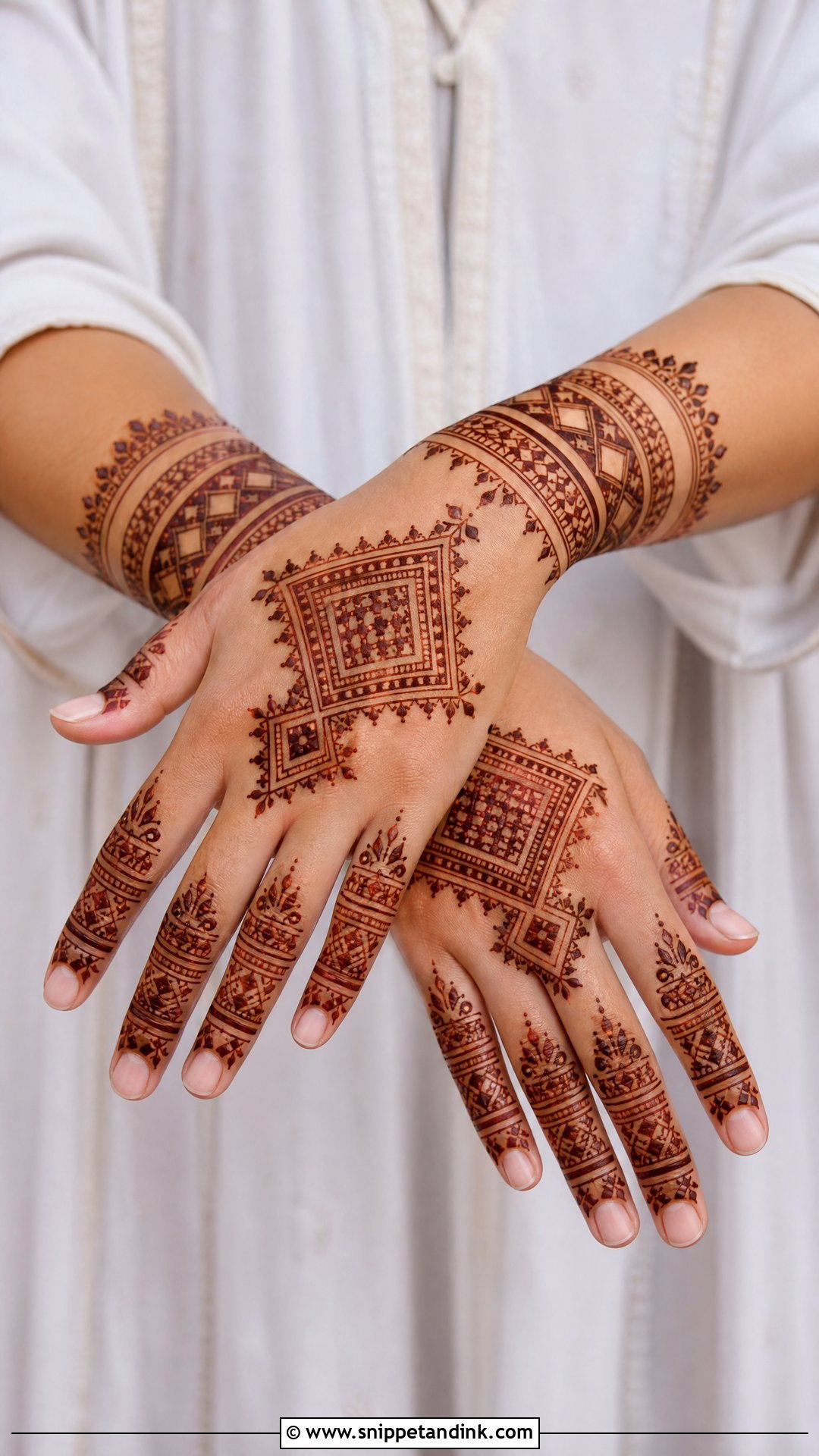
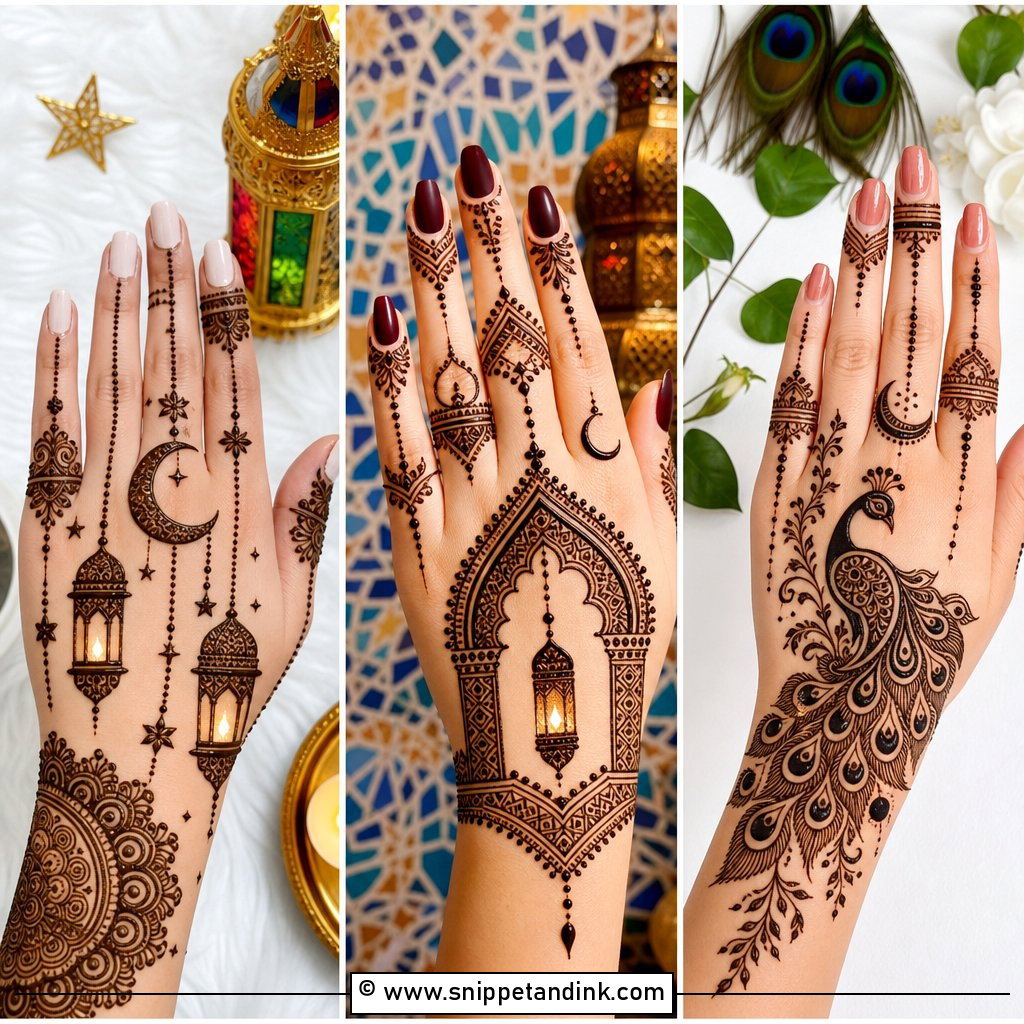
Moroccan patterns use diamonds, triangles, grids and straight borders instead of flowers. One central geometric panel on the back of the hand, fingers or wrist, connected to finger bands, is enough for a short version. Overcrowding ruins it, so keep shapes few and outlines strong. Straight lines show every tremor, so I’d suggest practising on paper before trying it on skin. It’s a nice change if you’re tired of floral henna.
21. Short Gulf Mehndi Design
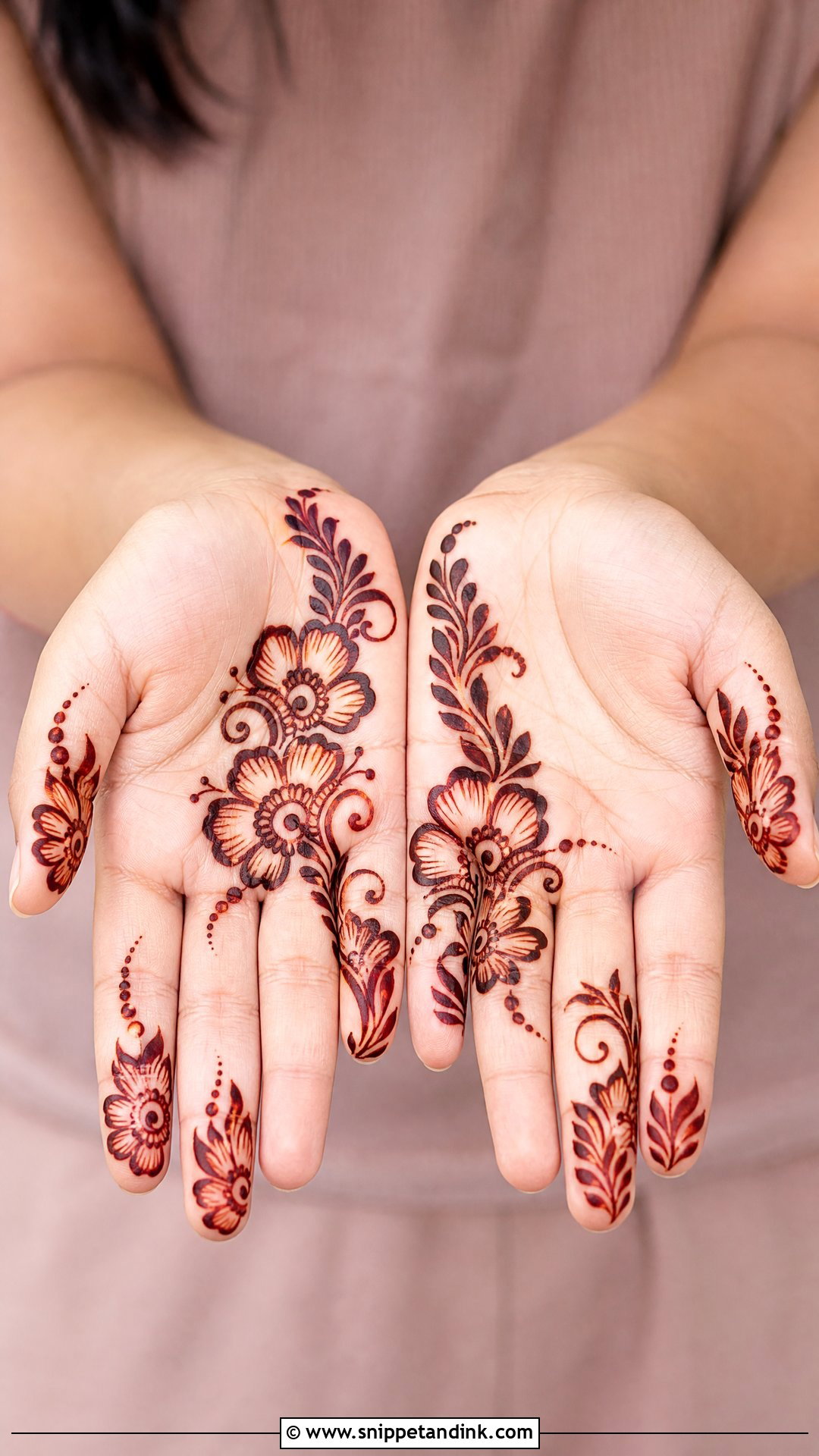
Gulf, or Khaleeji, style uses bold flowers, leafy curves and open space. For a short look, I place large flowers along one side of the palm or back of the hand and extend toward the fingers, leaving the other side clean. Thick outlines on the flowers and lighter detail inside the petals keep it readable after staining. It looks rich at Eid and family gatherings without the density of bridal work.
22. Short Indian Mehndi Design
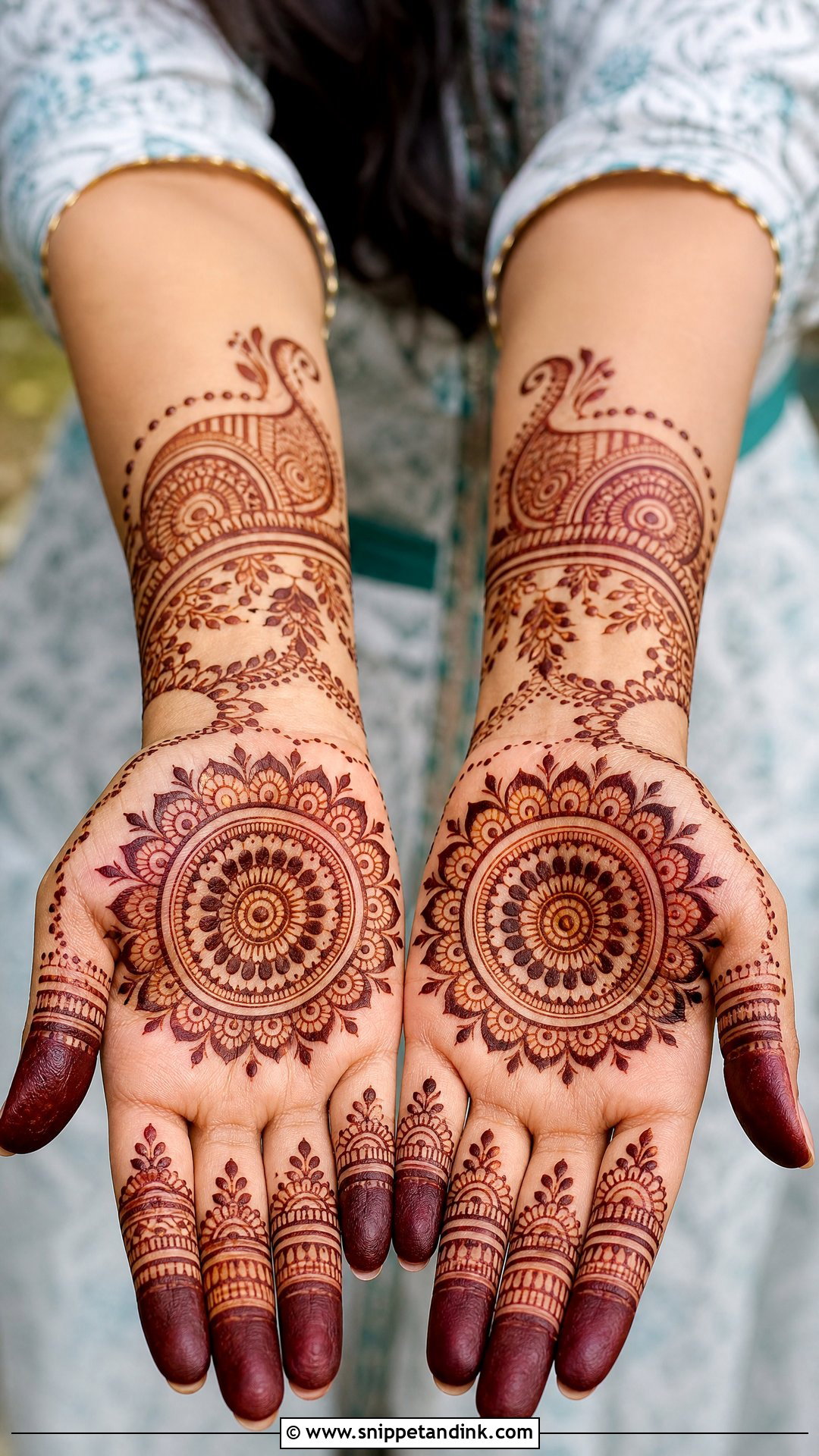
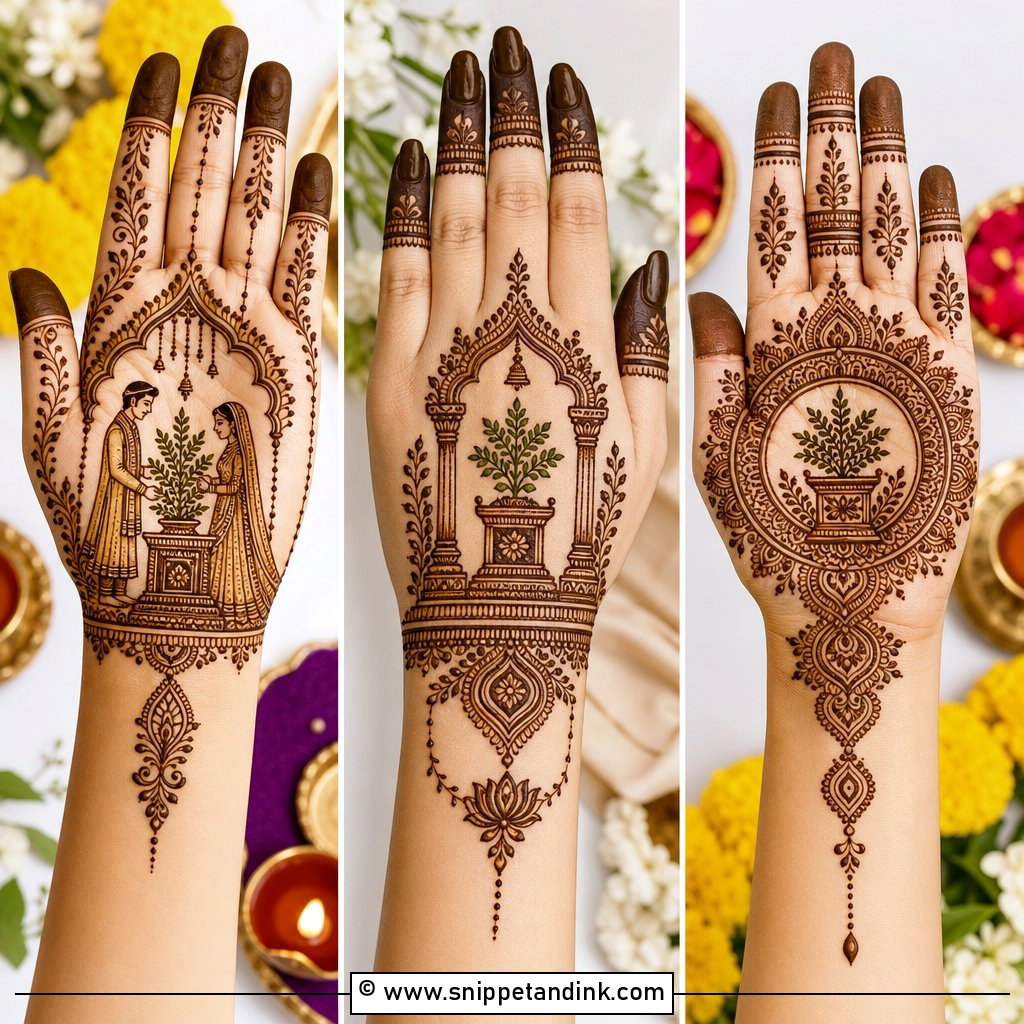
A central mandala, small paisleys, dots and curved leaf borders still read as traditional Indian mehndi without full-hand detail. Put it on the palm with simple fingers, or on the back with a wrist band. Indian designs usually look best symmetrical, so I mirror small elements on either side of the main motif. Keep fillers light to keep it short. It suits Diwali, pujas and family functions in a fraction of the time.
23. Short Bridal Mehndi Design
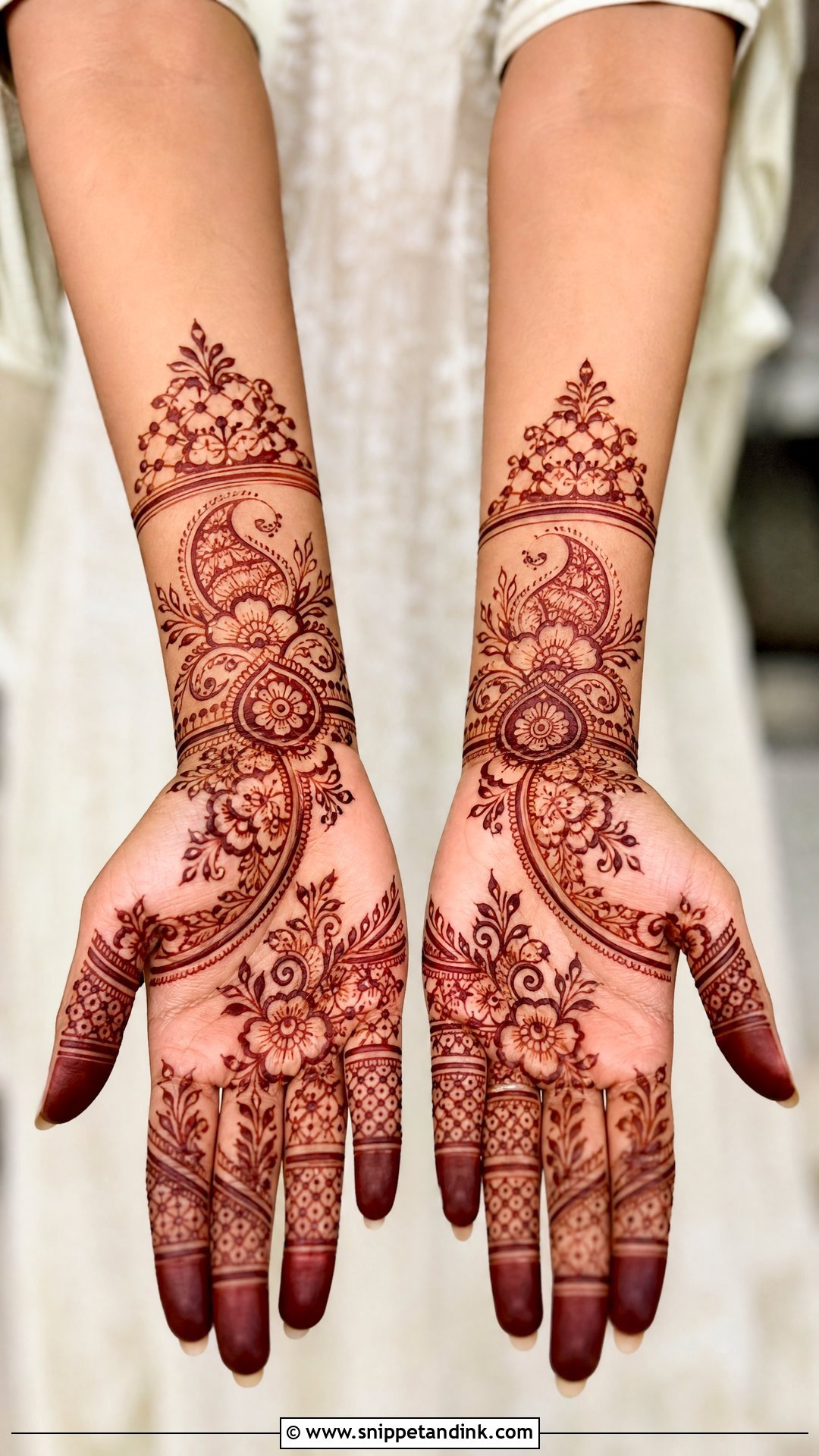
A short bridal set suits smaller ceremonies, engagement events and pre-wedding functions. Instead of full coverage, I design one complete layout on the palm or back of the hand: florals, paisleys, some jaali, a wrist cuff and decorated fingers. Tiny initials or a small personal motif can be tucked in. Modern brides who want comfort and clear photos tend to like it, and bridesmaids can wear a lighter matching version. If it’s for your main wedding, still book it a day or two before so the colour peaks.
24. Short Eid Mehndi Design
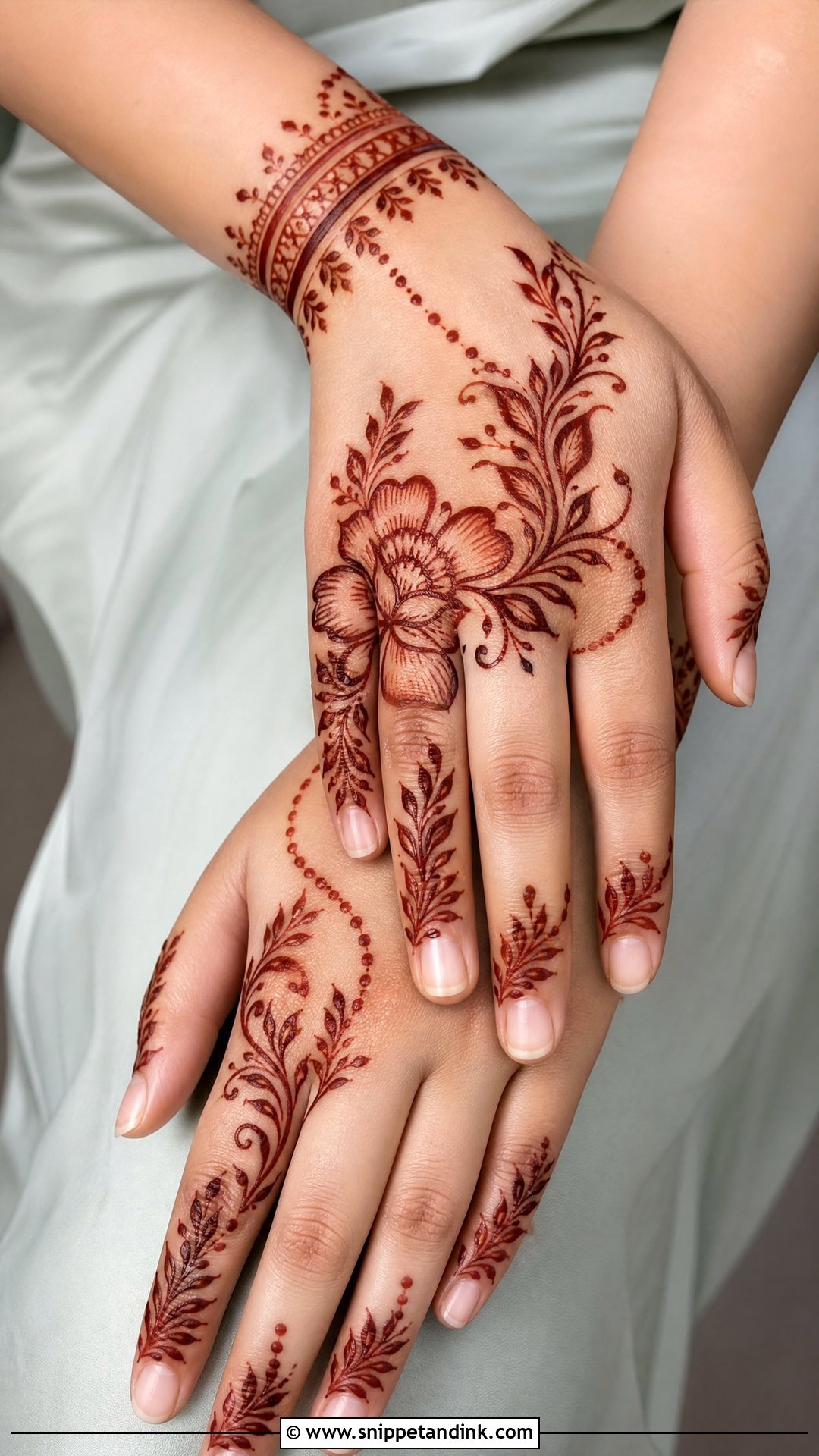
For Eid, a bold flower on the back of the hand connected to one finger, plus a simple wrist band, is quick and festive. Arabic trails, finger patterns and bracelet styles all work too. Open spaces keep it comfortable, and it suits both traditional and modern outfits. If you’re applying at home, draw larger motifs, which are easier to keep neat. Short designs dry faster too, which helps on chand raat when everyone wants a turn.
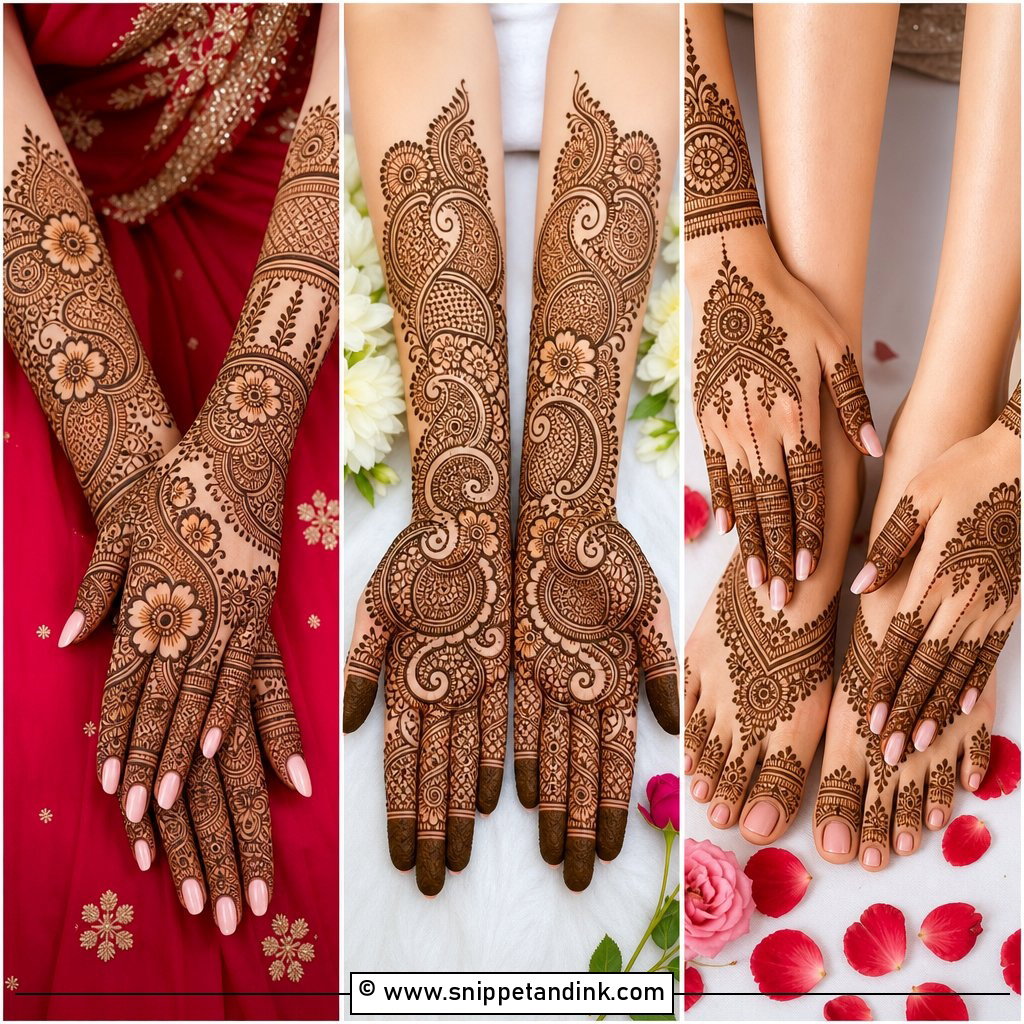
25. Short Diwali Mehndi Design
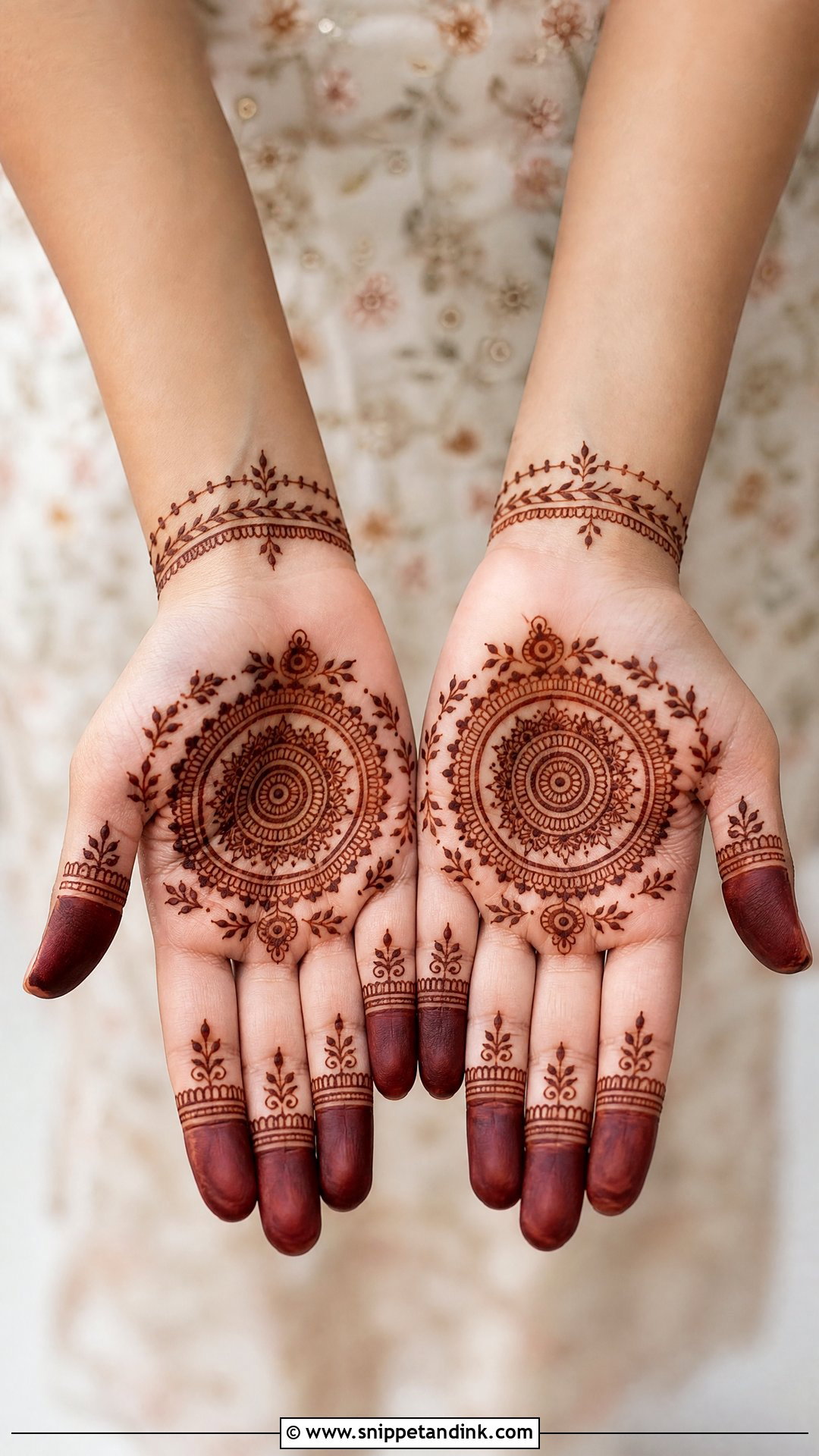
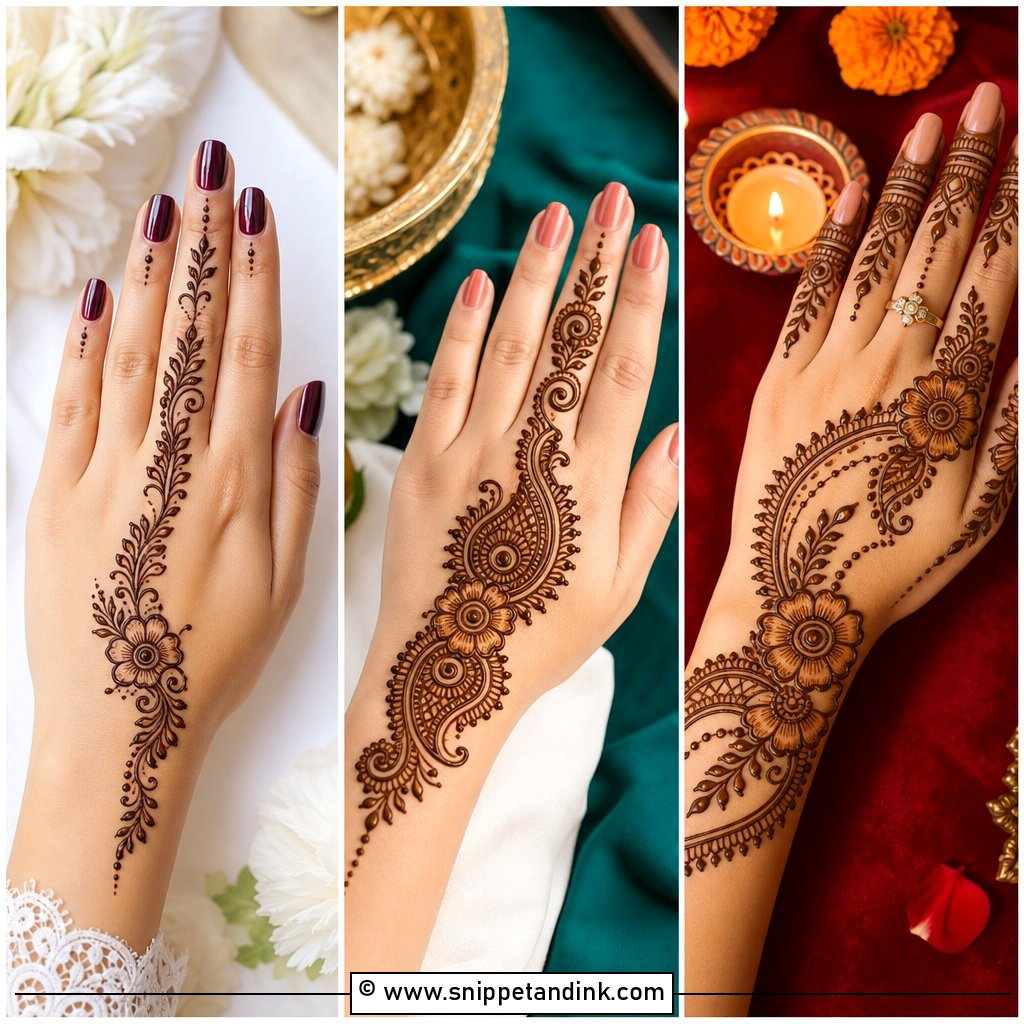
For Diwali, a palm mandala with small leaf borders, finger caps and tiny dots is quick and traditional. A back-hand floral trail is the modern alternative. I keep the wrist neat so bangles slide on without smudging. Symmetry suits Diwali henna, so repeat small patterns on the fingers or around the wrist. Natural henna gives the classic reddish-brown, which deepens over a day or two, so apply it a day ahead if you can.
26. Short Wedding Guest Mehndi Design
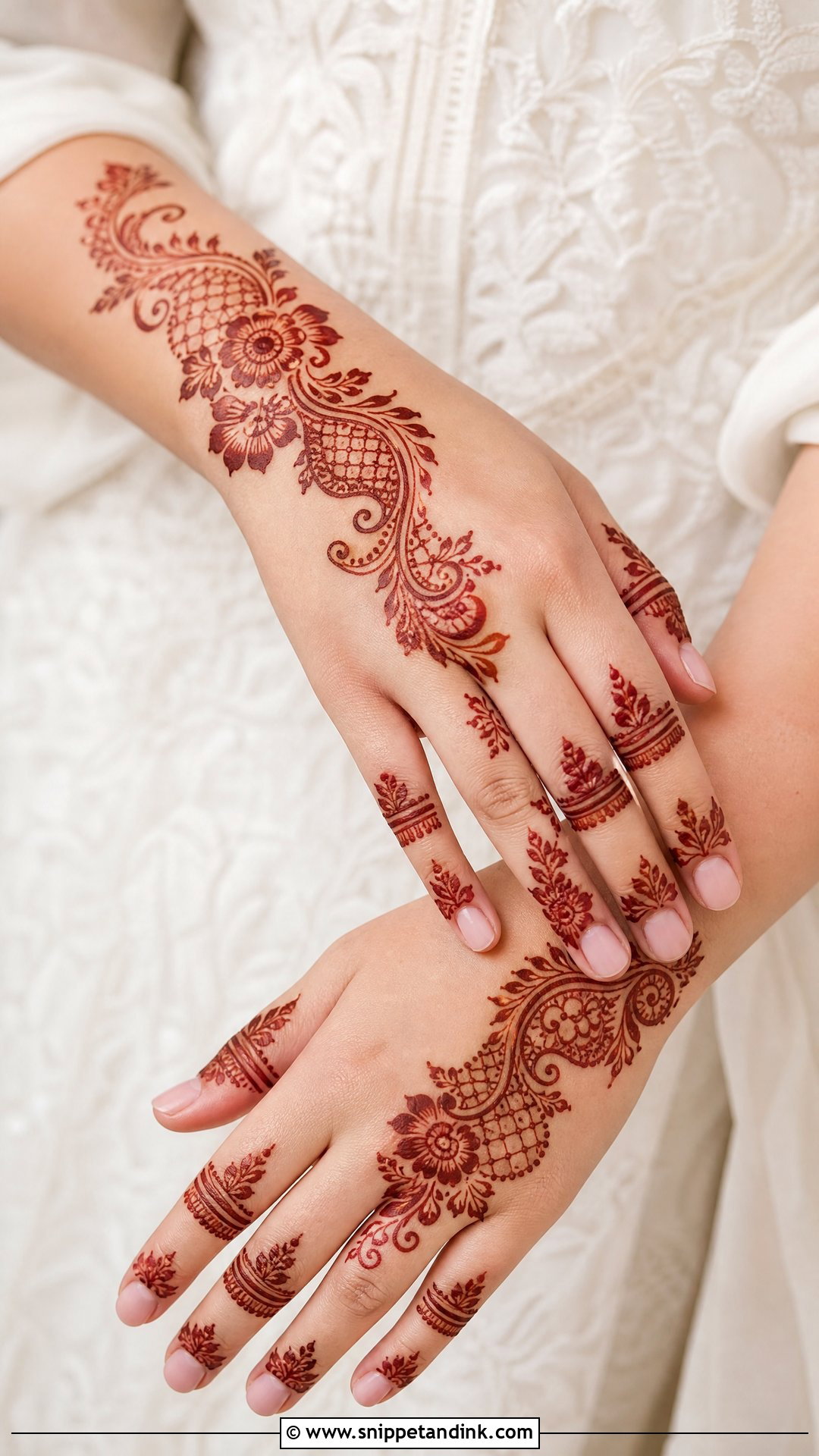
As a guest you want to look festive without rivalling the bride. A back-hand trail, a palm tikki or a floral bracelet, with a touch of jaali or paisley for a dressier feel, does that. If you’re attending several functions, a short design is practical: the stain will still look good for the later events while staying neutral enough for different outfits. Decorate the fingers, but don’t pack them.
27. Short Engagement Mehndi Design
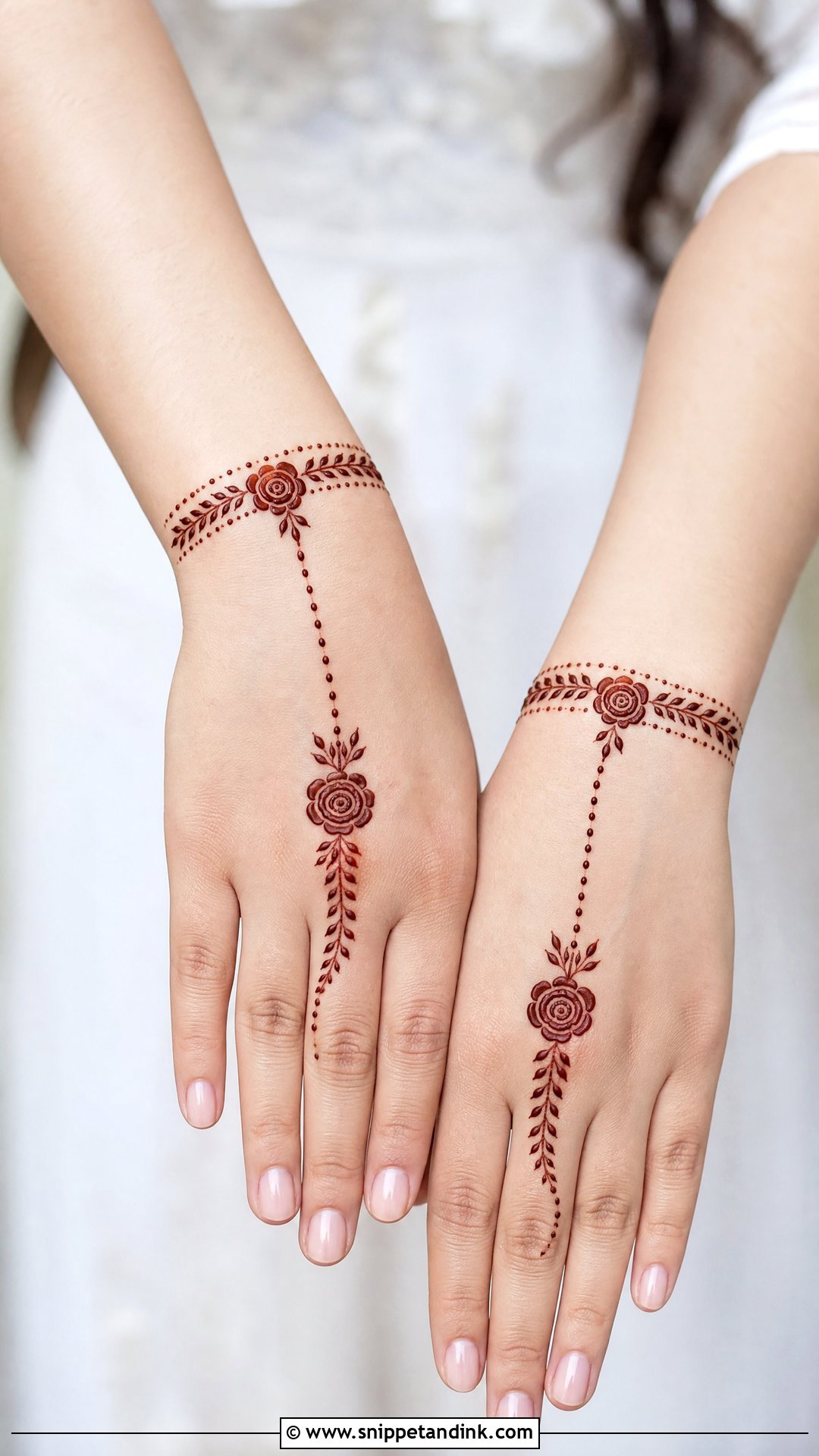
For an engagement, the back of the hand is the usual choice because it shows in ring photos. A small mandala or rose near the centre, linked to the ring finger by dotted chains or leafy lines, with a thin wrist band for balance. I leave the base of the ring finger clear so the ring sits on clean skin. Dense coverage that hides jewellery defeats the purpose. It also leaves room for heavier bridal mehndi later.
28. Short Kids Mehndi Design
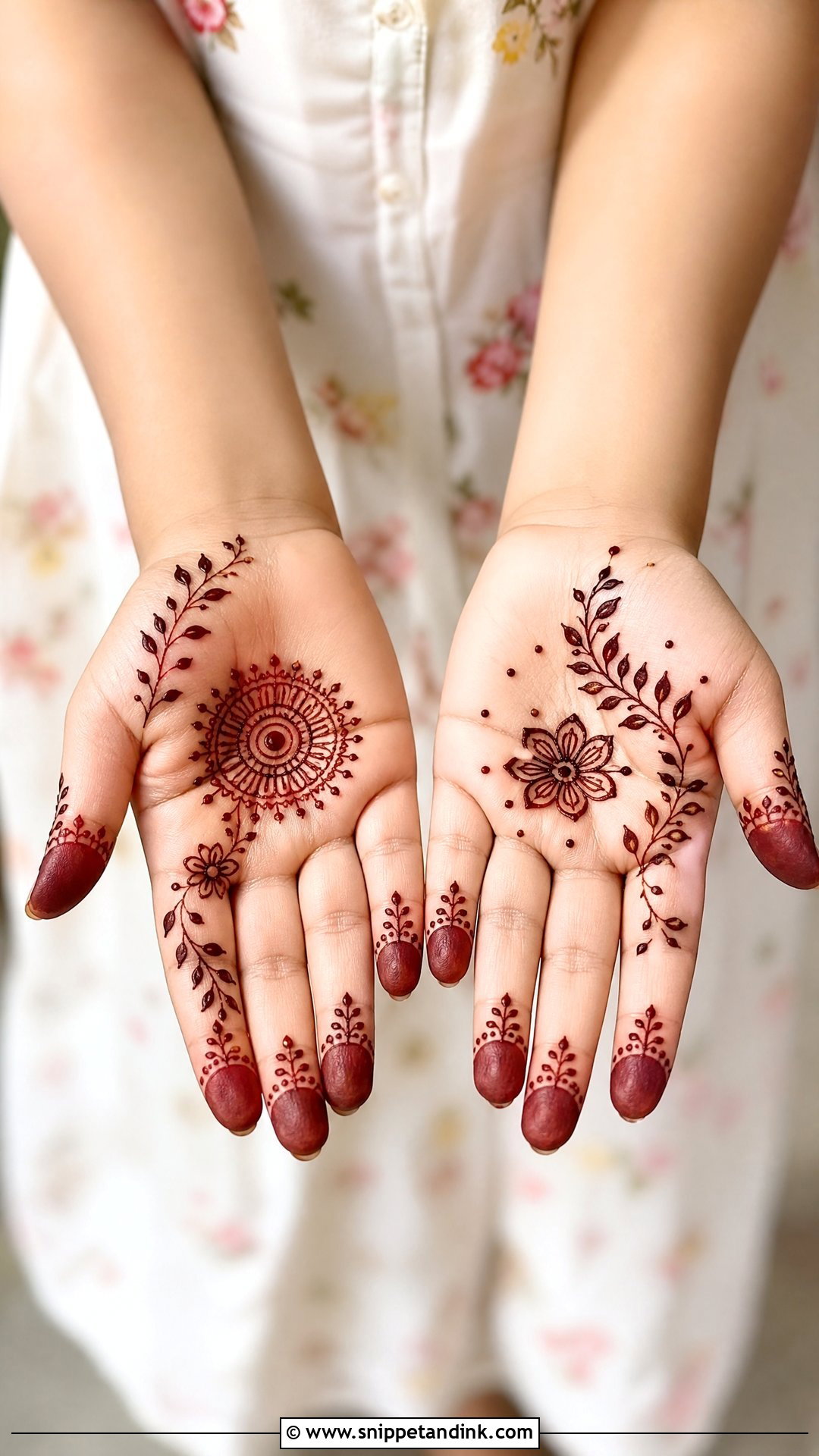
A short kids mehndi design should be small and quick: a tiny flower, small mandala, heart-shaped floral or simple leafy trail on the palm or back of the hand, with dots or small caps on the fingers. Very fine details smudge easily on small hands that won’t stay still. The design should dry fast. Use only natural henna for children, never black or instant cones, which can cause serious skin reactions.
29. Short Teen Mehndi Design
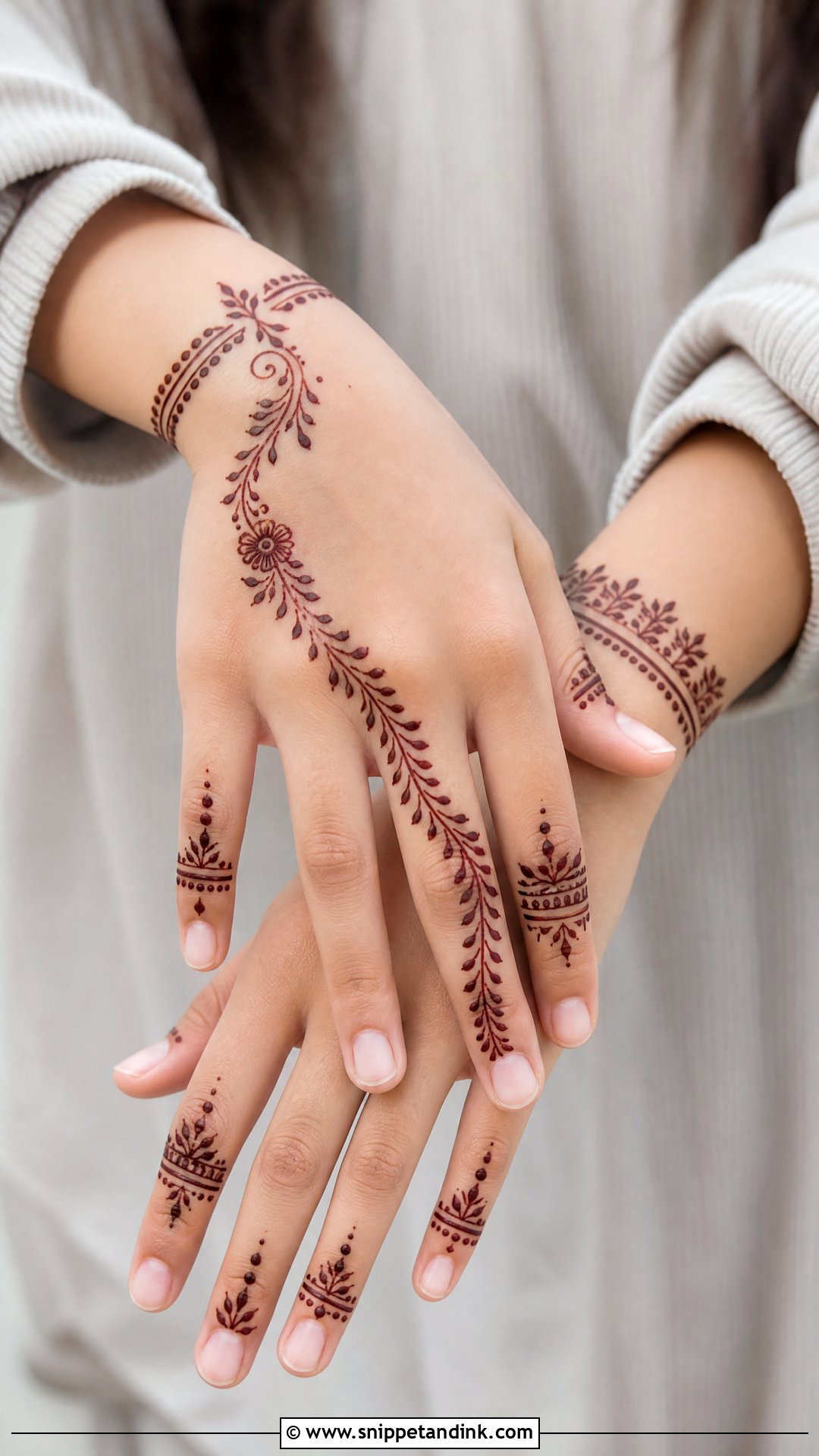
Teens usually want something that looks good in photos without feeling heavy or old-fashioned. Finger-focused patterns, small back-hand vines, bracelets and minimal florals all fit. A slim leafy trail from the wrist to the index finger with tiny dots and clean spacing is my usual suggestion, often with the palm left empty. Crisp lines and simple motifs keep it fresh with modern outfits.
30. Short Side Hand Mehndi Design
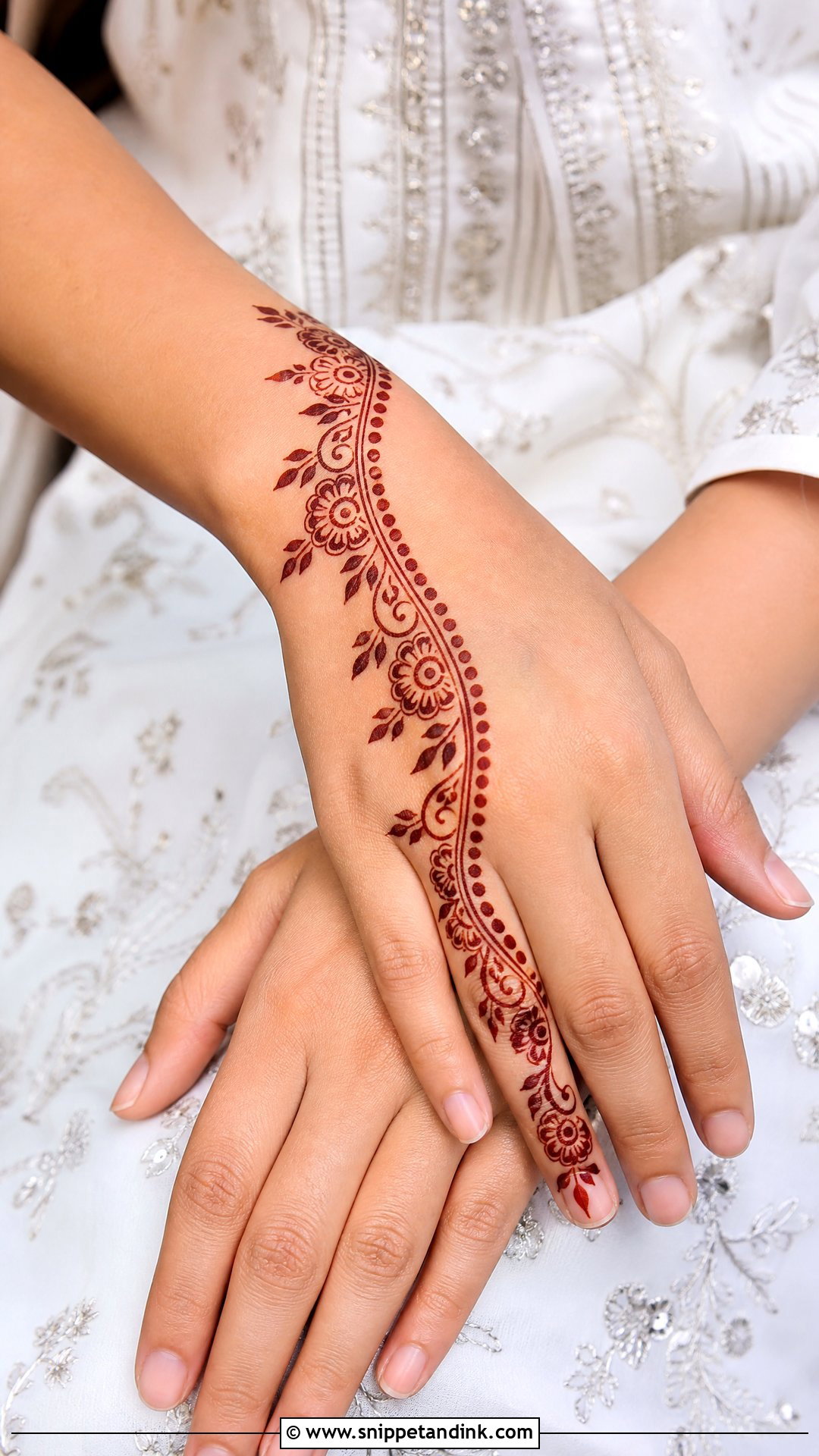
A side-hand design runs along the outer edge, from the wrist toward the little finger, as a slim border of leaves, small flowers, dots and curves. It follows the natural edge of the hand and leaves the palm almost clear, which is practical if you need your palms for work. Keep the trail connected so it doesn’t read as scattered motifs. It’s a less common placement, which is why people like it.
31. Short Palm Mehndi Design
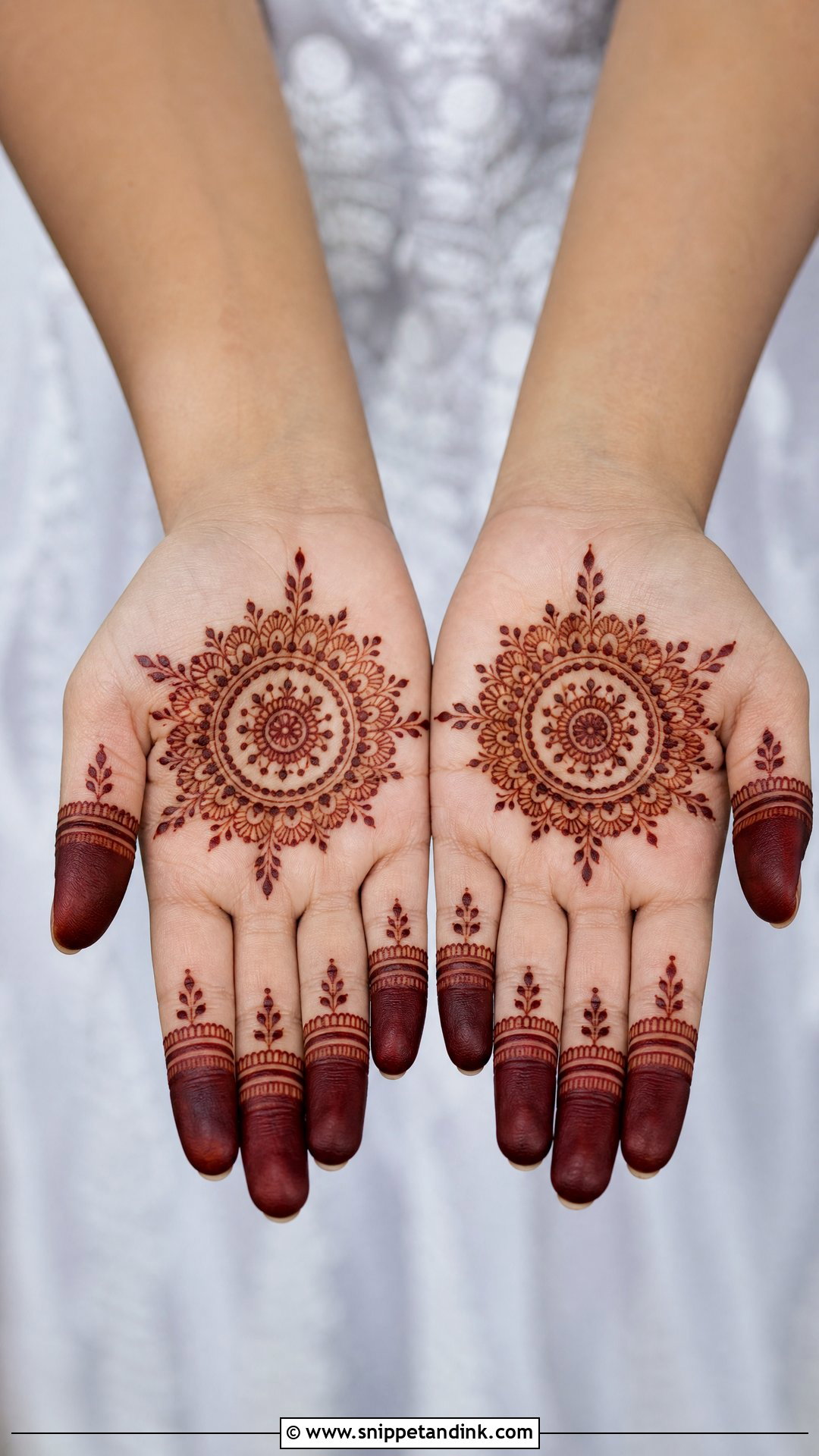
The palm centre carries the design: a round mandala, small tikki, floral circle or paisley cluster, with simple dots, caps or tiny leafy lines on the fingers. It’s easy to apply and stains well, since palm skin takes colour deeply. Don’t crowd it with small details; let the main motif stand out. It suits festivals and family rituals where a classic feel is expected.
32. Short Wrist Mehndi Design
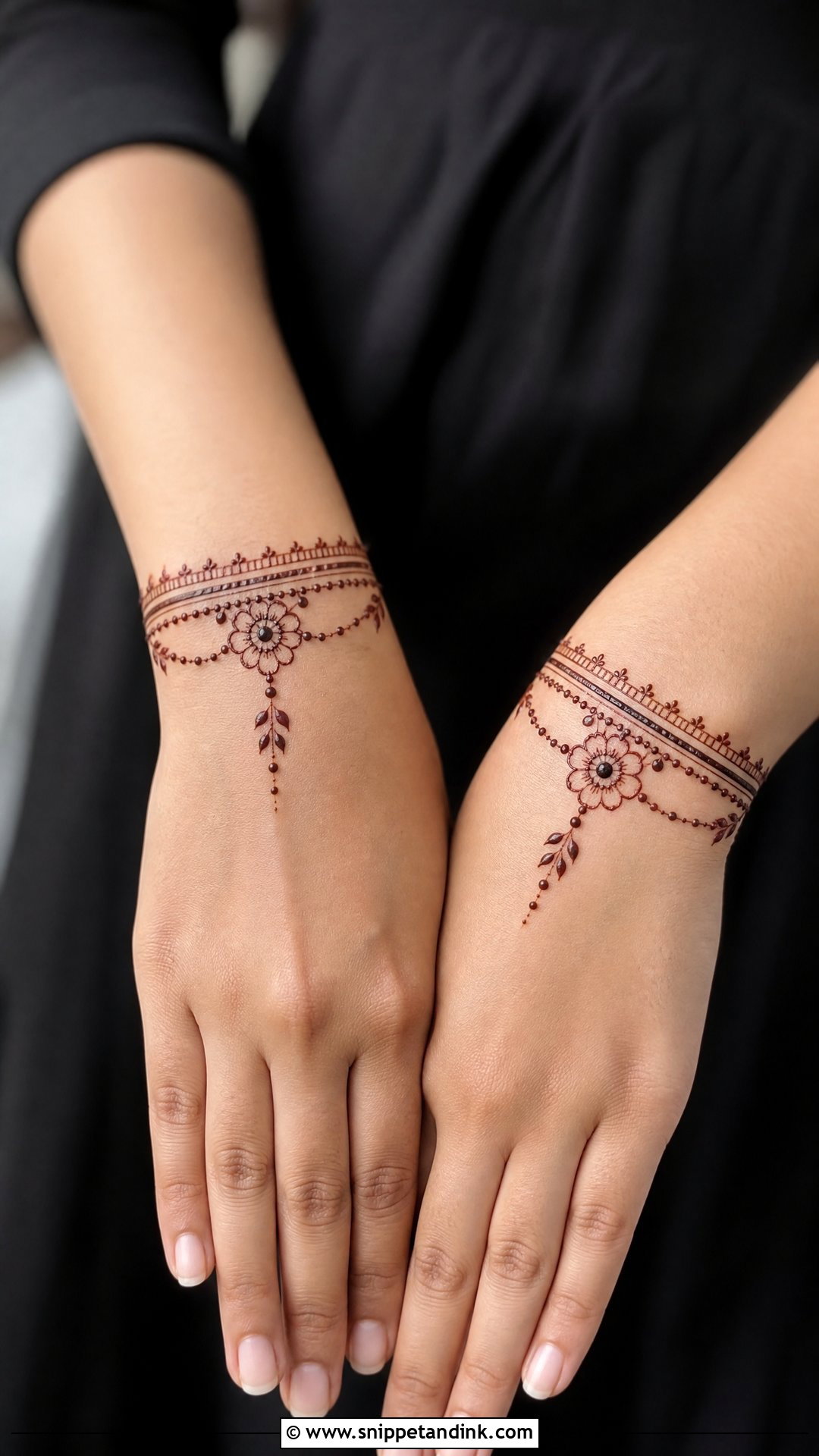
A wrist design looks like a henna bracelet: one or two thin bands with a small floral, leaf or mandala detail above. Connect it to a finger with dotted chains for more coverage, or keep it just at the wrist. It leaves the palm free and sits next to bangles or a watch. Keep the band width even all the way around; I turn the client’s arm as I go rather than reaching round it.
33. Short Full Hand Mehndi Design
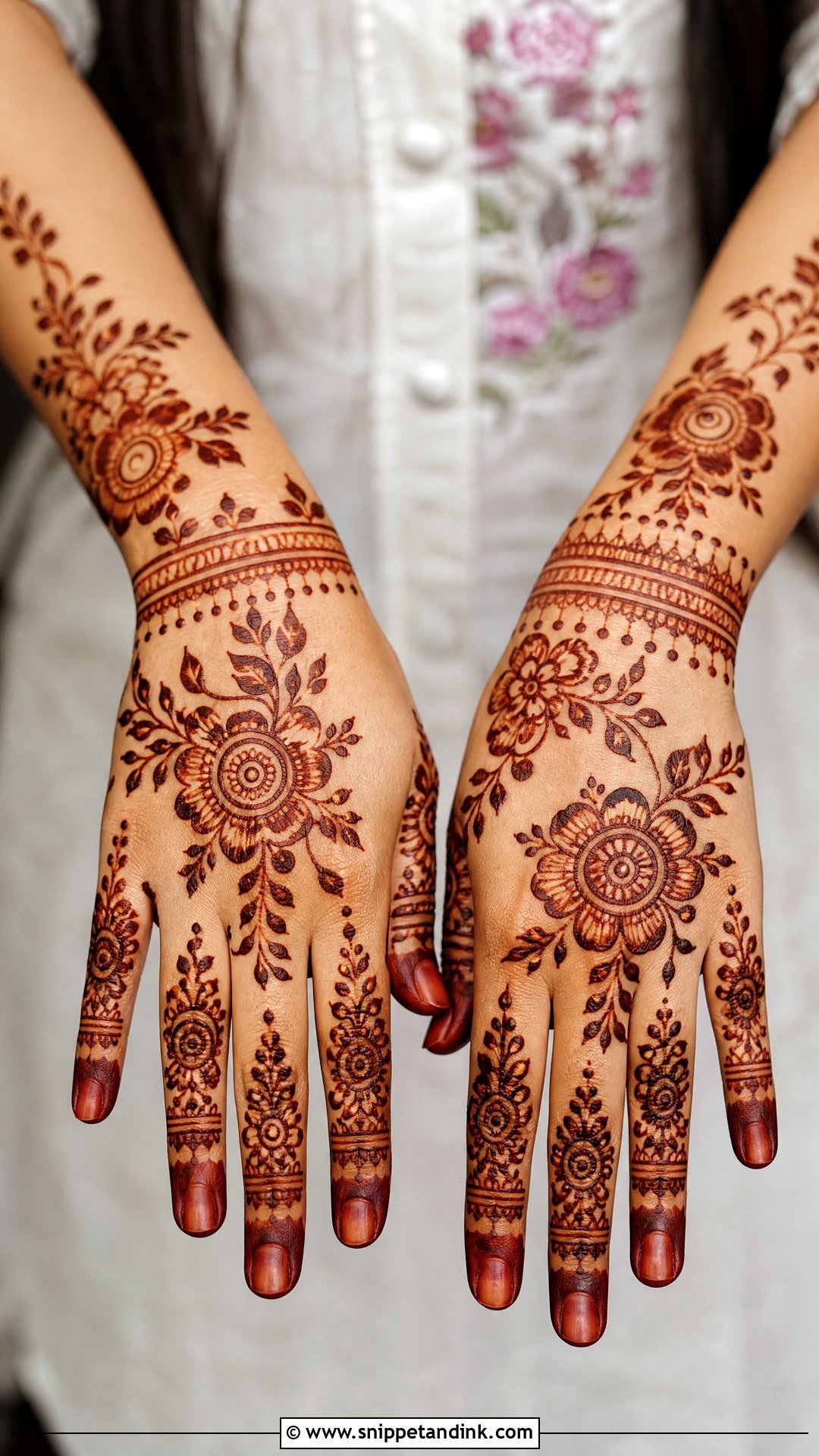
Short doesn’t have to mean small. Light, open coverage across the whole hand, a floral trail, small mandala, finger bands and a wrist border, gives the impression of full-hand mehndi without the hours. Keep motifs medium-sized and spaces wide, and skip tiny fillers. From a distance it reads as full henna. It’s a sensible choice for family weddings, Eid and Diwali when you want a complete look but can’t sit for long.
34. Short Stylish Mehndi Design
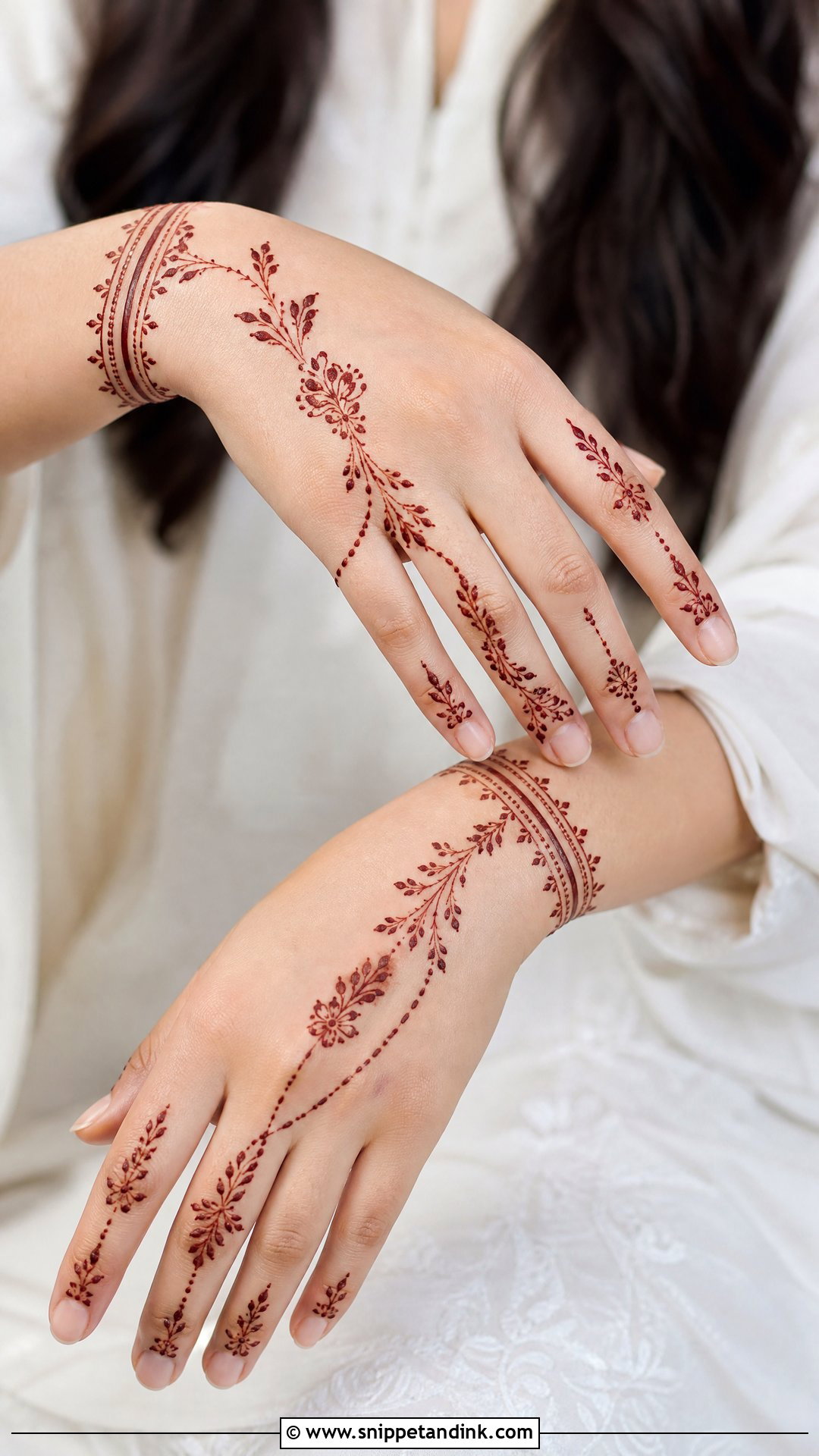
Stylish short designs are about placement, not quantity: a back-hand floral vine, a finger-only pattern, a ring chain or a modern wrist cuff. Open spaces, repeated dots, slim leaves and one strong focal motif. These show up clearly in photos. I always balance the design to the actual hand: a long vine on a short hand looks cramped, and a tiny motif on a large hand looks lost.
35. Short Henna Mehndi Design
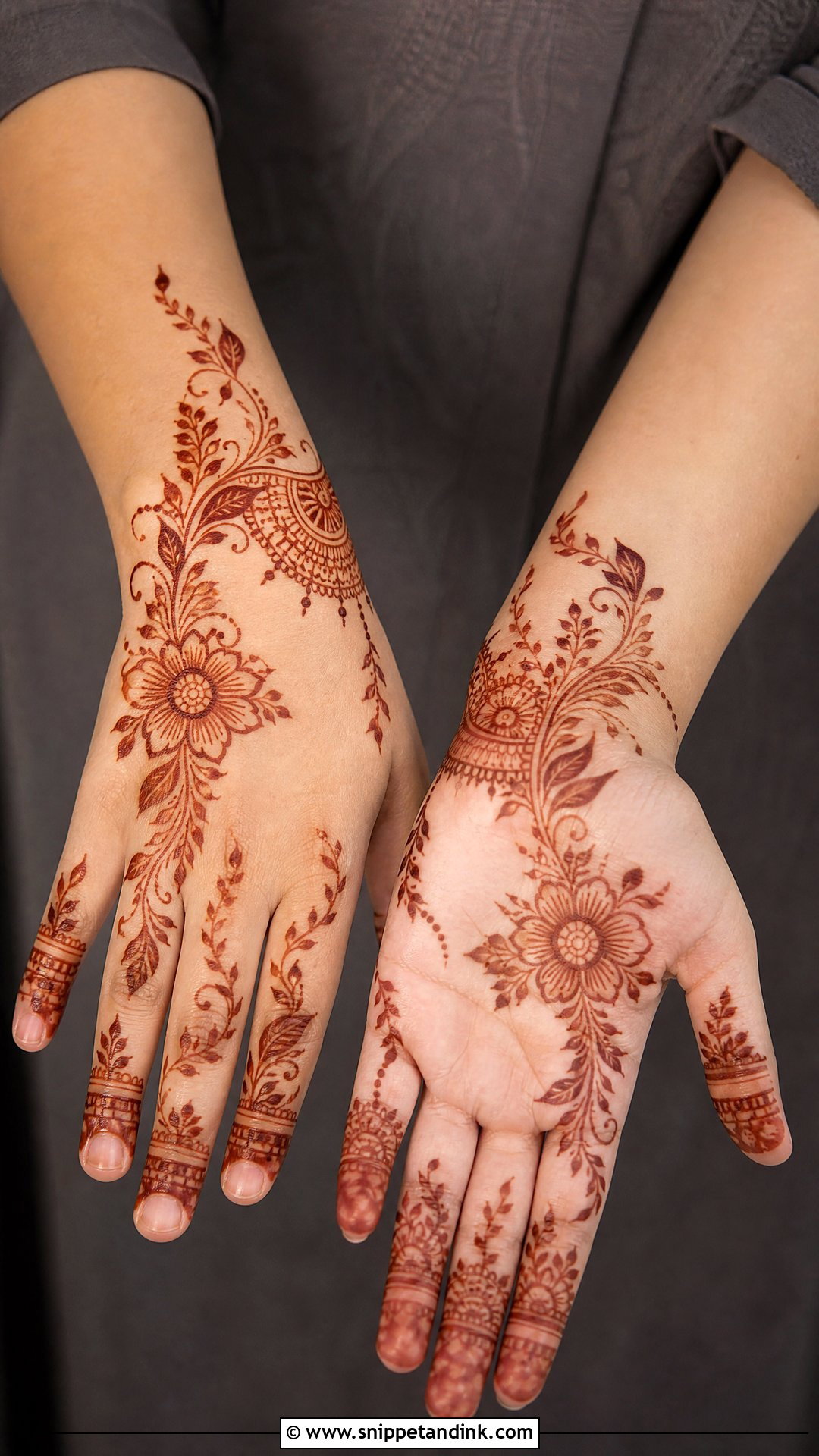
Natural henna, in any style, Indian, Arabic, Moroccan or minimal, stains from orange to reddish-brown to deep maroon over a day or two. A short design with one main motif and a light trail to the fingers or wrist lets that colour be the highlight. It’s a good choice for beginners, casual events and quick festive prep. Keep the pattern clean, and remember the colour you see when the paste comes off isn’t the final one; it keeps darkening.
Fast Stains, Black Cones and What the Speed Costs You
When you’re short on time, any cone promising a dark result within an hour is tempting. Natural henna doesn’t work that way. It stains orange first and darkens over a day or two. A cone that goes dark brown or black almost immediately usually contains added dyes, and some of those, particularly PPD in so-called black henna, can cause painful blistering reactions and lasting sensitivity.
How I check a cone
- It should list ingredients. Henna, lemon juice or water, sugar and essential oils are what I expect.
- Natural paste is green-brown and smells earthy or of the essential oils, not of chemicals.
- Fresh natural paste needs to be frozen or used within days; a cone that sits on a shop shelf for months unrefrigerated is a warning sign.
- The stain should be orange when the paste first comes off.
If you only have an hour
Natural henna applied the same morning will be on the orange side at an evening event. That’s honest colour, not failure, and it suits short, open designs better than dense ones. If you can, apply the night before, keep the paste on as long as possible, and keep the hands warm. A short design with a real stain looks better than a large one with a dye you can’t trust.
Small Designs Need Real Henna and Steady Lines
Short designs prove that beautiful henna doesn’t need to be heavy or complicated. A small mandala, floral trail, Arabic vine, wrist band or finger pattern makes a complete look when it’s well placed. Short mehndi takes less time, dries faster and stays comfortable through long celebrations. Indian, Arabic, minimal or Moroccan, there’s a short design for your hand and occasion. Clean spacing, steady lines and natural henna are what make the final stain look good.
You'll Like These Ideas:



Leave a Reply