
Indian bridal dressing is really a dozen different traditions sharing one word. A Bengali bride, a Tamil bride and a Punjabi bride may each wear something the others would never pick, and that’s before you count the mehndi, sangeet and reception outfits. The list below runs from red lehengas and handwoven silk sarees to Anarkalis, shararas, regional drapes and fusion gowns. When I dress a bride, I care less about the trend of the season and more about three practical things: how long she’ll sit through the ceremony, how hot the venue will be and how much weight she can carry on her hips. Reds still lead, but ivory, pastels and metallics now sit comfortably alongside them, especially across a multi-day wedding.
How Heavy Is Too Heavy for a Four-Hour Ceremony?
Most bridal lehengas I handle weigh several kilos, and the worst ones push well past that once the can-can, lining and embroidery are added. Weight on the hips is fine standing. It becomes a problem when you sit on the floor for the pheras, get up, sit again and repeat for hours.
At the trial, I ask brides to do three things: sit cross-legged on the floor for ten minutes, stand up without help and walk a few steps holding the dupatta. If any of those is a struggle, the outfit will be harder on the day, when you’re tired and hot.
- Ask whether the can-can can be made lighter or removable. A softer net underlayer cuts weight without losing much flare.
- Wide waistbands spread the load better than a narrow drawstring that bites into the skin.
- Heavy dupattas should be pinned at several points, not just one, so the weight doesn’t pull the blouse backward.
- Sarees spread their weight more evenly than lehengas, which many brides find easier for long rituals.
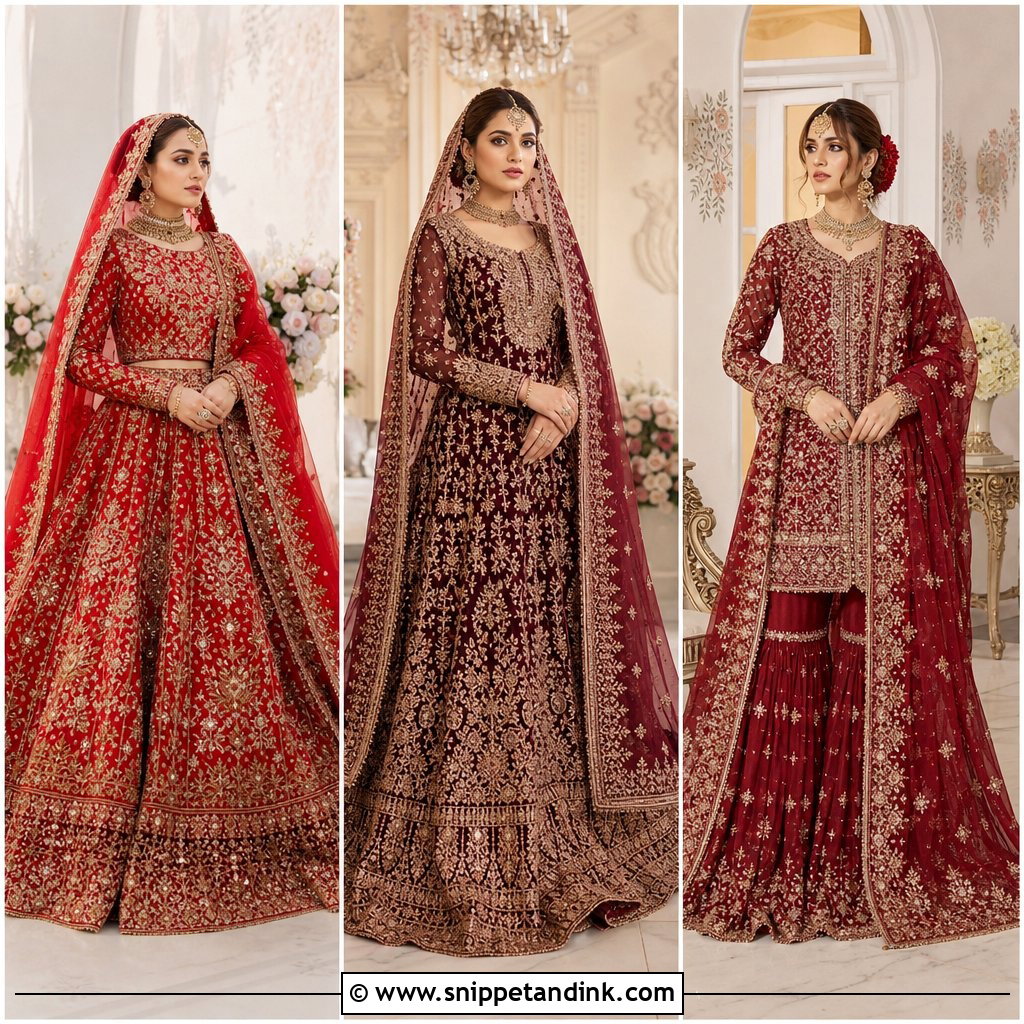
1. Red Bridal Lehenga Wedding Dress
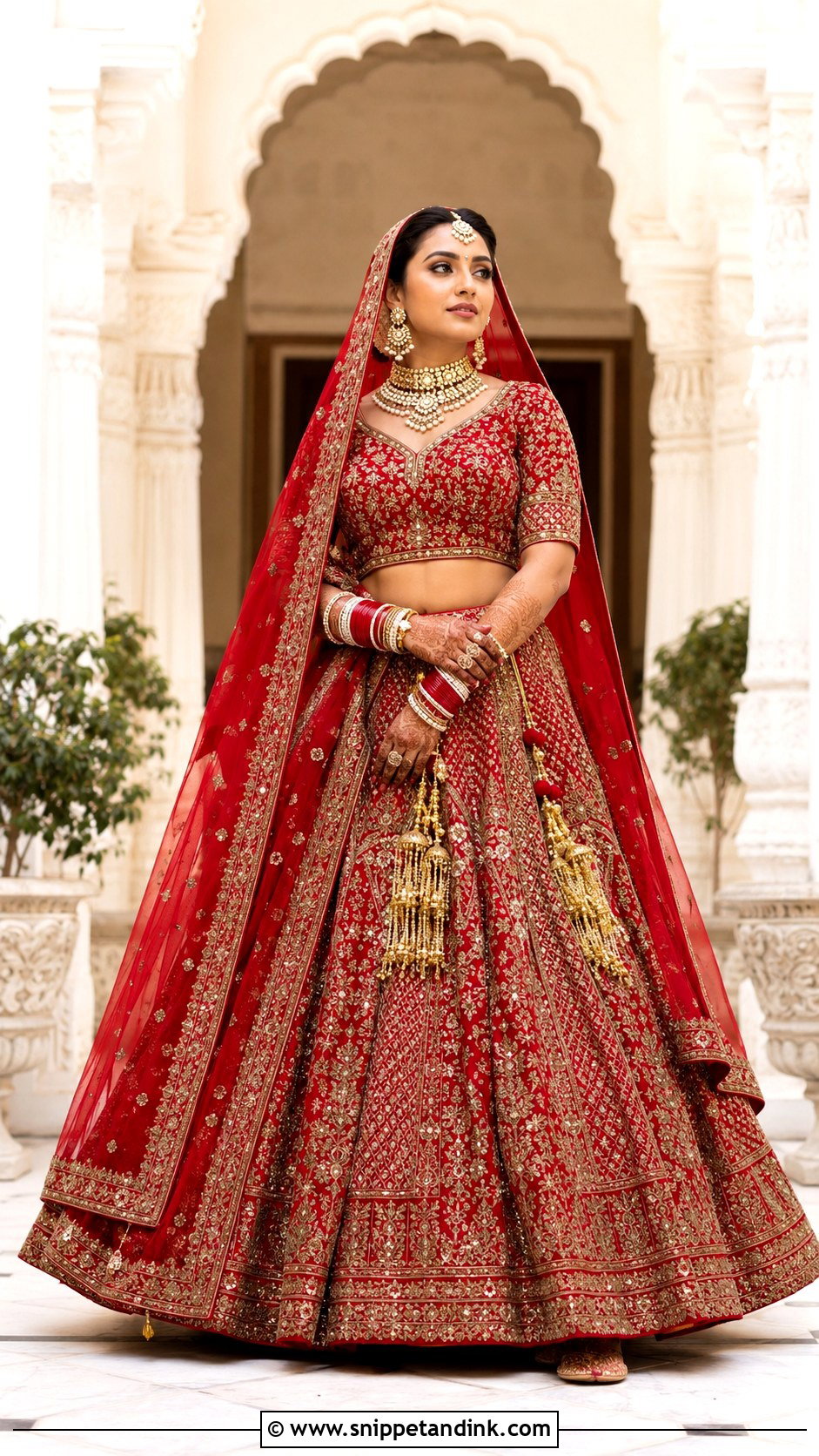
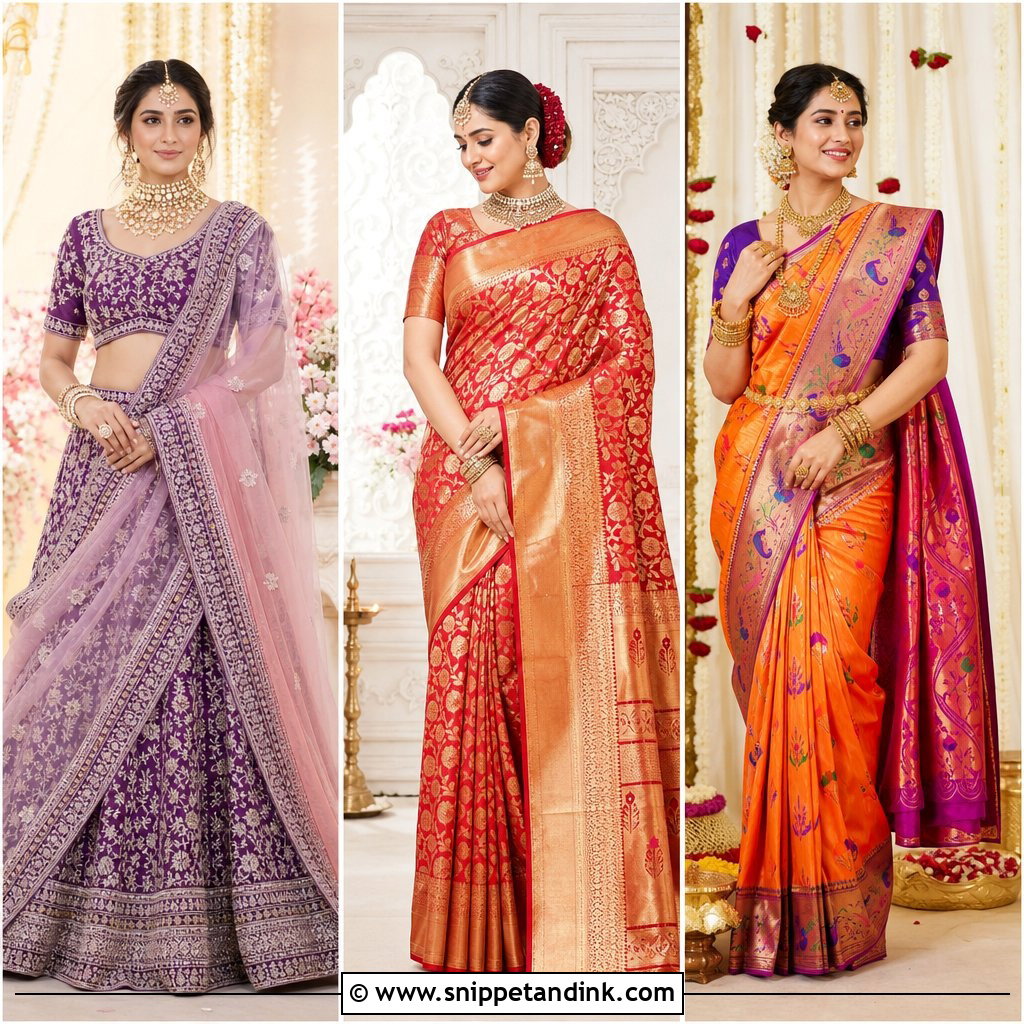
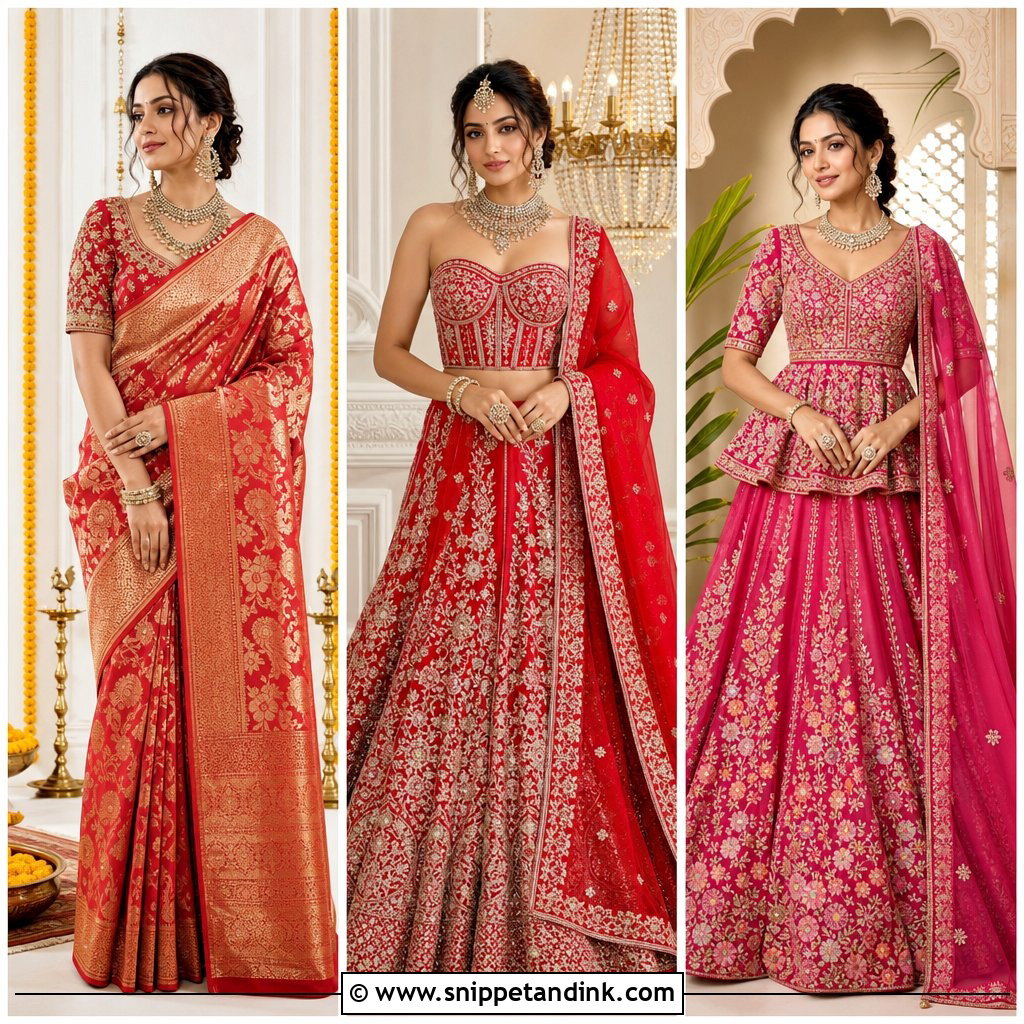
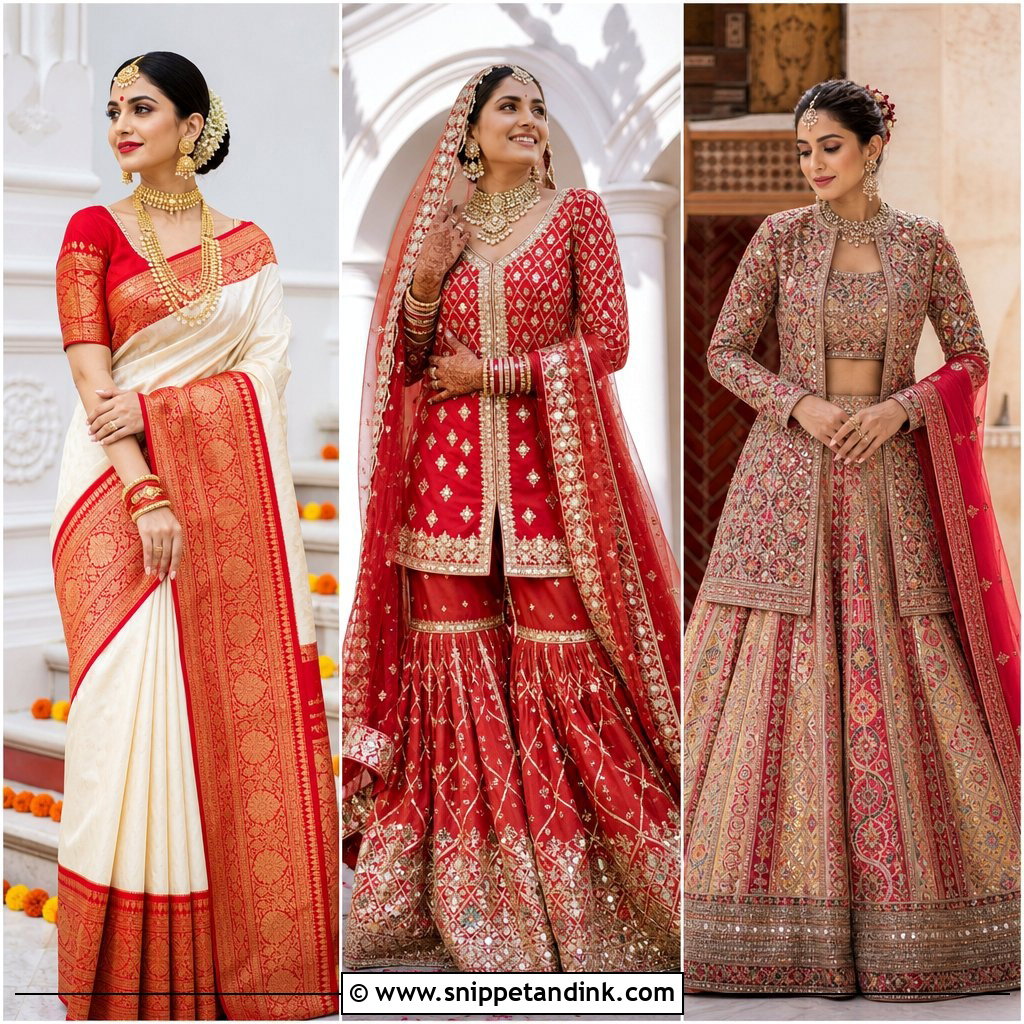
Nothing says North Indian bride as clearly as a red bridal lehenga, and nothing gets heavier faster. Zardozi and dabka use metal wire and thick thread, so a fully worked skirt can feel like a weight hanging off your waist by the third hour. I always ask brides to try a finished piece at the store and sit on the floor in it. A structured choli balances the flare, and an embroidered dupatta goes over the head for the ceremony, with a lighter second one across a shoulder if you like movement. Kundan jewelry, a maang tikka, stacked bangles and embroidered juttis finish it. Pick embroidery with some breathing space between motifs; solid coverage reads as a block in photos and swamps a petite frame.
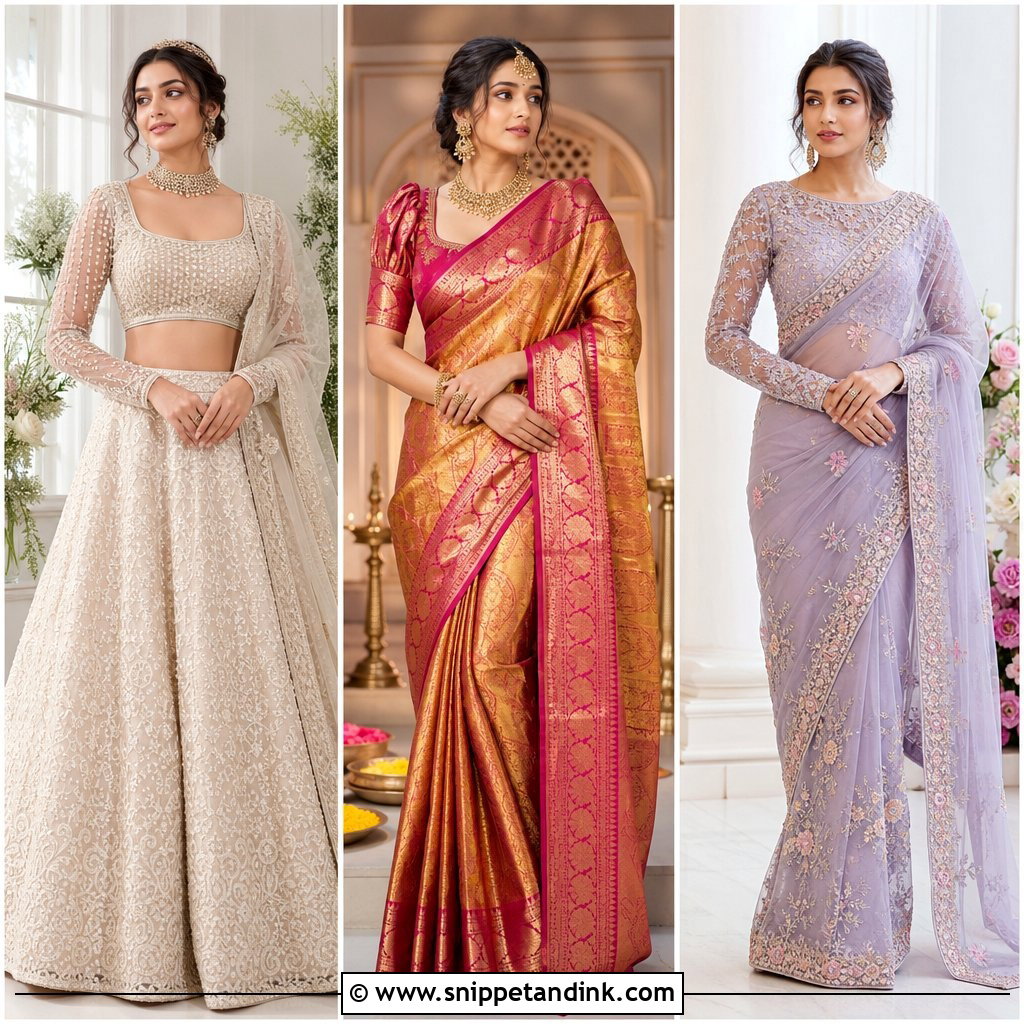
2. Ivory Bridal Lehenga Wedding Dress
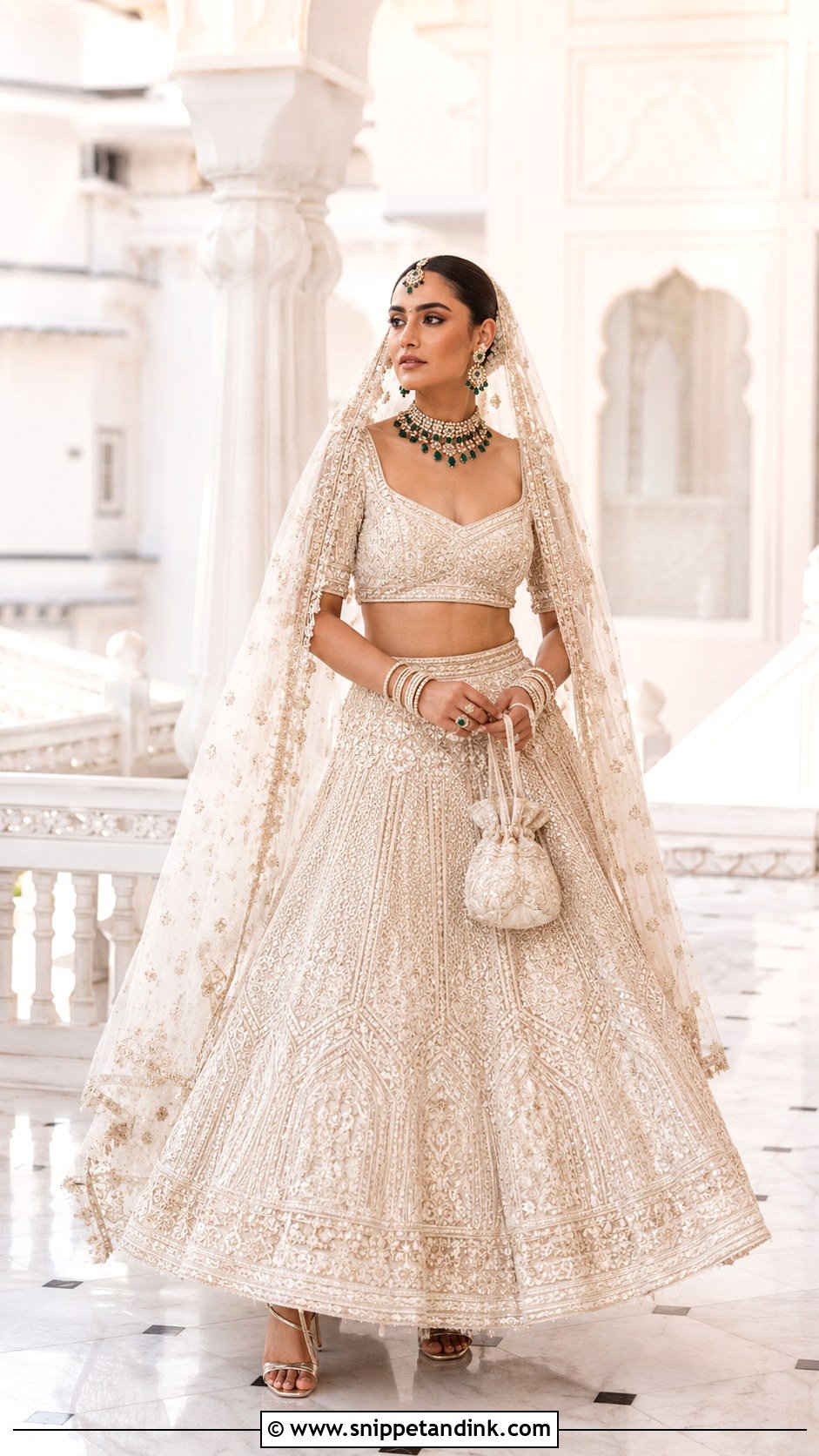
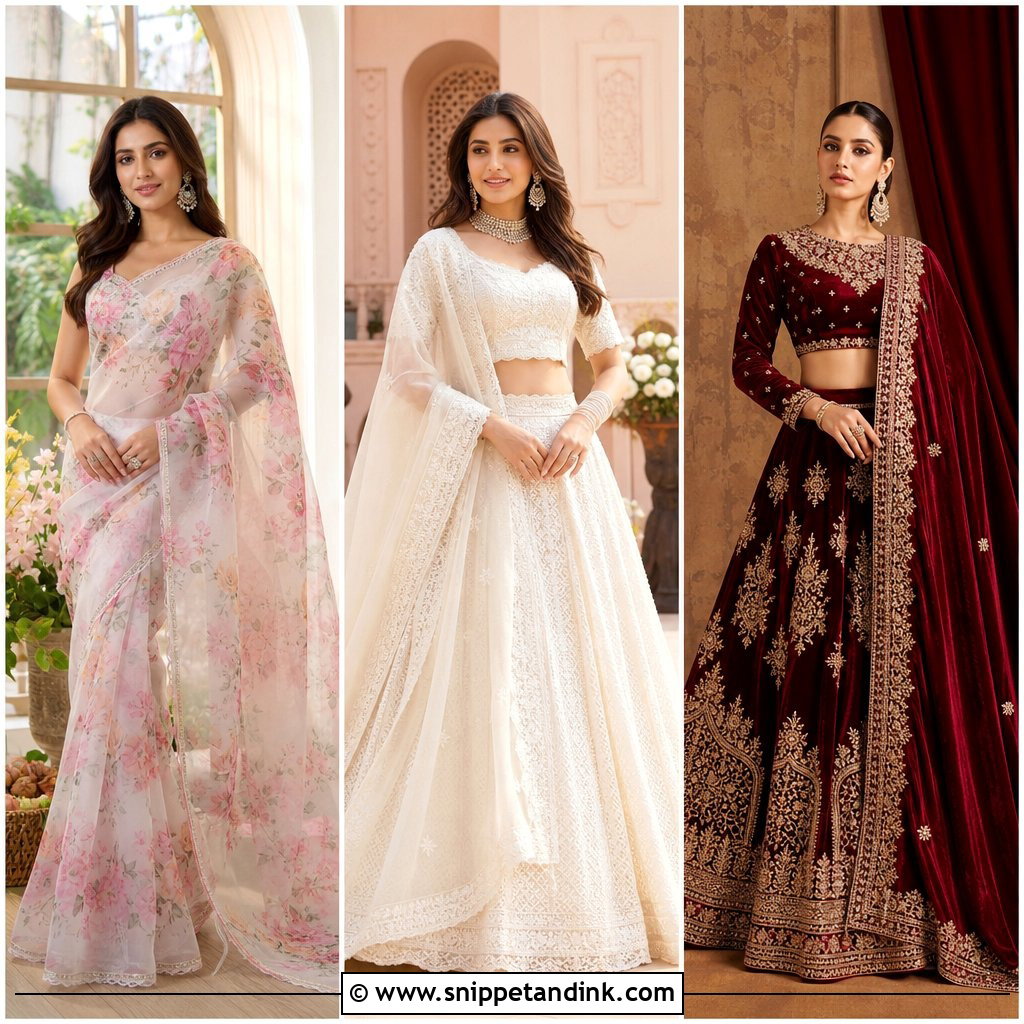
Ivory lehengas suit daytime ceremonies and destination weddings, where deep red can look heavy in strong sun. The catch is that pale fabric shows everything: mehndi transfer, makeup on the neckline, a grass stain at the hem. I’d keep a stain pen and a spare dupatta pinned and ready. Raw silk, organza or tissue worked with pearls, sequins or tone-on-tone embroidery gives texture without color. A fitted blouse with a square or sweetheart neckline adds definition, and an ivory veil-style dupatta finishes the top. Emerald, ruby or sapphire jewelry brings contrast; pearls and fresh flowers keep it soft. Champagne and ecru have earned their place in modern bridal wardrobes, especially for a second ceremony or reception.
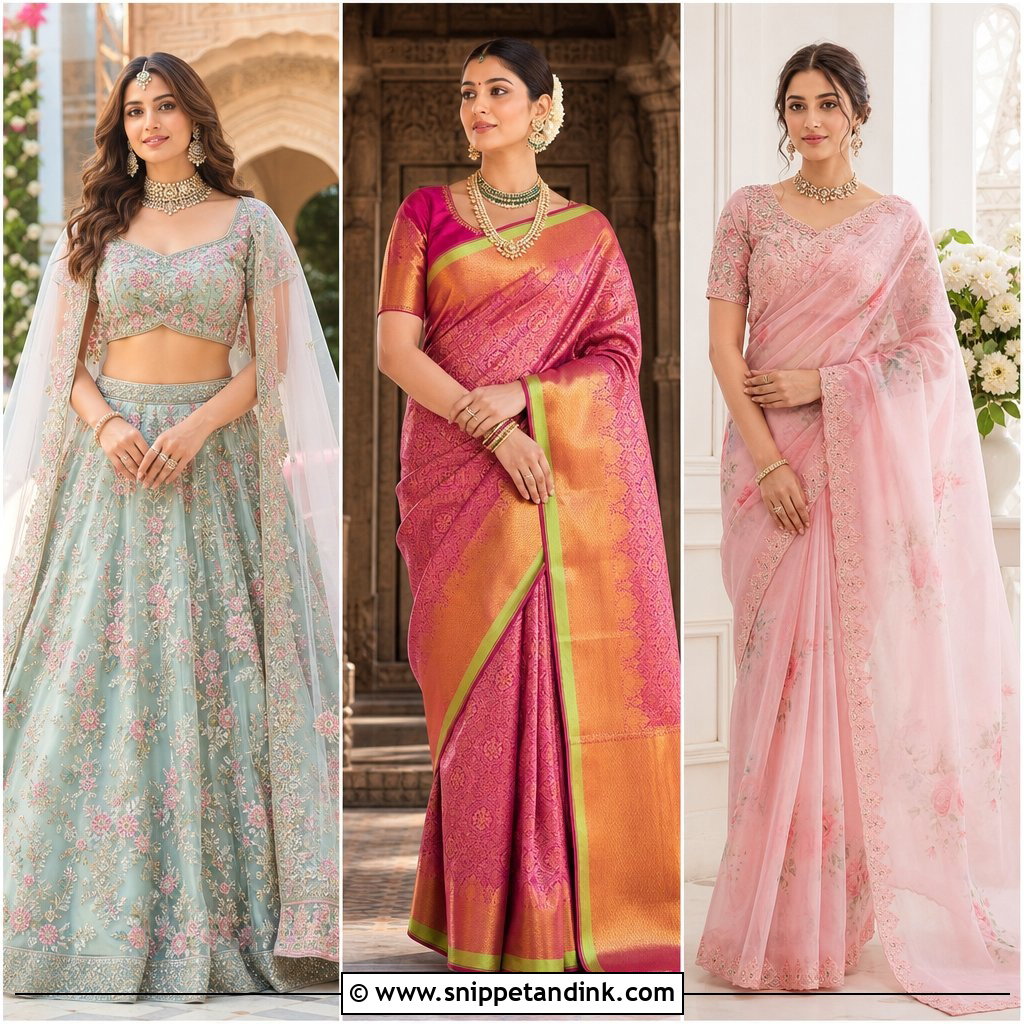
3. Pastel Pink Floral Lehenga Wedding Dress
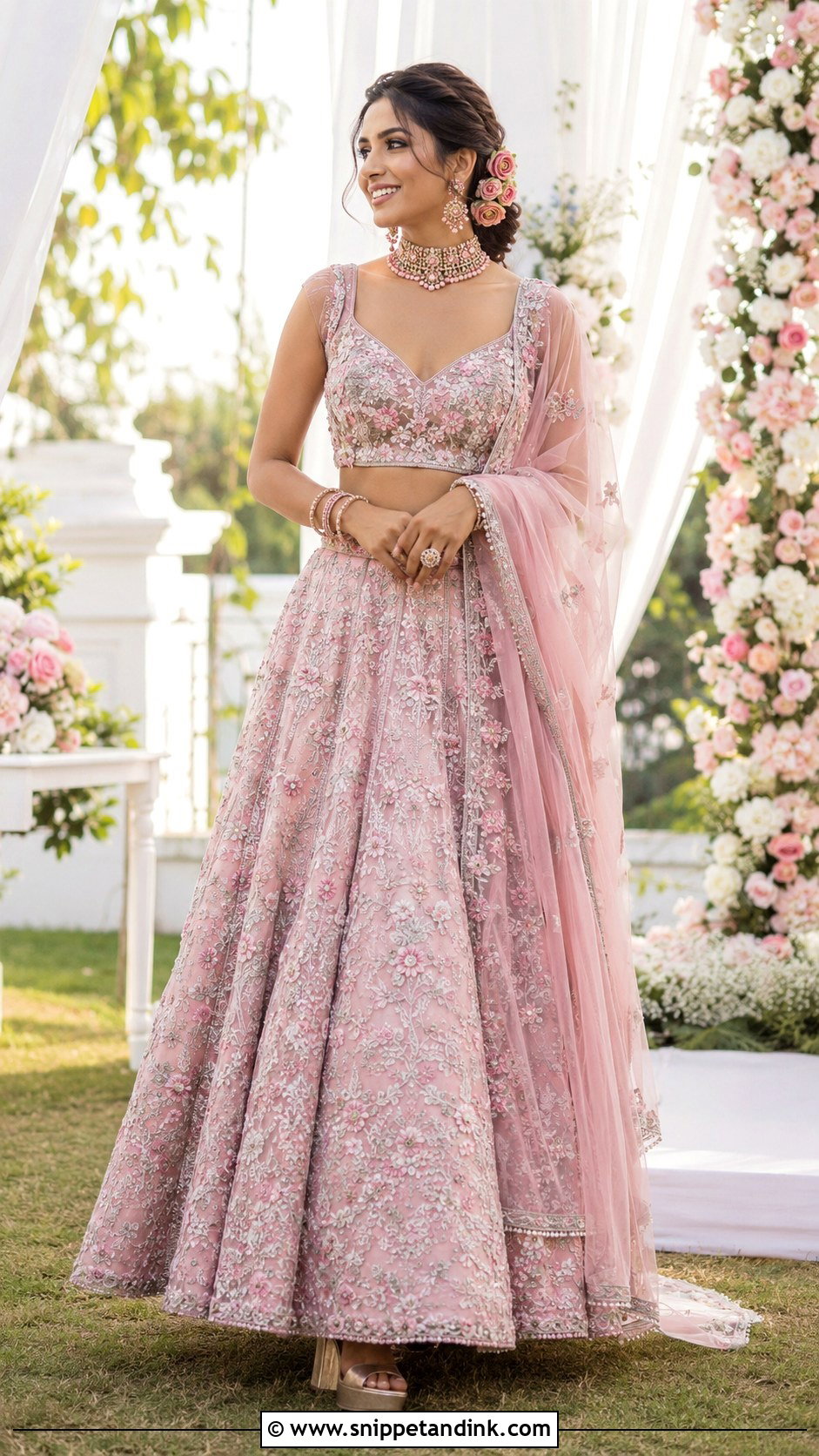
Pastel pink is forgiving in daylight and tricky under warm evening lights, where blush can turn almost beige. I’d save it for a garden ceremony, a daytime phera or a spring wedding. Look for blush, rose or dusty pink with embroidered vines, raised flowers or fine sequin work, and pair it with a properly supportive blouse, since sheer pastel fabrics show any gap in fit. A sheer dupatta laid lightly over the hair or arms keeps it airy. Rose-gold jewelry, polki or pearls suit the tone. If the ceremony is on grass, block heels save you from sinking. A low bun, soft waves or a floral braid finishes it without fighting the embroidery.
4. Maroon Velvet Lehenga Wedding Dress
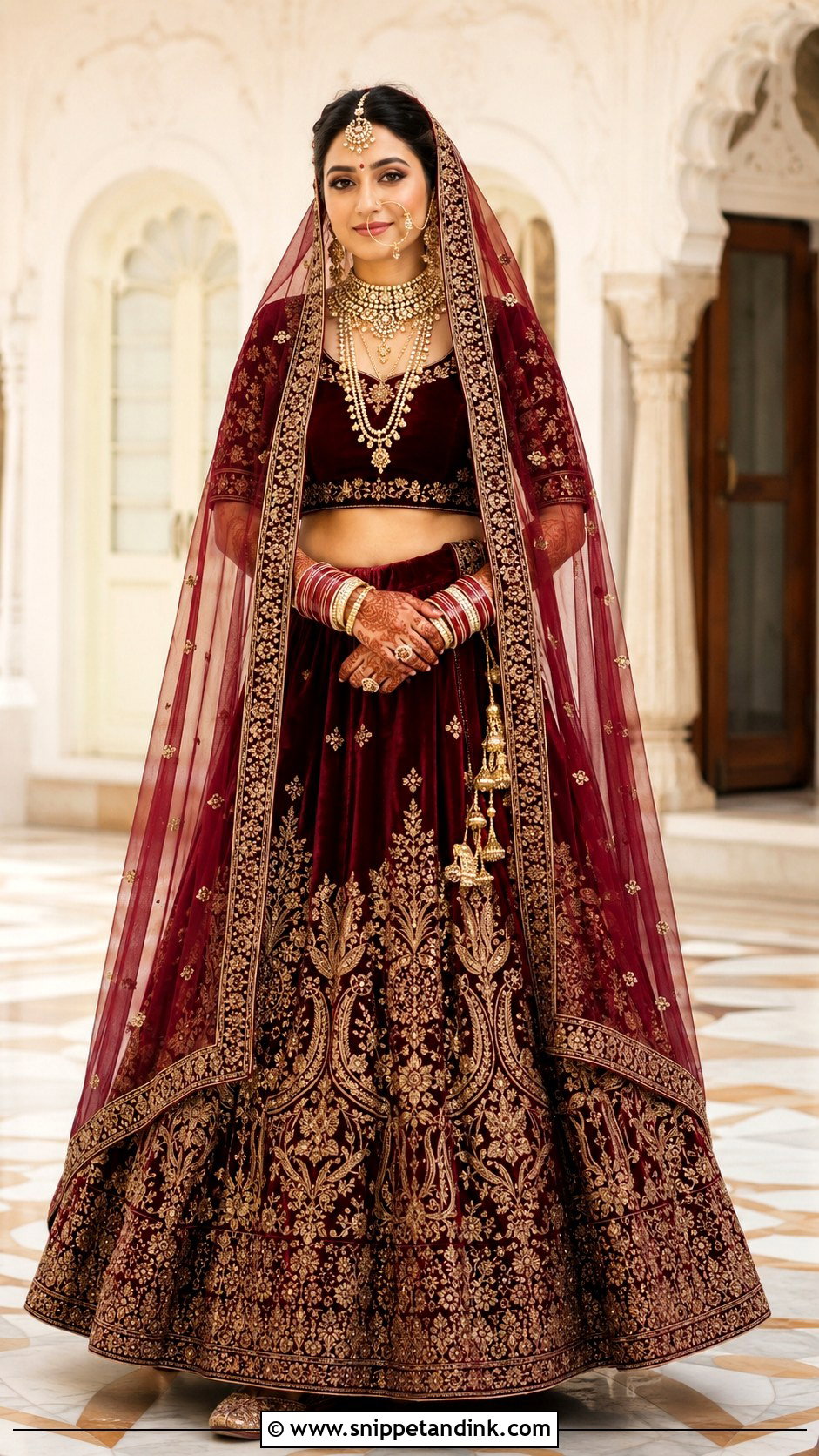
Velvet is the warmest fabric on this list, which is exactly why I’d only suggest it for a cold-weather wedding. Under hot lights in an indoor hall, a velvet lehenga becomes hard work. Maroon velvet with antique-gold zardozi or dabka along the hem and panels has real depth in evening photos. If the full outfit feels too dense, swap the velvet blouse for a lighter raw-silk choli and choose a net or organza dupatta. Antique-gold necklaces, a matha patti, bangles and closed embroidered juttis suit it. Burgundy, deep berry and oxblood are alternatives to bright red. Velvet crushes when you sit on it for hours, so ask your tailor for a smooth lining and avoid packing it folded tightly.
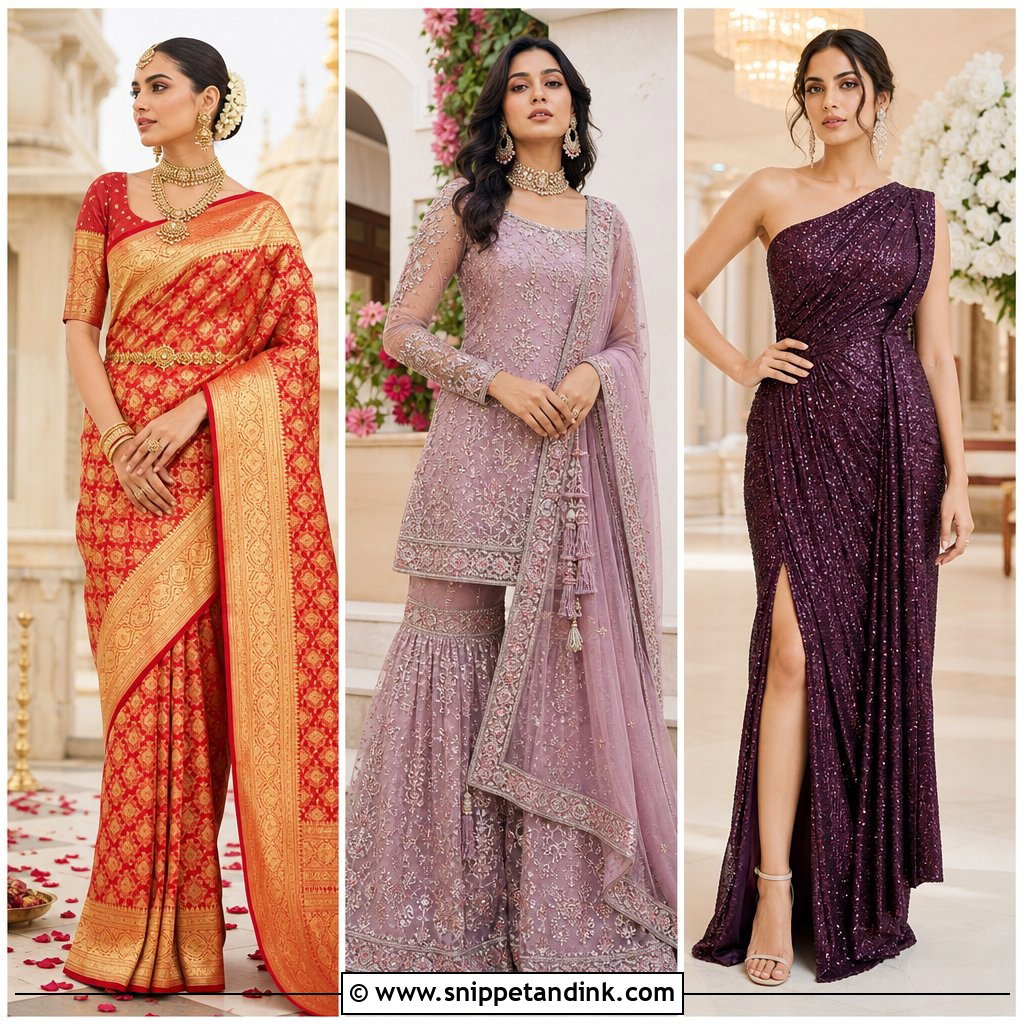
5. Banarasi Silk Saree Wedding Dress
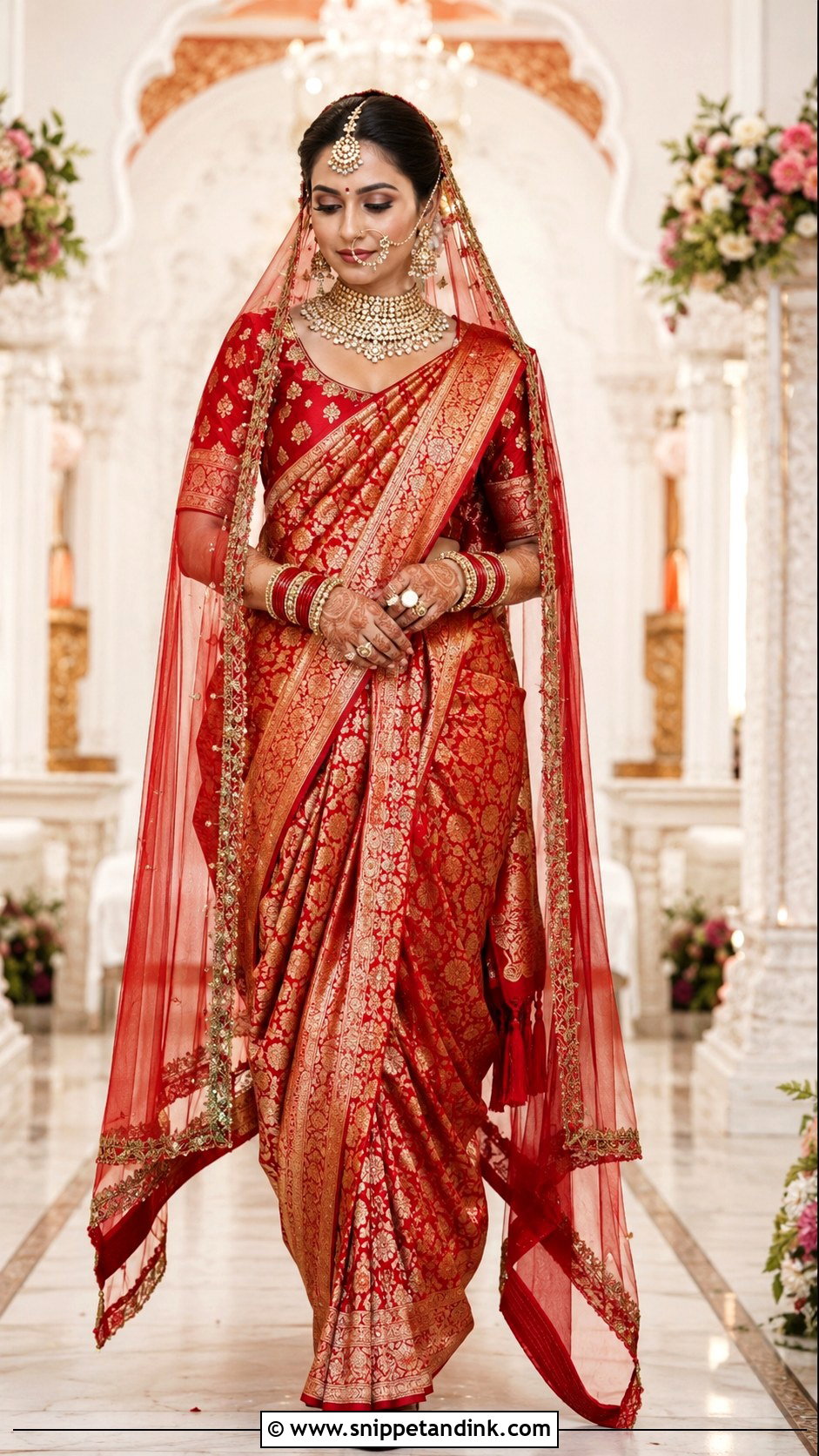
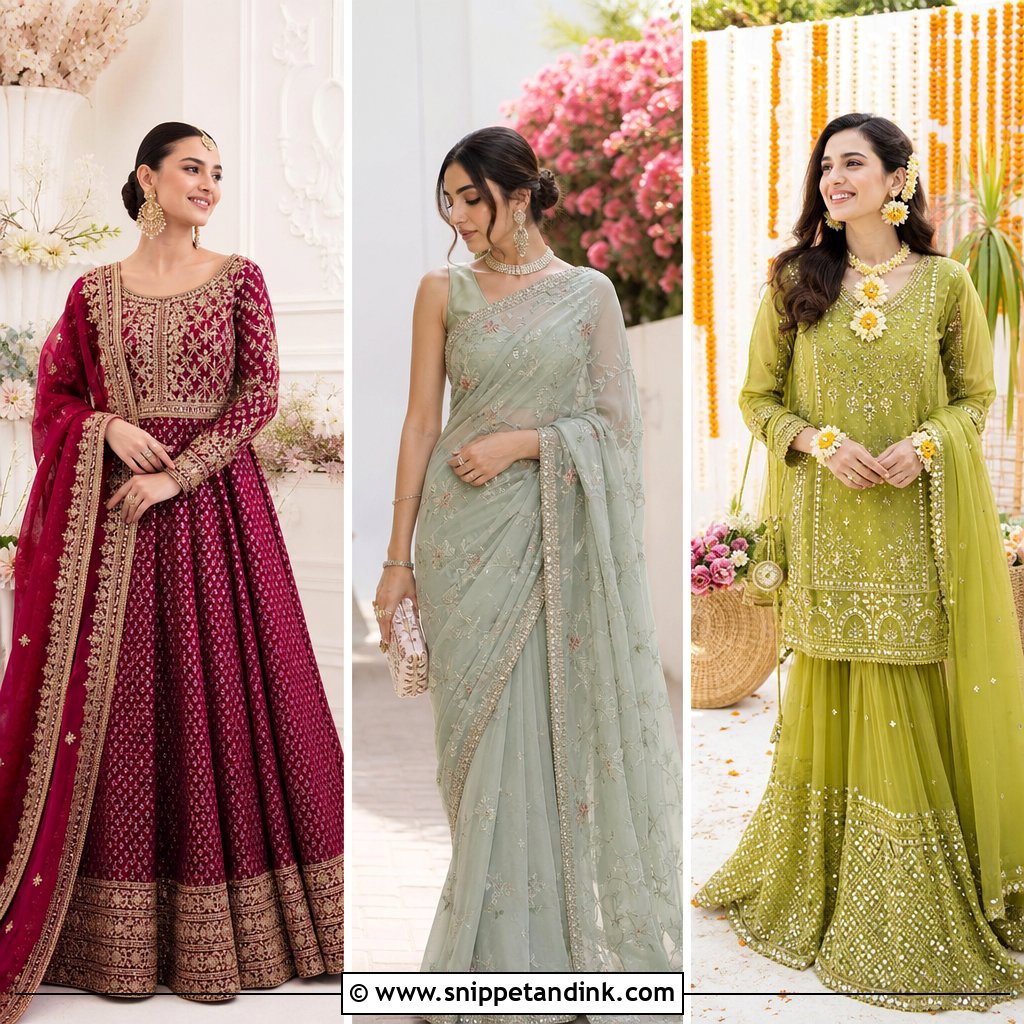
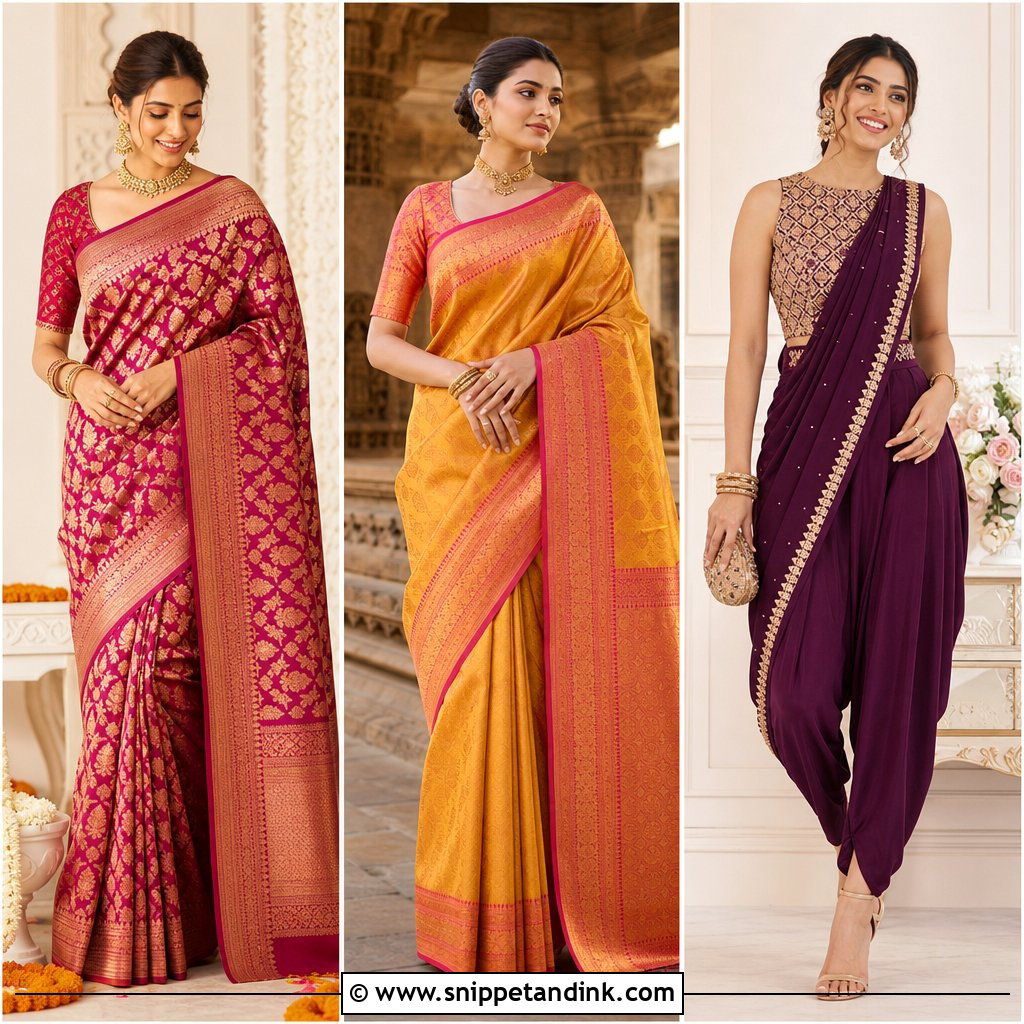
A Banarasi saree carries its weight in the weave itself, so the drape matters more than any extra decoration. Red, magenta, green, purple or antique gold with woven zari motifs all hold up for a main ceremony. I’d pair it with a fitted silk blouse with elbow-length sleeves, which balances the heavier pallu. The pallu goes neatly over the shoulder, and a separate light veil can cover the head if your ceremony needs it. Kundan jewelry, gold bangles, a nath and embroidered heels finish the look. Banarasi silk is slippery, so the pleats need firm pinning at the waist or they creep apart through long rituals. Keep the blouse simple and let the weave speak.
6. Kanjivaram Silk Saree Wedding Dress
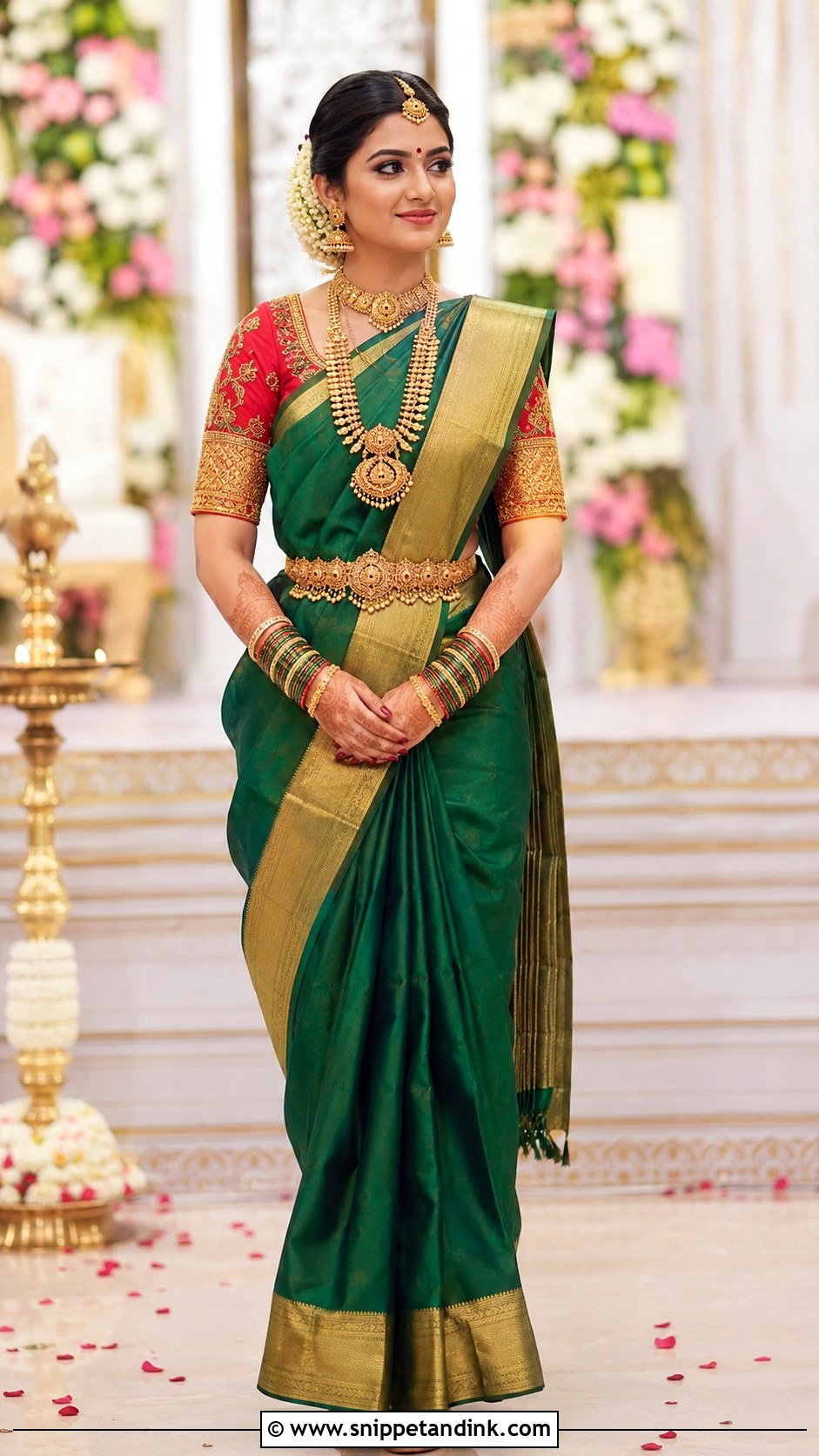
A Kanjivaram silk saree is heavy, stiff and proud, and that’s its charm for a South Indian ceremony. Red, emerald, turmeric yellow, royal blue or fuchsia with contrasting zari borders all hold their color under strong lights. Because the silk has so much body, I’d book a draper who knows Kanjivaram; badly set pleats stand out like cardboard. The blouse needs a smooth fit at the shoulders and waist. Temple necklaces, jhumkas, a waist belt and stacked bangles complete the ceremonial look, with a center-parted braid or bun wound with jasmine. Metallic sandals stay hidden under the hem. South Indian brides tend to favor silk sarees for the main ceremony, while lehengas lead in many North Indian wardrobes.
7. Paithani Saree Wedding Dress
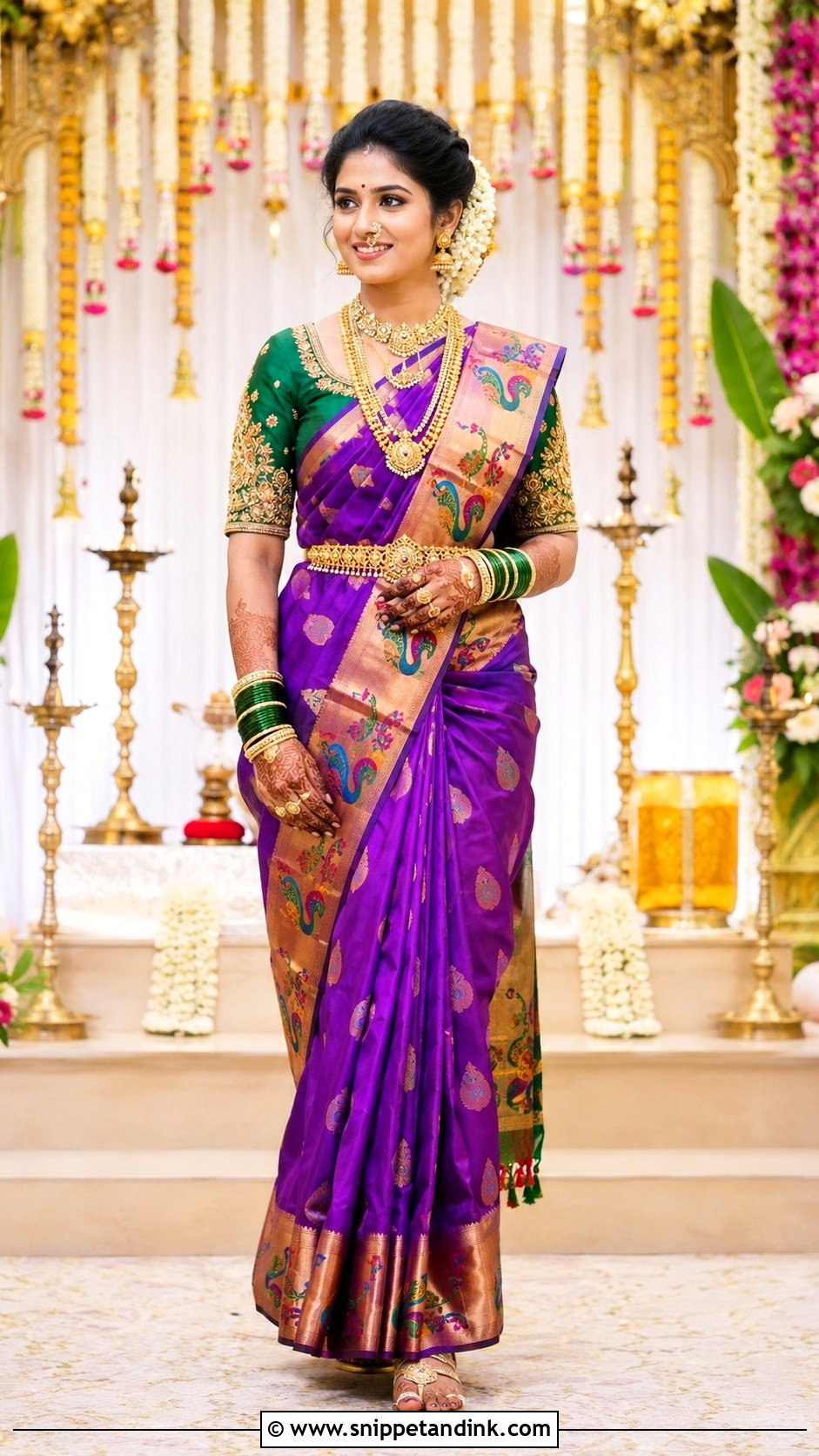
Paithani is about the pallu: the peacock motifs and bright border do most of the talking. Jewel-toned purple, green, red or pink with a contrasting gold zari border is the classic Maharashtrian bridal choice. I keep the blouse plain, in a complementary color with a clean neckline and fitted sleeves, because an embroidered blouse competes with the weave. A traditional nath, layered gold necklaces, green glass bangles, a crescent bindi and a waist belt complete it. A neat bun with flowers keeps it formal. Gold sandals are enough. When draping, I make sure the pallu falls where it’ll show in the ceremony photographs rather than bunching under an arm.
8. Bengali Red And White Saree Wedding Dress
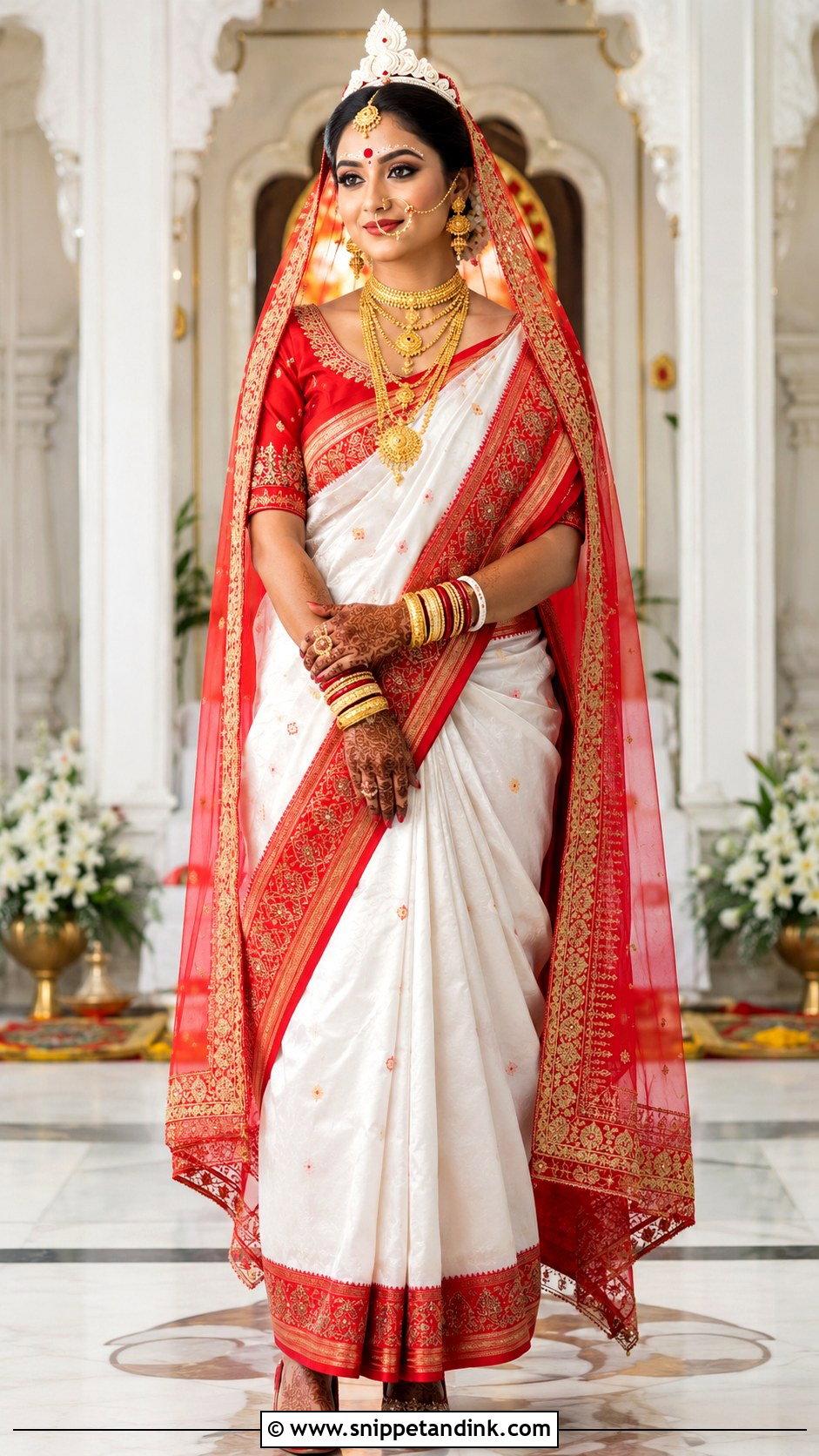
The red and white Bengali bridal saree is recognized instantly, and the contrast is the whole effect. White, cream or ivory fabric framed by a vivid red border with gold accents works best when the pleats are crisp and the border lines up straight down the front. I check that line in a mirror before anything else. A fitted red blouse and a carefully set pallu or separate veil frame the face. Gold necklaces, a nath chain, bangles and statement earrings add weight to the look, with a red bindi and forehead details to suit the family’s customs. A low bun sits neatly under the veil. Red embroidered heels or gold sandals finish it.
9. Maharashtrian Nauvari Saree Wedding Dress
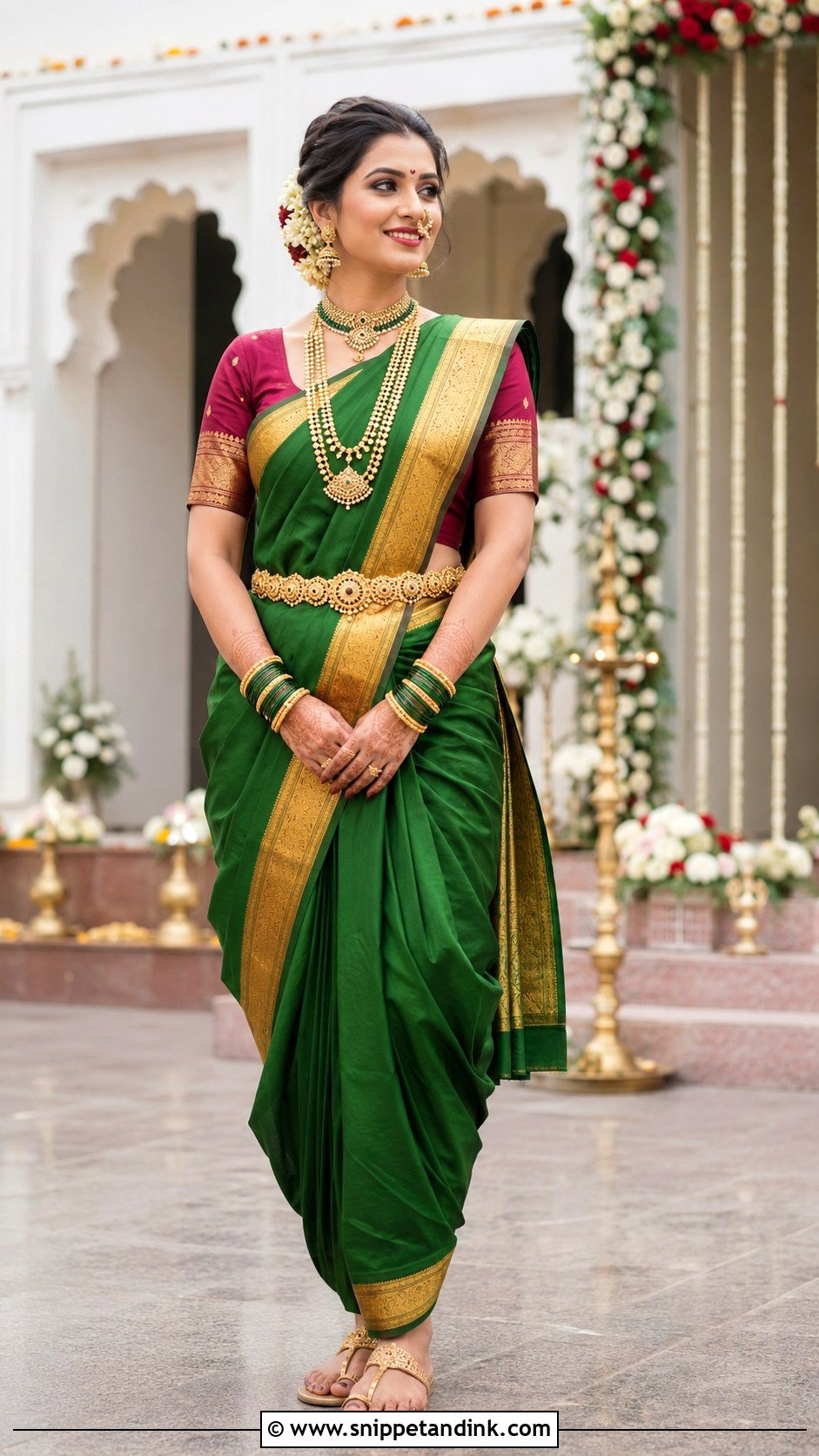
The Nauvari drape wraps between the legs like a dhoti, so you can actually take a full stride, which helps on a busy ceremony day. It only works if it’s secured properly, though. I’d always book an experienced draper and have a practice session where you sit cross-legged, stand up and walk, because a loose tuck at the back unravels quickly. Bright green, yellow, red or purple silk with gold borders has the most ceremonial weight. A short-sleeved fitted blouse, a Maharashtrian nath, layered necklaces, bangles and a waist belt complete it. A flower-wrapped bun and crescent bindi finish the face. Flat or low gold sandals give steady footing under the divided drape.
10. Assamese Mekhela Sador Wedding Dress
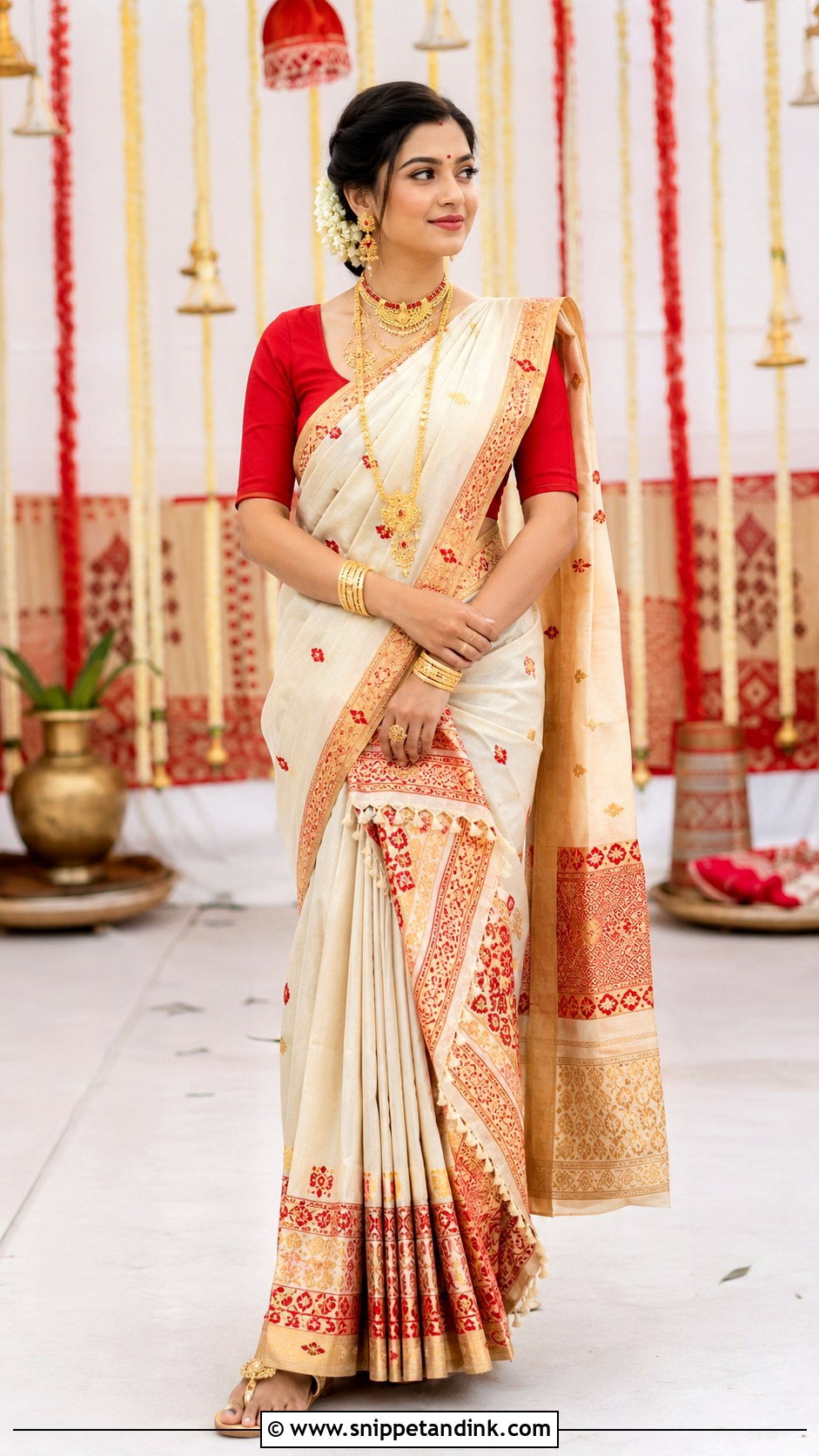
An Assamese Mekhela Sador is quieter than most outfits here, and that restraint is its strength. The cylindrical lower garment and draped upper piece give a slim, graceful line without volume. Cream, ivory or soft gold silk woven with red, green or metallic motifs is the usual choice. The woven pattern is the point, so I’d steer you away from an oversized necklace or a heavily embroidered veil that covers it. A fitted blouse in red, gold or a matching neutral gives definition. Traditional Assamese jewelry, a neat bun, flowers and comfortable gold sandals complete it. It’s a good reminder of how much Indian bridal dressing goes beyond the saree and lehenga.
11. Gujarati Panetar Saree Wedding Dress
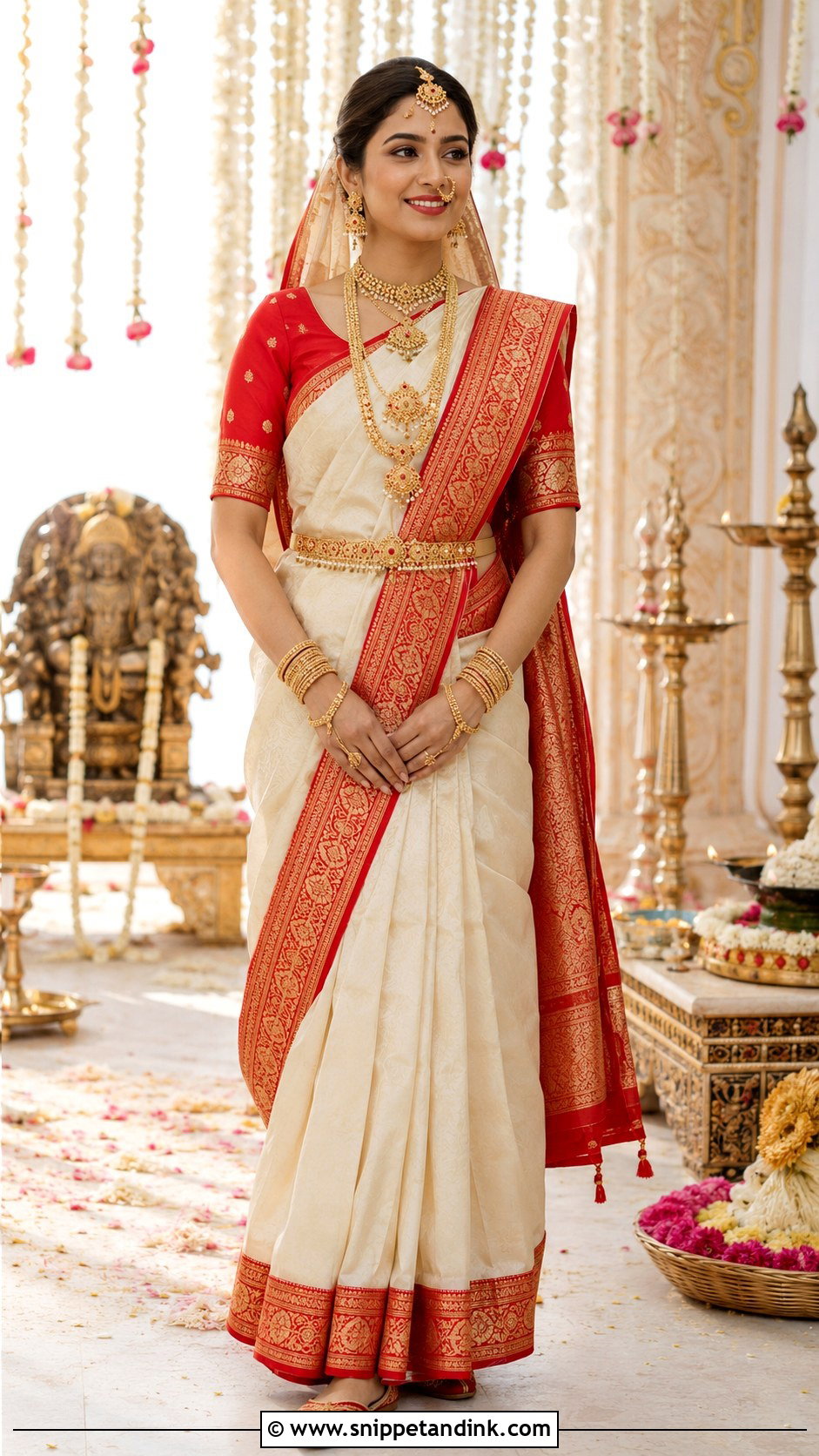
The Panetar pairs white or ivory with bold red, and that contrast needs careful makeup. Too much color on the face and the whole outfit starts to look crowded. I’d suggest a defined red lip, soft gold eyes and a tidy bun, and let the saree carry the rest. Wear it with a red blouse in traditional embroidery or plain silk, and arrange the drape so the decorated pallu sits visibly across the torso and shoulder. Gold jewelry, a bridal nath, bangles, a maang tikka and an optional waist belt finish the ceremonial look. Red or gold embroidered flats are kind to your feet through longer rituals.
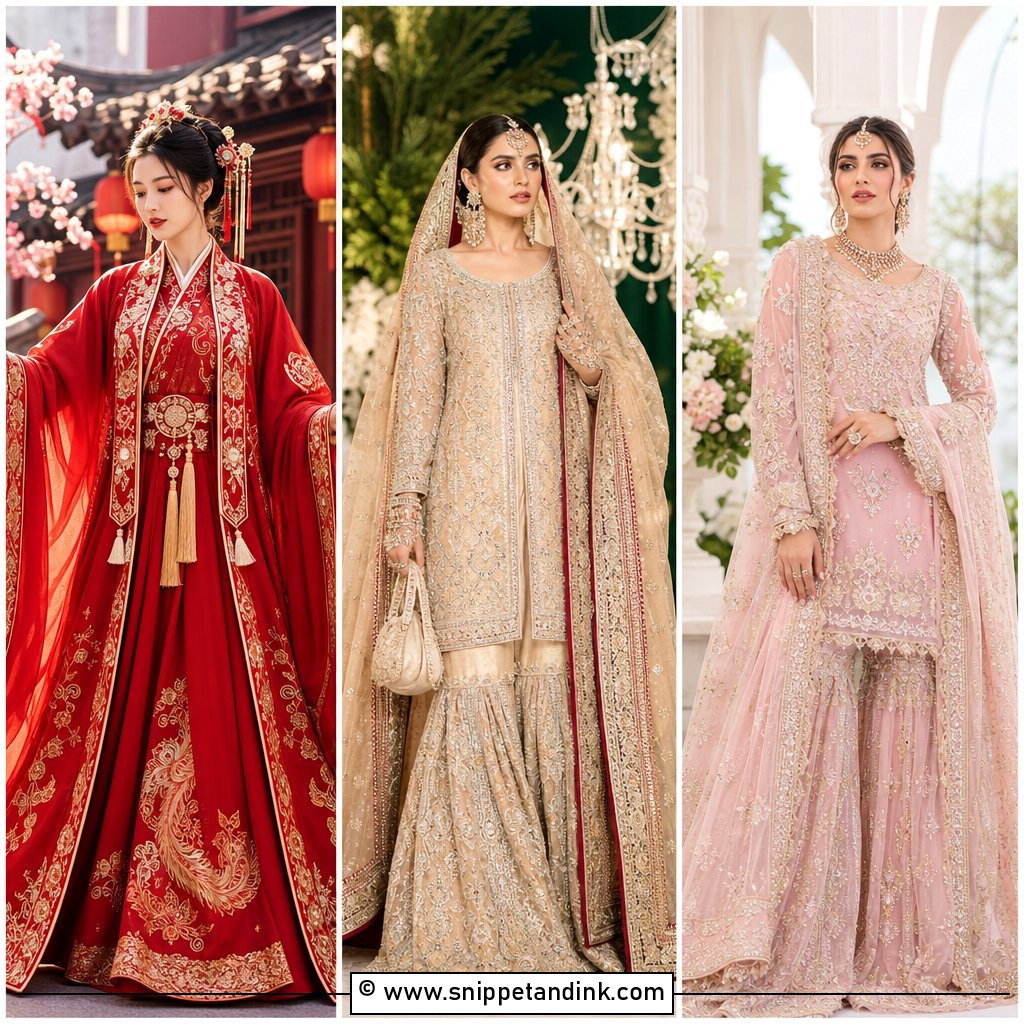
12. Punjabi Bridal Salwar Suit Wedding Dress
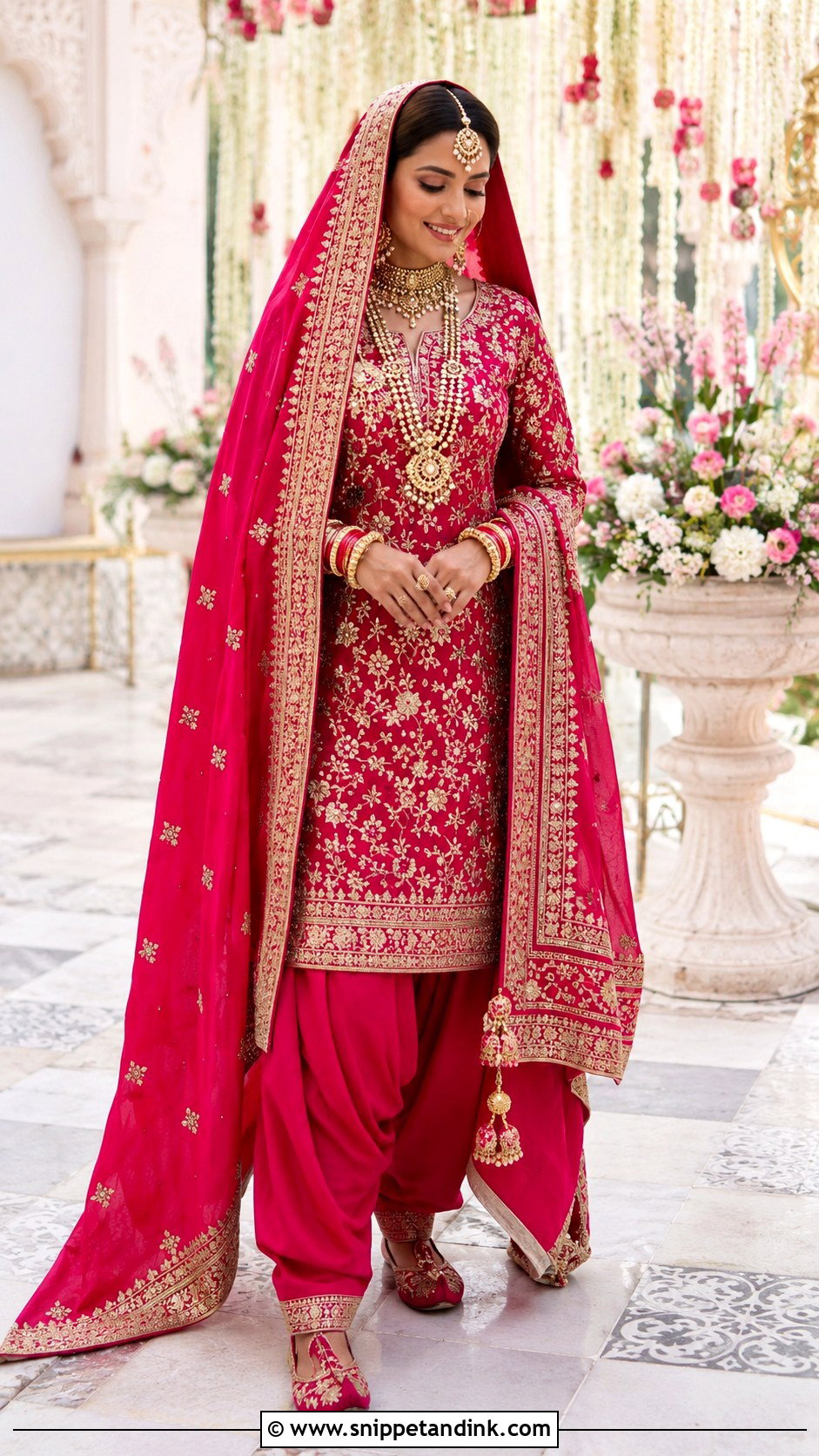
A Punjabi salwar suit lets a bride move, sit and dance without managing a huge skirt. A long kameez in red, pink, maroon or deep green with a matching salwar and a heavily worked dupatta still feels properly bridal. Gota patti, mirror work or thread embroidery carry the festive detail. I tell my tailors to fit closely through the shoulders and bust and leave real ease at the hips; a tight kameez rides up and creases every time you sit. Drape the dupatta over the head with one embroidered edge falling over the shoulder. A maang tikka, jhumkas, bangles and embellished Punjabi juttis complete it, with a decorated braid or a smooth low bun.
13. Floor Length Anarkali Wedding Dress
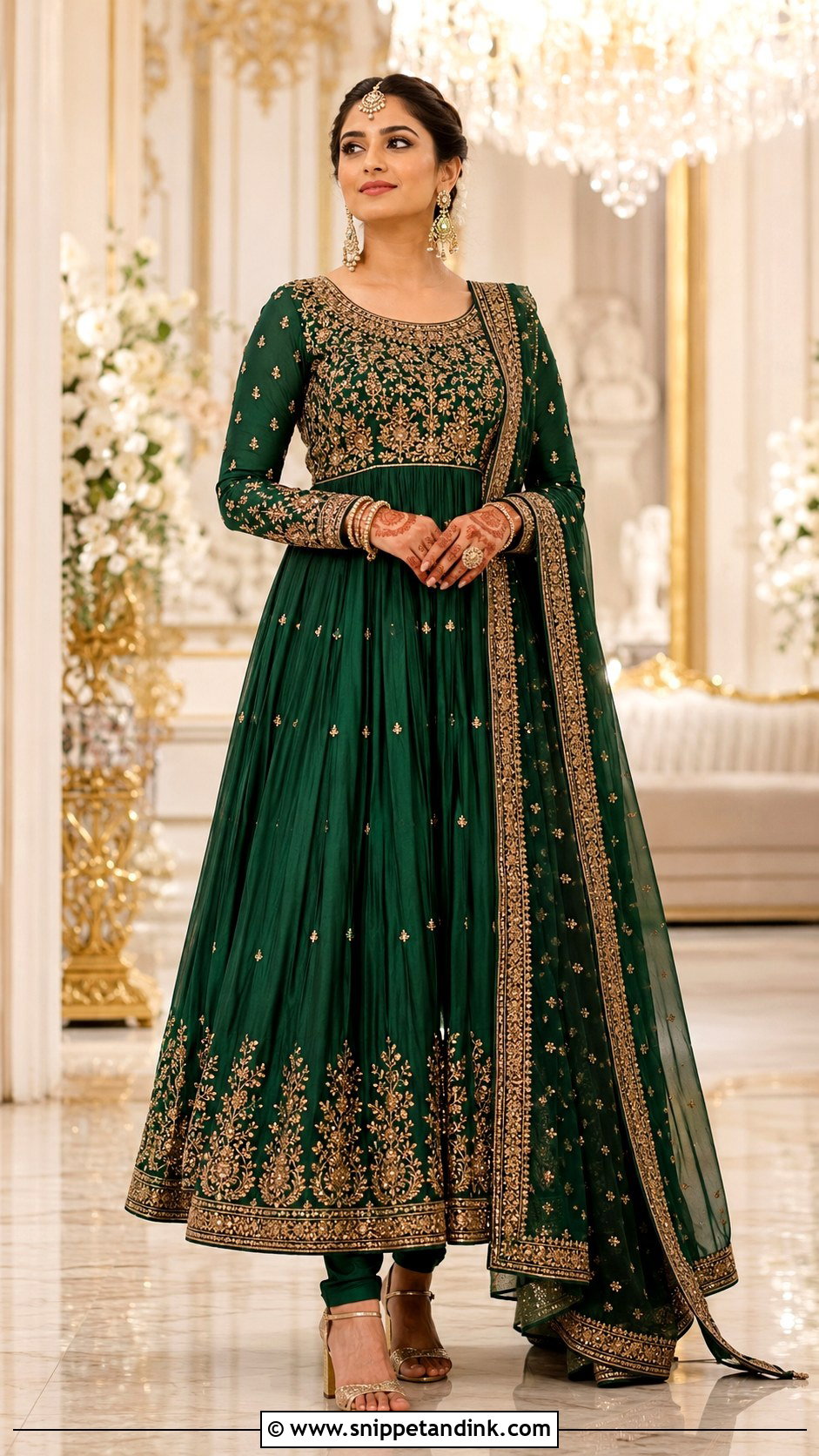
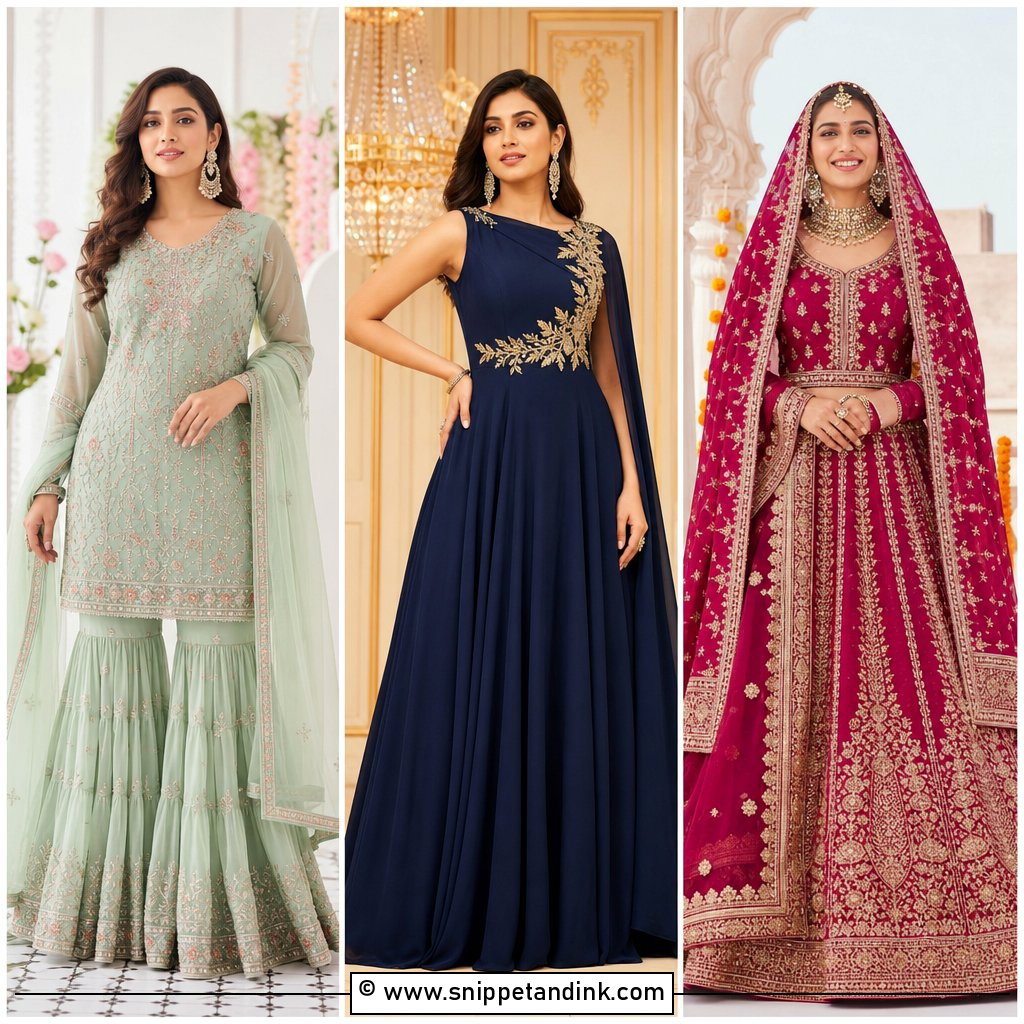
A floor-length Anarkali gives you the sweep of a gown with Indian roots, and it’s one of the easiest outfits to wear for hours. Silk, georgette or net with a fitted bodice and a generous flare from the waist works best. The flare needs enough panels to swing; a skimpy cut just hangs. Jewel tones suit evening, pastels suit daytime. Churidar pants, a bordered dupatta, block heels and statement earrings complete it. A waist belt adds shape, but I’d skip it if it would cut across embroidery. Full sleeves and a higher neckline give modest coverage. Its mix of coverage and movement is why it turns up at so many wedding functions.
14. Bridal Sharara Wedding Dress
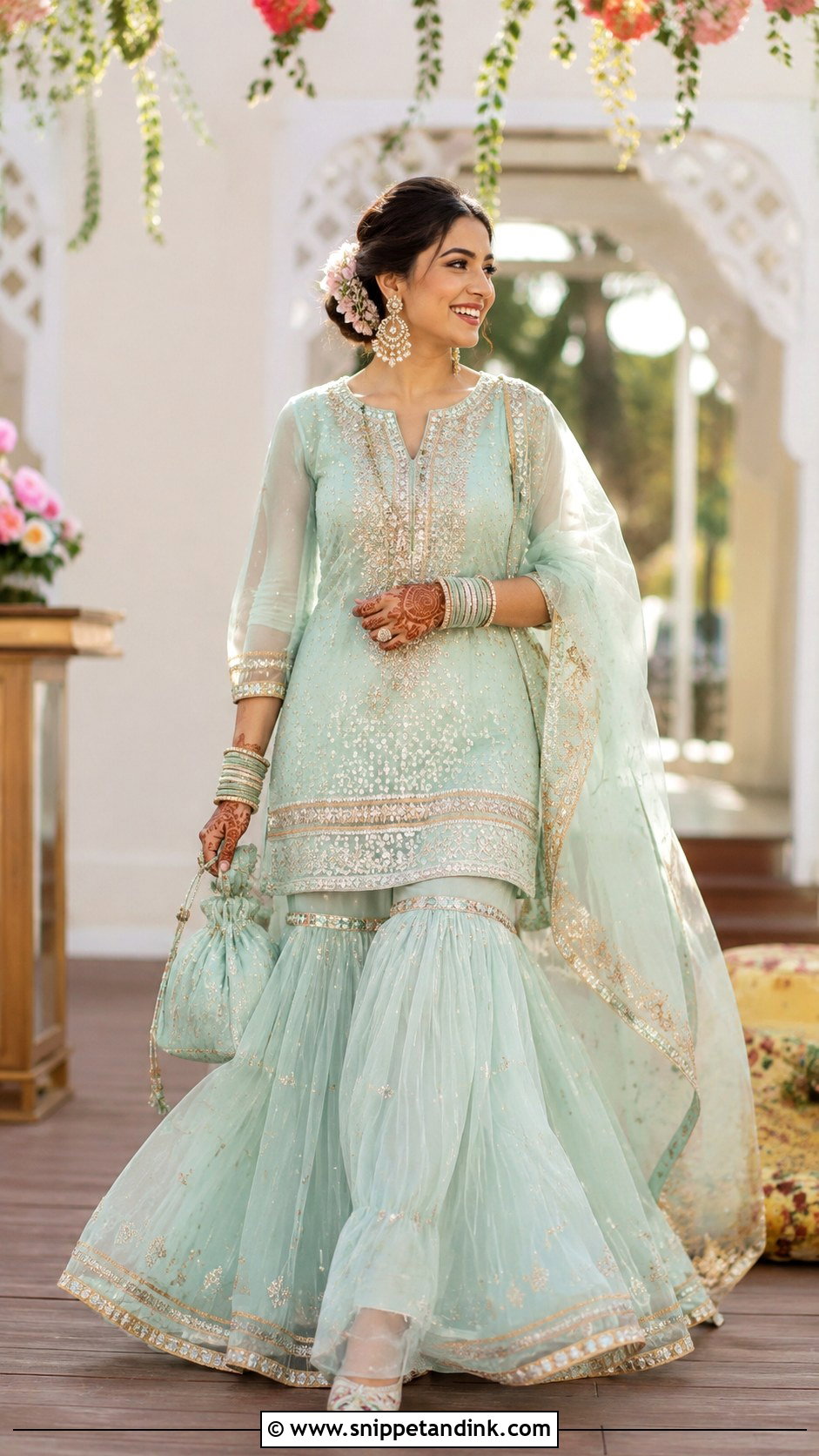
Shararas are made for dancing, which is why I steer brides toward them for the mehndi or sangeet rather than the main ceremony. The flared pants swing with every step and are far easier to move in than a layered skirt. Silk, georgette or organza in green, pink, turquoise or deep teal, with gota patti or scattered sequins, keeps it festive. The kurti must fit well, or the wide pants overwhelm it. Chandelier earrings, bangles, embroidered juttis and a small potli bag finish it. A side braid or soft waves stays put through a long night on the dance floor.
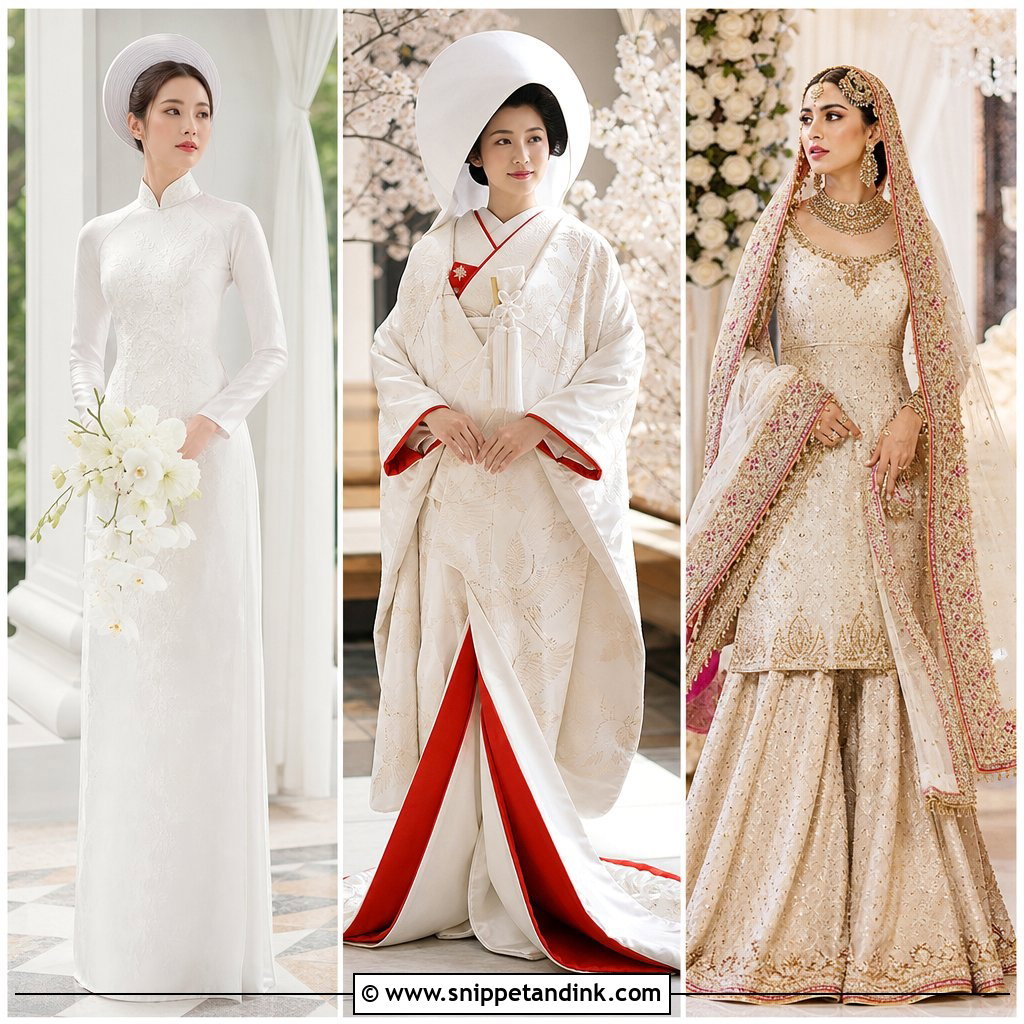
15. Bridal Gharara Wedding Dress
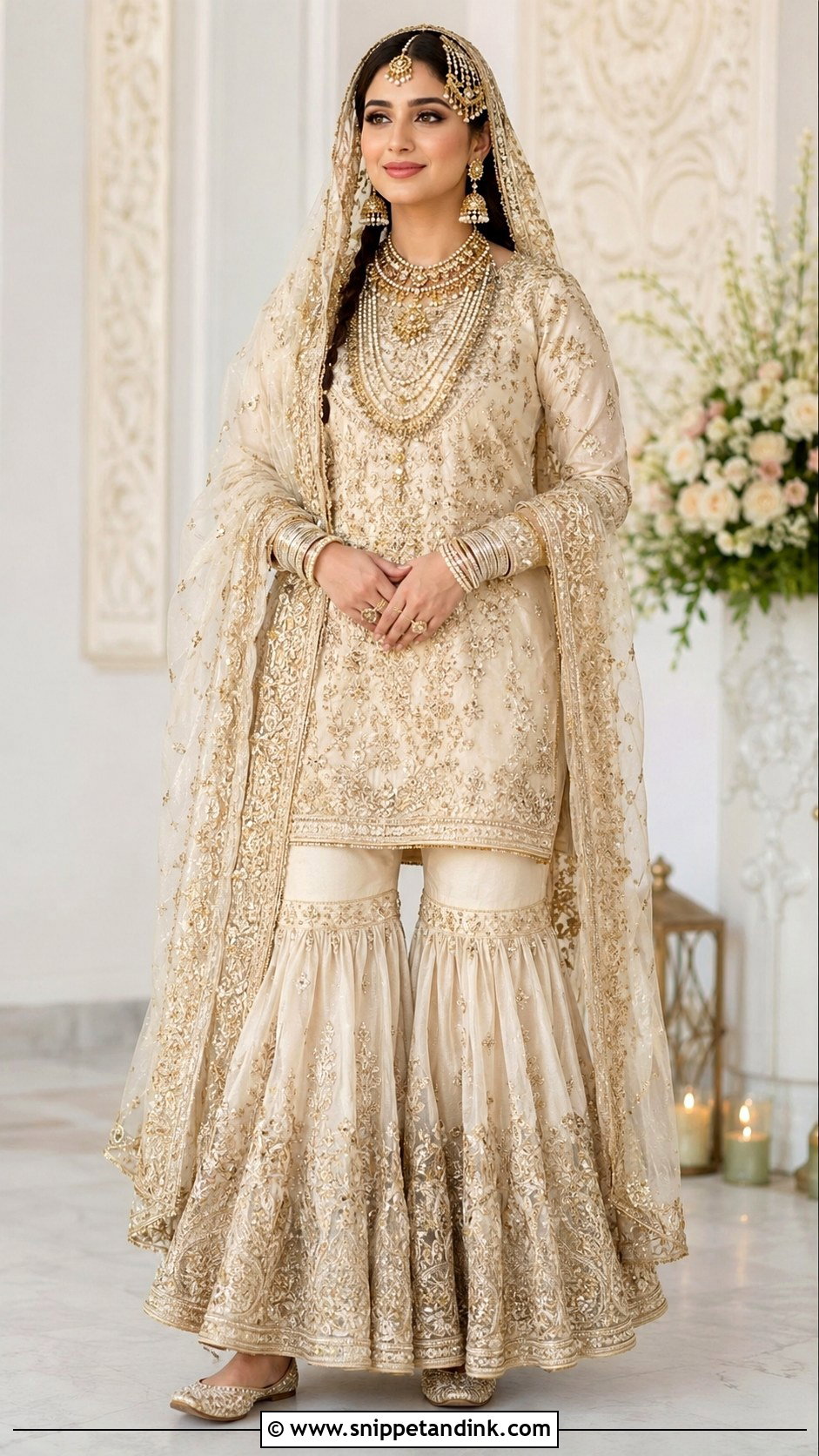
A traditional gharara outfit is all about the knee joint. Unlike a sharara, gharara pants are shaped through the thigh and then burst into fullness at the knee, usually with a decorated band at the join. If that band sits even slightly too high or low, the whole silhouette looks off, so I’d have it marked with your shoes on. Pair it with a short embroidered kurti and a sheer dupatta edged in zari or gota. Ivory, sage, blush, deep green and maroon all suit it. A passa, layered necklaces, jhumkas and embellished flats complete it. If the pants are heavily worked, keep the kurti clean. A sleek bun balances the dramatic lower half.
16. Saree Gown Wedding Dress
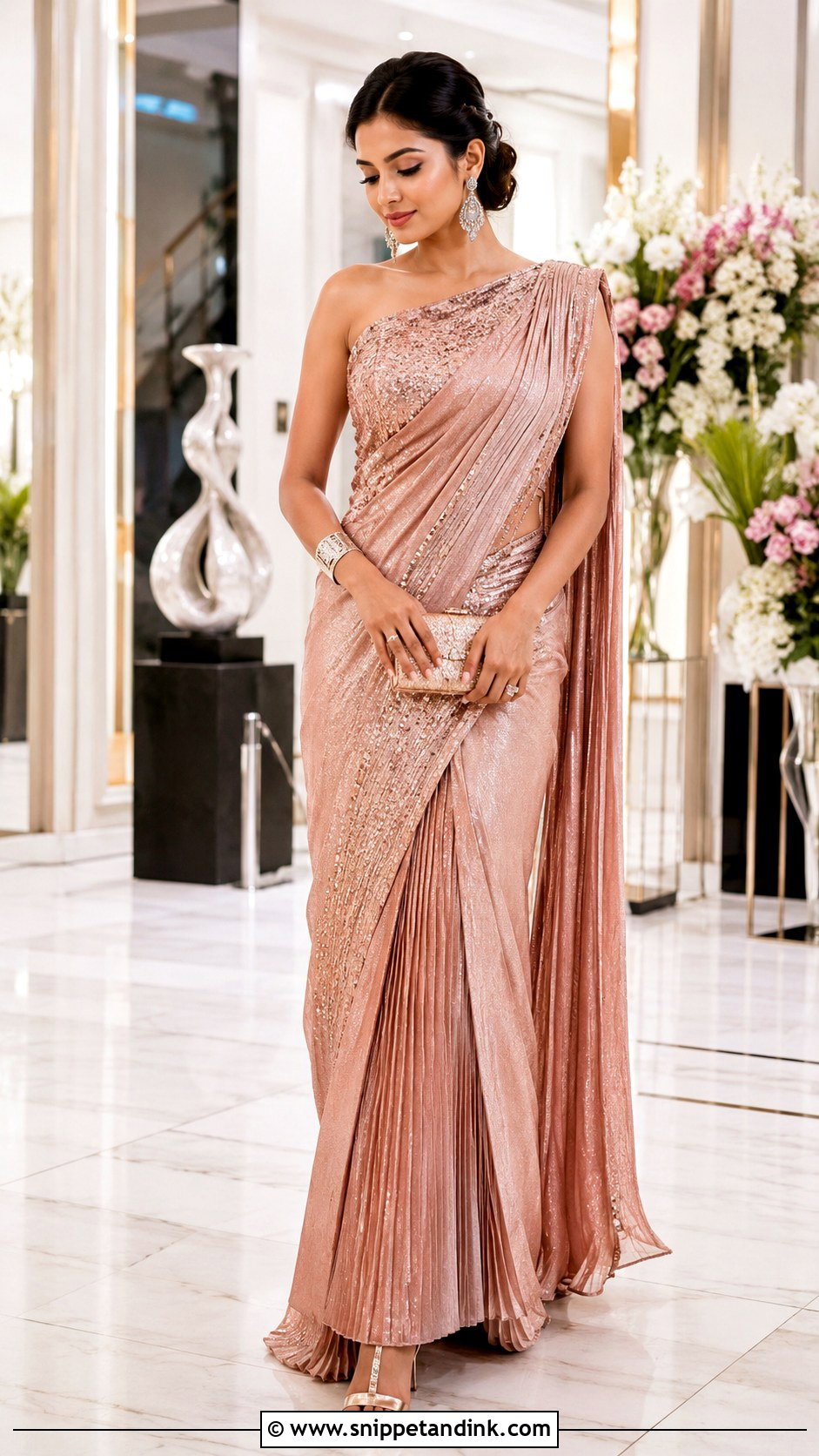
A saree gown gives you the drape without the pinning, which is why I suggest it for receptions where you’ll change quickly after the ceremony. The structure is stitched in: pleats, a pallu or a shoulder drape built into the line of a gown. Metallic silver, champagne, emerald or navy reads polished at night. Pair it with statement earrings, a cuff, a small clutch and stable heels. If the bodice is heavily embellished or the neckline asymmetrical, skip the necklace. Check you can walk and dance in the skirt before the final fitting, because fixed pleats limit stride more than a hand-draped saree. A sleek bun or smooth side-parted waves keep the line modern.
17. Cape Lehenga Wedding Dress
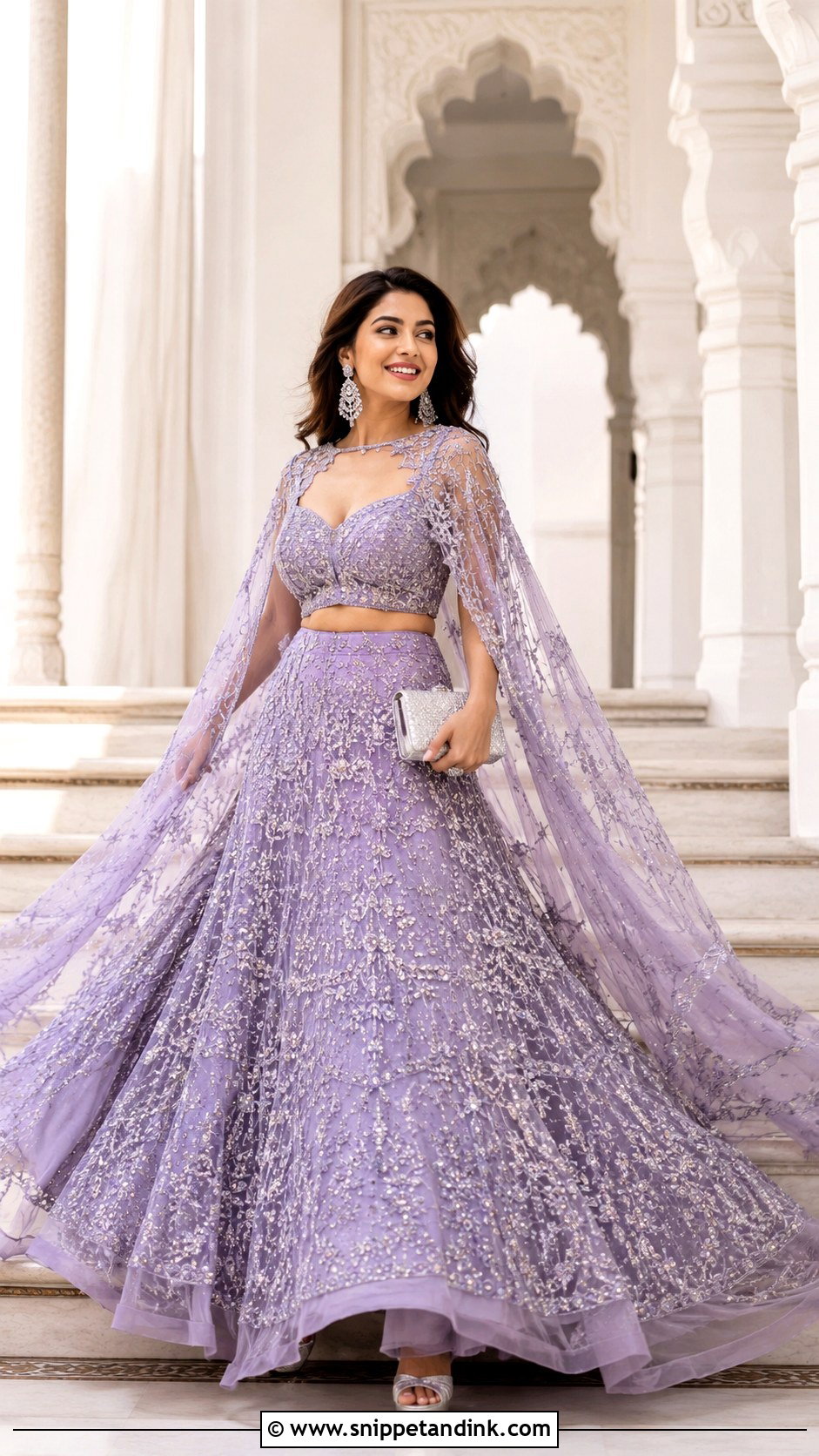
A cape lehenga swaps the dupatta for a sheer cape, which means one less thing to pin and readjust all night. The cape can fall from the shoulders, attach to the blouse or extend into a floor-length layer. Pastel blue, lavender, peach or ivory suits the look, along with jewel tones. I’d choose a lightweight net or organza cape; heavier fabric pulls the blouse backward and you’ll feel it at the neckline within an hour. Drop earrings, a cocktail ring, a compact clutch and platform heels complete it. Keep necklaces minimal so they don’t tangle with the cape edge. It moves well in photos at a reception or sangeet.
18. Jacket Lehenga Wedding Dress
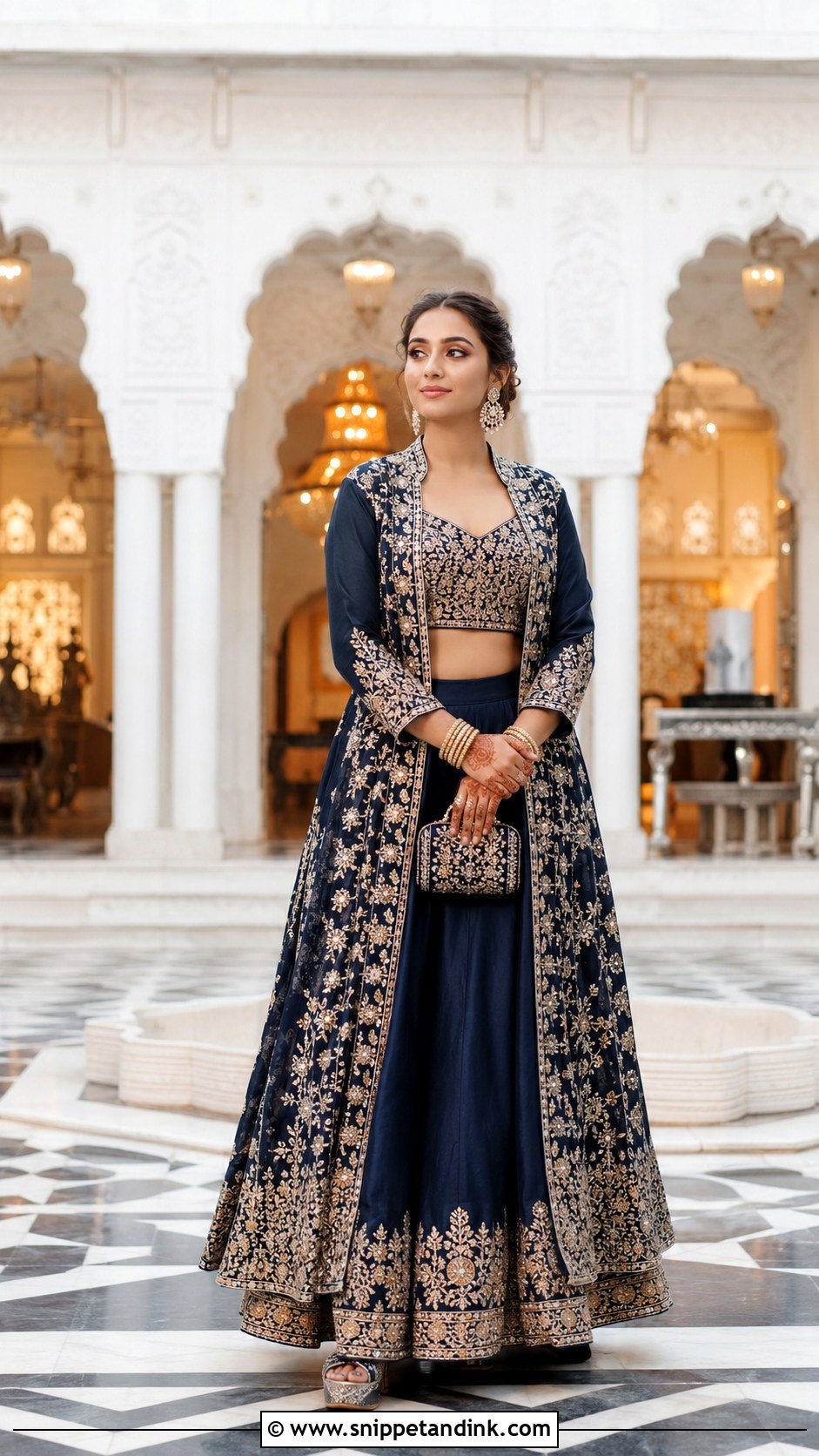
For a winter wedding, or when you’d like more coverage, a jacket lehenga solves both problems at once. A flared skirt and simple fitted blouse go under a long embroidered jacket, worn open to show the waist or closed for a modest line. Raw silk and organza are lighter; brocade and velvet are warmer and stiffer. I’d skip a heavy dupatta unless the ceremony needs one, since the jacket already adds a full top layer. Statement earrings, bangles, a clutch and embroidered block heels finish it. Keep the hair sleek so the neckline and shoulders don’t look crowded. Check the jacket armholes at the fitting: too tight and you can’t raise your arms for the varmala.
19. Indian Embroidered Bridal Gown
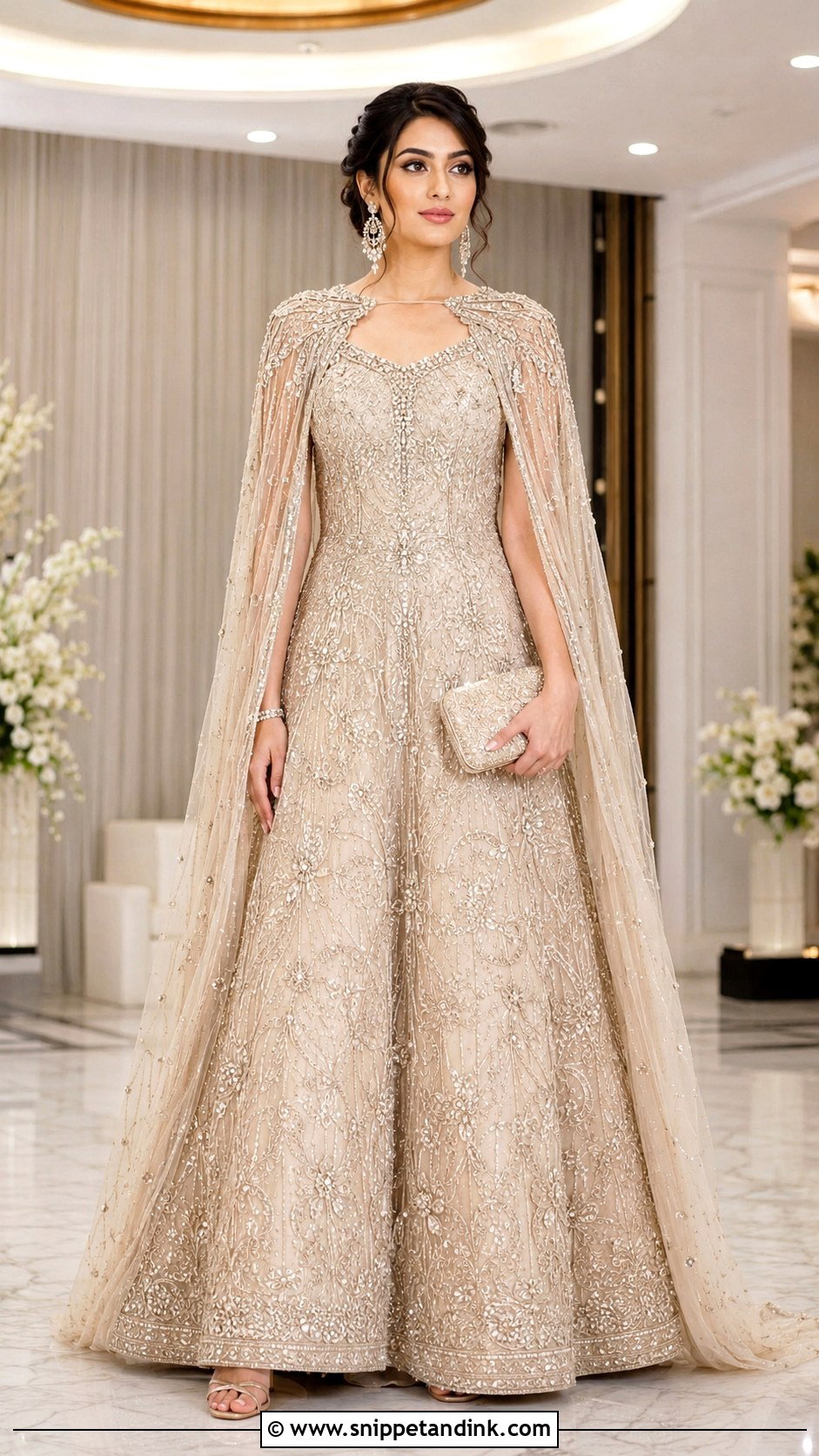
An Indian embroidered gown pairs a Western silhouette with Indian handwork, and it’s the outfit I see brides rewear most often afterwards. An A-line, ball gown or softly fitted shape with zardozi, mirror work, beads or thread embroidery suits a reception. Champagne, blush, gold, deep blue and emerald read sophisticated in evening light, and ivory suits a lighter palette. Chandelier earrings, a bracelet, a structured clutch and comfortable heels complete it. A detachable cape or sheer shoulder drape adds drama. Ask for a bustle or wrist loop on the train; trains get trodden on during the reception dances. Keep jewelry around the face so the bodice stays the focus.

20. Minimal Silk Lehenga Wedding Dress
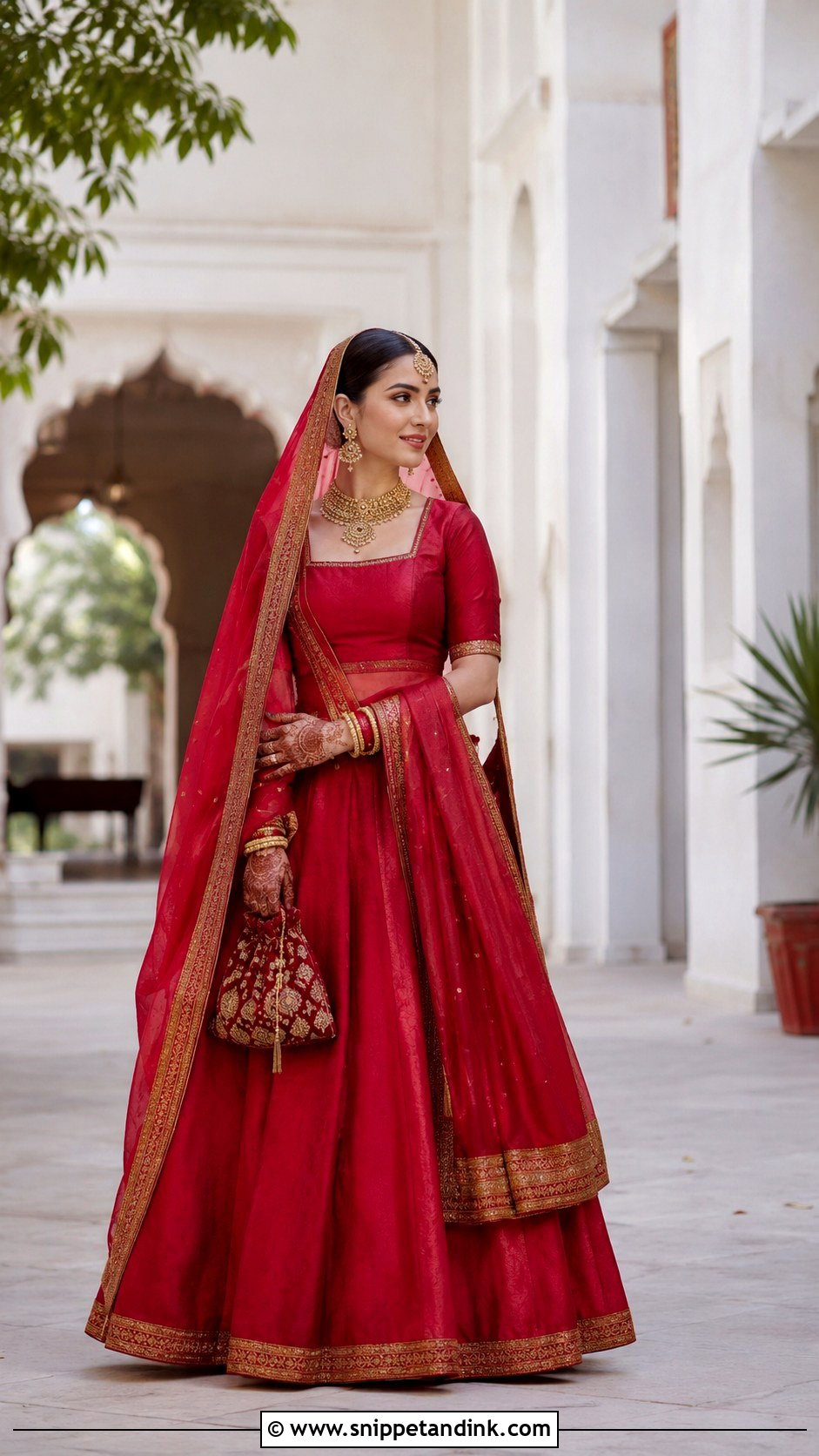
A minimal silk lehenga puts all the pressure on cut and fabric, so a mediocre tailor shows immediately. I’d look for raw silk or a handwoven skirt in red, rust, pink, ivory or green, paired with a structured blouse with a clean neckline and a light dupatta with a narrow zari border. The plain garments leave room for heirloom jewelry, temple earrings or a family maang tikka, which is often the real reason a bride chooses this route. Embroidered juttis and a small potli bag finish it. It’s also the lehenga you’re most likely to wear again, and its lighter weight makes a long ceremony far kinder.
The Blouse Fitting Nobody Leaves Enough Time For
Custom bridal lehengas with heavy handwork often take a few months to make, and the blouse is almost always where the last-minute stress lands. I’d plan for at least two blouse fittings, the last one close enough to the wedding that your weight won’t shift much after it.
Ask the tailor to leave seam allowance inside the blouse, so it can be let out later. For sarees, have the fall and edging done before the blouse is stitched, and bring the actual saree to every fitting so the color match is exact. If you’re booking a professional draper, send them a photo of the saree and pallu ahead of time, and keep a small pouch of safety pins for touch-ups.
Refolding Zari Silk So It Lasts for the Next Generation
Real zari is metal thread, and it tarnishes when exposed to moisture and air. After the wedding, air the outfit in shade, then wrap it in soft muslin or an old cotton saree. Avoid plastic covers; they trap damp. Keep perfume and deodorant off the zari, and don’t let naphthalene balls touch the fabric directly. Silk also cracks along permanent folds, so I’d refold heavy sarees and dupattas every few months along new lines.
What Each of These Outfits Asks of the Bride Wearing It
There’s no single Indian bridal formula. Tradition can look like a red lehenga, a Kanjivaram, a Paithani, a Panetar, a Mekhela Sador or an embroidered salwar suit, and a modern look might be a saree gown, a cape lehenga, a jacket set or an embroidered gown. Match the outfit to the ceremony, the climate and your family’s customs first, then to your taste. Prioritize tailoring, a weight you can carry and draping that stays secure, and wear shoes you can stand in for hours. Your choice should feel like you when you look back at the photos years later.
You'll Like These Ideas:






Leave a Reply