
White wedding cakes are still the ones I make most, and not because couples lack imagination. White is the color that changes character with the smallest decision: smooth buttercream reads soft, sharp fondant reads formal, heavy piping reads vintage. It also sits happily beside any flower palette and lets texture do the talking, whether that’s pearls, ruffles or sugar petals. What follows are twenty white cakes I’d recommend, along with what each finish asks of the baker and where it works best.
Buttercream, Fondant or Whipped: What Each Frosting Does
Couples usually come to a consultation with a photo, not a frosting type. But the frosting decides how the cake tastes, how white it looks and how long it can stand out, so it’s the first thing I talk through.
American buttercream
Butter beaten with powdered sugar. It’s the sweetest option, forms a light crust on the surface and holds piping well. Made with all butter it leans ivory; bakers can whiten it, but ask, because a true bright white often means some shortening or a touch of violet color.
Swiss or Italian meringue buttercream
Silkier and noticeably less sweet, which is why many couples prefer it at the tasting. It smooths beautifully but softens faster in heat, so it’s better suited to indoor or shaded receptions.
Whipped cream frosting
The lightest taste of all, and the most fragile. It has to stay chilled, it can’t carry heavy tiers and it won’t survive long on a warm table. I only suggest it for small cakes that go straight from the fridge to the knife.
Fondant
A rolled sugar paste laid over buttercream or ganache. It gives the brightest white and the cleanest edges, and it protects the cake underneath from drying out. The trade-off is texture: some guests love it, many leave it on the plate.
1. White Buttercream Wedding Cake
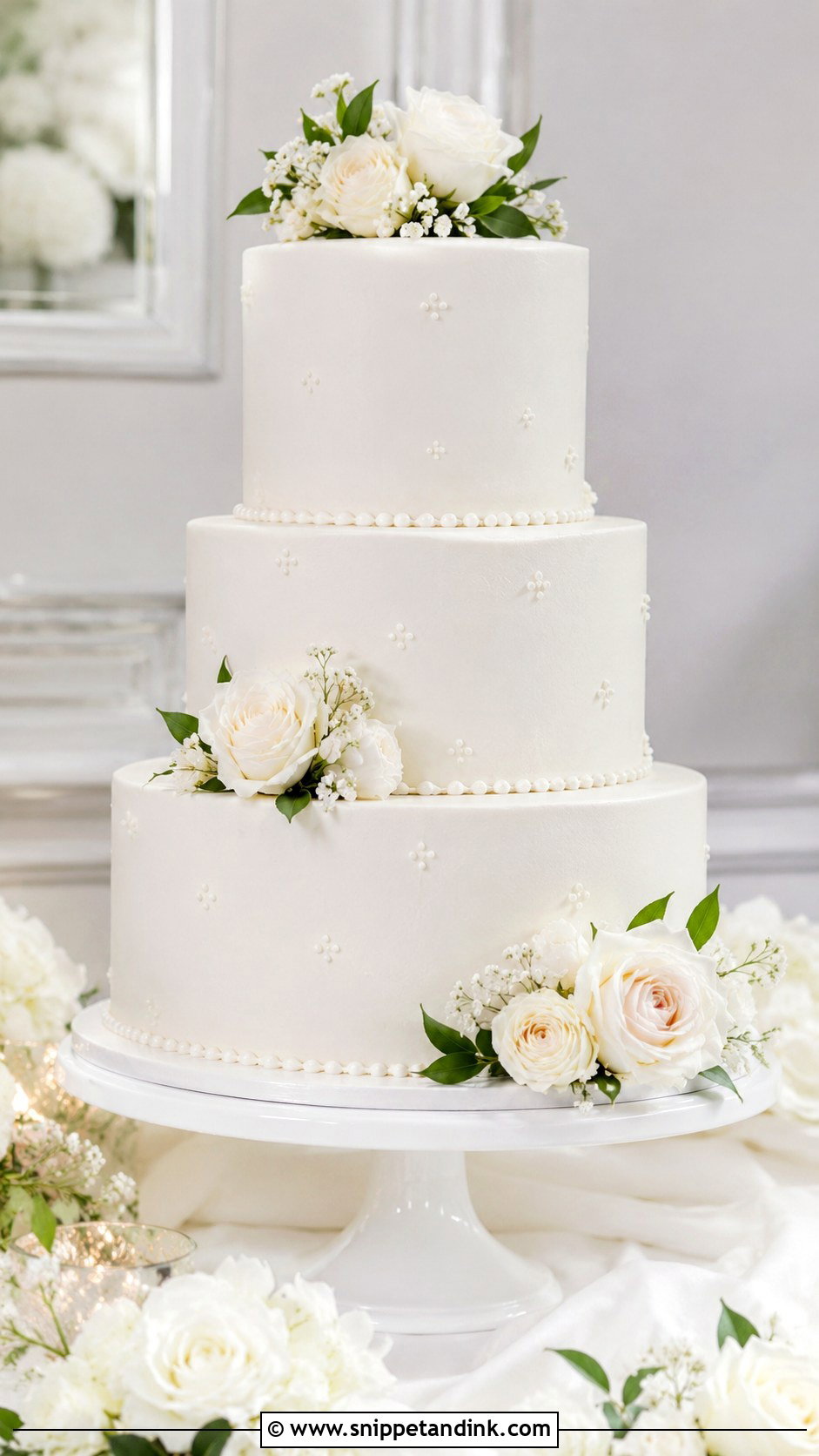
Smooth buttercream is the cake most people picture when they say “wedding cake”, and it earns that place. It cuts cleanly, tastes far better than its plain look suggests, and suits two tiers for a small reception or three tall ones for a big room. I keep the decoration light: a few white roses, pearl accents or a thin piped border at the base of each tier. Underneath, vanilla bean, almond, lemon or a champagne-flavored sponge all work. One thing to know: all-butter buttercream is naturally ivory, so ask for a whitened version if you need it to match a bright dress.
2. White Fondant Wedding Cake
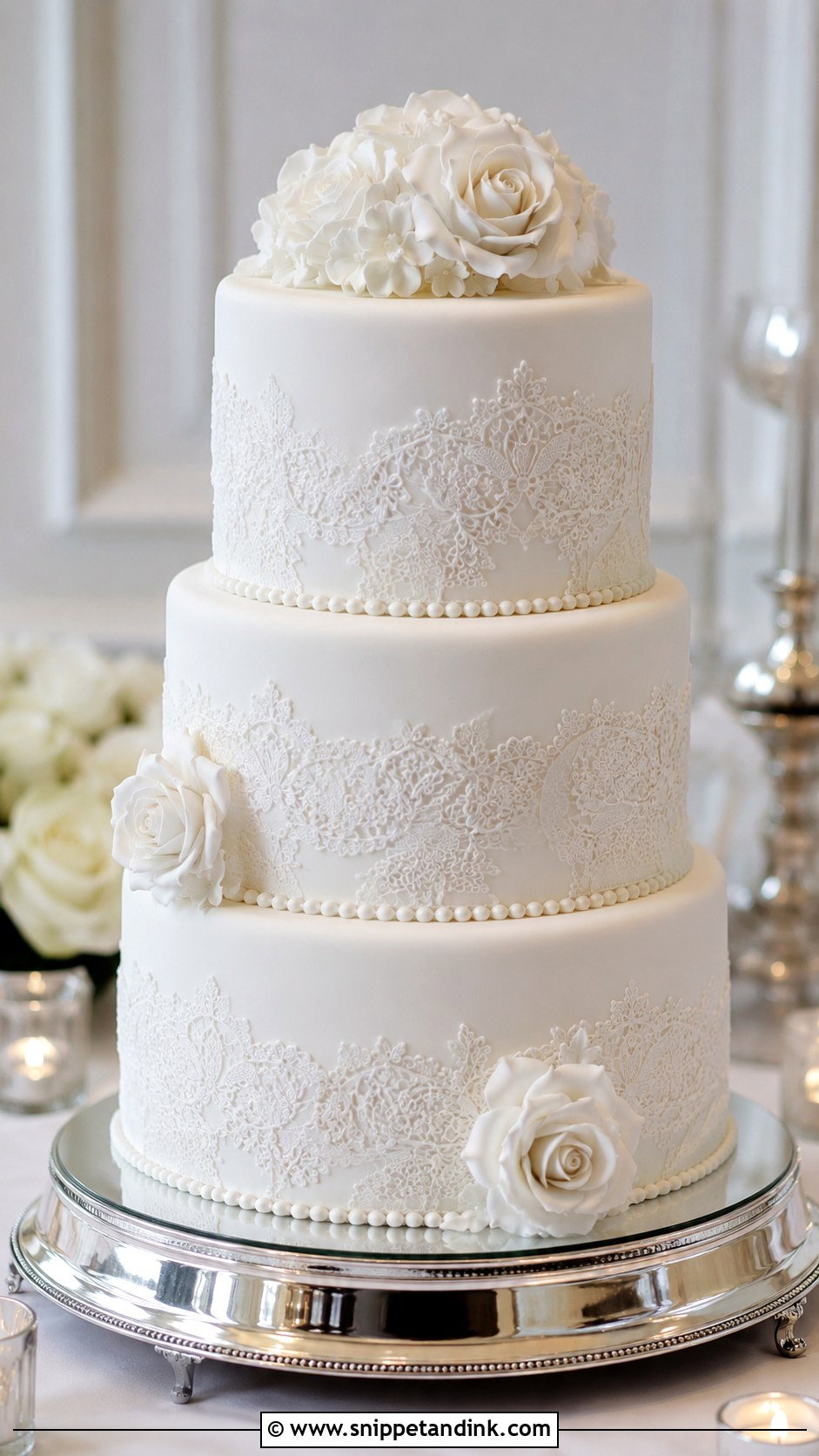
Fondant gives the brightest white and the sharpest edges of any finish here. That’s why it suits ballrooms, black-tie weddings and modern venues where the cake needs to look architectural. It can stay as a plain satin surface or take embossed lace, sugar flowers or a fine pearl trim, on round or square tiers. The honest drawback is taste and texture, which some guests don’t enjoy. I put a layer of buttercream or ganache underneath so every slice is still soft and rich, and the fondant mostly serves as the polish.
3. White Floral Wedding Cake
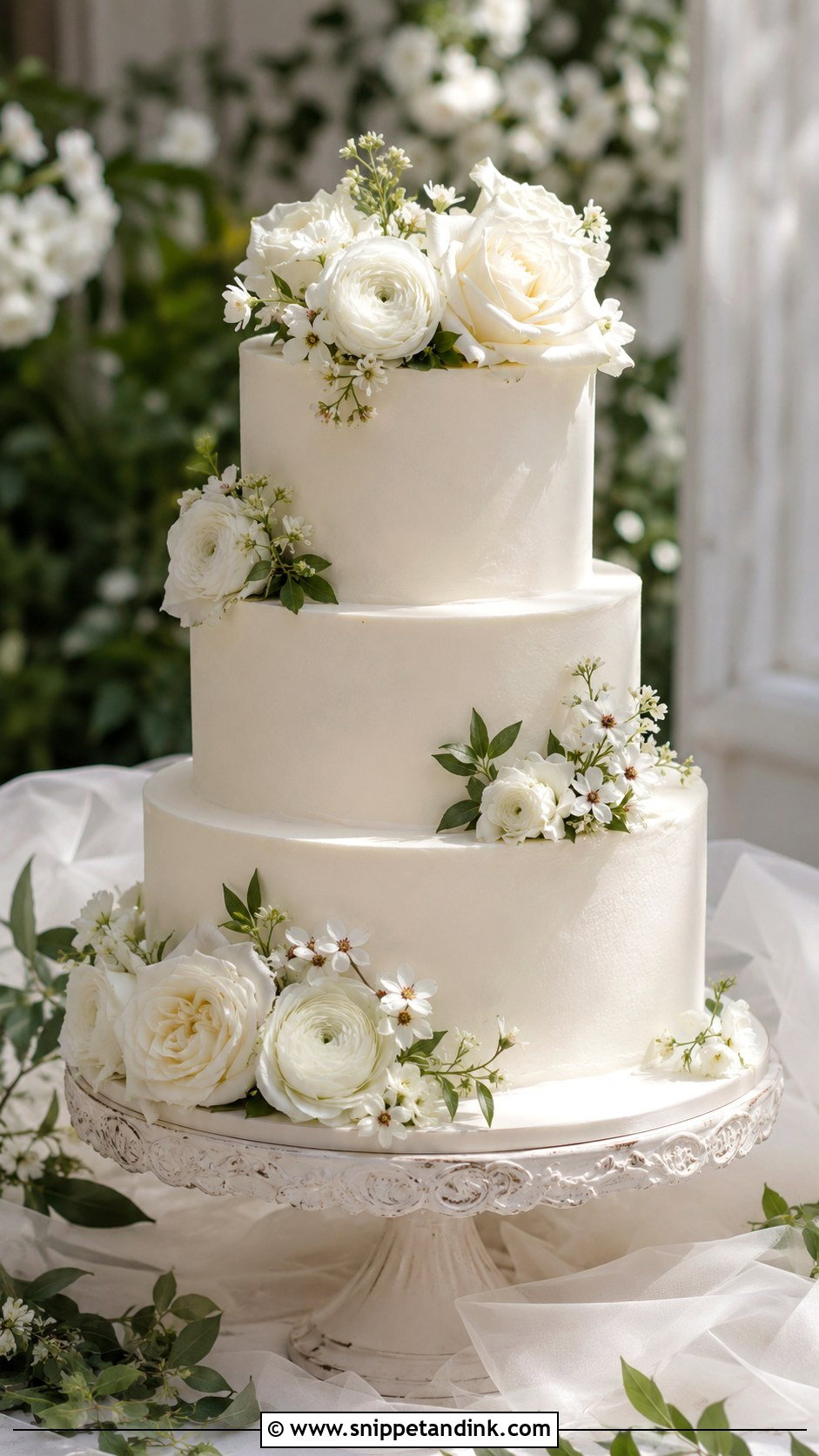
All-white flowers on all-white frosting sounds risky, yet it rarely looks flat, because petals bring shadow that frosting doesn’t. Roses, ranunculus, orchids and peonies all work, either ringed around the base or cascading down the tiers. The one thing I won’t skip is coordination with the florist. Not every bloom is safe near food, so stems get wrapped or sealed and the florist confirms each variety before it touches the cake. Spring, summer and outdoor receptions suit this one.
4. White Pearl Wedding Cake
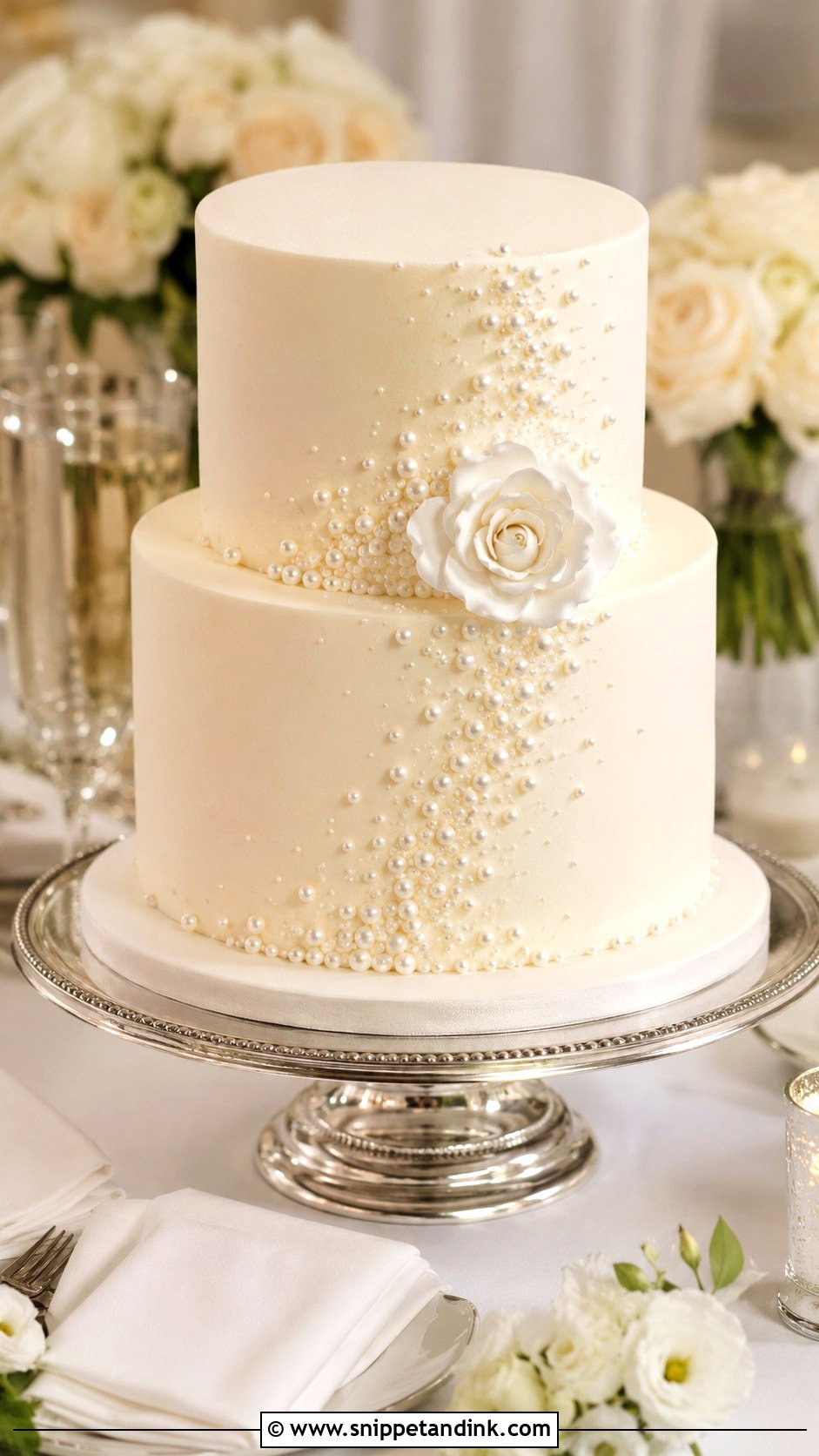
Edible pearls change a plain white cake more than almost any other single detail. They can be scattered across the frosting, lined along each tier edge or set in a neat grid for a couture look. On buttercream I place them while the surface is still slightly tacky; once it crusts they won’t grip. Ivory fondant and whipped frosting take them well too. Leave the rest restrained, perhaps one sugar flower at the base. Hotel weddings and classic indoor receptions are where this design feels most at home.
5. White Ruffle Wedding Cake
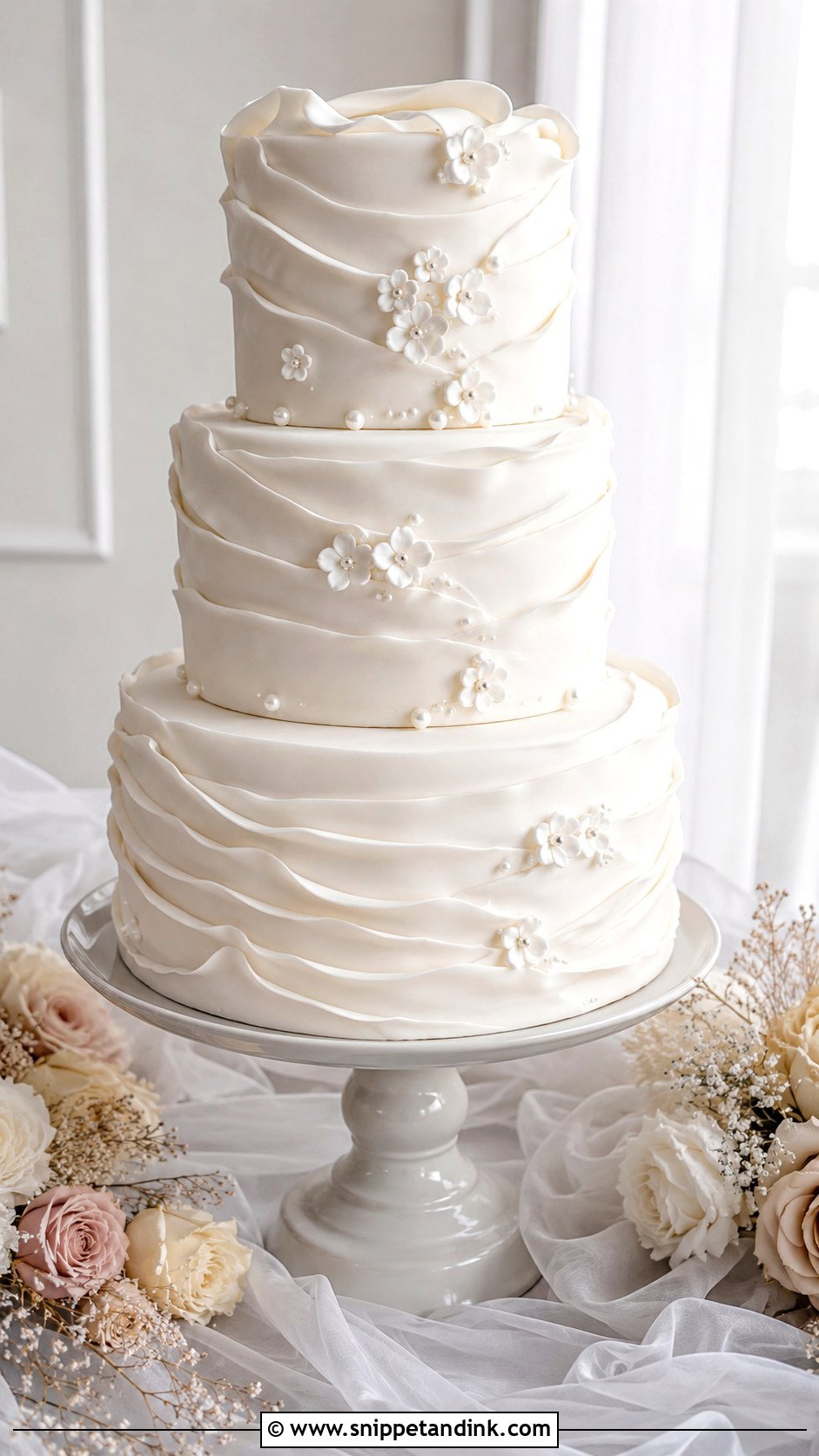
Ruffles look like fabric, which is why brides with flowing gowns often fall for them. They’re made in buttercream, fondant or wafer paper, and each behaves differently: buttercream ruffles are soft and edible but sag in warm rooms, fondant ruffles hold their shape, and wafer paper gives the thinnest, most delicate edge but wilts in humidity. A full ruffle cake looks dramatic, while ruffles on a single tier feel more modern. Keep everything else simple, with a few white flowers and a clean stand.
6. White Vintage Wedding Cake
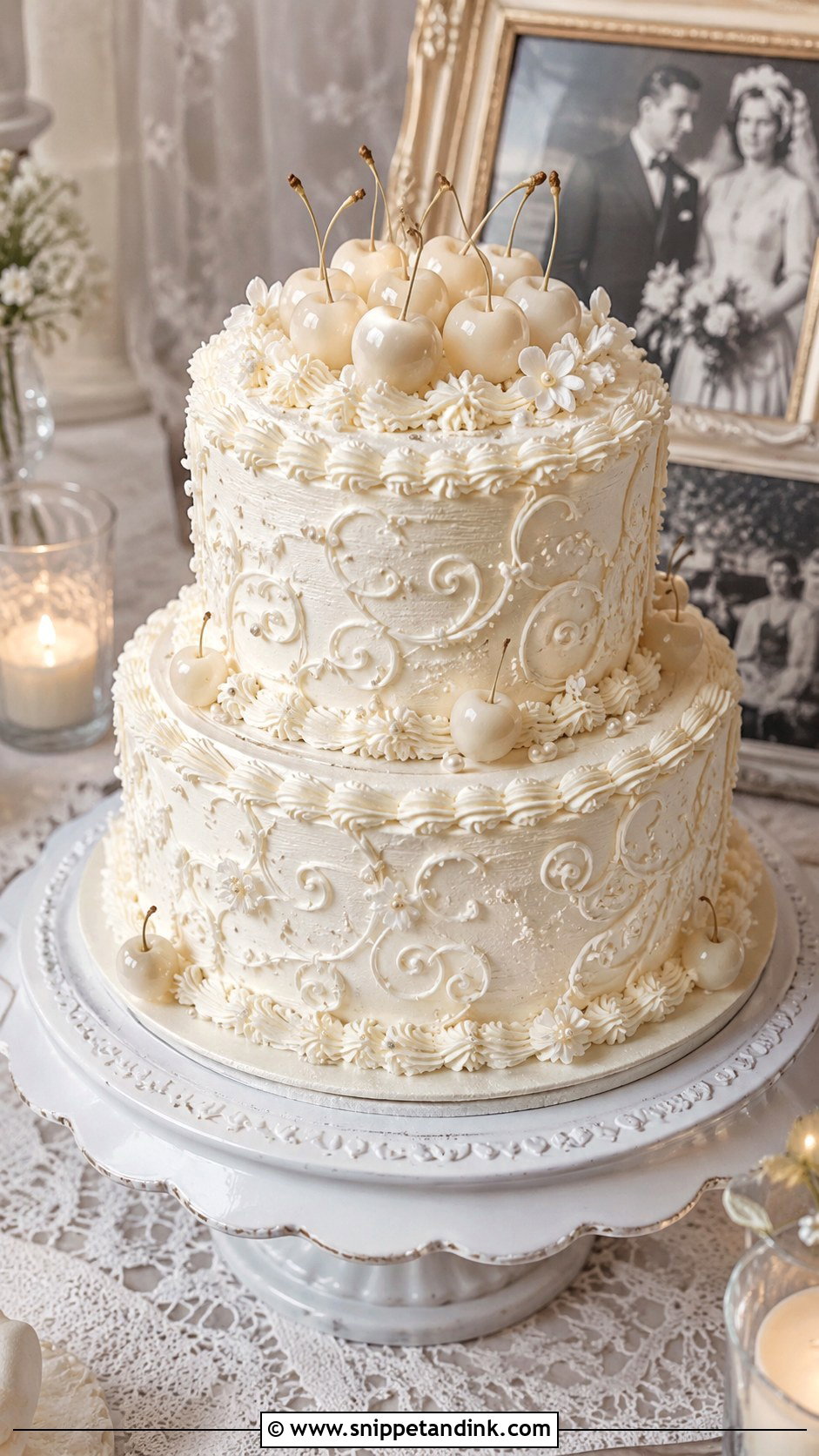
Piped borders, shell work, scrolls and swags are back in fashion, and they look freshest in pure white, where the texture becomes the whole design. This kind of piping needs a stiff, stable buttercream, otherwise the ridges soften and blur within an hour on a warm table. It works on a single tier for a small wedding or across several for a grand one. If you want extra detail, add small pearls or white cherries. With modern lighting and simple linens, the old-fashioned look feels current rather than dated.
7. White Lambeth Wedding Cake
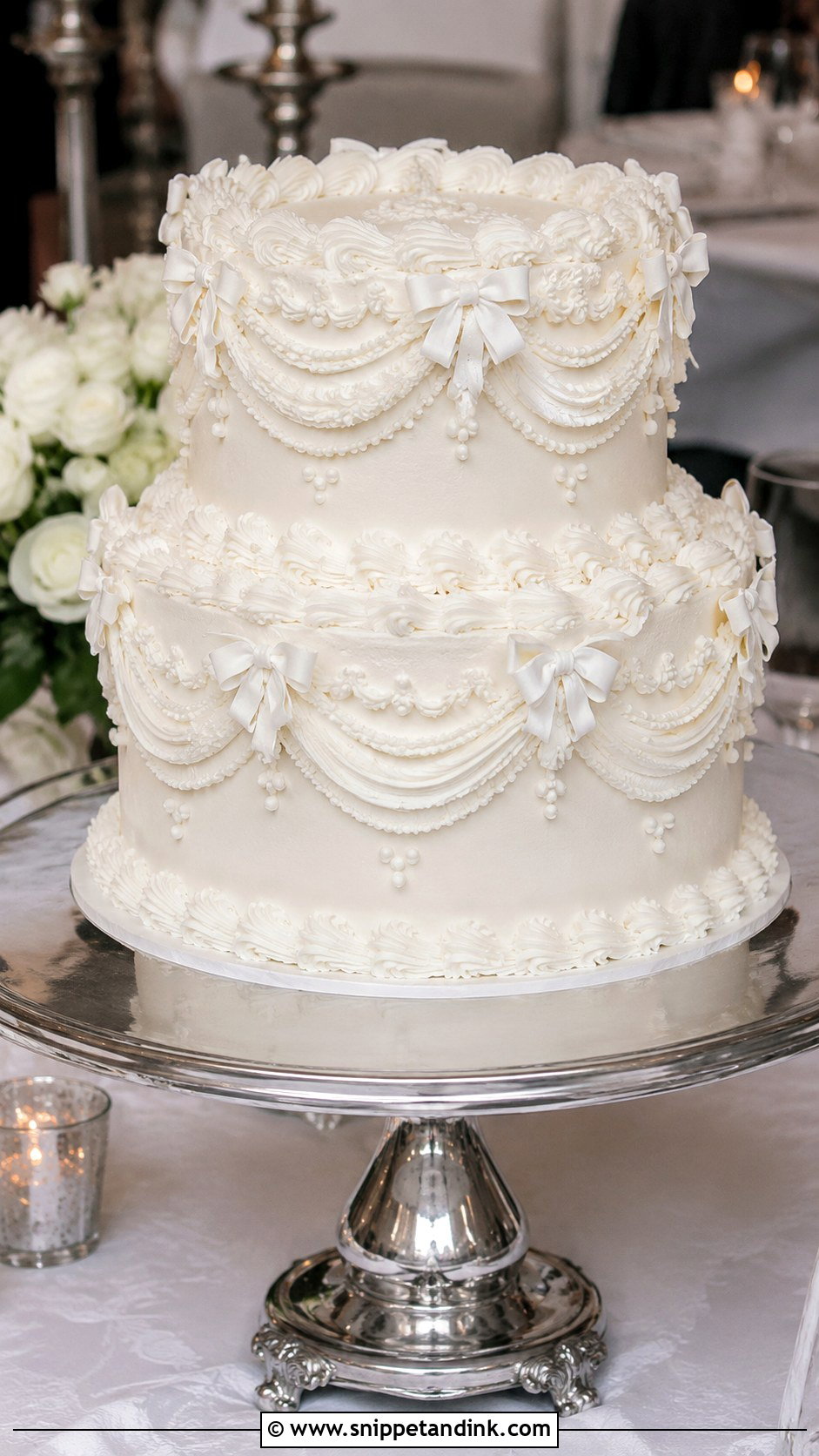
Lambeth is vintage piping at full volume: raised borders, overpiping stacked on overpiping, ornate scrolls on every edge. In all white, the depth comes from shadow, so it reads rich instead of busy. It takes many hours of steady piping, which you’ll see reflected in the quote, and it’s best kept out of direct sun because the layered detail softens. A single statement tier or a stacked cake with piping on every level both work. Finish with pearl accents or tiny bows and set it on a silver or white stand.
8. White Textured Buttercream Wedding Cake
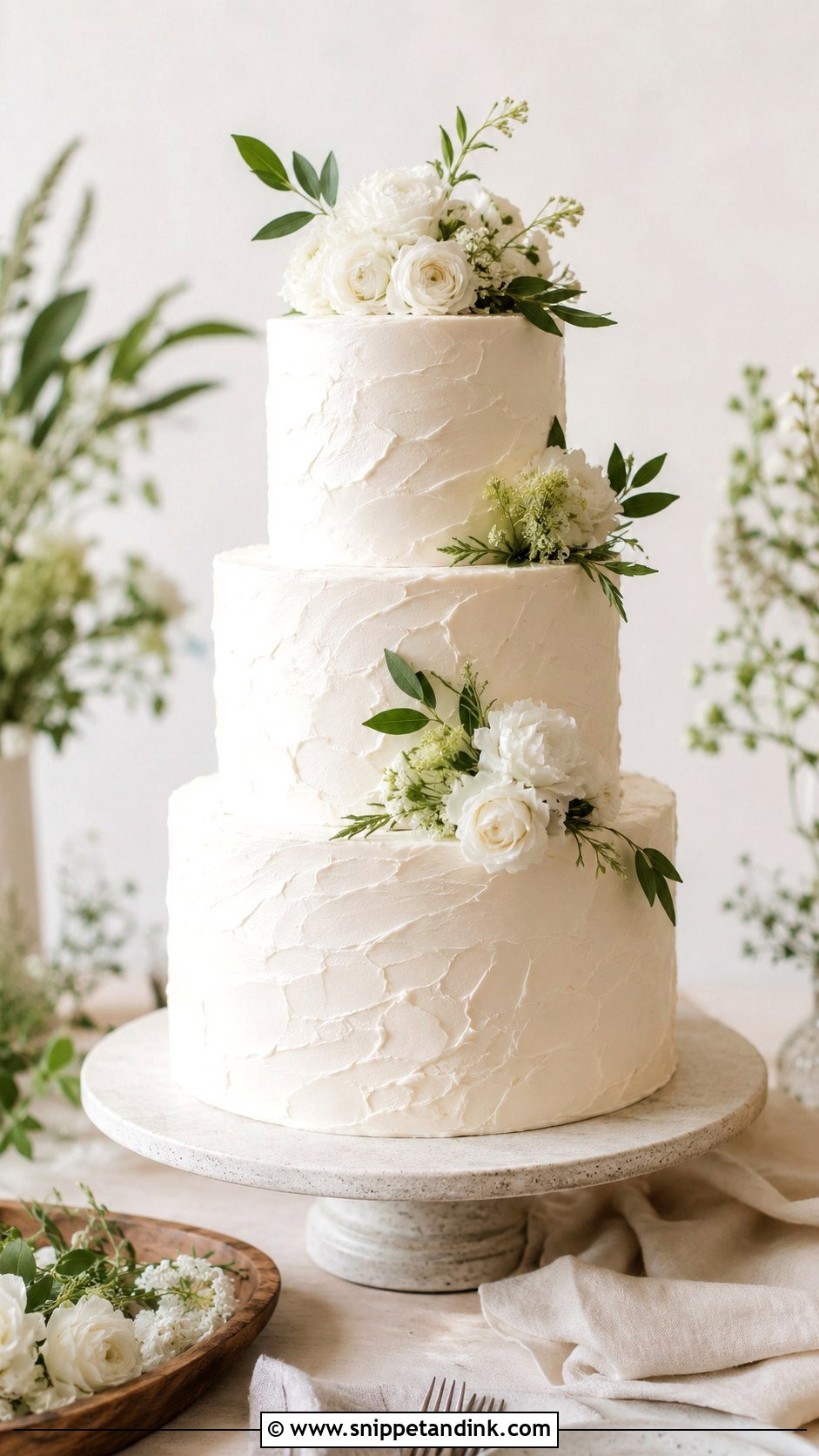
This is the cake I suggest when a couple says “nothing too perfect”. Instead of a smooth surface, the frosting carries soft spatula marks, horizontal lines or gentle waves, which catch light and give an all-white cake some depth. It’s also forgiving: small bumps from transport disappear into the texture. That relaxed finish suits gardens, barns, beaches and rustic venues better than formal fondant. A few white flowers or a touch of greenery are enough decoration.
9. White Tiered Wedding Cake
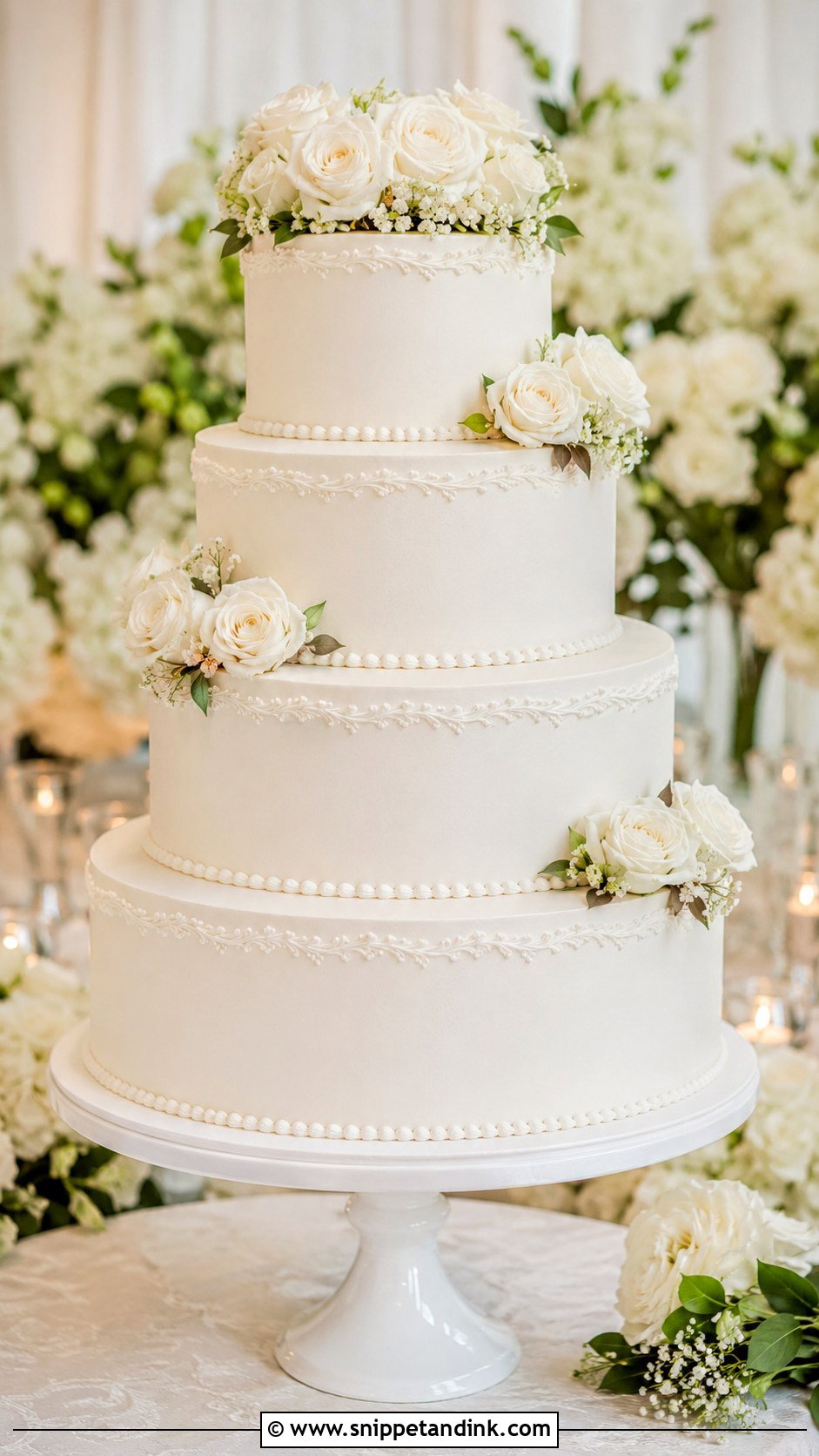
A tiered white cake adds height to a reception room, and a lot of my planning goes into proportion. Three tiers usually look full without feeling oversized; large weddings may need four or five, while smaller weddings can use two real tiers and serve the rest from a cutting cake nearby or a kitchen sheet cake. Each tier above the base needs its own board and internal supports, and that structure matters more than any decoration. Keep the frosting consistent from top to bottom, then use small details to echo your dress or flowers.
10. White Two Tier Wedding Cake
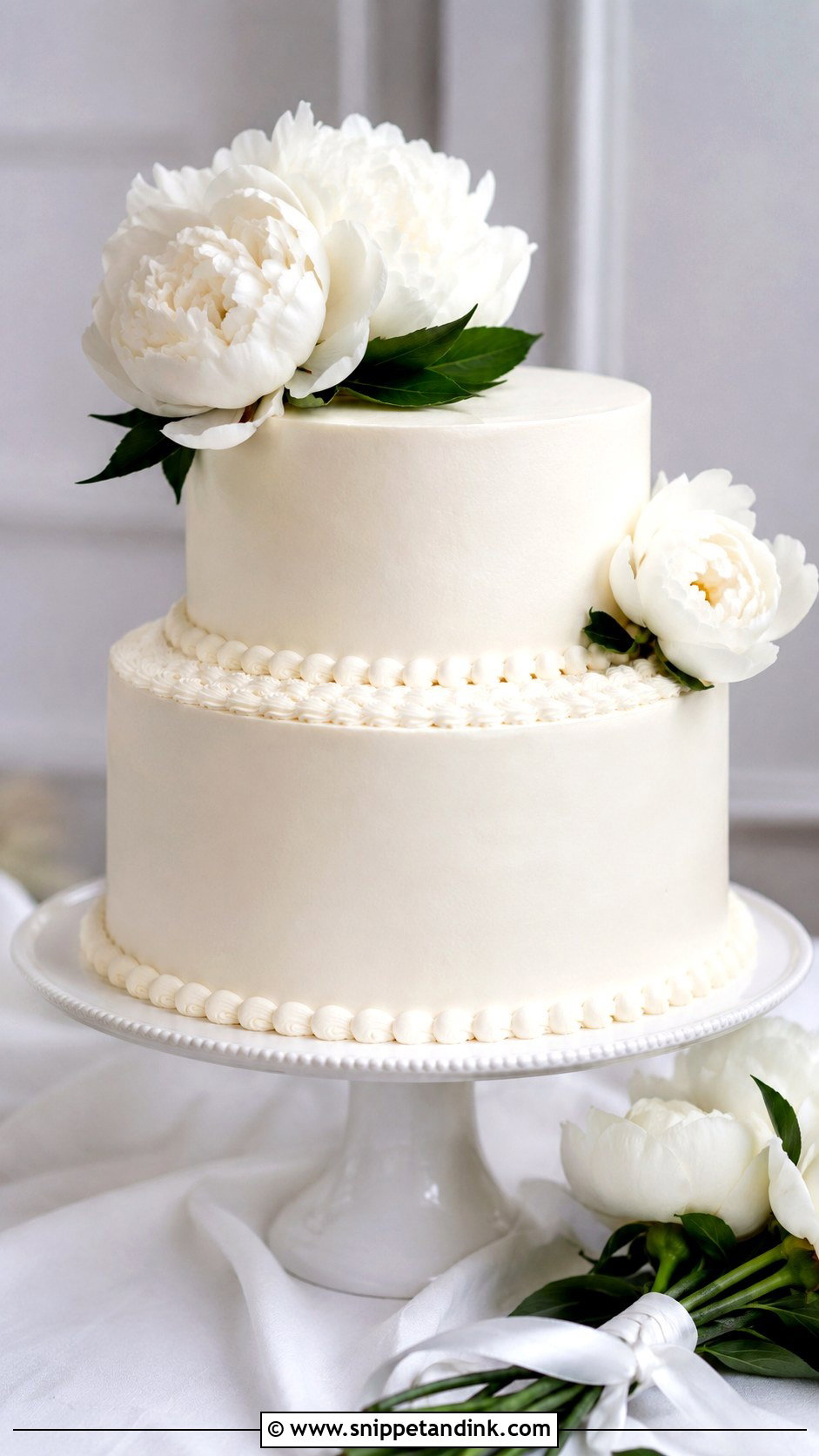
Two tiers are the size I recommend most for courthouse celebrations and micro weddings. You still get the classic stacked-cake look, but it’s easier to transport, simpler to display and kinder to the budget. Smooth white buttercream with flowers on top and around the lower tier is my default here, though a textured finish or pearl trim adds interest. If you need more servings, a dessert table alongside covers the gap without making the cake taller.
11. White Square Wedding Cake
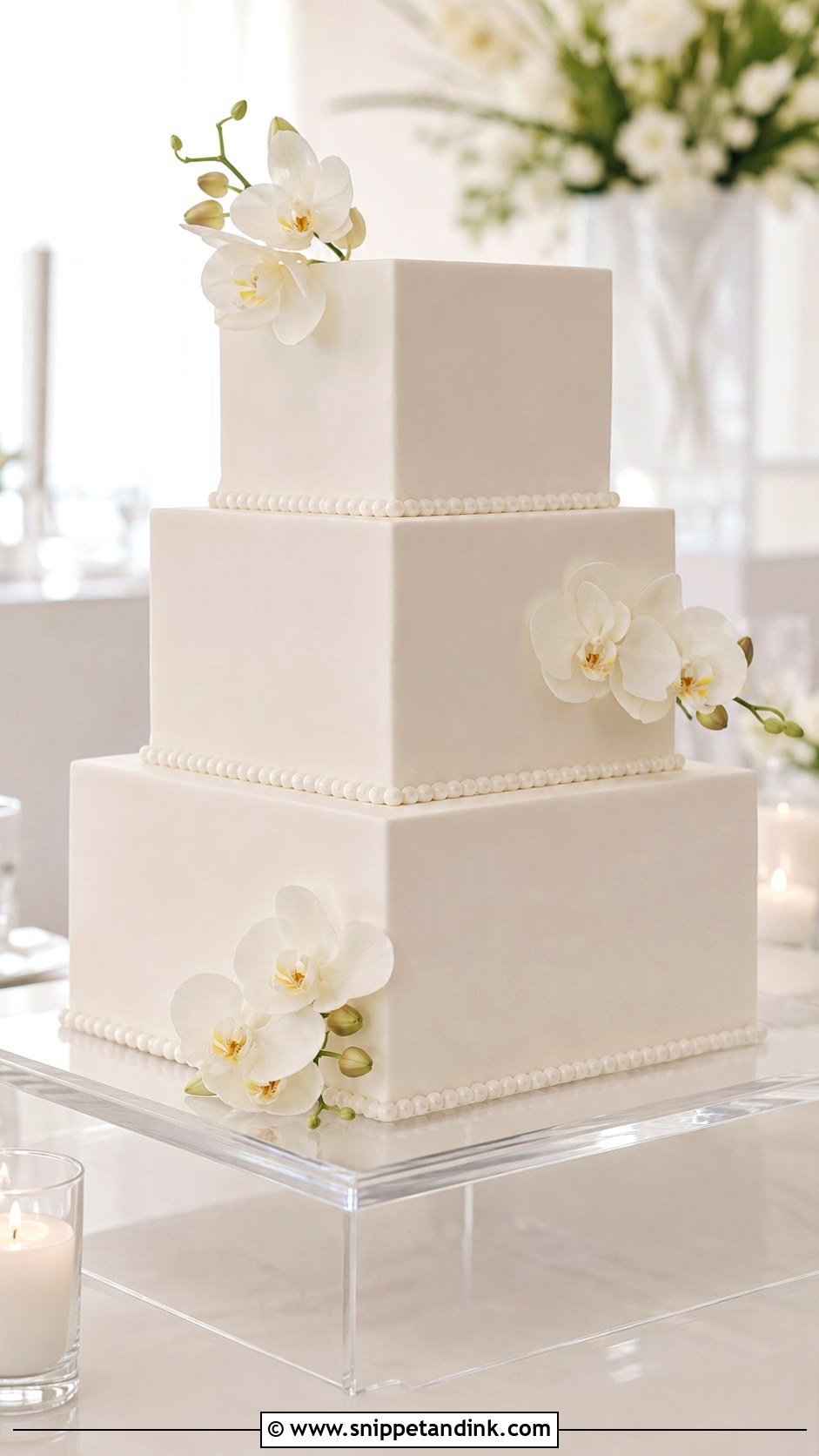
Square tiers look crisp and modern, but they’re less forgiving than round ones. Corners chip easily and buttercream thins at the edges, so I prefer fondant over ganache for square cakes, or very well-chilled buttercream. You can stack them evenly, rotate each tier slightly, or mix square and round for contrast. White orchids, pearl trim or a thin piped border are all the decoration it needs. Contemporary venues and city weddings suit it, and it stands apart from the usual round cake.
12. White Round Wedding Cake
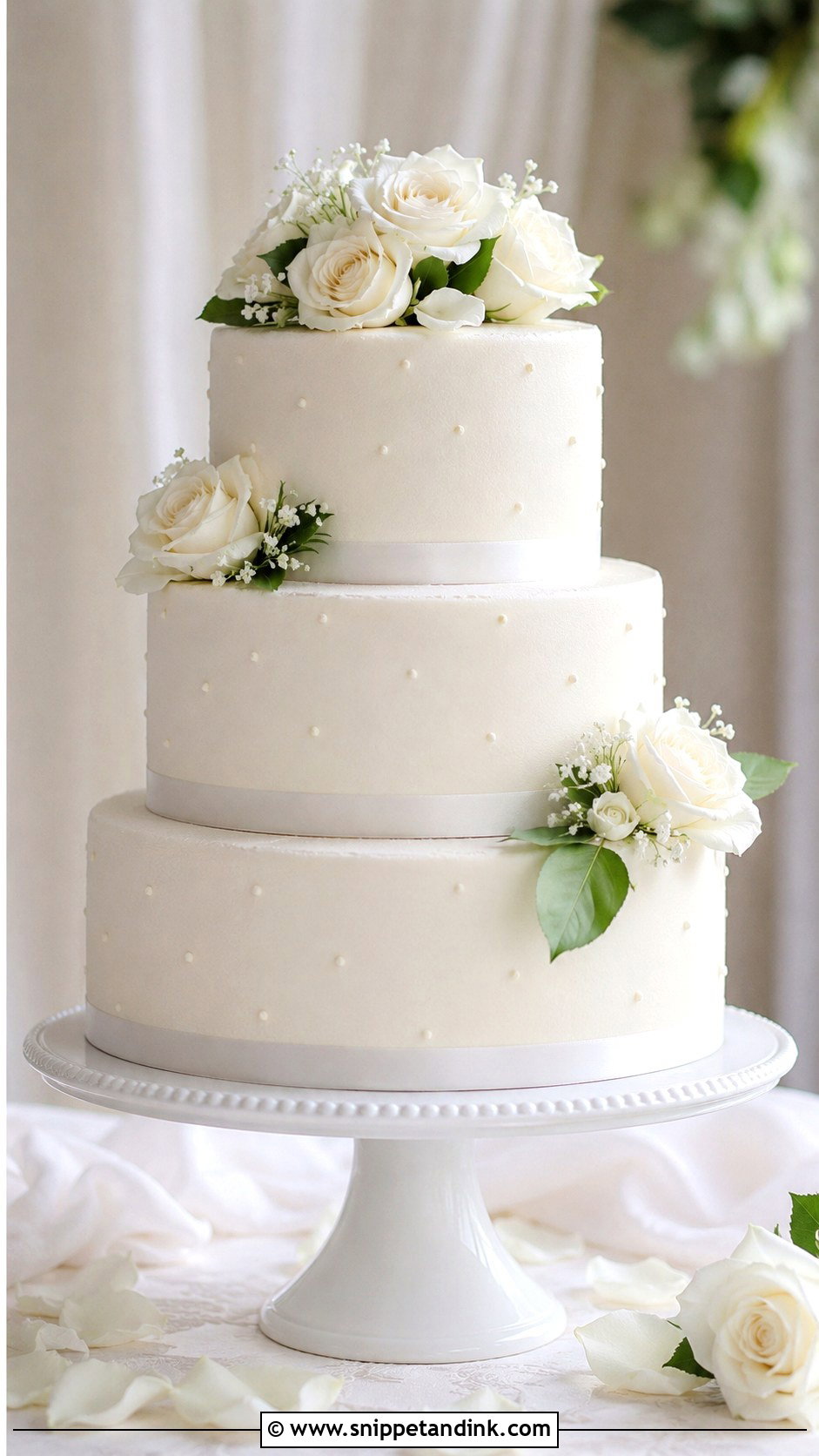
Round tiers are the safe choice, and I mean that kindly. They take buttercream well, smooth evenly and won’t clash with any decor. A round cake can be completely plain, piped, textured or covered in flowers, and every version looks deliberate. I often finish the base of each tier with a satin ribbon, which also hides the board line. Add white roses or a few sugar flowers and you have a cake that suits nearly any venue.
13. White Lace Wedding Cake
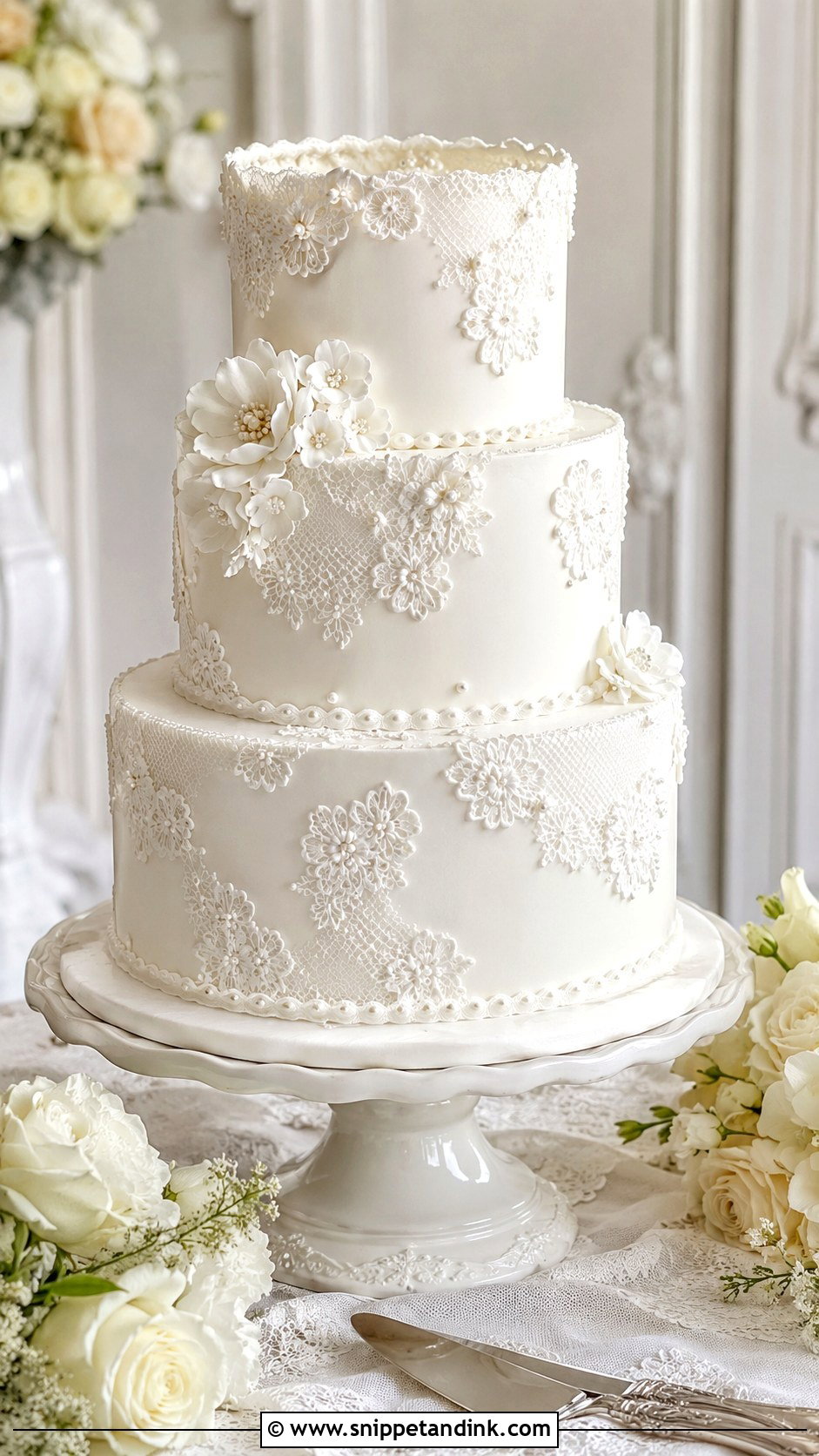
Lace on a cake is a natural echo of lace sleeves, a veil edge or an embroidered bodice, and I’ll often ask a bride to bring a photo of her dress so the pattern matches. The lace can be fondant appliqué, royal icing piping, stencil work or textured buttercream. Royal icing lace dries hard and brittle, so it needs careful handling on delivery. Placing lace on one or two tiers keeps the cake from looking crowded. Church weddings and formal receptions with classic styling suit it well.
14. White Sugar Flower Wedding Cake
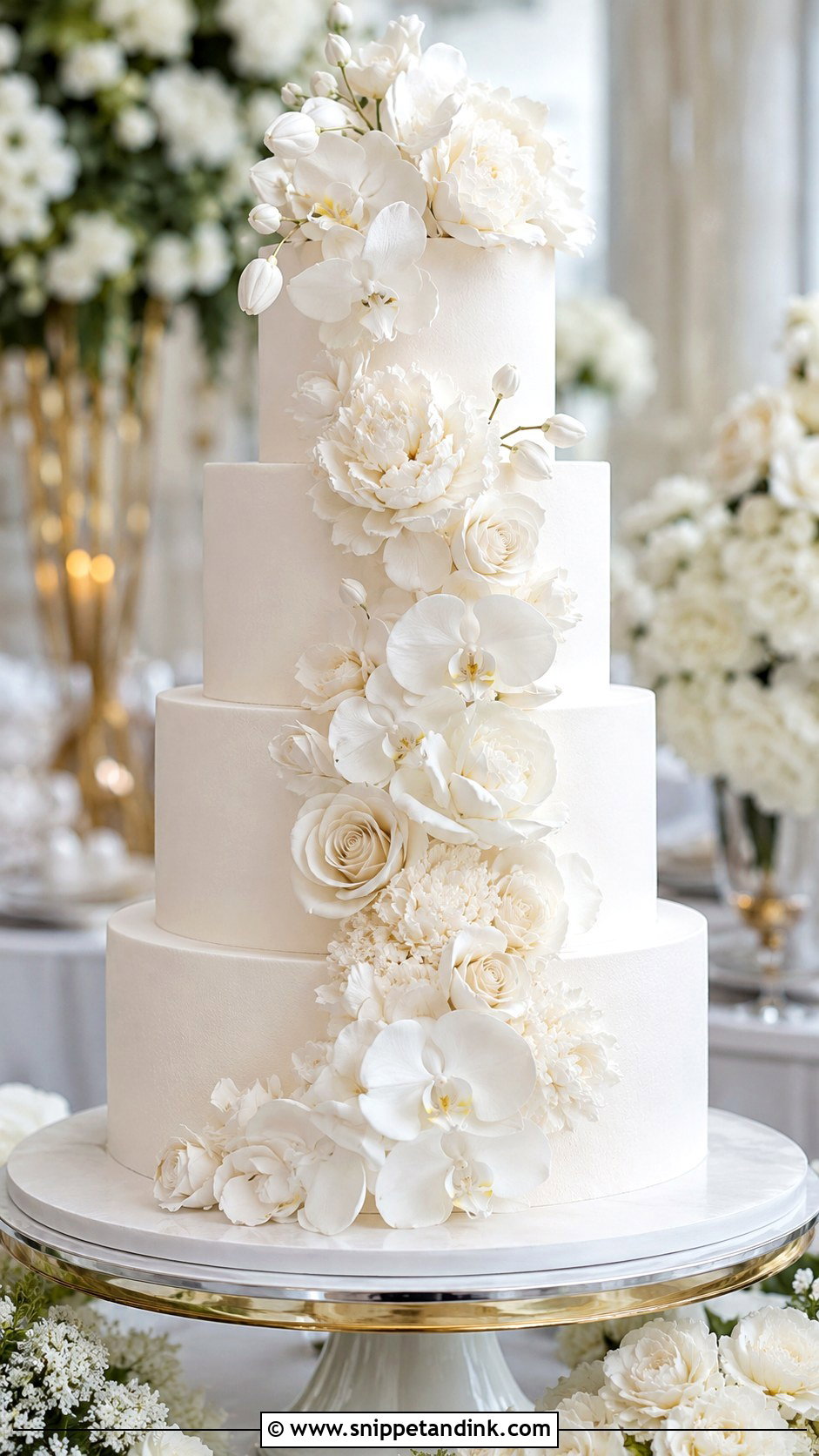
Sugar flowers outlast fresh blooms by a mile, which is their great advantage. Roses, peonies, orchids, magnolias and small blossoms are all shaped petal by petal in white and ivory, then wired and arranged on top, between tiers or in a soft cascade. They take days to make, so they need ordering well ahead, and they’re kept dry because humidity softens them. Against a smooth frosted base, realistic petals make the cake feel couture. Many couples keep a flower afterwards as a memento.

15. White Orchid Wedding Cake
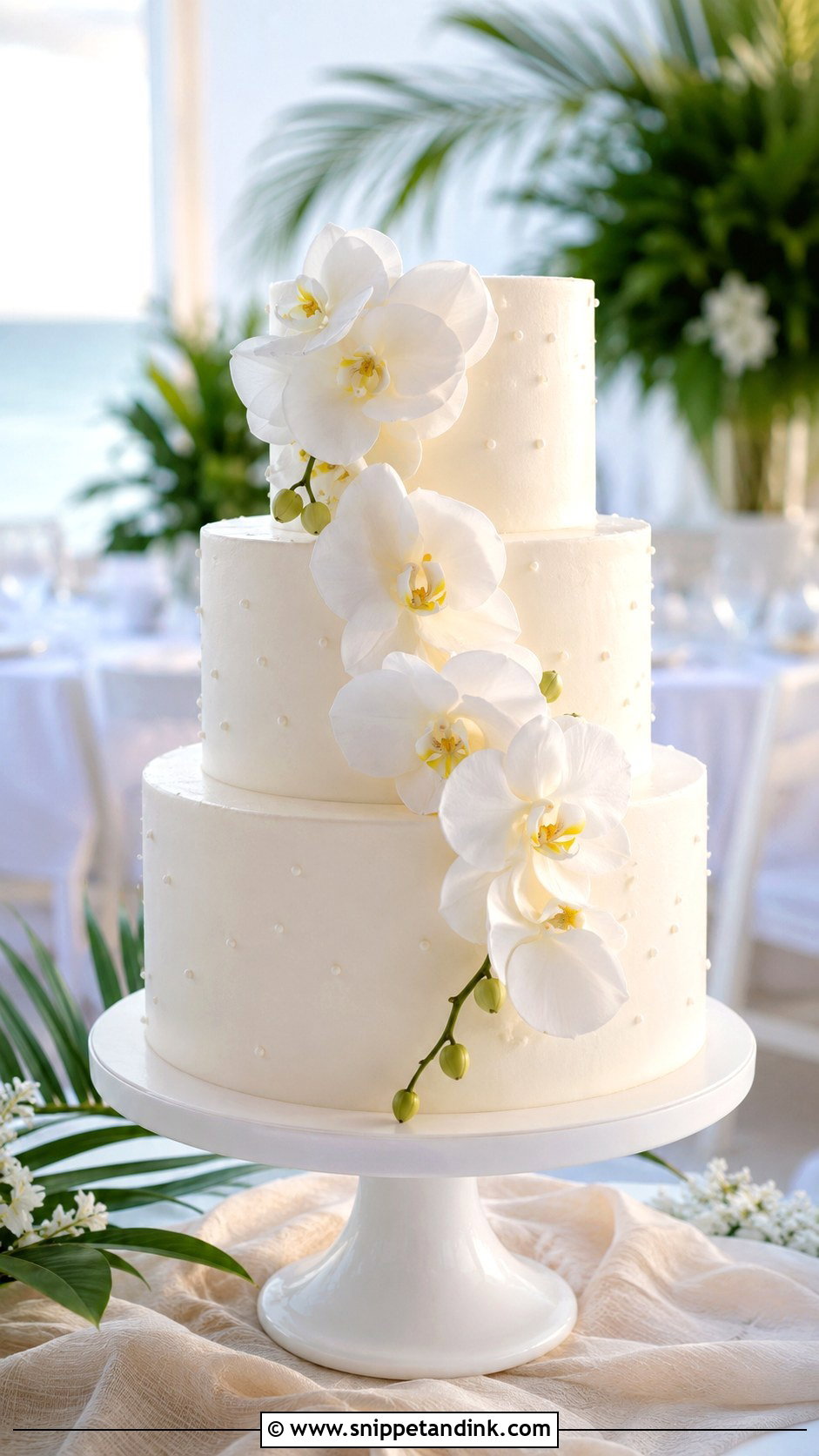
Orchids have a sculptural shape that stands out against white frosting better than softer blooms. A small cluster on one side, a gentle cascade or a single stem as a topper all suit fondant, buttercream or a lightly textured finish. Fresh orchids hold up reasonably well out of water, which helps in warm resort settings. I’d use them for beach weddings, hotel receptions and minimalist floral palettes. Keep other decoration minimal so the orchids carry the design.
16. White Rose Wedding Cake
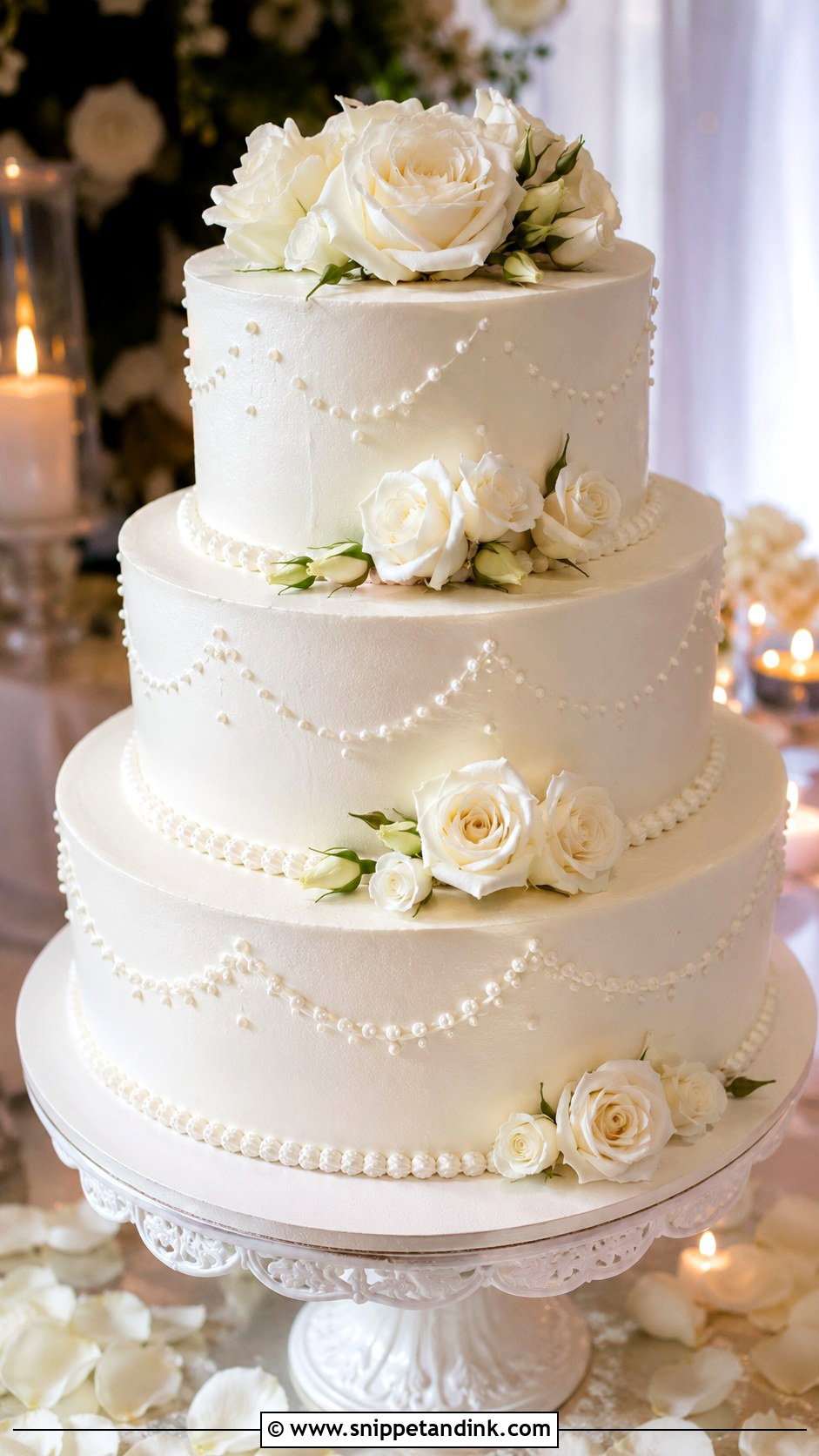
White roses on white frosting may be the most romantic pairing in this list. Fresh, sugar and buttercream roses each give a different result: fresh roses look lush, sugar roses look formal and last, piped buttercream roses feel homemade in the nicest way. A simple cluster on top stays elegant, while a diagonal cascade adds drama. Pearl details or a clean ribbon at each tier base finish it off. It suits every season.
17. White Minimalist Wedding Cake
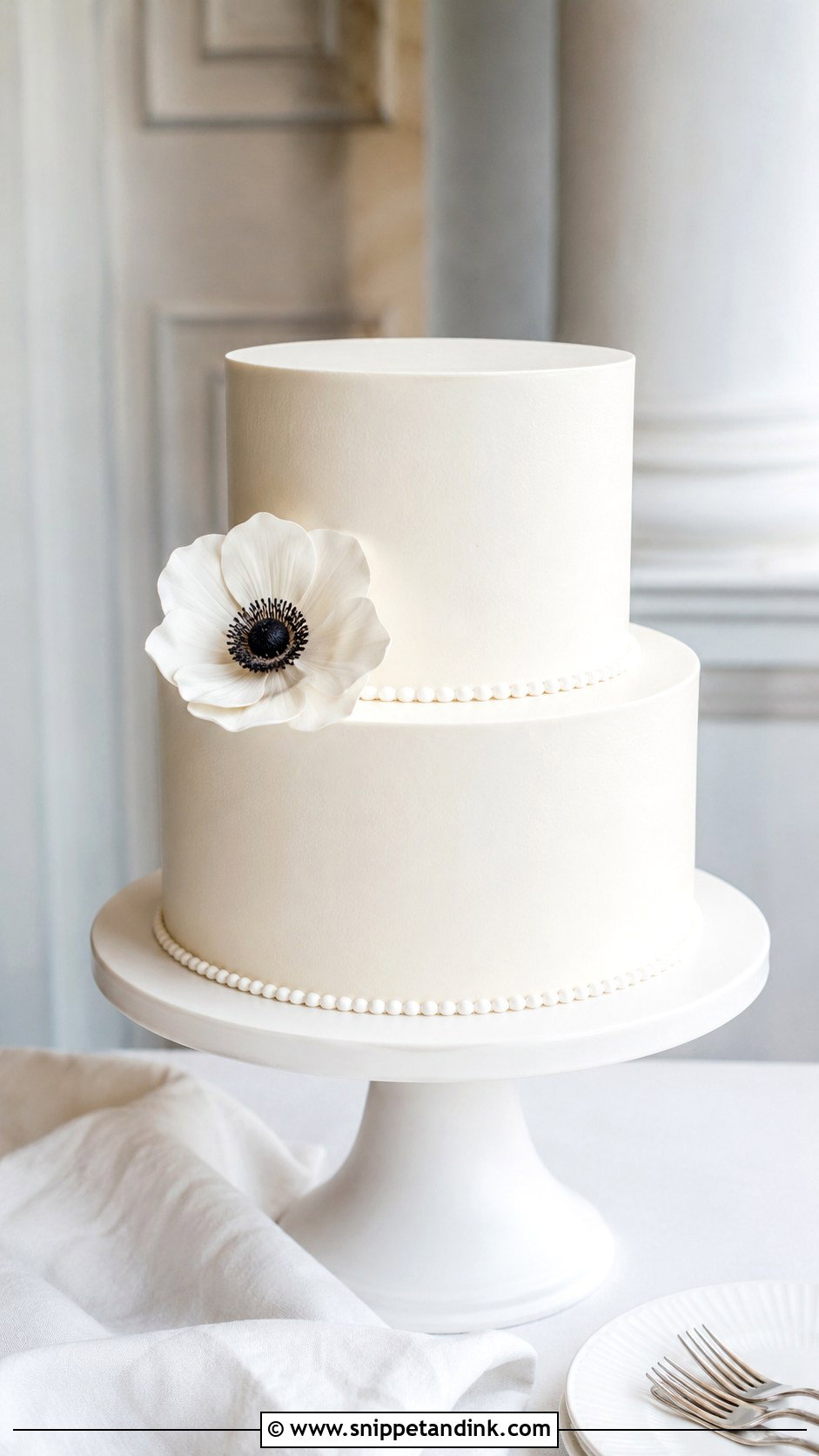
Minimalist cakes look easy and are among the hardest to make, because there is nothing to hide a dent or a lean. The design rests on smooth frosting, balanced tiers and almost no decoration; one white flower or a tiny pearl border is usually enough. Modern venues, galleries and rooftops suit it, and it lets candles, linens and flowers take the attention. Since the outside is quiet, I encourage a flavor with personality, such as almond raspberry or lemon elderflower.
18. White Drip Wedding Cake
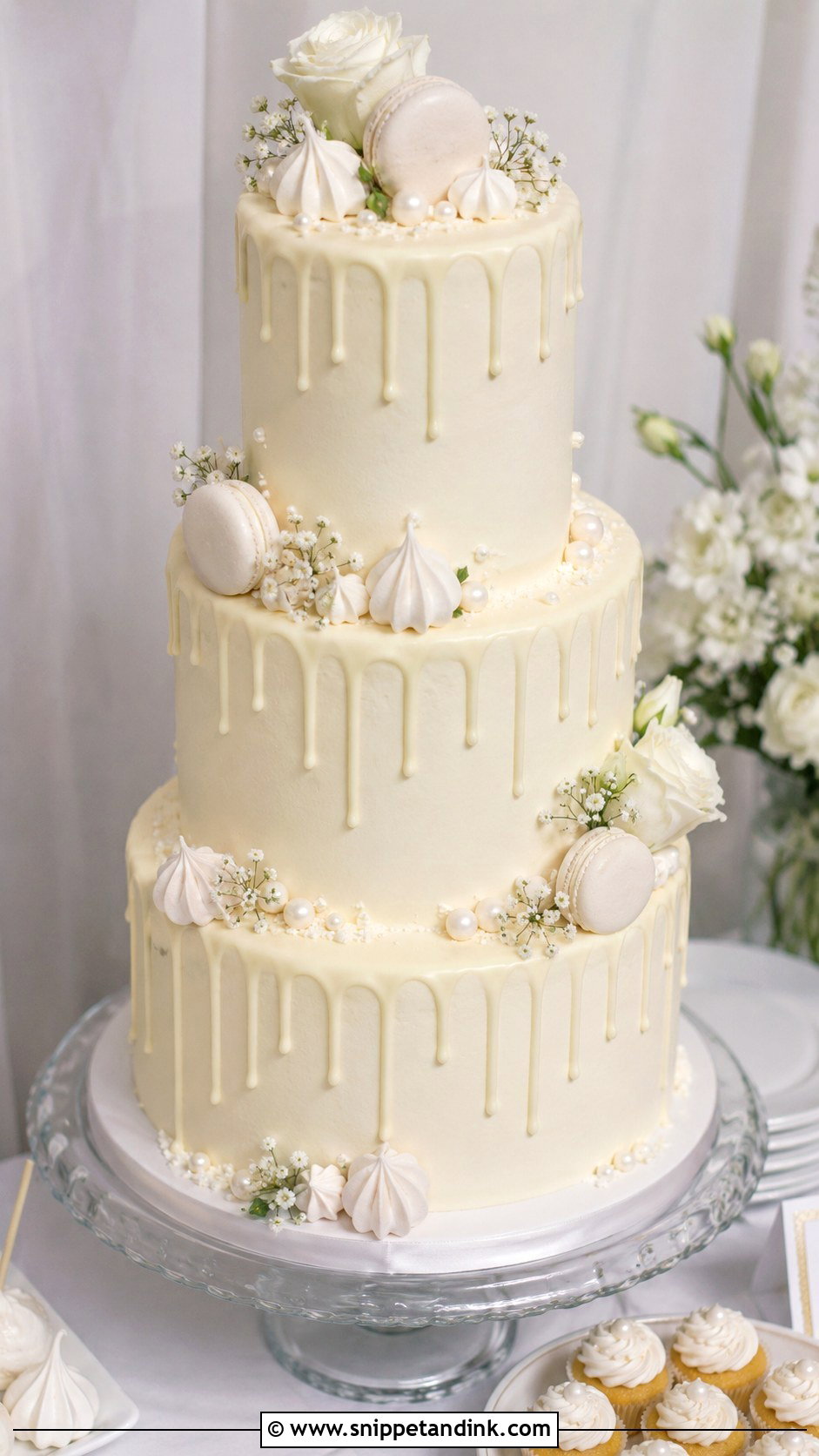
A white drip adds a little playfulness without leaving the all-white palette. I make the drip from white chocolate ganache and pour it over a well-chilled cake, because white ganache sets softer than dark and will run too far on a room-temperature tier. White macarons, meringues, sugar pearls or fresh white flowers on top add texture. The drip also links neatly to a dessert table full of other sweets.
19. White Naked Wedding Cake
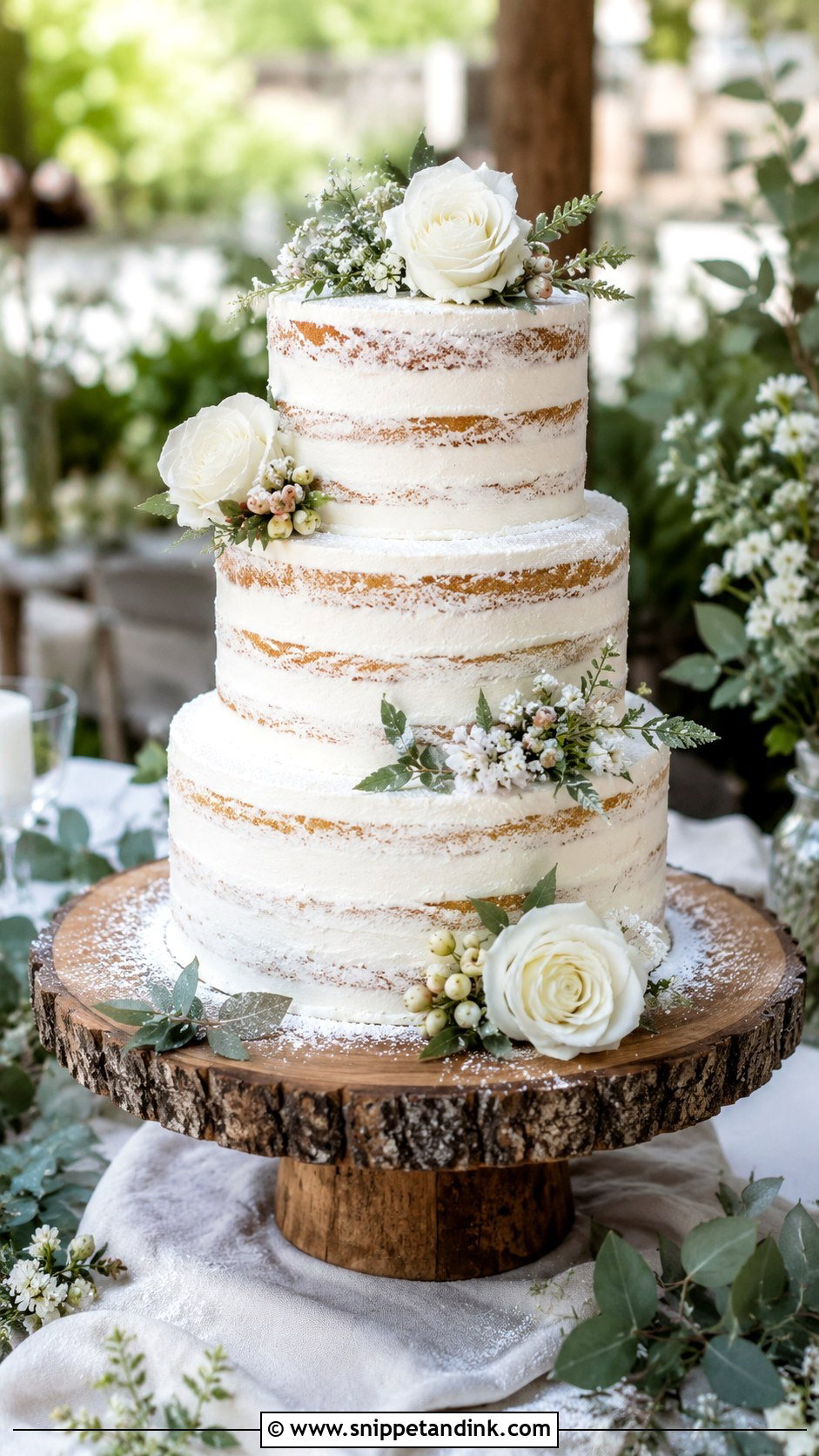
A naked cake with a whisper of white buttercream gives you visible layers with a white frosted look. A thin coat is scraped back so the sponge shows through, which suits barn weddings, garden receptions and relaxed outdoor parties. Exposed sponge dries faster than covered cake, so I assemble these close to the wedding and brush each layer with syrup. White flowers, small berries or a dusting of powdered sugar finish it, and vanilla, almond, lemon or coconut sponge all suit it.

20. White Monogram Wedding Cake
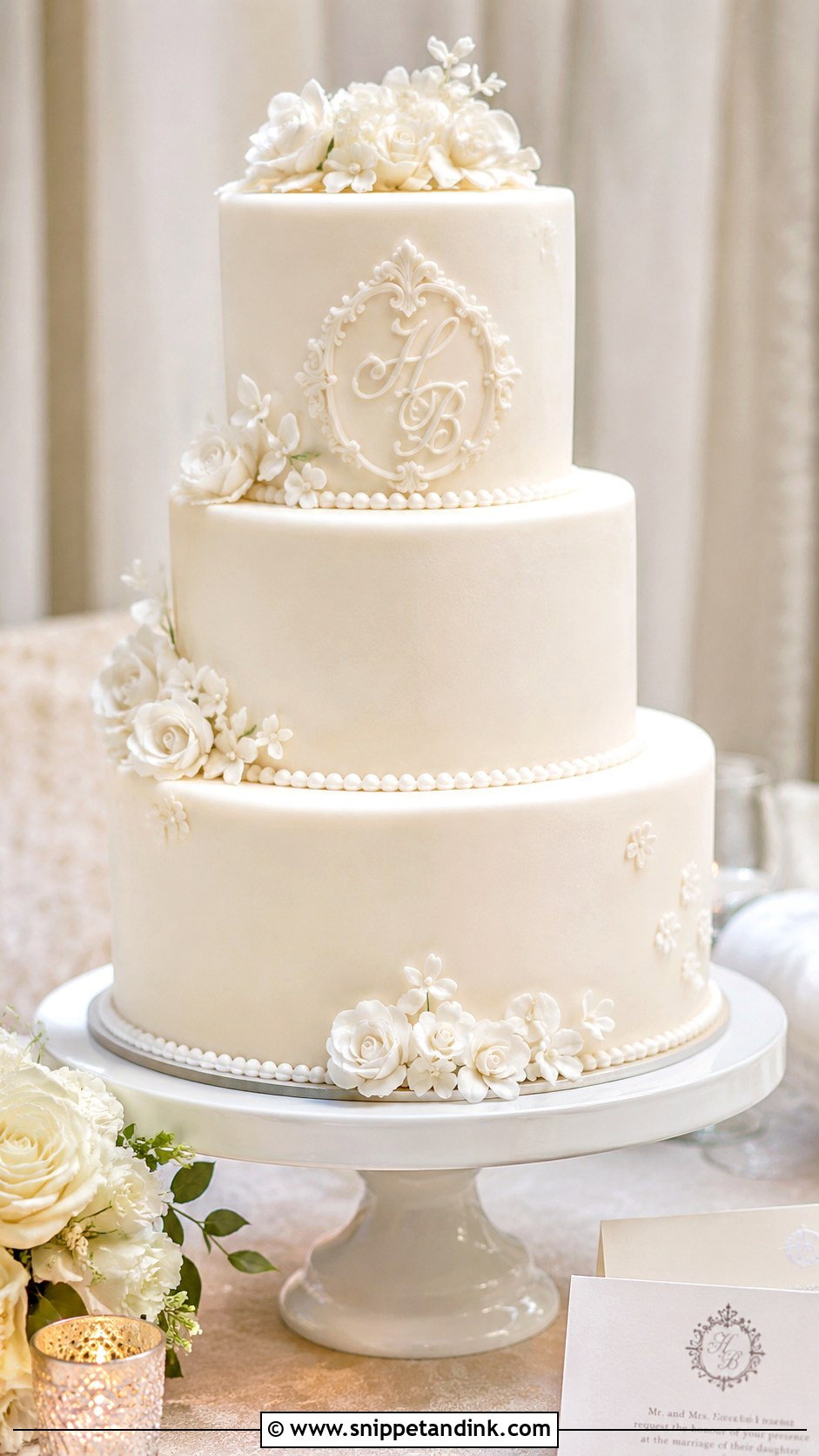
A monogram is the simplest way to make a white cake personal. Initials can be piped in white, embossed into fondant, set on a sugar plaque or placed as a topper, and keeping them white-on-white makes the detail subtle rather than loud. If your invitations use a particular lettering style, bring a copy so the baker can match it. Smooth tiers, pearl borders or lace texture all sit well around the monogram. Traditional and family-centered weddings tend to love this one.
Will an All-White Cake Disappear in Your Photos?
It can, and it’s one of the few things I warn couples about with white cakes. A white cake on a white tablecloth in front of a white wall turns into a pale blur, especially under strong flash or bright midday light coming through windows.
The fix is contrast somewhere near the cake. A darker backdrop, greenery, a wooden or metallic stand, or a colored linen under the stand all give the photographer an edge to work with. Texture helps too. Piping, ruffles, pearls and sugar petals throw small shadows that smooth frosting can’t, which is why heavily detailed white cakes tend to photograph with more depth than minimalist ones.
Placement matters as much as decoration. Ask your planner to set the cake table where it gets soft side light rather than harsh direct sun, which also protects the frosting. And mention the cake to your photographer before the day, so they capture its details early, before the room fills and long before anyone cuts it.
Plain White Is Never Really Plain
White frosted cakes keep their place because one color can cover every style, from smooth buttercream and formal fondant to vintage piping and a white chocolate drip. Start with three practical questions: where will the cake stand, how many people need a slice, and how warm will the room be? Buttercream gives softness and flavor, fondant gives sharp lines and holds up better in heat, and details like pearls, lace, orchids or a monogram add personality. Get the finish right for your venue, and even the simplest white cake becomes the centerpiece of the dessert table.
You'll Like These Ideas:












Leave a Reply