
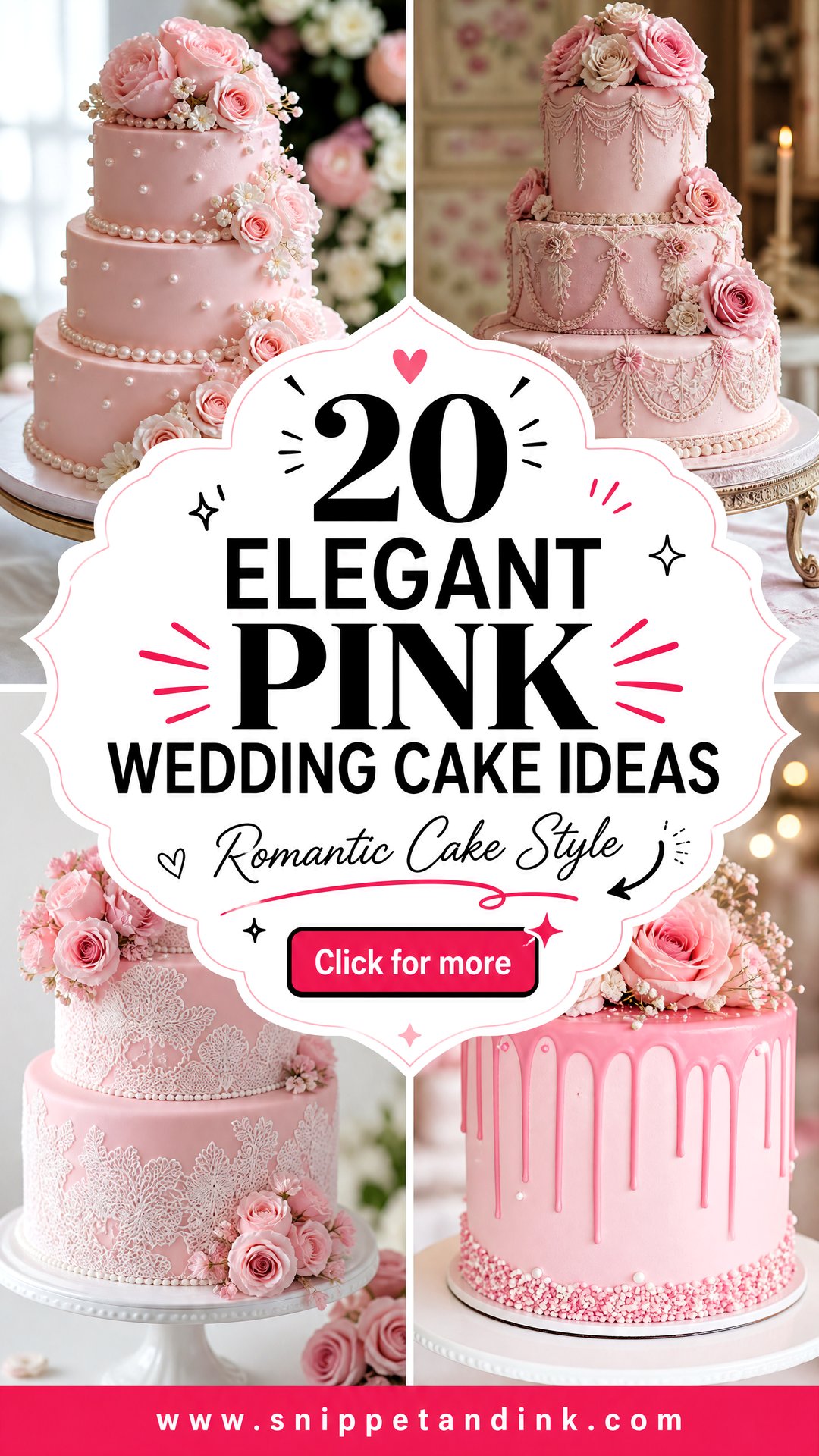
Pink is the colour I mix most often for wedding cakes, and it is also the one that misbehaves the most. A blush that looks right in the tub can read peach under warm reception lighting, and a rose shade can fade by the time the cake is cut if it has sat near a window all afternoon. Handled well, though, pink sits comfortably beside ivory, gold, sage and champagne, and it suits a ballroom as easily as a garden. The twenty designs below range from a single tier to a full cascade, and for each one I’ve added what I watch for when I actually make it.
Why Pink Icing Shifts Colour and How I Keep It True
Pink is a fragile colour in sugar. Most pink and purple food colours are sensitive to light, so a cake left near a sunny window or under bright display lights can fade noticeably over a few hours. When I set up, I ask the venue for a cake table away from direct sun, and I bring the cake out as late as the timeline allows.
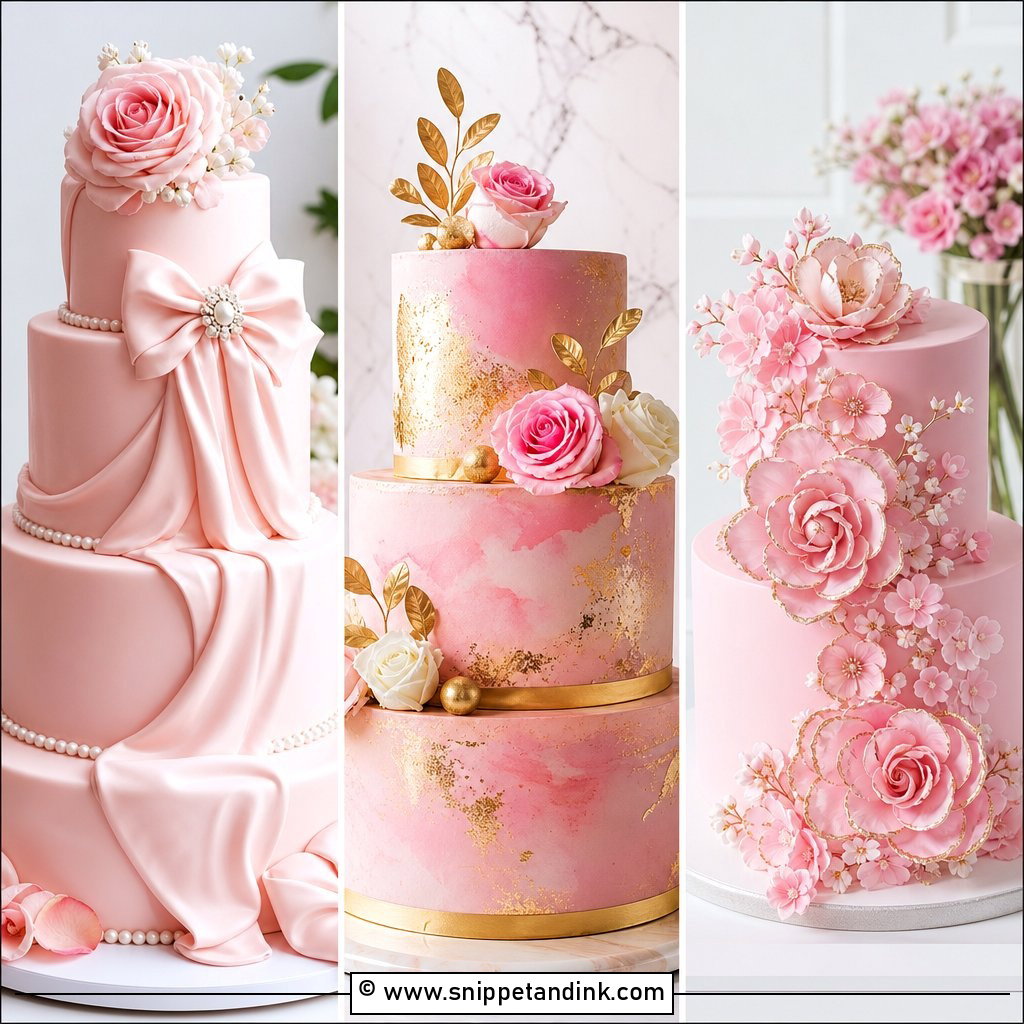
The base you choose changes the shade too. Buttercream made with butter is naturally yellow, so a cool blush can turn peachy unless I correct the base first. Fondant and Swiss meringue buttercream take colour more evenly, and fondant pink often darkens a little as it rests overnight. That is why I mix colour a day ahead and never promise an exact match to a fabric swatch on the same afternoon.
- Bring a physical swatch, such as a ribbon or bridesmaid fabric, rather than a phone photo, since screens shift colour.
- Look at the sample under warm light as well as daylight, because evening reception lighting pushes pink toward peach.
- If you want deep rose, consider coloured flowers or a painted tier instead of very dark icing, which needs a lot of colouring and can taste bitter.
1. Blush Pink Wedding Cake With Roses
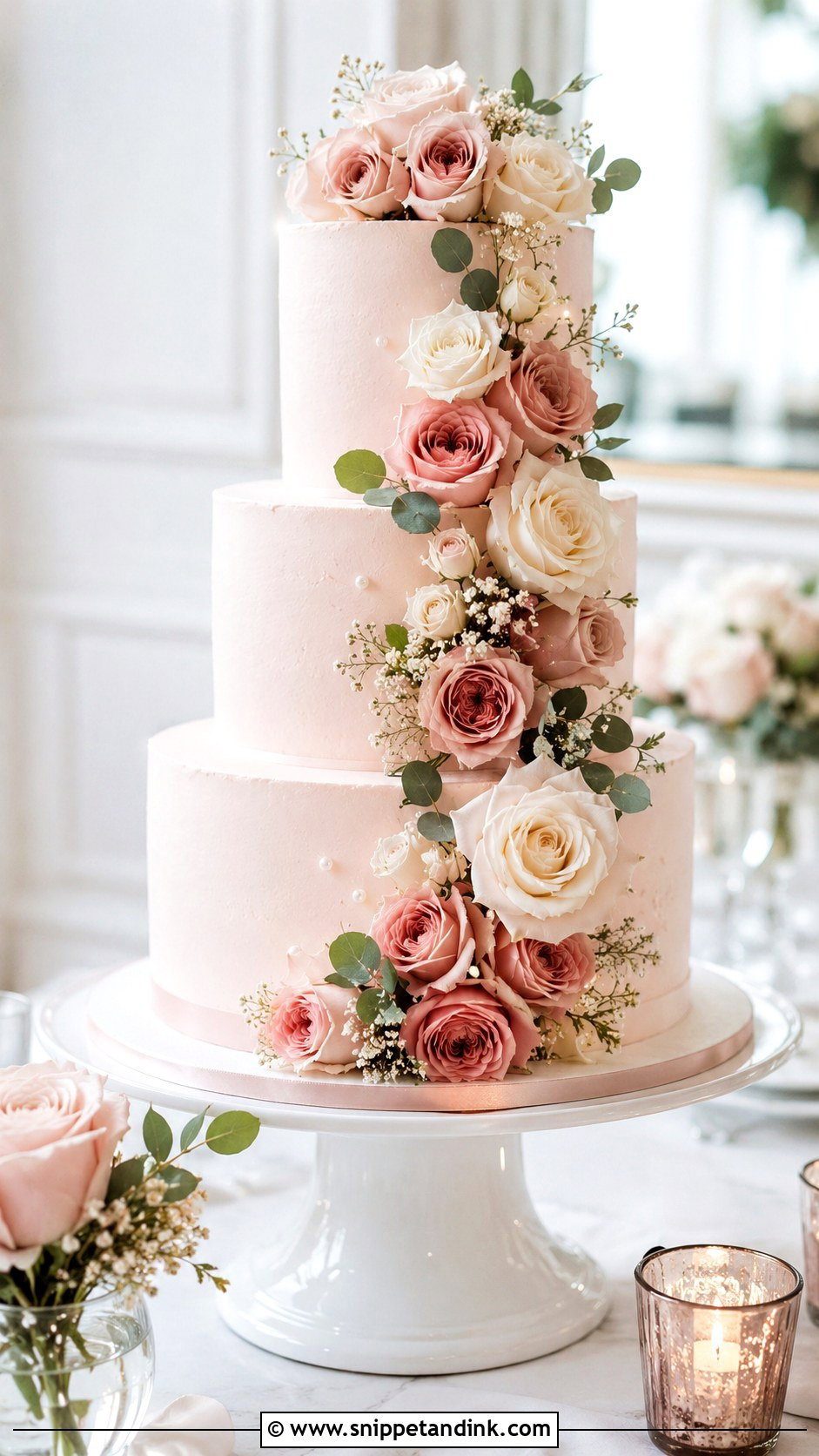
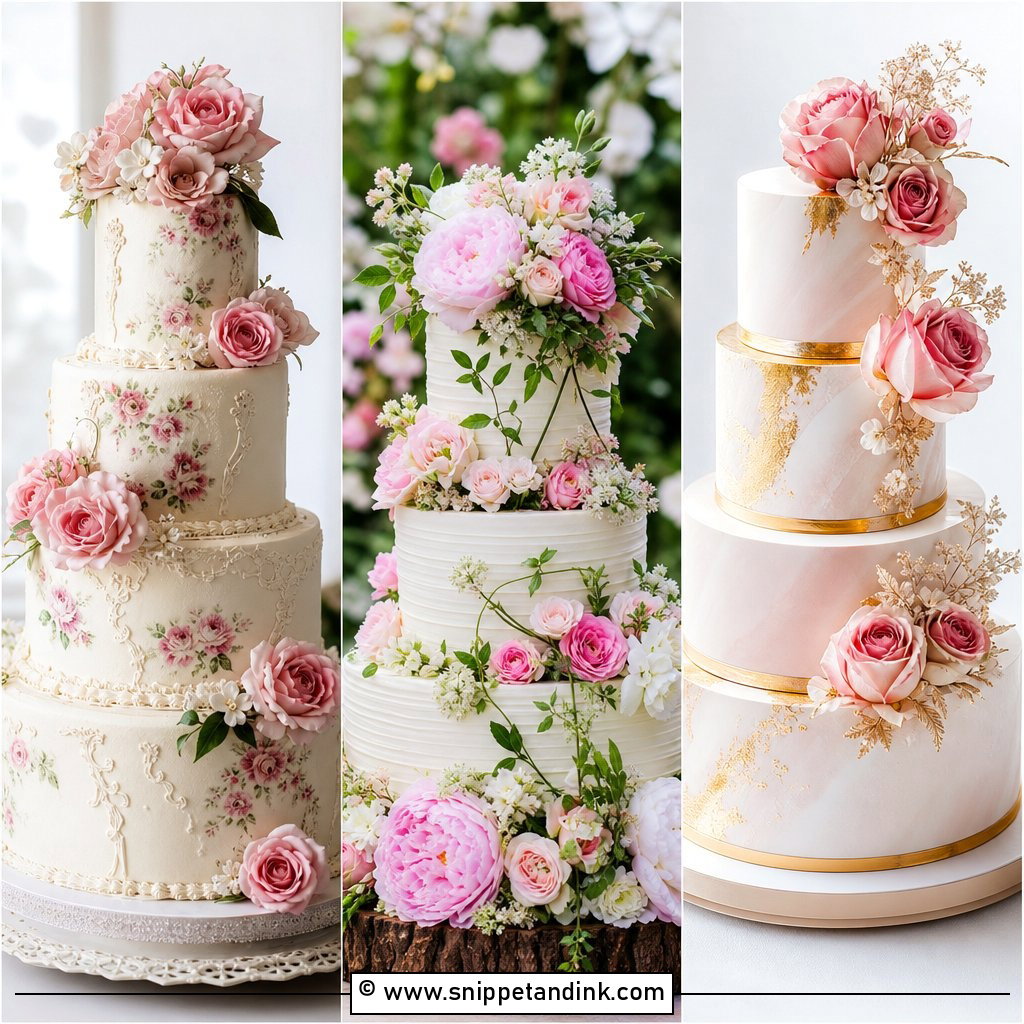
A blush pink wedding cake with roses is the design I’m asked for more than any other pink cake. I like it on three tiers, with the roses trailing from the top tier down one side so the cake still shows plenty of bare blush. Mixing ivory, dusty pink and muted mauve roses gives depth that a single rose colour can’t. The common mistake is too much greenery: eucalyptus and ruscus spread fast and swallow the pink finish, so I keep foliage to a few tucked sprigs.
2. Pink Ombre Wedding Cake
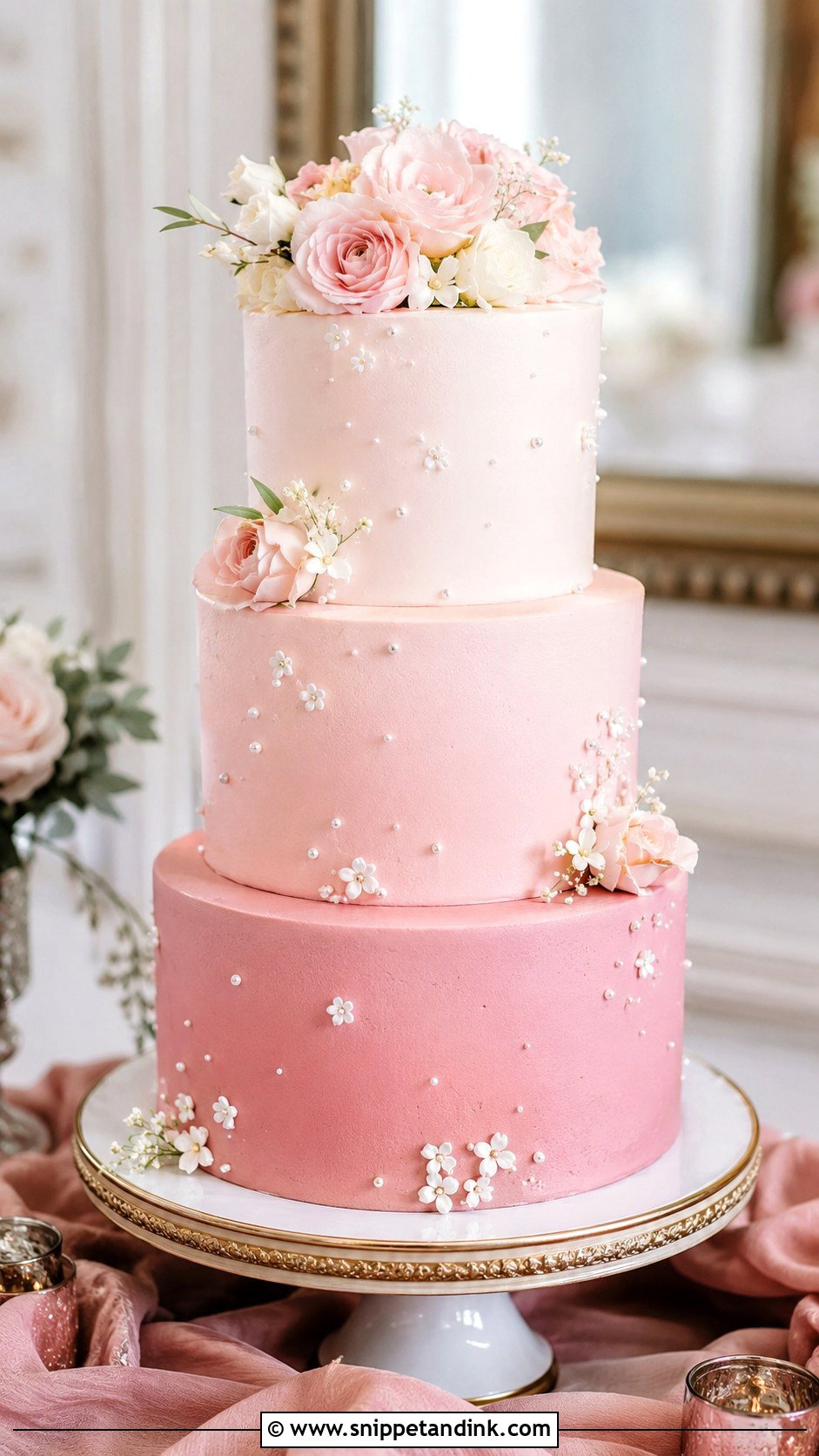
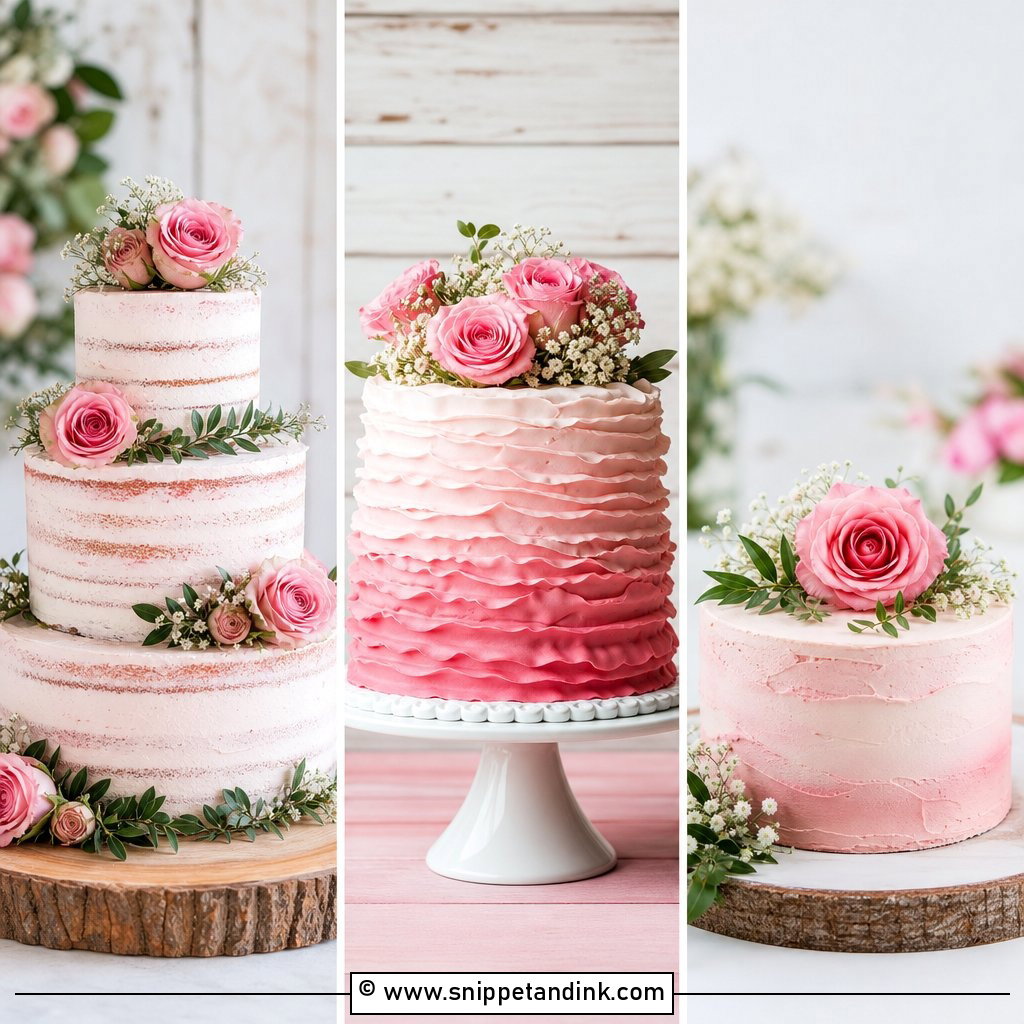
On a pink ombre wedding cake I put the deepest rose on the bottom tier and lift to pale blush or ivory at the top, which makes the cake look taller than it is. In buttercream I blend the colours on the turntable with a scraper, so the fade is soft. Fondant ombre is a different job: each tier is coloured separately, so you get clean steps rather than a blur. Decide which of those two you want before the tasting. Very little decoration is needed, perhaps a few sugar flowers at the join.
3. Pink Wedding Cake With Pearls
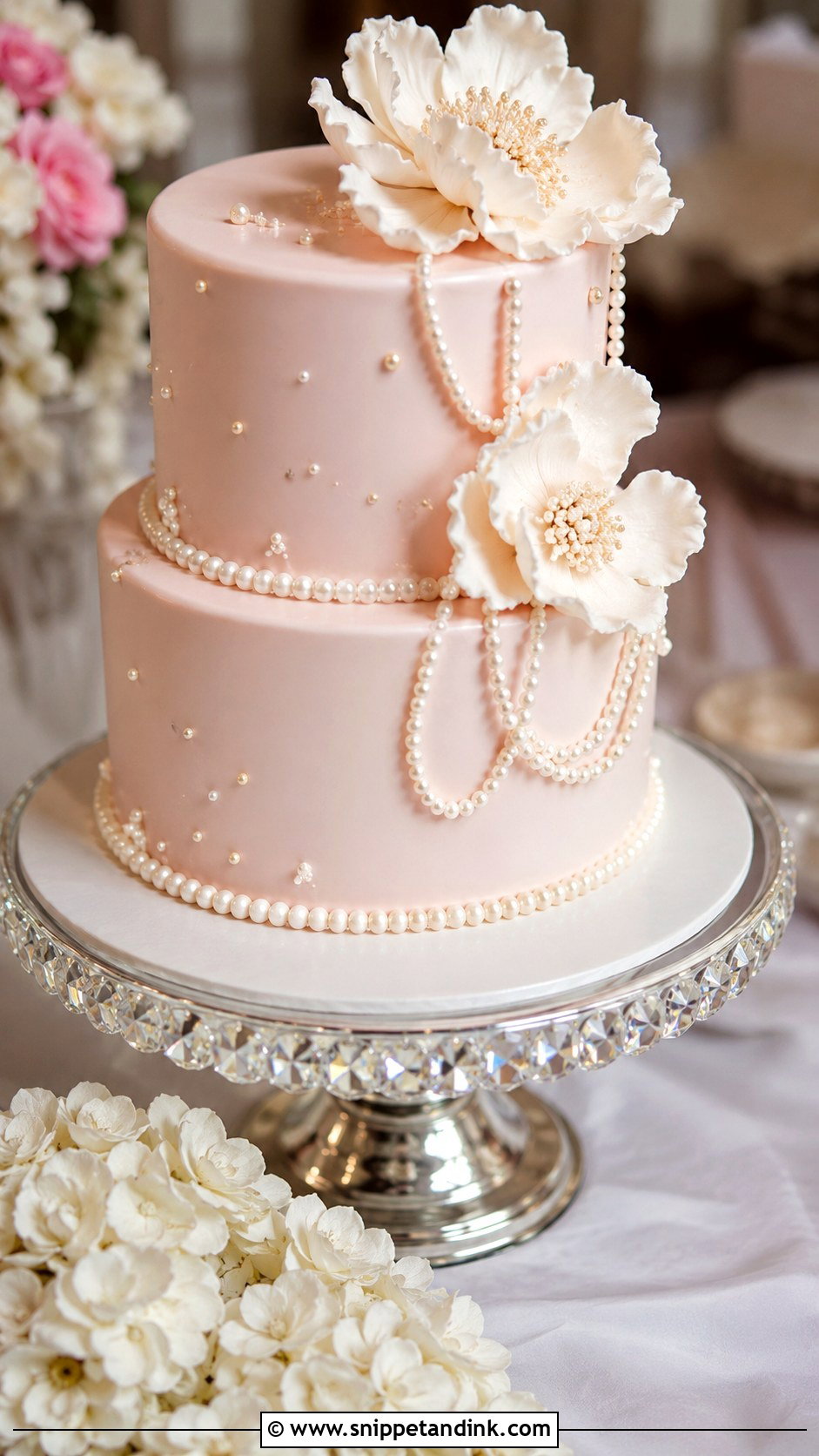
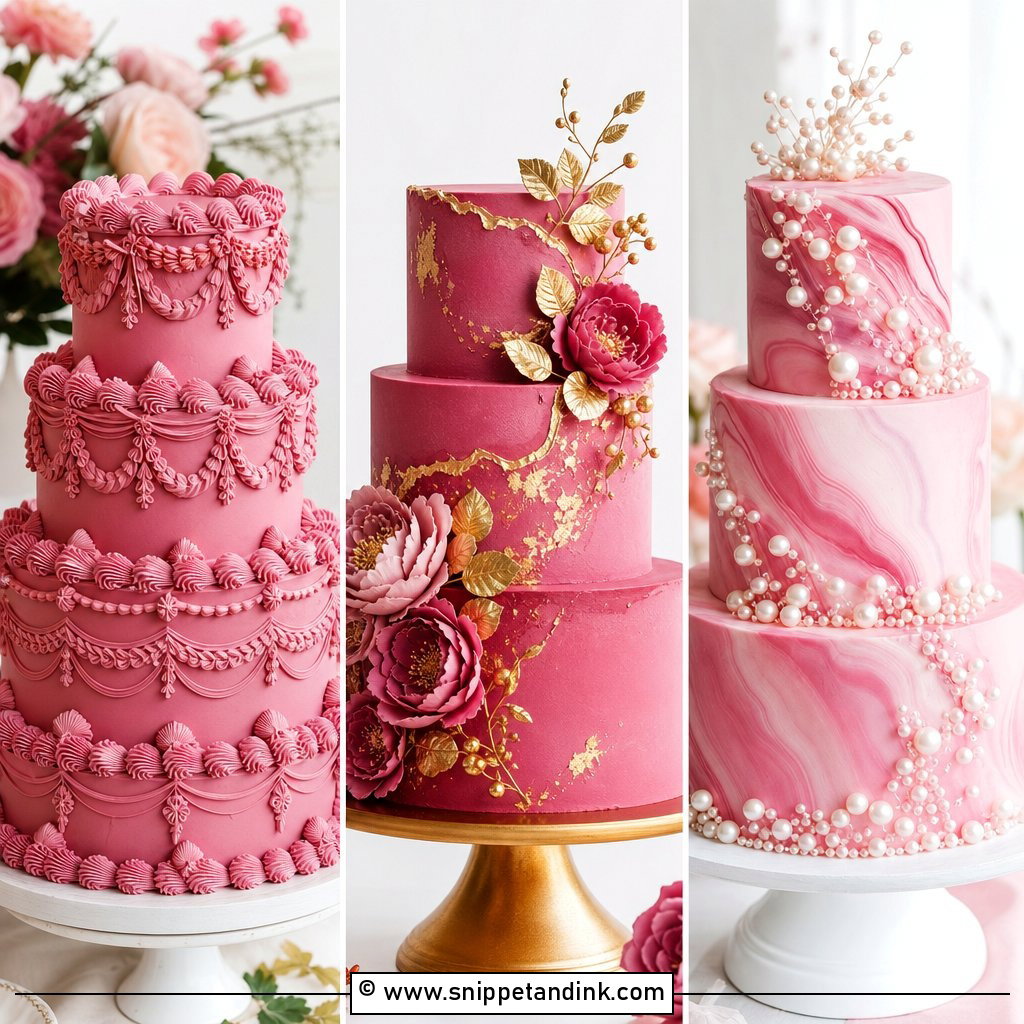
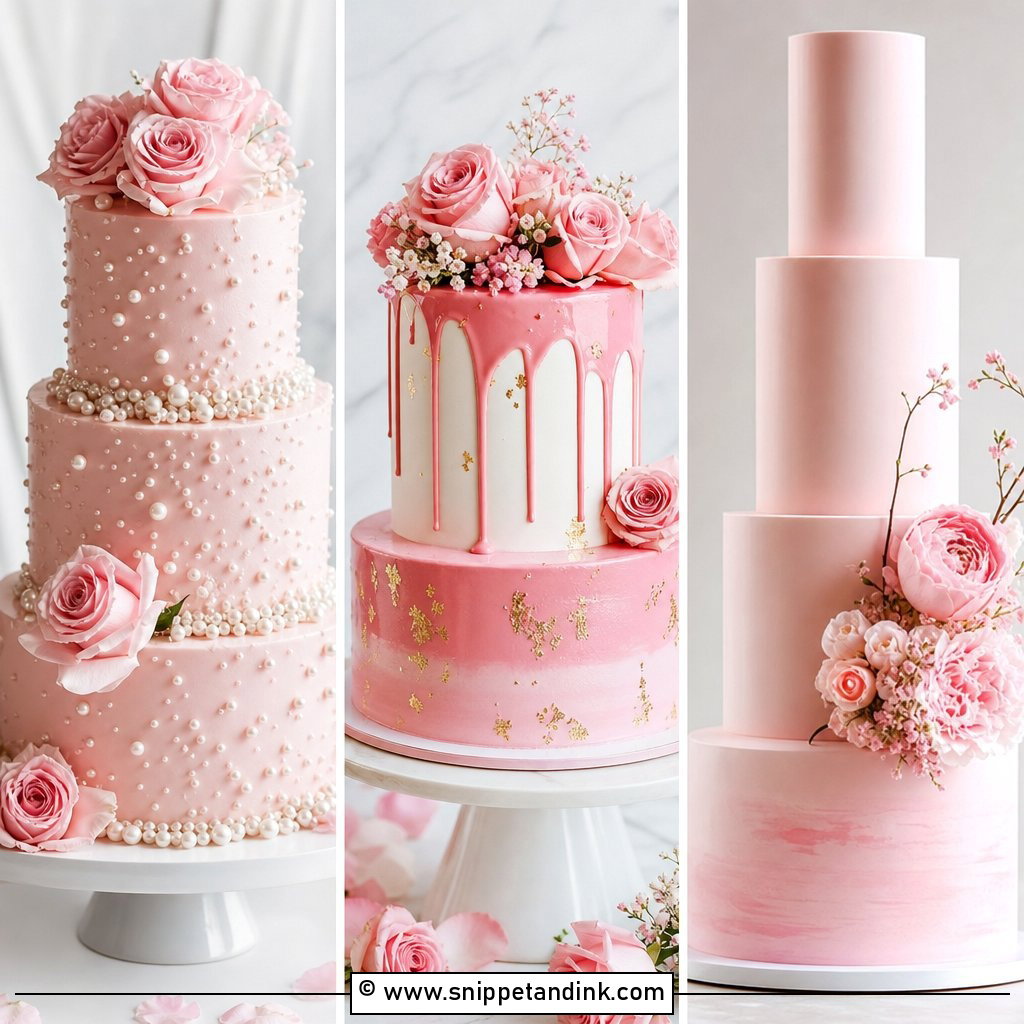
Edible pearls are small, but they change the whole cake. I place them one at a time with a dab of edible glue, and the spacing has to be measured, because on a smooth pale tier a crooked line is the first thing the eye catches. I’d pick one pearl feature only: a border at the base of each tier, a cluster near the flowers, or draped strands between tiers. Pearls on fondant look formal. Scattered over buttercream they feel softer, and they suit an indoor reception where the lustre catches the light.
4. Pink Floral Wedding Cake
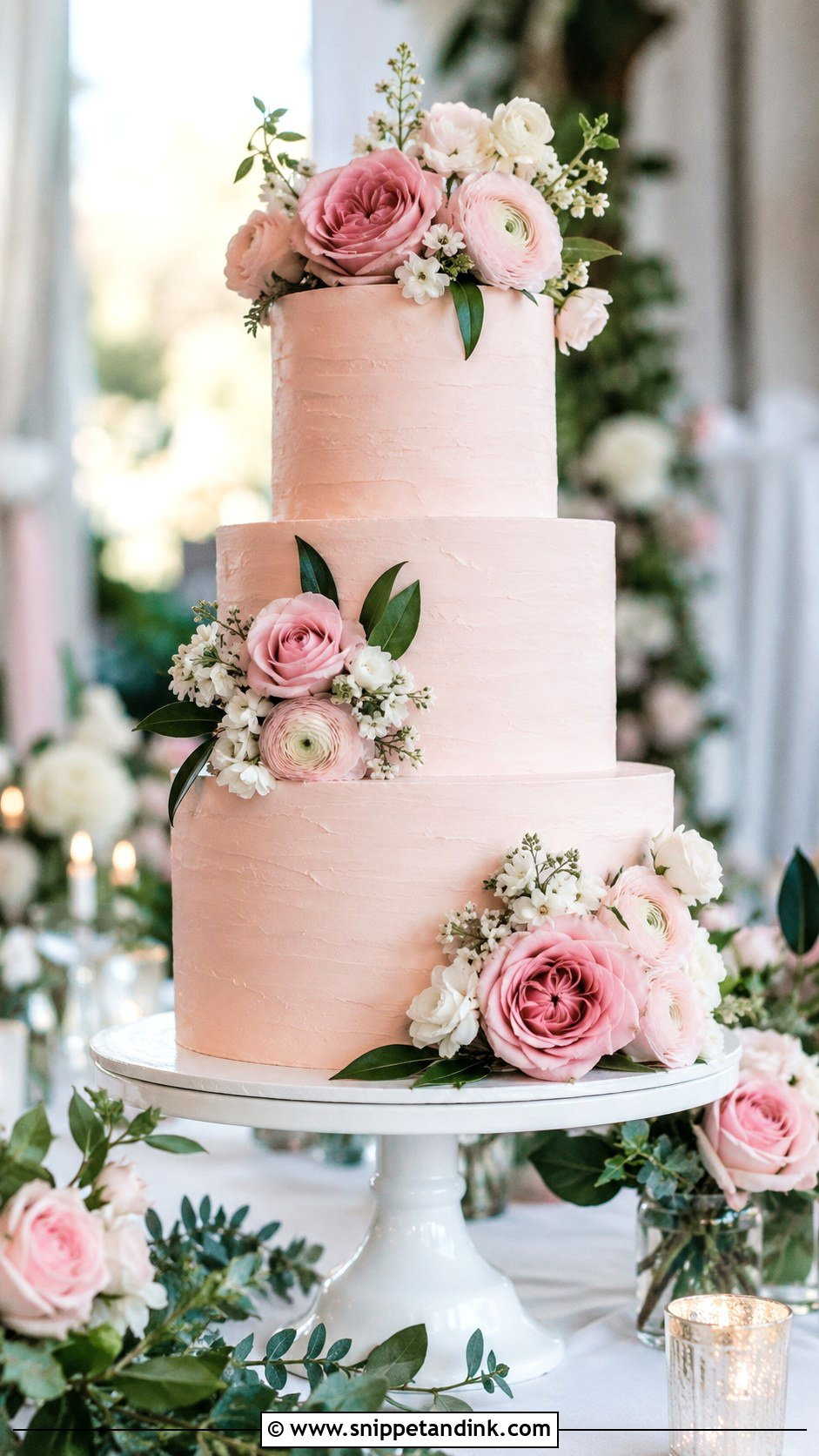
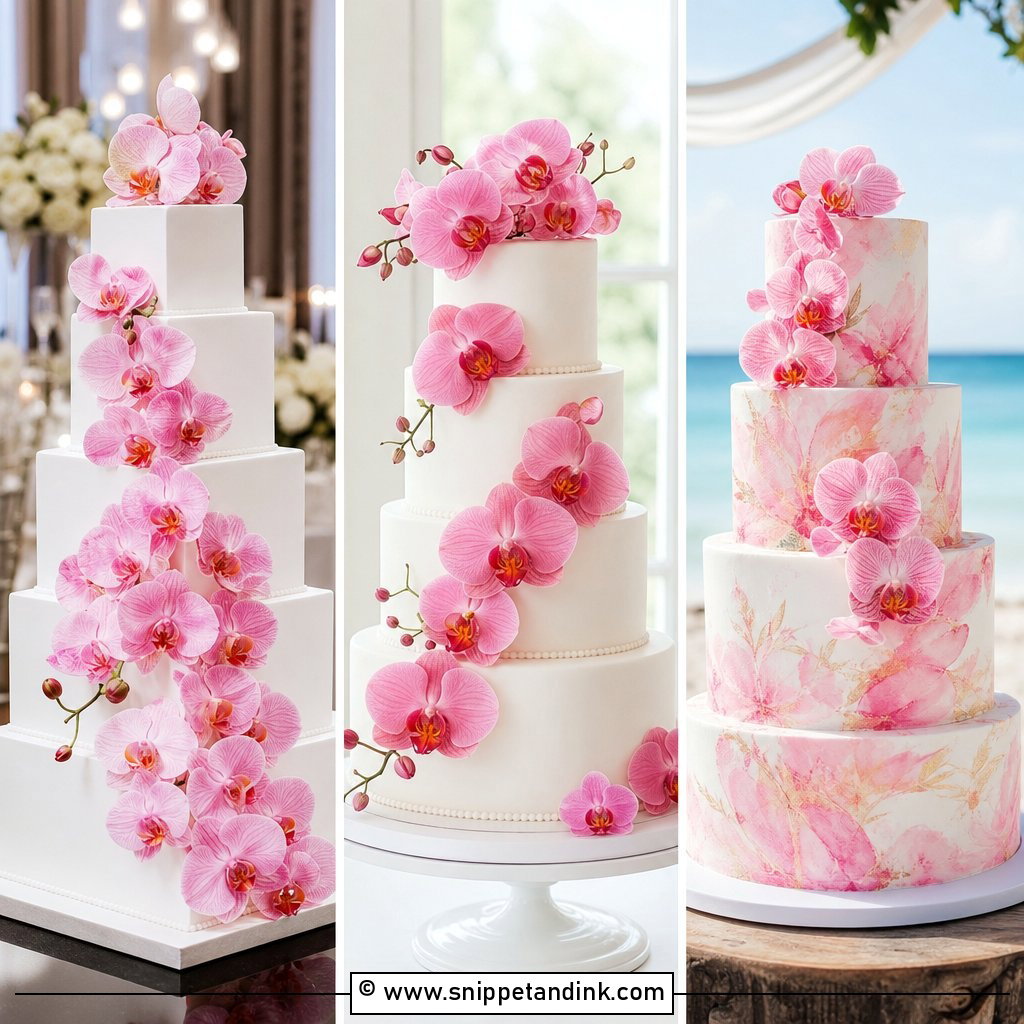
Fresh flowers can carry a plain pink cake, but they need planning between your florist and me. Roses, peonies, ranunculus and orchids all sit well against blush tiers. Every stem that touches the cake gets wrapped and pushed into a flower pick, never straight into the sponge, and I ask for unsprayed blooms where possible. Over smooth buttercream the flowers stand out cleanly. A rough textured finish gives a looser garden feel. Ask the florist to set aside the same varieties as the bouquet so the cake ties into the rest of the room.
5. Pink And Gold Wedding Cake
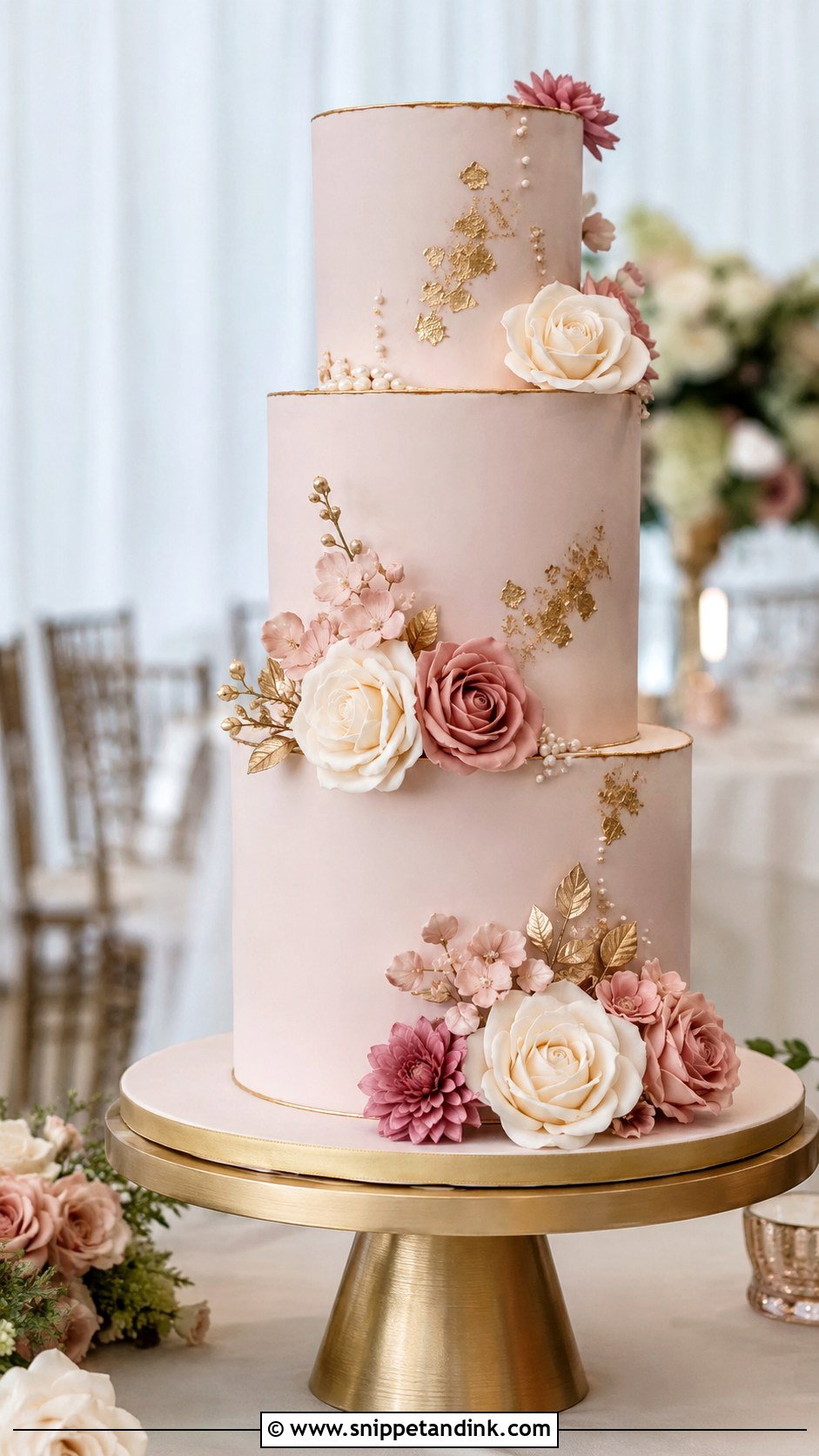
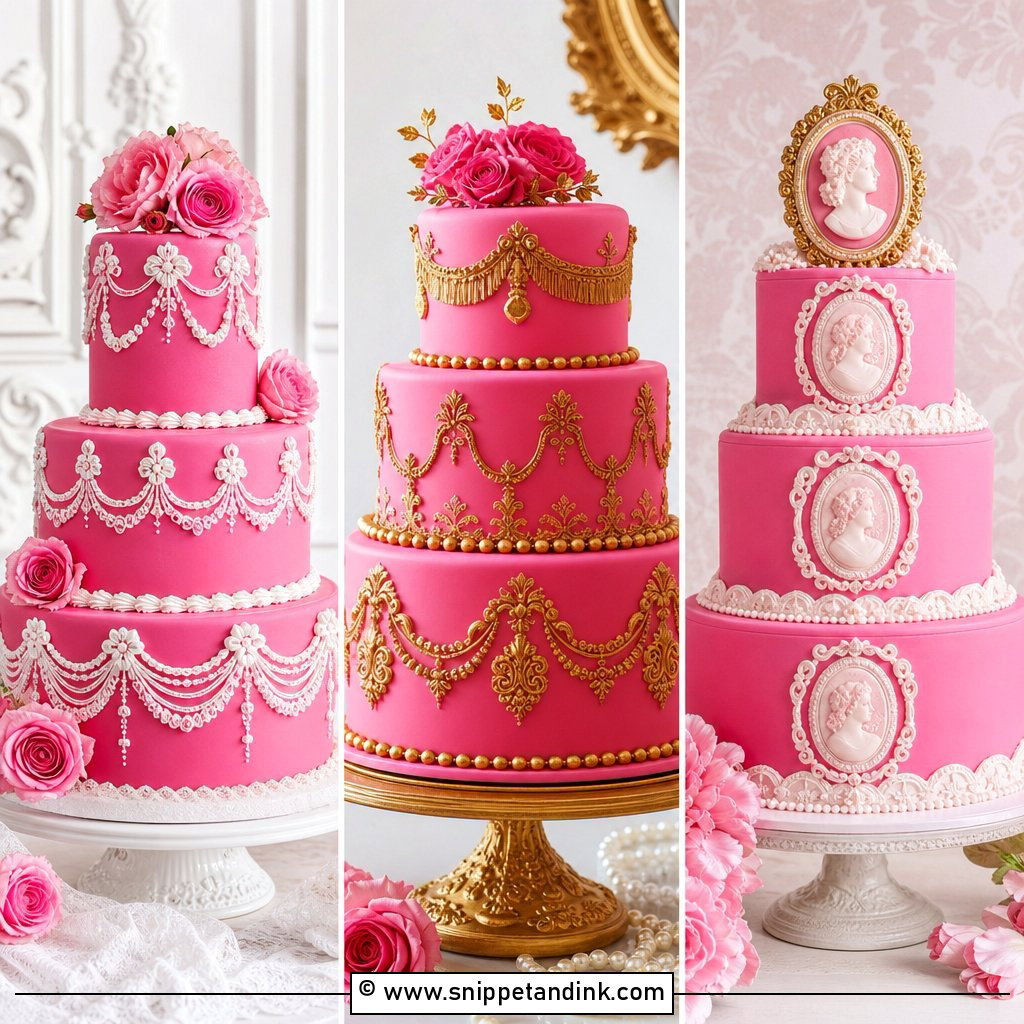
With Pink and gold, I treat the gold as an accent, never the main event. Gold leaf, a painted edge or one fully gilded tier all look rich against blush, while a cake covered in gold starts to look like a trophy. Crisp gold work needs fondant, because metallic paint on buttercream streaks and smudges as the surface softens. On a buttercream cake I use gold flakes pressed in by hand instead. Ivory or dusty rose flowers keep the warmth from tipping into flashy, which matters under evening light.
6. Pink Buttercream Wedding Cake
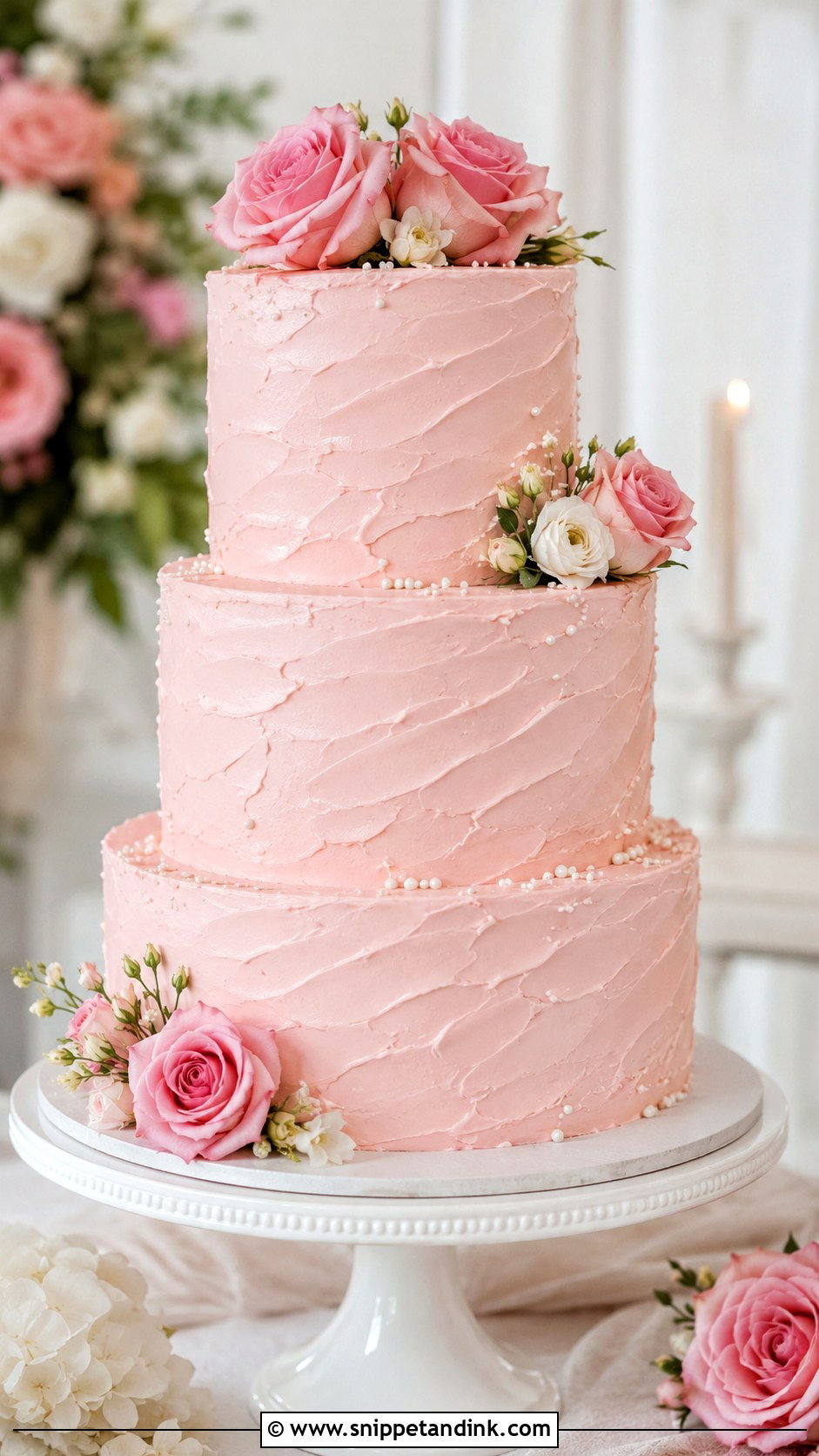
A pink buttercream wedding cake tastes the way most guests hope a wedding cake will taste. My one warning is about colour: real butter is yellow, so pink tinted into it can drift toward salmon. I counter that with a whisper of violet or a whitener before the pink goes in. You can keep it smooth and modern, lightly textured or piped in a vintage way. Fillings like raspberry, lemon, strawberry or champagne cream sit naturally under a blush coat, and dusty rose buttercream holds up next to ivory flowers and gold.
7. Pink Fondant Wedding Cake
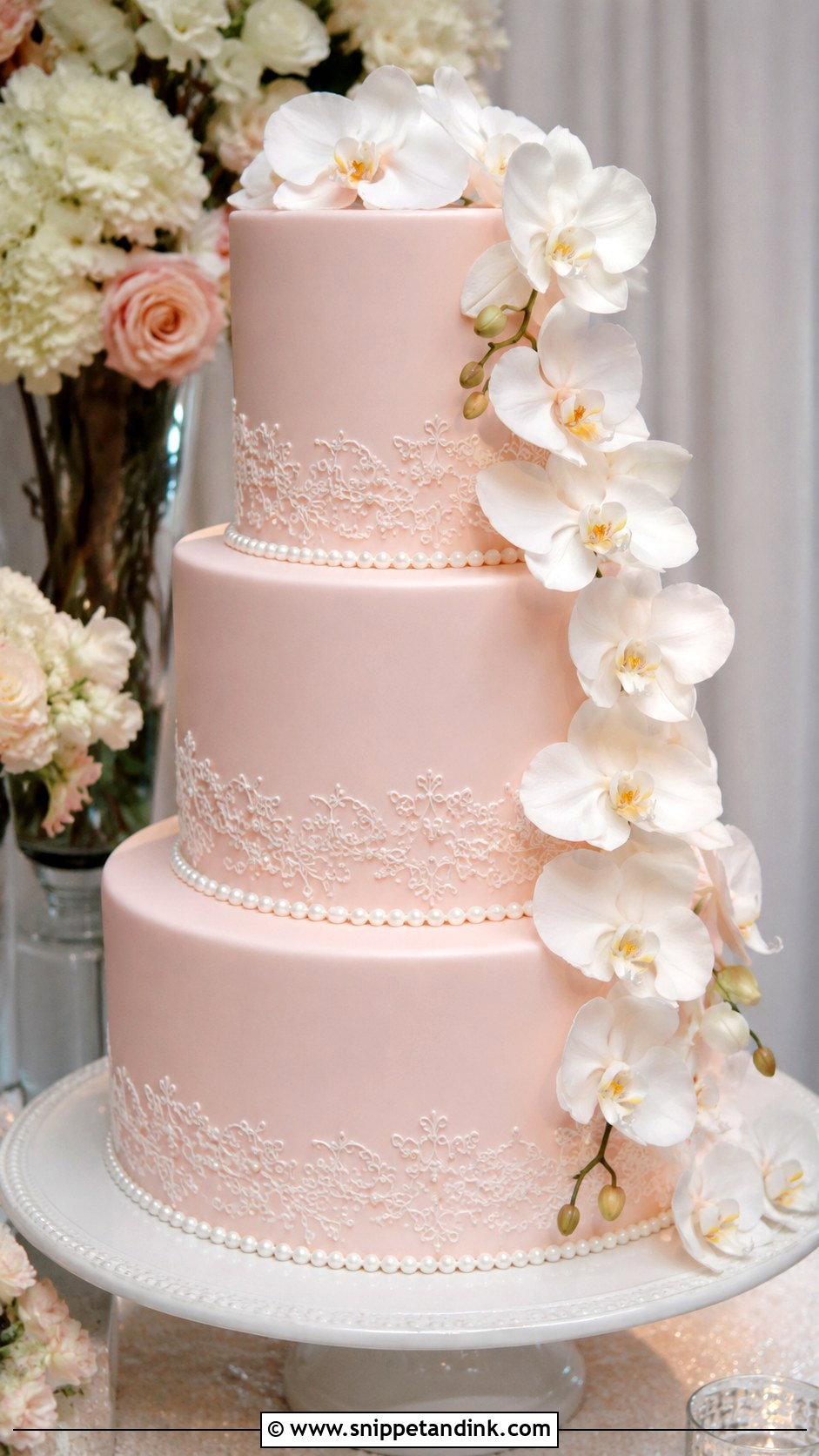
Fondant is my choice when a couple wants sharp edges and a formal outline. Pale pink fondant on tall tiers gives a clean surface for sugar flowers, fine piping or pearl detail, and it photographs with almost no texture showing. I colour fondant a day ahead where I can, because pink paste tends to deepen as it rests, and matching a second batch later is fiddly. One strong feature, such as a floral cascade or a painted gold edge, is plenty. Hotels and classic reception rooms suit it best.
8. Pink Vintage Wedding Cake
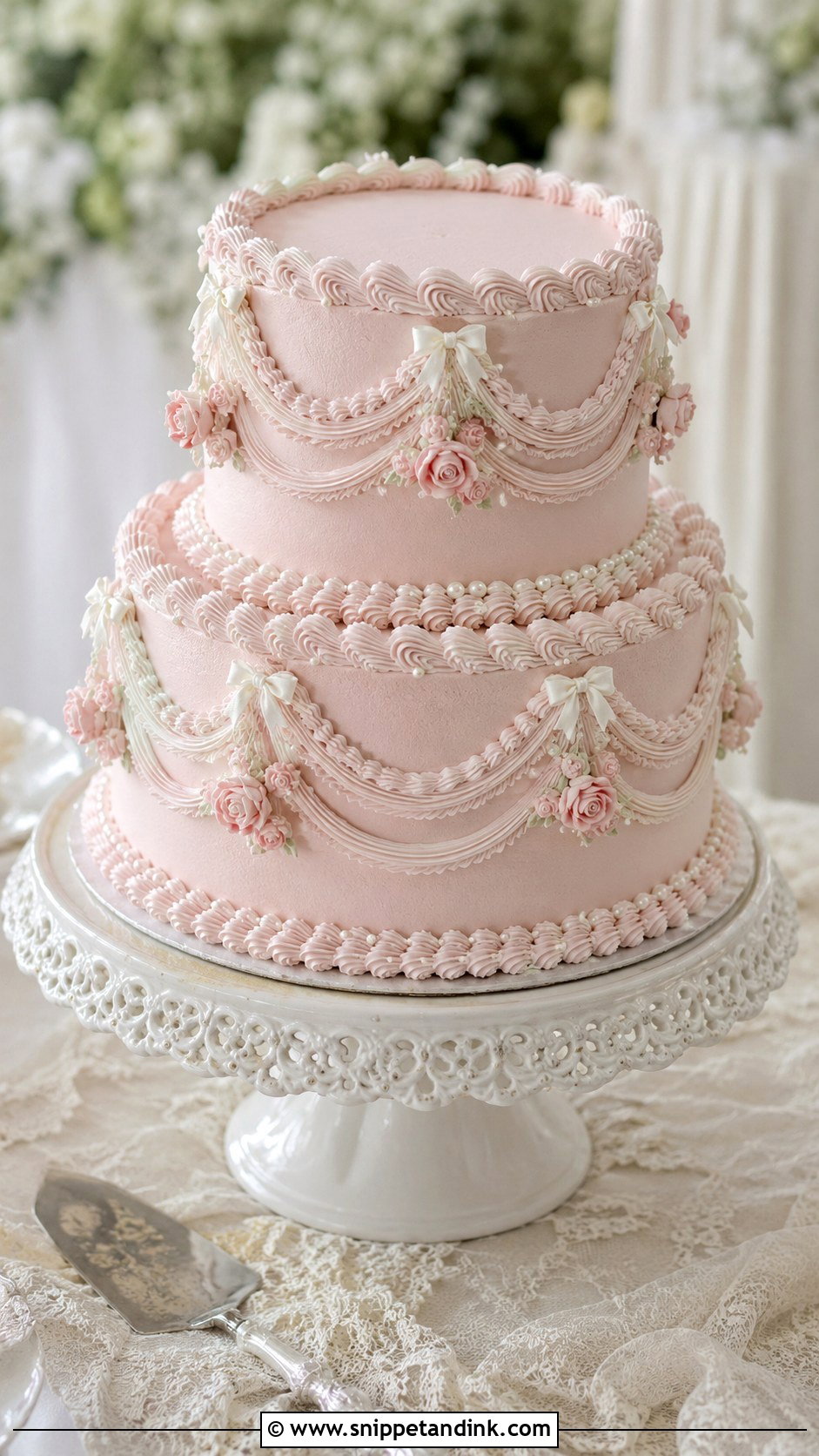
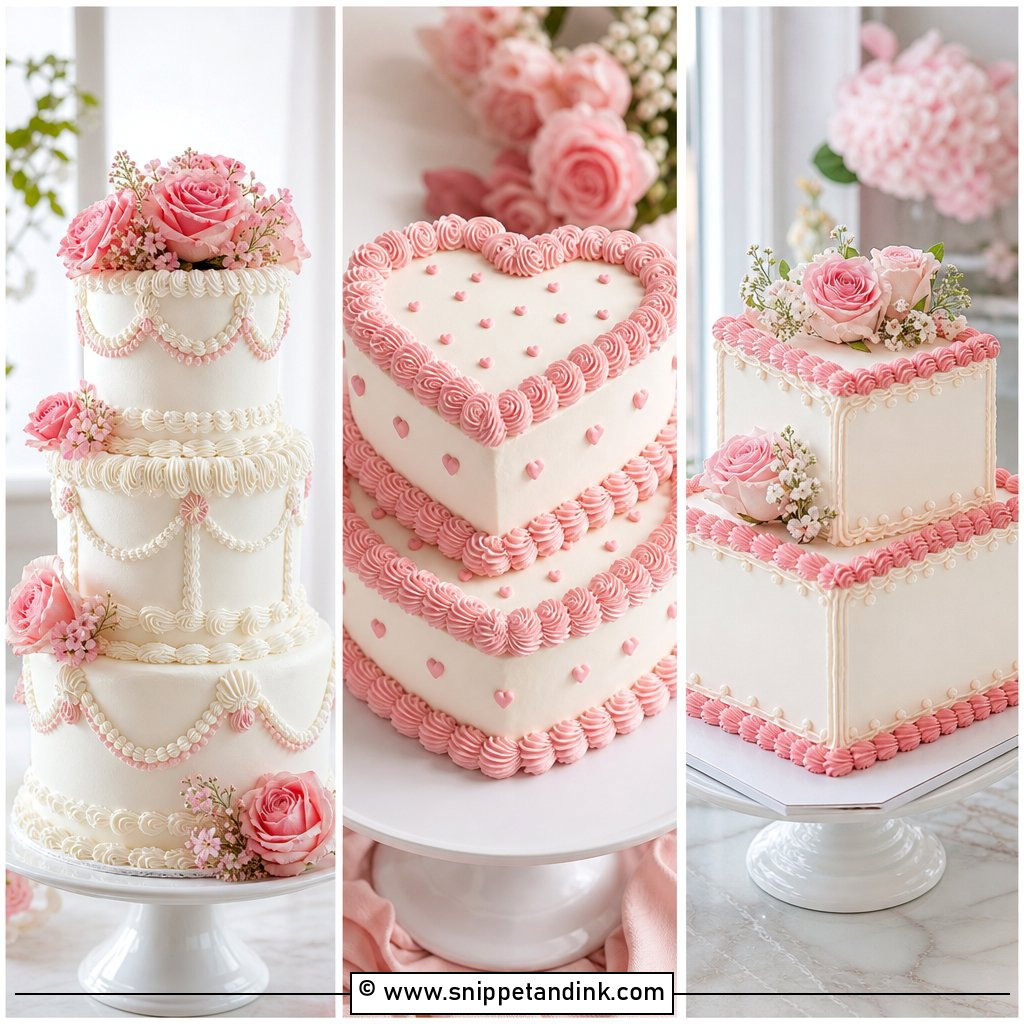
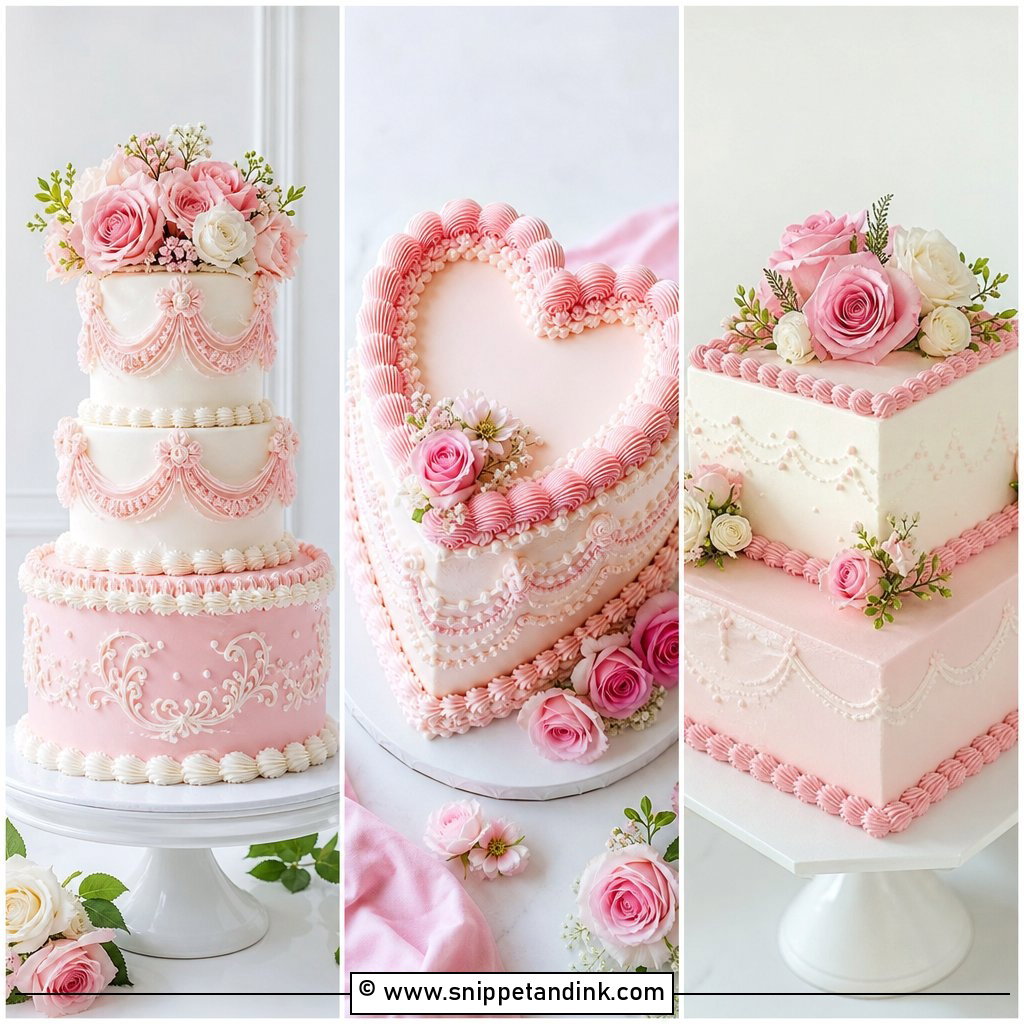
For a pink vintage wedding cake the piping does the work: shell borders, small rosettes, swags and tiny bows in soft blush buttercream. Neat matters more than busy, so I space the swags with a marking tool before I pipe a single line. A heart-shaped cake reads playful. Two or three round tiers look more traditional. Keep the pink muted, because bright pink with heavy piping tips into children’s party territory very quickly. Tea receptions and small indoor weddings are where I see this style land best.
9. Pink Watercolor Wedding Cake
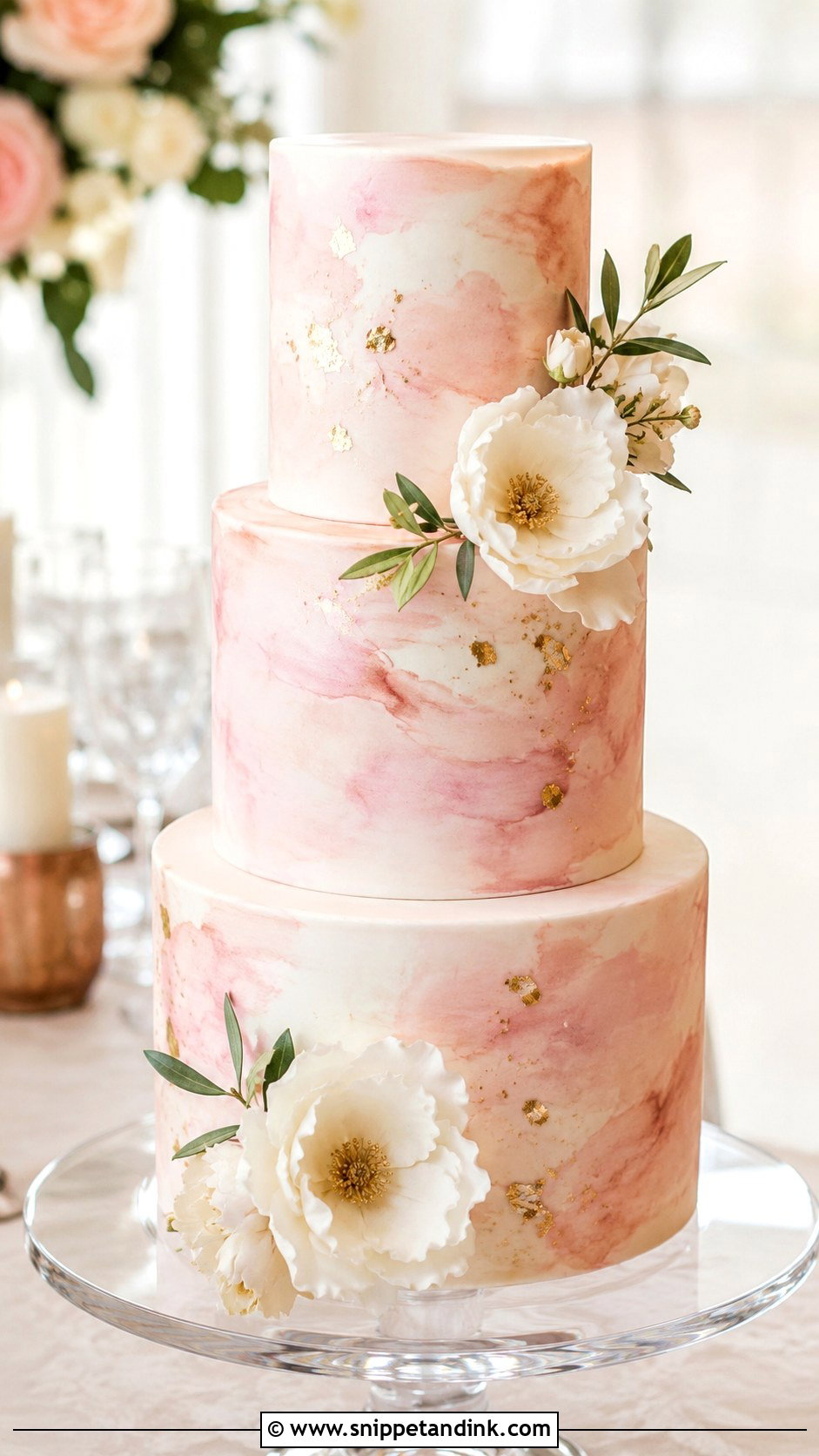
Watercolour pink is painted by hand, layer by layer, with diluted colour on fondant, which holds the brushwork far better than buttercream. I build the blush, rose and ivory washes slowly and let each one dry, because a wet stroke over a damp one muddies straight away. The risk is a heavy hand: harsh lines make it look like a mistake rather than a painting. A few white sugar flowers or a fleck of gold finish it. Airy, light-filled rooms show the soft layering at its best.
10. Pink Ruffle Wedding Cake
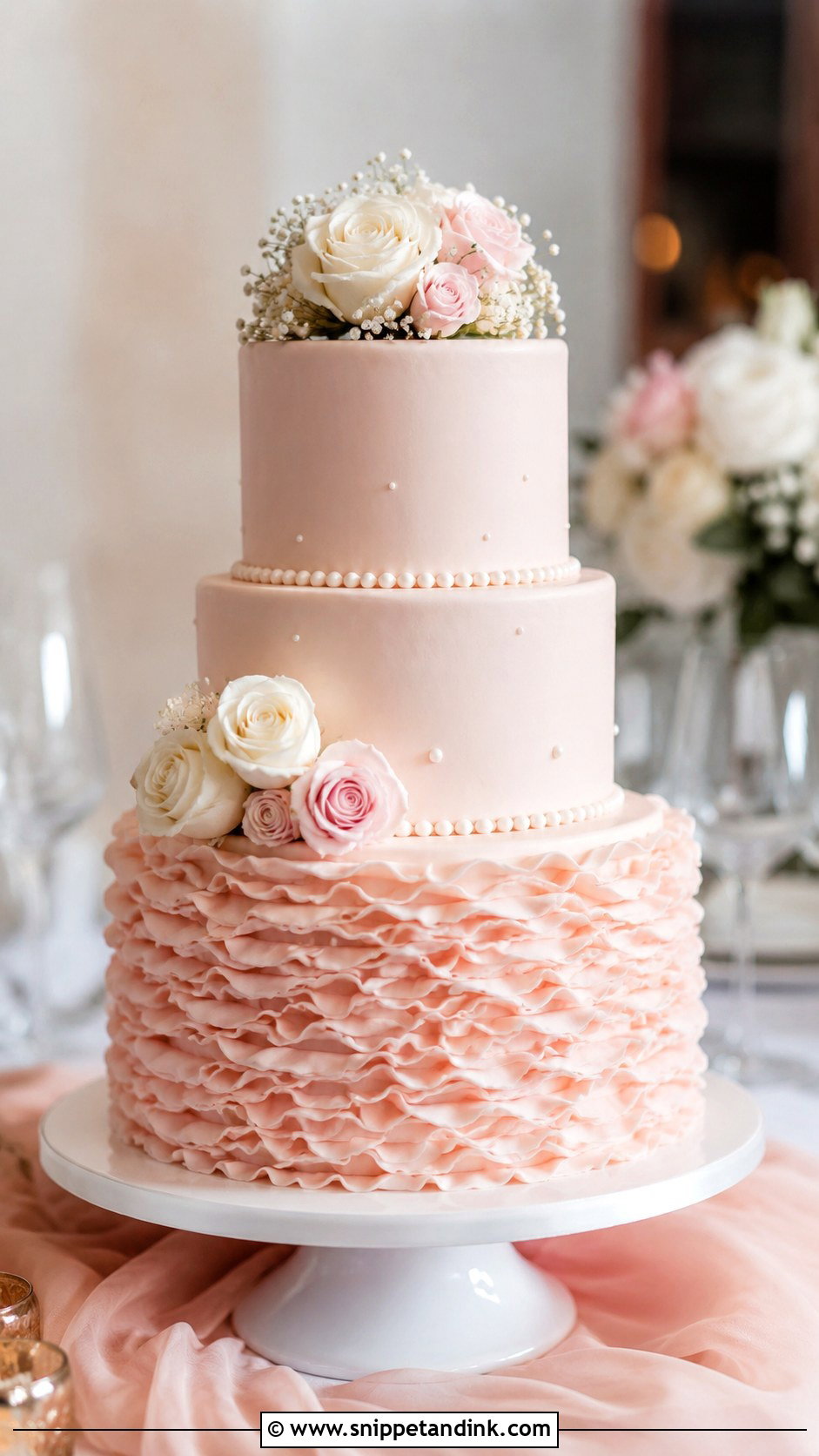
Ruffles can be made from fondant, wafer paper or buttercream, and each behaves differently. Wafer paper is the lightest and gives the most movement, but it reacts to humidity and can wilt on a muggy day. Fondant ruffles hold their shape but add weight. I usually ruffle one tier and keep the tiers around it smooth, because the contrast is what makes the texture read. A full ruffled cake is more dramatic and suits a dress with layers of tulle or chiffon.
11. Pink Marble Wedding Cake
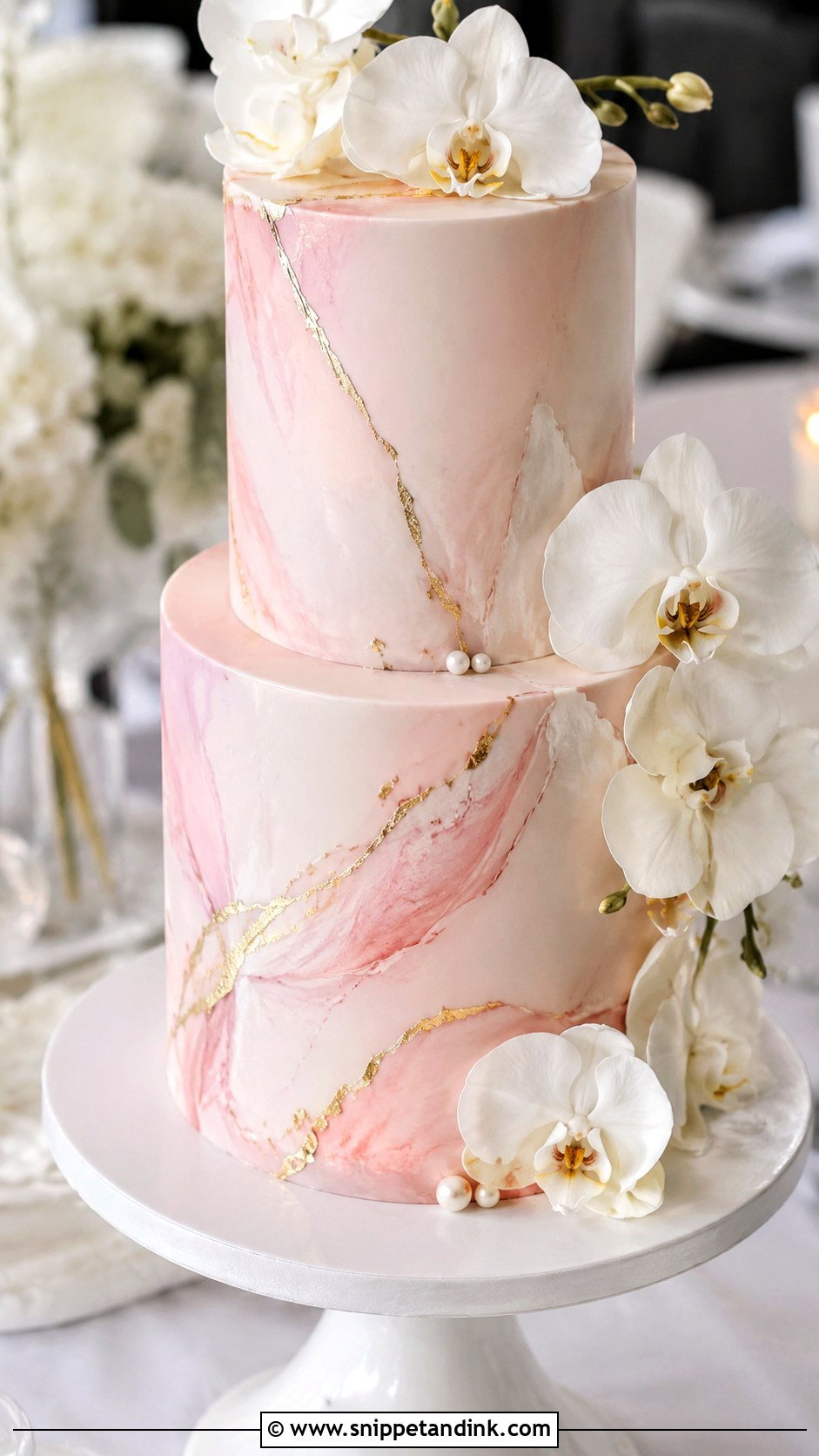
Marbling blush, ivory and a little dusty rose gives soft veining that looks a lot like natural stone. I do it on fondant, twisting coloured paste through white and rolling it out once, because overworking it turns the veins into a muddy pink. Two or three sharp tiers let the pattern show. Thin gold leaf along a vein or a couple of white orchids add the luxury note. Bright modern rooms and city venues suit it far better than a rustic barn.
12. Pink Champagne Wedding Cake
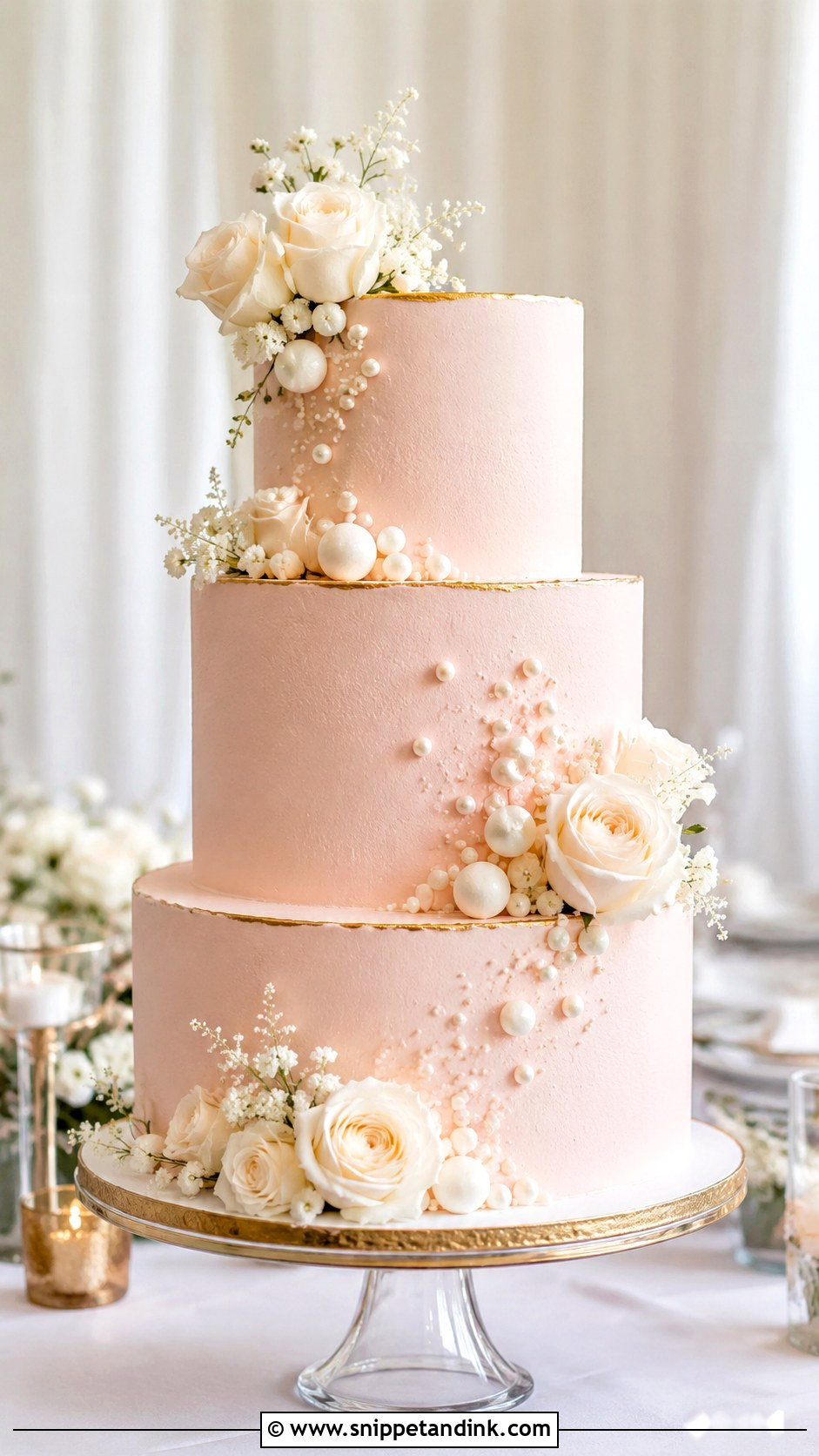
A pink champagne cake starts with the flavour, so I plan the inside first: pale pink sponge or champagne layers with raspberry, strawberry or vanilla filling. The alcohol mostly bakes off, but the taste stays, and I always confirm it with the couple at the tasting. Outside, a blush buttercream or fondant finish with sugar bubbles, pearls or a fine gold rim keeps it light. Spring weddings and couples who care about what is on the plate as much as the look tend to choose it.
13. Pink Peony Wedding Cake
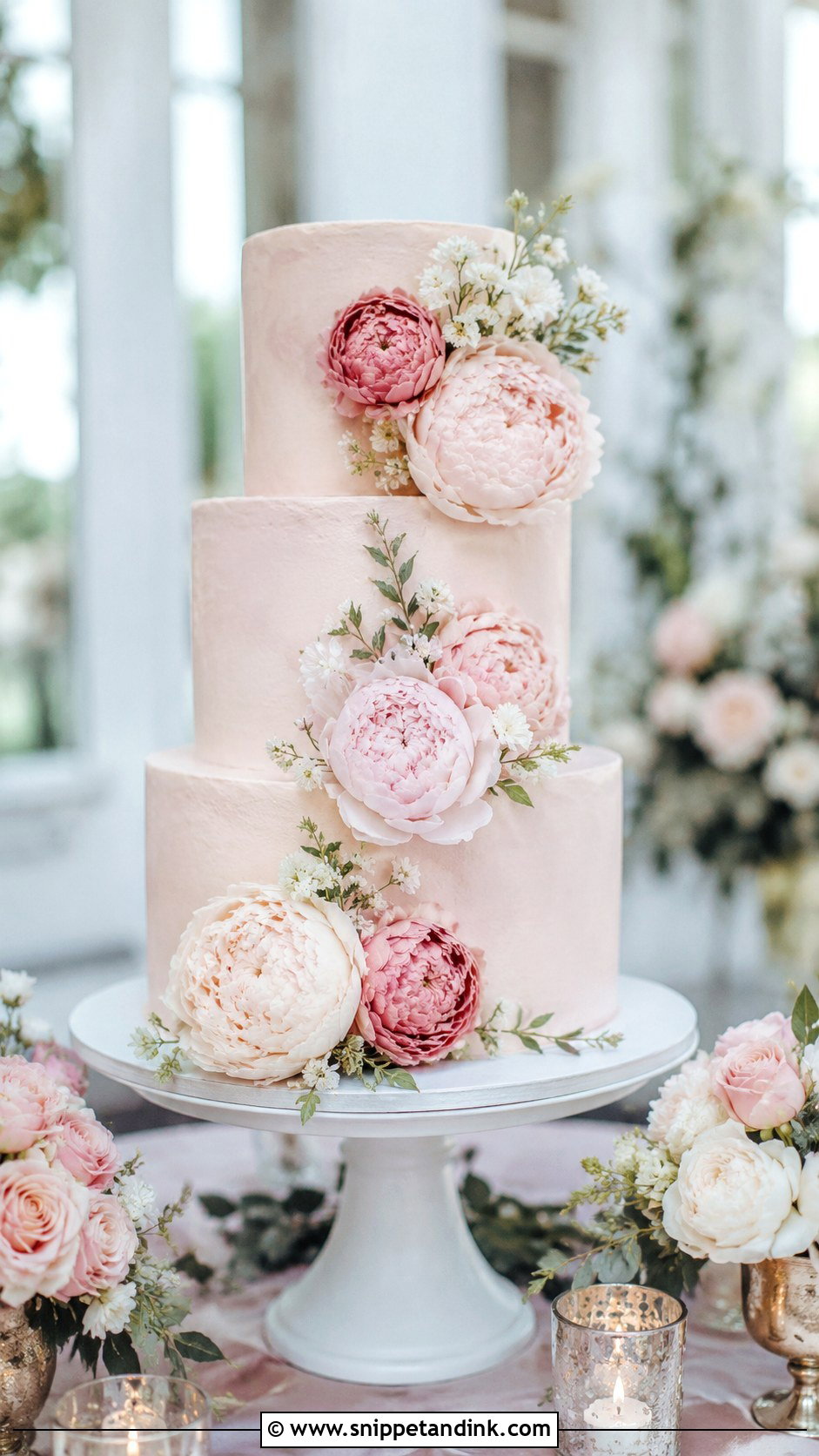
Peonies are big flowers, so you need fewer than you think. Three or four large heads placed diagonally across the tiers usually look better than a cake packed with blooms. The catch is the season: peonies are at their best in late spring, and outside that window they are costly or simply unavailable, so I suggest sugar peonies or a garden rose stand-in for autumn weddings. Ivory, pale pink and dusty rose together give a soft colour story against a clean buttercream or fondant base.
14. Pink Lace Wedding Cake
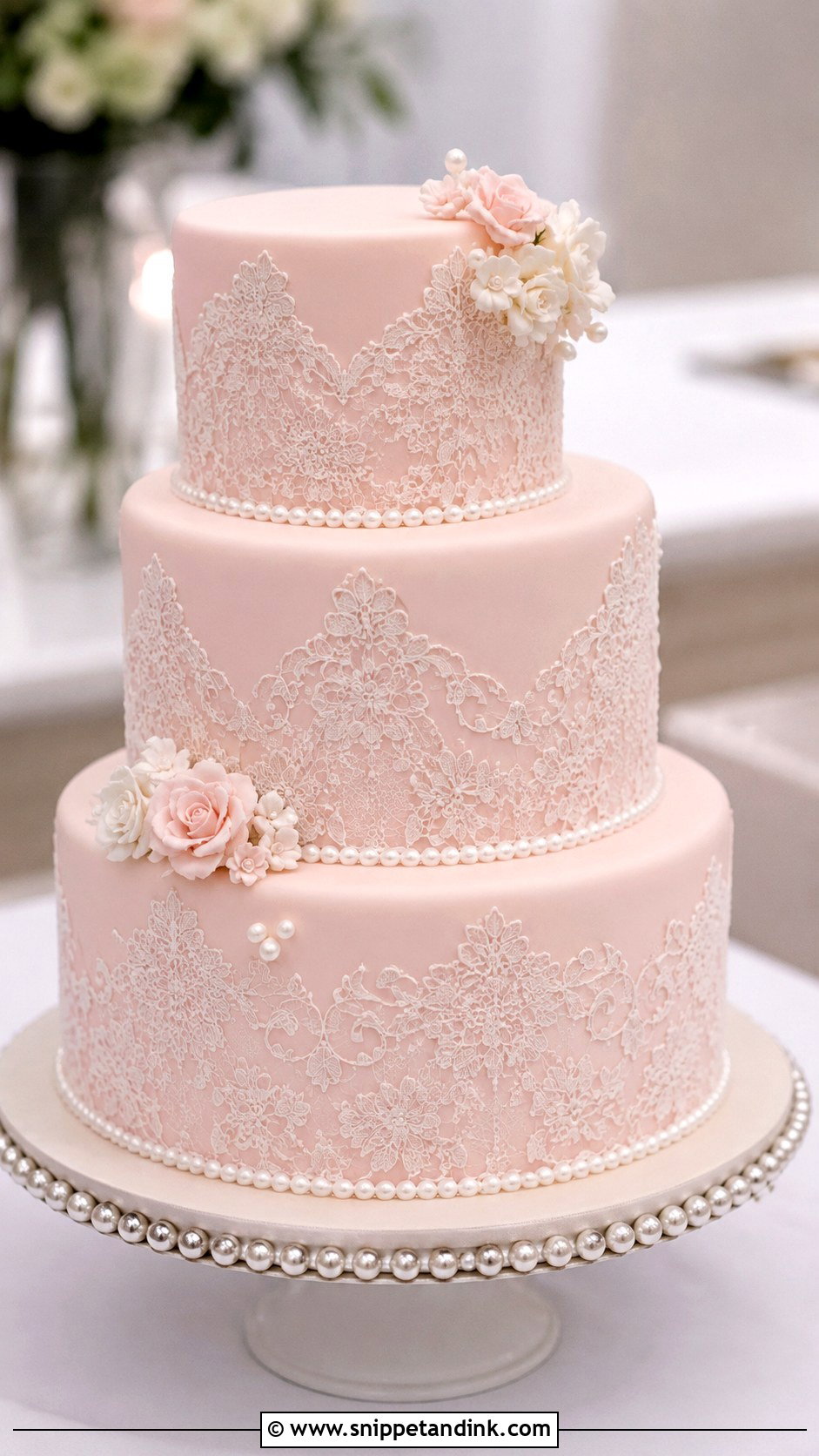
Lace on a cake can echo the lace on the dress, which is why I often ask brides to bring a photo or a fabric swatch. Edible lace comes from a silicone mat, royal icing lace is piped by hand, and fondant can be impressed with a lace mould. Ivory lace on a pale pink base shows up gently. I keep it to one or two tiers, as a fully laced cake starts to look like upholstery. A few pearls or small sugar flowers are all it needs, and it suits formal weddings well.

15. Pink Square Wedding Cake
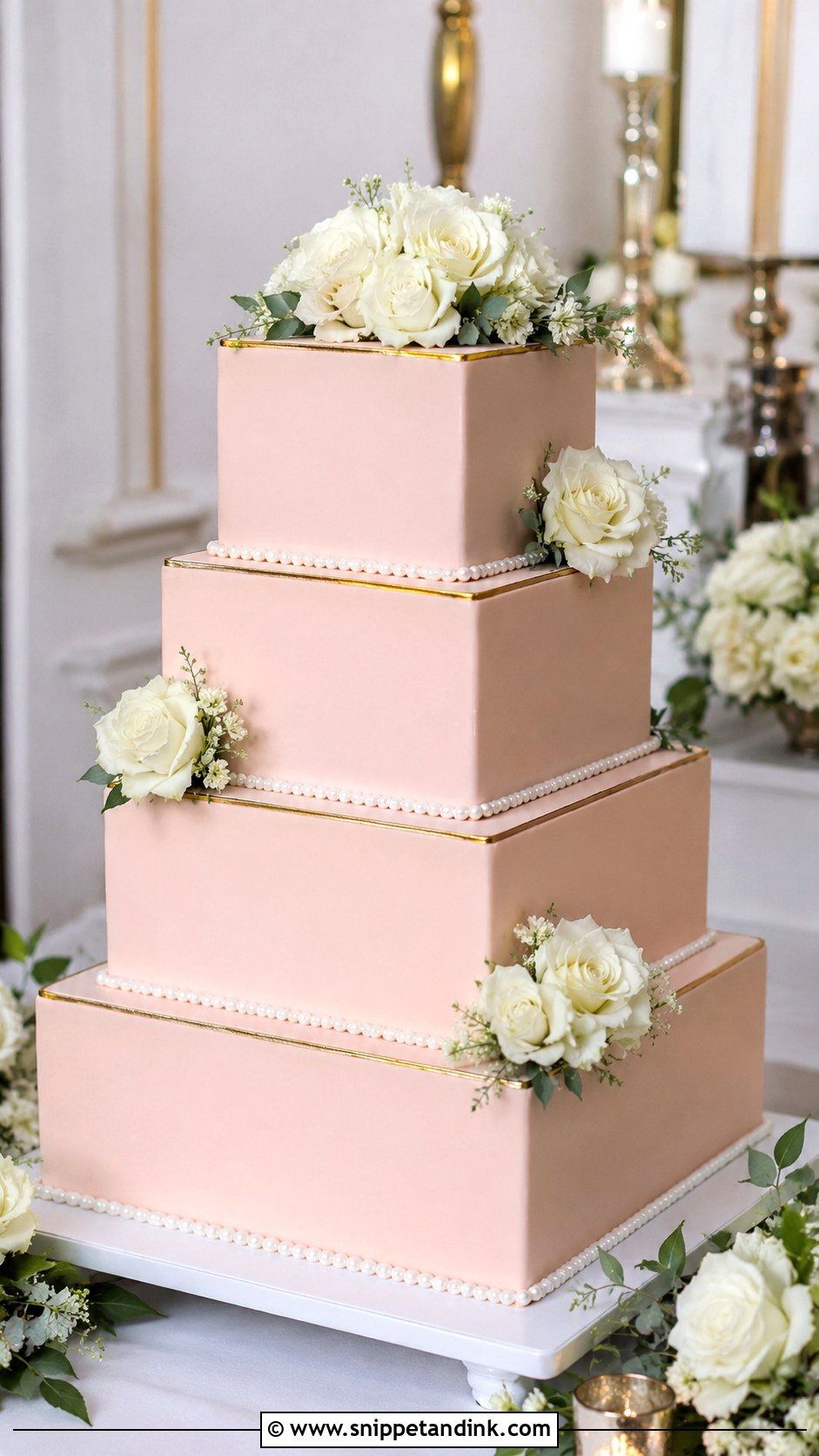
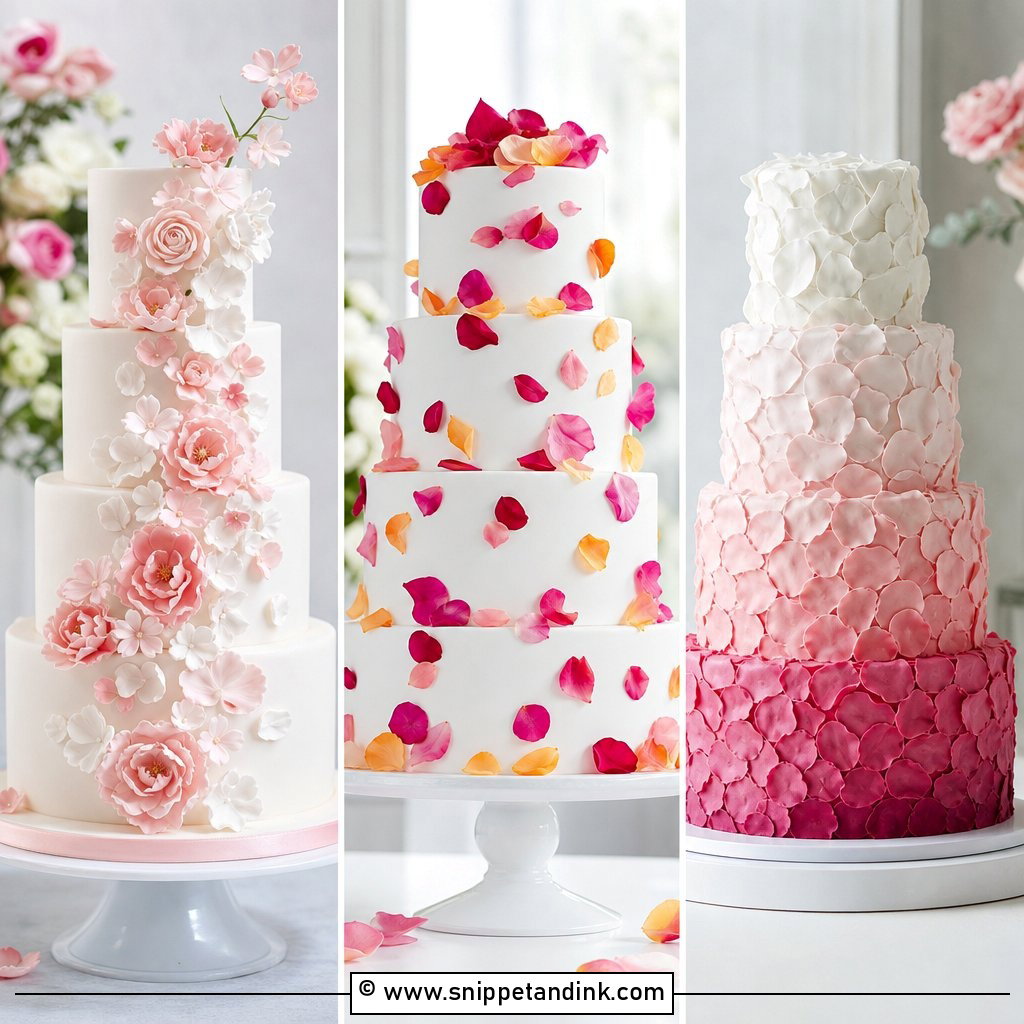
Square tiers give pink a modern, architectural outline. They are harder to cover than rounds: the fondant has to be eased into each corner without tearing or pleating, and a soft corner shows straight away. Pale blush fondant is the right finish here, since the crisp edge is the whole point. Decoration can be white flowers at the corners, thin gold lines, a pearl border or one arrangement on top. Pair it with clean tablescapes and structured florals, as it looks out of place among loose wildflowers.
16. Pink Drip Wedding Cake
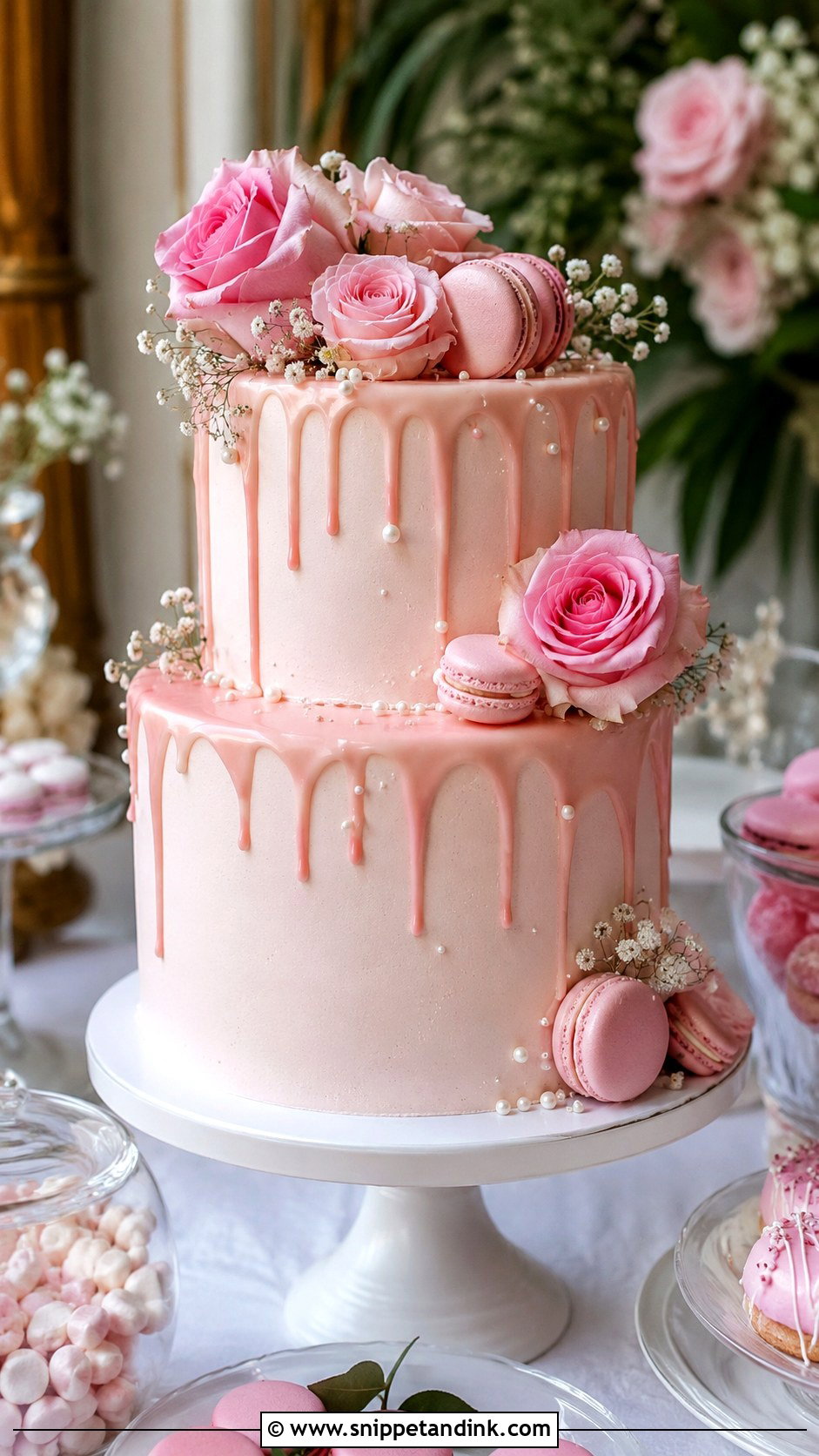
A pink drip wedding cake stays elegant when the drip is controlled. I use white chocolate ganache tinted rose, ivory or soft gold over blush buttercream, and I test the temperature on the side of a cold cake first: too warm and it races to the board, too cool and it stops in stubby blobs. Slightly uneven lengths look natural. Fresh roses, macarons or berries on top finish it. It is a relaxed design, at home on a garden dessert table.
17. Pink Geode Wedding Cake
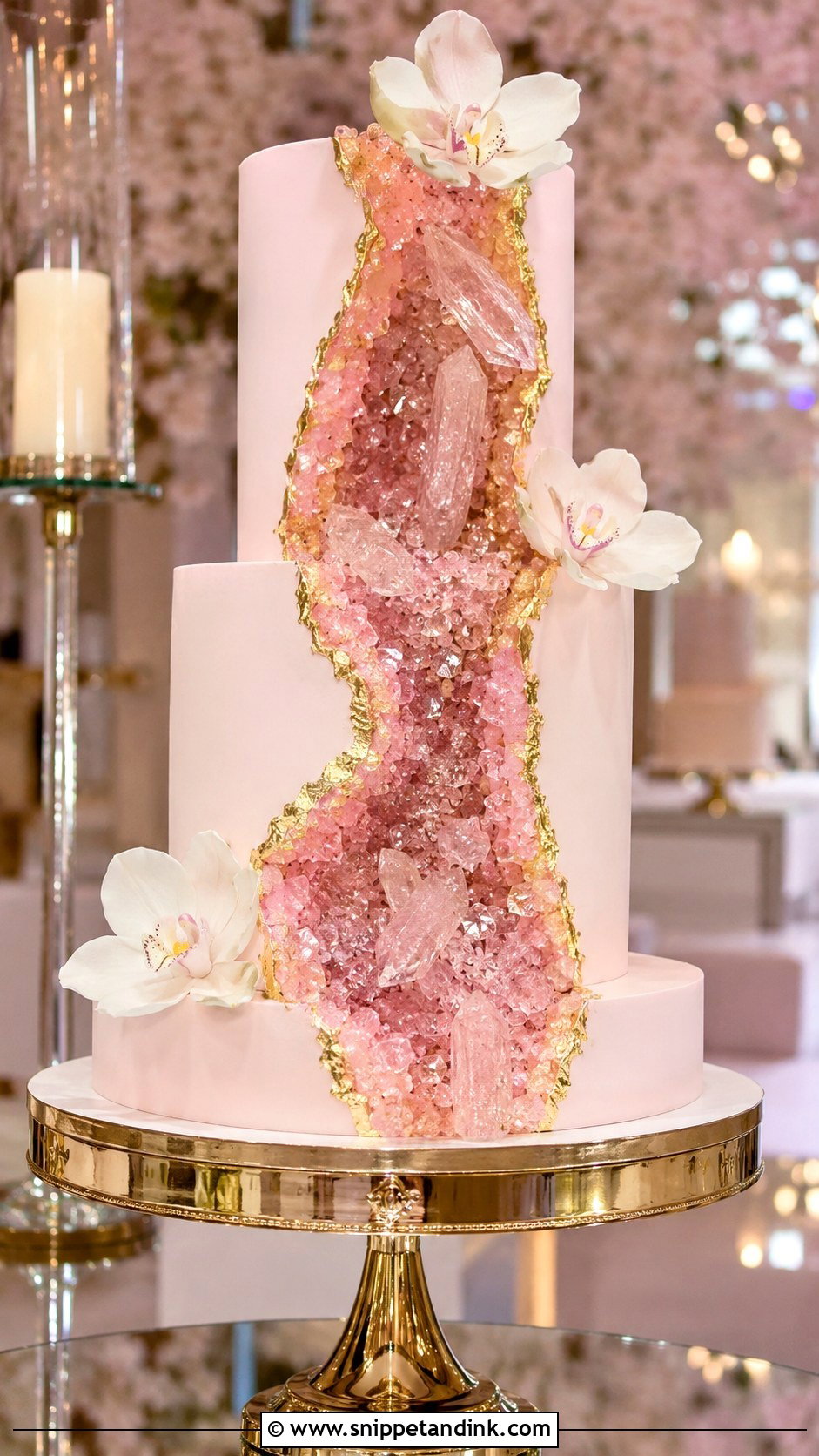
The geode is cut into the cake and filled with rock candy or isomalt crystals in blush, rose and clear tones, so it needs a firm cake and a solid covering around it. A smooth white or pale pink fondant base makes the crystals look deliberate. I edge the opening with gold to give it a definite frame. Flowers stay minimal, since the geode is already the focal point. I’d steer you away from it at an outdoor summer wedding, as sugar crystals turn sticky and lose their sparkle in humid air.
18. Pink Single Tier Wedding Cake
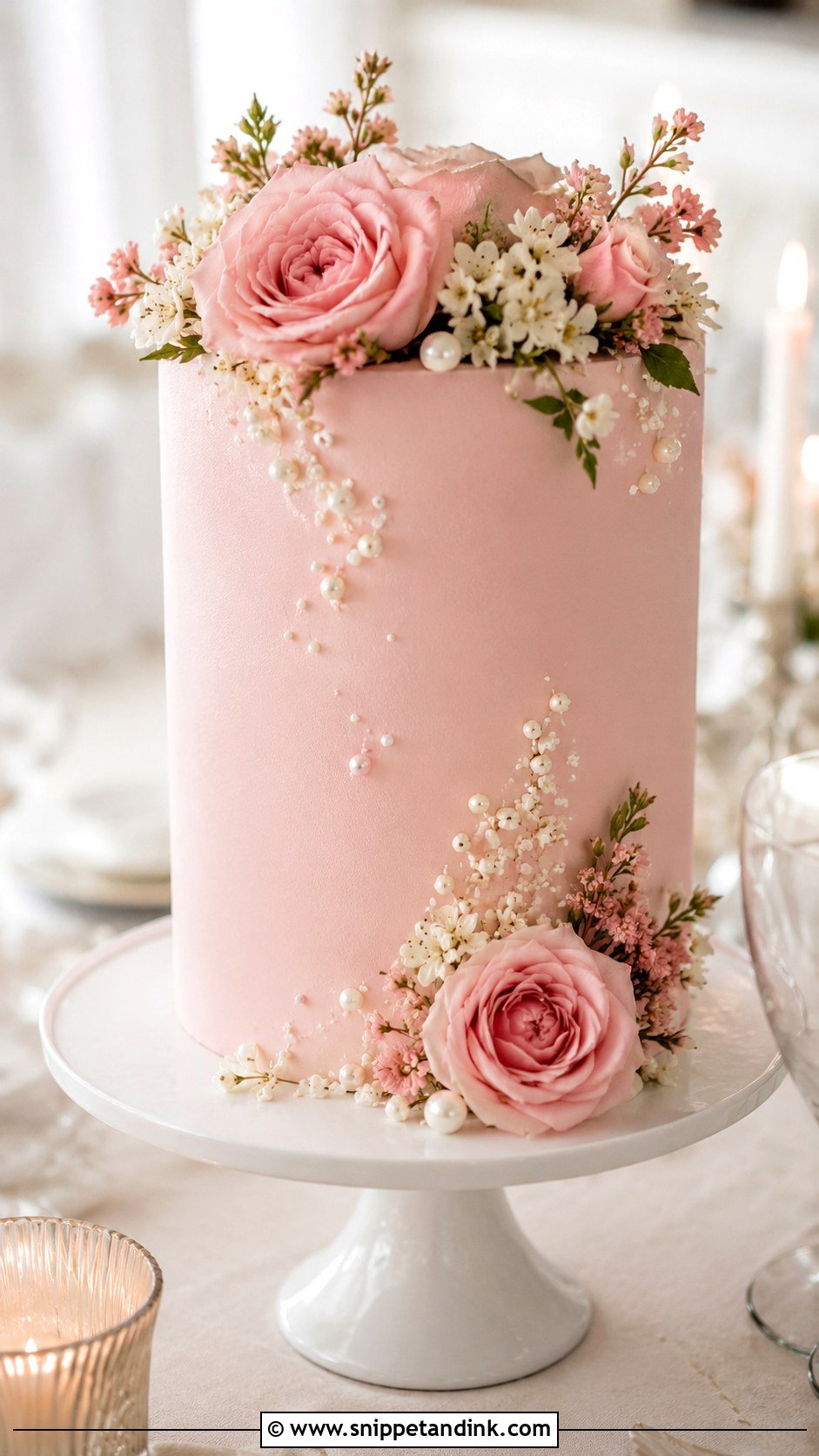
A pink single tier wedding cake can hold its own on a small table when it is made tall. I often build a double-height tier, which gives presence without adding a second cake. It suits courthouse weddings, intimate dinners and couples who serve kitchen sheet cake to the rest of the guests. Smooth blush buttercream, fresh roses, pearls or a small floral crown all work, and a textured finish adds interest without height. Set it on a raised stand with a ring of flowers at the base.
19. Pink Three Tier Wedding Cake
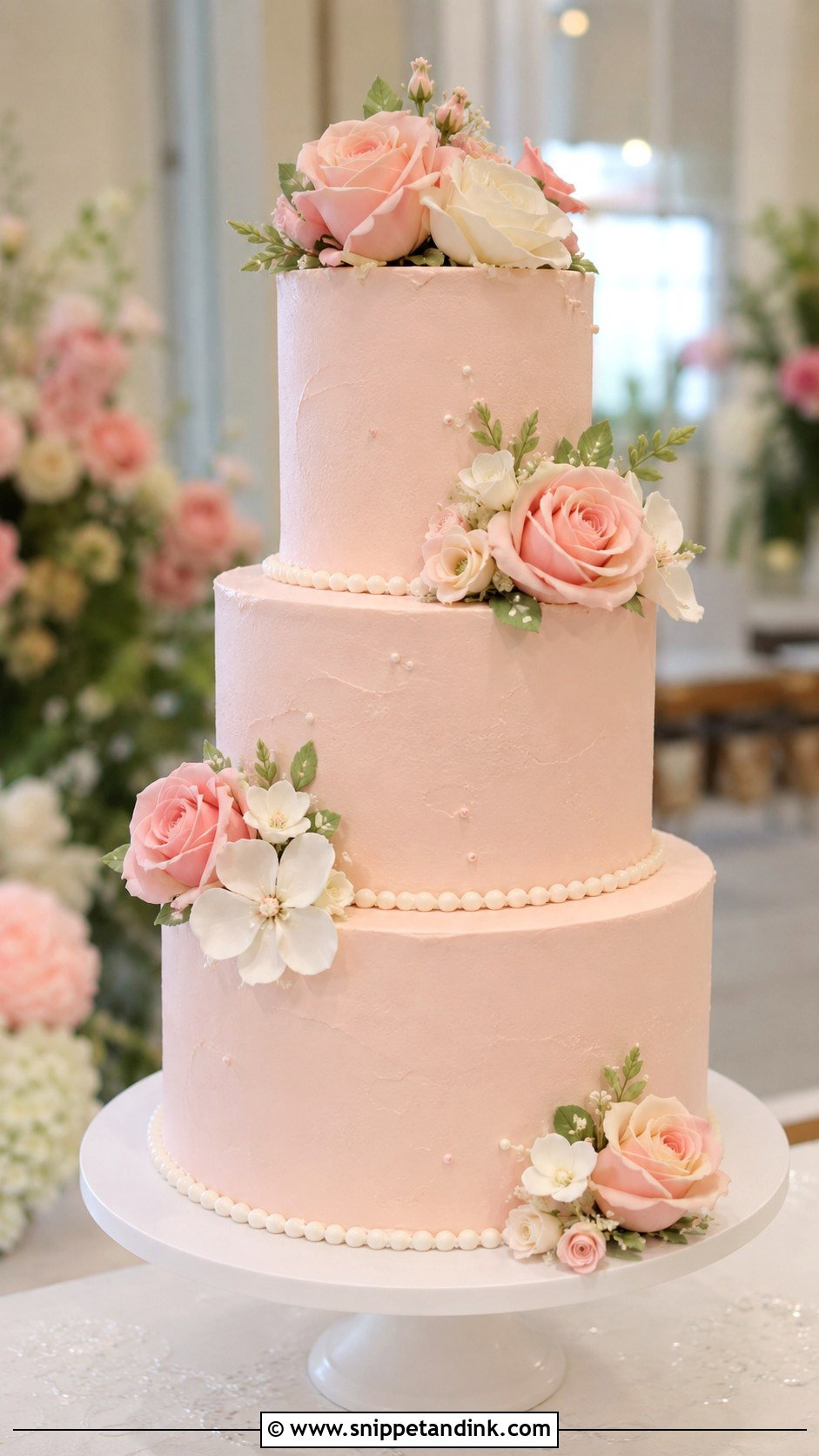
Three tiers is the size I recommend most, because it has height without dominating the room. The tiers can be smooth, textured, ombre or mixed with ivory. My advice is to choose one decorative idea and repeat it lightly up the cake, such as sugar roses with a pearl border. The guest count still decides the tier sizes: a three tier cake can serve a modest wedding or a fairly large one depending on how wide the bottom tier is, so give your baker the number early.
20. Pink Minimalist Wedding Cake
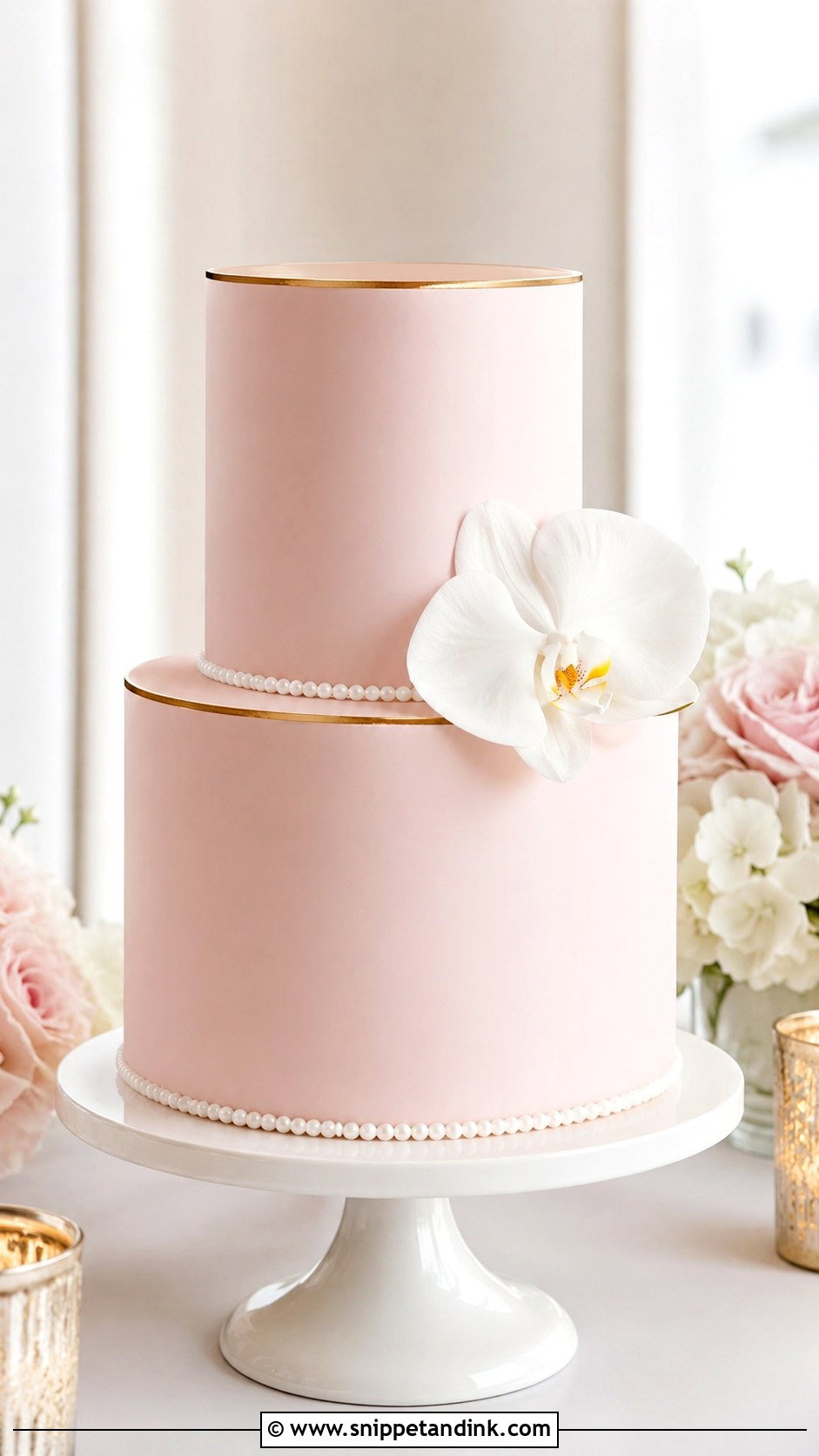
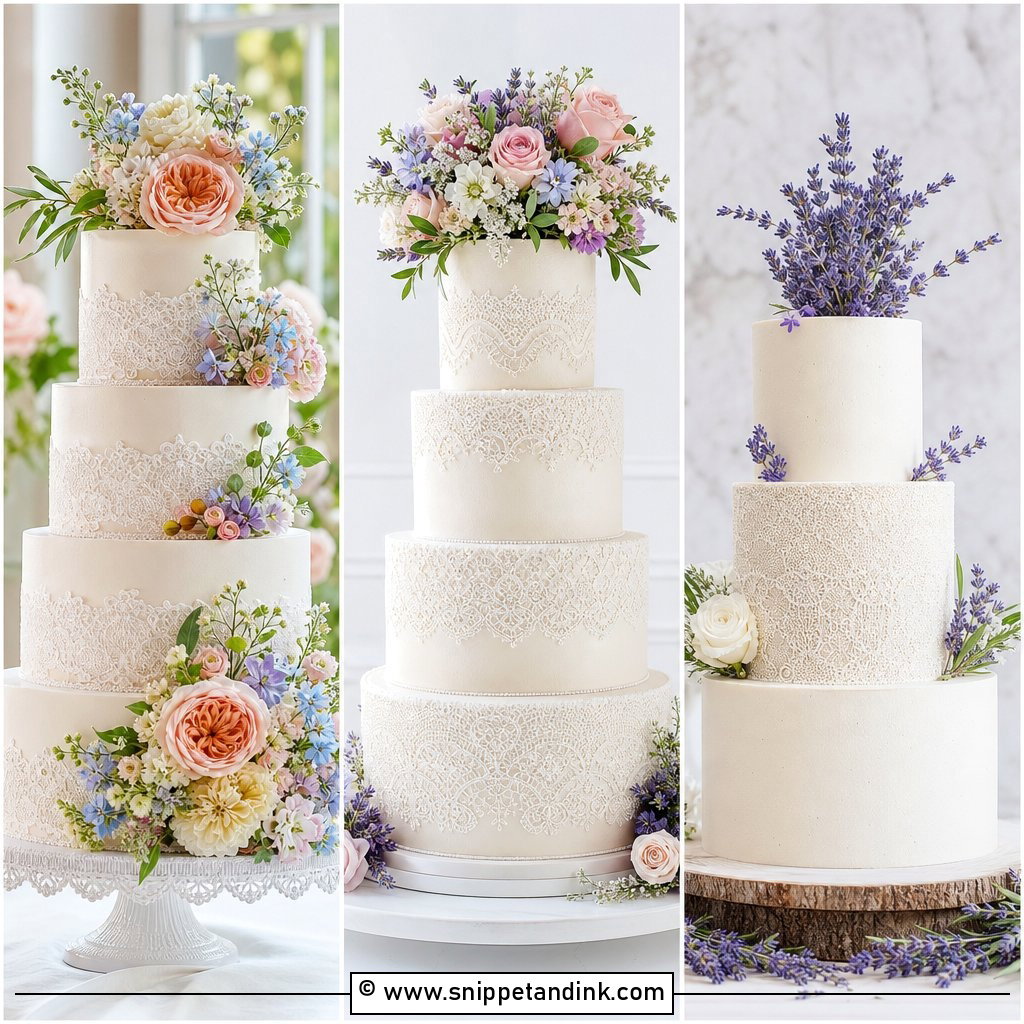
A minimalist pink cake depends entirely on finish, and that is why it is harder than it looks. Sharp edges and smooth sides on two or three pale blush tiers leave nowhere to hide an air bubble or a dent, so I give these cakes extra chilling and smoothing time. One detail is enough: a single white orchid, a small cluster of roses, a thin gold rim or a pearl border. Gallery spaces, rooftops and modern venues suit it, and it rewards a couple who trust restraint.
From My Kitchen to Your Cake Table Without a Sagging Tier
A cake is at its most vulnerable between my door and the venue. Tall tiers are supported with dowels and a central rod, and for anything over three tiers I usually stack on site. The cake travels chilled, flat on a non-slip mat in an air-conditioned car, never on a seat. Buttercream starts to soften once the room gets warm, so on hot days I ask for the cake to be placed indoors and away from heaters, kitchens and the dance floor lighting.
How far ahead to book a pink design
Sugar flowers, hand-painted watercolour and piped lace all take hours of drying and detail work, so I make sugar roses and peonies weeks before the wedding. Many cake designers take a limited number of wedding cakes each weekend, and popular dates fill months ahead, so I’d enquire as soon as you have a venue and a rough guest count. Leave the final numbers and flavours until about a month out.
If fresh flowers are going on the cake, agree with your florist who brings them and who places them. I prefer to place them myself, wrapped and in picks, once the cake is stacked, so nothing sits on the icing for longer than it needs to.
Matching Your Pink to the Room It Will Stand In
Pink cakes work at every scale, from one tall tier to a cascading centrepiece, but they all depend on the shade being right for your palette and your light. Bring your colour swatches and a photo of the venue to the tasting, settle on blush, dusty rose, mauve or petal pink, and then choose the single finish that carries the design: flowers, pearls, lace, gold or texture. When the details are kept to one idea, a pink cake looks warm and considered rather than sugary.
You'll Like These Ideas:





Leave a Reply