
Back hand mehndi is the side everyone sees: when you hold a cup, adjust a dupatta or show off a ring, it is the back of the hand facing the camera. The aesthetic back hand mehndi designs I enjoy drawing most rely on clean spacing, confident outlines and motifs that leave some skin showing. Below are thirty layouts, from Arabic florals and mandala centres to jewelry chains, jaali, geometric work and minimal finger detail. Some are bridal; others take twenty minutes and suit Eid, Diwali or an engagement. I’ve added notes from the cone on how each one behaves once it stains.
Skin on the Top of the Hand Takes Henna Differently
The palm stains the darkest, and the back of the hand never quite catches up. Henna dyes the outer layer of skin, and the palm has a much thicker outer layer than the top of the hand, so it holds more colour. The back of the hand tends to give a lighter, warmer brown. I design for that rather than against it.
- Outlines go slightly thicker than on a palm, because hairline strokes can stain so faintly they vanish.
- Fine filling is kept for small areas. Wide patches of tiny mesh stain unevenly and look smudged from a distance.
- Knuckles crease, so I keep important motifs off them or draw them while the fingers are straight and relaxed.
- Fingertips and the sides of fingers stain darker, which is why finger detail often looks richer than the centre of the hand.
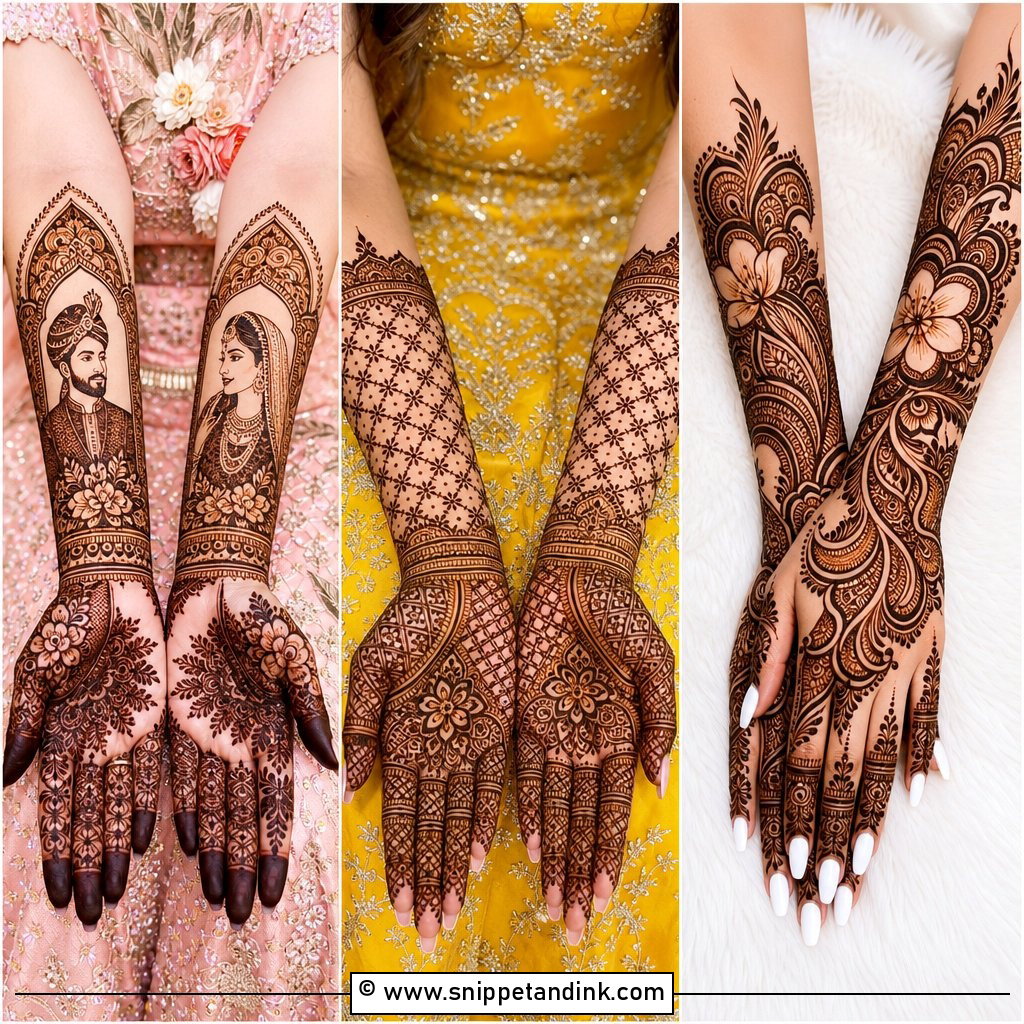
For a wedding or festival, I apply one or two days before the main event. A fresh stain starts bright orange and needs that time to deepen.
1. Simple Back Hand Mehndi Design
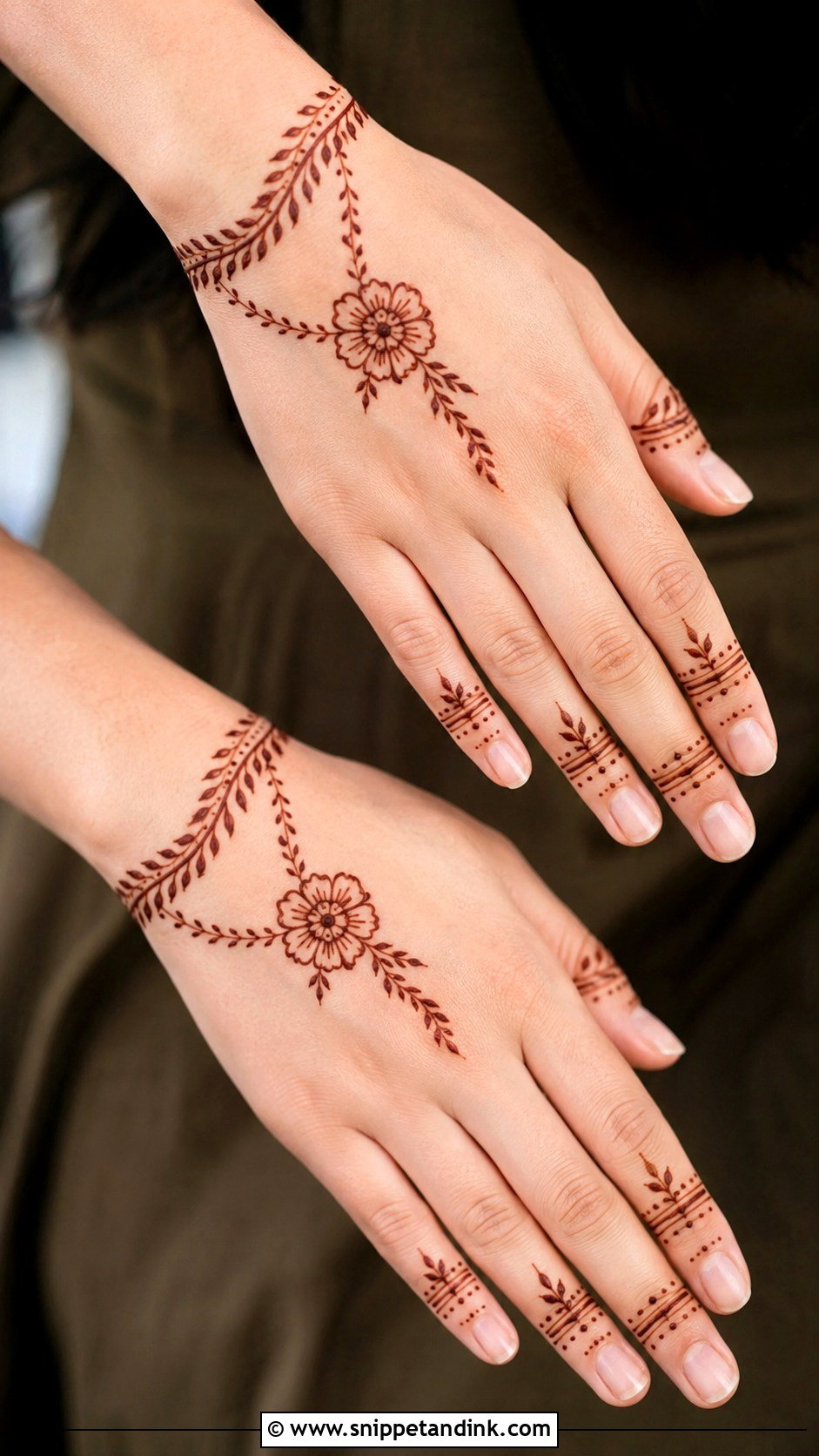
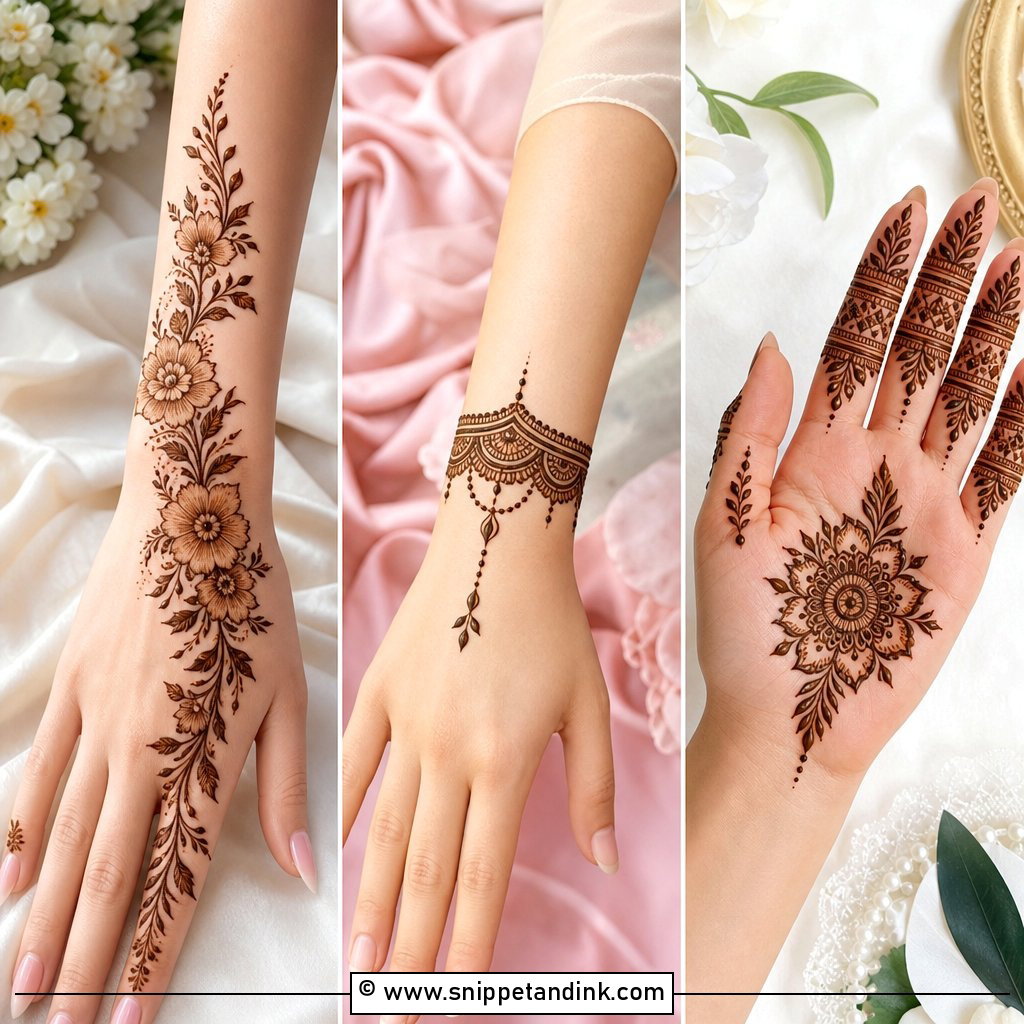
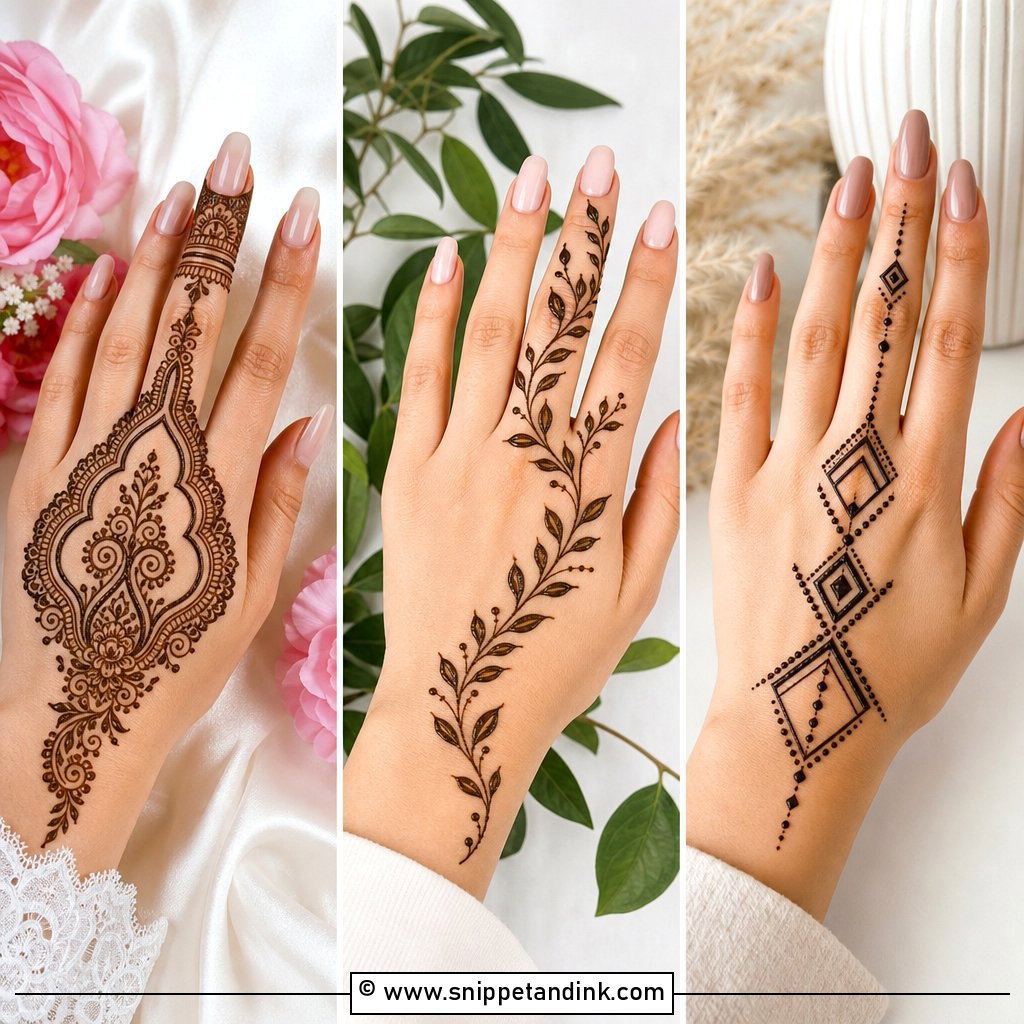
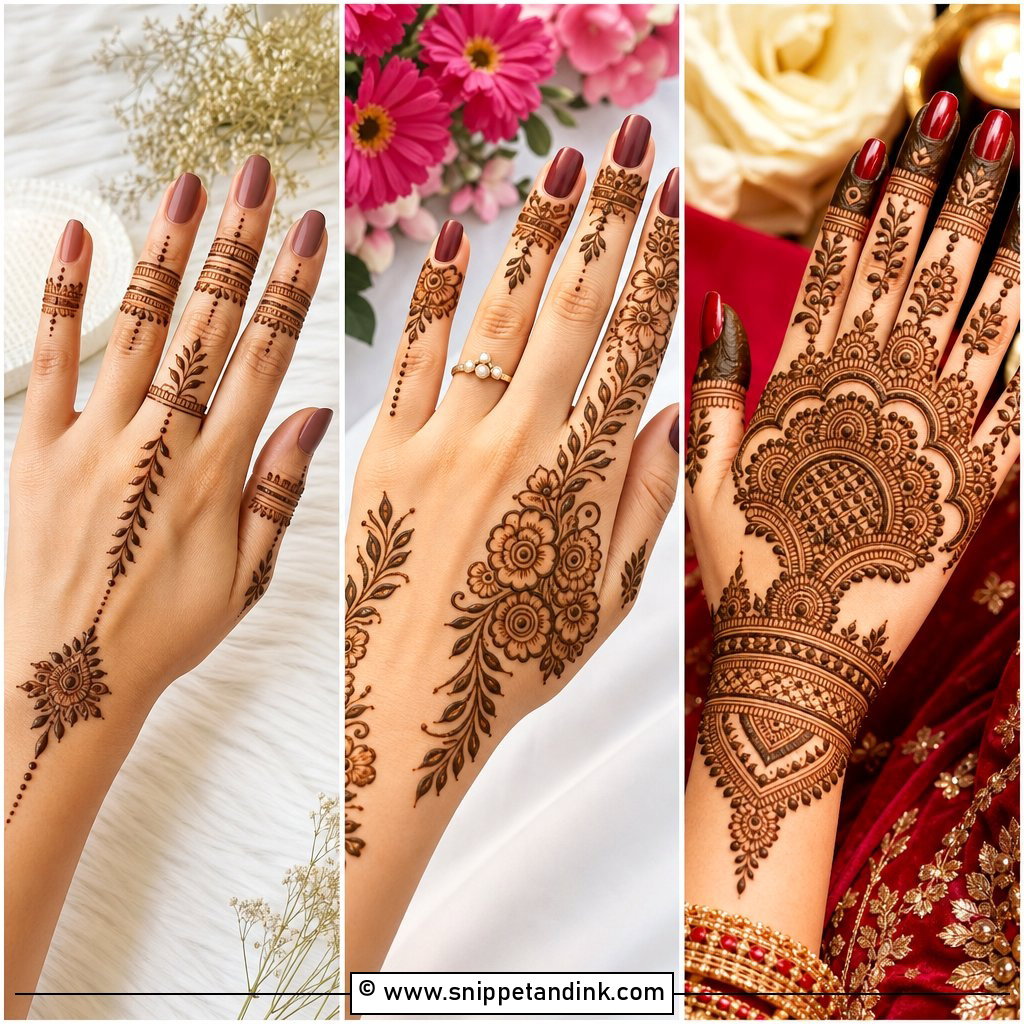
A simple back hand mehndi design usually starts with one small motif, a flower, a little mandala or a paisley, placed slightly off centre. From it I pull thin vines toward the fingers and the wrist, and leave plenty of skin bare. Fingers get small bands, dots and leafy tips instead of dense filling. It is the layout I suggest to anyone practising at home, because one motif and a few lines are easy to keep even. Short sessions also mean less smudging at a busy family event.
2. Arabic Back Hand Mehndi Design
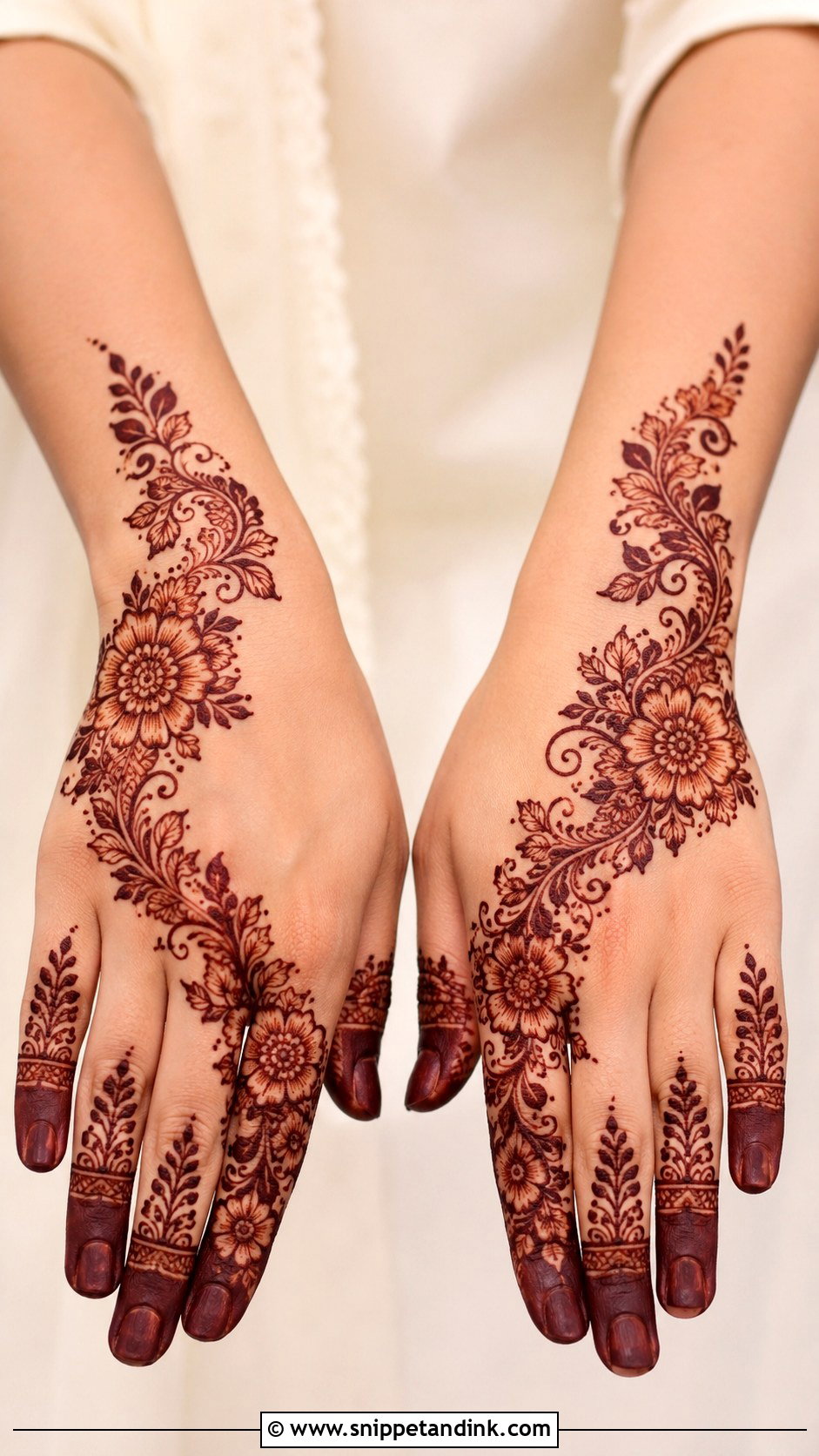
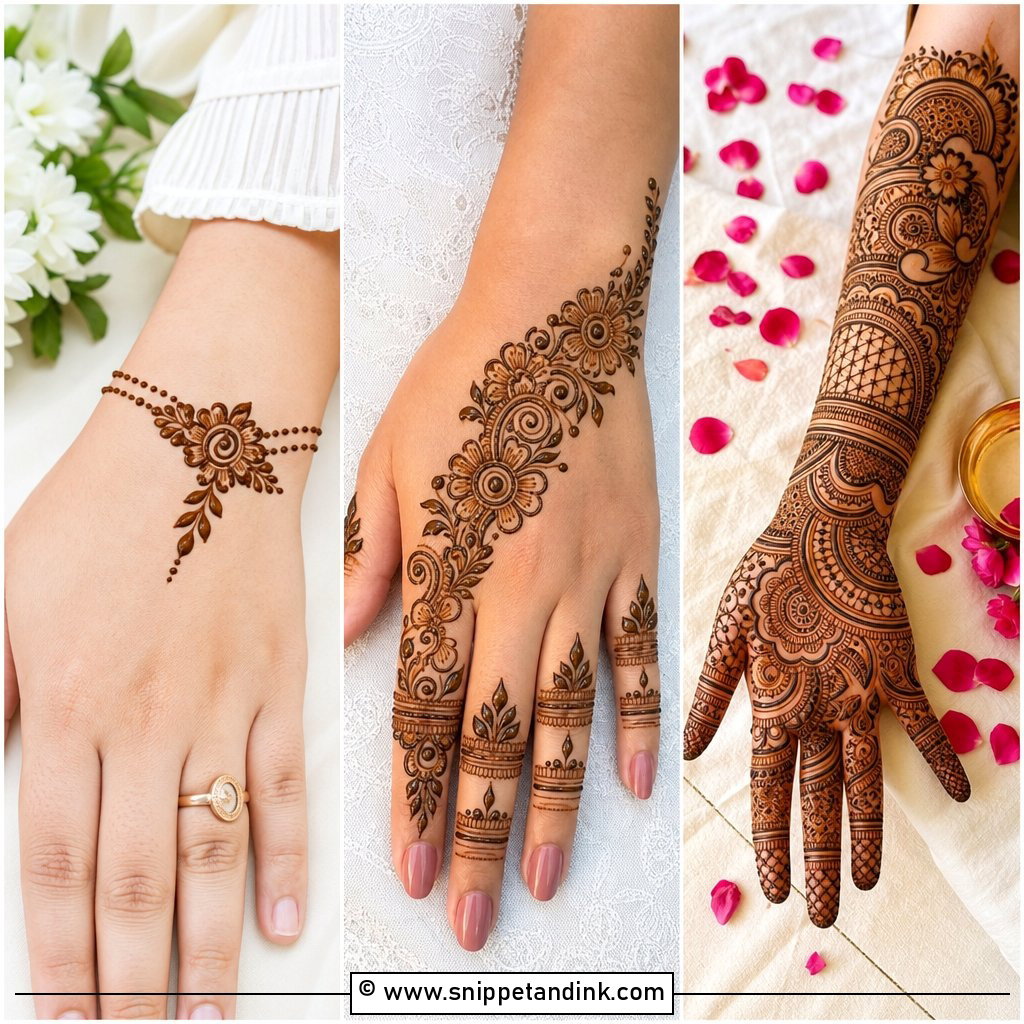
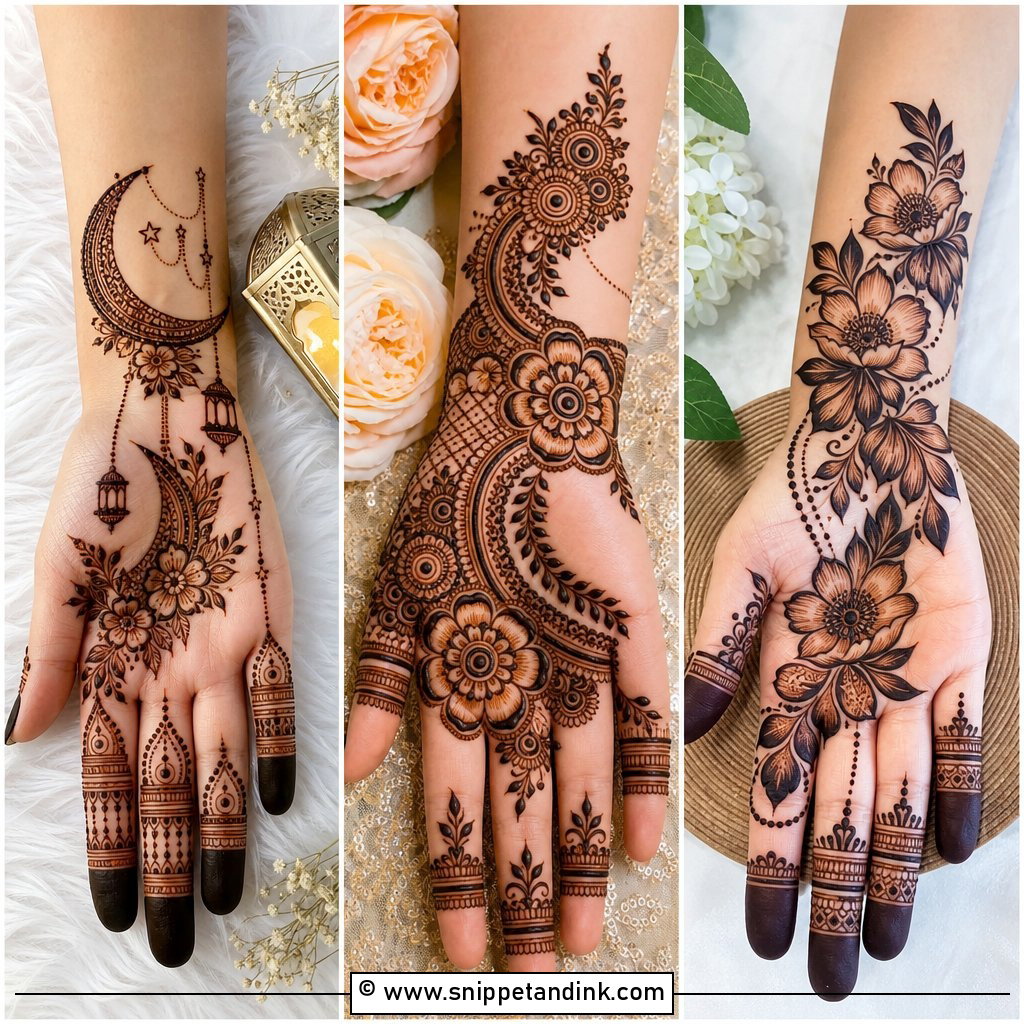
Arabic work on the back of the hand runs on a diagonal, from the wrist toward one or two fingers, rather than covering everything evenly. I draw large flowers, curved stems and paisleys with a slightly thicker outline than I’d use on a palm, because the back of the hand stains lighter and fine lines can disappear. The empty skin between motifs matters as much as the drawn parts. Shading a few petals gives depth. Once the stain darkens, the bold outlines read clearly from a distance.
3. Mandala Back Hand Mehndi Design
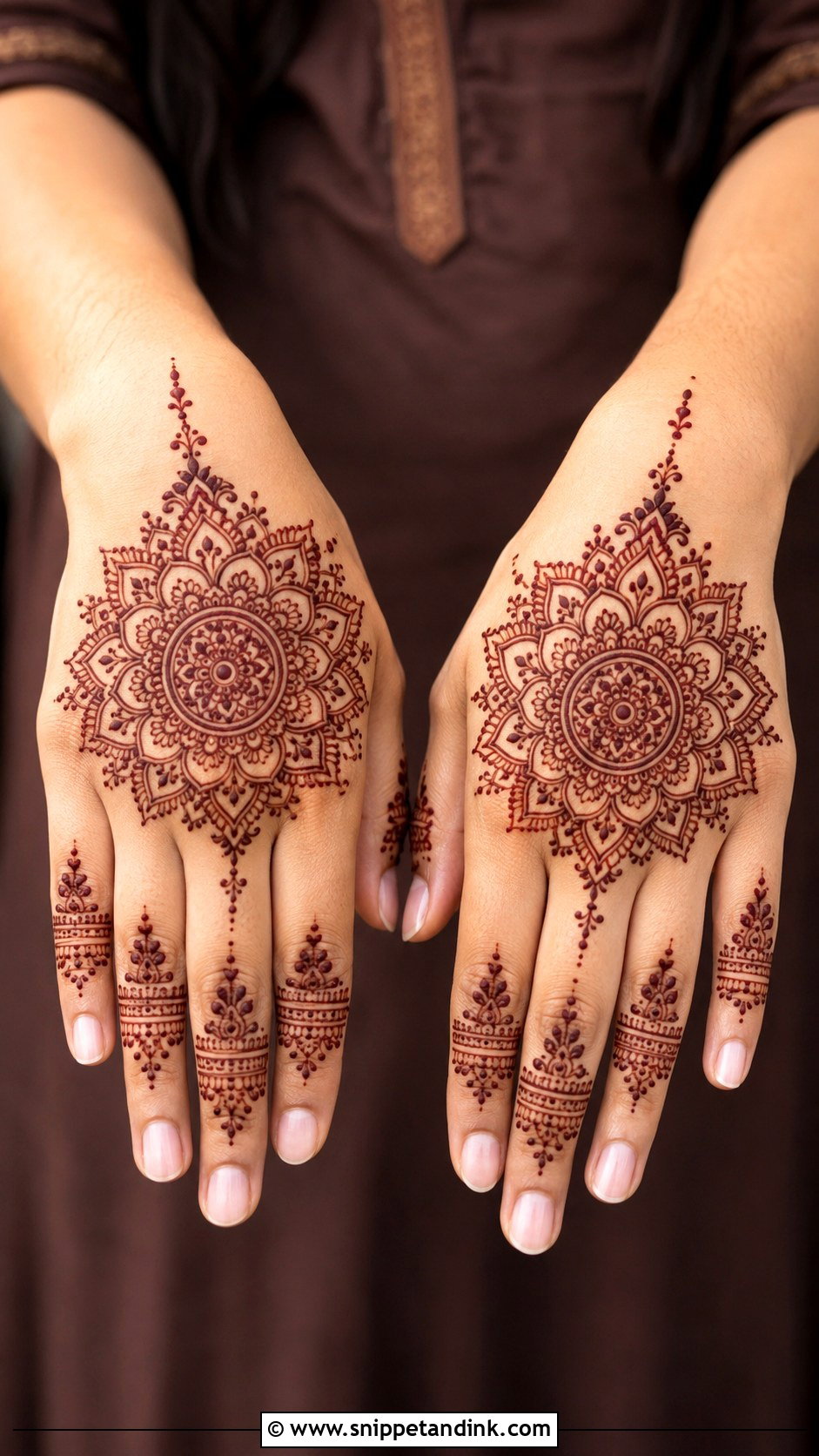
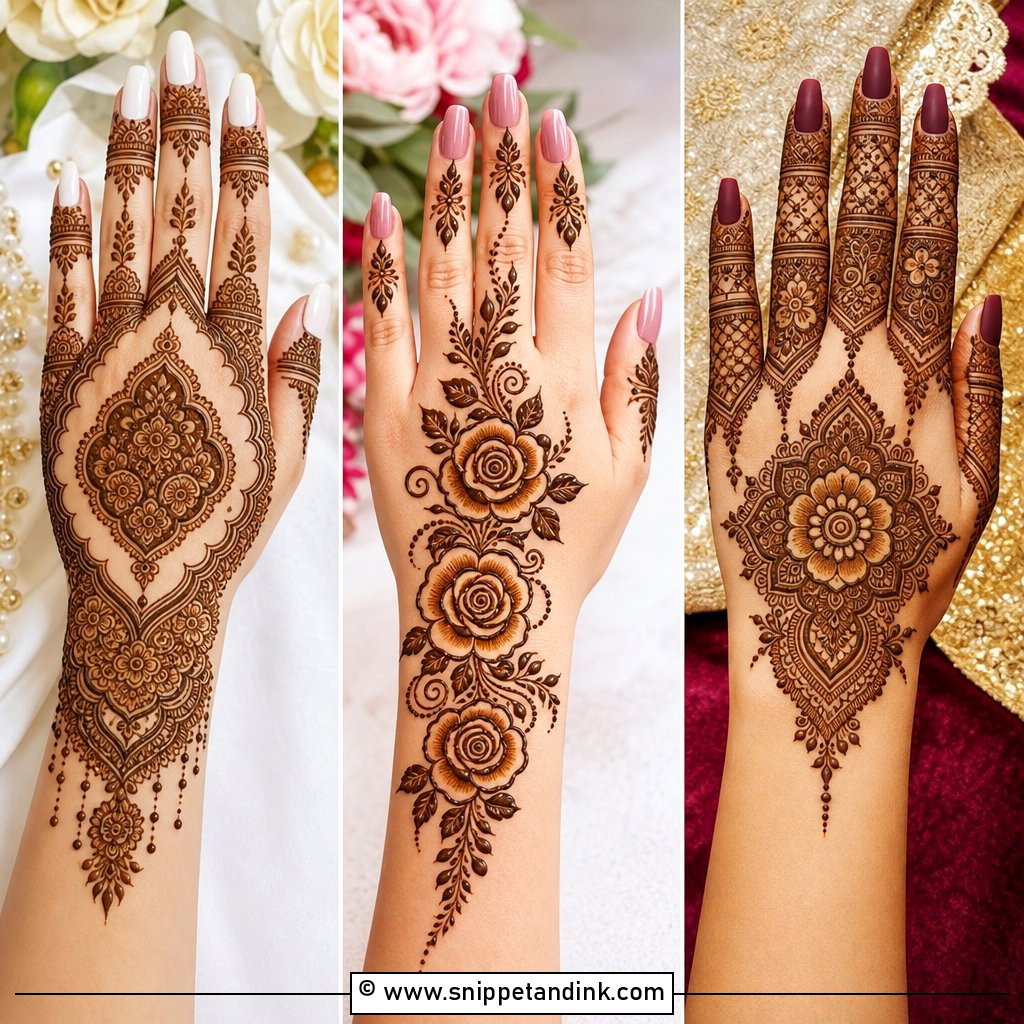
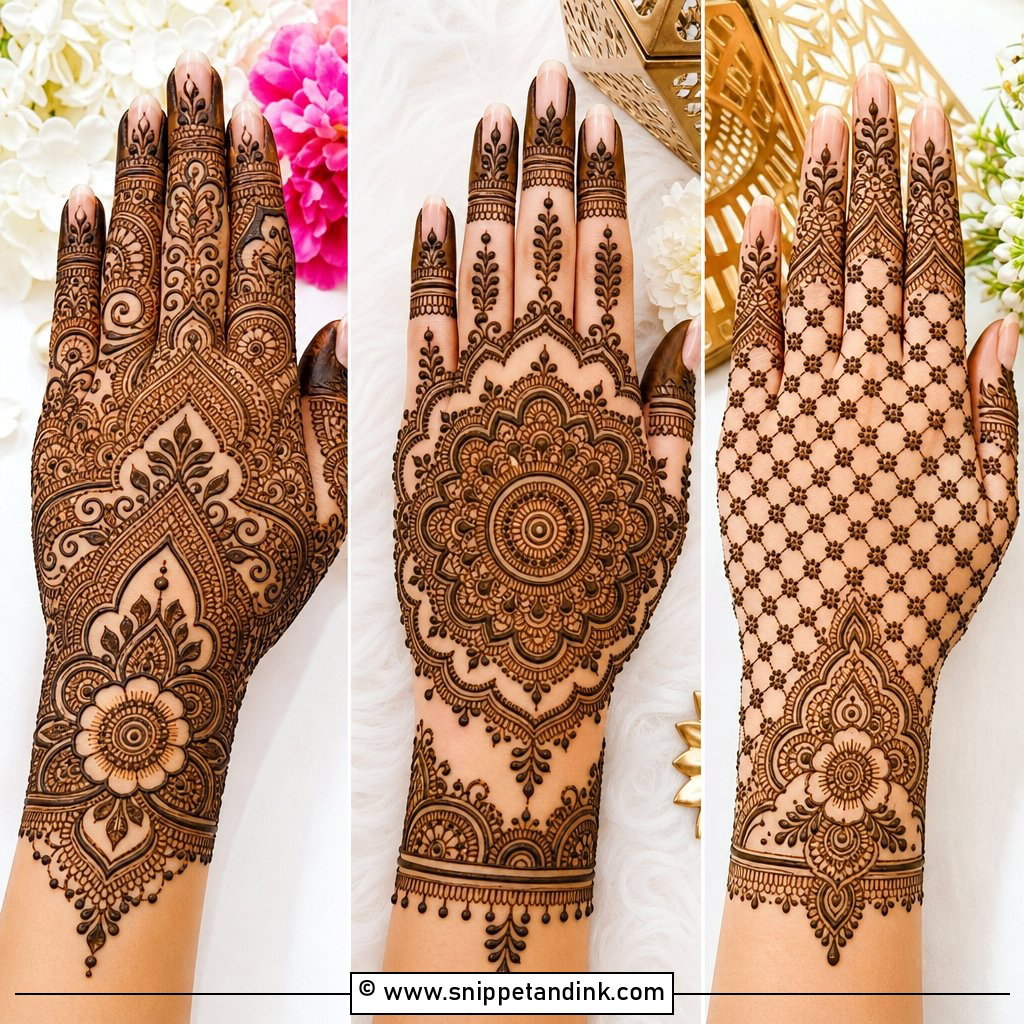
A mandala needs a true centre, and on the back of the hand that is a little higher than people expect, closer to the knuckles than the wrist, because the hand looks shorter once the fingers curl. I build outward in rings of petals, arcs and dots, keeping each ring evenly spaced so the circle doesn’t look lopsided. Fingers can stay light with slim bands or carry matching geometric accents. On wider hands the circle balances the shape well. It suits pujas, festivals and smaller bridal functions.
4. Floral Back Hand Mehndi Design
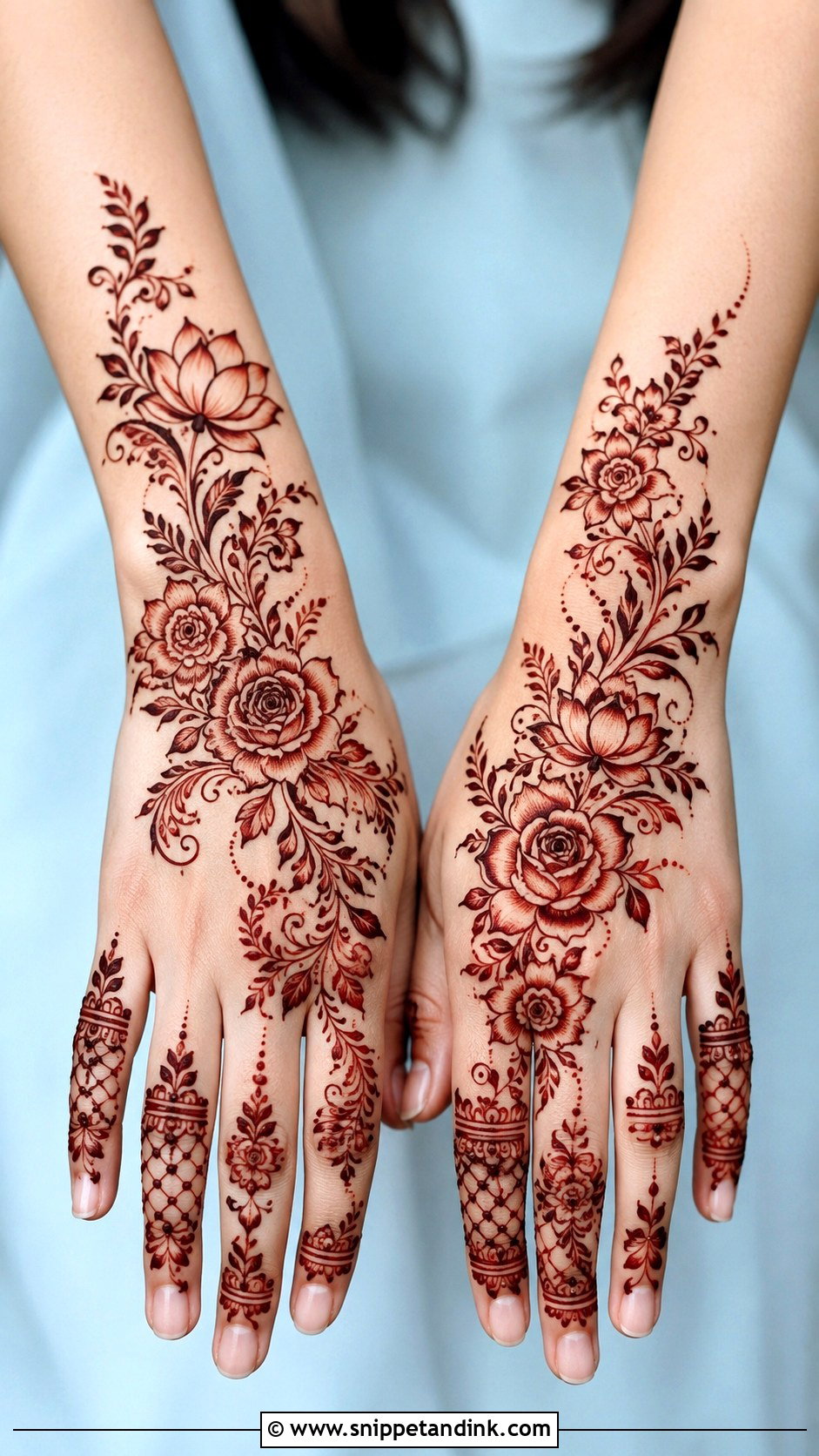
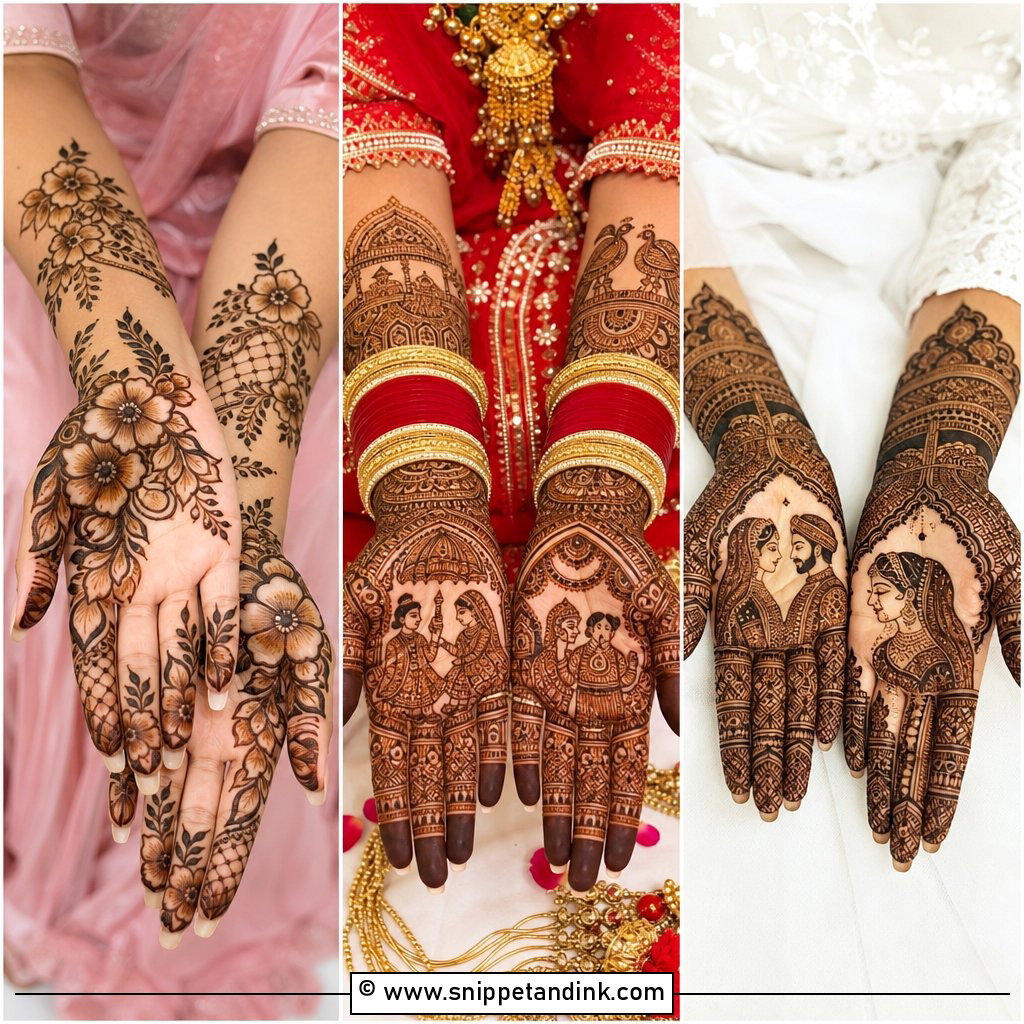
Florals are the most forgiving designs I draw, since a slightly uneven petal still looks like a flower. A larger rose or lotus usually sits near the wrist or centre, and smaller blooms trail toward the fingers like a garden path. Coverage can be minimal, medium or full. For a crisper finish, I shade only a few petals and leave the rest as open outlines, which gives contrast and keeps each flower readable after the stain develops.
5. Jewelry Back Hand Mehndi Design
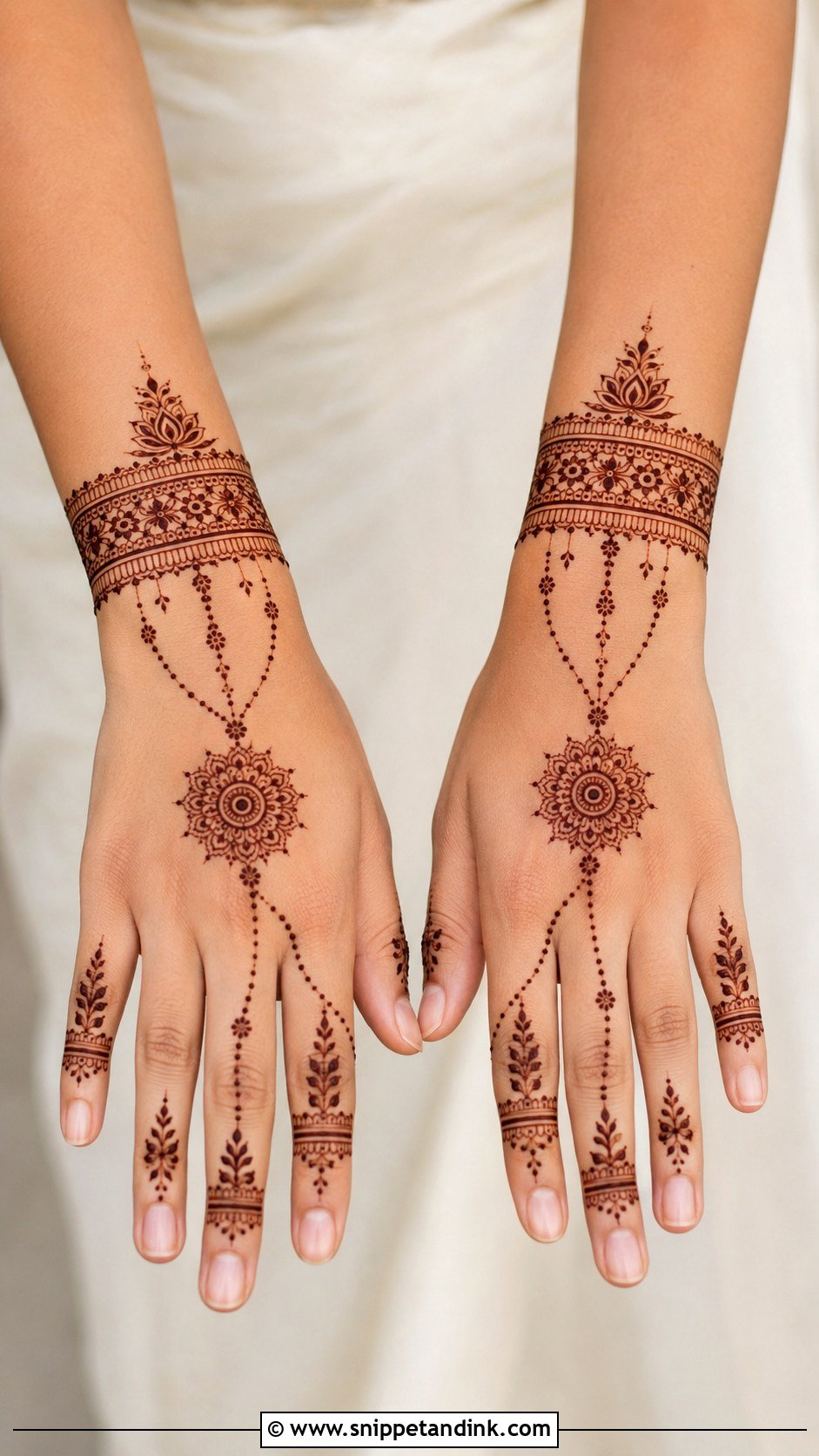
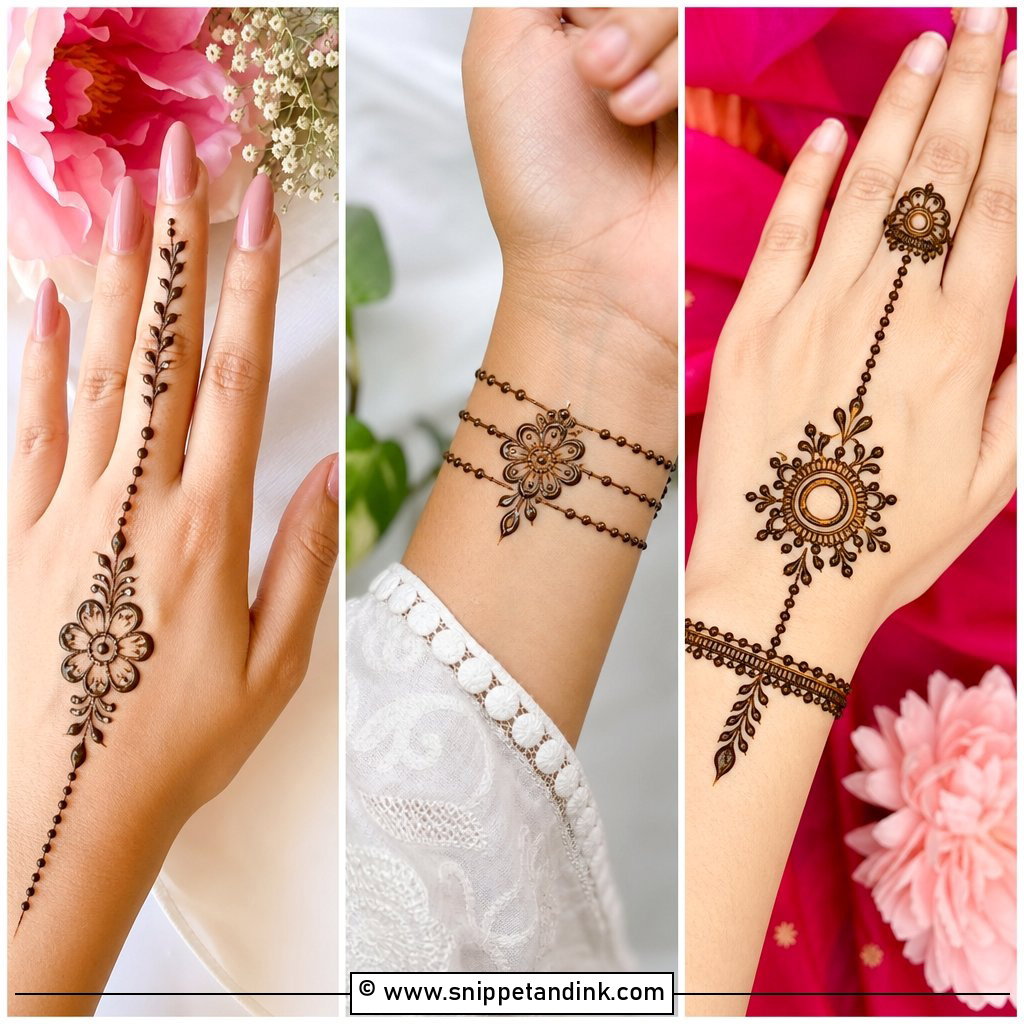
Jewelry mehndi borrows from rings, bracelets and the haath phool chain. I start with a bracelet band at the wrist, link fine chains up to a central motif, then run delicate lines to the fingers like ring chains. The chains have to be straight and evenly weighted or the whole piece looks crooked, so I mark the centre point with a dot before drawing. Dots, leaf tips and tiny flowers complete it. With real bangles on, the drawn wrist band looks like part of the set.
6. Minimal Back Hand Mehndi Design
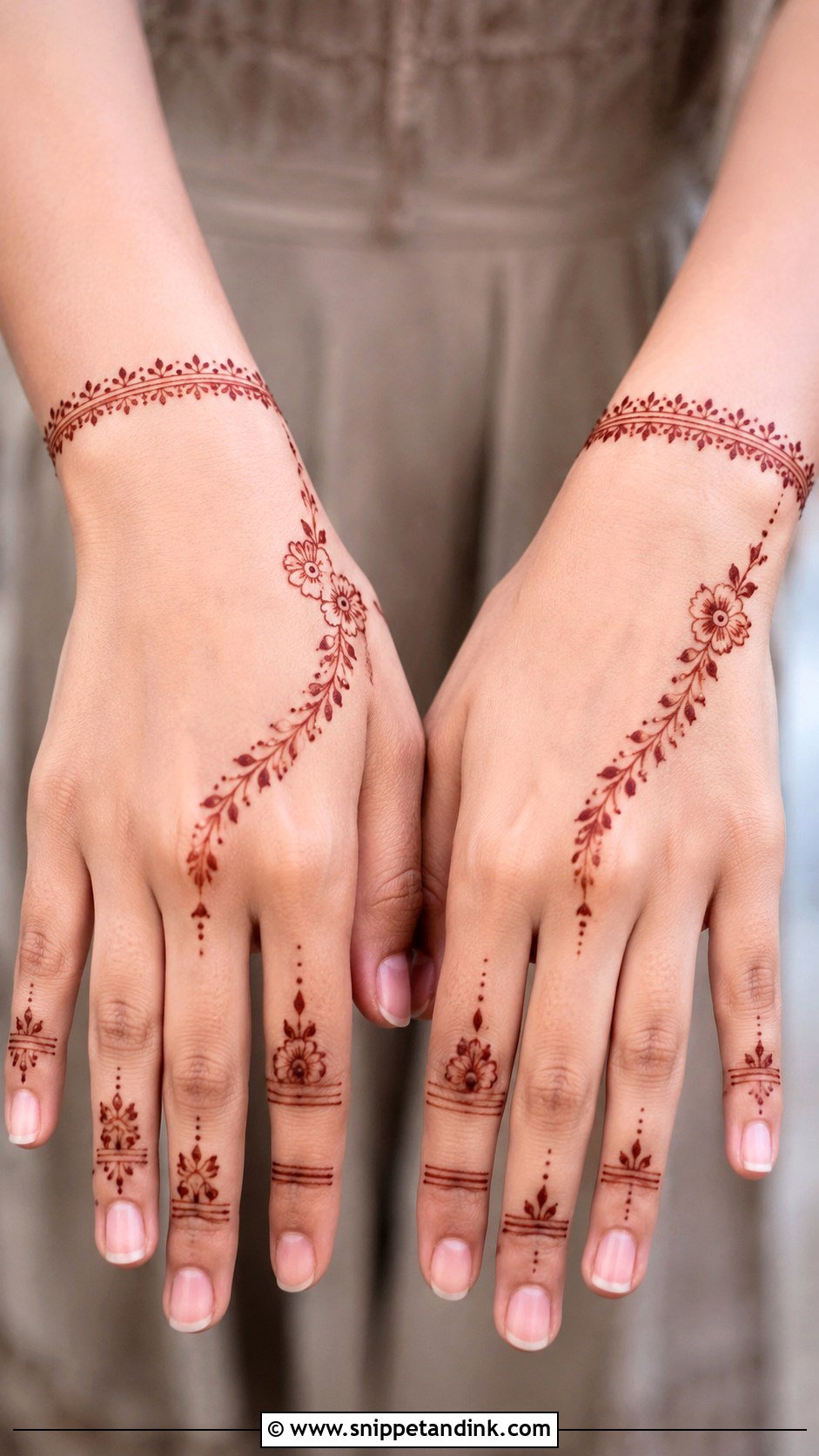
Minimal mehndi depends on placement more than skill with filling. One or two strong elements, a small flower by the thumb, a thin leafy trail or a plain wrist band, can be enough, and the fingers carry fine lines and dots. Bare skin does a lot of work here. It dries in minutes rather than an hour, and it is the design I suggest to anyone who finds heavy mehndi uncomfortable or has to go back to work two days later.
7. Bridal Back Hand Mehndi Design
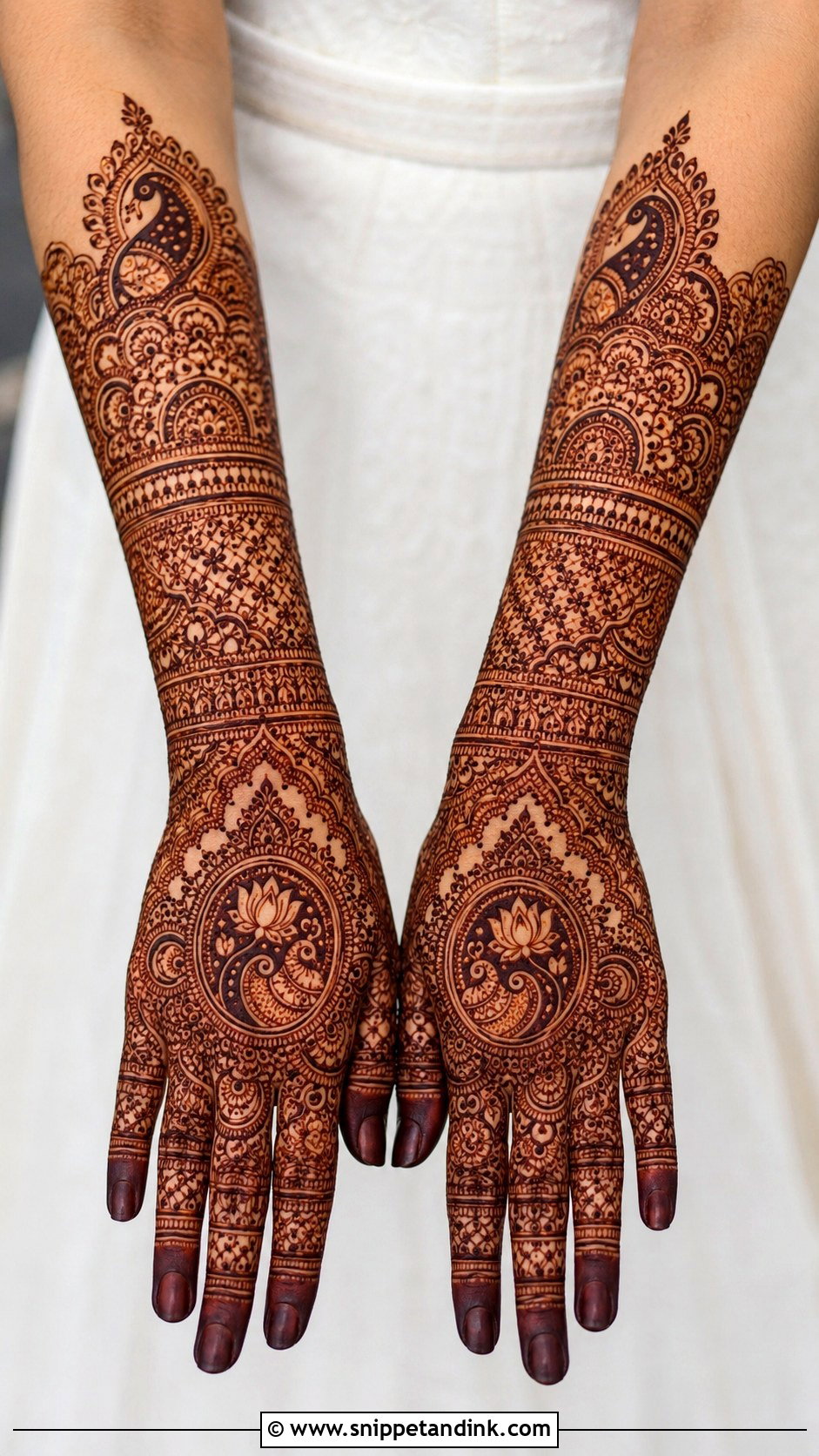
Bridal back hand work is fuller and slower than anything else here, often running from fingertips to wrist and sometimes up the forearm. Paisleys, lotus flowers, peacocks, jaali and mandalas share space with personal details such as the groom’s initials hidden in the pattern. I plan the dense areas and the small open spaces before I start, because a back hand filled edge to edge loses its detail once it stains. Allow several hours for both hands and sit somewhere you can rest your arms while it dries.
8. Indo Arabic Back Hand Mehndi Design
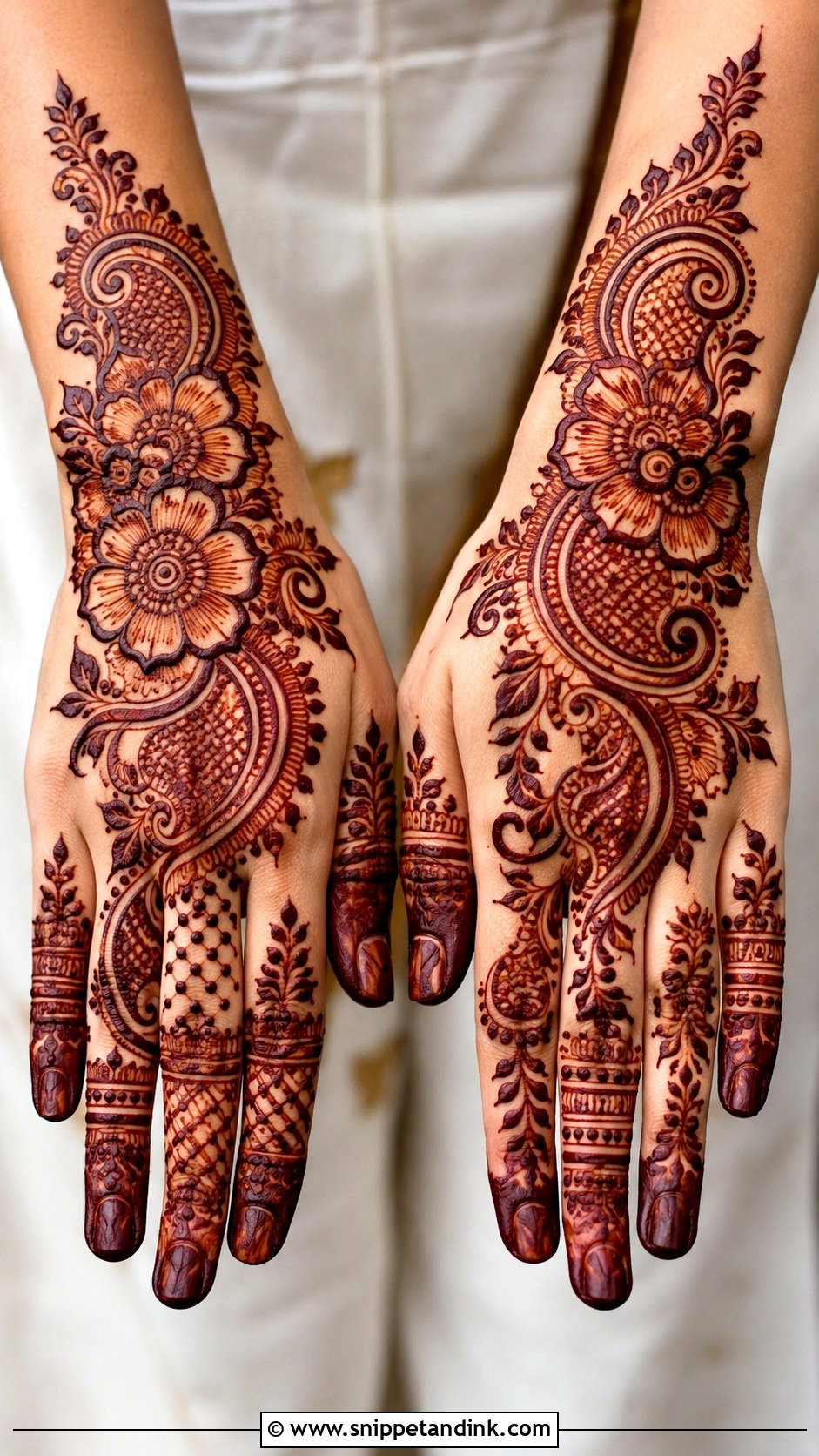
Indo Arabic combines the bold diagonal of Arabic layouts with Indian-style filling. I place the large flowers and paisleys on the diagonal first, then fill their insides with fine lines, mesh, dots and tiny petals. That gives more coverage than plain Arabic while still leaving some breathing room. Fingers take mixed bands and leafy tips. It is the design I reach for most often when I don’t know someone’s taste well, because it sits comfortably with both traditional and fusion outfits.
9. Full Back Hand Mehndi Design
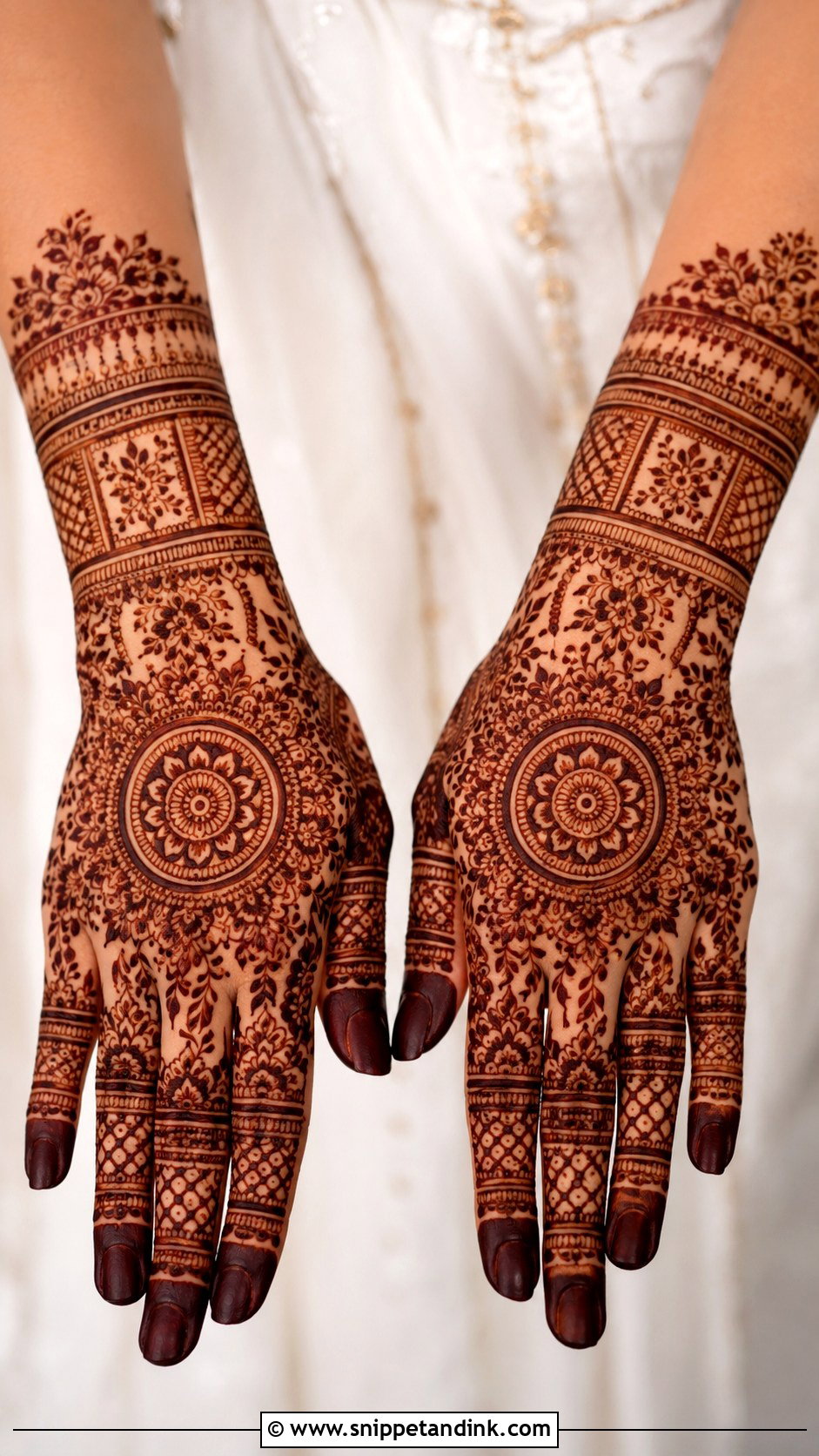
Full coverage leaves no margin for poor spacing. I work from the fingertips down to the wrist, mixing mandalas, paisleys, florals, jaali and borders, and keep a hairline of bare skin between filled areas. If the lines are packed too tightly, the paste spreads slightly as it settles and the stain blurs into patches. Bold outlines around fine inner detail keep it readable. Reserve this one for weddings and big festivals, when you have the time to sit still.
10. Half Back Hand Mehndi Design
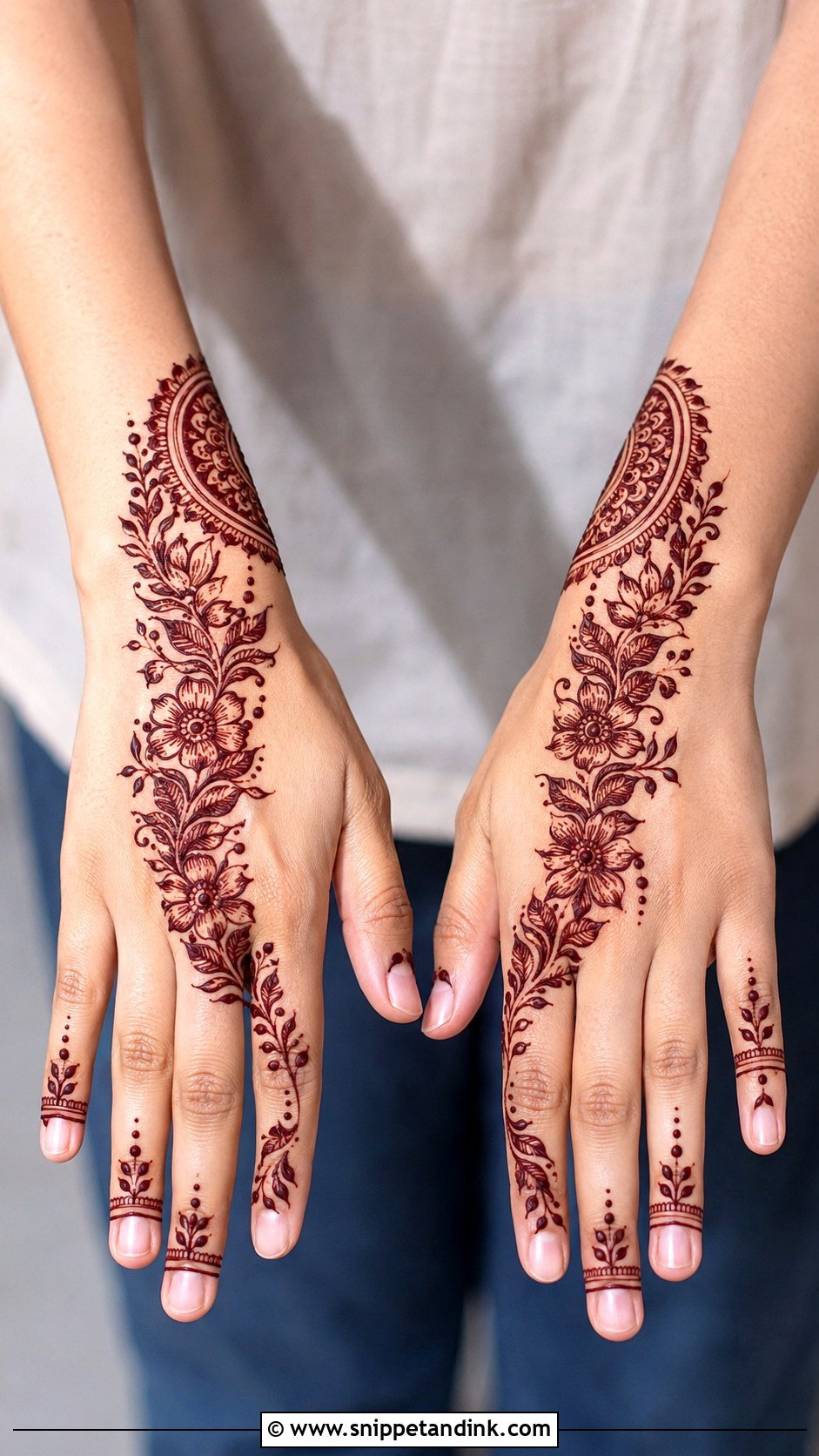
Half coverage puts the detail on one part of the hand, one side, the wrist or the upper half near the fingers. A diagonal floral trail is the most common layout because it moves the eye while leaving skin open, and a half mandala at the wrist with lines climbing upward is another option. It is quicker to apply than full coverage. Fingers need matching bands and dots, otherwise the half-hand layout can look unfinished rather than deliberate.
11. Back Hand Finger Mehndi Design
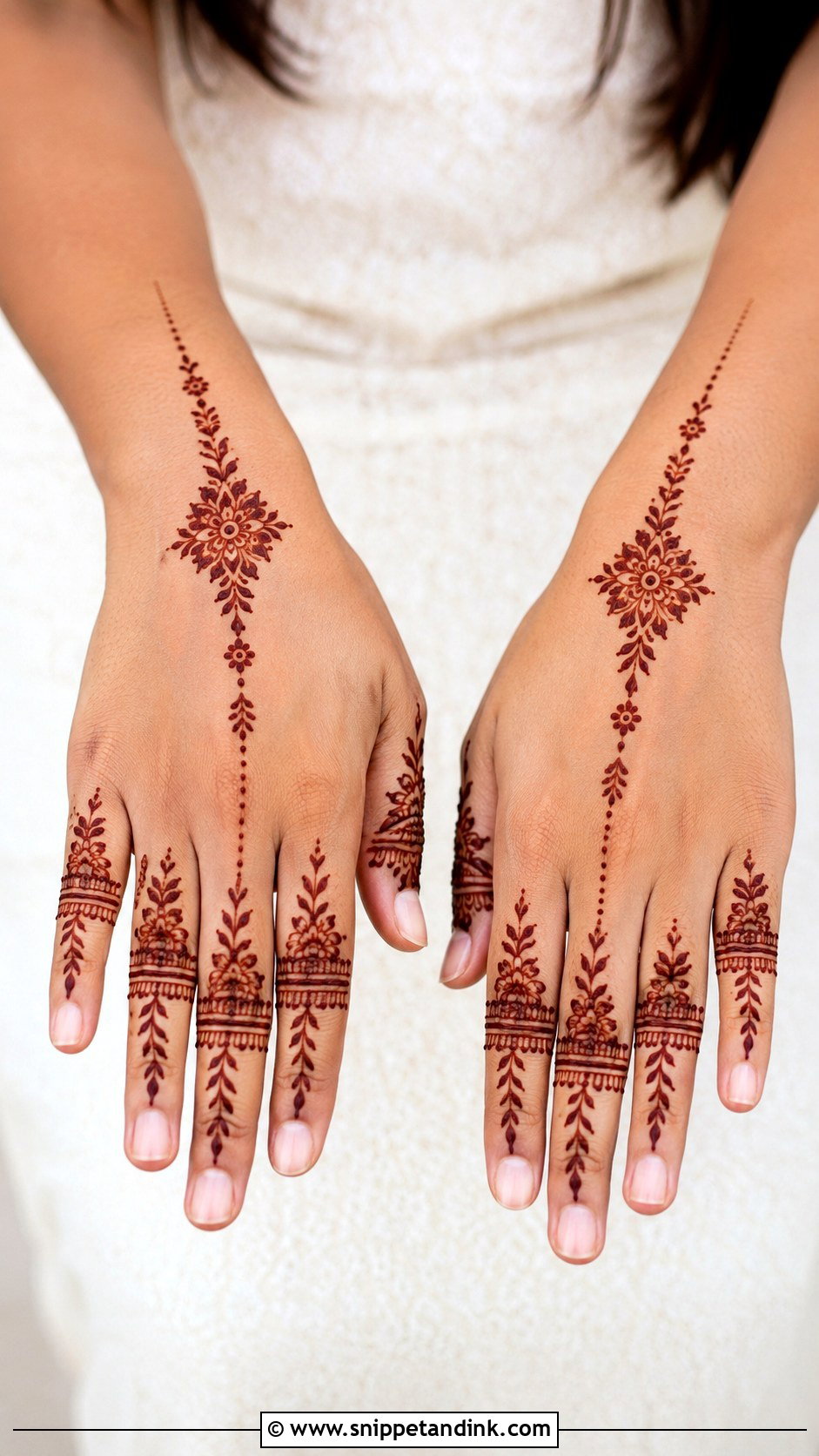
Fingers stain darker than the back of the hand, so finger-focused designs give strong colour where it shows most. I stack bands, leafy vines, tiny flowers and fine geometric lines on each finger and keep the back of the hand light, with a small mandala or a single chain to the wrist. Draw the bands with the fingers straight and relaxed. If you bend your knuckles while the paste is drying, the lines crack. Coordinate the patterns across all fingers so the hand looks balanced, especially with long nails.
12. Back Hand Bracelet Mehndi Design
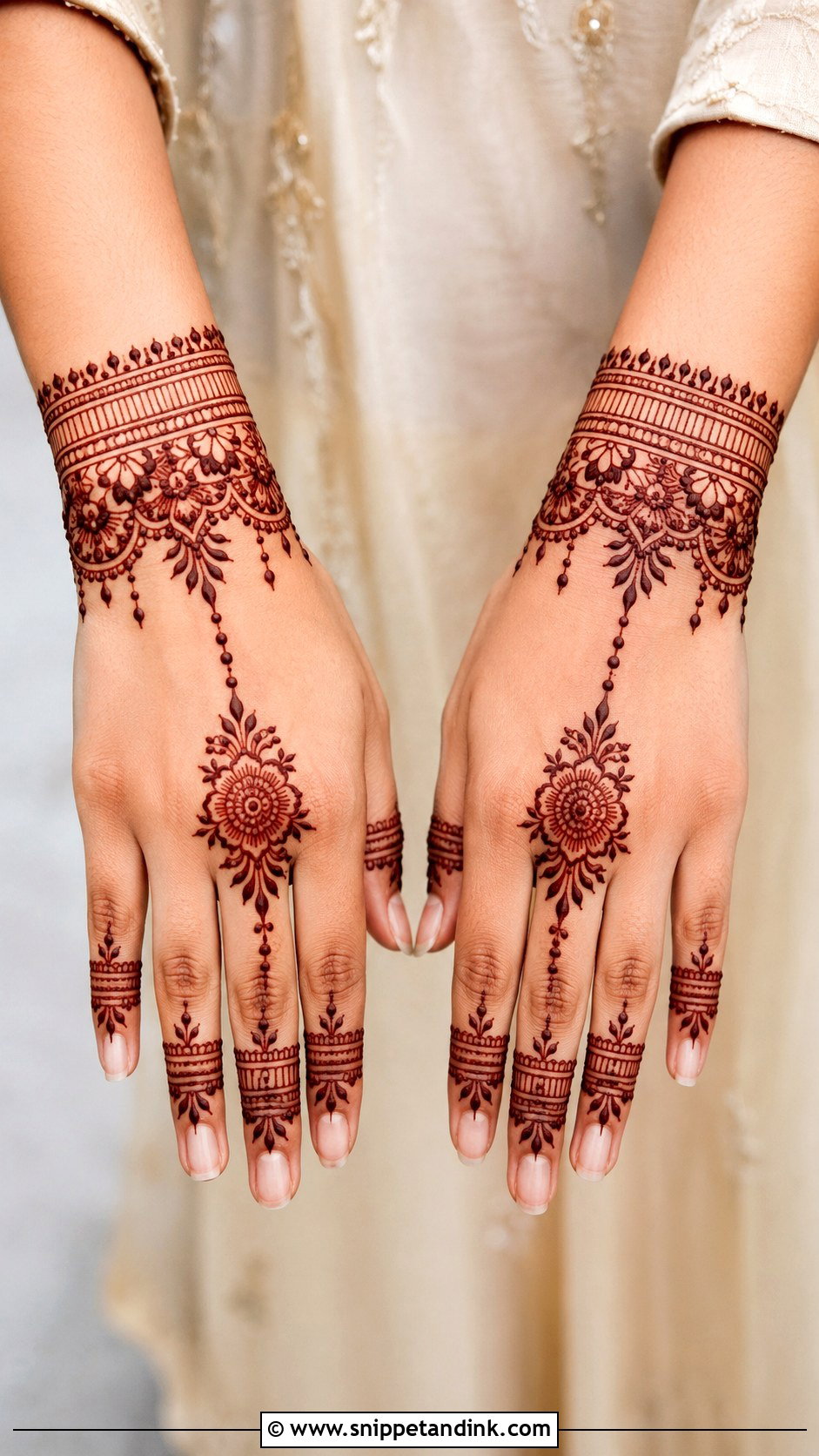
A bracelet design puts the highlight at the wrist, with a cuff of flowers, leaves, mesh or scalloped borders. Thin lines can climb from it toward the back of the hand and fingers, sometimes reaching a central motif like a haath phool. The wrist curves, so I draw the cuff with the hand resting palm down and check from the side that the band doesn’t drift. Keep it simple for daily wear or detailed for a festival. With bangles or embroidered sleeves, the cuff becomes the focus.
13. Rose Back Hand Mehndi Design
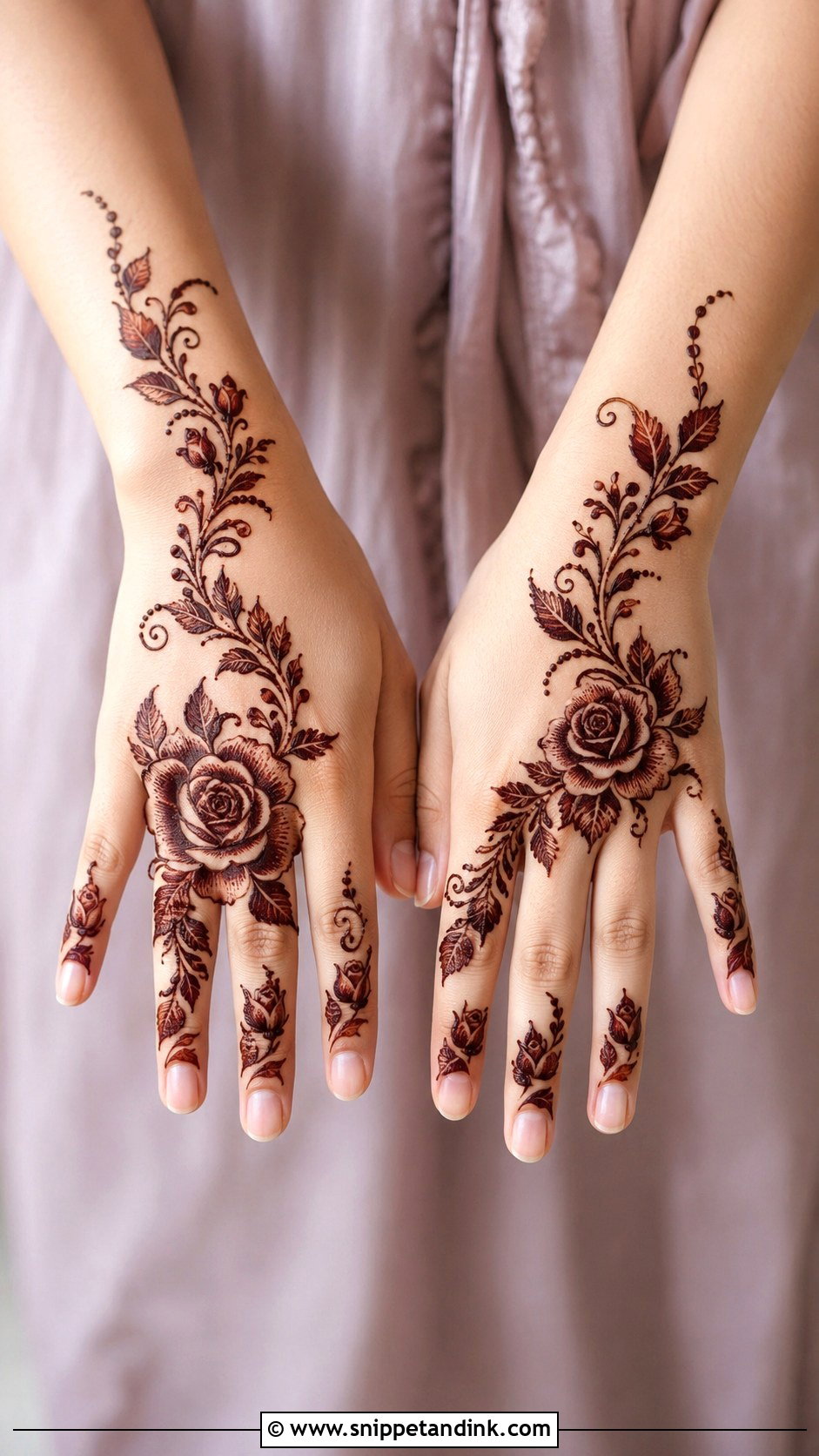
Roses are easy to read from across a room. I place a large rose near the centre, wrist or side of the hand, then let curved leaves and vines carry the design toward the fingers. A bold outline with lighter shading inside the petals gives the rose depth once the stain darkens. Rosebuds, bands or leafy tips finish the fingers. It sits well on bridesmaids and engagement guests, and it adapts from minimal to full detail without changing the main motif.
14. Lotus Back Hand Mehndi Design
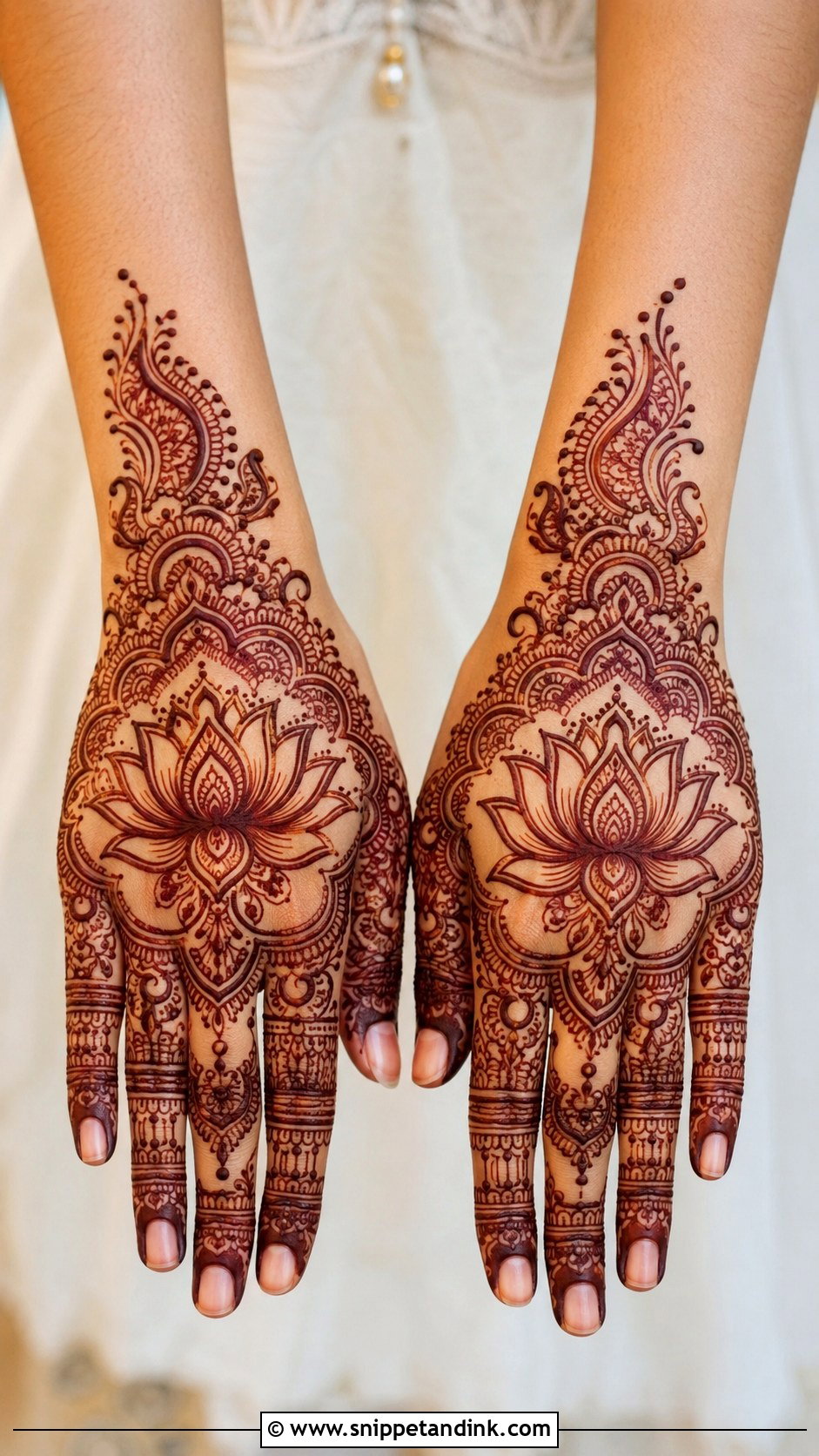
The lotus layers well, which is why it appears so often in traditional work. A large lotus can sit in the centre of the back hand with smaller petals reaching toward the wrist and fingers, and it pairs naturally with mandalas, paisleys and dotted borders. I draw each petal in one smooth pull of the cone; stopping halfway leaves a blob. Leave a little space around the main flower to keep it modern. It suits pujas, Diwali and bridal functions.



15. Peacock Back Hand Mehndi Design
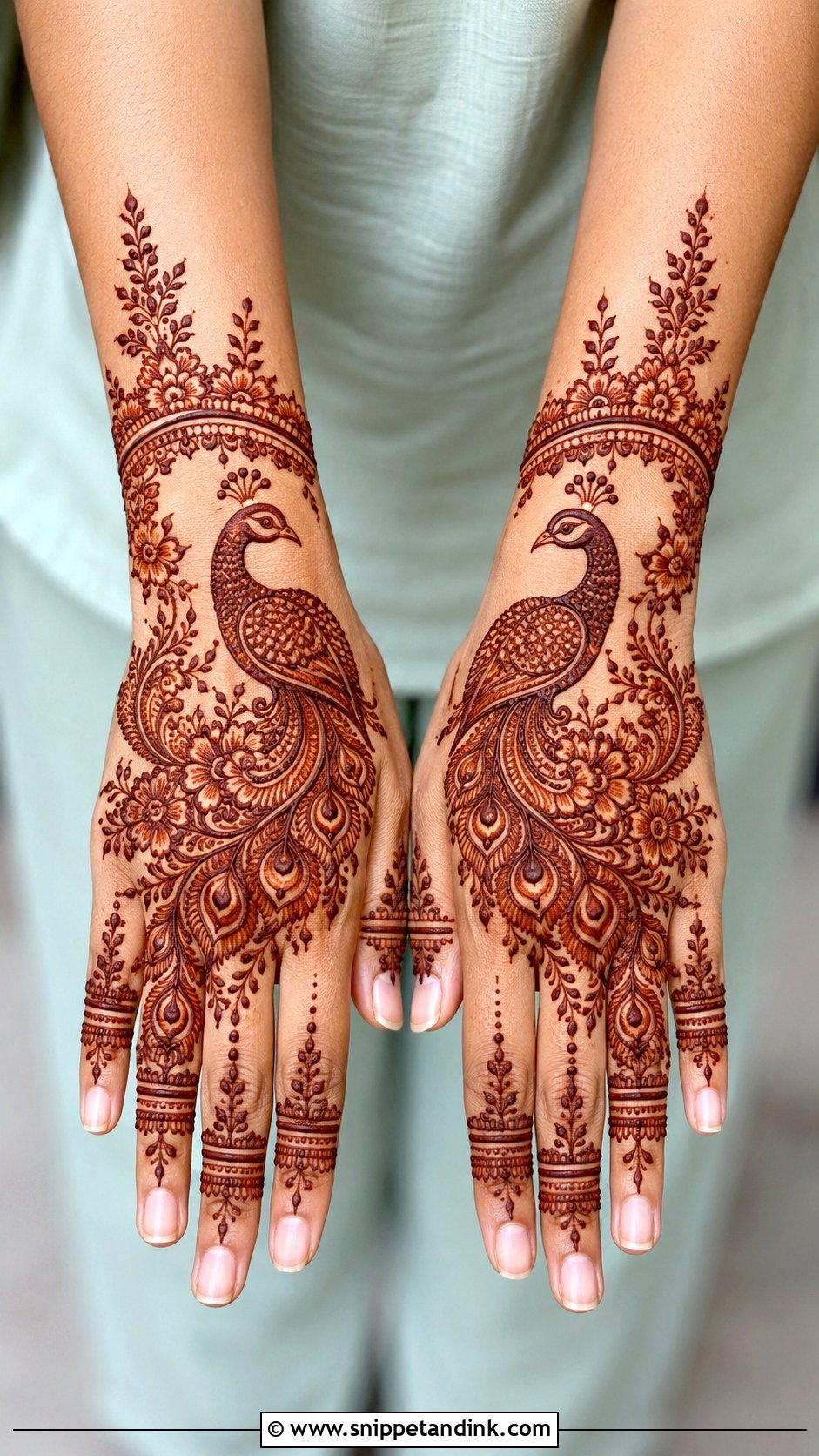
A peacock is one motif that fills a lot of space on its own, so the rest of the design can stay quiet. I usually place the body near the wrist or side of the hand and let the feathers fan across the back. Fine lines, paisleys and dots fill the feathers. Keep the outline bold and the inner detail delicate so the bird stays recognisable. Feather-like bands or small paisley tips can match it on the fingers. A deep maroon stain suits this design best.
16. Paisley Back Hand Mehndi Design
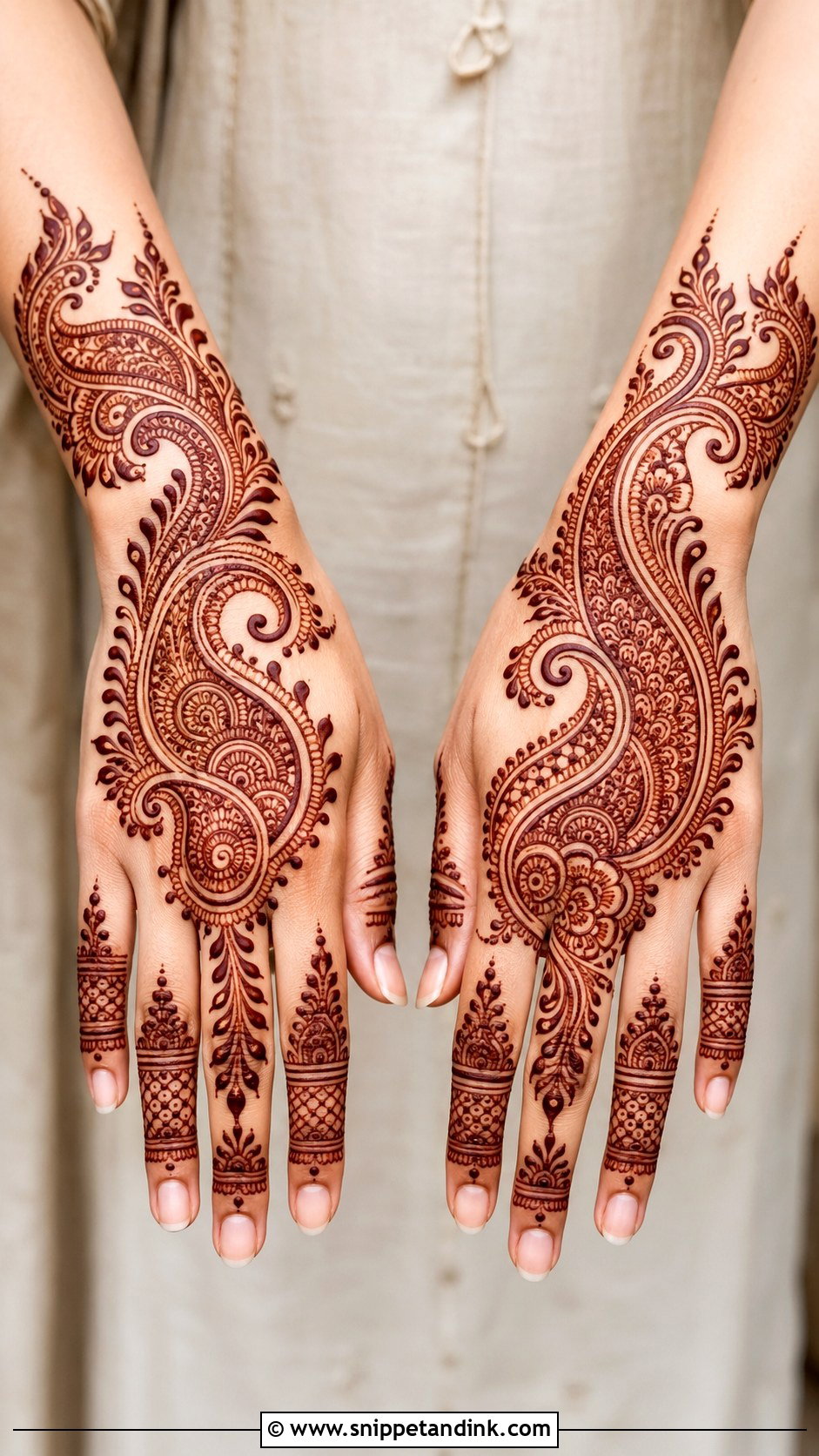
Paisley adapts to every style: simple, Arabic, Indian or bridal. A large paisley near the wrist can rise with leaves and flowers while smaller ones decorate the fingers. Dense filling looks traditional; open outlines look modern. The mistake I correct most is paisleys lined up in a row like stickers. Vary the sizes and connect them with soft vines so the design flows.
17. Jaali Back Hand Mehndi Design
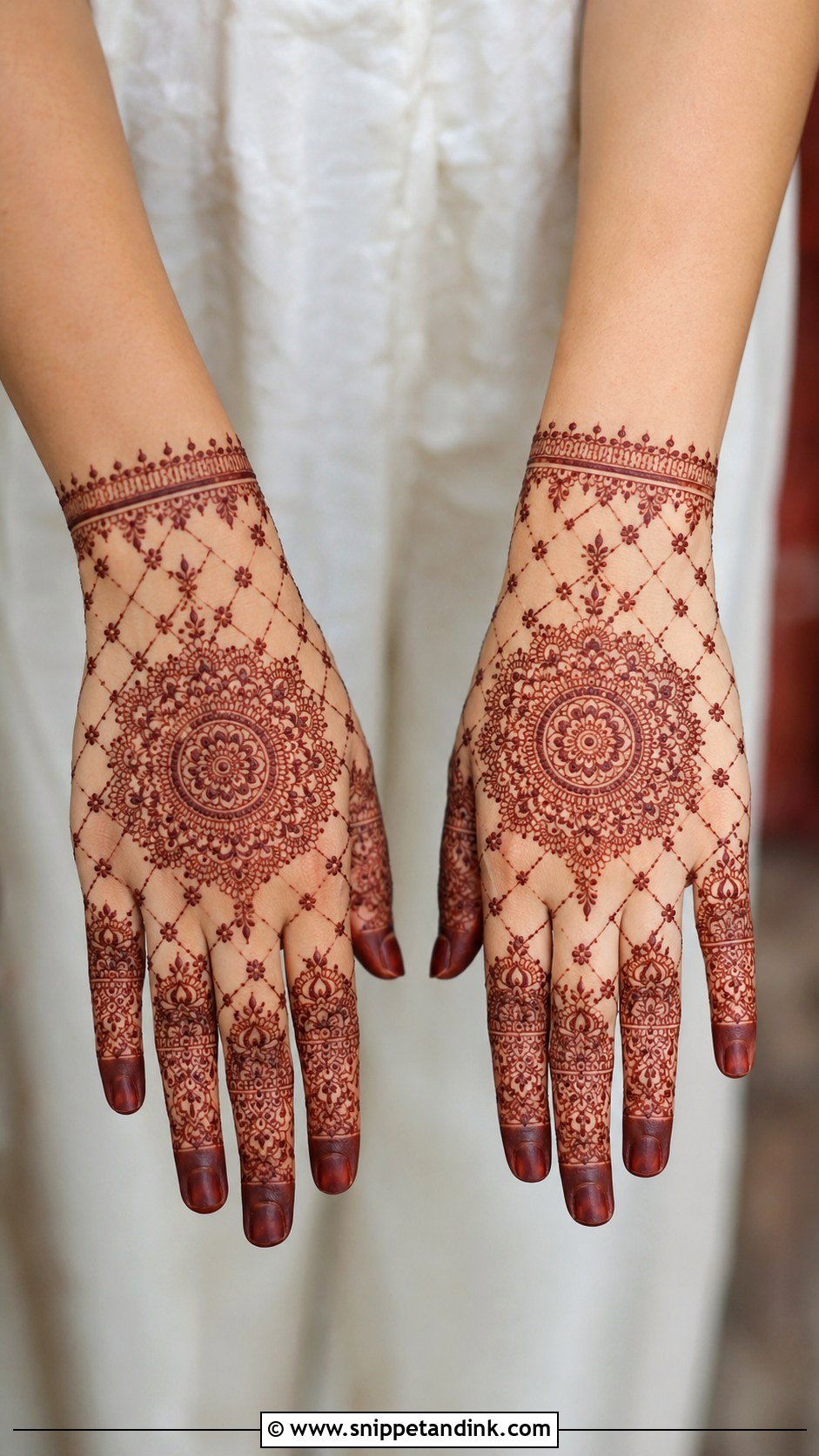
Jaali creates a lace effect with crisscross lines, dots, tiny flowers or diamond mesh. On the back of the hand it follows the curve of the knuckles and wrist, so I draw the mesh lines slightly curved instead of ruler-straight. Uneven spacing is obvious in mesh, so I keep the cone pressure light and steady. Pair jaali with a central mandala, a floral wrist band or an Arabic side trail. Done well, it looks like a fine glove.
18. Geometric Back Hand Mehndi Design
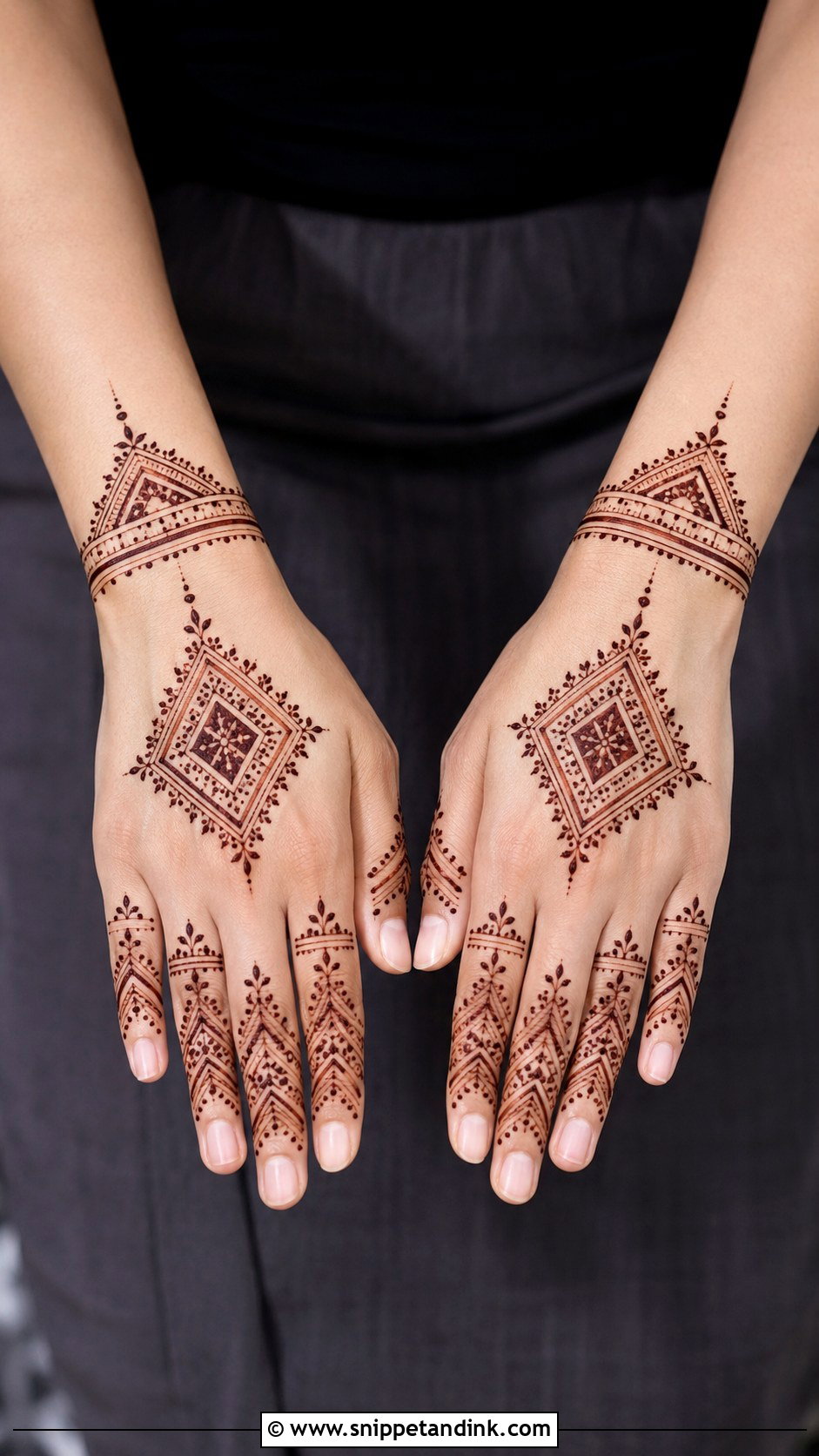
Geometric designs use diamonds, triangles, grids, chevrons and straight lines instead of florals. A central diamond can link to finger bands and a structured wrist border. Straight lines are harder on skin than curves, because the hand isn’t flat, so I draw them in short sections and check alignment as I go. Tiny dots or small leaves between the shapes soften the look without losing the modern feel. It sits well with fusion wear and simple outfits.
19. Moroccan Back Hand Mehndi Design
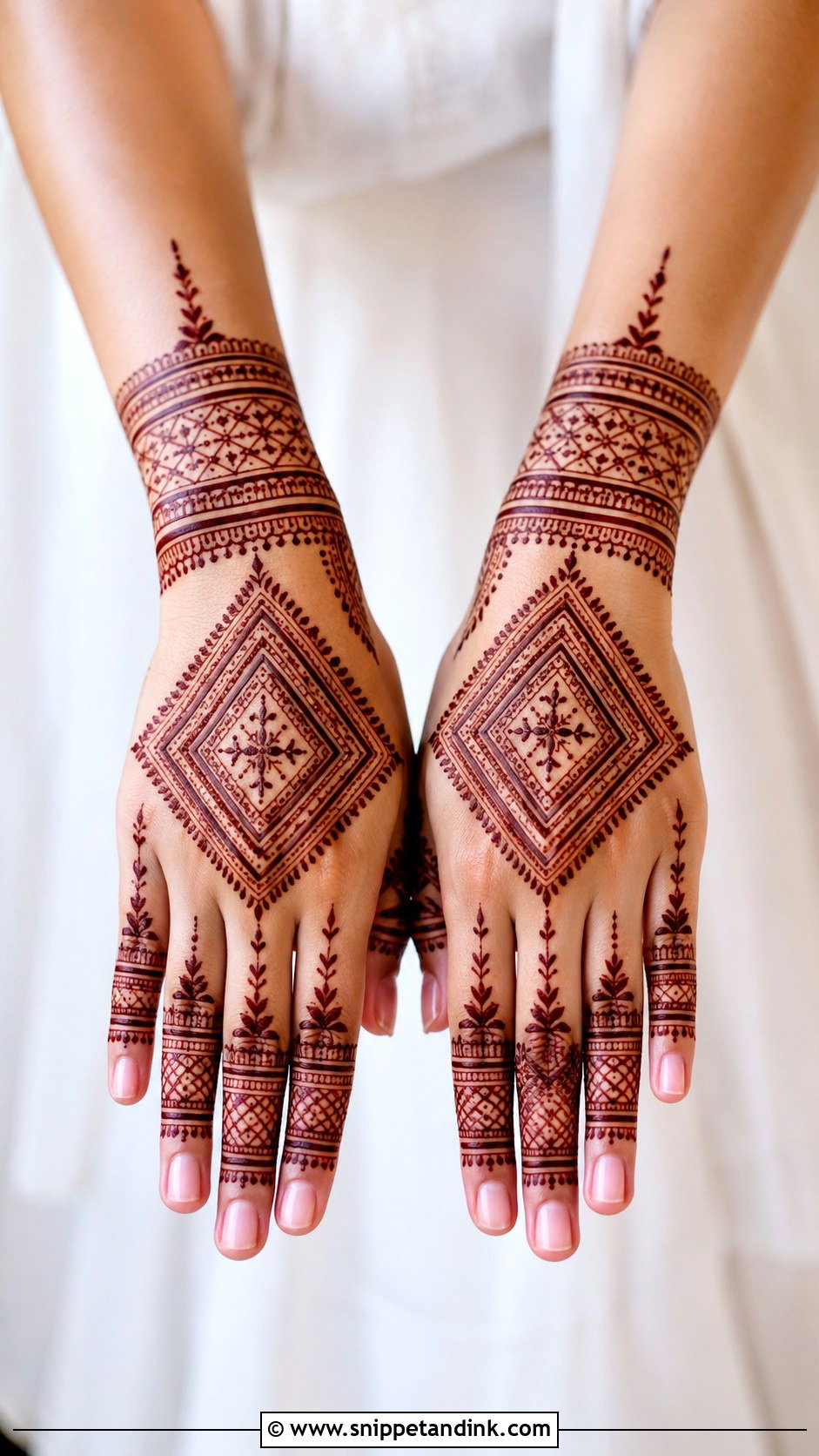
Moroccan mehndi feels architectural, with repeated lines, diamonds, dots and angular borders arranged in neat sections from wrist to fingers. I keep shading to almost nothing, because these designs depend on crisp edges and a filled area would break the rhythm. The sections can be stretched or shortened, so it suits both short and long hands. It offers a real change from flower trails.

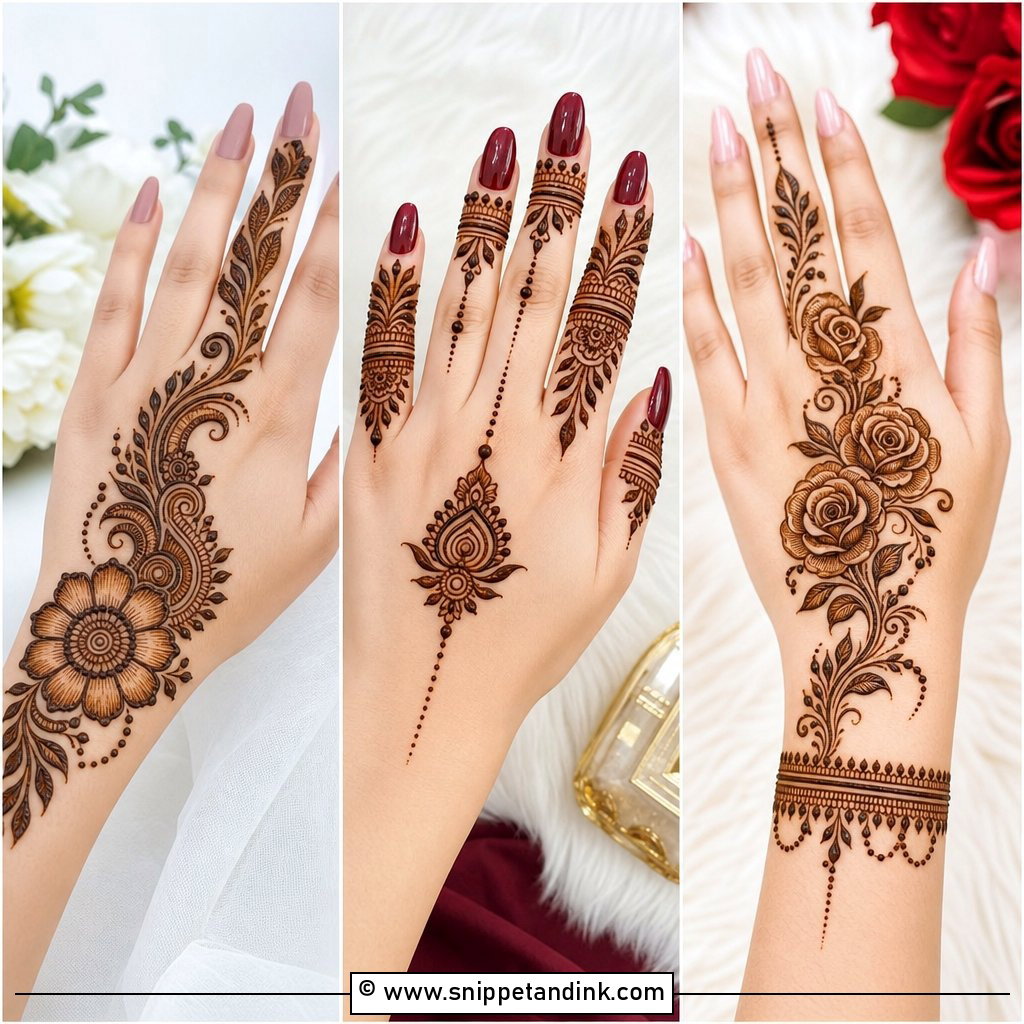

20. Gulf Back Hand Mehndi Design
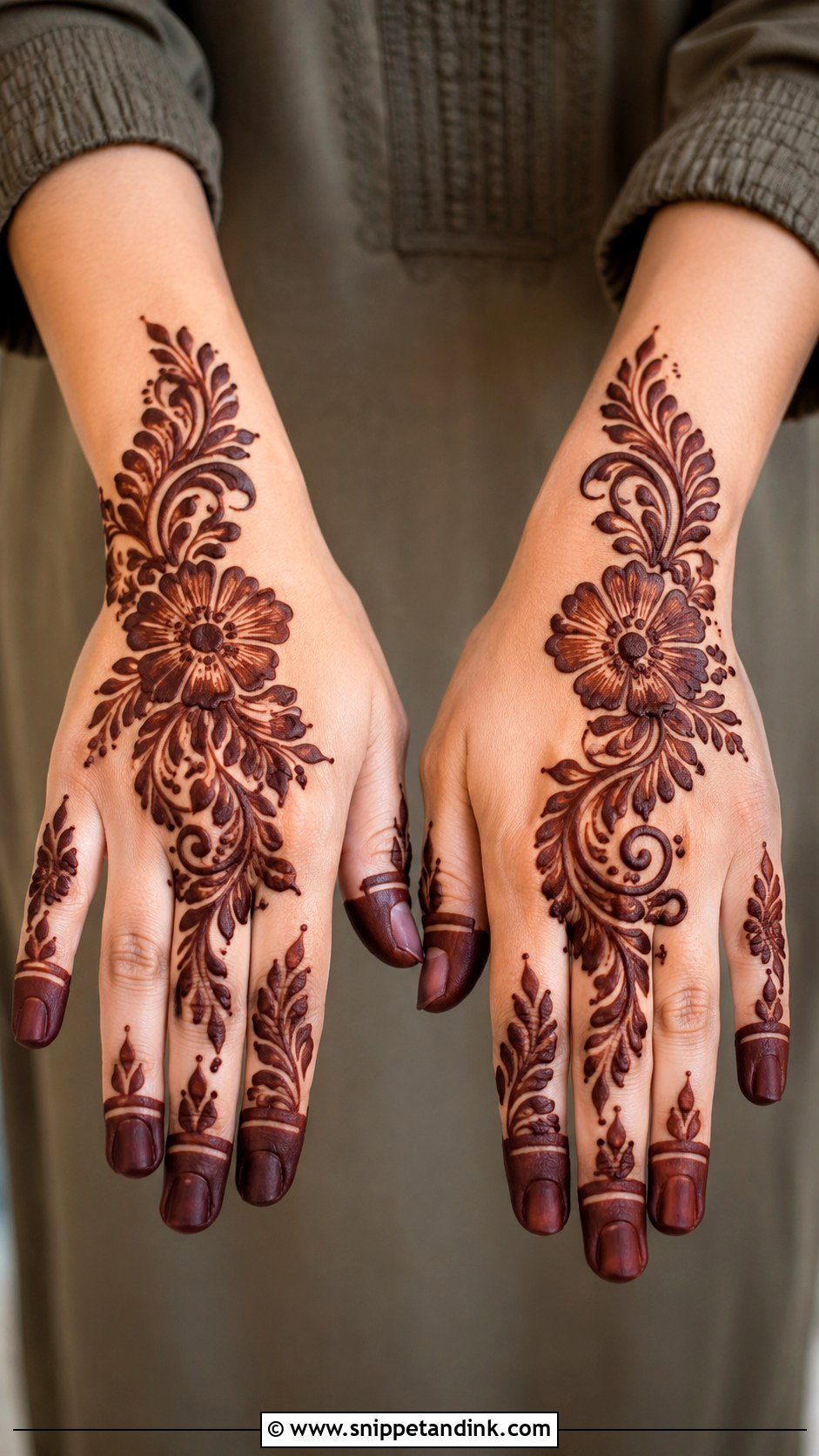
Gulf, or Khaleeji-inspired, mehndi uses large flowers, solid filled areas, leafy curves and strong outlines, often heavy on one side of the hand with open skin on the other. The filled areas need thick, even paste; thin patches stain unevenly and look blotchy. Fingers can carry filled tips, curved bands or small floral accents. Keep the main motifs large and confident. For Eid, weddings and evening events, it reads well once the stain darkens to deep brown.
21. Khafif Back Hand Mehndi Design
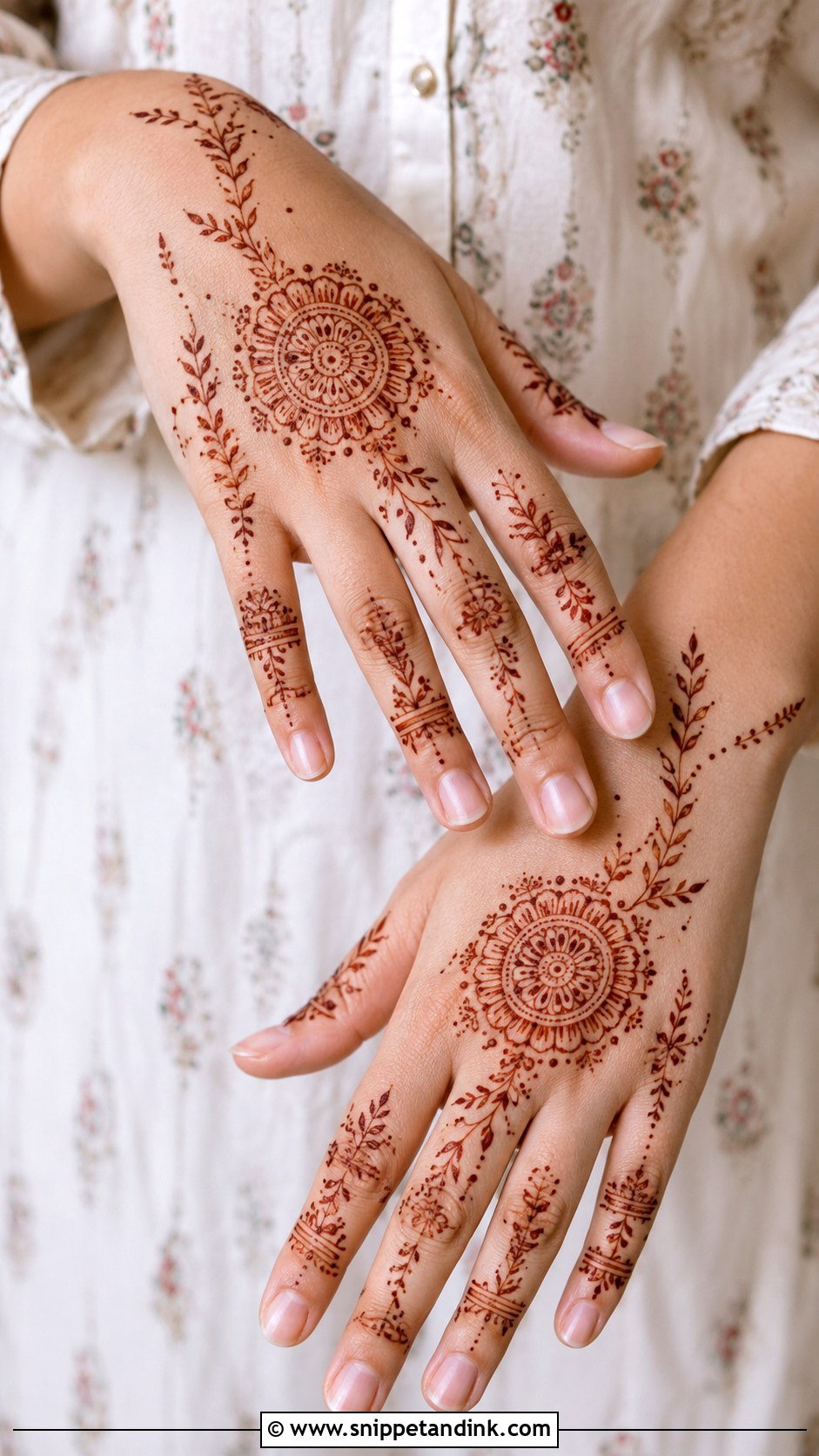
Khafif refers to light, fine mehndi that looks detailed without heavy coverage: slim vines, small flowers, airy mandalas and dotted trails. Fine lines need a cone with a small tip and paste that flows smoothly, otherwise the line breaks mid-stroke. I leave plenty of open skin between motifs so the delicate parts stand out. It suits bridesmaids, engagement guests and Eid well.
22. Modern Back Hand Mehndi Design
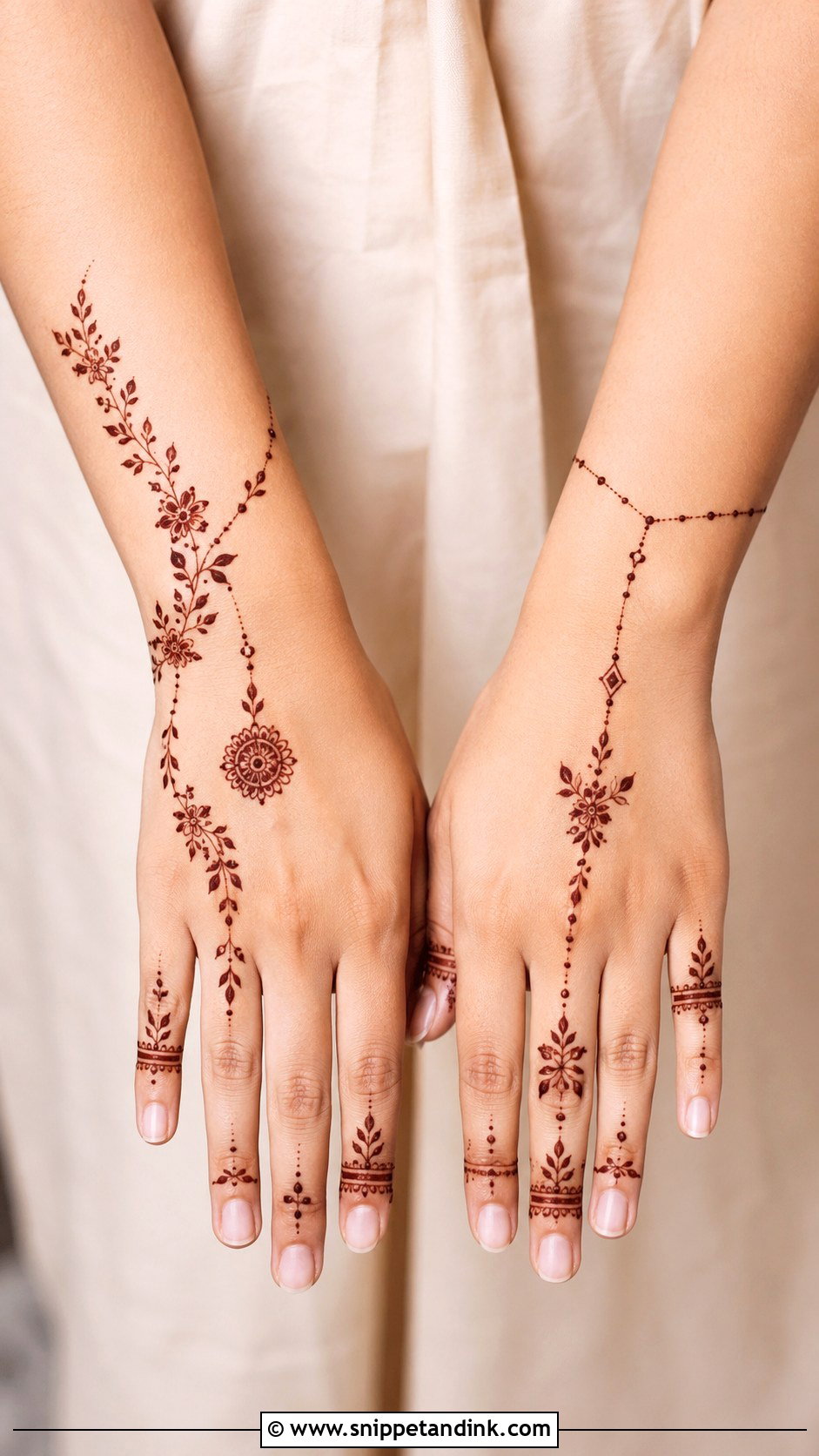
A modern design uses traditional motifs in new placements: asymmetric layouts, open space, thin lines and finger-focused detail. A slim vine across the hand, a tiny mandala near the wrist or a single jewelry-style chain can be enough. My rule here is one theme per hand; mixing a heavy mandala with a jaali panel and a peacock pulls in too many directions. It dries quickly and suits college events and parties.
23. Eid Back Hand Mehndi Design
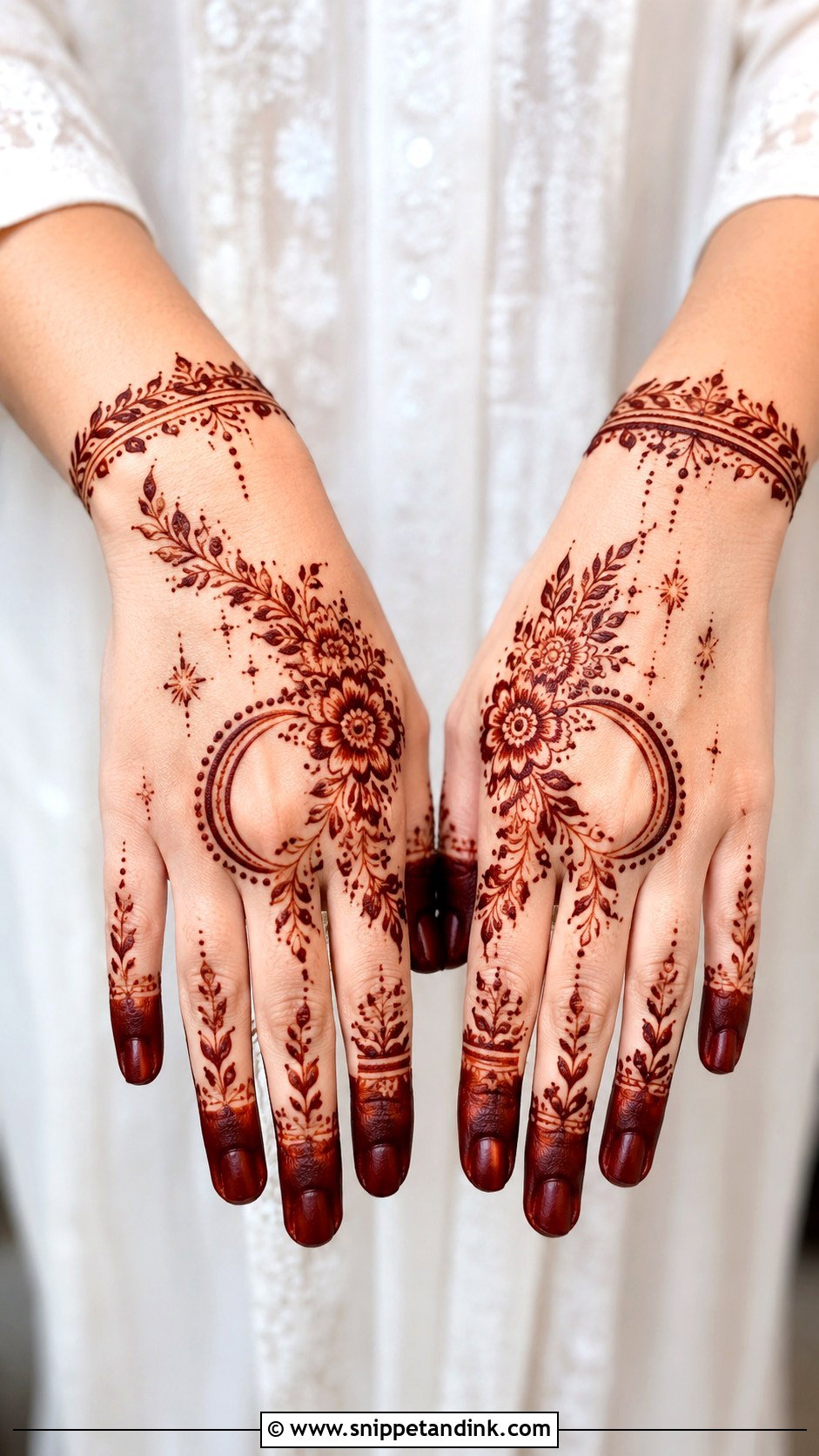
Eid mehndi is usually applied the night before, often late, so the design should be festive without taking hours. Arabic florals, leafy trails, crescent-inspired curves, bracelet bands and delicate finger patterns are all common. A diagonal floral trail with filled fingertips can be finished quickly, and a mandala with a light wrist band suits traditional outfits. Leave the paste on overnight if you can. By Eid morning, the stain will be turning a warm reddish brown that sits well with bangles and embroidered clothes.
24. Diwali Back Hand Mehndi Design
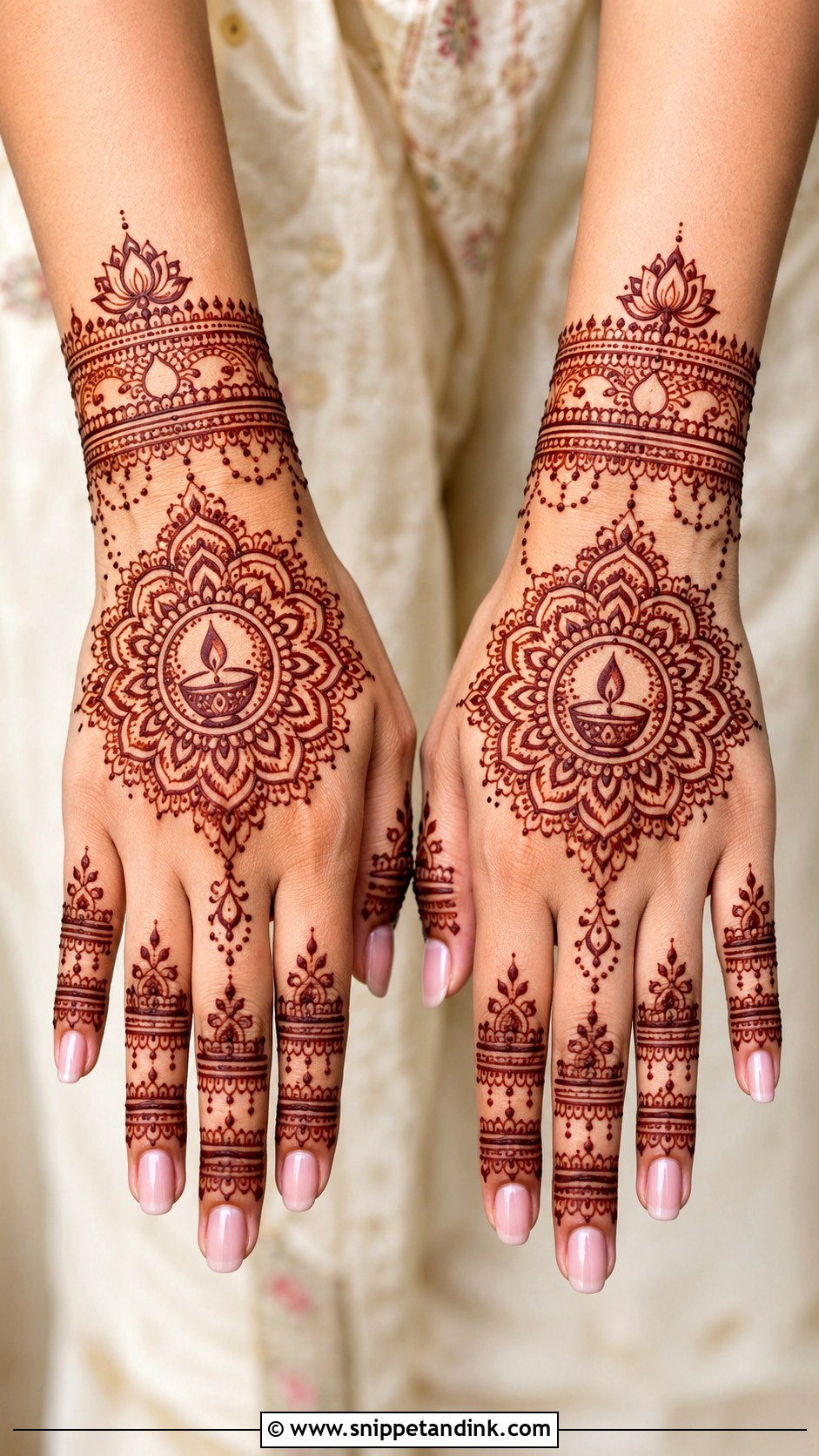
Diwali mehndi tends to be symmetrical and detailed, with mandalas, lotus petals, paisleys, diya-inspired shapes and fine dots. The back of the hand suits symmetry because it is on show while you hold sweets, gifts or diyas. A central mandala with lotus details around the wrist feels especially festive. If time is short in the busy days before the festival, a lighter Arabic trail works too. Apply two days ahead so the stain is at its darkest for the main evening.


25. Wedding Guest Back Hand Mehndi Design
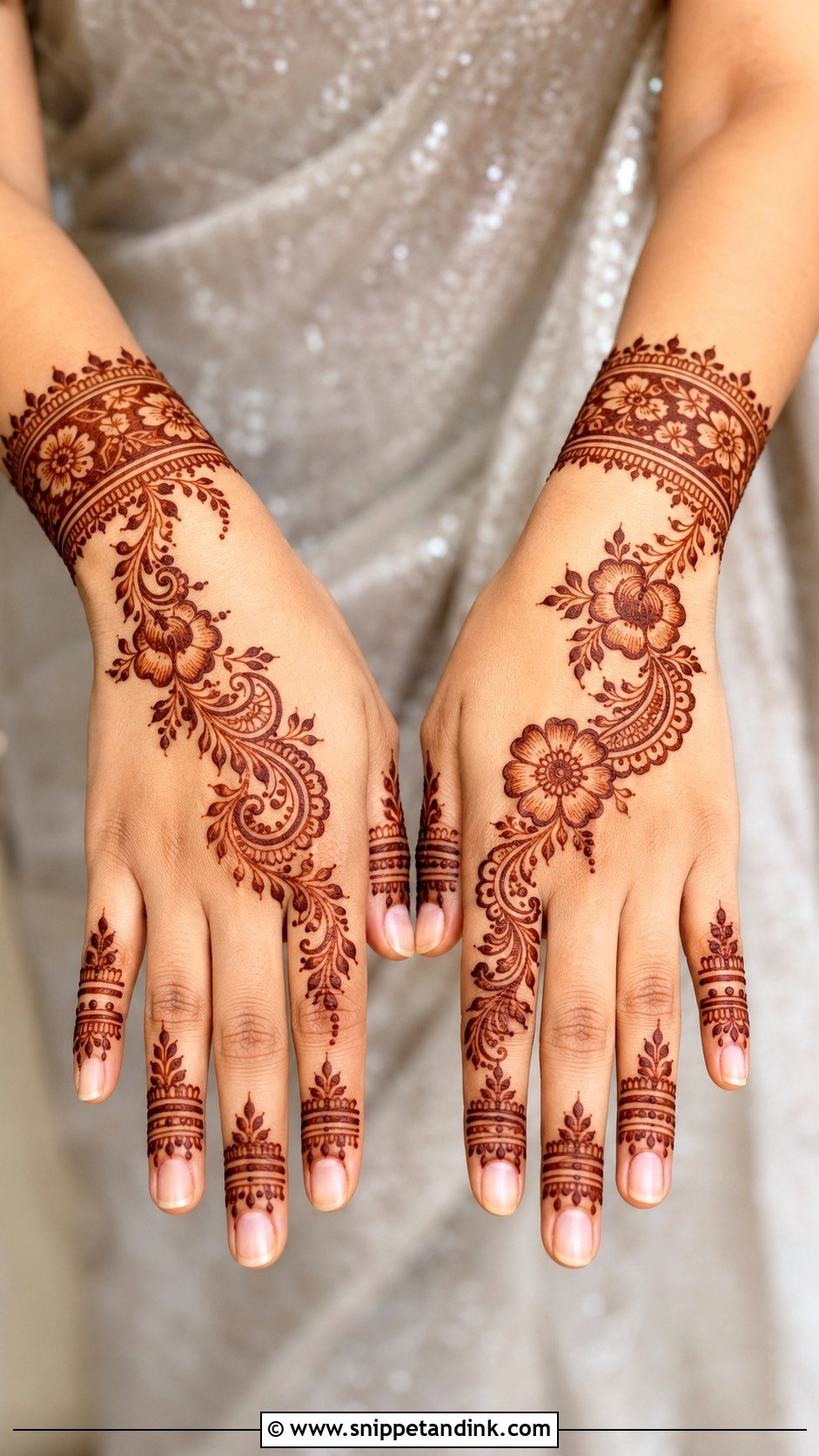
Guest mehndi should look festive without competing with the bride, so I aim for medium coverage: florals, vines, paisleys and stylish finger work. A diagonal Arabic layout looks dressy and leaves skin visible, and jewelry-inspired patterns pair well with rings and bangles. Add a wrist cuff and shaded flowers for a formal evening; keep it lighter for a daytime function. Many families prefer guests to stop at the wrist, so check before booking anything heavier.
26. Engagement Back Hand Mehndi Design
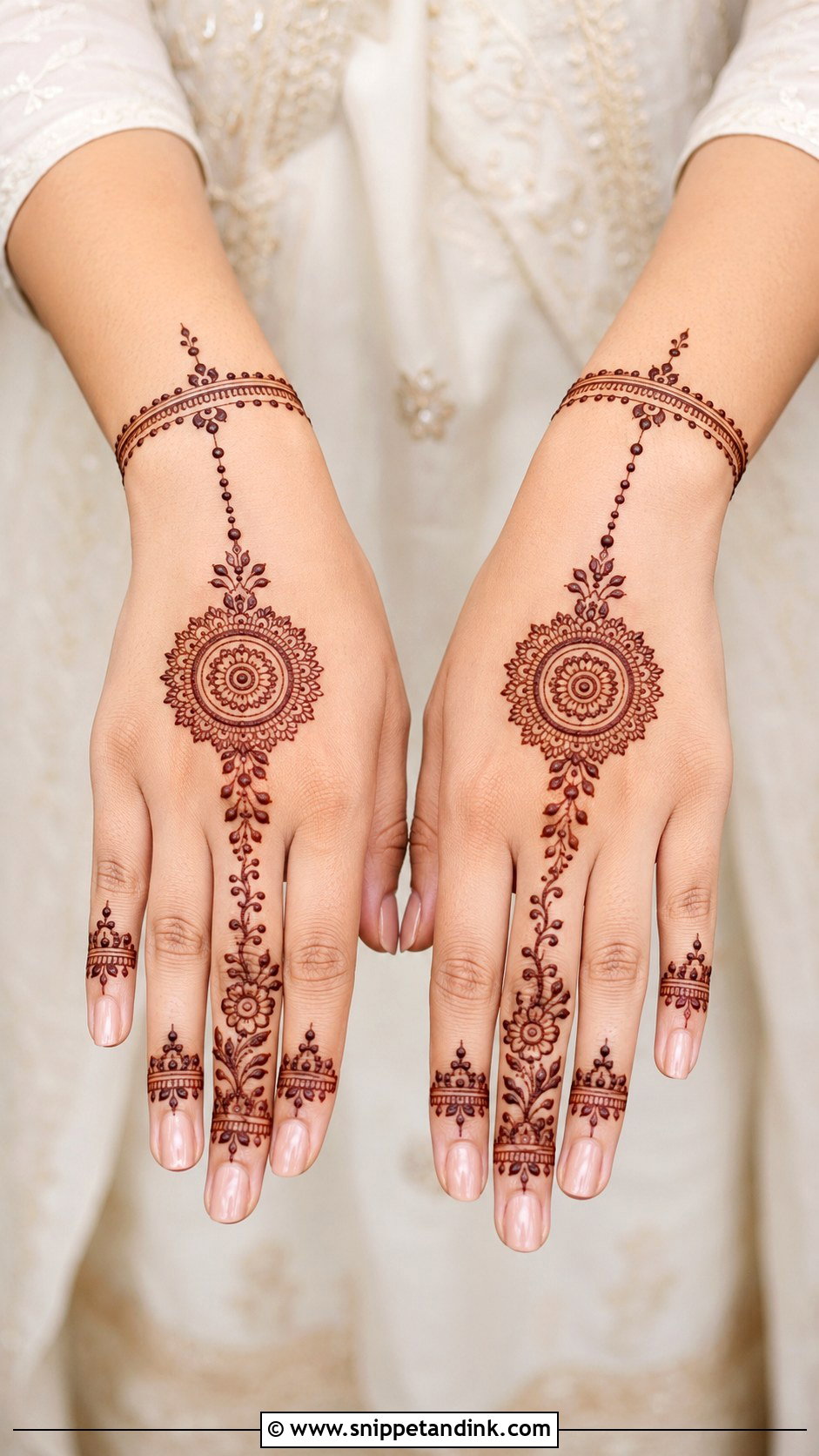
Engagement hands are photographed close up during the ring exchange, so I design around the ring finger. A jewelry layout frames that finger, or a floral vine can lead the eye toward it. I keep the ring finger itself lighter so the ring doesn’t sit on a busy patch of pattern. Avoid dense coverage that hides the shape of the hand. Soft shading, clean lines and open spaces photograph best here.
27. Back Hand Mehndi Design For Kids
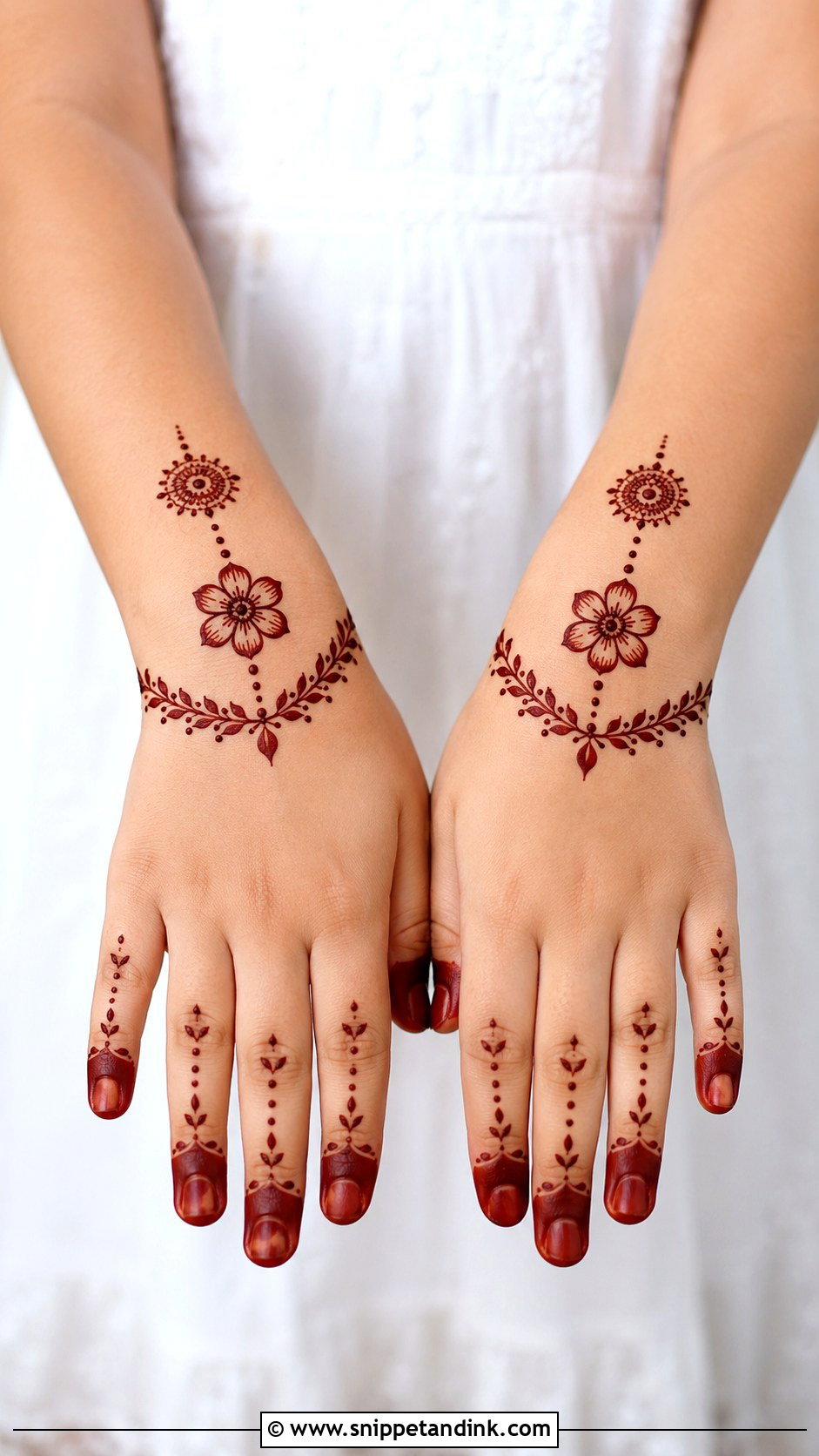
Back hand mehndi for kids has to be quick, because a child will not sit still for an hour. Simple flowers, small mandalas, leafy bracelets and dotted trails suit little hands. I use only natural henna on children and do a small patch first on very young or sensitive skin. Keep the design light so it smudges less while they move around, and skip tiny mesh, which blurs on small hands. A single flower with decorated fingers is usually enough.
28. Back Hand Mehndi Design For Short Hands
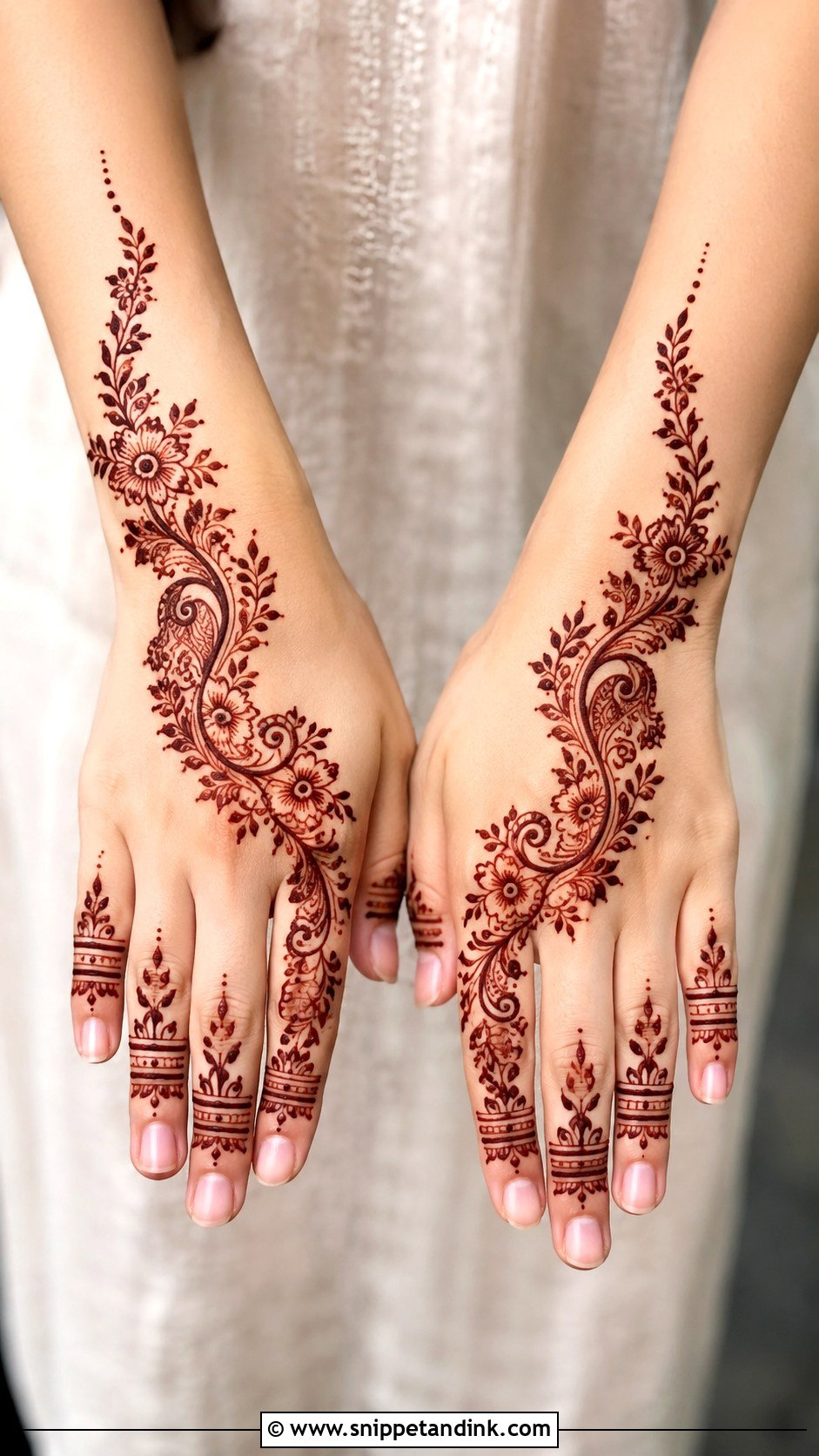
On a short hand, the goal is length. Diagonal trails guide the eye from the wrist toward the fingers, and slim vines, vertical leaves and narrow paisleys work better than wide motifs. I avoid very large circles, which make a short hand look smaller, and keep the wrist light. Thin vertical lines and stacked bands on the fingers help too. Leaving some negative space keeps the hand looking open.
29. Back Hand Mehndi Design For Long Fingers
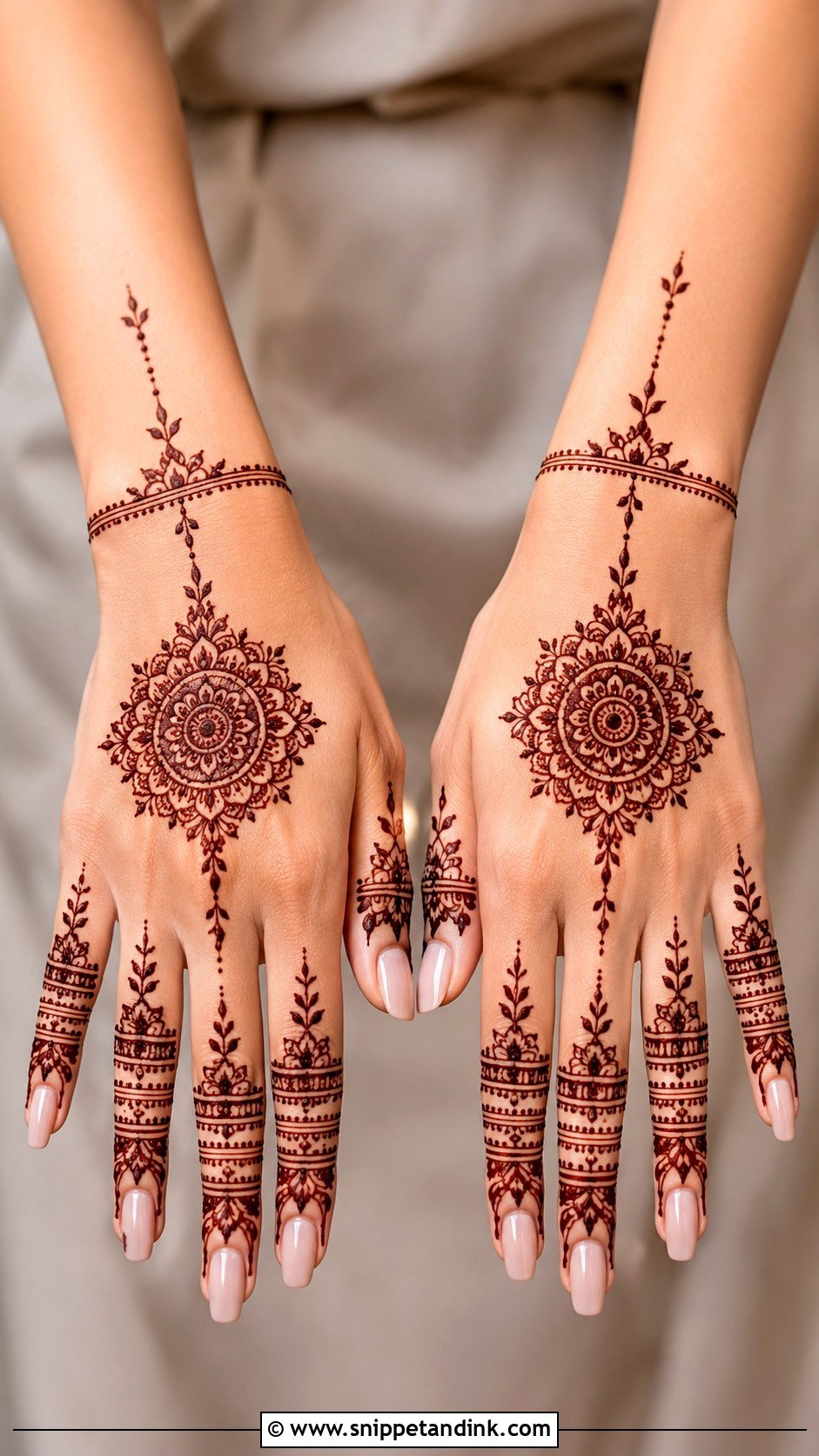
Long fingers give space for fine detail on each finger: stacked rings, leafy lines, small florals or slim geometric bands. The back of the hand can carry a mandala, a floral vine or a jewelry chain to the middle finger. Because the fingers are already long, I add a few horizontal bands so the design doesn’t stretch them further. Coverage can be minimal or full. It is a good choice when the hands are the focus of engagement photos.
30. Shaded Back Hand Mehndi Design
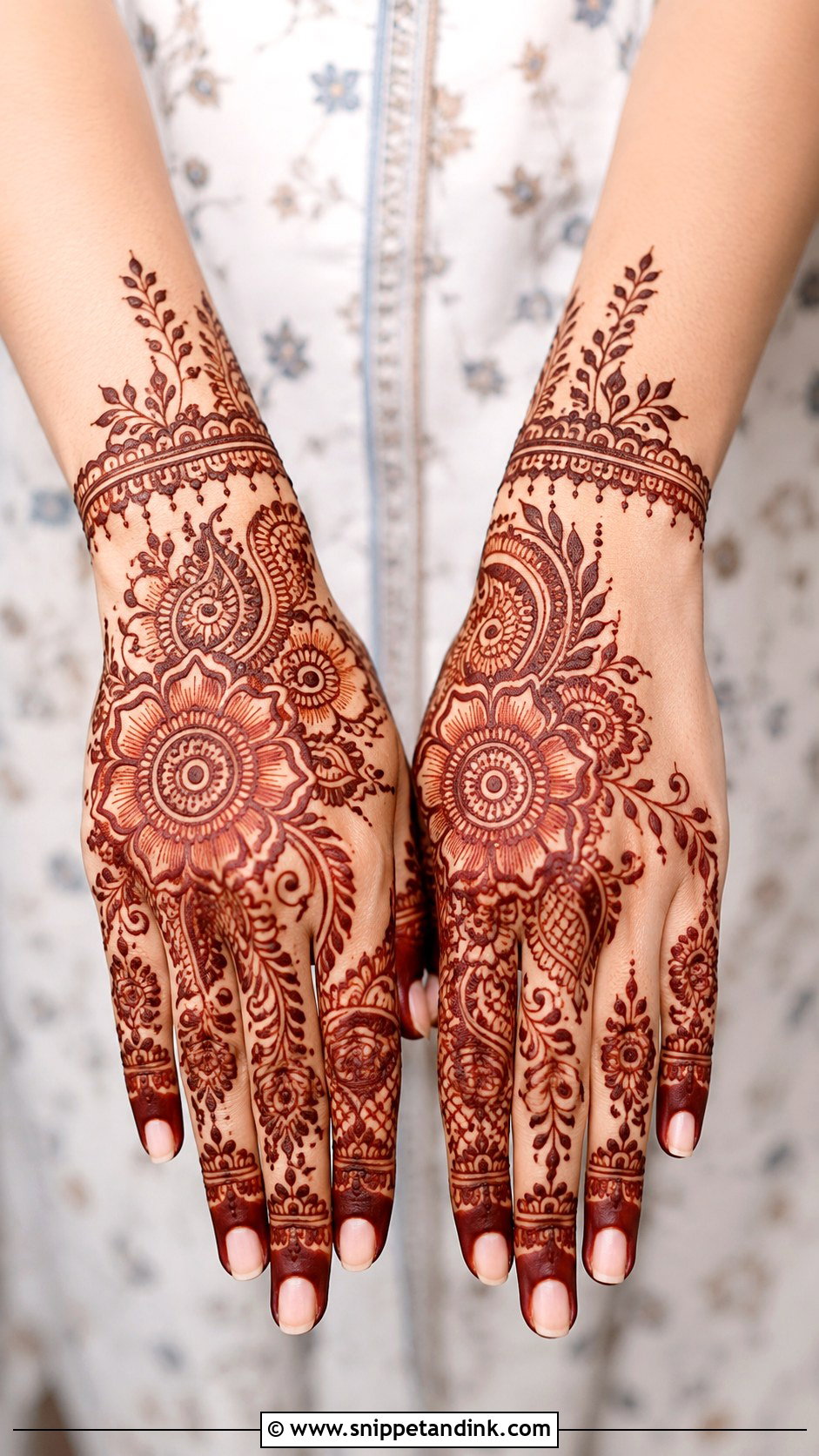
A shaded back hand mehndi design adds depth without full filling. Shading goes inside petals, paisleys, leaves and mandala layers. I shade by drawing very fine lines close together, or by applying a thinner layer of paste, and that thin layer stains lighter, which creates the gradient. Arabic and Indo-Arabic layouts suit it most. Shade lightly and evenly. Heavy shading blurs once the stain develops and loses the outline.
From Orange to Maroon Over Two Days
What you do after the cone matters as much as the design. These are the aftercare steps I give everyone who sits in my chair.
- Leave the paste on for at least six hours, and overnight if you can. Dab on a little lemon and sugar once it is dry to keep it stuck to the skin.
- Scrape the dried paste off with a blunt edge or rub it away. Do not wash it off.
- Keep water away for as long as possible afterward, ideally until the next morning. Rub on a little coconut oil or balm before you do get wet.
- Stay warm. Henna darkens better on warm skin, so cold hands in an air-conditioned room slow it down.
- Avoid hand sanitiser, bleach, chlorine pools and scrubbing dishes for the first days; they fade a back hand stain faster than anything.
Get your manicure done before the mehndi, not after. Nail remover and soaking bowls lift a fresh stain from the fingers.
Instant Black Stains Are a Warning Sign
Natural henna never stains black, and it never looks dark the moment the paste comes off. Cones that promise jet black in an hour often contain a hair dye chemical called PPD, which can cause painful blistering and lasting allergies. The cones I use are mixed from henna powder, lemon juice or water, sugar and essential oils, and they smell earthy. If a cone has no ingredient list, or the stain is very dark within minutes, don’t put it on your skin.
Match the Coverage to the Function and the Hours You Have
Back hand mehndi covers a wide range, from simple patterns and bold Arabic trails to bridal detail and jewelry-inspired layouts. The right design depends on the occasion, your hand shape, your outfit and how long you can sit. Minimal florals and bracelet patterns suit quick events; mandalas, jaali, paisleys, peacocks and full coverage belong to weddings and festivals. Whichever you choose, clean spacing, neat fingers and balanced motifs are what make it look finished.
You'll Like These Ideas:




Leave a Reply