
Most brides I dress walk in with a folder of details: a sleeve from one picture, a neckline from another. It gets much easier once you compare whole silhouettes instead. The gowns below run from ball gowns and clean columns to lace, corsetry, modest designs and softly colored options, and structured satin, corset waists and minimal shapes are all showing up strongly in bridal collections right now. Start with your venue, season and how formal the day is. Then let shoes, veil, jewelry and alterations follow the dress you choose, rather than the other way round.
Order Dates, Fittings and the Dress Calendar
The gown you love in a shop is almost never the one you take home. Most bridal gowns are made to order from your measurements once you’ve chosen, and production usually takes several months, longer for heavily beaded or custom pieces. Factor in alterations on top, and starting your search around nine to twelve months out is comfortable. Six months is possible but leaves little room for delays.
- First appointments: try different silhouettes, even ones you’re sure you’ll dislike.
- Order: confirm the size against the maker’s chart, not your everyday clothing size.
- First fitting, roughly two to three months before: the big changes, such as hem, bodice and straps.
- Second fitting: refinements and the bustle.
- Final fitting, a couple of weeks out: try everything together and bring whoever will help you dress.
Rush fees exist, but they vary a lot between shops and designers, so ask before you rely on one.
Two people at the appointment is usually enough
Large groups mean large opinions, and I watch brides talk themselves out of the gown they lit up in because five people saw it differently. Bring one or two whose taste you trust and who know how you like to move and feel. Wear underwear close to what you’ll wear on the day, and bring shoes near your planned heel height, so the samples hang at something like the right length.
1. Long Satin A-Line Wedding Gown
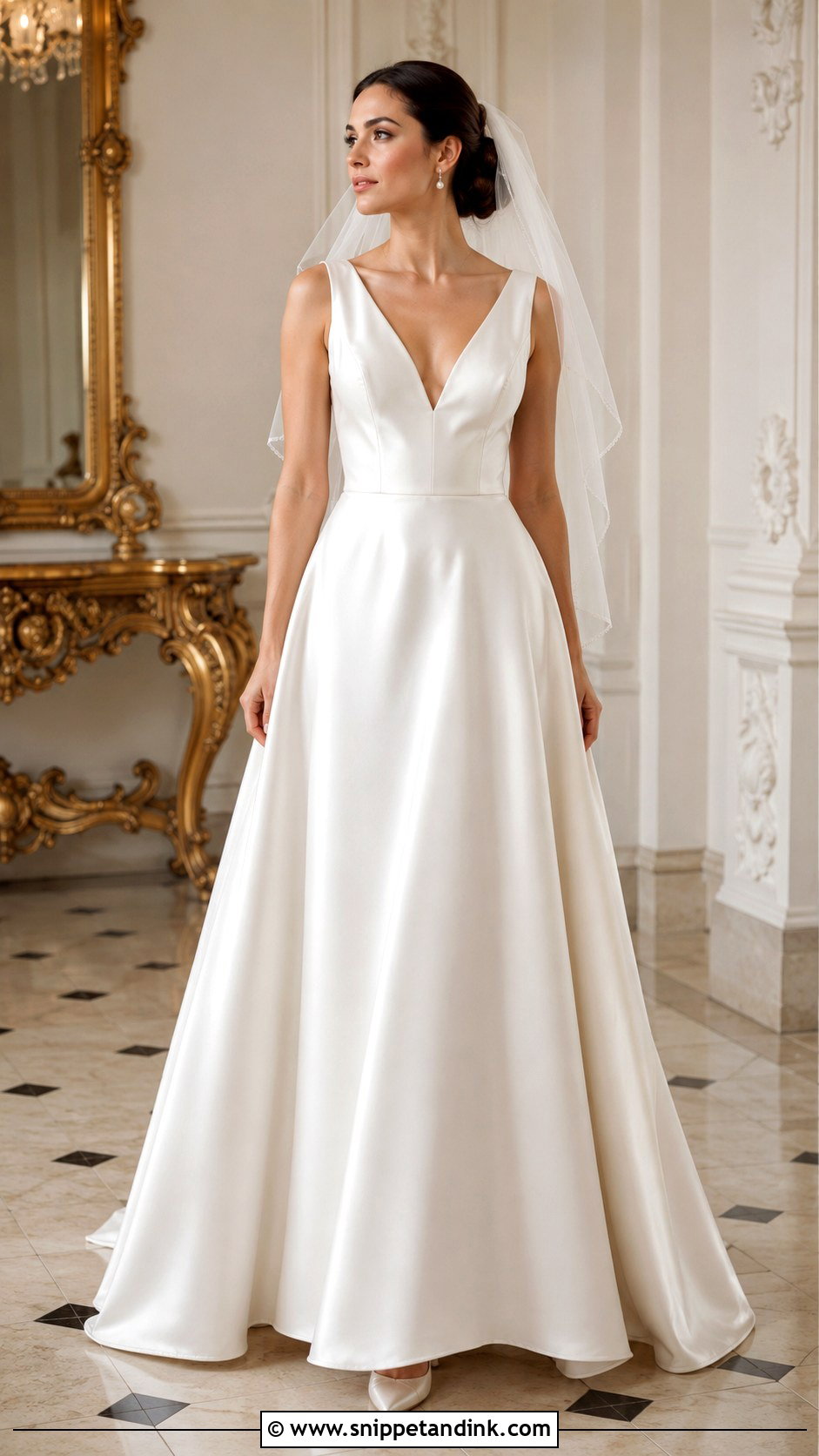
Satin A-lines are the shape I suggest first to brides who don’t yet know what they want, because the fitted bodice and skirt falling from the natural waist flatter most figures and suit most venues. A clean V-neck or softly curved neckline keeps it polished without feeling stiff. Ivory satin has a gentle glow in daylight and under ballroom lights alike. Pearl drops, a mid-length veil, pointed satin pumps and a small structured bag finish it, and a low bun keeps the neckline clear. Bring your actual wedding shoes to the hem fitting. Satin shows a crooked hem more than any other fabric, and a heel change of even an inch means redoing it.
2. Long Sleeve Lace Wedding Gown
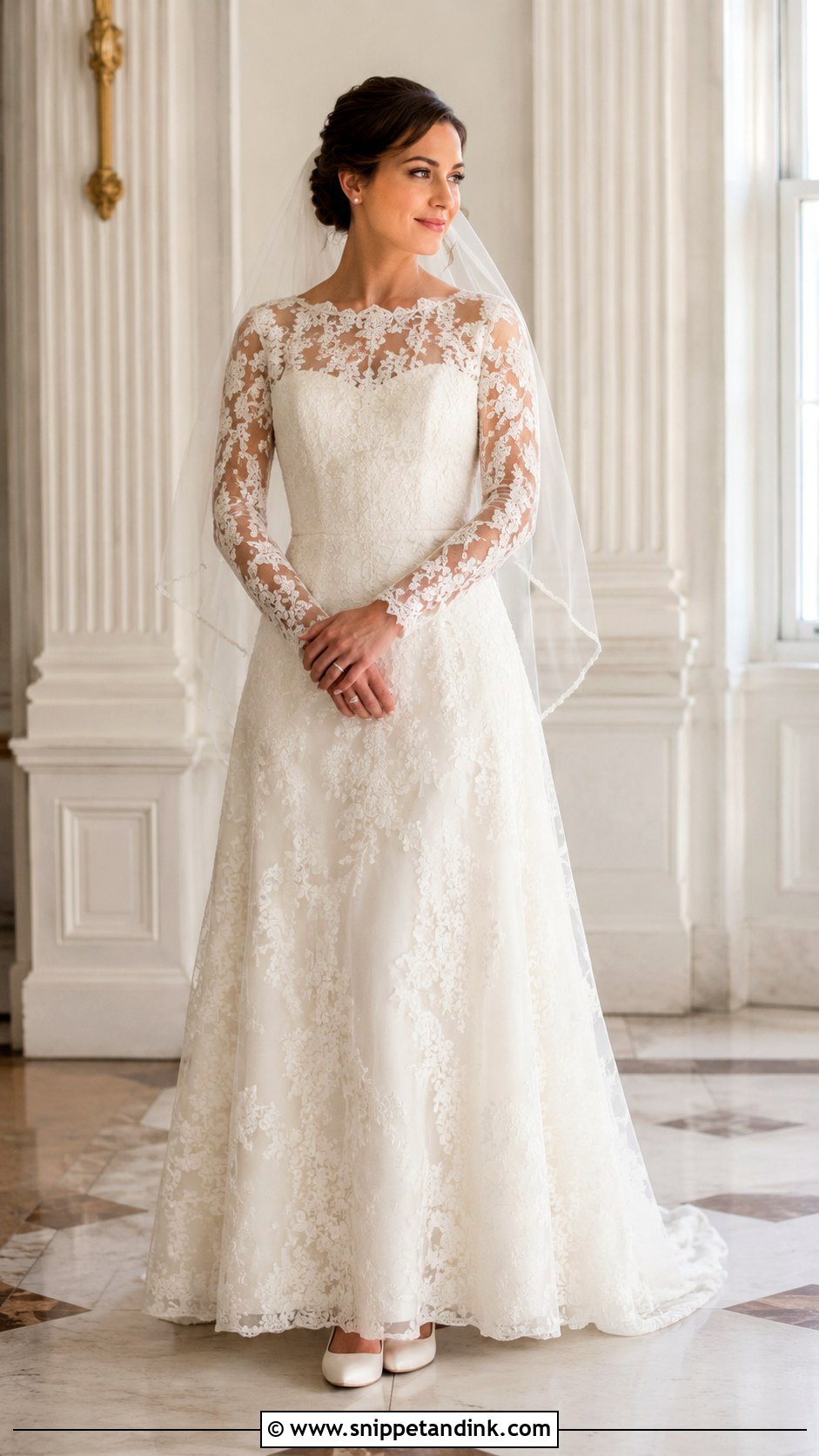
Lace sleeves give you coverage and texture without the weight of a fully covered gown. Look for a lined bodice, sheer sleeves and an A-line or gently fitted skirt; floral lace reads soft and traditional, geometric lace sharper and more current. Small pearl studs, a fingertip veil, closed-toe ivory heels and a compact bouquet that doesn’t cover the bodice suit it, with a loose chignon so the sleeve detail shows. The part I test hardest is the shoulder. Lace has little stretch, so ask the seamstress to watch while you hug, raise a glass and lift your bouquet, and let out the back if the sleeves pull.
3. Long Strapless Mikado Ball Gown
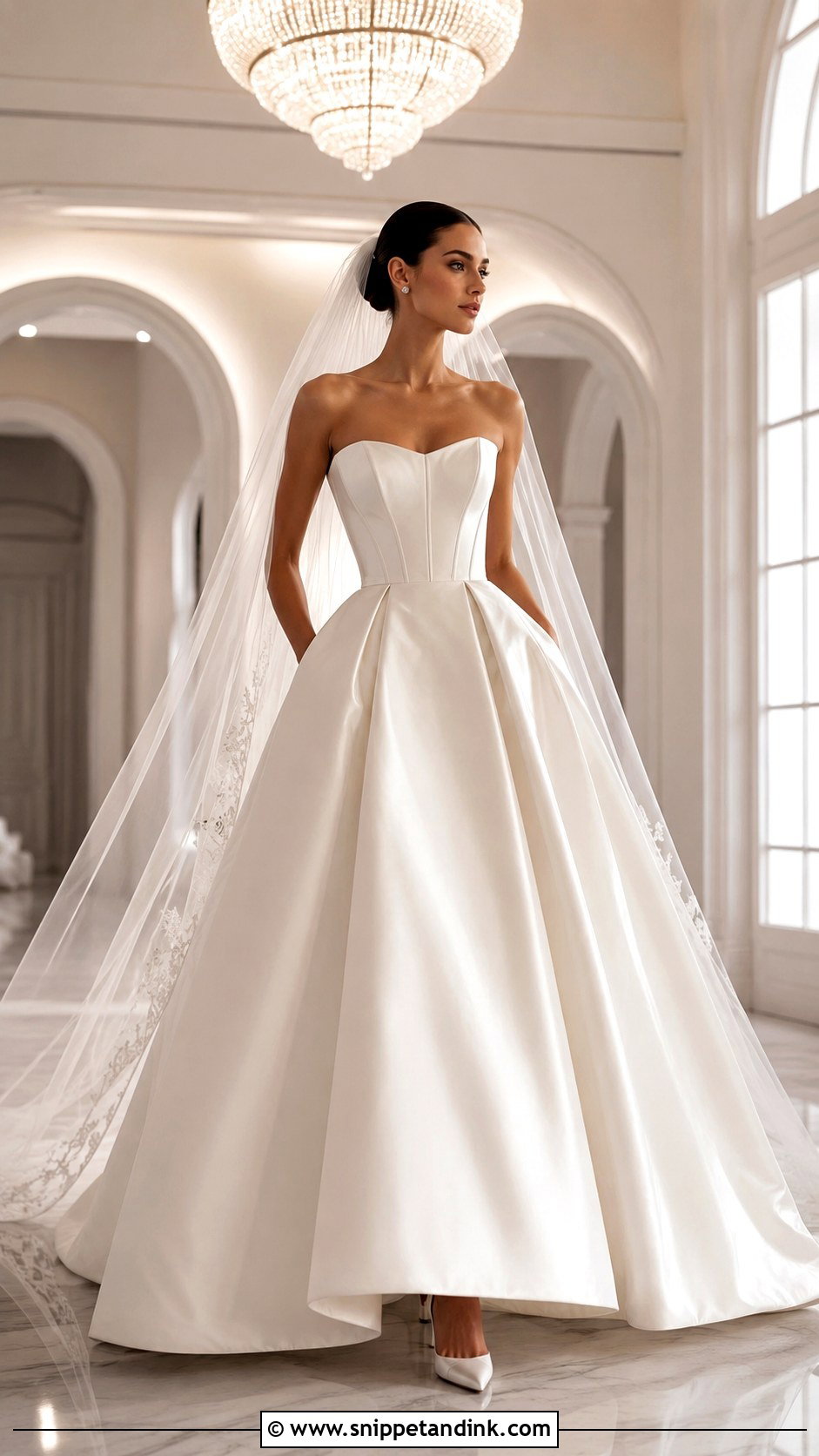
Mikado is a heavy, slightly stiff silk blend that holds a pleat like paper, which is why a strapless ball gown in it looks dramatic without a single bead. A supportive corseted bodice with a straight or gently scooped neckline, and a full skirt starting at the waist, is the classic build. Add a cathedral veil, crystal studs, pointed pumps and a small satin clutch, with a sleek bun or smooth Hollywood waves. Two practical things. Strapless bodices have to stay put while you sit and dance, so test both at fittings. And ask about pockets; in a skirt this size they’re easy to add and you’ll use them all night.
4. Long Off-The-Shoulder Crepe Wedding Gown
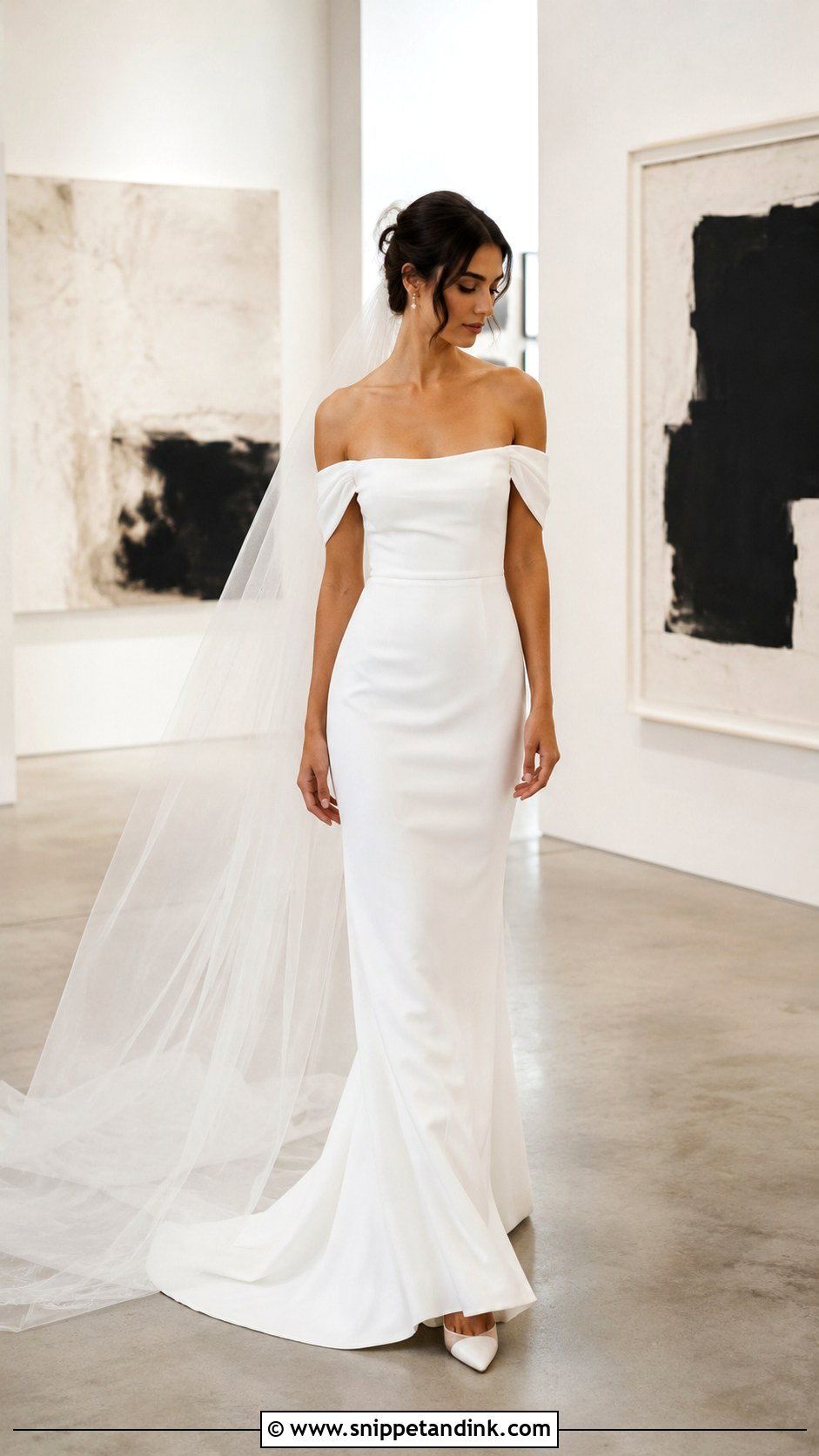
Crepe hides nothing. It’s smooth and matte and follows the body closely, so an off-the-shoulder crepe gown needs good internal structure, clean seams and careful fitting through the waist and hips. Let the skirt fall into a chapel-length train, and use soft draped sleeves to frame the shoulders if you want them. Delicate drop earrings, a raw-edge veil, pointed ivory heels and a slim bracelet keep it modern, as does a center-parted low bun. Choose smooth, flat-edged underwear early and wear it to every fitting. This is the gown for galleries, modern hotels and pared-back indoor ceremonies.
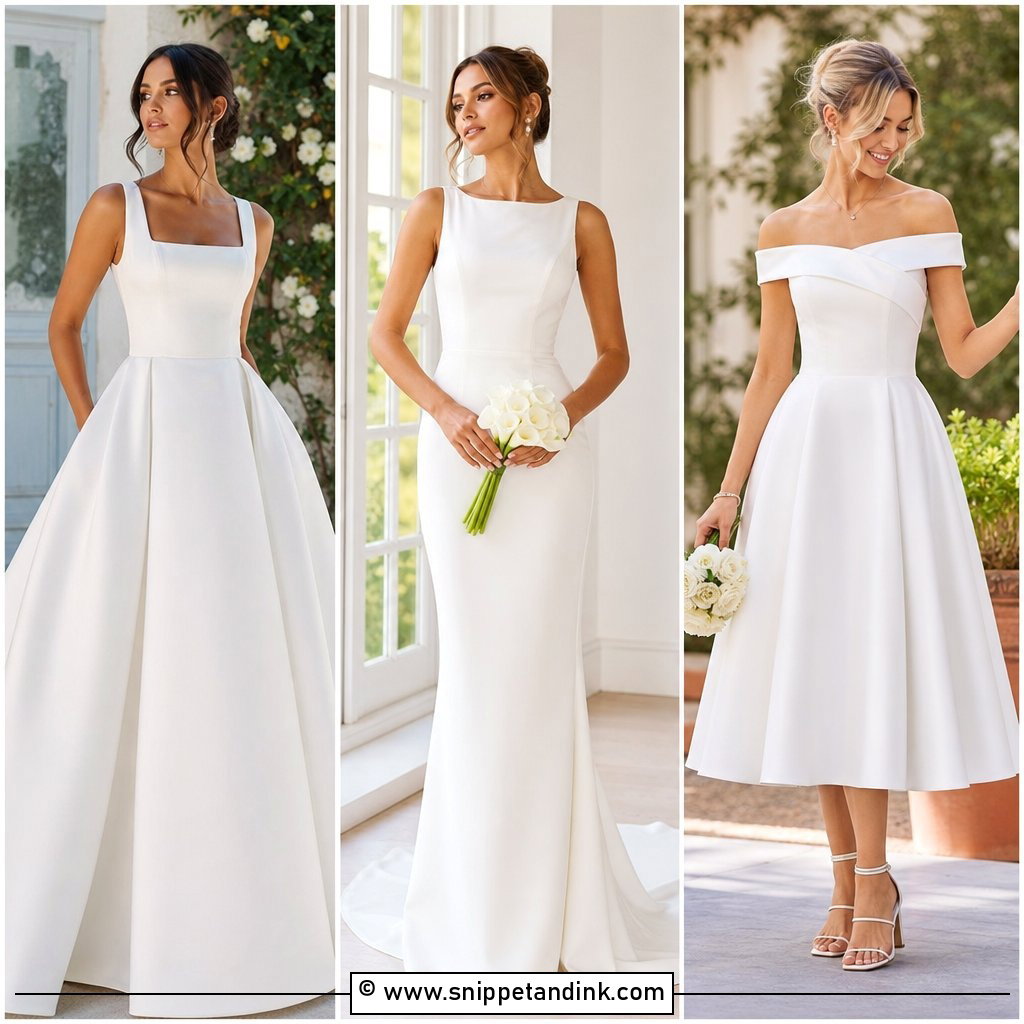
5. Long Square Neck Wedding Gown
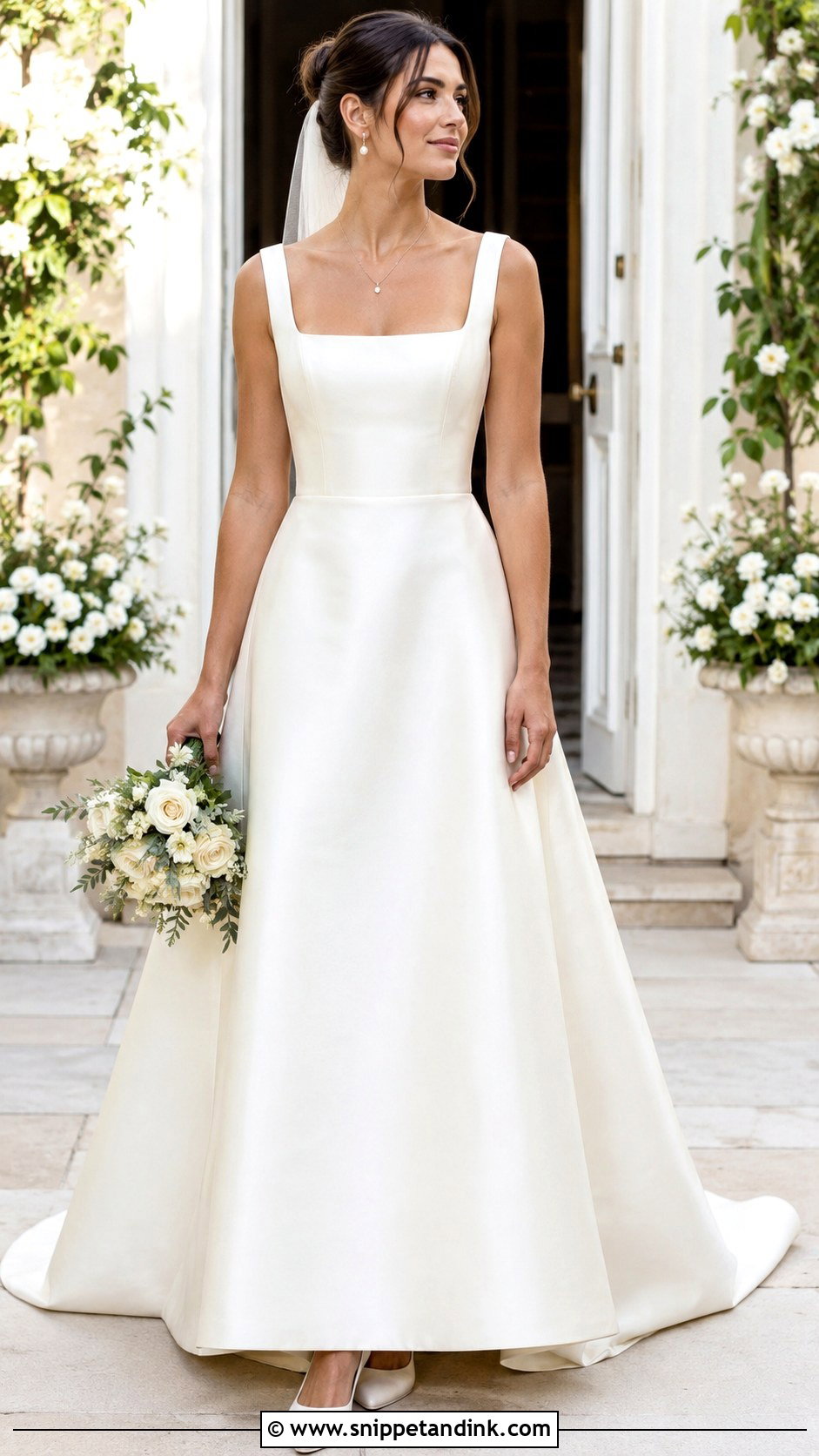
A square neckline frames the collarbones in straight lines, and it adapts easily to different sleeves and skirts. I’d pair it with wide straps, a structured bodice and an A-line in satin or matte crepe. A fine pendant, pearl earrings, a narrow veil and low block heels suit it, with a softly waved updo to round off all those right angles. Want more coverage? Short sleeves or a detachable sheer topper keep the shape intact. Watch the neckline closely at fittings. Square necks gap at the corners when you lean forward, and that gap is exactly what shows in seated photos.
6. Long Basque Waist Corset Wedding Gown
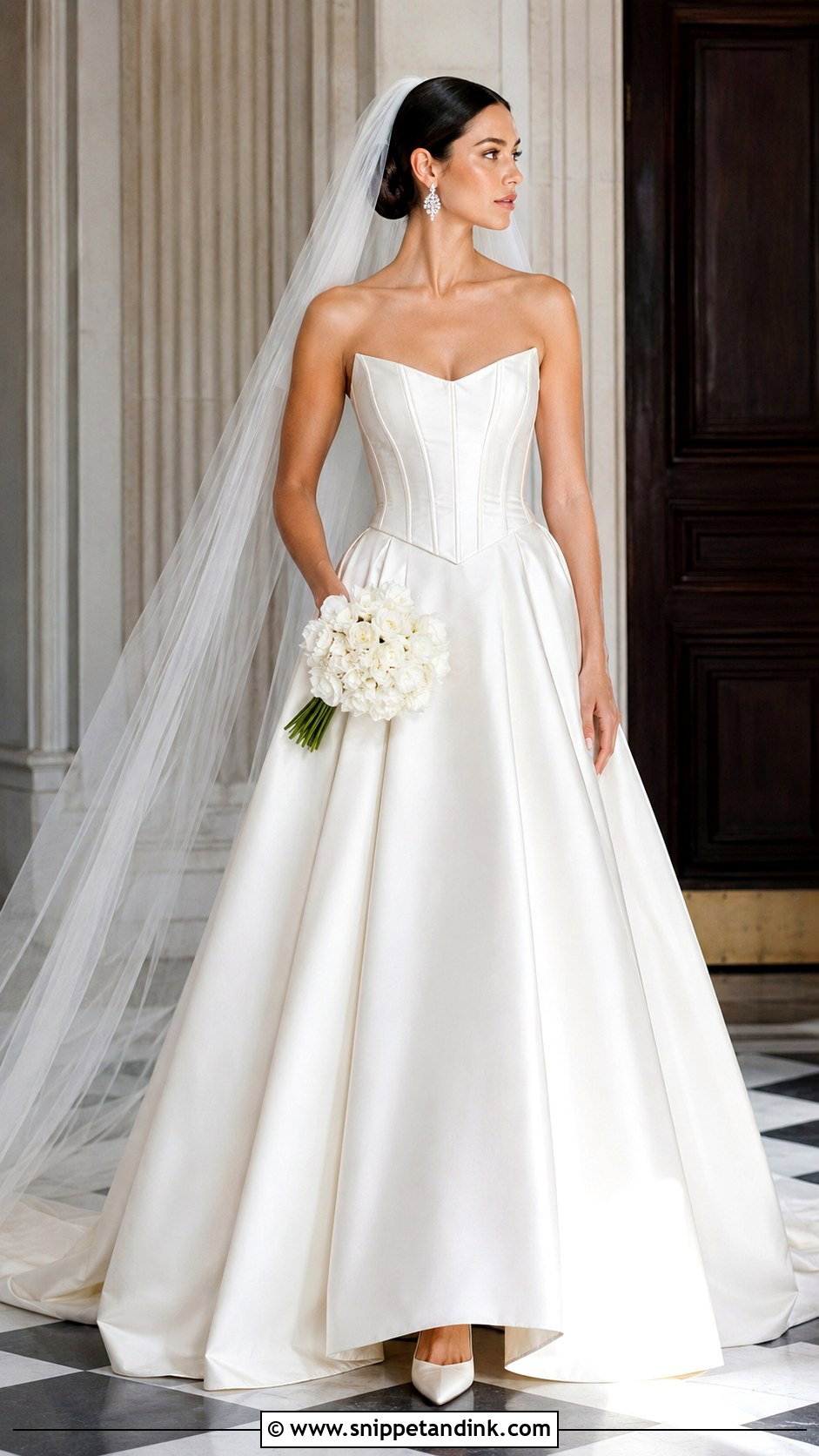
The Basque waist dips into a point below the natural waist, which lengthens the torso and gives the bodice real drama. Balance it with a full satin or tulle skirt and a plain strapless neckline. Visible corset seams add definition; a lined bodice looks more traditional. Keep the bouquet small so it doesn’t sit right over that point, and add a long plain veil, crystal earrings and satin pumps. Wear your hair up or swept back. The point of a Basque waist presses into the lap when you sit, so I always have brides sit for a few minutes at the fitting before signing off. Supportive is right; digging in is not.
7. Long Mermaid Lace Wedding Gown
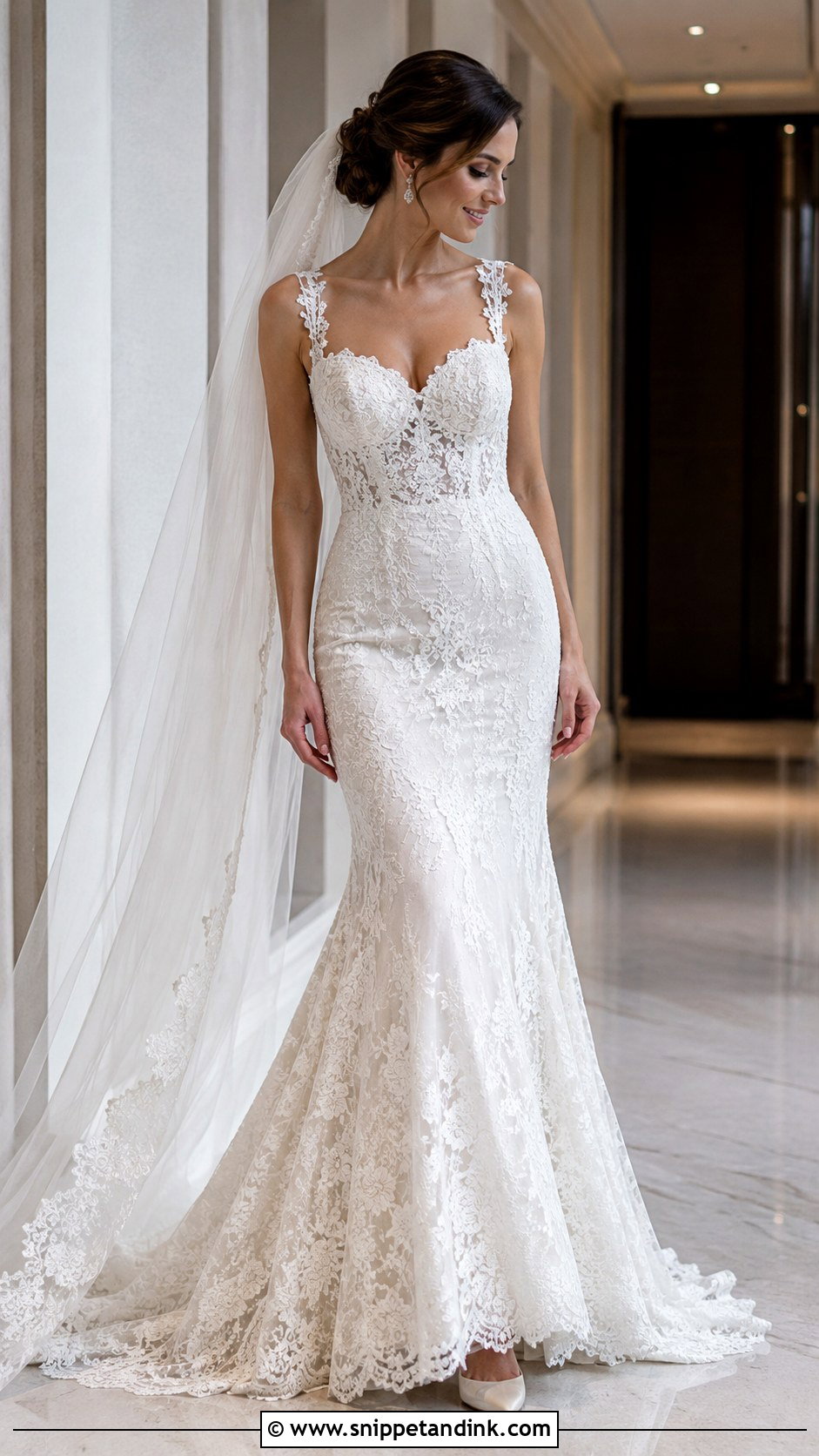
Mermaid gowns fit through the torso and thighs before widening near the knee, and in lace they’re one of the most requested shapes I fit. Supportive straps or an off-the-shoulder neckline balance the narrow skirt. Lace over a nude lining shows the pattern clearly, while ivory on ivory looks softer. Finish with a simple chapel veil, delicate earrings, pointed heels and a neat low bun, and stop there. Climb a few steps at your fitting; mermaid flares sit low, and steps are where they bite. A well-placed bustle will lift the train for dancing without distorting the fitted line.
8. Long Minimalist Silk Slip Wedding Gown
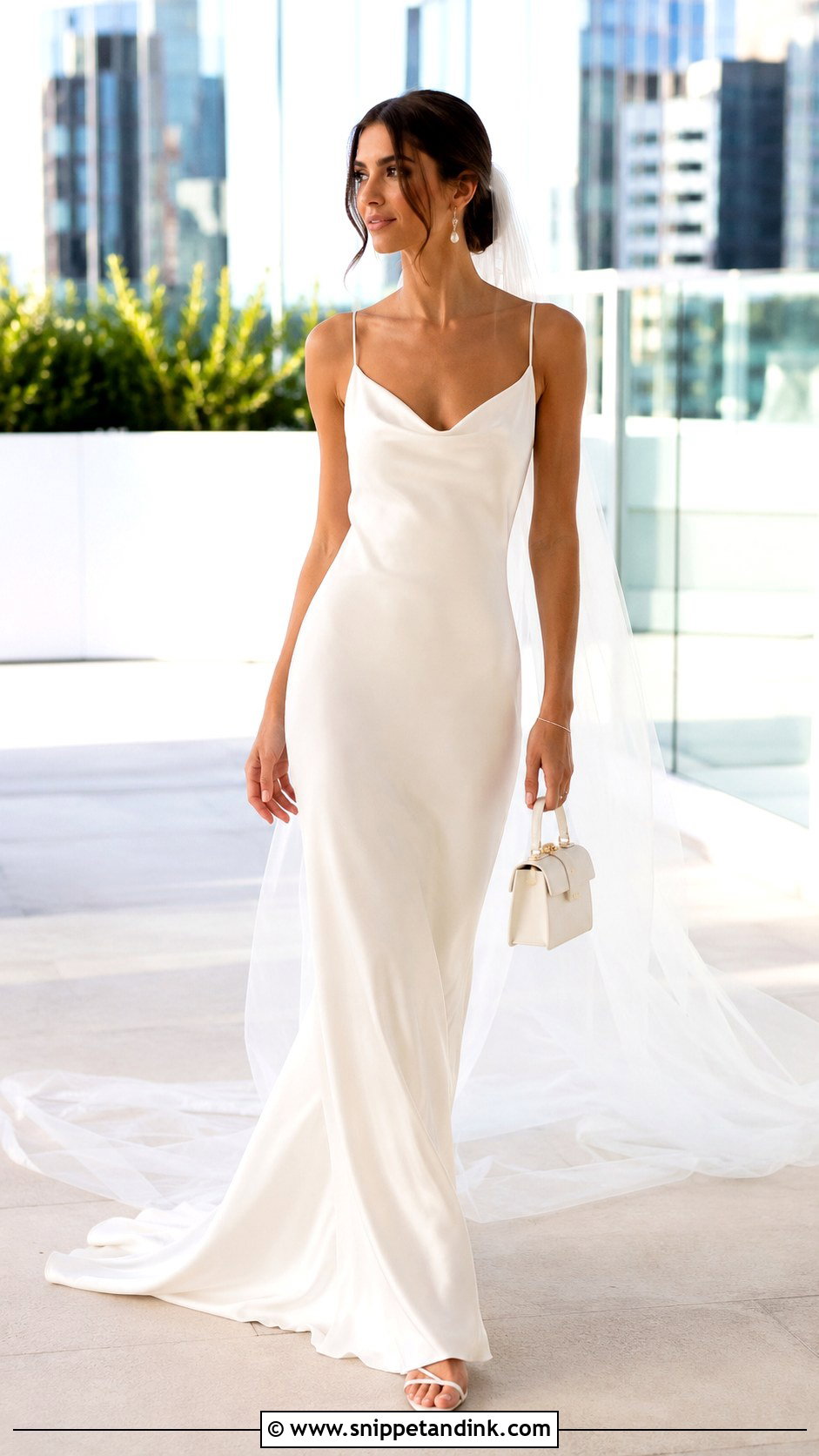
Bias-cut silk is the gown you feel least in, and it’s the least forgiving to fit. Cutting on the bias lets the fabric drape and stretch slightly over the body, which is why a slip gown moves so well and also why it shows every seam and underwear line. Choose a cowl, square or V-neck with straps that can actually be adjusted. A sheer cathedral veil, pearl drops, strappy ivory sandals and a small structured bag keep it quiet, with smooth waves or a sleek low knot. Test your foundation garments in daylight and under warm indoor light. A subtle train gives enough ceremony for a rooftop, a coastal venue or an intimate hotel.
9. Long High Neck Chiffon Wedding Gown
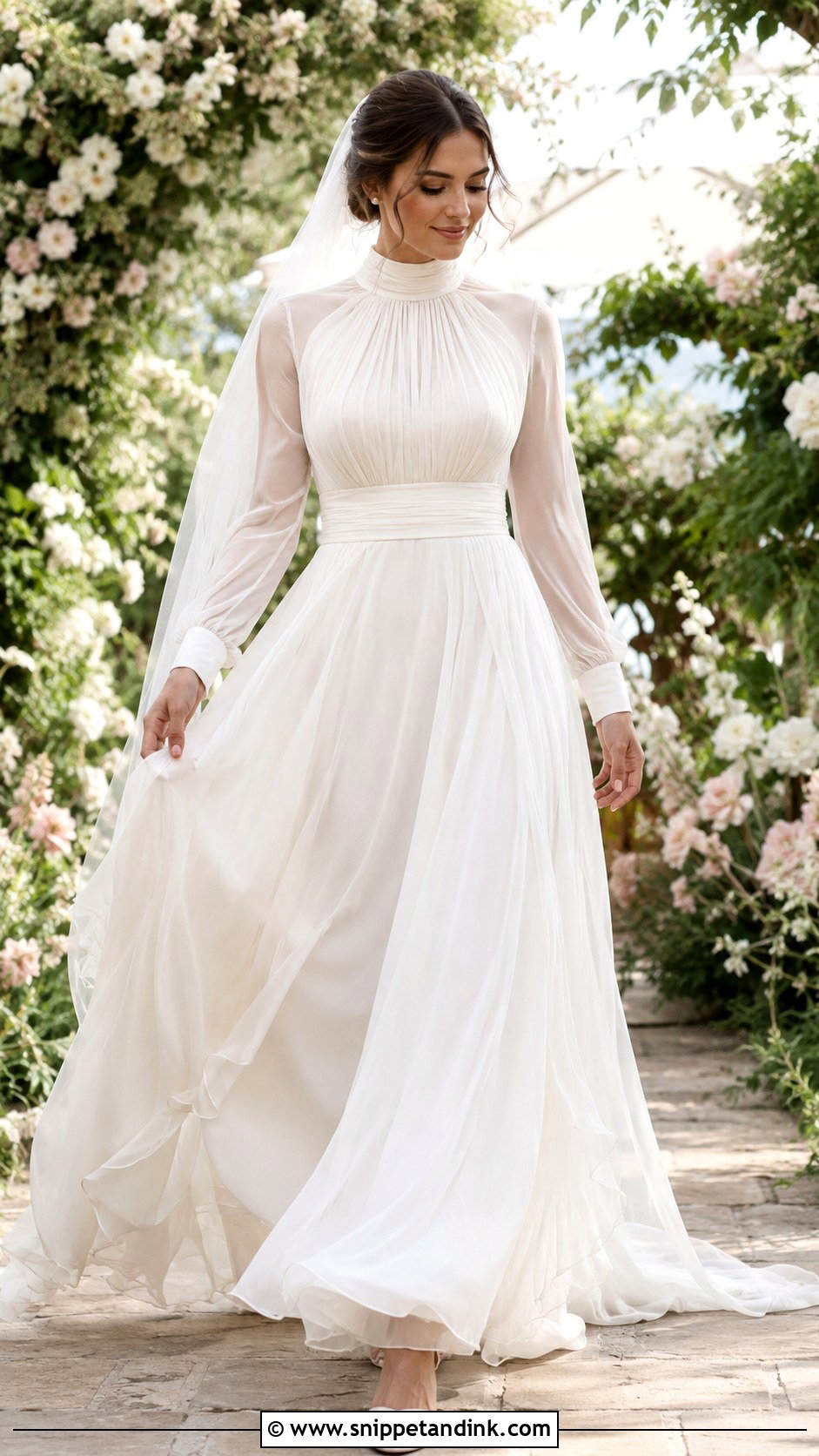
Chiffon is made for outdoor ceremonies; it moves with the smallest breeze. A high-neck gown with a softly gathered bodice, a defined waist and a flowing skirt gives coverage without heaviness, with sheer long sleeves for cooler months or a sleeveless halter cut for summer. Pearl studs, low ivory sandals, a light veil and a loose updo with a few face-framing pieces suit it. Skip the necklace. Because chiffon is so light, the hem needs to be finished properly for your venue, as a skirt that’s slightly long picks up grass and grit fast. Keep the train manageable outdoors and ask for a bustle that can be done up in a minute.
10. Long Floral Appliqué Tulle Wedding Gown
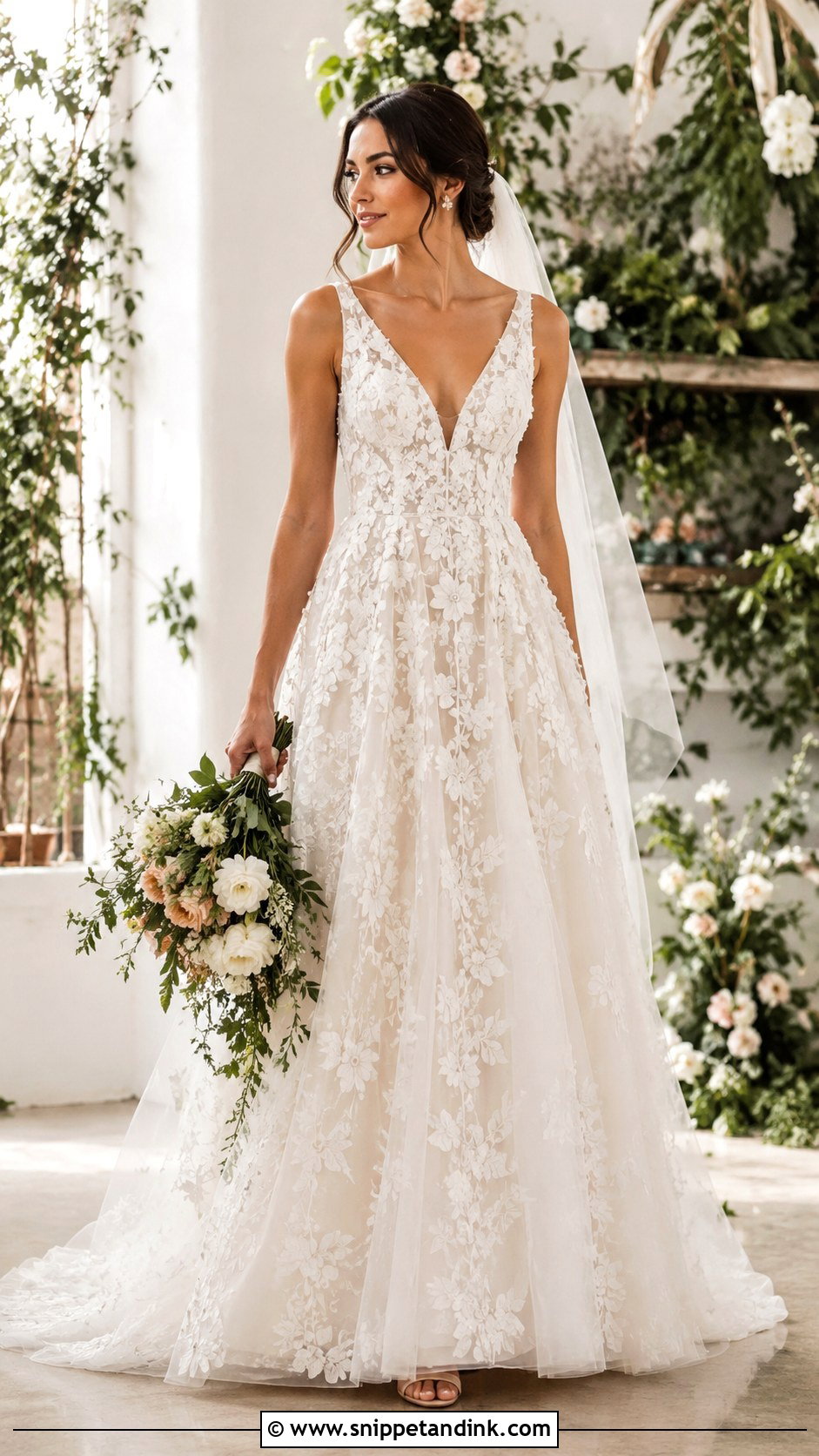
Floral appliqués add depth without relying on sparkle. I like them clustered on the bodice and scattered more loosely down a full tulle skirt, over a lined sweetheart or V-neck with thin straps or sheer sleeves. Small floral earrings, plain ivory heels, a simple veil and a loosely gathered bouquet keep it from looking overly matched, and a textured low bun suits the organic feel. Scale is the decision to make at fittings: small motifs read as texture, large ones as a statement. Then check the raised flowers at the waist, under the arms and along the train, where rubbing loosens stitching first.
11. Long Pearl Beaded Wedding Gown
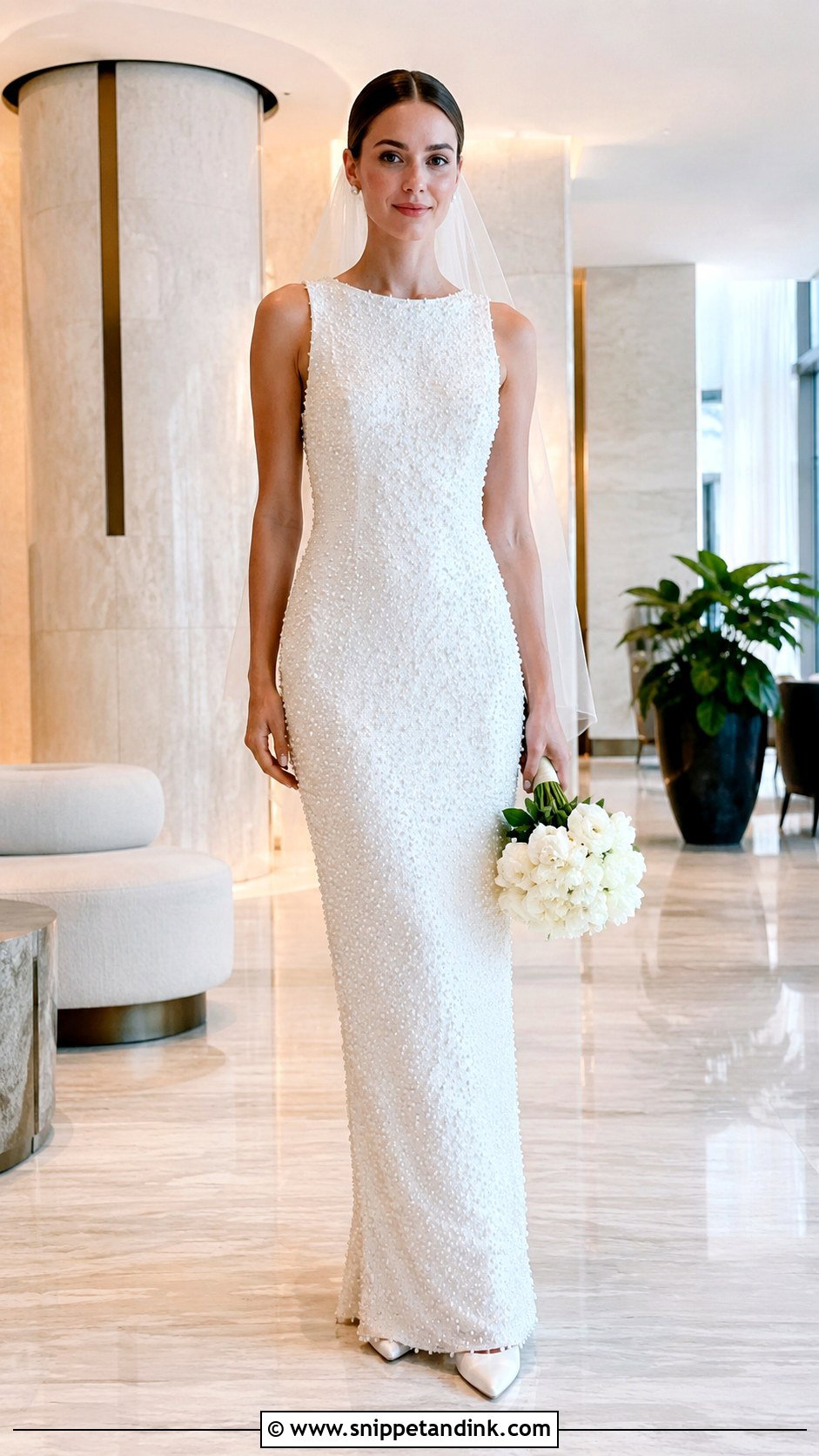
Pearl beading gives a gown a soft luster that reads as elegant rather than excessively glittery. Pick a column, sheath or soft A-line with evenly spaced pearls and a plain neckline, so the surface detail doesn’t crowd the face. Pearl studs, a single-layer veil, satin pumps and a compact white bouquet are enough, with smooth waves or a polished low bun. Pick the gown up by the hanger before you commit. Heavily beaded trains are noticeably heavier to wear for hours, so lift it before you fall for it. Ask the shop for spare pearls, and check the underarm and hip areas after alterations, since that’s where they come loose.
12. Long Cape Sleeve Wedding Gown
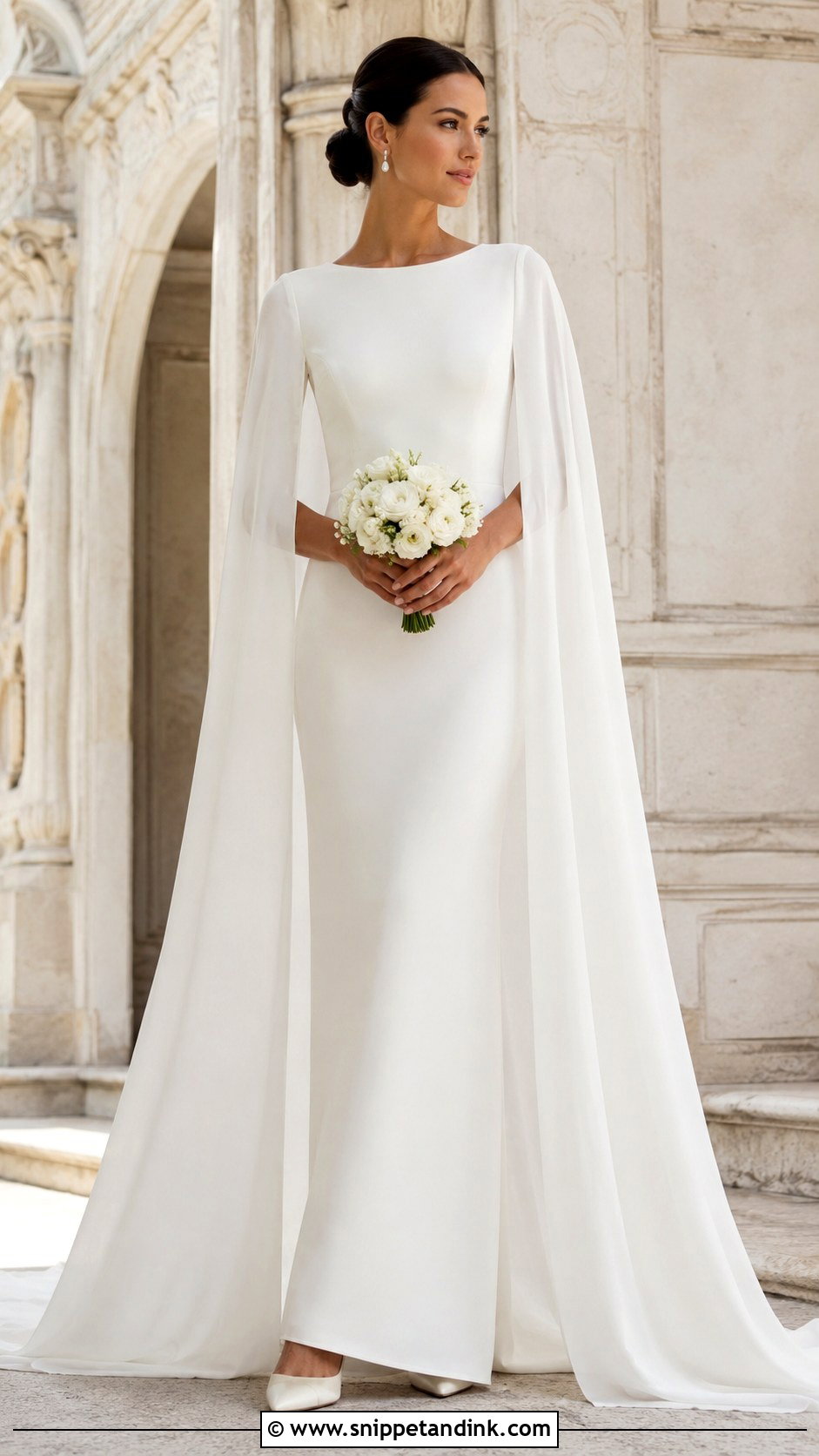
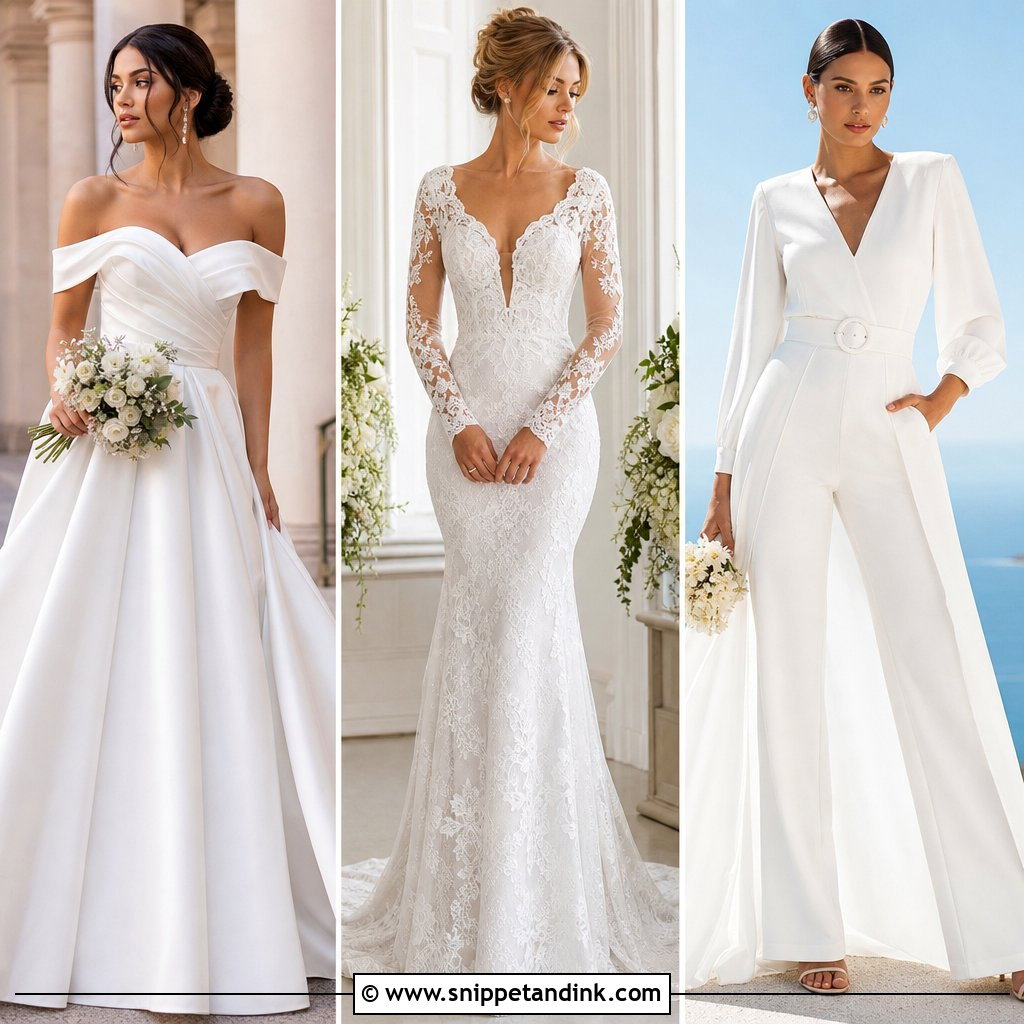
Want the movement of a veil with more cover over the shoulders? A cape does it, with fabric attached at the neckline or shoulders and flowing toward the floor. Start with a plain crepe or satin column and add a detachable chiffon cape. Understated earrings, pointed pumps, a sleek bun and a small structured bouquet suit it, and I’d usually leave out a veil, because two long layers at the back fight each other. Taking the cape off before dinner gives you a second look from the same gown. At fittings, make sure the cape’s weight doesn’t drag the neckline back, and that it clears the train when you walk.
13. Long Wedding Gown With Detachable Overskirt
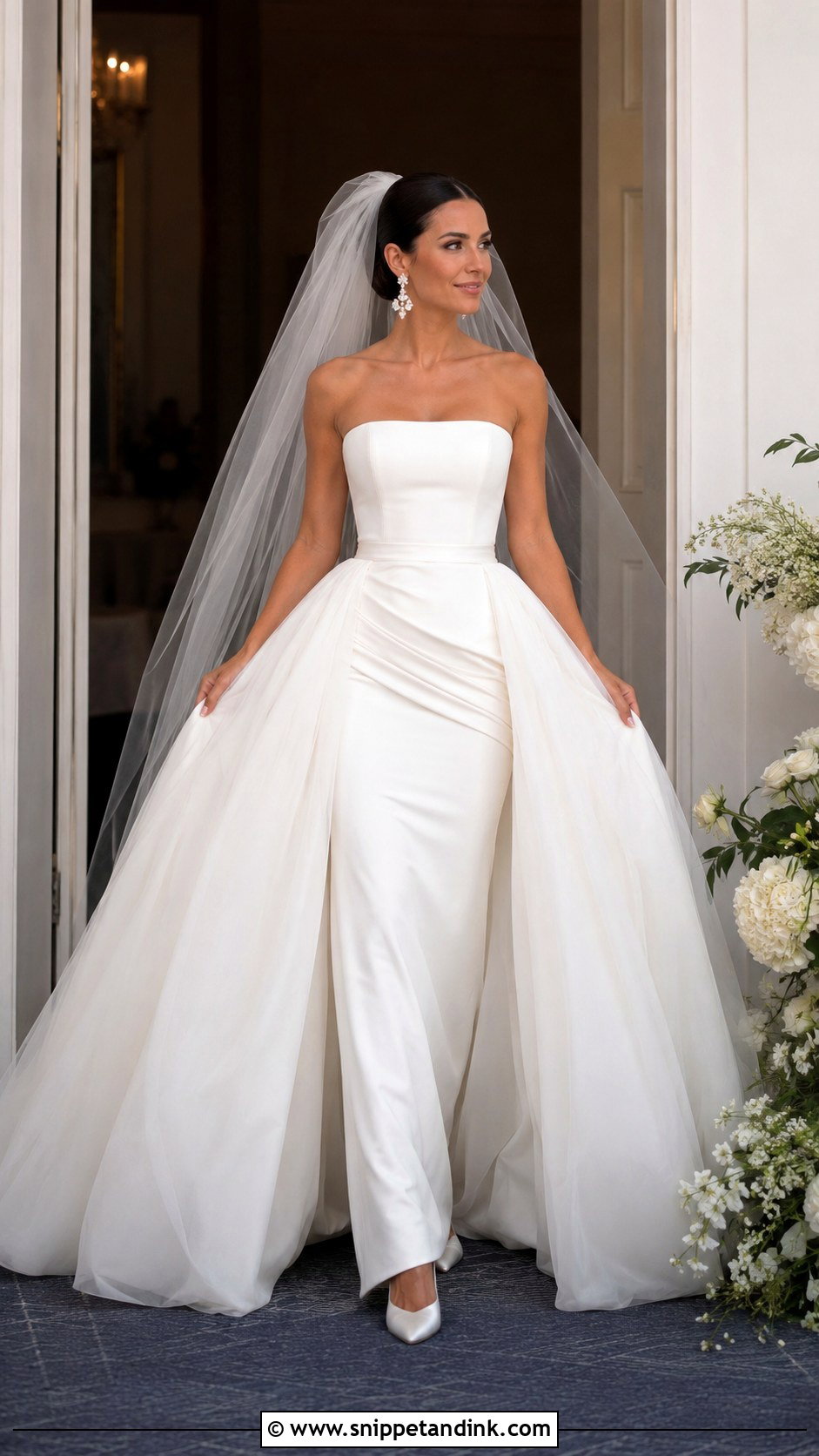
A detachable overskirt gives you a full ceremony silhouette and a slimmer gown for dancing. The base is a fitted crepe, lace or satin dress, with a removable tulle or Mikado skirt over the waist. A cathedral veil, statement earrings and pointed heels suit the ceremony version, and a sleek ponytail or low bun works for both. The attachment matters most. It should sit flat at the waistband and hold firmly as you walk, and someone you trust should practice unfastening it before the day. Give that person a garment bag, too, because a Mikado overskirt left on a chair creases badly.
14. Long Modest Satin Wedding Gown
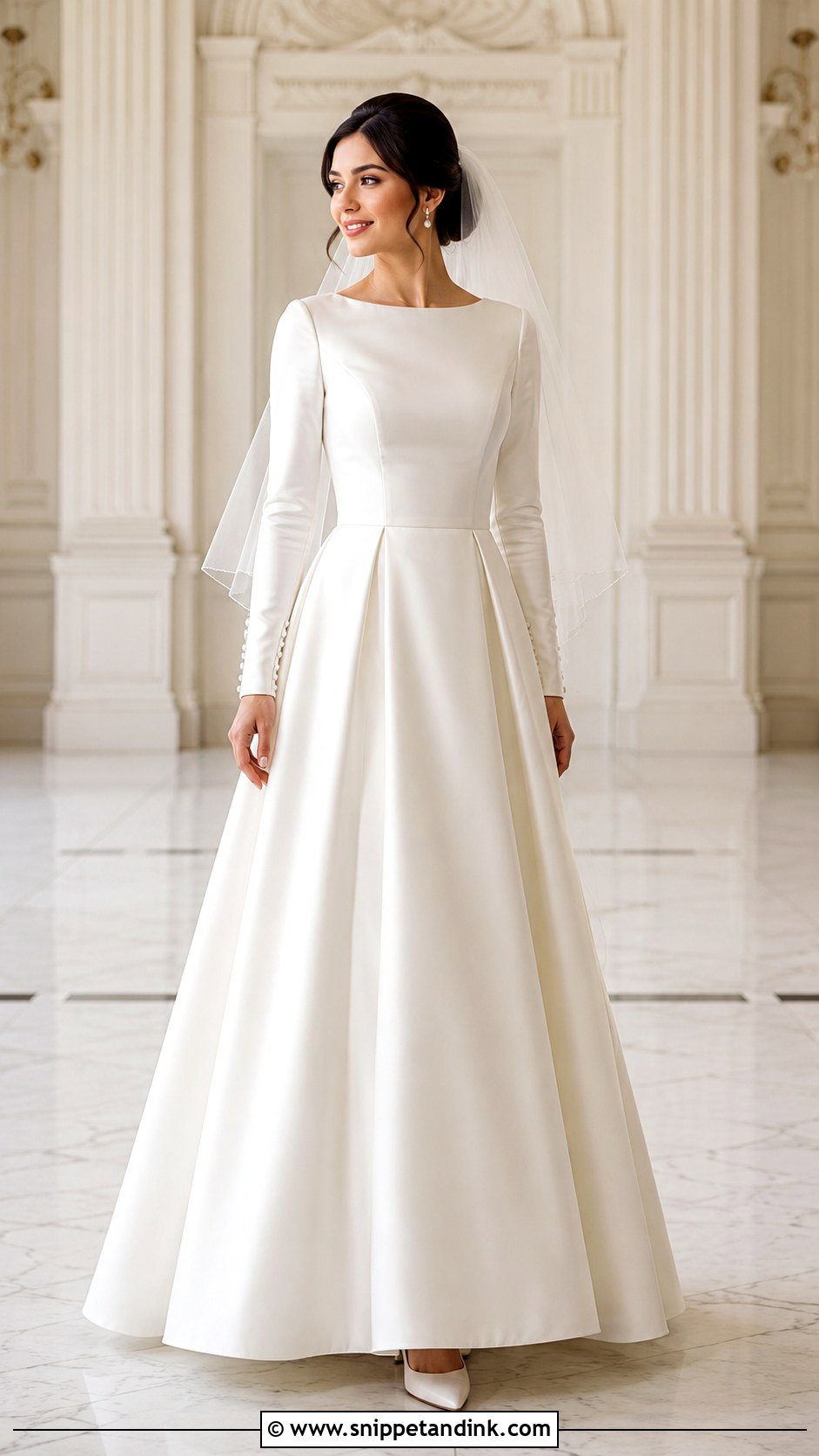
Modest satin looks current when the tailoring is clean. A high bateau or jewel neckline, fitted long sleeves, a defined waist and an A-line skirt with gentle pleats is the shape I’d start from, and a row of covered buttons down the back gives the gown something to show from behind. Matte satin keeps it soft rather than shiny. Pair it with pearl earrings, a fingertip veil, closed-toe pumps and a structured bouquet, and a low chignon or a head covering, whichever you prefer. Ask for a breathable lining and extra room through the elbows and shoulders. Fitted satin sleeves restrict movement more than lace ones, so reach forward and hug at every fitting.
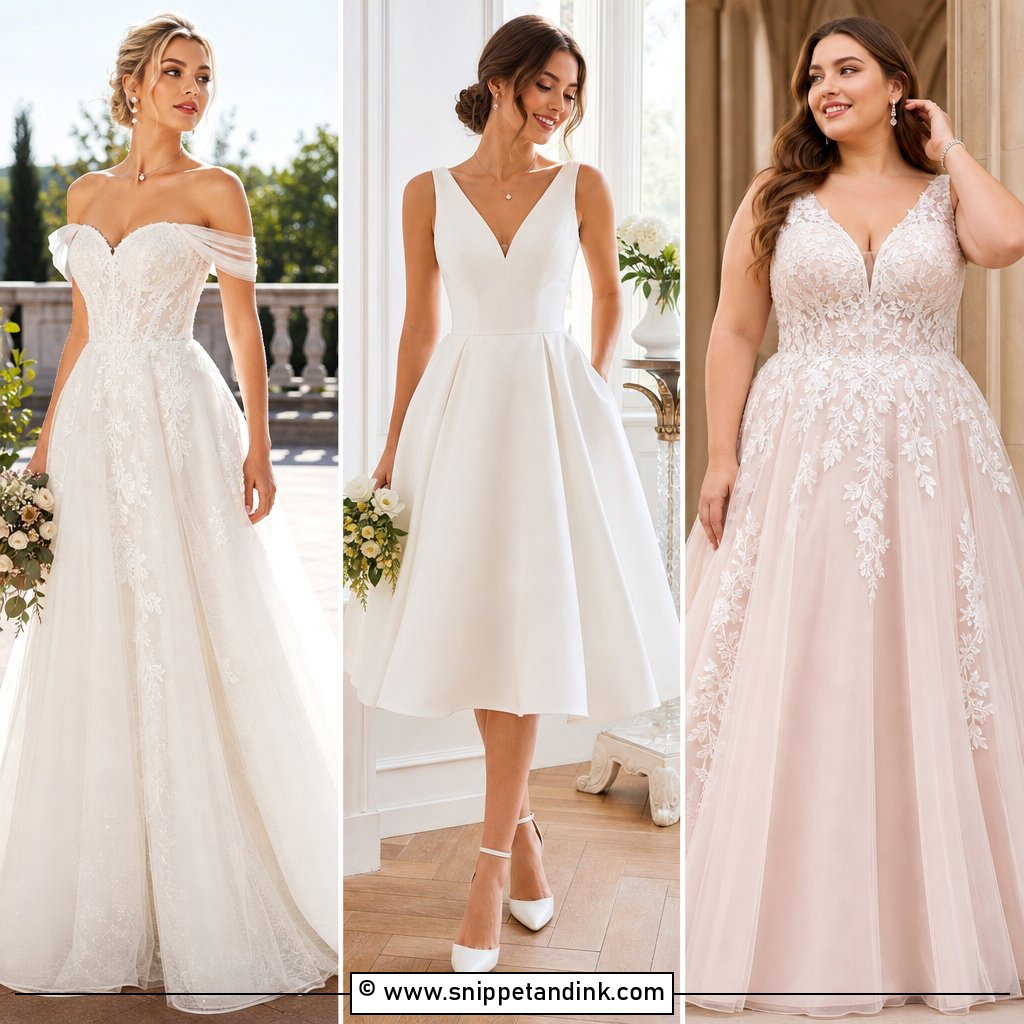
15. Long Boho Bell Sleeve Wedding Gown
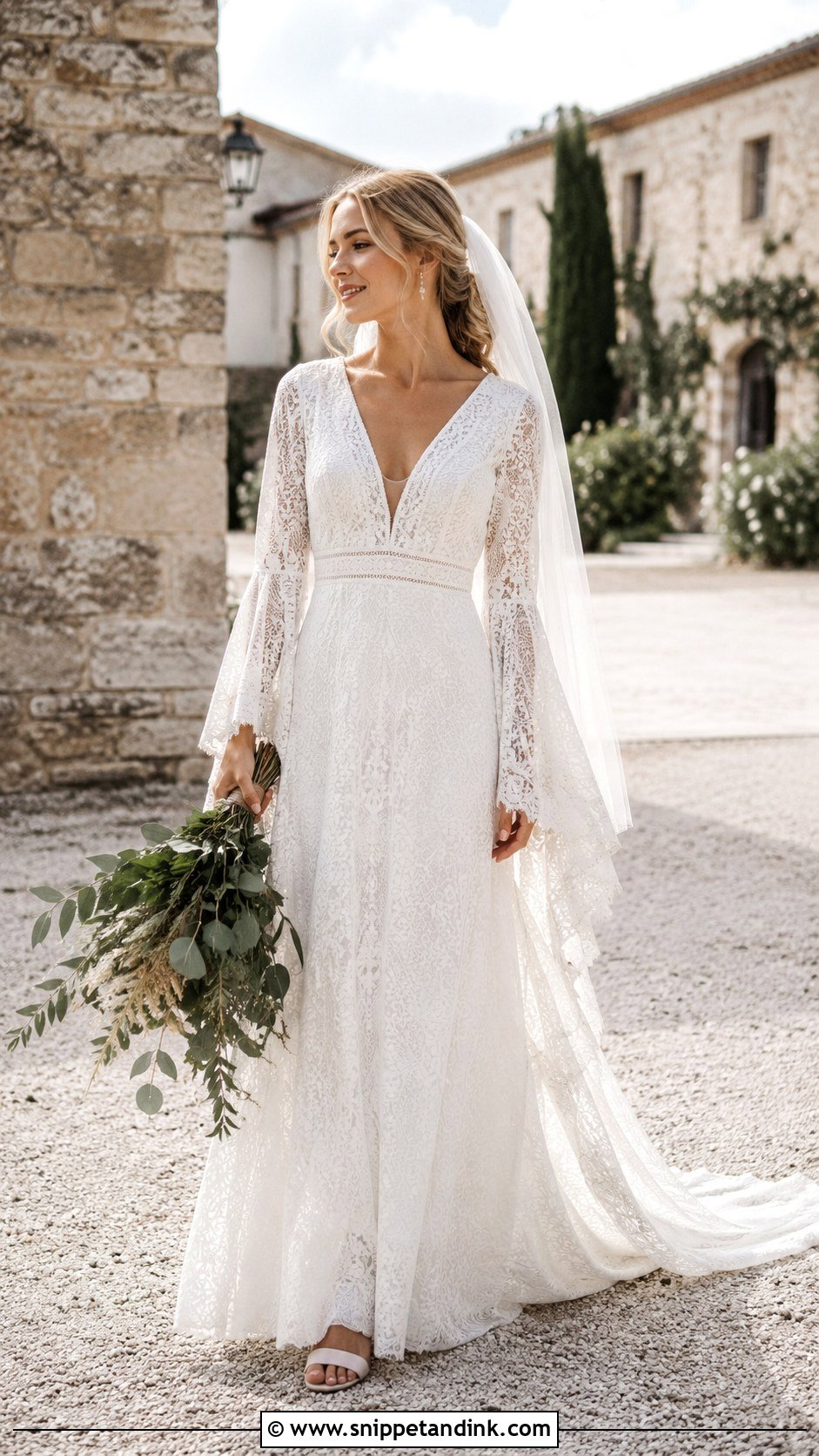
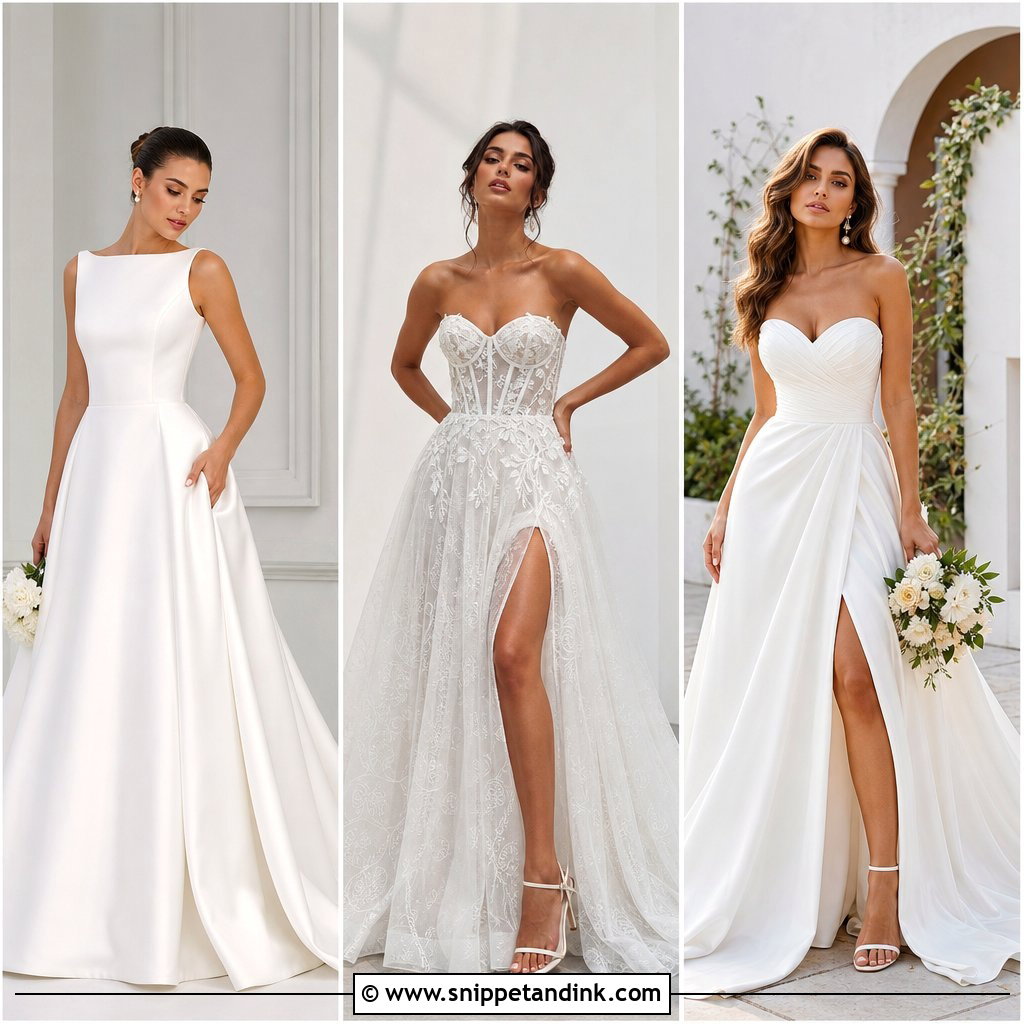
Bell sleeves bring movement to a relaxed lace gown. A lined A-line or sheath with a defined waist, an open or modest V-neck and lace sleeves widening below the elbow suits outdoor venues, rustic estates and casual destination weddings. A light veil, simple drops, low block-heel sandals and a loose bouquet of greenery and pale flowers keep it easy, with soft waves or a braided low bun. Watch the sleeve length. If the bells reach past your hands, they’ll drag through your dinner and tangle with the bouquet; a discreet wrist loop or a shorter cut fixes that.
16. Long Plus Size Empire Waist Wedding Gown
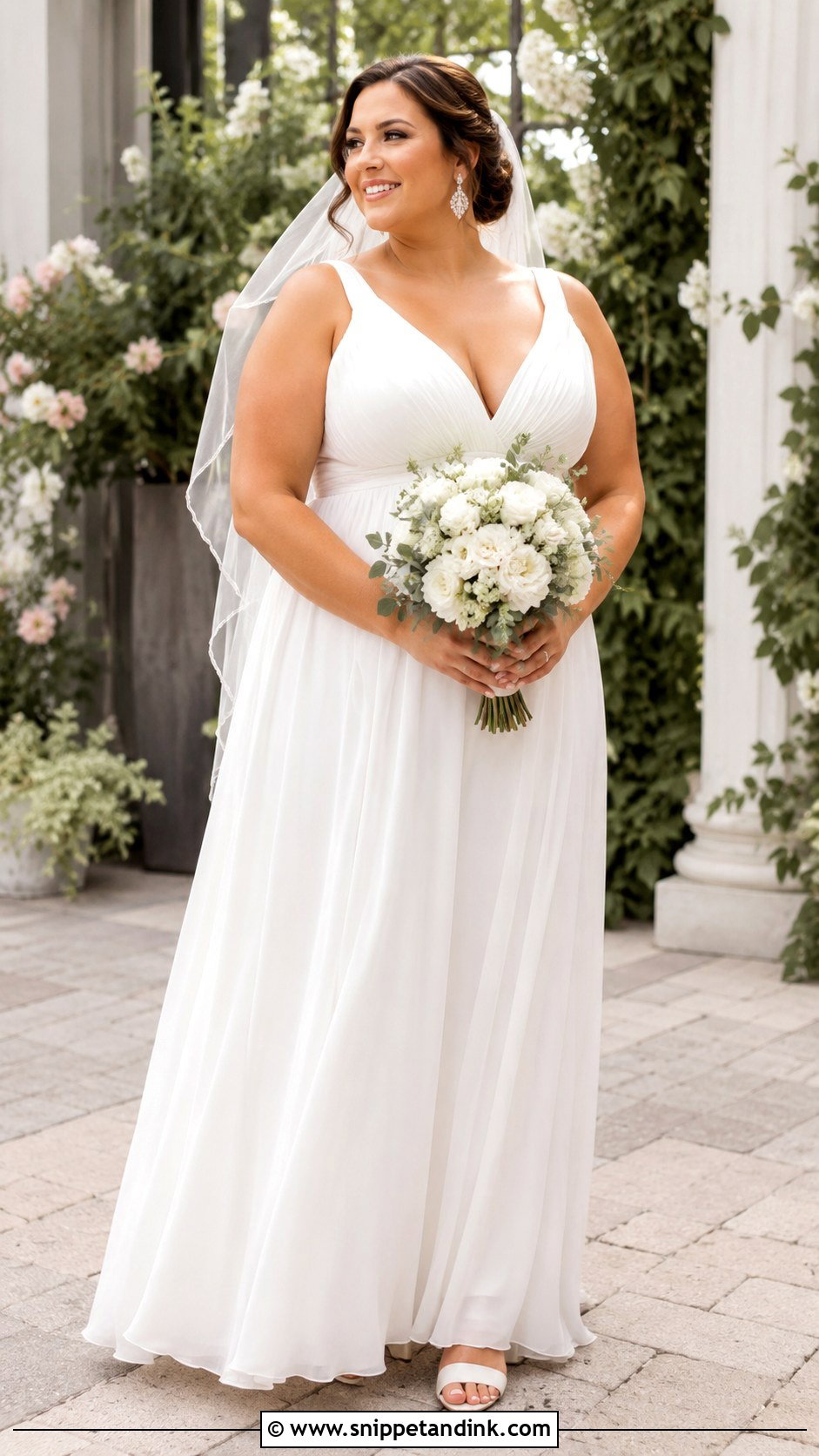
An empire waist moves the seam to just under the bust, so there’s no structure pressing at the natural waist, which many brides find far more comfortable over a long day. The bodice has to give real bust support, and the long chiffon or soft tulle skirt should fall without much volume. Wide straps, flutter sleeves or sheer long sleeves add support and coverage. Pair it with a fingertip veil, sparkling earrings, cushioned block heels and a medium bouquet. Fit beats the label every time. Look for salons offering sample options in your size range so you can judge shape, weight and comfort on your own body.
17. Long Petite Column Wedding Gown
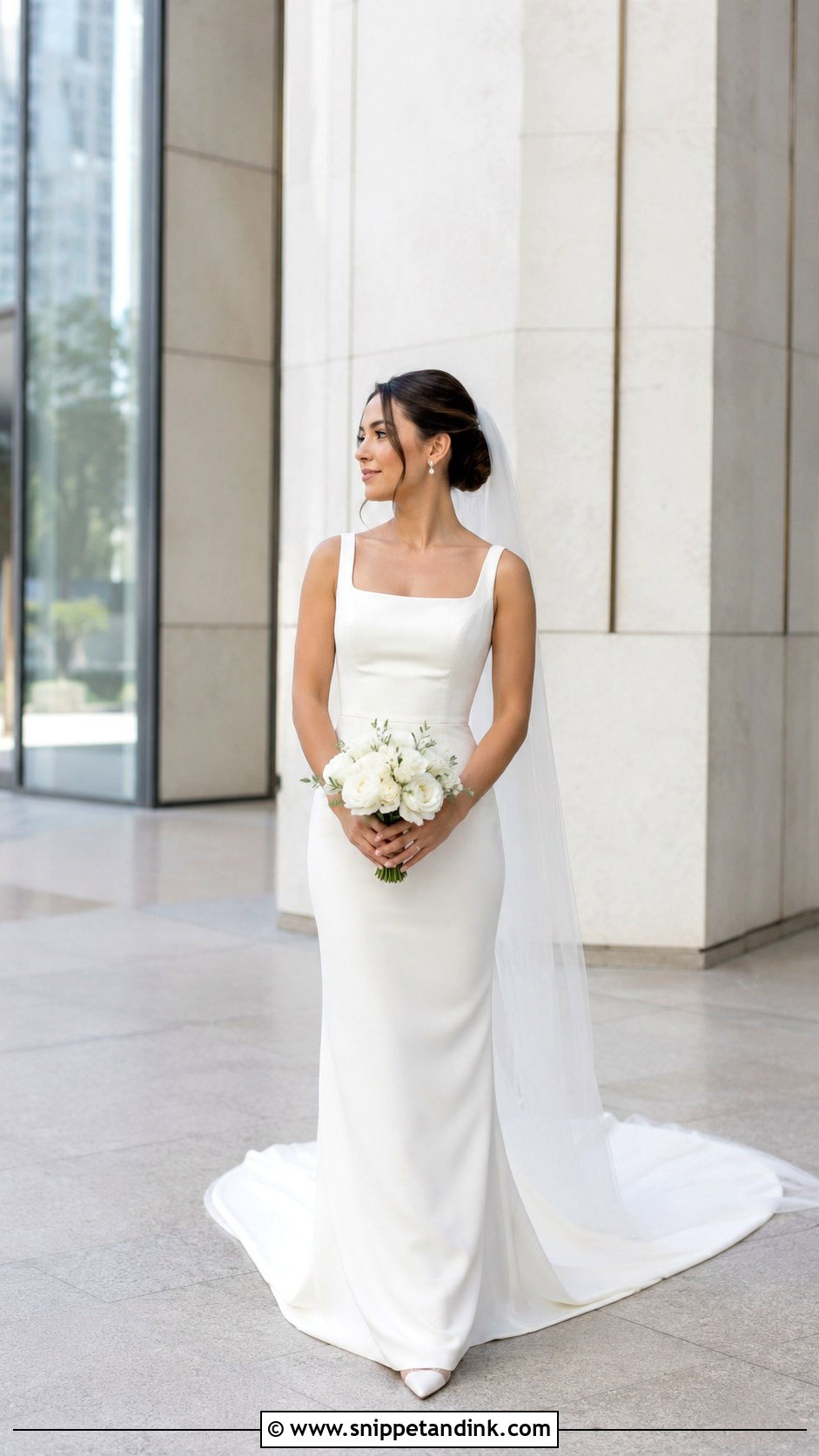
On a petite frame, a column gown keeps one unbroken vertical line. Look for a fitted bodice, a clearly placed waist, a narrow skirt and a sweep or chapel train you can manage. A V-neck, square neck or slim off-the-shoulder line keeps proportions clean, with pointed pumps, a narrow veil, delicate earrings and a small bouquet that doesn’t cover half the dress. Petite alterations go beyond the hem. I’d ask the seamstress to check strap length, where the bodice ends, where the hip shaping sits and how the train starts, because a gown cut for a taller sample model puts all of those slightly too low.
18. Long Vintage-Inspired Wedding Gown
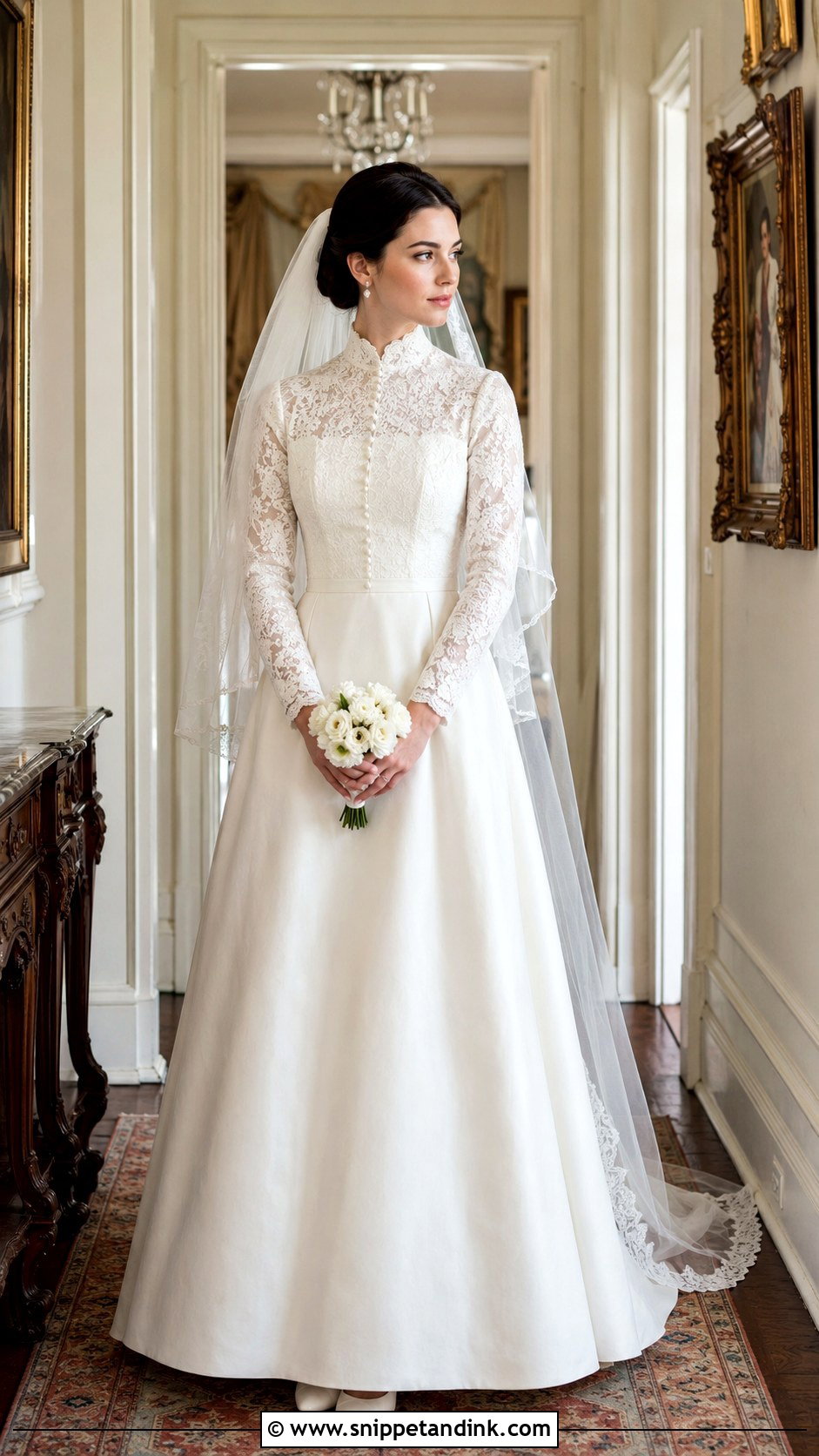
Vintage references work best in small doses. A full-length gown with a high lace neckline, fitted sleeves, covered buttons and a soft A-line skirt says enough, especially in ivory or light cream over a clean lining. Pearl earrings, a simple chapel veil, closed-toe pumps, a polished low bun and a restrained bouquet finish the outfit. Pick one or two period details and leave the rest; adding birdcage veils, gloves and vintage brooches all at once tips into costume. Old houses, historic hotels and libraries suit it. Underneath, insist on modern support and comfortable lining, which no 1940s dress ever had.
19. Long Black Wedding Gown
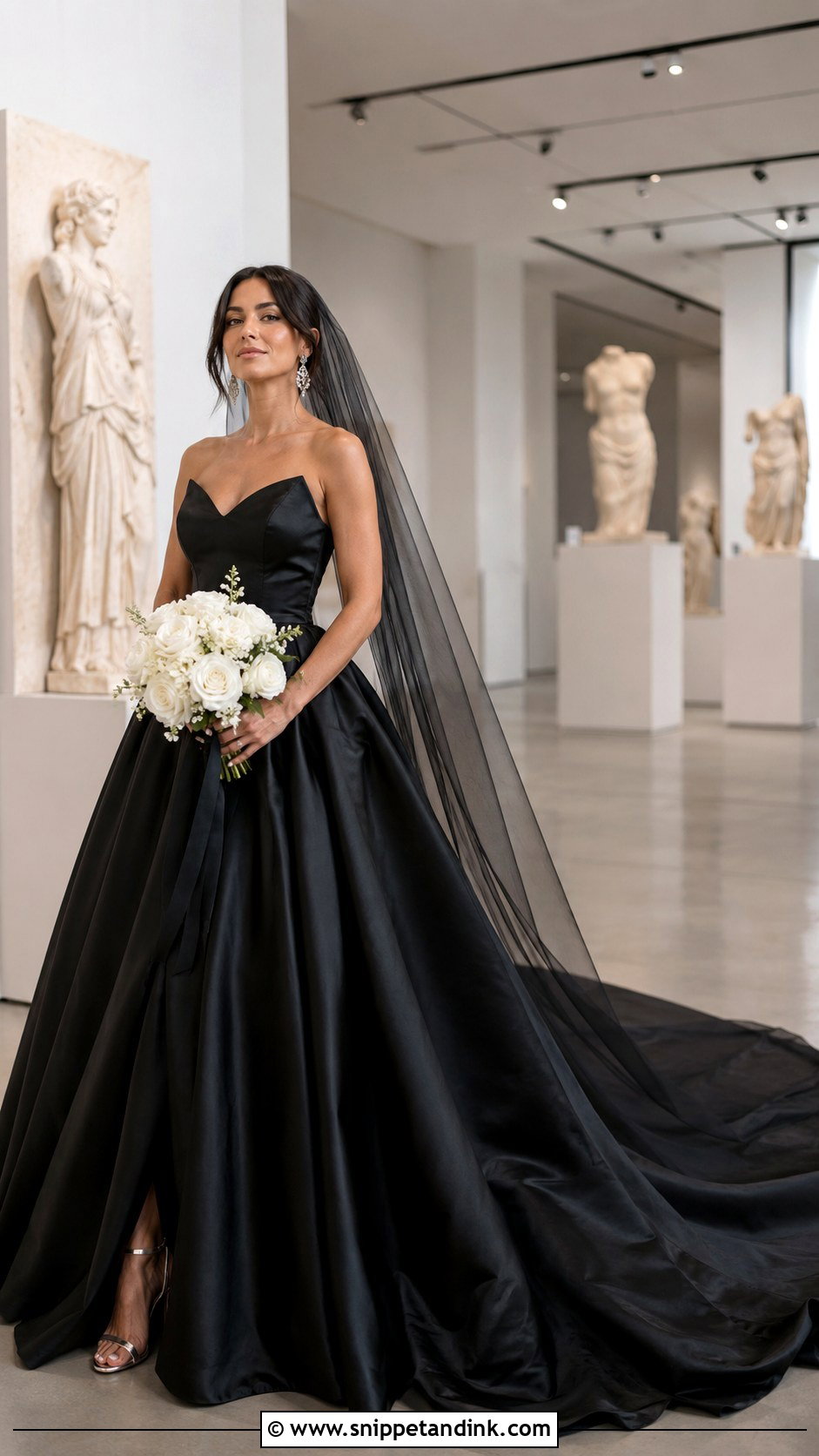
Black is the boldest choice here, and it still carries a formal bridal silhouette well. A structured satin ball gown, a lace A-line or a fitted crepe column with a long train all work. Black or metallic heels, crystal earrings and a sheer black veil or simple hair piece keep it cohesive, and white flowers in the bouquet give clean contrast. Black lace over a nude lining softens the effect. Here’s what catches people out: black fabric loses detail in dim rooms and on camera. Photograph a swatch in your venue’s lighting before deciding, and favor fabrics with some sheen or texture so the construction still shows.

20. Long Blush Wedding Gown
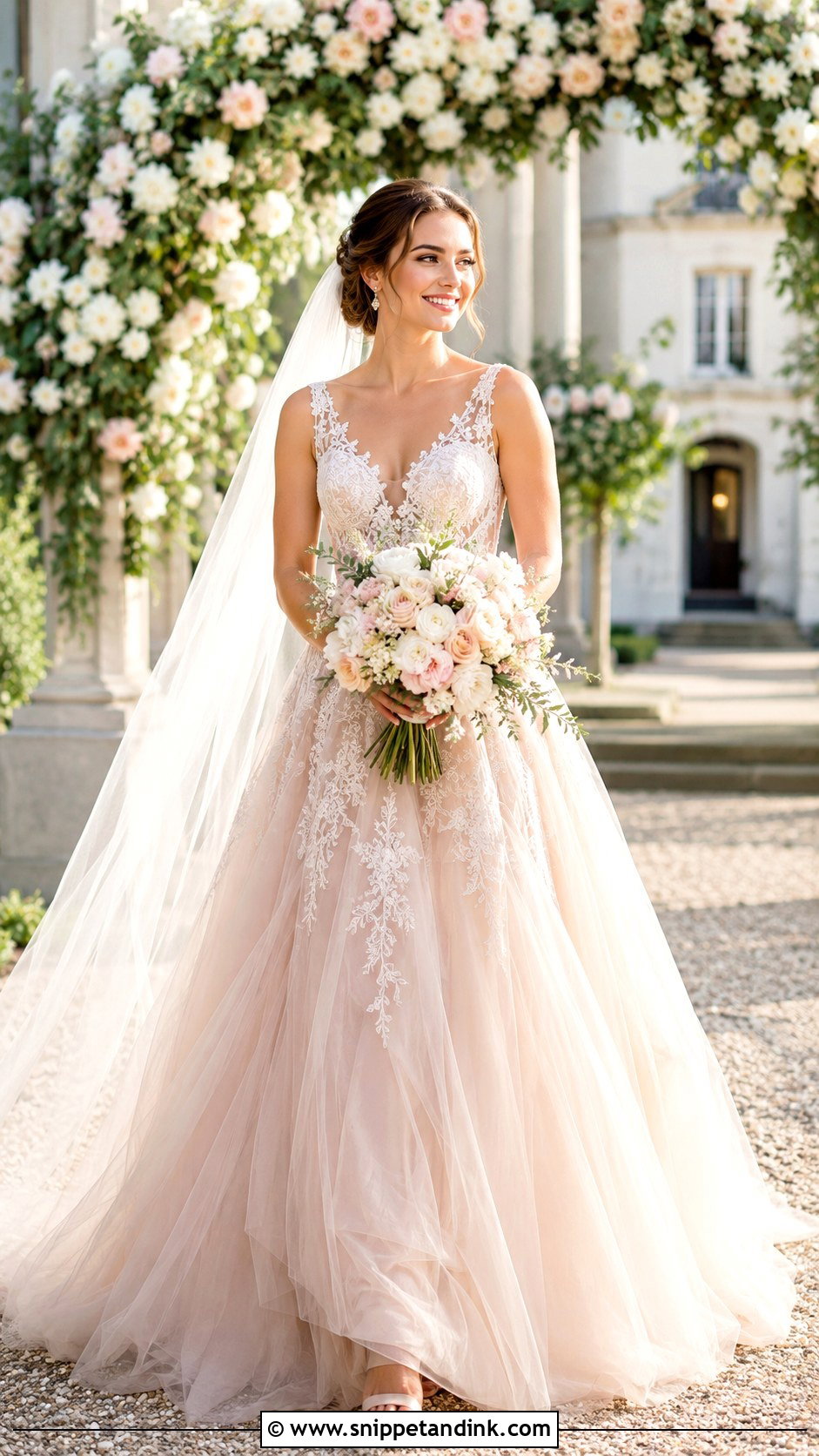
Blush gives just a hint of color while still reading clearly as bridal. Either put blush lining under ivory lace on a tulle A-line or ball gown, or go for a fully colored satin gown if you want more. Champagne heels, rose-gold or pearl earrings and an ivory veil suit it, with a bouquet of white, pale pink and soft green. Hold the fabric against your face in daylight before deciding. Blush comes with pink, peach, beige or mauve undertones, and the wrong one can wash out your skin or turn flesh-toned in photos.
Fabric Behaves Differently at Hour Ten
A fitting room shows you how a gown looks standing still for five minutes. The wedding asks it to survive a car ride, a ceremony, dinner, photographs and dancing. Each fabric on this list handles that differently.
- Satin: creases across the lap after sitting. Smooth it as you stand and ask your photographer to catch standing portraits early.
- Mikado: holds its shape well, but a deep fold stays in. Hang it rather than draping it over a chair.
- Crepe: resists wrinkles, yet clings more as the day gets warmer.
- Chiffon and tulle: light and cool, though the hems snag on stone and decking.
- Silk: water can leave a mark, so carry a tissue rather than dabbing a spill with a wet napkin.
Think about temperature too. Heavy duchess satin and full Mikado skirts are warm in summer, while chiffon on its own can feel thin at an evening ceremony in autumn. If your venue runs hot or cold, let that narrow the fabric before you fall for a picture.
Your Shape, Your Fabric, Then Everything Else
No gown has to follow every trend in the bridal shops. Work out the silhouette and fabric you enjoy wearing first, whether that’s a silk column, a structured ball gown, lace, color or a gown with an overskirt. Coverage, train length, accessories and venue come next. Book alterations in good time, and bring your shoes and foundation garments to every fitting that matters. Then walk, sit and move in the finished dress. A gown that fits well and feels secure is the one you’ll forget you’re wearing, and that’s the best thing a wedding dress can do.
You'll Like These Ideas:












Leave a Reply