
Small henna designs are what I draw most often outside wedding season: a mandala before a family lunch, a wrist band for a guest who has ten minutes, a finger pattern for someone who has to be at work on Monday. They take a fraction of the time of a full hand, dry quickly and still look finished if the layout is planned. The thirty below include tiny mandalas, floral trails, bracelets, finger-only patterns and small Arabic layouts, in Indian, Arabic, Indo-Arabic and modern styles. Many of them are simple enough to practise on your own hand, and I’ve noted where the small size changes how you should draw them.
Why Tiny Lines Fade First, and How to Stop It
The finer the line, the less paste sits on the skin, and the less dye reaches it. That’s why delicate small designs often come out paler than a bold bridal hand and fade sooner. It isn’t the henna’s fault. A few adjustments make a small design stain as well as a large one.
- Draw slightly fuller lines than you would for a large design. They look heavier wet, but they shrink visually once the paste comes off.
- Keep the paste on for at least four to six hours, longer if you can. Small designs dry quickly, which tempts people to scrape early.
- Seal it with a little lemon and sugar once it’s dry to the touch, so it doesn’t flake off the fine lines.
- Wash your hands with plain soap and dry them well before starting; lotion and oil block the stain.
1. Mini Mandala Mehndi Design
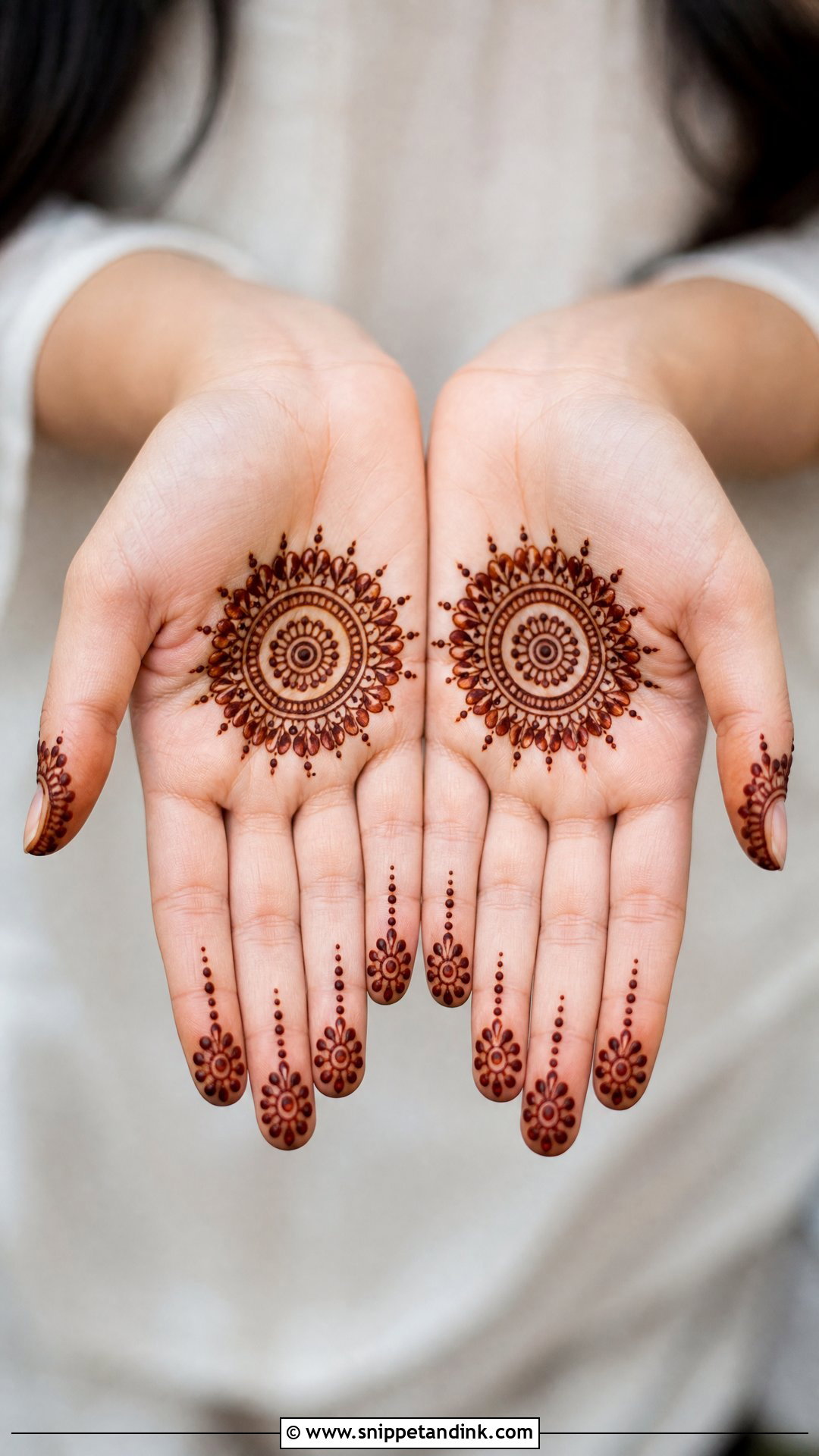
A mandala grows outward from one dot, which is why it’s the first design I teach. The centre sits in the middle of the palm or back hand; rings of petals, dots and fine circles build around it. I turn the hand, not the cone, as I work round, so each petal is drawn at the same angle. Fingers stay light, a leaf tip or a slim band. Leave clear skin around the mandala; a small circle crowded by other motifs loses its shape once it stains.
2. Mini Arabic Mehndi Design
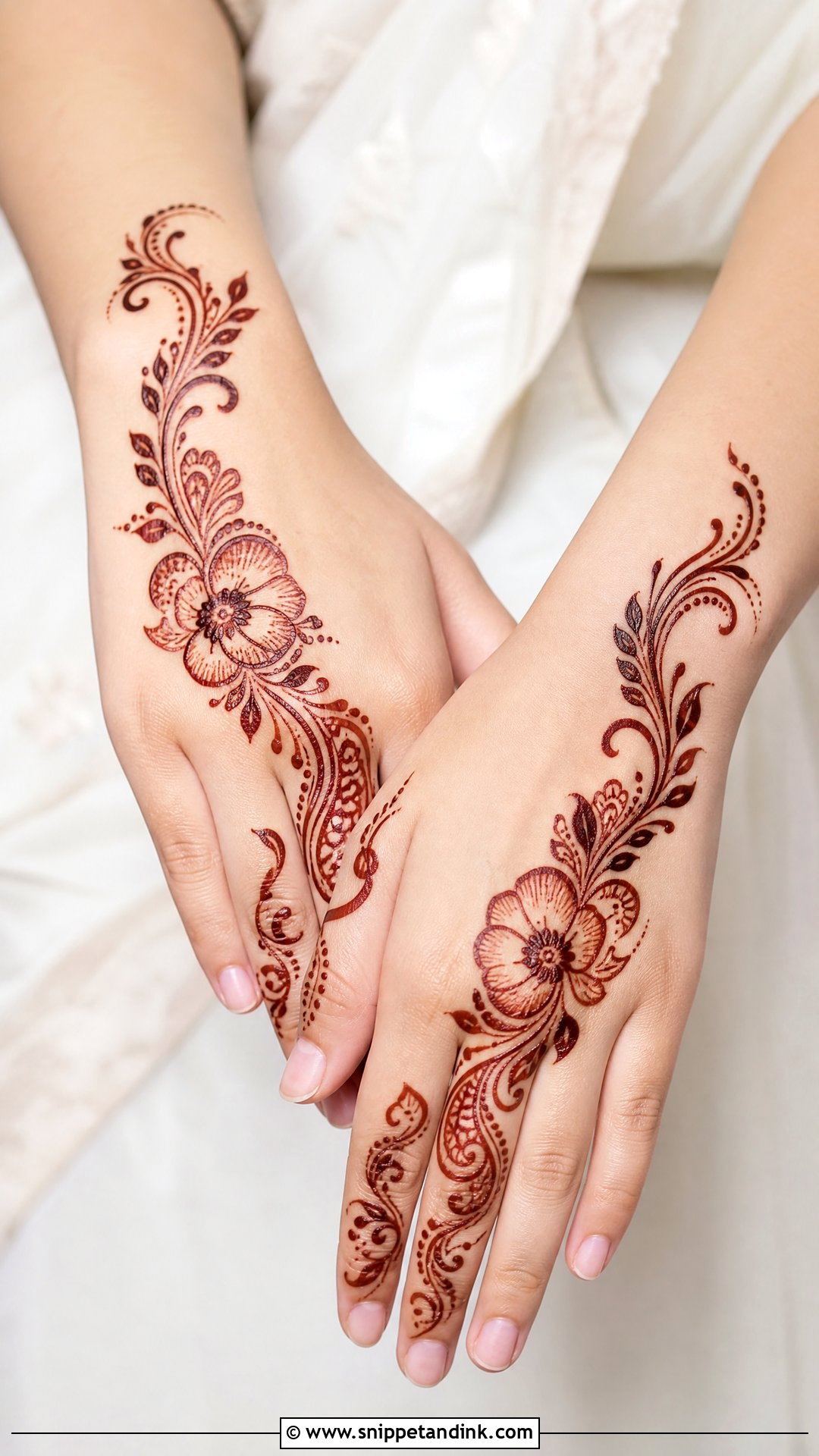
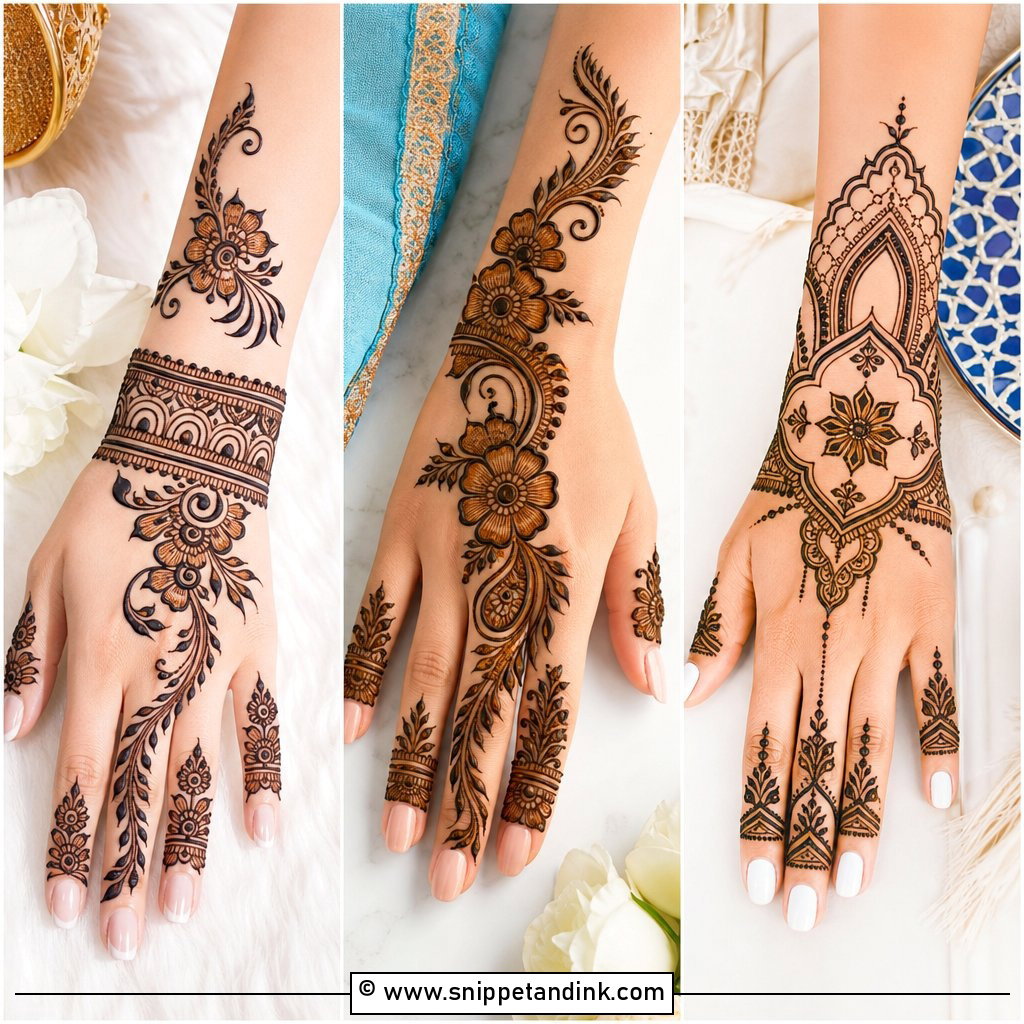
Arabic layouts move diagonally, from one side of the wrist toward the index or middle finger, and leave the rest of the hand bare. In a small version, I use two or three flowers with curved leaves and a paisley outline, drawn with a slightly fuller line than usual. The bold flower outline against thin inner lines is what lets a small Arabic design read from a distance. It suits festive days and wedding guests who don’t want much coverage.
3. Mini Floral Mehndi Design
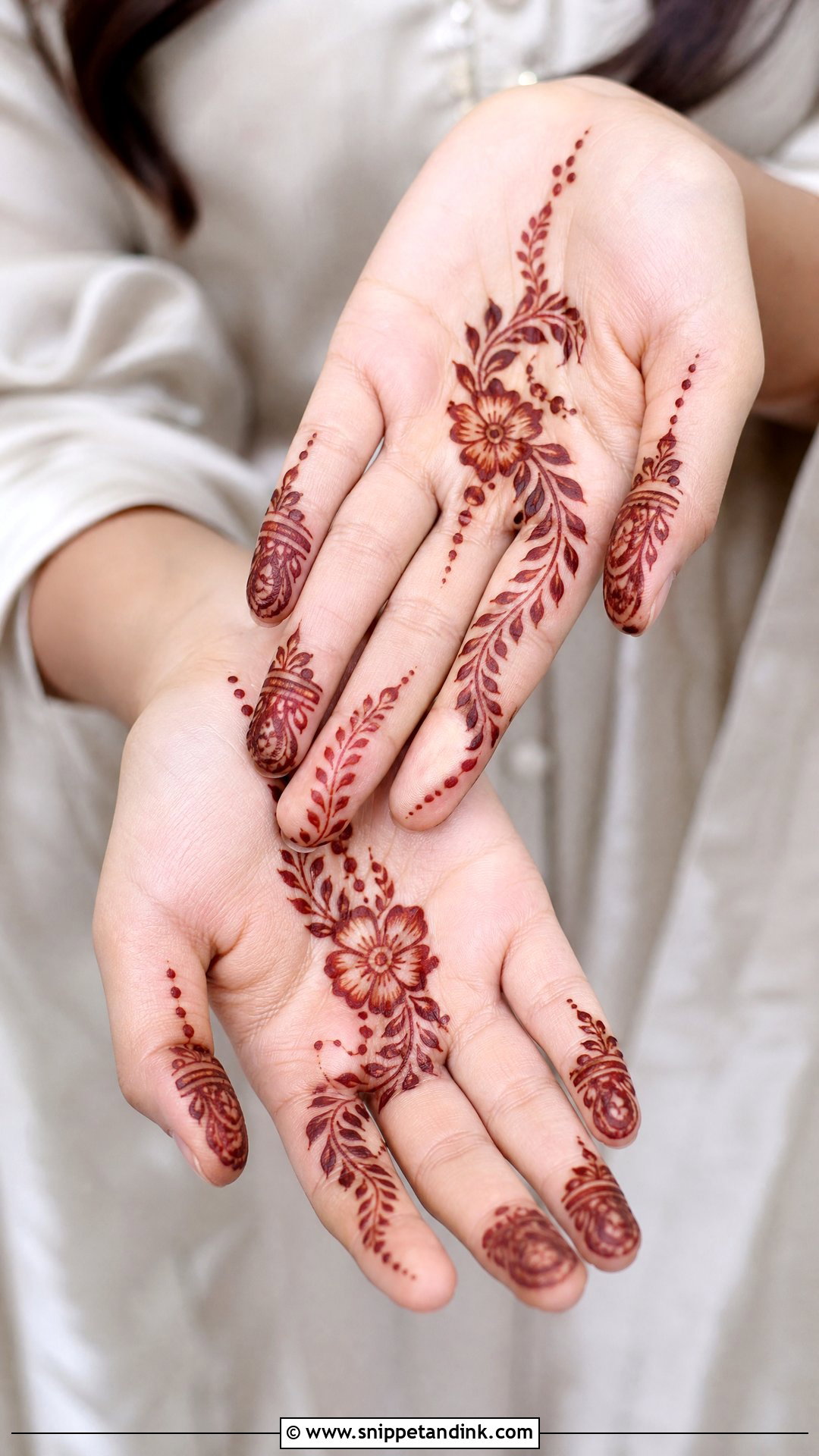
One flower is enough. Place it on the palm or back hand and let short leafy vines run toward the fingers or wrist. A five-petal flower is easiest to keep even; roses need more control. I draw the petals first and add the centre last, because filling the centre early makes it too heavy. Tiny leaf chains on the fingers finish it. It’s a good choice when you want something feminine that doesn’t look formal.
4. Mini Finger Mehndi Design
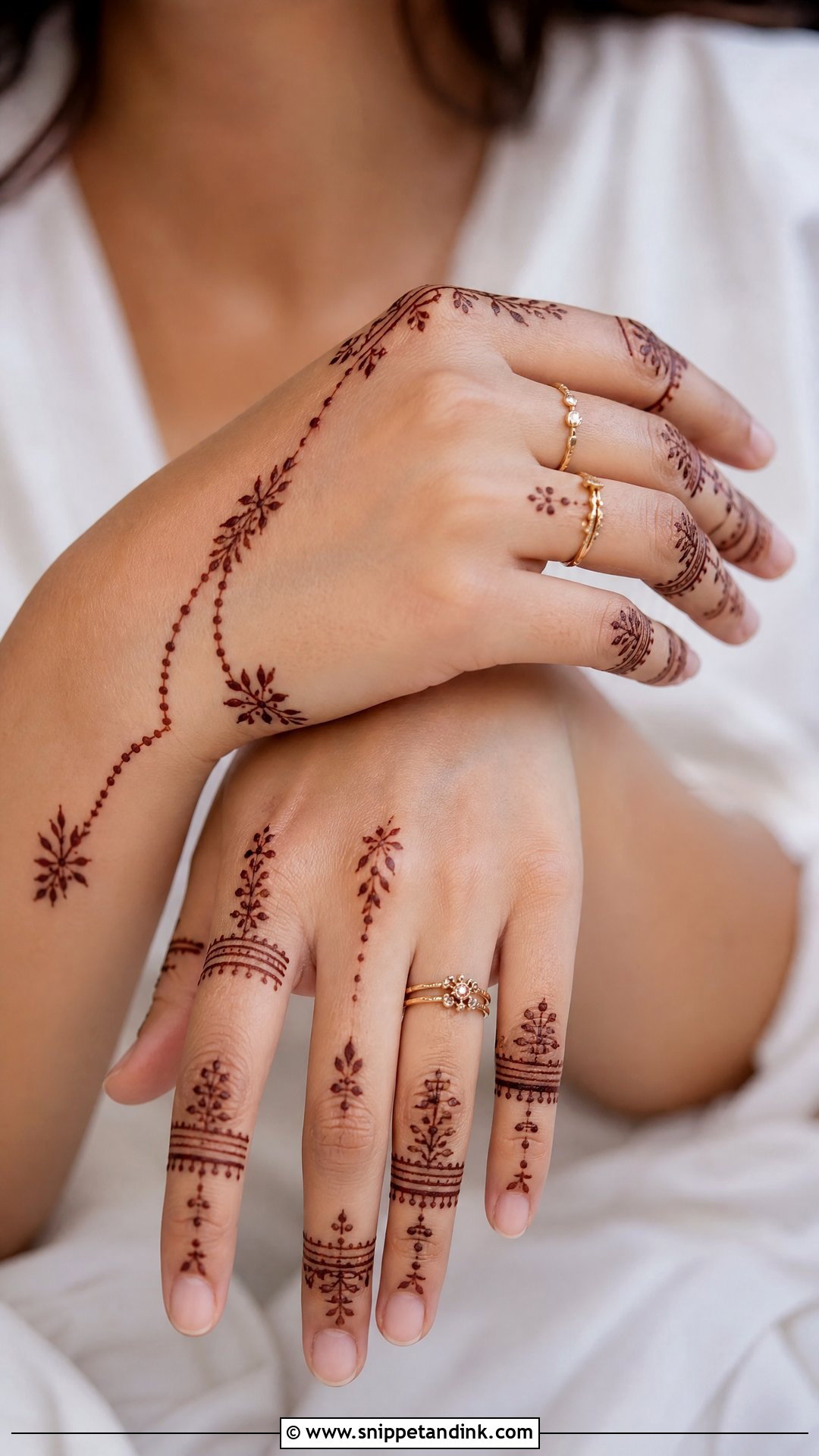
Finger-only henna leaves the palm and back hand bare and decorates two or three fingers with slim bands, leaf lines, small flowers and dotted tips. A fine chain from one finger to the wrist makes it look like jewellery. It’s quick and pairs well with rings. Fingers are where line mistakes show most, because the area is so small, so I steady the client’s hand on a cushion and draw each band in one stroke. Fingertips stain darkest of anywhere, which helps.
5. Mini Back Hand Mehndi Design
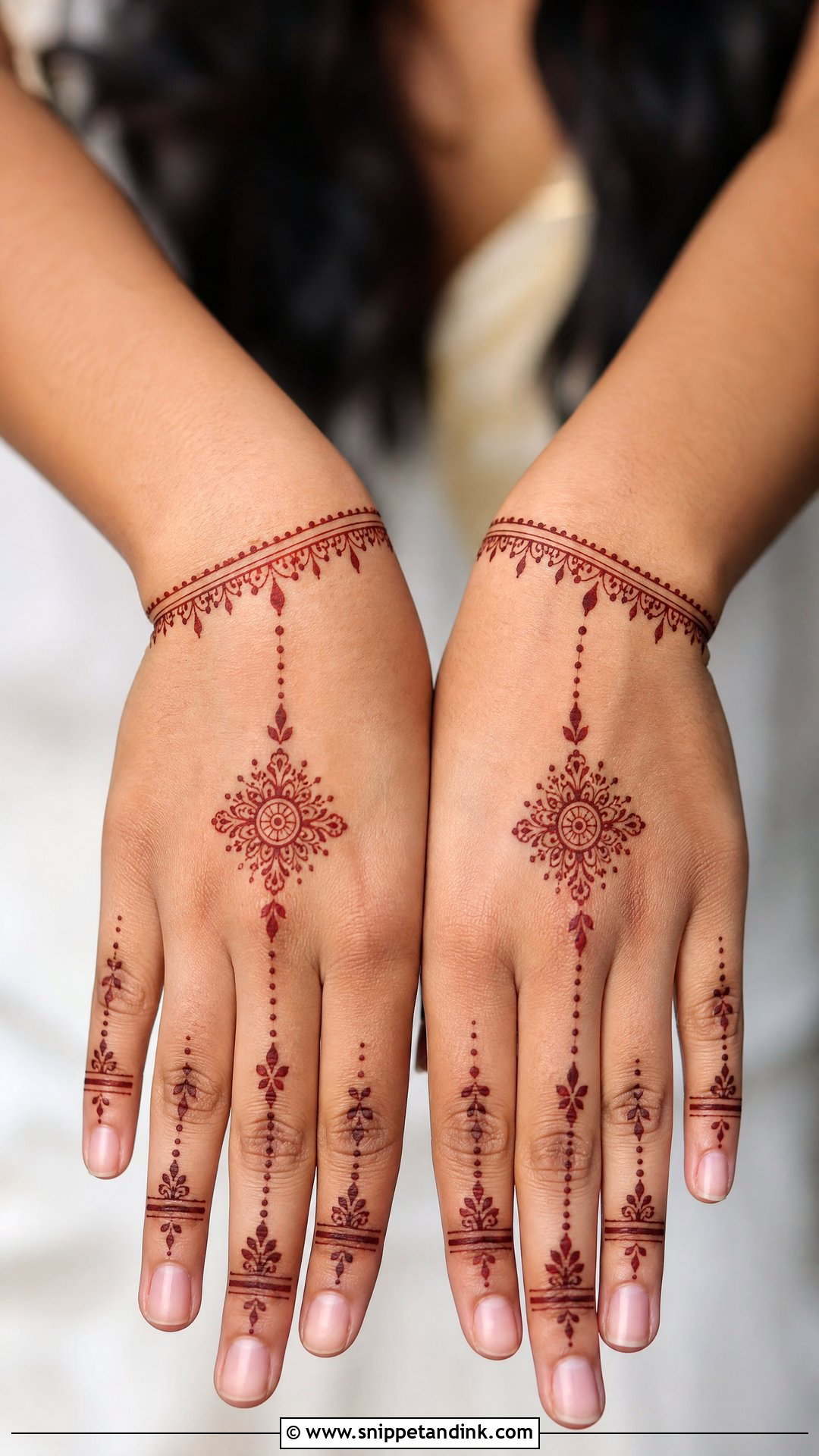
A small motif at the centre of the back hand, a mandala, flower or paisley, with thin trails toward the fingers and a bracelet line at the wrist, gives a complete look with most of the skin showing. The back of the hand is what people see when you hold a phone or a gift, so it shows well. I use dots to connect the larger shapes; they stop it looking like separate stickers. The back stains a little lighter than the palm, so keep the lines slightly fuller.
6. Mini Palm Mehndi Design
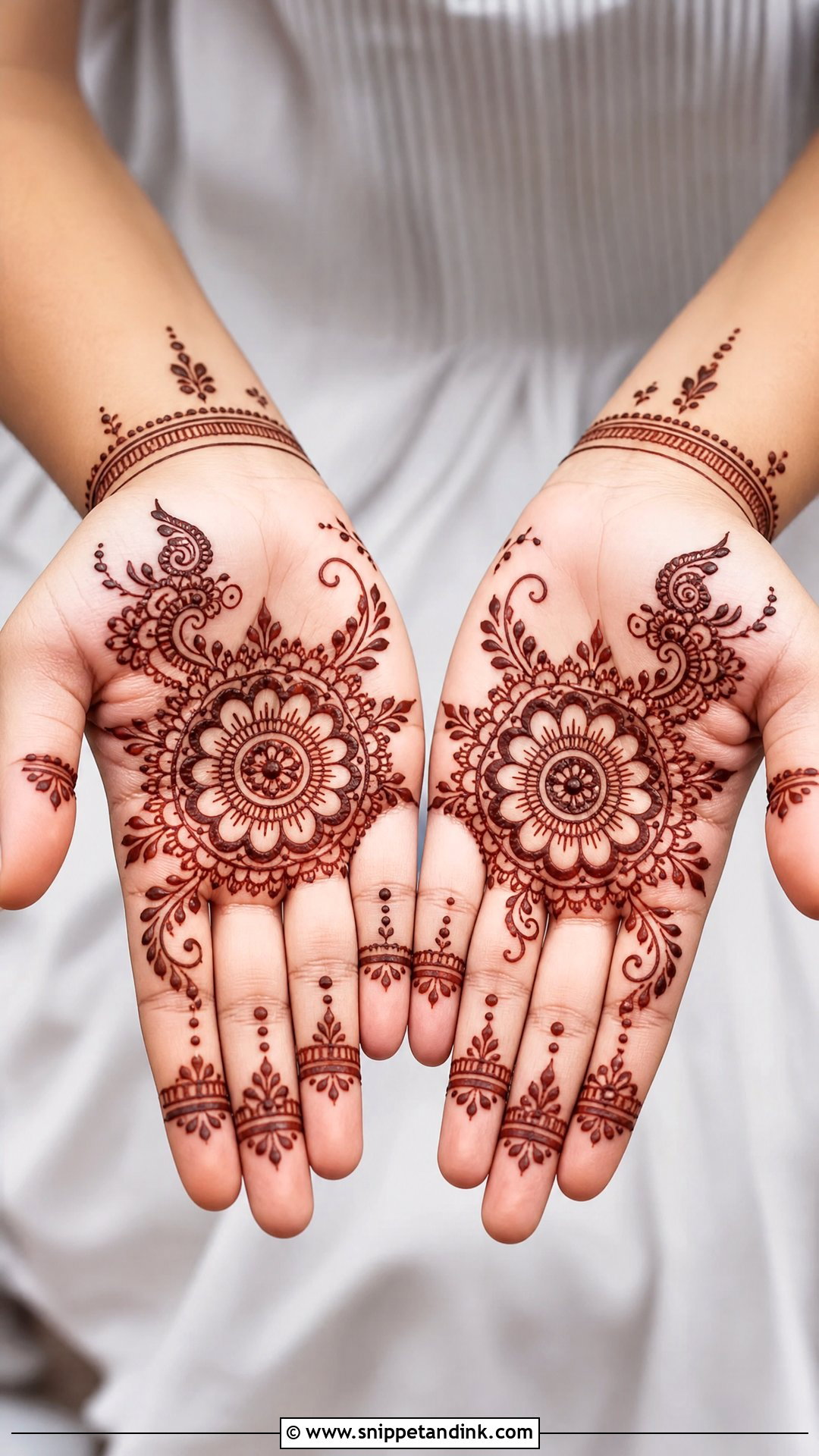
Palm skin is thicker and takes up more dye, so even a small motif there stains dark and bold. A central flower, small mandala, crescent or paisley cluster, with short lines on two fingers and a few dots near the wrist, is enough. Traditional families often prefer palm henna, and a small version keeps that feeling without bridal coverage. Centre it carefully; a small motif off to one side looks like it slipped.
7. Mini Bracelet Mehndi Design
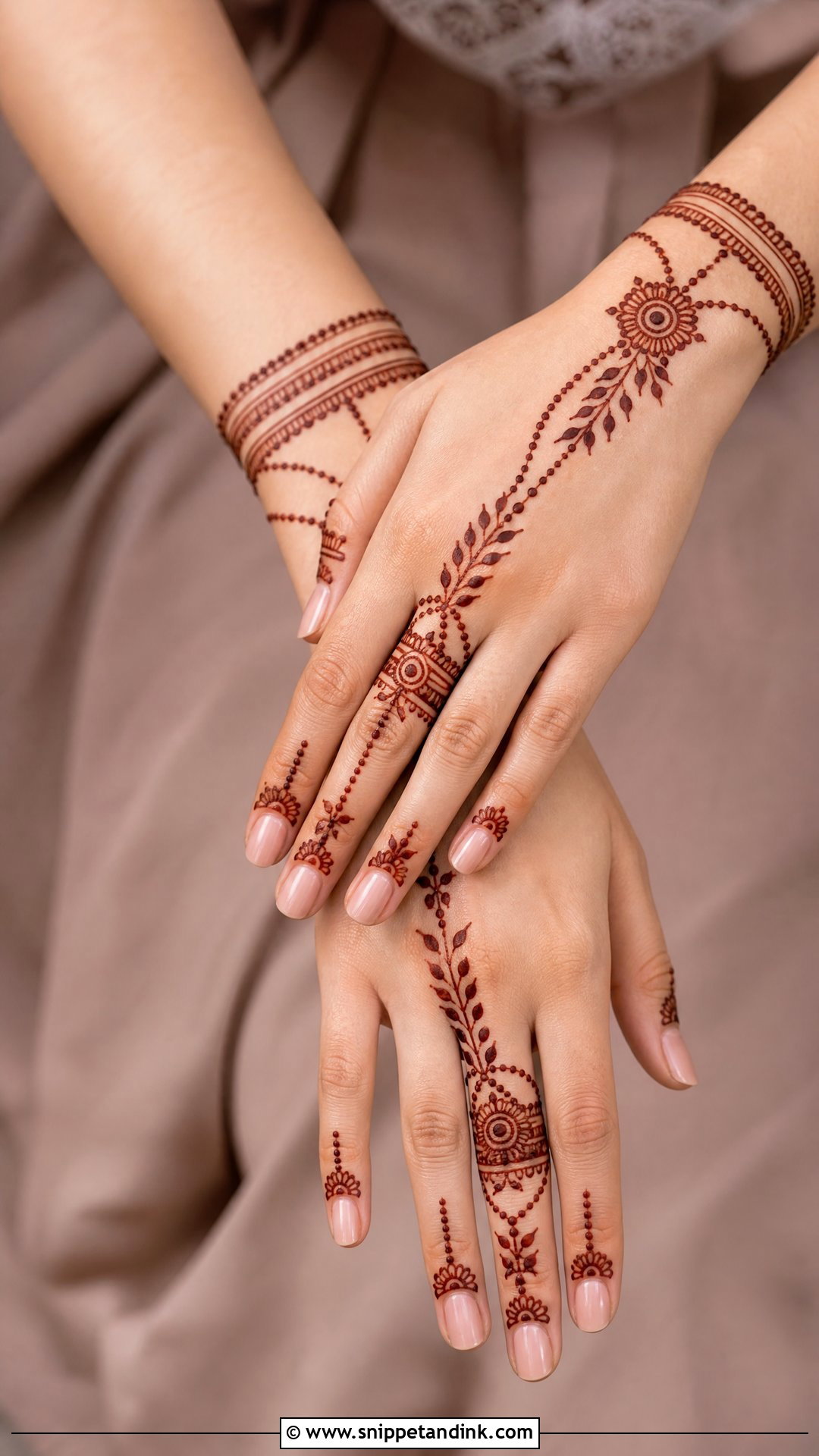
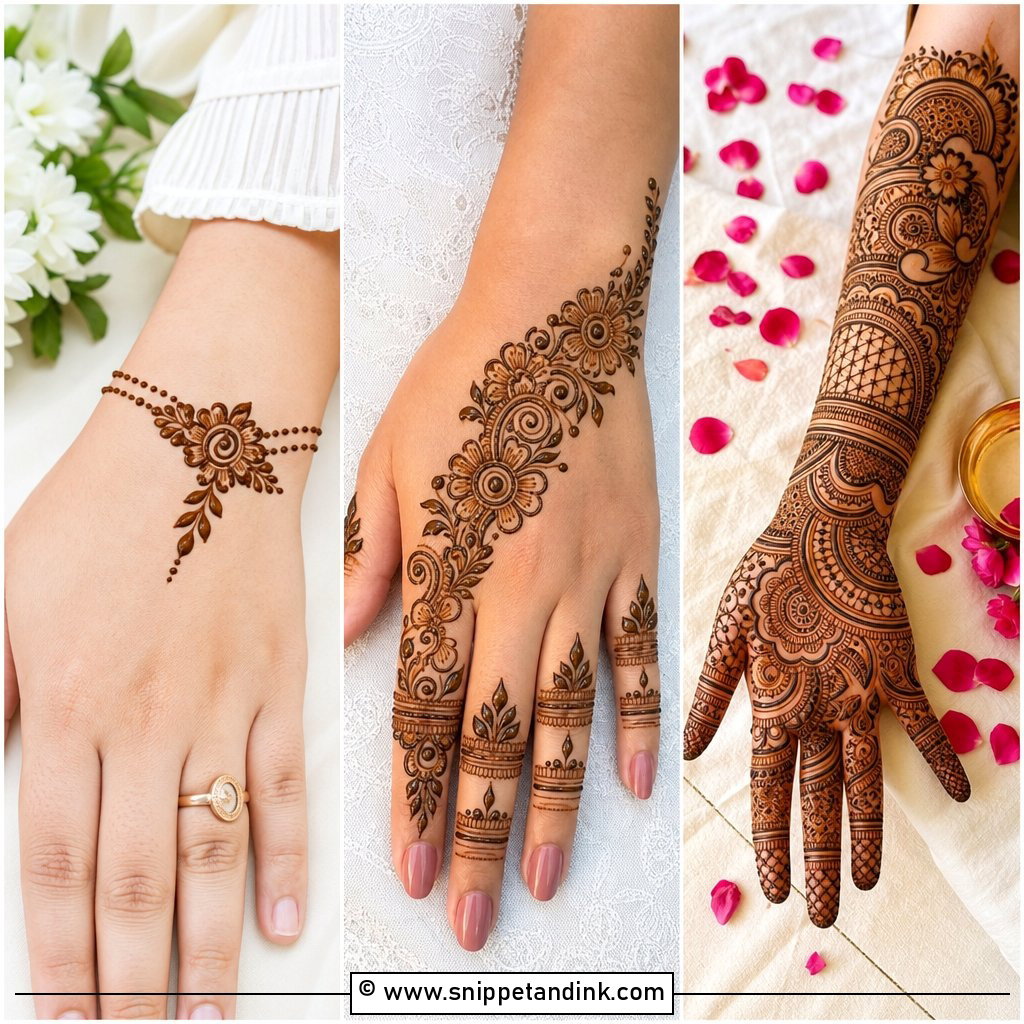
A mini bracelet mehndi design wraps the wrist in slim bands, small leaves, dotted chains and tiny flowers. Add a single chain up to the middle finger and a ring motif, and you have a haath phool, the hand ornament it imitates. The wrist curves, so I draw the band in short sections while rotating the arm, otherwise it ends up lopsided underneath. Mostly lines and dots, so beginners manage it. Keep the band even all the way round.
8. Mini Rose Mehndi Design
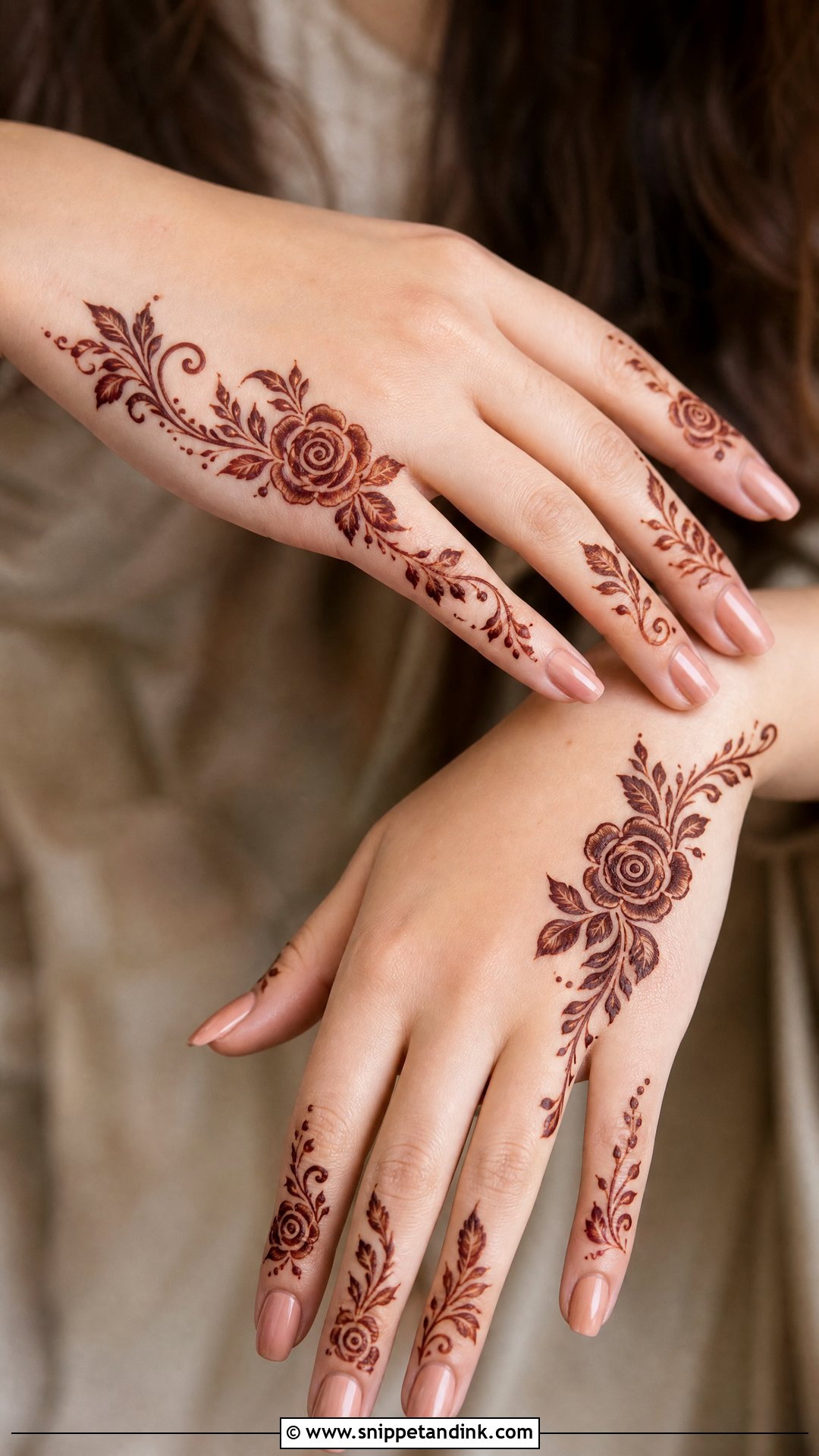
A small rose is drawn as a spiral of curved petals with small leaves on either side and a short vine toward the wrist or a finger. The trick is to keep the inner curves thin and the outer petals slightly thicker; that’s what gives the rose depth once it stains. Leave clear skin around it. It looks good tucked into one corner of the hand for an asymmetric modern feel. Bridesmaids and young girls often ask for it.
9. Mini Paisley Mehndi Design
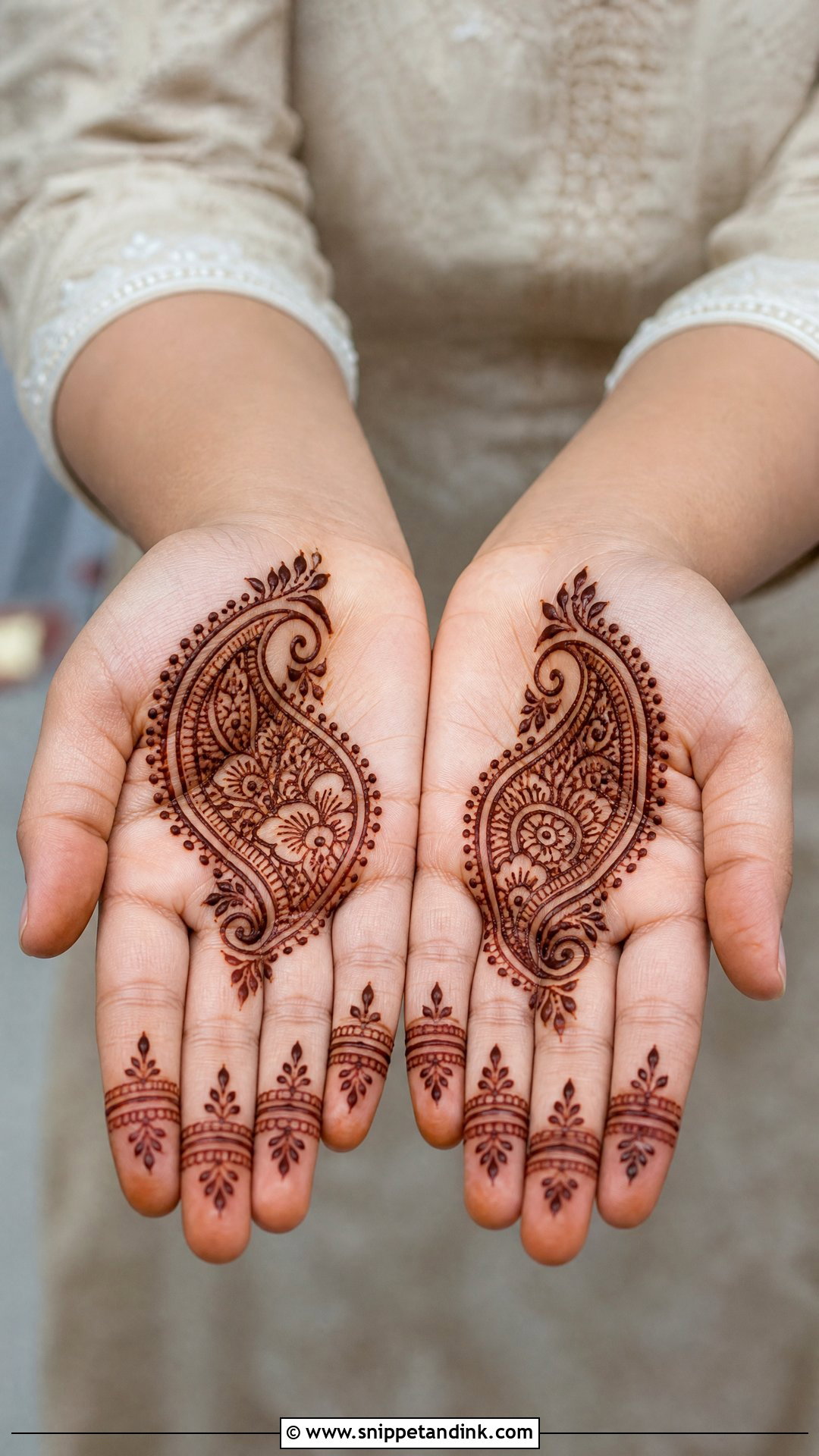
Paisleys turn in any direction, so a single one fits any part of the hand. A mini paisley mehndi design sits on the palm, back hand or near the wrist, filled with tiny lines, dots and leaf shapes, with a couple of small flowers around it. The outline should be one smooth curve; a stop-start line shows every pause in the finished stain. It brings a traditional Indian or Indo-Arabic feel at a small scale.
10. Mini Heart Mehndi Design
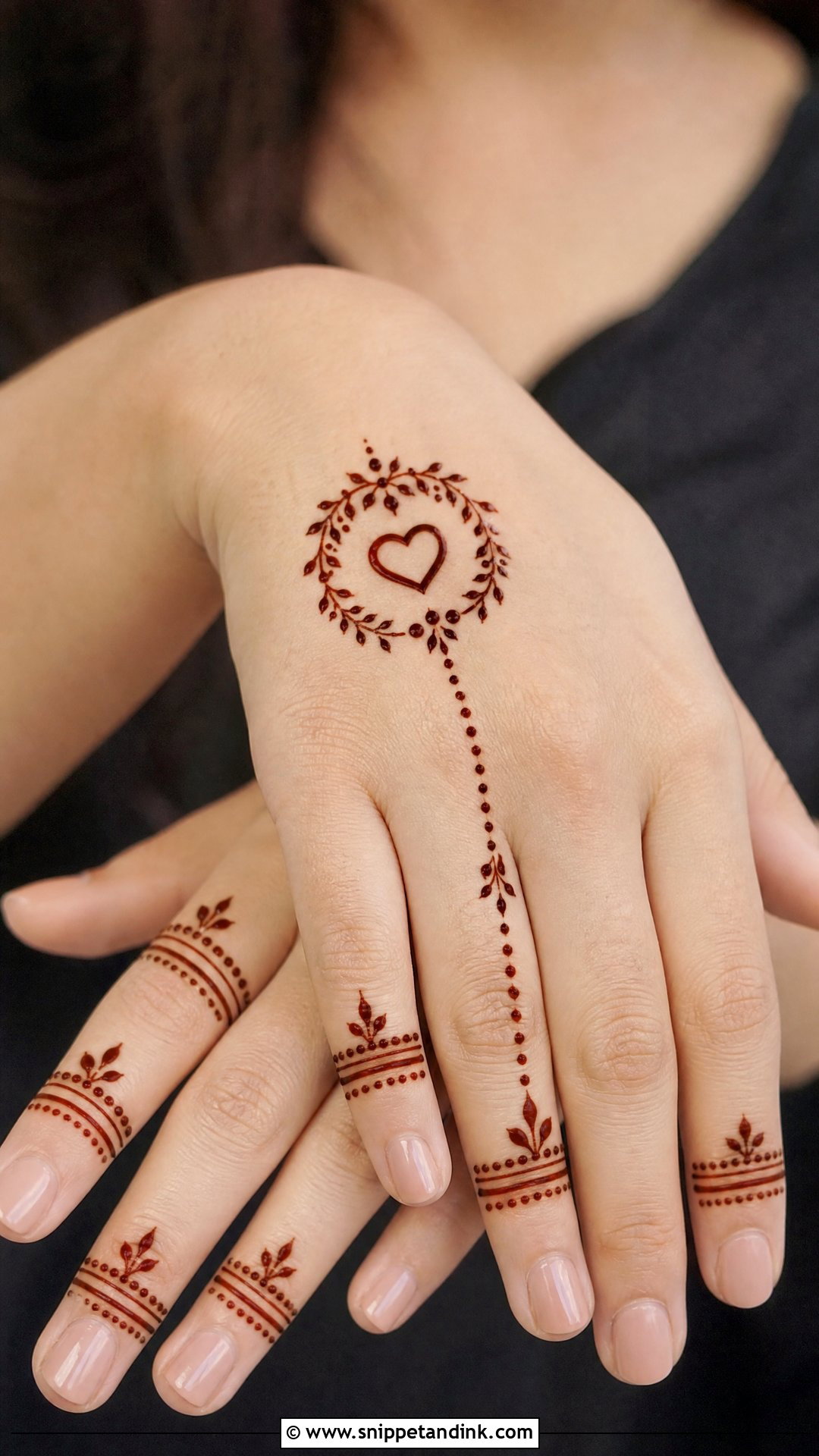
Hearts are the most requested shape at children’s tables and birthday parties. A small heart on the back hand, palm or side of the wrist, framed with dots, vines and tiny flowers, keeps it cute. For older girls and adults, I give the heart a fine leafy border and add slim finger bands, which makes it read less playful. Keep it light so the heart stays the focus.
11. Mini Butterfly Mehndi Design
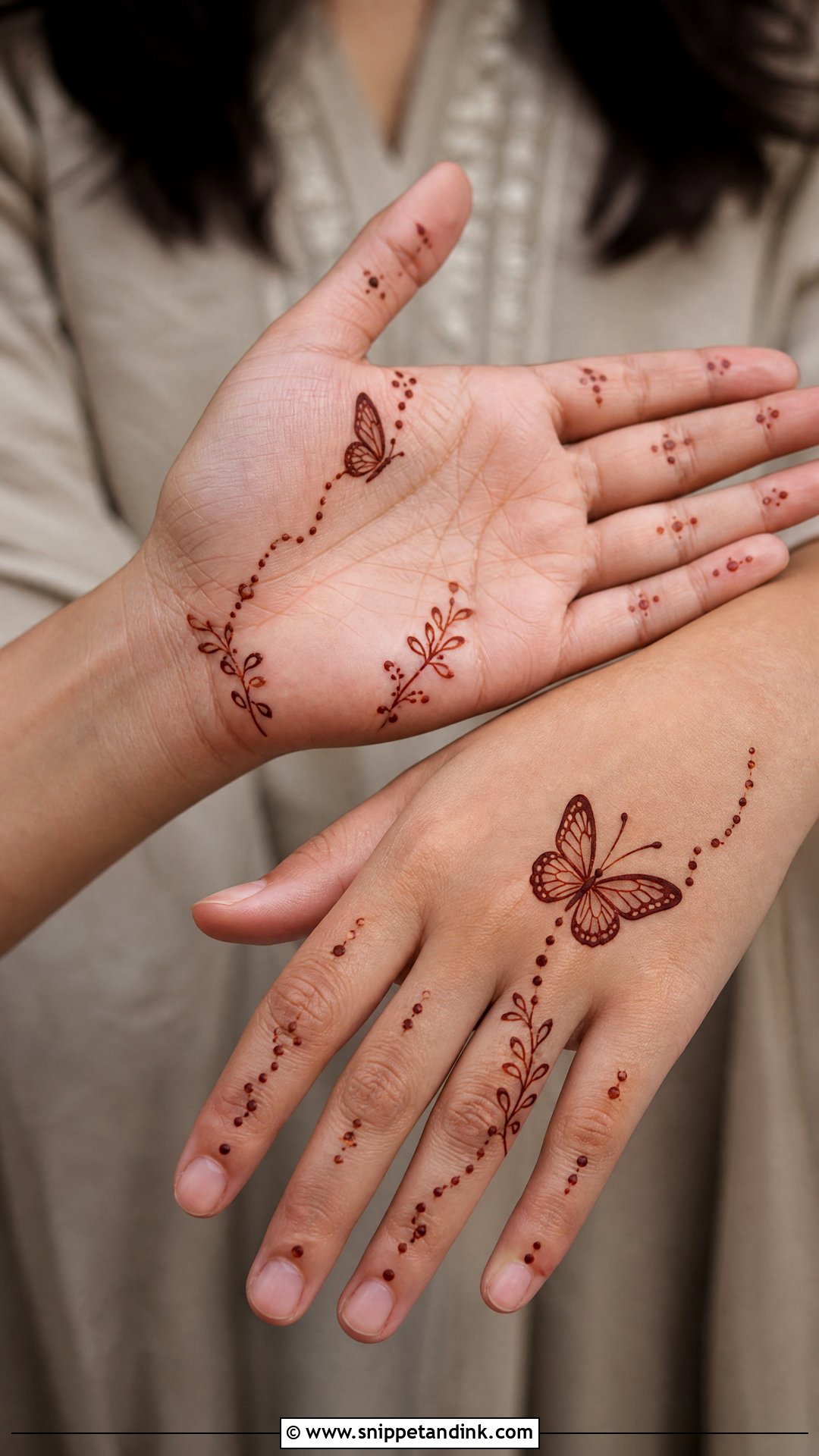
Butterflies need symmetry more than any other small motif here. I draw the body first as a thin line, then the two upper wings, then the smaller lower pair, checking each side against the other before filling. Simple lines, dots and leaf shapes fill the wings. A short dotted trail toward the wrist completes it. Children and teens love this one, and it suits spring events. Keep the wings rounded and the body thin, or it can look like a moth.
12. Mini Leaf Mehndi Design
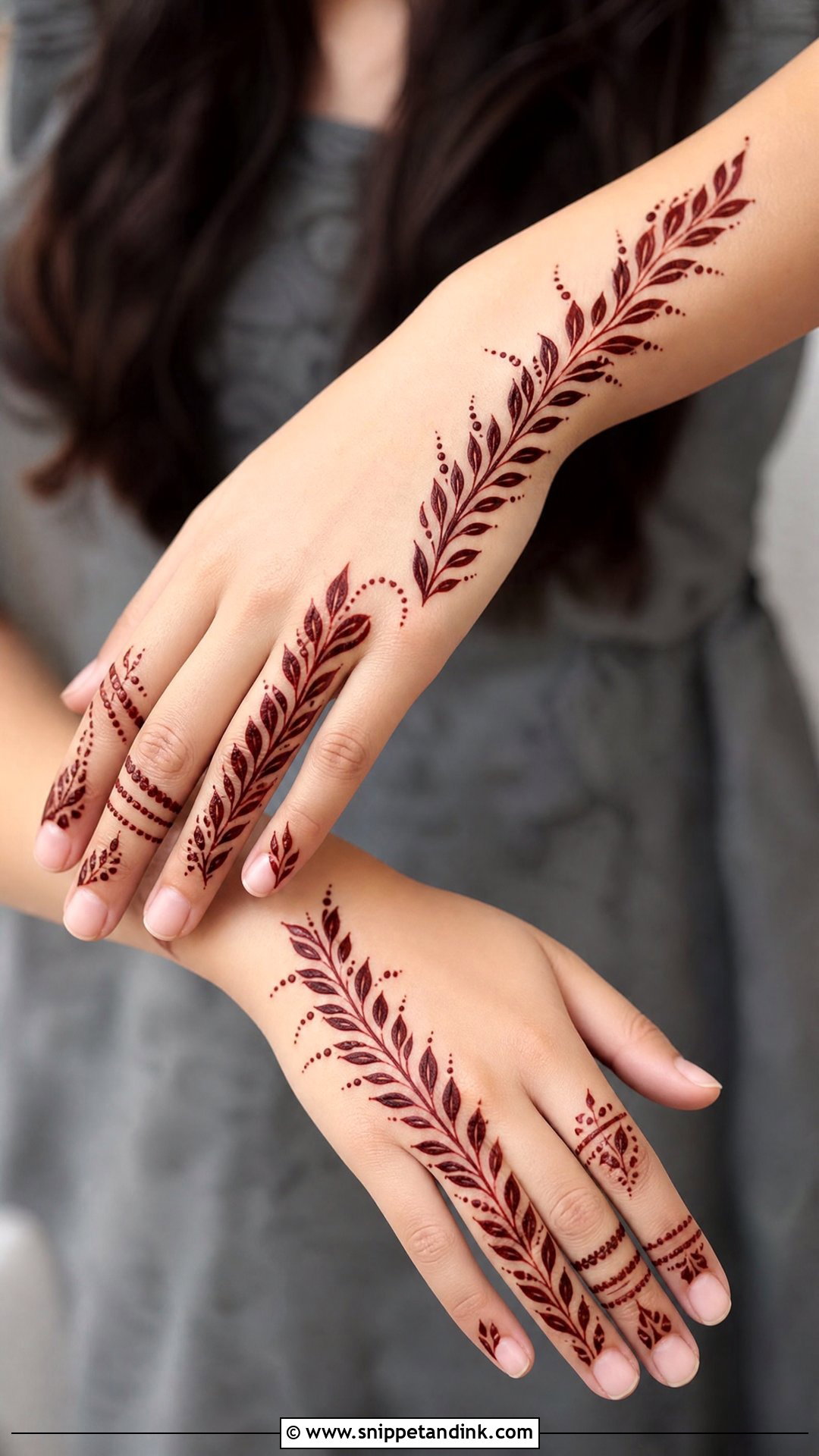
Leaves are the easiest motif to repeat, so a small leafy trail across the back hand or along one side of the palm is a natural first design. Dots go between the leaves, with light bands on the fingers. Fine filler lines inside the leaves push it toward an Indian style; leaving them bold and open makes it Arabic. Point every leaf the same direction along the trail. Mixed directions look accidental.
13. Mini Vine Mehndi Design
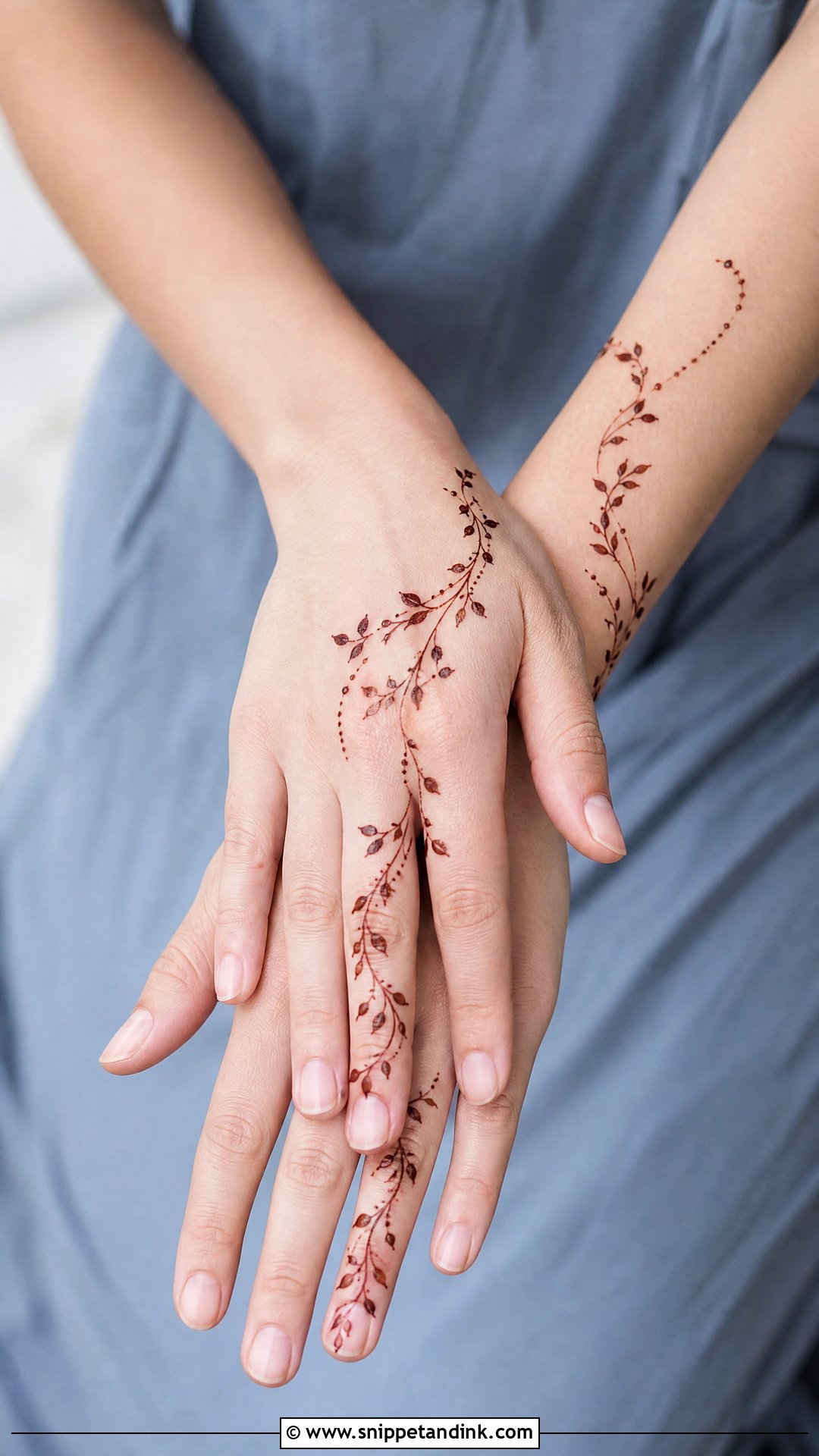
One curved vine from wrist to ring or index finger, with small leaves, buds and dotted curves along it, gives a lot of movement for very little henna. The rest of the hand stays bare. It’s the design I suggest when someone has five minutes before a car leaves. I draw the vine in one sweeping curve, never straight, because a straight line on a curved hand looks stiff. It suits small and long hands alike.
14. Mini Jaali Mehndi Design
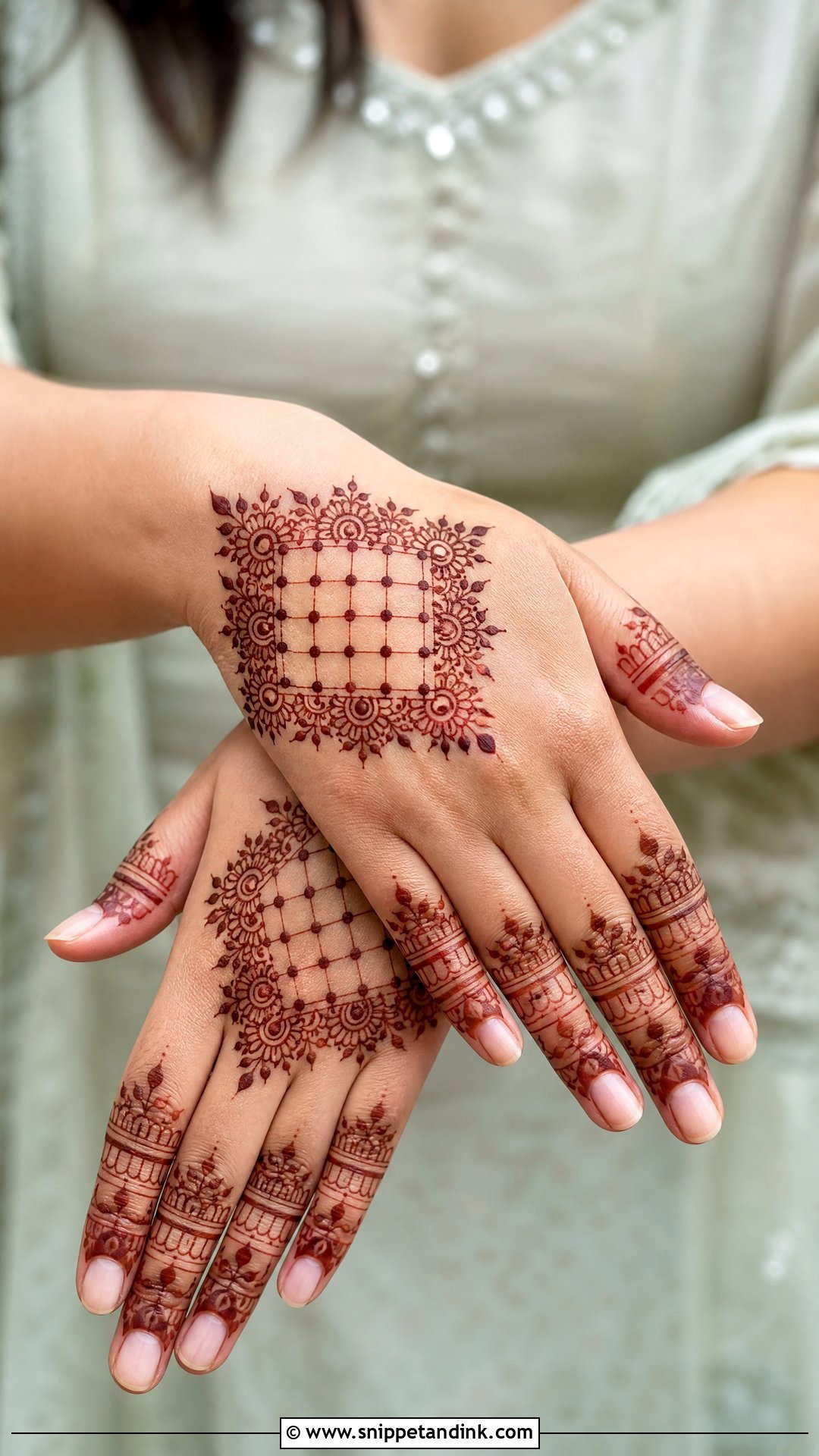
Jaali, the mesh pattern, gives detail in a small space. A small diamond or square patch on the back hand, wrist or one finger, framed with flowers, dots or a slim border, reads as intricate without full coverage. The grid lines must be evenly spaced, so I mark a few guide dots first. A tiny dot at each crossing point tidies it up. Keep the mesh patch small; a large one dominates a minimal hand.

15. Mini Peacock Mehndi Design
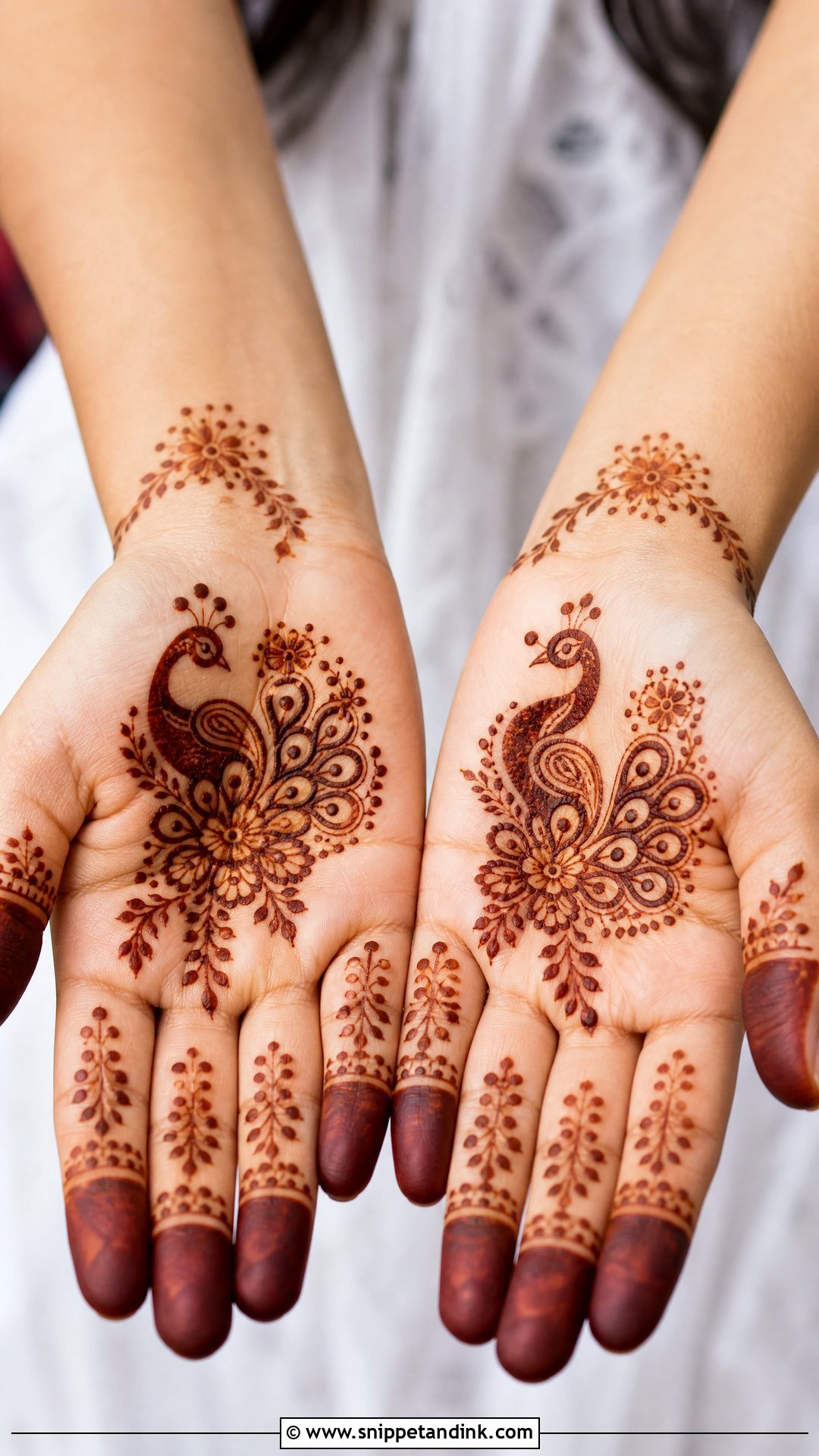
A small peacock is drawn with a curved neck, rounded body and a short fan of feathers filled with dots, lines and teardrops. At this size, detail is the enemy; I’d rather leave out feathers than crowd them. The eye, beak and neck curve need to be clear, or the shape gets lost once the stain darkens. A few tiny flowers soften it. It suits Indian celebrations and wedding functions.
16. Mini Indo-Arabic Mehndi Design
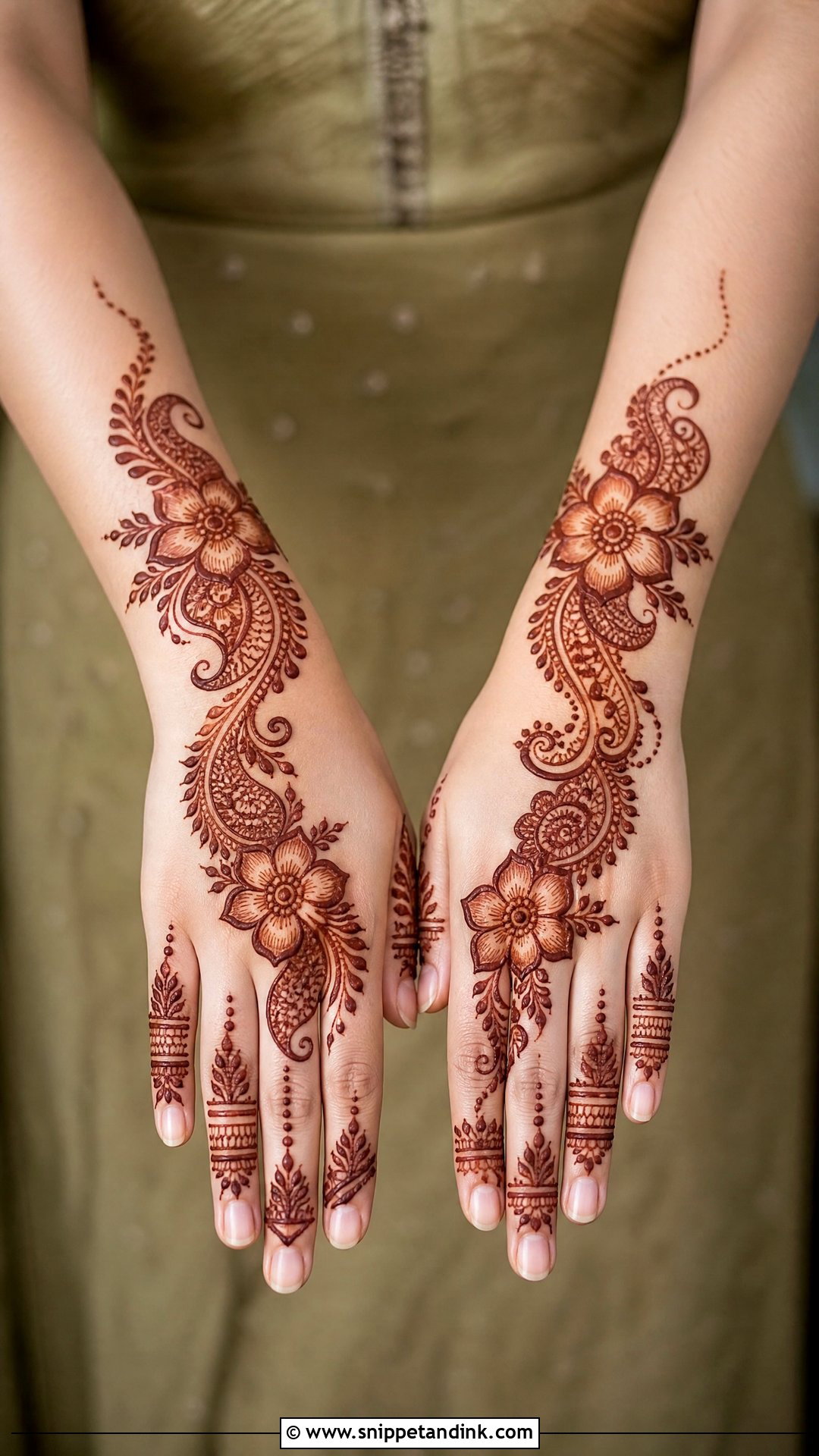
A mini Indo-Arabic mehndi design takes the diagonal flow of Arabic henna and fills its motifs with fine Indian detail: small filler lines, dots and little mandala accents inside a floral or paisley trail. Open spaces between motifs stop it getting heavy. I keep the direction clear, wrist to finger, so the eye follows it. It sits between minimal and full henna, which suits bridesmaids and family events.
17. Mini Moroccan Mehndi Design
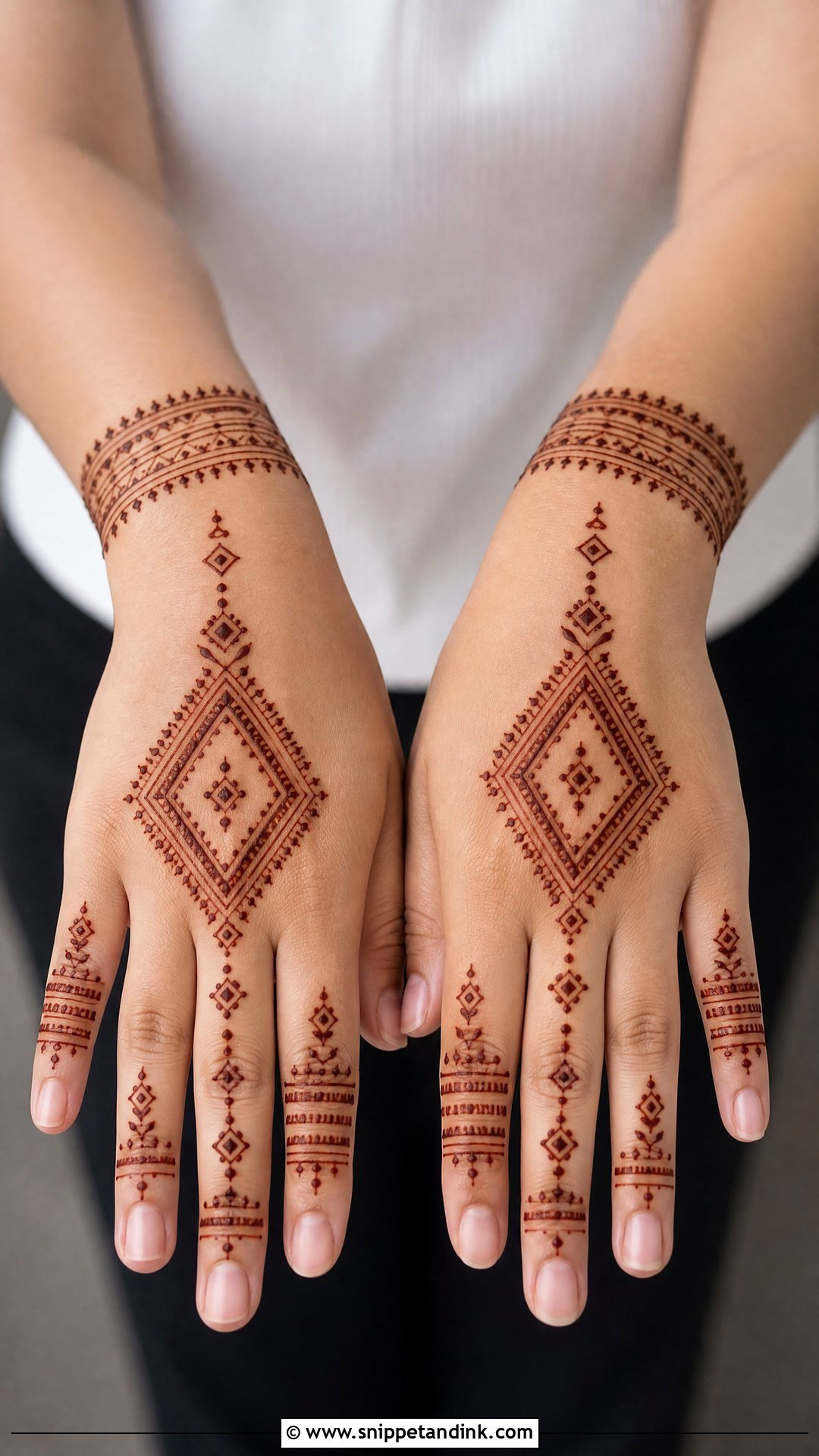
Moroccan-inspired henna swaps flowers for diamonds, triangles, lines and small grids, placed on the back hand or wrist with slim geometric bands on the fingers. Vertical lines along the fingers make short fingers look longer, which is a nice side effect. Geometry is unforgiving: spacing must be even and fillers kept to a minimum. I draw the frame lines first and fill only when they’re right. It’s a good choice for people who find floral henna too sweet.
18. Mini Khafif Mehndi Design
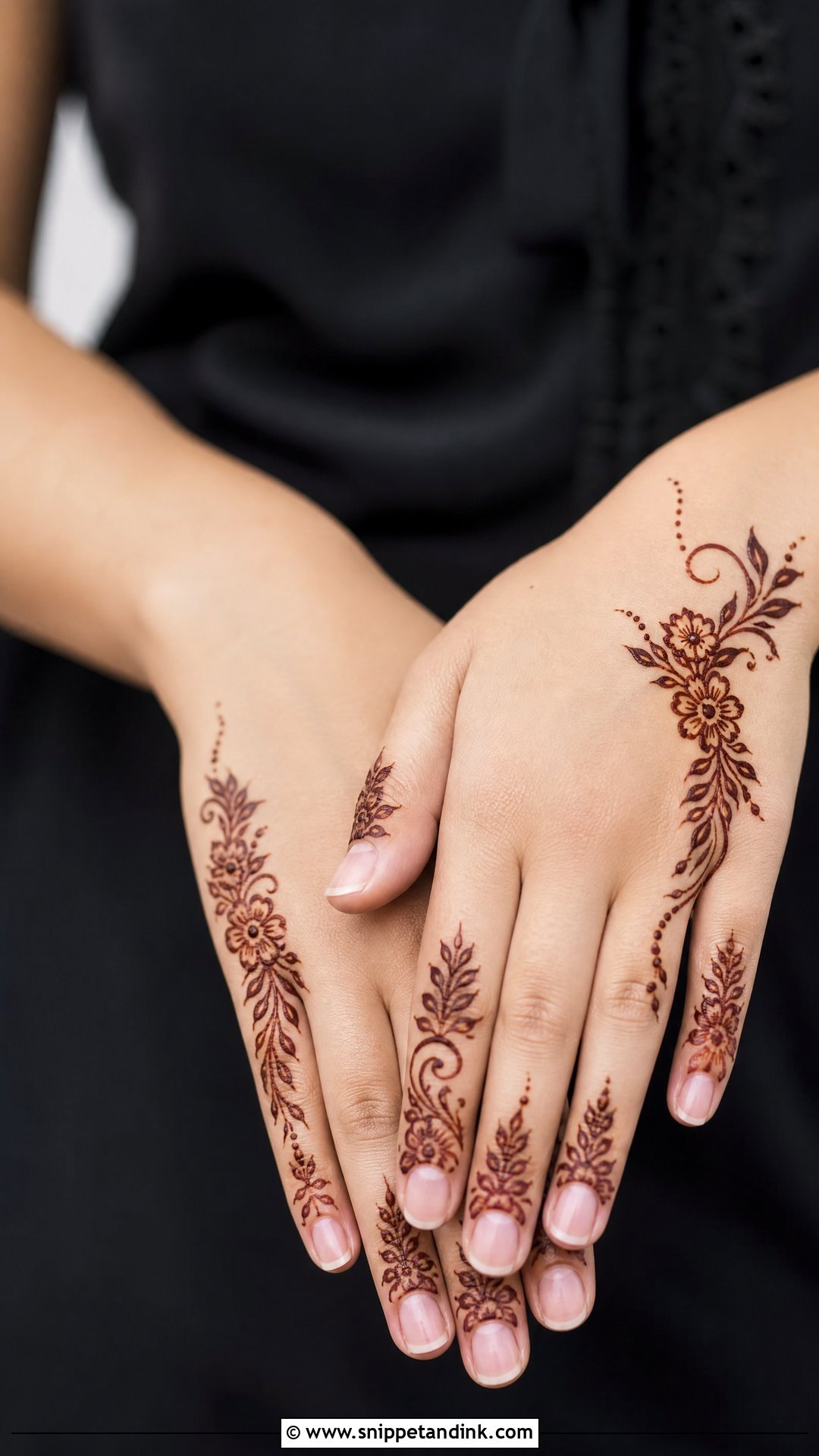
Khafif means light, and the style is exactly that: fine lines, tiny flowers, light leaves, thin swirls and plenty of open space, usually on the back hand flowing toward the fingers. A small band or scattered dots finish the wrist. Line control is everything; I use the finest cone tip and keep the pressure even. Very fine lines do stain lighter, so keep the paste on longer than you would for a bold design. It pairs well with pastel outfits.
19. Mini Gulf Mehndi Design
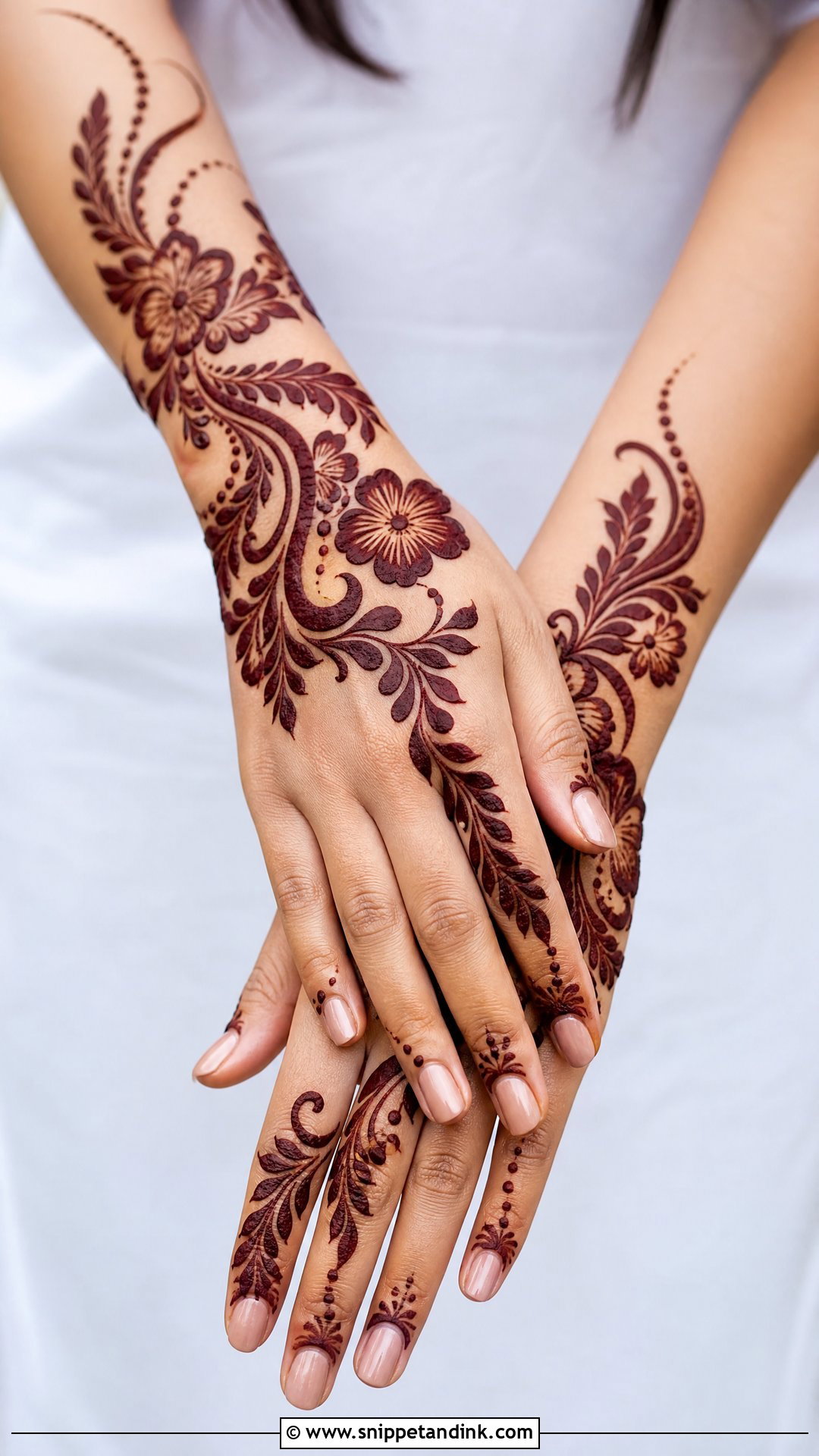
Gulf-Khaleeji henna uses big flowers, curved leaves and lots of bare skin. In a small version, I place one bold flower near the side of the back hand and run a curved trail to the wrist or finger, with dots and small leaves around it. Lines are thicker than in other styles. That extra paste on the skin tends to give a deep stain, which is why it reads rich even when small. It suits Eid and formal family events.

20. Mini Eid Mehndi Design
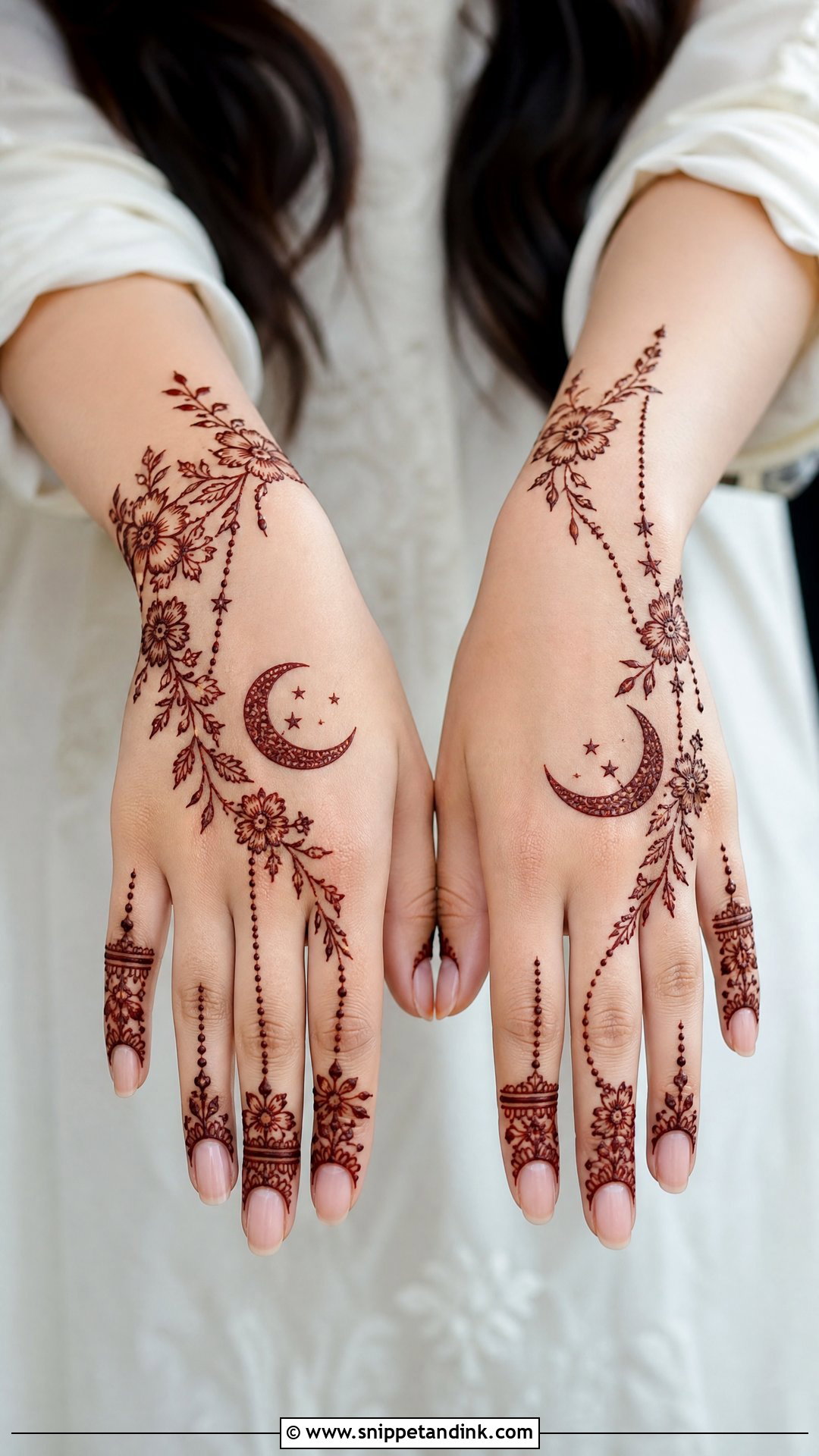
Eid henna is usually applied the night before, which suits small designs because they dry in time for sleep. A crescent, floral trail, mandala or bracelet on the back hand, with dotted chains and finger details, decorates both hands quickly. Use natural henna for the classic reddish-brown, and keep both hands balanced. A few small stars around a crescent finish it. By morning the stain will still be deepening, which is just right for prayers and visits.
21. Mini Bridal Mehndi Design
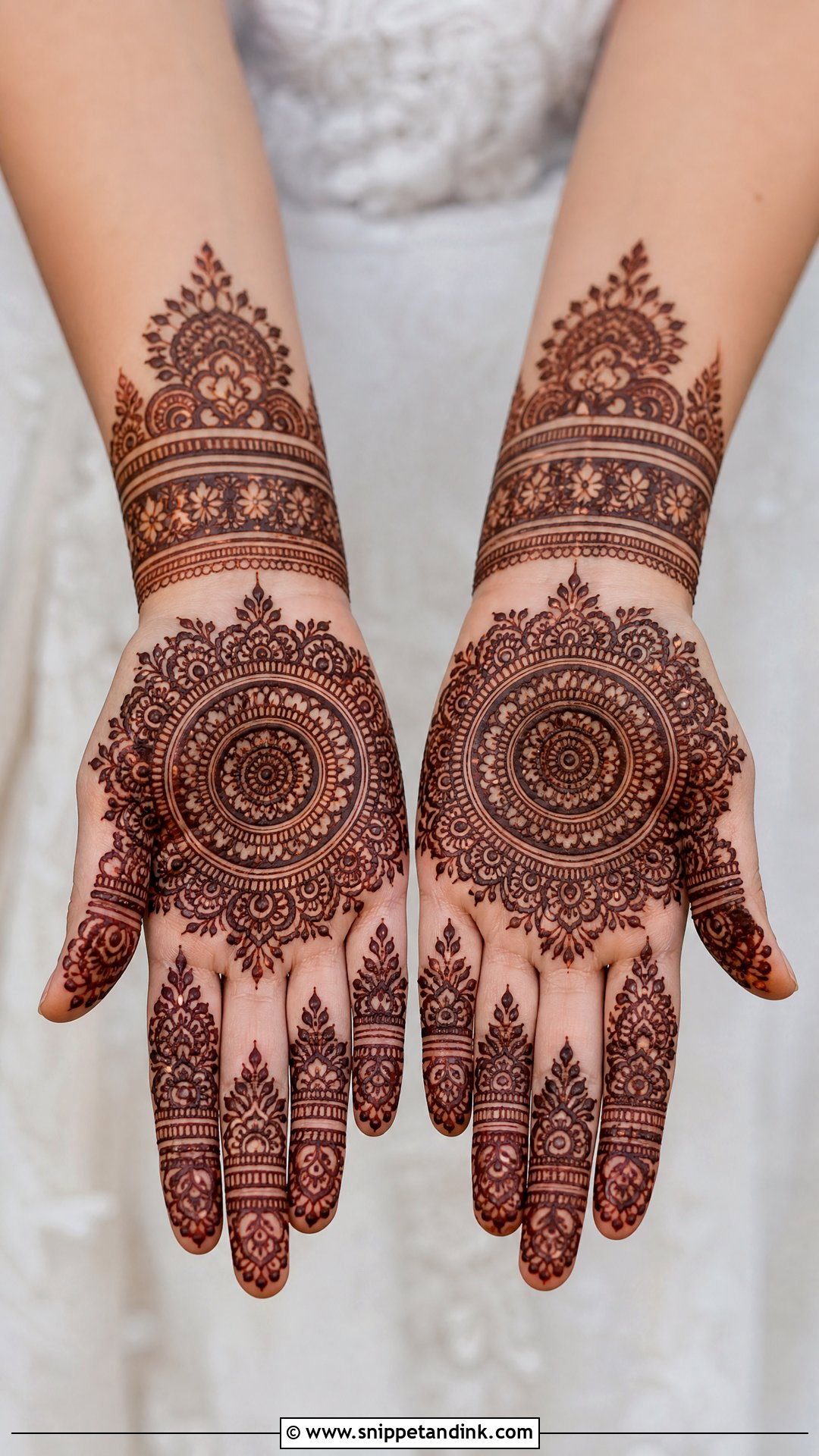
Not every bride wants henna to the elbow. A small bridal design puts a detailed mandala on the palm, a bracelet at the wrist and fine finger patterns, with small paisleys, flowers and dotted chains for richness. Both hands should match closely; at this scale, a mismatch is obvious in a ring photo. It suits engagements, courthouse weddings and brides who want henna that’s subtle in photos. Fine detail inside the main motifs gives it its bridal weight.
22. Mini Wedding Guest Mehndi Design
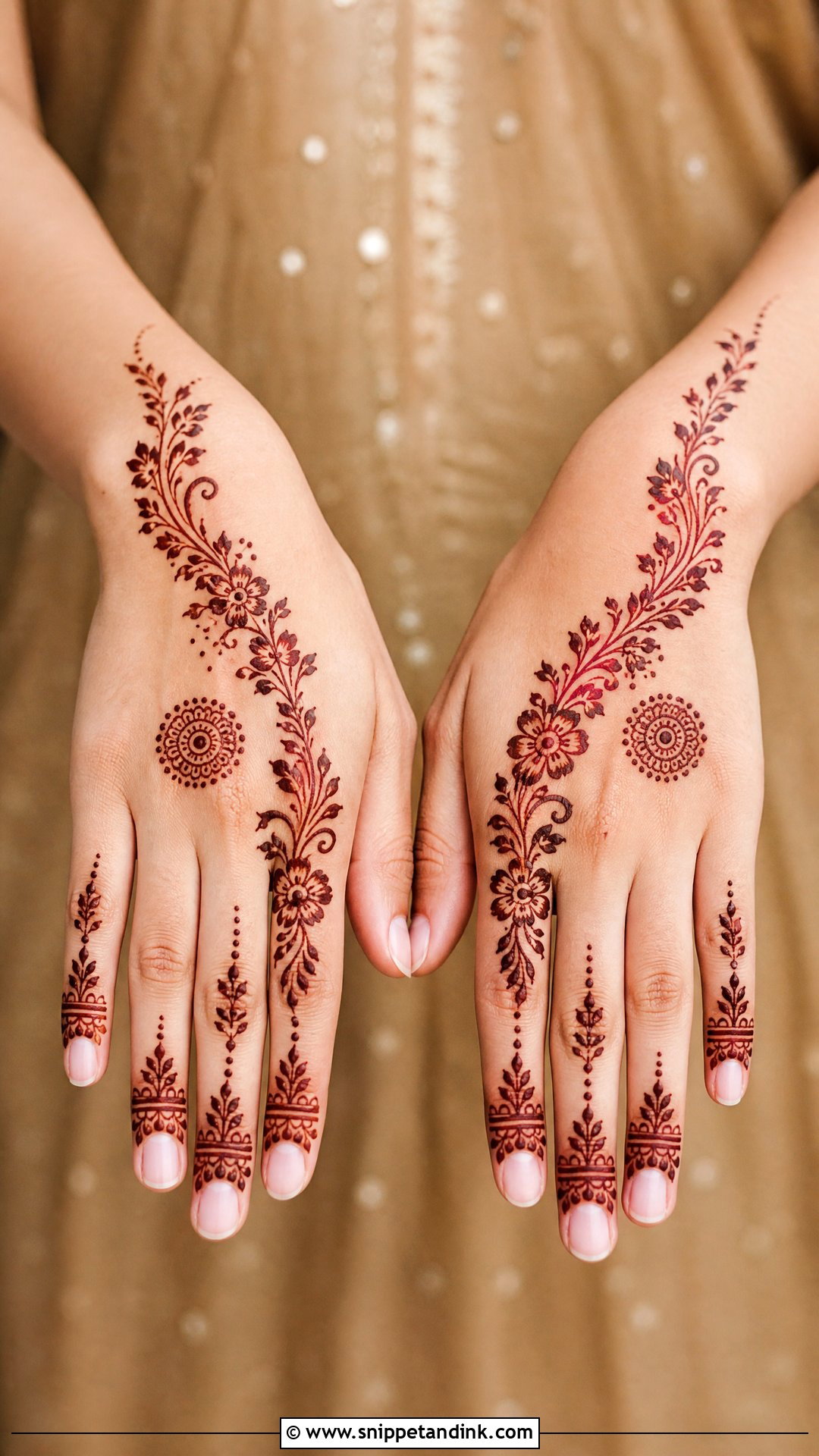
Guests should look festive without matching the bride, and a diagonal Arabic floral trail, small back-hand mandala or bracelet is plenty. Fingers get dots, leaf tips or simple bands. Match it to your outfit: bold clothes call for open spacing, while a plain outfit can take a little more finger detail. These dry fast, which matters at a busy function where you’ll be eating and greeting within the hour.
23. Mini Kids Mehndi Design
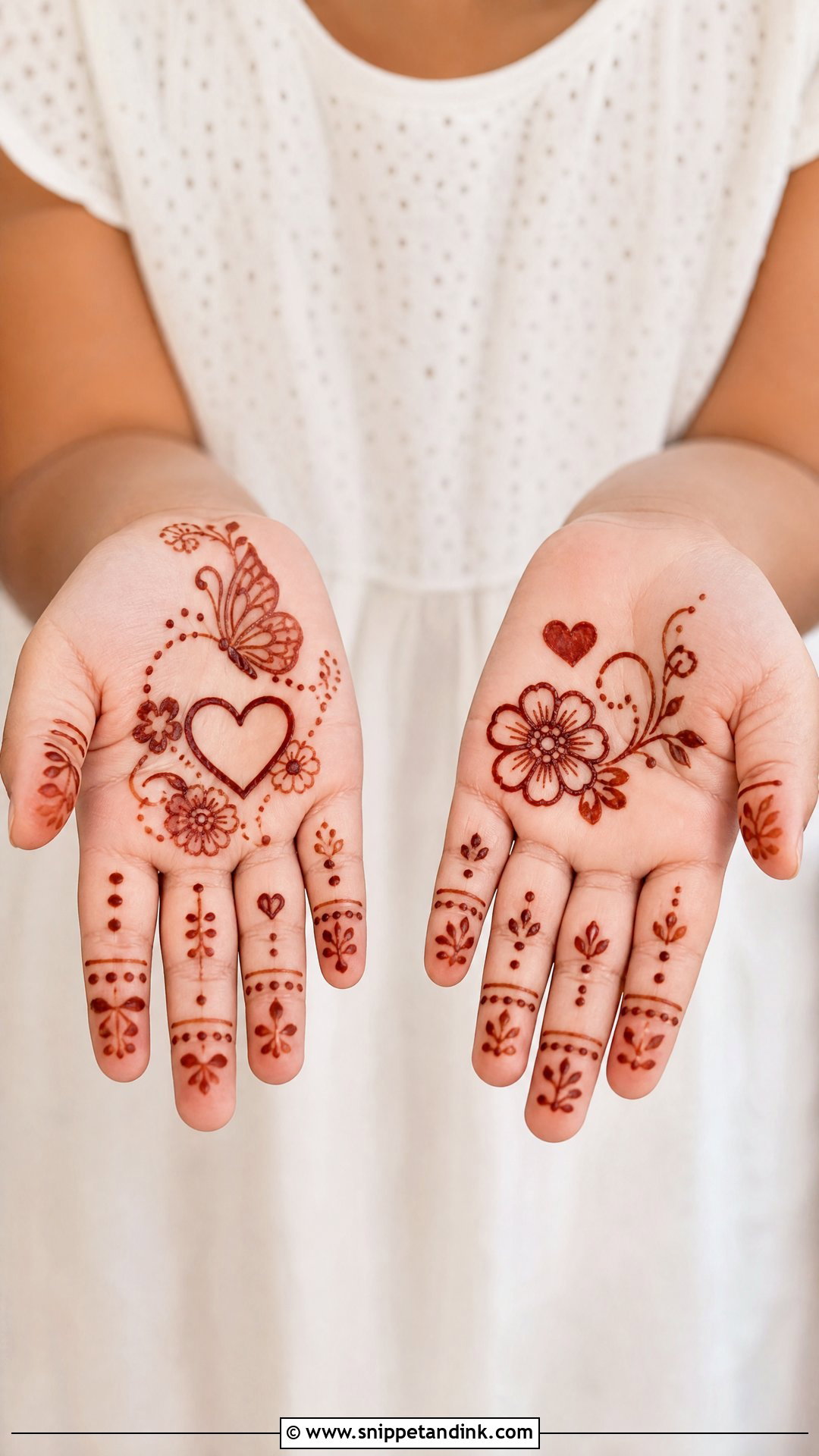
Children want small, quick shapes: flowers, hearts, butterflies, stars and simple mandalas. One motif on the palm or back hand with a few finger dots is right. Dense designs smudge because children move before the paste dries. Rounded, bold lines survive better than fine ones. Always use natural henna with children; anything promising a black colour or an instant stain contains chemicals that can burn. Keep the session short so they enjoy it.
24. Mini Front Hand Mehndi Design
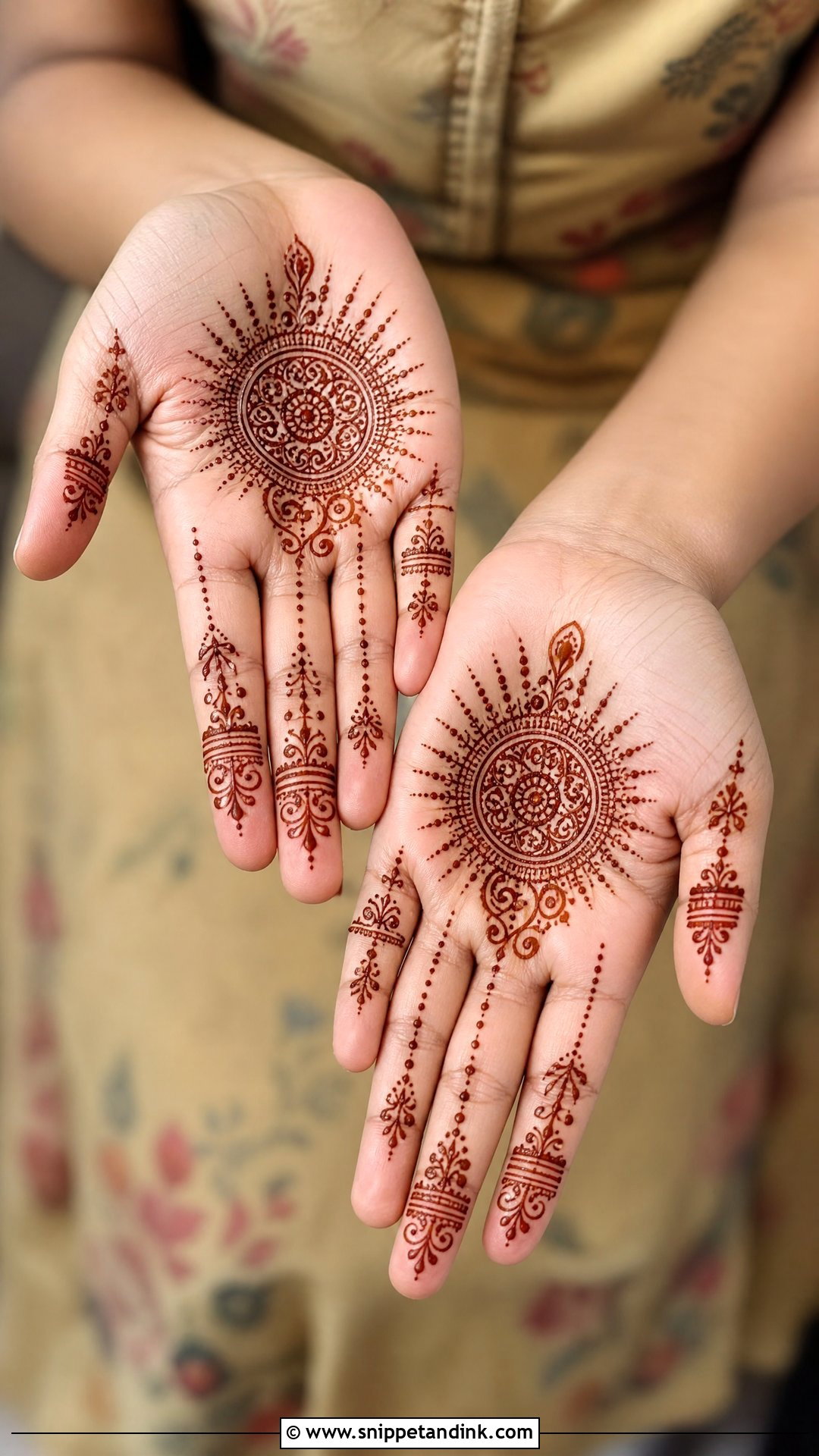
A mini front hand mehndi design keeps the palm as the centre: a small mandala, flower or paisley with light finger details. Slim lines radiating from the centre toward the fingers give a sunburst effect; a small floral cluster at the base of the palm with dots leading up is another approach. The palm is easy to see while drawing on yourself, which makes it good for beginners. Keep the wrist bare so the palm motif stays clean.

25. Mini Wrist Mehndi Design
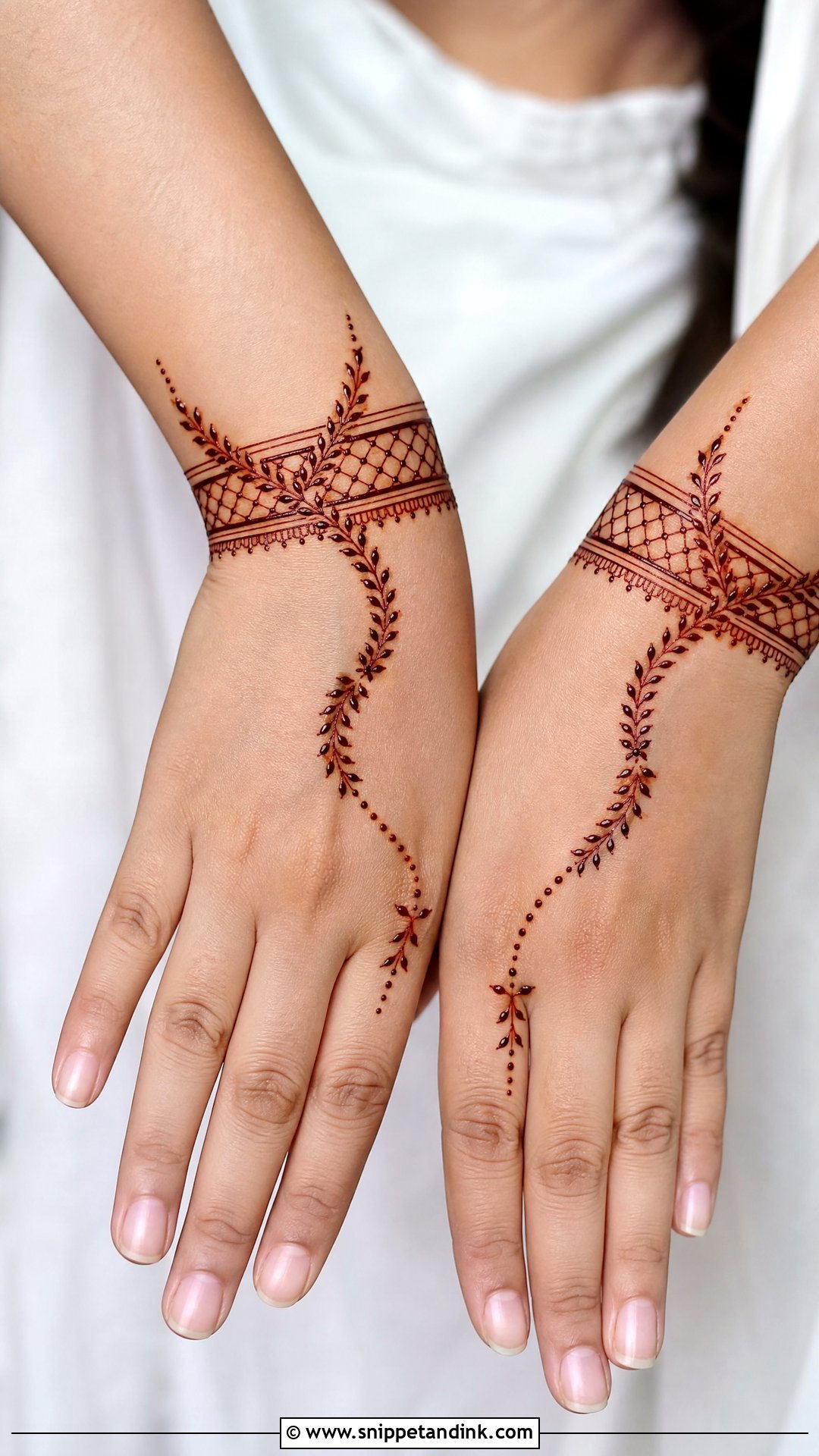
One or two slim wrist bands, decorated with dots, small flowers, leaves or tiny jaali sections, give you henna that reads as a bracelet. A short trail toward the back hand fills it out. It’s the most office-friendly design here. If you wear a watch daily, put the band above or below where the strap sits; a strap rubs the stain away within a few days. Draw the band in short sections as you turn the wrist so it stays even.
26. Mini Ring Mehndi Design
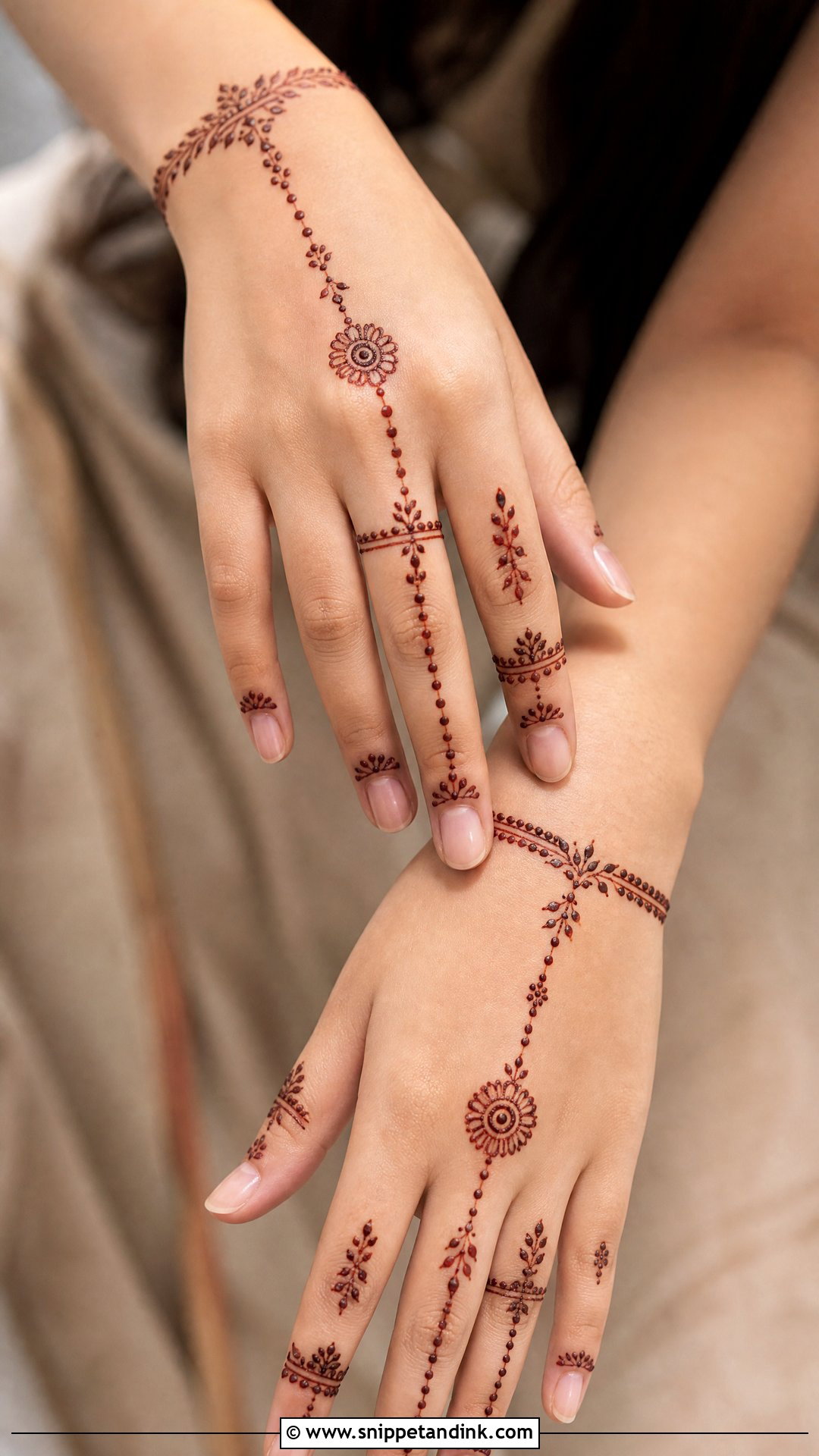
A mini ring mehndi design draws a ring around one finger and connects it by a thin dotted chain to a small flower, mandala or leaf cluster on the back hand, sometimes continuing to a slim wrist bracelet. Keep the ring band narrow; a thick one looks like a smudge rather than a ring. Fine dots and clean curves sell the jewellery effect. It suits engagement parties and small weddings.
27. Mini Crescent Mehndi Design
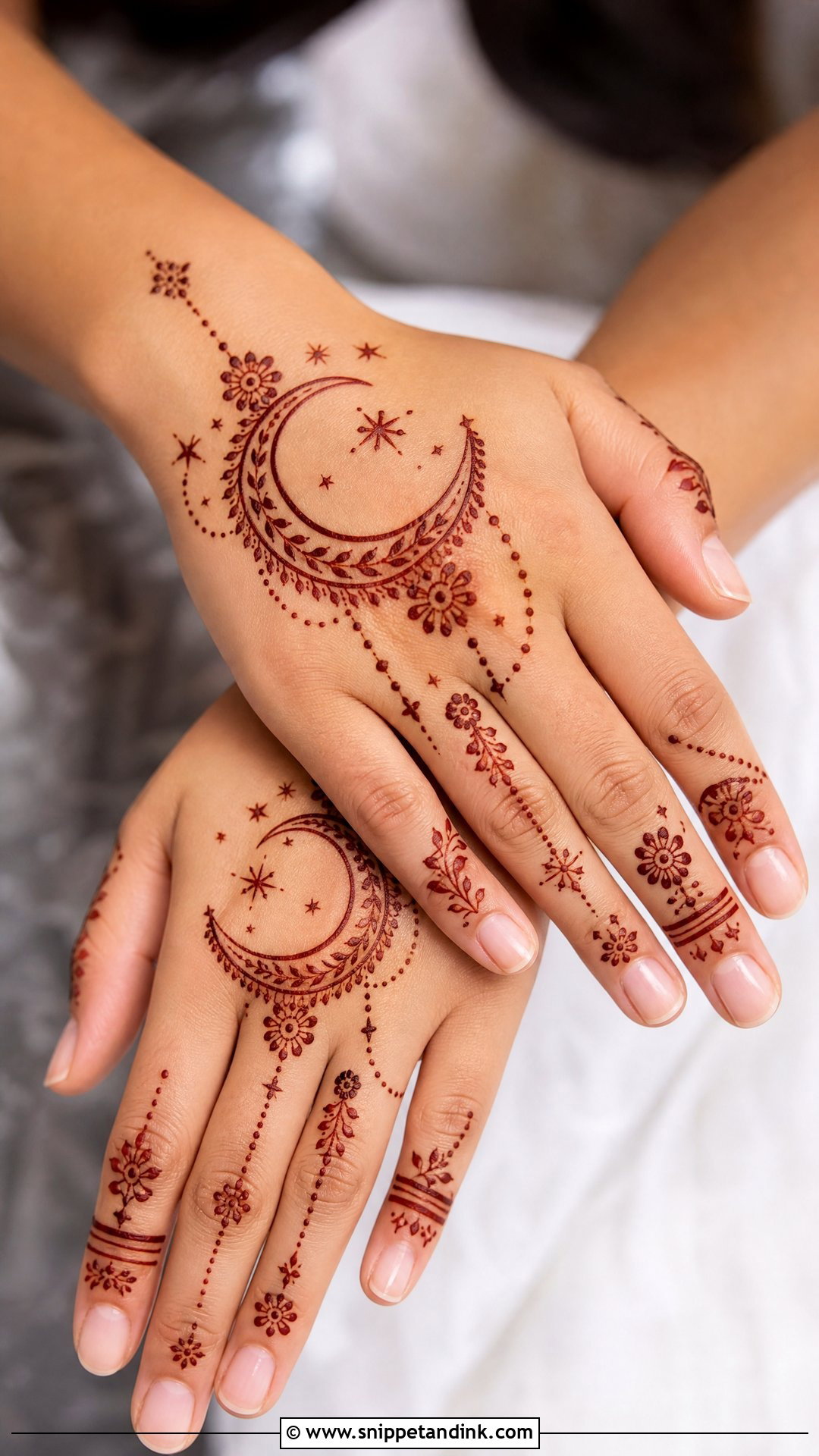
A small crescent moon on the palm, back hand or wrist, decorated with dots, tiny stars and flowers, is a favourite for Eid and evening events. The crescent’s two curves must be smooth and the points sharp; I draw the outer curve first, then the inner, in single strokes. A thin leafy border and open space around it give it a refined finish. A short dotted trail toward the fingers completes the hand.
28. Mini Side Hand Mehndi Design
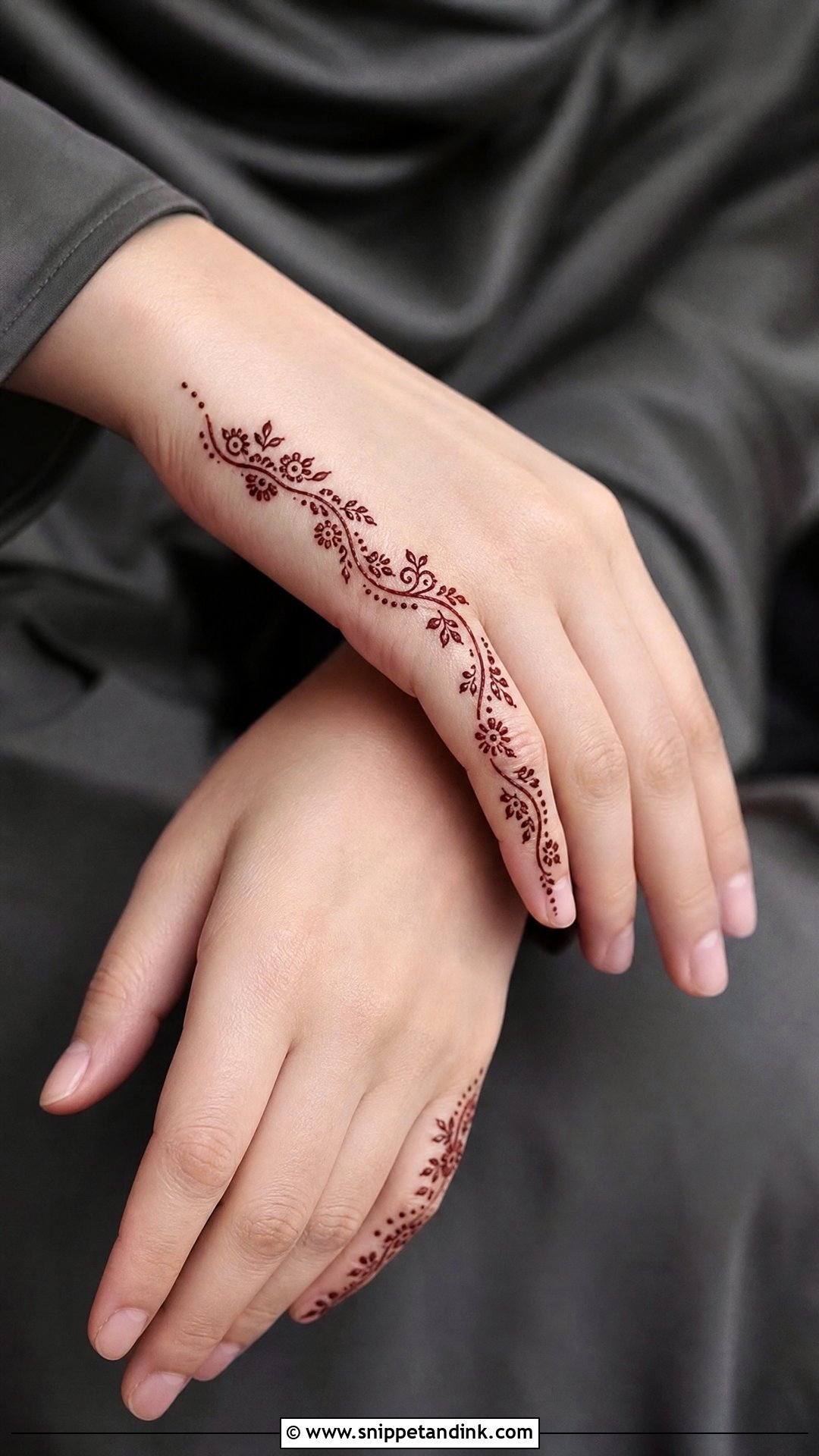
Henna along the outer edge of the hand, from the little finger toward the wrist, follows the hand’s natural line and is easy to show or tuck away. Tiny flowers, leaves, dots and curves make a slim border. It photographs well in close-ups because the design wraps the edge. Keep it narrow; this skin creases when you make a fist, and wide designs there distort. It also rubs against desks and laptops, so expect it to fade a little faster than the centre of the hand.
29. Mini Simple Mehndi Design
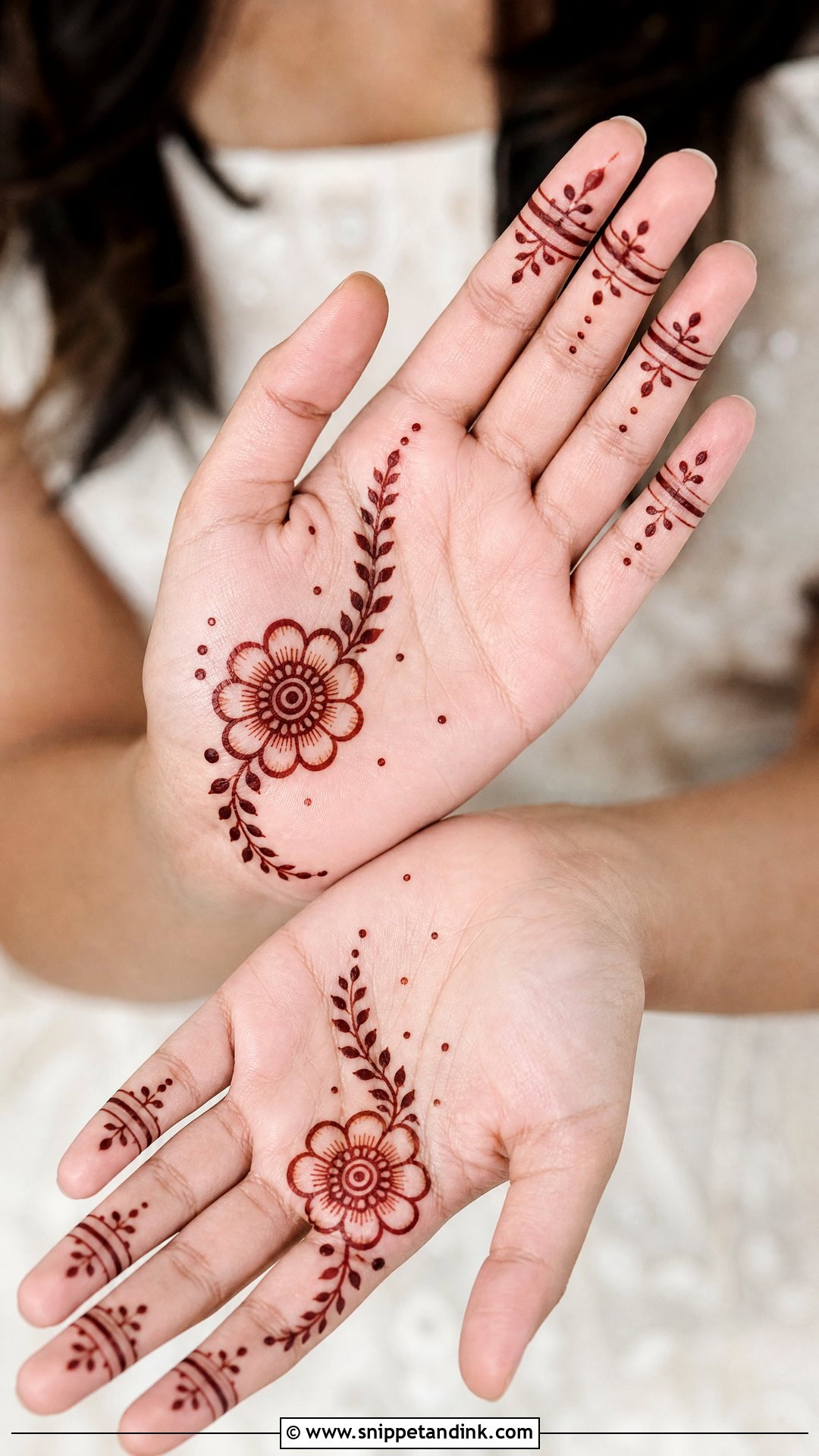
Simple henna is about stopping. Choose one main motif, a flower, mandala, leaf trail or paisley, support it with dots and short finger accents, and leave the rest bare. I draw the main motif first, add details slowly, and step back after each. The moment it starts to feel crowded, I put the cone down. Beginners, quick events and anyone who wants a very light finish will get the most from this.
30. Mini Modern Mehndi Design
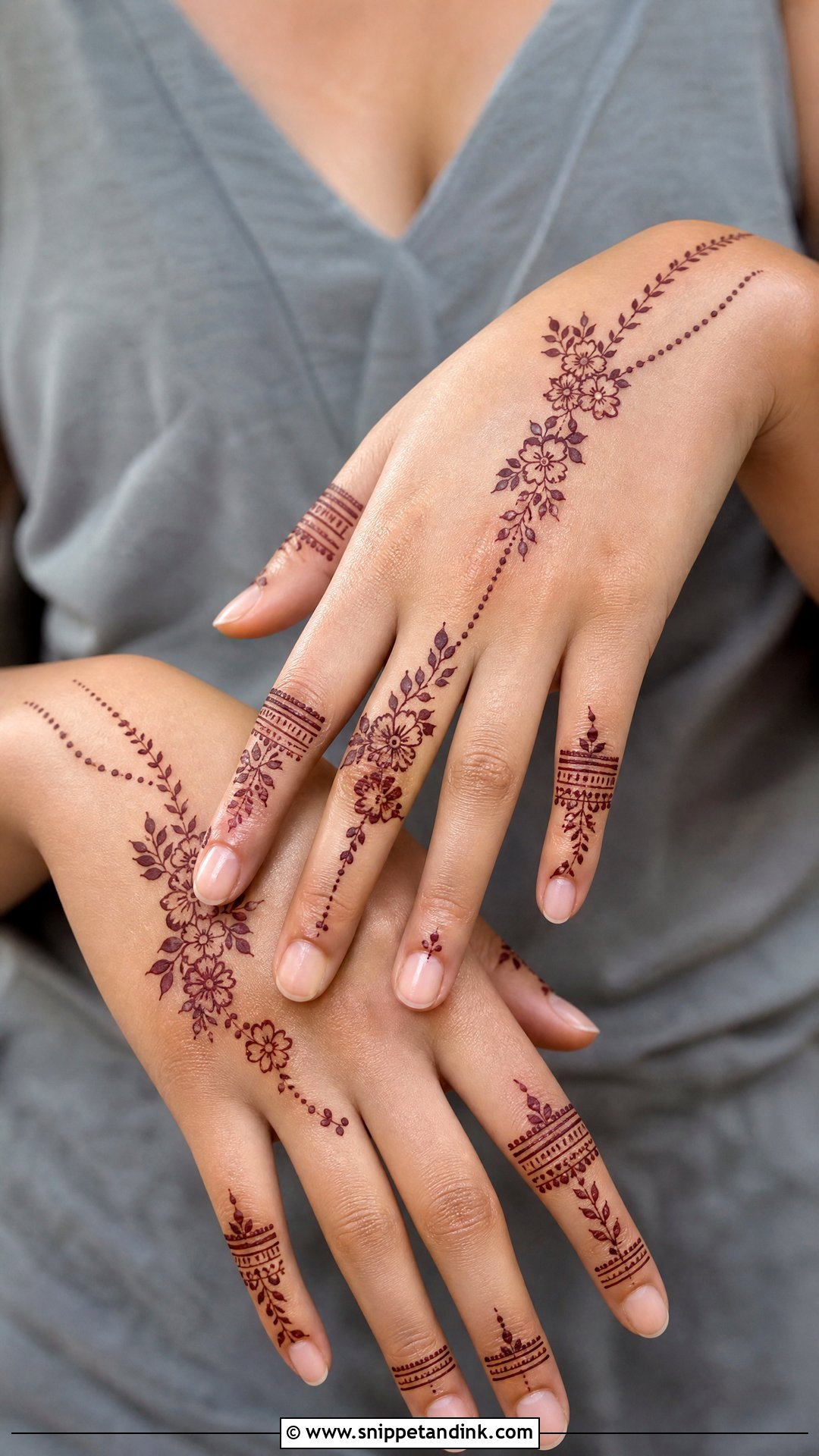
Modern small designs lean on bare skin, slim lines and off-centre placement: a single floral trail on one side of the back hand, a finger-only pattern, or a wrist-to-finger chain. Mixing geometric bands with tiny leaves gives it a current feel. It suits modern outfits and casual celebrations, and people who don’t want traditional coverage. Every motif should look placed, not scattered, so I plan the layout with a few dots before drawing anything.
Drawing a Small Design on Your Own Hand
Most of the designs above can be done on yourself with a little practice. Hold the cone like a pen, but squeeze from the back with the thumb, not the fingers, so the pressure stays steady. Practise the motif on paper three or four times first. On your own hand, rest your wrist on a folded towel so it doesn’t shake.
Mistakes are easy to fix if you’re quick. Wipe a stray line with a damp cotton bud within a few seconds, before the dye sets into the skin. Draw on your non-dominant hand first, while you’re fresh, then do the harder side last. Check your cone, too: natural henna cones are usually sold chilled or frozen and have a short shelf life, while cones that sit on a shop shelf for months usually contain preservatives or dyes.
Where a Watch, Ring or Sanitiser Wears It Away
Small designs often sit right where daily life rubs. A watch strap fades a wrist band, a ring dulls a finger pattern, and alcohol sanitiser lifts colour from everywhere. If you want it to last a week or more, move the band clear of your watch, take rings off when washing up, and use a little balm or coconut oil on the design before showering. The stain will still fade as skin renews, usually over one to three weeks, but more evenly.
Small Enough for a Monday, Festive Enough for Eid
Small henna works when it has one clear focus, neat spacing and enough detail to look finished. It can be traditional or modern, floral or geometric, Arabic, Indian or somewhere in between. Pick the design for the time you have and the days that follow: a wrist band if you’ll be typing all week, a palm mandala if you want the darkest stain, a finger pattern if rings are part of the outfit. Then keep the paste on and let it develop.
You'll Like These Ideas:











Leave a Reply