
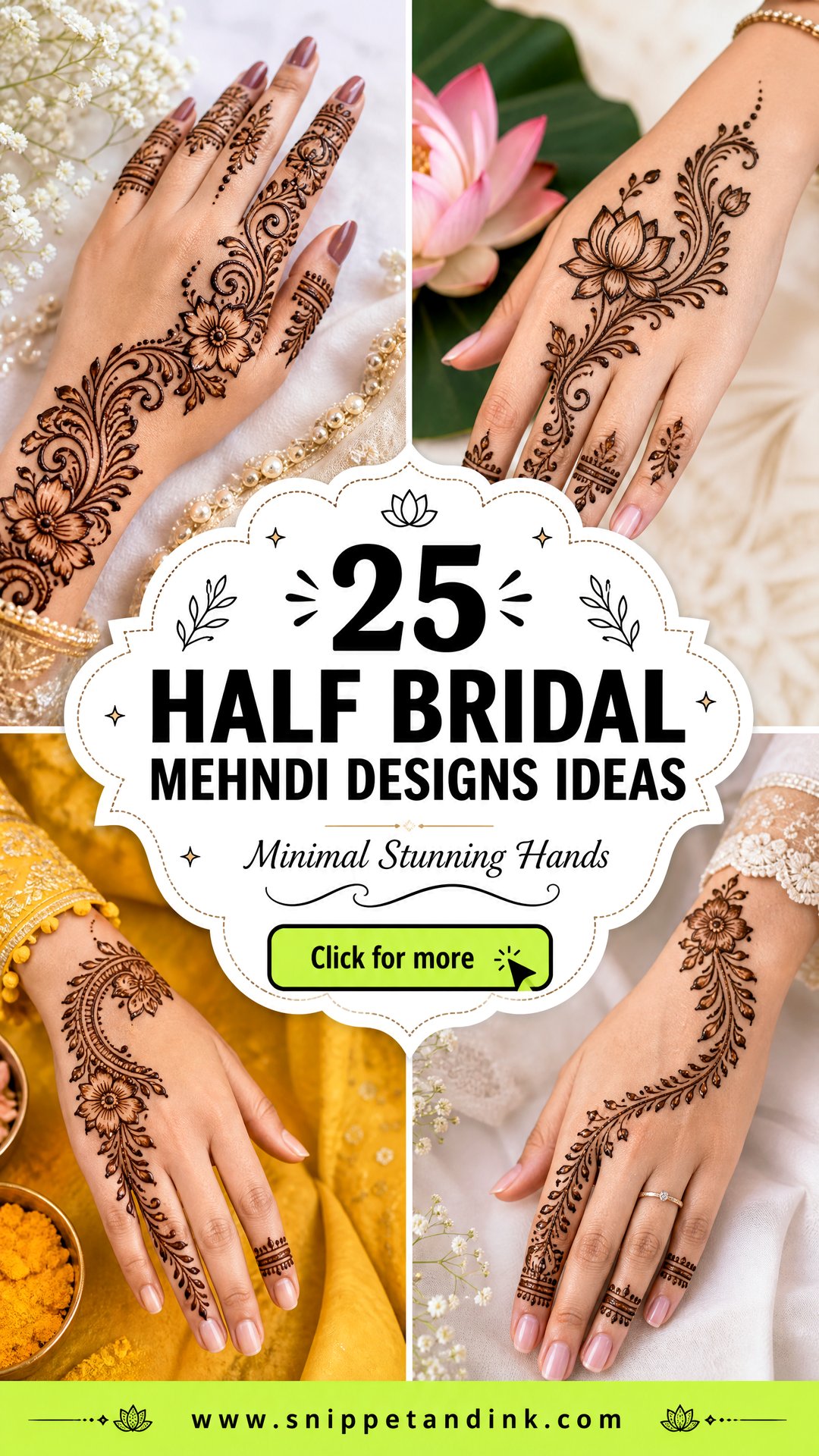
Not every bride wants henna up to her elbows. A half bridal layout covers the palm, back hand, fingers and wrist, sometimes reaching partway up the forearm, and it gives you enough detail for ring shots and close-ups in a fraction of the sitting time. I apply it most for engagements, nikkahs, rokas, Haldi mornings and smaller weddings. The style can be dense Indian, airy Arabic, a mix of the two, Moroccan geometry or a finger-focused minimal design. Planned well, it reads as fully bridal. Here are 25 layouts I’d recommend, with notes on how each one stains and who it suits.
Where a Half Design Should Stop on Your Arm
The hardest part of a half bridal layout isn’t the motifs, it’s the ending. A design that simply stops mid-wrist looks unfinished. Before I start, I talk through three things with the bride.
- Where it ends. Most half designs stop at the wrist crease or a few inches above it. I always close with a cuff, a scalloped border or a band of small leaves so the edge looks deliberate.
- What jewelry you’ll wear. Bangles, a kaleera or a haath phool change which areas are visible. I’d rather put detail where it will show than under a stack of bangles.
- How long you can sit. A half design takes noticeably less time than a full arm, but dense Indian filling or faces still need a few hours for both hands. Arabic and minimal layouts are faster.
Also ask your artist whether the paste is natural henna. Real henna stains orange at first and darkens to brown or maroon. Anything that stains black immediately may contain chemical dyes, and I’d never put that on a bride.
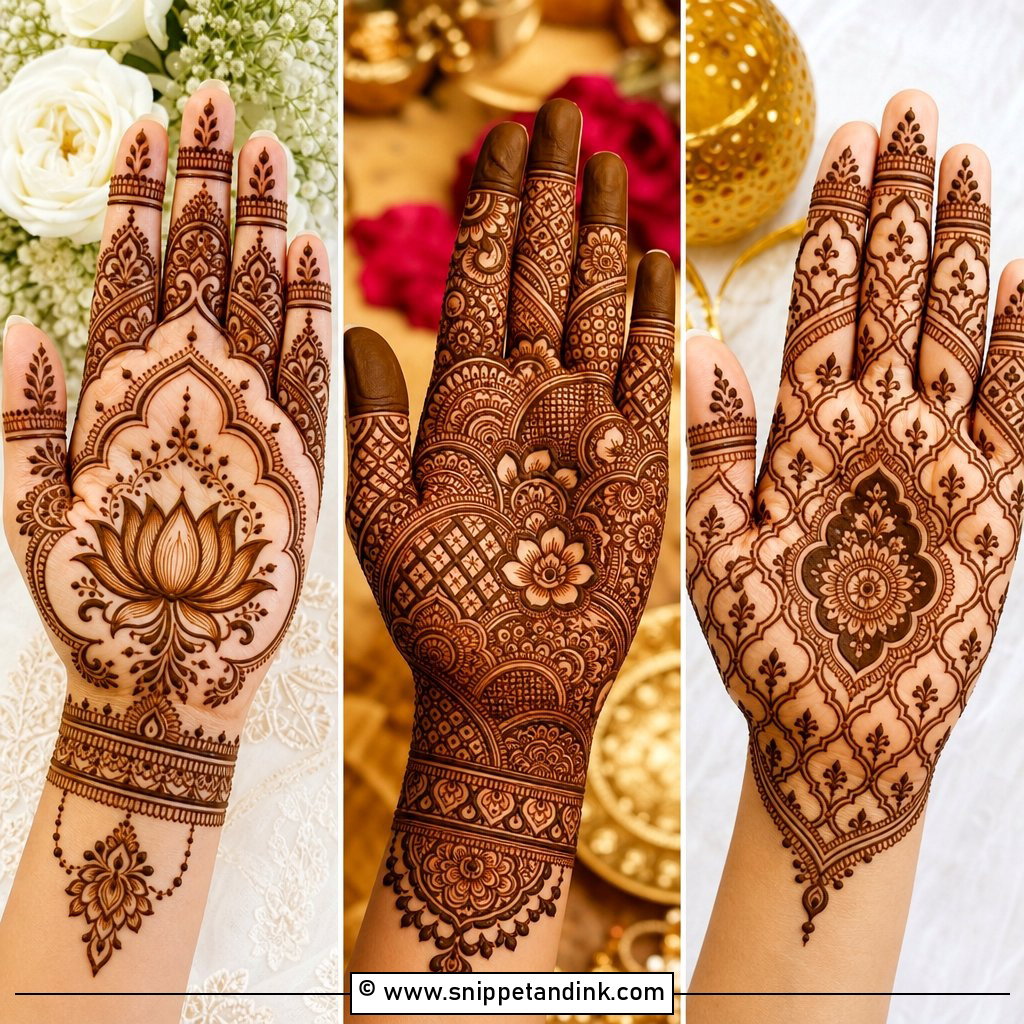
1. Half Bridal Mehndi Design Front Hand
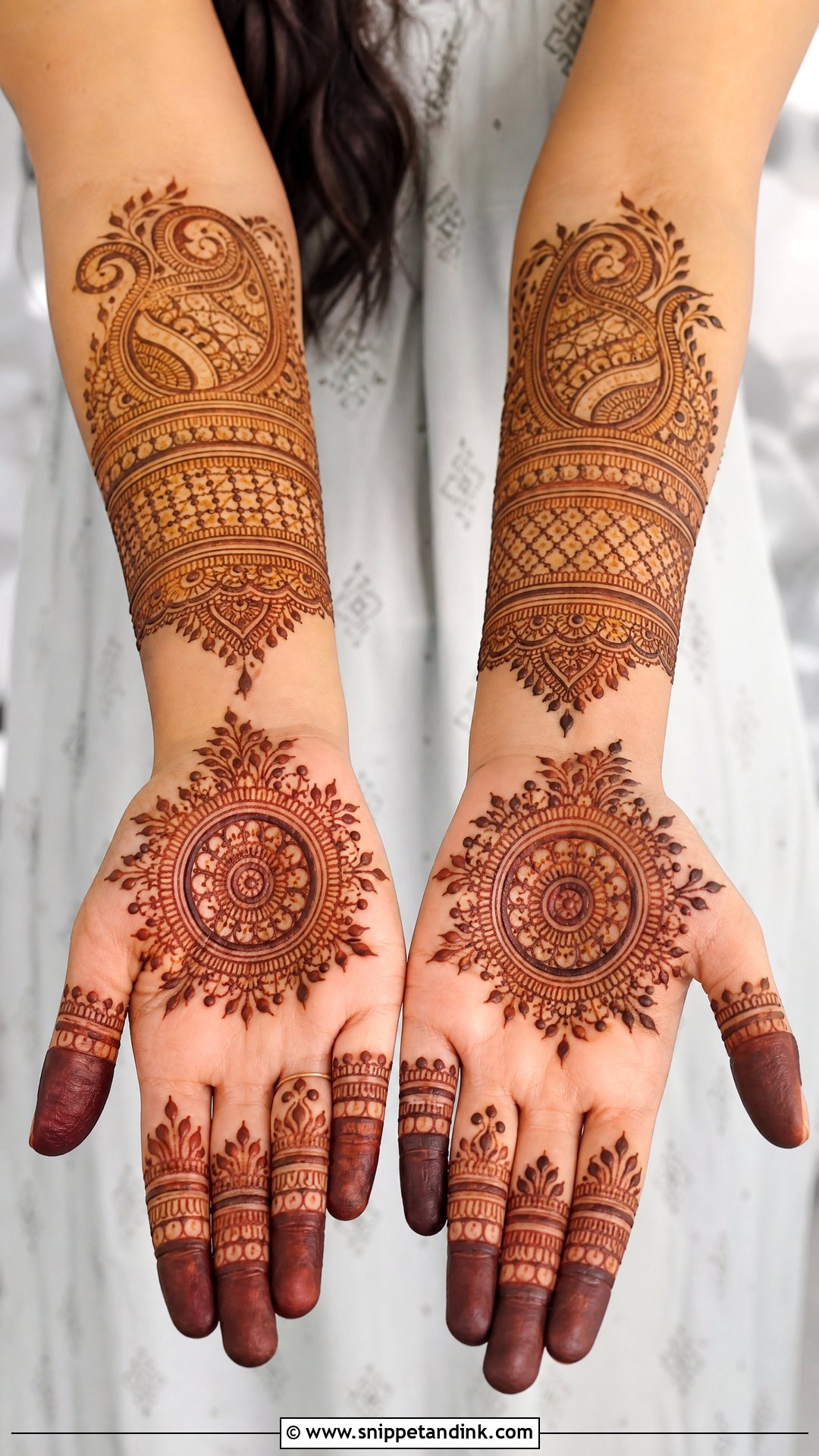
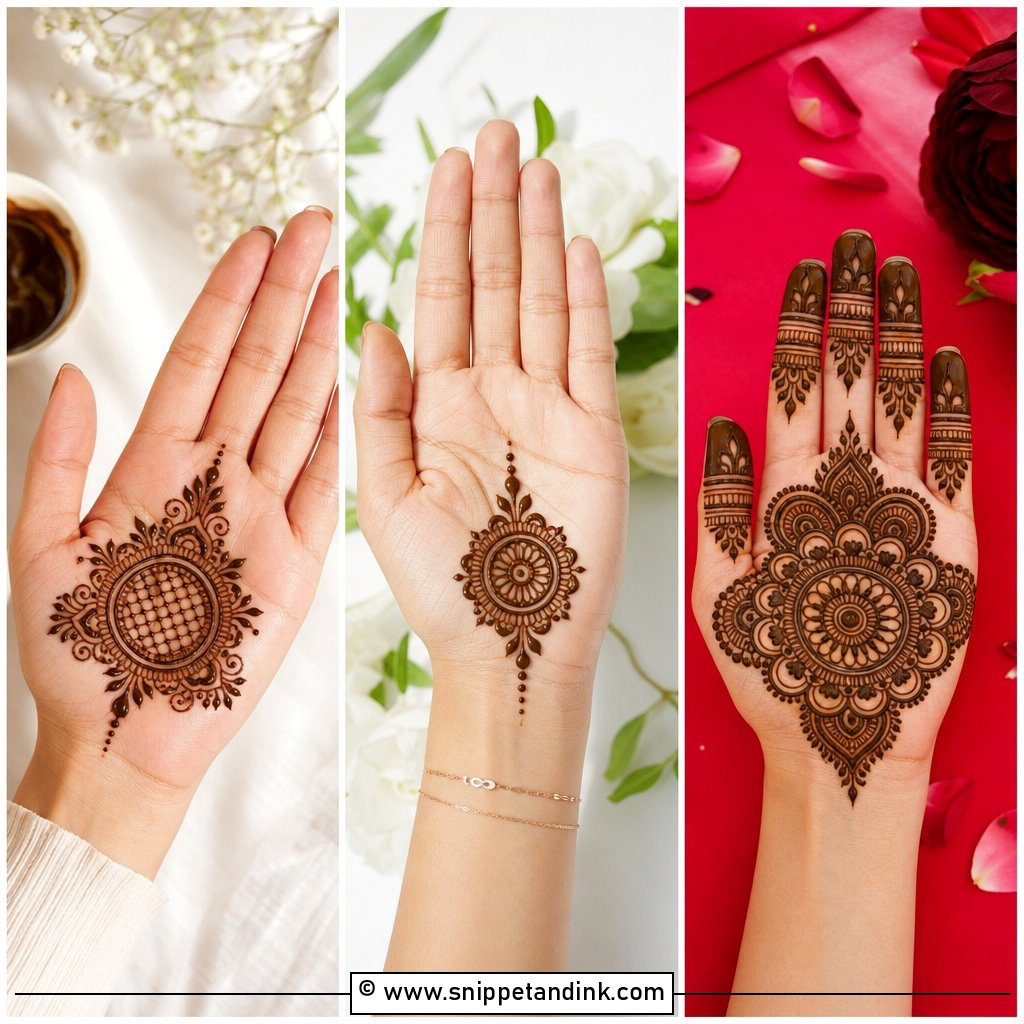
On the front hand, I usually build out from a central mandala, lotus or paisley on the palm, then fill the fingertips and close with a neat wrist band. The palm stains darker than any other part of the hand because the skin there is thicker, so this is where detailed work pays off most. I keep the fingers dense, since rings and bangles sit against them and pale fingers look unfinished next to gold. Small leaves, dots and curling vines fill gaps around the main motif. It’s a strong choice for an engagement or small wedding.
2. Half Bridal Mehndi Design Back Hand
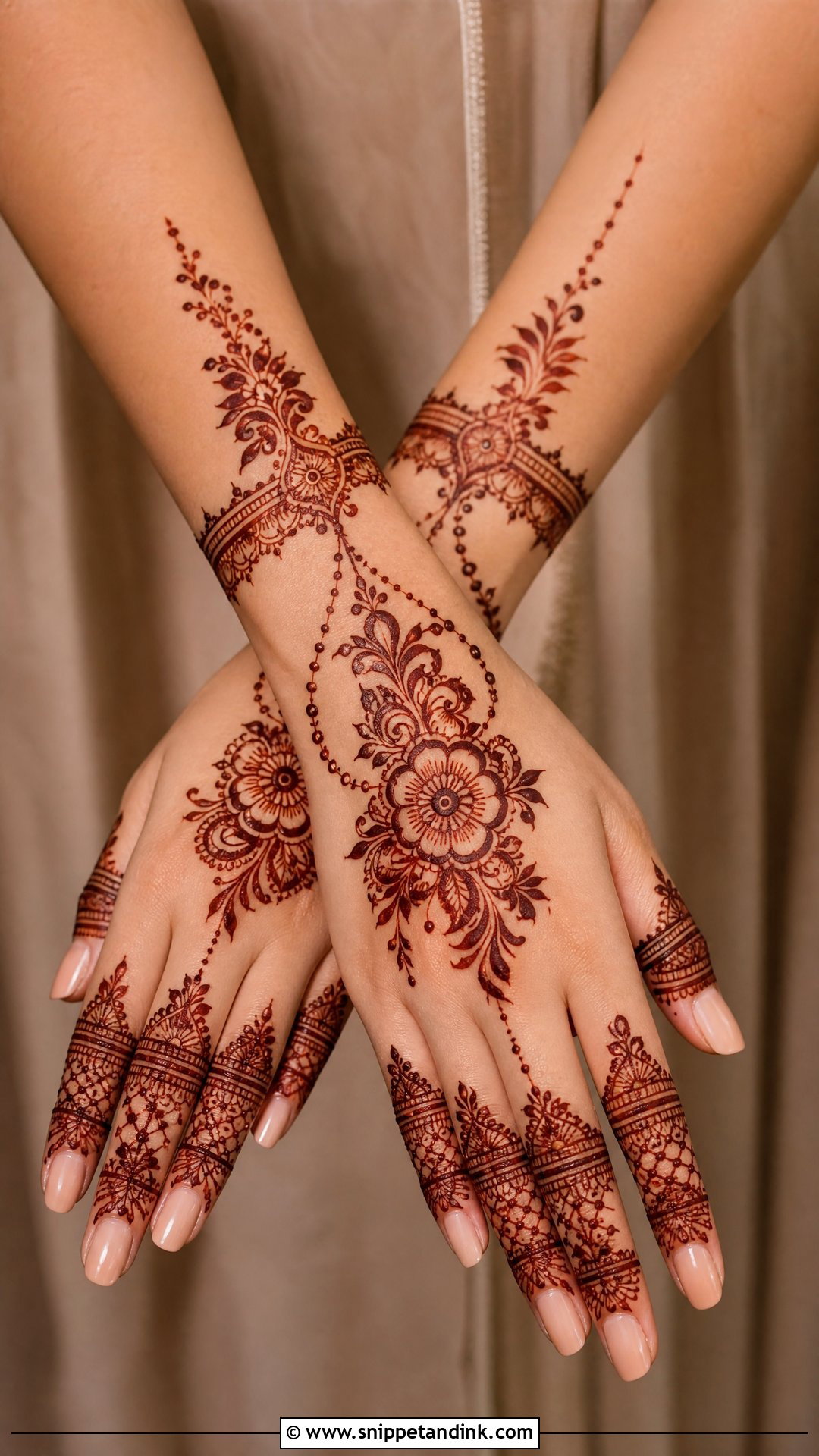
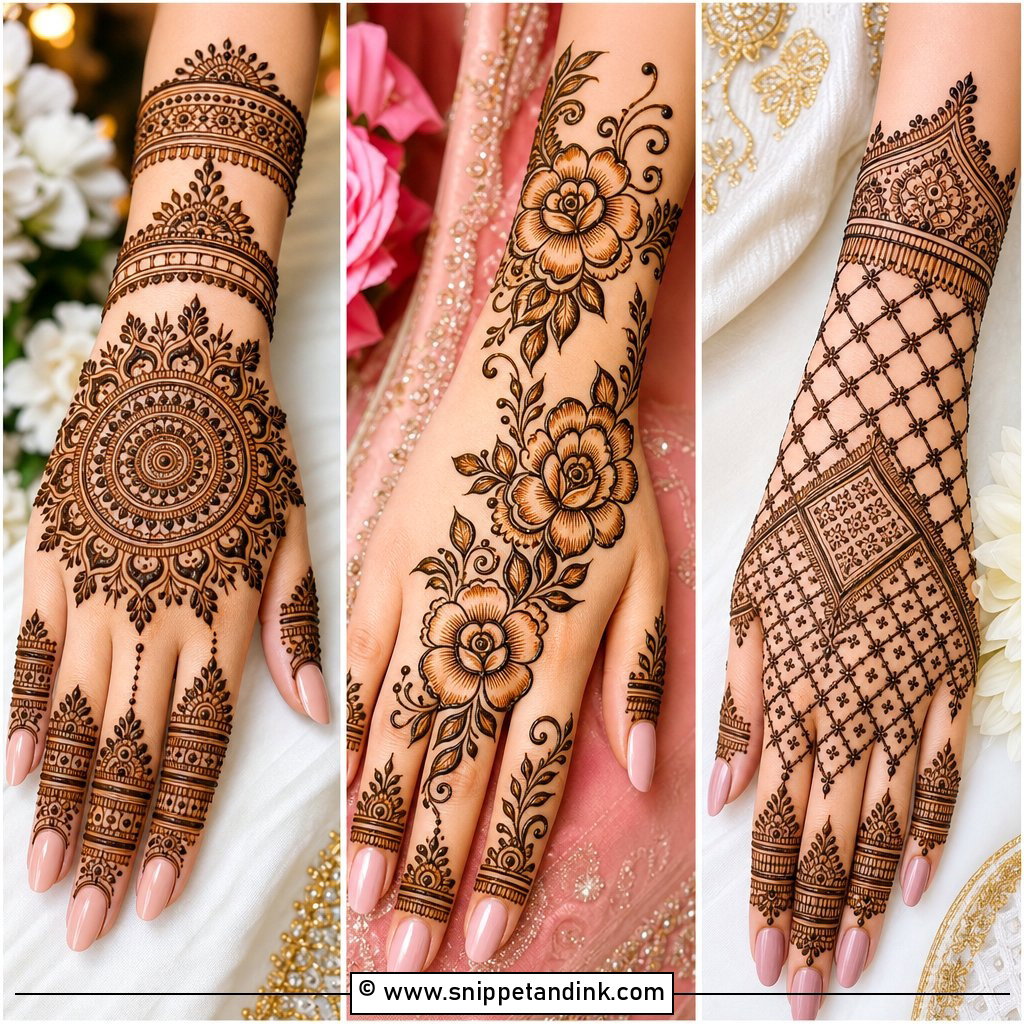
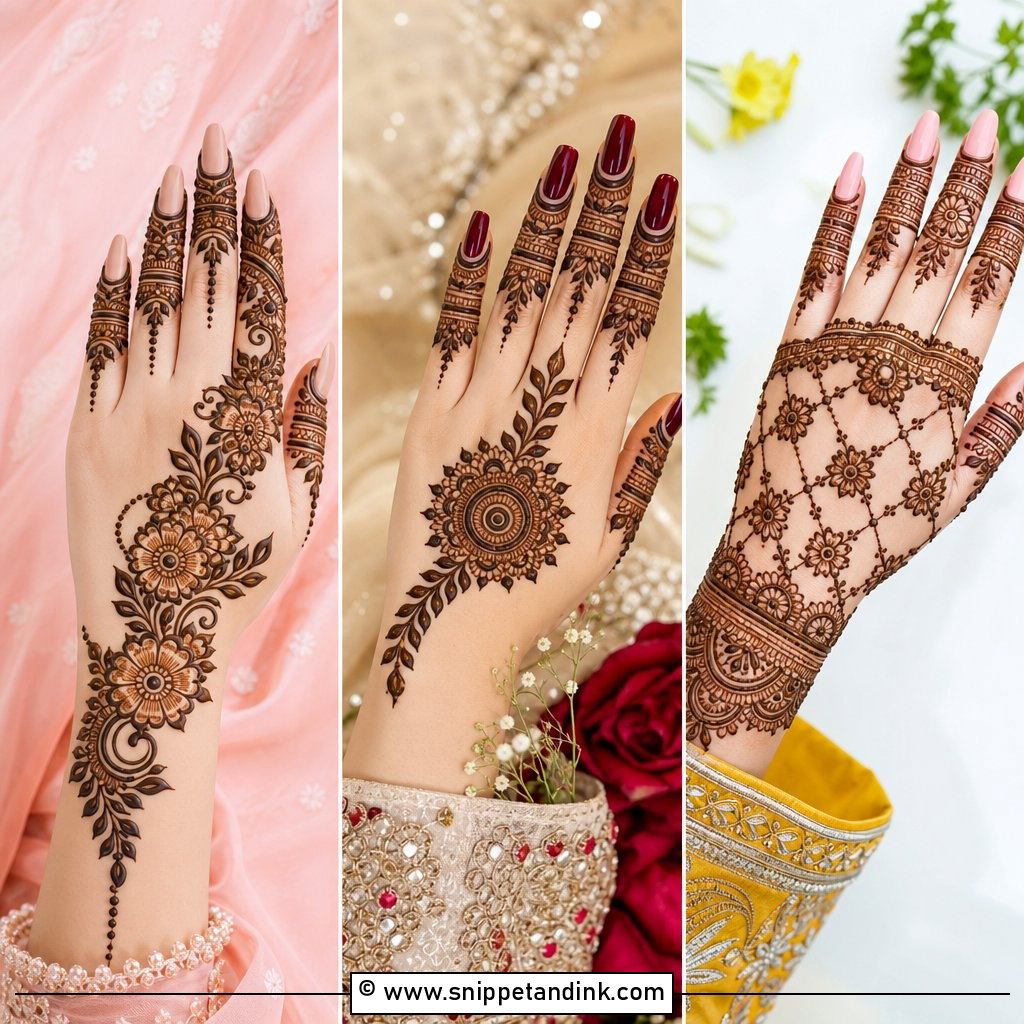
The back hand is what shows in ring shots and bangle portraits, and it stains lighter than the palm, so I plan for that. Bold outlines with fine detailing inside them keep the design readable once it darkens. A good layout covers the fingers fully, sets a floral or mandala centrepiece and finishes with a bracelet border at the wrist. Leaving negative space around the main motif makes the stain stand out. If you’re wearing haath phool, tell me beforehand so the design can follow where the chains will sit.
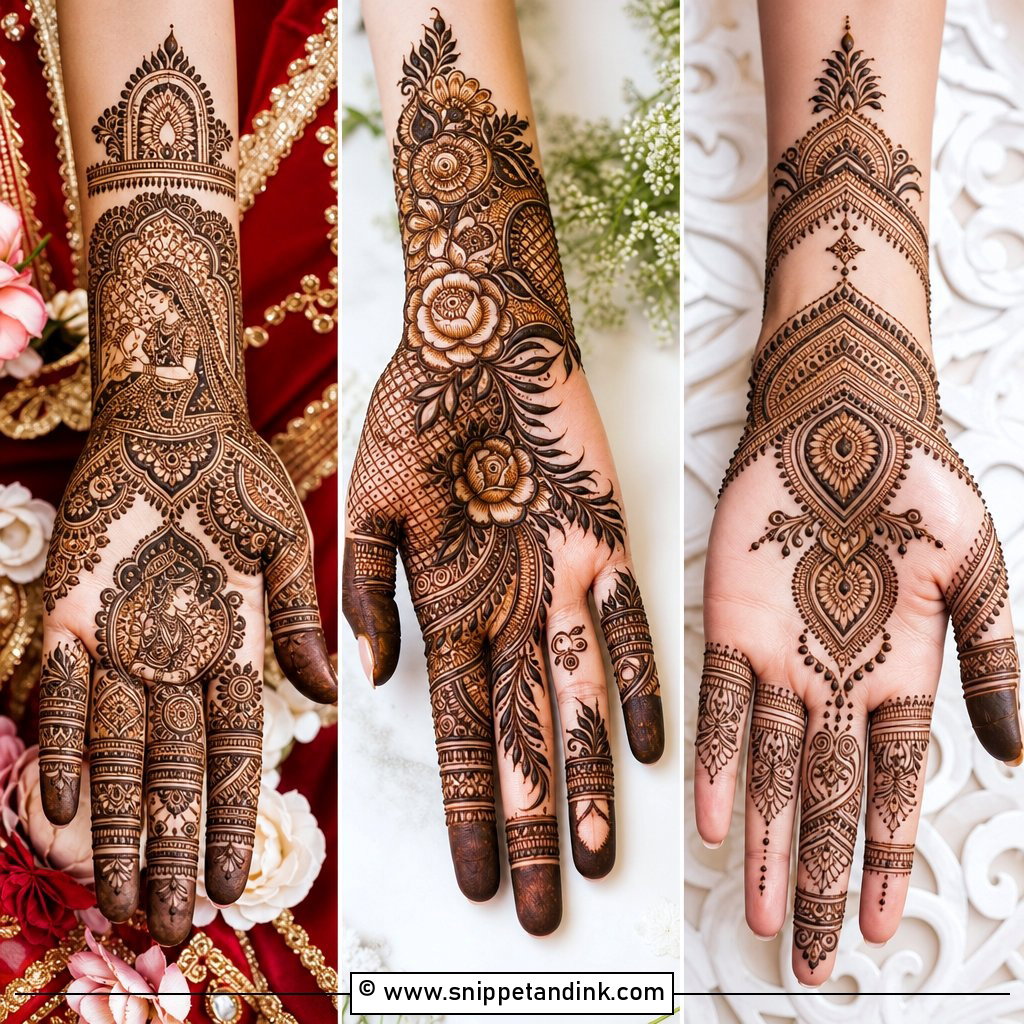
3. Indian Half Bridal Mehndi Design
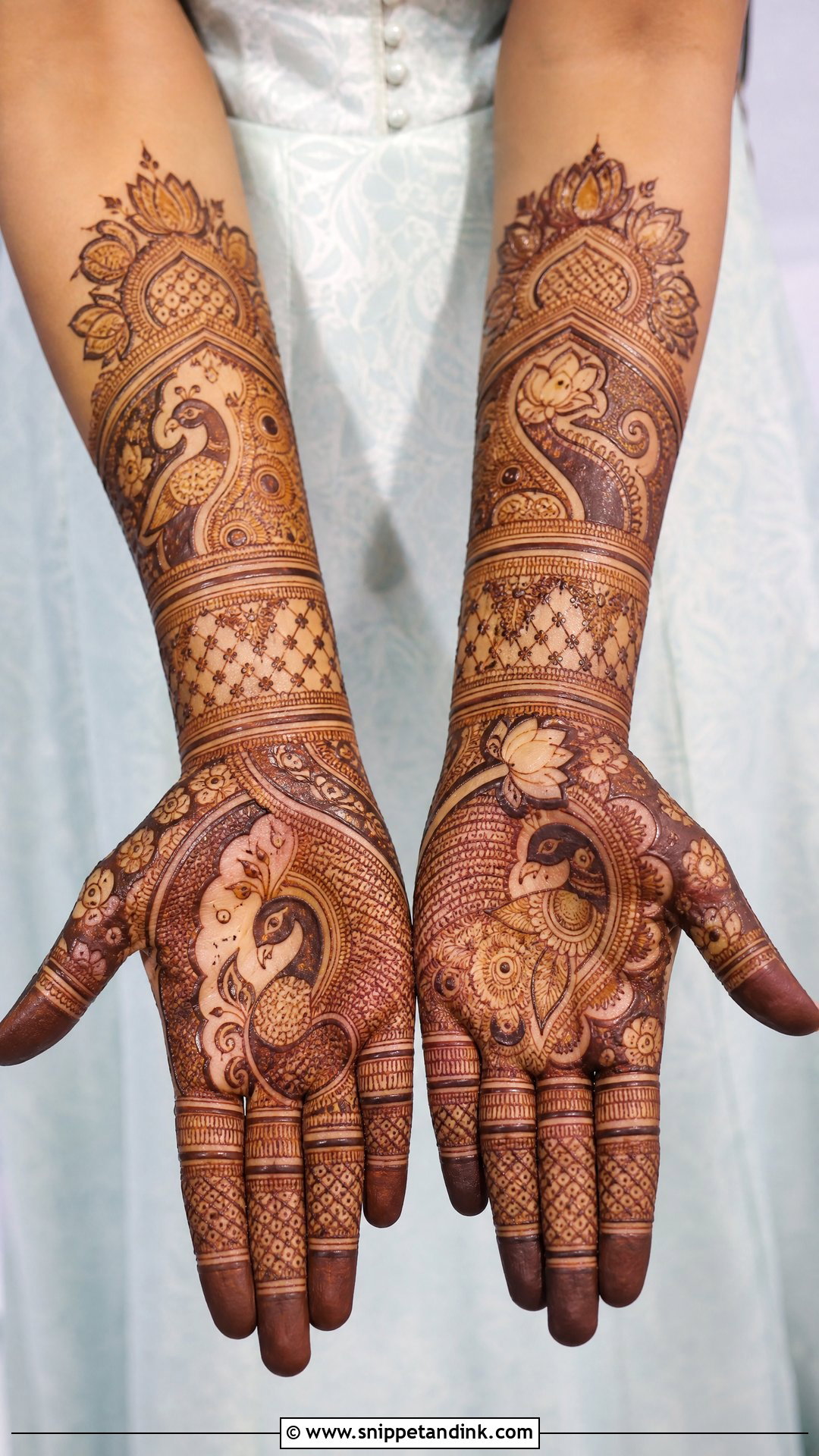
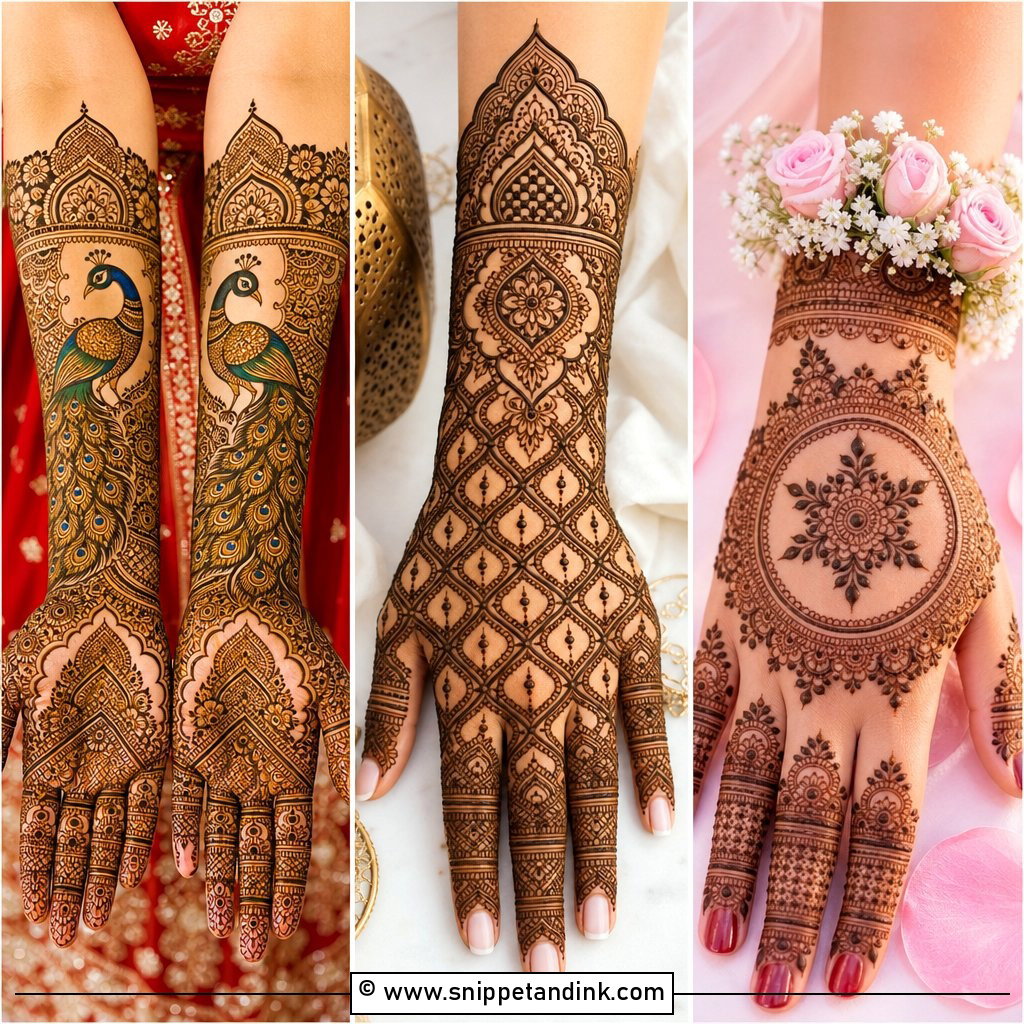
Dense filling, fine lines and symbolic motifs are what make Indian mehndi recognisable, and you can keep all of that on a half hand. I use paisleys, peacocks, lotus flowers, jaali mesh and tiny leaves, with a detailed mandala or dulhan-inspired motif on the palm. Fingers get packed with bands and checks, and a wide cuff at the wrist makes it look bridal. This is the slowest style here to apply, because fine filling takes time even on half the area. It suits red, maroon, gold or ivory outfits.
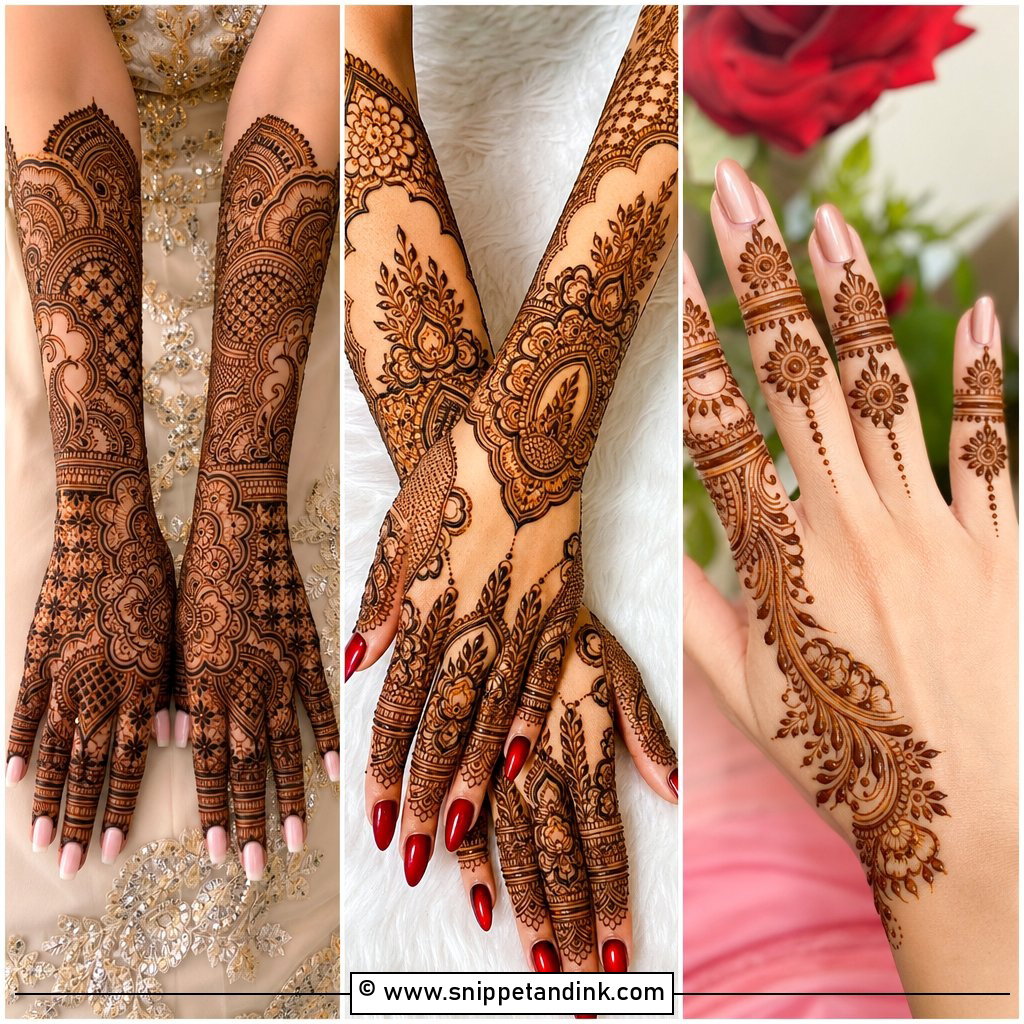
4. Arabic Half Bridal Mehndi Design
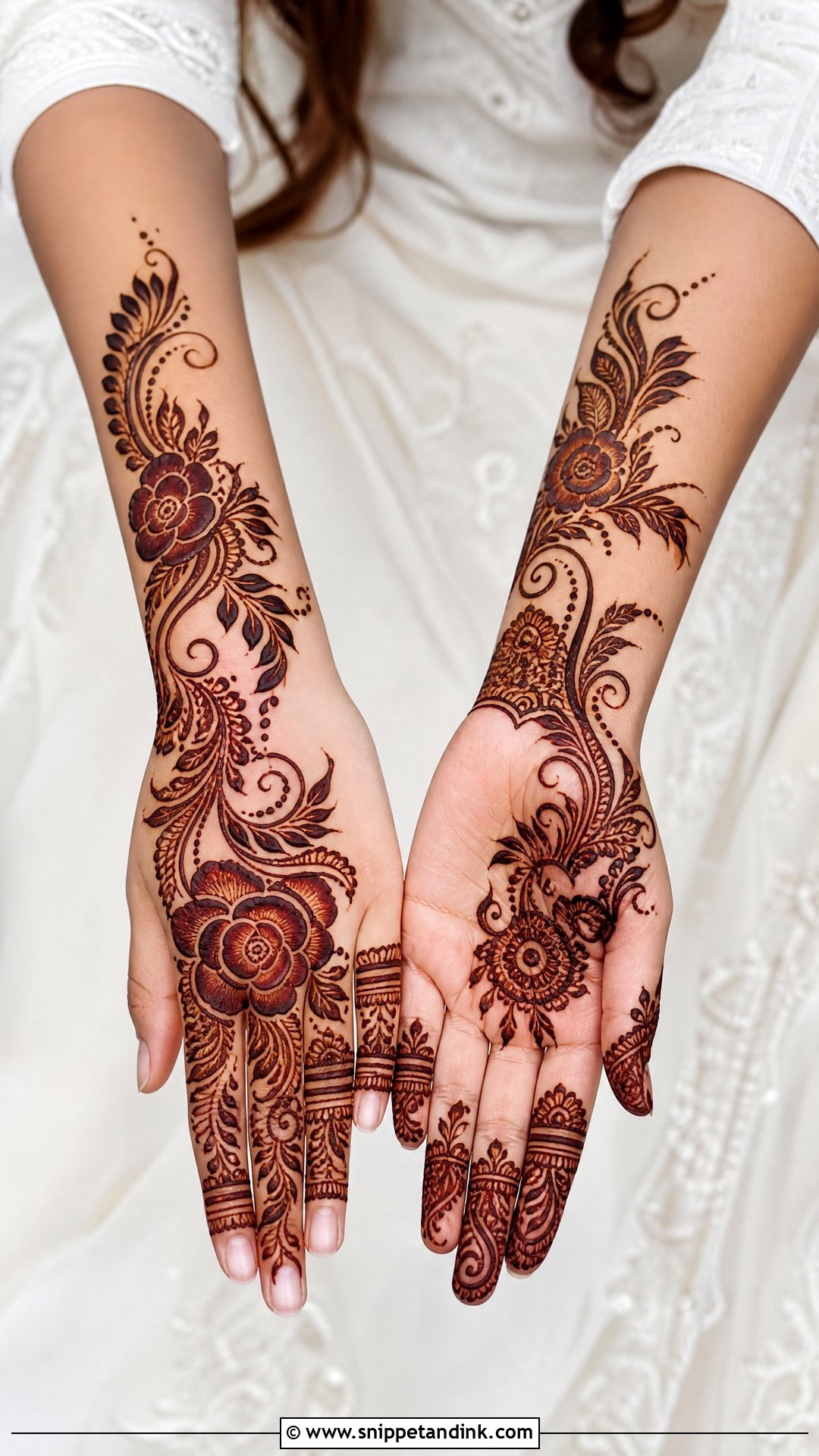
Arabic layouts trade density for flow: big flowers, trailing vines and open skin, usually running diagonally across the palm or back of the hand. I shade the petals by thinning the paste toward the centre, which gives that soft gradient once it stains. The fingers get matching floral bands and the wrist a curved bracelet. Because the design follows a diagonal, it makes most hands look longer. It’s also much quicker to apply than dense Indian work, which helps on a crowded wedding schedule.
5. Indo Arabic Half Bridal Mehndi Design
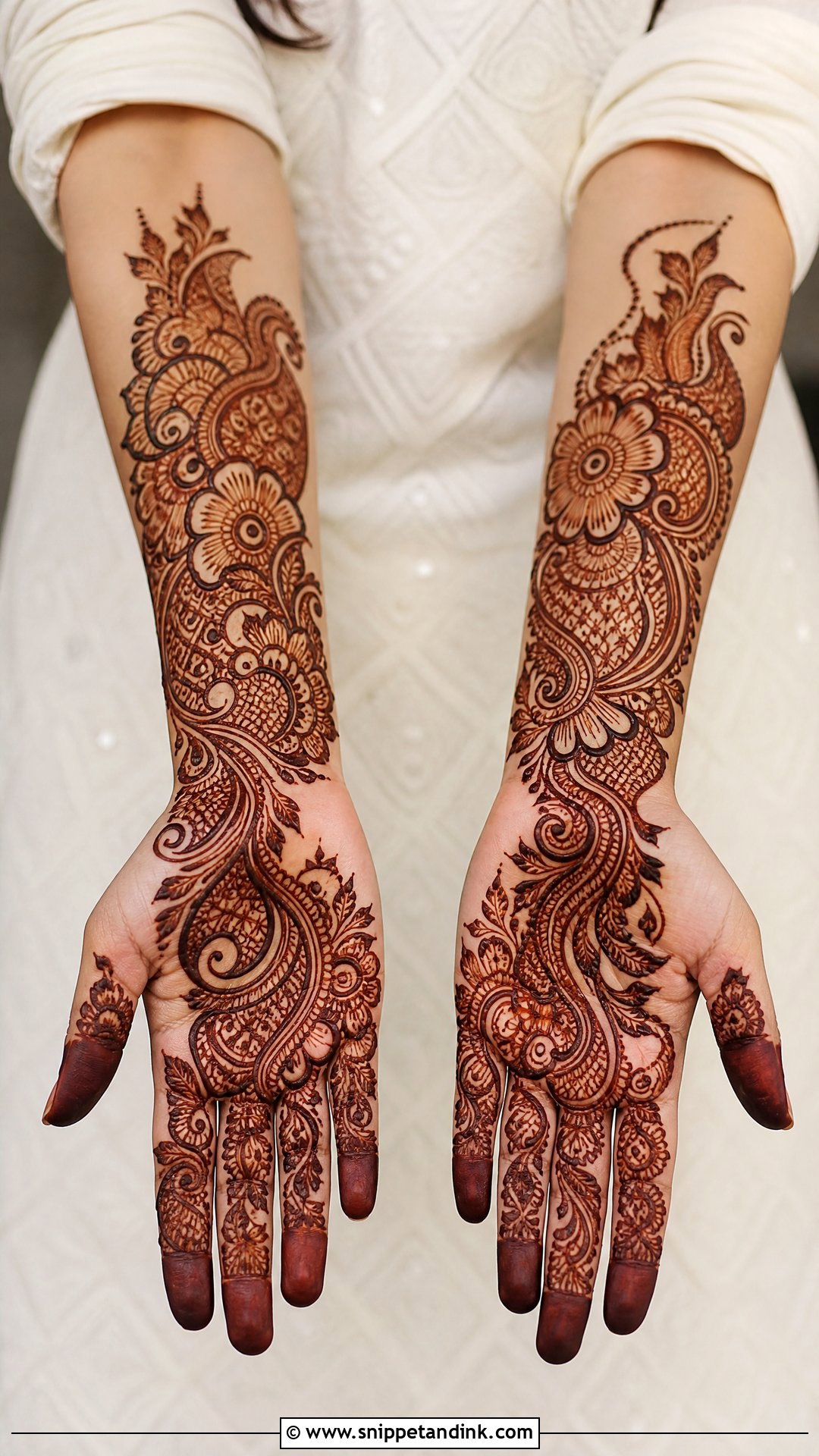
Indo-Arabic takes the bold flow and spacing of Arabic work and adds the fine filling of Indian mehndi. A typical layout I draw has a large floral trail across the palm, detailed paisleys near the wrist and filled fingertips; on the back hand, it’s often a mandala with Arabic vines around it. The bold outlines show clearly in photos while the small details add depth. I’d suggest it when a bride wants detail but worries about her hands looking crowded.
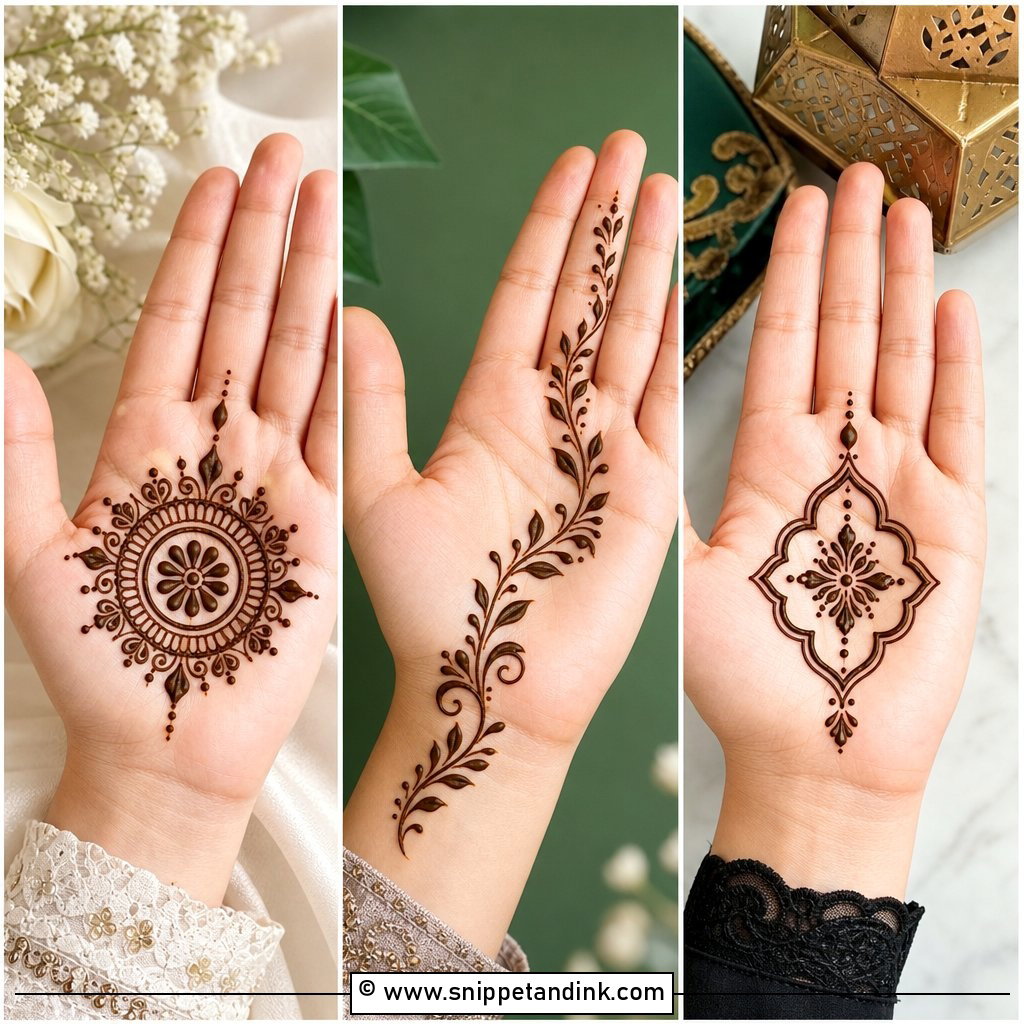
6. Simple Half Bridal Mehndi Design
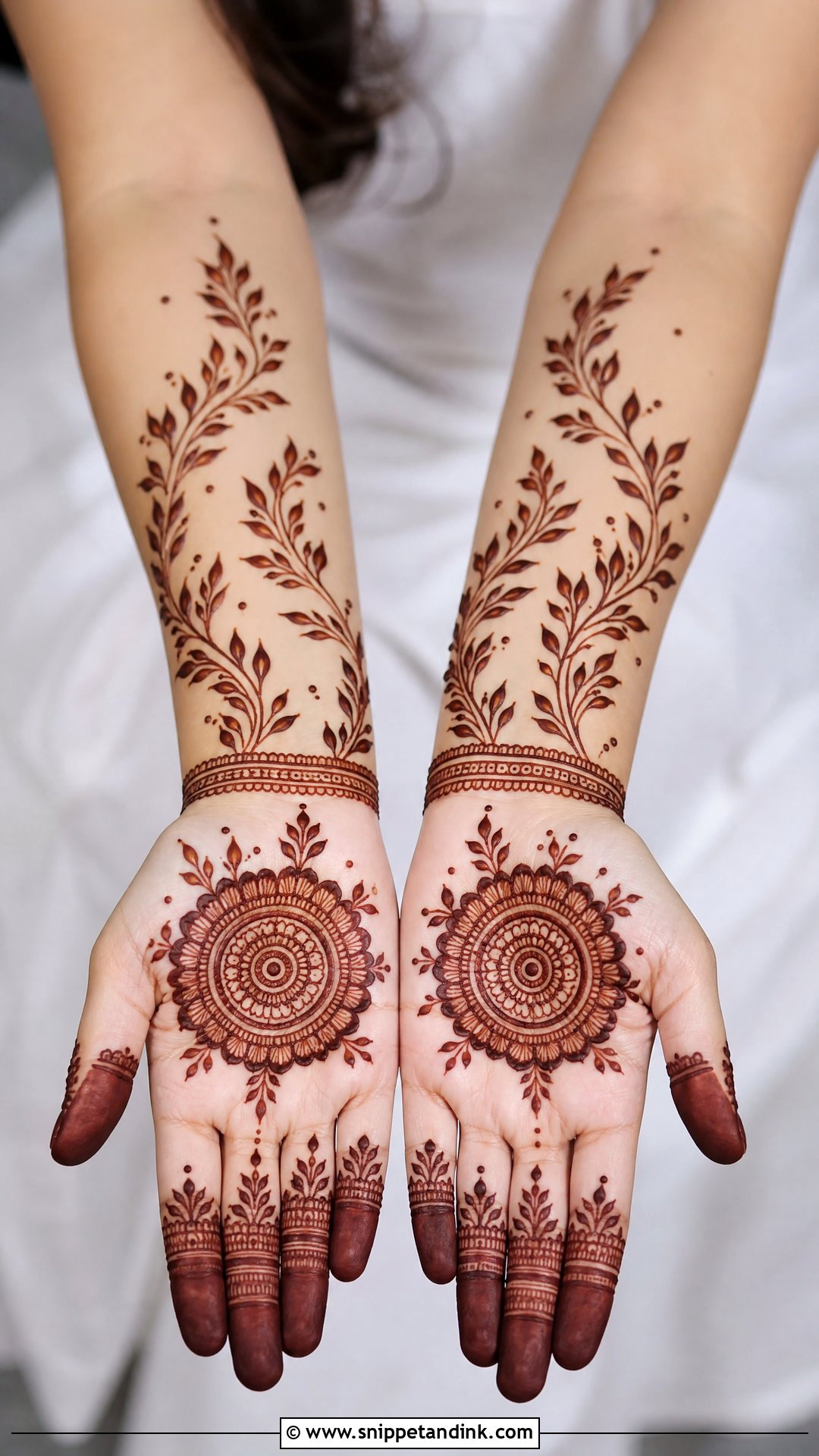
Simple can still look bridal if the layout is tidy. One central mandala, filled fingertips, a few leafy vines and a clean wrist border are enough. I keep the shapes clear rather than adding lots of tiny elements, which can blur together as the stain develops. For a darker effect, ask for thicker outlines and shaded petals. It suits short ceremonies, civil weddings and engagements.
7. Modern Half Bridal Mehndi Design
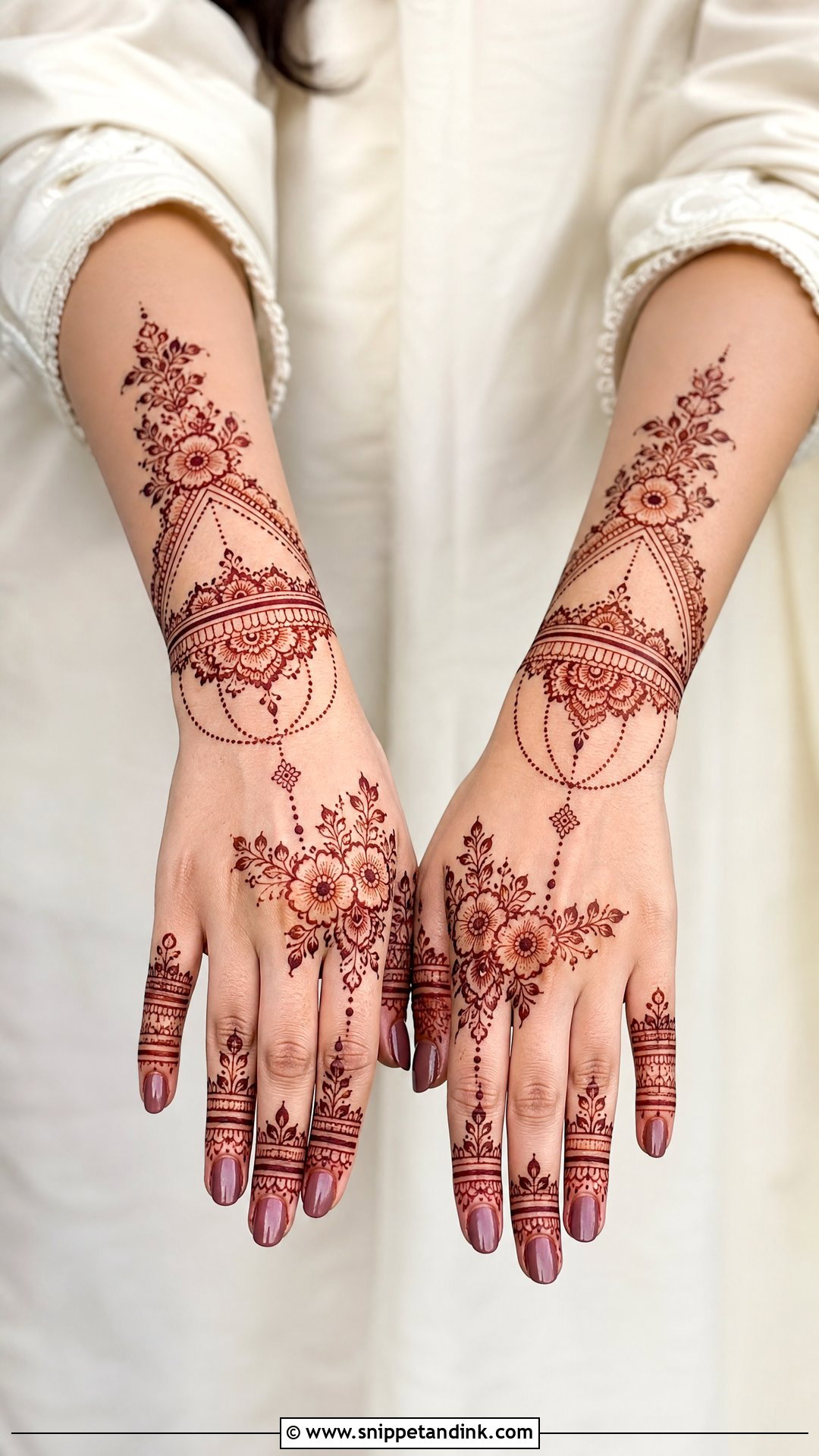
Modern layouts lean on clean spacing, jewelry-inspired bands and finger details: floating flowers, half mandalas, bracelet cuffs and geometric lines in place of a packed palm. I connect palm, fingers and wrist with small vines or dotted chains, otherwise it can look like separate stickers. Leaving one side of the palm open gives a stylish negative-space effect. Pastel lehengas, fusion outfits, gowns and minimal jewelry all suit this style.
8. Royal Half Bridal Mehndi Design
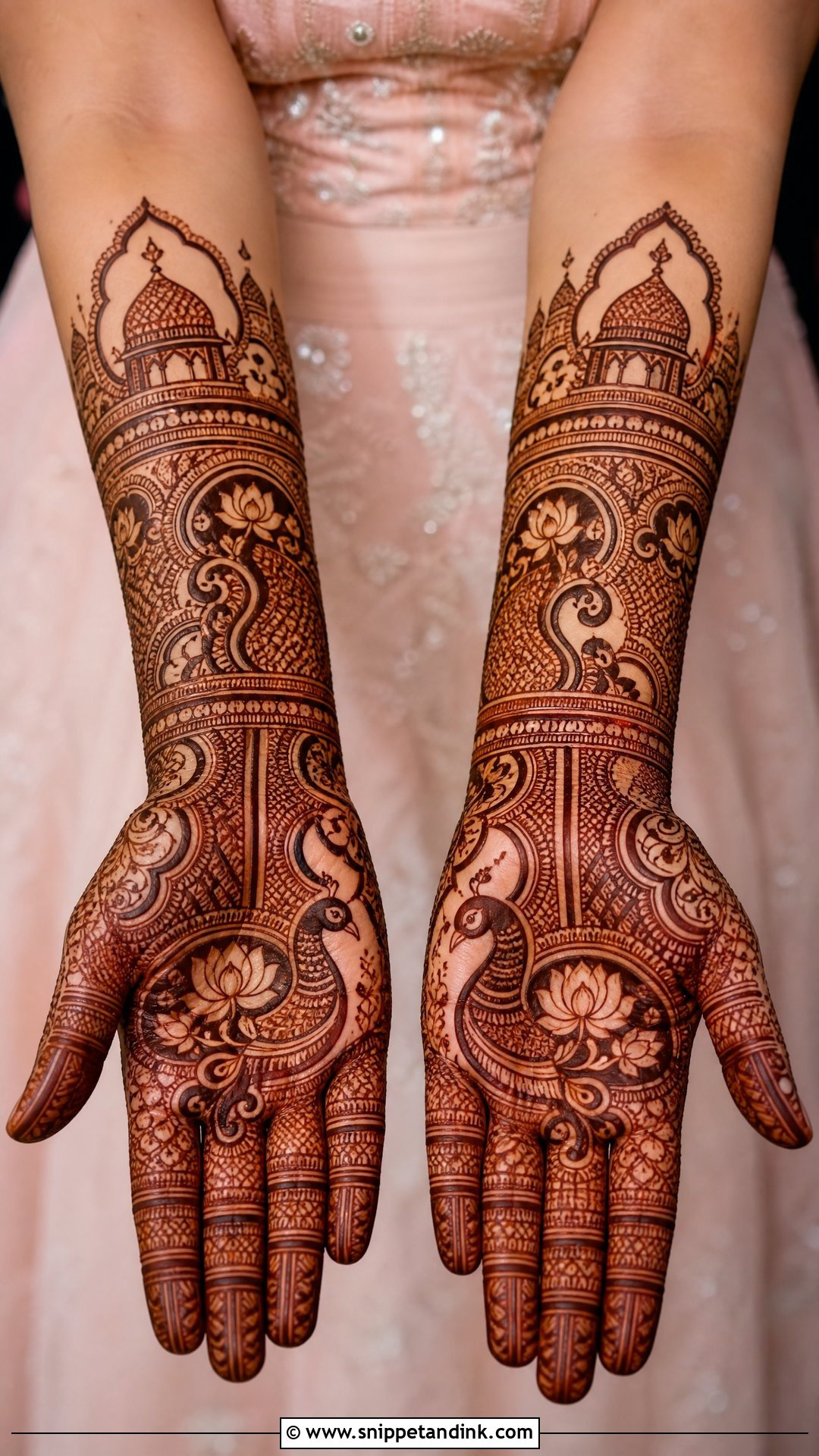
A royal layout is heavier and more ceremonial, built from bold paisleys, lotus petals, peacock shapes, dome borders and jewelry-like wrist cuffs. Even on half the hand, the detailing should feel layered. I use a full palm layout, dense fingers and a wide wrist band. The risk is clutter, so I leave small breathing spaces around the largest motifs. It pairs with traditional bangles, kundan jewelry and embroidered outfits, and it’s grand enough for the main wedding while taking far less time than a full arm.
9. Half Bridal Mehndi Design With Mandala
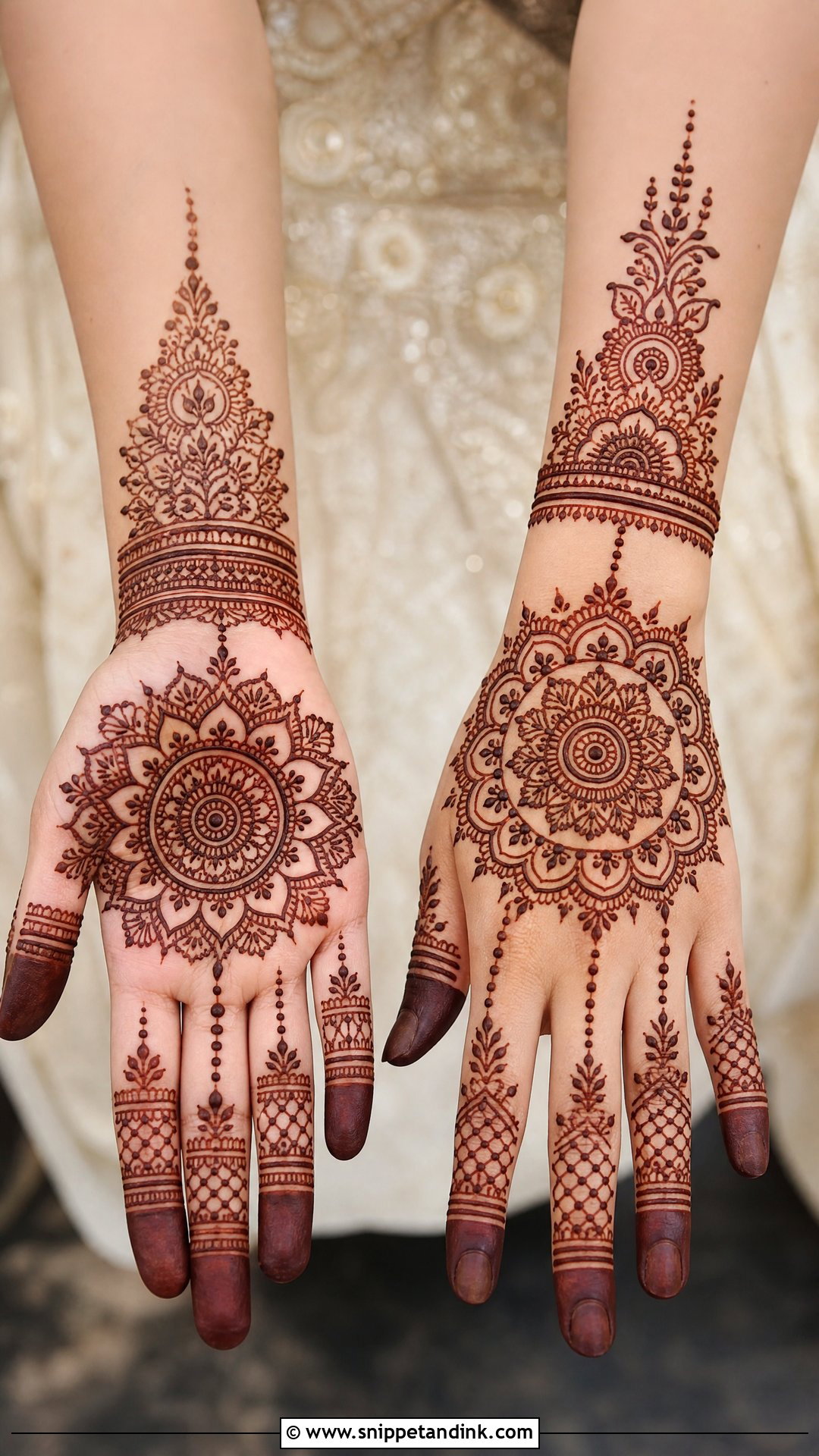
A mandala gives the hand a centre, and that’s why it’s the motif I’m asked for most. On the palm, I surround a round mandala with dots, petals, vines and small paisleys; on the back hand, it sits like a jewelry centrepiece with chains running up the fingers. Symmetry is unforgiving here: if the circle is off-centre, it shows. Keep the fingertips filled so it reads as bridal, and finish with a cuff or slim bracelet border.
10. Half Bridal Mehndi Design With Peacock
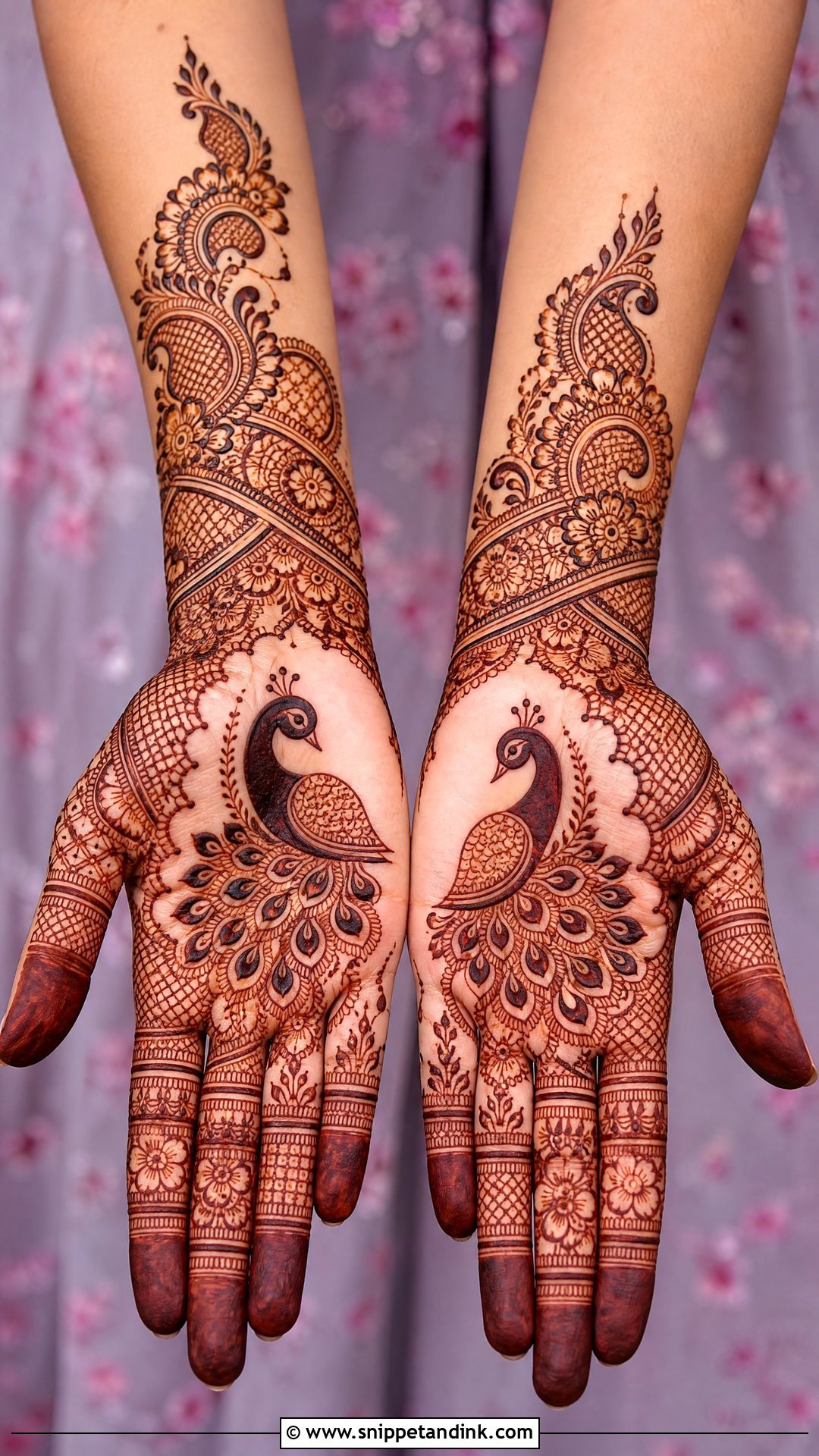
Peacocks add movement because of their curved bodies and feathers. I place one across the palm, near the wrist or along a diagonal on the back hand, and combine it with paisleys, small flowers and fine net filling for a richer look. The detail inside the feathers is fine work, so the outline needs to be bold enough to stay visible after the stain darkens. On a light-staining back hand, I make the peacock larger. It suits silk outfits, lehengas and classic bangles.
11. Half Bridal Mehndi Design With Paisley
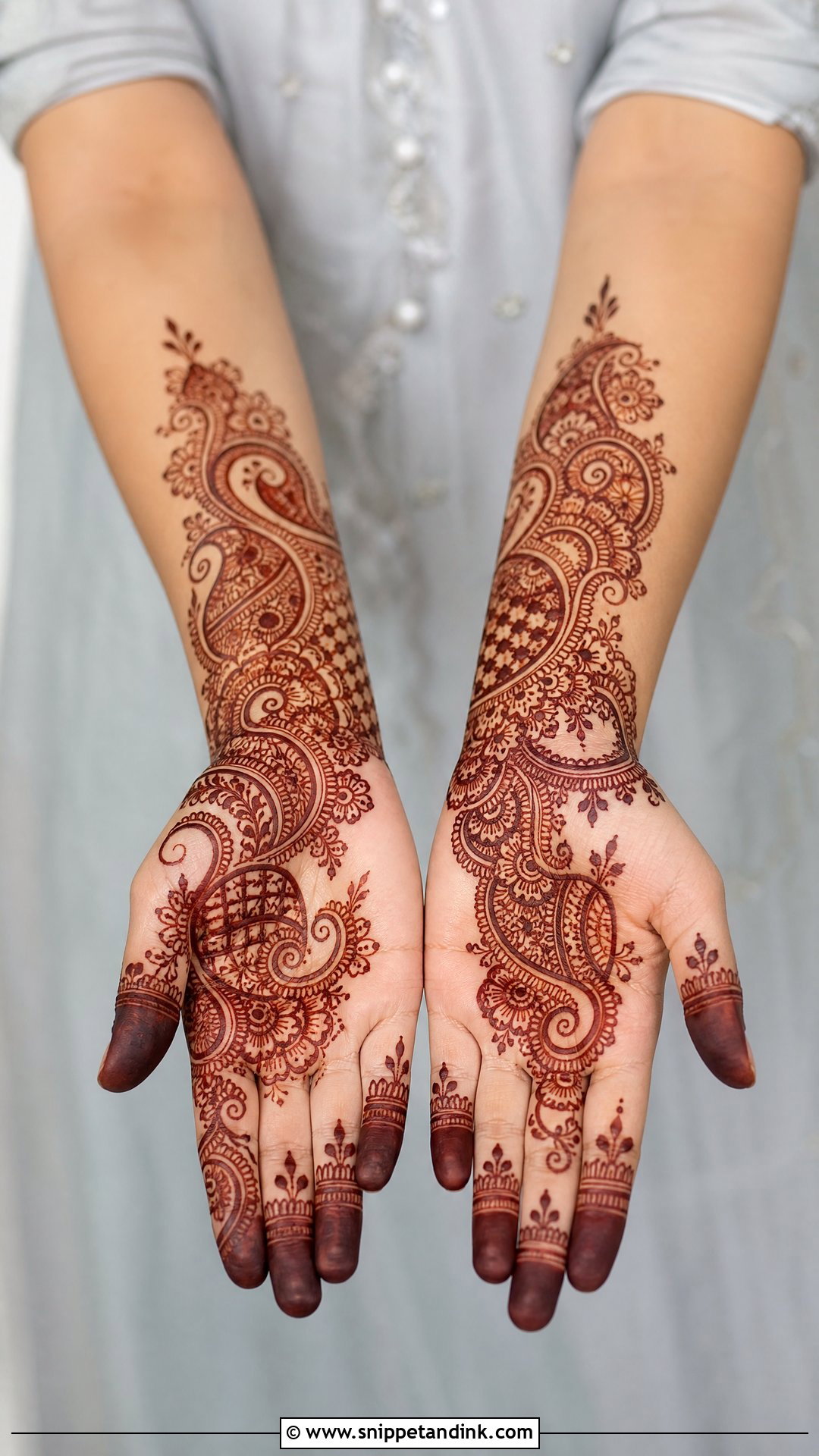
Paisleys stretch, layer and shrink to fit almost any hand size, which makes them the most flexible motif I use. A large paisley on the palm can be filled with tiny flowers, checks, dots and curves, with smaller paisleys flowing toward the wrist or fingers. On the back hand, I place them diagonally with floral vines. Bold fingertips give a stronger bridal finish.
12. Half Bridal Mehndi Design With Lotus
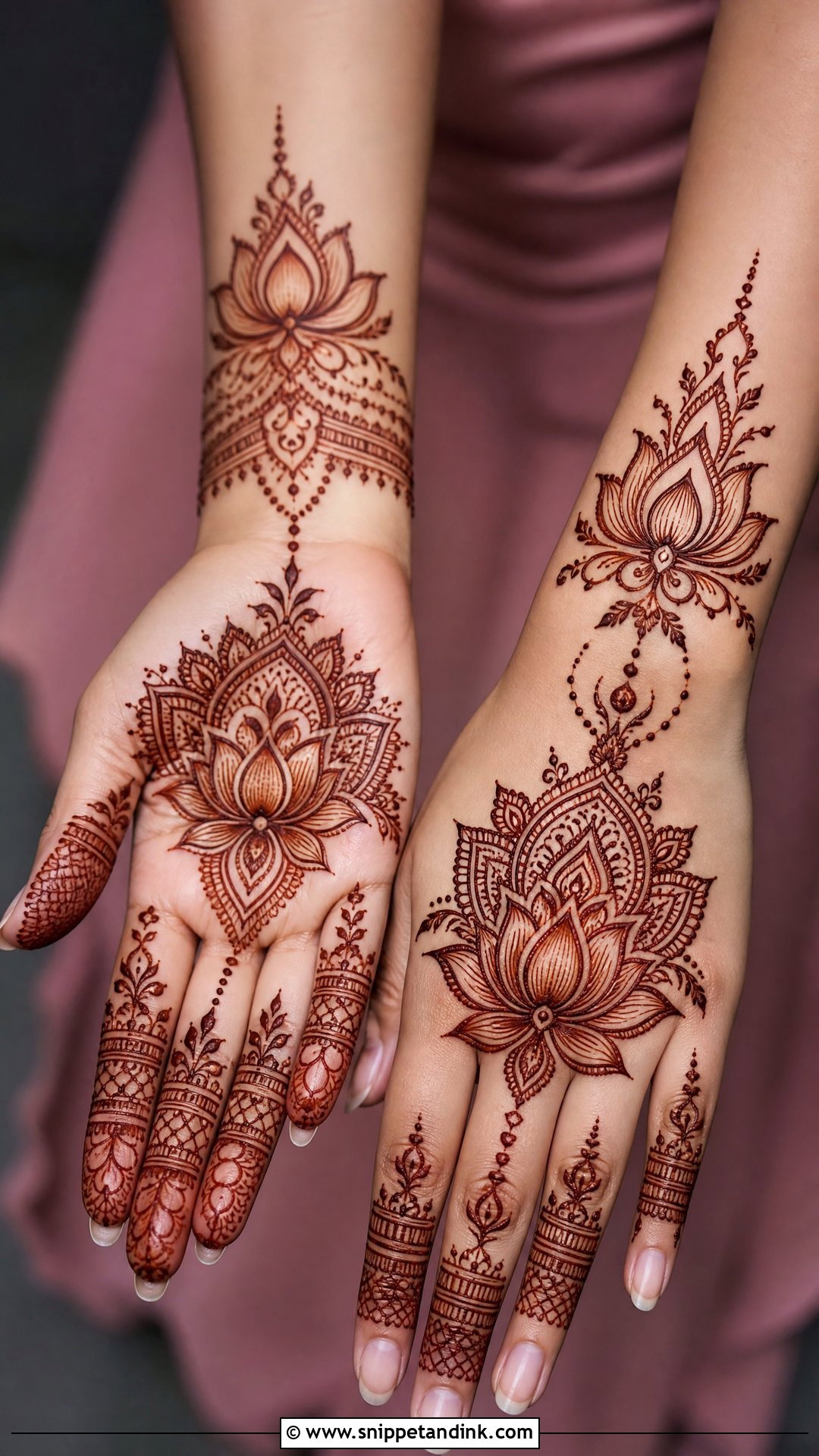
Lotus motifs feel calm and graceful. I draw layered lotus petals on the palm, a lotus mandala on the back hand or a lotus cuff at the wrist. Each petal gets a clear outline and soft shading inside, which I create by spreading a thinner layer of paste. Fine vines, dots and small jaali sections add detail. It pairs well with pastel outfits, temple jewelry and soft bridal makeup.
13. Half Bridal Mehndi Design With Jaali
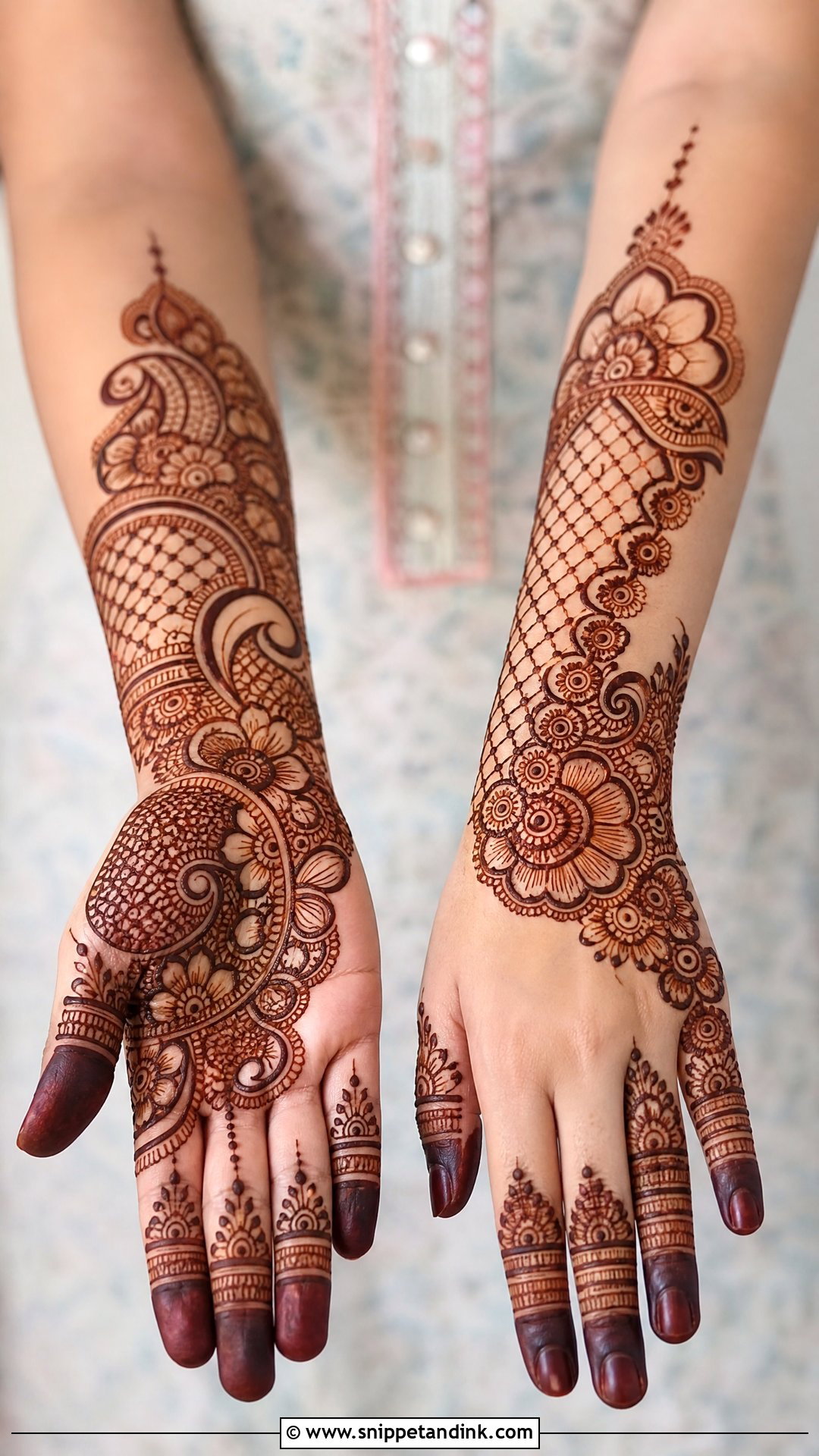
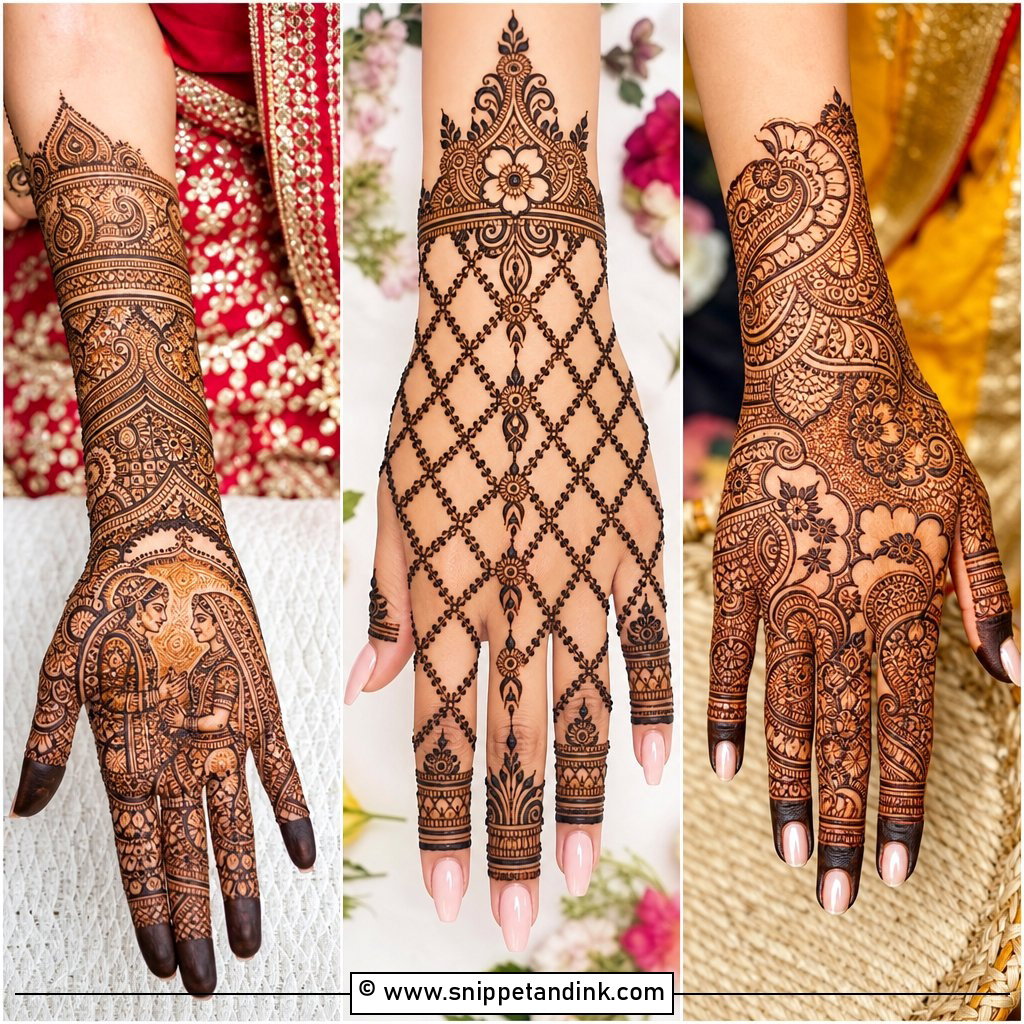
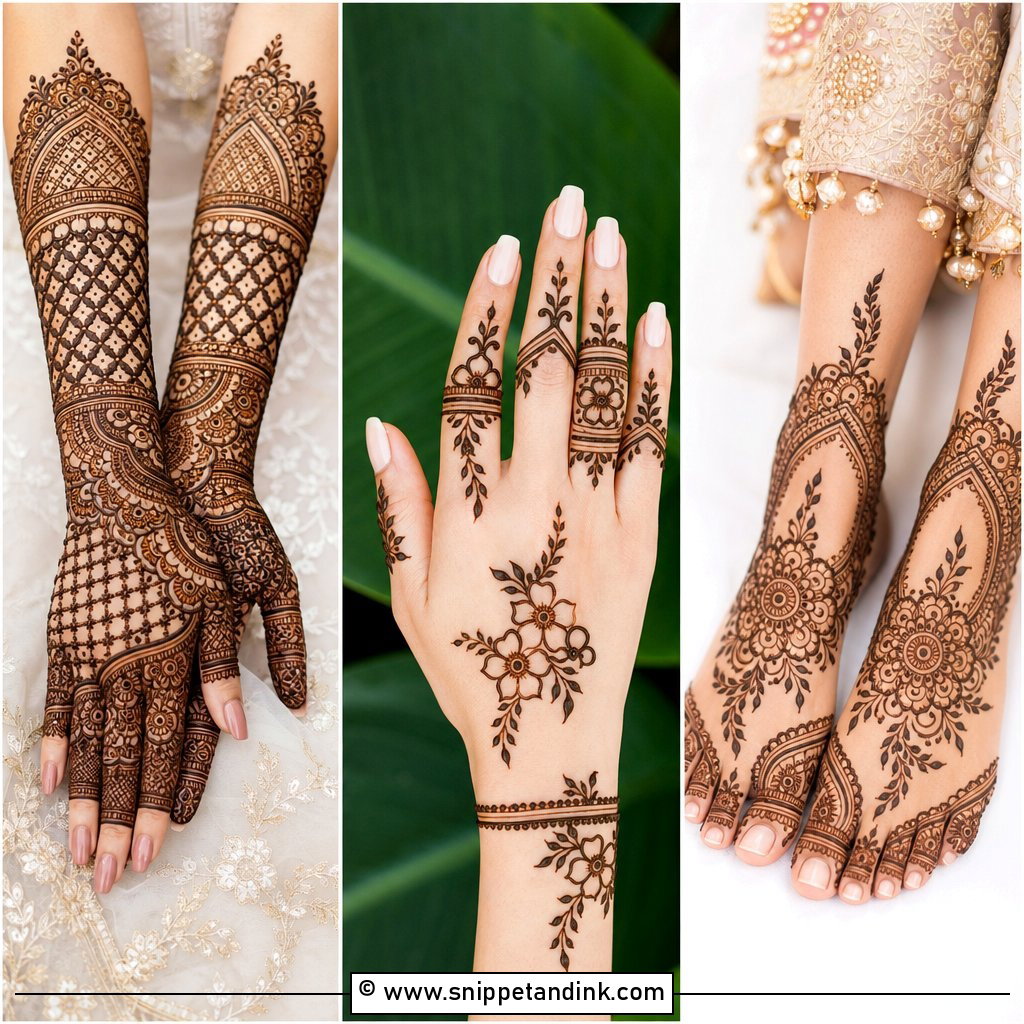
Jaali is a net pattern, and it’s the most time-consuming filling I do, because every line in the mesh needs the same steady pressure. On a half design, I use it on part of the palm, the fingers or the back hand, leaving space for flowers and paisleys around it. The contrast between mesh and bold motifs is what makes it stand out. Tiny dots at each intersection finish it. On the back hand it looks almost like a lace glove.
14. Half Bridal Mehndi Design With Name
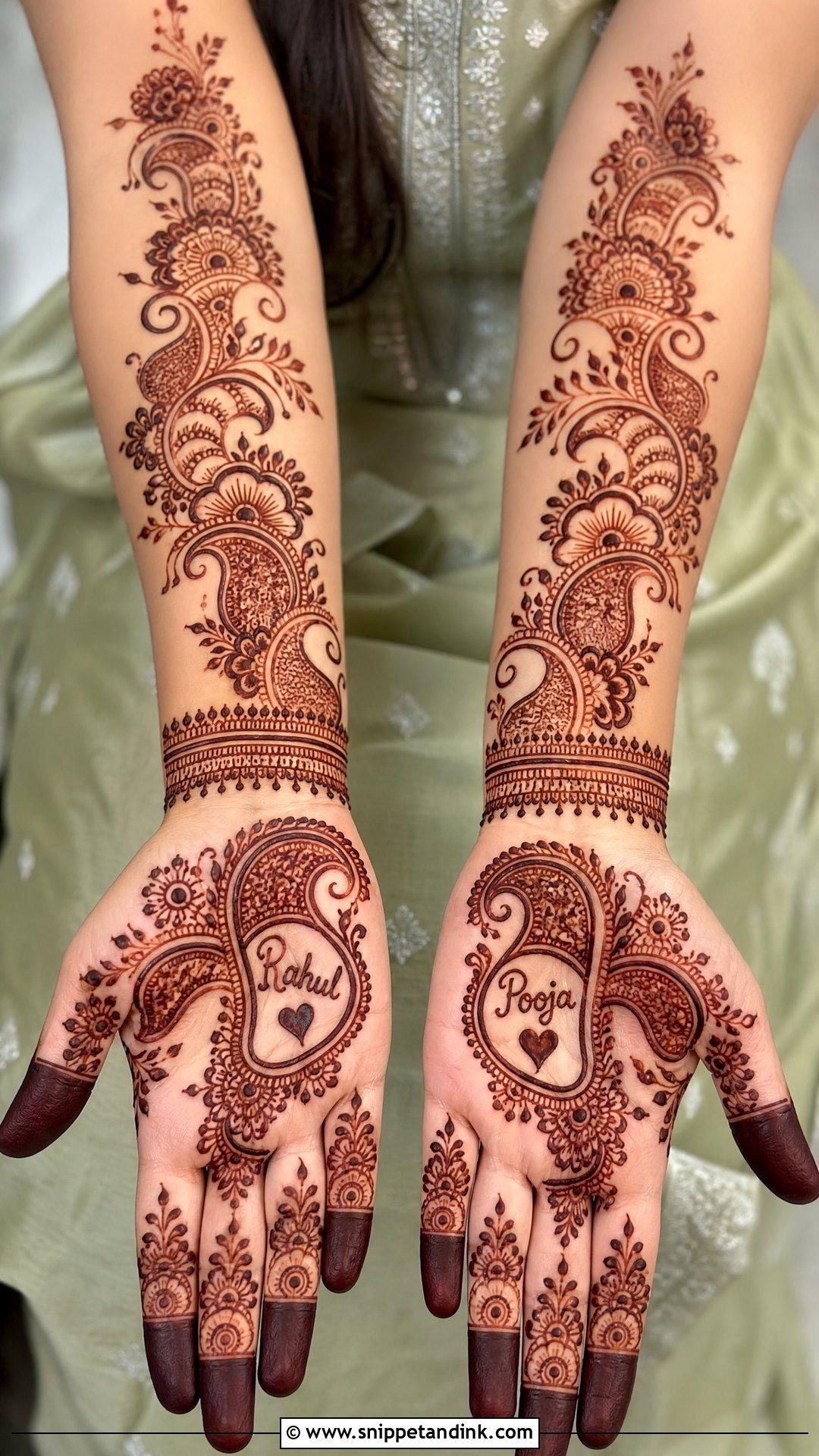
A name hidden in the design is a long-standing wedding game, with the groom searching for it later. I tuck it inside a paisley, along a wrist band, in a heart-shaped detail or within a floral vine. With less space on a half design, placement needs planning so the name doesn’t crowd the pattern. I keep the surrounding lines clean and fine, and I write the name in a slightly bolder line than the filling so it still reads after staining.
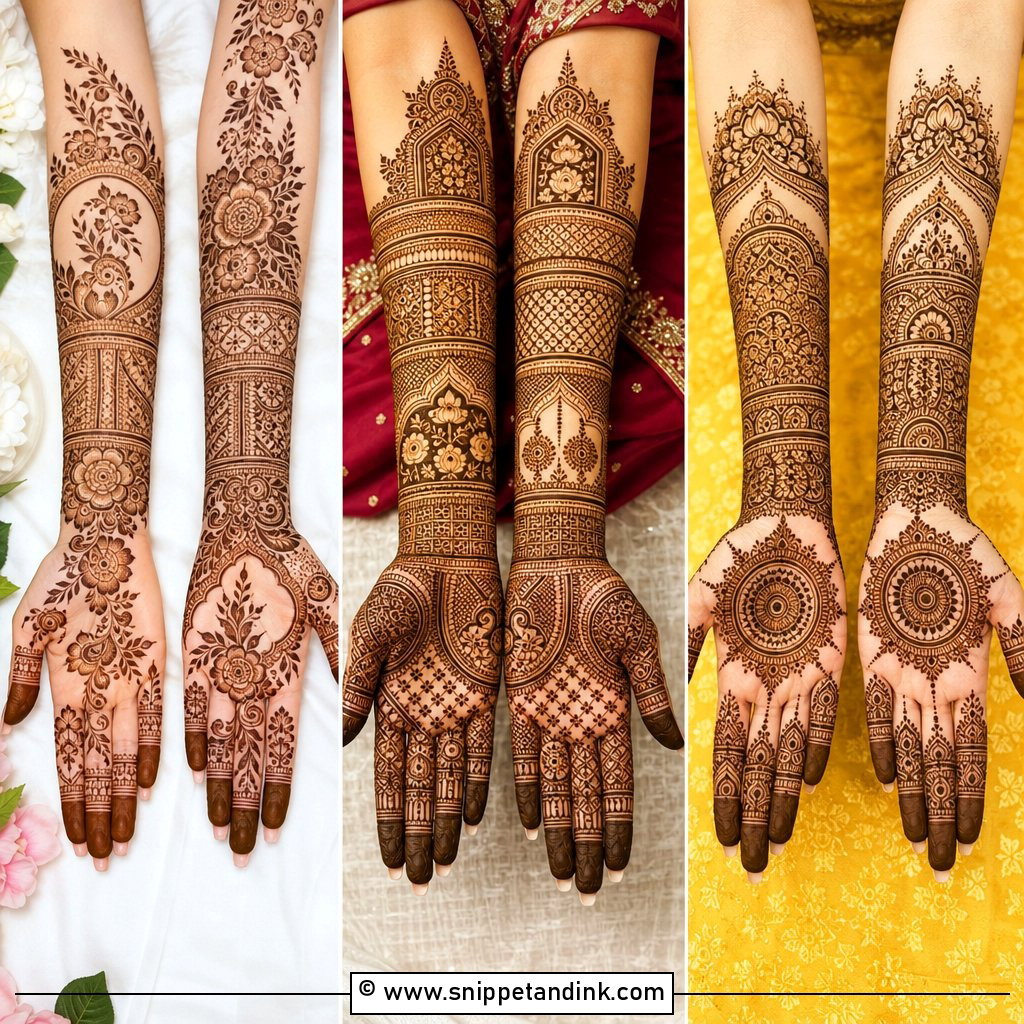


15. Half Bridal Mehndi Design With Bride And Groom
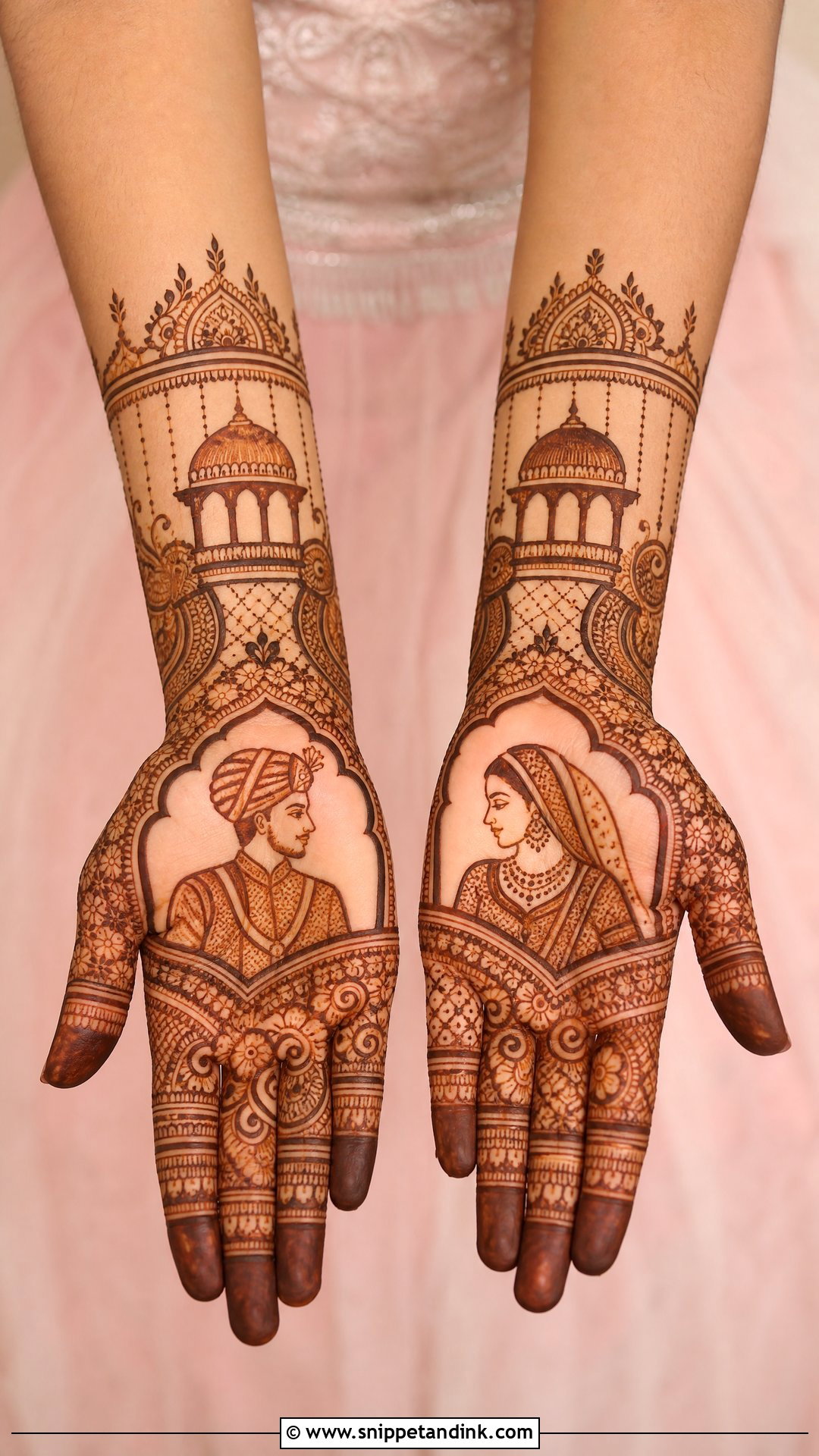
Bride and groom figures can work on a half design if the artwork is simplified. I’d place a small bride face on one palm and a groom face on the other, or tiny framed portraits near the wrist, surrounded by flowers, domes, paisleys and dotted borders. Faces need a very fine cone tip and clear outlines, or features blur once the stain develops. They take longer than florals, so plan your sitting time accordingly.
16. Half Bridal Mehndi Design For Engagement
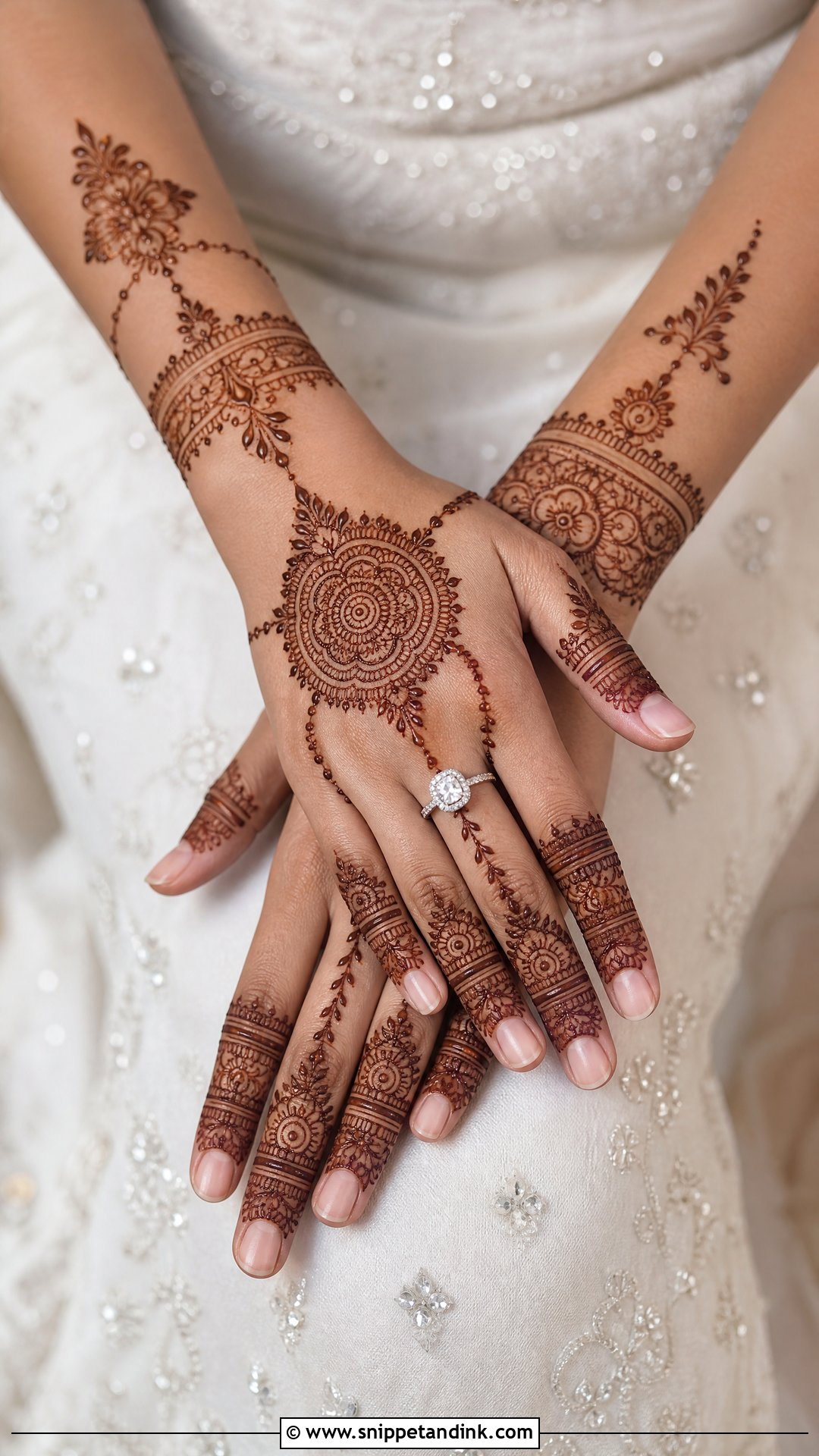
At an engagement the ring is the centre of attention, so I concentrate the design on the back of the ring hand. A mandala, floral bracelet or jewelry-chain pattern frames the fingers. The palm can stay lighter. Filled fingertips, small leafy vines and a wrist cuff add enough detail. It sits comfortably with sarees, gowns, lehengas and modern outfits, and it saves the heaviest design for the main wedding.
17. Half Bridal Mehndi Design For Nikkah
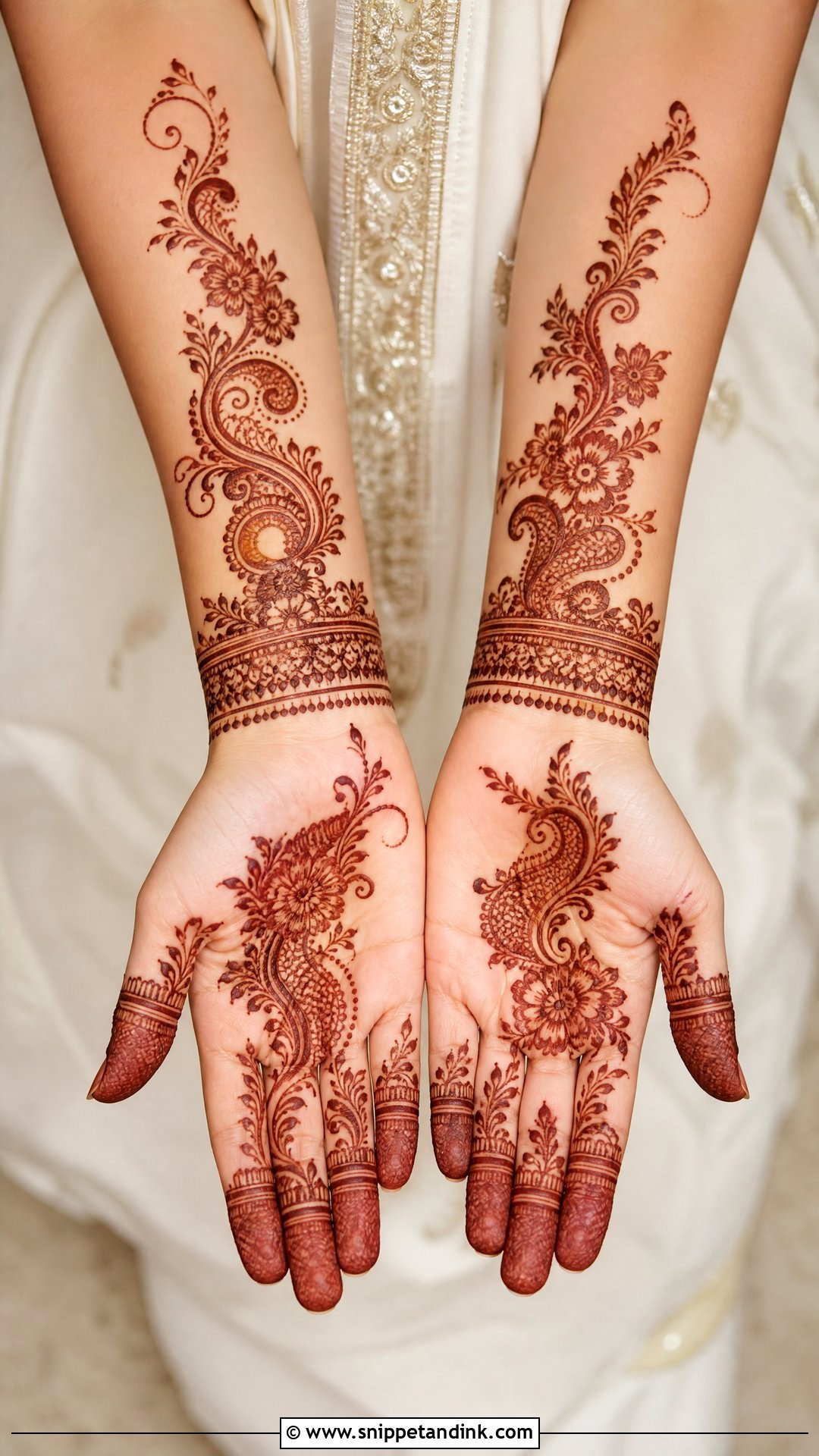
For a nikkah ceremony, many brides I work with want something graceful and modest. A half design with Arabic flowers, delicate vines and soft spacing fits that well. The palm takes a floral trail, the fingers neat bands, and the wrist a bracelet pattern that sits nicely with bangles. Ivory, champagne, green or pastel outfits suit it. For more detail, I add fine jaali or small paisley elements.
18. Half Bridal Mehndi Design For Roka
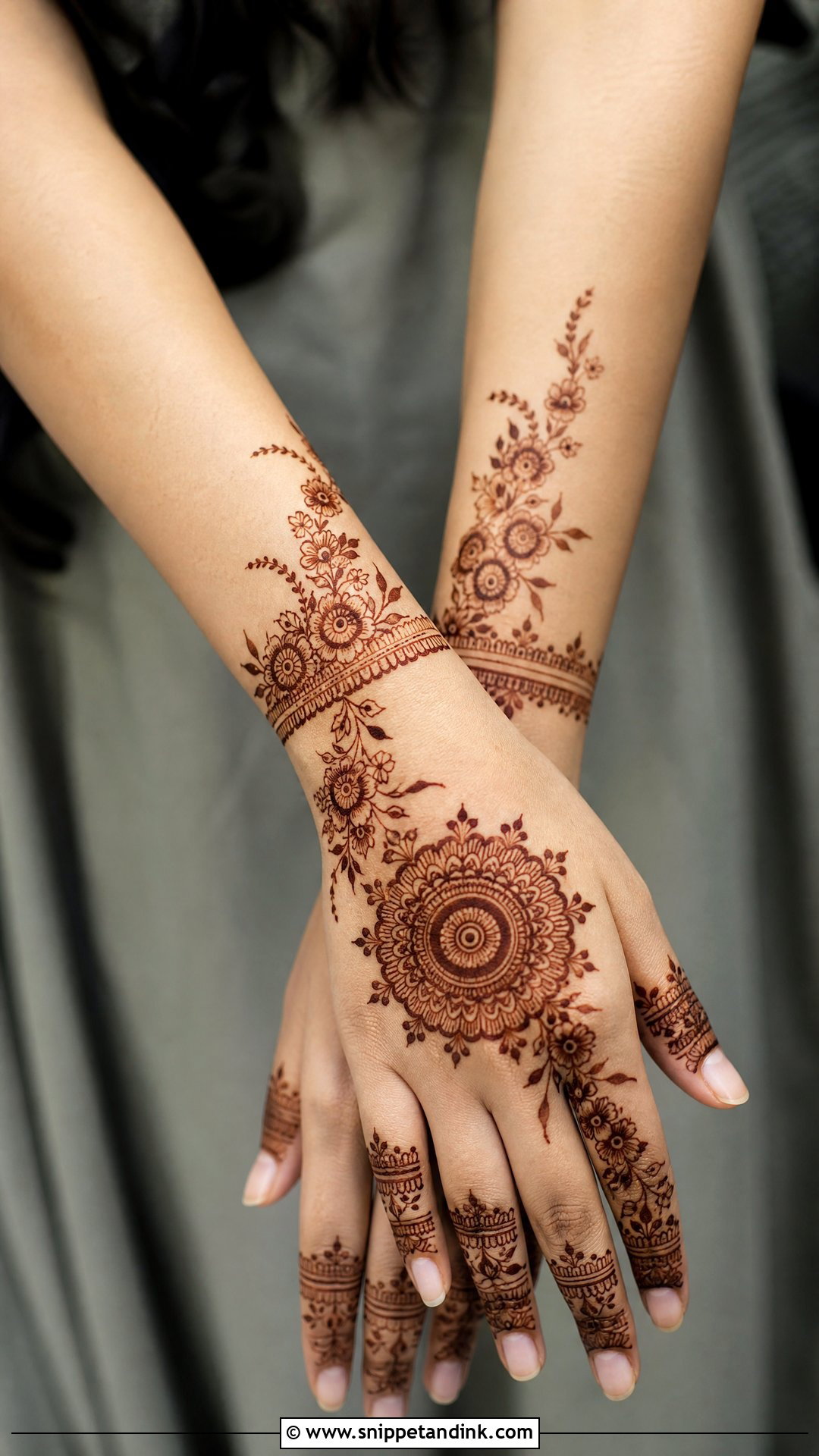
Roka is usually early in the wedding calendar, and I keep it lighter so the main bridal mehndi still feels like a step up. A simple mandala, a floral back-hand trail or a wrist cuff with finger detailing works. A clean palm design with filled fingertips is right for traditional photos; for something modern, I use negative space and jewelry lines on the back hand. It’s quick to sit through and dries faster than dense work.
19. Half Bridal Mehndi Design For Haldi
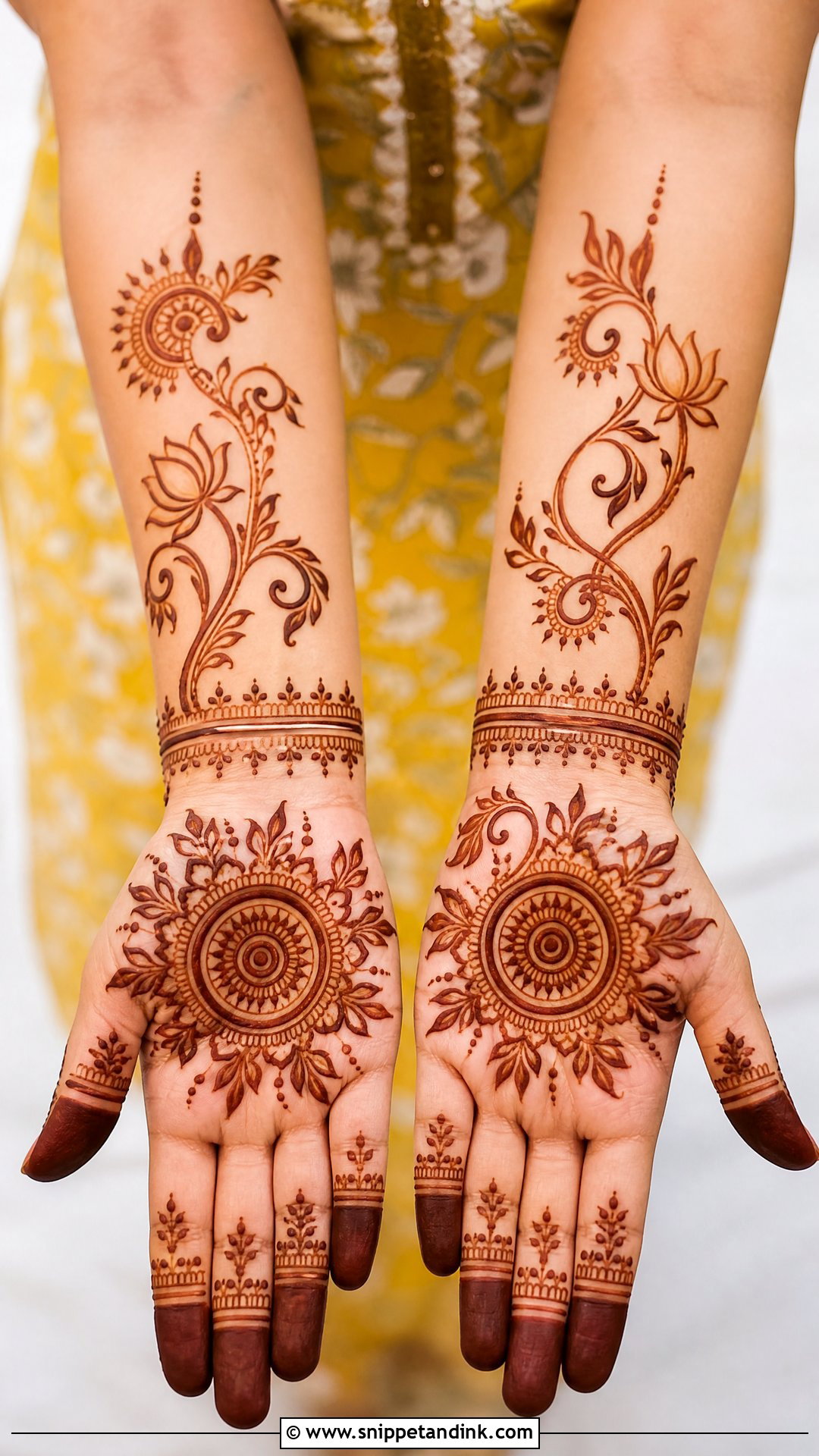
Haldi is relaxed and full of movement, so I keep this layout lighter and more playful: sun-like mandalas, lotus petals, leafy vines and open space around the palm, fingers and wrist. Reddish-brown stains look fresh against yellow, orange or white outfits. One practical point: turmeric paste can tint fresh henna slightly yellow and makes the hands messier, so if the mehndi is applied first, protect it with a light layer of oil before the Haldi.
20. Half Bridal Mehndi Design For Small Hands
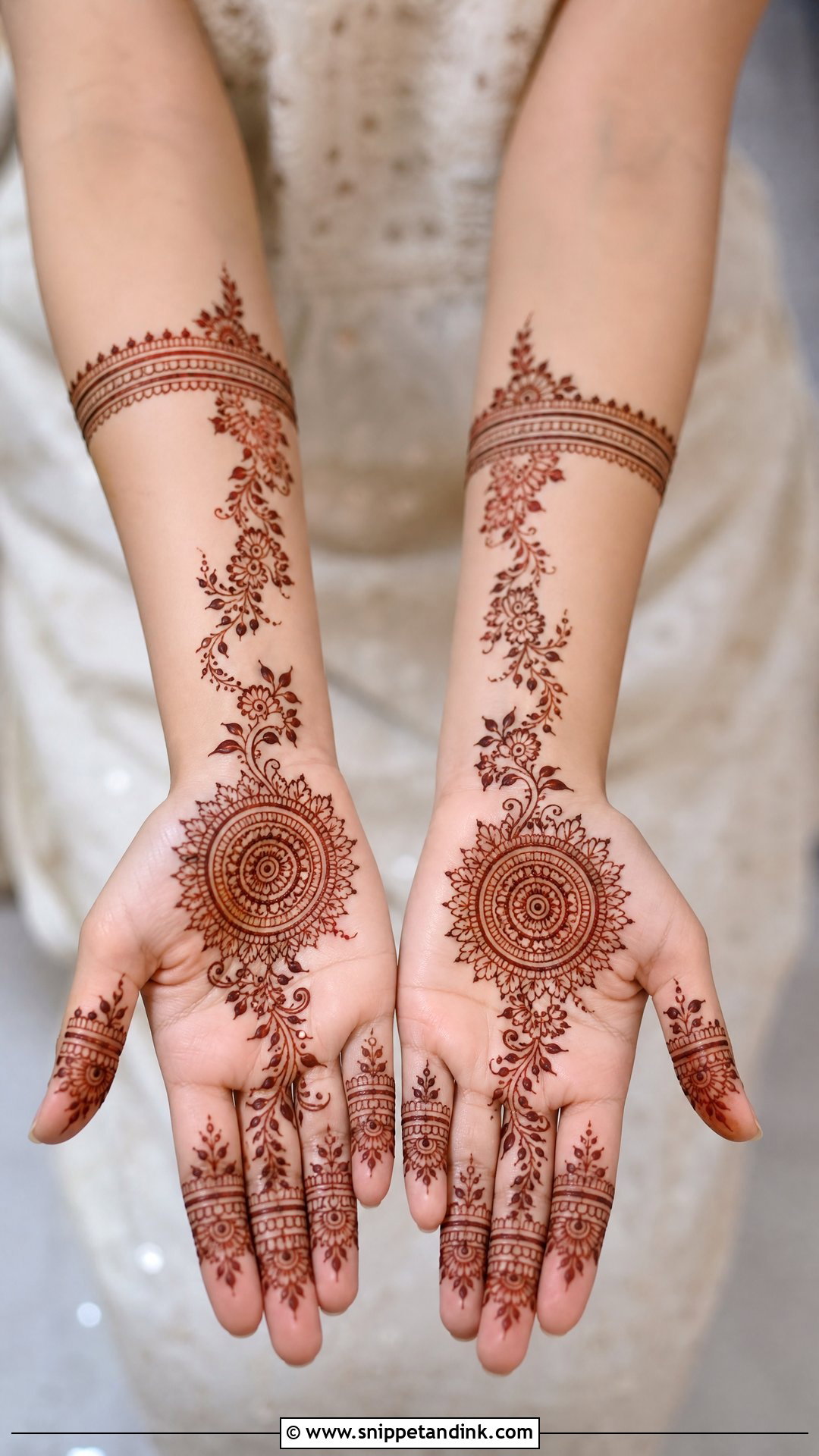
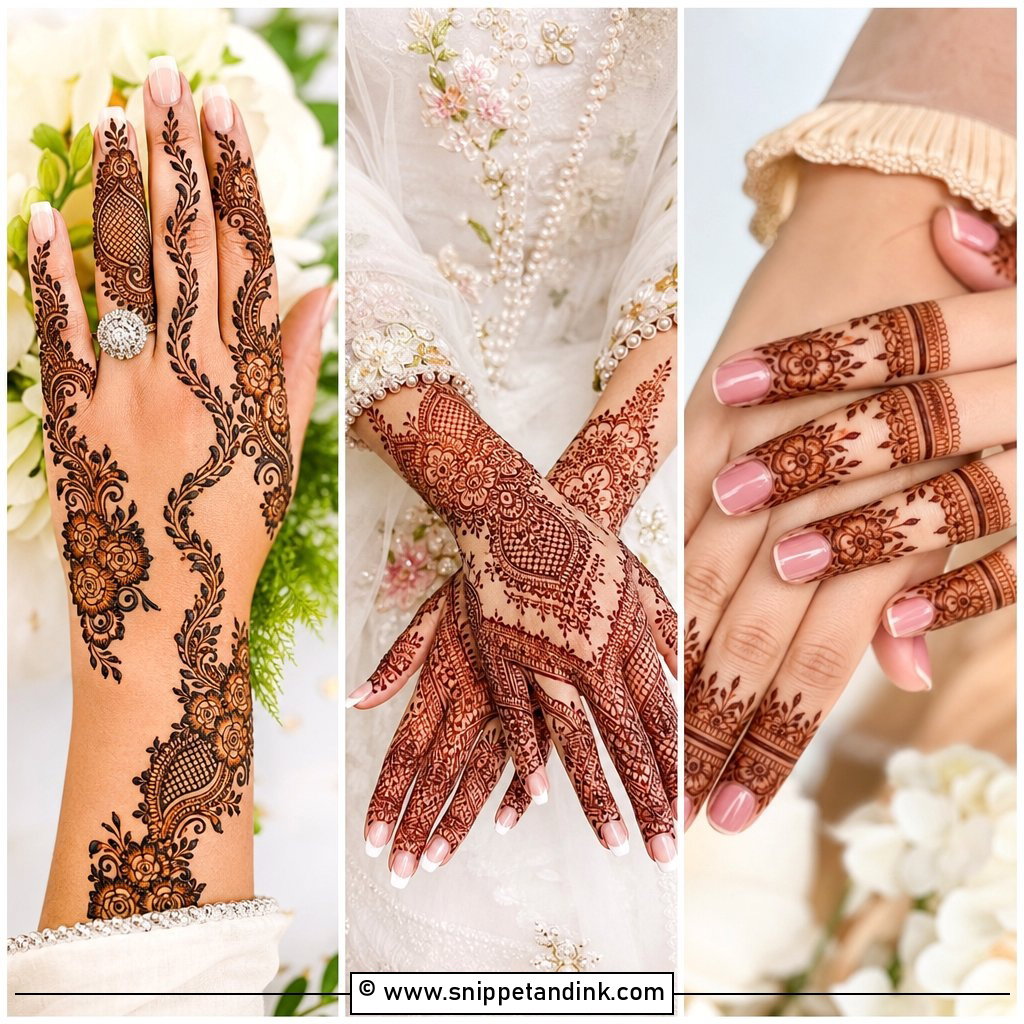
On small hands, one main motif with slim borders and controlled filling looks far better than lots of competing elements. I avoid oversized paisleys and big flowers, which crowd a small palm, and choose a compact mandala, narrow floral trail or light jaali section. Filled fingertips keep it bridal, but I leave tiny gaps between finger bands so they don’t merge into blocks once the stain darkens. A thin wrist cuff suits better than a wide one.
21. Half Bridal Mehndi Design For Long Fingers
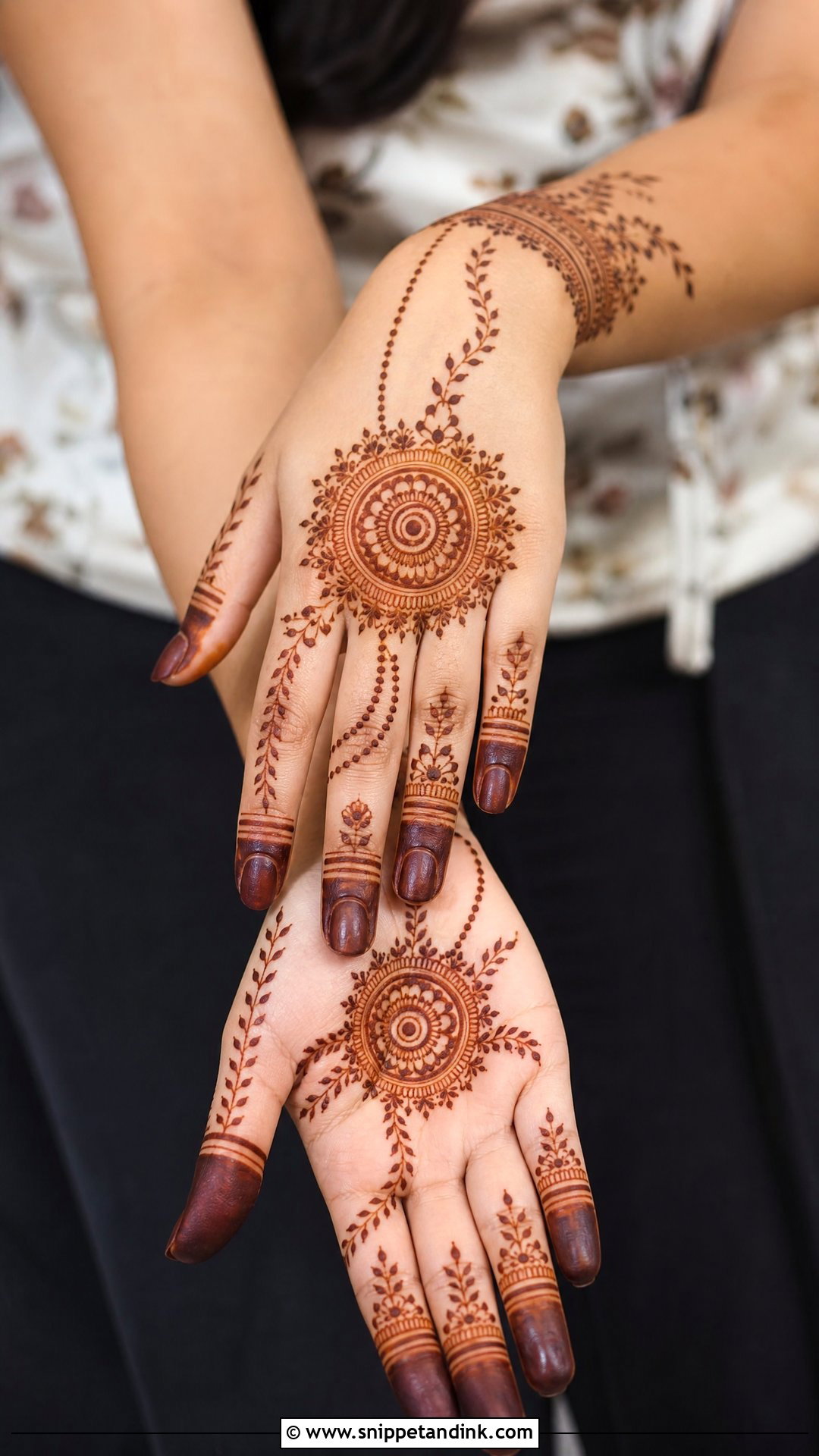
Long fingers give me room for stacked bands, leafy lines, mini florals, checks and fingertip filling. I keep the main motif on the palm or back hand medium-sized so the fingers stay the highlight. A mandala with fine chains reaching into each finger works especially well, and Arabic vines stretch naturally along the hand. Don’t leave long fingers plain; they carry detail better than any other hand shape.
22. Half Bridal Mehndi Design Back Hand Jewelry
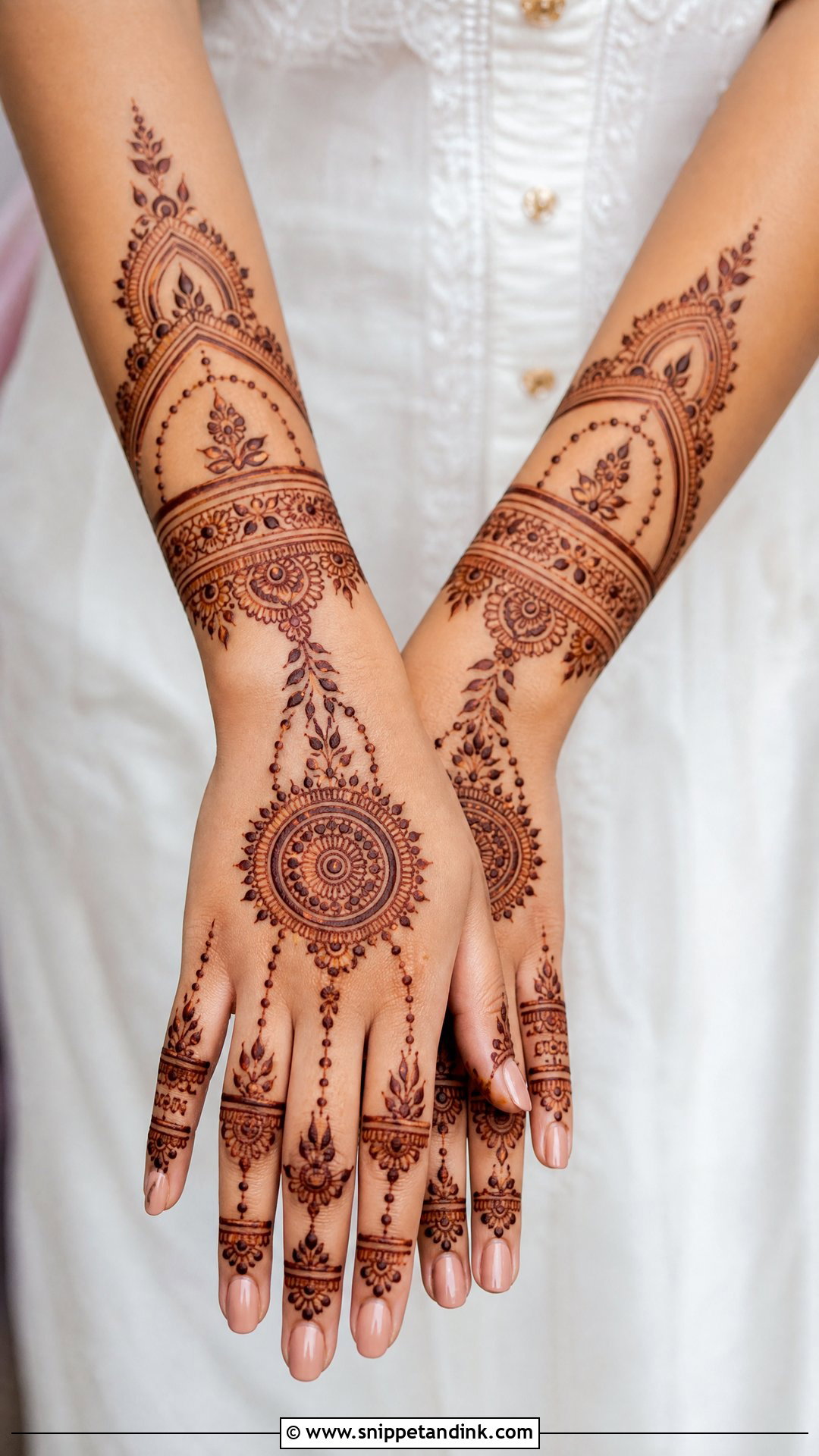
This back-hand layout imitates haath phool: a central mandala or flower connected to finger rings by dotted chains, leafy strands and bracelet borders. It looks decorative even without real jewelry, which makes it handy for engagements, nikkahs and receptions. I draw it symmetrically so it looks intentional. A filled wrist cuff gives the effect of a bangle, and finger bands make it bridal. It pairs easily with real jewelry layered on top.
23. Half Bridal Mehndi Design Palm
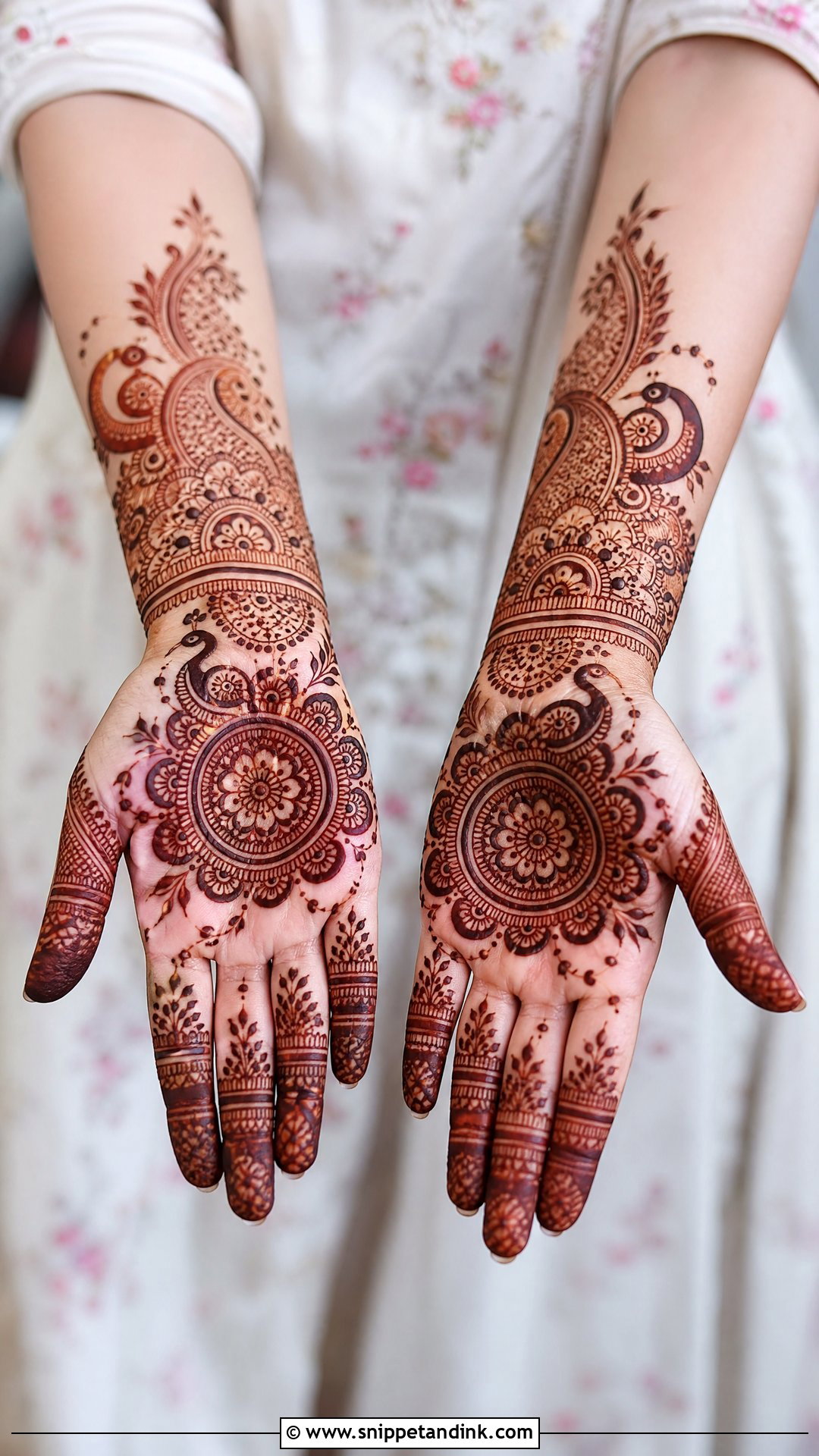
In many families the palm design is the one that matters most, and this layout puts the main artwork there. The palm carries a bold mandala, lotus, paisley cluster, peacock or bride-and-groom detail, framed with small vines, dots and semicircular borders. The fingers get bands, leafy tips and shaded sections. If the palm is detailed, I keep the wrist simple so the eye stays where the work is.
24. Half Bridal Mehndi Design Wrist Cuff
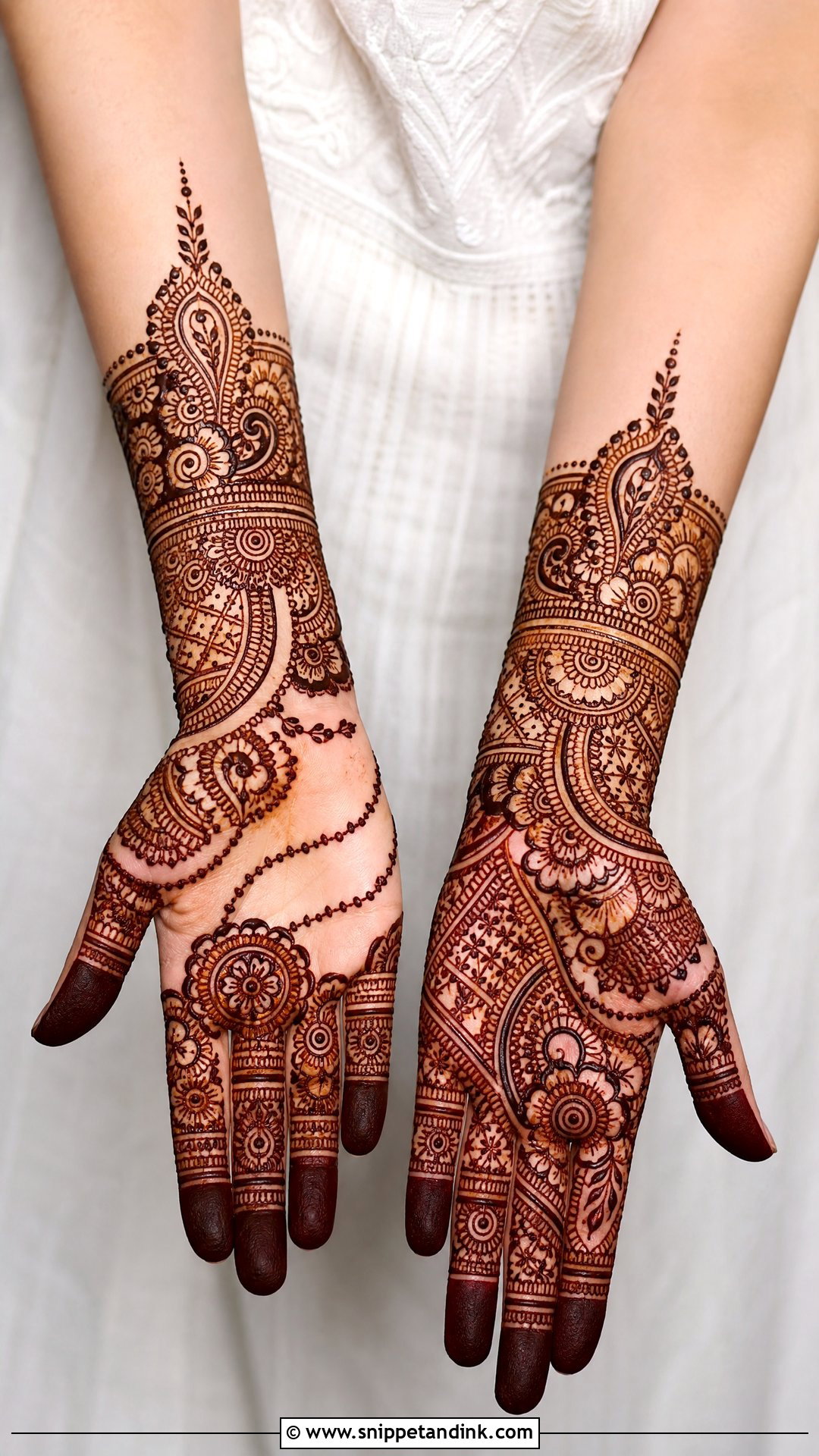
A wrist cuff is what makes a half design look finished rather than cut off. I draw a bracelet-like band around the wrist and connect it to the palm or back hand with vines, chains, flowers or paisleys. It can be slim or wide, depending on your outfit. Tiny jaali, dots and leaf borders inside the band make it richer. If you’ll wear bangles, I measure where they sit so the cuff shows just below them instead of hiding behind them.
25. Minimal Half Bridal Mehndi Design
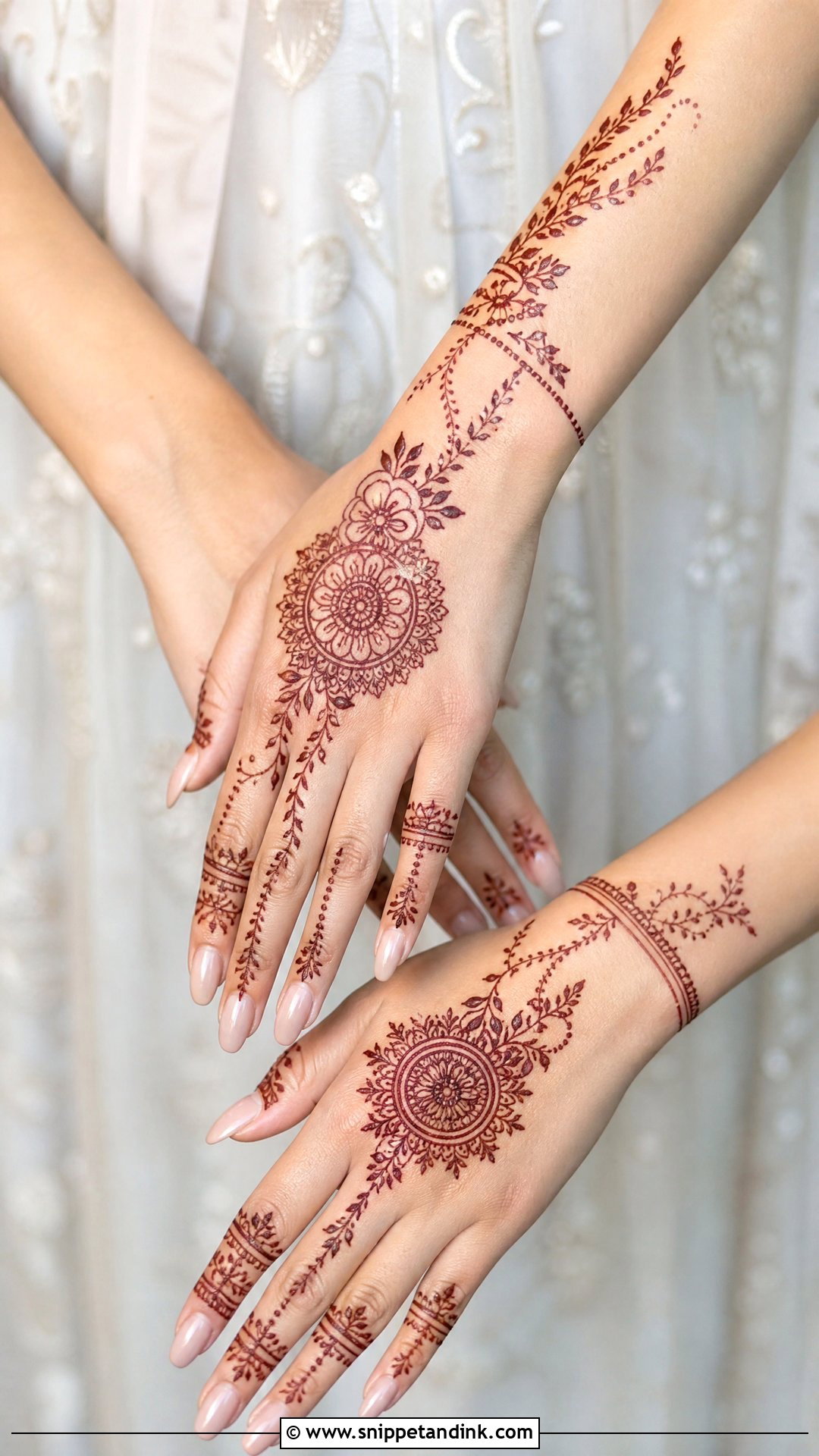
Minimal layouts use open space as part of the design: a small mandala, a light floral vine, finger bands and a simple wrist detail. I lean on neat symmetry and dark fingertips so it still reads as bridal, and sometimes add one meaningful motif, a lotus or small paisley. It suits intimate weddings, courthouse ceremonies and engagement shoots. It’s also the easiest style to keep looking good, since there are fewer fine lines to fade.
Getting a Dark Stain From Less Coverage
With less henna on the hand, every line counts, so aftercare matters even more than with a full design. The stain develops over a day or two after the paste comes off, so I usually suggest applying one or two days before the event.
- Keep the paste on as long as you can, ideally six hours or overnight. The longer it sits, the deeper the stain.
- Dab a lemon and sugar mix on once the paste is dry. It keeps the henna stuck to your skin.
- Scrape the dried paste off rather than washing it. Avoid water on your hands for as long as possible after that, ideally until the next day.
- Keep your hands warm. A stain develops better on warm skin, which is why it’s often darker on the palm than the back of the hand.
- Put a little oil or balm on before a shower, and avoid scrubbing, chlorine and harsh hand sanitizer for the first few days.
Fingertips and palms will always stain darkest, and the back of the hand and wrist lighter. That’s normal, and it’s why I make outlines bolder on the back hand.
Your Ceremony Sets the Density, Your Hands Set the Scale
The best half layout comes down to your ceremony, outfit, jewelry and the shape of your hands, plus how much detail you enjoy. For a heavier look, paisleys, peacocks, jaali and wrist cuffs. For something lighter, florals, mandalas and open spacing. Bring photos of your outfit and jewelry to your artist, and let her scale the design to your hands. A well-planned half design can look as complete in photos as a full one.
You'll Like These Ideas:








Leave a Reply