
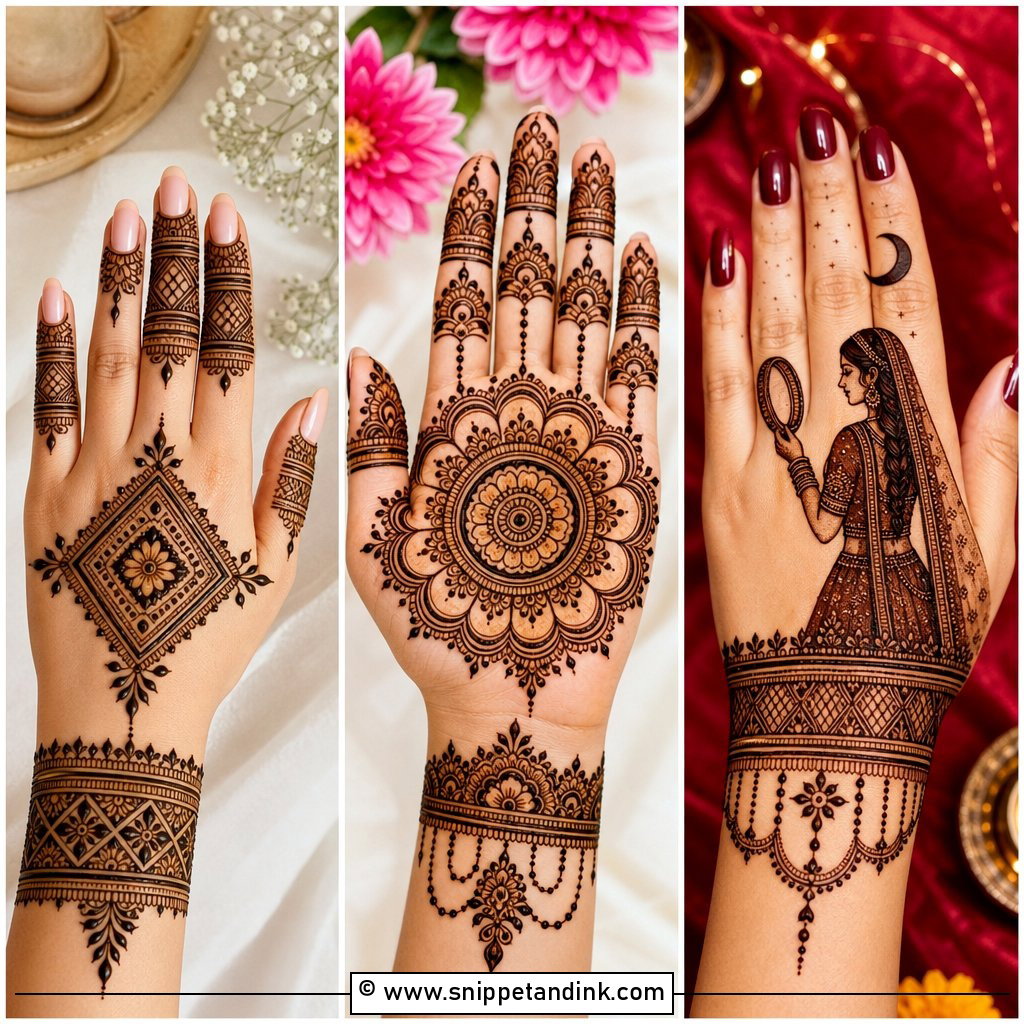
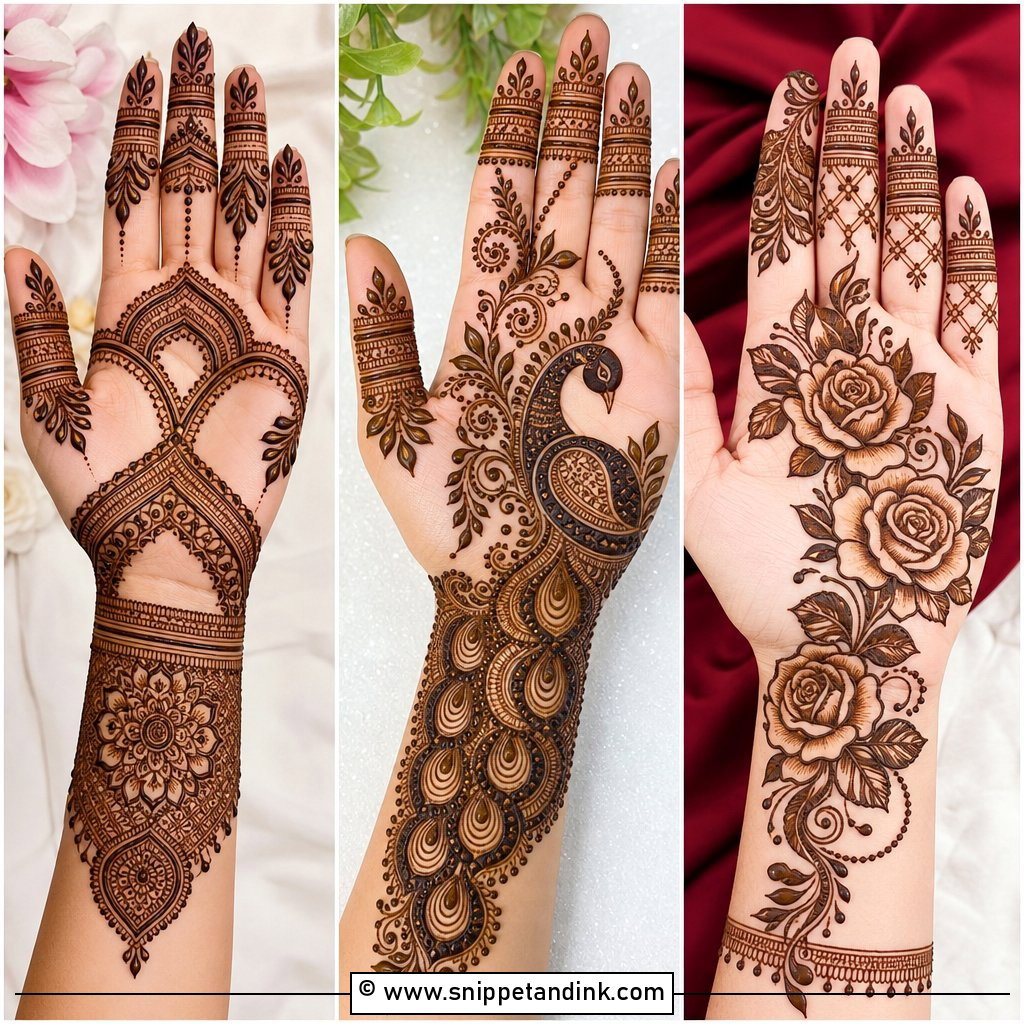
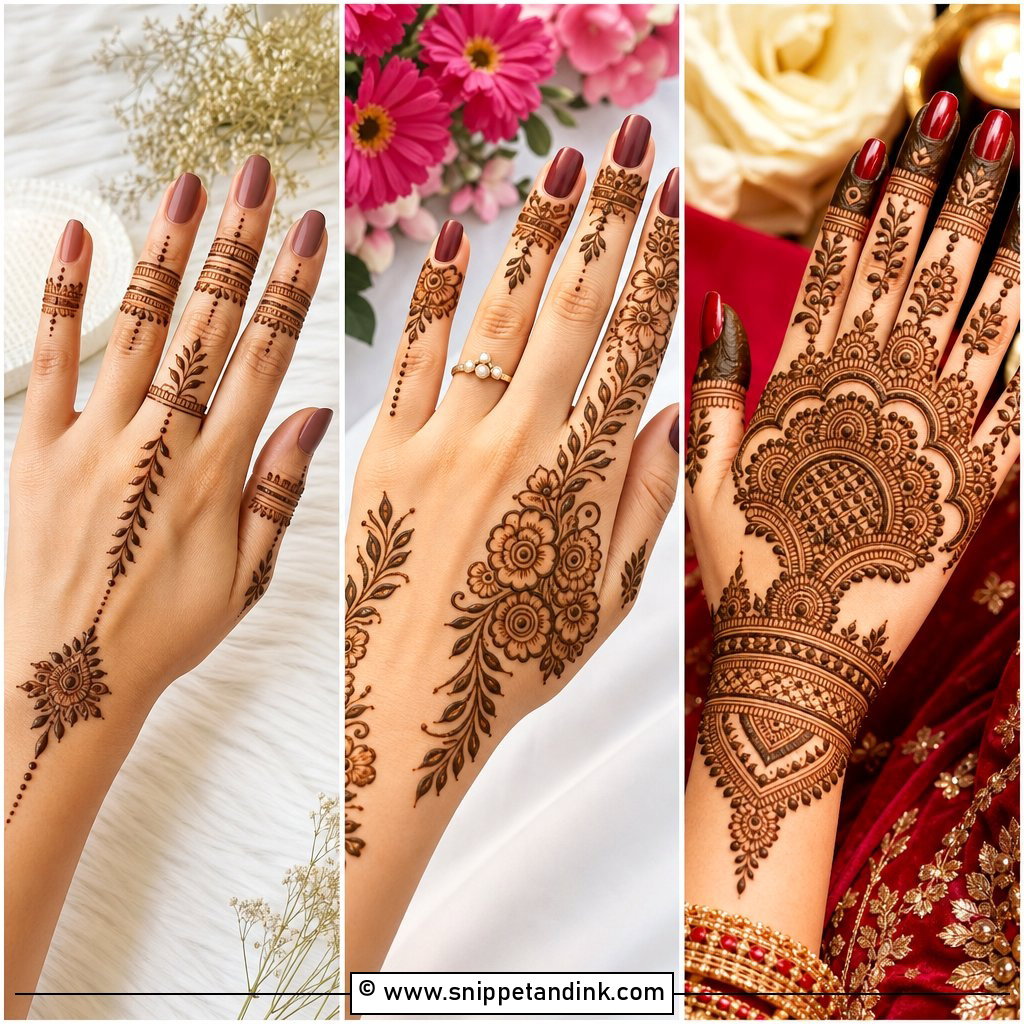
The requests I get most now are for lighter work: a back-hand trail, light palm designs, a mandala, a few finger rings, and plenty of bare skin between them. Open layouts suit how people actually dress for a sangeet, an Eid lunch or a Diwali puja, with rings, bangles and cuffs that need room to show. They also take far less sitting time than a traditional full hand. Below are thirty designs that keep the work clean and readable, from Arabic trails and jaal panels to peacocks, roses and modern finger bands, with notes on placement and who each one suits.
Reading the Hand Before Picking a Layout
Before I start, I look at the hand, not the reference photo. Long, slim fingers can take bands and rings on every finger without looking busy. Short fingers and a wide palm look better with vertical lines, a vine running lengthwise or a trail that ends at the fingertip, because those lines lengthen the hand. Small hands, including children’s, suit one motif rather than three scaled-down ones.
I also ask what you’ll be doing the day you wear it. Cooking, driving or caring for small children all wear down palm henna faster, so for a busy person I’d put the main design on the back of the hand and keep the palm light.
Sleeves, Bangles and Rings Change What Shows
A design looks different once you’re dressed. Full sleeves cover any forearm work, and a cuffed sleeve sits right on top of a wrist band. A stack of glass bangles hides most of a bracelet design, so I either place the band a little higher or skip it.
- Bring a photo of the outfit, or wear the bangles you plan to use, to your appointment.
- For short or sheer sleeves, extend the design a little above the wrist so it carries up the arm.
- If you’ll wear a statement ring, leave that finger’s base clear so the ring sits on bare skin.
- Match the mehndi’s weight to the jewelry: heavy jewelry with light henna, or the other way round.
1. Simple Arabic Mehndi Design
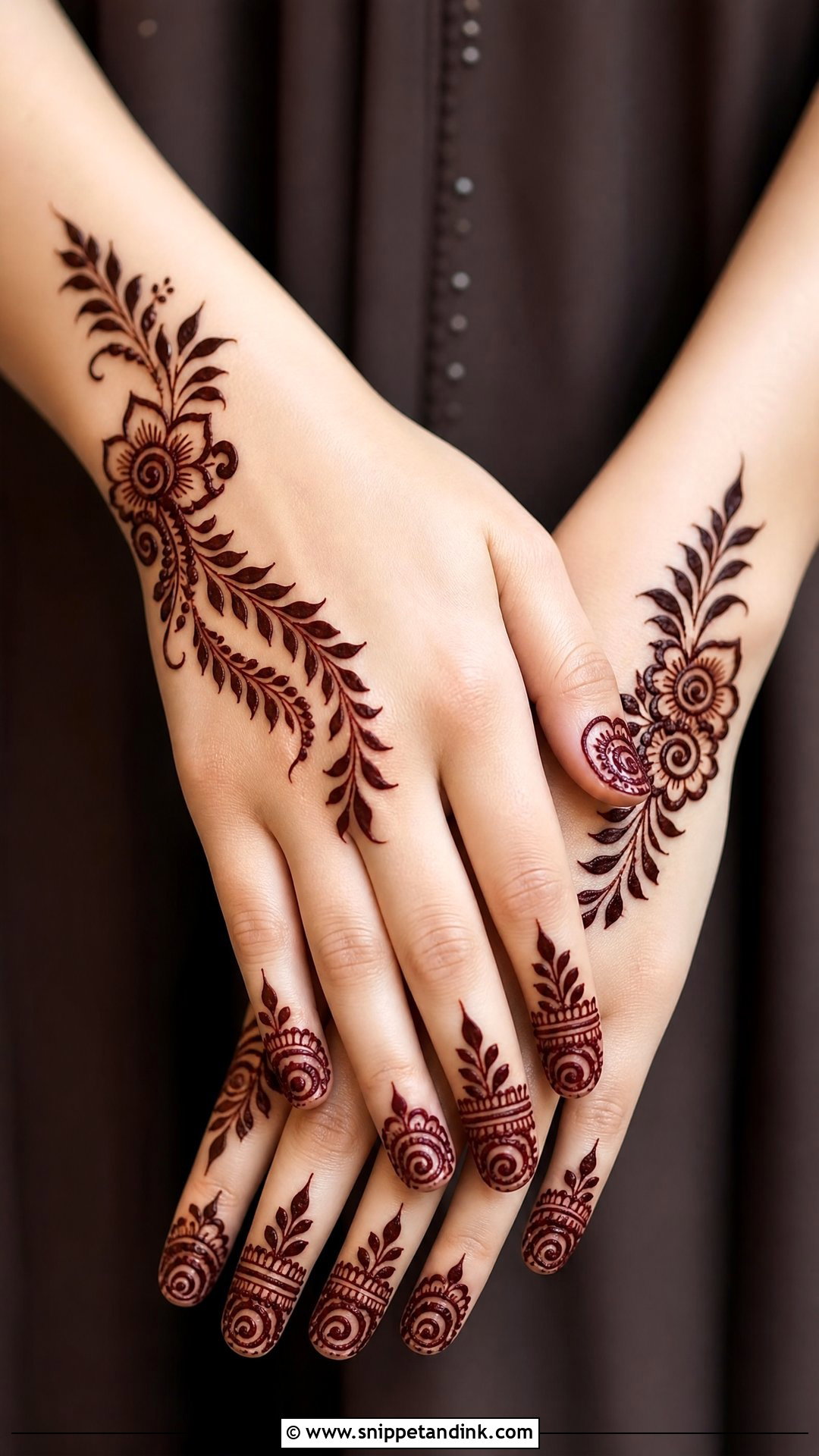
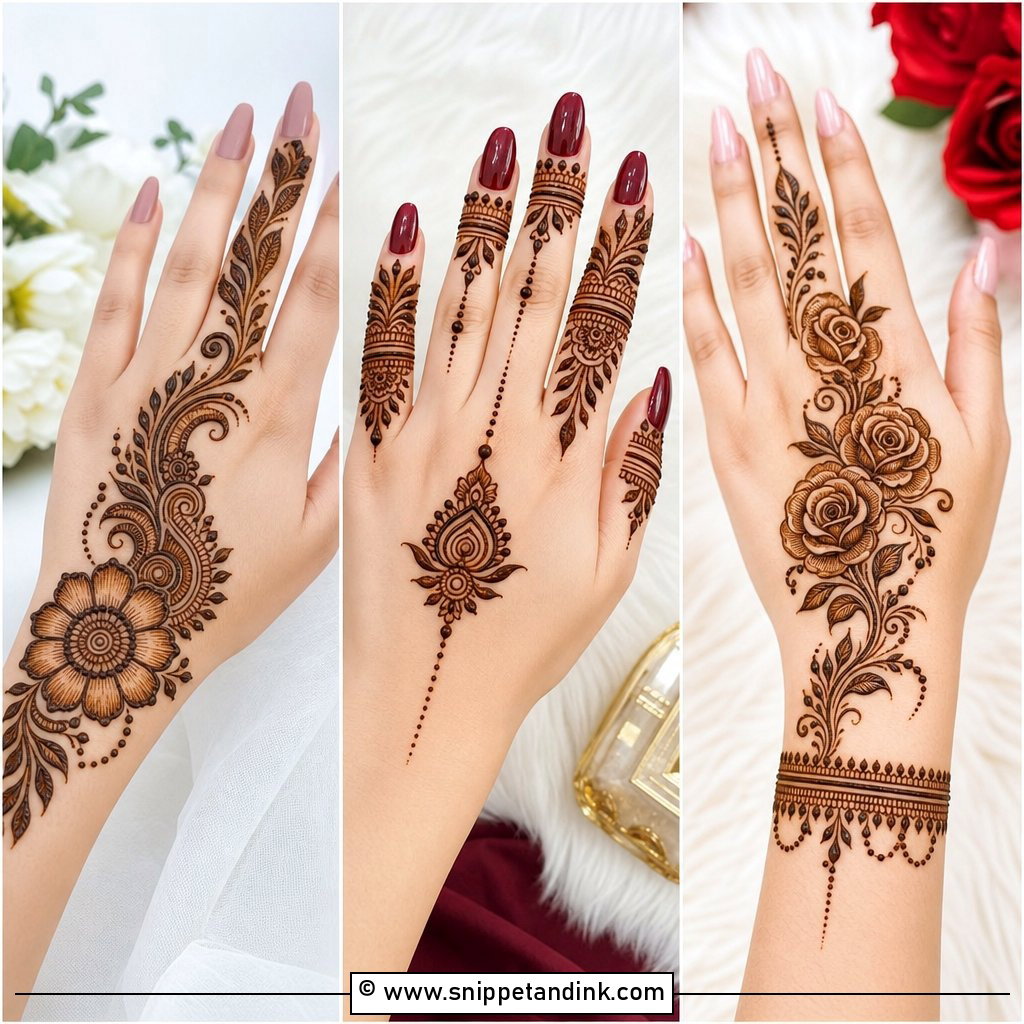
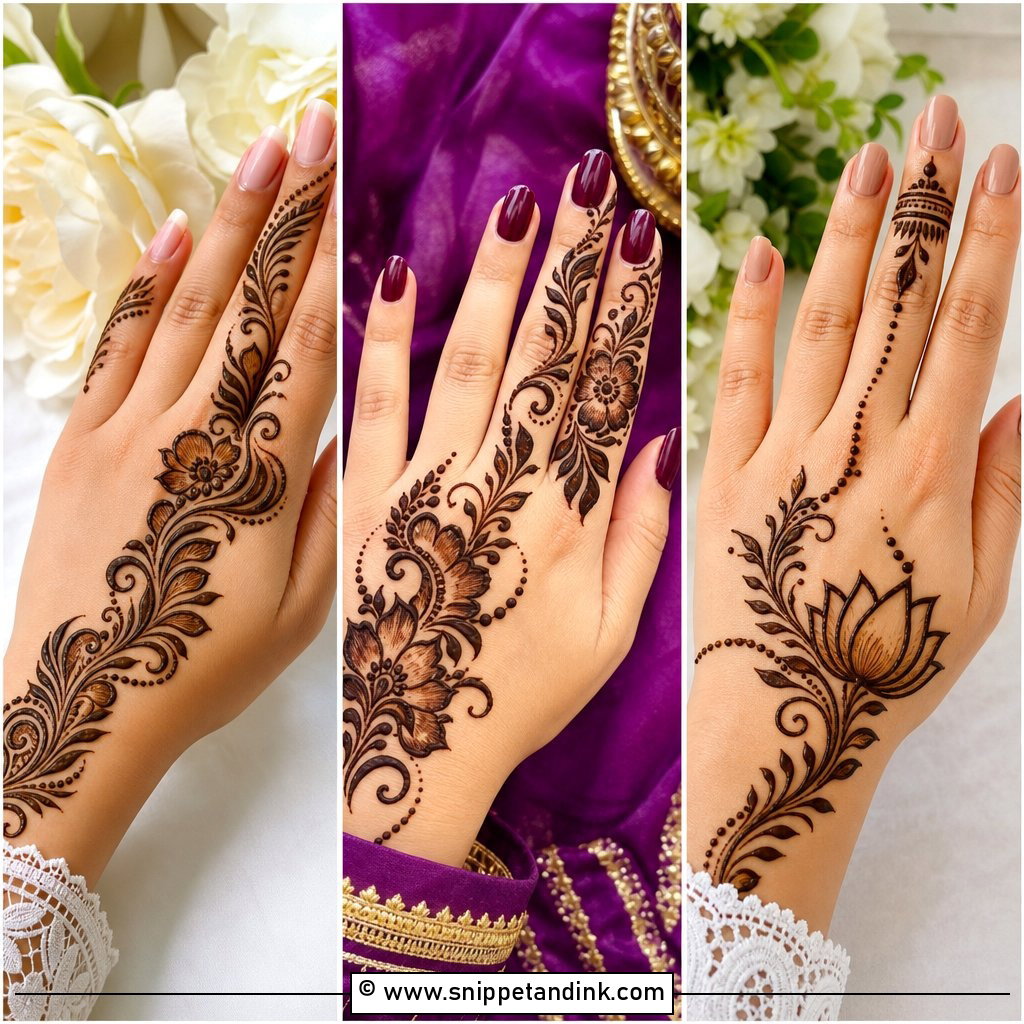
An Arabic trail starts at one side of the wrist and flows diagonally toward the fingers, with bold flowers, leafy vines and curves set against open skin. What makes it work is restraint: I let one side of the hand stay almost empty so the trail has something to run against. Fingertips can stay light or take tiny leaves. The structure is easy to follow, so a steady beginner can manage it, and it dresses up a festive outfit in well under half an hour.
2. Simple Back Hand Mehndi Design
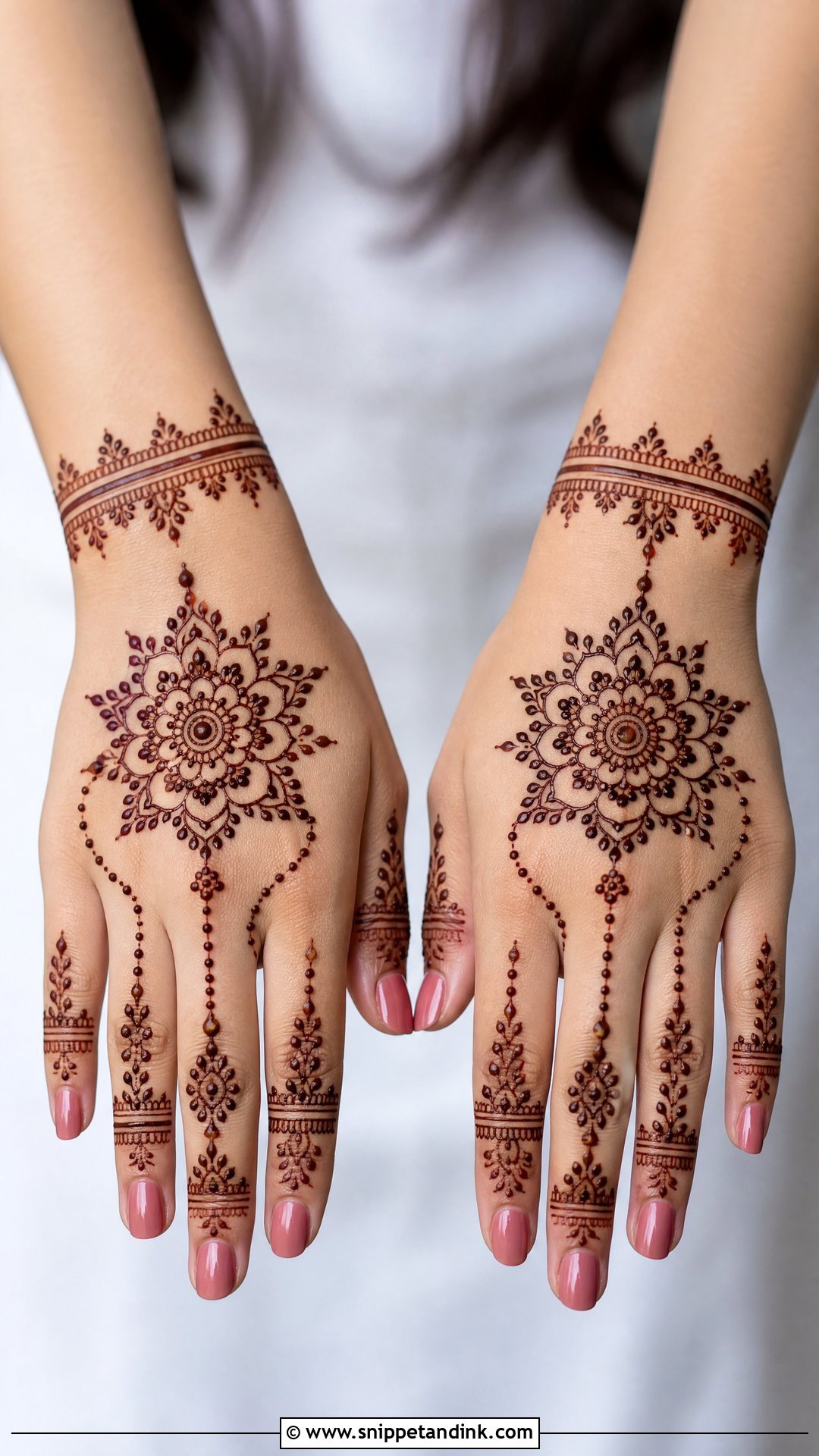
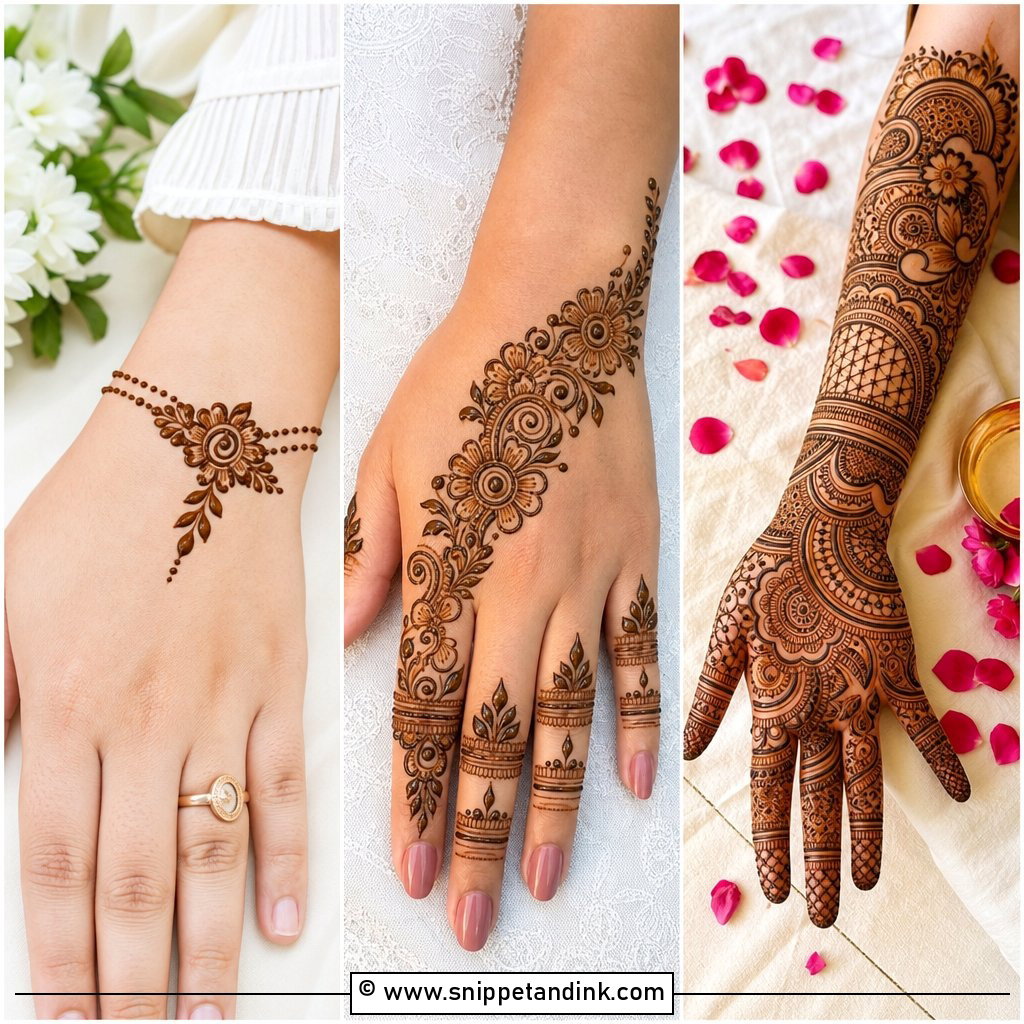
The back of the hand is the side people see when you’re holding a glass, adjusting a dupatta or showing your rings, so a neat design there carries further than its size suggests. A small center flower, a round mandala or a leafy trail links to finger patterns, and the wrist stays light with a band or dotted chain. It also smudges less than palm work, since you aren’t pressing that side against anything. I’d note that the stain comes out lighter here than on the palm, so I keep the outlines a touch heavier.
3. Simple Front Hand Mehndi Design
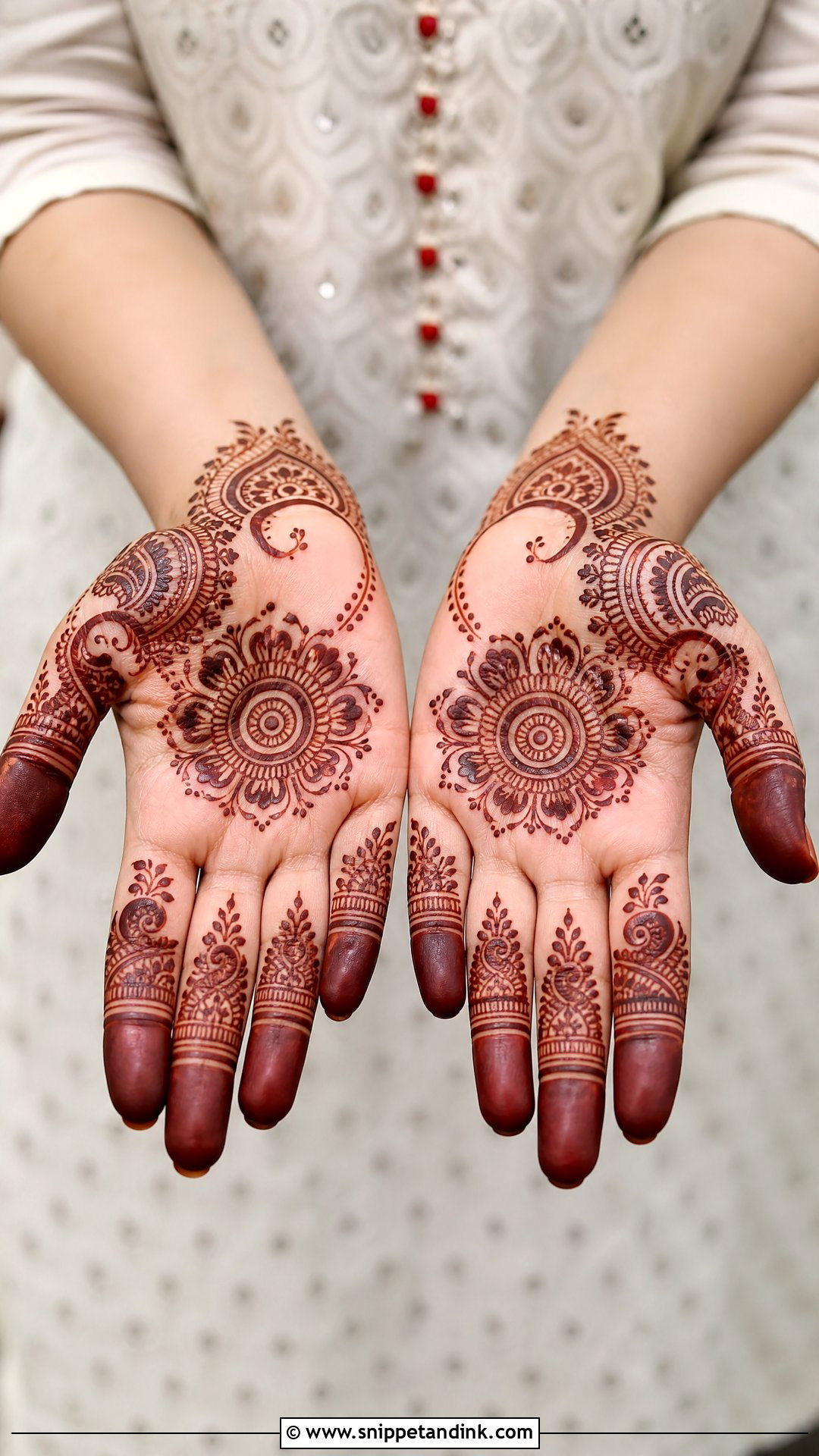
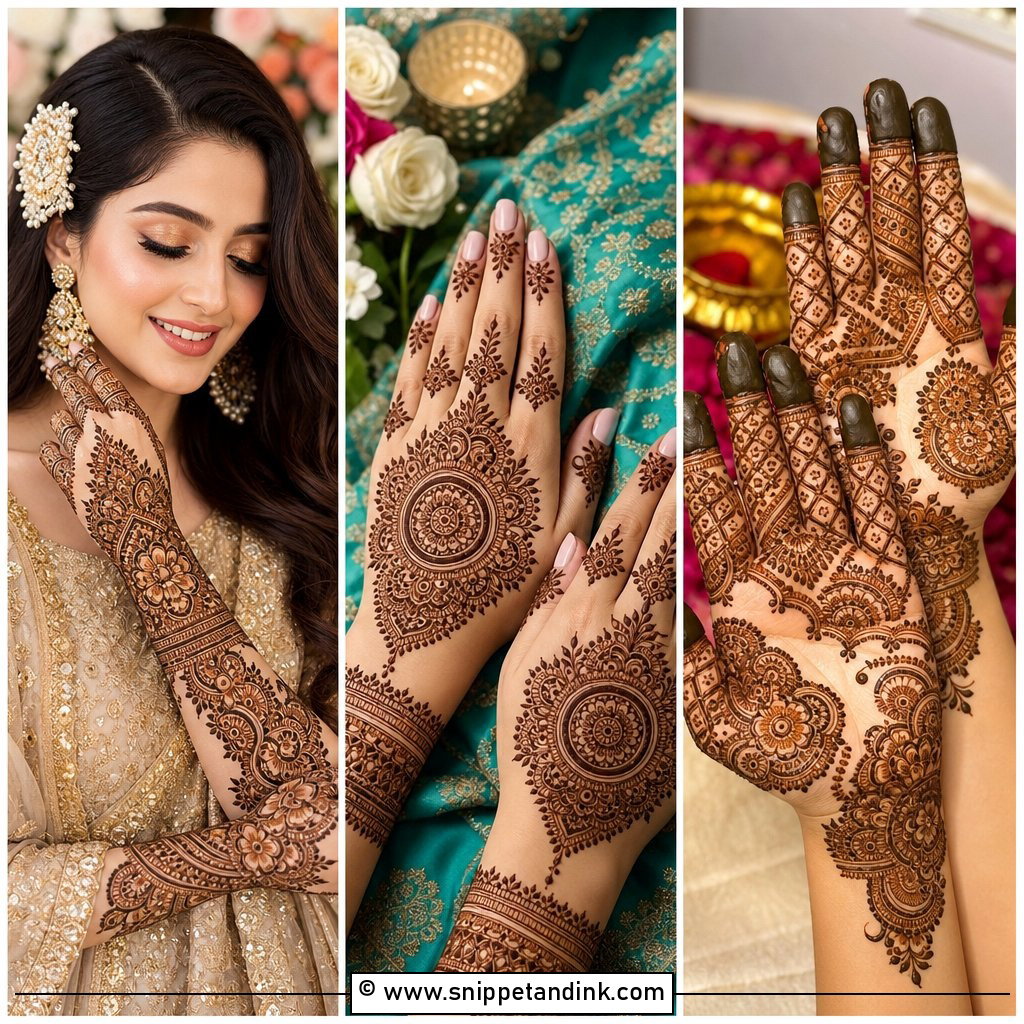
The palm gives you the most room and the richest color, so even a simple layout looks full: a center mandala, a paisley border, a few small flowers and light fingertip details. For a cleaner look I leave gaps between motifs; for a fuller one I add dots, leaves and curves around the main pattern. Palm work is the one to save for when you can sit still afterwards, because you can’t use the hand until the paste has dried. It suits family rituals and pre-wedding functions.
4. Simple Mandala Mehndi Design
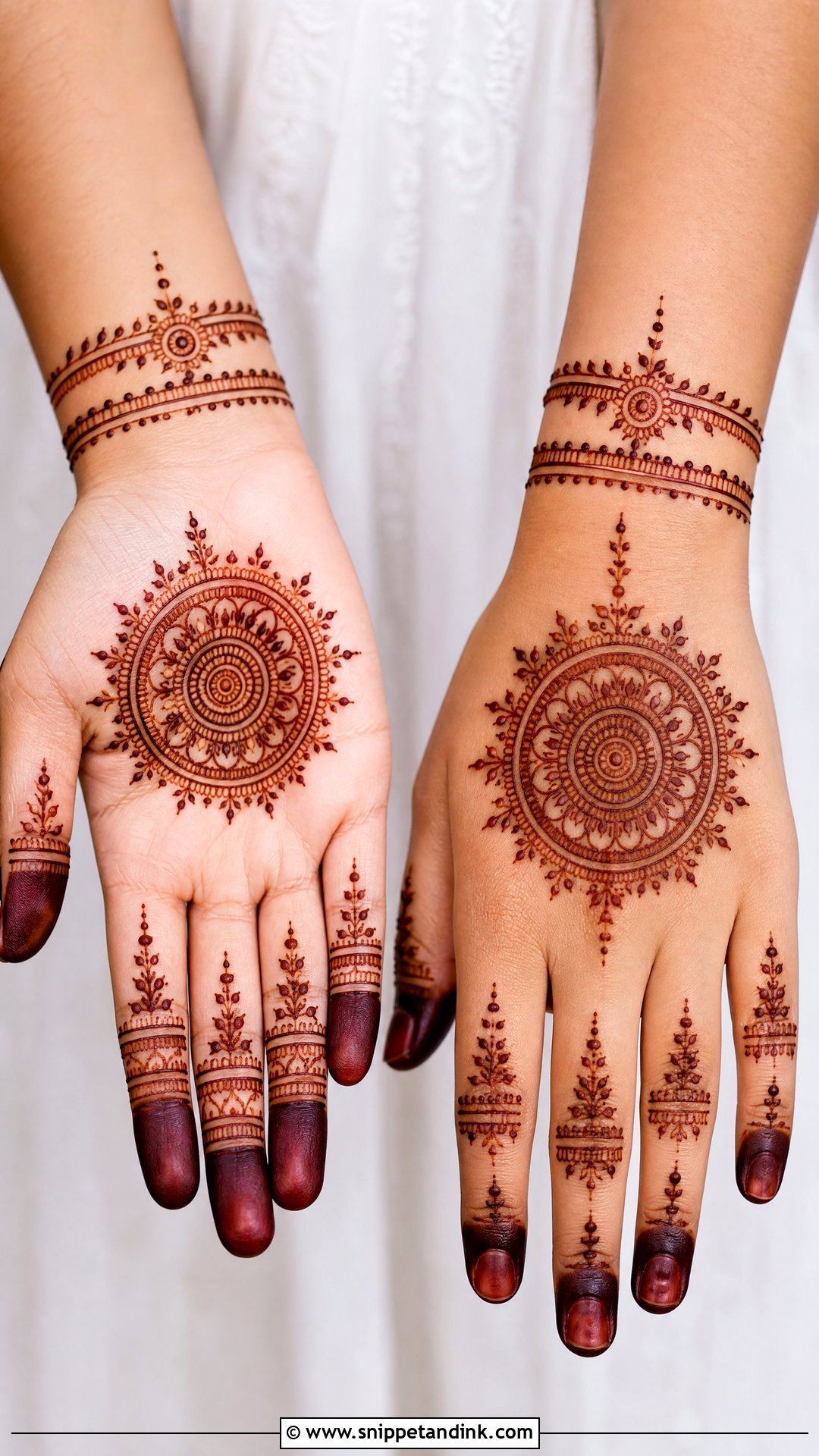
Everything grows from one central circle, which is why mandalas are so calm to draw. The main ring sits in the center of the palm or back of the hand, surrounded by small petals, dots and further rings. Fingers can stay bare, take matching caps, or connect to the mandala with slim lines toward the wrist. The point I watch is the first circle: if it’s slightly oval, every ring after it exaggerates the error, so I take my time there. It’s a neat choice for poojas and engagement events.
5. Simple Floral Mehndi Design
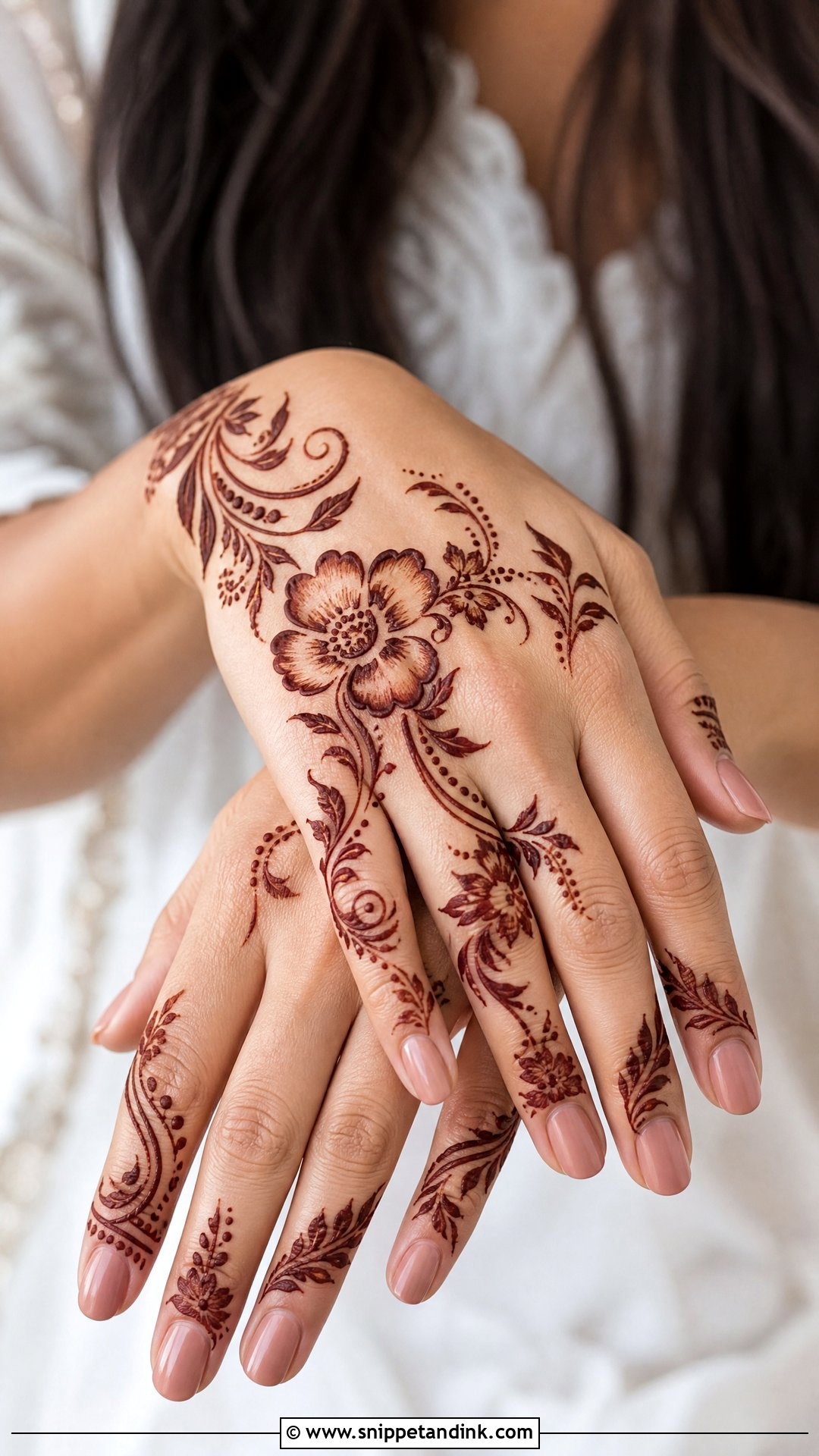
A floral design usually rests on one large flower on the back of the hand or the palm, with smaller blooms and leaves heading toward the fingers. Drawn bold with open space, it reads Arabic; drawn fine and filled, it reads Indian. I add a little petal shading for depth, but I stop before the petals fill solid, because packed flowers turn into blobs once the stain darkens. Florals sit naturally with daytime events and suit every age.
6. Simple Finger Mehndi Design
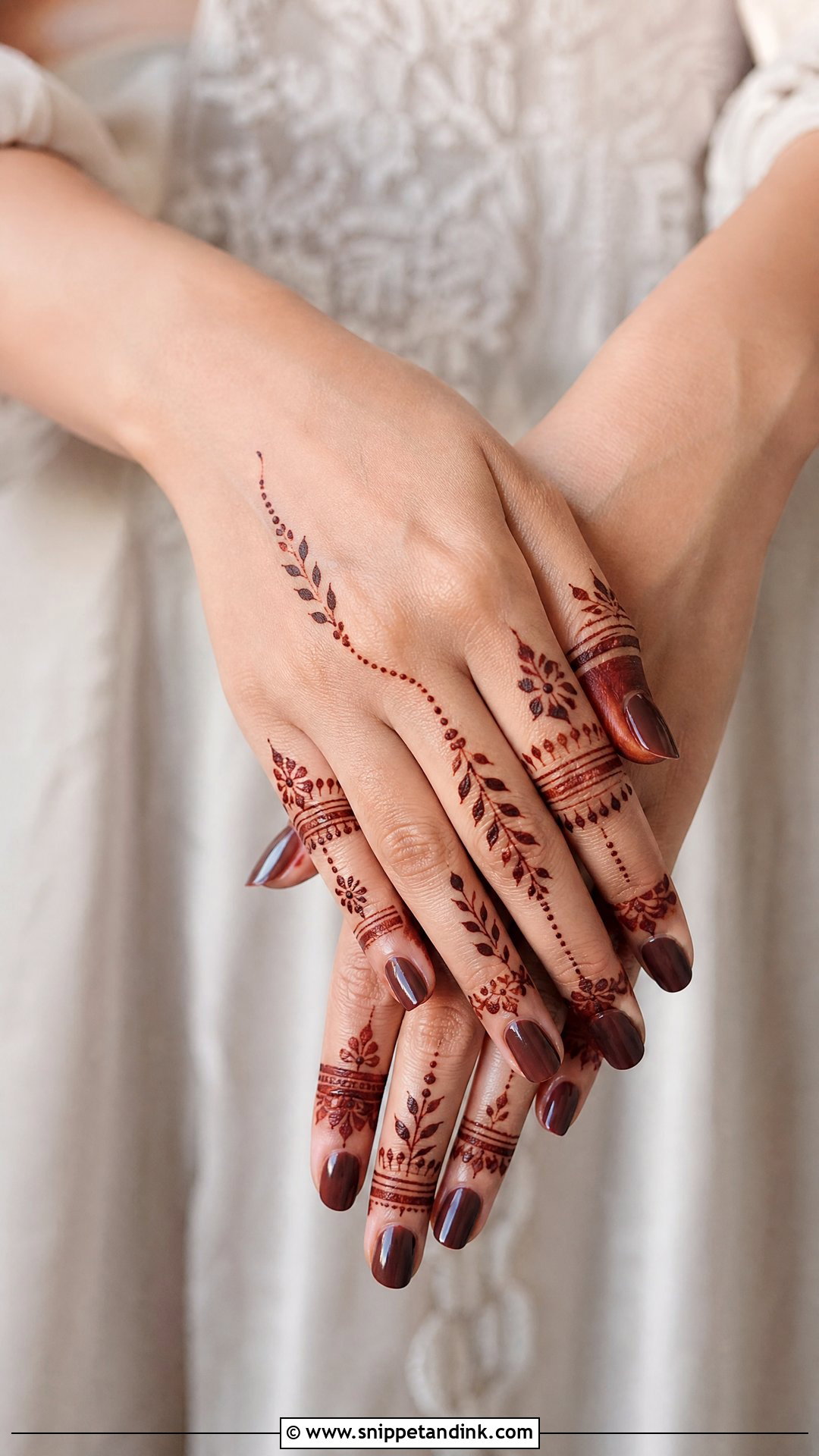
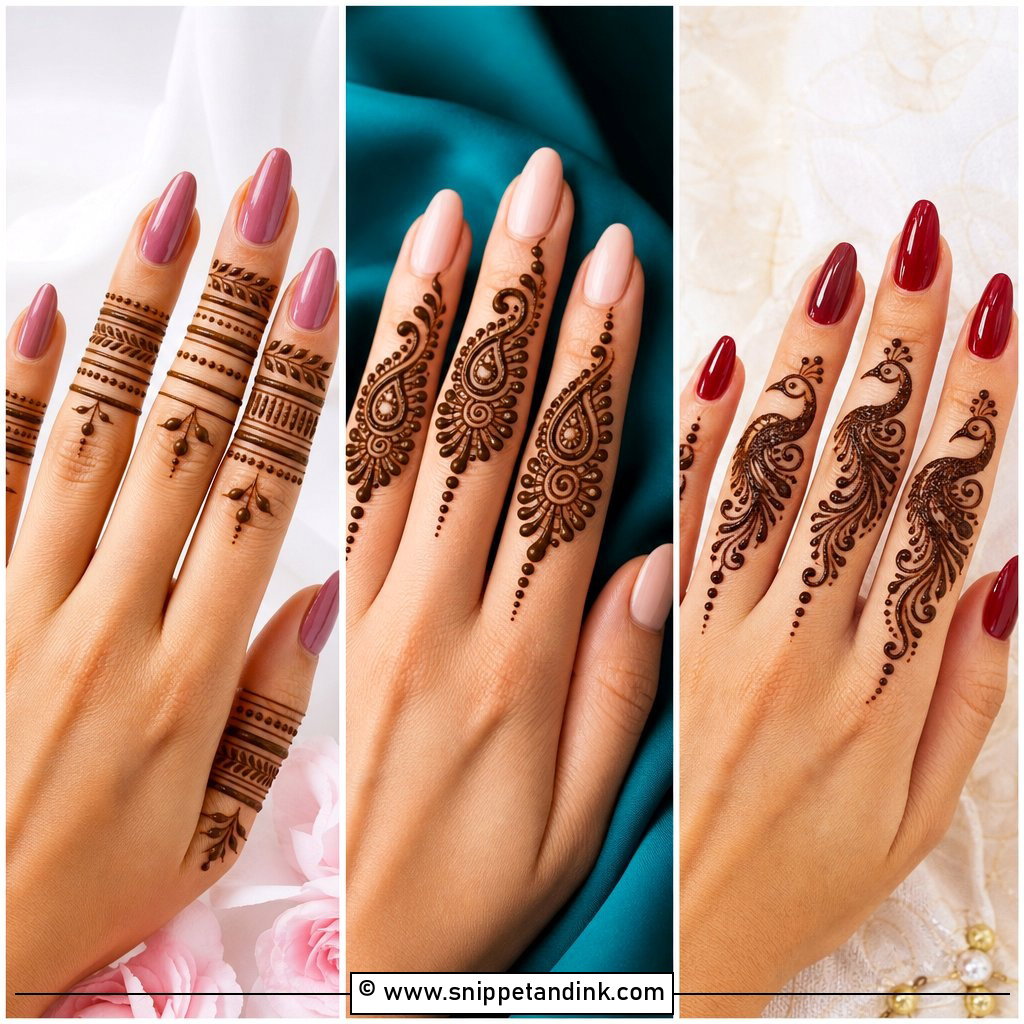
Finger-only work is the quickest way to look decorated, and it’s what I suggest when someone wants mehndi but needs to type, cook or carry a baby that evening. Lines, dots, leaves, rings and tiny flowers go on the fingers, with the back of the hand bare or crossed by one small wrist band. It frames nail polish and rings nicely. Finger skin takes stain strongly, especially the tips, so even fine lines come out clearly.
7. Simple Bracelet Mehndi Design
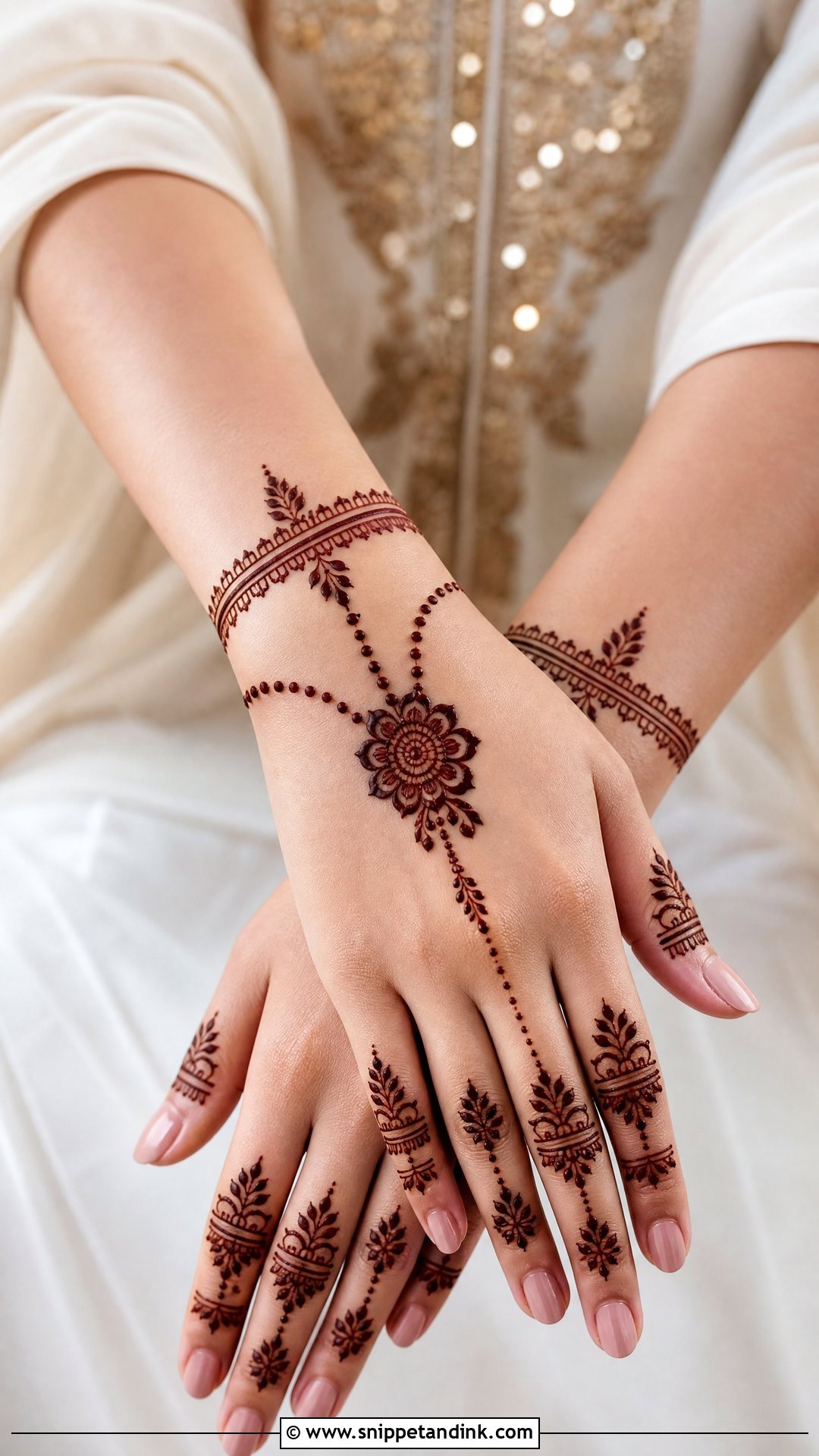
The pattern circles the wrist like a bangle and links to the fingers with chains, dots, vines or a small central motif. I place it on the back of the hand, where the wrist bones and knuckles give it shape. One slim band keeps it minimal; layered bracelet lines make it festive. Think about your sleeves before you choose this one: a cuffed sleeve or a stack of bangles will hide most of it.
8. Simple Jaal Mehndi Design
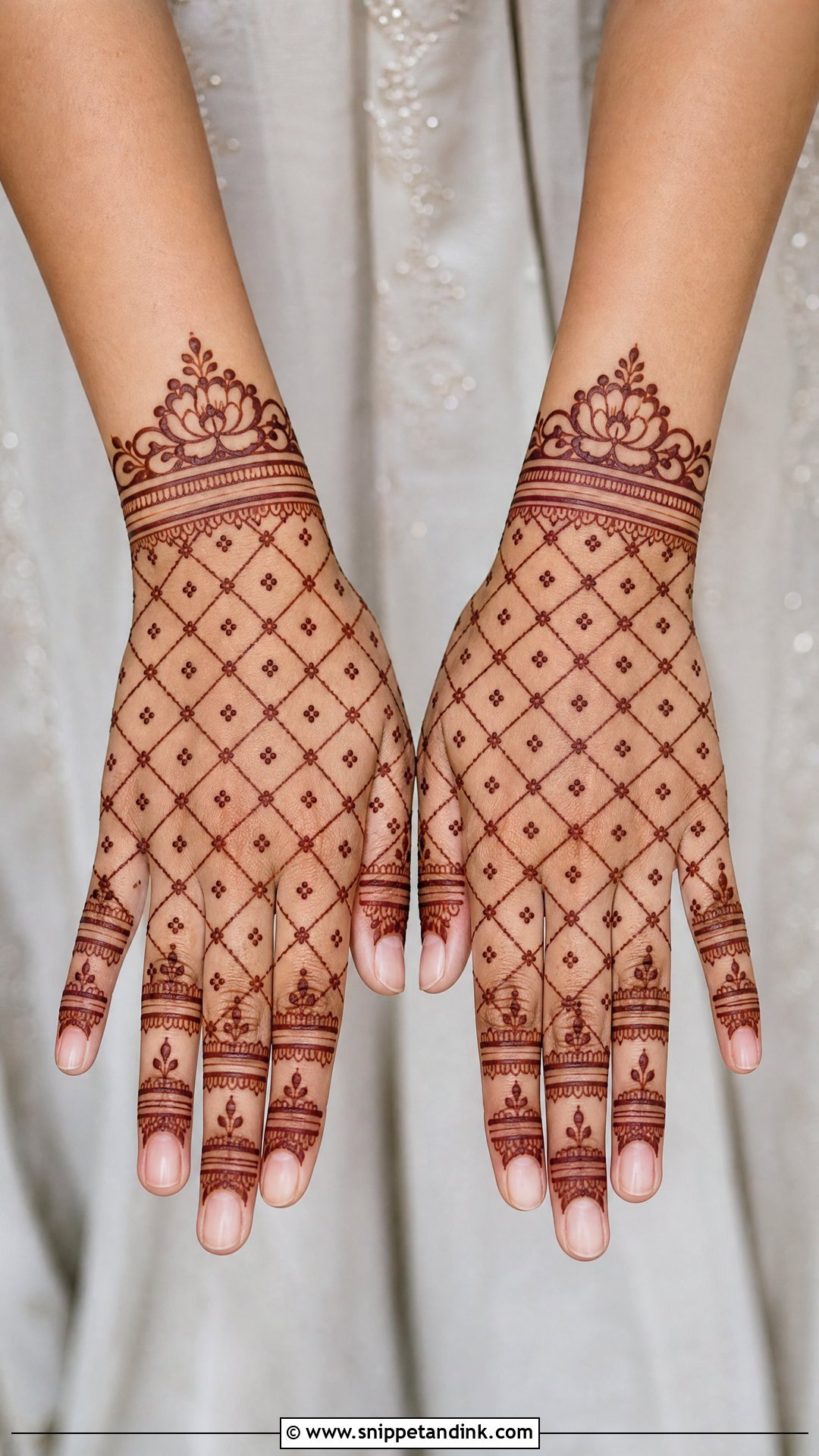
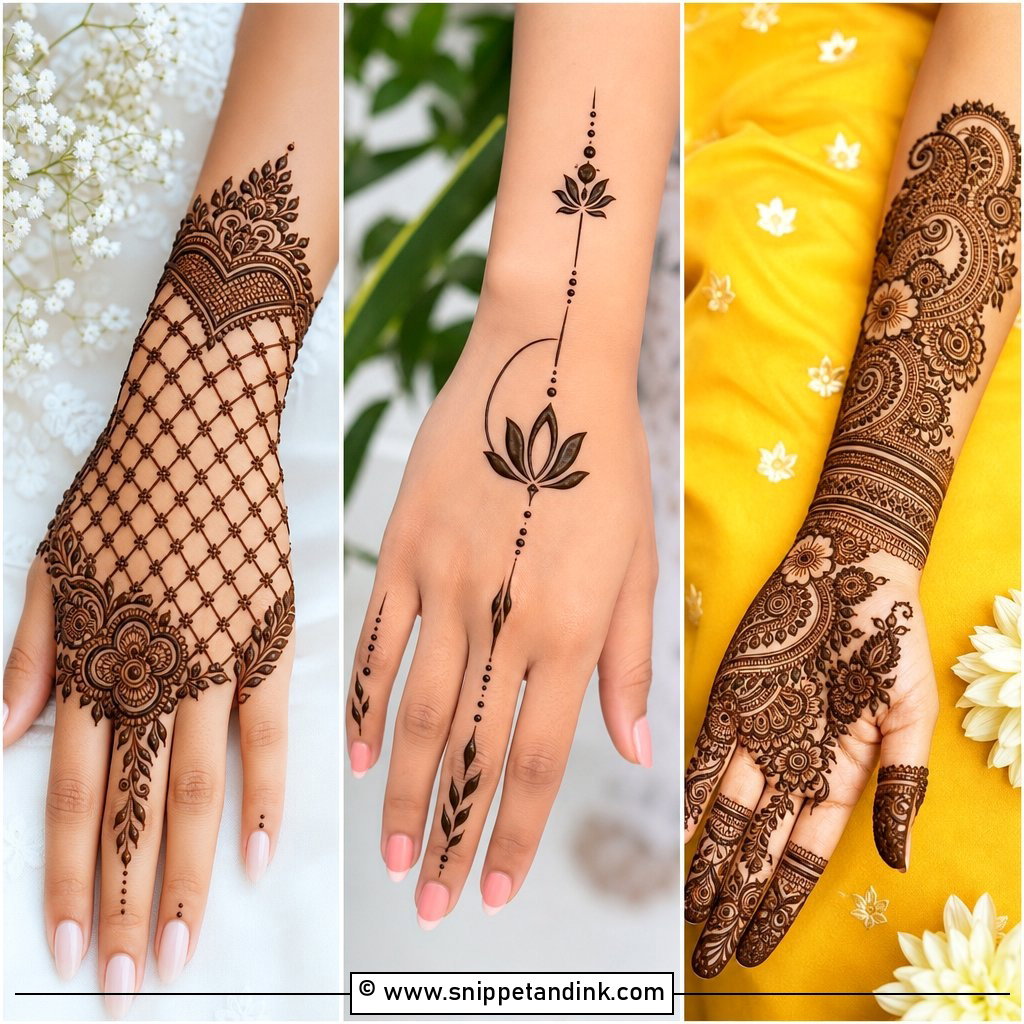
Jaal is a mesh, and it can cover the fingers, the back of the hand, a palm corner or the wrist. To keep it simple, I use wide diamonds rather than tight crosshatching, with a dot or tiny flower inside each. Tight mesh needs perfectly even spacing and a fine cone tip, and the lines often merge as the stain spreads slightly. Wider diamonds stay crisp. It’s also the most useful way to fill an awkward empty space without adding another motif.
9. Simple Paisley Mehndi Design
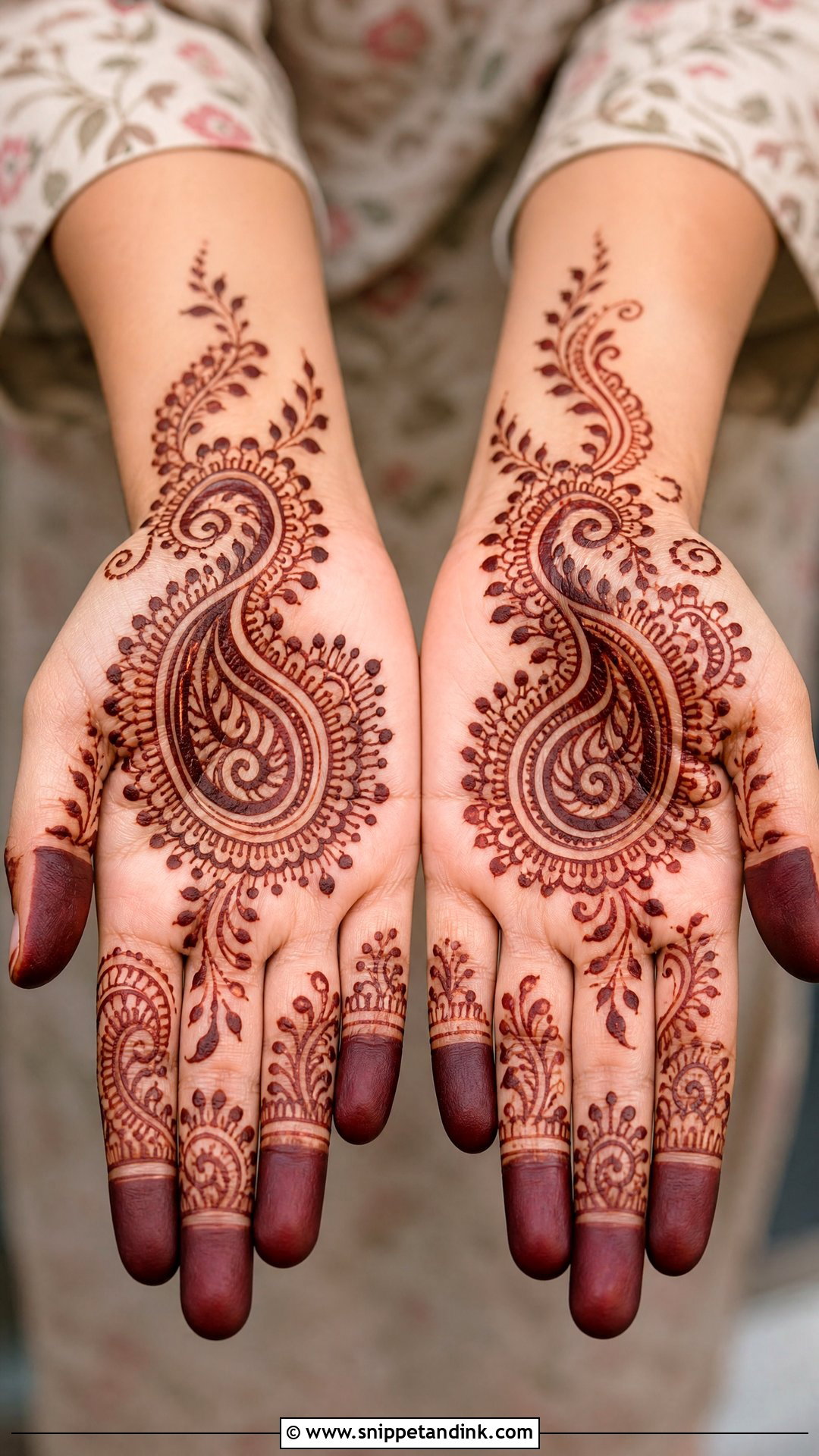
The paisley, or mango motif, is one of the oldest shapes in mehndi, and it adapts to almost any spot: palm, back of the hand or wrist. One large paisley with leaves and dots around it can carry a design on its own, or two or three can flow together in an Arabic-style trail. Keep the inner details light, with curved lines and small petals. The teardrop is easy to correct as you pipe; if the tip drifts, I widen the body to rebalance it.
10. Simple Indo Arabic Mehndi Design
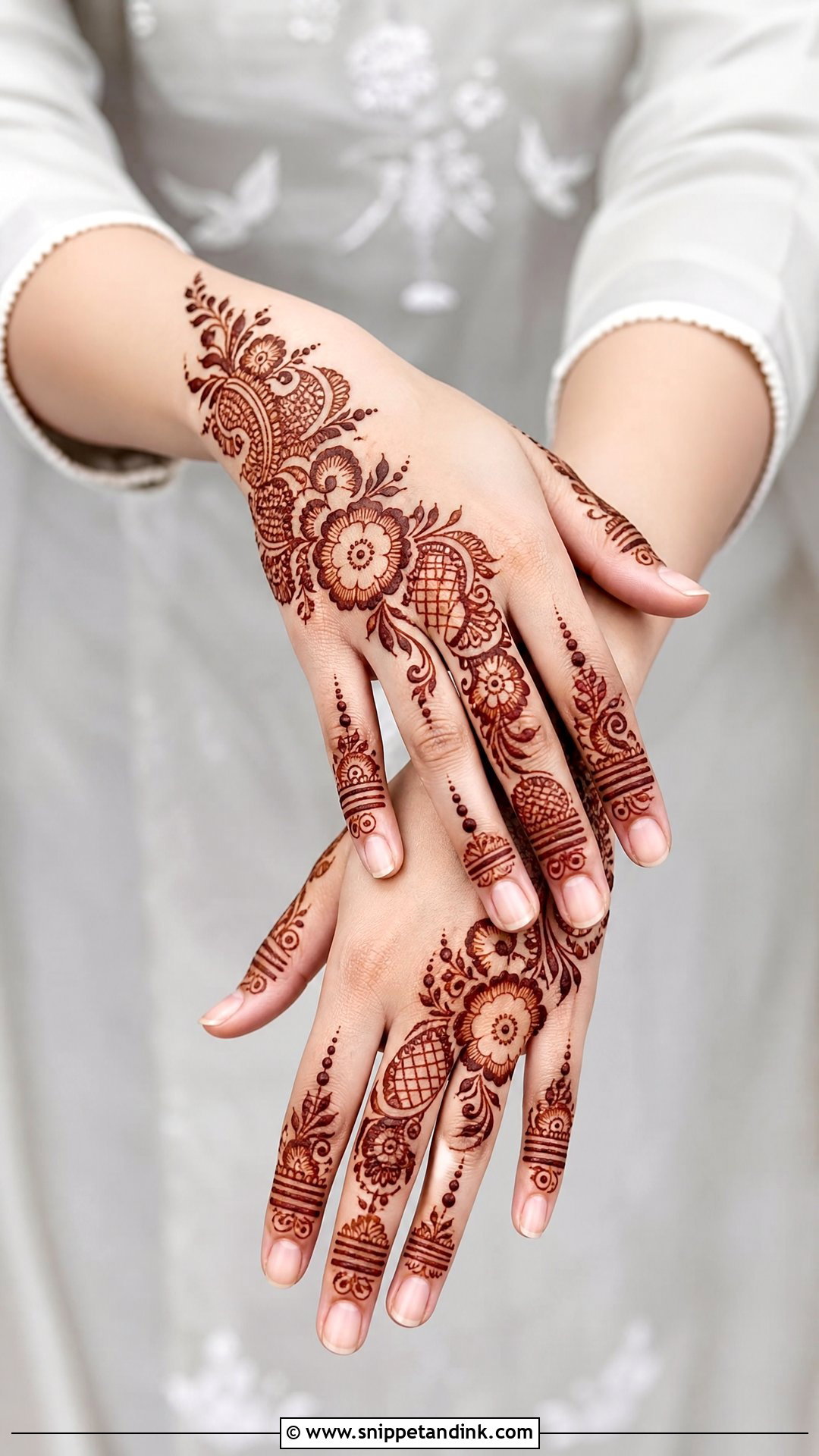
Indo Arabic work combines the open spacing of an Arabic trail with Indian detail inside it, so you get a floral trail, paisley shapes, mandala accents and light finger patterns. The Arabic side keeps it airy; the Indian details add richness. I use a bold outline and fine fillers, because that contrast is what still reads clearly once the stain settles to its final color. It sits between minimal and bridal, which is why it’s such a common choice for a sangeet or an engagement.
11. Simple Indian Mehndi Design
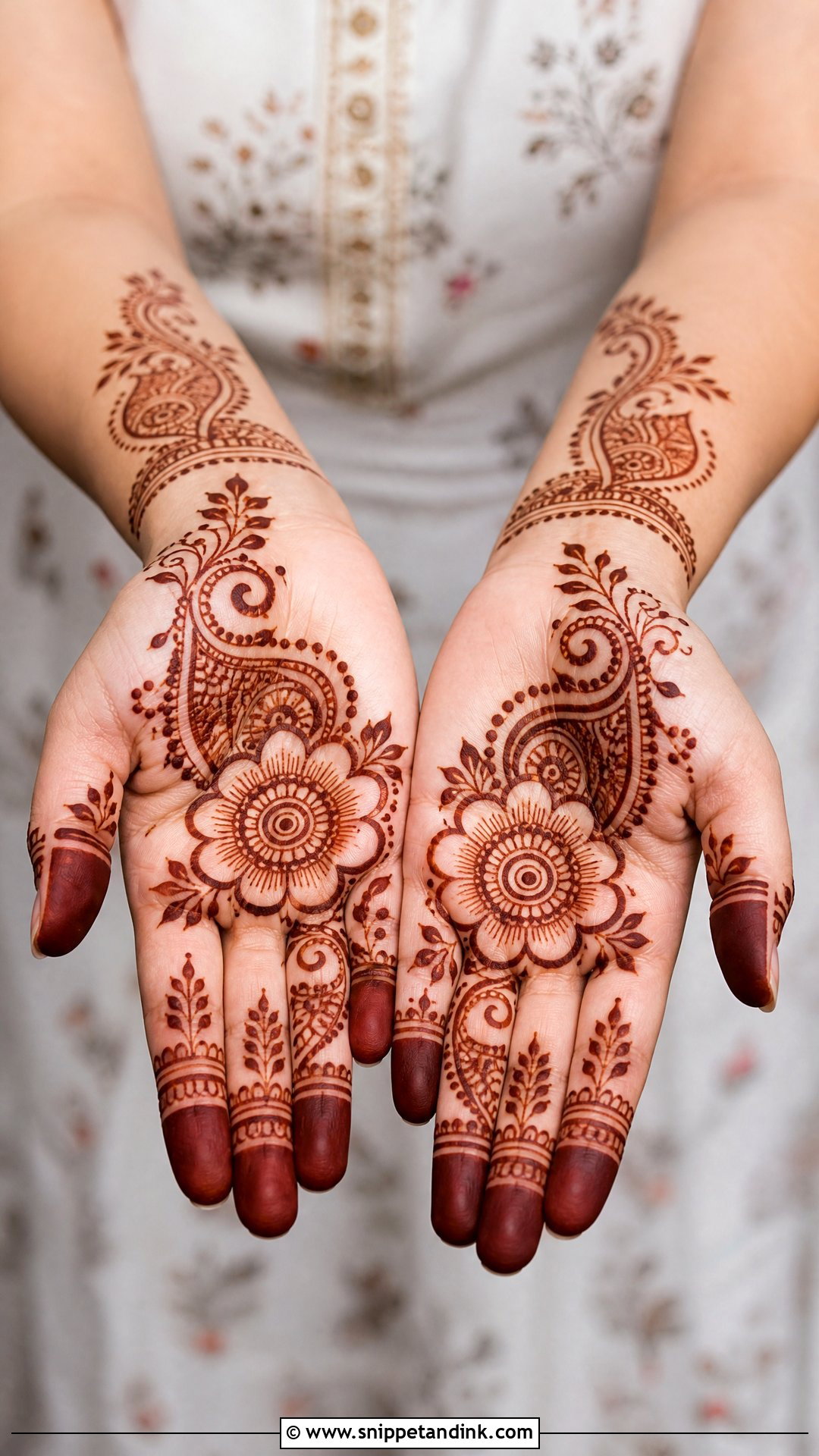
Indian mehndi is usually associated with dense work, but it can be light if it’s planned. I start with one center motif, a flower, mandala or paisley, and build out with small leaves, dots, curved borders and fingertip details. The rule I follow is not to fill every gap. Indian work relies on rhythm and repetition, so a few motifs repeated neatly look more traditional than many different ones crowded in. It suits pujas and festival mornings, on one hand or both.
12. Simple Gulf Mehndi Design
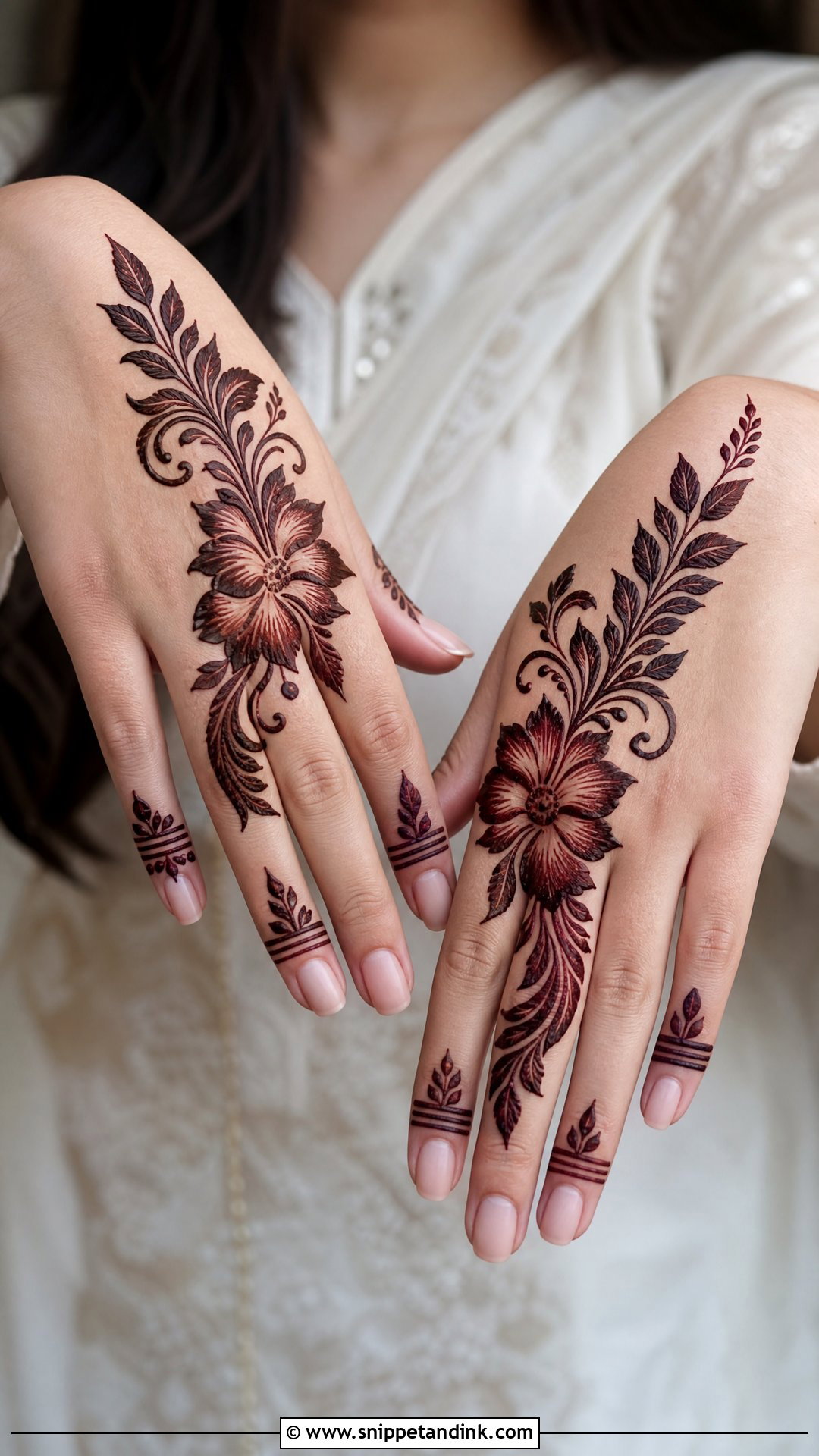
Gulf-style mehndi is about big, confident shapes: large flowers, thick leaves and long sweeping strokes running from the wrist to one or two fingers, with lots of skin left bare. It reads clearly from across a room. I often shade inside the petals in Gulf work, since the bold outline can take a darker fill without looking crowded. Fingertips stay bare or take simple rings. It pairs well with statement jewelry at an evening reception.
13. Simple Moroccan Mehndi Design
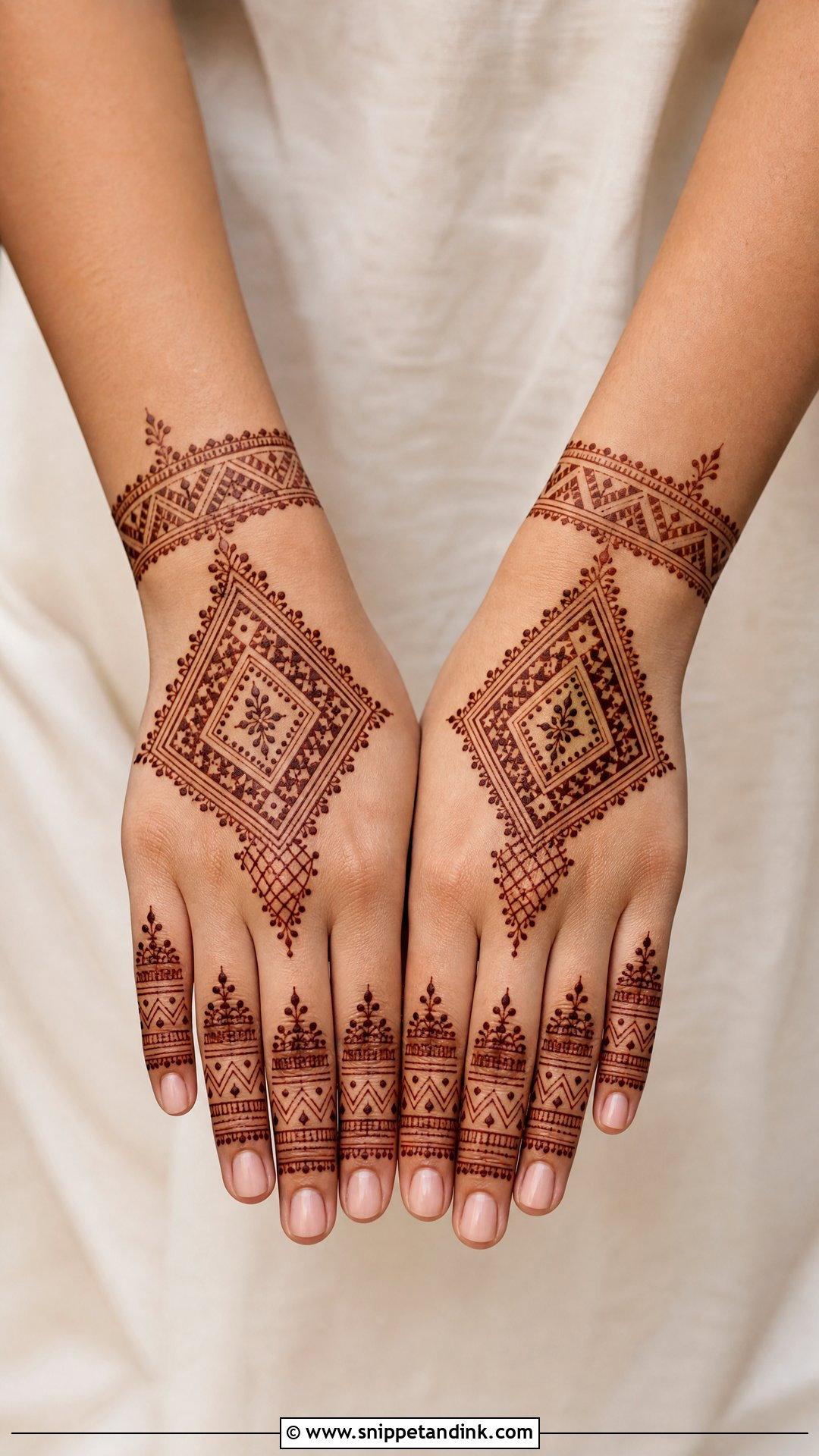
Moroccan-inspired designs use geometry: diamonds, lines, triangles, grids and clean borders, placed on the back of the hand, the palm, the fingers or running from wrist to forearm. They look complicated but are mostly repetition. Straight lines are harder to pipe than curves, so I keep the cone moving at a steady pace and never pause mid-line, which leaves a blob. Symmetry gives it strength; dots inside the diamonds add detail. It’s a strong choice for anyone tired of florals.
14. Simple Peacock Mehndi Design
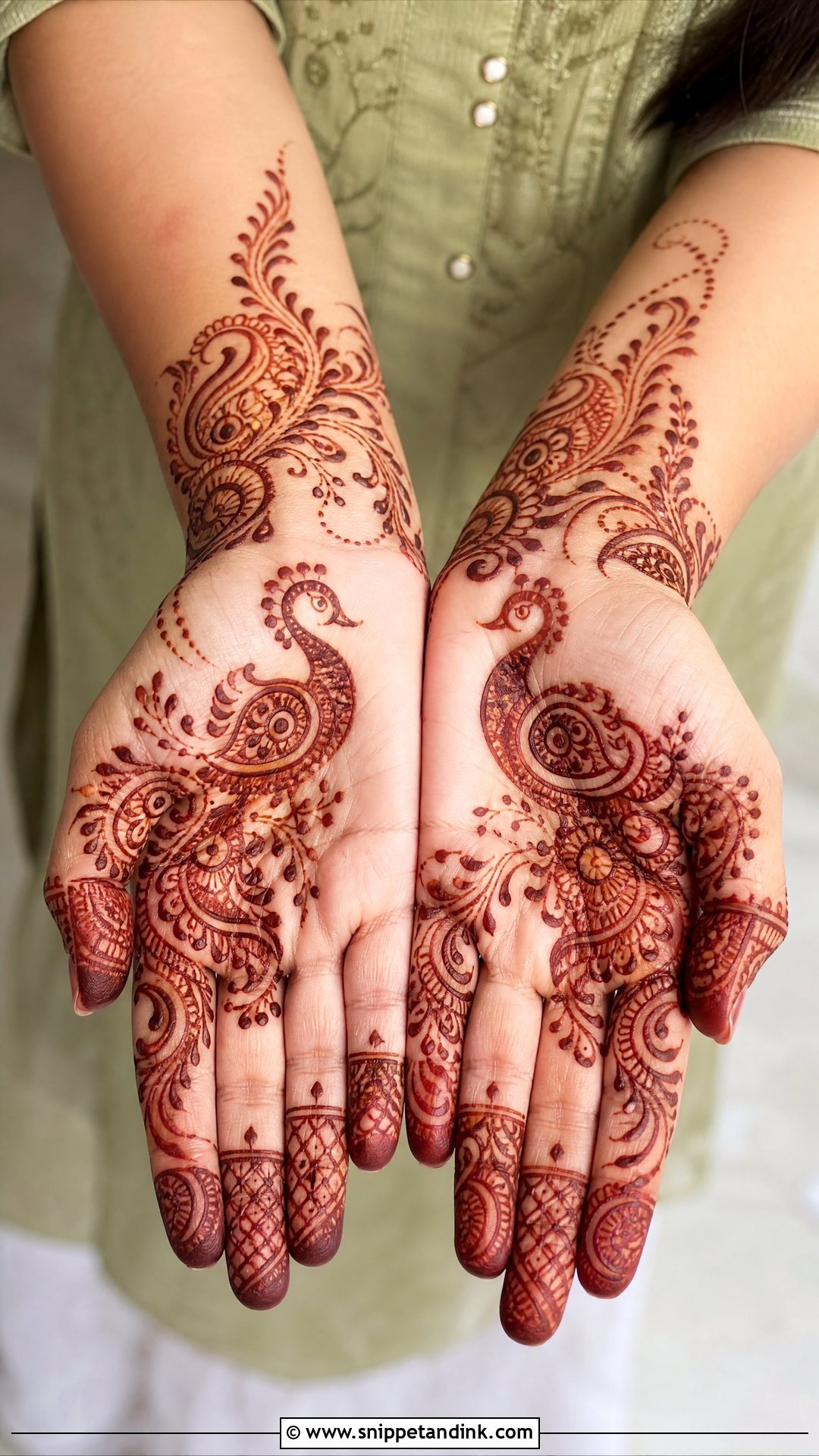
A peacock brings a traditional, festive note without a full bridal layout. One small bird sits on the palm or the back of the hand, and its feathers open out into vines, paisleys and dots. Keep the body shape clean and the feathers slightly spread, so the design doesn’t clot together. I draw the neck curve first, since that single line decides whether the bird looks graceful or awkward. It works as a half-hand design with simple finger patterns and a light wrist border.


15. Simple Half Hand Mehndi Design
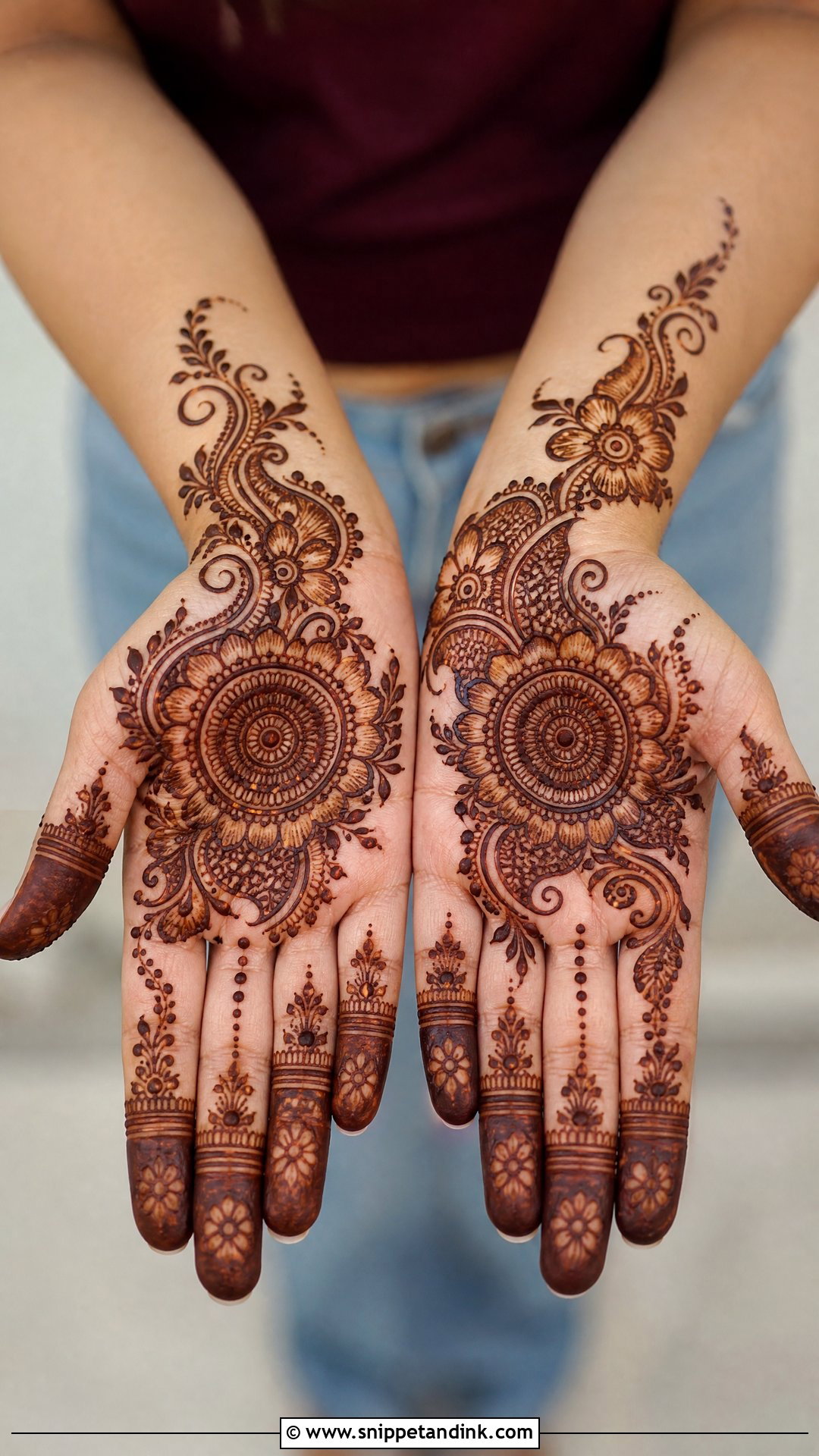
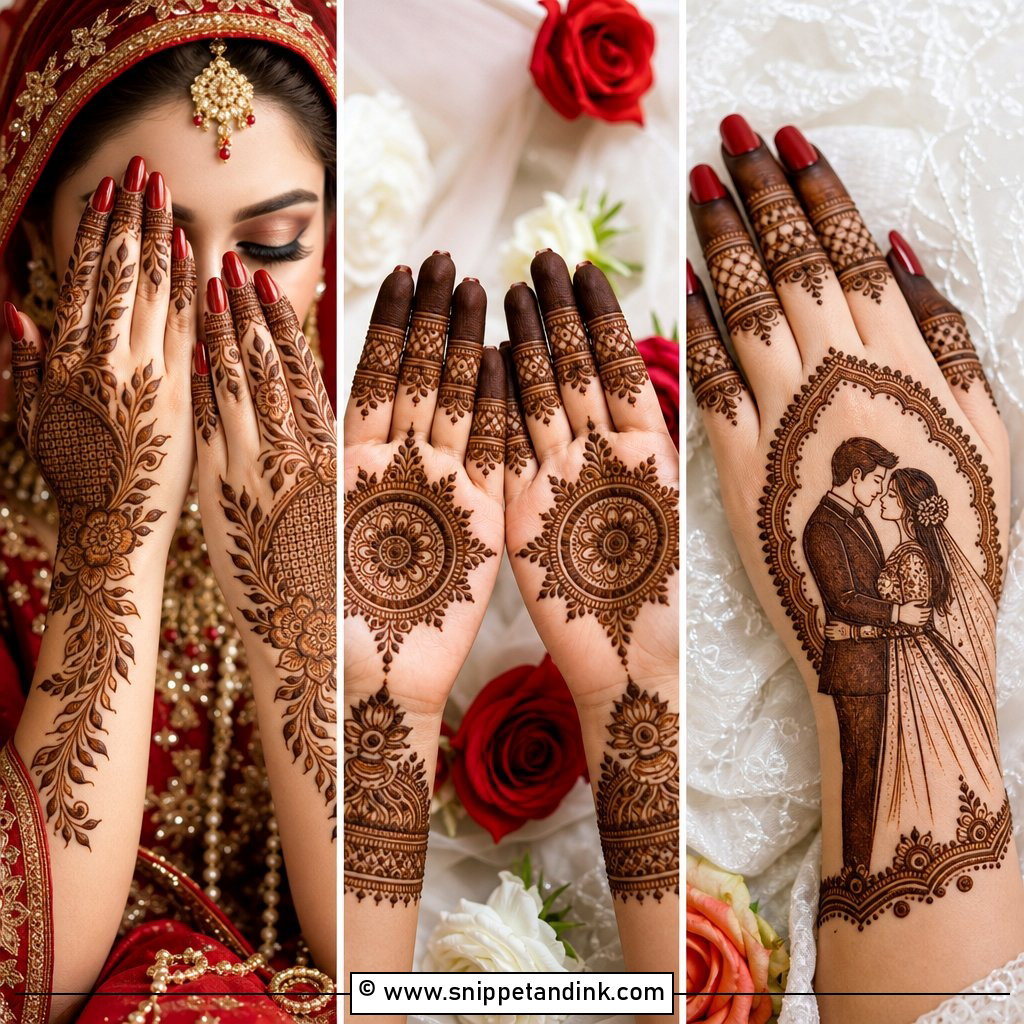
Half-hand coverage sits between minimal and full: the palm or back of the hand is covered and the design stops around the wrist. Flowers, paisleys, mandalas, vines and light finger filling all fit. It looks neat when the main motif is clear and the smaller details are evenly spaced. It’s practical for bridesmaids and guests getting ready at home, since it takes a fraction of the time of a full design.
16. Simple Full Hand Mehndi Design
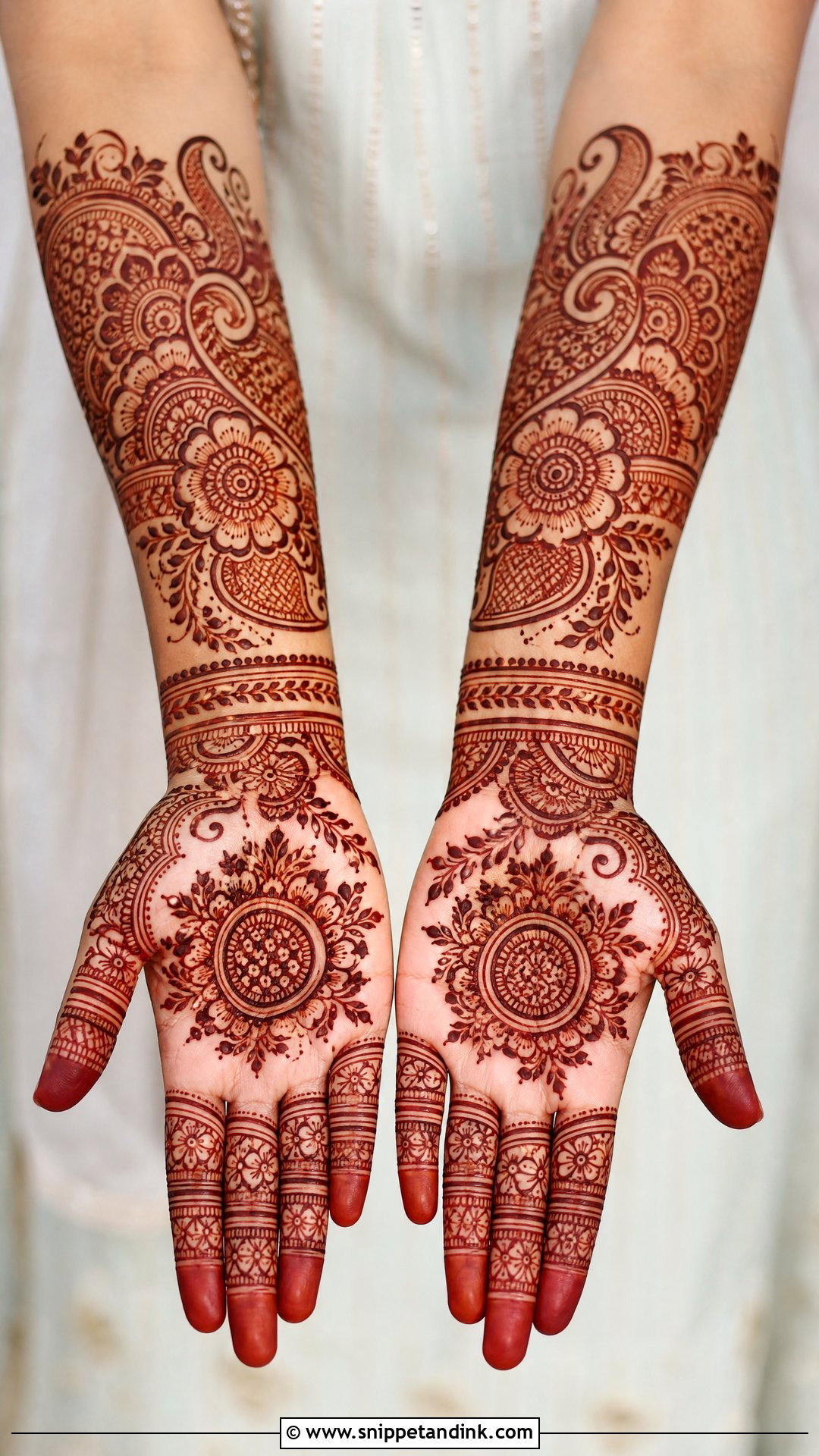
Full coverage can still look light if the spacing is generous. Instead of heavy bridal filling, I use flowing vines, mandala sections, wide paisleys, open florals and clean wrist borders, moving from the fingers toward the forearm in soft sections. The finger work should echo the palm and wrist; when it doesn’t, the hand looks like two separate designs. Bold outlines and simple fillers keep the final stain crisp. It’s a dressed-up option for guests who want more than a trail.
17. Simple Bridal Mehndi Design
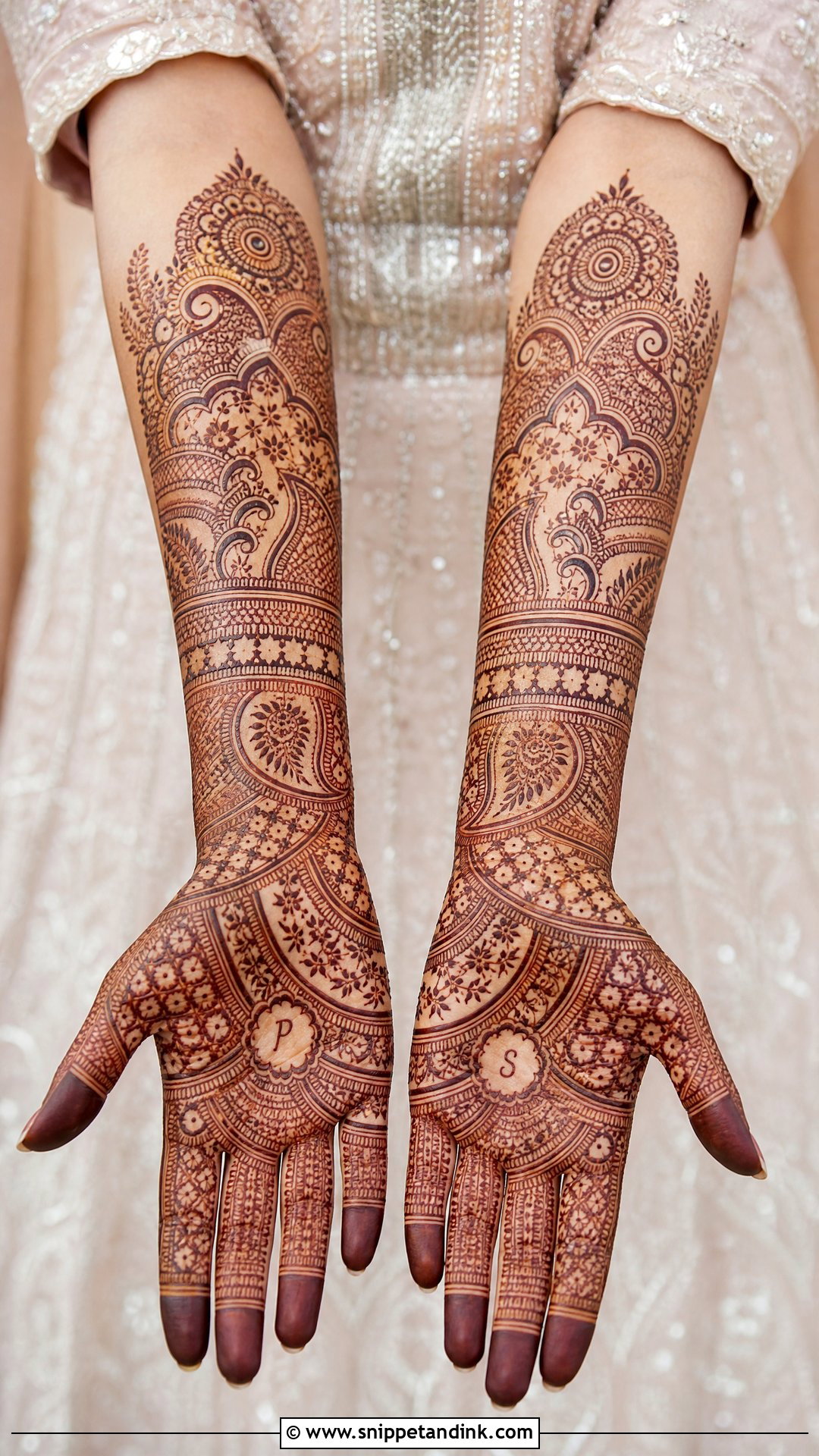
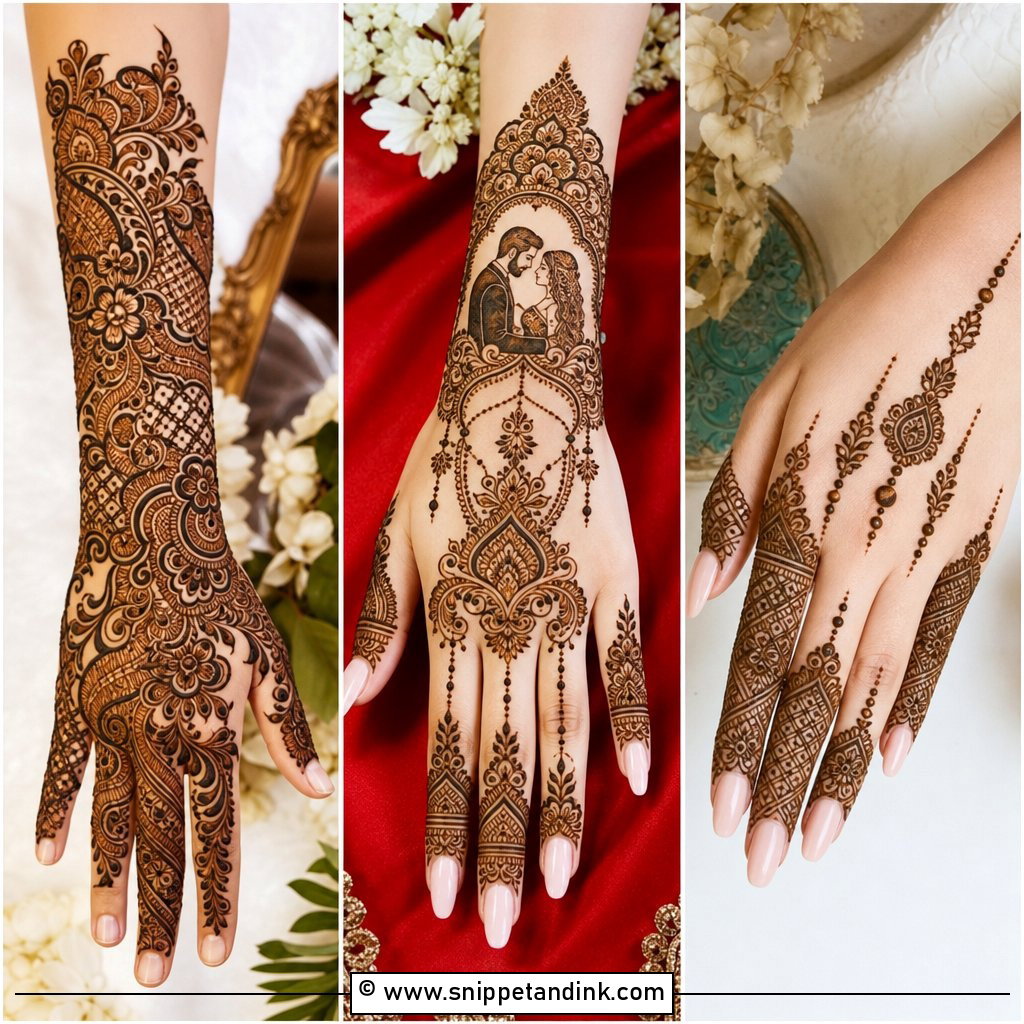
A lighter bridal design keeps the traditional elements, paisleys, florals, jaali panels and mandalas reaching from wrist to forearm, but with more open spacing. Many brides like hiding the groom’s initials or a small symbolic motif somewhere in the work, and a light design is actually easier to hide them in. Sitting time drops a lot, which matters for a court wedding or an intimate ceremony. I keep both hands balanced so they look like a pair in photos.
18. Simple Eid Mehndi Design
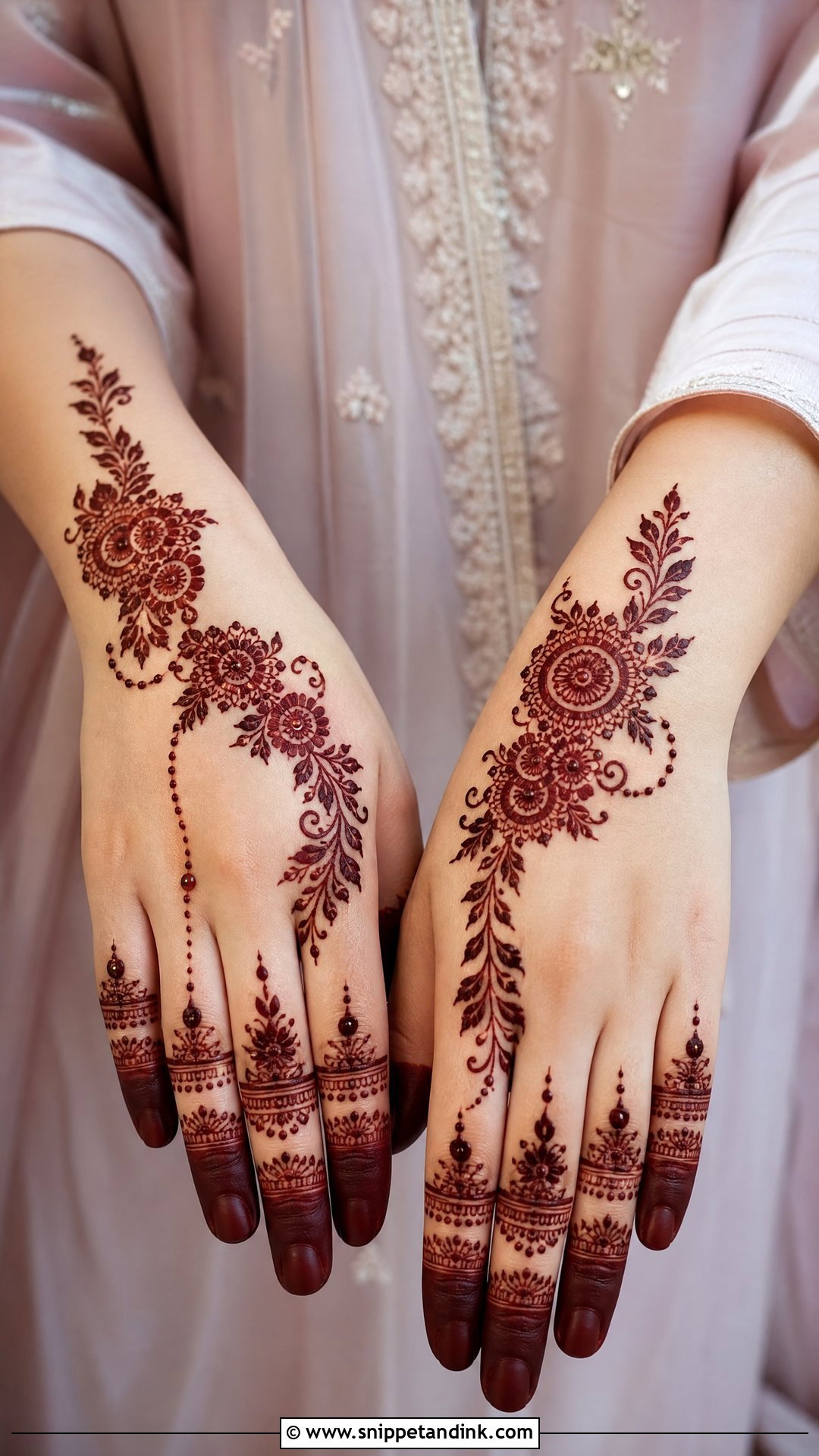
Eid mehndi usually goes on the night before, so it has the whole night to darken. Most designs combine Arabic flowers, leafy vines, mandala accents and finger details. Back-hand designs stay popular because they show between bangles and rings. A diagonal trail is quick; a fuller palm pattern feels more traditional. I keep Eid designs clean and not too thick, which helps them dry quickly and stain evenly. The same layout scales down easily for small hands.
19. Simple Diwali Mehndi Design
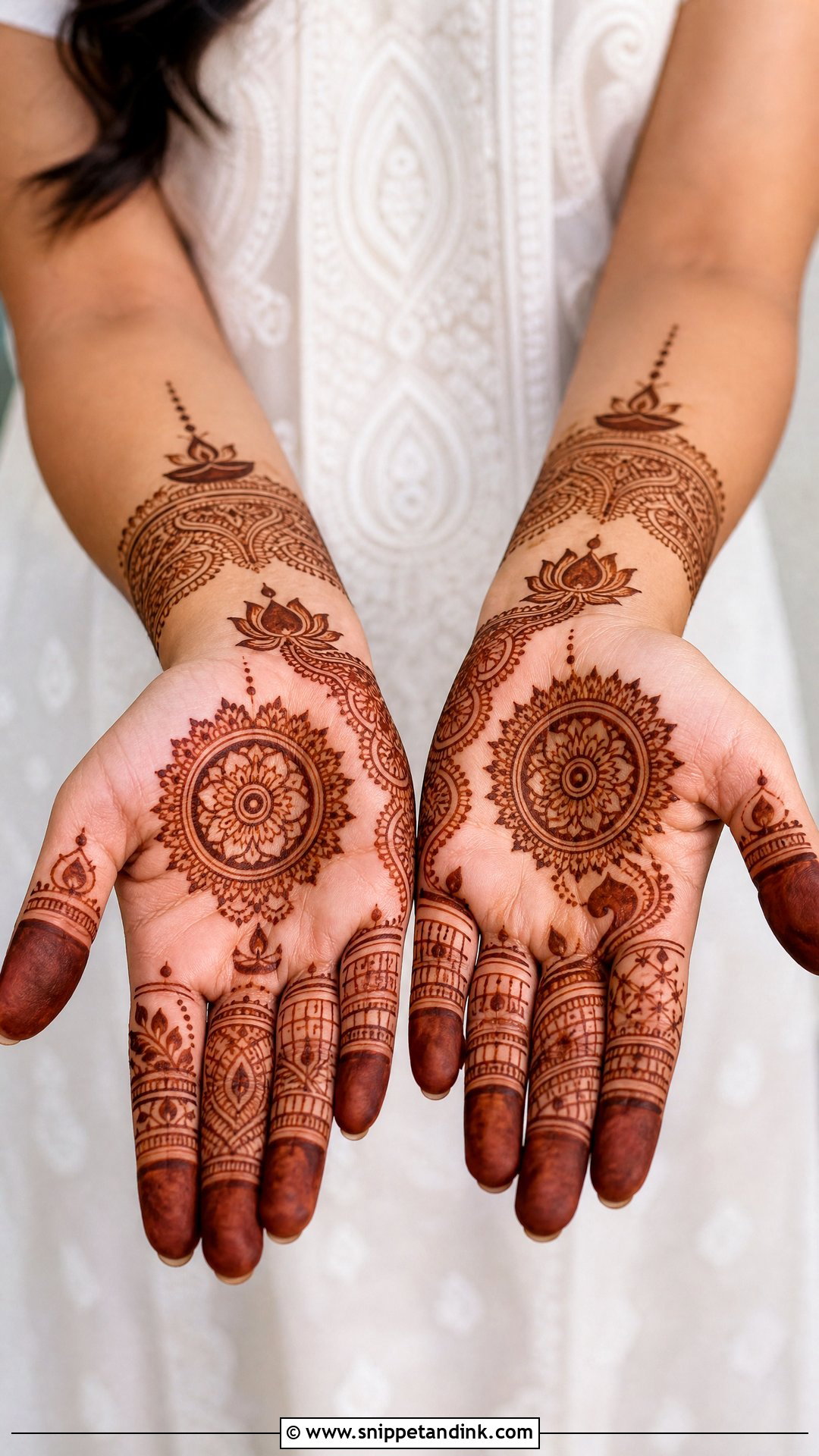
Diwali is a working festival, with cooking, cleaning and lighting diyas, so I steer people toward lighter work they can actually use their hands in. Mandalas, lotus flowers, paisley trails, leafy borders and small dotted accents all suit it. A palm mandala with finger details is right for puja; a back-hand bracelet design suits family gatherings. Tiny diya shapes can be hidden in the border without cluttering it.
20. Simple Engagement Mehndi Design
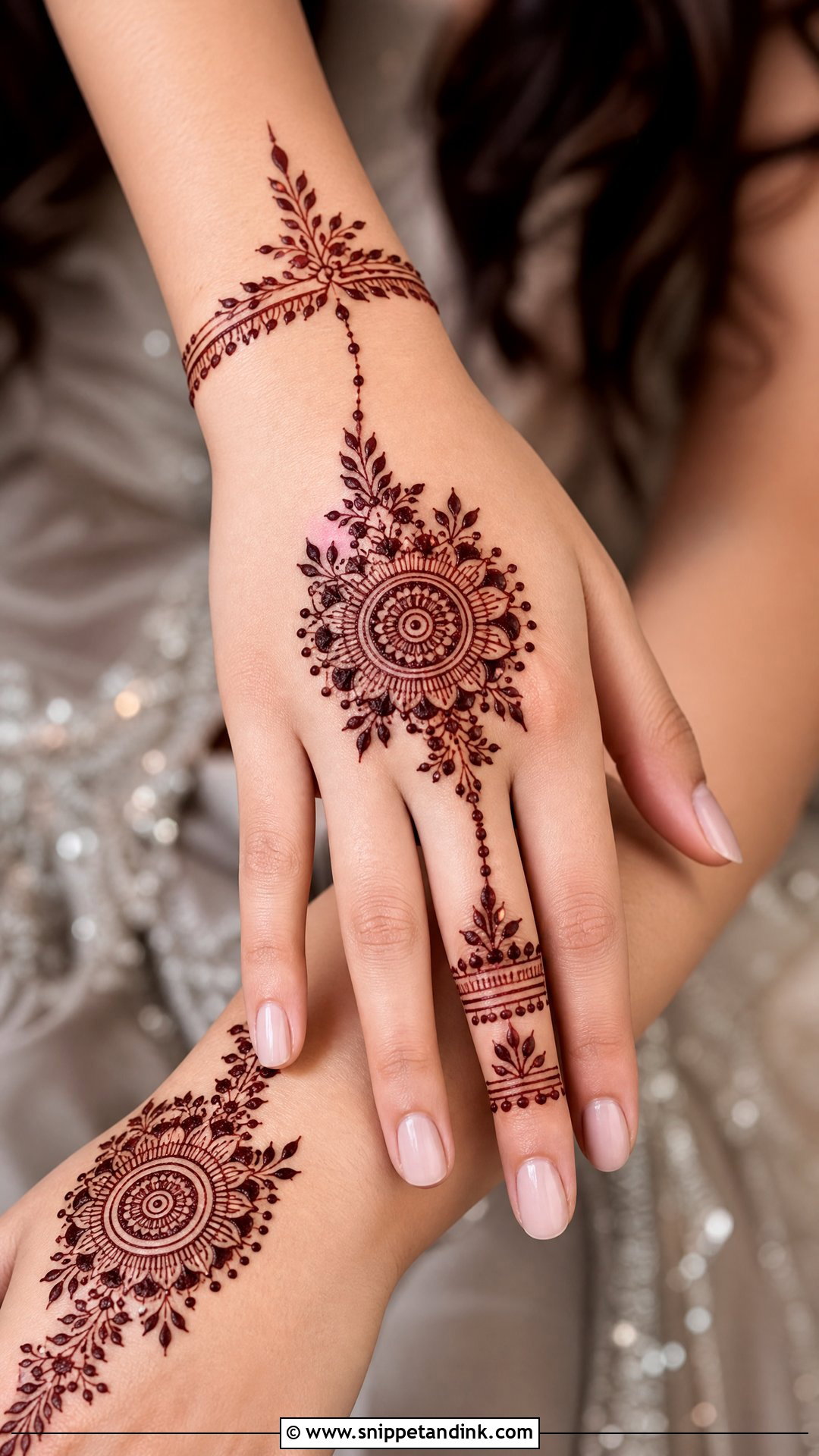
Engagement hands get photographed up close during the ring exchange, so placement matters more than coverage. A simple engagement mehndi design can combine a back-hand mandala, ring-style finger patterns, floral bracelet bands and soft wrist details. I keep the ring finger itself fairly open, especially around the base, so the ring sits on clean skin and doesn’t disappear into the pattern. A light Indo-Arabic trail adds movement without crowding the frame.
21. Simple Wedding Guest Mehndi Design
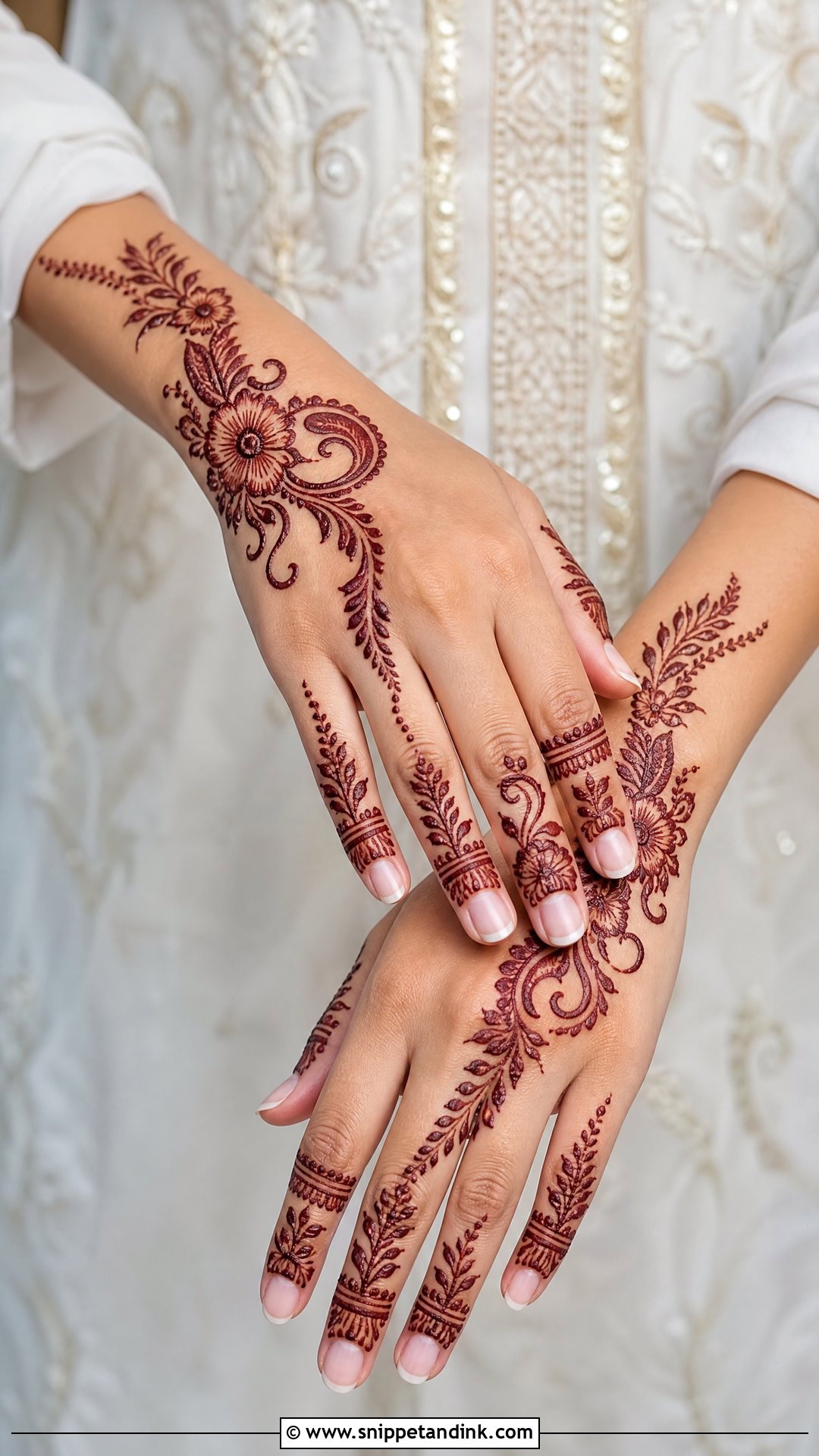
A guest’s mehndi should feel festive without reading as bridal. A back-hand floral trail, a palm paisley, a bracelet design or a half-hand Arabic pattern all fit. I suggest one main motif supported by leaves, dots and finger details, and I keep coverage away from the forearm, since many families think of full arm work as the bride’s. It suits haldi, mehndi night, sangeet and the reception, and the clean spacing shows up well in group photos.
22. Simple Kids Mehndi Design
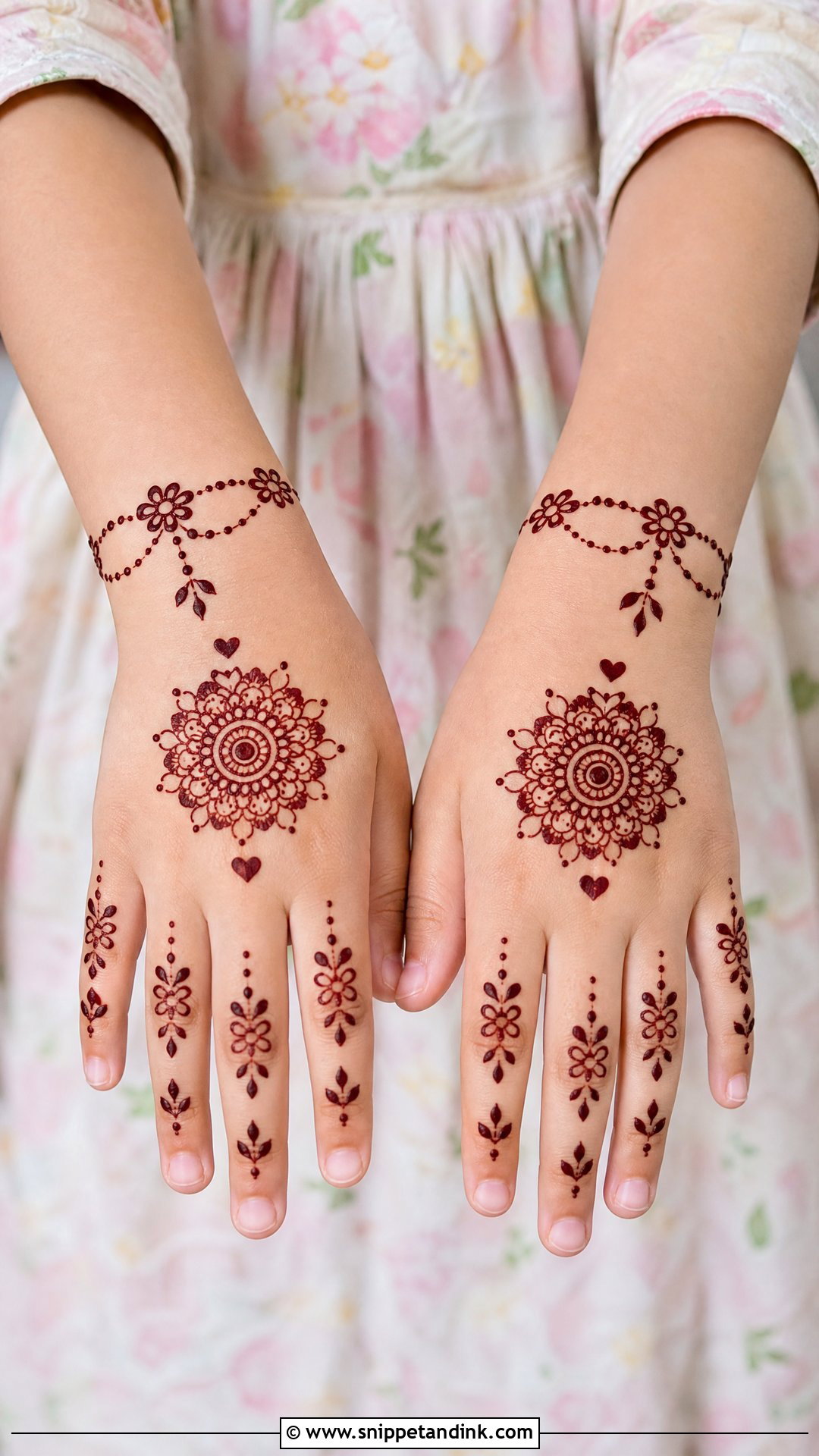
Children want mehndi to be over quickly, so small and fast wins. Small flowers, hearts, stars, mini mandalas, leafy bracelets or tiny finger patterns are enough. I prefer the back of the hand for young children, since palms smudge the moment they start playing. Rounded shapes and open spacing dry quicker. Only use natural henna on children; anything promising an instant black stain is not henna and can cause serious skin reactions.
23. Simple Teen Mehndi Design
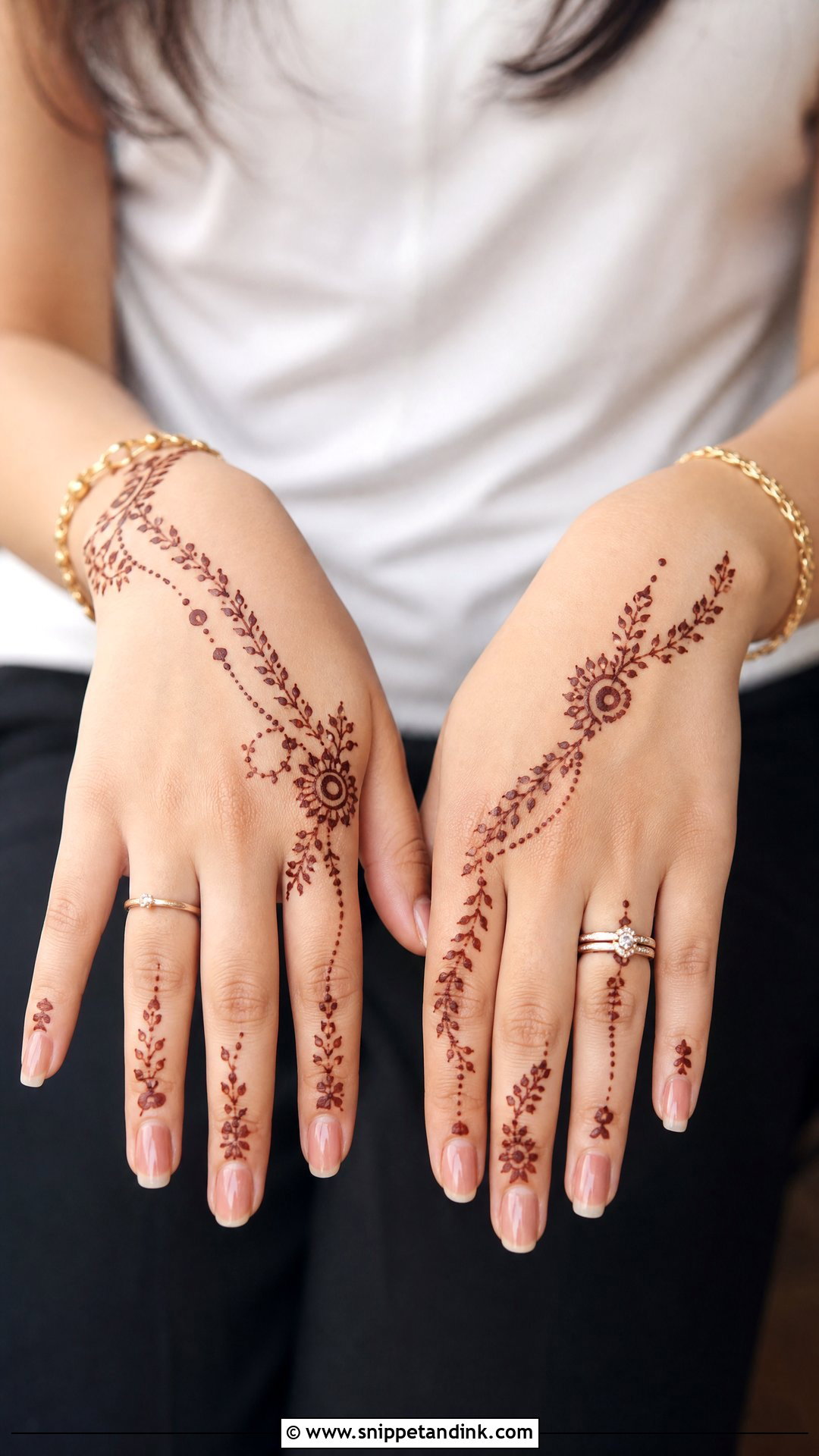
Teenagers usually want designs that look current and match everyday clothes as well as festival outfits: finger rings, bracelet chains, tiny florals, leafy trails, mini mandalas and open back-hand layouts. A diagonal Arabic trail or a minimal finger design gives style without full coverage. Half-hand patterns with clean spacing suit school functions. The trick with this age group is keeping it light, as heavy traditional work tends to look borrowed from an older relative.
24. Simple Minimal Mehndi Design
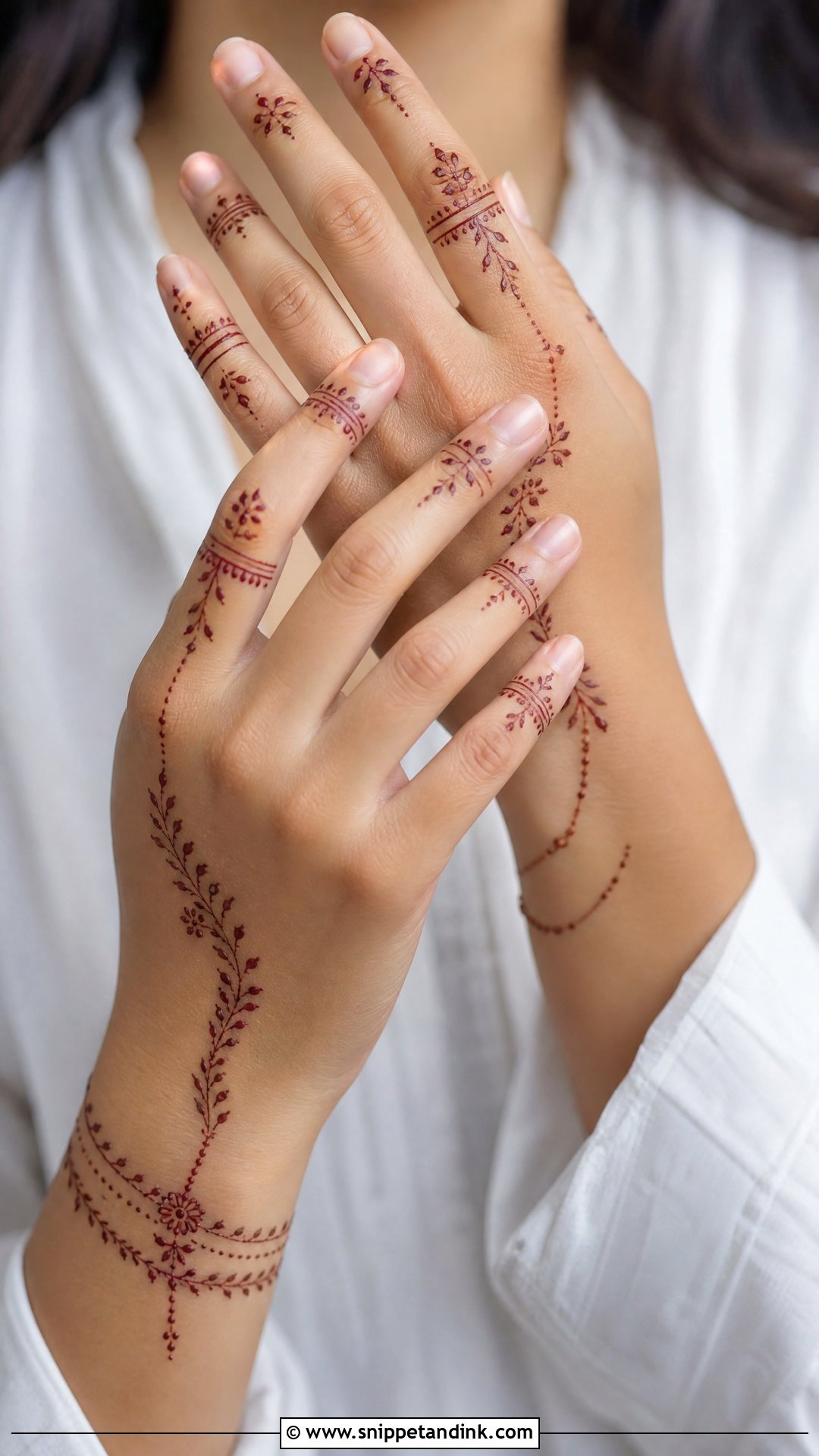
Minimal work might cover only the fingers, the wrist or one side of the back of the hand, using tiny leaves, dots, slim lines, mini flowers and small mandalas. The empty space is the design. It suits casual outings, office-friendly festivals and last-minute plans, and it flatters any hand shape. The honest drawback is that minimal designs show every wobble, so the lines need to be confident and even.
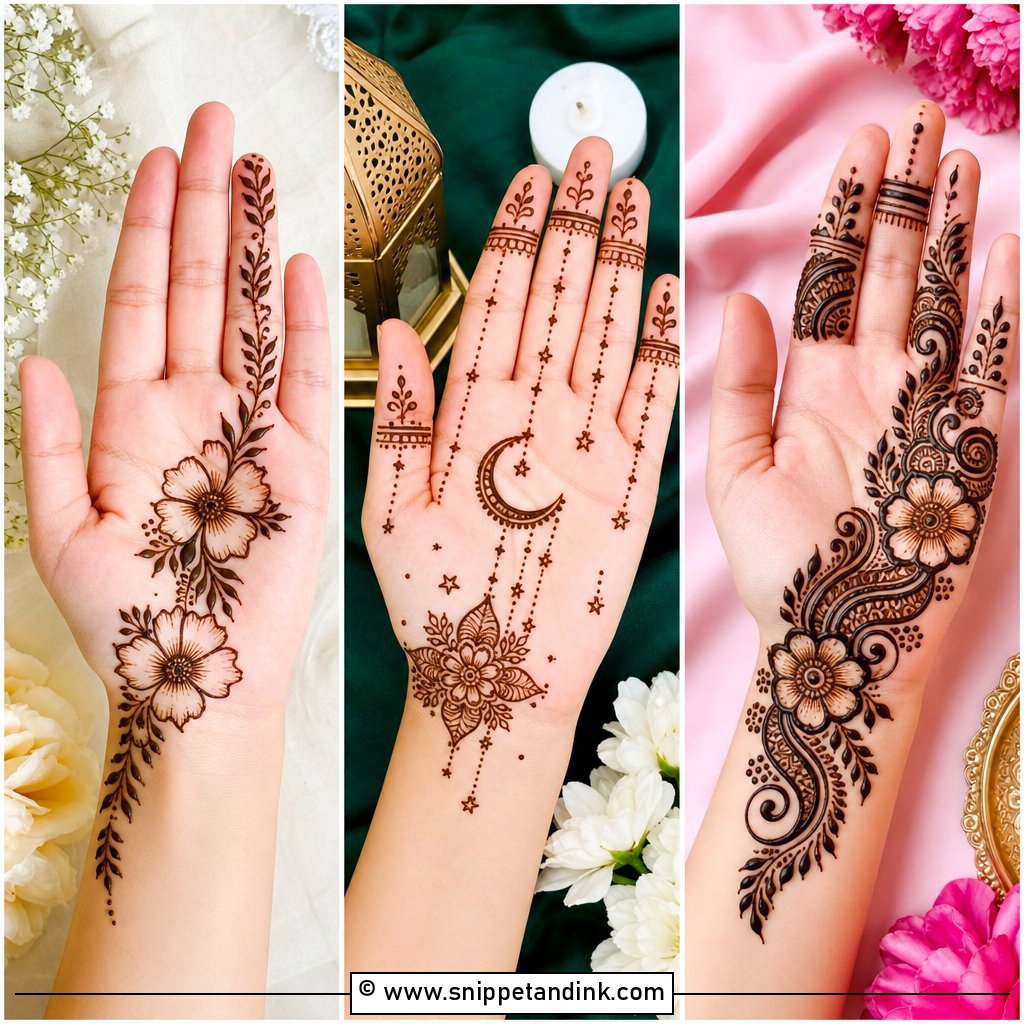

25. Simple Round Mehndi Design
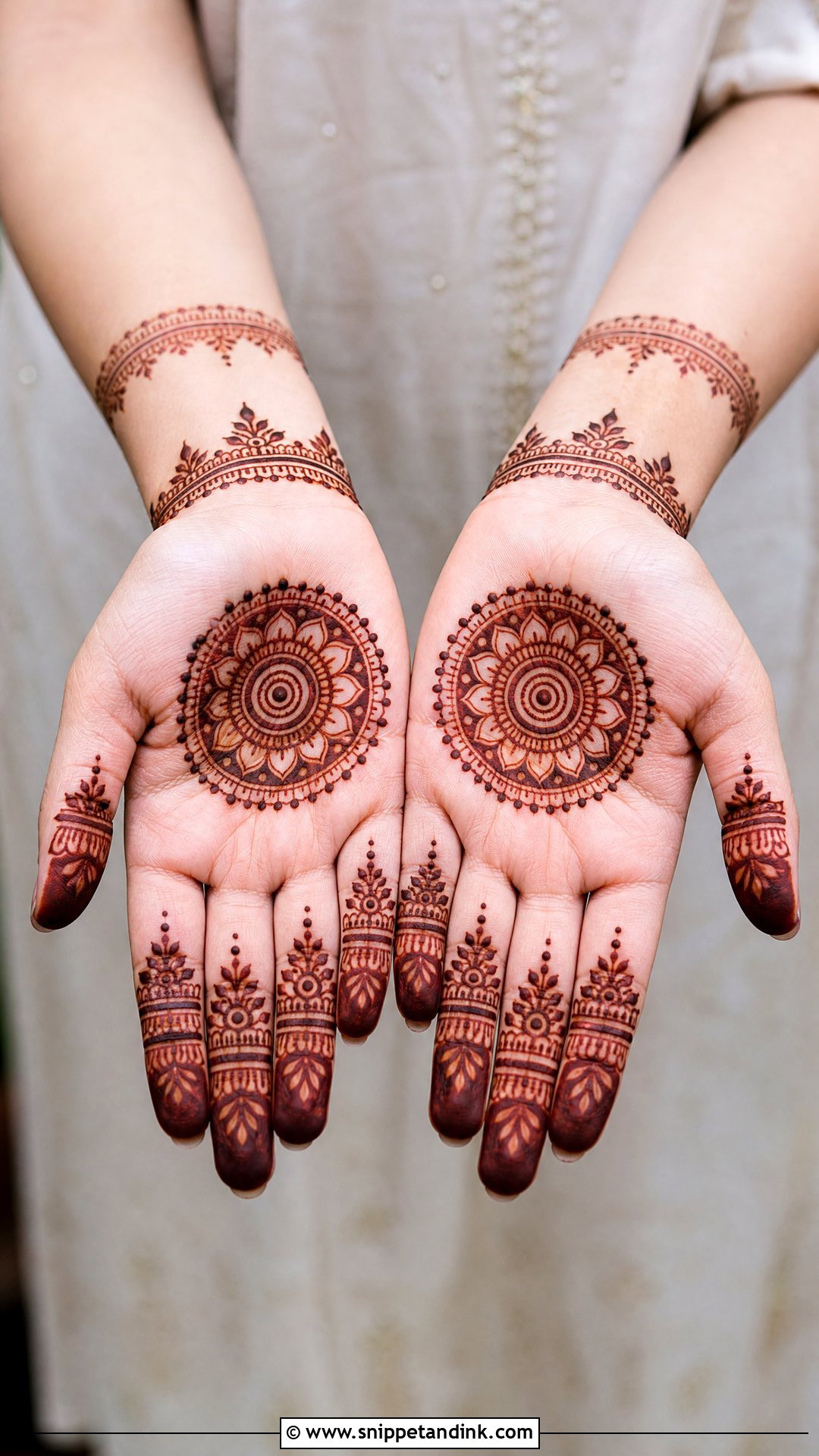
A round design centers on a circular motif on the palm or back of the hand: a mandala, a flower, a sun or a dotted ring. Light finger details and a wrist border complete it. Circles are naturally balanced, which is why they’re such a reliable starting point for beginners. Keep the outer rings neat and evenly spaced; uneven gaps between rings are the first thing the eye catches.
26. Simple Leaf Mehndi Design
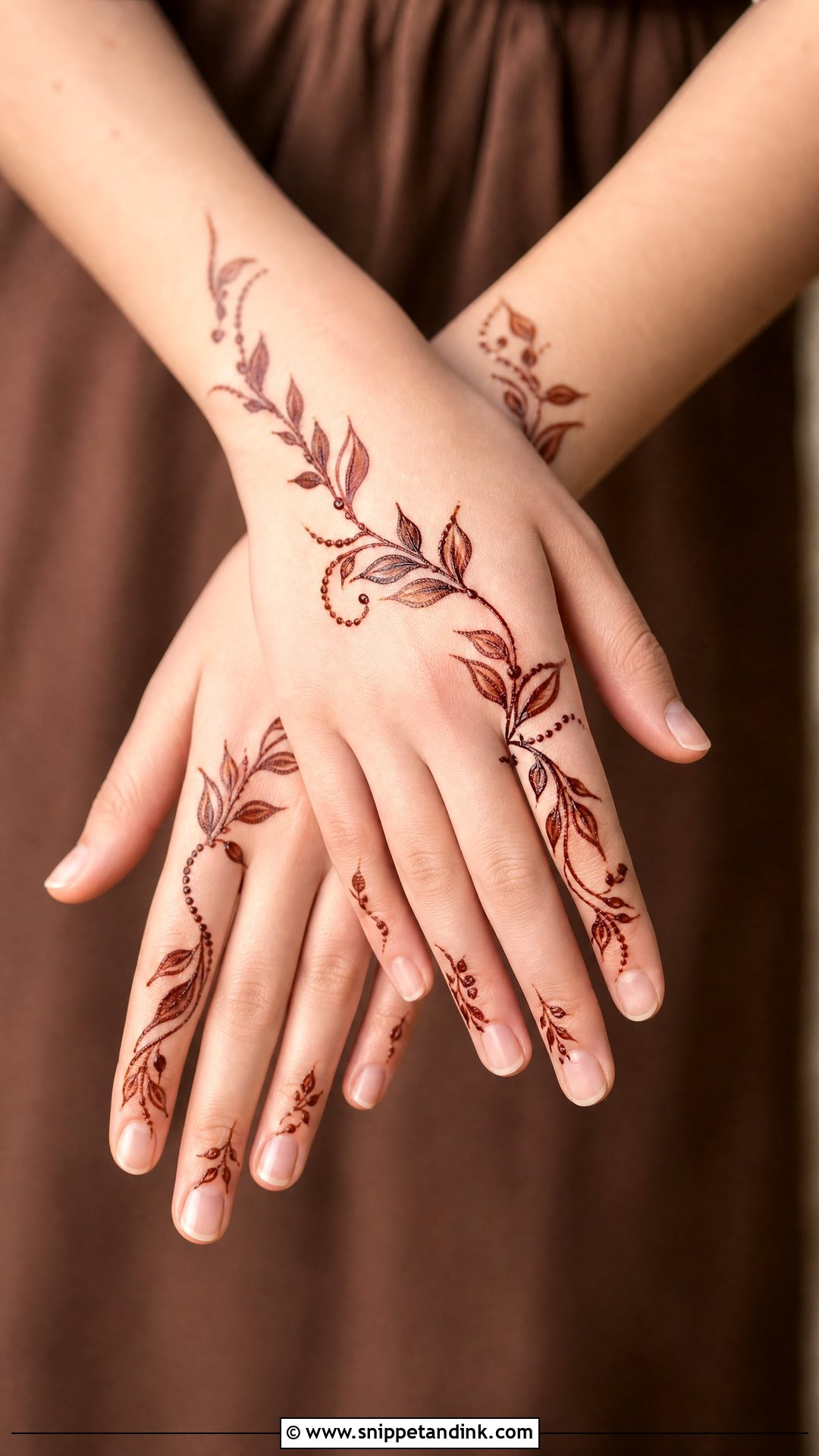
Leaves can run as a single vine across the back of the hand or gather in small clusters on the palm, with dots, curved lines and a few tiny flowers. Thin single-line leaves look minimal; double-outlined leaves look fuller. I run vines lengthwise down the hand and up the fingers, because long vertical lines make fingers look longer. It suits people who want something fresh but not heavily floral.
27. Simple Rose Mehndi Design
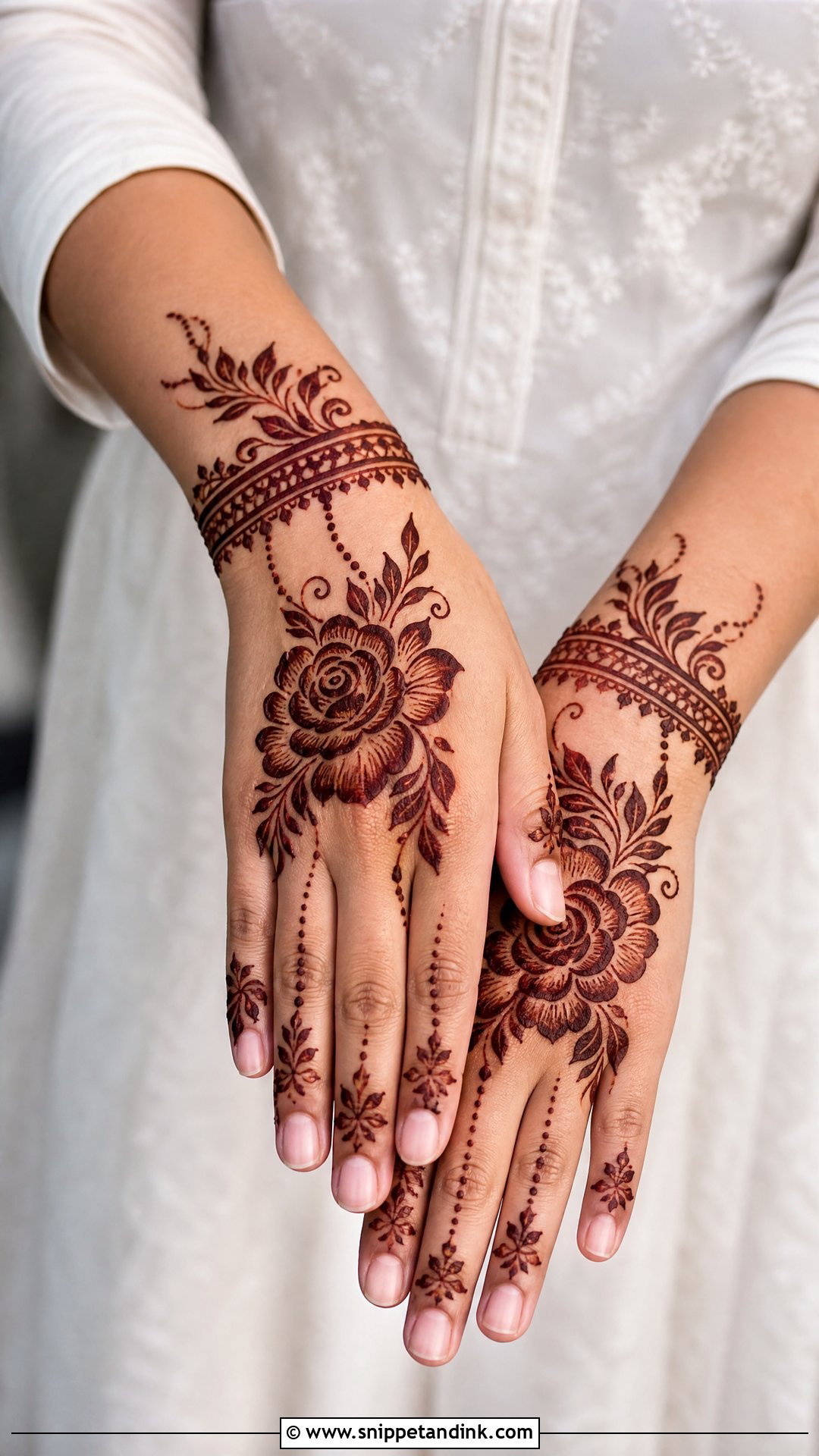
A single rose on the back of the hand or palm makes a romantic focal point, with leaves and vines running toward the fingers and a bracelet band at the wrist. Roses need open petals to stay legible, because the spiral center fills in quickly as the stain darkens. I draw the petals bigger than seems right, knowing they’ll read smaller on skin. Arabic spacing around the rose gives it room, which suits engagement parties and bridesmaids.
28. Simple Side Mehndi Design
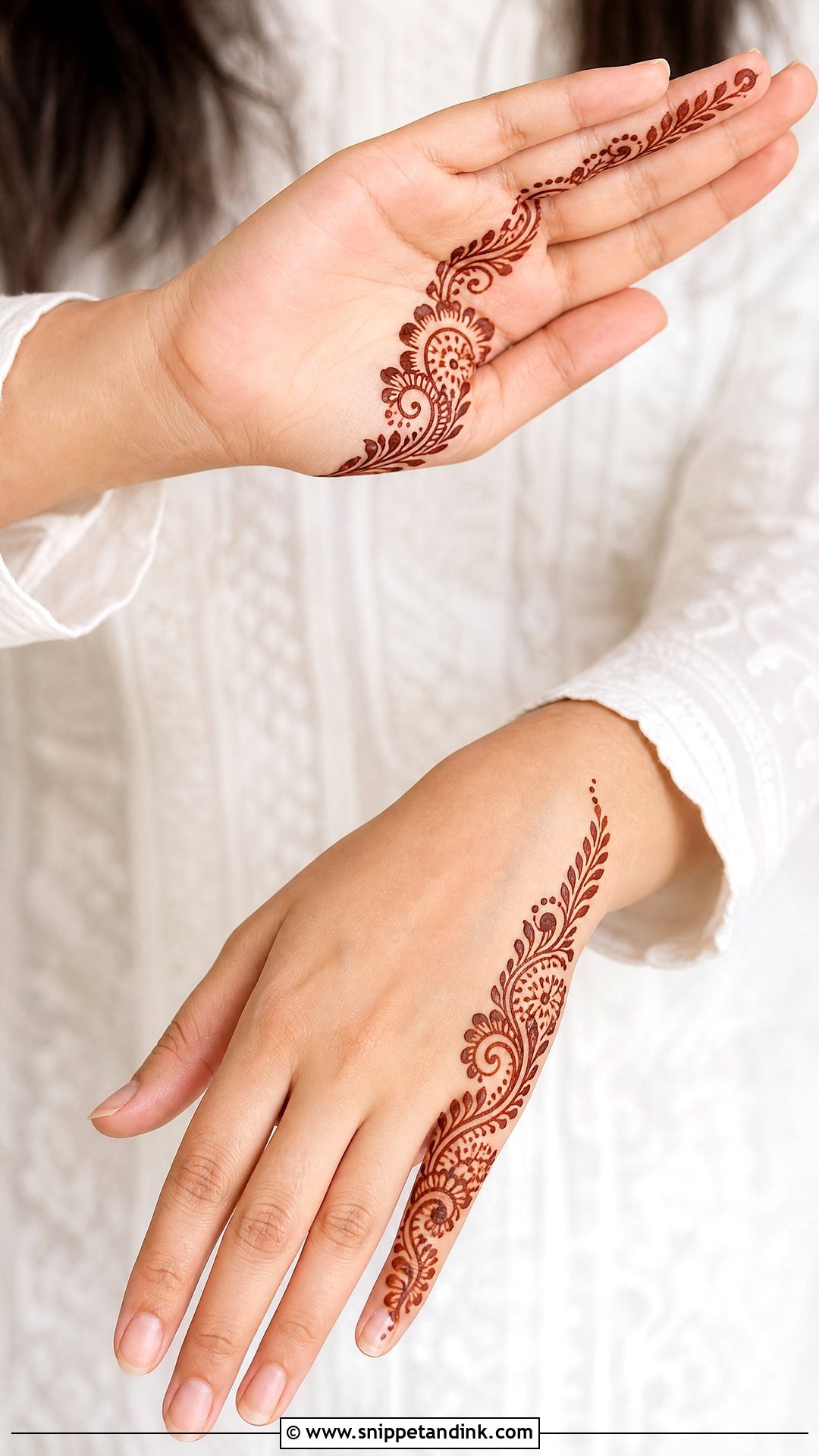
A side design runs along one edge of the palm or the back of the hand, leaving the rest open. Flowers, leaves, paisleys or geometric lines can flow from the wrist to the little finger, or from the thumb side to the index finger. The asymmetry is what makes it feel modern. It follows the hand’s natural outline, so it’s forgiving to place, and it looks good from different angles.
29. Simple Wrist Mehndi Design
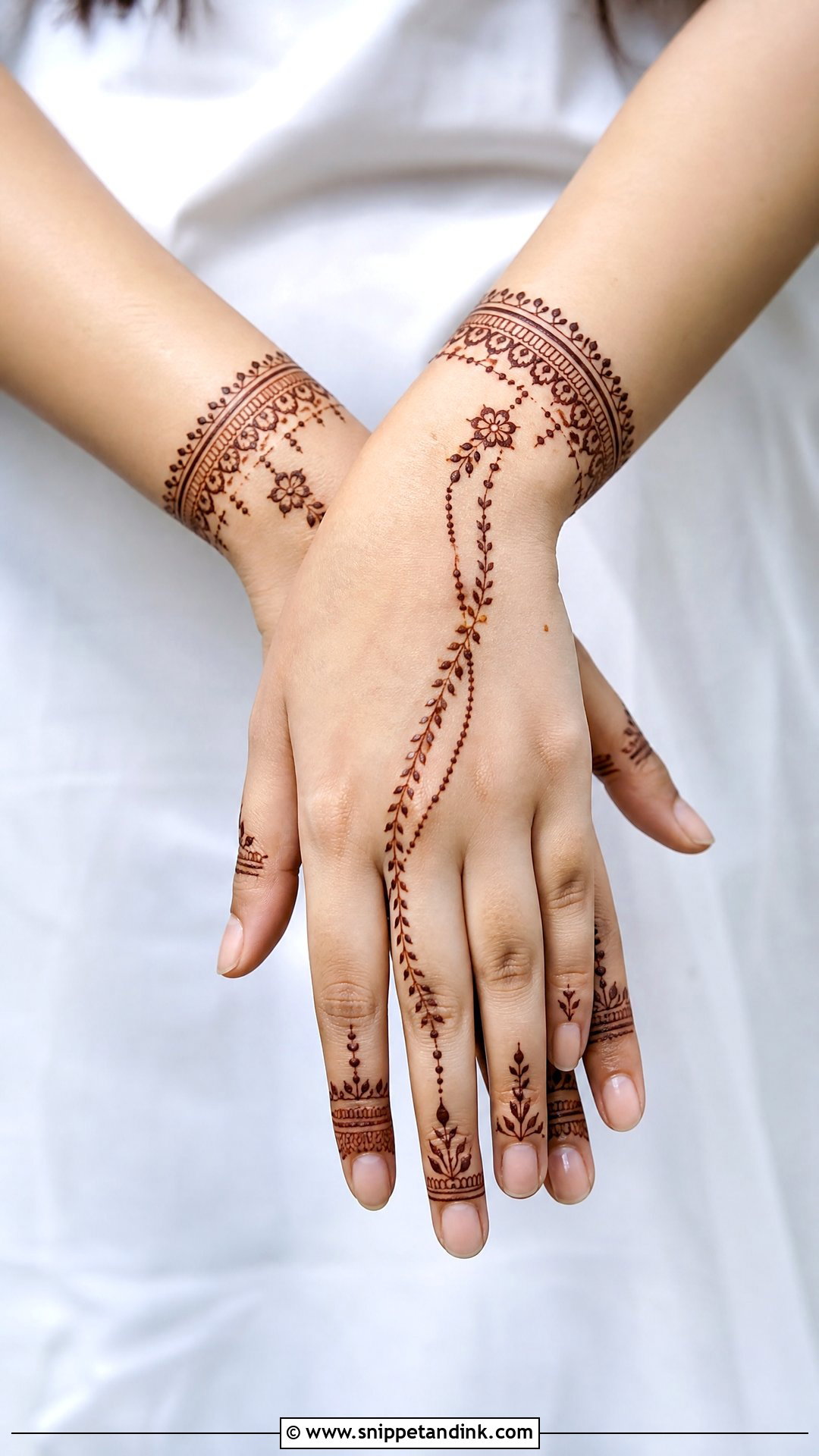
Wrist mehndi works like jewelry: a bracelet, cuff, bangle or delicate chain, with small flowers, leaves, dots and hanging drops. It can connect to one finger with a fine chain or stay just around the wrist. It suits anyone who uses their hands heavily, since the palm stays clear. Plan for your bangles; a full stack sits right over the wrist and will cover much of the design, so I’d either set the pattern higher or keep the bangles light.
30. Simple Modern Mehndi Design
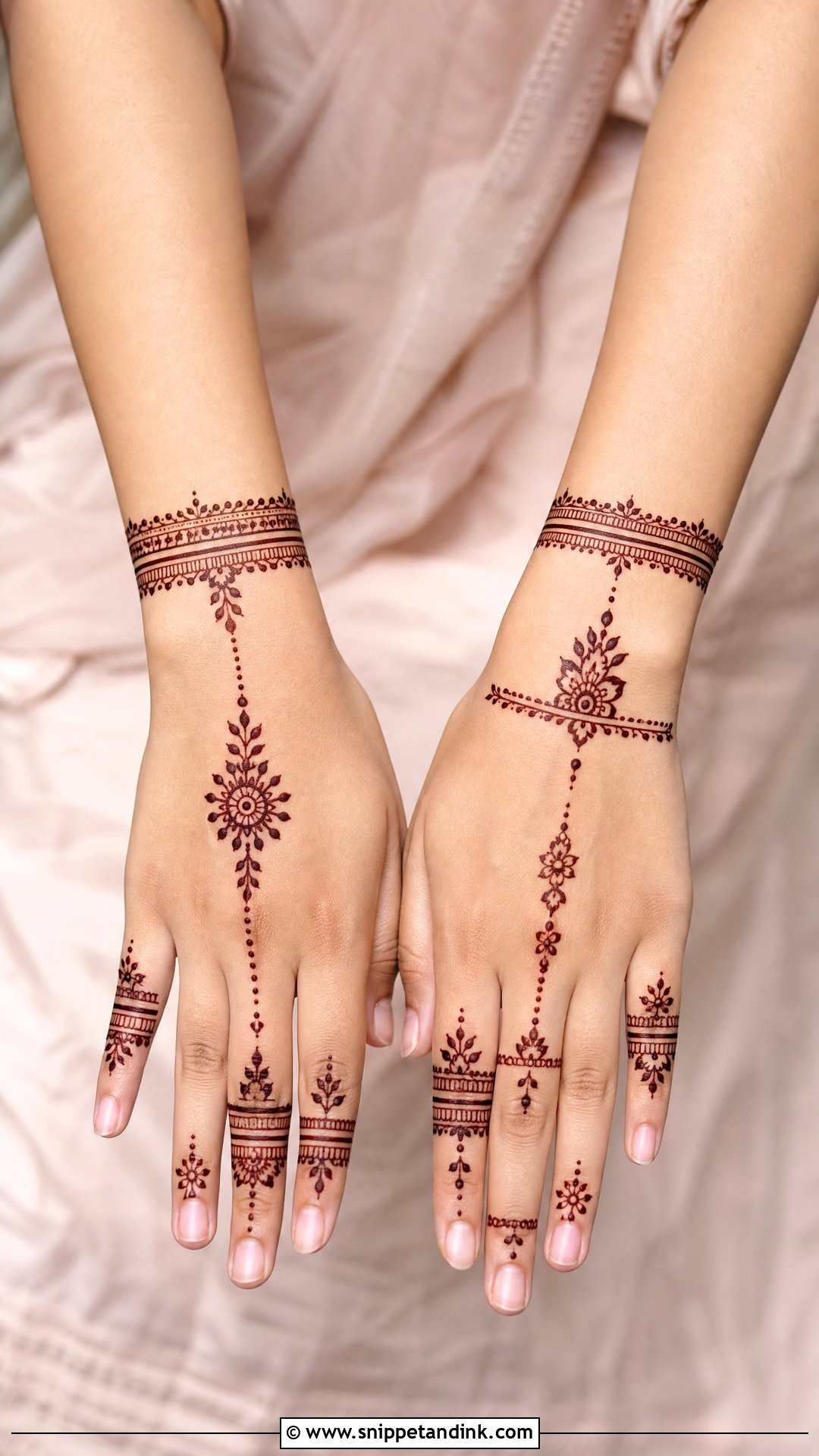
Modern mehndi relies on clean lines, open spaces and placement: finger rings, geometric bands, tiny florals, negative-space trails and neat wrist details. It doesn’t follow a heavy traditional layout. I sometimes keep one hand minimal and make the other slightly fuller, which looks deliberate rather than unfinished. It pairs with both traditional and fusion outfits, which is why younger guests and bridesmaids choose it so often.
When to Sit for Henna Before the Event
Henna peaks a day or two after it’s applied, so the timing matters as much as the design. For a guest or festival design, I suggest applying the evening before; for a bride, one to two days before the wedding, so the color is at its darkest on the day. Applying it the same morning means you’ll be wearing the paler early stain.
- Simple finger or wrist designs take a few minutes per hand; a full-hand design takes much longer, so plan the queue at a busy mehndi night.
- Give the paste time to dry fully before you use your hands or sleep.
- Plan the outfit change before, not after, so sleeves don’t smudge wet paste.
- If you’re sleeping with paste on, wrap the hands loosely in tissue and keep them still.
One Clear Motif, Plenty of Bare Skin
Good simple henna doesn’t need to be complicated. Arabic trails, mandala palms, floral back-hand patterns, bracelet work, minimal fingers and geometric layouts all succeed for the same reasons: clean lines, balanced spacing and a main motif that’s easy to see. Keep the lightest designs for casual days and fuller ones for weddings and festivals. Think about your sleeves, bangles and rings before you sit down, and the design you pick will show the way you imagined it.
You'll Like These Ideas:







Leave a Reply