
Palms are where henna does its best work. The skin there is thicker than on the back of the hand, so it takes the dye deeper and holds a crisp line long after the backs have faded. That’s why I treat the palm as the main stage: one clear focal point, room around it, and finger work that leads the eye out to the tips. Below are thirty layouts I’d happily draw, from dense Indian bridal fillers and diagonal Arabic trails to Moroccan grids and small minimal circles, each with a note on who it suits and where it tends to go wrong. If you’d like a second round of ideas after this one, there’s another set of 30 Unique Palms Mehndi Designs worth browsing.
Reading Your Palm Shape Before the Cone Comes Out
Before I draw a line, I ask you to hold your hand flat and then let it relax. A motif that looks centered on a flat palm drifts toward the thumb once the hand cups, so I usually set the focal point a little lower than people expect, roughly where the palm is deepest. Then I look at proportions.
Long, narrow palms
Vertical layouts suit you: a trail from wrist to middle finger, stacked motifs, thin finger connectors. A very wide mandala can crowd the edges and make the palm look pinched.
Short, wide palms
A round mandala or a diagonal Arabic trail fills the width comfortably, and finger-connected lines help the fingers look longer.
Small hands and children
Fewer, bigger motifs. Fine fillers on a small palm merge into one brown patch as the stain develops.
It also helps to tell your artist four things up front: the date of the event, the color of your outfit, whether you need to use your hands soon after, and any skin sensitivity you’ve had with henna before.
1. Full Palm Mandala Mehndi Design
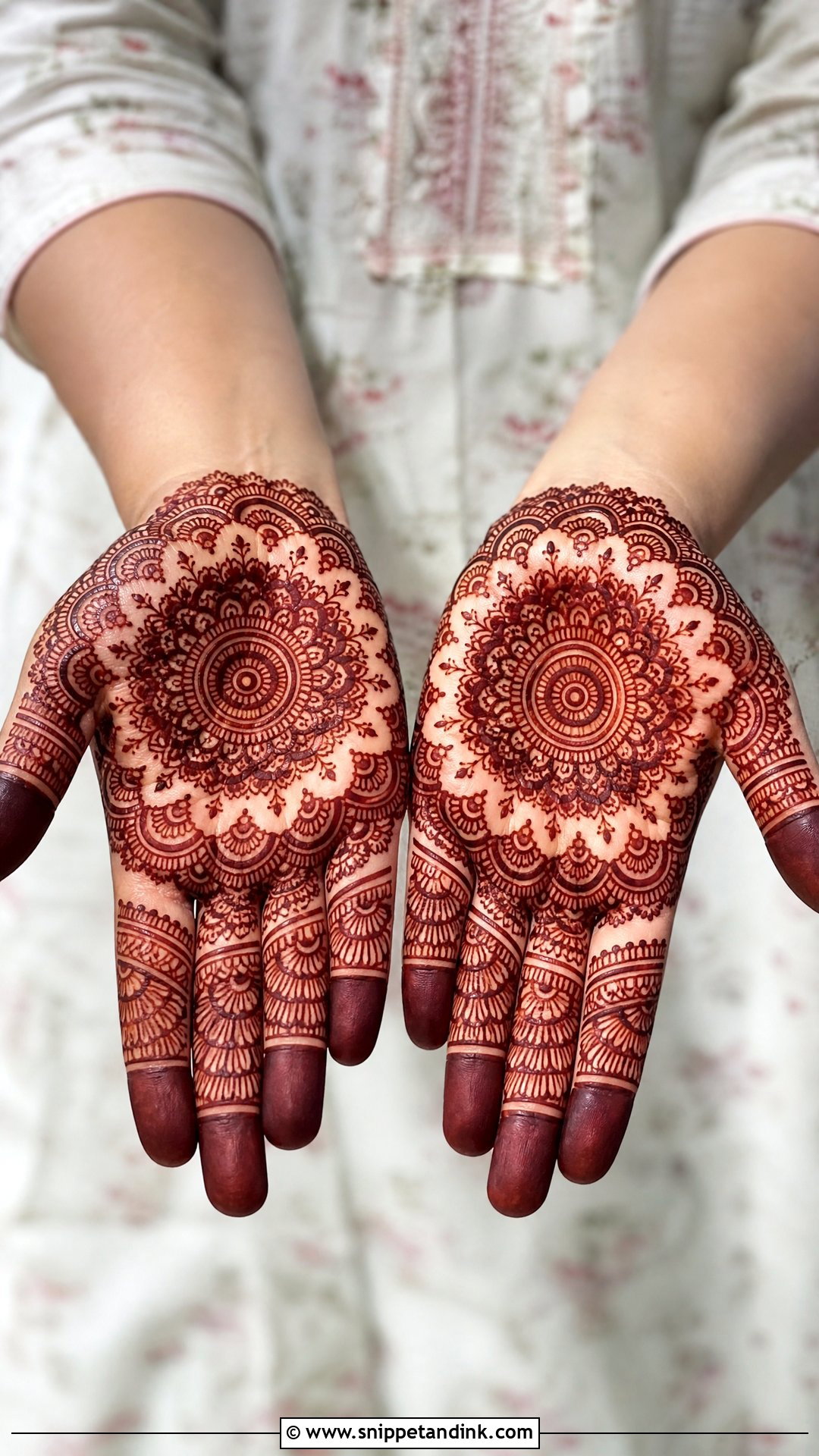
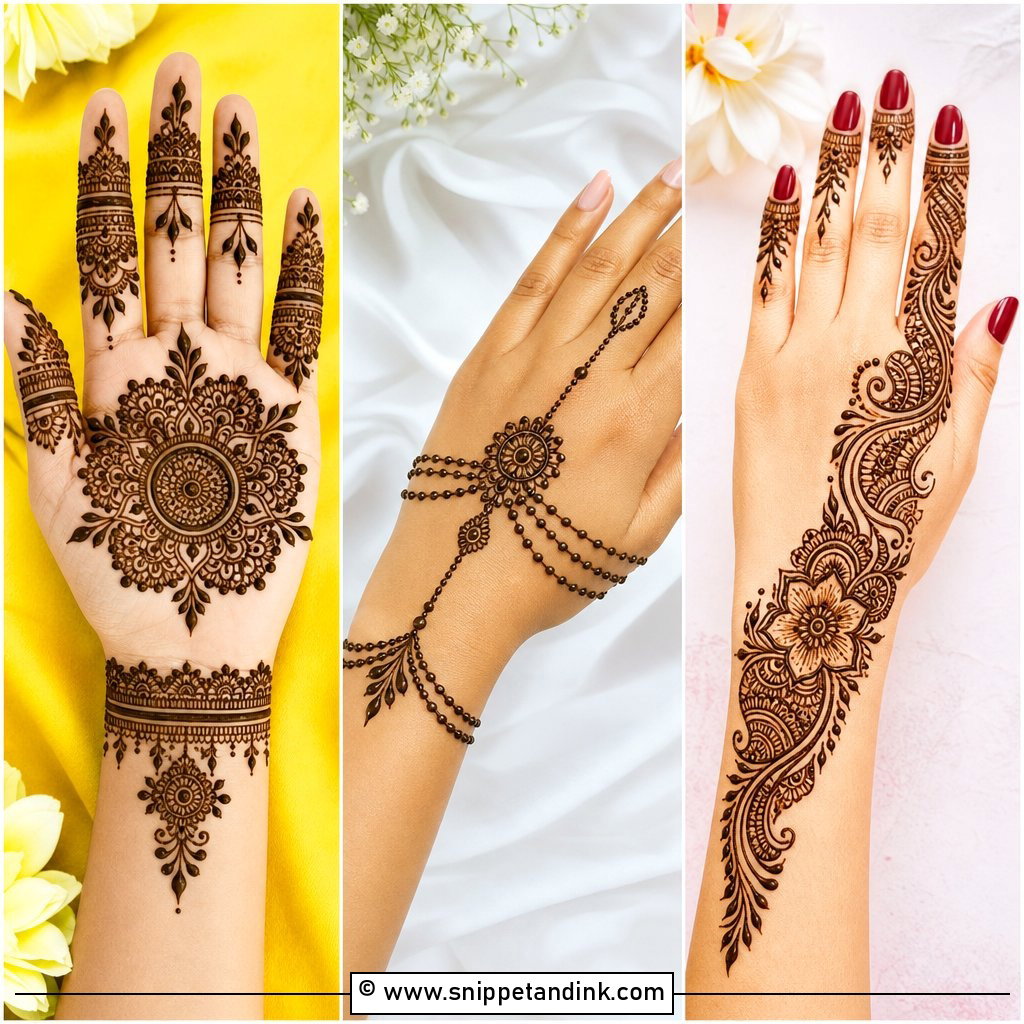
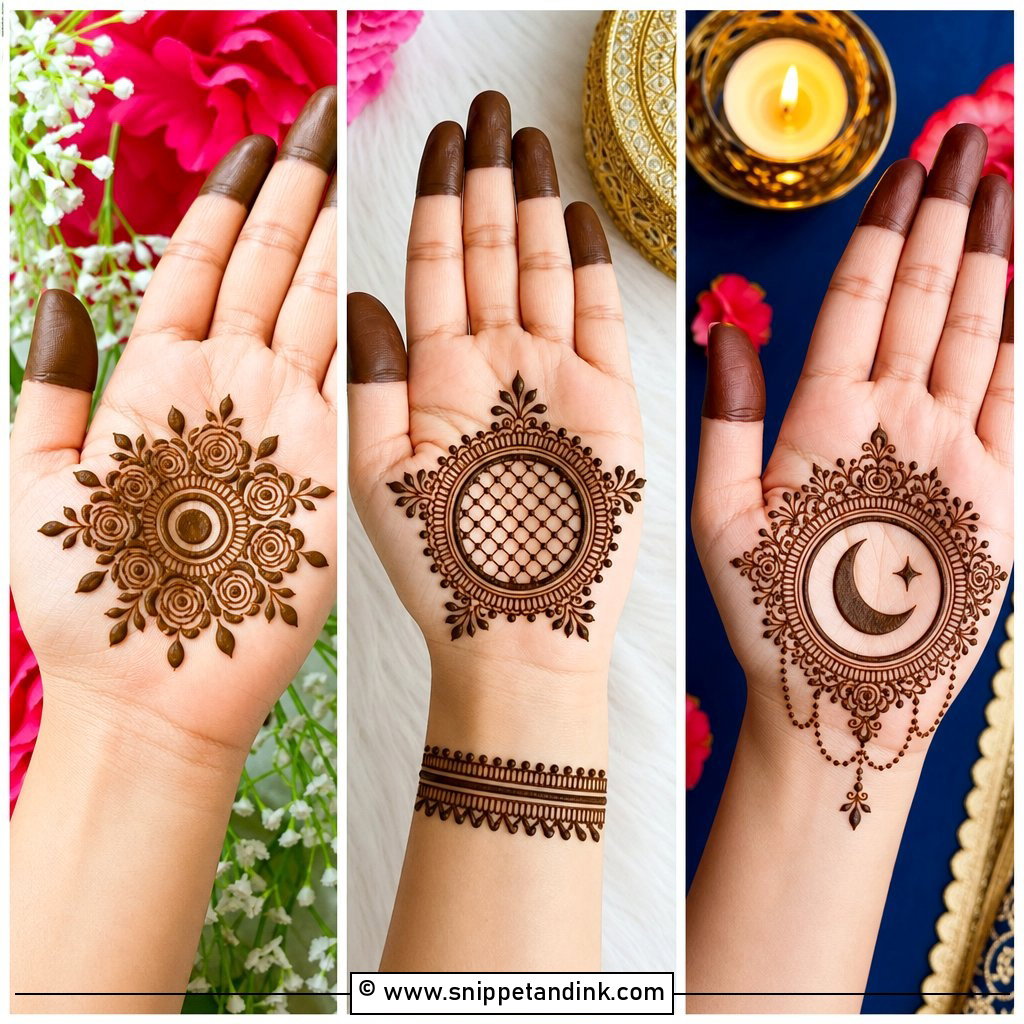
I start a mandala by dotting the center of the palm slightly lower than the true middle, where the hand cups, because a circle placed too high slides toward the fingers once the hand relaxes. From that dot it grows in rings: petals, scallops, a dotted band, fine lines. The round layout follows the curve of almost any palm, so I rarely talk anyone out of it, whether it’s for a festival, a family gathering or a lighter bridal function. Fill the fingers with neat bands, leaves and small tip caps so the circle doesn’t float on its own. Leaving a hairline gap between rings costs a minute and keeps every ring readable once the stain turns deep.
2. Simple Palm Mehndi Design
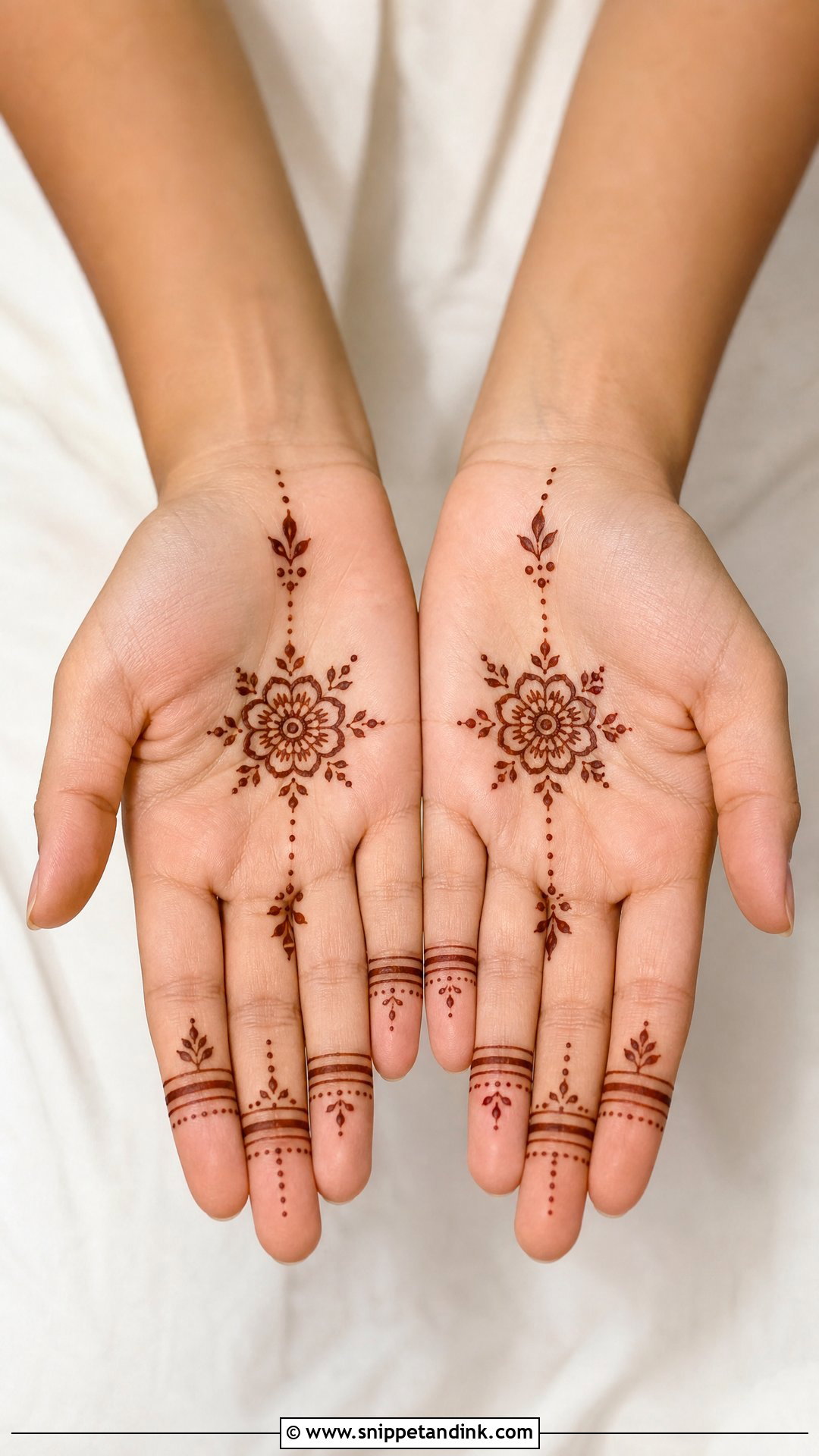
A light palm is mostly about restraint: one small central motif, a few finger patterns, a vine or a line of dots, and a lot of bare skin. That bare skin does real work, because it stops the design looking smudged as it fades. I suggest this for first-timers, younger girls, office events and anything booked at the last minute, since it takes only a few minutes a hand. Pick a single focus, such as a tiny flower or a round chakra, rather than stacking several. A thin wrist band is worth adding only if the hand looks unfinished without it.
3. Arabic Palm Mehndi Design
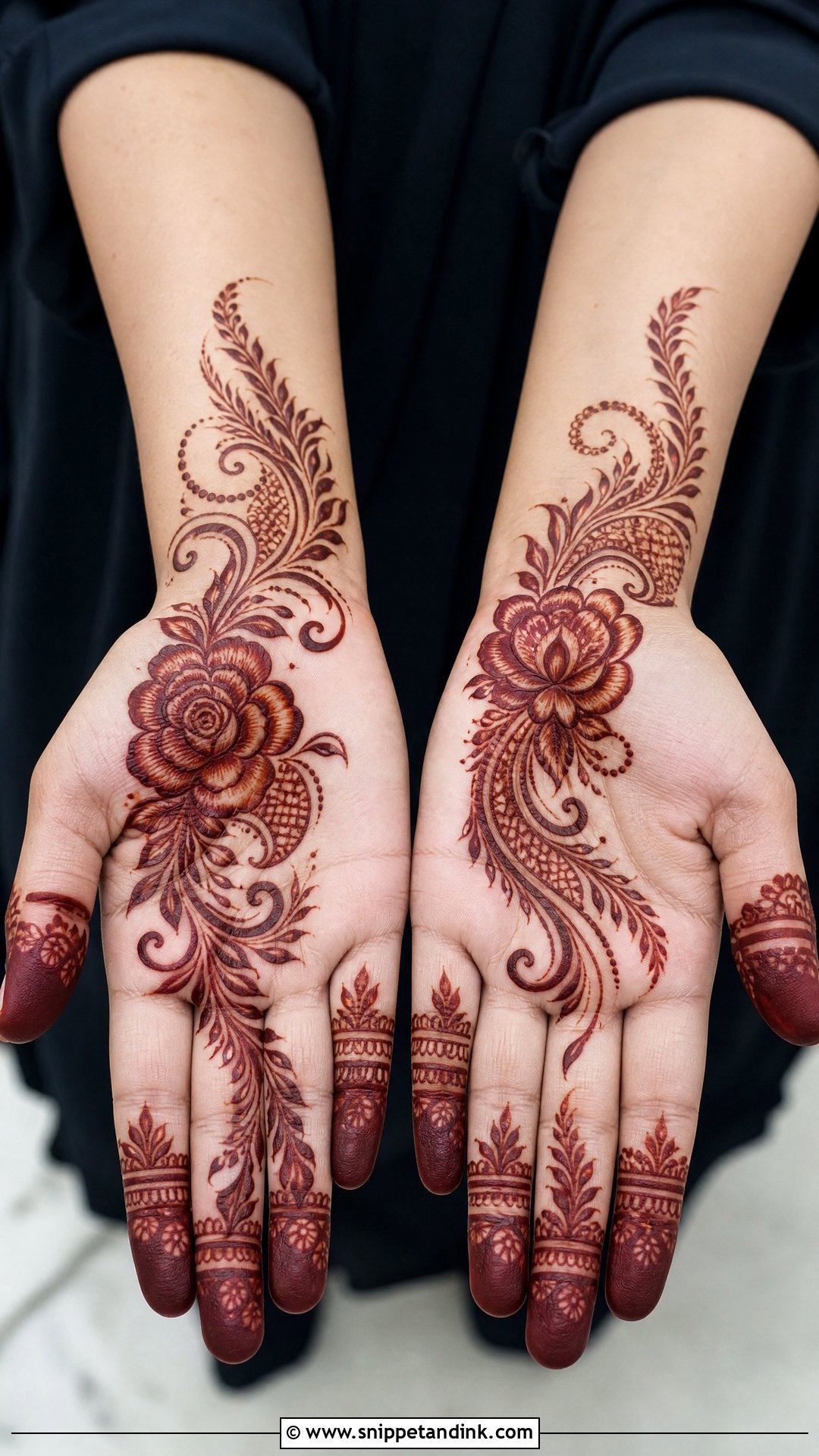
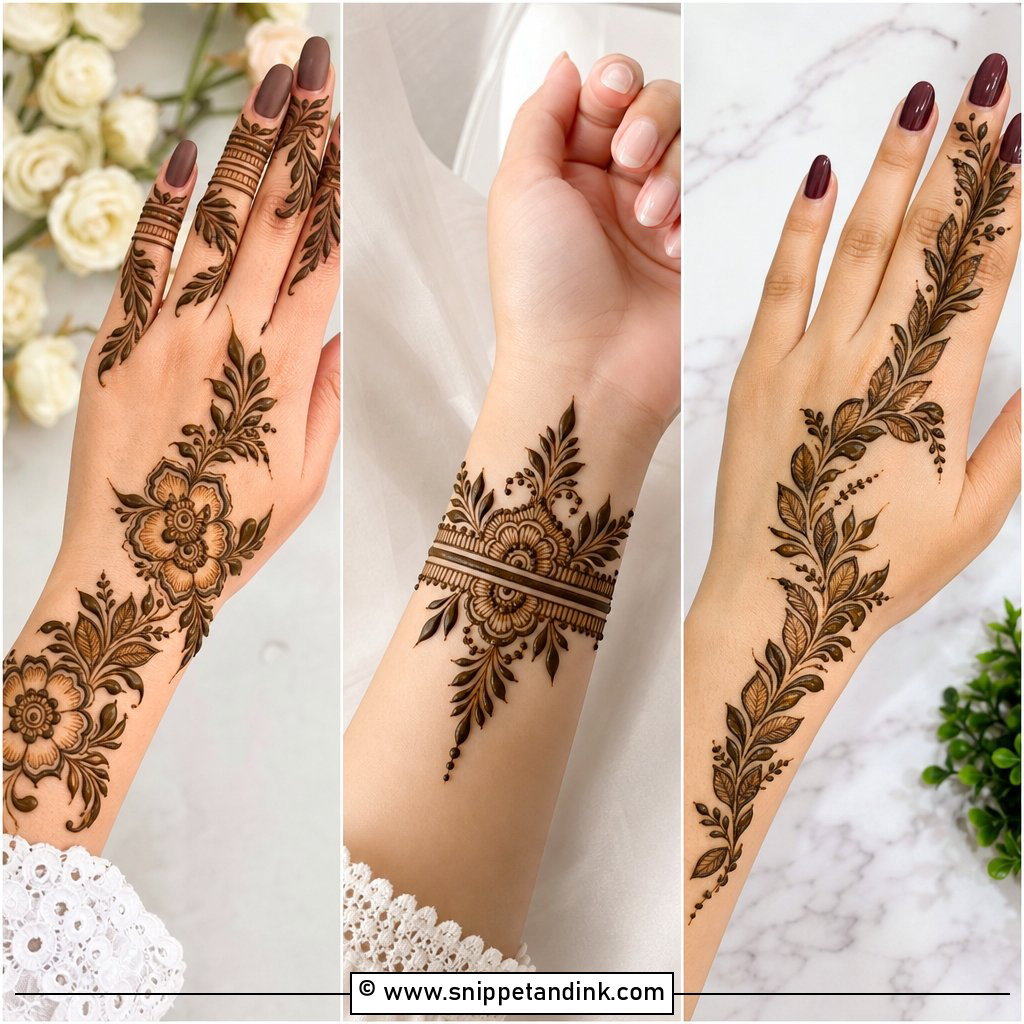
Arabic work runs on diagonal flow and open skin. Instead of covering the palm evenly, I pull a trail from one side of the wrist up toward the index or middle finger, using large flowers, leafy vines, curved paisleys and thick outlines that read from across a room. Those thick lines matter: a thin Arabic outline looks wobbly once the paste is scraped off. It’s far quicker than a dense Indian palm, which is why I lean on it for Eid, engagement parties and a queue of bridesmaids. Match the fingers with leaves, dots and small floral bands.
4. Indian Palm Mehndi Design
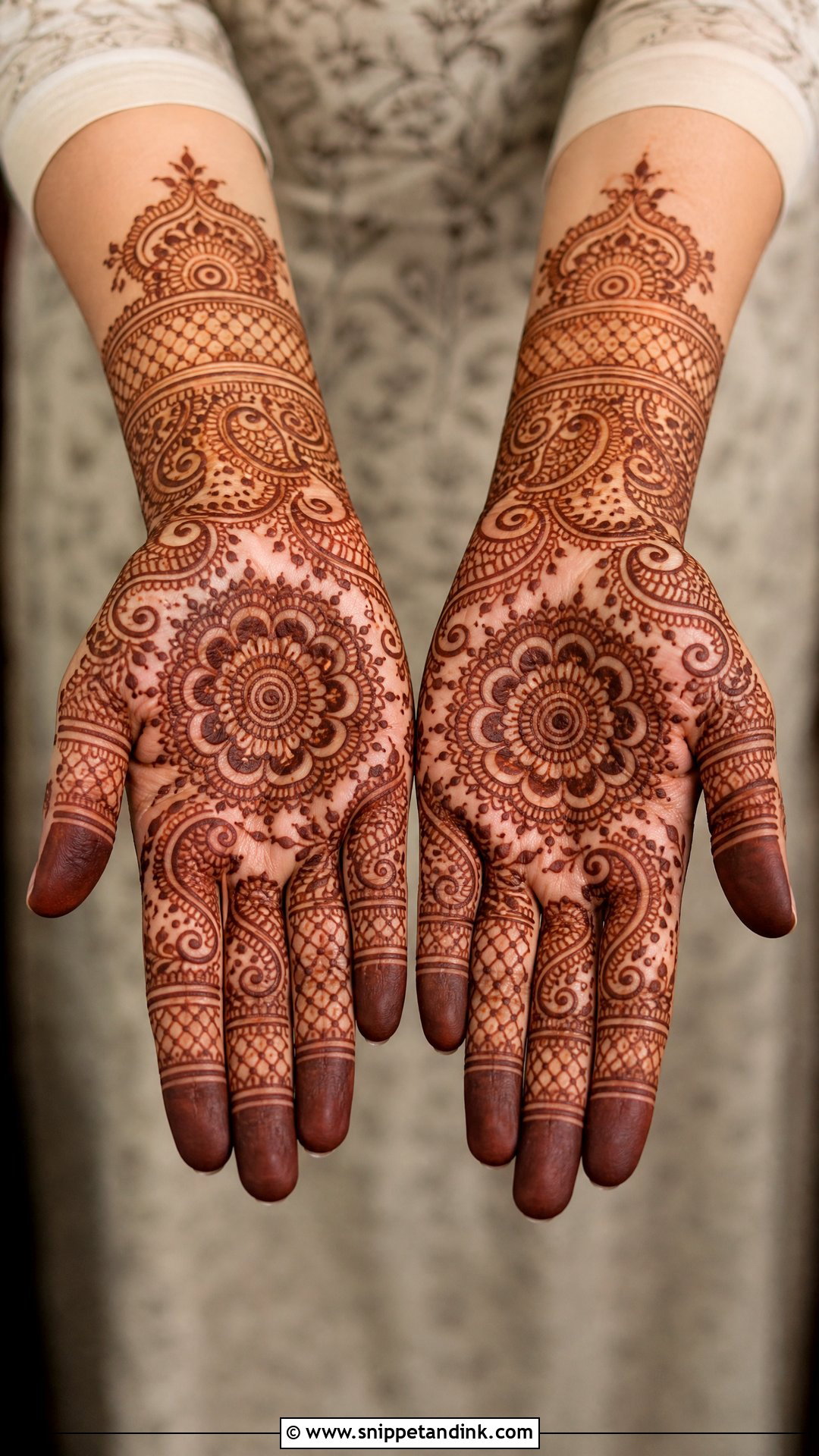
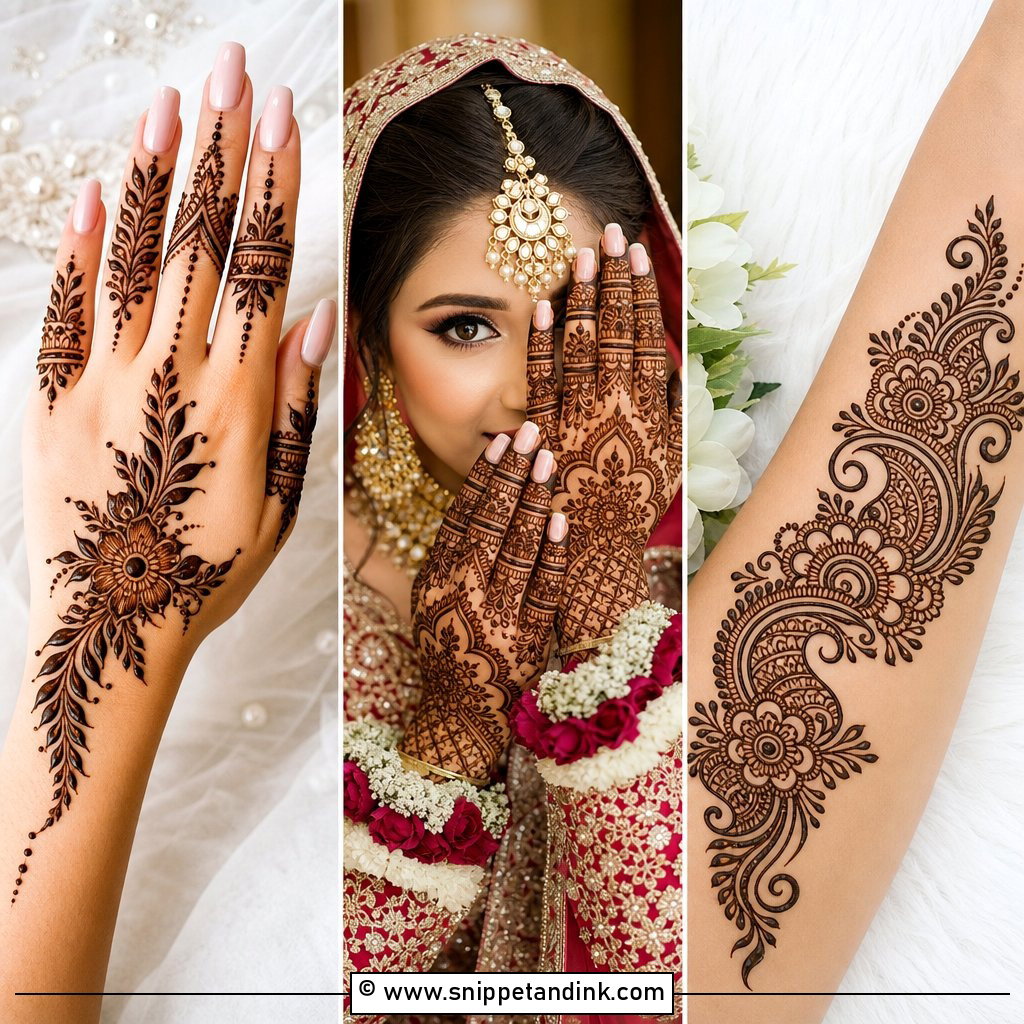
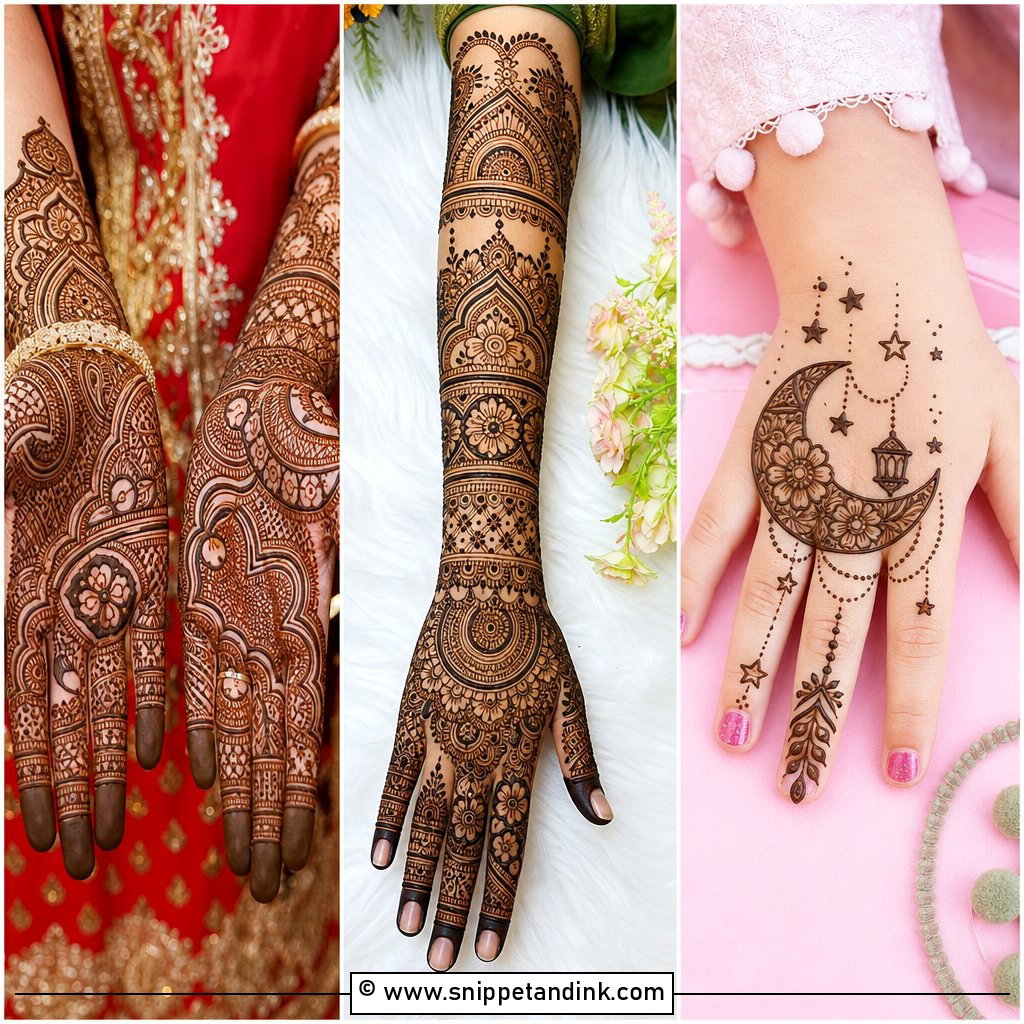
An Indian palm mehndi design is the slow, dense one. Paisleys, flowers, jaali sections, dots, tiny leaves and filler strokes cover most of the skin, so after staining the hand looks almost printed. This is the palm I draw for weddings, Karwa Chauth, Teej and Diwali. Balance comes from the center outward: one mandala or paisley, smaller repeats around it, then gridded or banded fingers with floral tips. The honest drawback is time. Two full Indian palms can take a couple of hours plus drying, so don’t book it an hour before you need to leave. Mirroring both palms is what makes it read as a pair.
5. Bridal Palm Mehndi Design
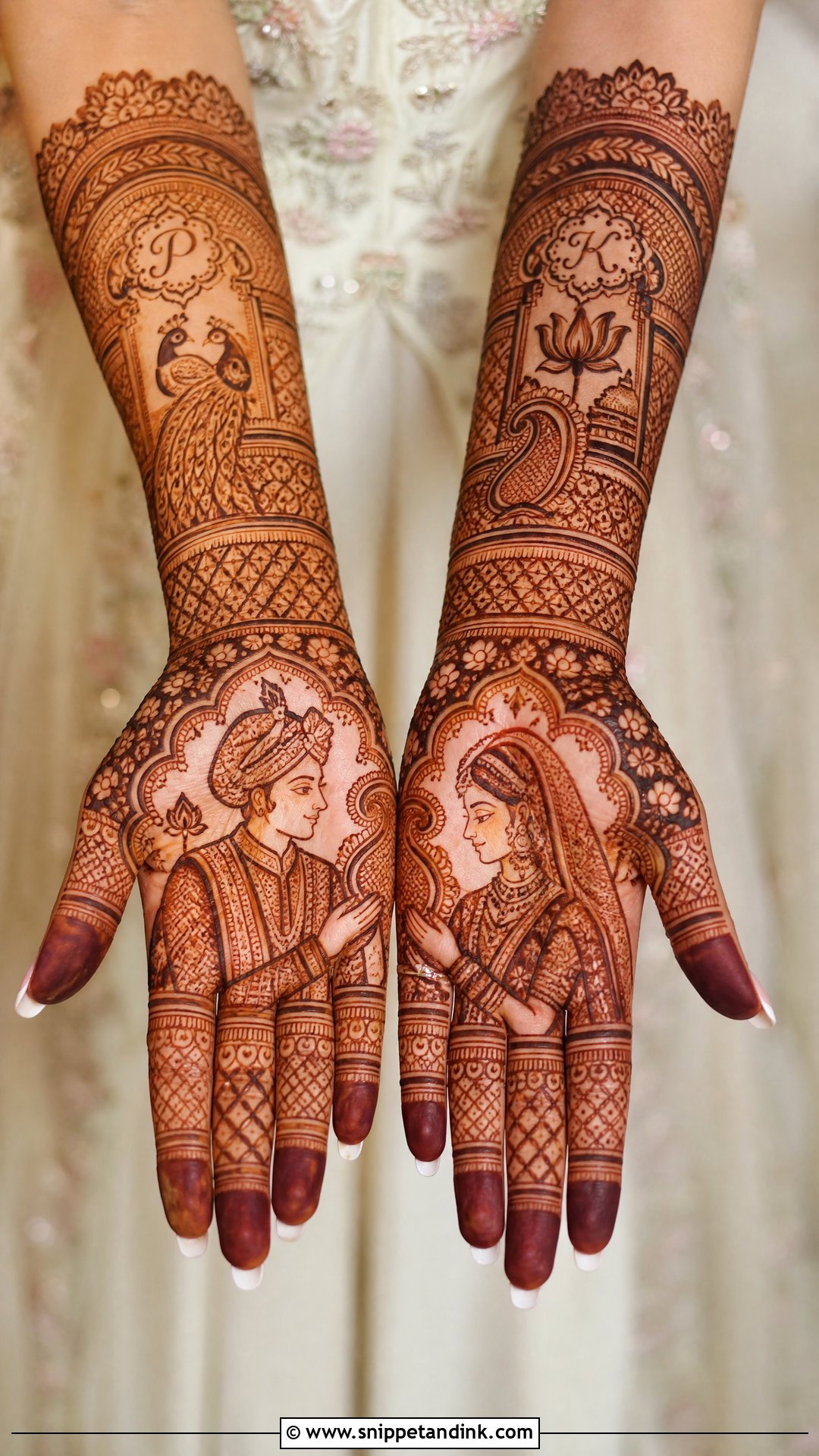
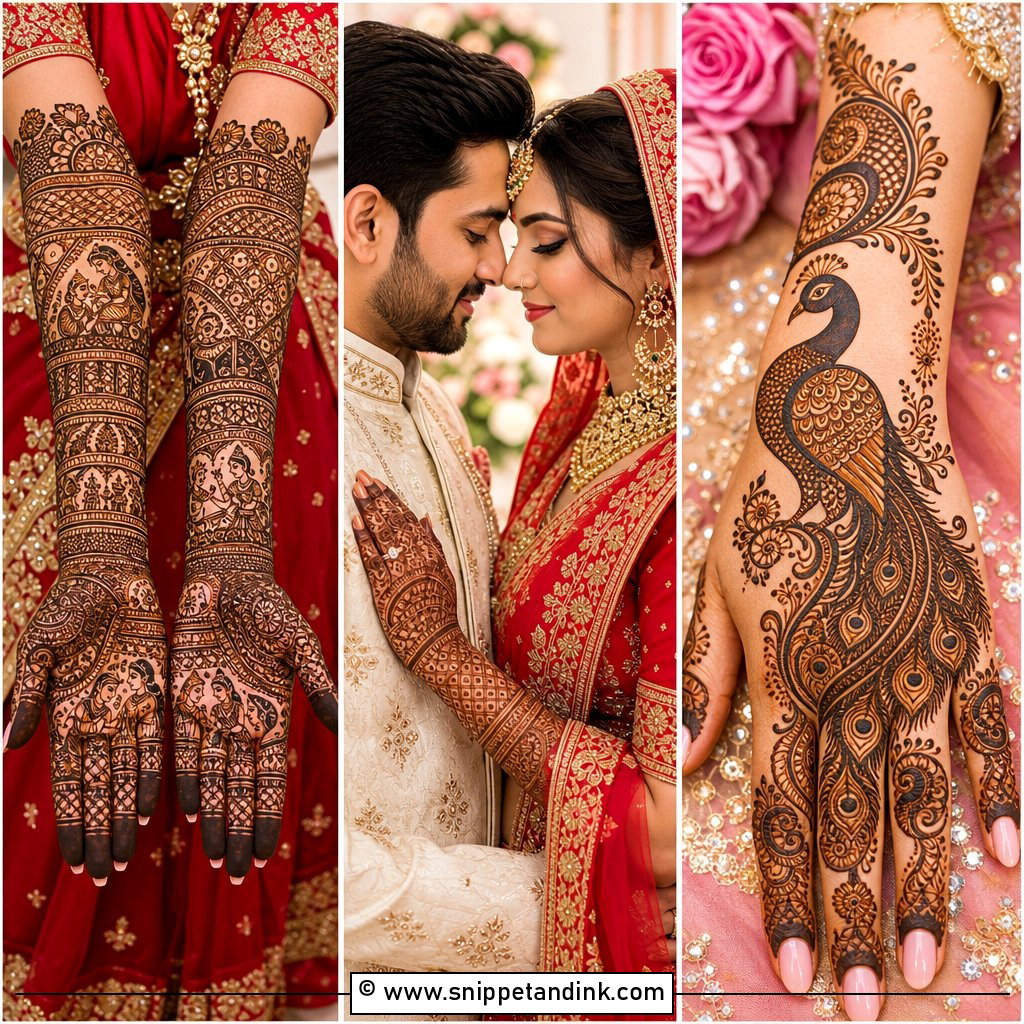
For a bride, the palm faces the camera through almost every ritual, so I plan it around one strong focal point before anything else. Peacocks, lotus, paisleys, a bride and groom pair, initials, a kalash or fine jaali can all live there, though not all at once. Many brides want dense Indian coverage with layered borders and filled tips; others prefer Indo-Arabic spacing because it looks lighter beside modern outfits. My firm rule is that initials need clear skin around them, or the groom will be searching for a very long time. Carry the palm up into the wrist and forearm so the whole hand reads as one bridal piece.
6. Peacock Palm Mehndi Design
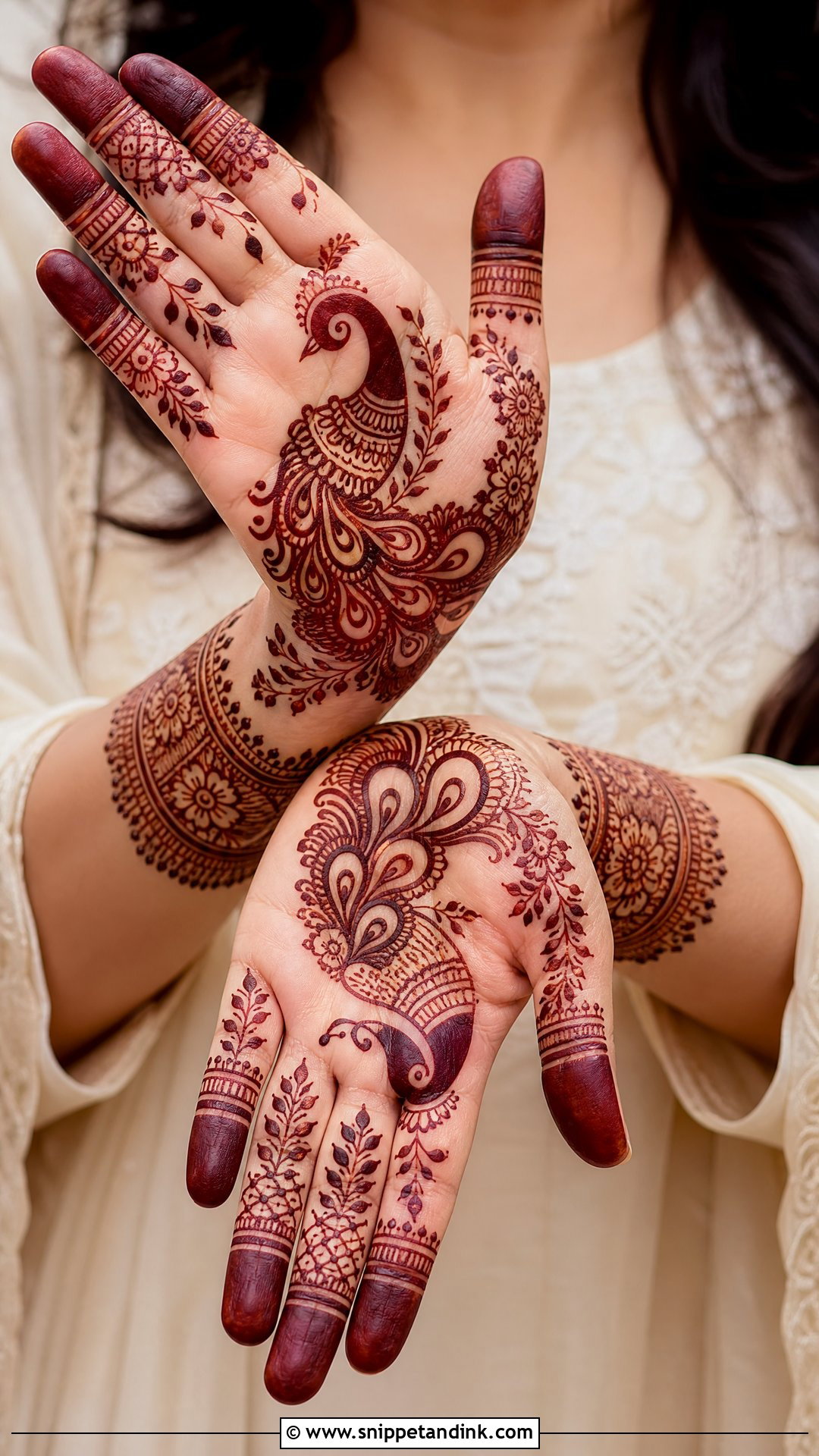
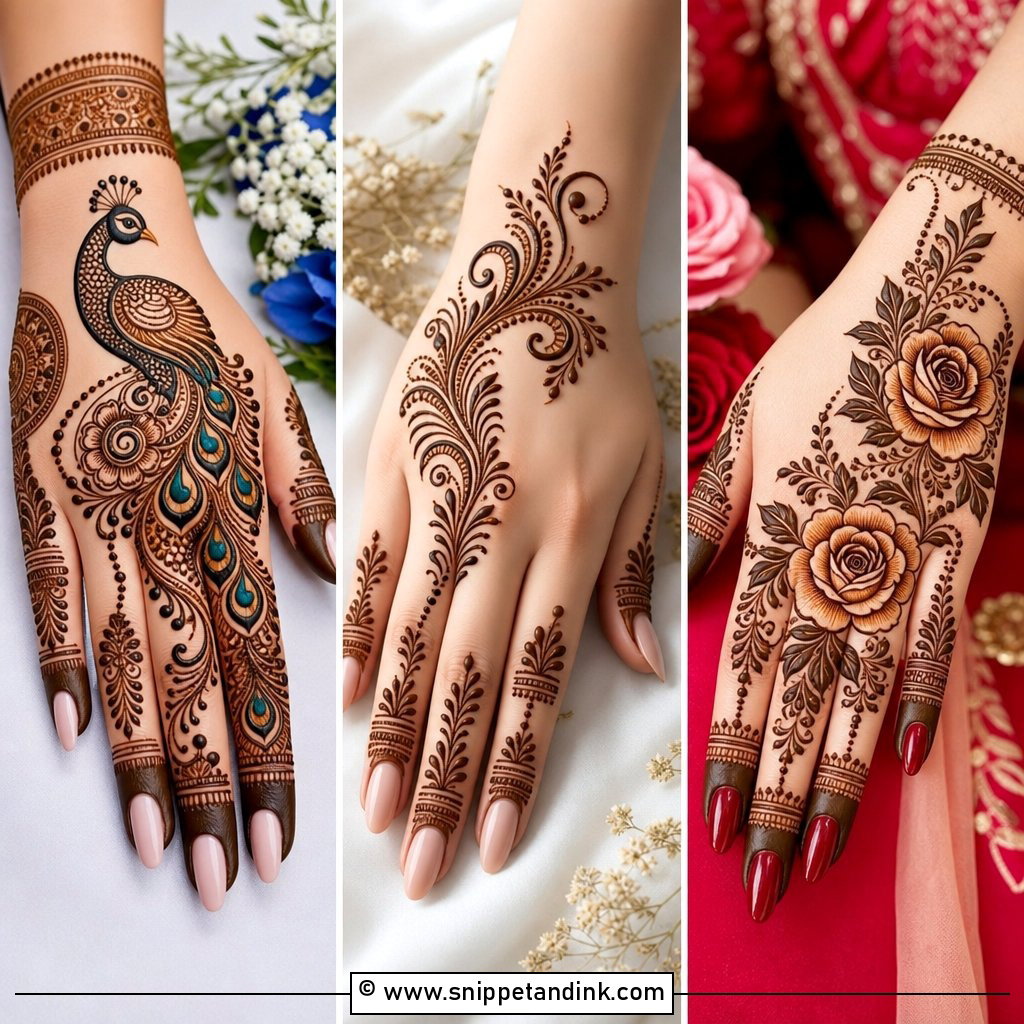
Peacocks are where line work shows. The bird can sit in the center, curl around a mandala or rise from the wrist toward the fingers, and the feathers give room for teardrops, swirls, dots and fine shading. The mistake I see most is filling the body with as much detail as the tail, which turns the bird into a dark blob after staining. I keep the body solid and bold and let the feathers carry the delicate work. Patterned fingertips and a slim wrist border finish it, and it sits comfortably on brides, guests and anyone at a traditional function.
7. Floral Palm Mehndi Design
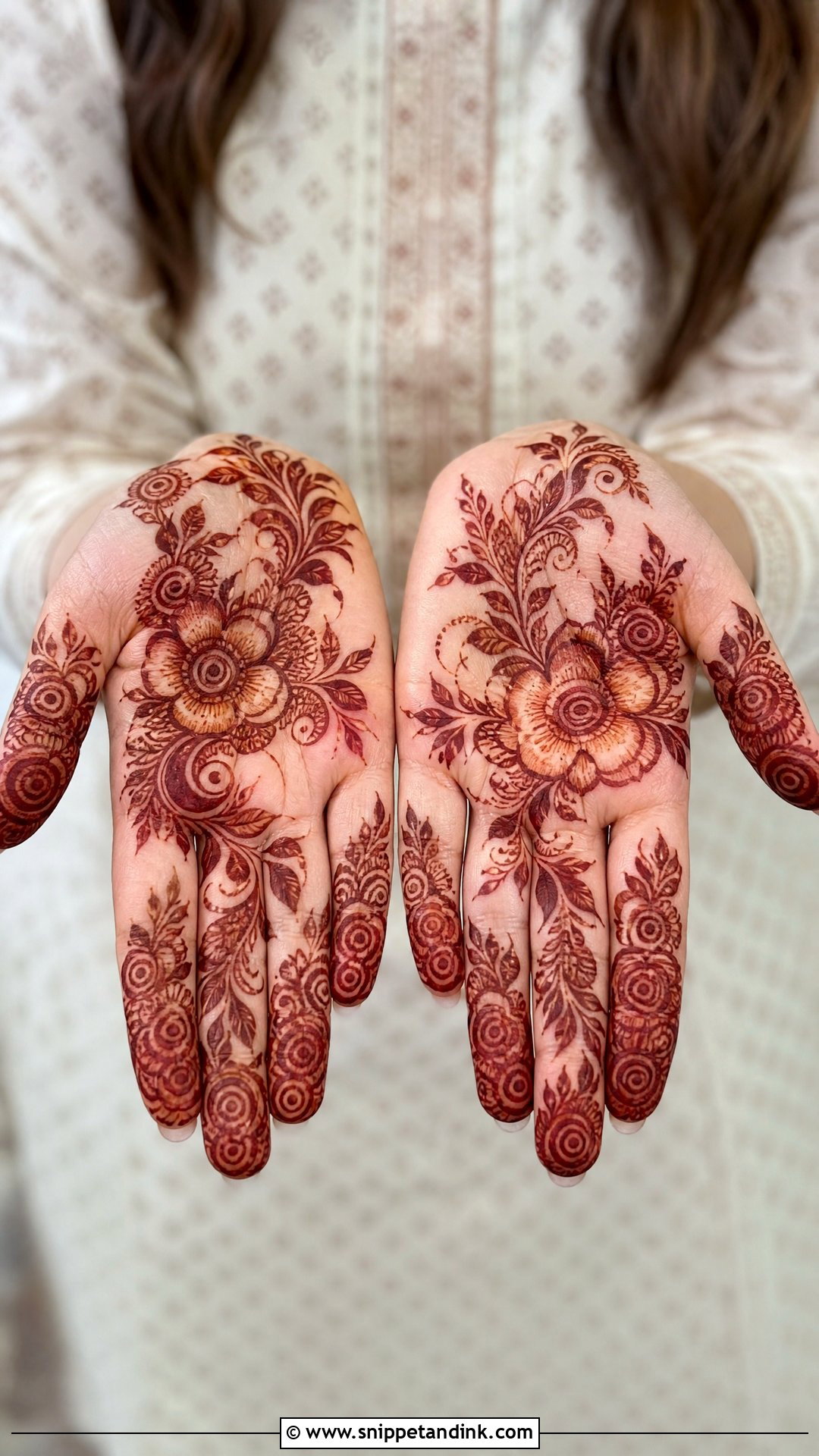
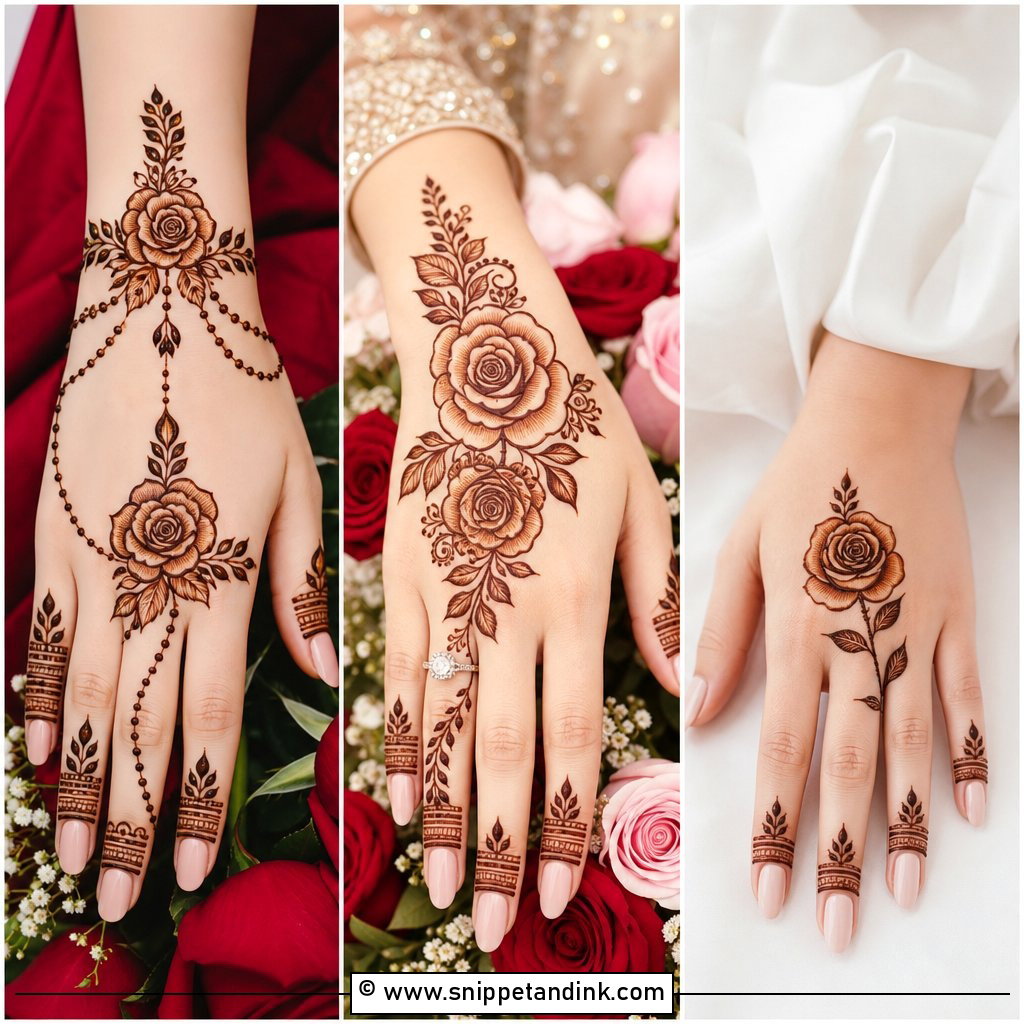
Florals soften a palm faster than any other motif. One large flower in the center or a cluster spreading toward the fingers both work, drawn as roses, lotus shapes, daisies or simple petal rounds. For a casual festival I keep the petals bold and the fillers sparse; for a wedding I build leaves, dots, curves and lace shading around each bloom. Petals are forgiving to draw and suit every age. Small matching blooms on each finger tie it together.
8. Paisley Palm Mehndi Design
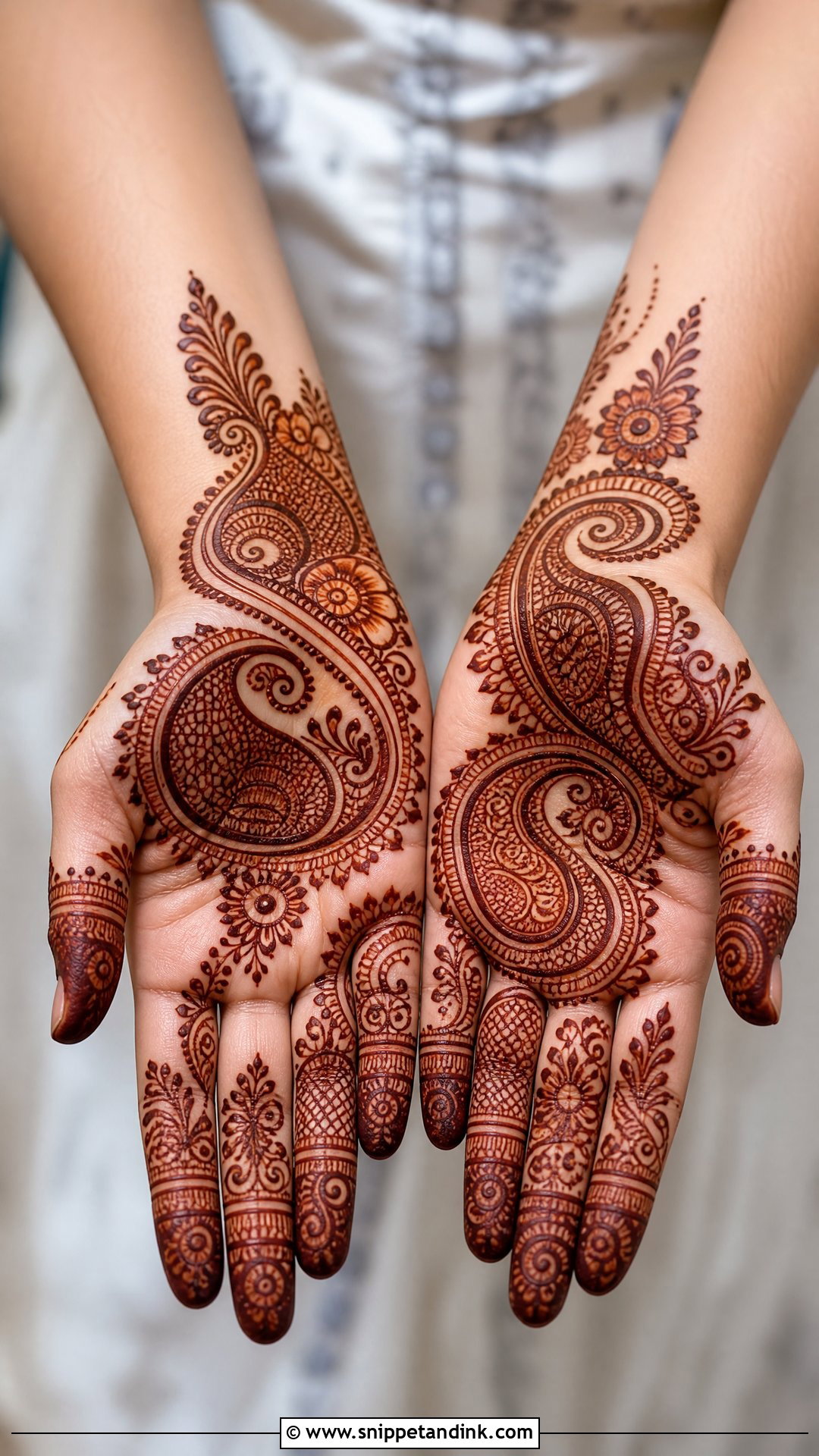
Paisleys bring movement because the curl at the top of the mango shape always points somewhere. I use one large paisley sweeping across the palm or several small ones circling a central flower, filled with petals, dots, curls or tiny mesh. The shape stretches and shrinks easily, so it fits long palms, wide palms and bridal hands. To keep it from feeling dated, leave clean skin between motifs, and mirror the direction of the curl on the second hand so the palms face each other when held together. A few curved vines up the fingers complete it.
9. Lotus Palm Mehndi Design
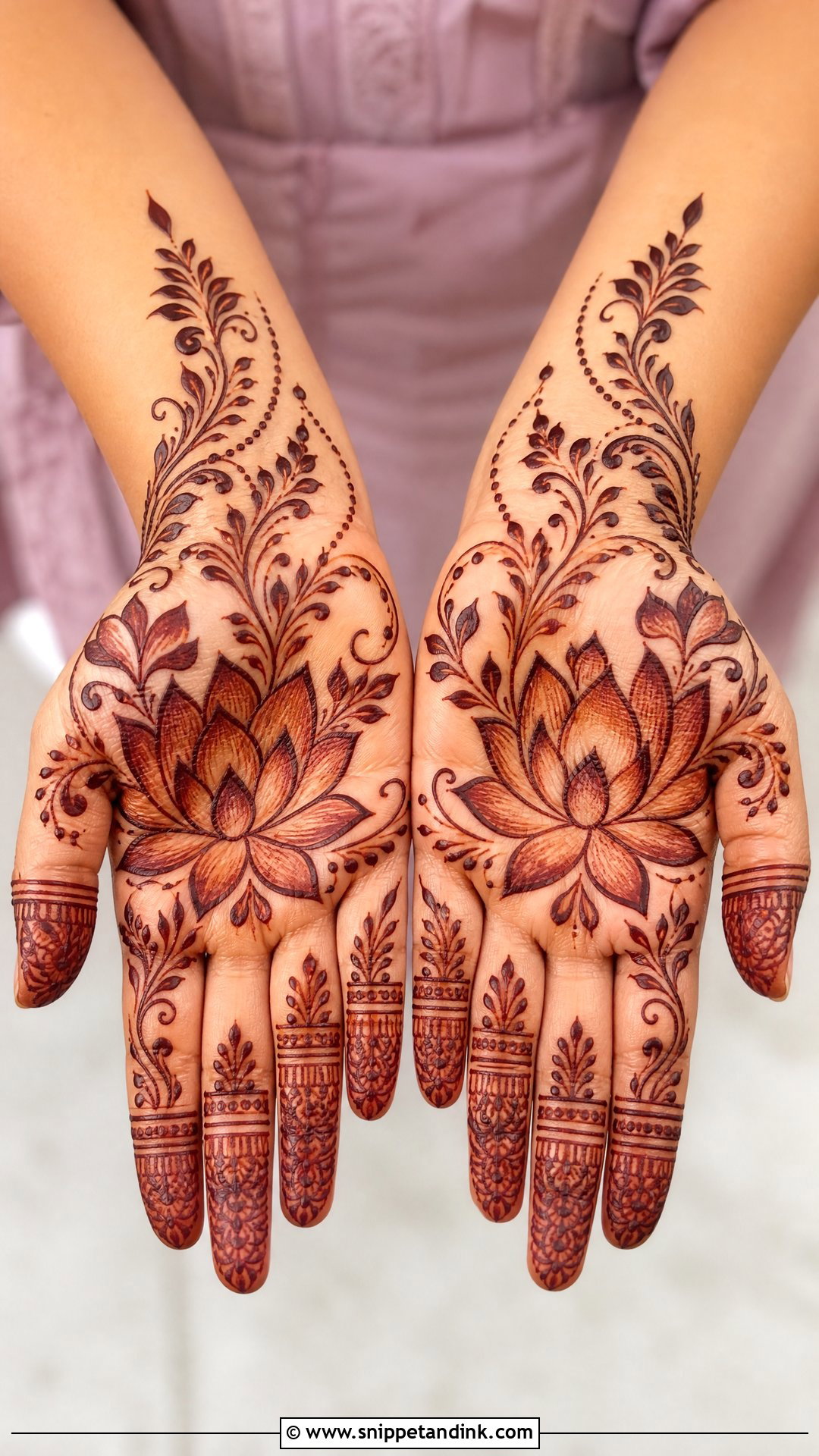
A lotus is calm on the hand and easy to read. I place it in the center, open it like a fan from the wrist, or repeat small ones along the fingers. The petals need a bold outline, because fine inner lines drawn too close together tend to merge as the stain darkens over the first two days. Dots, leafy vines and a soft curved border can fill the rest without swallowing the flower. For a more modern finish, draw the lotus large and leave open skin around it.
10. Jaali Palm Mehndi Design
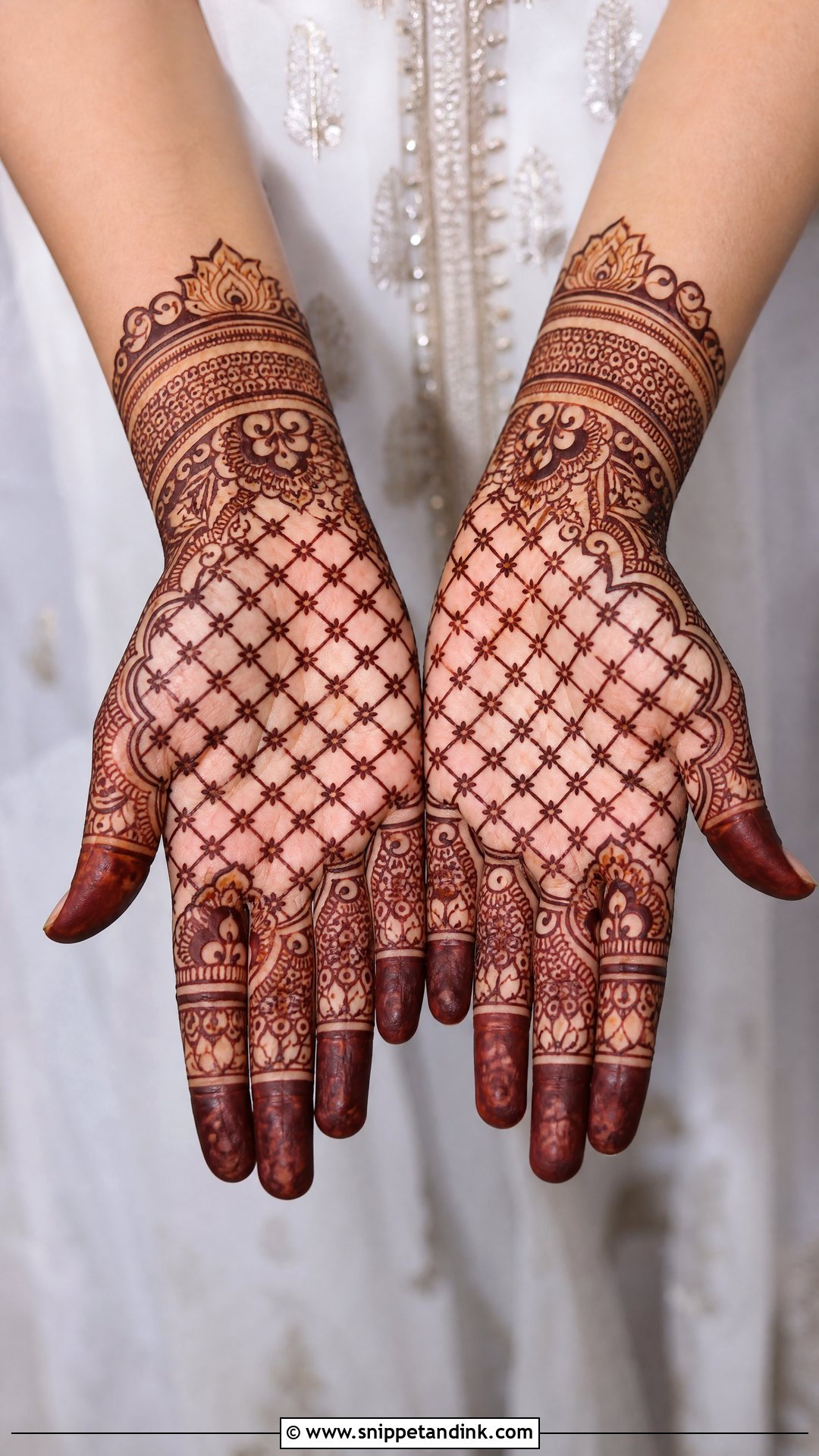
Jaali is a net of crisscross lines, diamond grids or mesh, usually paired with flowers or paisleys, and it lives or dies on spacing. Even lines read like fine fabric; wandering ones look scratchy. Grids are also the first thing to blur on a palm, since the paste lines sit so close together, so I draw them a touch wider apart there than I would on the back of the hand. Bold borders, dots and floral corners stop the mesh going flat. One layout I like is mesh across one side of the palm with a mandala on the other. It suits engagements, Eid, Diwali and bridal hands.
11. Indo Arabic Palm Mehndi Design
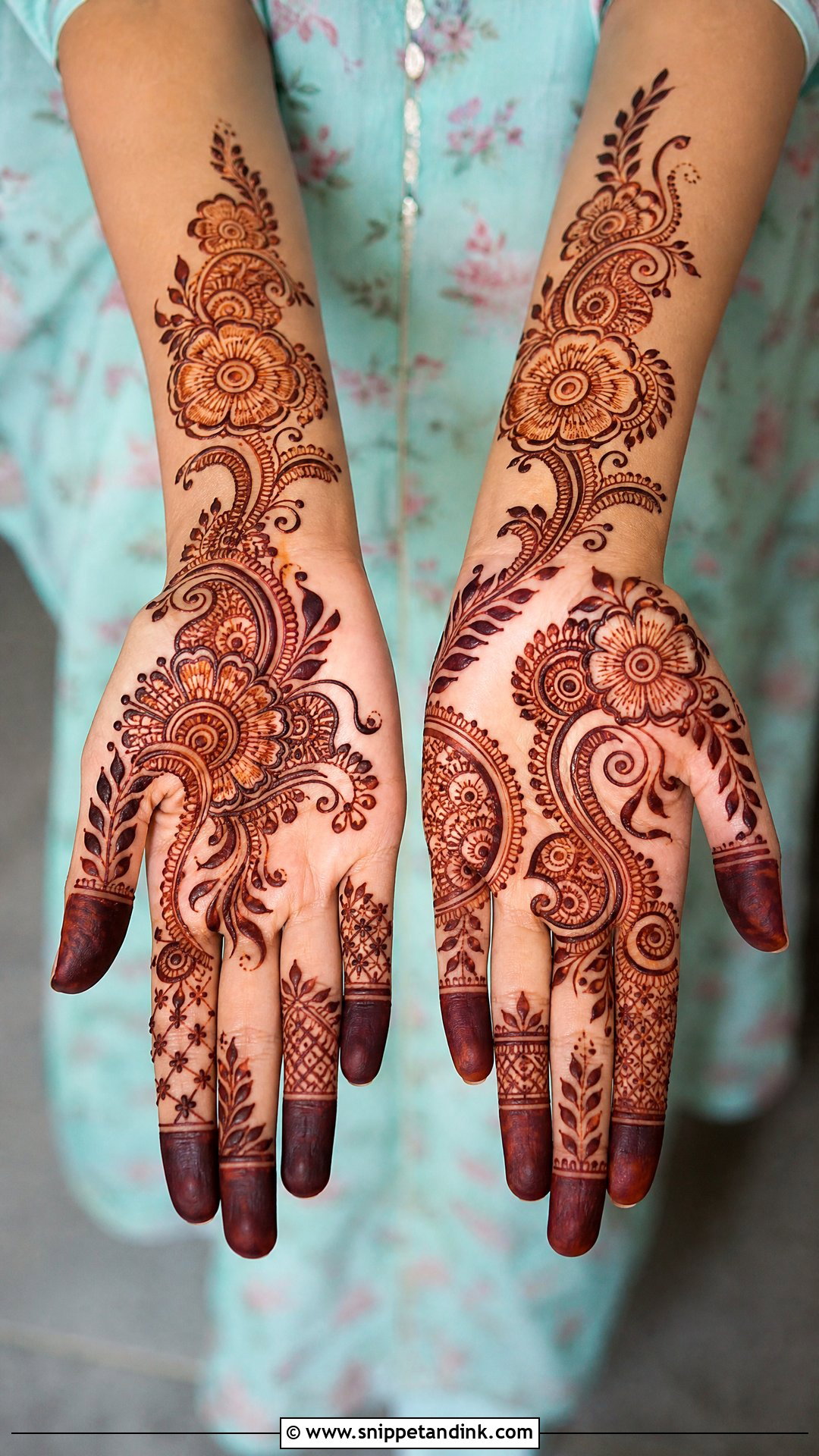
Indo-Arabic takes the detail of Indian work and gives it Arabic breathing room. Bold flowers, paisleys, leafy trails, mandalas and fine fillers sit with visible skin between them. It’s the middle ground I suggest when someone finds Arabic too sparse and full Indian too heavy, and it’s quick enough for bridesmaids, festive parties and engagement guests. Anchor the palm with one main motif, then let the design thin out as it moves onto the fingers and wrist.
12. Moroccan Palm Mehndi Design
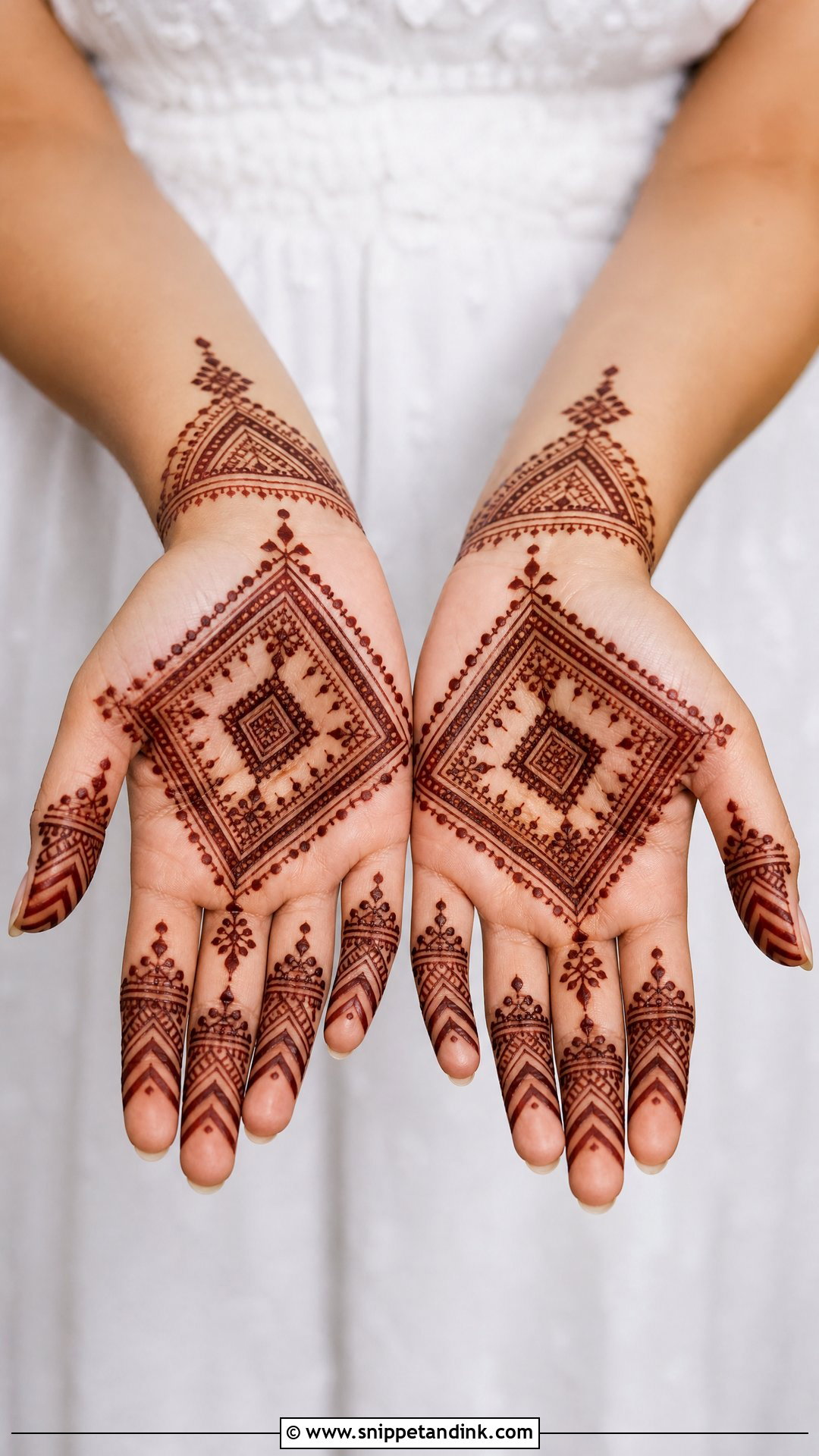
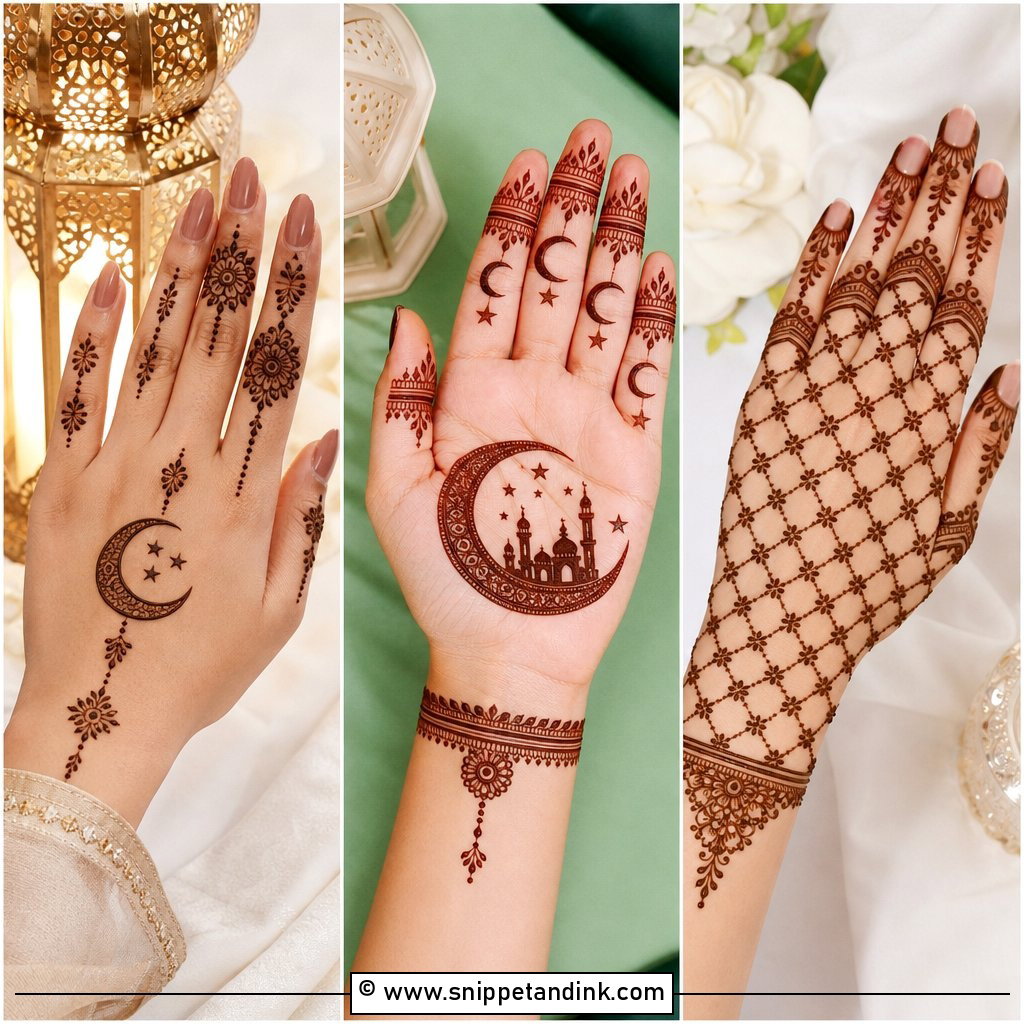
Straight lines are unforgiving, and Moroccan palms are made of them. Diamonds, triangles, squares, chevrons and repeated geometric borders replace heavy florals, and the palm is often divided into sections with a different fill in each. I map the grid with light dots first, because one crooked guide line throws off every section after it. The flat center of the palm shows geometry better than any other spot. Match the fingers with bands and small angular details, and if the whole thing starts to feel severe, scatter tiny dots or leaf accents around the shapes. It reads modern and a little edgy while staying rooted in tradition.
13. Gulf Palm Mehndi Design
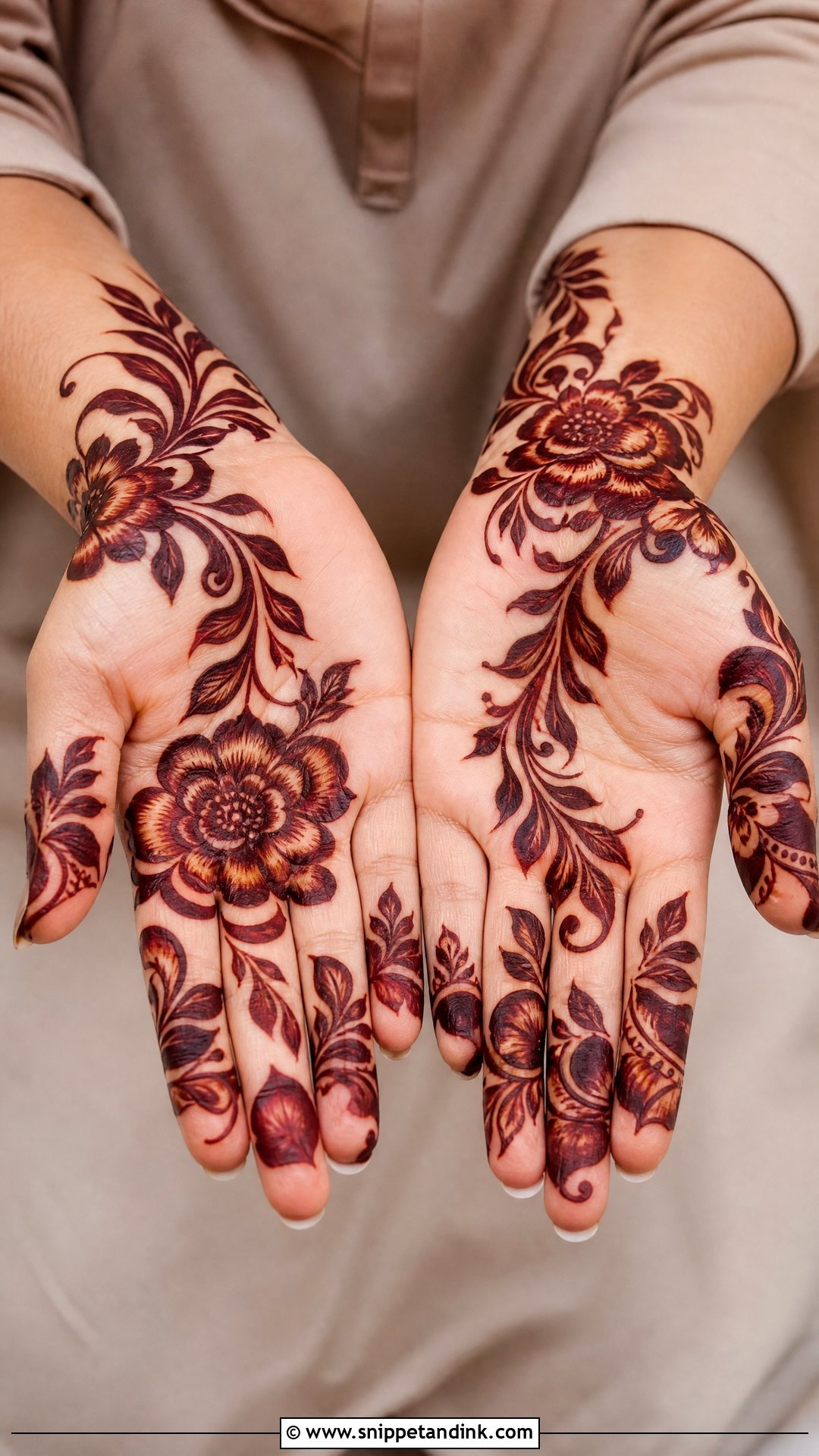
Gulf or Khaleeji palms use bold strokes, open spacing and big floral flow: large flowers, leafy branches, shaded petals and sweeping curves across the hand. The shading comes from dragging the cone so the paste thins toward one edge, which leaves a soft gradient after staining. Compared with dense Indian work it feels airy and glamorous, and it suits Eid, weddings, henna nights and evening events. Confident spacing is the whole style, so resist filling the gaps. Flowing vines or bold rings on the fingers match it.
14. Minimal Palm Mehndi Design
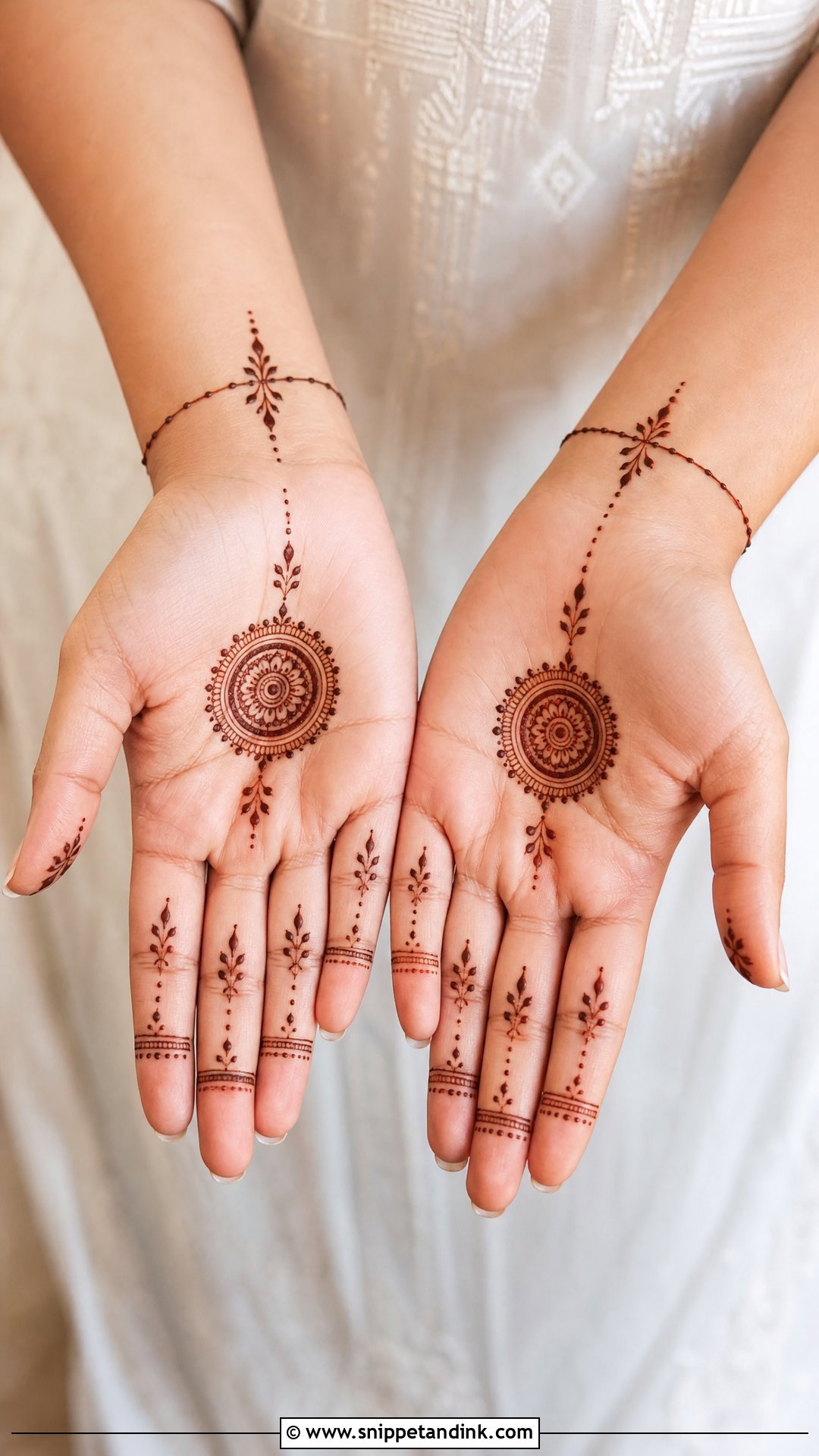
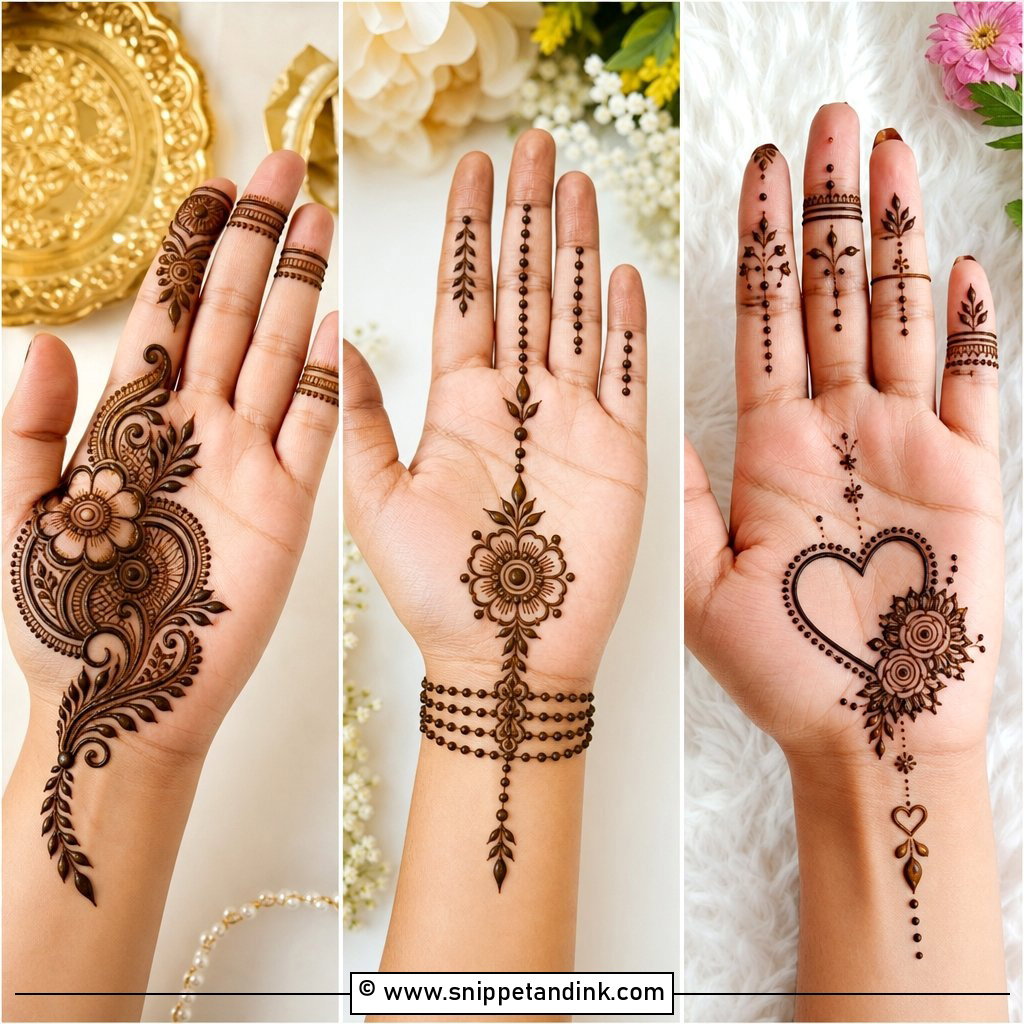
Sometimes the design people remember is the smallest one. A minimal palm might be a tiny mandala, fine dots, slim finger bands or a short leafy trail, and with no filler to hide behind, placement is everything. I center the main element or set it on a slight diagonal, then add only what supports it. It works for school events, casual family functions and anyone who dislikes heavy coverage. A natural reddish-brown stain flatters this kind of design.
15. Modern Palm Mehndi Design
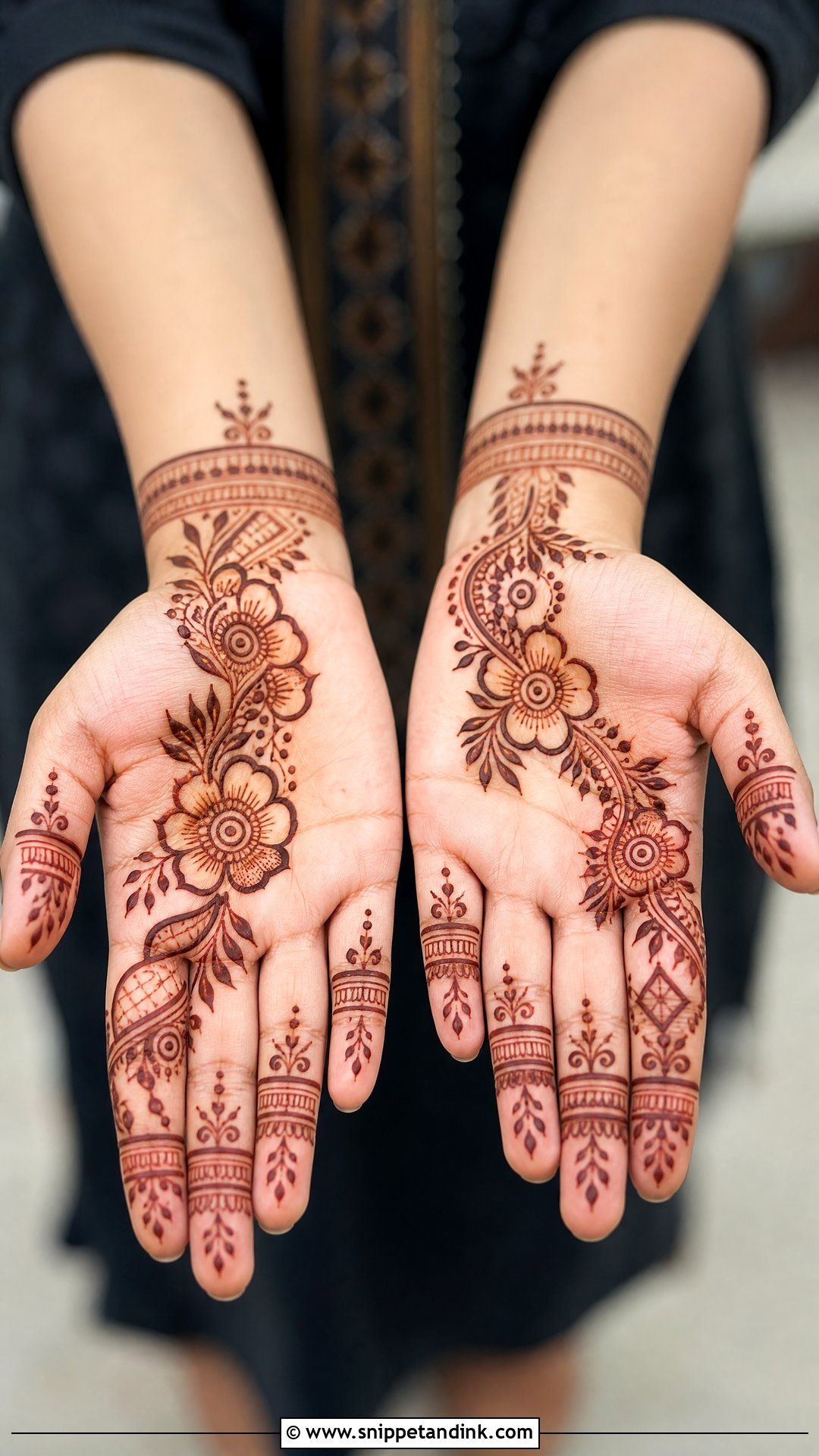
Modern palms keep traditional motifs but change the layout: asymmetry, clean gaps, bracelet details at the wrist, bold outlines or abstract floral trails. A mandala beside a geometric block, or one large flower with plain finger lines, are both combinations I’d draw. The risk is a palm that looks unfinished rather than intentional, so every element needs a reason to be where it is. Crisp lines and even spacing make it read as designed. Parties, engagements and festive photos suit it best.
16. Finger Connected Palm Mehndi Design
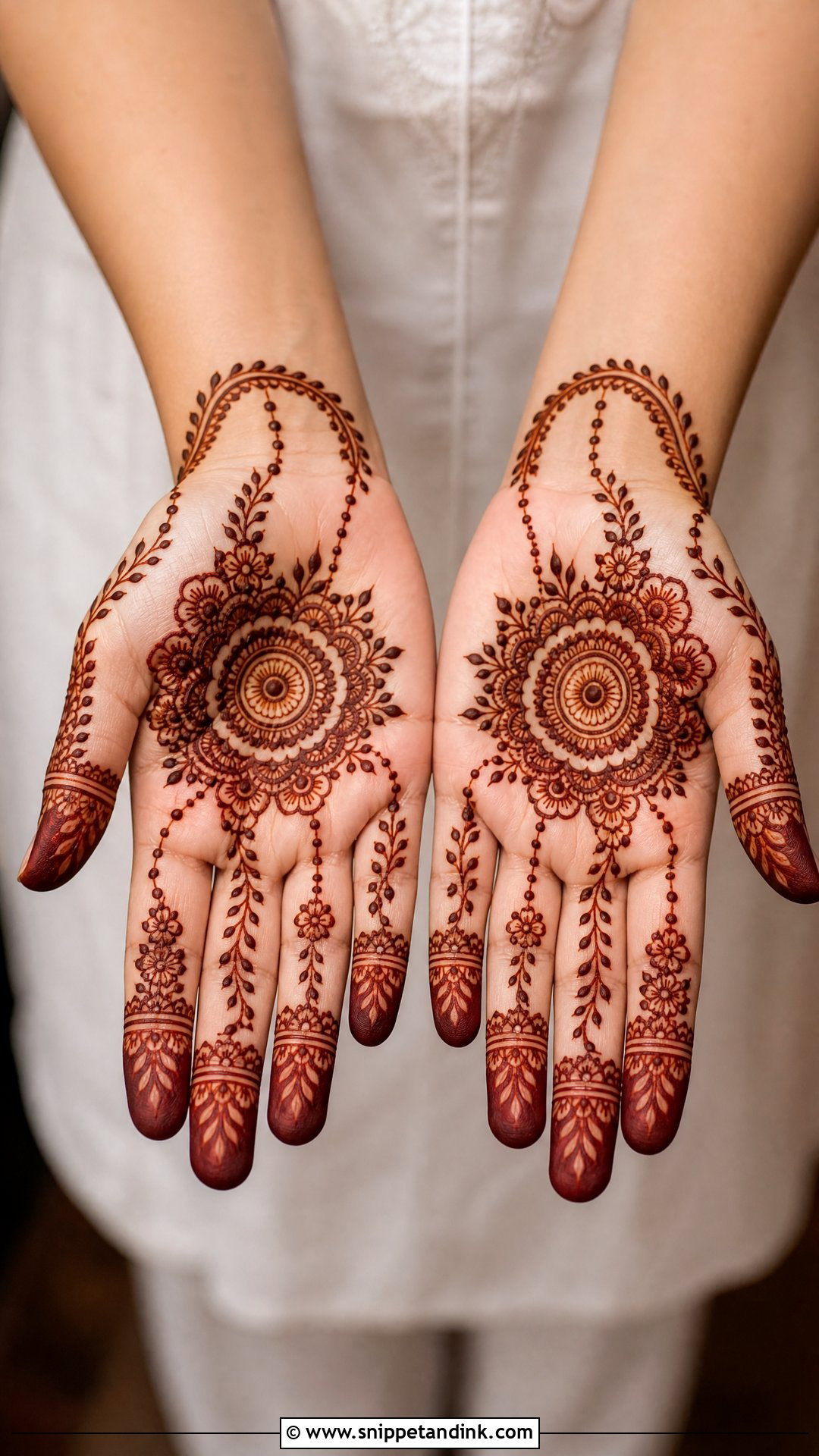
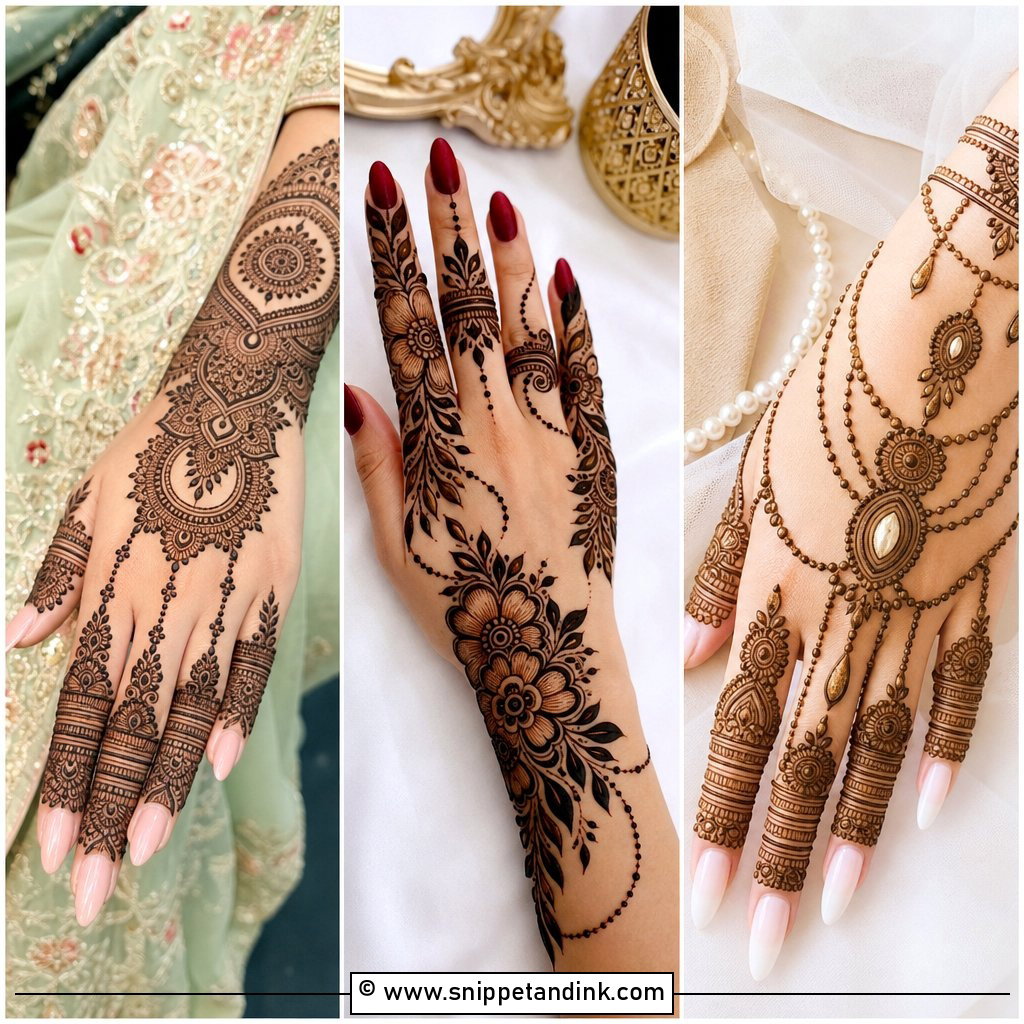
Here the main motif sits on the palm and fine chains, vines, dots or curved lines run up to each finger, which visually lengthens the hand. I pull these connectors as thin as the cone allows, because thick ones compete with the palm motif. A mandala, flower, paisley or small jaali panel all work as the anchor, and the design looks complete from the front without any wrist coverage. Lightly filled tips feel modern; fully capped tips feel traditional.
17. Bracelet Palm Mehndi Design
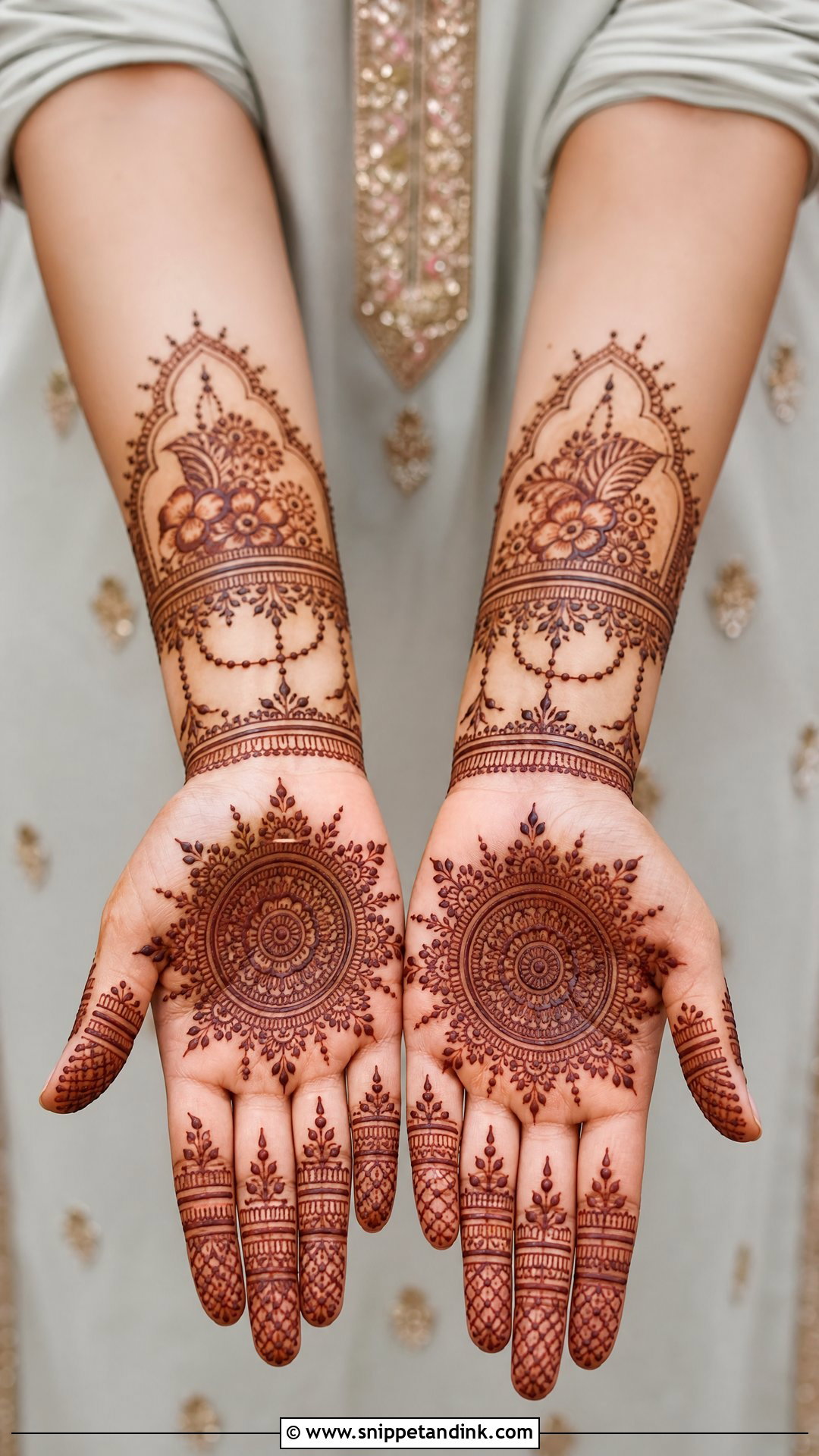
A bracelet palm ties the palm motif, usually a mandala, floral cluster or paisley, to a wrist band of chains, beads or a cuff pattern. It imitates hand jewelry, which helps when you’re wearing only a few bangles. The band has to be symmetrical, so I draw it with the wrist held straight and the palm flat; drawn on a bent wrist, it ends up crooked once the hand relaxes. Keep the fingers simple with bands or tiny florals. It’s lighter than full bridal work and suits engagements, Eid, Diwali and family parties.
18. Front Palm Mehndi Design
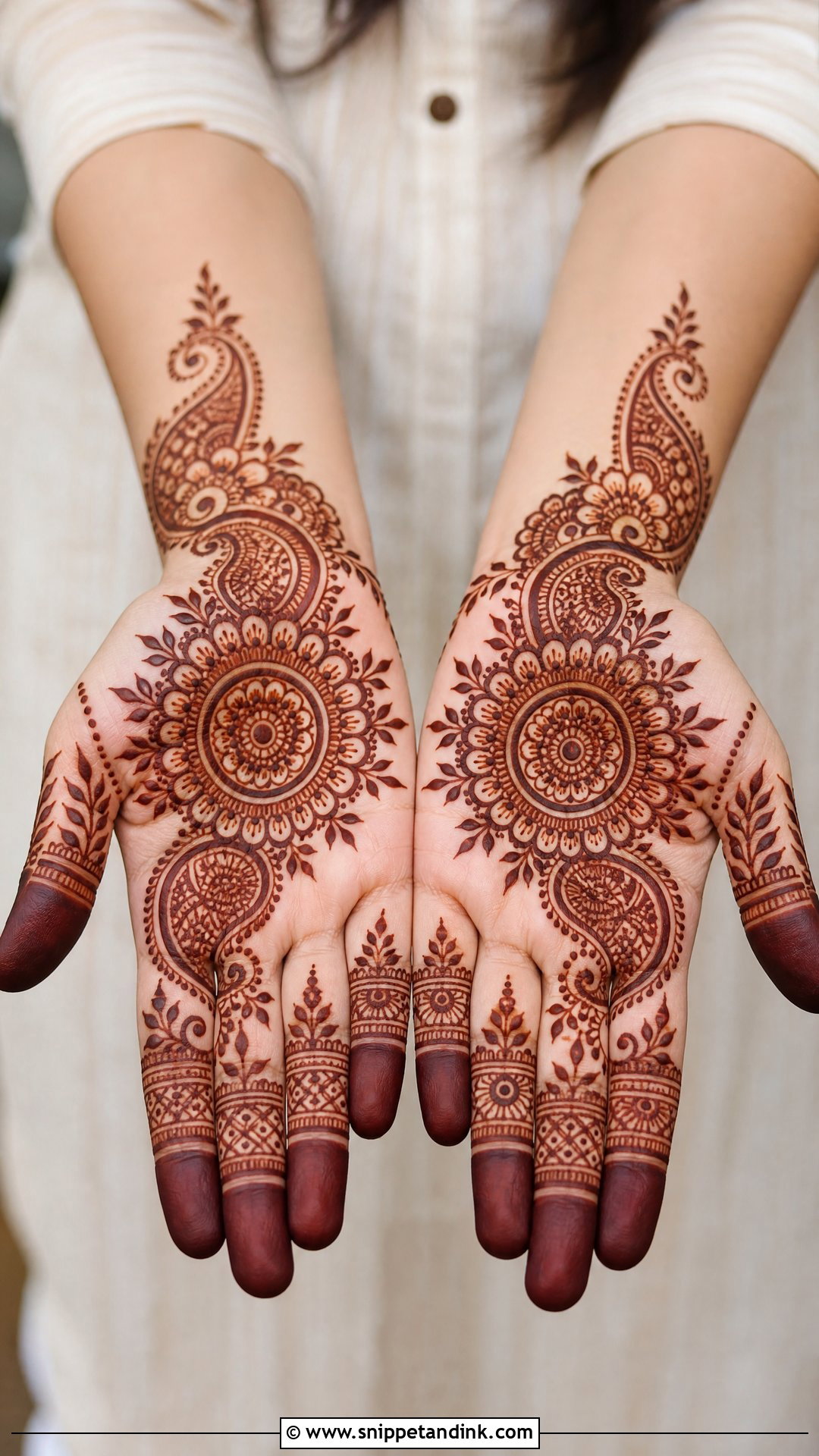
The front of the palm creases, so the design has to survive movement. I keep tiny details out of the deepest folds, where the paste cracks first and the stain breaks along the line. A central mandala, floral circle, paisley trail or geometric layout sits well in the open area, and the fingers should echo it with matching bands, leaves, dots or filled tips. Beginners can practice here because the space is clearly defined. And since palms take the darkest stain, even a simple front design comes up rich for a festival.
19. Back And Palm Mehndi Design
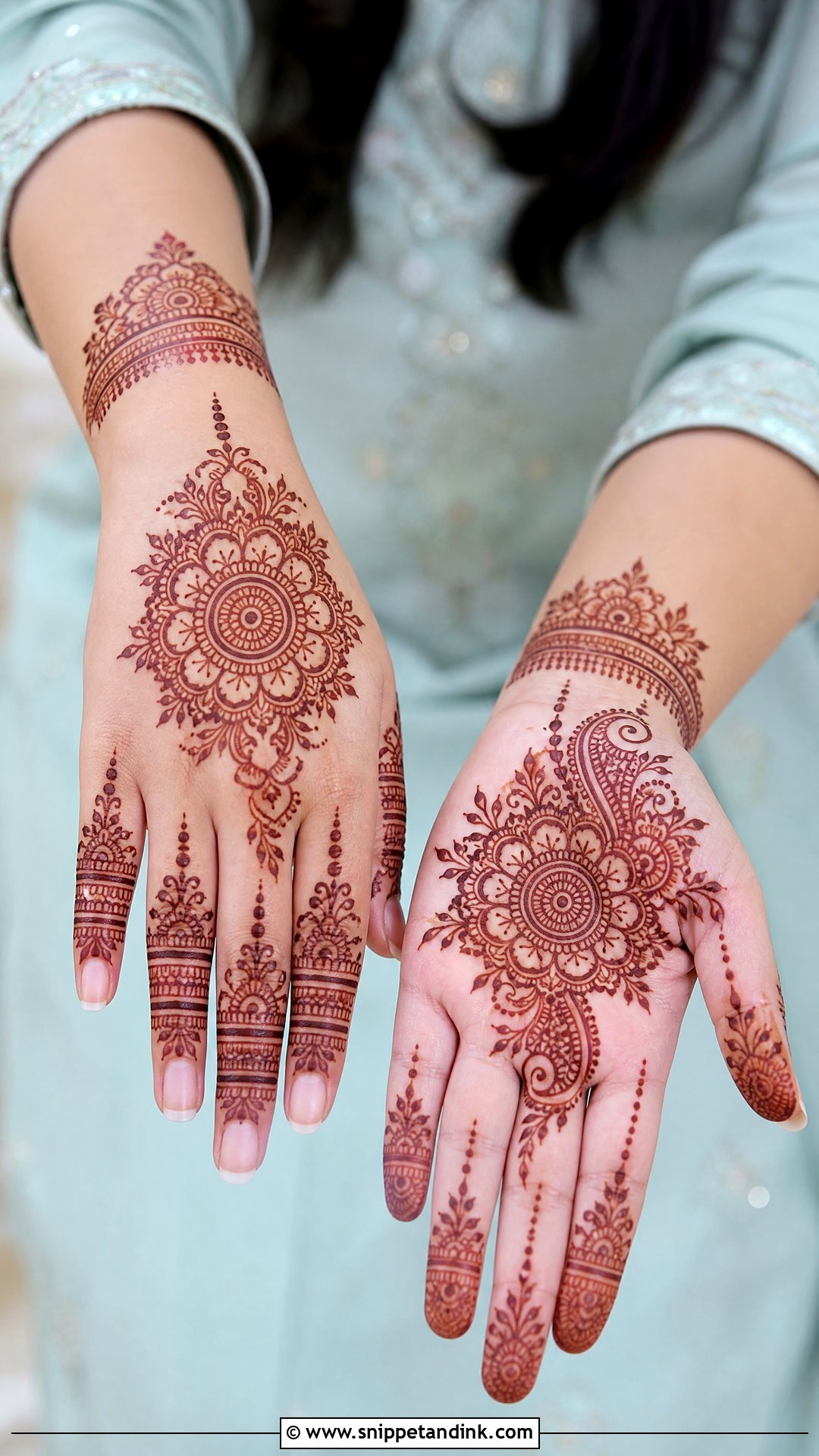
Doing both sides gives a coordinated hand from every angle. I usually put more detail on the palm, since it stains darker, and keep the back lighter with a matching mandala, floral trail or bracelet. Repeat one motif on both sides, a lotus for example, so the hand reads as one design. It’s a good fit for bridesmaids, sisters of the bride and any event where both hand poses end up in photos. Allow extra time, because you can’t rest a hand on either side while both are drying.
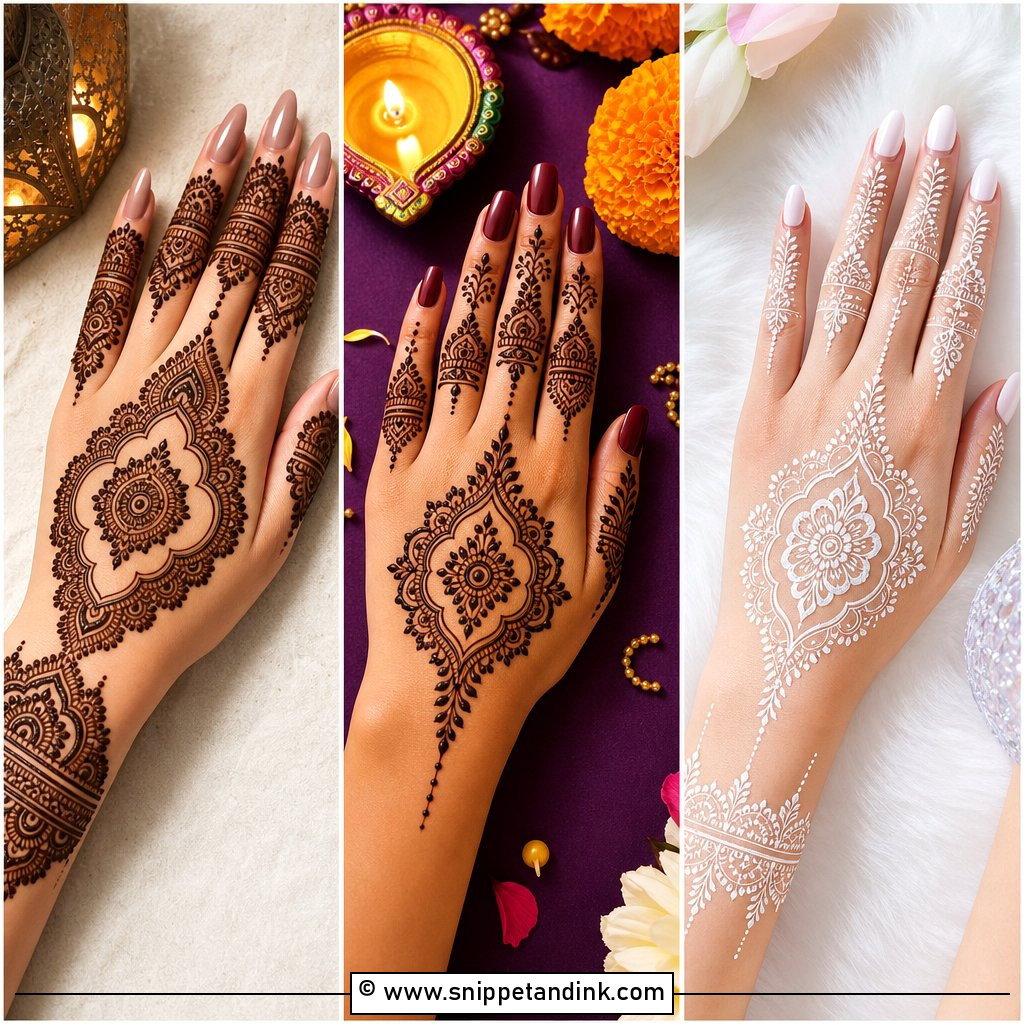
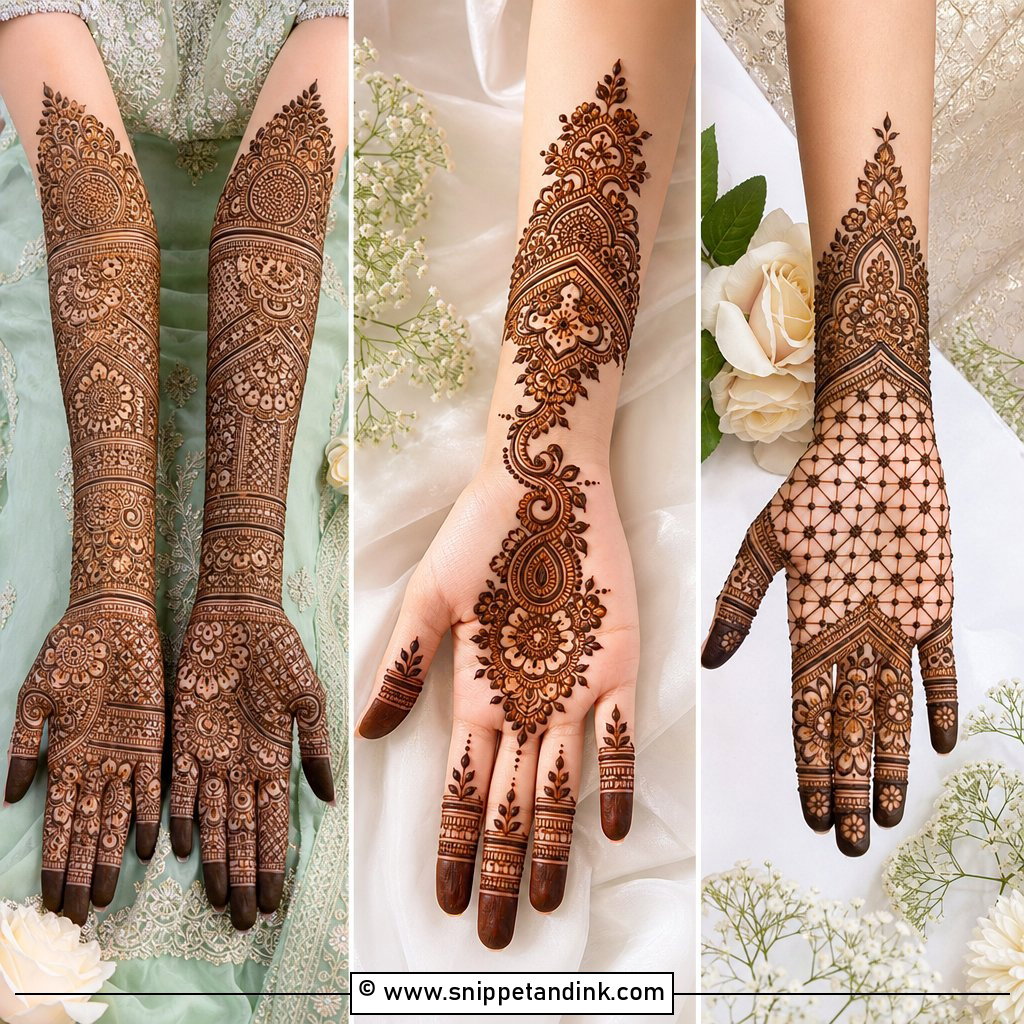
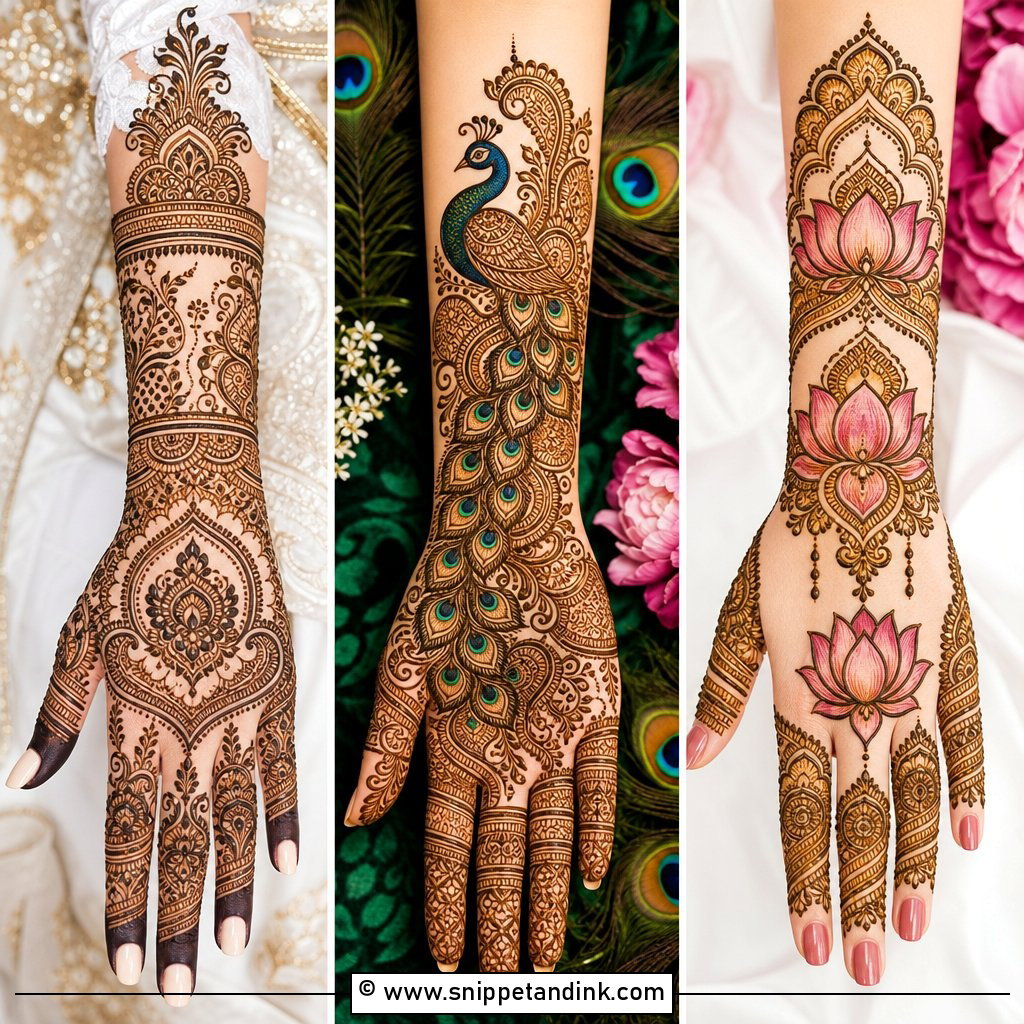
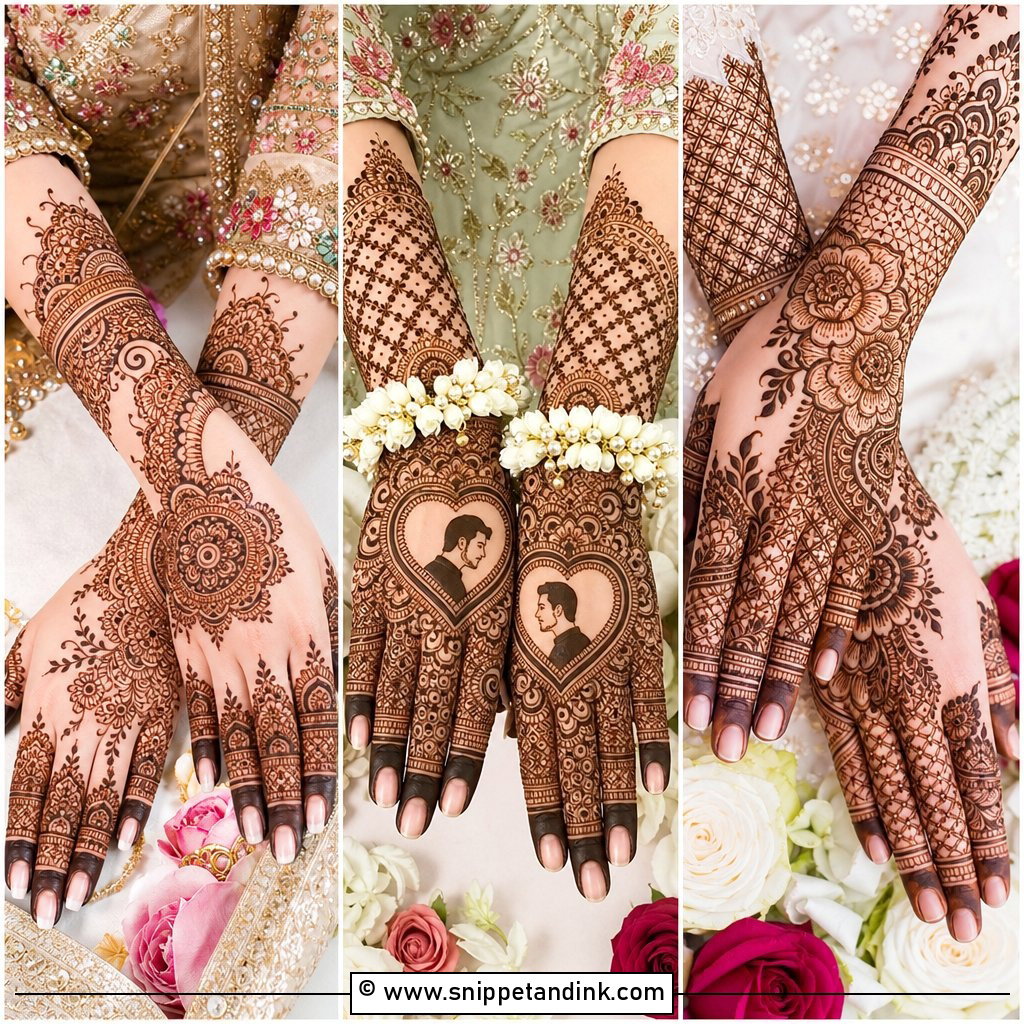
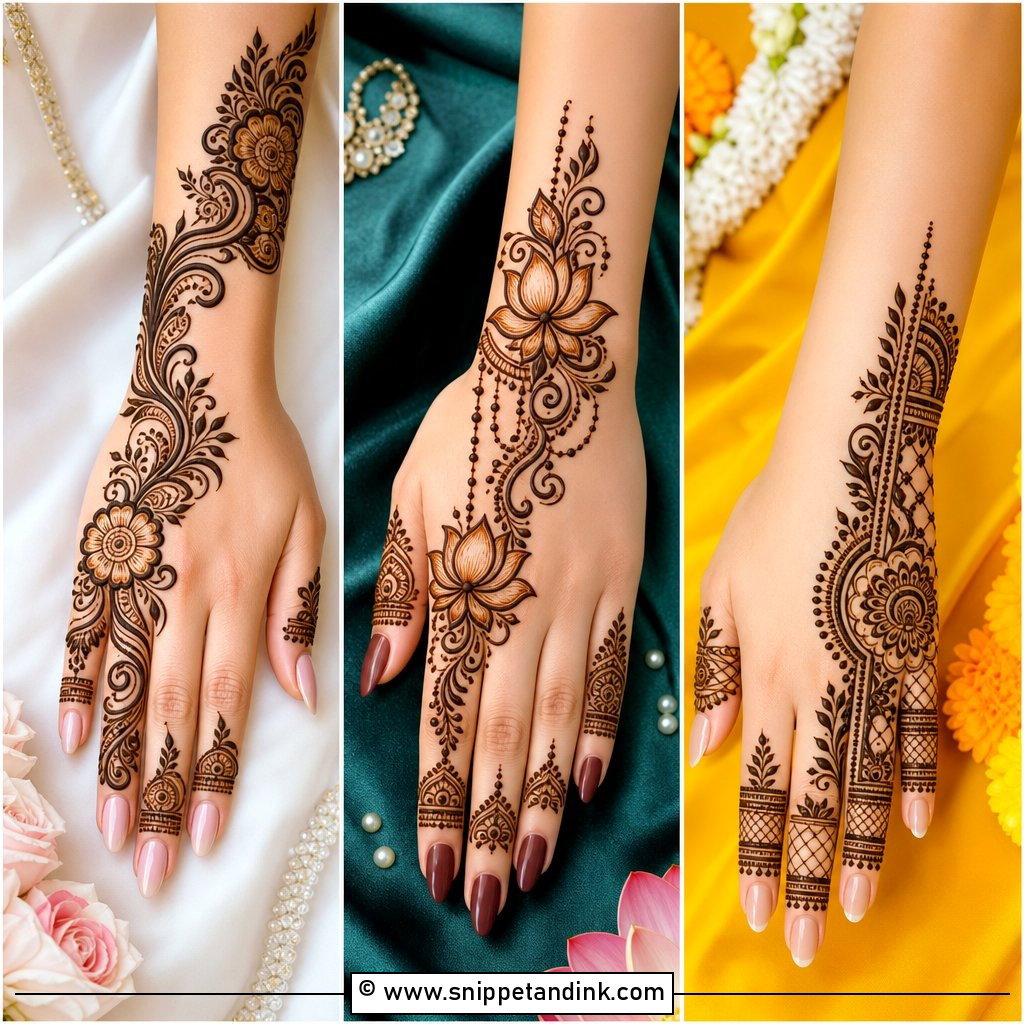
20. Wedding Palm Mehndi Design
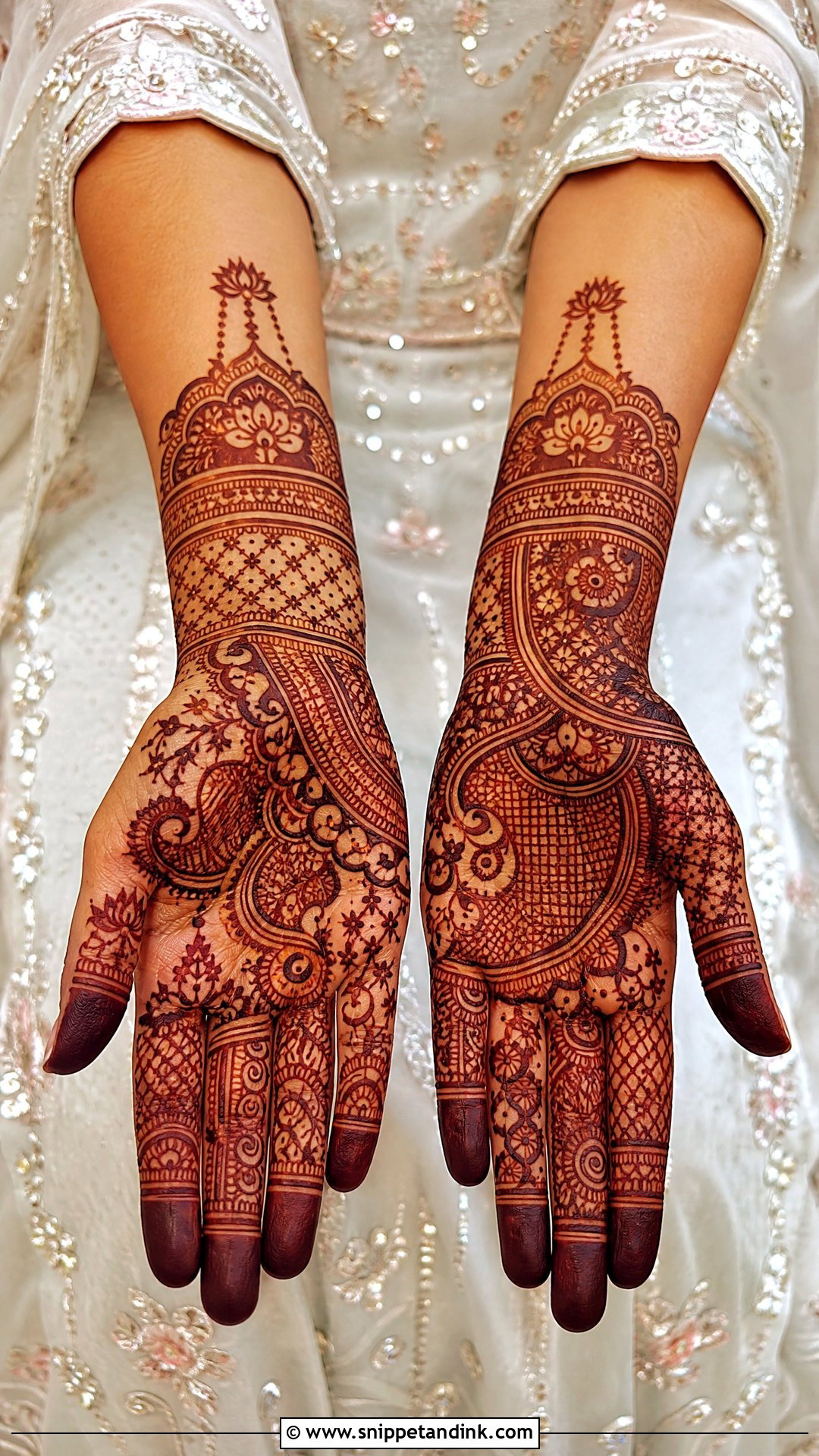
Guests, bridesmaids and close family want something festive that stops short of bridal, and my usual answer is dense in the center, lighter toward the wrist. Flowers, paisleys, jaali and neat finger work give enough richness, while small touches like a lotus, peacock feathers or dotted chains make it feel celebratory. If your outfit is heavily embroidered, a balanced palm sits beside it without fighting. The same design carries through haldi, sangeet, mehndi night and the reception. In many families it’s also good manners to keep a guest’s design noticeably lighter than the bride’s.
21. Eid Palm Mehndi Design
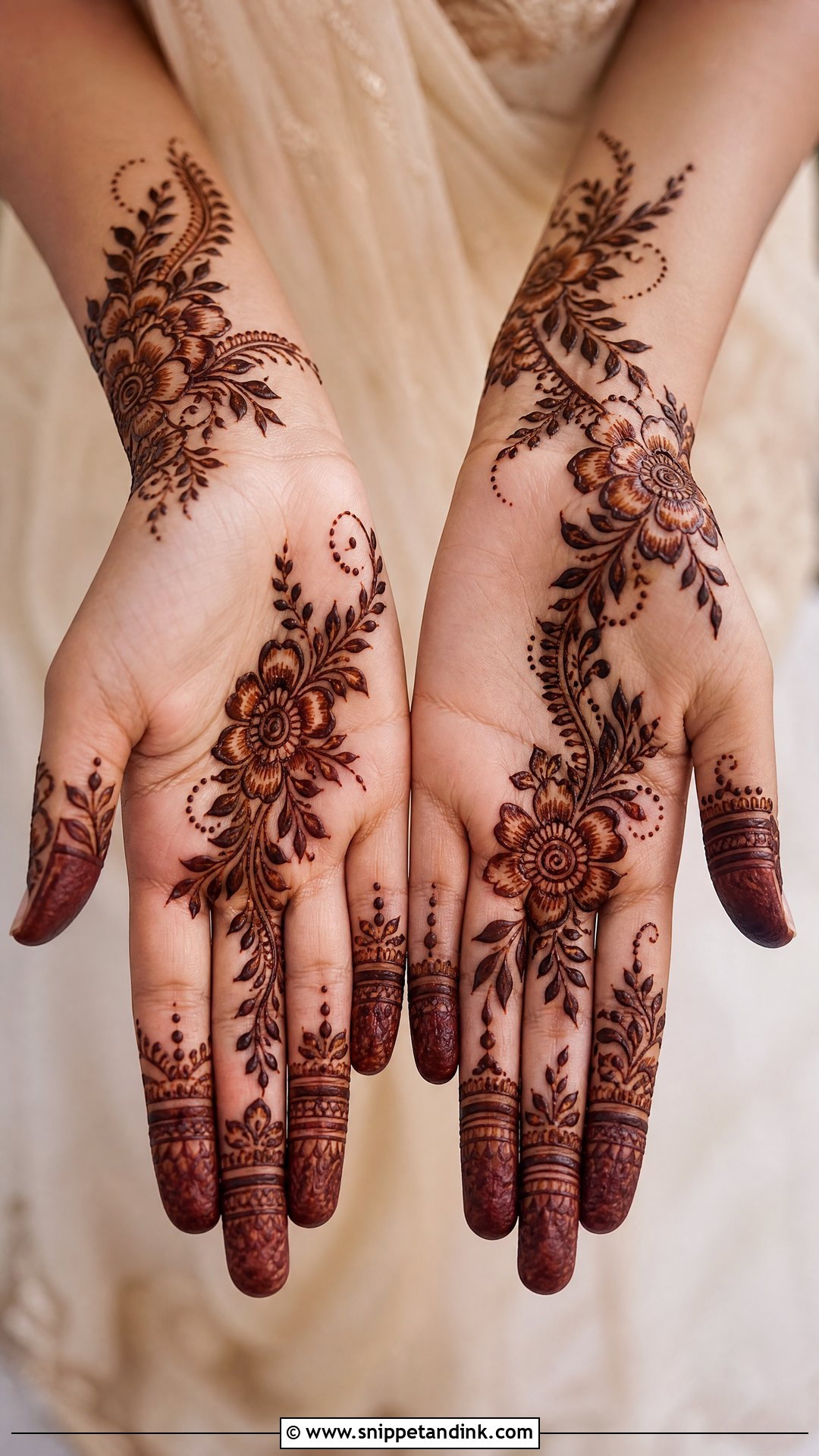
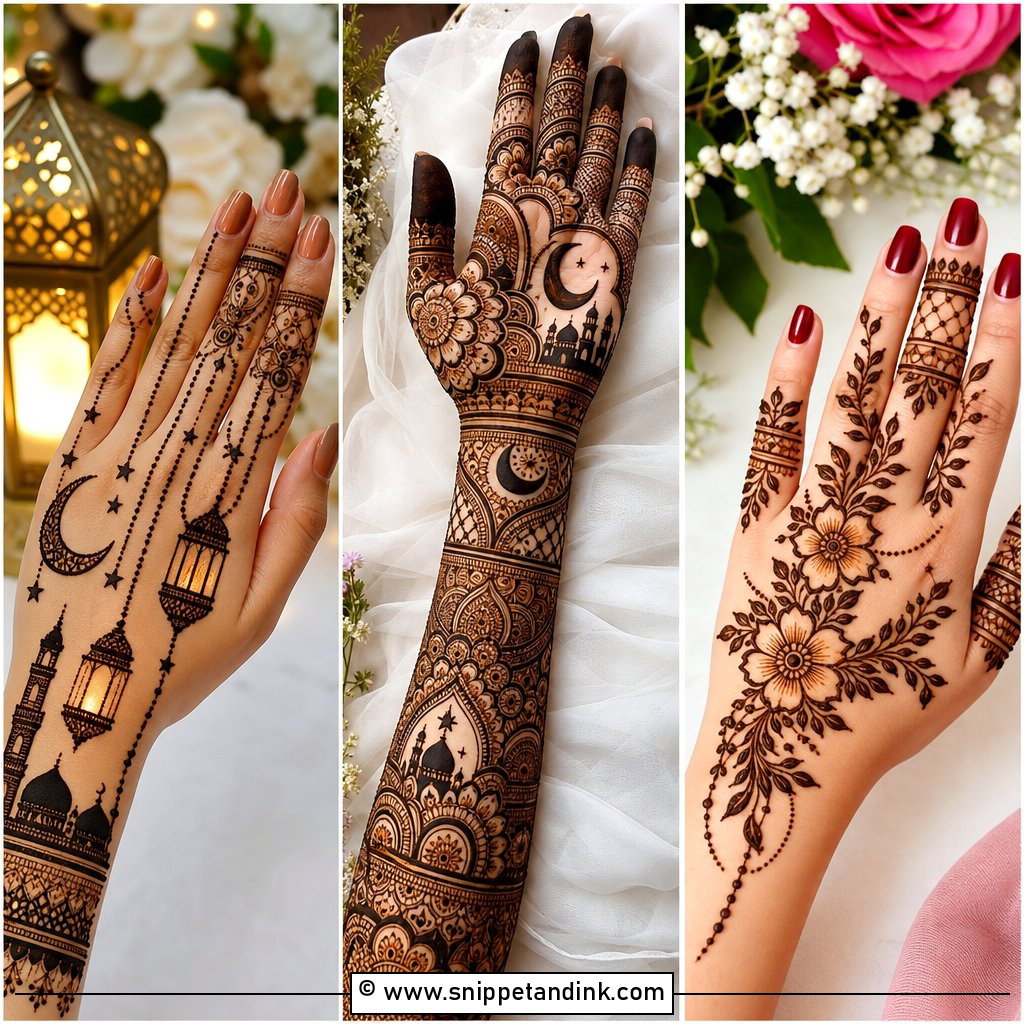
Eid henna is usually done the night before, so speed matters as much as style. Arabic and Gulf patterns suit it because bold florals, leafy trails and open space go on quickly, and a diagonal layout sits well with bangles and traditional outfits. For something softer I draw a central flower, small finger vines and a slim wrist border; for more drama, shaded petals, thick outlines and filled fingertips. Applied the evening before, the stain has the night to deepen toward maroon.
22. Diwali Palm Mehndi Design
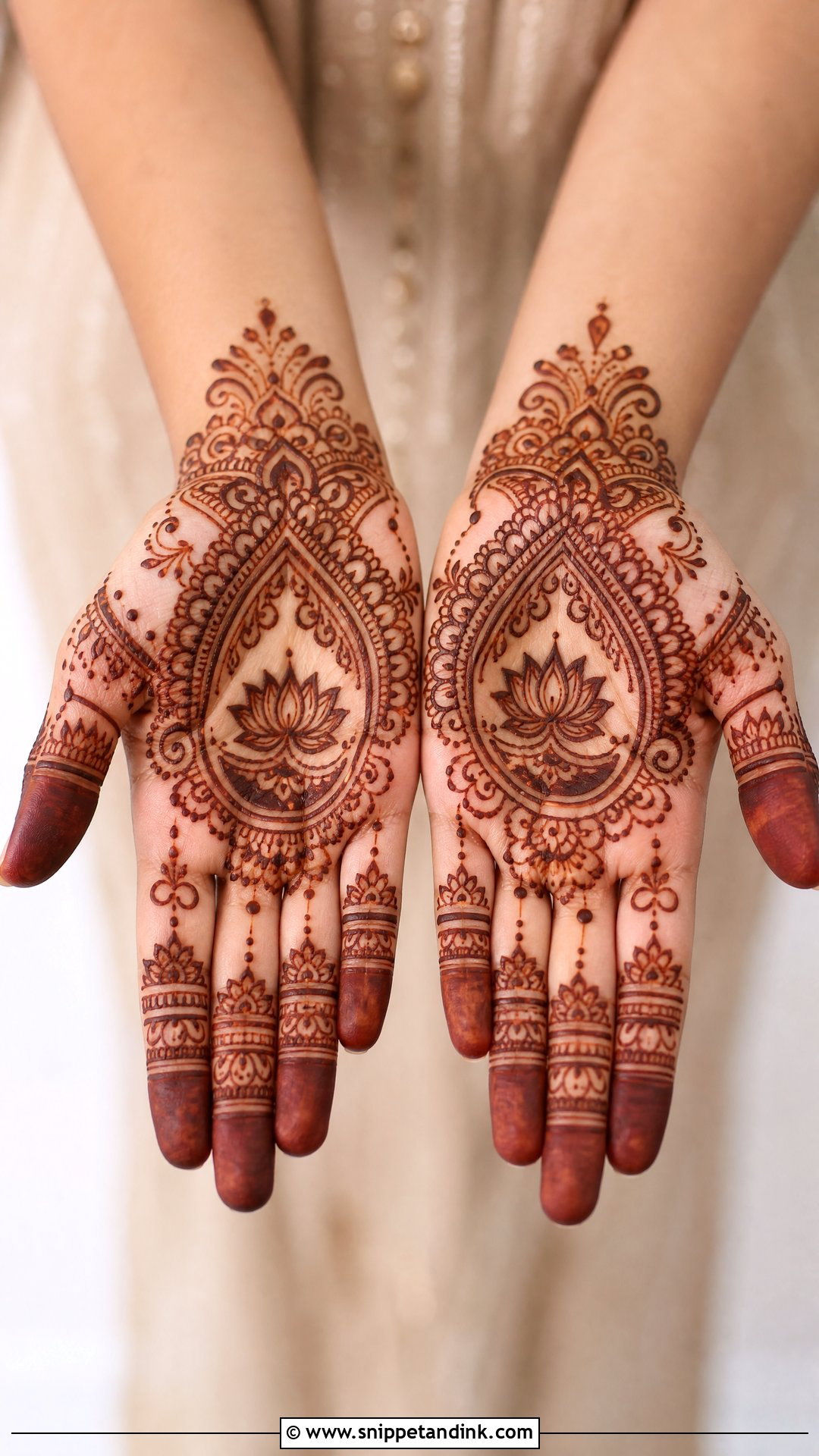
Diwali palms borrow from the festival itself: mandalas, lotus flowers, diya curves, paisleys, dots and decorative borders. A round design in the center looks like rangoli when the hand opens, which is why I default to a circle for this one. Fingers stay neat with small leaf chains, diagonal bands or tiny floral tips, and the whole thing sits easily with ethnic wear and jewelry. For a lighter version, keep the center detailed and leave the edges open. Apply it a day or two ahead so the color has peaked by the evening of the lamps.
23. Karwa Chauth Palm Mehndi Design
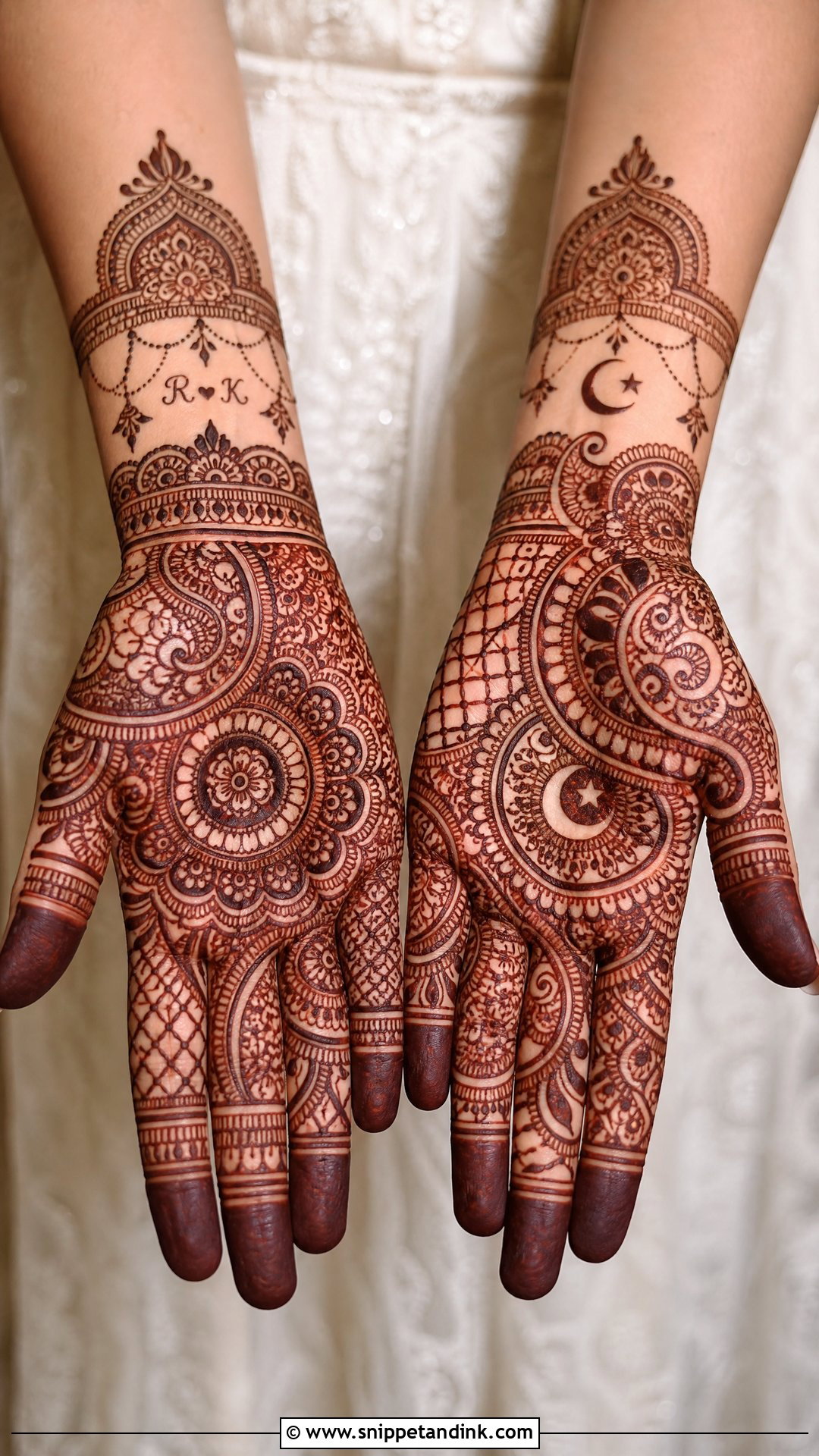
Karwa Chauth henna is usually traditional and symbolic, and many women want full palm coverage with mandalas, paisleys, fine jaali, moon-shaped curves and patterned fingers. Plan it for the moment you hold the thali or show both palms together, because that’s the pose everyone photographs. Initials or a small meaningful symbol can be tucked in. A dense Indian palm gives a rich stain, and filled or heavily patterned tips keep it classic. Since you’ll be fasting, I’d apply it the day before rather than sit through a long session that morning, and stopping at the wrist keeps the sitting shorter.
24. Teej Palm Mehndi Design
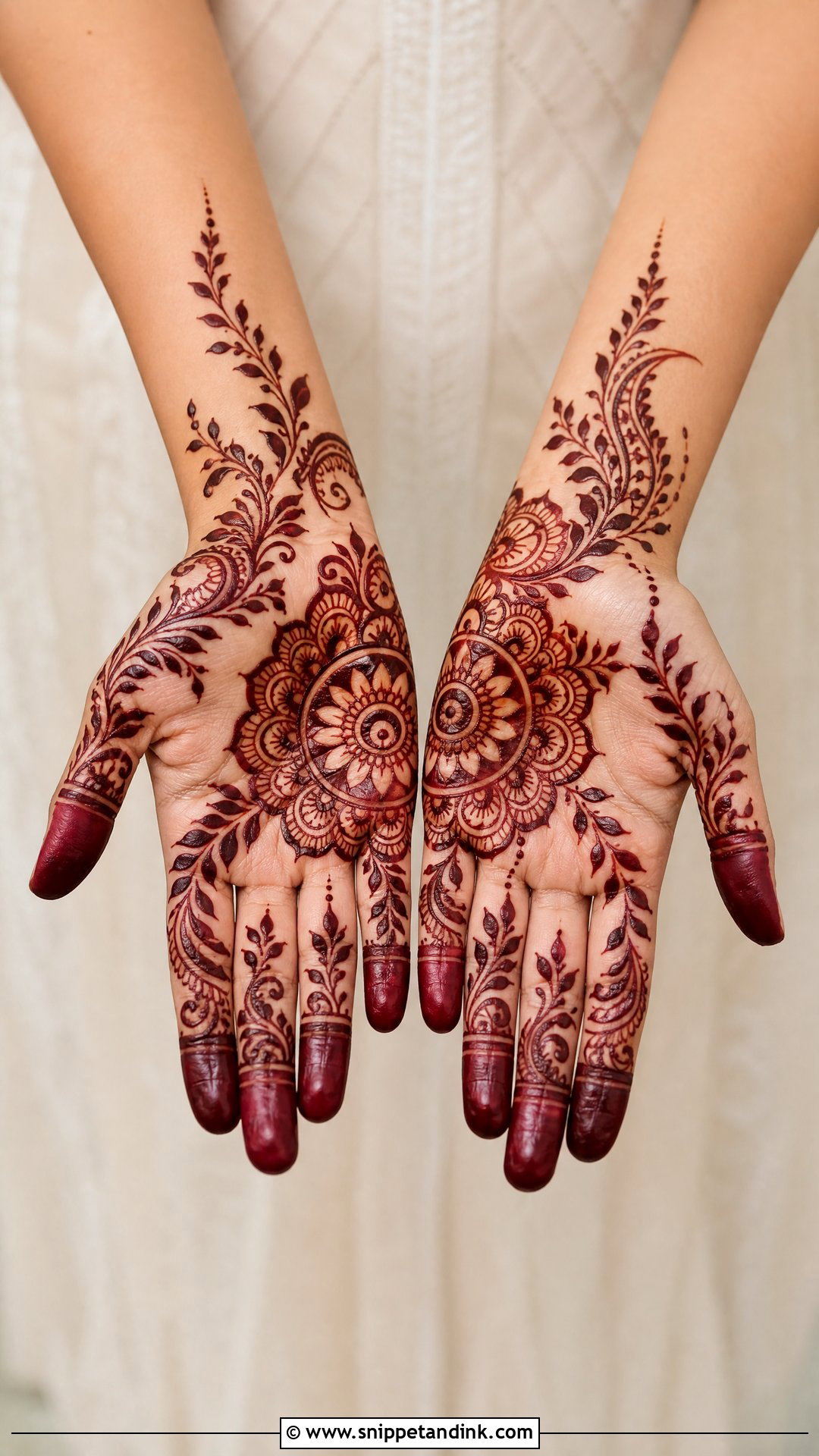
Teej belongs to the monsoon, so I lean on floral vines, leaf trails, paisleys and round mandalas. A centered motif with leafy extensions toward the fingers gives the right fresh feel, and it works for married and unmarried women alike, simple or dense. For a traditional effect, fill the fingertips and dot around the center; for a modern one, leave more open skin and use bold floral outlines. Monsoon humidity slows drying, so expect to sit a little longer before the paste sets.
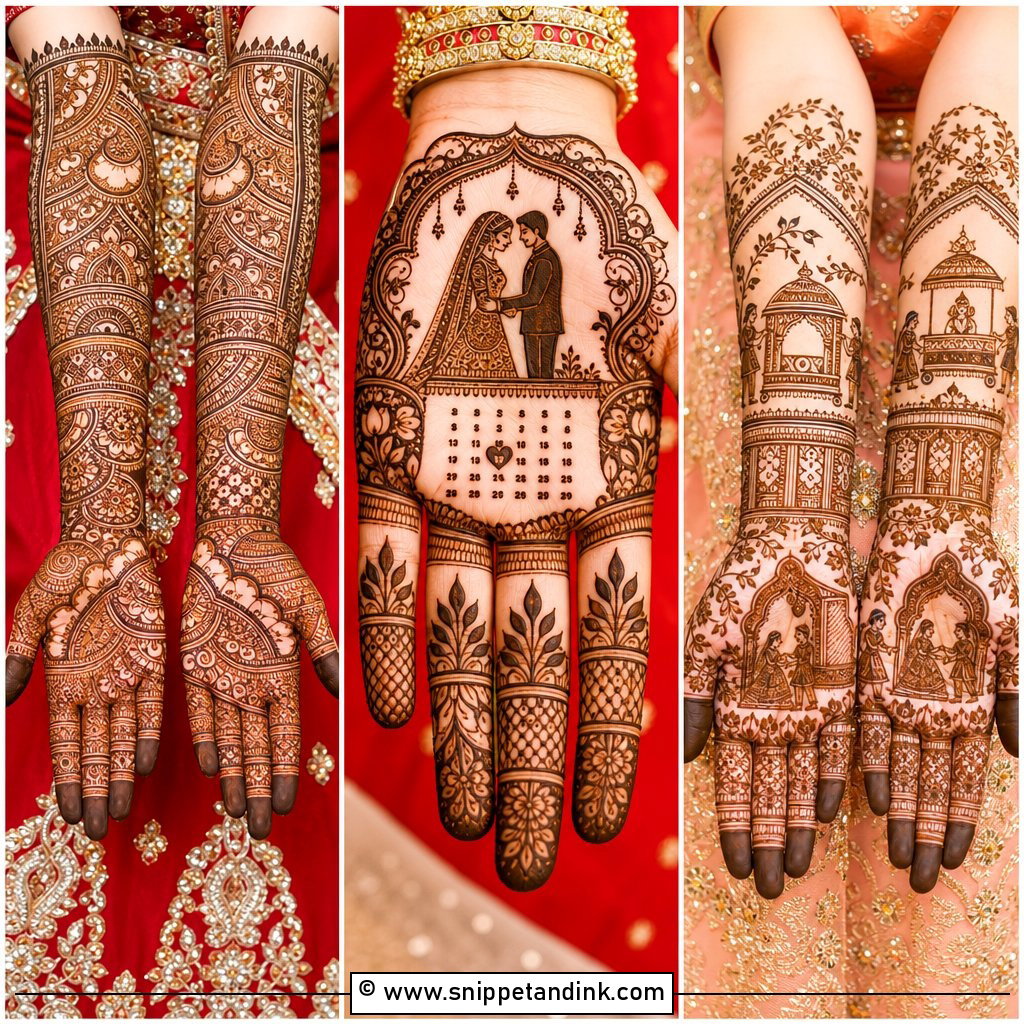
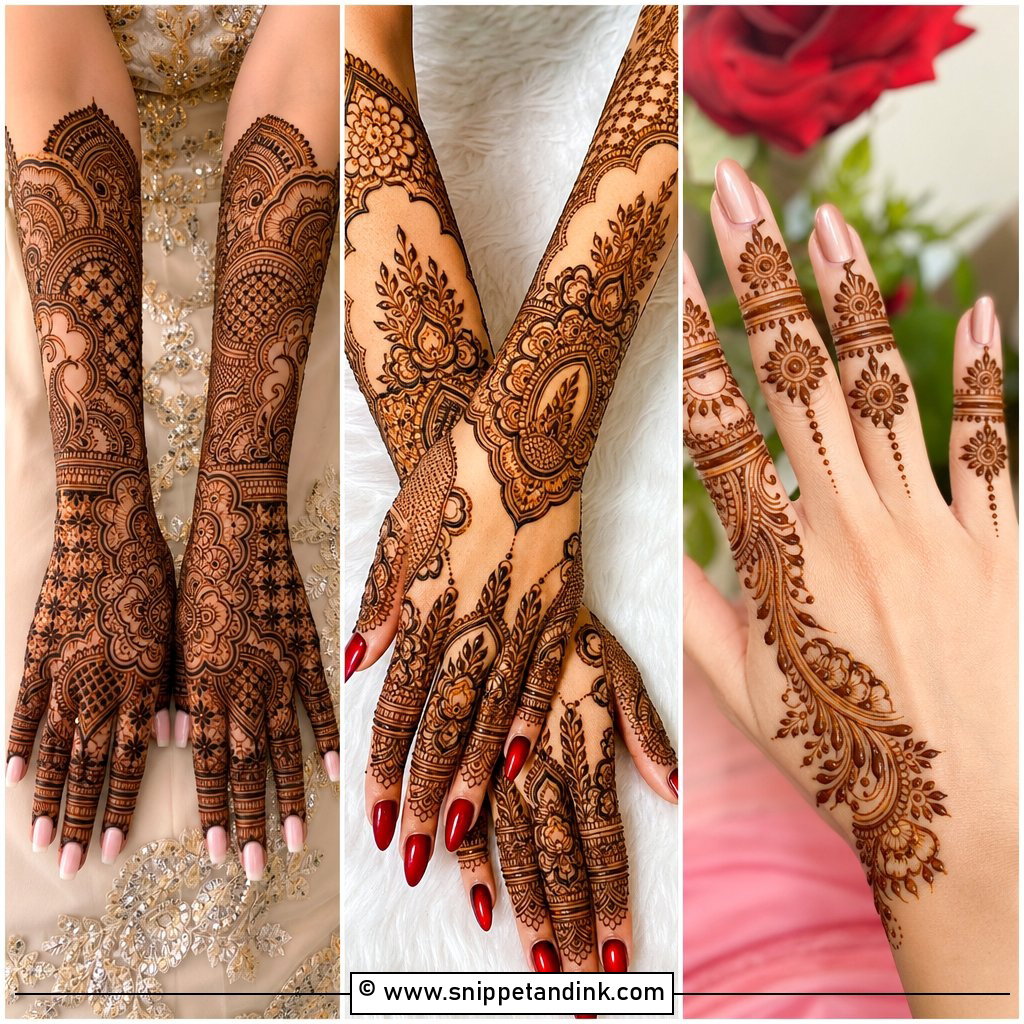
25. Raksha Bandhan Palm Mehndi Design
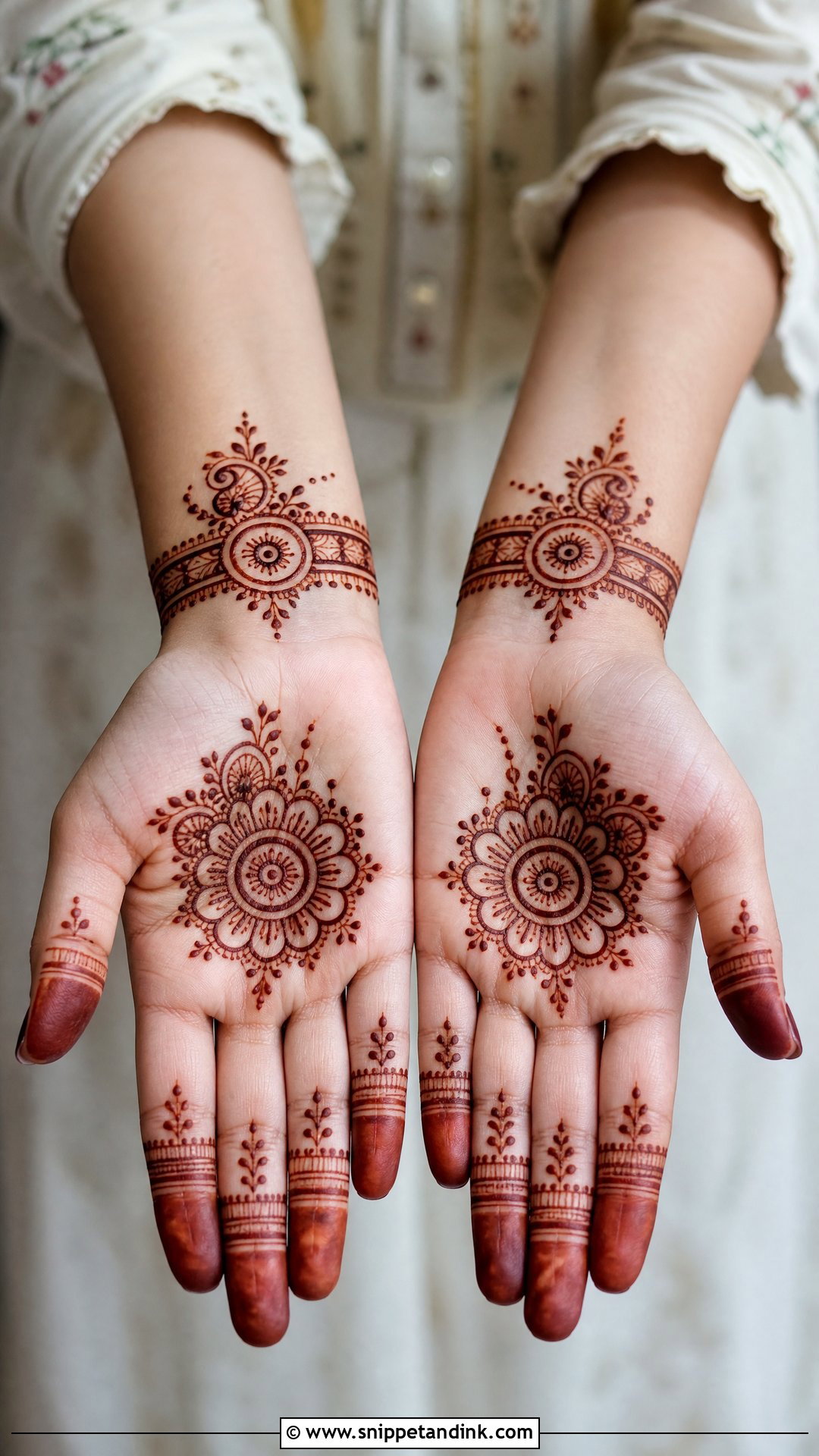
A Raksha Bandhan palm mehndi design should be quick and tidy, since most people fit it in the evening before. A medium mandala, floral circle or paisley cluster, with finger bands, dots and a soft wrist line, is plenty. The palm will be open while tying the rakhi and holding gifts, so I keep it neat rather than crowded. Bracelet details at the wrist echo the rakhi nicely, and the lighter style suits younger girls and casual family gatherings.
26. Engagement Palm Mehndi Design
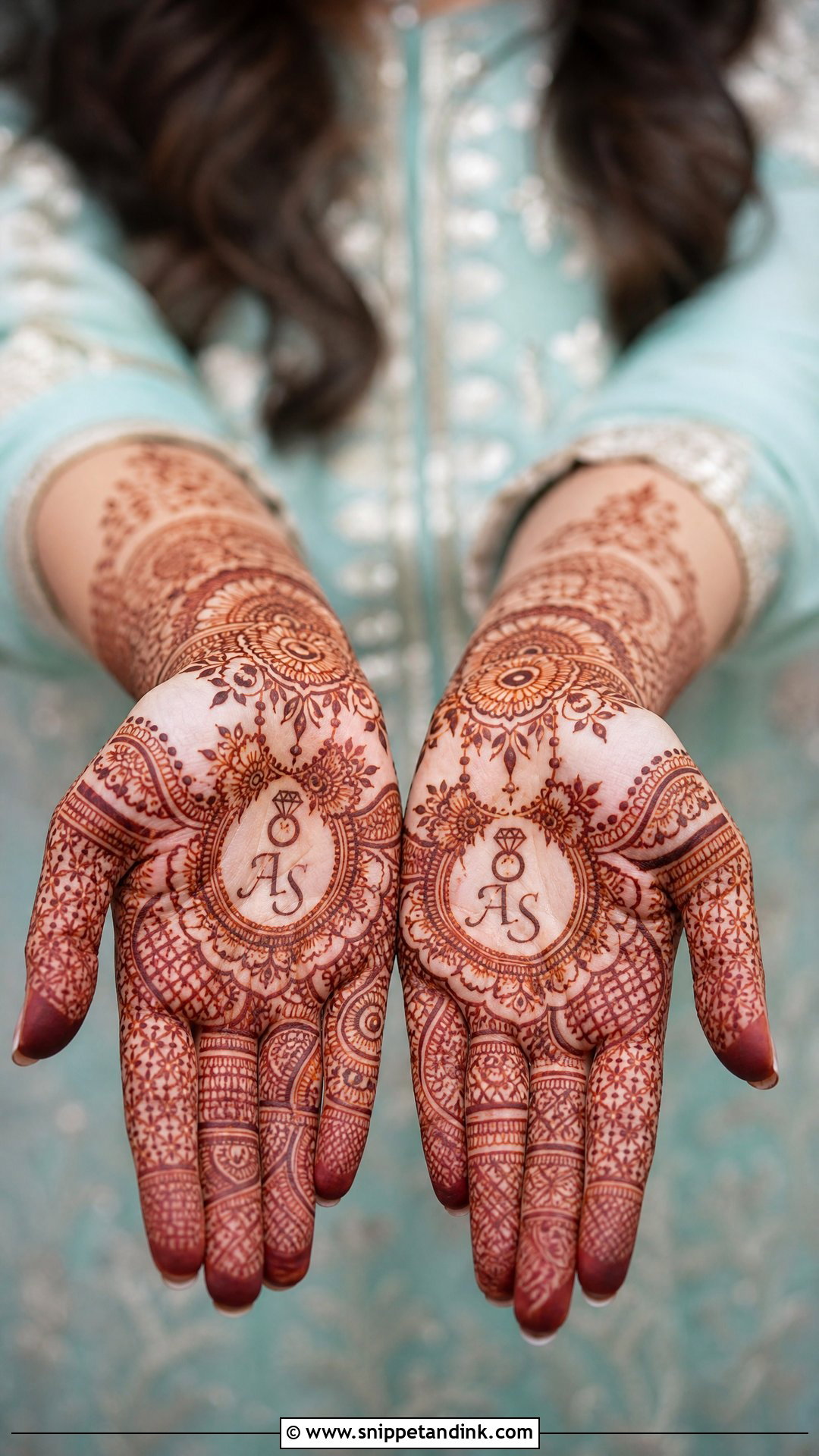
Engagement henna has one job most people forget: framing the ring. I keep the ring finger fairly open, with slim vines, dots or a clean band below the knuckle, so the ring isn’t lost against dense stain in close-ups. On the palm, a floral mandala, a ring-like circle, delicate paisleys or fine jaali panels look refined, and leaving some skin visible helps when the outfit and jewelry are already busy. Initials, a small heart curve or a subtle couple motif can go in if they suit you.
27. Baby Shower Palm Mehndi Design
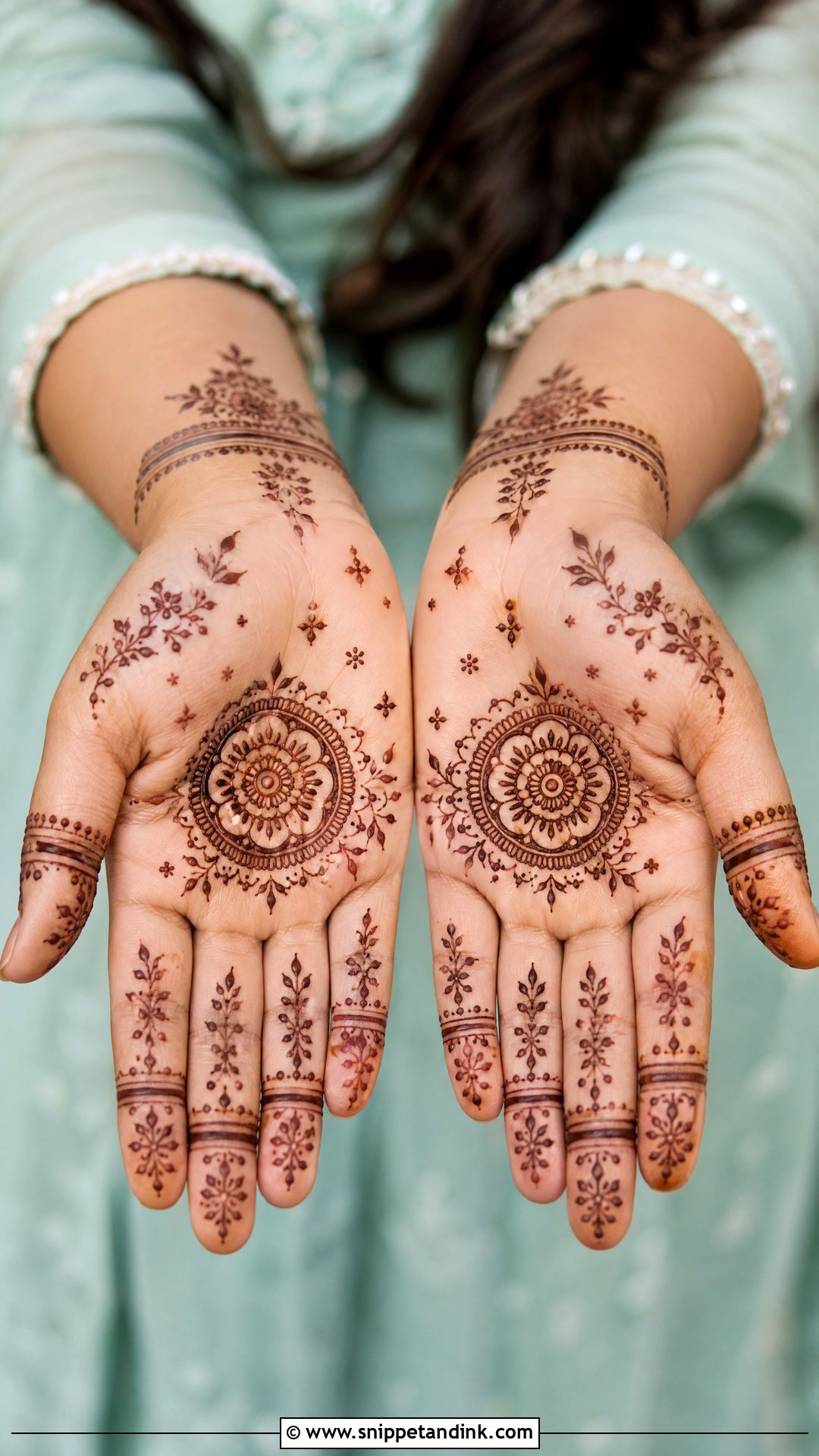
At a baby shower, comfort comes first. Rounded florals, leafy vines, tiny stars, simple mandalas or small symbolic details keep the palm light and the session short, which matters when sitting still for long is uncomfortable. A central flower with delicate finger patterns is my usual suggestion, and I skip dense fillers. I’d only ever use natural henna for an expecting mother, and anyone with concerns should check with her doctor first. A short bracelet band at the wrist finishes it.
28. Kids Palm Mehndi Design
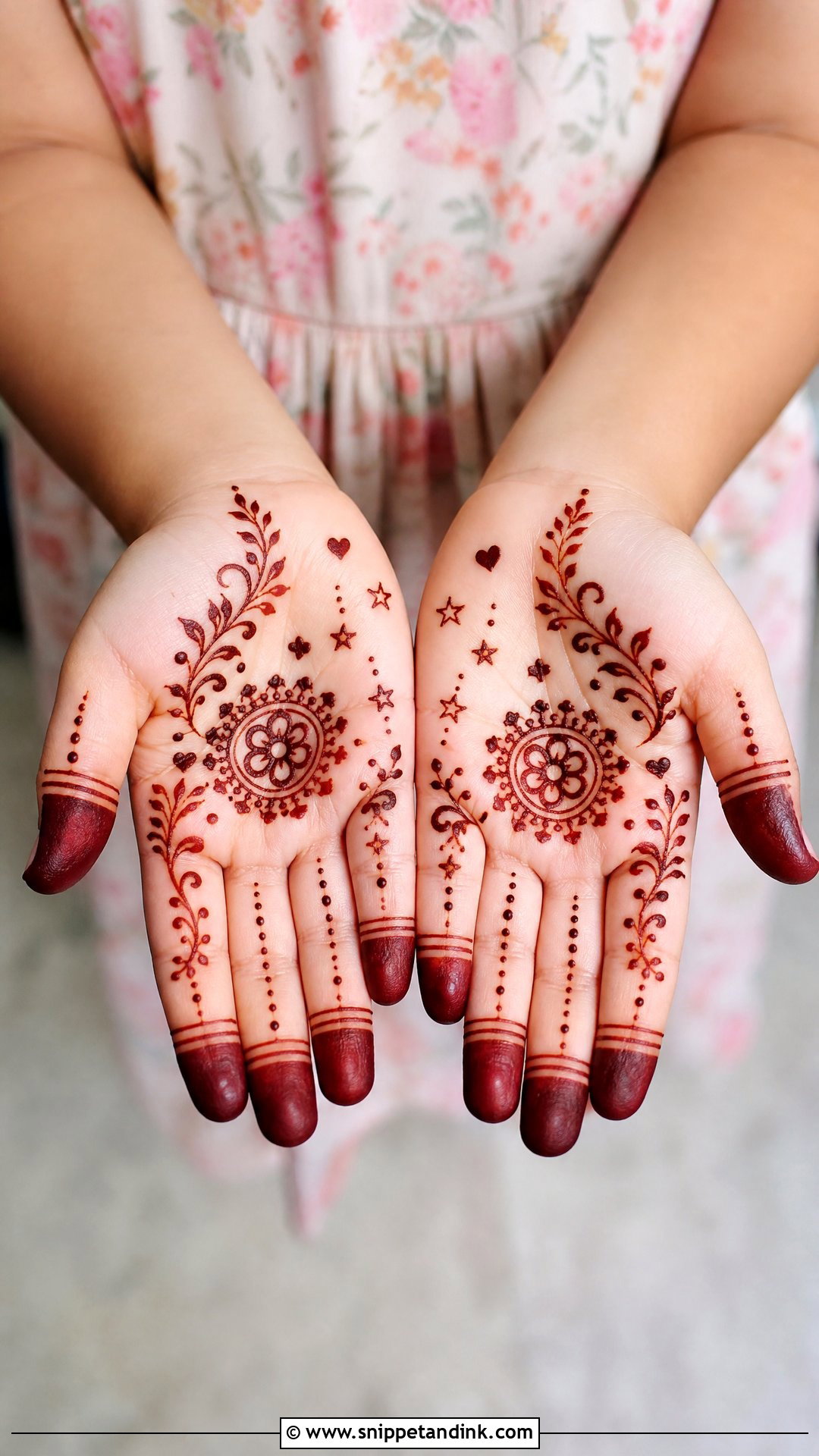
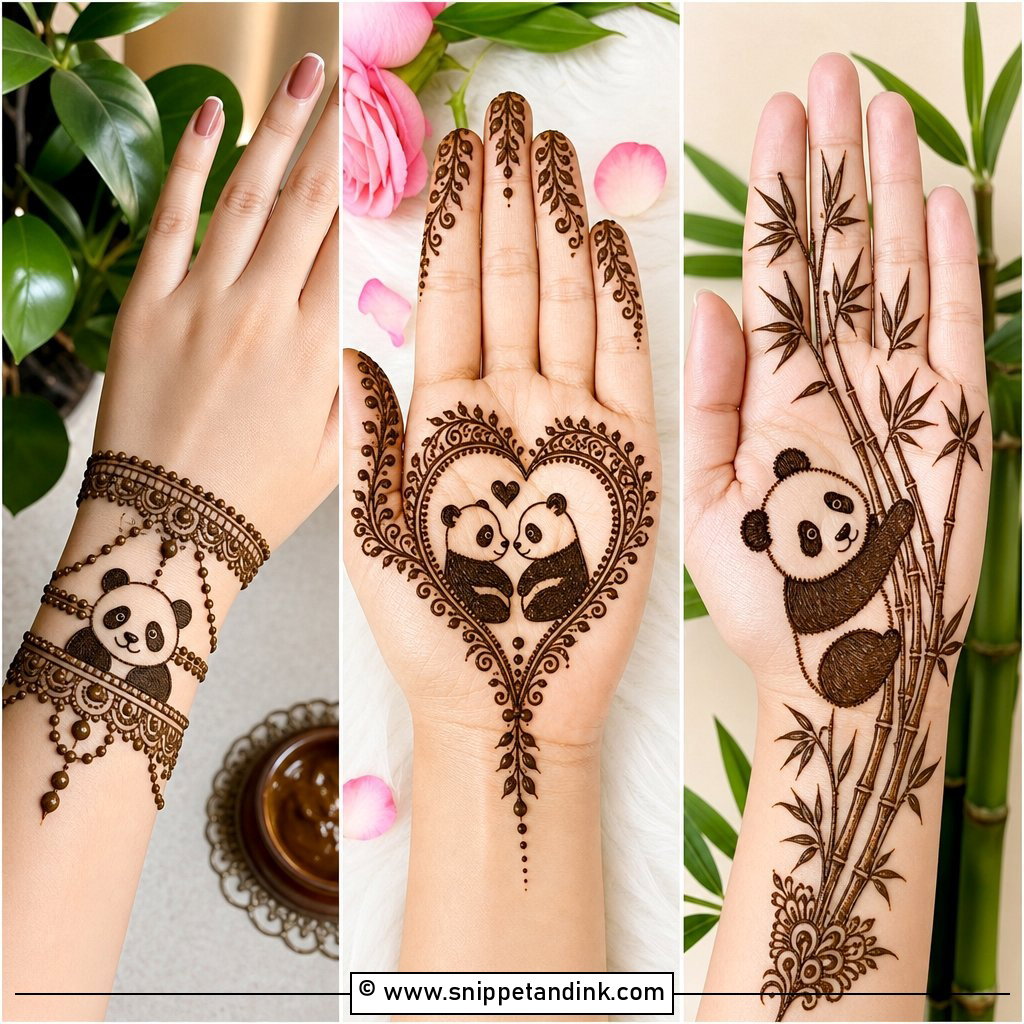
Children won’t sit still for long, so I plan for five minutes, not fifty. Small flowers, hearts, stars, dots, tiny mandalas and easy vines go on fast and survive a bit of fidgeting. Rounded shapes are easier to draw on a small moving hand, while very fine fillers are the first to smudge. I keep the center of the palm as the focus with only light finger details. Use natural henna only: so-called black henna can contain PPD, which causes serious skin reactions in children and adults alike.
29. Left Palm Mehndi Design
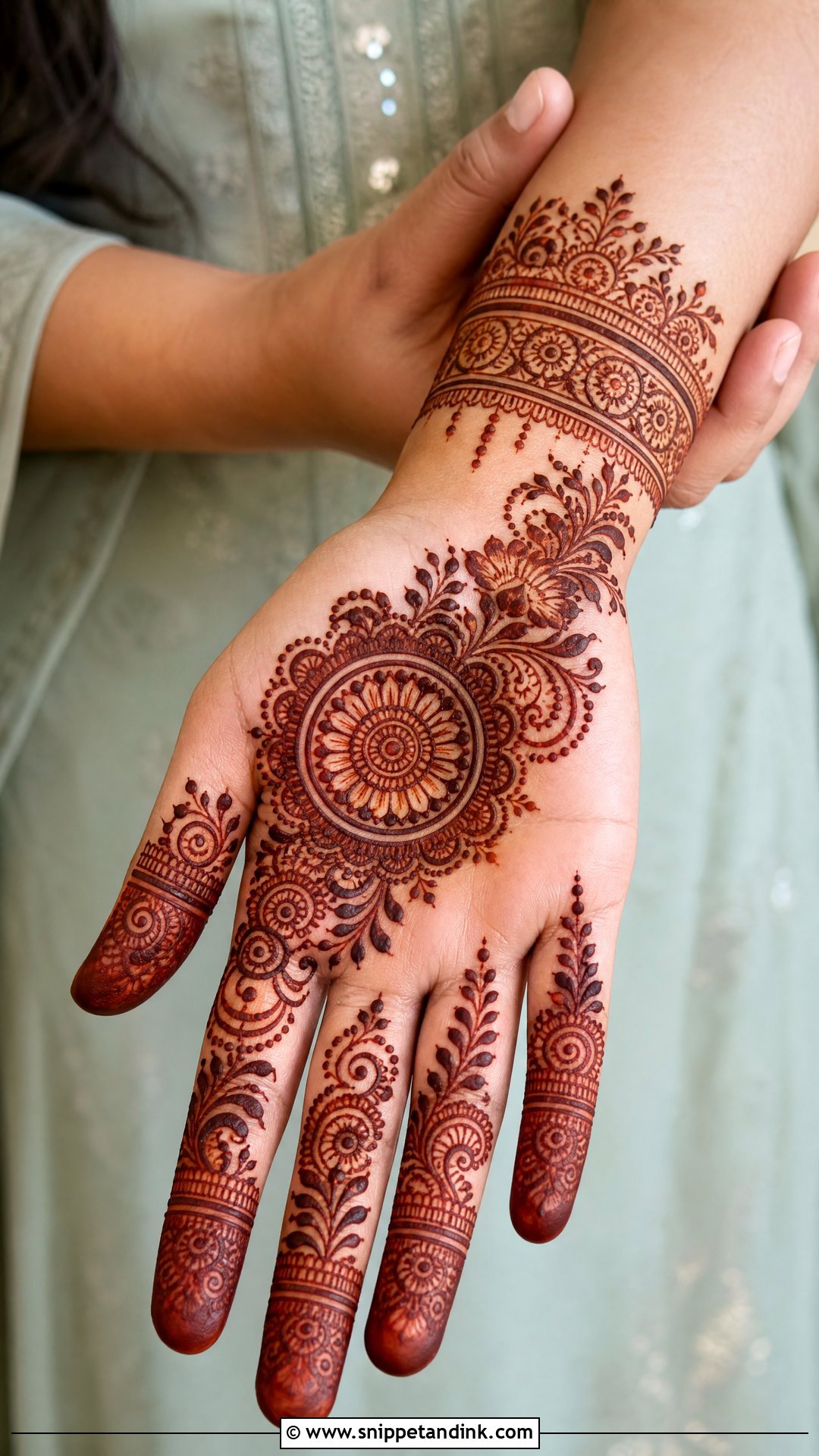
A left palm mehndi design depends on what the right hand is doing. Plenty of people keep the left a little lighter and make the right the showpiece, though matching both works too. A central mandala with finger vines is the safe pick, and a diagonal Arabic trail gives a more open feel. Held side by side, the two palms should face each other naturally, so I check the direction of every trail against the other hand before starting. If the right hand has paisleys, repeat small paisleys on the left.
30. Right Palm Mehndi Design
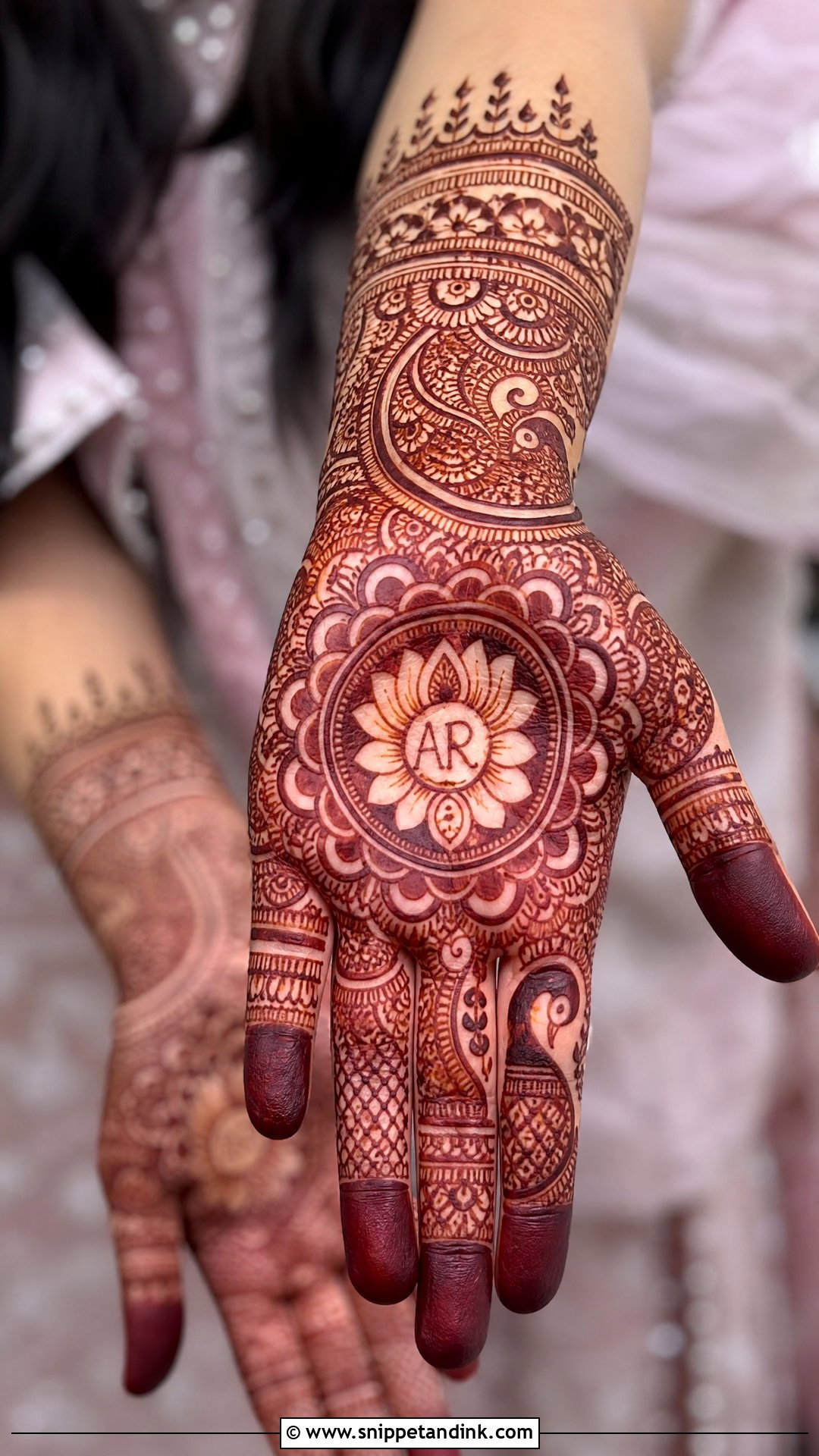
The right hand does the greeting and most of the ritual work, so it usually becomes the statement palm. That’s where I’d put a detailed mandala, bridal motif, peacock, lotus or initials. Keep the central shape strong and the fillers small enough that they don’t hide it, and let the fingers carry more decoration than the left. Matching the wrist border or fingertip pattern across both hands ties the pair together.
Why Palms Stain Darker, and How to Keep Yours That Way
When the dried paste first comes off, the stain is bright orange. That surprises people every time, and it’s normal. Over the next 24 to 48 hours it oxidizes to reddish brown or deep maroon, and the palm, with its thicker skin, usually ends up the darkest part of the design. Plan the appointment for one or two days before your event so you see the peak color, not the orange stage.
- Leave the paste on as long as you comfortably can. Four to six hours is good; overnight is better.
- Dab on a little lemon and sugar once the paste is dry to the touch. It keeps the paste sticking to the skin, so use a cotton ball and don’t soak it.
- Scrape the dry paste off with a blunt edge or rub it away. Don’t wash it off.
- Keep water off the design for the first 12 hours or so, and keep the hands warm, since warmth helps the stain develop.
- Avoid hand sanitizer, chlorine and harsh soaps while the color is still building.
Palms also fade fastest in daily life, because they’re washed and rubbed constantly. Expect one to three weeks depending on how much you use your hands. A thin layer of natural oil or balm before washing slows it down a little.
Black Henna Is the One Thing I Refuse to Use
Real henna never stains black. It comes up orange and darkens to brown or maroon. Paste that promises a jet black result in an hour often contains PPD, a hair dye chemical that can cause blistering, scarring and a lifelong sensitivity. Some ready-made cones also carry undisclosed chemical dyes. It’s fair to ask your artist what’s in her paste. A natural mix is usually henna powder, lemon juice, sugar and essential oil, and because it spoils, a careful artist keeps her cones chilled or frozen until the day. If you’ve ever reacted to hair dye, mention it before she starts and ask for a small test patch.
Start With the Occasion, Then Fit It to Your Hand
Palms show henna better than any other spot, which is why every one of these designs builds around a clear center. Bold Arabic trails, dense Indian fillers, Moroccan geometry and small minimal circles all have their place; the right one depends on the occasion, your outfit, the shape of your hand and how long you can sit. Dense palms belong at weddings, open layouts at Eid, parties and casual festivals. Bring two or three favorites to your artist, point at the exact elements you love, and let her fit them to your hand.
You'll Like These Ideas:


Leave a Reply