
“Fancy” means something different to every person who sits down in front of me. For one it’s elbow-length bridal work; for another it’s a few modern, Arabic-inspired trails that take twenty minutes before an Eid lunch. What the good versions share is contrast: bold motifs with enough clean skin around them that the stain reads clearly once it darkens. Below are 35 complete hand looks, from florals, paisleys and jaali to jewelry chains and wrist cuffs, for weddings, Eid, Diwali, engagements and smaller family celebrations, with notes on where each one works and where it doesn’t.
Sitting Time, Coverage by Coverage
The question I’m asked most before a booking is how long it will take. The honest answer depends on the artist’s speed, the detail and how still you can sit, but these rough ranges help when planning a festival evening or a wedding schedule.
- A simple back-hand trail or finger design: around 10 to 20 minutes per hand.
- Arabic or Indo-Arabic on both sides of one hand: roughly half an hour to an hour.
- Full bridal hands to the wrist or forearm, front and back: several hours.
- Bridal hands plus feet and lower legs: often most of a day, so many brides split it over two sessions.
Application is only half of it. The paste then needs to stay on for several hours to stain well, and you can’t do much with your hands while it does. For groups, I do the people who need their hands soonest first and finish with the bride or anyone who can sit quietly afterward.
1. Full Hand Bridal Mehndi Design
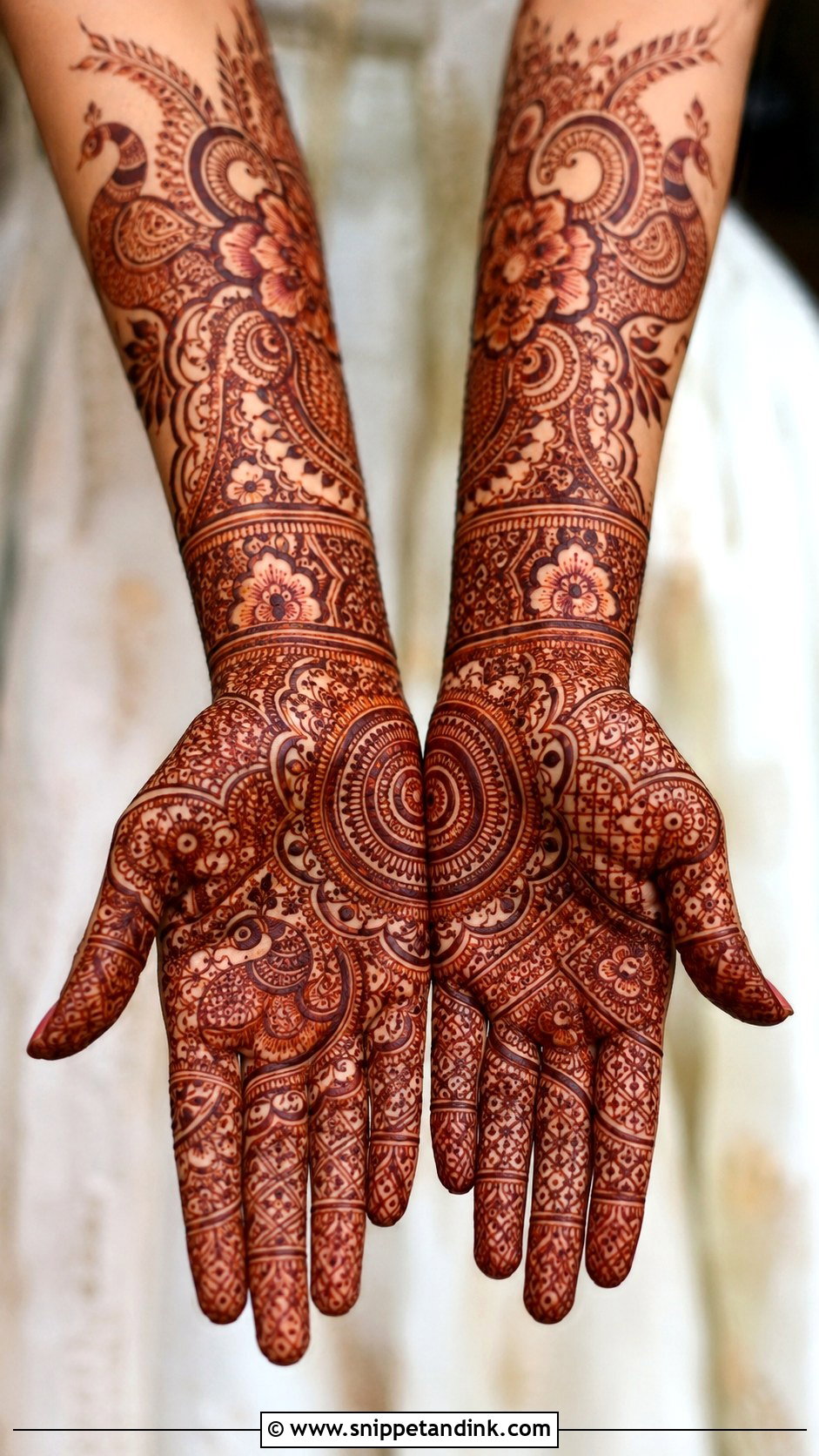
Full bridal coverage starts at the fingertips and runs past the wrist, often up the forearm, packed with paisleys, florals, peacocks, mandalas, vines and fine filler. Done well, every part of the hand is decorated but the outlines stay readable. I draw the main structure first and fill last; working the other way, the fillers creep into each other and the hand turns into one dark patch once the stain develops. It suits bridal bangles, rings and embroidered outfits, and it takes hours, so it’s not something to squeeze in on the morning of a function.
2. Arabic Floral Mehndi Design
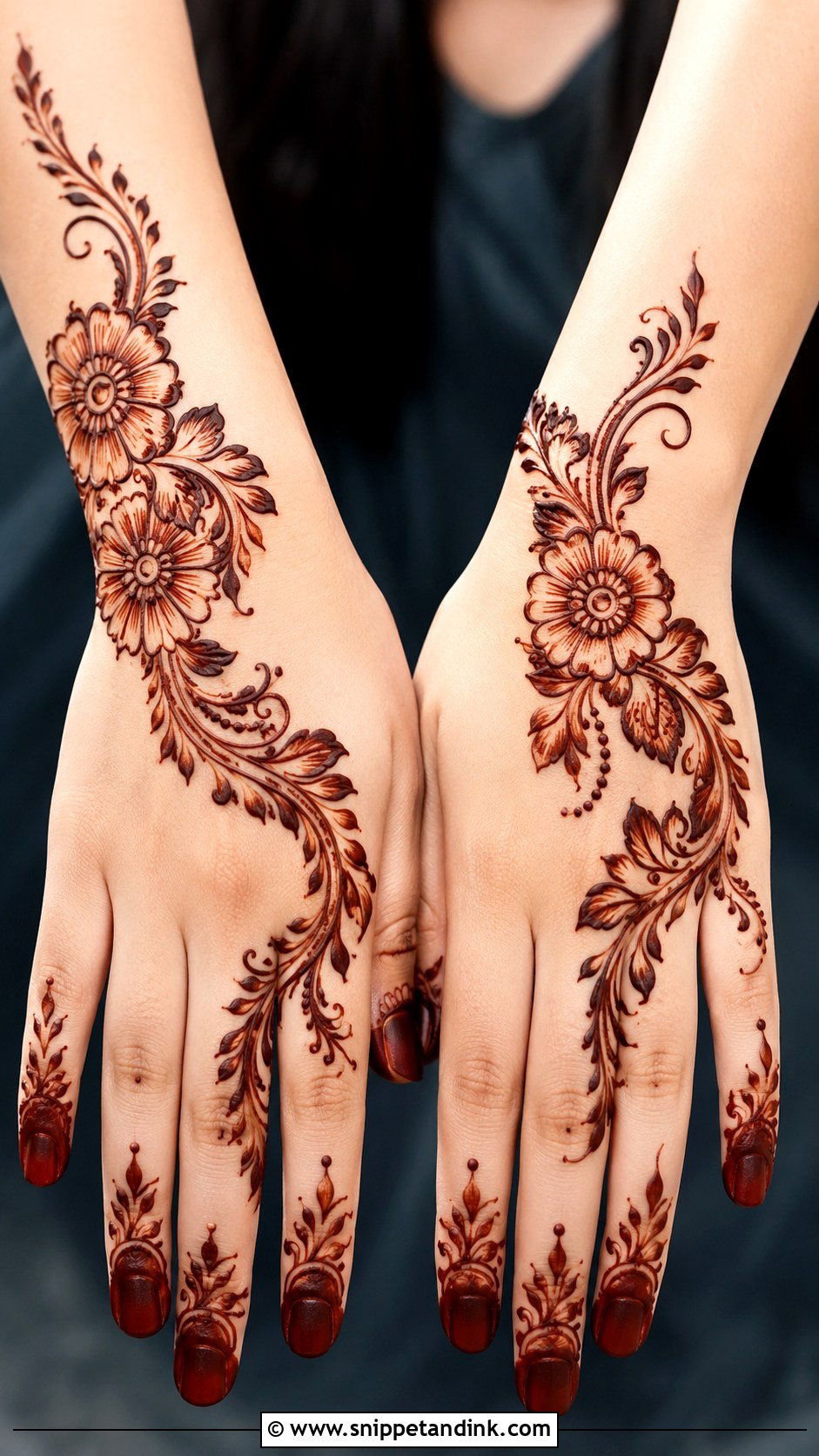
Arabic florals run diagonally across the hand with bold flowers, curved leaves and long vines, leaving far more skin showing than Indian mehndi. The larger flowers sit on the back hand and the fingers carry smaller matching details. I apply these quickly, so they’re my standard for guests and bridesmaids at busy events. Thick strokes on open skin give a strong, even stain, which is why this style looks so clean on the back of the hand.
3. Indo Arabic Mehndi Design
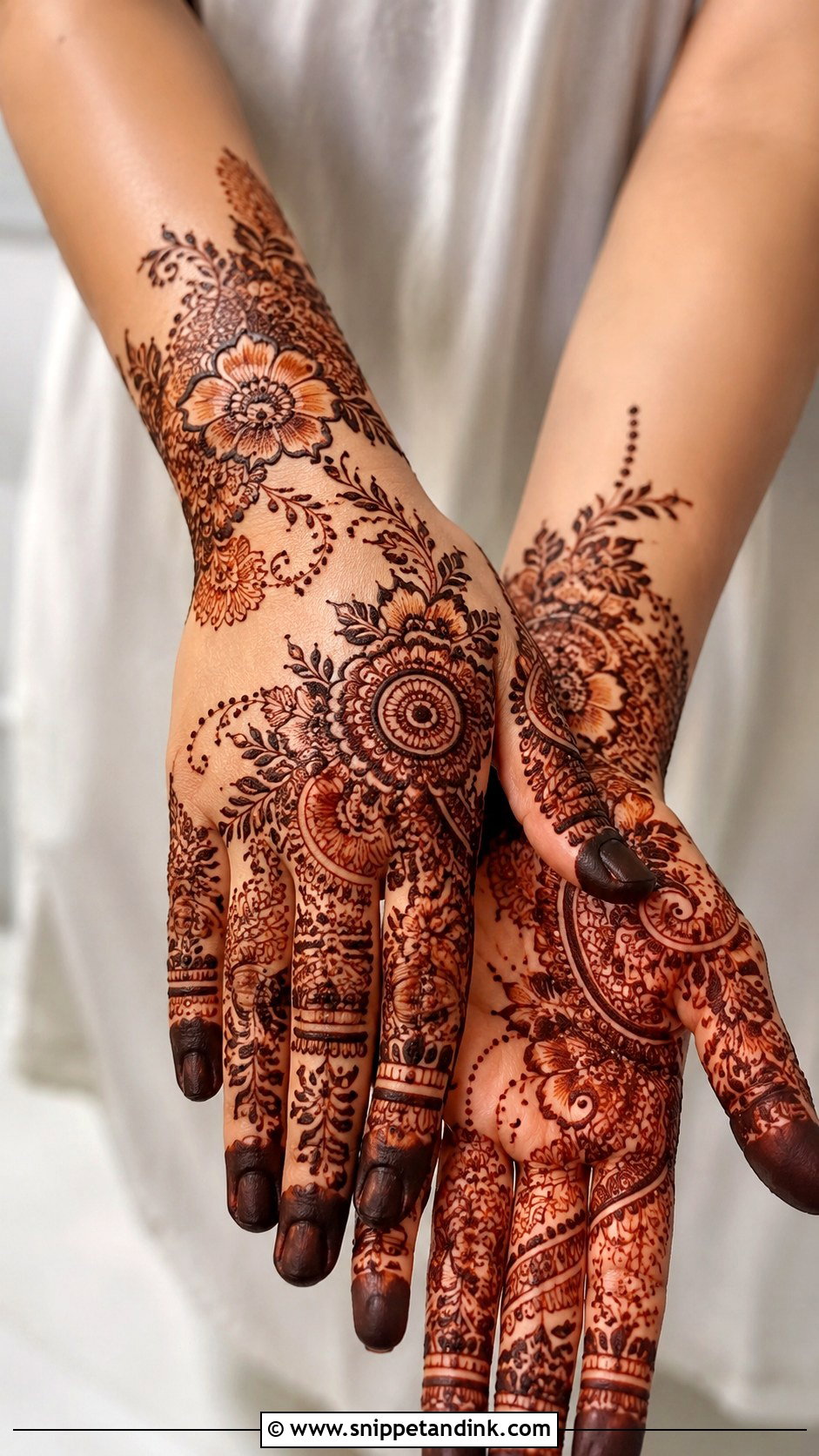
Indo-Arabic takes Arabic flow and fills parts of it with Indian detail: large florals and paisleys beside shaded leaves, small mandalas and fine net patterns. Usually there’s one strong trail across the palm or back hand while the fingers stay detailed and neat. It’s my answer for anyone who loves traditional mehndi but doesn’t want a fully packed bridal hand. In photos it gives drama and breathing space at once.
4. Back Hand Fancy Mehndi Design
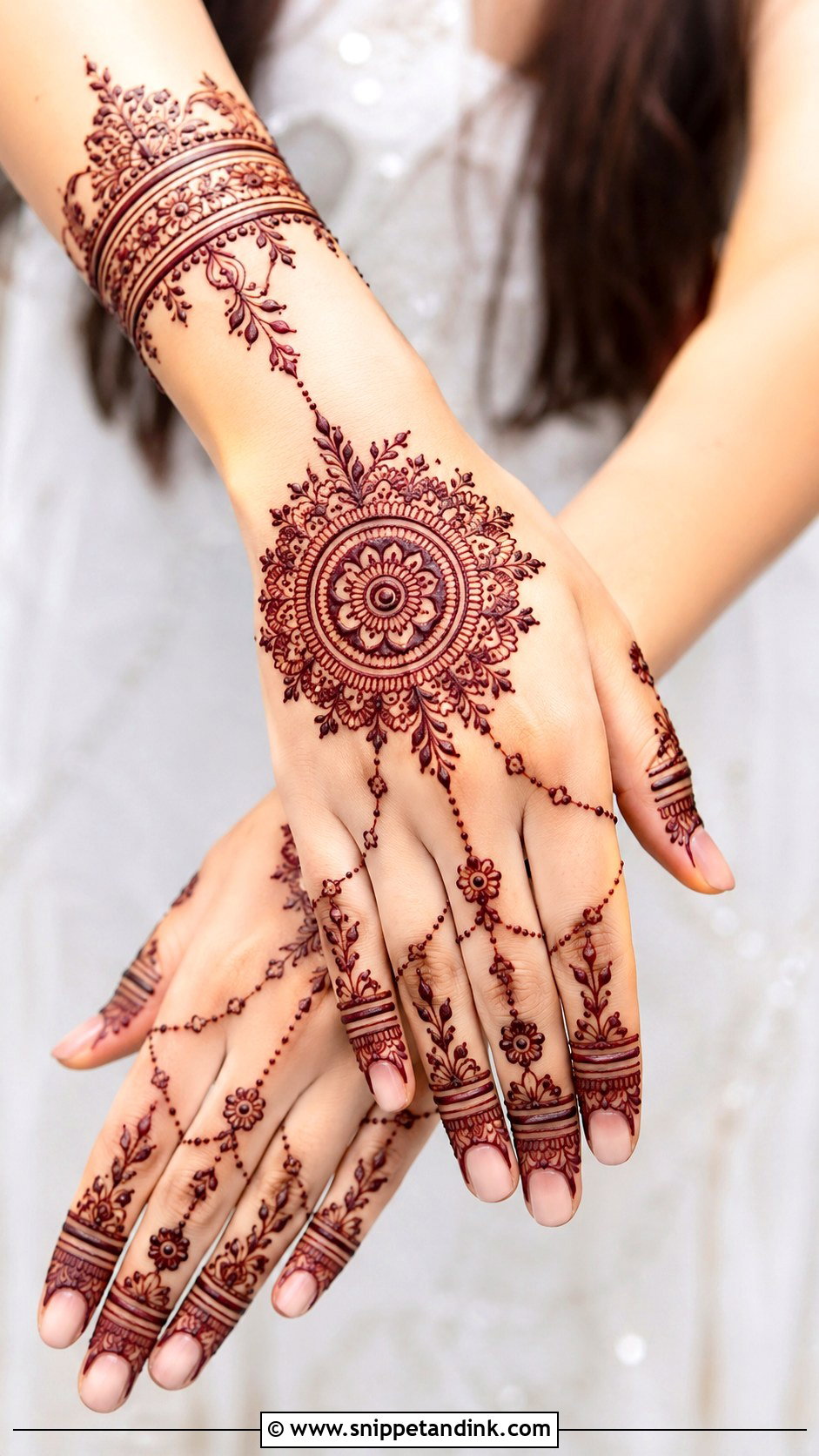
The back hand is the side everyone sees, in photos, with jewelry and over the top of an outfit. I build it around one anchor, often a central mandala, a floral trail or a bracelet band, then connect it to the fingers and wrist so the hand reads as one piece. Bold Arabic spacing and dense Indian filling both work. The back of the hand stains lighter than the palm, so I keep lines a touch thicker here to get a strong color.
5. Front Hand Fancy Mehndi Design
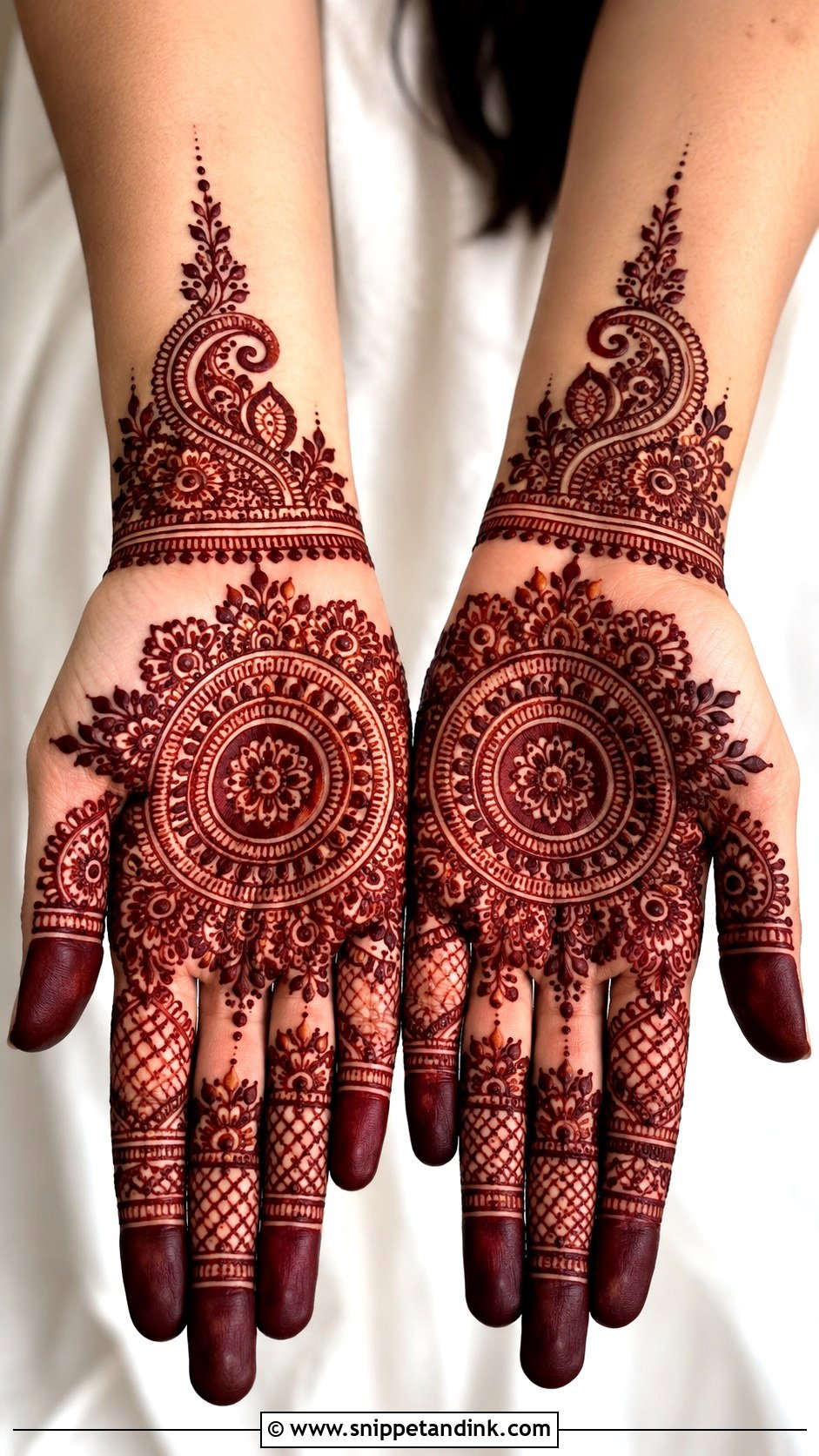
Palm skin is thicker and takes the dye more deeply, so a front-hand design develops the darkest, richest color of anywhere on the body. That makes it the place for bold motifs and fine detail: a large central mandala, paisley borders, floral corners, filled fingertips and wrist extensions. It can be dense or semi-open. Whatever the density, I keep the main motif clear and build smaller detail around it, otherwise the center gets lost after the stain darkens.
6. Simple Fancy Mehndi Design
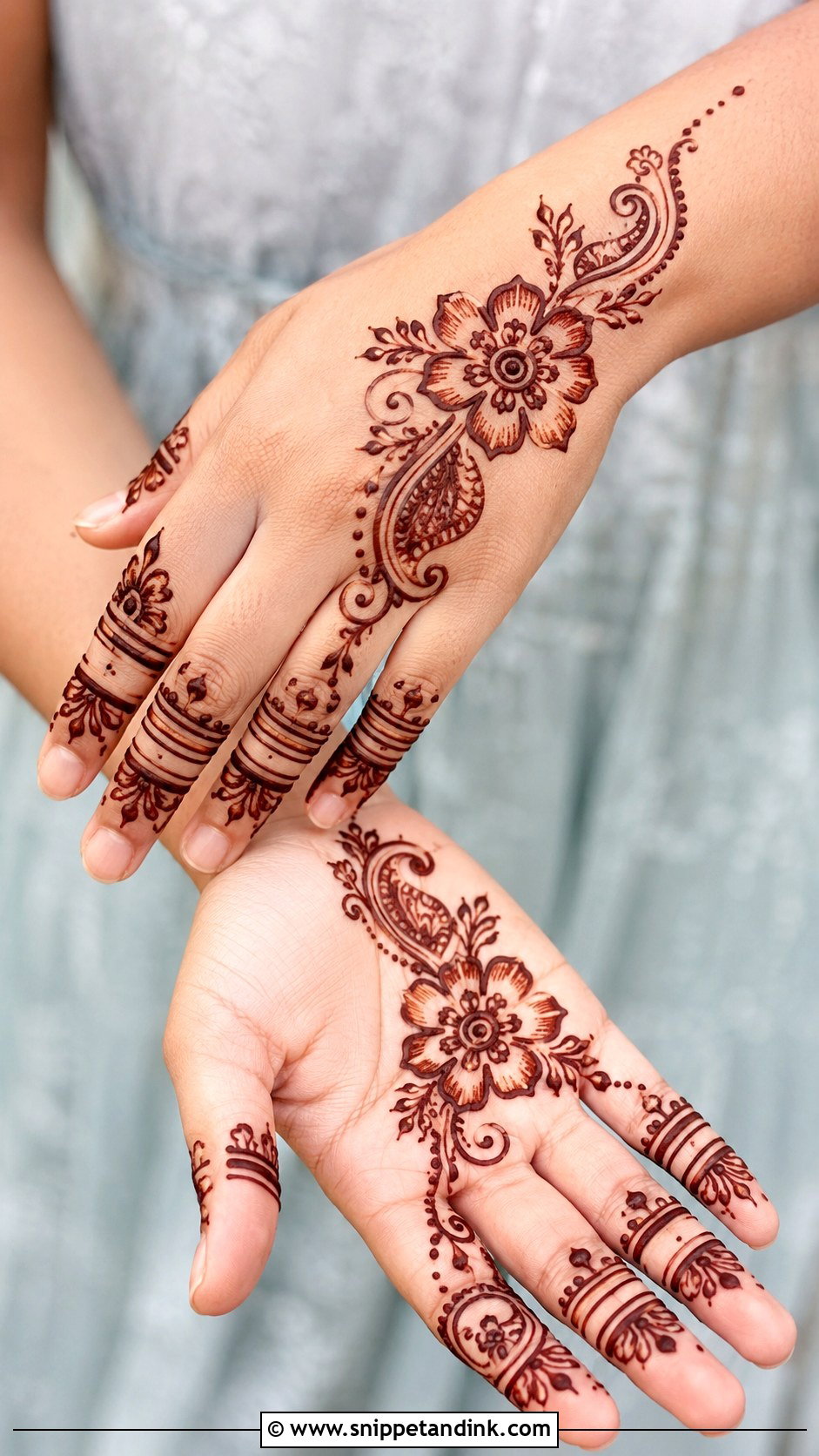
Simple doesn’t mean quick to get wrong. One main motif, a flower, mandala or paisley, connected with vines, dots, leaves and finger accents, can cover only the palm, back hand or wrist and still look complete. Clean spacing and confident lines do all the work. It’s what I suggest for first-timers, busy working days and small family events where you want decoration without a bridal-level pattern.
7. Modern Fancy Mehndi Design
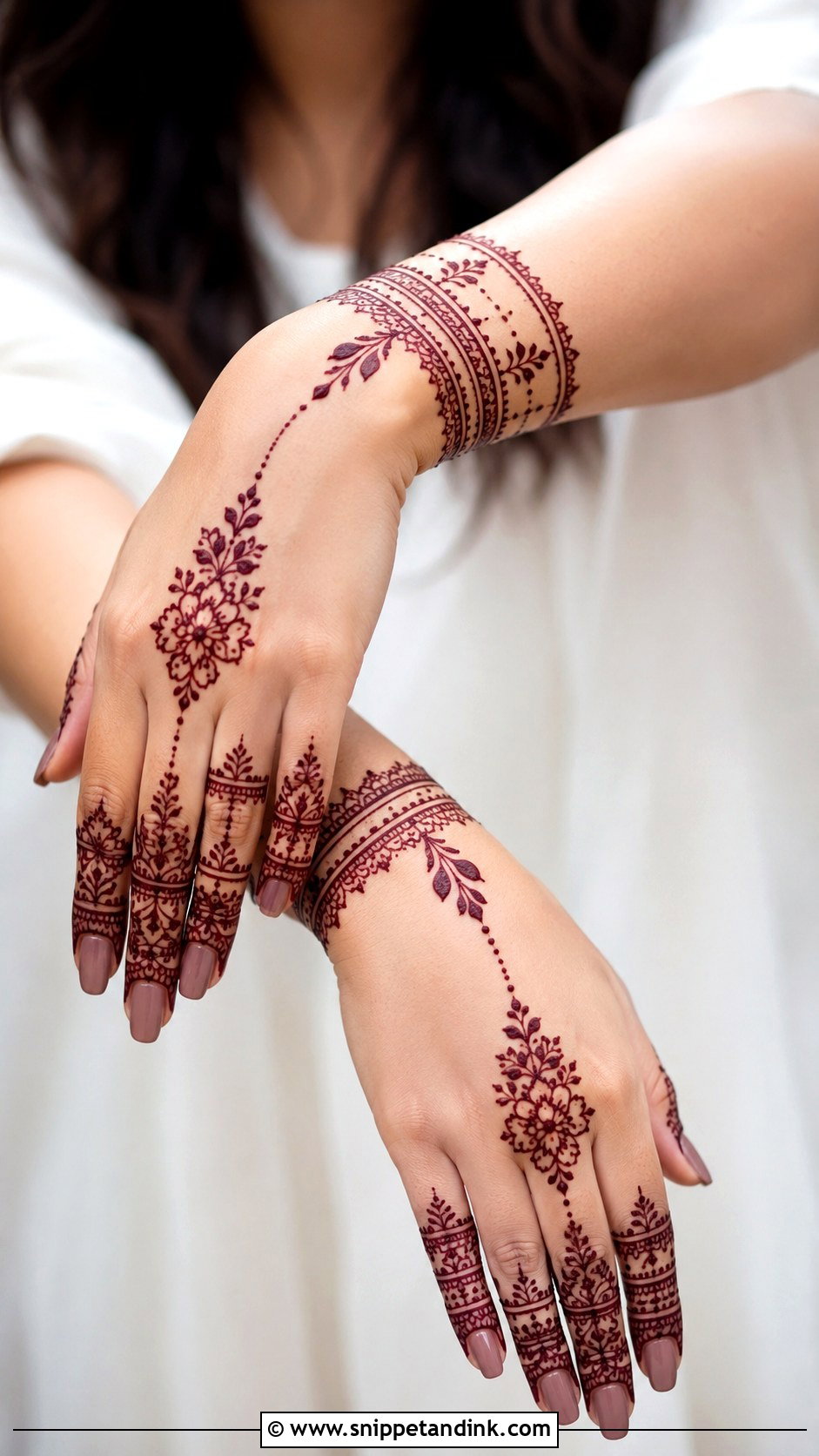
Modern designs replace traditional filler with negative space, clean lines, bracelet shapes, geometric accents and soft florals. Half-hand layouts, finger-focused patterns and back-hand jewelry effects all fall here, and they’re popular for engagement parties, bridesmaids and receptions. The risk is a design that looks empty rather than intentional. I fix that with a few bold elements, a crisp border and finger details that echo the main motif.
8. Heavy Fancy Mehndi Design
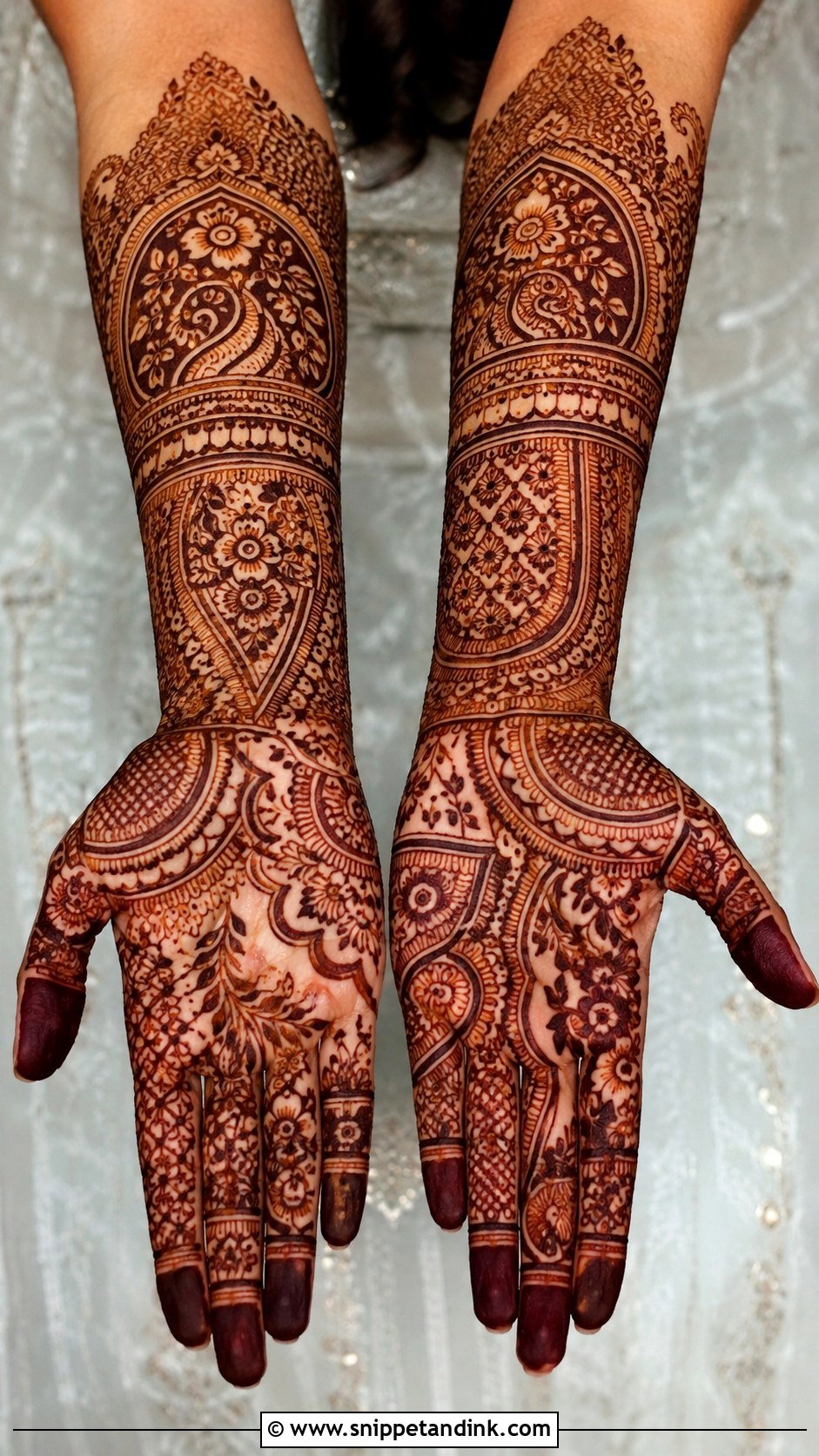
Heavy designs cover most of the hand with filled paisleys, fine florals, mesh, shaded leaves, dots, swirls and layered borders. They’re the choice for weddings, big festivals and traditional ceremonies. The hardest part is spacing. Without hairline gaps between sections the patterns merge once the paste swells slightly on the skin, so I keep outlines crisp and leave tiny breathing lines between motifs. A good heavy hand looks detailed up close and balanced from across the room.
9. Fancy Finger Mehndi Design
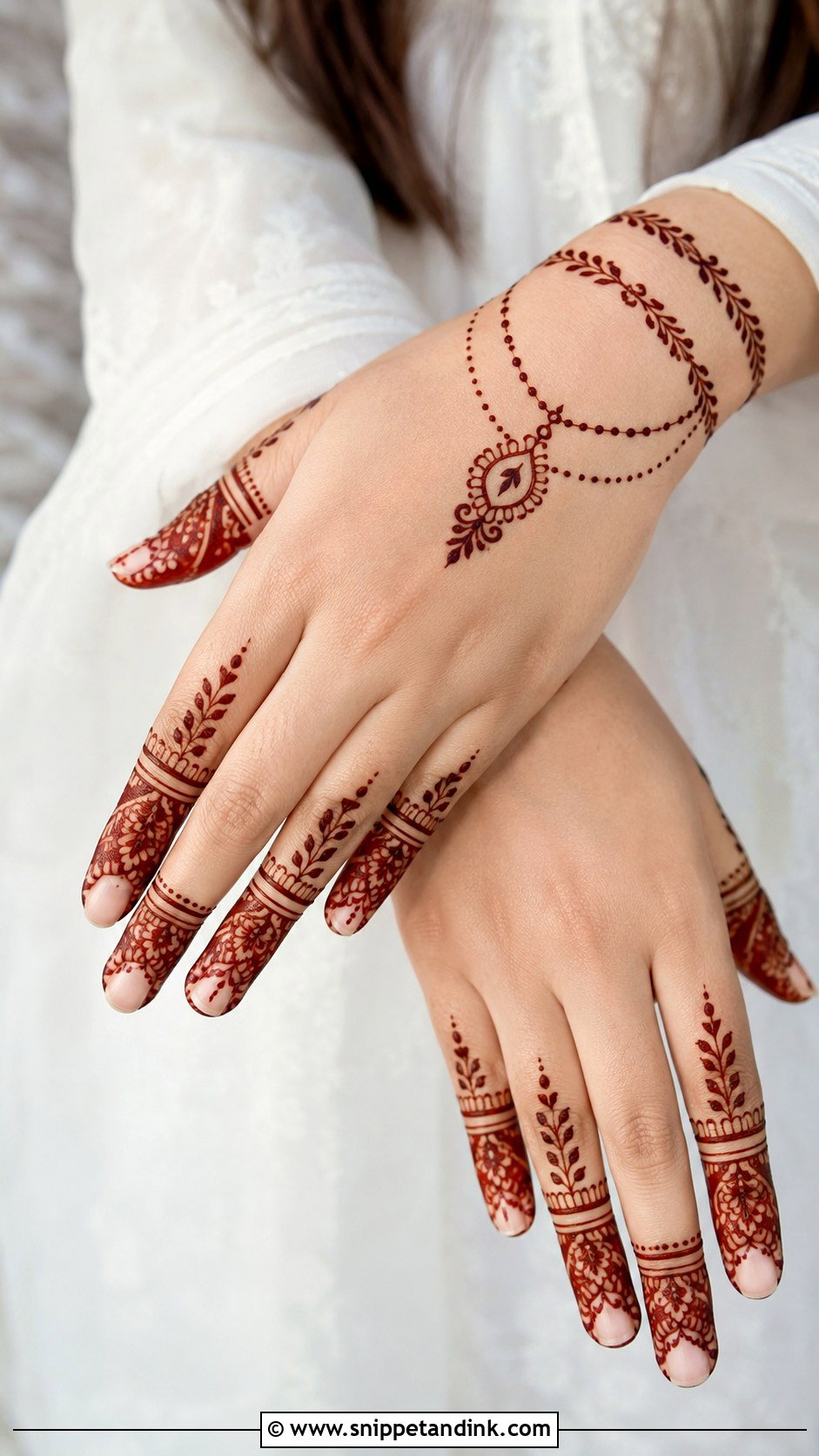
Finger-focused designs put the detail on the fingers: ring patterns, leafy strips, dotted chains, lace tips and thin bands. A small mandala or flower on the back hand or palm completes it. Fingers frame rings and nail polish naturally. One thing worth knowing: fingertips stain dark but fade fastest because they’re washed and used so often, so I’d apply these close to the event.
10. Mandala Fancy Mehndi Design
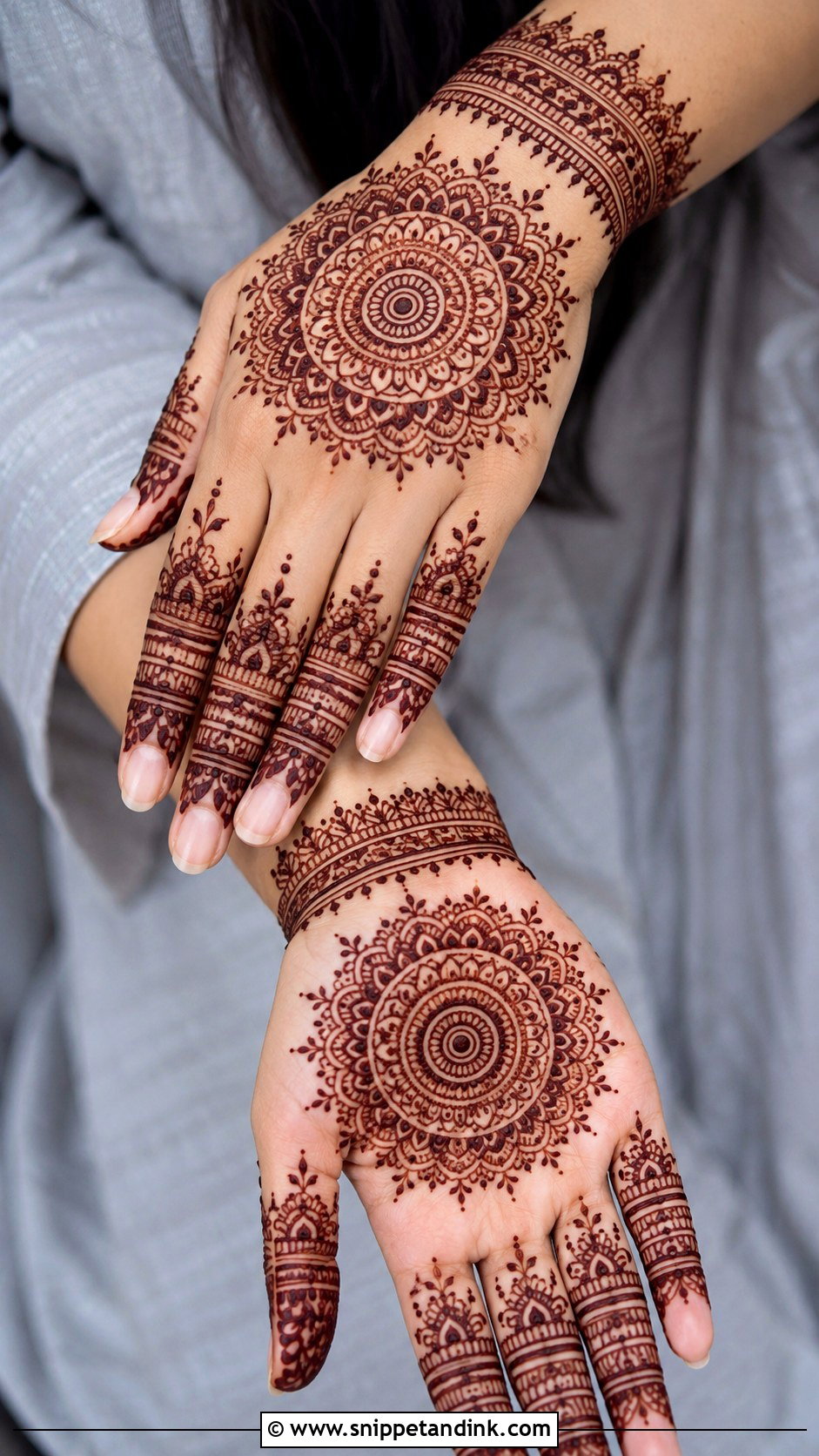
A mandala gives the hand symmetry from a single round motif, placed in the middle of the palm or back hand with finger patterns and wrist details around it. It can be plain circles and dots or layered petals, scallops and shading. Mandalas are a good starting point for newer artists because the structure is forgiving. I draw the circle in quarters, marking four points before closing it, which keeps it round on a curved hand. Bracelet bands, vines or jaali can be added around it while keeping the center bold.
11. Peacock Fancy Mehndi Design
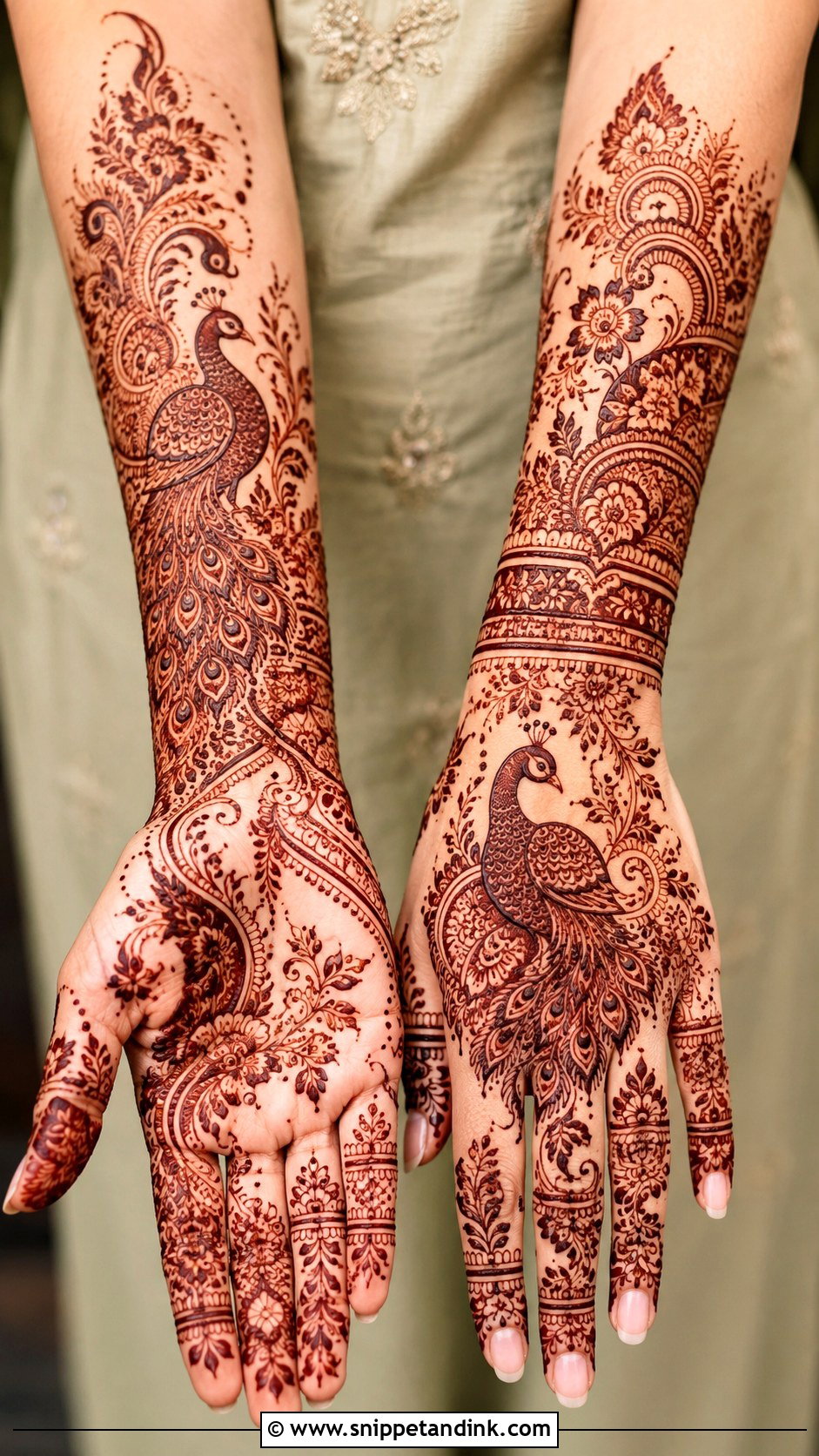
Peacocks bring a regal mood and suit the palm, back hand or forearm, often surrounded by paisleys, flowers and curved vines. The feathers are where the fine detail goes: lines, dots, checks and tiny petals. A single isolated bird looks like a sticker, so I always flow it into the fingers and wrist with supporting patterns. Keep the body of the bird fairly open; filled solid, it stains into a dark blob.
12. Paisley Fancy Mehndi Design
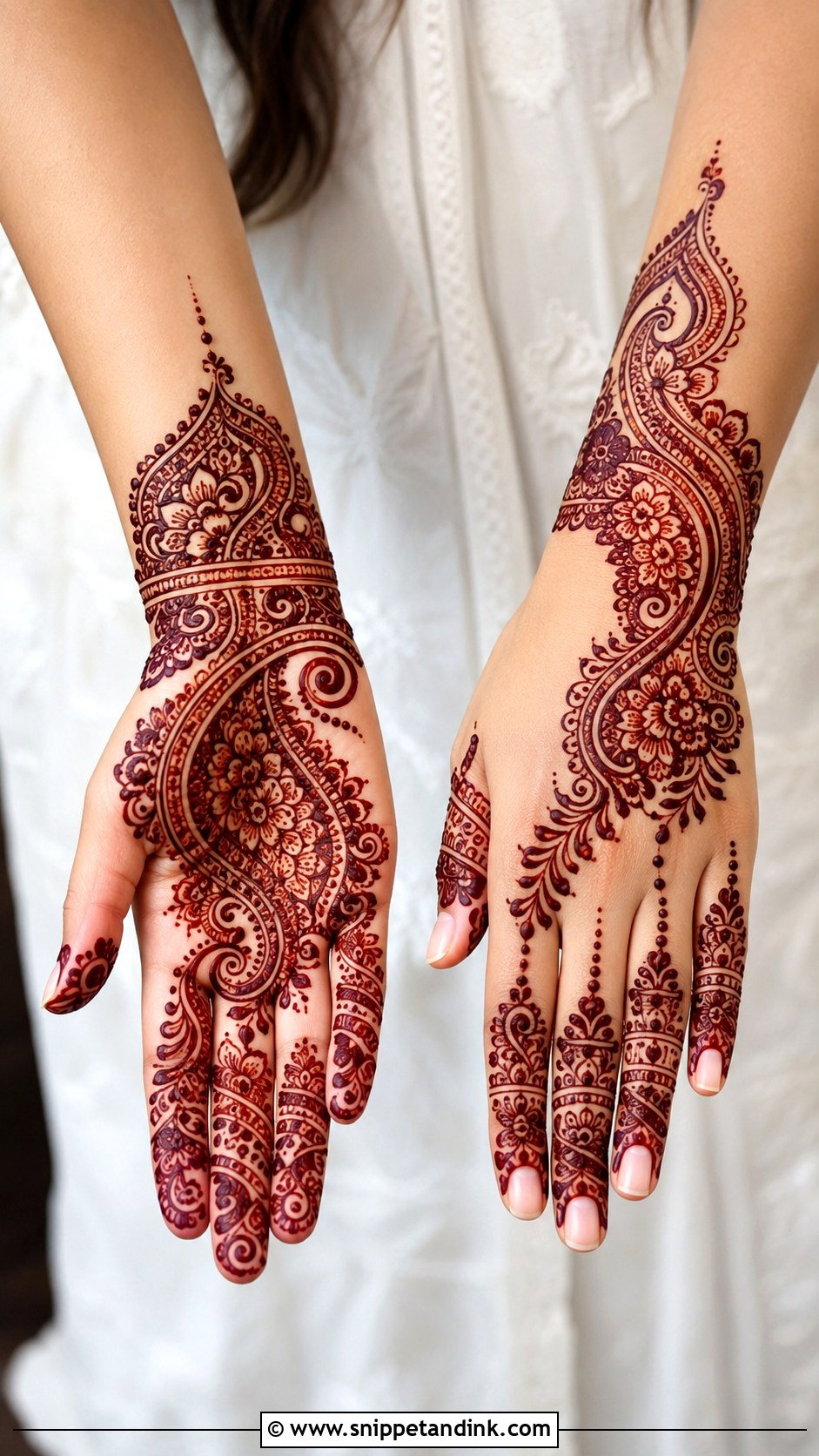
Paisleys can be bold, heavy, large or delicate, which is why they turn up in nearly every style. I layer mango-shaped motifs across the palm or back hand and join them with florals, vines, dots and fine fillers. One large paisley can be the focus, or several smaller ones can form a trail. They create movement without sharp edges and look rich once stained. For a fancy finish, the outline stays bold and the inside carries the fine work.
13. Jaali Fancy Mehndi Design
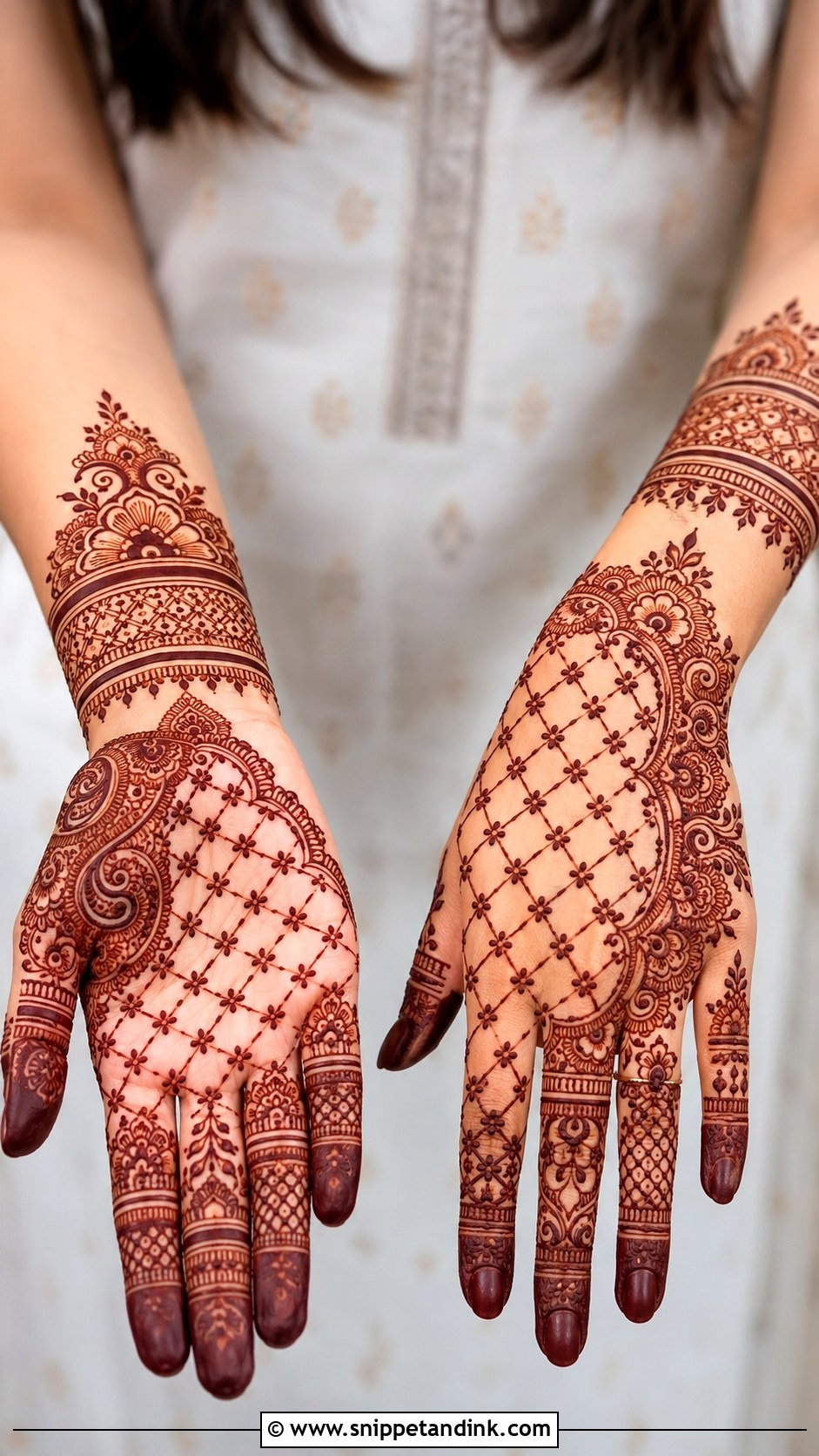
Jaali is net-like mesh, and on the back hand it reads almost like lace jewelry. It can sit on the palm, back hand, fingers or wrist, paired with florals, paisleys and borders. Even spacing is everything; I draw all the lines in one direction first and then cross them, which keeps the grid regular. Open areas around the mesh keep the pattern readable. Combined with a central flower, a cuff or fingertip detail, it suits weddings, Eid and formal celebrations.
14. Jewelry Fancy Mehndi Design
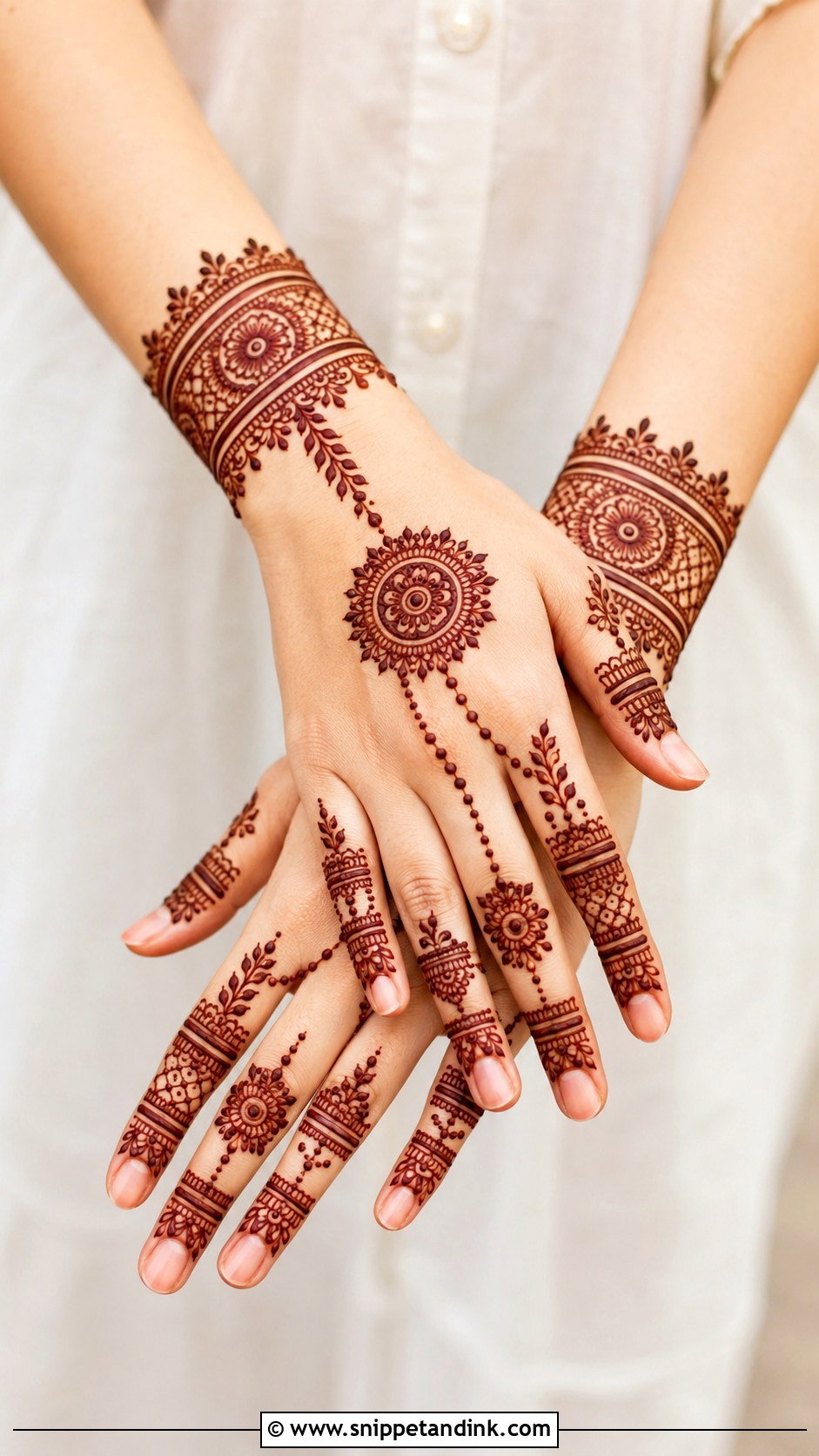
Jewelry mehndi draws rings, bracelets, hand chains and cuffs in henna. It decorates the back hand without heavy coverage: ring patterns on the fingers, dotted chains through the middle, a bracelet band at the wrist, softened with small florals or leaves. It sits naturally beside real jewelry at engagements, receptions and bridesmaid events. I keep the chains thin and the focal motifs clear, because a drawn chain that’s too thick looks clumsy, not delicate.
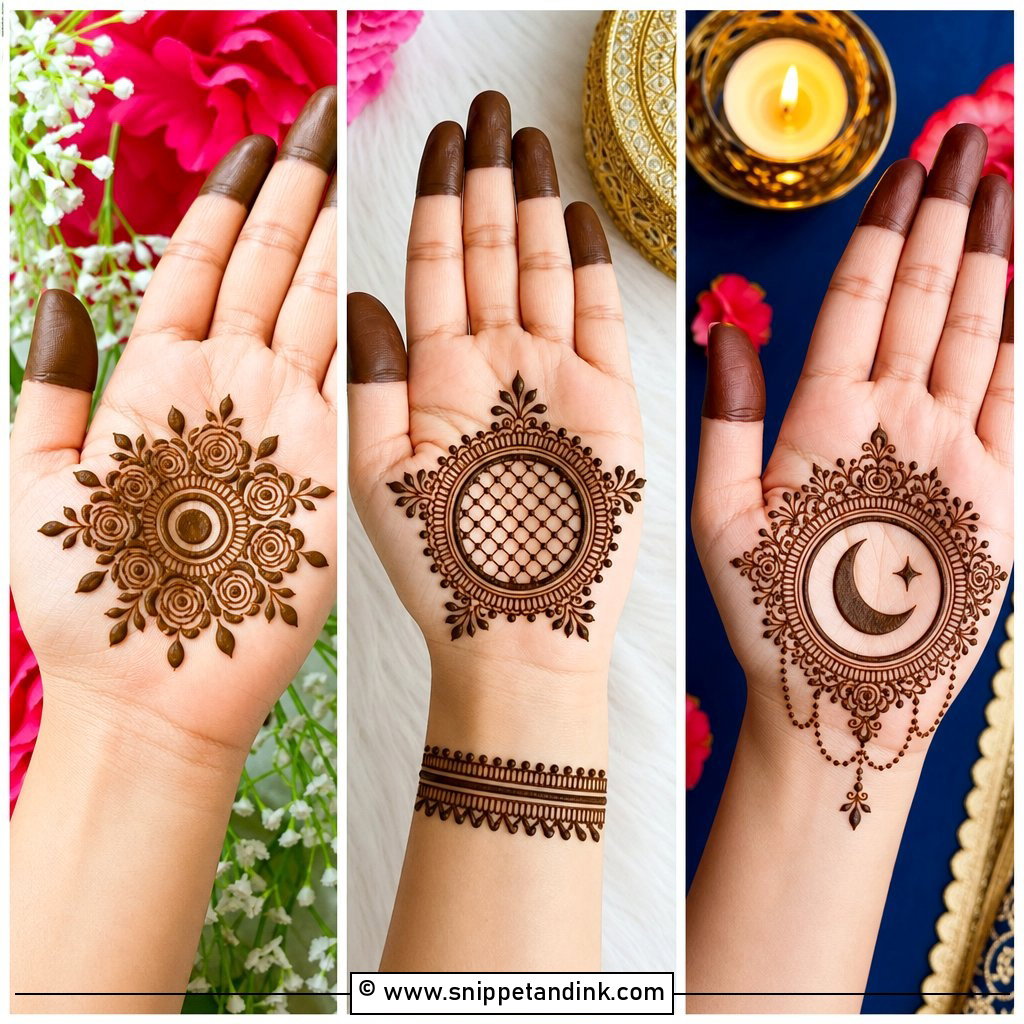

15. Bracelet Fancy Mehndi Design
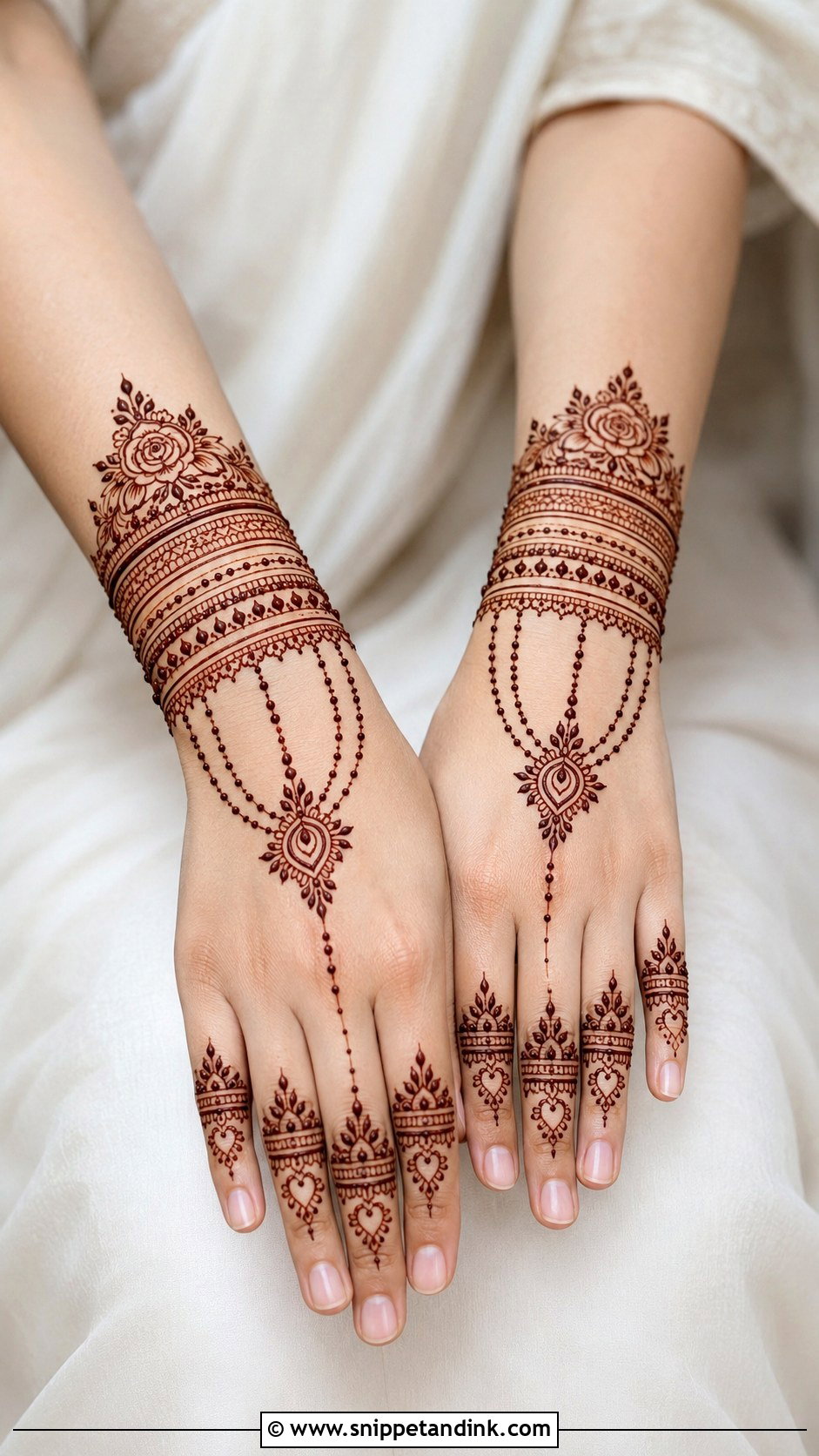
A bracelet design concentrates on the wrist and reaches lightly toward the hand and fingers. The band can be florals, geometric borders, lace shapes or layered lines, with vines or dotted chains linking it to a small back-hand motif. It looks elegant with bangles or a watch and still stands out on its own. For office celebrations and parties, it’s the design I suggest most, since it’s light and easy to live with. Wrists stain a little lighter than hands, so I go slightly bolder on the band.
16. Minimal Fancy Mehndi Design
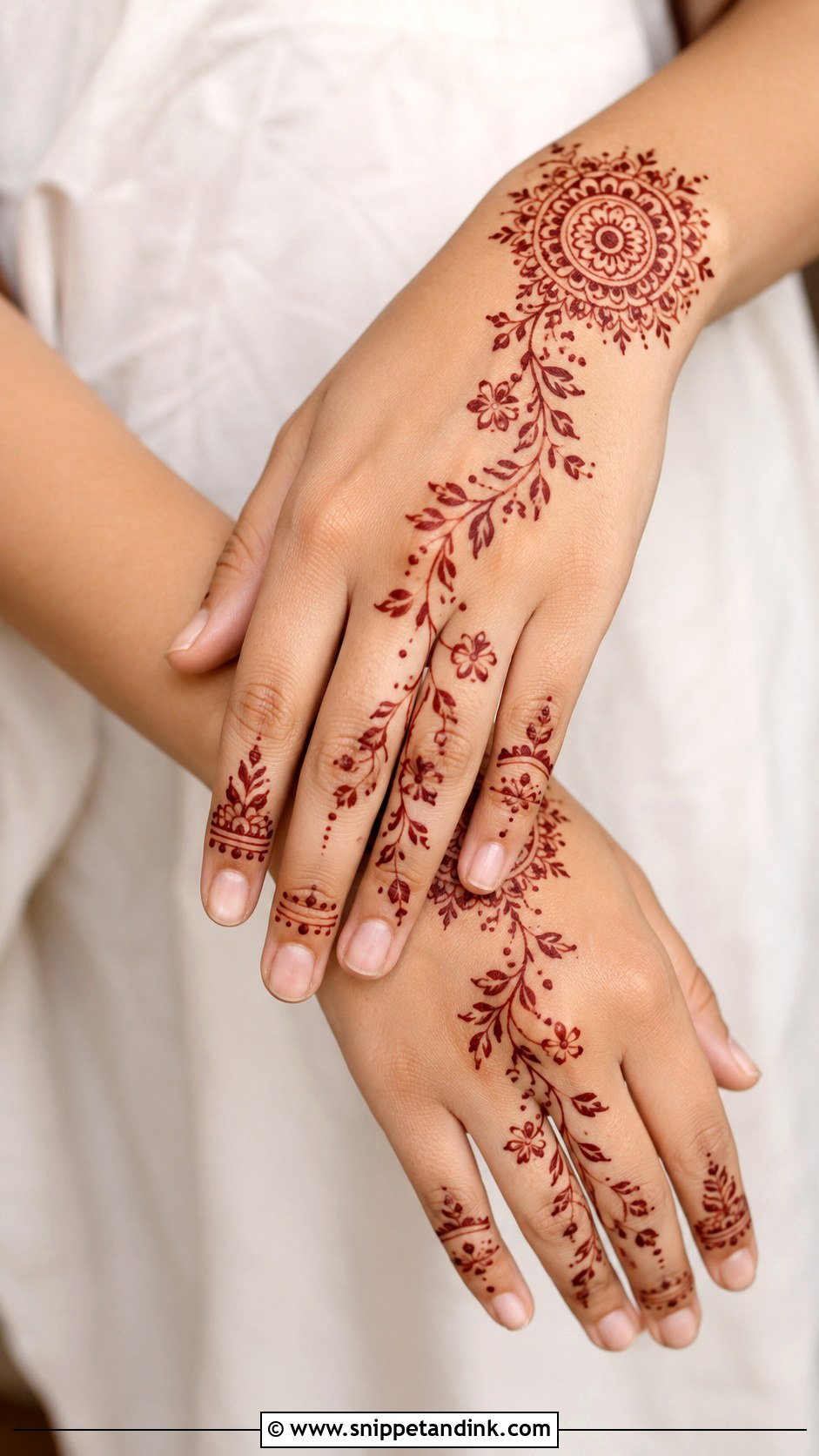
Minimal designs use clean motifs, thin lines and plenty of open skin. A small floral trail, a simple mandala, finger bands or a wrist chain can make a complete look if placed well. It’s quick to apply and suits younger girls and smaller occasions. Light coverage still needs balance from fingertips to wrist; a single motif with nothing on the fingers looks unfinished. Good spacing, smooth curves and matching finger accents make it look refined.
17. Khafif Fancy Mehndi Design
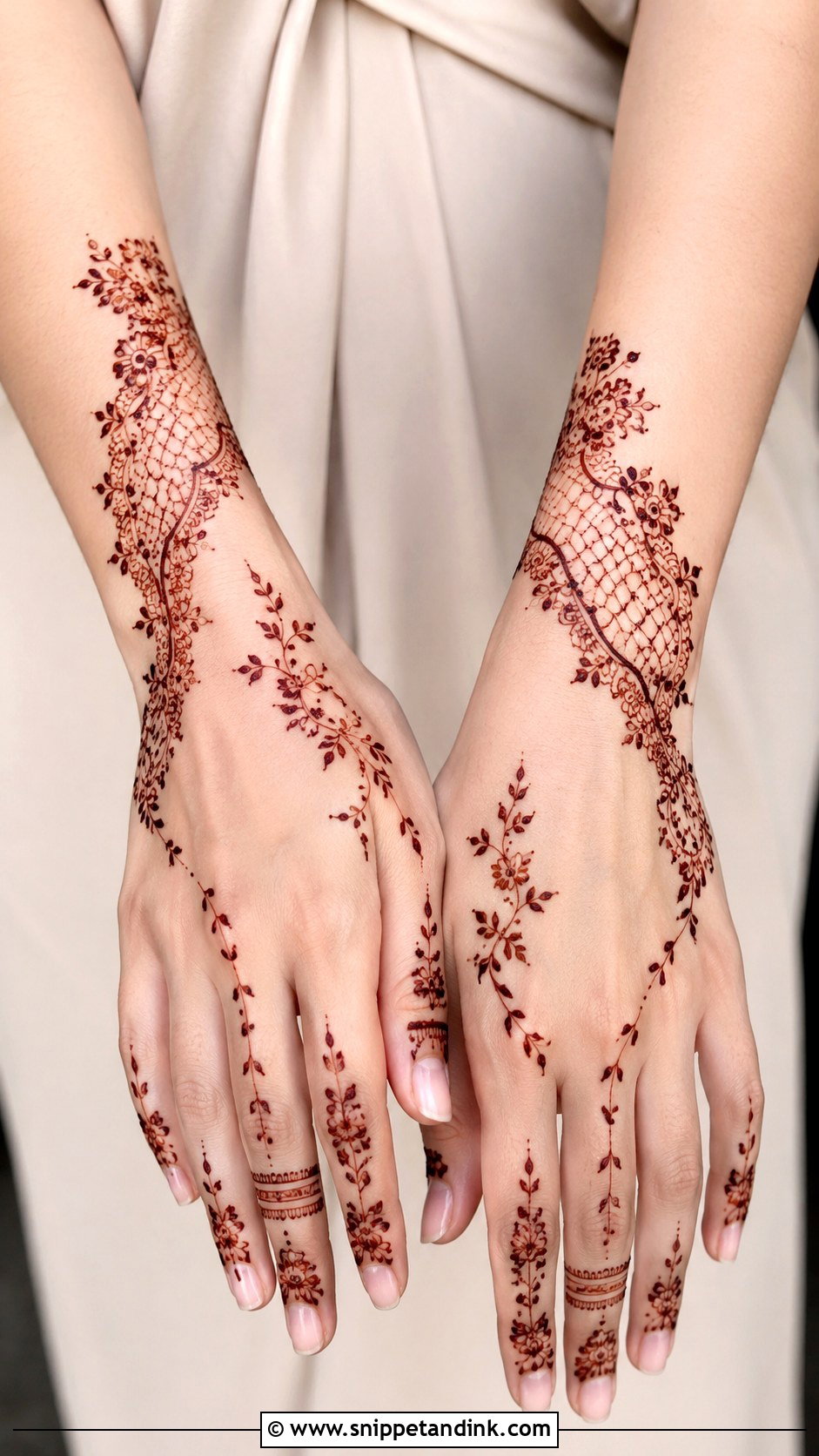
Khafif means “light,” and the style lives up to it: fine florals, thin vines, tiny leaves, lace sections and generous spacing, popular in Gulf-inspired henna. It may cover the back hand with soft trails and detailed fingers, or put a light layout on the palm. Precision is the whole art here. I use a cone with a very fine tip, cut small, and work slowly, because a thin wobbly line has nothing around it to hide in. It suits Eid, weddings and elegant festive outfits.
18. Gulf Fancy Mehndi Design
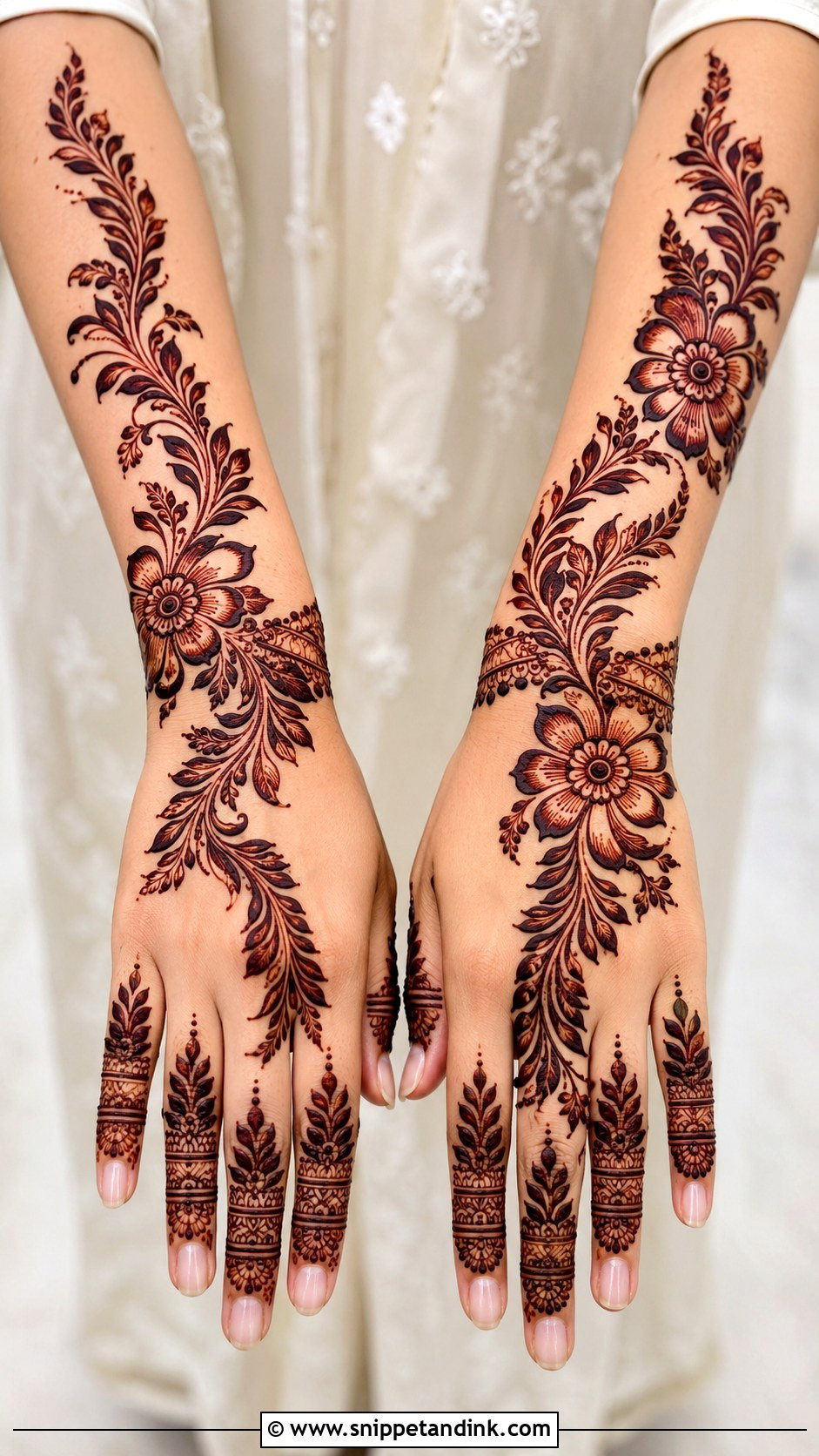
Gulf or Khaleeji-style mehndi uses large florals, leafy sprays, thick outlines and dramatic open space, often running down one side of the hand. Those thick lines carry more paste, so the stain comes out strong and even. It feels luxurious without being packed, which suits Eid, weddings and evening events. I connect fingers, back hand and wrist in one smooth flow, and the bold flowers make it instantly recognizable in photos.
19. Moroccan Fancy Mehndi Design
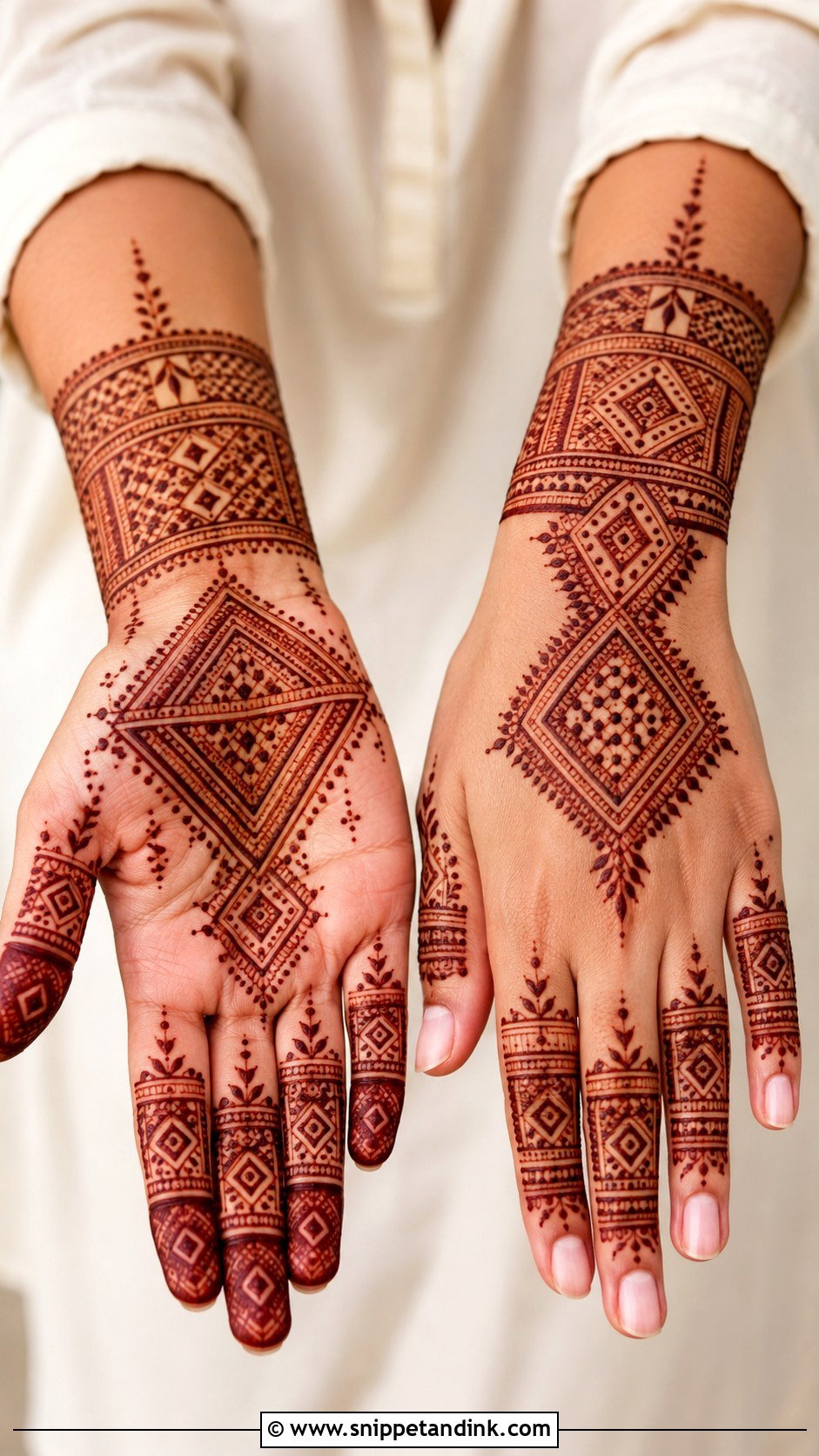
Moroccan-inspired designs swap florals for geometry: diamonds, triangles, straight lines, grids, dots and angular borders. On the palm or back hand with matching wrist bands, they look modern and very different from Indian or Arabic work. Straight lines expose every hand tremor, so I map key points with tiny dots and connect them, rather than drawing long lines freehand. Small dotted details and neat finger patterns finish it.
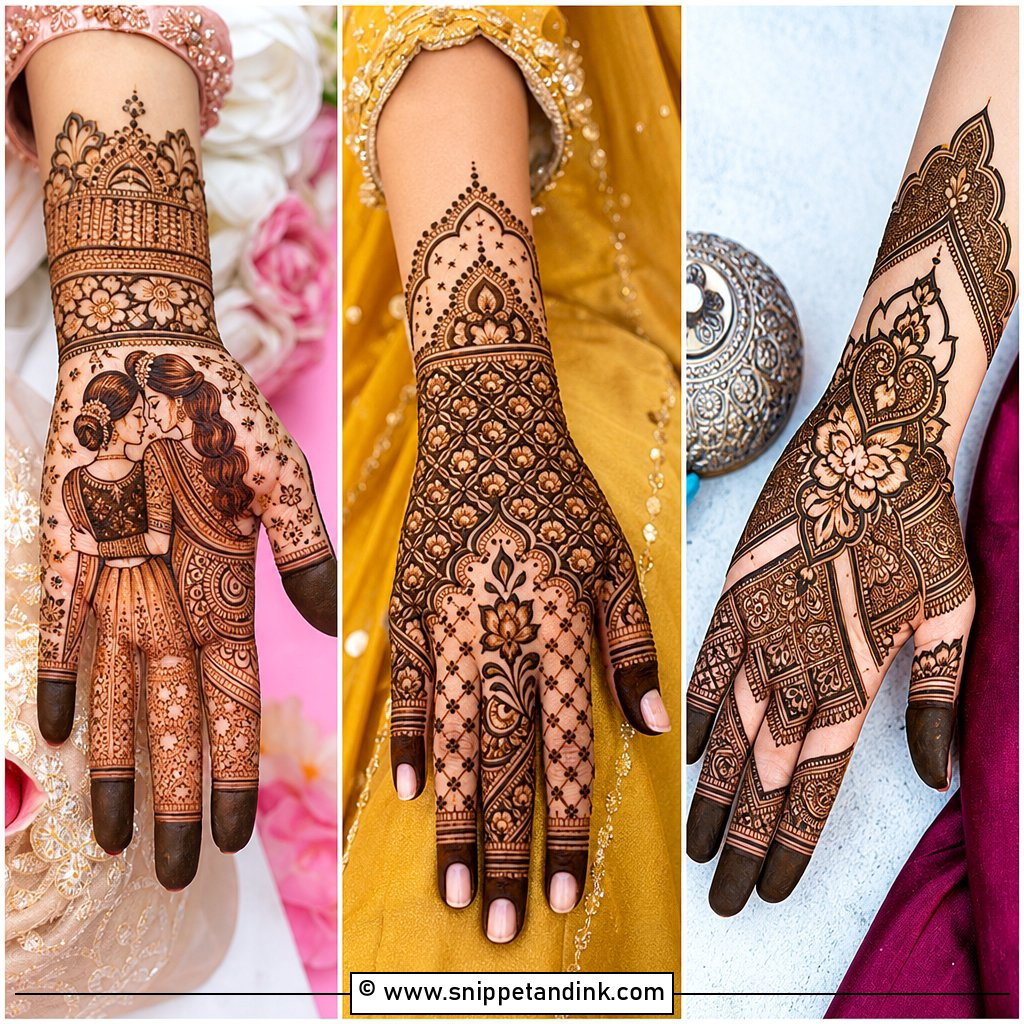



20. Shaded Fancy Mehndi Design
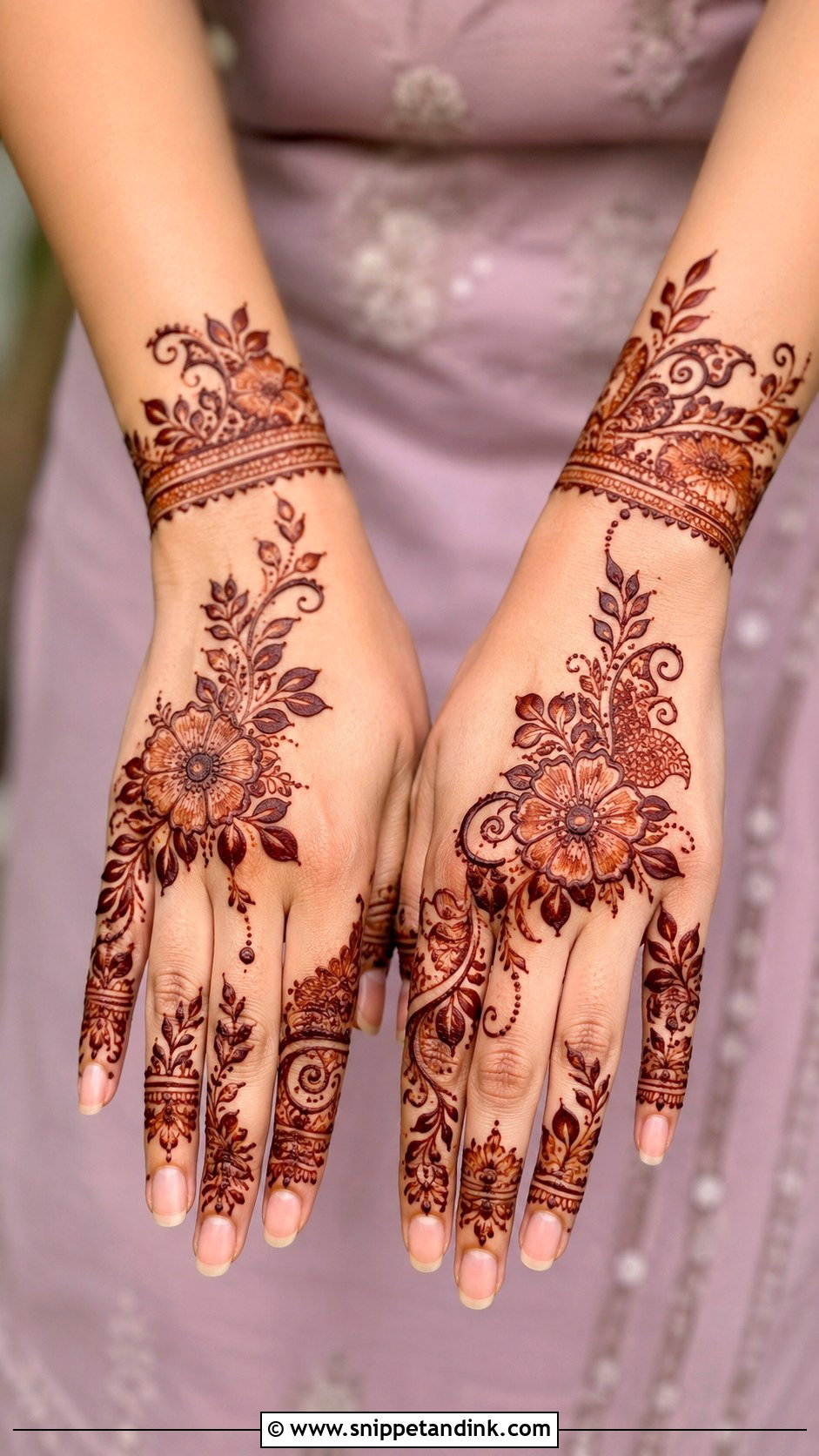
Shading gives flowers, leaves and paisleys depth without making the hand denser. It works in Arabic, Indo-Arabic and modern designs: large shaded flowers on the back hand, leafy vines across the fingers, a neat wrist border. I shade with a thin, even layer of paste, often by dragging the cone tip in tight lines. Too thick in one spot and it stains darker there than the rest, which reads as patchy. Done evenly, the light and dark areas give lovely contrast in photos.
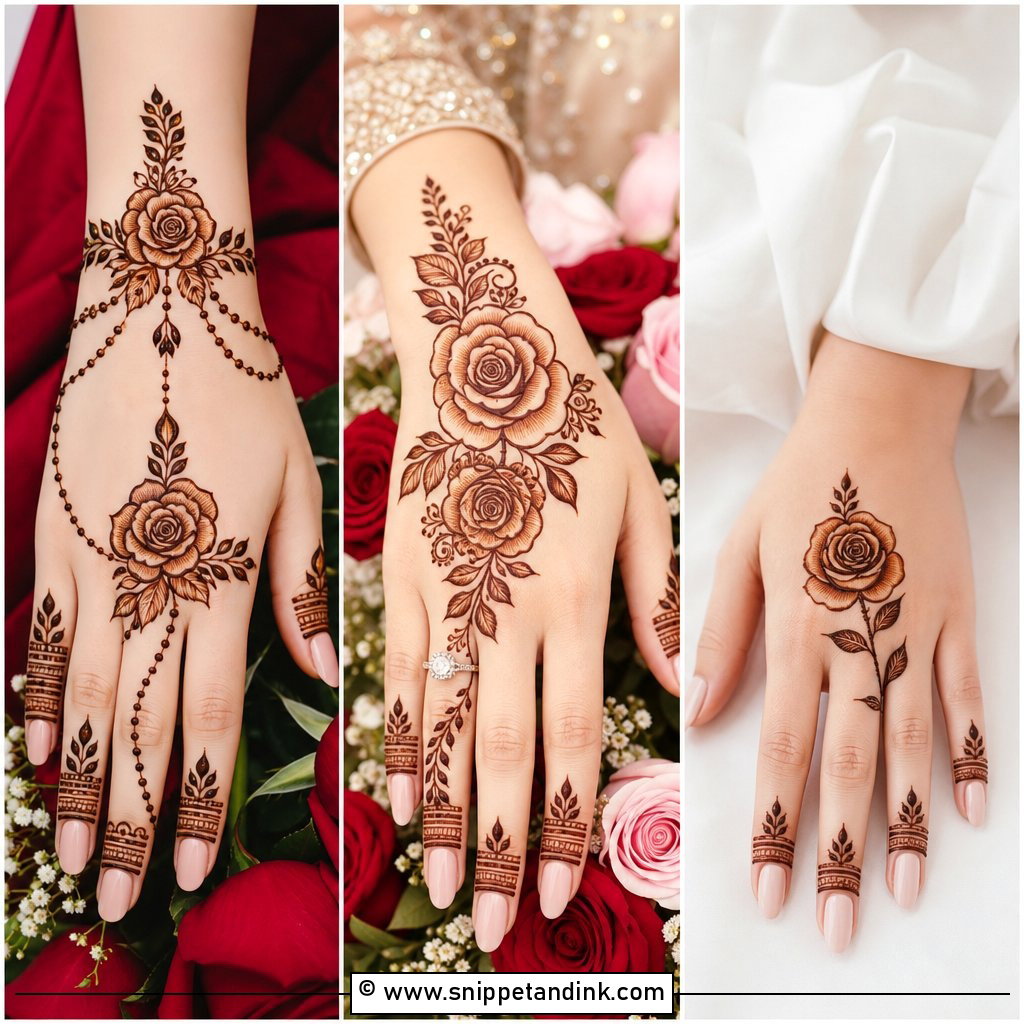
21. Rose Fancy Mehndi Design
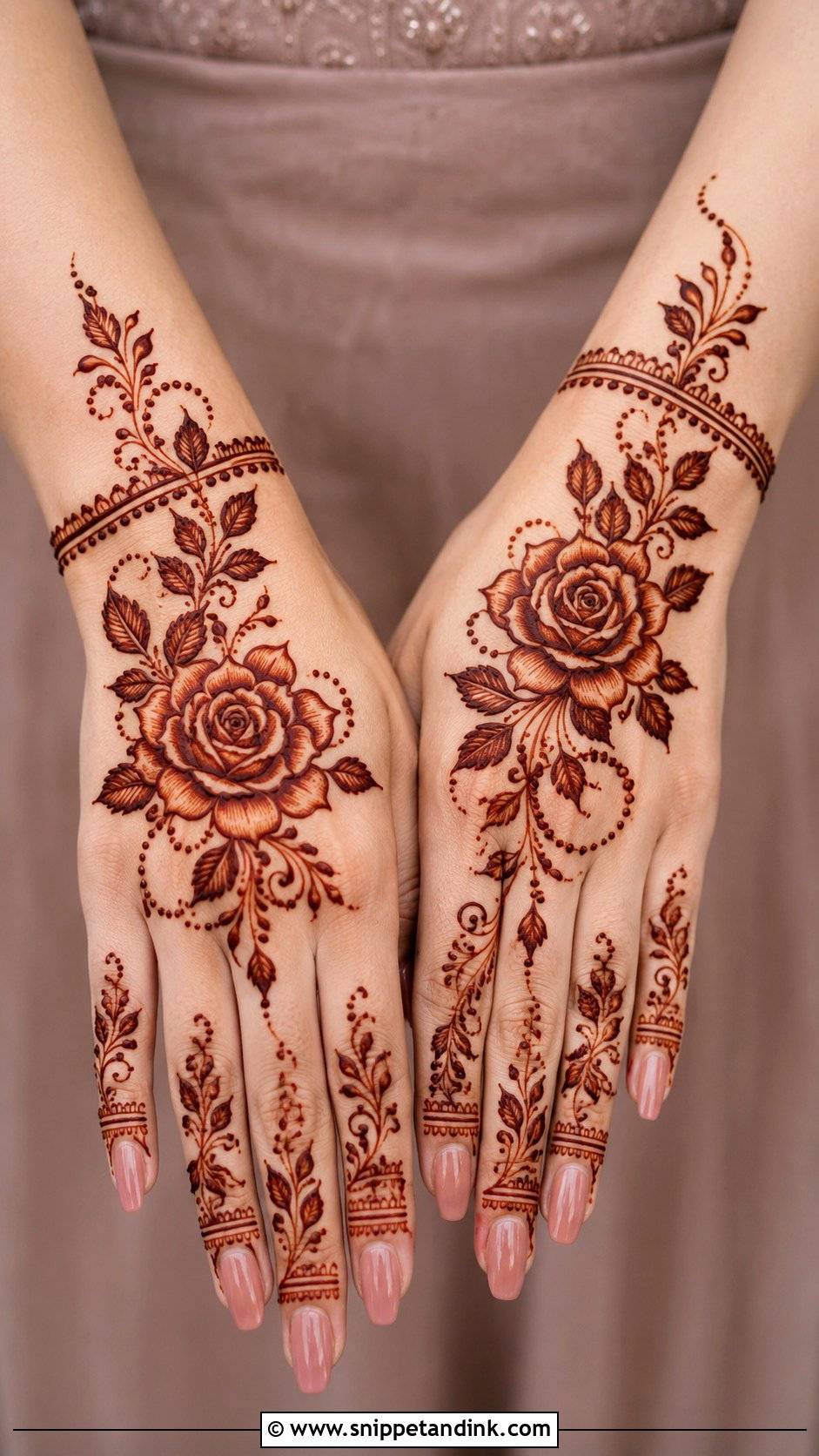
Roses bring a romantic feel while still sitting comfortably at traditional celebrations. I place them on the back hand, palm or wrist, with leaves and vines flowing toward the fingers. Unlike simple floral mehndi, roses use layered petals and shading for a fuller shape. They suit engagements, bridesmaids, festivals and family parties. Matching fingertips or bands keep the design from looking cut off. Keep the roses bold and the details around them light.
22. Lotus Fancy Mehndi Design
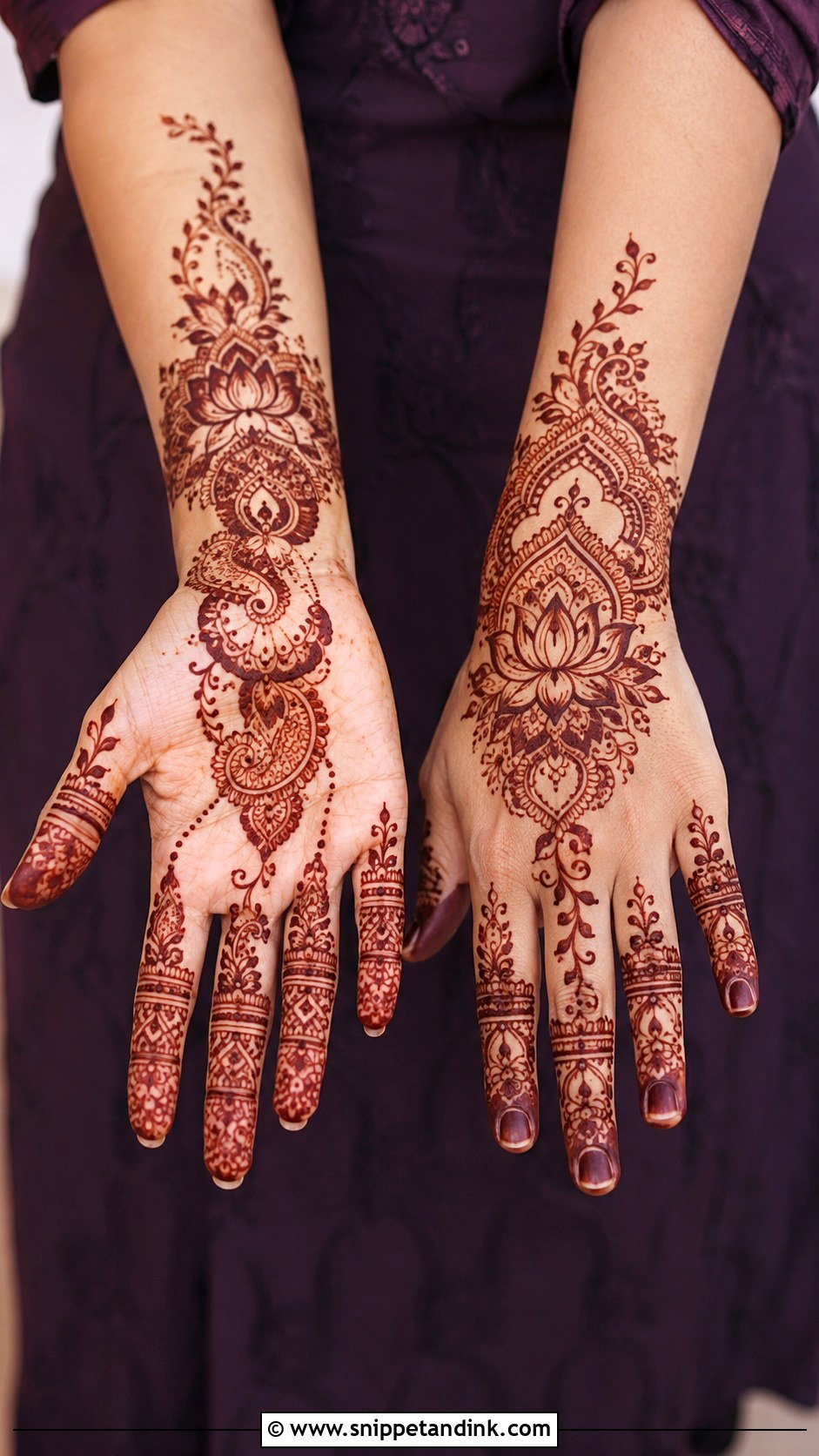
The lotus has a clear, symmetrical shape that suits bridal, traditional and modern mehndi alike. It can sit on the palm, back hand or wrist, surrounded by dotted trails, paisleys, leaves and fine borders, and pairs well with mandalas or jaali. Dense for a wedding, light for a festival. The petals need clean gaps between them, because those gaps close up a little as the stain darkens. Done neatly, the lotus becomes the center of the whole hand.
23. Vine Fancy Mehndi Design
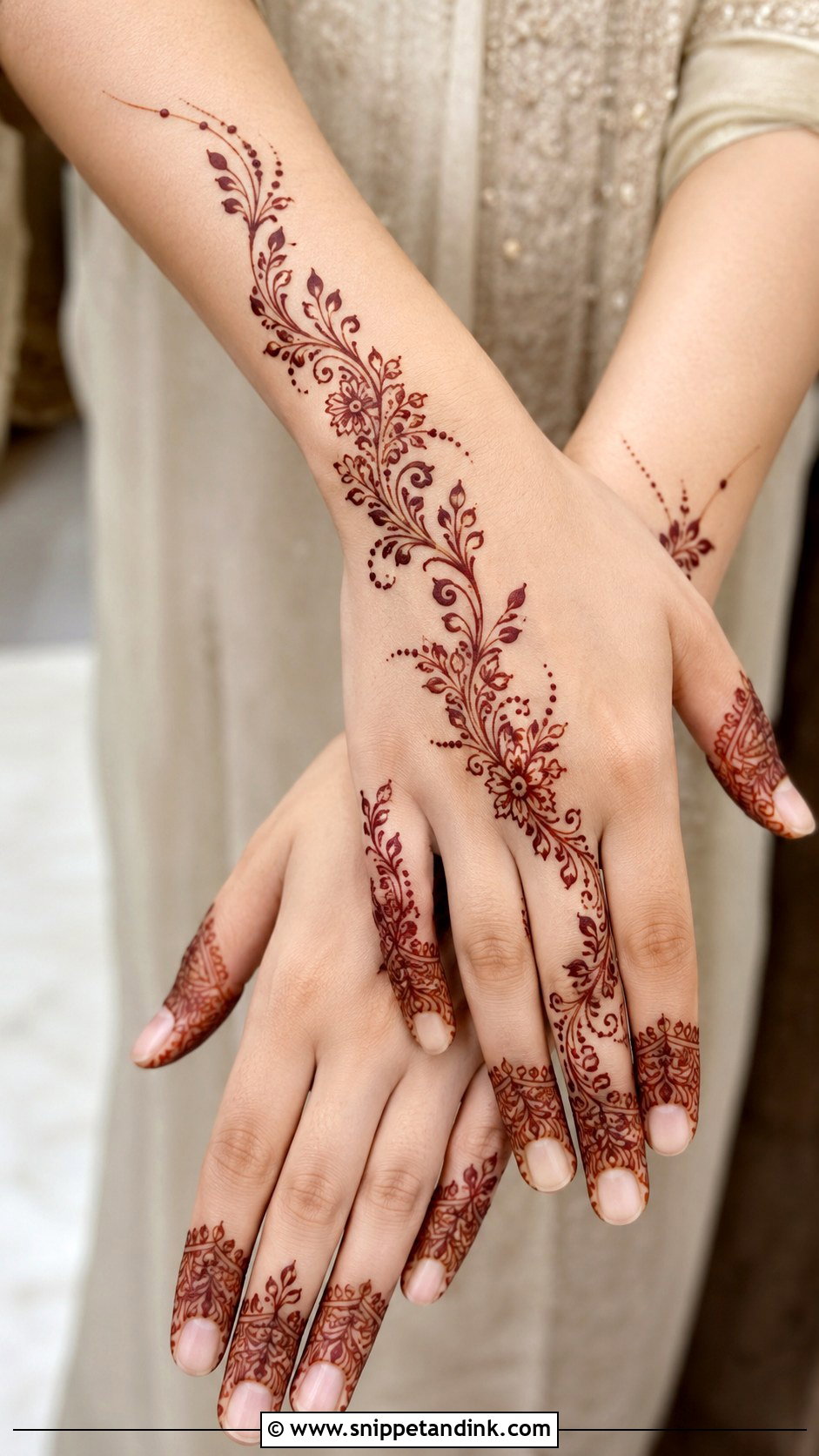
A vine flows across the hand, which flatters almost every hand shape. It can run diagonally from the wrist to the fingers or curve around the palm with small leaves and flowers. The fancy effect comes from movement, not coverage. Finished fingertips, a wrist detail and a clear main trail complete it, and the open skin makes the hand look longer. It’s also one of the quickest designs I do, handy when there’s a queue of guests.
24. Glitter Fancy Mehndi Design
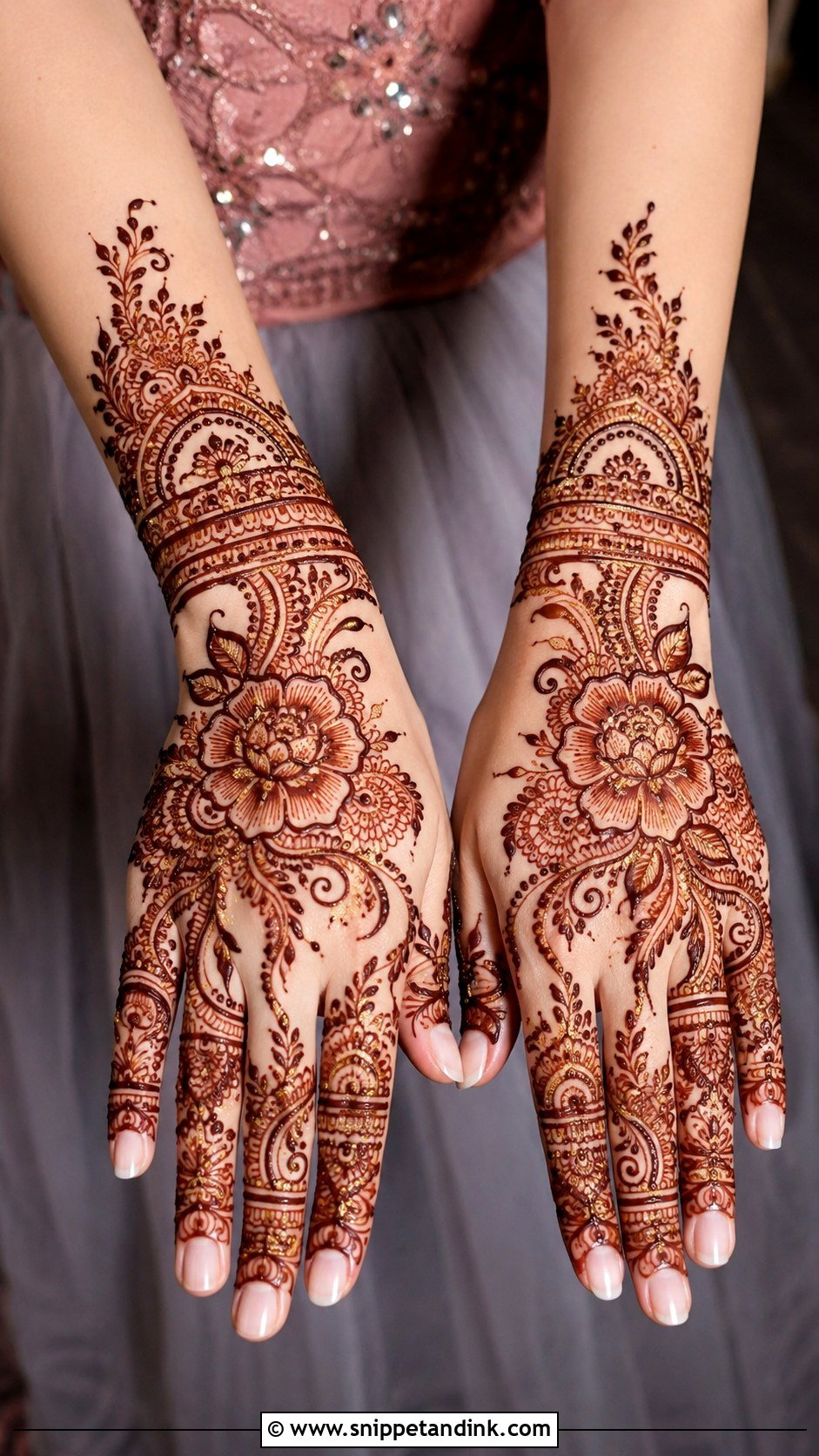
Glitter suits parties, receptions, stage events and festive nights. The design underneath is natural henna, and cosmetic glitter is added over chosen areas with a skin-safe adhesive once the paste has dried, or on its own as a temporary layer. Florals, mandalas, bracelet bands and Arabic trails all take glitter well. A little gold, silver or color goes a long way. The glitter flakes off within a day, so treat it as decoration for one evening and keep the henna pattern clean underneath.


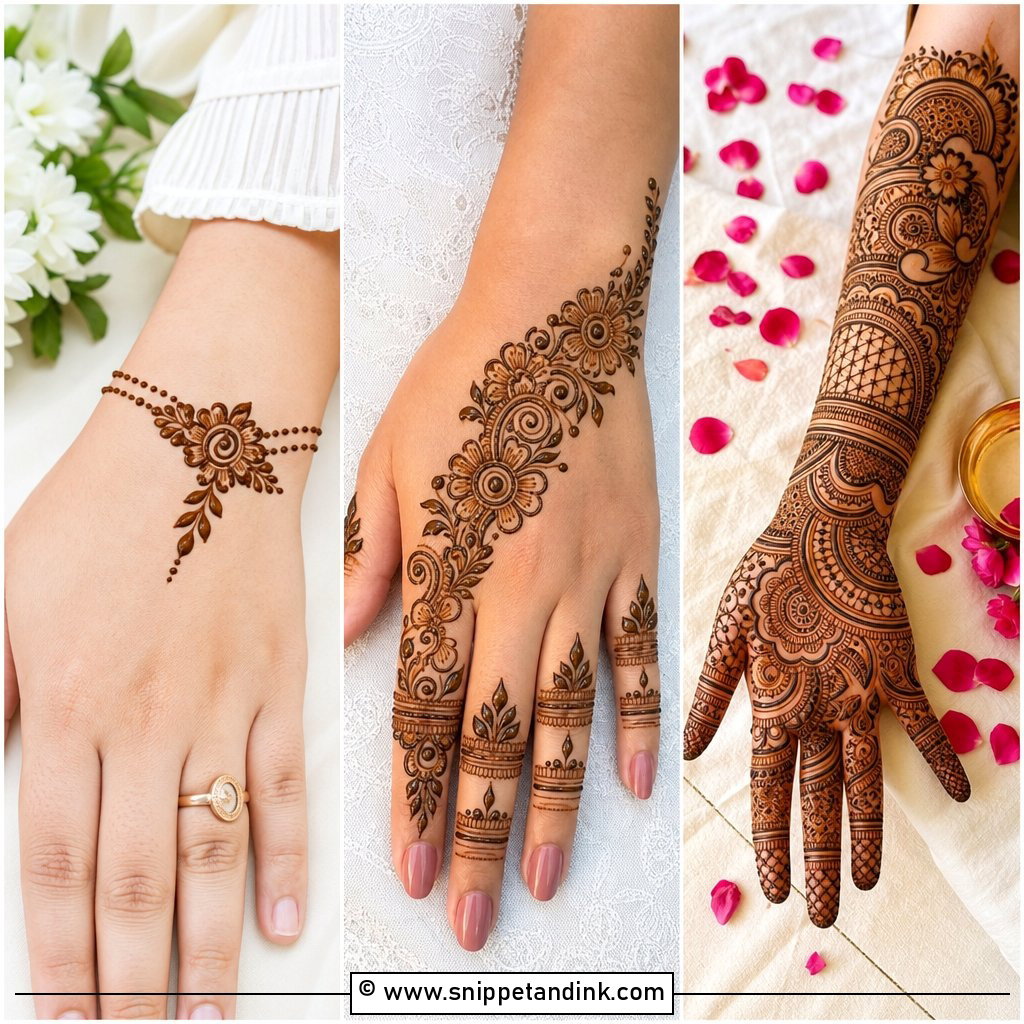

25. White Fancy Mehndi Design
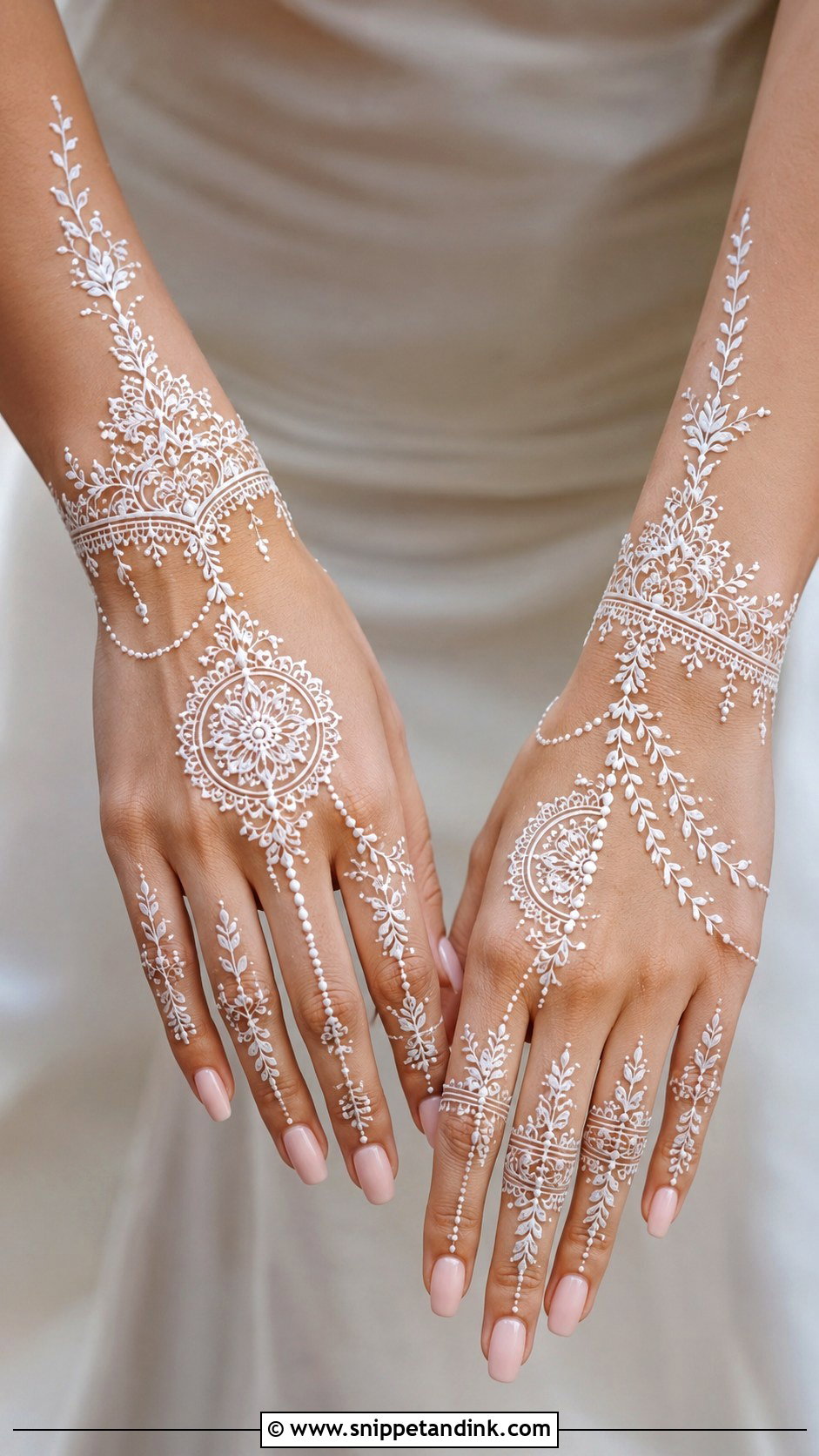
White mehndi isn’t henna and doesn’t stain. It’s a body-safe paint or adhesive applied with a cone, creating a bright lace effect that sits on top of the skin for a day or so. Floral trails, jewelry chains, mandalas and fine finger work all suit it, and it looks striking with simple outfits and soft makeup. Because it sits on the surface, tiny details smudge and peel first, so I keep lines a little bolder. It’s for a photoshoot or one party, not a week of wear.
26. Engagement Fancy Mehndi Design
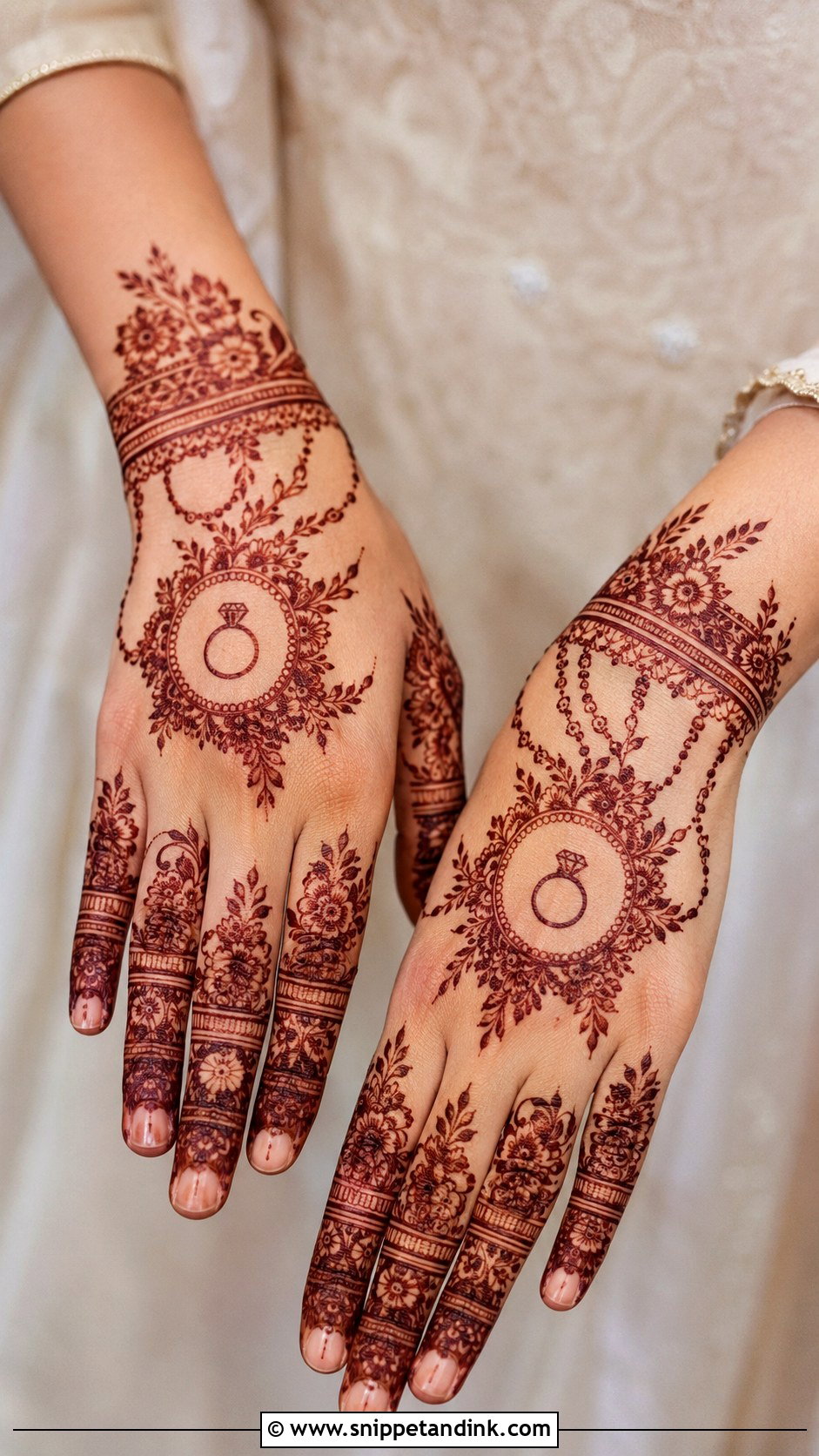
Engagement henna should feel special without the weight of full bridal coverage. Ring motifs, initials, floral trails, bracelet bands and neat finger details all fit, mostly on the back hand, where ring photos focus. I balance the fingers, back hand and wrist and keep the ring finger lighter. A jewelry effect or a semi-heavy Indo-Arabic pattern both work. The design should sit with the outfit and jewelry, never cover the ring or make the hand look busy.
27. Eid Fancy Mehndi Design
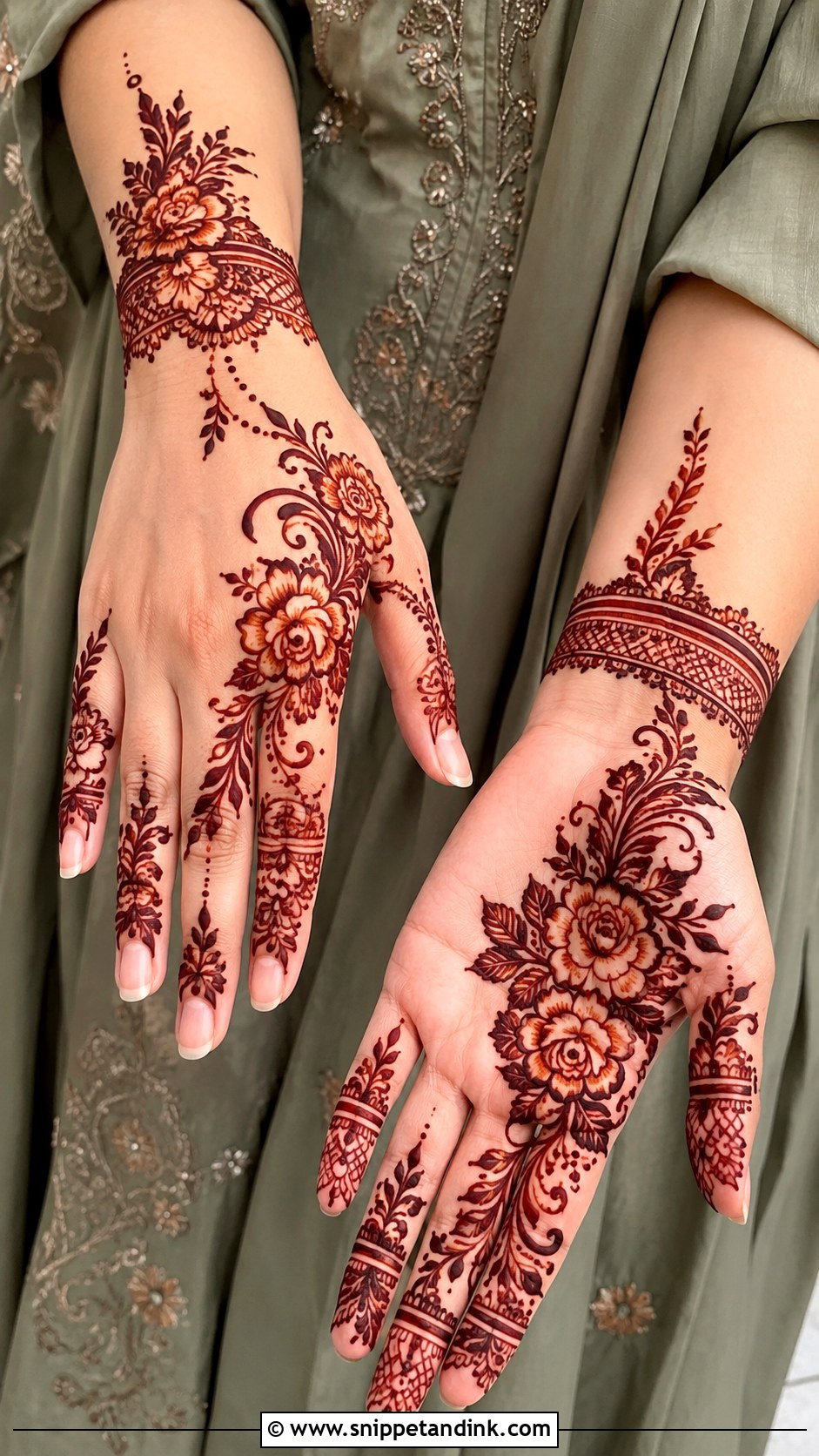
Eid mehndi is often applied on chand raat, with a house full of people waiting their turn, so speed and comfort matter. Many people choose Arabic, Gulf, khafif or simple floral designs because they look festive and don’t take long. Bold flowers on the back hand with leafy fingers and a wrist cuff, or a palm mandala with delicate borders, both work. Apply the night before and the stain will have deepened by the time you’re greeting family. Shaded petals or dotted chains add extra polish.
28. Diwali Fancy Mehndi Design
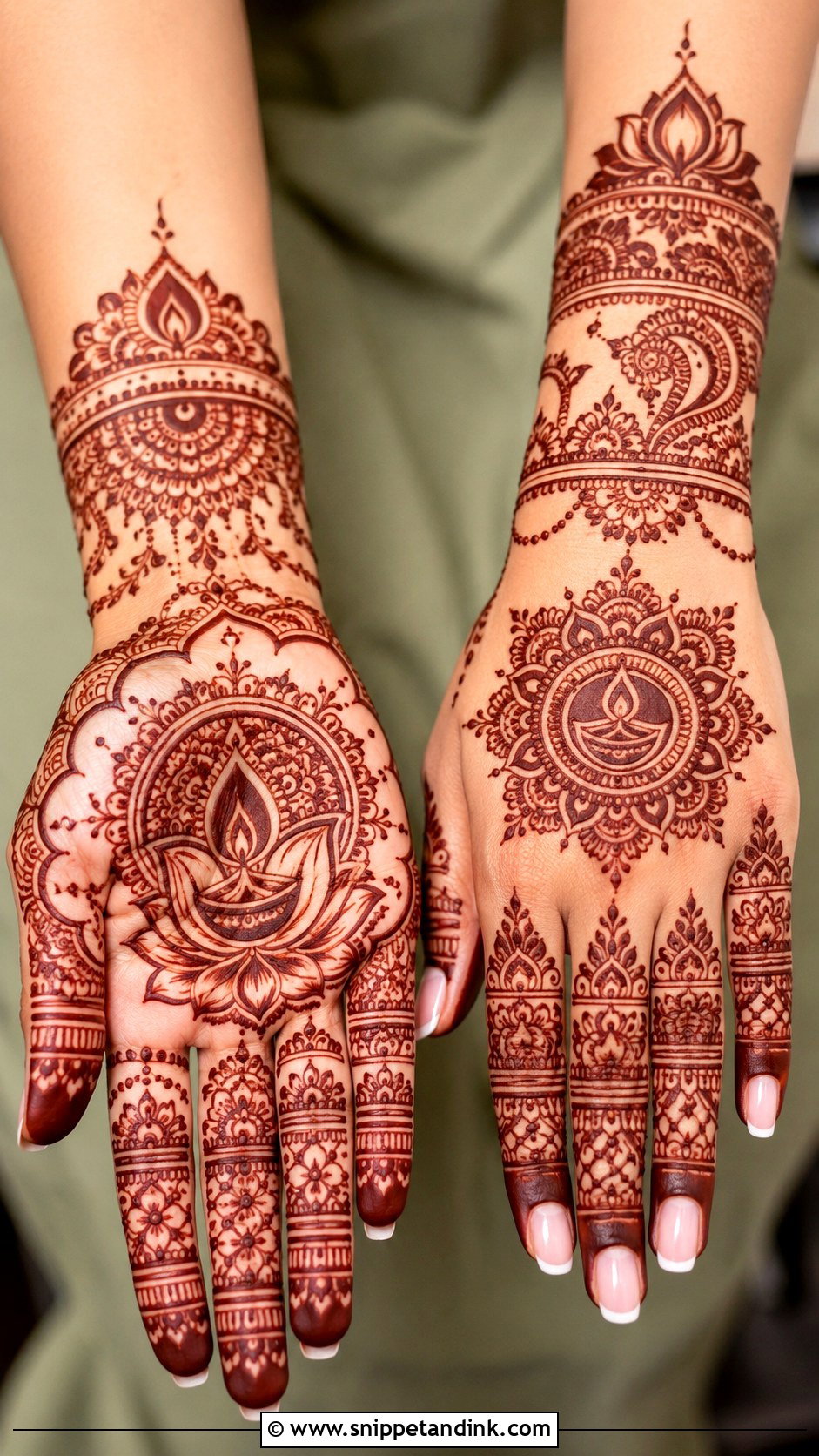
Diwali mehndi tends to be bright and traditional: mandalas, lotus motifs, paisleys, diya-inspired shapes, floral borders and detailed fingers. Diwali outfits are already rich in color and jewelry, so I keep the henna festive but not crowded. Medium coverage on the front or back hand is the usual choice for prayers and family gatherings. A bold central motif surrounded by clean patterns works best, and the deep maroon stain sits well beside bangles and rings.
29. Wedding Guest Fancy Mehndi Design
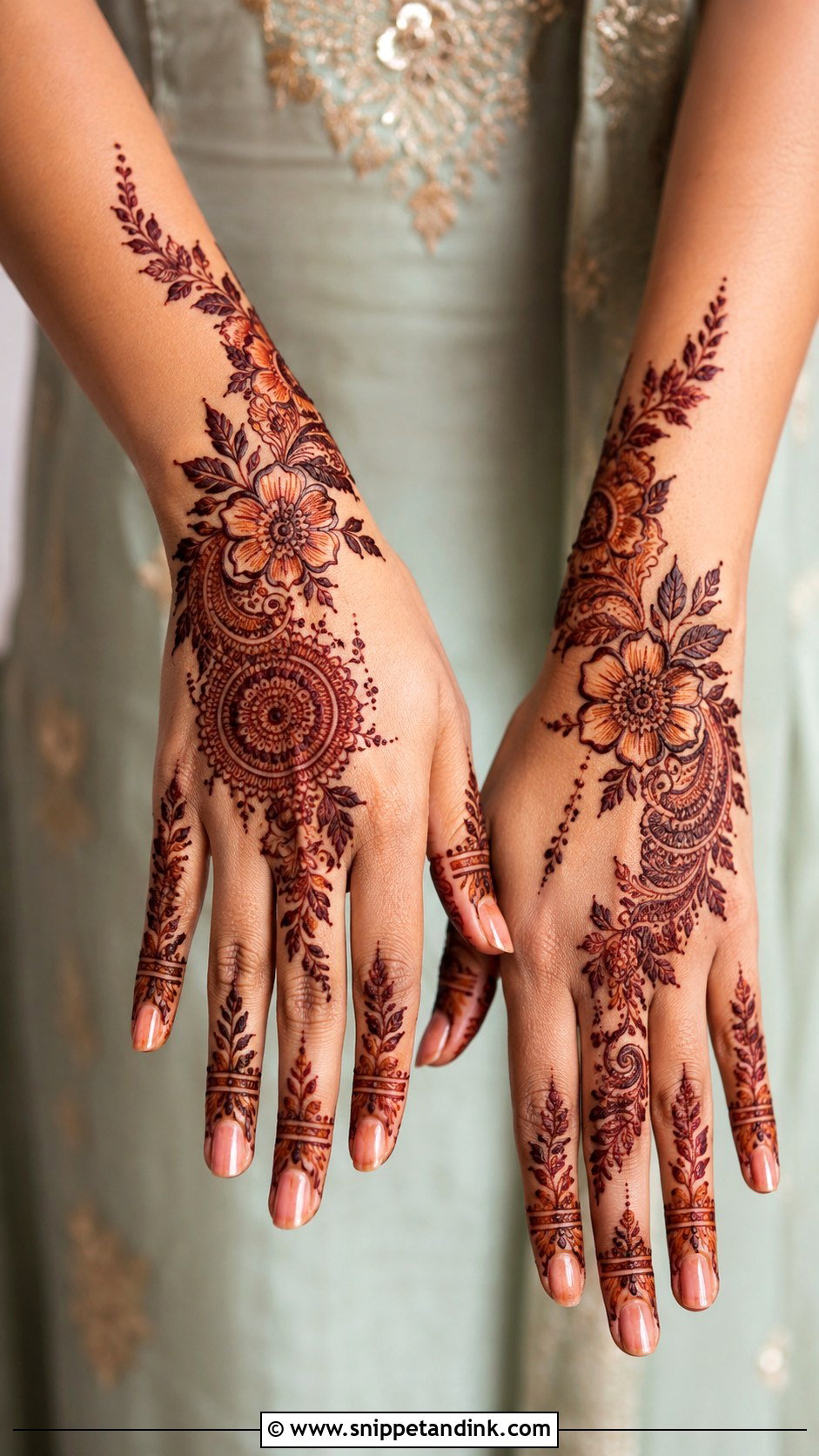
As a guest, you want henna that looks festive in photos without competing with the bride. Arabic florals, back-hand jewelry patterns, half-hand mandalas or shaded vines all fit, and medium coverage is usually right. I decorate the fingers, back hand and wrist and leave some open skin for a modern look. It sits well with lehengas, sarees, salwar suits and fusion outfits. At big weddings I keep guest designs to around a quarter hour each so everyone gets a turn.
30. Bridesmaid Fancy Mehndi Design
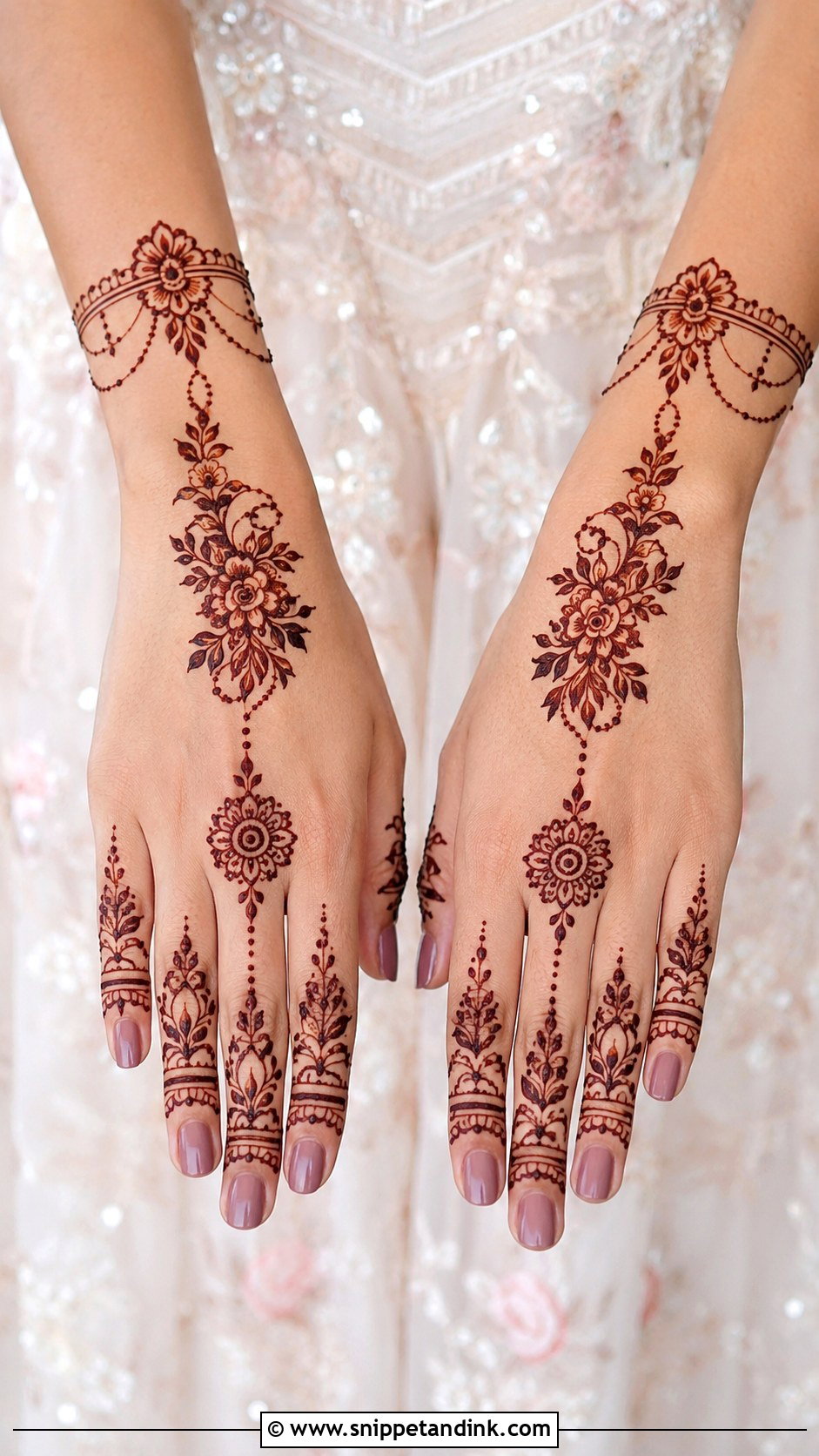
Bridesmaid henna can be a touch more detailed than a guest’s and lighter than the bride’s. Floral back-hand trails, bracelet patterns, mandalas and Indo-Arabic half-hand layouts are popular. I often give the whole group the same base motif with small variations, which looks coordinated in group photos without being identical. Comfort matters, since bridesmaids are busy all day, so I’d keep the palms fairly open and the detail on the back of the hand.
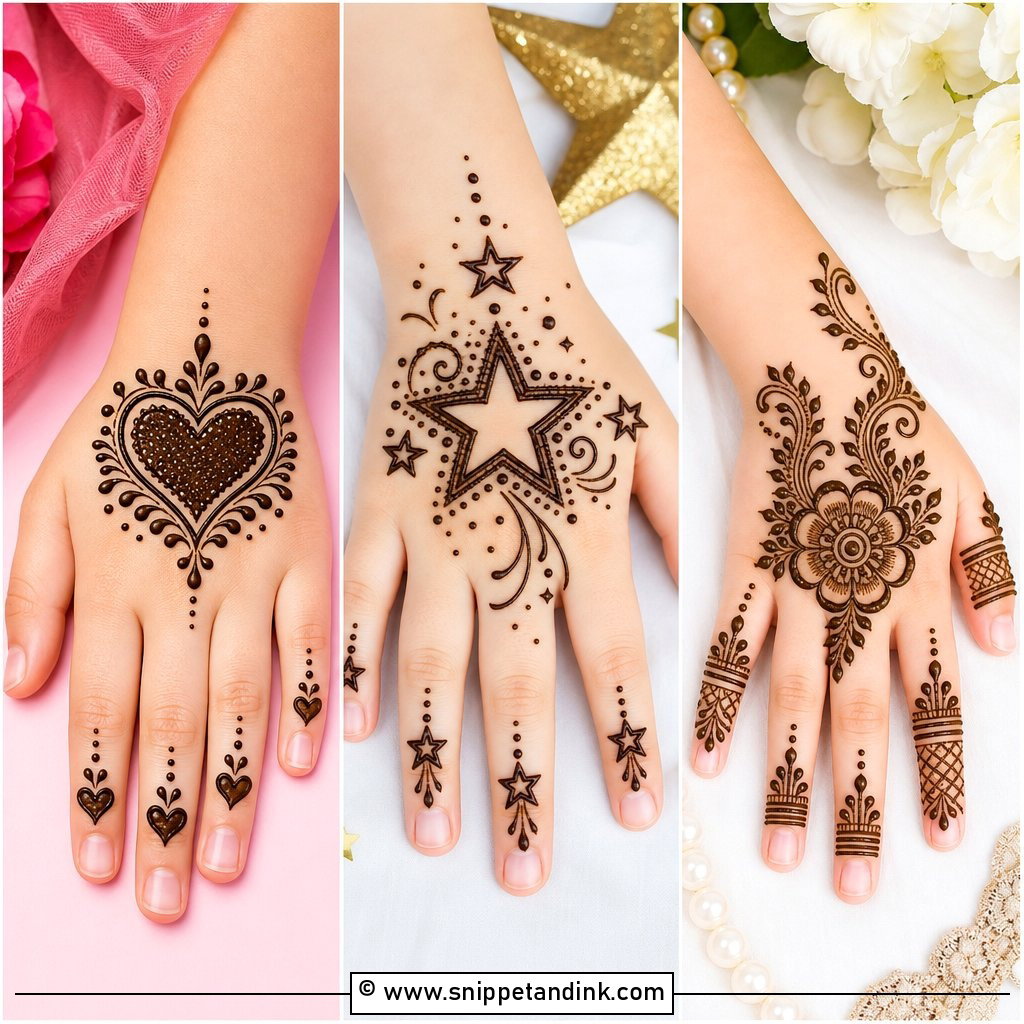
31. Kids Fancy Mehndi Design
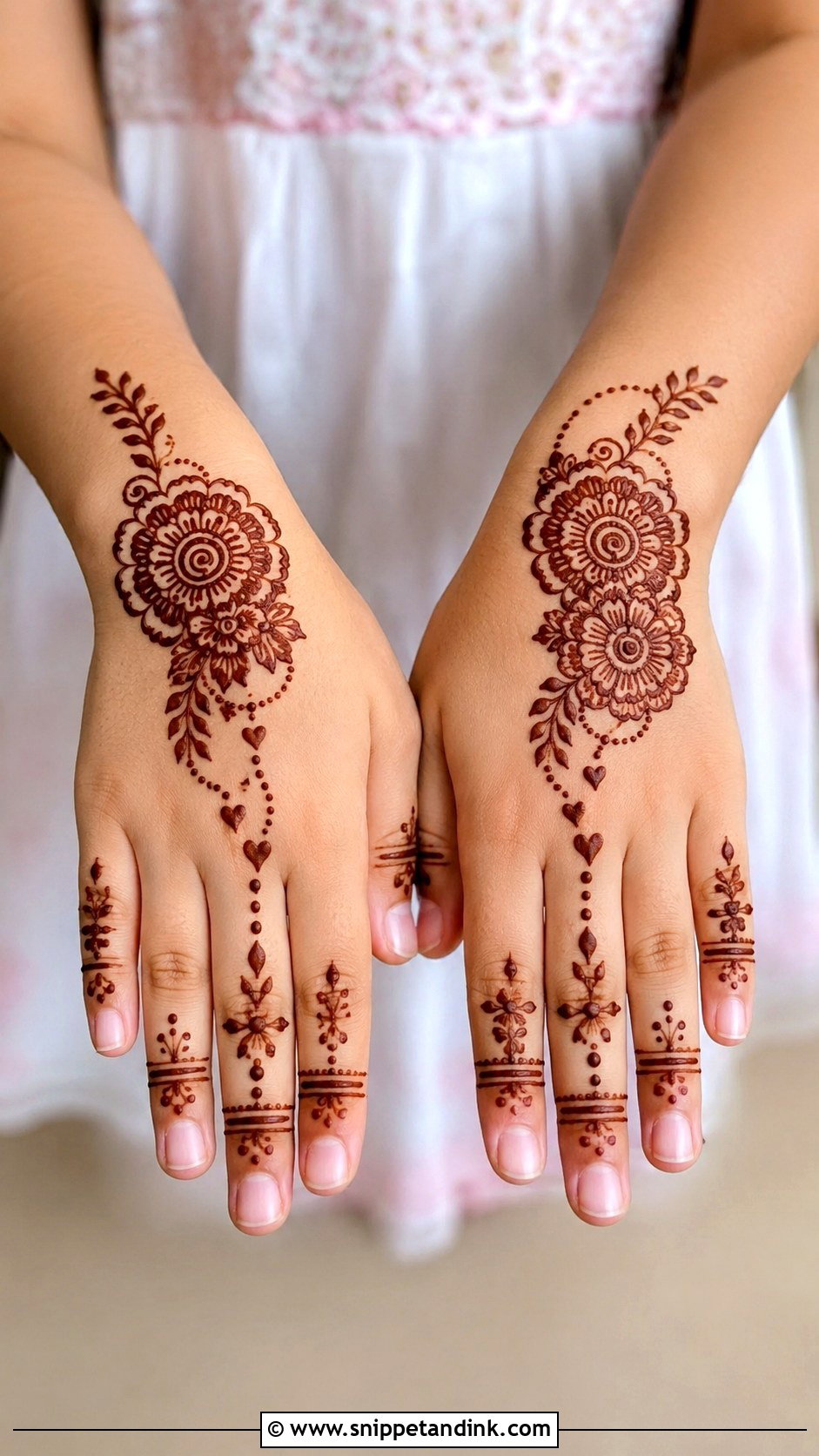
Children can’t sit still for long, so kids’ designs need to be quick: a clear flower, a small mandala, a heart, a leafy trail, dots or a simple wrist band. One main motif on the back hand with easy finger details is plenty. Avoid dense patterns, which smudge quickly on small, busy hands. Use natural henna only, and if a child has sensitive skin, try a small dot on the arm a day ahead. These suit Eid, weddings, birthdays and school cultural events.
32. Teen Fancy Mehndi Design
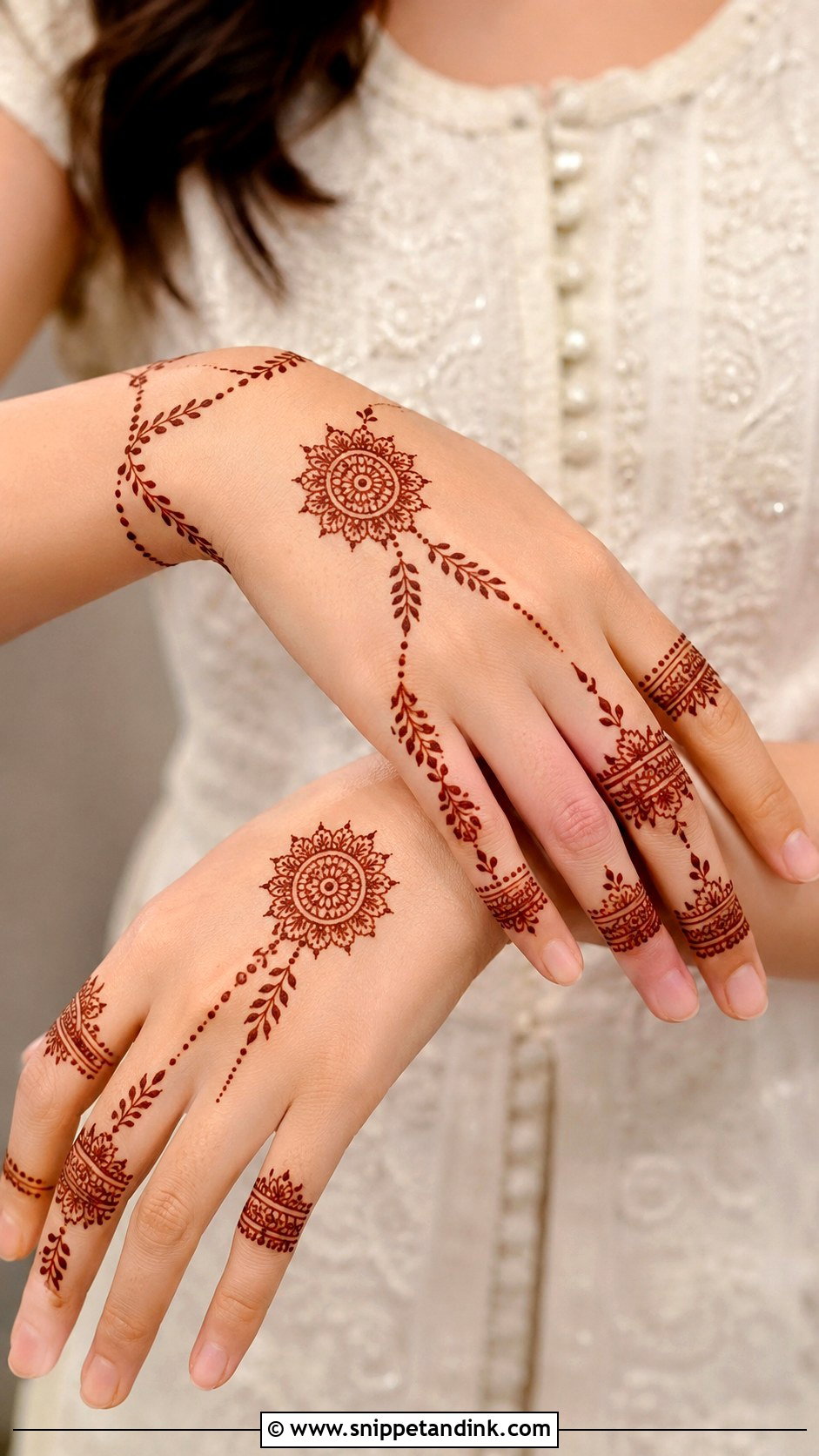
A teen fancy mehndi design usually mixes trendy details with a light finish: finger bands, bracelet chains, small mandalas, floral trails and minimal Arabic patterns. Teens tend to want designs that look good in selfies and don’t cover the whole hand. I focus on the back hand with clean finger details and a small wrist extension. It works for school events, festivals and family weddings, and modern lines with a few fancy motifs keep it fresh without looking too grown-up.
33. Full Arm Fancy Mehndi Design
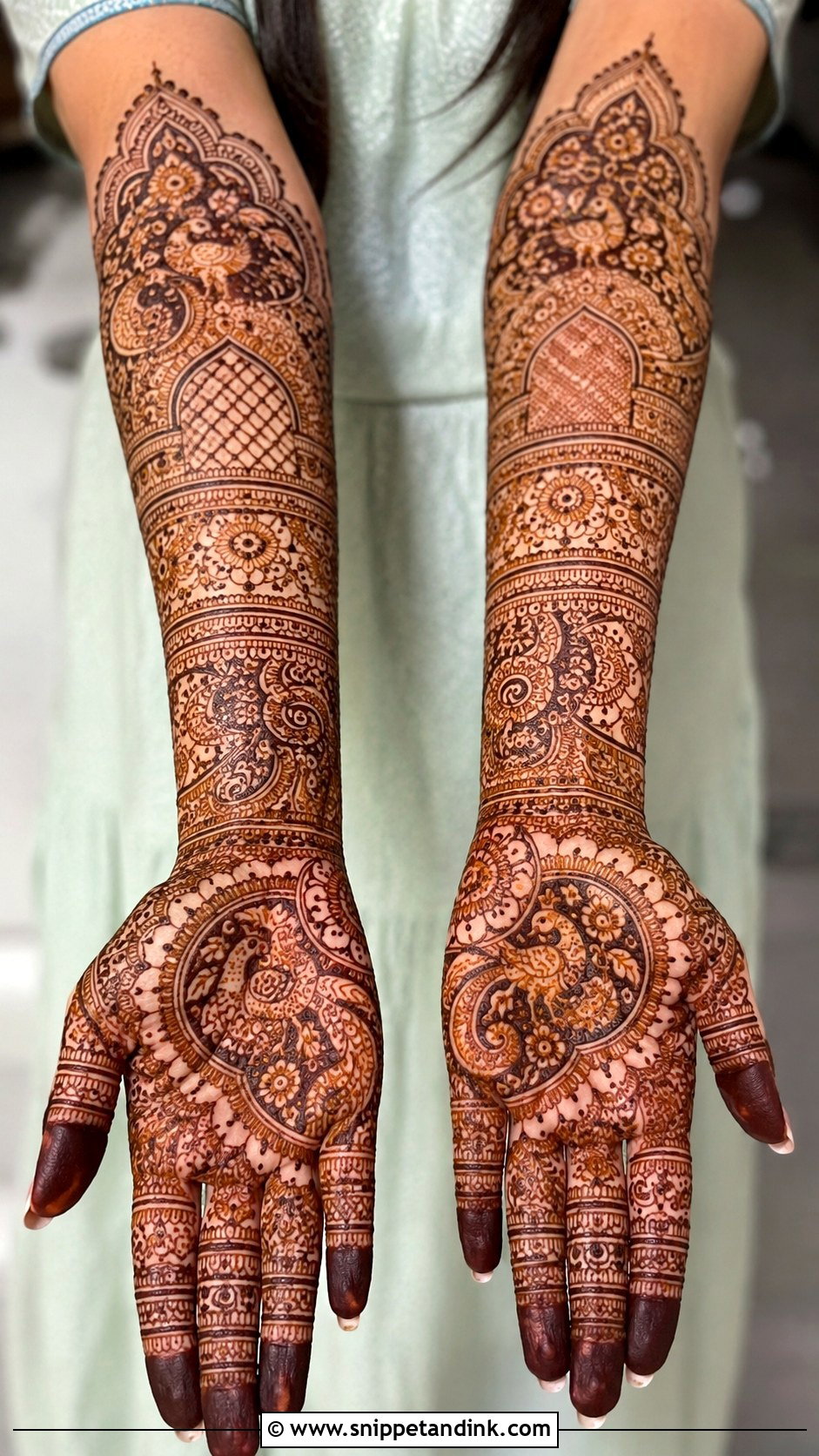
Full-arm mehndi starts at the fingertips and runs past the wrist, often to the elbow, with peacocks, paisleys, florals, jaali panels, mandalas, bride-groom figures and layered borders. With this much skin, the layout must be planned before the first line. I mark the main sections on both arms first so the two sides mirror each other, then fill in. It takes many hours and needs a long sitting with the paste left on, but after the stain develops the arm reads as one continuous piece.
34. Half Hand Fancy Mehndi Design
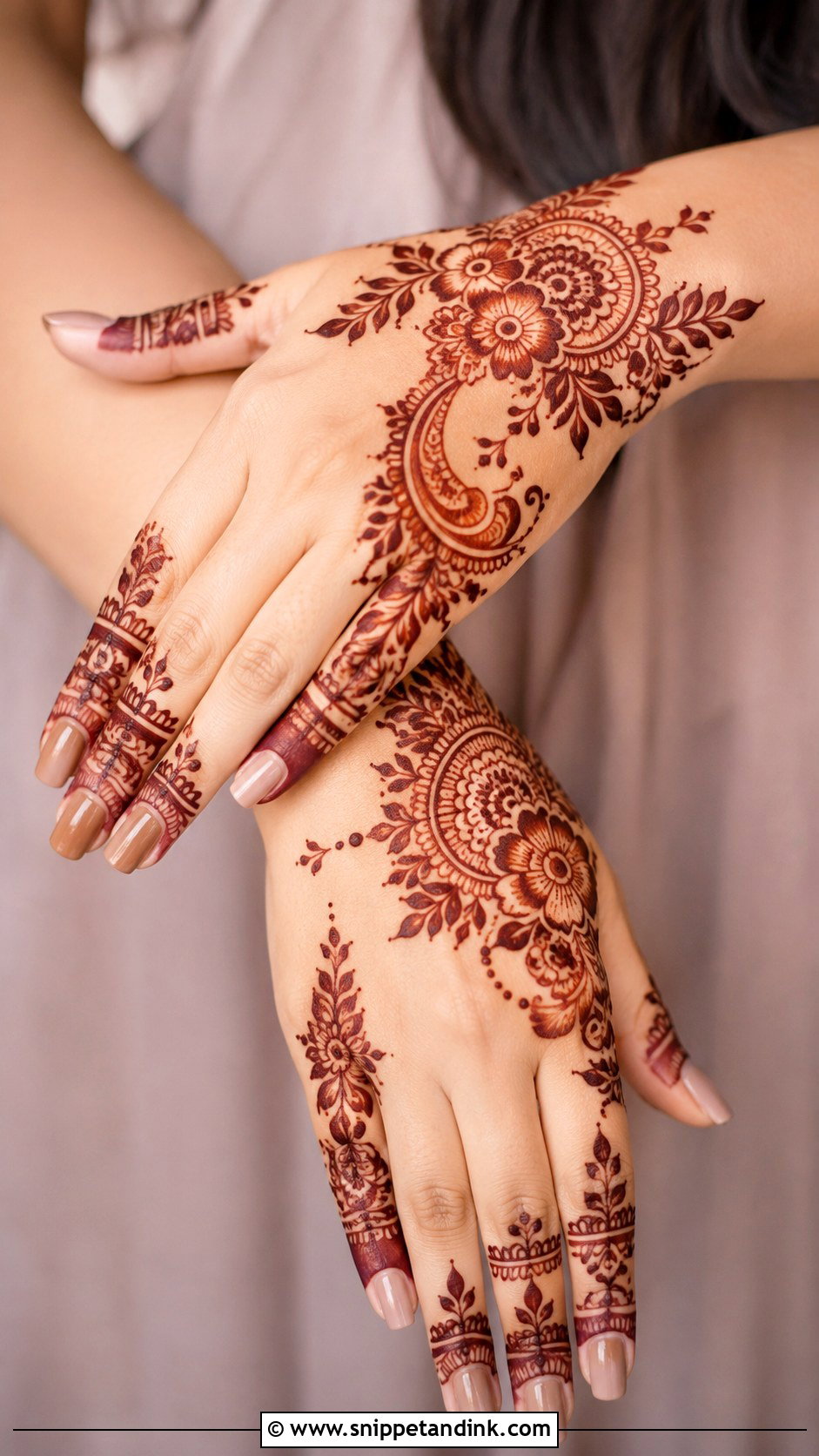
Half-hand designs give visible decoration without full coverage. I might cover the fingers and half the palm, or the back hand from the fingers to the middle. Floral trails, mandalas, paisleys and shaded vines all work. It’s quick and still festive enough for weddings. The important part is the stopping point: a border, cuff or curved edge makes the design look intentional, while a pattern that simply runs out looks unfinished.
35. Foot Fancy Mehndi Design
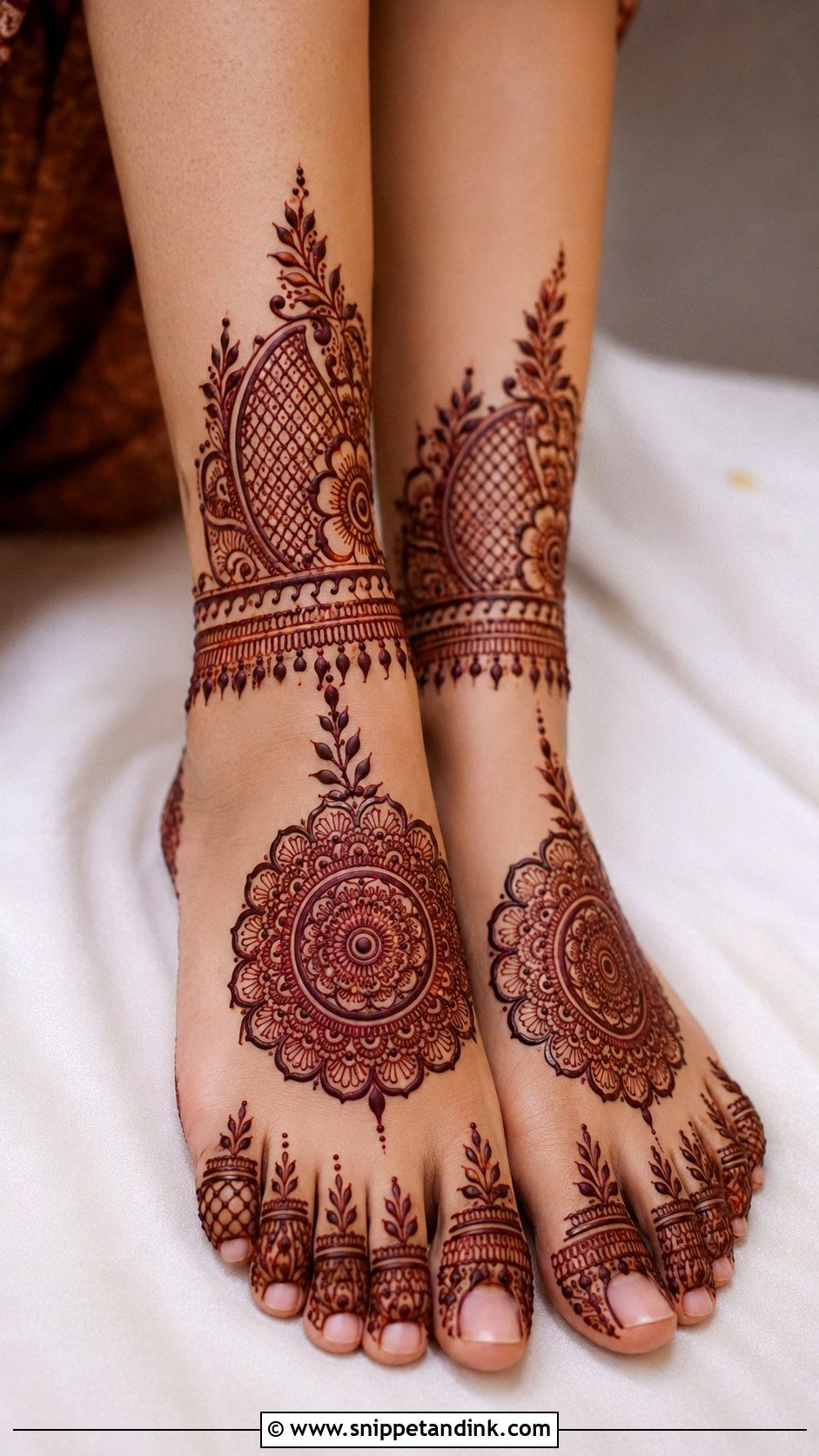
Foot mehndi completes a bridal or festive look from head to toe. The design can cover the toes, top of the foot, ankle and sometimes the lower leg, with mandalas, anklet bands, florals, paisleys, jaali and vines. Soles stain very dark, while the top of the foot stains more lightly, so I keep the main motifs bold there. A good foot design connects toes to ankle in one flow. Plan to sit with your feet up for a few hours afterward; walking on fresh paste ruins it.
White Cones and Glitter Aren’t Henna at All
A few of the fancier looks above use products that behave nothing like henna, and people are often surprised by that. Real henna is a plant dye that stains the top layer of skin and fades over one to three weeks. White mehndi is a cosmetic paint or skin adhesive, and glitter is loose cosmetic glitter fixed with a body-safe glue. Neither stains; both sit on the surface and are gone within a day or two.
- Take white mehndi and glitter off with a little oil on cotton, rather than scrubbing with soap.
- Never put craft glitter on skin. It isn’t made for it and can scratch.
- Any cone sold as black henna, or one that stains dark within an hour, may contain PPD, a hair-dye chemical that can cause serious skin reactions. Avoid it, especially for children.
- If you plan glitter over henna, wait until the henna paste is fully off and the stain has started to darken, or the glue lifts the color unevenly.
My usual advice for a wedding week: natural henna for the functions where the stain matters, and keep white or glitter work for a single sangeet night or photoshoot where you want something unusual for a few hours.
The Occasion Sets the Coverage, Not the Other Way Round
With this many styles, start from the occasion. For tradition, full hand bridal, paisley, peacock and jaali designs carry the most weight. For something modern, try jewelry mehndi, minimal patterns, bracelet designs or white decorative mehndi. Arabic, Gulf, Indo-Arabic and khafif styles give fancy hands with stylish spacing. Then think about how long you can sit, what you’ll wear and how much you’ll use your hands that week. Clean layouts, smooth lines and balanced motifs make any design look polished.
You'll Like These Ideas:










Leave a Reply