
The palm is where henna stains deepest, and it’s the side you look at yourself all day, so it gets the most thought. I design palms differently from the back of the hand: the creases, the hollow in the center and the way the hand closes all change how a pattern reads. Below are the palm layouts I’m asked for most, from a quick tikki you can finish over a cup of tea to full bridal work, with notes on how each one behaves, who it suits and where it tends to go wrong.
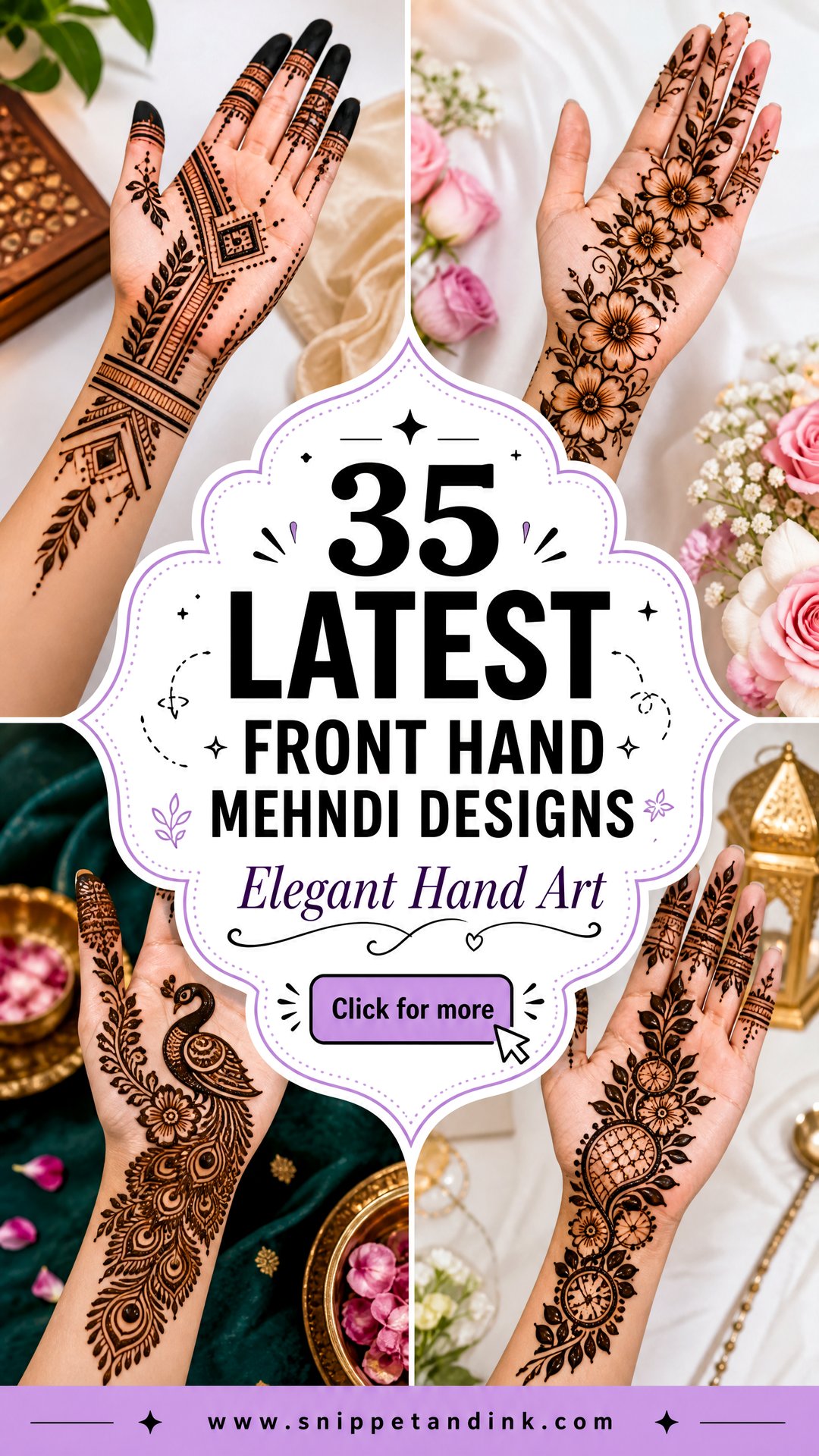
Mapping a Palm Around Its Creases and Hollow
A palm isn’t flat. It has three main creases, a soft hollow in the center and a heel that rises toward the wrist, and all of them move when you close your hand. Before I start, I ask you to open your hand fully and then cup it, so I can see where the skin folds.
- I place circular motifs like a tikki or mandala in the center of the hollow, where they stay round whether the hand is open or relaxed.
- Straight lines and borders go along the creases, not across them, so they don’t appear to snap when you move.
- The heel of the hand is the best spot for bold flowers, because it stays smooth and catches the camera when you hold your palms up.
- Fine filler in the deepest crease tends to smudge while drying, so I leave a thin gap there.
1. Simple Front Hand Mehndi Design
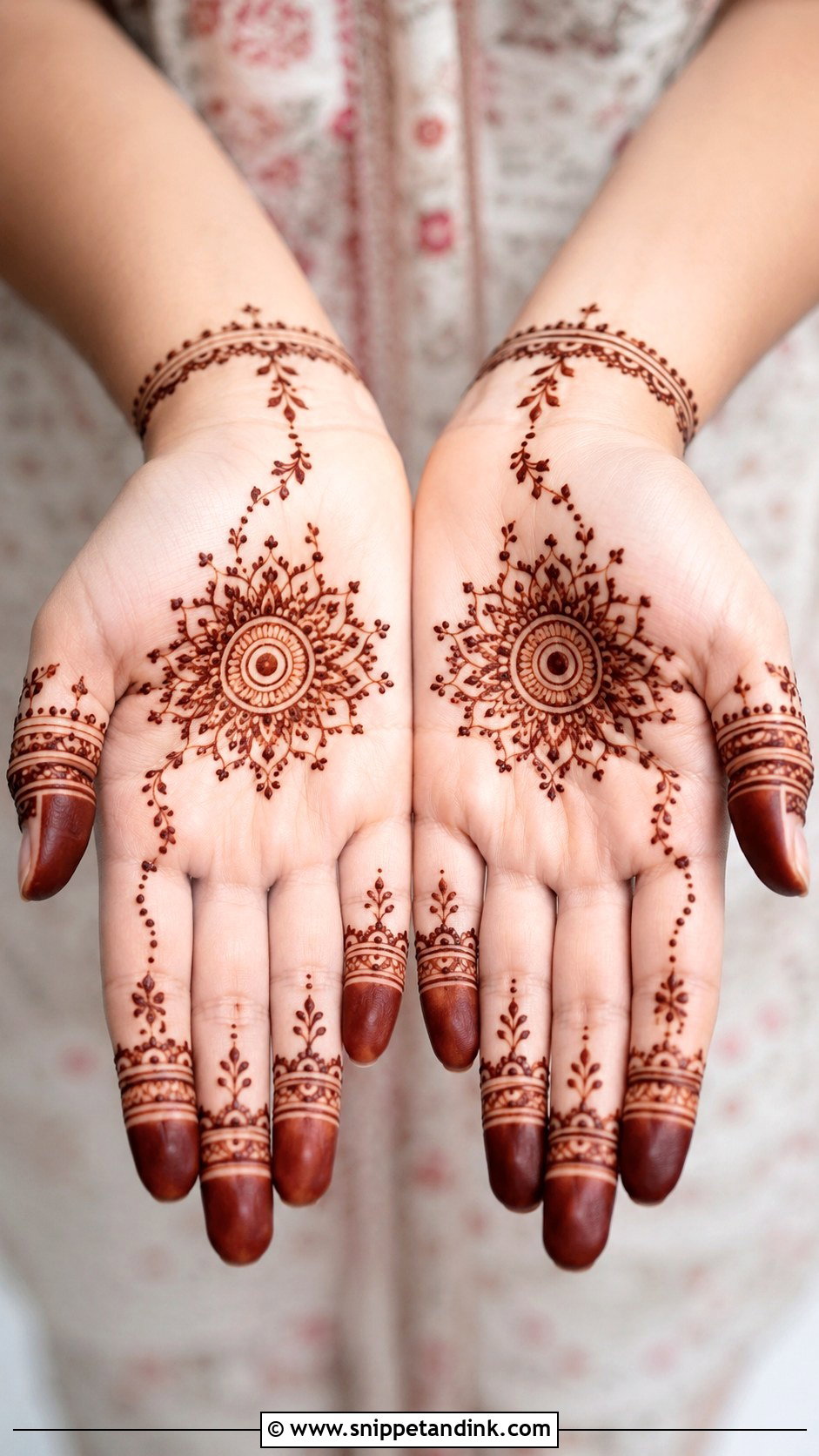
Start with a small mandala or floral circle in the middle of the palm, run a couple of light vines toward the fingers, and fill gaps with dots and leaf chains. The wrist can stay bare or take one slim bracelet line. It’s forgiving for beginners because the spacing doesn’t have to be exact. The only thing I’d insist on is consistency in the finger patterns; five matching fingers make even a quick design look finished.
2. Arabic Front Hand Mehndi Design
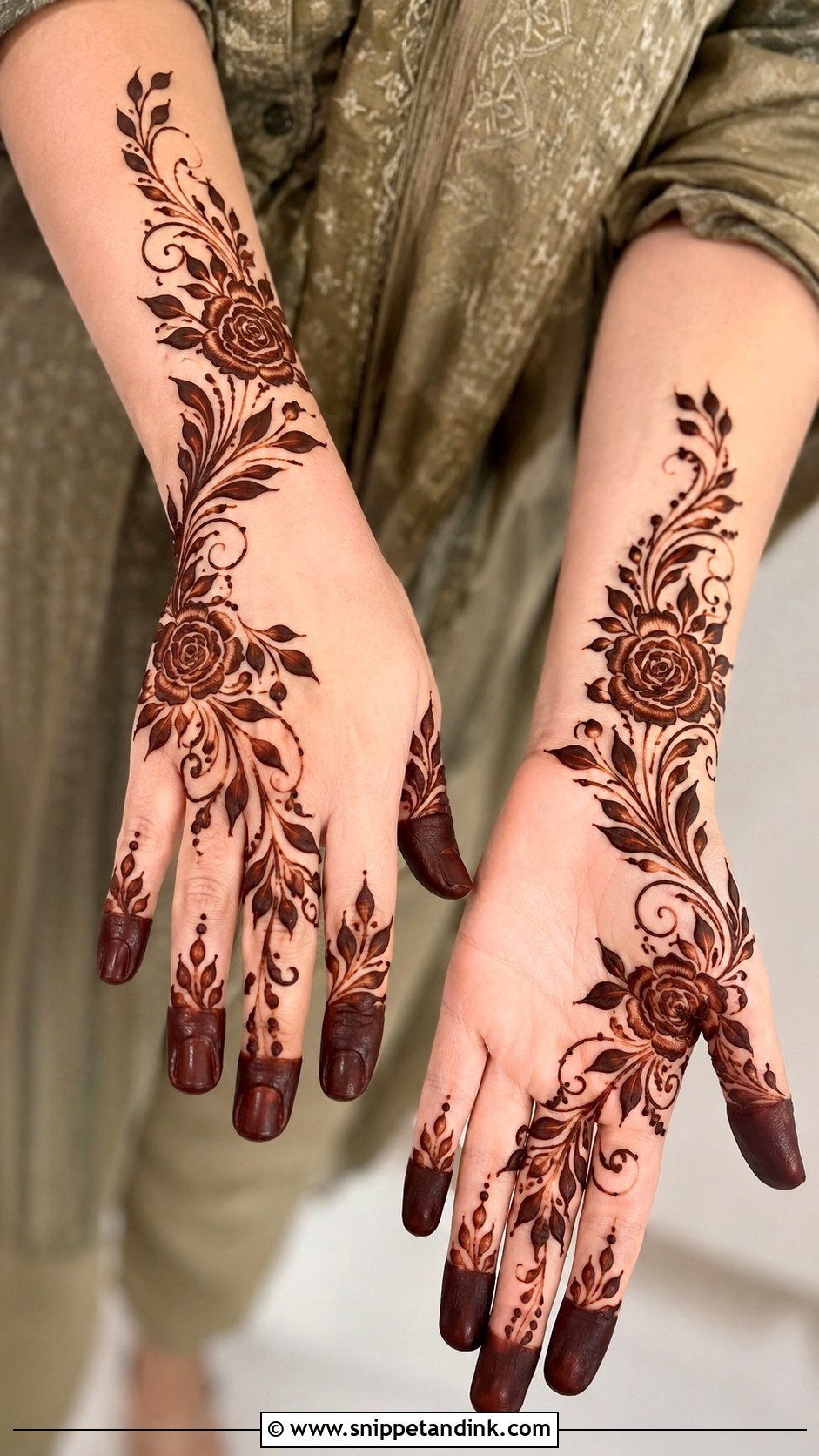
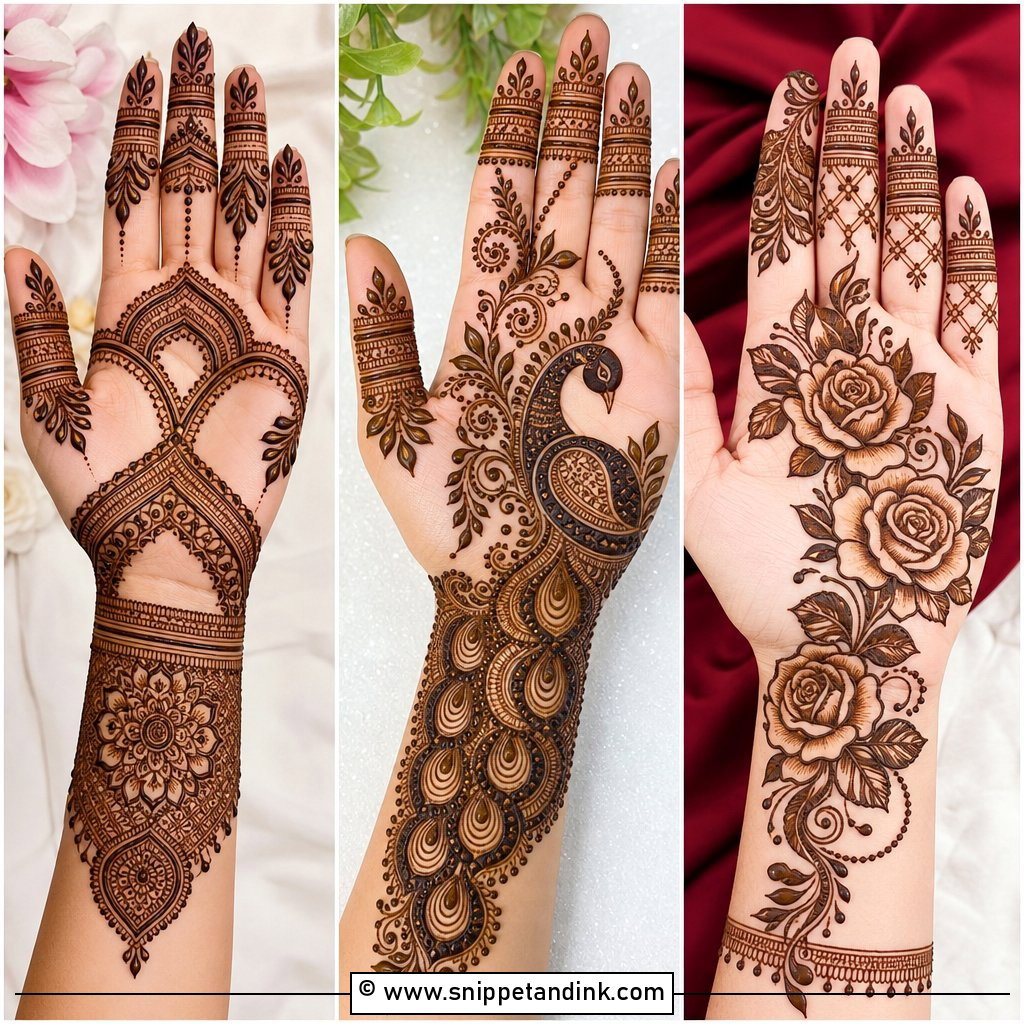
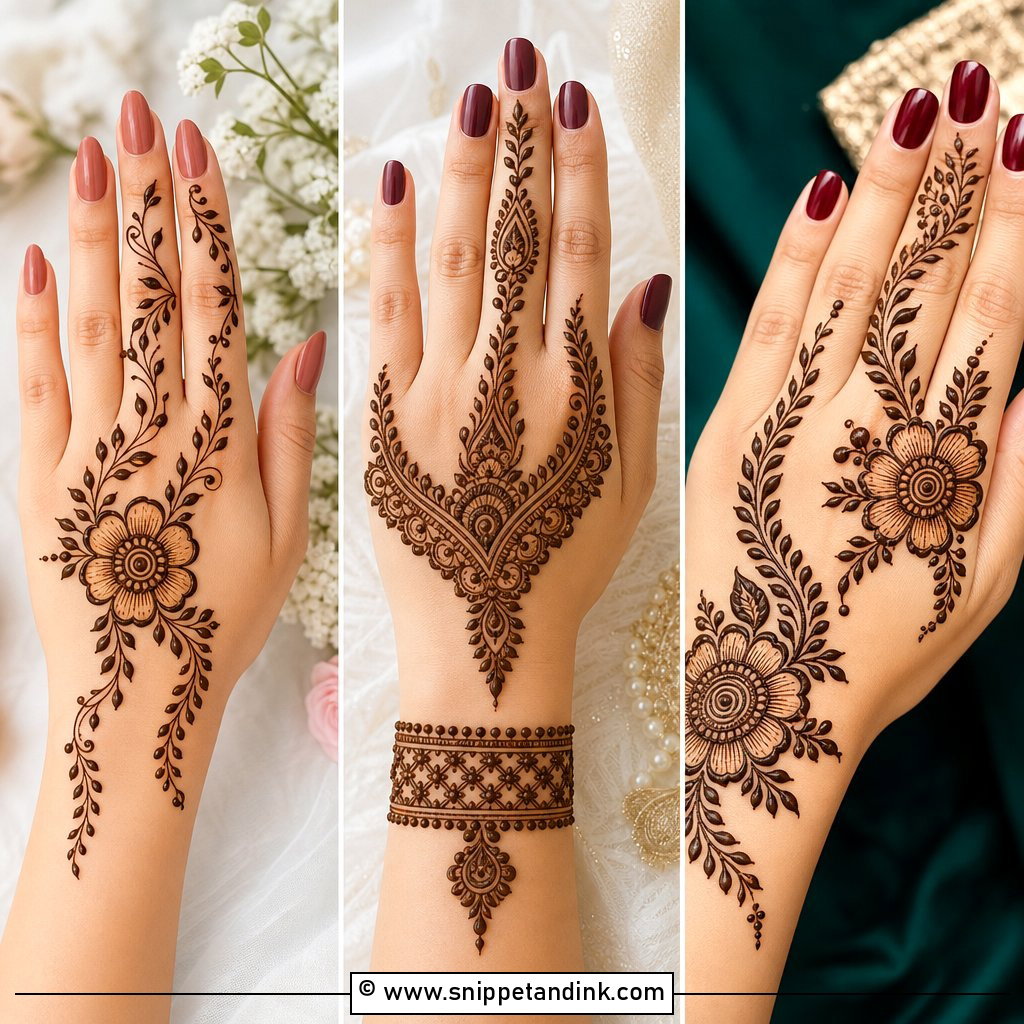
Arabic palm work travels diagonally from the wrist toward one or two fingers, with big roses, leafy strokes, curved paisleys and dots, leaving the rest of the palm open. The bold outlines are the reason it stains so well. I usually let the trail run from the heel of the hand up the side of the index finger, because that line stays visible whether the hand is open or cupped. Lightly filled fingertips on the opposite side balance it.
3. Full Front Hand Mehndi Design
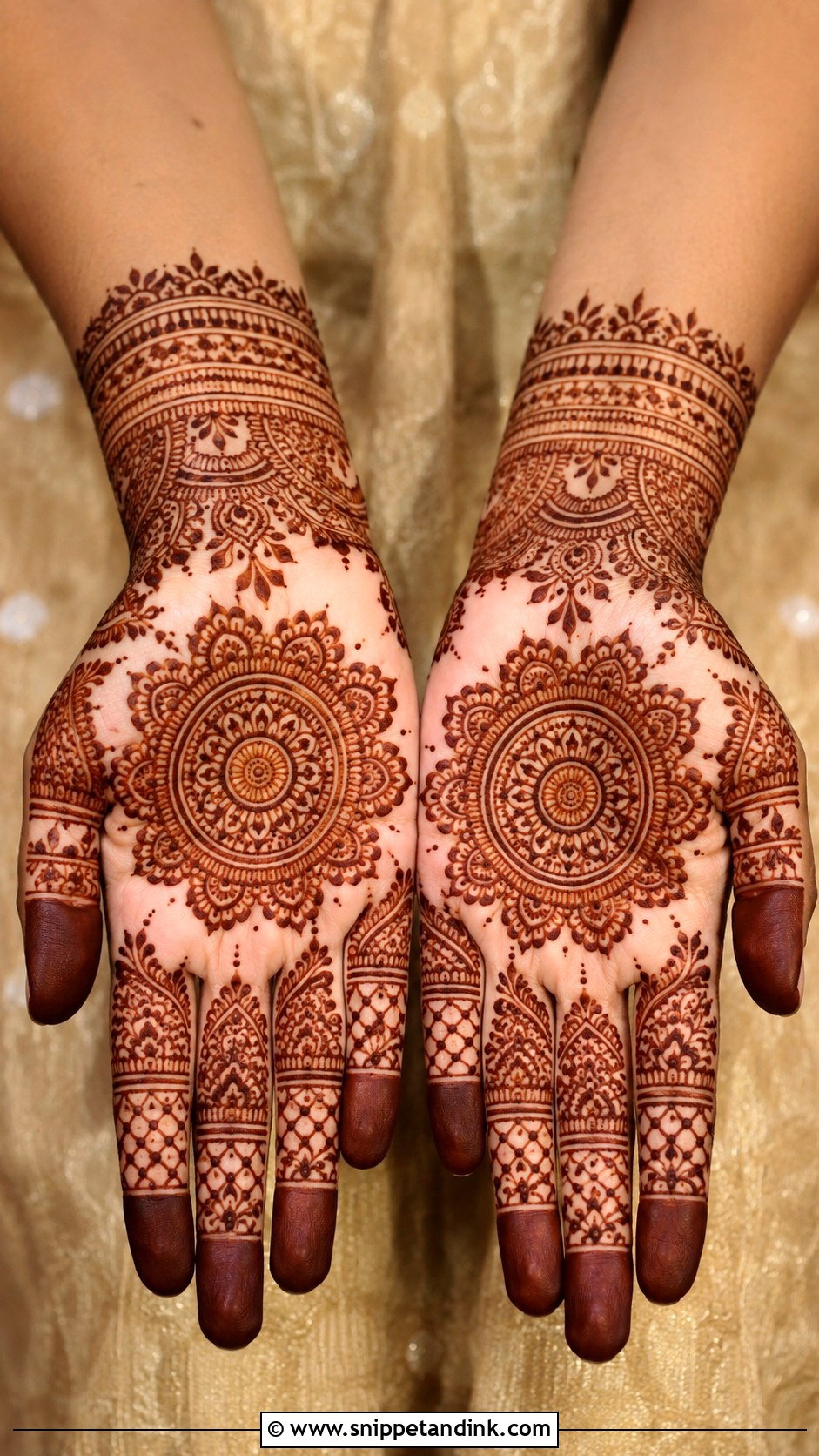
Full coverage runs from fingertips to wrist: a central mandala, peacock, lotus or paisley cluster on the palm, repeated bands on the fingers, and bracelet borders or layered arches at the wrist. It takes patience because each section has to join the next without looking stitched together. Pick one main theme and stay with it. I keep the hollow of the palm slightly lighter than the edges, since that area folds when you hold anything and dense detail there creases out of shape.
4. Bridal Front Hand Mehndi Design
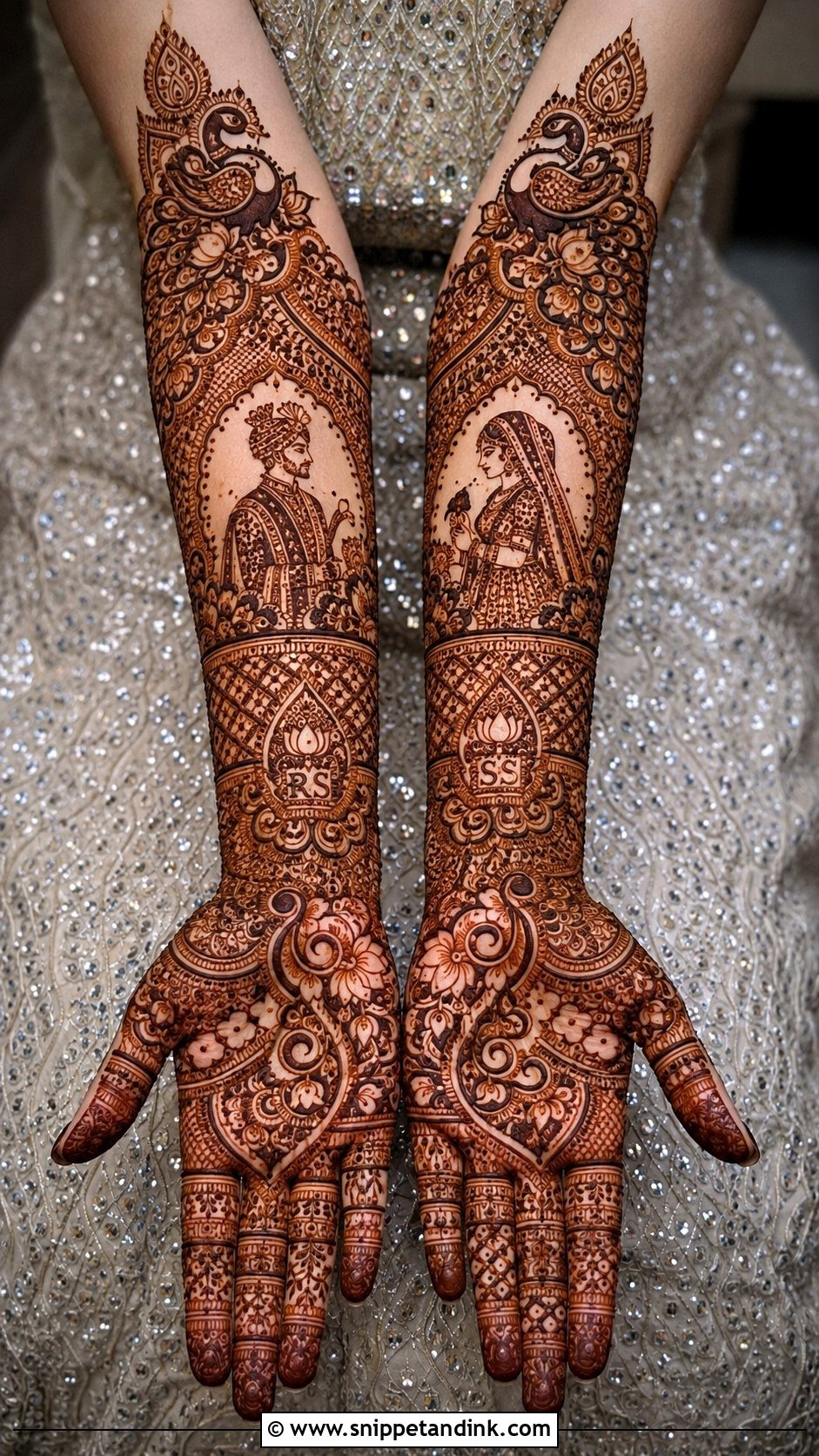
Bridal palms carry the meaningful details: bride and groom figures, wedding symbols, lotus, peacocks, kalash work or initials hidden in the pattern, with fully decorated fingers in jaali, paisley bands and fine filler, extending toward the wrist and forearm. Traditional brides usually go dense Indian. If you want it lighter, I’ll set the bridal motifs inside Arabic-style spacing. Either way, the palms need to read in close-up and still look balanced when held up side by side.
5. Modern Front Hand Mehndi Design
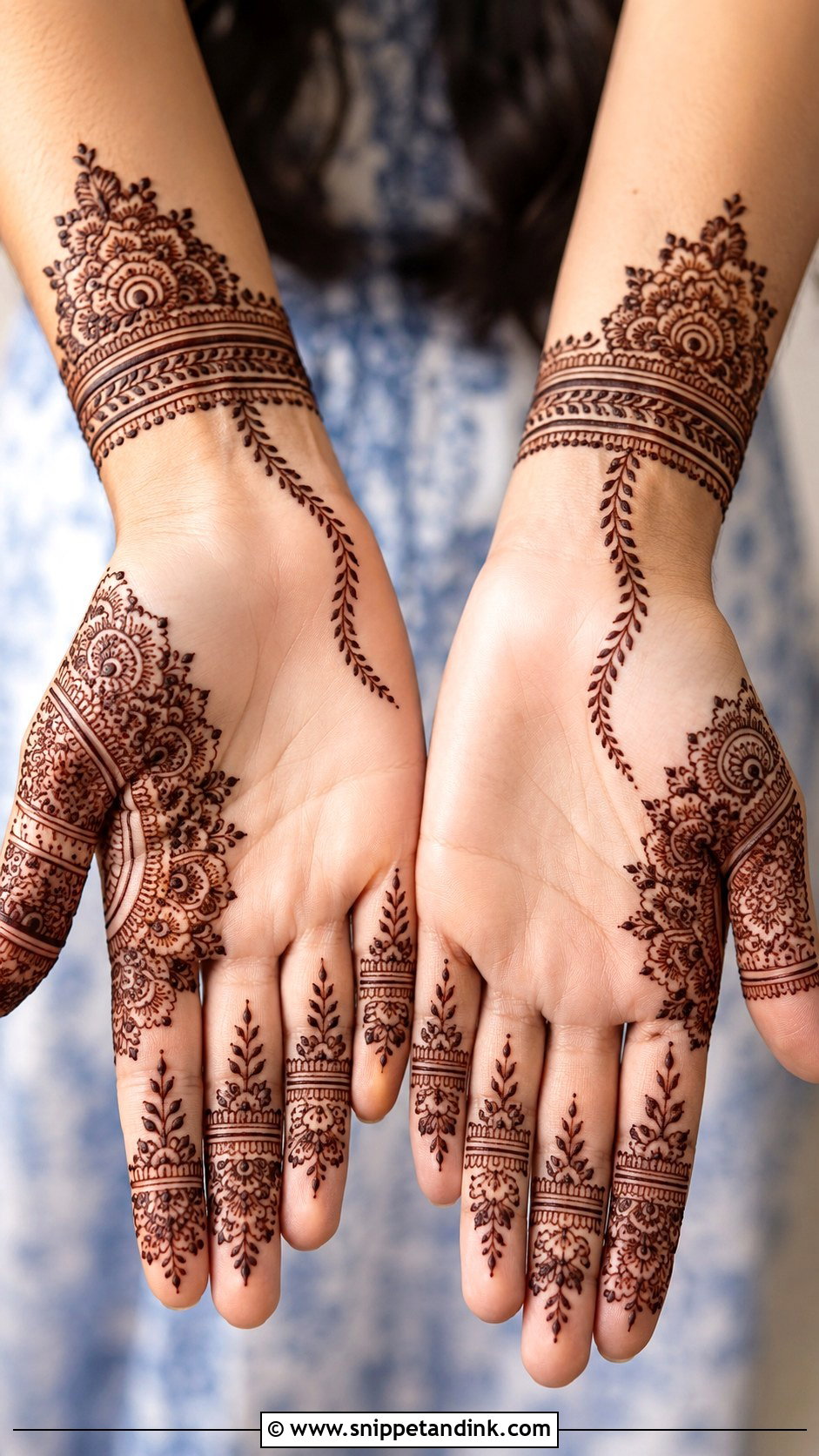
Modern palm designs highlight selected areas instead of filling every inch: half-mandalas, fine-line florals, leafy trails, bracelet shapes and negative space. Bridesmaids and engagement guests like it. Control is everything here. Thin lines, smooth curves and gaps that look deliberate are what separate modern from unfinished. A single central motif with structured finger bands is the version I find holds up best.
6. Mandala Front Hand Mehndi Design
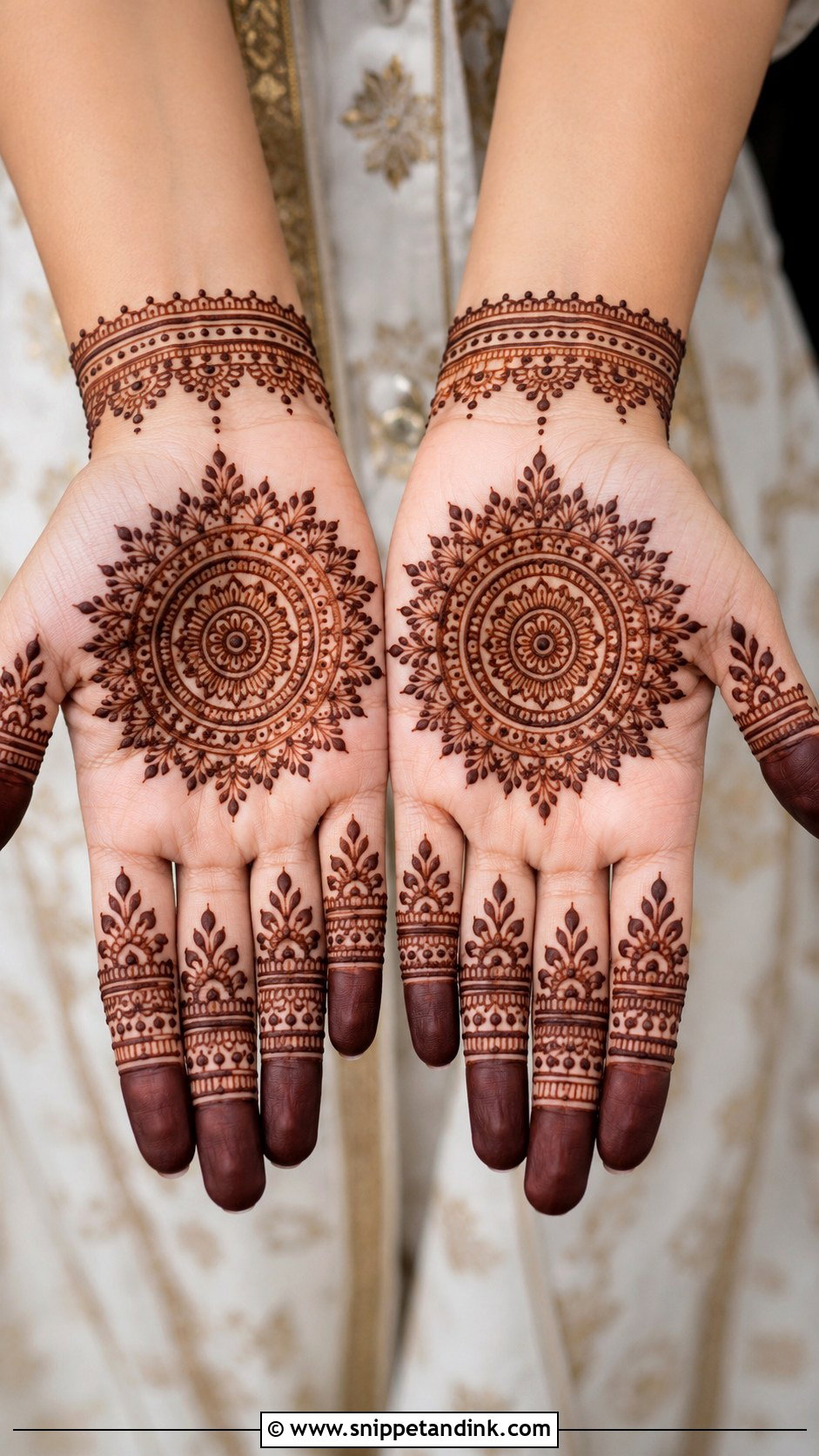
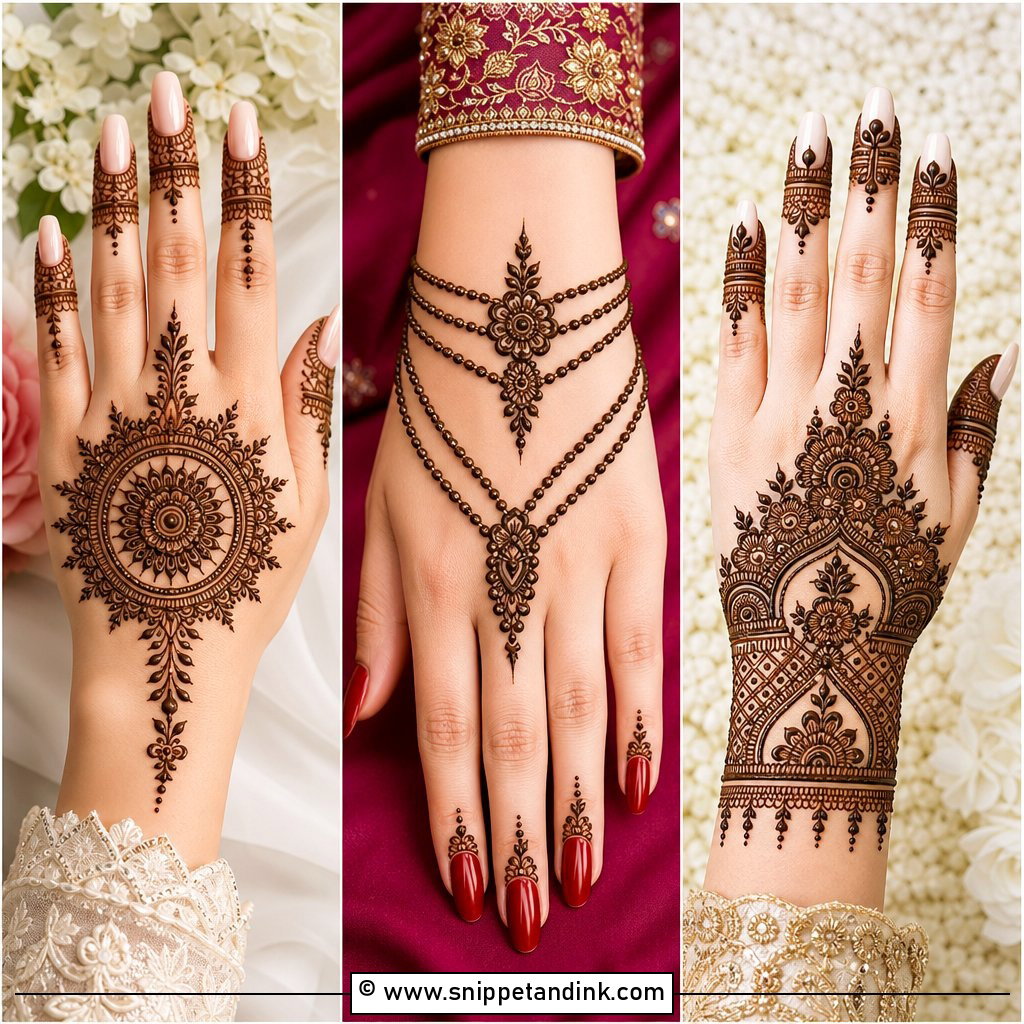
A mandala sits exactly where the eye lands first: the center of the palm. It can be simple, layered, floral or geometric, with dots, petals and curved lines forming a halo around it and matching bands or tiny mandalas on the finger joints. On small hands, I keep it medium-sized so it doesn’t swallow the palm. On longer palms, I add wrist detail so the design carries down to the forearm instead of stopping abruptly.
7. Floral Front Hand Mehndi Design
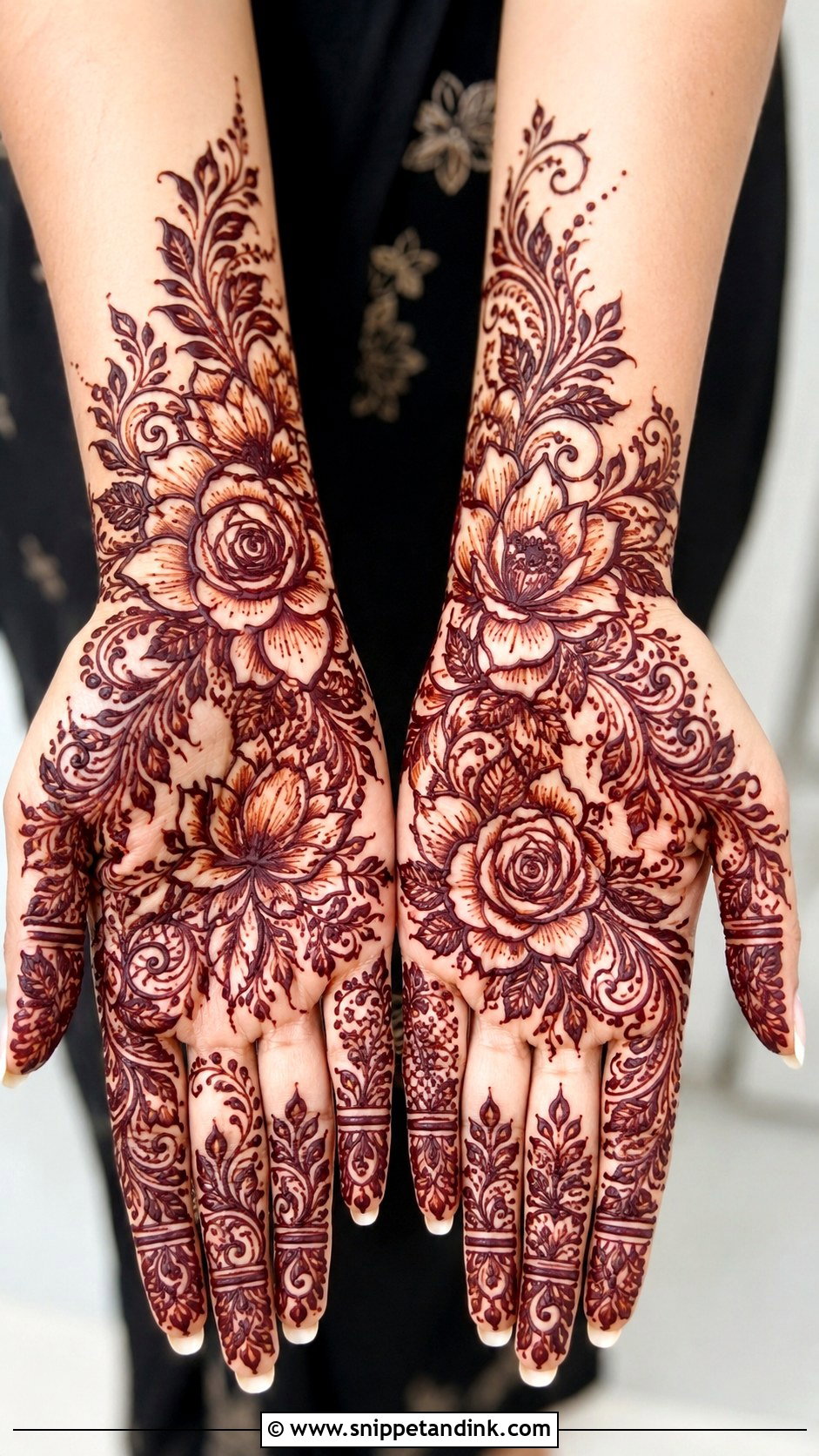
Florals can run as a diagonal trail, a bouquet in the middle of the palm or a full spread: roses, lotuses, jasmine-like blossoms and buds, linked by curved vines and dots. They suit haldi, baby showers and festival days. For a lighter look, I draw fewer, larger flowers with almost no filler. For a richer one, I shade inside the petals and add a small jaali section near the wrist. Big flowers age better as the stain fades than lots of small ones.
8. Peacock Front Hand Mehndi Design
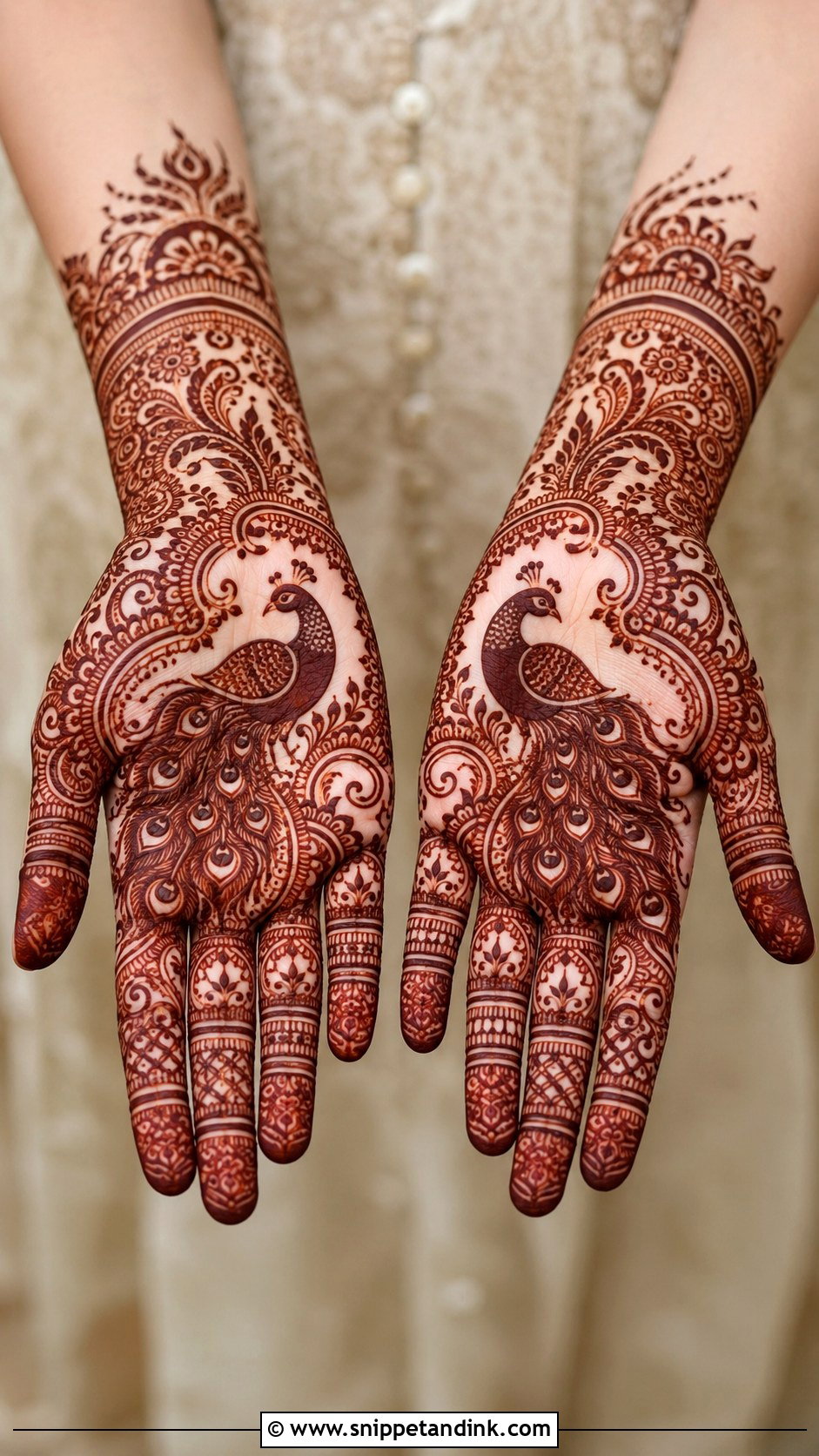
A peacock can sit in the center of the palm, curve along the thumb side or appear as a pair facing each other across both palms. Its feathers give me room for paisleys, fine lines and dots without the design falling apart. Keep the body bold so it reads first, and the filler delicate. I’d balance a peacock palm with simple finger bands; heavy fingertips plus a full peacock makes the hand look crowded.
9. Indo Arabic Front Hand Mehndi Design
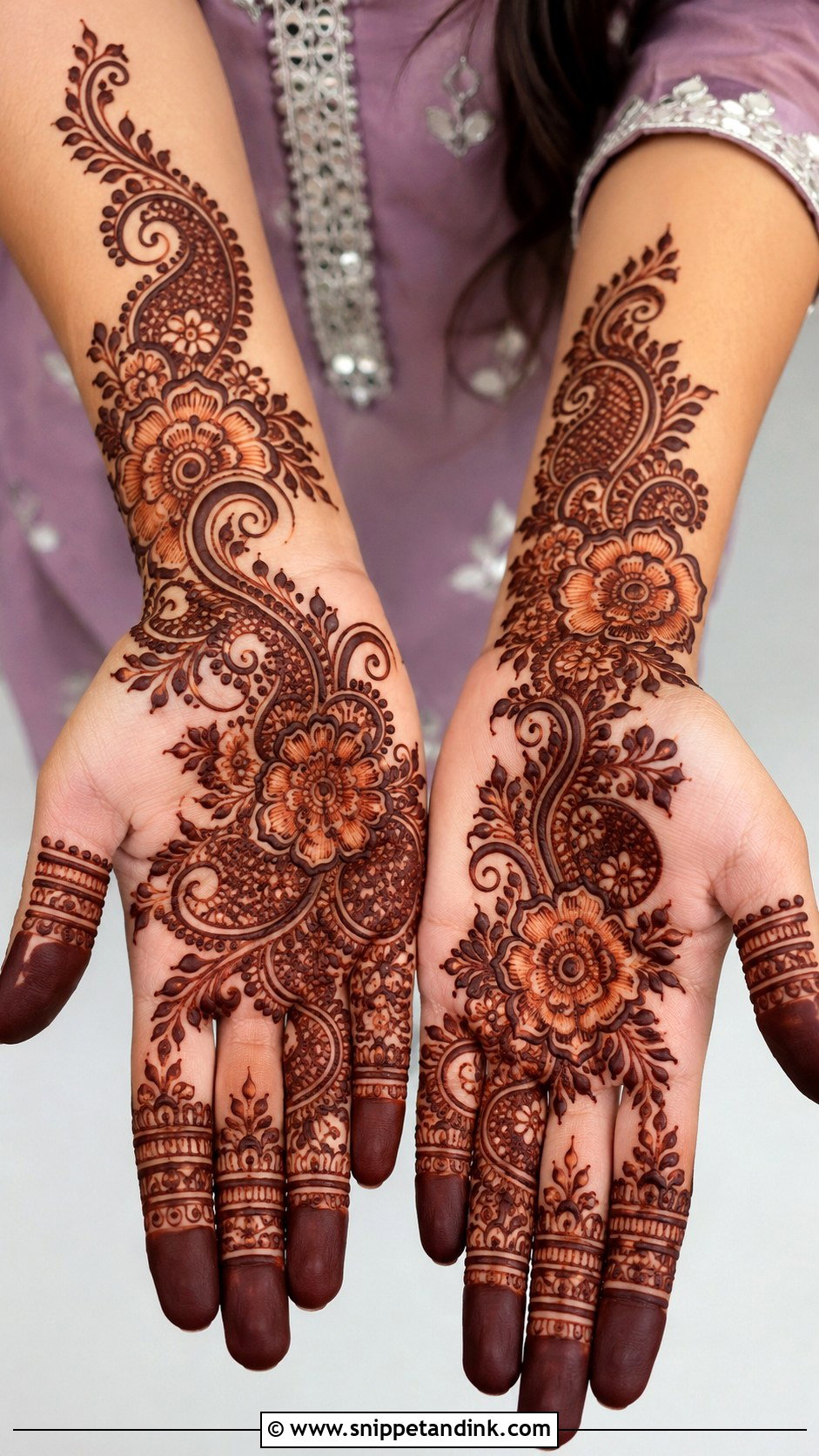
Indo-Arabic palms give you Arabic flow with Indian detail: bold floral trails, open spaces, fine paisley work and carefully placed filler. Fingers usually get detailed bands rather than solid fill. It’s easy to scale, so I can keep it light for Eid or make it heavier for a wedding without changing the layout. That flexibility is why it’s the design I suggest most often when someone can’t decide.
10. Pakistani Front Hand Mehndi Design
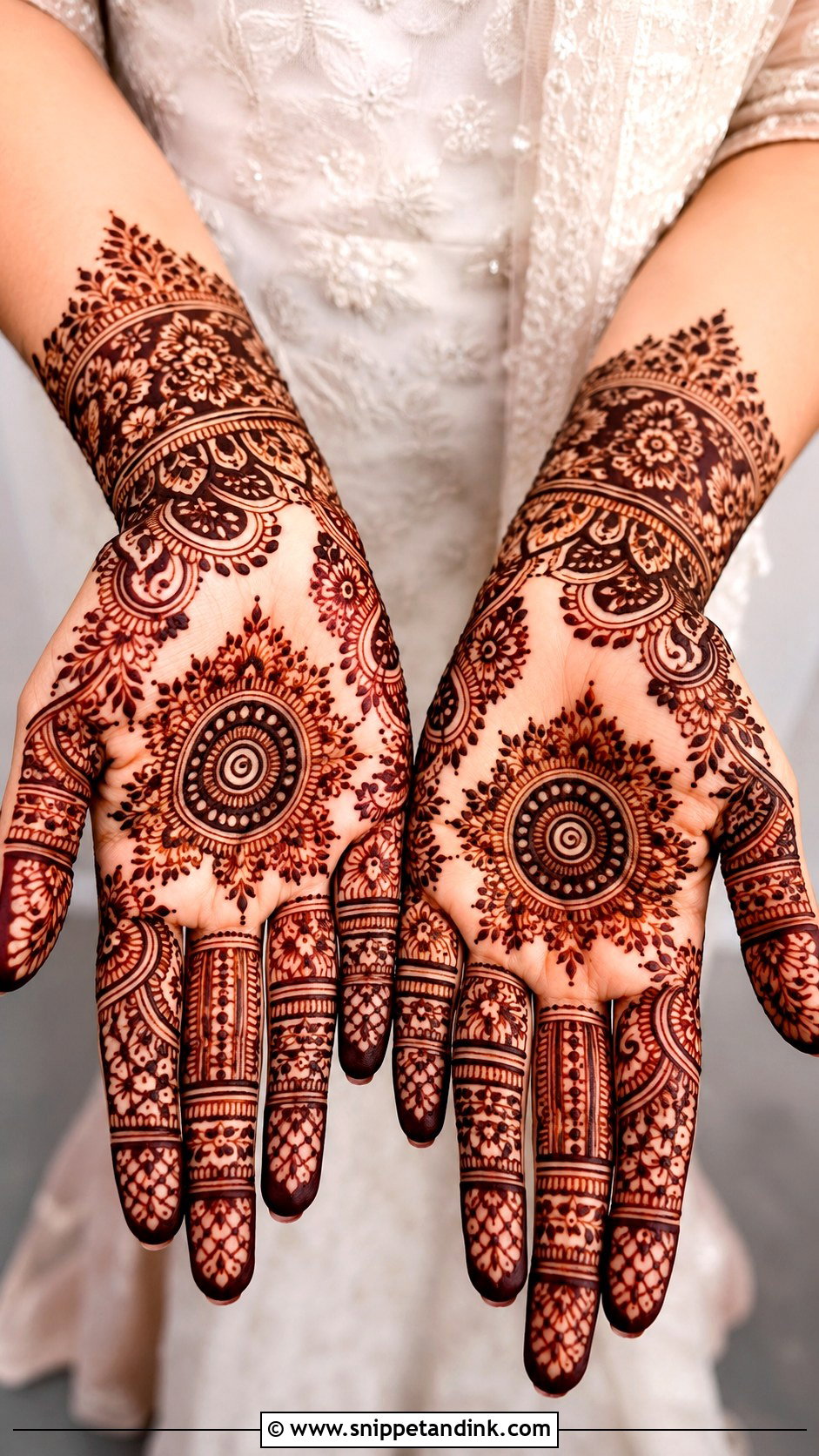
Pakistani front hand mehndi design combines bold outlines with fine inner work, floral vines, tikki circles and bracelet-style wrists. The best-known version has a central gol tikki, detailed fingers and a cuff. Another uses Arabic flow with denser Indian filling inside it. The contrast between strong borders and tiny detail is what gives it richness. I coordinate both hands so they mirror each other when the palms are held together.
11. Indian Front Hand Mehndi Design
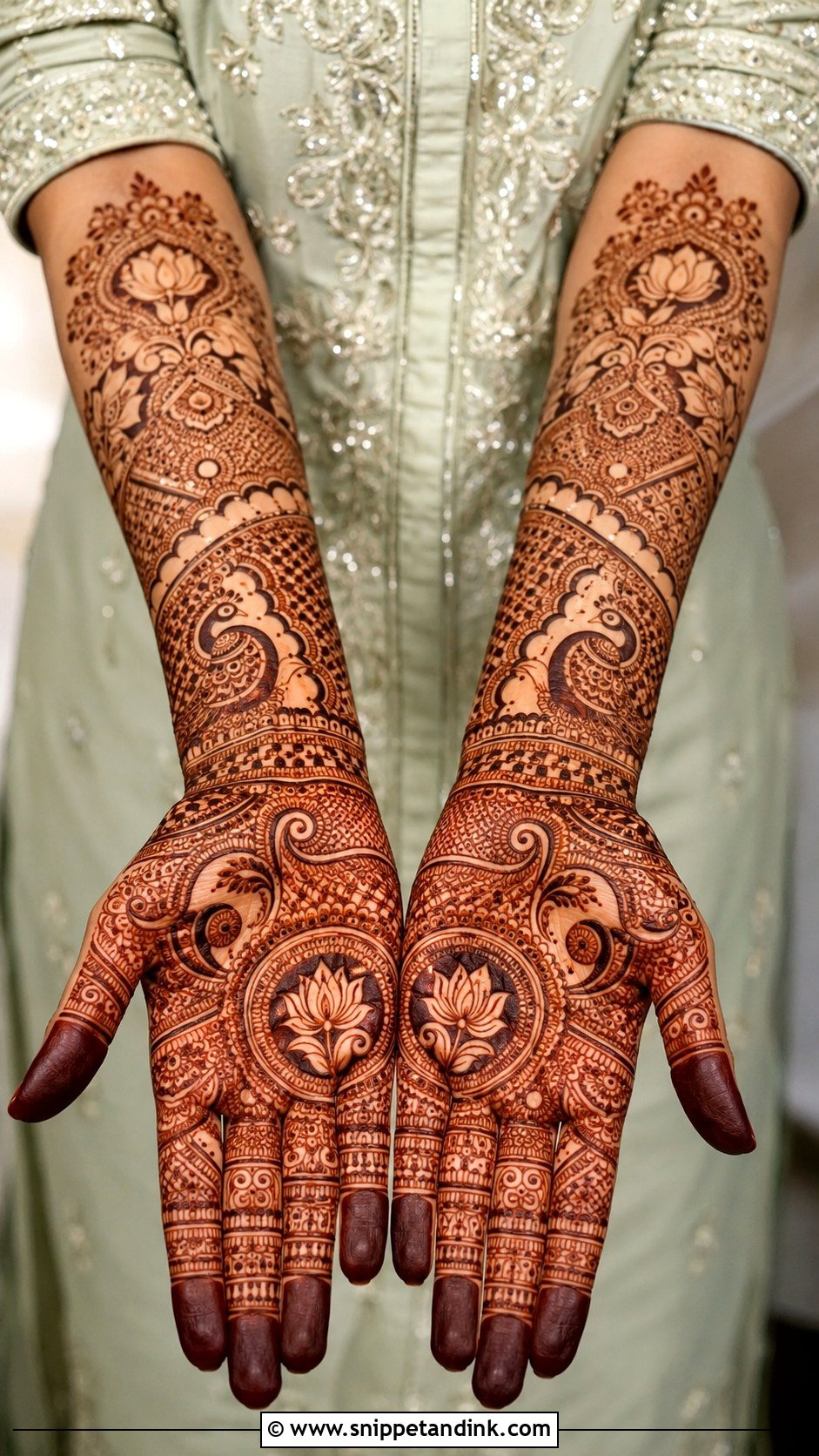
Indian palm designs use paisleys, lotus, peacocks, mandalas, bride-groom art or layered circles, with fine lines, dots, checks and lace filling the spaces. They suit weddings, Karwa Chauth, Teej and Diwali. I always plan the structure before the cone touches skin: the main palm motif first, then outward to the fingers and wrist. Dense Indian work looks rich with a deep maroon stain, but only if the outlines stay clean enough for each small detail to remain visible.
12. Moroccan Front Hand Mehndi Design
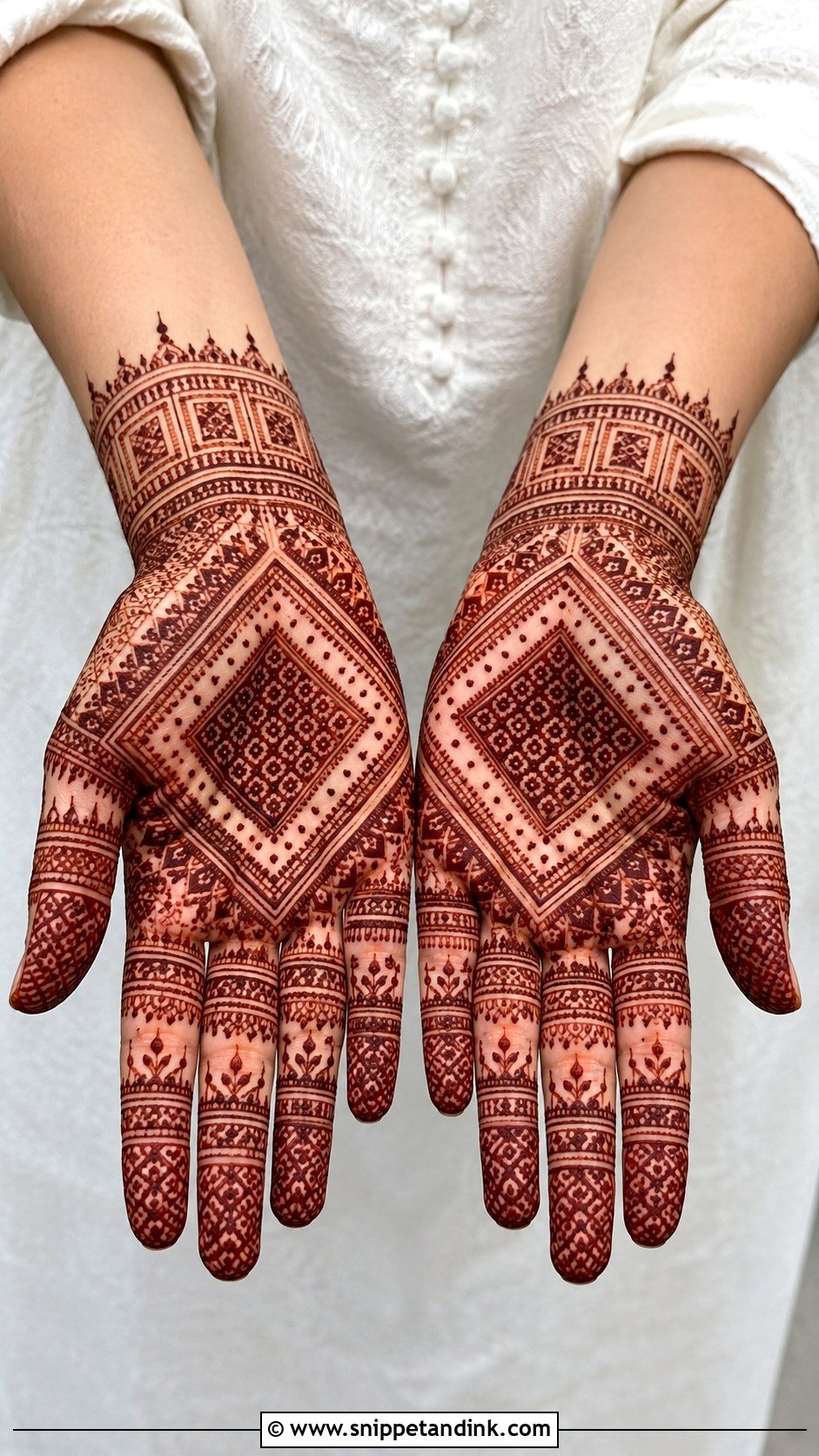
Moroccan palms use diamonds, triangles, grids and straight lines instead of flowers, with a central diamond or square panel, matching angular bands on the fingers and a patterned bracelet cuff. It’s a good fit for modern outfits and anyone tired of florals. Palms are tricky for geometry because the main creases cut across them. I place the panel’s edges along the natural creases where I can, so the lines don’t appear to bend when you move.
13. Gulf Front Hand Mehndi Design
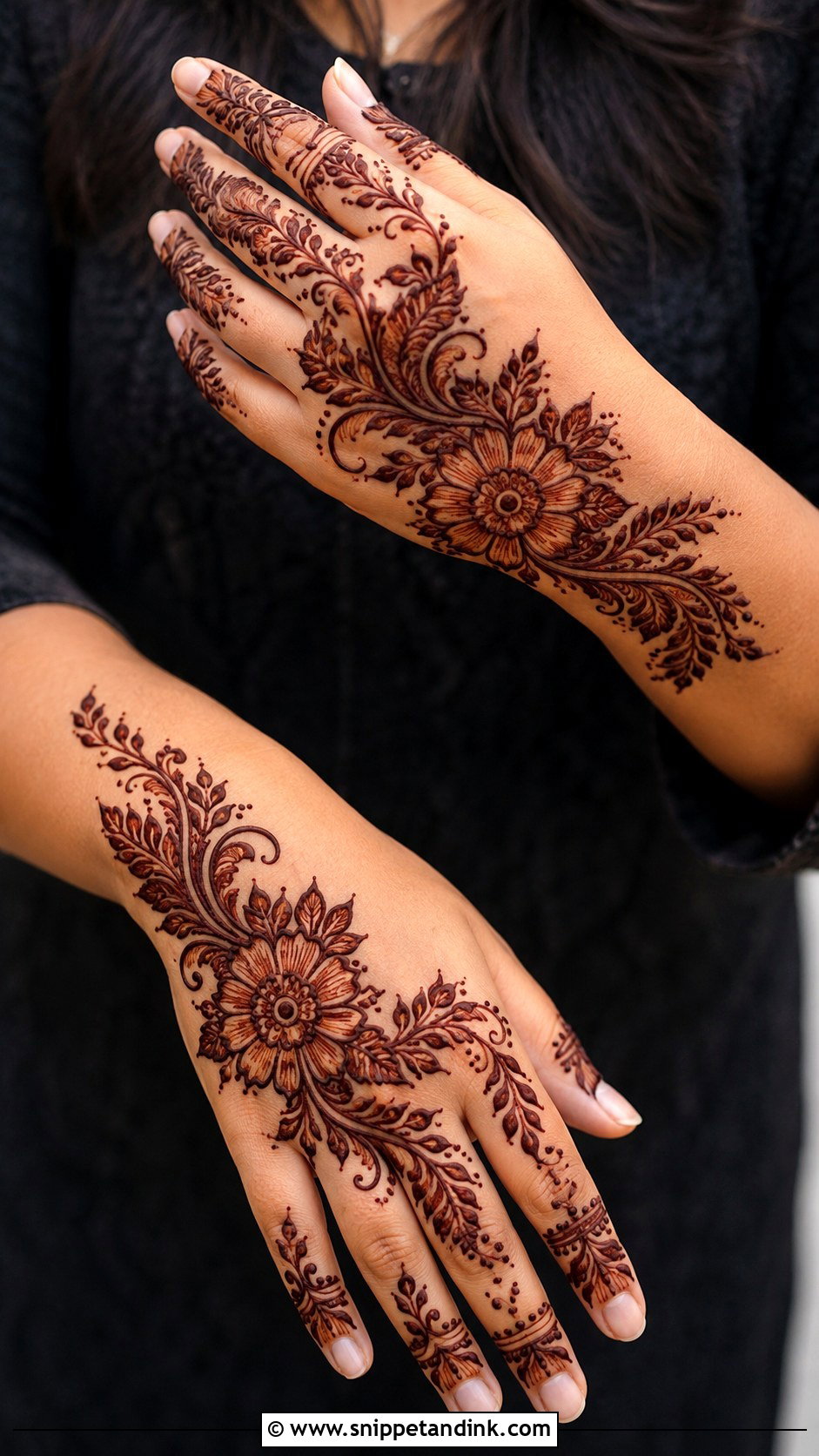
Khaleeji-inspired palm work is bold and open: large florals, leafy sprays and curved vines covering one side of the palm and continuing toward the fingers, with the rest left clean. It looks rich without feeling heavy, which makes it a favorite for Eid and engagement evenings. I use thick outlines for the flowers and quick, fine strokes for the leaves to give depth. A lightly decorated wrist finishes it without pulling focus from the trail.
14. Minimal Front Hand Mehndi Design
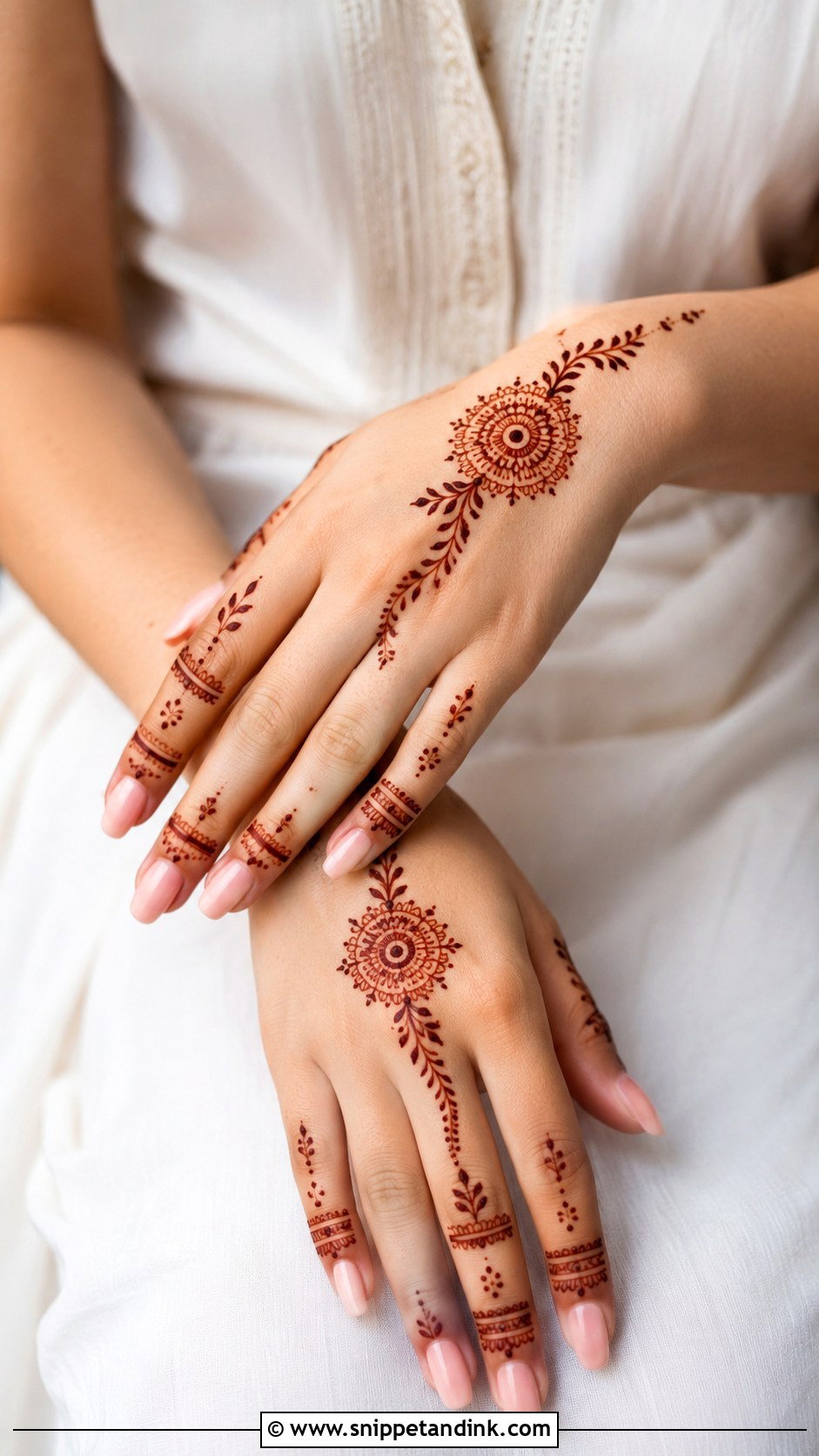
A minimal palm might be a tiny mandala, a slim leafy trail or delicate finger bands, with lots of open skin. It’s quick and comfortable for office events, small pujas and Eid visits. Neatness is the whole design, because with so few lines every wobble shows. Choose one focal area, such as the center of the palm or the index finger, and keep everything else quiet.
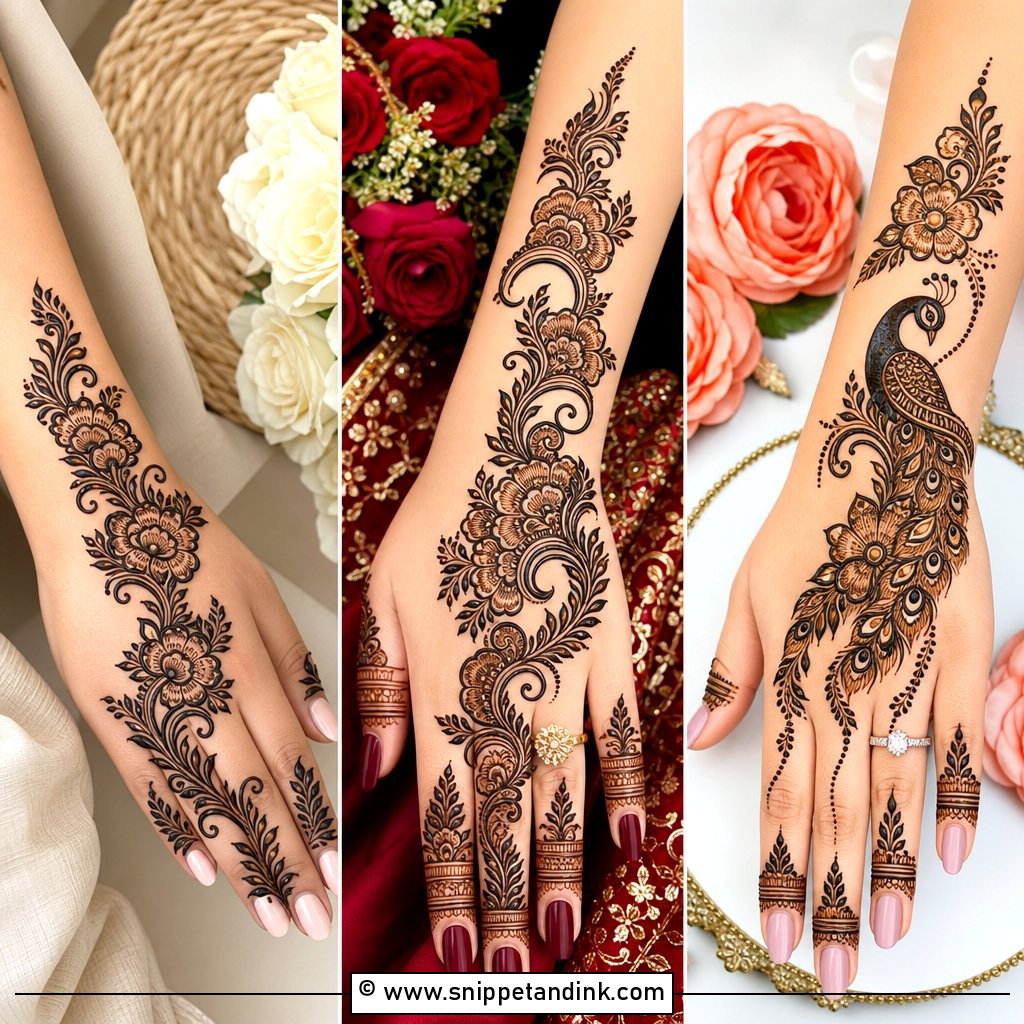
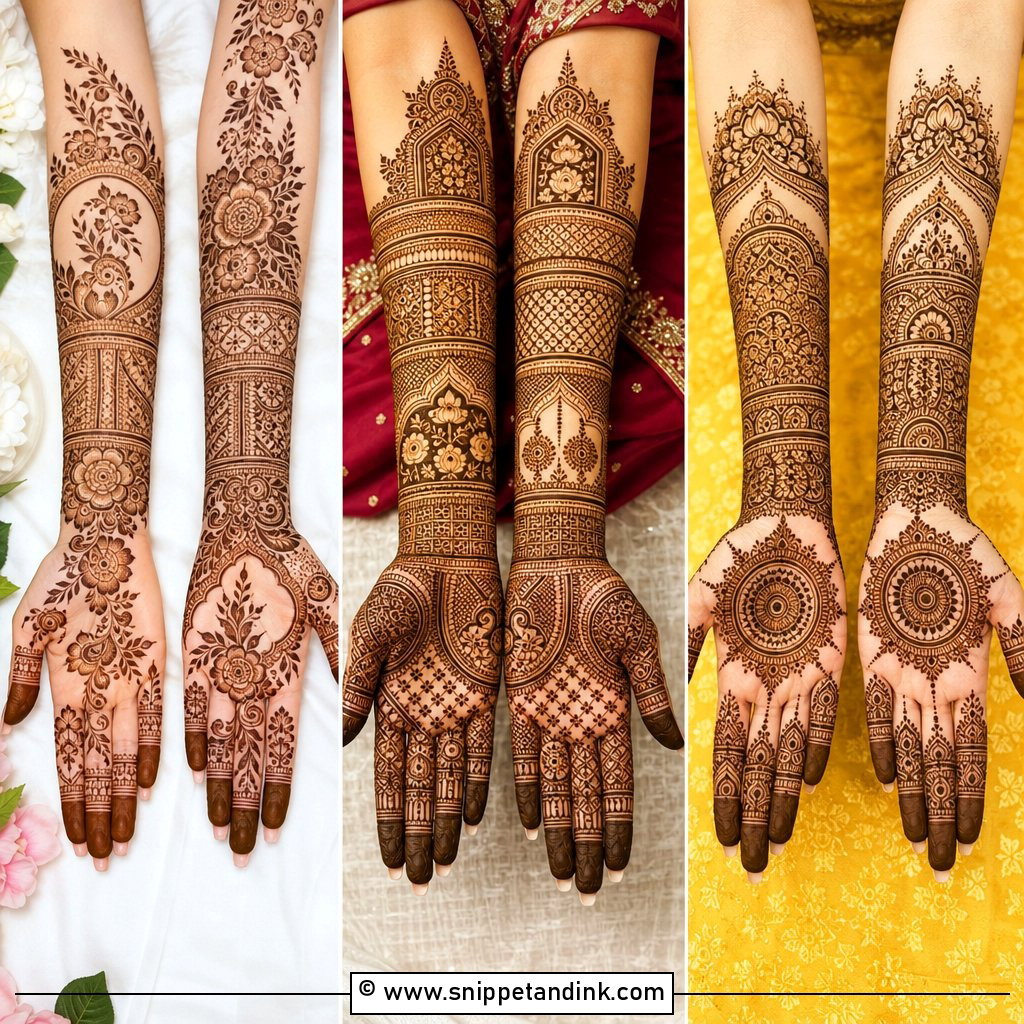
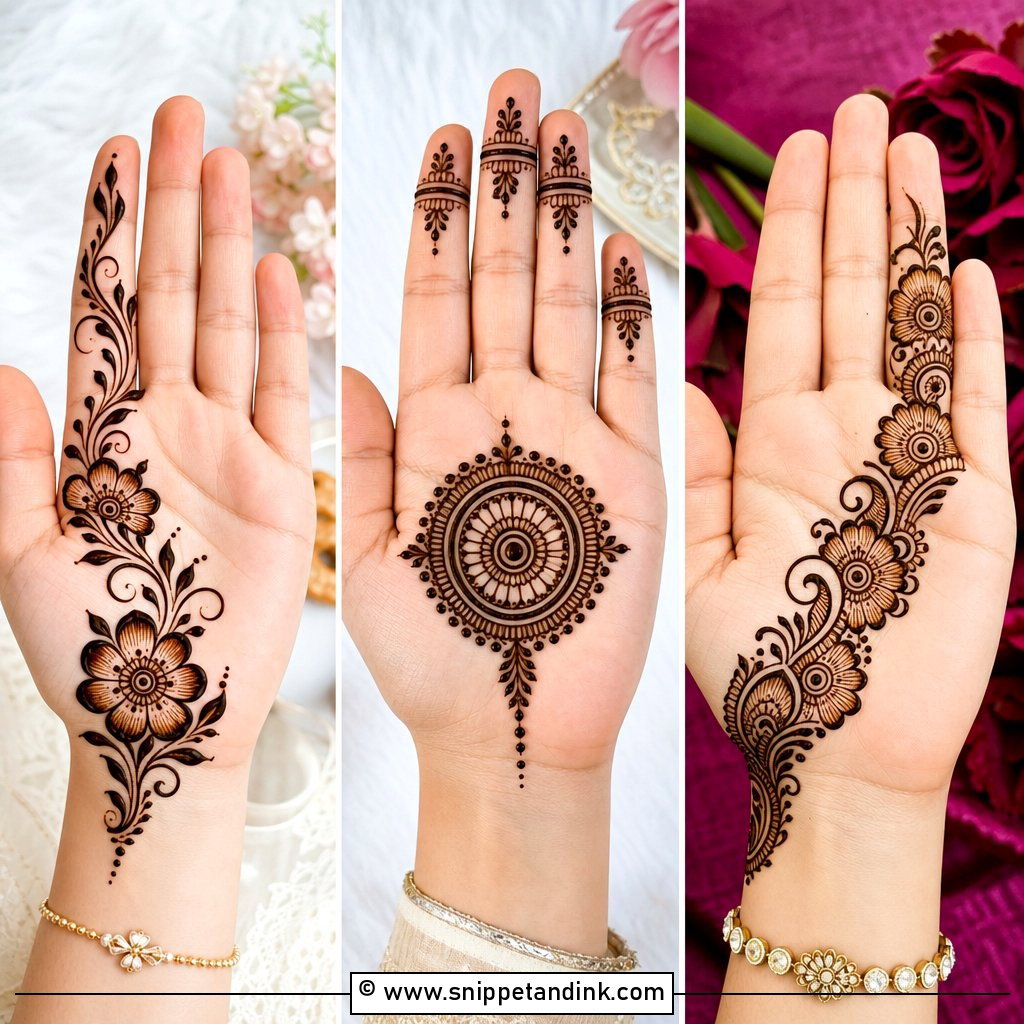
15. Heavy Front Hand Mehndi Design
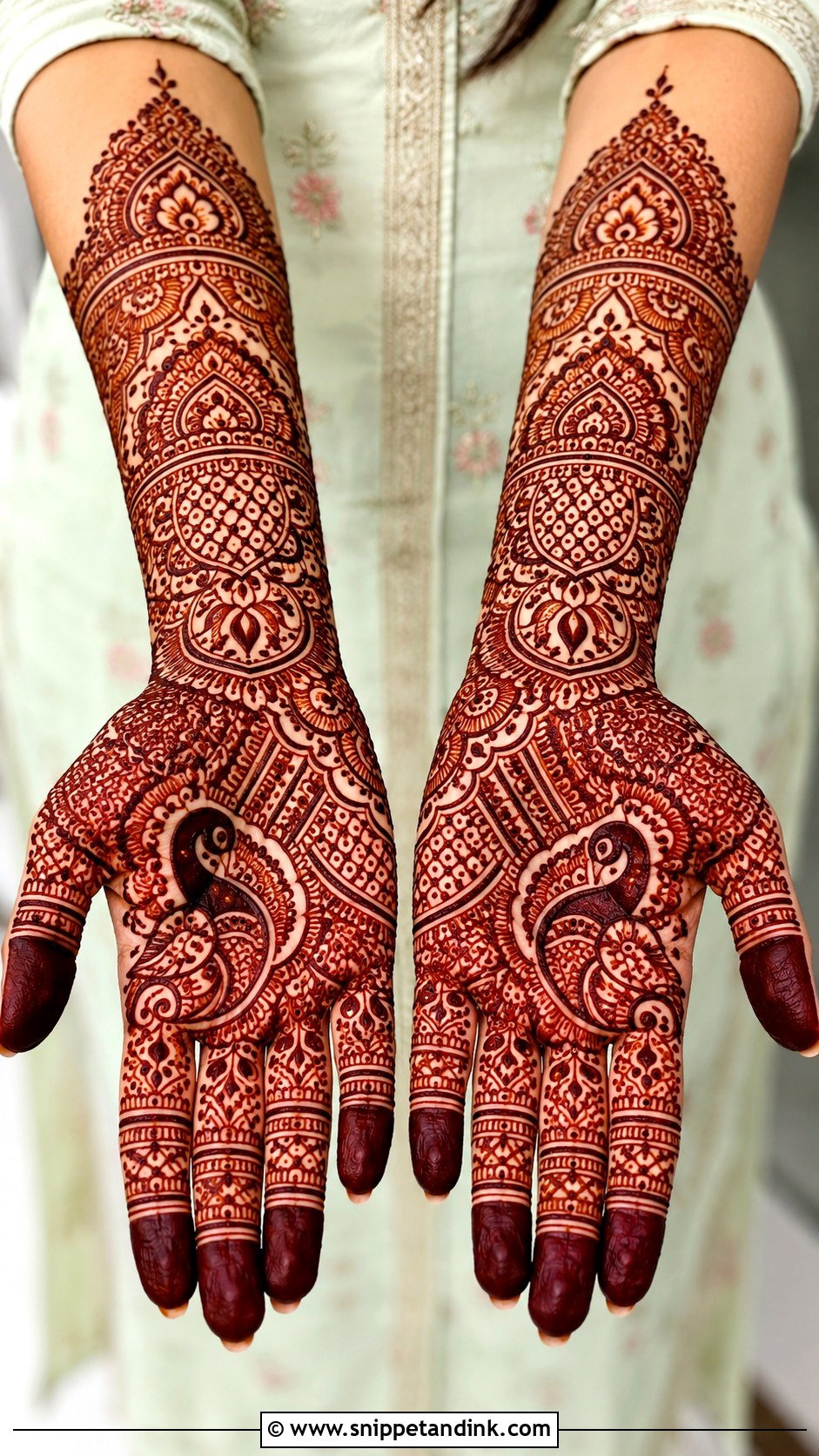
Heavy palms are packed with mandalas, paisleys, peacocks, florals and mesh, with layered finger bands and solid tips. They suit brides, close family and major festival days. Even here, I plan spacing carefully, because too many small elements blur once the stain develops. Bold outlines around the big motifs and fine detail inside them keep the hand sharp and deep in color.
16. Easy Front Hand Mehndi Design
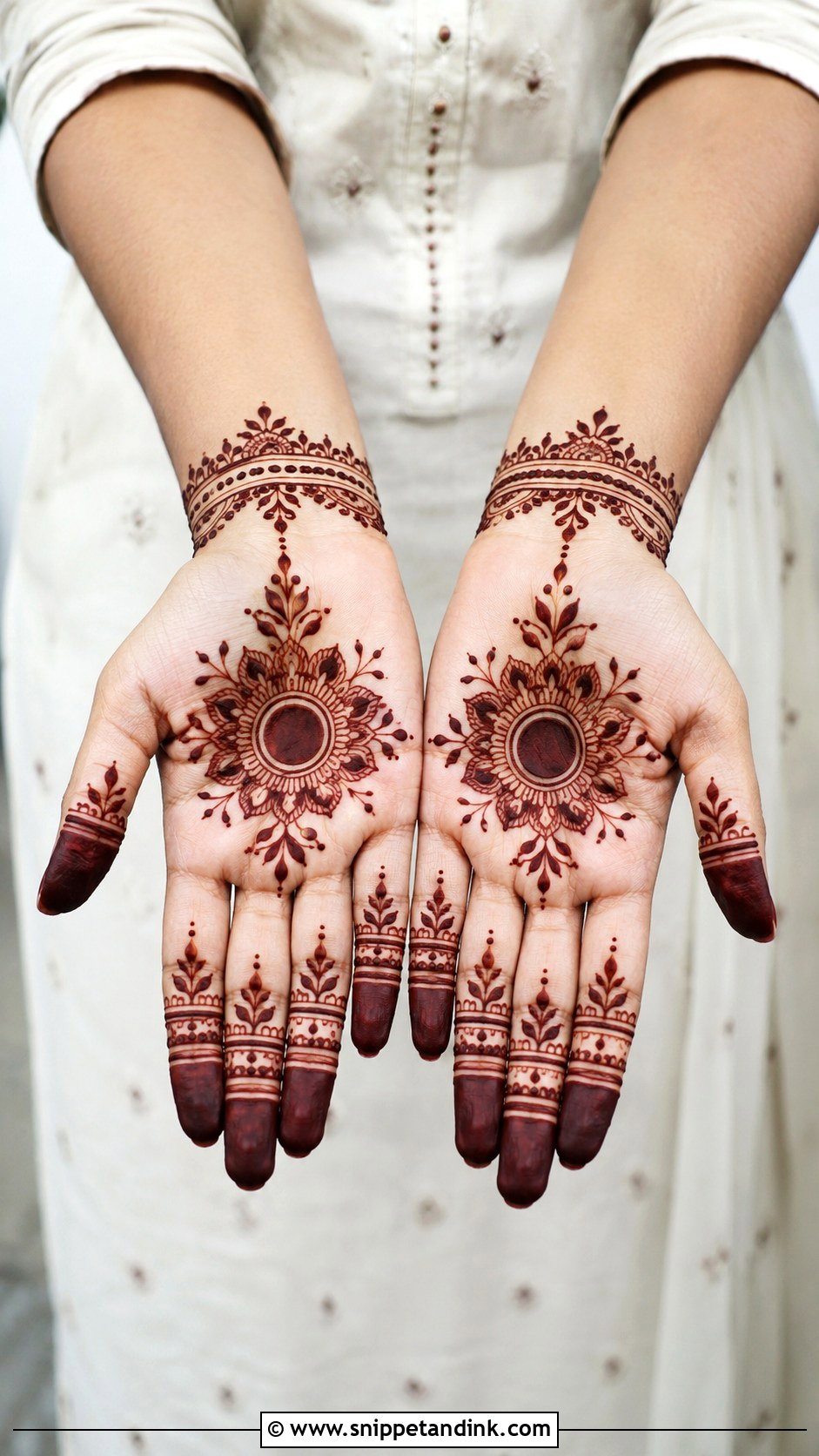
An easy palm should look complete without advanced skill: a circle in the middle, a few petals, simple finger bands, then dots, small leaves and curves to connect them, with a bracelet line or small flower cuff at the wrist. Keep the motifs large enough that a slightly shaky hand doesn’t show. Skip tiny jaali if you’re new. A clean easy design always beats a rushed complicated one, and it’s the one I teach first.
17. Rose Front Hand Mehndi Design
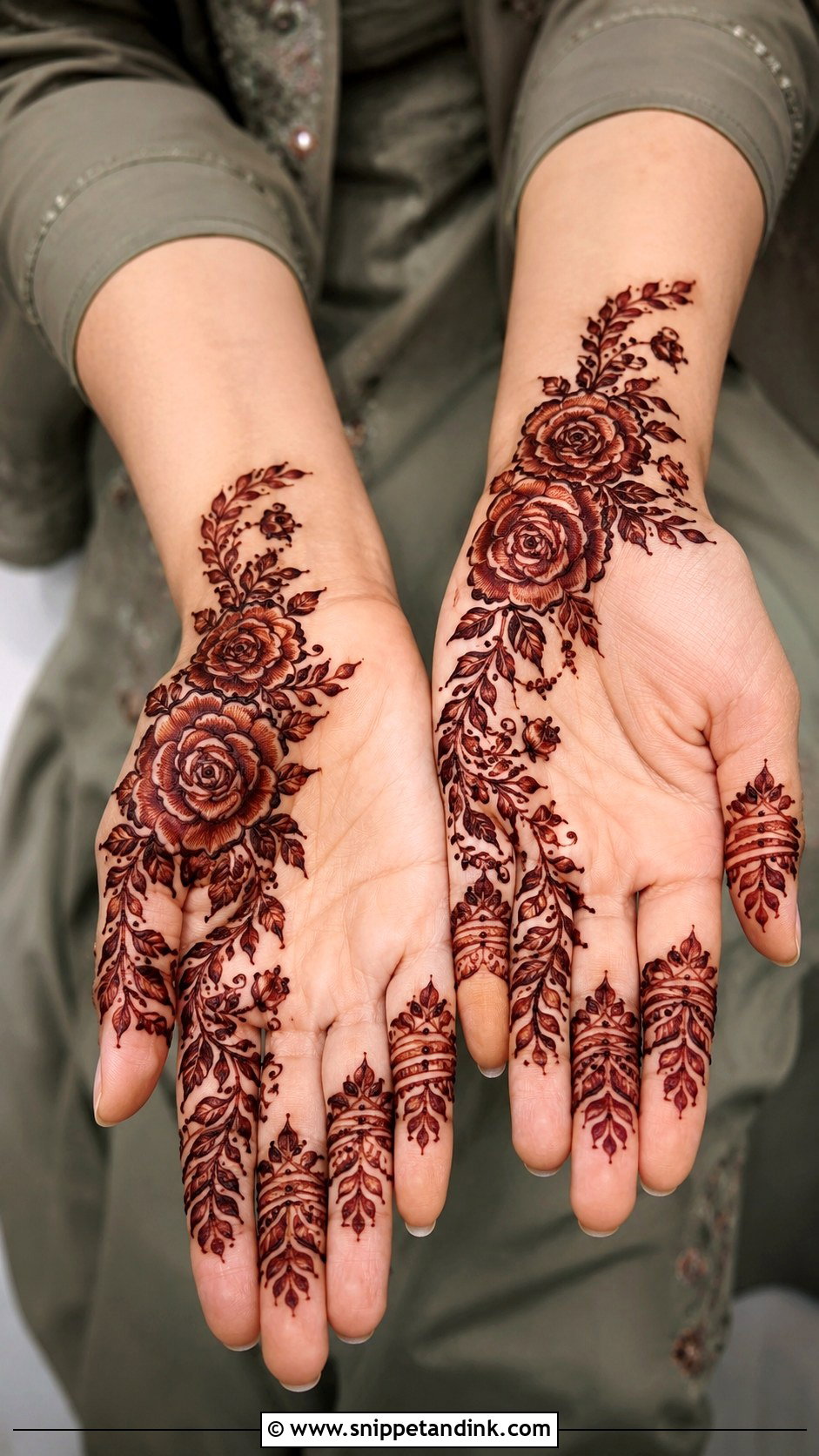
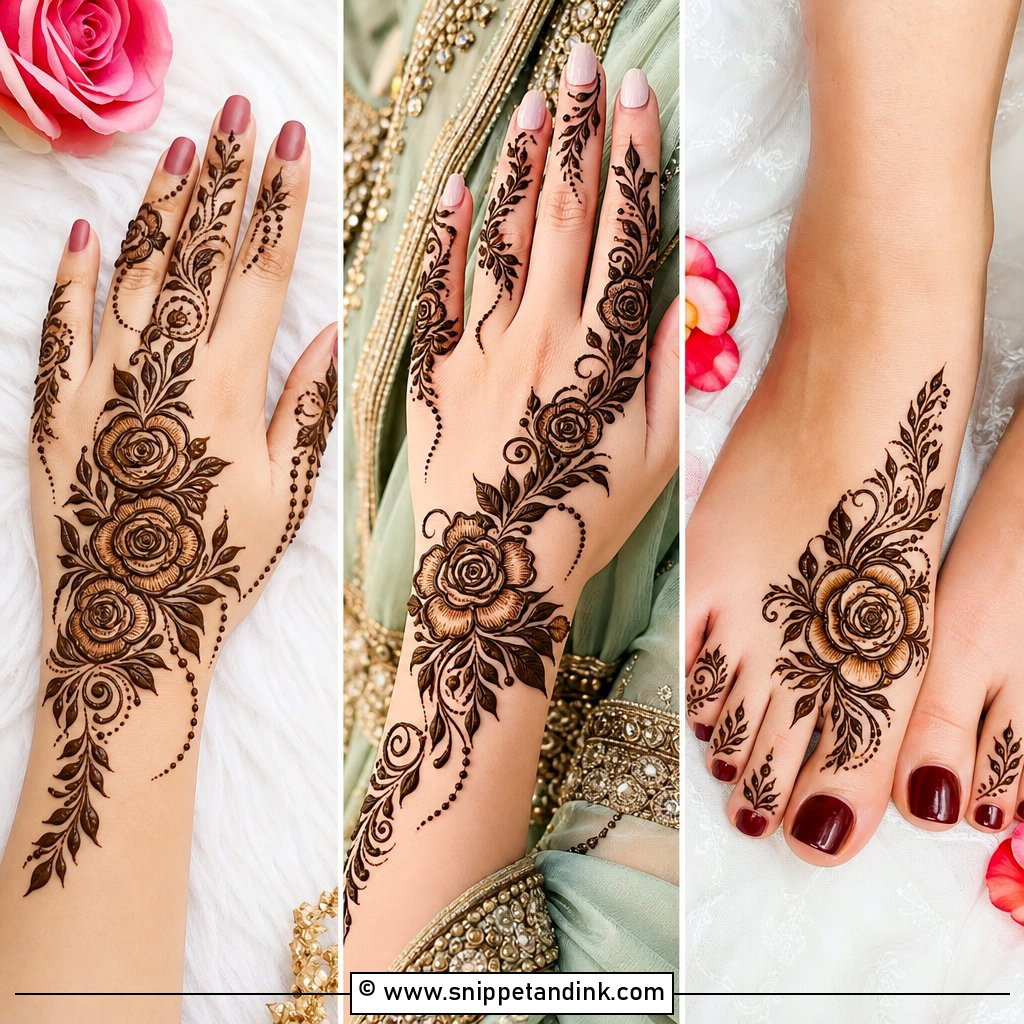
A large rose on the palm with smaller buds and leaves trailing toward the wrist and fingers gives a romantic, Arabic-leaning look that’s easy to recognize in photos. Petals can be lightly shaded or left open with bold outlines. I decorate two or three fingers with leafy bands and leave the rest clean. The trail should curve as if it’s wrapping around the hand; a straight rose stem looks stiff.
18. Lotus Front Hand Mehndi Design
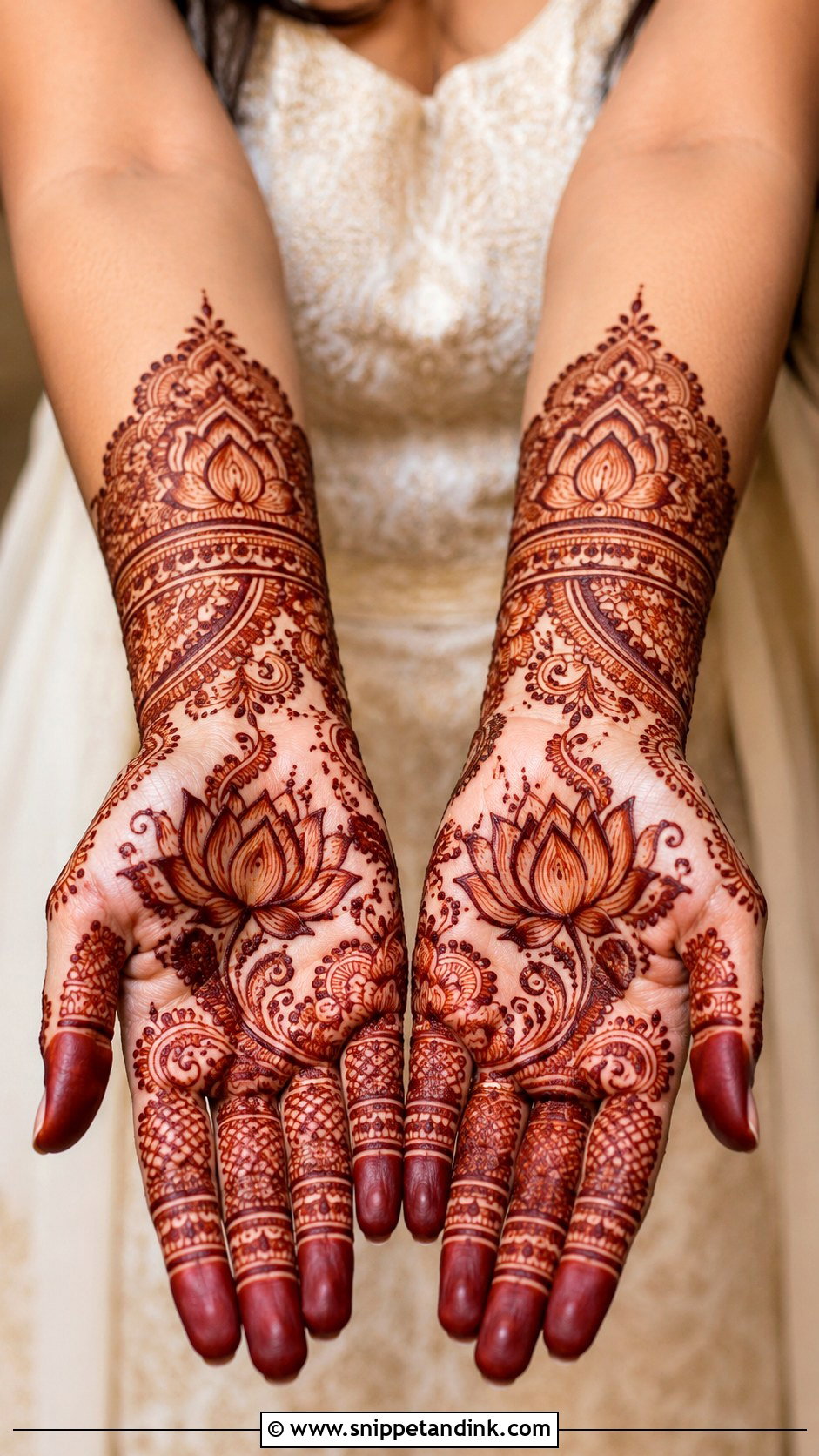
A lotus can sit in the center, near the wrist or repeat as a border around a mandala, and its layered petals suit both Indian and Indo-Arabic layouts. It’s a natural choice for weddings, pujas and Diwali. I soften the structure with dots, curved vines and paisley accents. For a clean modern version, use one large lotus with minimal fingers; for a richer one, fill the petals with fine lines and add a decorative cuff. Leave a hair of skin between petal layers so they don’t merge.
19. Paisley Front Hand Mehndi Design
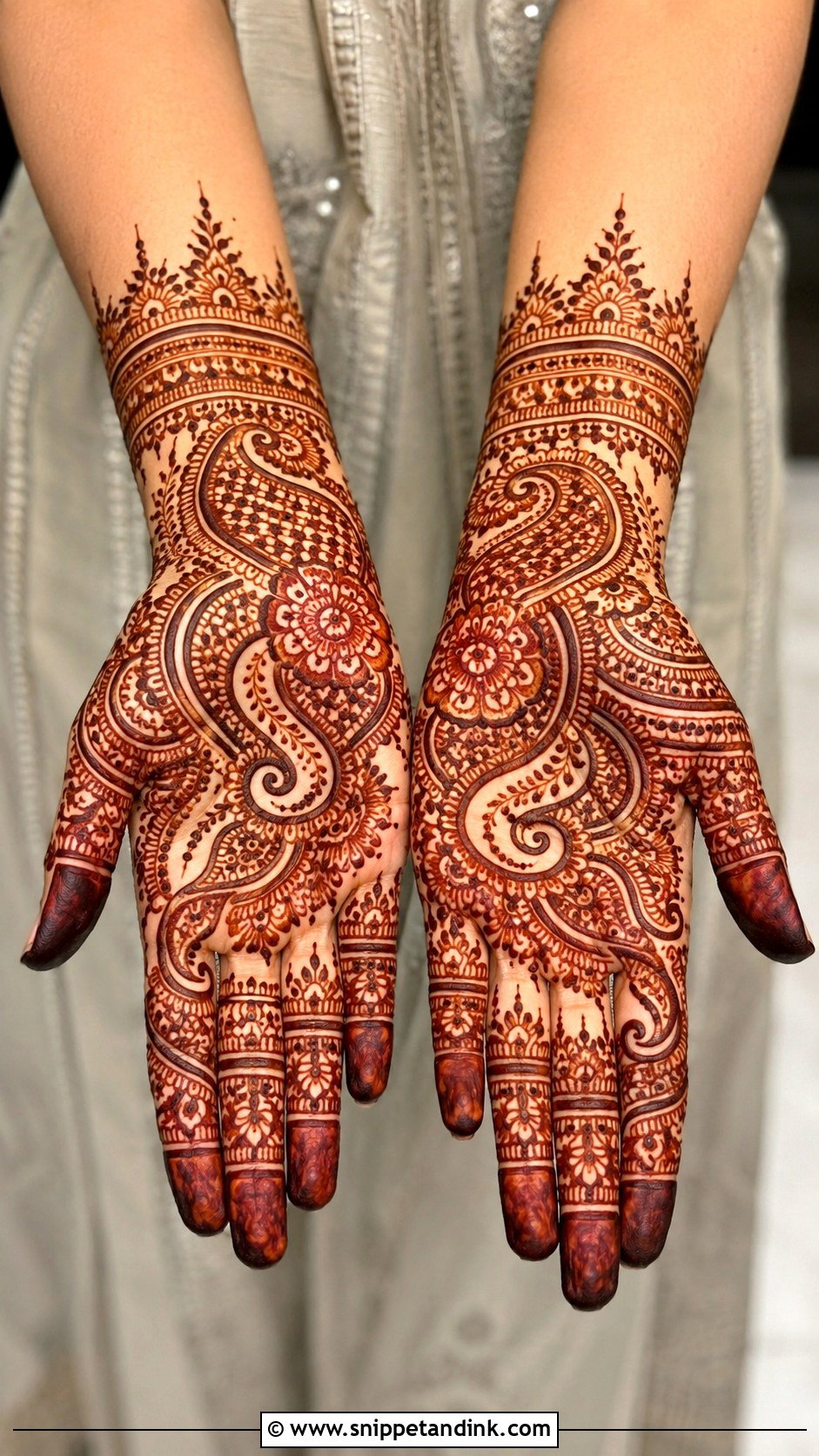
The paisley has never really gone out of fashion. It can be the main palm feature or repeat in a trail from wrist to fingers, decorated with tiny flowers, dots, checks and leafy strokes. I put the biggest paisley on the palm and use smaller ones near the fingers and wrist. Its curve follows the heel of the hand naturally, which is why it always looks well placed even on a first-time design.
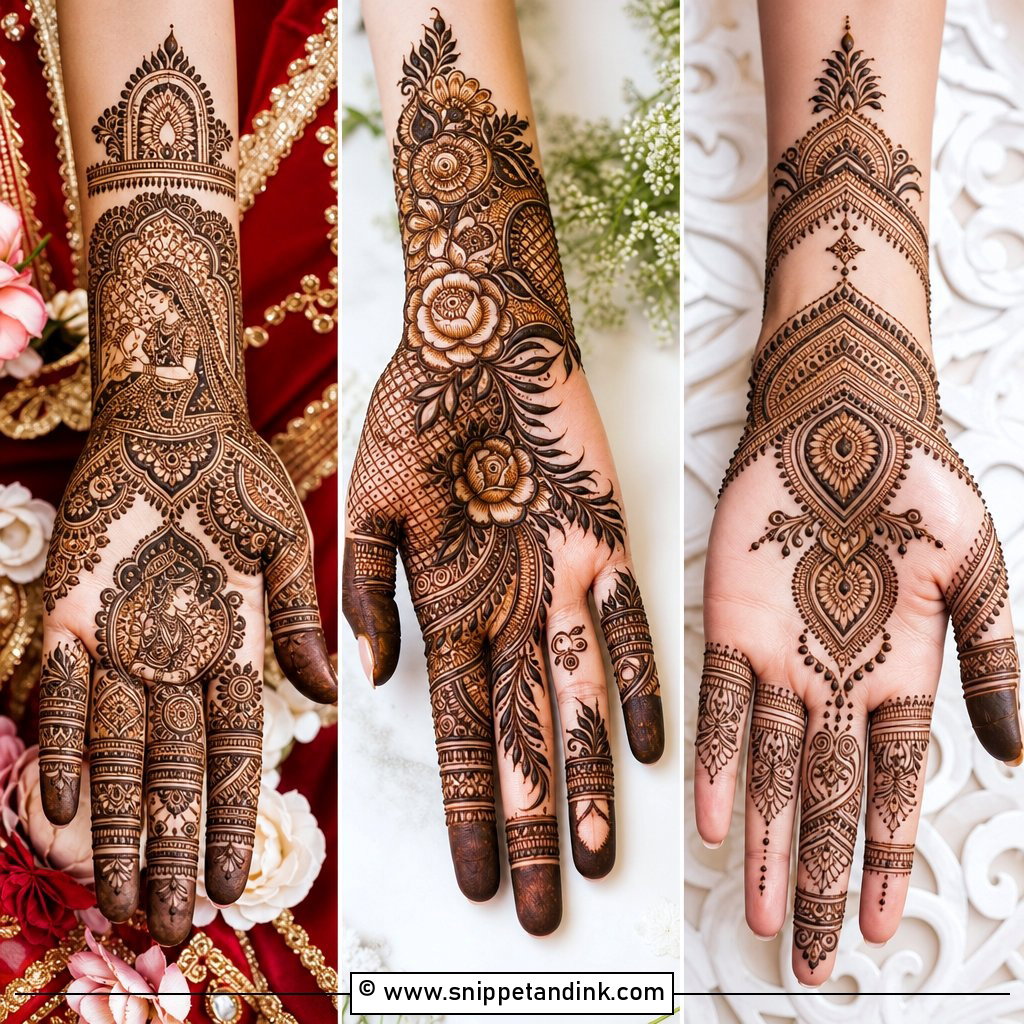



20. Jaali Front Hand Mehndi Design
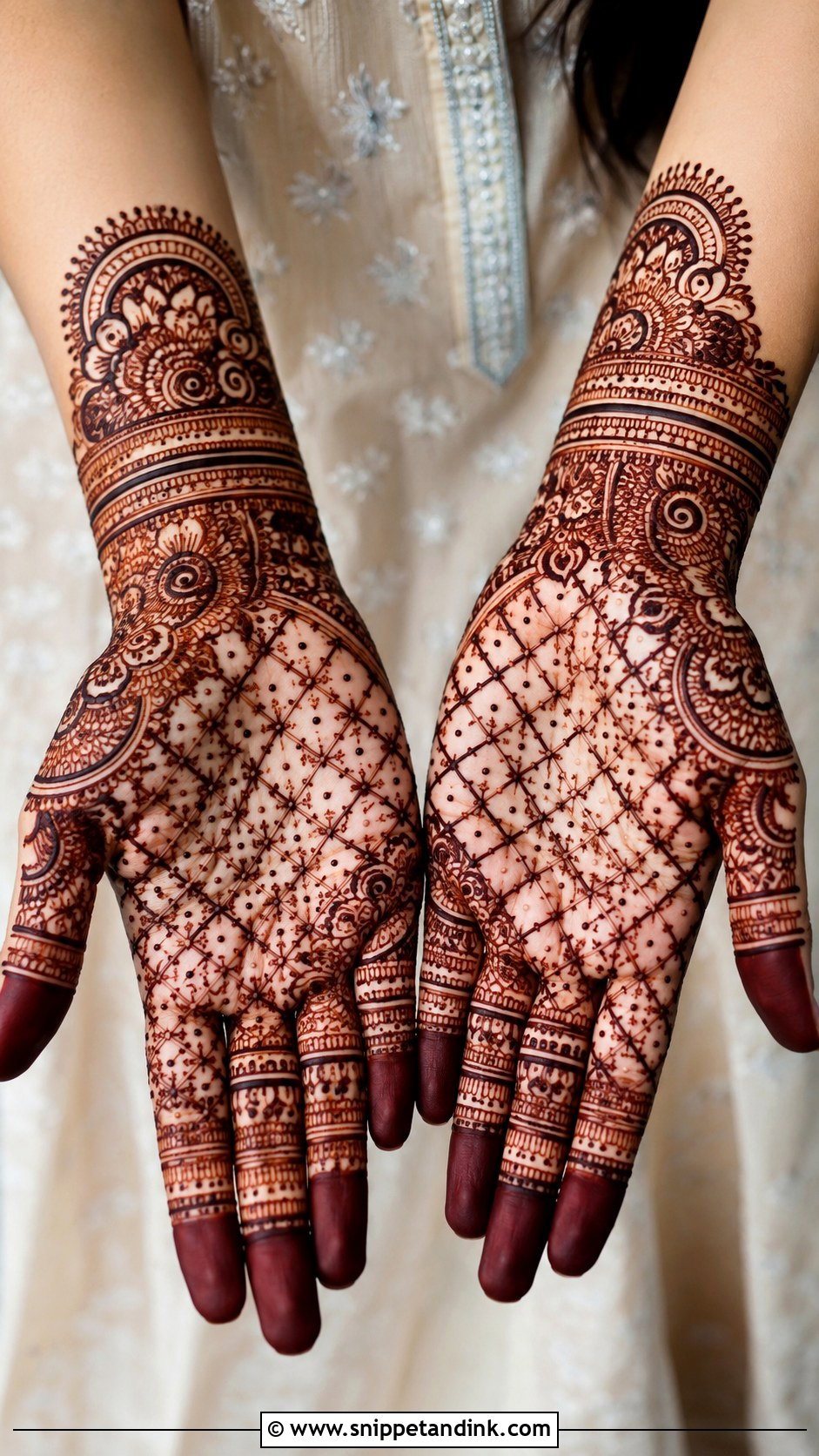
Jaali, the net pattern, covers the palm, fingers, wrist or gaps between florals and paisleys with diamonds, squares or curved mesh and dots at the intersections. It reads like lace and suits bridal, engagement and festive work. Consistency is everything; uneven mesh looks untidy immediately. Pair it with bold borders or large flowers so the pattern has contrast and doesn’t look flat once stained.
21. Bracelet Front Hand Mehndi Design
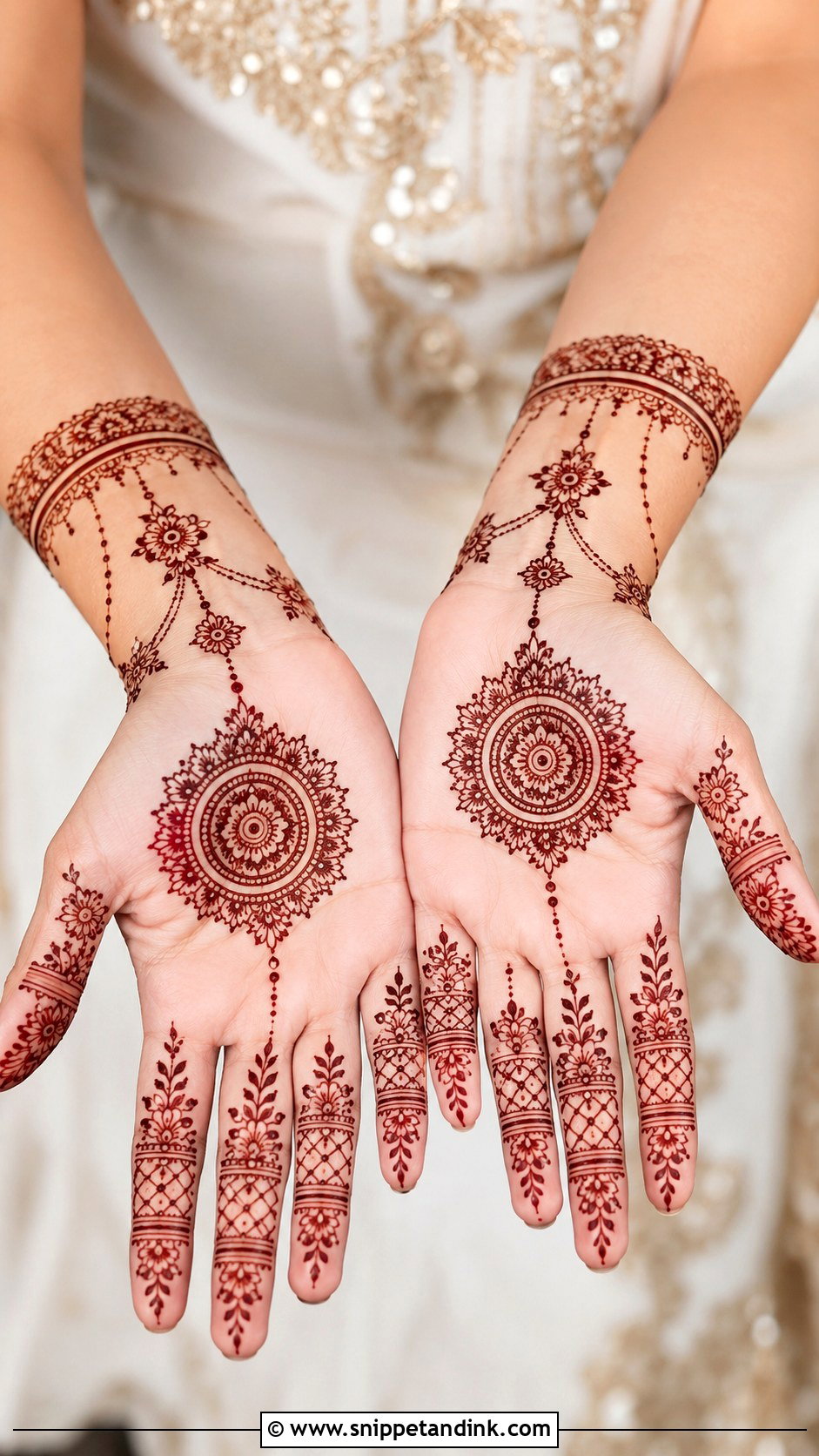
The wrist becomes the jewelry here: a cuff, bangle or chain pattern linked to the palm or fingers with thin lines, a small mandala or floral motif in the palm, and ring-style finger details. It works well with bangles. Keep the band crisp and symmetrical. If the bracelet is heavy, keep the palm lighter. Remember that real bangles rub fresh paste, so leave them off until it’s scraped away.
22. Finger Front Hand Mehndi Design
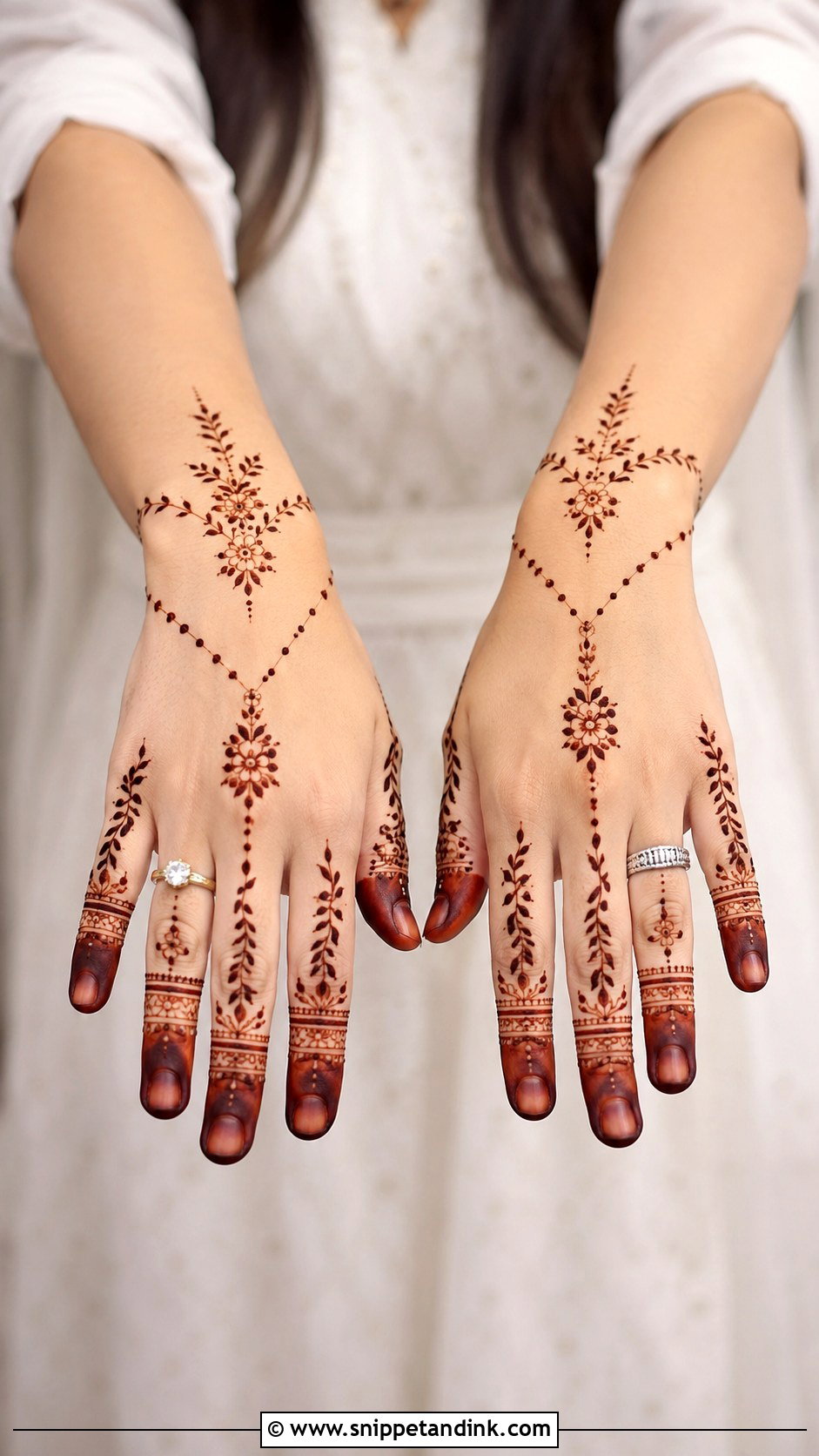
Finger-focused designs put ring bands, leafy lines, dotted chains, tiny florals and shaded tips on the fingers and keep the palm mostly open apart from a small central motif. It’s visible mehndi without full coverage. I always connect at least one finger to the palm with a slim vine or chain so the design doesn’t look like separate pieces. Fingertips take the darkest stain on most people, which is a bonus with this layout.
23. Tikki Front Hand Mehndi Design
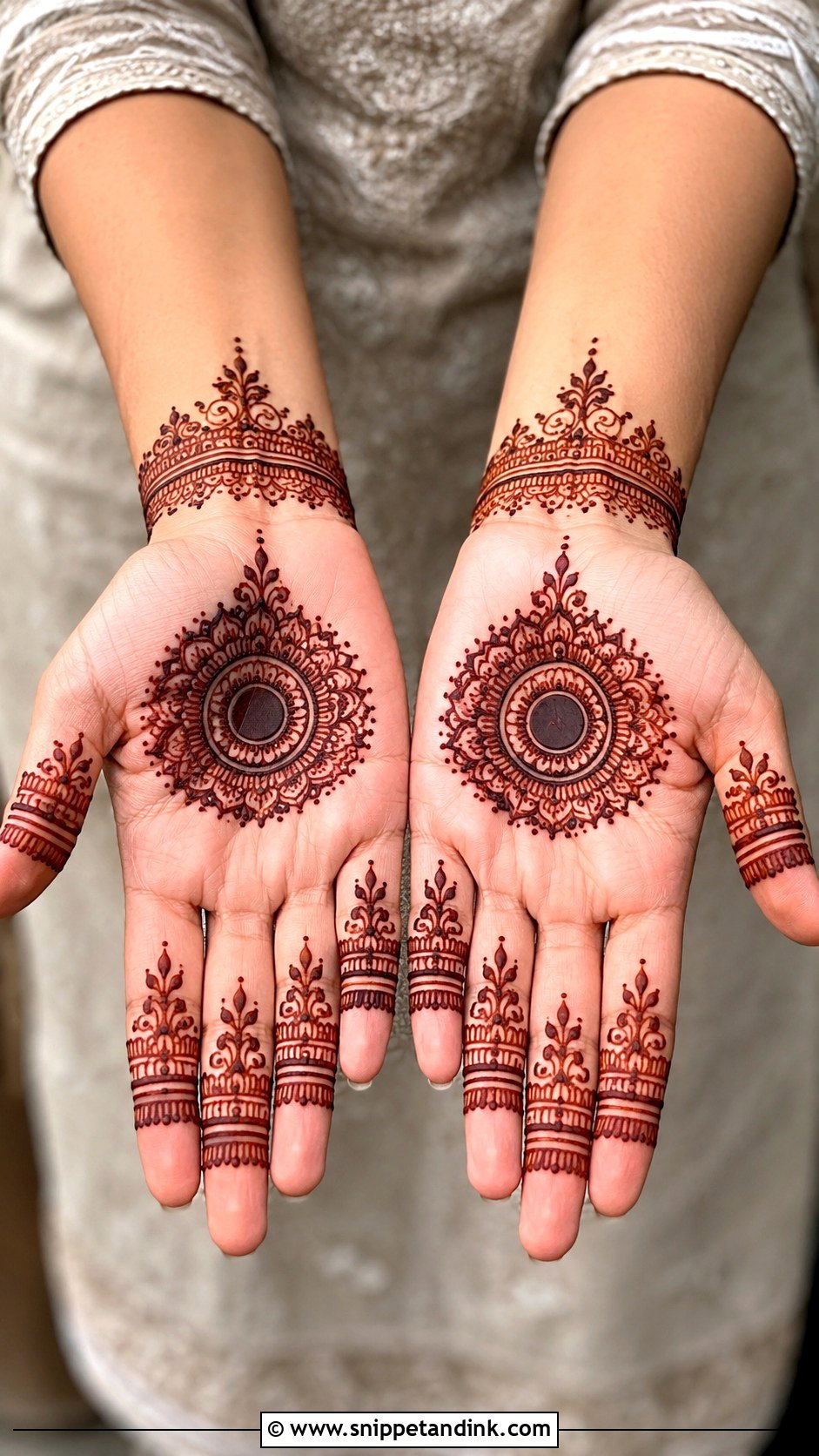
The tikki is the classic palm design: a filled or detailed circle in the center, built outward with dots, petals, vines or finger patterns. A simple tikki takes minutes; a detailed one looks festive and rich. Getting the circle clean and centered is the skill. I mark the center by eye with the hand flat and slightly stretched, since a tikki drawn on a cupped palm ends up off-center when the hand opens. Matching finger details and a wrist border complete it.
24. Geometric Front Hand Mehndi Design
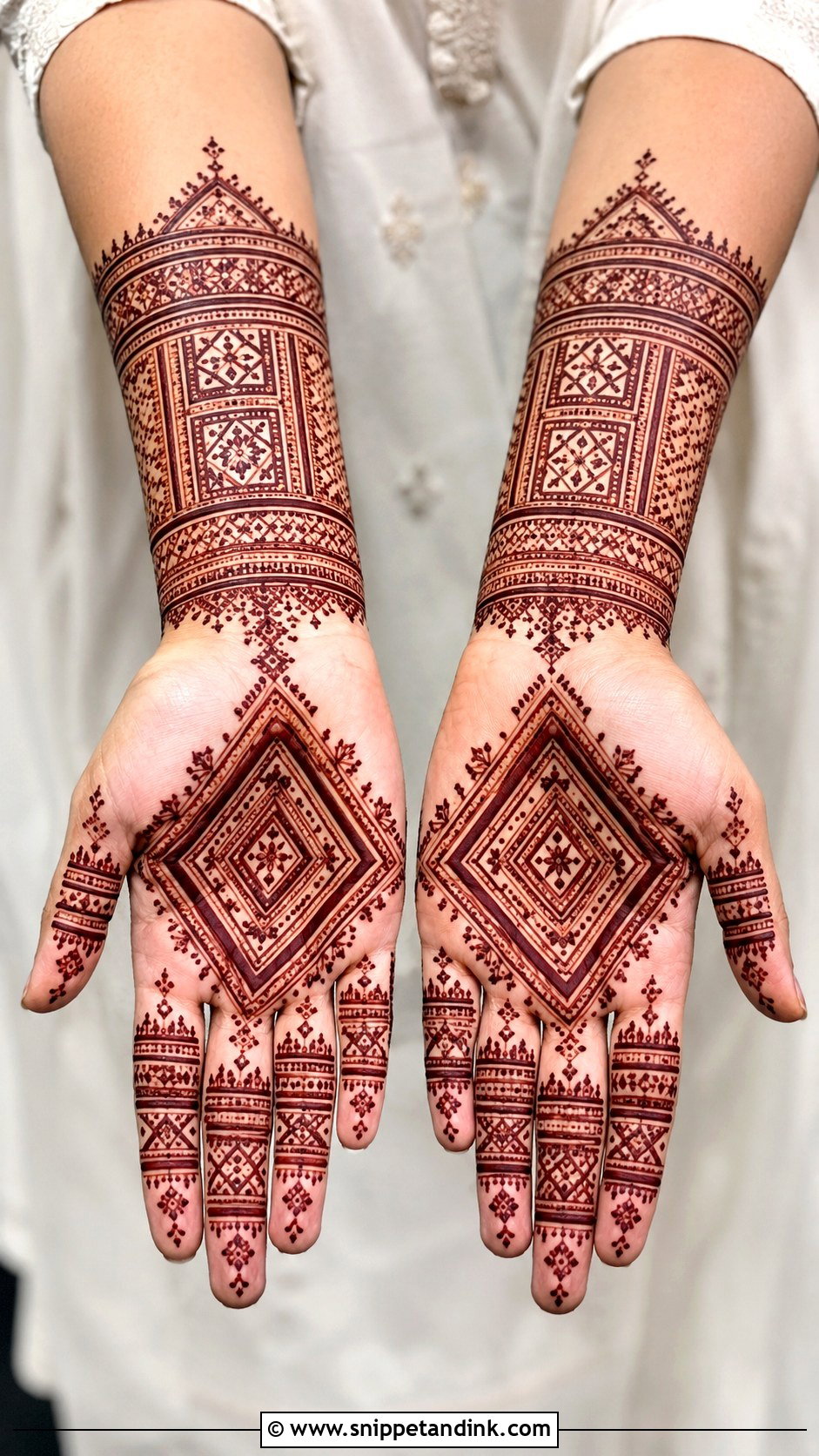
Geometric palms use diamonds, triangles, squares, parallel lines, chevrons and structured borders, often with a central diamond and repeated shapes moving toward the fingers and wrist. It suits clean, minimal outfits. Straight lines and even spacing decide whether it looks professional. A few dots or tiny leaves can soften it, but too many florals and the geometric idea disappears.



25. Shaded Front Hand Mehndi Design
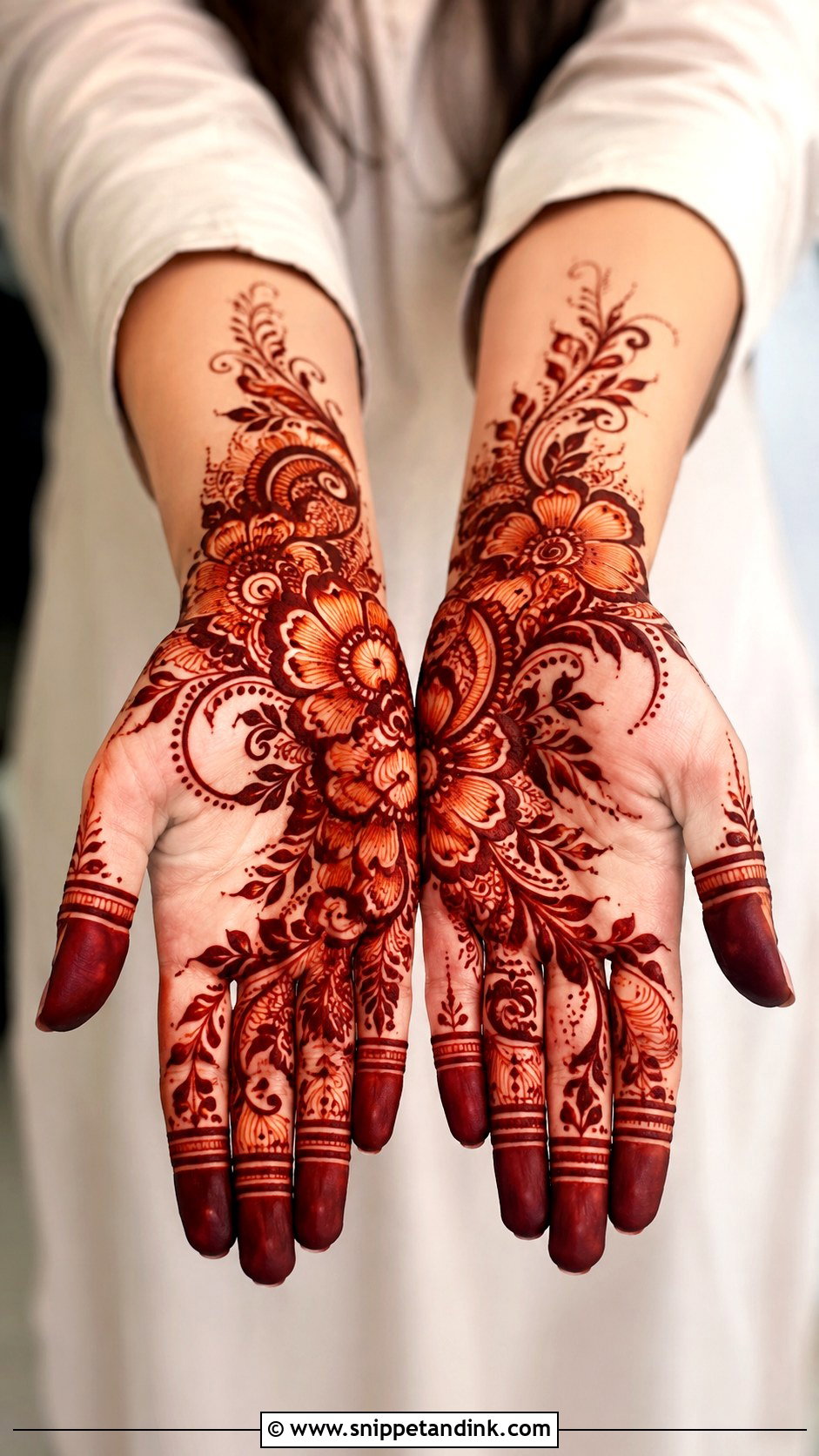
Shading adds depth by filling petals with a thin film of paste, so the inside stains lighter than the outline. It’s common in Arabic florals, roses, lotus and leafy trails. Use it inside the large motifs only, not everywhere. Keep outlines bold and inner strokes light. If you’re applying it yourself, practise pressure control on paper first; too much paste and the shading stains as solid as the border, which defeats the point.
26. Half Front Hand Mehndi Design
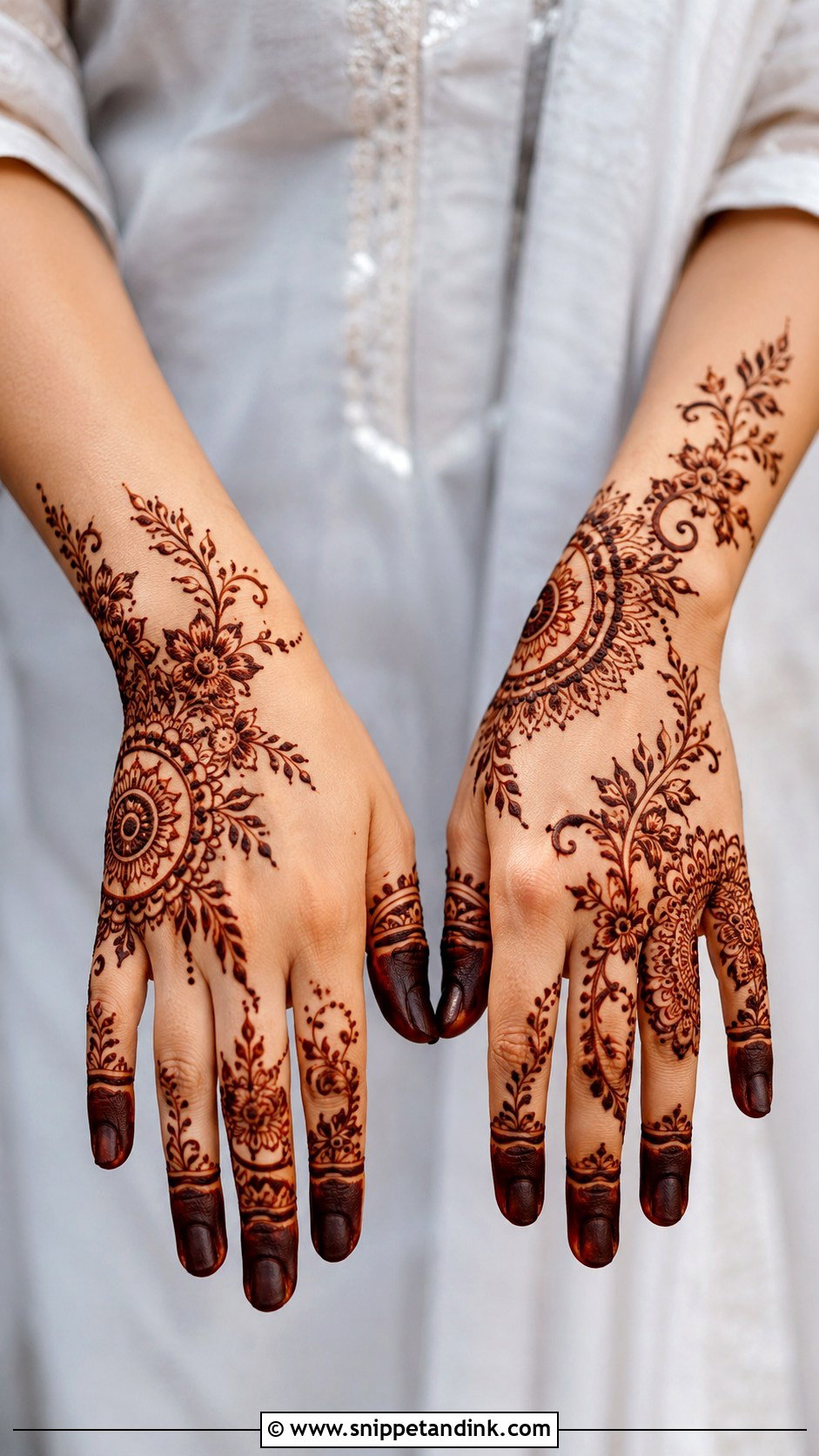
Half designs cover part of the palm: one side, the lower palm, or a band from wrist to fingers. Arabic trails, leafy vines and partial mandalas work best. The empty side becomes part of the design, so the covered area needs a bold, clearly shaped edge to look intentional. A diagonal from wrist to index finger is the version I find most flattering, and it’s much faster to apply than full coverage.
27. Front Hand Mehndi Design For Eid
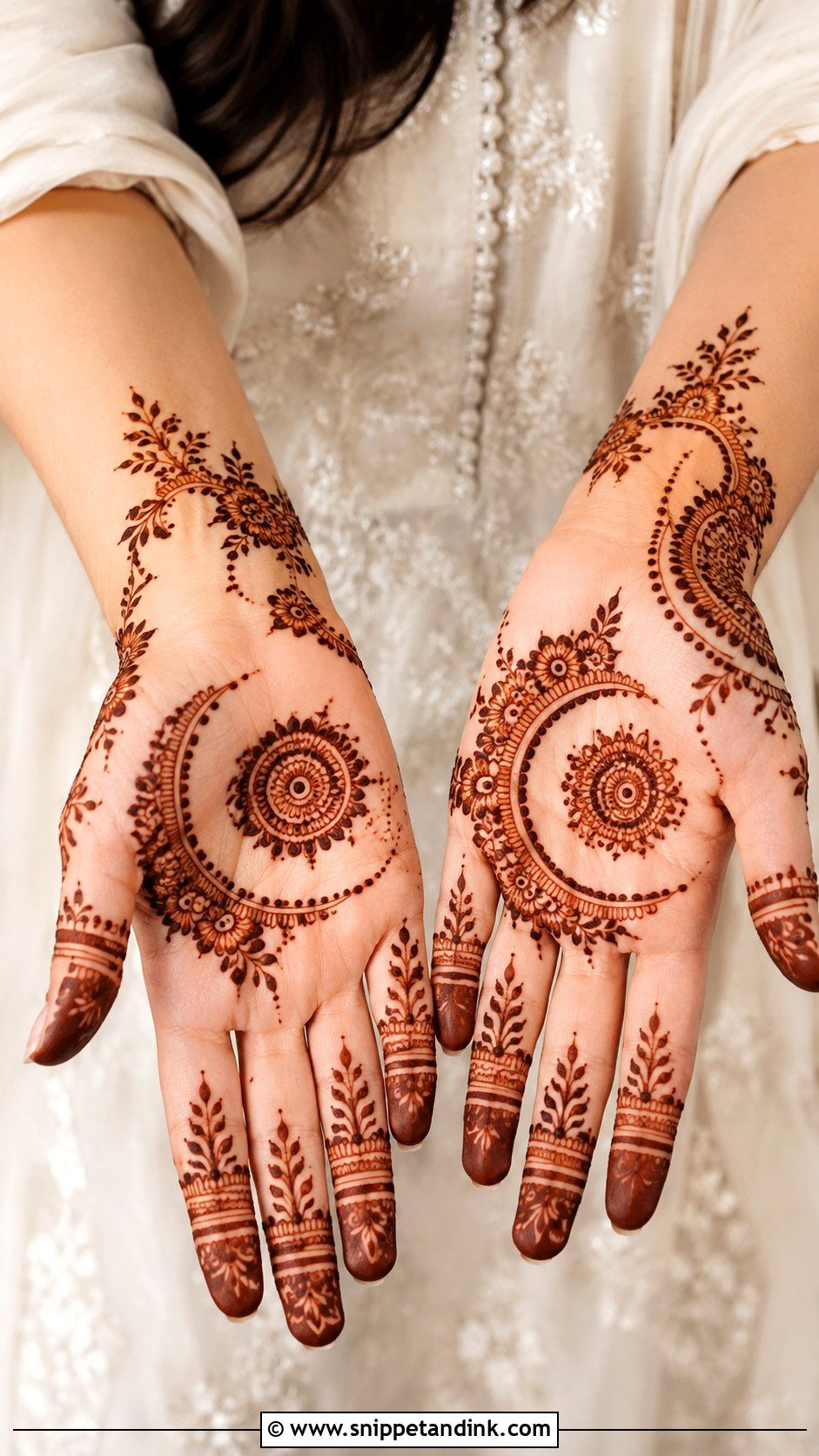
Eid palms are usually done on Chand Raat, so quick application matters: gol tikki palms, crescent motifs, floral Arabic trails and neat fingers. Open-space designs dry faster, which helps when you’re doing several family members in one evening. A central mandala with decorated fingers is the safe choice; a diagonal floral trail with a slim cuff feels more current. Applied the night before, it’ll still be orange at prayers and deepen through the day.
28. Front Hand Mehndi Design For Diwali
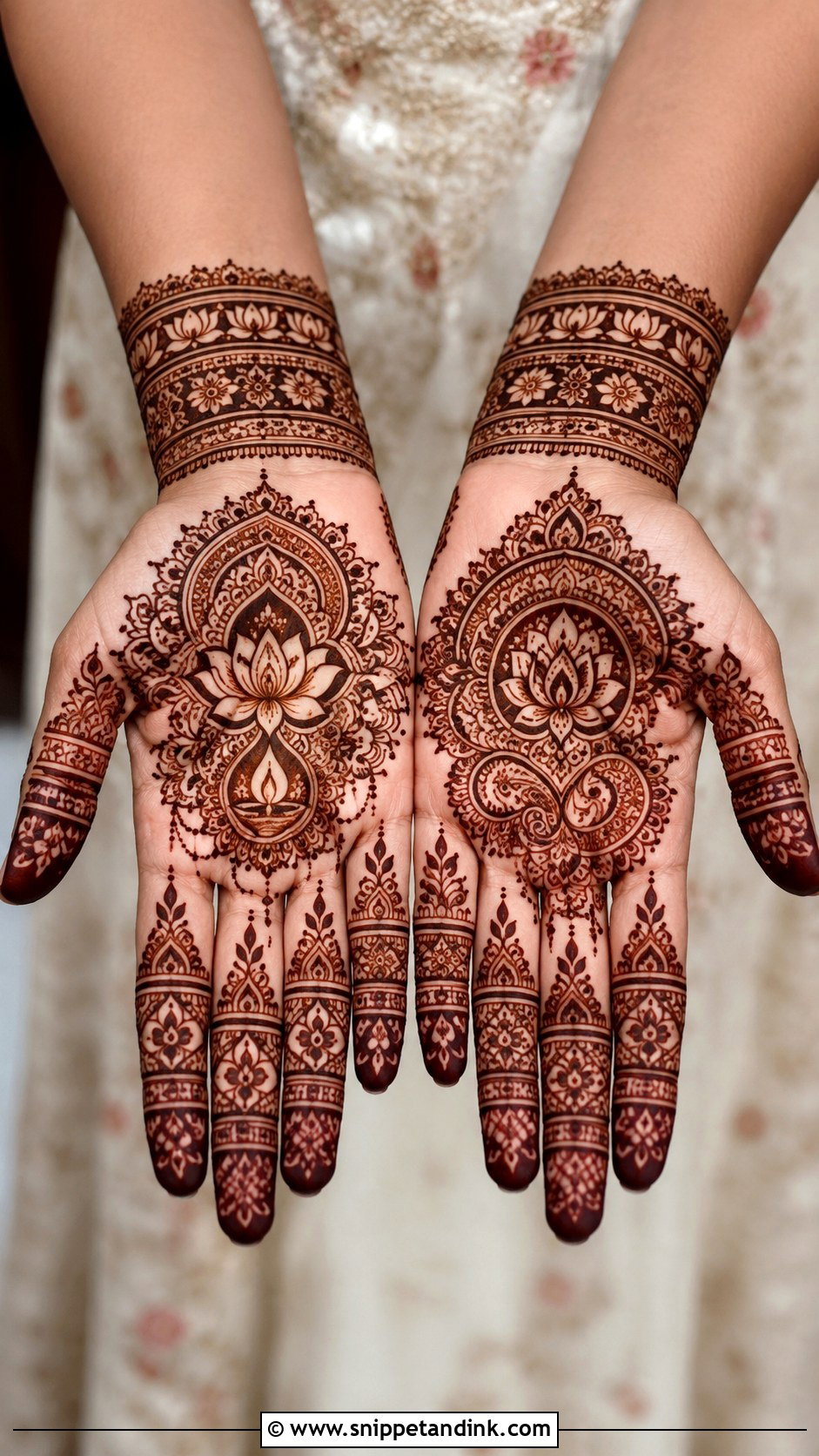
Diwali palms lean on mandalas, lotus, paisleys, diya shapes and fine fingertips. A full palm suits a dressy celebration, and a floral tikki suits a quieter family evening. If your outfit is heavily embroidered, keep the mehndi cleaner so the whole look stays balanced. Plan to have it done a day or two early; you’ll be handling oil lamps, sweets and water, and a stain that has already developed handles that much better than fresh paste.
29. Front Hand Mehndi Design For Engagement
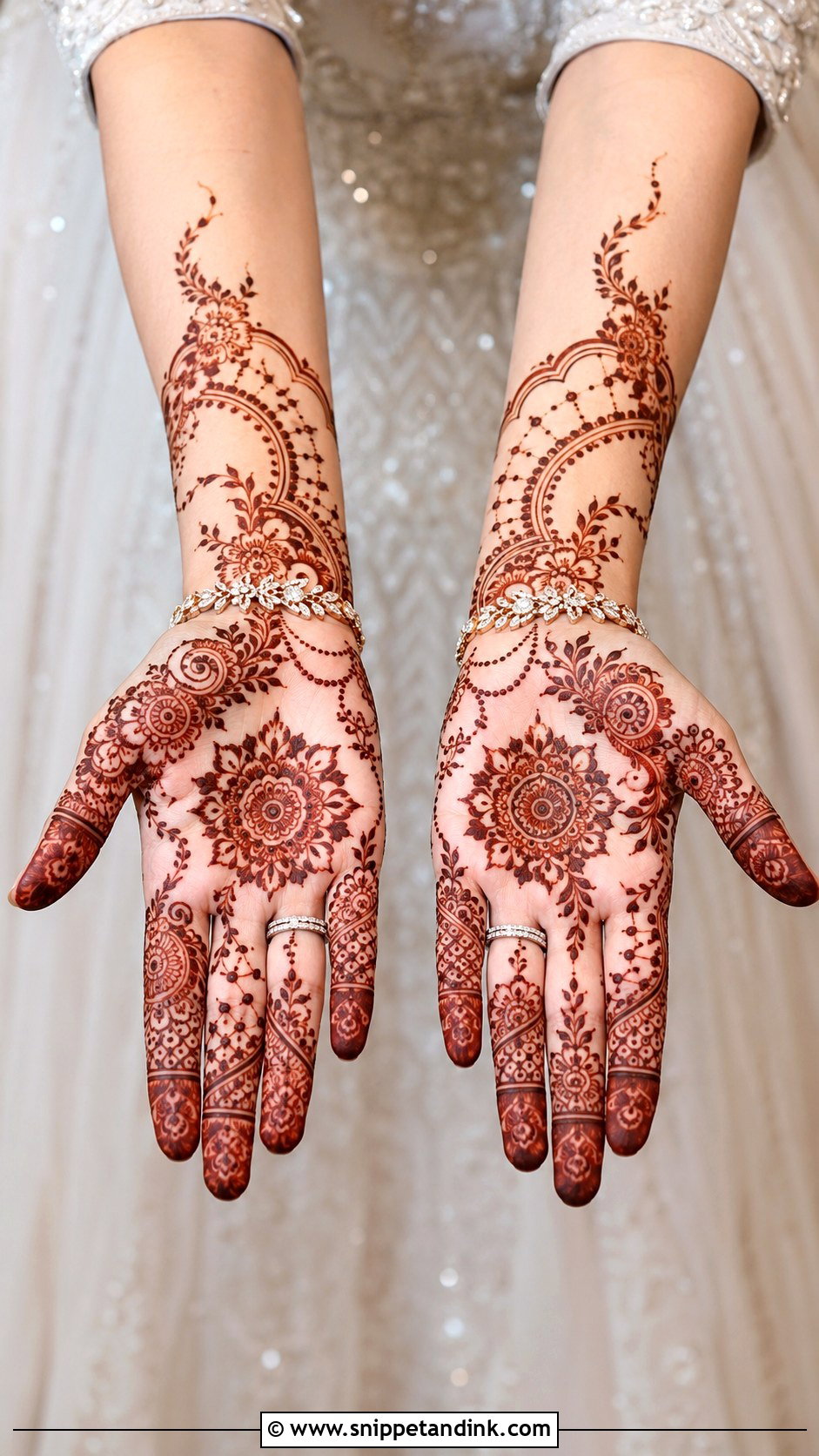
Engagement palms get photographed with the ring, so I keep the ring finger neat and avoid crowding around it. Jewelry-inspired work, bracelet cuffs, floral mandalas and soft Arabic trails suit it. A palm mandala connected to a bracelet chain looks graceful without hiding jewelry, and roses or lotus on the lower palm add a festive touch. Keep it refined rather than heavy; the ring is the focus.
30. Front Hand Mehndi Design For Wedding Guests
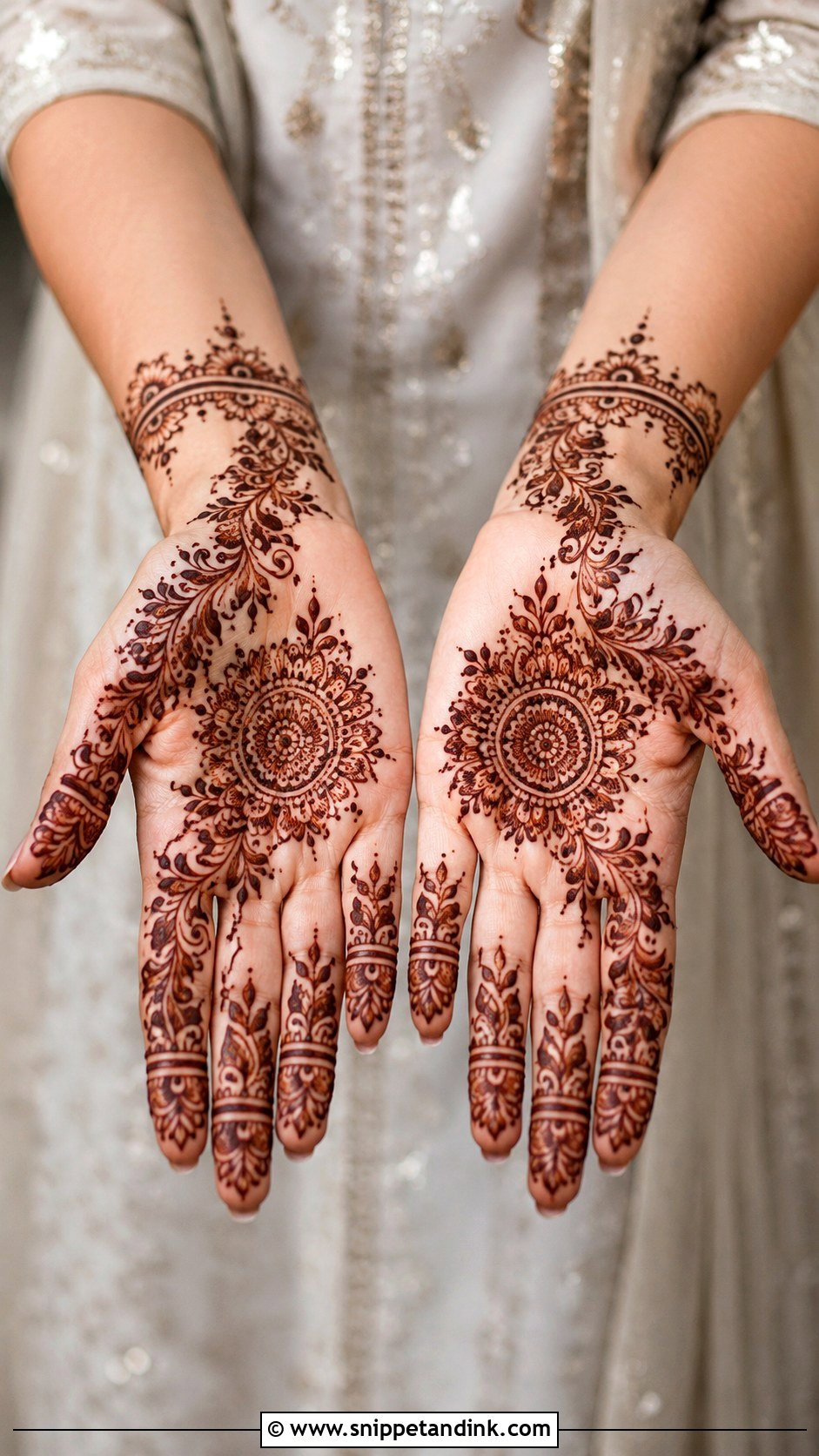
Guests want enough detail for photos without looking bridal. Arabic floral trails, Indo-Arabic paisleys, mandala palms and bracelet designs all fit, and medium coverage from wrist to fingertips looks complete without hours in the chair. With bangles, keep the wrist slim. Younger guests often prefer minimal fingers and a palm flower; close relatives may want a heavier trail. Whatever you pick, it should stay lighter than the bride’s.
31. Front Hand Mehndi Design For Kids
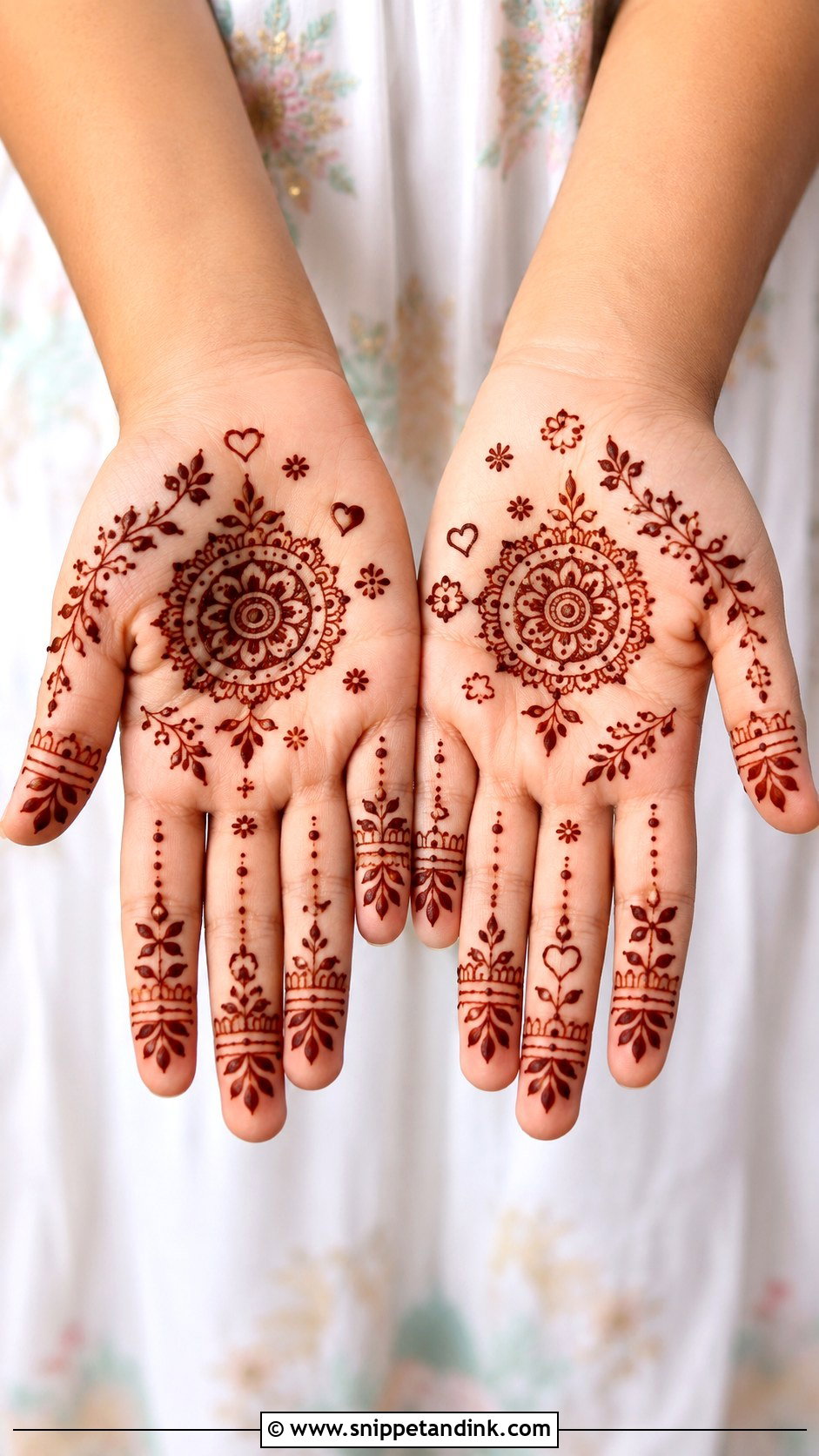
Children rarely sit still for long, so I keep their designs small: flowers, hearts, stars, tiny mandalas, leafy vines or a mini tikki, limited to the palm and a few fingers. Dense patterns take longer and smudge easily on a wriggling hand. A small floral circle with dotted fingers dries fast. Use natural henna only, and never let a child have black henna; the dark dyes in those products can cause serious skin reactions.
32. Front Hand Mehndi Design For Beginners
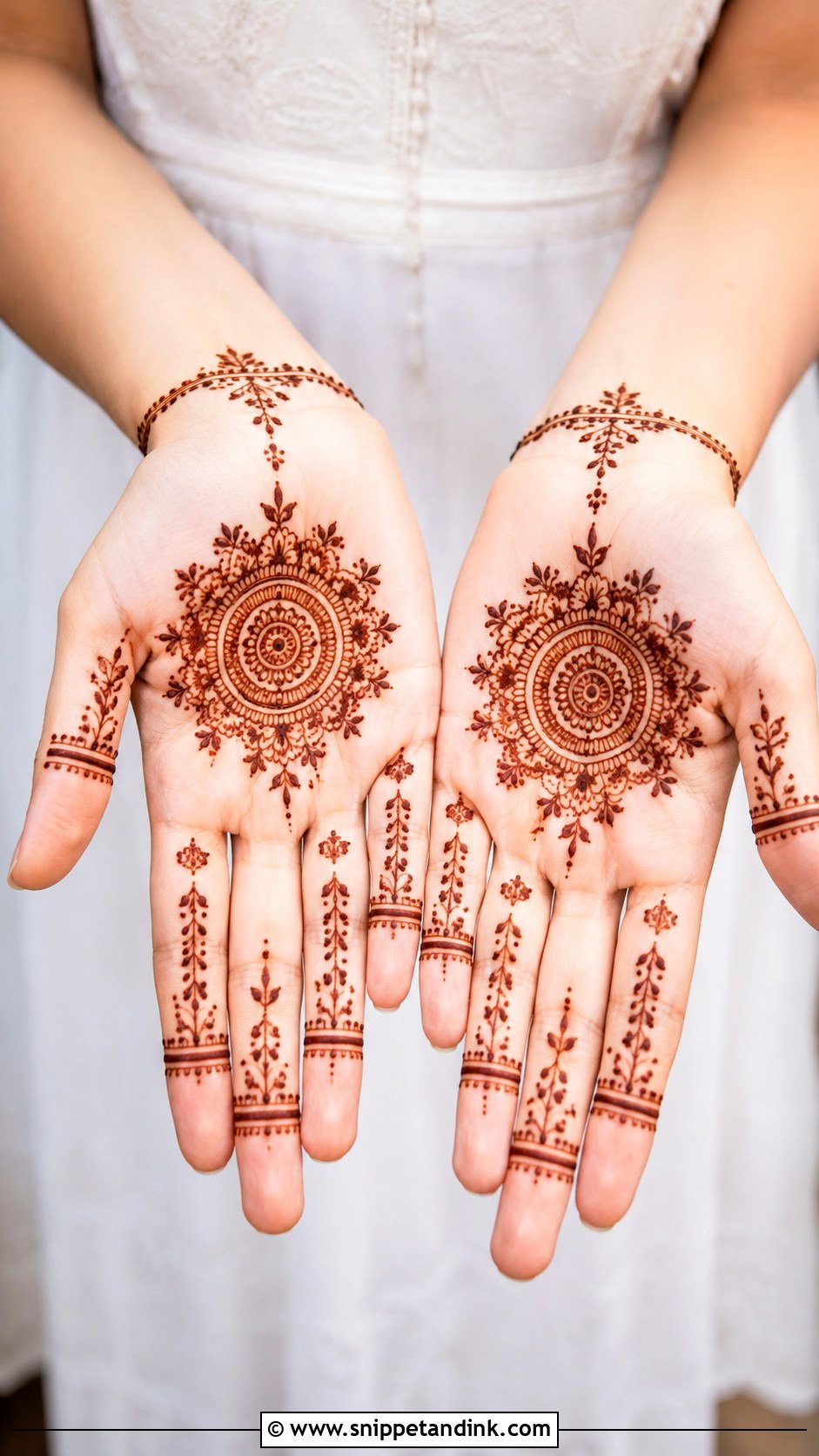
Beginners should start with shapes that repeat easily: a palm mandala, then petals, dots, leaves and curves, with simple finger bands and a single wrist line. Leave bridal fills, portraits and complex jaali until your hand is steady. Clear sections help, because a mistake inside one section can be hidden or wiped quickly. Keep the cone pressure even and wipe the tip often with a tissue; a clogged tip is the usual cause of blobs.
33. Front Hand Mehndi Design With Name
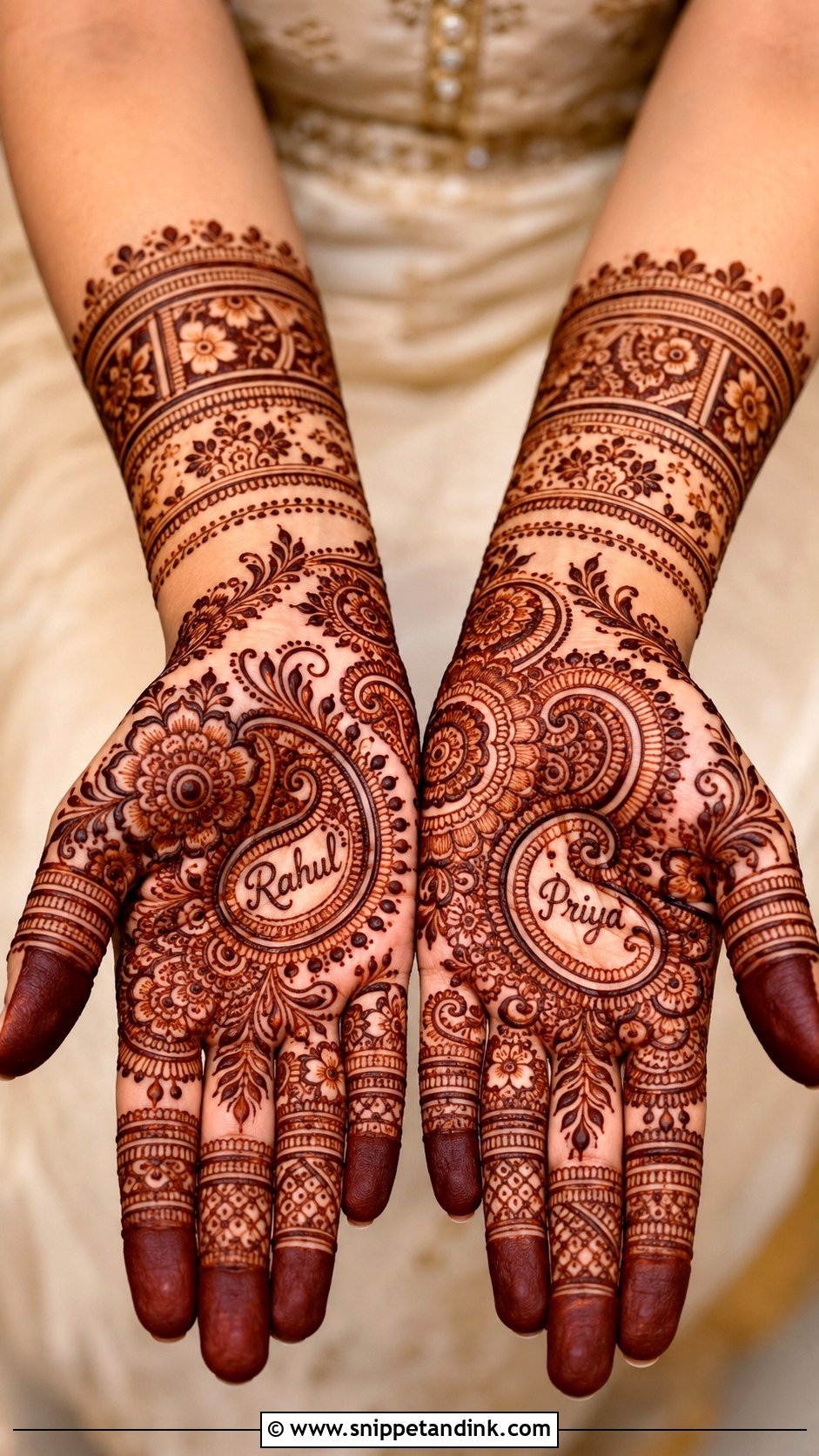
Front hand mehndi design with name hides a name or initials in a paisley, along a wrist band, inside a mandala or within a floral trail. It’s popular for brides and anniversaries. Letters close up slightly as the paste settles, so I write them a little larger and more open than looks right while drawing. Surround the text with small vines, dots or petals so it reads as part of the art.
34. Royal Front Hand Mehndi Design
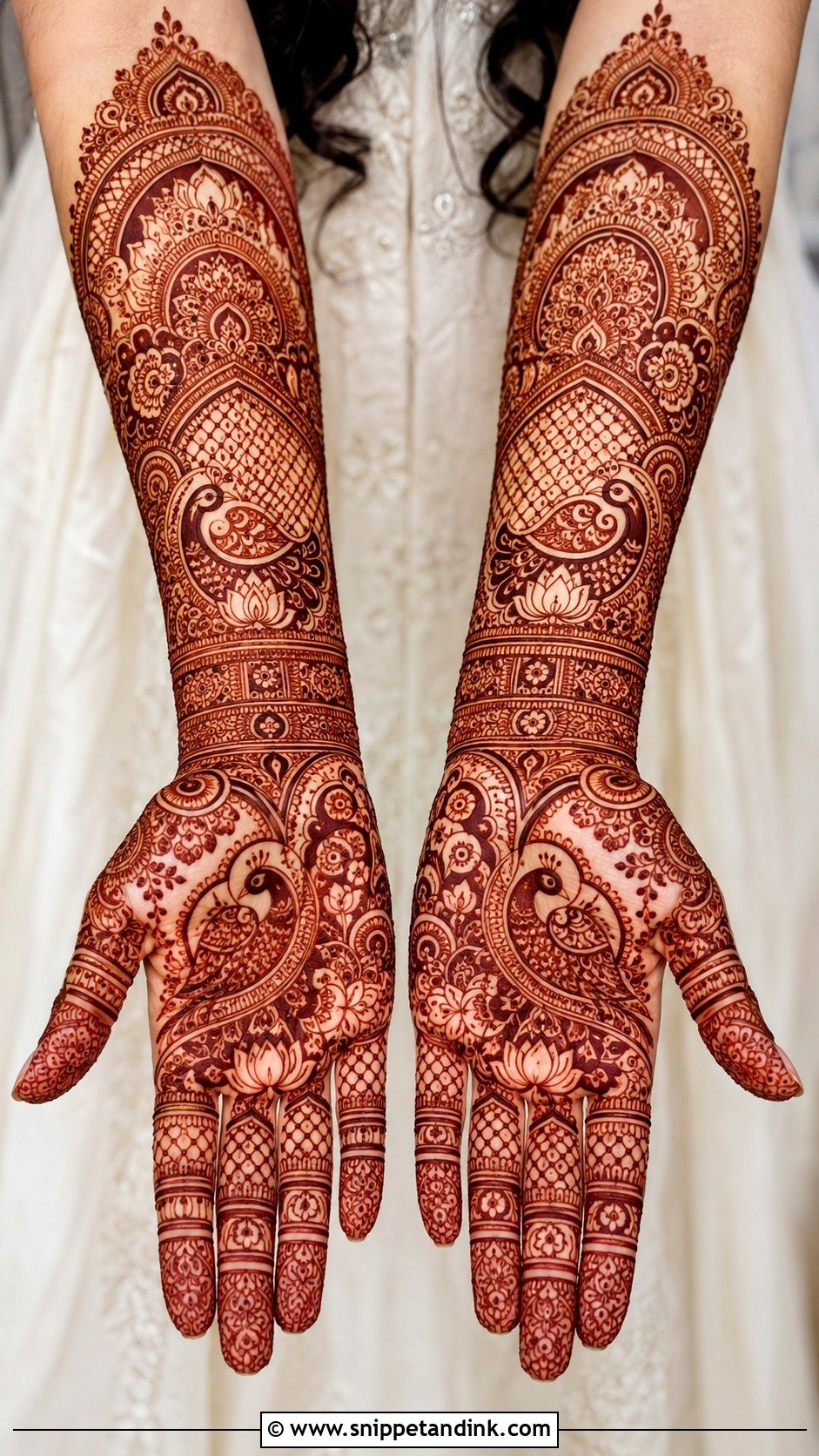
Royal palm work brings peacocks, lotus, detailed paisleys, layered mandalas, jaali and bracelet cuffs together, with heavy finger bands or full detailing. It suits brides, close family and formal celebrations. Symmetry and bold outlines give it the grand feel. The central motif should feel important, not lost among filler, so I add the fine detail in controlled sections and leave tiny gaps for contrast. A deep maroon stain completes it.
35. New Front Hand Mehndi Design
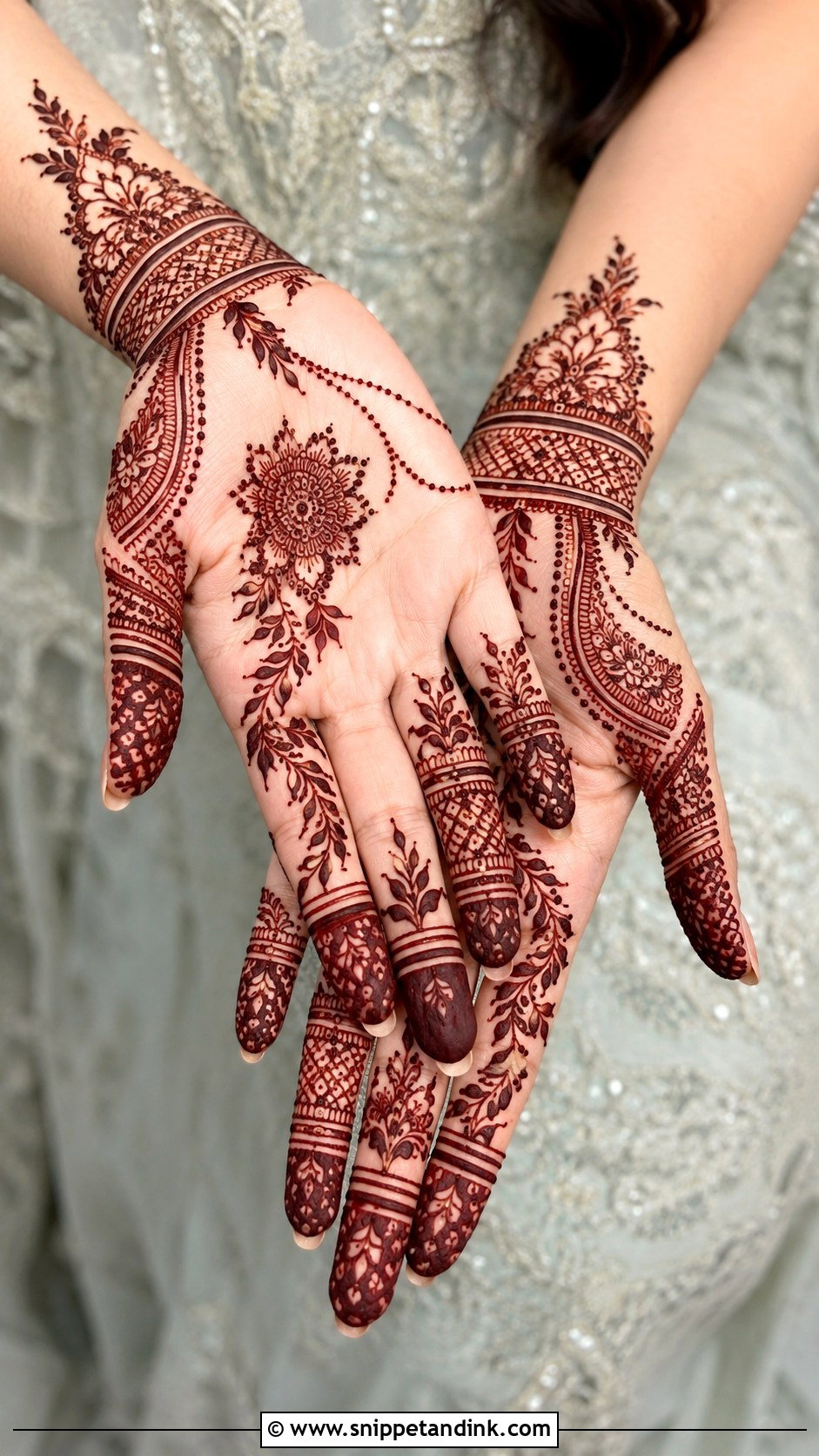
New front hand mehndi design layouts lean toward floating mandalas, half-palm Arabic trails, fine jewelry chains, geometric cuffs, negative-space florals and mixed finger detail. Rather than heavy coverage, they use one or two strong focal points and deliberate blank areas. They suit traditional and modern outfits alike. The risk is randomness; every motif in a newer layout still needs a reason to be where it is.
Practising a Palm Design on Paper First
If you’re doing your own mehndi, spend an evening on paper before you touch skin. Trace around your hand, draw the main creases in pencil, and practise the layout inside that outline. You’ll find out quickly whether your mandala is too big for your palm or whether the trail runs out of room before the fingers.
Then practise with paste, not a pen. Natural paste is mixed from fine henna powder, lemon juice or water, a little sugar and an essential oil suited to skin, then left for several hours so the dye releases. The texture you want is close to toothpaste: thick enough to hold a line, smooth enough to flow without lumps. Strain it if it’s gritty, and keep a tissue handy to wipe the cone tip every few strokes.
Getting Through a Night With Paste on Both Palms
Palm mehndi asks the most of you afterward, because your palms are what you grip, eat and sleep with. Once the paste is dry to the touch, dab on a little lemon and sugar so it clings, then wrap the hands loosely in tissue or medical tape, or slip on thin cotton gloves. Sleep on your back if you can. Scrape the paste off in the morning rather than washing it, and keep your palms away from water, soap and sanitizer for the rest of that day. The color will keep deepening for another day or so.
Which Palm Layout Suits Your Hands and Your Calendar
Start with the occasion and how much coverage you actually want. Simple mandalas and tikkis suit quick celebrations, Arabic trails give an open, flowing palm, and full Indian, bridal, peacock, paisley and royal designs belong at weddings and traditional functions. Minimal, bracelet, finger and geometric layouts feel modern and are easy to live with. Match the design to your hand shape and outfit, ask for clean lines and balanced spacing, and use only natural paste. Light or heavy, a well-placed palm will stain deeper than any other part of your hand.
You'll Like These Ideas:










Leave a Reply