
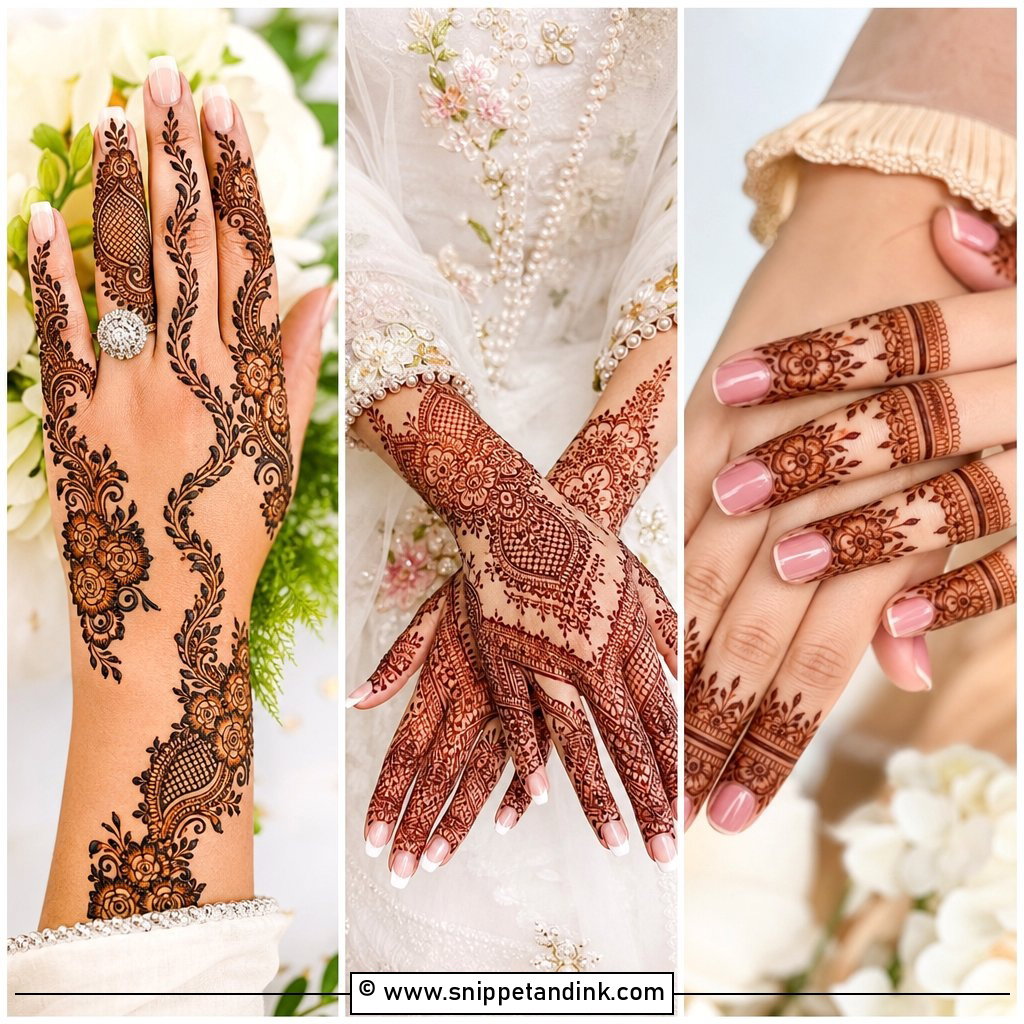
Bridal hands mehndi designs sit next to the jewelry in nearly every close-up, so I treat the hands as part of the outfit rather than an extra. The range is wide: dense Indian full hands, airy Arabic trails, portrait palms, lotus mandalas, jaali mesh, hidden initials and modern designs that leave skin open on purpose. What suits you depends on your outfit, your ceremony, the shape of your hands and how long you can sit still. Below are thirty designs, with notes on how each one is drawn, how it stains and who I’d steer toward or away from it.
Stain Peaks a Day or Two After the Paste Comes Off
Natural henna doesn’t come off the skin dark. When you scrape the dried paste away, the stain underneath is bright orange. Over the next 24 to 48 hours it oxidizes and deepens to reddish brown or maroon. That’s why I schedule bridal mehndi one or two days before the wedding, never on the morning of.
- Leave the paste on for as long as you comfortably can, ideally six to eight hours or overnight. The longer it sits, the deeper the stain.
- A light dab of lemon and sugar keeps the paste stuck to the skin as it dries. Don’t soak it.
- Scrape the dried paste off with a blunt edge or your fingers. Don’t wash it off.
- Keep your hands away from water for the next 12 to 24 hours if you can, and keep them warm.
- Palms and fingertips will stain darkest; the backs of hands and forearms will be lighter. That’s normal skin, not a weak cone.
1. Full Hand Bridal Mehndi Design
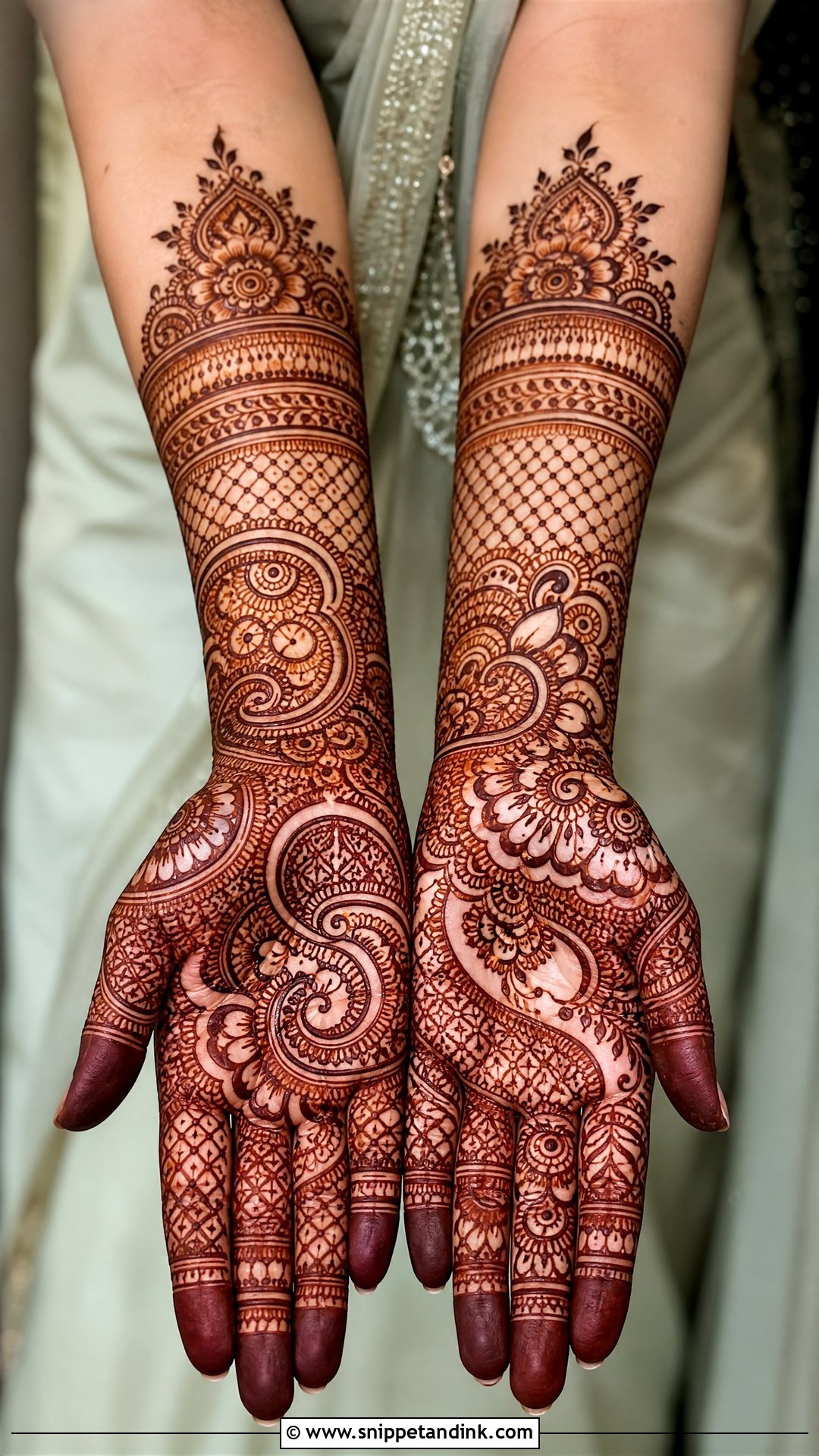
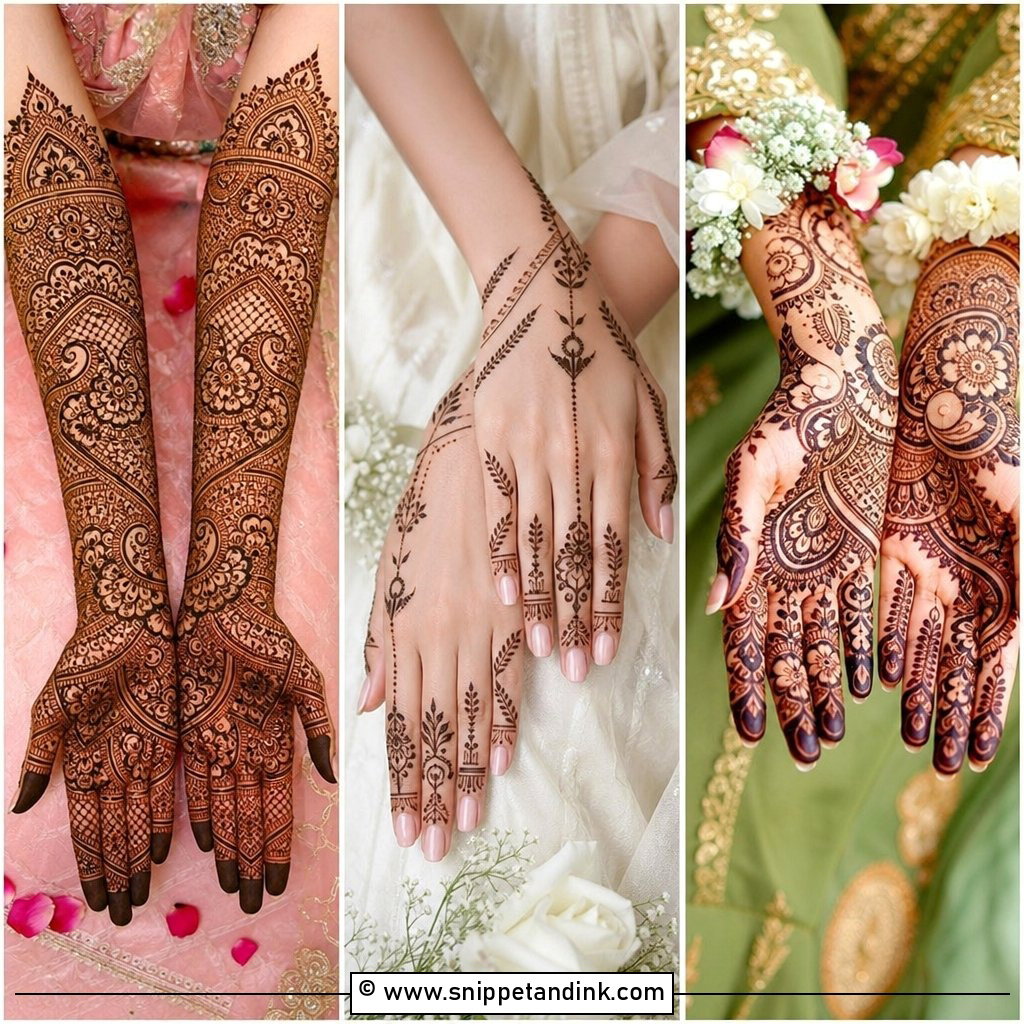
Full coverage from fingertips to wrist or forearm is the design most brides picture first. Both palms and backs carry paisleys, florals, mandalas, vines and fine filler. The mistake I see most is motifs drawn too small on the palm, which turns into a brown blur once the stain develops, so I keep the main shapes on the palm a size larger than they look right on paper. Fine mesh, dotted borders and shaded petals then fill in around them. It sits well with heavy bangles and embroidered sleeves, since the density matches the outfit.
2. Indian Bridal Mehndi Design
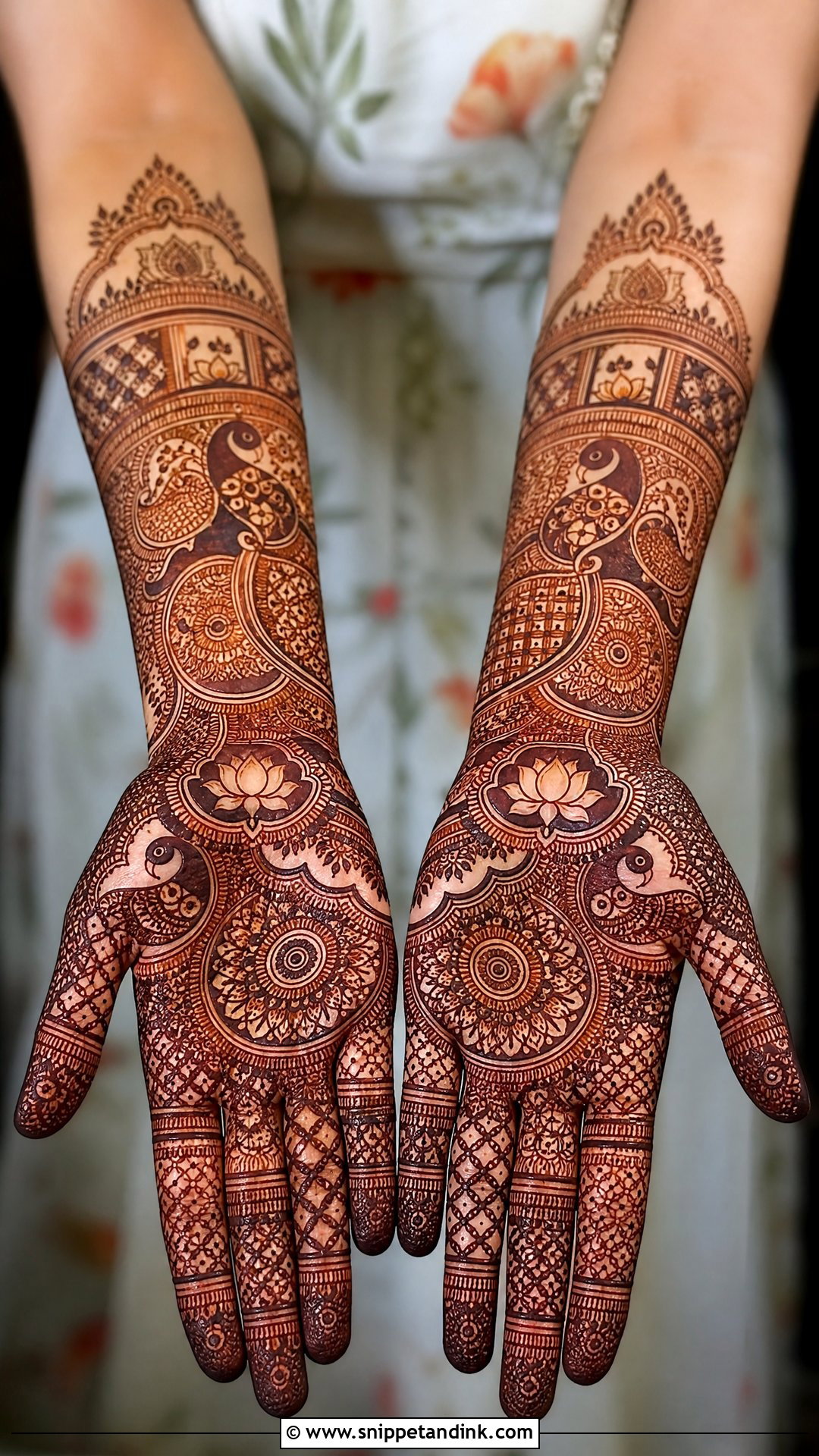
Indian bridal designs tell a story: peacocks, lotus flowers, paisley chains, mandala centers, kalash motifs and small wedding symbols, often with initials hidden somewhere for the groom to find. Coverage usually runs from palm to forearm with very little empty skin. That means a long sitting, often several hours for both hands, and you’ll need to plan meals and bathroom breaks around it. I ask brides to choose a layout with clear zones, a palm scene and a wrist band for example, rather than many tiny elements competing for space.
3. Arabic Bridal Mehndi Design
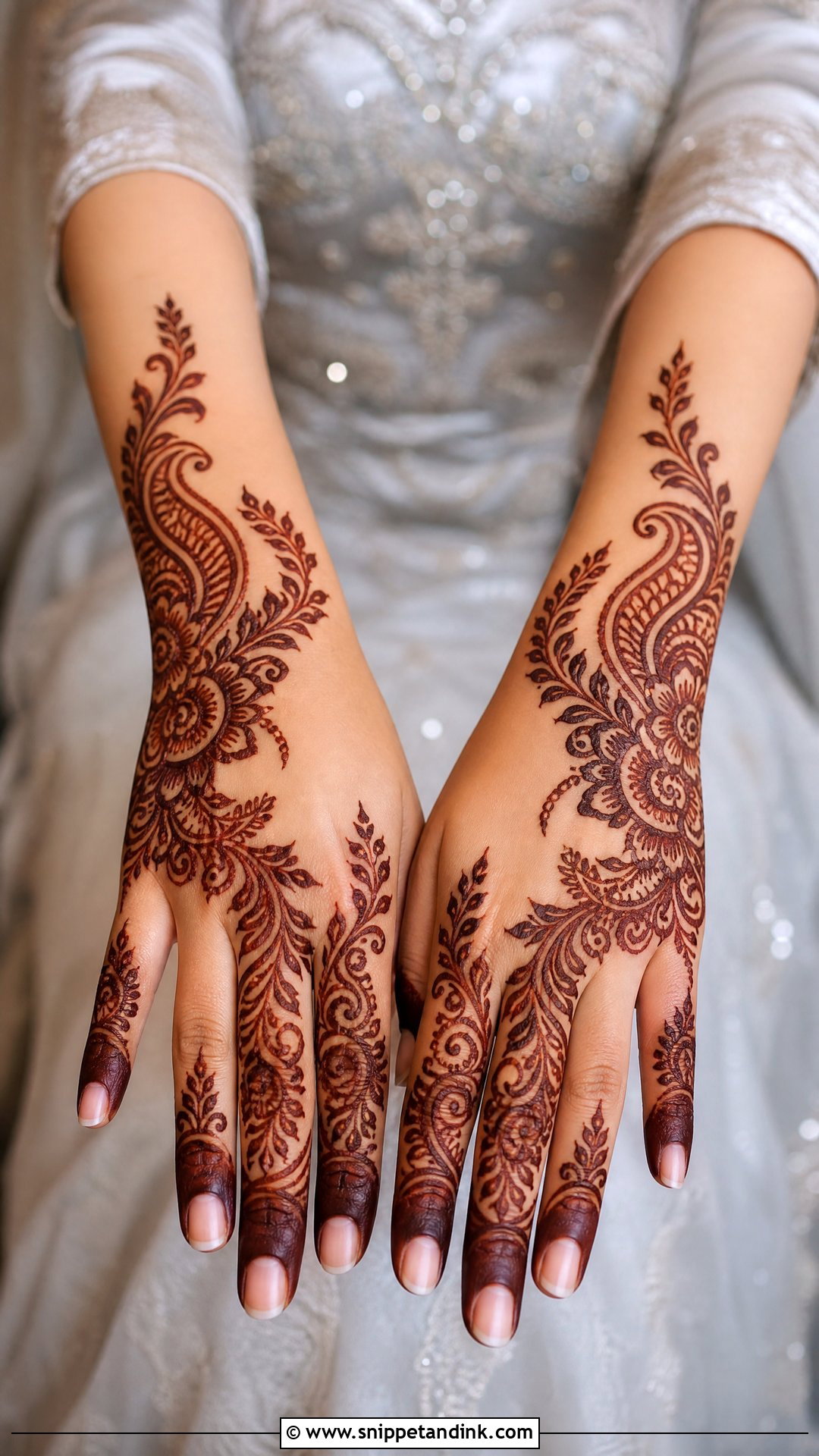
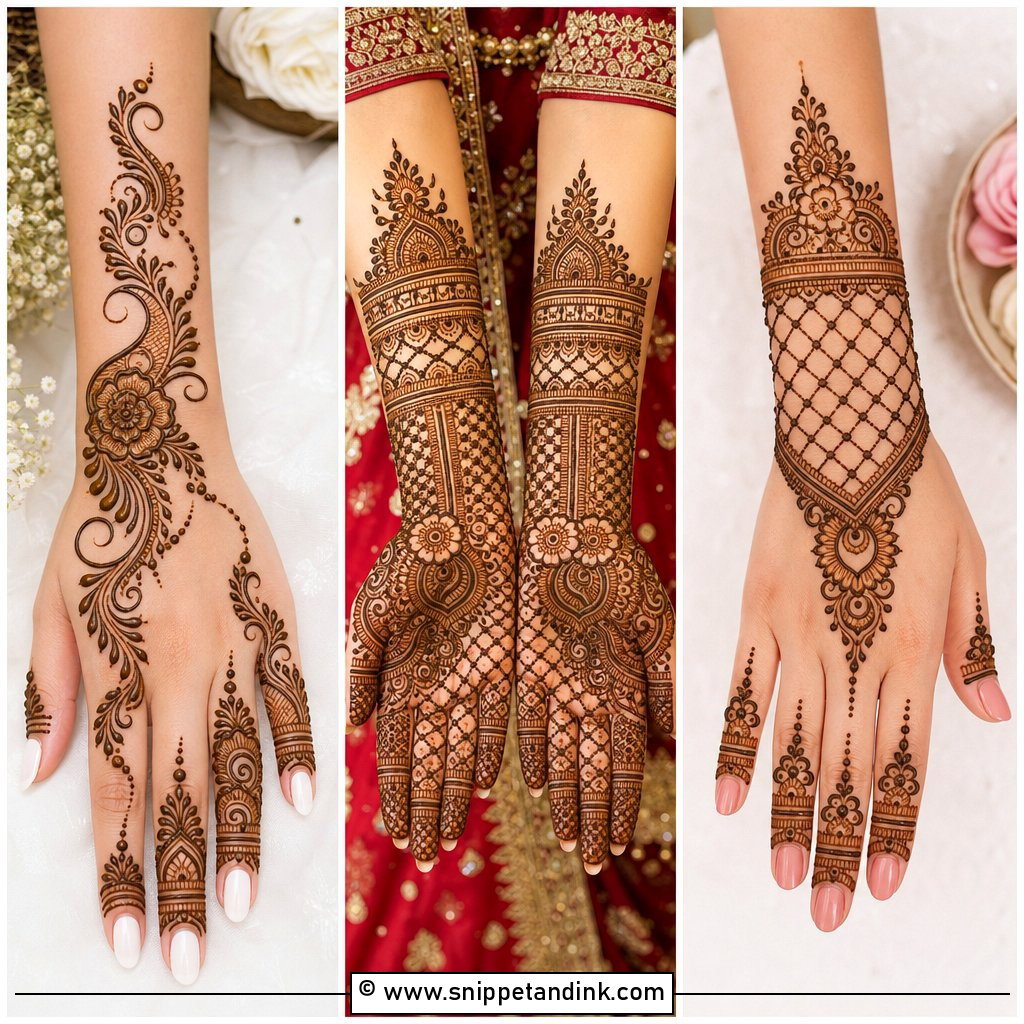
Arabic designs leave skin open on purpose. Bold floral trails, leafy vines and paisley curves run in flowing diagonal placement across the hand, and the bare skin around them makes the reddish-brown stain read sharply from across a room. It’s quicker to apply than a full Indian hand. To make it feel bridal rather than party mehndi, I add fuller wrist bands, detailed fingertips and a few fine Indian fillers inside the larger flowers. It suits pastel lehengas and destination weddings.
4. Indo Arabic Bridal Mehndi Design
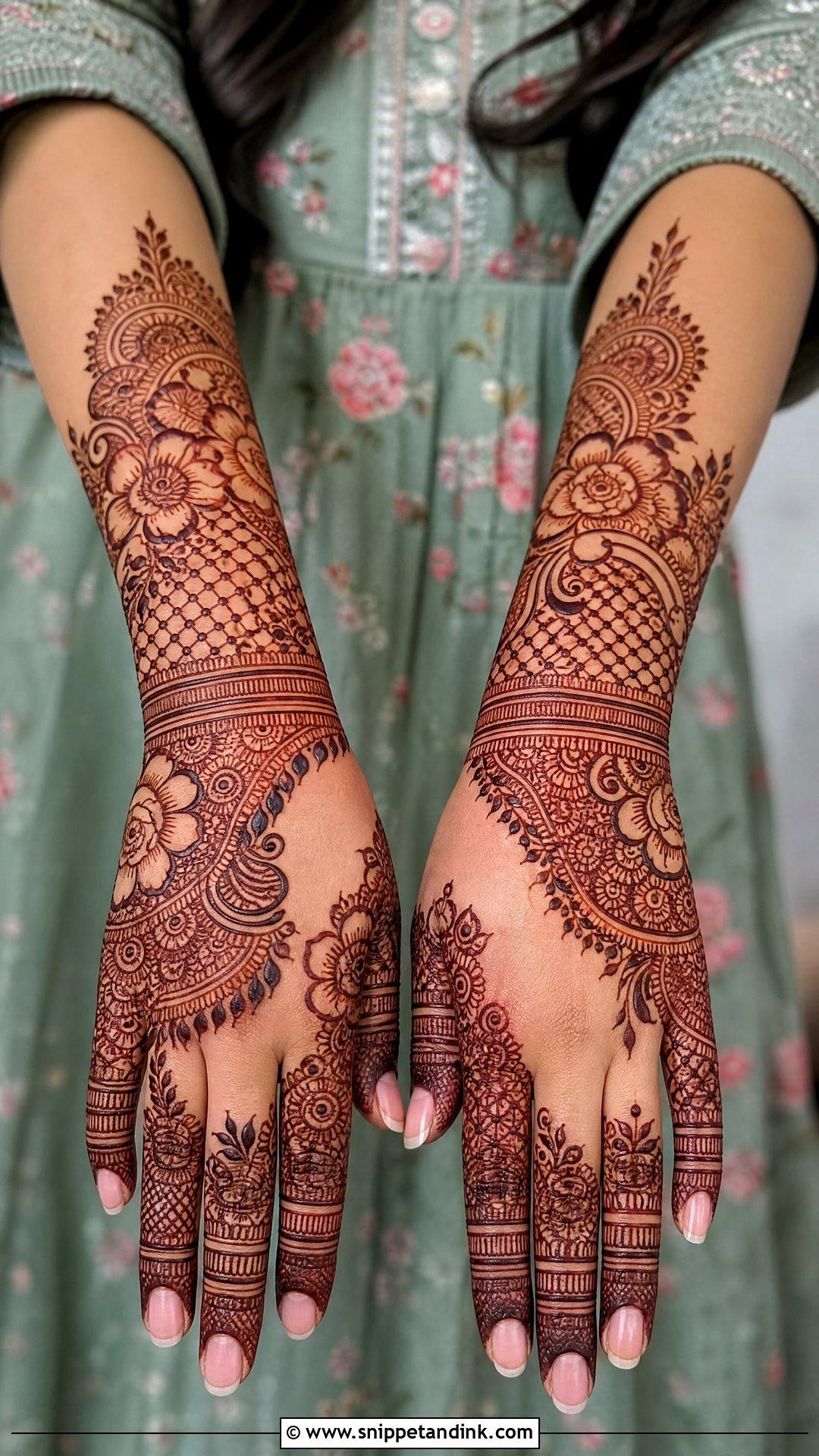
Mixing Arabic flow with Indian detail gives you visible motifs without a crowded hand. Large flowers, curved vines, jaali mesh and detailed finger work share one layout. I draw the diagonal Arabic line first and then decide where the Indian filler goes, so the structure stays clear. I keep the wrist area slightly heavier so the design meets the bangles without a gap. It’s a good middle ground if full Indian coverage feels like too much but plain Arabic feels too light.
5. Front Hand Bridal Mehndi Design
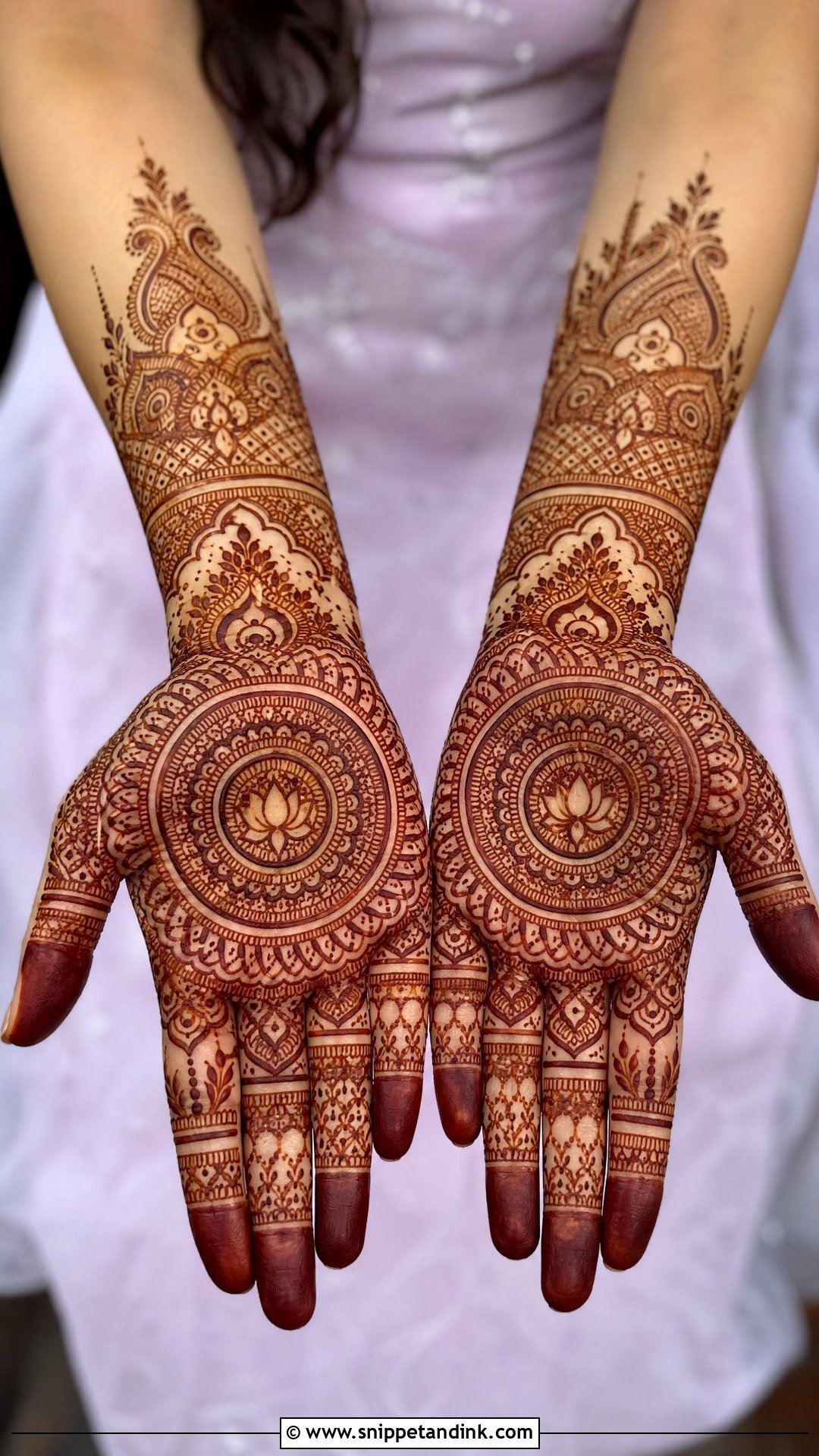
The palm is what everyone sees during rituals, and it’s also where henna stains darkest because the skin there is thicker. Mandalas, lotus circles, peacocks and bride-groom symbols are the usual centerpieces, with bands, leafy tips and dots on the fingers. I always plan the two palms together, because brides hold them side by side for photos and the designs should meet in the middle. Slim negative spaces read modern; dense fillers read traditional.
6. Back Hand Bridal Mehndi Design
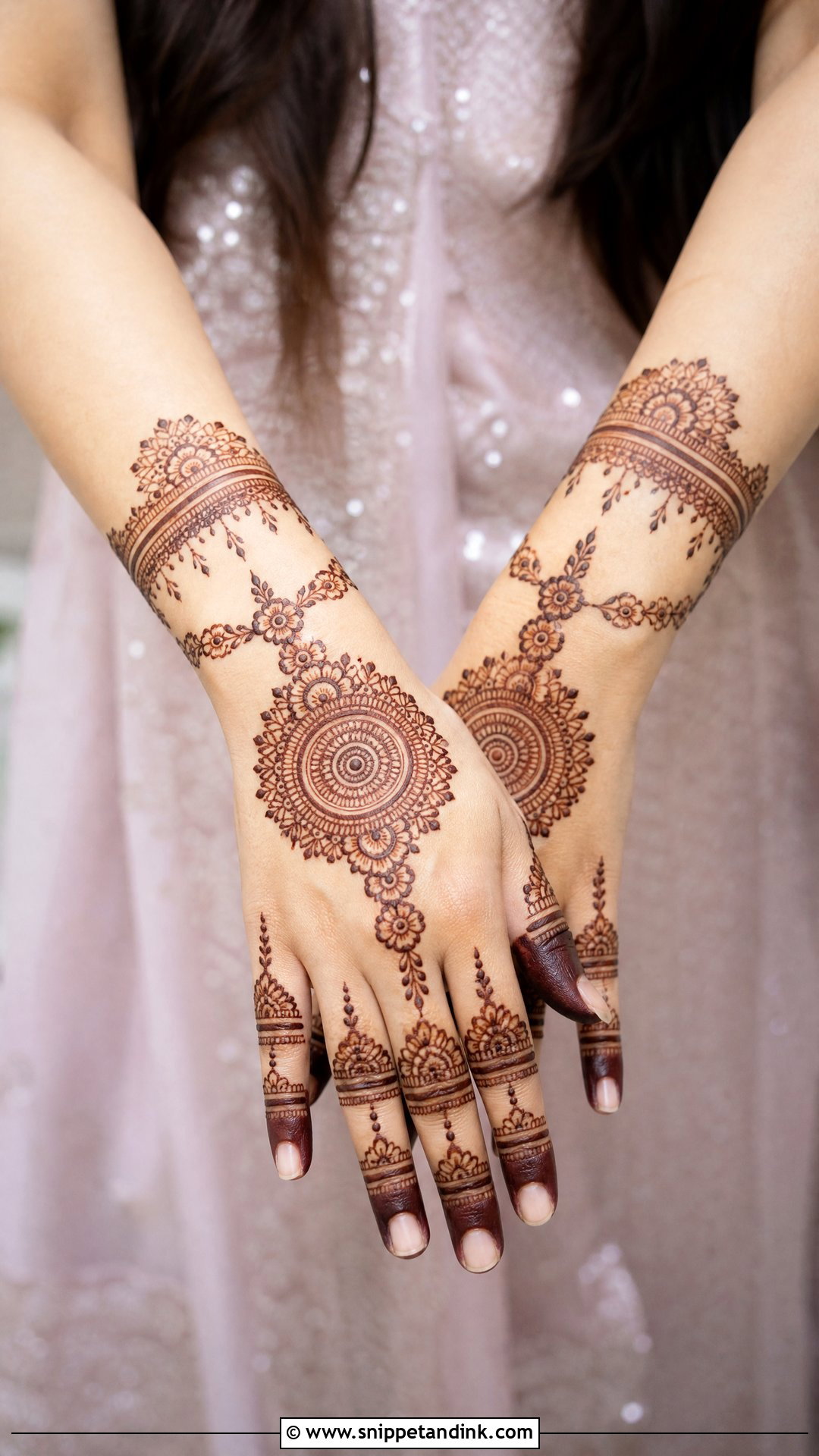
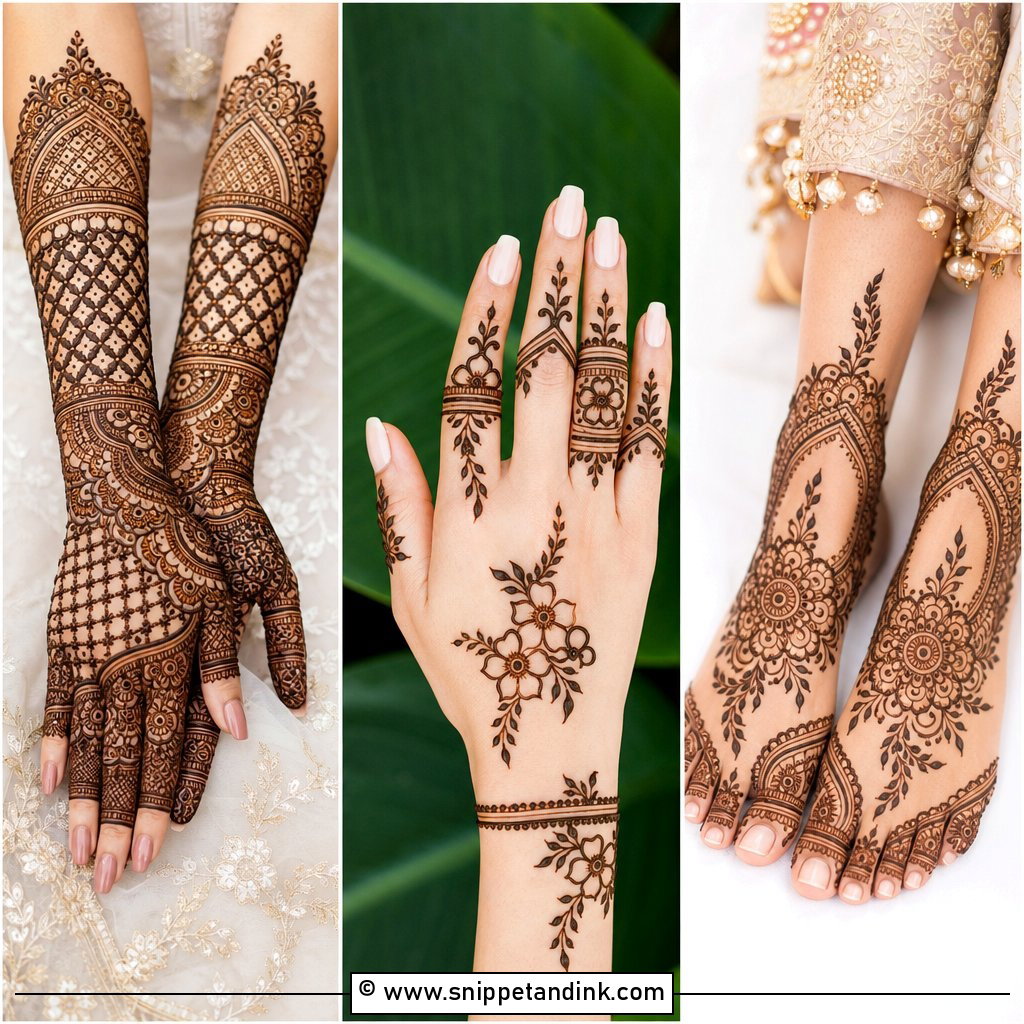
Ring shots, jewelry photos and portraits all show the back of the hand, so I never treat it as an afterthought. Bracelet patterns, haath phool layouts, floral trails, mandalas and jaali all work here. The back of the hand stains lighter than the palm, so I use slightly bolder lines to compensate. If you wear statement rings, tell me which fingers, and I’ll leave a little space around the ring line. Filled fingertips and wrist cuffs make it heavier; open vines keep it soft.
7. Simple Bridal Mehndi Design
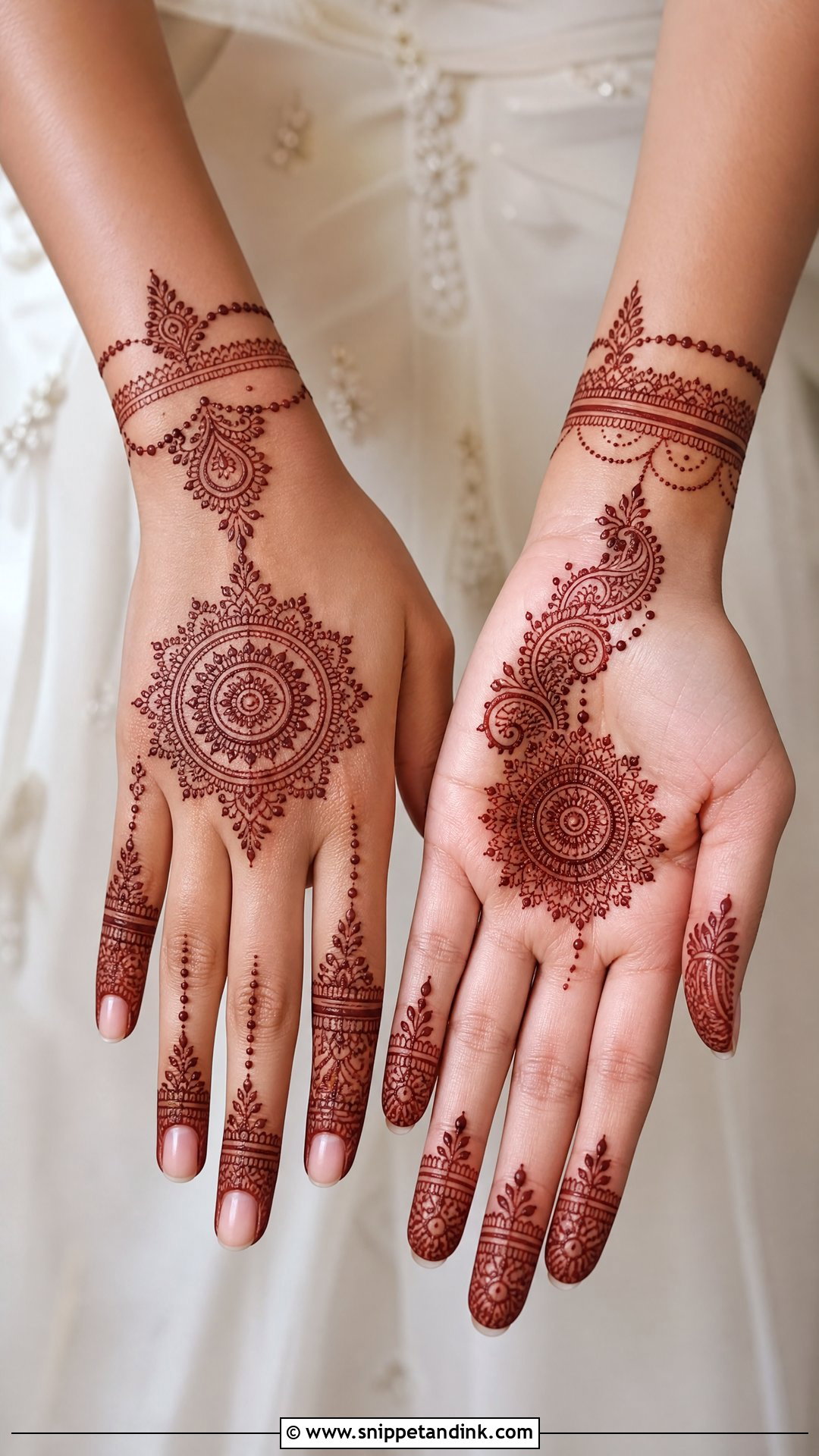
A simple bridal design still has to look bridal, which is harder than it sounds. One strong focal point on each hand, usually a palm mandala or a cluster of florals, with neat borders and a light wrist band, does the job. Spaced paisleys and delicate fingers fill in. Because there’s less to hide behind, every line shows, so sharp, even lines matter more here than in a heavy design. It suits intimate and court weddings, and it takes far less time to apply.
8. Minimal Bridal Mehndi Design
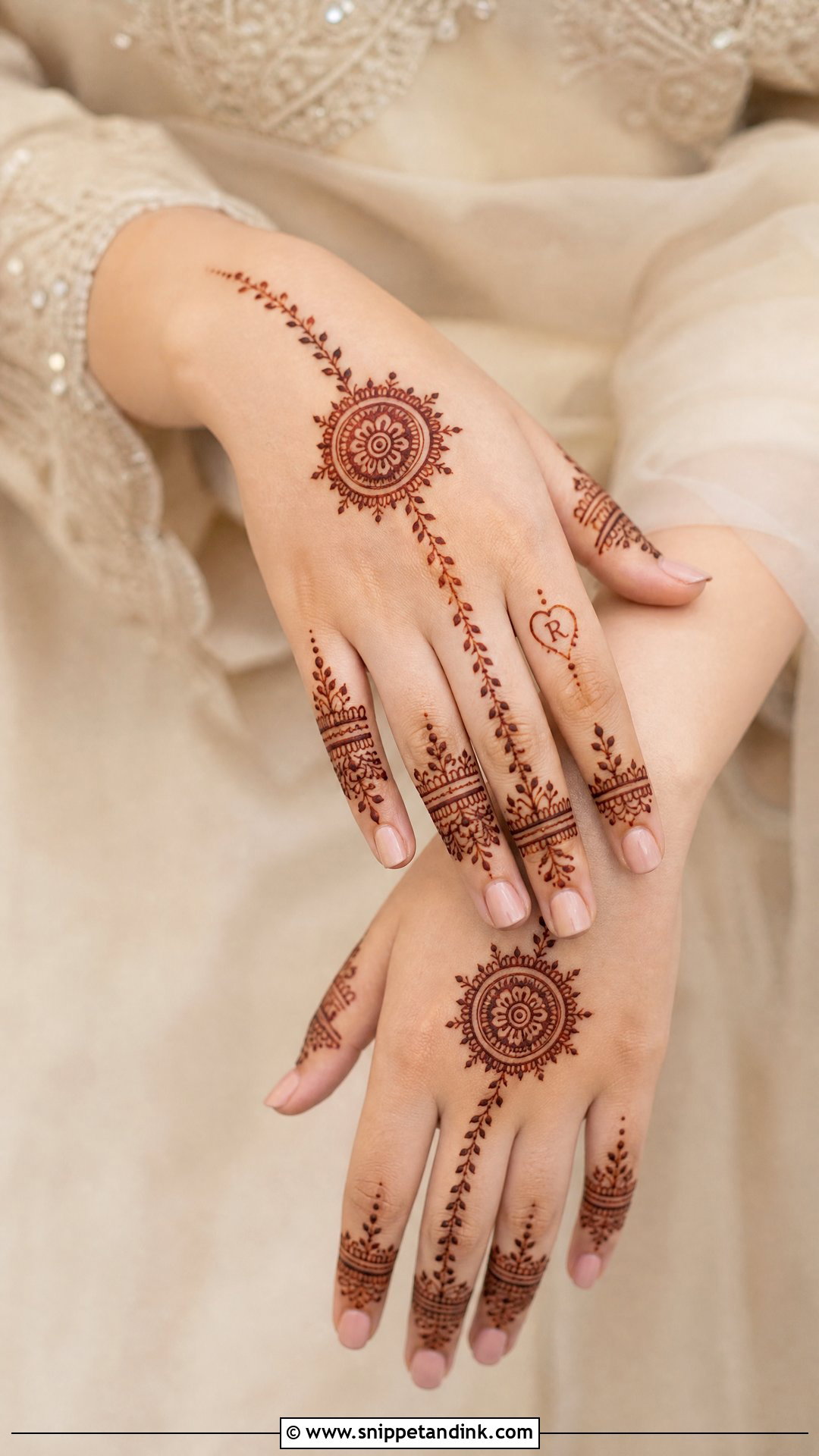
Minimal mehndi highlights selected areas, such as the palm center, the wrist or the line where rings sit, and leaves the rest bare. Fine lines, small flowers, clean mandalas and leafy chains are the main tools. I make sure both hands match in weight, because a minimal design that’s lopsided looks unfinished. Adding initials or a tiny date keeps it personal. It pairs with pearl jewelry and contemporary outfits, and it fades evenly as the stain wears off.
9. Heavy Bridal Mehndi Design
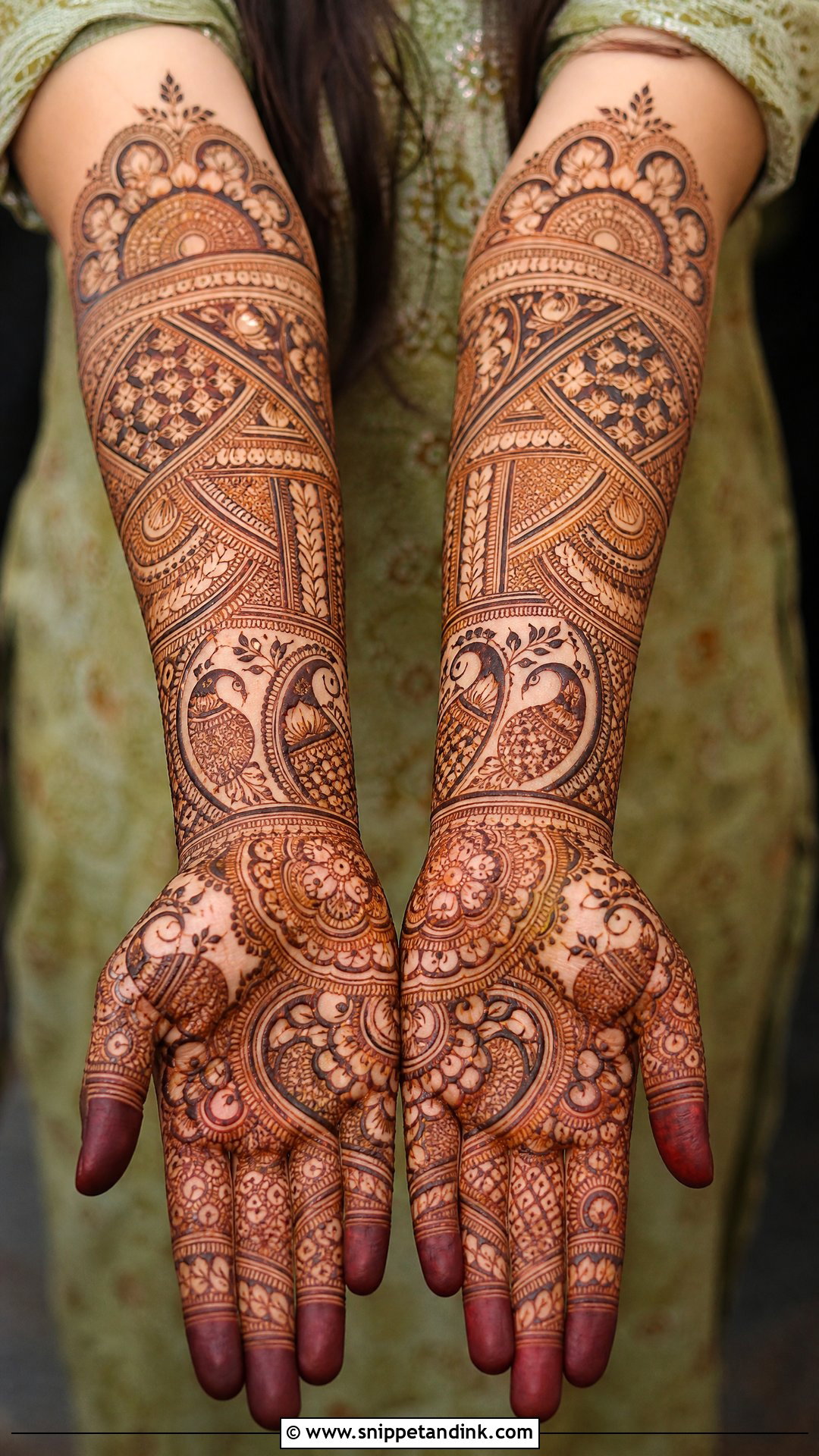
Heavy designs run from fingertips to forearms with dense paisleys, floral grids, peacocks, mandalas and shaded fillers, leaving very little bare skin. The stain looks rich, but only if the paste stays on long enough; a heavy design scraped off after two hours wastes most of the work. I divide the hand into sections, with larger palm motifs, neat wrist bands and structured forearm panels, so each part stays readable. Expect the forearm to stain lighter than the palm. That’s normal.
10. Royal Bridal Mehndi Design
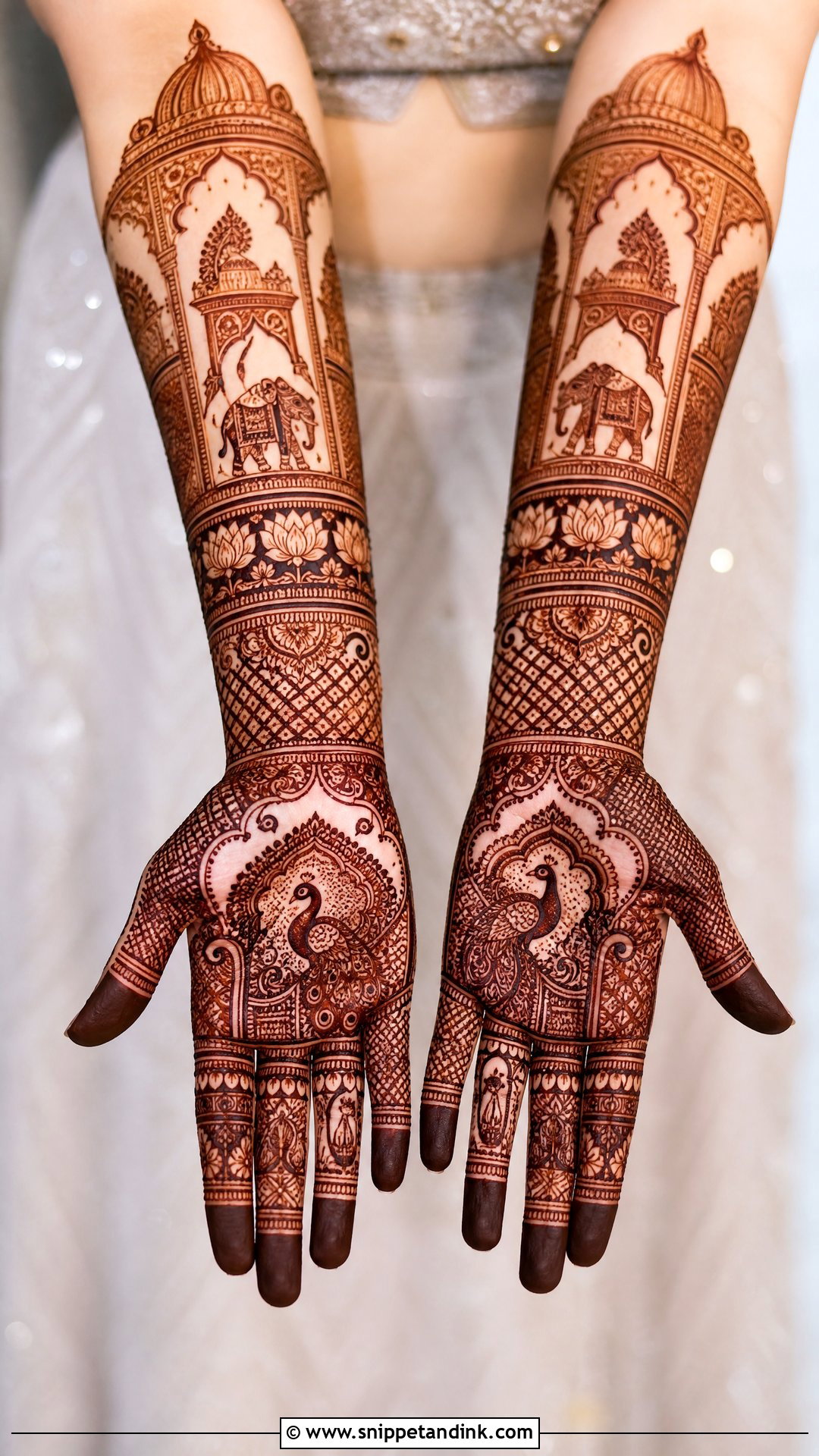
Royal designs use palace shapes, elephant motifs, peacocks, lotus borders, domes and layered cuffs to create small scenes across the hands and forearms. Structure matters more than density here. I usually put a grand mandala or wedding scene on the palm, with arches and ornamental bands along the wrist and forearm, and fine jaali as a finish. Bold main motifs with delicate fillers around them keep the design from turning into a busy texture.
11. Bridal Mehndi With Bride And Groom Portrait
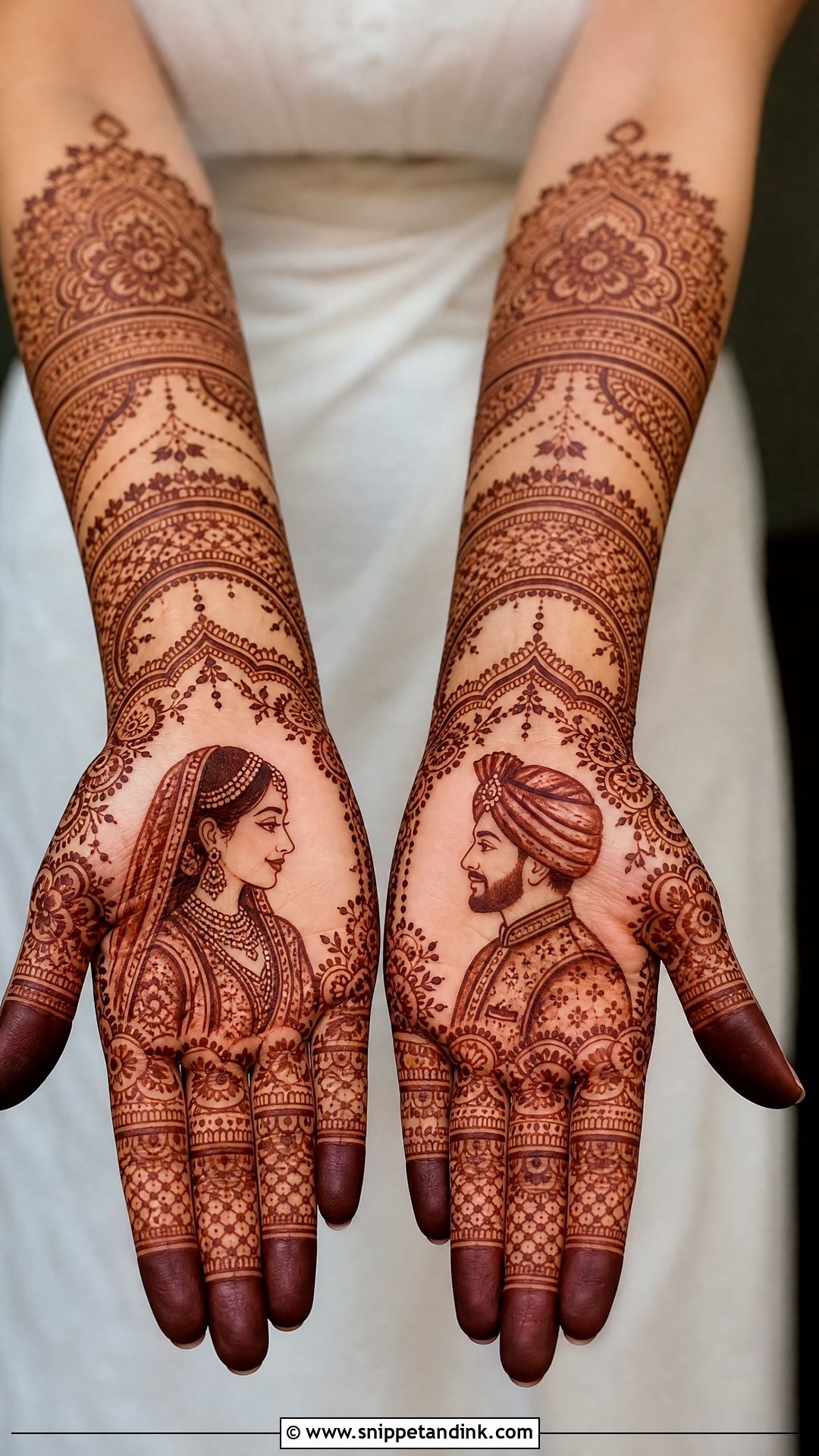
Portrait mehndi puts the bride on one palm and the groom on the other, or both faces inside framed arches. It’s the design I’d least want someone to attempt without practice, because faces leave no room for error: a slightly wrong eye line changes the whole expression. I leave the portrait area larger than you’d expect and keep fillers away from the faces so they stay clear as the stain darkens. Bring a clear photo of both of you. Close-up photographs show it best.
12. Bridal Mehndi With Initials
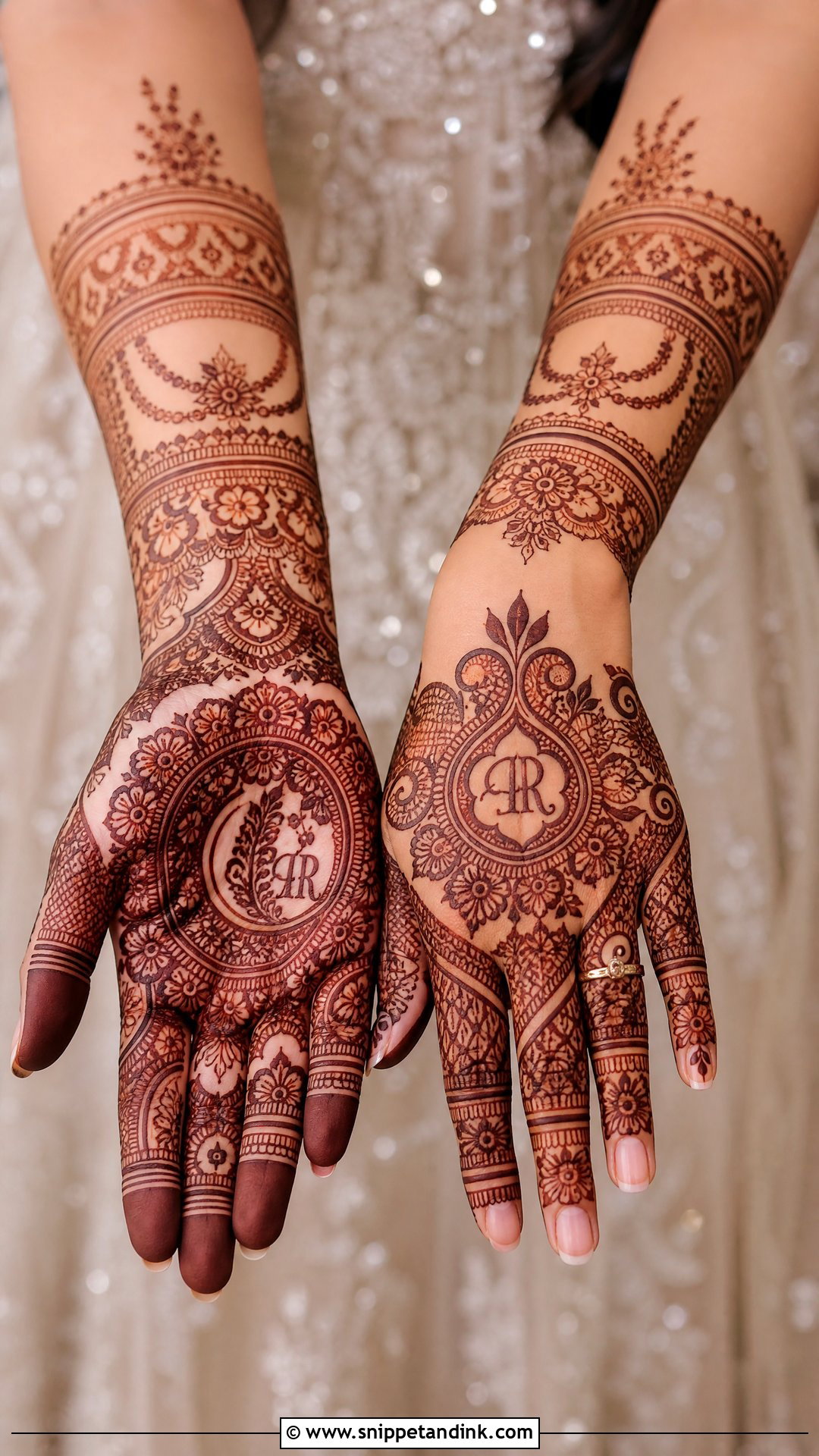
Initials can hide inside a paisley, sit near the wrist, tuck into a mandala or weave through a floral vine. Some brides want them bold; others want a find-the-name game for the groom. Either works with any style. I avoid placing letters across finger joints or the crease of the wrist, because the skin folds there and the letters blur as the paste dries and cracks. A small frame, dotted circle or leaf border makes them look planned.
13. Bridal Mehndi With Wedding Date
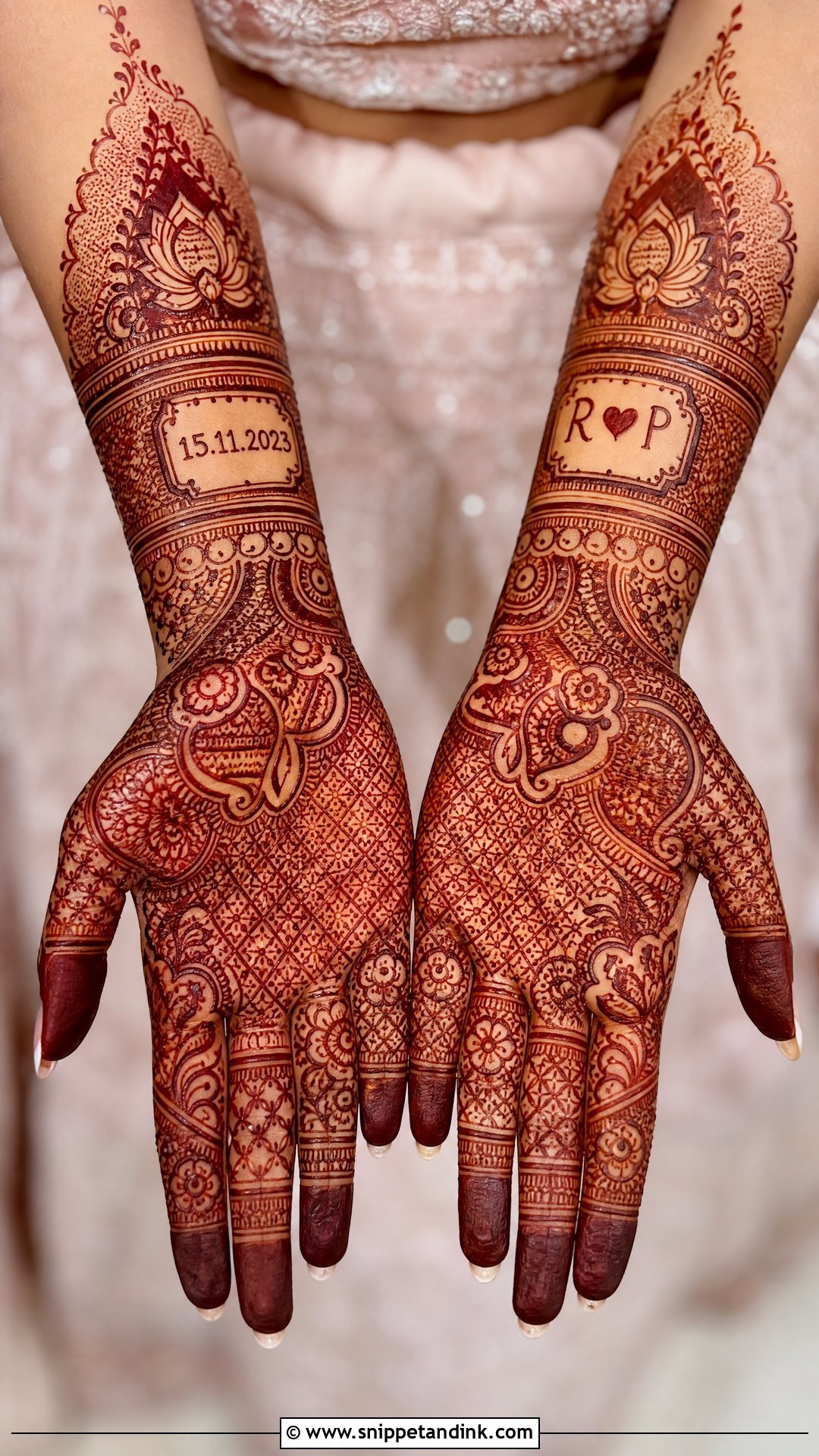
Adding the wedding date turns the design into a keepsake. I write it in small numbers near the wrist, inside a heart frame, around a mandala or along a bracelet band. Numbers need clean spacing; if they’re too close, the stain bleeds them together. The rest of the hand can carry lotus motifs, florals, paisleys and jaali panels. It pairs well with initials if you want both.
14. Bridal Mehndi With Peacock Design
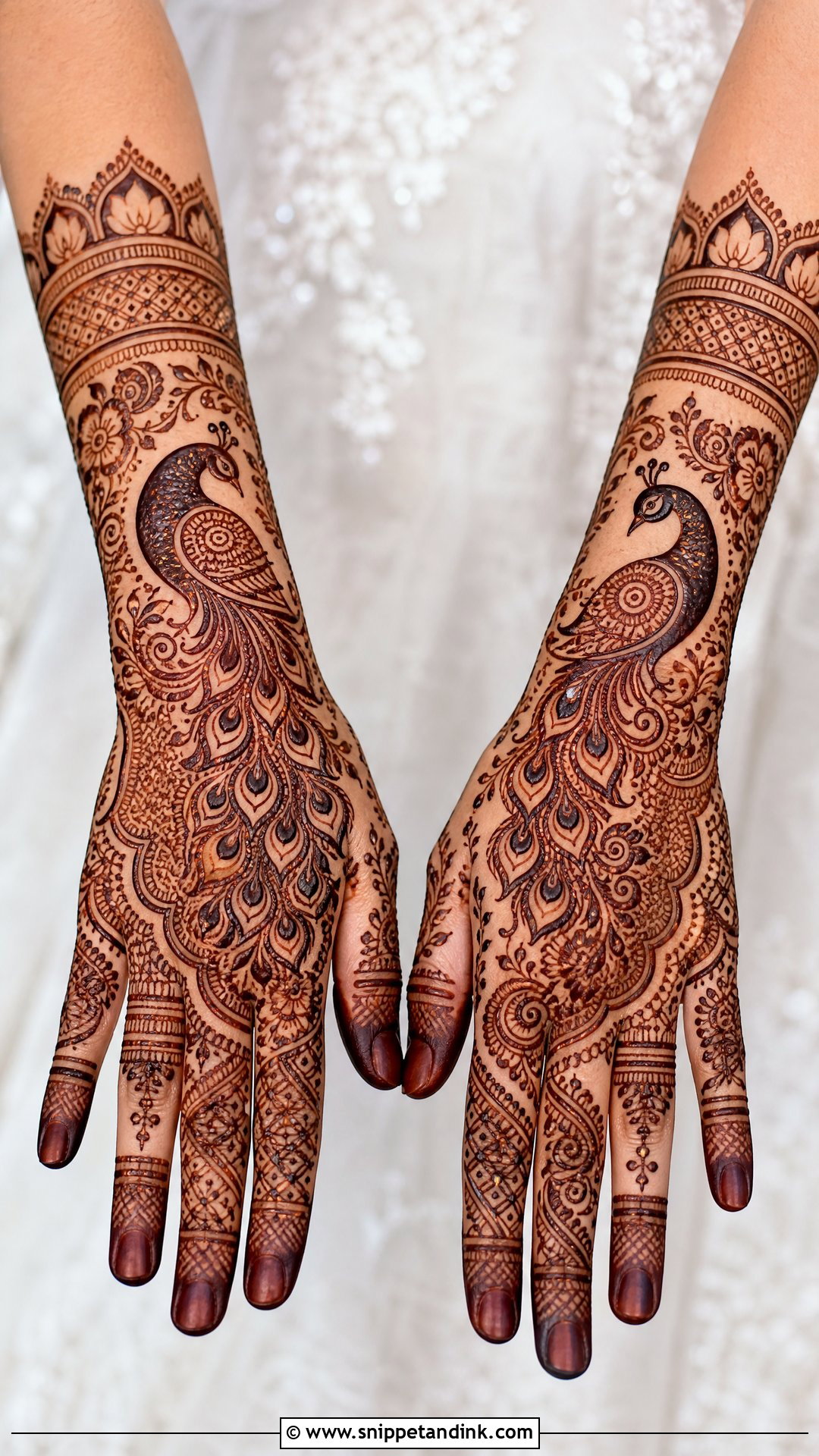
Peacocks are one of the most loved traditional motifs, and they give the hand movement. I place one on the palm, stretch it along the forearm, or mirror two across both hands. The feathers are where fine lines, dots and shading go. My rule is to keep the body bold and solid and let the feather detail spread out gradually; a peacock with fine lines everywhere loses its shape. Paisleys, lotus borders and mandala fillers surround it.

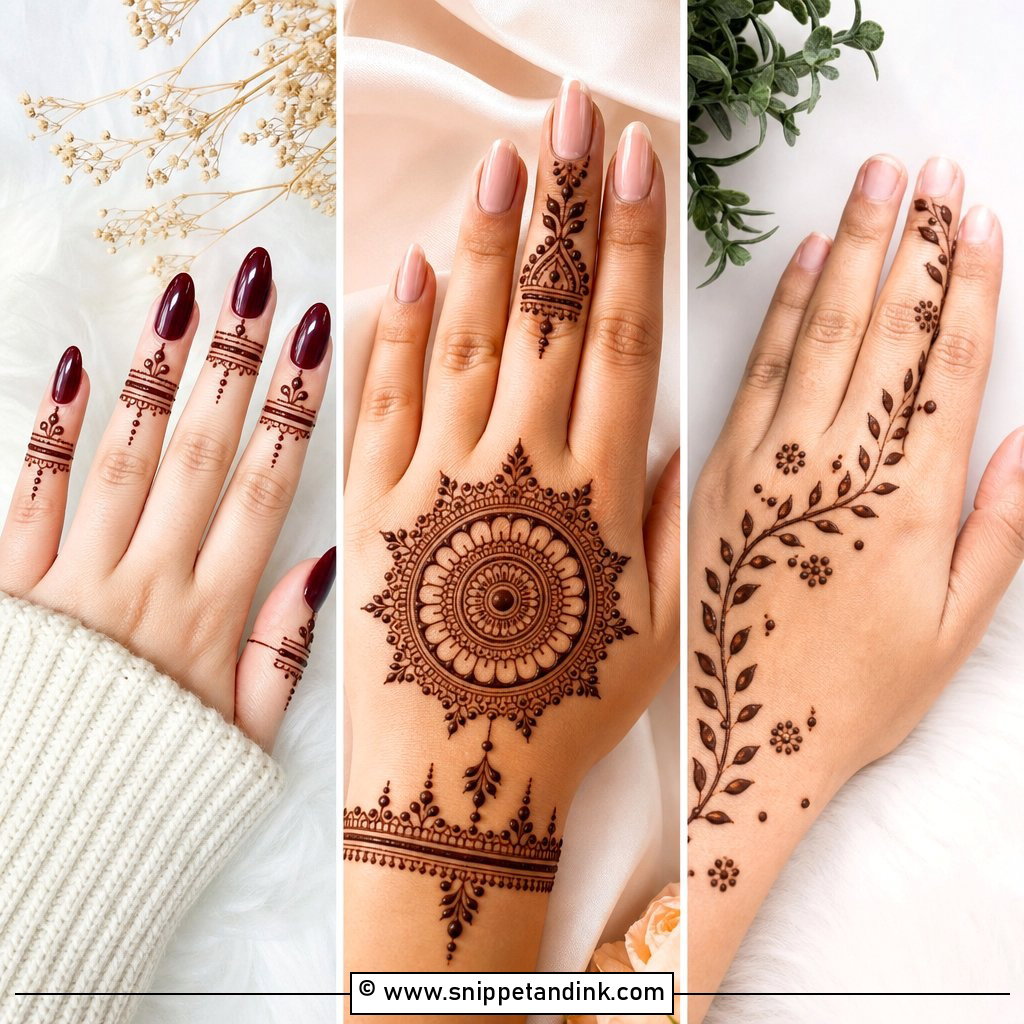
15. Bridal Mehndi With Lotus Design
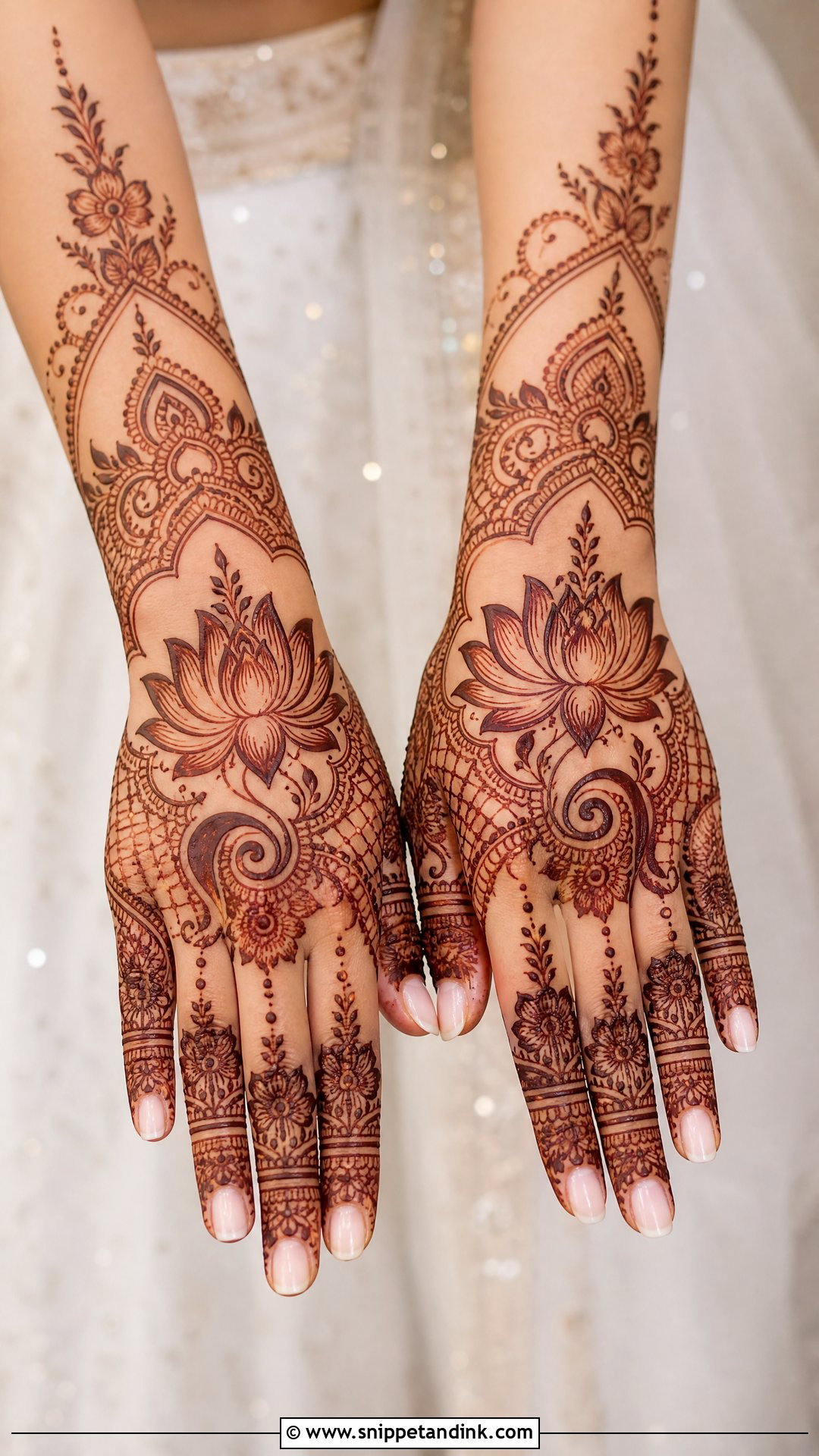
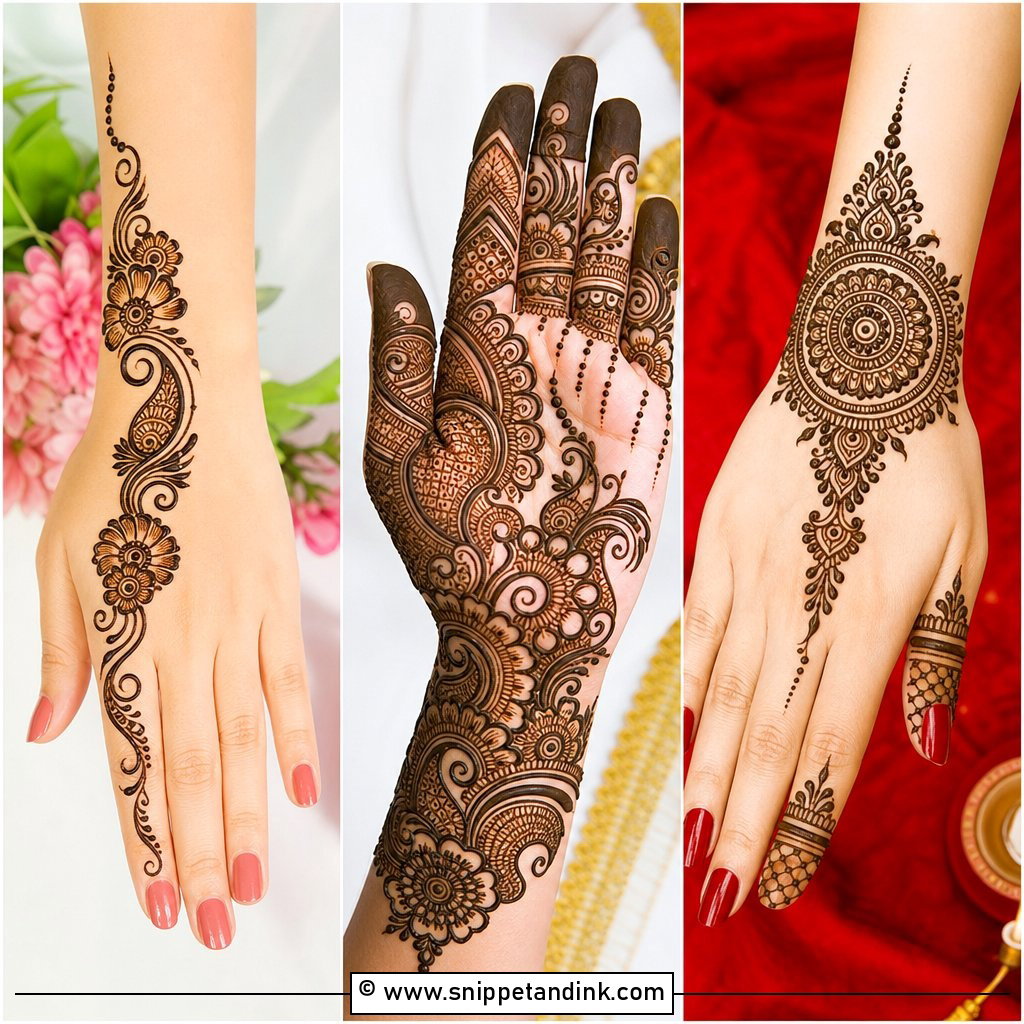
The lotus is easy to read even in a busy design, because its layered petals make a clear shape. It works on the palm center, the wrist, the back of the hand or the forearm. For a modern look I draw one large lotus with bare skin around it; for a grand look I add paisleys, jaali, vines and detailed fingertips. It suits floral outfits and pastel themes.
16. Bridal Mehndi With Mandala Design
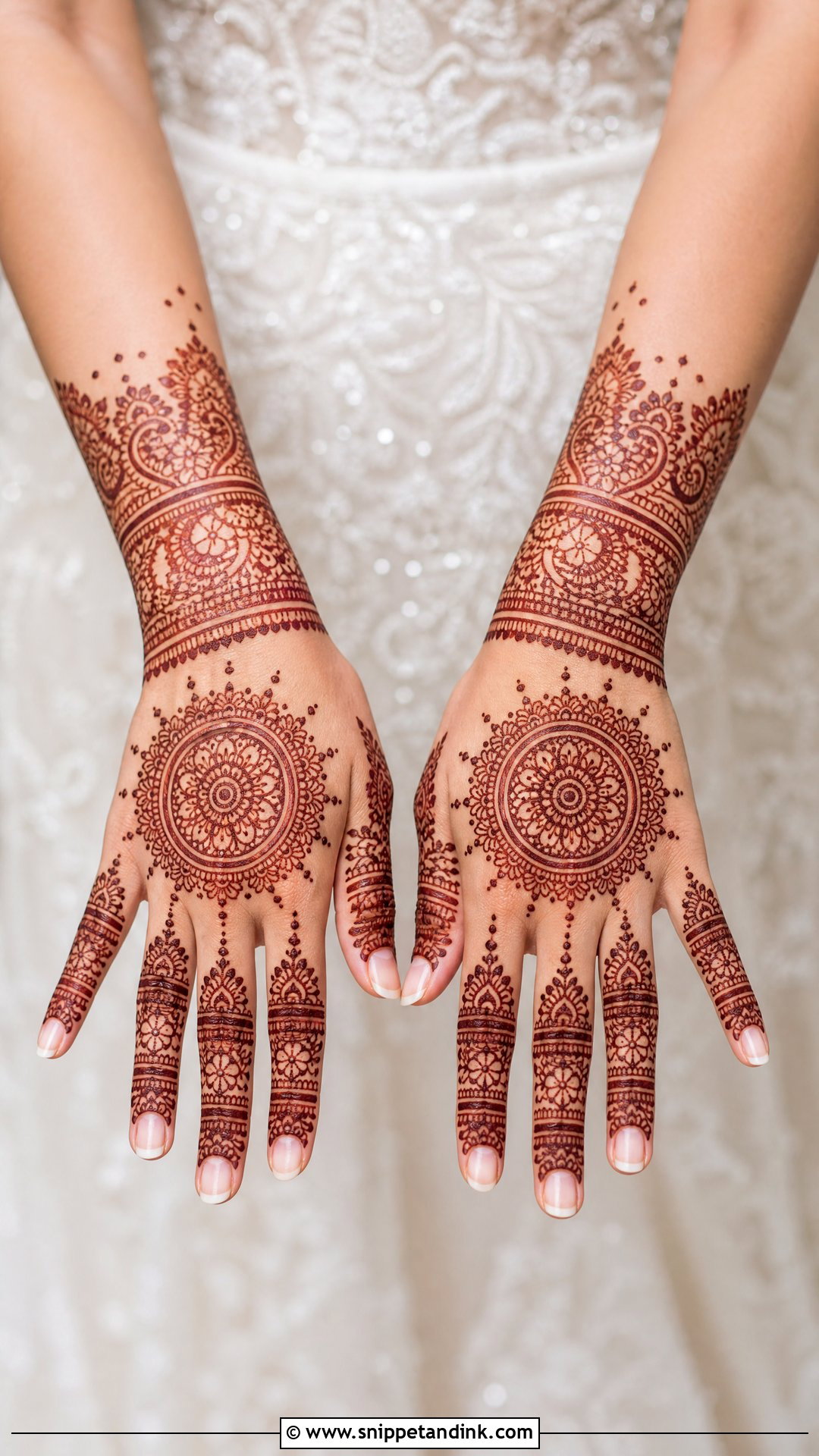
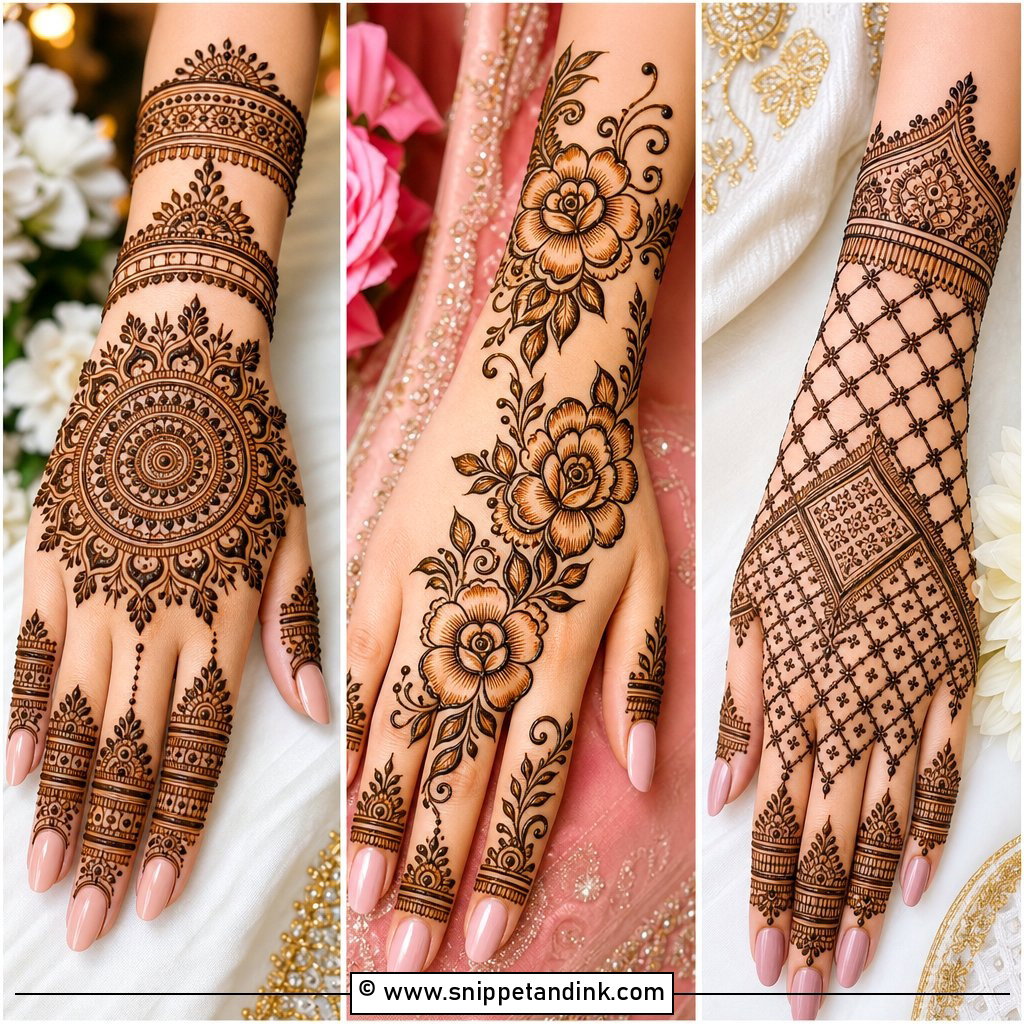
Mandalas suit brides who love symmetry. I place one in the center of the palm, on the back of the hand, or as a matching focal point on both hands, then add finger bands, florals, dots and bracelet cuffs around it. Drawing a true circle freehand takes practice, and an uneven mandala is the first thing people notice. Dense fillers around it read traditional; open space reads modern.
17. Bridal Mehndi With Paisley Design
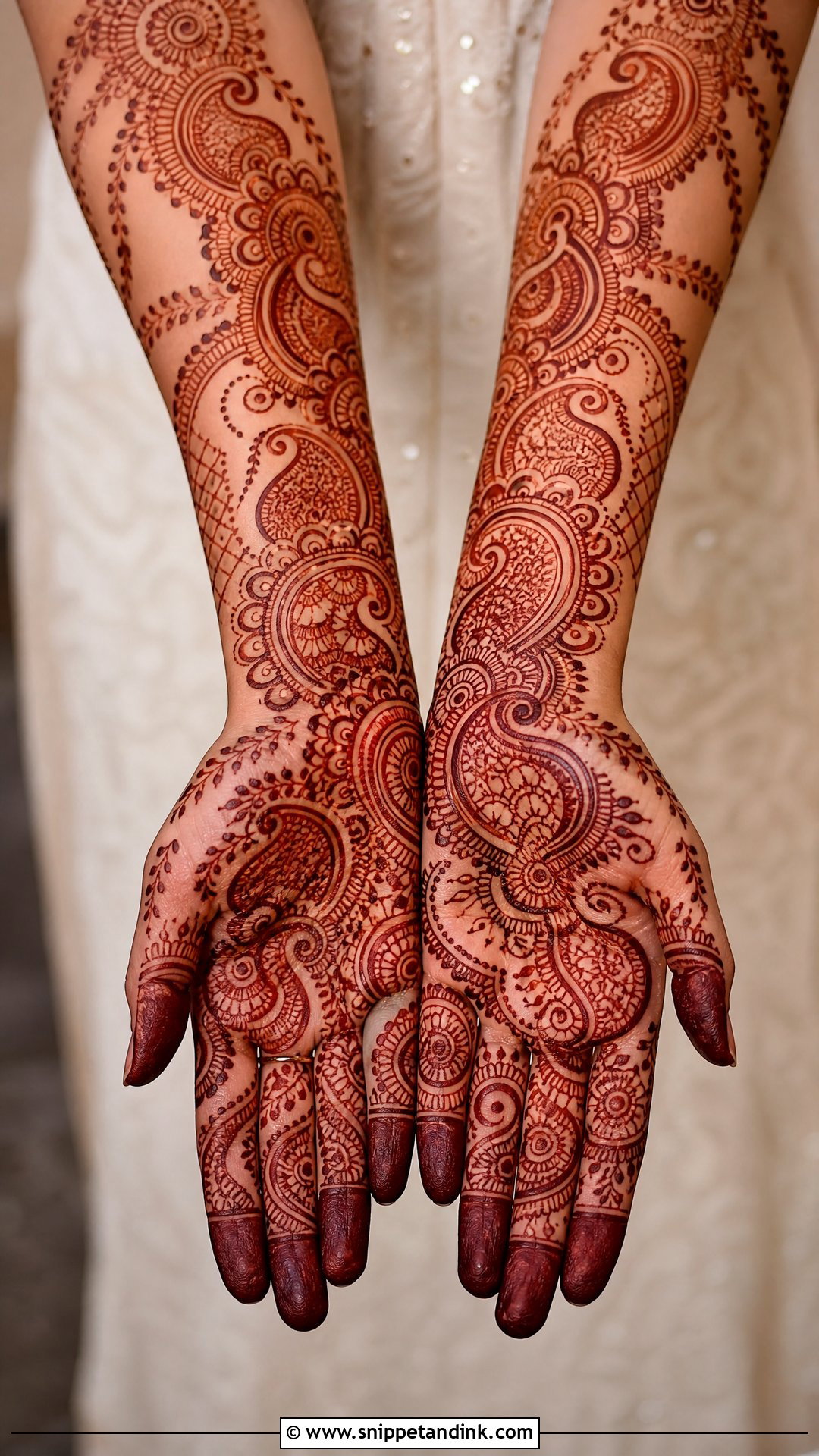
Paisleys are endlessly adaptable: arranged across the palm, joined into trails, layered on the forearm or mixed with flowers and peacocks. Their curved shape makes the hand look longer. Inside each one I can add petals, dots, swirls, checks and fine lines. Larger paisleys on the palm and smaller ones on the fingers and wrist keep the proportions right. It’s full coverage without portraits or trend-driven elements.
18. Bridal Mehndi With Jaali Design
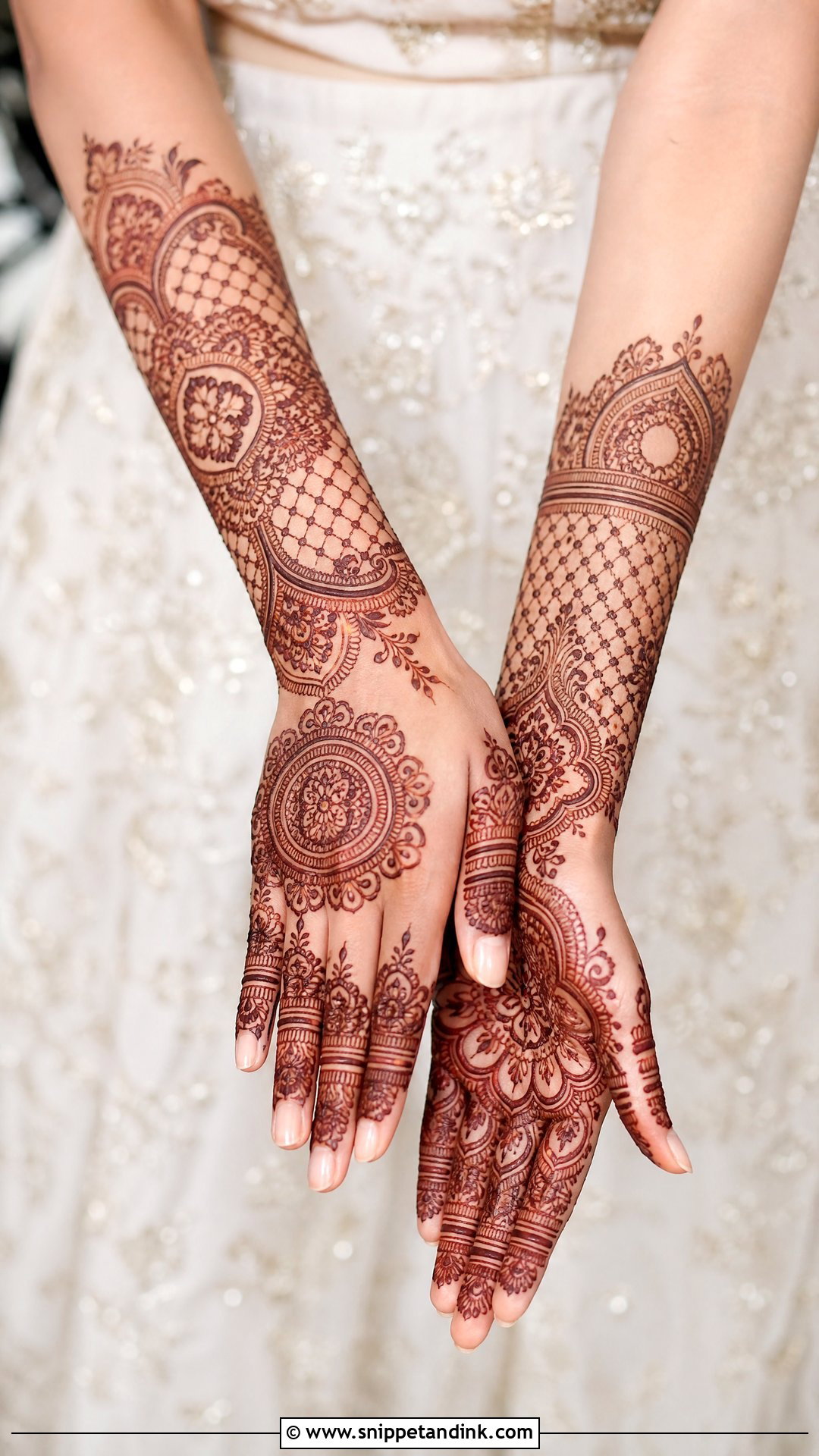
Jaali, or mesh work, gives a lace-like effect on the palm, back of the hand, fingers or forearm. It’s often paired with florals, mandalas and bold borders for contrast. The grid has to be even, and the boxes shouldn’t be too small; tiny boxes fill in as the paste spreads and the stain looks like a solid patch. I use a fine cone tip and work slowly here. It looks sharp next to rings, bangles and embroidered sleeves.
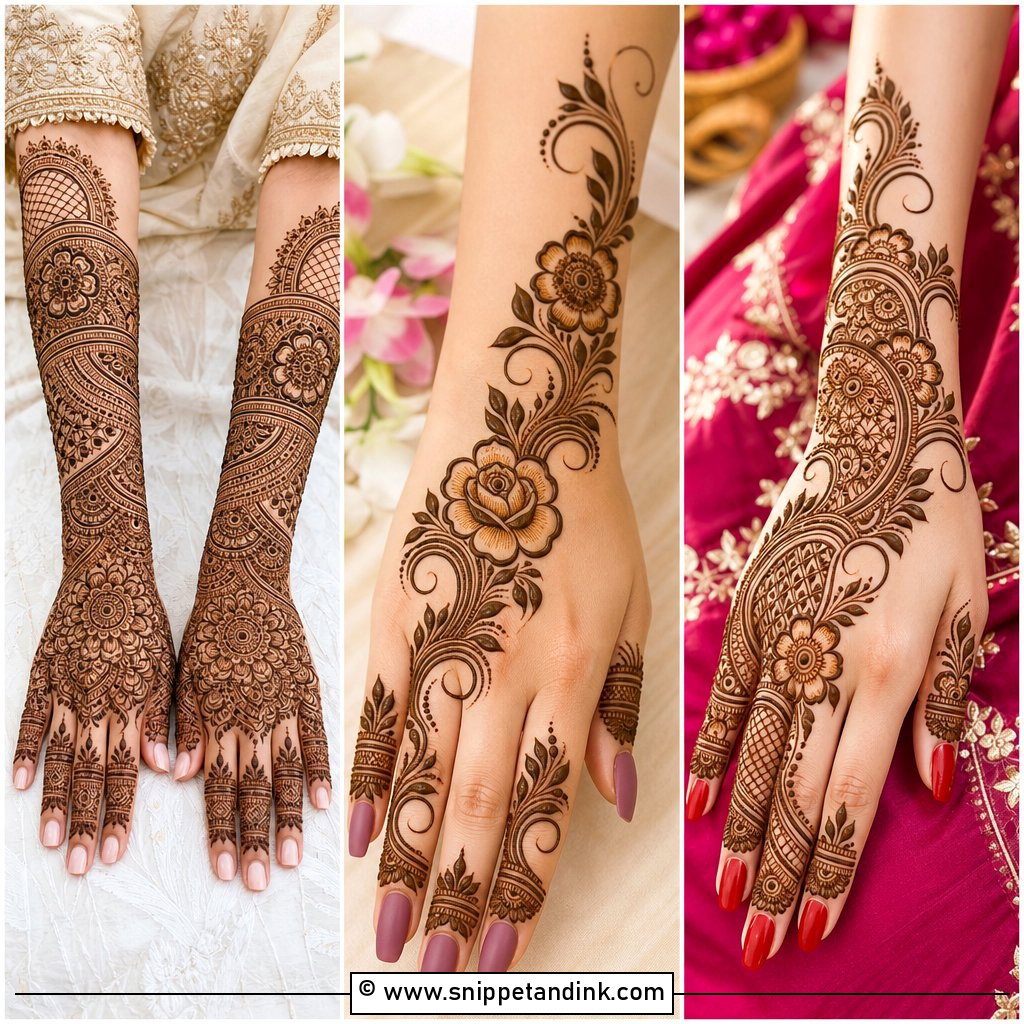
19. Bridal Mehndi With Floral Design
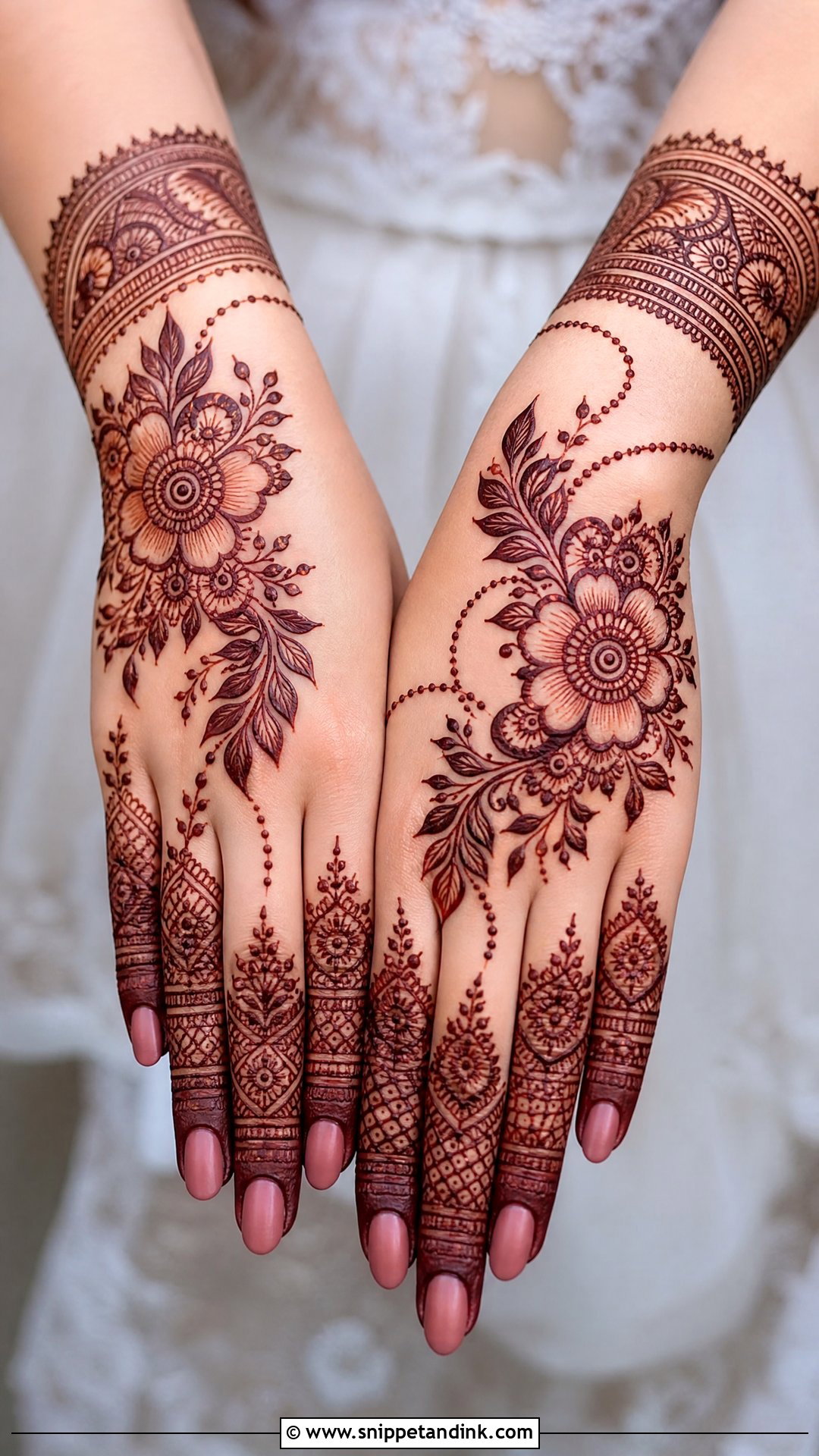
Florals are the most flexible motif in mehndi: roses, lotus petals, small blossoms, leafy vines and shaded clusters all fit Arabic, Indian, Indo-Arabic and minimal designs. A full floral hand feels romantic, while a single trail feels light. I put the largest flowers where they’ll be seen, the palm center or the back of the hand, and finish with detailed fingers, wrist bands and dots so it reads as bridal.


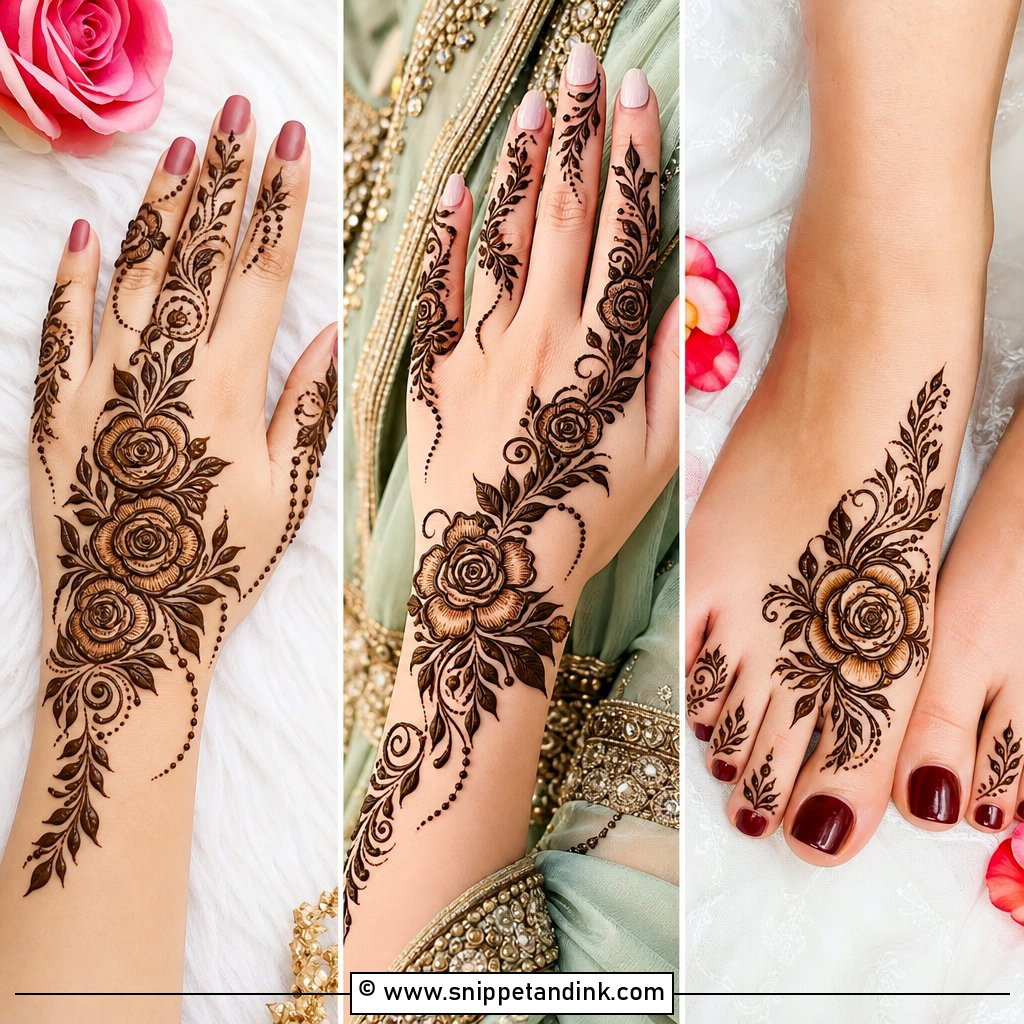


20. Bridal Mehndi With Rose Design
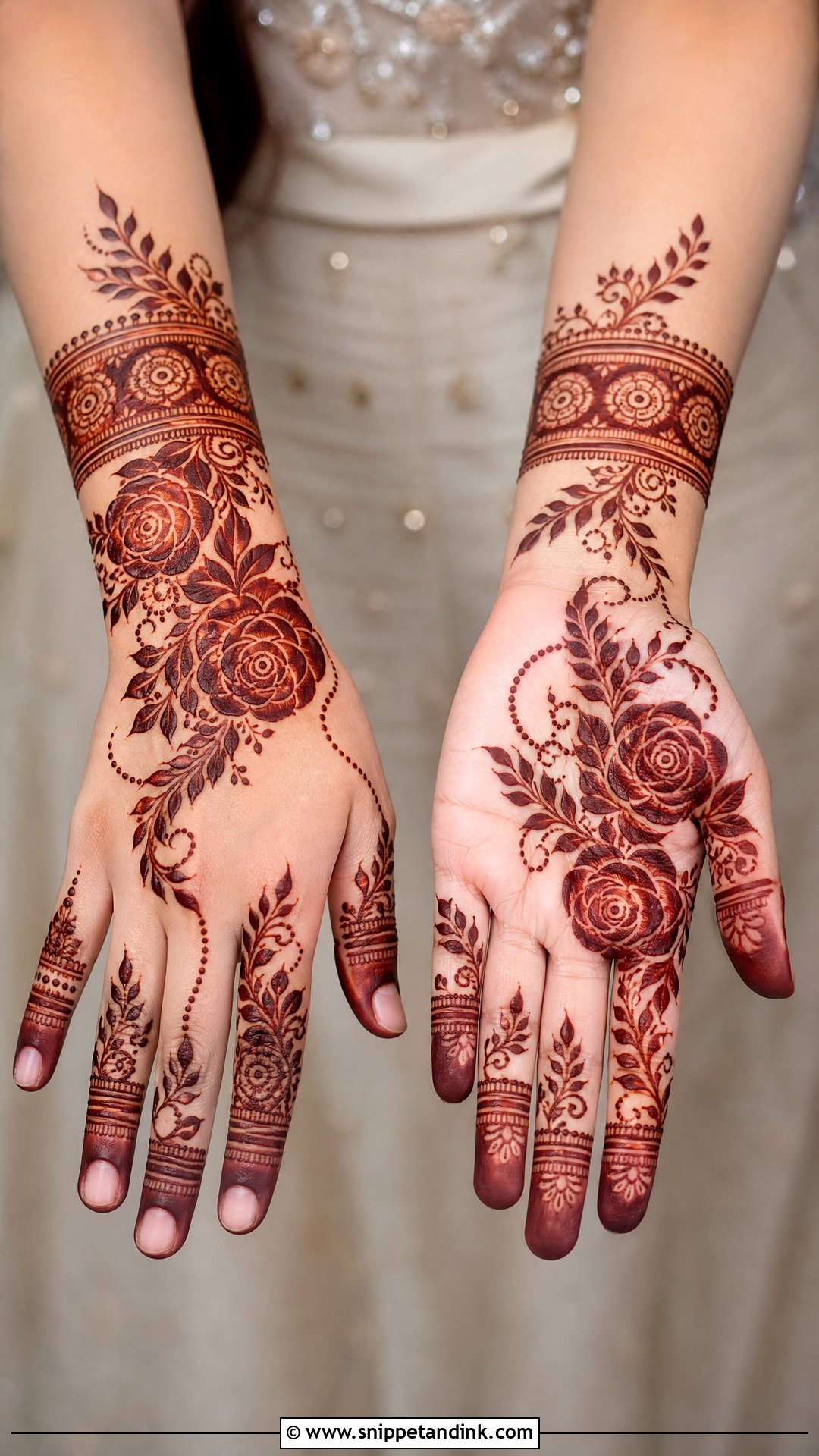
Roses give the hand a softer, more modern feel than peacocks and paisleys. I draw them as bold blooms on the back of the hand, delicate trails along the fingers or layered flowers at the wrist. Rose petals need a little shading to look round, so I add fine lines inside each petal. Leafy vines, dotted curves and slim finger bands complete it. Matching the placement on both hands makes it look intentional.
21. Bridal Mehndi With Haath Phool Design
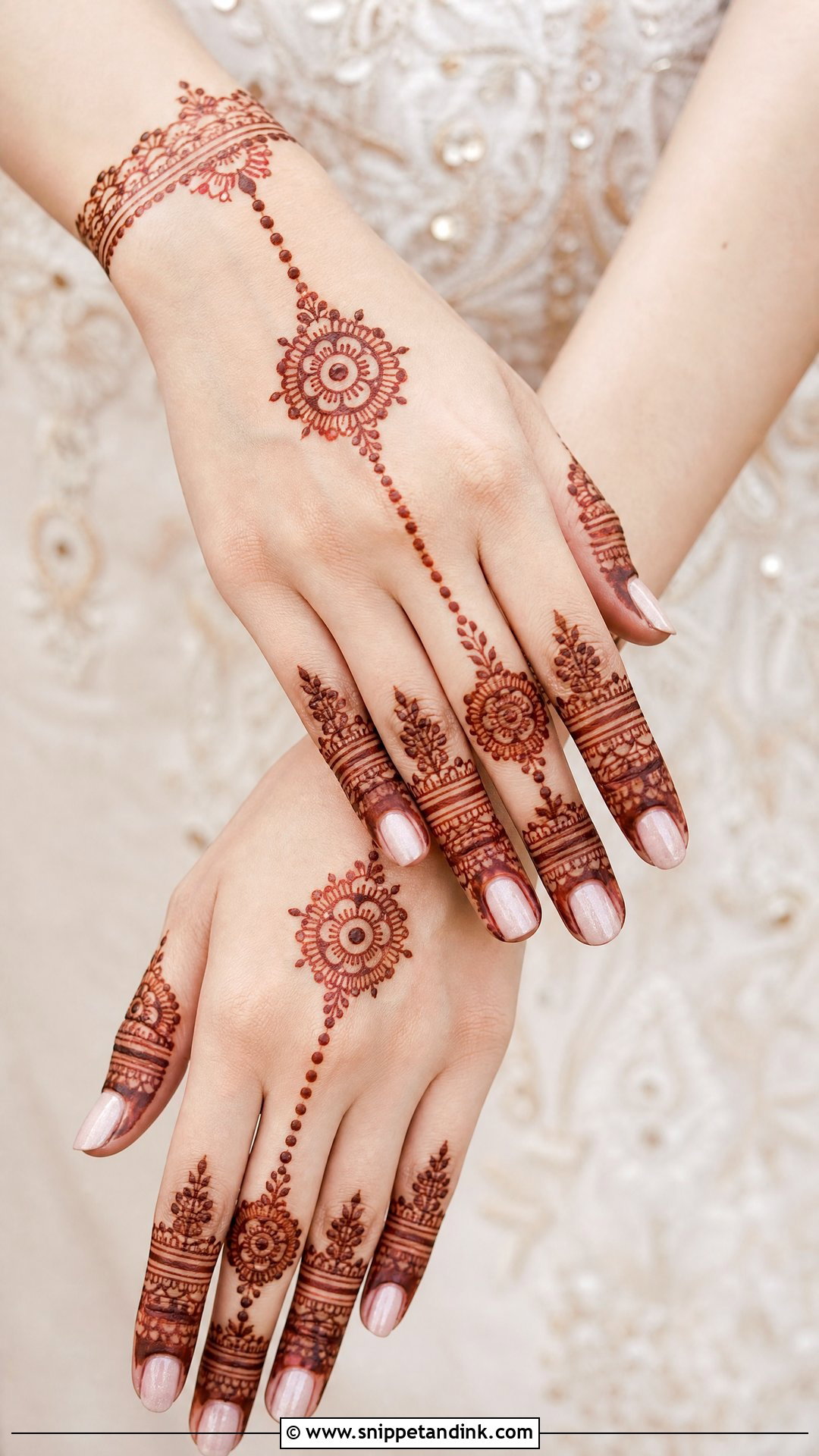
Haath phool designs look like jewelry drawn in henna: a wrist bracelet linked to finger rings by chains, dots, leaves or floral lines. They’re most popular on the back of the hand, framing real rings and bangles. For a bride I make the wrist cuff stronger, the finger patterns neat and add a central flower or mandala. It works best when the drawn jewelry and the real jewelry don’t overlap, so bring your pieces to the appointment.
22. Bridal Mehndi With Bracelet Design
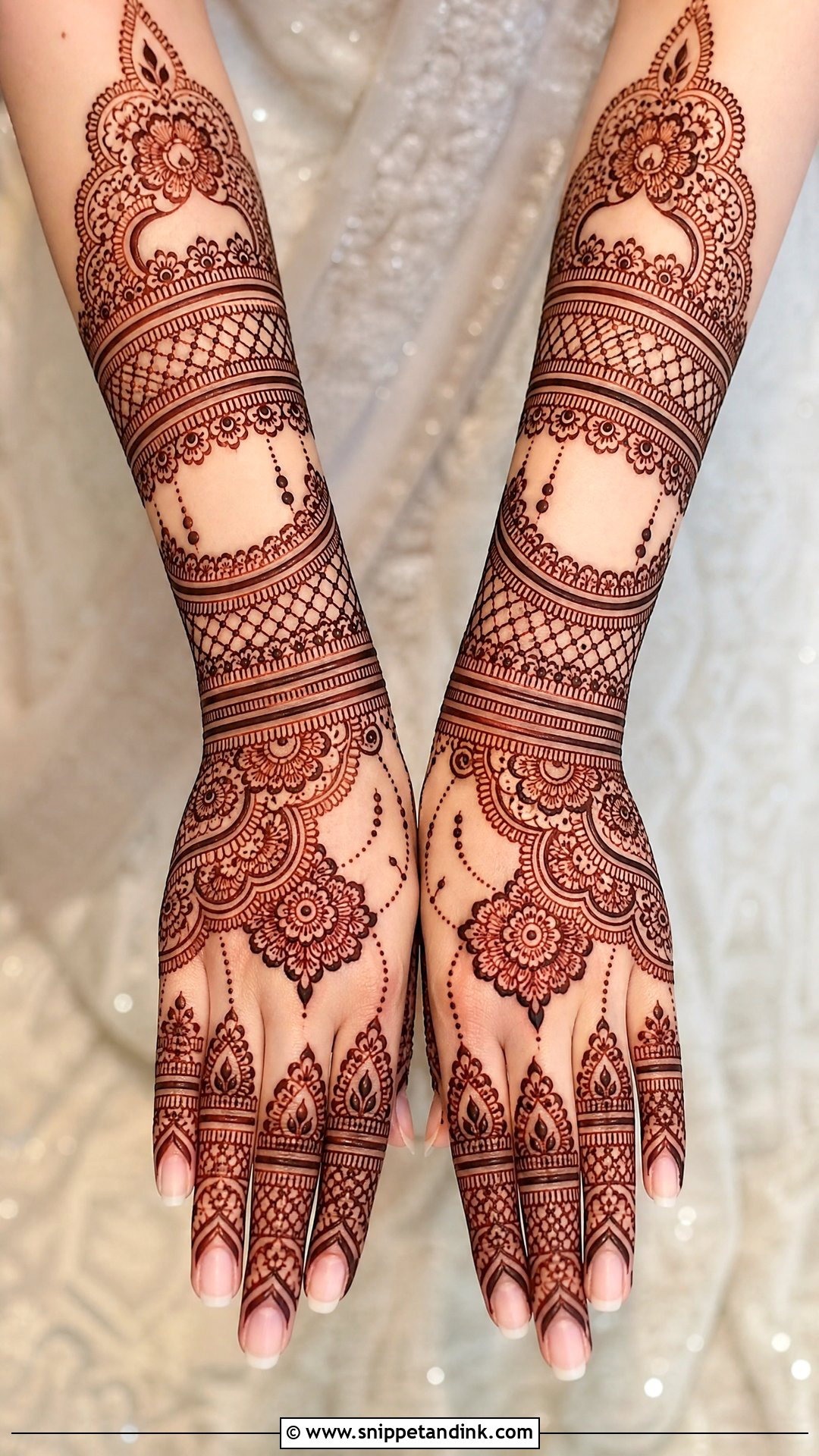
Bracelet designs focus on the wrist and lower hand, with floral bands, jaali strips, paisley borders, dots and geometric lines creating the look of stacked bangles or cuffs. The palm or back can stay lighter so the wrist stands out. The wrist crease is tricky, because it bends while the paste dries, so I ask brides to keep their wrists still for the first half hour. It’s useful with short or sheer sleeves, and with kaleeras.
23. Bridal Mehndi With Finger Design
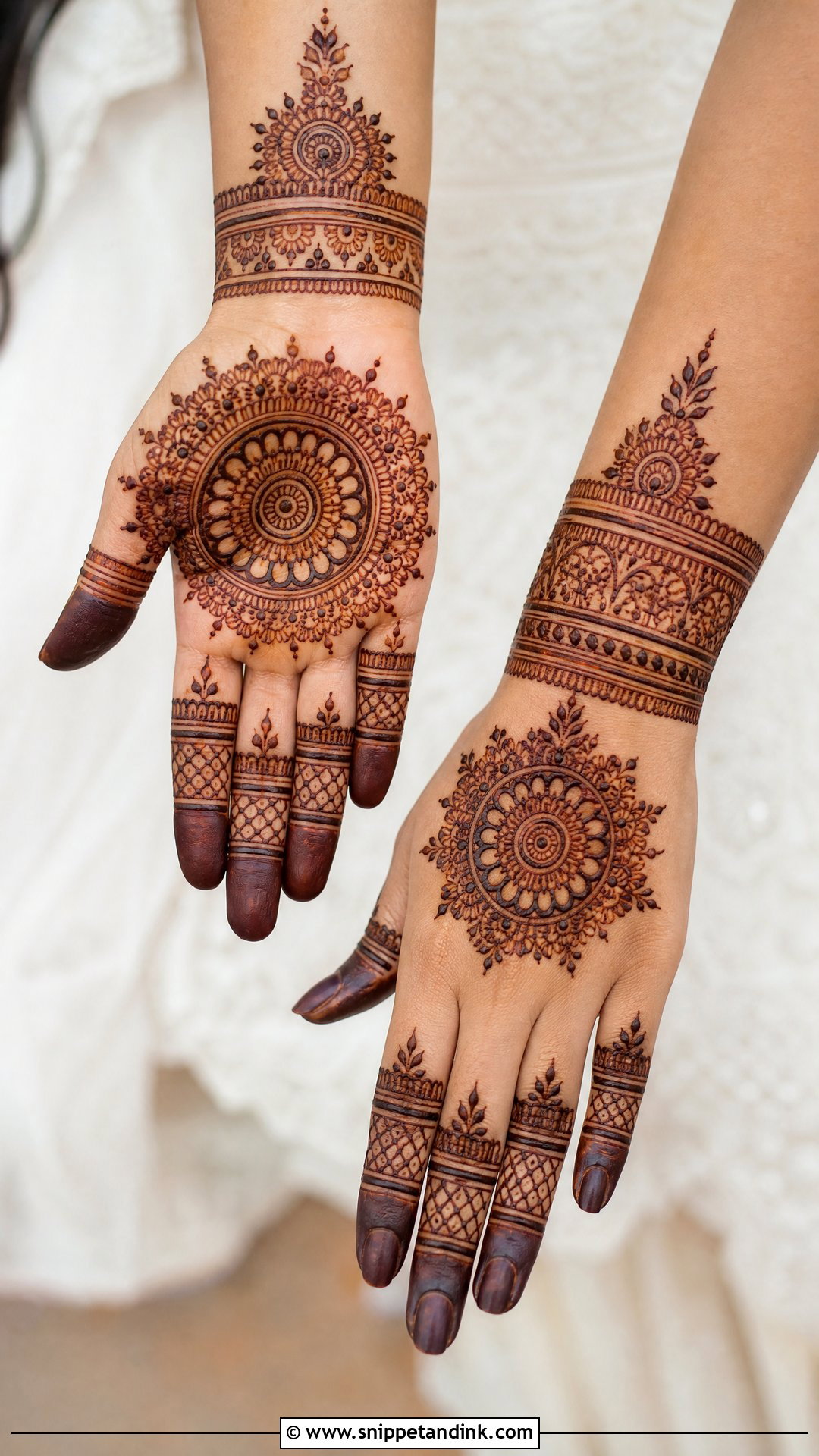
Fingers get the most attention in close-up ring photos, so this design gives them extra detail: bands, leafy tips, net patterns, small florals, dots and shaded caps. The rest of the hand stays balanced with a palm mandala, a back-hand trail or a bracelet wrist. I sometimes alternate finger patterns for a modern look instead of repeating the same one five times. Filled fingertips create a stronger traditional effect, and fingertips stain very dark because the skin there is thick.
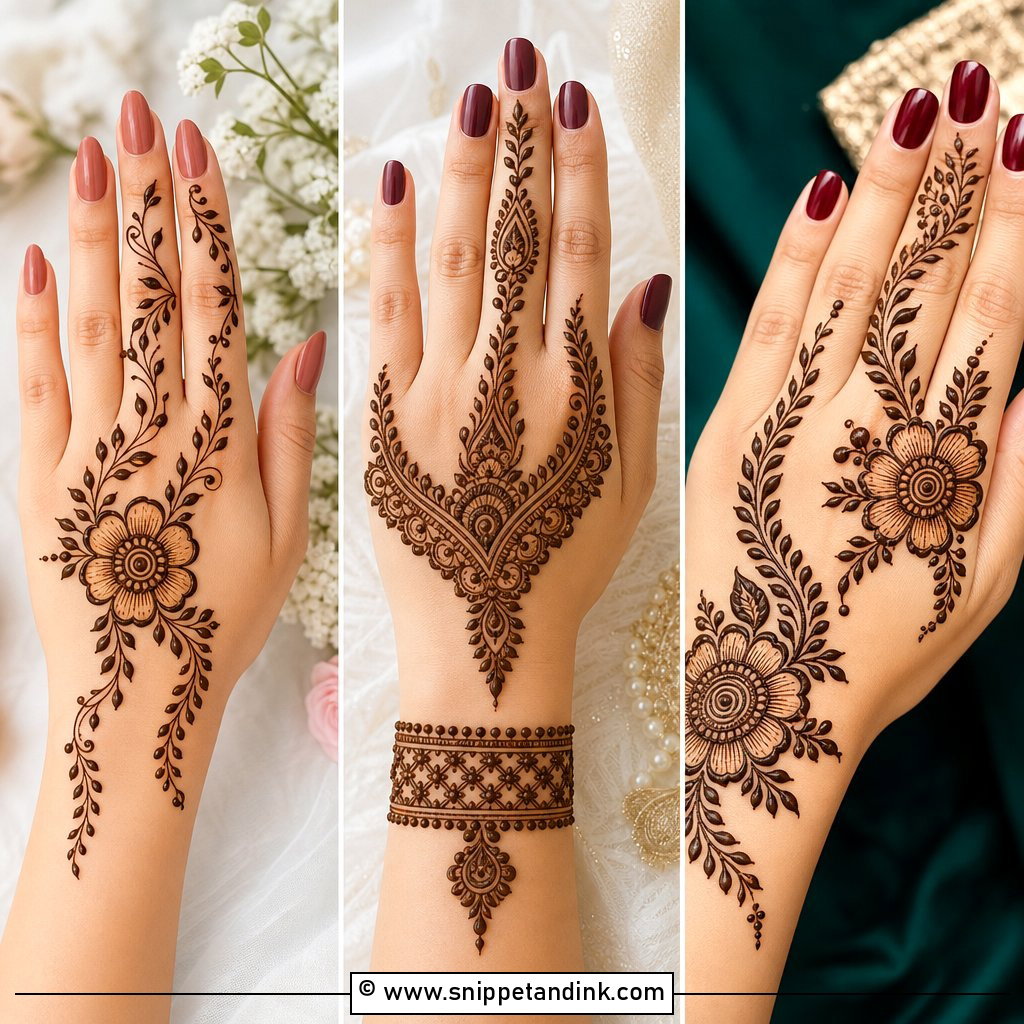
24. Bridal Mehndi With Negative Space Design
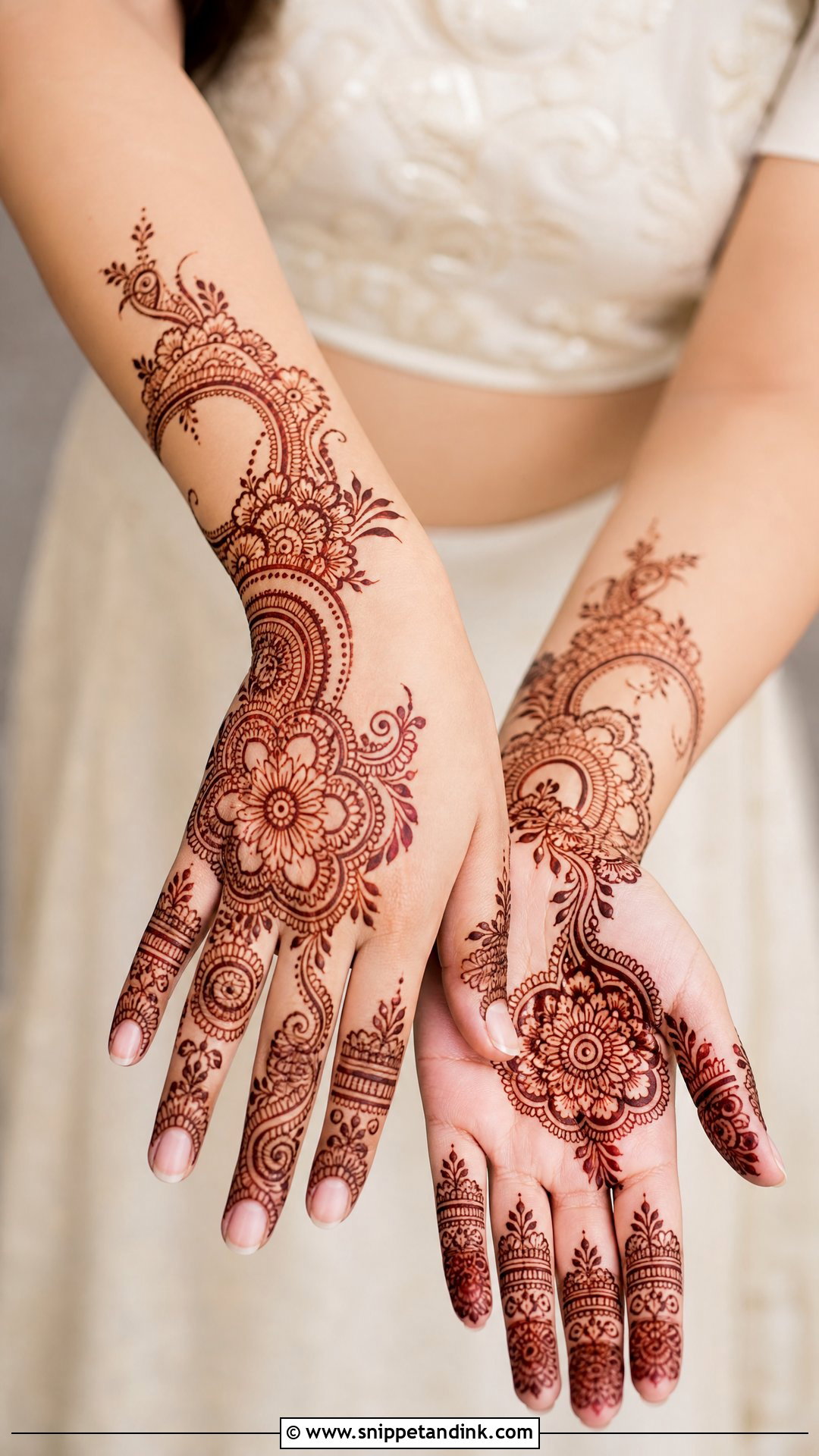
Negative space means leaving open areas around bold motifs so flowers, mandalas, paisleys or geometric lines stand out. It looks modern and clean. The risk is a hand that looks unfinished, so I keep the wrists and fingertips slightly detailed. Fine borders and neat shading help. The contrast between bare skin and stain is what makes it clear in photographs.
25. Bridal Mehndi With Geometric Design
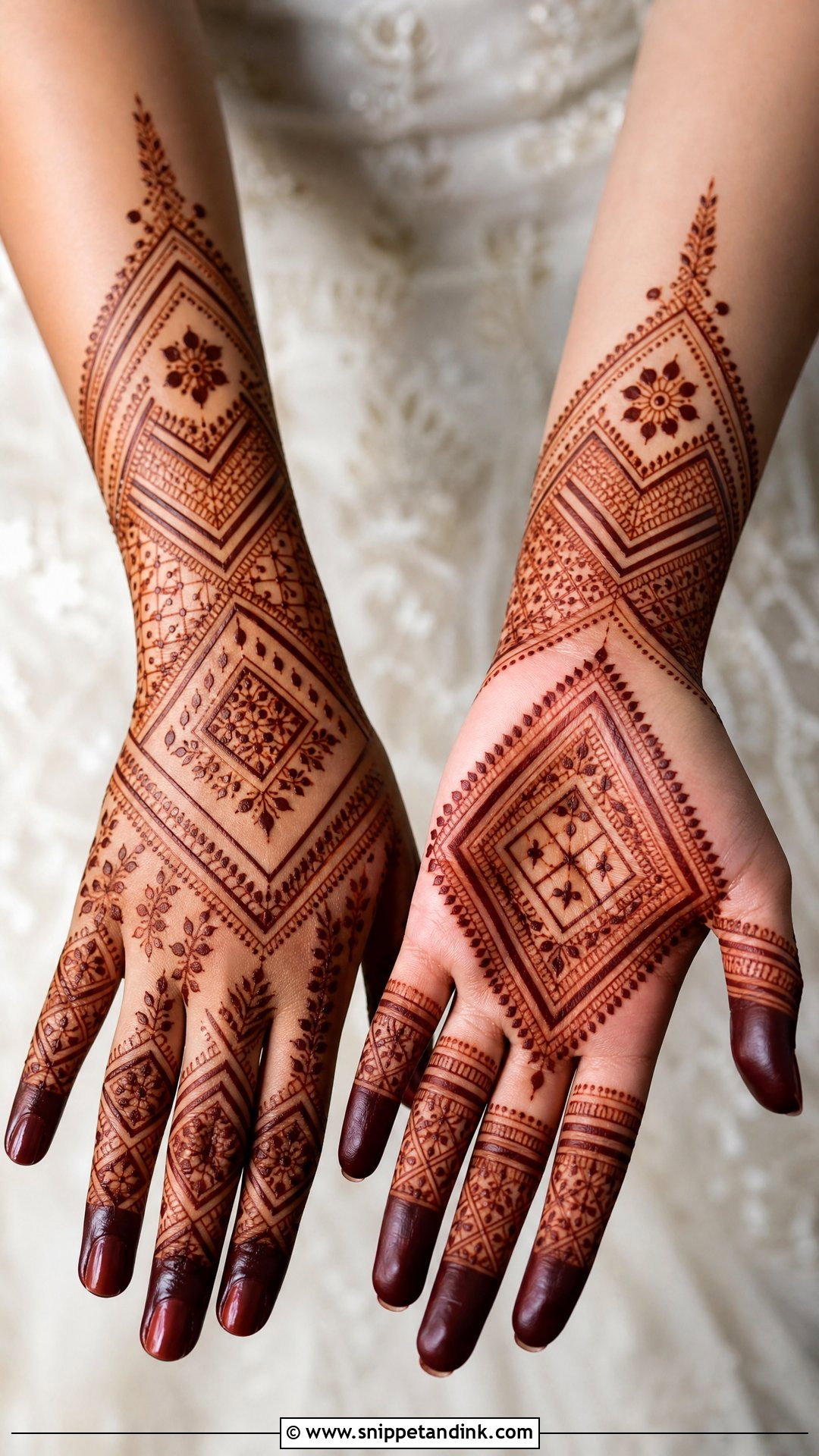
Geometric designs use diamonds, grids, chevrons, triangles and symmetrical panels instead of curves. They look sharp on the backs of hands, fingers and wrists. Straight lines are harder to draw freehand than curves, and uneven spacing shows immediately, so this needs a steady hand. I usually soften the geometry with a few florals, a mandala or paisleys so it still feels bridal.
26. Moroccan Bridal Mehndi Design
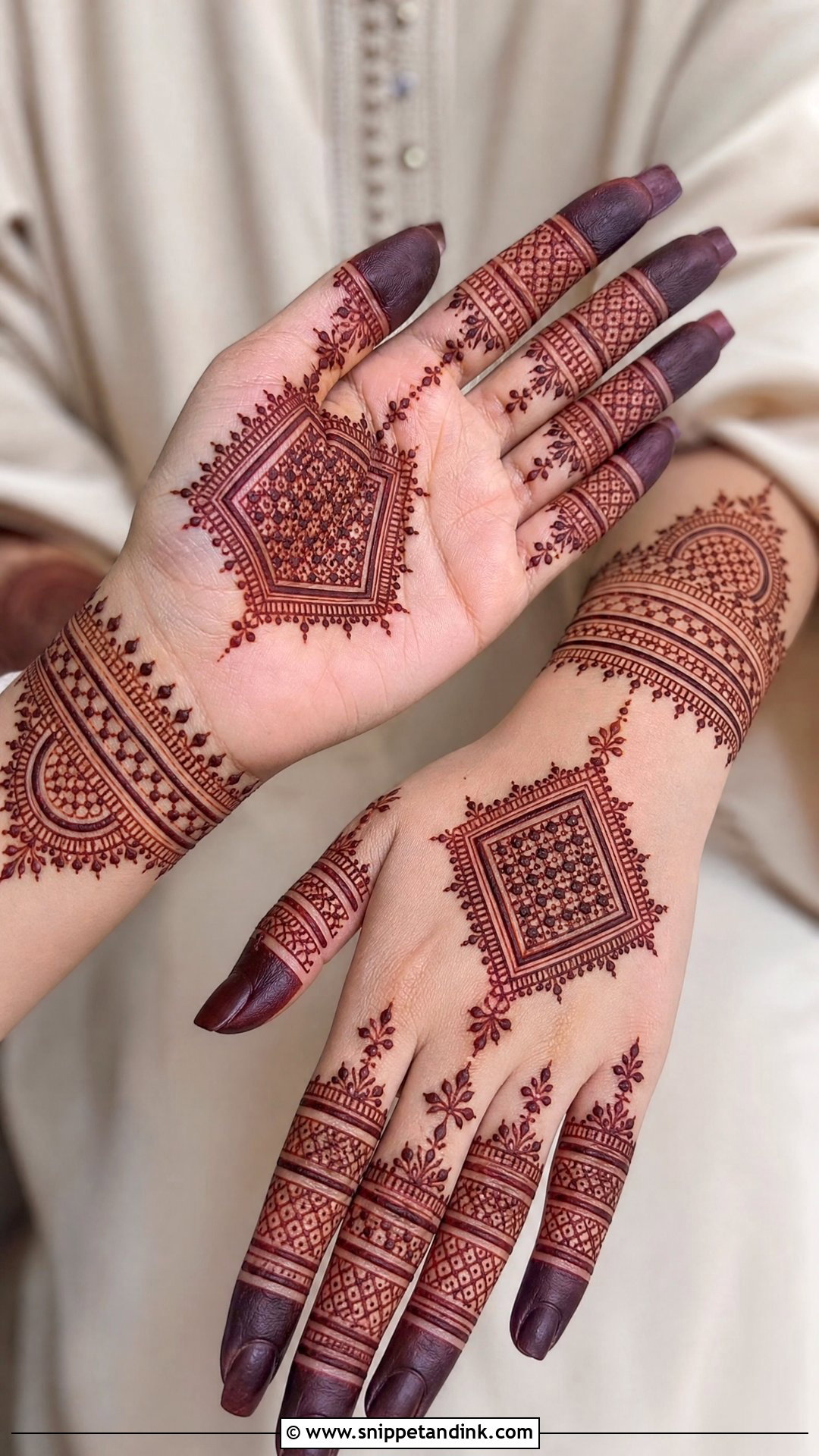
Moroccan designs use clean lines, diamond shapes, grids, dots and structured panels, with fewer florals than Indian or Arabic styles. They cover the palm, fingers, wrist and back of the hand in balanced sections. Long fingers suit them especially, since the bands emphasize length. I add small floral accents or a central mandala so the design doesn’t feel too plain for a wedding. It photographs clearly.
27. Gulf Bridal Mehndi Design
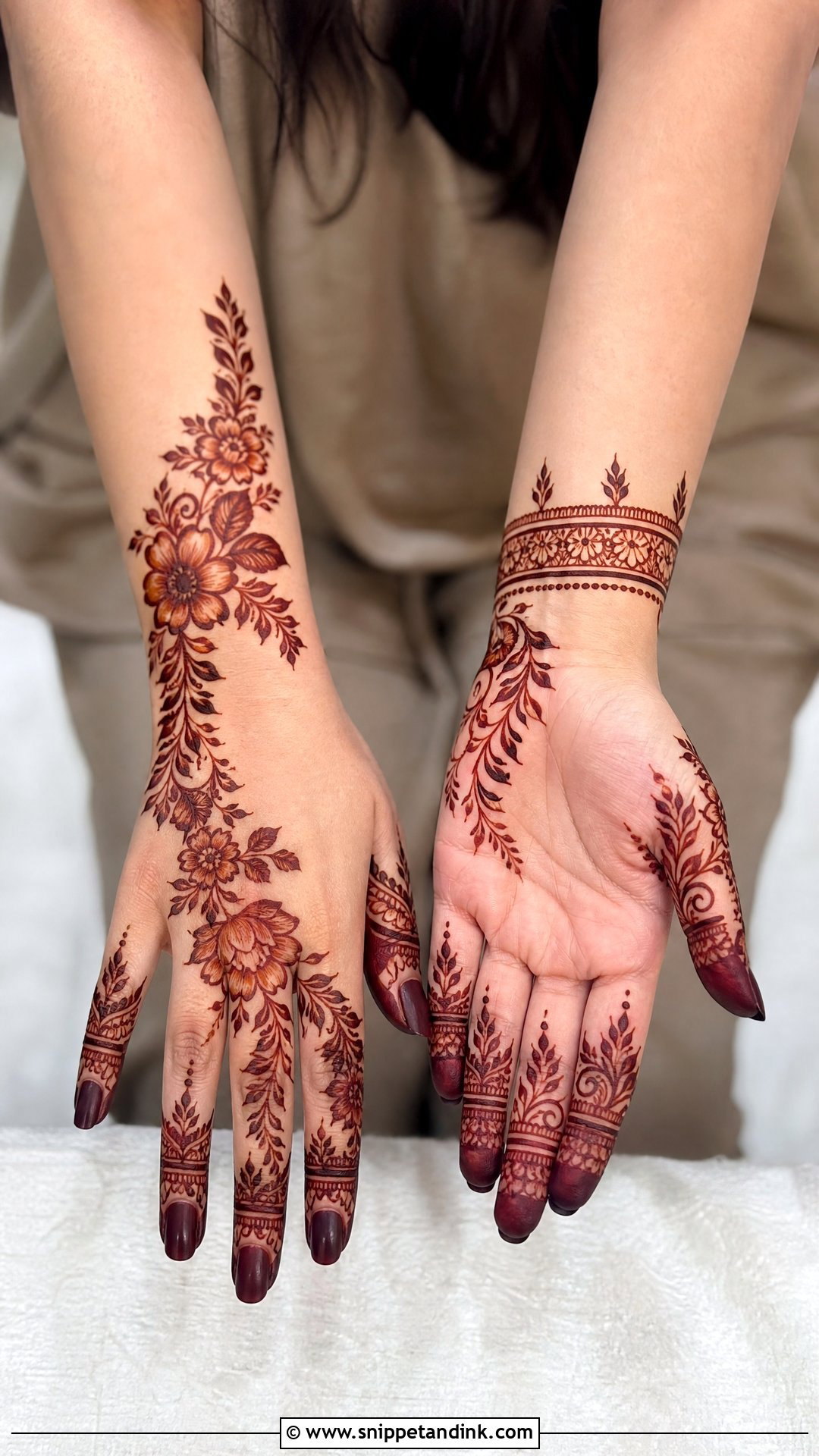
Gulf mehndi, also called Khaleeji style, uses bold florals, leafy trails and shaded petals in an open, flowing layout. It feels rich without being crowded. The flowers are larger, and I fill their petals with shading rather than fine detail, so the stain looks bold. Some skin stays visible for contrast. Wrist cuffs, filled fingertips or fine dots make it more bridal. It looks lovely with gold jewelry.
28. Rajasthani Bridal Mehndi Design
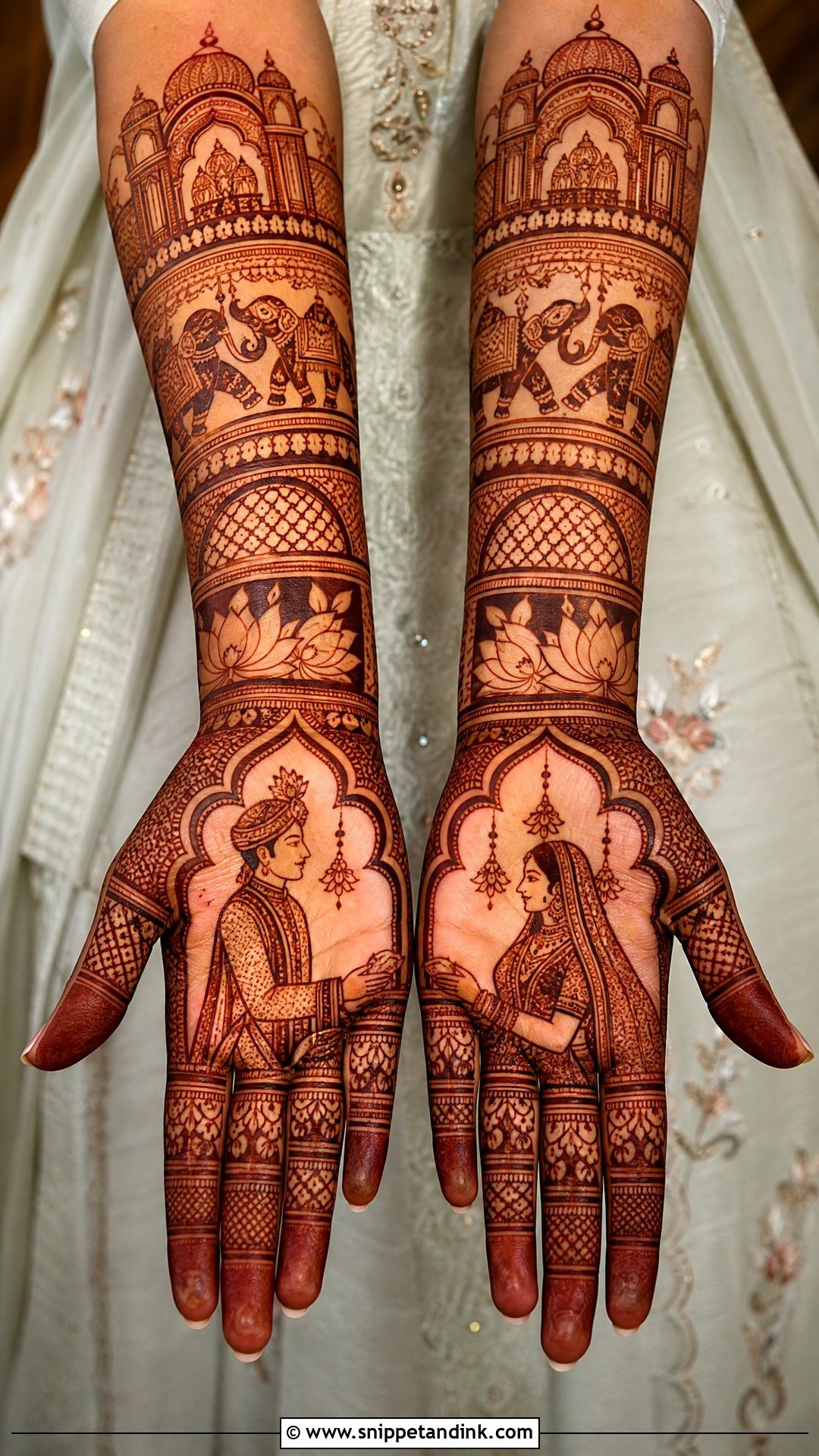
Rajasthani designs are dense and full of story: bride and groom figures, palace arches, elephants, peacocks, dhol motifs and lotus borders. The palms usually carry the main scene, with ornamental bands up the wrists and forearms. This is one of the longest applications in this list, and it needs patience from both of us. I keep the larger figures clear and place the fine filler carefully around them. Traditional jewelry and rich colors suit it.
29. Marwari Bridal Mehndi Design
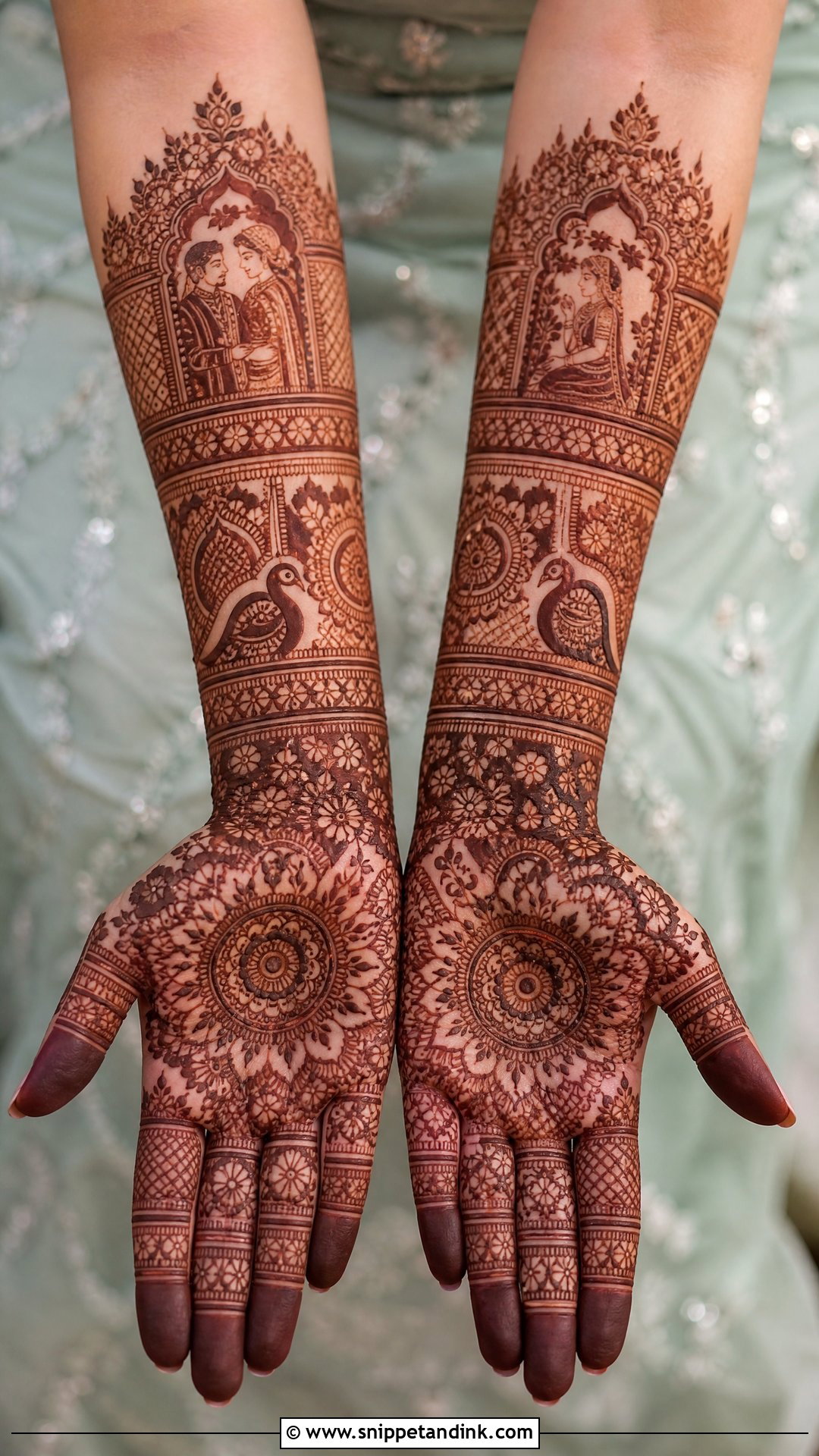
Marwari designs are known for full coverage, fine detail and traditional motifs, including paisleys, mandalas, peacocks, bride-groom art and layered wrist-to-forearm sections. Dense but organized is the goal. Hidden initials or small wedding symbols can be added. Because the lines are so fine, the paste has to be smooth, without lumps that clog the cone. It suits a classic, ceremonial wedding.
30. Modern Bridal Mehndi Design
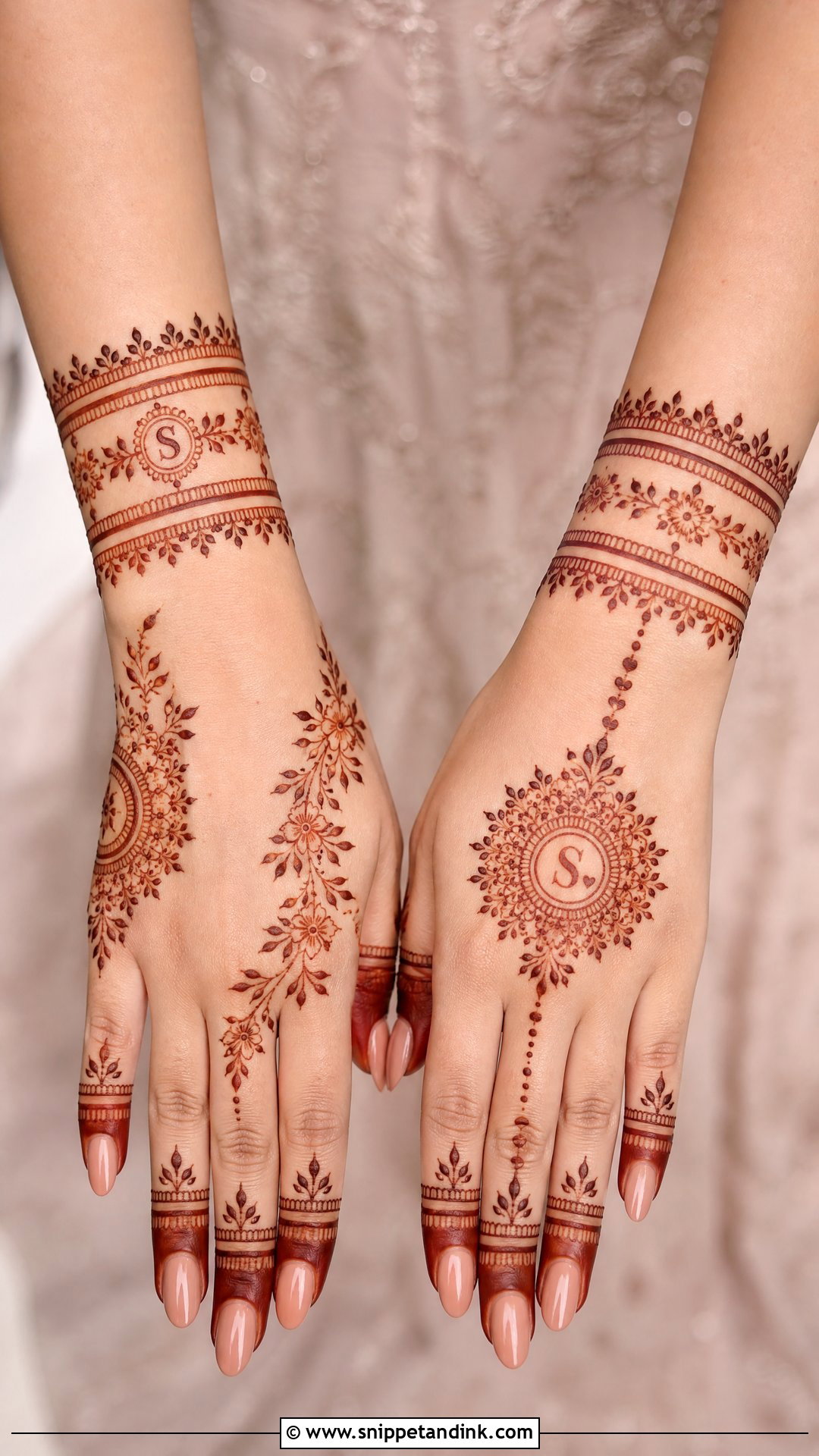
Modern designs mix tradition with a lighter hand: minimal mandalas, clean floral trails, initials, geometric borders, negative space, bracelet bands and soft finger detail. Some brides choose only the back of the hand; others pair a simple palm with a detailed wrist. I ask brides to choose one or two main features and let everything else support them, so the hand looks designed rather than unfinished. It suits fusion outfits and destination weddings.
Sitting Still for Hours: What Heavy Coverage Really Takes
A full bridal hand and forearm on both sides can take several hours of application, plus drying time. Brides often underestimate this. Eat before we start, use the bathroom, and have someone ready to hold your phone and feed you snacks. Once the paste is on, your hands can’t do much until it dries. If you’re having your feet done too, plan for an even longer session or split it over two sittings.
Black Cones, Chemical Cones and Why I Mix My Own Paste
Real henna never stains black. Cones that promise a black or instant stain usually contain added dyes, and some contain PPD, a chemical that can cause blistering, scarring and lasting allergies. I mix my paste fresh from henna powder, lemon juice, sugar and essential oil, so I know what goes on your skin. Ask your artist what’s in their cones. If you have sensitive skin, ask for a small patch test a few days before, on the inside of your arm.
- Natural paste smells earthy or of the essential oil used, not of chemicals.
- Fresh paste is greenish brown, not jet black.
- A stain that appears instantly dark is a warning sign, not a bonus.
Coverage Is a Decision About Comfort as Much as Looks
Narrowing thirty designs gets easier when you think about coverage, how long you can sit, your outfit and the photos you want. Indian, Rajasthani and Marwari designs feel grand and traditional; Arabic, Gulf, minimal and modern designs feel lighter. Initials, dates and portraits make it personal. Save a few clear reference photos, talk to your artist about how far up the arm you want to go, and plan your timing around the stain. The best bridal mehndi is balanced, stains deeply and still feels comfortable to wear for the whole wedding.
You'll Like These Ideas:





Leave a Reply