
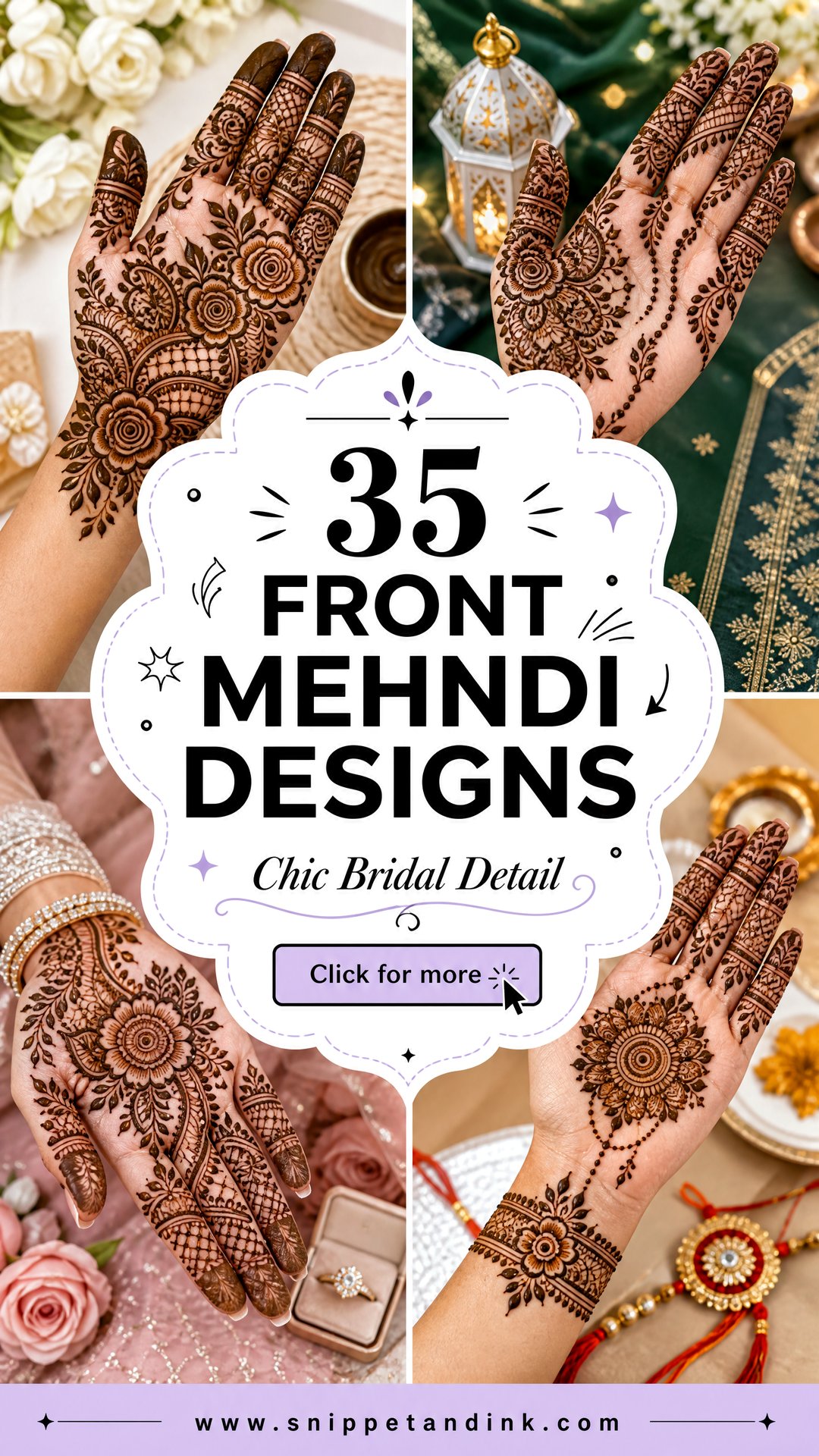
People see the front of your hands before almost anything else at a function: when you greet someone, hold a clutch, take a plate. So when a bride sits down at my table, the palm is where we spend most of our planning. The range is wide, from Arabic floral trails to dense Indian fills, mandala palms, fine khafif lines, Moroccan geometry and clean finger work. I’ve gone through 35 of them below, with what each needs from your hand, your outfit and your schedule, and where I’d push you toward something else.
Your Sleeves and Jewelry Decide Half the Design
I ask to see the outfit, or at least a photo of it, before I draw a bridal palm. The henna has to live with everything else you’re wearing, and a few details change the design more than any trend does.
Sleeve length
Elbow and three-quarter sleeves cut across the forearm. If the design ends just under the hem, it looks chopped off whenever your arm moves. I either stop the henna at the wrist with a finished cuff, or carry it well up under the sleeve so the edge is hidden.
Haath phool, kaleere and chooda
A haath phool’s chains run from a ring across the back of the hand to the wrist, and kaleere hang from the bangles. They rarely cover the palm, but a chooda sits over several inches of wrist. I plan the wrist cuff to finish above the chooda line, so it shows instead of being buried under red and white bangles.
Nails
Fingertip caps stain darkest and sit right next to your nail color. A deep red or maroon manicure blends with a heavy cap; a pale or nude one makes a dark cap look heavier. Have your manicure done before the mehndi sitting, since soaking and filing afterward fades the fingertips.
1. Simple Front Hand Mehndi Design
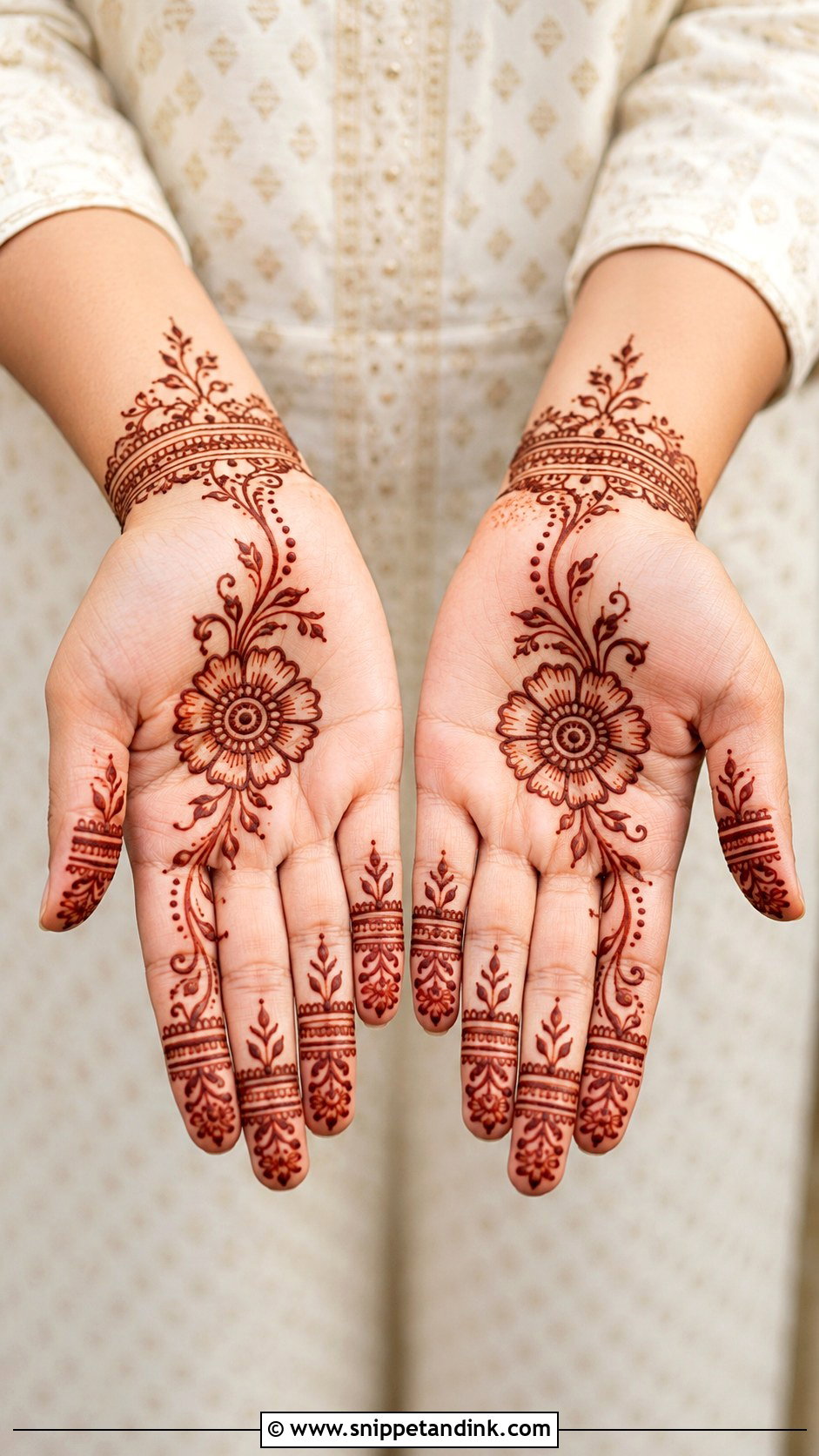
Short on time or new to henna? This is your design. A flower, circle or small paisley in the palm, light finger patterns, a soft line at the wrist, and lots of open skin. Every detail has room, so every detail stains clearly. I keep the lines a medium weight here rather than very fine, which gives a confident look even on a quick application.
2. Arabic Front Hand Mehndi Design
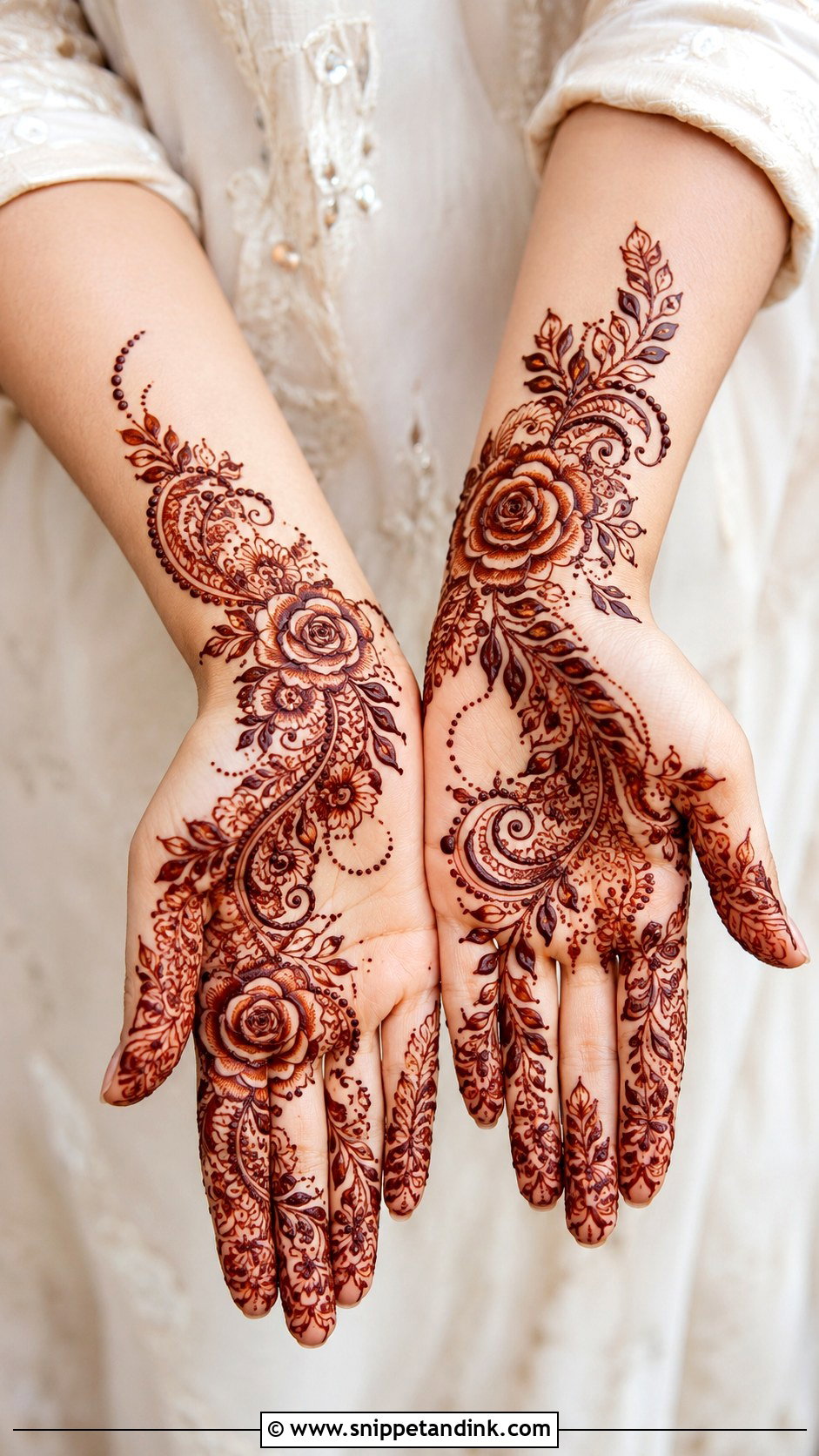
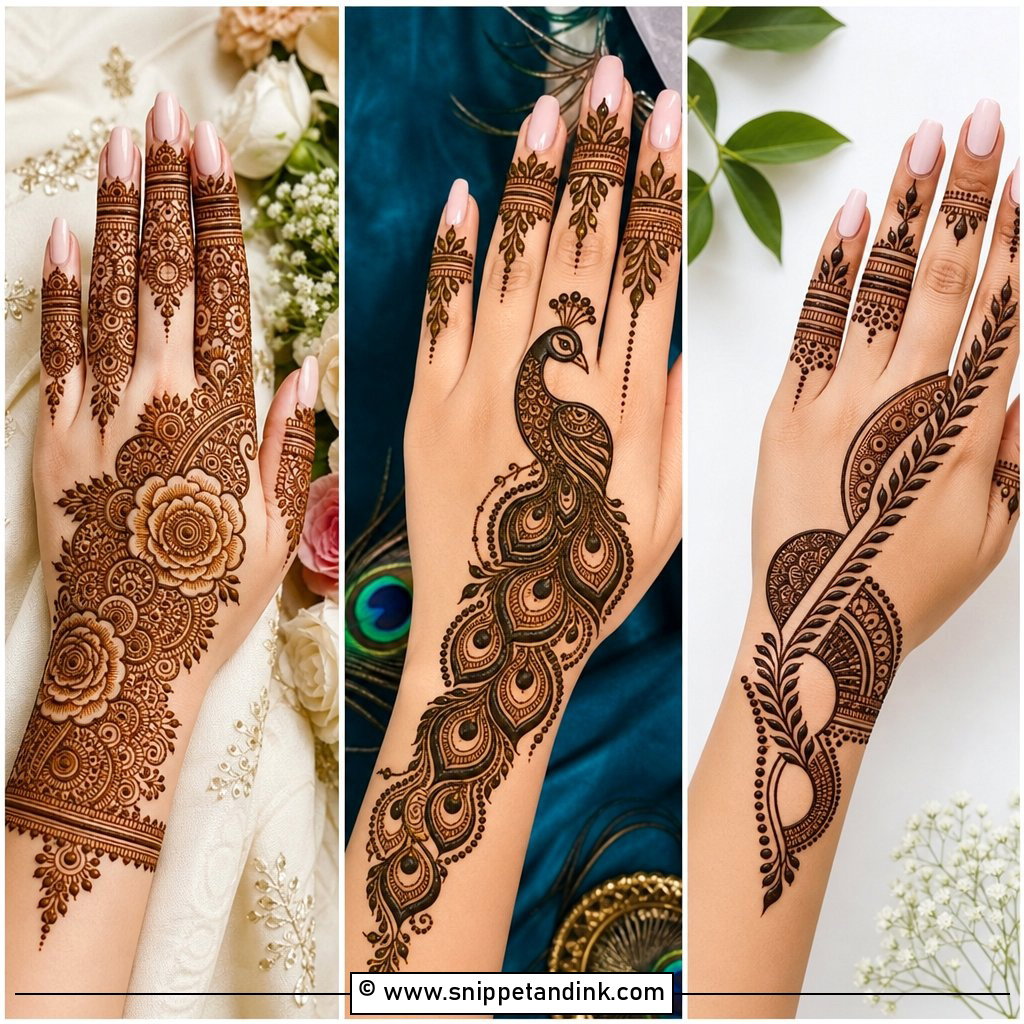
Big flowers, flowing vines and open spacing, running diagonally from the wrist across the palm to the fingers. Arabic work goes on much faster than dense bridal mehndi, which is why it’s my default for guests at a busy function. Rich on one side, open on the other: that contrast is the whole design. I place the largest rose first and let the trail grow from it, because starting at the wrist often leaves the main flower squeezed near the fingers.
3. Full Hand Front Mehndi Design
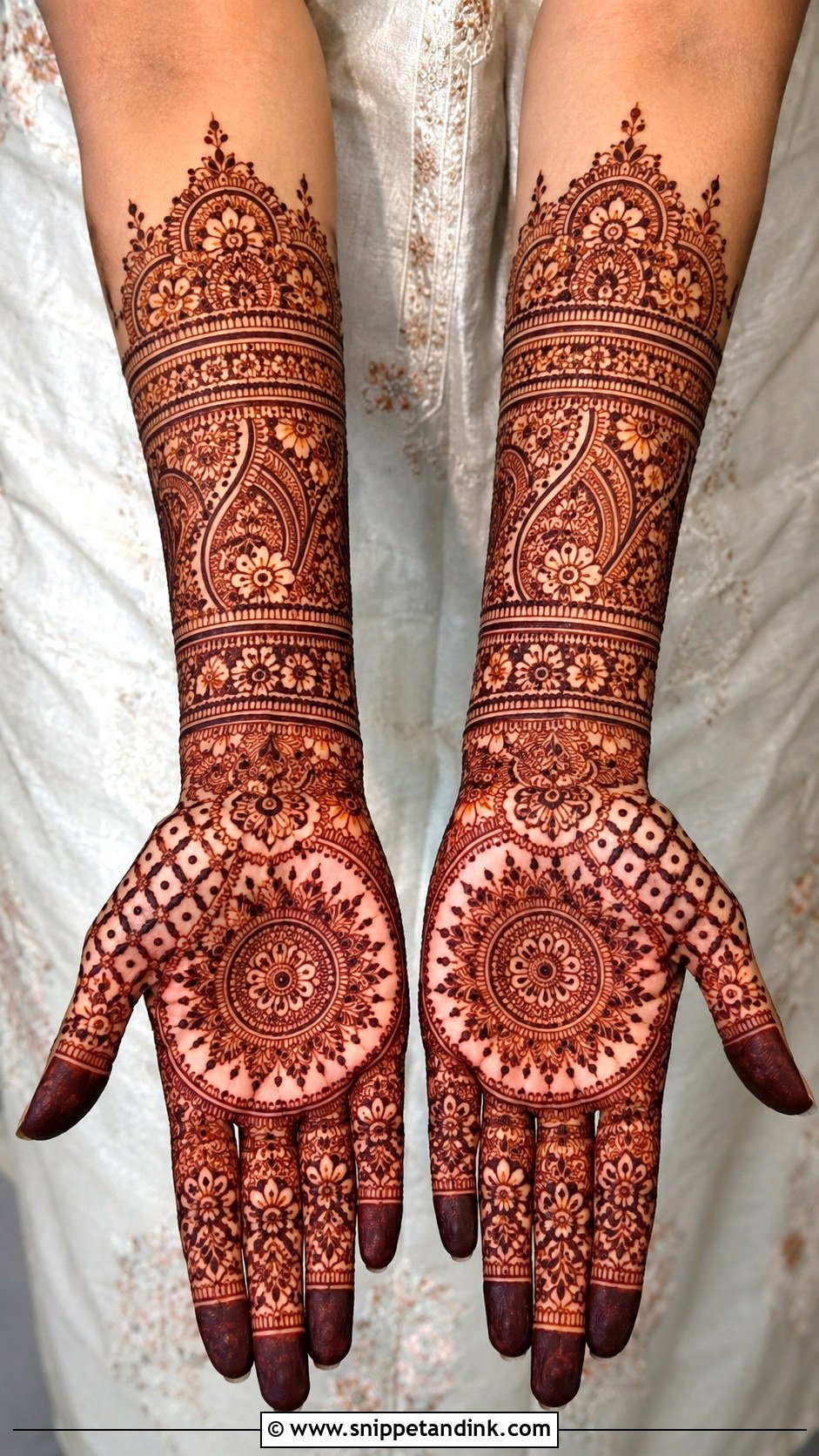
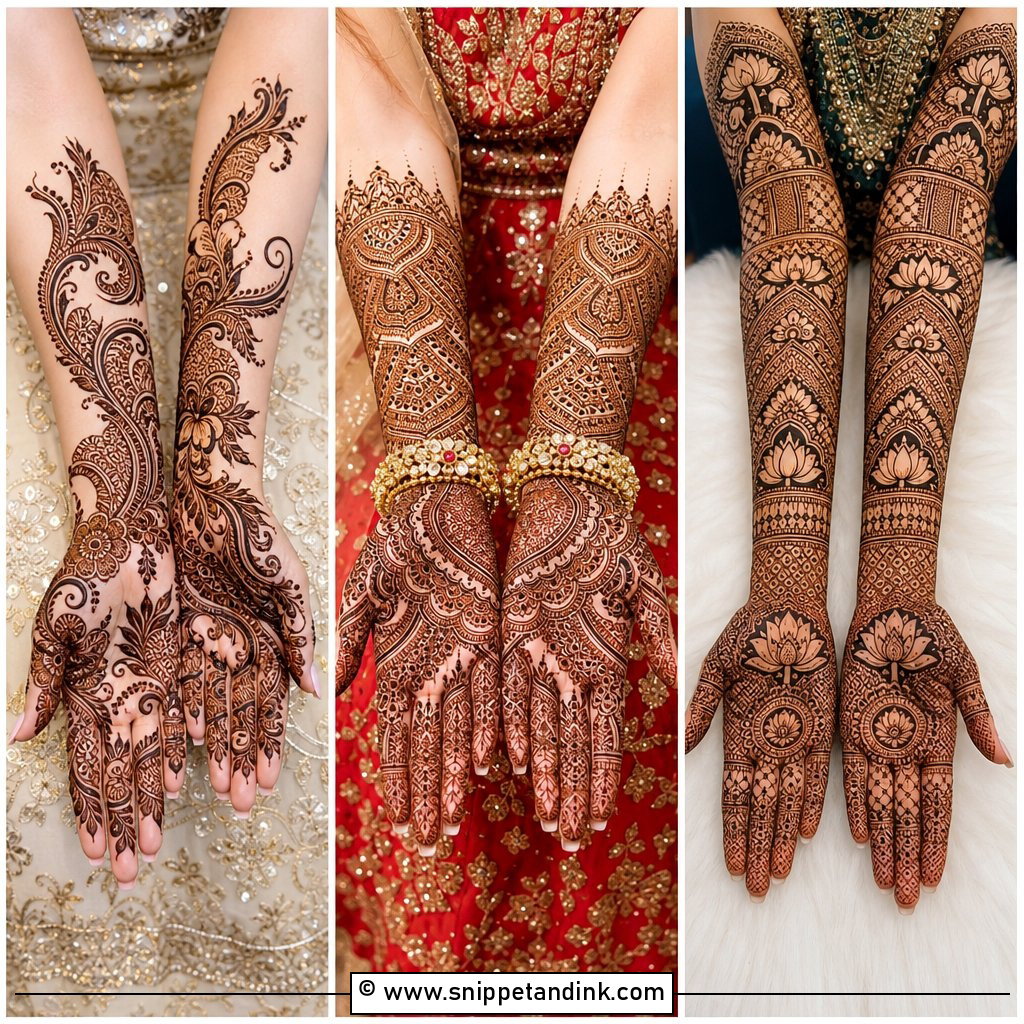
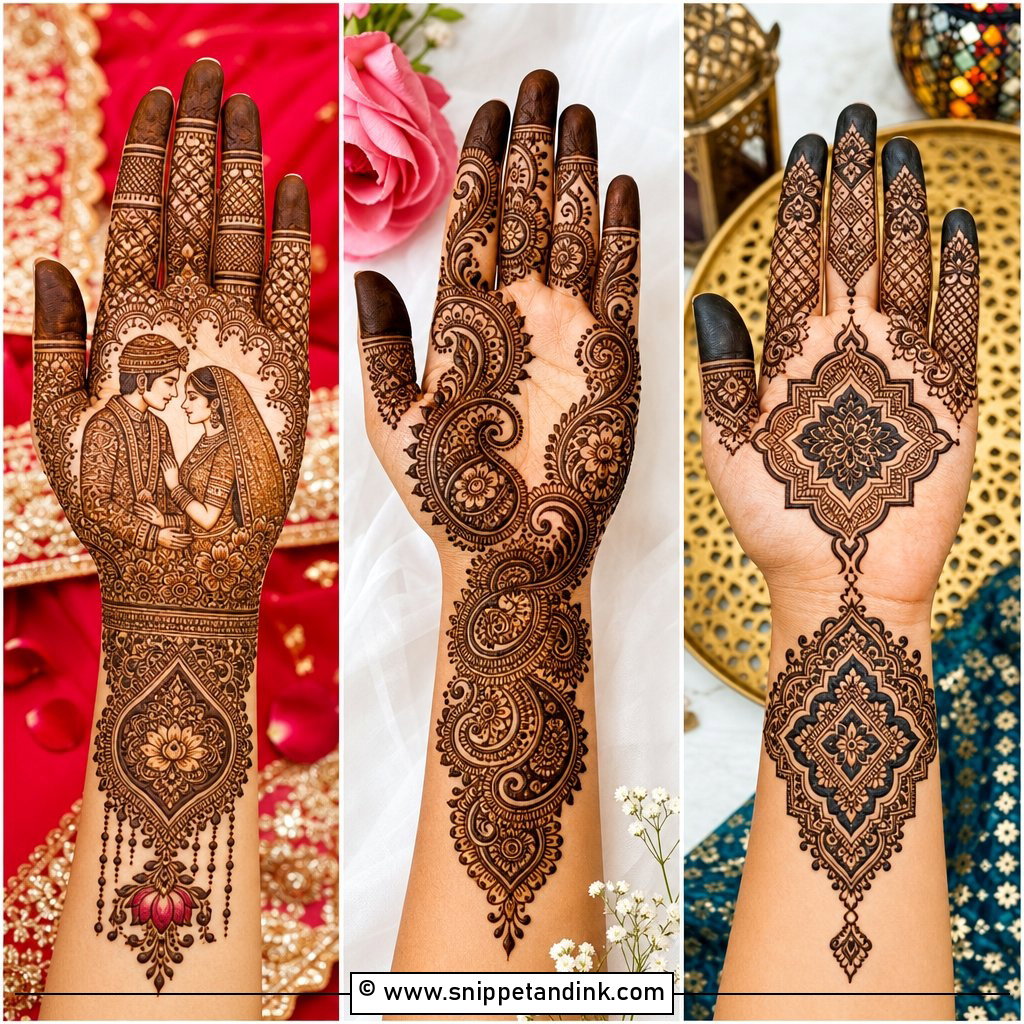
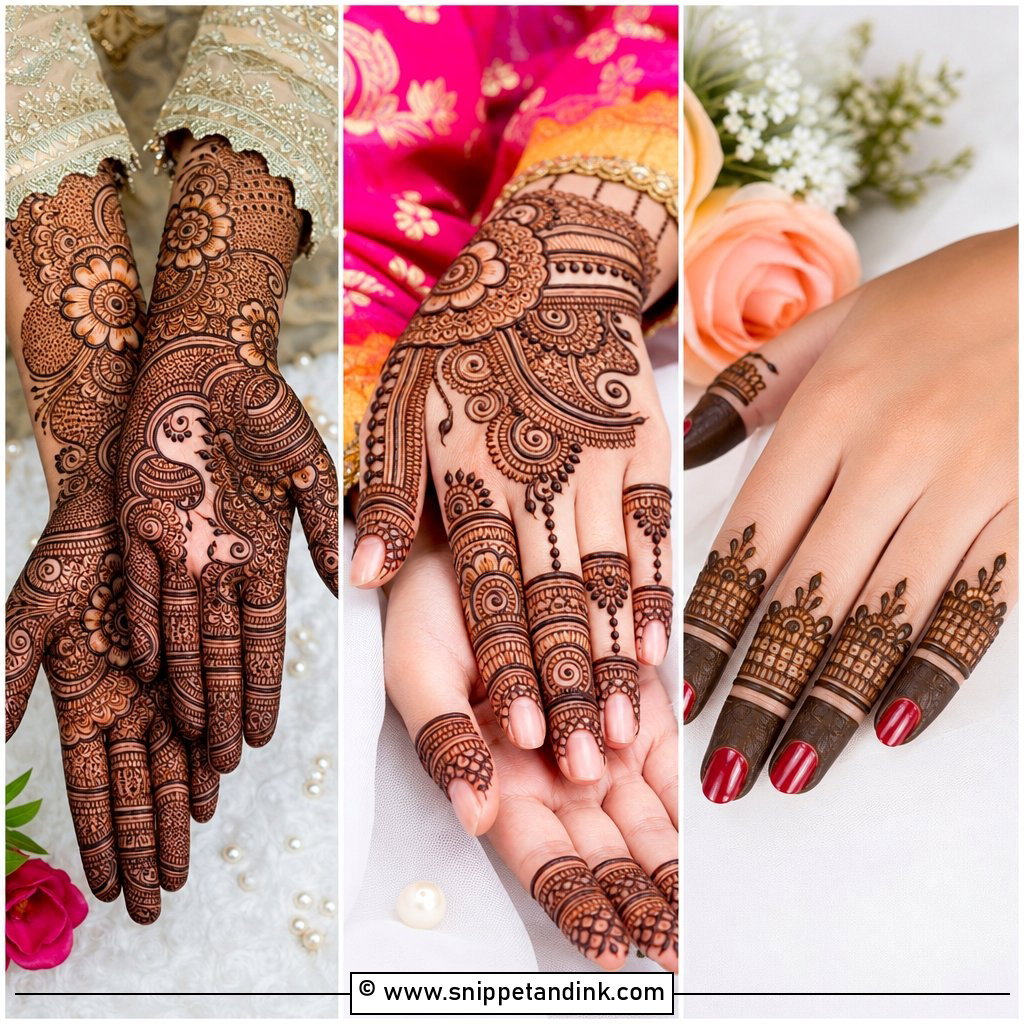
Coverage from fingertips to wrist or forearm, with a mandala, paisley cluster, peacock, floral grid or bride and groom artwork on the palm, and bands, leaves, dots and fine lines on every finger. It’s the look for weddings, Karwa Chauth and major festivals. Balance comes from anchors: I place the large motifs first and treat everything else as supporting fill. Full hands do tend to look darker overall, simply because there’s more paste on more skin while it develops.
4. Bridal Front Hand Mehndi Design
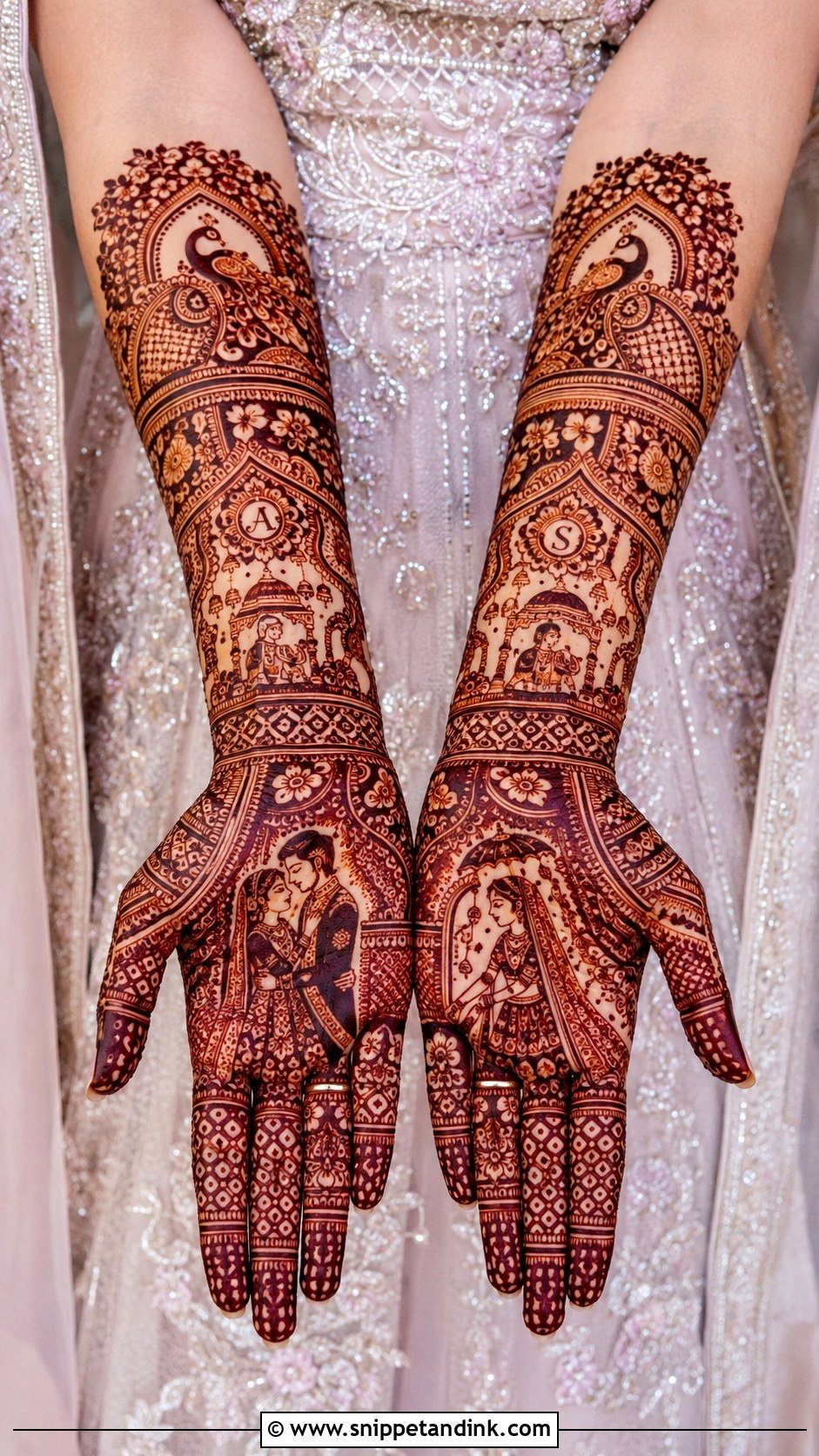
A bridal palm is personal. It might hold dense florals, paisleys, jaali patterns, a couple motif, initials, the wedding date or small ceremony symbols. It also features in more photographs than any other henna on the body: ring shots, bangle ceremonies, rituals, portraits. I give it one clear center on the palm and let everything flow out from it to the wrist and fingers. If every area is equally busy, nothing reads, so I mix heavy sections with fine, deliberate gaps.
5. Modern Front Hand Mehndi Design
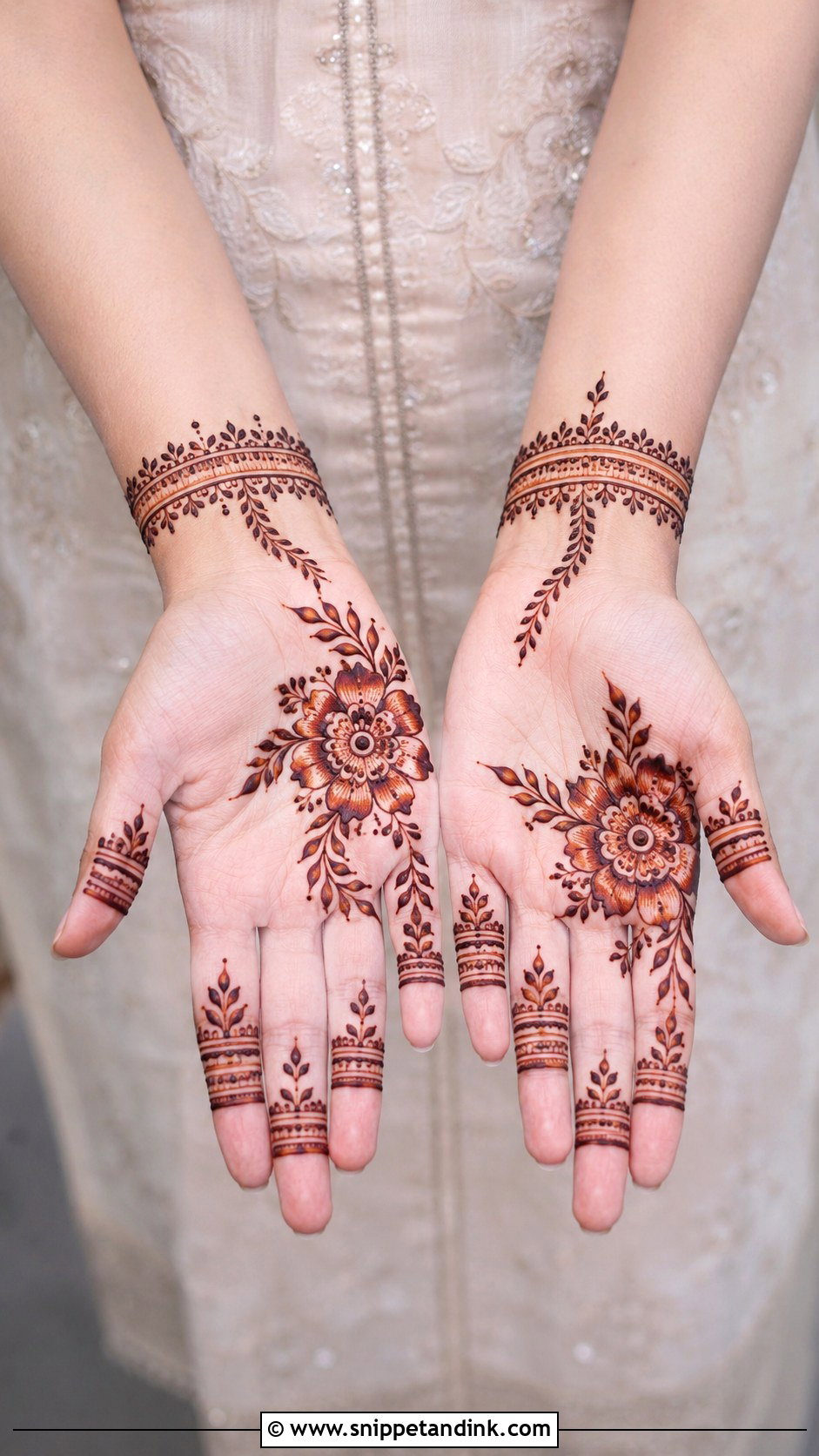
Modern layouts break the palm up differently: half-palm florals, bracelet wrists, ring-style fingers, bold empty areas. They sit well with pastel lehengas, fusion wear and simpler festive outfits. Fine lines, leafy curves, a small mandala or a geometric accent can all appear, but not all at once. I ask the client to pick one feature she’d notice first, and everything else on the hand supports it.
6. Easy Front Hand Mehndi Design
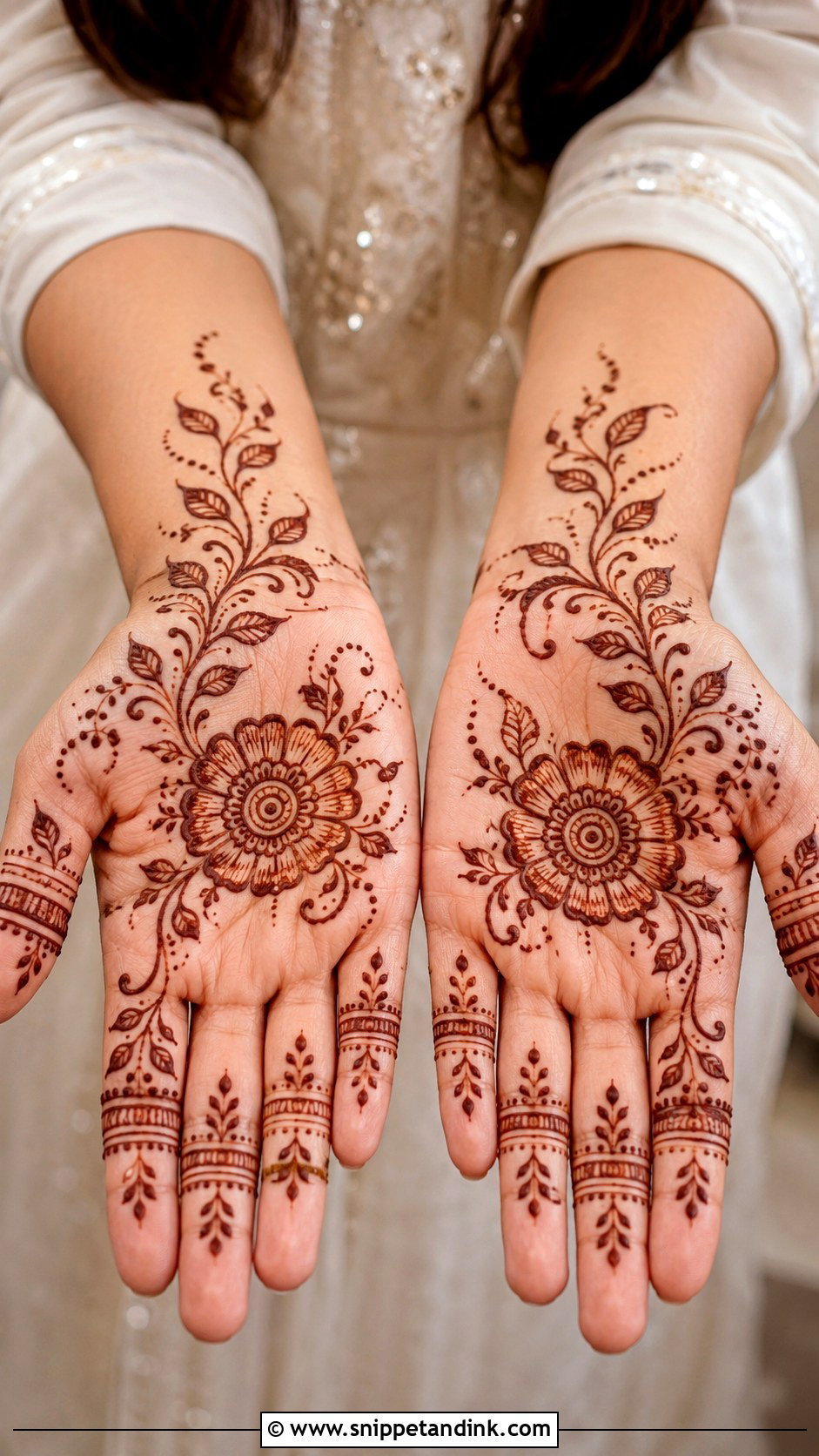
Round palm flower or mandala, curved vines toward the wrist and fingers, repeated lines, dots and small leaves on each finger. That’s the entire method, and it produces a full-looking hand from basic shapes. Repetition is what makes simple work look tidy. If you’re drawing it yourself, keep a tissue handy to wipe the cone tip every few lines; a blob of paste at the tip causes most uneven strokes.
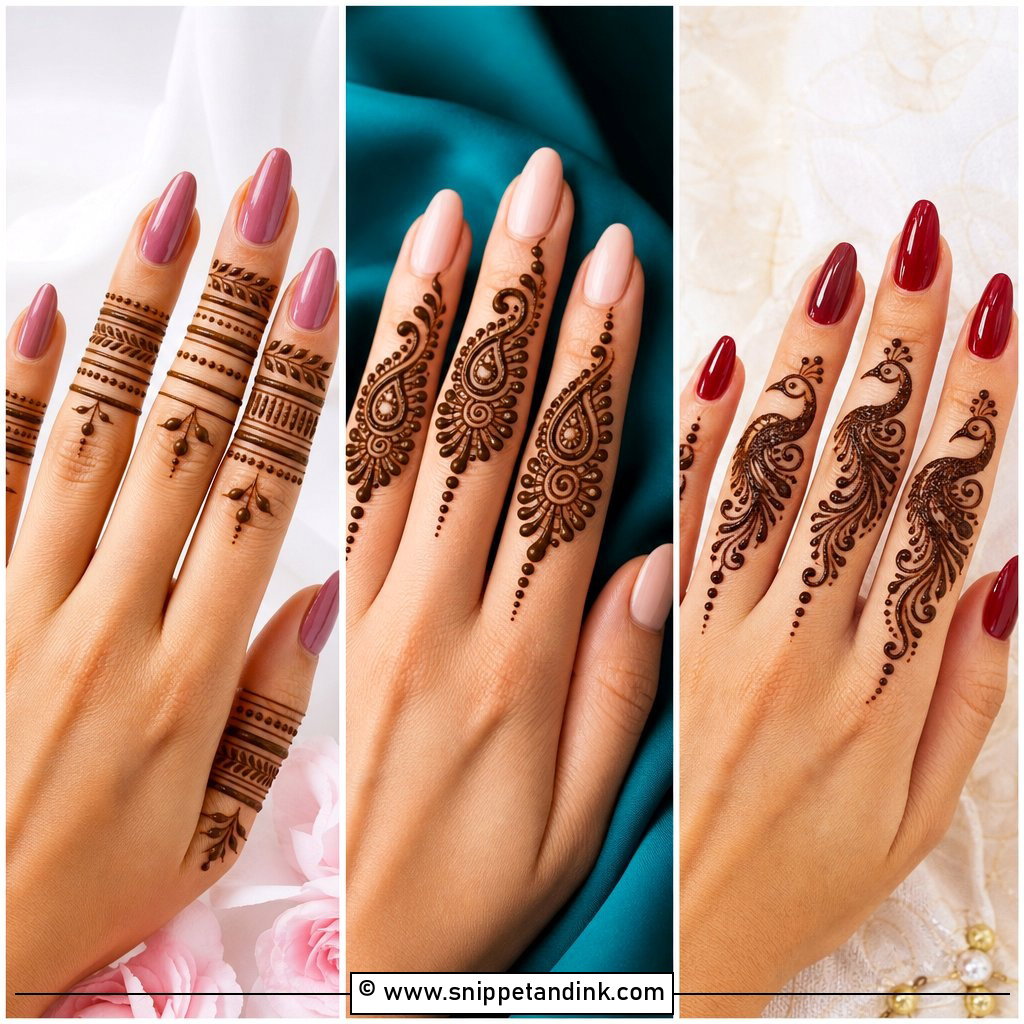
7. Finger Front Hand Mehndi Design
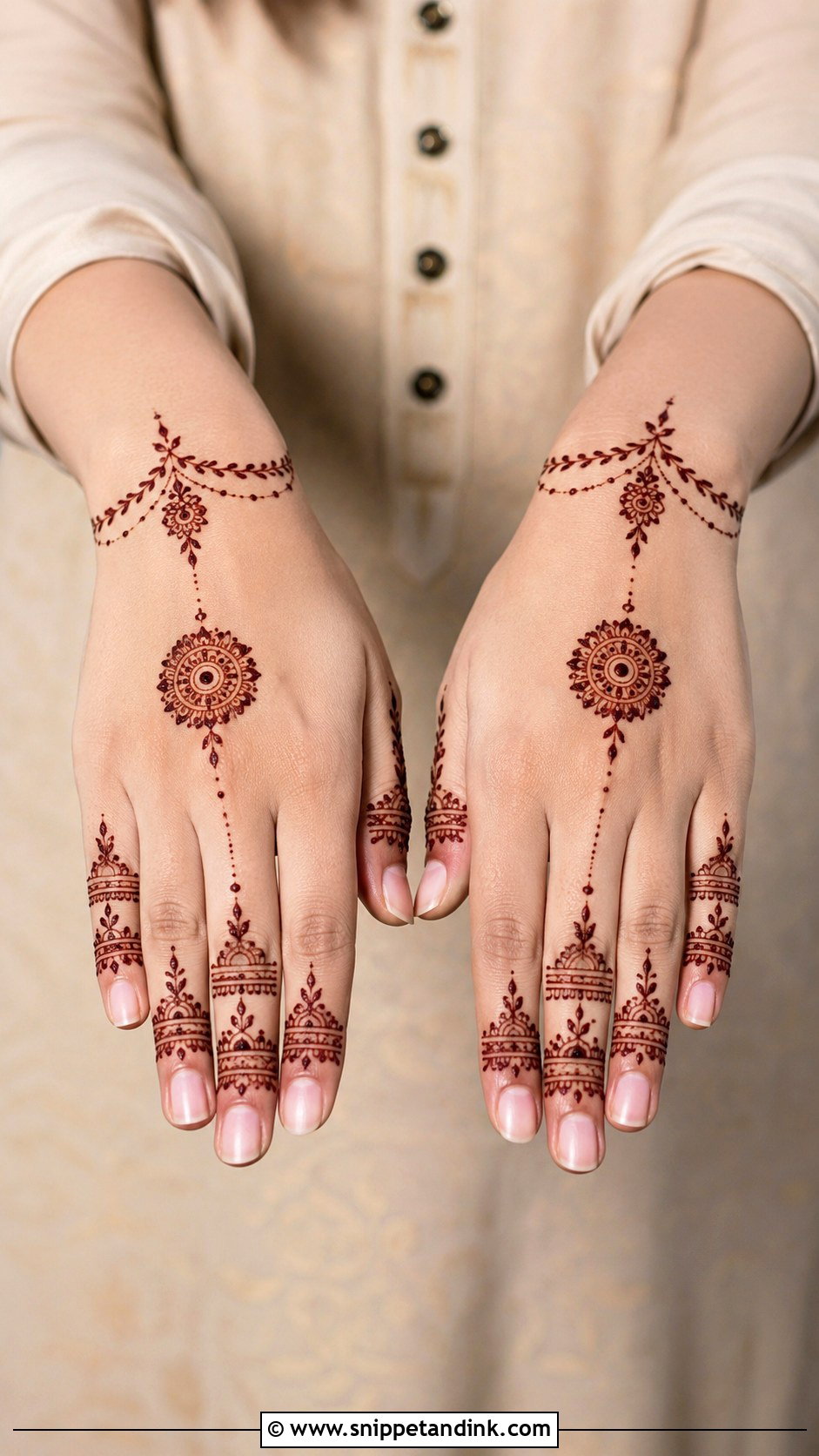
The fingers carry the decoration and the palm stays light, with a small mandala, half flower or dotted trail in the center. Rings, leafy bands, fine checks or shaded tips on each finger frame real jewelry very well. I link the fingers with tiny chains or dot lines so the hand reads as one design. It also dries faster than most, which helps if you need your hands back soon.
8. Palm Front Hand Mehndi Design
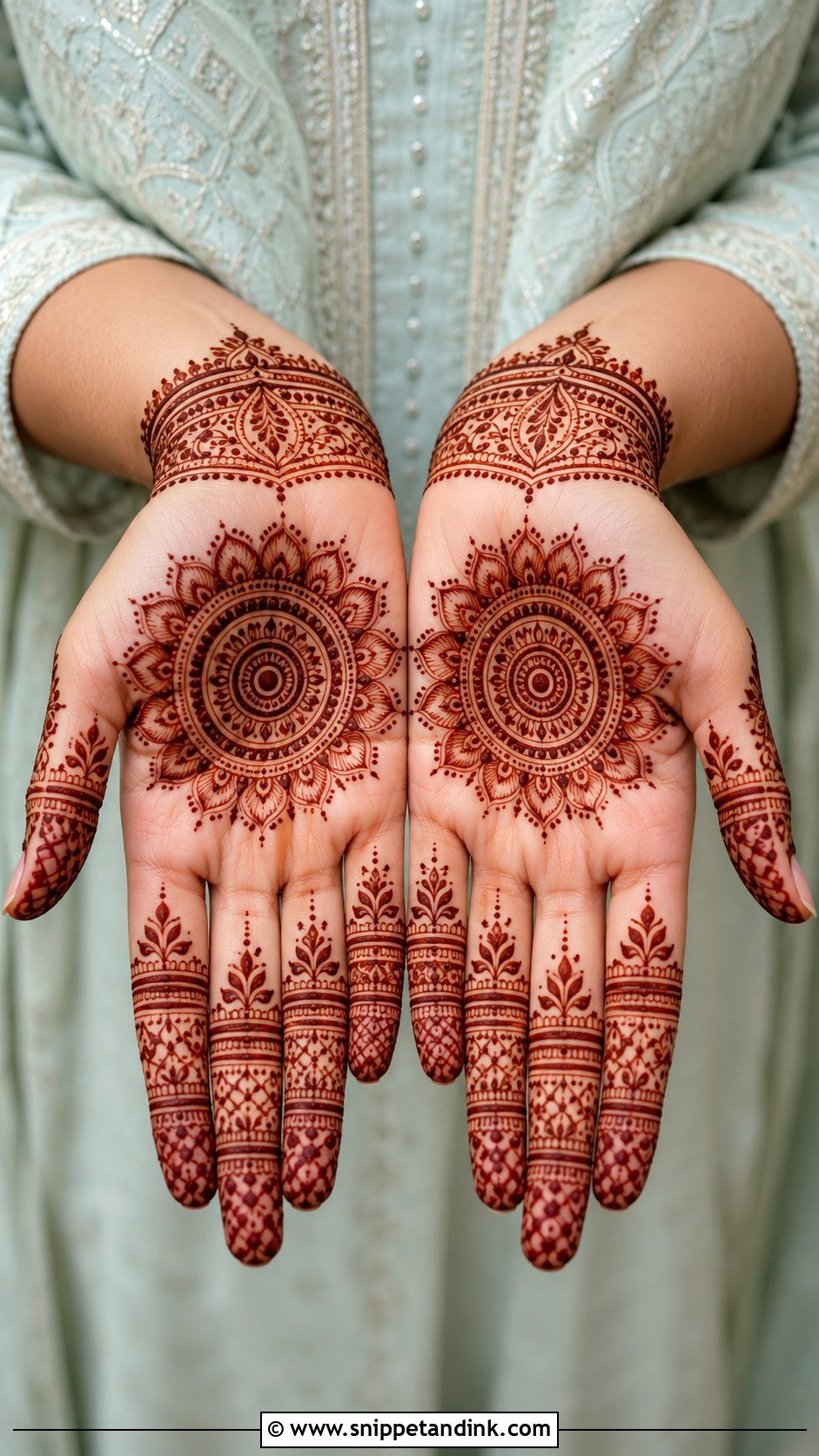
The palm is the centerpiece: a mandala, lotus, rose, sun circle or paisley bouquet, with lighter fingers and wrist. It works for anyone who doesn’t want henna creeping up the arm, and it reads well in close-ups. I size the motif so its edge stays inside the palm creases near the fingers. A small wrist cuff and matching finger bands finish it.
9. Mandala Front Hand Mehndi Design
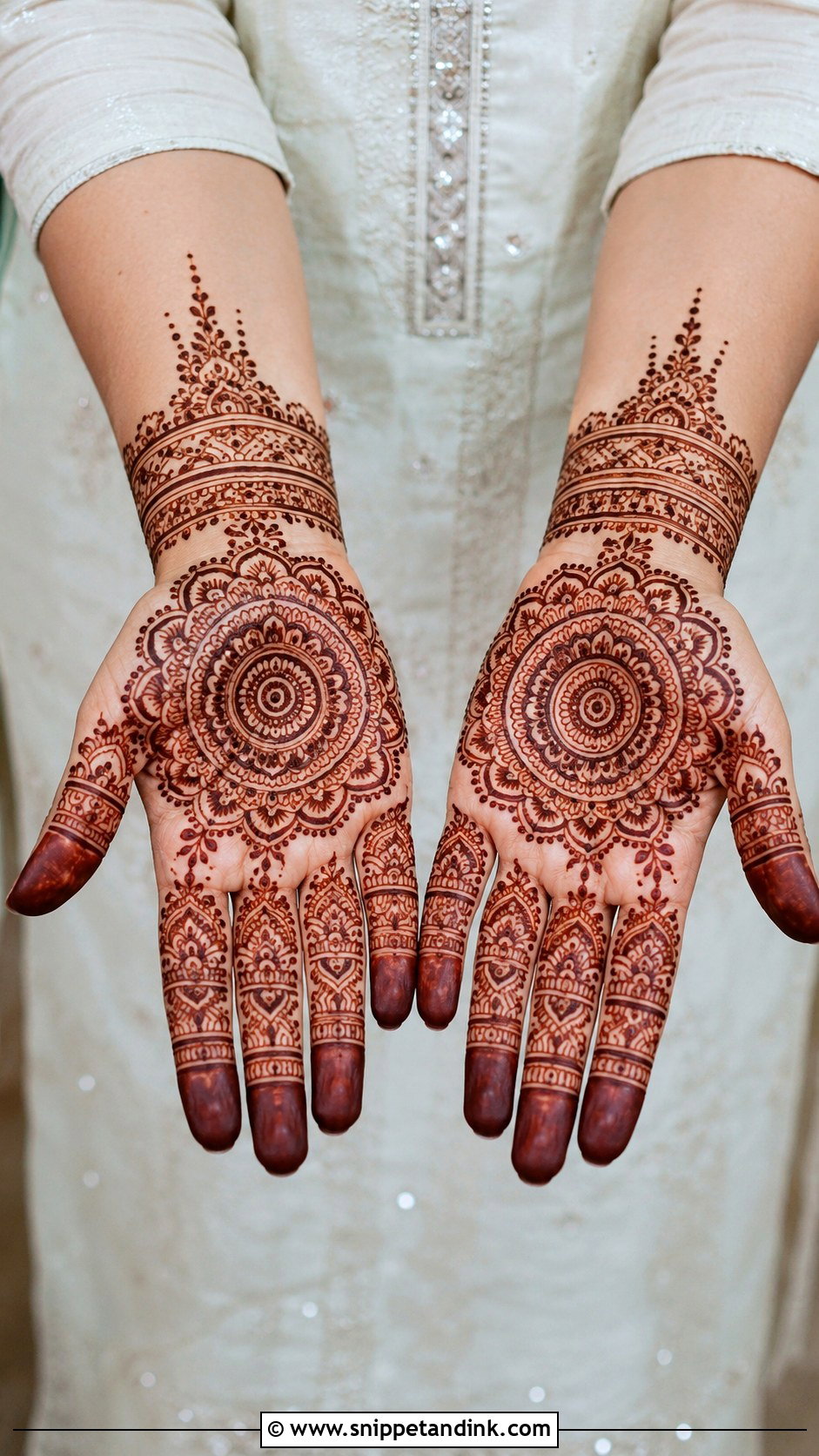
One round mandala in the center, expanding outward with petals, dots, rings and fine borders. Light for a casual event, layered for a festive one. Filled fingertips and wrist bands pull it toward tradition; airy leaves and ring patterns on the fingers keep it modern. An even circle is what matters, and I usually rough it out with a ring of evenly spaced dots before drawing the first full line.
10. Floral Front Hand Mehndi Design
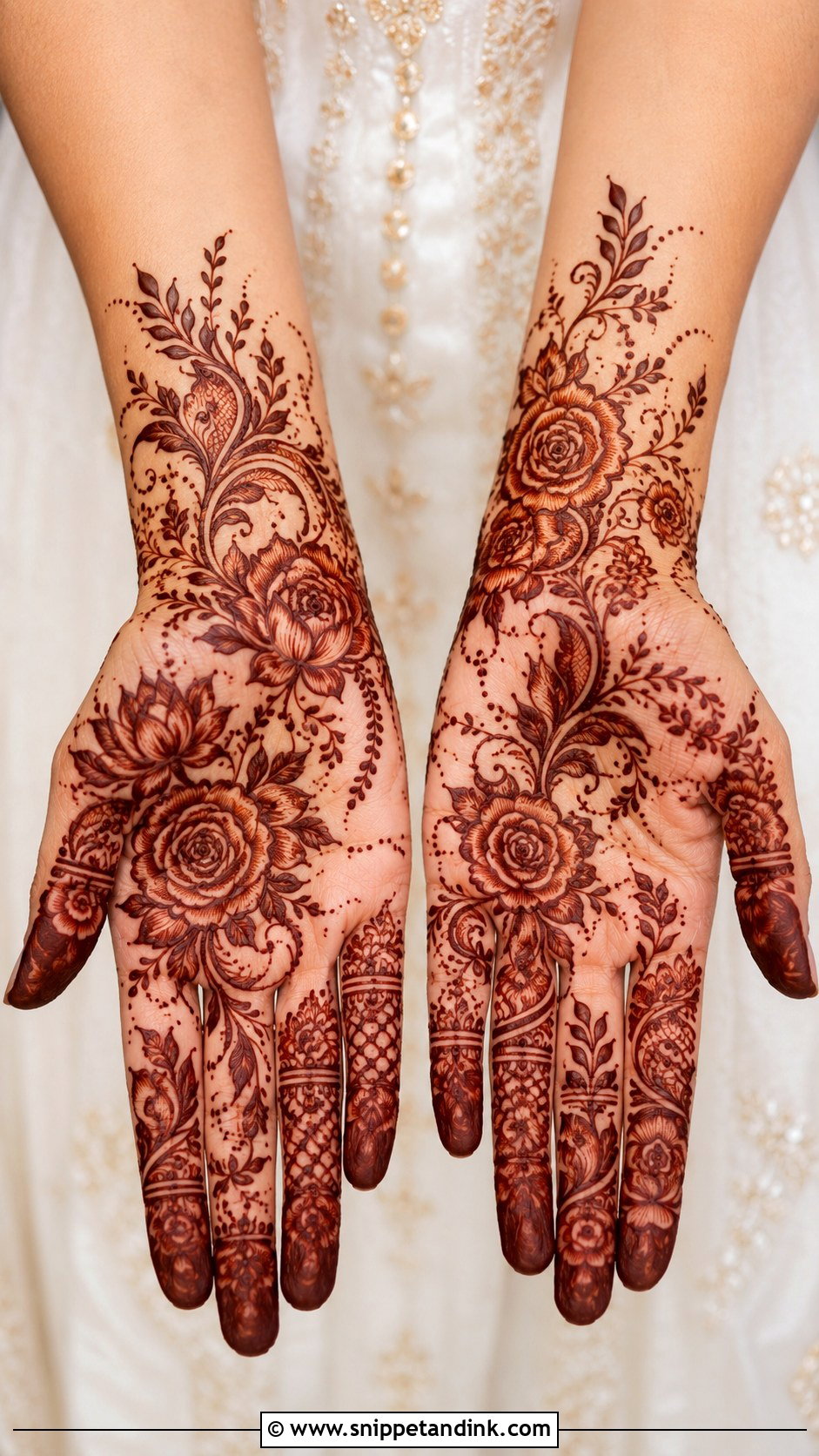
Roses, lotuses, small blossoms and leafy stems can arrange themselves in many ways. A diagonal trail reads Arabic; a centered flower with detailed fill reads Indian. Flowers adapt to hand size better than most motifs. On small hands I use medium blooms with open spacing. On long hands I extend the vines toward the wrist so the flowers don’t look stranded in the middle of the palm.
11. Paisley Front Hand Mehndi Design
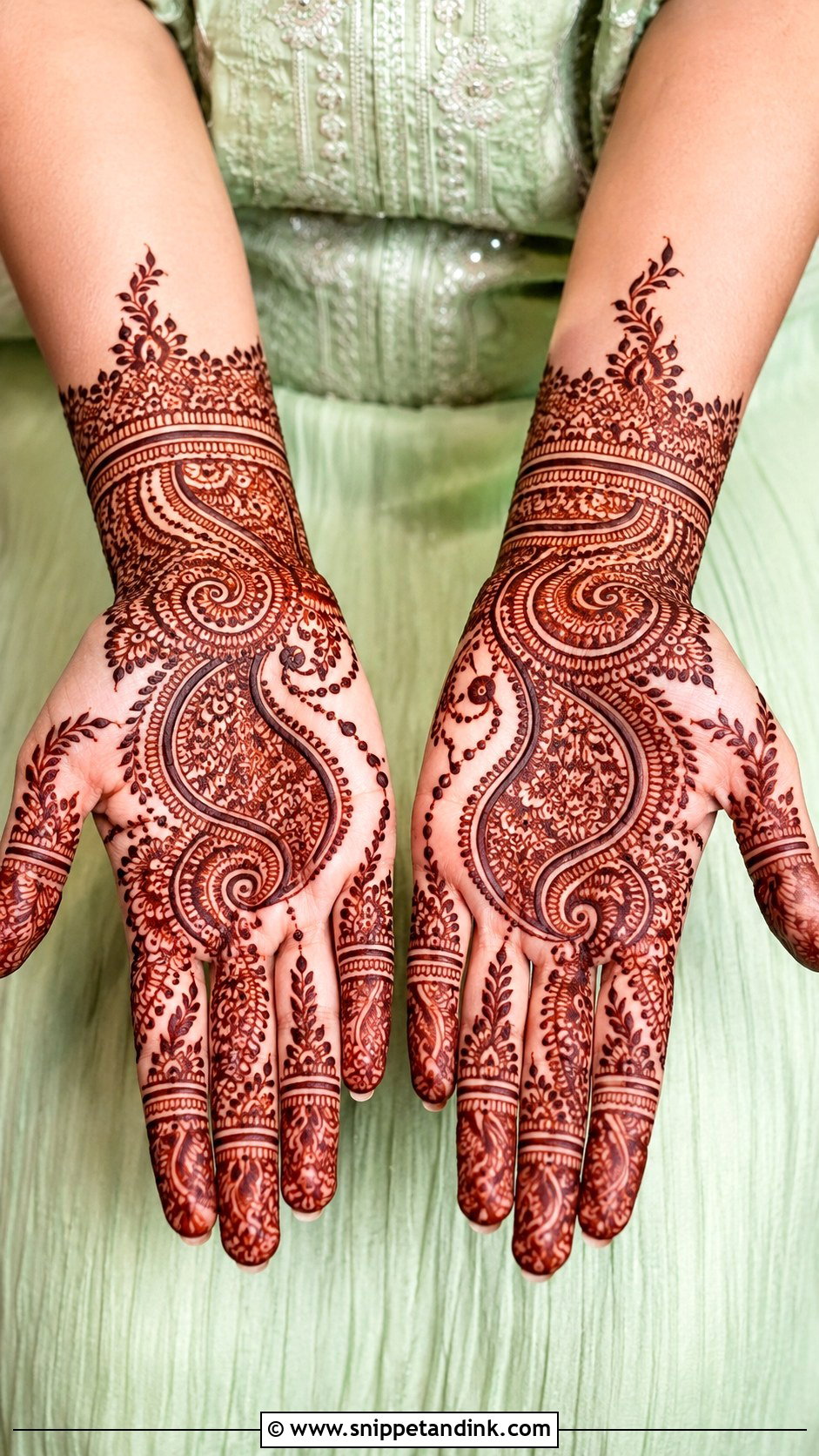
The paisley’s curved mango shape follows the hand naturally and can hold lines, petals, mesh, dots or tiny leaves inside it. A large one on the palm becomes the focus, with smaller paisleys flowing toward the wrist and fingers. It belongs with traditional outfits. My rule is to place the biggest paisley first and build around it; drawing small ones first almost always leaves the big one cramped.
12. Peacock Front Hand Mehndi Design
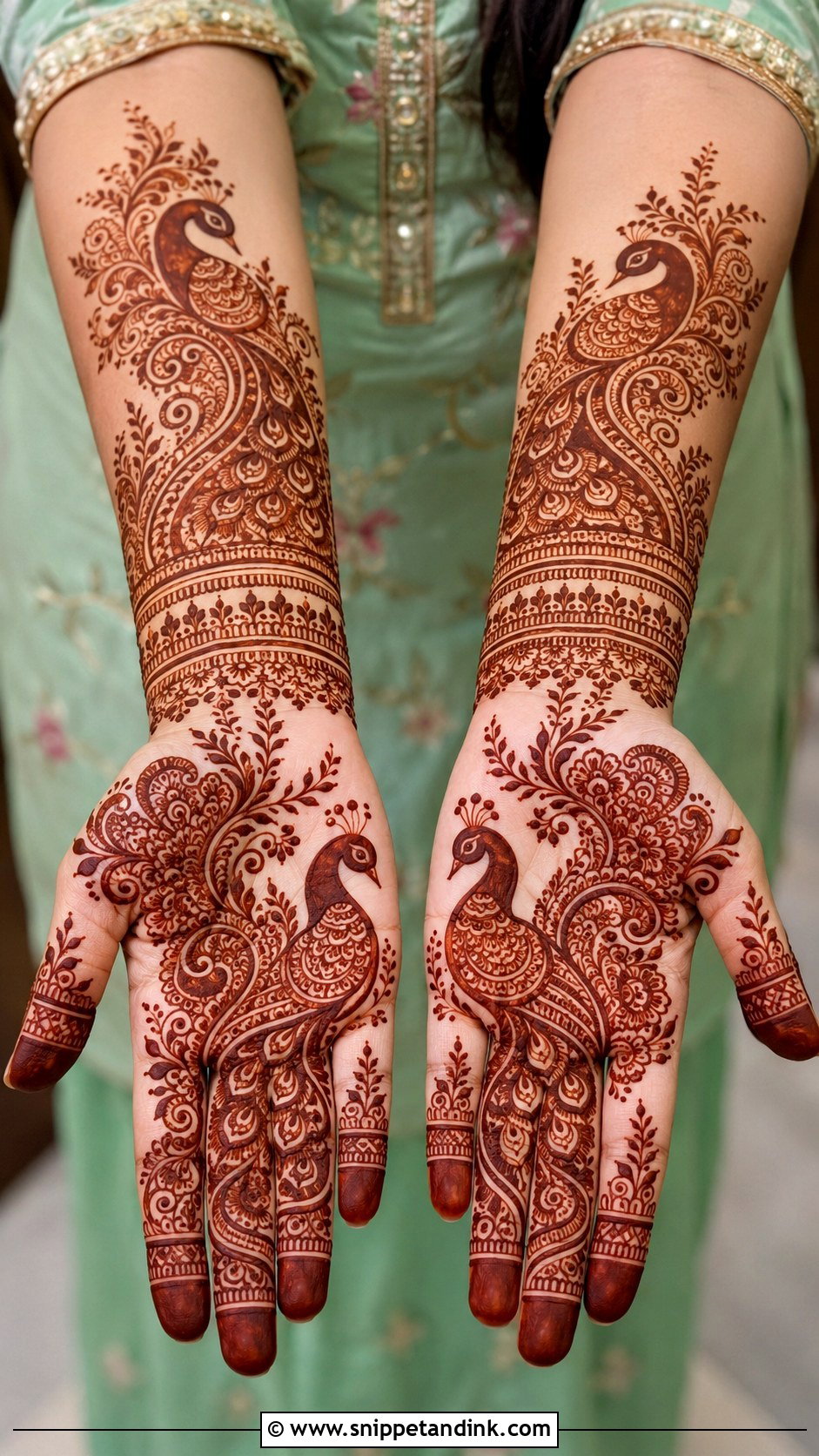
A peacock can sit on the palm, near the wrist or inside a full bridal layout, and its feathers give me endless room for curved lines, dots, petals and fine shading. The body stays clean and readable; the decoration goes into the feathers. For a bride I combine it with paisleys and jaali sections. For a lighter look, one peacock with open floral trails is enough.
13. Indo Arabic Front Hand Mehndi Design
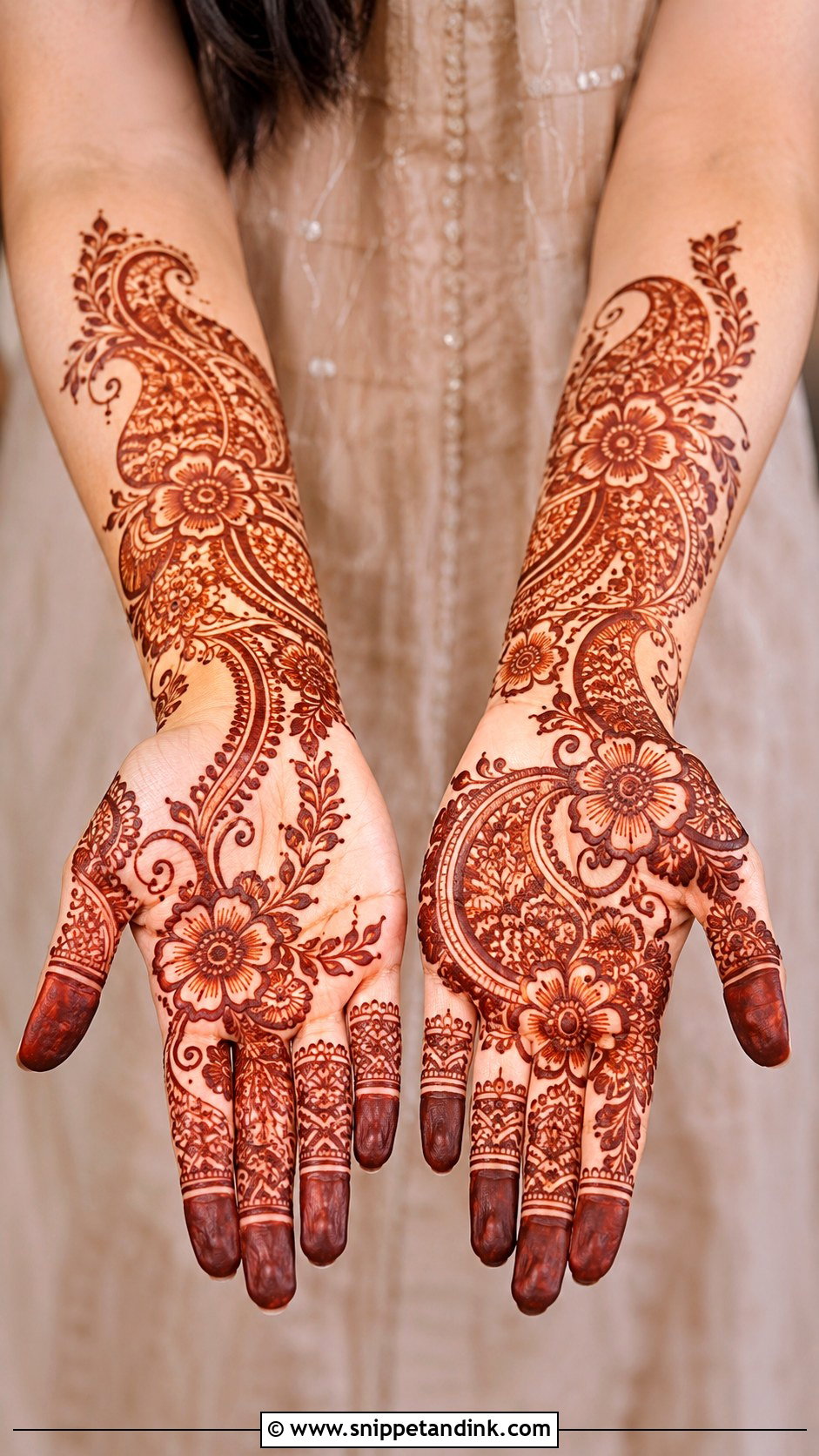
Large Arabic flowers, paisleys and leafy trails, filled with fine Indian inner patterns: Indo-Arabic gives richness and still leaves skin showing. The diagonal layout keeps it current; the fillers keep it traditional. I’d suggest it to bridesmaids and for engagement events. Thick outlines on the main motifs, fine work inside them, so the shapes still read from across the room.
14. Indian Front Hand Mehndi Design
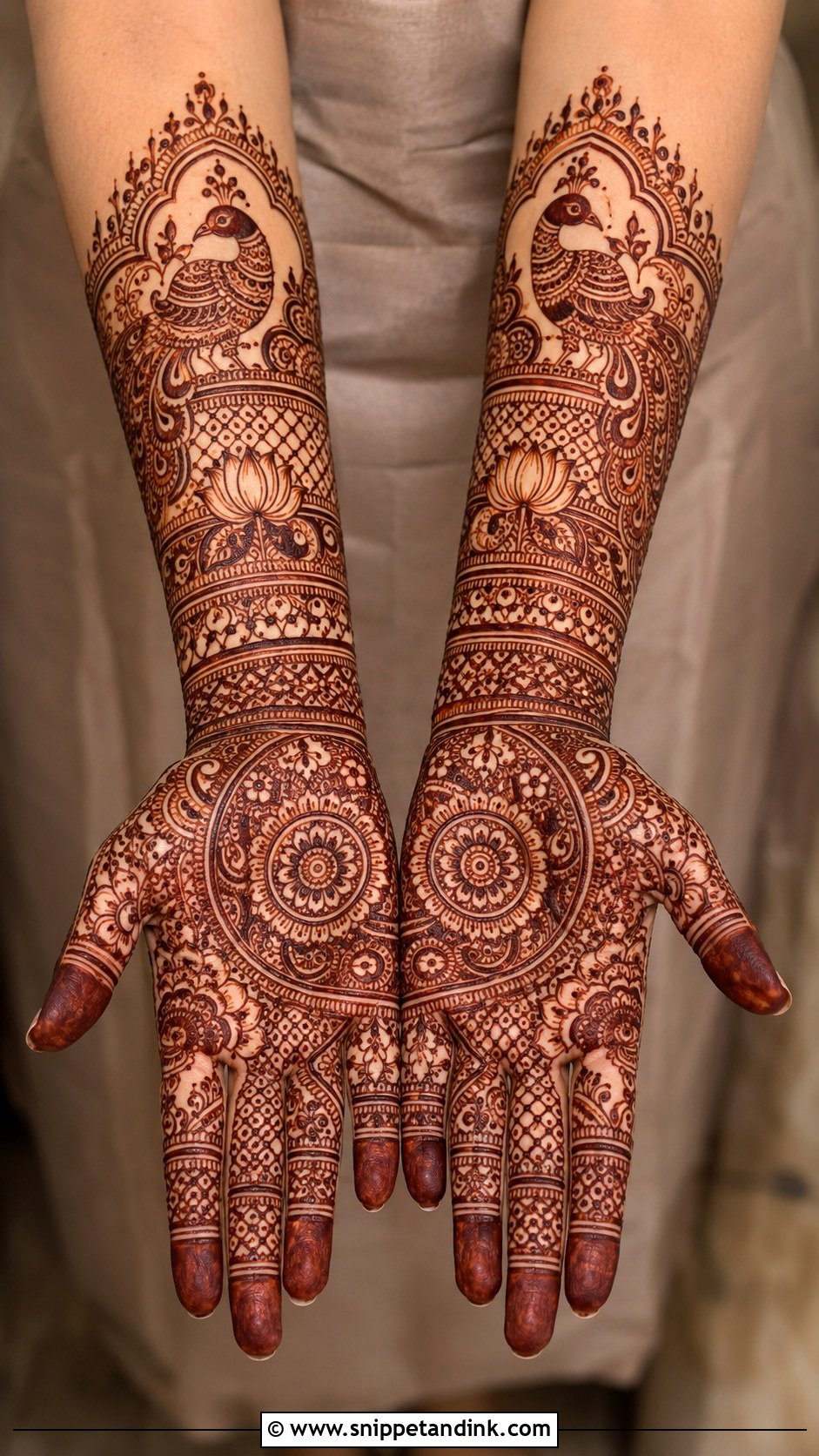
Dense coverage, detailed motifs, traditional symmetry. Indian palms carry mandalas, paisleys, flowers, peacocks or storytelling scenes, with fine patterns filling the fingers. More skin covered means a bolder, deeper look. I divide the hand before I start: palm center, side fill, finger detail, wrist border. Working section by section keeps even a very intricate hand organized.
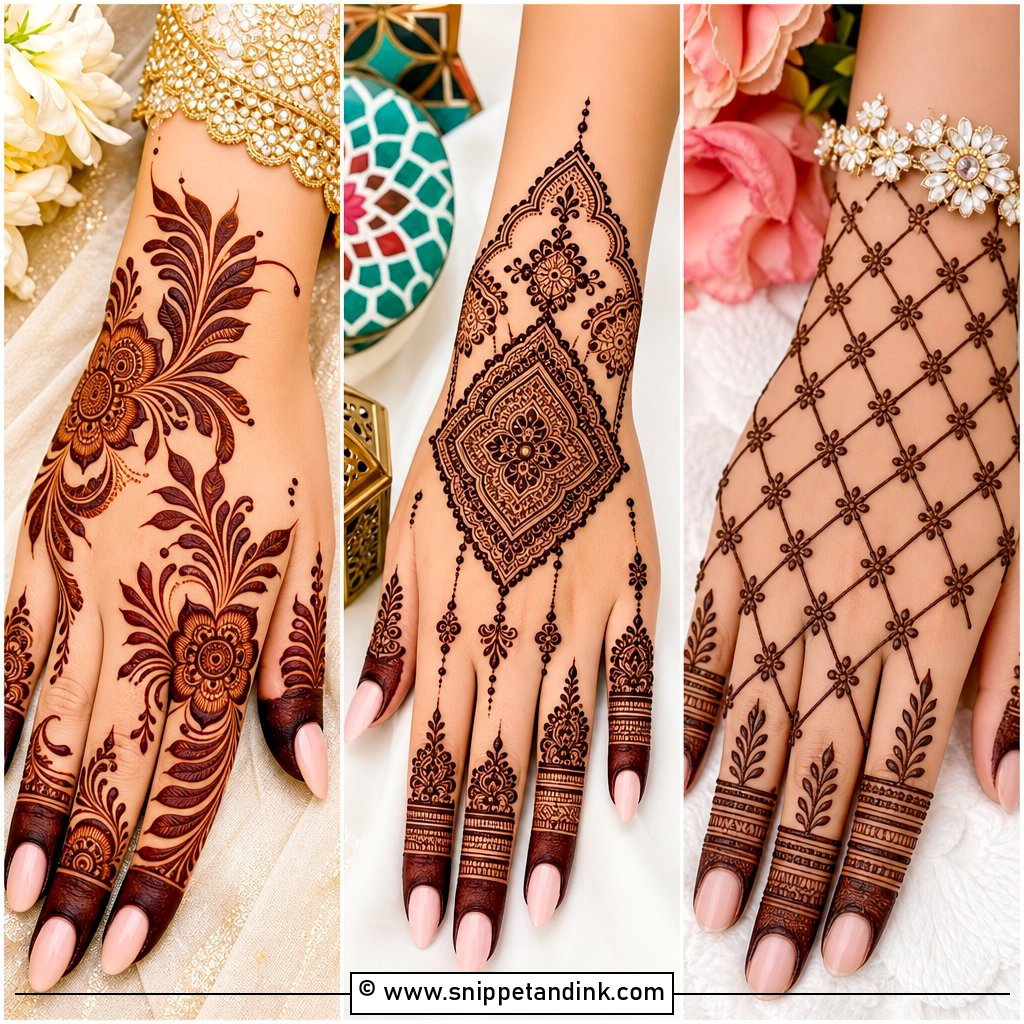

15. Moroccan Front Hand Mehndi Design
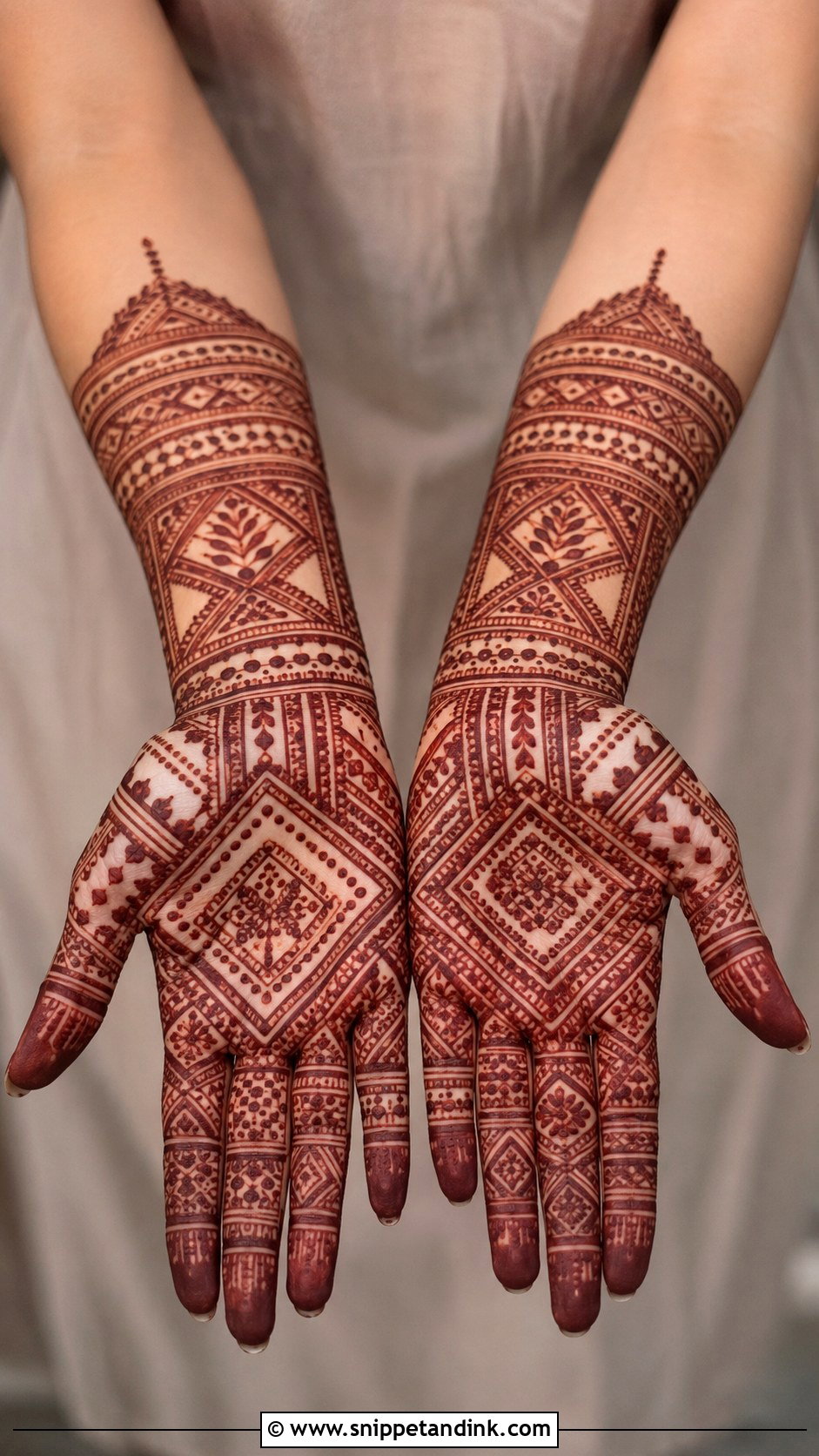
Diamonds, squares, triangles, lines, dots and structured bands replace vines and flowers. Moroccan-style geometry has room to breathe on a palm, either as an open geometric frame or a fully patterned palm with matching fingers. It pairs well with plain outfits. Precision is non-negotiable, and on a curved palm I use the finger joints and wrist crease as reference lines to keep everything square.
16. Gulf Front Hand Mehndi Design
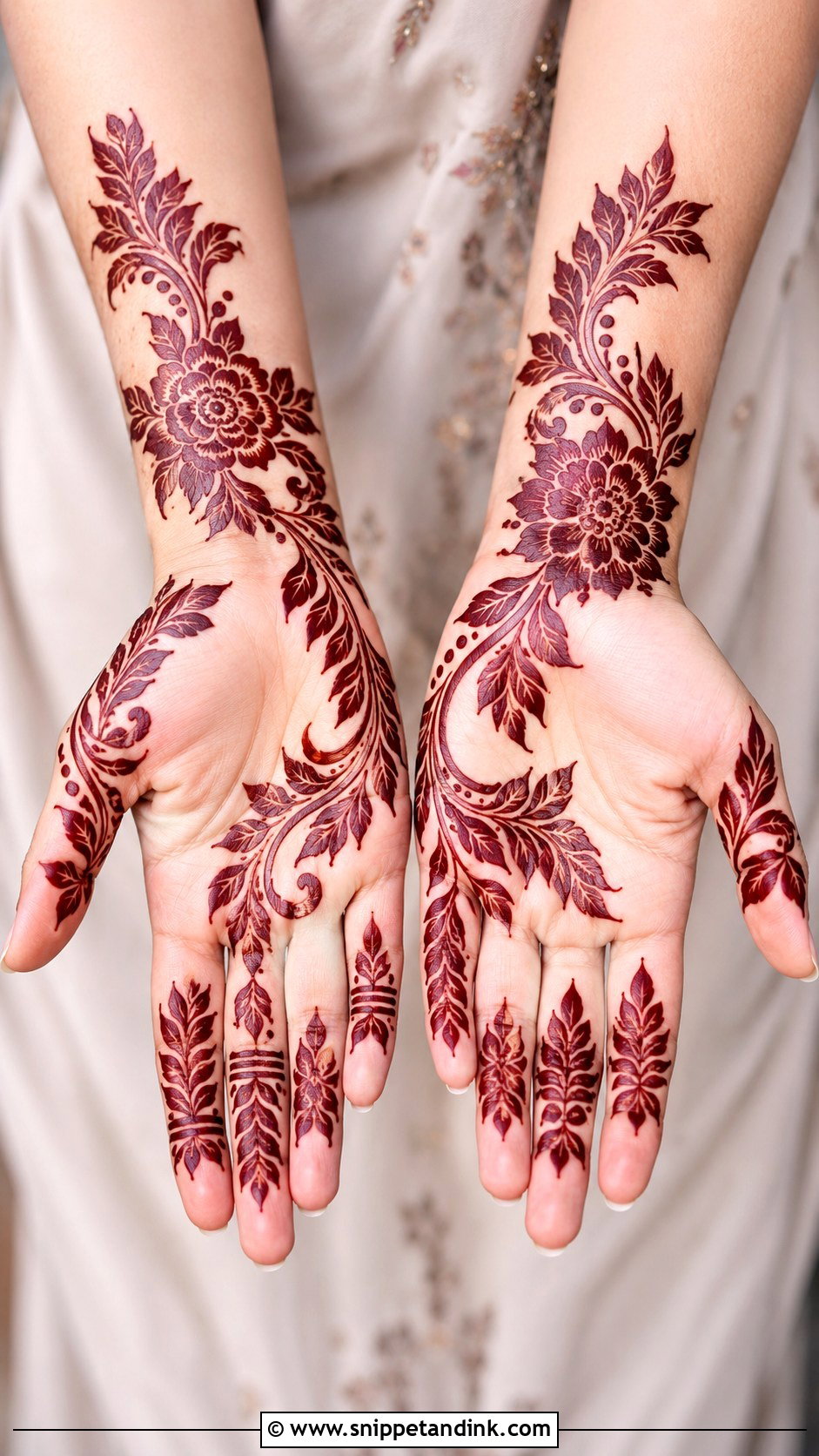
Khaleeji or Gulf palms use bold florals, thick outlines, leafy sprays and wide open spaces, often blooming from the wrist across the palm. It looks luxurious without full coverage and suits Eid and wedding guests. Larger flowers and bolder leaves make it; fine dots and curls only connect the sections. Thick Gulf lines carry a lot of paste, so I tell clients to sit still a little longer before touching anything.
17. Khafif Front Hand Mehndi Design
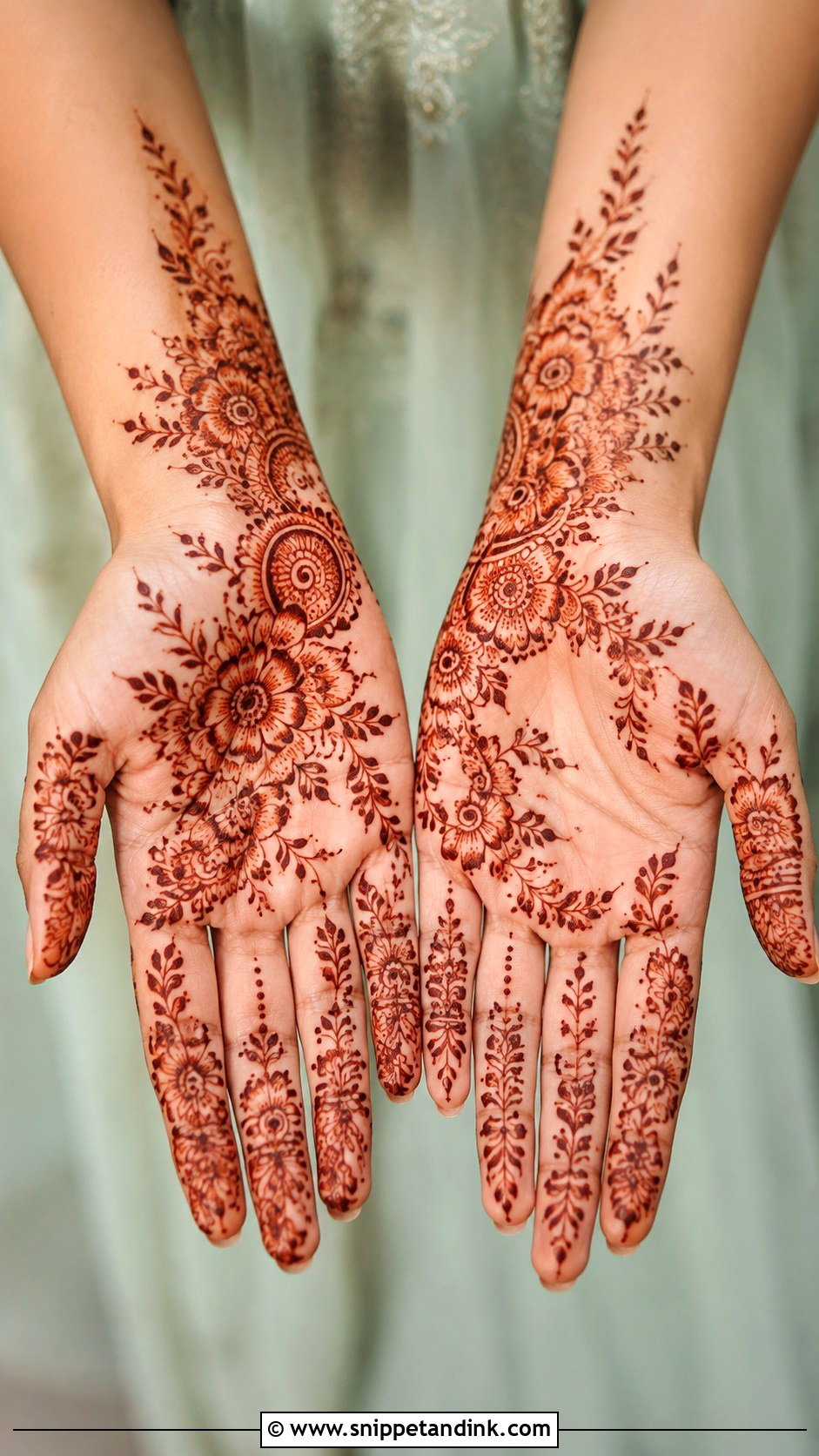
Khafif means light, and this style lives up to it: thin flowers, tiny leaves, soft vines, mini mandalas and airy finger patterns. It suits engagements, Eid and bridesmaids who want refinement rather than weight. I avoid large filled blocks entirely. A very fine cone tip and a smooth, slightly looser paste give the even hairline strokes the style depends on.
18. Minimal Front Hand Mehndi Design
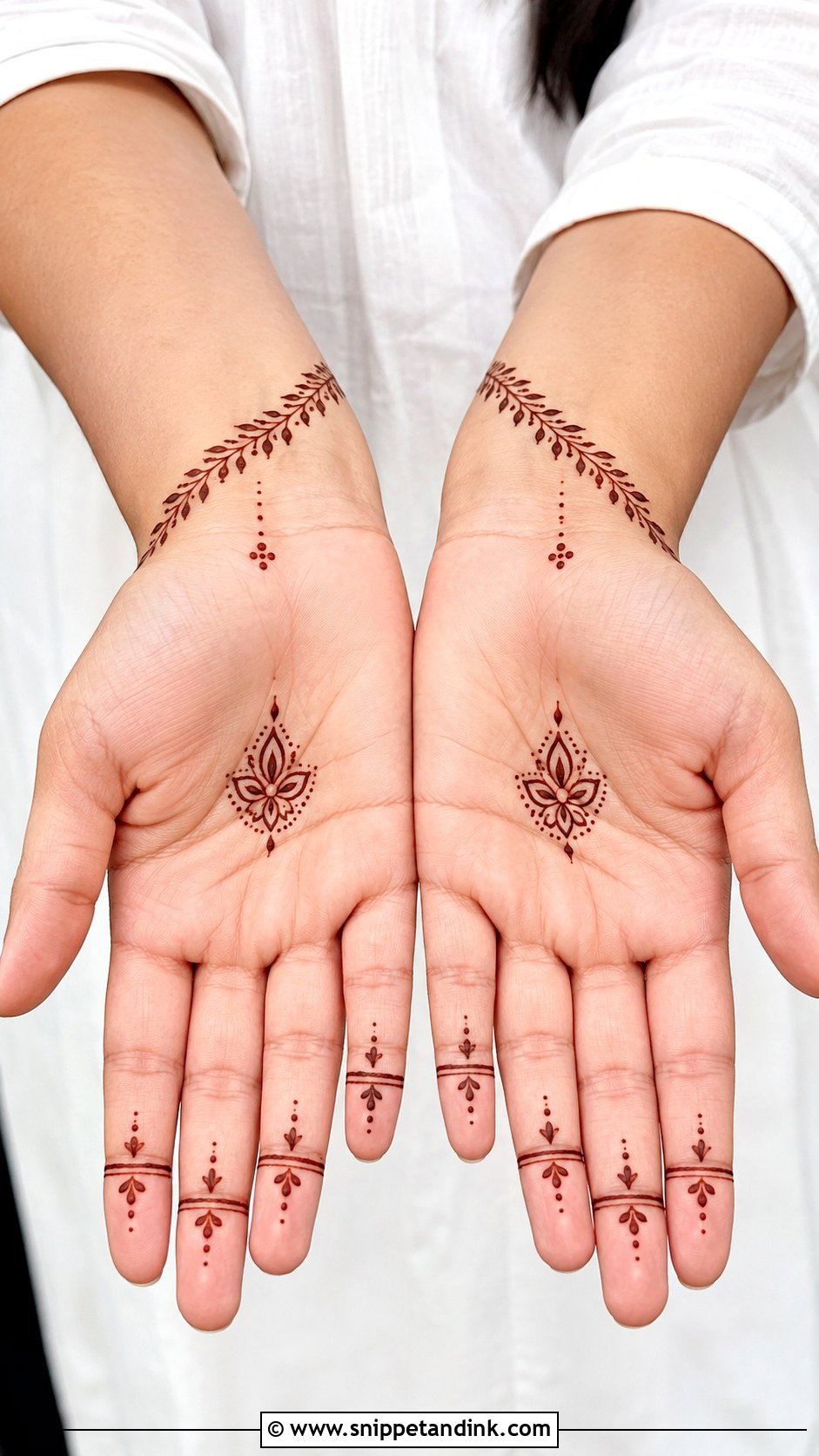
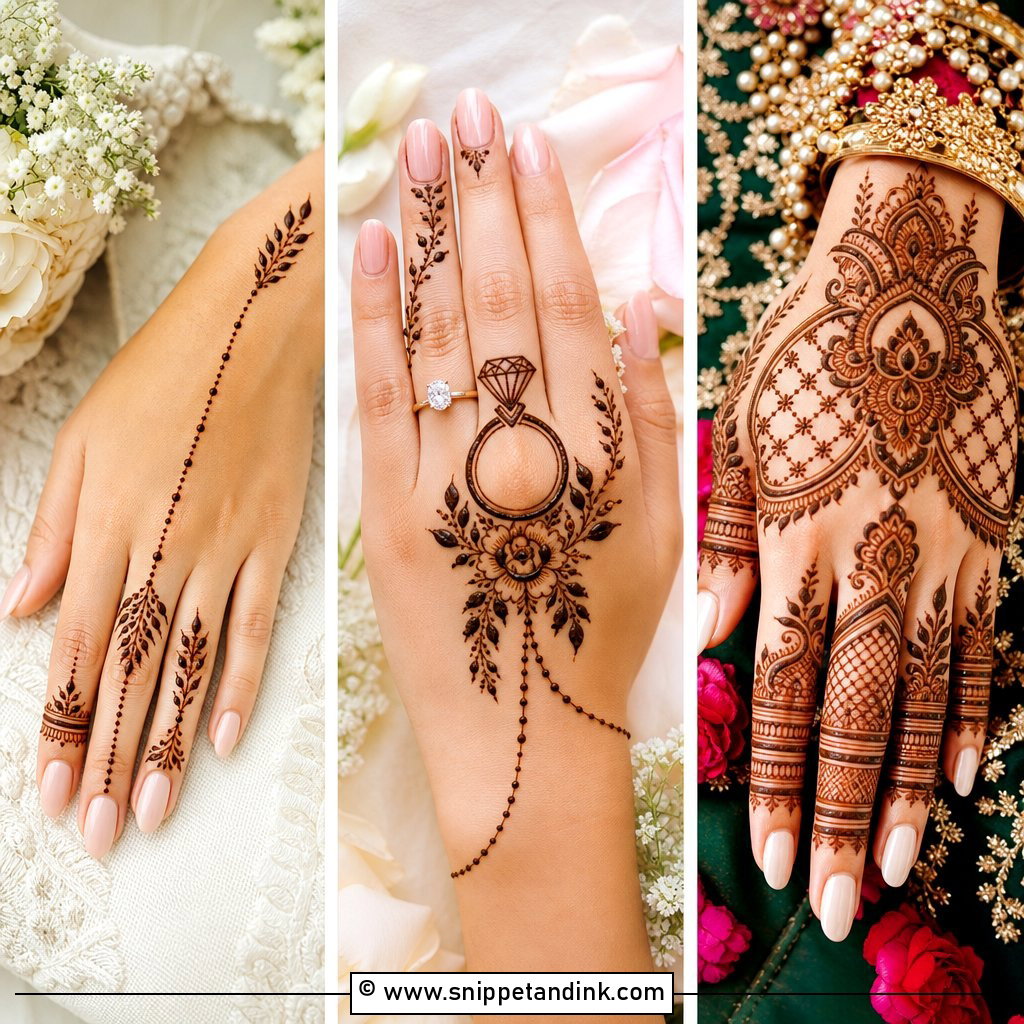
A small palm motif, delicate finger bands, a tiny leafy trail or a bracelet line. Minimal mehndi is quick, easy to wear to work and doesn’t leave the whole hand stained for a week. Repeating one element, such as dots, fine leaves or thin rings, across the hand is what makes it look finished. The bare skin is part of the design, so I plan where it falls.
19. Heavy Front Hand Mehndi Design
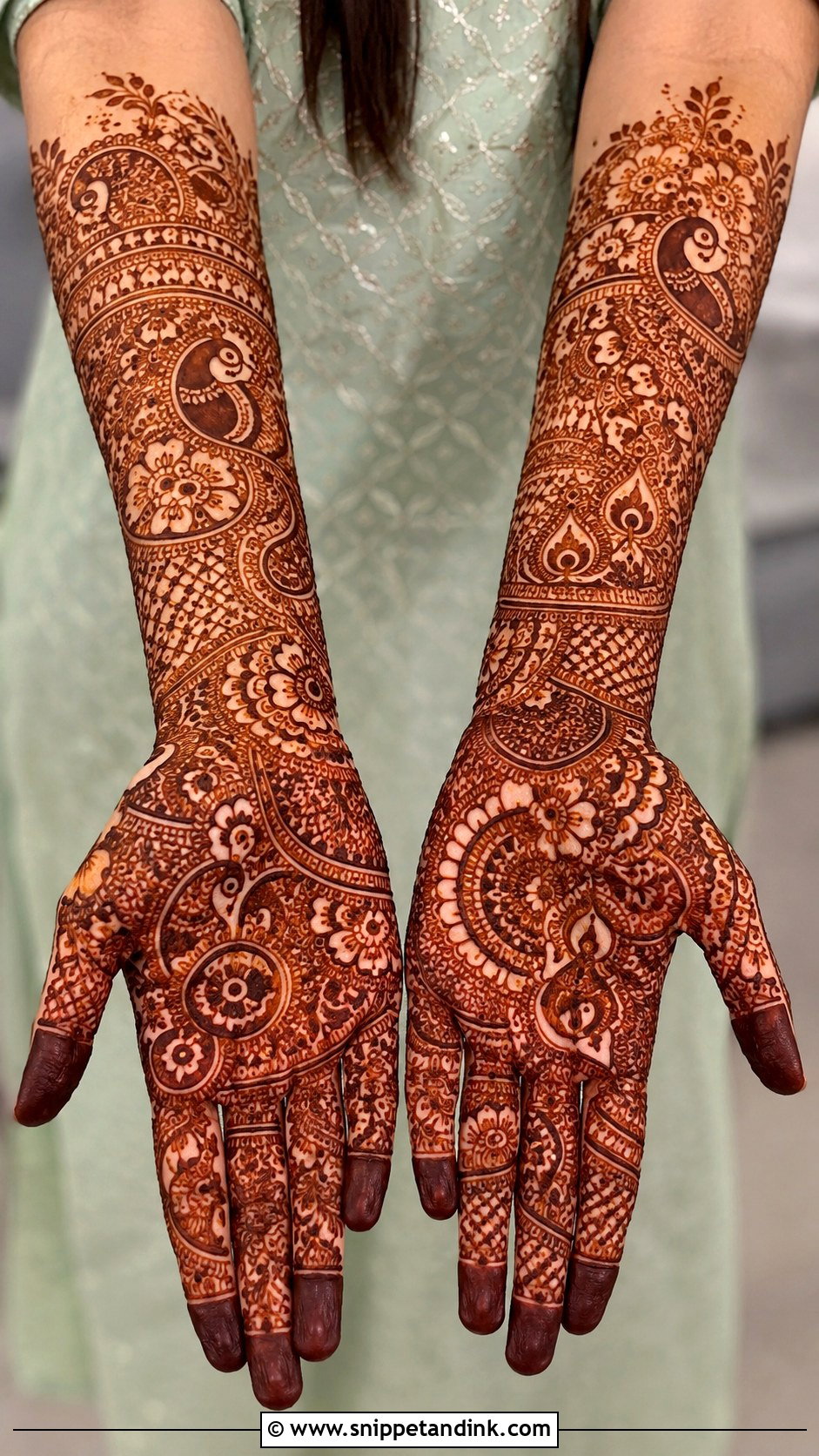
Palm, fingers, wrist and forearm filled with layered paisleys, peacocks, mandalas, florals, jaali and dense finger fill. Heavy work belongs to brides, close family and major traditional events. Without a plan it overwhelms, so I keep one clear design at the palm center, smaller patterns around it, and bangle-like bands across the wrist to break up the density. Done well, it looks lavish rather than crowded.


20. Front Hand Mehndi Design For Eid
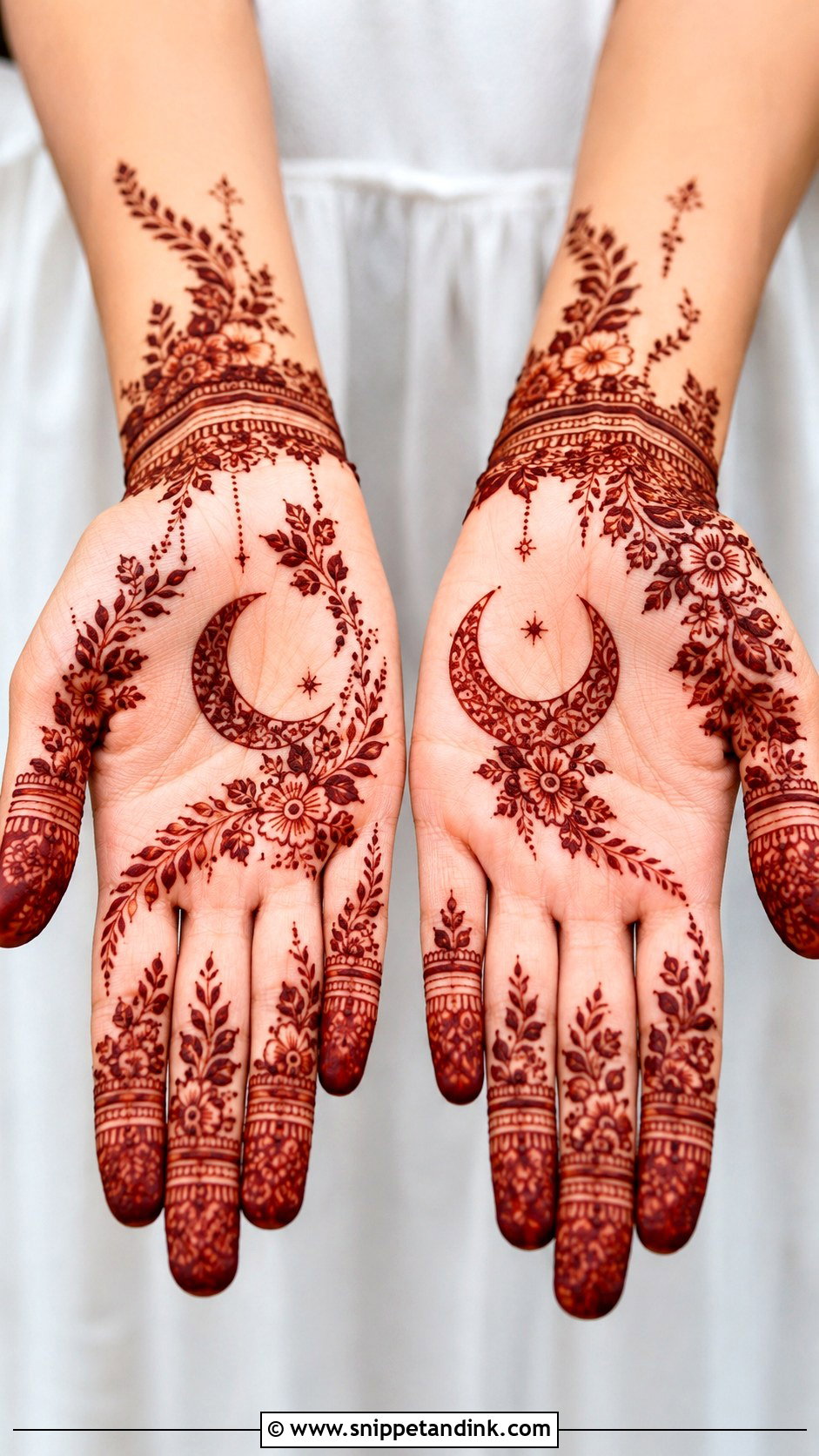
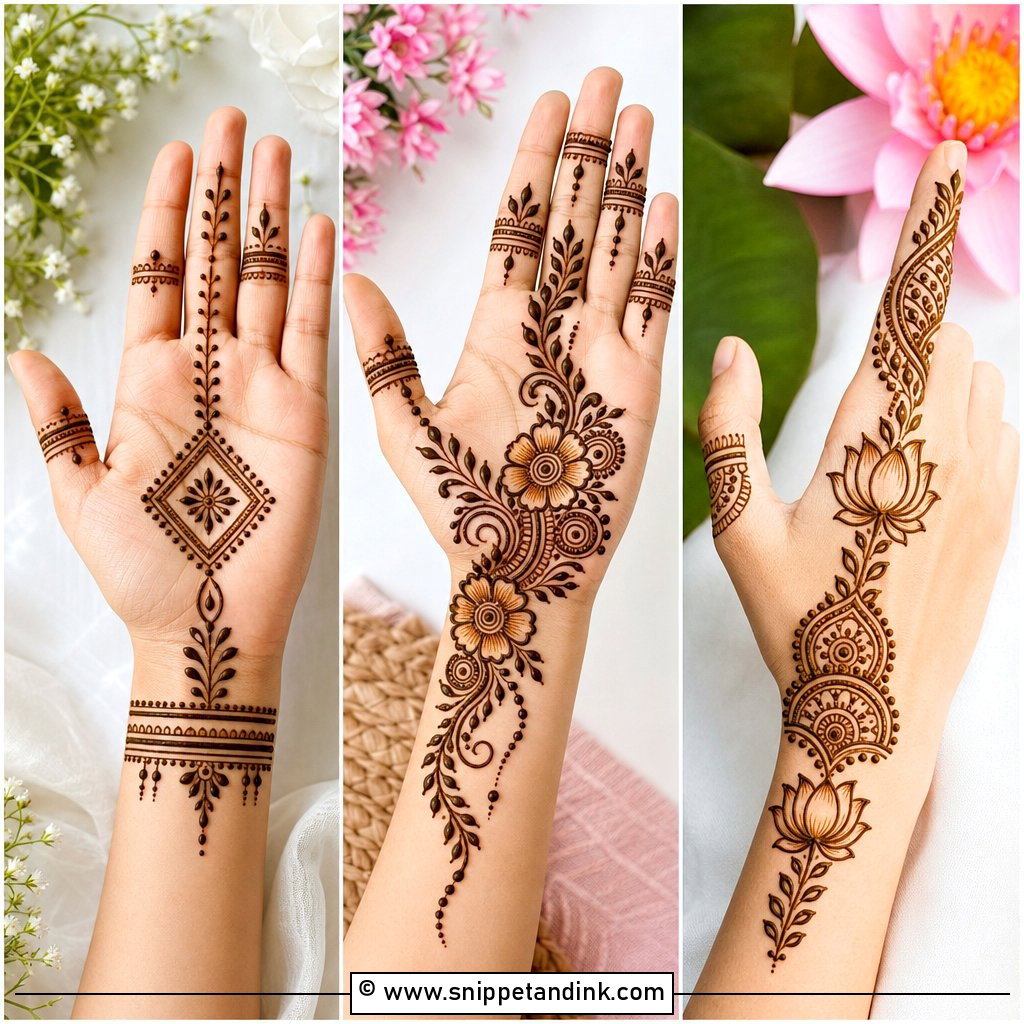
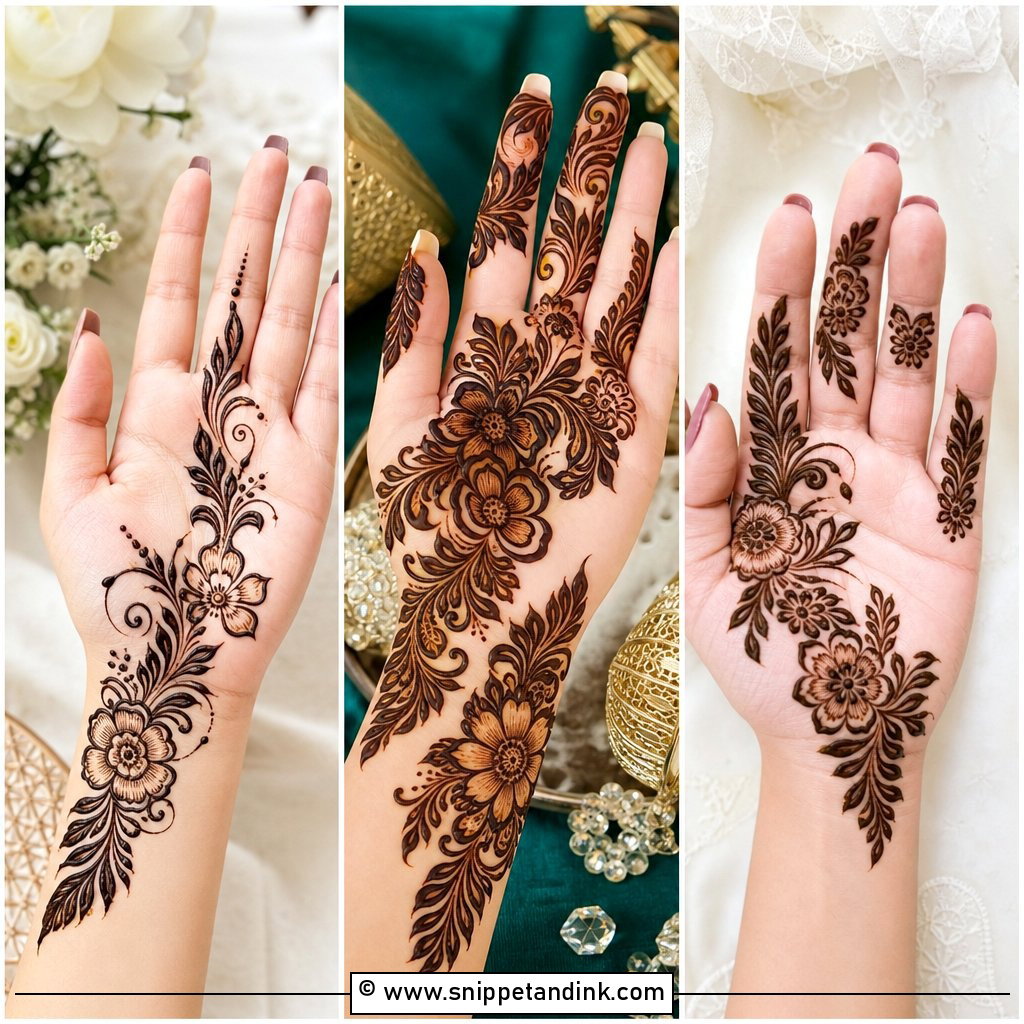
Eid palms usually mean Arabic floral trails, crescent accents, mandala palms, leafy fingers and bracelet wrists. Medium coverage is popular because it gives a good stain without a long sitting on Chand Raat. A crescent moon tucked among the flowers marks the occasion. The design needs to stay comfortable for prayers and a day of family visits, so I keep fingertips lightly filled rather than solid.
21. Front Hand Mehndi Design For Wedding
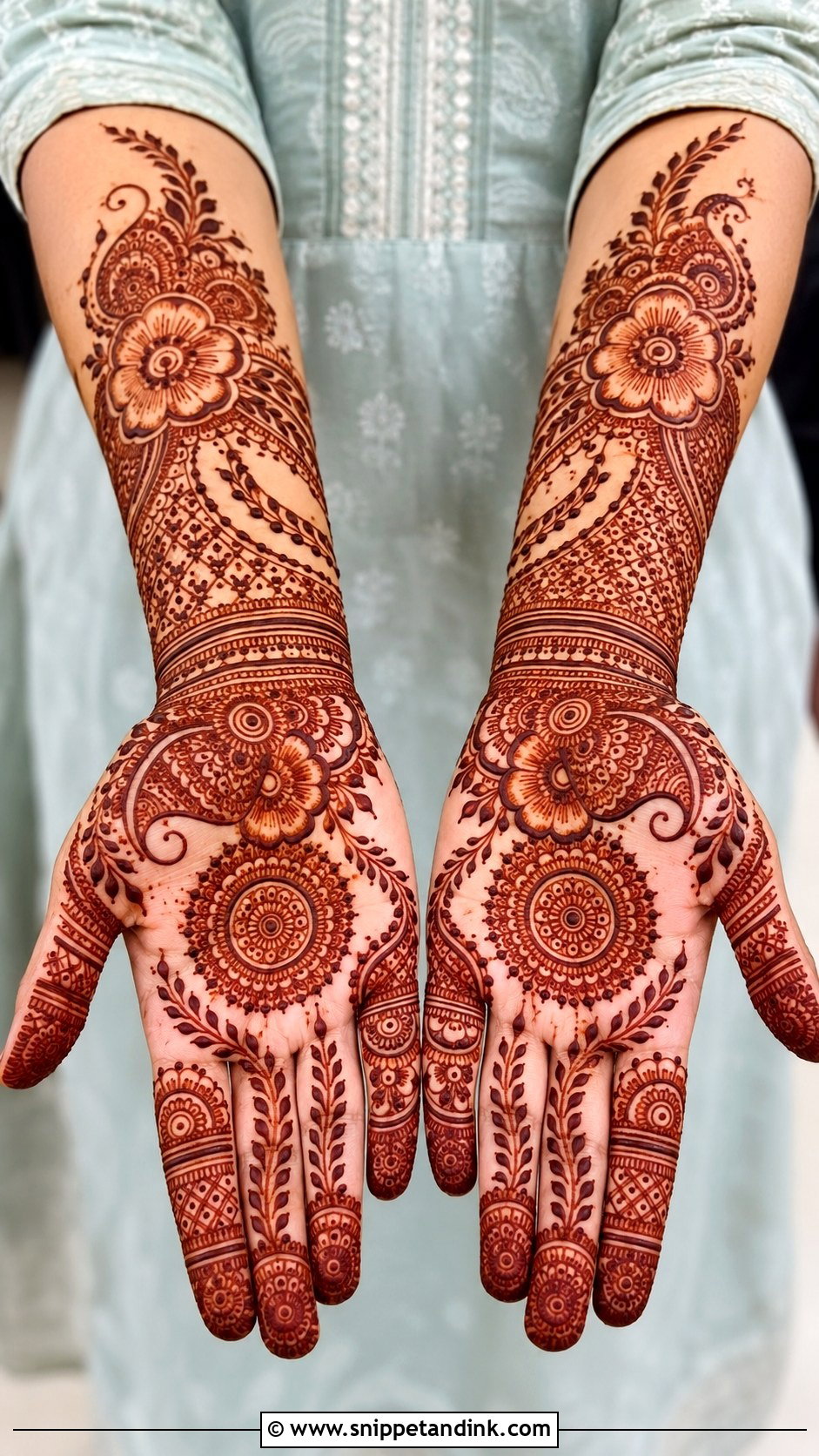
Wedding mehndi spans everyone from the bride to distant cousins. Brides take full hands with personal details, while guests usually prefer Arabic, Indo-Arabic or floral layouts. I match the density to the outfit. A heavy lehenga carries a dense Indian palm; a lighter suit or saree sits better with a flowing Arabic trail. Bridesmaids do well with a medium palm and finger design that looks festive in photos without hours in the chair.
22. Front Hand Mehndi Design For Engagement
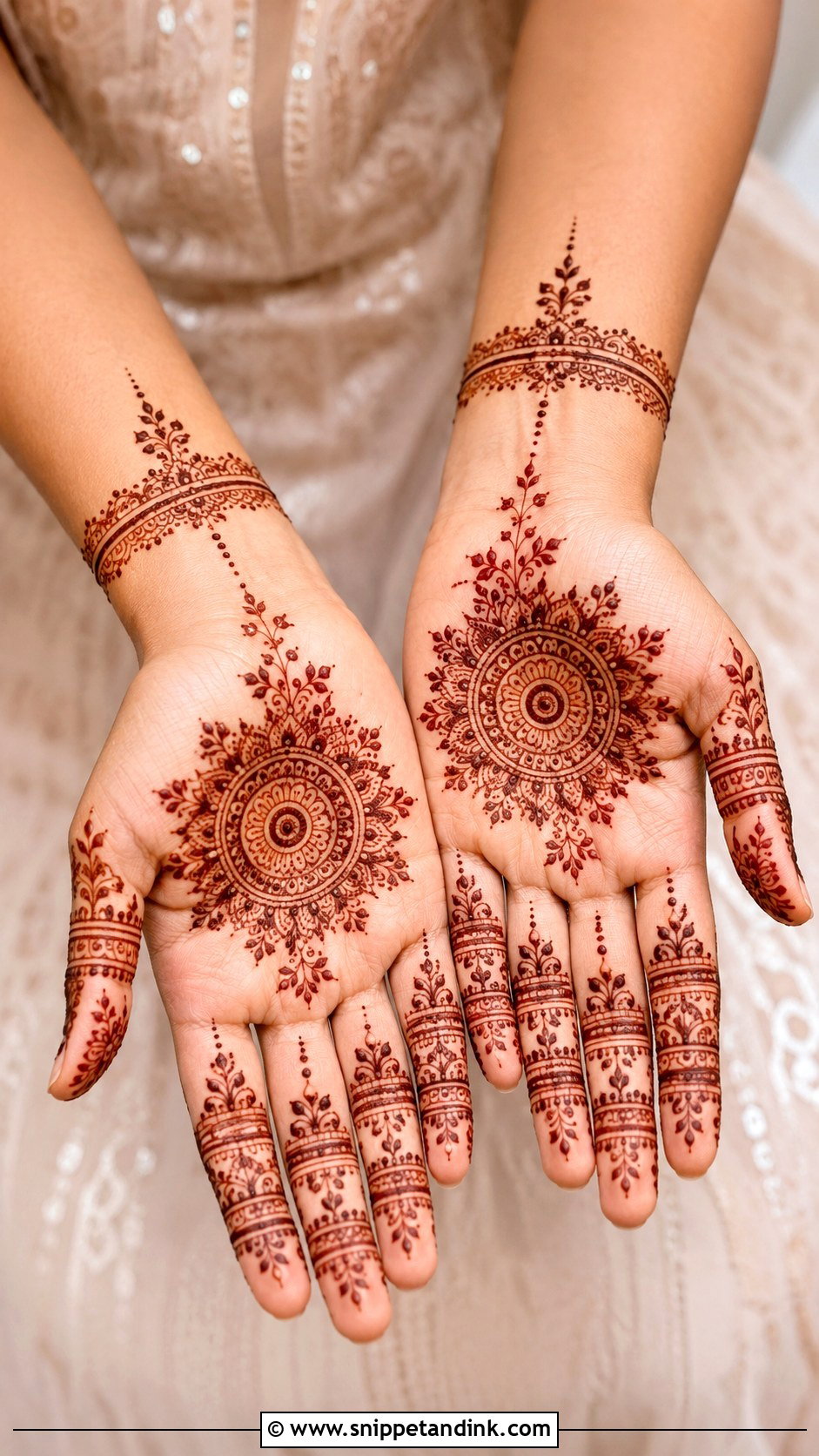
Engagement photos focus on the ring, so I design the palm and fingers around it: a mandala palm with fine ring-style fingers, or a floral trail that leads the eye to the ring finger. I keep the base of that finger light so the ring sits on clear skin. Small hearts can work for a playful touch, but florals, vines and paisleys date less. A wrist bracelet pattern finishes it without competing with the jewelry.
23. Front Hand Mehndi Design For Karwa Chauth
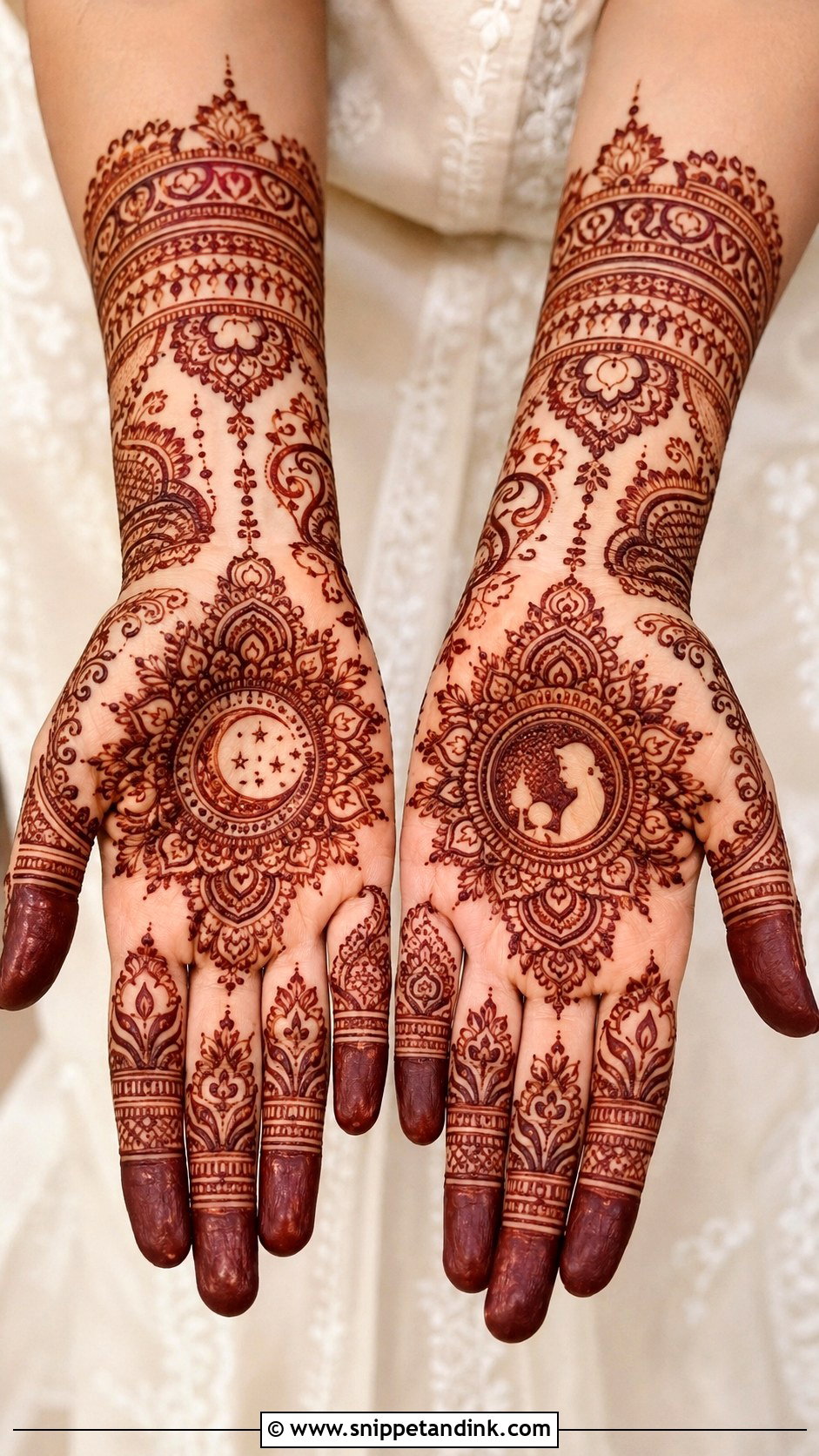
For Karwa Chauth most women want something richer than everyday henna: full palms, filled fingertips, bracelet wrists, mandalas, paisleys and moon motifs that sit well under bangles. A palm-centered design with dense fingers is the classic; an Arabic trail with a decorative cuff is the lighter option. A deep stain is prized on this day, so I apply it the day before and remind clients to leave the paste on overnight.
24. Front Hand Mehndi Design For Diwali
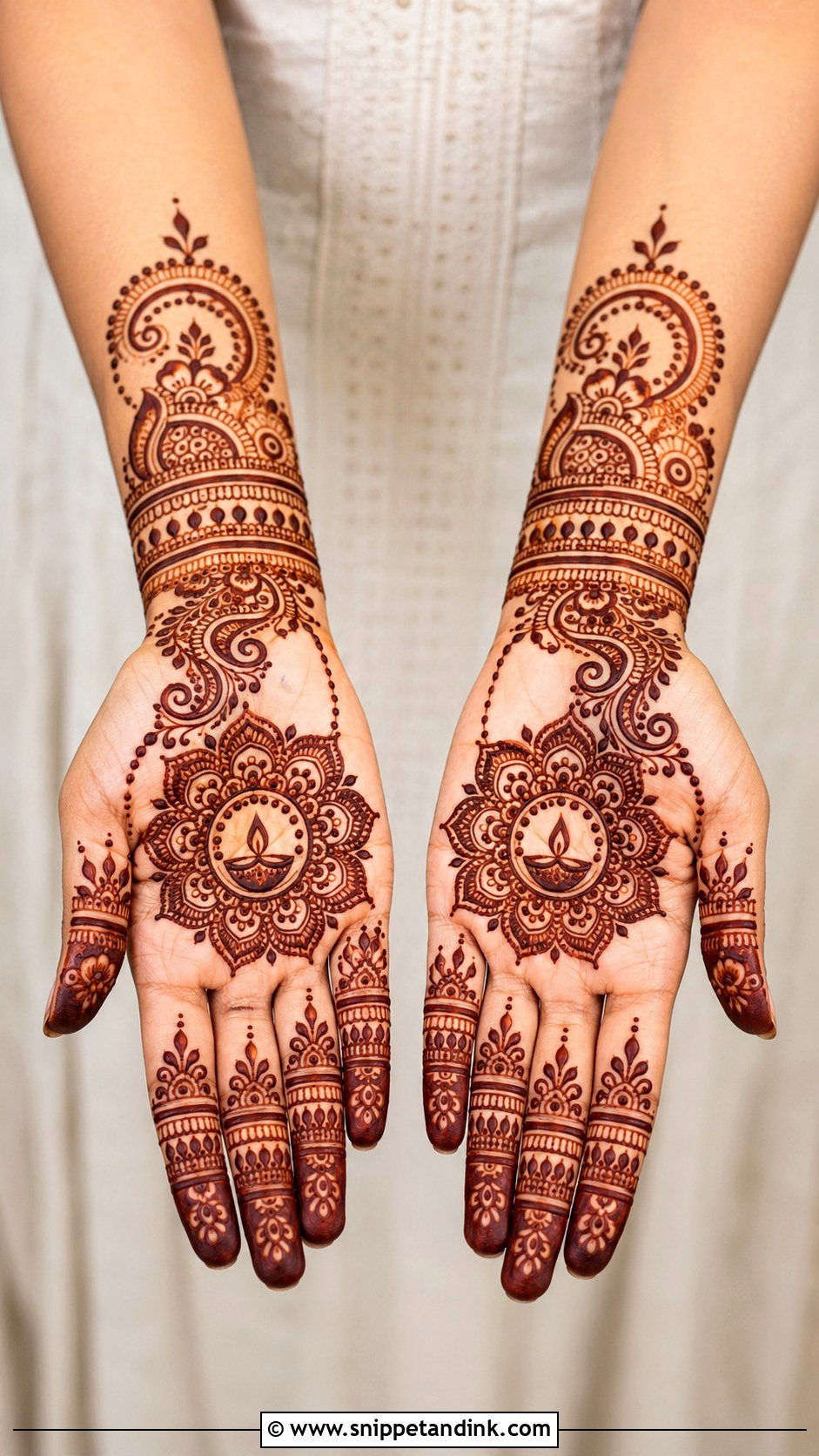
Diwali palms suit floral mandalas, diya shapes, paisley trails and decorative wrist bands at medium coverage. A centered motif with detailed fingers is a dependable choice, or an Indo-Arabic layout with bold leaves if you want something more current. Diwali outfits bring shimmer, embroidery and bangles, so the henna should be tidy enough to sit among all of that without competing.



25. Front Hand Mehndi Design For Raksha Bandhan
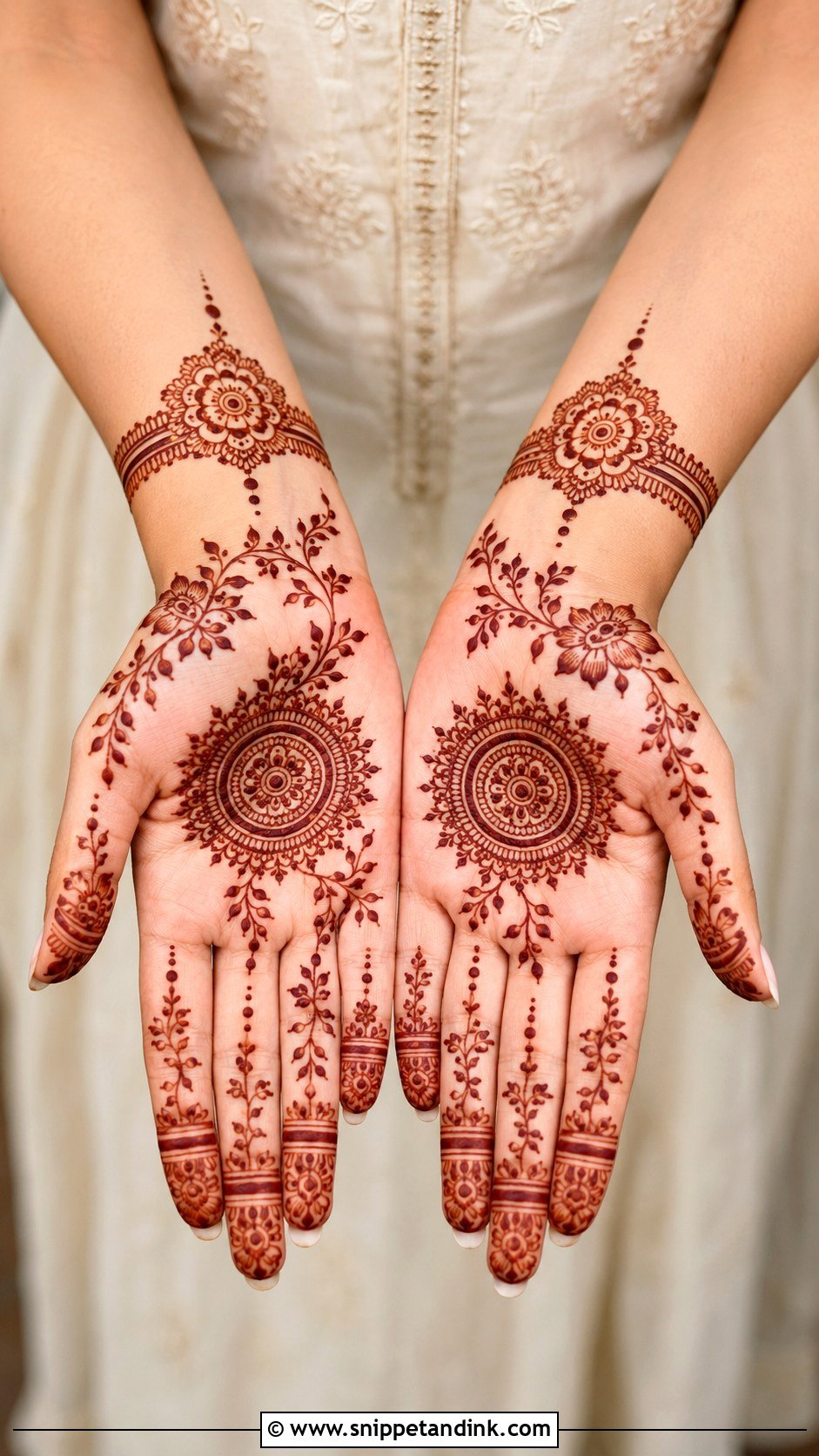
On Raksha Bandhan your hands are on show at the moment of tying the rakhi, so a pretty palm and finger design makes sense. A small mandala, floral vine or paisley cluster with light finger bands and dots is plenty. A bracelet-style wrist echoes the rakhi without being literal. No one needs bridal coverage for this day; the best Raksha Bandhan mehndi dries quickly and looks neat in a family photo.
26. Front Hand Mehndi Design For Bridesmaid
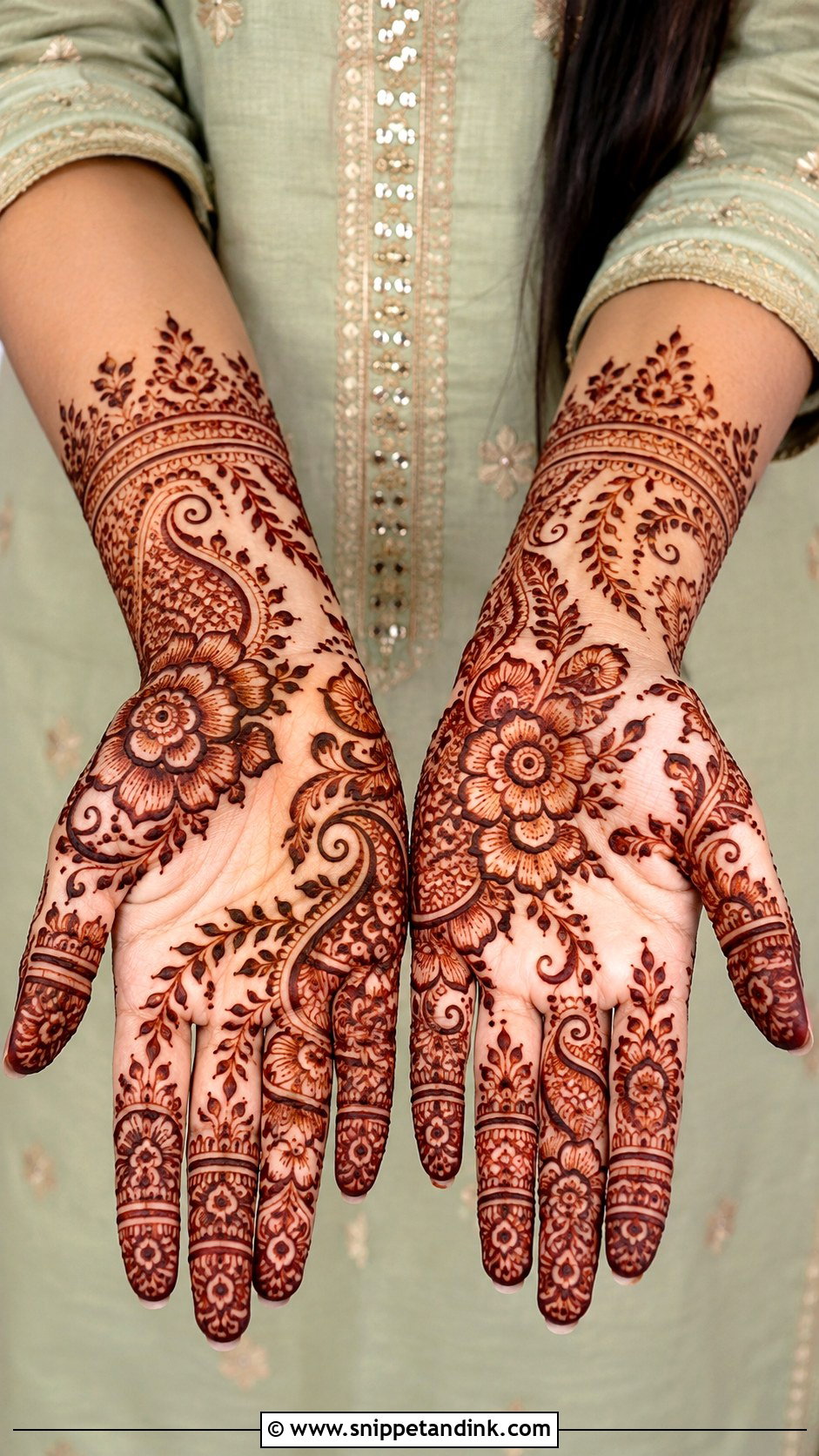
Bridesmaids sit between guest and bride. Medium Indo-Arabic coverage gives enough detail for photos and keeps the hand usable, which matters because bridesmaids end up running errands, pinning dupattas and carrying things all week. I usually stop the design at the wrist. A strong palm feature and a neat border are enough, and giving the group a shared motif with small variations looks coordinated in group shots.
27. Front Hand Mehndi Design For Kids
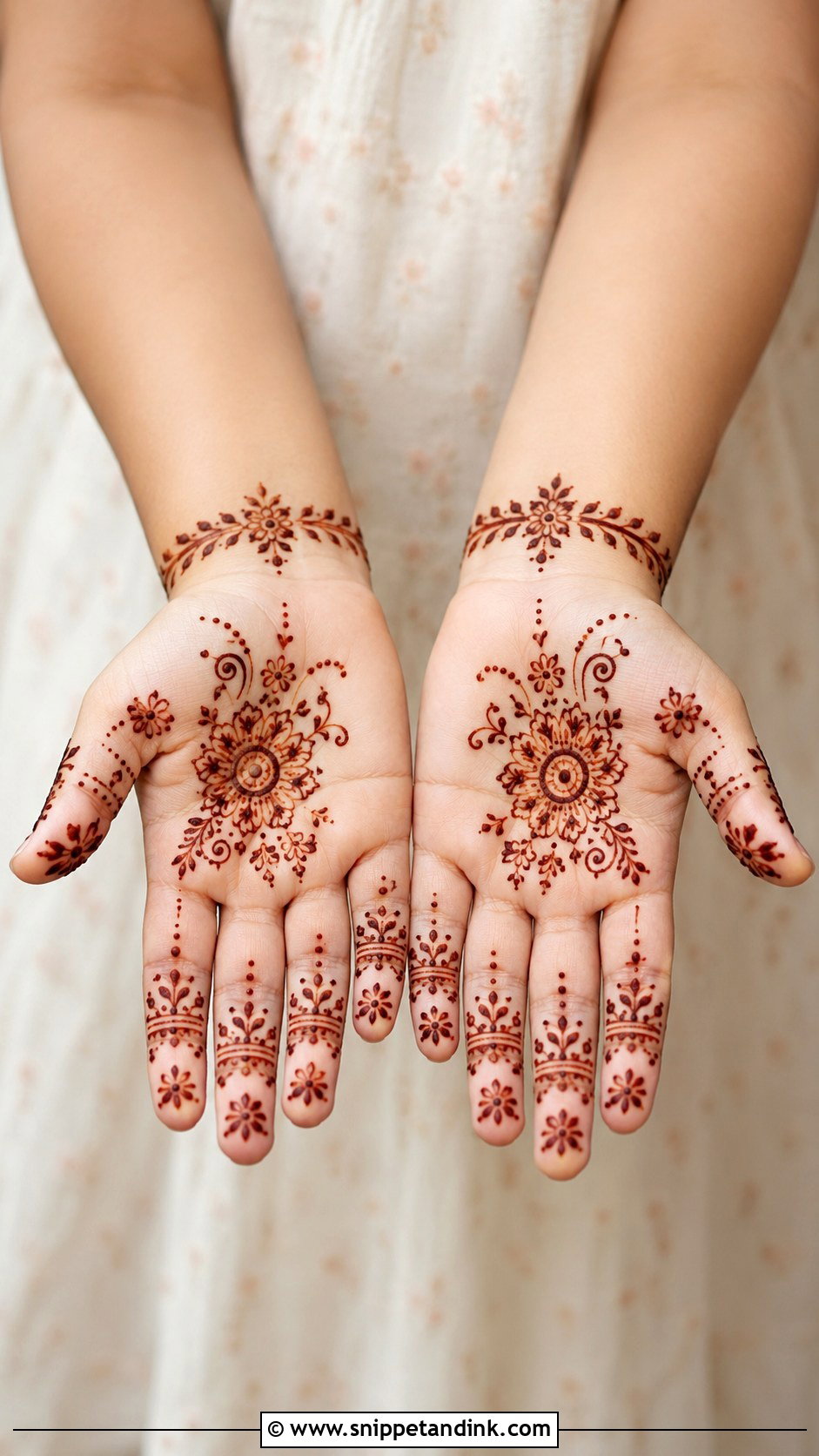
Children do best with small, quick designs: a tiny flower, simple mandala, butterfly shape or leafy bracelet, with dots or mini bands on the fingertips. Small hands need bold lines and open space, since fine detail smudges when they fidget. Natural henna only, never chemical cones that promise an instant dark stain.
28. Front Hand Mehndi Design For Beginners
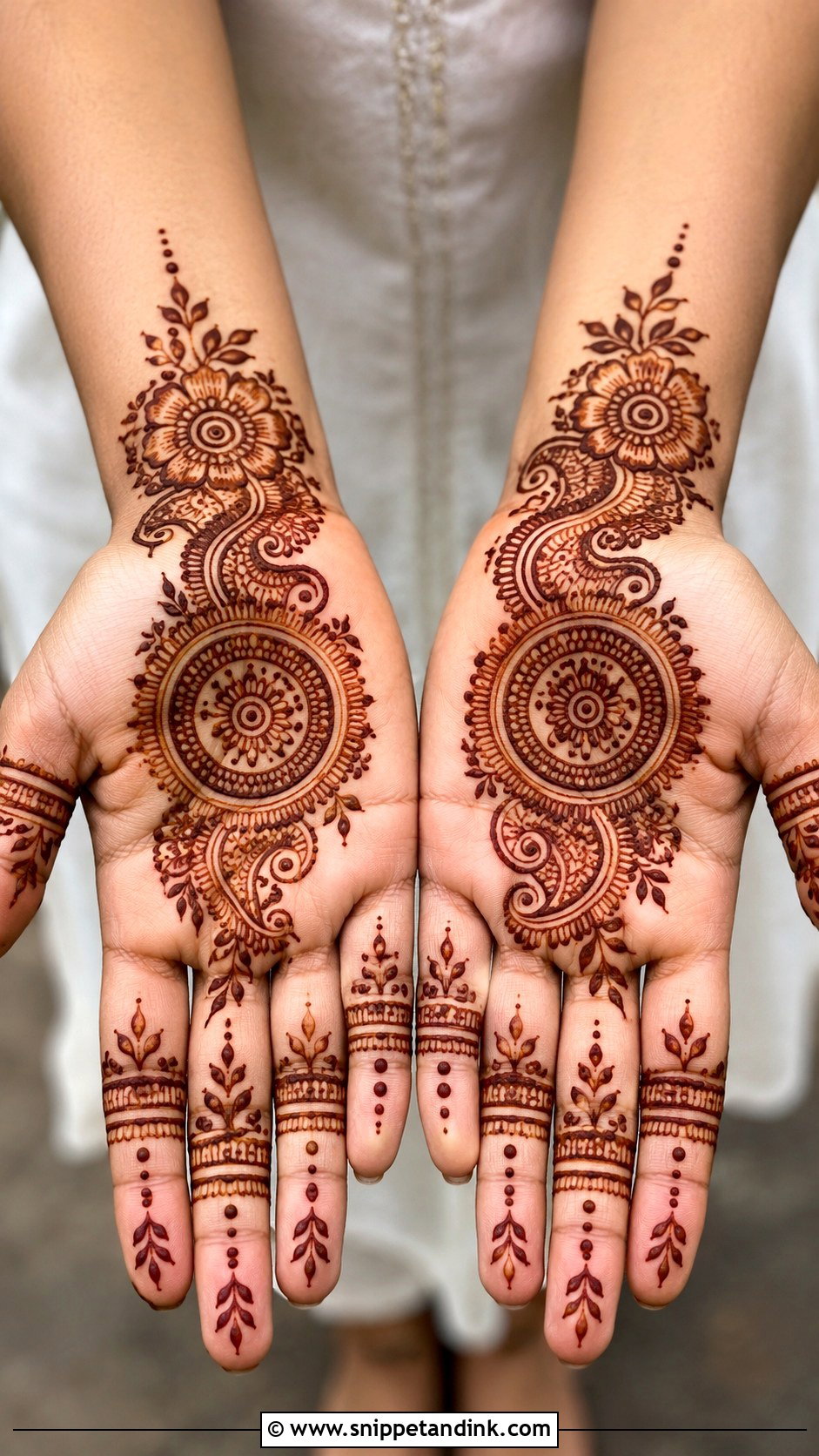
A beginner’s palm uses the shapes everyone learns first: a central circle, flower or paisley, then curved lines, leaves, dots and simple finger bands, with two or three lines and small petals at the wrist. It teaches cone control without asking for shading. Leave bridal density for later. Drawing the same layout a few times is the fastest way to steady your hand.
29. Front Hand Mehndi Design With Rose
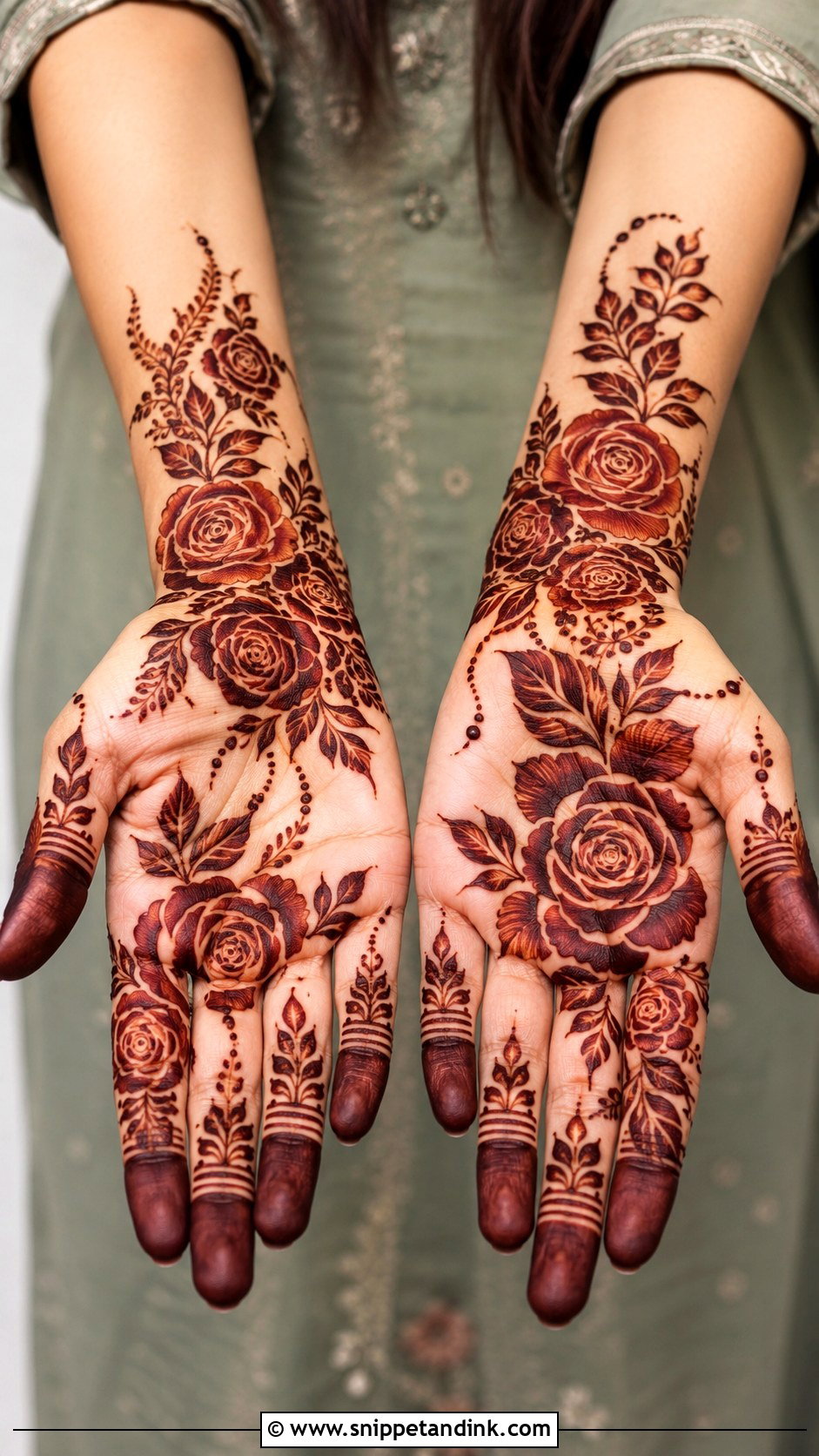
A large rose on the palm with smaller roses flowing toward the wrist and fingers suits Arabic and Gulf layouts, where open space lets each bloom stand out. Bold petal outlines and light inner shading give depth, with leaves and dotted trails linking the flowers. One rose and minimal fingers is the simple version; rose clusters and a bracelet wrist make it festive. I draw the rose’s center as a tight curl, which is what stops it reading as a generic circle.
30. Front Hand Mehndi Design With Jaali
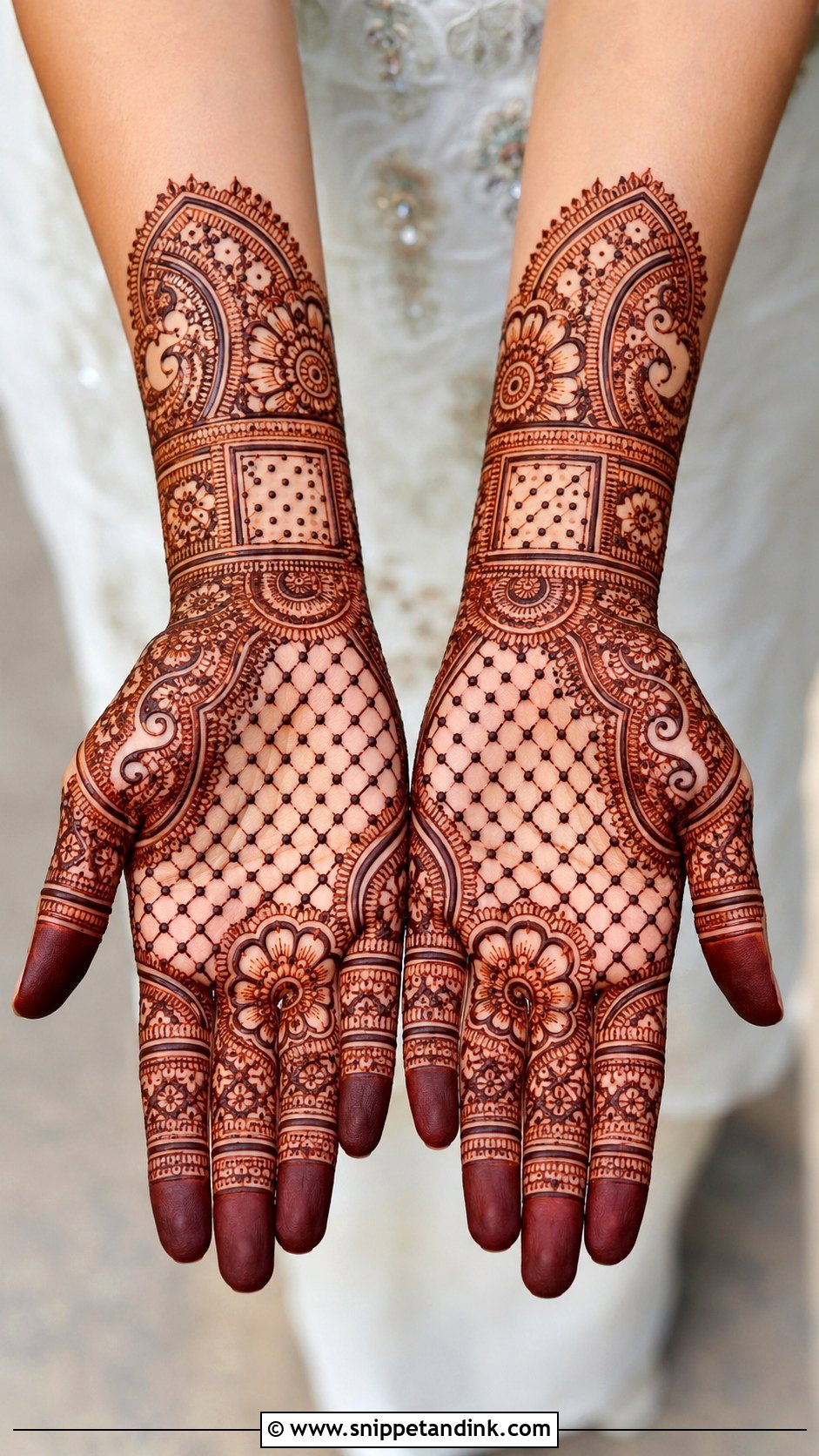
Jaali gives the palm a net texture, often beside florals, paisleys or mandalas. It adds richness without piling on extra motifs, and it contrasts well against solidly filled areas in bridal work. Boxes that are too tiny fill in once the stain develops, so I keep the cells a little larger than they look like they should be. Dots or mini flowers inside a few selected cells add charm.
31. Front Hand Mehndi Design With Bracelet
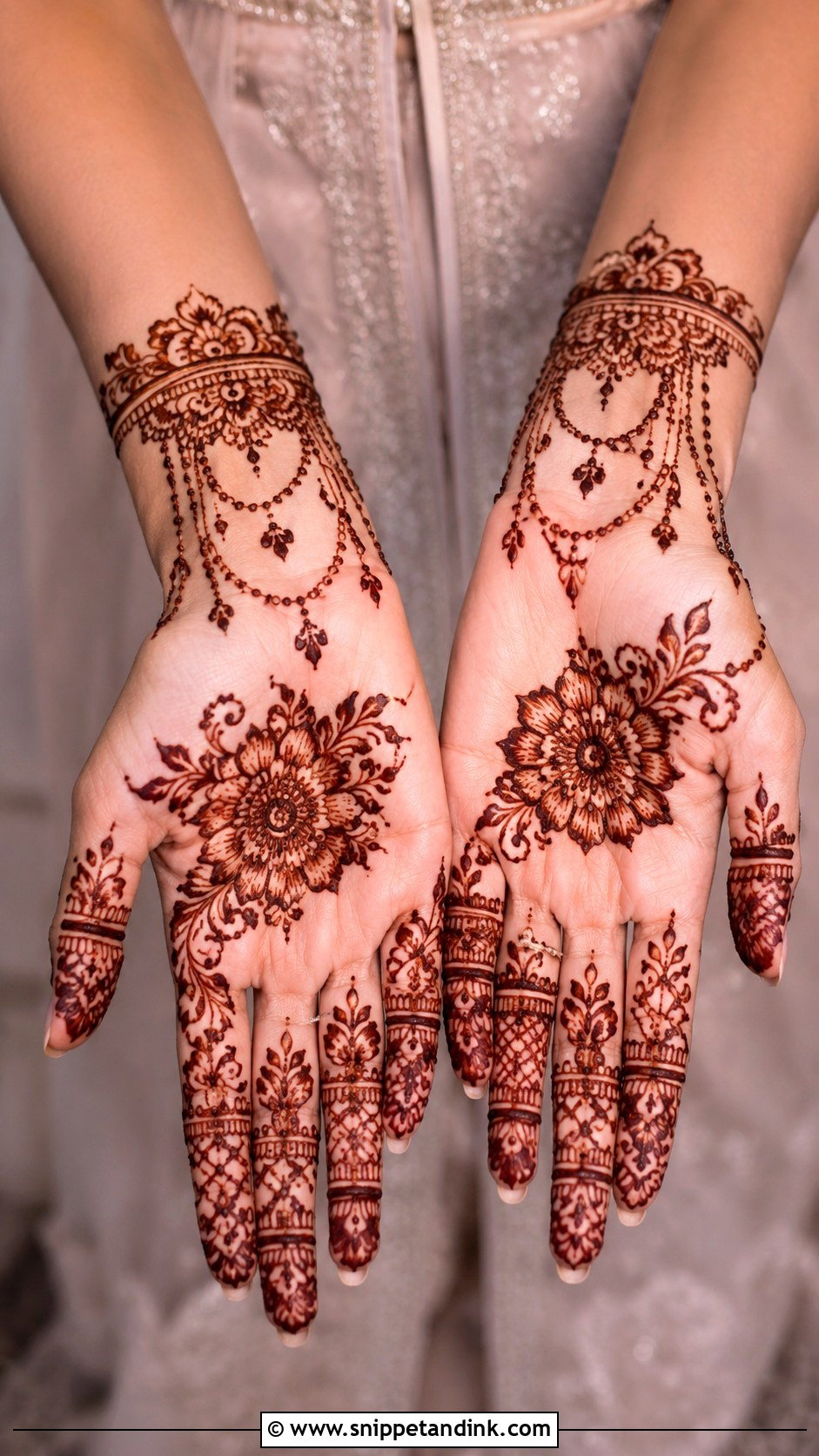
The palm stays simple, a flower, mandala or paisley, while the wrist carries layered bands like stacked bangles, linked to the palm with chains, dots, small leaves and curved borders. Ring-style fingers complete the jewelry effect. It frames the hand rather than covering it, which suits engagements, Eid, Diwali and wedding guests. If you’ll wear real bangles, tell your artist which wrist so the henna bands sit just above them.
32. Front Hand Mehndi Design With Shaded Flowers
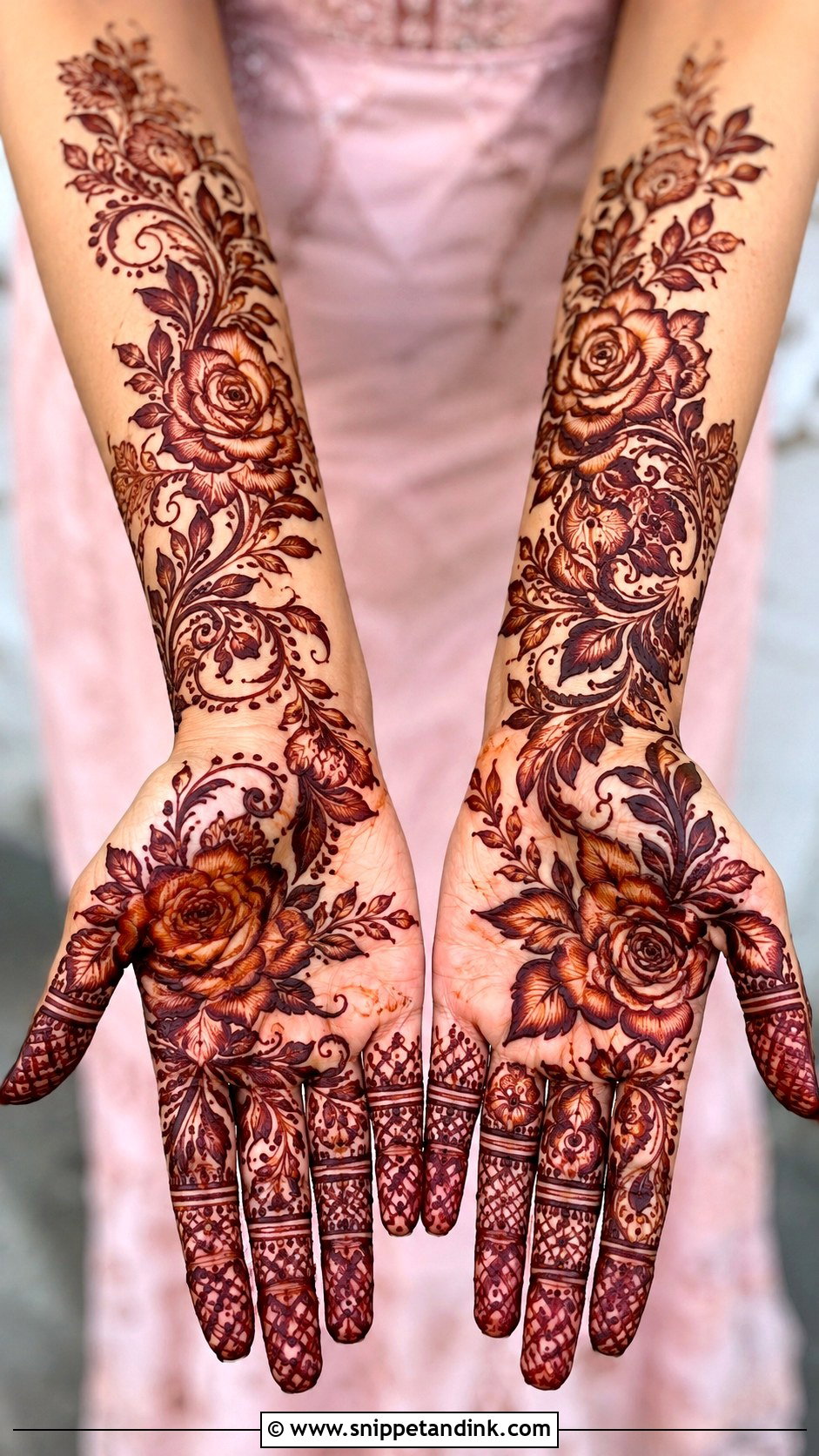
Shading inside petals, leaves and paisleys gives depth without dense fill, and it’s common in Arabic and Indo-Arabic work. A shaded rose on the palm with leafy fingers and a wrist trail is one of my favorite guest designs. Keep the shading light and controlled; too much hides the petal shape. I build it with fine strokes that thin toward the center of the petal, inside a thick outline.
33. Front Hand Mehndi Design With Negative Space
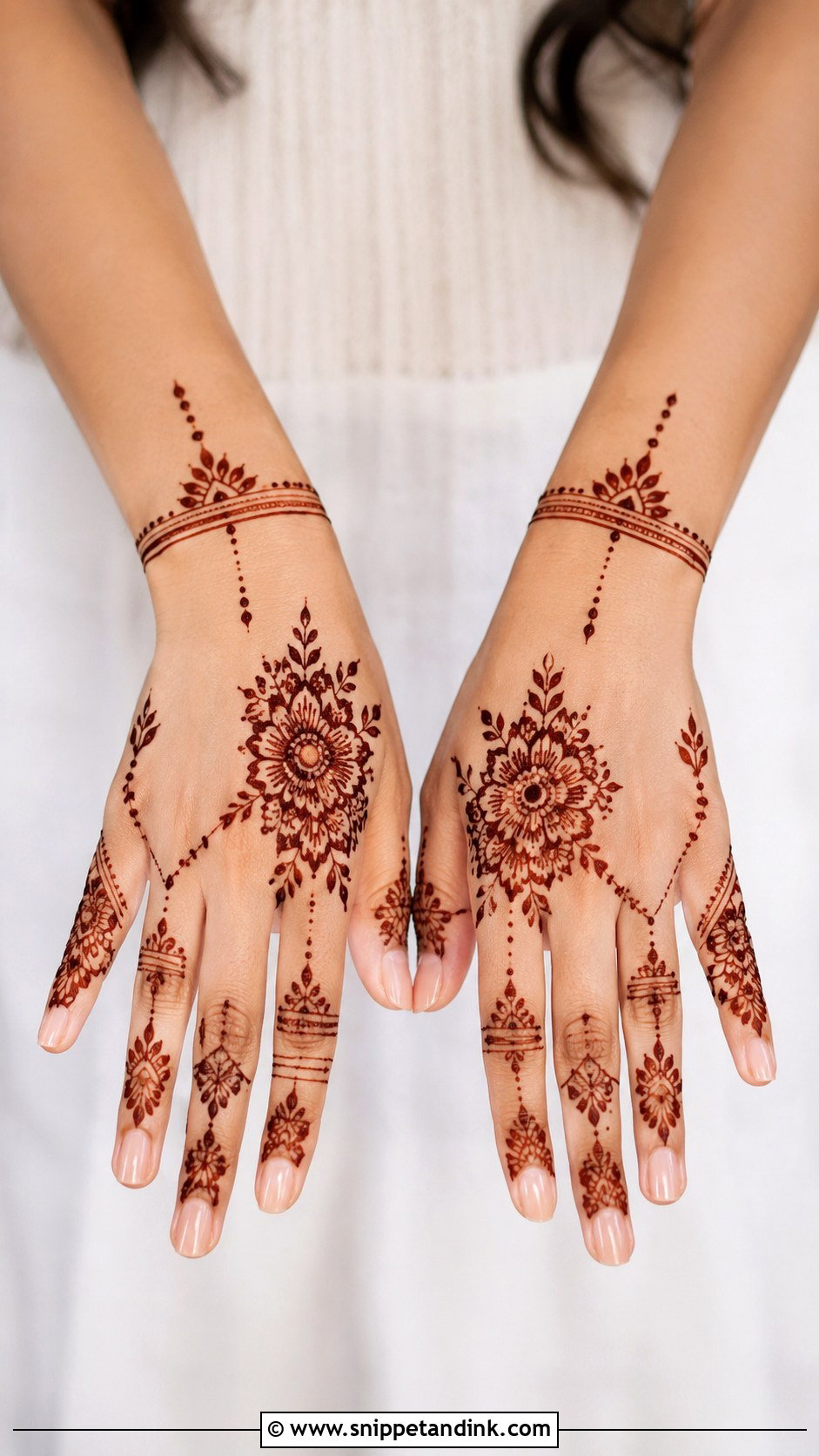
Negative space means deliberately leaving skin bare so the motifs look sharper. It works with Arabic florals, geometric lines, mandalas and bracelet patterns, and it dries faster than a full design. The difference between planned space and random gaps is visible immediately. I sketch the empty areas as shapes in their own right, before I draw a single flower.
34. Front Hand Mehndi Design With Leaf Trail
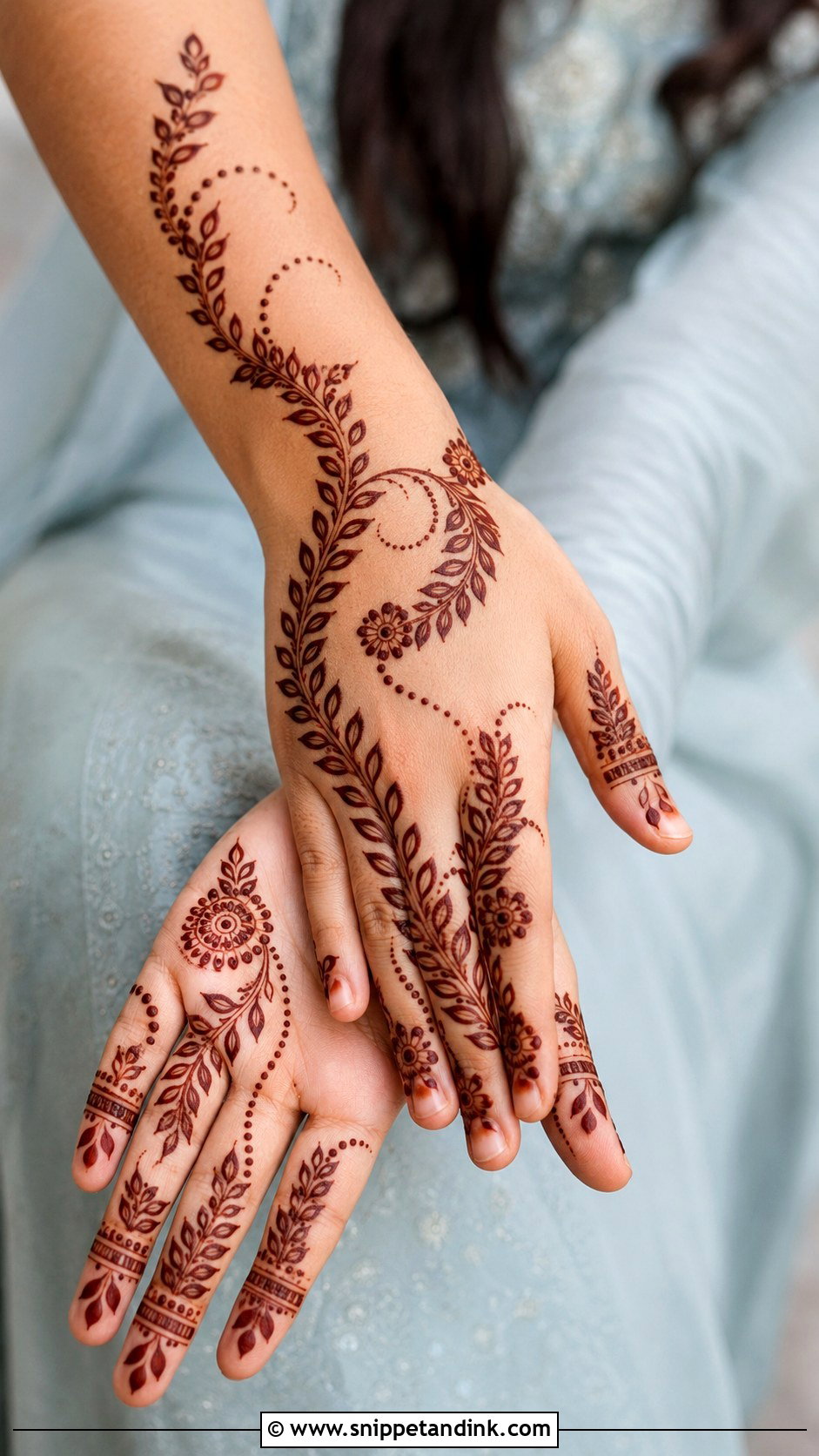
A leafy vine starts at the wrist, curves across the palm and runs up one or two fingers. It follows the hand’s natural line, so it flatters almost every shape. Thin leaves and dots keep it minimal; flowers and paisleys make it festive. Beginners find it forgiving because the leaf is so easy to repeat. One smooth curve, without breaks, is what makes it look intentional.
35. Front Hand Mehndi Design With Wrist Cuff
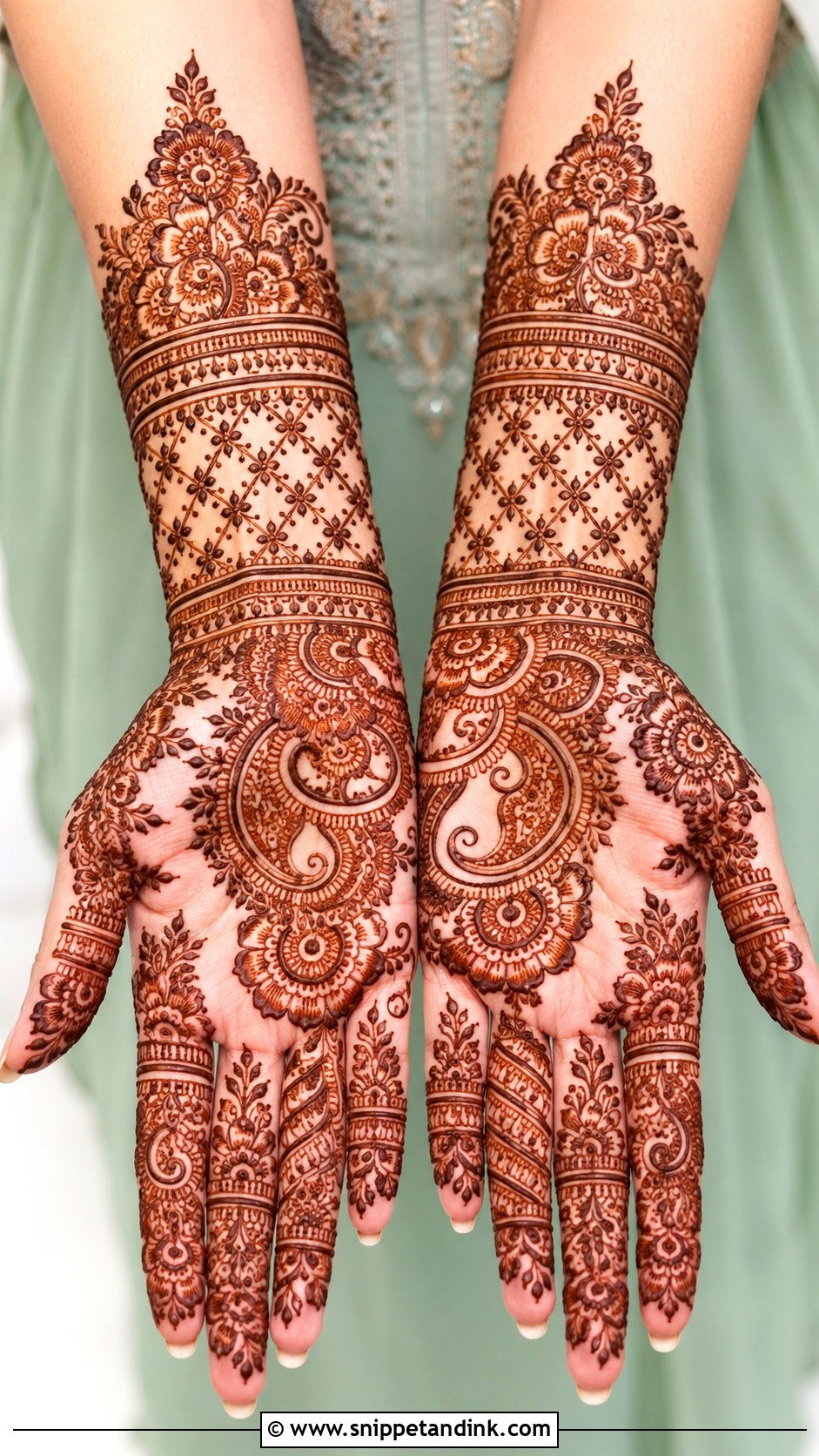
The wrist becomes a cuff bracelet in bands, flowers, jaali, dots or geometric borders, with a simple mandala, floral trail or paisley cluster on the palm and matching finger details. It’s the jewelry look with a bit more coverage than finger-only designs. Wide enough to stand out, not so heavy that it overpowers the palm: that’s the balance. Wrist skin stains lighter, so I draw the cuff with slightly bolder lines than the palm.
Showing Your Artist a Picture Without Getting a Copy
Most clients arrive with a phone full of saved designs, and that’s helpful. But a reference photo is someone else’s hand, and copying it exactly rarely works. Your palm may be shorter, your fingers longer, and many online photos show a day-two stain that has been brightened or color-adjusted.
- Bring two or three favorites and say what you like about each. The peacock in one, the spacing in another, the finger pattern in a third gives me more to work with than one picture to copy.
- Say what you don’t want. No portraits, no names, nothing past the wrist: those limits save more time than any wish list.
- Ask how long it will take, and for a bride, whether a small trial on a fingertip or wrist is possible a few weeks before.
- Patch test if you’ve never had henna or have sensitive skin. A dab of the actual paste on the inner arm, left for a day or two, will show a reaction before it matters.
The best results come when you trust the artist to adapt the idea to your hand. I’d rather redraw a motif to fit your palm than force a photo onto a hand it was never drawn for.
Spacing Beats Detail on Any Palm
For quick wear, minimal fingers, a leaf trail or a clean mandala do the job. For festivals, Arabic florals, shaded roses, jaali and bracelet wrists give a good balance. For weddings, full Indian, Indo-Arabic, peacock, paisley and personal bridal palms feel right. Across every one of the 35 designs above, the hands that look best are the ones with good spacing and neat lines, matched to the size of the hand, the outfit and how long you can sit.
You'll Like These Ideas:



Leave a Reply