
Brides who ask me for this style want a particular finish: bold Pakistani detailing, a rich stain, heavy hand coverage and lines clean enough to survive a macro lens. Underneath, it borrows freely. Arabic flow, Indian paisley work, jaali, mandalas and personal touches like names and portraits all turn up in the same pair of hands. What holds it together is structure, so the hands look full without looking muddled. Here are twenty designs to show your artist, from full arms to a neat back hand, with what I watch for while drawing each.
Let Your Sleeves Decide How Far Up the Arm to Go
Before you fall for a full arm design, look at your outfit. Heavily embroidered full sleeves will hide most of the forearm, and every hour I spend on work nobody sees is an hour you spent sitting still. I always ask brides to bring a photo of each outfit for the week, with the sleeve length visible.
- Full sleeves: put the detail into the palms, fingers and a strong wrist band that shows below the cuff.
- Elbow or three quarter sleeves: extend the design a few inches past where the sleeve ends, so no bare gap shows when you raise your arms.
- Sleeveless or sheer: this is where full arm work earns its time.
- Different sleeves at different events: design for the main event and let the others take what shows.
1. Kashees Full Hand Bridal Mehndi Design
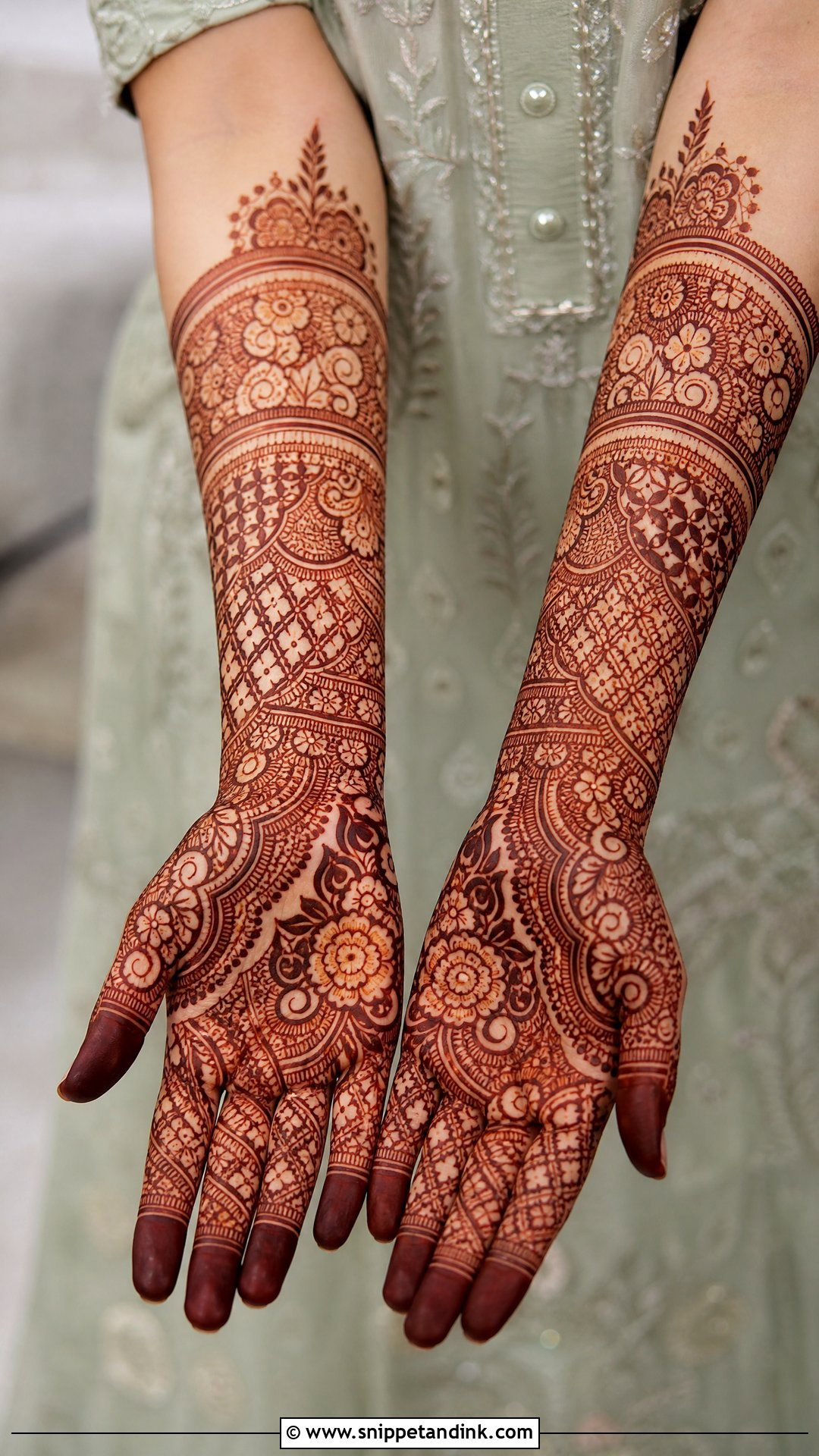
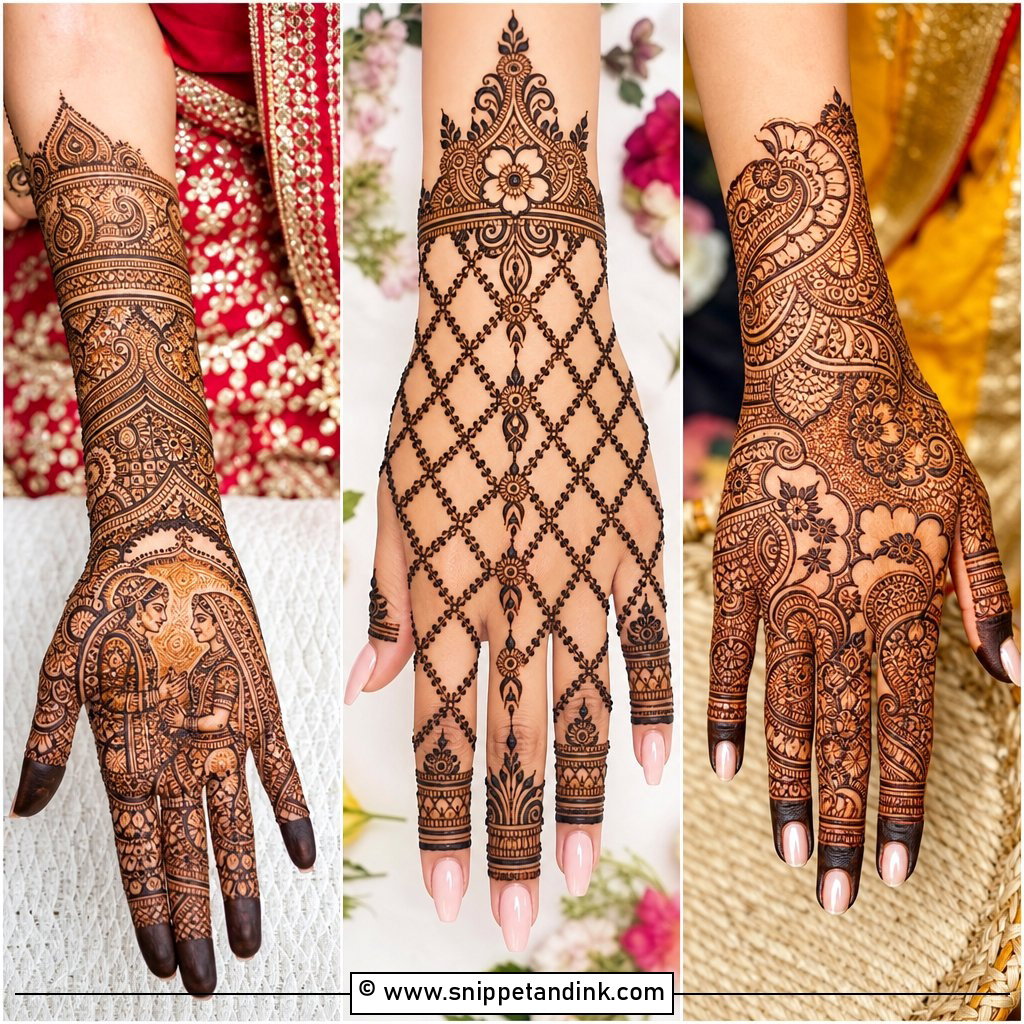
Full hand designs leave almost no empty skin, which makes planning the whole job. Before the first line I divide each hand into zones: fingertips, finger panels, palm, wrist band, forearm. Then paisleys, vines, dots and shaded panels fill each zone on its own terms. I keep the main motifs slightly larger around the palm and wrist, because bangles cover part of the wrist and small work there disappears. Heavy doesn’t have to mean crowded.
2. Kashees Front Hand Bridal Mehndi Design
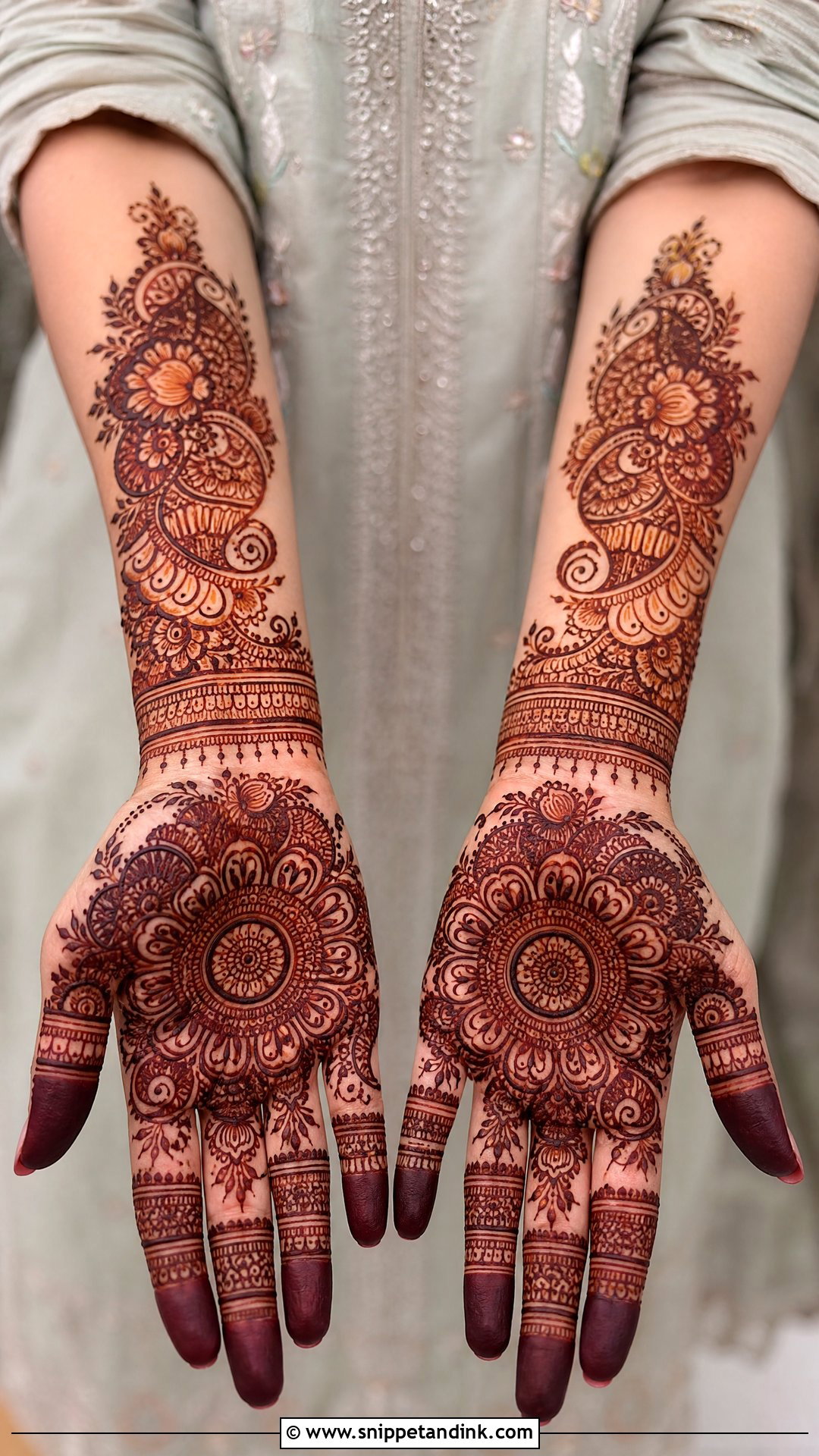
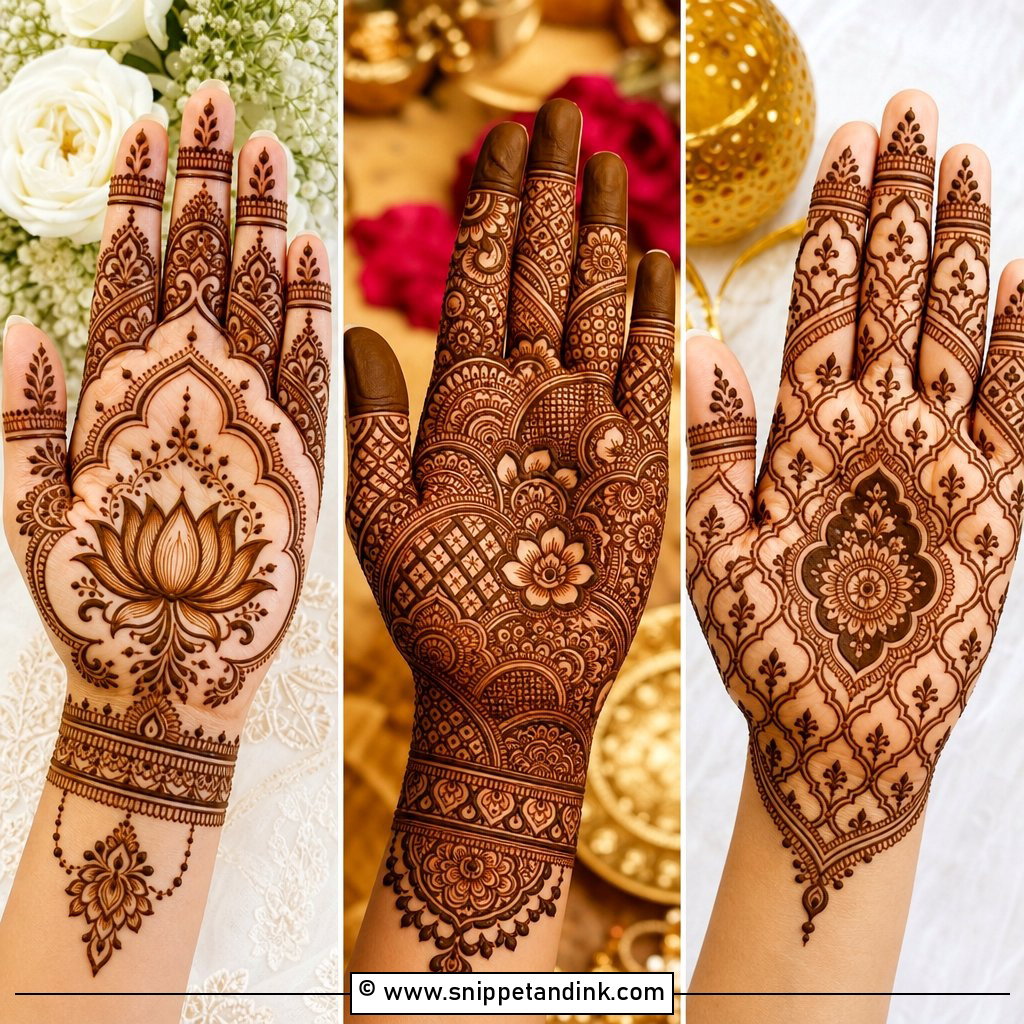
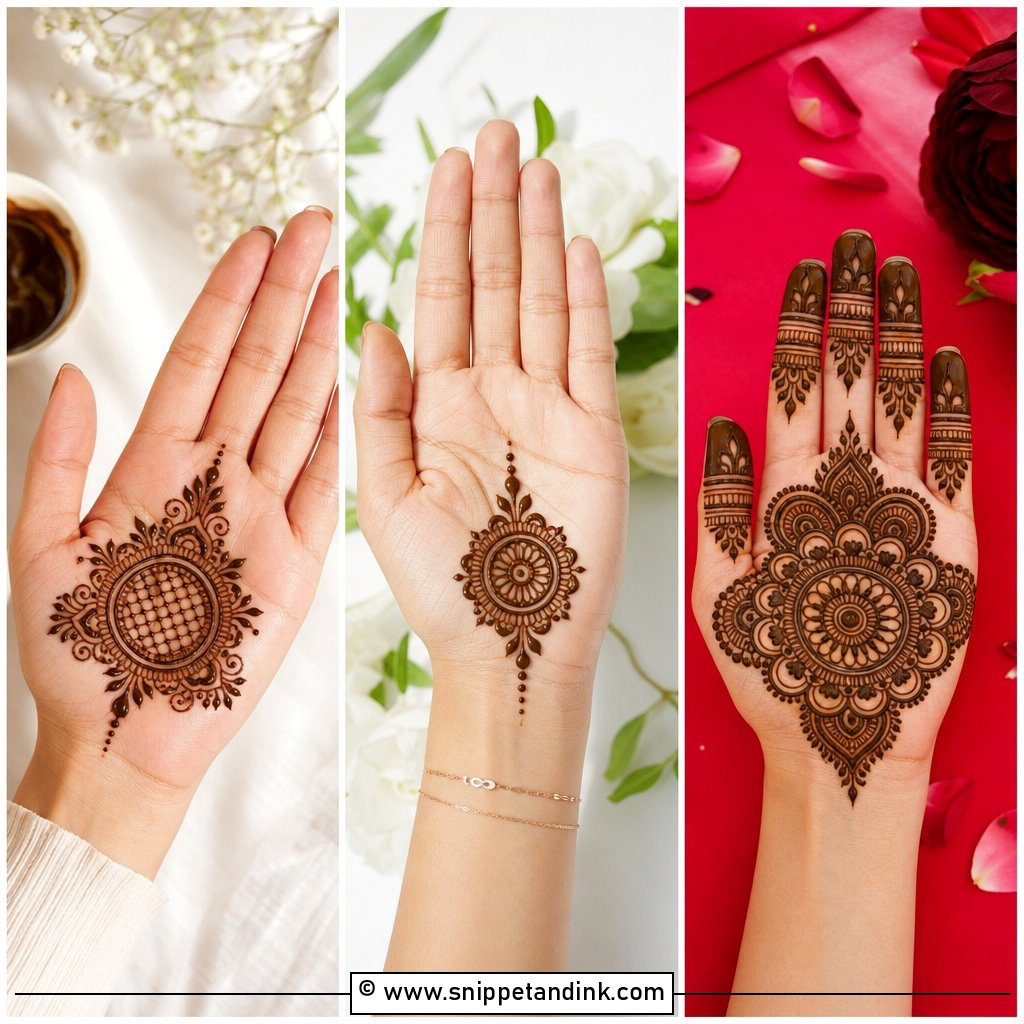
Ring photos and dua shots all show the palm, so this side earns the most attention. Dense fingertips, a central mandala or paisley cluster and detailed wrist bands are the usual layout. If you love traditional Pakistani bridal mehndi but want air in it, ask for clean spacing between motifs. I like making the two palms symmetrical but not identical: one carries the main story, the other answers it with florals and paisleys. Mirror-image palms look stiff when held together.
3. Kashees Back Hand Bridal Mehndi Design
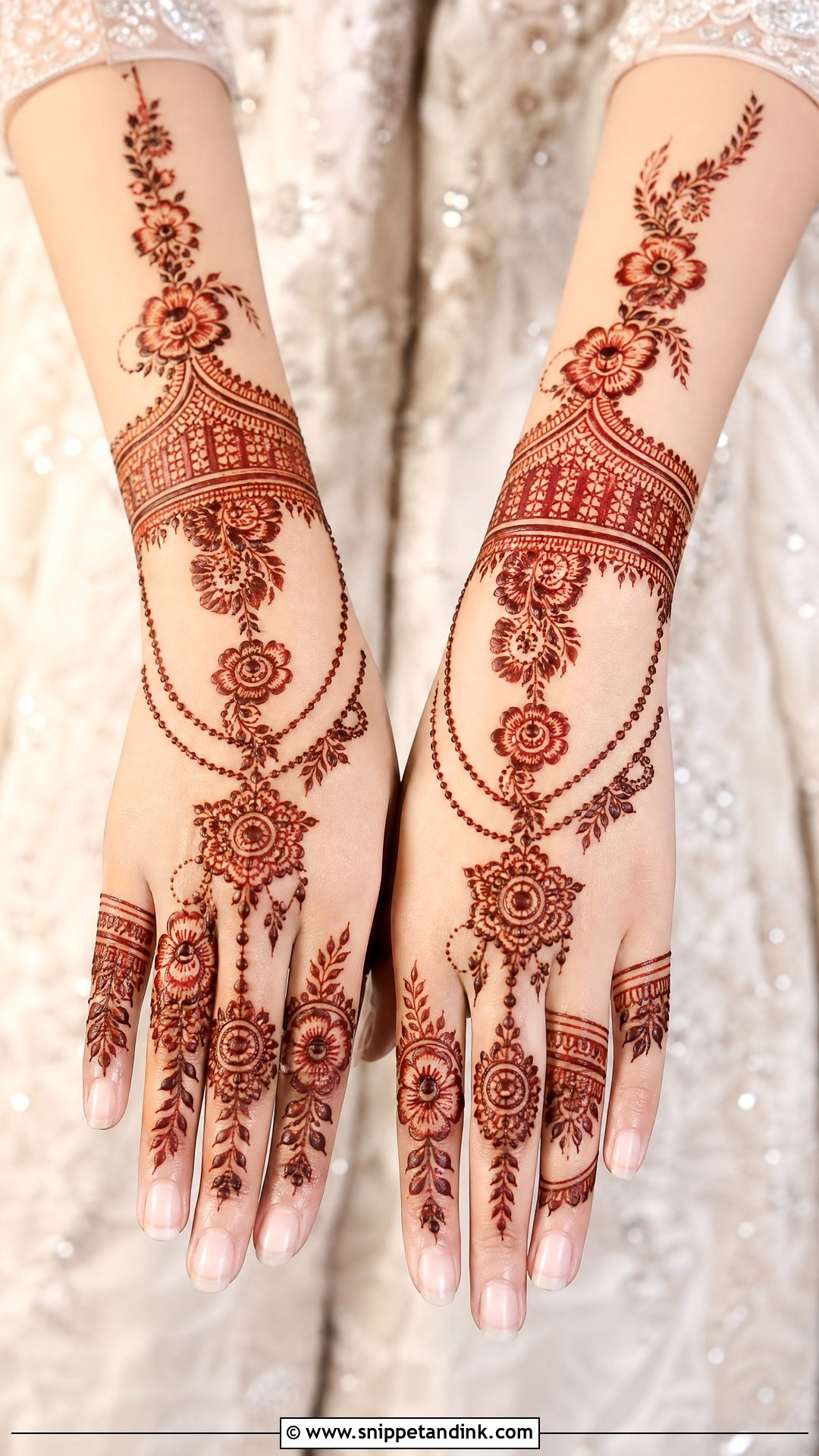
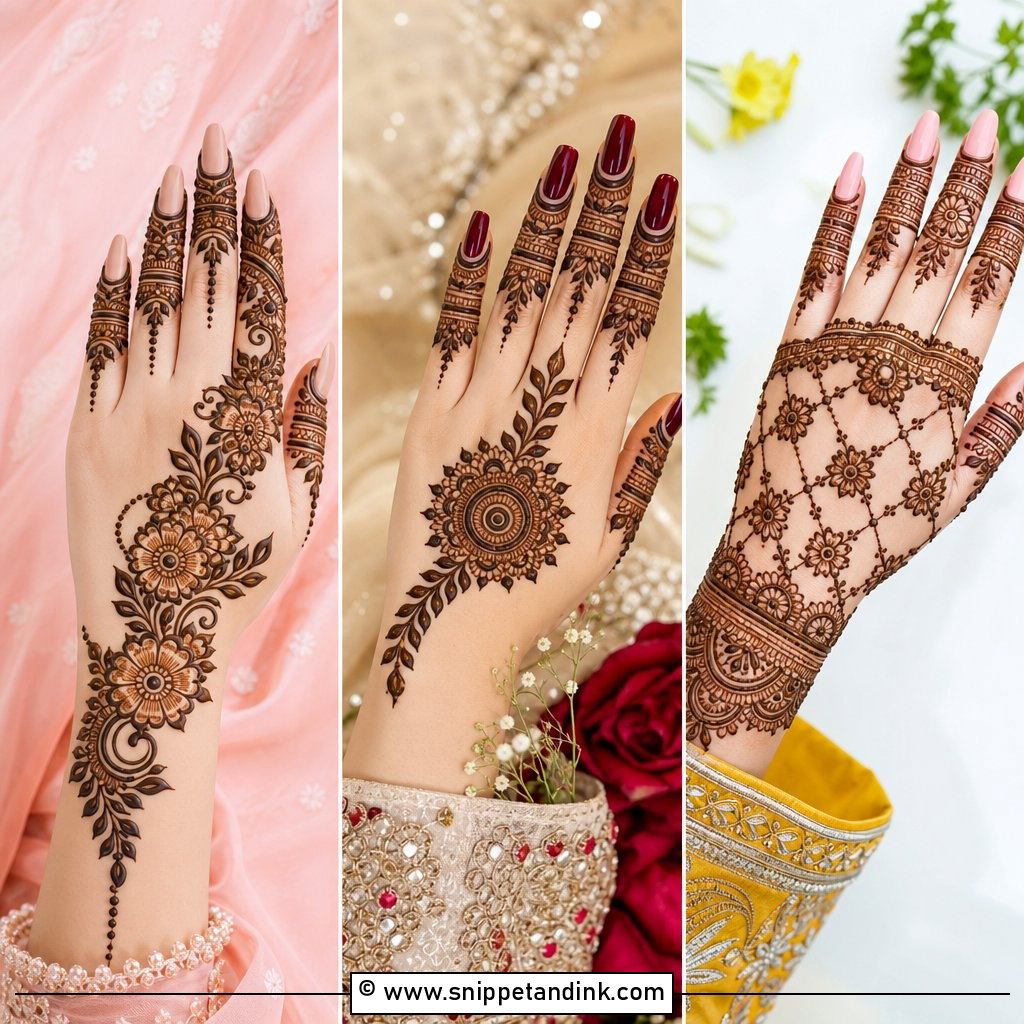
On the back of the hand, the knuckles move, and a design drawn on a flat hand can stretch oddly when you make a fist. I draw with the fingers relaxed and slightly curved so the lines sit right when you hold something. Filled tips lead into finger bands, chains and a wrist cuff, sometimes with a mandala in the center. Negative space around the knuckles reads modern. If your sleeves are heavy, the back hand does most of the visible work.
4. Kashees Pakistani Bridal Mehndi Design
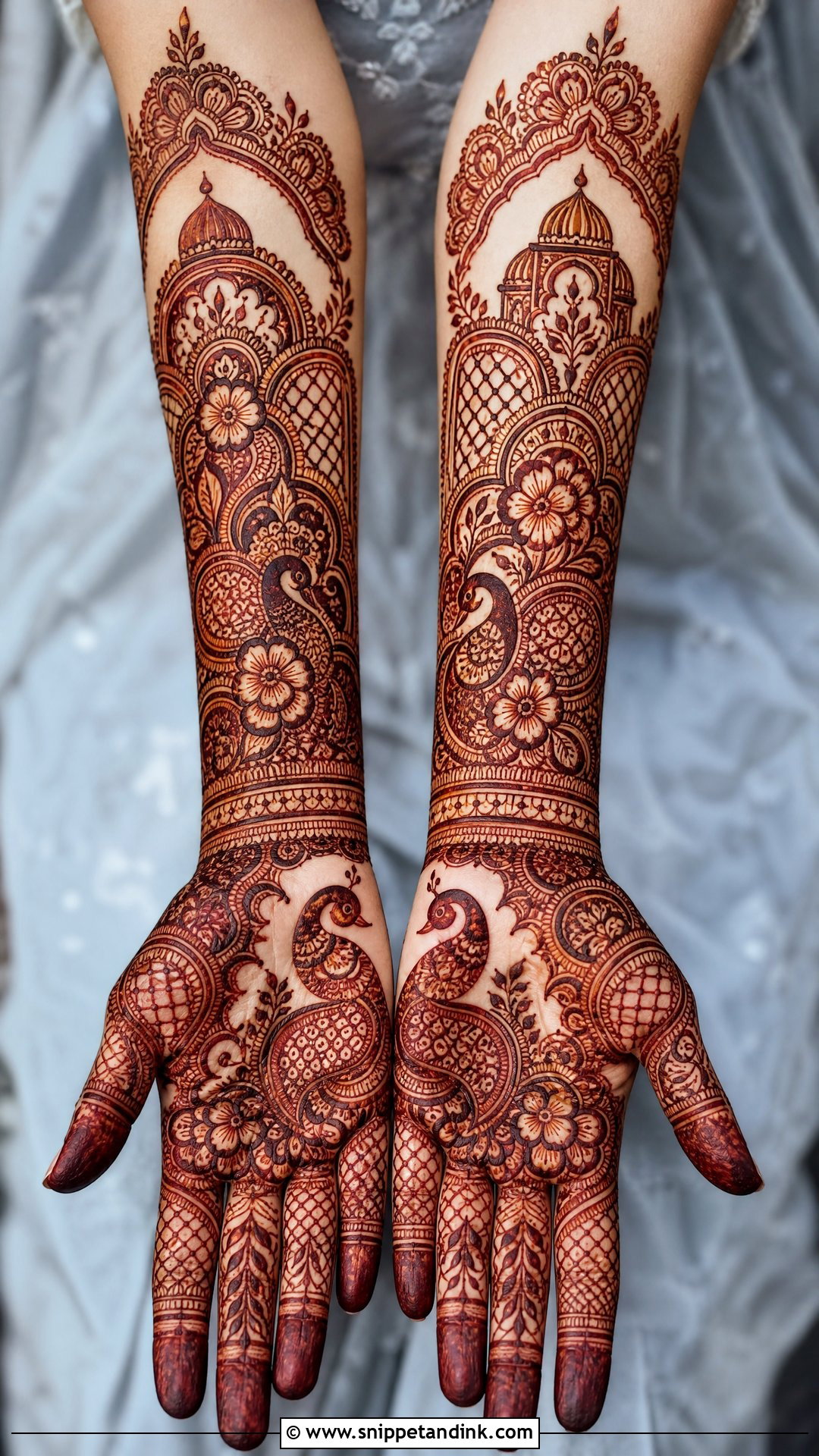
The Pakistani bridal approach combines fine filling with bold outlines, and that contrast is what keeps peacocks, domes, florals and jaali panels distinguishable. I outline each motif first with a slightly heavier line, then fill. Coverage often goes to the elbow for lehengas, ghararas and shararas. The best of these designs rely on rhythm, repeating a shape at intervals, rather than on cramming in more filler.
5. Kashees Indian Bridal Mehndi Design
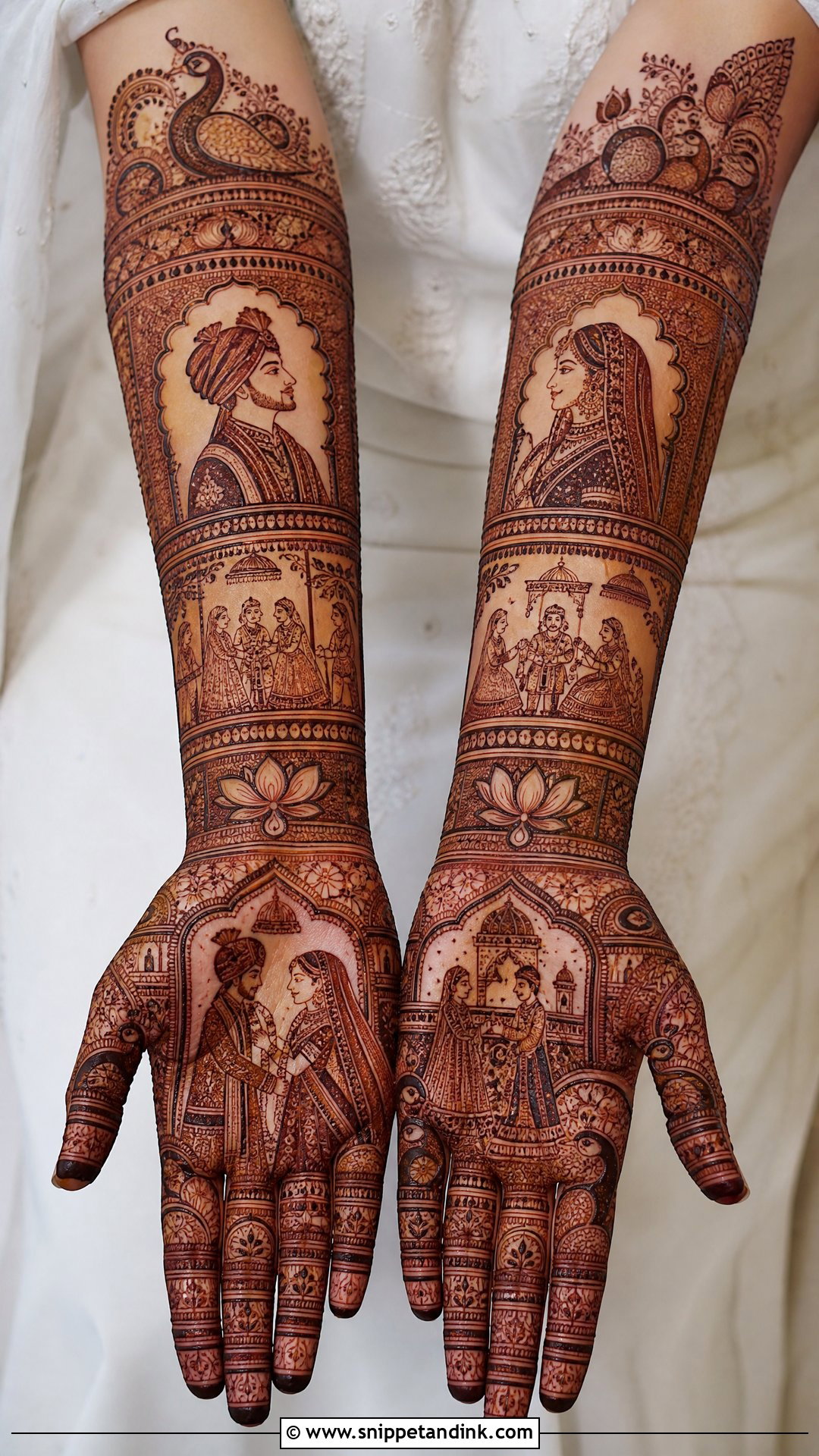
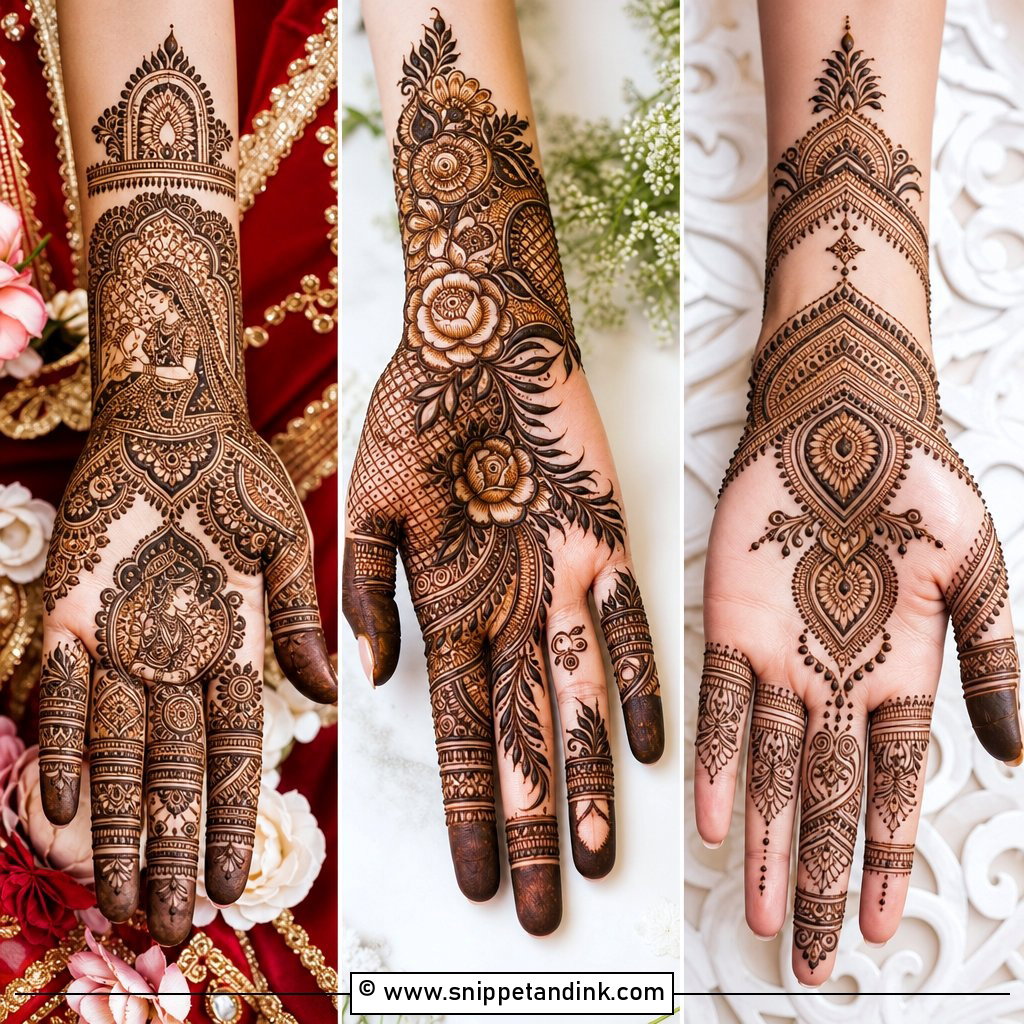
Do you want your hands to tell a story? Indian bridal work brings portraits, wedding scenes, lotus motifs, kalash shapes and peacocks, usually from the fingertips to the forearms. The palms carry the main theme, the arms take bands and grids. Faces need to be drawn larger than you’d expect, since henna spreads a fraction as it settles and tiny eyes or lips fill in. It takes longer than most styles, so book a longer slot.
6. Kashees Arabic Bridal Mehndi Design
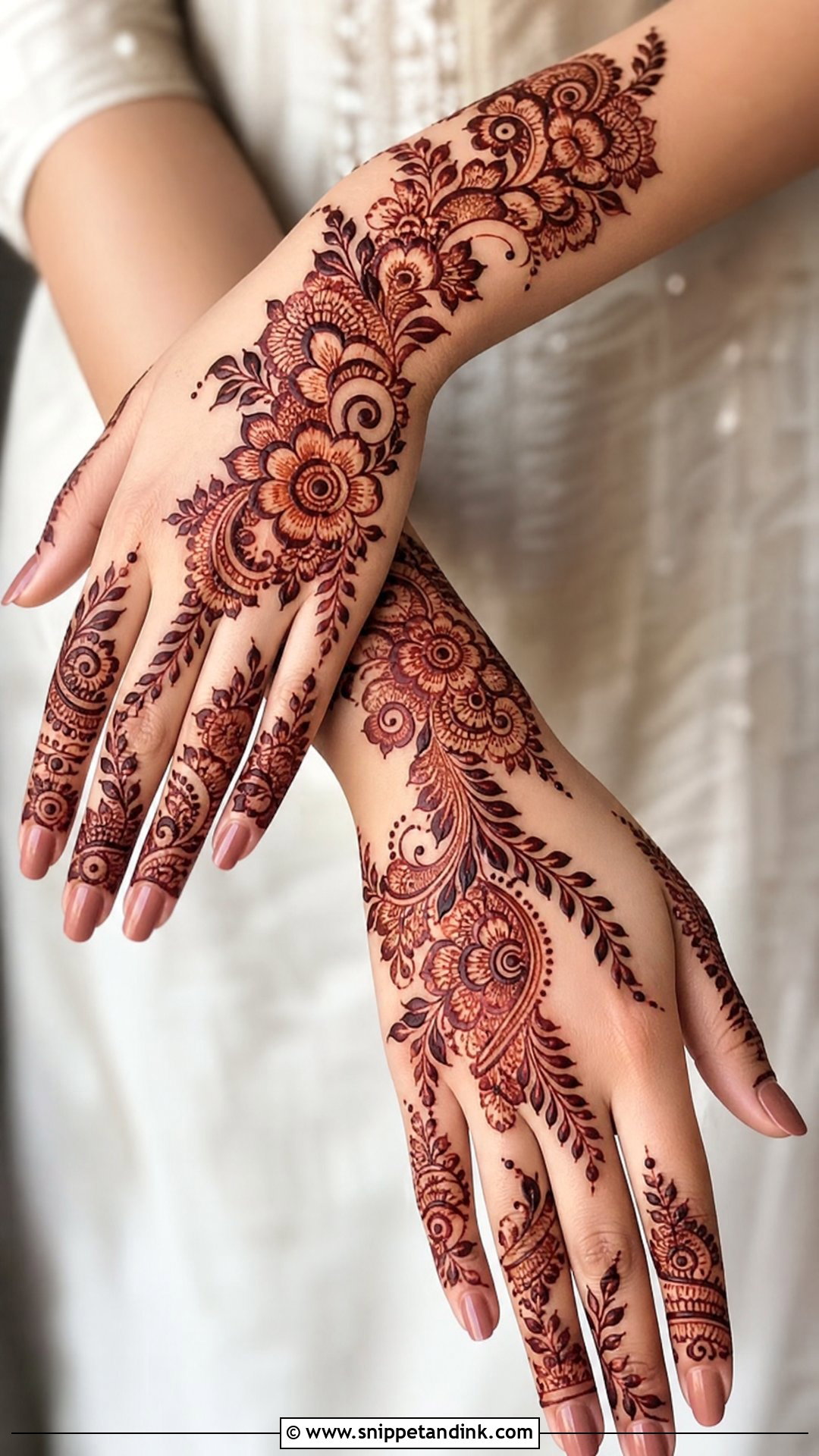
A Kashees Arabic bridal mehndi design moves diagonally across the hand in big flowers, paisleys and shaded petals, with open skin around each motif. It’s the quickest bridal option and the most comfortable to sit through. Shading only looks right with good, fresh paste. For a bridal finish, I make the fingertips heavier, add a detailed wrist bracelet and carry a trail up the forearm.
7. Kashees Indo Arabic Bridal Mehndi Design
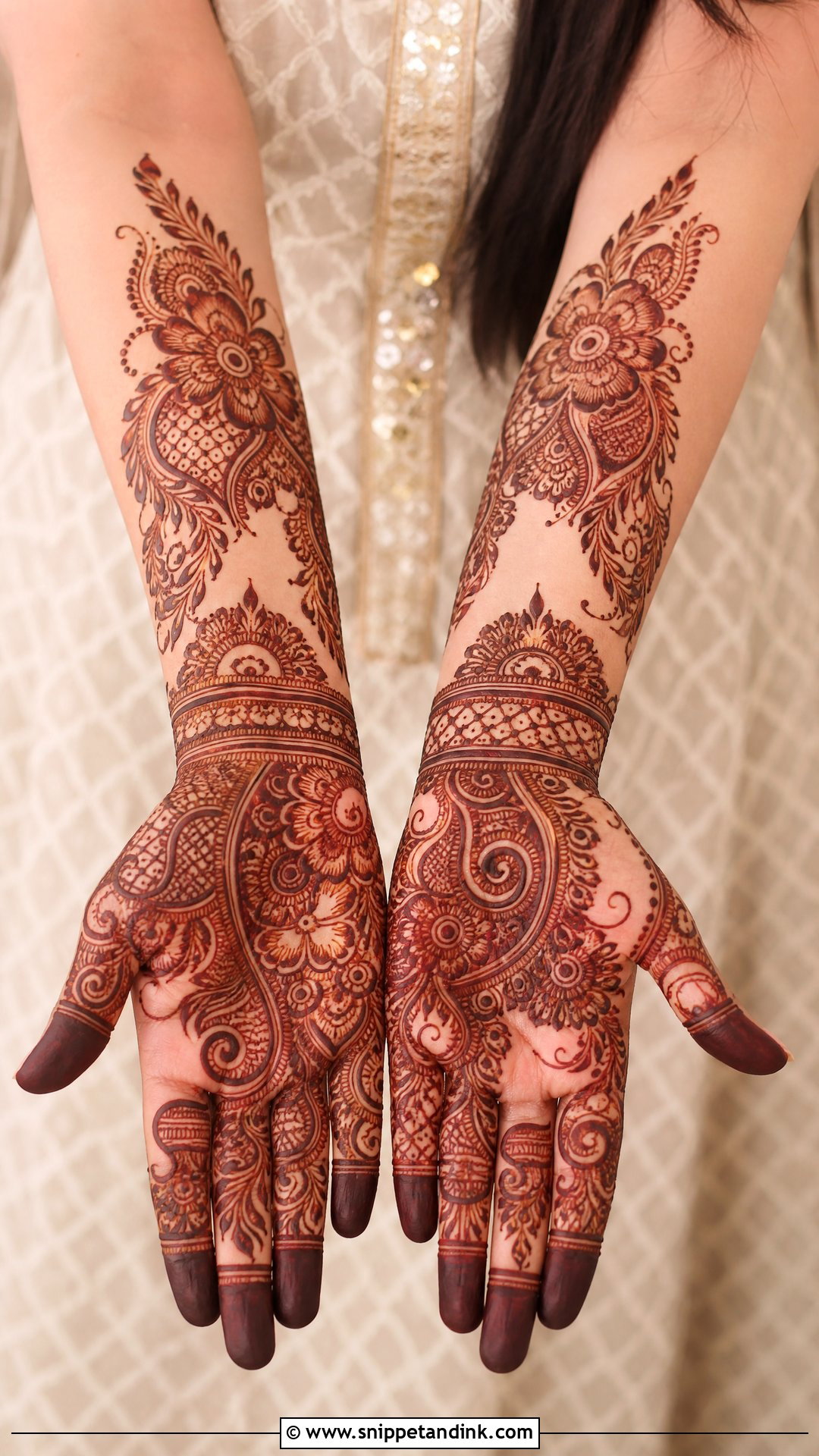
Indo-Arabic takes the bold flow of an Arabic trail and packs the space around it with finer Indian and Pakistani style filling. The big floral trail stays visible from across a room, while the fine mesh and paisley curves reward a close look. That two-distance quality is why it photographs so reliably. I’d suggest it to brides whose outfits mix traditional embroidery with a modern cut.
8. Kashees Bridal Mehndi With Bride And Groom
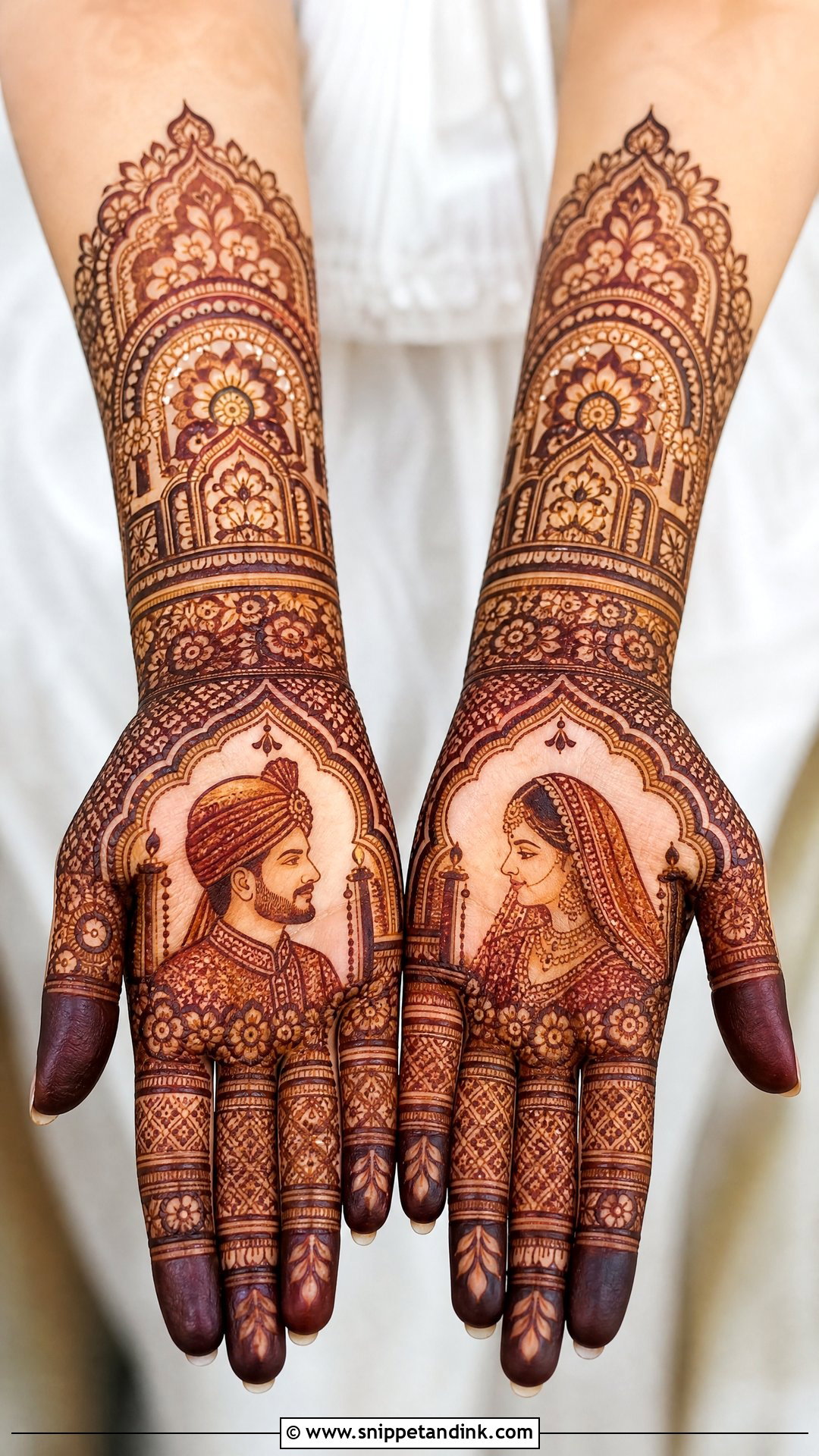
Portraits of the couple usually sit one per palm, framed by arches, florals and paisleys. Keep the faces simple. Over-detailed features blur once the stain deepens, and a clean, slightly stylised face reads better in photos than an attempt at realism. I check both hands side by side before framing so the portraits line up. A hidden name near the wrist or palm border adds a little game for the groom.
9. Kashees Bridal Mehndi With Groom Name
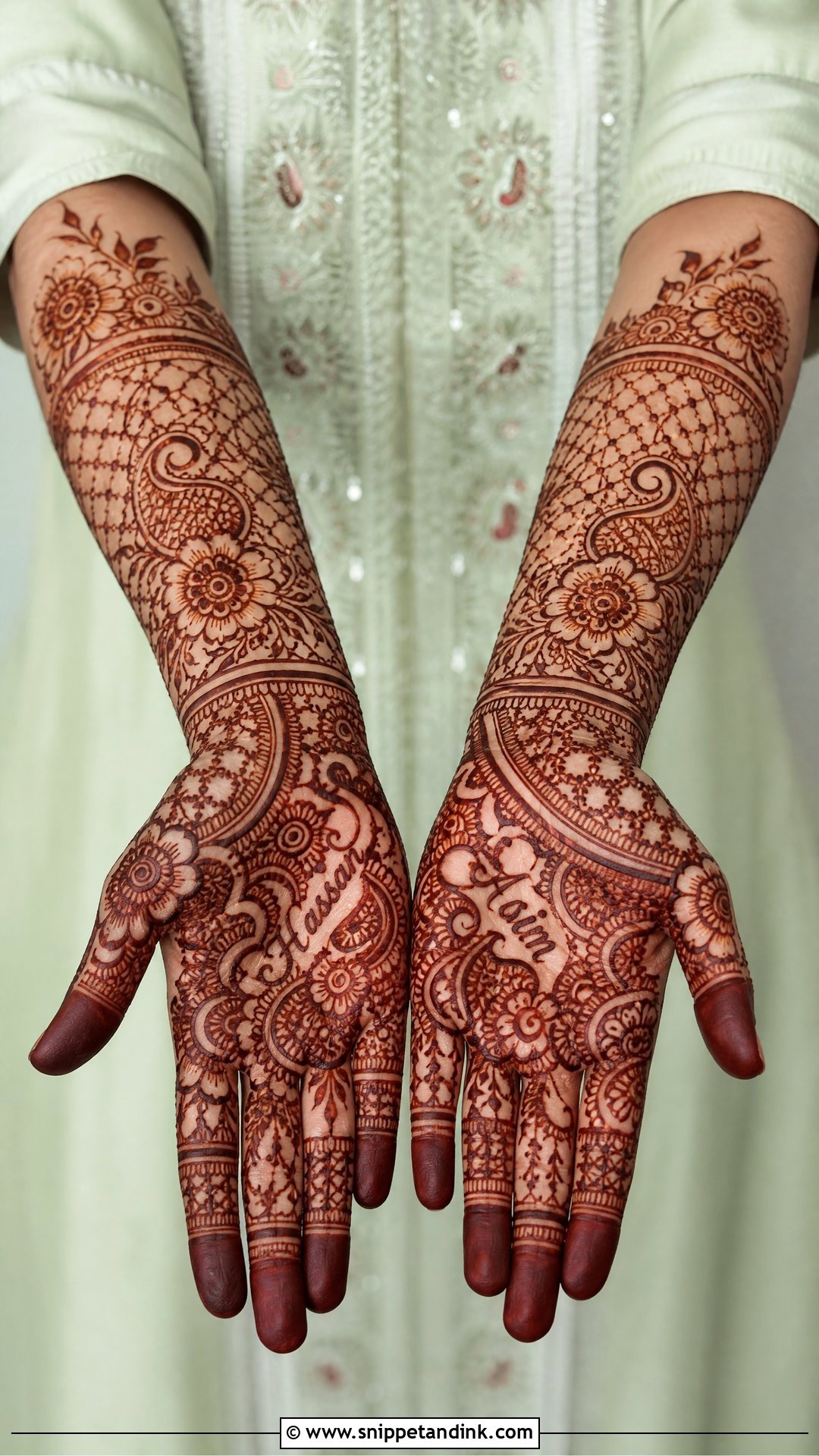
Hiding the groom’s name is still one of the most requested details I do. In a bridal mehndi with groom name, the letters can sit inside a paisley, along a wrist band or within a floral vine. I write it in the clearest staining zone, the palm or lower wrist, and keep surrounding filler a little more open so the letters can be found. Readable if you look closely, invisible if you don’t: that’s the balance.
10. Kashees Royal Bridal Mehndi Design
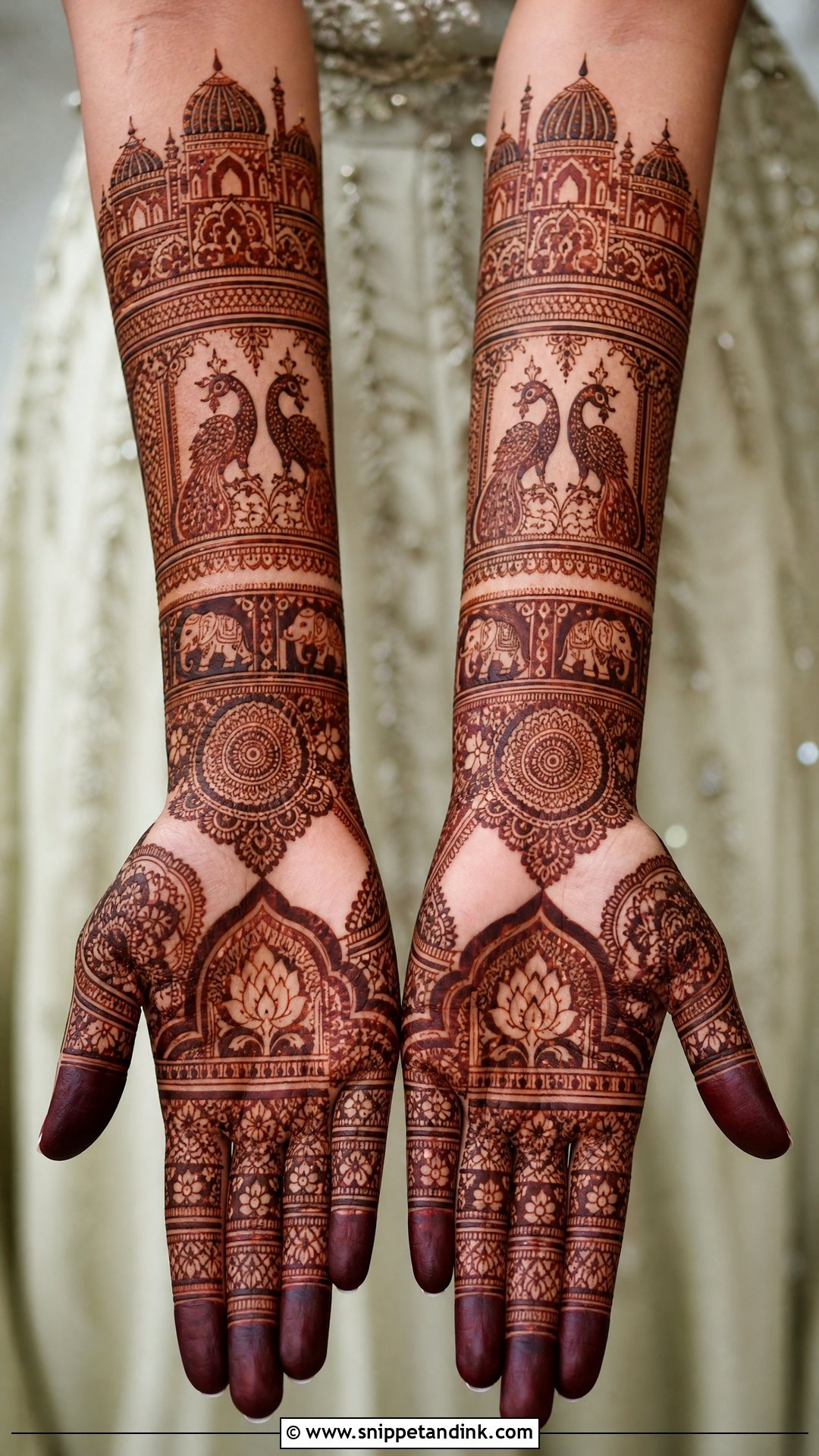
Royal designs borrow from architecture: domes, arches, elephants, peacocks and jaali panels arranged from fingertips to forearm. The wrists can be drawn to look like carved bangles. This one demands a long sitting and an artist confident with symmetrical panels, since an arch that leans is obvious. Keep the outlines bold so the inner detail is still legible when the color darkens.
11. Kashees Mandala Bridal Mehndi Design
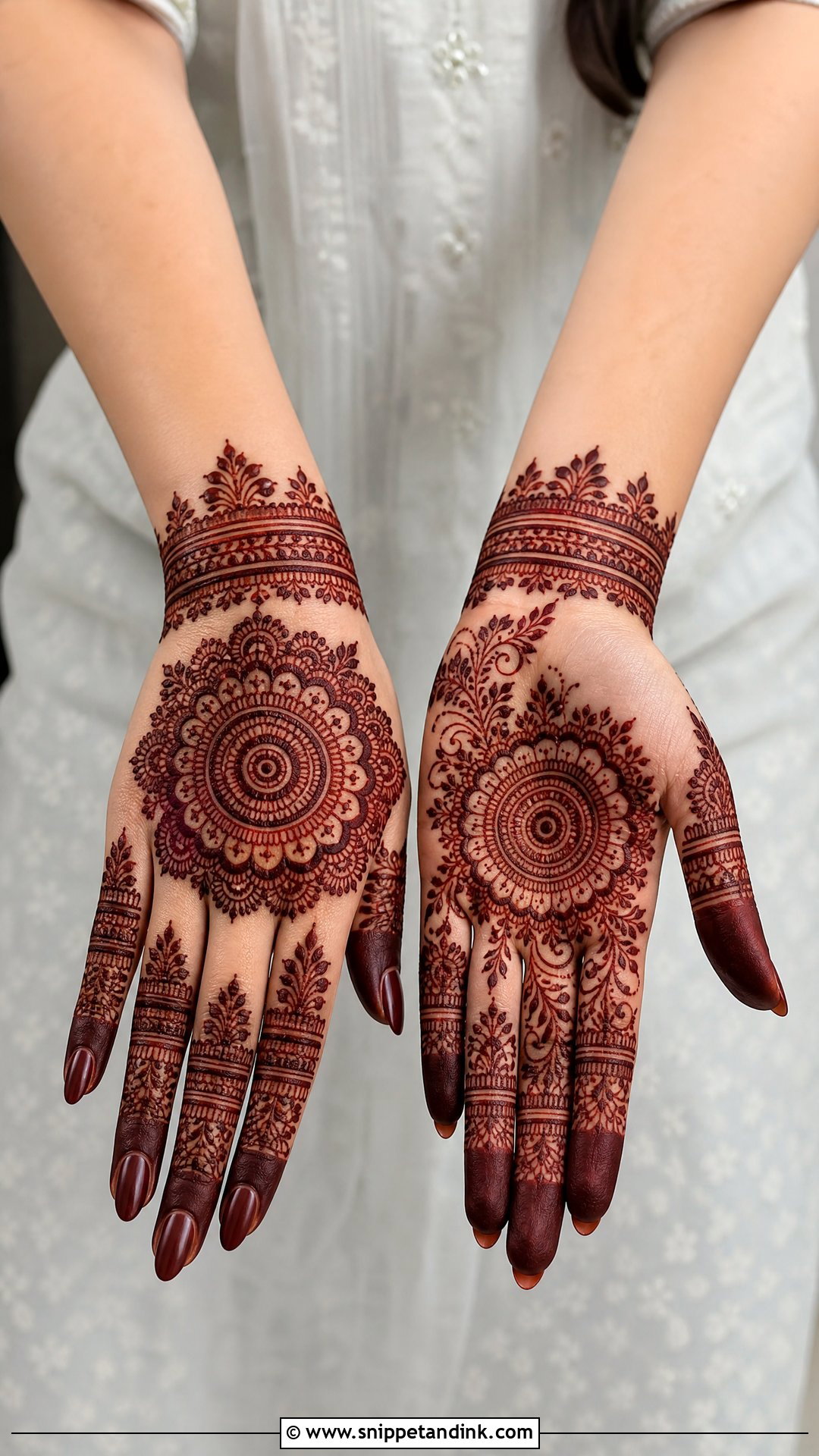
A mandala bridal mehndi design looks simple at first glance and gets richer the closer you look. The circle sits at the center of the palm or back, with rings of petals, dots and leafy borders around it. It adapts to every hand size, since I can widen or shrink the outer rings to fit. Fine outer detailing makes the center look bolder. Add fingertips, cuffs and forearm bands for full bridal coverage.
12. Kashees Floral Bridal Mehndi Design
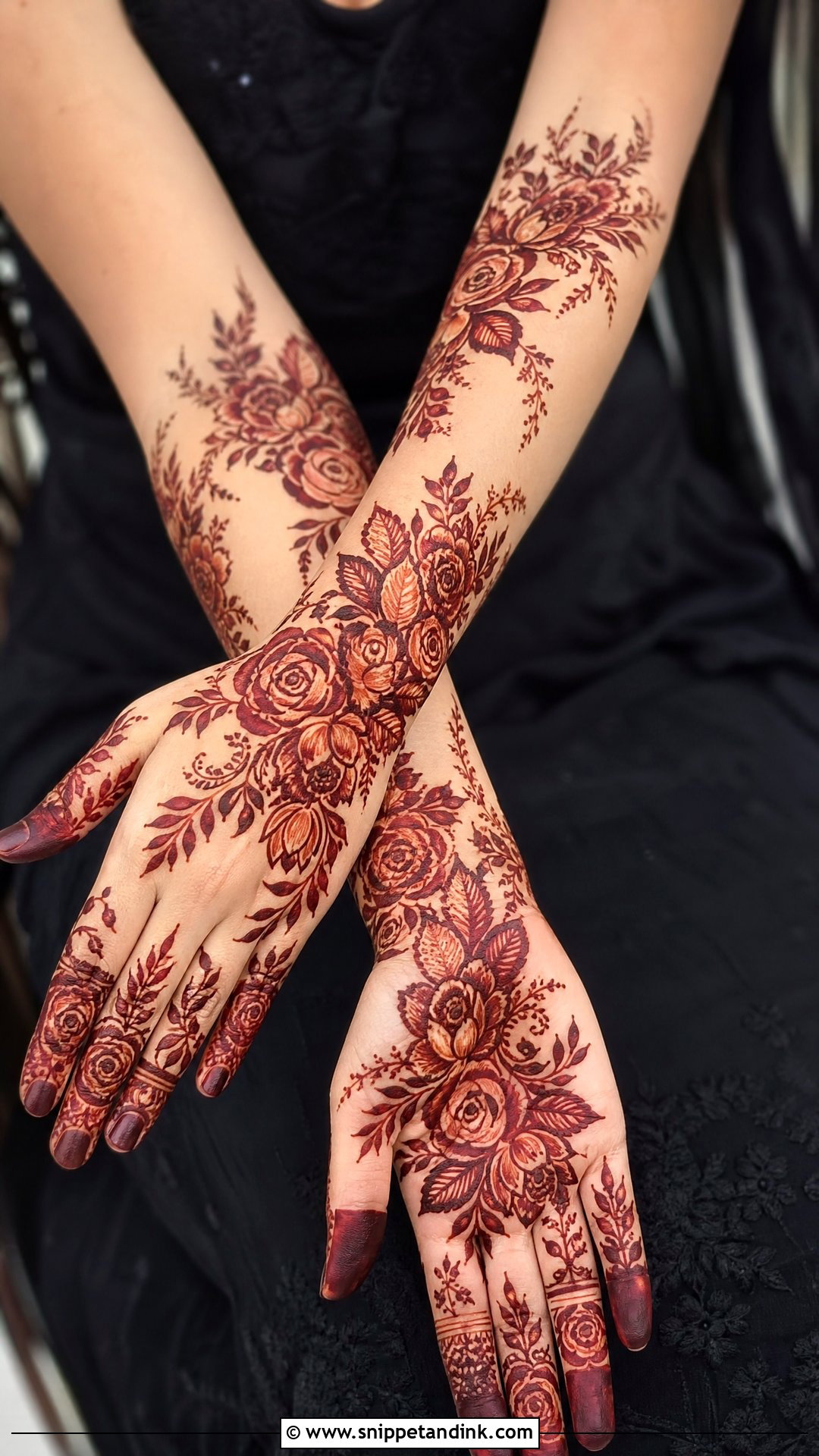
Florals alone can look too light for a bride, so I pair large roses and lotus petals with fine netting or paisley panels for depth. The design can cover the front, the back and the forearm. It suits pastels, traditional reds and gold jewelry equally. Shaded petals need a confident hand; done hesitantly, the shading looks blotchy.
13. Kashees Paisley Bridal Mehndi Design
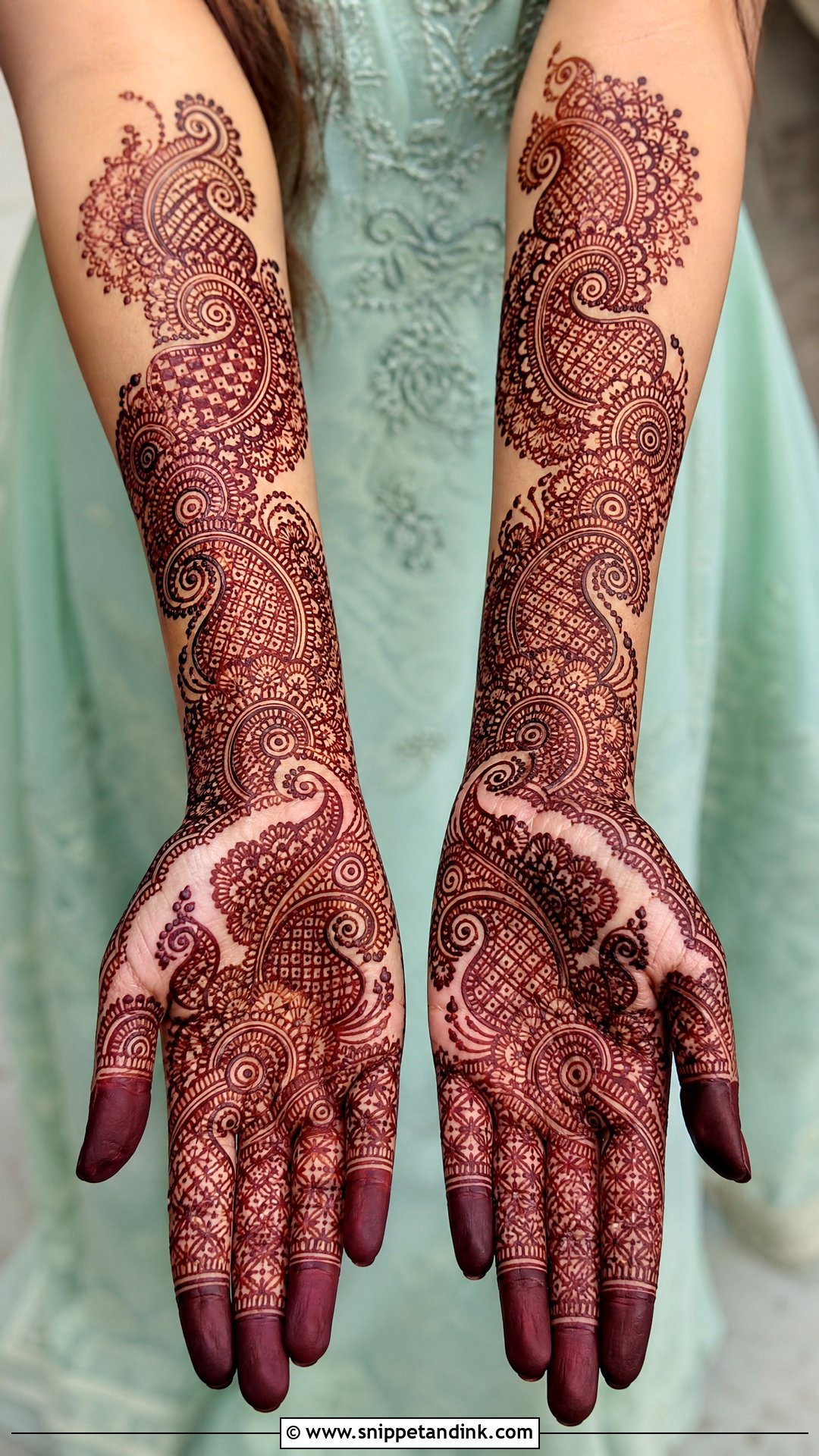
For brides who’d rather skip portraits, paisley chains carry a traditional design by themselves. They start at filled fingertips, curve through the palm and run along the wrist and forearm, each filled with tiny florals, checks or dots. Size variation is what makes it work: big paisleys for impact, smaller ones to finish. It suits front and back equally.
14. Kashees Peacock Bridal Mehndi Design
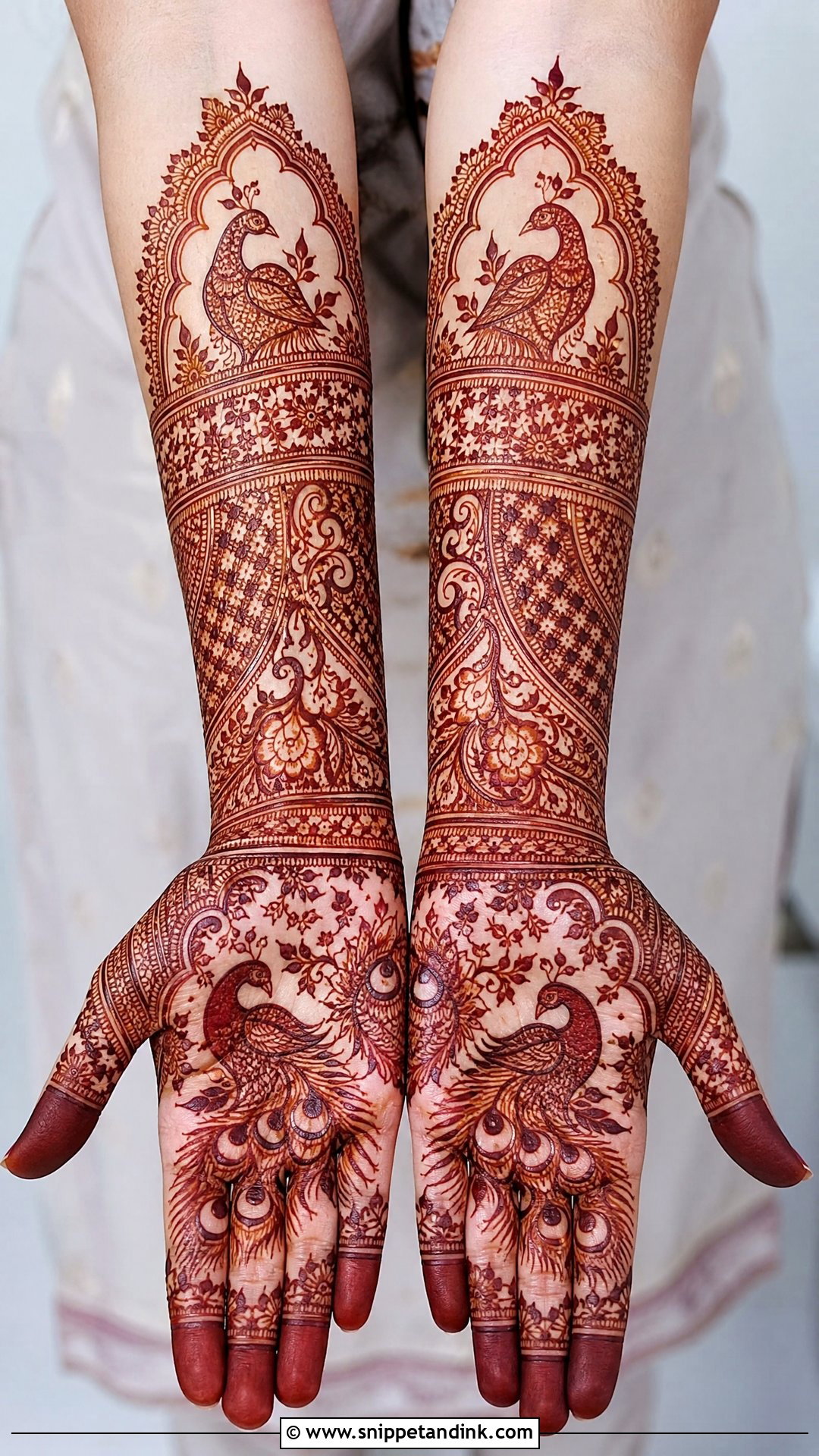
Peacocks can sit alone on the palm, climb the forearm or face each other as a mirrored pair across both hands. The mirrored pair is the hardest, because the birds have to match when the hands are held together. Feathers, paisleys and vines surround them. Keep the neck and feather outlines clear; that’s where the shape gets lost if the work is too tight.
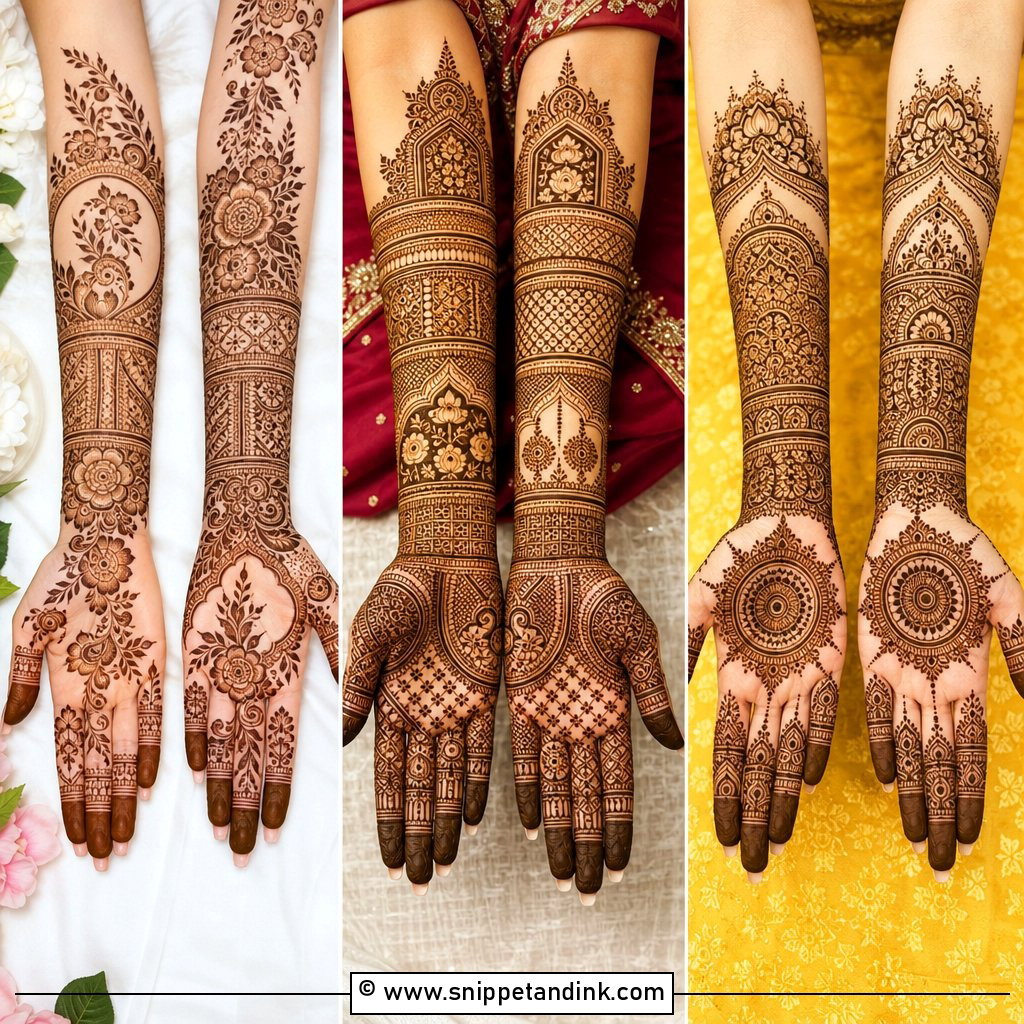

15. Kashees Jaali Bridal Mehndi Design
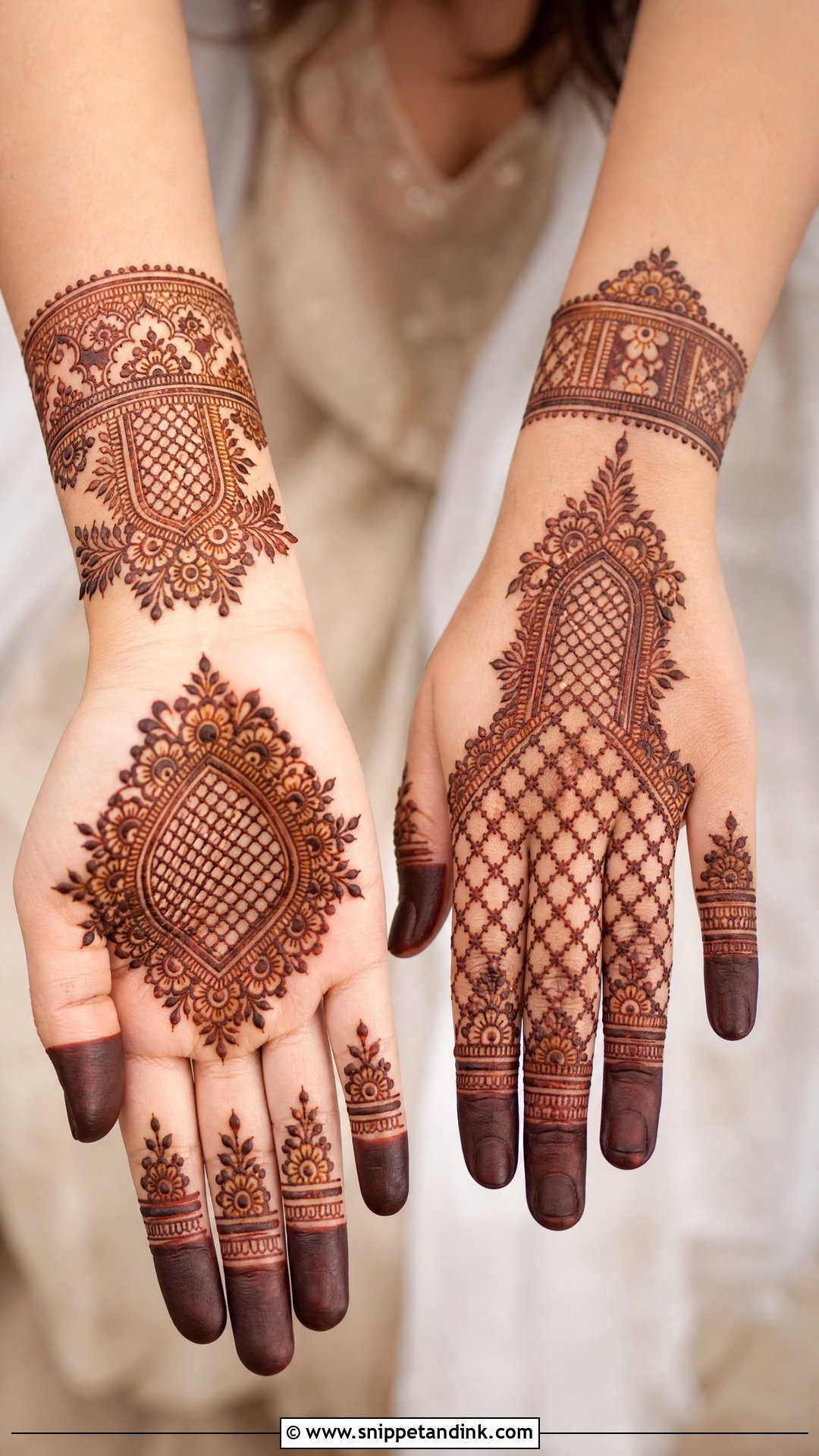
Jaali gives a woven, net-like effect that looks crisp in close-ups, provided the spacing is even and the lines are sharp. I draw the frame of each panel first, then the grid, so the mesh never drifts out of its border. Framed with flowers, paisleys and bold edges, it reads detailed without heaviness. Combine it with filled fingertips and mandala centers for a full bridal set.
16. Kashees Khafif Bridal Mehndi Design
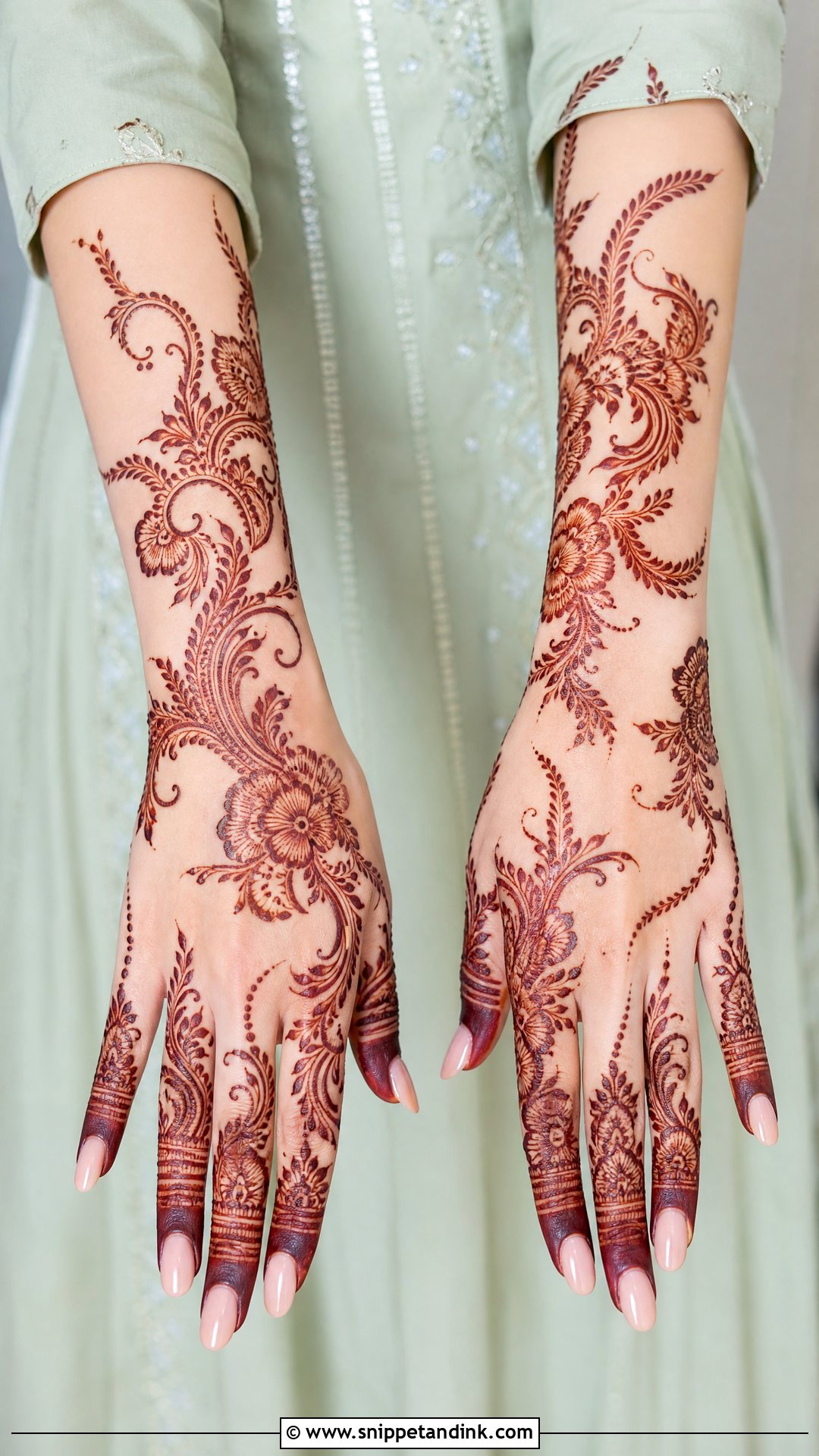
Khafif means light, and the style lives up to it: thin vines, small leaves, delicate paisleys and plenty of air. It needs a very fine cone tip and steady paste, because a single thick line stands out in all that lightness. The pattern should still run neatly from fingers to wrist or forearm so it reads as bridal. Engagement and nikkah brides often prefer it to dense coverage.
17. Kashees Minimal Bridal Mehndi Design
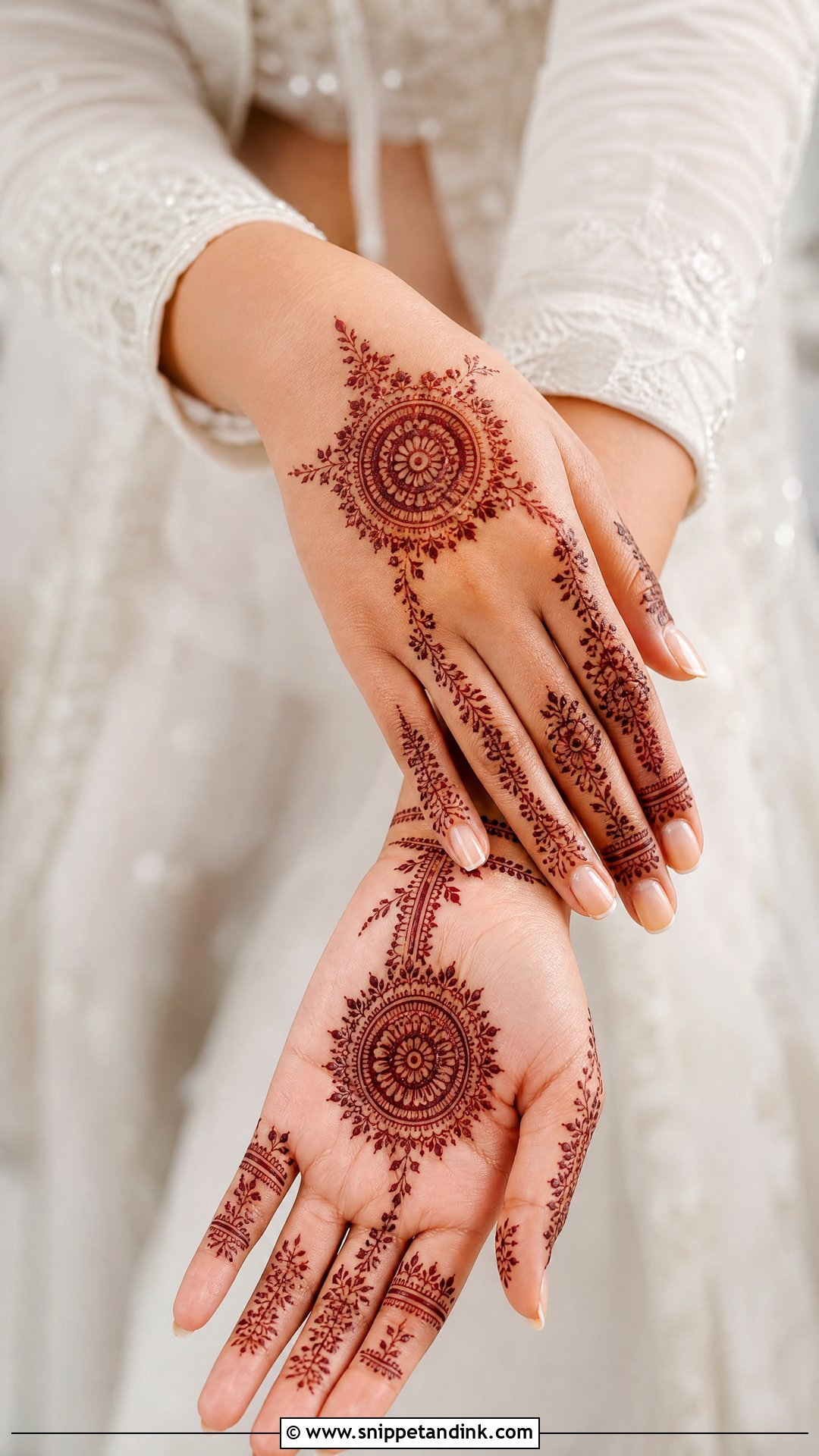
Minimal bridal work still needs a plan. Choose one direction for the pattern, a diagonal trail or a centered mandala, and build around it; scattered small motifs look accidental. Ring-style finger patterns and a simple wrist bracelet complete it. Some brides do palms and fingers only, others add light back-hand detail. It sits well with softer outfits.
18. Kashees Full Arm Bridal Mehndi Design
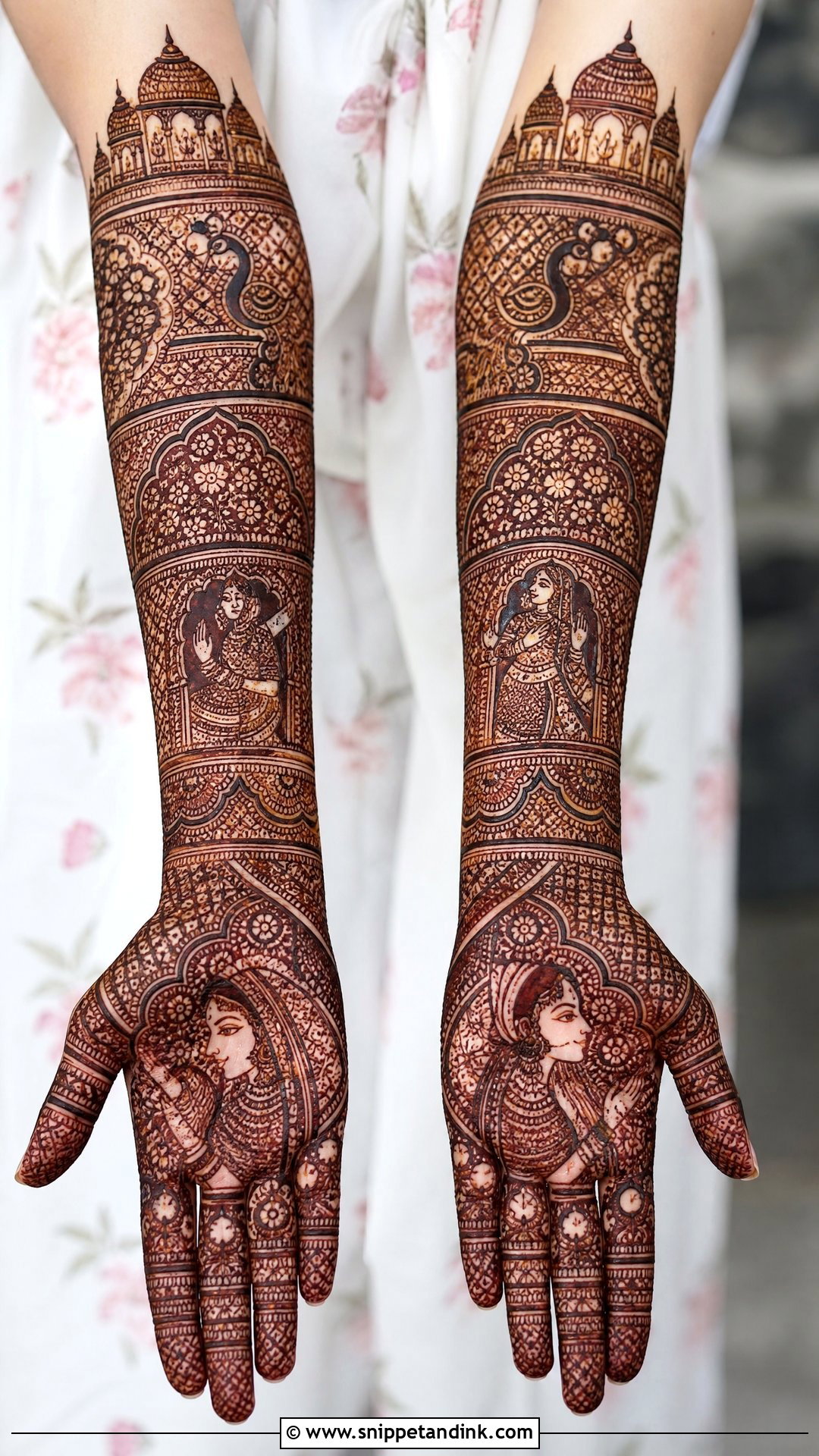
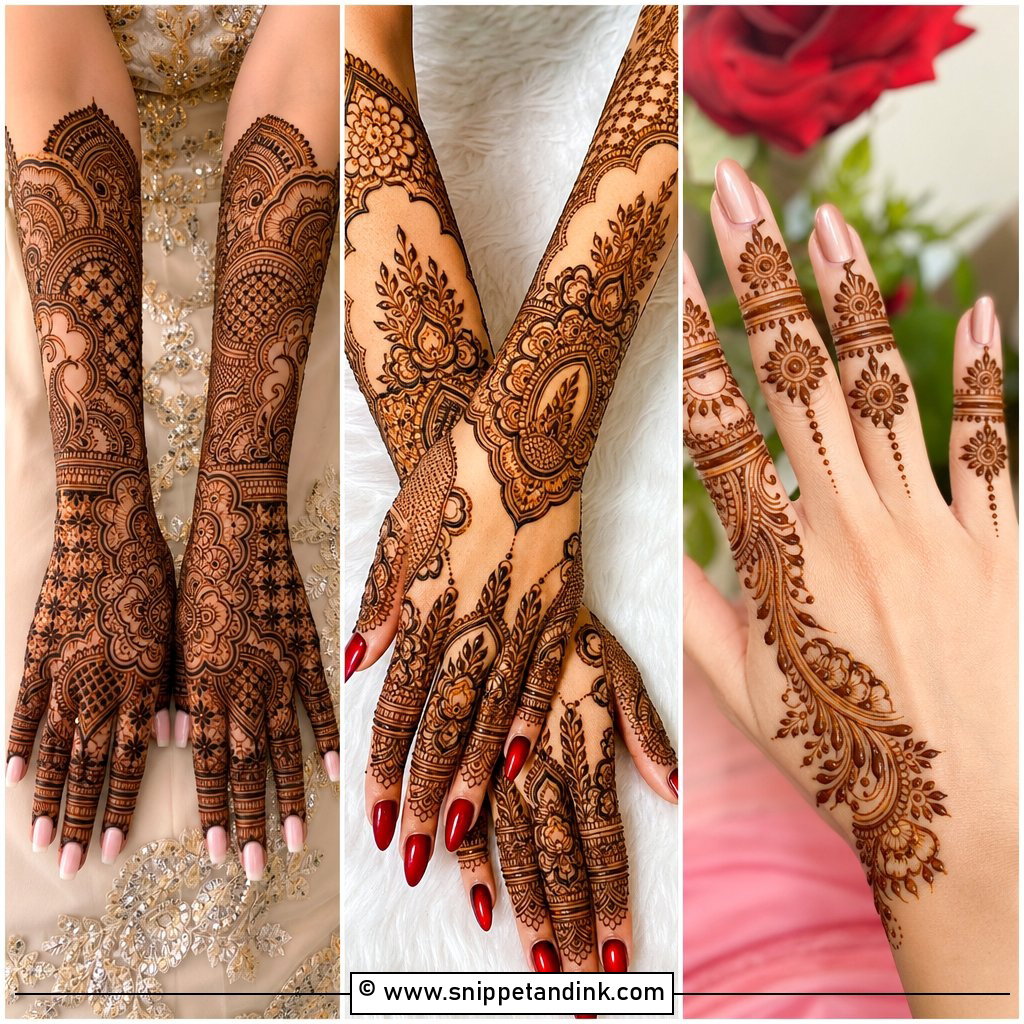
Full arm designs go from the fingertips past the elbow, and they become part of the outfit when sleeves are short, sheer or absent. With that much skin, sections are everything. I map the arm into bands or panels before I start, otherwise the pattern drifts as the arm curves. Portraits, peacocks, domes and jaali can all appear. Expect the longest sitting of the lot, and plan for help with everything while it dries.
19. Kashees Bridal Foot Mehndi Design
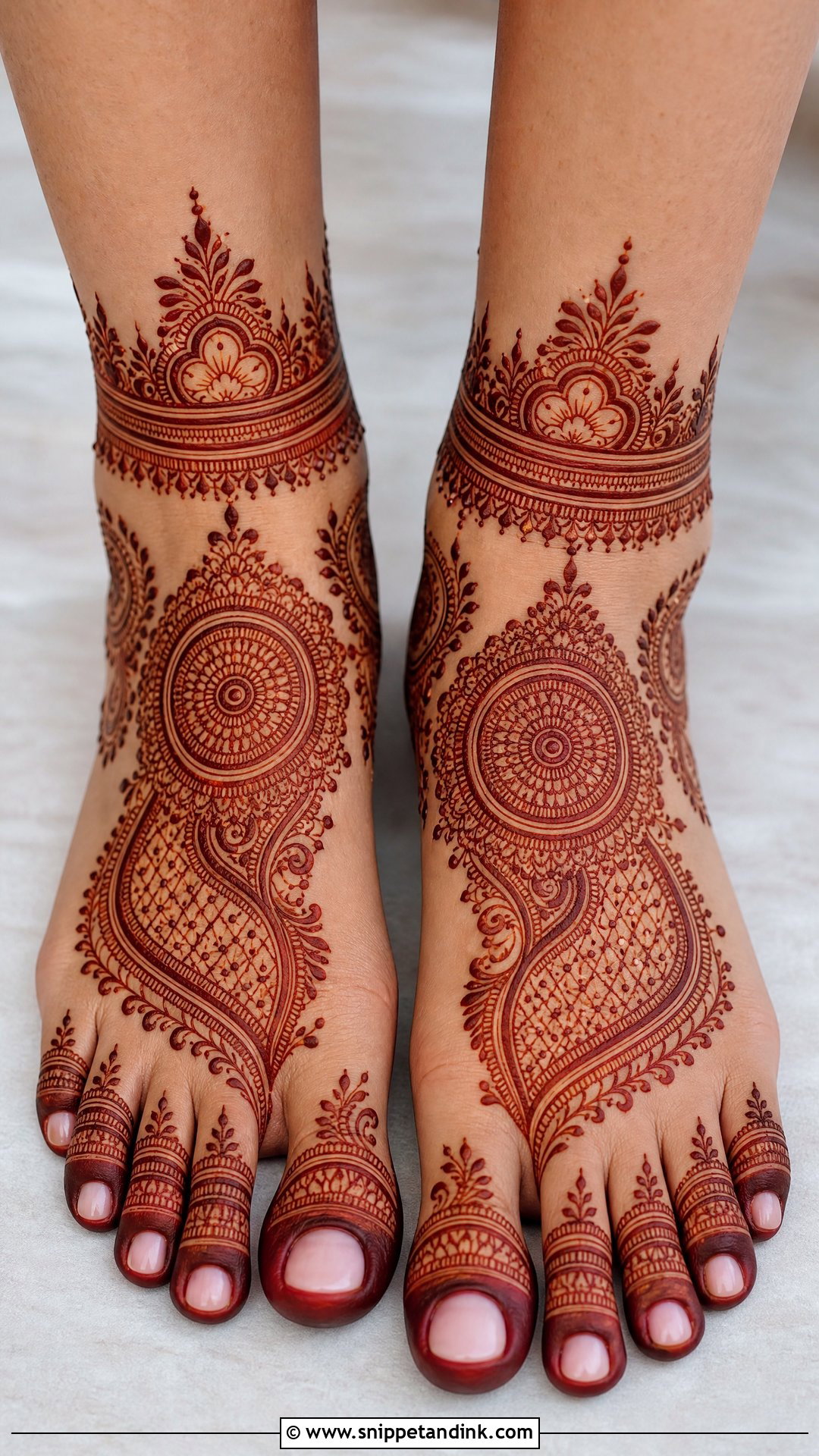
Open sandals and anklets make feet part of the bridal look. A bridal foot mehndi design can include anklet bands, toe details, a mandala on top of the foot and paisley trails. The soles stain very dark and take longest to dry, so I keep that area simple unless you can stay off your feet for hours. Matching motifs between hands and feet ties everything together.
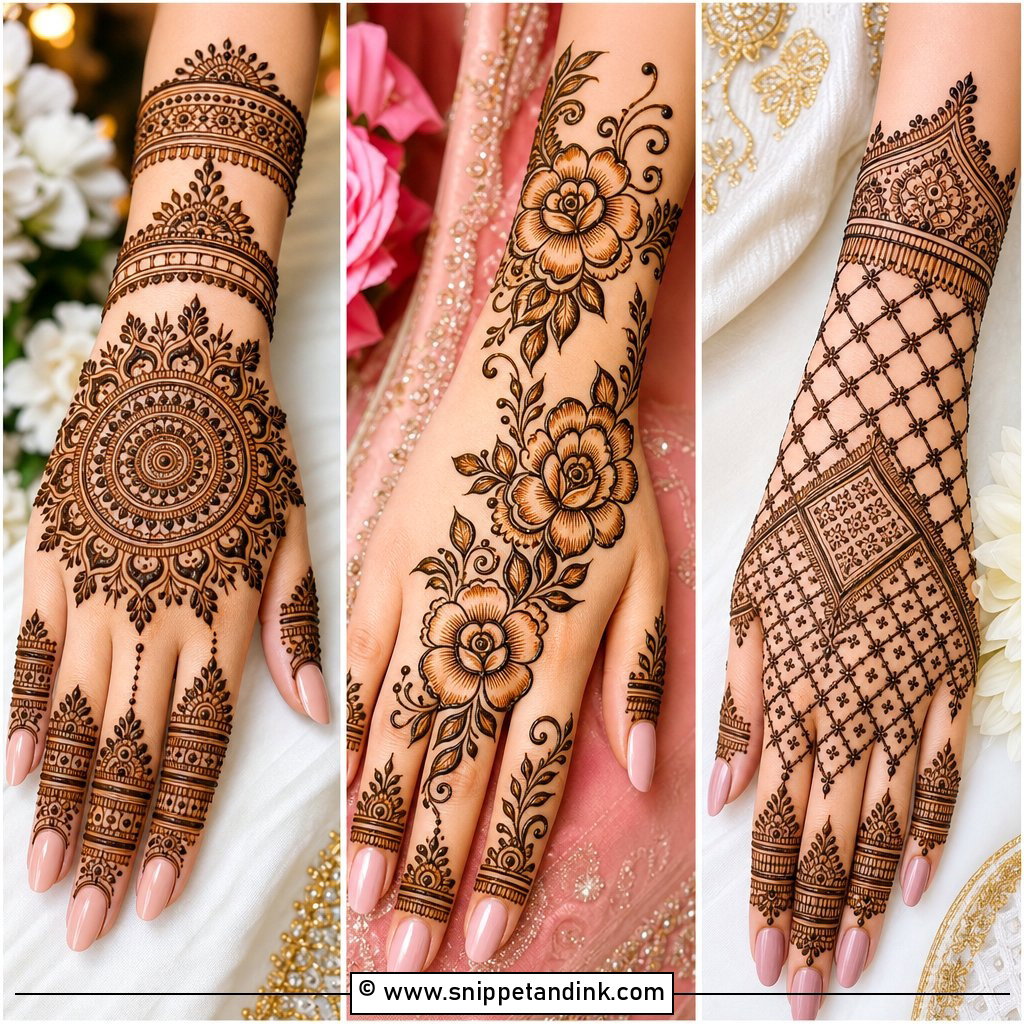
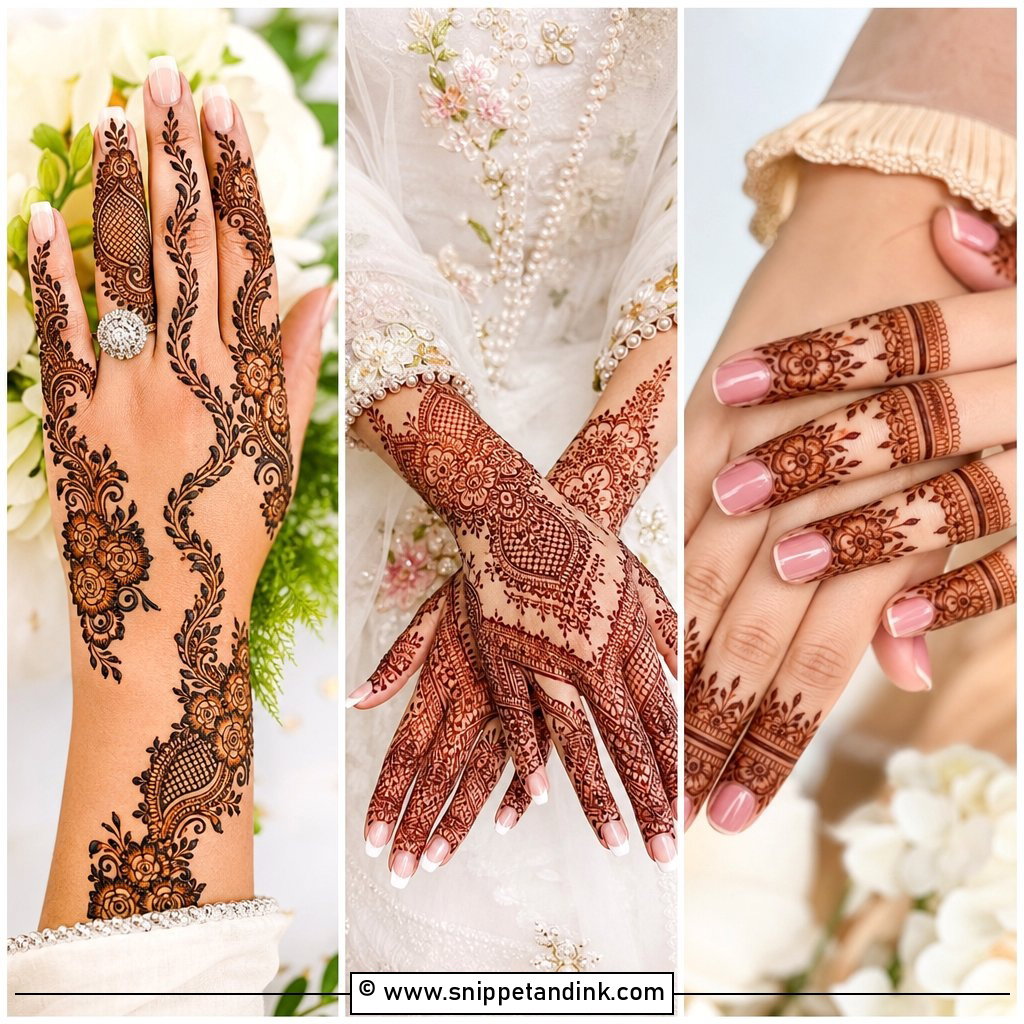
20. Kashees Modern Bridal Mehndi Design
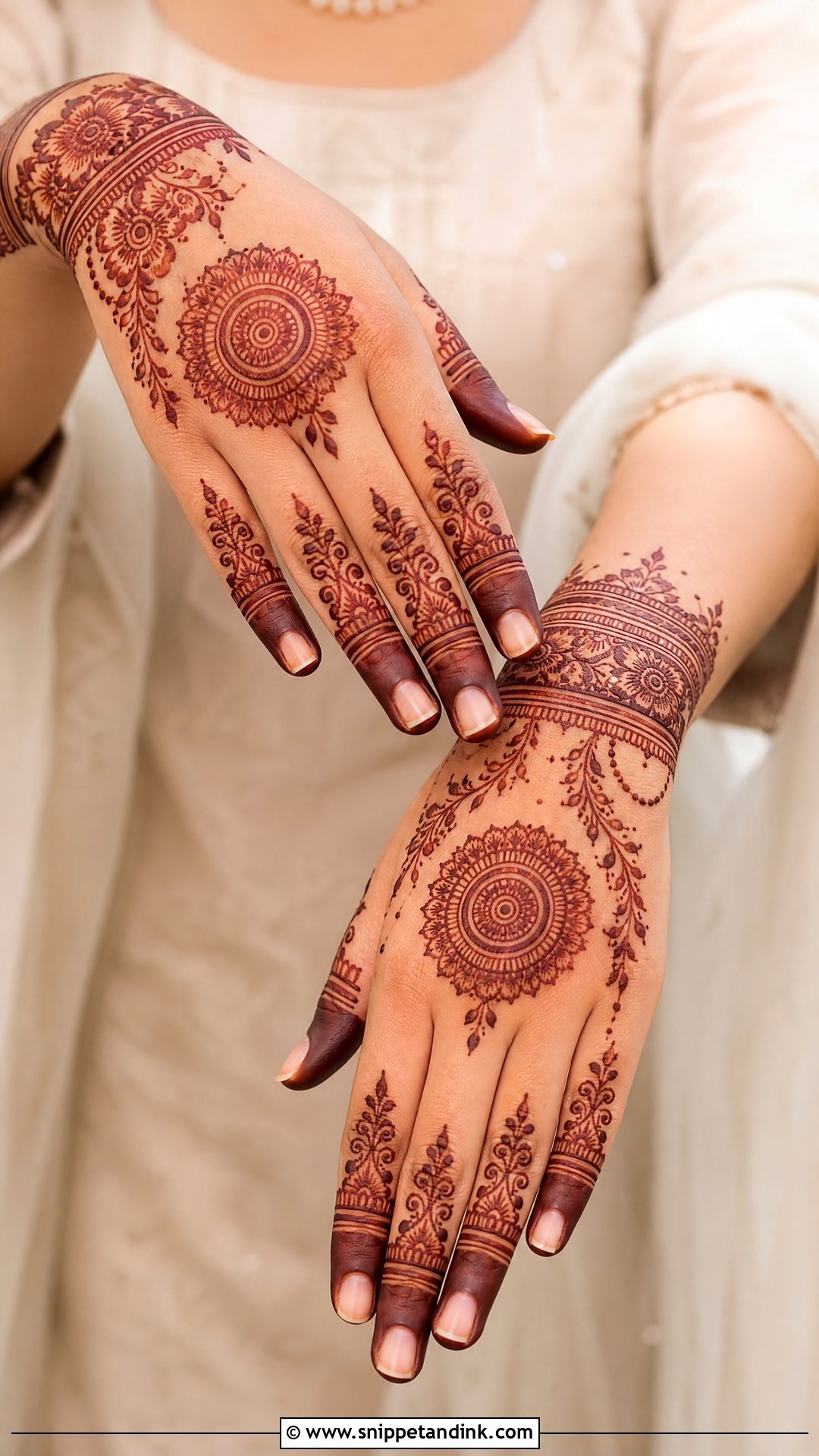
Modern bridal work keeps the richness but gives it room: bold floral trails, geometric cuffs, neat mandalas and planned negative space around the wrist or back hand. Geometric lines are unforgiving, since a slightly curved straight line is obvious, so I build them from light guide dots. The coverage can be dialled up for a barat or down for a nikkah. It suits brides who like detail but not a full-arm layout.
Why One Bride’s Stain Comes Out Darker Than Another’s
Two brides can sit with the same paste on the same day and end up with different colors. That’s skin, not luck. Palms and soles have the thickest outer layer of skin and stain darkest. The backs of hands and arms stain lighter. Warm hands also tend to stain deeper than cold ones, which is why I suggest staying warm, keeping the paste on longer, and sitting somewhere cosy rather than under an air conditioner while it dries.
Brides with naturally cool hands, or a wedding in winter, can still get good color. Wrap the dried paste loosely in tissue overnight to hold in warmth, and don’t panic at the orange color when it comes off. It deepens over the next day or two.
How long the stain lasts after the walima
A bridal stain usually stays clear for one to two weeks, then fades unevenly as your skin renews itself. Palms fade fastest because you use them most. Washing up, swimming, exfoliating and hand sanitiser all speed that up, so go gently for the first week if you want it to last through the honeymoon photos.
Heavy or Light, Let Your Hands and Your Week Decide
This style of mehndi suits brides who want detail with tradition, but the heaviest design isn’t automatically the best. Look at your hands, your sleeves, the events you’ll attend and how long you can sit. Full coverage, Arabic flow, mandala neatness and minimal work can all be done to bridal standard. Pick the designs above that you keep returning to, and ask your artist to adjust the motifs, coverage and personal details until they feel like yours.
You'll Like These Ideas:









Leave a Reply