
Most people sit down in my chair with a screenshot and one question: will this suit my hands and my day? The answer depends on coverage, on how much time you have before the event, and on the paste, far more than on whatever is trending this season. So these 35 designs run from dense bridal panels and airy Arabic trails to mandalas, finger work and quick modern henna, and for each one I’ve written what I actually think about while drawing it: spacing, placement, how the stain will behave and who it doesn’t suit.
Reading the Label on a Henna Cone
No design survives bad paste. Natural henna is made from dried, powdered leaves of the henna plant mixed with a liquid such as lemon juice or water, a little sugar for stickiness, and an essential oil that helps the dye release. That’s it. Fresh paste is perishable, so artists either mix it the day before or keep cones frozen.
- Ingredients you can read and recognise. If the cone has no list at all, I’d pass.
- A use-by date, or a cone that’s been kept frozen. Old paste stains weakly.
- Paste that comes off orange and darkens over a day or two. That’s how real henna behaves.
- Be wary of anything that promises a black or dark brown stain within an hour, has a sharp chemical smell, or calls itself black henna.
If you have sensitive skin, ask your artist which essential oil is in the paste and test a small dot on your inner arm a day ahead. Some oils used in henna aren’t recommended during pregnancy, so mention that too.
1. Simple Arabic Mehndi Design
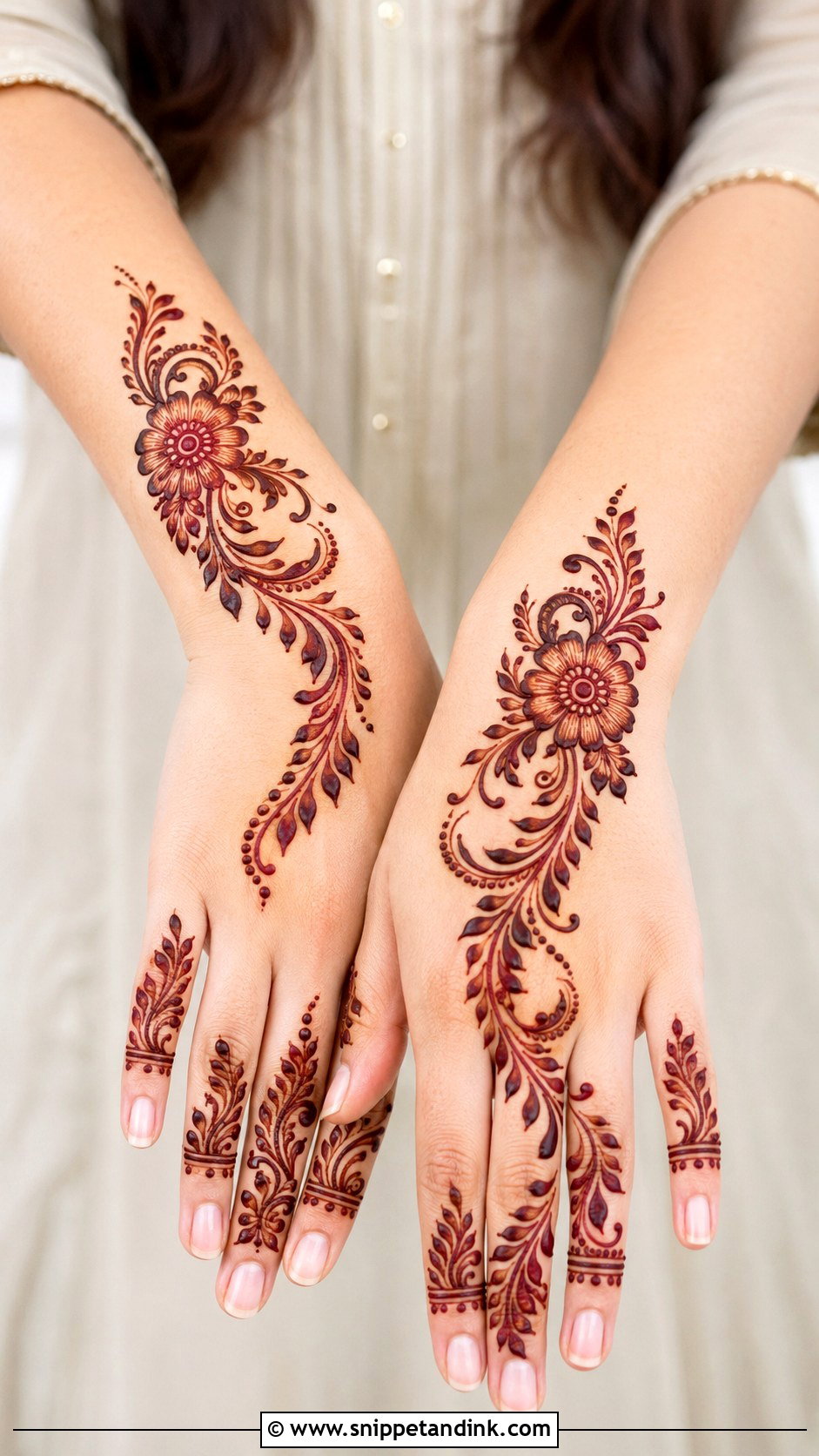
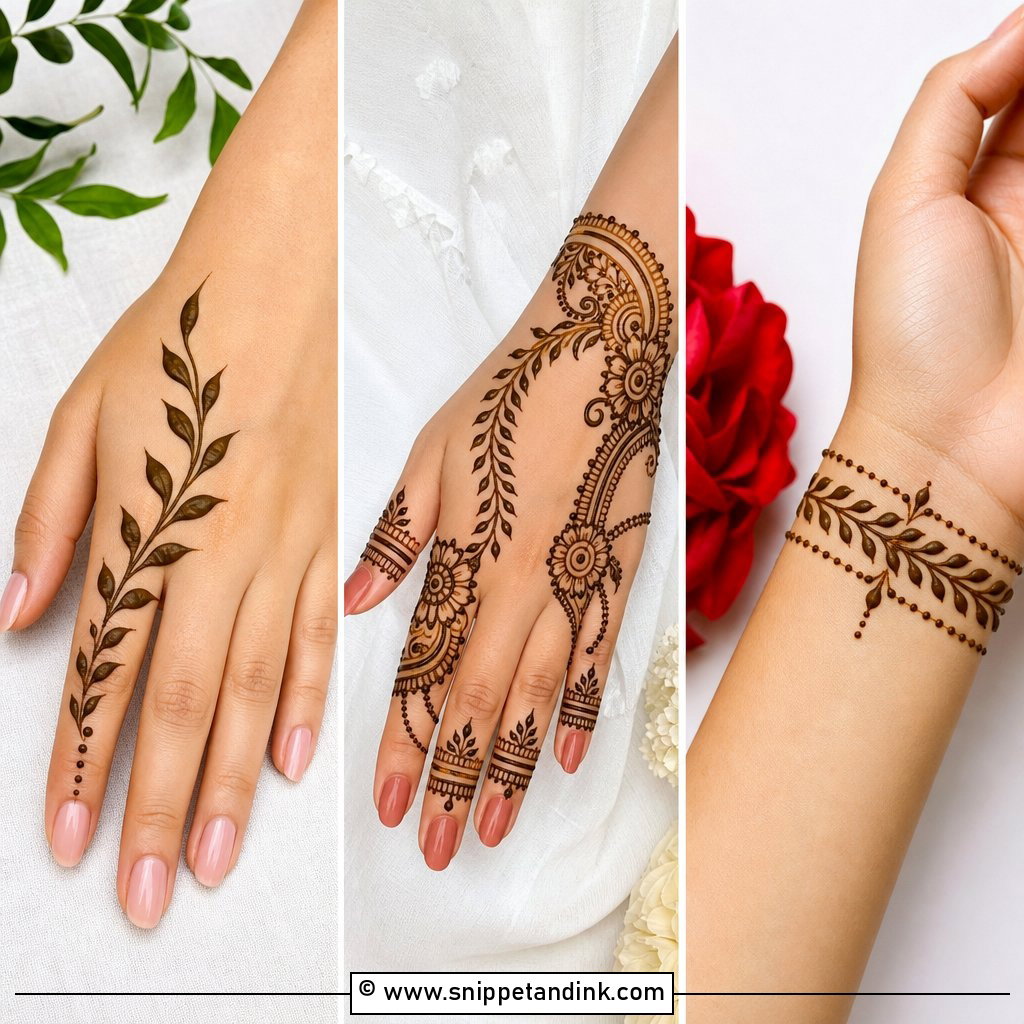
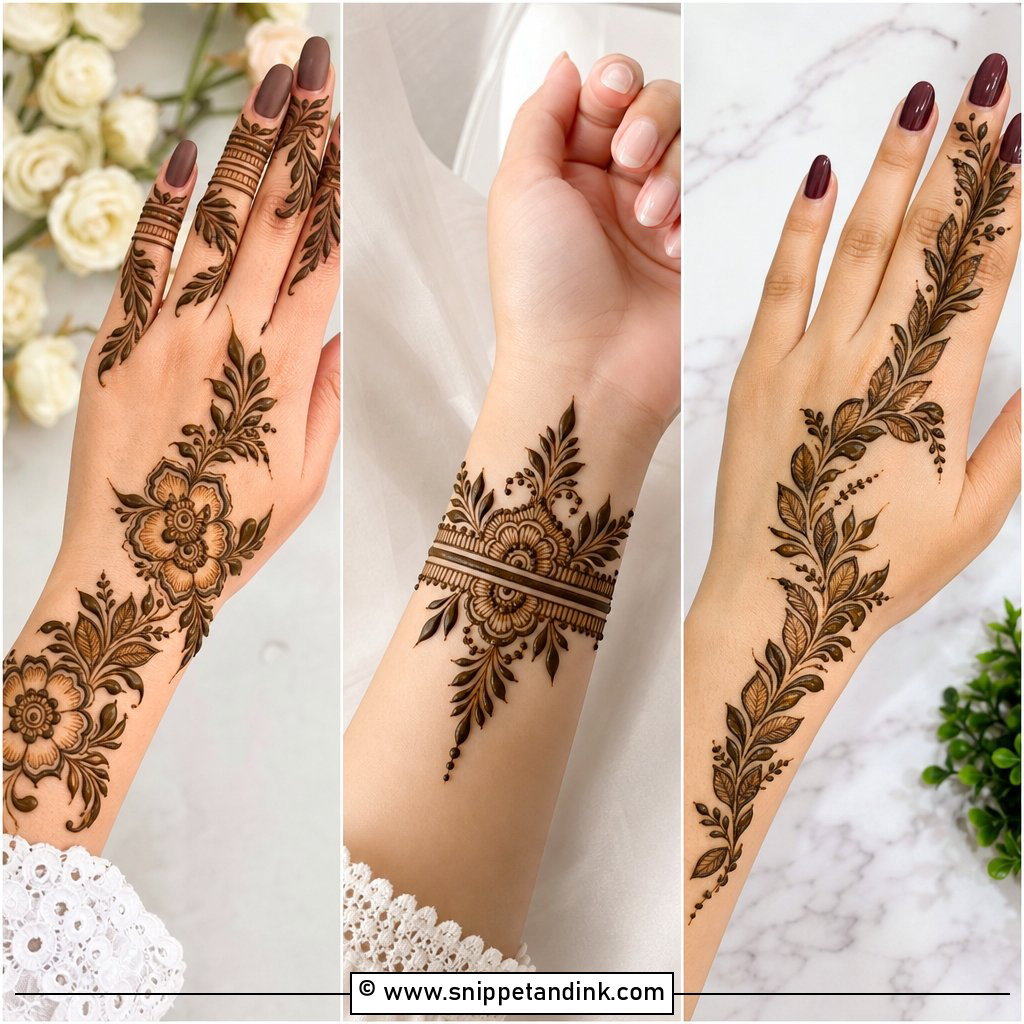
Start at the wrist, sweep diagonally across the back of the hand, and stop at one or two fingers. That’s the whole skeleton of a simple Arabic piece. I fill it with a few big flowers, leafy vines and dots and leave real skin showing in between, which is why it looks finished even when it’s quick. On deeper skin tones I make the outlines a touch bolder so the stain contrasts clearly once it matures.
2. Full Hand Bridal Mehndi Design
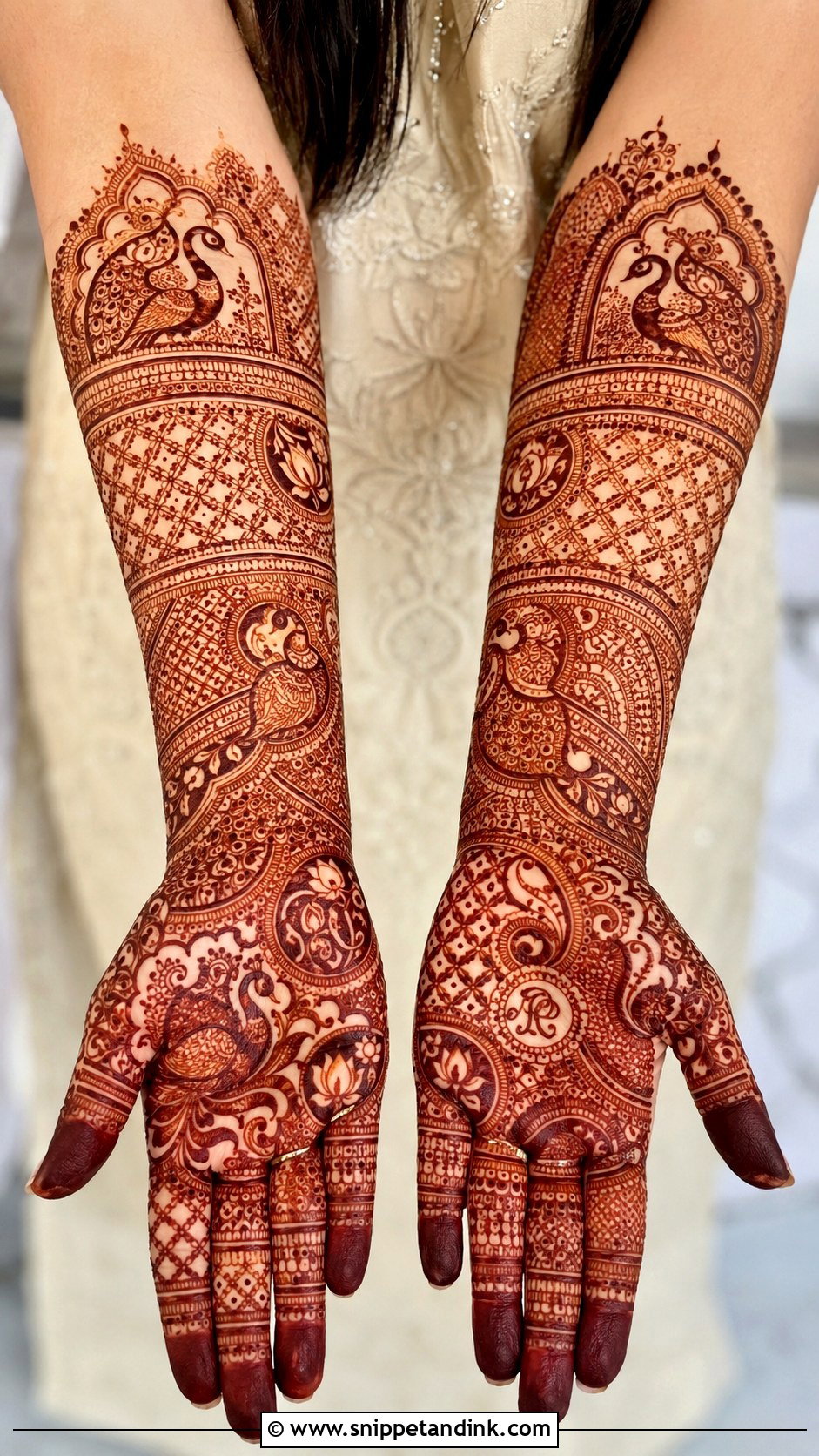
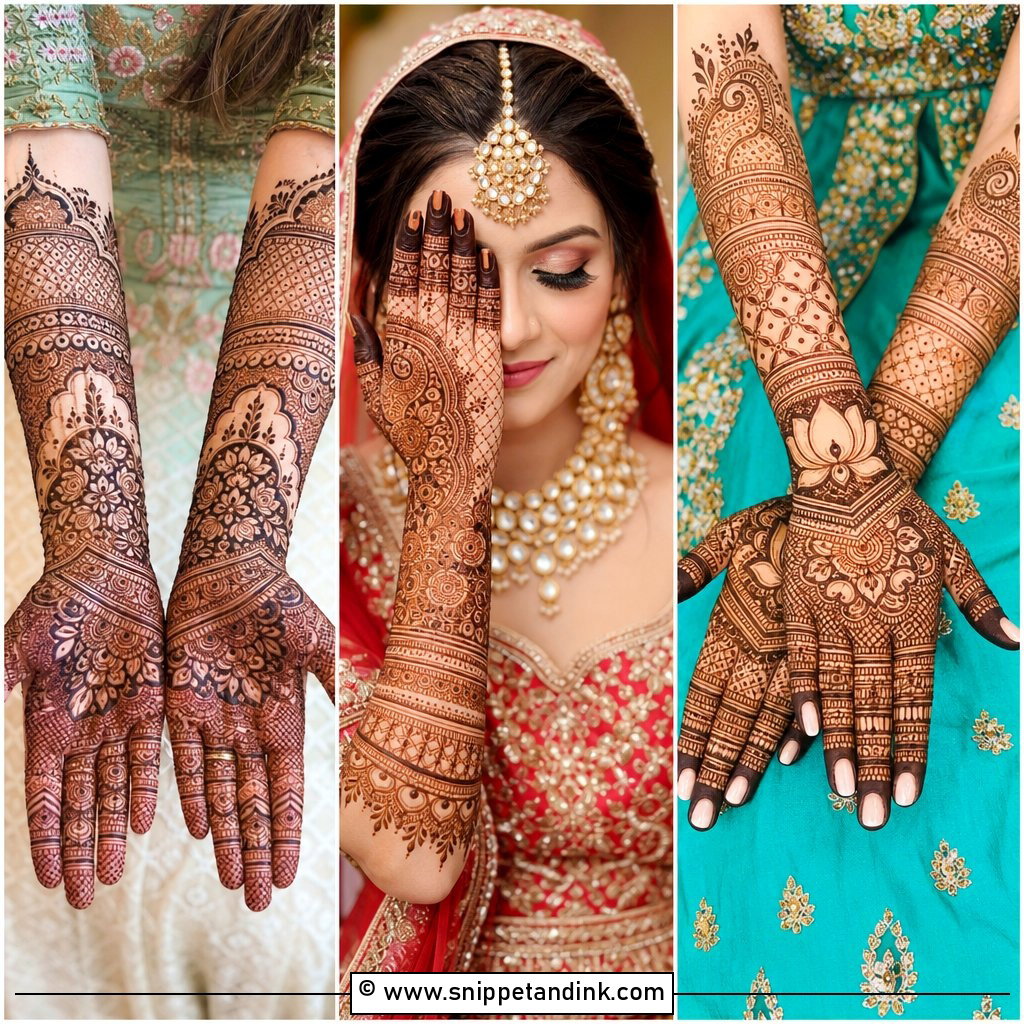
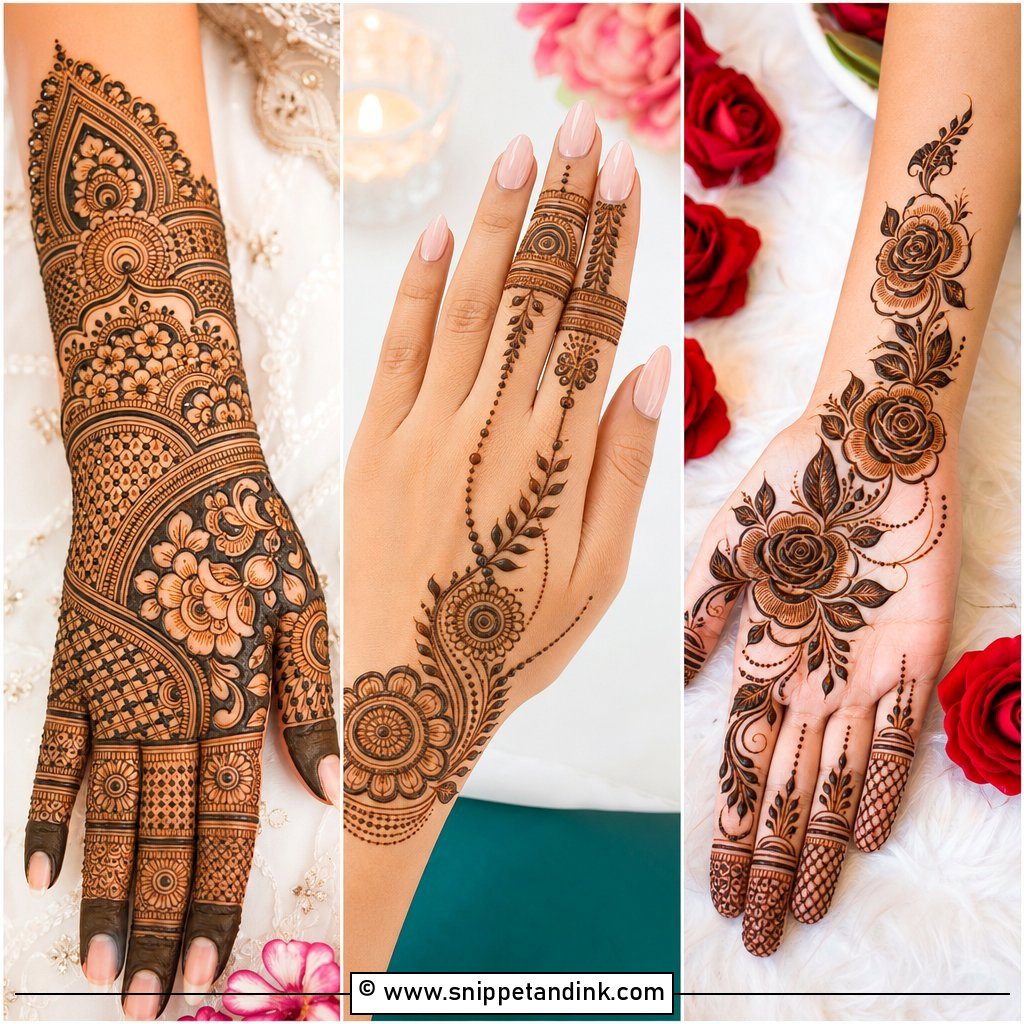
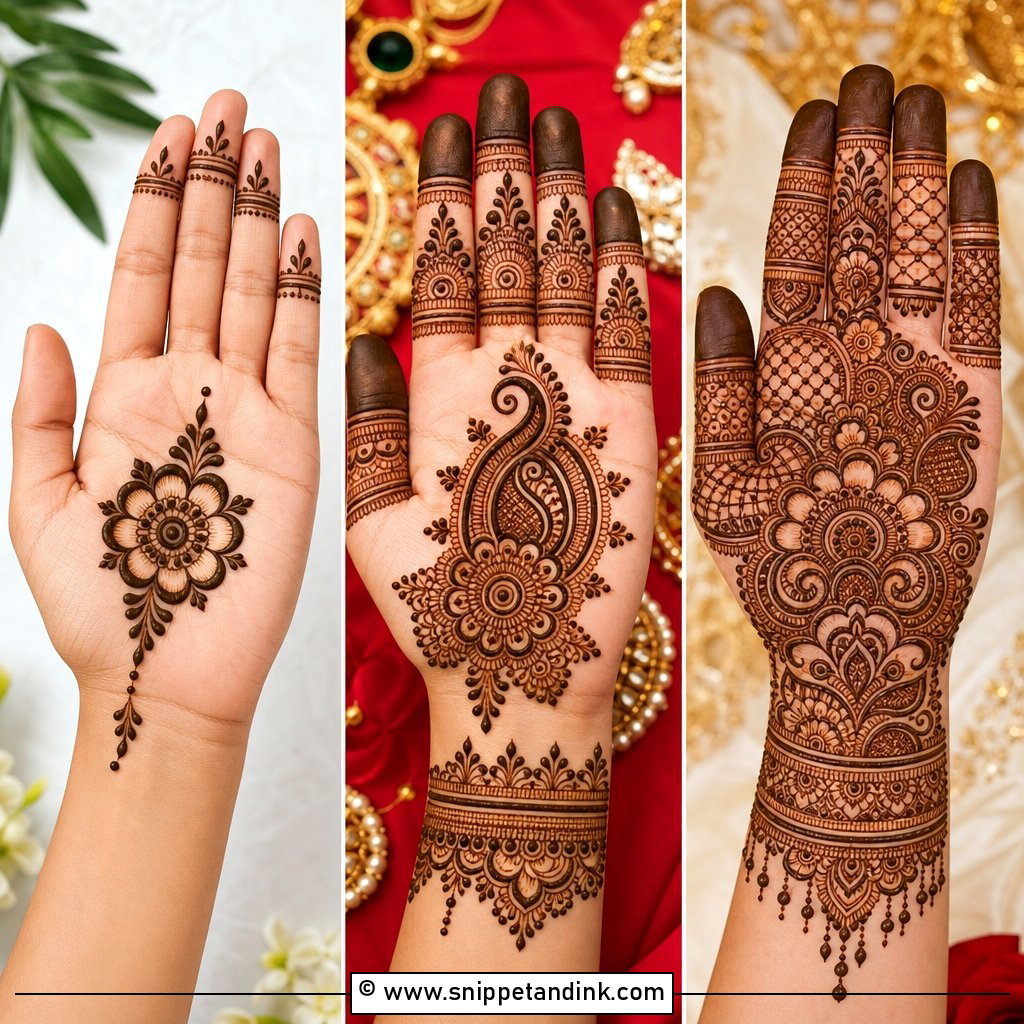
A full hand bridal mehndi design covers fingers, palms, wrists and forearms with paisleys, lotus, jaali, peacocks and fine filler, often with initials, a date or dulha-dulhan figures tucked inside. It is slow work, and that’s the trade. Before booking, check that your artist can hold the same line weight across both hands for hours; fatigue shows as thicker, shakier lines on the second hand. Done well, it carries heavy jewelry and a bridal outfit without being lost.
3. Back Hand Mehndi Design
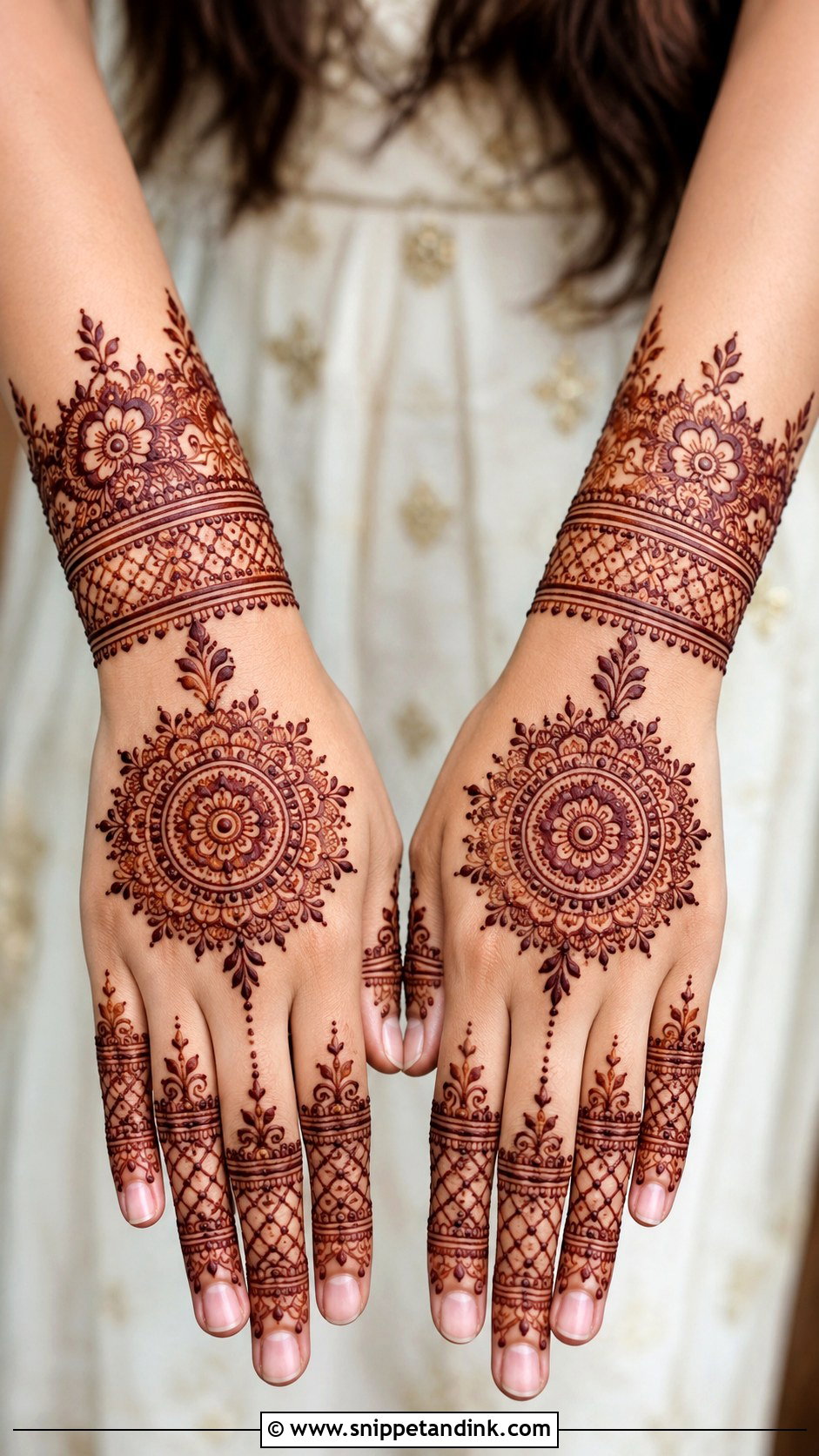
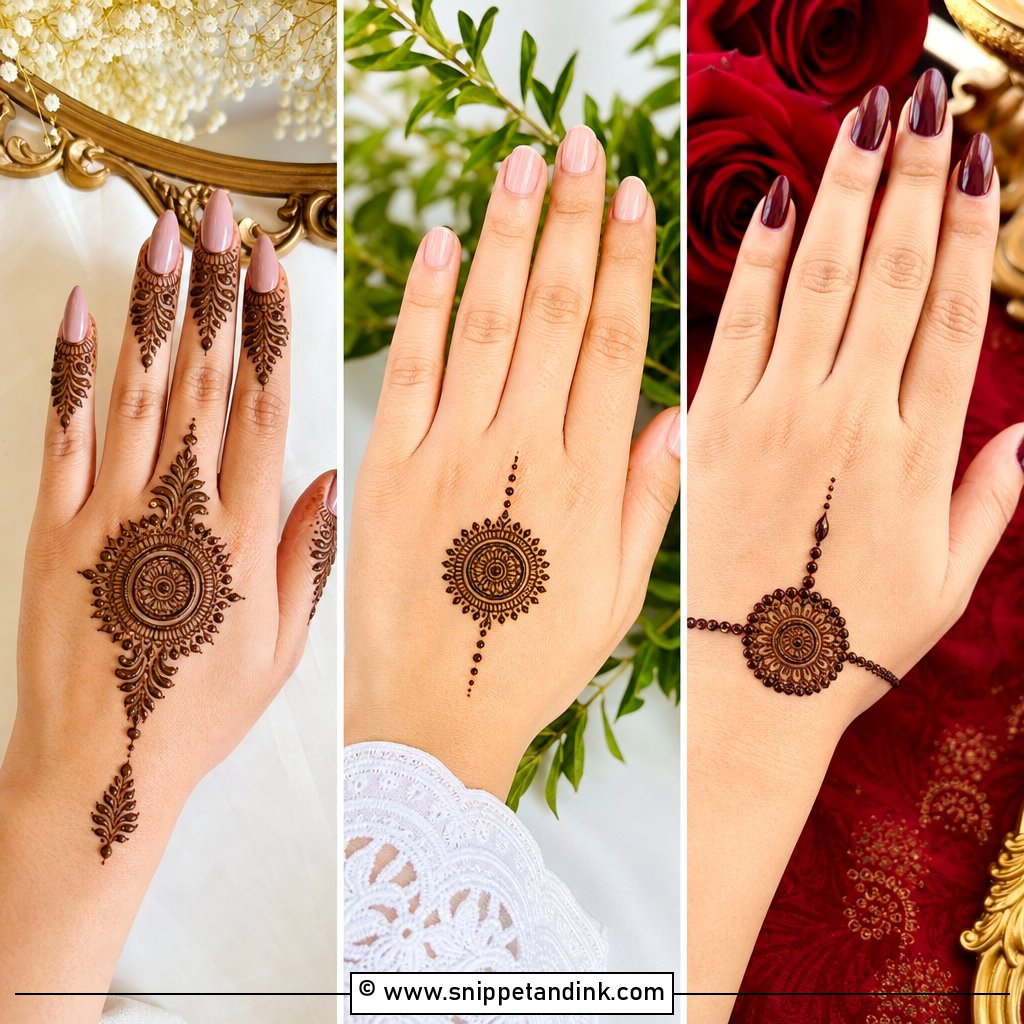
The back of the hand is the side people actually see while you talk, eat and dance, so I treat it as the main canvas for most non-bridal work. A centre mandala, a floral trail, a wrist band and decorated fingers is my usual base. The layout bends easily to the hand: on short fingers I draw the finger work shorter and the bracelet thinner. Whatever the density, I connect the wrist band to the finger details so the piece reads as one design.
4. Front Hand Mehndi Design
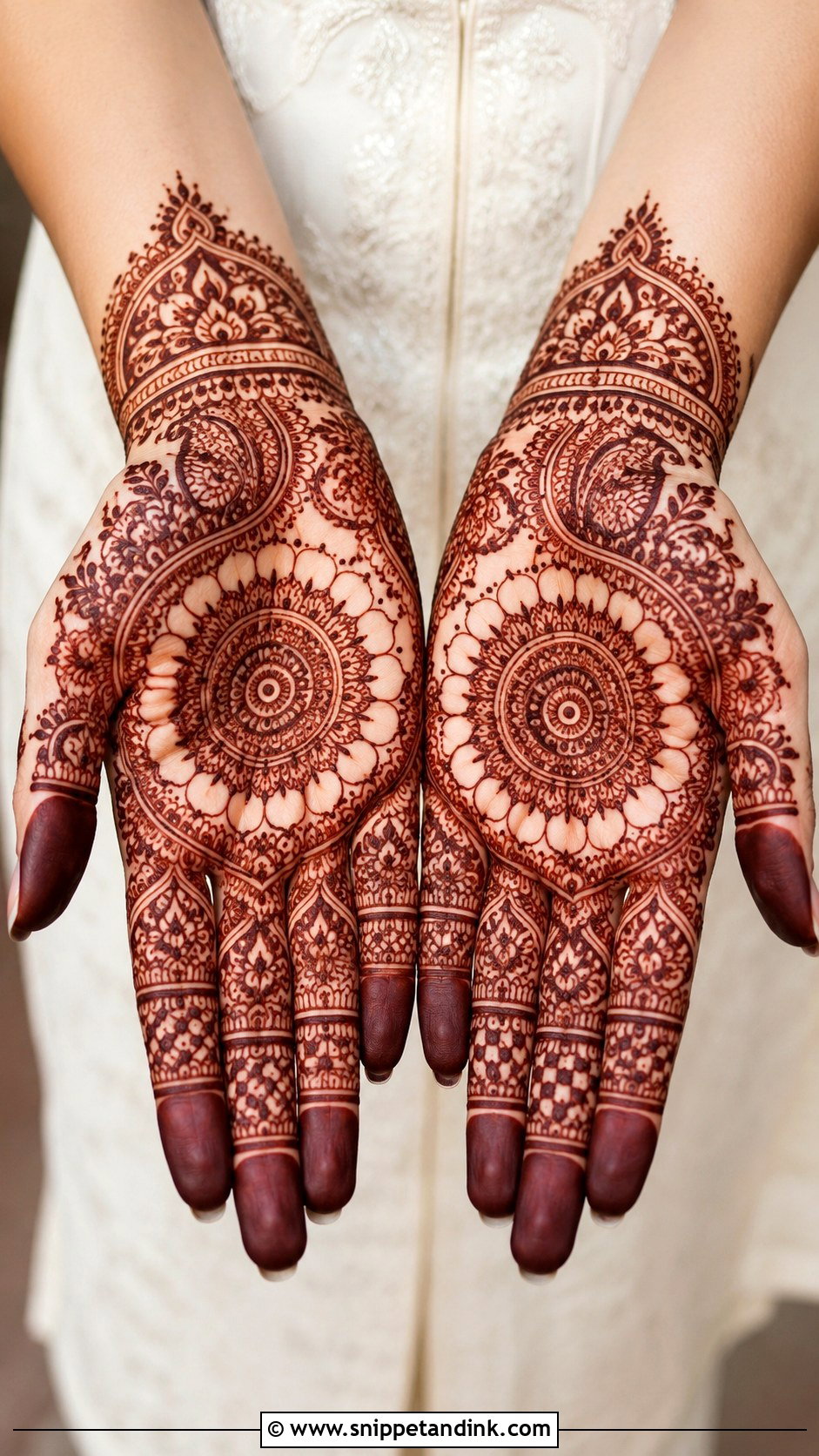
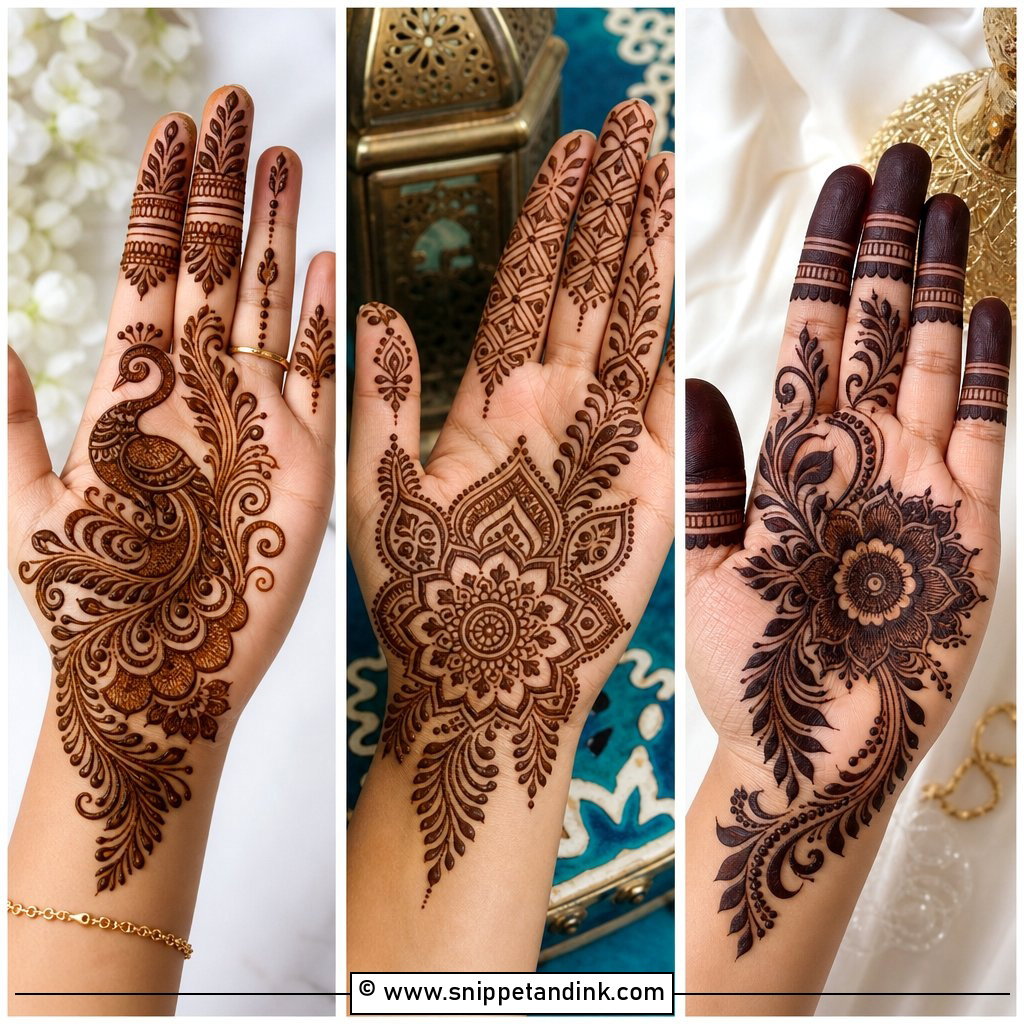
Palm-focused designs develop the deepest colour, because palm skin is thick and takes henna readily. I centre them on a round tikki, a lotus or a paisley cluster and fill the fingers with lines, checks or small flower bands. Full coverage or a motif framed by clean negative space are both traditional. If you work with your hands a lot, know that the palm also fades first, since that skin renews quickly.
5. Mandala Mehndi Design
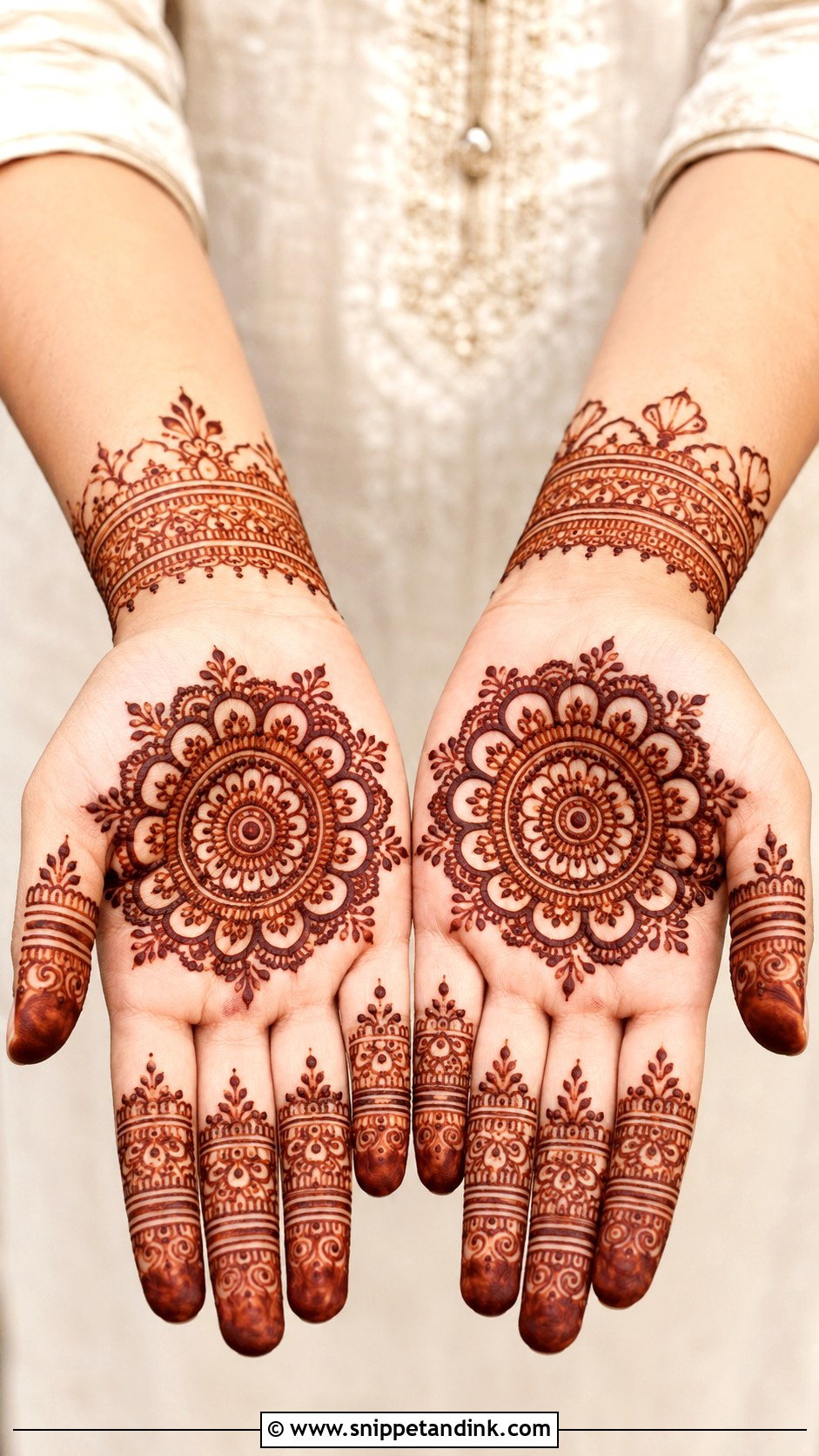
Symmetry is the whole design here. I place the centre dot first, check it against the middle of your palm or back of the hand, then build rings outward: petals, dots, small leaves. A bold tikki looks traditional; a fine-line mandala looks modern. It’s the design I give beginners to practise because the structure tells you where the next ring goes. Finish with ring-style finger bands and the hand looks complete without full coverage.
6. Floral Mehndi Design
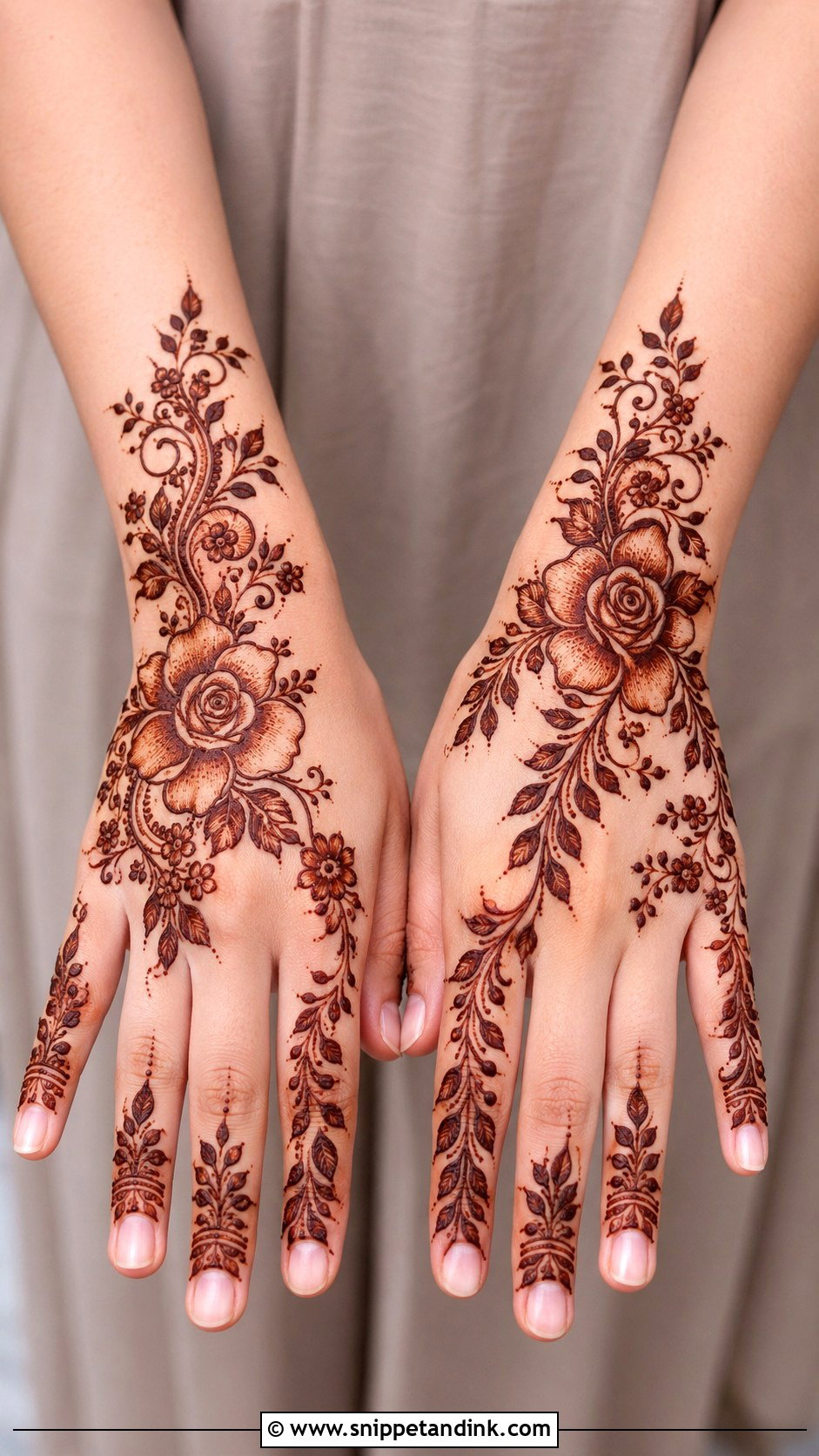
Flowers flatter almost every hand, and they’re my default when someone can’t decide. Roses, small blossoms, lotus petals and shaded leaves flow naturally across the back of the hand and make it look longer. Scale decides the mood: large flowers with space around them read modern, small flowers with lace borders and fillers read bridal.
7. Indo Arabic Mehndi Design
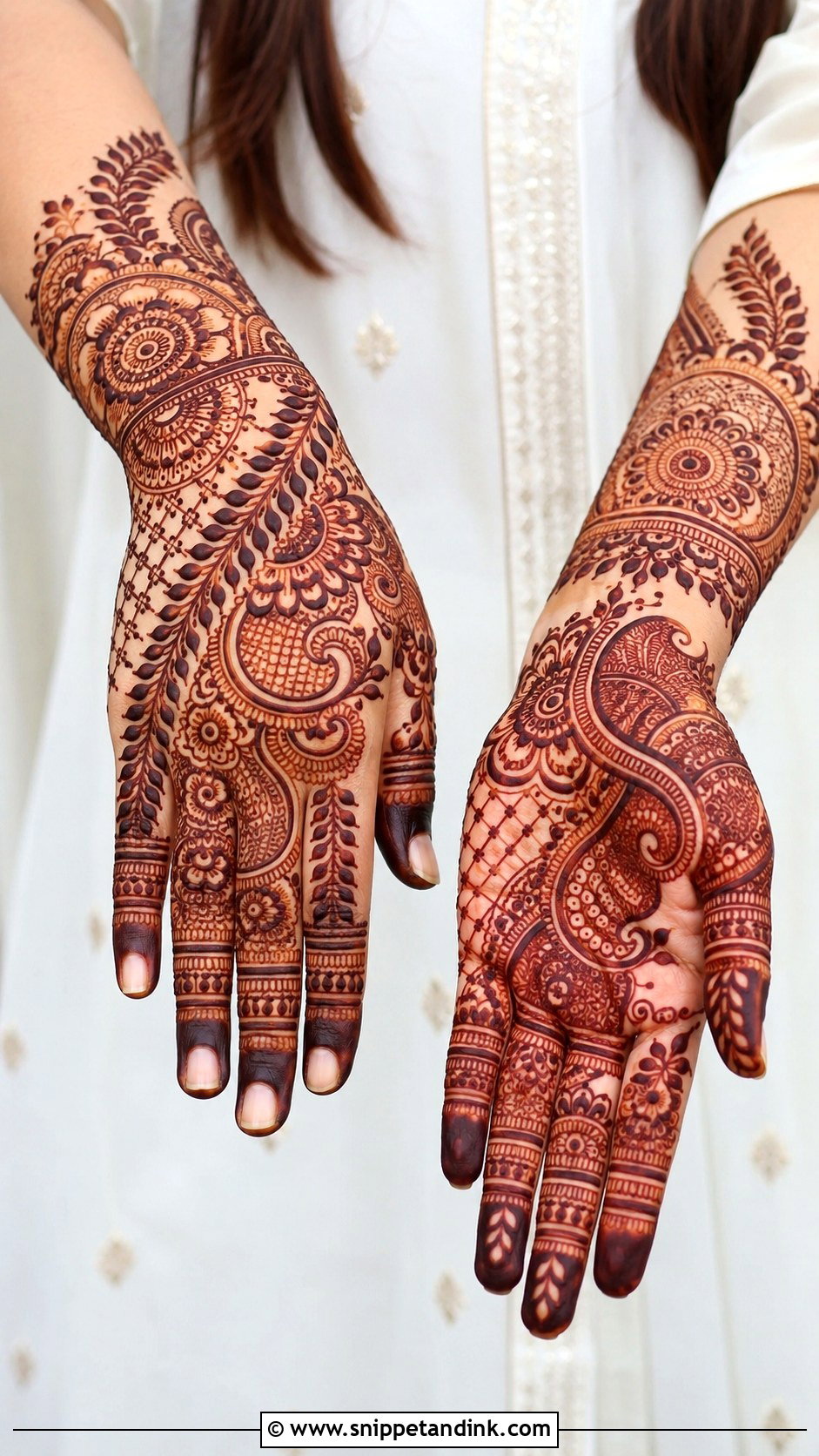
Indo-Arabic keeps the Arabic diagonal and empty space, then fills the larger shapes with Indian detail: jaali grids, fine paisleys, filled fingers. It sits neatly between a simple design and full bridal, so I suggest it for bridesmaids and guests who want something fuller. The contrast between open skin and dense pockets is what gives it presence in pictures.
8. Minimal Mehndi Design
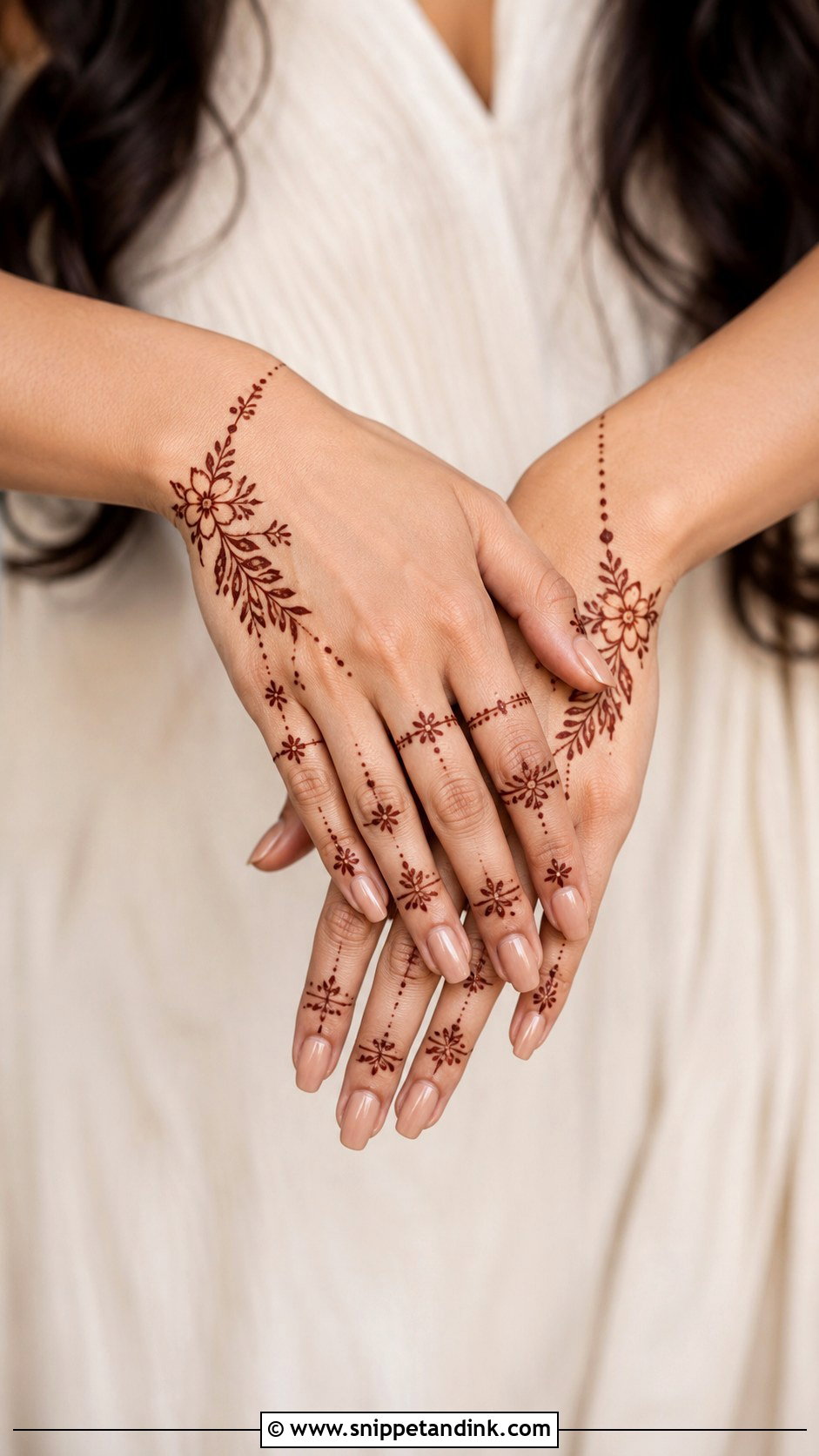
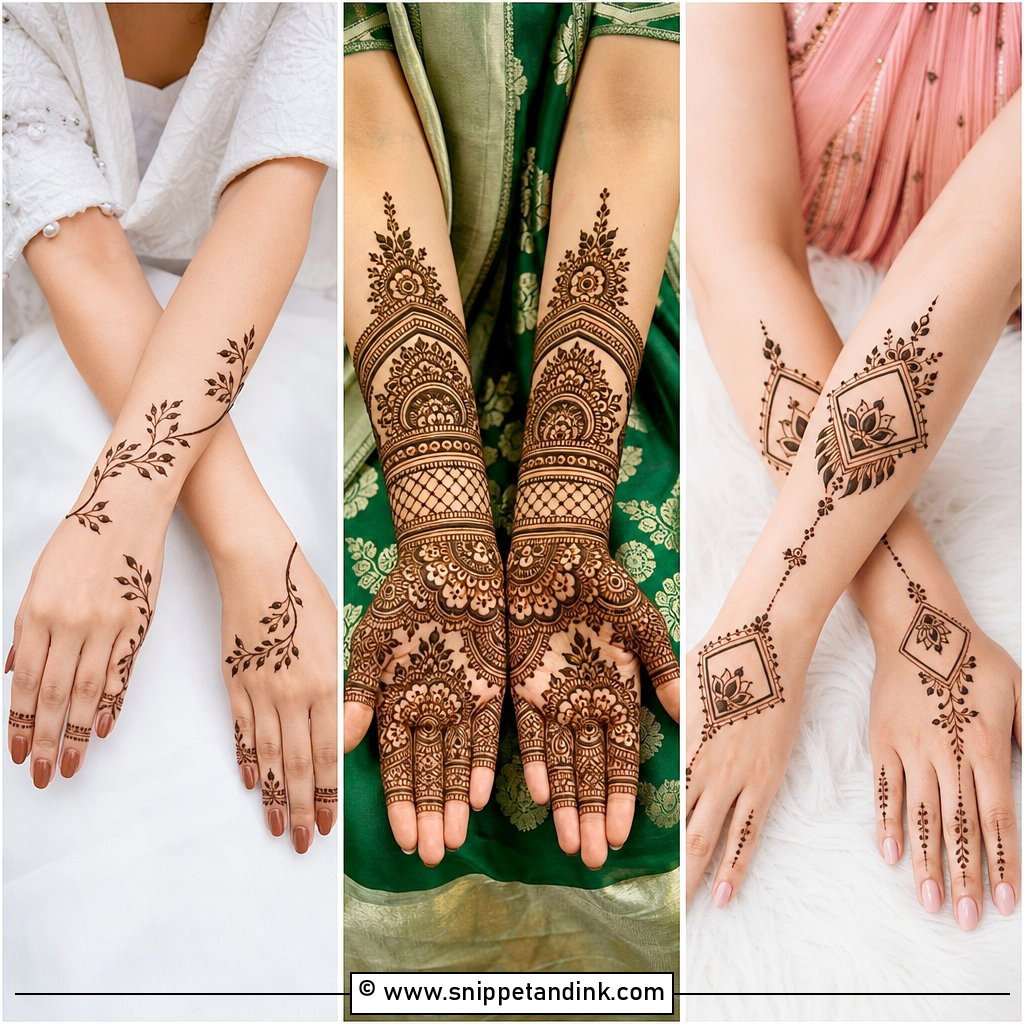
Minimal henna lives or dies on placement. A few fine lines, dots, a leafy stem or finger bands, set where they balance the hand, is enough. I’ll often put it on only the fingers or a small trail across the back of the hand. It sits comfortably with rings and bangles and suits anyone who needs to look polished at work the following week. I’d avoid it if you want maximum stain darkness, because thin lines always read lighter than solid fill.
9. Bridal Dulhan Mehndi Design
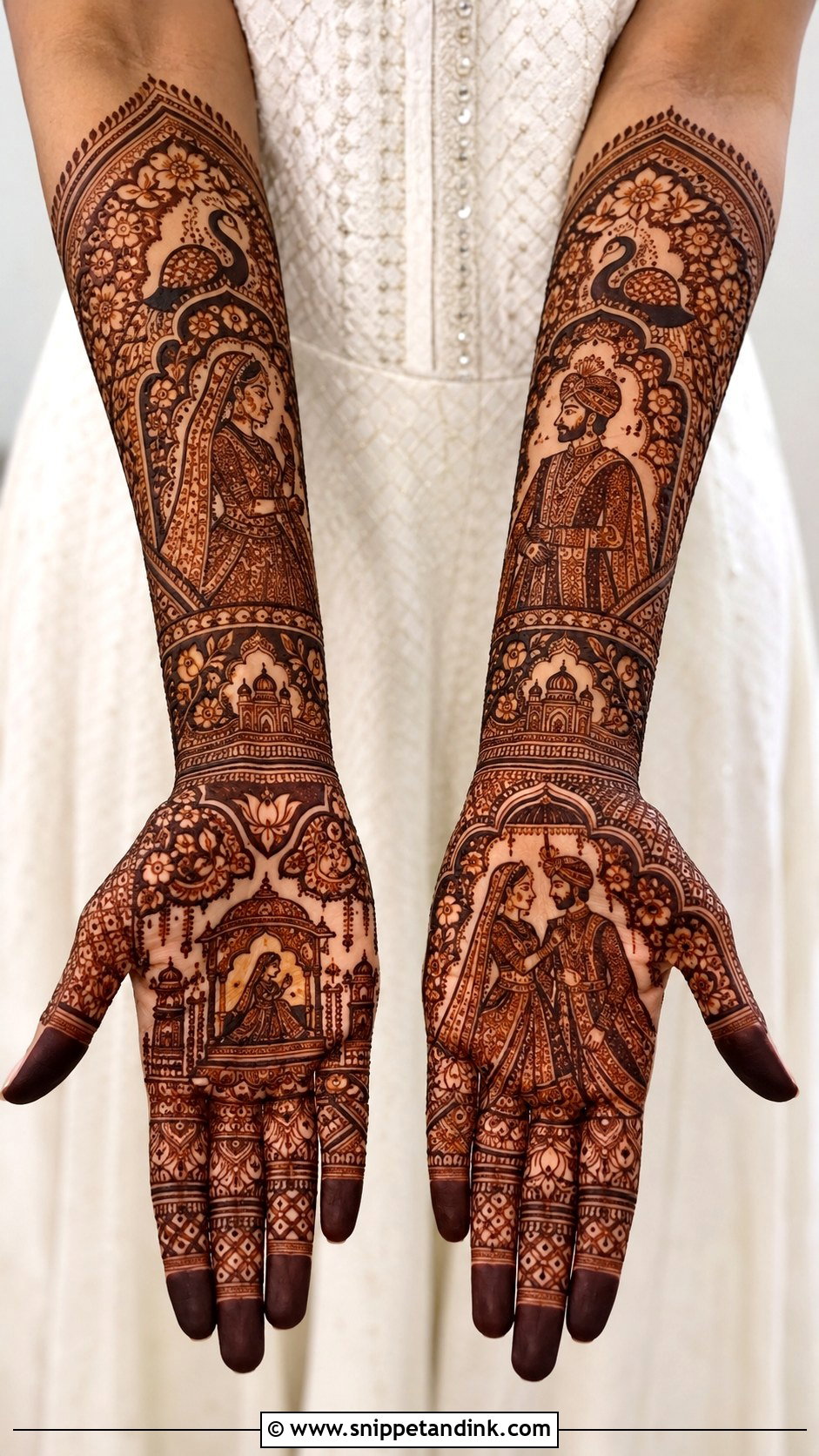
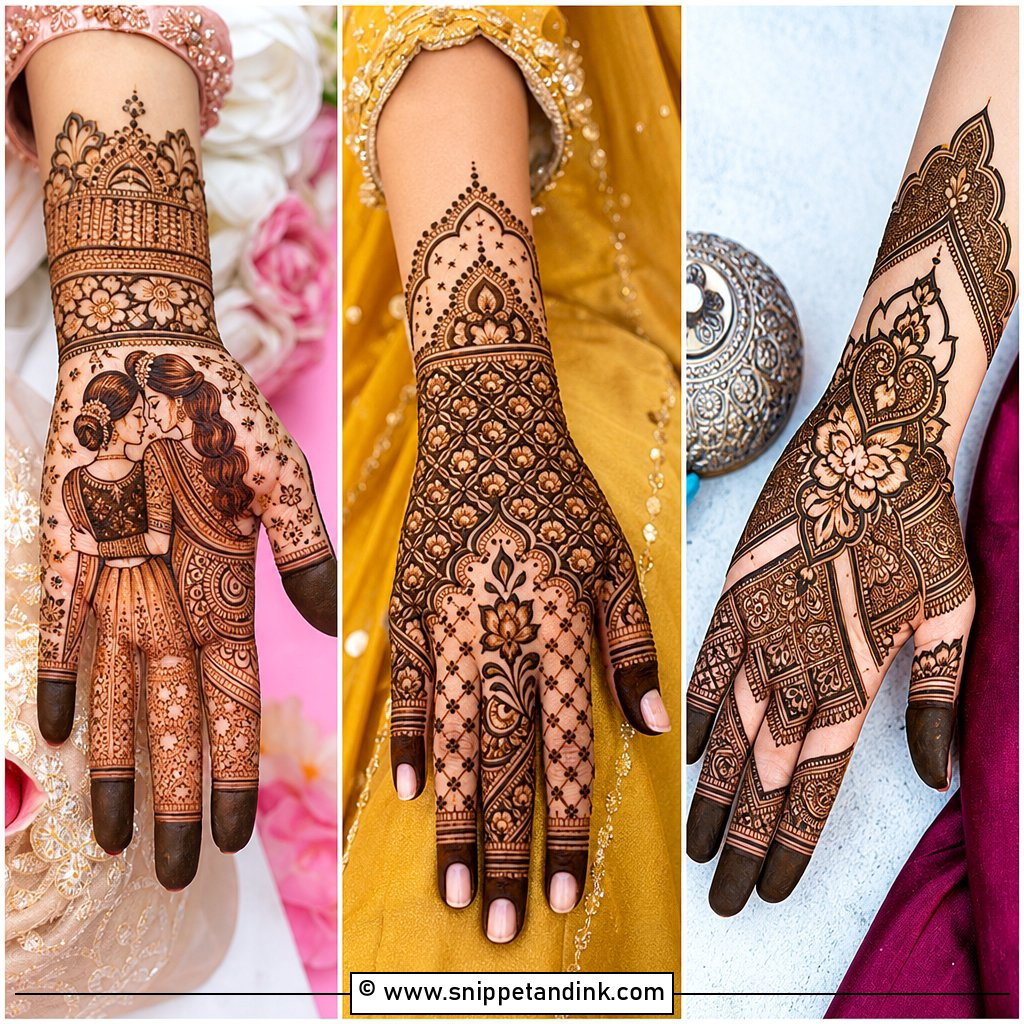
Dulhan designs tell a story: bride and groom portraits, palki and kalash motifs, peacocks, lotus and hidden names, running from the fingertips to the forearms or elbows. Planning is everything. I sketch where each figure lands on both hands before I start, so the scene reads left to right across the pair. Ask your artist to keep the faces and names large enough to read, or they’ll vanish into the filler by the time the stain matures.
10. Easy Mehndi Design
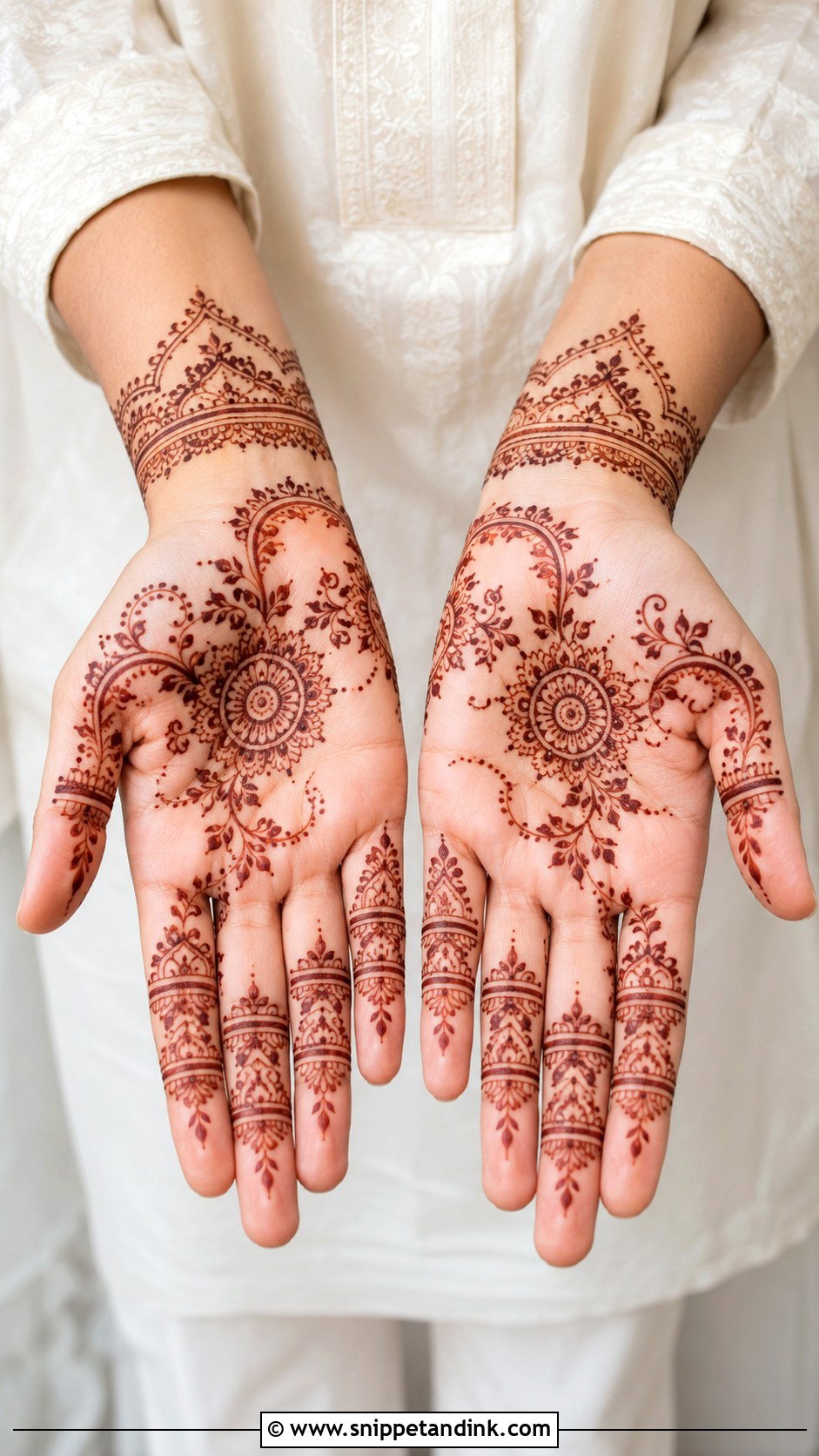
Simple flowers, curved vines, dots, scalloped lines and basic finger bands are the building blocks I teach first. Open spacing is your friend because it hides small wobbles. Use thicker lines and bigger motifs while you learn; they’re easier to control, and the stain from a thicker line is darker and more forgiving. A palm mandala or a diagonal back-hand trail are both good first projects.
11. Finger Mehndi Design
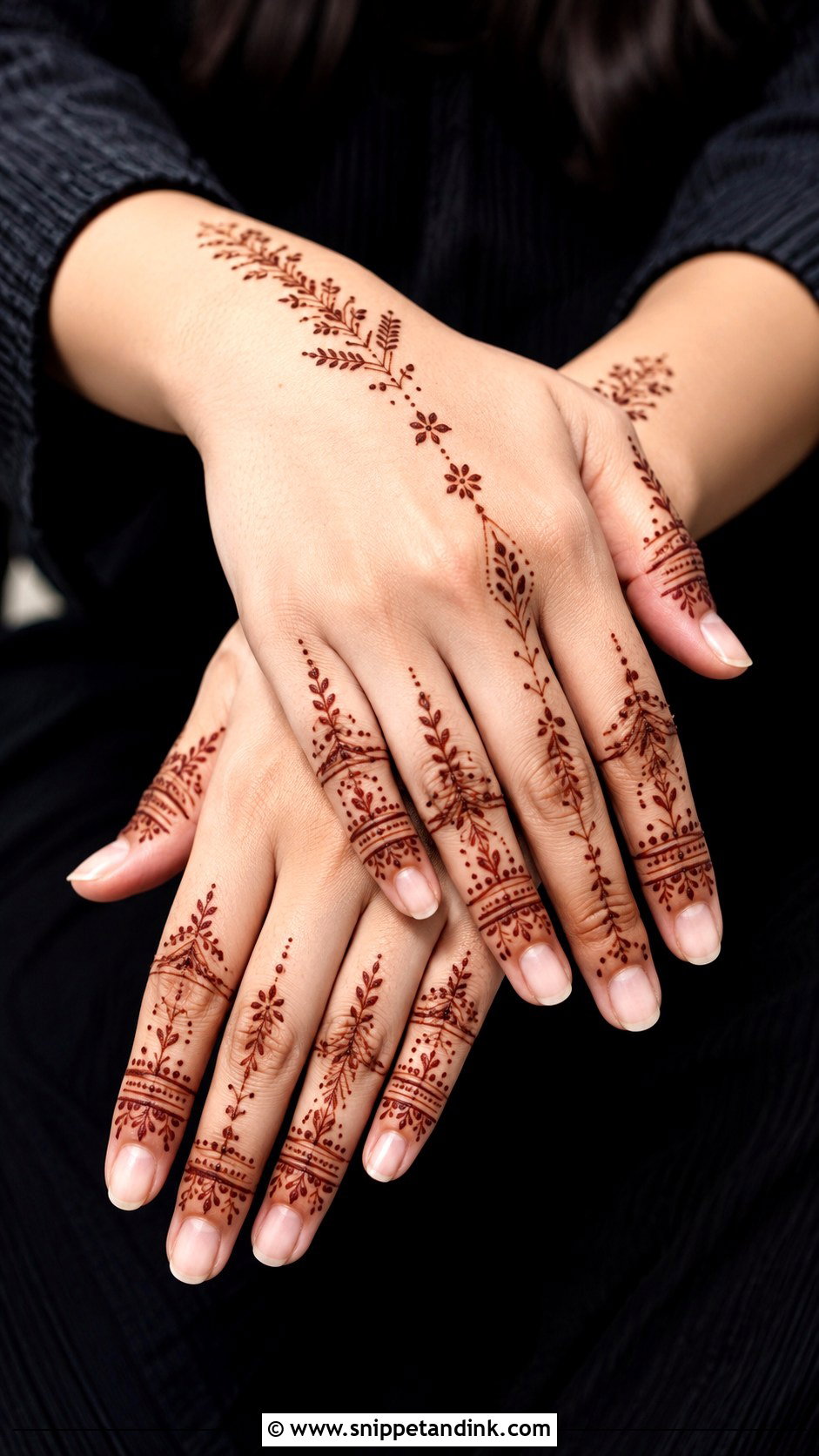
Fingers stain dark and quickly, which makes finger-focused designs good value for time. Ring bands, leafy chains, chevrons, dots and tiny nets all work. My rule is consistency: each finger can carry a different pattern, but line thickness and spacing should match across all five. Draw just below the knuckle creases, because a wet line sitting on a crease smudges the moment you bend your finger.
12. Jewellery Mehndi Design
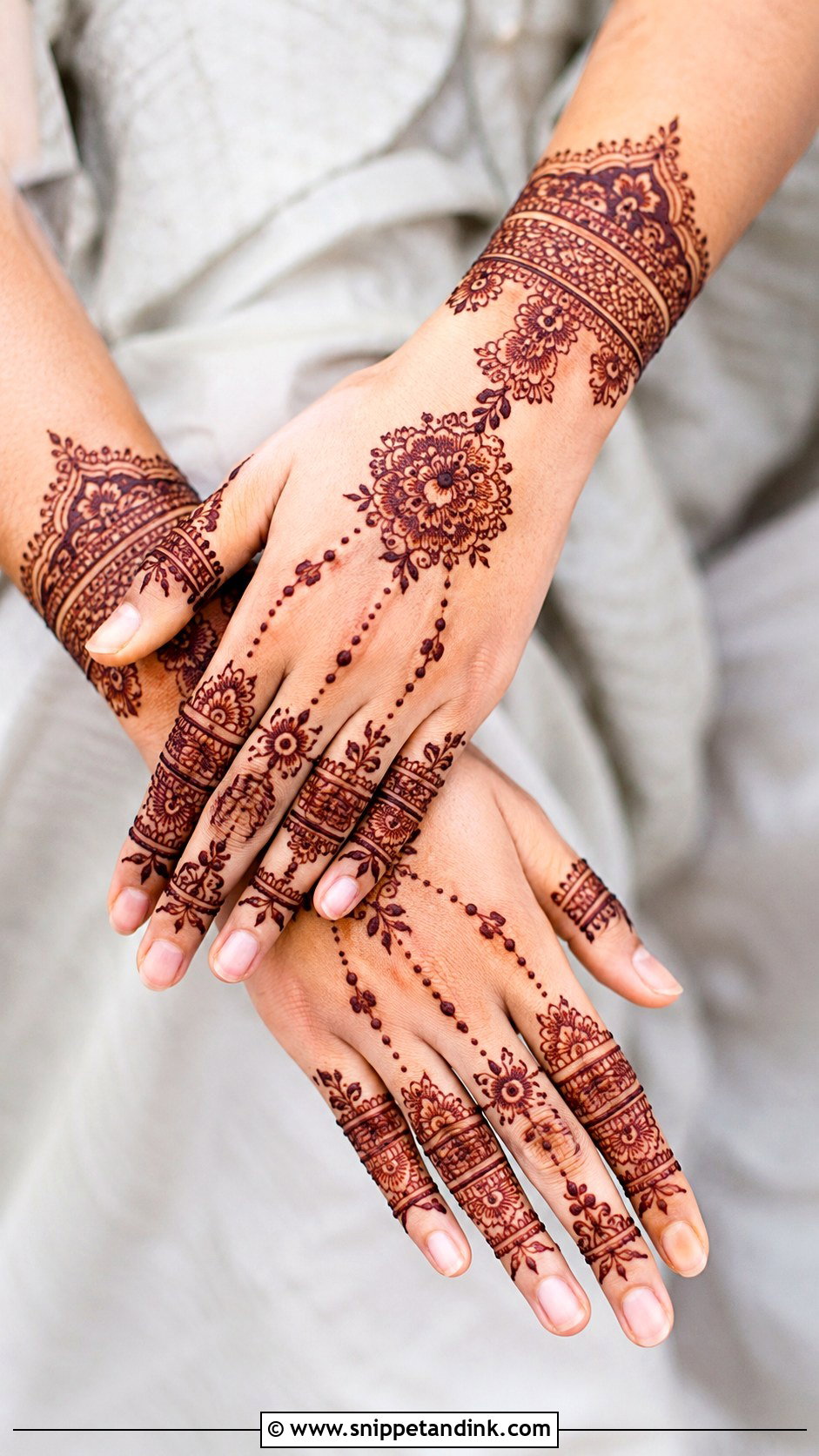
Jewellery designs draw the ornament instead of wearing it: haath phool chains, bracelet bands, finger loops and wrist cuffs. On the back of the hand, I follow where real jewelry would sit, so the chain runs straight down to the middle finger. Thin chains and dots look minimal; floral cuffs and detailed rings look festive. Spend your detail on the wrist bracelet, since that section makes the whole piece look finished.
13. Peacock Mehndi Design
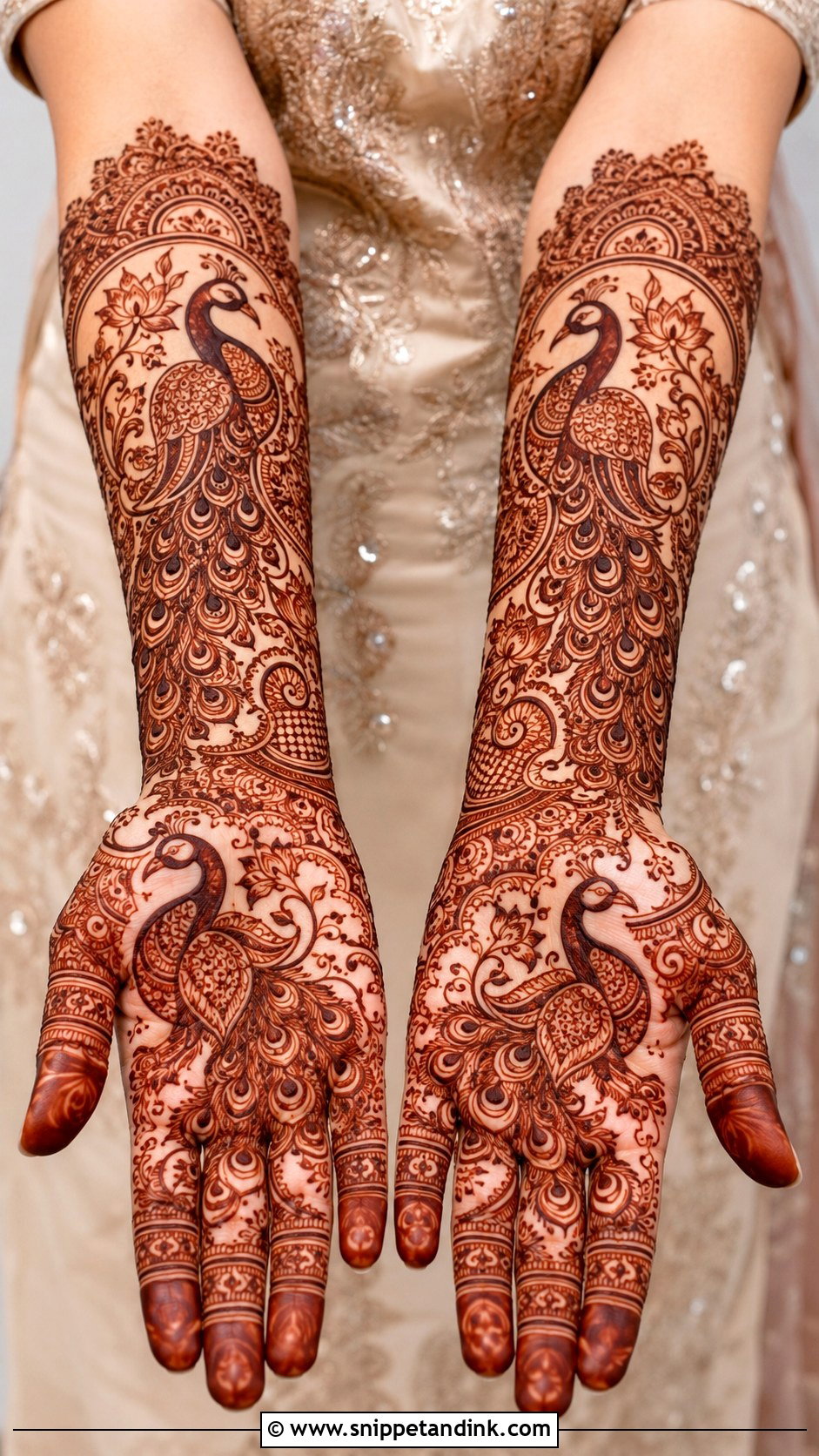
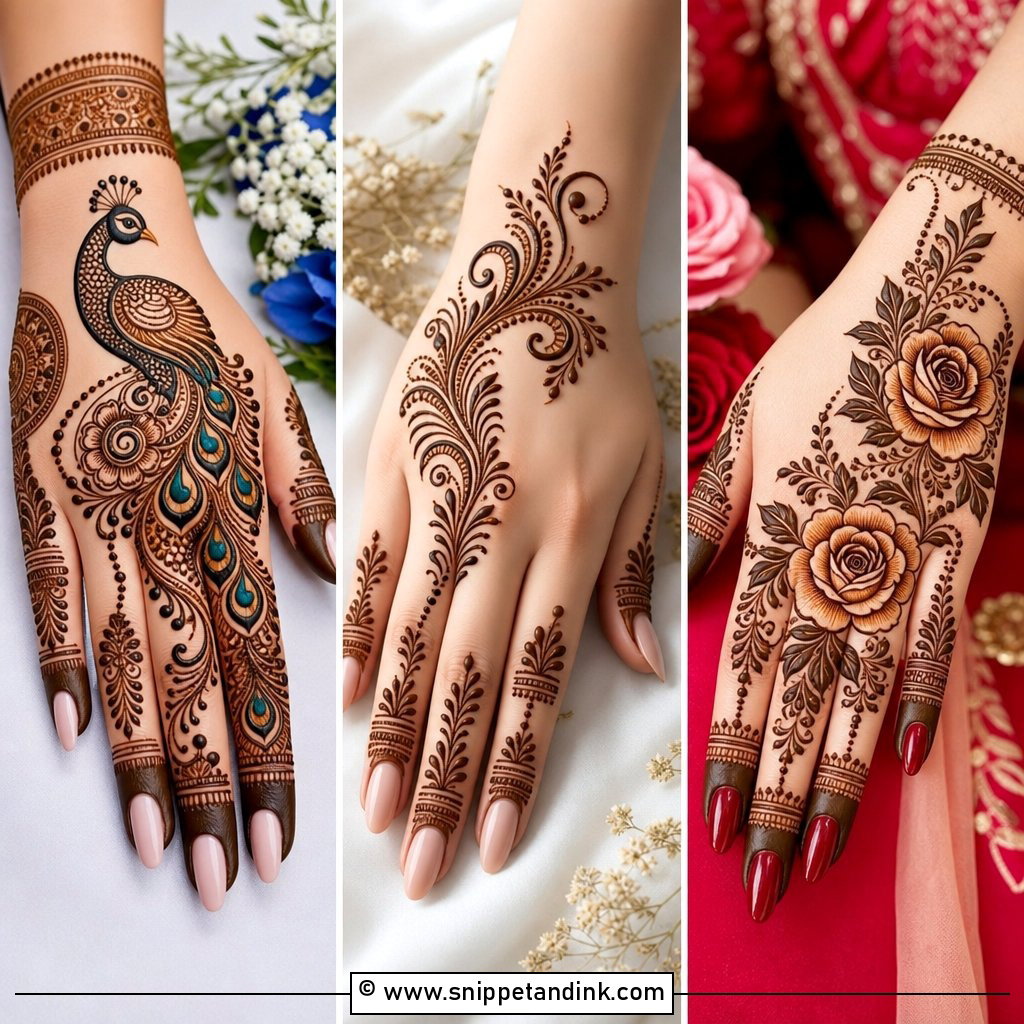
The peacock is a motif people recognise from across a room, so its silhouette has to stay clean. I draw the body and neck first, then let the feathers spill into paisleys and vines. A large peacock with open feathers suits a modern hand; a dense one with heavy filler suits bridal. Whatever the style, keep a little bare skin around the outline so the bird doesn’t merge into its own feathers as the stain darkens.
14. Paisley Mehndi Design
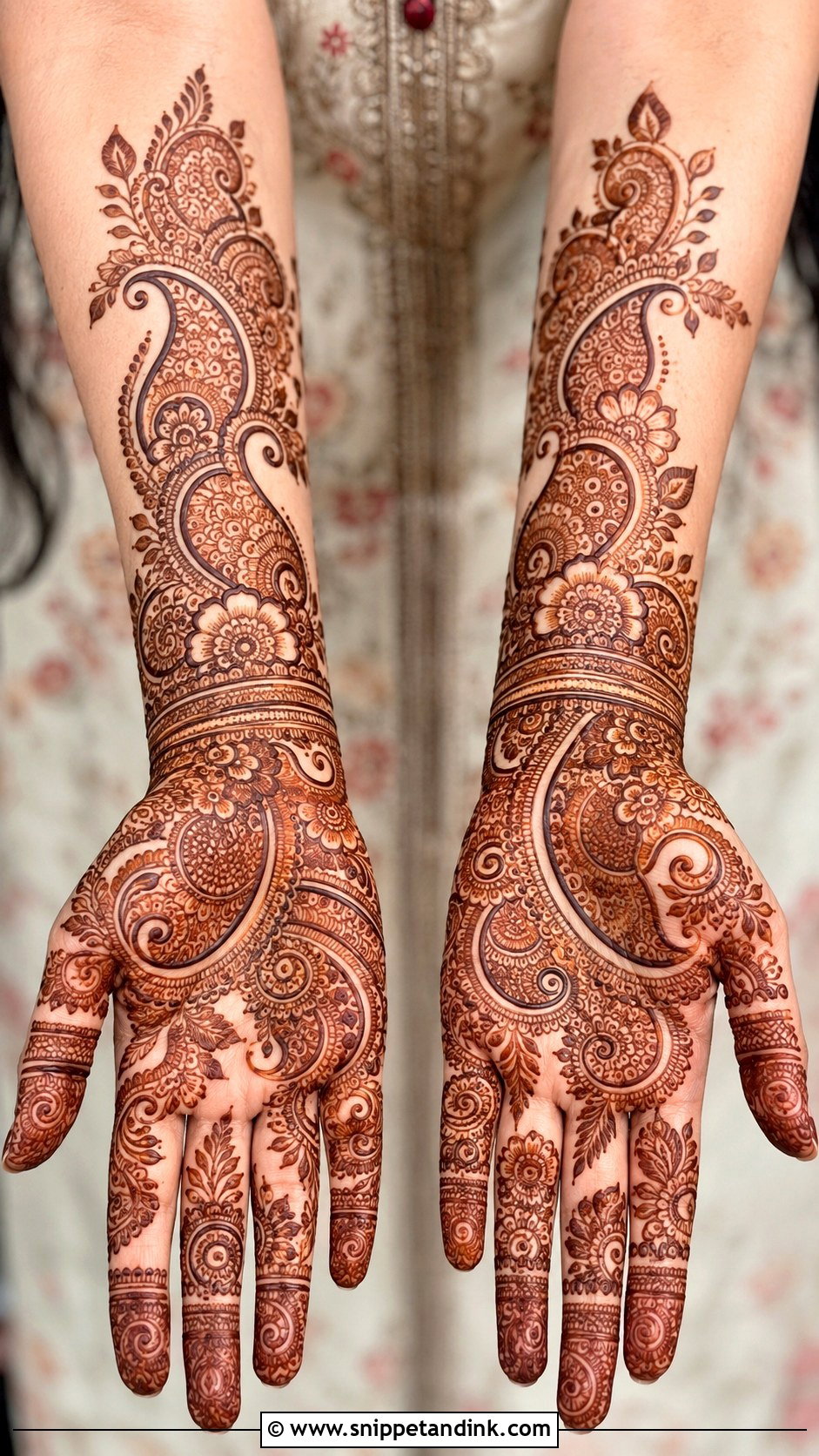
Paisleys are the connective tissue of traditional henna. Their curve leads the eye from palm to fingers or from wrist to forearm, so I use them to bridge sections that would otherwise look separate. Layer them with flowers, leaves and fine filler. If you want a traditional hand without portraits or dense scenes, paisleys are the safe route, and they scale easily from festive to bridal.
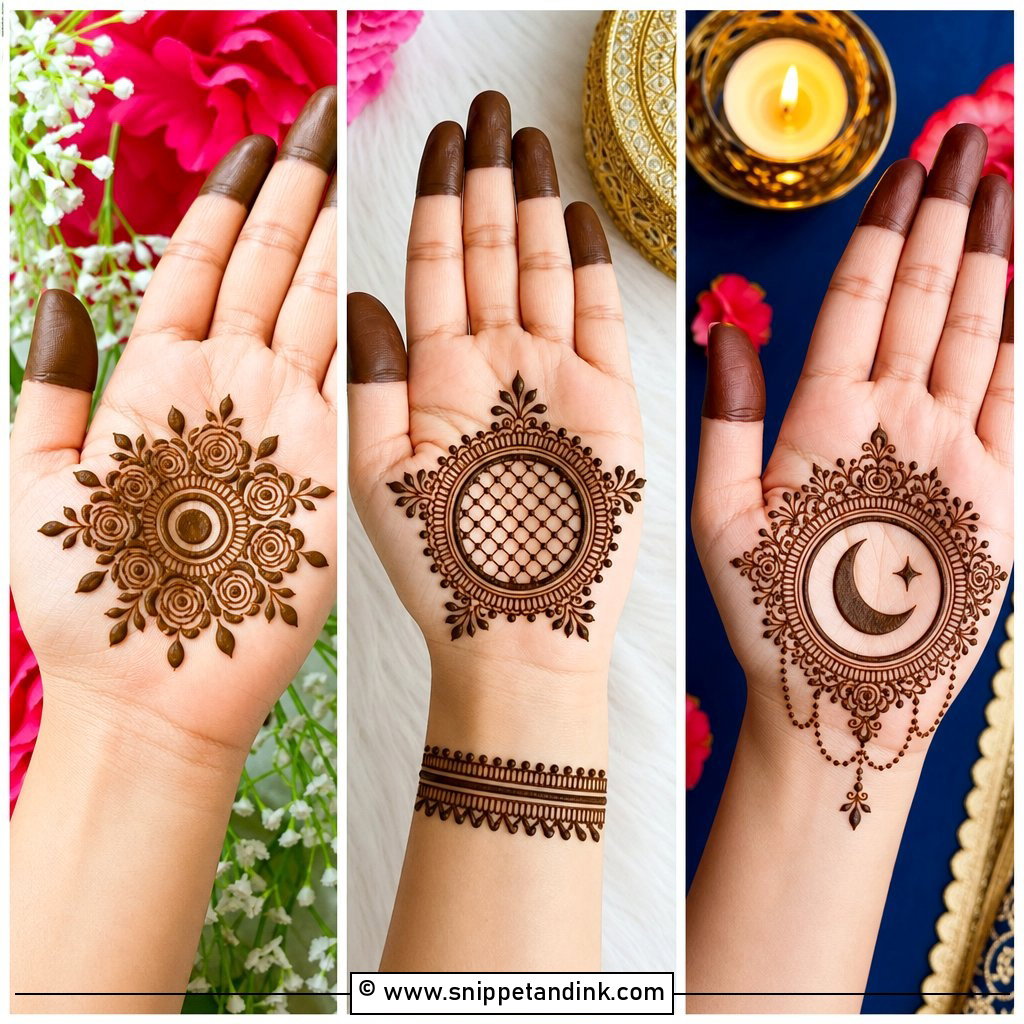
15. Jaali Mehndi Design
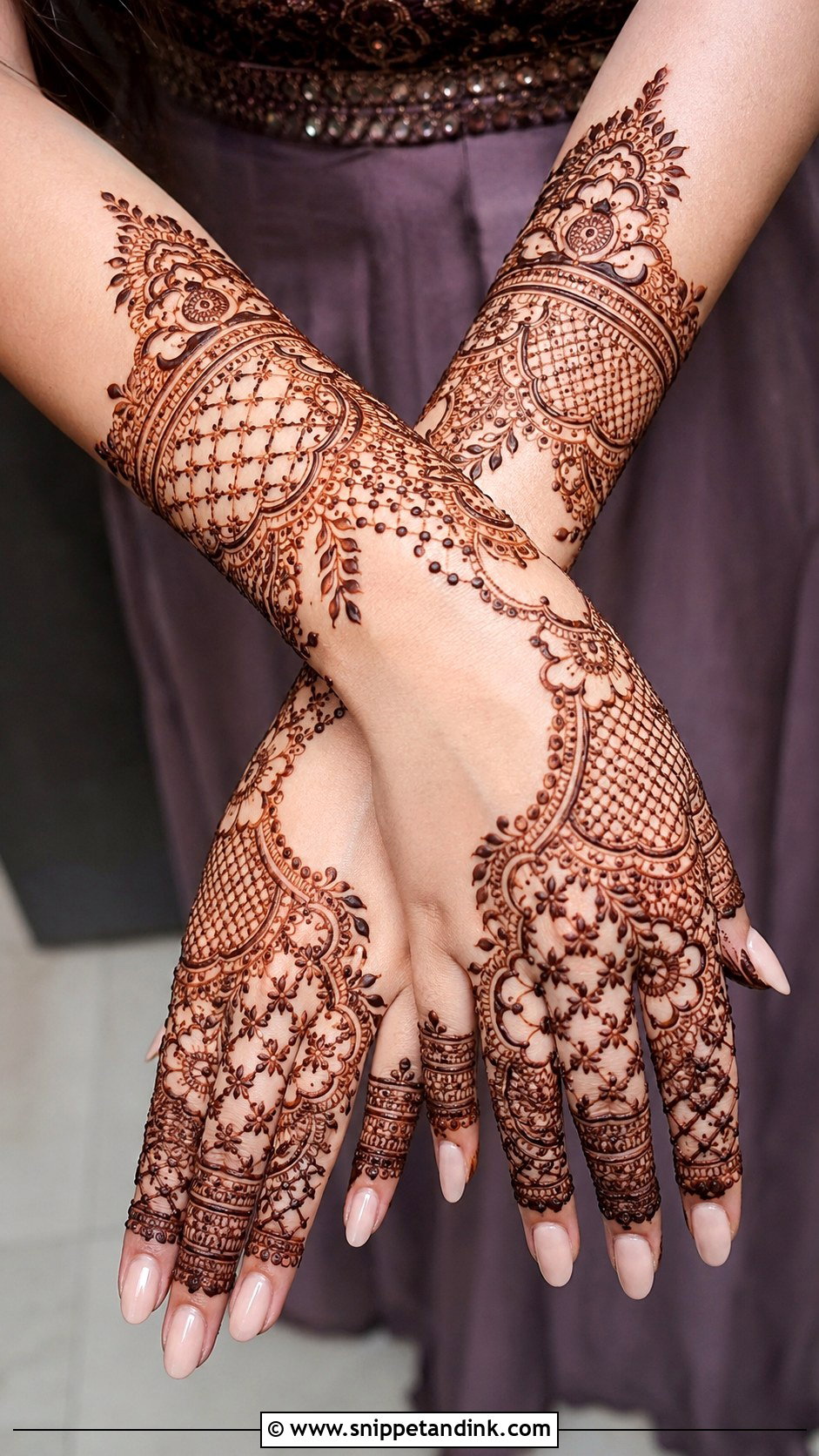
Jaali is a grid, and grids are unforgiving. I draw the lines slightly further apart than feels natural, because henna lines spread a little as they dry and the gaps close up as the colour deepens. Small dots or flowers inside the mesh add detail. One jaali panel framed by floral borders and open skin looks modern; mesh over the whole hand looks bridal but can tip into heavy.
16. Khafif Mehndi Design
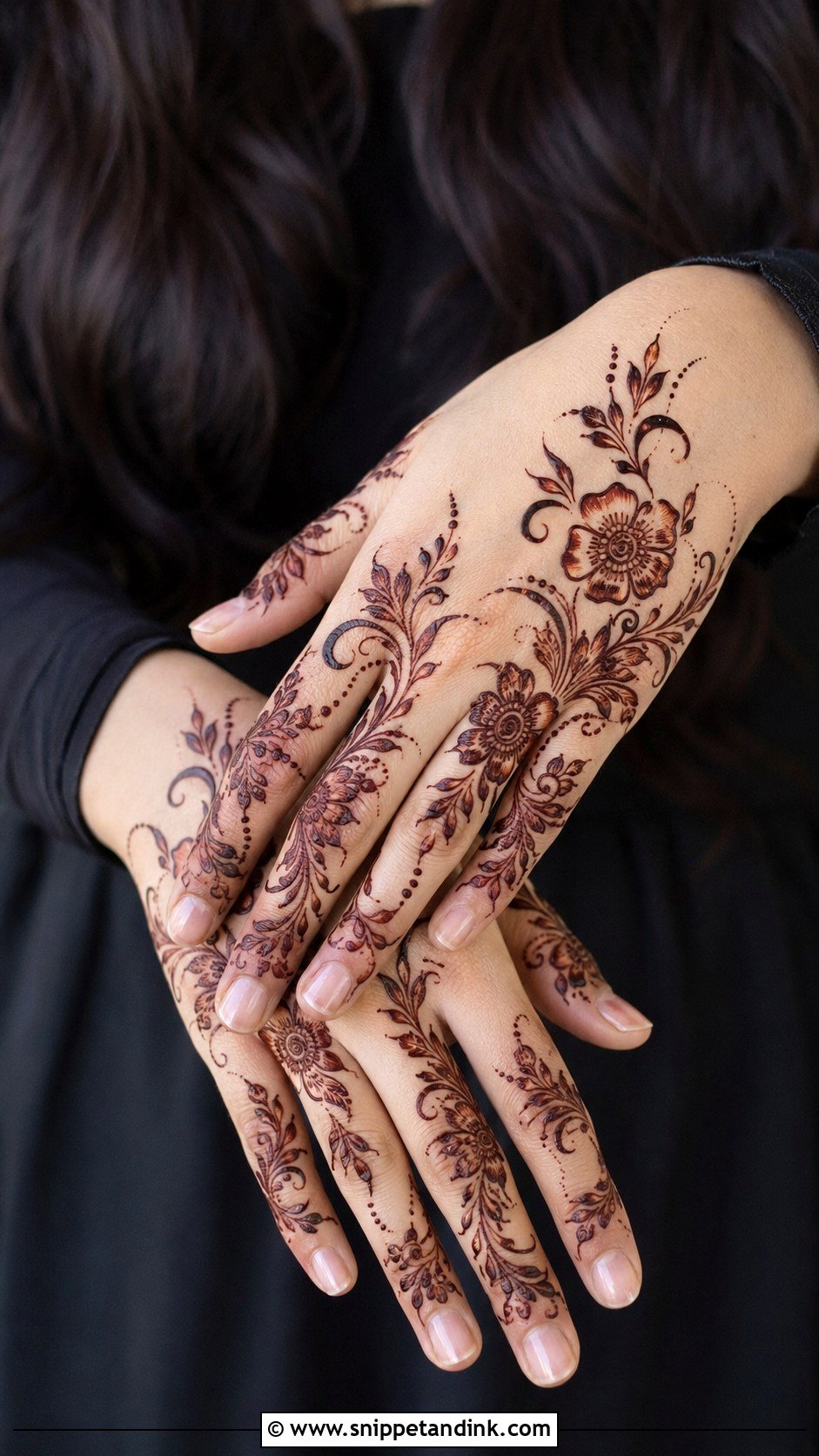
Khafif is Arabic flow with finer interior work: thin curves, small flowers, tiny dots and softly shaded petals in a light trail. Neatness carries it. The shading is done with a lighter touch of paste rather than more lines, so a heavy hand at the cone ruins the effect. It suits Eid, engagement functions and guests who like refined detail and breathable spacing.
17. Gulf Arabic Mehndi Design
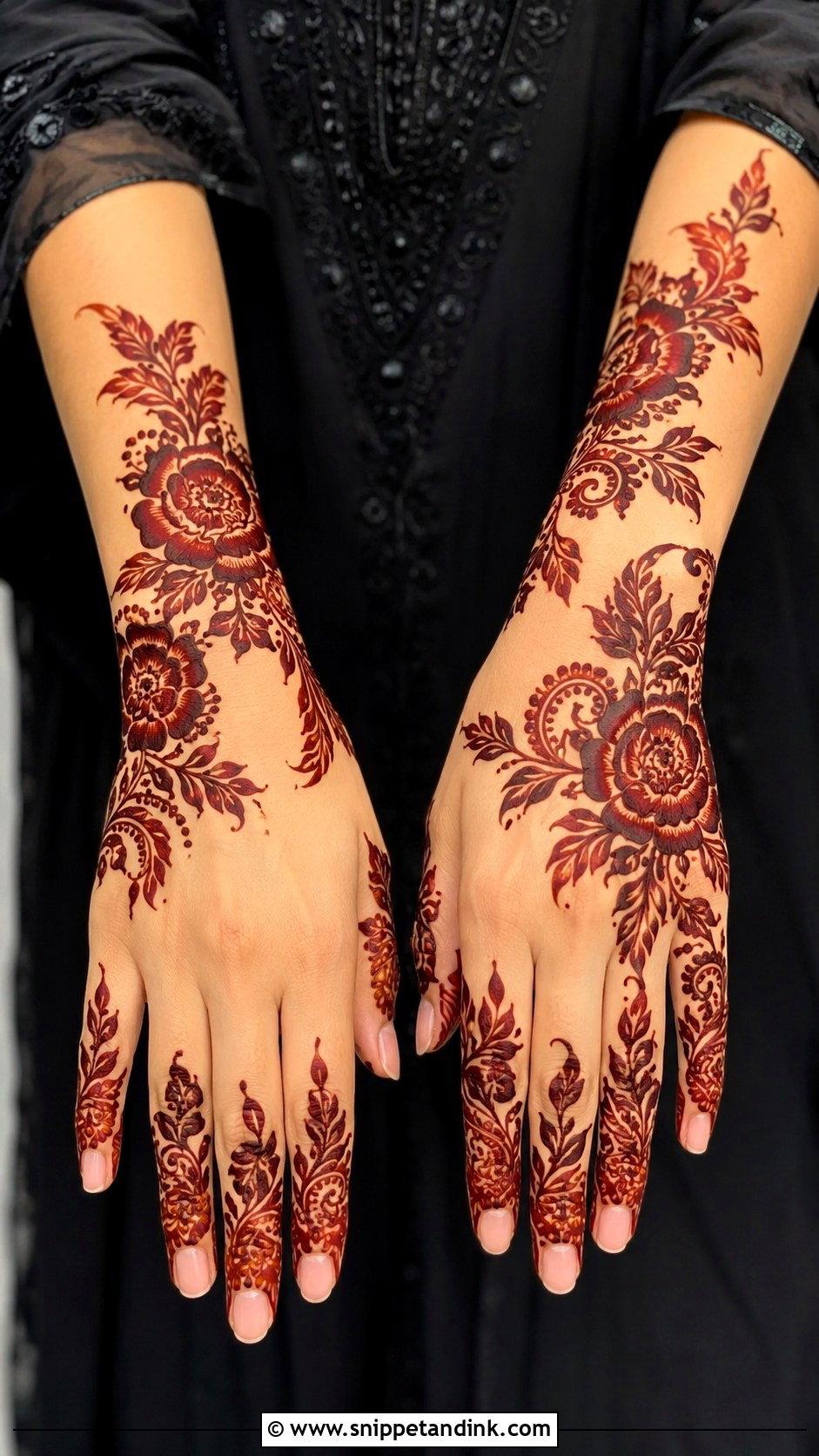
Gulf Arabic goes bigger and bolder: large florals, thick outlines, curved branches and dramatic empty space, often from wrist to index finger or diagonally across the palm. Thick outlines stain darker and survive scrubbing longer than fine work, which is why this style still looks good several days later. The large motifs also make it quicker to apply than dense Indian patterns, handy for evening celebrations.
18. Moroccan Mehndi Design
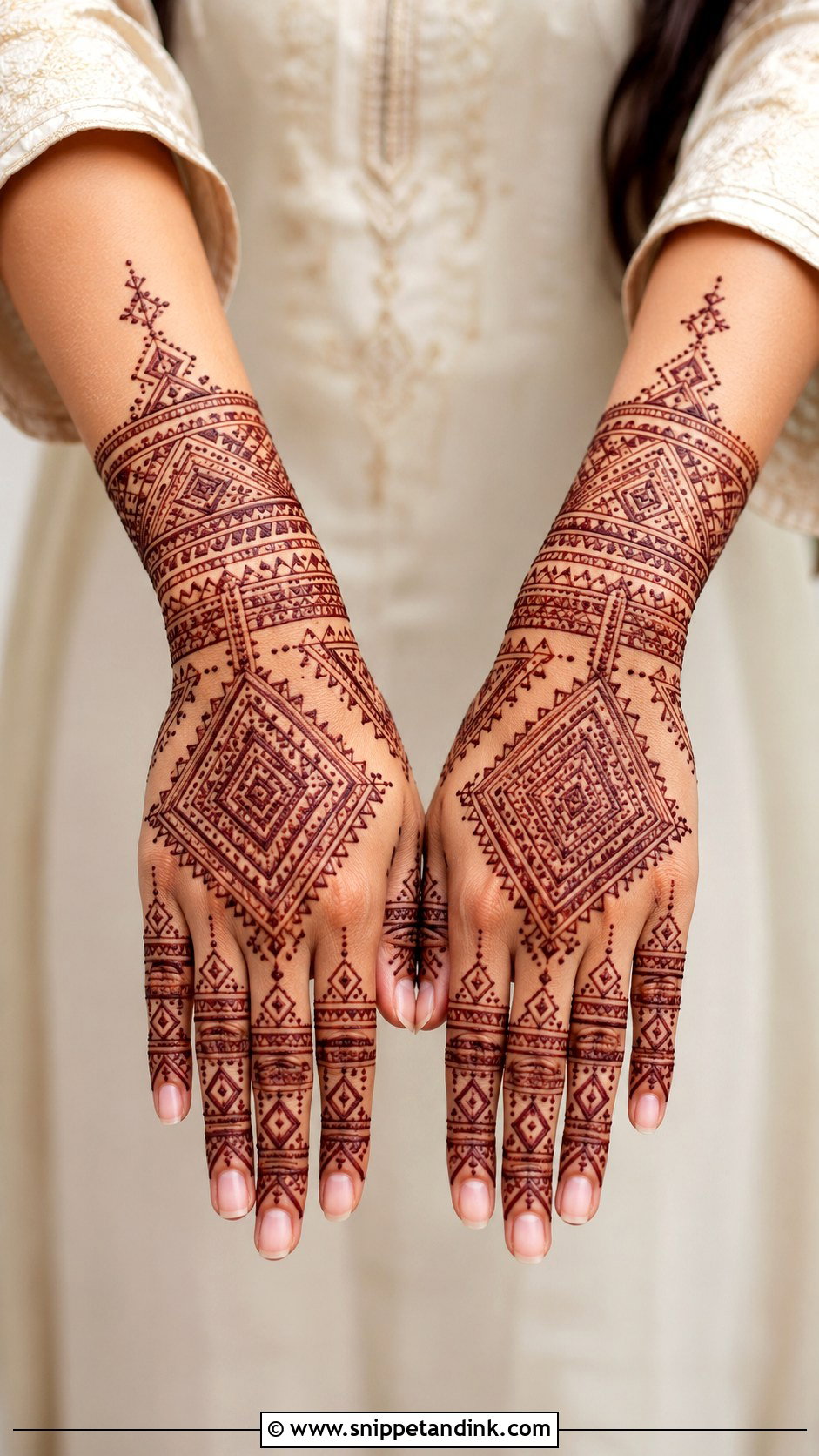
Moroccan henna is geometry: diamonds, triangles, straight lines, grids, dots and blocks. It suits the back of the hand and fingers, and it’s the style I suggest for men’s henna because it doesn’t rely on florals. Straight lines show every hesitation, so they need a confident cone. Pair strong wrist bands with lighter finger detailing and plenty of negative space to keep it balanced.
19. Rajasthani Bridal Mehndi Design
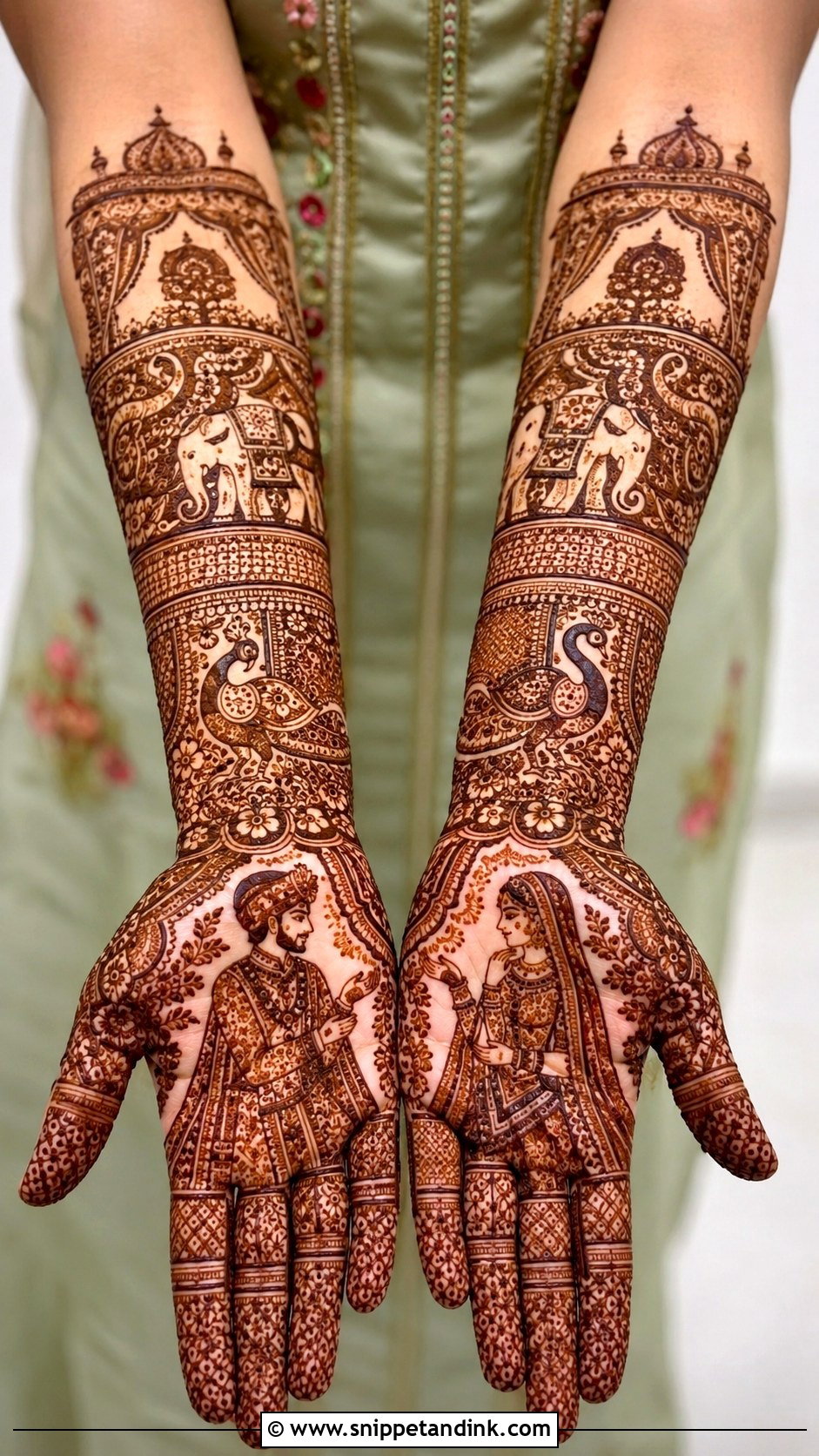
Rajasthani bridal mehndi design fills both hands and arms with dulha-dulhan figures, elephants, peacocks, mandaps, musicians and dense paisley filler, leaving very little bare skin. It needs time and a steady hand from the artist, and patience from the bride. I’d ask for the main figures drawn larger and the fillers kept smaller around them, otherwise the story details disappear. The deep finished stain sits well with bridal bangles and lehenga sleeves.
20. Indian Mehndi Design
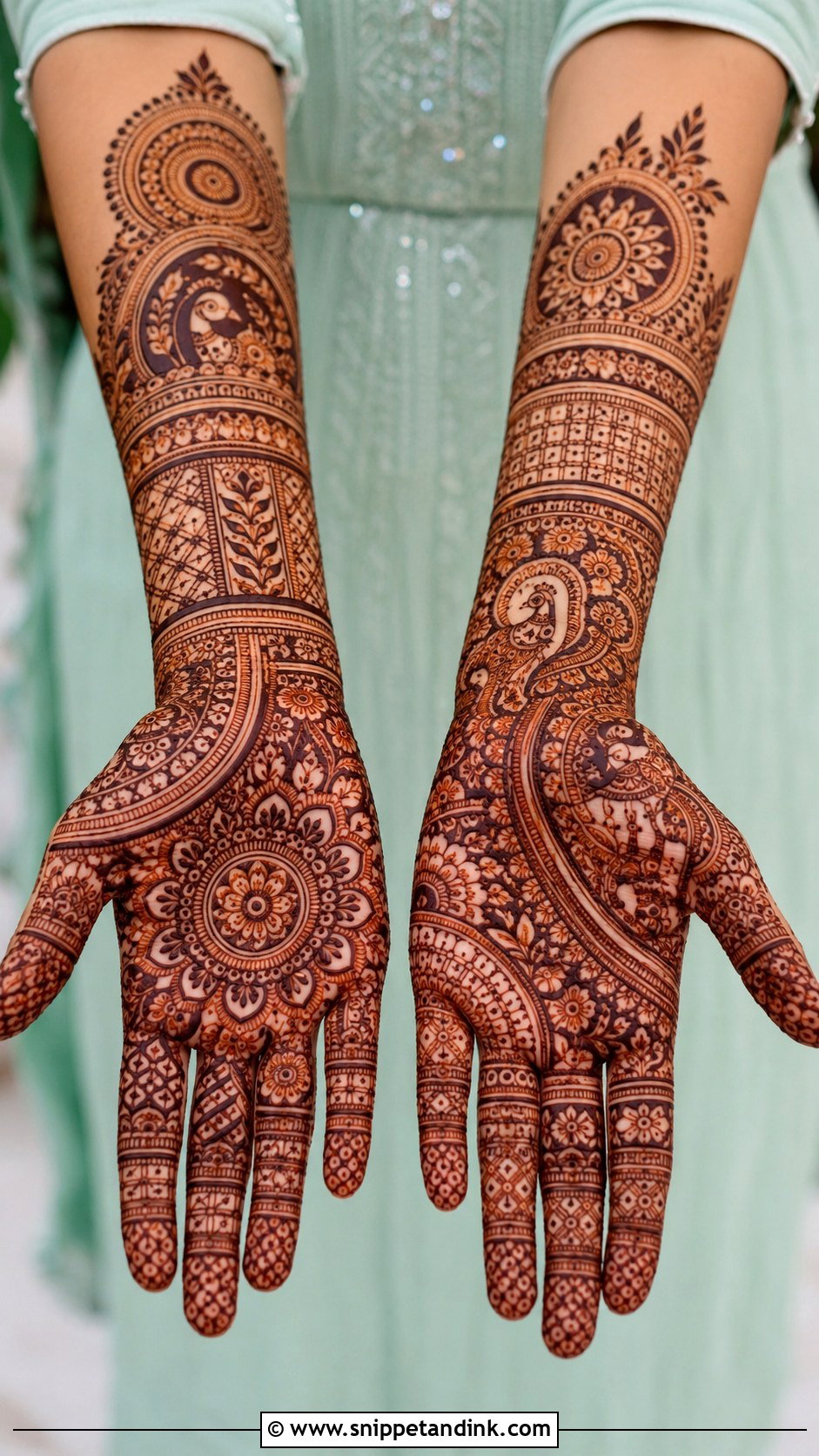
Traditional Indian work means full coverage, symmetry and familiar motifs: mandalas, paisleys, flowers, peacocks, checks and fine lines. The palm usually holds the main circular or paisley pattern and the fingers carry coordinated detail. It stains richly on the palm. For a more modern take, I keep the main motifs bold and leave tidy empty channels so it doesn’t look cluttered.
21. Modern Mehndi Design
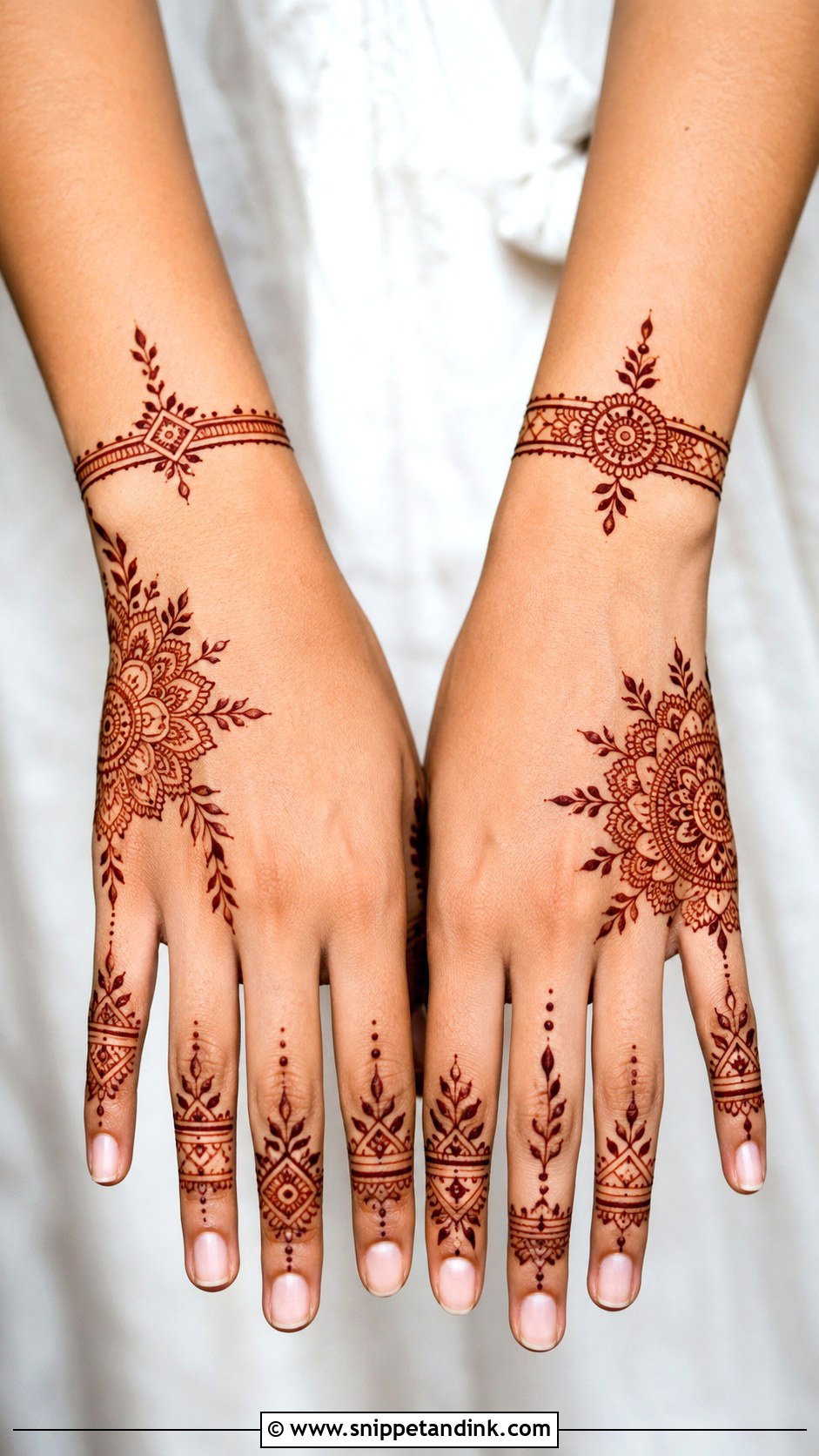
Modern mehndi design is about placement and spacing more than motif: structured florals, half-hand layouts, bracelet details, geometric lines or a negative-space mandala. I build it around one strong focal point with smaller details supporting it, never two competing ones. It’s quick, it reads clearly on camera and it suits receptions, engagement parties and Eid gatherings.
22. Lotus Mehndi Design
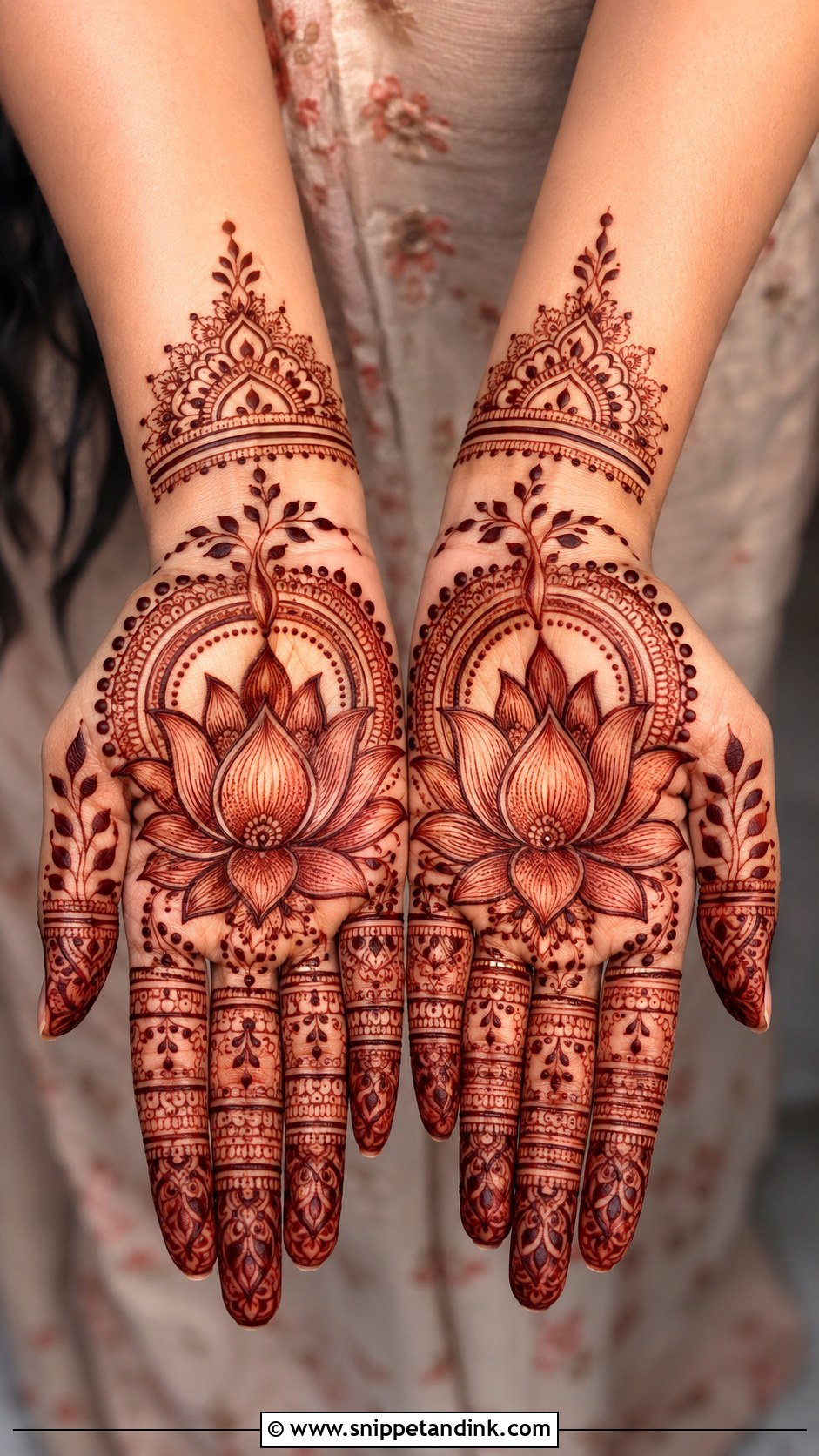
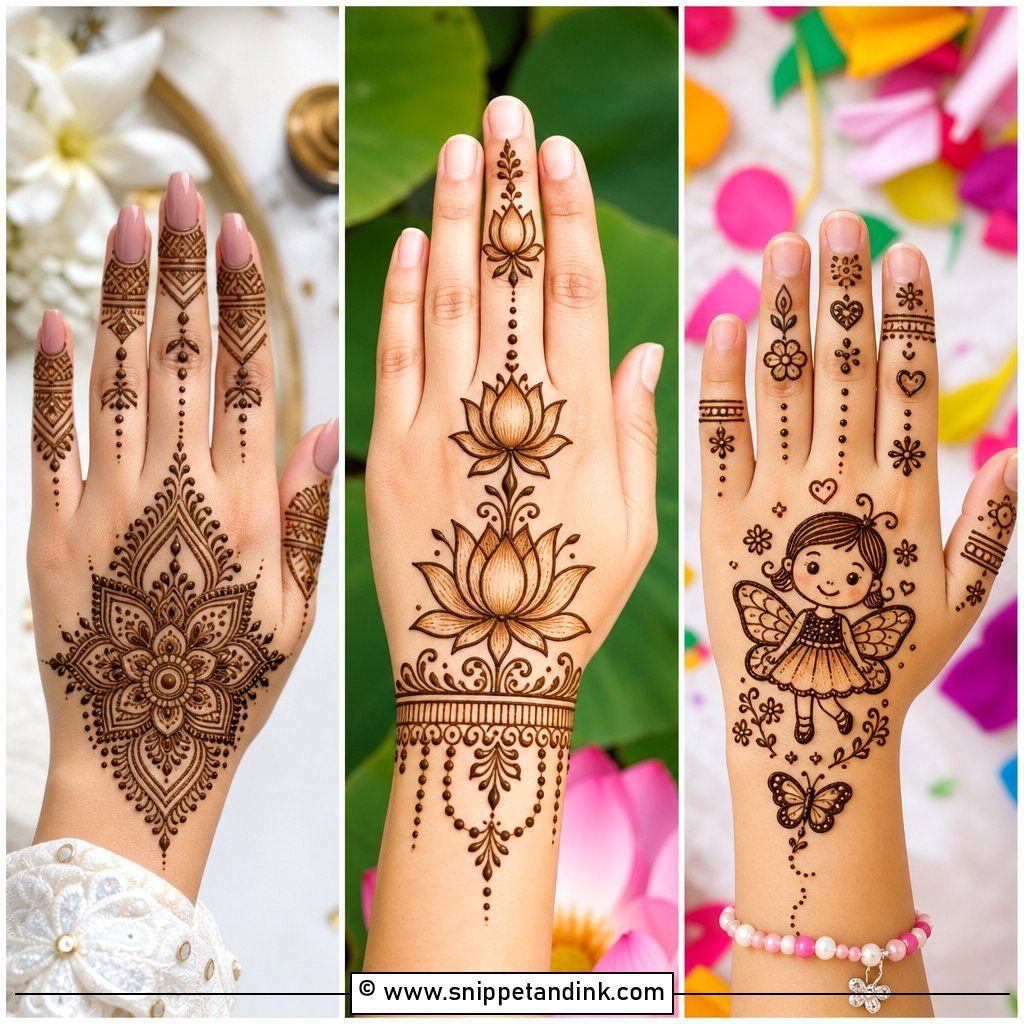
Lotus mehndi design can be a single bloom in the palm, a large flower across the back of the hand or repeated petals near the wrist. I draw the inner petals first and wrap the outer layers around them so the flower opens evenly. A large lotus with fine petal lines looks calm and modern; layered lotuses with paisleys and dots look richer. It sits easily beside mandalas and jaali.
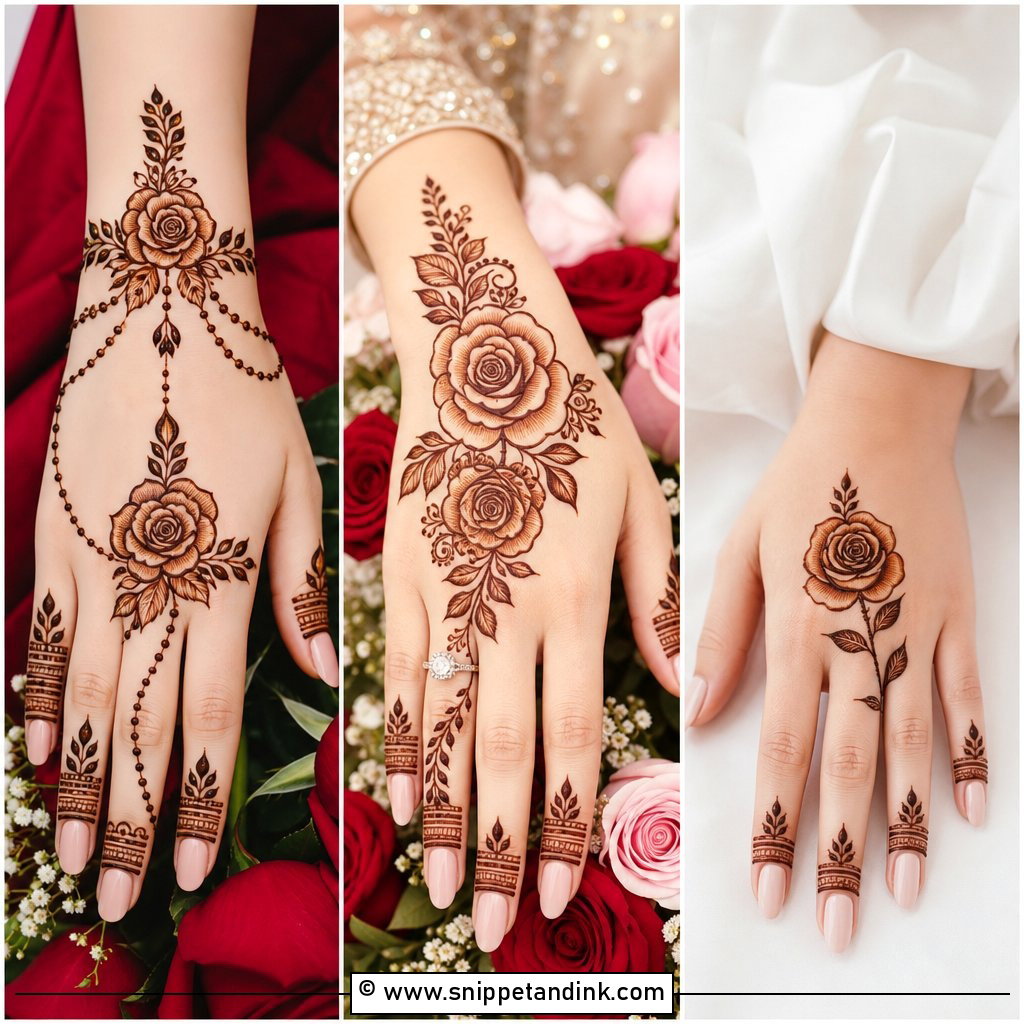
23. Rose Mehndi Design
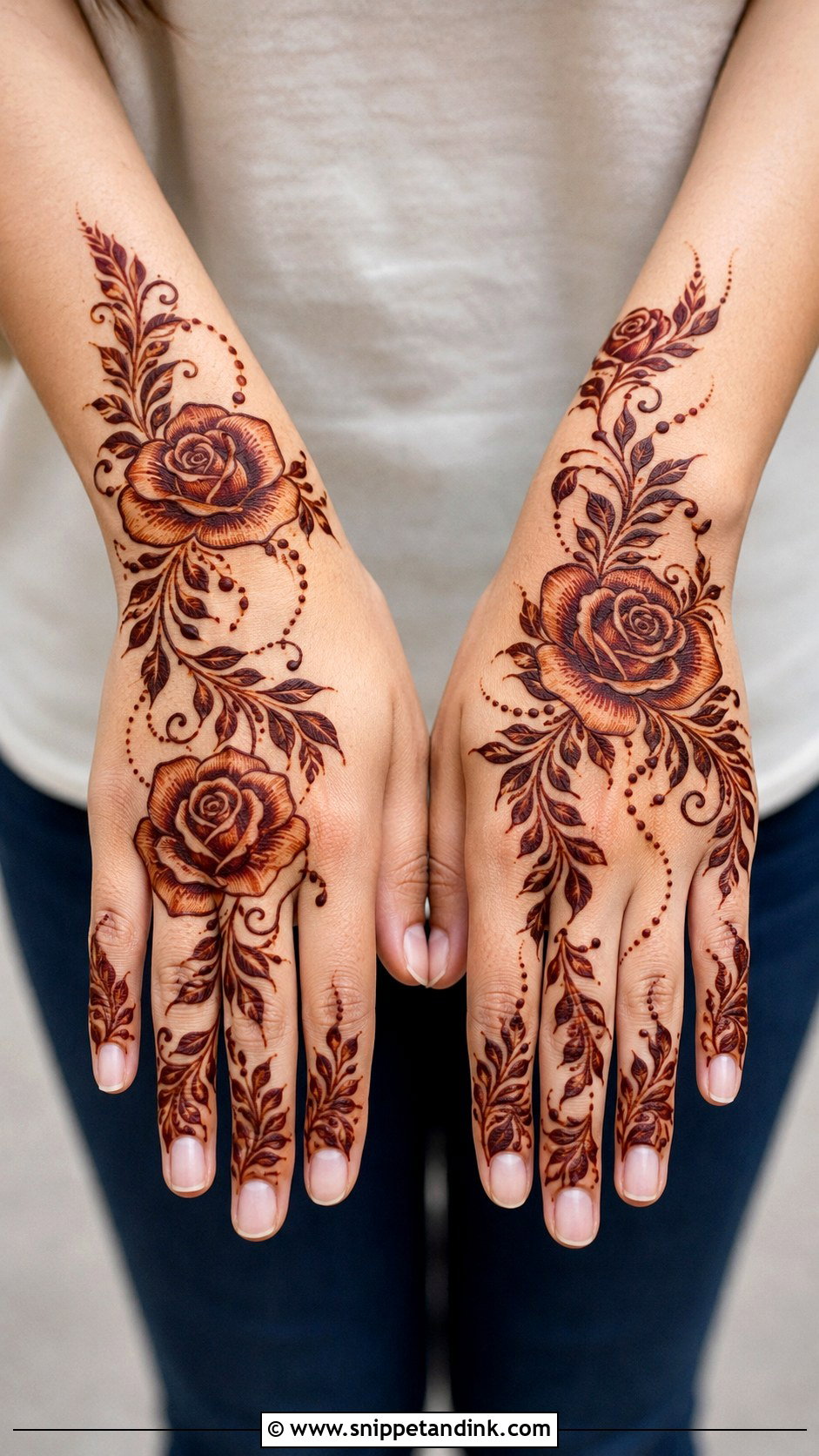
One or two big roses look cleaner than a dozen small ones. I place them on the back of the hand, palm or wrist, connect them with leaves and vines, and shade the petals by thinning the paste line. Open space around them keeps the design modern. It’s a good fit for bridesmaids and engagement functions, or for anyone who wants florals that feel less traditional.
24. Diagonal Mehndi Design
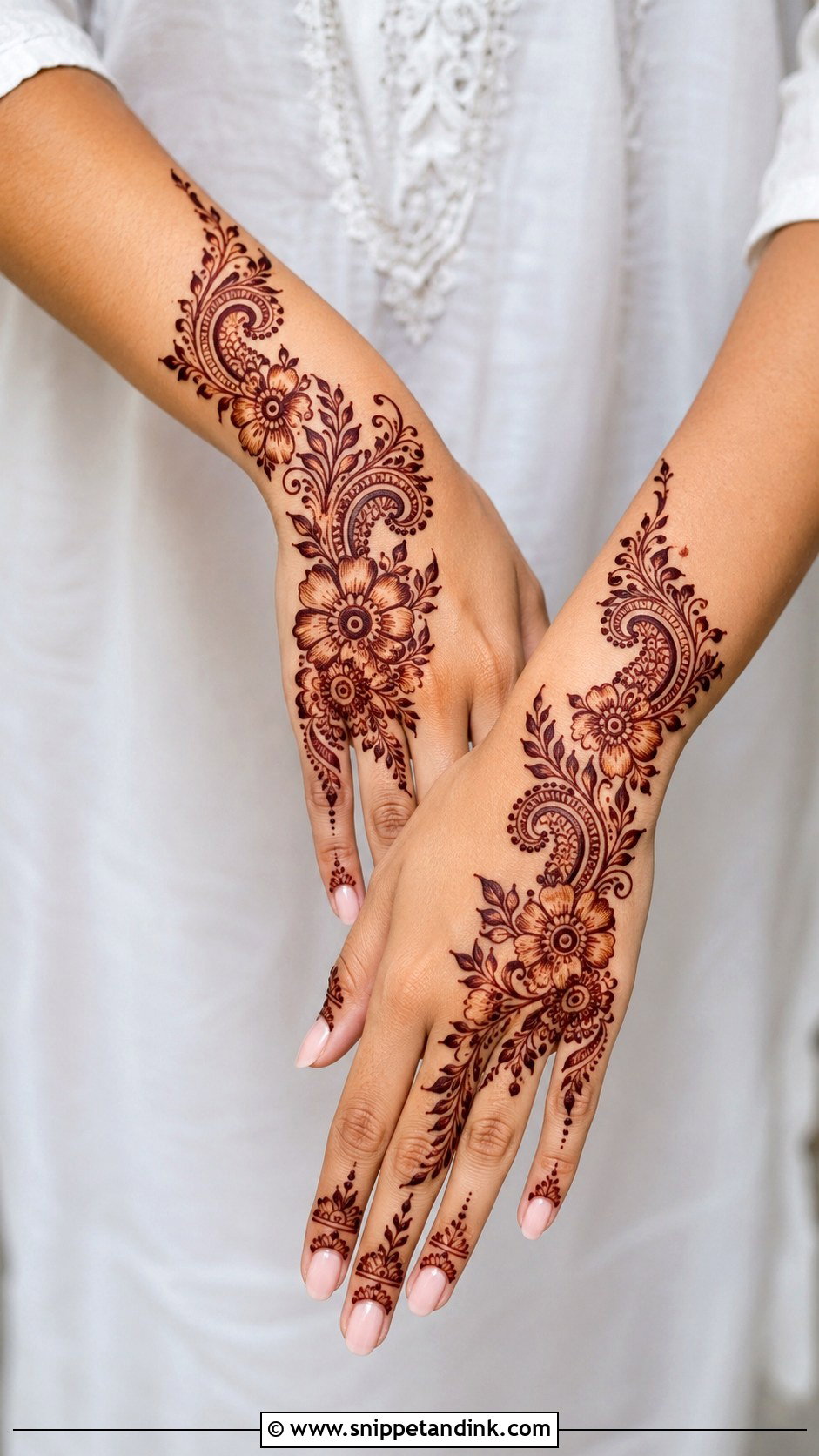
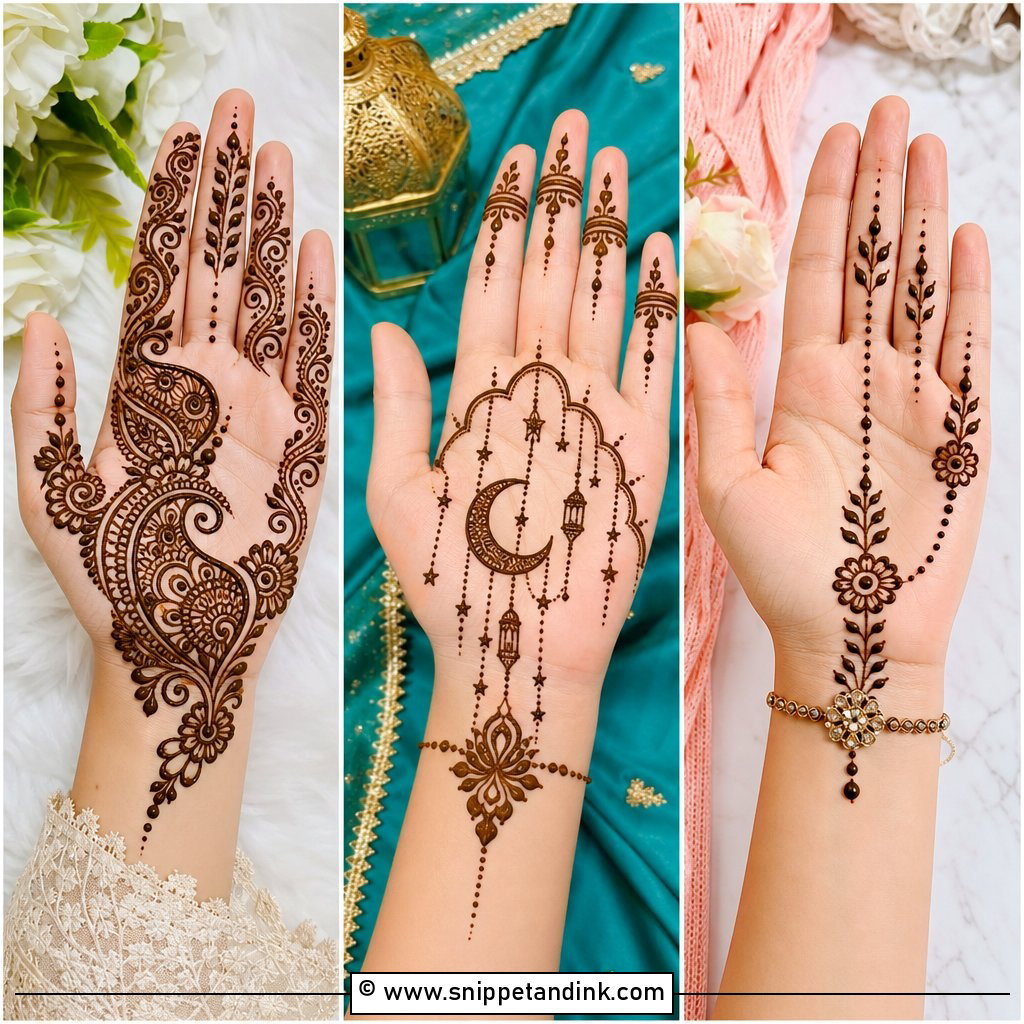
The diagonal is the most flattering layout I know for the back of the hand. Starting at one side of the wrist and running to a finger draws a long line that visually lengthens the hand. Florals, leaves, paisleys and dots all sit well along it, and the empty space on either side gives the Arabic feel. Matching fingertips and a light wrist border round it off without filling the hand.
25. Bracelet Mehndi Design
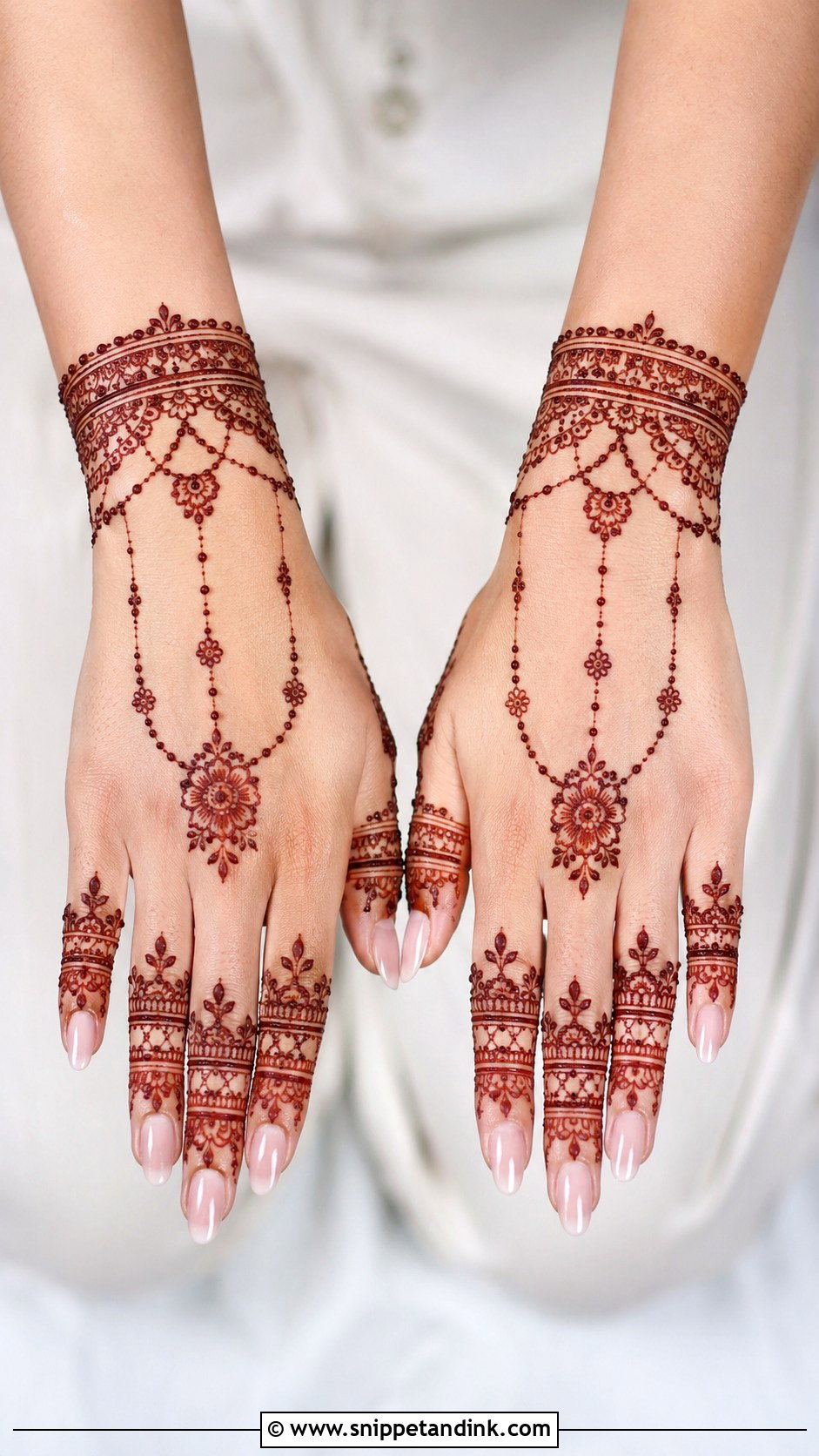
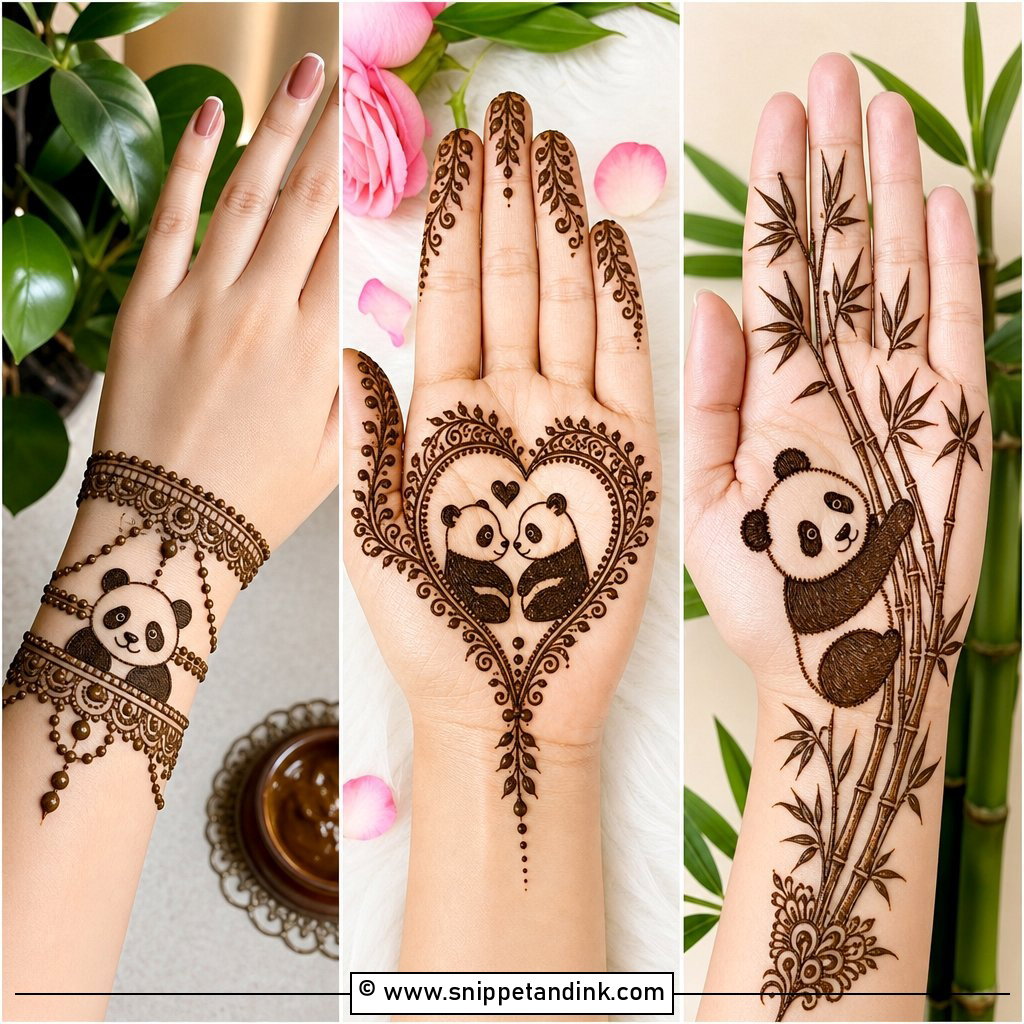
A wrist bracelet with chains, dots or vines running to the fingers looks like jewelry and takes very little time. Thin lines feel minimal; flowers, scallops and a small jaali section feel festive. The wrist rubs against sleeves and bangles, so I ask people to keep everything off it until the paste is fully dry. Add matching finger detail and the hand looks complete.
26. Half Hand Mehndi Design
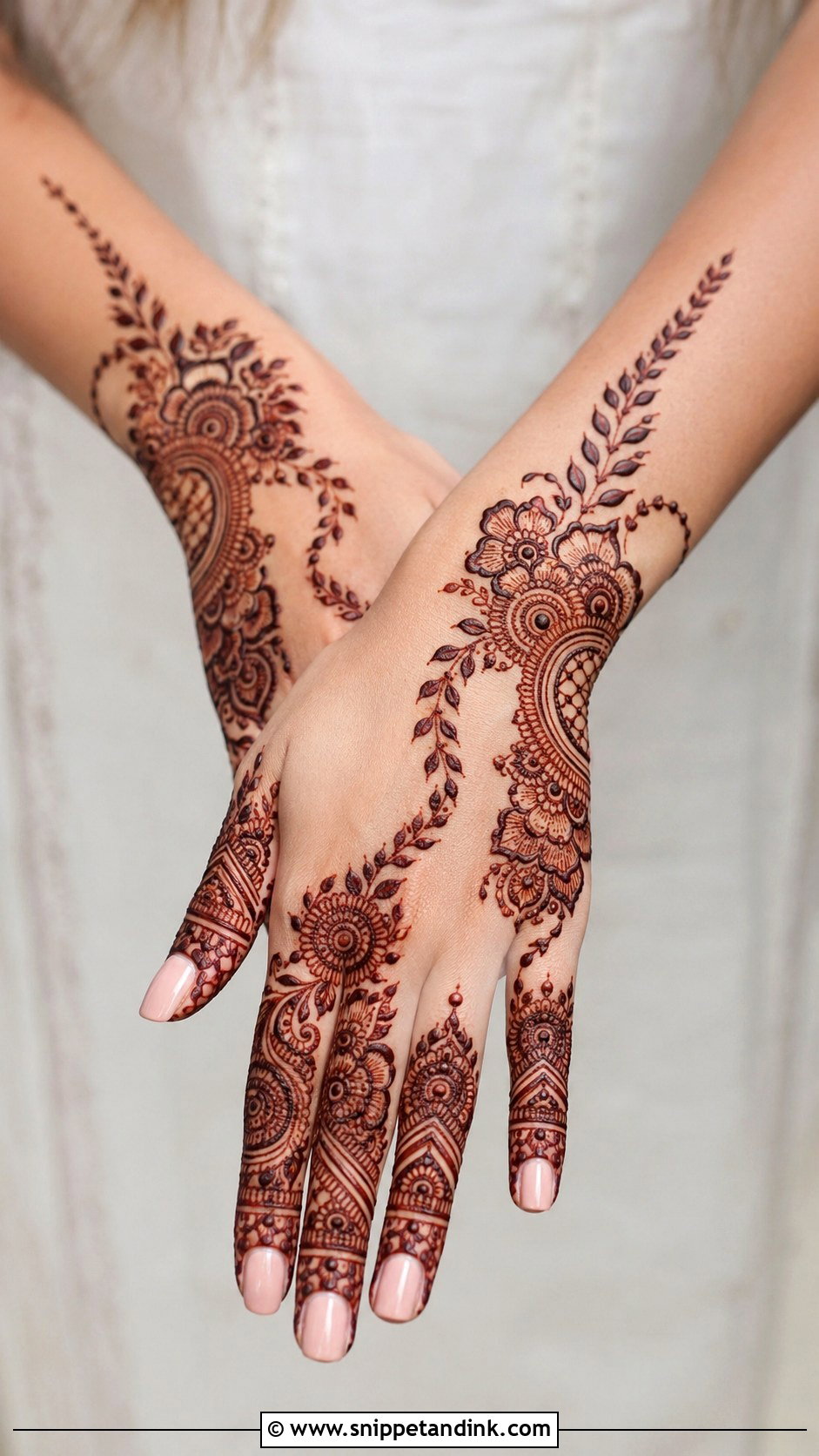
Half coverage, either the palm side, the back or one diagonal band, is my most requested guest design. It looks dressed up but takes a fraction of bridal time. Flowers, paisleys, mandalas and shaded leaves with open skin around them do the work. The border is what makes half coverage look intentional rather than unfinished, so I keep that edge clean and deliberate.
27. Full Arm Mehndi Design
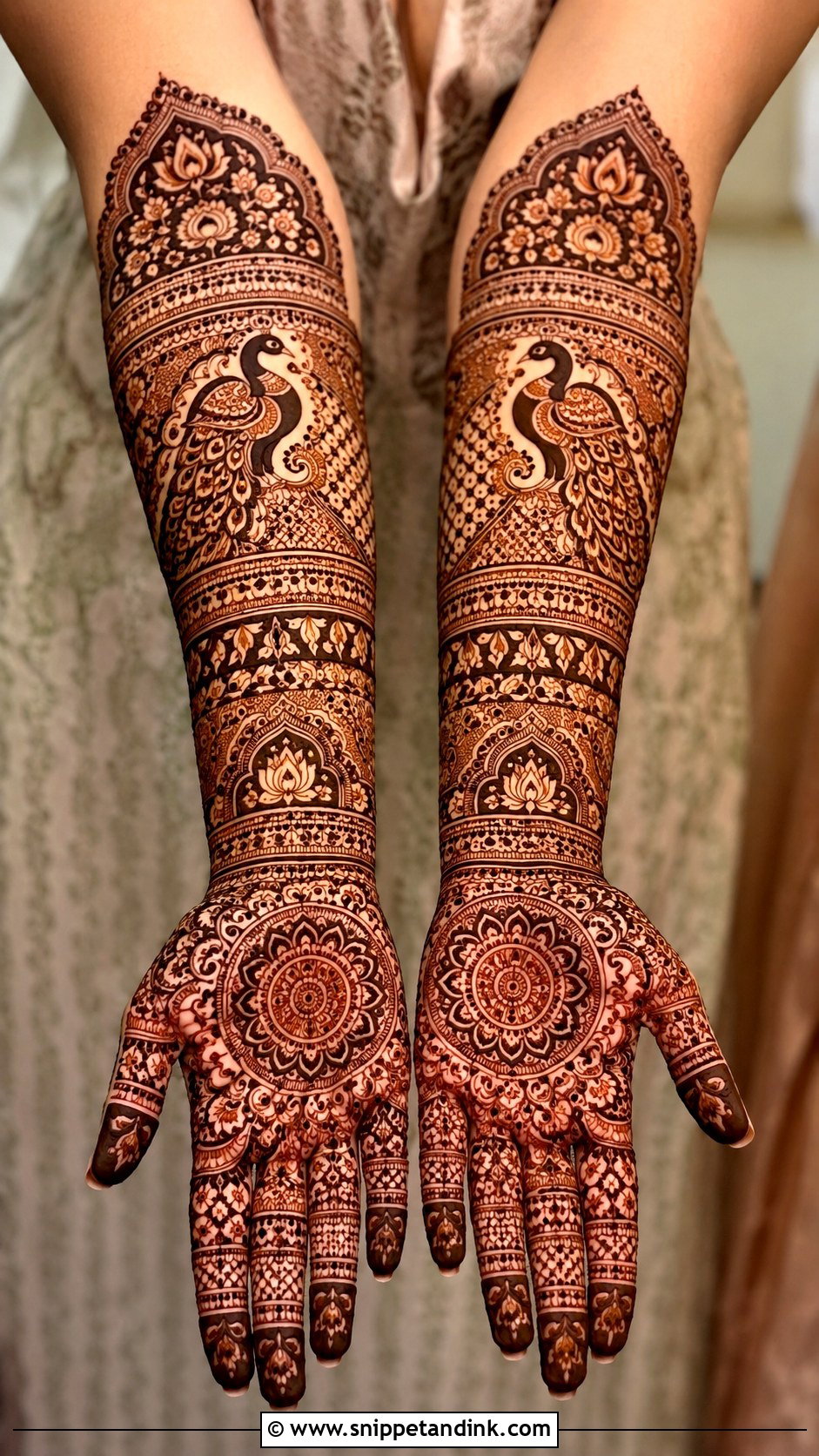
Full arm designs run from the fingertips past the wrist to the forearm or elbow. Bridal versions carry portraits, peacocks, lotus and jaali panels; festival versions use lighter vines. Expect the forearm to stain noticeably lighter than the hand, because the skin there is thinner and has fewer of the cells henna binds to. I put larger, bolder motifs on the forearm and keep the finest work near the fingers, where it’ll show darkest. The extra length is striking with sleeveless or sheer outfits.
28. Eid Mehndi Design
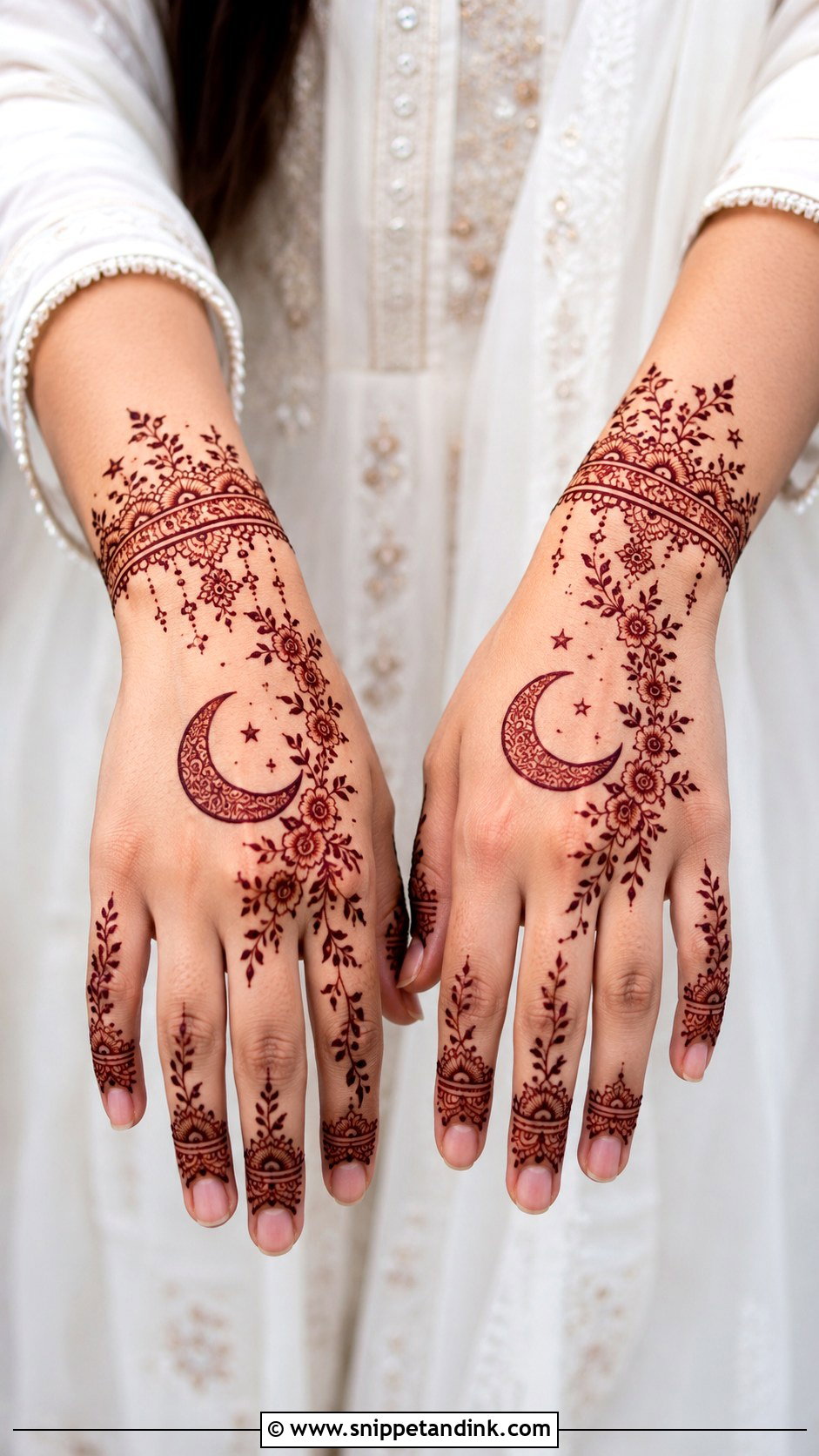
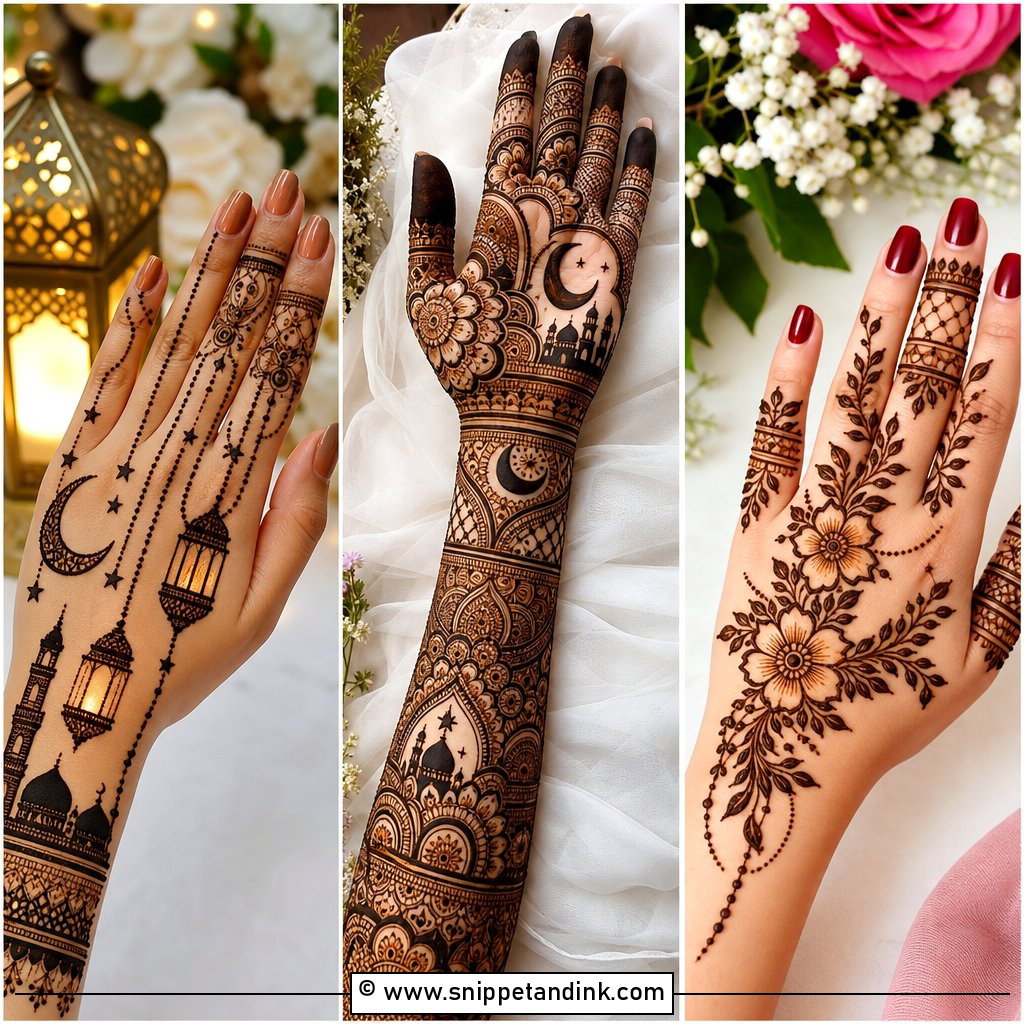
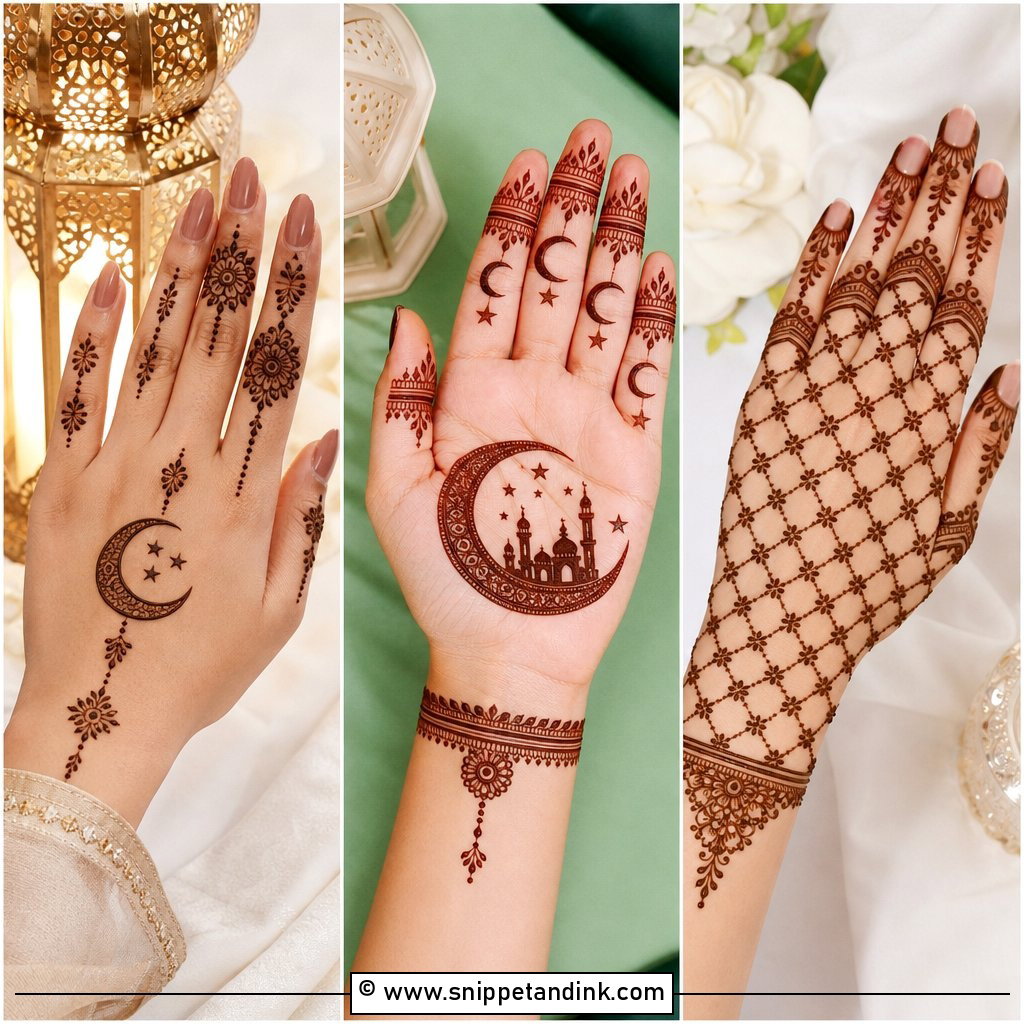
Eid henna usually means Arabic floral trails, crescent moon details, star accents, khafif work or a bracelet-style back hand. With greetings, cooking and photos all day, the back of the hand is where most people want the detail. Go lighter for morning prayers and family visits, fuller for an evening gathering. A small crescent inside a mandala or near the wrist is a quiet, meaningful touch.
29. Diwali Mehndi Design
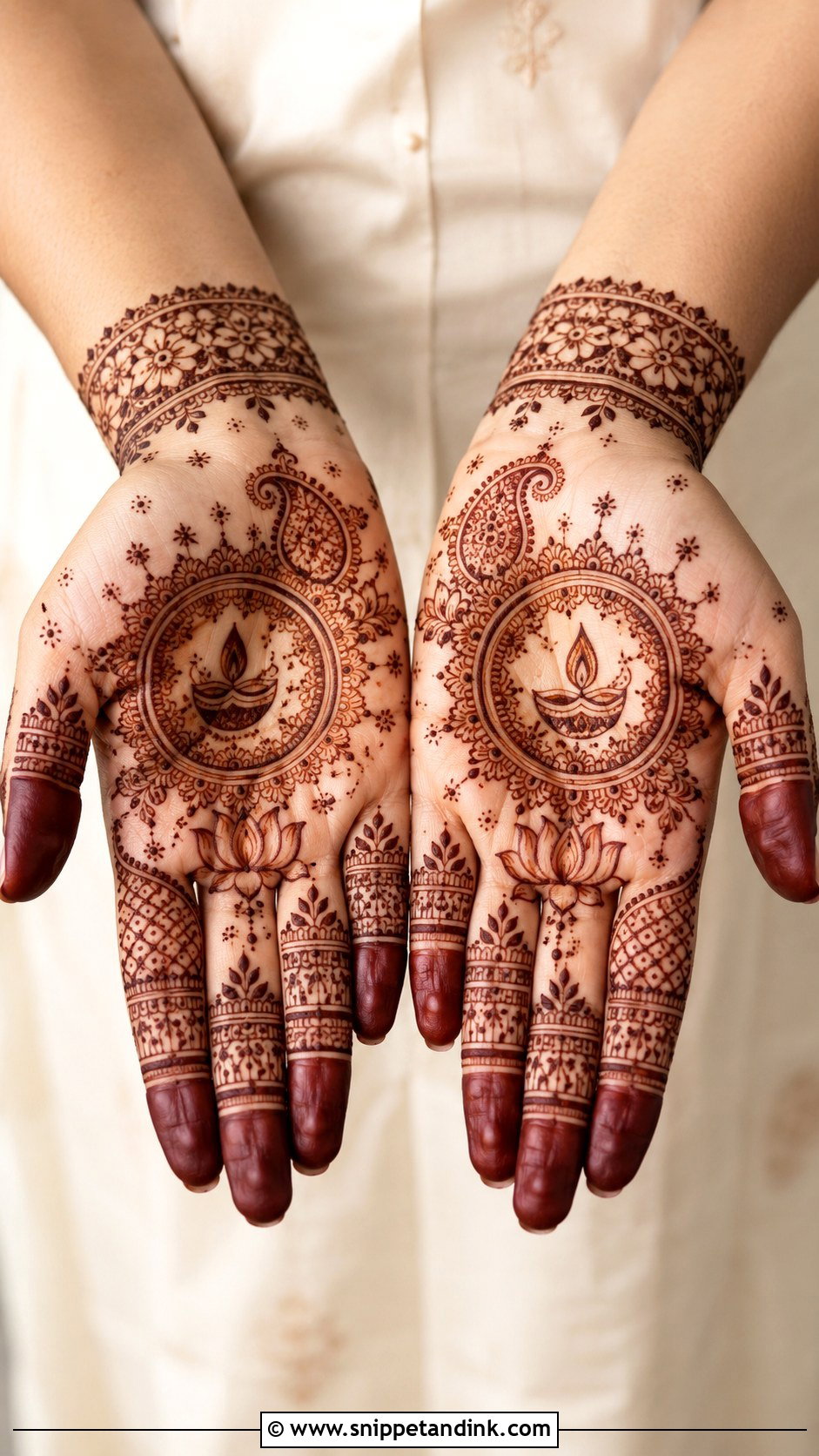
Diwali brings lamps, rangoli, sweets and a lot of handling, so a balanced design matters. Palm mandalas, lotus patterns, diya shapes, paisley trails and floral wrist borders are traditional. I usually keep the palm detailed and the fingers simple, or move the detail to a back-hand bracelet, since bangles and rings will be layered on top. Apply it a day or two before so the colour is at its deepest for puja.
30. Engagement Mehndi Design
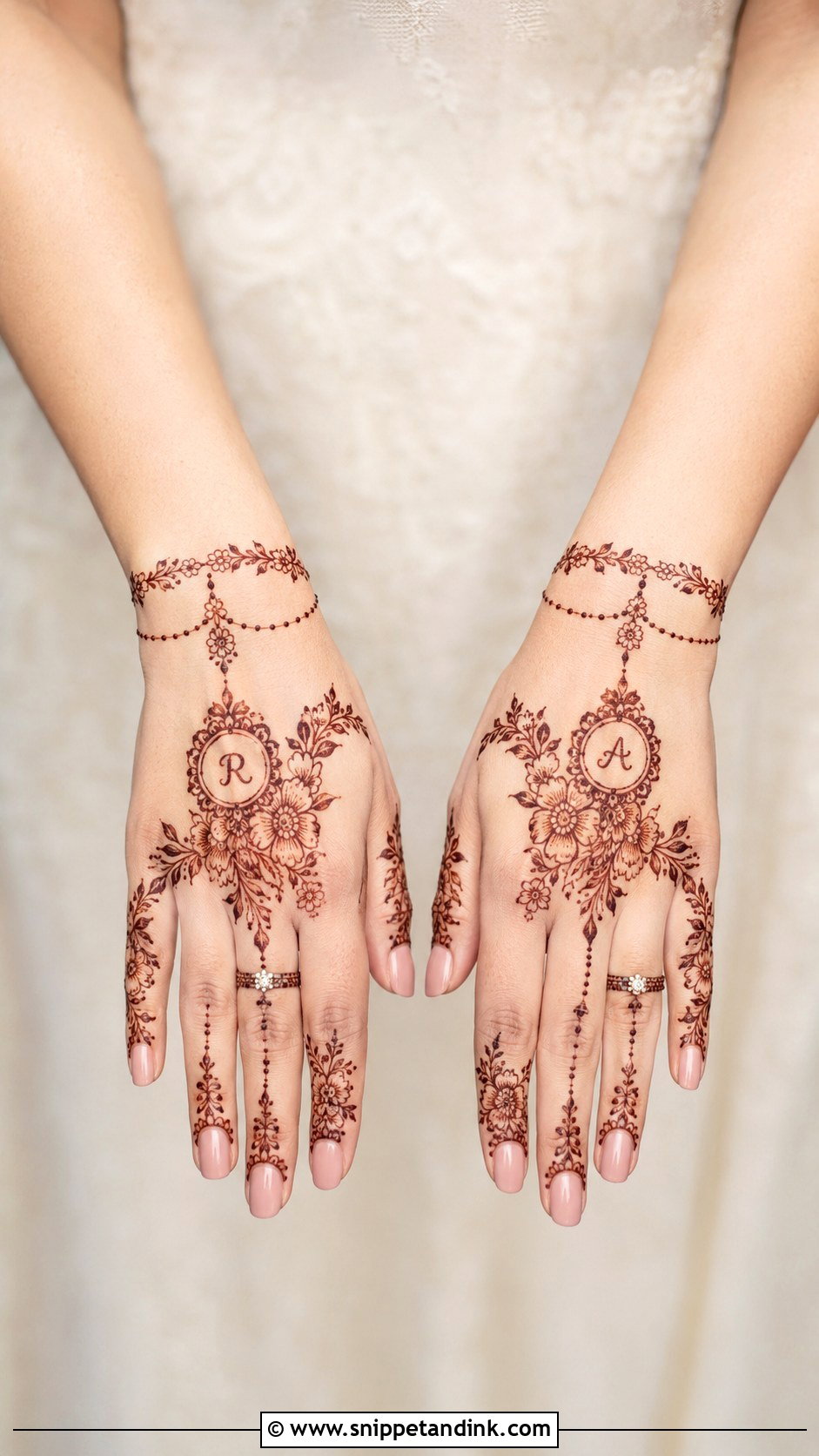
Engagement mehndi design should frame the ring rather than compete with it. On the ring hand I highlight the ring finger lightly with dots, leaves or a fine chain and keep heavy fill away from it. Floral trails, bracelet bands, initials and a neat central motif complete the hand. Minimal or fuller Indo-Arabic both suit, depending on the outfit and the rest of the jewelry.
31. Kids Mehndi Design
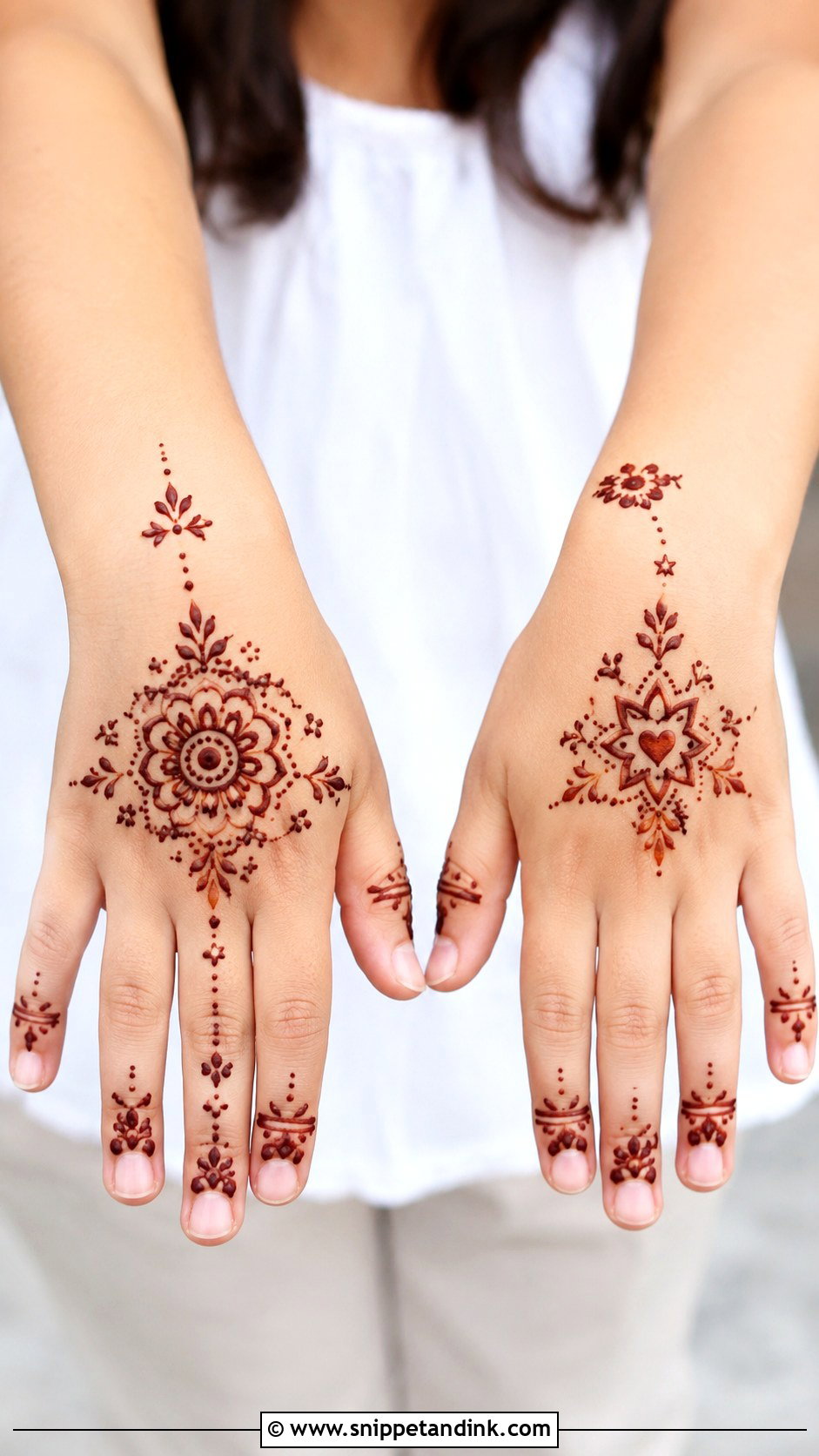
With children, speed beats detail. Small palm motifs, simple flowers, tiny mandalas, hearts, stars or a bracelet band, drawn with bold lines and open spacing, can be finished before they get restless. One palm or the back of one hand is plenty. Use only natural henna with a clear ingredient list. Any cone that stains black or dark in minutes is not natural henna and can contain chemicals that cause serious reactions on young skin.
32. Teen Mehndi Design
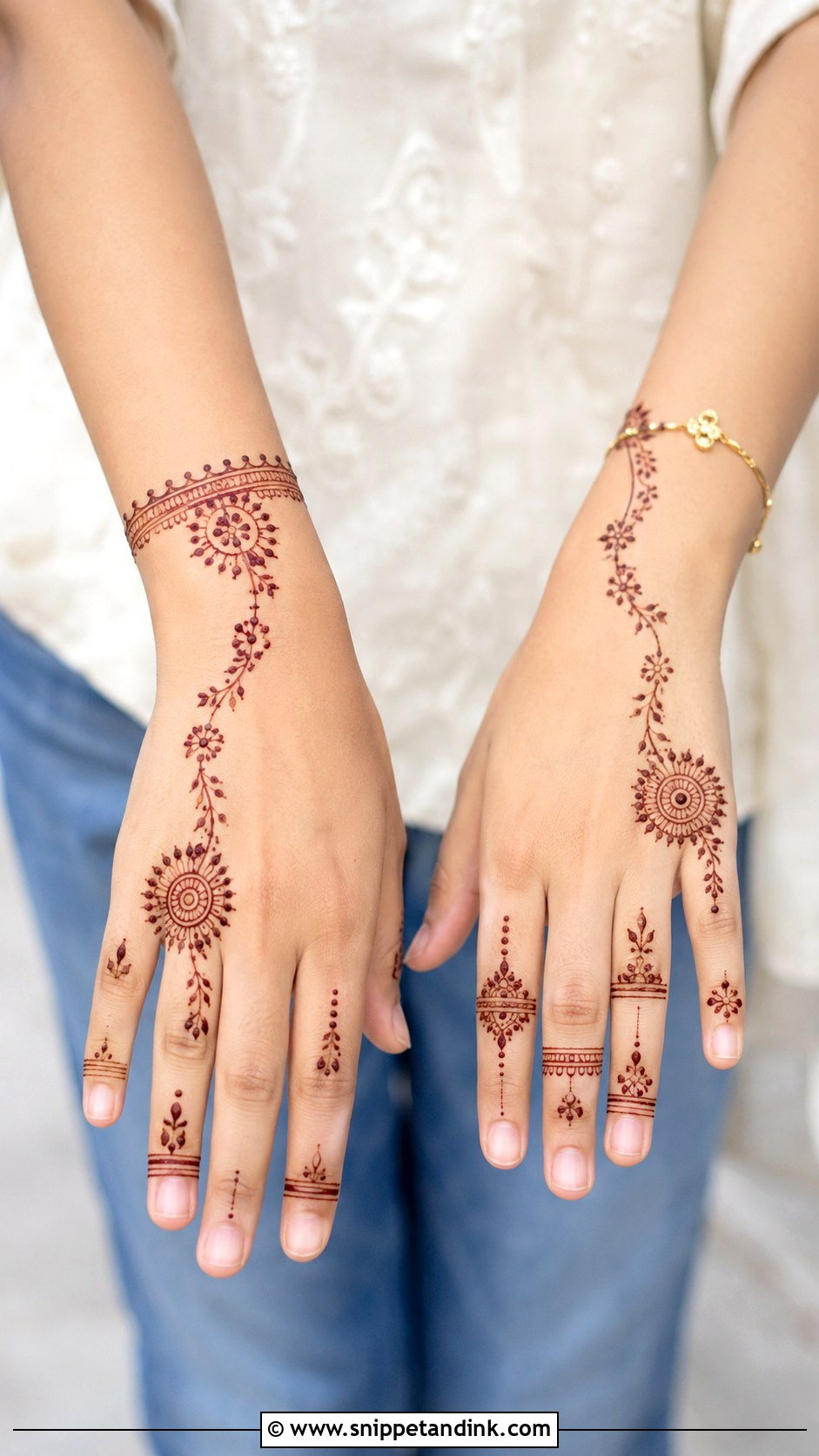
Teenagers usually want henna that still looks right with jeans the next day, so I keep it to finger patterns, a back-hand trail, a small mandala or a geometric band. A half-hand or diagonal layout reads modern without feeling heavy. Matching designs with friends is fun at weddings. A few bold motifs beat a crowded hand of tiny ones every time.
33. Foot Mehndi Design
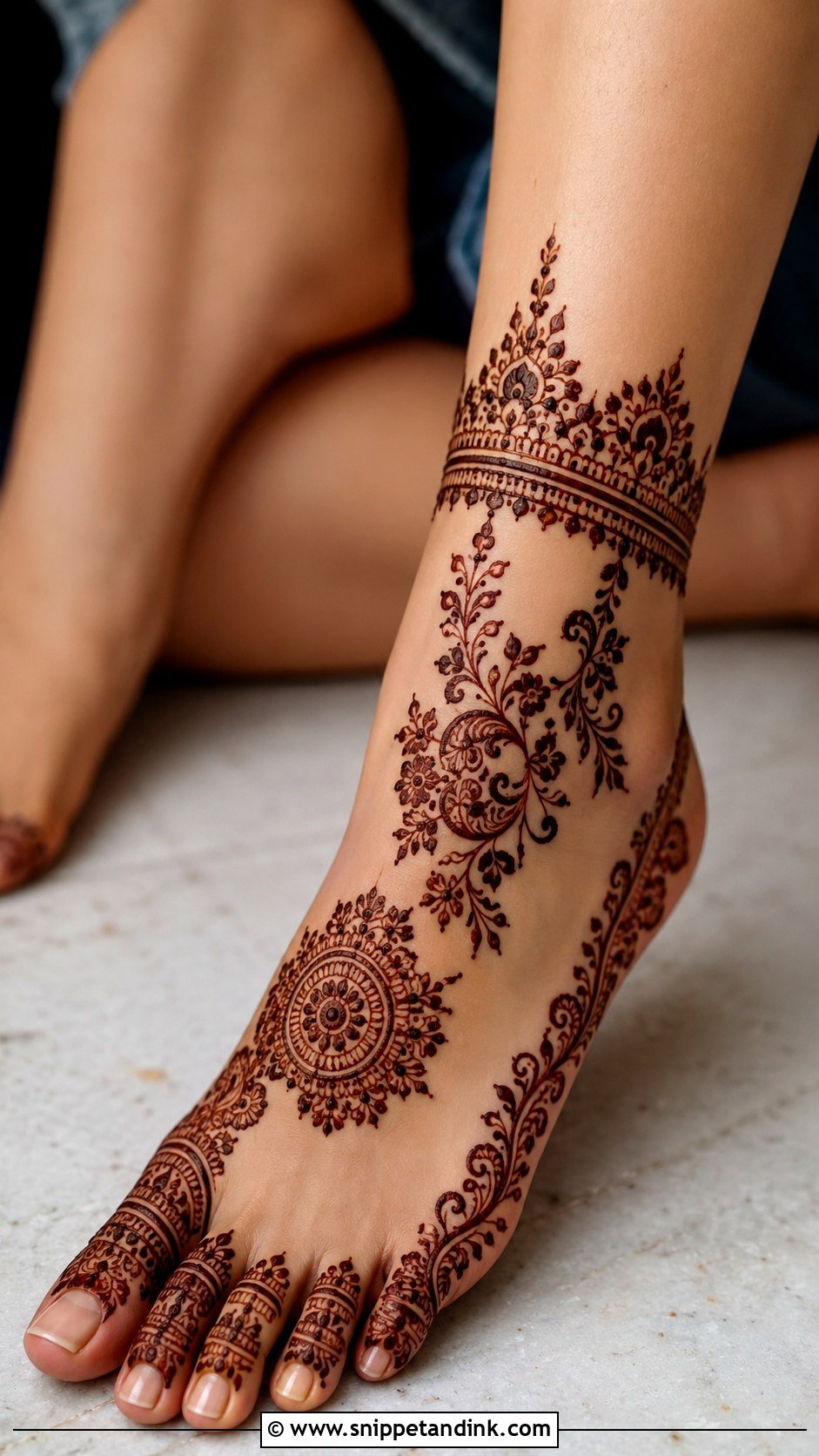
Feet stain very dark, often darker than hands, because the skin on the soles and tops is thick. Toe details, anklet borders, vines, mandalas and side-foot trails are the usual elements; bridal feet go dense, casual feet stay around the toes and ankle. Drying is the hard part: you can’t walk until the paste sets, so I do feet first and hands after, and plan for you to sit still for a while. A neat ankle band frames the whole thing.
34. White Mehndi Design
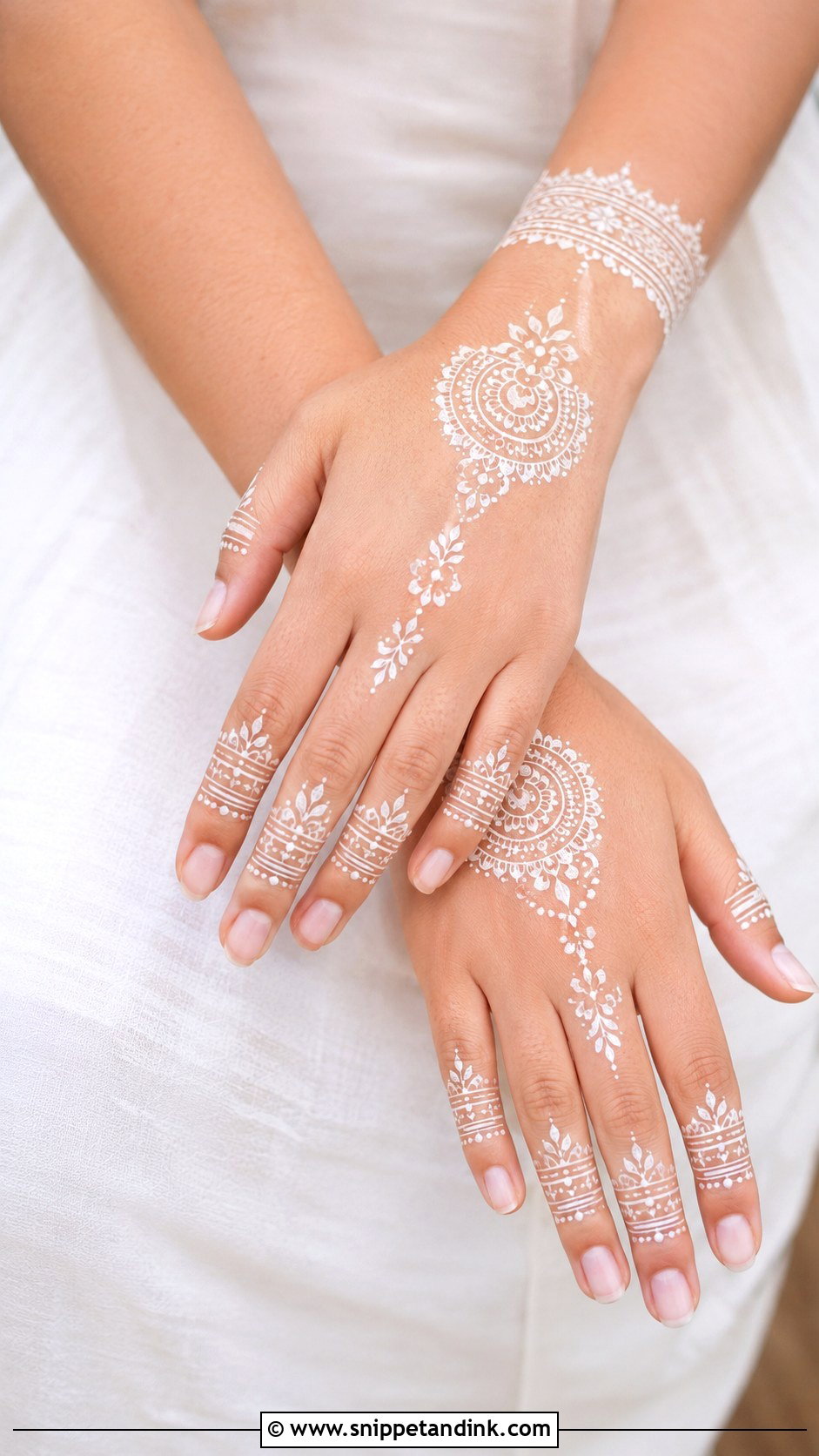
White mehndi isn’t henna at all. It’s body paint or cosmetic adhesive sometimes dusted with powder, and it sits on top of the skin and washes off within a day or so. Lace patterns, florals, mandalas and bracelets all show strongly against deeper skin tones. Because it’s a different product, patch test it the day before, especially if you have sensitive skin. Keep the layout uncrowded, as bright lines read heavier than henna does.
35. Glitter Mehndi Design
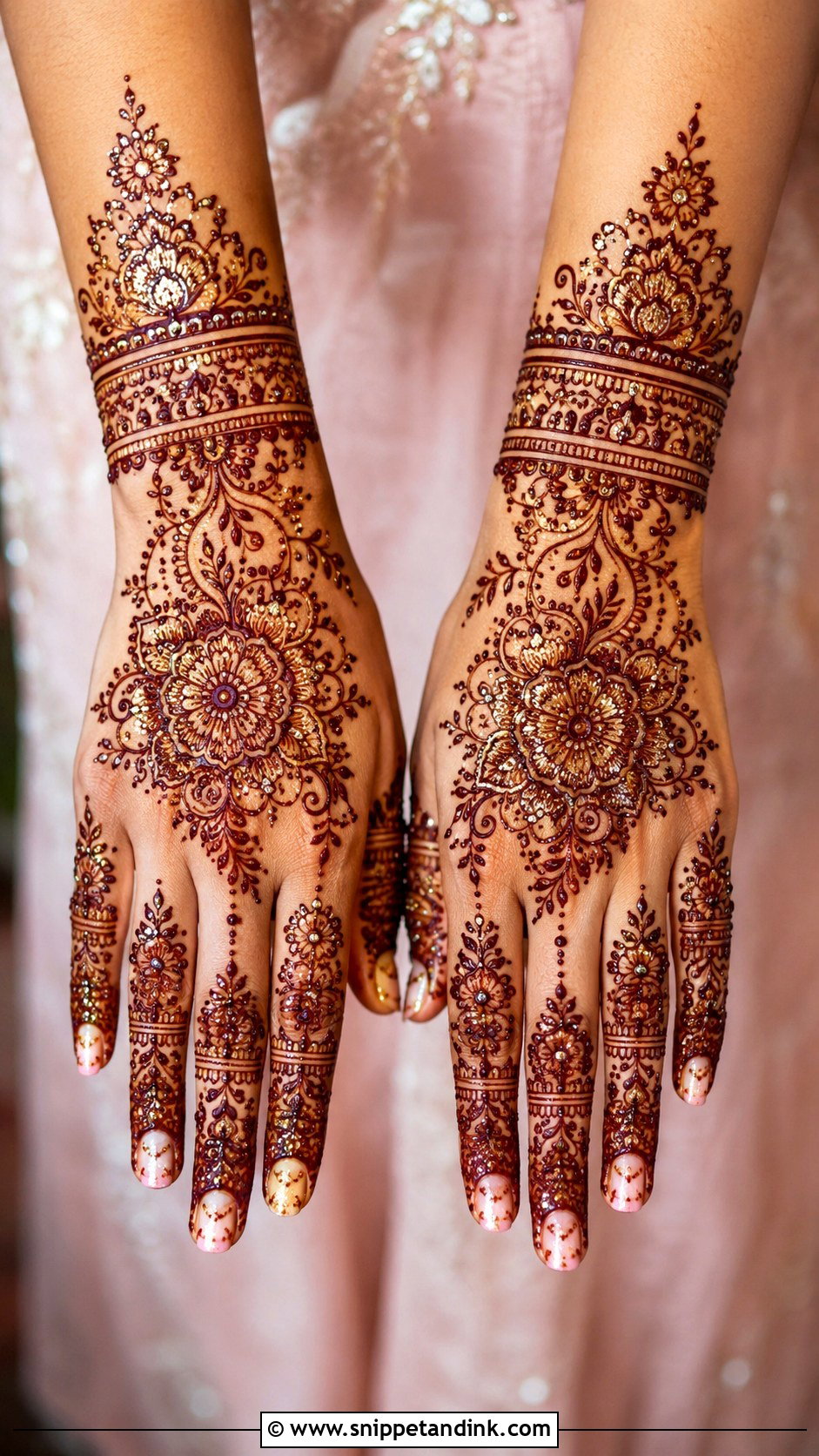
Glitter goes on after the henna design is drawn, on selected petals, borders, dots or the wrist band, held with a cosmetic glue. It’s a party finish: it rubs off within hours and comes off completely when the paste is scraped. Use it sparingly, because too much sparkle hides the design underneath. Gold, bronze or maroon glitter sits best against a natural reddish-brown stain.
Why Palms Go Maroon and Forearms Stay Orange
Henna binds to the outer layer of skin, so the thicker that layer, the darker the colour. That’s why one design can come up in three shades on the same person, and it’s worth planning for before the cone touches you.
- Palms, fingertips and soles: darkest. Put your finest detail and any names here.
- Backs of hands and tops of feet: a shade lighter. Bolder lines help.
- Forearms and upper arms: lightest and slowest to deepen. Use larger motifs so they still read.
To push the colour, keep the paste on as long as you can, scrape rather than wash it off, keep the area warm and stay away from water for the rest of that day. The stain usually peaks around two days after application and then fades gradually over one to three weeks, quickest on the palms.
Working back from the event date
Because the colour peaks after about two days, I schedule bridal hands one to two days before the wedding and festival henna the evening before at the latest. Henna applied on the morning of an event will still be bright orange in the photos. If your hands will be in water a lot that week, from cooking, swimming or a spa visit, move the appointment as close to the event as the stain timing allows.
How Many Hours Can You Sit Still?
Start with time and occasion, then pick the pattern. Simple Arabic, finger, bracelet and minimal designs suit quick events and busy hands. Dulhan, Rajasthani, full hand and full arm designs suit a wedding with a long sitting and a day or two for the stain to deepen. Moroccan, white and glitter work suit people who want something modern, and mandala, floral, lotus, paisley and peacock patterns rarely go wrong. Whatever you choose, comfort and balance matter more than how much of your skin is covered.
You'll Like These Ideas:


Leave a Reply