
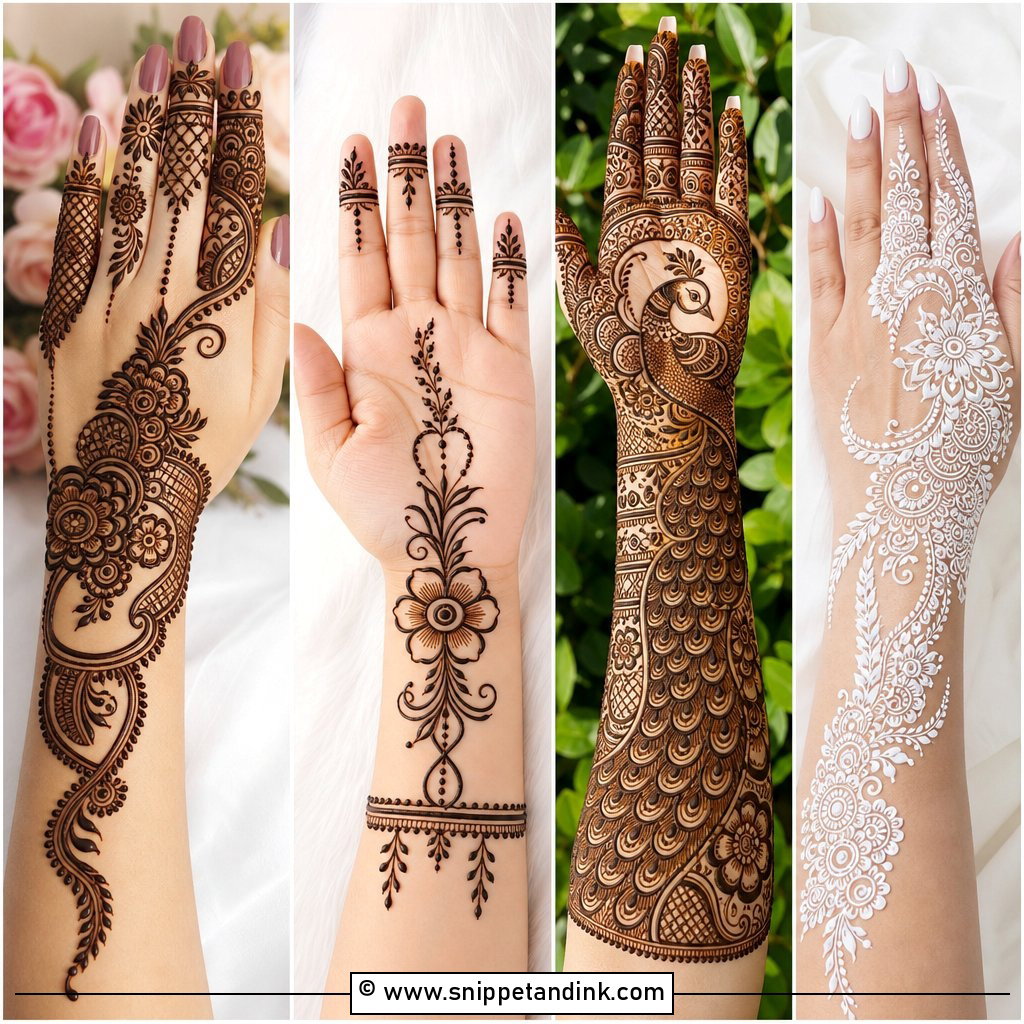
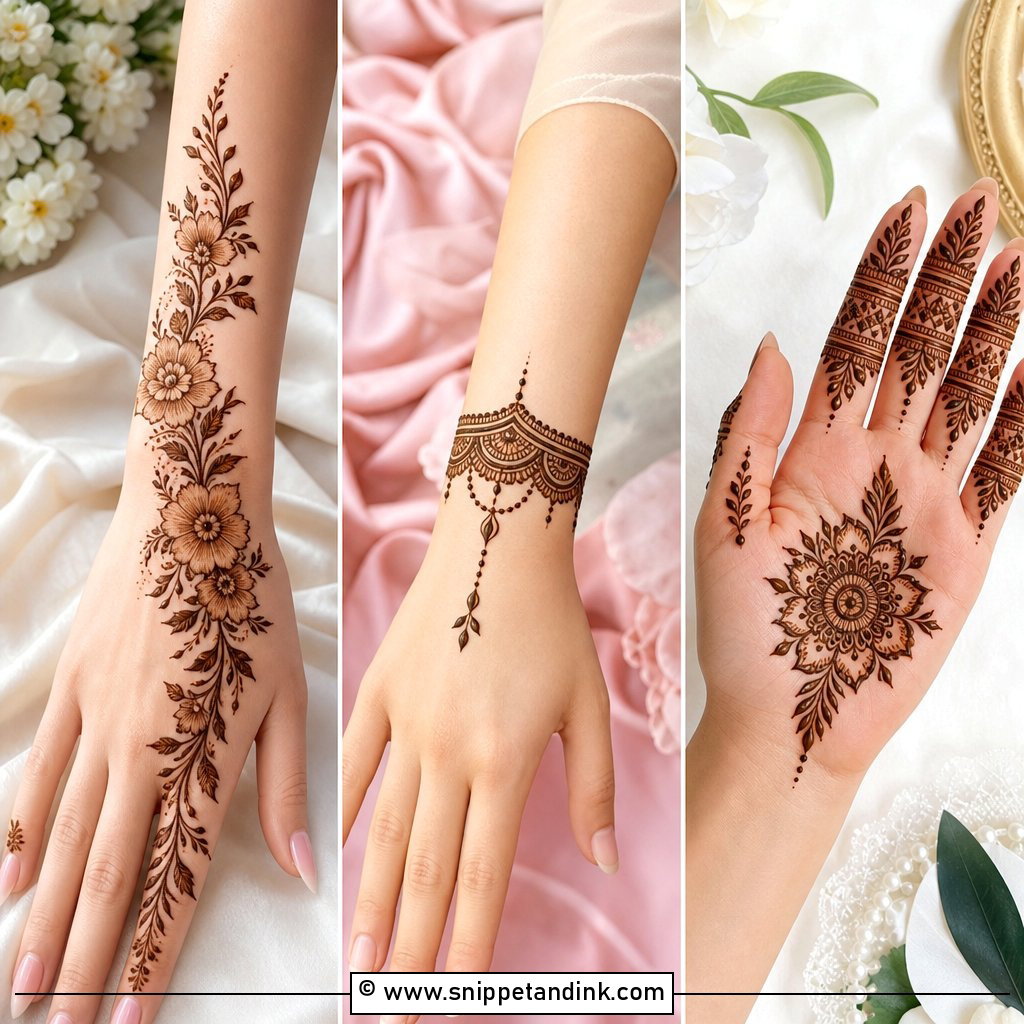
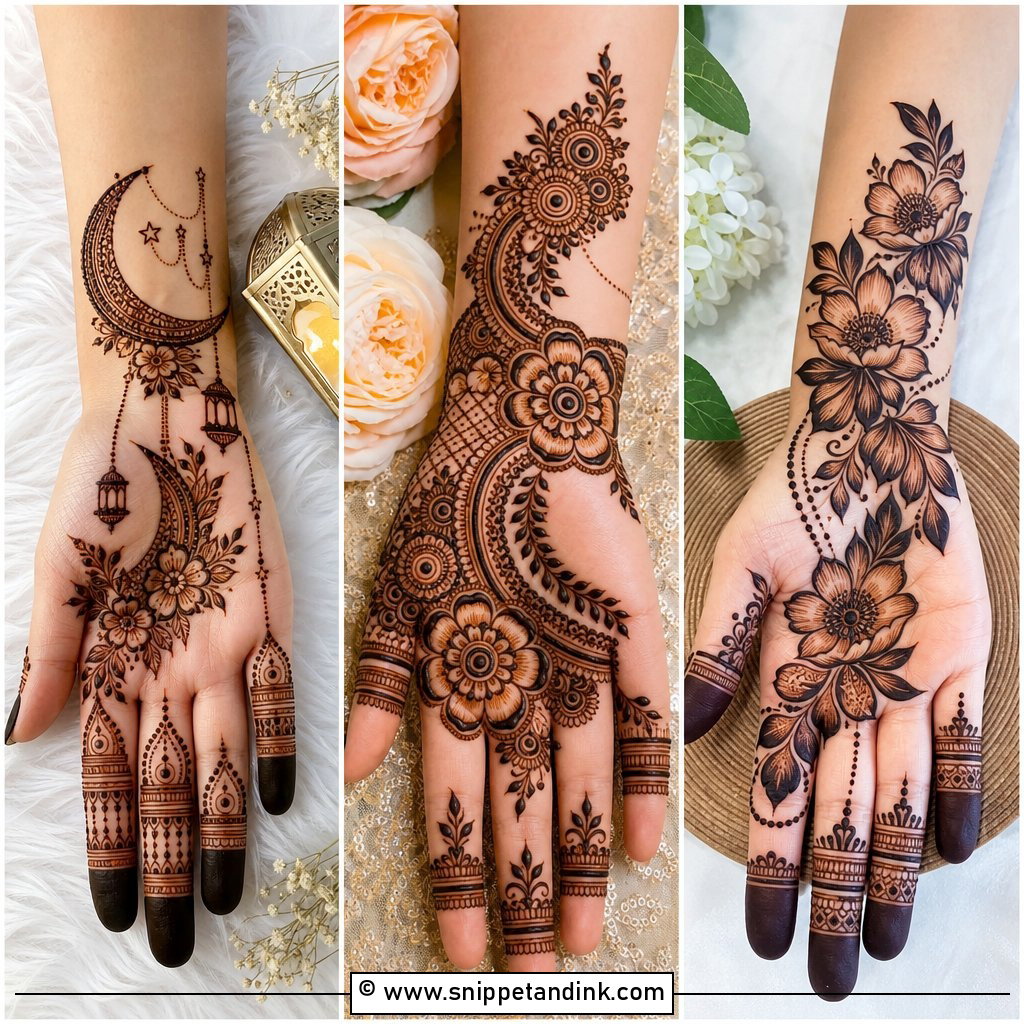
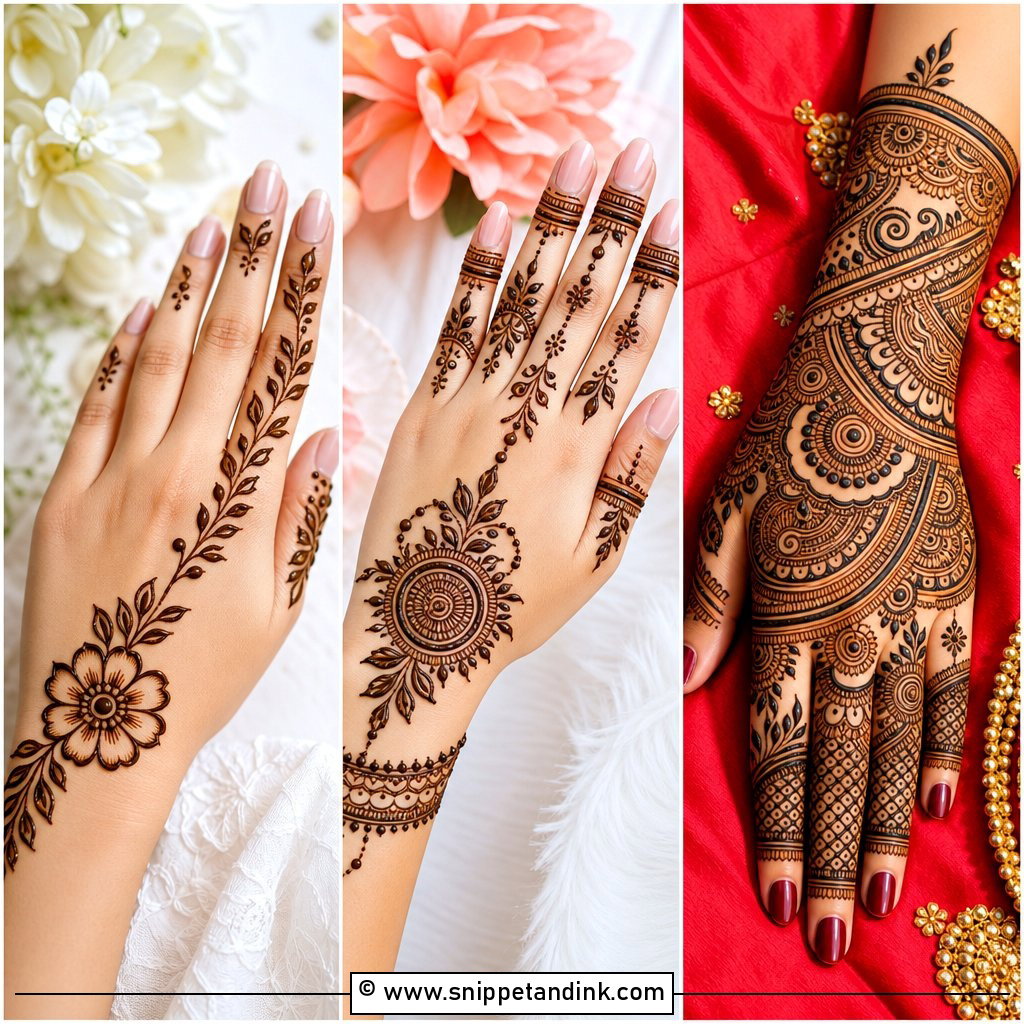
A design looks stylish for one reason above all: it was planned around the person wearing it. At Eid, Karva Chauth, engagements and weddings, I see the same pattern on two women look completely different, because one chose it to suit her sleeves, rings and the hours she had, and the other picked it from a photo. Below are 35 designs that feel current right now, from bold Arabic and Khaleeji work to minimal finger art, jaali, negative space and full dulhan coverage, drawn from Indian, Pakistani, Gulf, Moroccan and Indo-Arabic traditions. With each, I’ve noted what I watch for when I draw it.
Planning Henna Around Your Sleeves, Nails and Bangles
Before I pick up a cone, I ask what the client is wearing. A design is only stylish if people can see it, and half of a forearm pattern disappears under a three-quarter sleeve. If your outfit covers the arm, put the effort into the hands and wrists instead.
- Nails first. Book your manicure before the mehndi. Soaking, scrubbing and acetone all lift a fresh stain, and wet paste can tint bare nails orange.
- Bangles after. Wait until the paste is off and the stain has had a few hours to settle before sliding on a stack. Tight glass or metal bangles rub the wrist and fade it early.
- Rings in mind. Tell your artist which fingers will carry rings so she leaves those bands open or designs around them.
- Colour pairing. The mature stain is a warm red-brown. It looks richest beside deep reds, maroon, mustard, emerald and gold, while pastels make it stand out more sharply.
Showing your artist the right pictures
Bring two or three photos, not twenty, and say what you like in each: the spacing on one, the finger detail on another. Photos of fresh paste look darker and crisper than any real stain, so look for pictures taken a day or two after removal if you want a fair idea of the finished result.
1. Stylish Arabic Mehndi Design
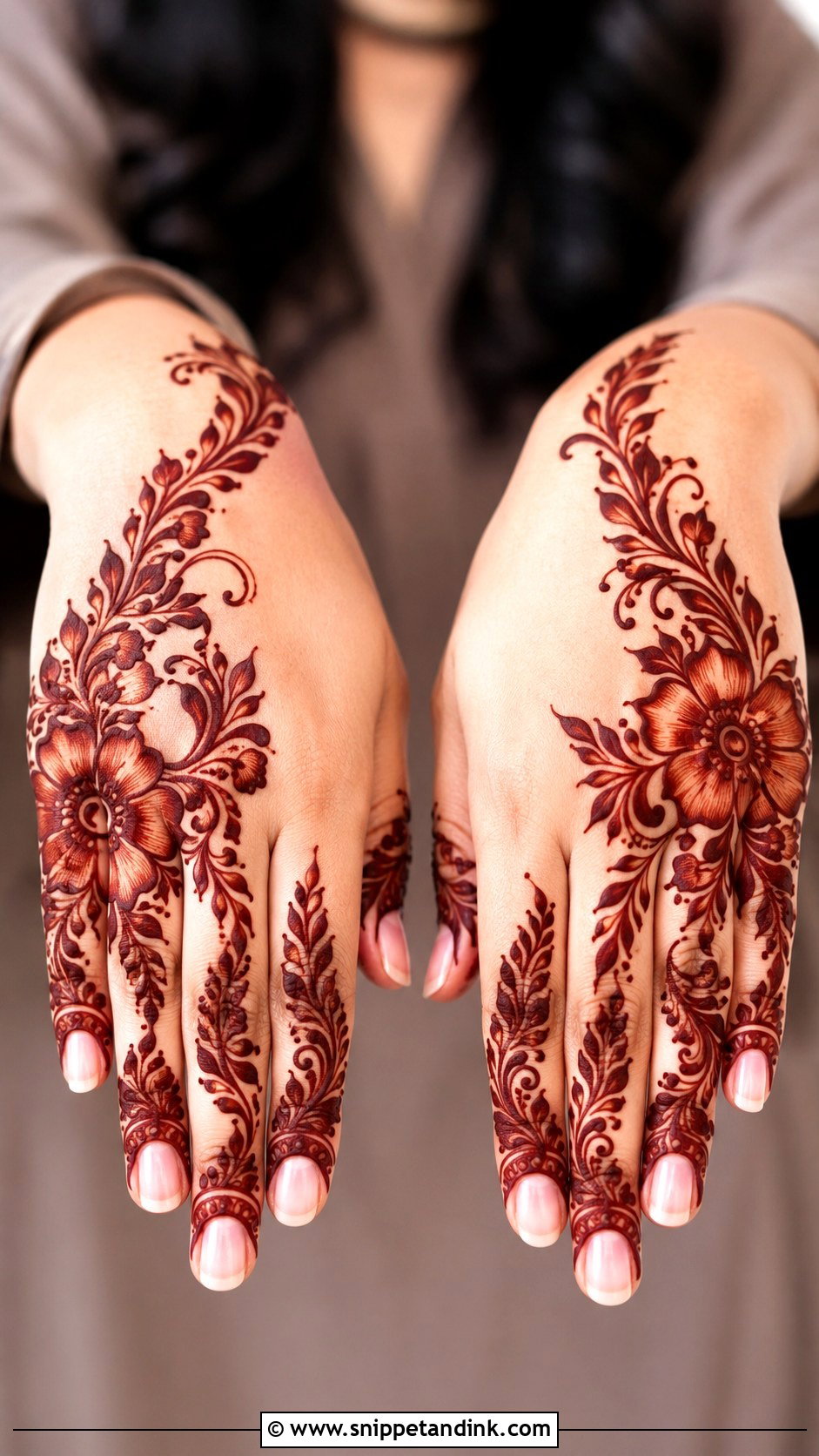
Quick, bold and very forgiving. An Arabic trail runs diagonally from the wrist to the index finger, or across the palm, with large flowers, leafy vines and open gaps of skin. I outline the flowers thickly, shade the insides lightly and scatter small dots along the trail. Because the line runs lengthwise, it makes short hands look longer, which is why I suggest it so often for petite hands at Eid and family functions.
2. Stylish Front Hand Mehndi Design
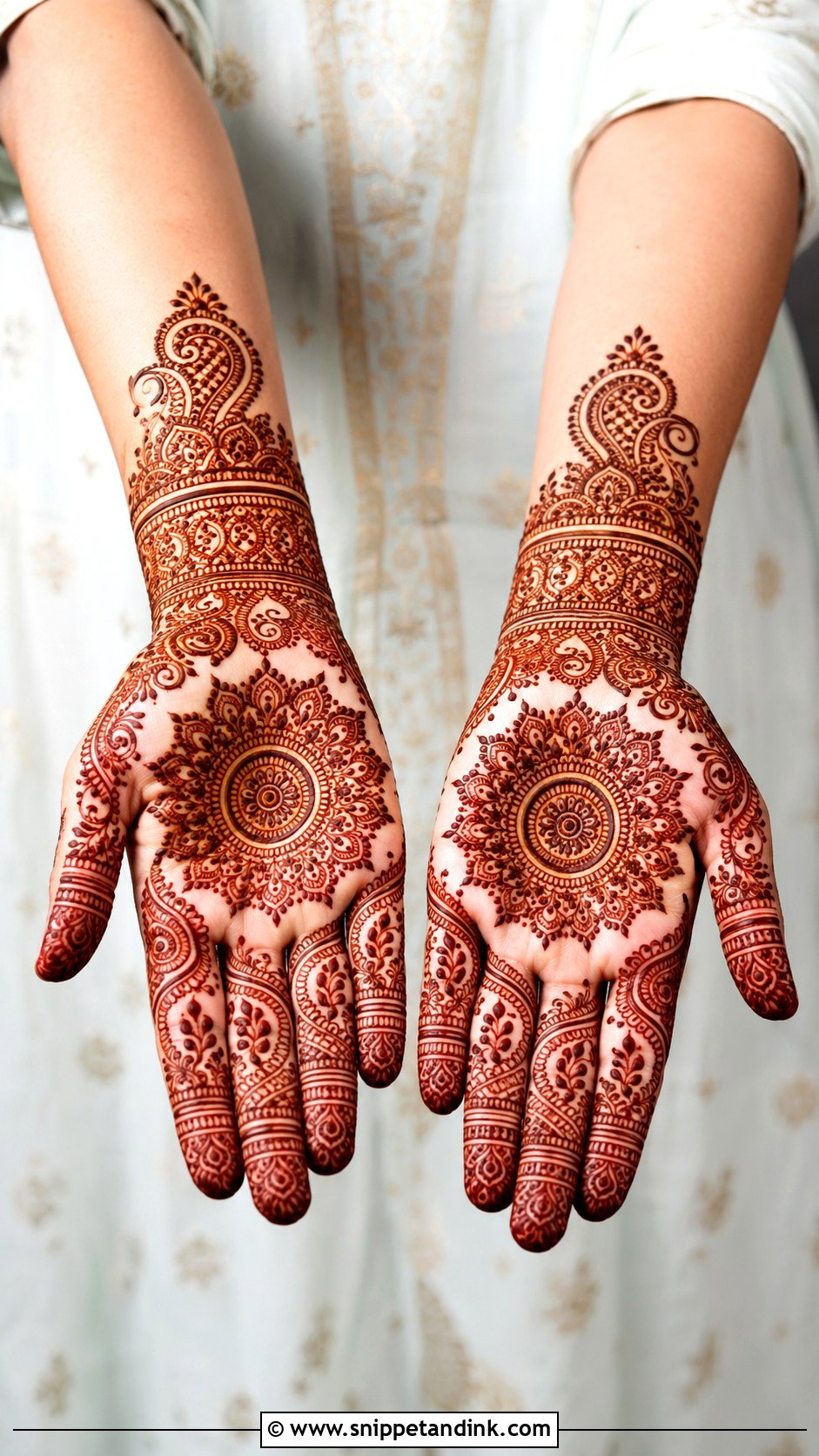
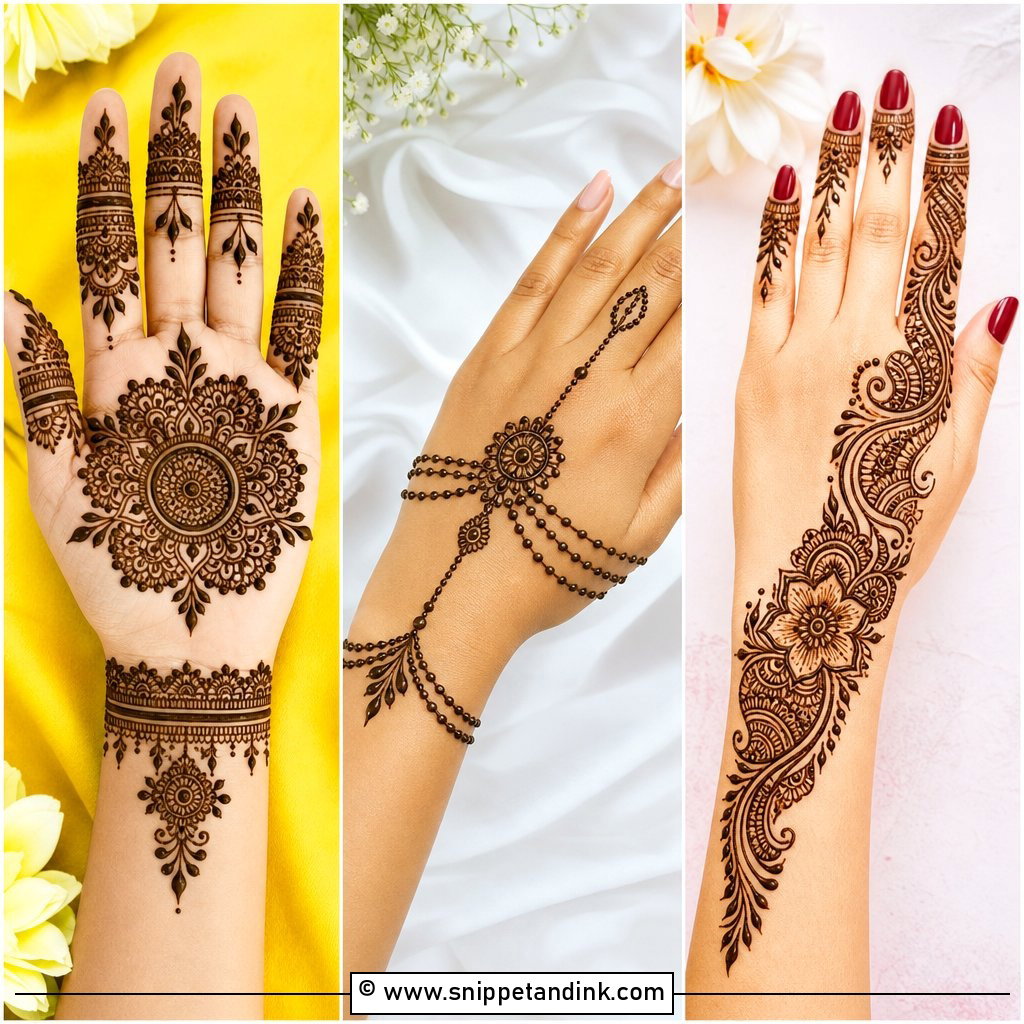
The palm needs structure before it needs detail. I start with a central mandala, then grow paisleys, leaves, fine curves and finger work out from it, leaving small gaps between motifs instead of packing every line. Those gaps make the pattern readable in photographs, where a solid palm often turns into one dark patch. A cuff or bracelet at the wrist finishes it. It sits well with traditional outfits at festivals, engagements and family weddings.
3. Stylish Back Hand Mehndi Design
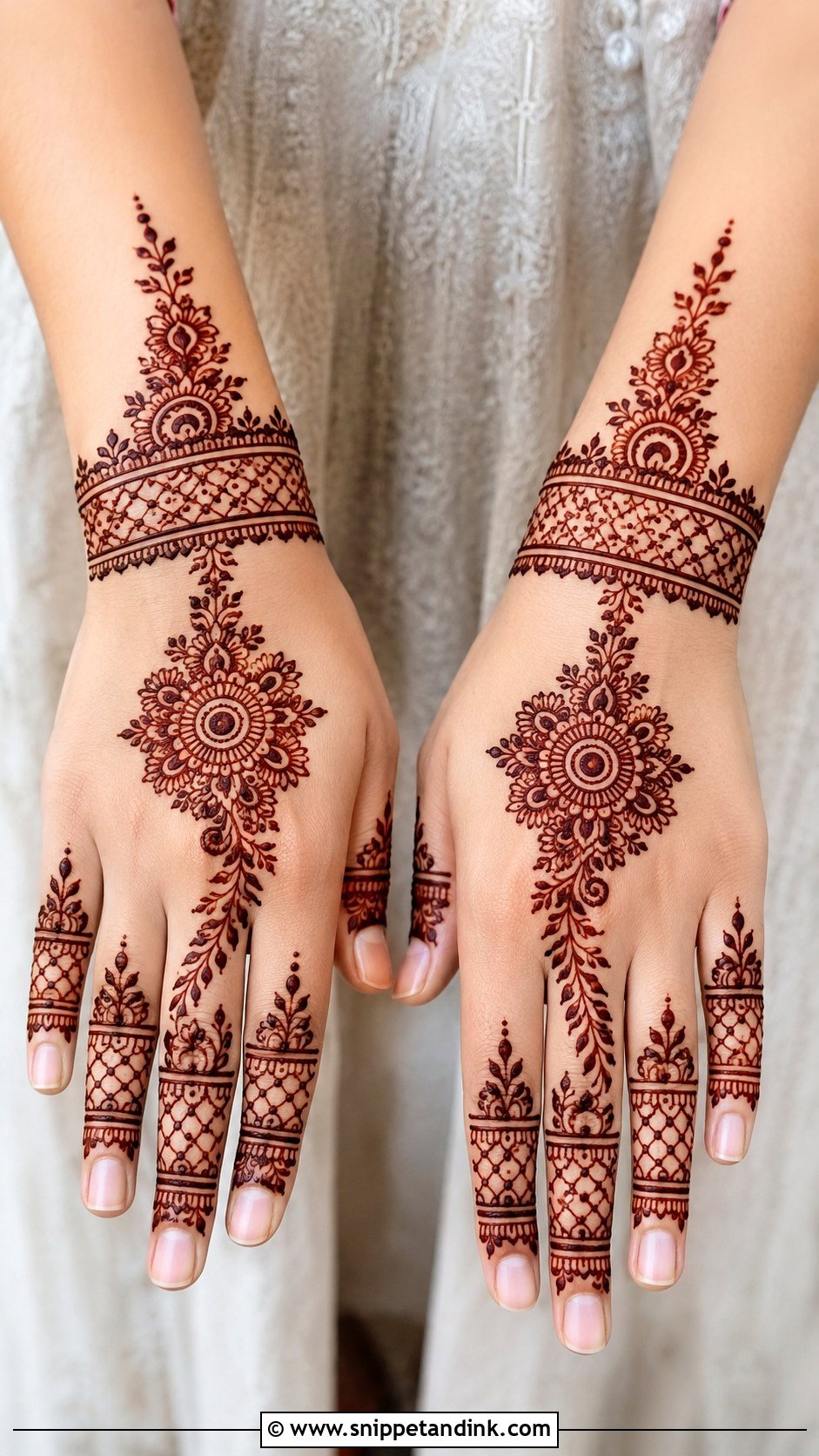
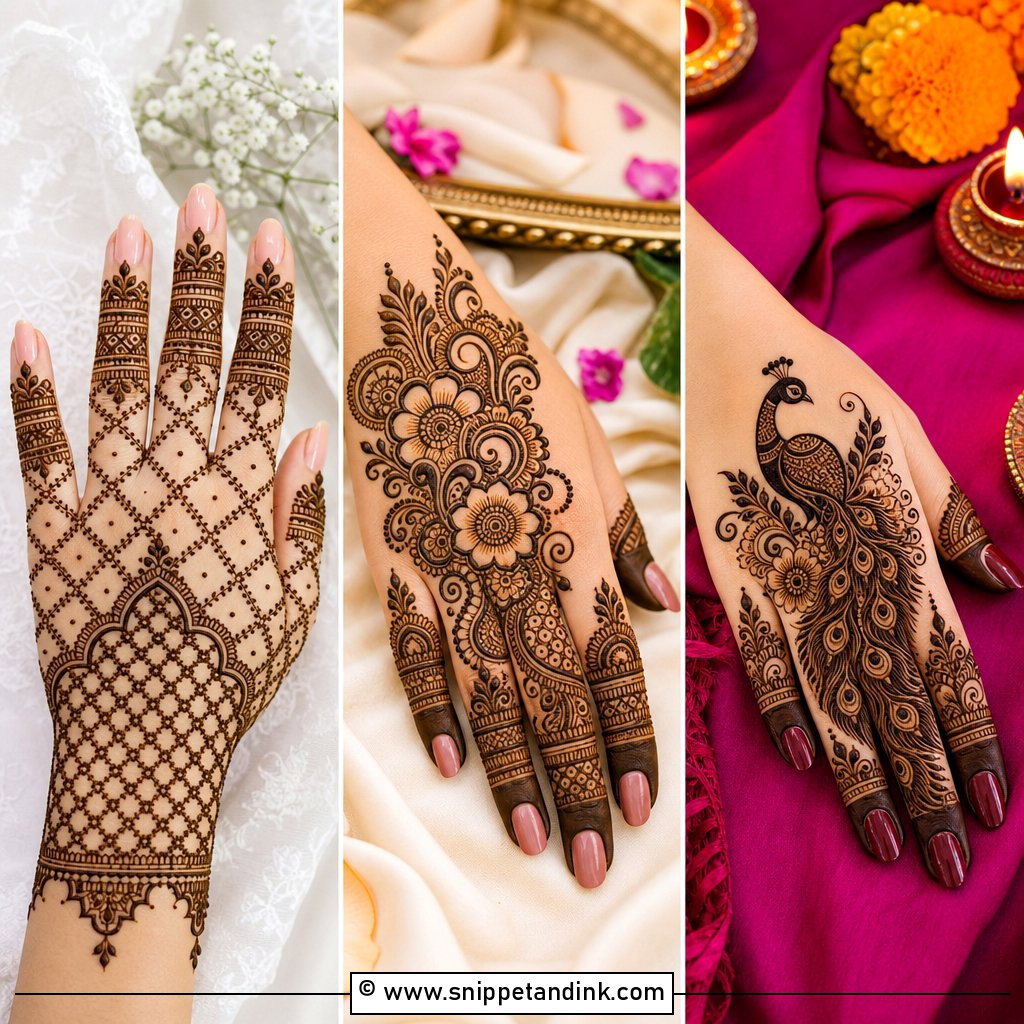
Rings, bangles and nail colour all land on the back of the hand, which makes a stylish back hand mehndi design the most photographed one you’ll wear. I usually begin with a bracelet band at the wrist, run a chain or floral trail up the hand, and finish with detailed fingers. Leaving the centre partly open, or giving it one neat mandala ringed with leaves, keeps it modern. A little jaali and a few tiny florals add fullness without weight. Guests, the bride’s sisters and office celebrations all suit this.
4. Stylish Full Hand Mehndi Design
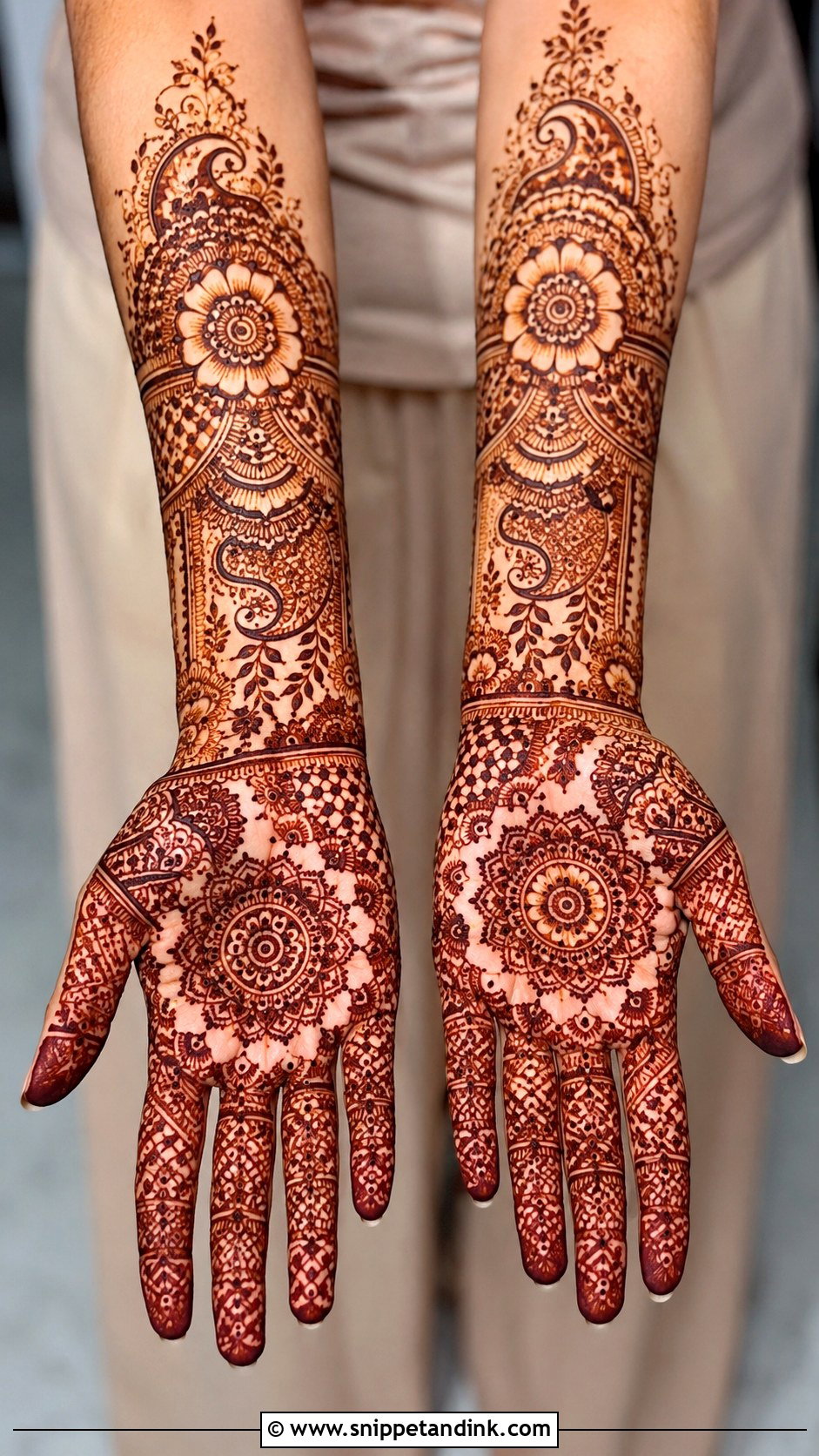
Full coverage only looks rich if the motifs vary in size. I mix large paisleys, flowers and mandalas with smaller fillers, and place jaali panels in their own sections so each part stays visible from a distance. Covering palm, fingers, wrist and often the forearm takes a proper sitting, so I’d book it for close family and festive shoots rather than squeezing it in on the day. A negative-space border or bracelet band near the wrist keeps it from reading as old-fashioned.
5. Stylish Bridal Mehndi Design
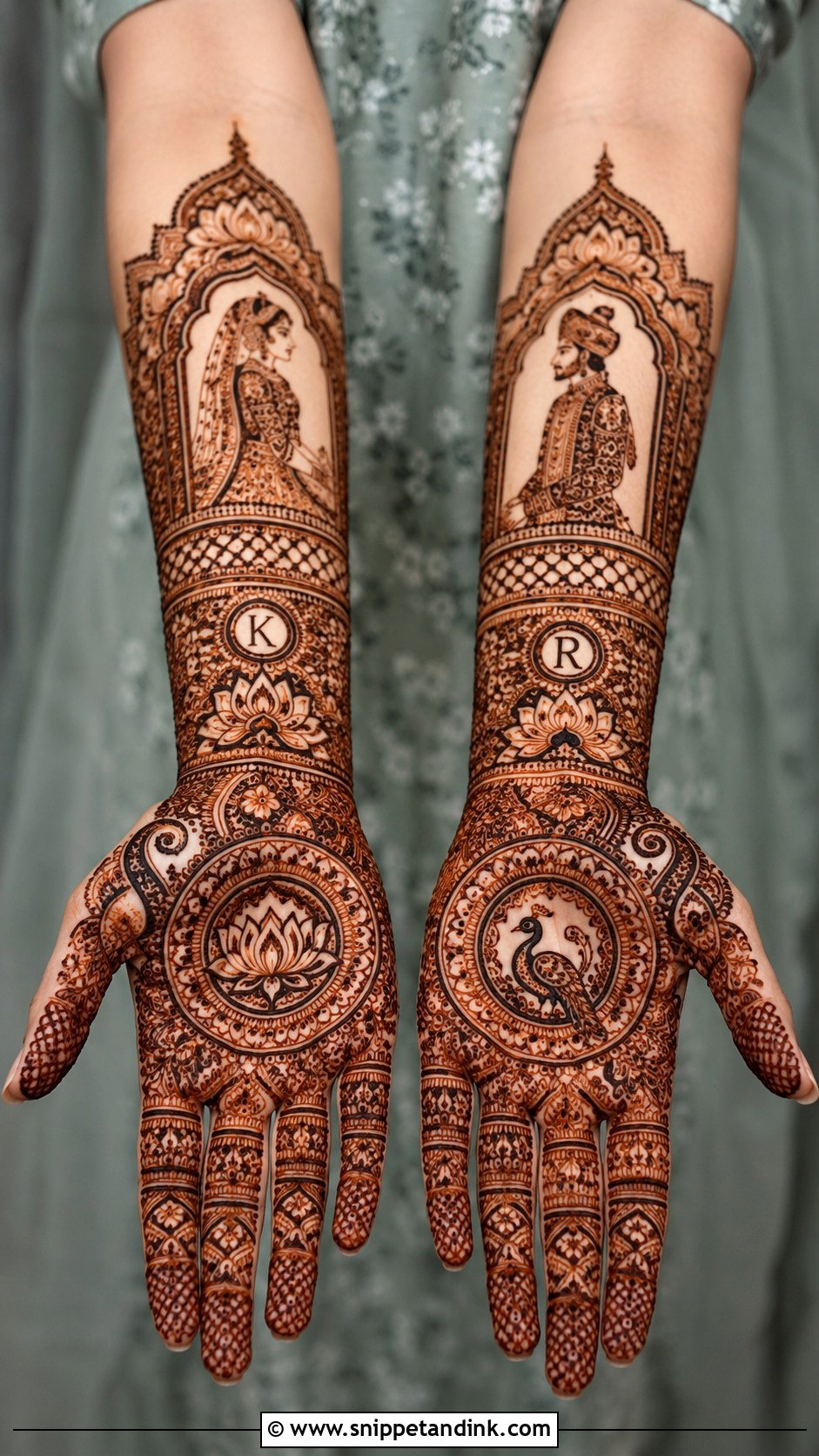
Bridal henna should be personal before it’s stylish. Both hands, fingertips to forearms, carry layered motifs and fine filling, often with portraits, initials, kalash, lotus, peacocks or other wedding symbols. Many brides I draw now ask for cleaner spacing on the forearms and keep the density on the palms, which also makes the long sitting more bearable. Mirrored elements across both hands give the classic bridal finish. Book it a day or two before the wedding so the stain has deepened by the ceremony.
6. Stylish Simple Mehndi Design
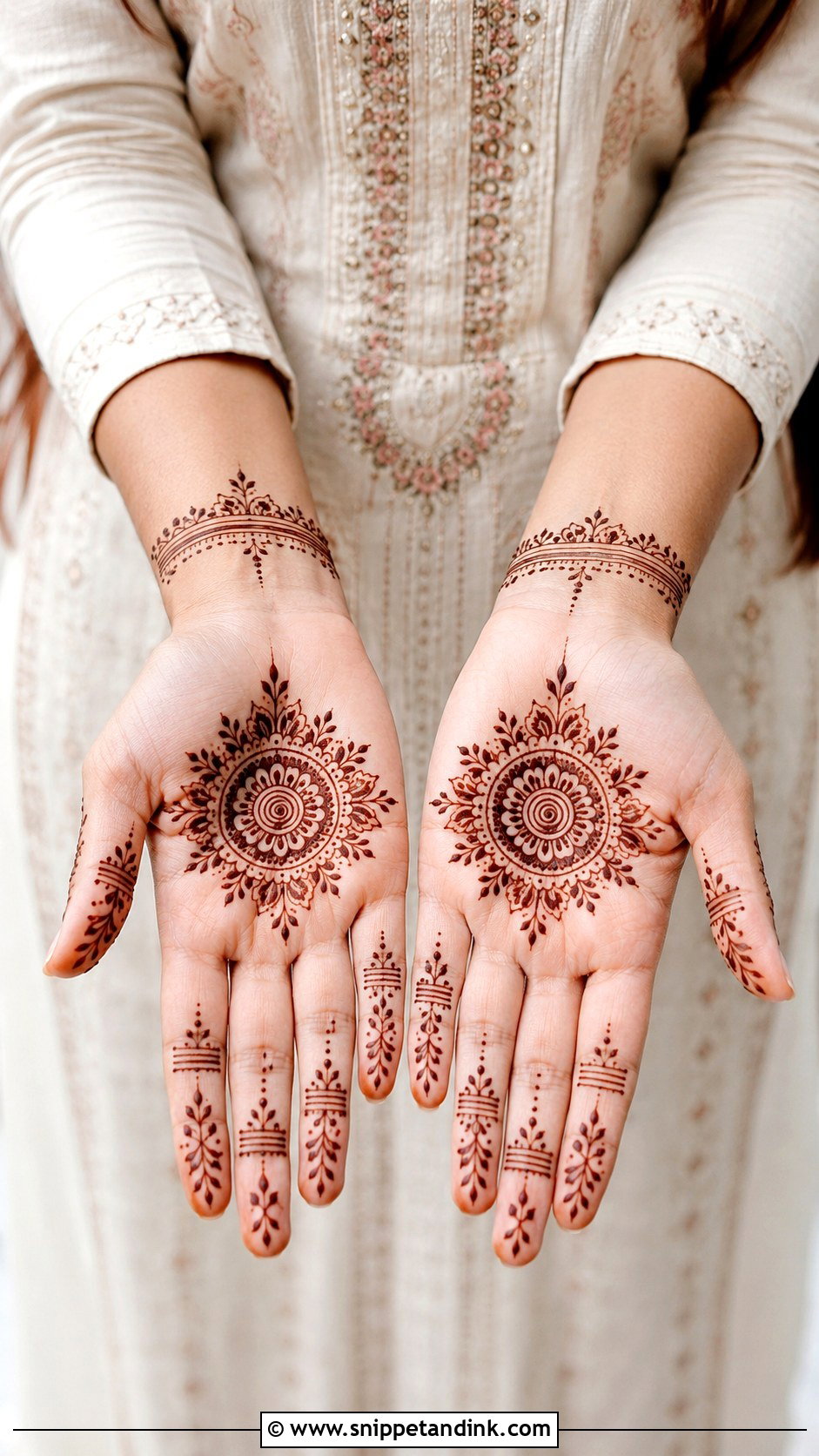
Short on time? A small palm mandala, delicate finger lines, a light wrist band and a single floral trail make a complete look in a fraction of a bridal sitting. The trick is restraint: one focal point, everything else soft. When a simple design looks unfinished, it’s almost always because the filling was spread evenly instead of anchored to one shape. Students, beginners and anyone at a small family festival will find it easy to wear.
7. Stylish Modern Mehndi Design
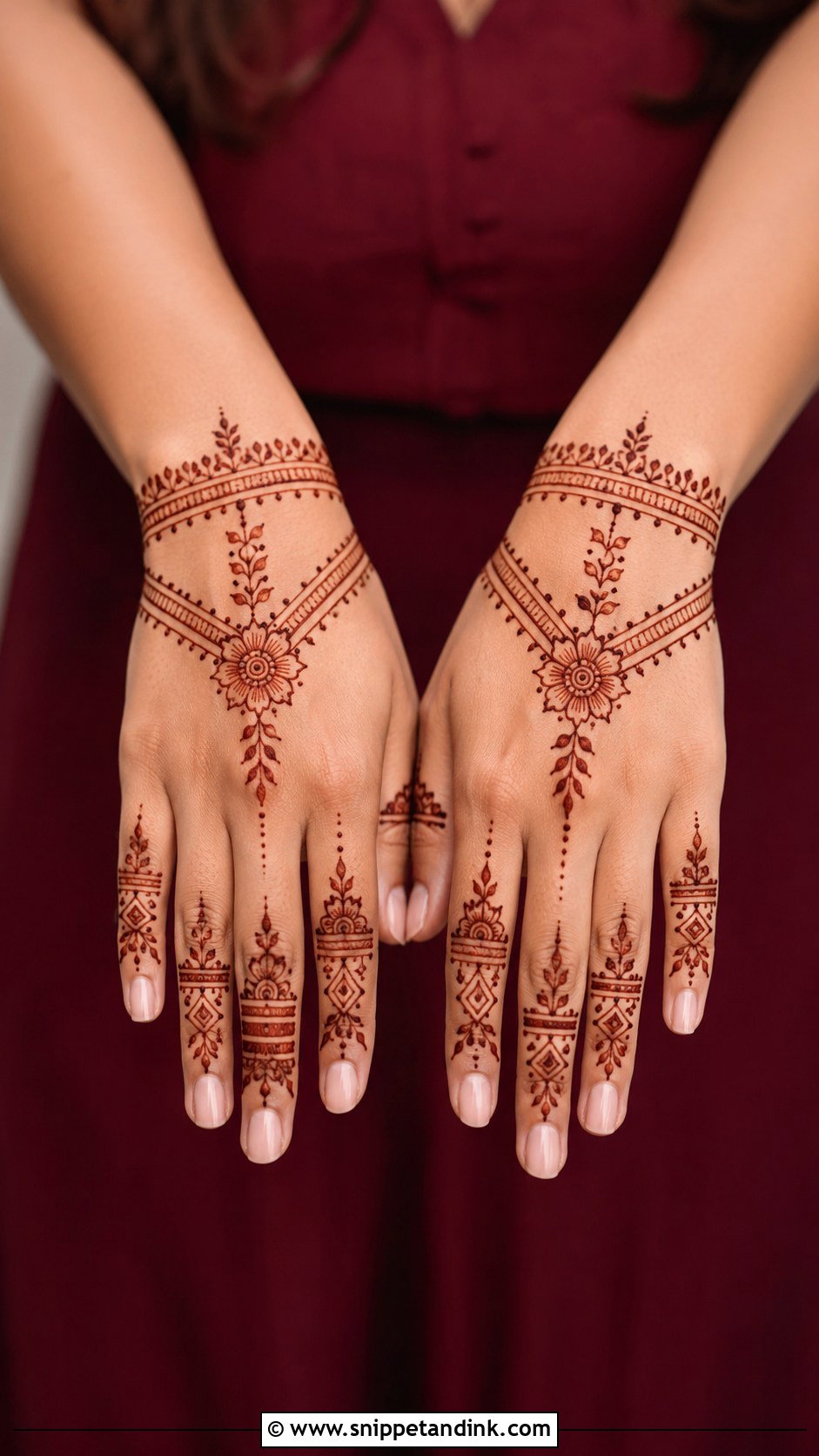
Modern layouts care more about placement than filling. Geometric lines, open spaces, bracelet details, half-hand coverage and fine floral accents do the work. On the back hand, I’d draw a ring-to-wrist chain, finger bands and a small mandala; on the palm, curved panels holding bold flowers with neat gaps between. It still reads traditional enough for cultural occasions, and it suits minimal jewelry and soft nail colours.
8. Stylish Indo Arabic Mehndi Design
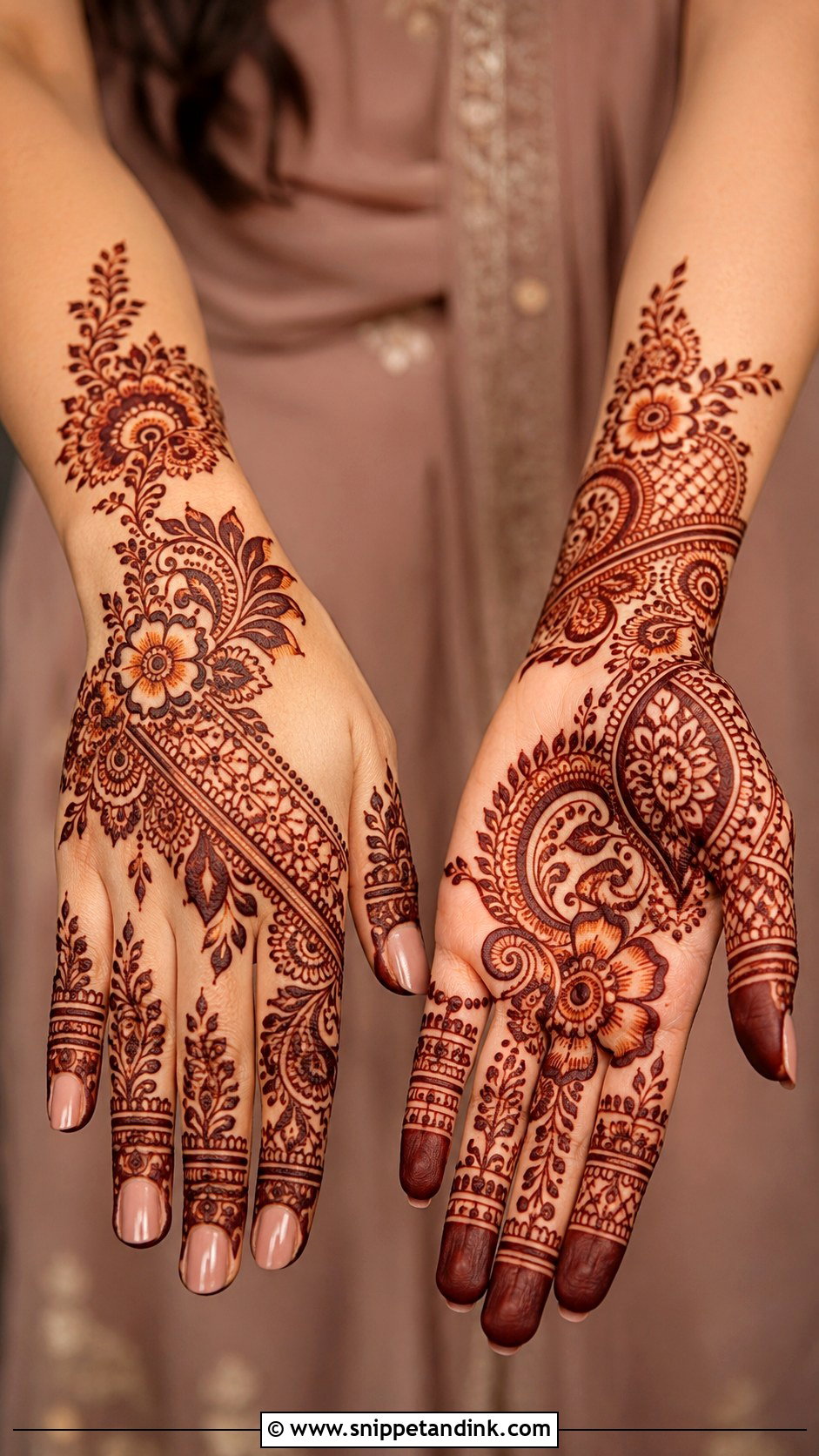
Indo-Arabic takes the Arabic diagonal and fills a few chosen pockets with Indian detail: paisley clusters, shaded flowers, detailed fingertips and small filling patterns. It ends up fuller than Arabic and lighter than Indian full-hand work. I keep the main flowers large and fill only selected spaces with dots, lines and mini leaves. It adapts to almost any hand shape, which is why bridesmaids and wedding guests ask for it constantly.
9. Stylish Indian Mehndi Design
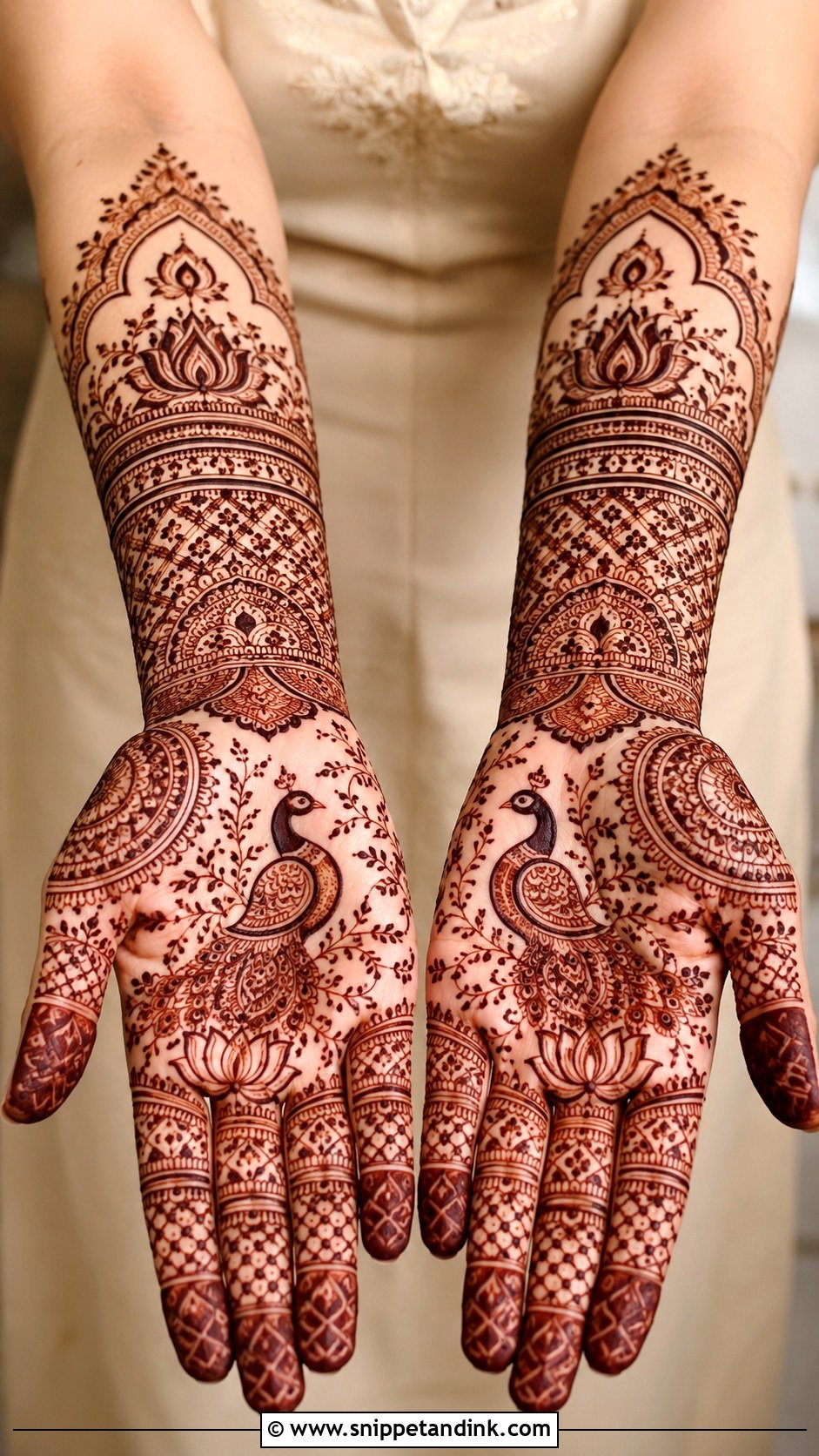
Traditional Indian work, with its paisleys, peacocks, lotus, mandalas, vines and tiny fillers, can look dated when every area is equally dense. To keep it current, I break the hand into clear sections with borders, bands and small breaks of bare skin. It scales from medium coverage to full bridal and suits weddings, poojas and family ceremonies. Match the fingertip detail on both hands and close the design with a clean wrist cuff.
10. Stylish Pakistani Mehndi Design
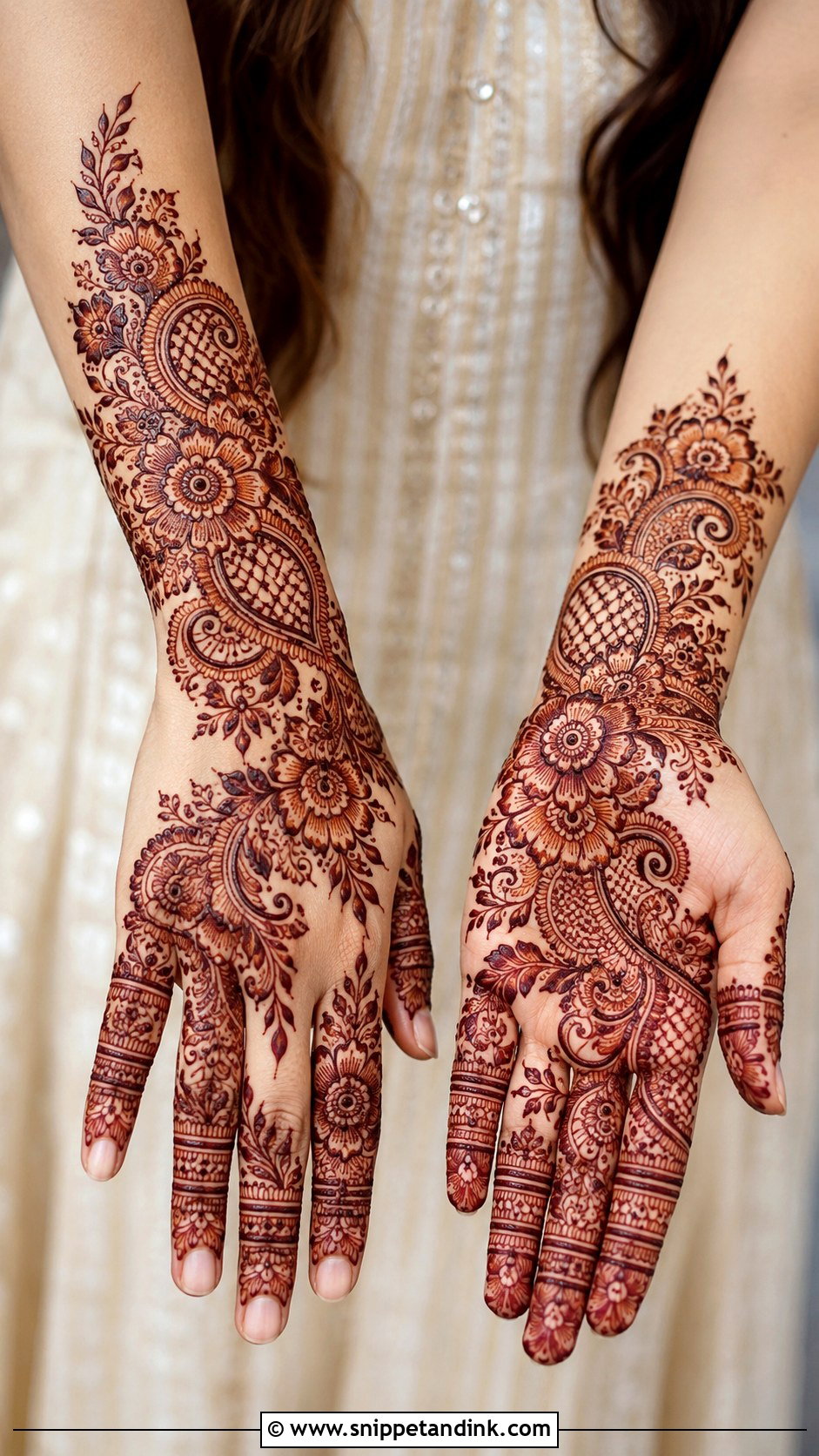
A stylish Pakistani mehndi design mixes Indian intricacy with Arabic boldness: floral trails, paisley panels, jaali sections, finger bands and shaded leaves. I usually keep the palm detailed and leave the back hand a little more open. Fine lines and controlled shading matter here, since the style is admired for its finish. It sits comfortably under long sleeves and heavy jewelry. Put bold flowers in place first and add fillers only where the eye needs them.
11. Stylish Khaleeji Mehndi Design
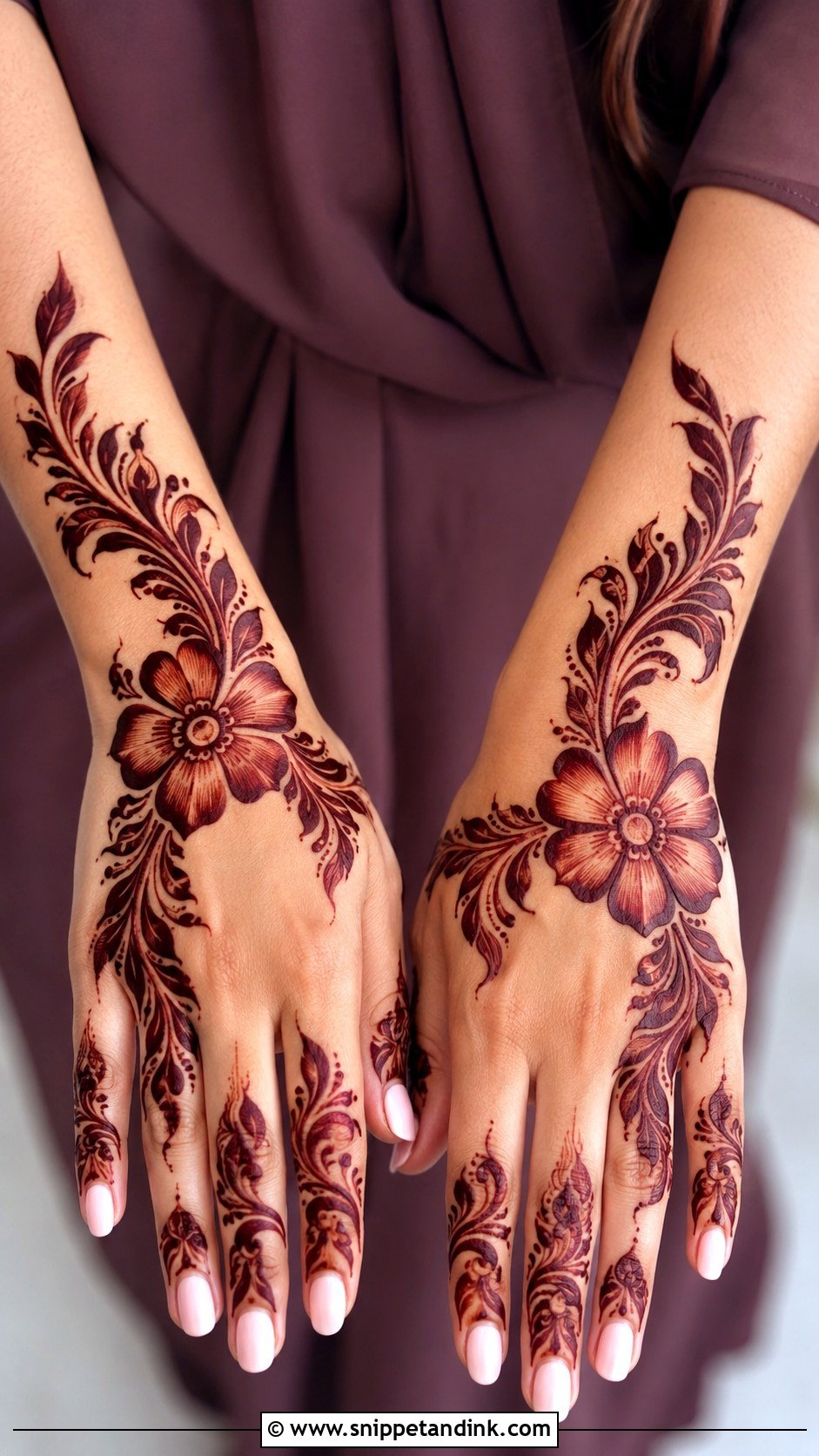
Khaleeji work gets its drama from contrast rather than coverage: thick floral outlines, sweeping leaves, shaded petals and plenty of bare skin. A complete hand often has one large floral sweep over the back hand, then dark fingertips or leafy details. I cut a wider cone tip for these outlines, since a thin line looks timid in this style. Once the stain matures to deep maroon, it reads beautifully at evening Eid functions and parties. Keep the edges clean, because bold shapes show every wobble.
12. Stylish Moroccan Mehndi Design
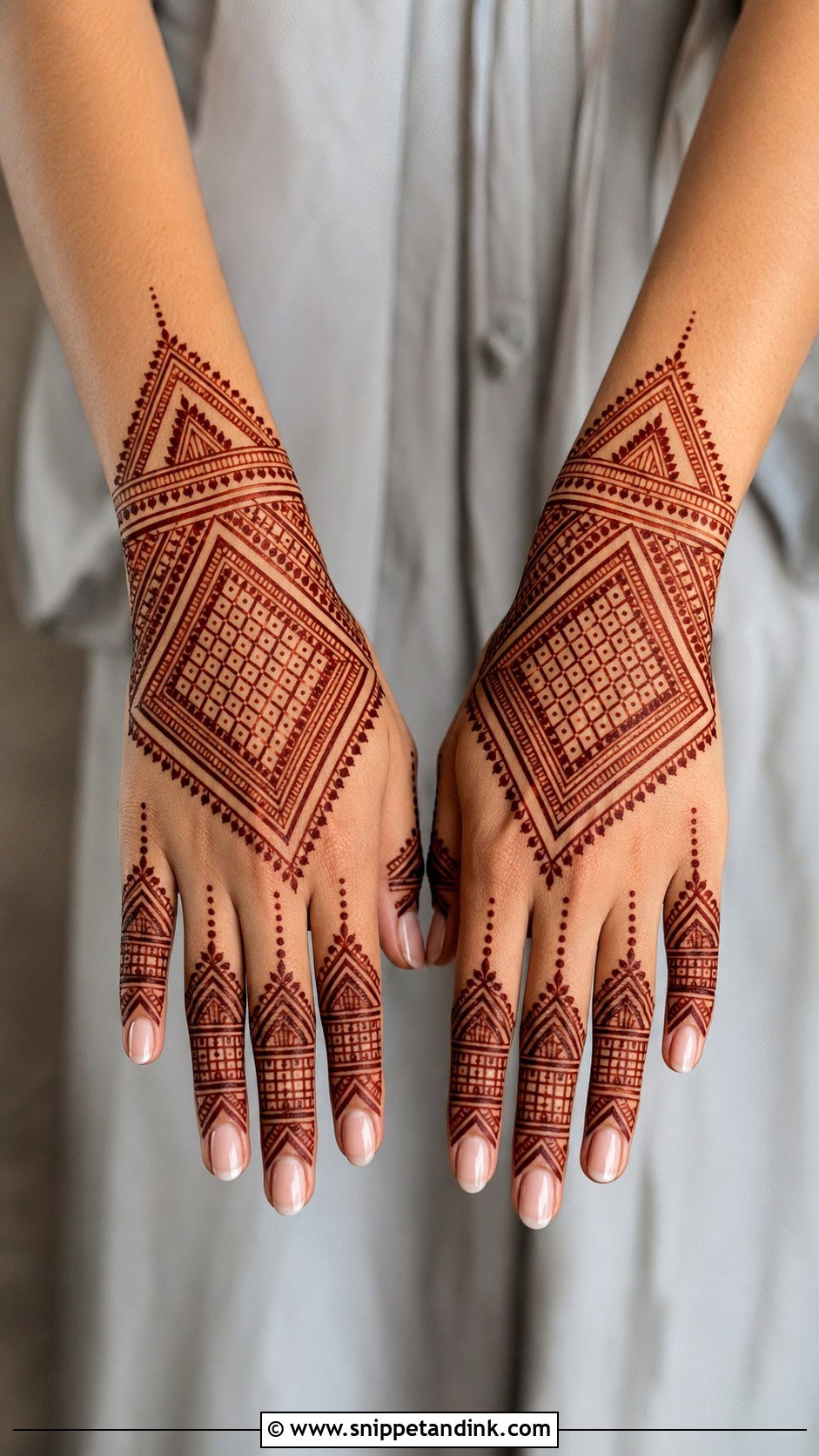
For anyone tired of flowers, Moroccan henna offers diamonds, triangles, grids, straight lines, dots and tribal-style symmetry. It can cover the back hand like a glove or run in neat panels from wrist to fingers. Consistent spacing is the whole job, so I mark the main divisions with tiny dots before drawing any long line. It looks sharp at casual events and with fashion-forward festive outfits.
13. Stylish Mandala Mehndi Design
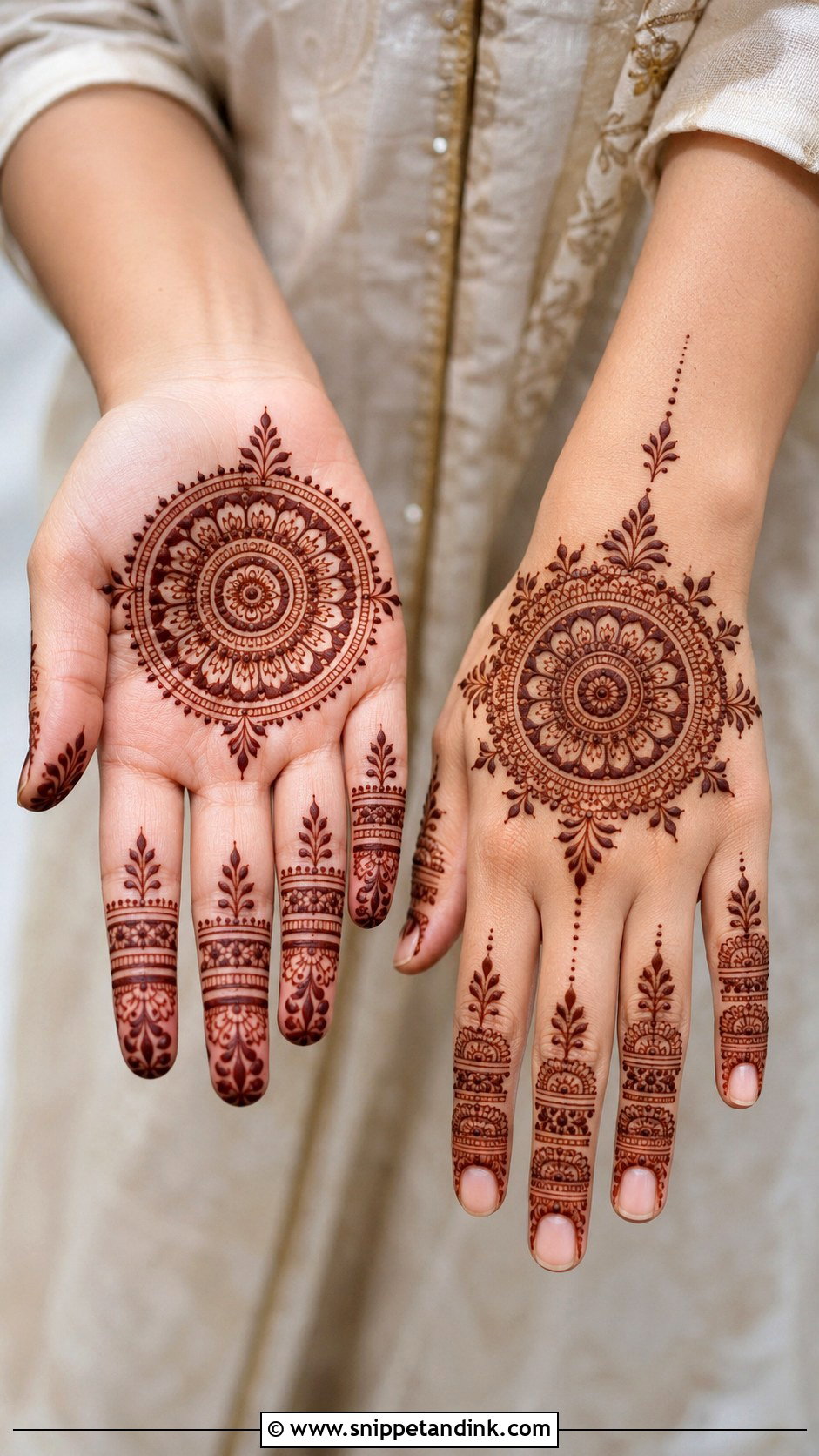
One circle in the centre of the palm or back hand, detailed fingers and a soft wrist band: that’s the mandala layout. To keep it current, I leave clear skin around the circle and add tiny dots or leaves only at its outer edge, so the centre stands alone. It flatters small hands particularly well, because the round shape gives a neat focus without overwhelming a small surface. Keep it plain for daily wear or build it up for festivals.
14. Stylish Floral Mehndi Design
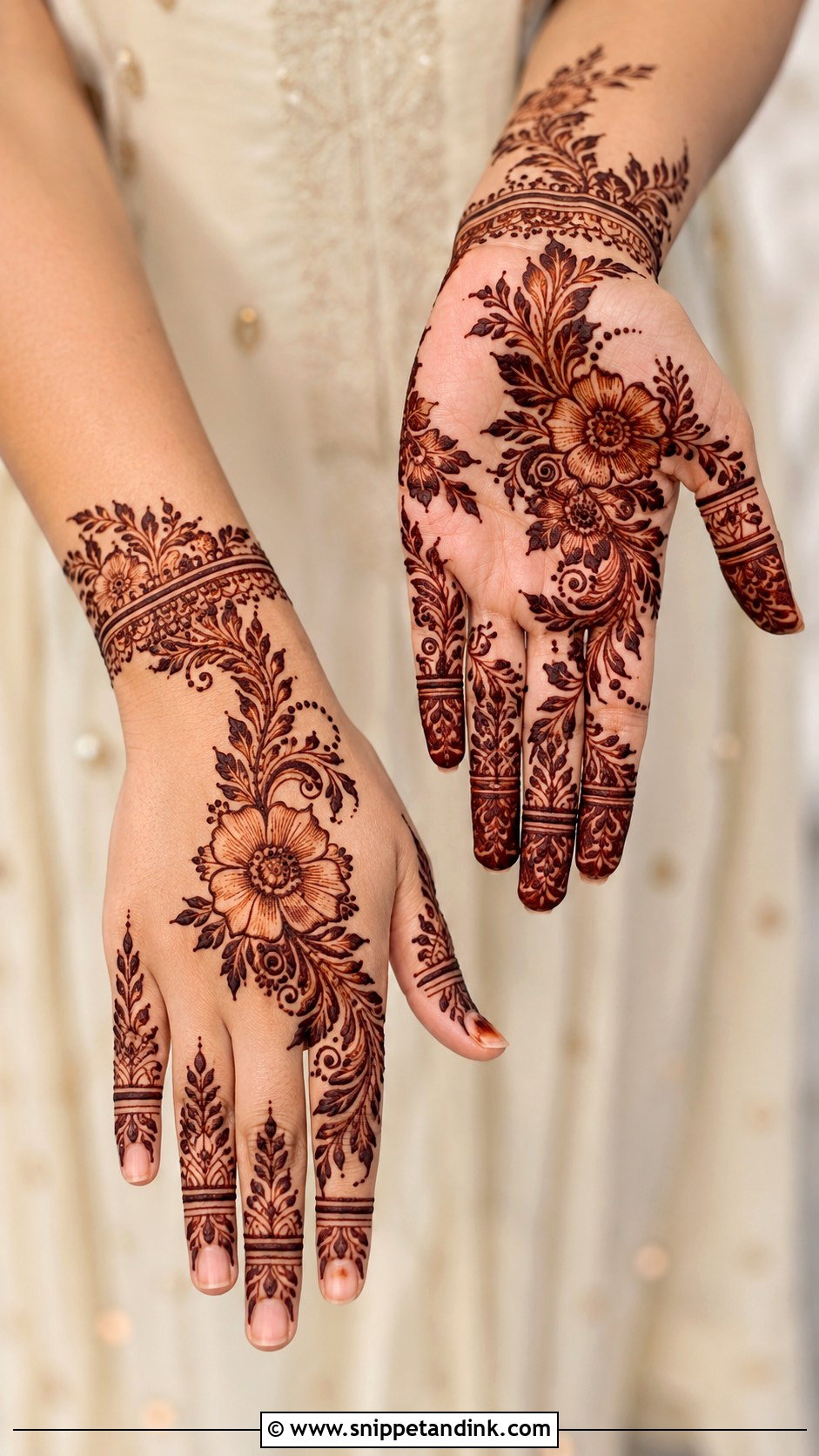
Florals suit every age, but current floral work uses bold outlines with soft inner detail instead of tiny crowded petals. A complete hand might carry large roses or lotus across the palm, leafy vines along the fingers and a bracelet finish at the wrist. I start with one hero flower and build everything else around it. Eid, Diwali, weddings and baby showers all suit it, on the front or back of the hand.

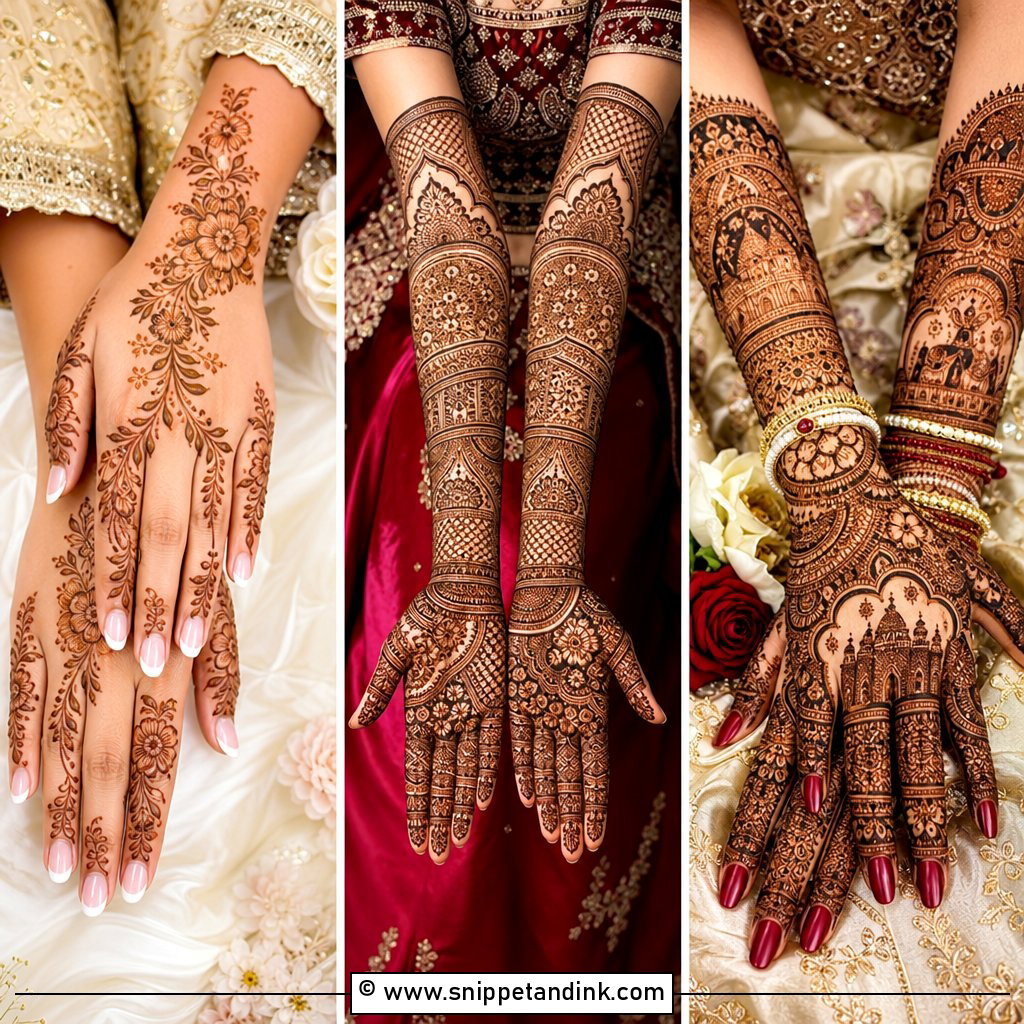

15. Stylish Rose Mehndi Design
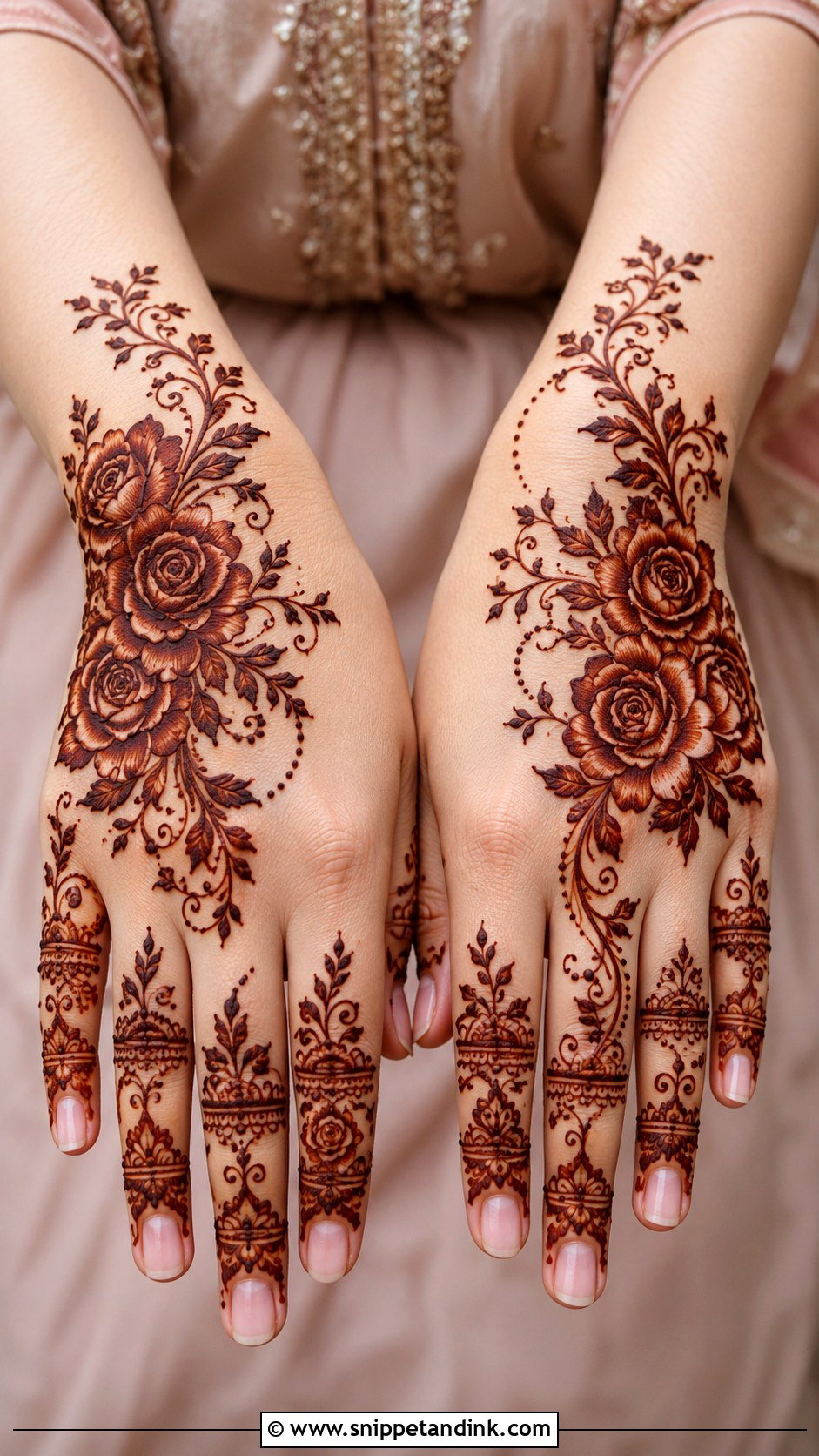
Roses are easy for anyone to recognise, even at a glance across a room. A rose cluster near the wrist can move diagonally across the back hand and end in leafy finger details; on the palm, roses pair with swirls, dots and small paisleys. Keep the petals rounded and the shading light. Heavy shading inside a small rose fills the gaps between petals as the stain darkens, and the flower loses its shape. Engagements, festive parties and bridesmaids wear this well.
16. Stylish Lotus Mehndi Design
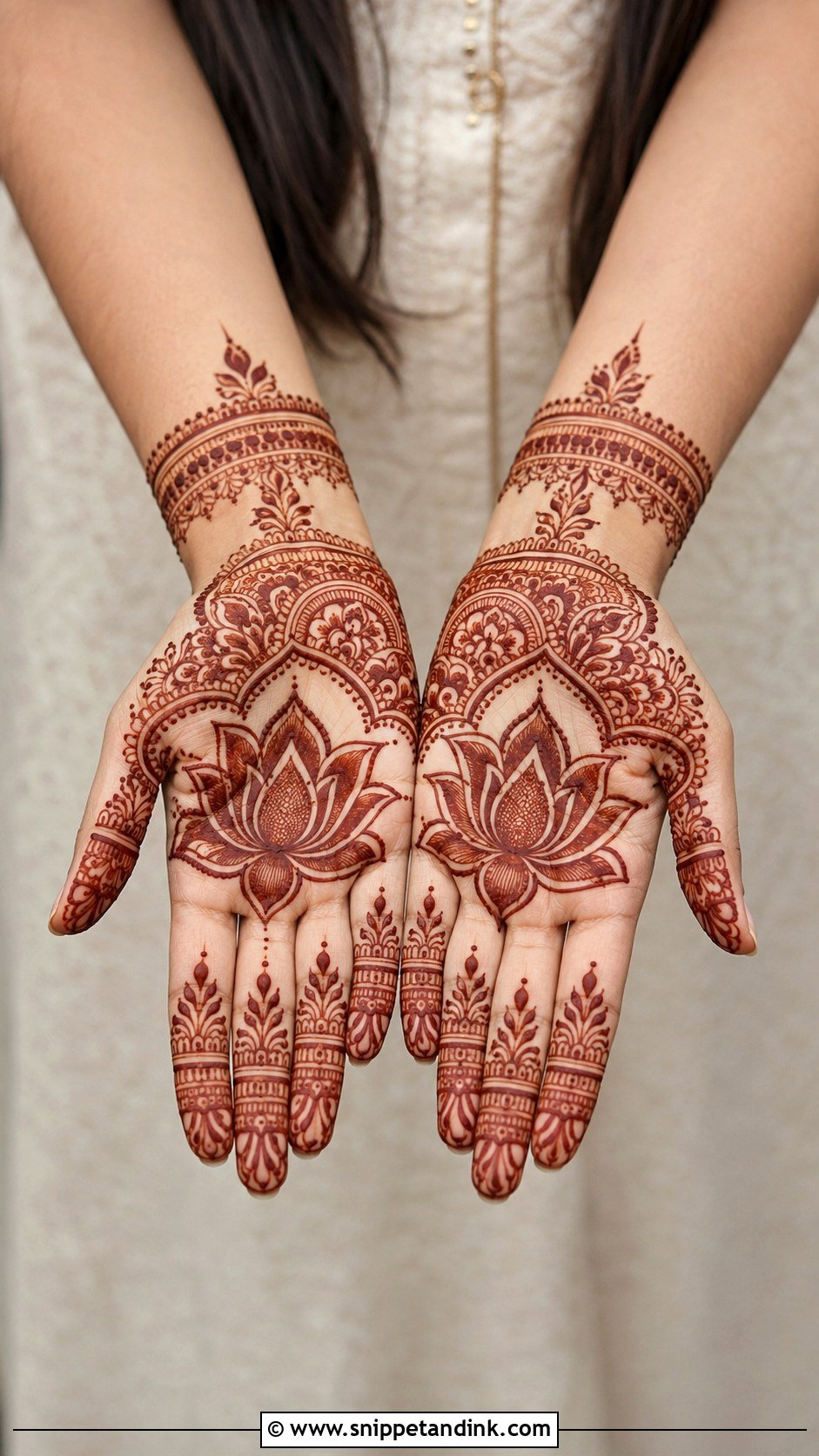
The lotus carries real meaning at poojas and Diwali, and it looks just as good in a modern layout. It can sit in the centre of the palm, near the wrist or within a back-hand trail, with layered petals, fine dots, curved leaves and small mandala details. My modern version uses one large lotus as the hero and keeps everything around it light. Space the petal layers generously; tight layers merge into a solid shape once the colour deepens.
17. Stylish Peacock Mehndi Design
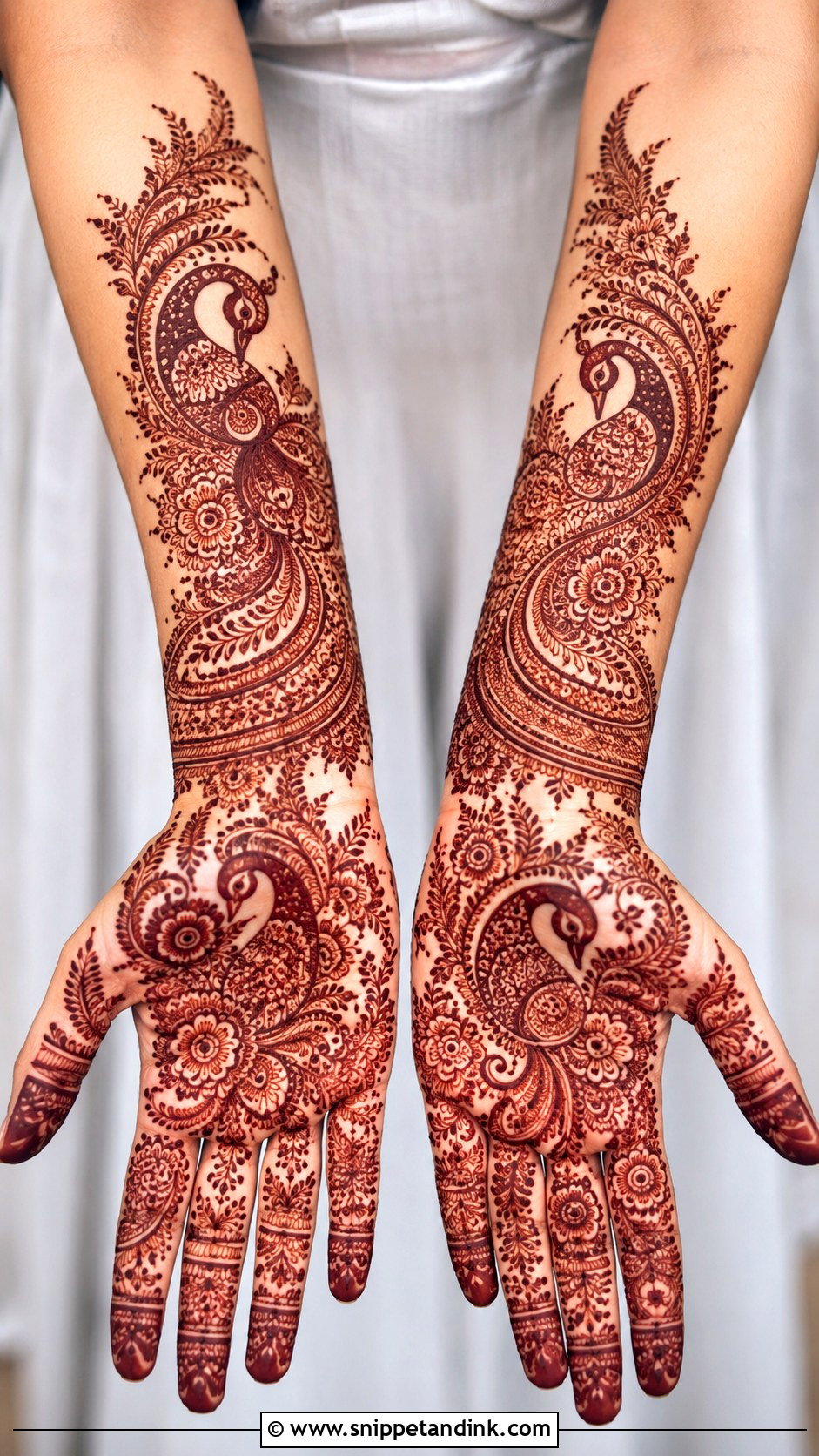
Grand occasions call for the peacock. On the palm, its feathers can spill into paisleys, florals and curved lines; on the back hand, a peacock trail from wrist to middle finger looks graceful and dramatic. The bird has to be readable, so I give the body and head clean detail and keep the feathers looser, with fine shading and dots for movement. Balance it with open spaces and neat borders, otherwise the hand turns busy fast.
18. Stylish Paisley Mehndi Design
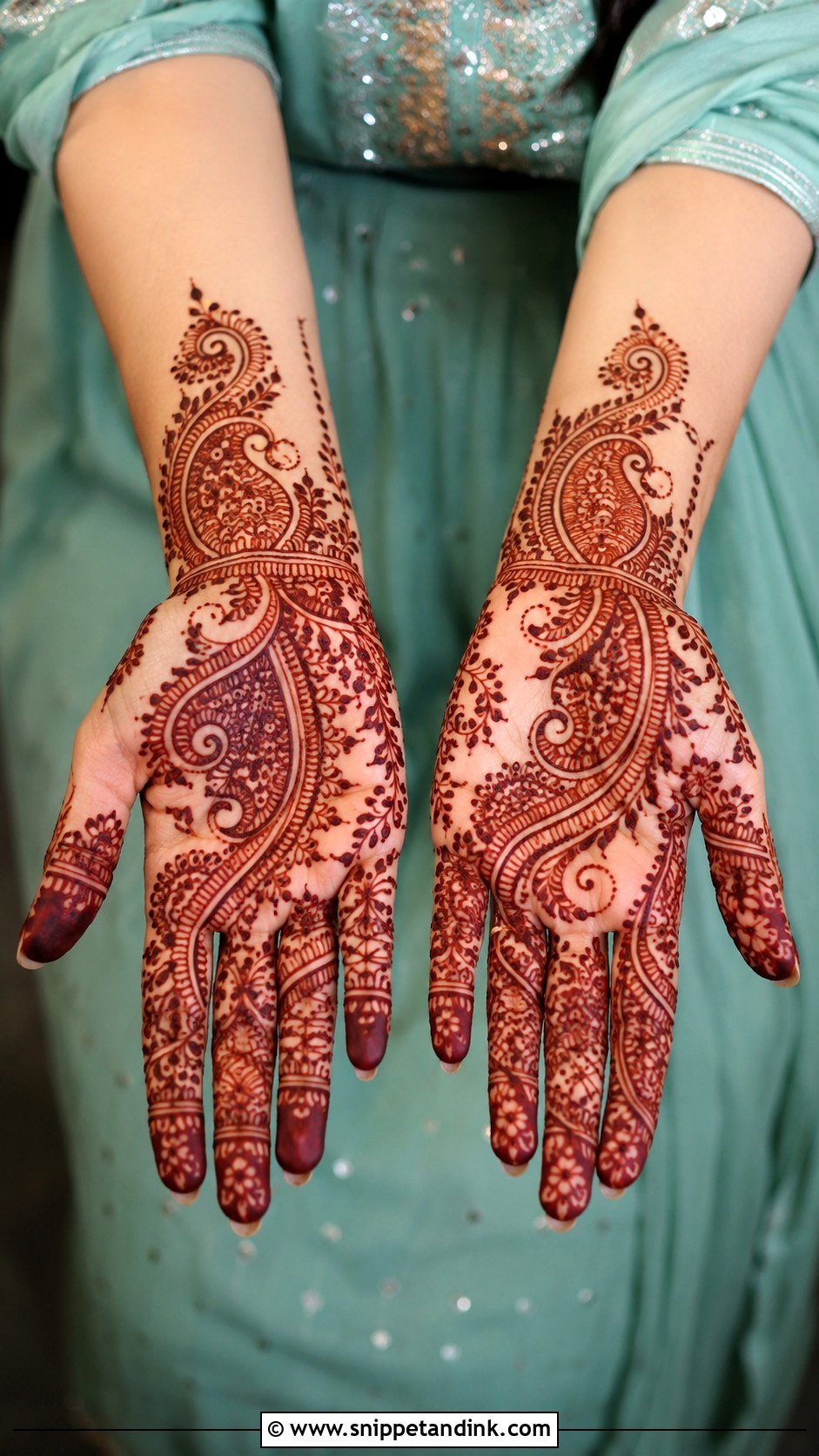
Paisleys can be arranged in a diagonal trail, a circular palm layout or a full-hand pattern with flowers and leaves, and they scale from small to large depending on coverage. Larger paisleys with clean internal lines look more current than small ones crammed with filling. I add dots, vines and soft curves around the main shapes and stop there. It’s a dependable classic for weddings, Karva Chauth, Eid and family celebrations.
19. Stylish Jaali Mehndi Design
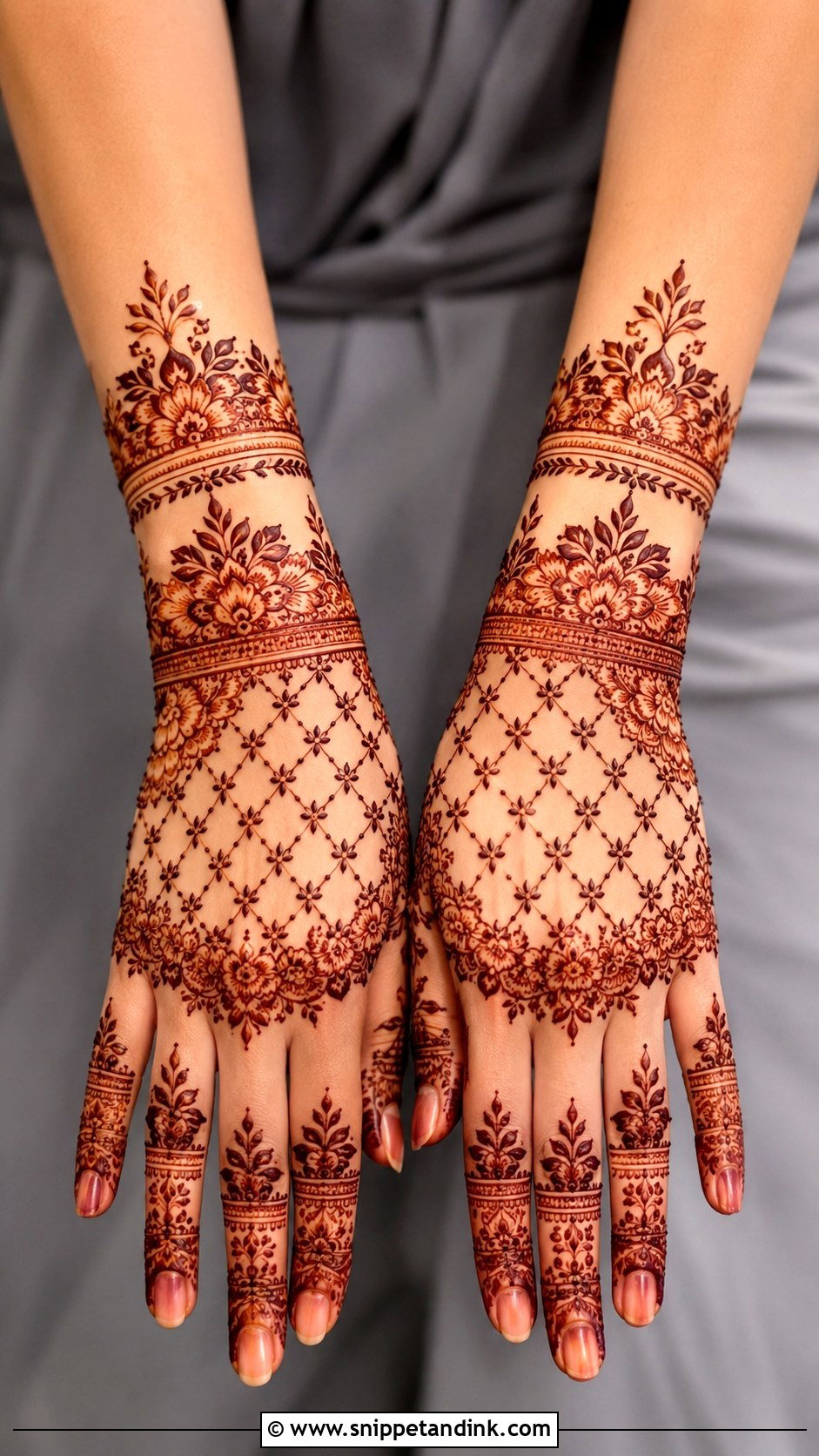
Jaali mesh gives the hand a lace effect, framed with flowers, leaves and finger details, and it sits well beside rings and bangles. Use the mesh in selected areas rather than across the entire hand. A wrist cuff of jaali panels with floral borders is one of my favourite ways to wear it. Even grid lines are non-negotiable; if the spacing drifts, the mesh looks careless rather than delicate. Bridesmaids and engagement guests ask for this a lot.


20. Stylish Jewelry Mehndi Design
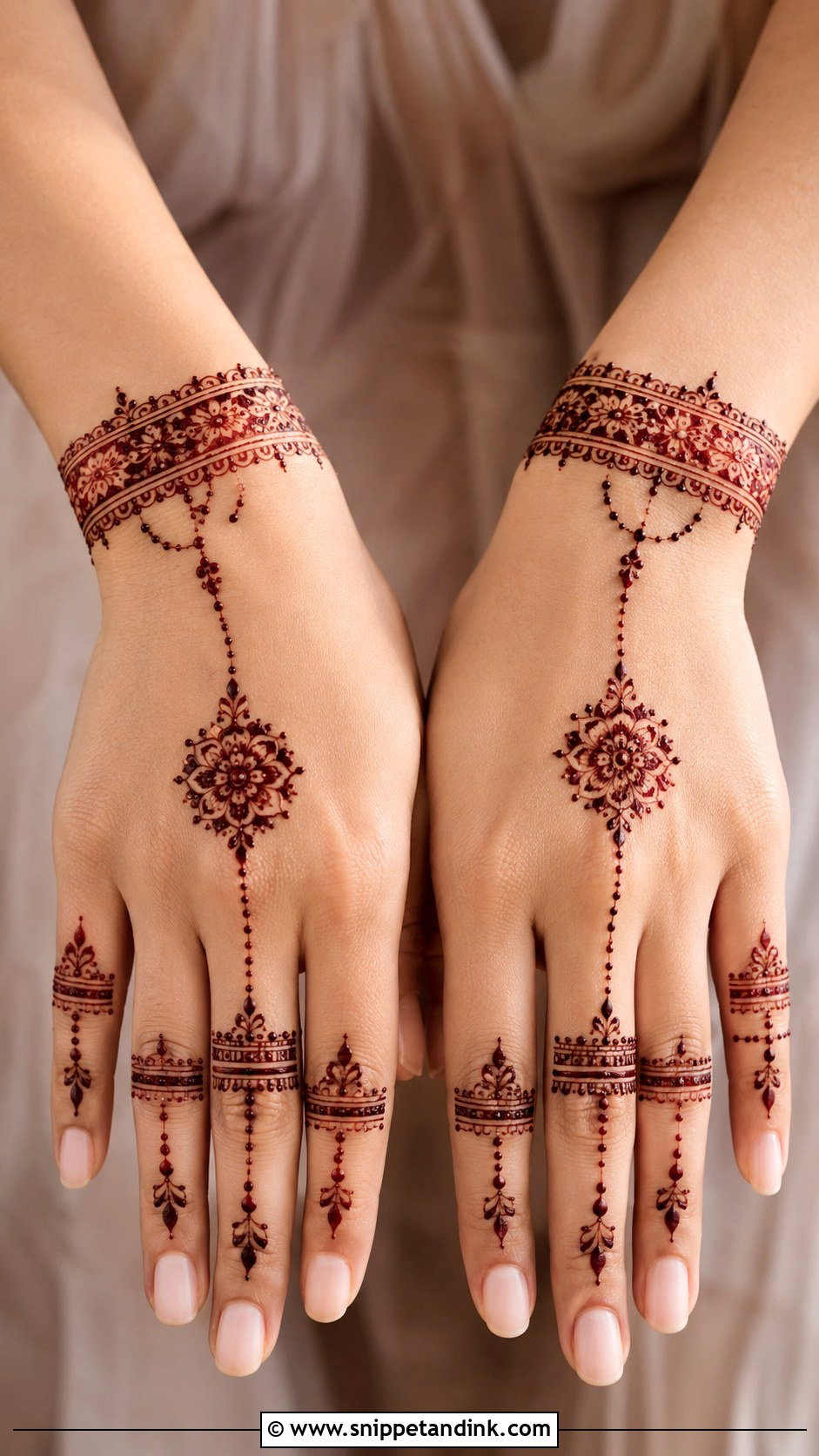
Rings, chains, bracelets and haath phool shapes inspire this one. On the back hand, finger details connect to a central motif and then to a wrist band, so it looks like hand jewelry even with bare hands. Thin chains and dots keep it light; flowers, mandalas and cuffs make it richer. I check where any real rings will sit before drawing, so the metal adds to the design instead of covering it. Eid, engagement parties, bridesmaids and minimal brides all suit it.
21. Stylish Finger Mehndi Design
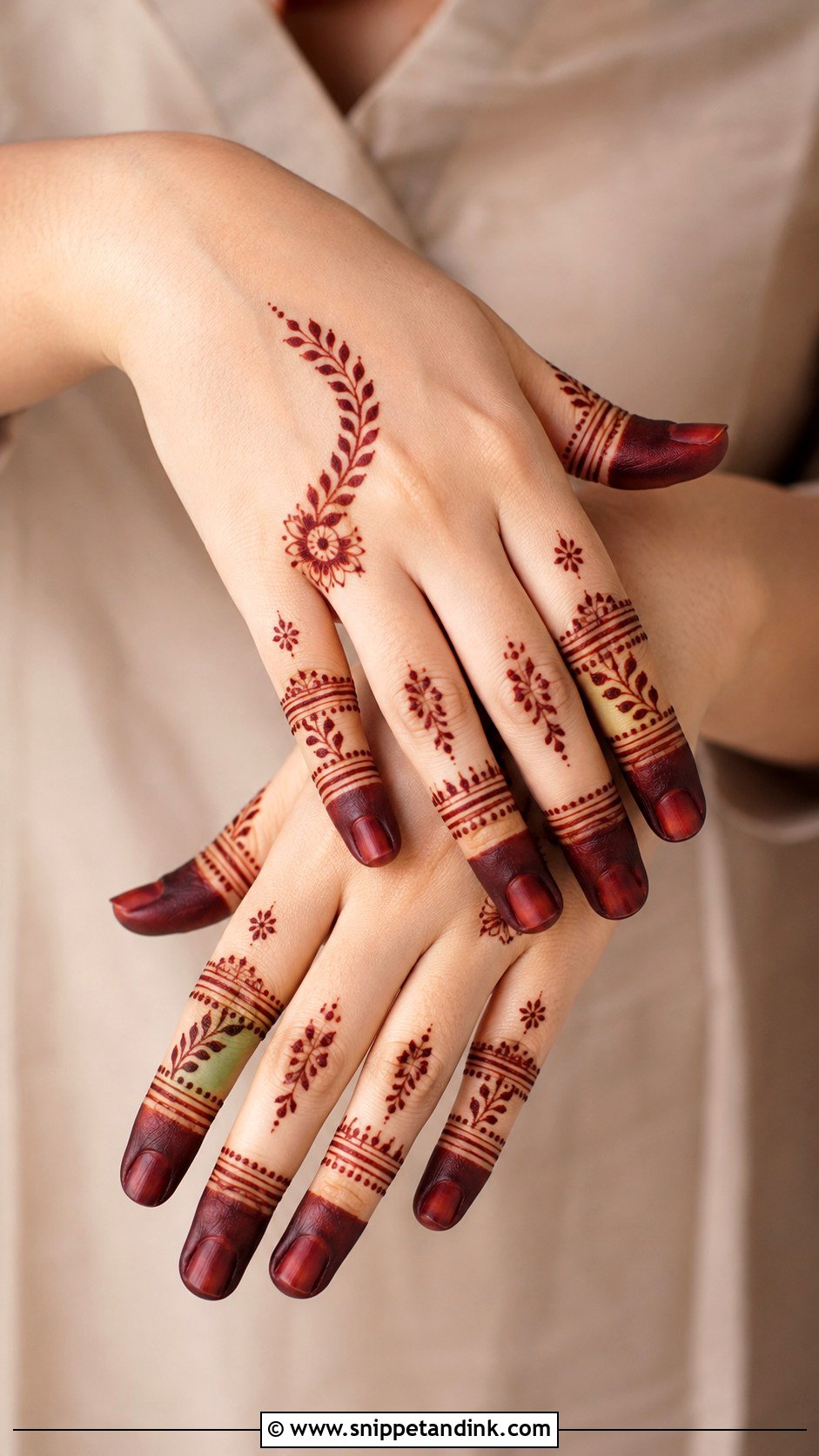
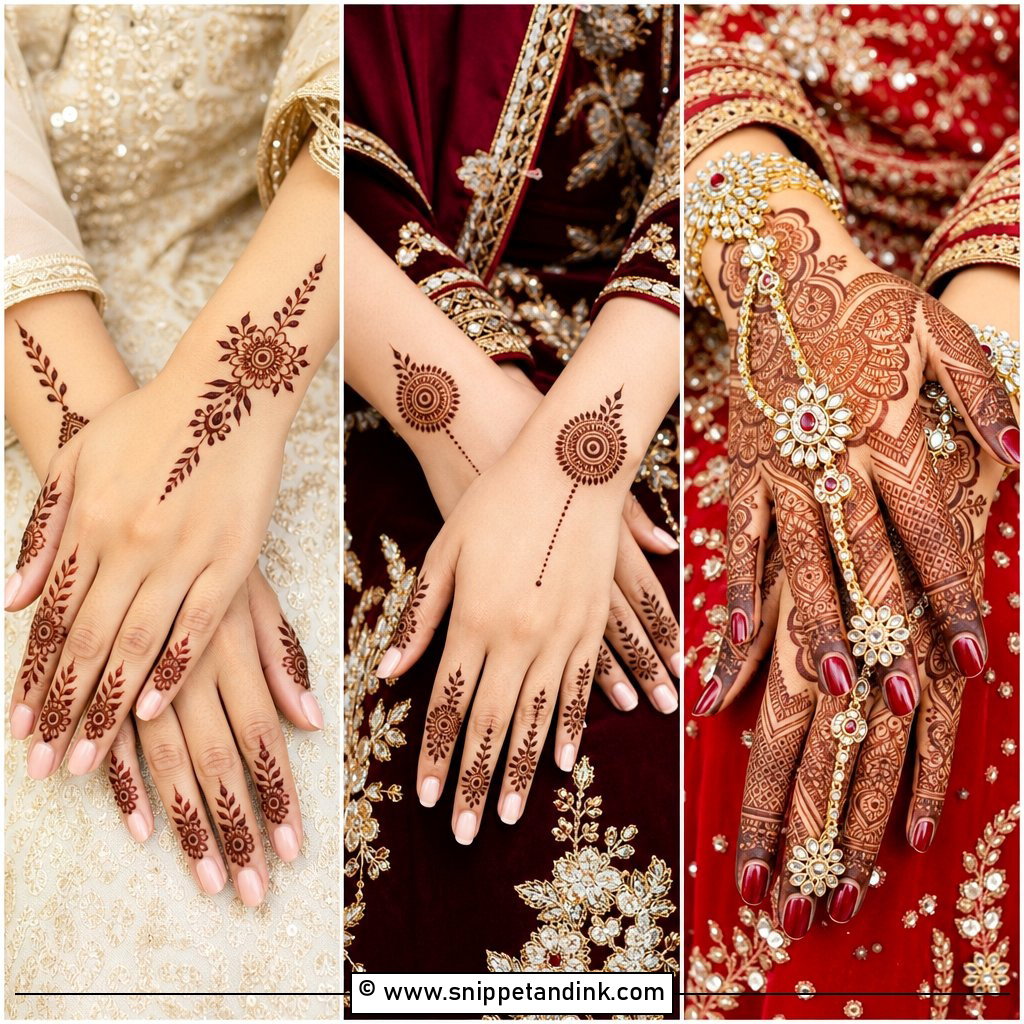
Finger work keeps the palm and back hand mostly open: fingertip caps, ring bands, leafy strips, tiny florals and a soft accent at the wrist. It draws attention to a manicure, so do your nails before the henna rather than after; soaking and acetone fade a fresh stain. I repeat similar details on each finger but vary the spacing slightly, which looks hand-drawn rather than stamped. College events and casual festivals suit it.
22. Stylish Bracelet Mehndi Design
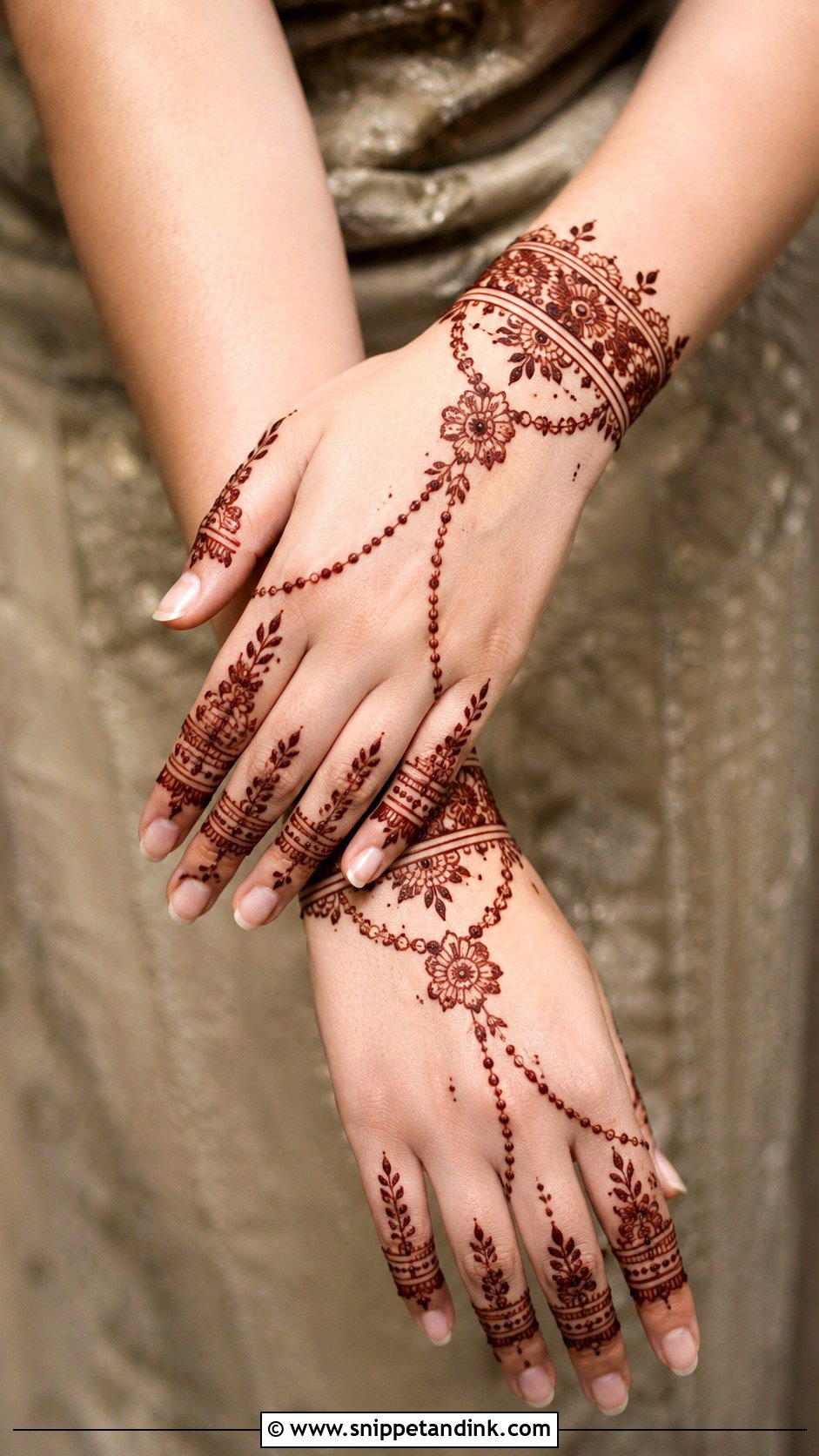
Here the wrist becomes the main attraction. A bold cuff, fine chain lines, small flowers, finger bands and a central back-hand motif make a neat design that doesn’t cover the whole hand. I draw the cuff with the wrist relaxed rather than bent, so it sits straight when you move. It suits modern outfits and simple ethnic wear, and it’s a good answer for anyone who dislikes heavy palm coverage. Keep the band symmetrical and add dots for a jewelry effect.
23. Stylish Haath Phool Mehndi Design
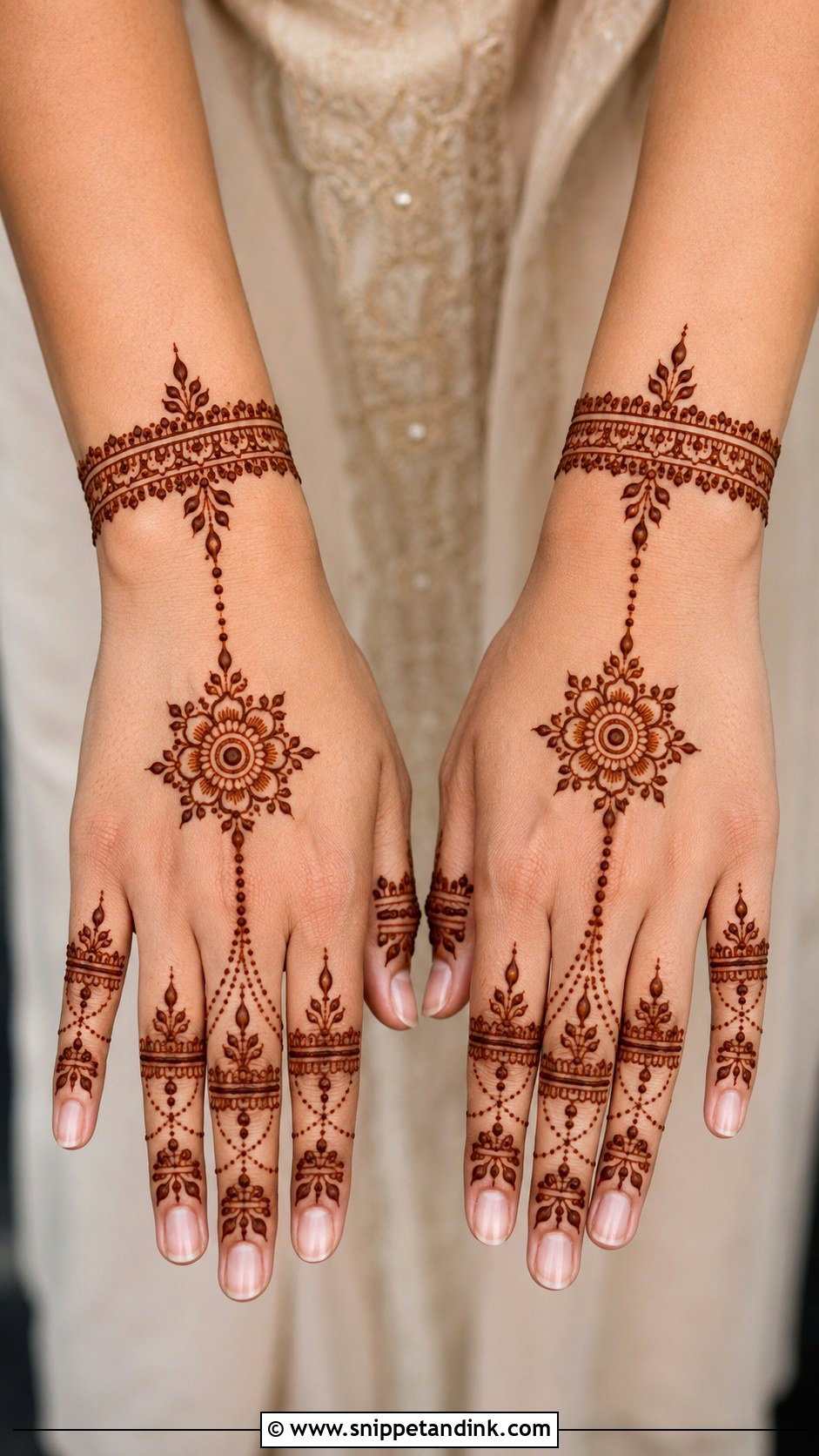
Haath phool designs copy the traditional hand ornament: a wrist bracelet, chain details and a central flower or mandala linked to the fingers. It can be minimal with thin lines or richer with florals, pearl-like dots and leafy borders. Alignment is what makes or breaks it. I line the central motif up with the middle finger and keep the wrist band clean, since any tilt shows immediately in close-up hand photos. Engagements, Eid, bridesmaids and pre-wedding events suit it.
24. Stylish Minimal Mehndi Design
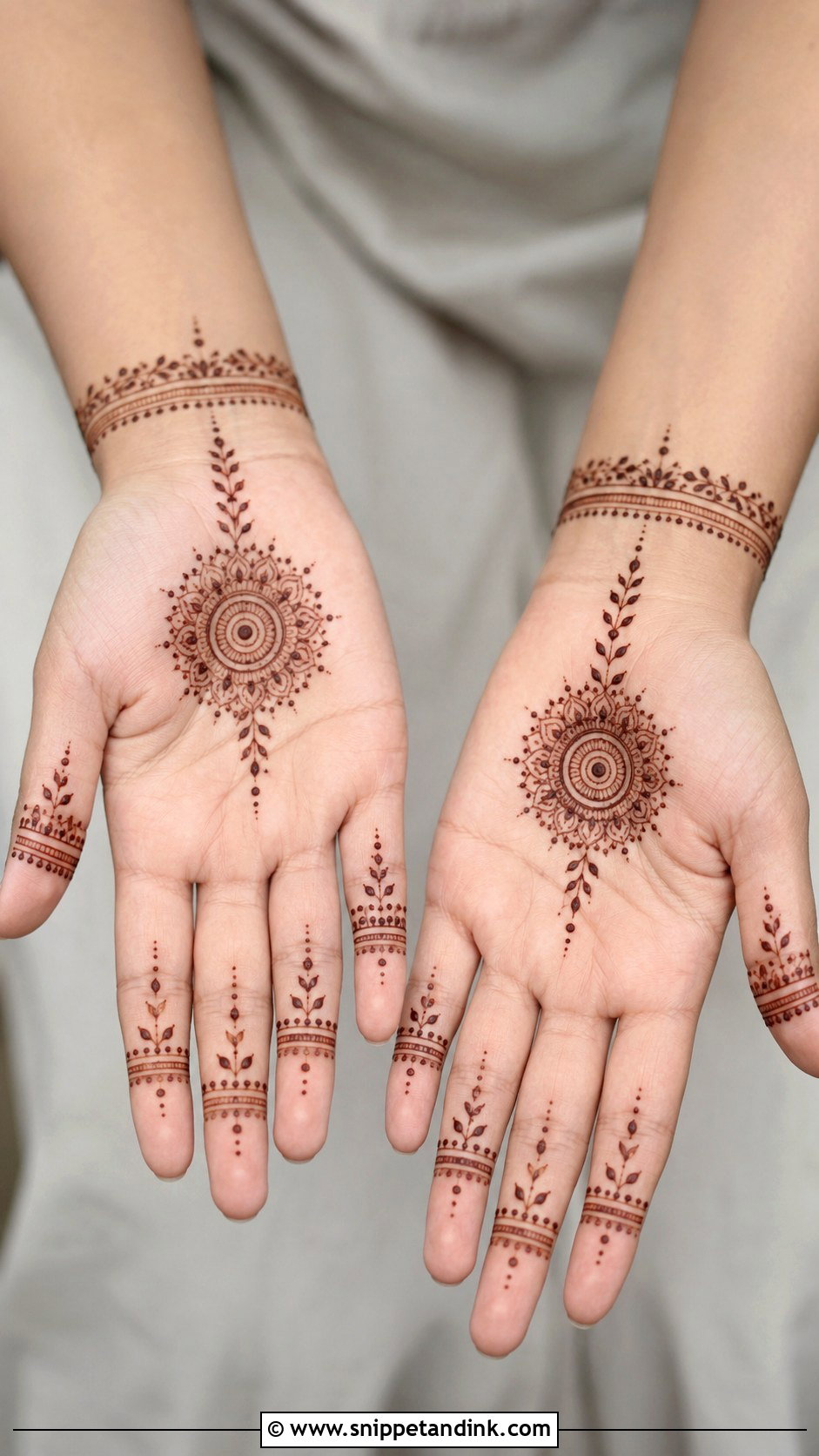
Minimal should feel intentional, not empty. A tiny mandala, fine finger lines, small leafy trails and a very light wrist detail can all work, as long as one of them is clearly the focus and the rest stay soft. Thin lines, no heavy filling. It’s a sensible choice for work, casual events, younger girls and anyone trying henna for the first time.


25. Stylish Negative Space Mehndi Design
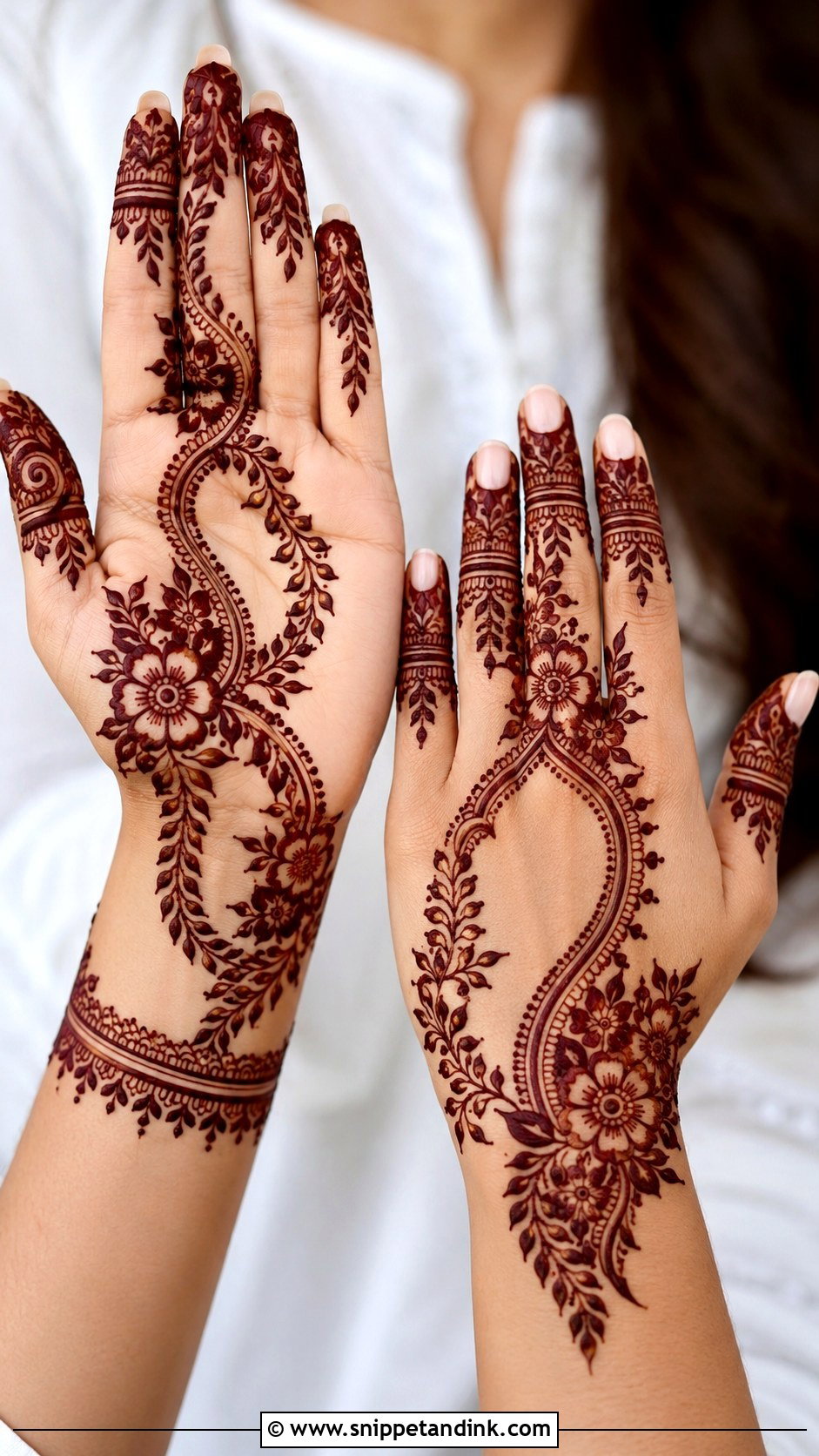
Negative space treats bare skin as part of the pattern: bold flowers, curved borders and clean empty areas between motifs, the way Arabic and Khaleeji artists use it. On the palm, open bands; on the back hand, a flowing trail. The empty shapes need as much planning as the drawn ones. I picture the bare areas first and draw around them, otherwise the gaps come out random and uneven. Done well, every motif stands out in photographs.
26. Stylish Shaded Mehndi Design
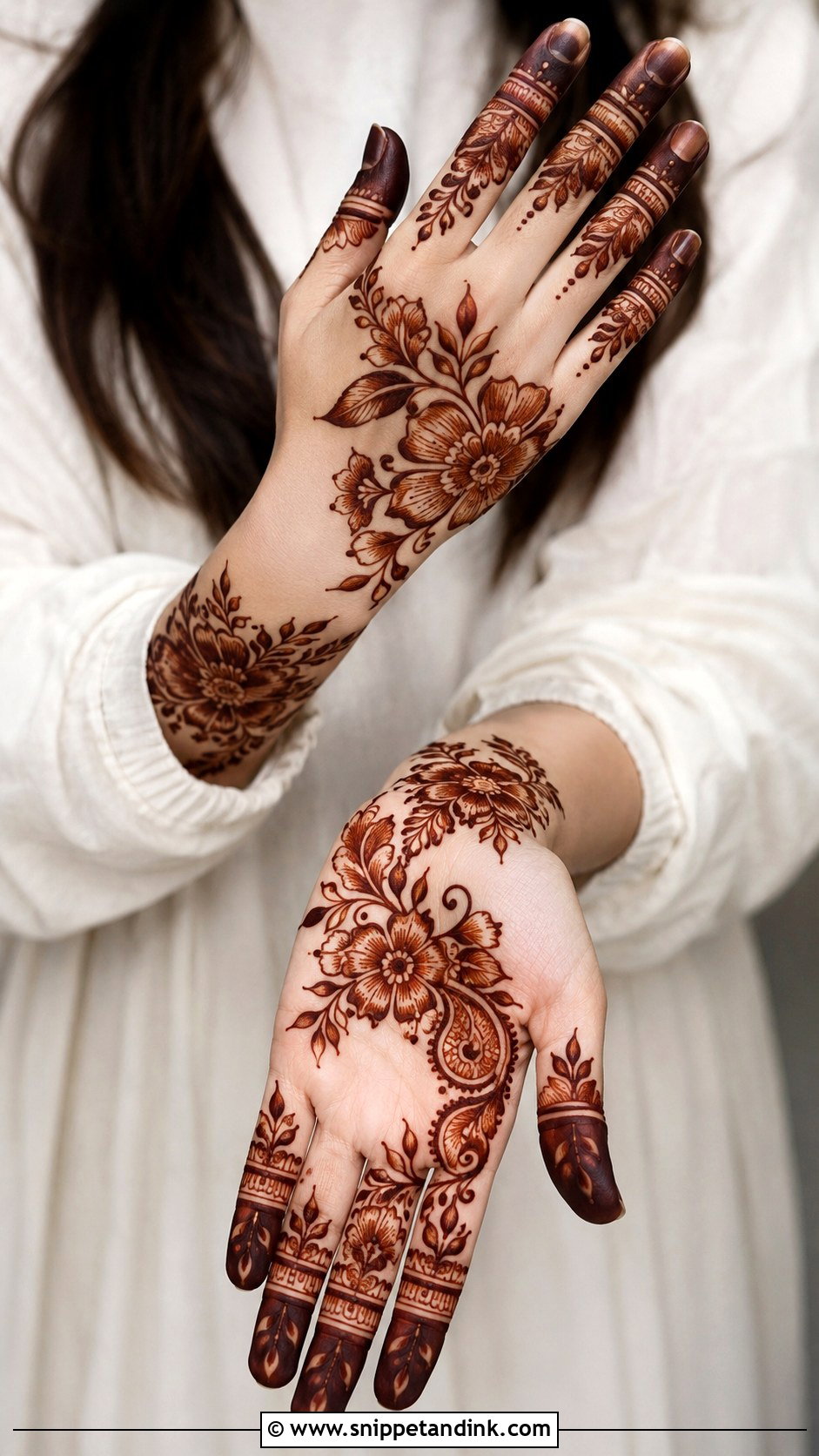
Shading adds depth to flowers, leaves, paisleys and borders, in Arabic, Indo-Arabic or Khaleeji styles. Bold outlines first, then soft shading inside the main motifs, with some spaces left clean. It makes a design look fuller without lots of tiny fillers, and the light-and-dark contrast reads well on camera. Pressure is everything: I shade with a much lighter squeeze than I outline, otherwise the shading floods the edges and the finished stain looks smudged.
27. Stylish Geometric Mehndi Design
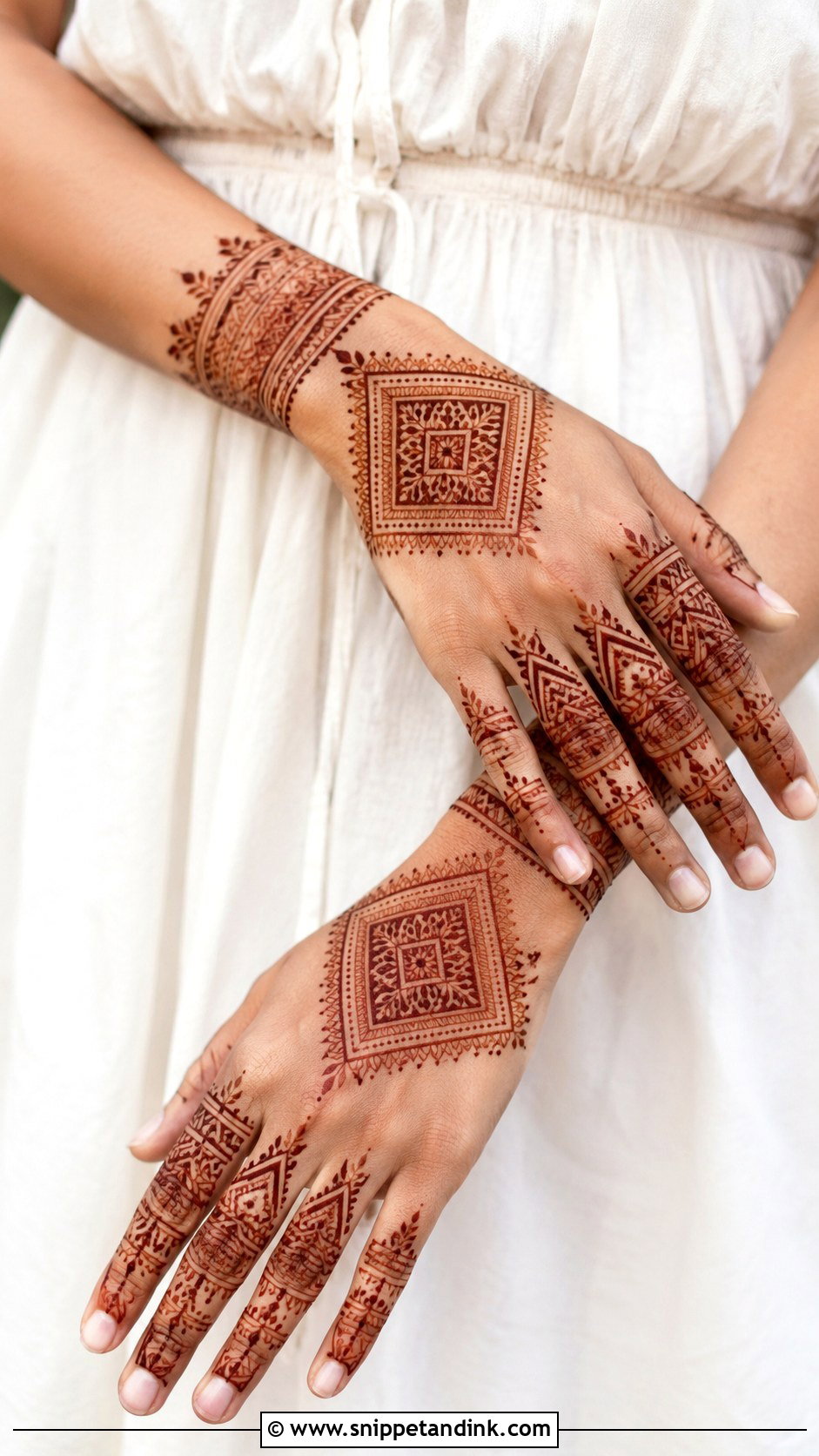
Triangles, squares, diamonds, grids, parallel lines and dot borders, running from wrist to fingers, give a bold look without any heavy floral work. Some versions borrow from Moroccan patterns, others mix in minimal Indian details. A back-hand layout with finger panels and a wrist cuff is my favourite arrangement. Hands curve and flex, so I ask clients to keep the hand flat and still for the long straight lines. It suits anyone who wants something different from the usual florals.
28. Stylish Eid Mehndi Design
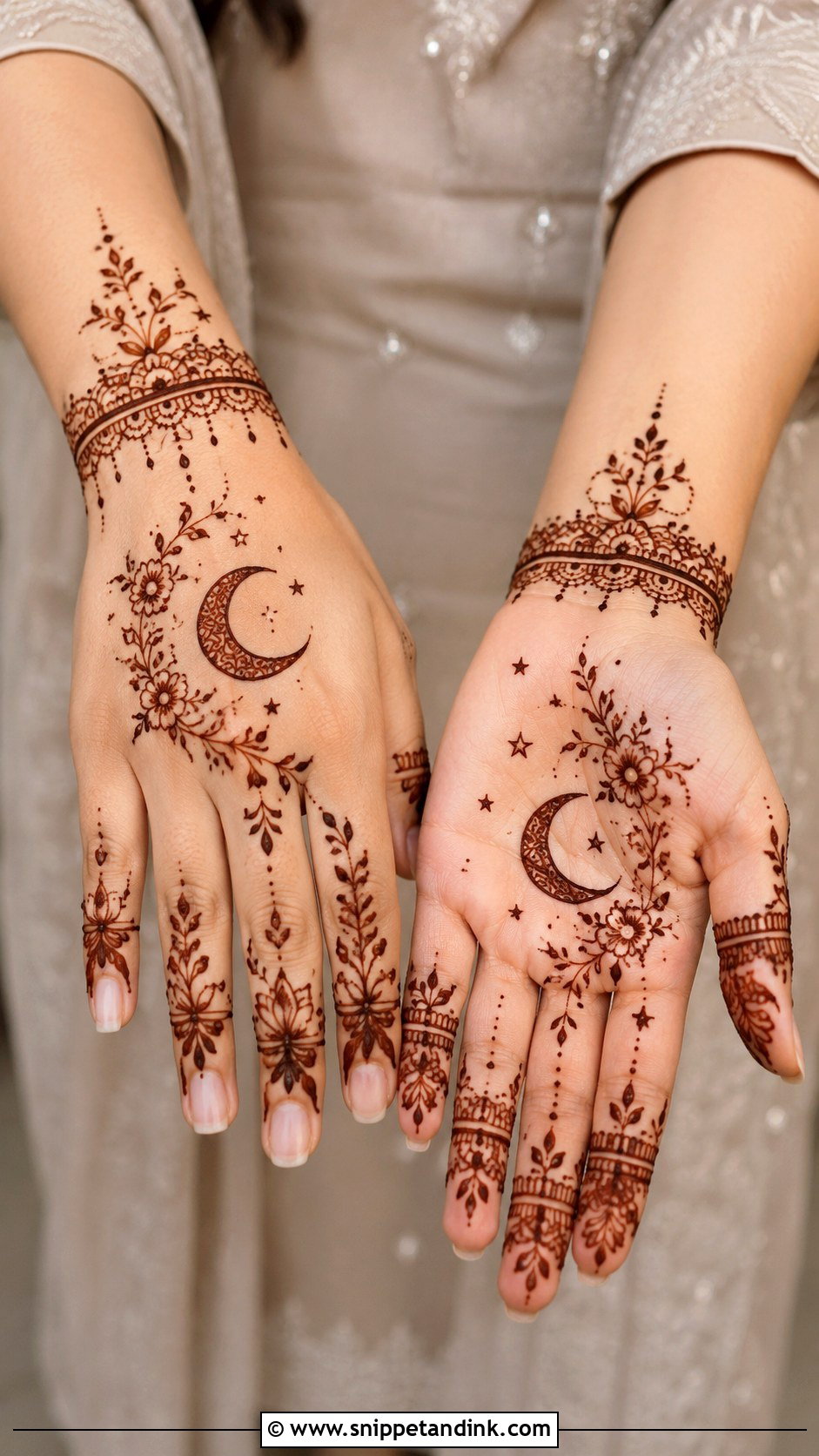
A stylish Eid mehndi design needs to look festive with traditional outfits and still be quick to apply. Current requests include Arabic trails, crescent moons, floral vines, jewelry details and neat fingers. A back-hand design with a moon-inspired centre, a bracelet cuff and leafy fingers feels both meaningful and modern; on the palm, a mandala with small stars, dots and curved floral borders. Clean spacing and bold motifs can look more stylish than dense filling, and they’re ready faster when everyone needs the cone.
29. Stylish Karva Chauth Mehndi Design
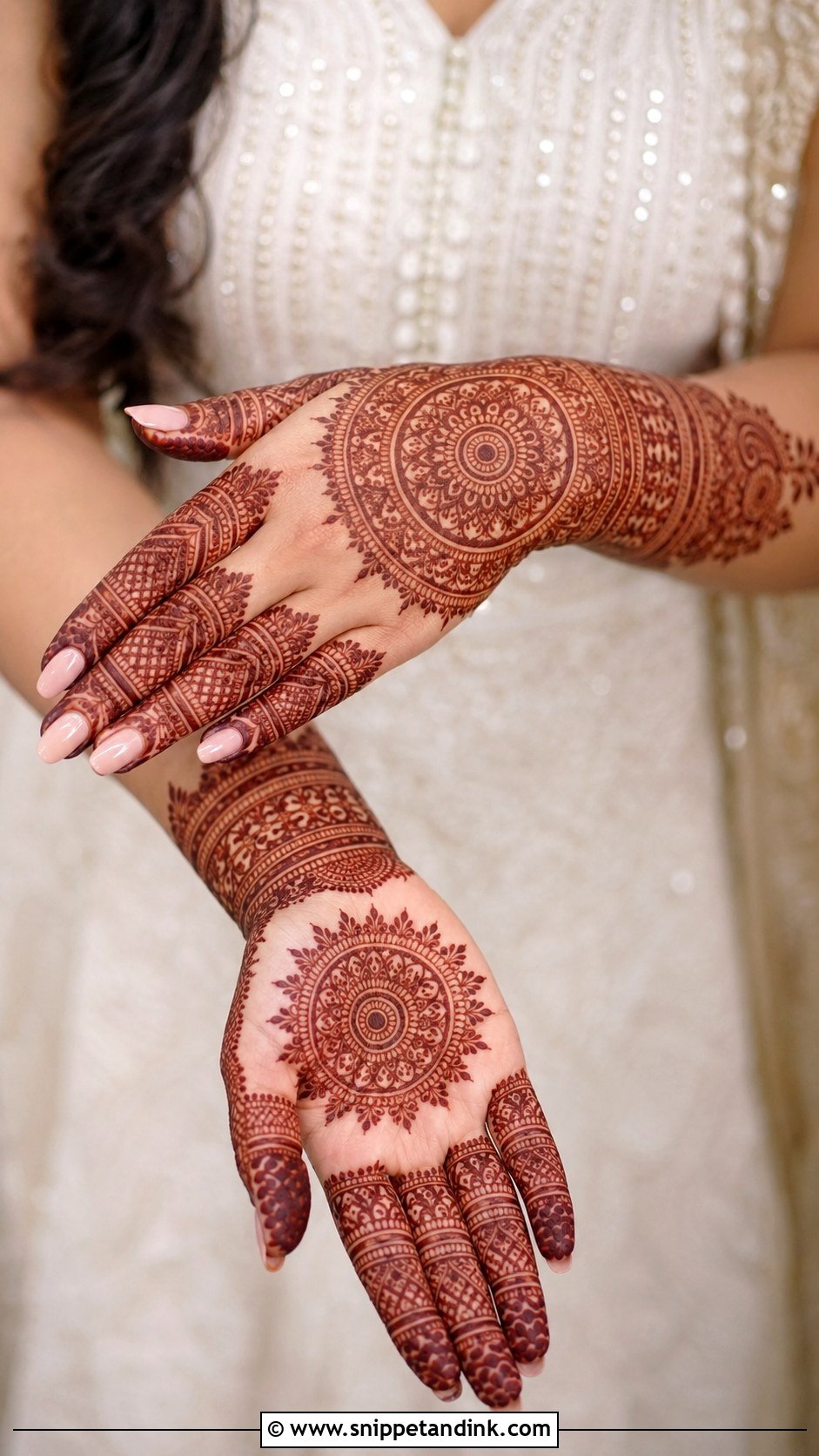
A stylish Karva Chauth mehndi design is usually full palm or back hand: mandalas, paisleys, jaali, florals and bracelet details, with a bangle-like wrist and clean finger work for a modern touch. Initials or symbolic motifs can be added quietly. Remember you’ll be wearing it through a long day of fasting and rituals, so I steer clients toward medium to full coverage that stays comfortable rather than the densest option. Coordinate both hands and it will sit well with bangles and traditional dress.
30. Stylish Engagement Mehndi Design
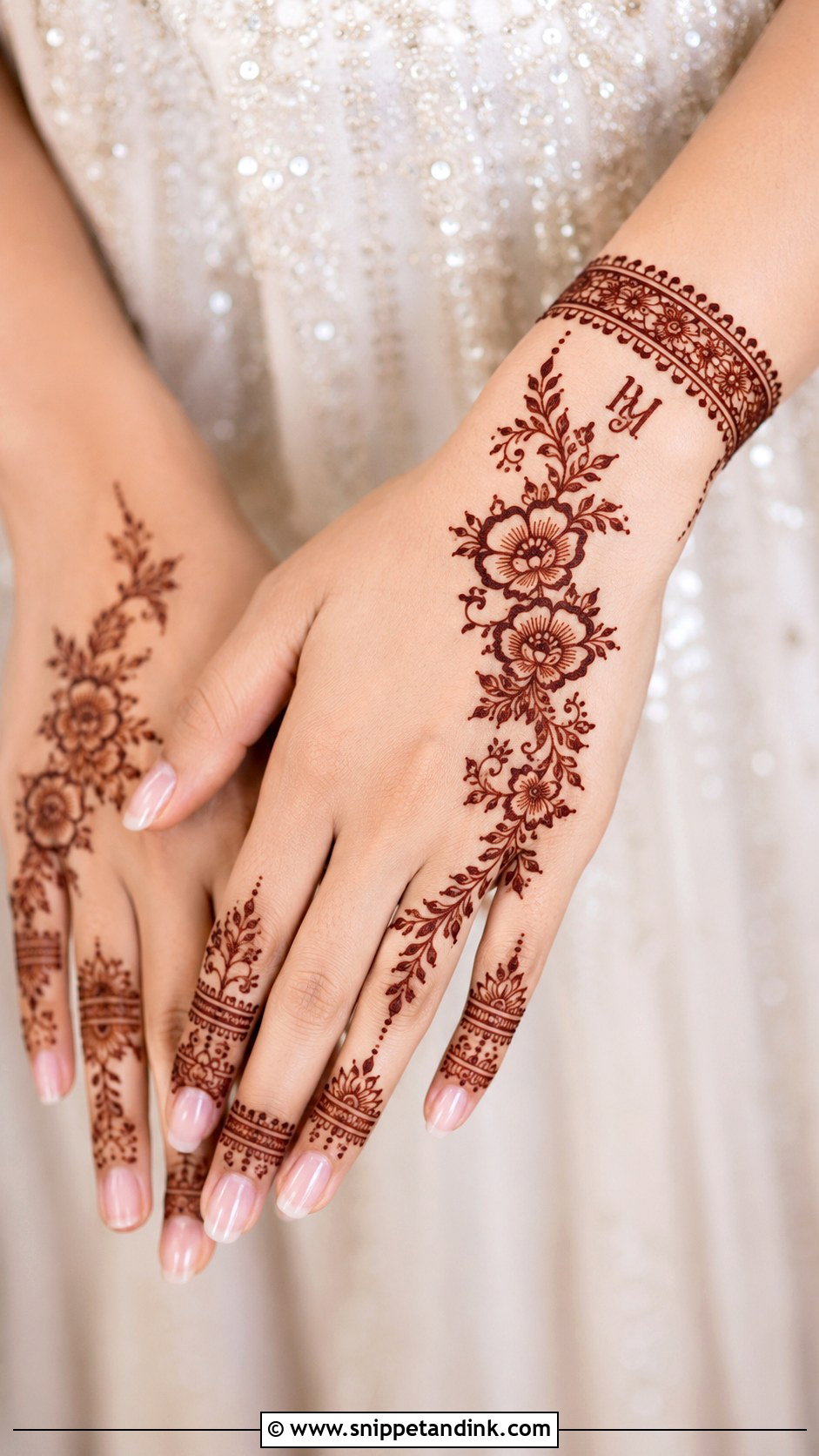
Engagement henna should look special without stealing the wedding’s thunder. I’d go for a back-hand jewelry pattern, a soft floral trail, some detail on the ring finger and a light wrist band. Keep the area around the ring open; dense filling there hides the ring in exactly the photos you care about. A palm with initials, a small mandala and clean florals works too. It pairs easily with engagement outfits of any style.
31. Stylish Bridesmaid Mehndi Design
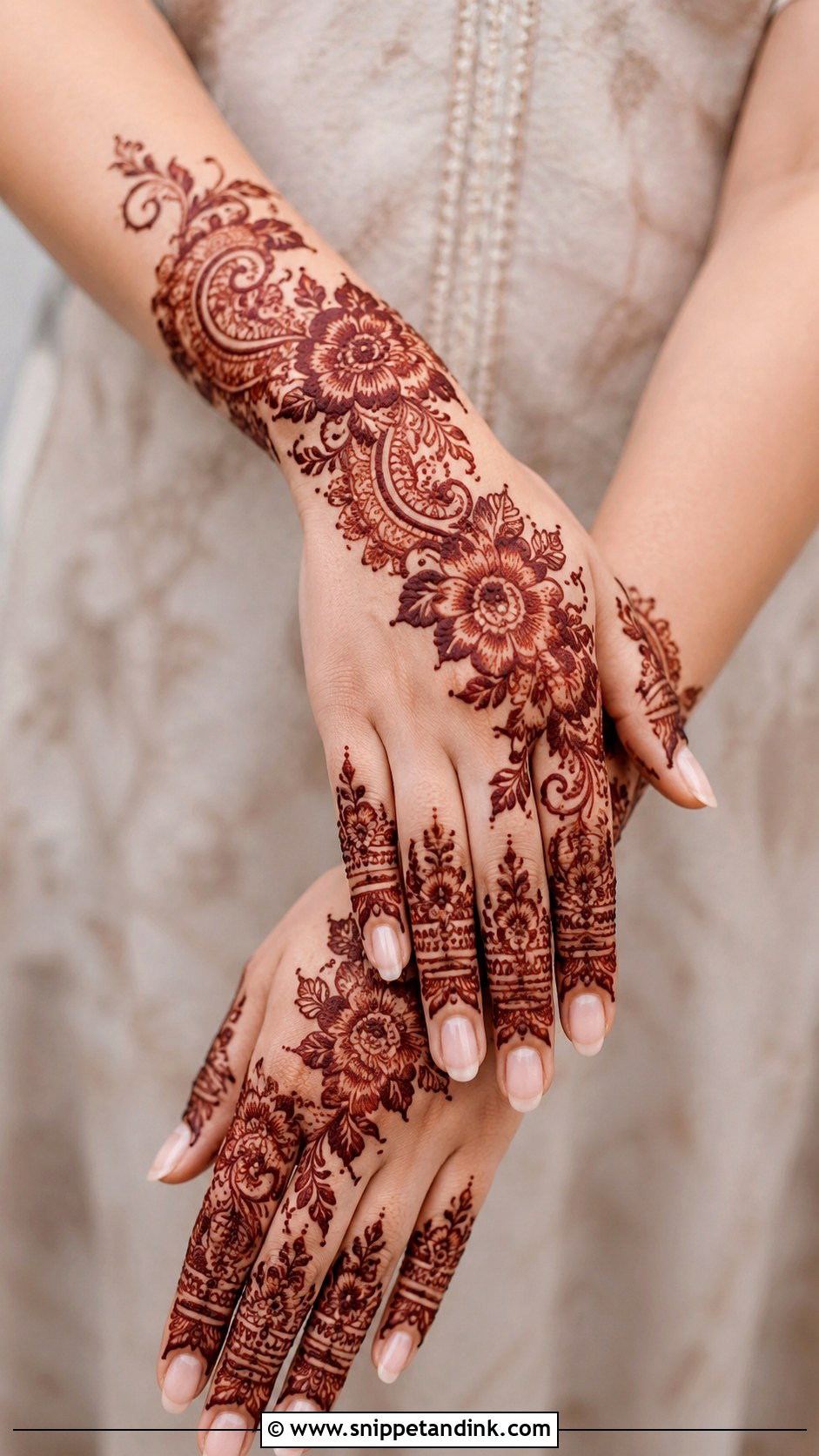
Bridesmaids dance, carry things, pose in group shots and help with a hundred small jobs, so their henna has to cope. Indo-Arabic florals, half-hand coverage, detailed fingers and a bracelet wrist sit nicely between casual and bridal. Back-hand trails show best in group photos. Matching designs with small variations look planned without being uniform. Make the motifs bold enough to read from a distance, and it will suit lehengas, sarees, shararas and Indo-western outfits.
32. Stylish Kids Mehndi Design
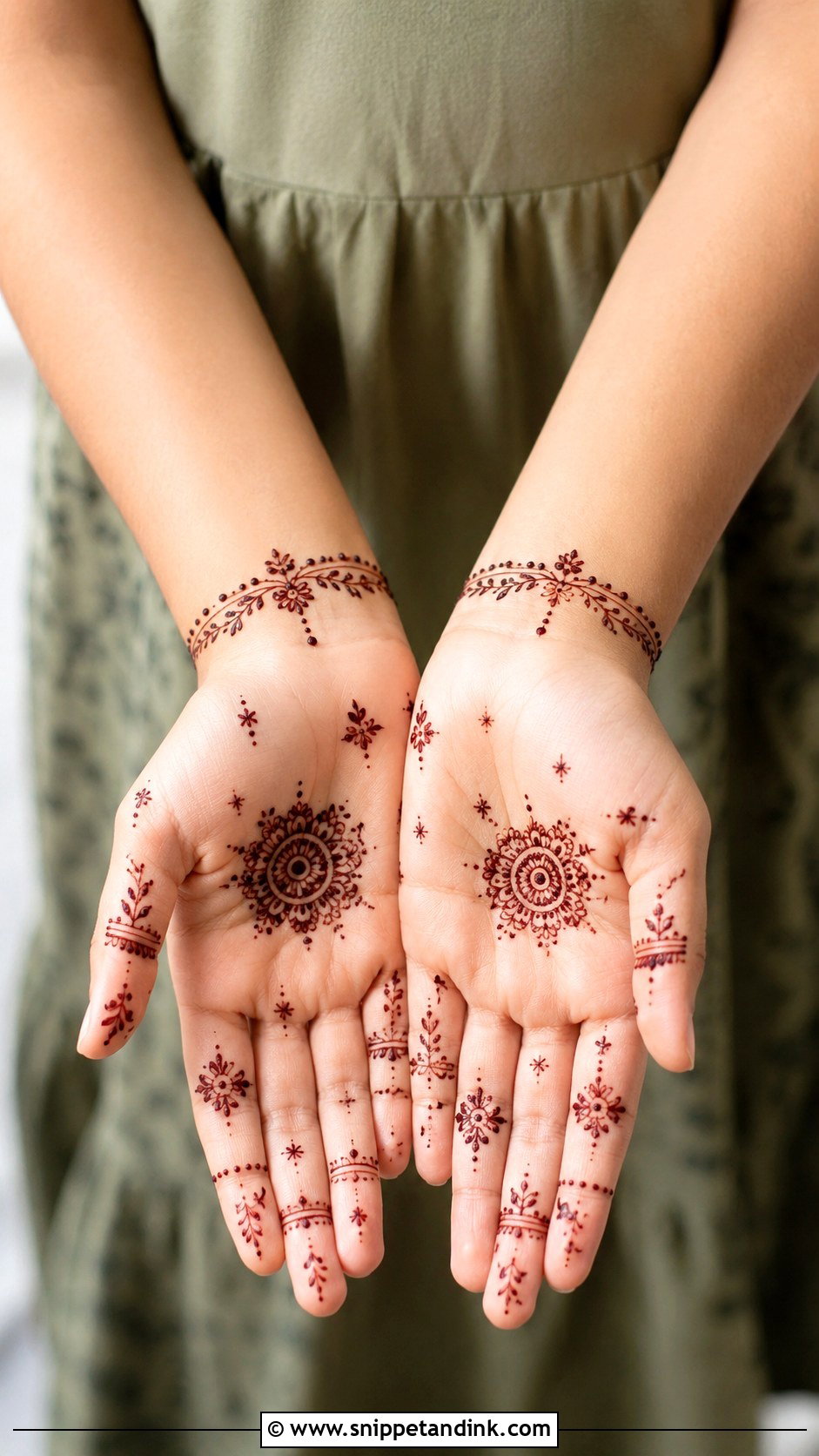
Kids get a small flower, a mini mandala, a simple bracelet, dots and light finger lines, and that’s plenty. Children rarely sit still for long, so I draw quickly, keep the design open and use gentle cone pressure so the paste stays thin and dries fast. Tiny hearts, stars or leaves are favourites. Use only natural henna, and if the child has sensitive skin, test a small dot first.
33. Stylish Half Hand Mehndi Design
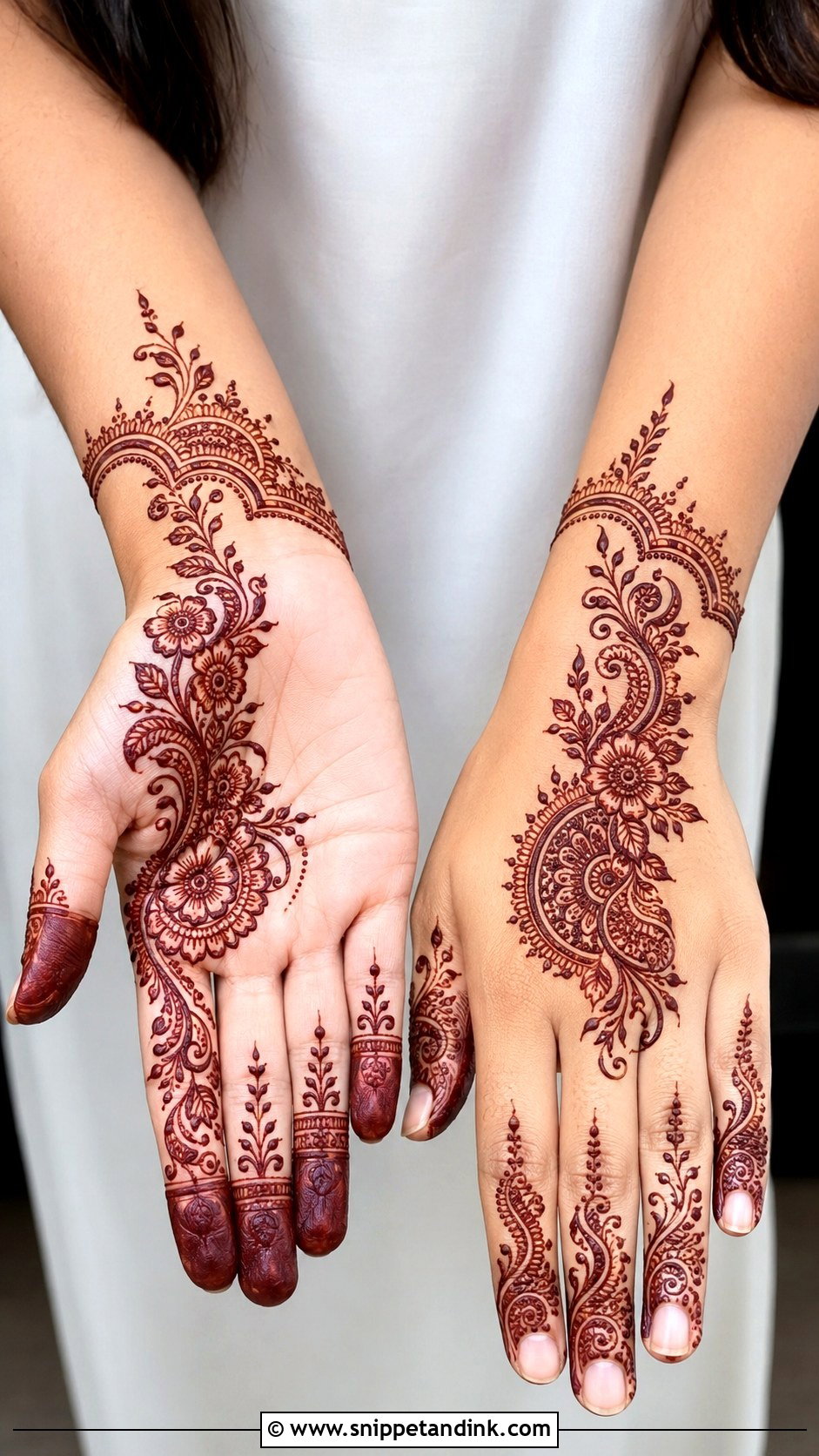
Half hand covers either palm and fingers or back hand and wrist, stopping before the forearm, with Arabic flowers, mandalas, paisleys, jaali panels or jewelry chains. The ending point is what separates a stylish half hand from an unfinished one; I close it with a border, cuff or curved band. Bold motifs give a more visible stain, and clean spacing keeps it modern. Guests and festival-goers save time without looking underdressed.
34. Stylish Bridal Back Hand Mehndi Design
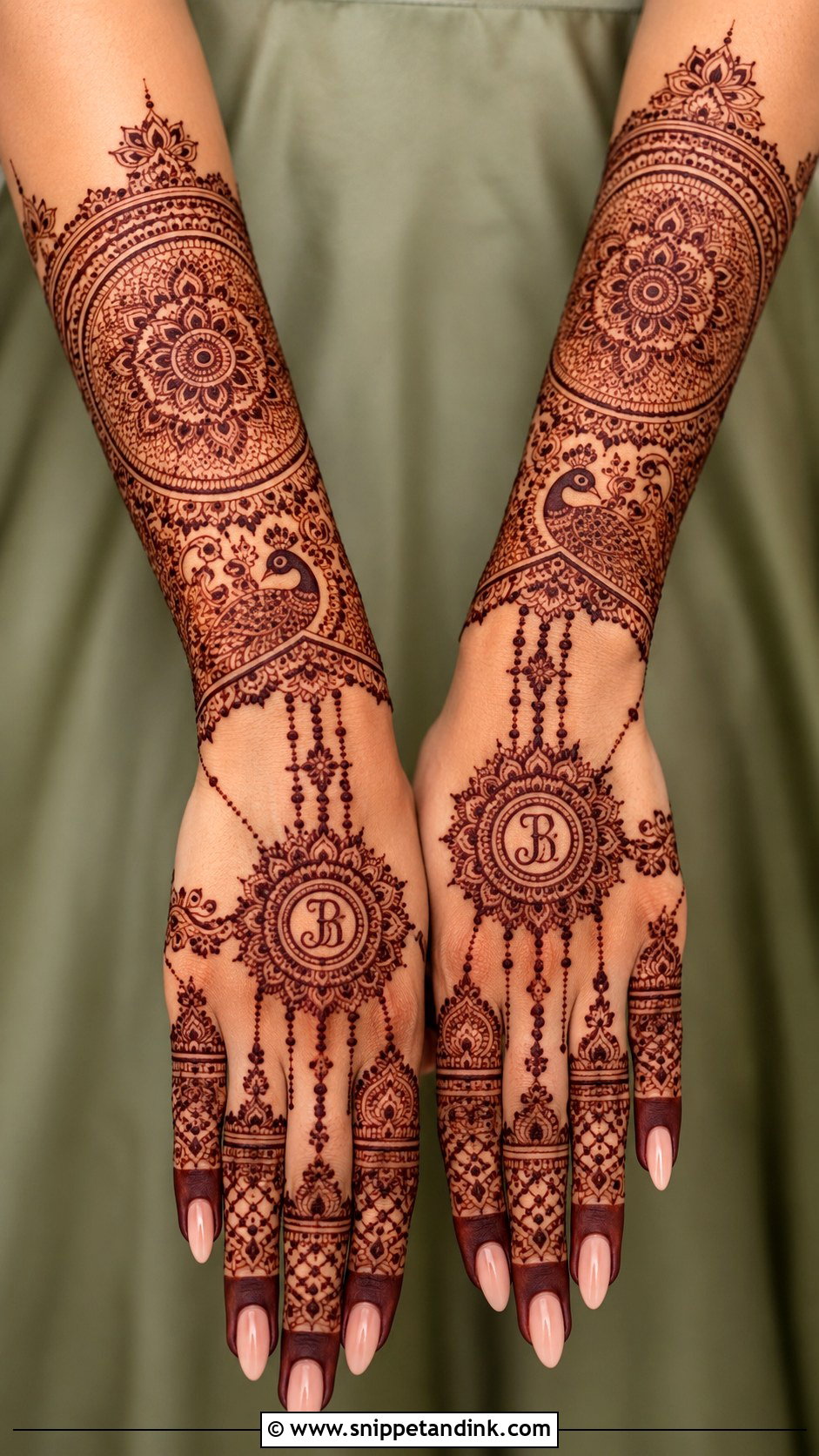
The back of a bride’s hand appears in more photographs than you’d expect: ring shots, bouquet shots, hands over the dupatta. A complete back-hand look might hold haath phool chains, mandalas, lotus, peacocks, initials and wrist-to-forearm panels. It should match the palm but can be slightly more open, so jewelry and nails show. Many brides I work with now want clear space around the centre motif so it looks sharp up close. Finish with detailed fingers.
35. Stylish Dulhan Mehndi Design
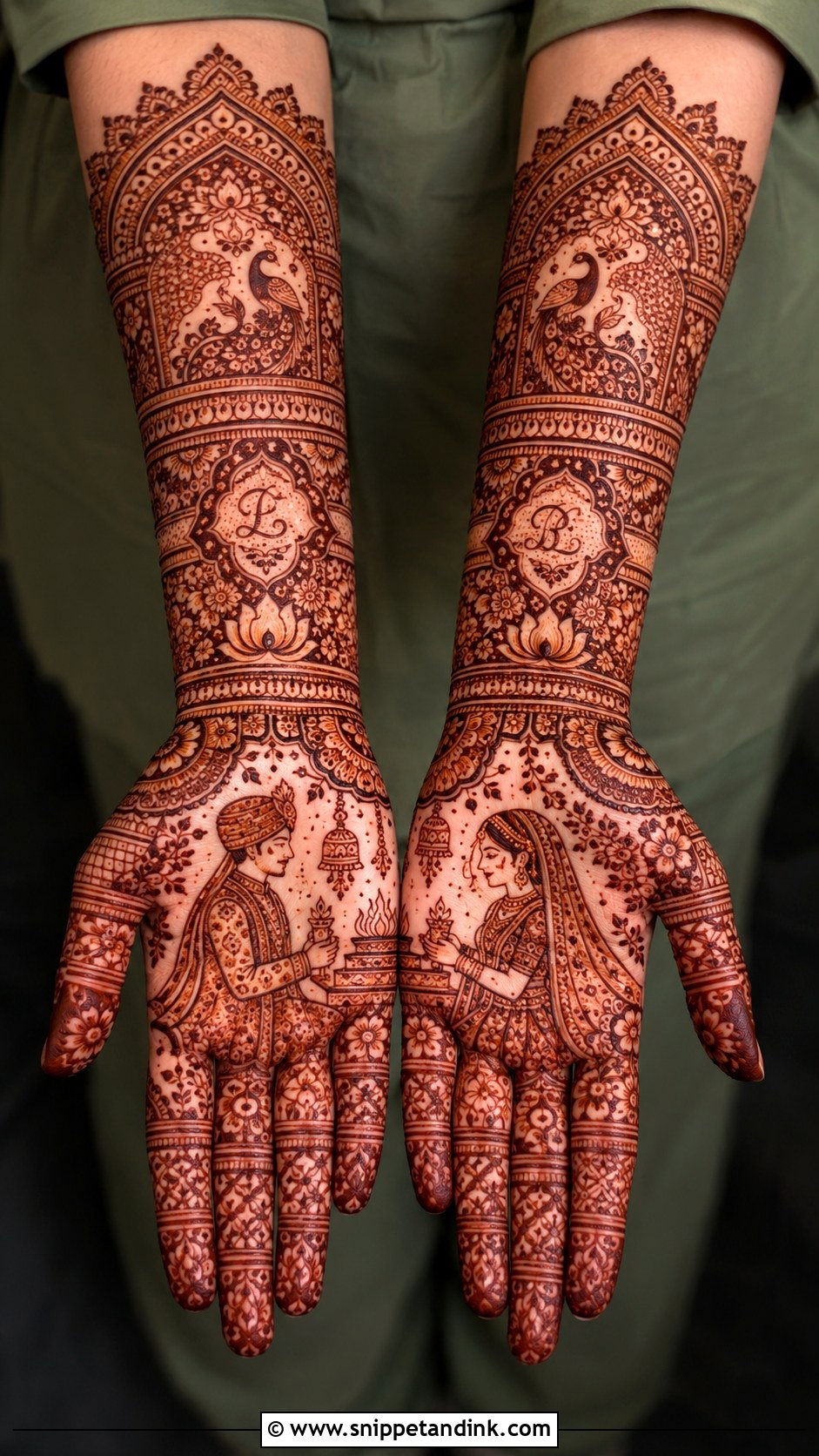
Dulhan mehndi is bridal henna at its fullest: both hands and arms, with bride and groom figures, wedding elements, peacocks, lotus, paisleys, mandalas, initials and personal memories woven in. Planning matters more than speed. I sketch the sections on paper with the bride first, then draw detailed palms, bold fingers, ornamented wrists and forearms balanced with larger motifs. Modern versions use negative space to keep the artwork clear. Ask for it on the day before the wedding at the latest, and expect a long, slow sitting.
When the Stain Looks Its Best on Camera
Henna changes colour after the paste comes off, moving from bright orange toward deep brown over a day or two. That timing matters if you’re planning photographs. A design applied the morning of a shoot will still look orange in the pictures; one applied a day or two earlier will be close to its peak.
- Shoot in soft daylight near a window when you can. Harsh overhead light flattens the stain and makes it look muddy.
- Rub in a very small amount of balm so the skin looks healthy, then blot it. Too much oil reflects light and hides fine lines.
- Keep the hands relaxed with the fingers slightly apart. Clenched or stiff hands crease the skin and break up the pattern.
- Turn the back of the hand slightly toward the camera for ring shots, which lengthens the fingers and shows the centre motif cleanly.
If your stain came out lighter than you hoped, don’t scrub or try to darken it with chemicals. Keep the hands warm and away from water for the rest of the day, and let the colour finish developing on its own.
A Well-Spaced Hand Beats a Crowded One
The stylish design is the one that fits your occasion, your outfit and the way you’ll use your hands that day. If you love drama, Arabic, Khaleeji or shaded work. If you want tradition, Indian, bridal, paisley, peacock or full dulhan. For something modern, jewelry, finger, negative-space, geometric or a minimal mandala. Before you sit down, I’d think about your hand shape, how much coverage you have time for, how long it needs to dry, and how it will look in photographs. Clean spacing will always look more current than an extra layer of filling.
You'll Like These Ideas:







Leave a Reply