
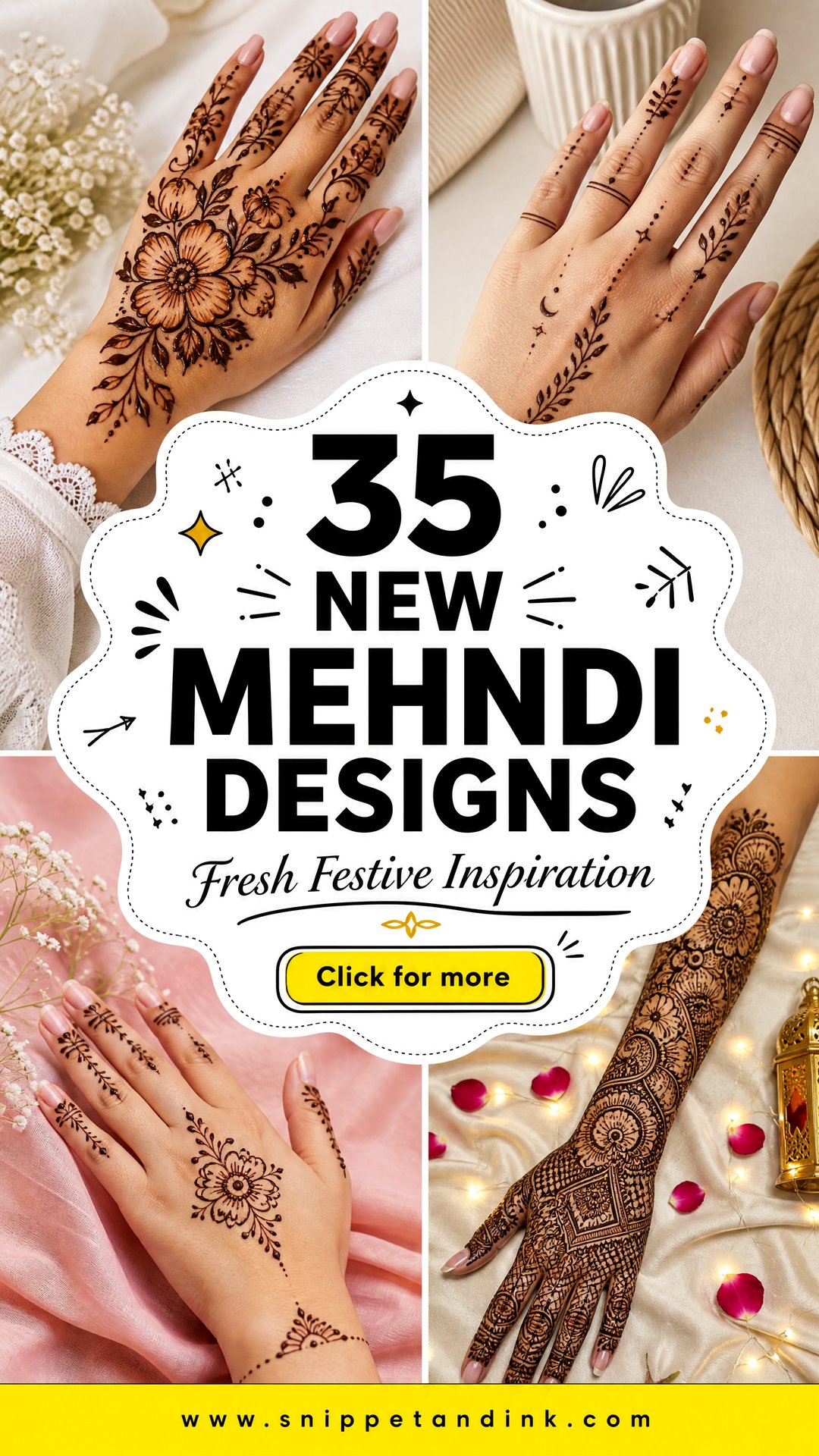
Henna this season is cleaner than it was a few years ago. I’m drawing more open skin, bigger Arabic florals, tidy mandalas and finger-focused patterns, and fewer hands packed edge to edge. Full-hand Indian art, simple back-hand henna, shaded Gulf florals and Moroccan geometry all have a place, and none of them are only for brides. The designs below are whole-hand looks for Eid, weddings, engagements, Diwali, photoshoots and ordinary family evenings, so you can choose one and show your artist exactly what you mean.
Where Your Sleeves and Bangles End, the Design Should Too
Before I draw anything at a festive booking, I ask what you’re wearing. It changes the design more than people expect.
- Long or three-quarter sleeves: forearm work will be hidden all evening, so I put that time into the hands instead.
- A stack of churiyan or bangles: they cover the first few centimetres above the wrist bone. I finish the cuff just below where they sit, so the border actually shows.
- Statement rings: I leave a clean band of skin at the base of that finger, otherwise ring and henna compete.
- Outfit color: a dark maroon stain looks rich against red and gold, while pastels and ivory suit lighter, more open designs that don’t overpower the fabric.
Bring the bangles with you if you can. Slipping them on halfway through tells me exactly where the wrist design should stop.
1. Full Hand Bridal Mehndi Design
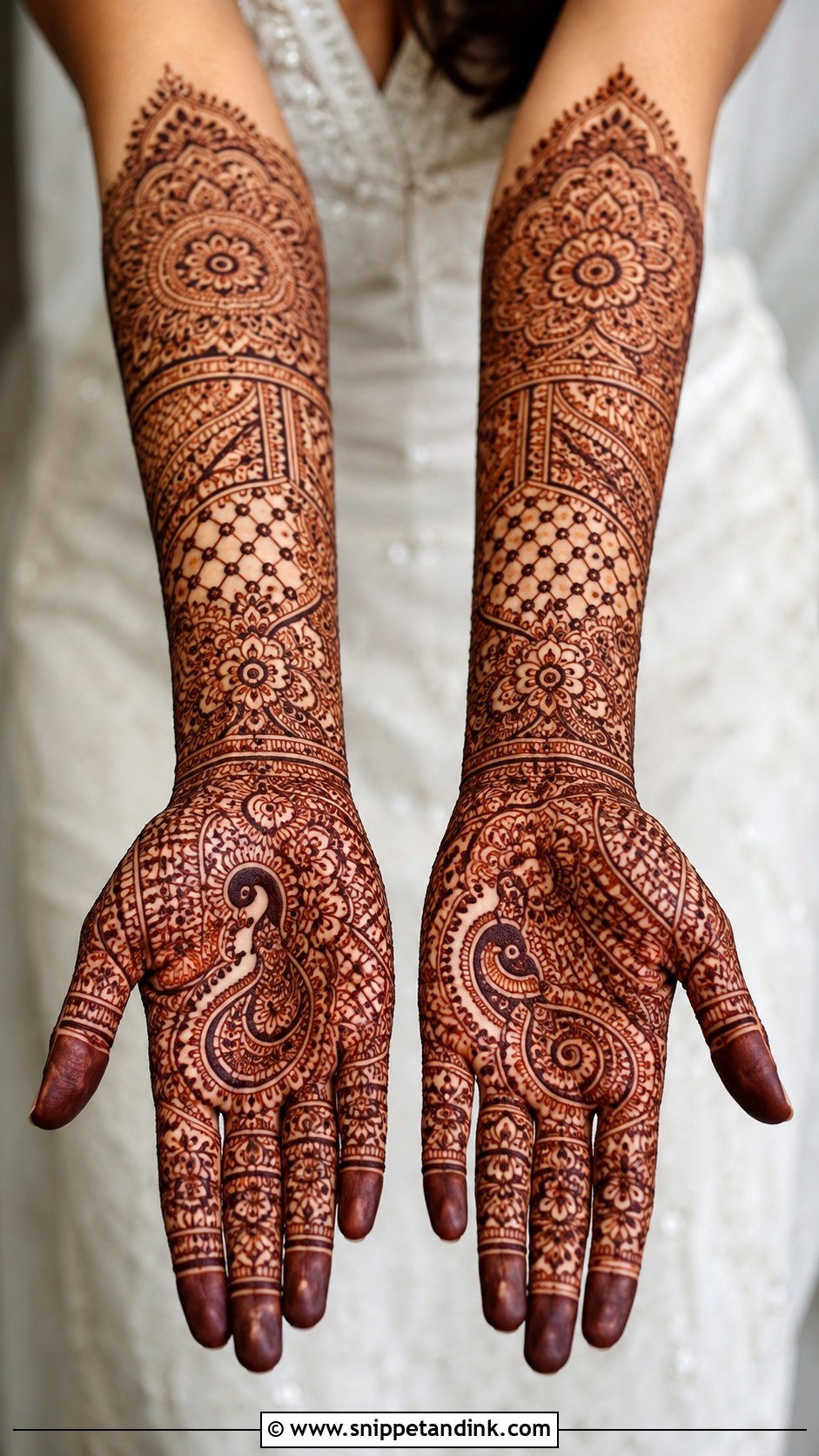
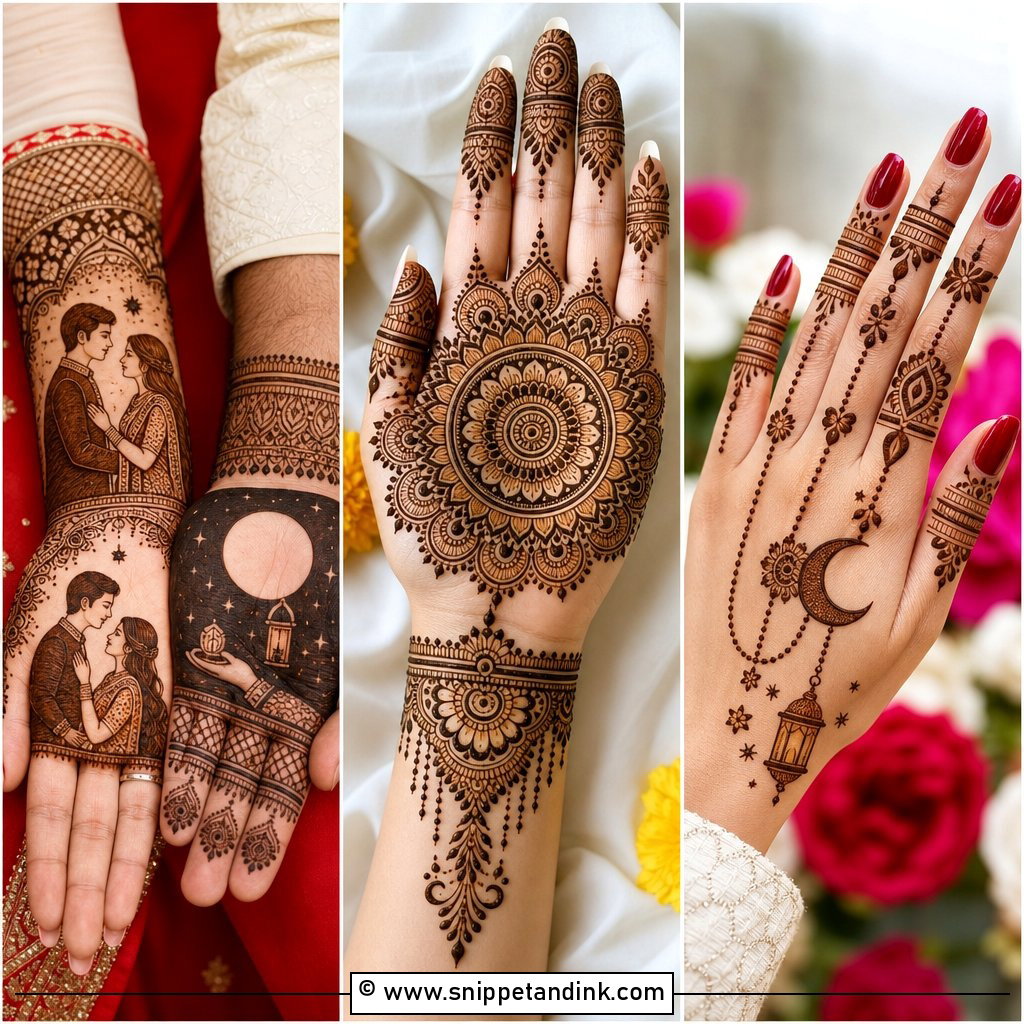
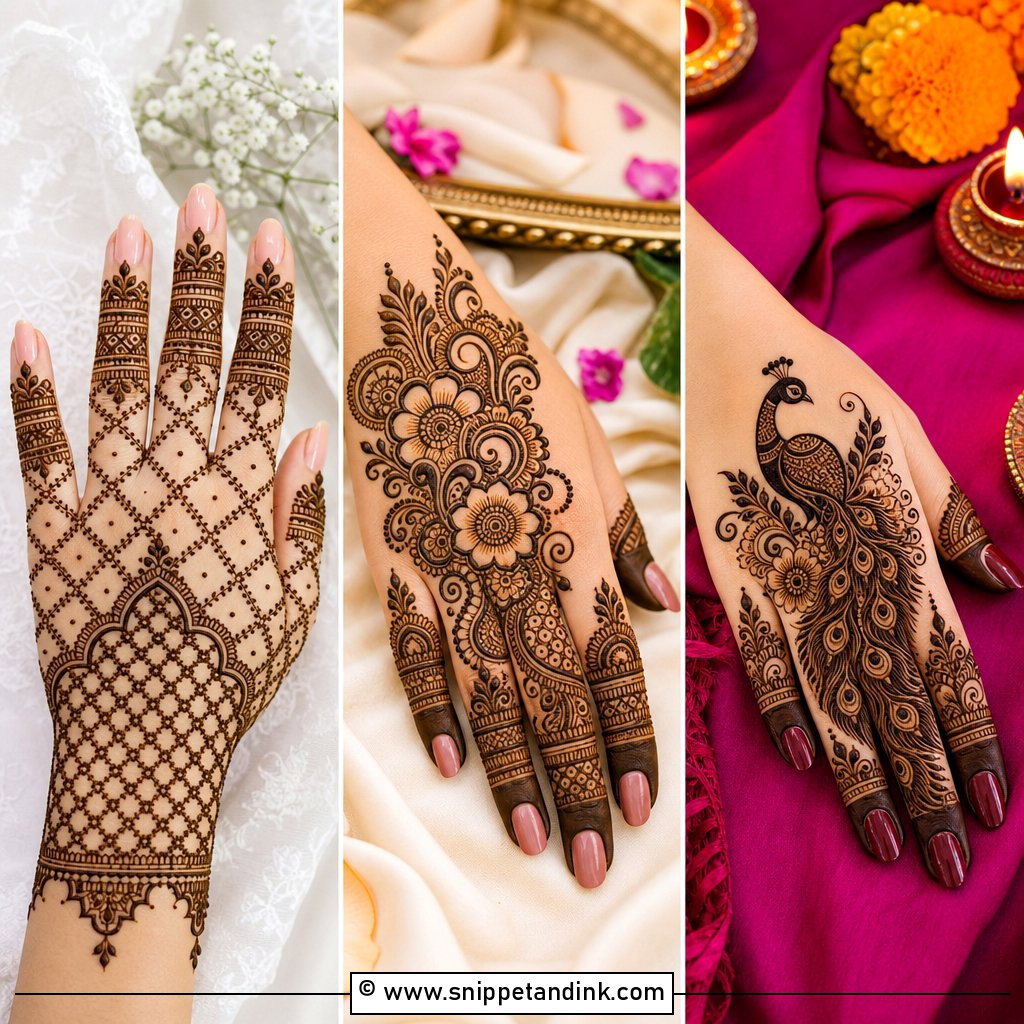
Full bridal hands still top my booking list. Palm, fingers, wrist and forearm fill with paisleys, florals, mandalas and peacocks, but the current way of drawing them is organized into zones, so each motif has its own space instead of melting into the next. Bride and groom figures, initials or small story panels can go into those zones. Wide coverage gives a deep, even stain, and the design holds its own beside a heavily embroidered lehenga or saree.
2. Arabic Mehndi Design For Back Hand
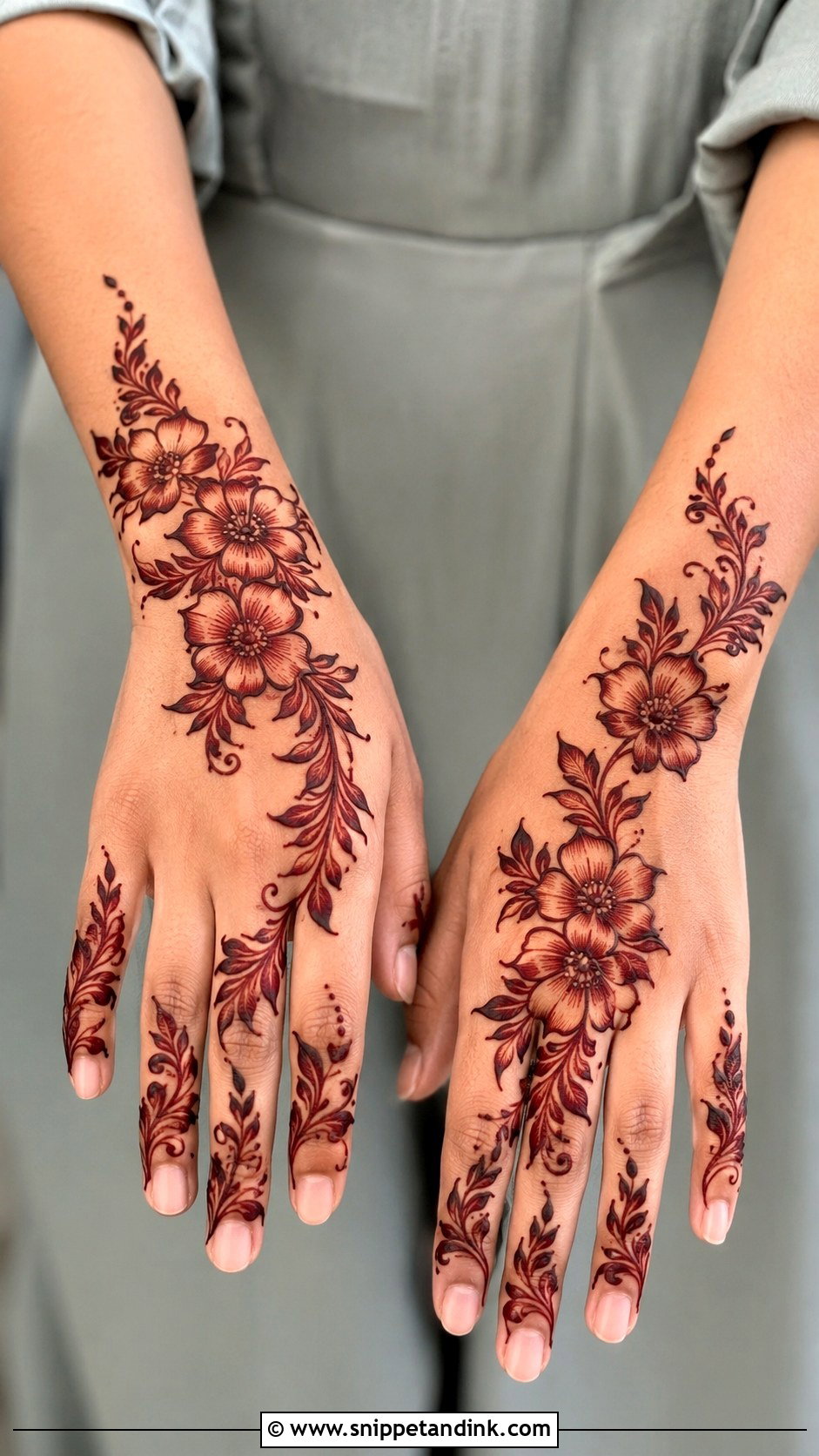
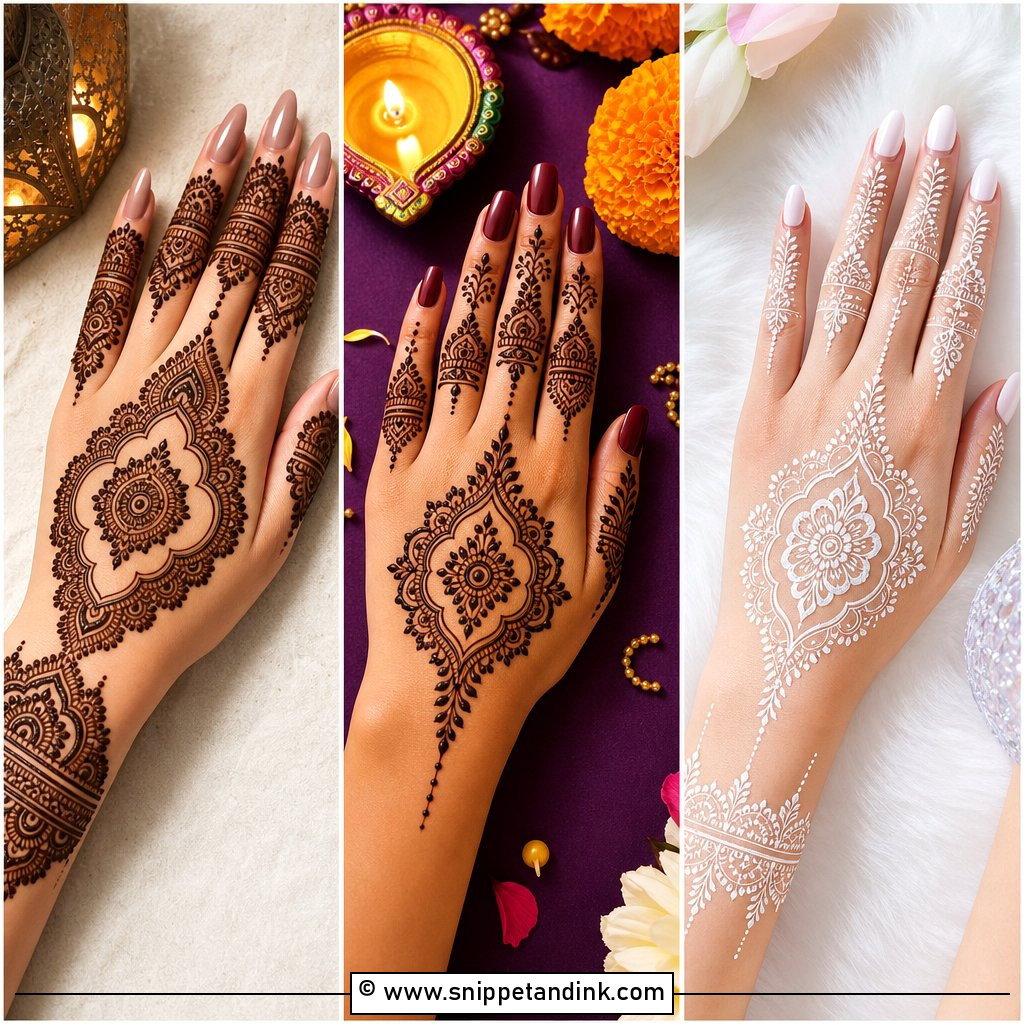
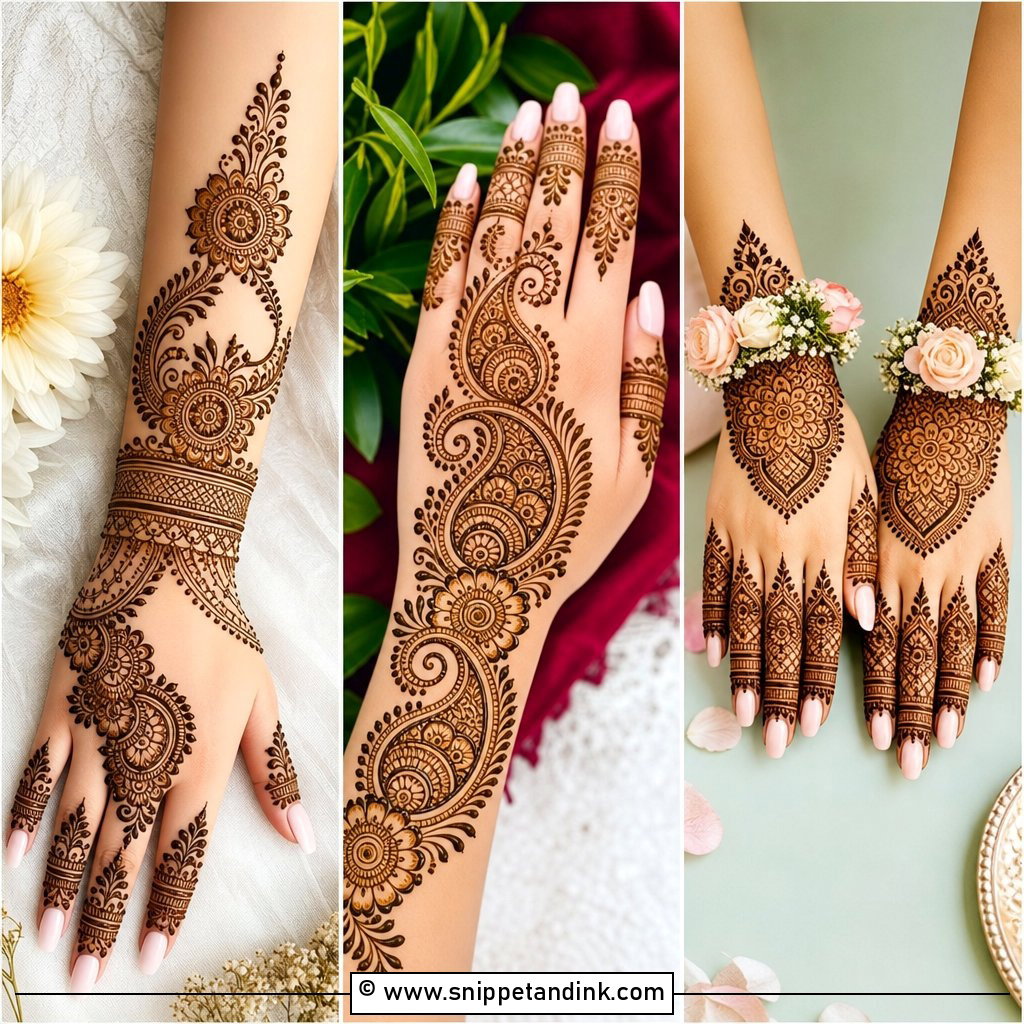
A diagonal Arabic trail from the index finger down to the wrist is the fastest way I know to make a back hand look dressed. Big flowers, leafy vines and shaded petals do the work, with clean skin around them. Fingers should be detailed but not packed. I draw the outlines thick and keep the inner shading soft, which stops the flowers from turning into dark blobs as the stain develops. Bridesmaids, Eid and engagement guests ask for this more than anything.
3. Simple Mehndi Design For Front Hand
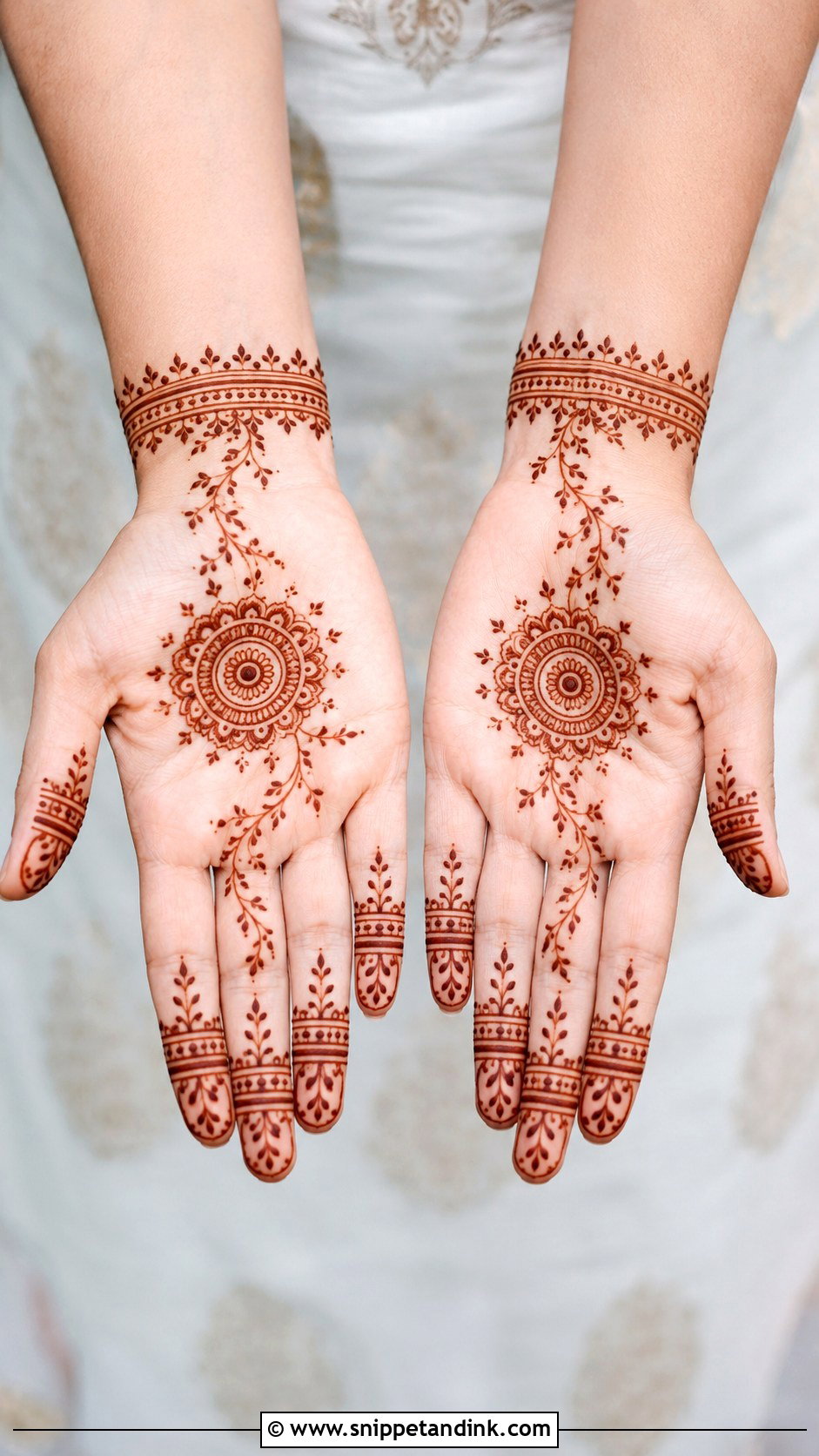
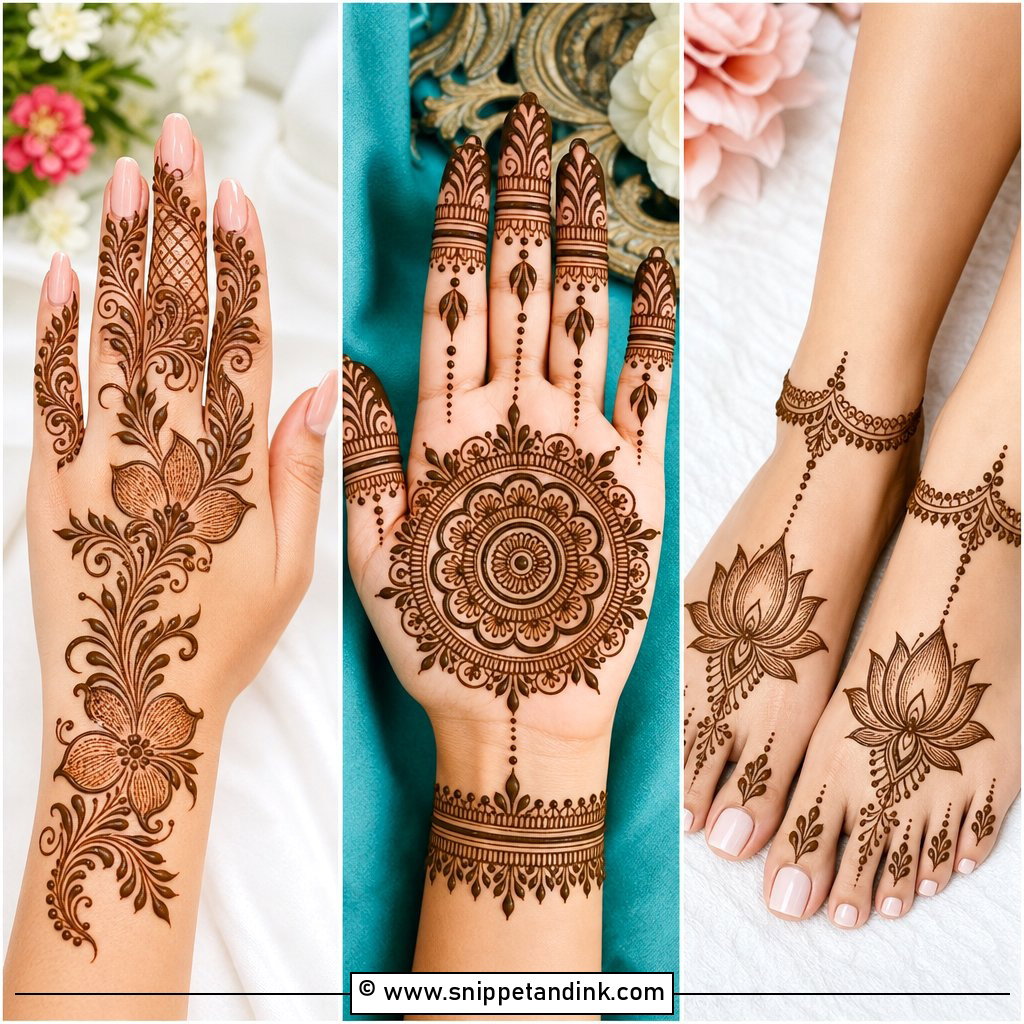
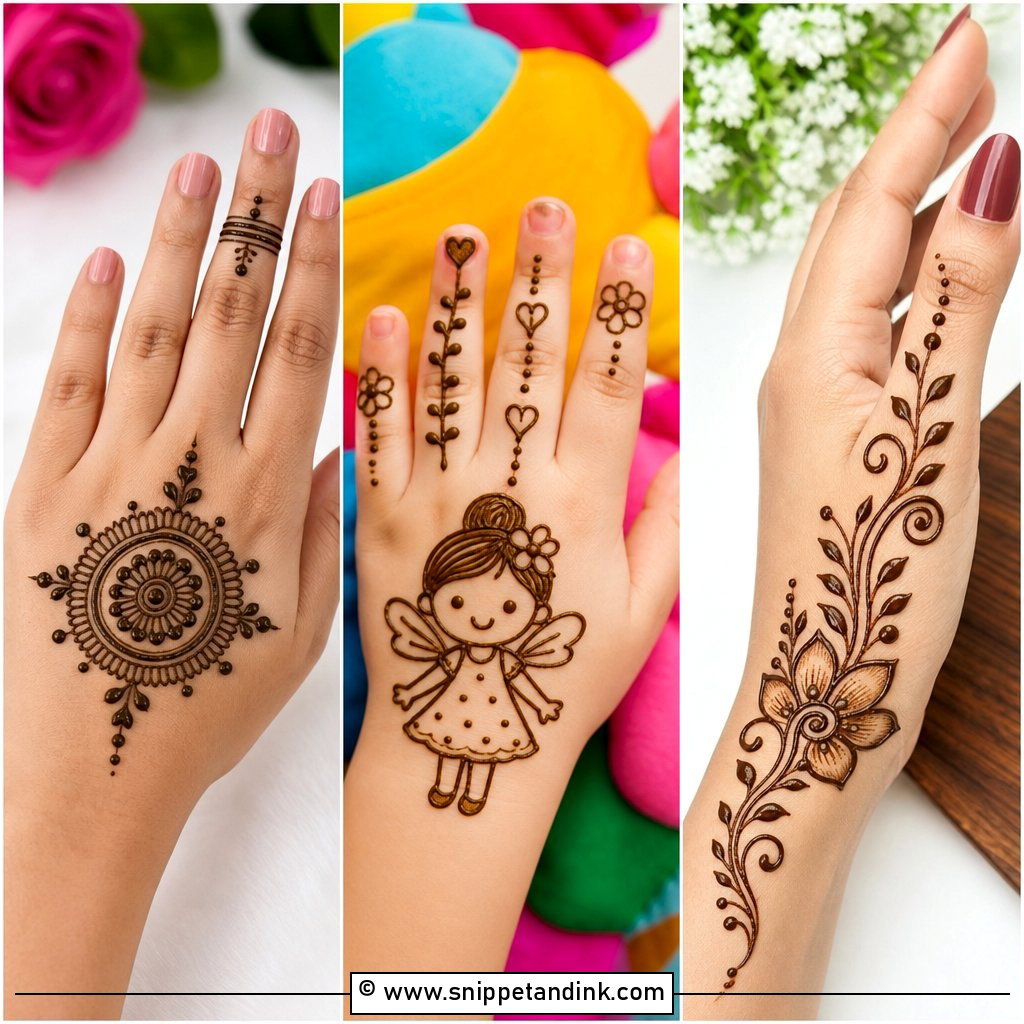
A small central mandala, light finger patterns, a few floral vines and a clean wrist border. That’s the whole design, and it takes very little time. I leave more of the palm open than I used to, which makes it look neat rather than unfinished. Good for Eid mornings, school events and anyone who wants a traditional touch without heavy color.
4. Mandala Mehndi Design For Hands
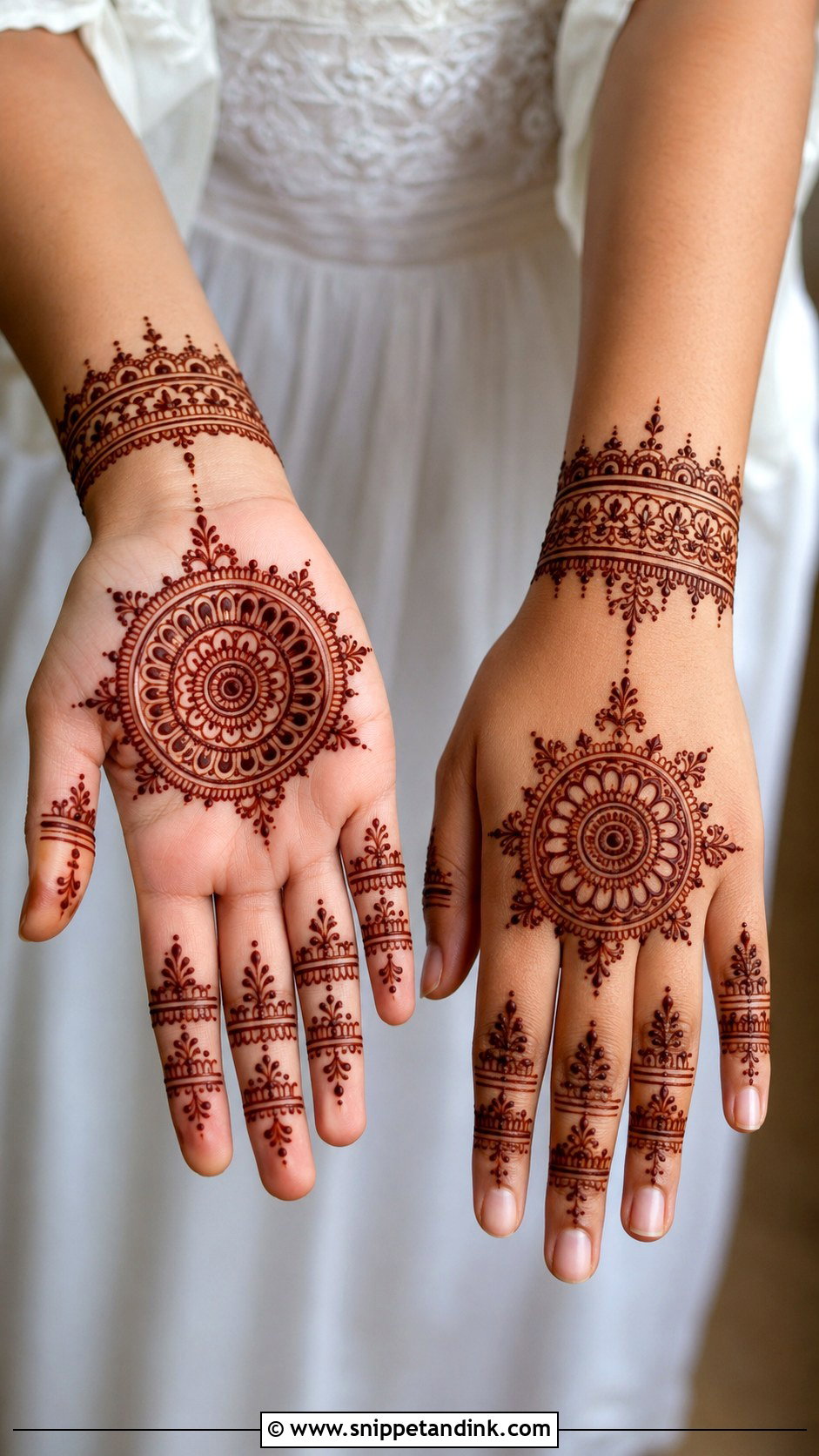
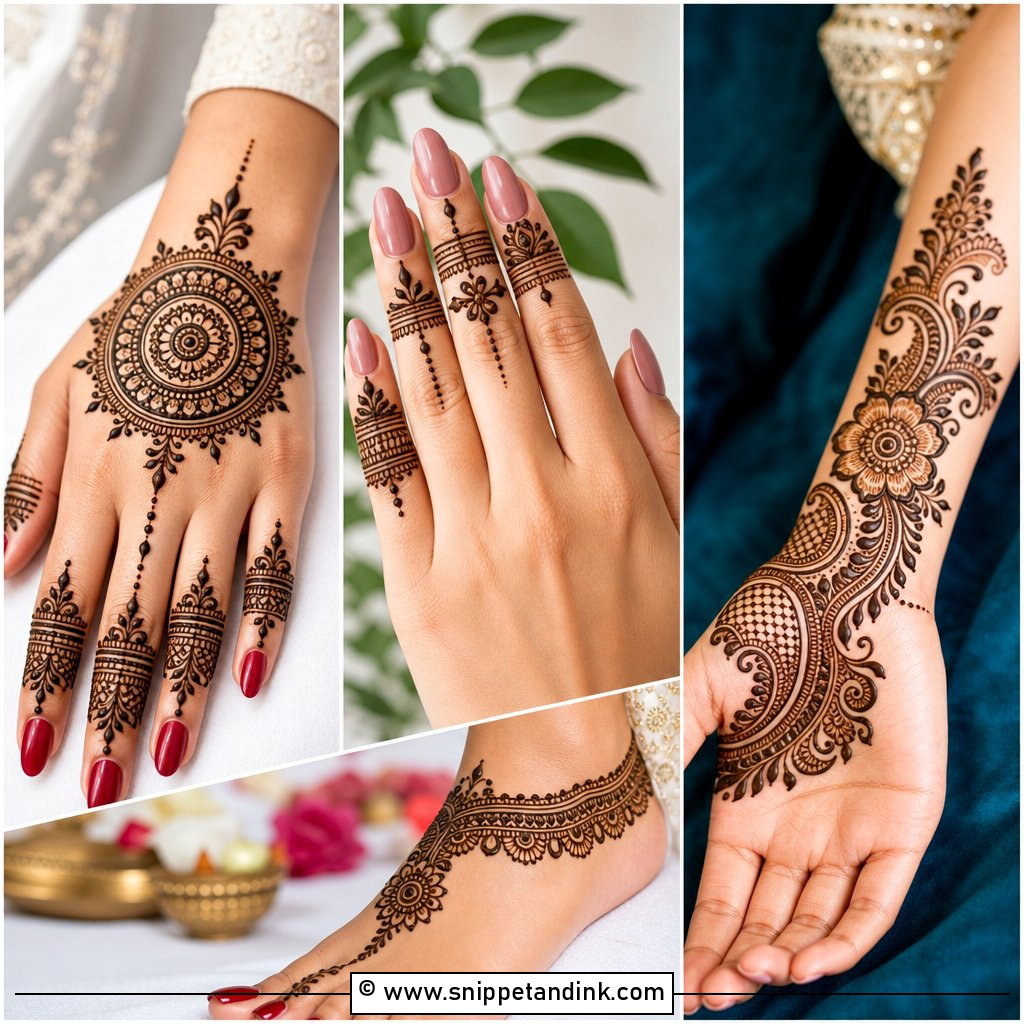
Mandalas start from one round motif, on the palm or back hand, and grow outward in petals, dots and rings. Symmetry is their charm and their difficulty; a circle that’s slightly oval is the first thing a guest notices. I draw the center first, then mark four points for the outer ring before filling, so the growth stays even. Pair it with a matching wrist cuff and slim fingertips for festivals, poojas or a minimal bridal event.
5. Indo Arabic Mehndi Design
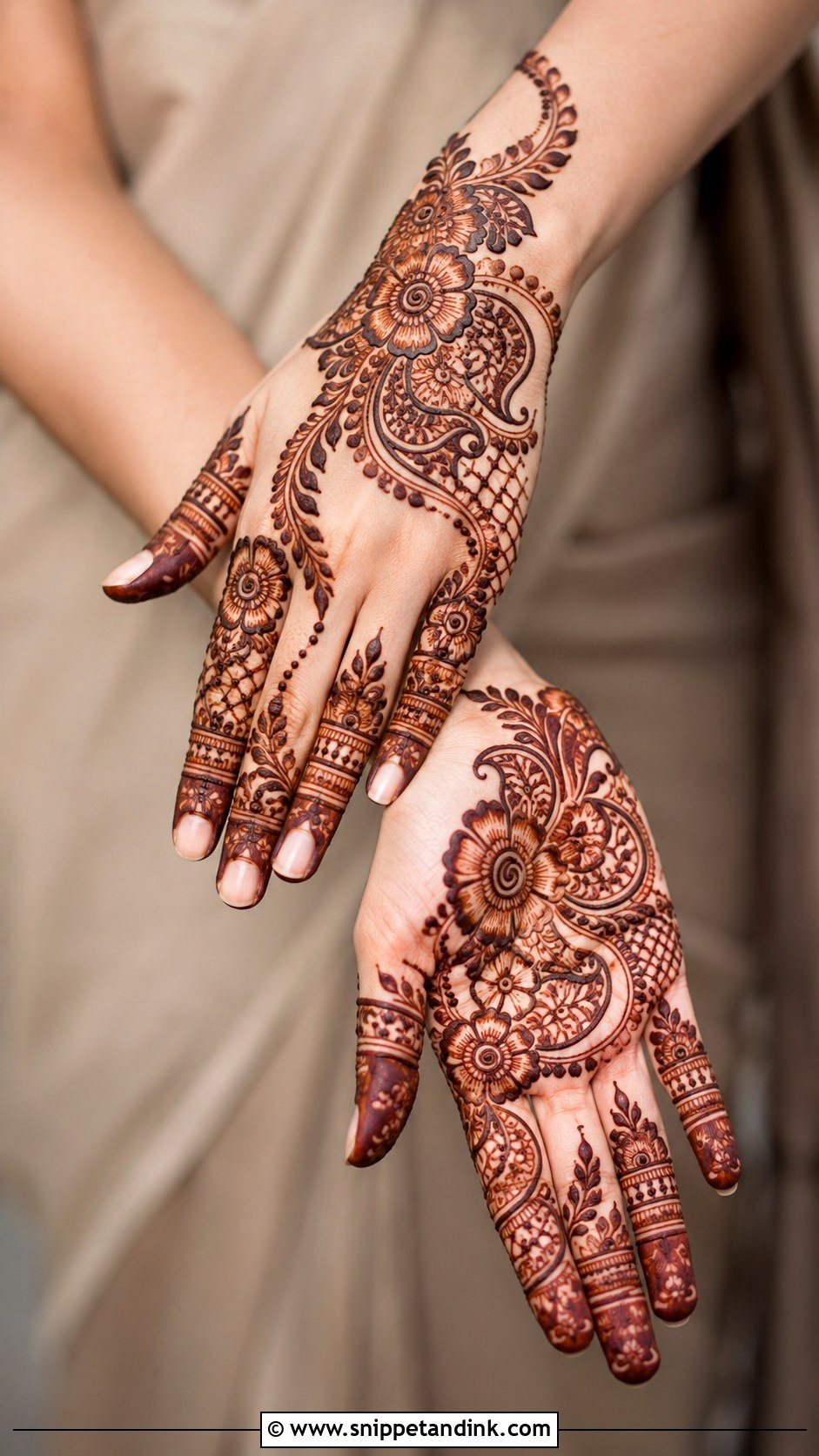
Indo-Arabic pairs Arabic flow with Indian fill: large flowers and paisleys outlined boldly, then some of them filled with jaali, dots or fine lines while others stay open. That mix is why it looks rich in photos yet feels light on the hand. It suits weddings, Eid, Diwali and engagements. If you’re unsure where to start, this is the layout I’d point you to, because it adapts to almost any amount of time.
6. Modern Finger Mehndi Design
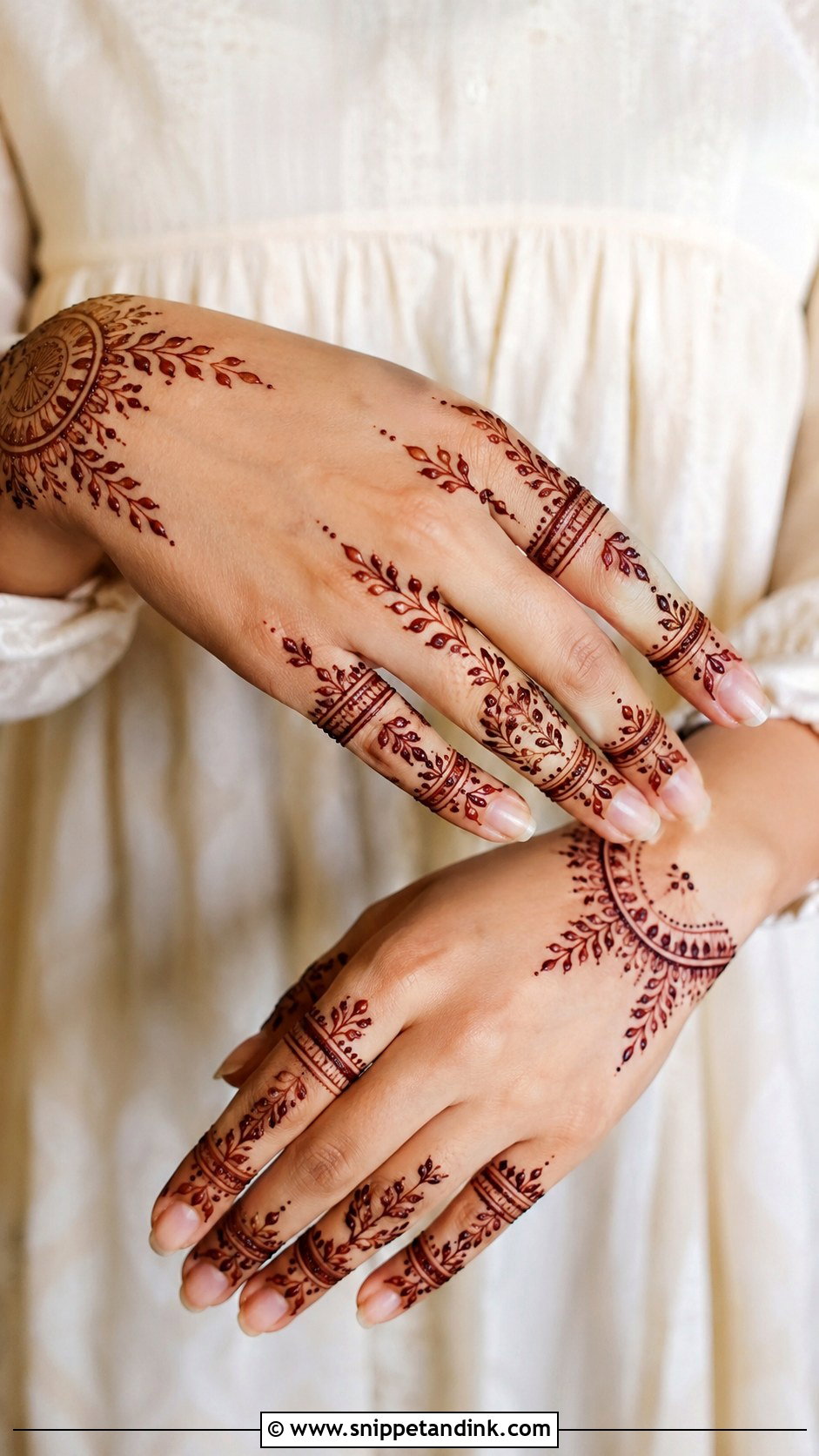
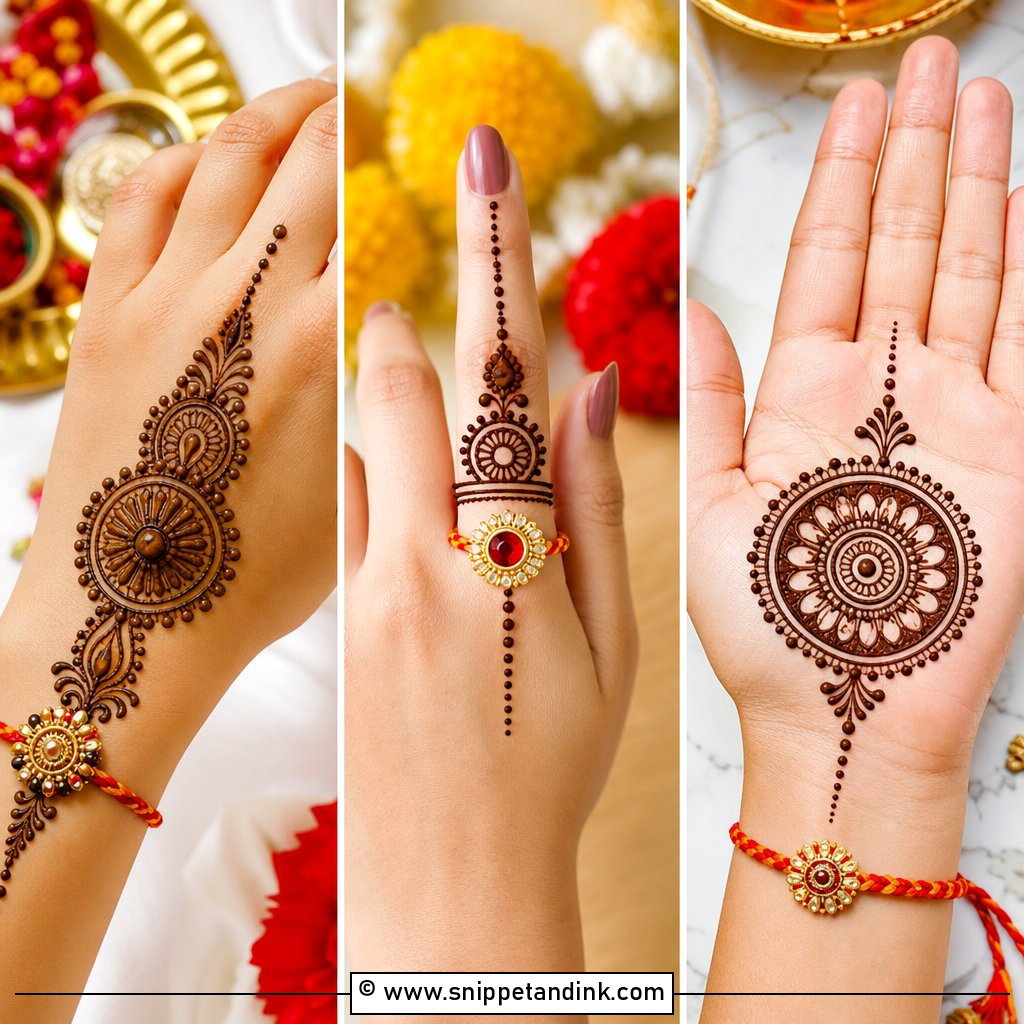
Here the fingers carry the design: ring bands, leafy lines, half mandalas and tiny florals, with the palm or back hand nearly bare. It’s subtle and pairs well with rings and bangles. A small motif near the wrist balances it if the hand looks top-heavy. I suggest this to people who need their hands for work the next day, since there’s very little to look patchy as it fades.
7. Floral Mehndi Design For Hands
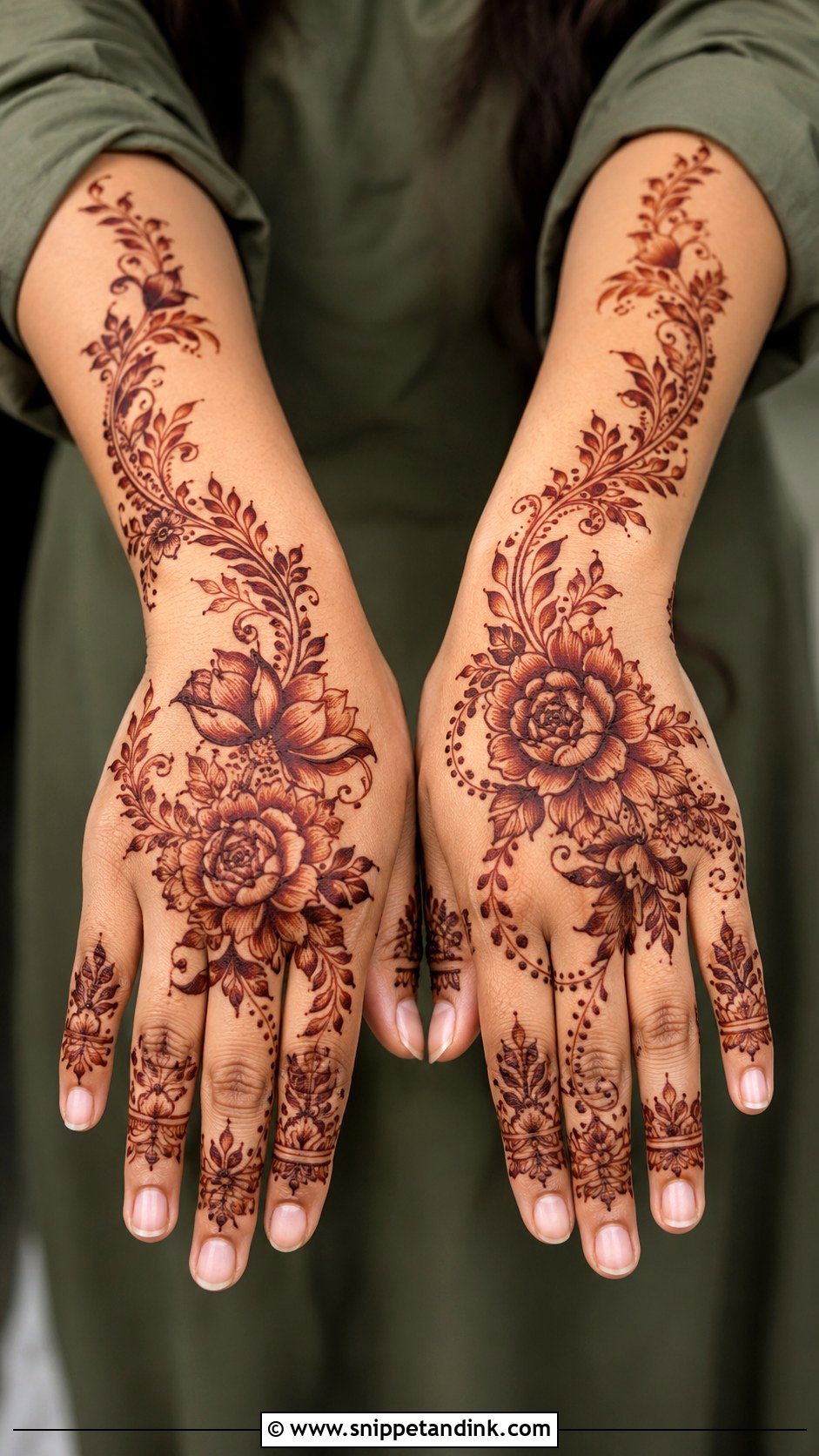
Florals adapt to anything. Roses, lotuses, daisy-like blooms, leaves and vines can cover the whole hand or just one side. The current look uses fewer, larger flowers with space between them rather than tiny petals everywhere, and that spacing is what keeps a floral design crisp after the stain darkens. Bold outlines with shaded petals and thin leafy trails give a richer version for engagements and weddings.
8. Peacock Mehndi Design For Front Hand
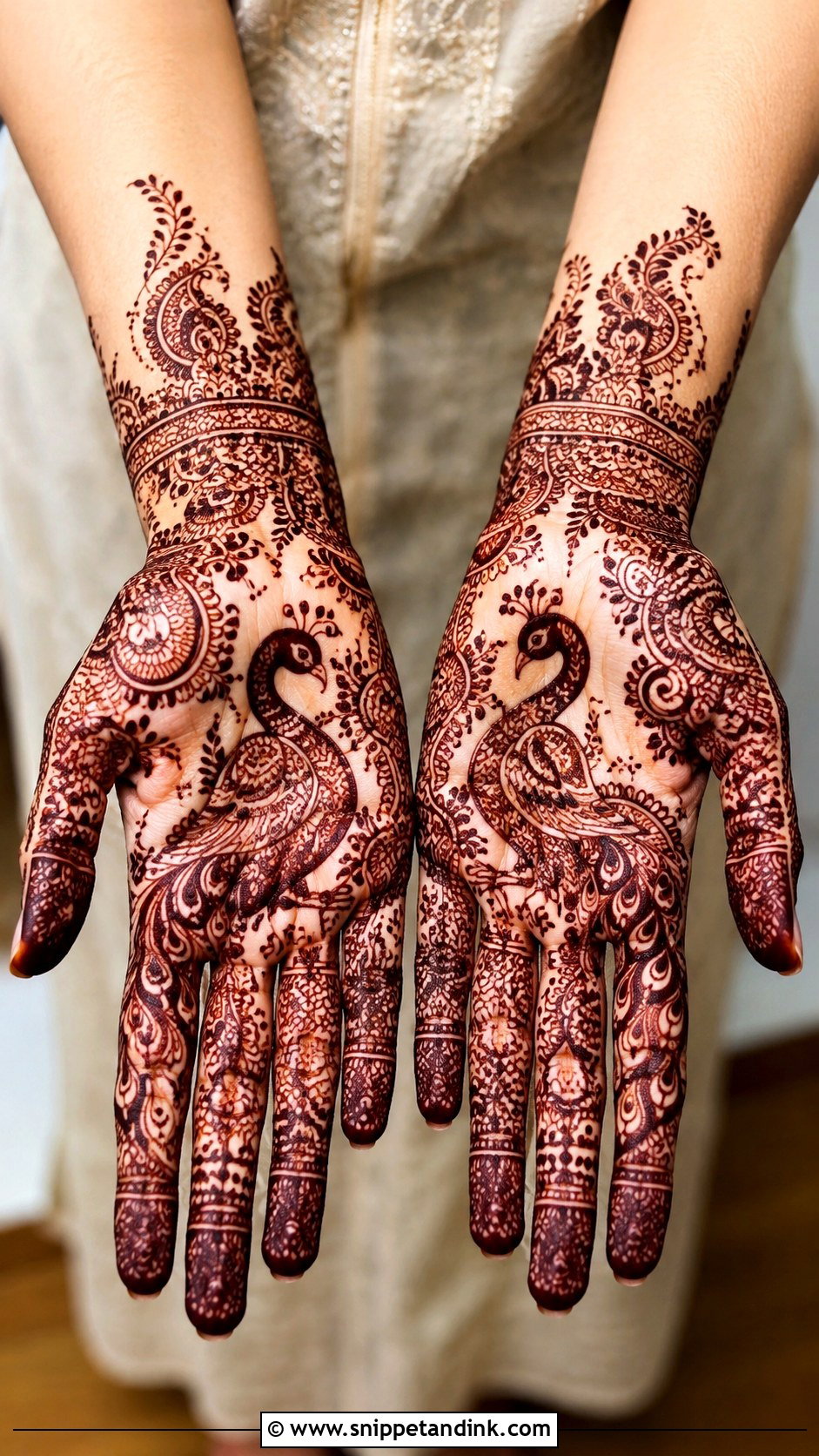
One strong peacock near the palm center or the wrist, with paisleys and florals completing the hand, carries a royal feel. I draw the body and neck first in one smooth stroke, because a hesitant neck line is what makes a peacock look clumsy, then build feathers outward with dots and curved strokes. It suits the sisters of the bride, traditional functions and silk sarees with temple jewelry. One bird beats a flock.
9. Rajasthani Bridal Mehndi Design
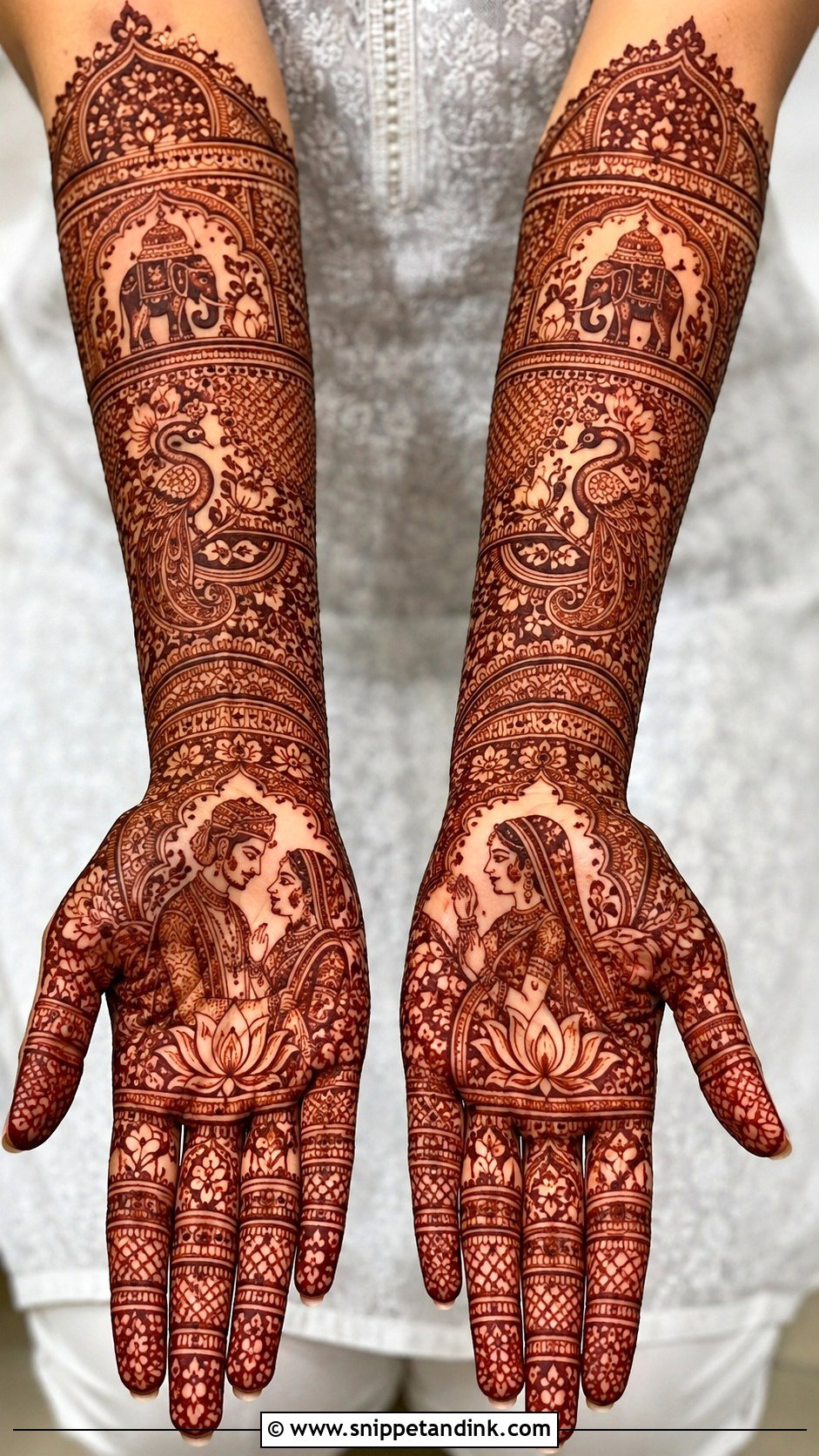
Rajasthani work runs from fingertips to forearms with bride and groom figures, elephants, peacocks, palki motifs, lotuses and traditional borders. It’s dense and slow, but the meaning is the reason brides choose it. The current way of drawing it gives each scene a little more spacing so details survive the stain. Plan for a long sitting, and choose an artist whose figure work you’ve seen on skin.
10. Moroccan Mehndi Design For Back Hand
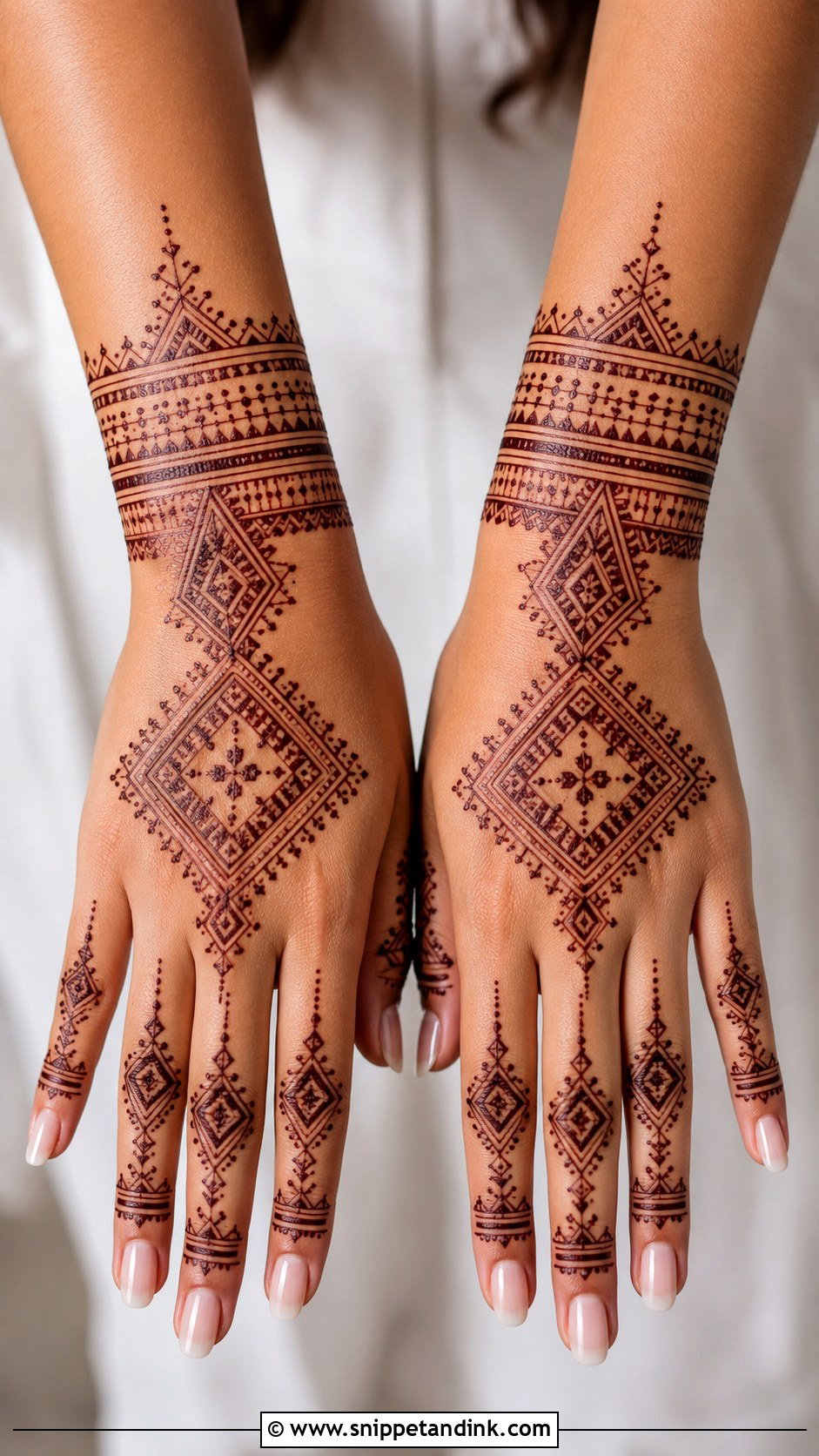
Diamonds, triangles, grids, dots and bracelet bands replace florals in this structured back-hand pattern. It feels clean and a little edgy. Straight lines on a curved hand are tricky, so I follow the knuckle line as my baseline rather than an imaginary straight one; that way the grid looks right when the hand is relaxed. Long fingers show it off. Keep the spacing crisp.
11. Khafif Mehndi Design
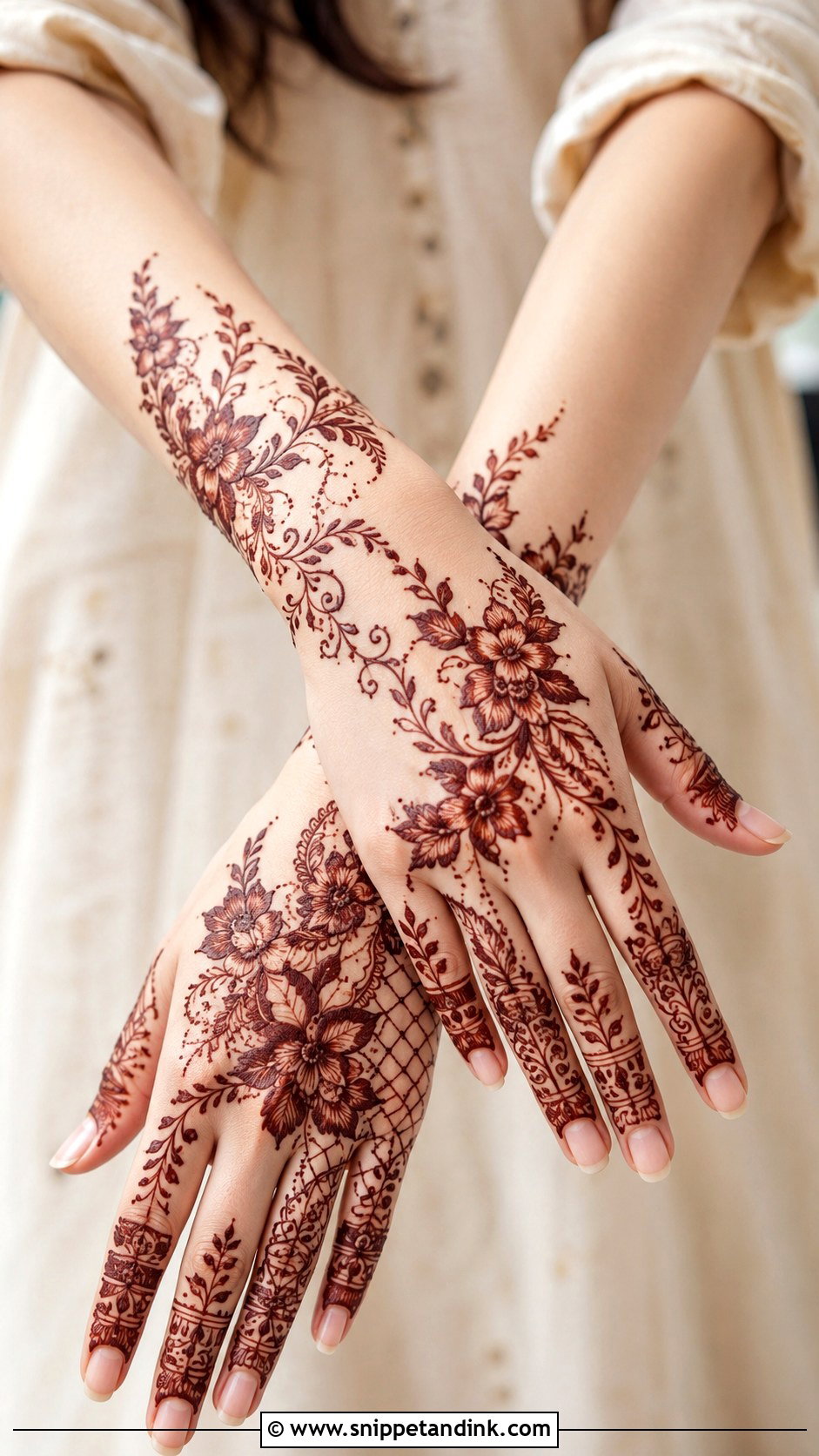
Khafif is fine work: small flowers, leafy stems, net details and thin vines with soft, open spacing. Balance is everything here, and because the lines are thin, the paste needs to stay on the skin for hours or the stain will come up faint. I’d recommend it for engagements, Eid and bridesmaids who like Arabic flow but want something more delicate than bold shading.
12. Shaded Arabic Mehndi Design
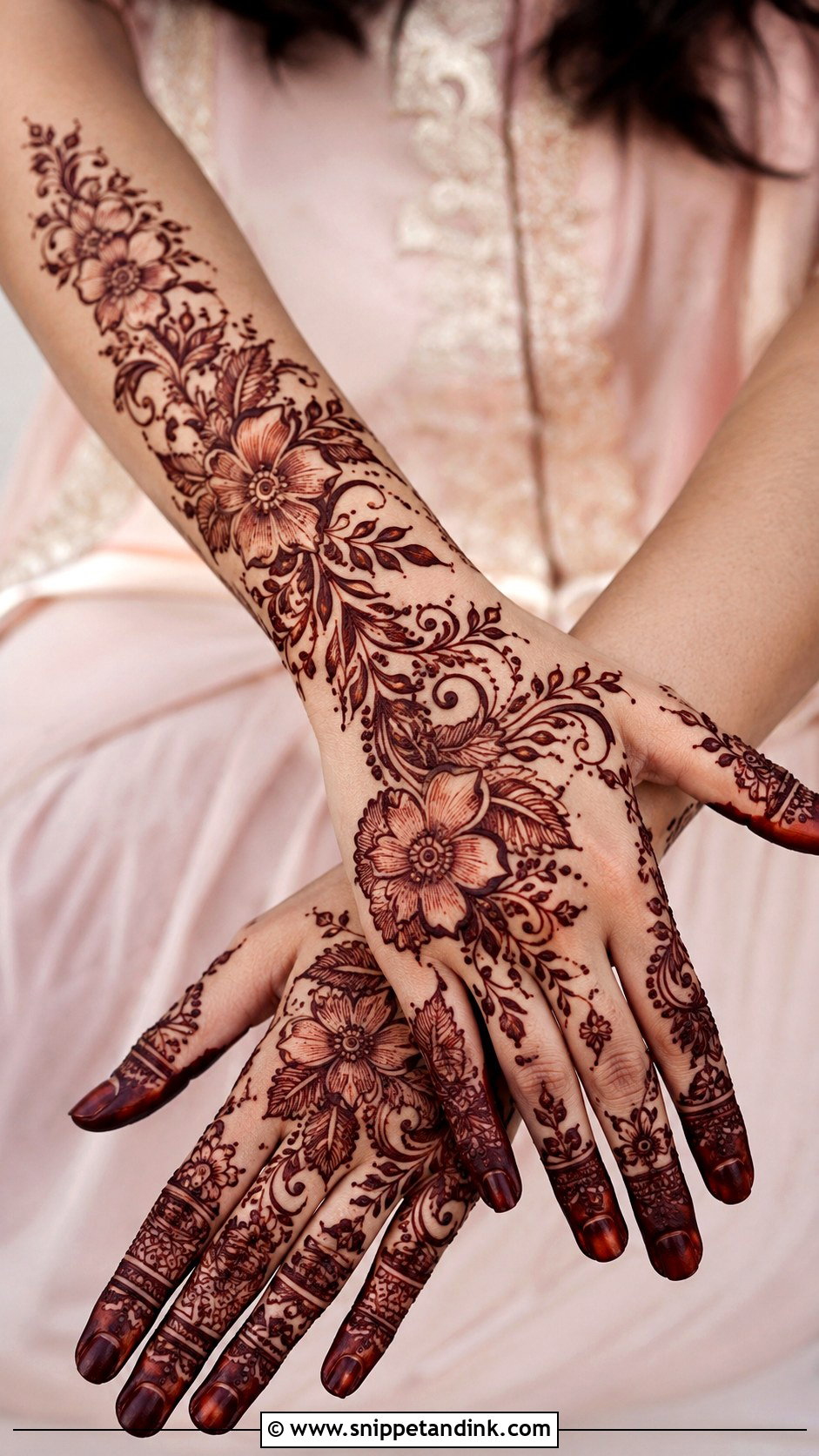
Shading is what gives Arabic flowers their dimension. I outline boldly, then fill part of each petal, usually the base, and leave the tip open, so the color seems to fade outward. It gives a full, rich result in less time than intricate filling, which is why it’s my go-to for busy festive nights. It reads best on the back hand. Keep the fingers semi-detailed and let one floral trail lead.
13. Jewelry Mehndi Design For Back Hand
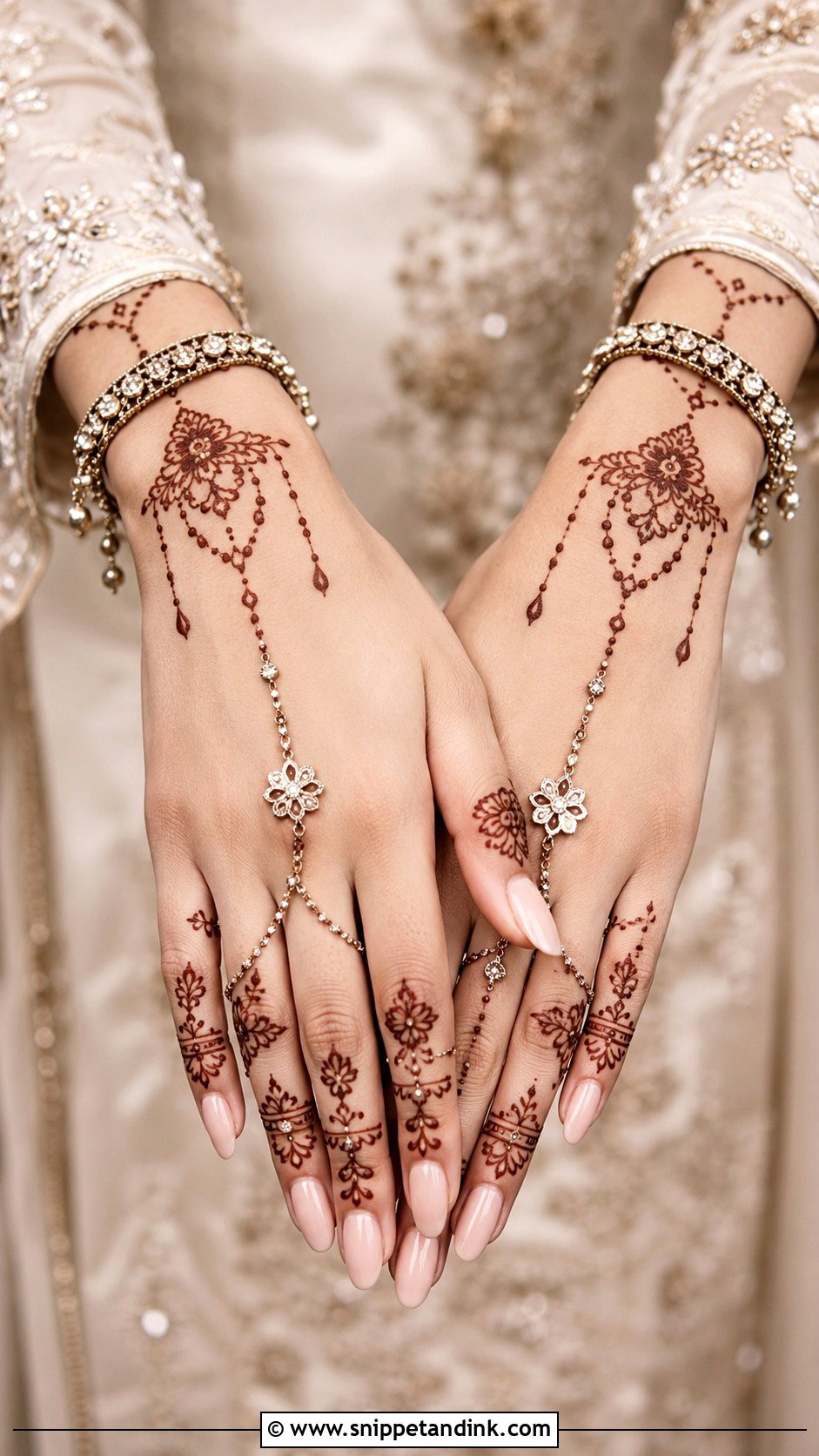
Ring chains, bracelet bands, finger loops and hanging dots turn the back of the hand into henna jewelry. Fine chain lines and small floral charms make it look realistic. I measure the chain from the cuff to the middle finger by eye on each hand, since hands differ, and a chain that sags looks like a drawing error. Keep it to one bracelet-to-ring chain for an Eid outfit or add layers for an engagement.
14. Lotus Mehndi Design For Hands
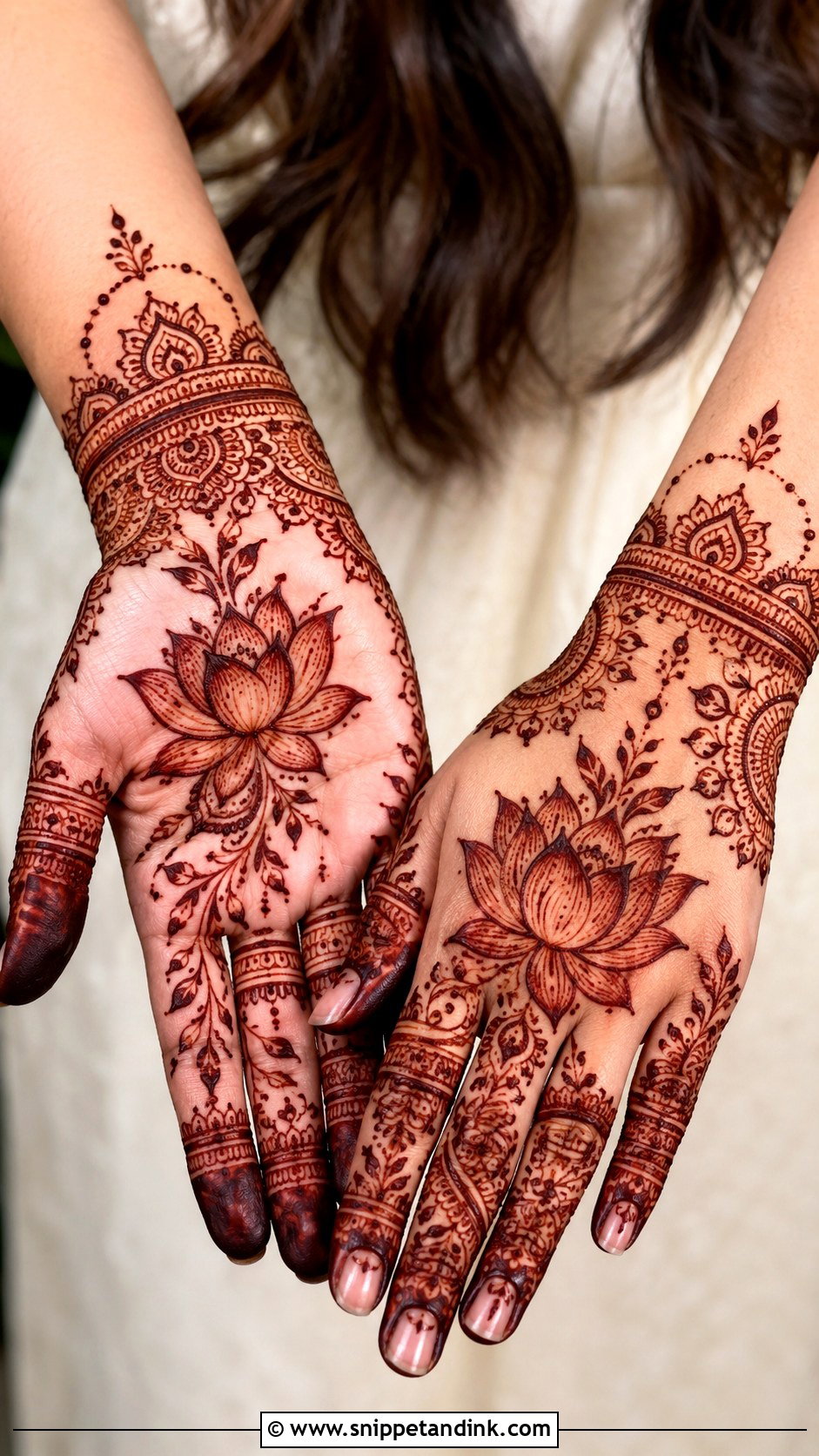
Lotus designs center a large bloom on the palm with smaller petals at the wrist and leafy vines over the fingers. Bold petal outlines with fine inner lines and open space let the flower stay clear. A lotus is a quiet, symbolic choice for ceremonies, and it sits well with mandalas, jaali or paisley borders. Both front and back hands suit it.
15. Jaali Mehndi Design For Front Hand
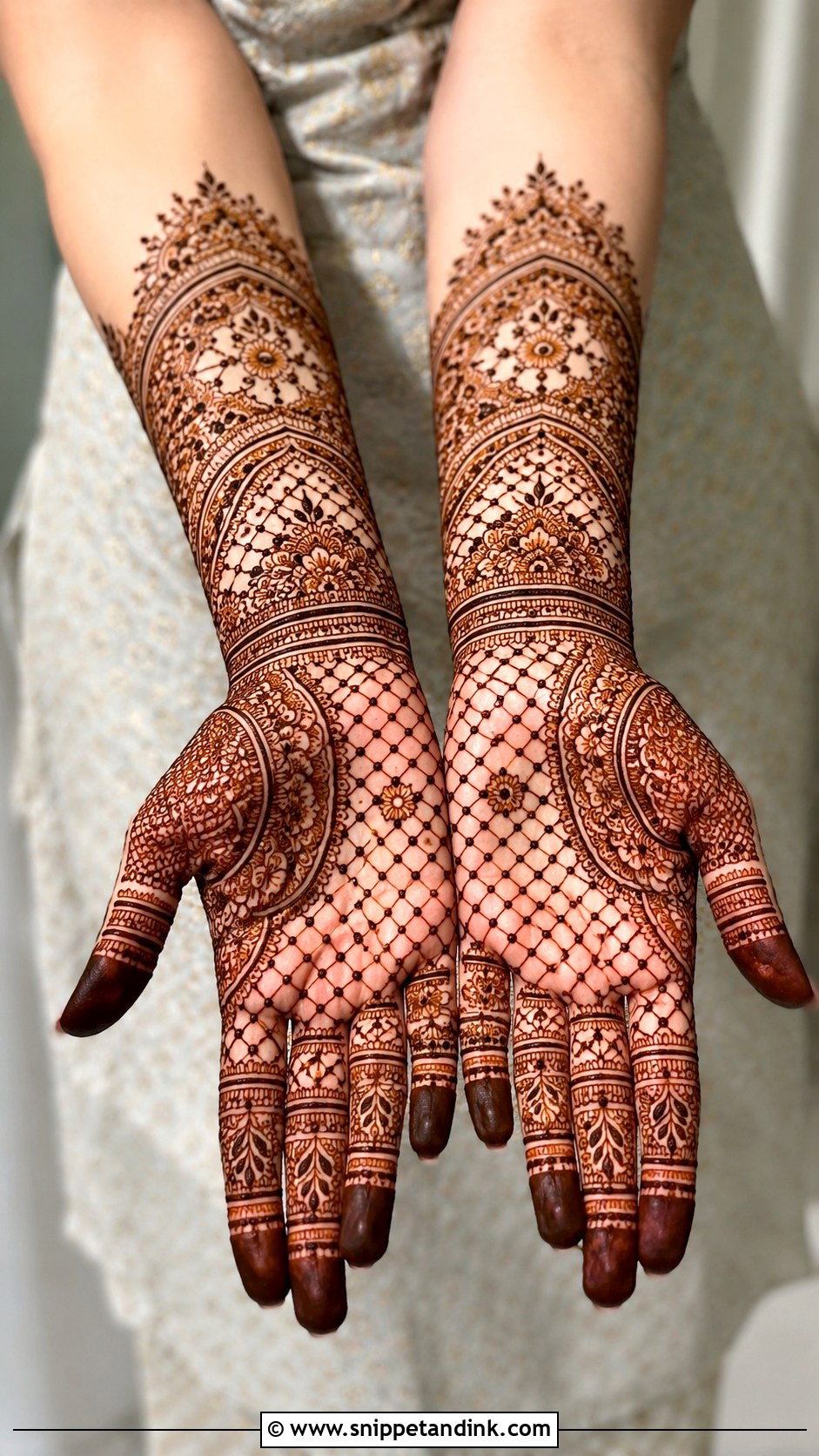
Jaali on the palm gives a woven effect with mesh, crisscross lines, tiny dots and borders. Current designs use mesh selectively, a panel here and there next to mandalas or paisleys, rather than covering everything. That restraint matters because mesh lines spread slightly as they stain, and an all-over net turns solid. The contrast between mesh and open skin is what shows up so well in photos.
16. Minimal Bridal Mehndi Design
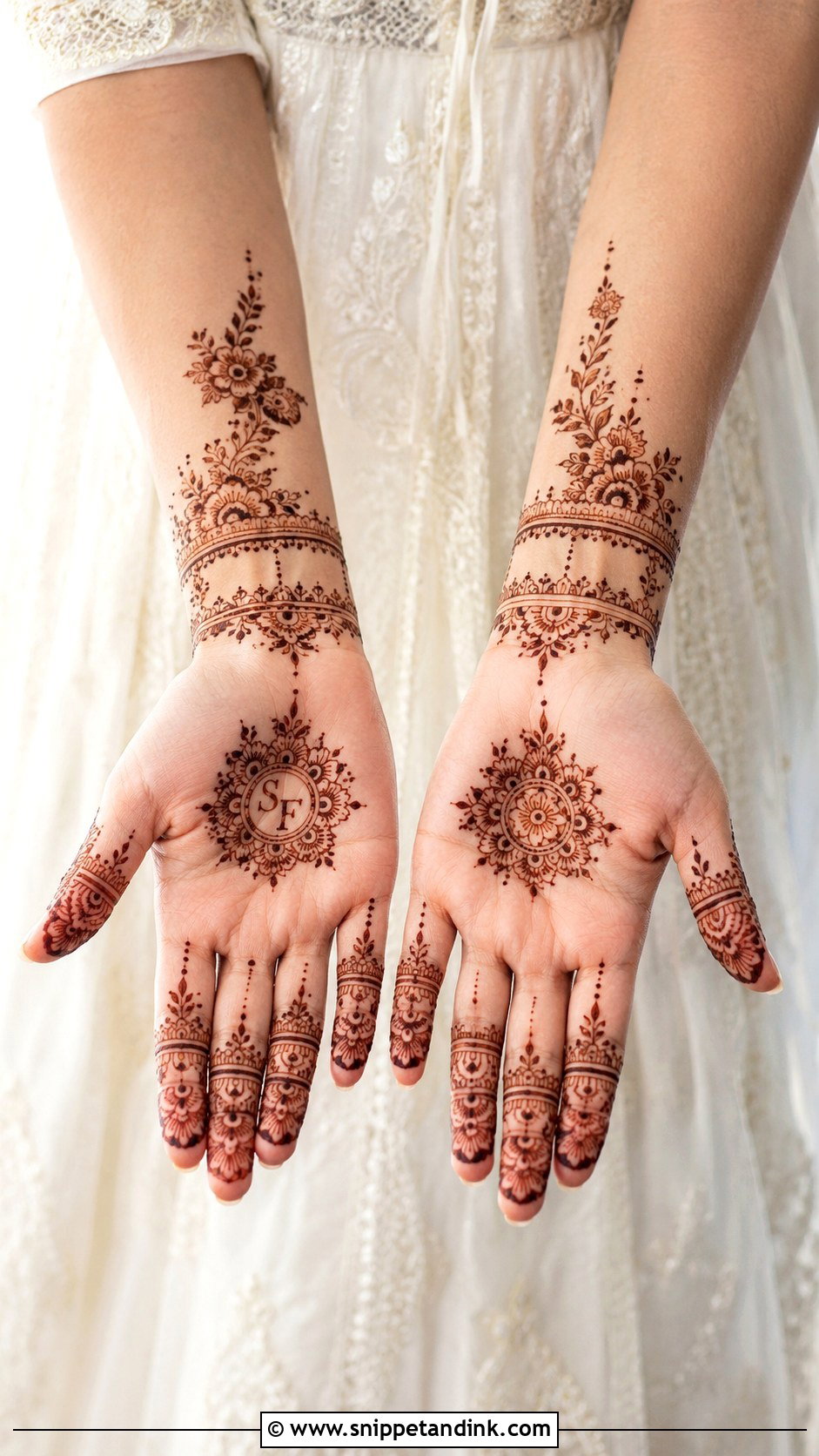
Not every bride wants elbows of henna. A palm mandala, delicate fingers, slim wrist bands, small initials and light floral trails keep the wedding feel without full coverage. It suits simple outfits, intimate ceremonies and brides who’ll be shaking hundreds of hands. The meaning comes from placement: a date on the wrist, initials in the mandala, a small symbol that’s yours.
17. Full Back Hand Mehndi Design
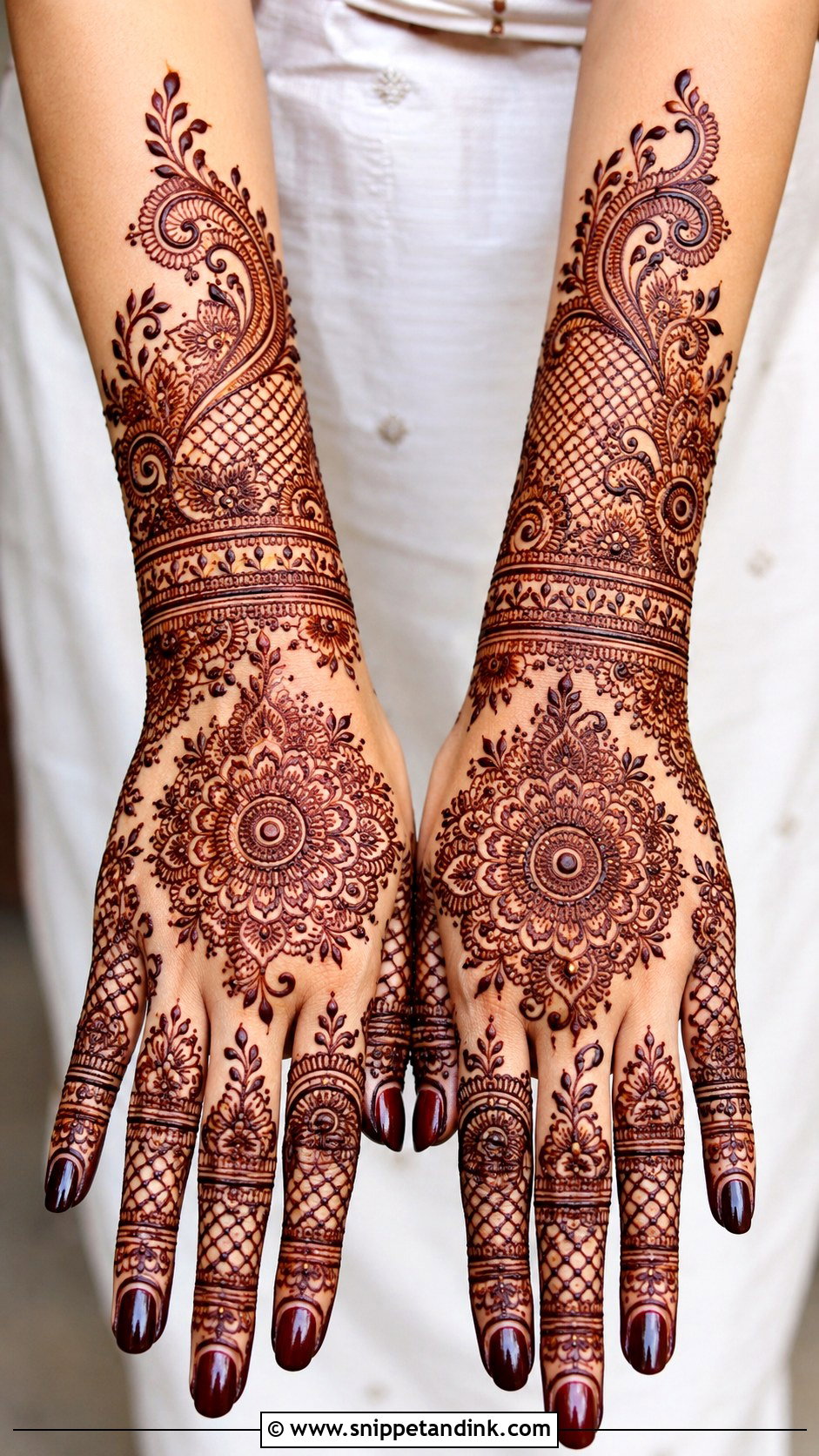
Full back hand mehndi design covers the back of the hand from fingers to wrist and sometimes onto the forearm. A central flower or mandala anchors it, with finger patterns and a wrist cuff finishing the edges, and florals, paisleys or jaali filling between. Because the palm stays clear, it’s comfortable for anyone who cooks, drives or looks after children through the festival. The back hand stains a little lighter than the palm, so slightly bolder lines help.
18. Front Hand Mehndi Design For Eid
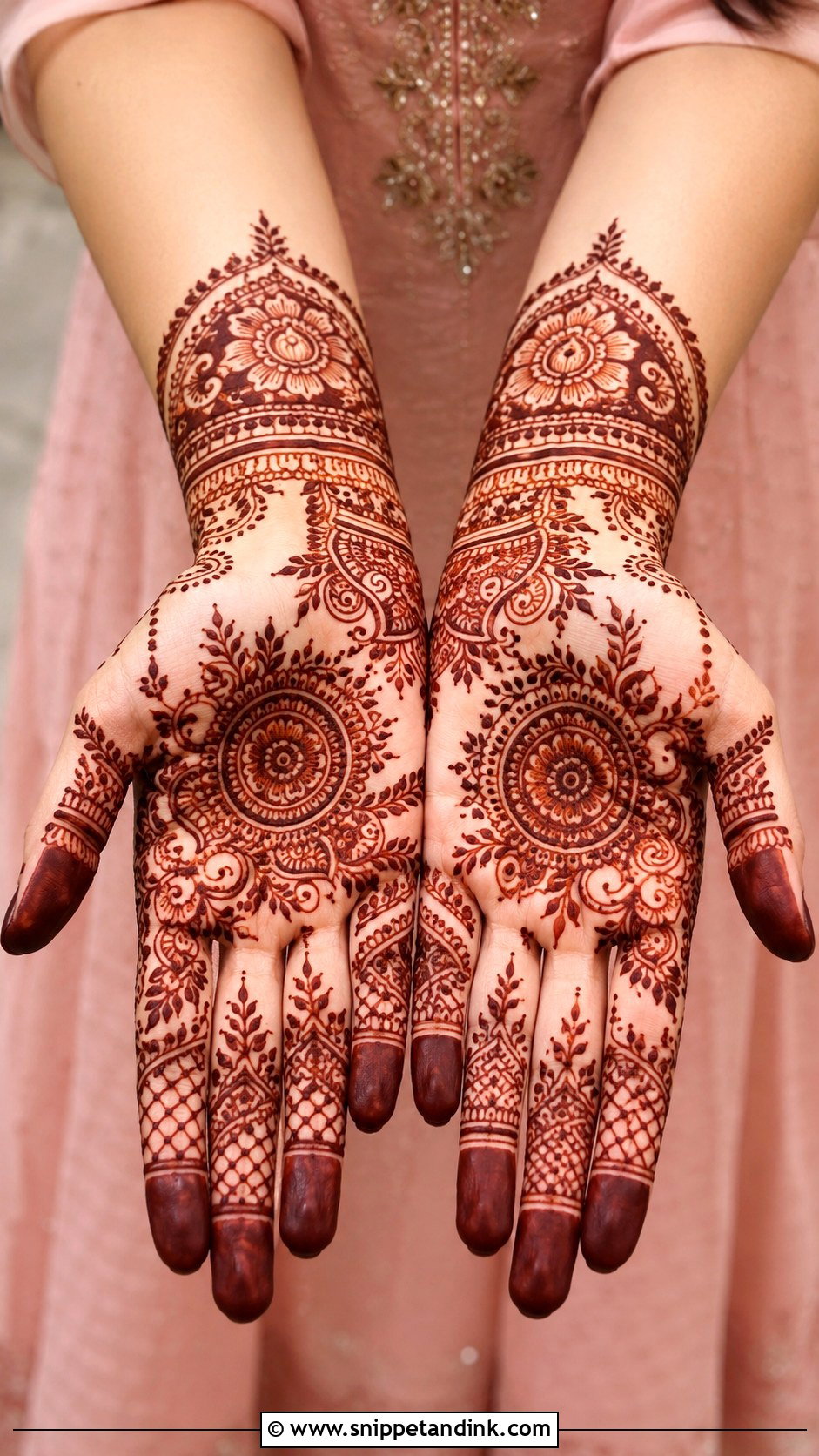
For Eid, I usually draw a bold palm motif, decorated fingers, a wrist band and a flowing floral trail. Arabic and Indo-Arabic layouts are popular because they look festive quickly. Small touches keep it current, such as shaded flowers, dotted vines or a mandala with open space. Medium coverage is right for most people on Eid morning. Apply it the night before, so the stain has had time to deepen by the time you’re greeting family.
19. Back Hand Mehndi Design For Engagement
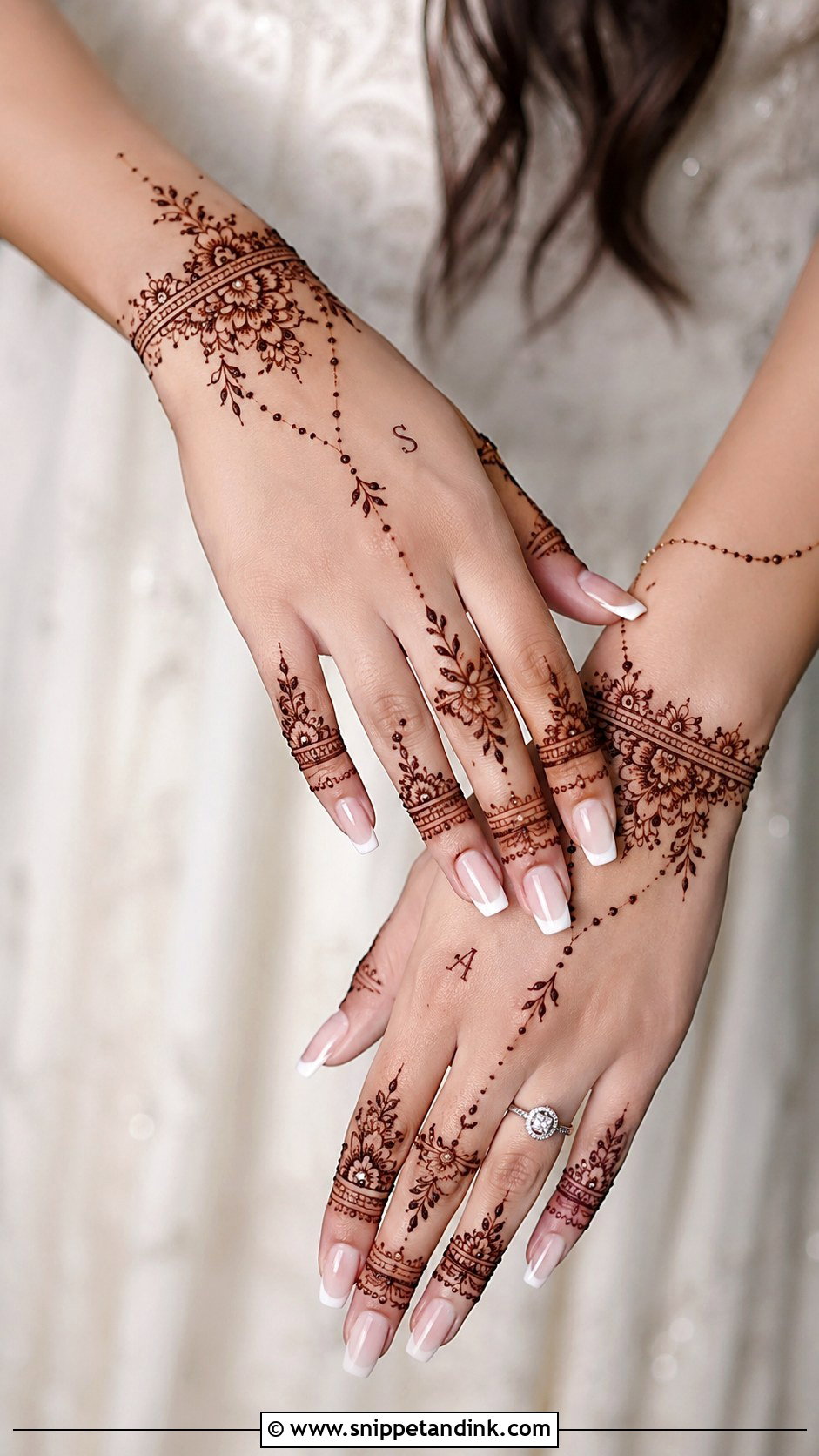
Engagement photos zoom in on hands, so the back-hand design needs to frame the fingers and the ring. Jewelry chains, soft florals, initials and a delicate wrist cuff work well. I emphasize the ring finger lightly with dots or a slim band but leave clear skin where the ring will sit, so henna doesn’t compete with the stone. A diagonal Arabic trail, a mandala center or a jewelry pattern all suit.


20. Half Hand Mehndi Design
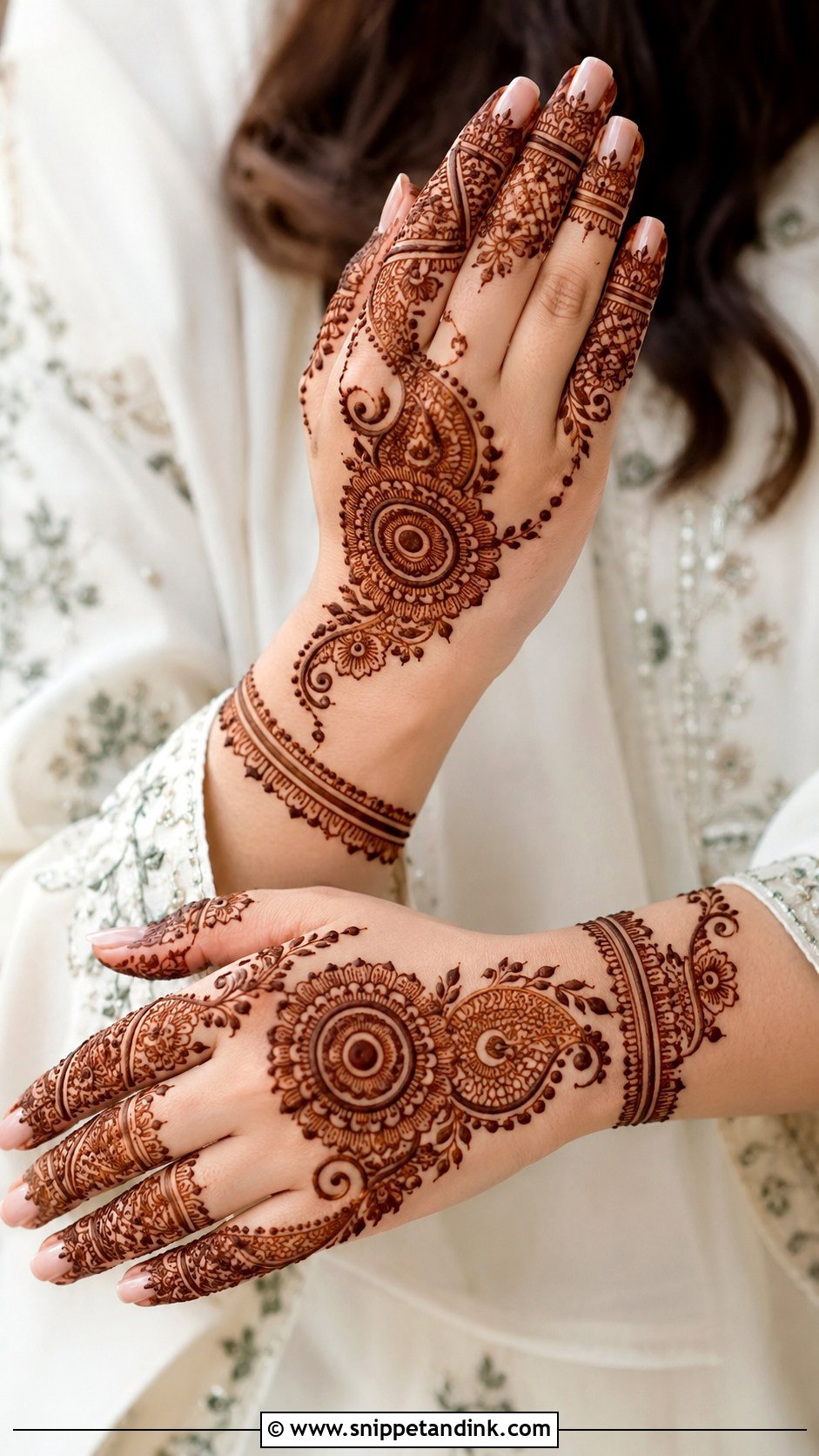
Half-hand henna covers the fingers, palm center and wrist without climbing the arm. It can be Arabic, floral, mandala or Indo-Arabic, and it’s practical for guests, teenagers and busy mothers. A strong focal motif makes it look complete. Always finish the wrist with a bracelet border; the edge is what separates a half-hand design from one that looks abandoned.
21. Bracelet Mehndi Design
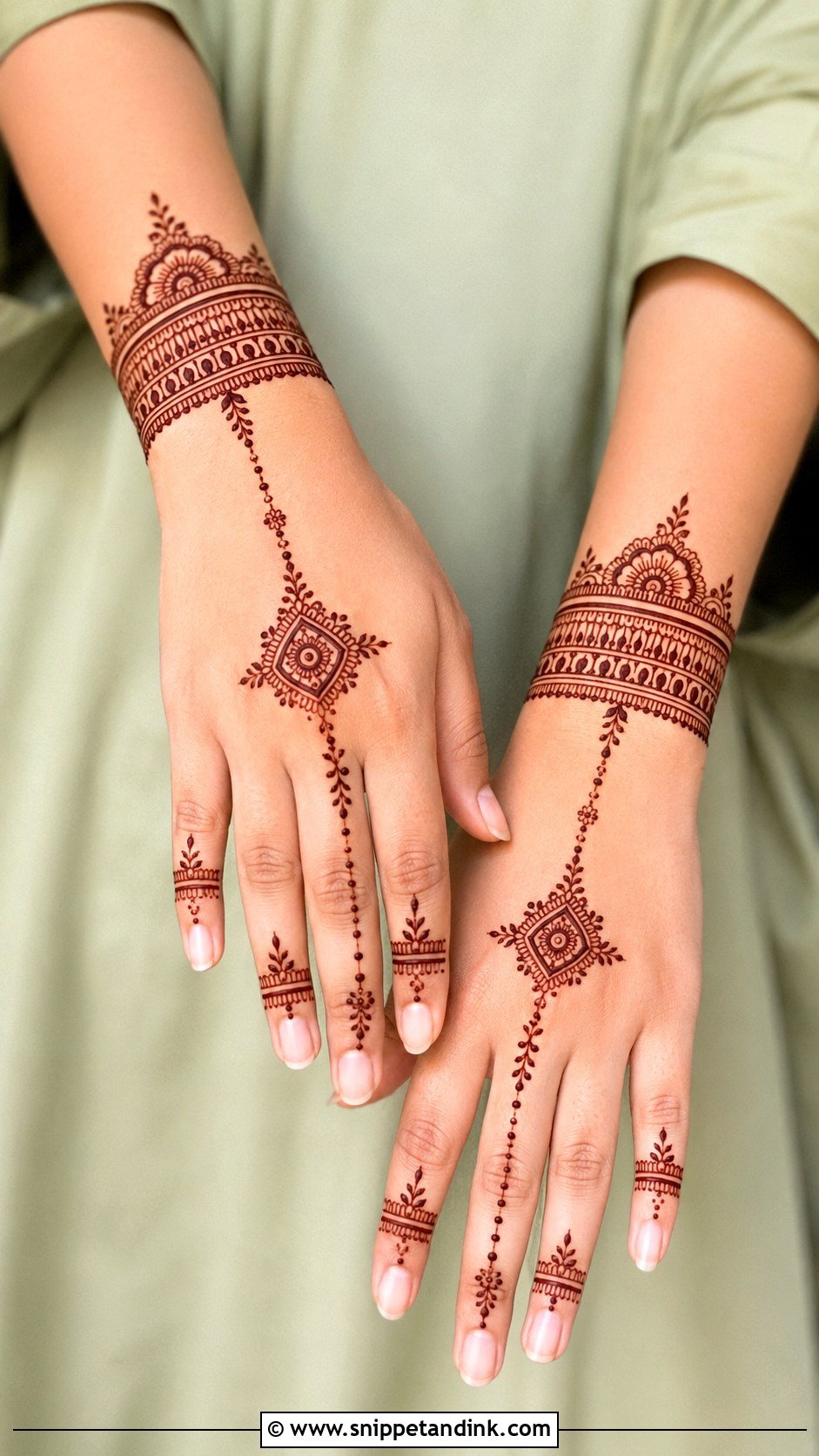
A bracelet design decorates the wrist and links it to the hand with chain links, small florals and finger details, sometimes with a back-hand motif in the center. Thin, clean lines with tiny dots and leafy curves keep it light. It’s quick to apply, which is why I offer it at large Eid and engagement events where many people are waiting. Leave the palm bare or add a small mandala for balance.
22. Gulf Khaleeji Mehndi Design
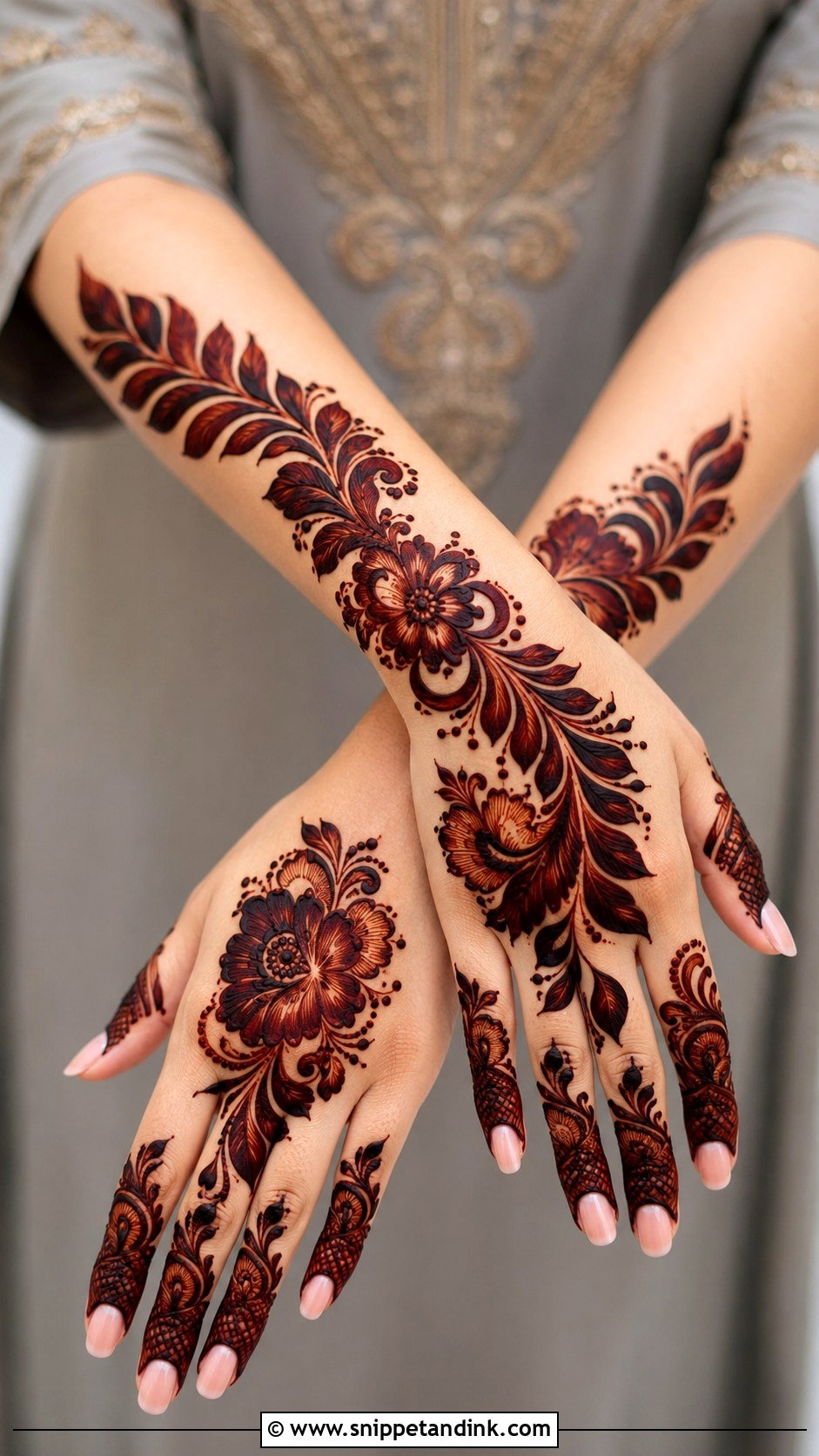
Khaleeji henna is big and bold: large florals, thick leafy trails, shaded petals and dramatic fingers with open space between motifs. The current style uses soft 3D-looking shading built from layered strokes. It stretches naturally along the back hand and forearm. Thick fills need fresh, smooth paste and a longer wear time, or the large shapes stain unevenly. A favorite for Eid, weddings and parties.
23. Pakistani Mehndi Design For Hands
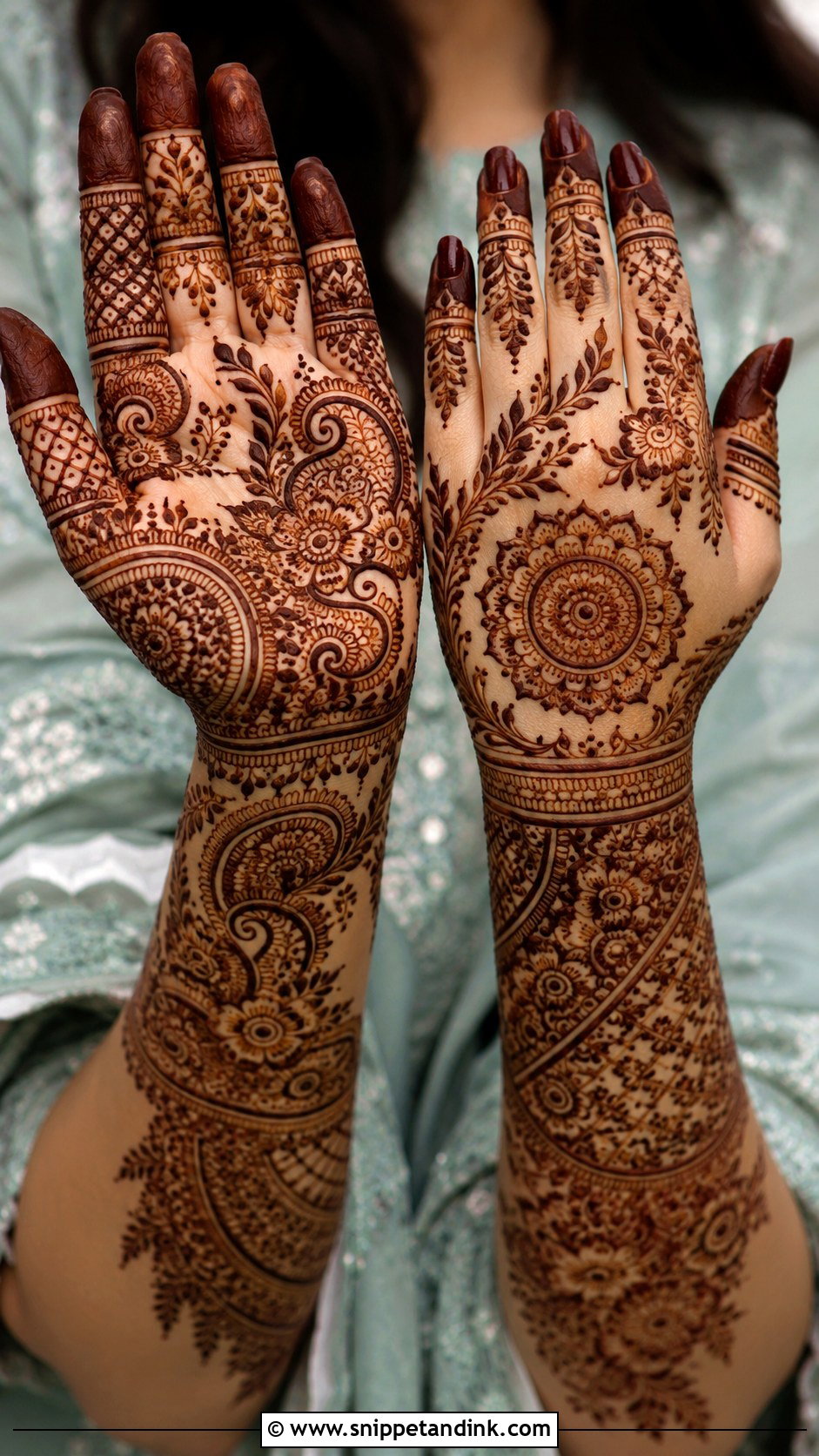
Pakistani designs mix Indian detail and Arabic flow: paisleys, florals, mandalas, vines, checks and fine fingers, heavy for brides and lighter for Eid. New Pakistani mehndi patterns lean on symmetry, negative space and smooth wrist-to-forearm transitions. The transition is the part I take most care over, because the forearm stains lighter than the hand, and a gradual taper makes that change look natural.
24. Indian Mehndi Design For Front Hand
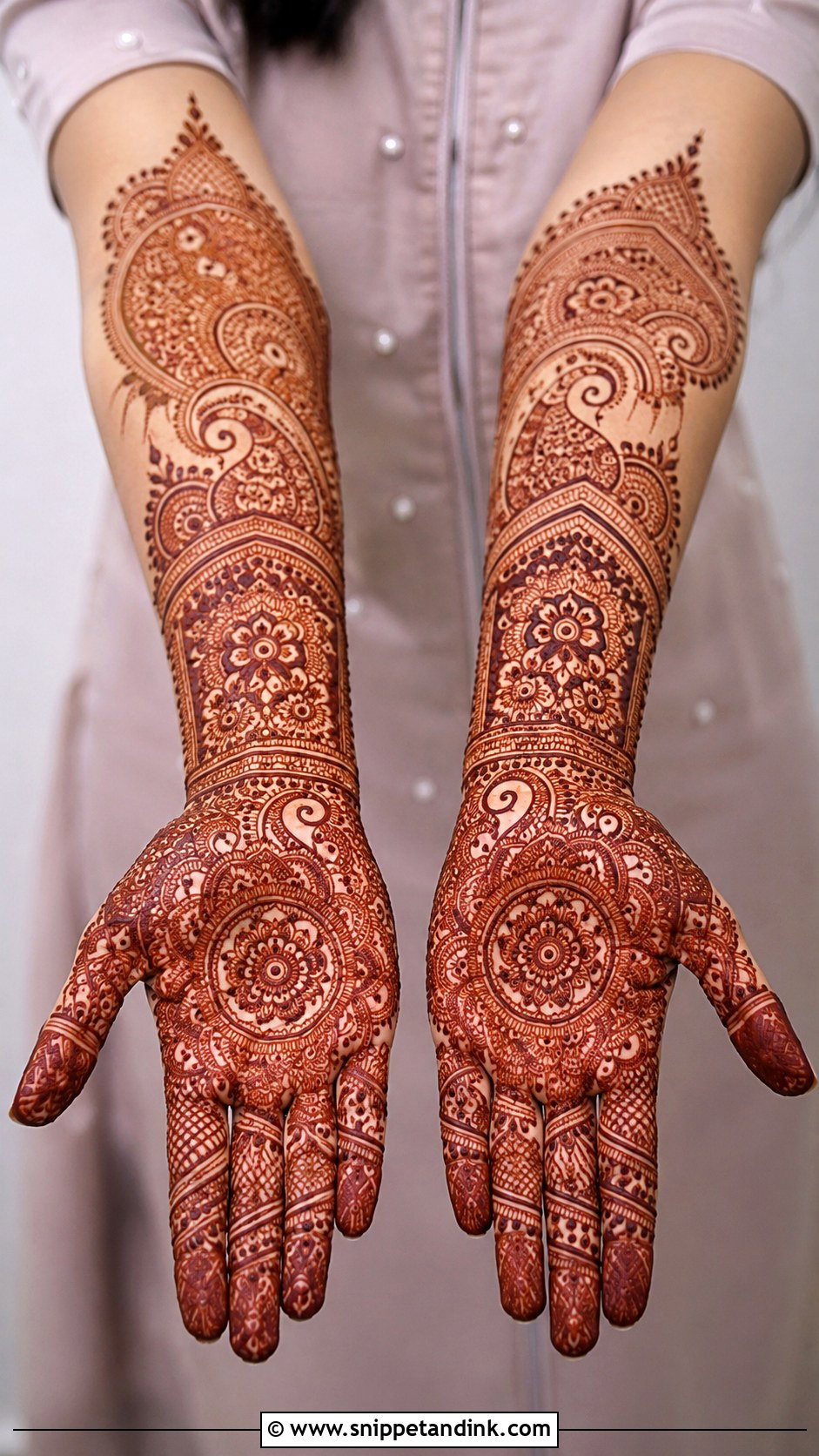
Traditional Indian palm work fills the palm and fingers with paisleys, flowers, mandalas, peacocks and fine fillers. The current approach keeps it rich but leaves a little more room between major elements, so you can still read each one once the stain matures. Coverage can range from medium to full bridal. The palm is the darkest-staining part of the hand, which is why this design looks so striking once the color reaches deep maroon on the second day.
25. Rose Mehndi Design For Back Hand
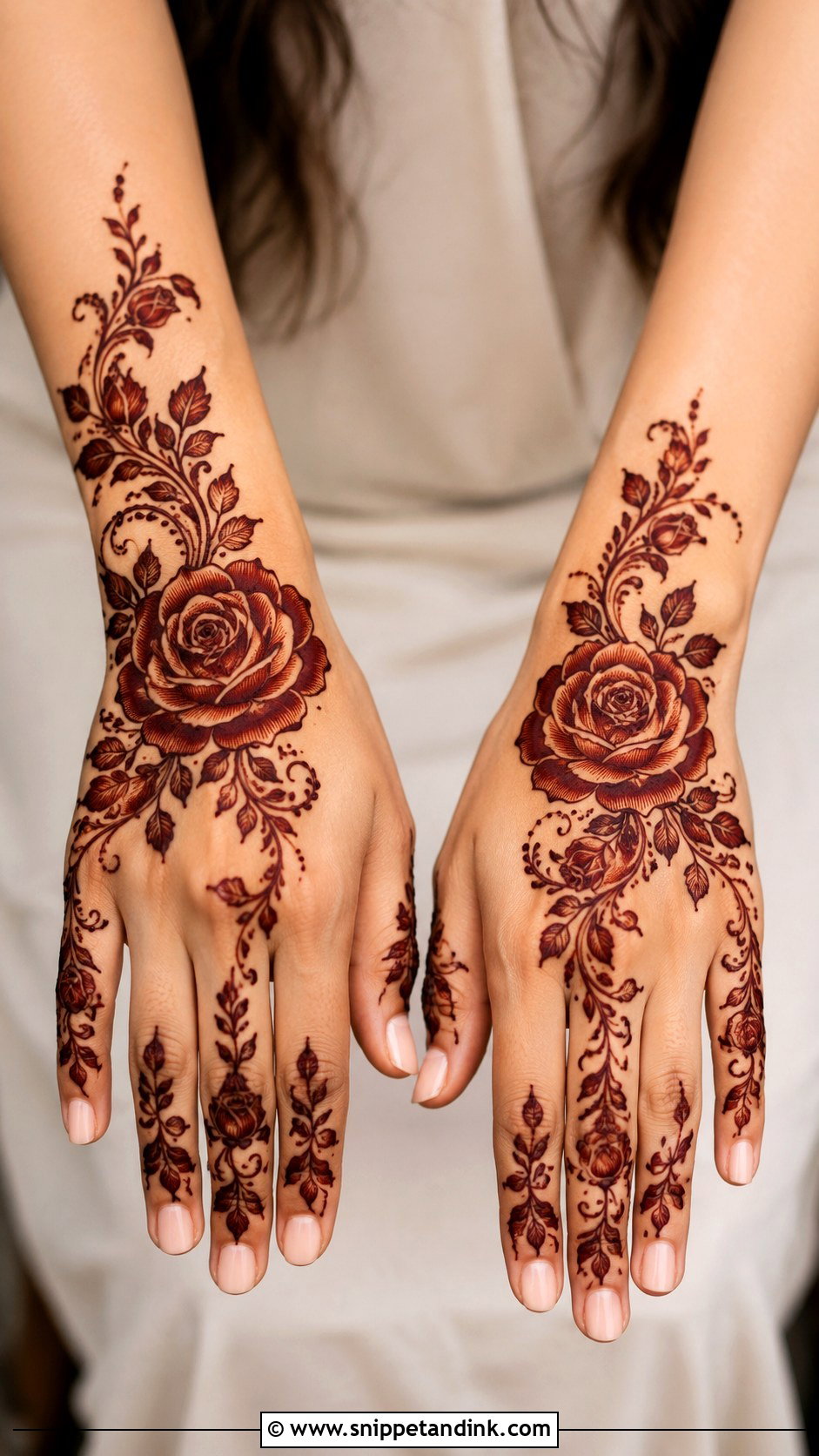
A large rose near the center of the back hand, smaller roses along the fingers, leafy vines and a wrist border. Shaded petals make the roses look full. The back hand is the right place for them, since the rounded shape stays visible when your hand rests on a table or holds a glass. Bold outlines, light leaves and open space keep it fresh for engagements, Eid and wedding guests.
26. Paisley Mehndi Design For Hands
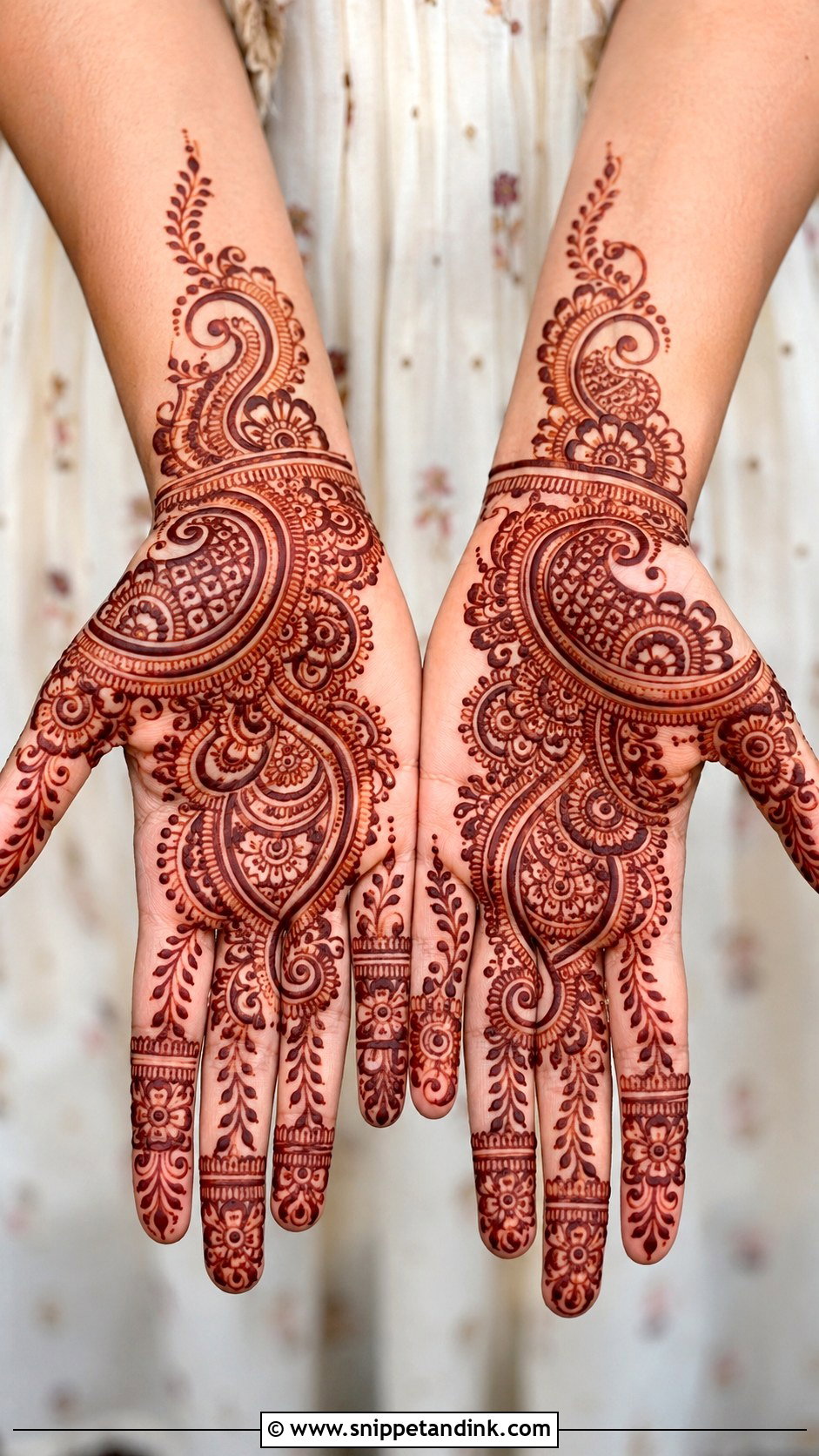
Paisleys follow the curve of the palm, so they look at home on almost any hand. Larger paisleys with clean inner patterns read modern; small ones packed with fillers read traditional. I make sure all the paisleys turn the same way within one section, otherwise the design looks restless. They pair easily with Arabic vines, Indian mandalas and shaded floral borders.
27. Circle Mehndi Design For Palm
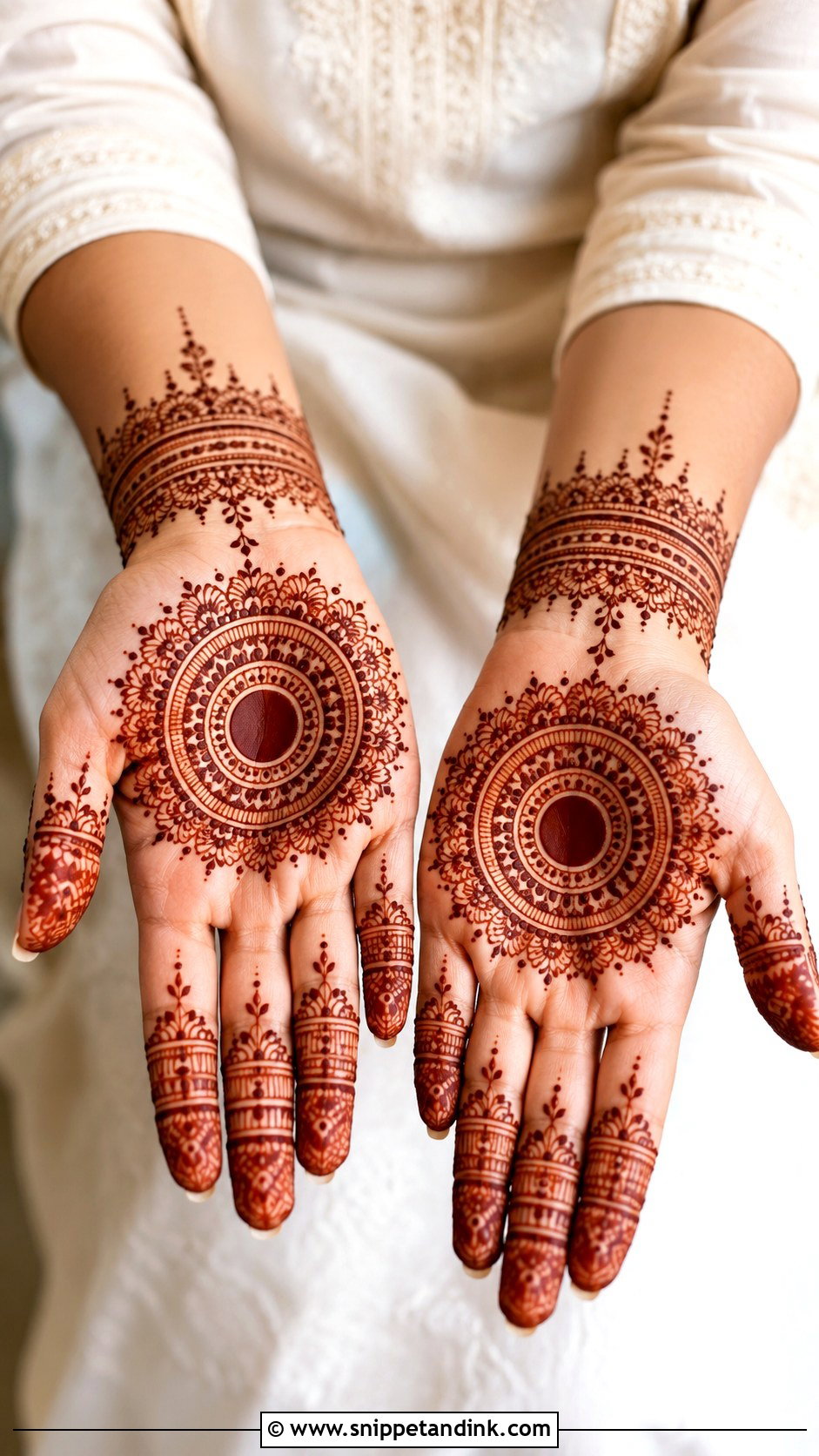
A round gol tikki or mandala sits in the center of the palm, with finger patterns, dotted rings, floral borders and wrist details around it. It’s one of the quickest designs that still looks finished, which makes it a staple for Eid, Karwa Chauth and first-time henna. The tikki is often filled solid, and a solid circle stains darkest of anything on the hand, so I keep its edge crisp with a fine outline.
28. Stylish Mehndi Design For Girls
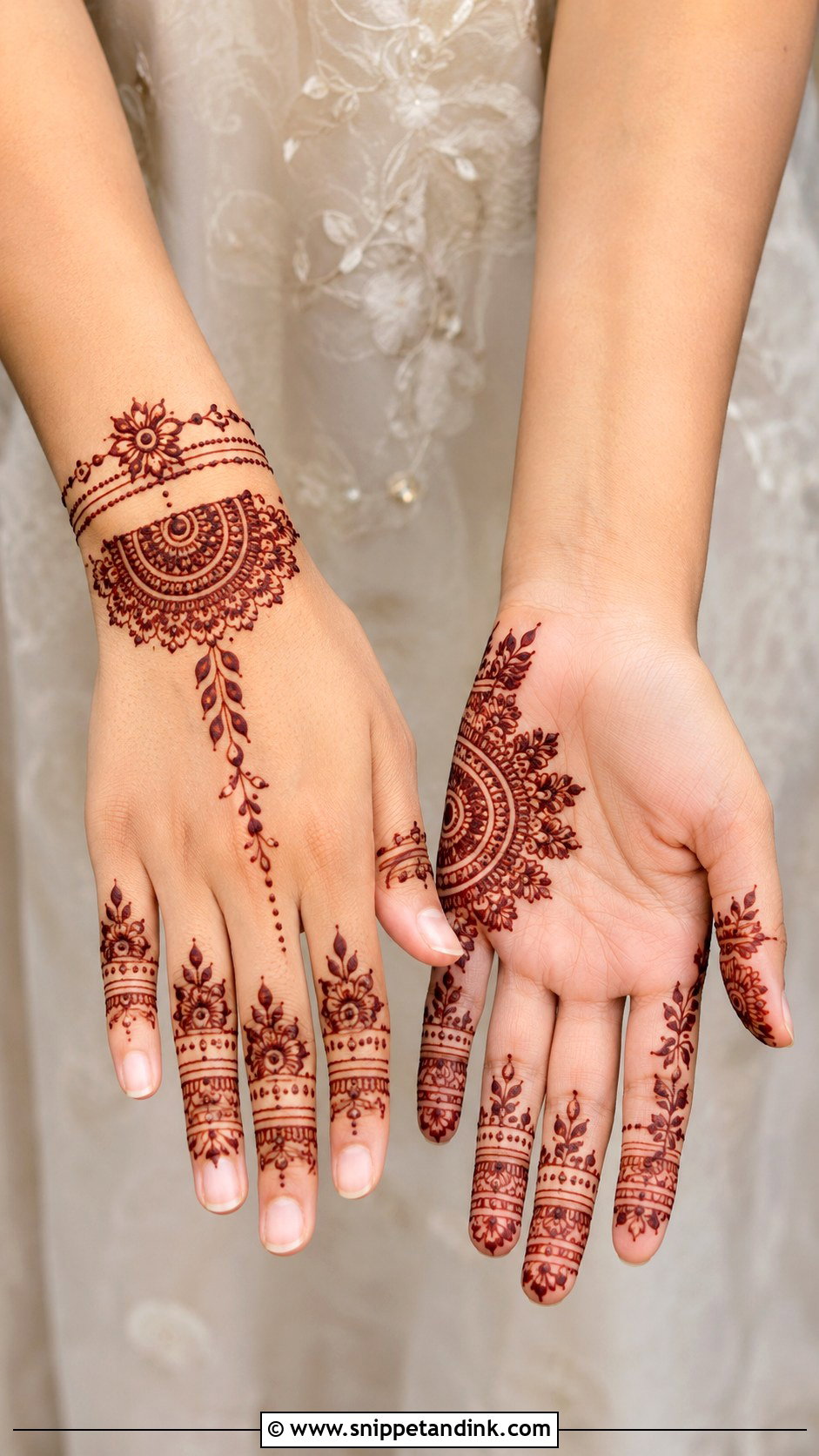
Younger clients usually want something light: finger-focused patterns, small flowers, half mandalas and bracelet details with plenty of negative space. Thin lines and modern placement keep it from looking too heavy or grown-up. It’s quick, which matters at school functions and birthdays where the queue is long. Matching both hands keeps it neat.
29. Easy Mehndi Design For Beginners
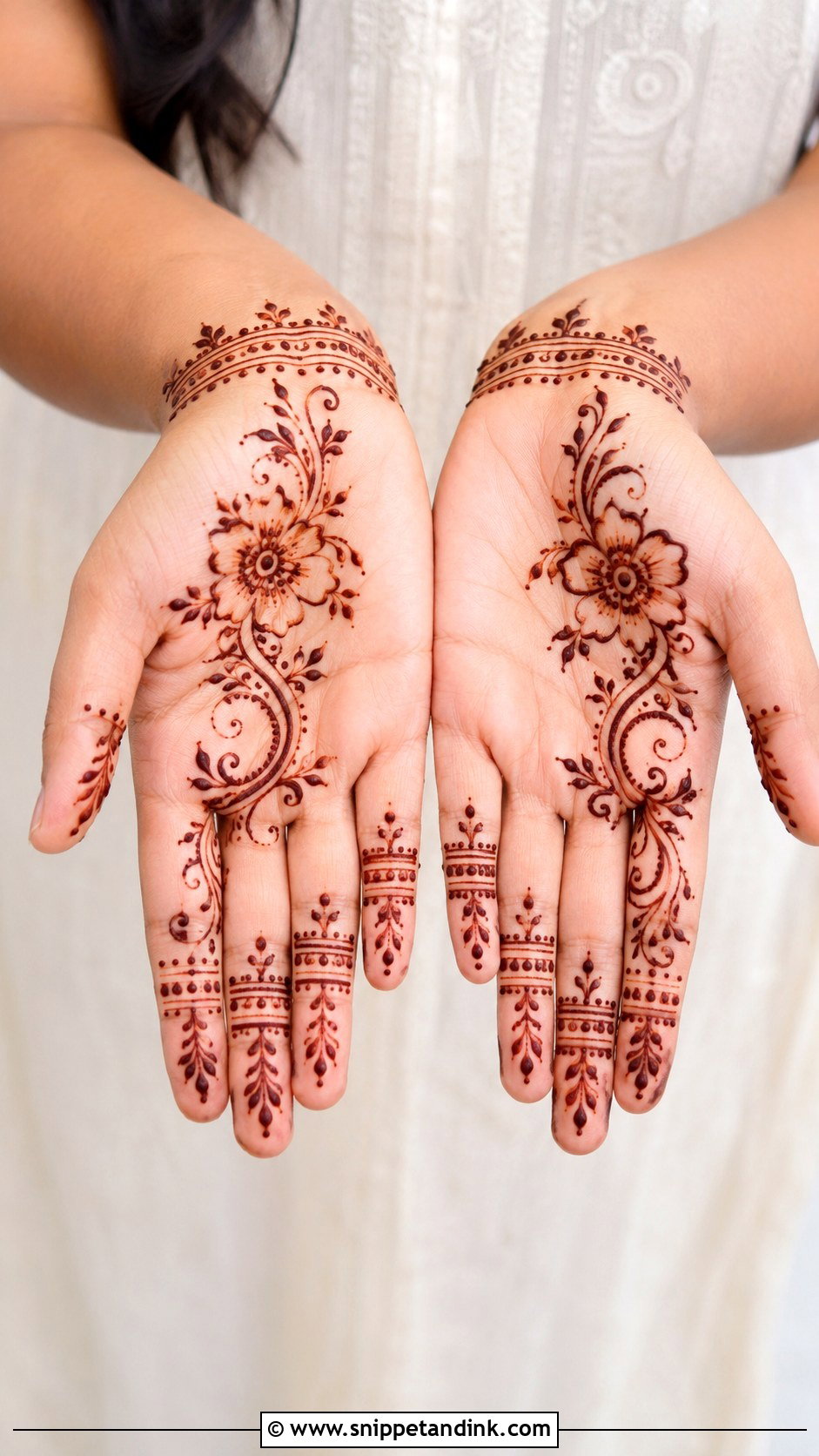
Start with a central flower or mandala, add curved vines, fill the fingers with dots and lines, and finish with a small wrist band. No shading, no tiny fillers. Open designs hide beginner mistakes better than dense ones. If you’re learning, bold florals and simple leaves are easier to control with a home cone, and steady outlines matter more than how many shapes you add.
30. Bridal Portrait Mehndi Design
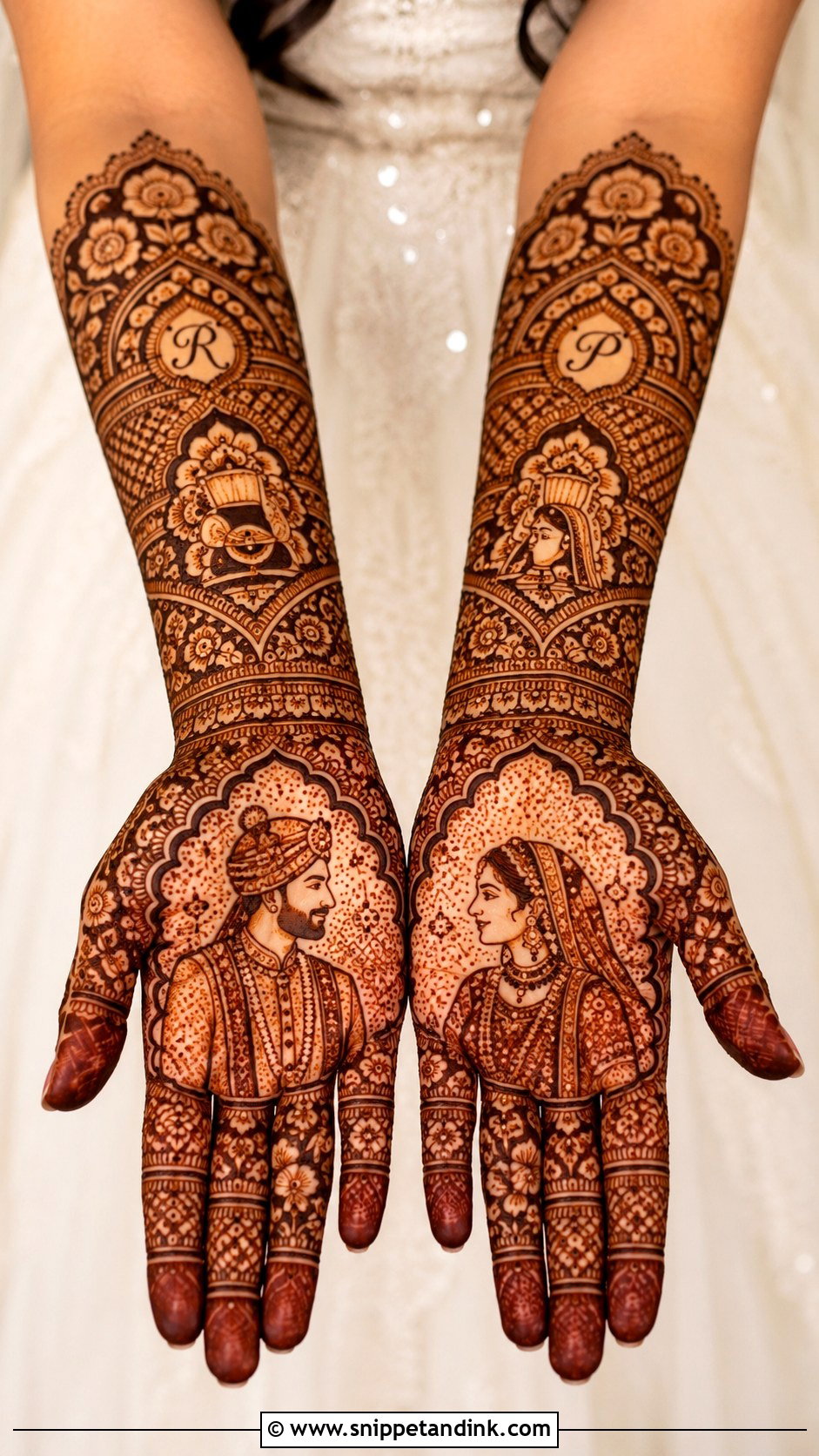
Portrait henna places the bride and groom inside the pattern, usually across the front hands and forearms, framed by mandalas, florals and wedding symbols. Faces need very fine, controlled lines, and I draw them slightly larger now than I used to, because small faces lose their features as the stain spreads. Initials, dates or cultural motifs can surround them. Choose an artist whose portrait work you’ve seen in person or in close-up photos.
31. Negative Space Mehndi Design
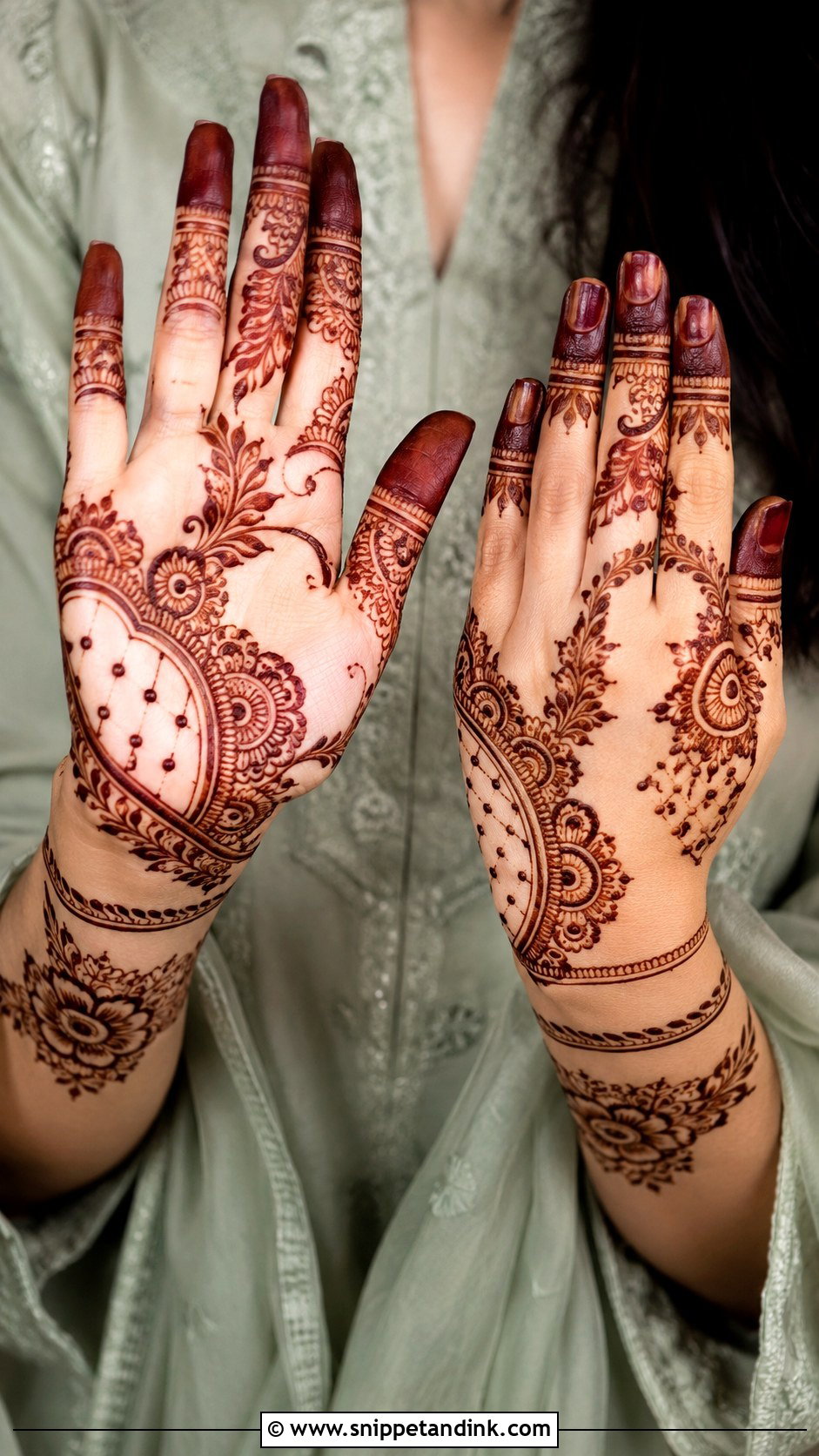
Blank skin becomes part of the pattern here. Bold flowers, vines, geometric sections or mandalas sit separated by clean gaps, so each motif breathes. Less paste also means it dries faster and feels lighter during a long event. I plan the gaps before I draw, since negative space added afterward just looks like missed spots. Bridesmaids and modern brides love it.
32. Geometric Mehndi Design For Hands
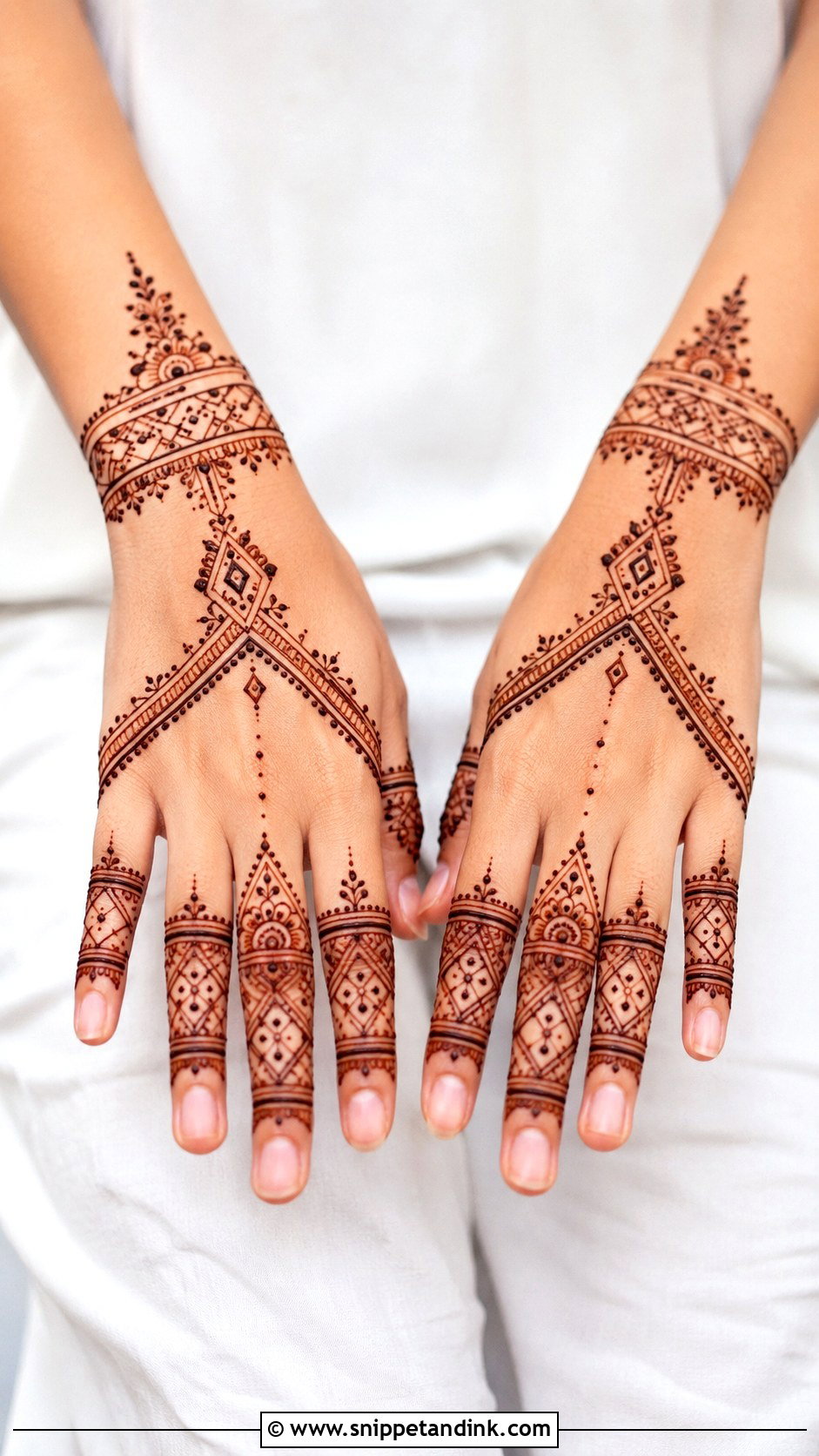
Geometric designs use lines, grids, diamonds, triangles, dots and structured wrist bands, sometimes softened with small florals. They work on the back hand, where the flat surface keeps shapes symmetrical, and on a minimal palm with simple fingers. Even spacing is the whole look, so I mark guide dots before committing to long lines. Bold without much coverage.
33. Vine Mehndi Design For Back Hand
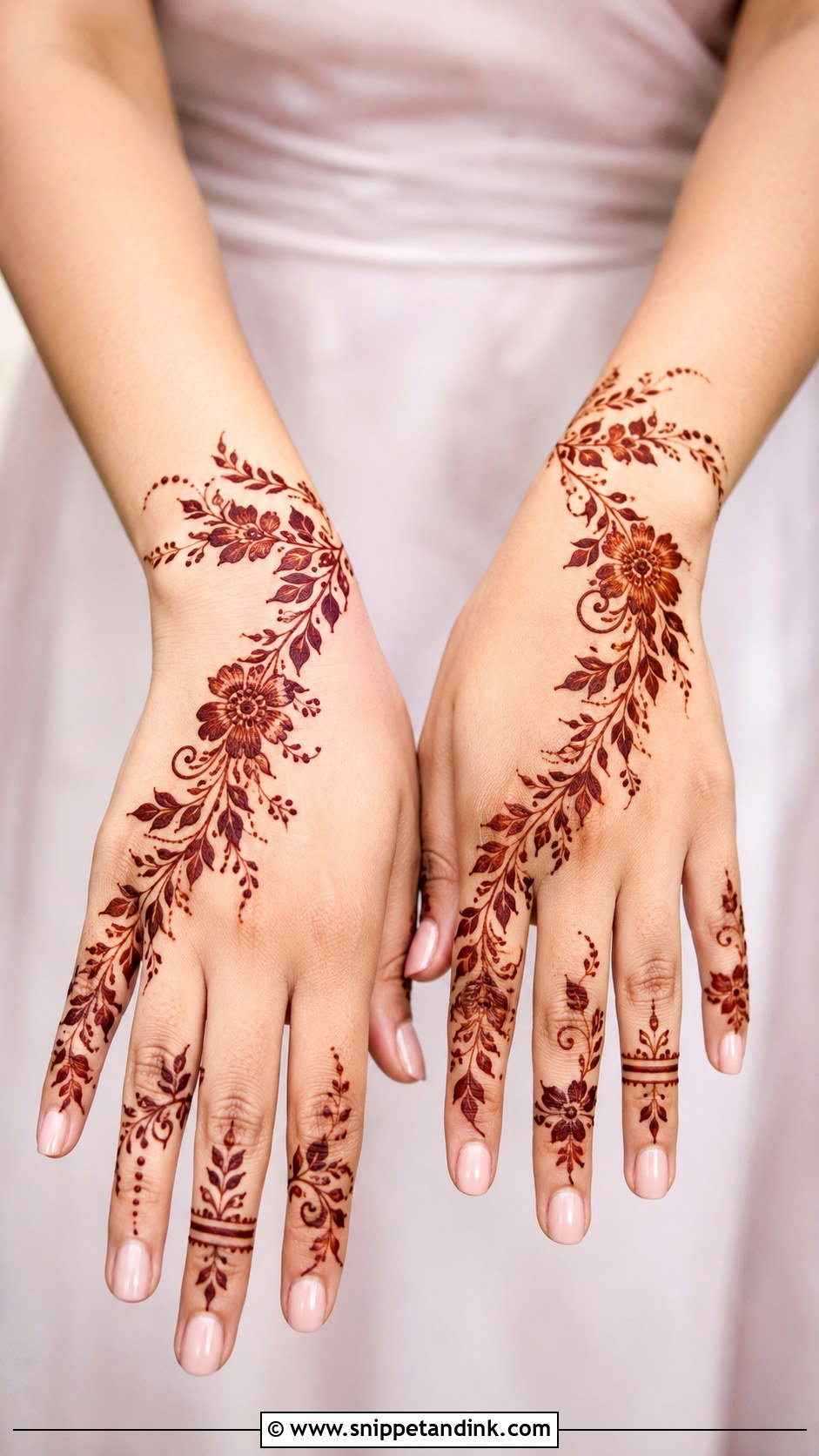
A vine starts near the wrist and climbs diagonally toward the fingers with leaves, small flowers and curved stems. It’s lighter than full coverage but looks complete because one line connects the whole hand. The diagonal also makes fingers look longer, which is why it flatters every hand shape I’ve drawn on. It goes on quickly, which helps on a crowded Eid night or at a casual wedding.
34. Festive Mehndi Design For Hands
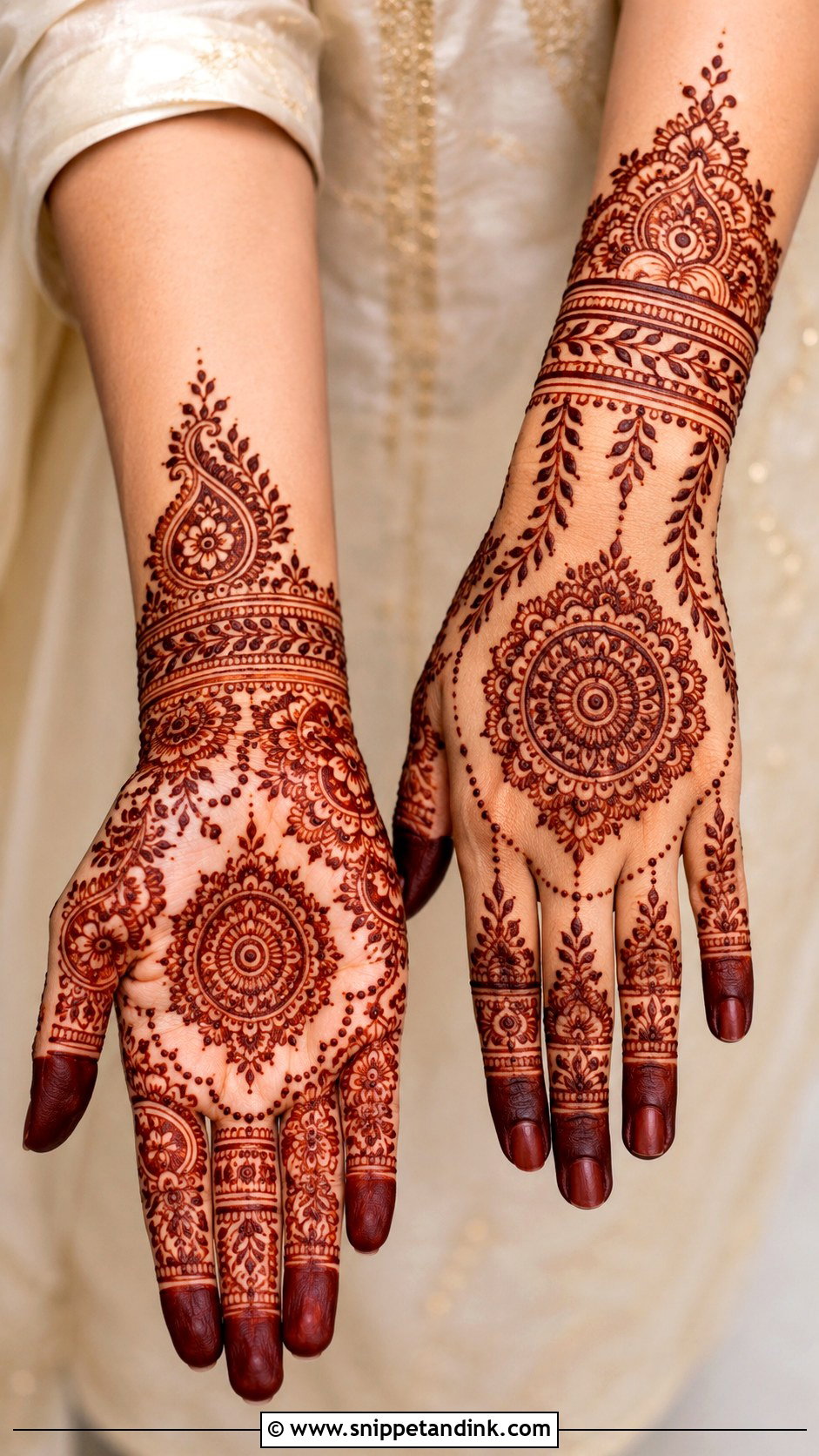
Festive henna should be medium coverage: mandalas, flowers, paisleys, wrist cuffs and detailed fingers that feel special without bridal weight. Simple Arabic flow with Indian details suits Eid, Diwali and family weddings. Some clients like one hand slightly fuller than the other; I usually make the dominant hand the lighter one, since it will fade faster with use anyway. Medium spacing keeps it comfortable and clear in photos.
35. New Full Hand Mehndi Design
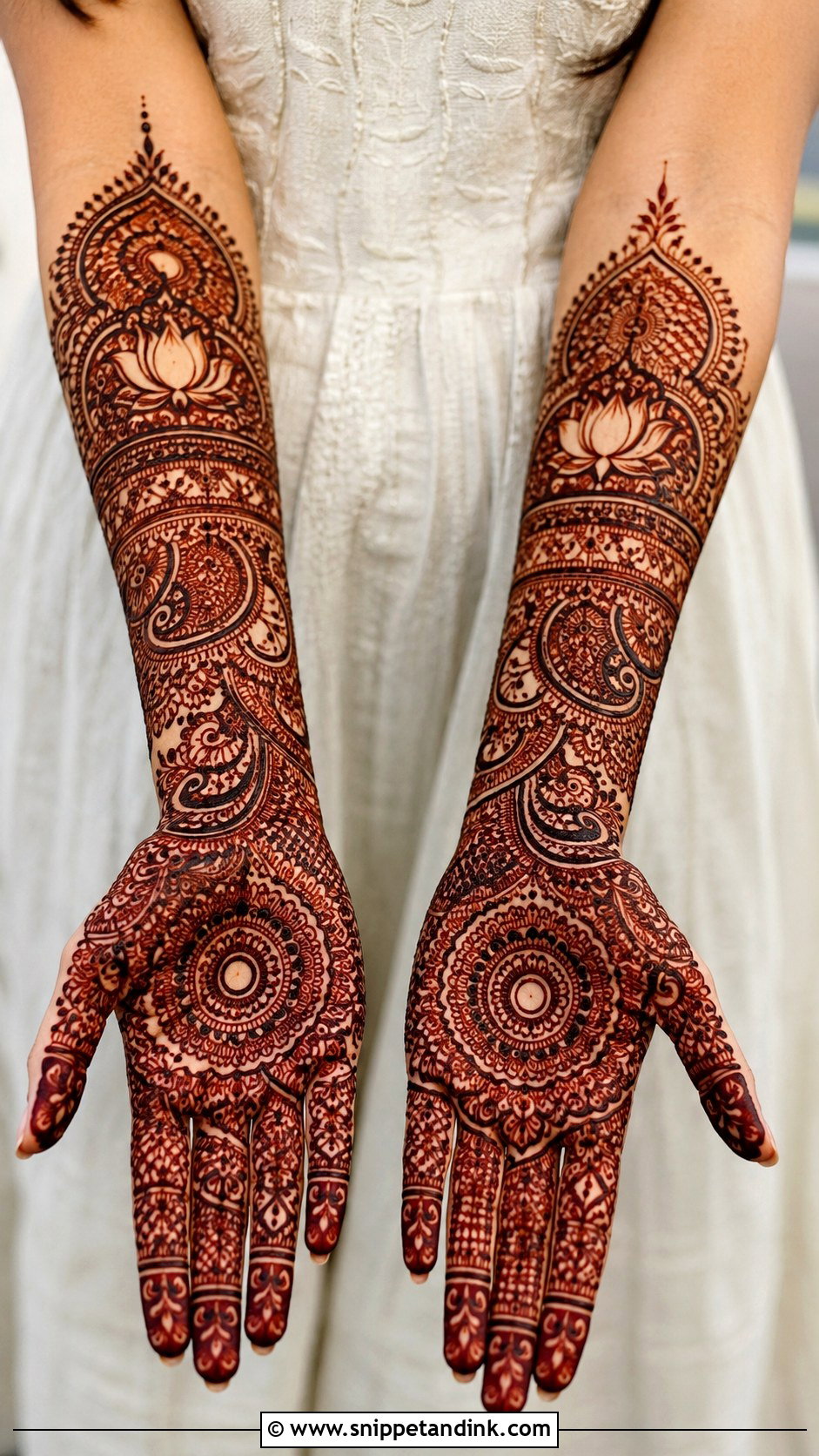
The current full-hand look relies on strong focal motifs, mandalas, lotuses, paisleys, jaali panels or shaded Arabic trails, instead of tiny fillers everywhere. It covers fingers, palm, wrist and forearm while keeping each section readable. Choose an Indian, Indo-Arabic, Pakistani or Khaleeji influence to match your outfit. Done well, it looks rich from across the room and detailed up close, which is the test I set myself on every full hand.
Hosting a Henna Night for Twenty Guests
Group bookings run smoothly when the host plans a little. One artist working alone can only cover so many hands in an evening, so the design choice decides how many guests get done. Here’s what I ask hosts to sort out ahead of time:
- Agree on a short menu of three or four guest designs, mostly back-hand trails and bracelets. Full hands for every guest won’t fit in one night.
- Set up a table with good light, a chair at the right height, and space beside it for guests to sit while the paste dries.
- Send the people who need to leave early, or who have small children, to the front of the line.
- Keep a box of tissues, a few old towels and a bowl of lemon-sugar mix nearby for touch-ups and drying.
Tell me the guest count when you book. If the numbers are high, a second artist is better than rushing everyone’s designs.
Why the Same Design Stains Differently on Two Sisters
I often draw identical designs on two people from the same paste and get two different colors the next day. That’s normal. Warm hands stain deeper than cold ones, which is why I ask clients to keep their hands warm while the paste is on. Thicker skin on the palms holds more dye than the thinner skin on the back of the hand. How long the paste stayed on and how soon it met water make a big difference too.
Freshness matters as well. Paste mixed for the evening and kept cool releases dye well; a cone that has sat warm in a bag for days usually doesn’t. If one of you stains lighter, give it the full two days to develop before deciding it didn’t take.
Clean Lines Matter More Than Coverage
From simple front-hand patterns to full bridal art, Arabic trails, mandalas, jewelry designs and modern negative-space layouts, there’s a design here for every kind of evening. Let your occasion, outfit, comfort and preferred coverage decide. When time is short, Arabic, vine, bracelet or beginner patterns work well. For a grand look, bridal, Rajasthani, full-hand or portrait work. For something modern, geometric, Khafif, minimal bridal or negative space. Whatever you pick, clean lines, balanced spacing and a deep natural stain are what people will notice.
You'll Like These Ideas:






Leave a Reply