
Khafif means light, and that one word explains how I approach every design below. A Dubai-style khafif pattern borrows its Arabic flow from the Gulf: one confident trail, generous bare skin between motifs, and florals drawn with a bold outline instead of packed with filler. It reads clearly in photos from across a room, and it takes a fraction of the sitting time a dense bridal hand needs, which matters at Eid when there’s a queue of cousins waiting. These are 30 layouts I’d actually put on a hand, from back-hand trails to palm mandalas and feet, with notes on where each one works and where it struggles.
Mapping the Trail Before the Cone Touches Skin
Every design in this list starts with the same decision: where the main trail enters the hand and where it leaves. I look at the hand flat, then curled into a loose fist, before I draw anything. The trail usually enters at the outer wrist and exits on the index or middle finger, because that diagonal follows the tendons and makes most hands look longer. On a short palm I bring the exit to the index finger; long fingers can carry it to the middle.
Four questions I ask first
- What are you wearing? Full sleeves cover the wrist, so the design needs its weight on the back hand and fingers.
- Do your palms need to stay clear? Anyone cooking, nursing or handling water all day loses palm henna within days.
- When is the event? Henna put on the same day will still look orange.
- Have you worn natural henna before? First-timers get a small patch on the inner arm a day or two ahead, so any reaction shows before the real application.
Negative space is planned too, never left over. I decide where the bare patches will sit, usually one over the center of the back hand and one near the base of the thumb, and draw around them. Accidental gaps read as gaps. Intended ones look like part of the pattern.
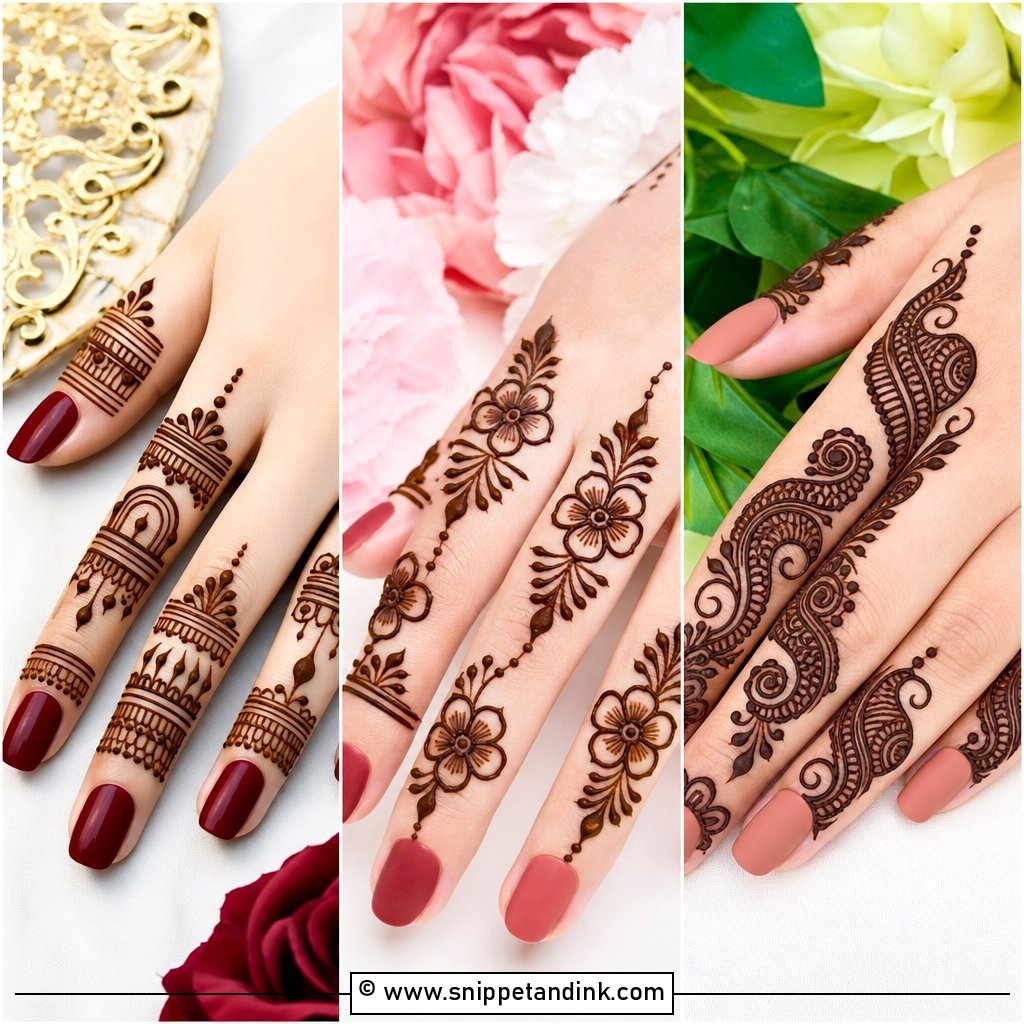
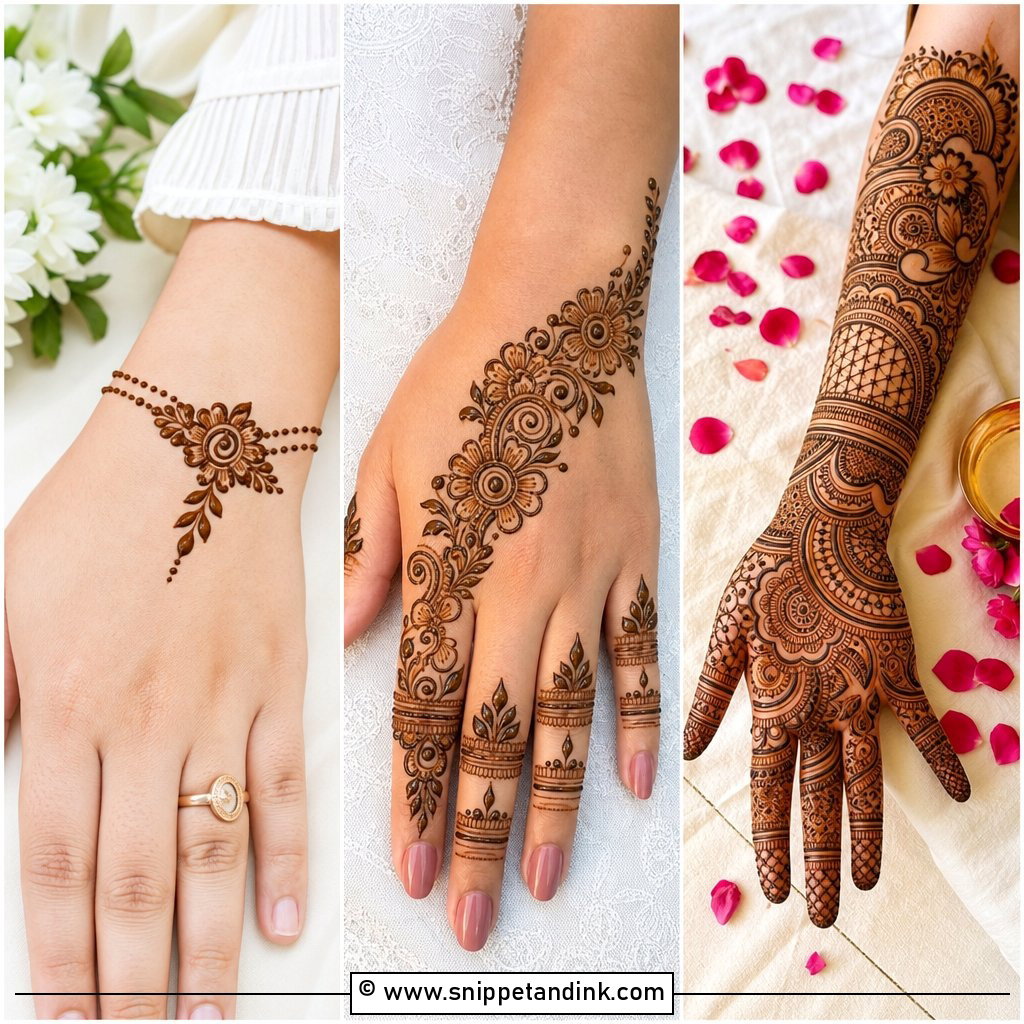
1. Dubai Khafif Back Hand Mehndi Design
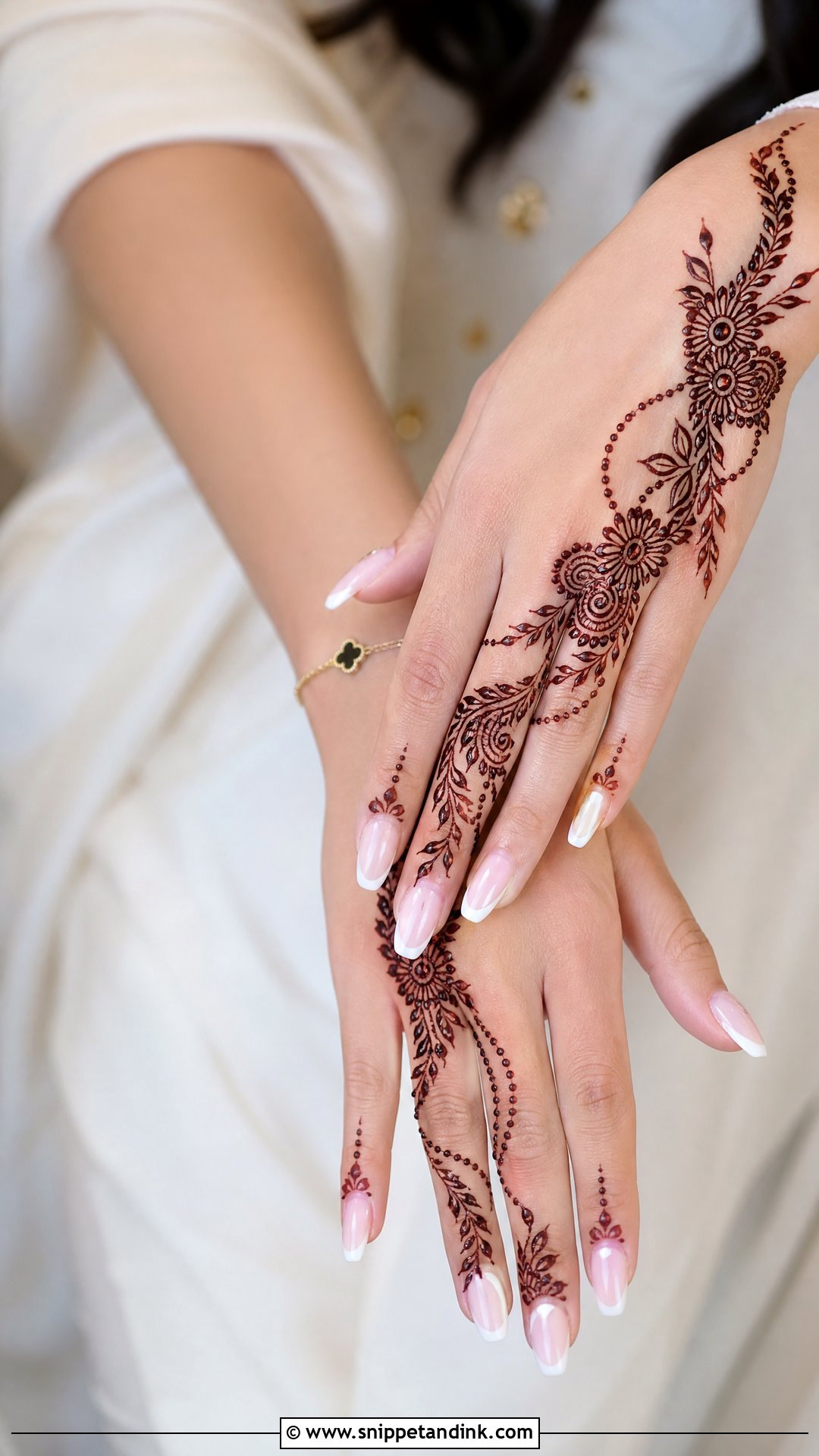
Most khafif back-hand designs start at the outer wrist and travel diagonally toward the index or middle finger, and that diagonal is what makes the hand look longer. I draw the anchor flower first, near the wrist bone, then let the leaves and dots taper as the trail climbs. Fingers get only a band or a leafy tip. If every finger is fully decorated, the open skin that defines khafif disappears. A slim bracelet line at the wrist finishes it and hides the spot where the trail begins.
2. Dubai Khafif Front Hand Mehndi Design
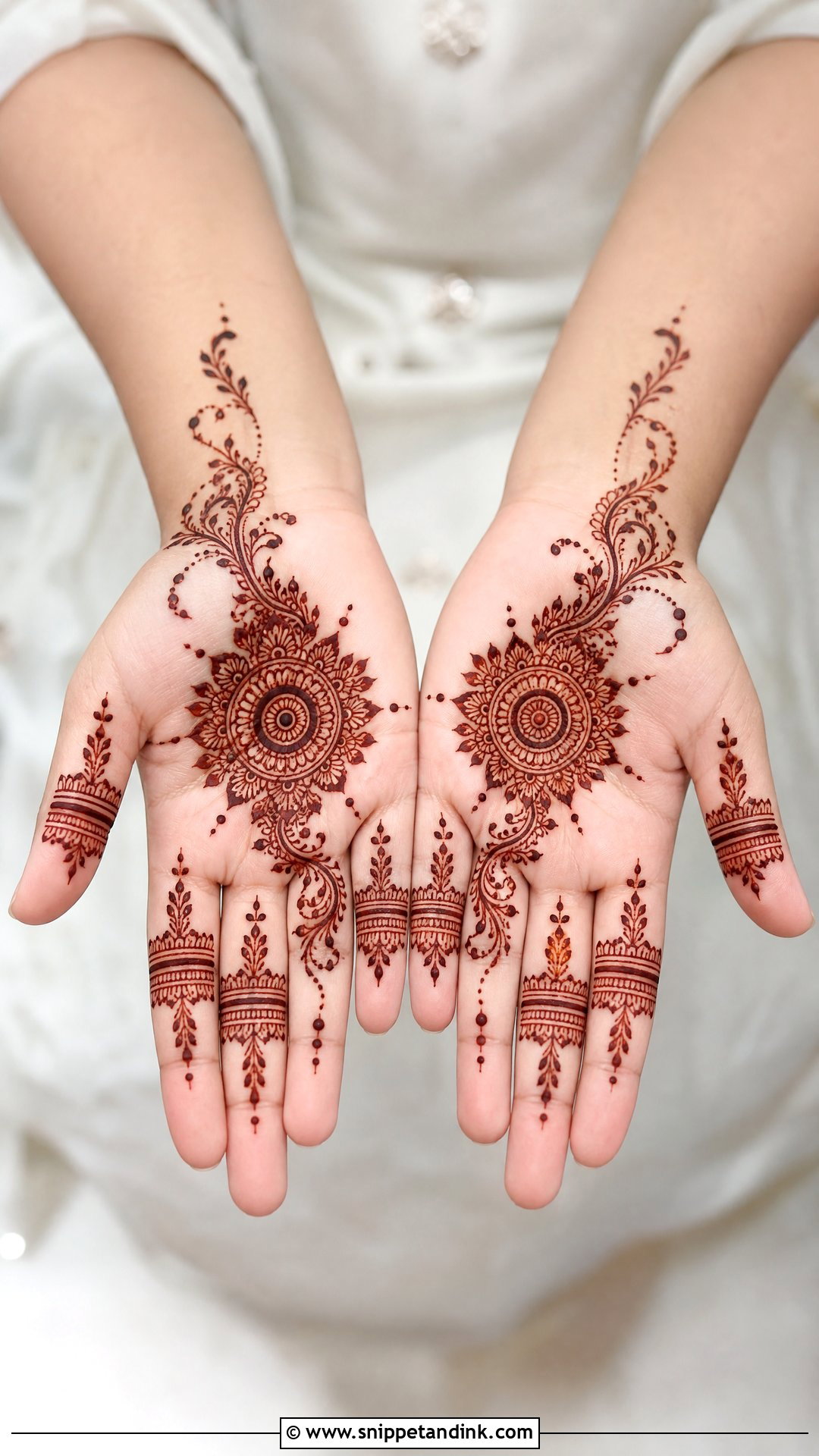
Palms are where I hold back the most. One centered mandala or a curved Arabic motif with clear skin around it lets the palm’s natural lines frame the design instead of fighting it, and on small hands that empty space makes the fingers look longer. The thing I watch for is the crease at the base of the fingers. A motif placed right across it cracks and smudges the moment the hand closes, so I keep finger bands just above or below the fold.
3. Simple Dubai Khafif Mehndi Design
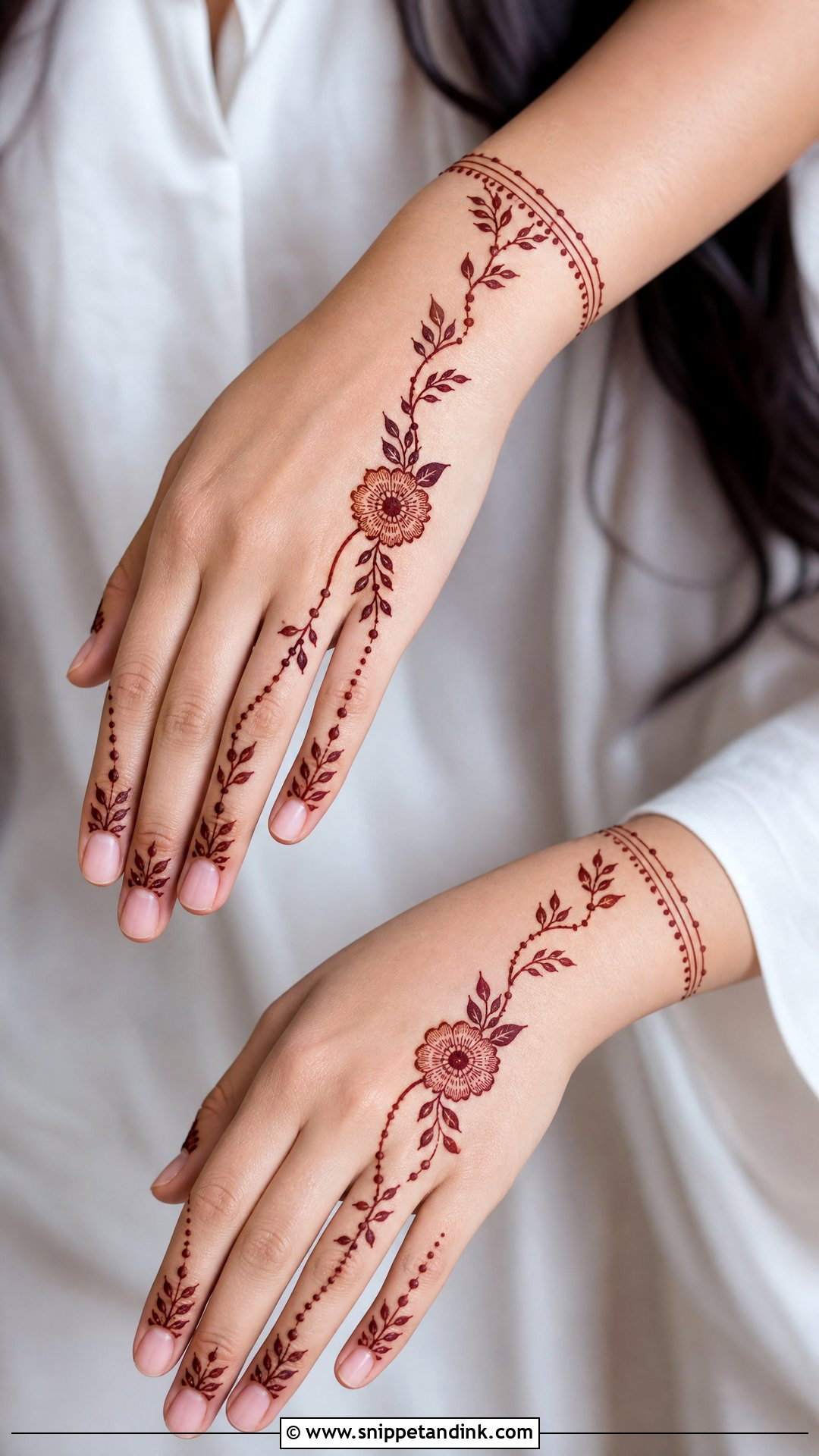
One trail, a few small flowers and dots placed carefully around it, nothing else. That’s the whole design, and it’s the one I’d recommend if you’ve never had henna before or you’re squeezing an appointment in between errands. The temptation is to fill gaps with tiny swirls. Resist it, because filler is exactly what turns a simple khafif into a messy one. Matching hands don’t need to be mirror images either: I usually flip the trail direction on the second hand so the pair looks related rather than stamped.
4. Dubai Khafif Arabic Mehndi Design
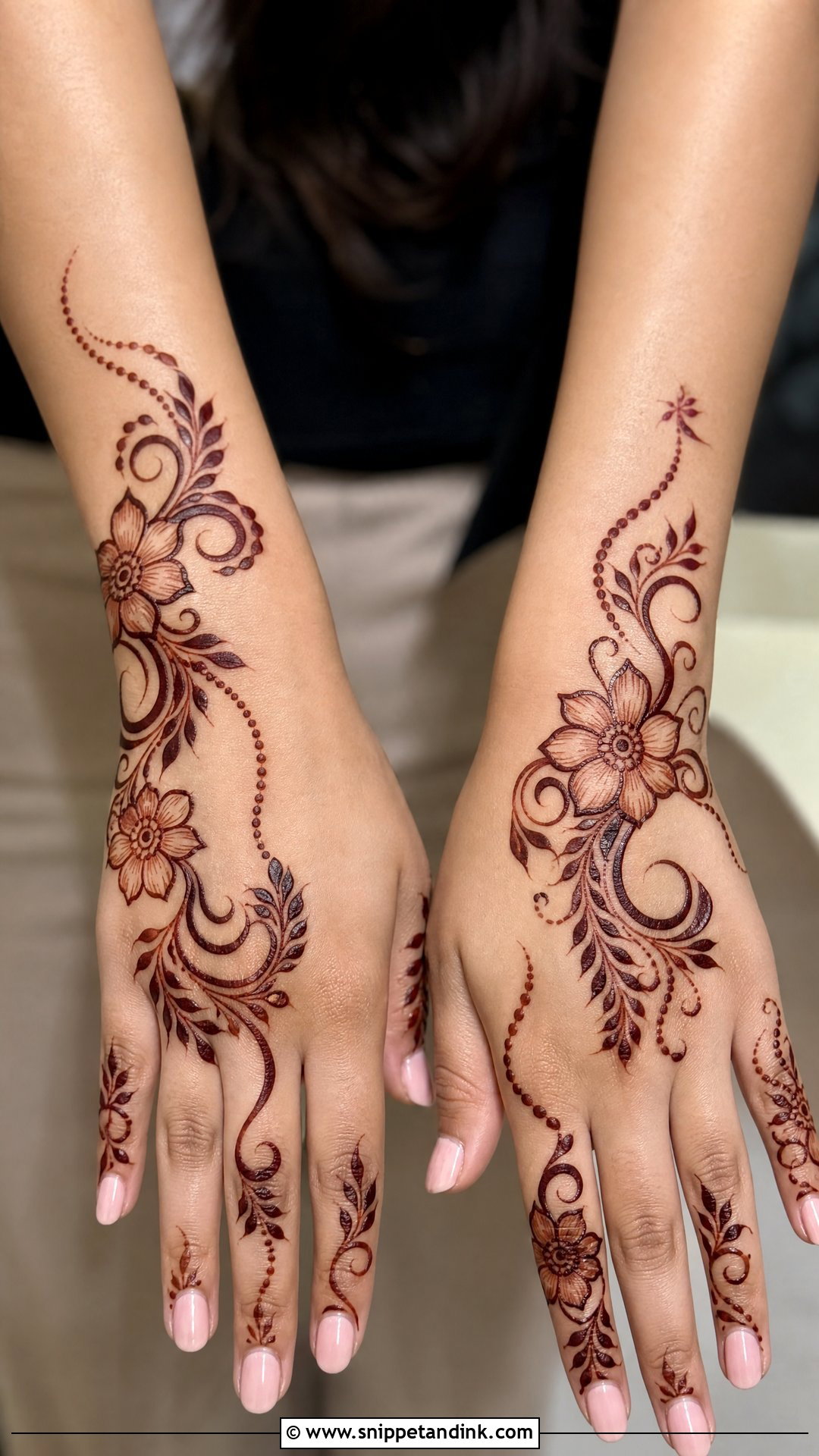
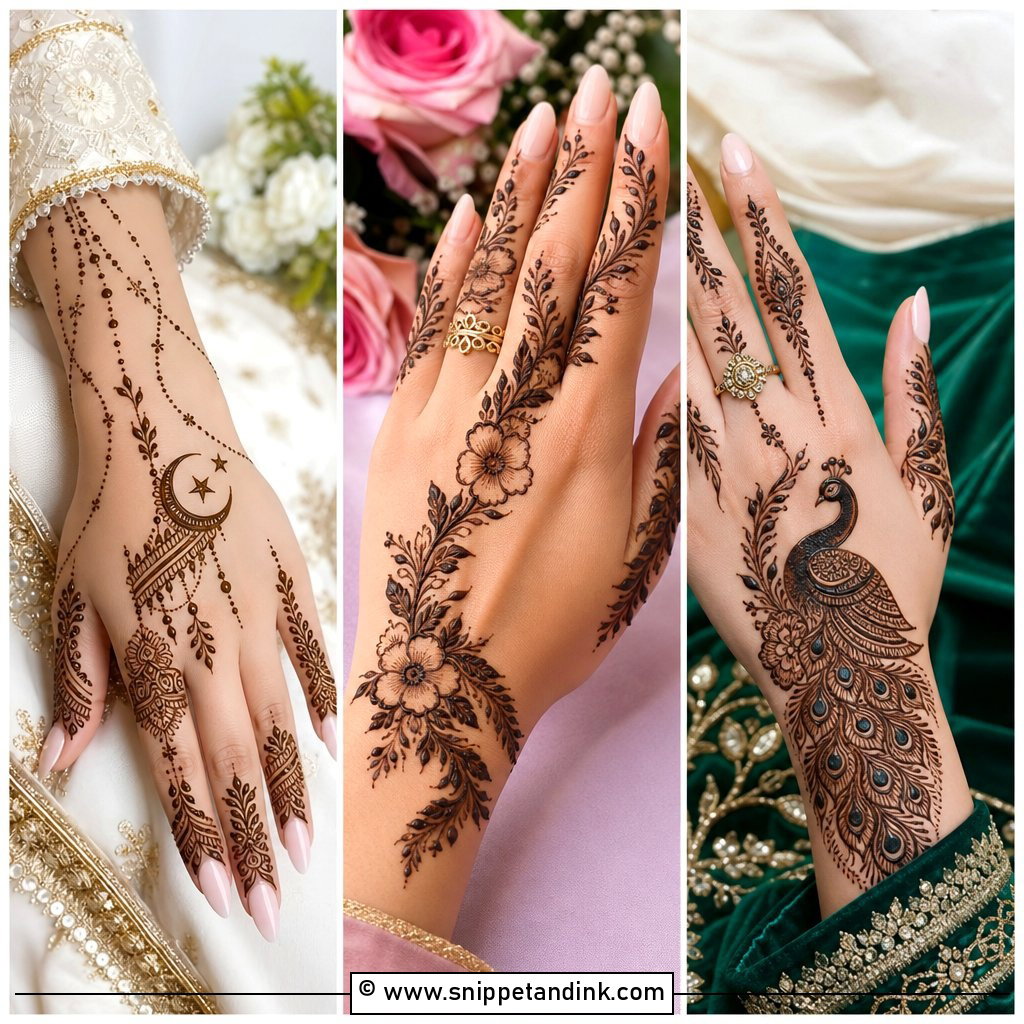
Arabic henna is built on bold curves and open spaces, and khafif styling pares it down further. The flow usually runs from the wrist to one or two fingers, with large outlined flowers and leaves carrying the movement. What sells this style is line confidence. A curve drawn in one steady pull looks crisp, while a hesitant stroke wobbles and shows every stop, so I pipe the long curves first while my hand is fresh and add the small leaves after. It sits well against abayas and lehengas because the pattern is visible without competing with embroidery.
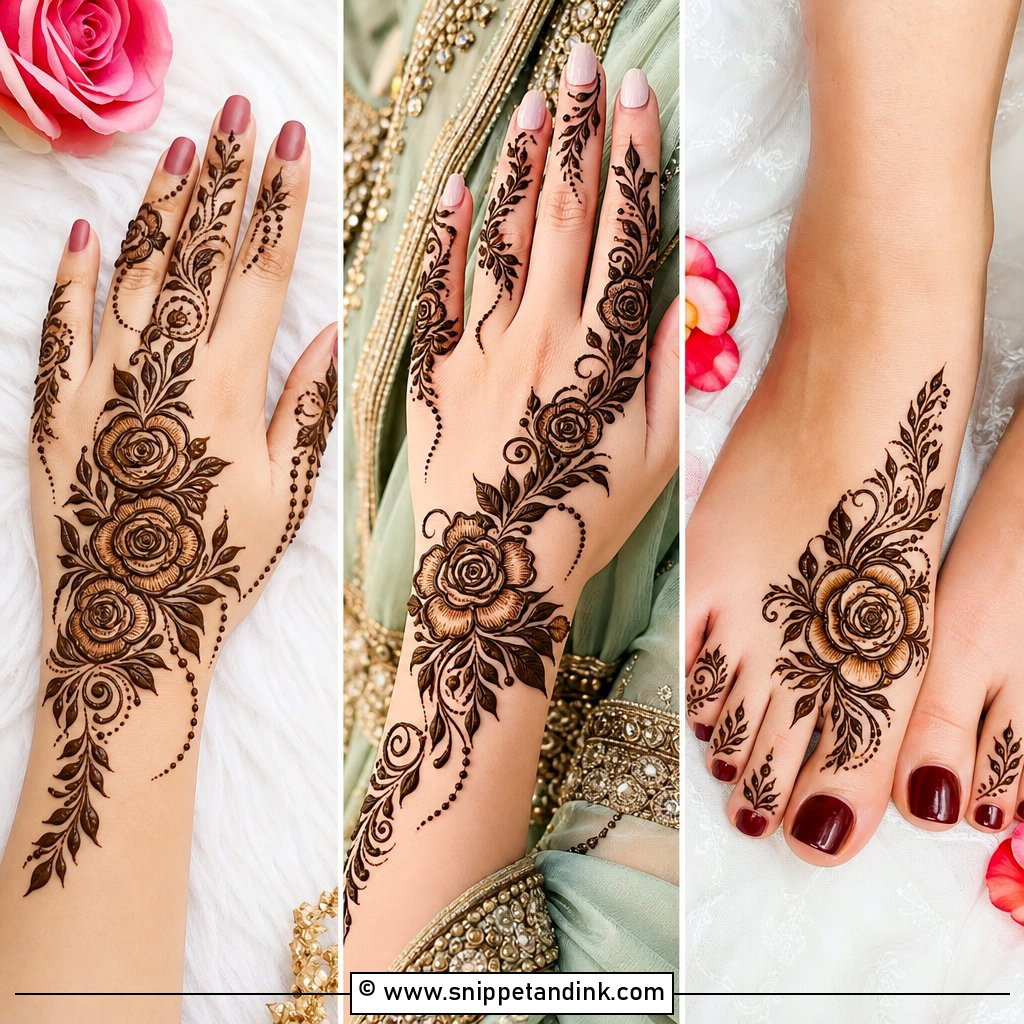
5. Dubai Khafif Floral Mehndi Design
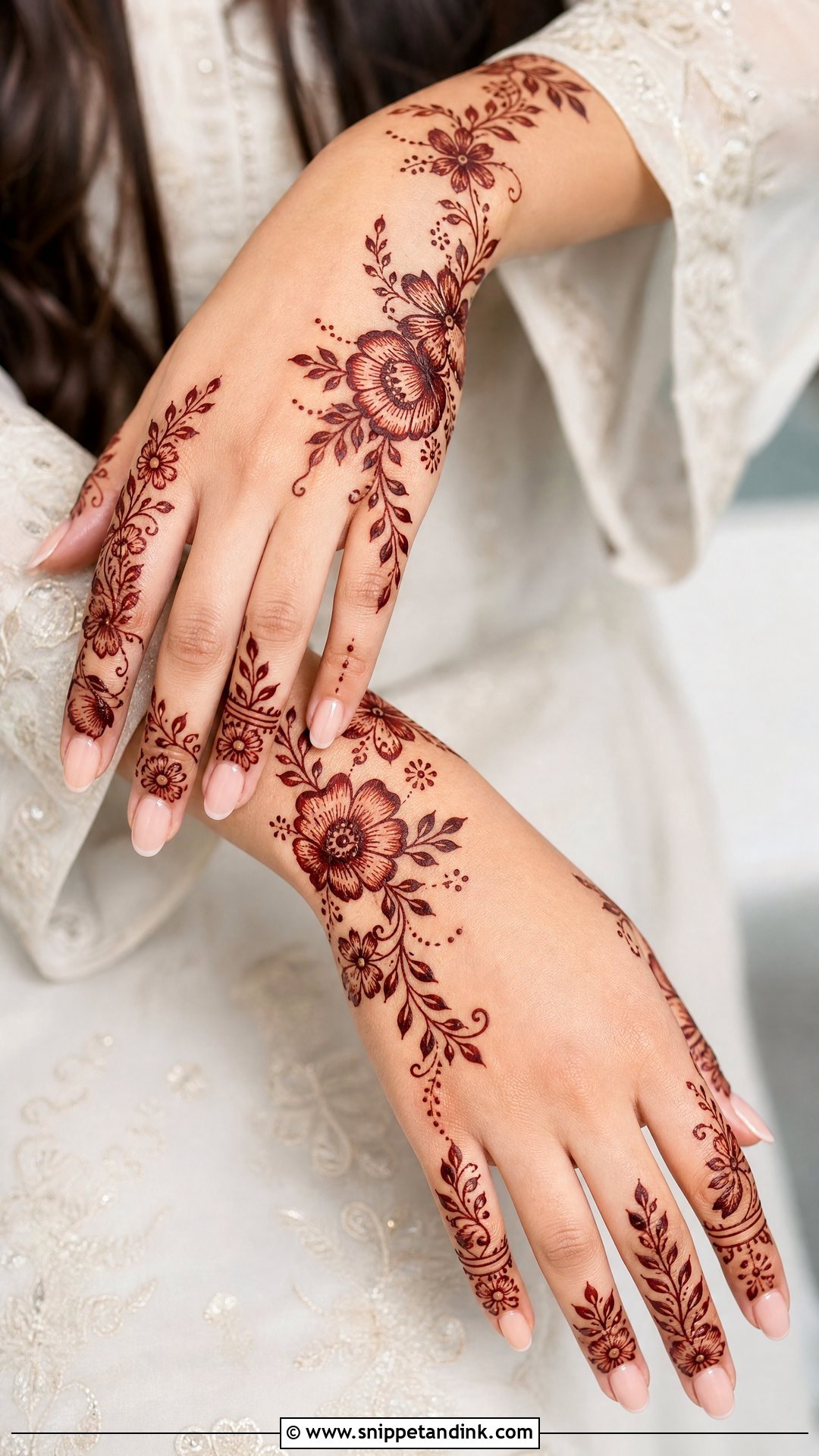
Picture one large flower on the back hand with smaller blooms stepping down toward the fingers, or a floral circle in the palm with nothing crowded around it. Petal shape decides the mood more than people expect. Rounded petals soften the design; pointed tips push it toward a sharper Gulf finish. I give the main flower a double outline so it still reads once the stain starts to fade in the second week.
6. Dubai Khafif Finger Mehndi Design
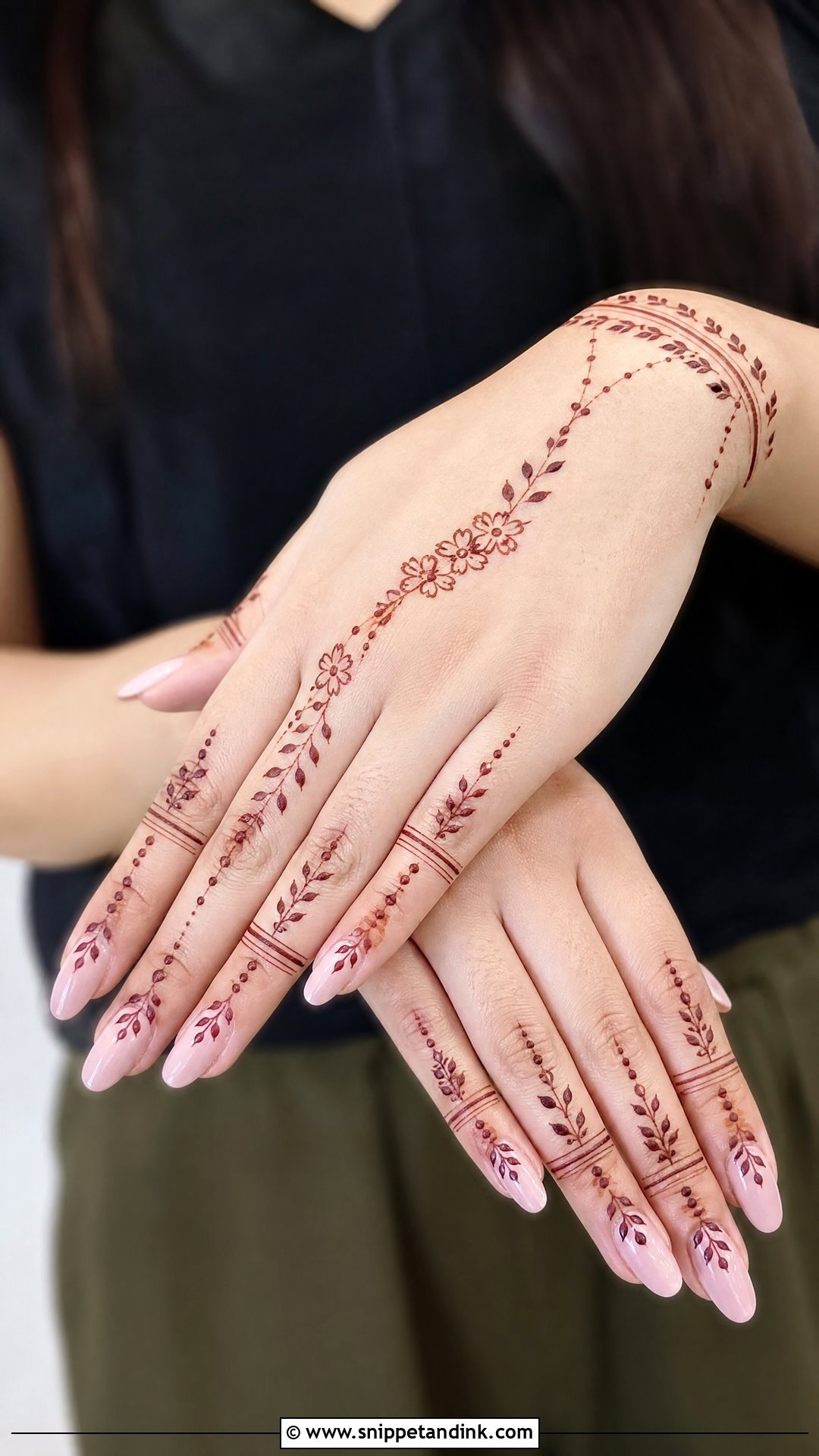
Rings, leafy bands, fine lines and tiny dotted chains on the fingers, with the back hand almost bare. It’s the easiest design to wear to work the week after Eid, because it fades evenly and nobody notices a half-gone flower in the middle of your hand. Fingertips stain darker than almost anywhere else, so I keep the lines there finer than on the palm or they bleed into one block of colour. If you wear several rings, this layout leaves room for them.
7. Dubai Khafif Palm Mehndi Design
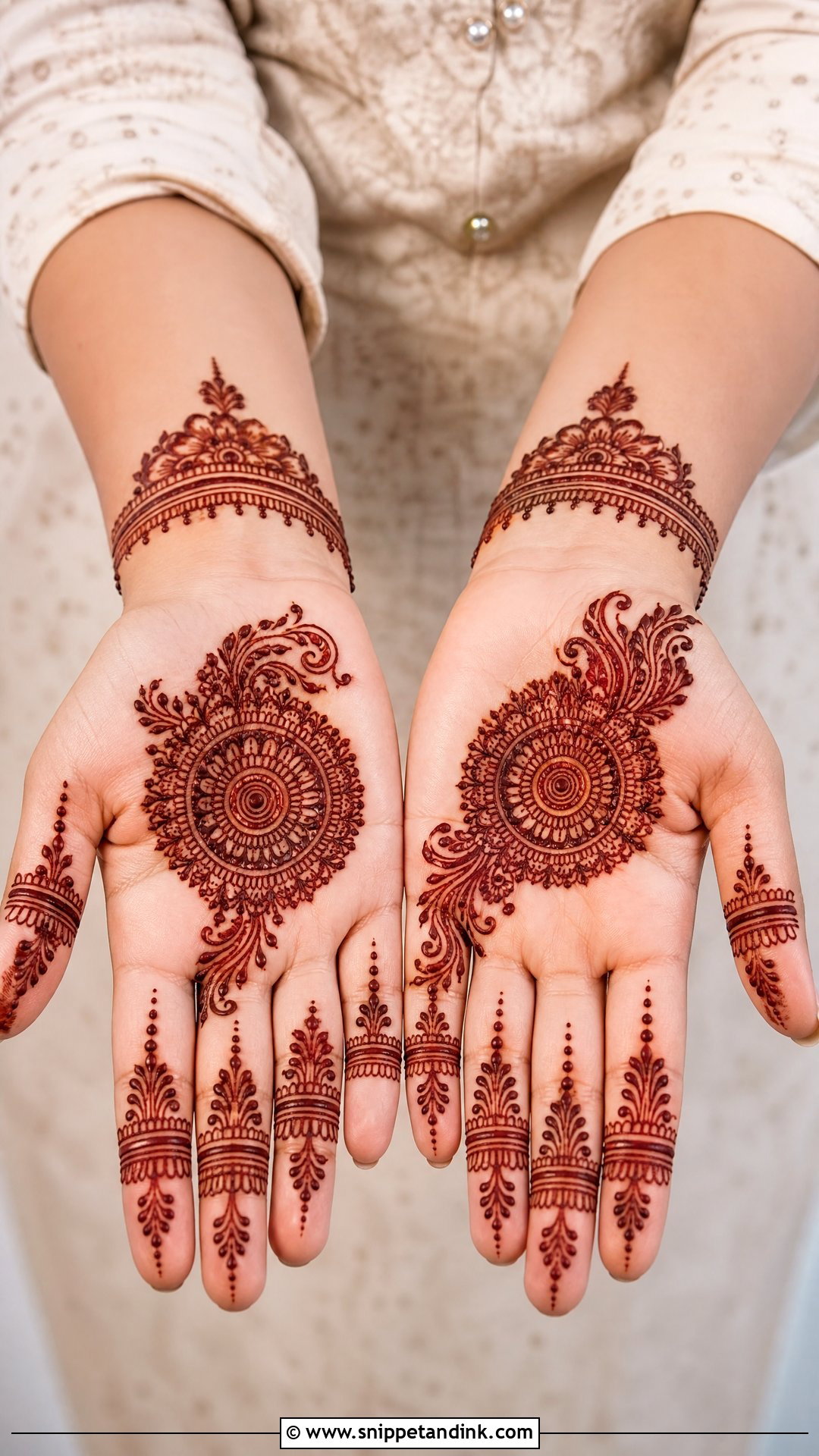
The palm takes the deepest colour on the body, because the skin there is thicker and holds more dye, so a khafif palm design looks richer than its line count suggests. A round mandala, a paisley or a small Arabic bouquet sits in the center, with slim bands on the fingers and a soft cuff at the wrist. I space the elements evenly because the lines look slightly bolder once the stain darkens, and tight gaps visually close up. Keep palm coverage modest if you’ll be cooking or washing up a lot; constant water is what fades palm henna fastest.
8. Dubai Khafif Bridal Mehndi Design
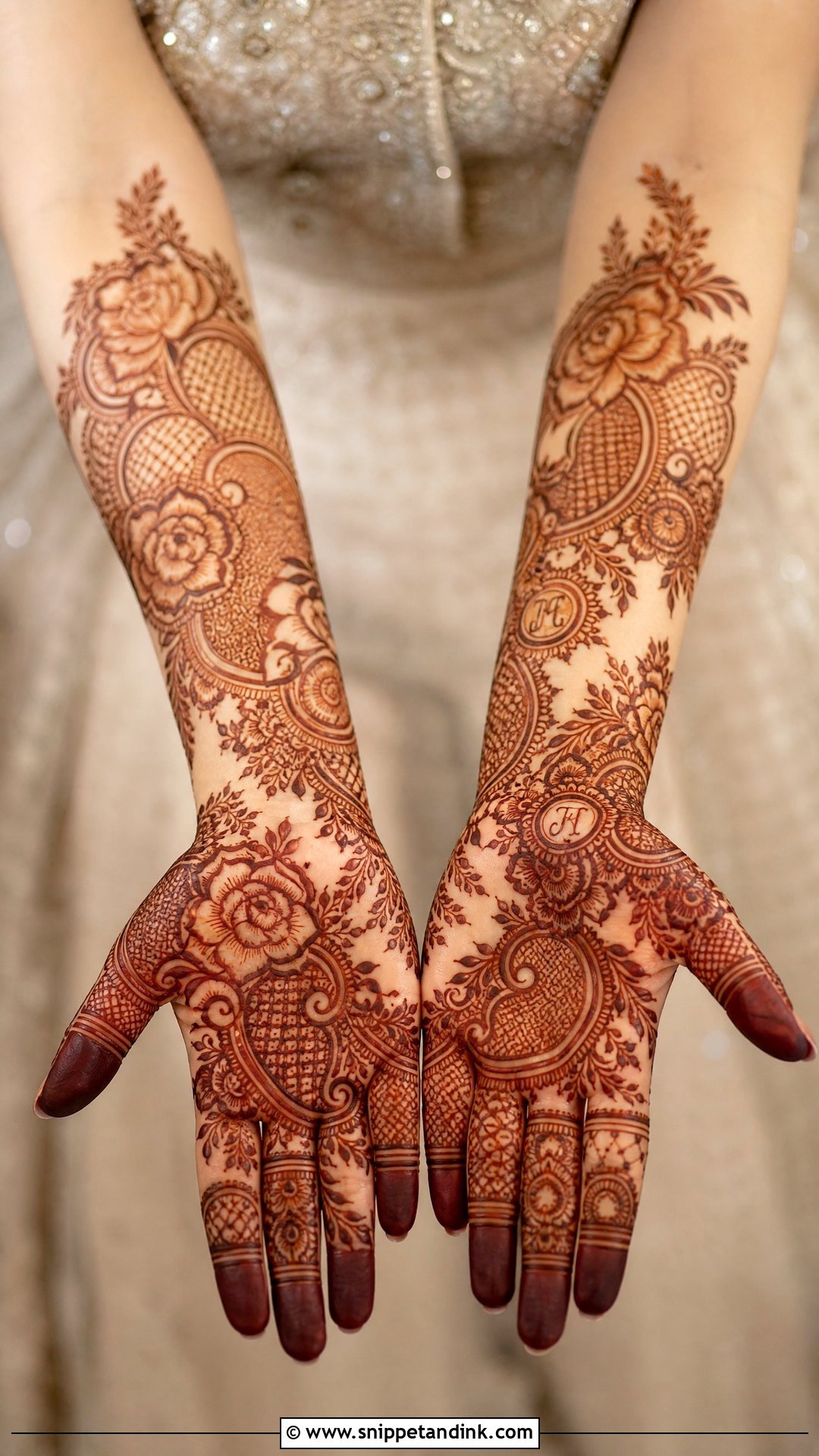
For a nikah or a civil ceremony, this layout covers the palms, backs of the hands, wrists and part of the forearm, yet keeps open spacing between florals and trails rather than dense filling. I like hiding the groom’s initials inside a petal or a leaf here. In a light design there’s less clutter to hide them in, so the letters need to be tiny and tucked somewhere he’ll genuinely have to search. The balance to strike is enough work to hold up in close-up ring shots while keeping the airy layout intact. If you’ve never worn natural henna, have a small test patch done well before the wedding week.
9. Dubai Khafif Eid Mehndi Design
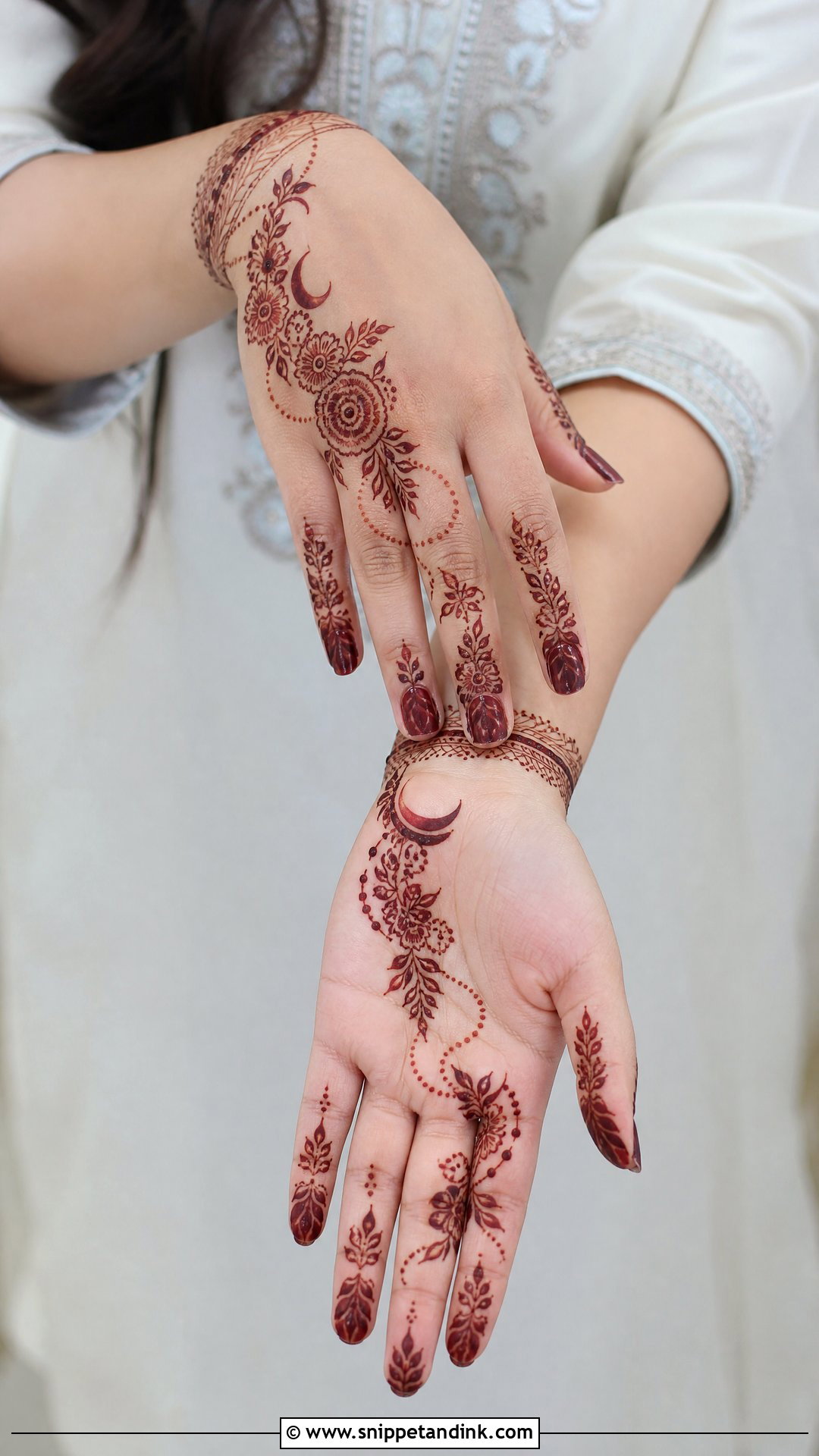
Eid henna usually goes on the evening before, often at home with family waiting their turn, so a Dubai khafif Eid mehndi design earns its place by being quick. A floral back-hand trail, slim finger details and a small bracelet cover the back; the palm can take a crescent-inspired curve with dots and leaves. Lighter patterns dry faster, which means less time sitting with your hands held up. Paste applied after dinner will have moved from orange toward reddish brown by morning, and it keeps darkening through the day.
10. Dubai Khafif Engagement Mehndi Design
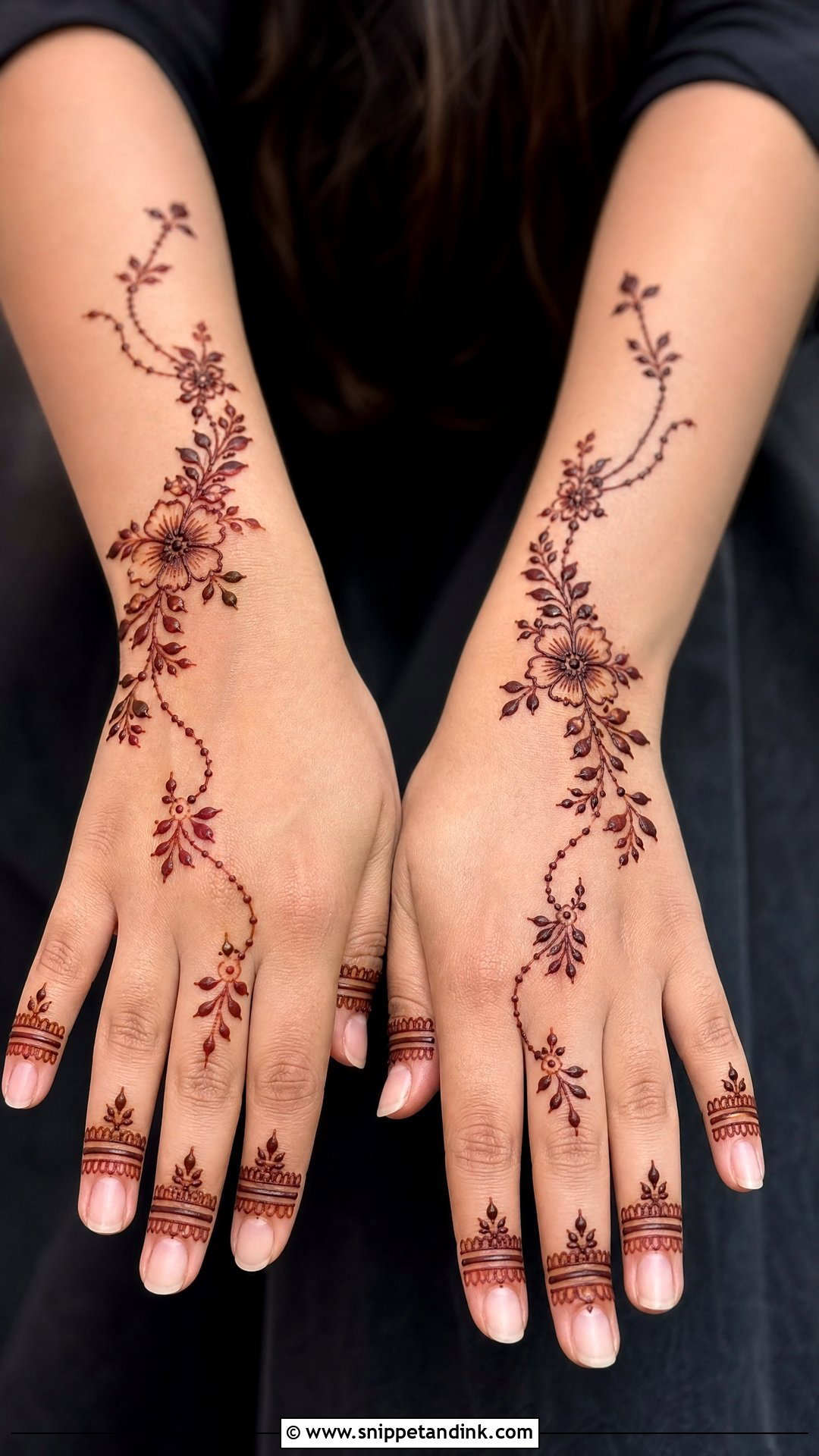
Engagement henna is really about the ring finger. The back hand shows up in nearly every ring photo, so I run a floral trail from the wrist toward that finger and deliberately stop short of where the band will sit. If the henna runs right under the ring, the metal hides half the pattern and the close-up looks cluttered. The palm can stay quiet with a small mandala or a curve that echoes the back.
11. Dubai Khafif Full Hand Mehndi Design
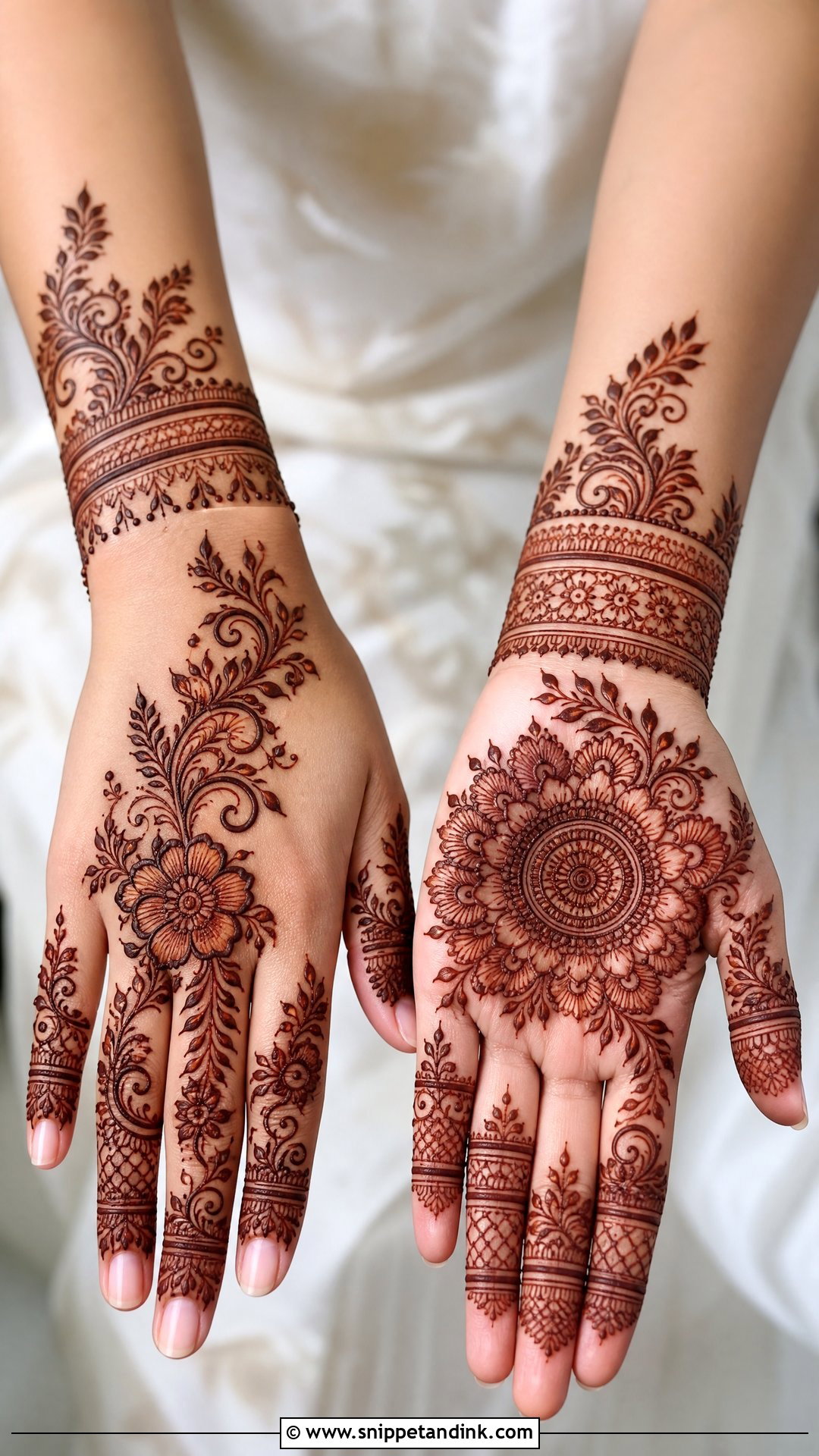
Coverage runs from the fingertips to the wrist or lower forearm, but with space left between flowers, paisleys, leaves and geometric accents. That spacing is what separates it from a dense Indian bridal hand, and it also cuts application time noticeably. A central motif in the palm and a diagonal Arabic trail on the back keep the two sides distinct, and structured bracelet bands give the eye a clear edge at the wrist. I suggest it for bridesmaids and sisters of the bride who want to look dressed for the occasion without upstaging the bride’s hands.
12. Dubai Khafif Half Hand Mehndi Design
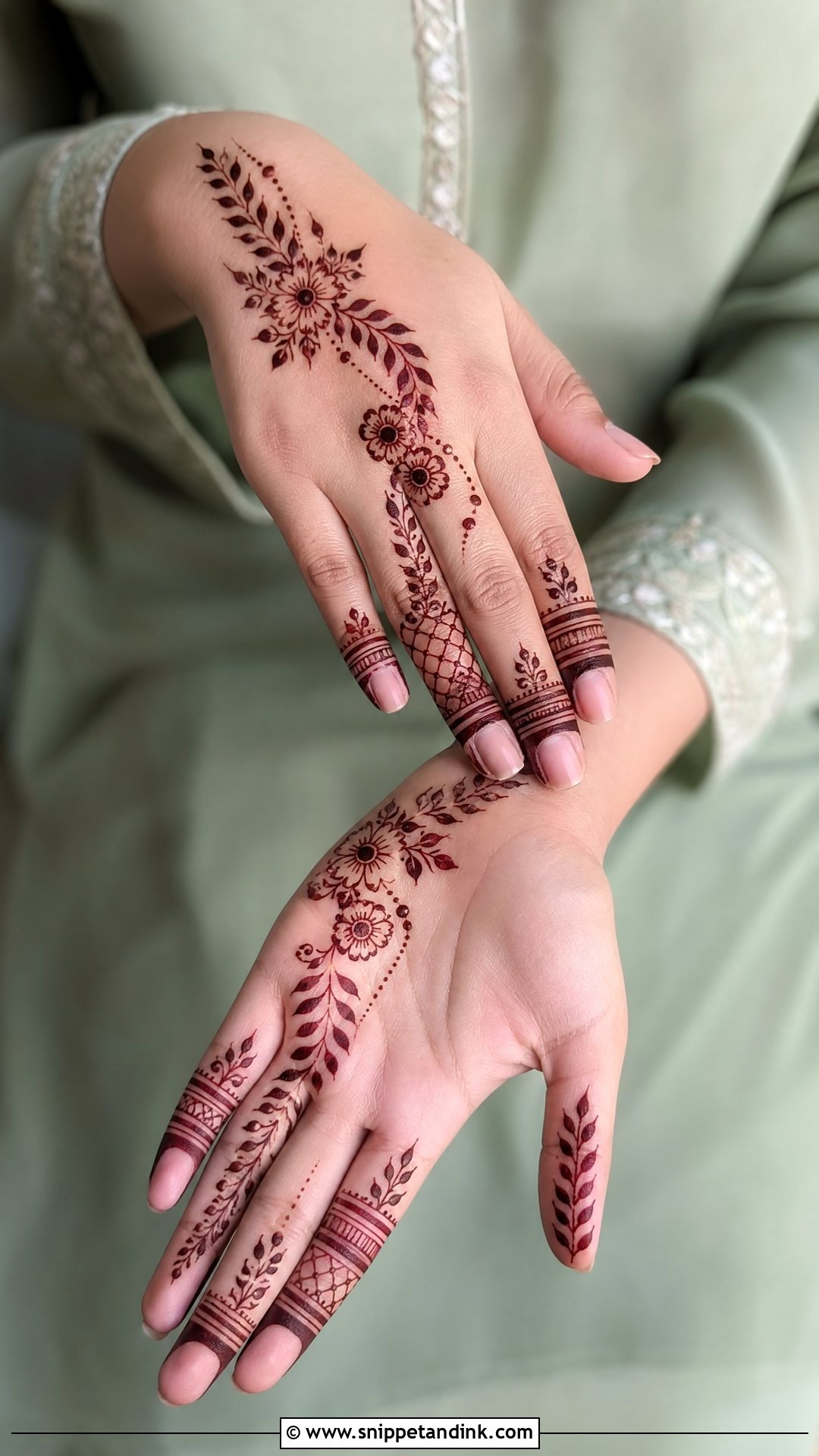
This version decorates the fingers plus part of the palm or back hand, stopping at or just before a slim bracelet line. A small floral cluster near the thumb, a diagonal vine across the back, or a palm mandala with light finger work all fit inside that frame. Where half-hand designs go wrong is the stopping point. If the pattern simply ends mid-hand, it looks unfinished, so I always close it with a deliberate edge such as a dotted arc or a thin band.
13. Dubai Khafif Wrist Mehndi Design
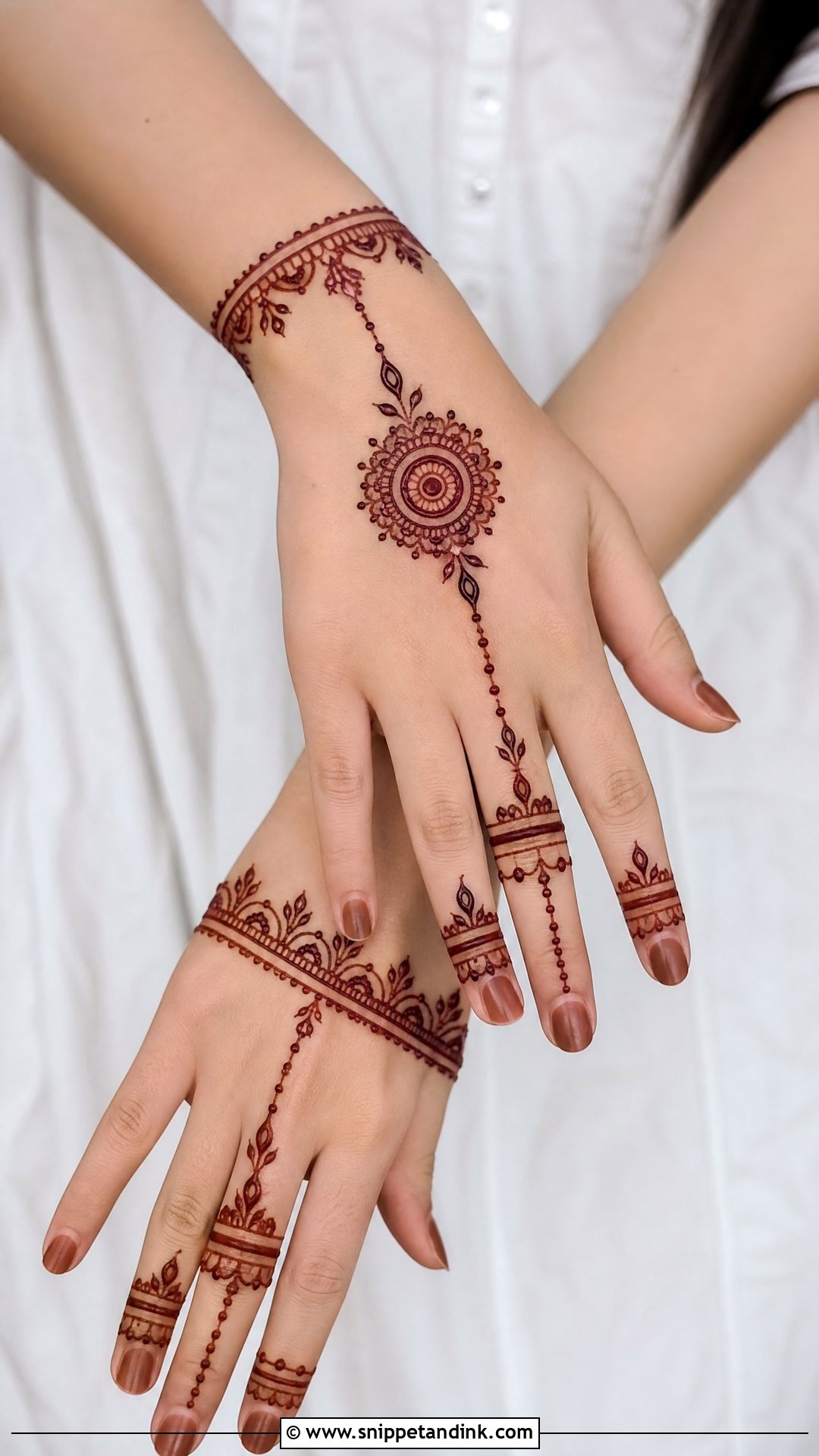
A bracelet band around the wrist, a fine chain toward the middle finger, a small motif on the back hand: the henna does what jewelry would. The wrist is a tricky spot because it bends constantly while the paste dries, so I ask clients to rest the forearm flat on a cushion until the band is dry to the touch, or it cracks along the crease. Keep the band slim, built from dots, leaves and tiny arches. Anything wider gets lost under bangles.
14. Dubai Khafif Jaali Mehndi Design
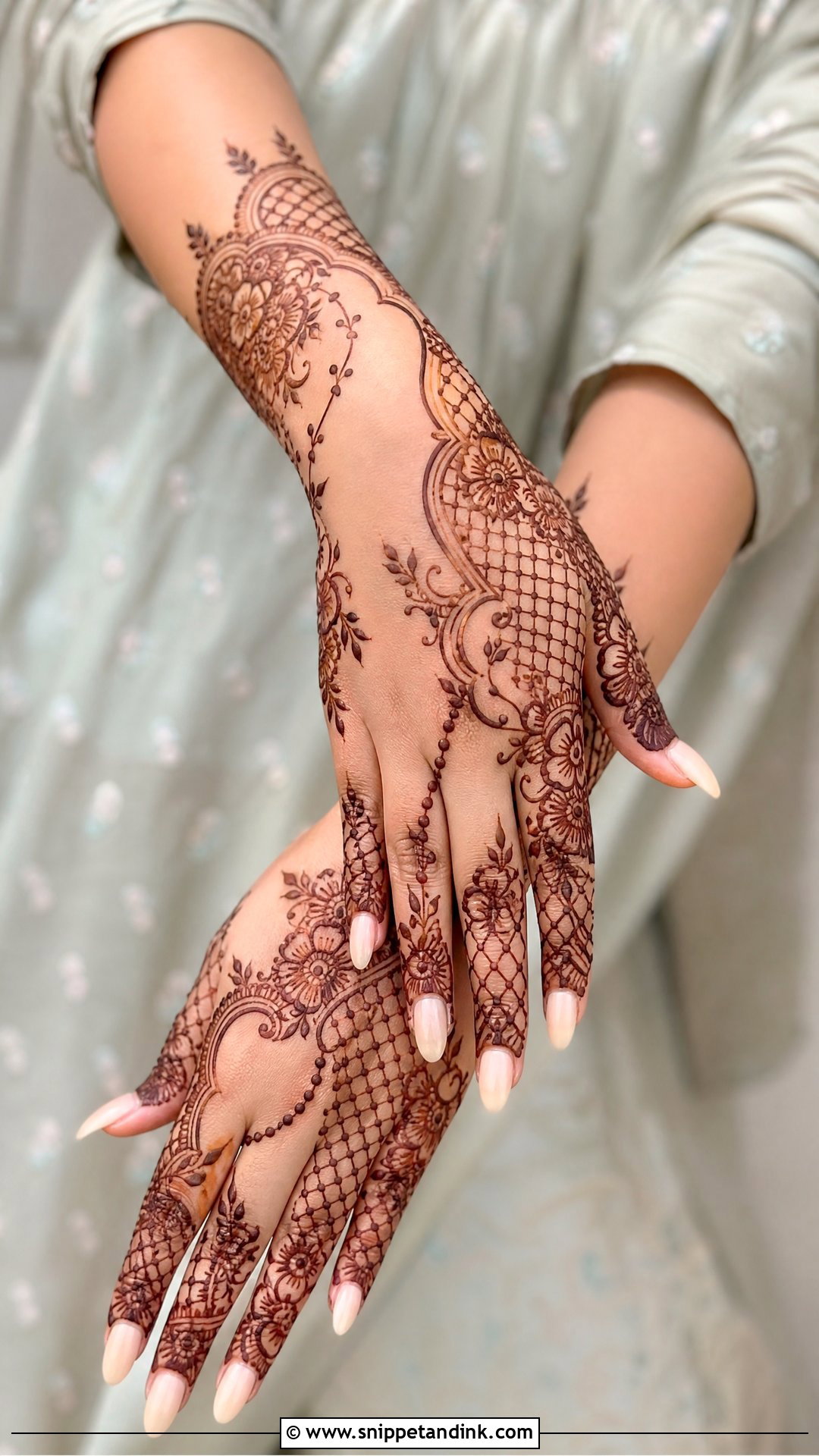
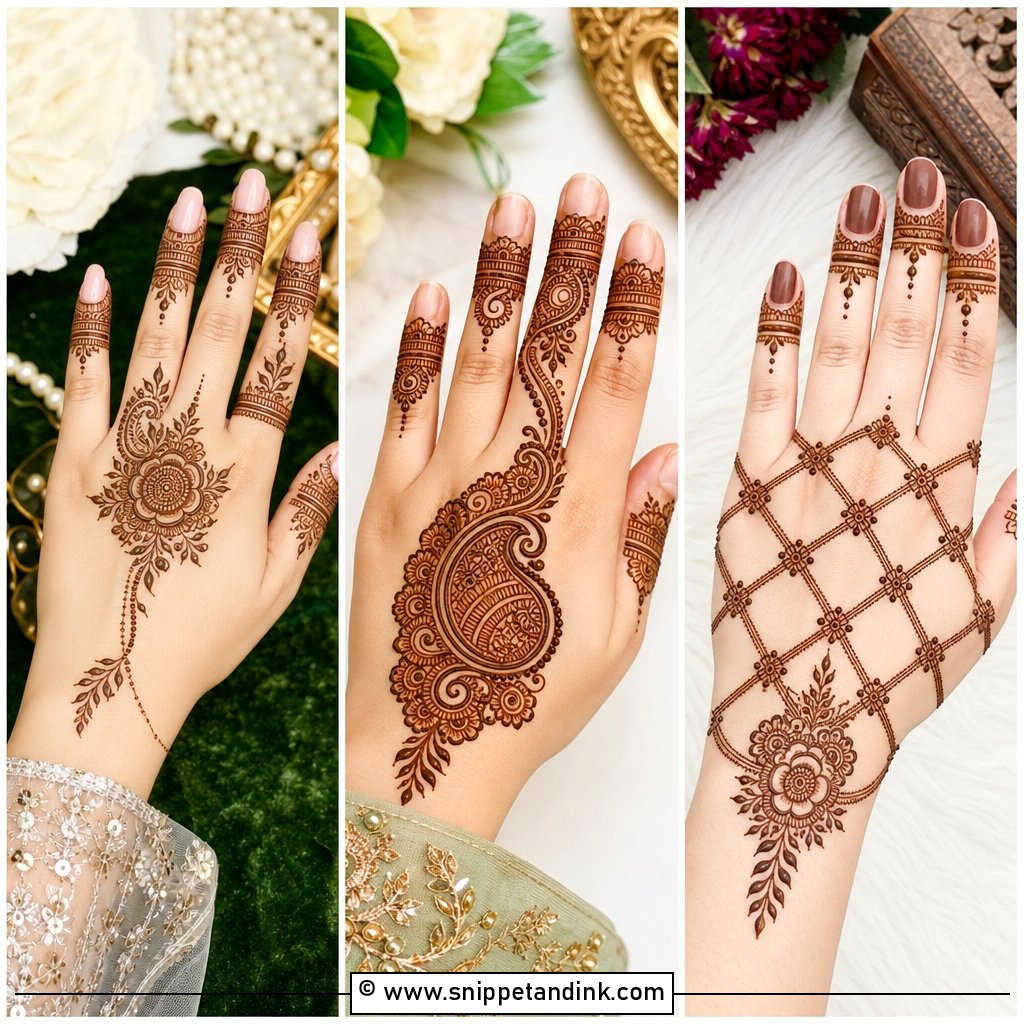
Jaali is the net or mesh pattern, and in khafif work it appears in small patches only: a corner of the palm, a strip on the back hand, a section at the wrist. Flowers and Arabic curves around it soften the grid. Mesh is the hardest element to keep even, because every crossing adds paste and intersections can blob into dots you never intended. I draw all the lines in one direction first, let them set briefly, then cross them. Leave bare skin around the mesh so it reads as texture rather than shading.
15. Dubai Khafif Mandala Mehndi Design
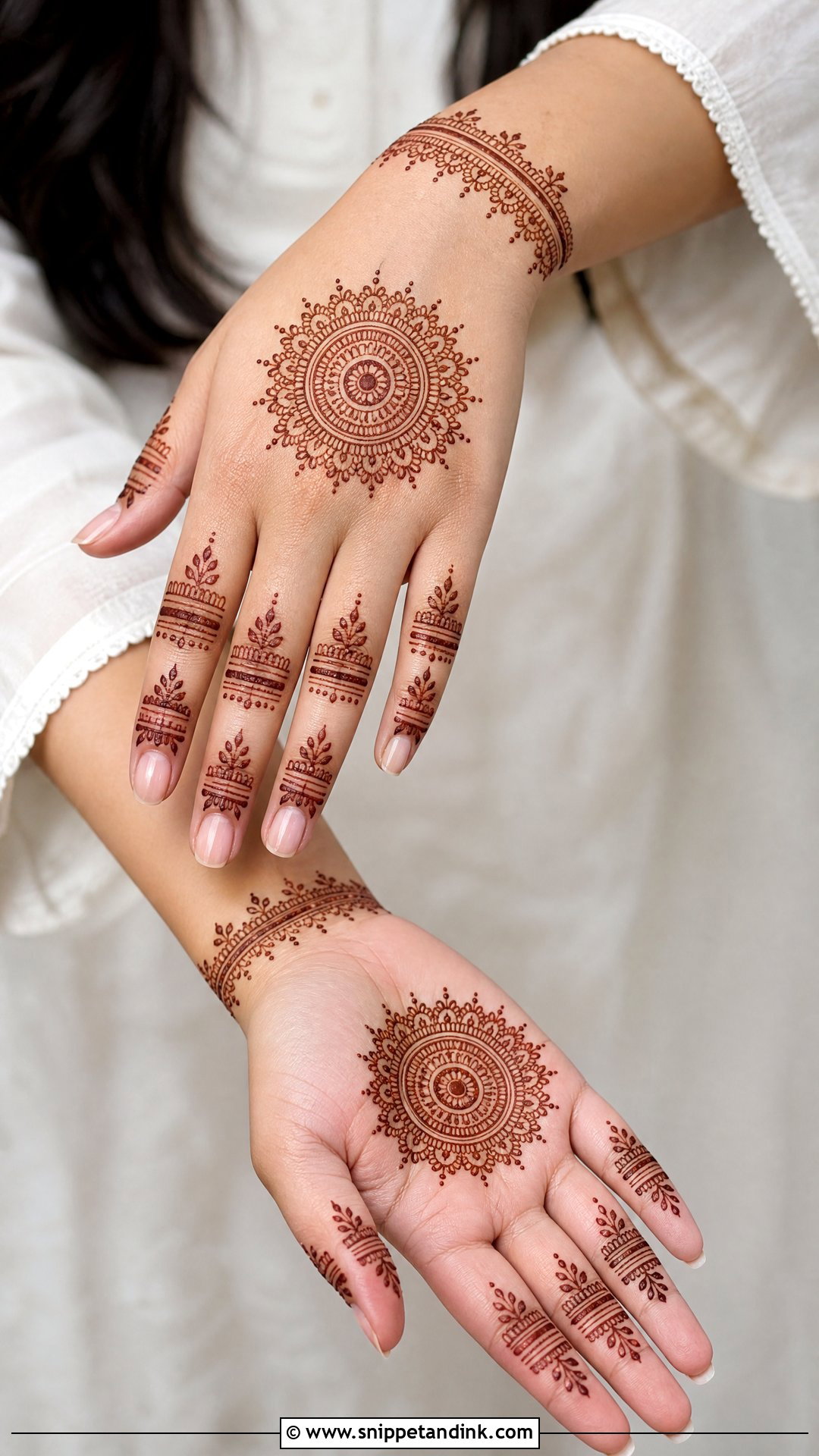
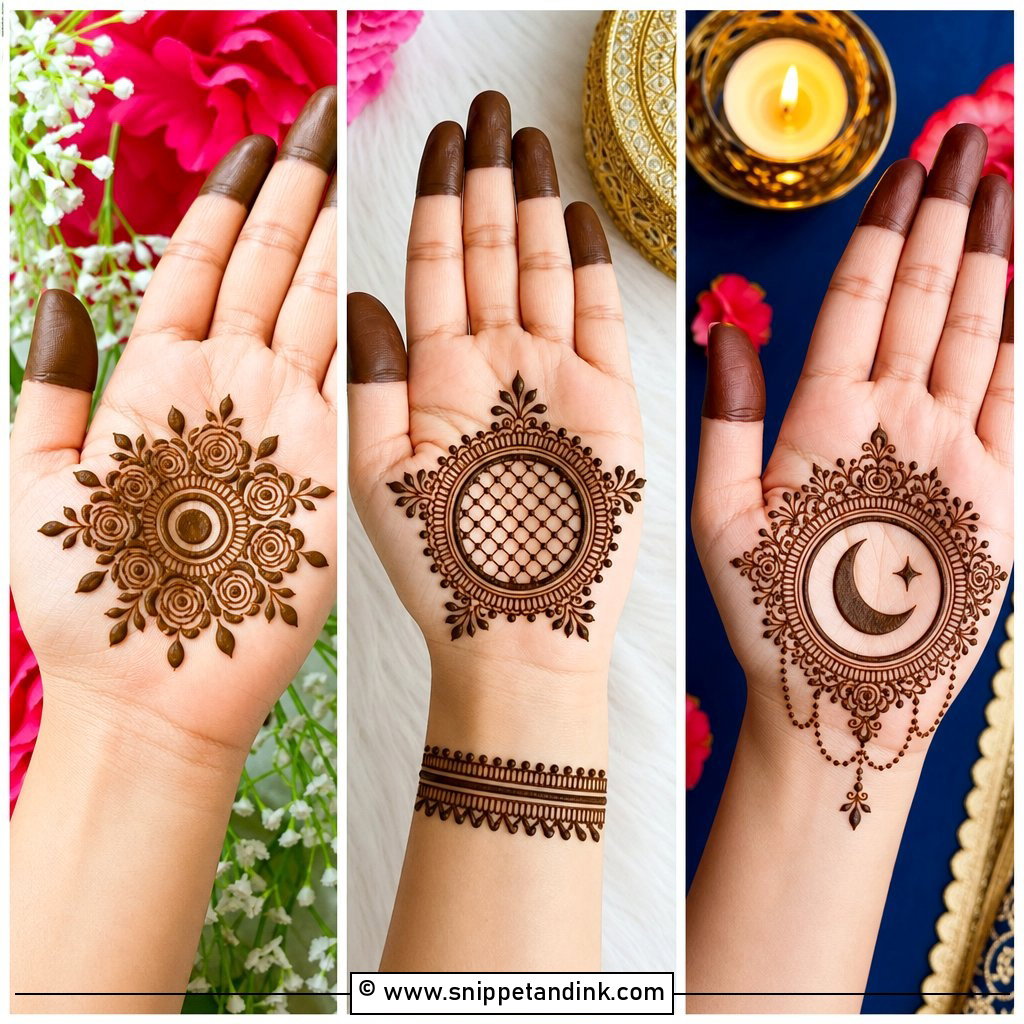
A single mandala sits in the center of the palm or back hand, with light finger detail and a soft wrist border. The open skin around the circle is what makes it read modern rather than traditional. Circles are unforgiving, though; an oval that should have been round is the first thing anyone notices. I mark the center with a dot and build outward ring by ring, which keeps the shape true even on a cupped palm. A floral mandala looks gentler, a dotted or geometric one crisper.
16. Dubai Khafif Paisley Mehndi Design
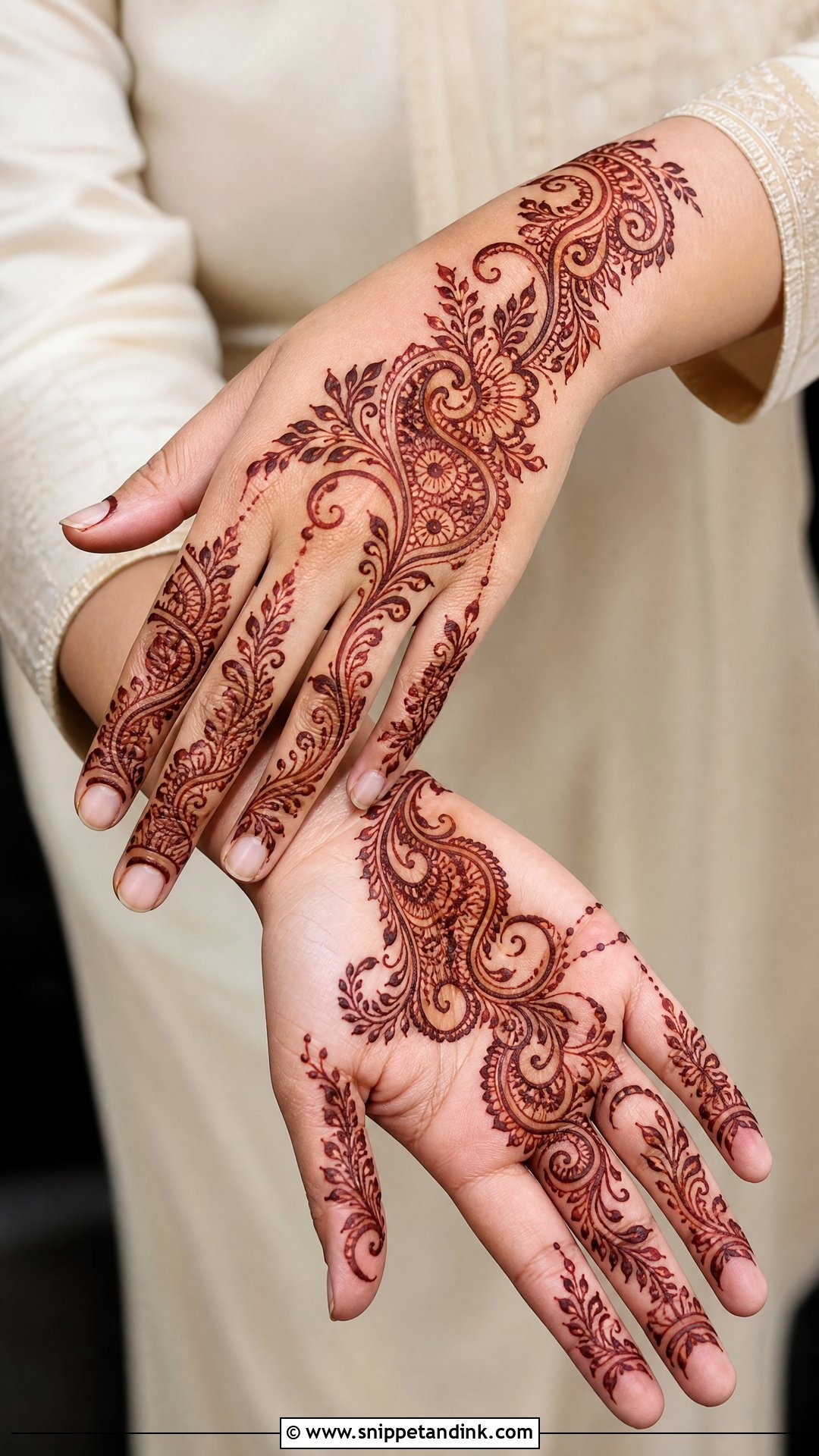
One or two paisleys carry this design, placed on the palm, wrist or back of the hand and linked by thin vines, small flowers and leaves. My main rule is not to fill the paisley solid. Light shading, a few fine strokes and an open center keep it khafif, and a packed paisley only stains as one dark blob anyway. Paisleys also need room to curl, so I point the tip toward the fingers, where it follows the hand’s own direction.
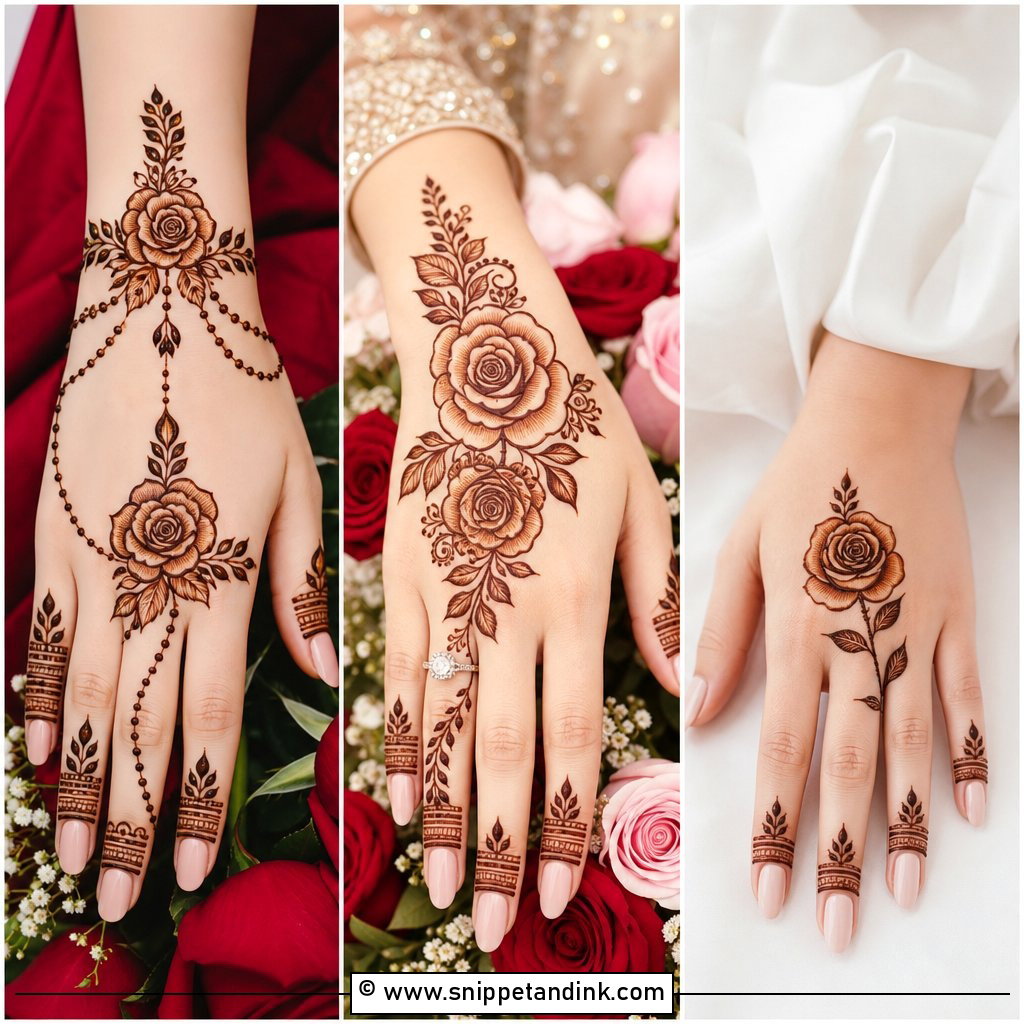
17. Dubai Khafif Rose Mehndi Design
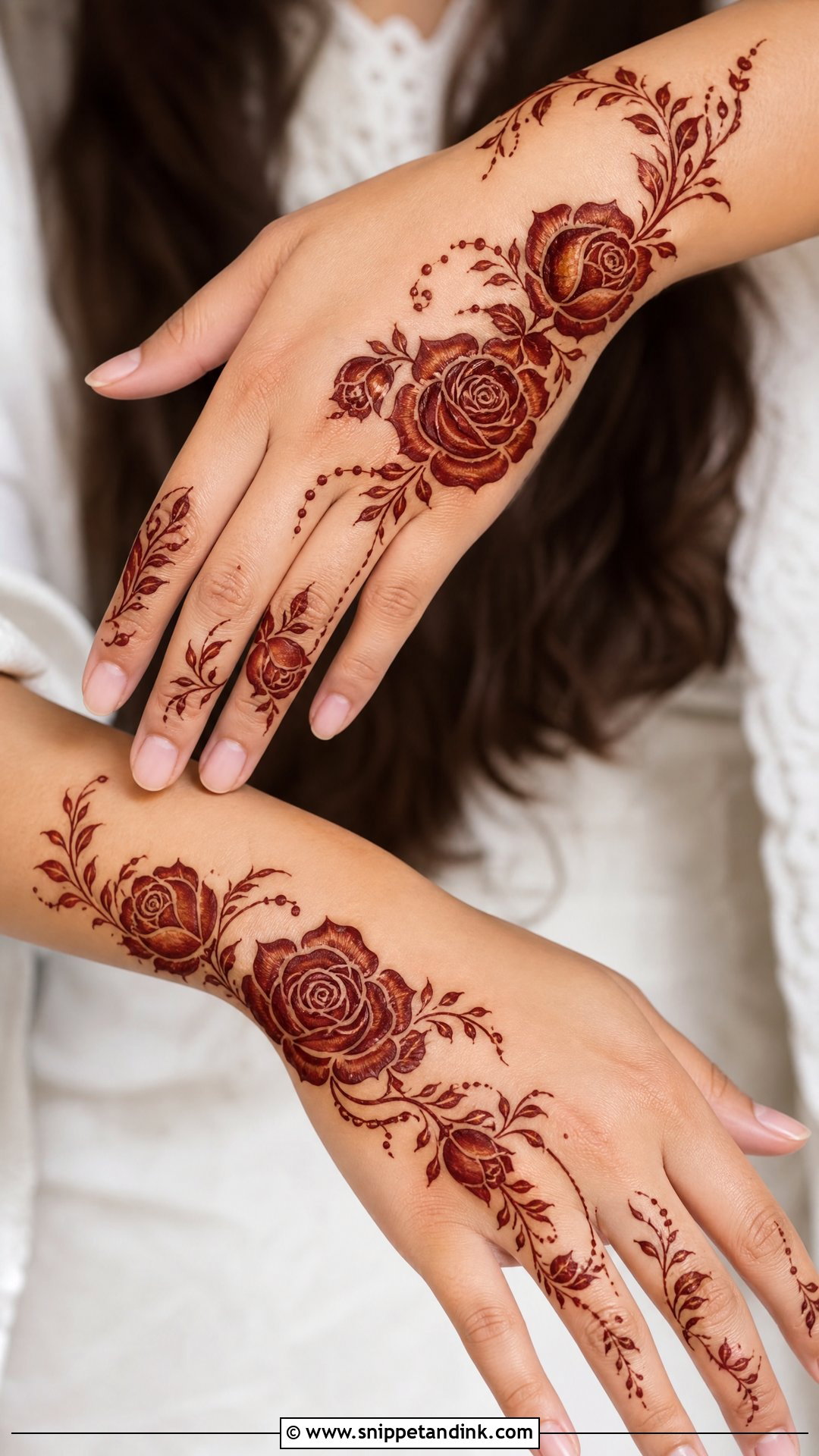
One large rose on the back hand with a curved vine toward the index or middle finger, and perhaps a smaller rose near the wrist for balance. Roses live or die by the outline. I draw the outer petals bold and keep the inner spirals thin, because if the inside lines are as heavy as the outline, the rose turns into a cabbage once the stain darkens. Clean skin around each bloom matters more here than in any other floral layout. Bridesmaids and engagement guests ask for this one often since it reads clearly in group photos.
18. Dubai Khafif Leaf Mehndi Design
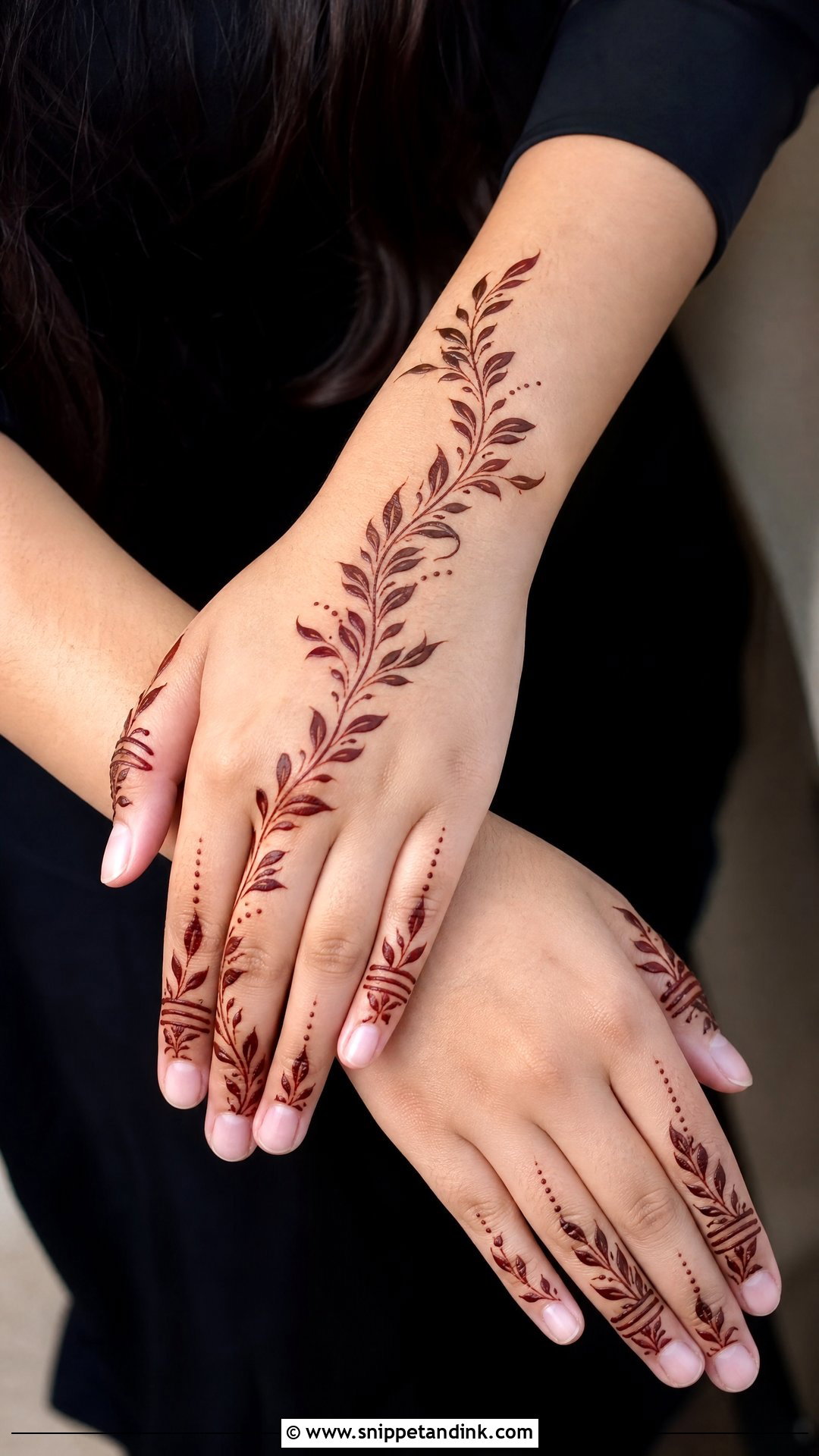
Leaves alone can carry a hand. A vine runs across the back, wraps the wrist or follows the edge of the palm, built from small leaves, dotted lines and thin stems with no big flowers at all. Vertical vines lengthen long fingers further, but on short, wide hands I angle the vine diagonally, because a straight vertical line can make a broad hand look broader. Draw every leaf with the same two-stroke motion so they look like they grew on one plant.
19. Dubai Khafif Geometric Mehndi Design
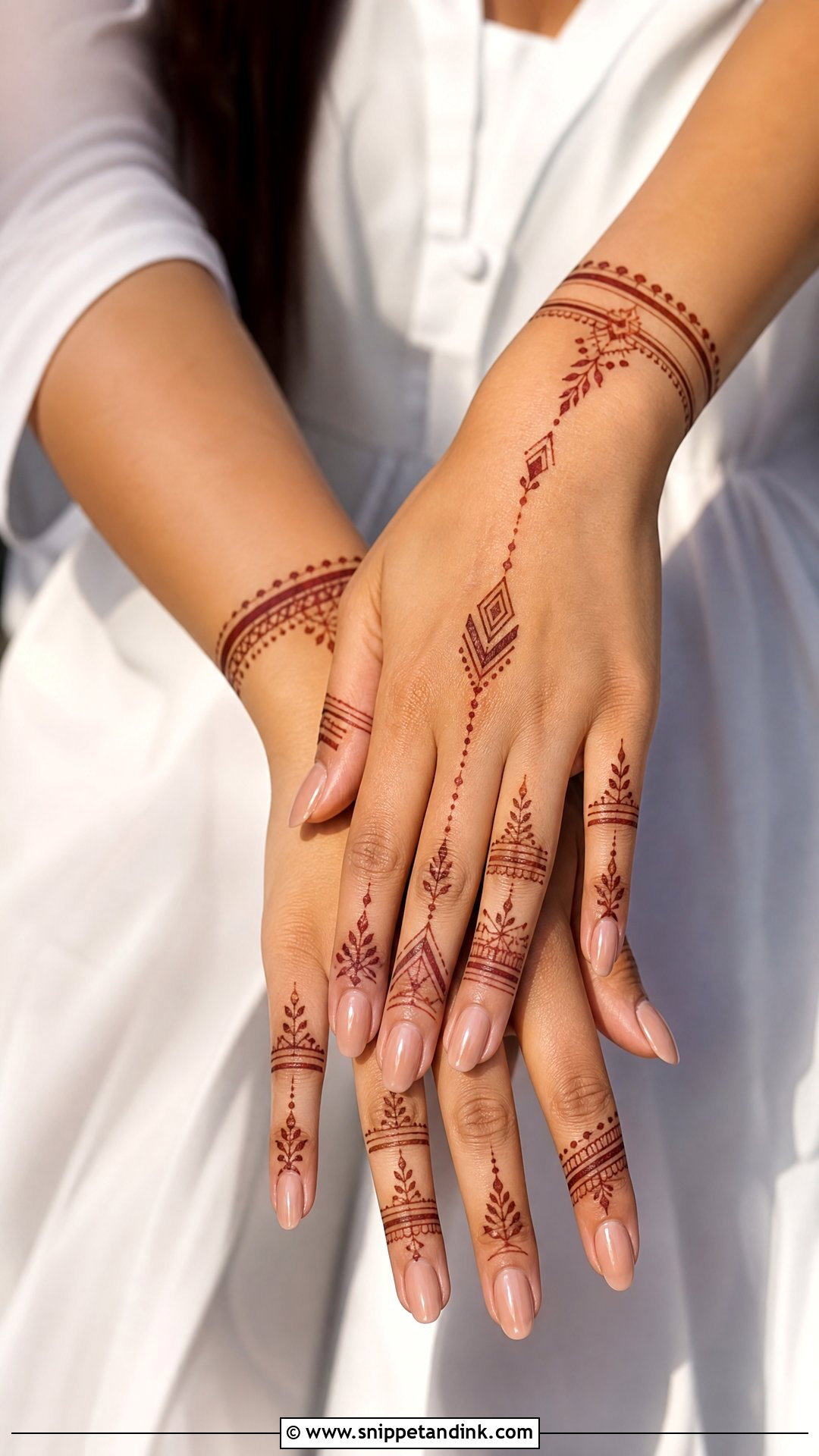
Diamonds, triangles, straight lines and small grids act as accents here rather than covering the hand, with a few leaves or dots so it doesn’t look like a circuit board. Straight lines are the real test of an artist. A cone held at a steady angle and pulled slowly gives a clean line, while a rushed line thickens at the end where the paste pools. If florals aren’t your thing, start here; it sits comfortably beside contemporary outfits and minimal jewelry.



20. Dubai Khafif Indo Arabic Mehndi Design
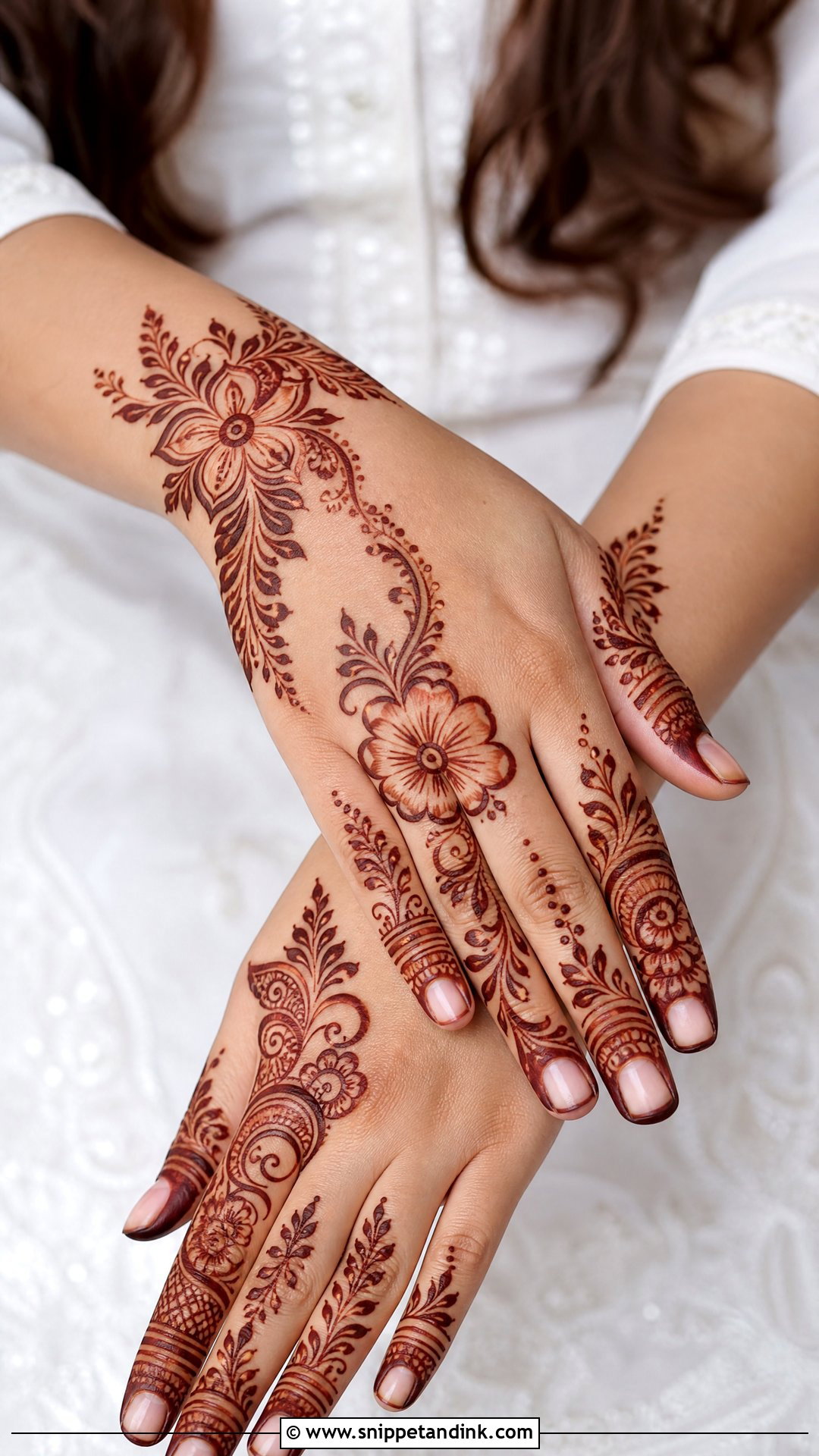
Indo-Arabic mixes the flow of Arabic henna with the detail of Indian mehndi: a bold floral trail plus small paisleys, mandala fragments and neat finger work. The khafif version keeps far more space between motifs than the usual heavy blend. I treat it as the middle step, richer than simple Arabic mehndi and lighter than a full bridal set. Detailed work goes in the palm and flowing vines on the back. Brides use it for a smaller function, and guests choose it when a single trail feels too plain.
21. Dubai Khafif Gulf Mehndi Design
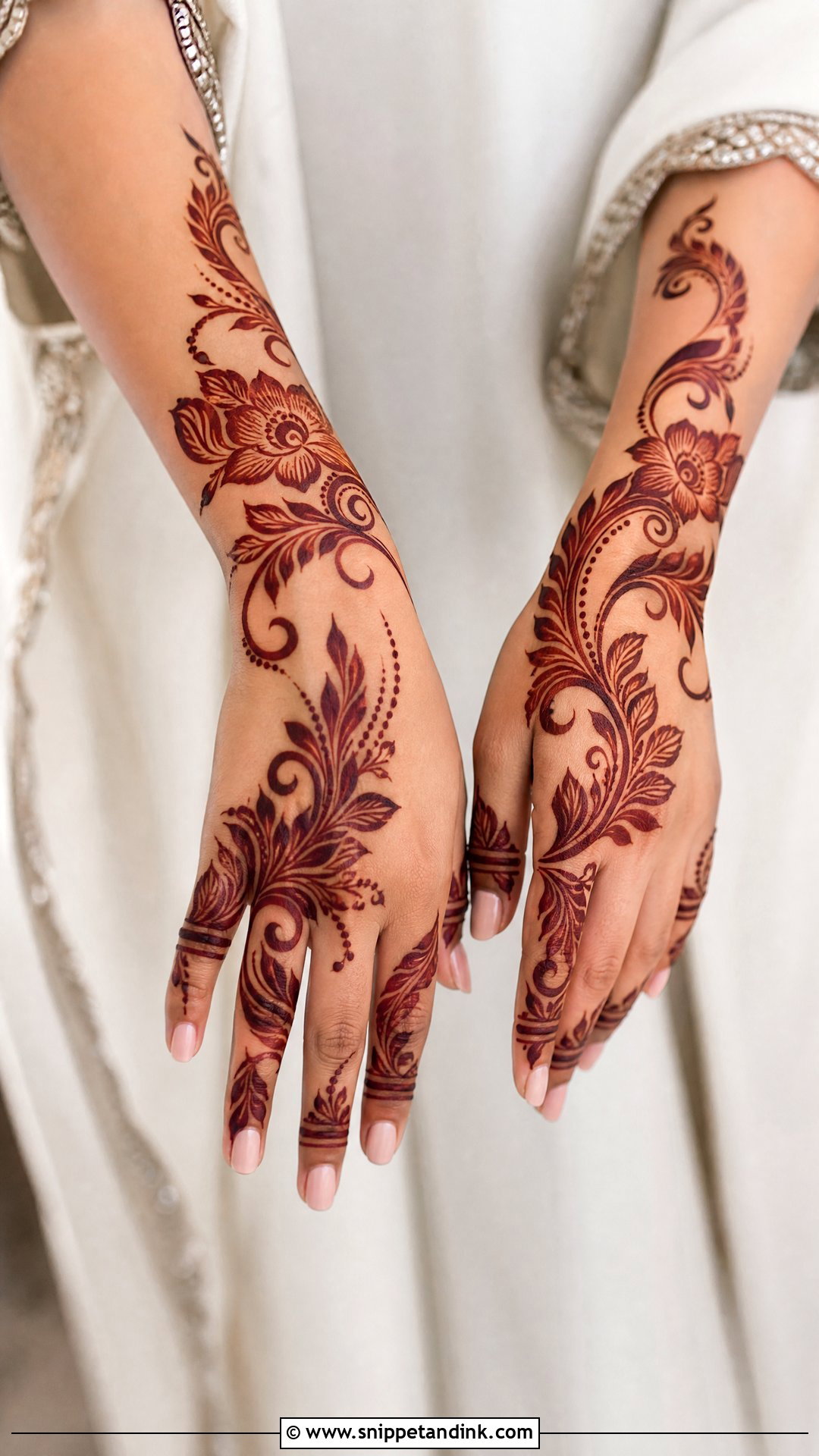
Gulf henna is the boldest of the light styles, with thick confident lines, larger floral shapes and strong spacing. To keep it khafif I limit it to one main trail or a single statement motif, usually a wrist-to-finger flow on the back hand. Thicker lines mean heavier paste, so this design takes longer to dry and smudges more easily if you rush back to your phone. Fresh natural henna with good dye content gives the deep maroon this style is known for. A pale orange stain undersells the bold drawing.
22. Dubai Khafif Moroccan Mehndi Design
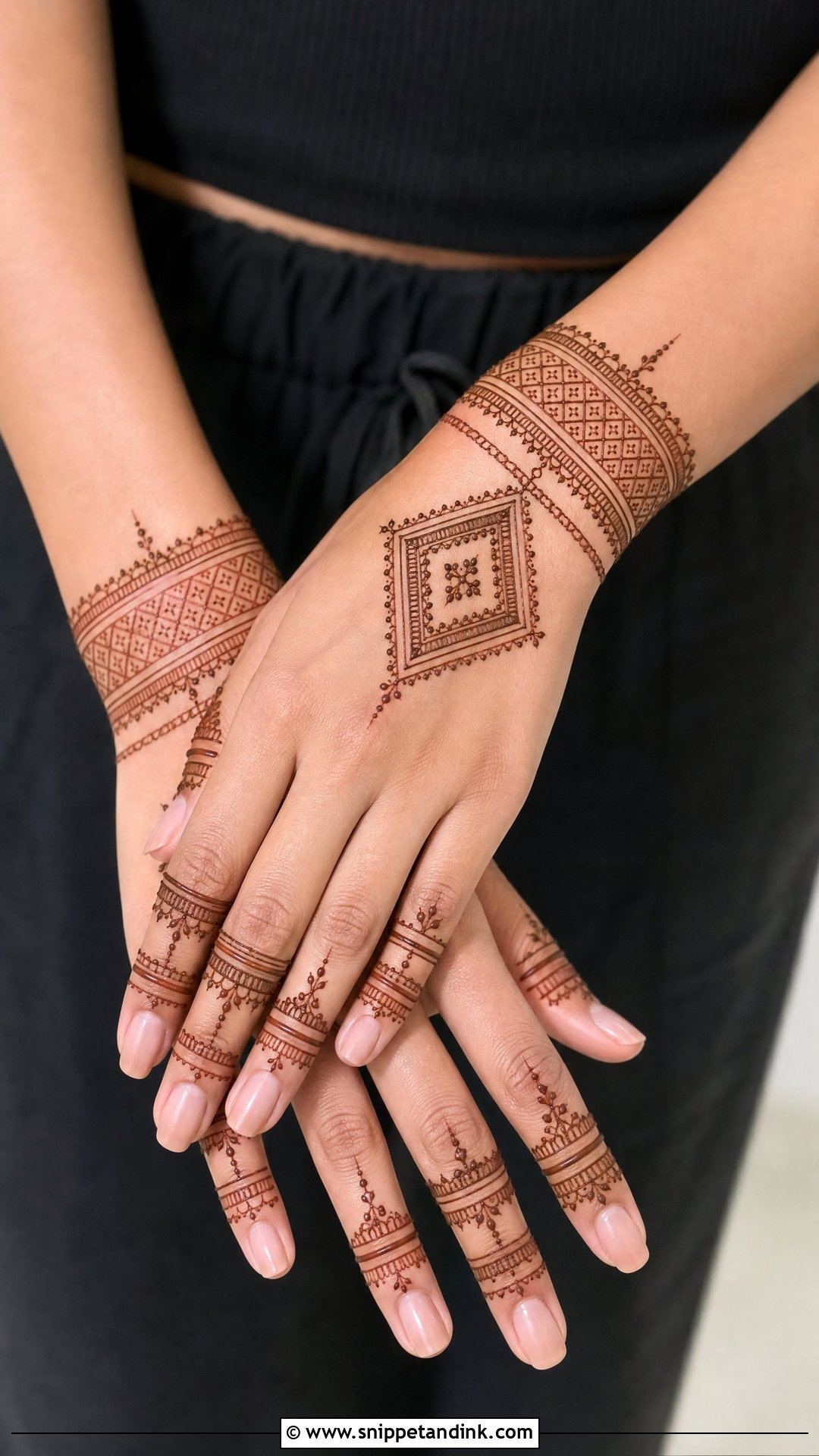
Structure is the point of Moroccan-inspired henna: geometric shapes, fine borders, diamond grids, symmetry. In khafif form I place these elements lightly with plenty of blank skin between them, often just a slim wrist band, a central diamond and linework on the fingers. Since symmetry carries the whole design, I sketch the center line of the diamond first and build each side as a mirror of the other. Plain outfits and statement jewelry suit it, because they let the pattern look architectural.
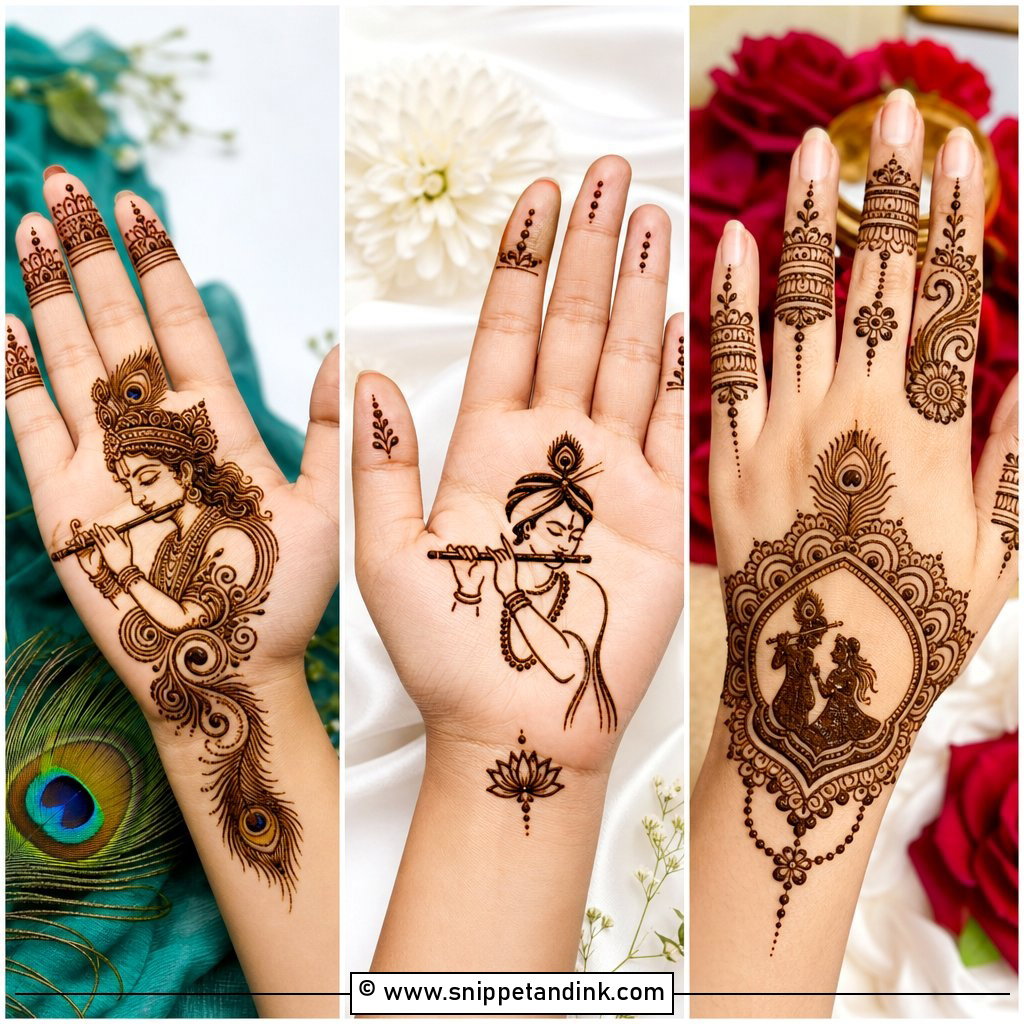
23. Dubai Khafif Peacock Mehndi Design
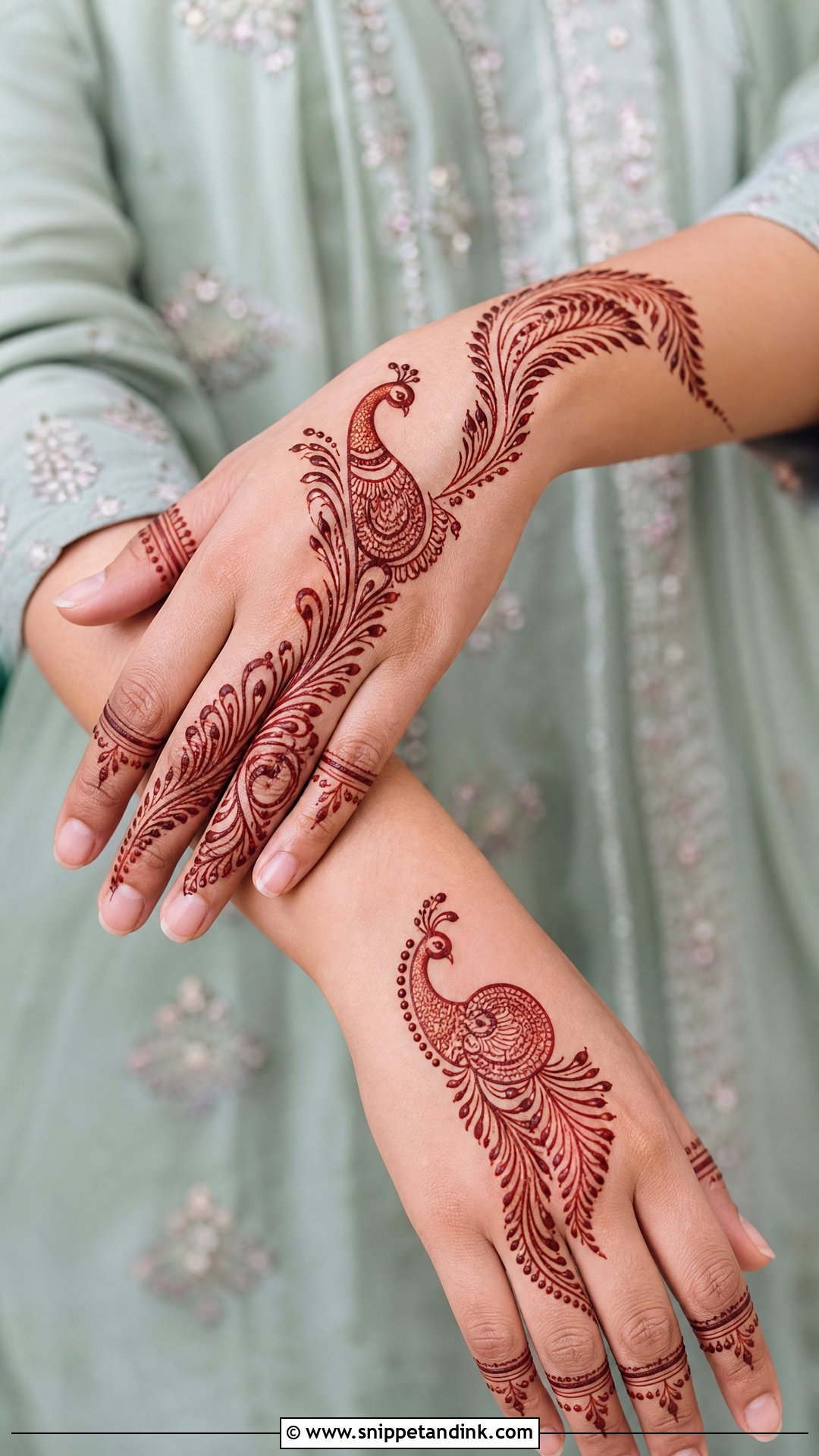
A peacock in a light design has to stay small. I place it near the palm corner, wrist or back hand and let the tail become fine curved lines with dots and leaves rather than a dense fan of feathers. The usual mistake is drawing the body large and then running out of hand for the tail, so I map the tail’s sweep first and fit the bird into whatever space is left. Slim matching details on the fingers and a light wrist border close it off. Wedding guests who want a traditional symbol get one without a heavy hand.
24. Dubai Khafif Bracelet Mehndi Design
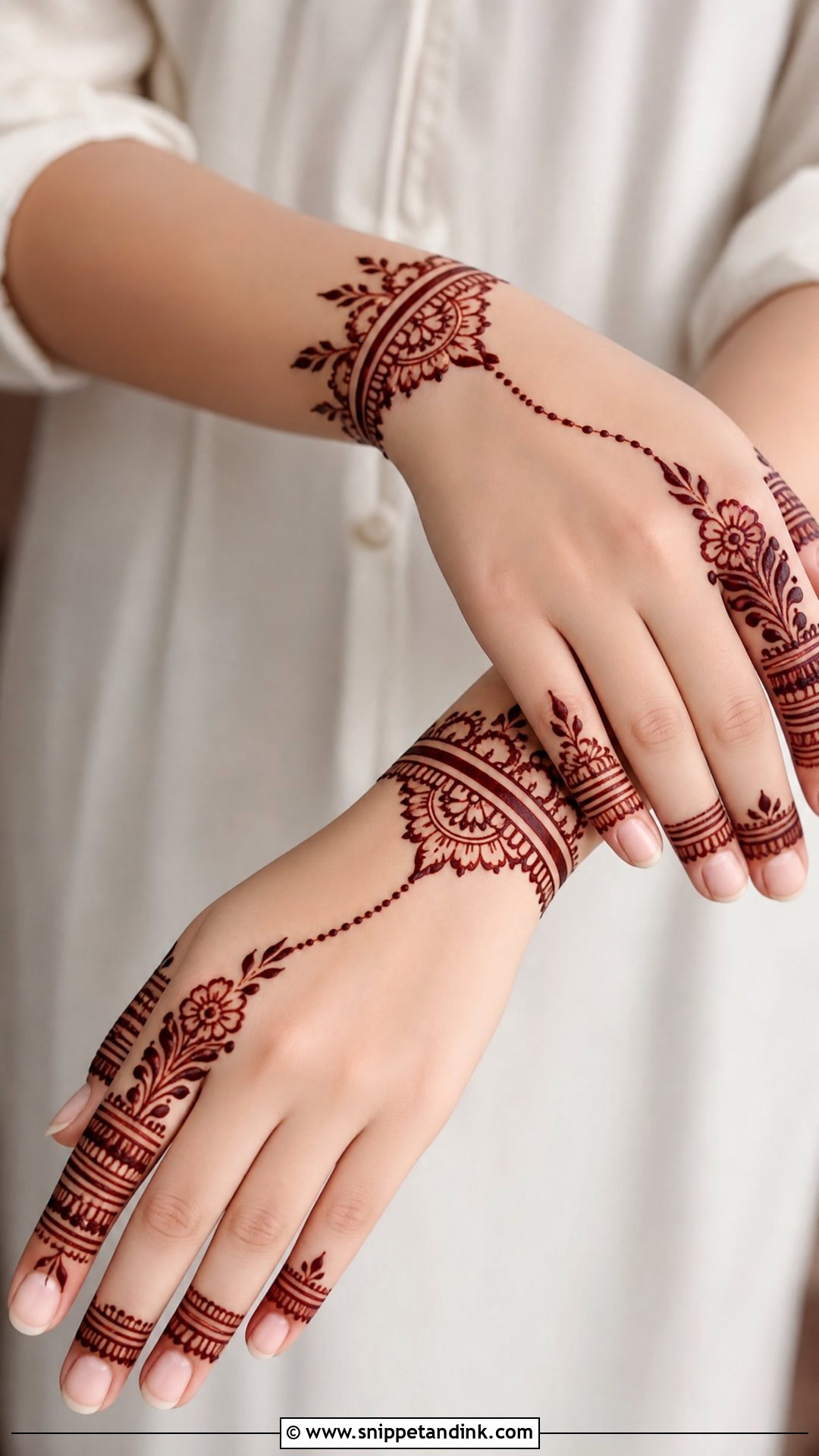
A decorative wrist cuff, a fine chain line across the back hand and a ring-like motif on one or two fingers turn henna into a painted version of haath phool jewelry. Flowers, dots, leaves and tiny arches keep the cuff delicate. The chain is the part I fuss over, since a line that’s too thick reads as a scratch from a distance; it should be one thin, continuous pull from wrist to finger. With the palm left bare, it’s an easy option for anyone who needs clear palms for work.


25. Dubai Khafif Party Mehndi Design
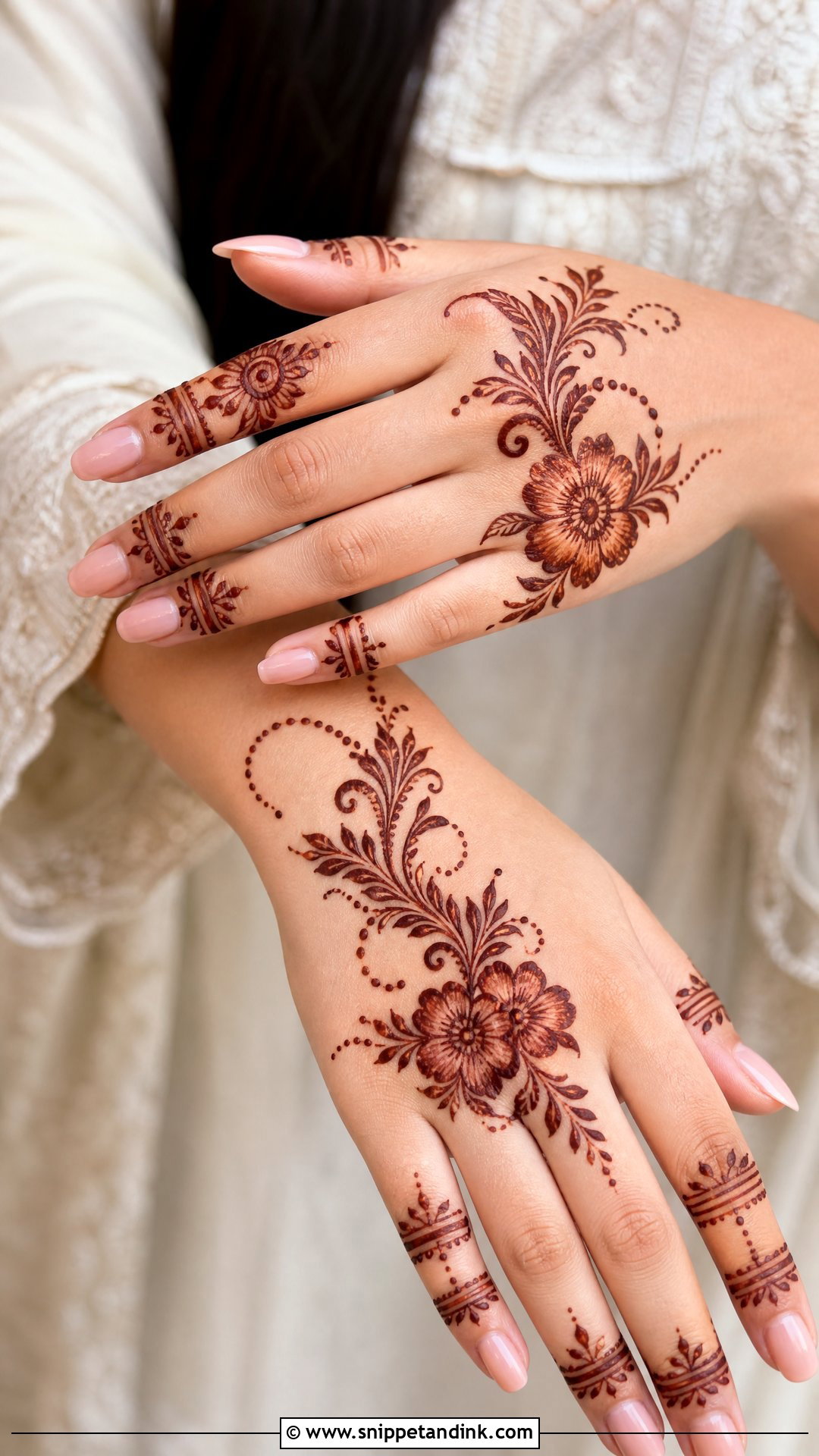
Party henna has to look sharp quickly. A bold floral trail on the back hand, light finger bands and a small wrist detail do the work, with the palm minimal or bare. Strong outlines matter more than fine detail, because evening lighting and phone cameras flatten delicate work. Timing catches people out here: if the party is the same night, the stain will still be light orange when you arrive, while henna applied a day or two ahead shows far darker. Mixing roses, vines and geometric accents is fine as long as one element clearly leads.
26. Dubai Khafif Minimal Mehndi Design
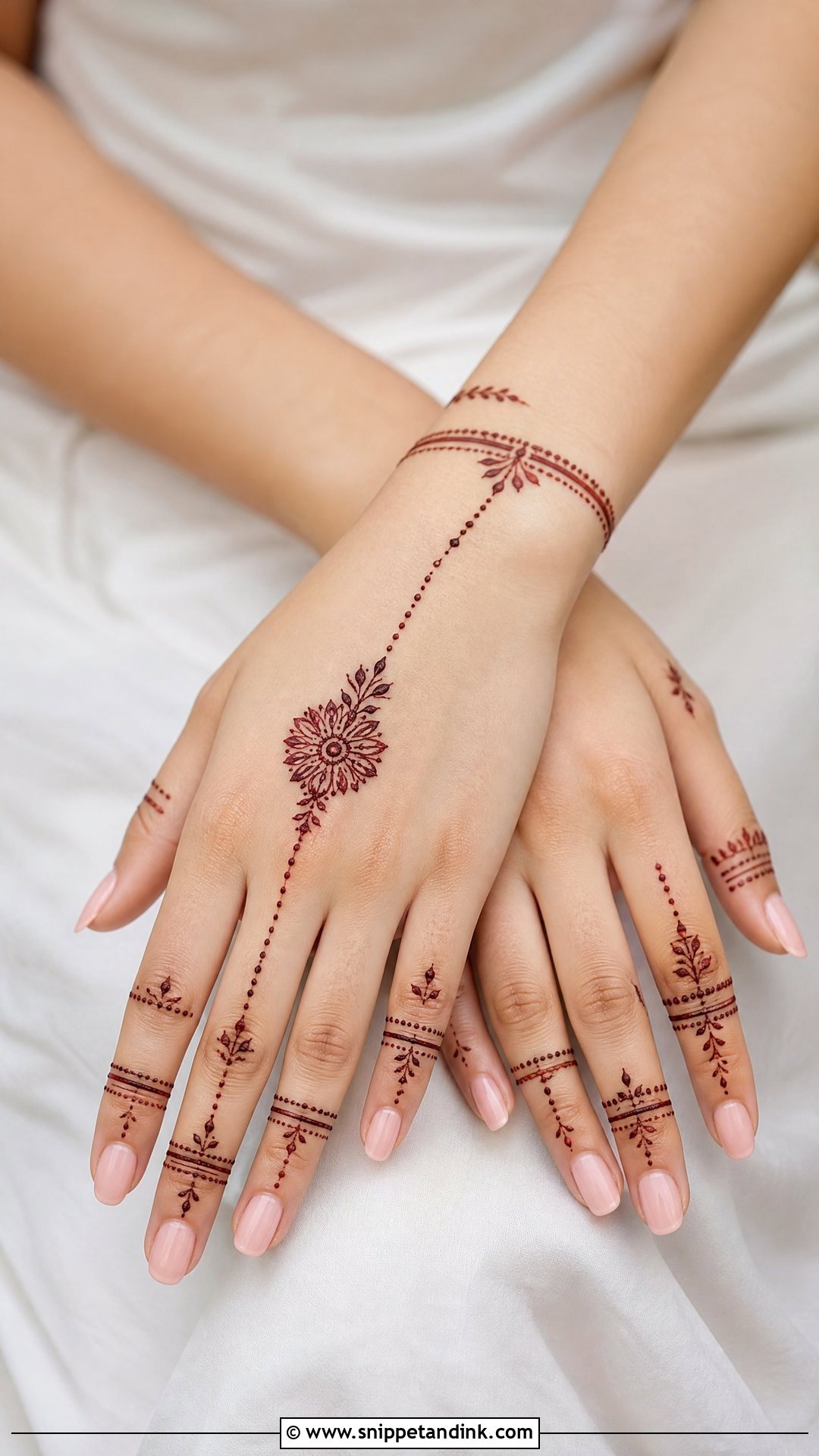
Finger bands, a small flower on the back hand, a thin wrist line and a few dotted chains. That’s all. Minimal khafif suits work, school and first-time wearers who want a quiet festive touch. With so few elements there’s nowhere to hide a shaky line, so precision matters even more than in a full design. I’d also suggest it to anyone with sensitive skin trying natural henna for the first time, because it limits how much paste sits on the skin.
27. Dubai Khafif Heavy Look Mehndi Design
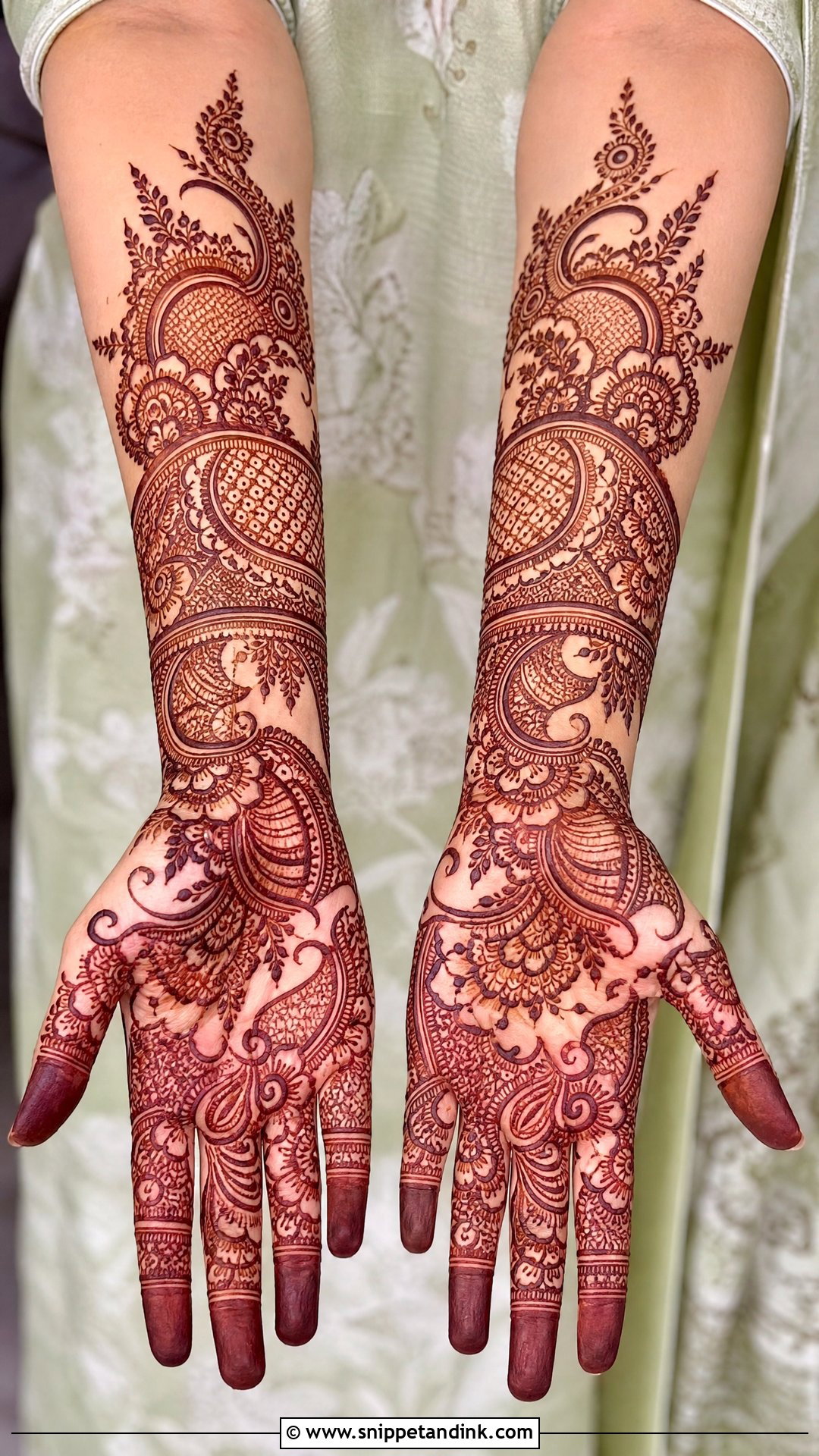
Some clients want khafif spacing with a fuller result. Here, connected motifs cover the palm, fingers, back hand and wrist, yet small breathing spaces stay open throughout, with florals, paisleys, jaali patches and bracelet bands in a planned layout. The trick is designing for two distances. From across the room it reads as full mehndi; up close you can see clean skin between every element, and filling those gaps with tiny strokes destroys the effect. Close family at a wedding often choose it to get coverage without the long sitting a dense hand demands.
28. Dubai Khafif Forearm Mehndi Design
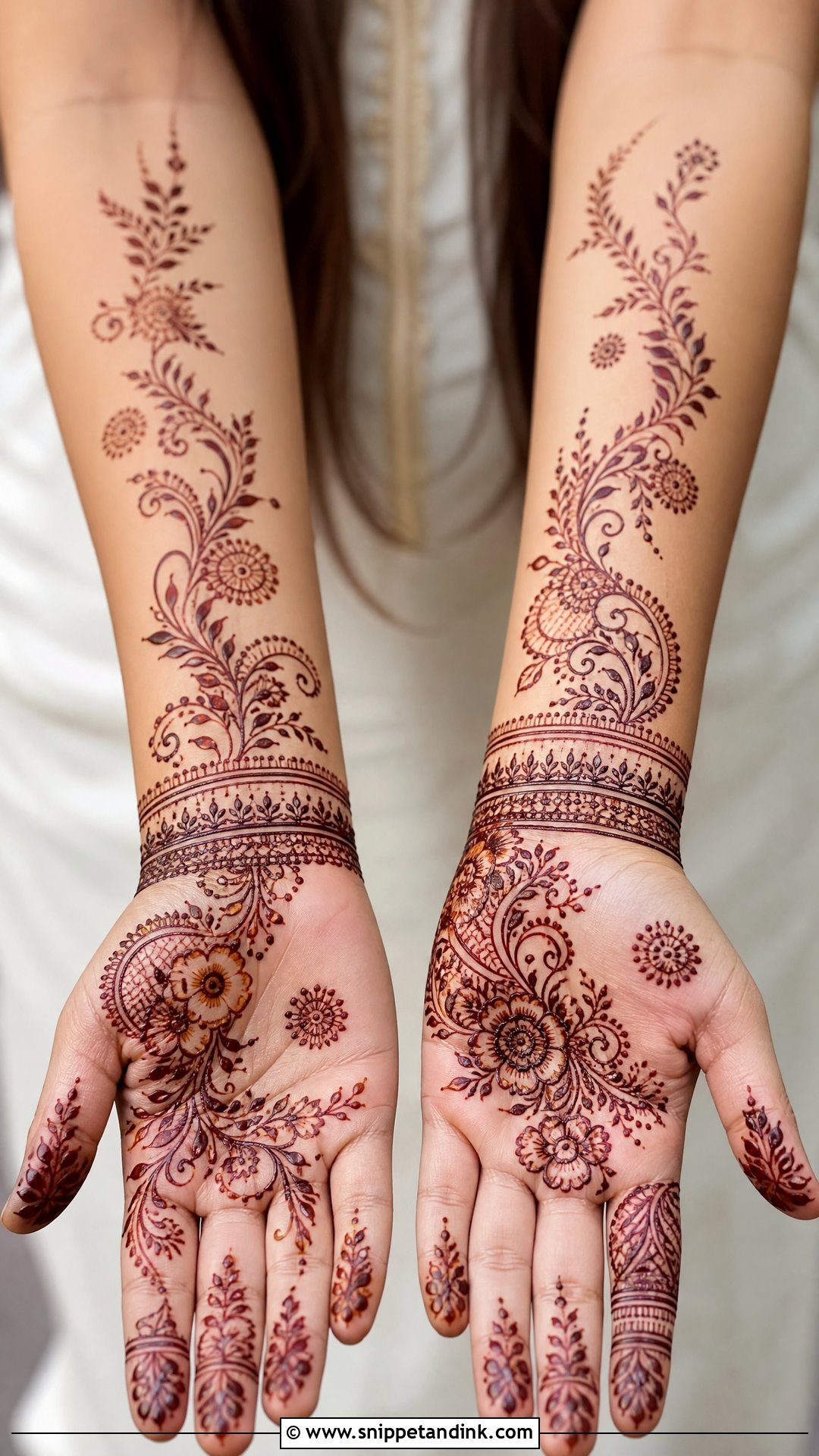
This one extends past the wrist: fingers, back hand, then a slim floral or leafy trail continuing up the forearm, or a wrist cuff with floating motifs climbing the arm. Forearm skin is thinner and stains lighter than the hand, so the upper part of the trail will always look a shade paler than the fingers. I compensate by piping the arm lines slightly thicker and asking clients to leave the paste on there longest. Space forearm motifs generously, since a few large flowers with fine leaves read better under short or sheer sleeves than a crowd of small ones.
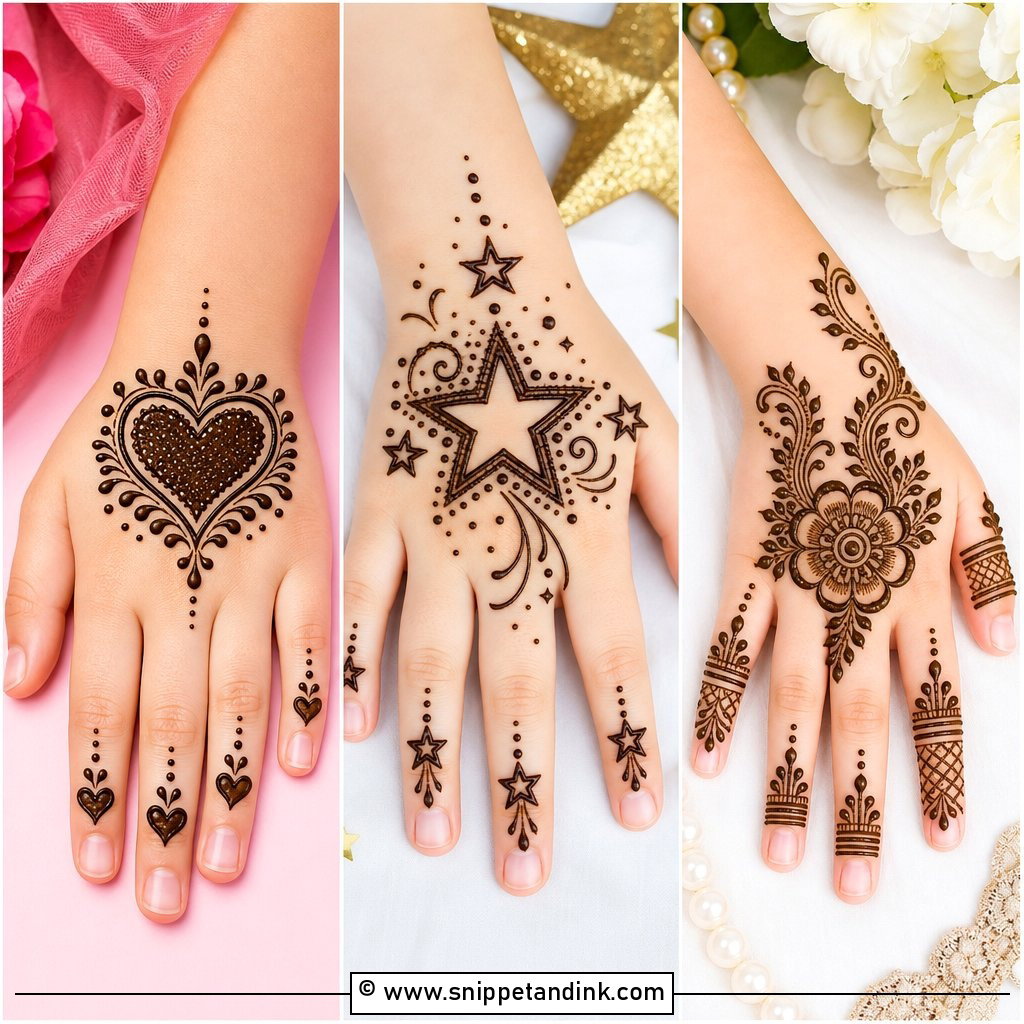
29. Dubai Khafif Kids Mehndi Design
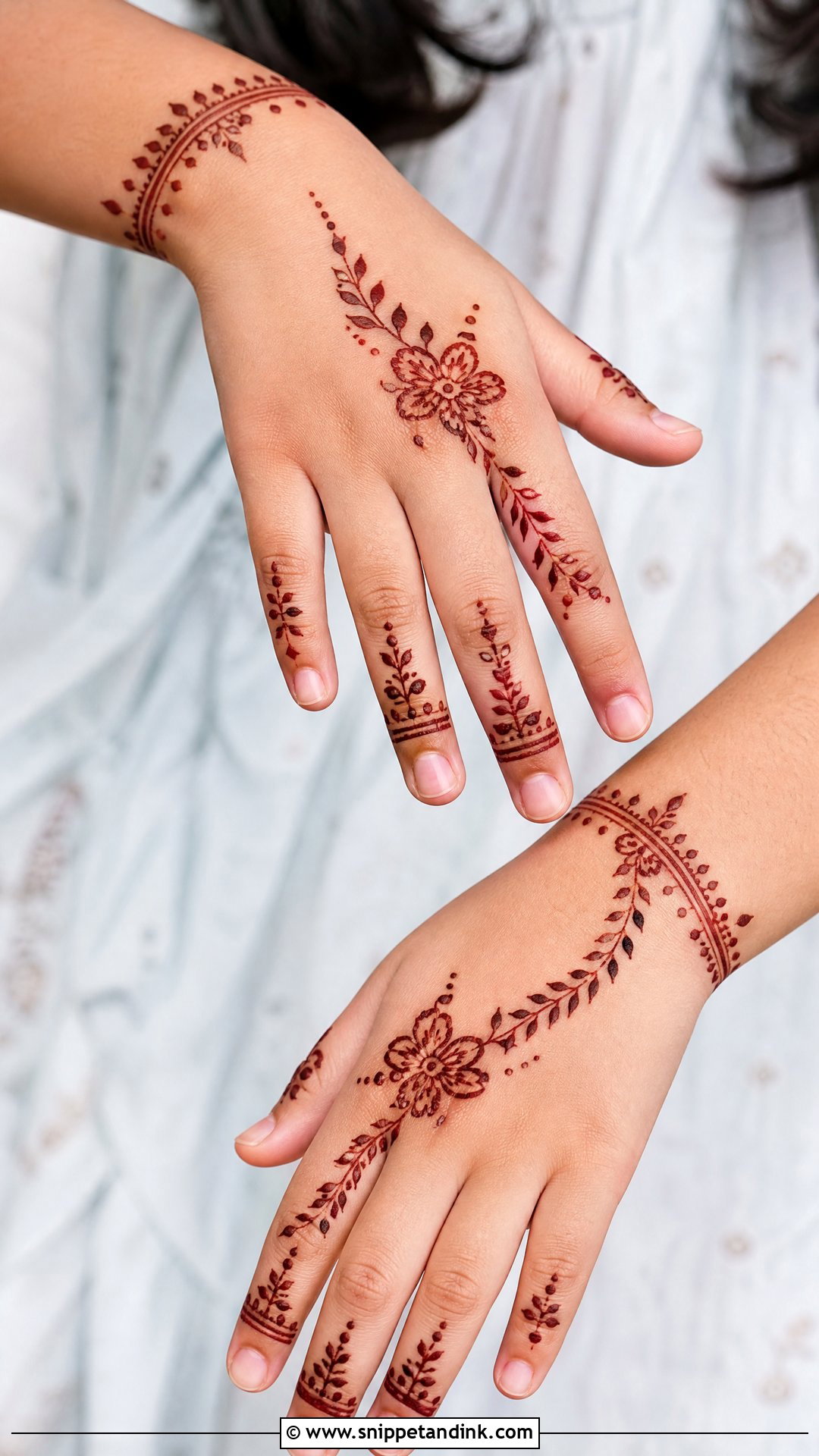
A Dubai khafif kids mehndi design has one job: to be finished before the child loses patience. Small flowers, simple leafy trails, tiny dots, a wrist band and light finger accents are plenty. I put it on the back of the hand rather than the palm, because children touch everything and a palm design smudges almost immediately. Use only natural henna, never the black kind sold at fairs and beaches, which can contain PPD and cause serious skin reactions. One small motif per hand often makes a child happier than a matching set they had to sit still for.
30. Dubai Khafif Foot Mehndi Design
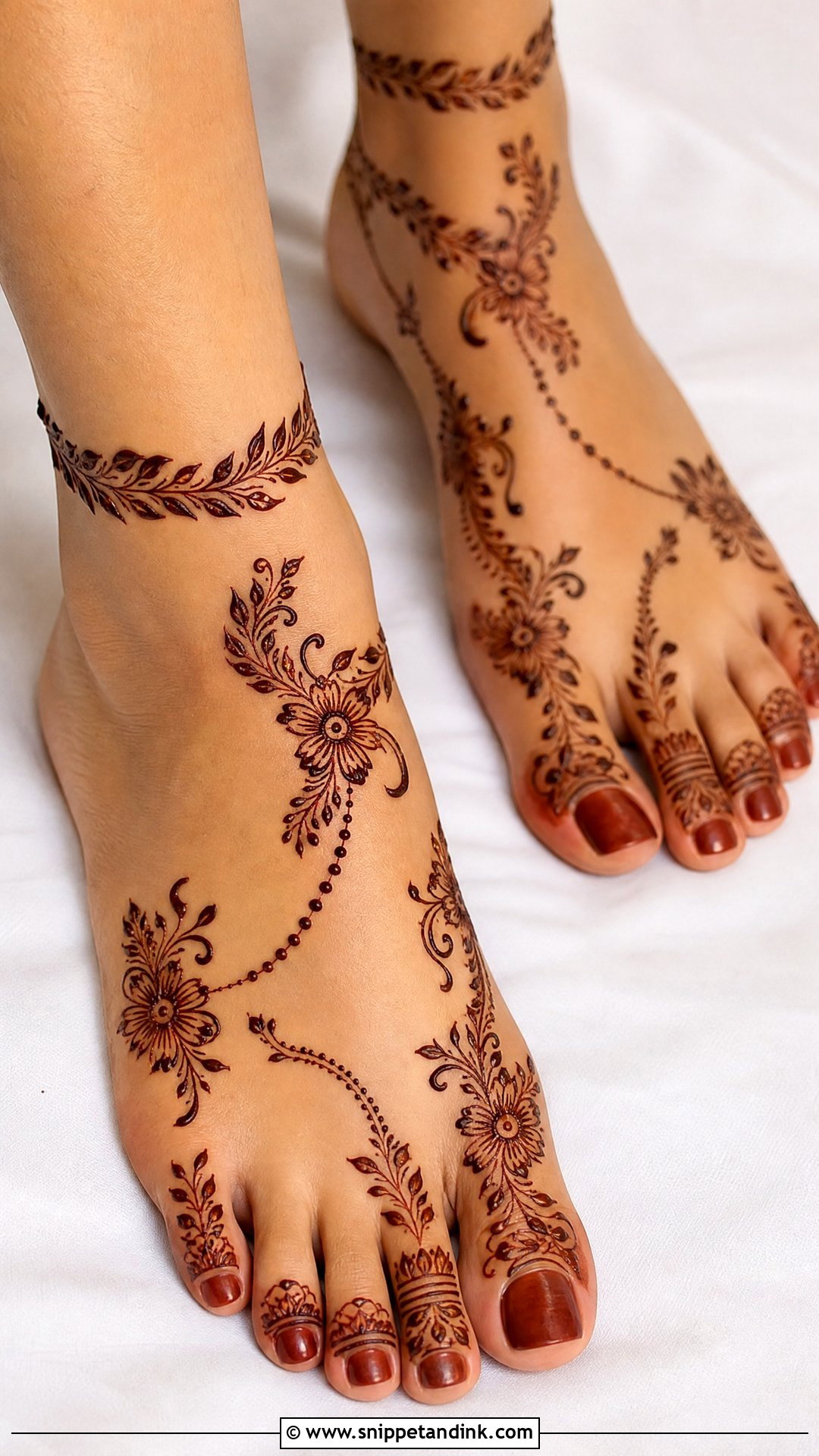
Toes, upper foot, ankle and a little of the outer edge carry floral vines, leafy anklets and dotted trails, with the center of the foot left open. Feet dry slowest and smudge easiest, so I do them first and ask clients to keep them up while I work on the hands. The edges and soles take a deep stain while the top of the foot stays lighter, which is worth knowing before you choose where the main motif goes. A slim anklet band finishes the design neatly above sandal straps. Balance both feet even if the motifs differ.
Why Thin Khafif Lines Stain Lighter, and What Helps
Fine lines carry less paste, so they deliver less dye to the skin than a dense bridal hand does. That’s the one real weakness of khafif work, and aftercare decides whether the result looks crisp or washed out.
- Leave the paste on for at least six to eight hours, or overnight if you can sleep with it wrapped. Scraping it off after an hour is the main reason light designs look pale.
- Once the paste is dry, dab on a little lemon juice mixed with sugar to keep it stuck to the skin. You want it tacky, not soaked.
- Remove the dried paste by scraping with a fingernail or the back of a butter knife, never by washing it off.
- Keep water away for the first twelve to twenty-four hours, and rub in a little natural oil or balm before you wash your hands.
- Expect orange on removal. The stain oxidises to reddish brown over the following one to two days, so plan the application around that.
When the colour comes up patchy
Patchiness on a light design usually traces back to paste that dried and flaked early, often at the wrist and knuckles where the hand bends. Keeping your hands warm while the paste is on makes a visible difference, since warmth helps the dye move into the skin. Once the stain has developed, nothing deepens it further, but skipping scrubs, chlorine and alcohol-based sanitiser stops it fading early. If the event is still a couple of days away, a quick touch-up line over the faded spot is the honest fix.
One Confident Trail and Plenty of Bare Skin
Dubai khafif comes down to restraint: one strong flow, open skin, and every element drawn with enough confidence to stand on its own. Match the layout to the time you can sit, the sleeves you’ll wear and how much of your palm you need for daily life. Then give the paste its hours, because even the cleanest design depends on a deep stain to look finished.
You'll Like These Ideas:










Leave a Reply