
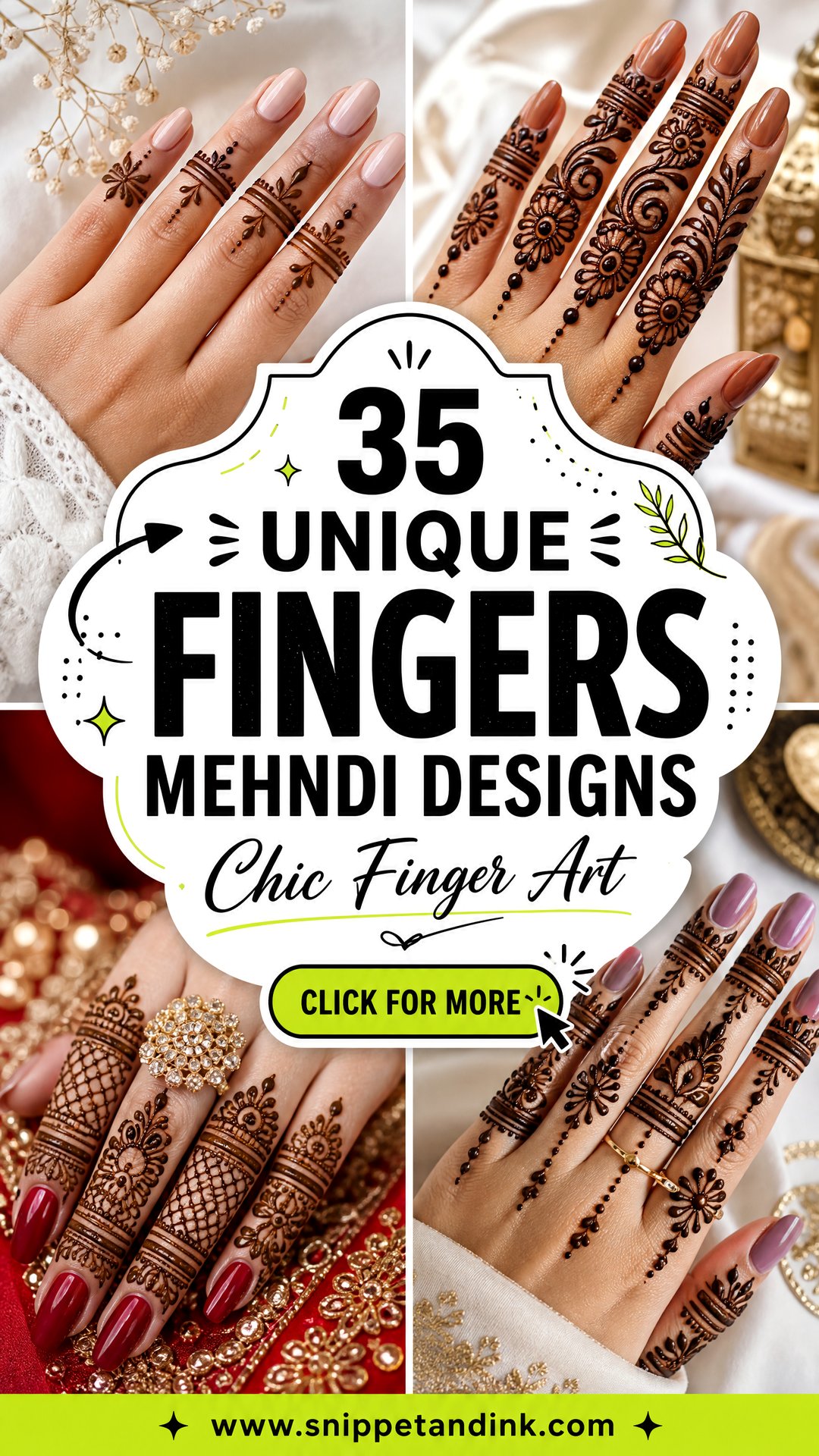
Fingers are the part of a henna design people notice first, because they move. Every gesture, every ring and every bangle adjustment shows them off. Decorating only the fingers gives you a detailed look without committing the whole hand, and it carries across Eid, Karwa Chauth, Diwali, weddings and quiet family gatherings. The range is wide: a minimal ring pattern, a bold Arabic trail, full jaali fingers or a modern negative-space design. Here are the finger designs I draw most, with notes on how each one behaves on a hand that bends.
What Knuckles and Fingertips Do to a Henna Line
Fingers are the hardest part of the hand to draw well. They’re round, they bend in three places, and the skin changes from thick to thin within a centimetre. Knowing that changes how you choose a design.
Three things I plan around
- Knuckle creases: lines that run across a joint break when the finger bends, so I end bands just before a crease or let the crease become the gap between two bands.
- Curvature: a band drawn with the finger flat looks crooked from the side. I rotate your finger as I go so a ring pattern meets itself evenly all the way round.
- Stain depth: fingertips stain darkest, the backs of the fingers lightest. A design that looks even when wet will come up two-toned, which is why traditional patterns fill the tips solid.
Keep your fingers slightly apart while the paste sets. Pressing them together, even for a moment, prints wet paste from one finger onto the next and that smudge stains just as well as the design.
1. Simple Finger Mehndi Design
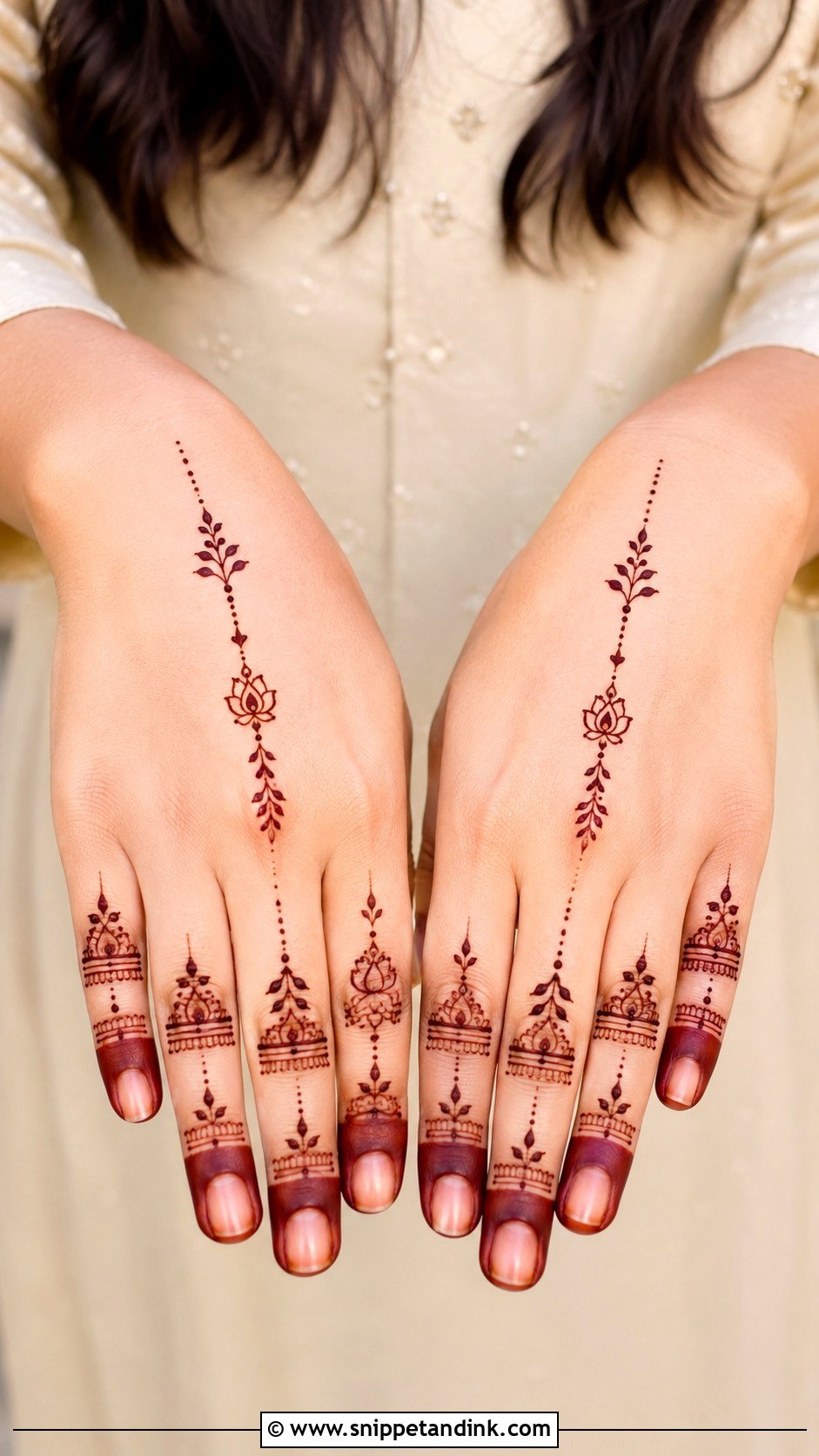
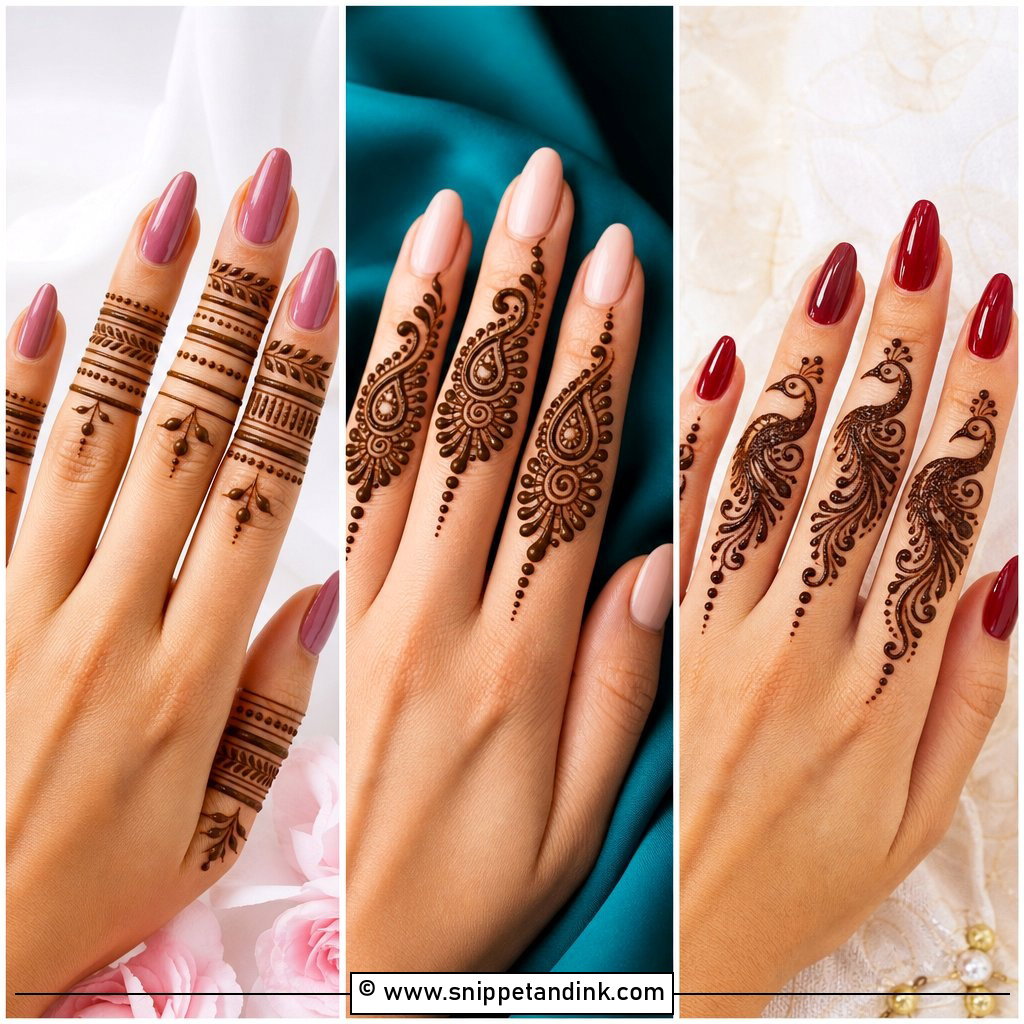
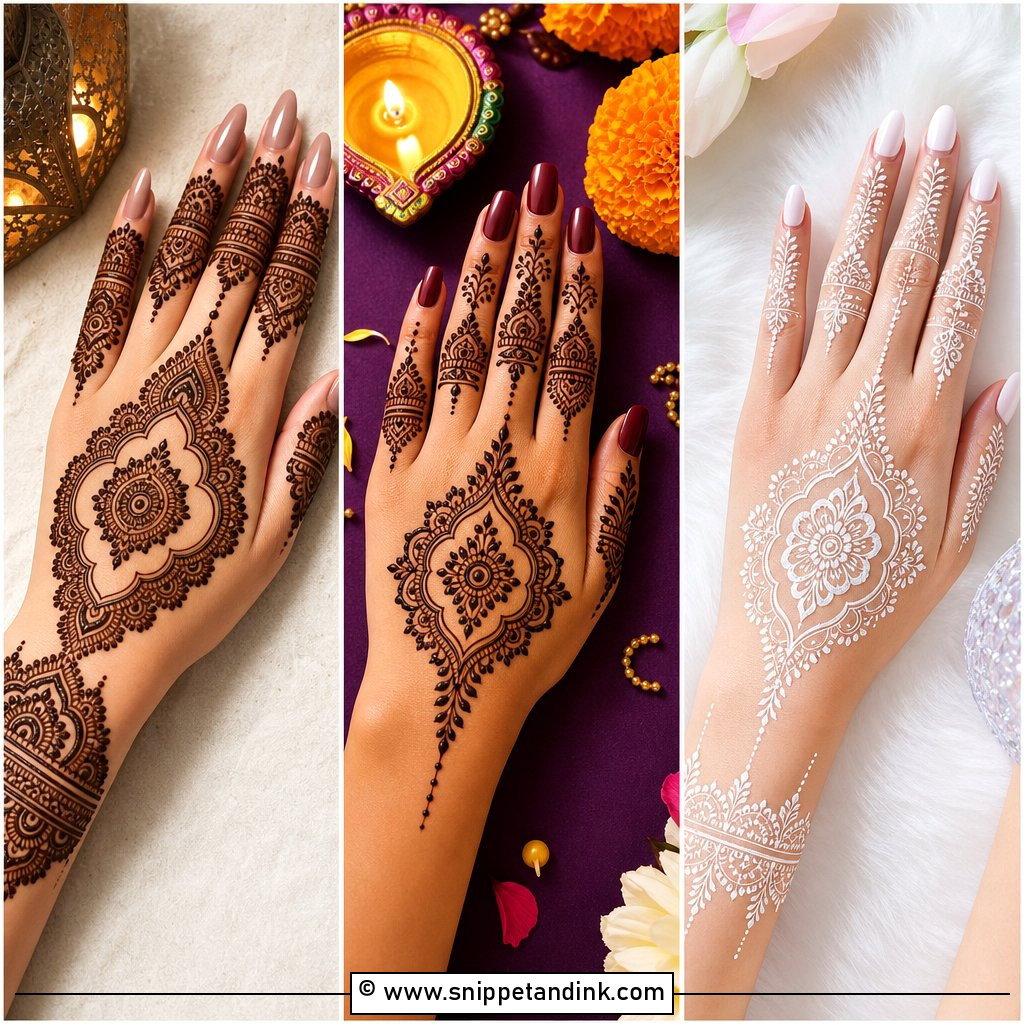
A simple finger mehndi design leaves the palm or back hand empty and decorates each finger with neat lines, dots, tiny leaves and small floral bands. No shading, no dense filling, so it is the place to start if you are new to the cone. I darken the tips a little and run thin bands across the knuckles, which reads like jewelry. Vertical lines visually lengthen short fingers, a small trick that makes a real difference.
2. Arabic Finger Mehndi Design
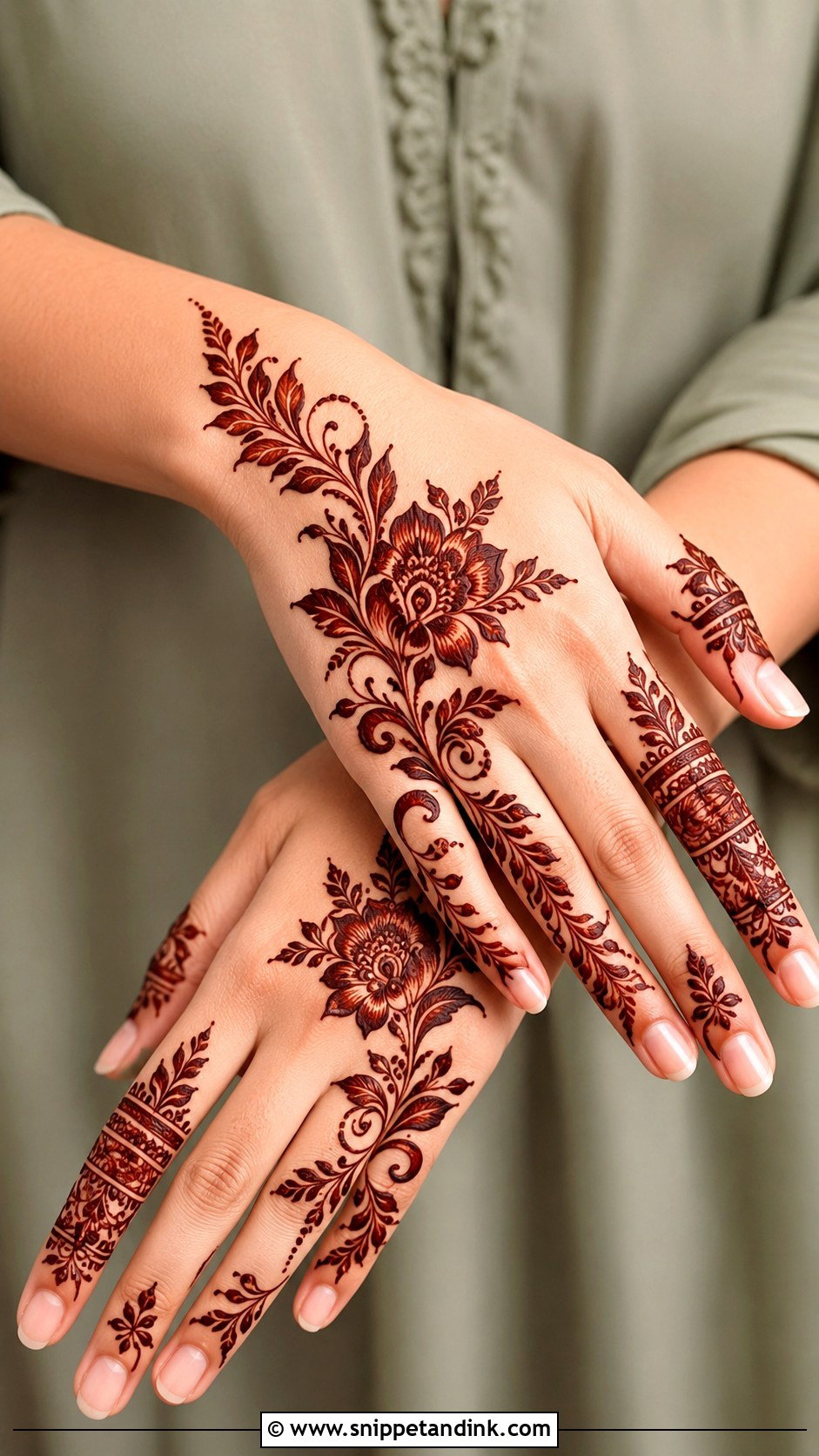
Arabic finger work uses bold outlines, flowing vines and open skin, with leafy trails, half flowers and shaded petals moving toward one or two statement fingers. For a finger-focused layout, I load the index and middle finger and keep the ring and little finger lighter. That uneven weight looks modern but still balanced. It is quick, rich-looking and well suited to Eid, bridesmaids and weddings.
3. Full Finger Mehndi Design
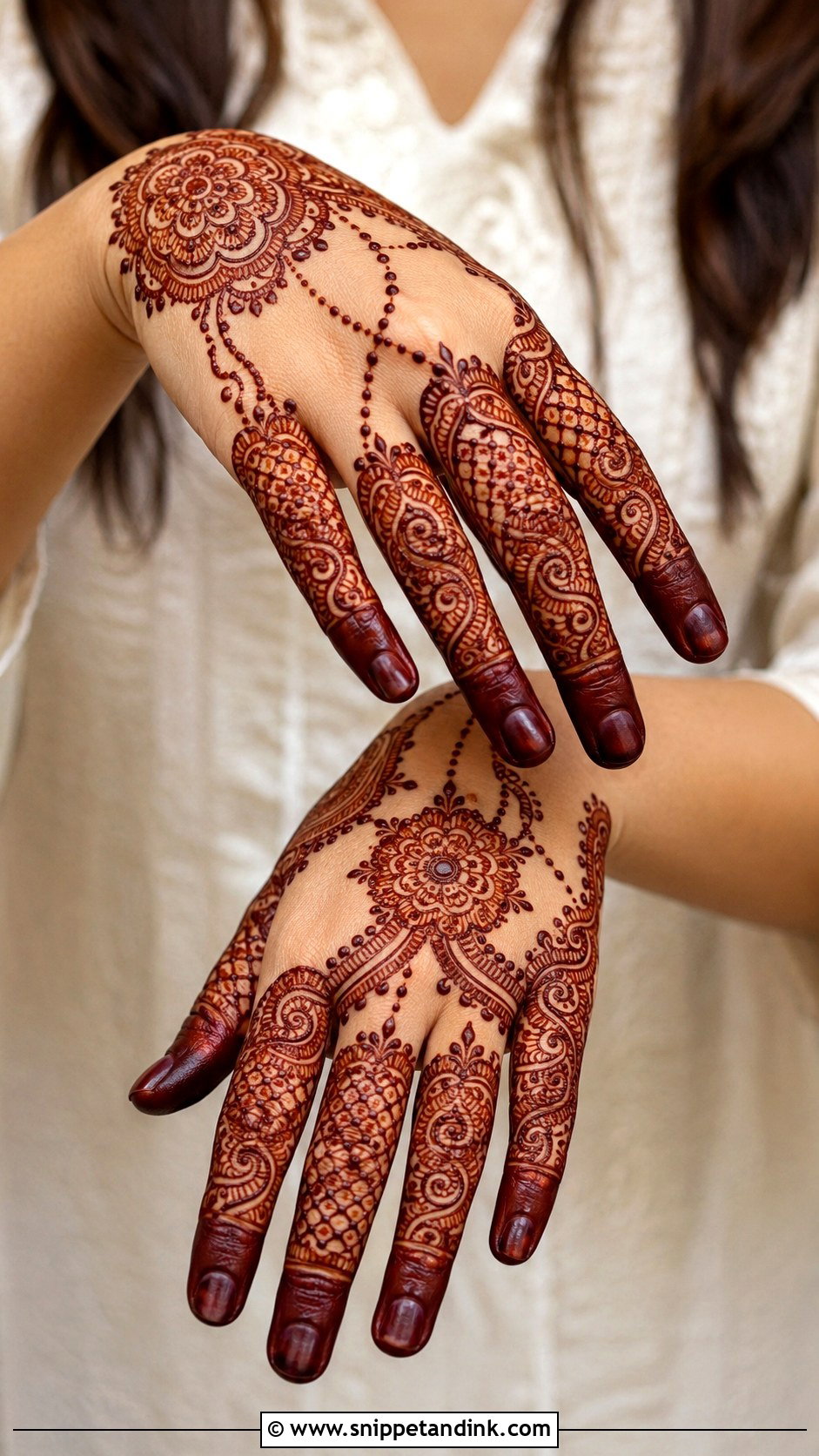
Every finger is covered from base to tip with checks, paisleys, leaf chains, dots, scalloped borders or lace lines, while the palm or back hand stays plain apart from maybe a thin wrist band. Filled fingertips give the strongest contrast. I vary the pattern slightly from finger to finger but repeat one border, so the hand reads as one design. Allow more time than you expect; five small canvases take longer than one large one.
4. Back Finger Mehndi Design
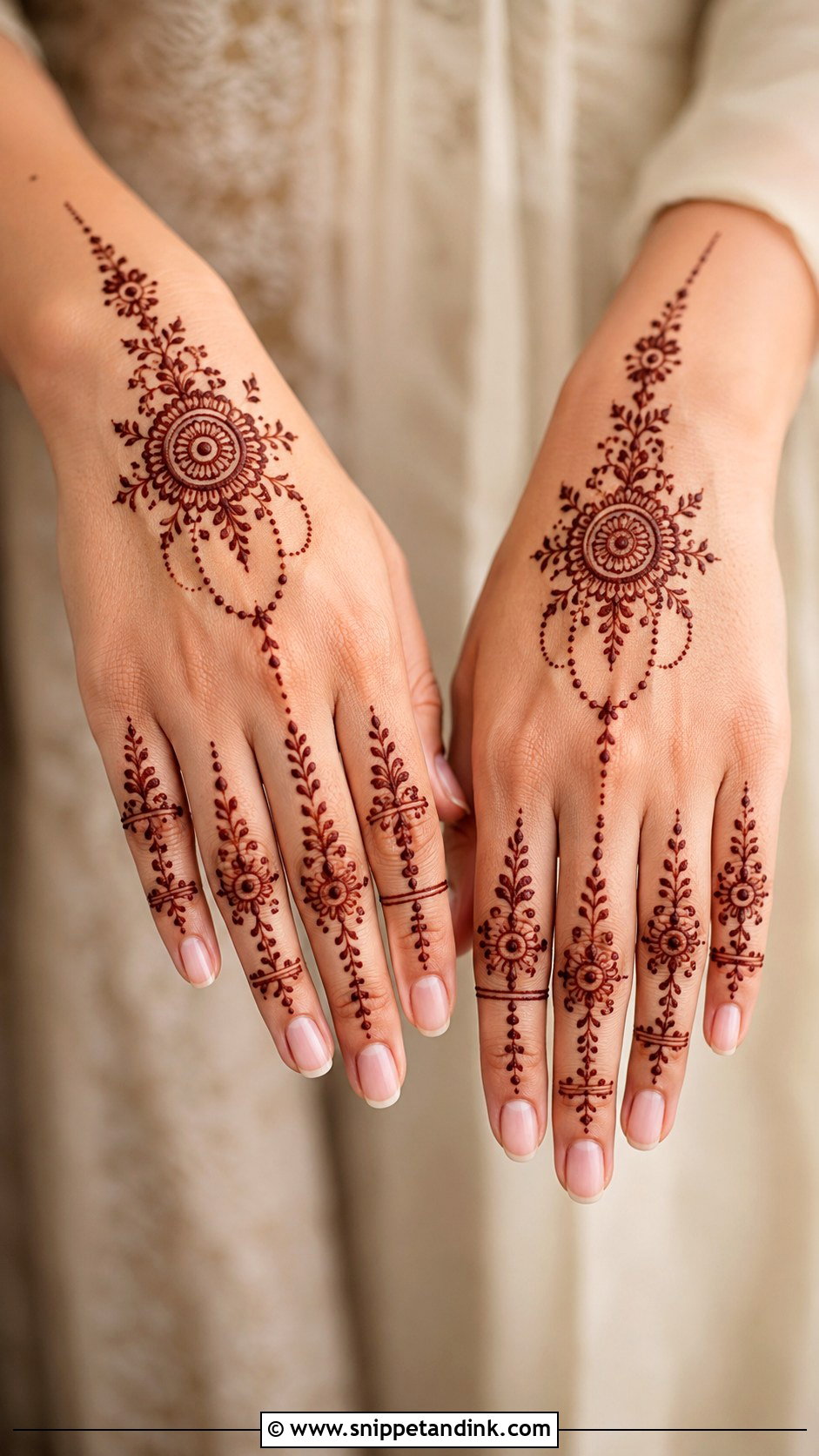
The back of the fingers is the side everyone sees in photos. Vertical vines, ring bands, tiny mandalas, dotted strings and fine floral trails cover the fingers, knuckles and maybe a little of the back hand. It leaves enough skin to show off rings, bangles and painted nails, and it dries faster than a full hand. One thing I warn about: the back of the fingers stains lighter than the palm side, so expect a softer brown and keep the lines a touch bolder.
5. Front Finger Mehndi Design
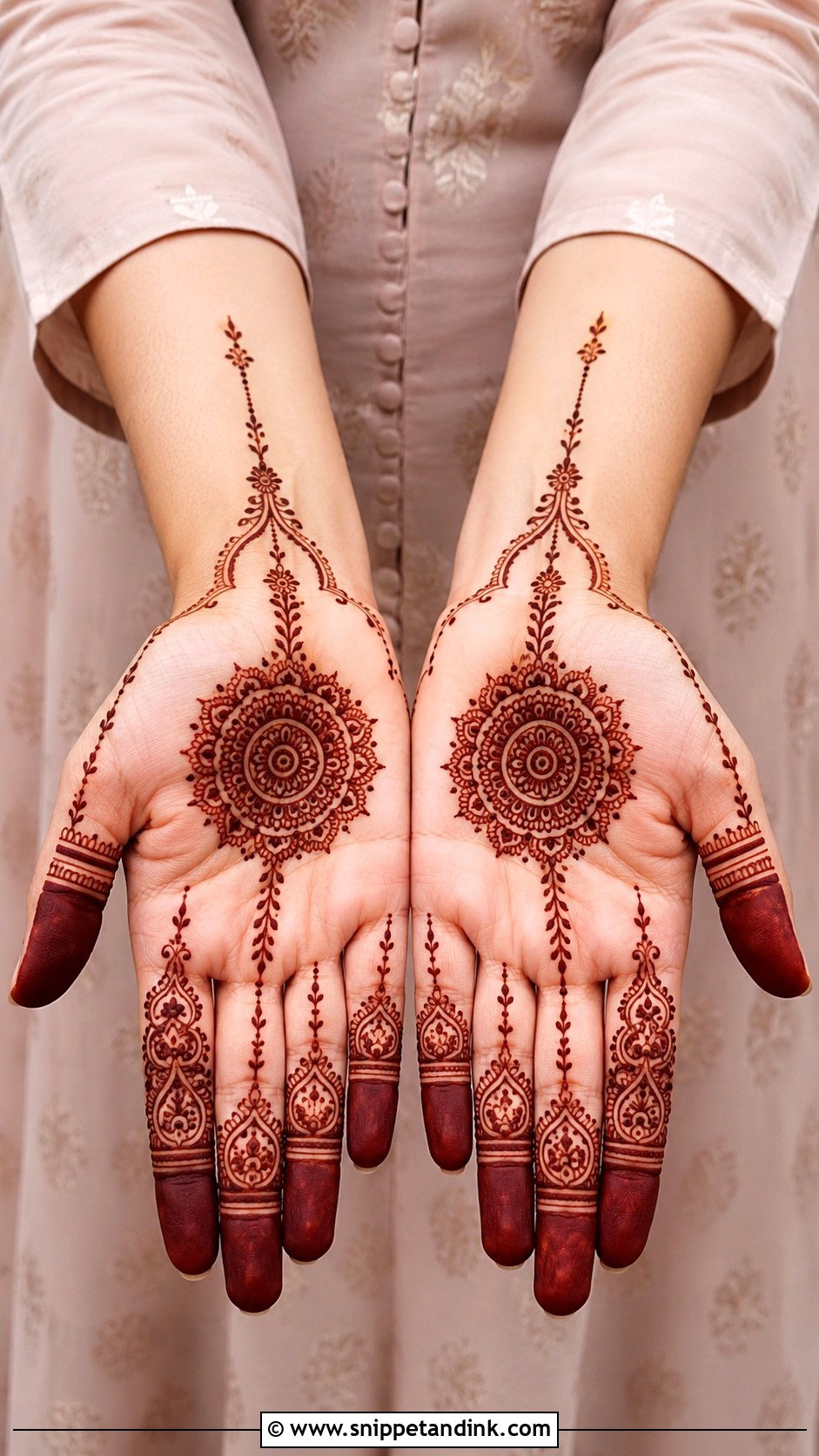
The palm side of the fingers suits occasions where palm henna is expected: filled tips, small arches under each finger, slim vertical lines and tiny paisley chains. It can join a small palm mandala or leave the palm bare for a modern look. Palm-side skin takes the darkest stain on the hand, so even a simple pattern comes up rich. Keep the patterns clean, since the creases at each finger joint will break any very fine detail.
6. Bridal Finger Mehndi Design
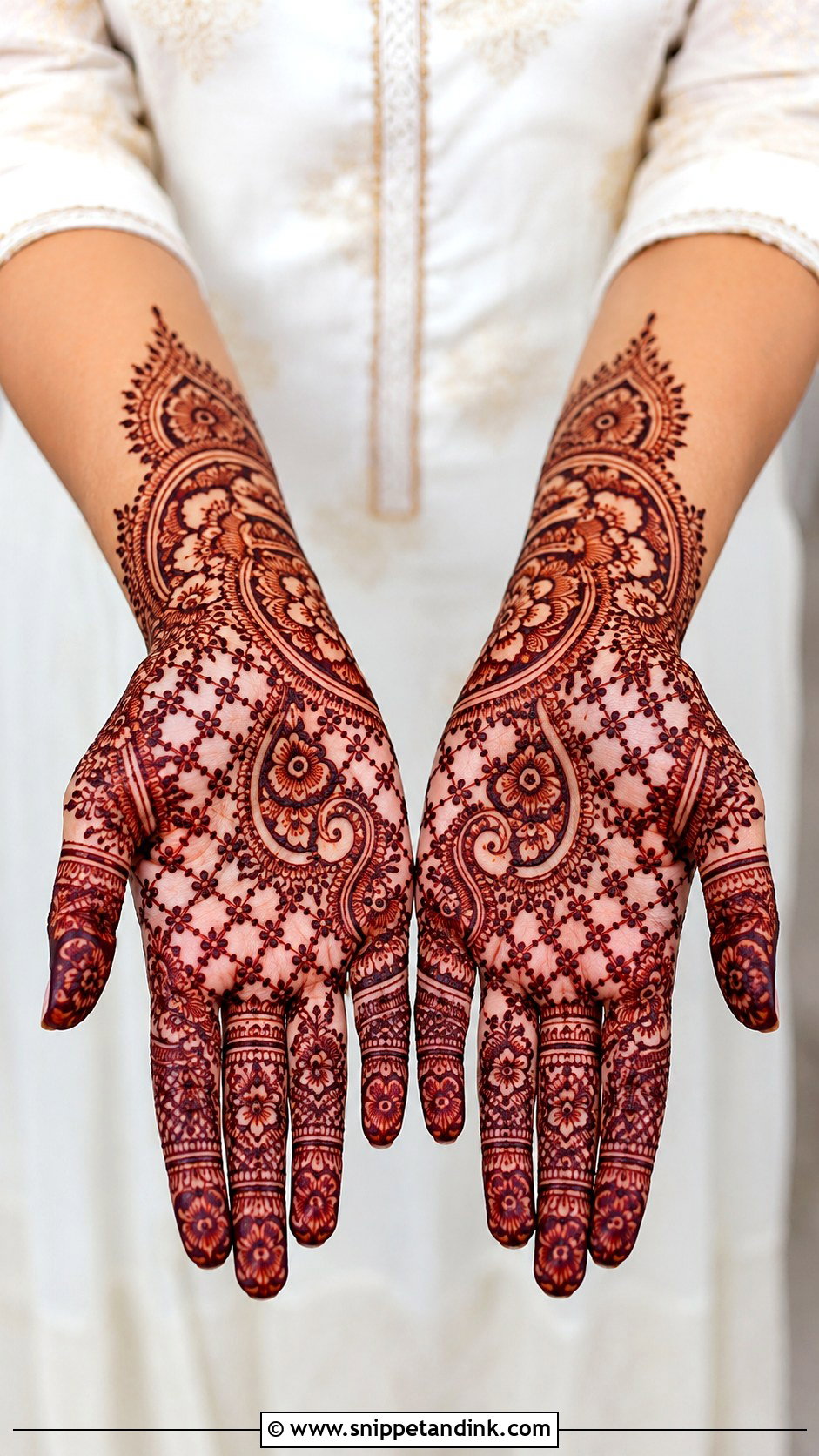
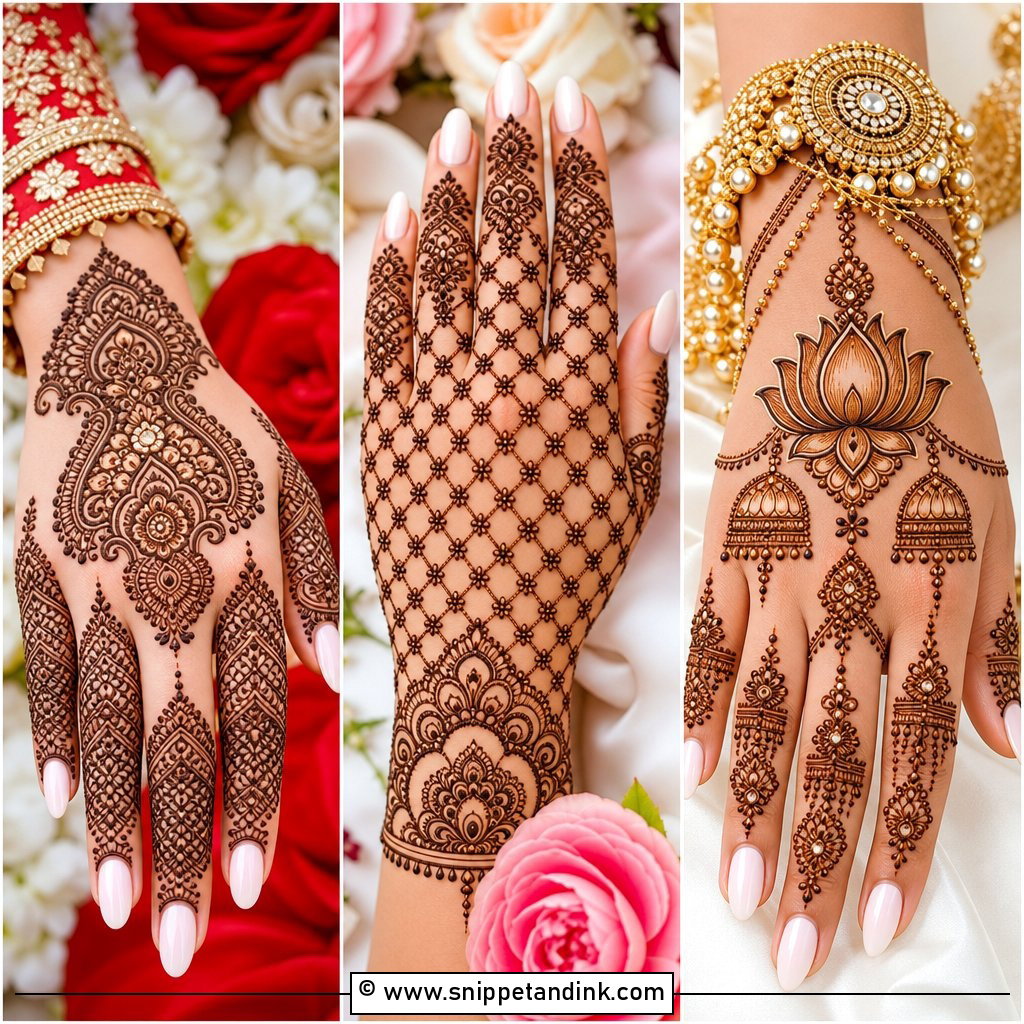
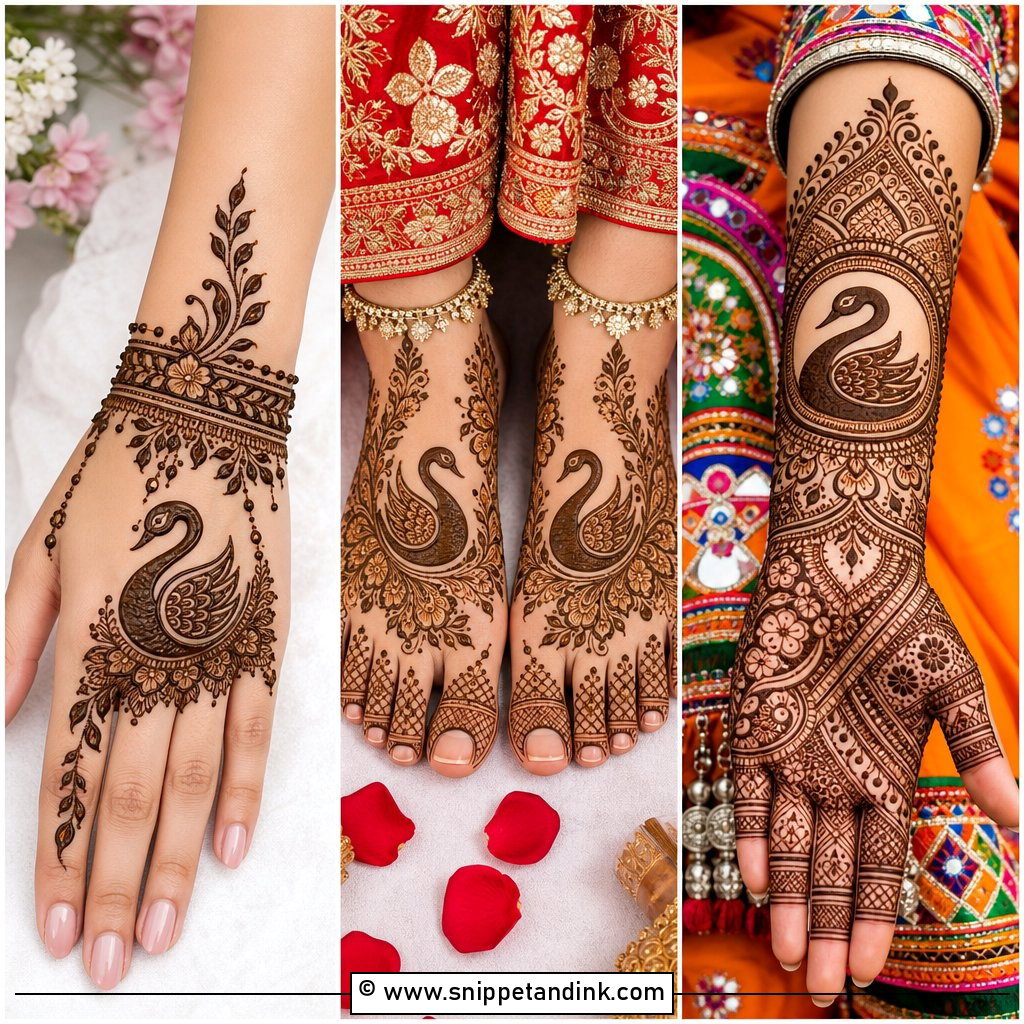
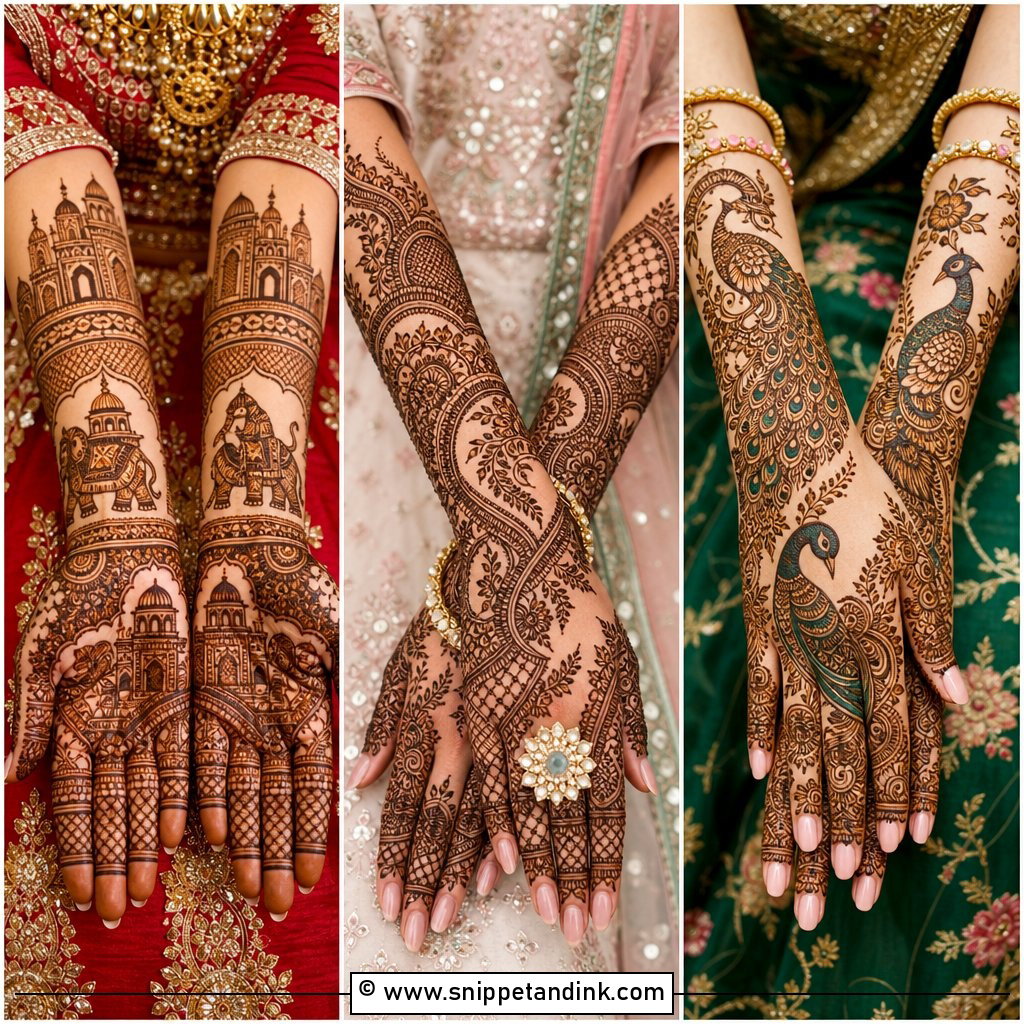
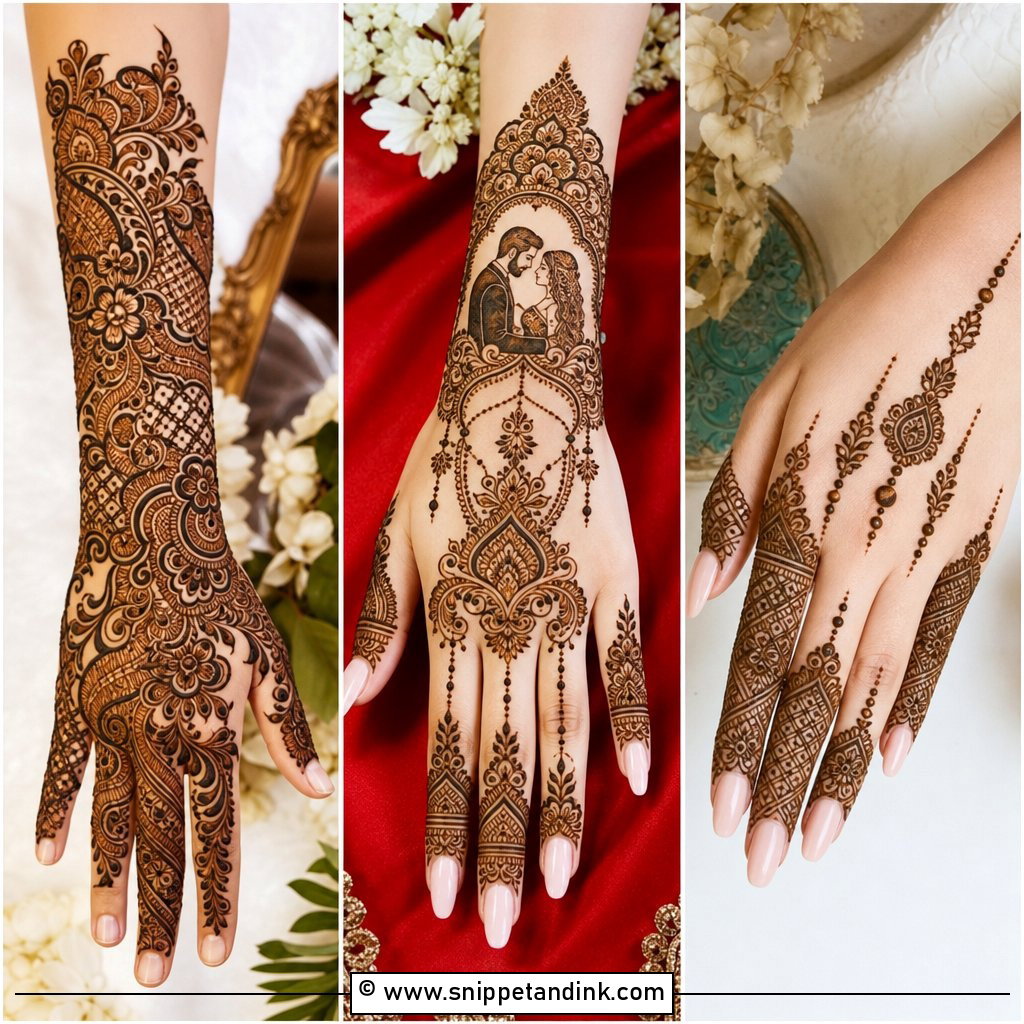
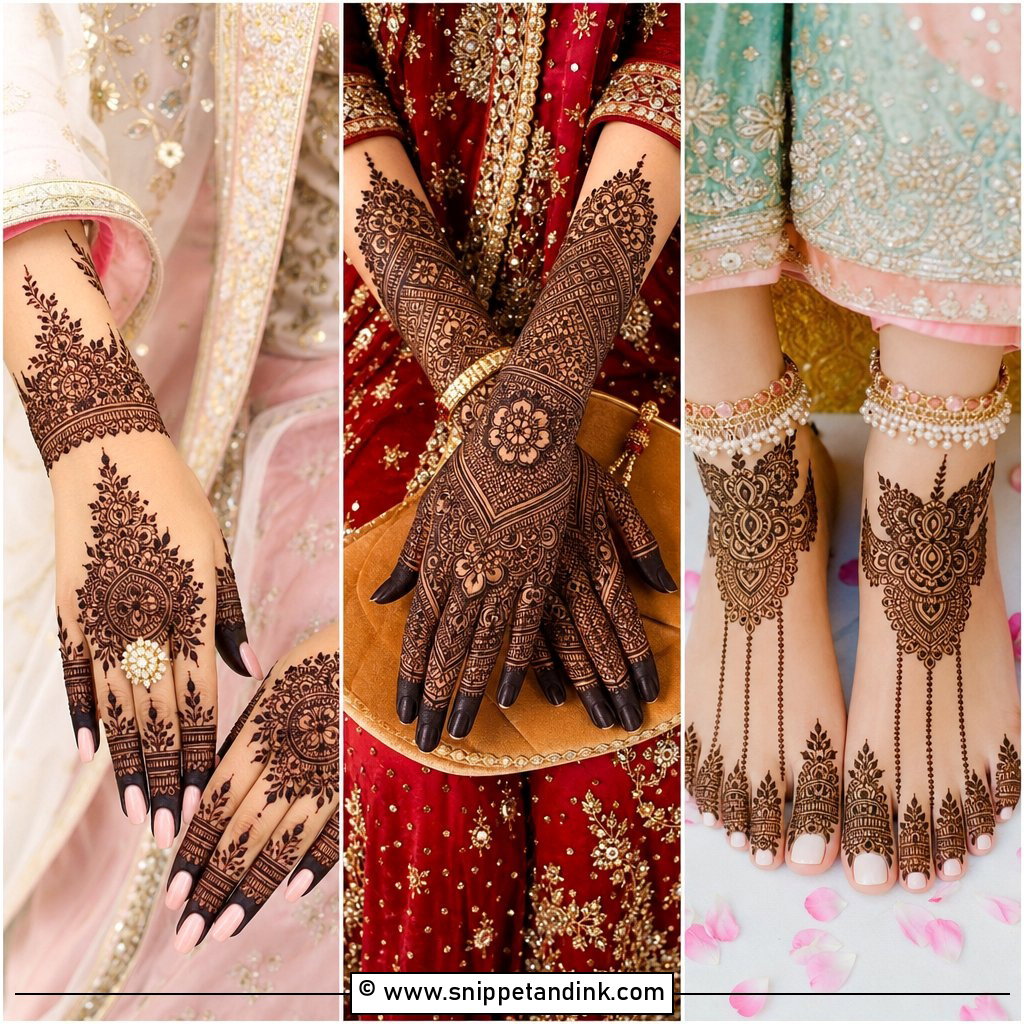
Bridal fingers carry fine jaali, paisley strips, floral borders, dotted chains and small personal details, linked to a full palm or back-hand layout with mandalas, dulha-dulhan elements or peacocks. Hands are shown constantly at a wedding, during ring photos, chooda moments and portraits, so the fingers need to be sharp. I vary each finger a little so the set looks custom. Fingertips, filled solid, will be the darkest part of the whole bridal design.
7. Ring Finger Mehndi Design
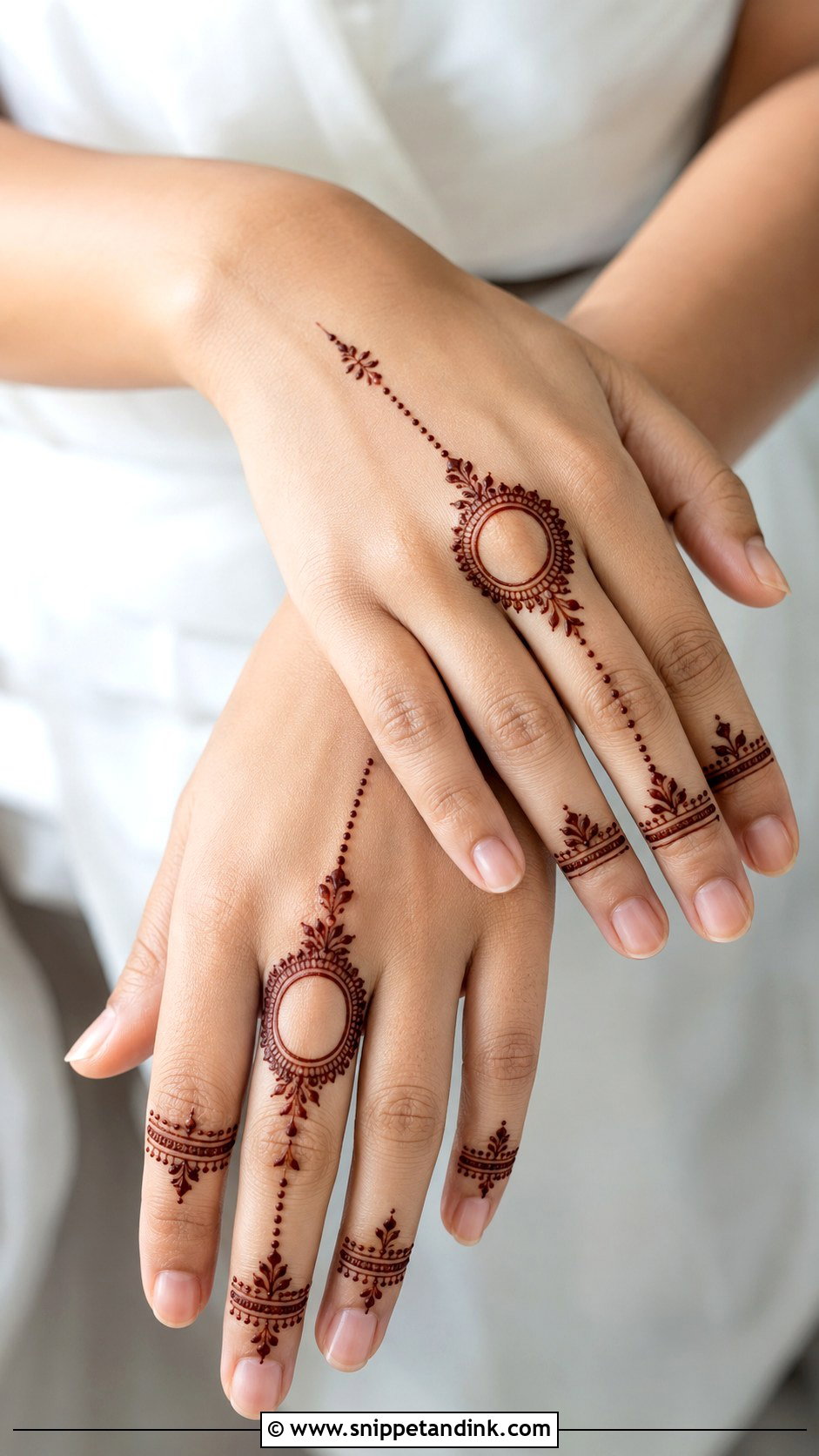
Henna rings: circular bands, dotted chains and small florals around one or more fingers, sometimes extended toward the wrist like a haathphool, sometimes stopped at the knuckles. It complements real jewelry instead of hiding it, which suits engagements and modern outfits. I leave clean gaps between bands, because paste spreads slightly into the skin and close bands merge into one dark stripe.
8. Minimal Finger Mehndi Design
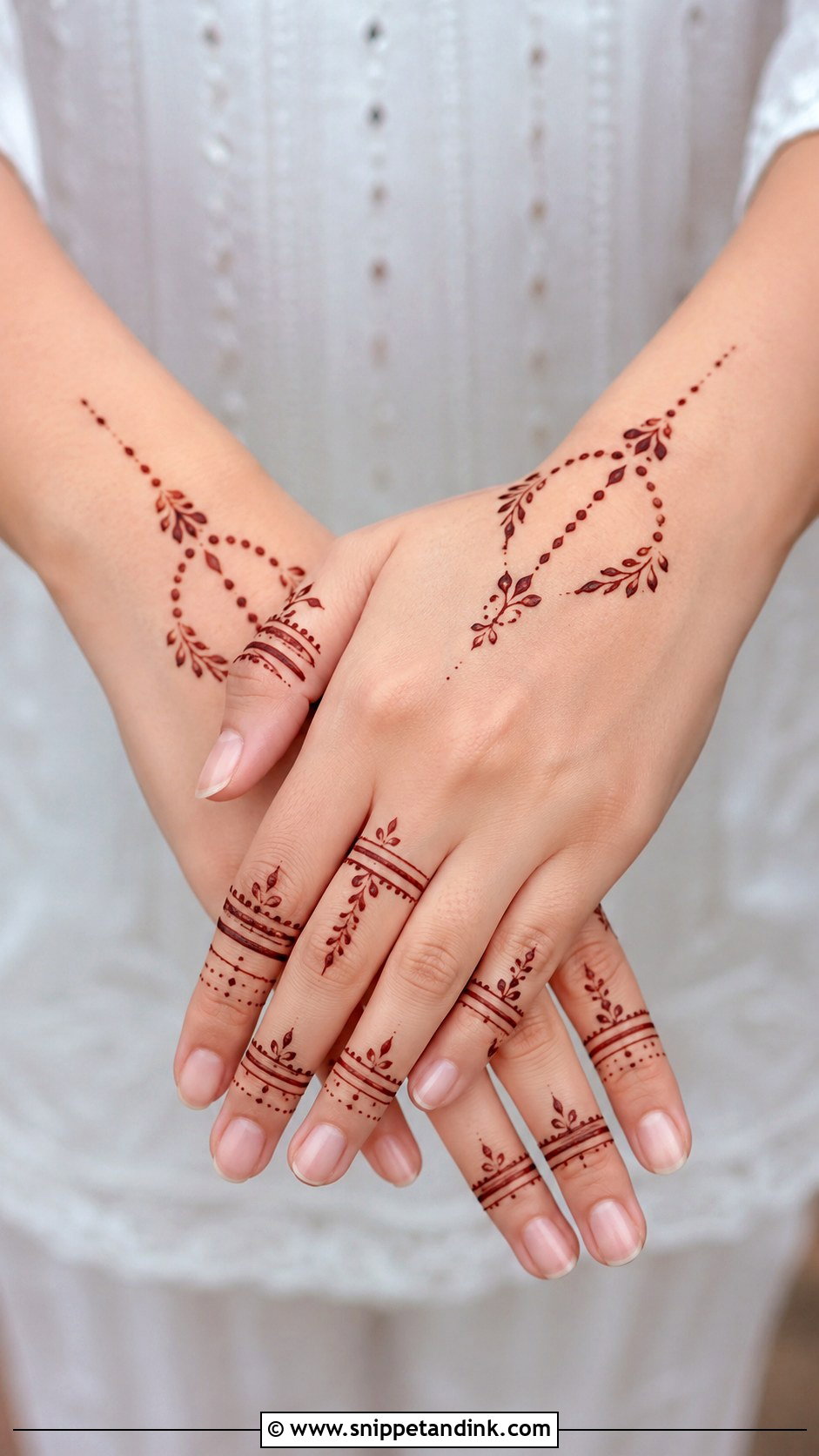
Minimal fingers use tiny dots, slim lines, small leaf marks and narrow bands, perhaps on the upper fingers only, the sides or just the knuckles. It is for people who want henna without heaviness: younger girls, professionals and small events. With so little on the hand, neat lines and planned gaps matter more than anything. Nude or soft nail colours suit it best.
9. Modern Finger Mehndi Design
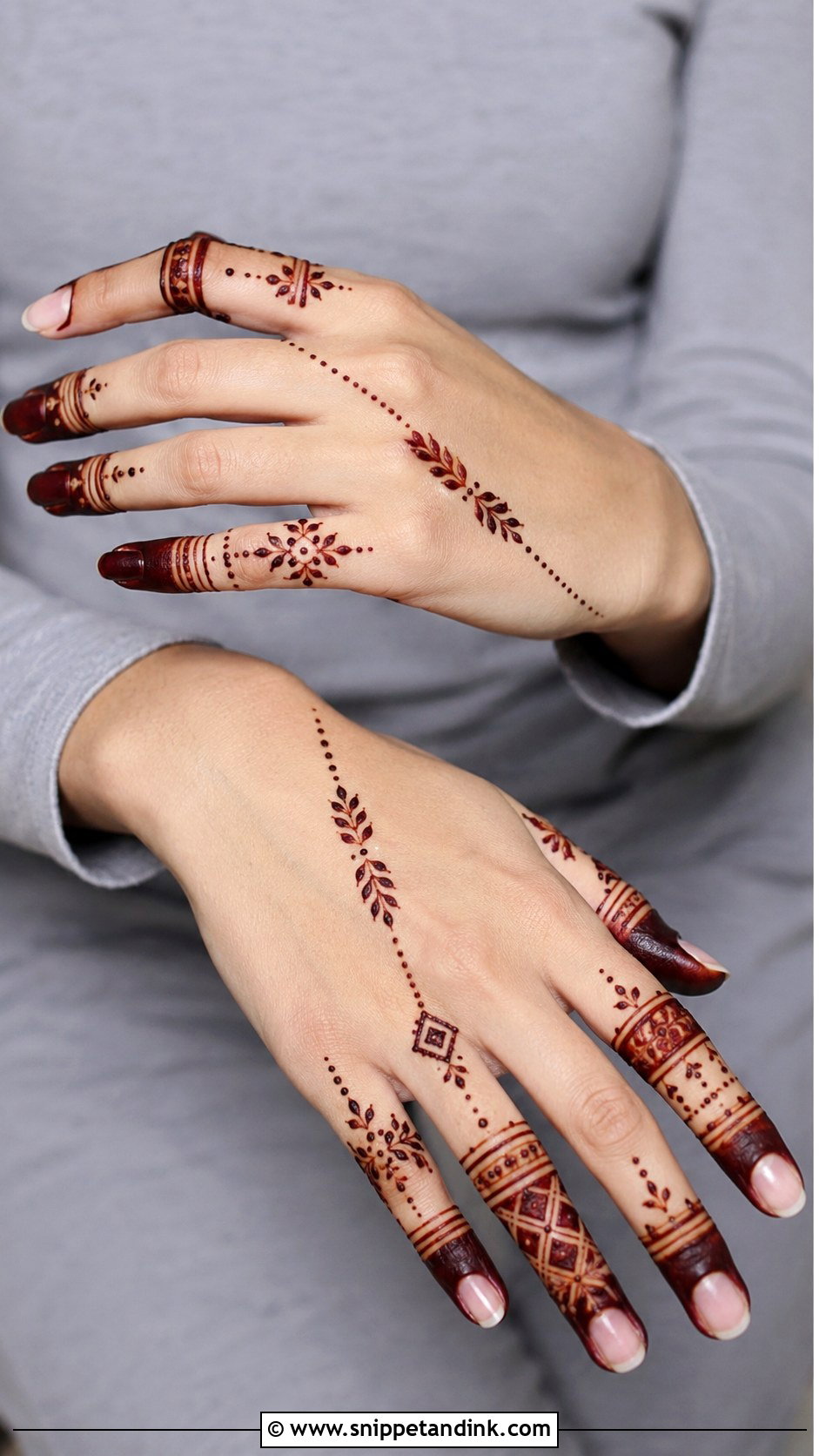
Modern finger designs drop strict symmetry. Diagonal lines, uneven coverage, abstract dots, thin bands and small geometric accents mean one finger can carry a bold pattern while the next has only a fine chain. It sits easily with ethnic and western outfits. Mixing too many ideas is the trap, so I pick one theme, florals, grids or jewelry bands, and repeat it lightly across the hand.
10. Floral Finger Mehndi Design
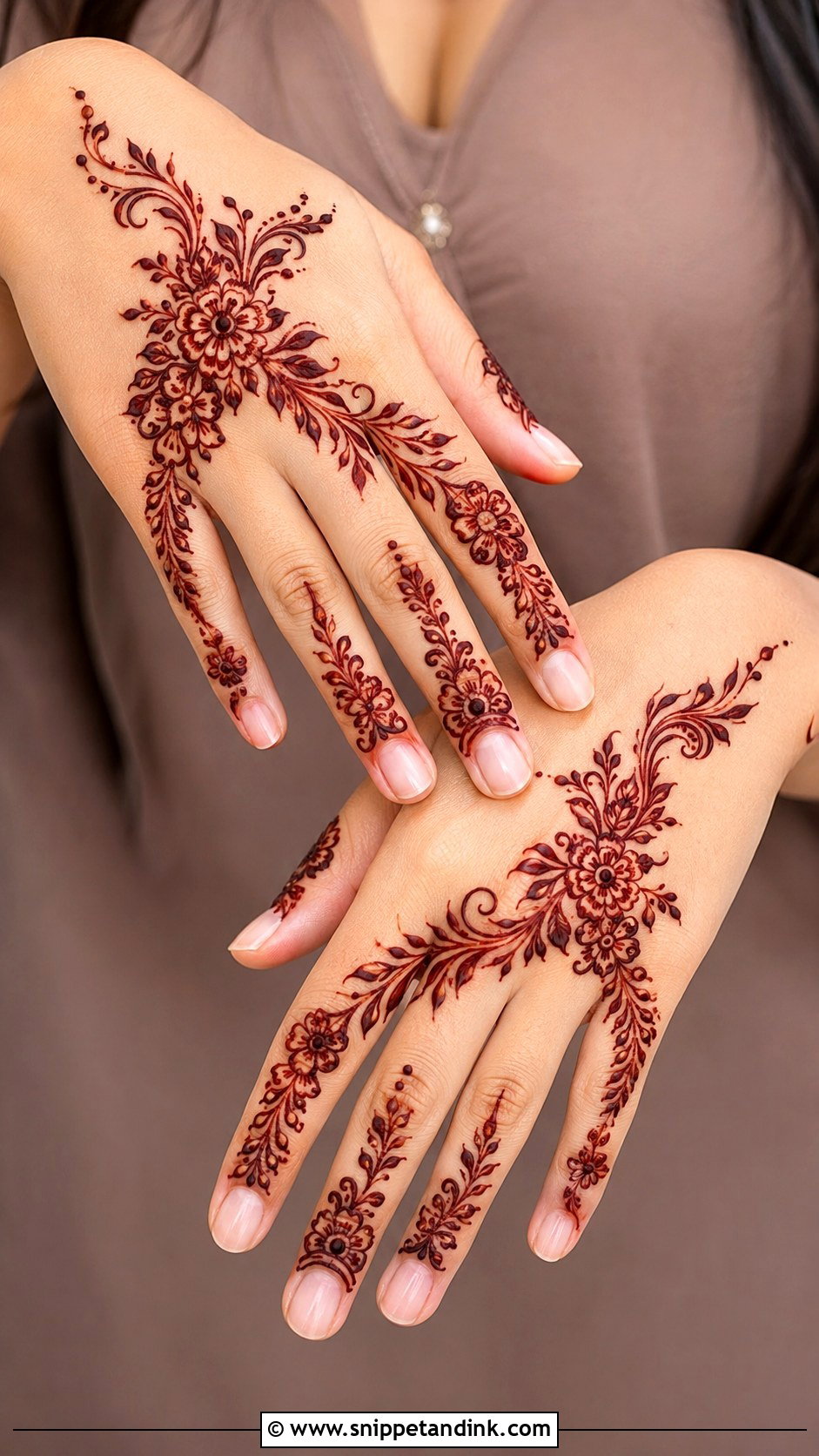
Small blossoms, petal chains, leafy vines and curved stems run along each finger. Keep them open for an Arabic feel or tiny and detailed for an Indian finish. I place the larger flowers near the base where the finger is widest and taper to leaves at the tips, which follows the natural shape. It suits front and back hands, wedding guests, bridesmaids and festivals alike.
11. Leaf Finger Mehndi Design
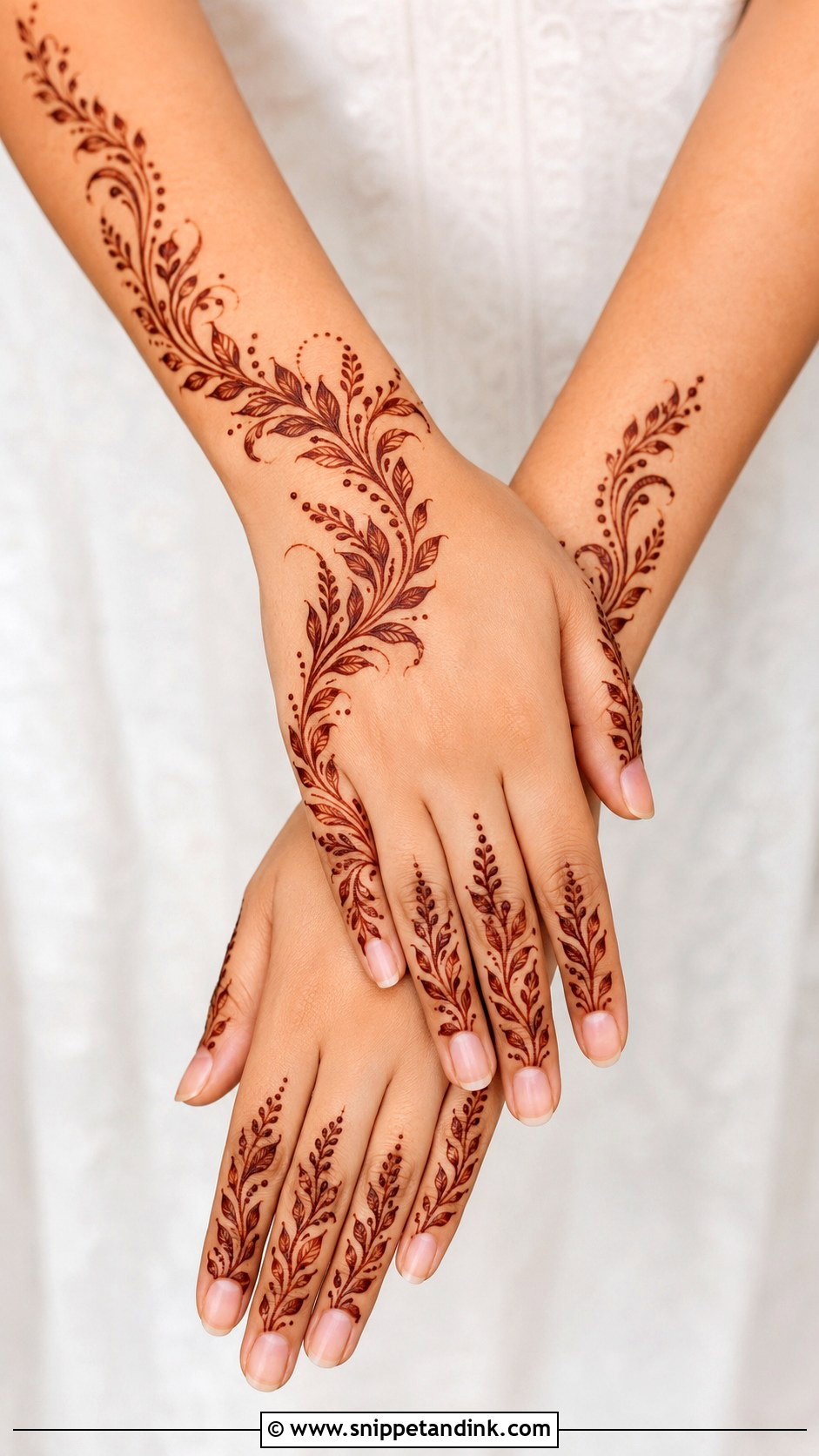
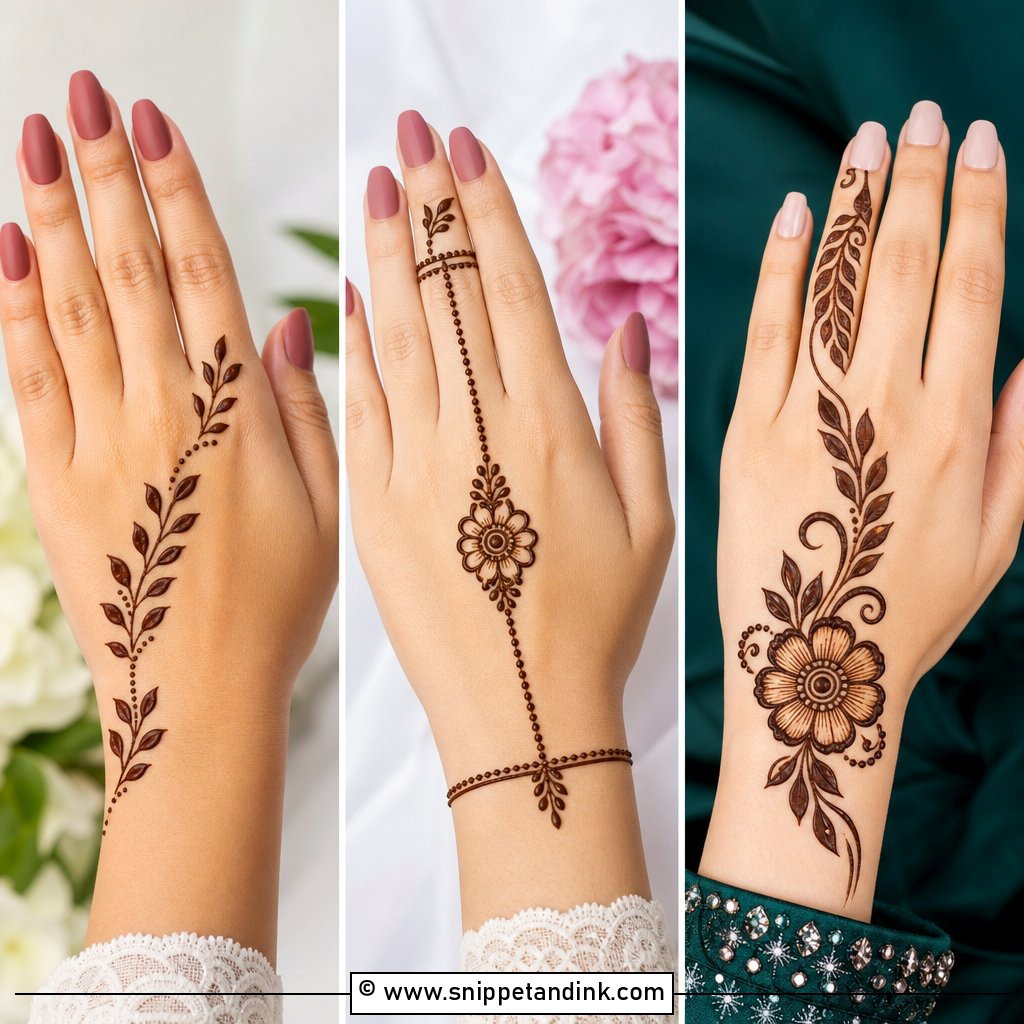
Slim vines climb from the base of each finger to the tip, with dotted trails, curved stems and small gaps between leaves. Long fingers suit it naturally; on shorter hands I keep the vines strictly vertical to add length. For an everyday festival, keep it light. For a wedding, add shaded florals, wrist bands and filled tips around the leaves.
12. Jaali Finger Mehndi Design
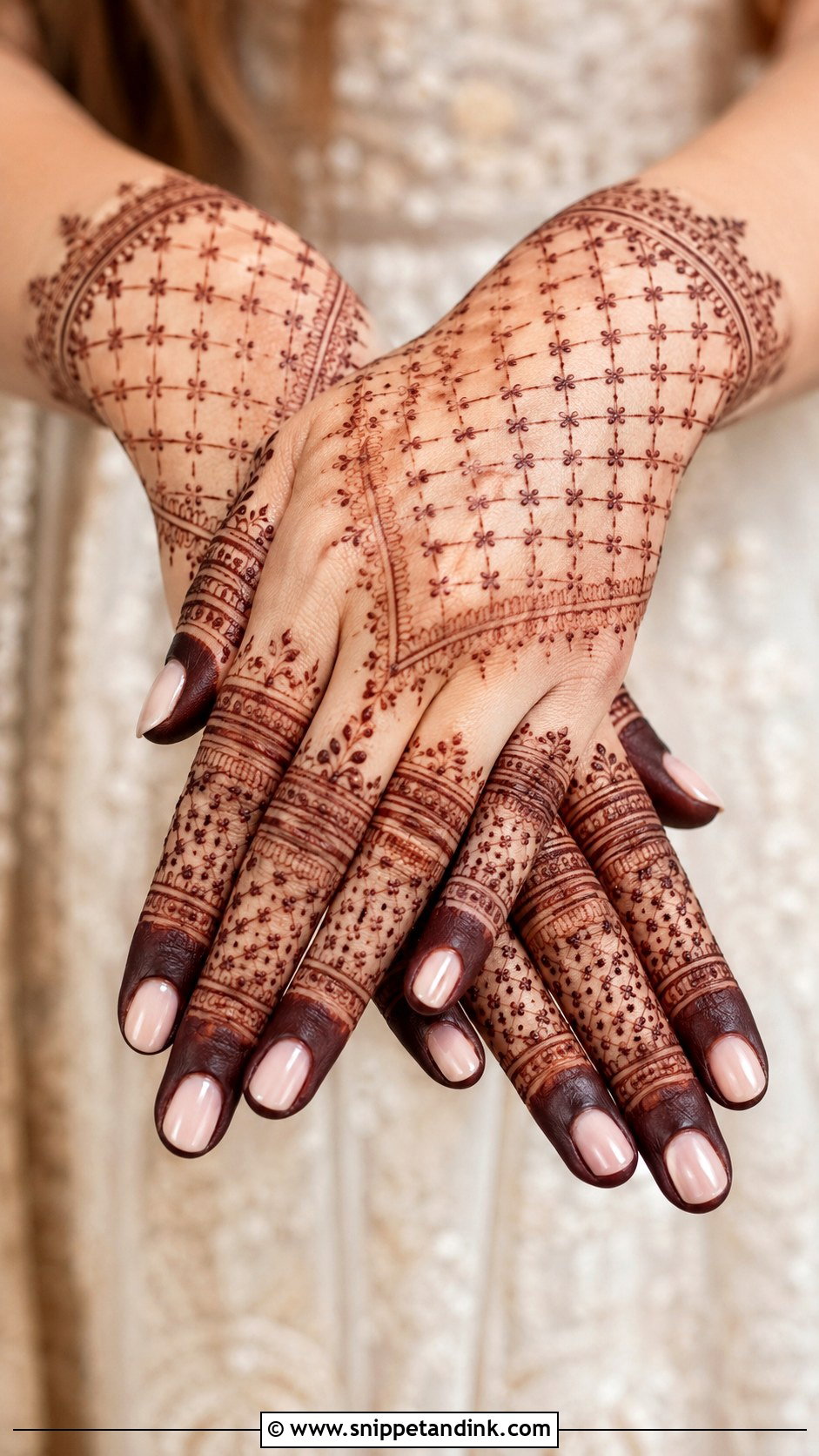
Crisscross lines, small diamonds, dots and fine borders make a lace-like net that looks intricate even in a simple layout. Use it on every finger or highlight two and fill the others with bands and vines. It pairs with Arabic florals and Indian paisleys and shows every line in close-up photos, so precision matters. Narrow fingers have little room for a grid, so I make the cells slightly larger than on a palm to keep them open after staining.
13. Mandala Finger Mehndi Design
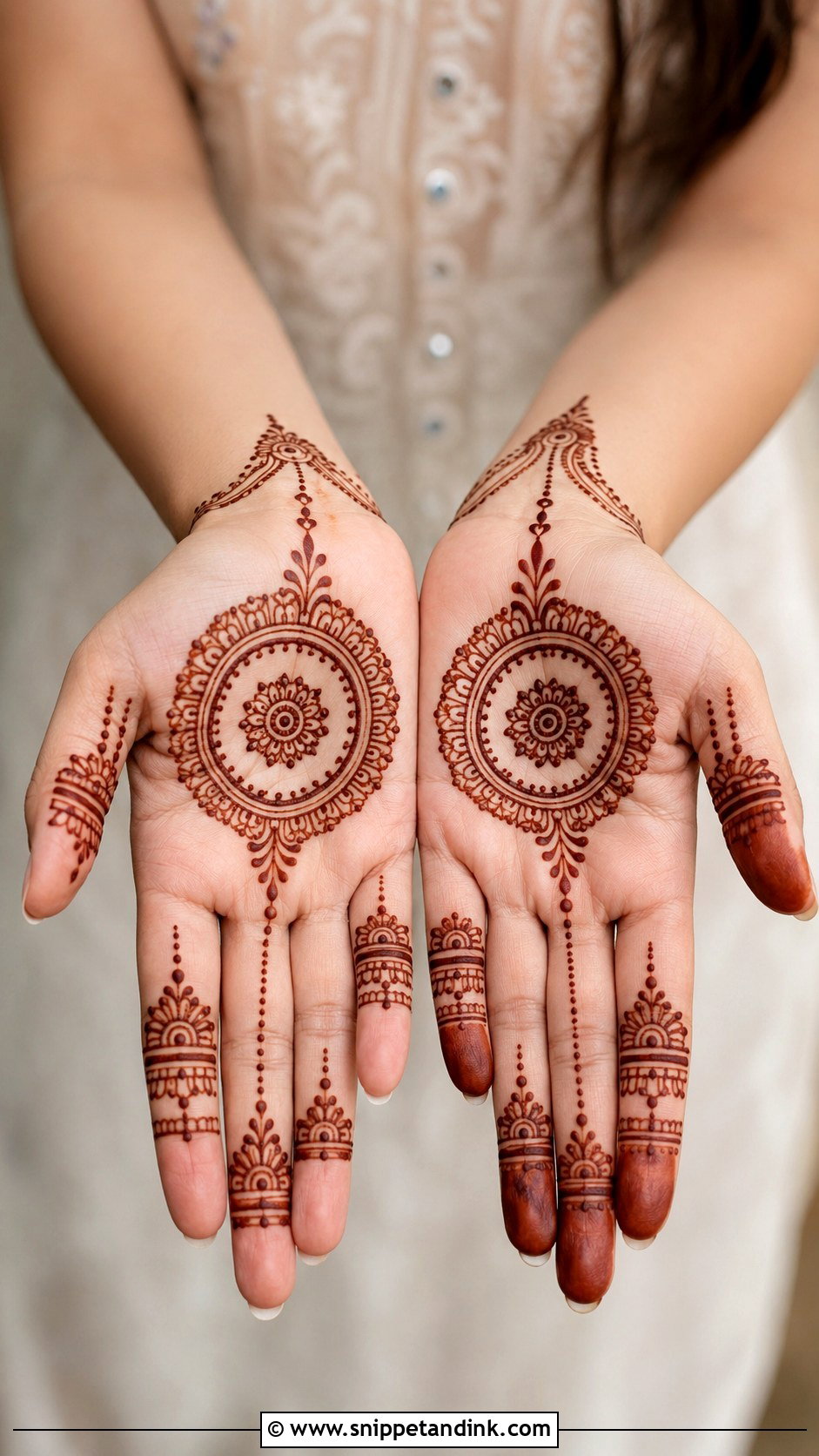
A small circular motif on the palm or back hand, with finger patterns, bands, dots, half circles and petal rows, echoes its shape. It looks traditional without weight, which suits rituals and simpler bridal events. For a modern version, place a little mandala at the base of the fingers and leave the rest open; for a fuller one, run dotted chains from the mandala to every finger.
14. Paisley Finger Mehndi Design
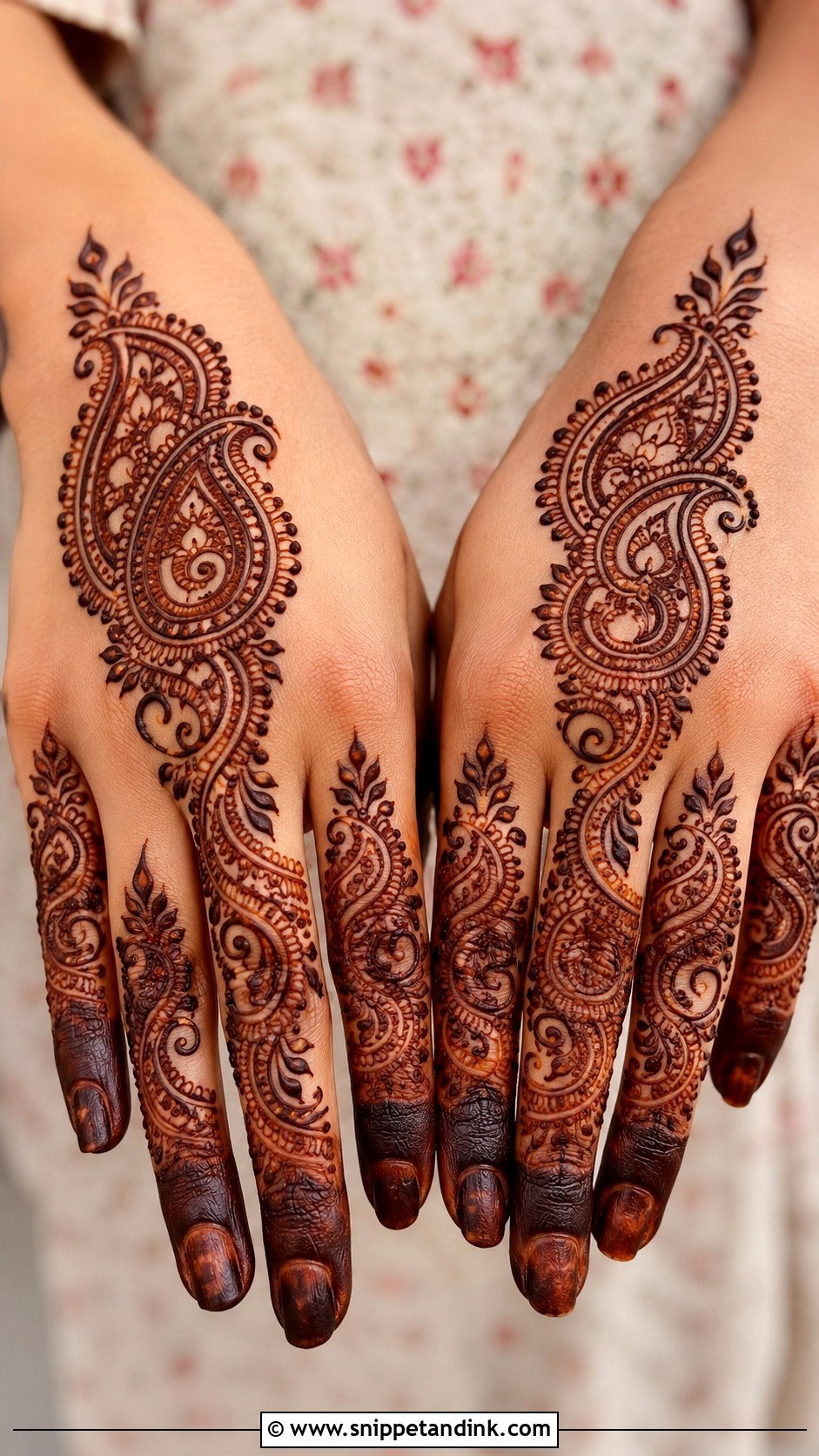
Small paisleys run vertically up each finger, filled with dots, mini leaves, curves or shading, or one larger paisley sits at the base of the index finger with smaller motifs flowing upward. It feels classic and works for weddings, pujas and traditional outfits. To stop fingers looking bulky, I leave slim strips of bare skin between motifs. Fine borders and filled tips finish it.

15. Geometric Finger Mehndi Design
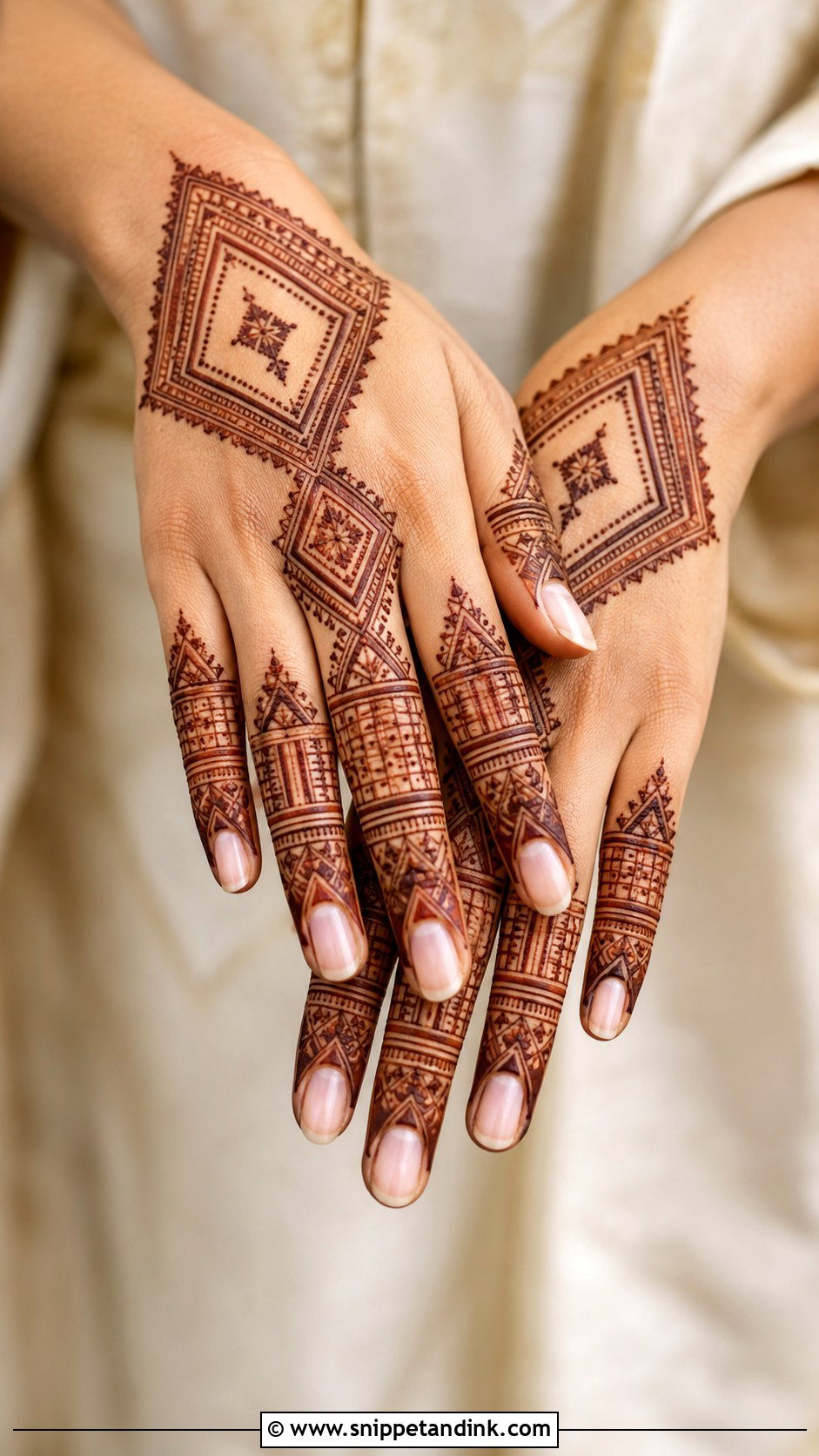
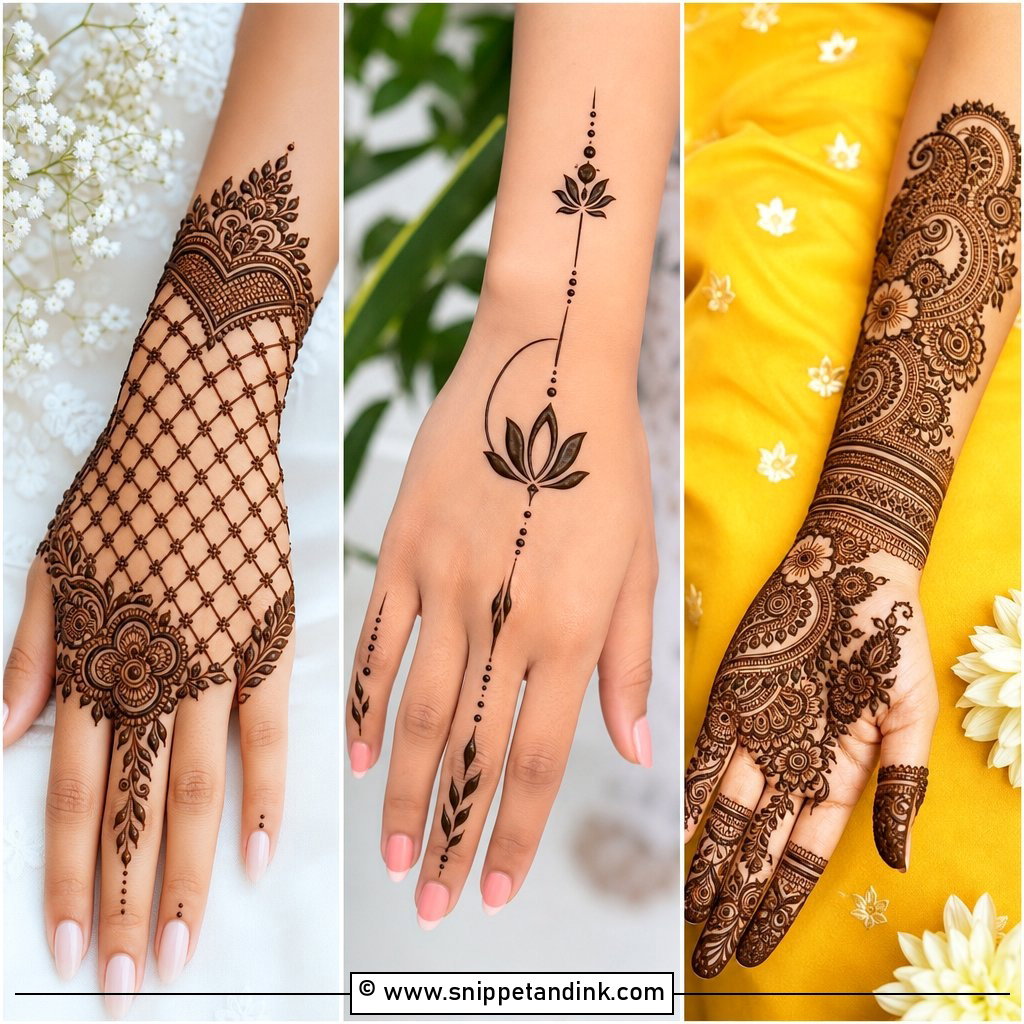
Triangles, diamonds, grids, straight lines, dots and boxed bands give fingers a clean, structured look, minimal or detailed. Sharp shapes read best on the back of the hand. Each finger can carry a different pattern if the line thickness stays the same. Avoid mixing in curvy motifs; they soften the geometry and the design loses its edge. It suits modern bridesmaids and contemporary outfits.
16. Indo Arabic Finger Mehndi Design
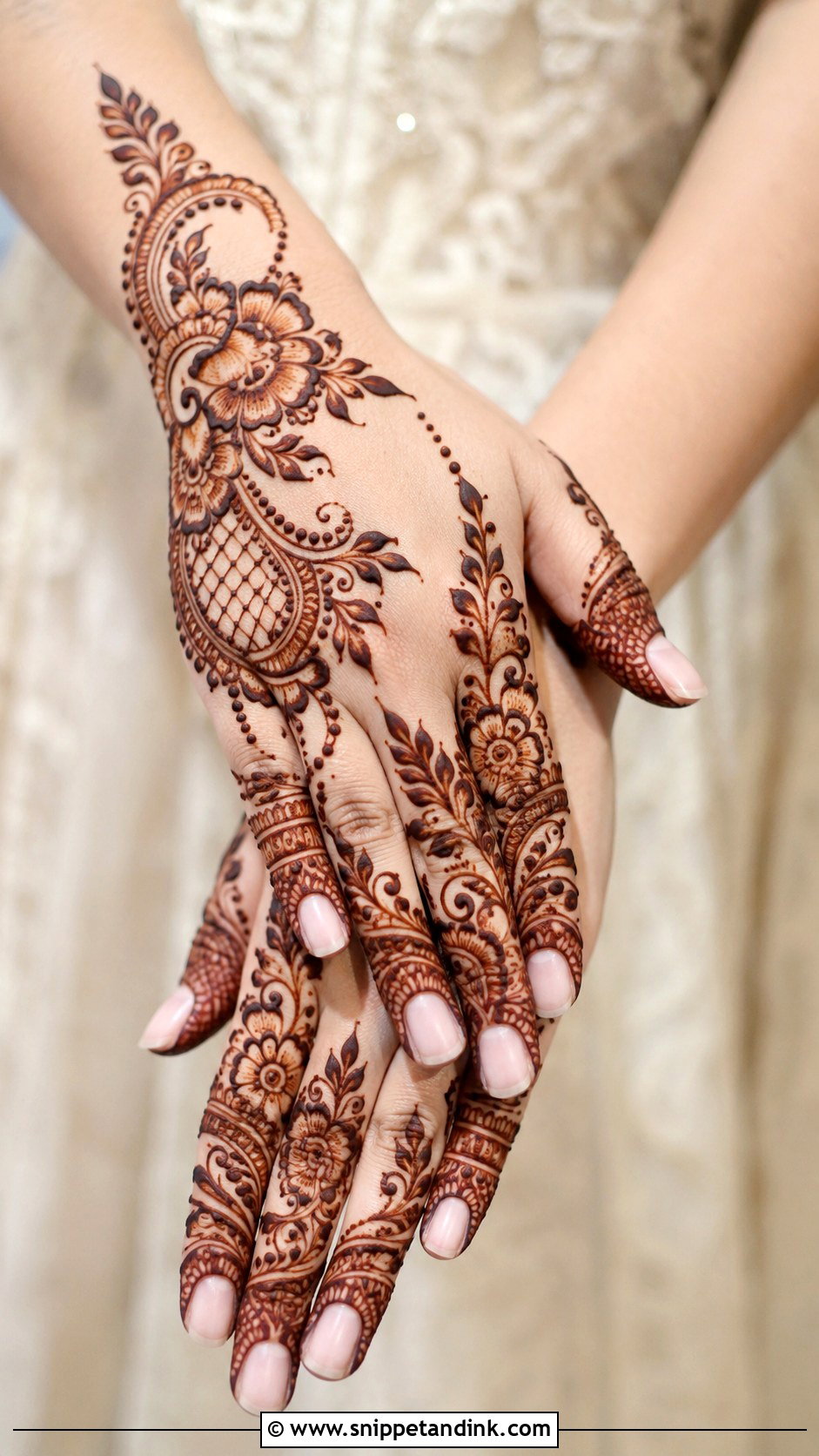
Shaded flowers, leafy vines, paisley borders, jaali panels and dotted chains, with open space between motifs, give an Indo-Arabic finger design its balance of festive and easy to read. It is lighter than full bridal henna. On the back hand, it often runs as a diagonal finger trail; on the palm, it surrounds a small central motif. Wedding guests, bridesmaids and Eid gatherings are where I see it most.
17. Moroccan Finger Mehndi Design
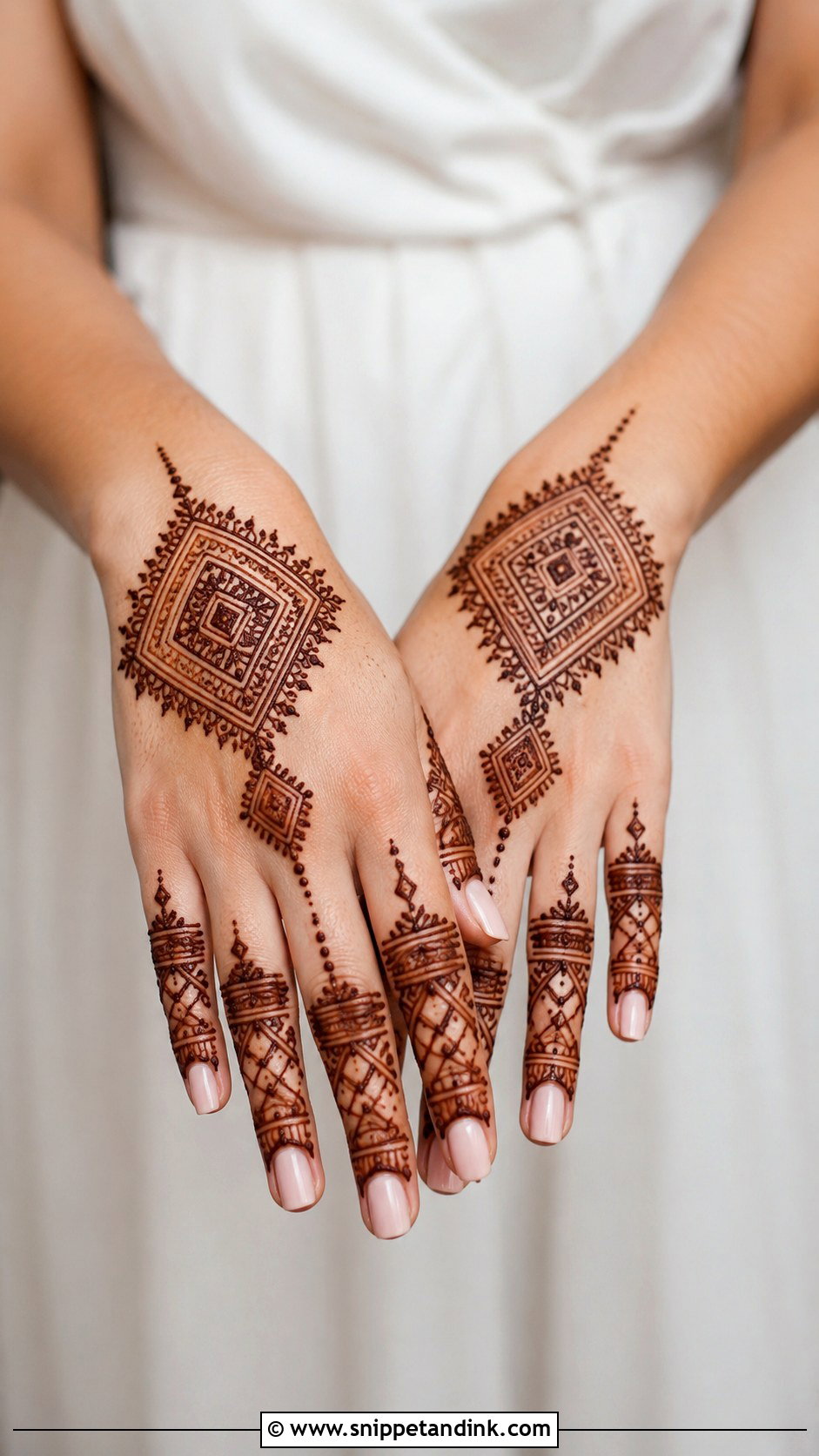
Diamonds, chevrons, squares, grids, dots and angular borders give Moroccan fingers a strong, modern look with traditional roots. It suits anyone tired of florals. Open skin around the knuckles makes the geometry stand out on the back hand. Thin linework keeps it minimal; filled geometric blocks make it bold. I draw straight lines in short strokes, since one long pull over a bent knuckle always wobbles.
18. Gulf Finger Mehndi Design
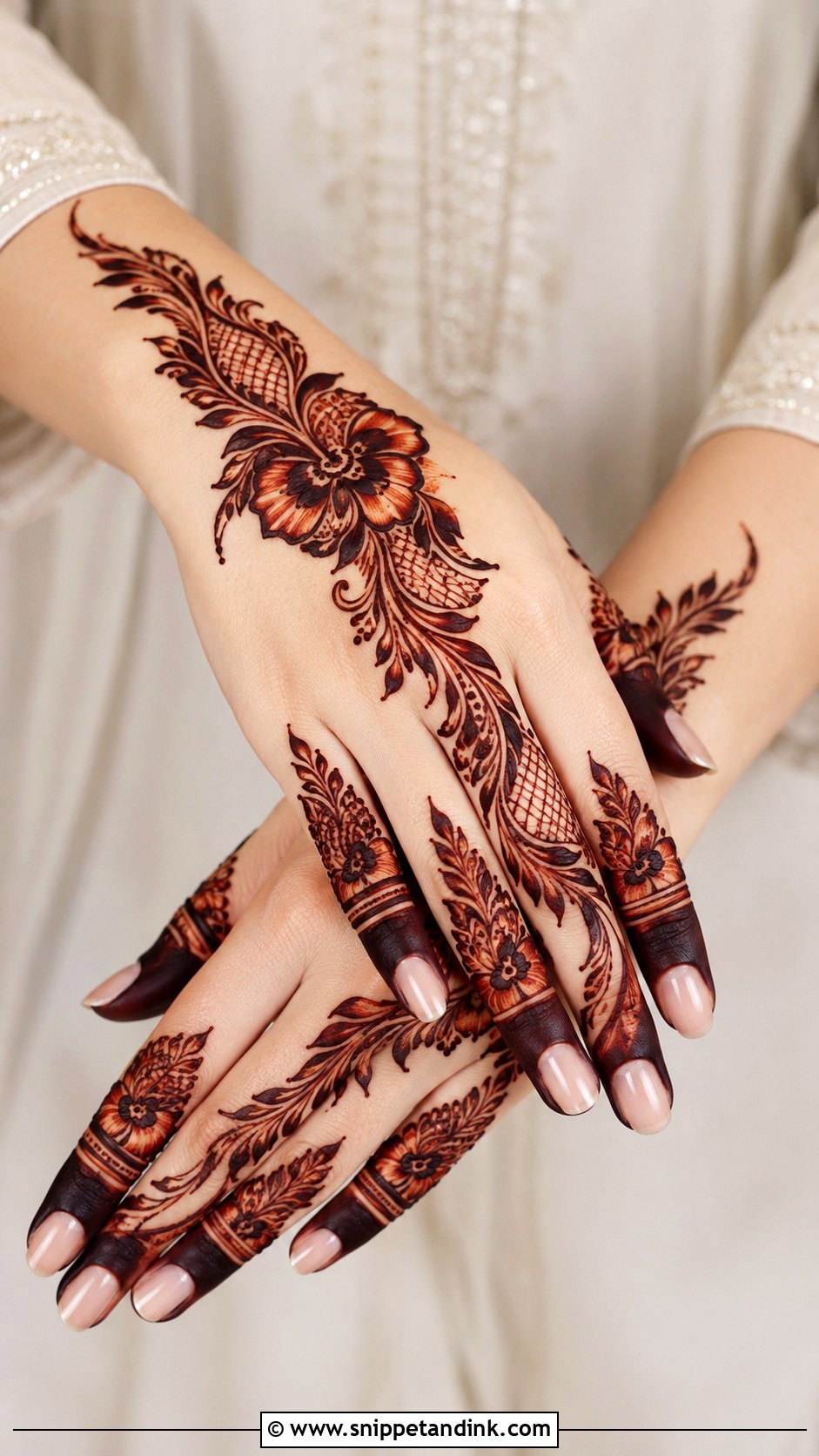
Bold florals, flowing vines, shaded leaves and open negative space make up Khaleeji-inspired finger henna. Fingers get heavy tips, floral clusters and fine mesh while the back hand stays partly open. It gives a rich stain without dense Indian filling. Placed diagonally, the motifs suit long and short fingers alike. I make one or two fingers more detailed and let the others carry lighter leaf strokes.
19. Jewelry Finger Mehndi Design
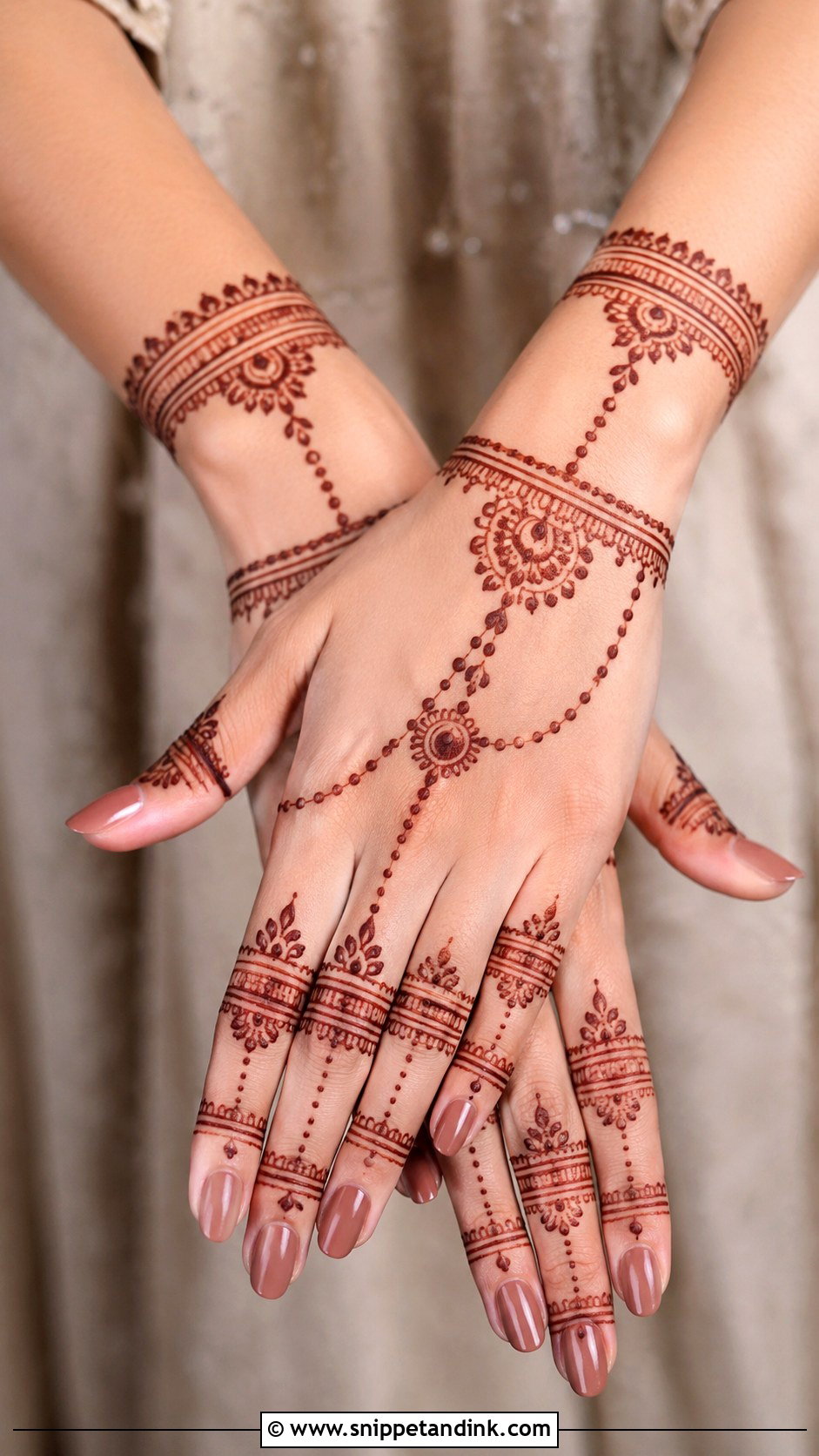
Ring bands, chain lines, wrist bracelet details and small pendant shapes make the hand look adorned before any jewelry goes on. The usual version starts with a ring on one finger and runs dotted strings toward the wrist, with a tiny flower or mandala as a pendant. It leaves room for real rings and bangles. Thin, smooth chains keep the illusion delicate; a heavy chain looks drawn rather than worn.

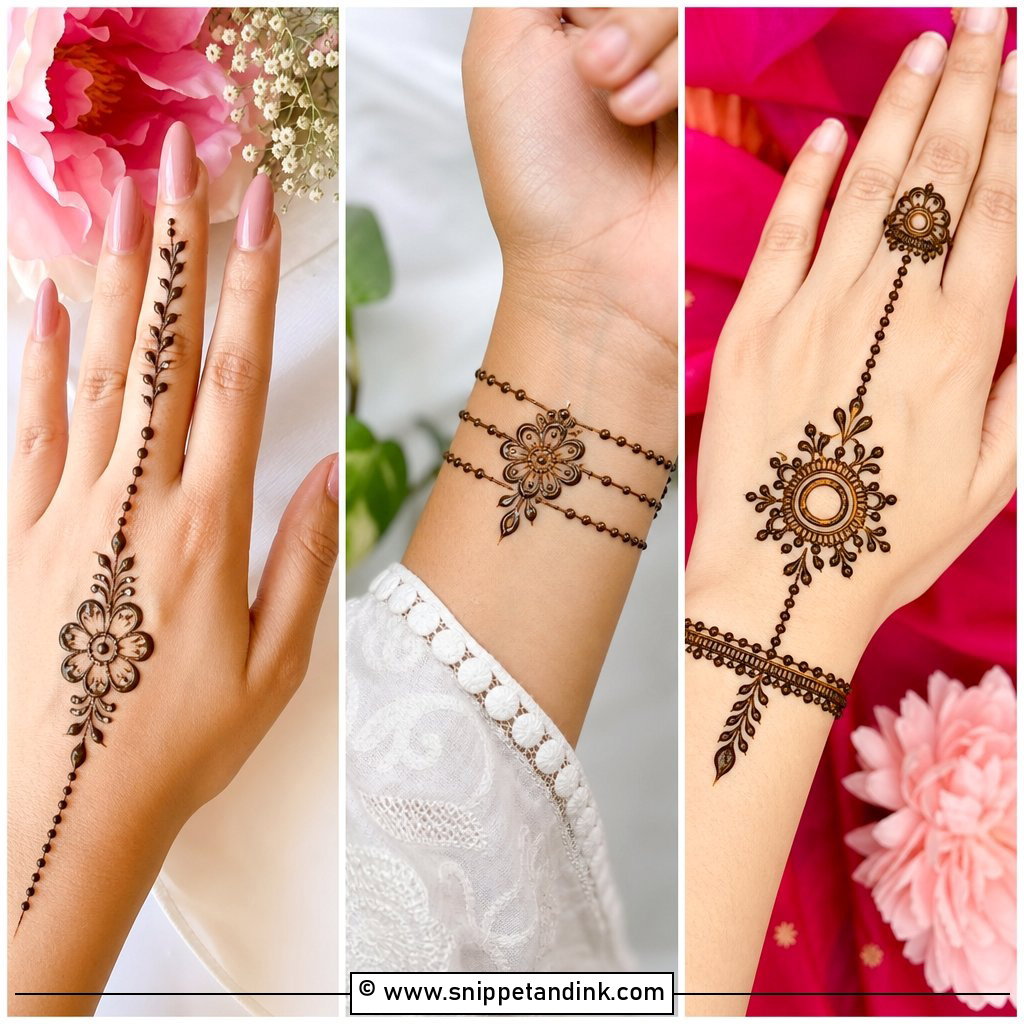
20. Negative Space Finger Mehndi Design
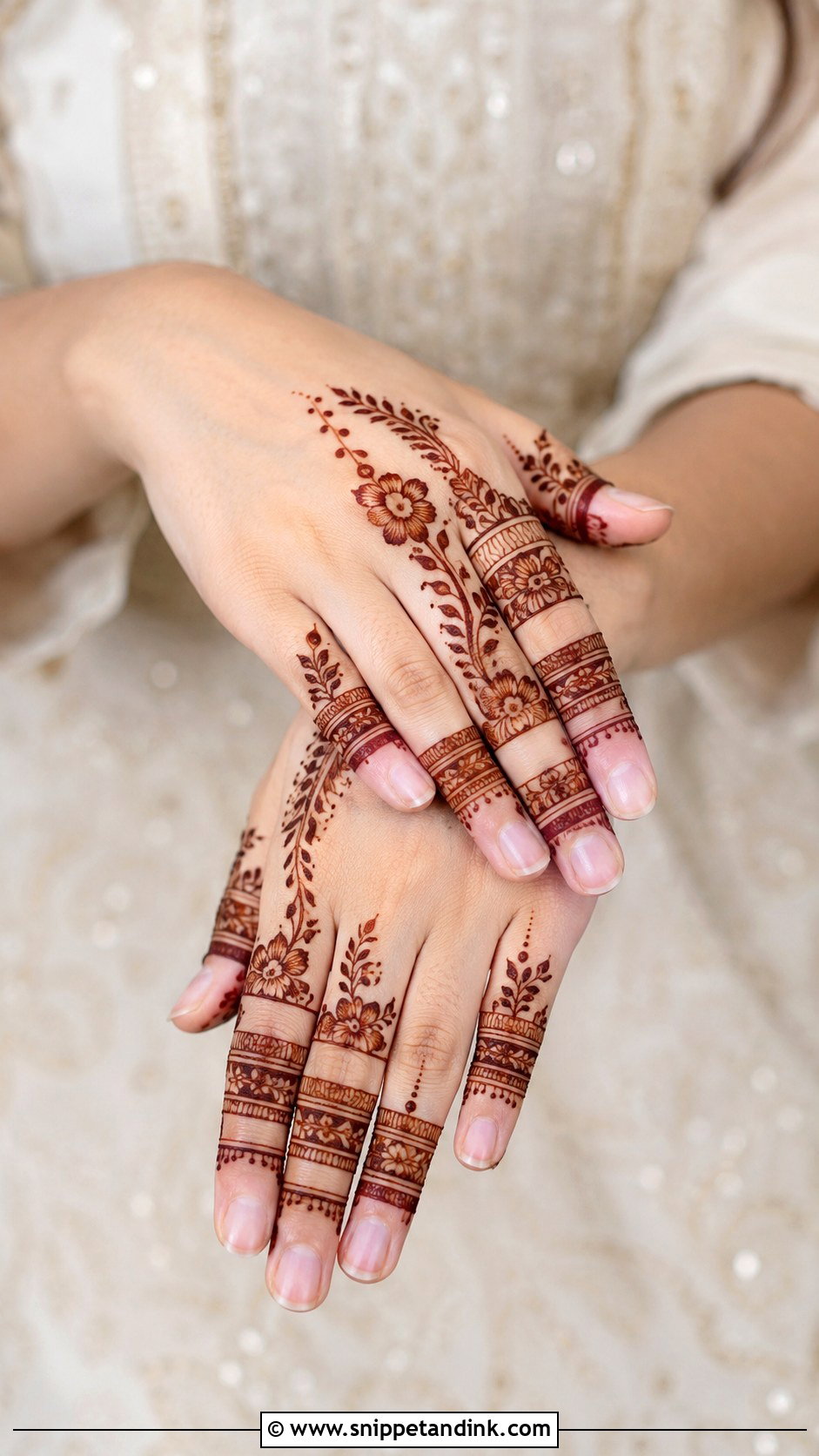
Empty skin becomes part of the pattern: alternating filled and blank sections, bands, clean borders and a few chosen motifs. It looks detailed but breathable and photographs sharply because gaps separate the lines. Florals, leaves, grids or geometry all work. Plan the empty areas before you start; random gaps look unfinished, planned ones look deliberate.
21. Shaded Finger Mehndi Design
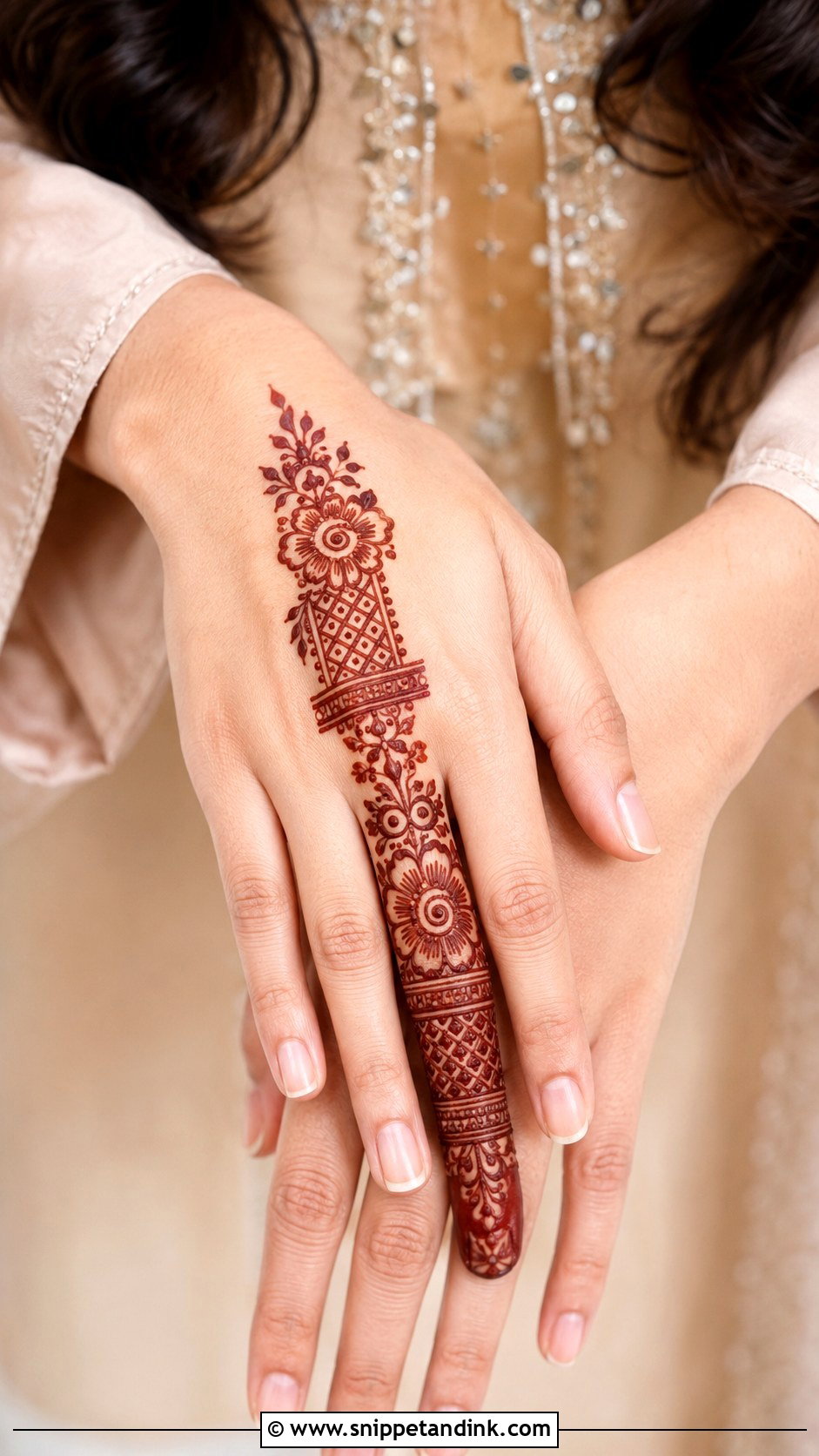
Lighter strokes inside petals, leaves and bands give depth: shaded flowers at the base, soft leafy trails along the sides and dark filled tips for contrast. It is common in Arabic and Indo-Arabic work because it fills space without tiny lines. Broad fingers carry shading well. The skill is in pressure; I ease off the cone to thin the paste for shading and keep the outline bold so nothing blurs as the stain develops.
22. Dotted Finger Mehndi Design
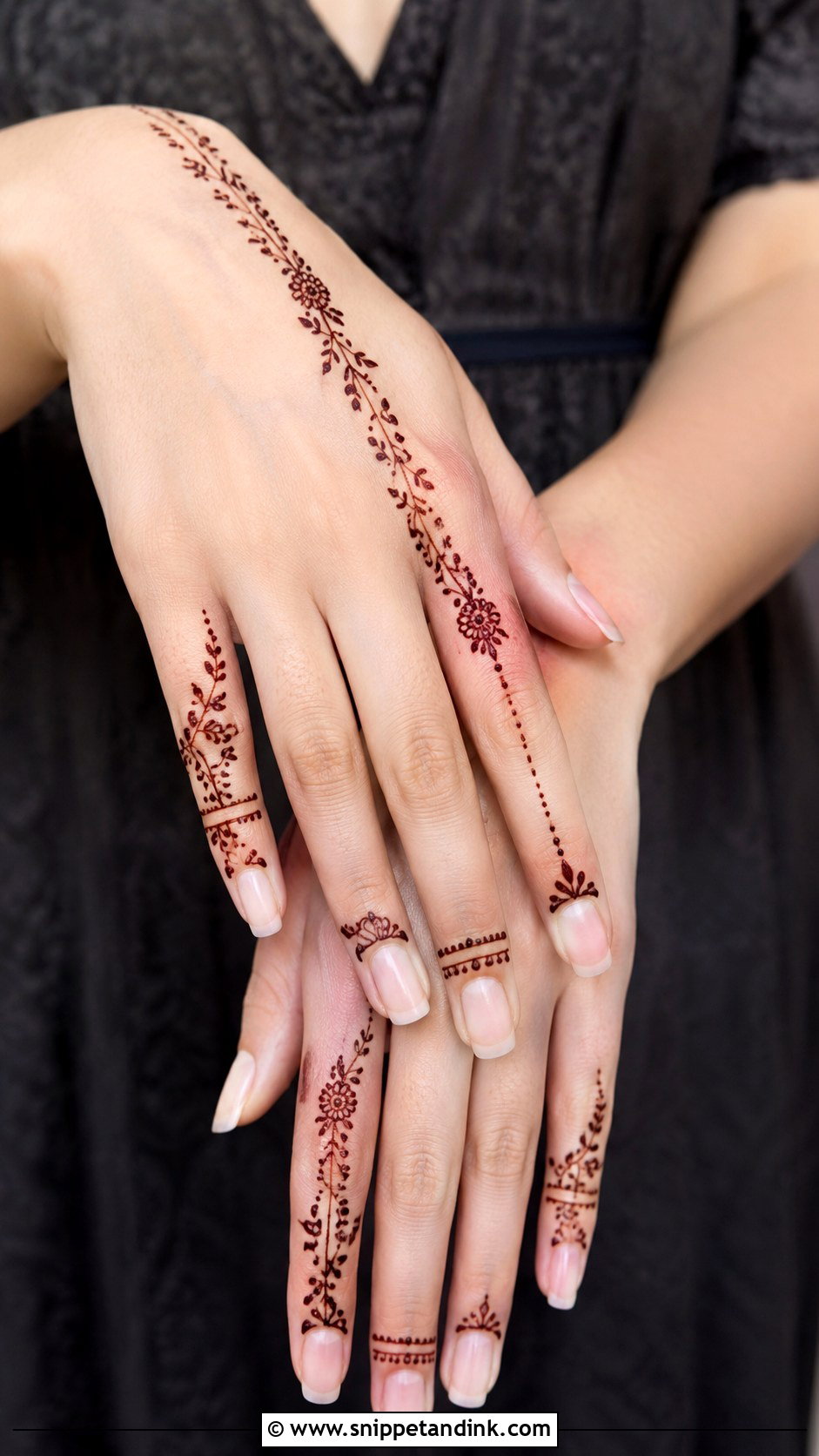
Dots can be chains, borders, rings, flower centres or fillers. A full dotted finger runs rows from knuckles to tips with slim bands and small leaves. It is easy for beginners and good for kids and teens. Vary dot size slightly, larger at the centre and smaller along trails. Dots placed too close will merge, so I leave a gap about the size of the dot itself.
23. Bracelet Finger Mehndi Design
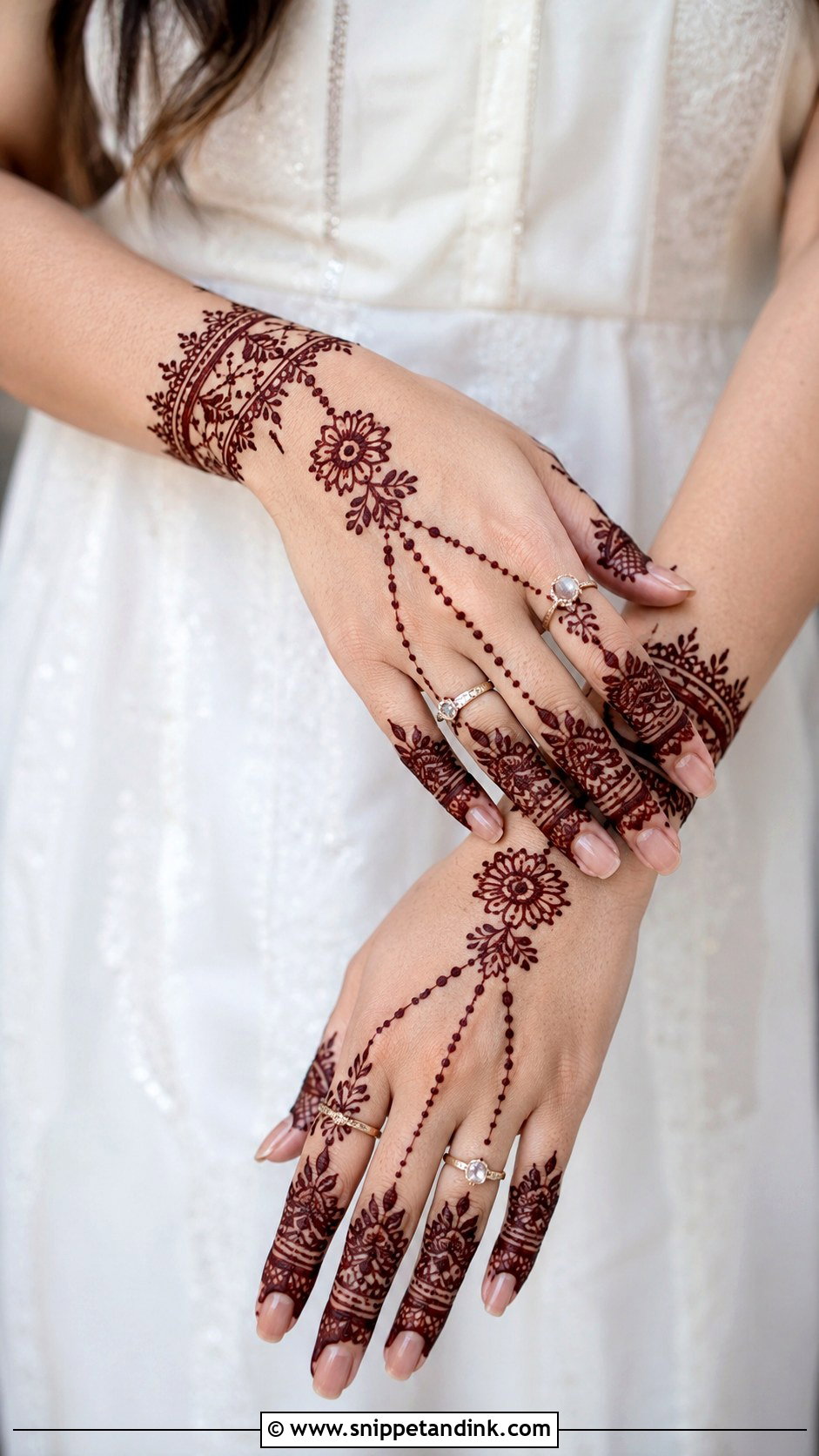
Ring shapes on the fingers linked by chains to a bracelet around the wrist give a haathphool effect, with the back hand lightly decorated by dotted strings, small flowers or a mandala pendant. It suits engagement ceremonies, wedding guests and festive outfits. Thin chains keep it minimal; jaali and paisley make it heavier. Alignment matters most: the chain should run straight from finger to wrist so the hand looks long.
24. Lace Finger Mehndi Design
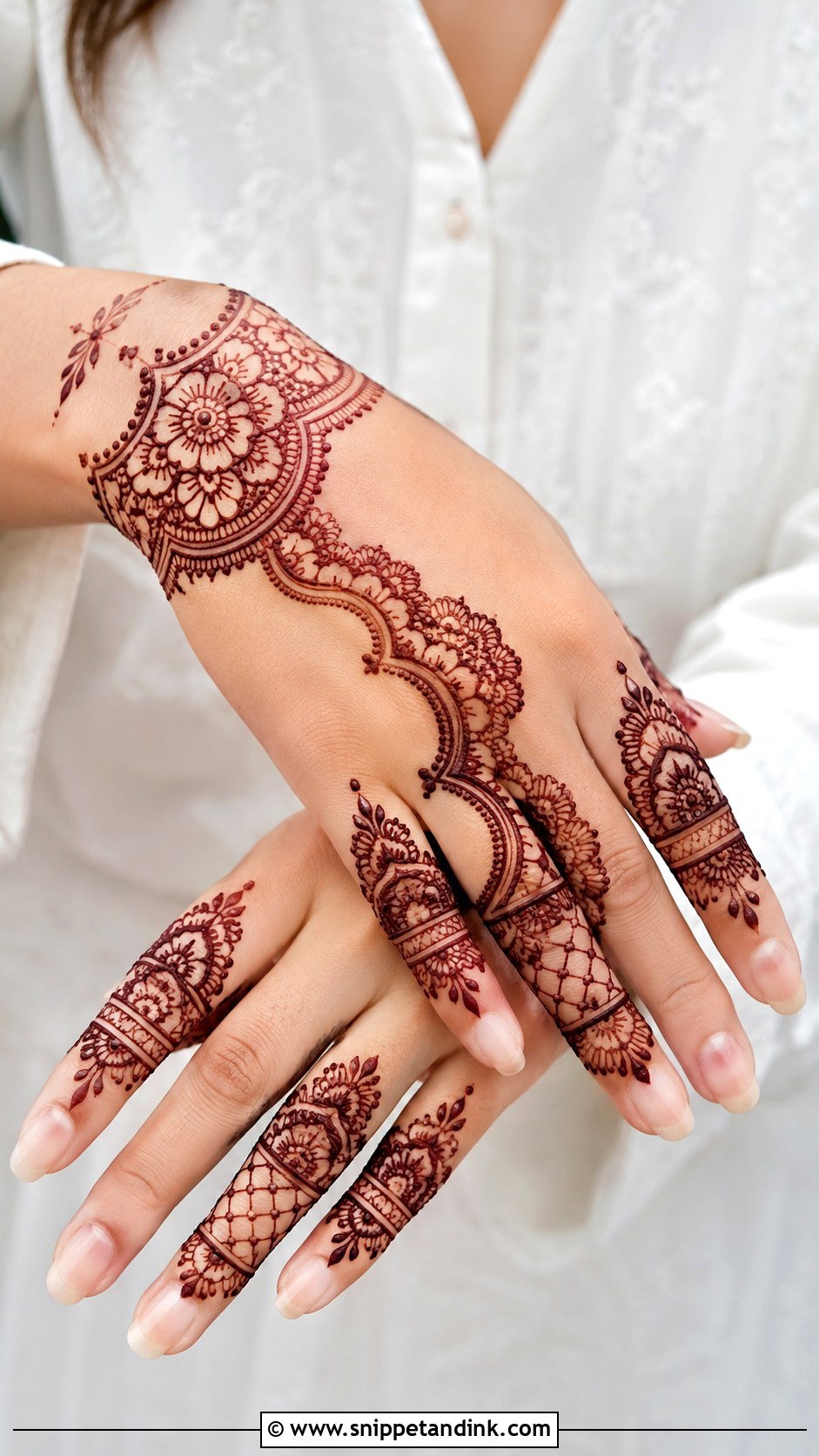
Scalloped edges, fine mesh, small dots, half flowers and layered borders create the look of lace gloves. It reads best on the back of the hand with open skin around the centre. Detailed but not heavy with traditional motifs, so it suits bridesmaids and engagement parties. Keep lace sections thin and consistent. Filled tips make it classic; open tips make it softer.
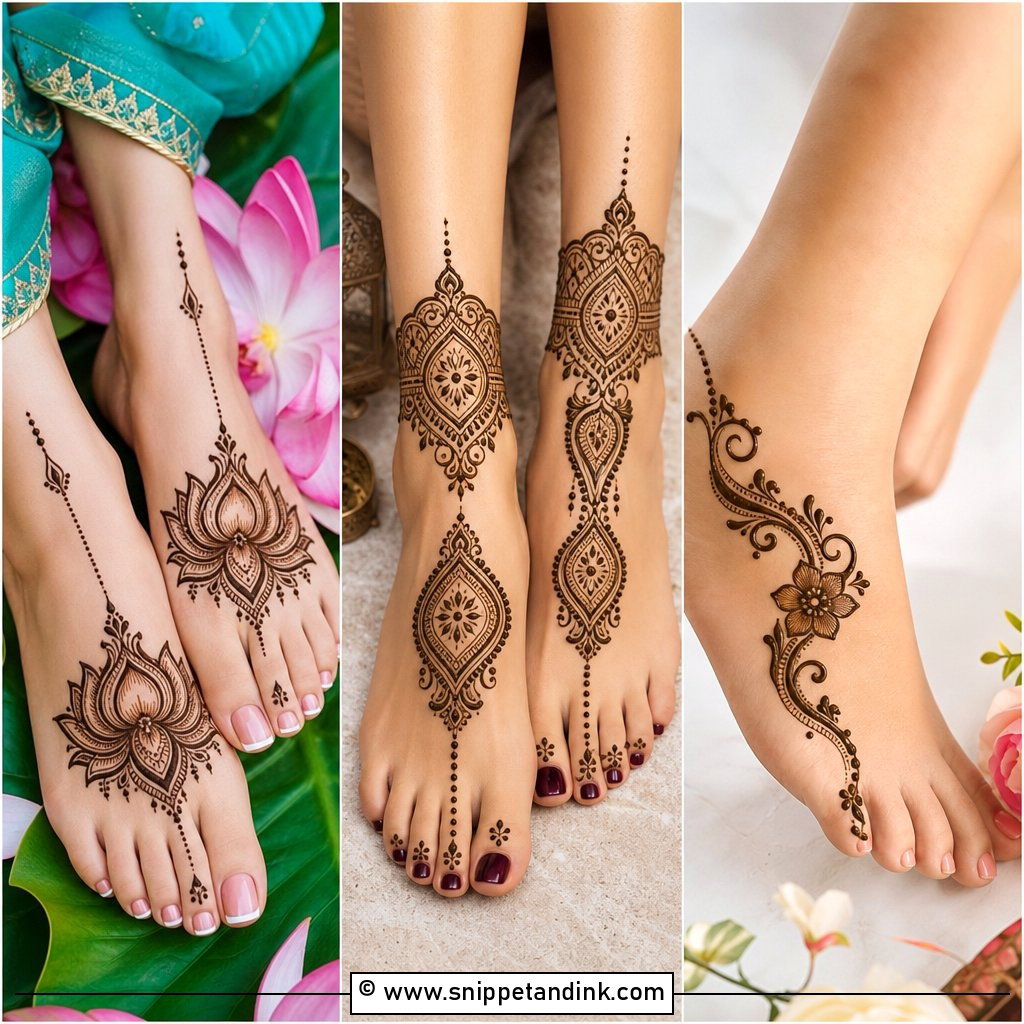
25. Finger Tip Mehndi Design
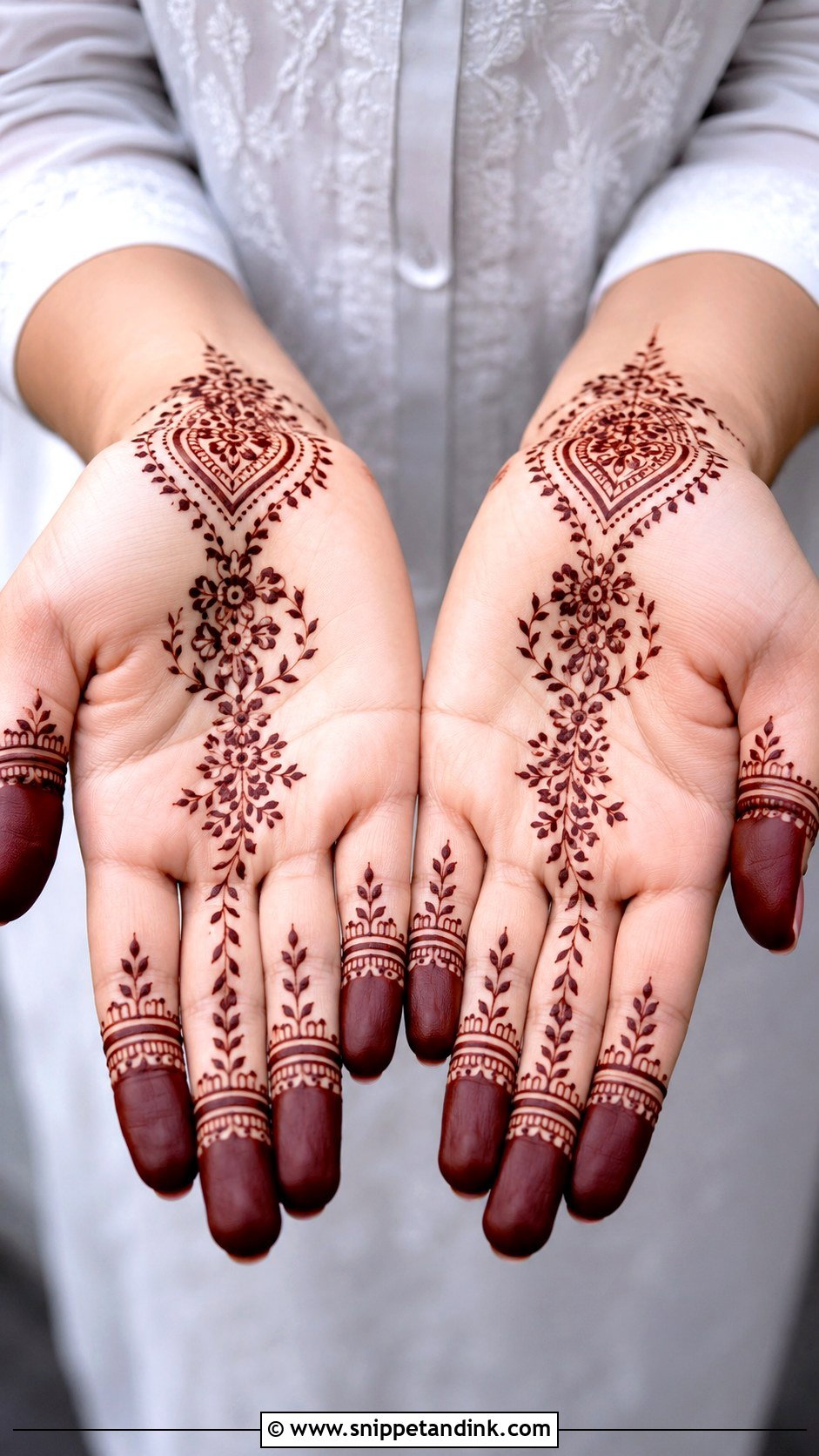
Filling, half-filling or capping the fingertips with arches gives a bold finish for very little time. Traditional designs use dark tips because the skin there stains deepest and frames the whole hand. For a modern touch, add dots, slim borders and small leaves below the tips. It goes with palm mandalas, simple back-hand patterns or bare hands. Uneven caps look messy, so I check all five side by side before moving on.
26. Side Finger Mehndi Design
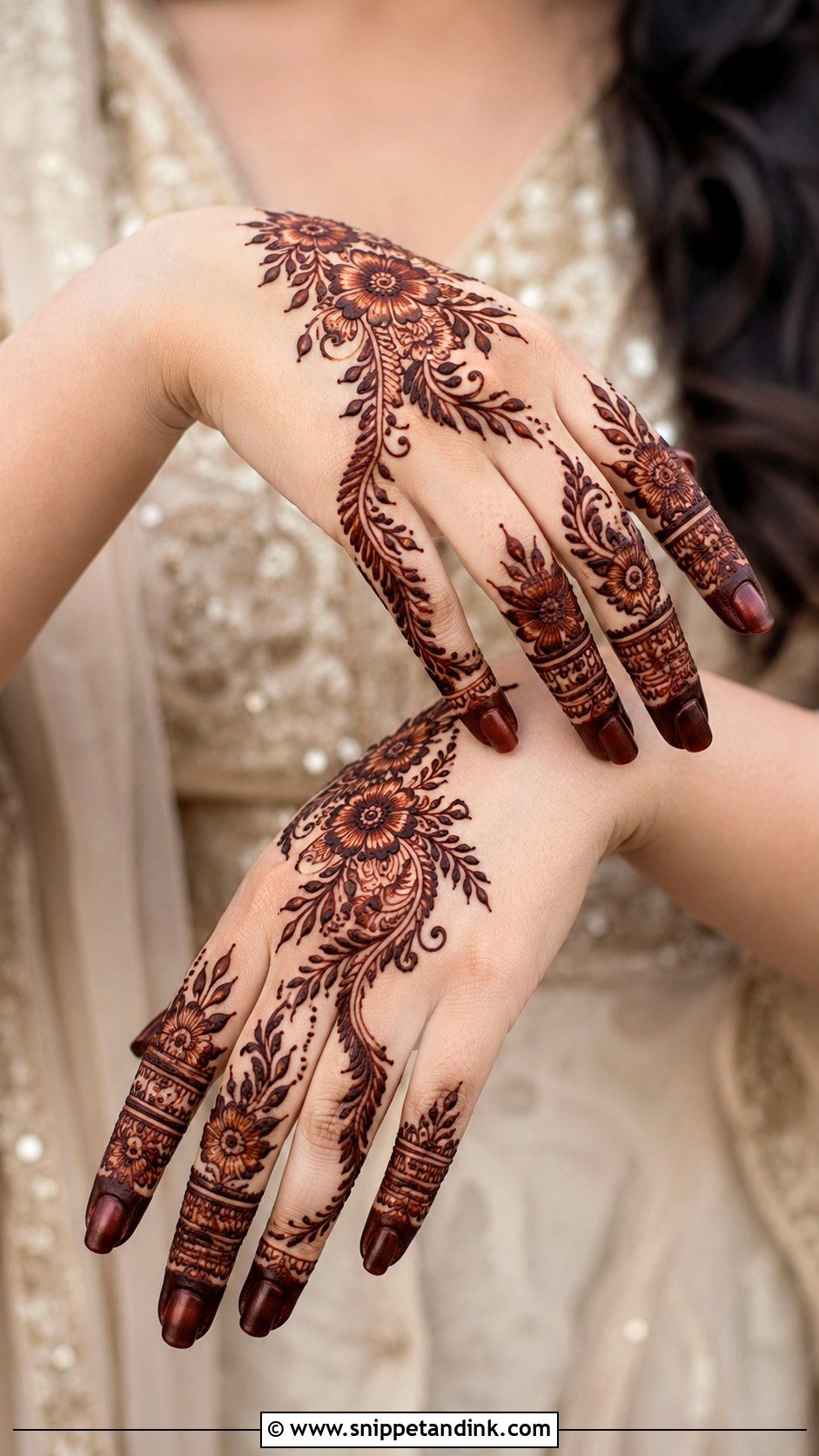
Vines, tiny leaves, dots, chain lines or narrow floral trails along the outer edge of each finger make a slim, unusual look and visually lengthen the fingers while the hand stays open. It goes well with rings. Decorate one side of every finger or alternate sides. Fine lines are essential; the side of a finger is narrow, and thick lines spread around onto the front.
27. One Finger Mehndi Design
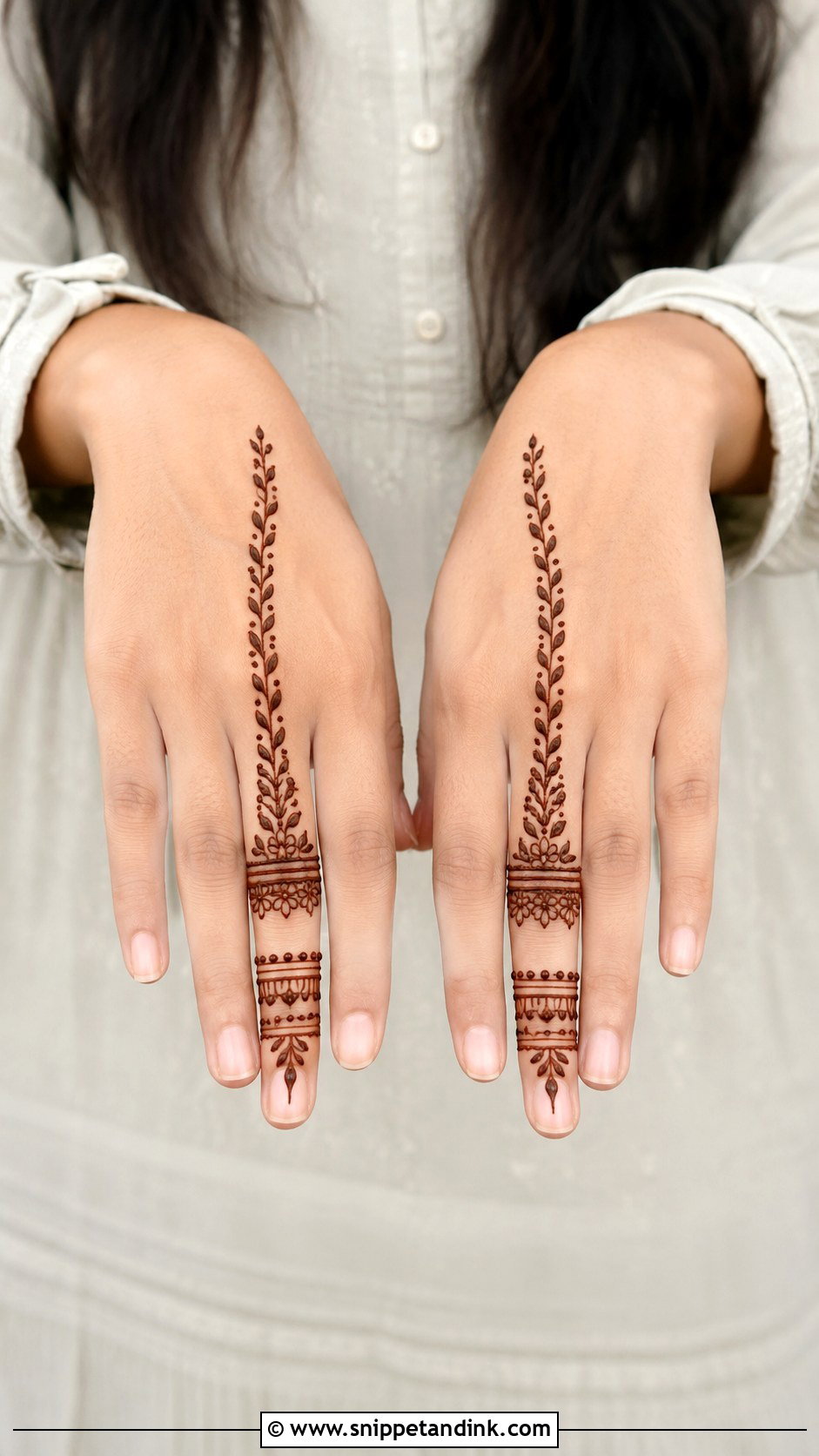
All the attention goes on one finger, usually the index or ring finger, covered in florals, bands, jaali, paisley or geometry, while the rest of the hand stays clean. You can let it spill a little onto the back hand or palm. It sits nicely with rings and nail art. Pick a bold motif for that finger; a timid pattern on a single finger just looks like the artist stopped early.
28. Two Finger Mehndi Design
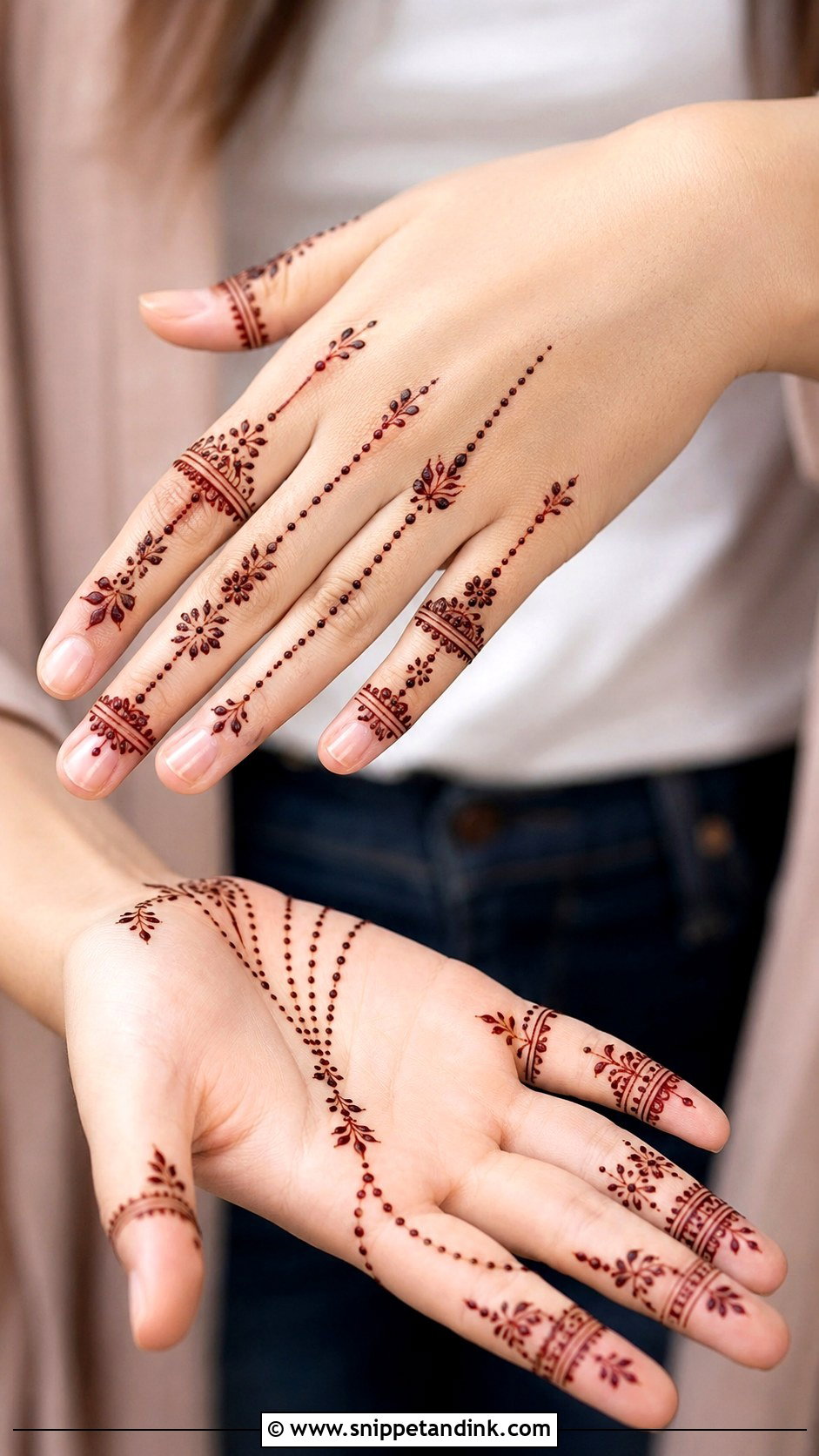
Two fingers, usually index and middle or ring and little, decorated together with matching vines, ring bands, floral strips or geometric panels. Join them at the base with a curved border or leave them separate for a cleaner look. It suits open, modern layouts and casual weddings. Same theme on both fingers, with small variations in dots or leaf direction, keeps it balanced without looking copied.
29. Five Finger Mehndi Design
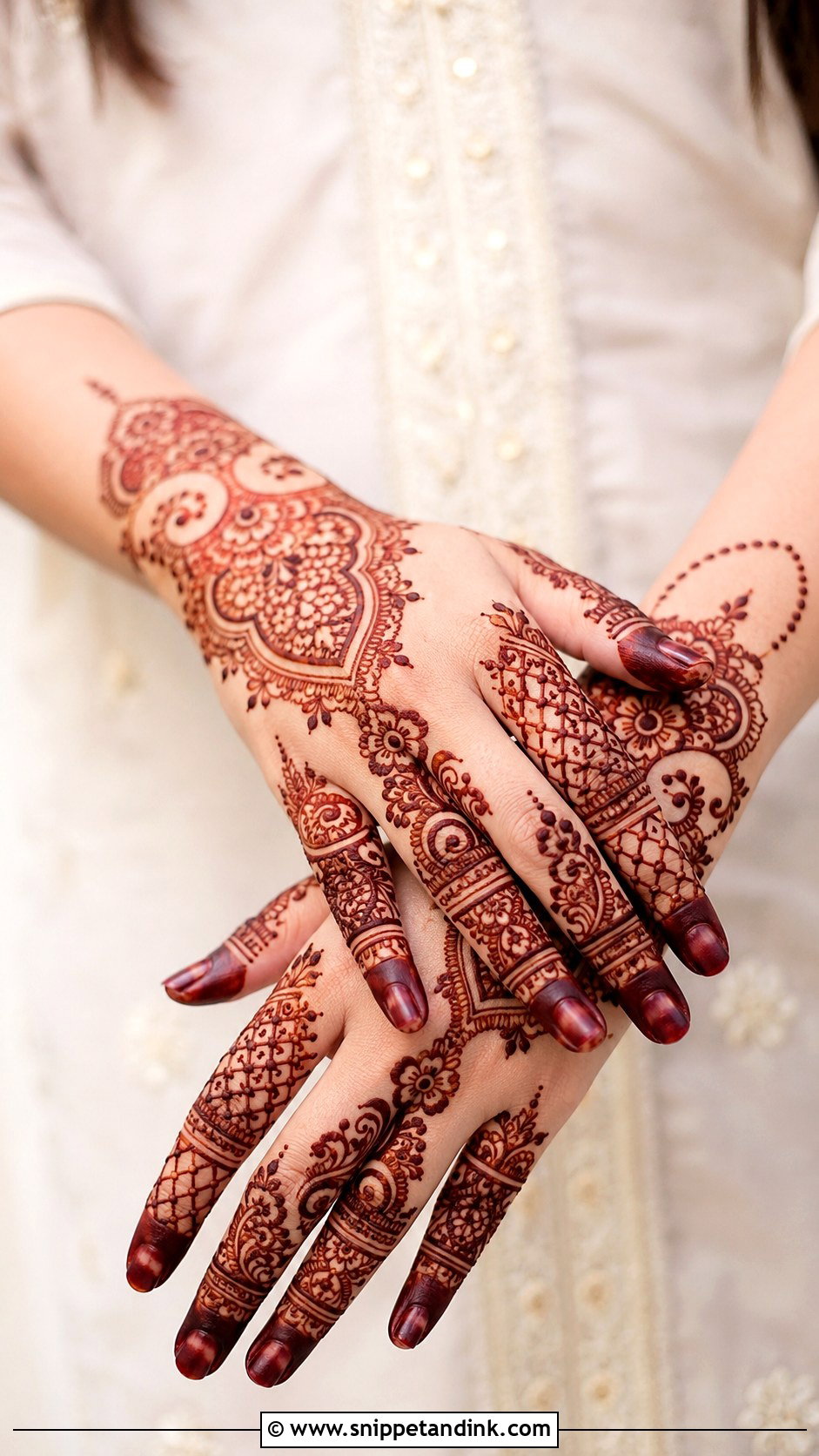
Every finger gets a pattern while the palm or back hand stays lighter, and each can differ, jaali on one, florals on another, paisley, dotted bands. One shared detail, thin borders or filled tips, holds it together. It looks complete without a full layout, for Eid, Diwali, weddings and family events. The base of the fingers is where it all meets, so I finish that line very neatly.
30. Kids Finger Mehndi Design
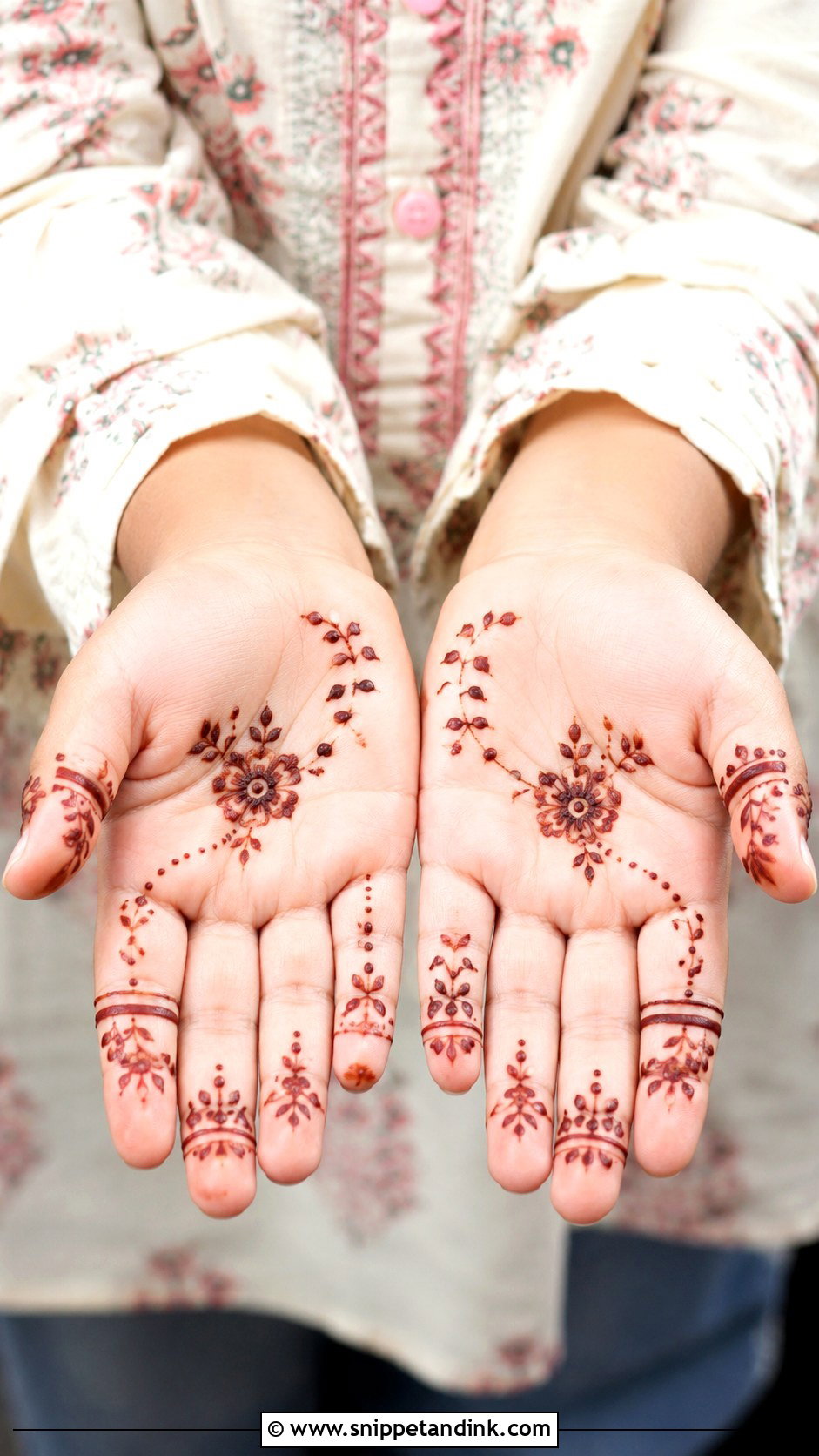
Children rarely sit still, so keep it to dots, tiny flowers, small leaves, smile-shaped curves and easy bands, maybe only on fingertips and knuckles. Light designs dry fast and survive fidgeting. Use natural henna only, and keep glitter and coloured cones away from very young skin. A neat, playful result is plenty for school celebrations, Eid and family weddings.
31. Eid Finger Mehndi Design
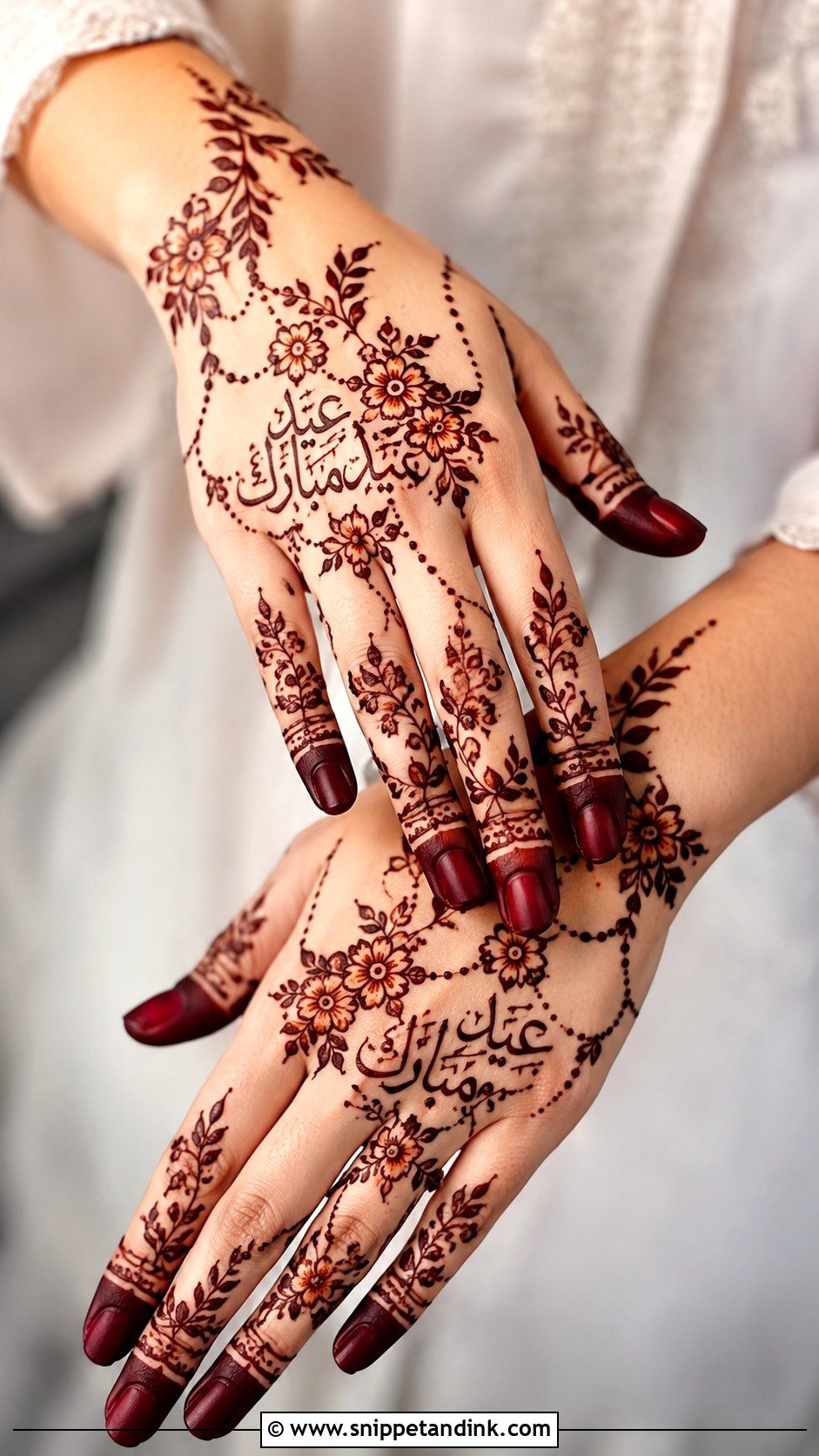
Eid fingers lean Arabic: floral vines, shaded leaves and open space that look graceful beside bangles and rings. All five fingers can carry different bands joined to a small back-hand trail, or keep it simple with filled tips, dotted chains and slim floral lines. Since most Eid henna goes on the night before, choose something that dries quickly so you can sleep with the paste on.
32. Diwali Finger Mehndi Design
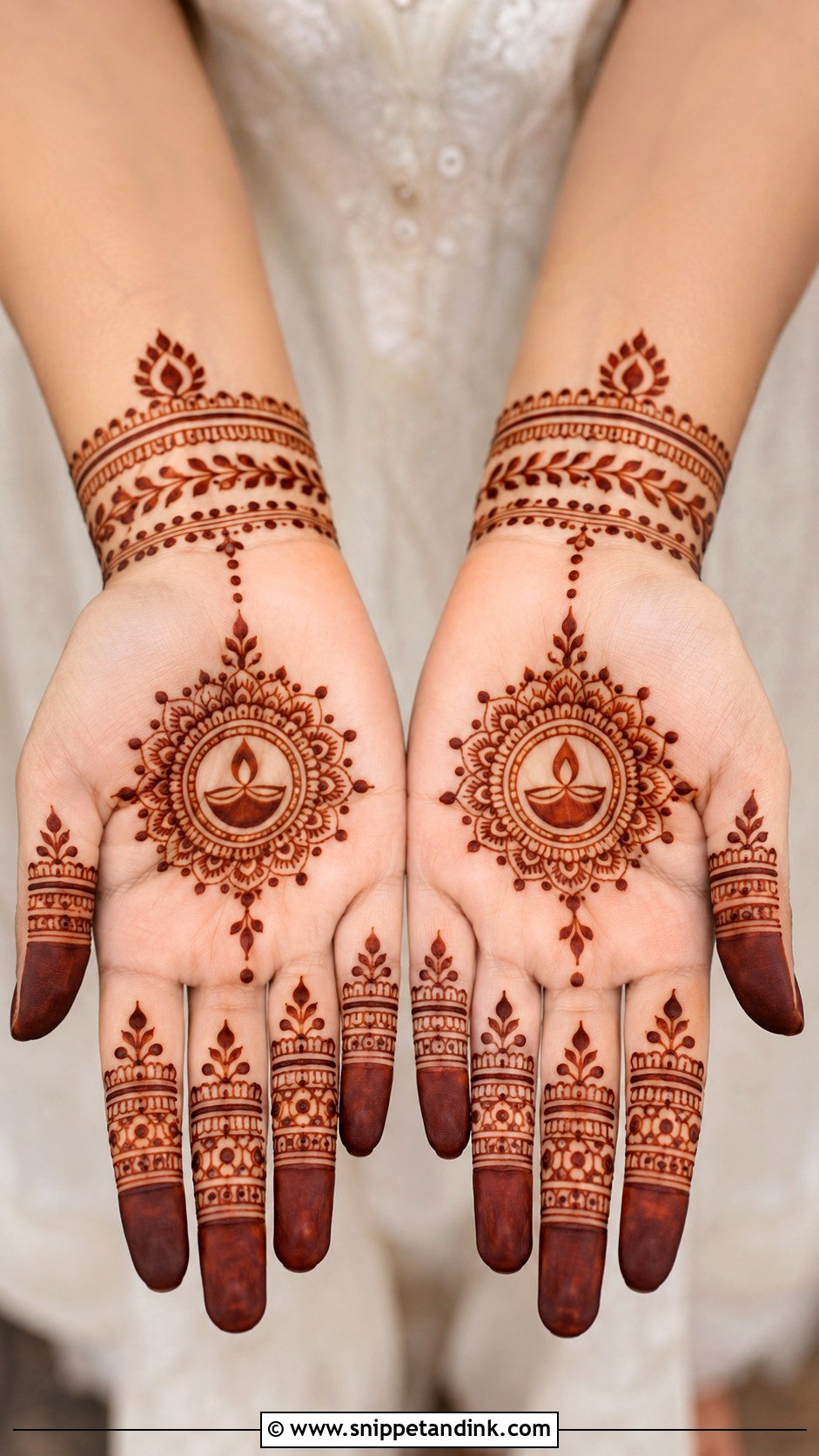
Small mandalas, diya curves, dots, leafy borders and filled tips suit Diwali. A palm-side design with a small centre motif and detailed fingers, or a back-hand layout with jewelry chains, both work. If you are short on time before the celebrations, detail the fingers and leave the palm mostly open. Keep it symmetrical, as hands are on show during greetings and gift-giving, and give the paste time to dry before you start lighting diyas.
33. Wedding Guest Finger Mehndi Design
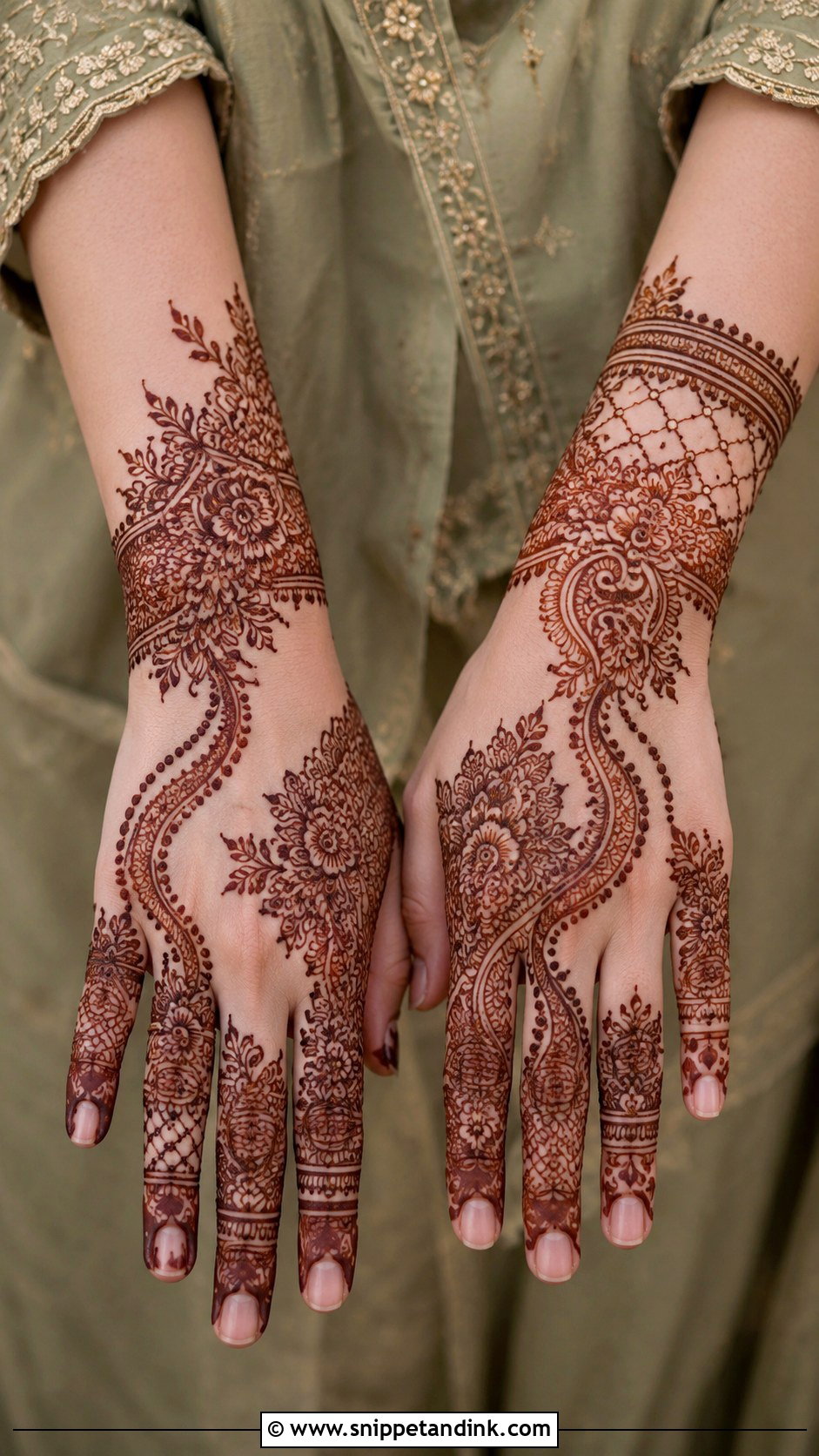
As a guest, aim for festive but clearly lighter than the bride: decorated fingers, a small back-hand motif and some wrist detail, in Arabic flowers, thin jaali, paisley chains or jewelry bands. It gives enough for photos without hours in the chair at a mehndi night or sangeet. Heavily embellished outfit? Choose cleaner fingers with open space. Simple outfit? Go richer. Many families also expect the bride’s henna to be the most elaborate, so I keep guest designs a step back.
34. Engagement Finger Mehndi Design
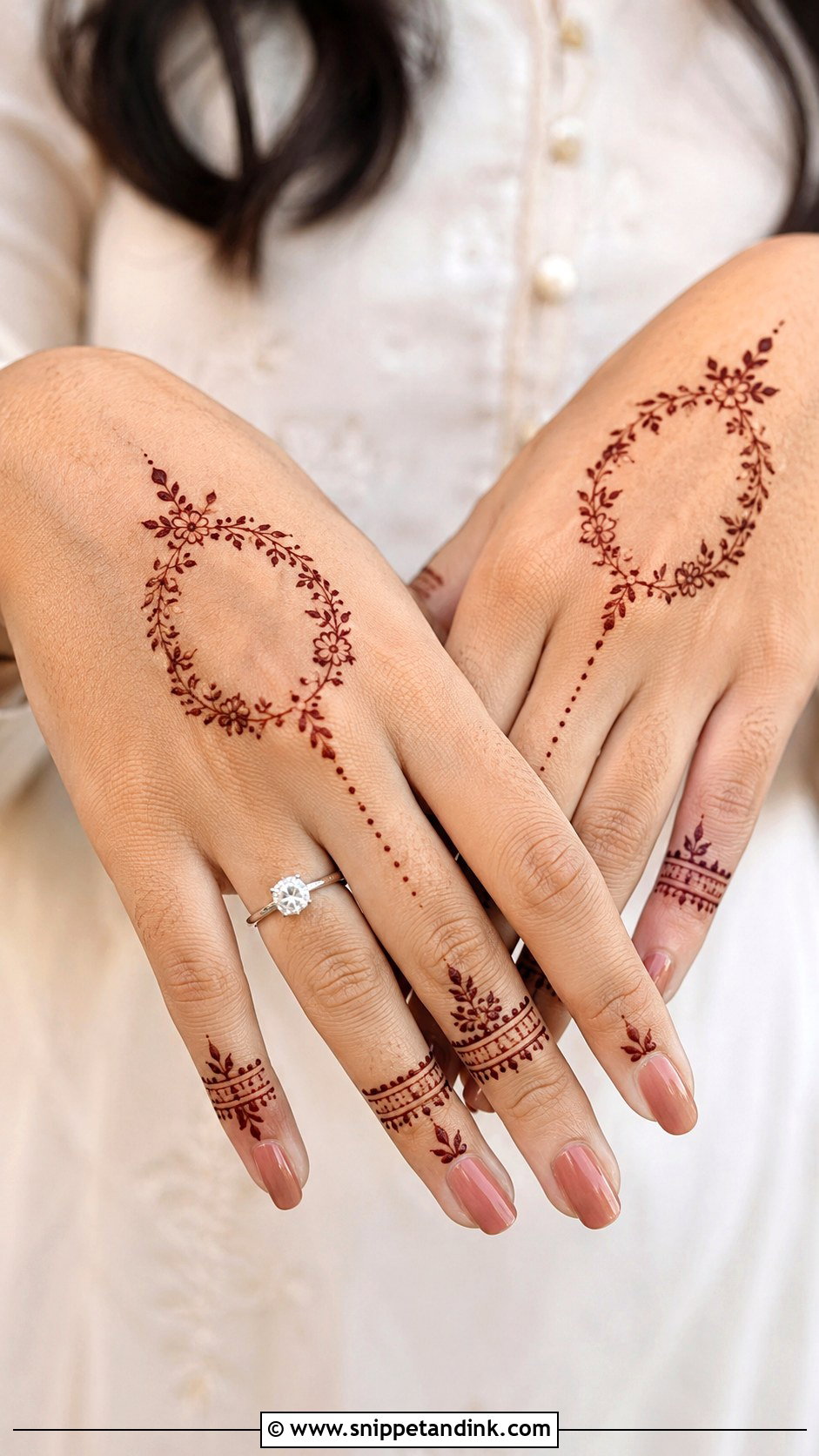
For an engagement, the ring finger leads. Give it a delicate band, a small floral frame or a dotted chain, but keep bare skin where the actual ring will sit, so the metal is not lost against dark henna. Other fingers stay lighter with slim lines, leaves and knuckle bands. A chain from the ring finger to a small back-hand pendant adds a soft haathphool effect. Dense filling near the ring is the one thing I avoid.
35. Unique Finger Mehndi Design
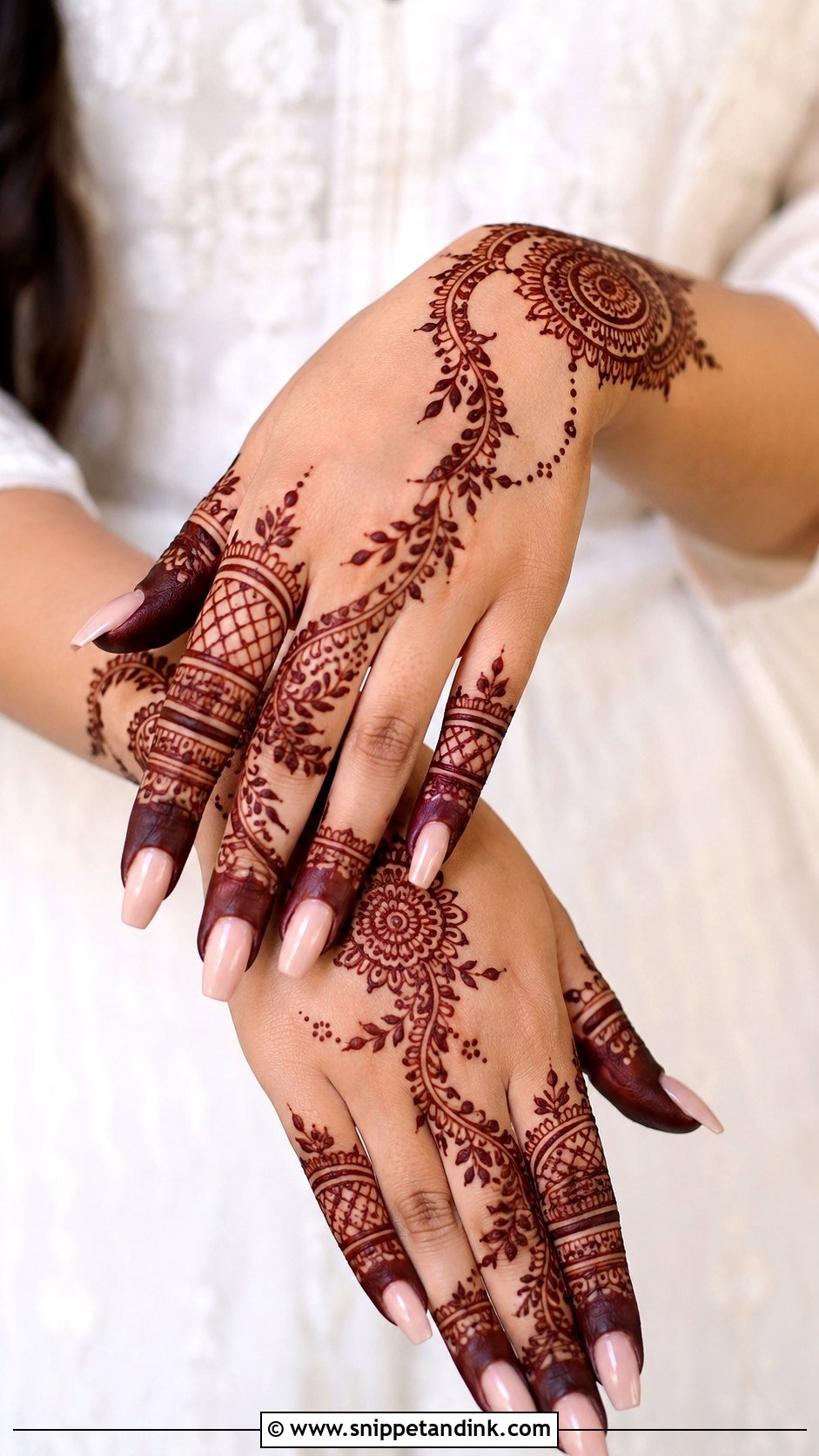
For something different, combine asymmetric placement, negative space, fine geometric bands, tiny mandalas, side vines and statement tips. Three heavily decorated fingers beside two almost bare ones looks fresh; so does a different motif per finger with repeated dots or borders tying them together. Creative bridesmaids and party-goers enjoy it. It still needs one clear theme, or the hand turns into a sampler.
Nails, Rings and Henna: Getting the Order Right
Finger designs sit right next to your nails and your jewelry, so the sequence of your prep matters more than it would for a palm design.
- Do your manicure first. Henna stains bare nails and cuticles orange, and it can take weeks to grow out. A coat of polish acts as a barrier; if you want bare nails, I keep the paste a little away from the nail edge.
- Take all rings off before application and leave them off until the paste is scraped away. Paste trapped under a ring smears and leaves a blank band.
- Tell me where your rings will sit afterwards. I’ll leave that space open or frame it, so the jewelry doesn’t hide the best part of the design.
- After the paste comes off, wait several hours before soaking hands for a gel or acrylic appointment. Prolonged soaking and filing near the cuticle fade the fresh stain.
If henna does stain your nails, don’t scrub. Gentle buffing and time are the only things that fix it, so it’s easier to plan the order than to correct it.
Ten Small Canvases, One Steady Hand
A lot of variety fits onto ten fingers: simple, bridal, modern, Arabic, floral, geometric, jewelry-inspired or fully traditional. Let your hand shape, outfit, comfort and the kind of celebration decide. For a light look, minimal dots, side vines or ring bands. For something festive, jaali, shaded florals, paisleys or full fingers. Whatever you choose, clean lines and even spacing are what keep finger henna looking sharp as the stain darkens.
You'll Like These Ideas:





Leave a Reply