
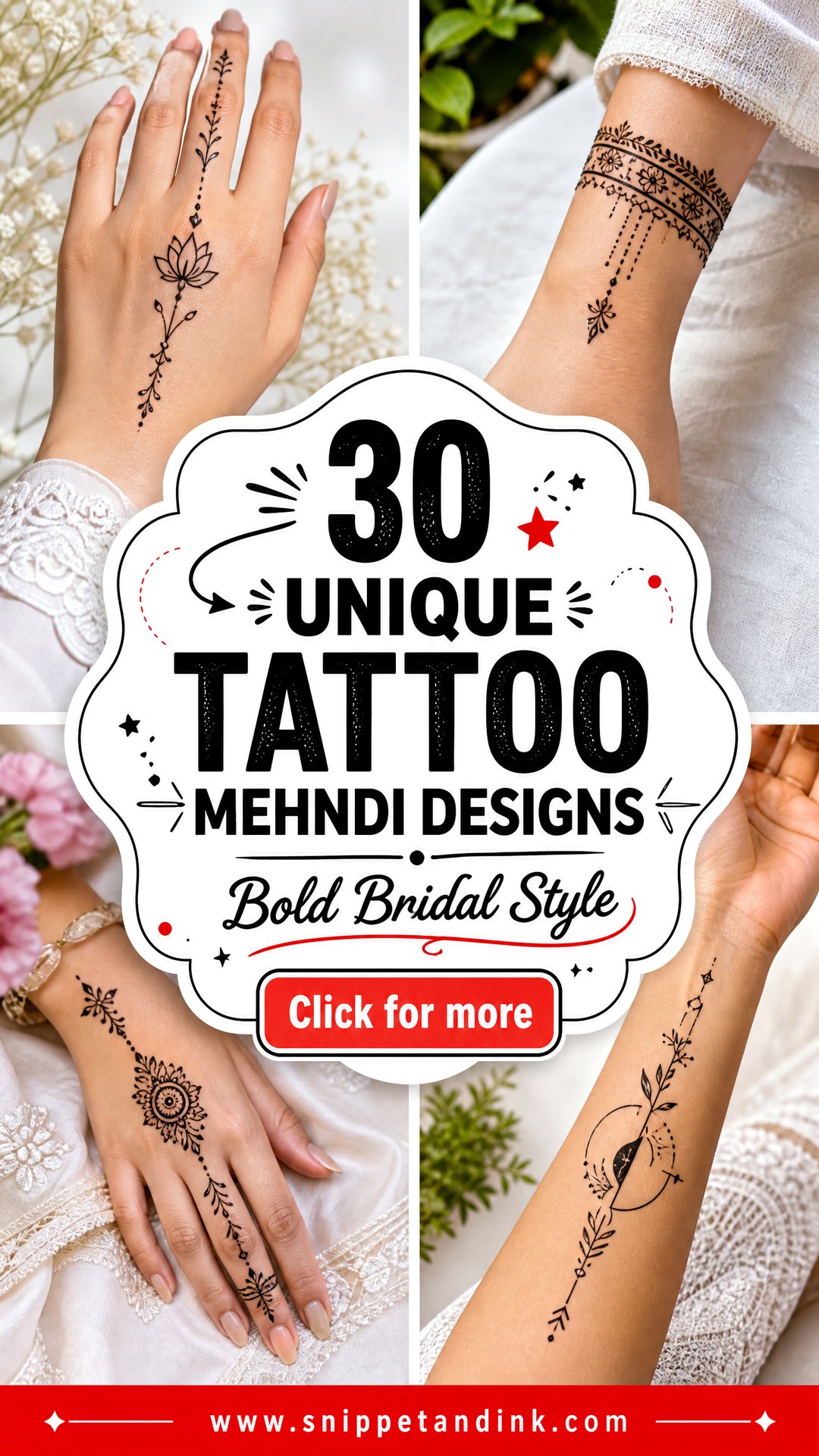
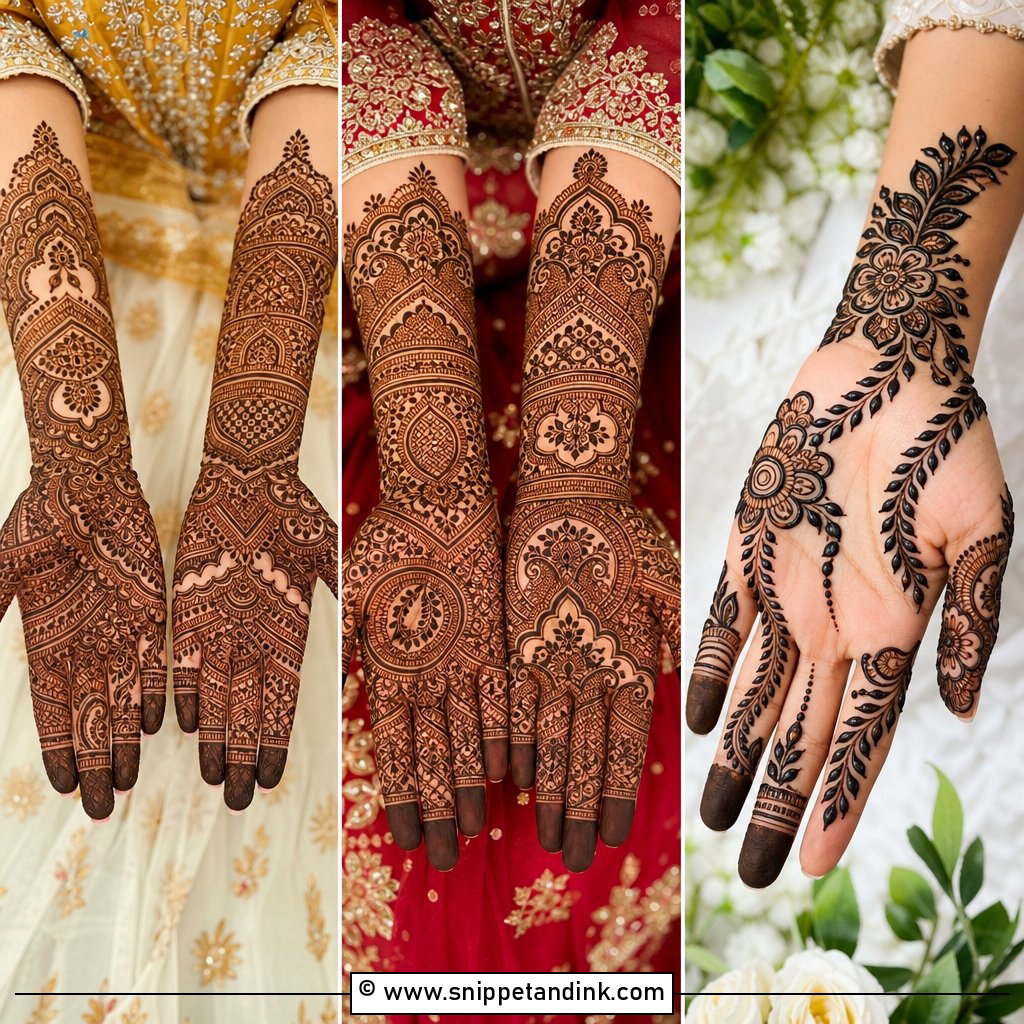
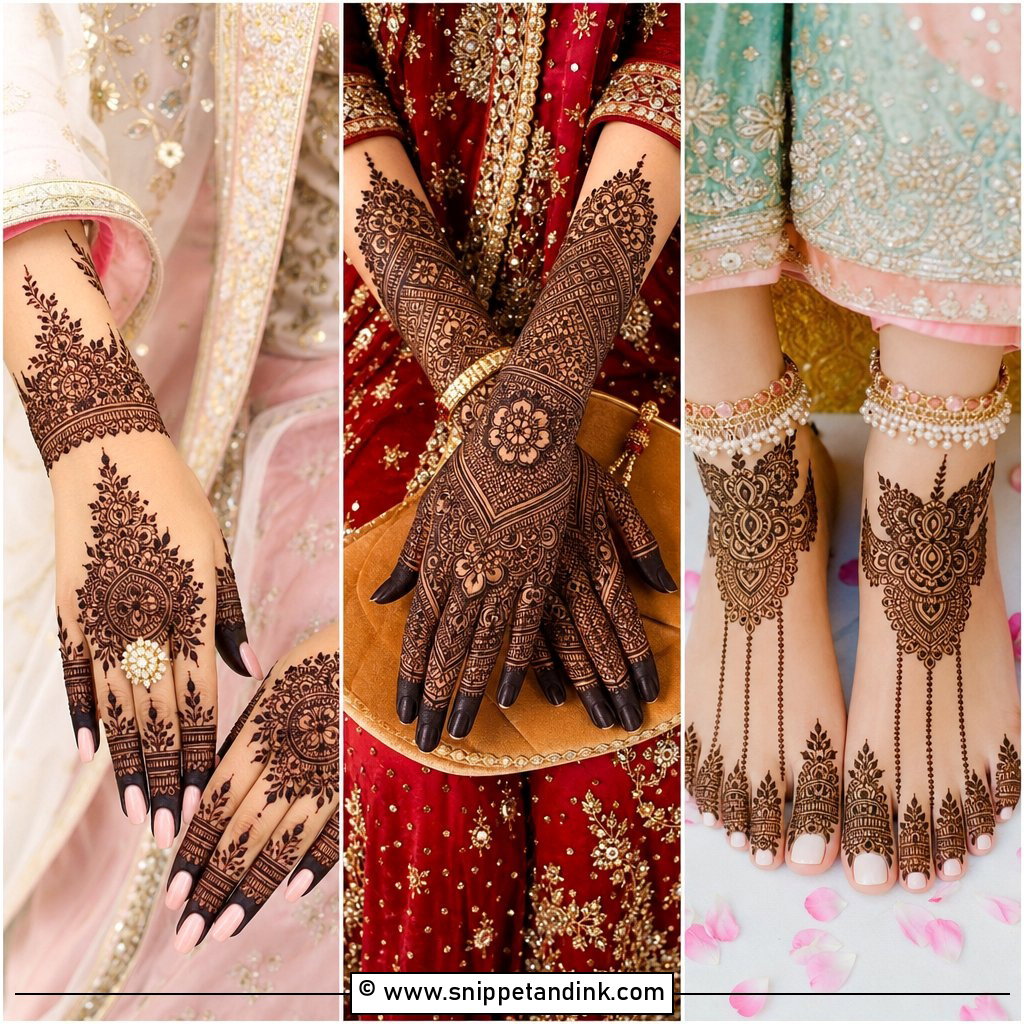
Tattoo-style henna borrows the placement and line style of body art and keeps the warmth and impermanence of mehndi. It uses far less coverage than a traditional full hand, yet a single well-placed motif can read stronger than a packed design because the eye has nowhere else to go. I draw it on the back of the hand, wrist, fingers, palm and forearm, and increasingly on ankles, shoulders and the nape of the neck. Some pieces are floral, others geometric, Arabic or shaped like jewelry. Here are thirty I’d draw for anything from a casual weekend to Eid, Diwali or a wedding, each with my notes on placement and what to watch for when the paste comes off.
Where Henna Stains Dark and Where It Stays Pale
Tattoo designs move henna off the palm and onto skin it doesn’t always love. The dye binds to the outer layer of skin, so the thicker that layer, the darker and longer-lasting the color. That single fact decides how I draw each placement.
- Palms and soles: the deepest stain, usually dark maroon. Fine detail survives here.
- Fingers and the back of the hand: a good mid-brown, a shade lighter than the palm. Fingertips fade first because they rub against everything.
- Wrist and forearm: warm orange-brown. Bold outlines read better than tight filler.
- Shoulder, neck and upper arm: the palest results, often a soft orange that fades within a week. I keep designs simple and outlines strong.
So if you’re set on a very fine, lacy piece, put it on the hand. If you want the forearm or shoulder, accept a bolder, simpler line and a lighter color. Either can look great, but expecting palm-dark color on a shoulder is how people end up disappointed.
1. Simple Tattoo Mehndi Design
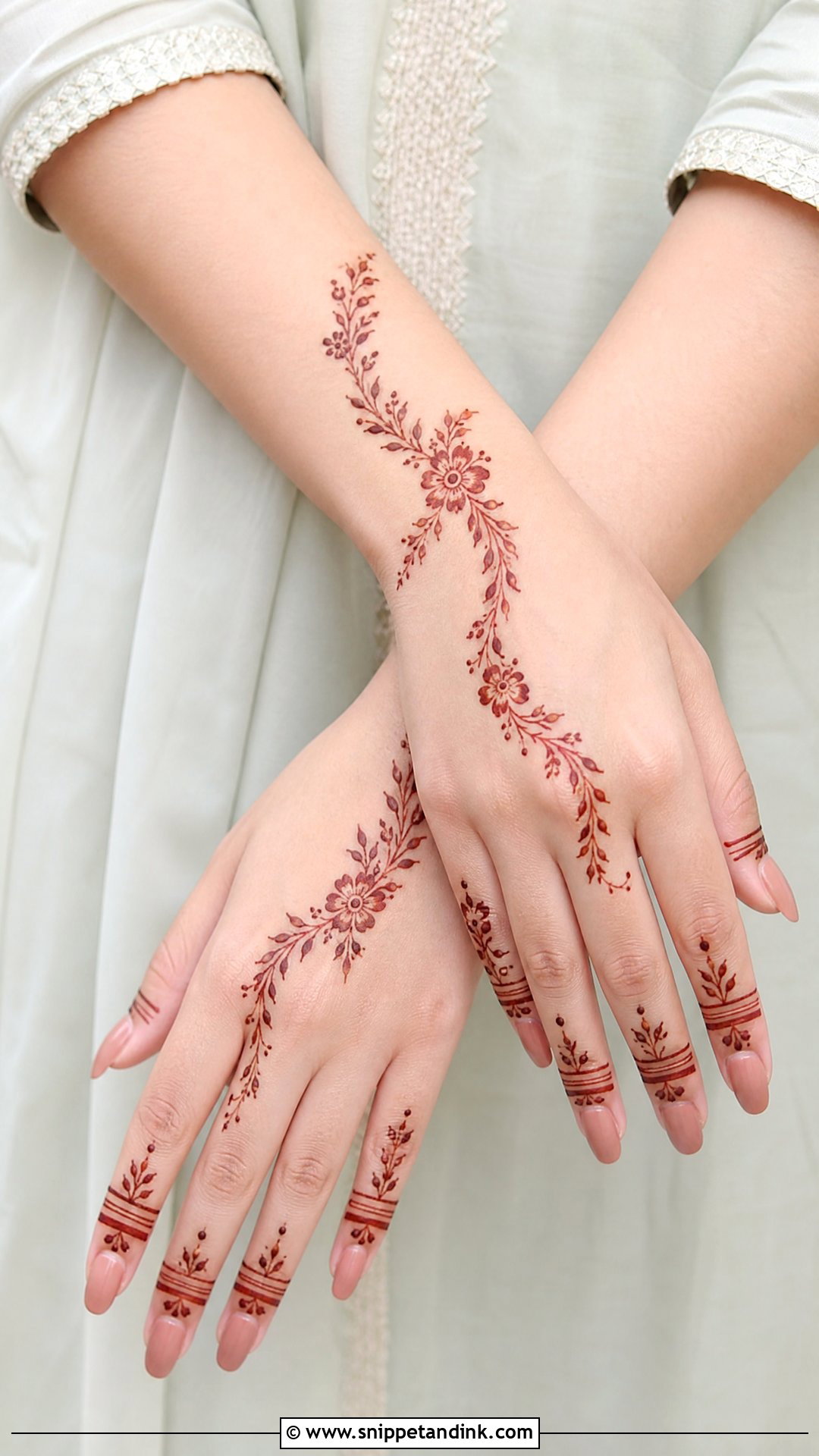
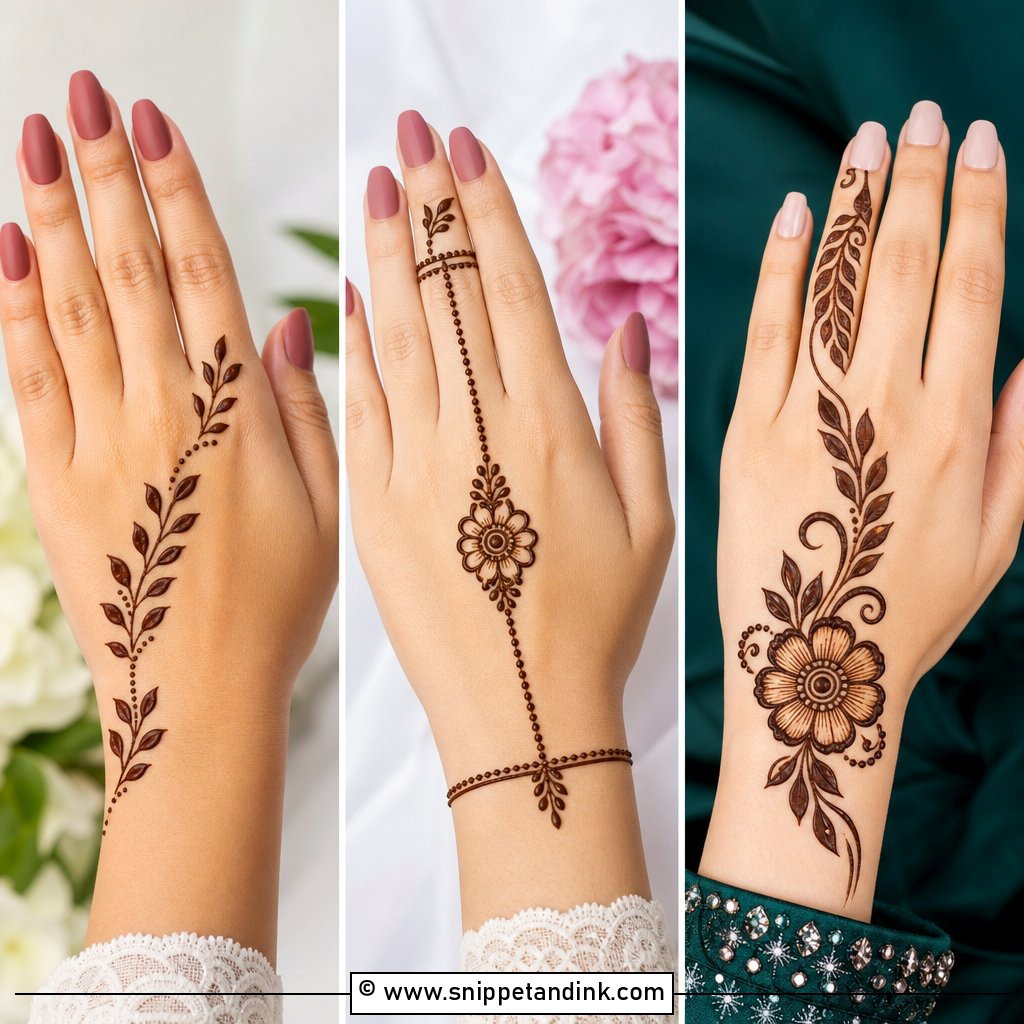
Clean spacing does most of the work in a simple tattoo design, not heavy filling. I usually place it on the back of the hand, the wrist or the side of the palm: a small floral trail, thin leafy vines, a few dots and neat finger accents. Every line needs to be smooth, because with so little on the skin a single wobble is obvious. Beginners, teens and anyone heading to an office event tend to start here. Rings and bracelets sit happily next to it since the skin around them stays clear.
2. Arabic Tattoo Mehndi Design
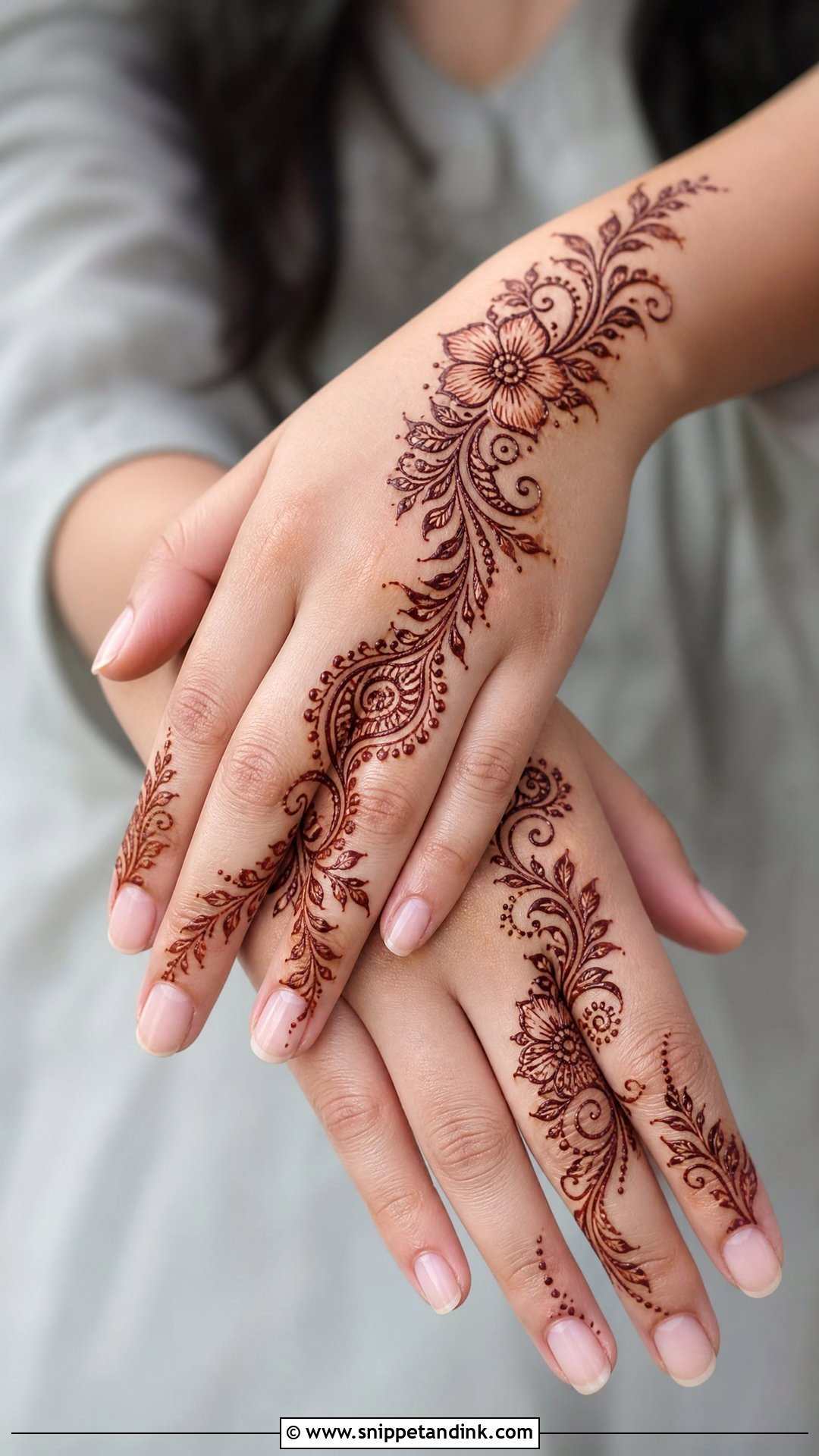
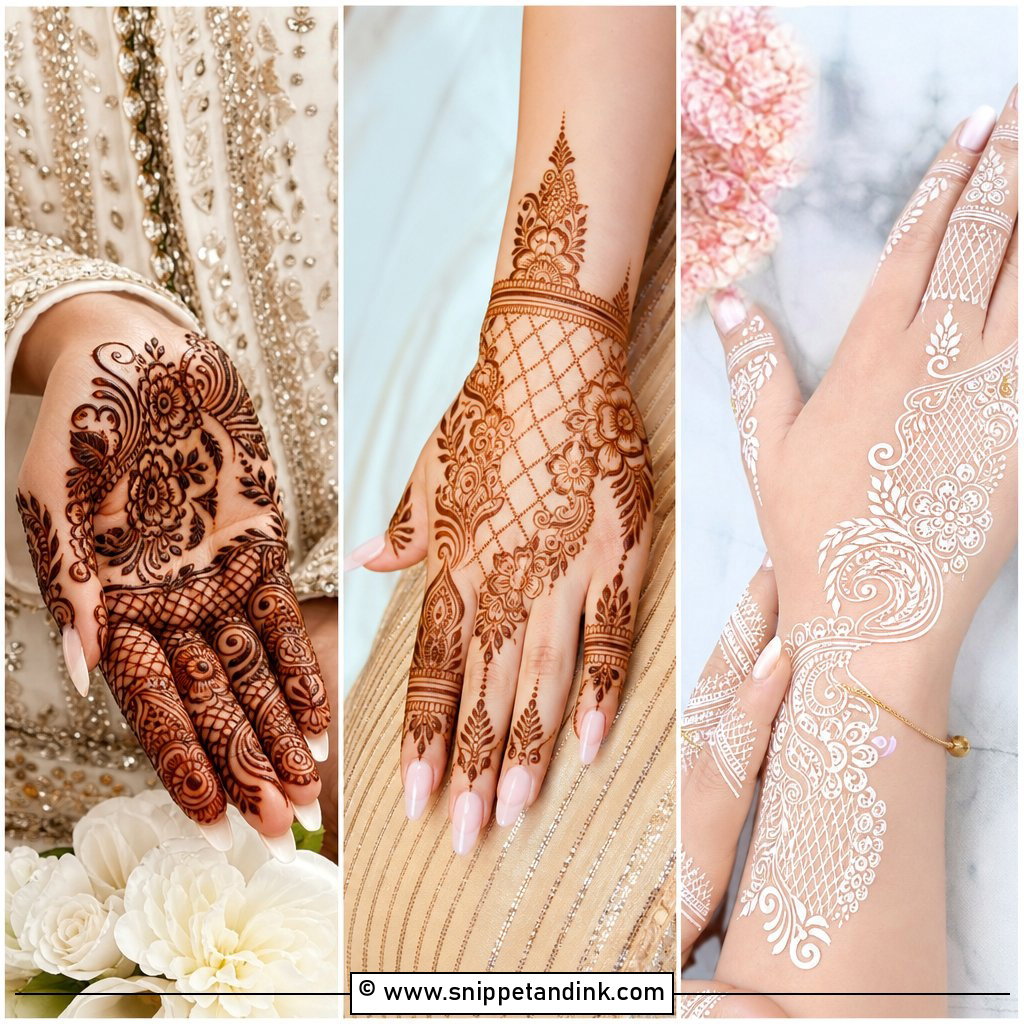
Arabic tattoo mehndi design moves diagonally across the back of the hand or palm in bold flowers, leafy strokes, paisley curves and shaded gaps. Because Arabic work already leaves plenty of open skin, it slides into the tattoo look more naturally than dense Indian patterns. I like to run it from the index finger down to the wrist for a long line. The trick is contrast: a thick outline with lighter inner detail, so the shape still reads clearly after staining. It sits well with festive wear and party outfits alike.
3. Finger Tattoo Mehndi Design
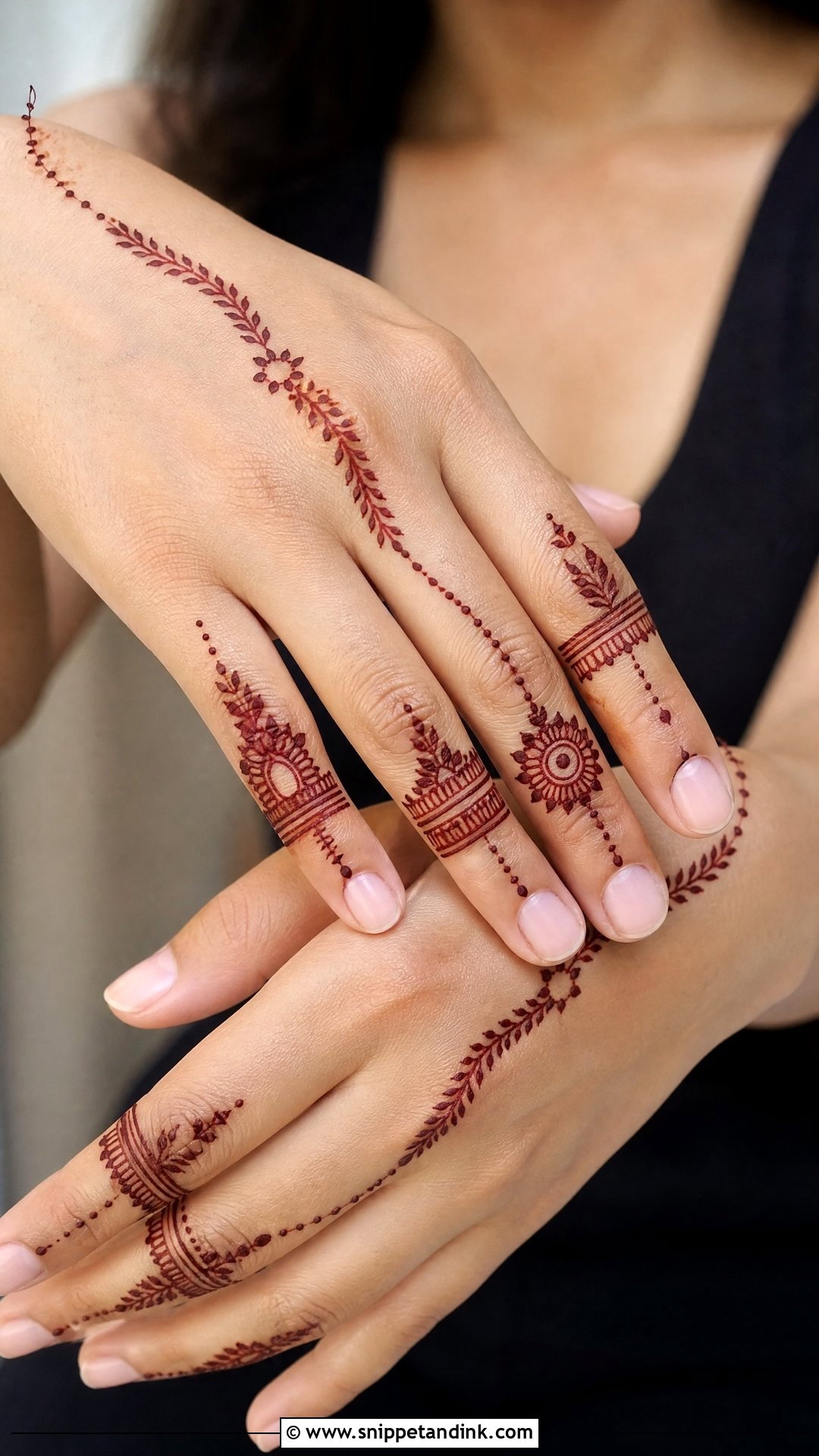
Fingers only. Rings, dots, leafy bands, fine lines and tiny motifs, with the palm left bare or marked with one small accent at the wrist. On long fingers it looks graceful; on shorter fingers I run the lines vertically so they look longer rather than chopped into segments. It dries in minutes, which is why it’s so popular for college events and casual gatherings. One honest warning: fingertips and the sides of fingers rub constantly, so finger work fades faster than anything on the back of the hand.
4. Wrist Tattoo Mehndi Design
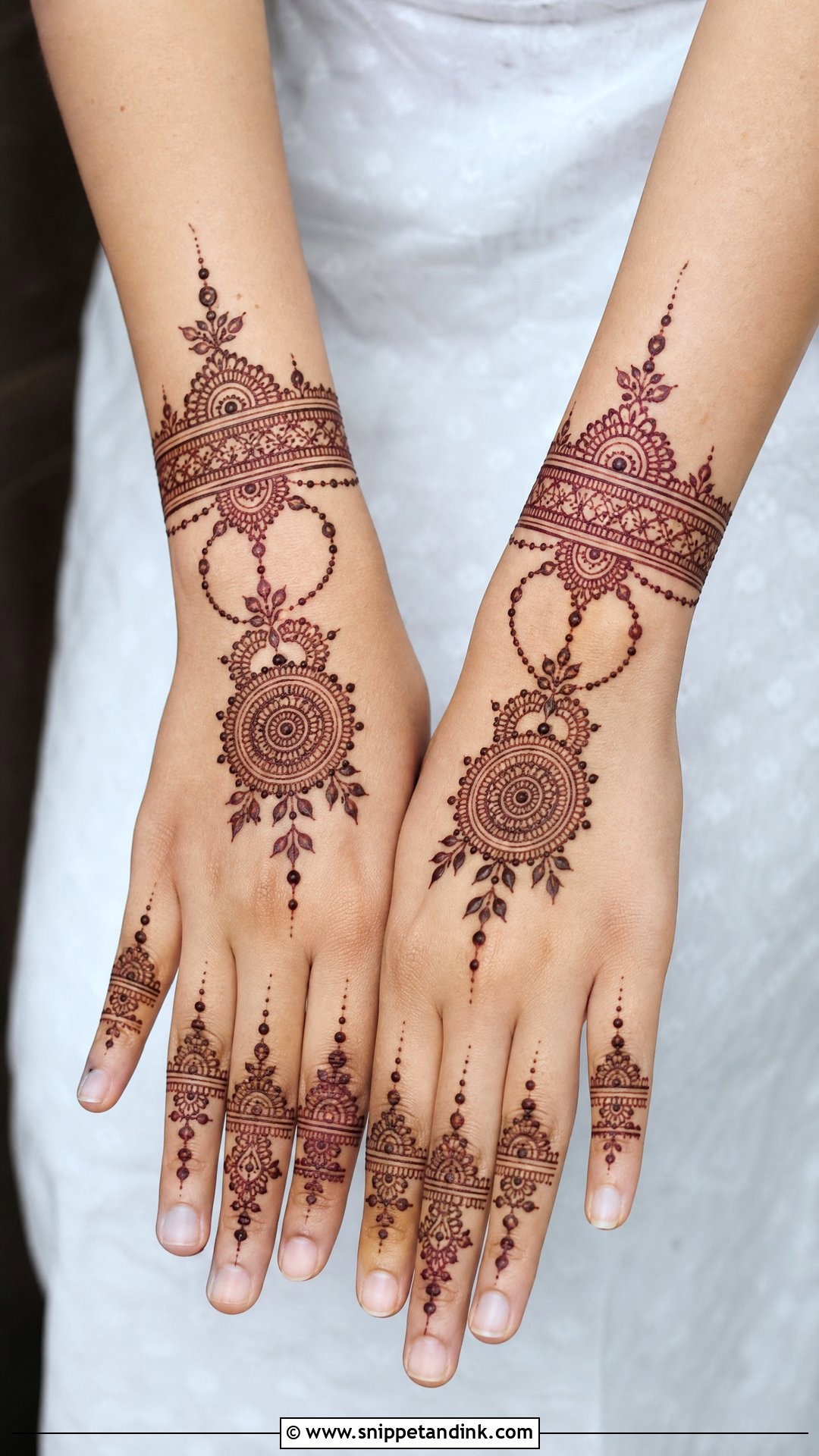
A wrist piece reads as a fine henna bracelet: chain lines, floral bands, mandala links, small leaves, dots and pendant drops. It can stay a narrow band or reach slightly onto the hand. I draw it with the wrist straight and the hand relaxed, because the skin there folds every time you bend, and a band drawn on a flexed wrist sits crooked afterward. Keep it symmetrical and leave the center uncrowded. It sits nicely beside bangles, a watch or festive sleeves, front or back.
5. Bracelet Tattoo Mehndi Design
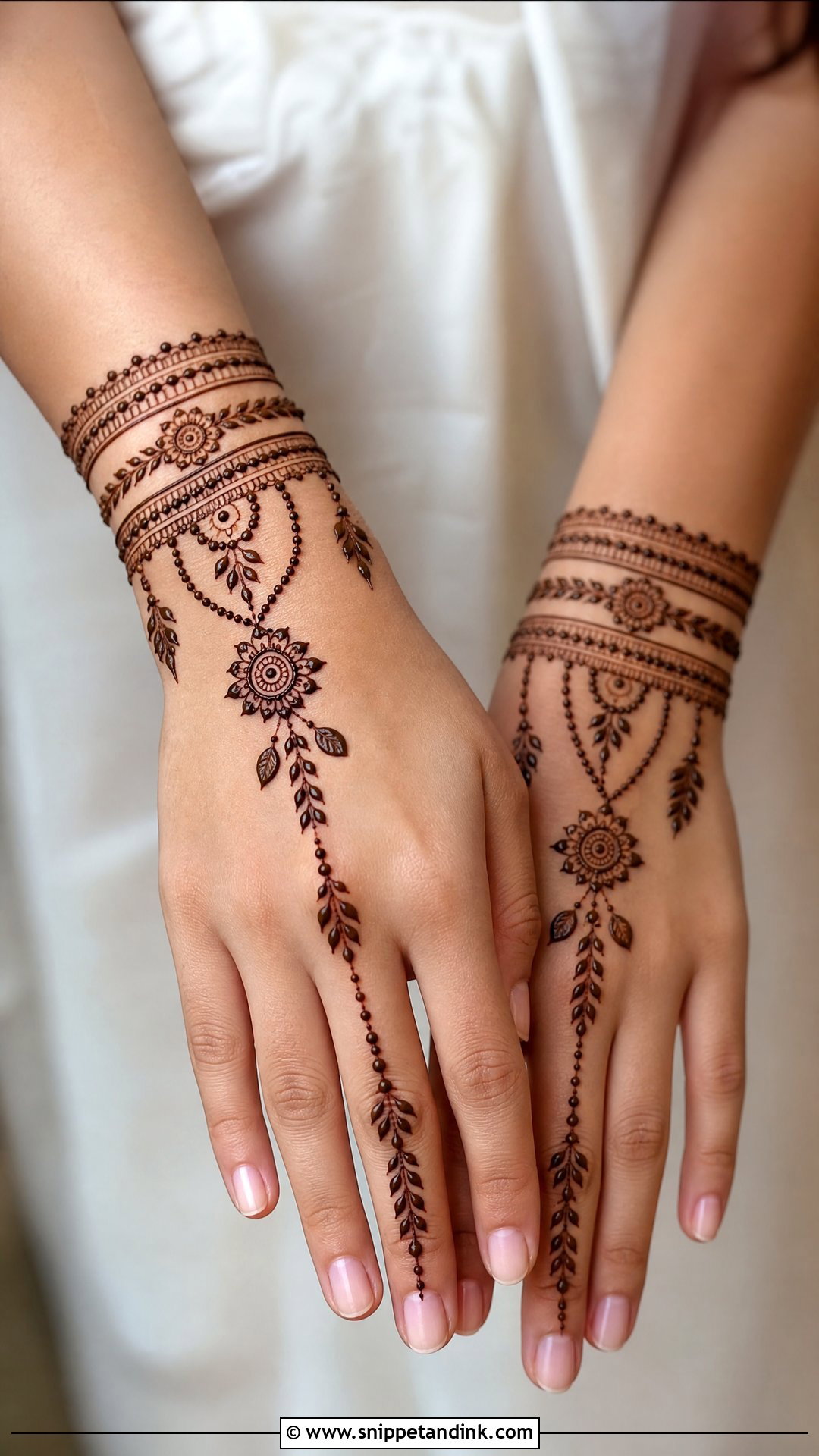
Think of this as stacked jewelry: one or more henna bands wrapping the wrist, with tiny chains, bead-like dots, floral charms and hanging leaves. Connect one band to a finger with a thin chain pattern and you have a haathphool effect. The negative space between bands is what sells the illusion, so I keep each gap even. Bridesmaids, Eid outfits, Diwali looks and lighter wedding functions all suit it, and it’s my usual suggestion for anyone who wants decoration without heavy coverage.
6. Back Hand Tattoo Mehndi Design
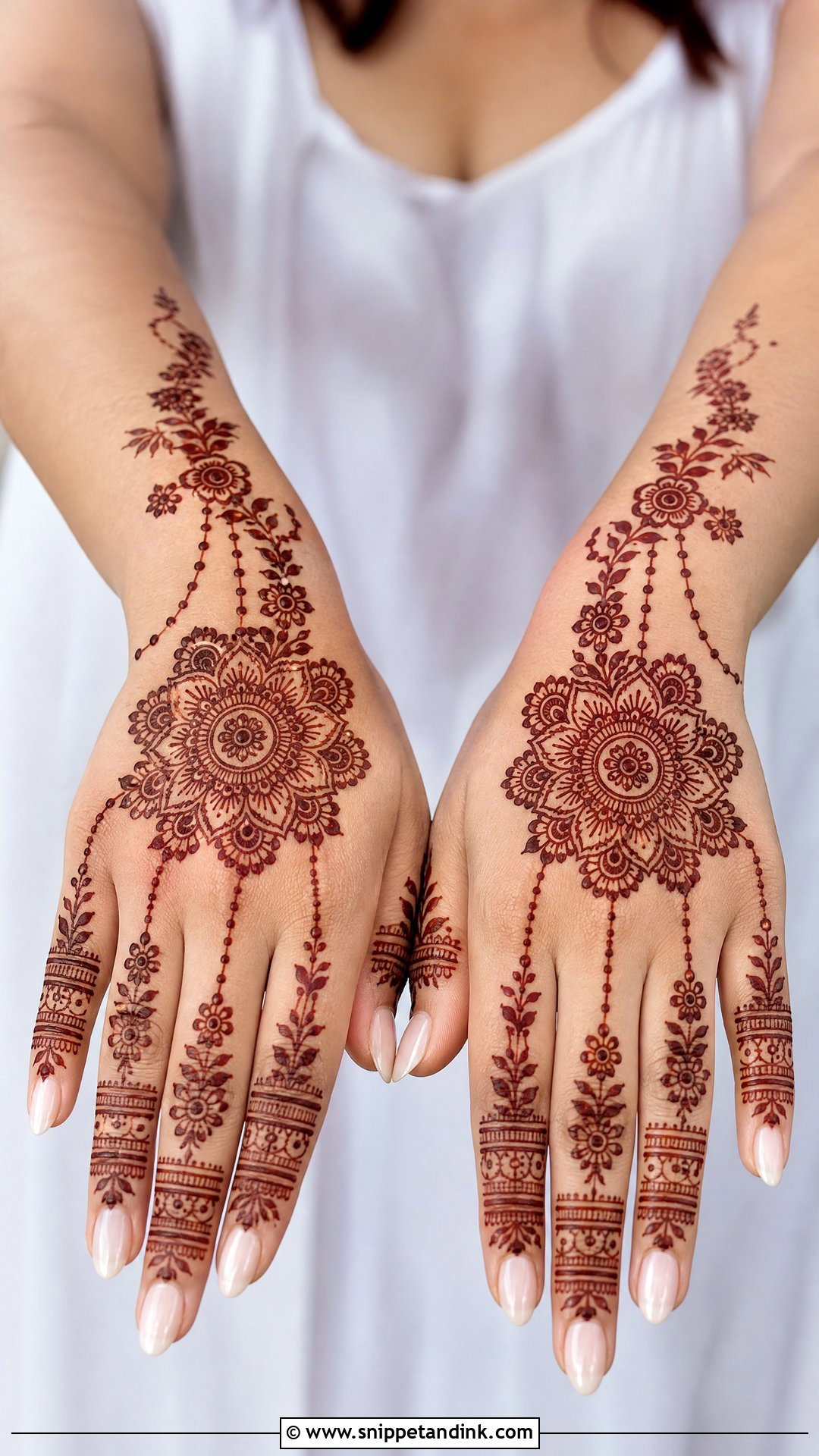
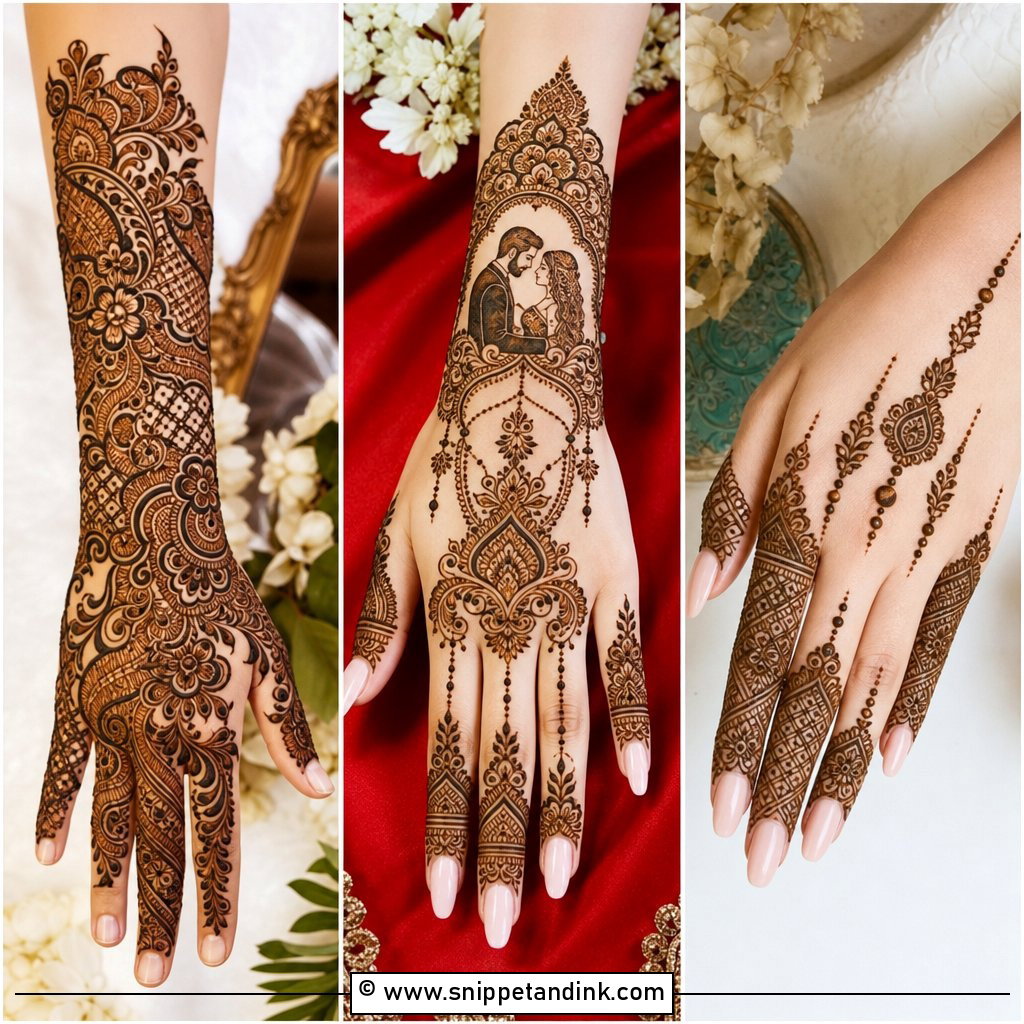
The back of the hand is the most worn placement for tattoo henna, and for good reason: there’s room for a bold motif and it stays on show. A center mandala, floral trail, geometric frame or ring-to-wrist pattern all fit, but the design has to follow the bones of the hand, narrowing toward the wrist, or it looks pasted on. Add light finger detail to finish it. The pattern stays visible while you’re holding a clutch, phone or bouquet. Expect a lighter stain than on the palm, since skin on the back of the hand is thinner.
7. Front Hand Tattoo Mehndi Design
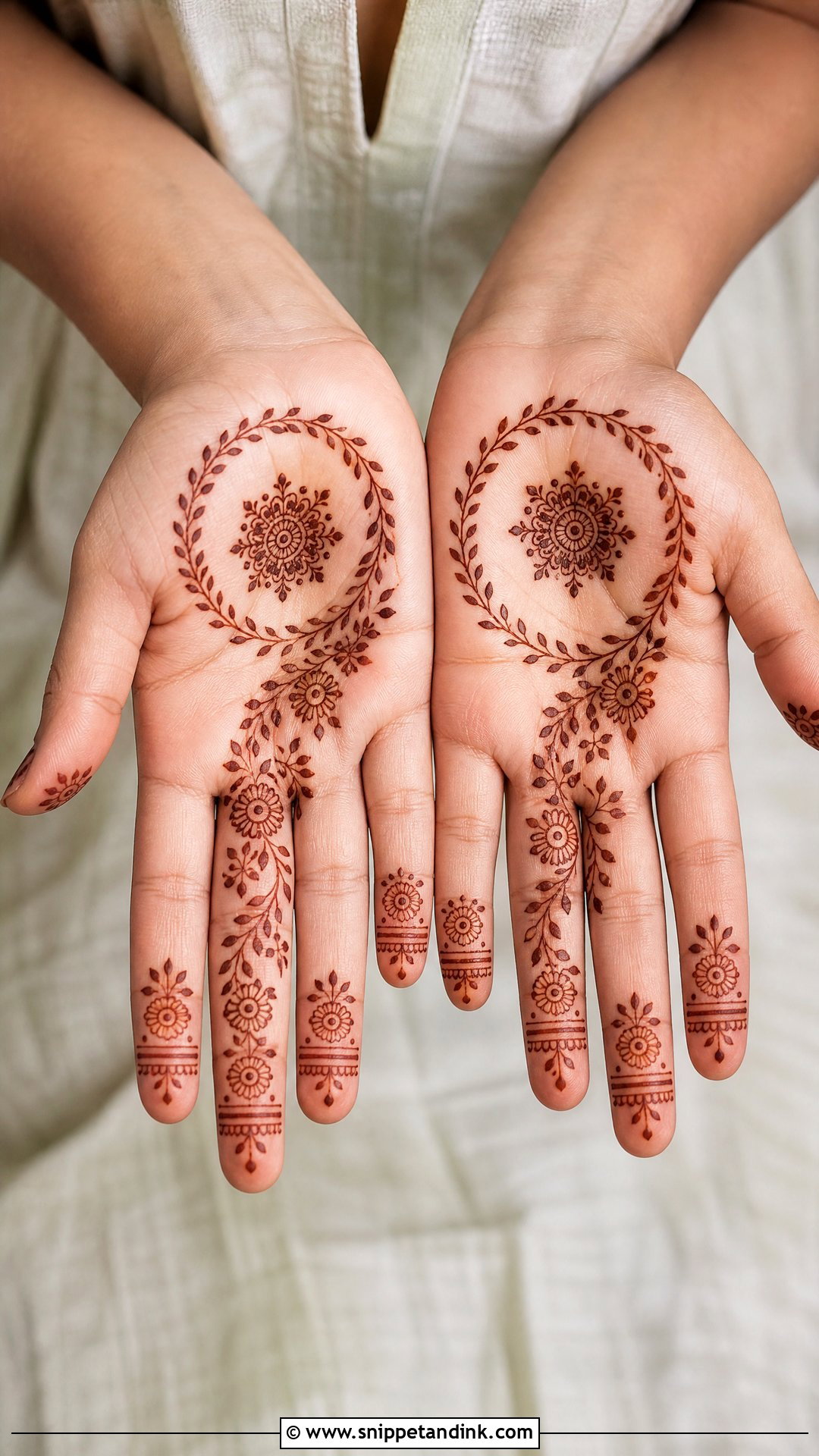
Palms stain deeply, so a front-hand tattoo design comes up rich even when it’s small. A little mandala, a floral circle, a leafy frame or a diagonal Arabic trail gives the tattoo effect without weight. I leave open skin around it for a modern feel and finish with simple fingertips or thin bands. It’s the placement I suggest to people who want visible henna but not bridal density. One catch: palms crease, so I keep the motif in the flat center rather than across the deepest lines.
8. Mandala Tattoo Mehndi Design
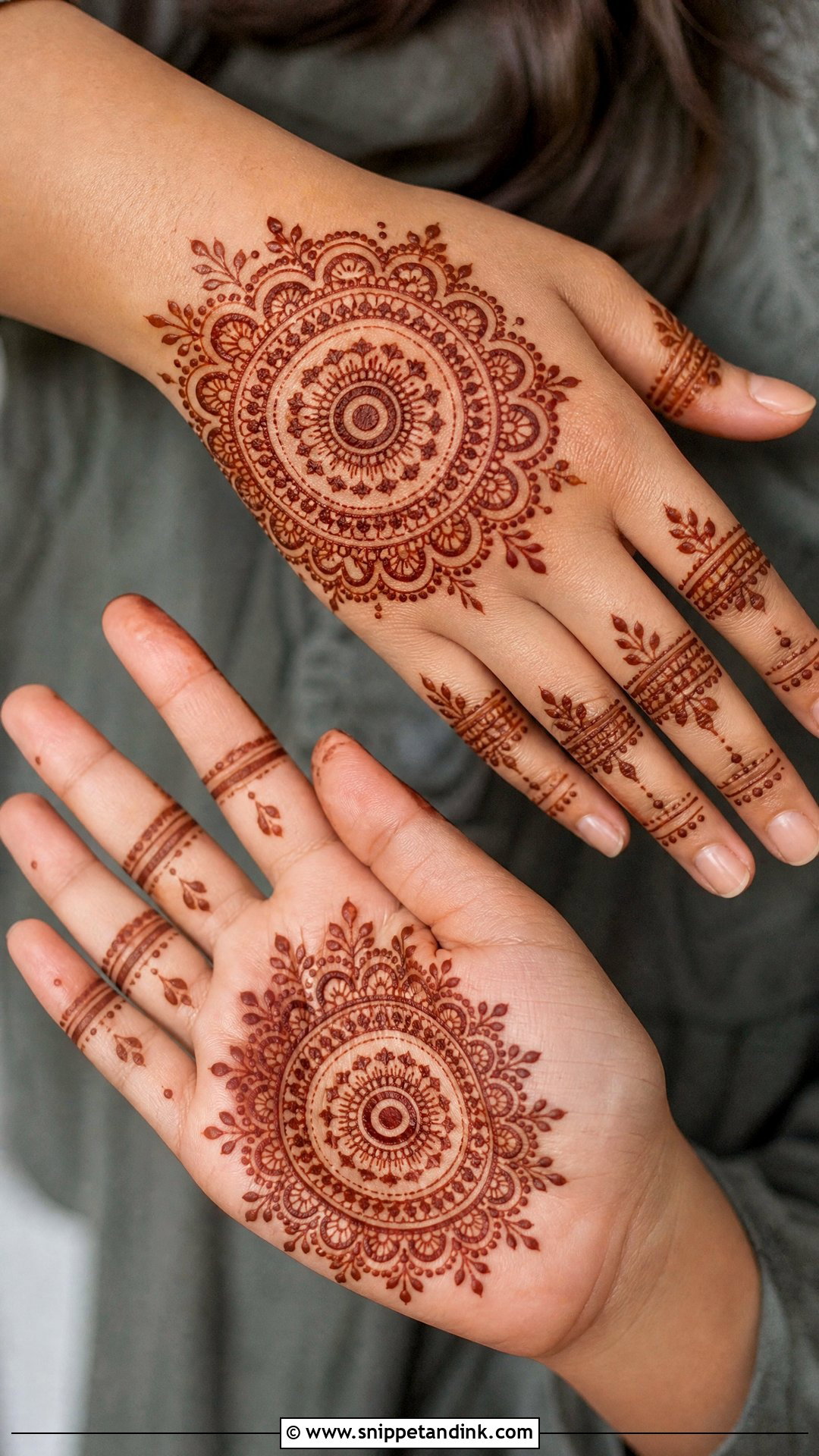
Mandalas suit tattoo henna because a circle reads as one complete mark. It starts with a central motif on the palm or back hand, then grows with petals, dots, rings and fine detail. To keep it tattoo-like rather than traditional, I stop the rings early and leave clean skin around the edge instead of filling every space. Minimal finger lines or a thin wrist border pair well. The centered layout is easy for a beginner to plan, and it flatters any hand shape. Deep maroon on clear skin is where a mandala looks its best.
9. Floral Tattoo Mehndi Design
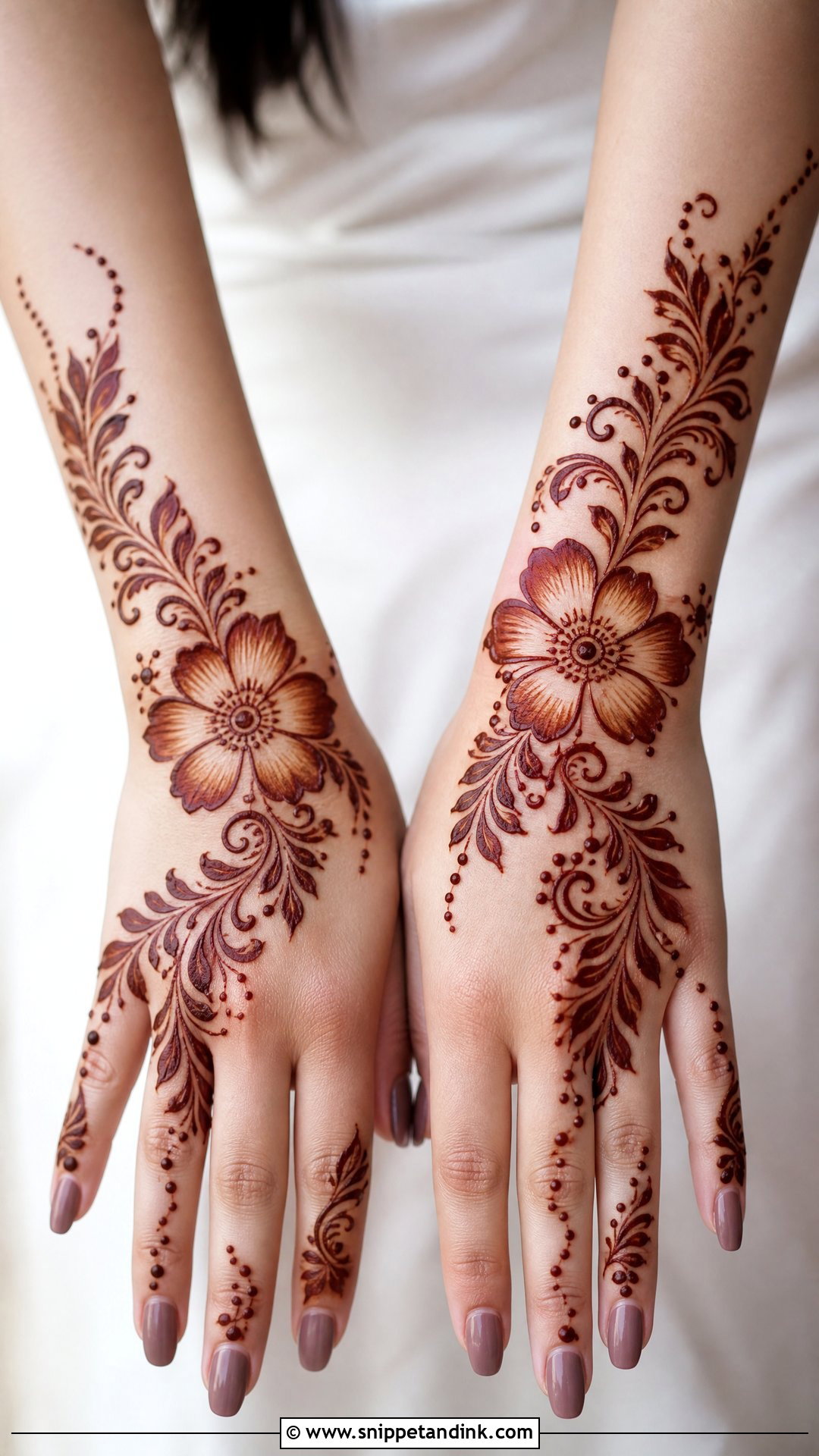
Floral work is the most forgiving style I draw. It can go on the wrist, back hand, fingers or forearm, built around one main flower with small leaves, dots and light shading around it. Roses, lotuses, daisies and plain five-petal flowers all translate well. For a modern finish, leave real gaps between elements so each one reads on its own. Engagement parties, family events and simple festive days suit it, because the hand never looks busy.
10. Rose Tattoo Mehndi Design
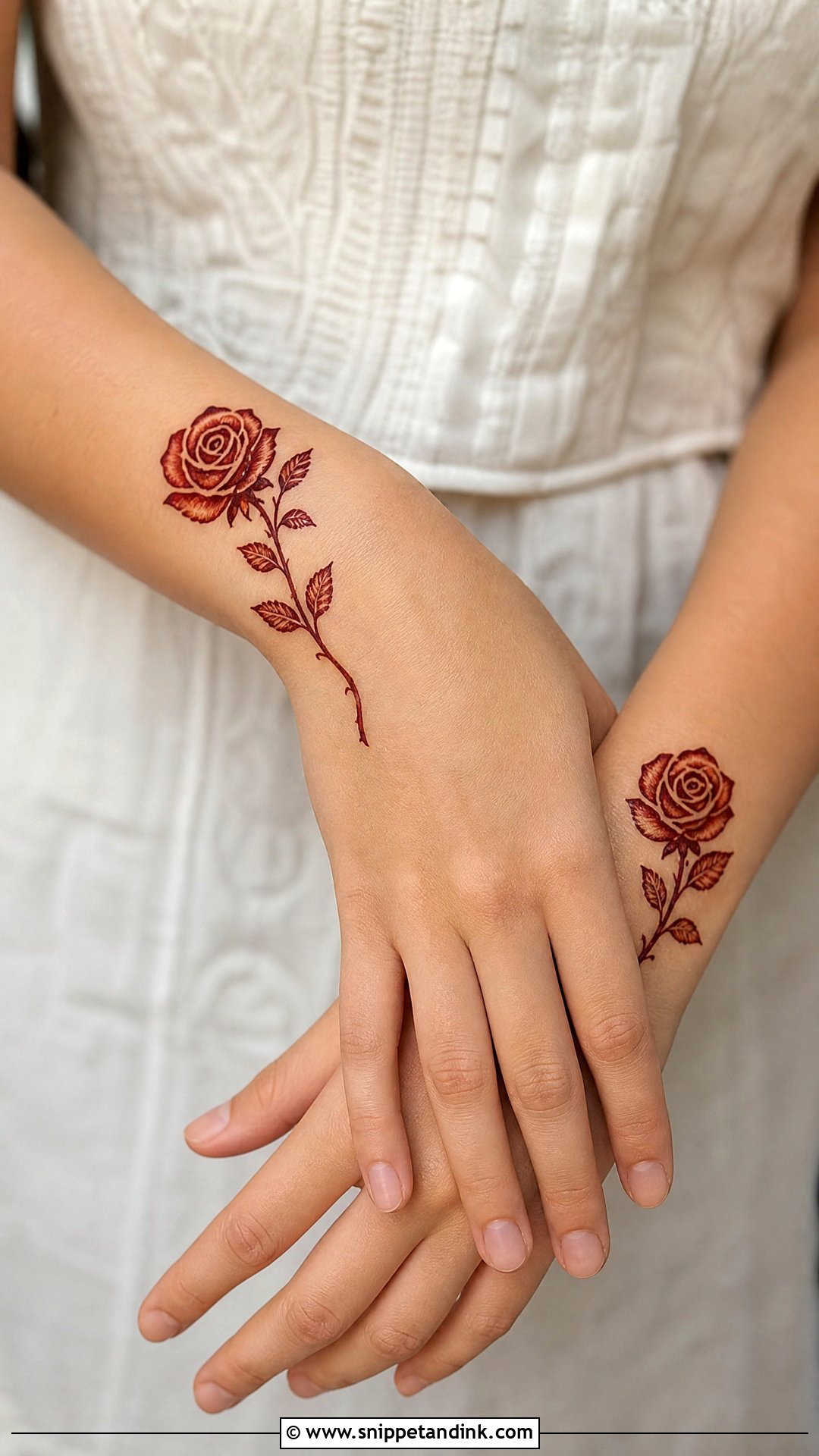
A single rose with a trail of leaves looks modern; two roses linked by swirl lines look more decorative. Either way, the rose sits well on the back hand, wrist, forearm or side of the palm, drawn with curved petals, shaded leaves and thin stems. The hard part is the spiral at the center. Too many inner petal lines and they merge into a dark knot once the stain develops, so I keep the outline bold and use only two or three fine inner curves. Leave the surrounding skin clean and the rose does the talking.
11. Lotus Tattoo Mehndi Design
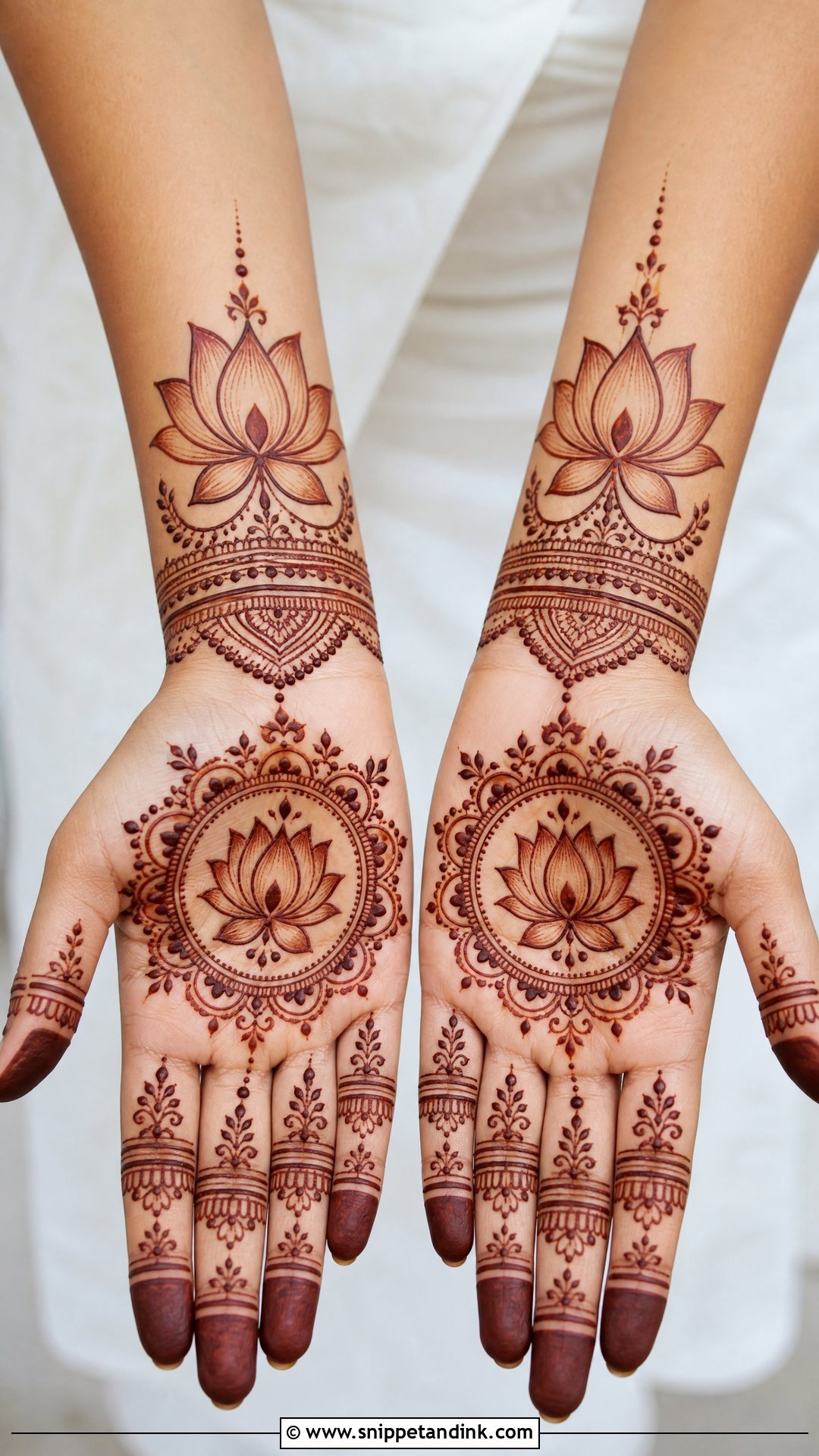
A lotus tattoo mehndi design opens naturally into a balanced shape, which is why it fits the palm, wrist or upper back hand so well. Keep it simple with layered petals, small dots and leaf borders, or wrap mandala rings around it for more detail. I center the lotus and let the surrounding lines flow outward, never inward, so the flower stays the anchor. It suits festive and spiritual occasions, and it’s one of the easiest motifs to mirror on both hands.
12. Peacock Tattoo Mehndi Design
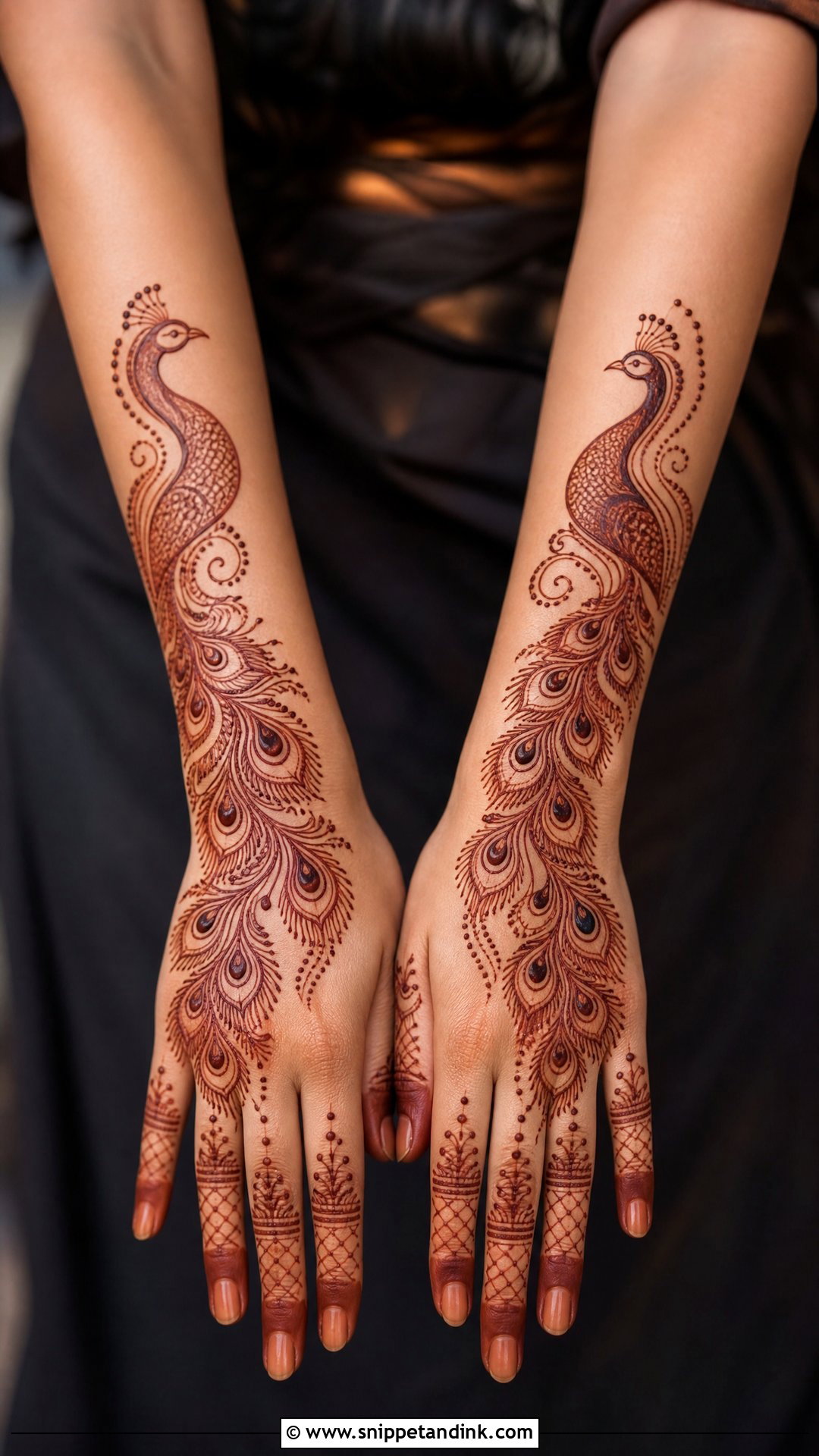
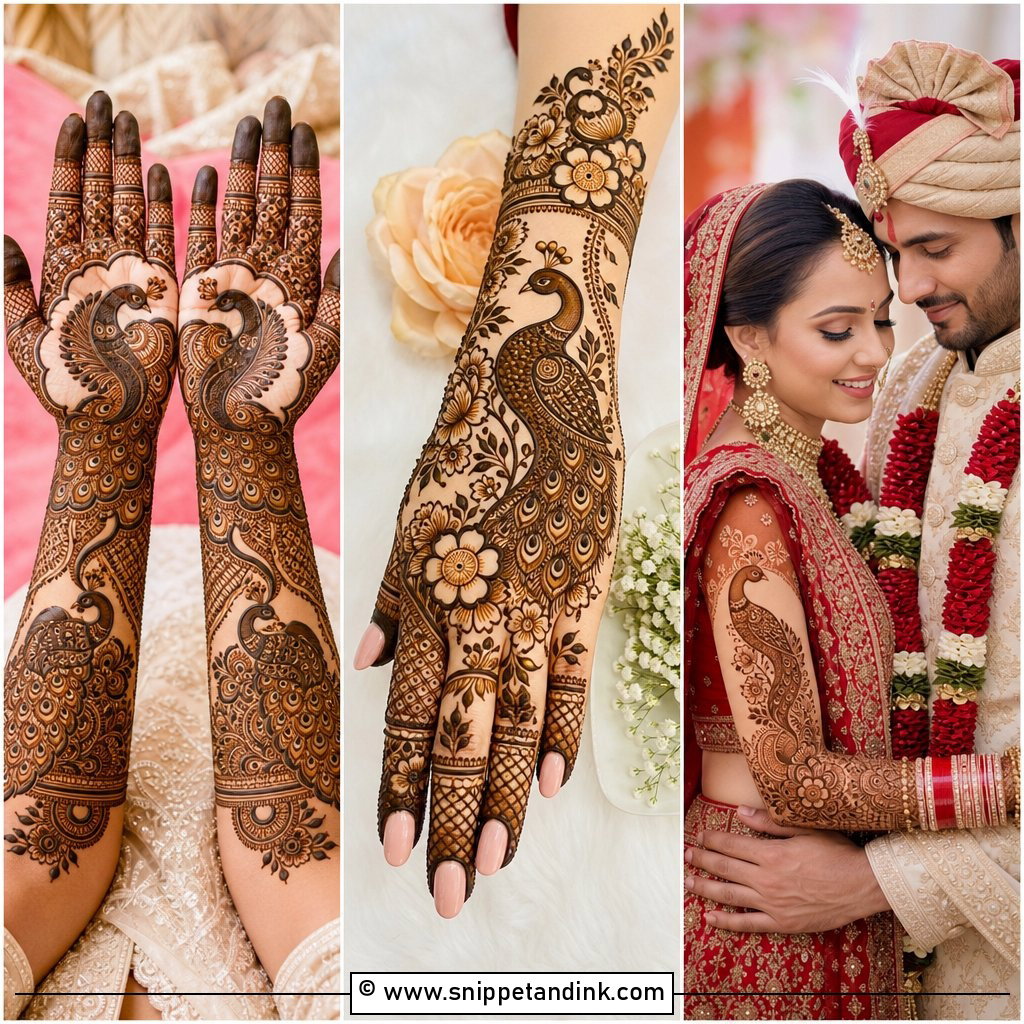
A peacock tattoo mehndi design takes a traditional motif and slims it down. Instead of a large heavy bird, I draw a slender peacock with flowing feathers, a curved neck and delicate dots, usually on the back hand or forearm where it has room. The feathers can trail toward the wrist or fingers. Weddings, sangeet nights and festive outfits suit it, as long as the open space and fine shading are kept. Most peacocks fail at the neck: drawn too thick, the bird looks stiff, so I pull that curve in a single stroke.
13. Butterfly Tattoo Mehndi Design
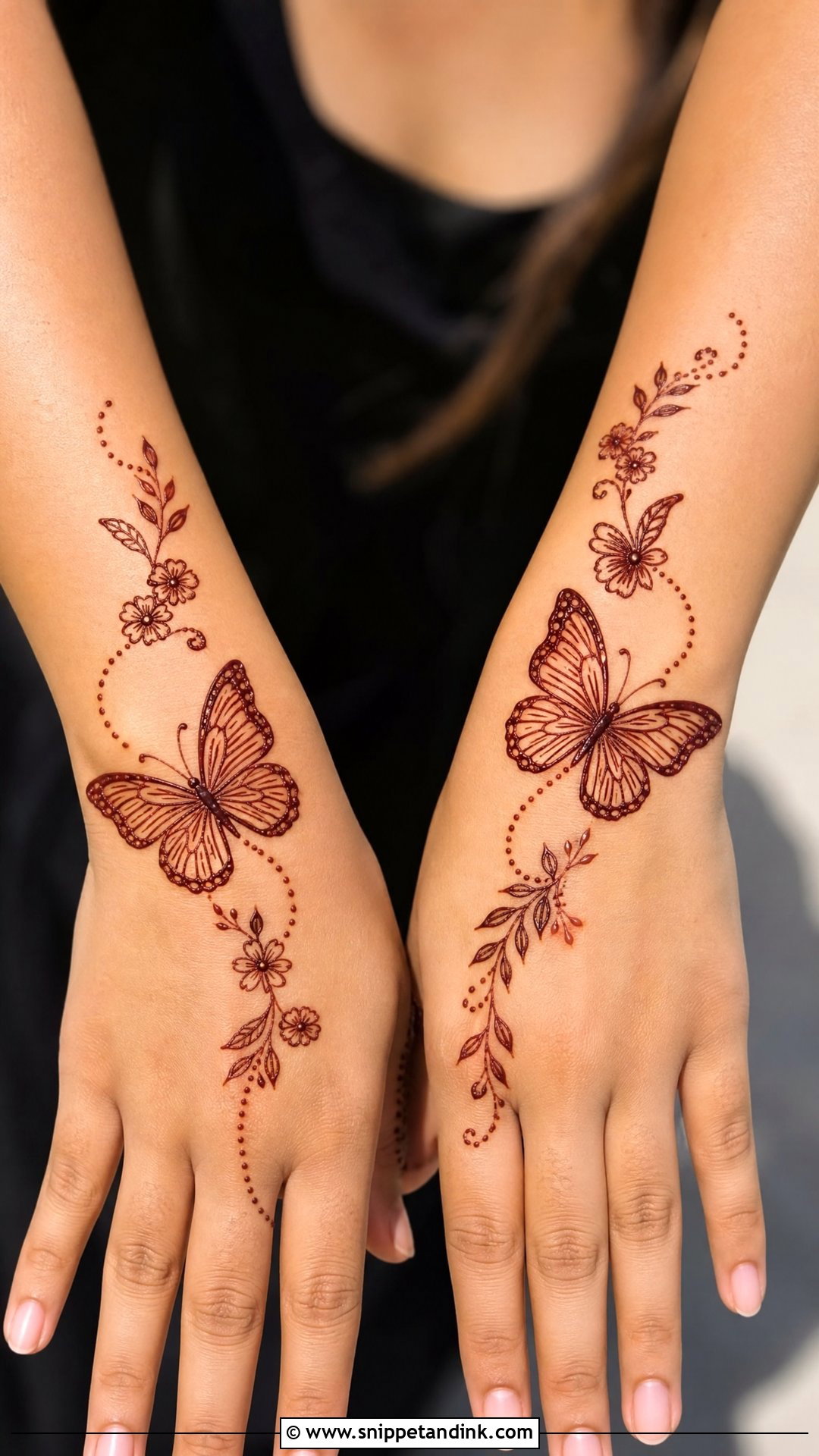
Butterflies feel young and light. I place them on the back hand, wrist or forearm with open wings and fine inner detail, sometimes with tiny flowers, a dotted flight trail or a few leaves. The wings must mirror, and that’s harder than it looks freehand, so I draw both outer edges first and fill inward. Thin outlines with minimal filling give a soft result; bold borders and shaded wing sections give a stronger one. Birthdays, casual celebrations and modern festive looks are where I see it most.
14. Feather Tattoo Mehndi Design
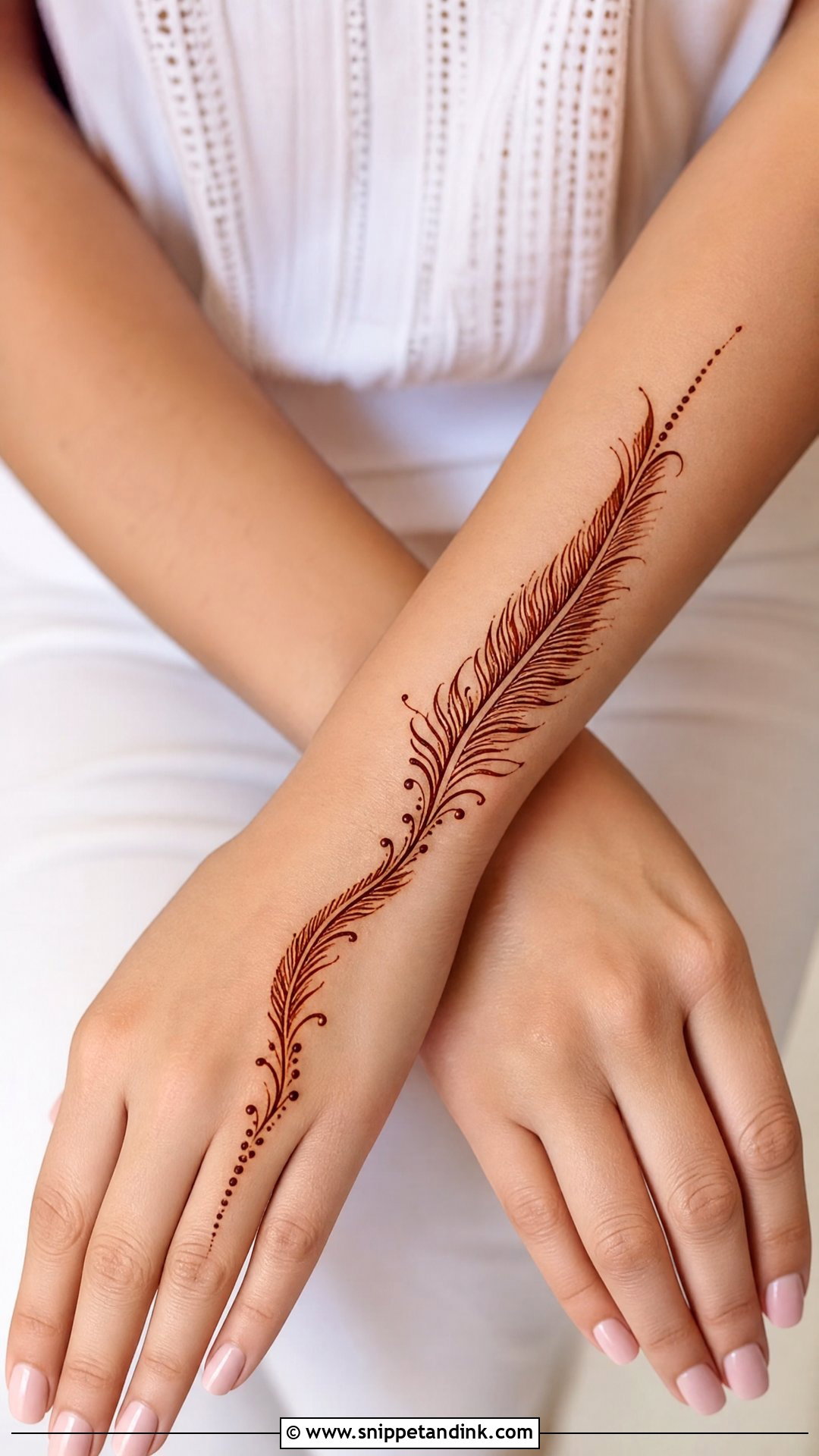
Feathers run along the side of the hand, the wrist or the forearm in one long, slim line. Fine hairline strokes, small dots and a curved stem are all it needs, so it stands alone without extra motifs. Those hairline strokes have to be pulled quickly with an even squeeze, which is why a feather is a good test of an artist’s cone control. Add tiny finger rings or a small wrist band if you want a bit more. It looks clean and stylish when the spacing stays open.
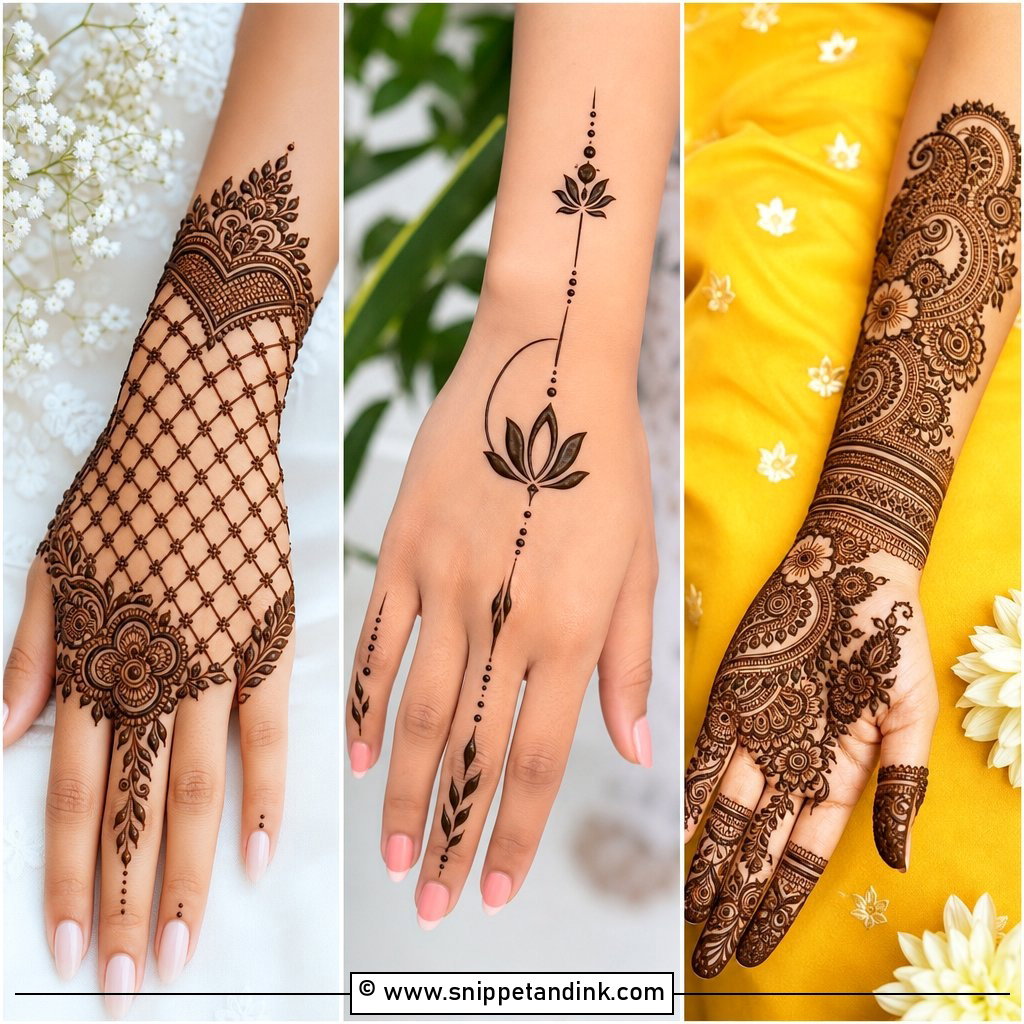
15. Geometric Tattoo Mehndi Design
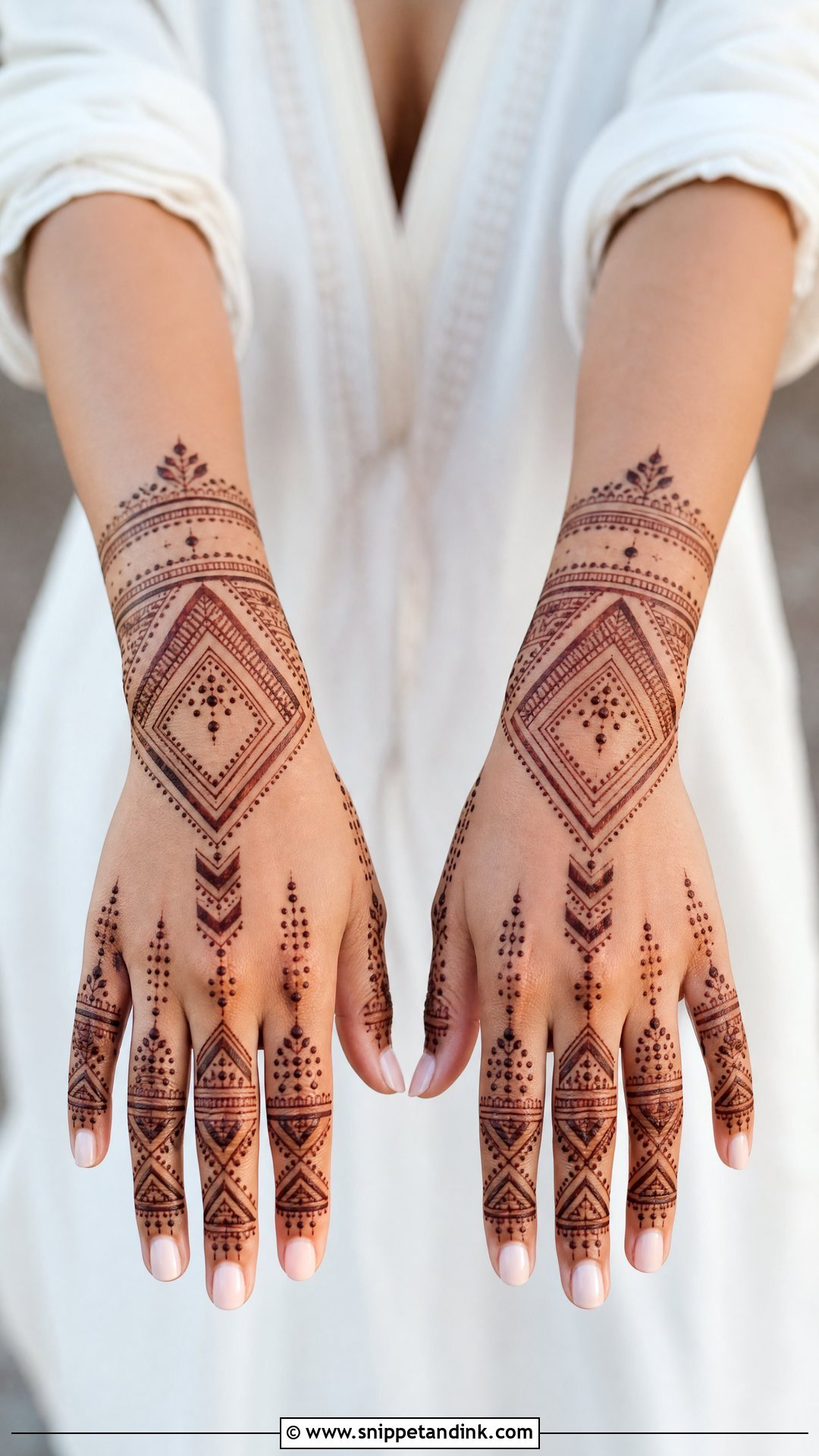
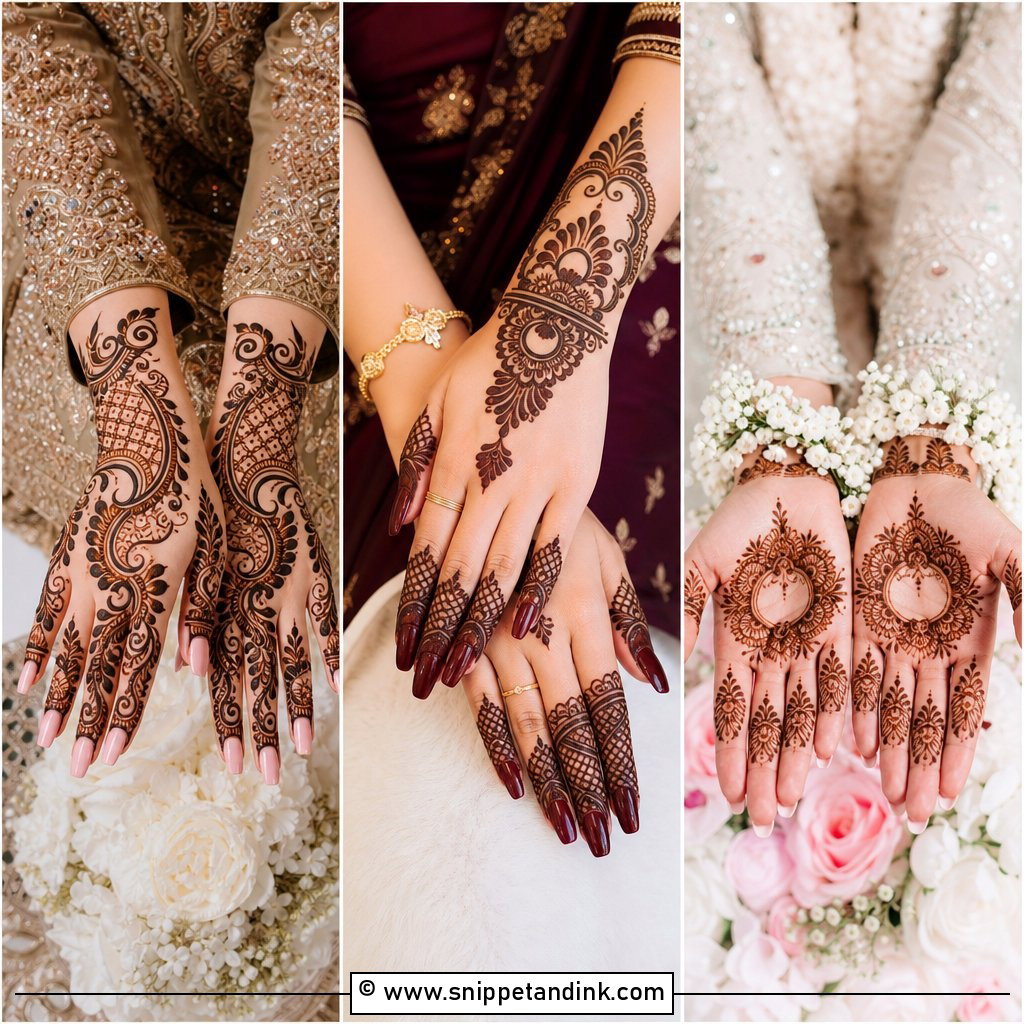
Triangles, diamonds, chevrons, squares, dotted grids and symmetrical borders give geometric henna its edge against softer florals. The back hand, wrist and fingers show structure best. I lay the grid out with light guide dots before drawing a single straight line, because one uneven angle throws the whole pattern. Adding a few small florals pushes it toward an Indo-Arabic feel. With a plain outfit, the pattern becomes the accessory.
16. Minimal Tattoo Mehndi Design
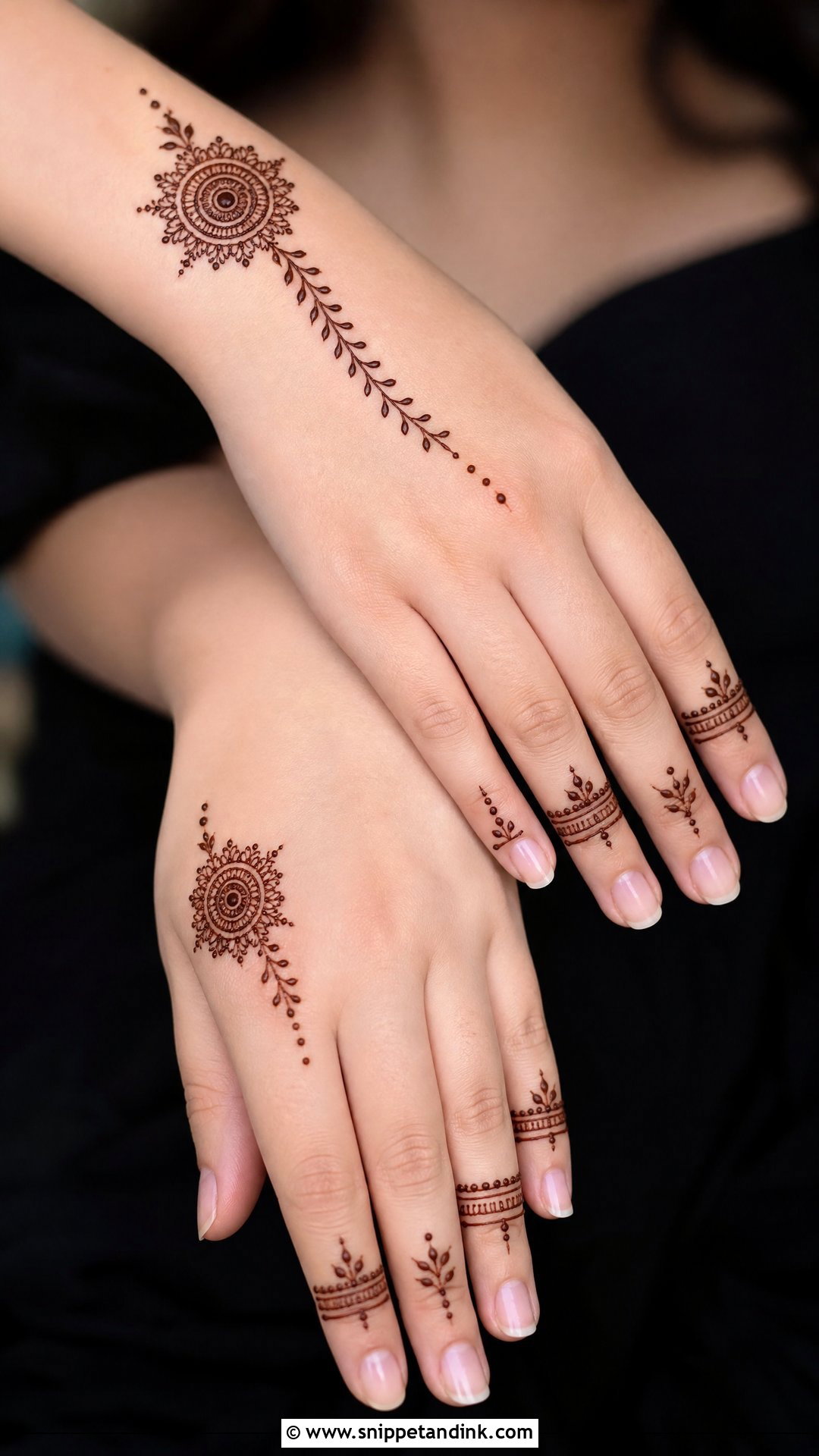
Minimal henna has to look intentional, not unfinished. A tiny mandala, one flower, a slim vine, a wrist line or a few finger bands is enough, provided there’s one clear focal area and everything else stays light. Smooth lines and evenly sized dots matter more here than anywhere, since there’s nothing to hide a wobble. It dries fast and suits everyday wear, travel, office events and first-timers.
17. Full Hand Tattoo Mehndi Design
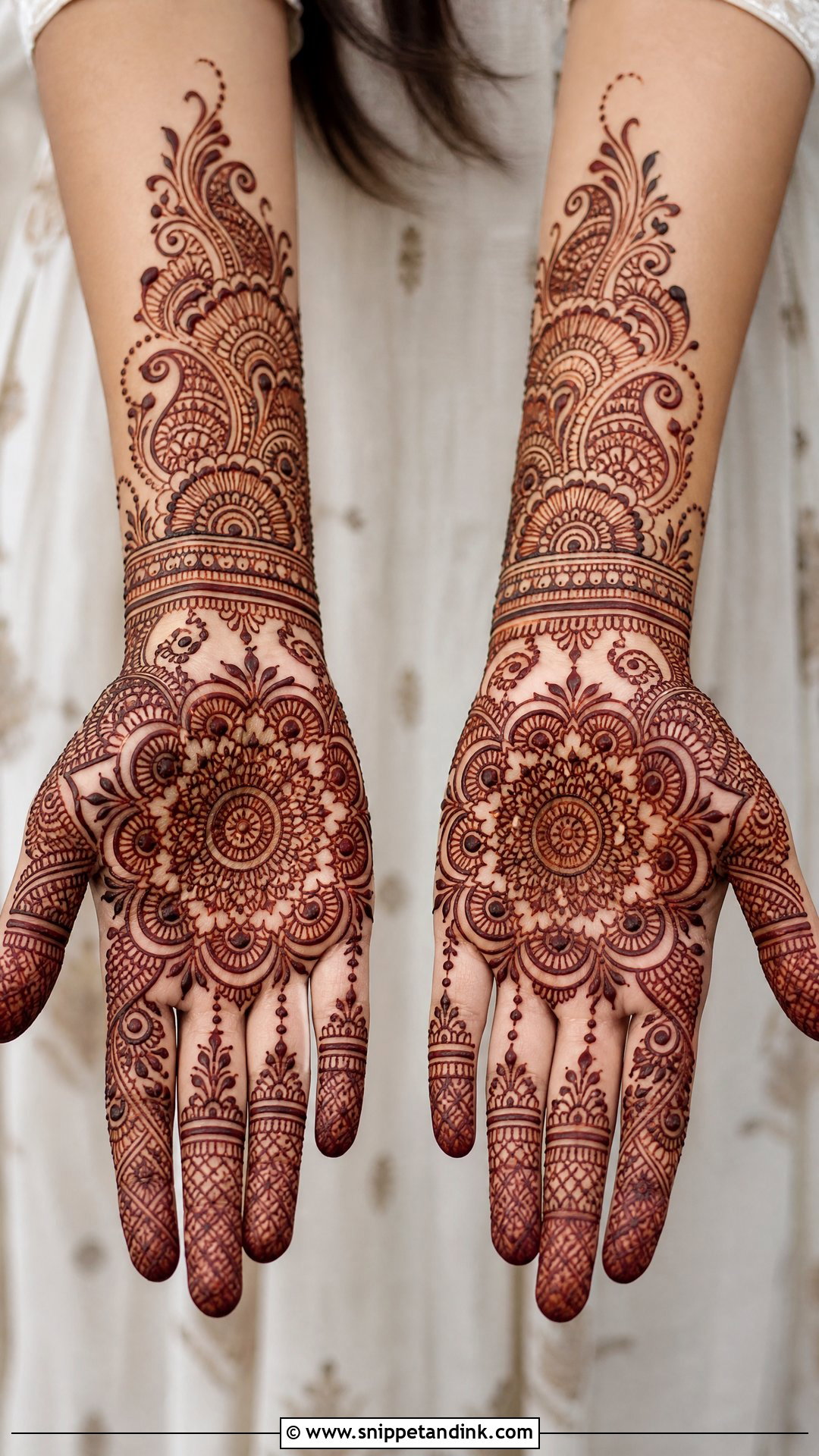
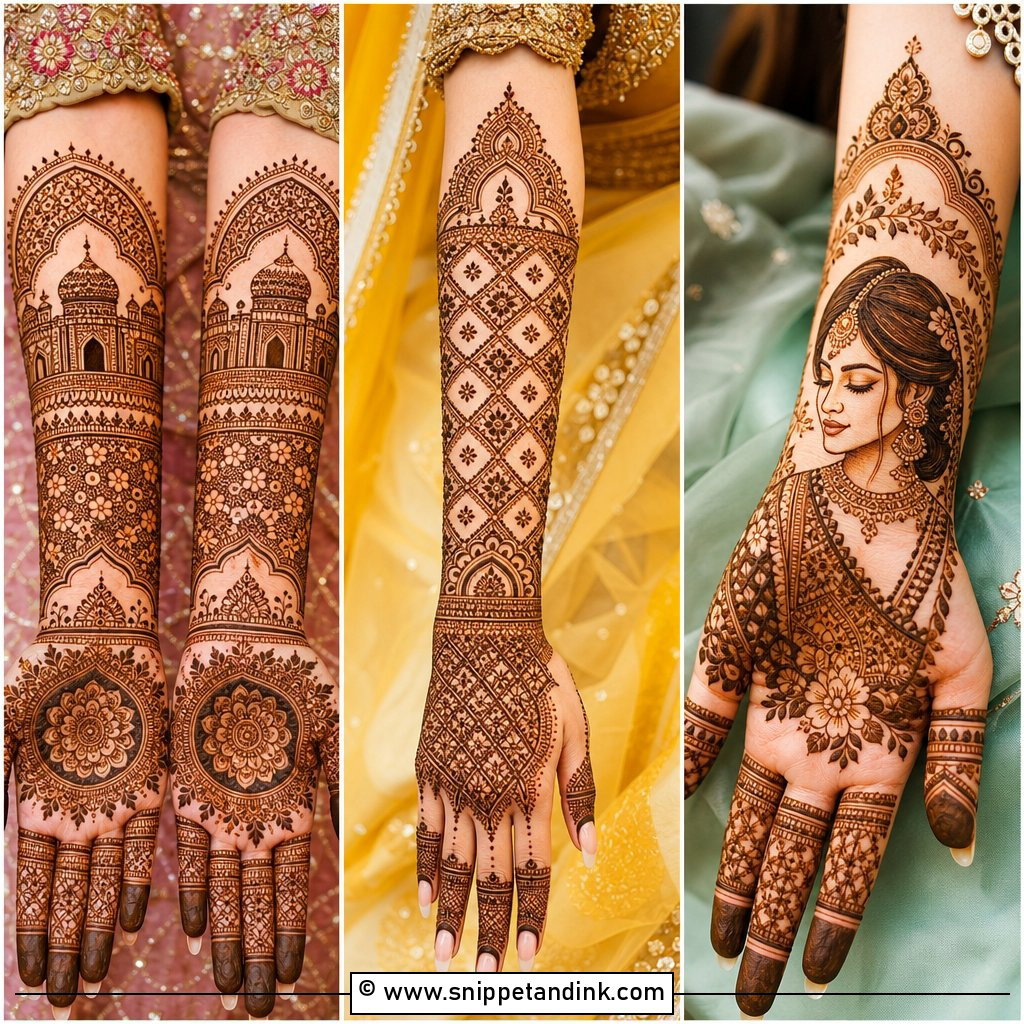
Full coverage, but modern: larger motifs, open spaces, bold outlines and a structured flow instead of dense traditional filling. Mandalas, florals, paisleys, finger bands and wrist details can all join into one piece as long as there’s a single main focus on the palm or back hand and the rest supports it. This is the one I suggest for bridesmaids and engagement events when someone wants a statement without a packed bridal hand. Budget time for it. Even with open spacing, a full hand takes a while and needs to dry undisturbed.
18. Half Hand Tattoo Mehndi Design
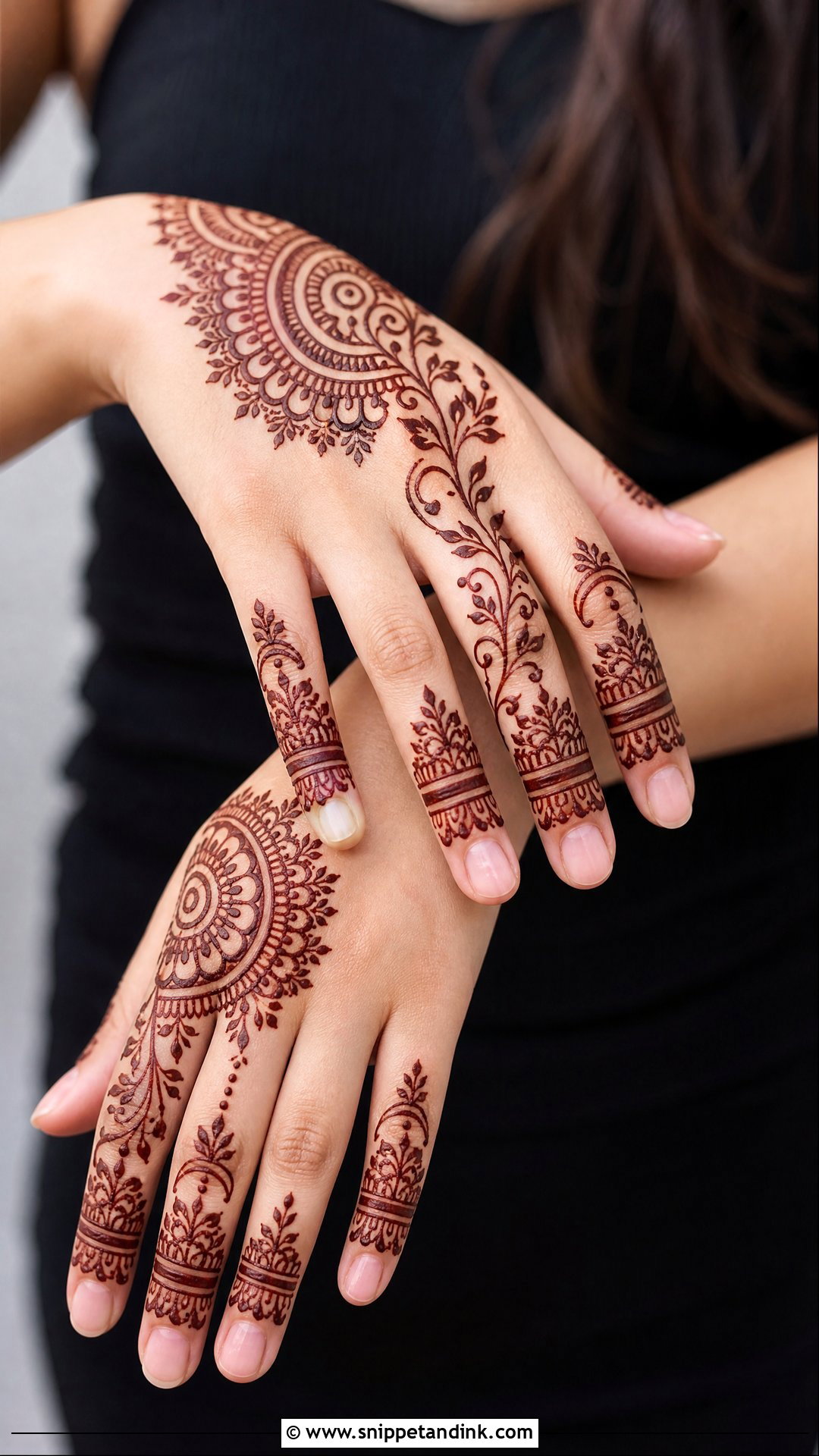
A half-hand design either starts at the fingers and stops around the center of the hand, or rises from the wrist. Floral trails, mandala halves, leafy vines or geometric sections all work. Half hand designs are quicker to apply and sit comfortably with western, fusion or traditional outfits. The detail that makes or breaks it is the edge. I always finish with a clean border line, scallop or row of dots, so it looks planned rather than abandoned halfway.
19. Side Hand Tattoo Mehndi Design
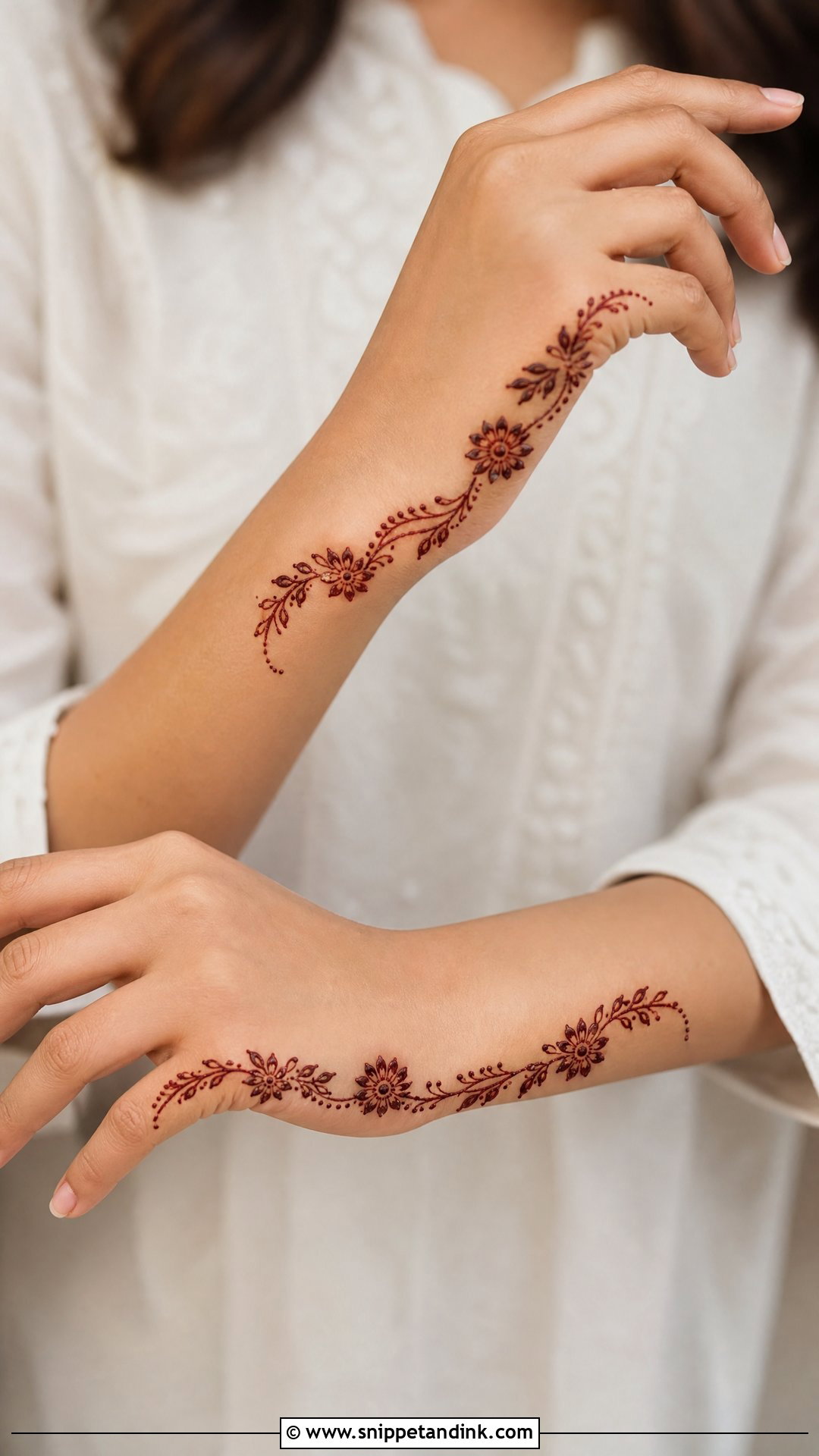
Running along the outer edge of the hand from the little finger toward the wrist, a side design is almost hidden from the front and then catches the eye every time you move. A thin vine, small flowers, dots, leaves or a narrow geometric strip all fit. It’s a good option for minimal fans and for anyone who doesn’t want henna on the palm. Keep it narrow. The outer edge of the hand rubs against tables and bags all day, so expect it to fade a little sooner than the back of the hand.




20. Forearm Tattoo Mehndi Design
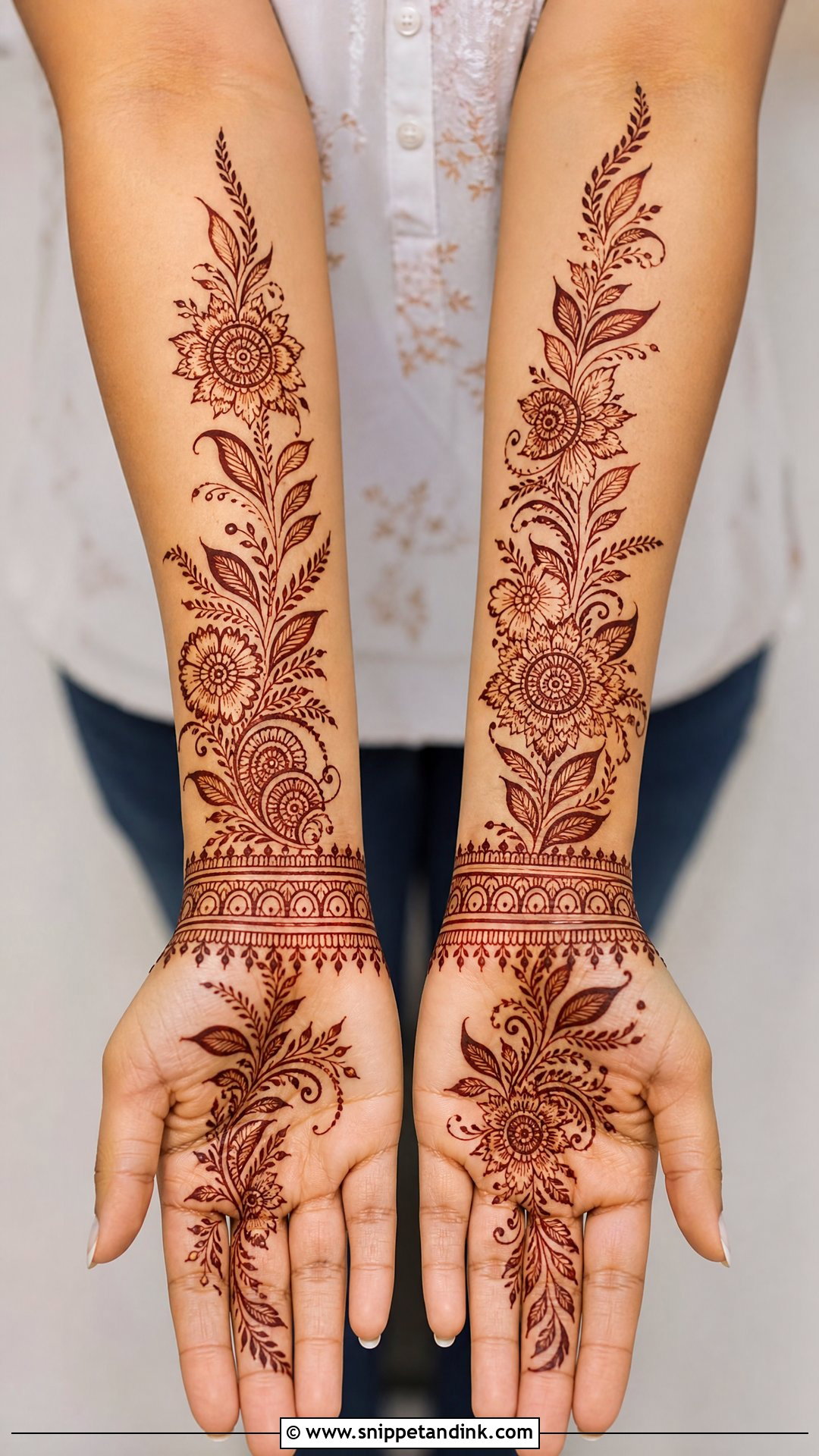
Forearms give length, so vines, mandalas, feathers, florals or bracelet chains can climb from the wrist upward. I keep the design vertical and fairly narrow; a wide forearm piece starts to look like a sleeve rather than a tattoo. It can stand alone or connect to a wrist design. Sleeveless or short-sleeved outfits, parties and destination weddings all suit it. Expect the stain to come up lighter than on the hands, often a warm orange-brown, so bold lines read better here than fine filler.
21. Ring Tattoo Mehndi Design
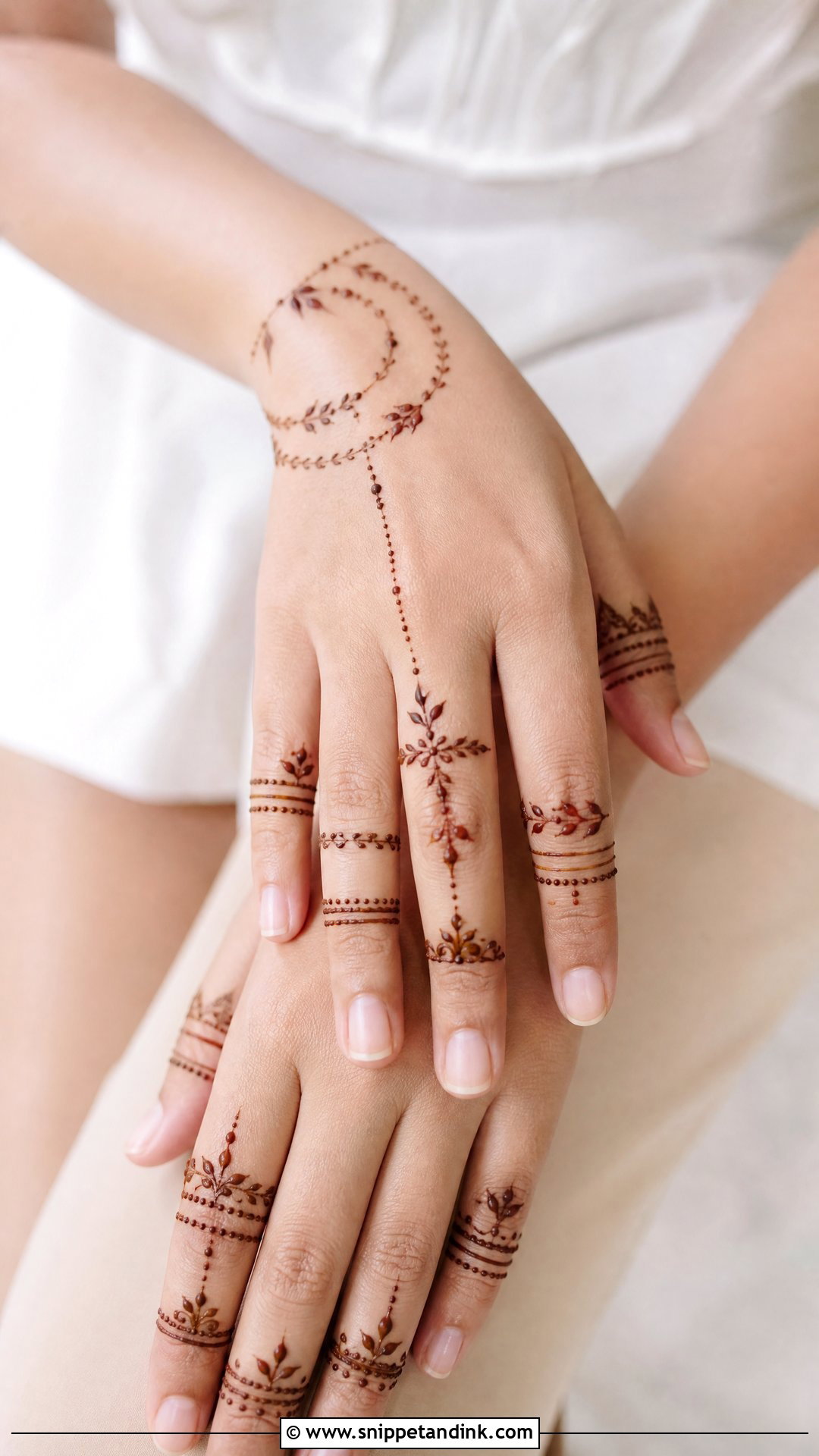
Ring designs turn the fingers into jewelry with circular bands, dotted chains, leaf rings, tiny florals and fine line details. Link one to the wrist with a thin chain for a haathphool effect. I keep the bands slim and evenly spaced; thick bands on every finger look heavy and swallow the fingers. It works well with manicured nails and real rings because it frames the fingers without covering them. If you’ll be wearing your own rings that day, tell your artist which fingers so she leaves those bands lighter or open.
22. Haathphool Tattoo Mehndi Design
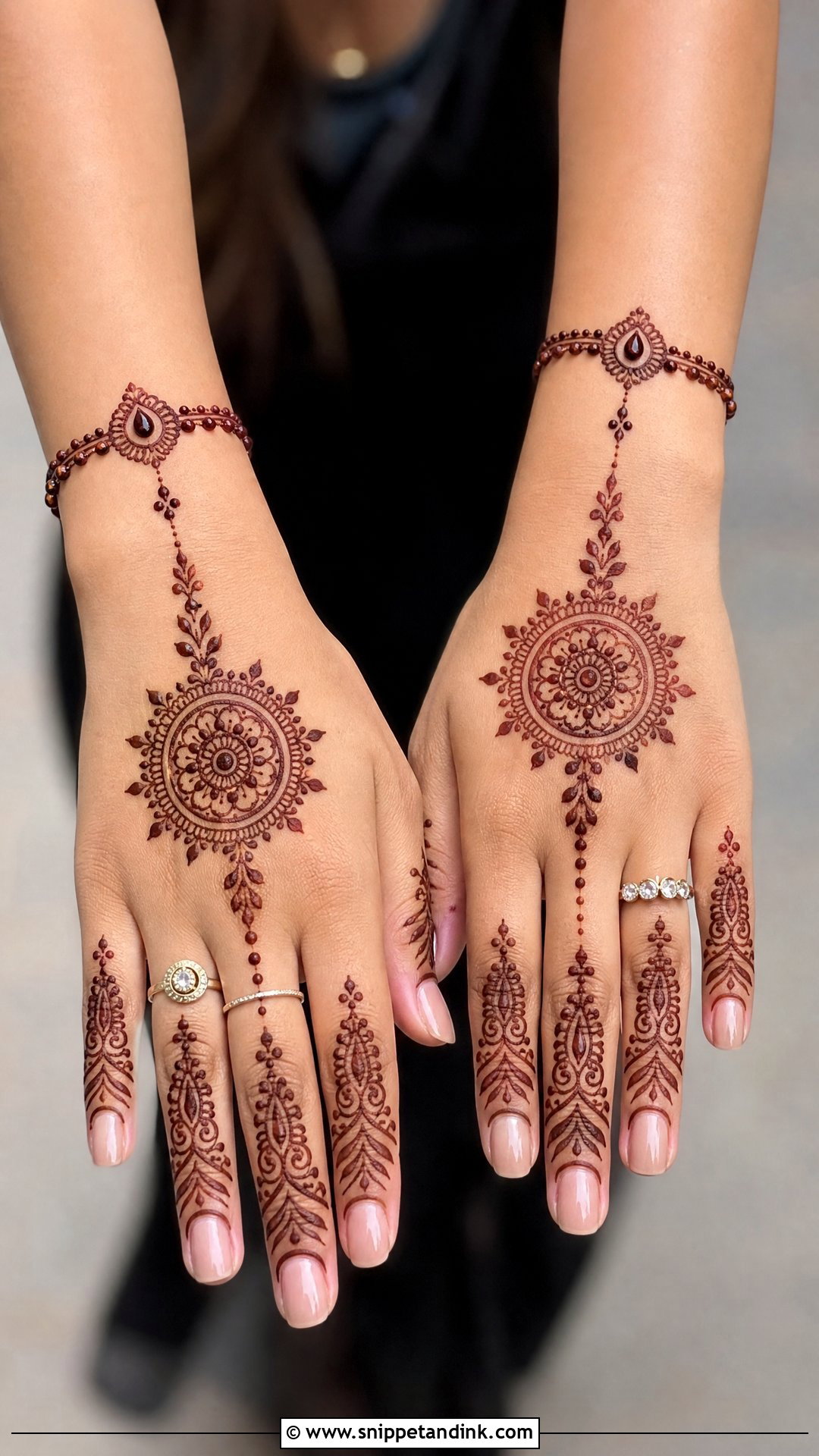
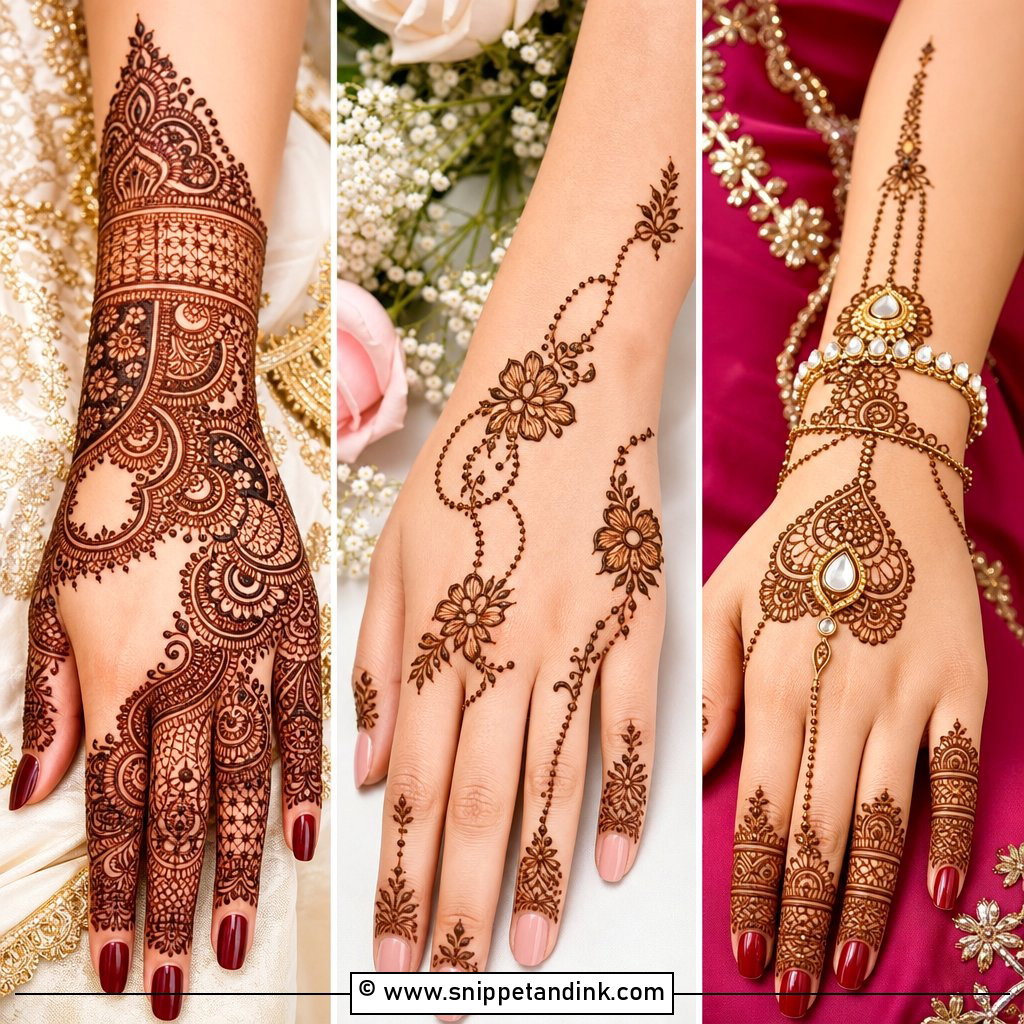
A haathphool is hand jewelry drawn in henna: a wrist bracelet linked to one or more finger rings by fine chain lines, with a central flower, mandala or jewel-shaped motif on the back hand. Weddings, Eid, Diwali and engagement functions all suit it, since it reads festive without heavy mehndi. The connecting chains must stay thin and the center motif clear, otherwise the jewelry effect collapses into an ordinary pattern. Open skin around the chains is what makes it look real.
23. Anklet Tattoo Mehndi Design
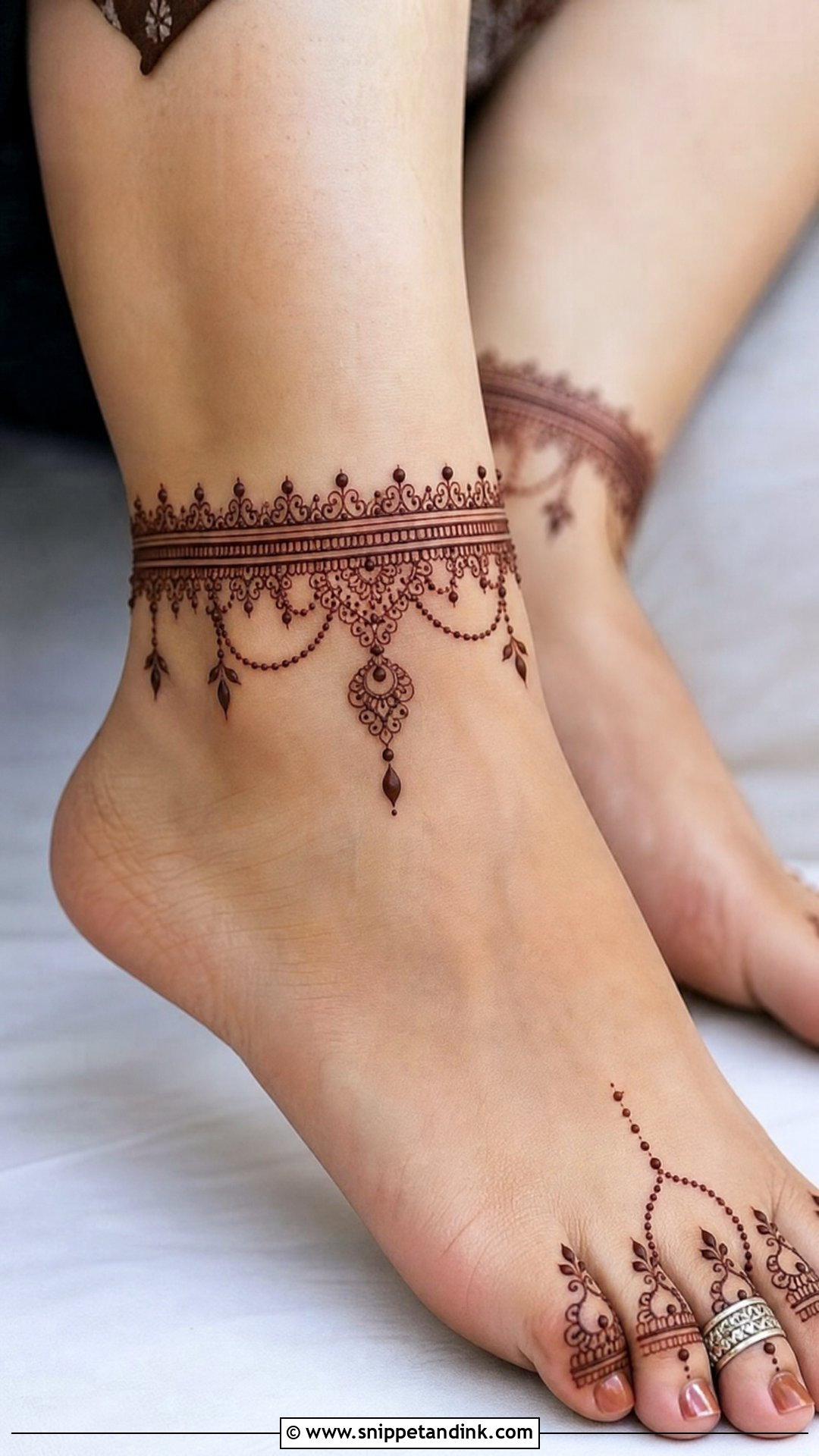
An anklet wraps the ankle like a payal, with small chains, dots, leafy charms and pendant drops, while the rest of the foot stays bare or carries a few toe rings and tiny florals. Bridesmaids, beach events, festive sandals and summer parties all suit it. Feet are one of the best places for henna color, almost as dark as palms, but they also take the most friction from straps. I ask clients to wear loose footwear for the first day so the band isn’t rubbed off at the back of the ankle. Keep the band even all the way round.
24. Foot Tattoo Mehndi Design
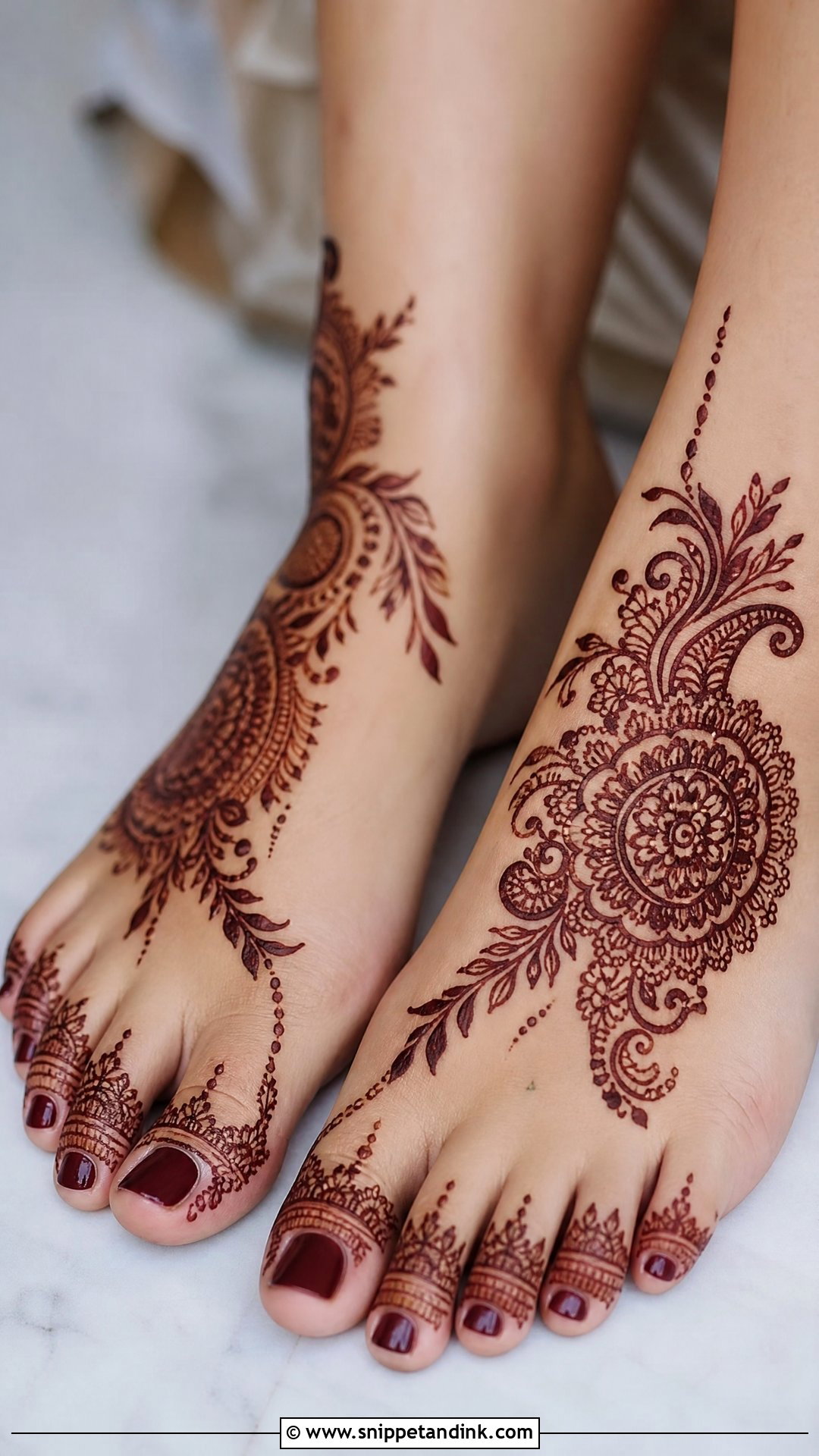
Instead of heavy bridal foot work, this sits on the top of the foot, near the toes, around the ankle or down one side. Flowers, vines, mandalas, paisleys and lace-like borders are the usual motifs, and the design has to follow the curve of the foot, which means I draw it with the foot resting flat on the floor, not raised. Light toe detail connects it all. Brides who want something graceful but not dense, and anyone in open sandals, are the usual fans.

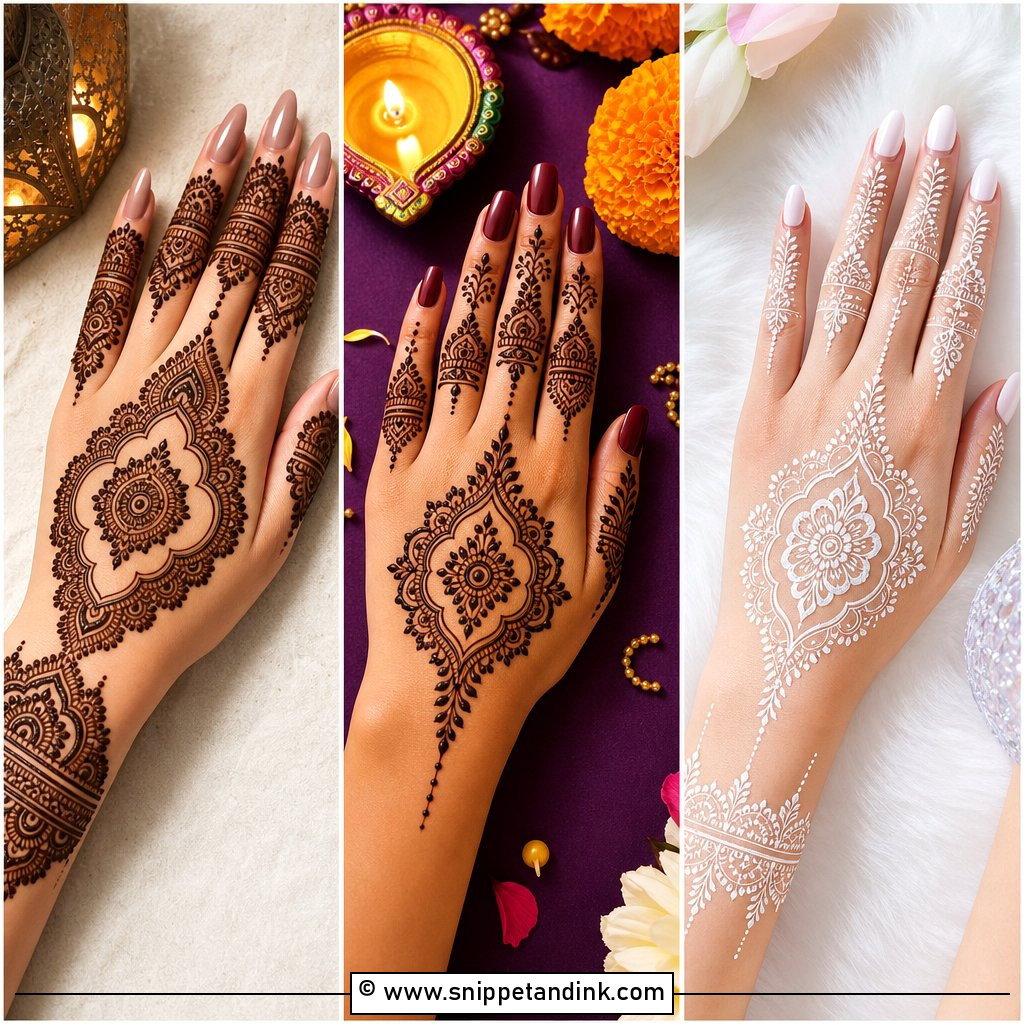
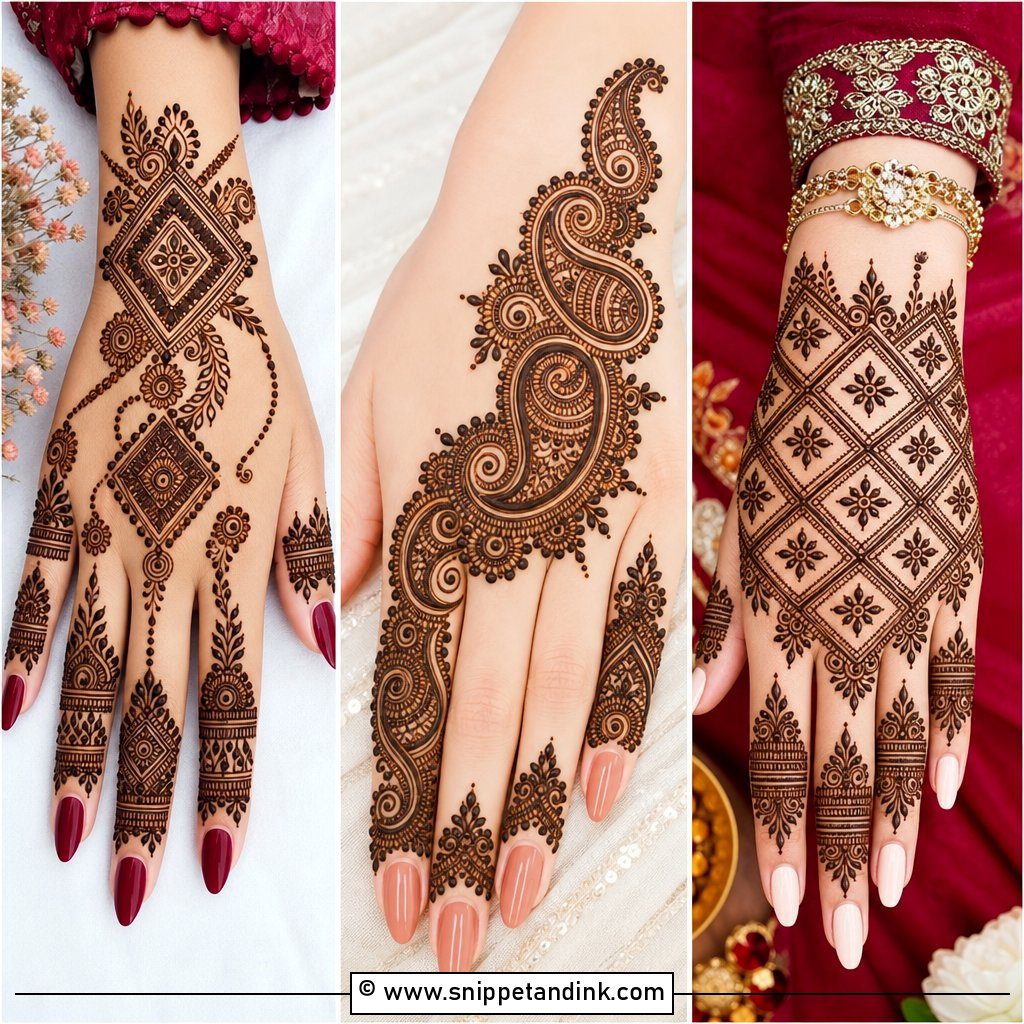
25. Shoulder Tattoo Mehndi Design
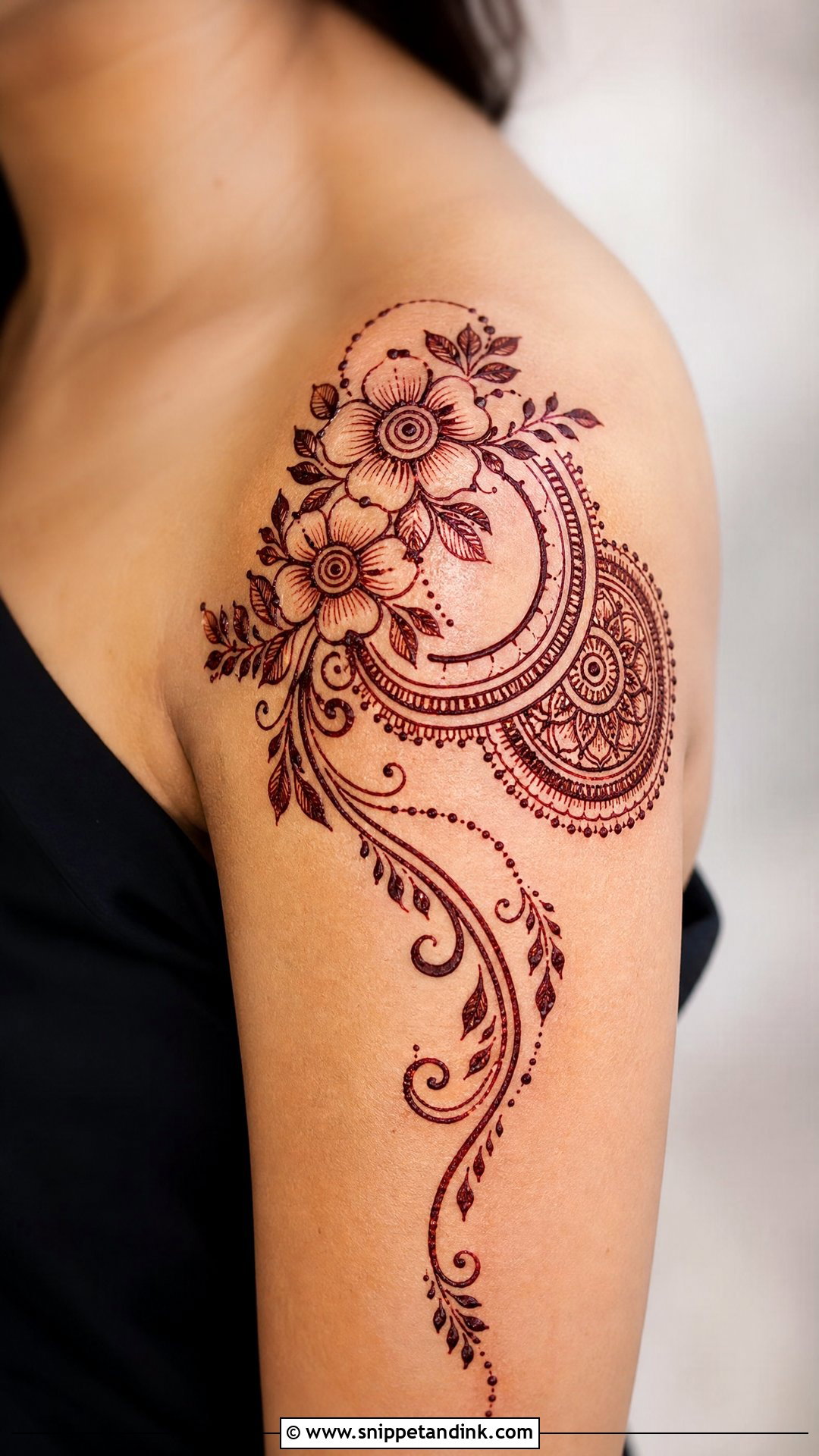
The shoulder is a smooth canvas for floral clusters, mandalas, leafy vines or ornamental arcs, but the design must wrap the curve rather than sit flat on it. I keep it medium-sized; large shoulder pieces start to look like a temporary tattoo sticker. Shoulder skin stains noticeably lighter than palms and fades faster, so bold outlines matter more than fine filling. It suits festive tops, saree blouses and fusion outfits. Wear a top that leaves the shoulder clear until the paste comes off, or the fabric will lift half of it.
26. Neck Tattoo Mehndi Design
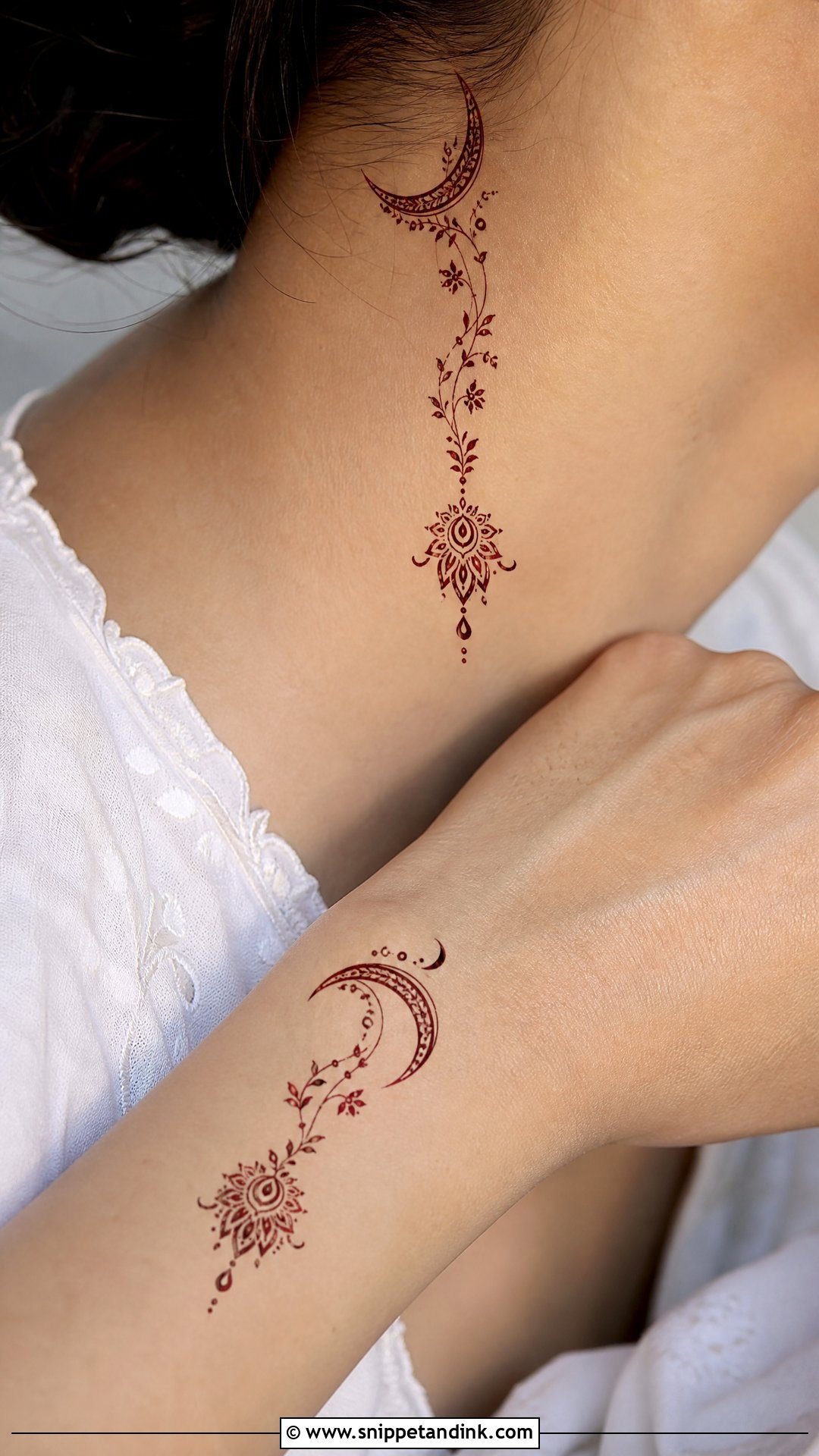
Neck henna works on the side or back of the neck as a small floral vine, mandala drop, crescent or ornamental motif. It has to stay minimal: dense patterns look heavy there and the stain is light anyway. The real problem is hair and collars. Loose hair brushes wet paste, so I pin hair up before starting and ask you to keep it up until the paste is off. Parties, music nights and modern outfits with open necklines suit it, and a small matching wrist or finger piece ties it together.
27. Moroccan Tattoo Mehndi Design
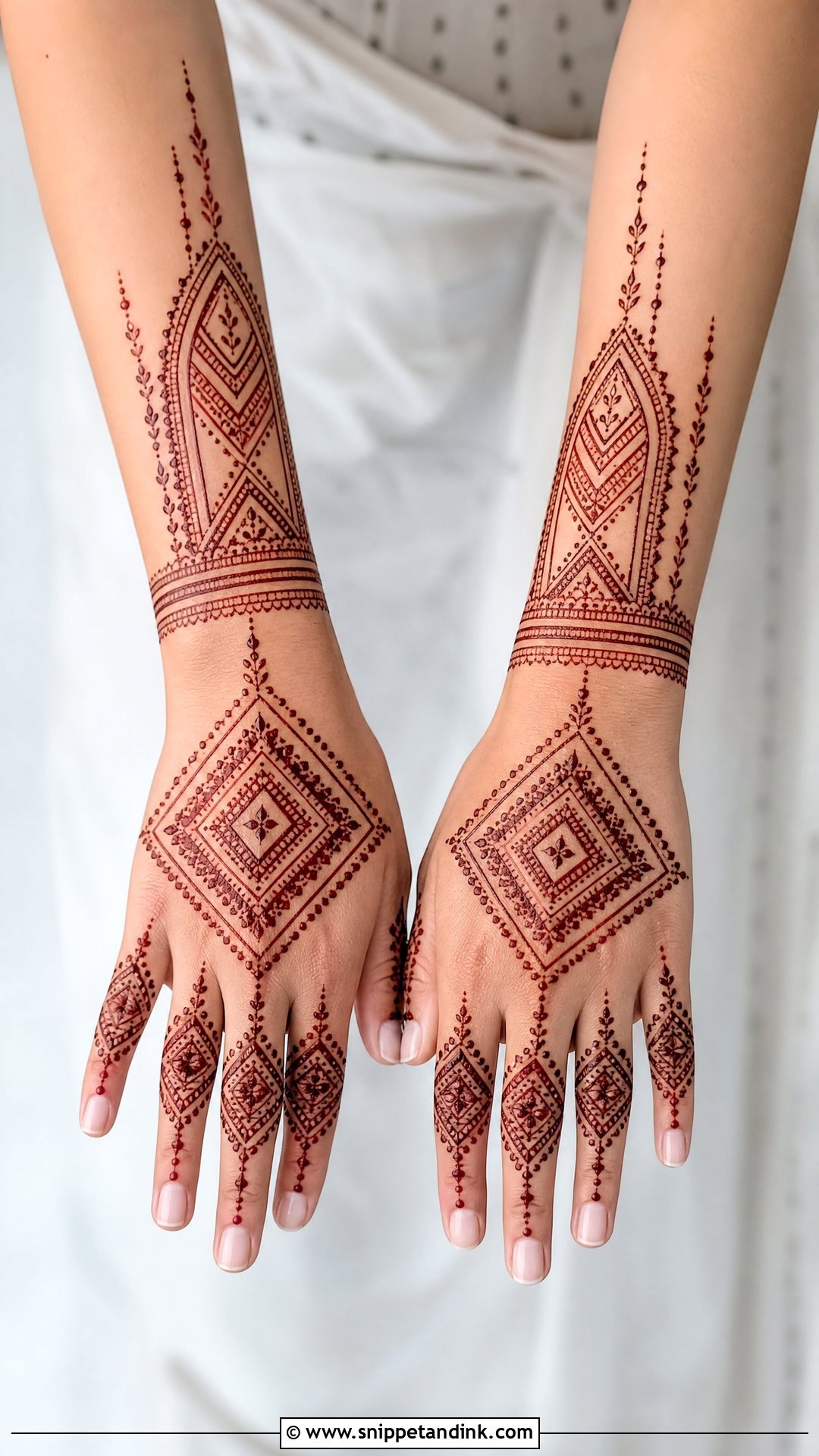
Moroccan henna is made of bold geometry: straight lines, diamonds, grids and tribal-style symmetry. It sits apart from floral Indian and Arabic work, so it suits anyone after something less expected. The back hand, wrist, forearm and feet all show it well. Repeating shapes need clear, even spacing, and small dots or border lines can soften the structure without breaking it. Plain outfits and silver jewelry are its natural partners.
28. Gulf Tattoo Mehndi Design
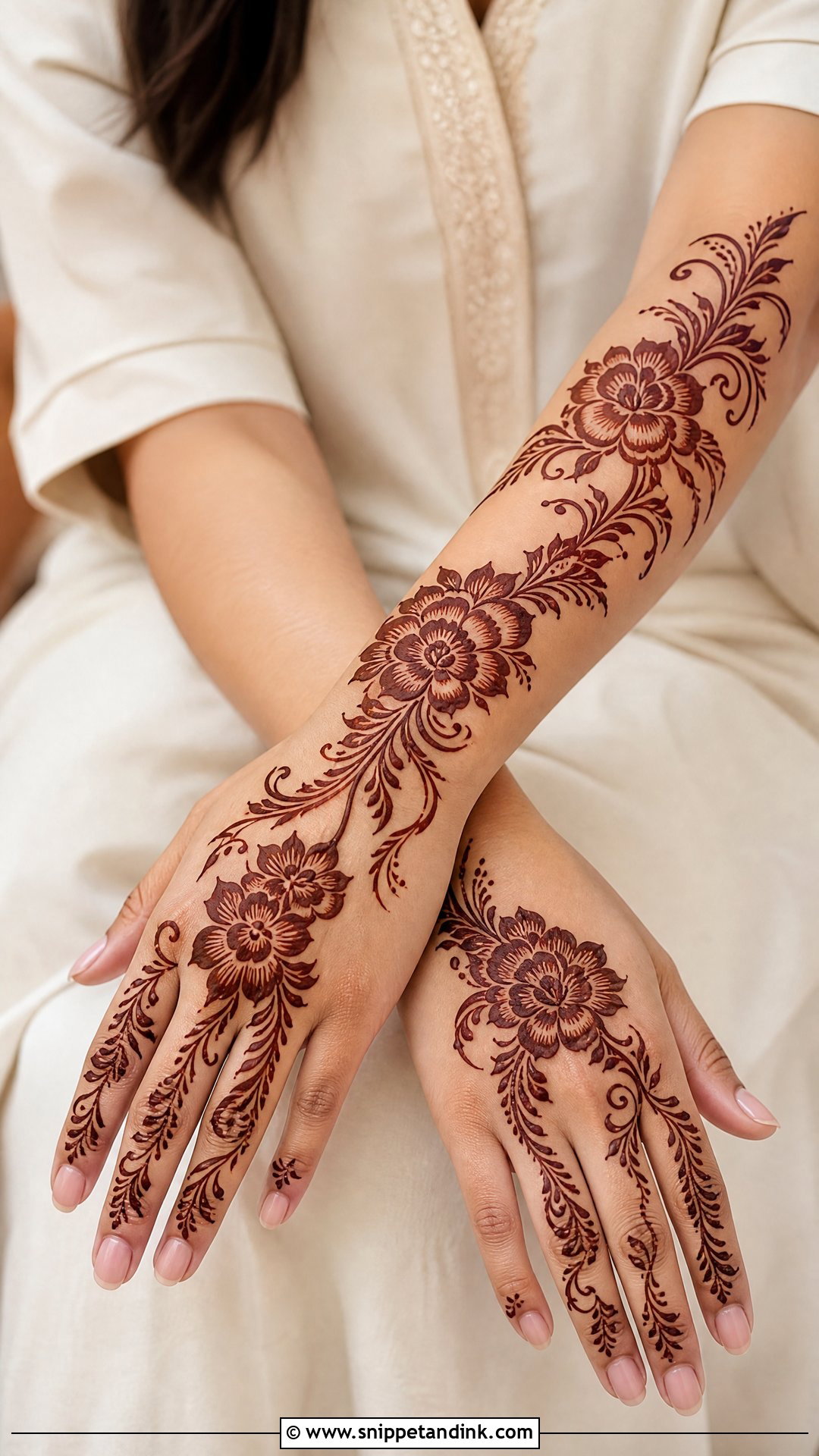
A Gulf tattoo mehndi design, also called Khaleeji-inspired mehndi, relies on bold florals, flowing vines, leafy clusters and wide open spaces. Large flowers with shaded petals create the drama, and the empty skin keeps it from feeling packed, which is why it adapts so well to the tattoo look. Back hand, palm, wrist and forearm all work. The shading comes from thinning the paste toward one edge of each petal. Thick outlines for the main shapes and fine inner strokes for detail make it read clearly for Eid, weddings and festive gatherings.
29. Indo Arabic Tattoo Mehndi Design
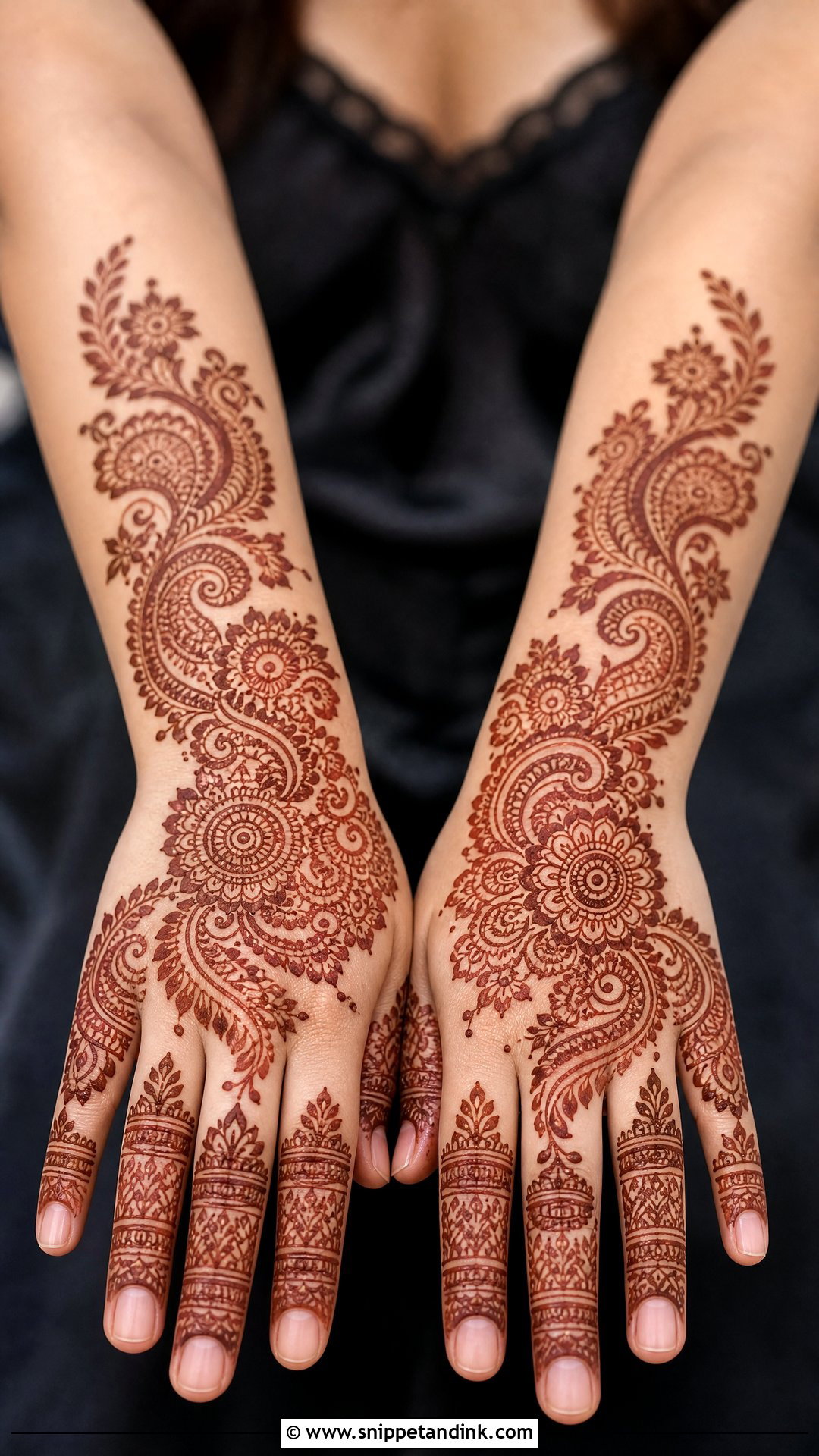
Somewhere between simple Arabic and full bridal sits Indo-Arabic: floral trails, paisleys, mandalas, leafy borders, finger bands and delicate filling in one design. I place it diagonally across the hand or build it from the wrist up to the fingers. Central motifs stay bold, smaller details stay neat. It’s the balance option for weddings, festivals and family celebrations.
30. Modern Tattoo Mehndi Design
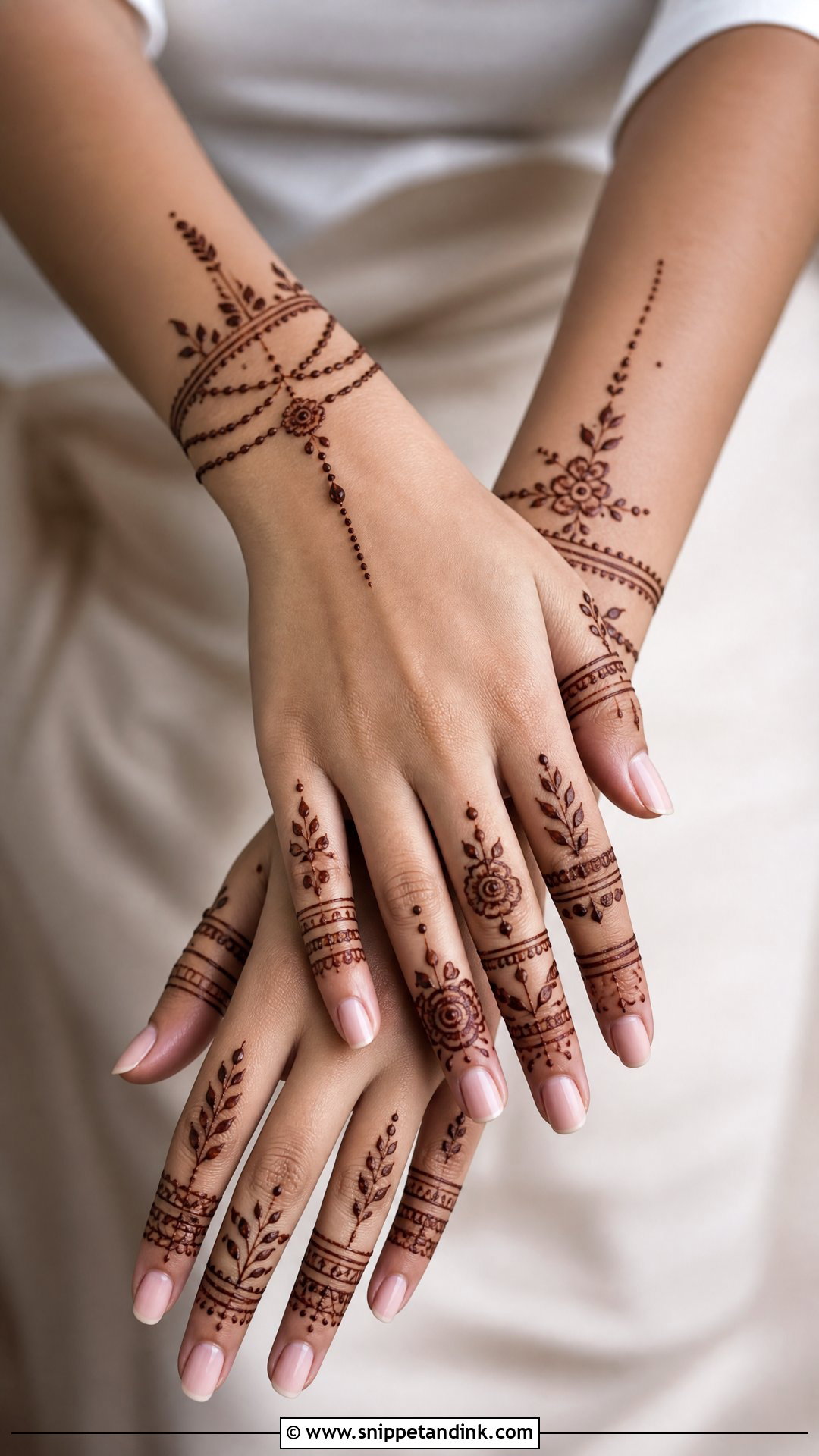
Modern tattoo henna is about personal expression more than tradition: abstract lines, small florals, geometric bands, negative space, finger rings and wrist chains. It can be soft and minimal or bold and structured depending on your outfit and occasion. My advice is to pick one placement first, the back hand, wrist, forearm or fingers, and build outward from it, giving every element room. Designs planned that way still look considered once they fade, which is when a crowded modern piece starts to look messy.
Bringing a Real Tattoo Photo to Your Henna Artist
Plenty of people show me a photo of an ink tattoo and ask for it in henna. Most of the time I can get close, but the two media behave differently, and it helps to know what changes.
Solid black fills
Henna paste laid in a large solid block dries, cracks and stains unevenly, so wide filled areas come out patchy. I turn them into outlines with fine hatching or dot shading.
Very fine linework
The thinnest lines a tattoo needle makes are finer than most cones will hold reliably on skin. I scale small designs up a little so the lines don’t disappear or merge as the stain develops.
Lettering and initials
Keep letters large and well spaced. Small script fills in at the loops, and an e can turn into a dot by the second day.
Wanting It Darker Than Henna Goes?
If you’re after a near-black, ink-like color, ask about jagua, a gel made from a tropical fruit that stains blue-black over a day or two. It’s a genuine plant-based option, though some people do react to it, so a small patch test a couple of days before is sensible. What you should never accept is black henna. Pure henna cannot stain black, and paste sold that way often contains PPD, a hair dye chemical that can blister and scar skin and leave a lasting allergy.
Which Placement Will You Actually Show Off?
Tattoo-style henna gives you body-art placement with a stain that fades in a week or two, so it’s a low-risk way to try something new. Wrist bands, Arabic trails, mandalas, florals, finger rings, anklets and geometric pieces all have a place, and the right one depends on your comfort, outfit, hand shape and event. Settle on where you want people to look, then pick the design to fit that spot. Keep the lines clean, give the paste enough time on the skin, and plan for the stain to deepen over the following two days.
You'll Like These Ideas:




Leave a Reply