
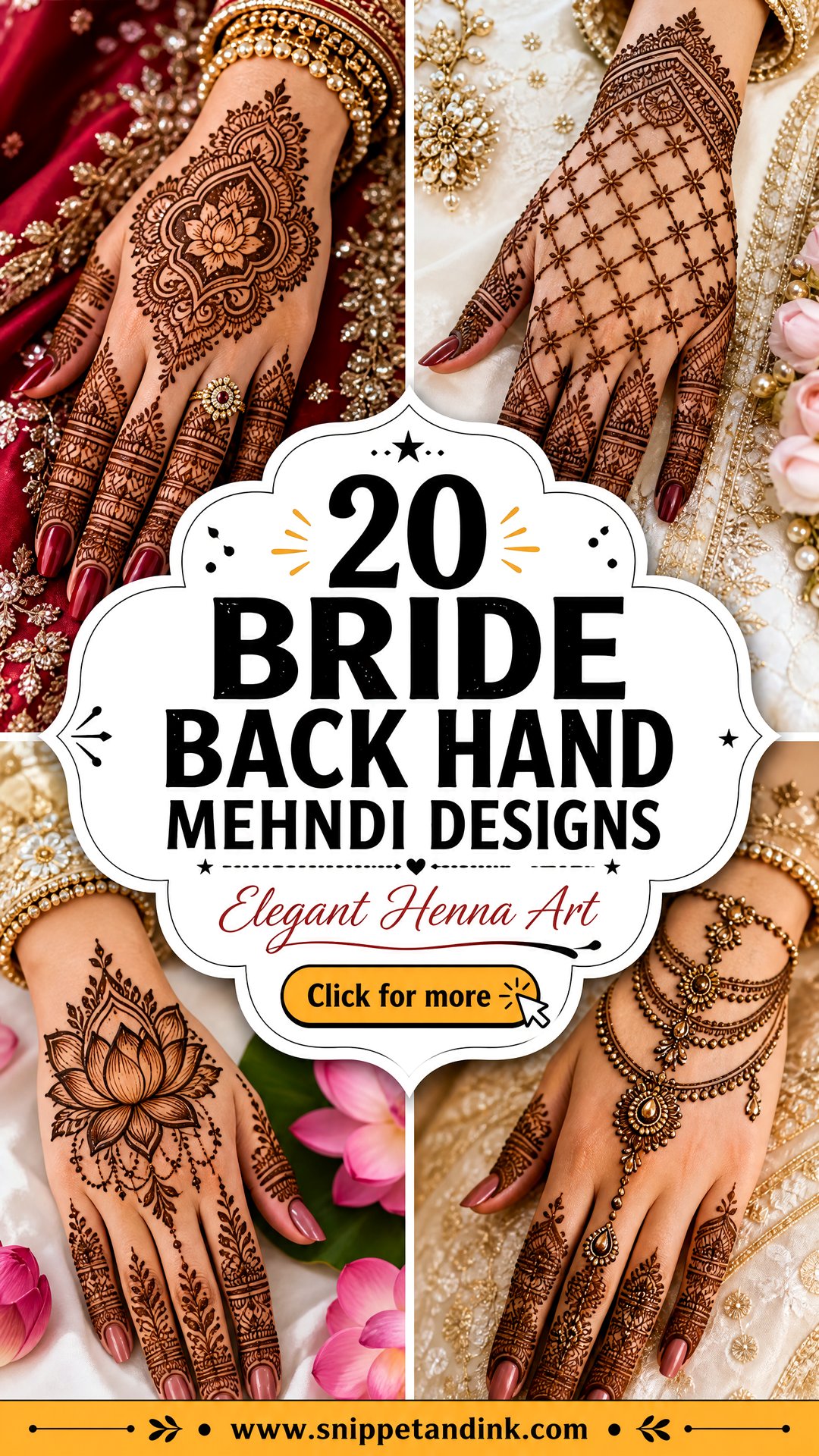
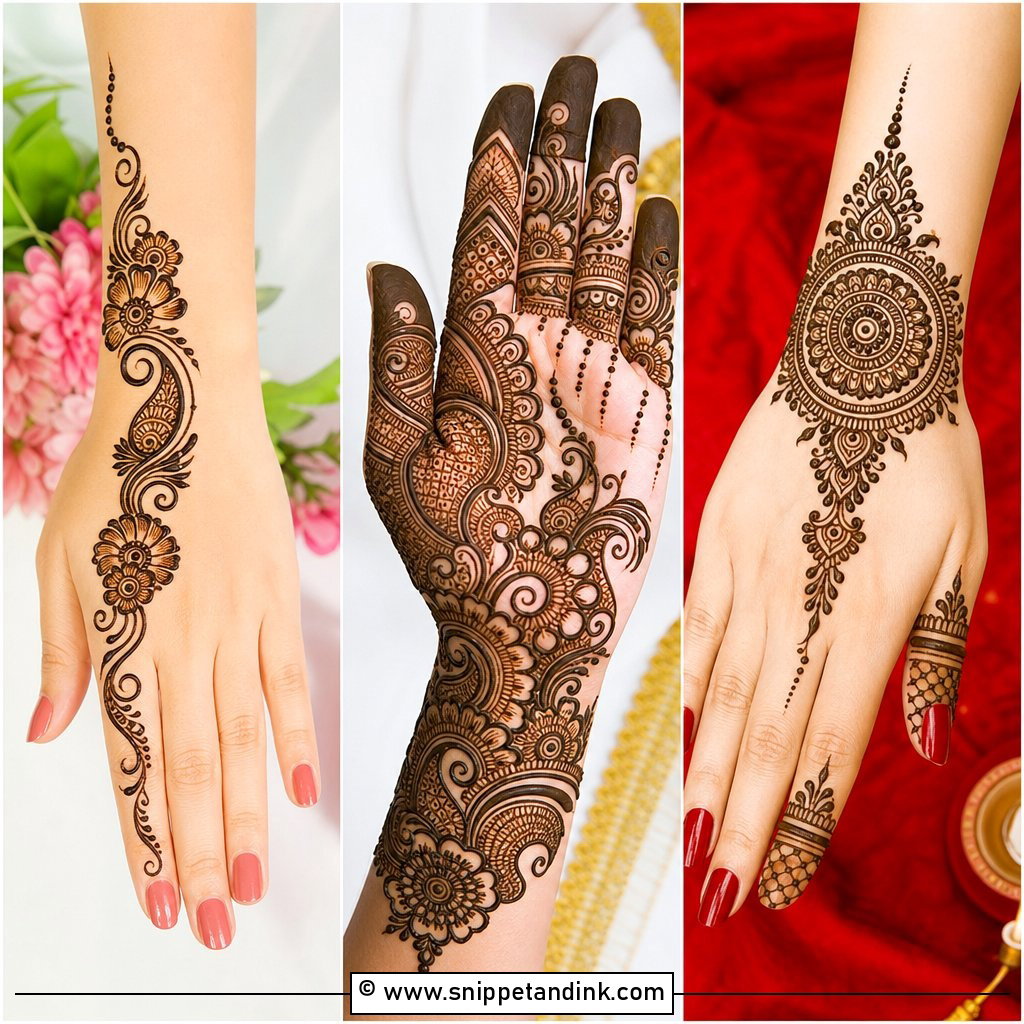
The back of the hand is what everyone sees. Palms show up in the mehndi photos, but for the rest of the wedding it’s the backs of your hands holding the bouquet, resting on a lap, lifting a veil, wearing the rings. That’s why I plan the back-hand design with as much care as the palm, even though it’s the harder surface to stain. Below are 20 back-hand ideas for picture-perfect henna, from dense Indian work to Moroccan geometry and a single bracelet cuff, with notes on how each sits around the knuckles, the wrist bone and your jewellery.
Why This Side of the Hand Stains Paler
Henna stains thick, warm skin most deeply. The palm and fingertips have the thickest skin on the hand, so they come out darkest. The back of the hand has thinner skin, and the stain there settles a shade or two lighter. It isn’t a fault of the paste or the artist. It’s simply how henna works.
I design around that. On the back of the hand I use slightly thicker main lines, keep the darkest filling for the fingertips and leave fine shading for places where a softer tone looks intentional. A few habits on your side help too:
- Arrive with clean, dry hands, with no lotion, oil or self-tan on them.
- Skip waxing or scrubbing the hands for a day before, so the skin isn’t irritated.
- Keep the paste on for as long as you can, overnight if possible.
- Stay warm while it sets; cold hands stain more weakly.
Expect the back of your hands to look orange when the paste comes off. Over the next day or two it deepens to brown or maroon, and it usually reaches its darkest on the second day.
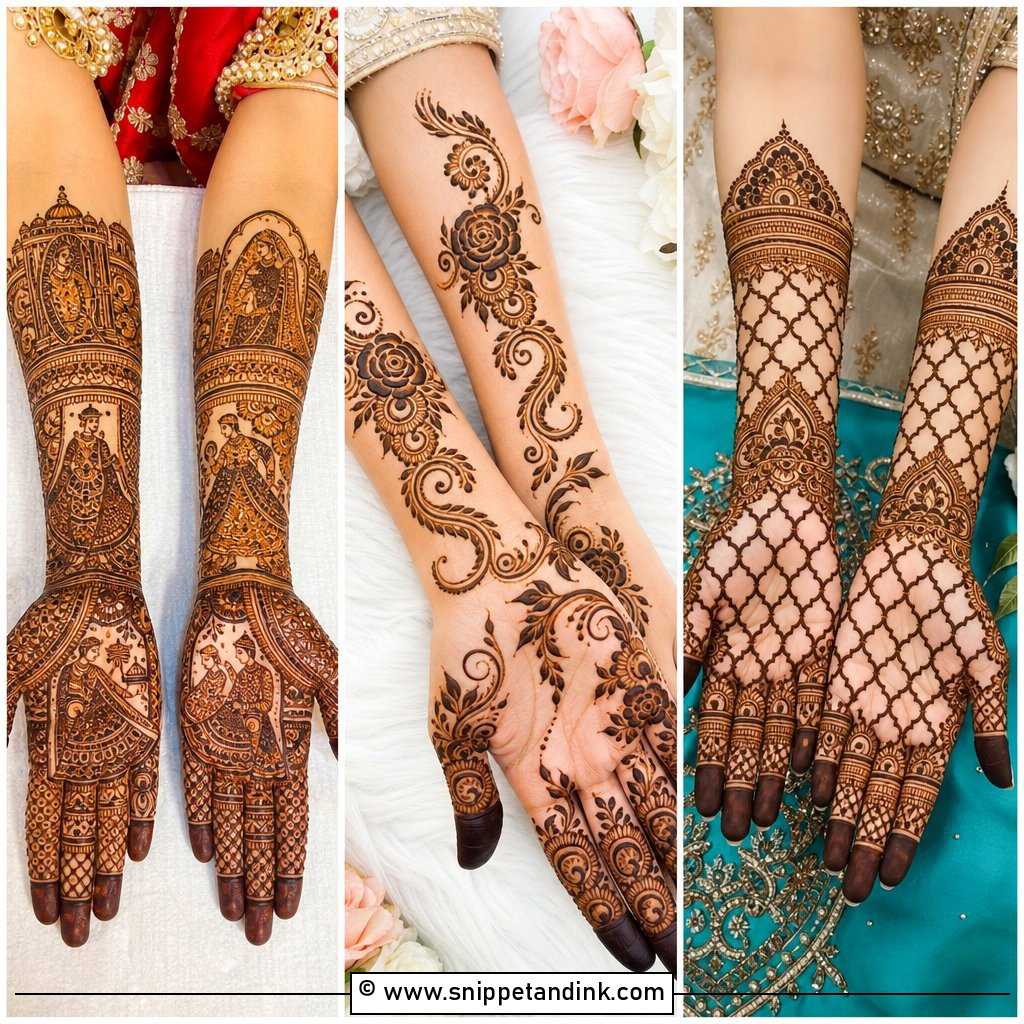
1. Full Hand Bridal Back Hand Mehndi Design
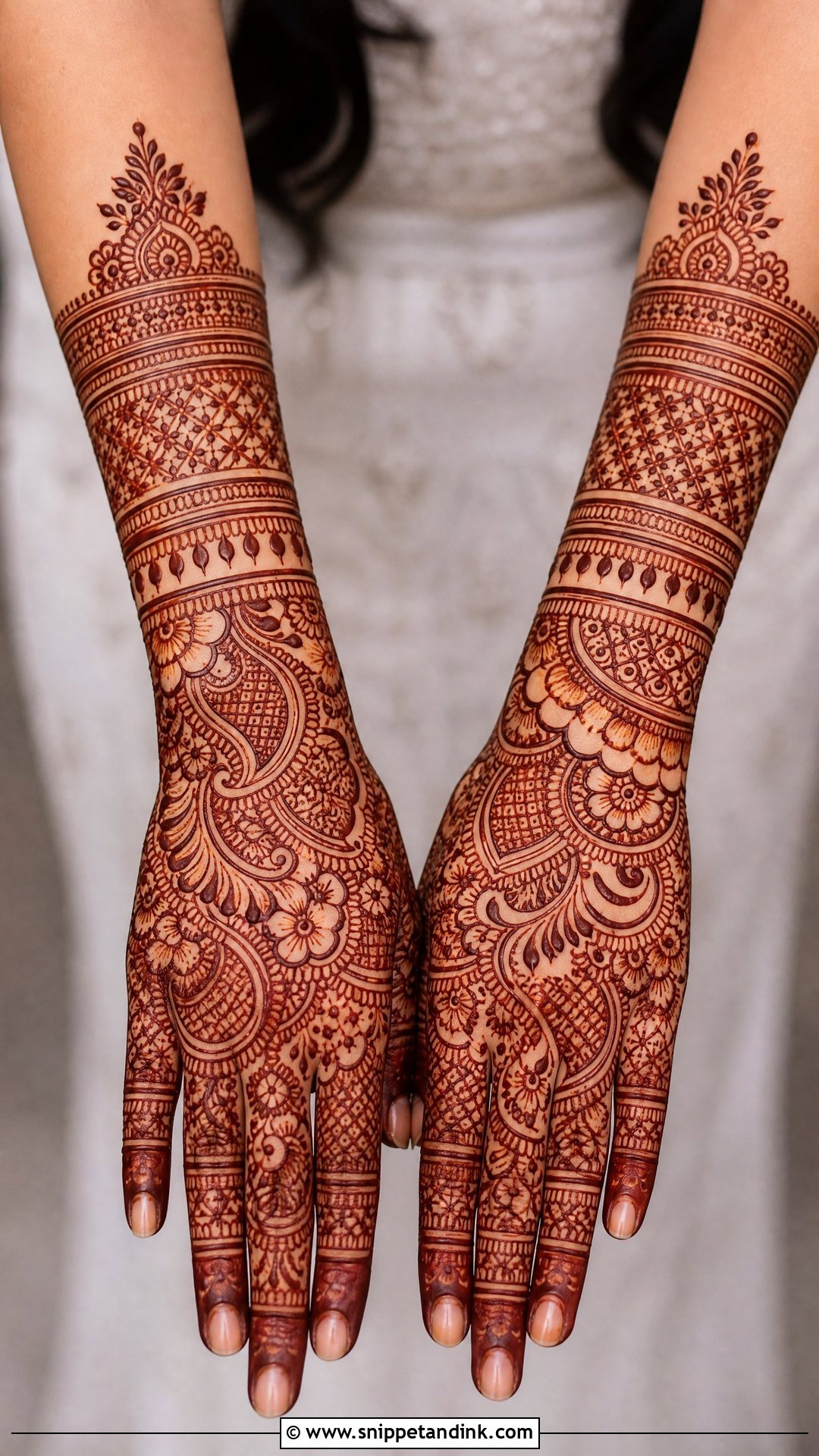
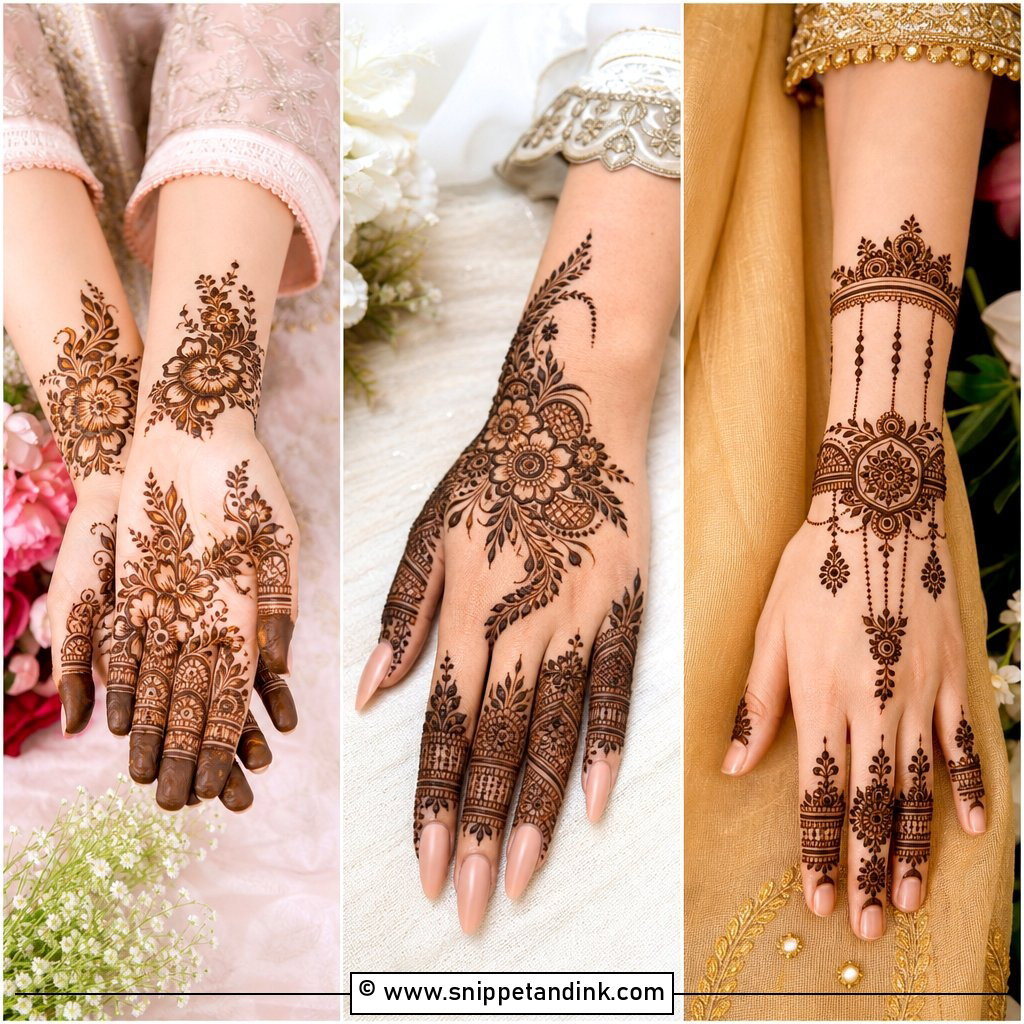
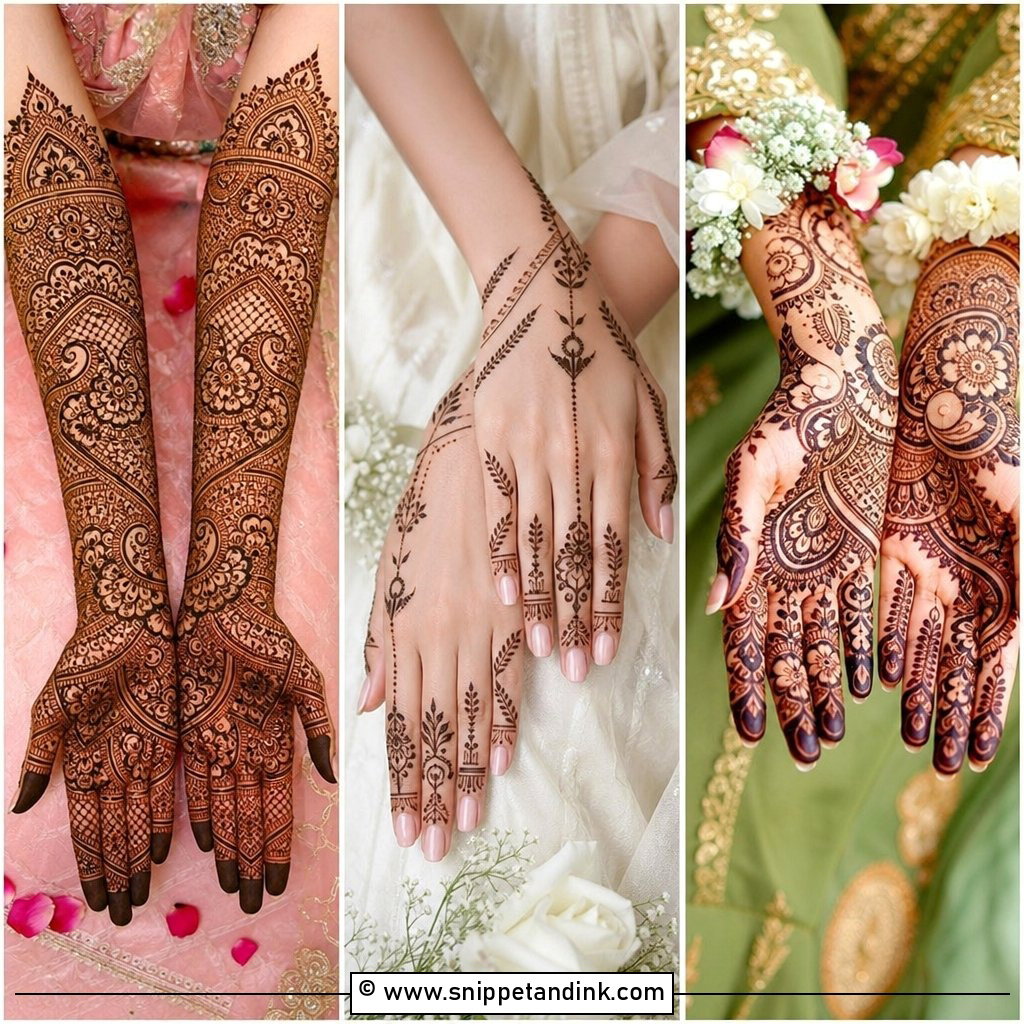
Full coverage runs from the fingertips over the whole back of the hand to the wrist or forearm, with paisleys, florals, leaves, curved borders, fine fillers and detailed fingers. The versions that look best still leave small gaps of skin between sections. Without them, the design reads as one dark patch from a few feet away. I plan the layout around the knuckles so the bends fall between motifs, not through the middle of a paisley. It pairs naturally with bangles and kaleeras, and a hidden name or initial can sit inside one of the paisleys.
2. Arabic Bridal Back Hand Mehndi Design
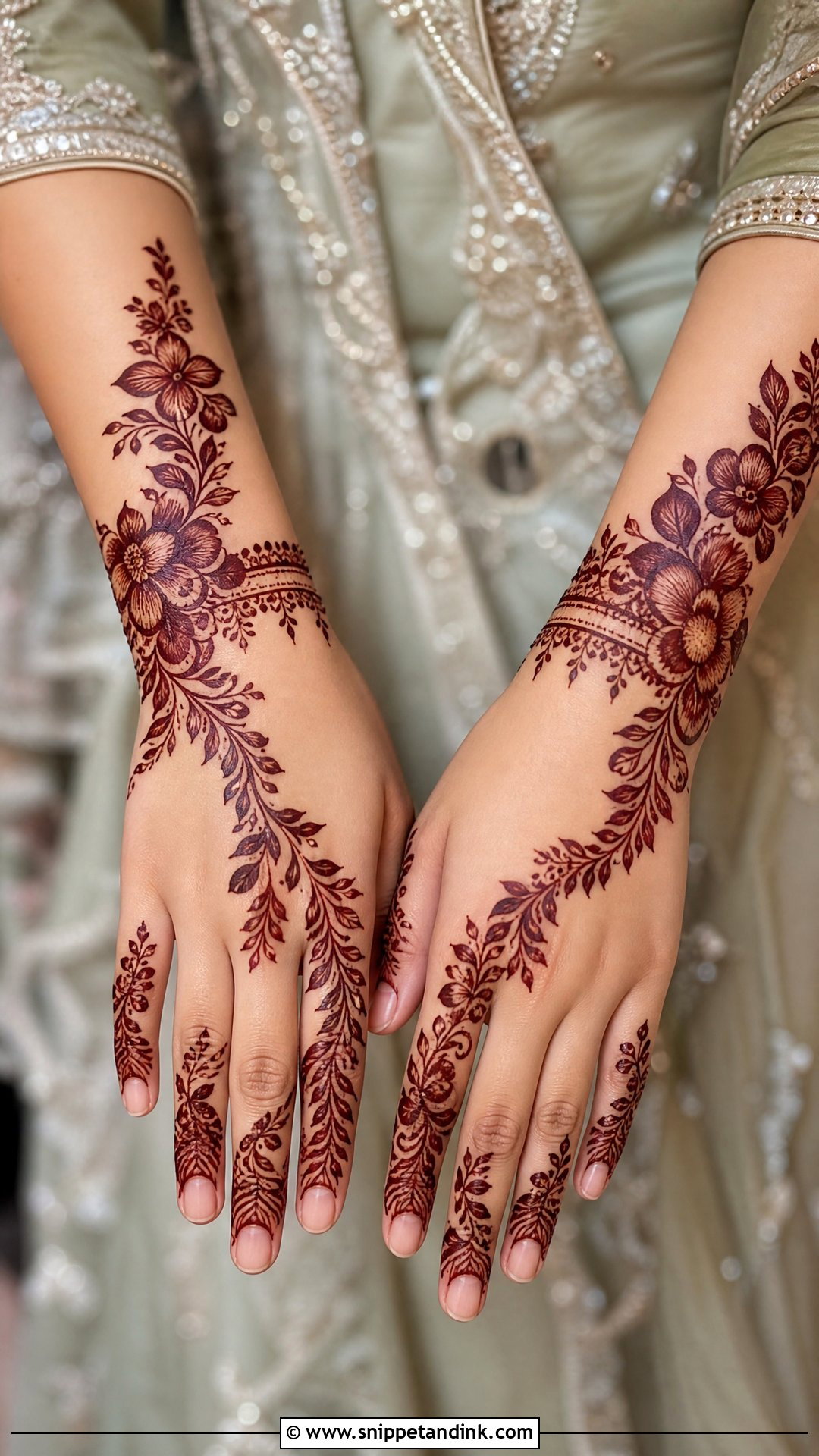
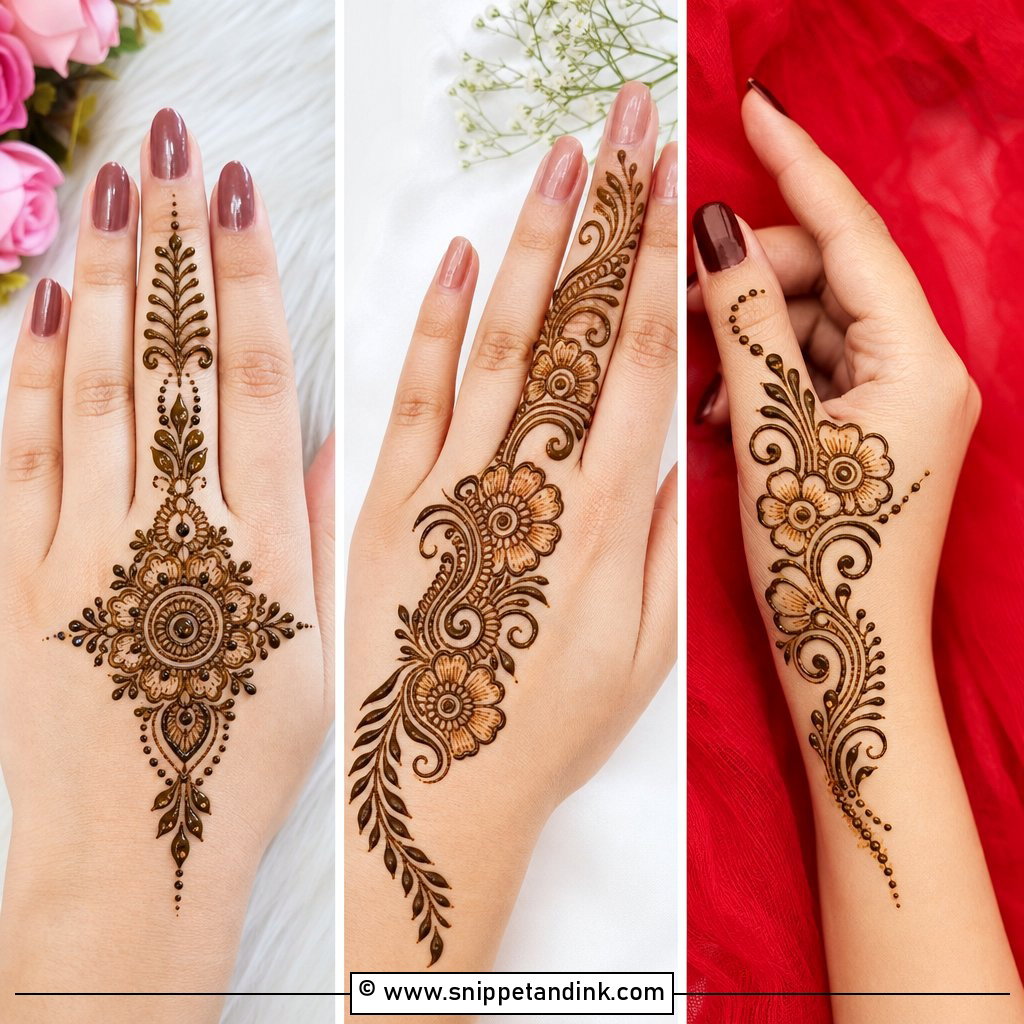
Arabic back-hand work runs on a diagonal: a trail starts at one side of the wrist and climbs across the hand toward the fingers, with large flowers, leafy vines, shaded petals and plenty of open skin. Because the back of the hand stains lighter than the palm, bold Arabic outlines are a smart match; they still read clearly when the colour is softer. On its own it can look like guest mehndi, so I finish the bridal version with detailed fingertips and a bracelet band at the wrist.
3. Indian Bridal Back Hand Mehndi Design
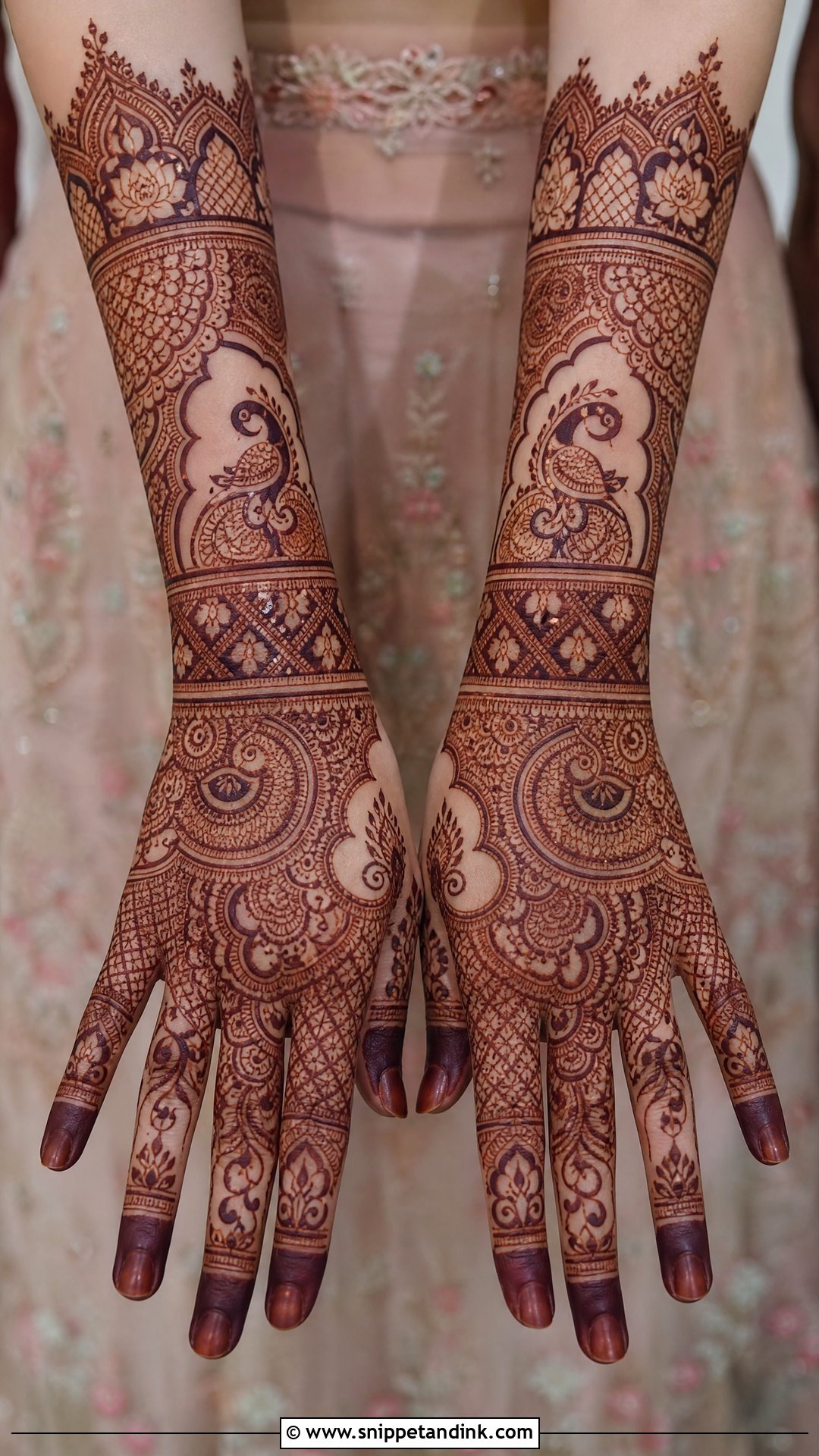
Traditional Indian work fills the back of the hand with peacocks, paisleys, lotus, mandalas, vines, jaali and tiny repeated fillers, often from the nails to the forearm. The fingers each get their own pattern, and a bold central motif holds the layout together. It takes time, and it suits big formal ceremonies. Initials or a date can hide in the filling. One honest warning: very fine filler on the back of the hand can come out faint, so I keep the filler around the main motif slightly bolder than I would on a palm.
4. Indo Arabic Bridal Back Hand Mehndi Design
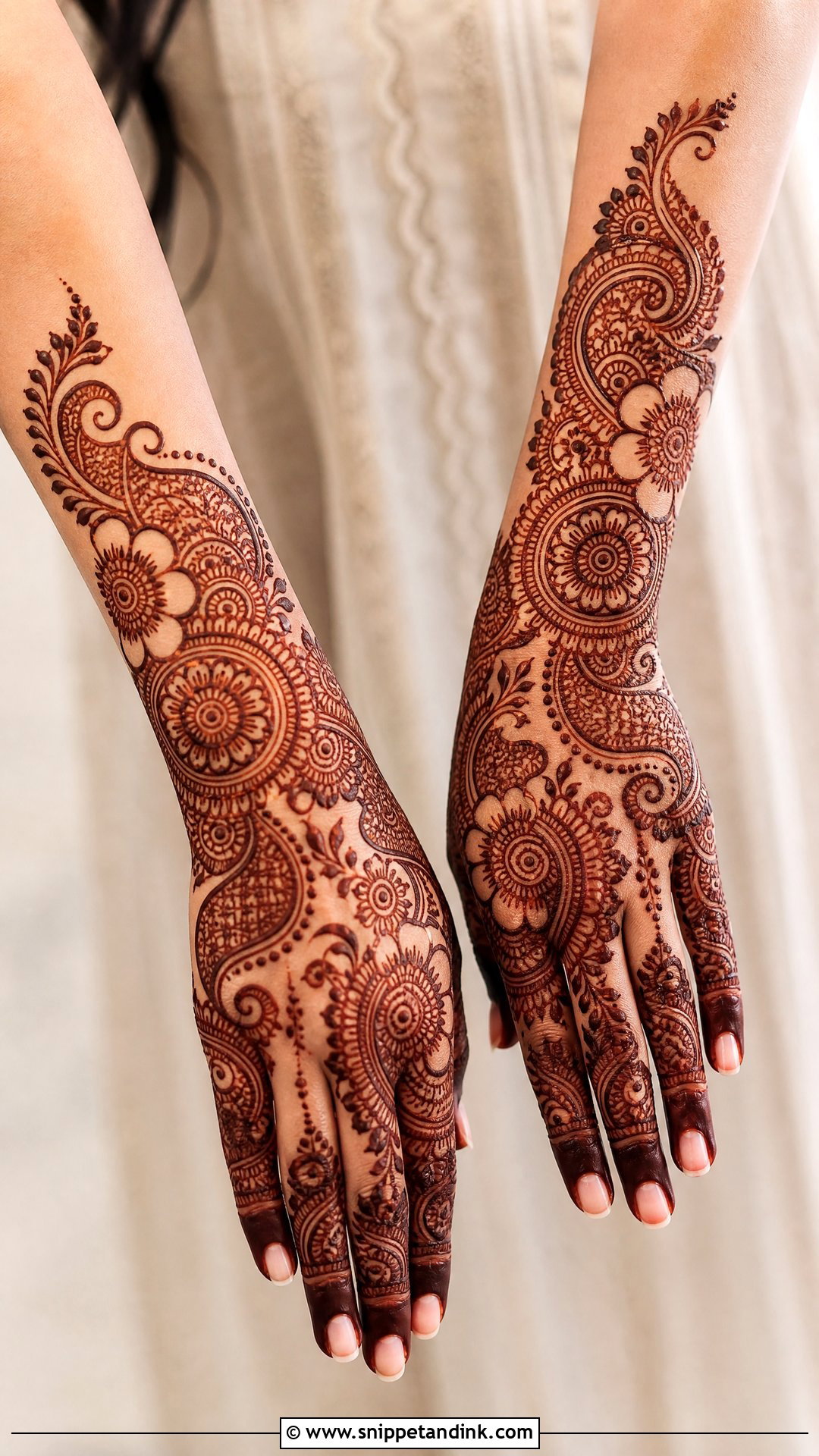
Indo-Arabic blends Indian density with the open flow of Arabic patterns. Bold flowers, paisley trails, a mandala centre and leafy vines carry the design, and Indian-style fillers go only into selected areas. The open skin keeps it from feeling crowded, which is why I recommend it on smaller hands that still need plenty of detail. I sketch the trail from wrist to finger first, then mirror the finger details on the other hand so both look planned as a pair.
5. Mandala Bridal Back Hand Mehndi Design
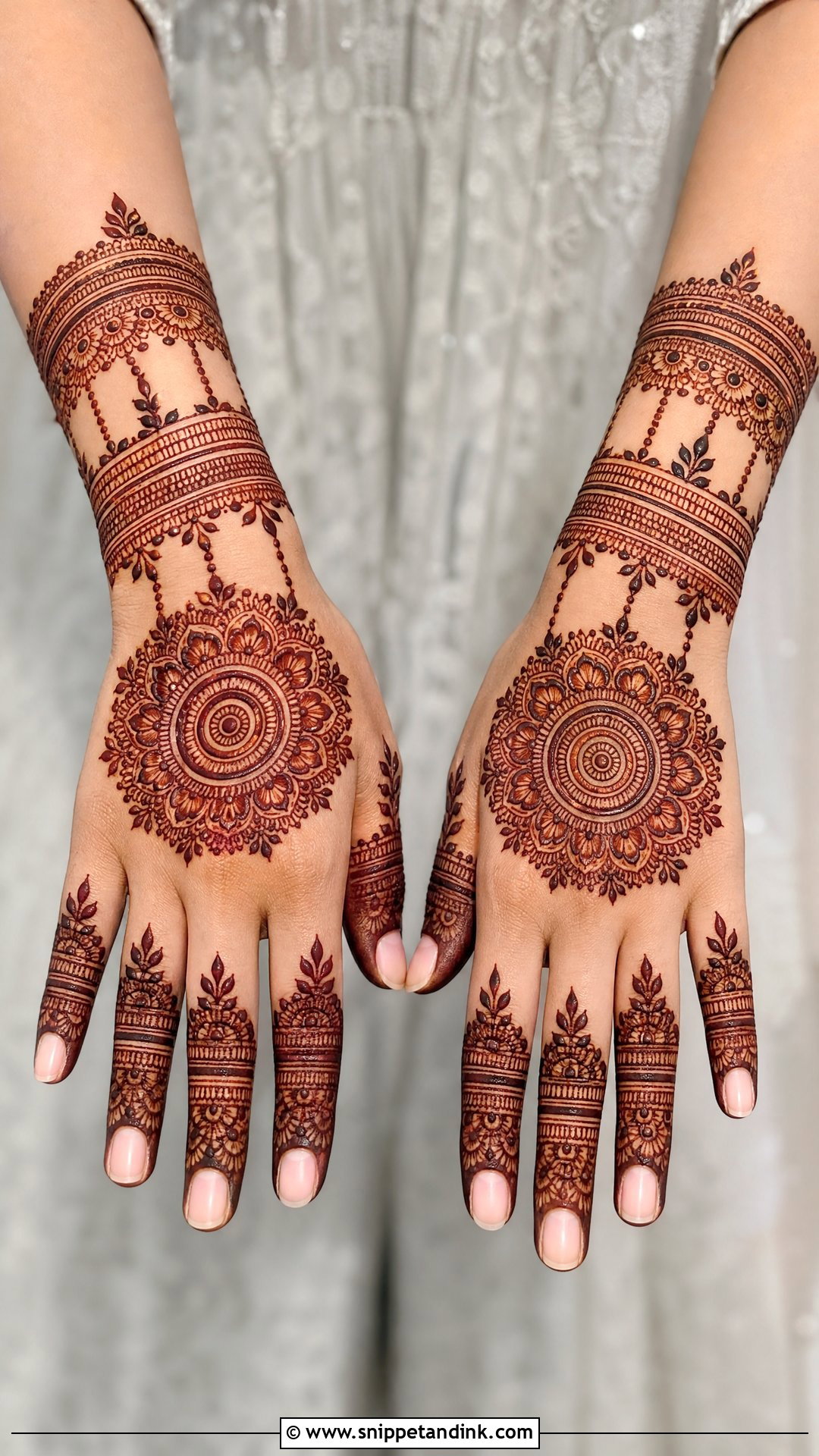
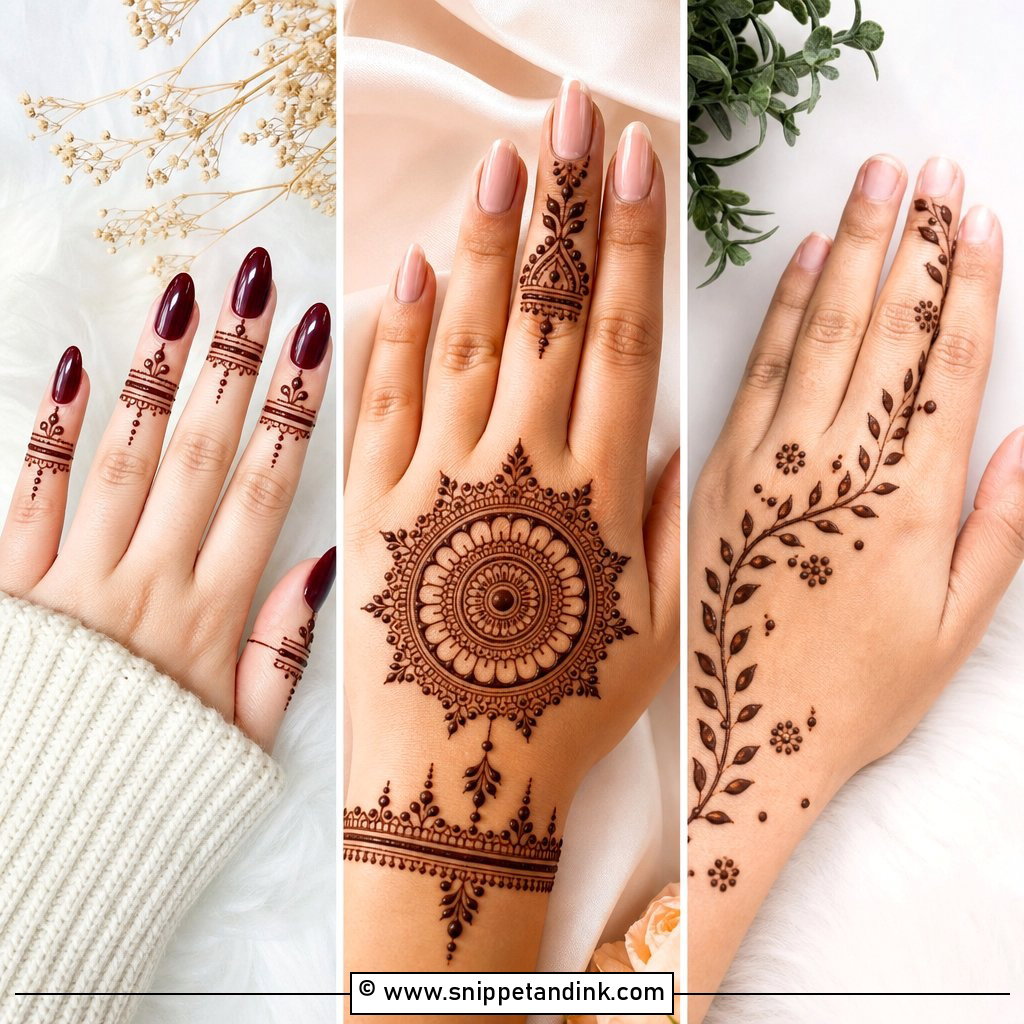
A mandala gives the back of the hand a centre. The circle sits just behind the knuckles, ringed by petals, dots and leaves, with bands or net patterns on the fingers and a bracelet border at the wrist. It’s for brides who like symmetry. The circle has to be properly round, which is harder than it looks on a curved surface, so I start from the centre point and build out ring by ring. A larger mandala suits long hands; on a small hand, one too big wraps around the sides and loses its shape in photos.
6. Floral Bridal Back Hand Mehndi Design
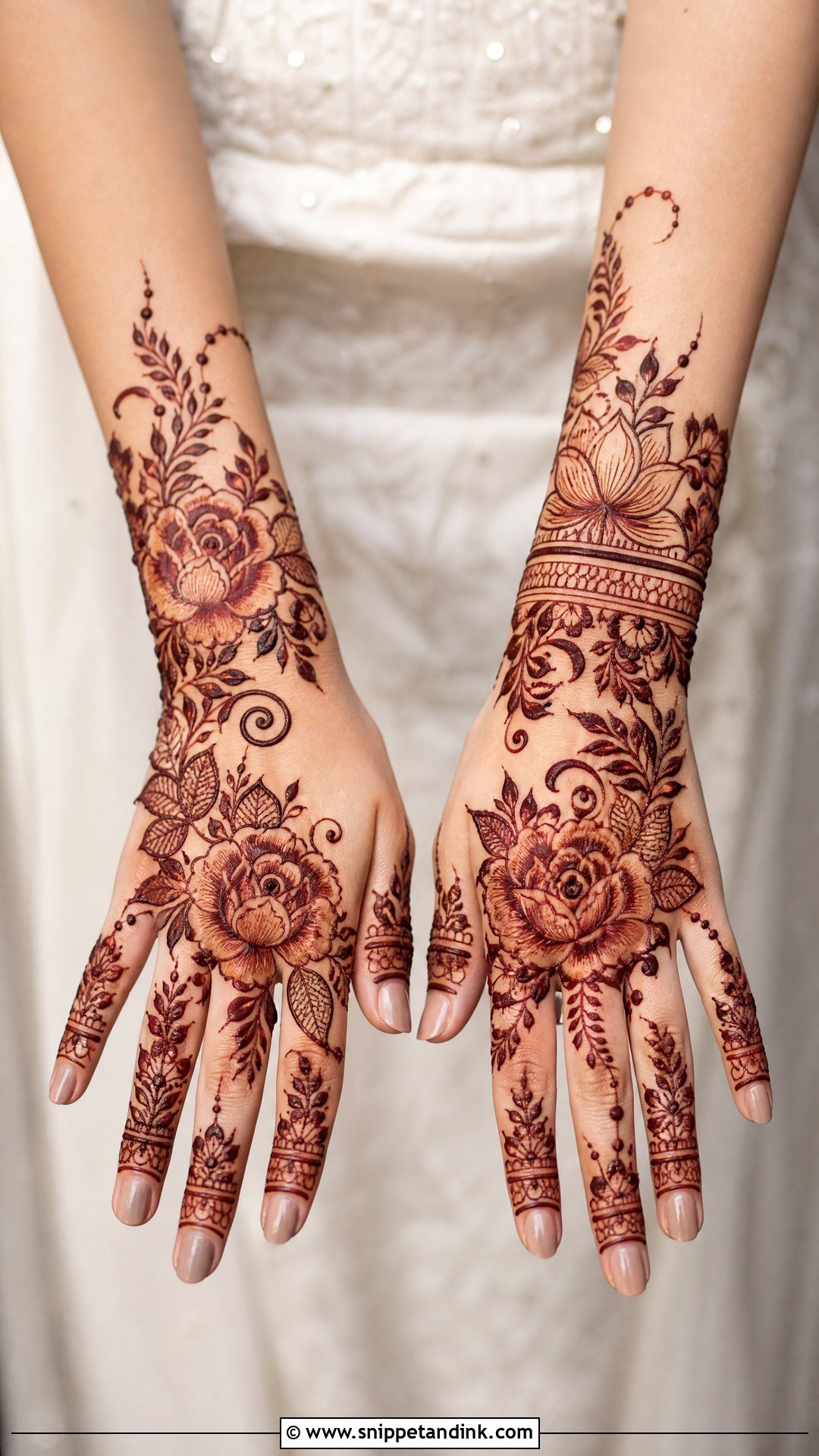
Florals soften the back of the hand, with roses, lotus, buds, leafy vines and shaded petals running diagonally or spread across the whole surface. The finger details need to grow out of the main floral line rather than sitting separately, or the hand looks like two designs stuck together. Shading inside petals stains in gentle tones, which suits the lighter colour you get on this side of the hand. Finish with a floral cuff at the wrist so it sits well under bangles.
7. Paisley Bridal Back Hand Mehndi Design
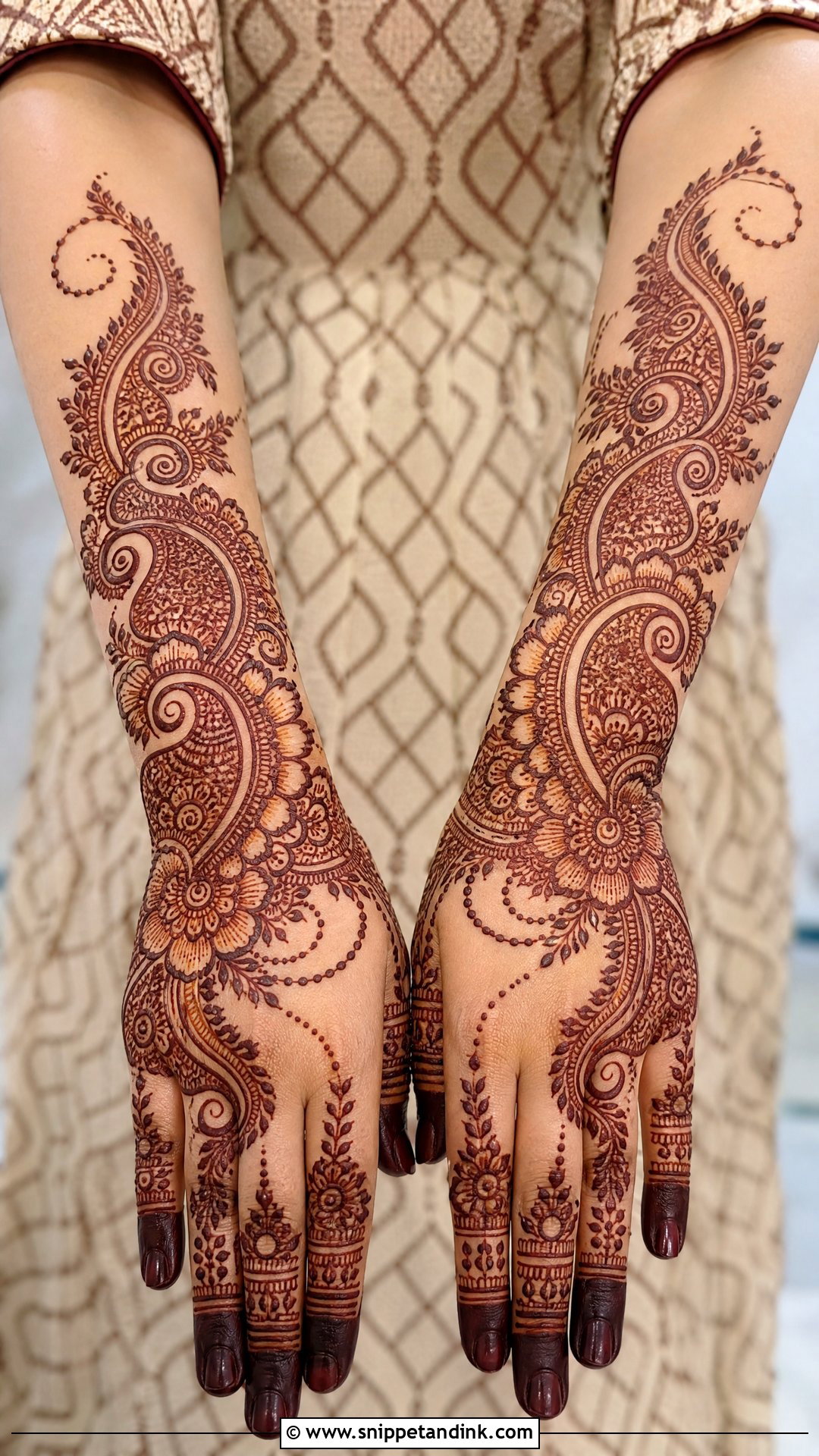
The paisley is shaped almost exactly like the back of a hand, which is why it’s been the core of bridal mehndi for so long. A large paisley sits in the centre and smaller ones travel toward the wrist and fingers, filled with petals, dots, checks, spirals or leaves. It suits Indian, Pakistani and Indo-Arabic outfits and doesn’t need portraits to feel bridal. I outline each paisley crisply and fill the fingertips solid; dark tips frame the whole design.
8. Jaali Bridal Back Hand Mehndi Design
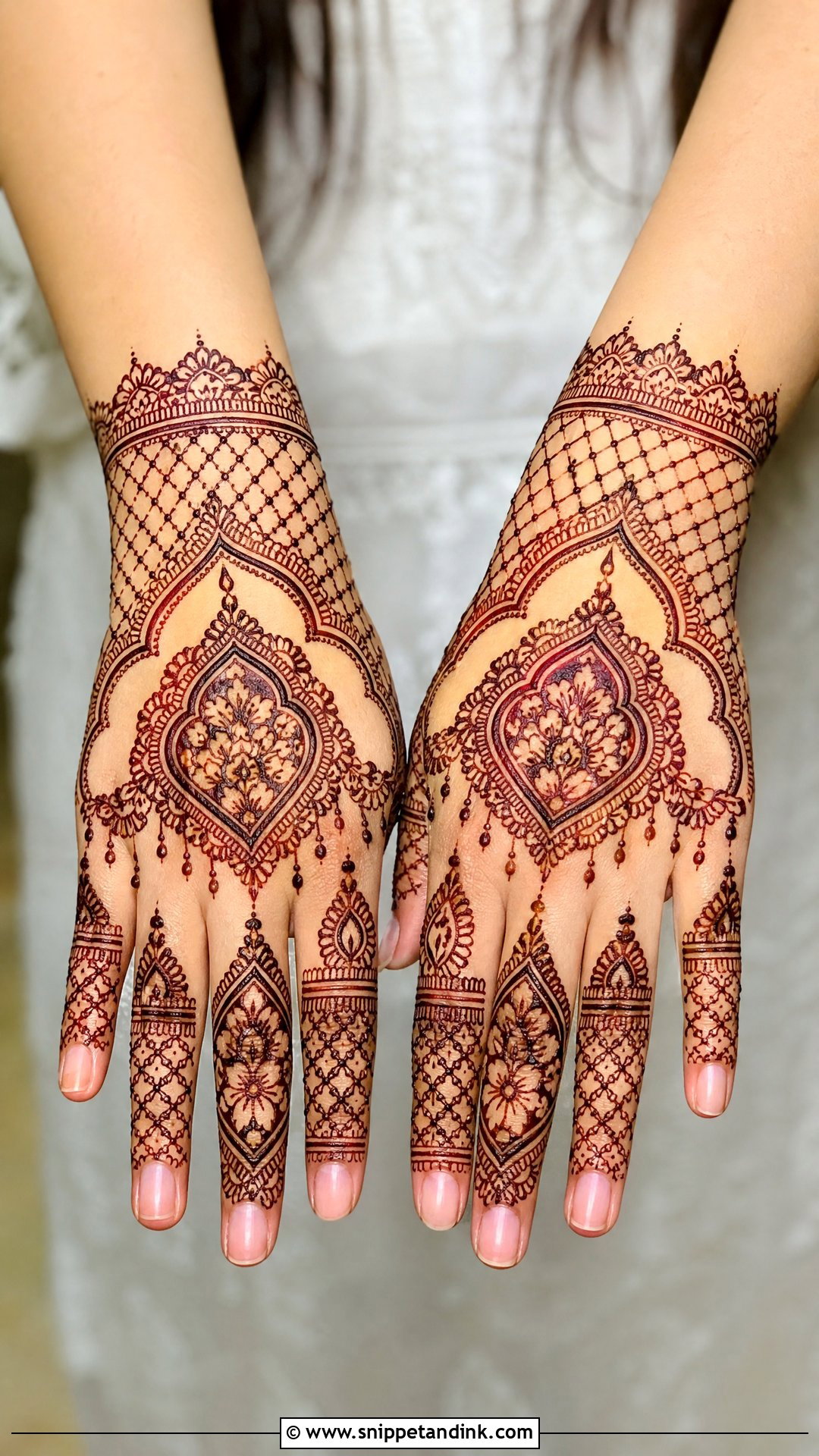
Jaali is mesh: crisscross lines, squares or diamonds that look like lace once the stain develops. It can fill the centre of the hand, the fingers or the wrist, framed by florals and paisleys. Mesh needs even spacing and a steady hand. When the lines are too close, they merge as the paste spreads, so I space them a little wider than the finished look. It pairs well with rings because the grid already looks like hand jewellery.
9. Peacock Bridal Back Hand Mehndi Design
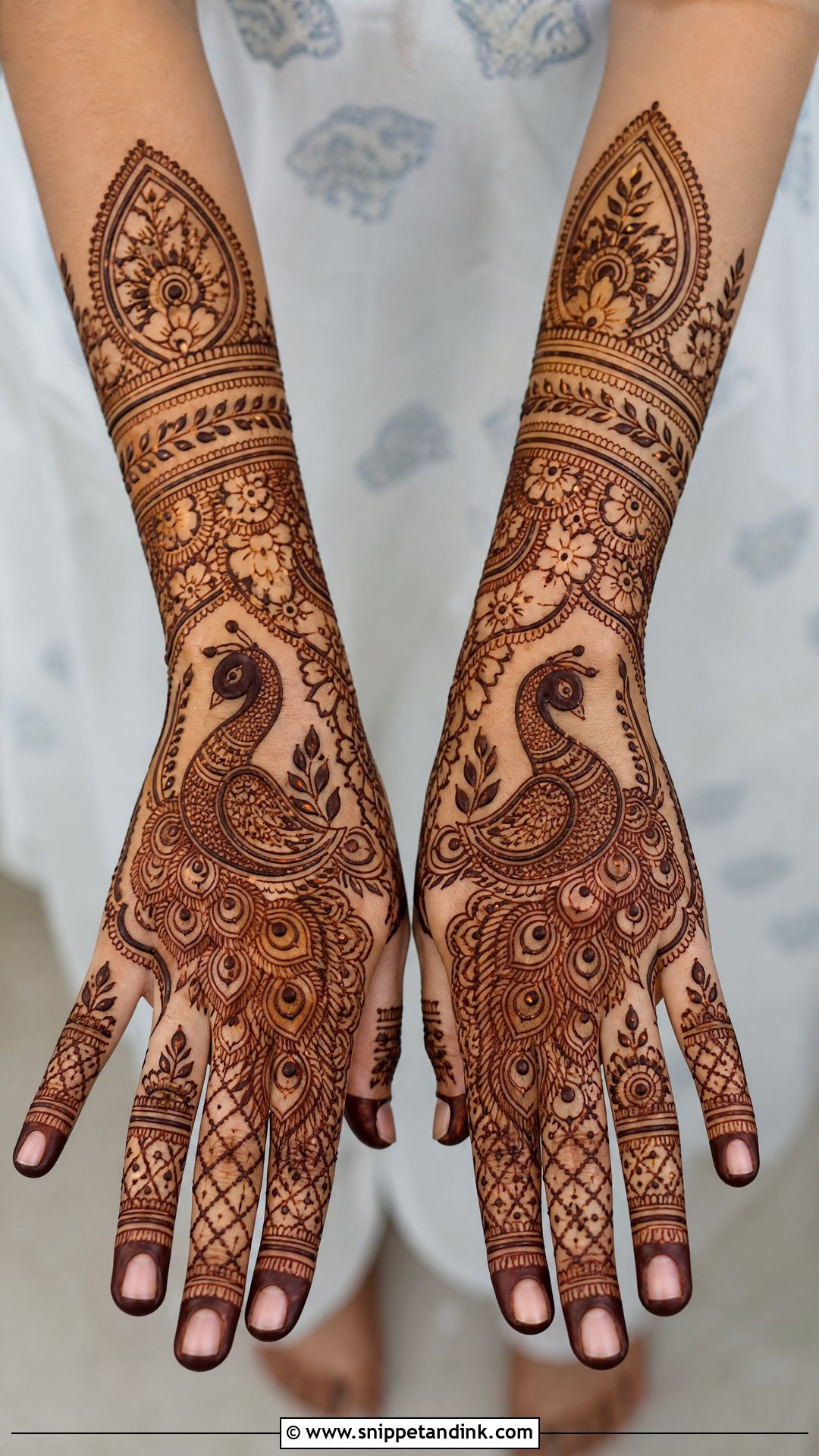
A peacock on the back of the hand usually runs along the side or rises from the wrist, with its feathers spreading into paisleys and vines across the centre. The feathers give room for fine lines, dots and scallops, so the hand looks rich without getting messy. It belongs with full bridal outfits and embroidered lehengas or sarees. Keep the fingers lighter than you think, or the peacock has to fight them for attention.
10. Lotus Bridal Back Hand Mehndi Design
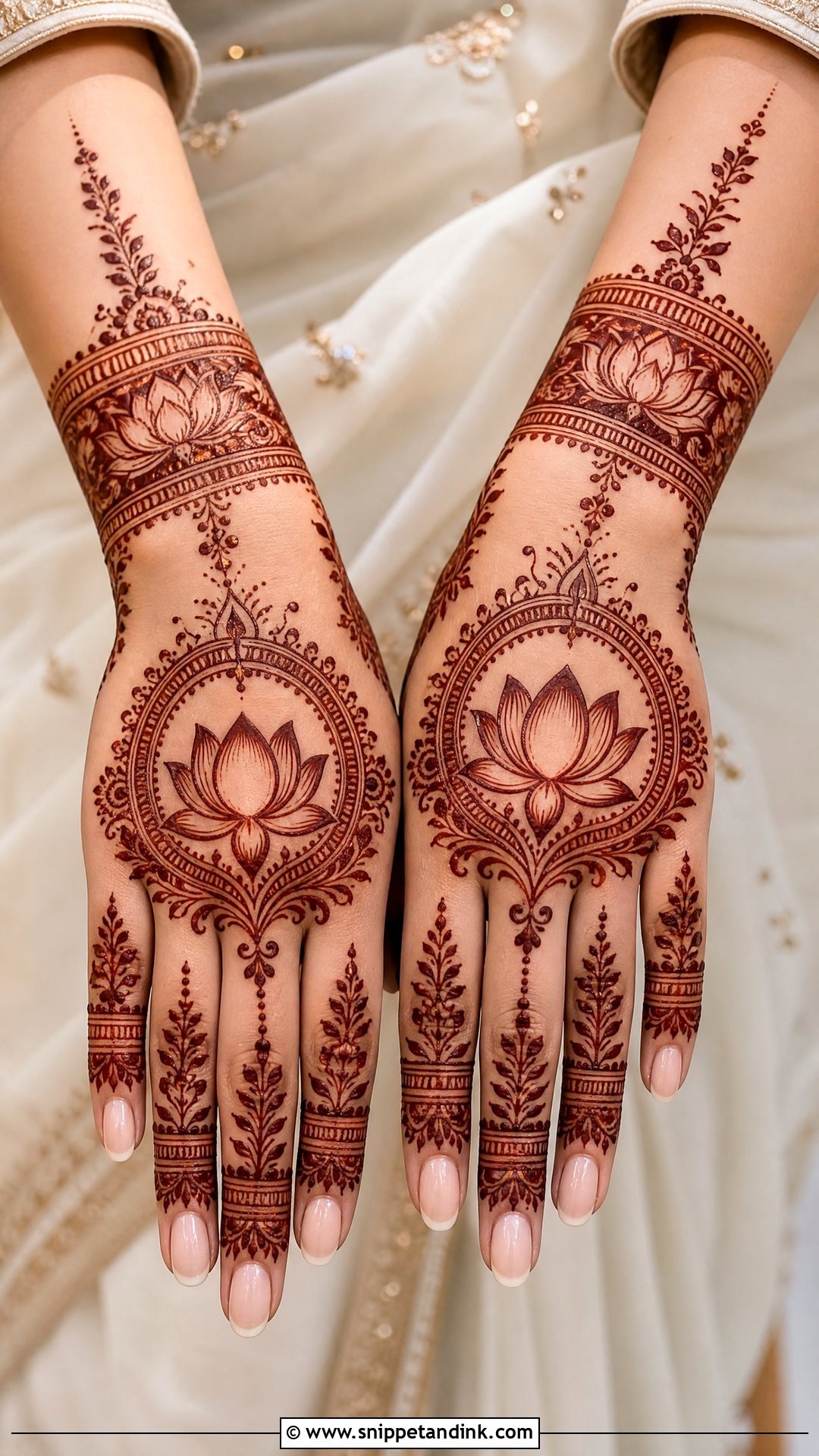
Lotus works in both bold and fine-line mehndi because its layered petals hold their shape at any size. It can bloom from the wrist, sit in the centre of the hand or repeat along a trail with leaves and dots. Paired with a mandala, jaali or bracelet band, it gives a quiet traditional design that doesn’t fight with the outfit, red, ivory, pastel or gold. I like it for brides who are nervous about heavy coverage but still want something unmistakably bridal.
11. Minimal Bridal Back Hand Mehndi Design
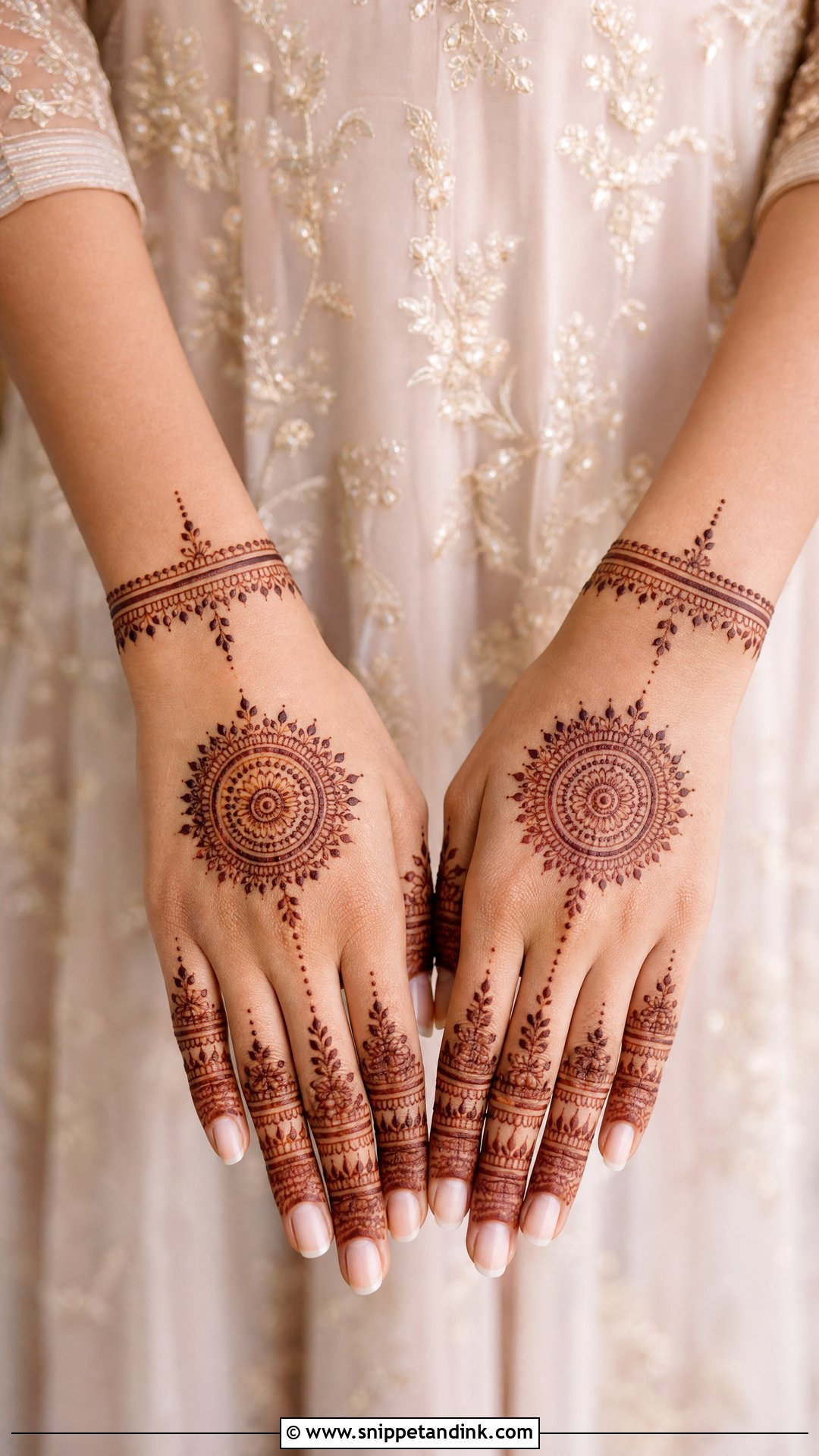
Minimal back-hand work keeps a lot of skin bare: a centred mandala, fine finger details, a slim wrist band and a few small florals. It suits civil ceremonies, engagement events and intimate weddings. Simple doesn’t mean careless, though. With so little on the hand, every uneven line shows, so symmetry and clean placement matter more here than in full designs. Shaded fingertips add depth without adding coverage.
12. Jewelry Bridal Back Hand Mehndi Design
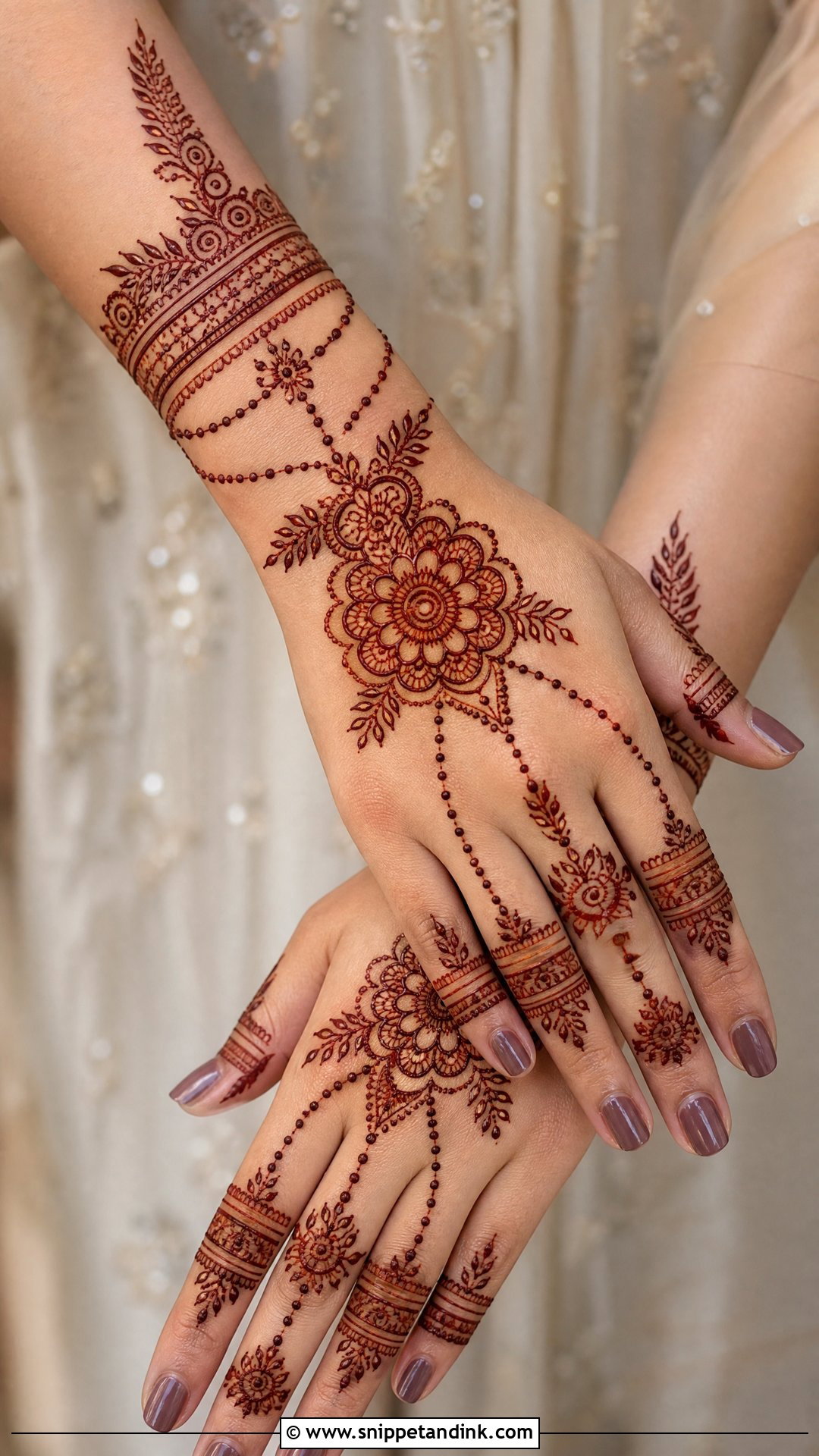
Jewellery designs draw a hathphool on your skin: a central flower or mandala linked to finger rings by dotted chains, with a cuff at the wrist. They’re a good choice if you’re wearing light accessories, because the mehndi does the decorating. With a real hathphool on top, I’d keep the drawn chains away from where the metal sits so the two don’t clash. Clean, evenly spaced dots are what make the chains read as jewellery and not as scattered fillers.
13. Bracelet Bridal Back Hand Mehndi Design
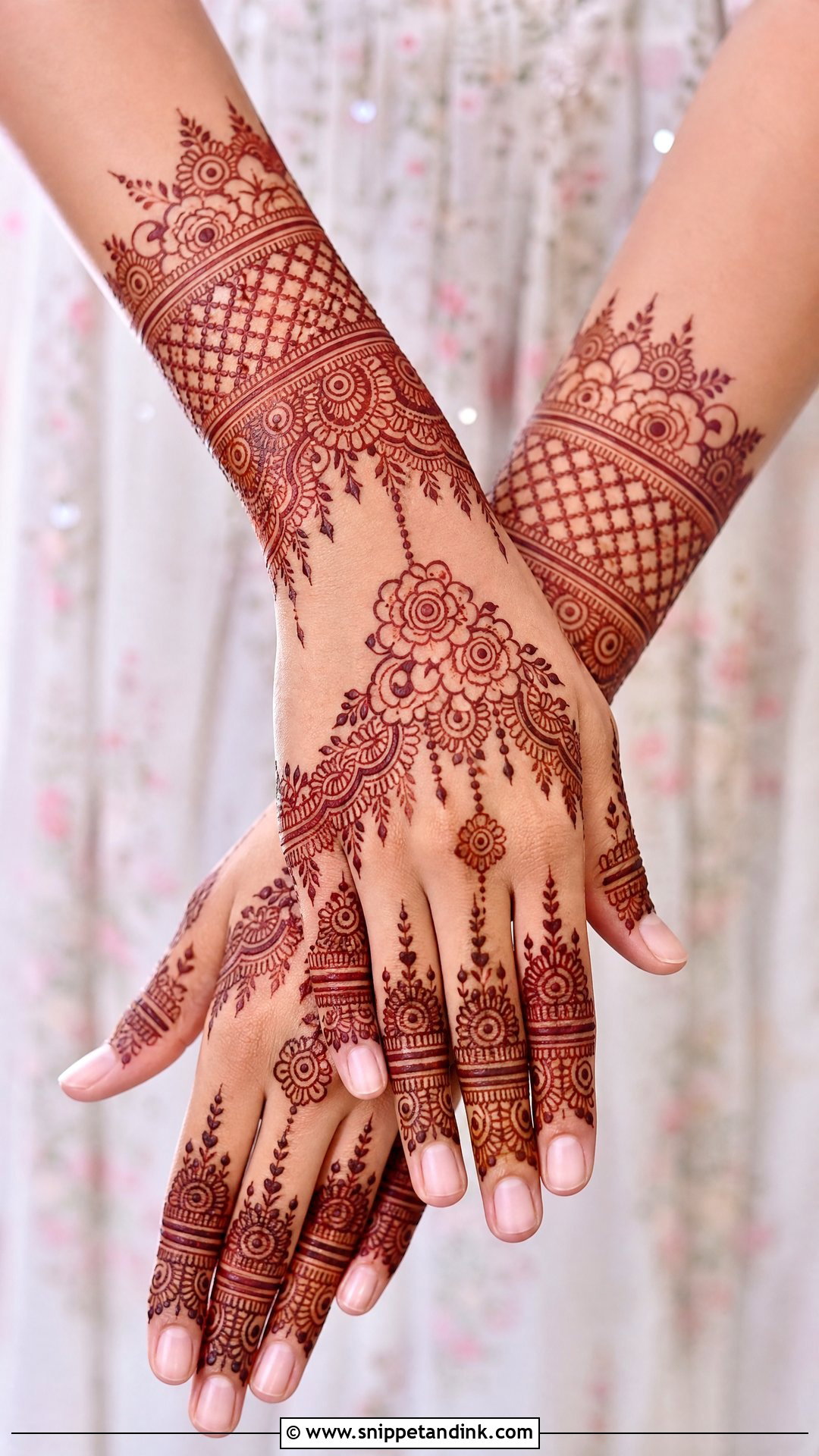
Here the wrist cuff does most of the work, built from florals, jaali bands, paisley borders, mandala rings or layered lines, with vines, chains or a small motif leading from it toward the fingers. It gives medium coverage that still feels complete. Plan the cuff’s height with your bangles in mind. If you’ll wear a stack or a chooda, a cuff drawn where the bangles sit will be hidden all day, so I place it just below or just above that line.
14. Finger Bridal Back Hand Mehndi Design
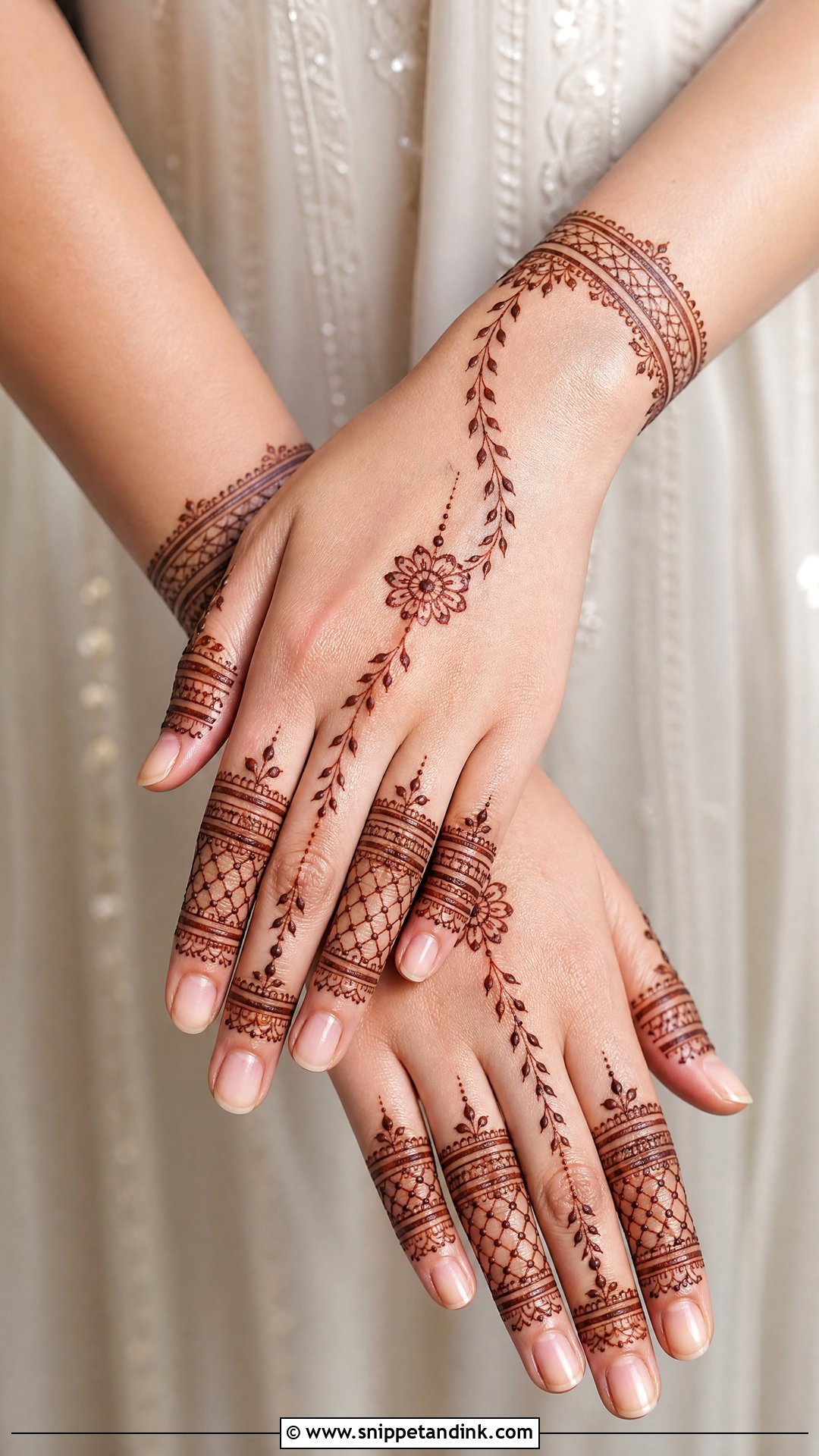
Finger-focused designs put the detail on each finger, with vines, checks, bands, dots or small florals, and keep the back of the hand fairly open with a mandala, a bouquet or a chain. They make ring shots look finished. Each finger can carry a different pattern, but the knuckle creases are where lines break, so I place bands just above and below each knuckle rather than across it. A slim wrist border finishes it without crowding the hand.

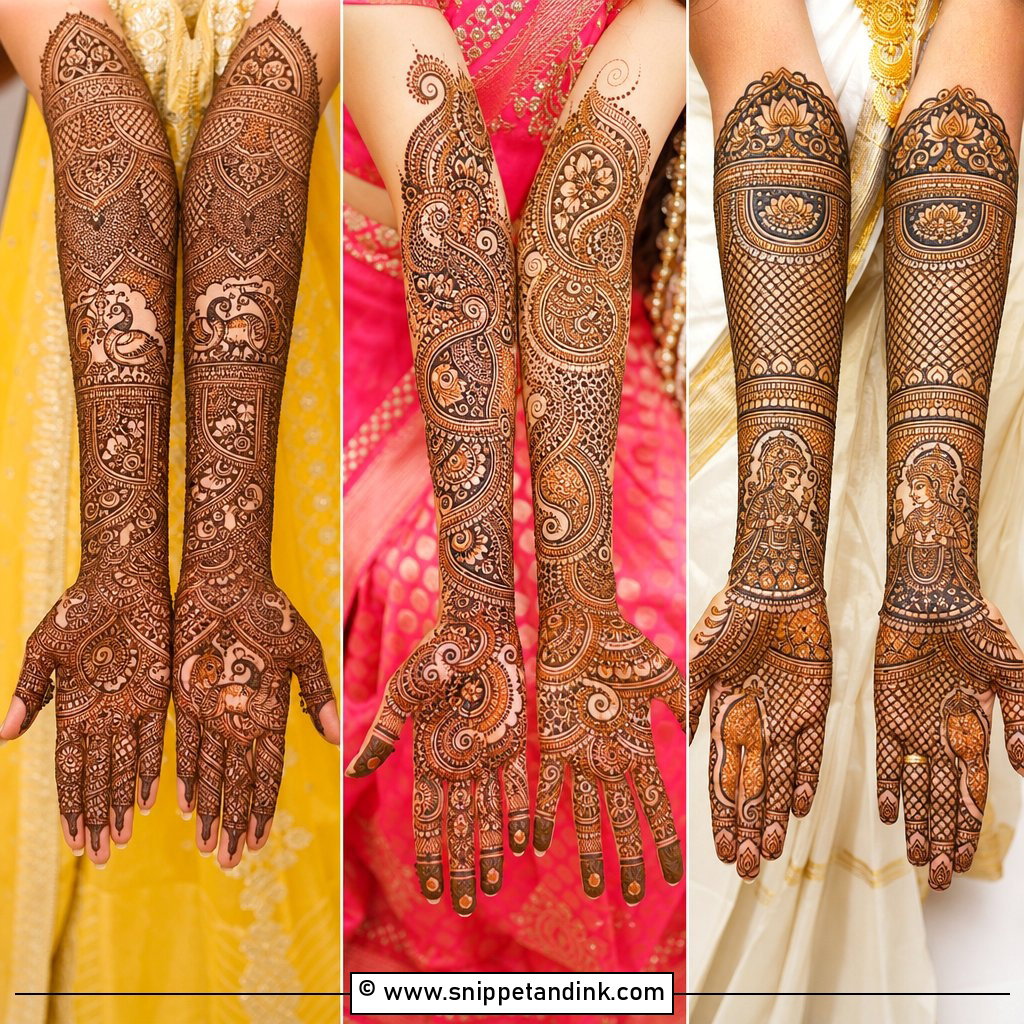
15. Personalized Bridal Back Hand Mehndi Design
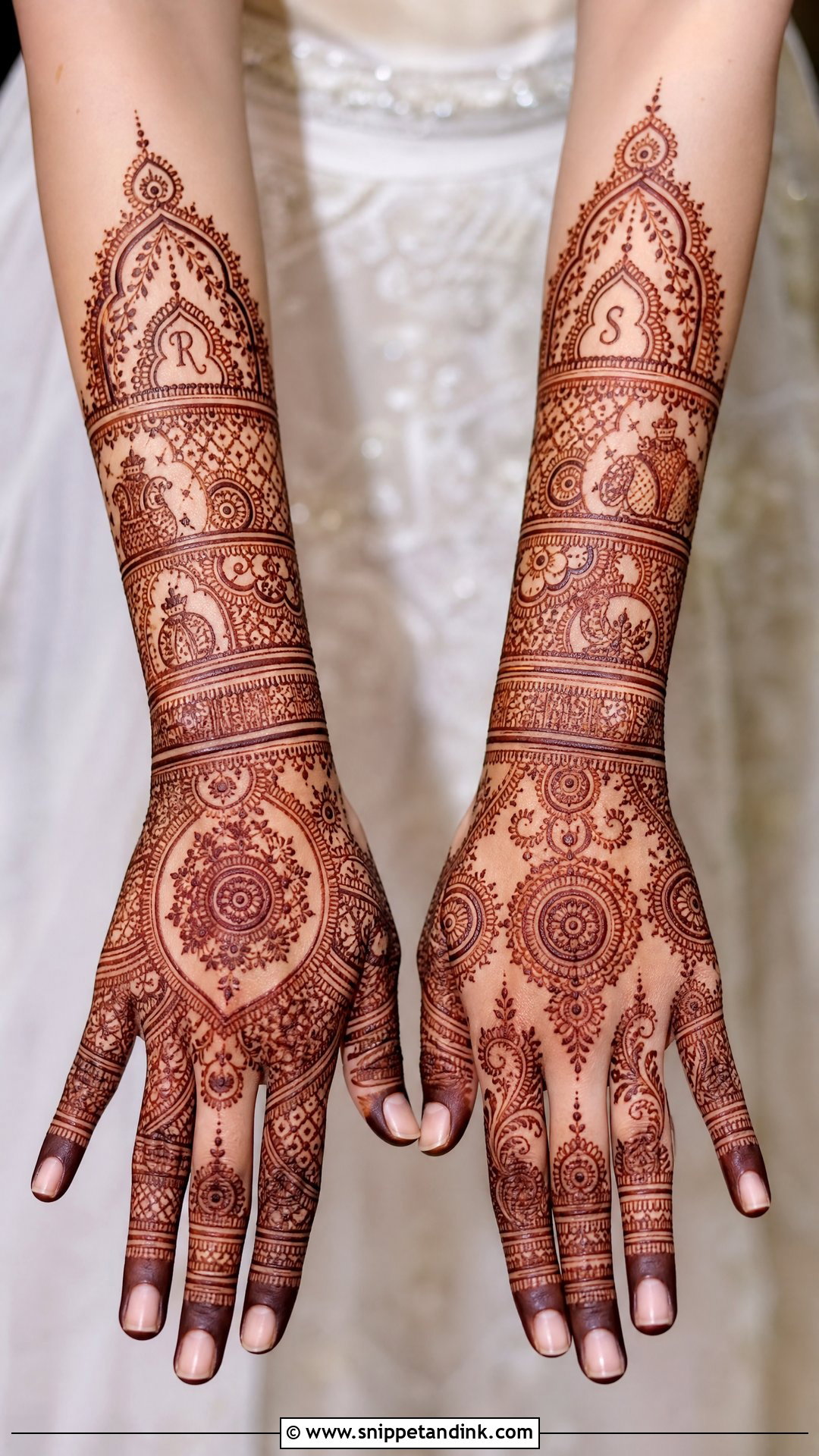
Personal touches belong inside the pattern, not on top of it. Initials, a date, small couple symbols, a favourite flower or a word in your own script can sit within a paisley, a mandala ring, a jaali panel or a floral trail. Hidden that way, they keep the design elegant. Write out exactly what you want, in the script and spelling you want, before the appointment. The rest of the hand can stay traditional around it.
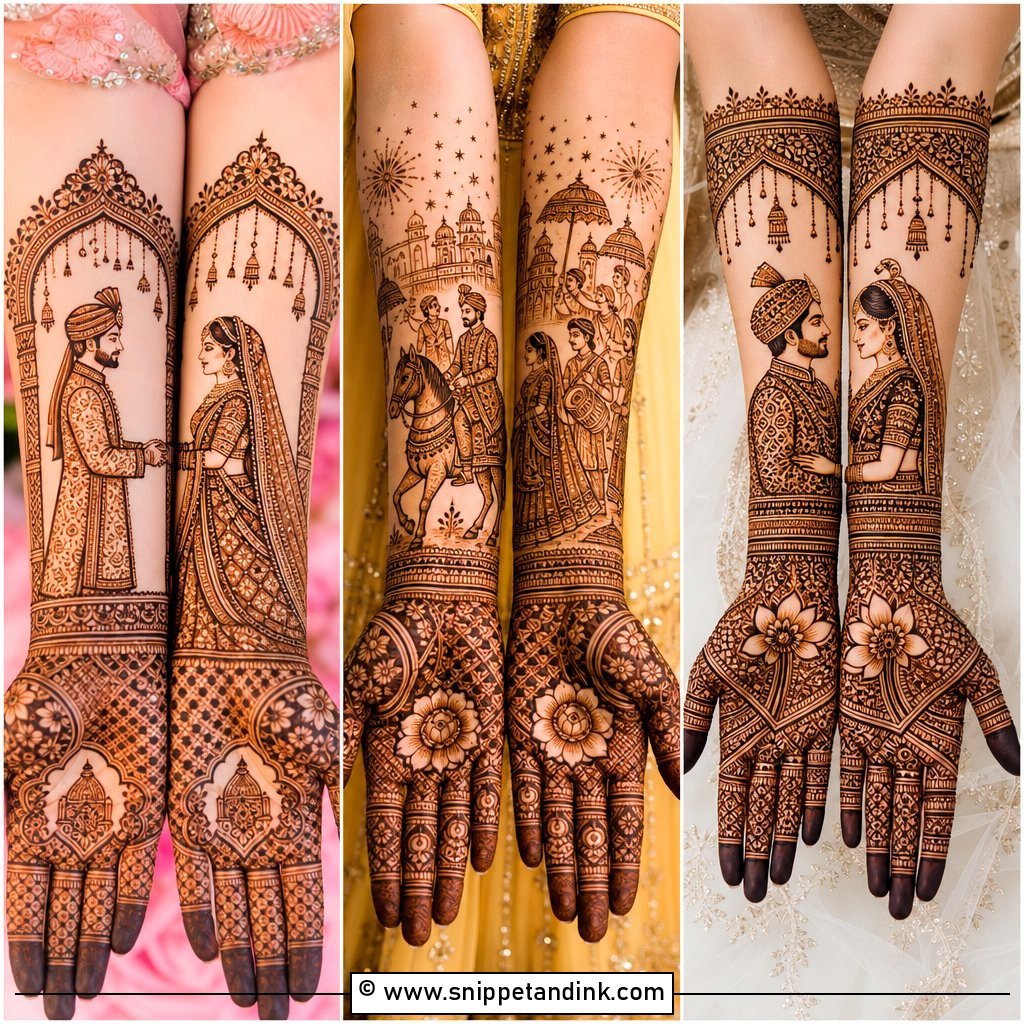
16. Portrait Bridal Back Hand Mehndi Design
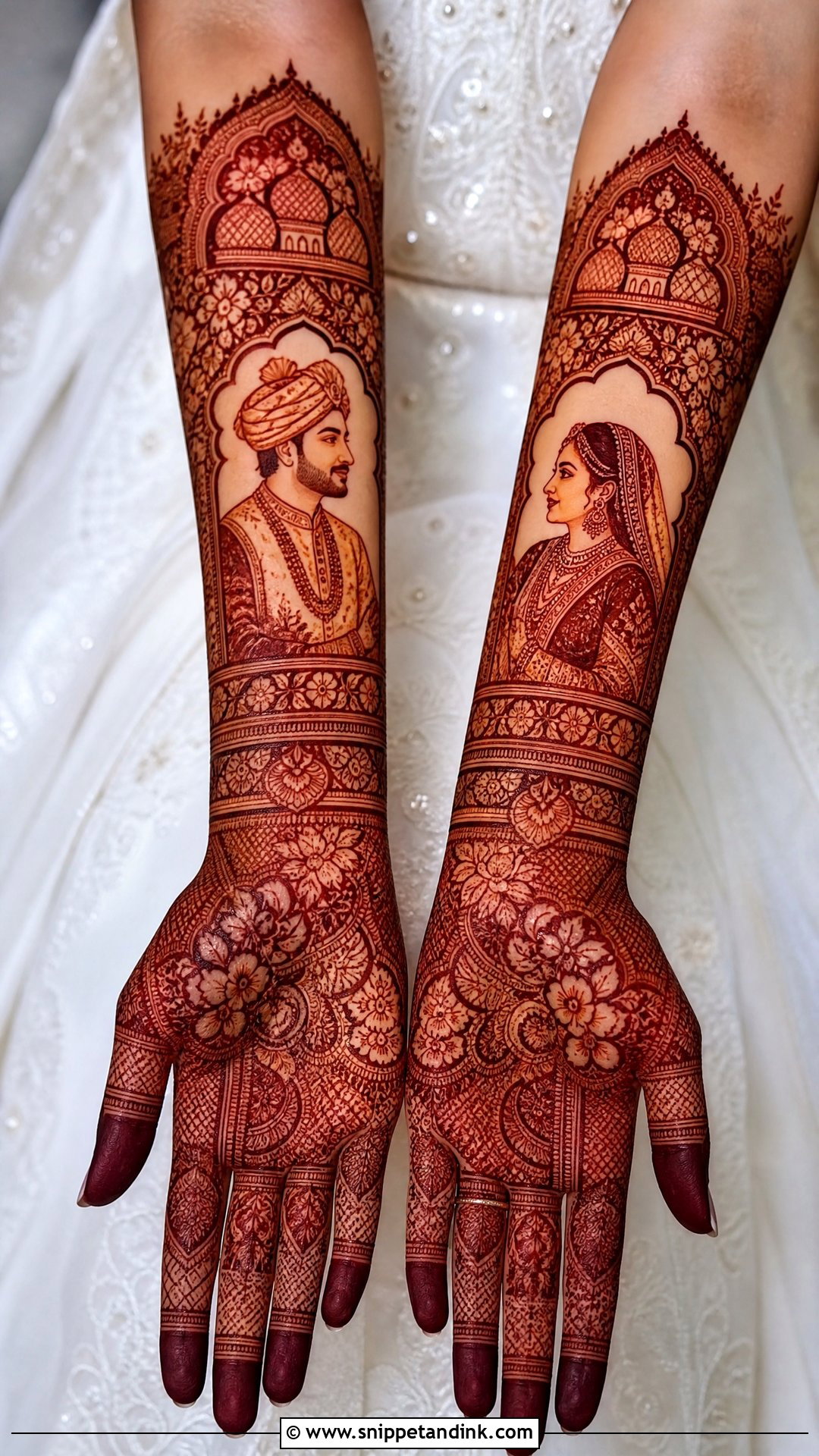
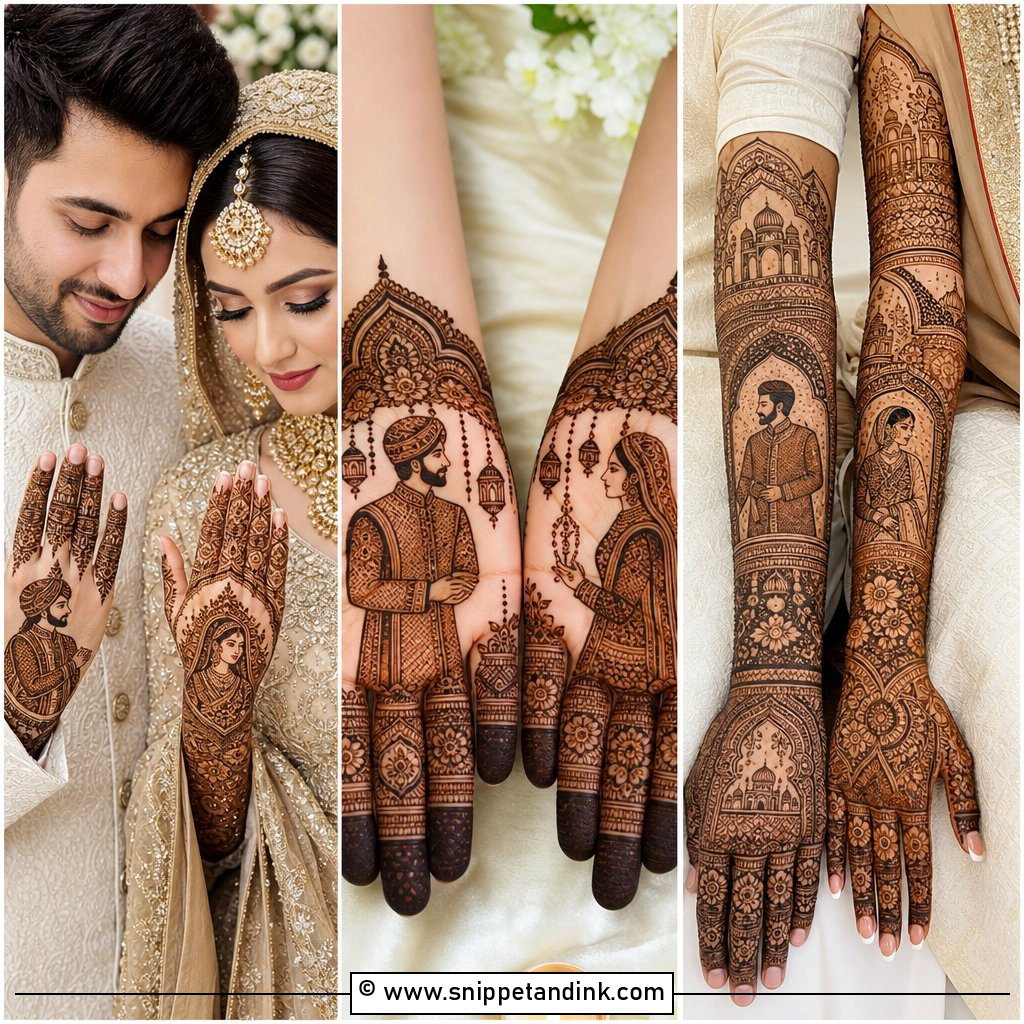
Portraits on the back of the hand are bold, because this skin stains lighter and faces depend on contrast. The design can show bride and groom faces, a wedding scene or small figures framed by florals and borders. I keep the fillers around the faces controlled and leave clear space, so the features stay readable. It can extend up the forearm with mandalas, domes and paisleys. Look at an artist’s healed portrait photos, not only fresh paste, before booking this one.
17. Moroccan Bridal Back Hand Mehndi Design
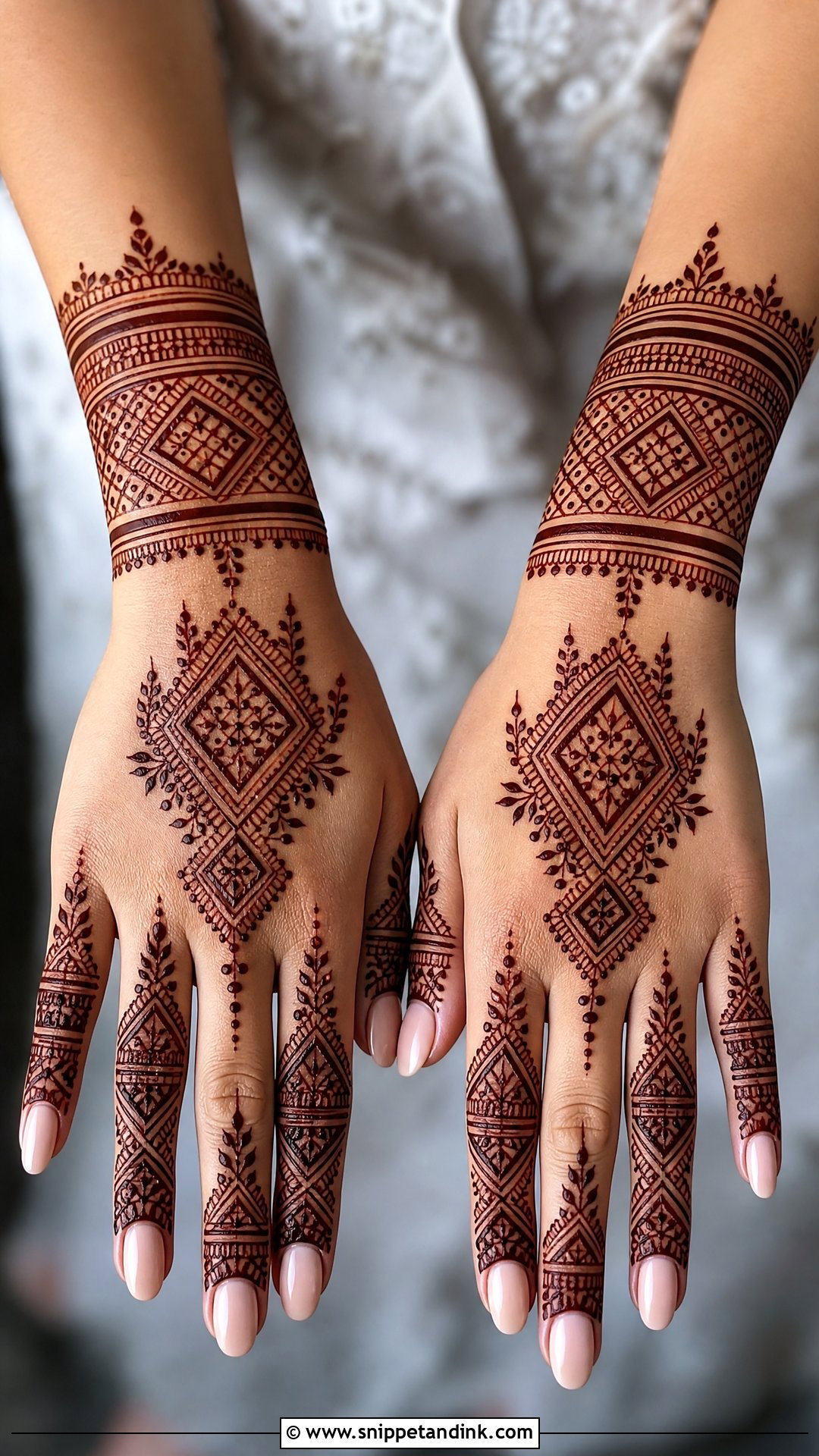
Moroccan designs swap flowers for geometry: diamonds, triangles, grids, straight lines, dots and strict symmetry. They feel sharper and more modern than Indian or Arabic work. The bridal version has a wrist cuff, filled fingertips and a central geometric panel. Straight lines are hard on a hand that curves in two directions, so I map the panel with a few guide dots first. It suits fusion and modern outfits, and a curved border softens it if you want.
18. Gulf Bridal Back Hand Mehndi Design
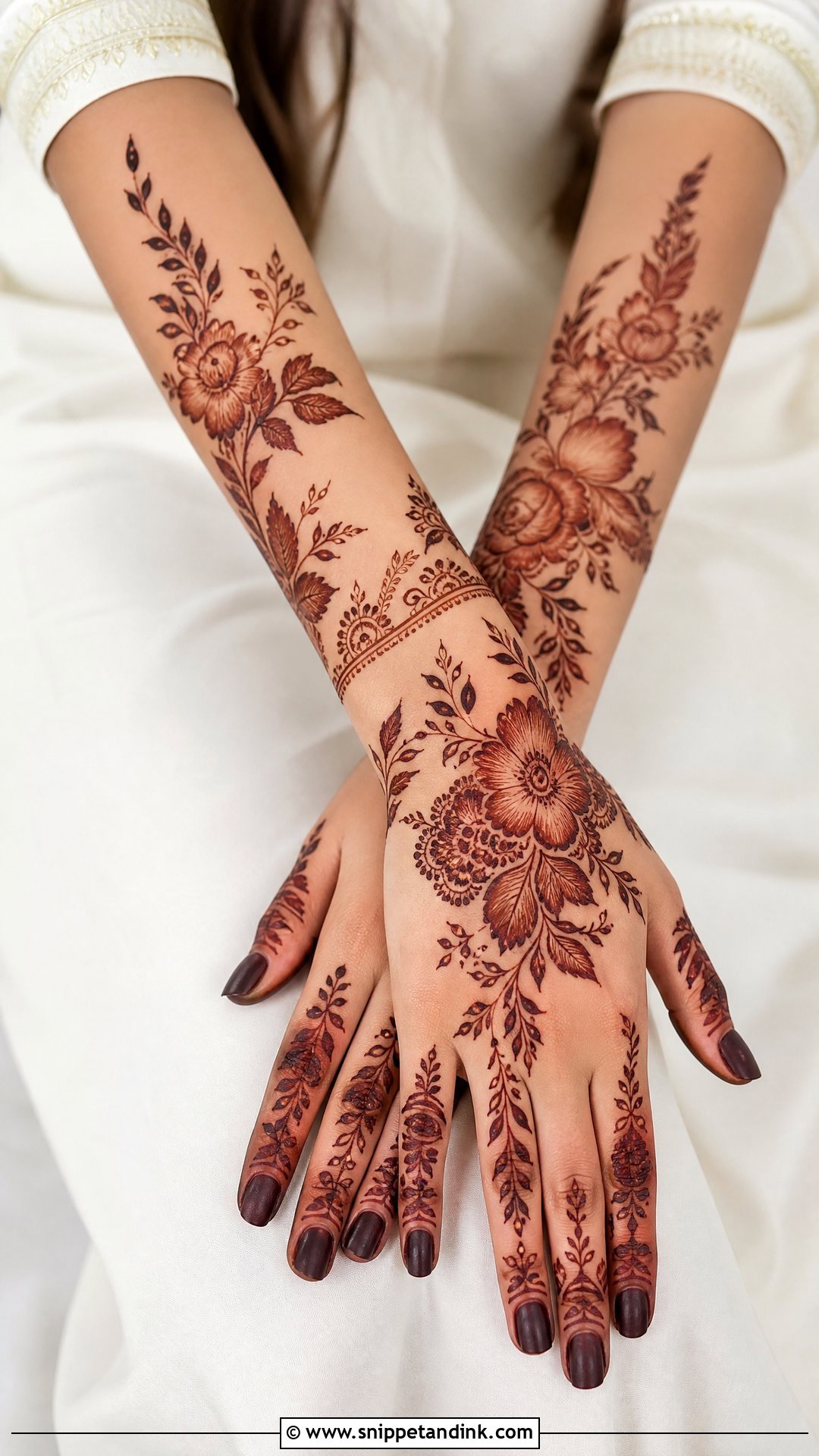
Gulf, or Khaleeji, work uses big bold florals, leafy sprays, thick outlines and wide open spaces, sweeping from the wrist across the hand. It looks luxurious without dense filling. The heavy outline and shaded leaves are exactly what the back of the hand needs, since they stay strong even when the stain is lighter. For a bride, I add detailed fingertips, a wrist border and a few small dots around the main trail.
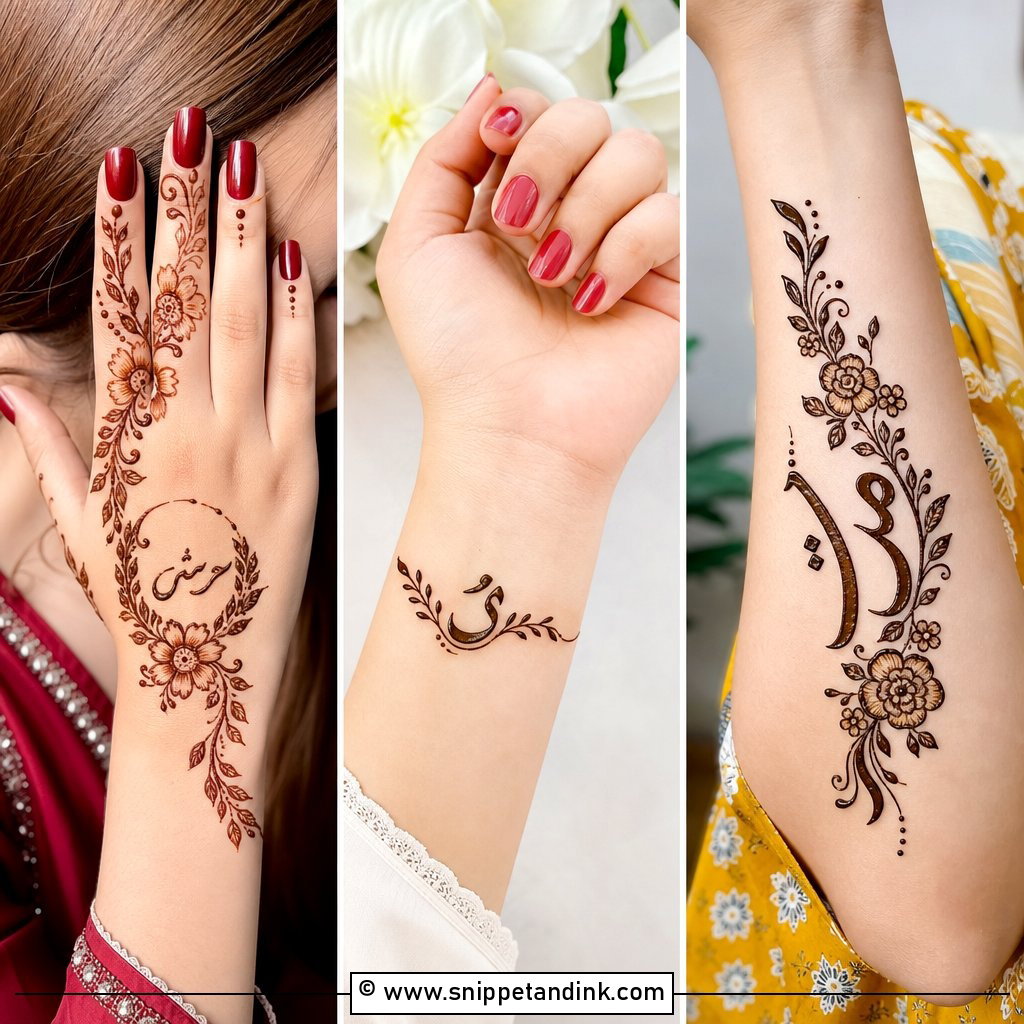
19. Back Hand Mehndi Design With Name
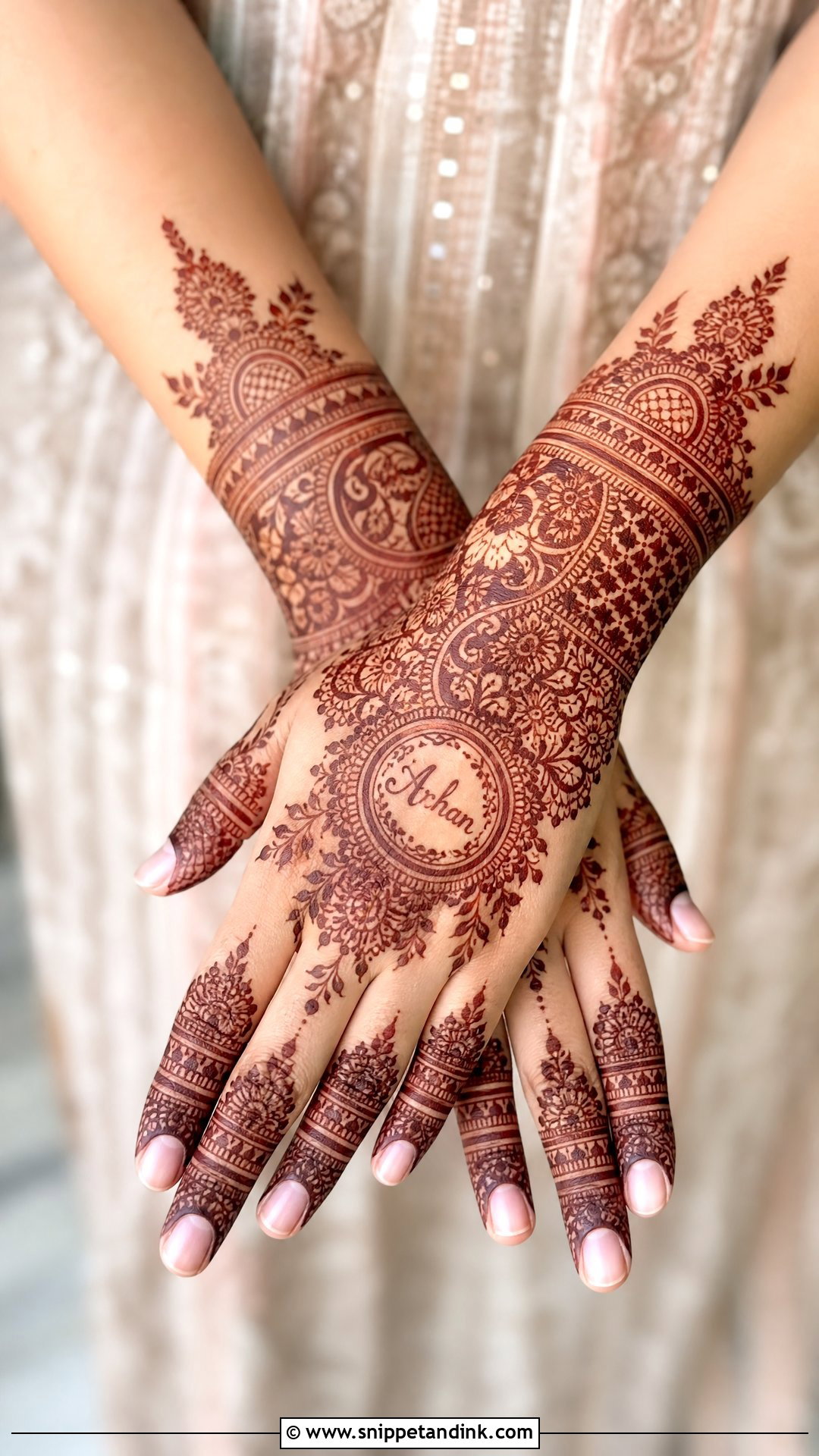
Names on the back of the hand are easier for guests to spot than names on the palm, so hide them well if you’re playing the name-finding game. A floral vine, a mandala ring, a paisley or a thin wrist band all work. Keep the letters the same weight as the surrounding lines so they blend. The pattern around it can be full Indian, Indo-Arabic or floral, and fine fillers, dots and shaded petals help it disappear into the design.

20. Simple Bridal Back Hand Mehndi Design
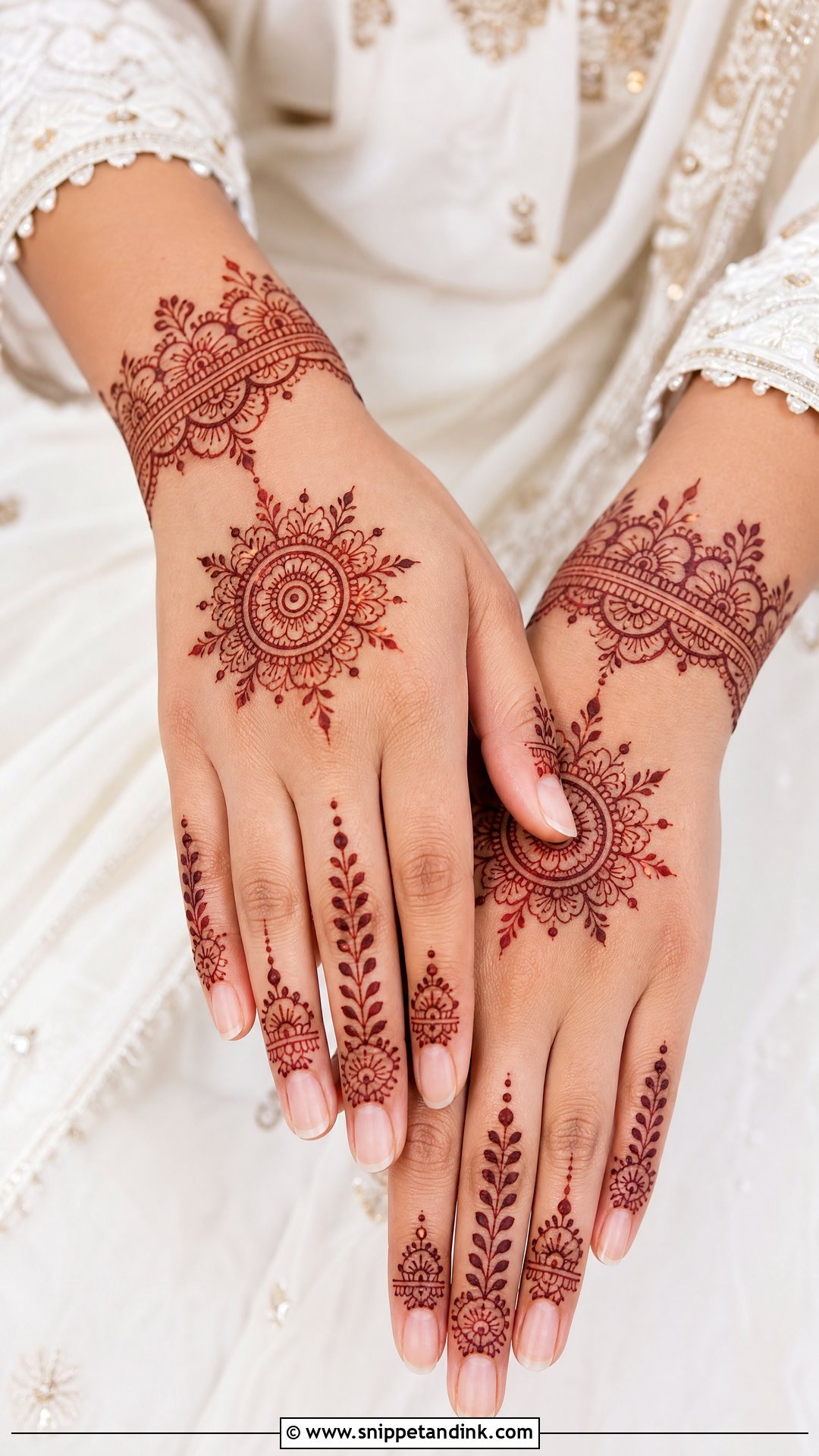
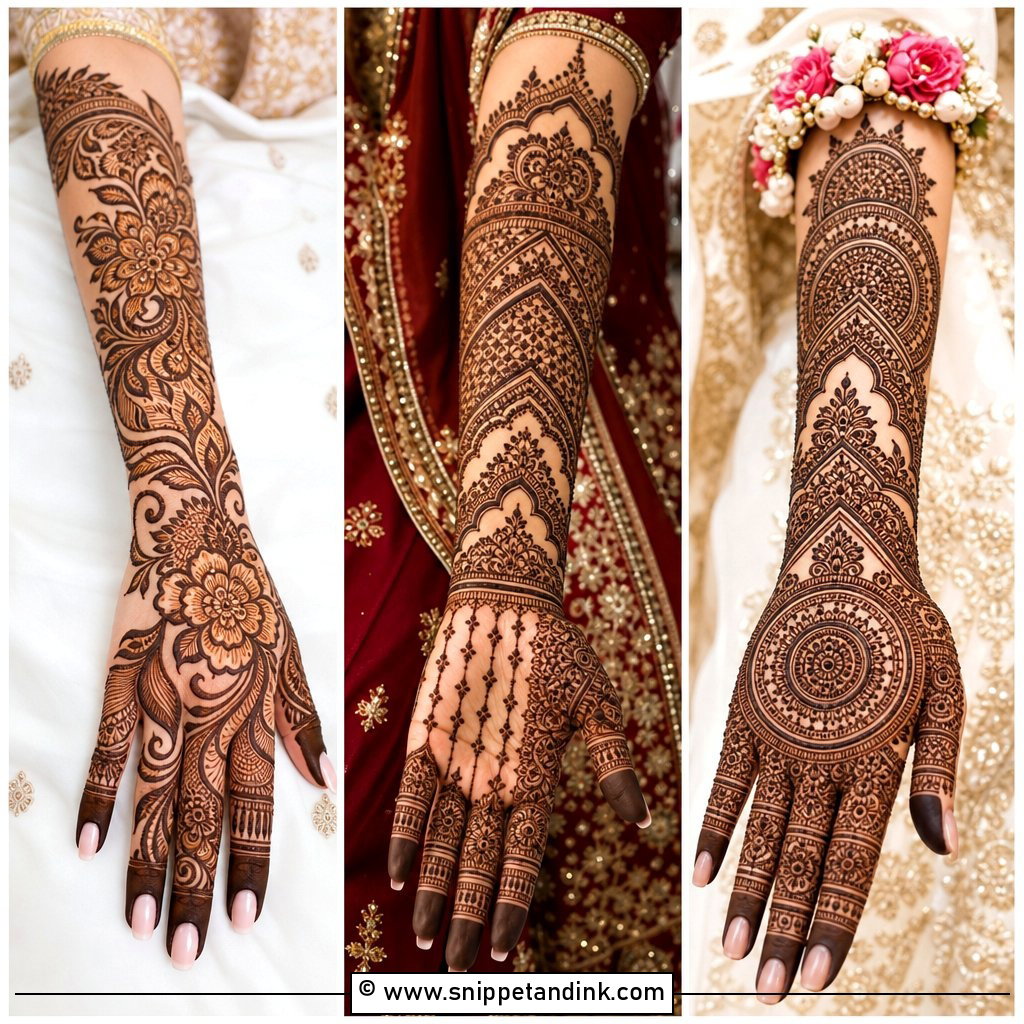
A simple bridal back hand still needs enough detail to read as bridal: a medium mandala, a floral wrist cuff, leafy trails on the fingers and neat spacing. Small touches like dots, scalloped borders, shaded petals and fingertip patterns lift it above everyday henna. It’s quick to apply, comfortable for destination weddings and small ceremonies, and easy with light outfits. Keep both hands symmetrical and insist on natural henna, which stains a warm reddish brown.
Bangles, Rings and Kaleeras Over Fresh Henna
Jewellery is the main thing that wears a back-hand design down. Metal and glass bangles rub the wrist all day, and rings slide over the same finger bands every time they come off. Over a few days that friction fades those areas first.
Planning around a chooda
If you’ll wear a chooda, it covers your wrist and lower forearm from the ceremony onward, and any detailed cuff drawn there will barely be seen. Tell your artist which arms carry the chooda and roughly how far up it reaches. I’ll move the decorative edge to just below the stack, where it frames the bangles instead of hiding under them.
Rings and the hathphool
Put rings on only after the stain has developed, and slide them on gently. A hathphool’s chain should rest along a gap in the design, not straight over a fine line, so bring it to the appointment and let the artist place the pattern around it.
The Side of Your Hands Everyone Sees
Start with your outfit, your jewellery and how much time you can sit, then pick a design to match. Full Indian work feels grand and traditional, Arabic and Gulf styles feel open and bold, and mandala, jaali, lotus, paisley and jewellery layouts give structure. Names, initials and portraits make it personal. Whatever you choose, ask for slightly bolder lines on the back of the hand than on the palm, and let your artist add the clean, bridal-level detailing that ties it all together.
You'll Like These Ideas:







Leave a Reply