
The palm is the side of the hand people see when you greet them, receive a blessing or hold out a plate, and it’s also the side that stains darkest. That makes it the most rewarding place for henna and the least forgiving, since every line shows. Here are the front hand layouts I draw most, from a single tikki to full bridal palms, with Arabic trails, Indian filling, bracelets, shaded florals and fusion work in between. For more bridal palms, there’s also a separate set of Latest Unique Front Hand Mehndi Designs worth browsing before you book.
Mapping a Design to the Creases of Your Palm
No two palms are drawn the same way, even with the same design. Before I start, I ask the client to open and close her hand a few times so I can see where it folds. The deep creases across the palm and at each finger joint move every time you grip something, and any fine detail placed directly on them tends to crack, smudge or fade early.
- Centre motifs go just below the middle of the palm, in the flat area between the main creases, where they hold their shape best.
- Finger bands sit between the joints, not on them. A band drawn over a knuckle crease looks broken whenever the finger bends.
- The fleshy pad below the thumb is the best place for a large paisley or flower, because the skin there is smooth and stains deeply.
- Long, narrow palms suit diagonal trails and vertical layouts. Short, wide palms look better with a centred circle and plenty of open skin at the sides.
Hand size changes what’s realistic too. A design photographed on a large hand often has to lose a ring or two of detail to fit a small one, and that’s not a downgrade. A smaller, well-spaced version will look far better than a full-size one squeezed in.
1. Simple Front Hand Mehndi Design
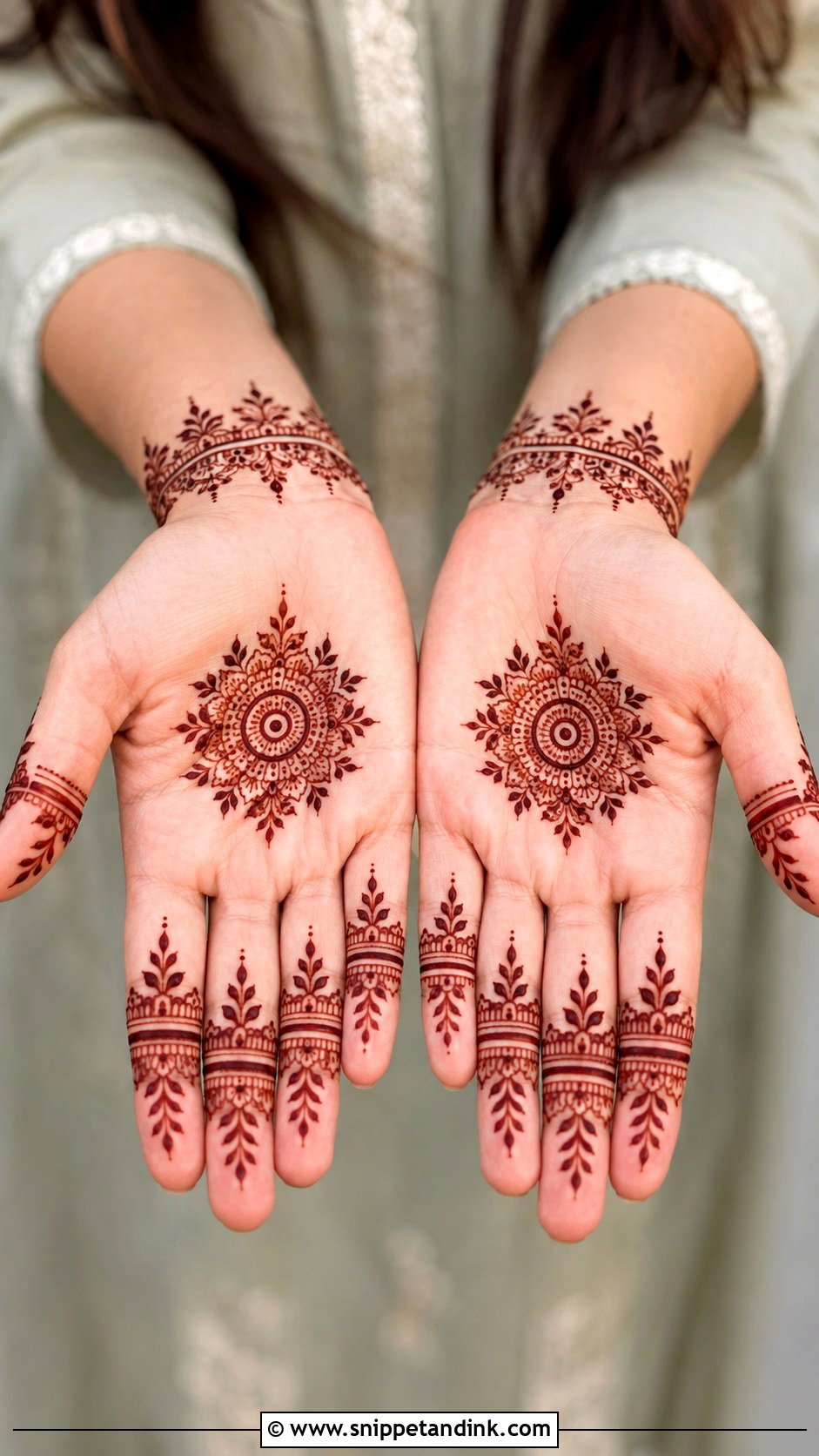
One centre motif and well-dressed fingers: that’s all this needs. I place a small mandala, flower or paisley cluster just below the middle of the palm, where the skin folds least, then finish the fingers with slim bands, leafy tips and dots. Plenty of bare skin around the centre keeps it fresh. My one firm rule with simple palms is to repeat the exact finger pattern on both hands; any mismatch is obvious when you hold your hands together.
2. Arabic Front Hand Mehndi Design
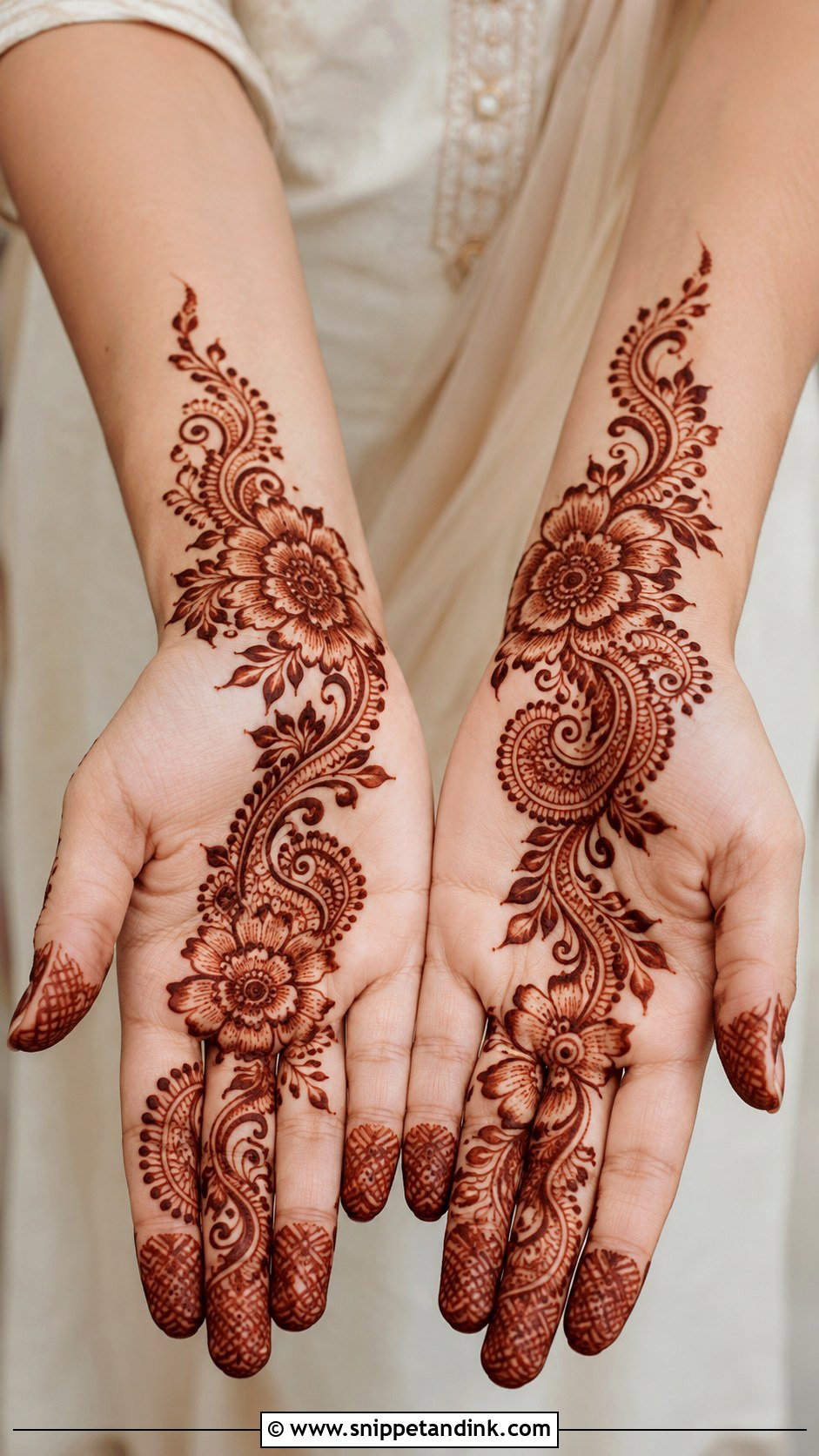
Arabic palms move diagonally from the wrist toward the index or middle finger, built from large flowers, curved leaves and paisleys, softened with dots and shaded petals. I follow the line that runs from the base of the thumb across the palm, because a trail that fights the hand’s natural fold creases out of shape every time you close your fist. The open skin between motifs is what keeps it reading clearly in photos, even from across a room.
3. Full Front Hand Mehndi Design
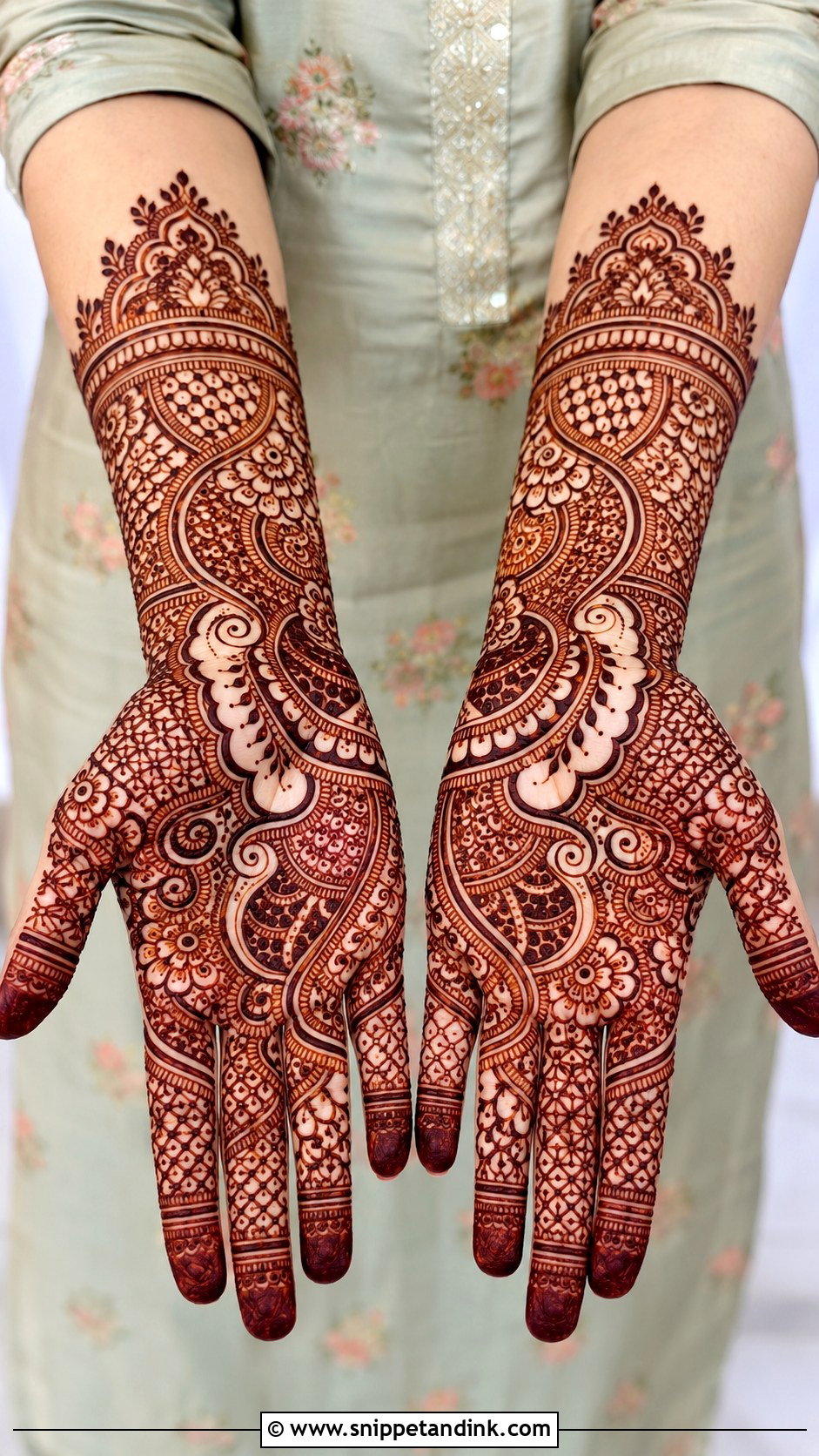
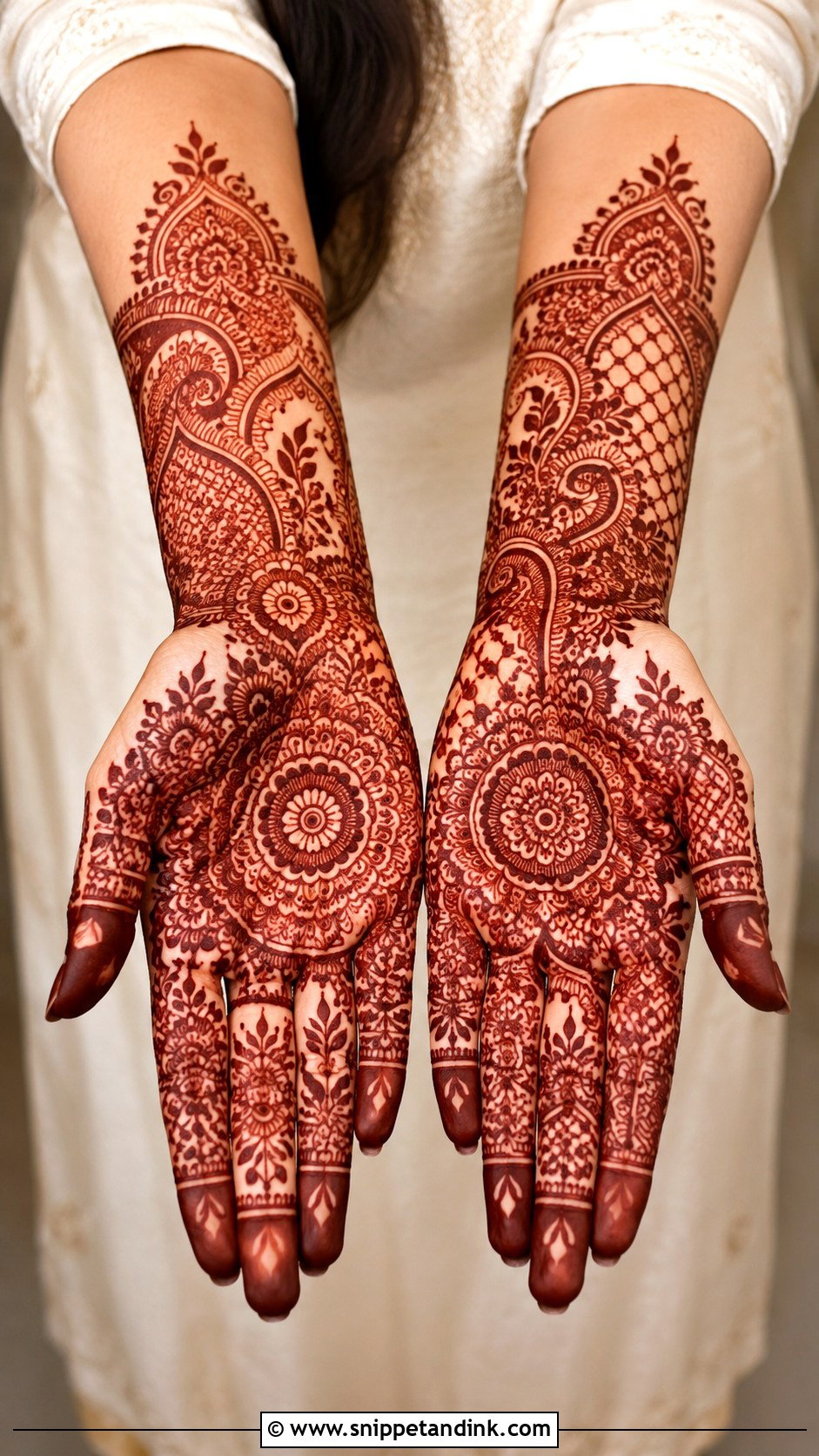
Full coverage runs from fingertips to wrist, filling the palm with connected paisleys, florals, mesh and fine fillers, with repeating patterns up each finger and a bracelet band at the wrist. Even at this density, I keep one clear centre focus. Without it, a full palm turns into texture with nothing for the eye to settle on. It suits weddings, engagements, Eid and Diwali, and anyone who loves traditional detail. Allow a proper sitting, and plan not to use your hands for several hours after.
4. Front Hand Mandala Mehndi Design
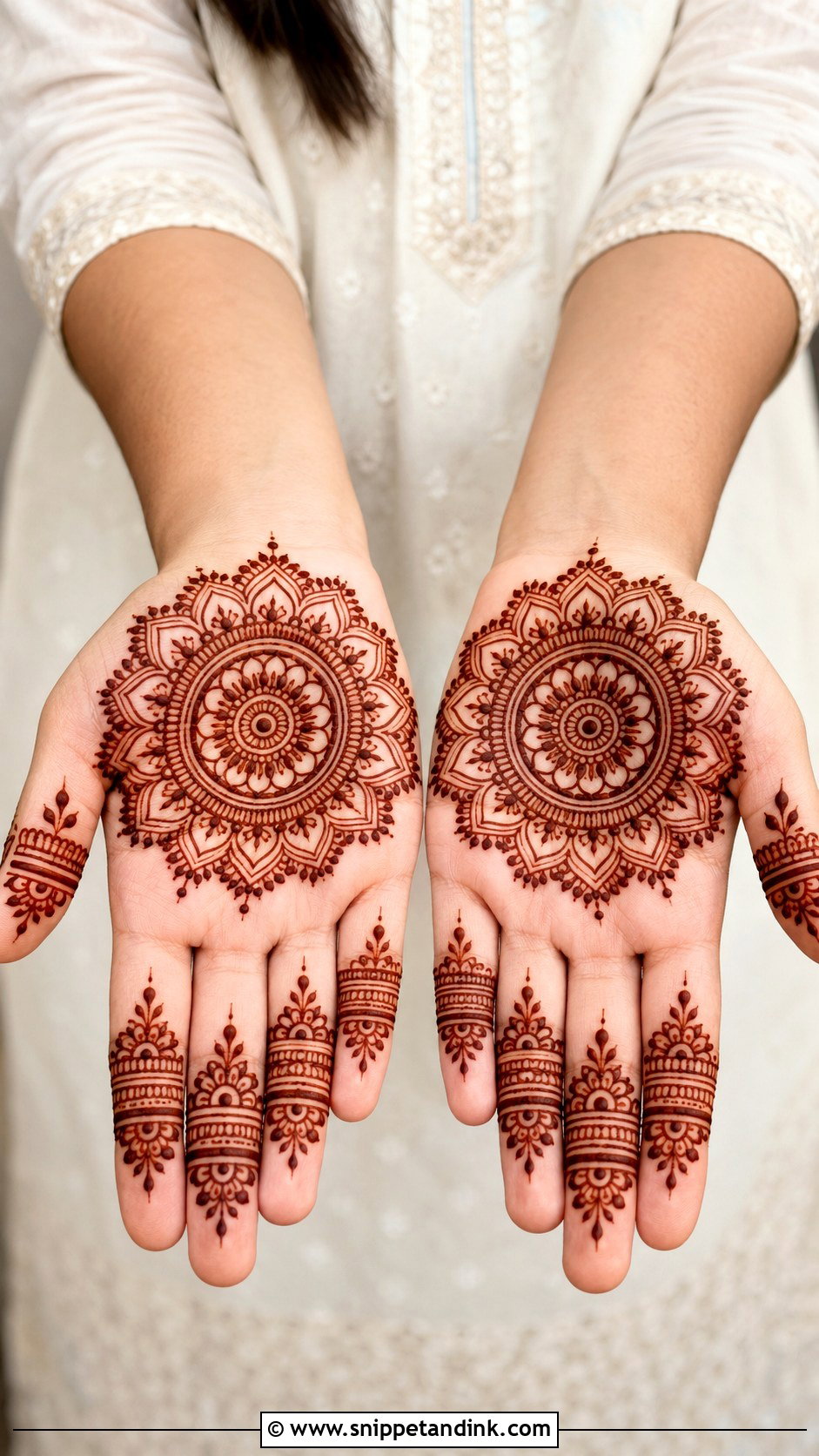
A round mandala echoes the shape of the palm itself, which is why it looks balanced on almost any hand. The circle sits in the centre and grows outward in petals, rings, dots and fine lines. Fingers can stay simple with small bands and leafy tips, or turn geometric for more detail. On a narrow palm I draw the circle a little smaller than you might expect, so a clean ring of skin still shows on either side.
5. Front Hand Tikki Mehndi Design
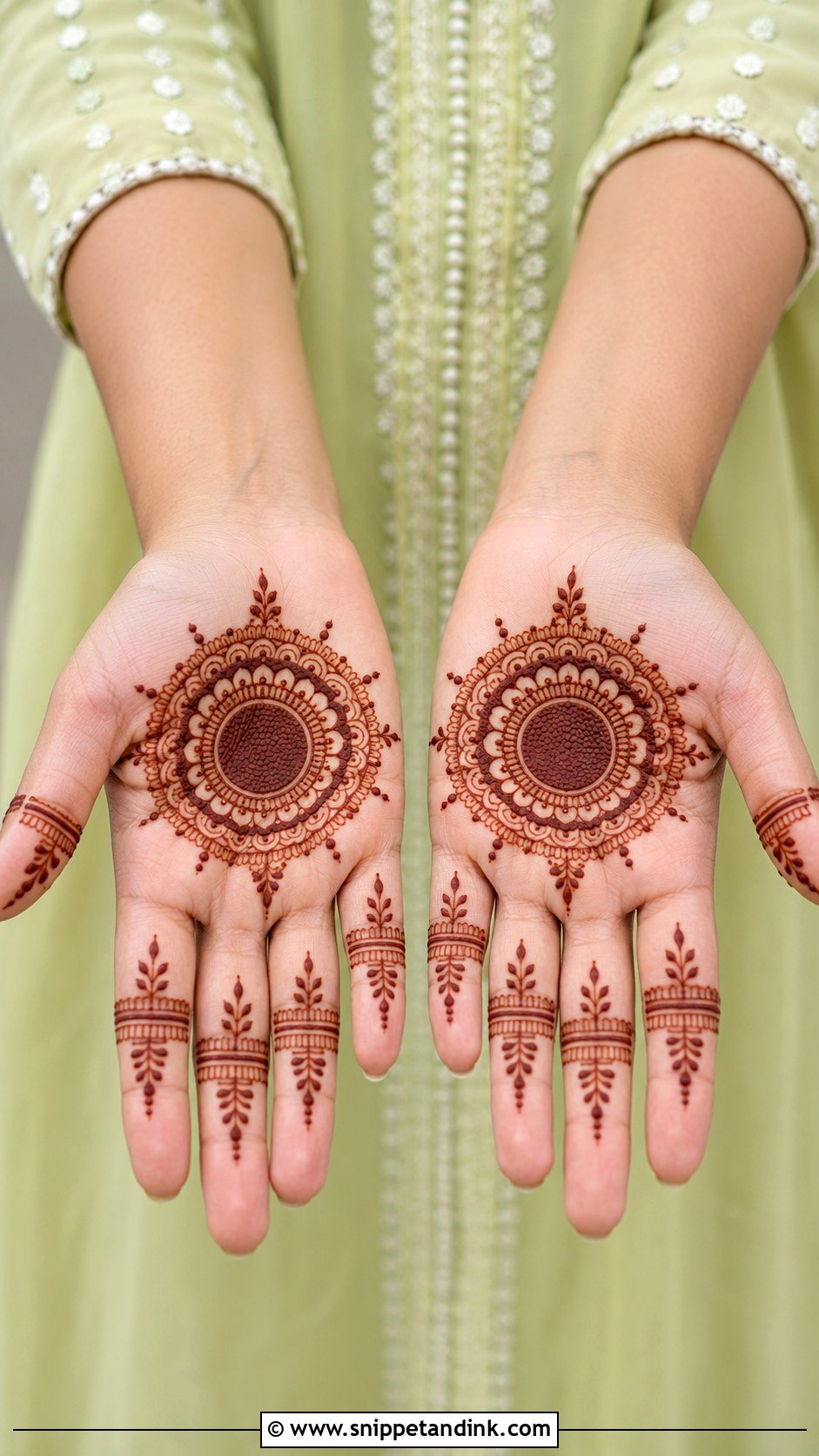
The tikki is the classic South Asian palm: a filled or semi-filled circle in the middle, ringed with petals, dots, scalloped edges and fine borders. Fingers get simple lines, leafy vines or tiny floral caps. It’s quick to apply and instantly familiar to every aunt at the function. A solid tikki stains very dark, so I leave a thin line of skin between the filled centre and its first ring; without it, the two blur into one blot.
6. Bridal Front Hand Mehndi Design
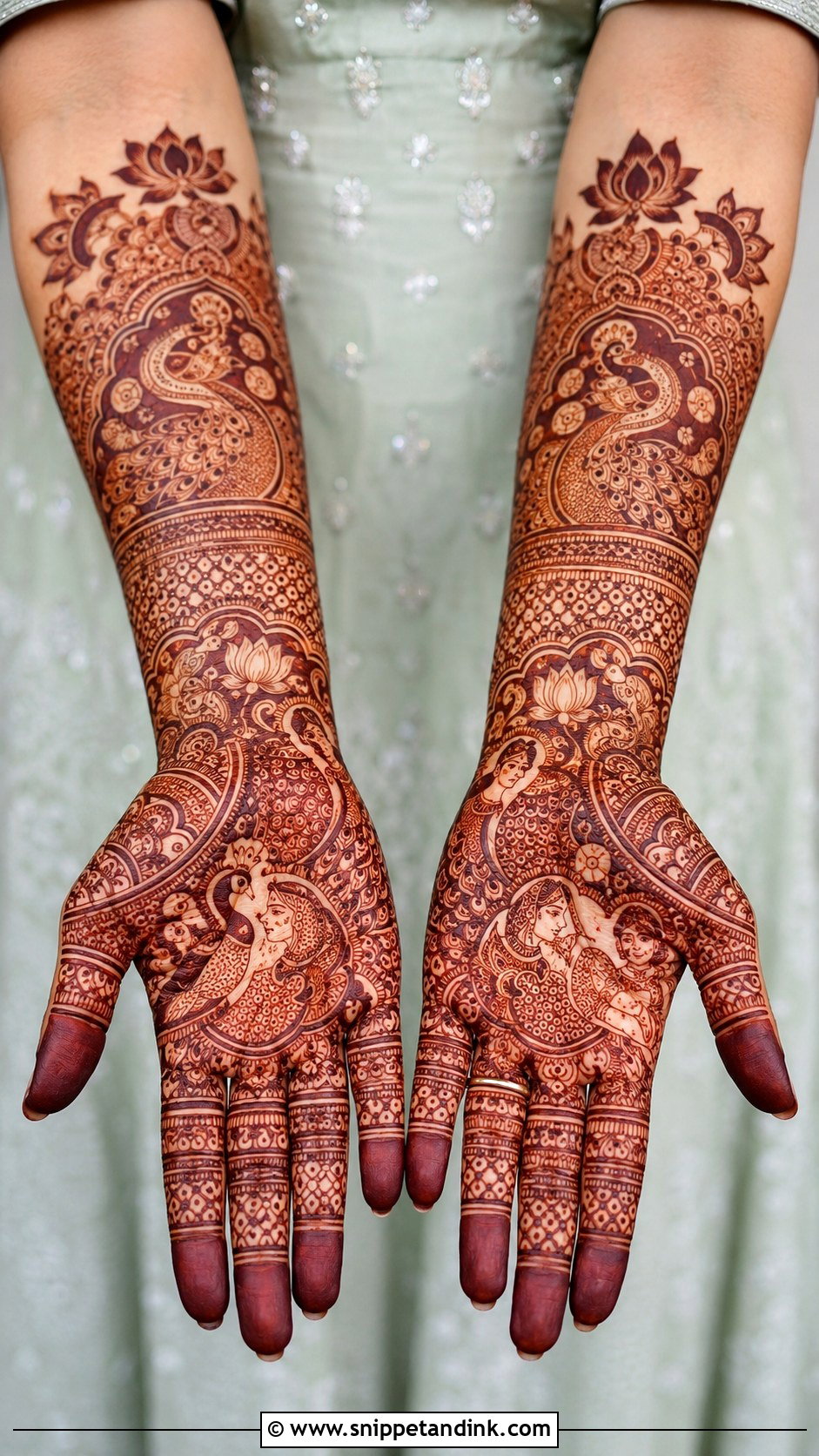
Bridal palms carry the story: dense paisleys, lotus, peacocks, jaali and small symbols hidden in the pattern, with fully decorated fingers and a design that continues smoothly to the wrist or forearm. The skill is richness without losing clarity. I plan the main zones with the bride before I start, since a palm this dense can’t be redrawn. A deep maroon stain is what makes it sing in close-ups, and that colour takes a day or two to develop, so book your sitting accordingly.
7. Modern Front Hand Mehndi Design
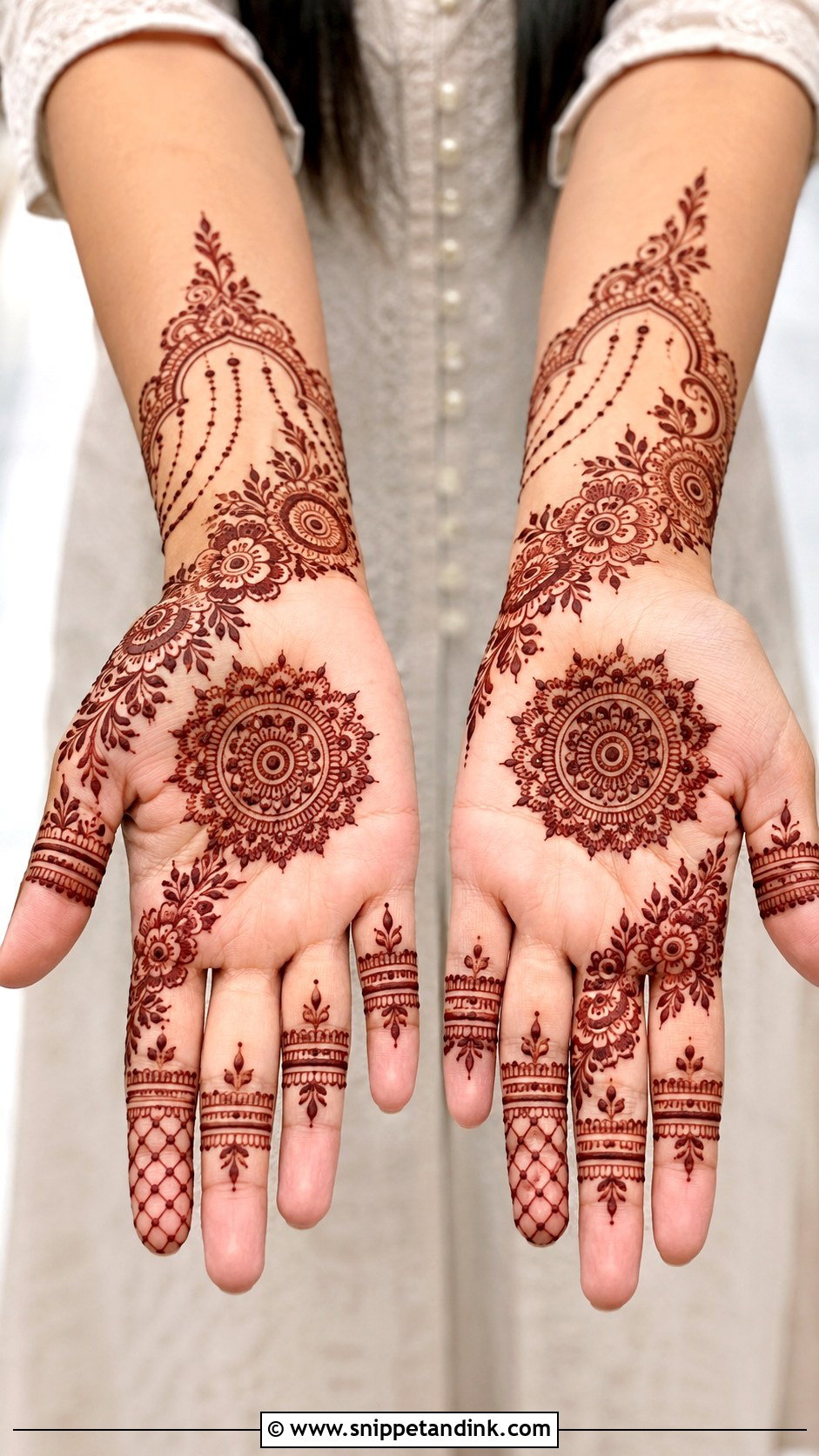
Modern palm work uses less coverage and more placement: a half-palm layout, a floating mandala, a diagonal floral trail or a wrist-to-finger connection, with sleek bands, dotted chains and small leaves on the fingers. It suits simple outfits and bridesmaid styling. I treat the empty skin as a shape in its own right. If I can’t describe what a gap is doing, the layout needs another look.
8. Unique Front Hand Mehndi Design
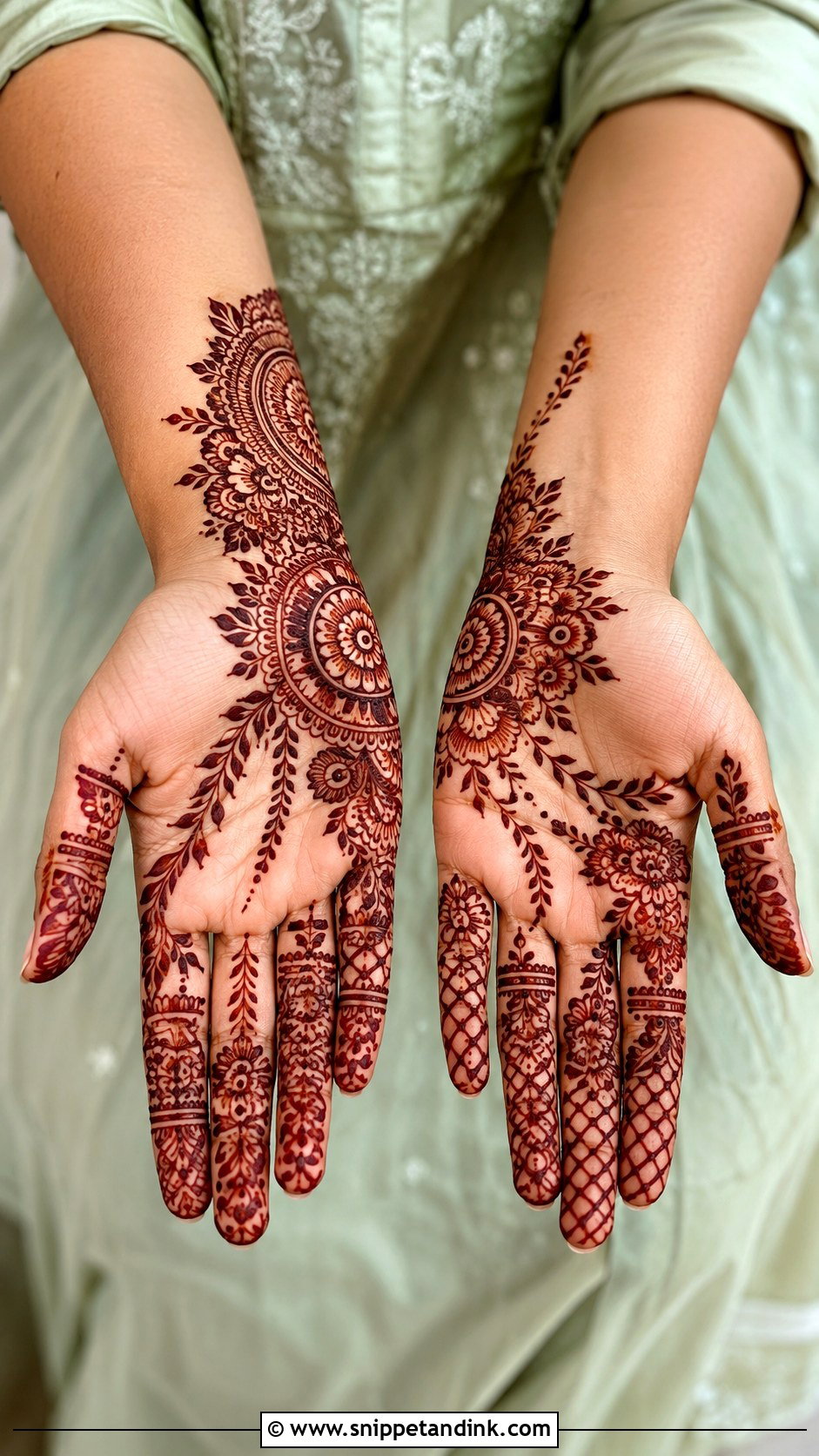
A unique front hand mehndi design stands out through its layout, not its motifs. Pair a side mandala with diagonal florals, mix fine Indian fillers with bold Arabic leaves, or try an asymmetrical palm that still feels balanced. Each finger can carry a different but related pattern: checks, petals, dots, slim bands. What keeps it from chaos is repetition. I pick one element, usually a particular leaf or dot cluster, and repeat it in every zone so the hand reads as one design.
9. Front Hand Floral Mehndi Design
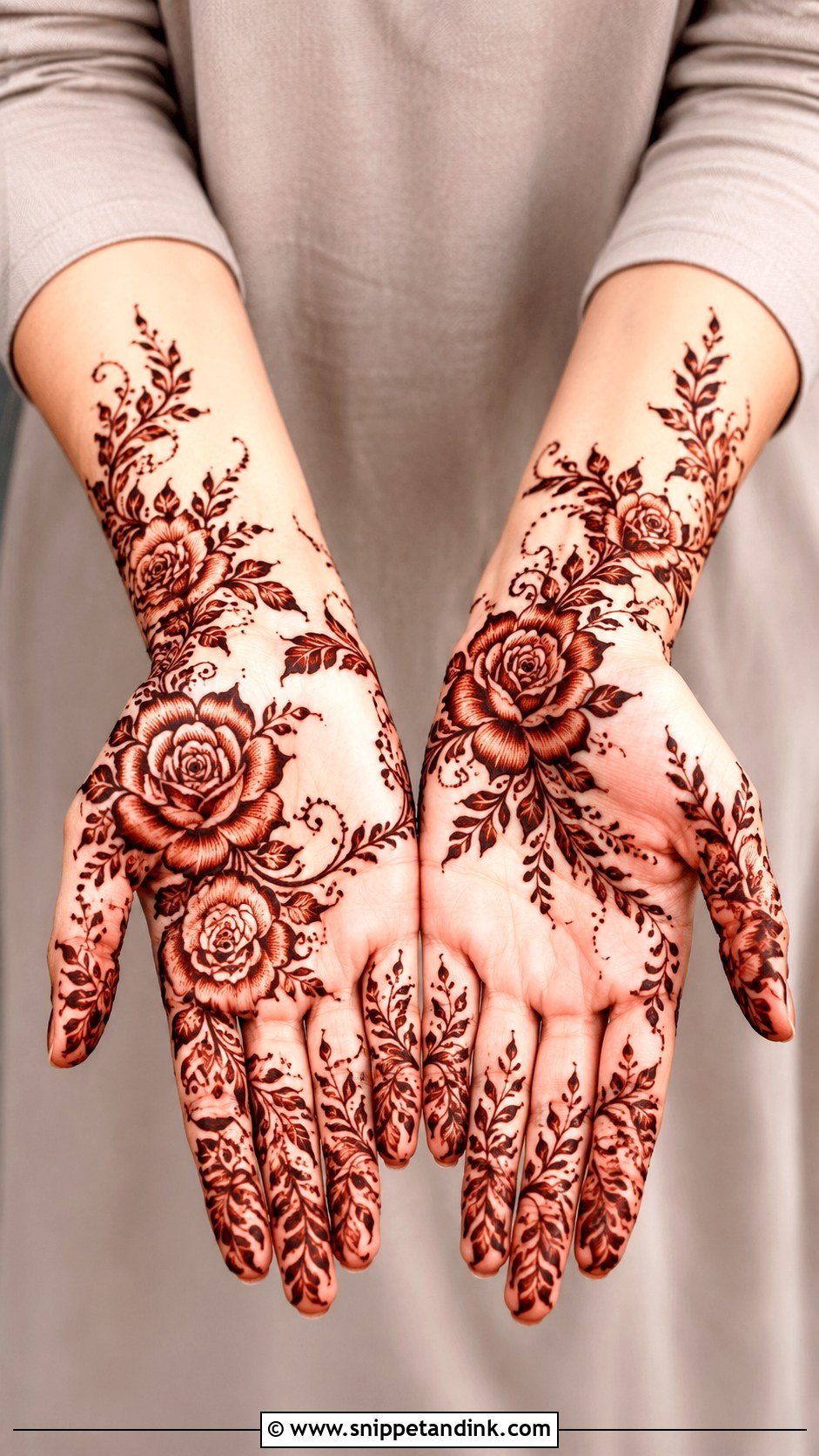
Florals give the palm a soft, open look: one large flower, a group of roses, or a vine that climbs from the wrist to the fingers. Shaded petals add depth, and thin leaves with dot trails keep it delicate. For a light version, decorate the palm sparingly and only two or three fingers; for a fuller one, link the trail to wrist bands and fingertip detail. I draw floral outlines a little heavier than they look right in wet paste, because fine lines soften once the stain develops.
10. Front Hand Paisley Mehndi Design
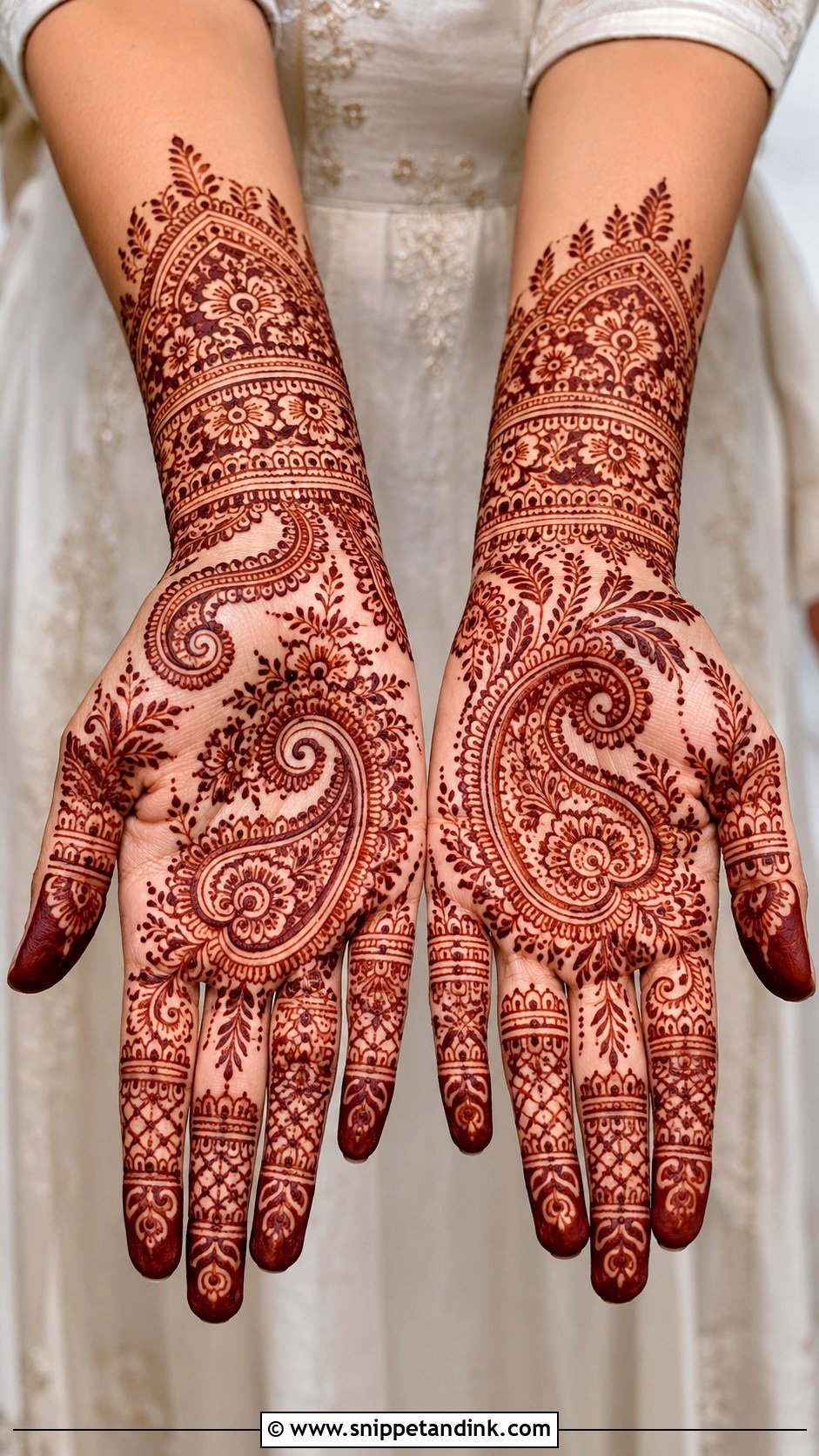
Paisleys, the curved mango shape, can anchor the centre of the palm, sit along one side or follow a diagonal. Small ones fill the fingers and large ones hold the wrist and palm. I fill each paisley with dots, fine lines, petals or tiny leaves, but leave a margin of bare skin inside the outline so the shape stays crisp. Paisleys connect easily with other motifs, which is why they turn up in nearly every bridal palm, yet a single bold one is also enough for a simple design.
11. Front Hand Peacock Mehndi Design
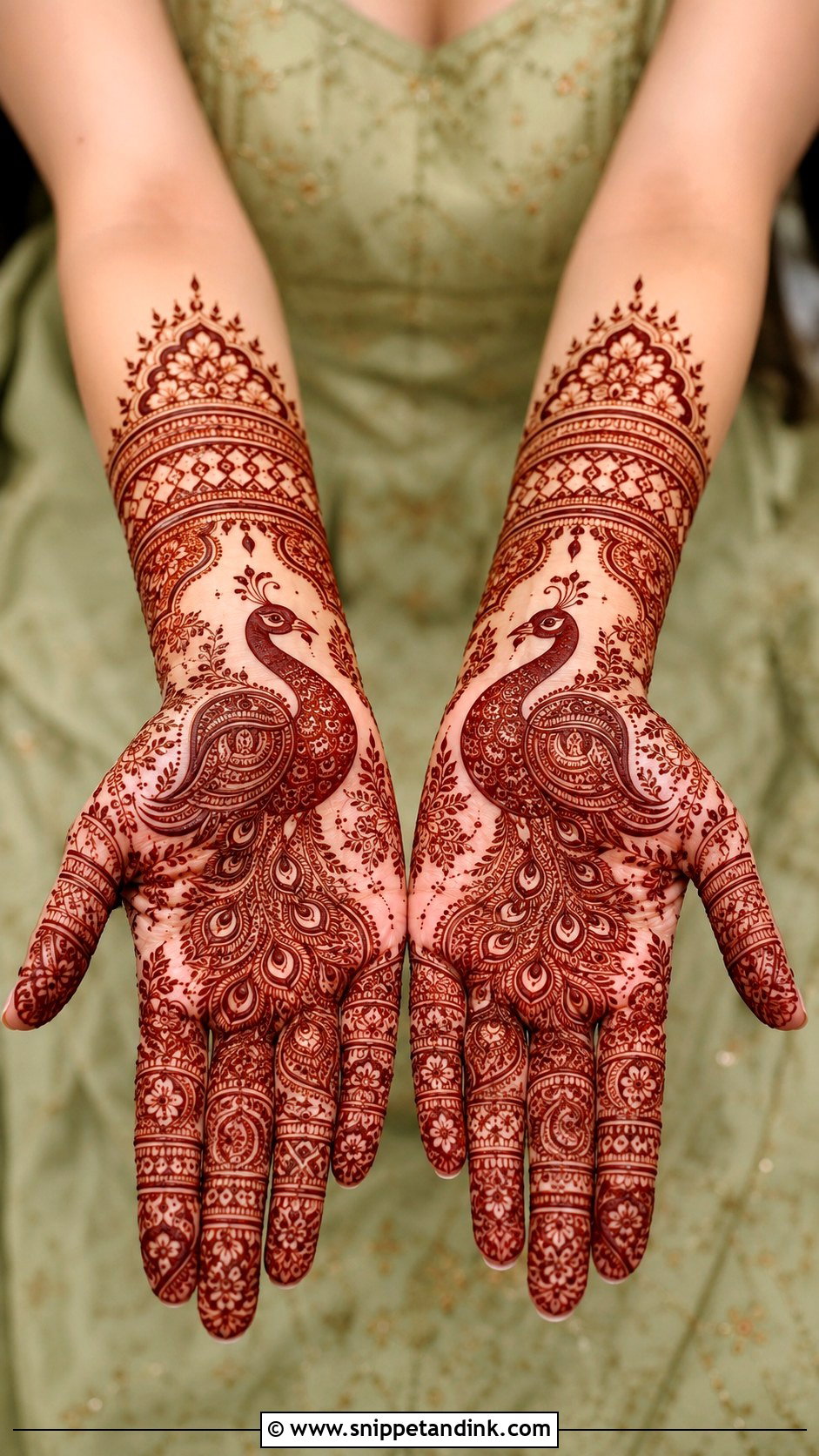
Placed in the centre of the palm, a peacock lets its feathers sweep toward the fingers and wrist, with fine lines, curved feather shapes, dots and small floral fillers. Brides and engagement functions ask for it often. Keep the body clearly drawn and don’t crowd it with competing motifs. I put the bird’s head toward the fingers rather than the wrist, so it faces outward when you hold your palms up.
12. Indo-Arabic Front Hand Mehndi Design
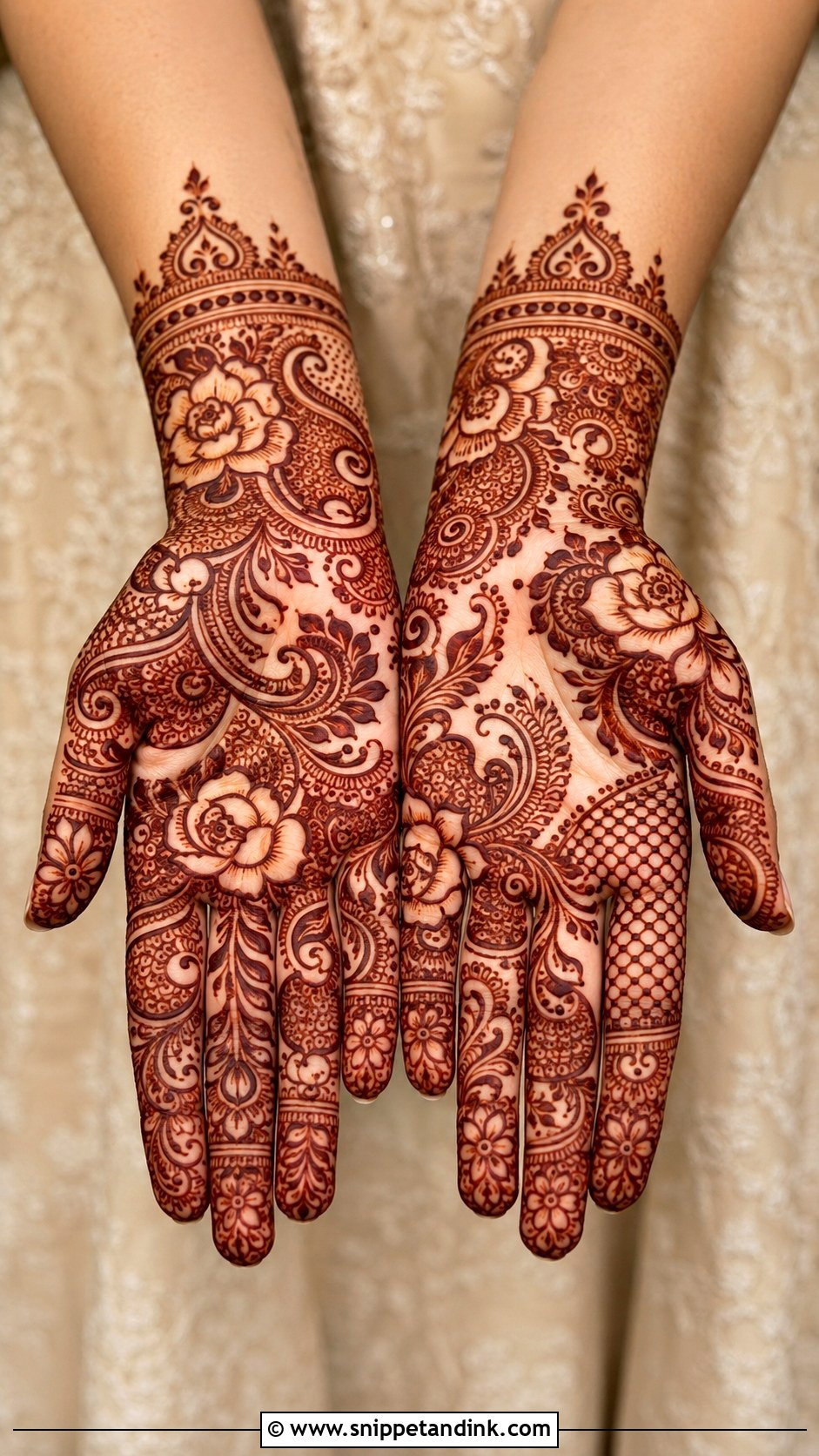
Indo-Arabic palms use large Arabic flowers, paisleys or leaves with open skin around them, then fill selected areas with tiny lines, dots and mesh. It ends up heavier than simple Arabic work and lighter than dense bridal mehndi. The fingers can be partly filled to match. I limit the Indian-style filling to two or three pockets; fill them all and you’ve drawn an Indian palm the slow way.
13. Indian Front Hand Mehndi Design
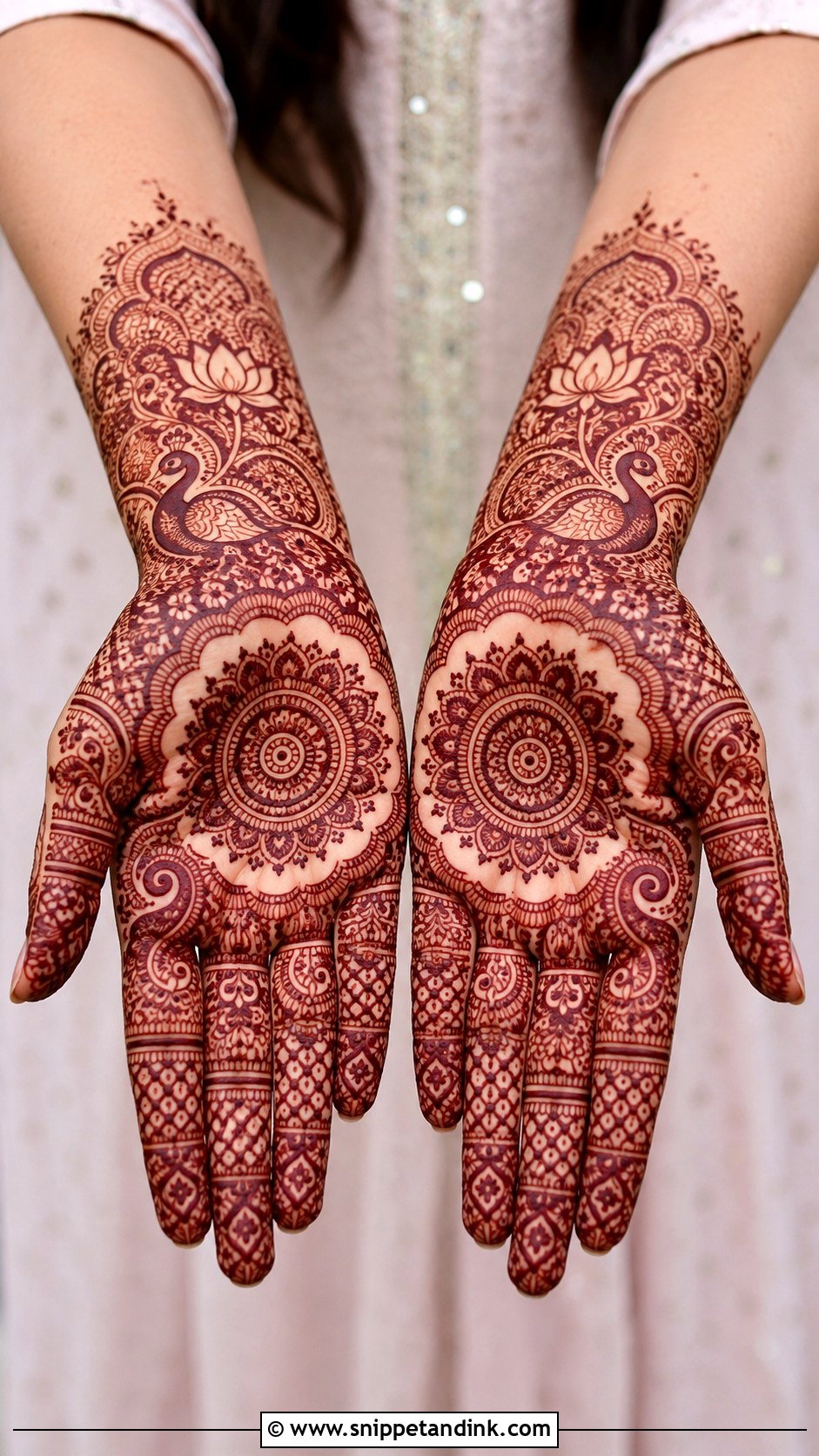
Indian palms leave very little empty skin. Paisleys, lotus, peacocks, mandalas and small filler patterns weave across the hand, and the fingers are decorated from base to tip. That woven effect is the whole appeal, and it’s at its richest once the stain matures to deep maroon. Weddings, religious celebrations and cultural events suit it. Know that it’s a long sitting, and that dense palms take longer to dry, so you’ll be keeping your hands open for a while.
14. Moroccan Front Hand Mehndi Design
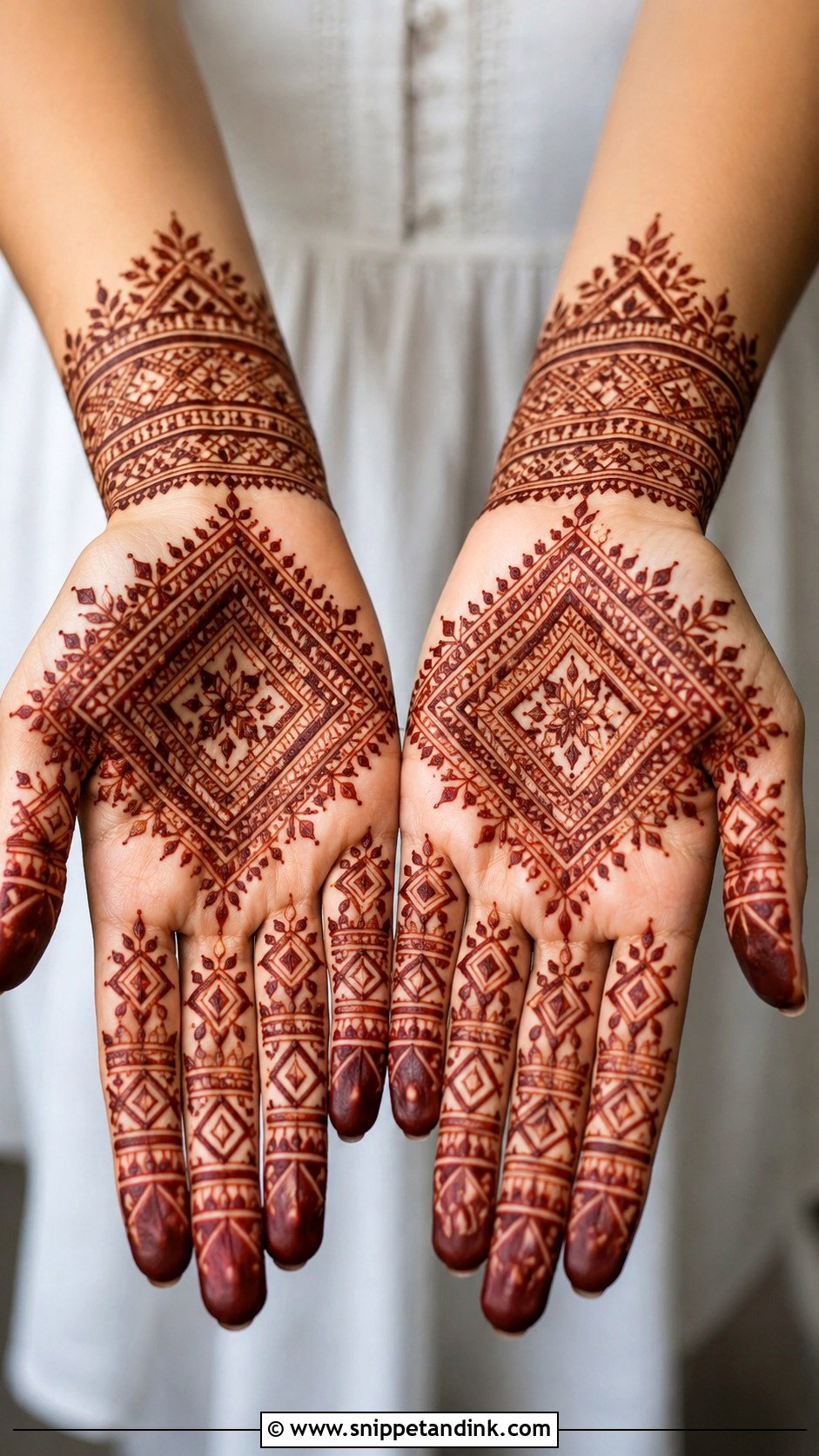
Moroccan palms swap flowers for diamonds, triangles, lines, grids and angular bands, often with a central geometric medallion and matching line patterns on the fingers. It can stay minimal with open space or repeat shapes from wrist to fingertips. Palm creases are the hazard here; a straight line crossing a deep crease breaks when you flex your hand. I plan the bands to sit between the main creases wherever I can.
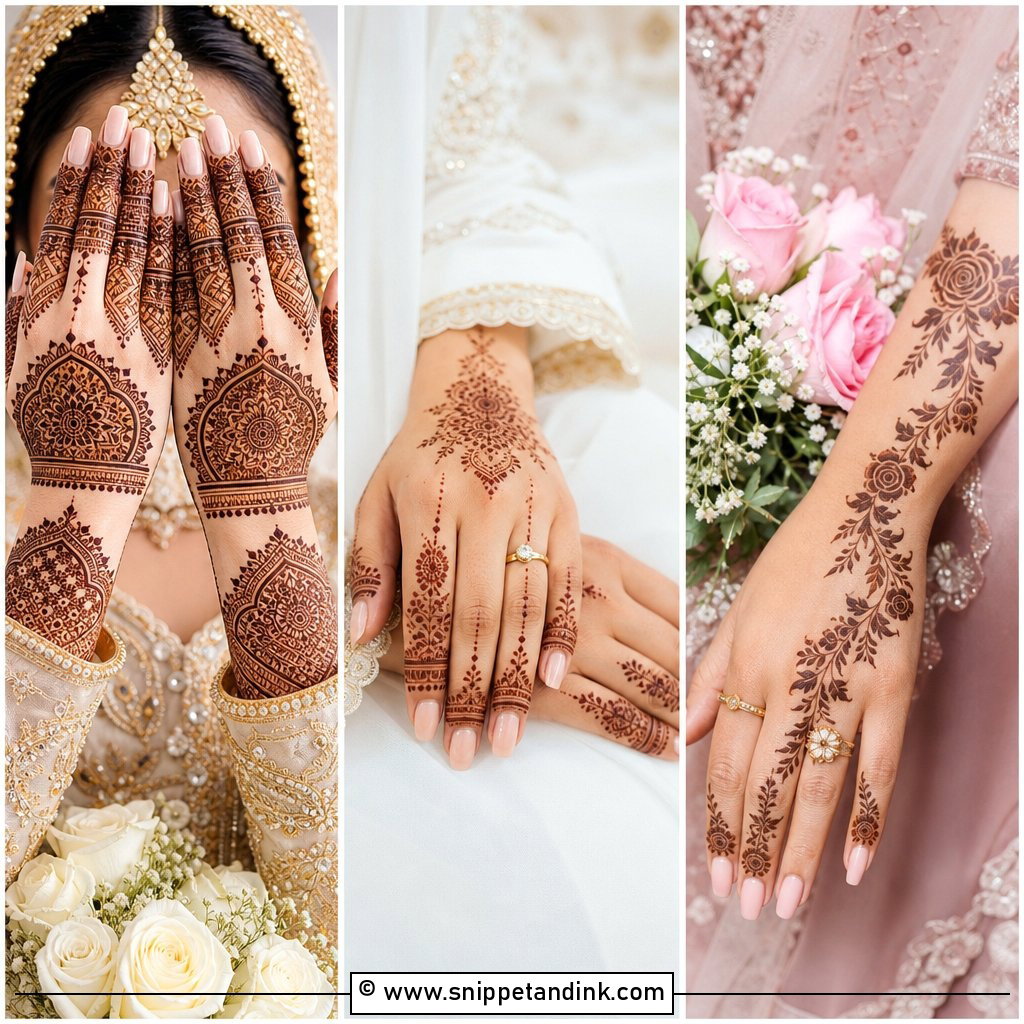
15. Gulf Front Hand Mehndi Design
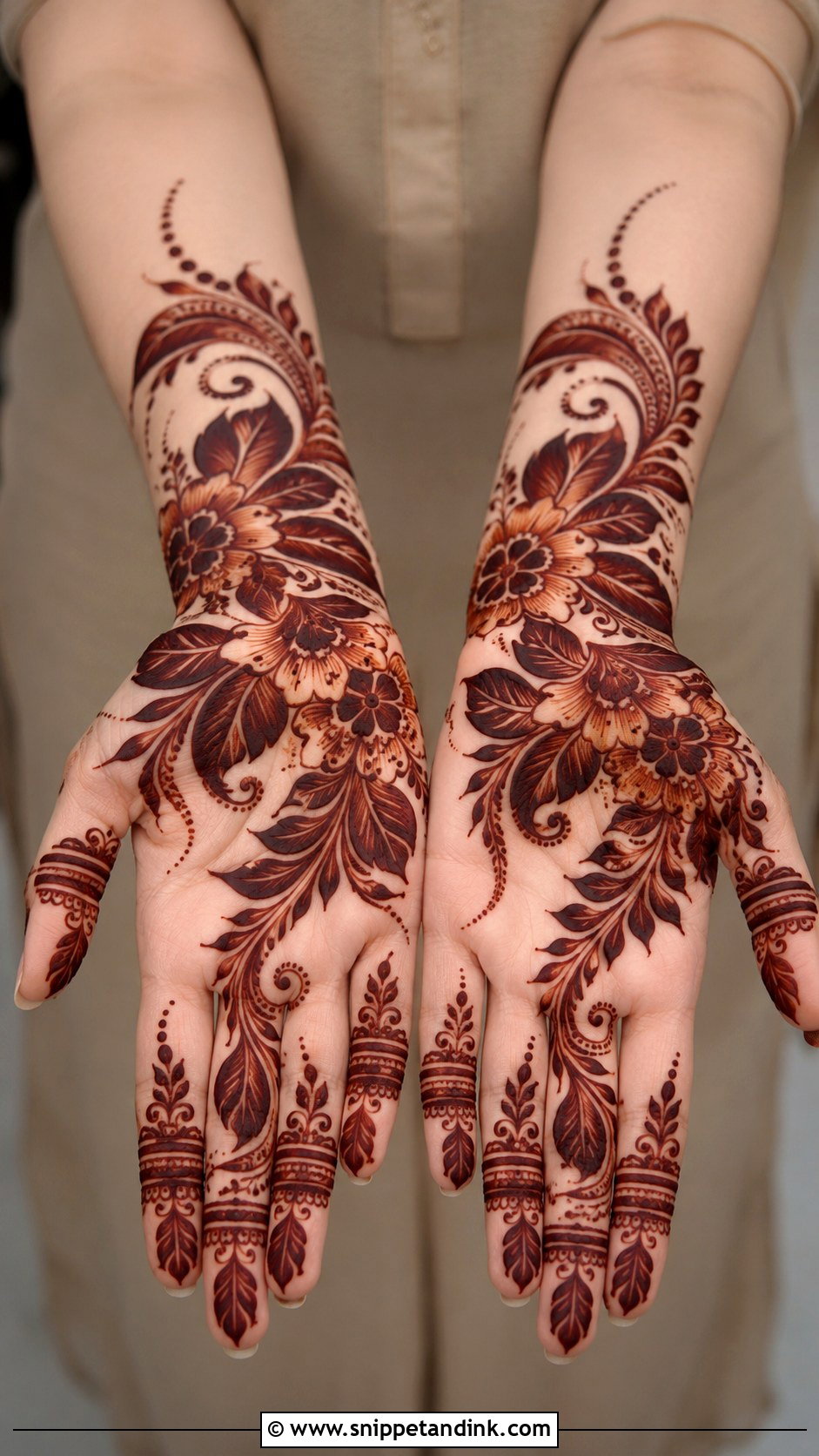
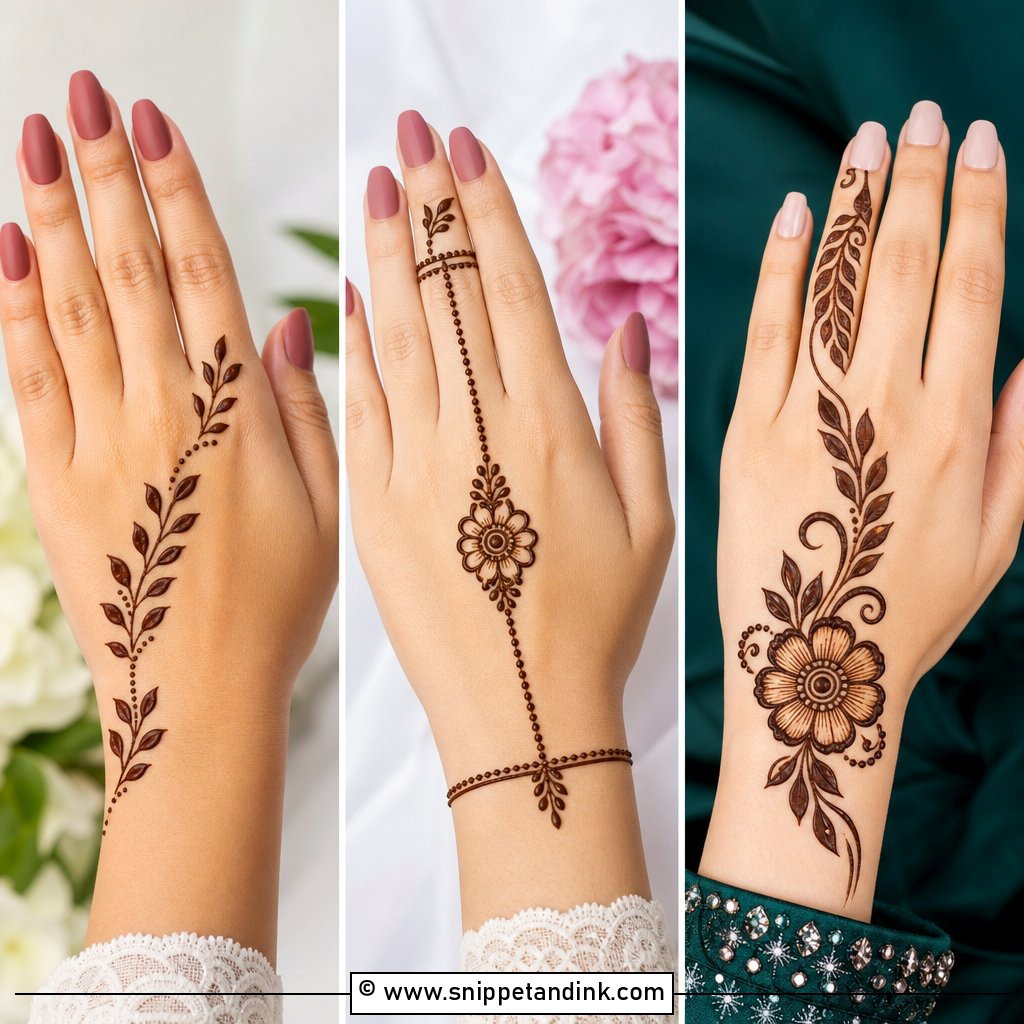
Gulf or Khaleeji palms are bold florals and leafy vines with dramatic open spacing, usually flowing across one side of the palm toward the fingers. The skin showing through creates the contrast. It suits longer fingers especially well, since the trails have room to stretch. Thick, confident outlines first, then light shading inside the petals. Eid, weddings and festive evenings all suit this style.
16. Minimal Front Hand Mehndi Design
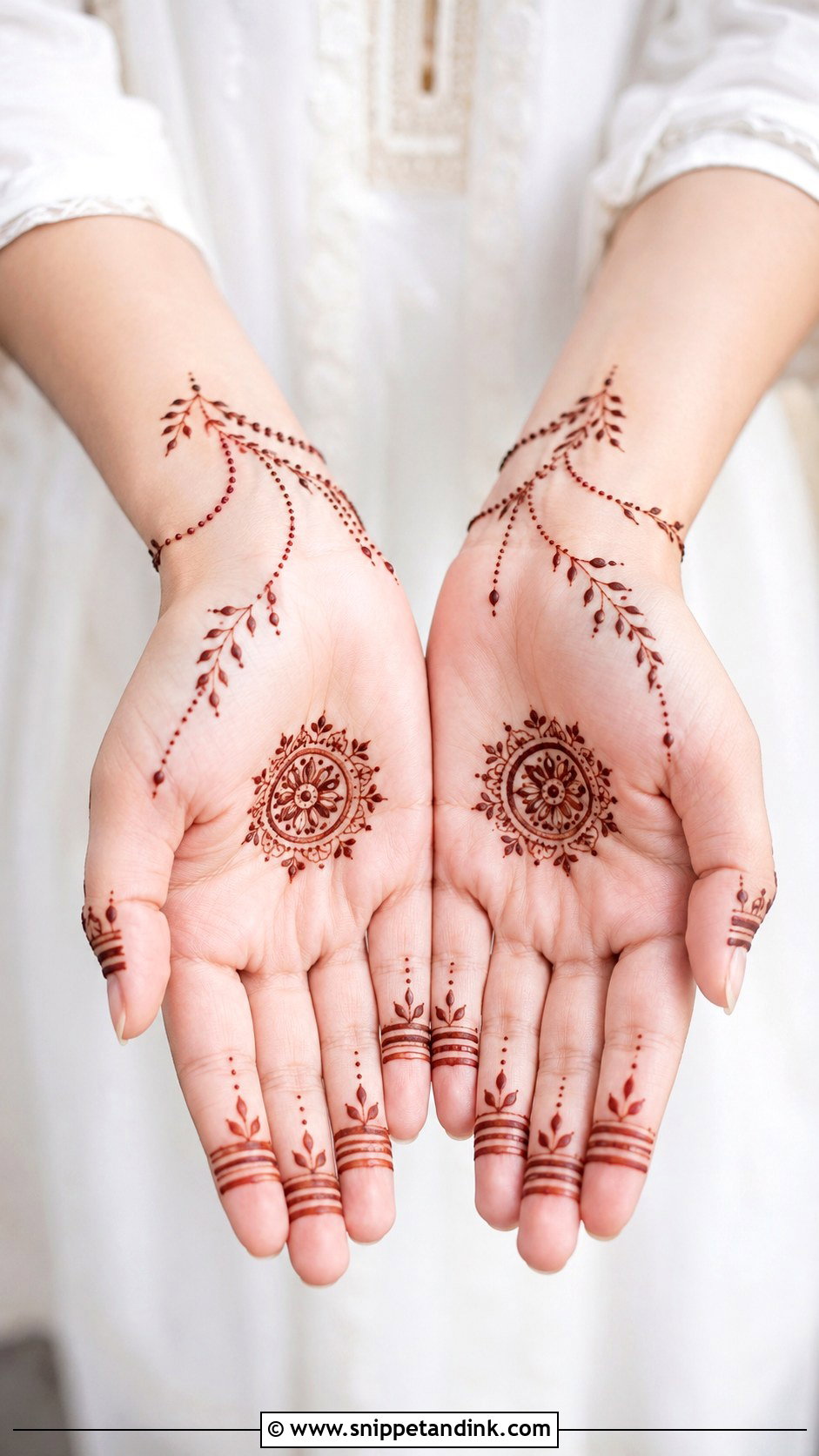
Minimal palms might be a small mandala, a fine floral trail or a bracelet-to-finger chain with tiny dots, with the fingers decorated lightly. It’s quick, suits office celebrations and school events, and works well on small hands that a full design would swamp. Thin lines, balanced spacing and a few repeated details make it look complete rather than sparse. Bear in mind that palm stains fade fastest from the centre, where hands rub most, so a minimal design looks lighter within a week.
17. Front Hand Finger Mehndi Design
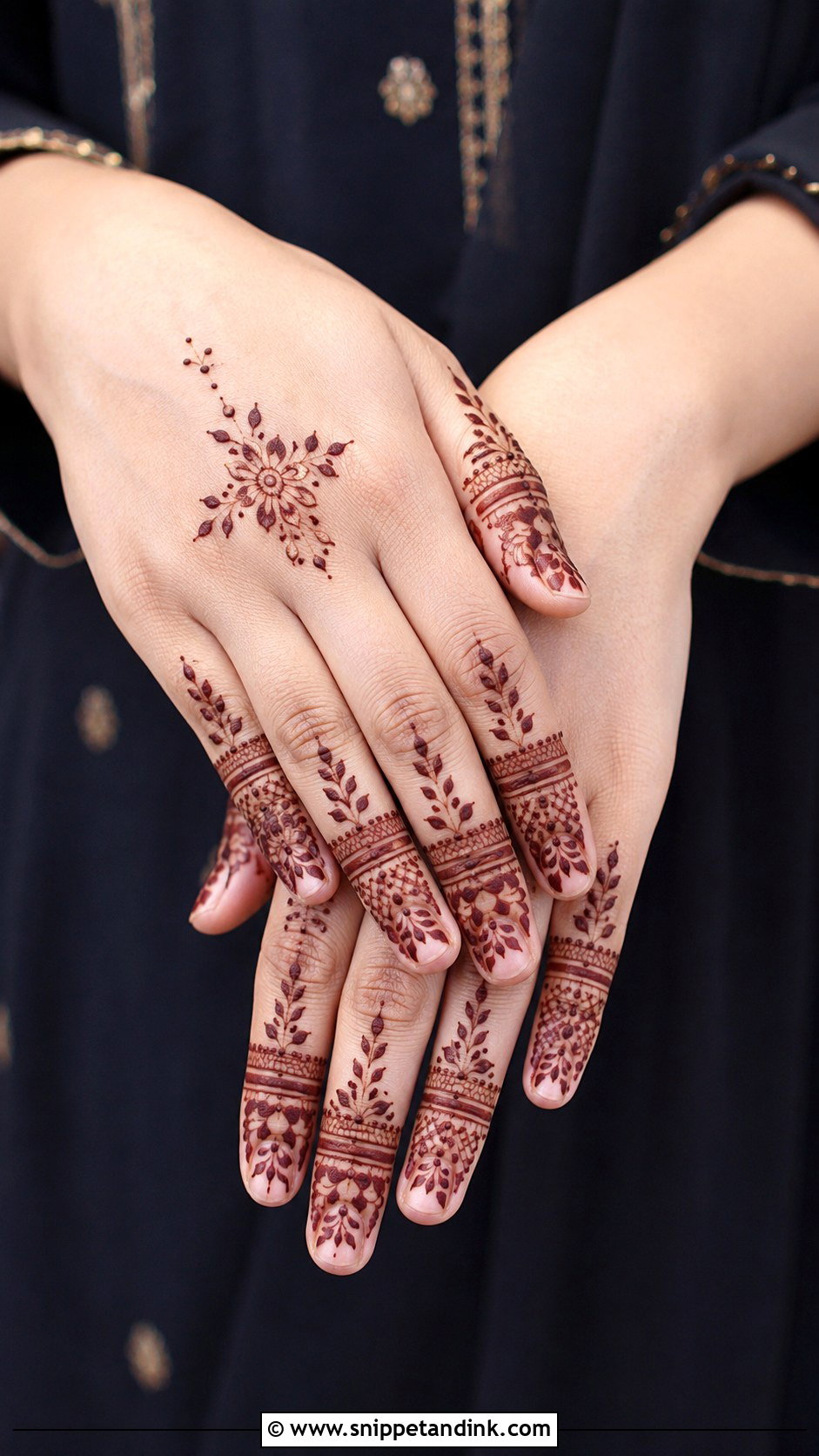
Finger-focused palms keep the centre light, maybe a small motif or dotted chain, and put the detail on the fingers: bands, leafy vines, tiny flowers, checks or half-filled tips. It’s fast, which helps on a busy festival morning. To tie it together, I repeat one detail, dots or slim lines, across every finger. Fingertips stain darkest of all, so even small tip caps come out strong.
18. Front Hand Bracelet Mehndi Design
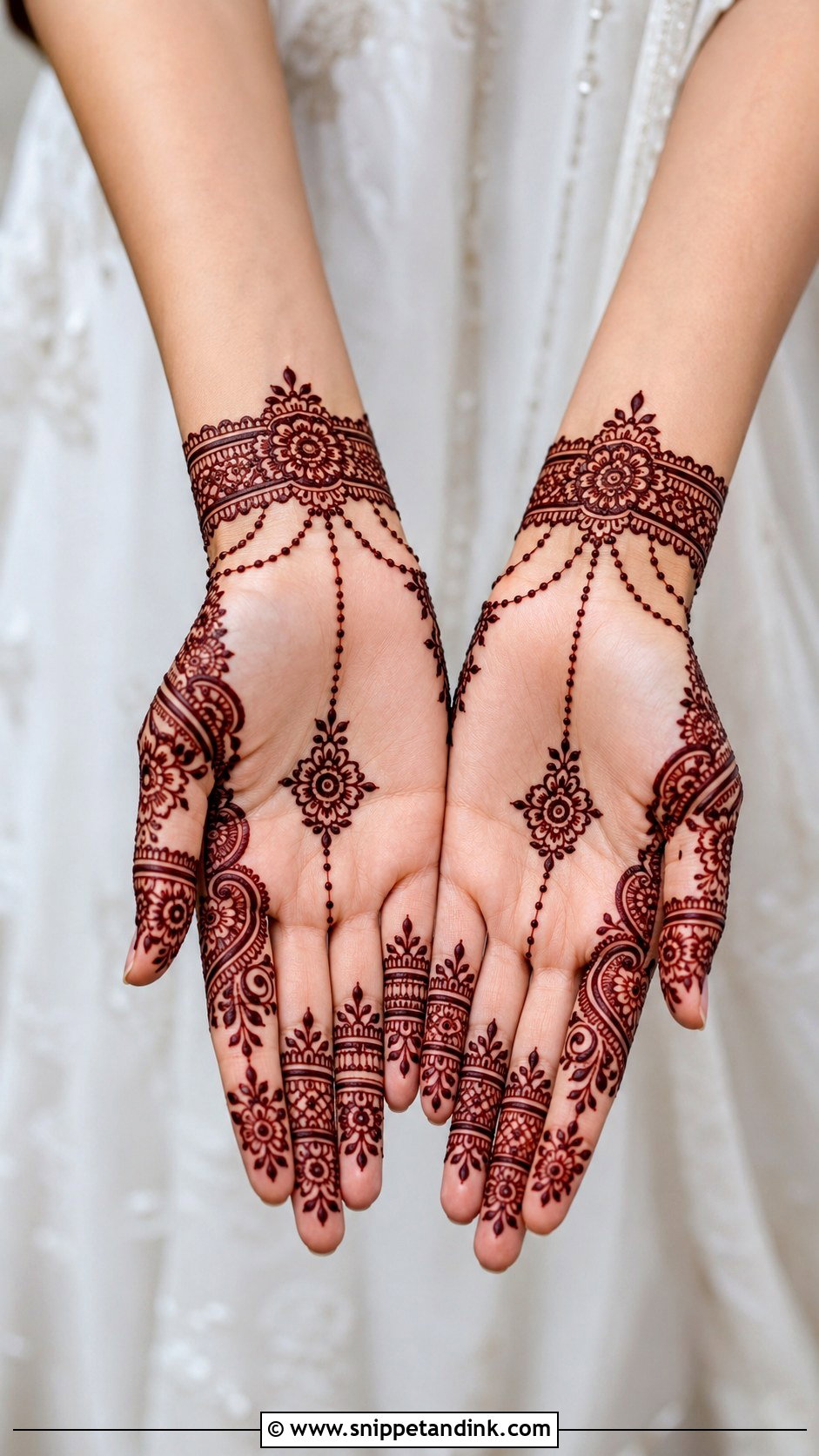
A wrist band connected to the palm or fingers by chains, dots, vines or small floral links gives a jewelry effect with very little coverage. The palm can stay open or take a small centre motif. Clean wrist borders and balanced finger details are what make it work, and thin connecting chains keep it graceful. I draw the wrist band with the hand open and relaxed, because a band drawn on a bent wrist shifts out of line as soon as you straighten it.
19. Front Hand Jaali Mehndi Design
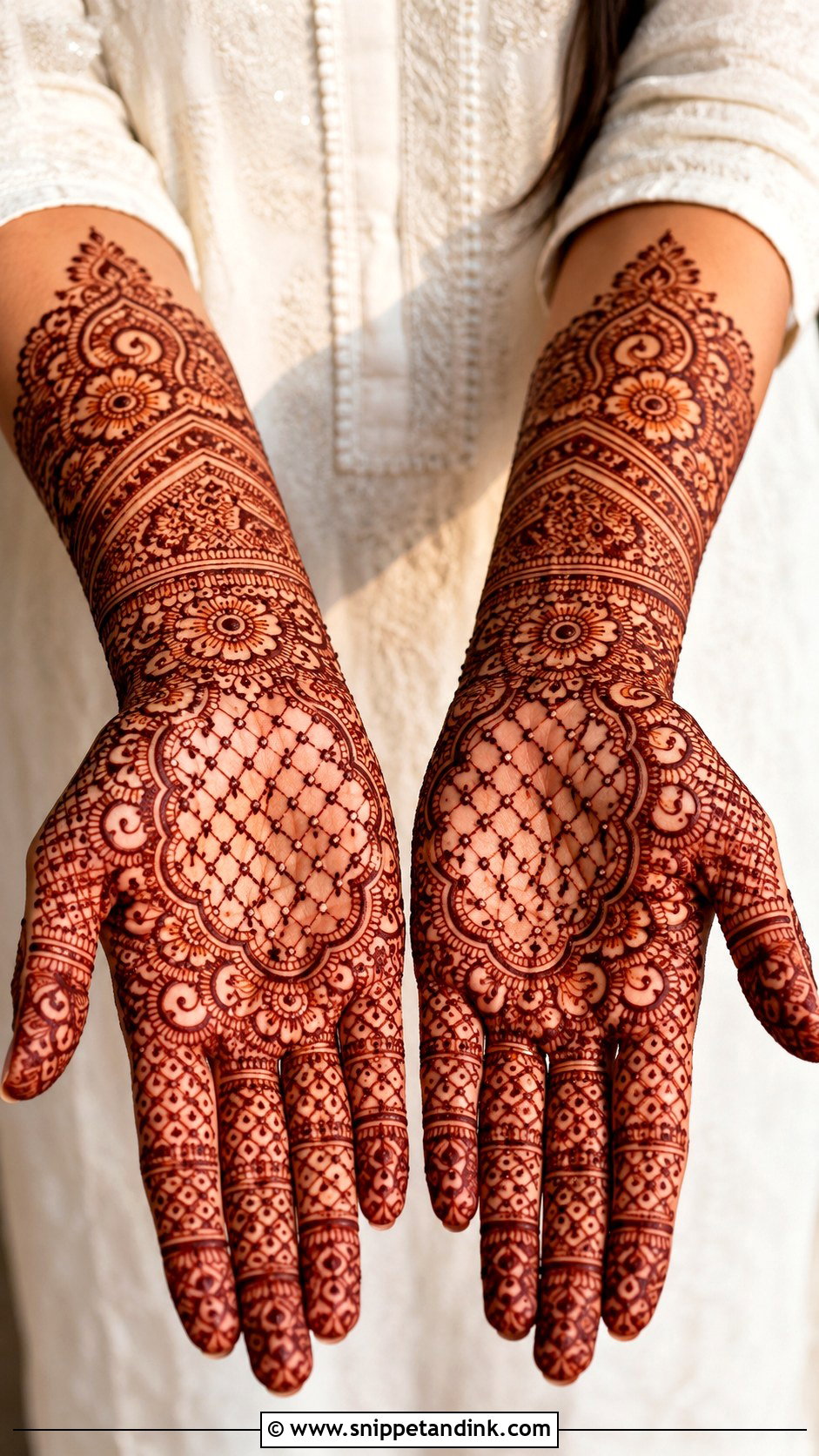
Jaali adds texture to the palm without needing many different motifs: a mesh section framed by flowers, paisleys or mandala borders, with small grids, diagonal lines or checks on the fingers. It fills space neatly, so bridal and full-hand designs use it constantly. For a modern take, put jaali on one side of the palm only and leave the rest open. Keep the squares even; a drifting grid looks careless in a way a wobbly petal never does.


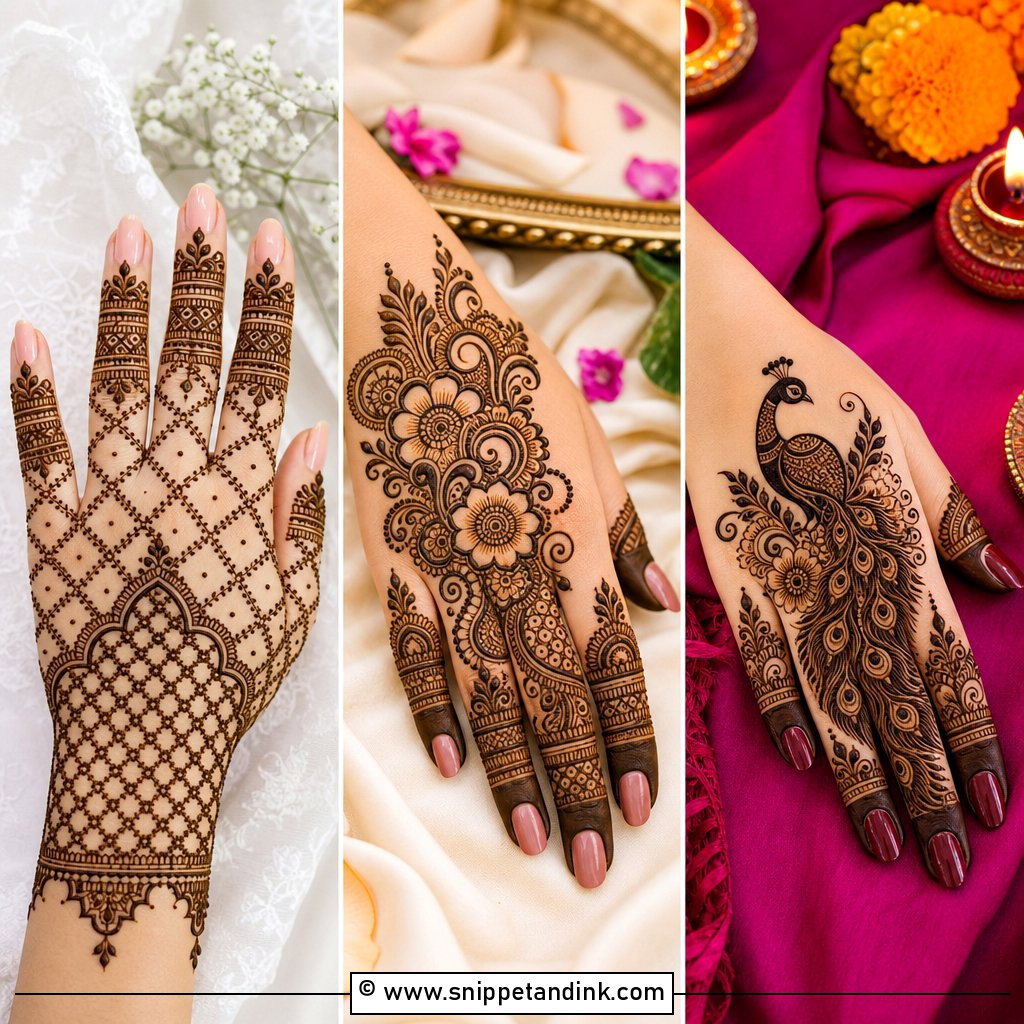
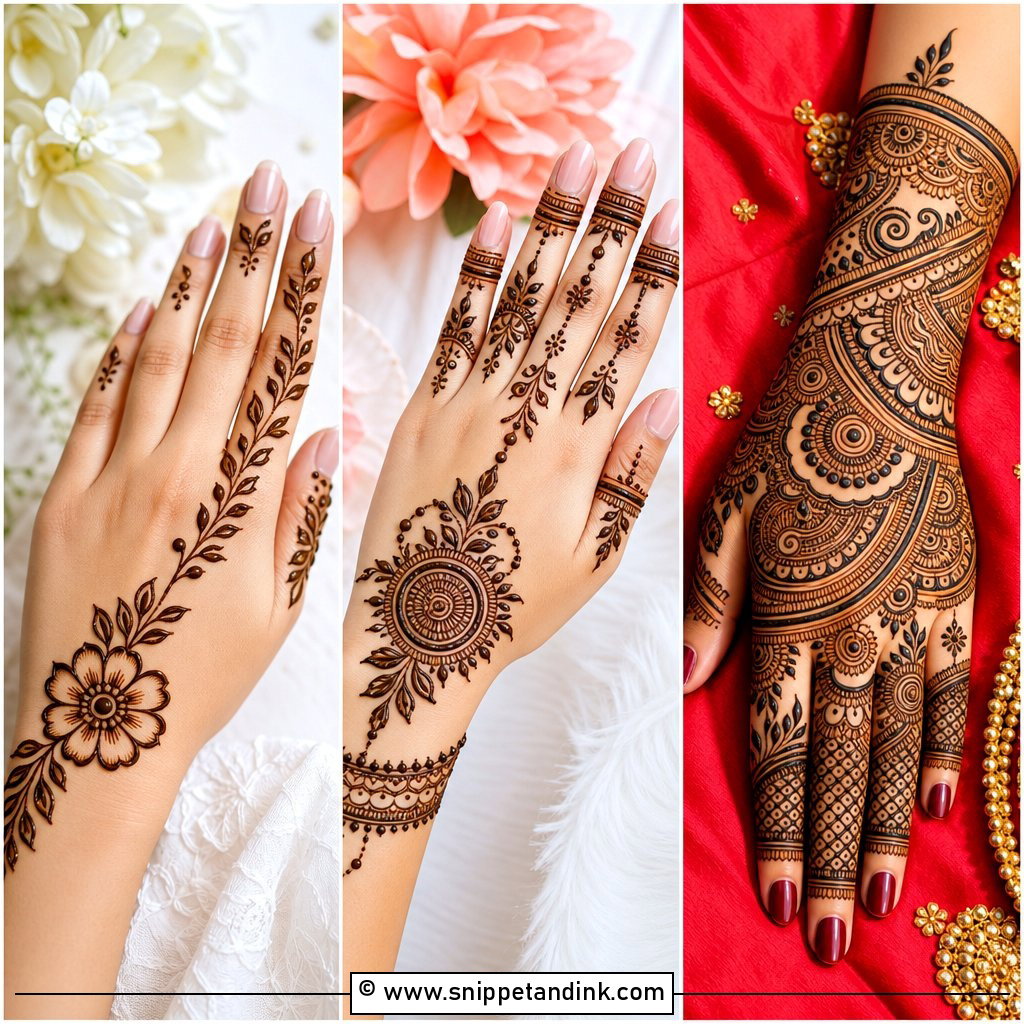
20. Front Hand Lotus Mehndi Design
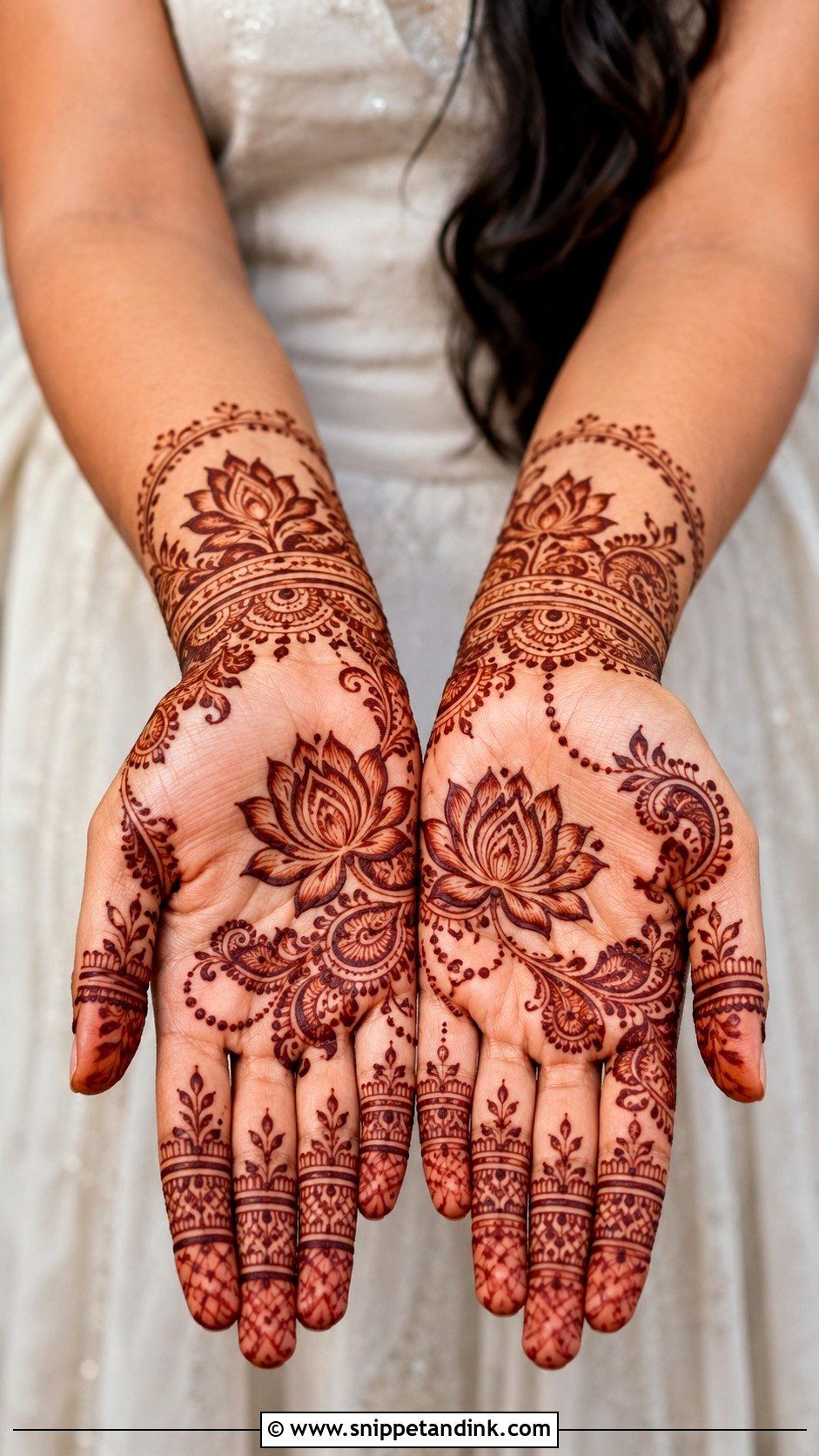
A lotus can sit in the centre of the palm, near the wrist or within a diagonal trail. Its layered petals look full even when the rest of the hand stays simple. Fine dots, curved leaves and slim borders make it stand out; minimal finger bands keep it clean, while paisleys and mesh around it make it grand. I space the petal layers generously, because tight layers merge as the colour deepens.
21. Front Hand Rose Mehndi Design
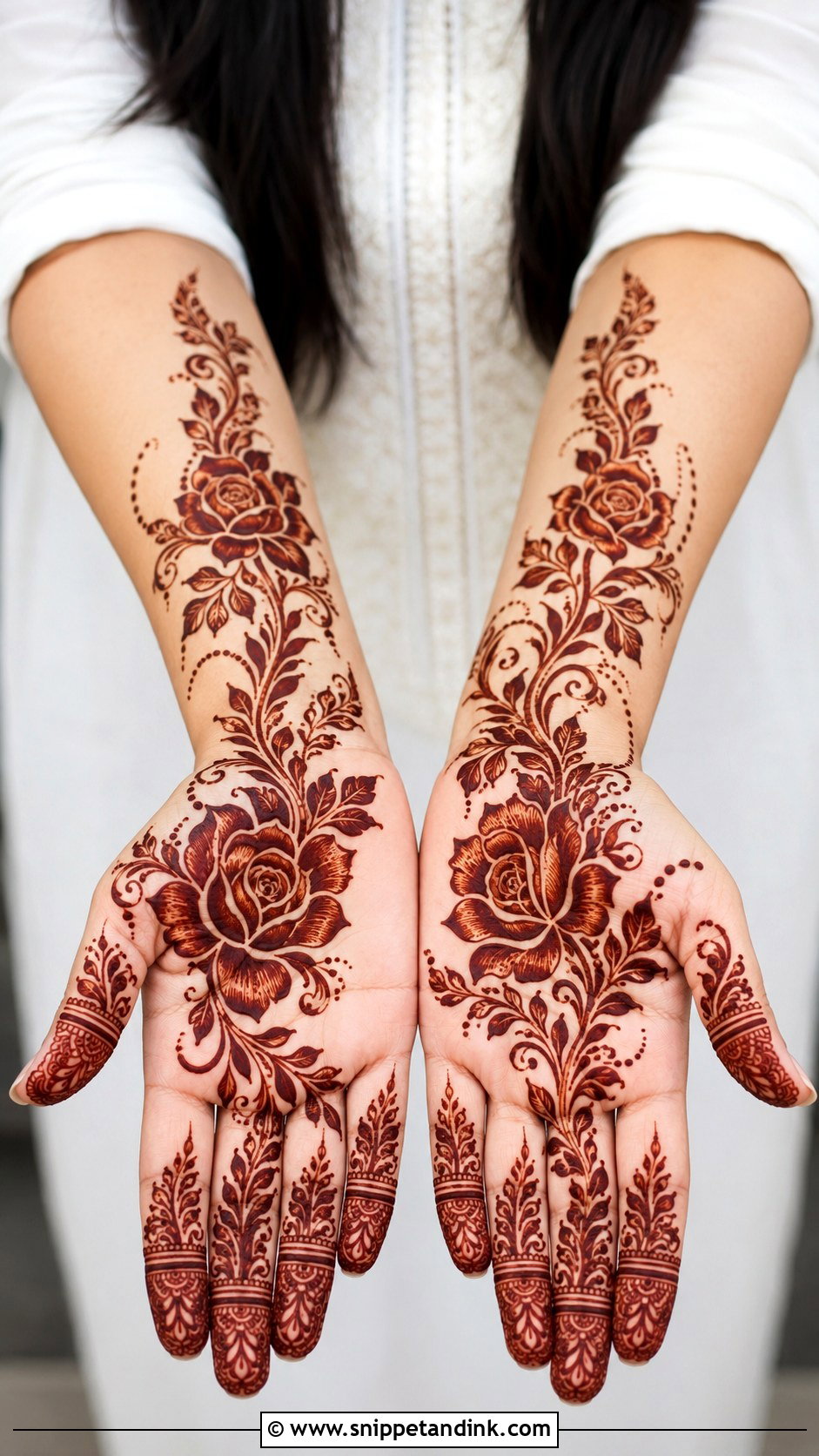
Roses give the palm a soft, Arabic-leaning look, either one large rose near the centre or several flowing diagonally from the wrist toward the fingers. Shaded petals add fullness and leafy vines add movement. Fingers can take simple leaf chains, curved bands and dots. Keep the rose outlines bold so the flowers survive the stain deepening. The design scales easily from simple to festive full hand.
22. Front Hand Leaf Mehndi Design
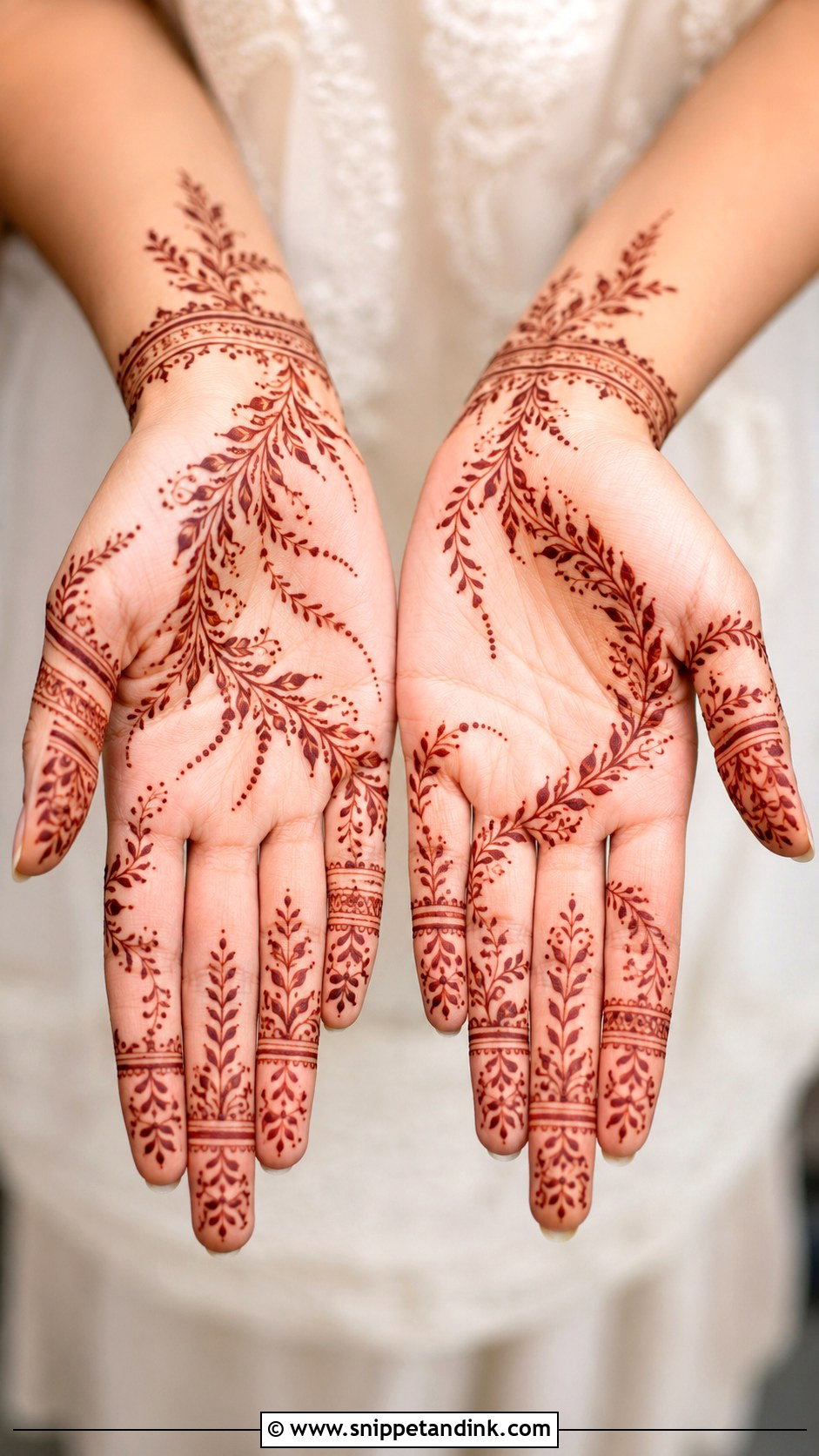
Leaves repeat easily, so a leaf design looks neat without being complicated: a leafy trail across the palm, a wrist vine climbing to the fingers, or a mandala framed with leaf borders. Beginners do well with it because the shapes forgive small errors. For a polished result, keep the leaves a consistent size and let the vine follow the hand’s natural curve rather than cutting straight across it. Dots and thin curved lines bring it into open-space styling.
23. Front Hand Shaded Mehndi Design
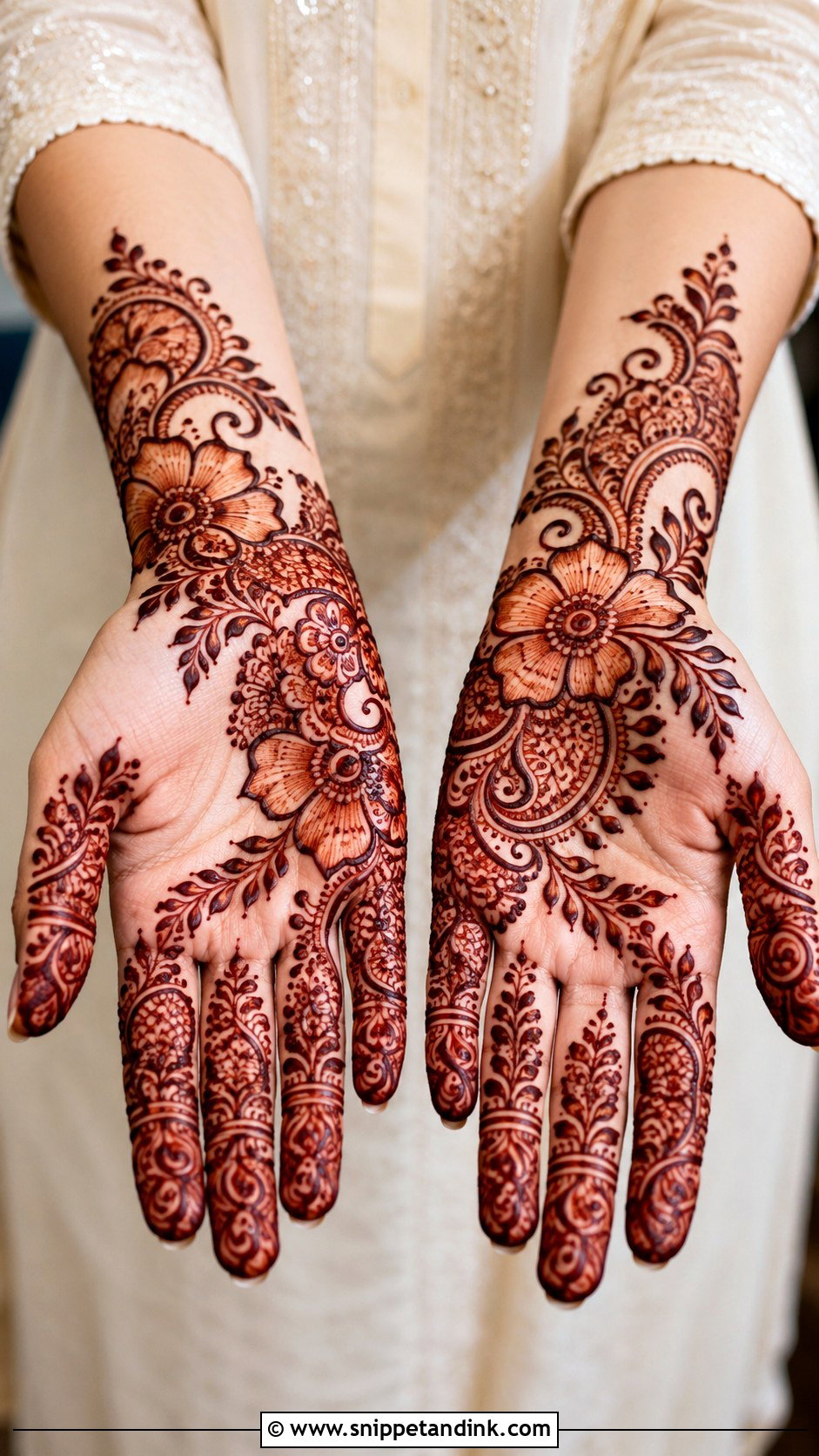
Shading uses light strokes inside flowers, paisleys, leaves and borders instead of solid henna, giving depth while staying airy. Arabic and Gulf palms suit it because their large motifs leave room for gradual detail. On the palm, where everything stains darker, I shade more lightly than I would on the back of the hand; otherwise the shaded areas go almost solid. If the palm is heavily shaded, keep the fingers simpler so the hand doesn’t look too dark overall.
24. Front Hand Half Hand Mehndi Design
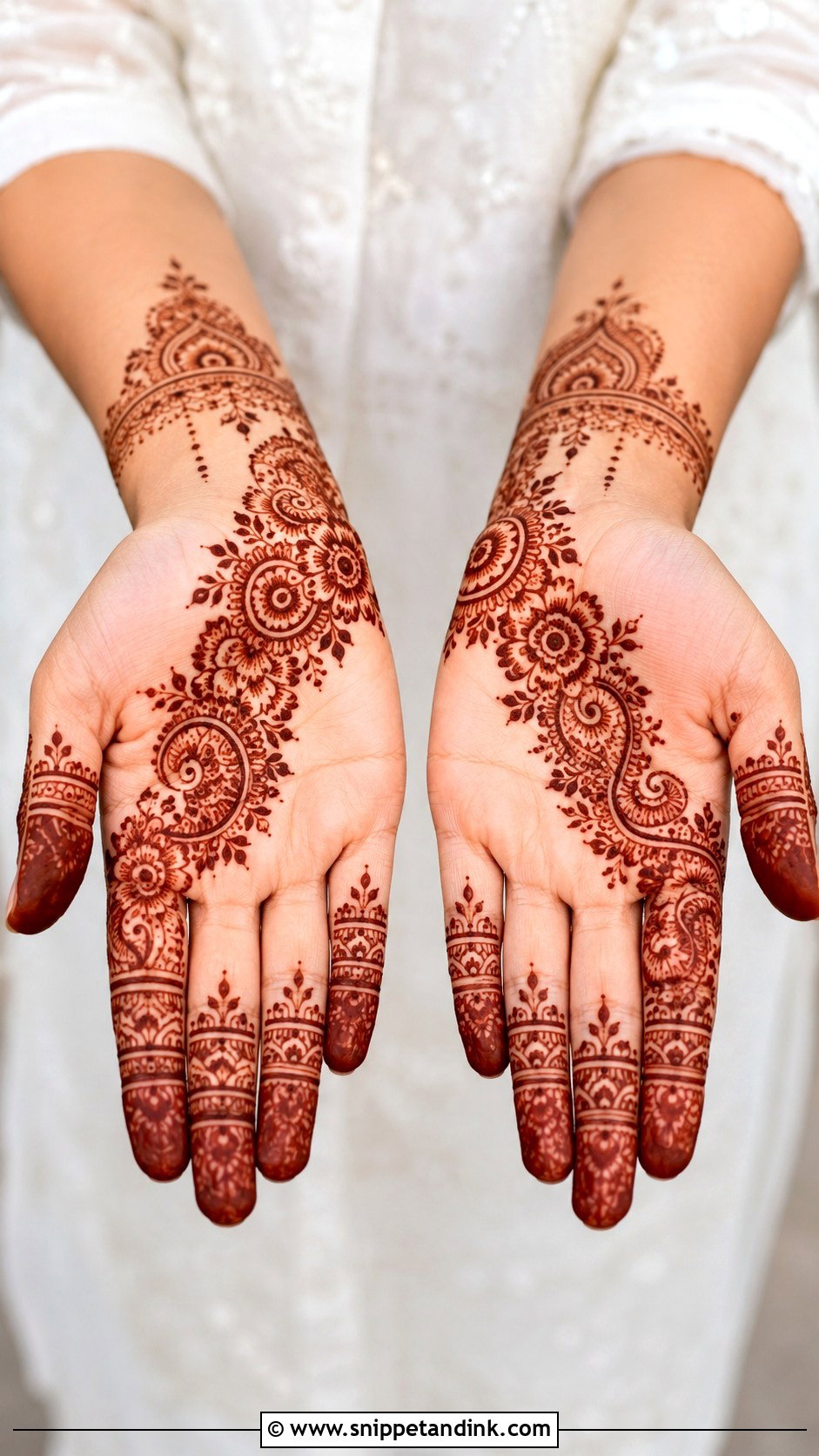
A half-hand palm covers only part of the palm and fingers: one side, a diagonal across the hand, or the lower palm and wrist. Florals, paisleys, mandalas and leafy trails all work. It takes much less time, which is useful on a busy celebration day. The finish matters more than the coverage. I match the fingers to the palm with bands or small tip details, otherwise a half design reads as unfinished rather than deliberate.




25. Front Hand Jewelry Mehndi Design
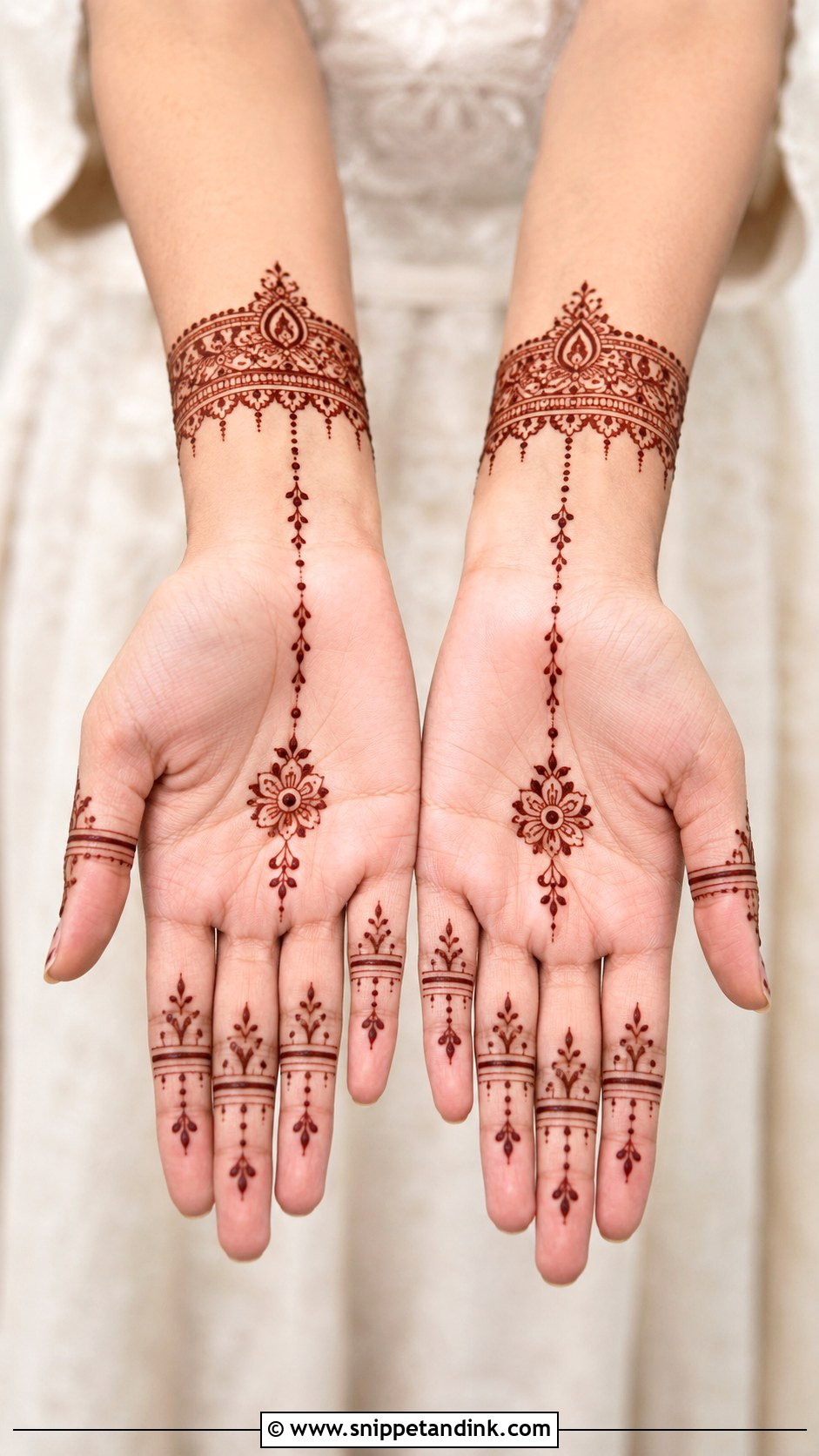
Jewelry palms borrow from rings, chains, bracelets and hand ornaments: a wrist cuff, a central palm charm and fine chains connecting to decorated fingers. The palm can stay mostly open so the chains stand out. It complements real bangles and rings instead of competing with them. Small flowers, dots and tiny leaves soften the effect. Engagements, festive events and wedding guests all suit it.
26. Front Hand Eid Mehndi Design
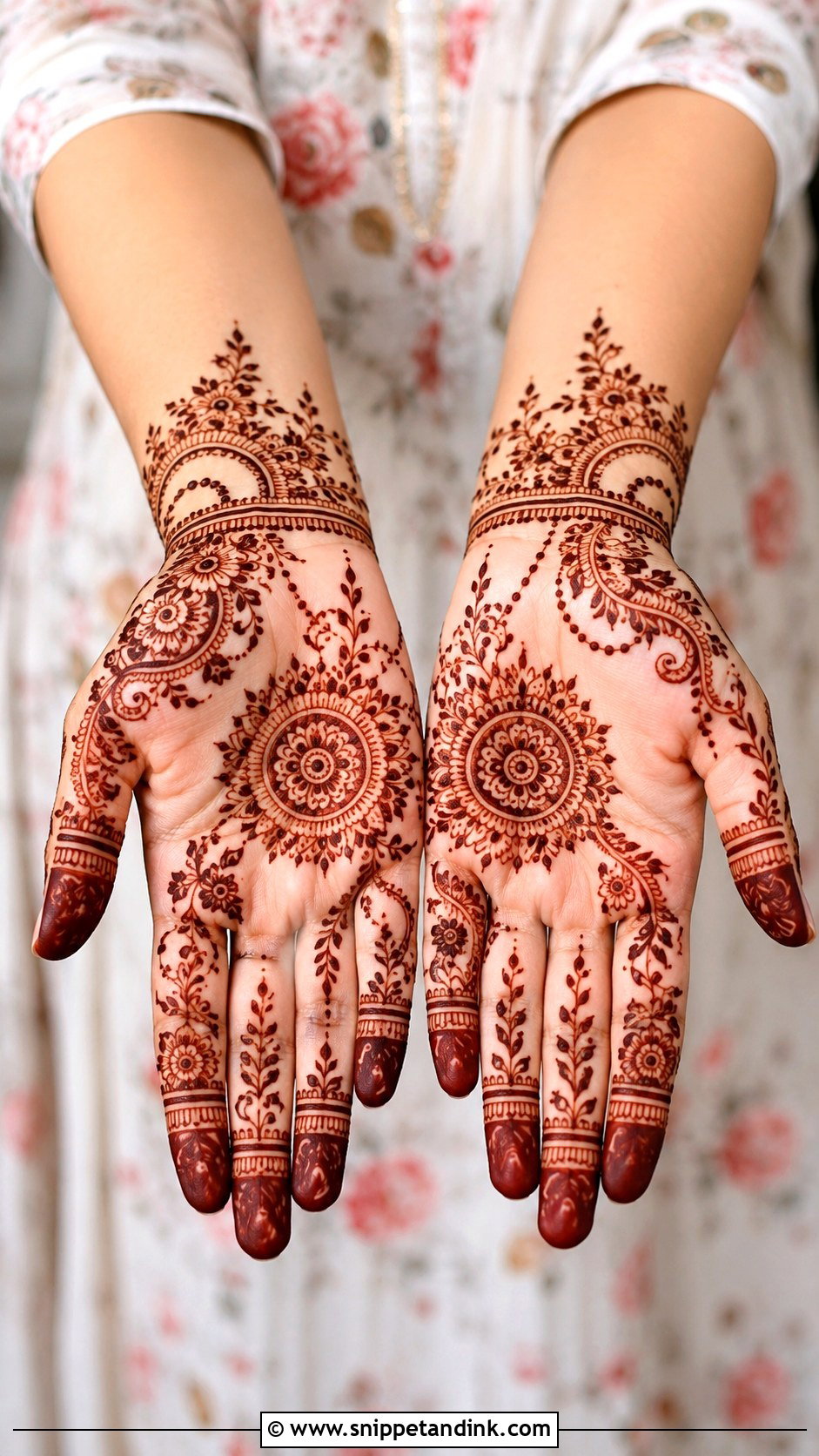
Eid mornings are busy, so most people want something quick. The classic answer is one of the center tikki patterns, along with crescent motifs, Arabic floral trails and clean finger details. A balanced palm motif with decorated fingers is plenty; add a slim bracelet band if you like. I suggest applying it the night before and sleeping in the paste, so the stain has darkened to a warm brown by the time you’re greeting family.
27. Front Hand Wedding Guest Mehndi Design
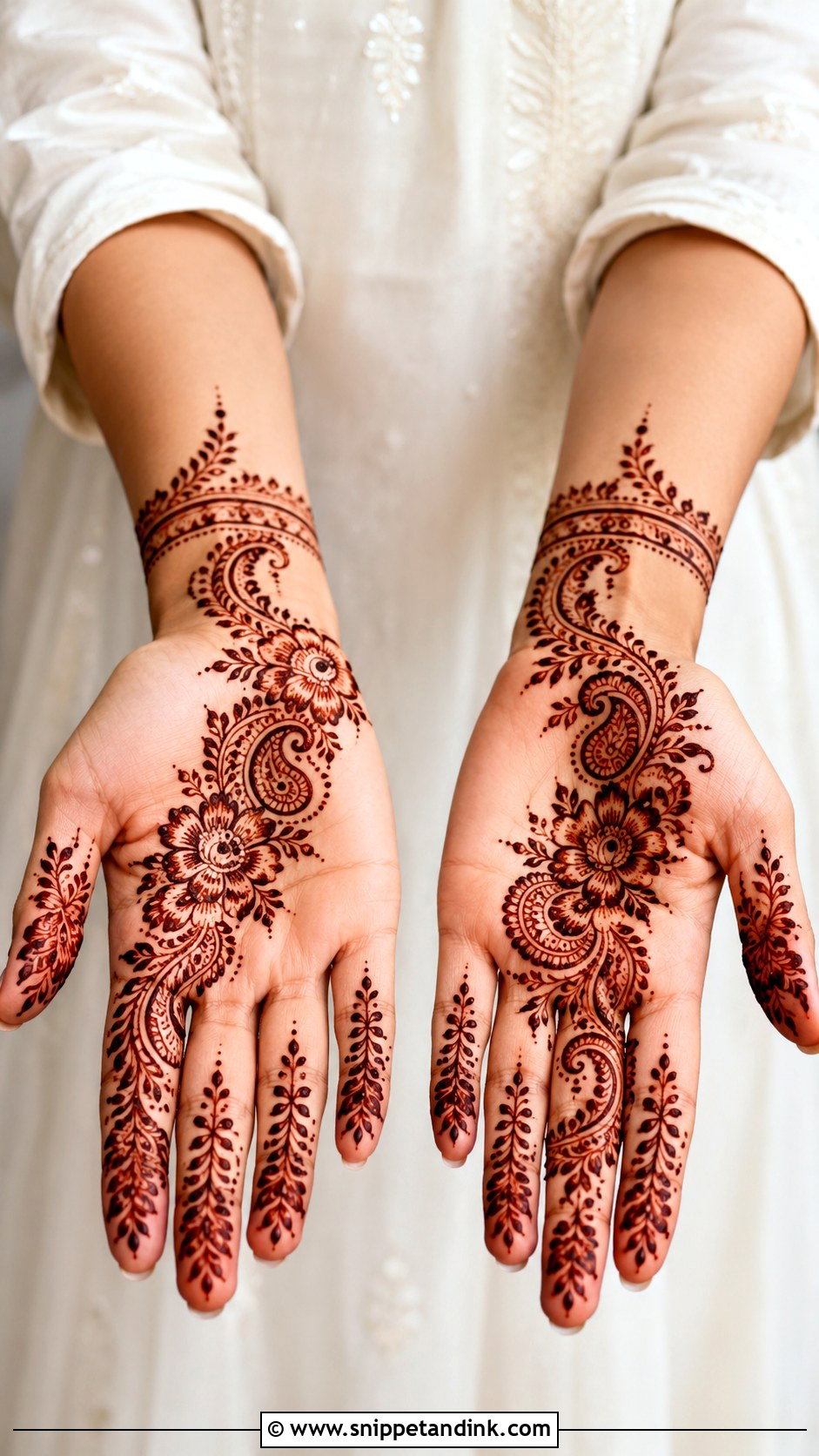
Guests should look festive without matching the bride’s coverage. A diagonal Arabic trail, a floral palm, a bracelet design or a half-hand layout all fit. Clean motifs, neat fingers and a wrist detail that sits well with bangles carry you through long functions comfortably. Leave the storytelling elements, portraits and wedding scenes, to the bride. Medium coverage is the right weight for sisters, cousins and friends.
28. Front Hand Engagement Mehndi Design
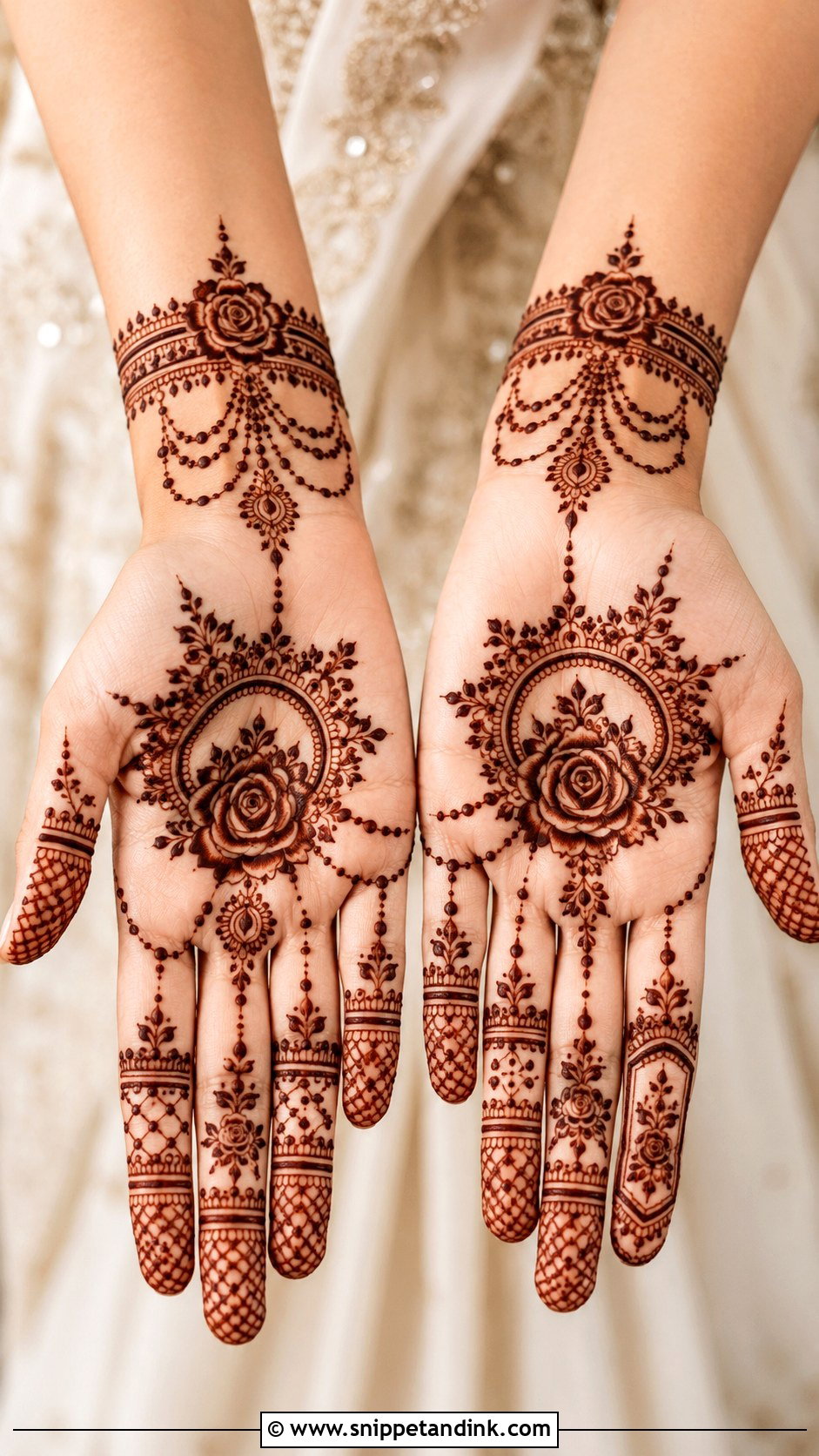
At a ring ceremony, people look at your fingers and the centre of your palm, so that’s where I put the care. Jewelry-style chains, rose trails, mandalas and fine bracelet cuffs all suit it. I leave the ring finger slightly open, or frame it delicately, so the ring isn’t lost in pattern. The palm can carry soft florals or a neat circle instead of dense bridal filling, which keeps the hand elegant without overpowering the jewelry.
29. Front Hand Festive Mehndi Design
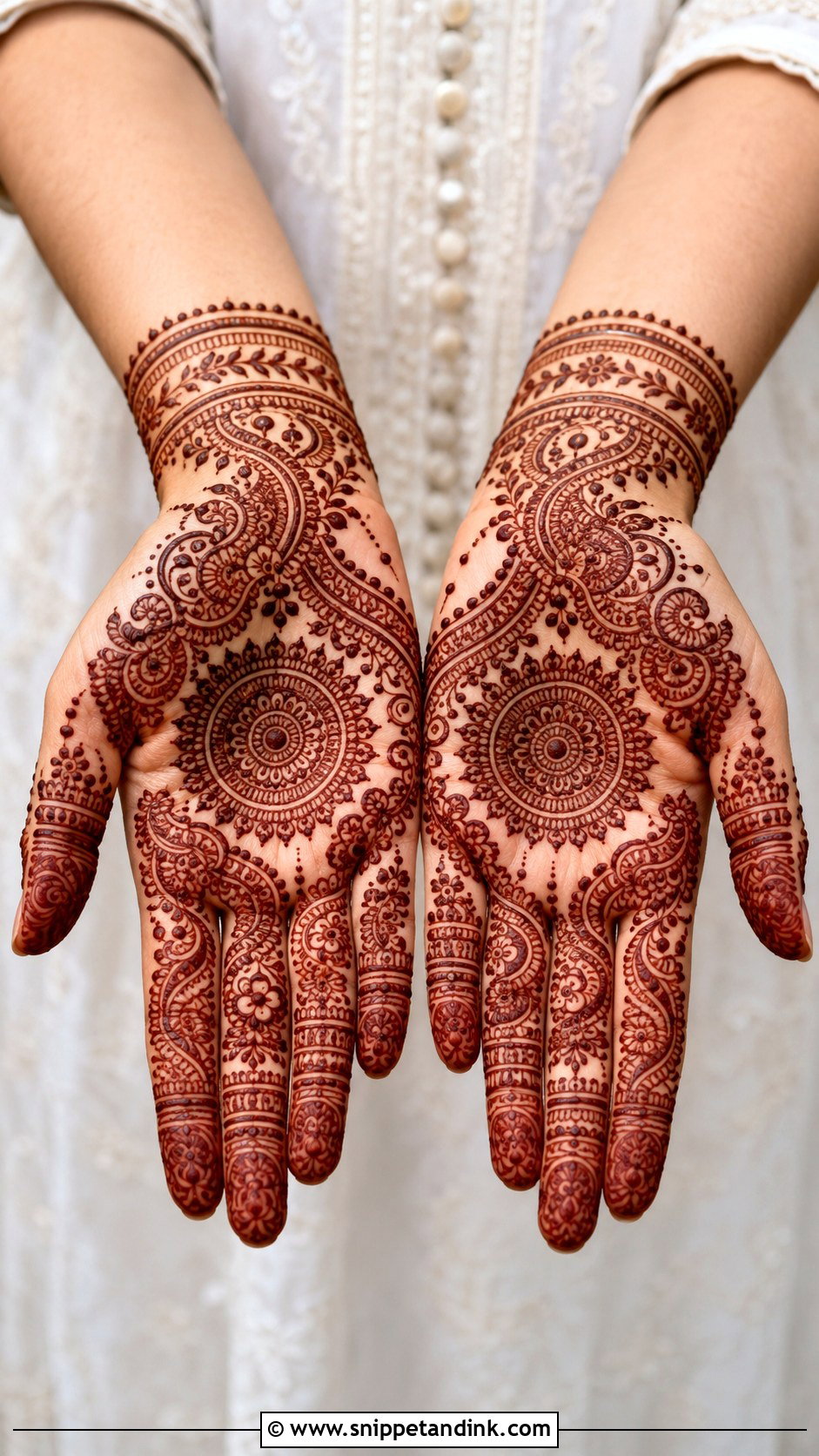
Festival palms need to read clearly and go with whatever you’re wearing. Florals, paisleys, tikki circles, leaf vines and finger bands are reliable. Go simple for daytime, fuller for evening. A strong palm motif with neat finger decoration and a small wrist finish makes a complete look without bridal-level detail, which suits Diwali, Eid, Karwa Chauth, Raksha Bandhan and family gatherings. Keep shapes bold if you want close-up hand photos.
30. Front Hand Karwa Chauth Mehndi Design
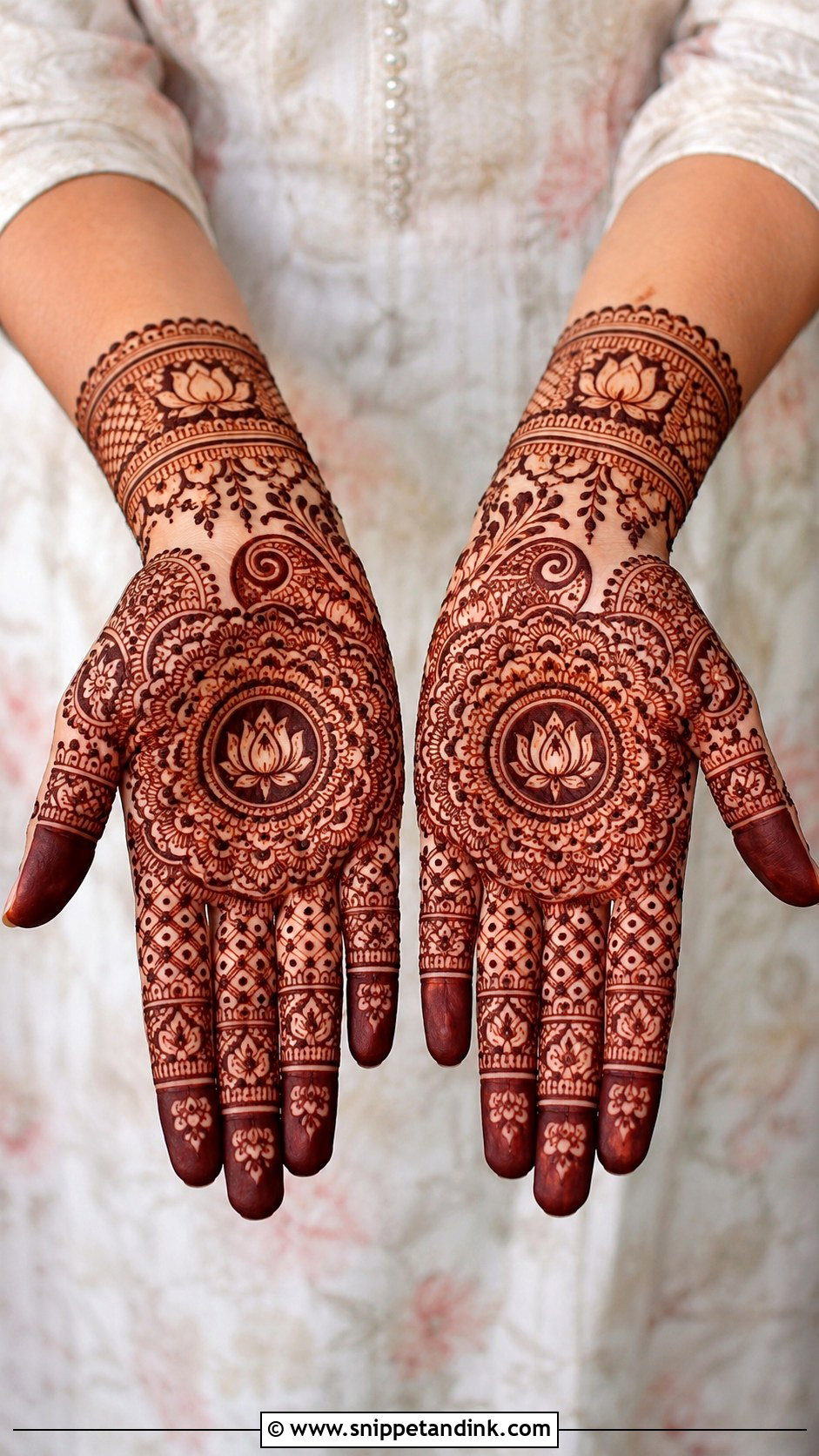
A front hand Karwa Chauth mehndi design is usually a little more detailed than everyday festival work: full palms, tikki, paisley trails, lotus and bracelet extensions, with rich finger coverage because hands are photographed during the rituals. A dense Indian layout feels classic; Indo-Arabic is lighter. Add wrist bands so it sits well with bangles. I apply these a day ahead when I can, so the stain has reached its deepest maroon by the evening.
31. Front Hand Kids Mehndi Design
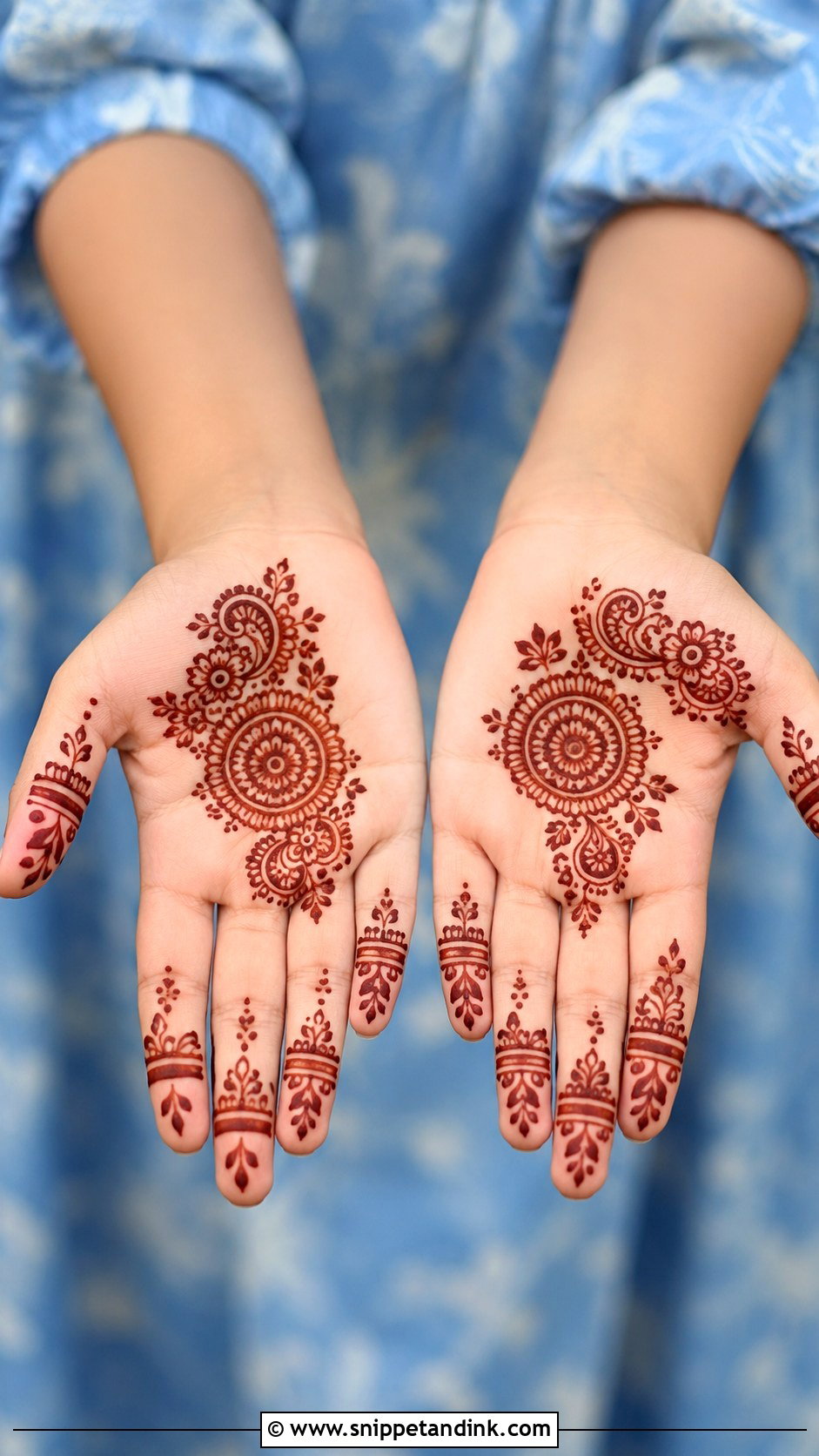
For children, I keep palms small and quick: little flowers, a simple mandala, leafy vines, hearts, dots or tiny paisleys, with a small palm motif and two or three decorated fingers. Children grab, touch and wave constantly, and wet paste on a palm smudges within minutes, so I often suggest the back of the hand for very young ones instead. Use only natural henna, and keep shapes rounded and simple.
32. Front Hand Teen Mehndi Design
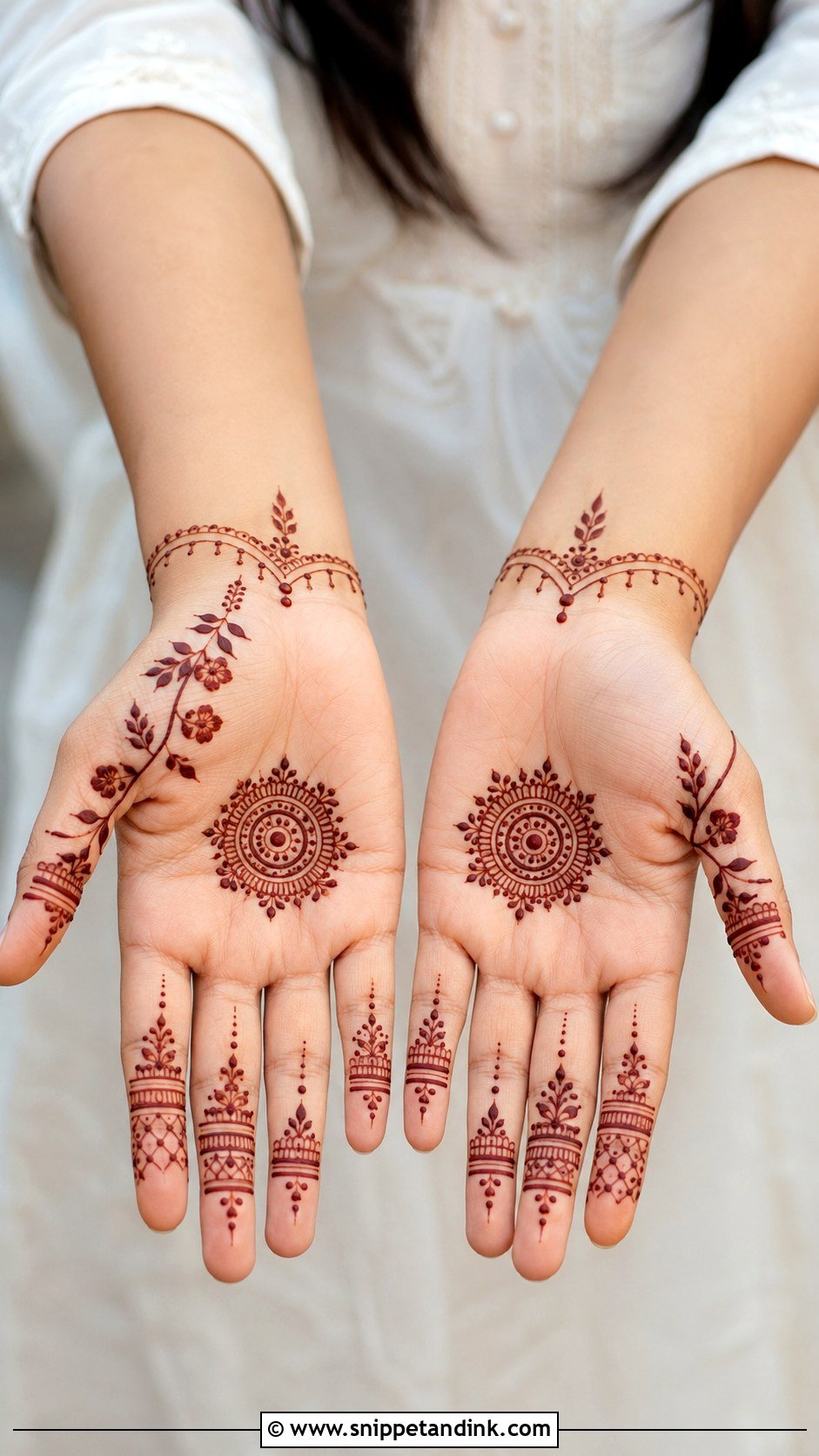
Teens usually want something that looks current in photos and goes with modern outfits: minimal mandalas, bracelet chains, finger-focused patterns, Arabic trails and small floral vines. Open spaces, clean lines and repeated dots keep it fresh. A slim wrist band or a side palm motif adds a little more. Light enough to feel young, complete enough to feel festive, and quick enough to sit through before a school function or family wedding.
33. Front Hand Fine Line Mehndi Design
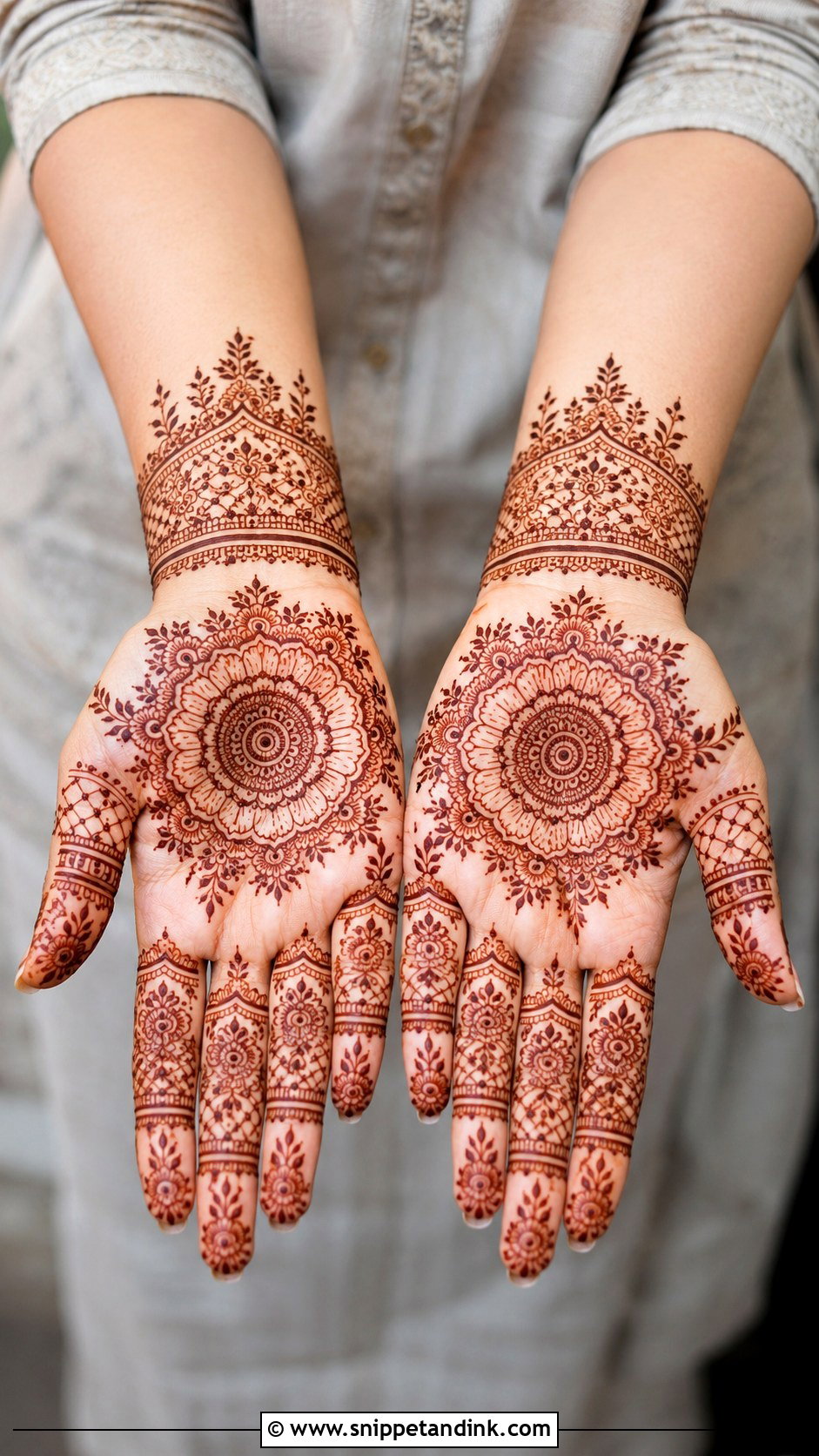
Fine-line palms use thin strokes for tiny flowers, lace-like borders, mesh sections and delicate finger patterns. Every curve and dot shows, so this one needs a steady artist and smooth, well-mixed paste that flows without breaking. The palm might carry a small mandala or floral cluster, with thin bands and tiny leaves on the fingers. Fine lines fade sooner than bold fills, so fresh henna and a full drying time matter more here than anywhere.
34. Front Hand Negative Space Mehndi Design
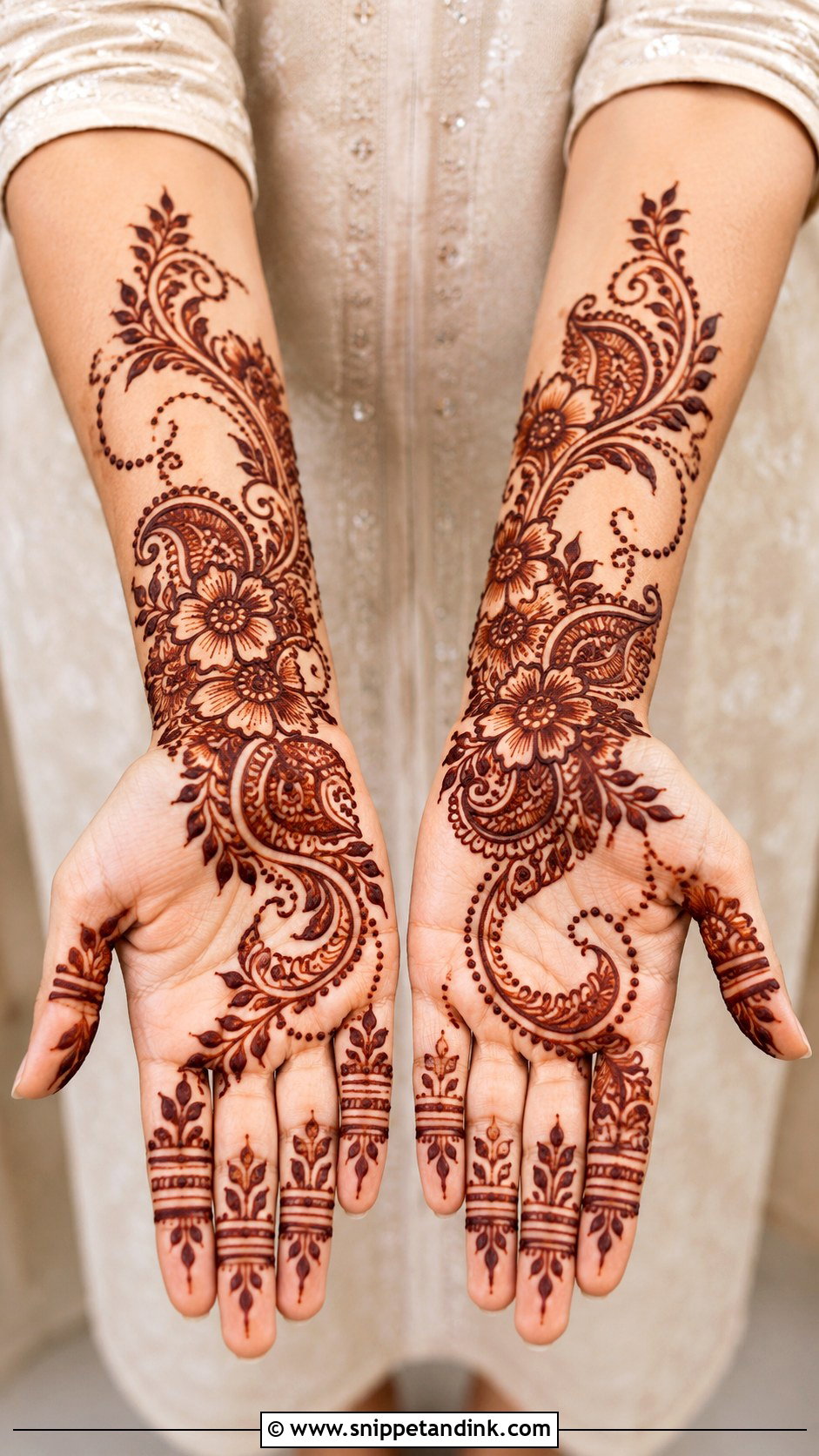
Negative space uses bare skin as part of the pattern: bold flowers, paisleys or mandalas set apart with clear gaps between them, the way Arabic and Gulf palms often work. Fingers can carry spaced bands, leafy tips or geometric accents. It suits anyone who dislikes dense henna but wants a noticeable design. Balance the gaps on both hands; random empty patches look like missed spots, not design.
35. Front Hand Fusion Mehndi Design
Fusion palms combine traditions: Indian paisleys with Arabic florals, Moroccan geometry with a mandala centre, or Gulf-style spacing with fine Indian fillers. The risk is mixing too much. I choose one main layout, diagonal, full palm or bracelet style, then borrow supporting motifs from one other tradition only. That clean structure is what makes fusion look intentional at weddings, festivals and special events.
A Day With Wet Paste on Both Palms
Palm henna has one practical catch that back-hand designs don’t: you can’t use your hands while it dries and sets. With both palms done, you can’t pick up a phone, eat or fasten a button without smudging something. Plan for it.
- Eat, use the bathroom and change into loose clothes with wide sleeves before you sit down.
- Have someone nearby to feed you, hold a drink with a straw, and answer the phone.
- If you can, do one palm and the backs of both hands first, then the second palm last, so one hand stays usable for longest.
- Once the paste is dry to the touch, keep your palms open and facing up rather than resting them on anything.
Keeping the colour in the days after
Palms stain darkest but also fade fastest in the centre, where skin rubs against everything you hold. Washing up, cleaning products and frequent hand-washing wear it away quickly. I tell brides to wear gloves for any household chores in the week after, and to rub a little balm over their palms before washing their hands.
Tikki, Trail or Full Palm?
The right palm design comes down to the occasion, your outfit, your hand shape and how much coverage you can sit for. For tradition, tikki, paisley, Indian, peacock or full bridal layouts. For a modern feel, Arabic, negative space, jewelry, bracelet or fine line work. For something in between, mandala, floral, lotus or Indo-Arabic. The heaviest design is rarely the best one. A palm that’s neat, balanced and drawn for your hand will look better at every celebration than one copied line for line from a photo.
You'll Like These Ideas:











Leave a Reply