
The brides I’ve been booking lately want their mehndi to look personal and clean in photos, not just heavy. Requests range from full-hand Indian mehndi to airy Arabic trails, portraits, mandala back-hand layouts, jaali and minimal wrist-to-finger work. The right choice depends on your outfit, jewelry, ceremony and how many hours you can sit still. Below are thirty designs I draw often, with notes on how each one stains, how long it takes and which hands it suits.
Timing the Mehndi Night Around Your Stain
Natural henna doesn’t show its true color when the paste comes off. It starts bright orange and darkens over the next day or two, so I plan bridal application one to two days before the wedding. Done too early, the stain begins to fade; done the night before, it may not have deepened by the ceremony.
- Book any waxing, manicure, pedicure or scrub before your mehndi. Exfoliating afterward lifts the stain.
- Arrive with clean, dry skin and no lotion, which blocks the dye.
- Ask your artist what is in the cone. Natural henna stains brown to maroon and never black. So-called black henna can contain PPD, a chemical that causes serious skin reactions, and has no place at a wedding.
- If you’ve never used henna, a small patch test a few weeks ahead is sensible, even with natural paste.
Heavy designs take many hours. I ask brides to plan the evening like a long flight: eat first, wear something loose with short sleeves, and keep a phone charger and a straw for drinks within reach.
1. Full Hand Indian Bridal Mehndi Design
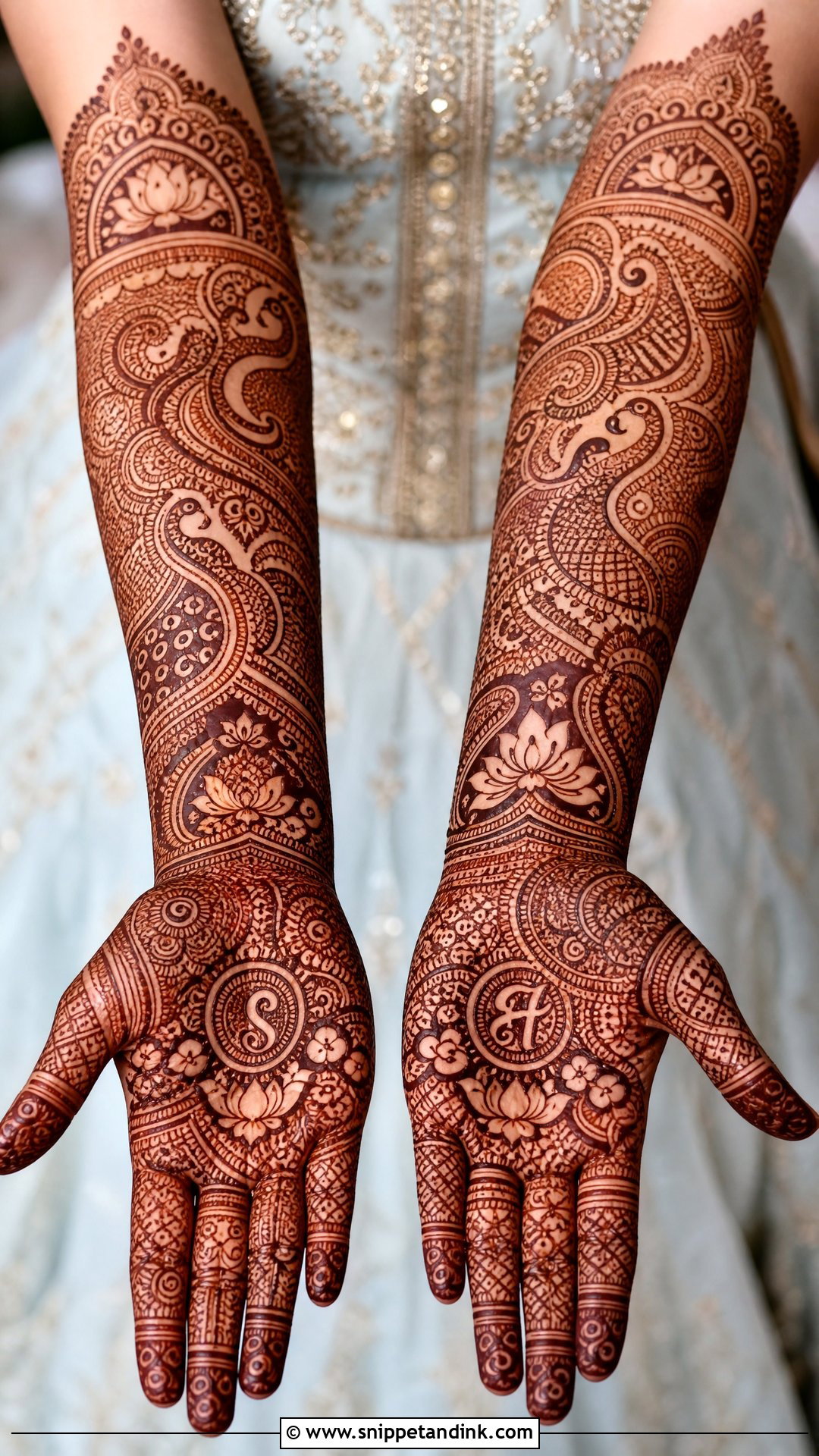
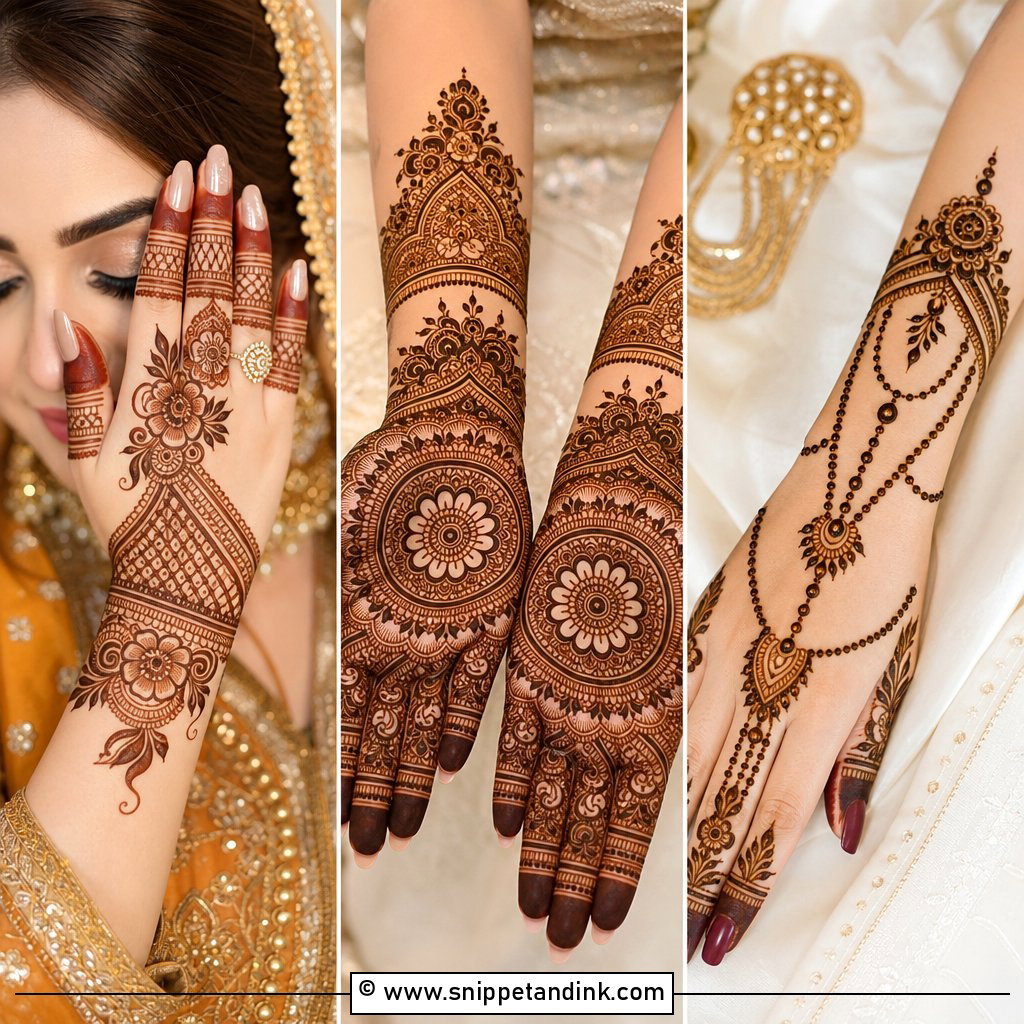
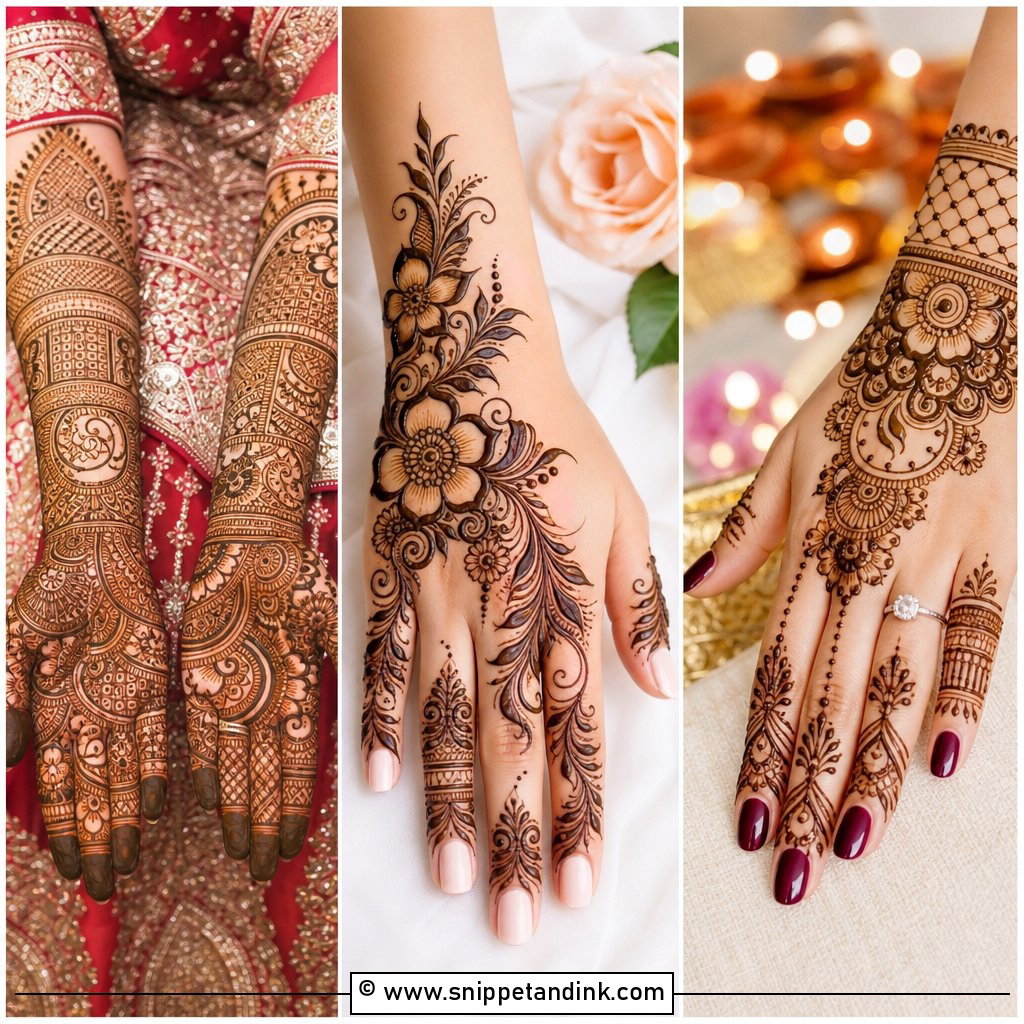
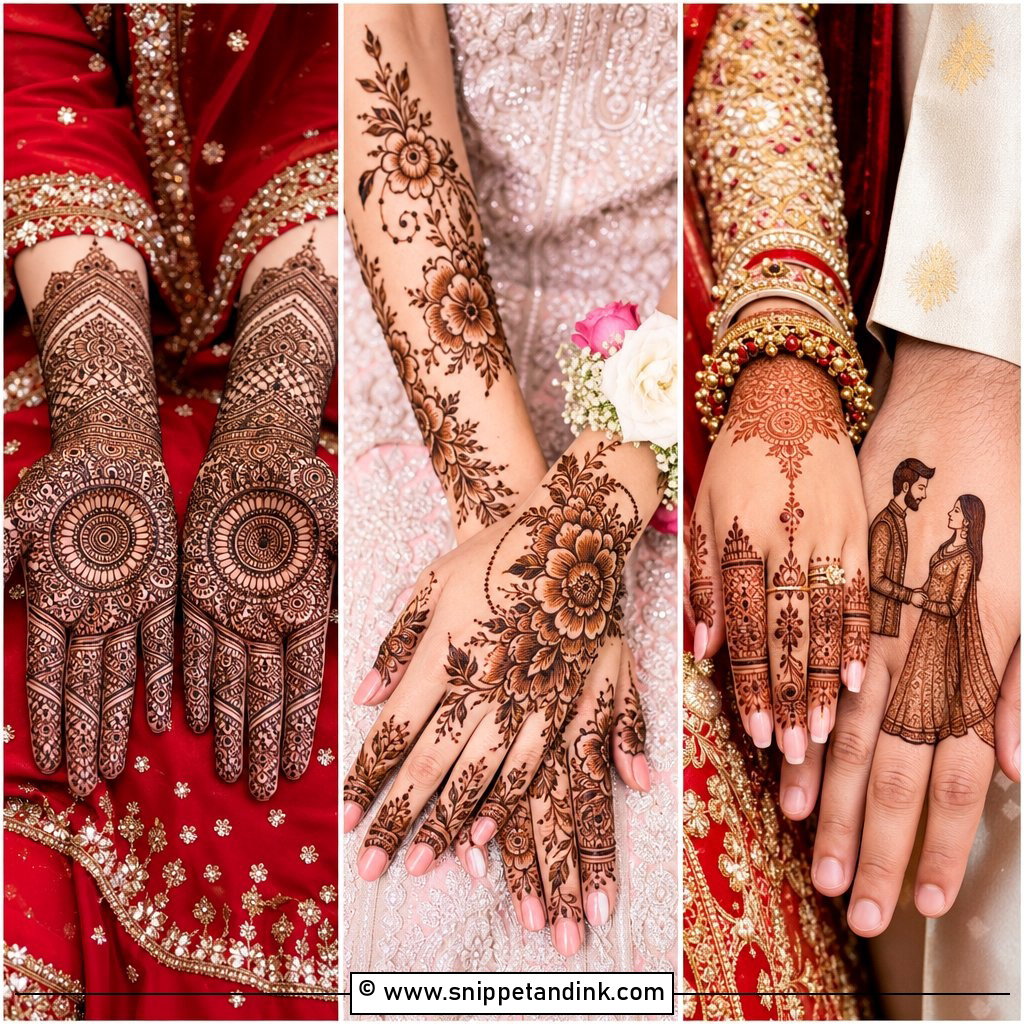
Full-hand Indian bridal mehndi covers fingertips to forearms in paisleys, lotuses, peacocks, fine florals and tiny fillers. Density is the whole point, but density only reads as rich if the stain is even; patchy paste on a busy design looks muddy. When I map one of these, I divide the palm into a center motif and framed sections first, then fill, so the eye always has somewhere to land. Initials, a wedding date or a small couple symbol can hide inside. It matches lehengas, sarees and heavily embroidered outfits, and on both hands and arms it can take several hours.
2. Arabic Bridal Mehndi Design Full Hand
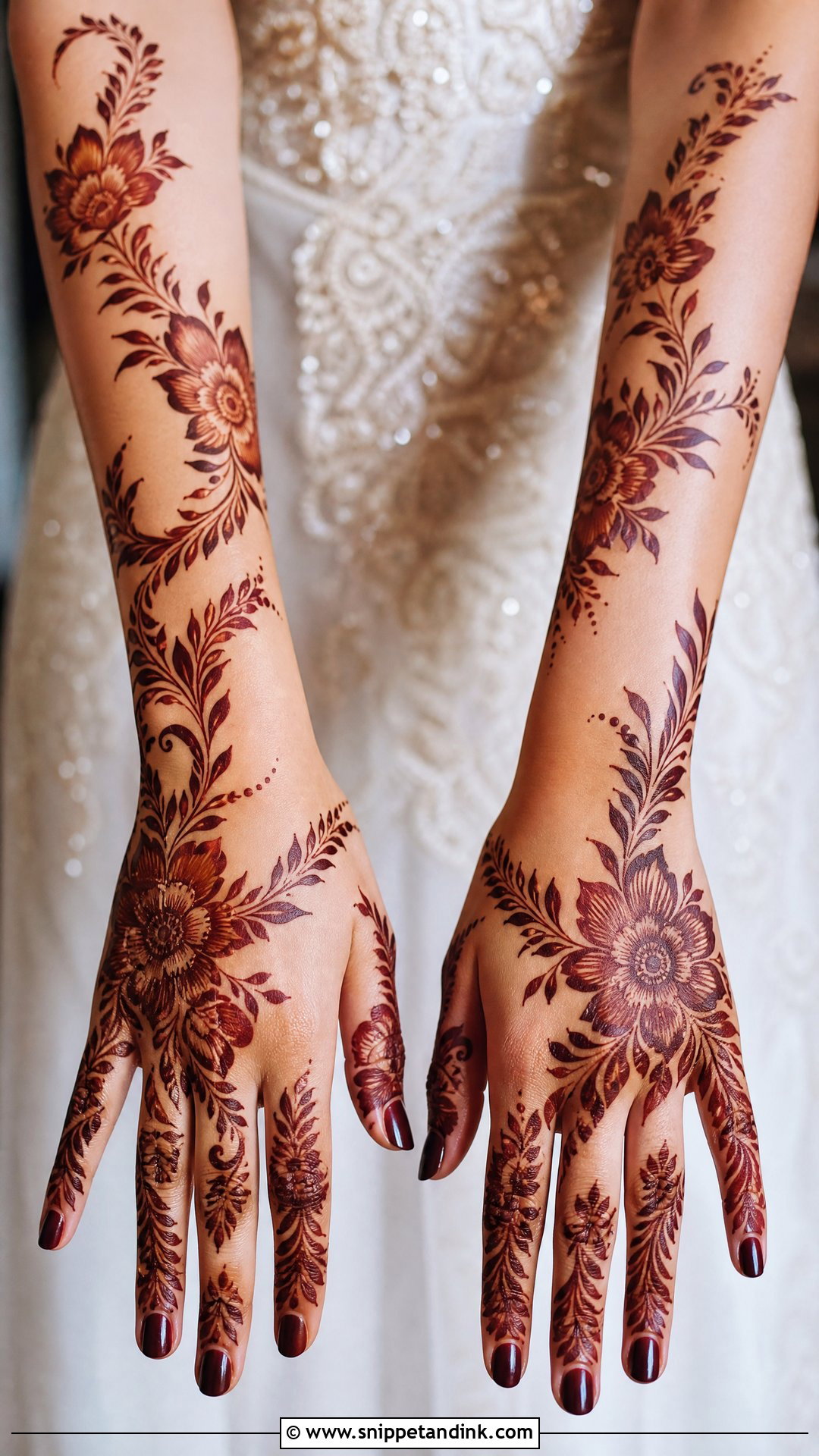
Arabic bridal mehndi uses bigger flowers, flowing vines and plenty of bare skin. It usually starts with a floral cluster near the wrist and runs diagonally across the hand, with leafy lines, shaded petals and neat bands on the fingers. The open space is what makes it look modern, so I resist the urge to fill gaps. It’s quicker than dense Indian work, which helps if your mehndi night is busy. Shading is done by thinning the paste line, and those lighter areas stain paler, which is intended.
3. Indo Arabic Bridal Mehndi Design
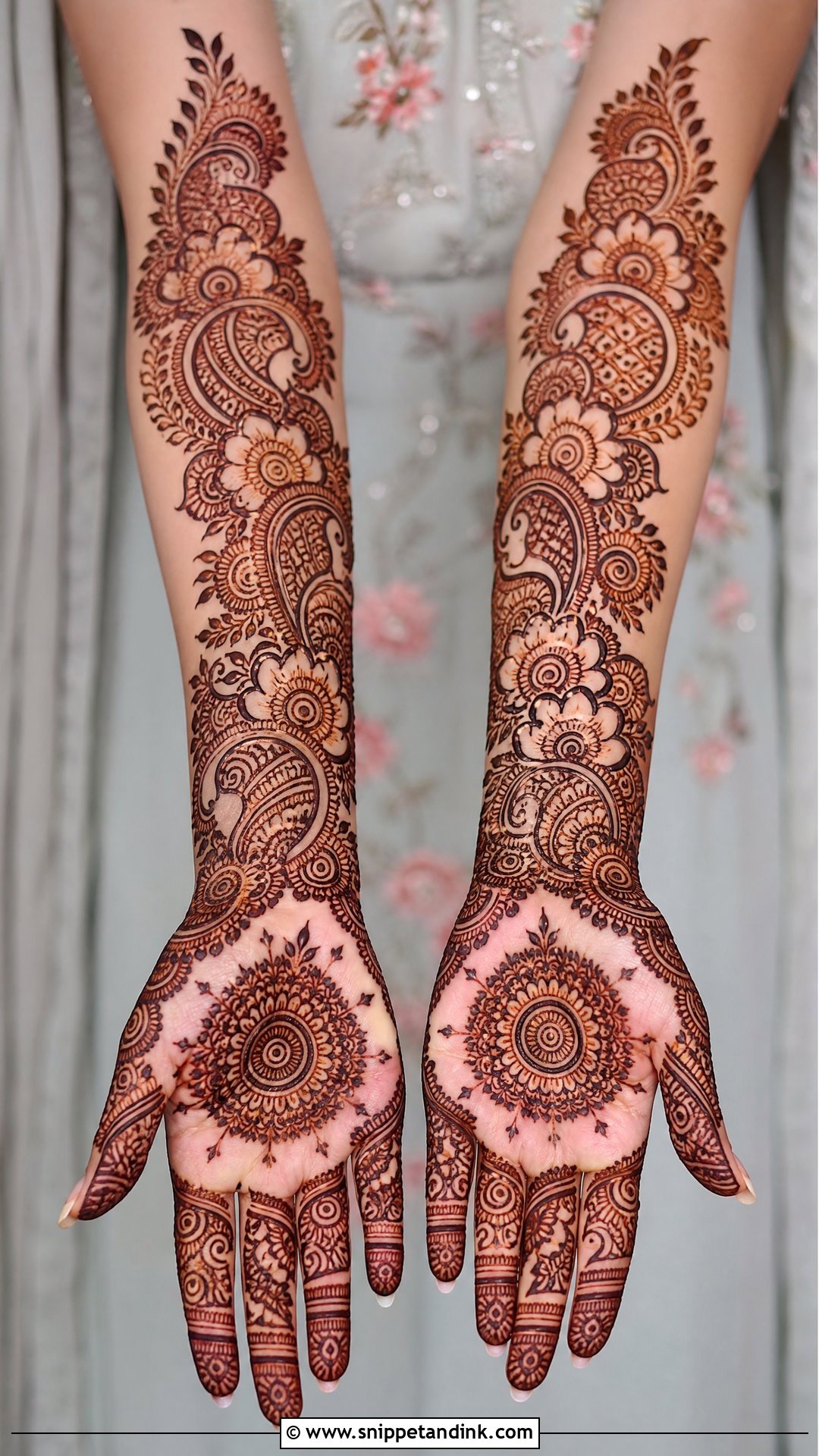
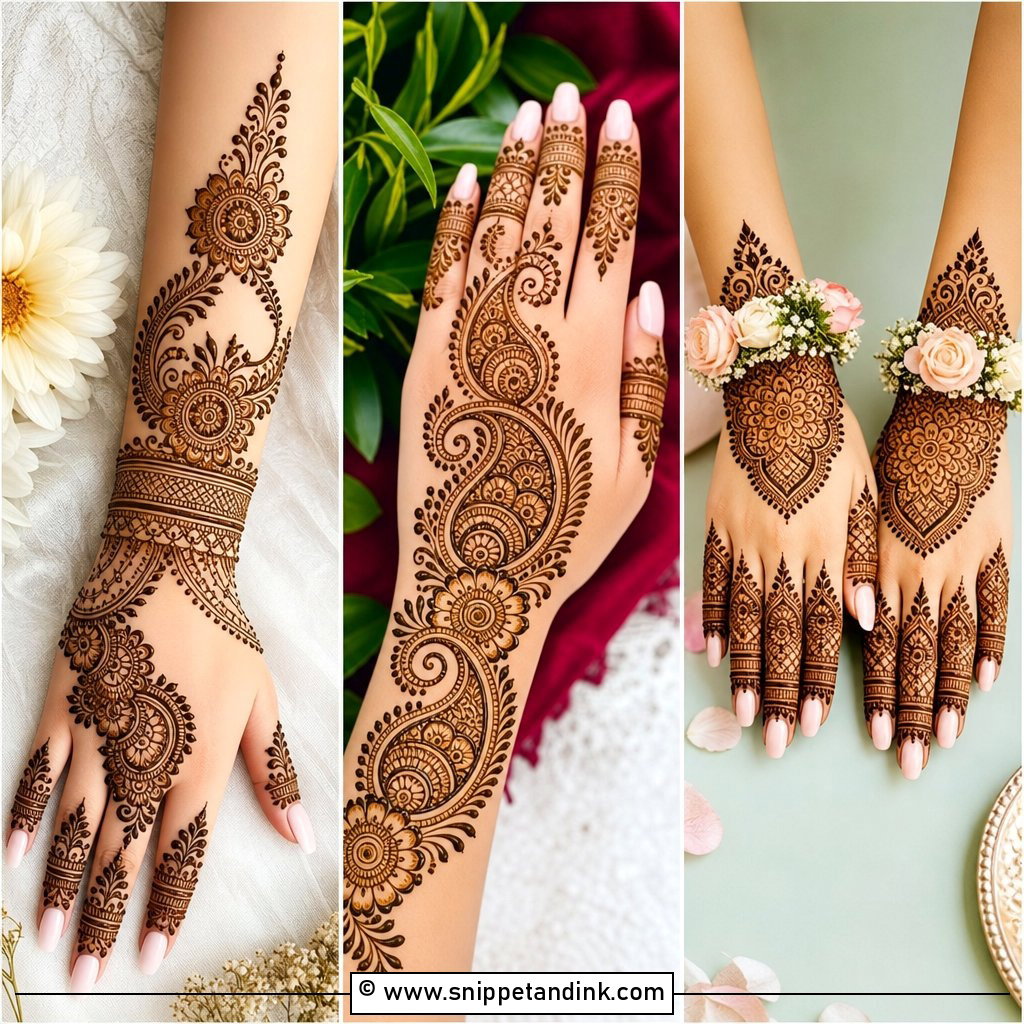
Indo-Arabic blends the flow of Arabic layouts with fine Indian fillers inside the larger shapes. The palm might hold paisleys, florals or a mandala, while the forearm carries leafy trails and borders. I suggest it when a bride wants coverage but is nervous about looking crowded, because the bold outlines keep the design readable even from across the room. It suits traditional and contemporary outfits, and it photographs clearly.
4. Rajasthani Bridal Mehndi Design
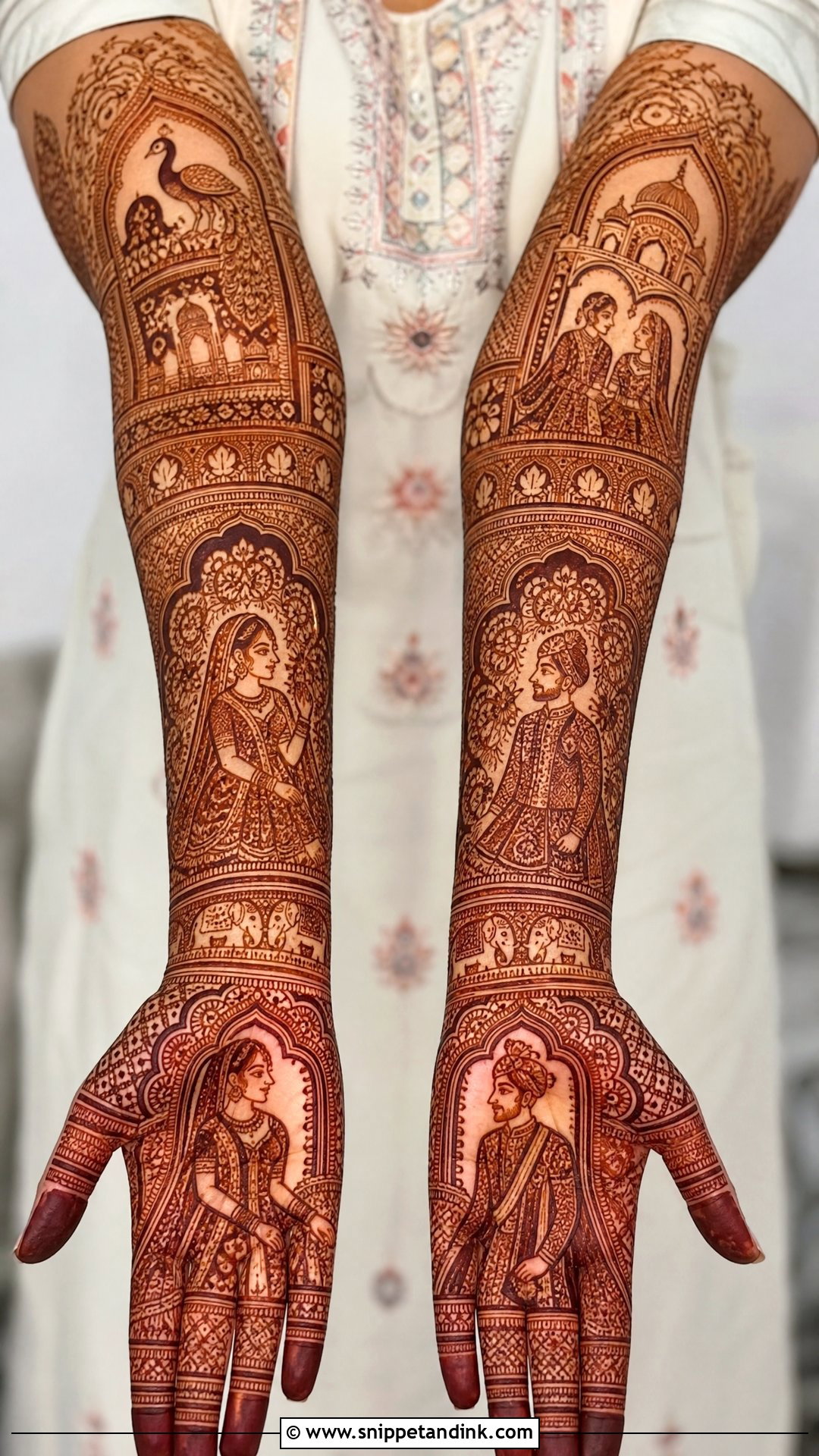
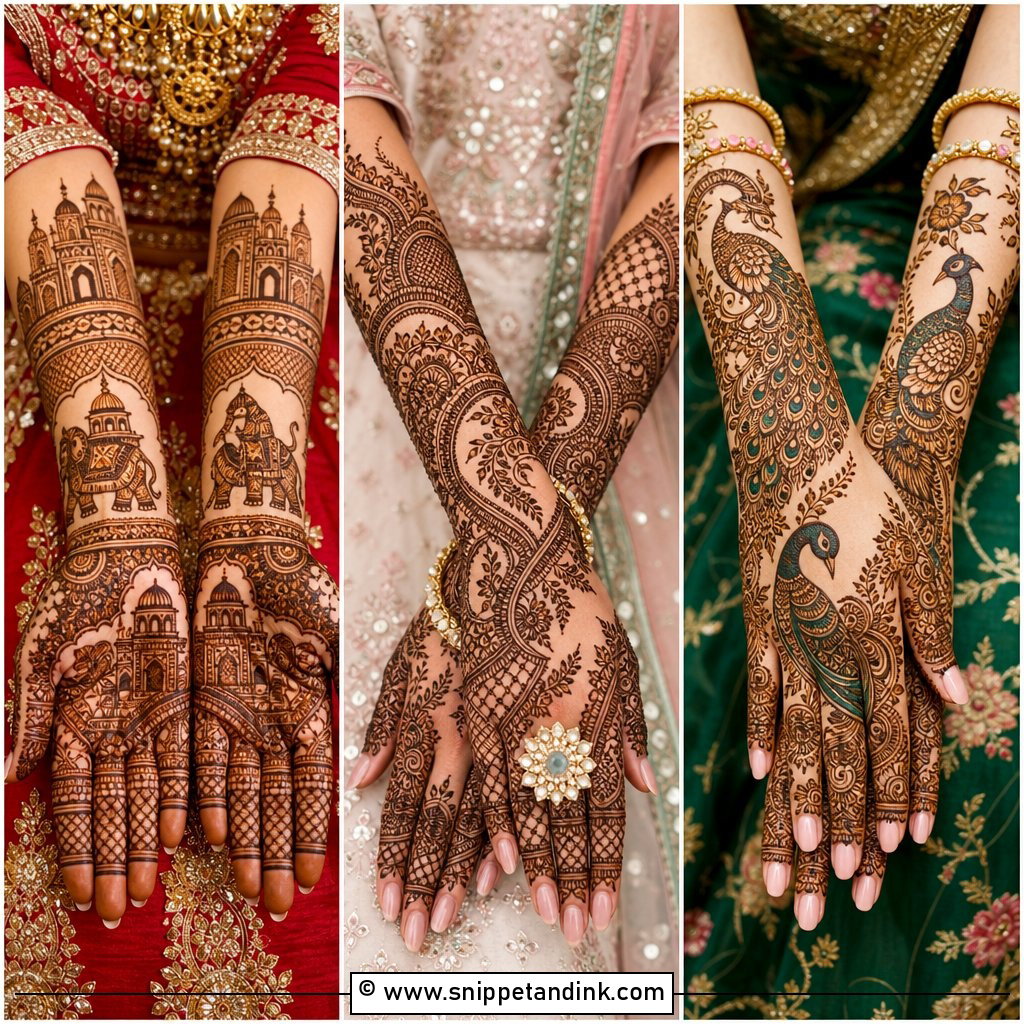
Rajasthani bridal mehndi design is the storytelling style: bride and groom figures, palace arches, elephants, peacocks, dhol players and fine net patterns. I often plan the two palms as one scene, bride on one hand and groom on the other, with heavy symmetrical panels on the forearms. Figures need clean, confident lines, so it’s slower and needs an artist who draws faces well. Allow plenty of time. It sits well with traditional embroidery and royal colors.
5. Minimal Bridal Mehndi Design
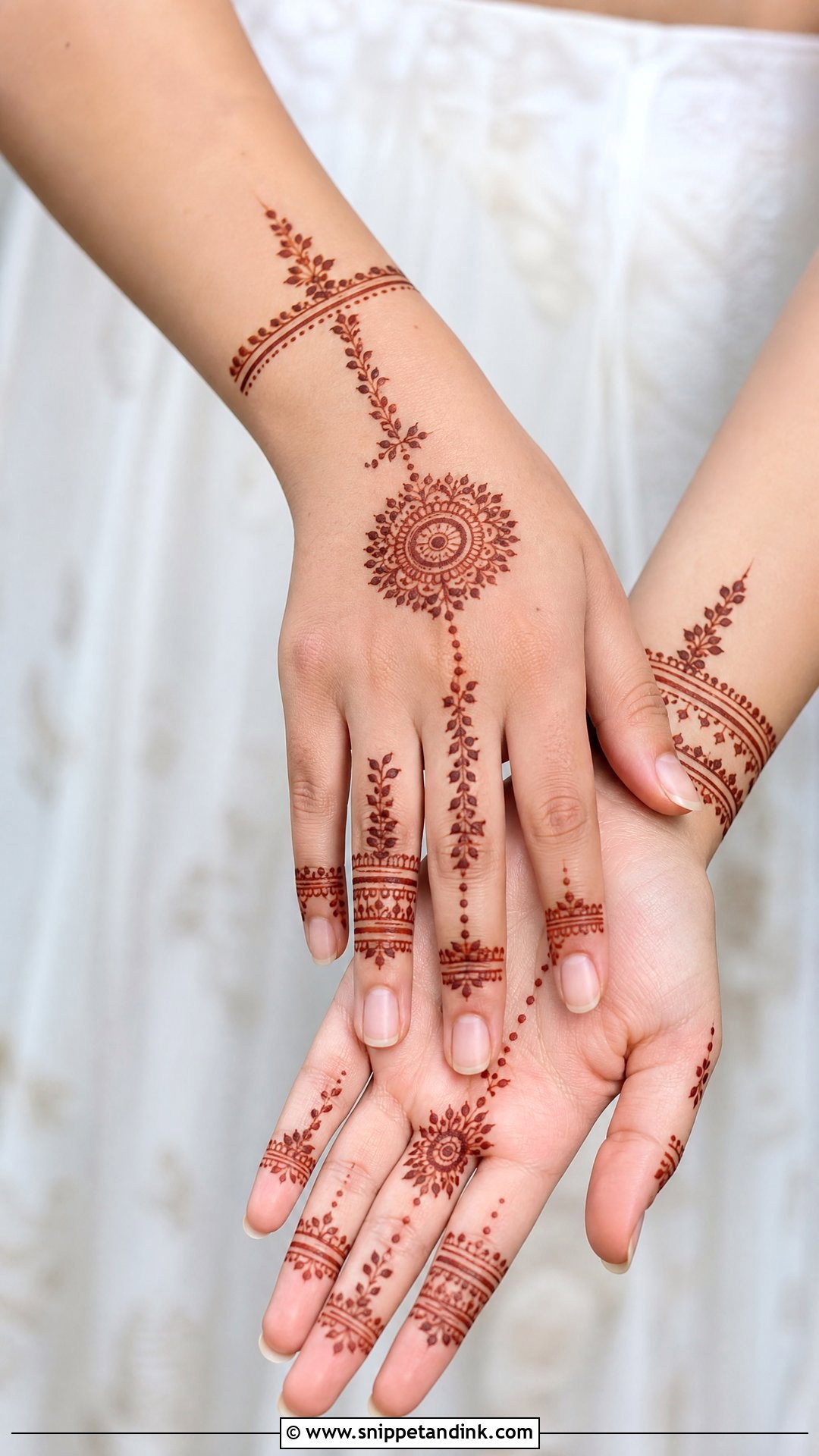
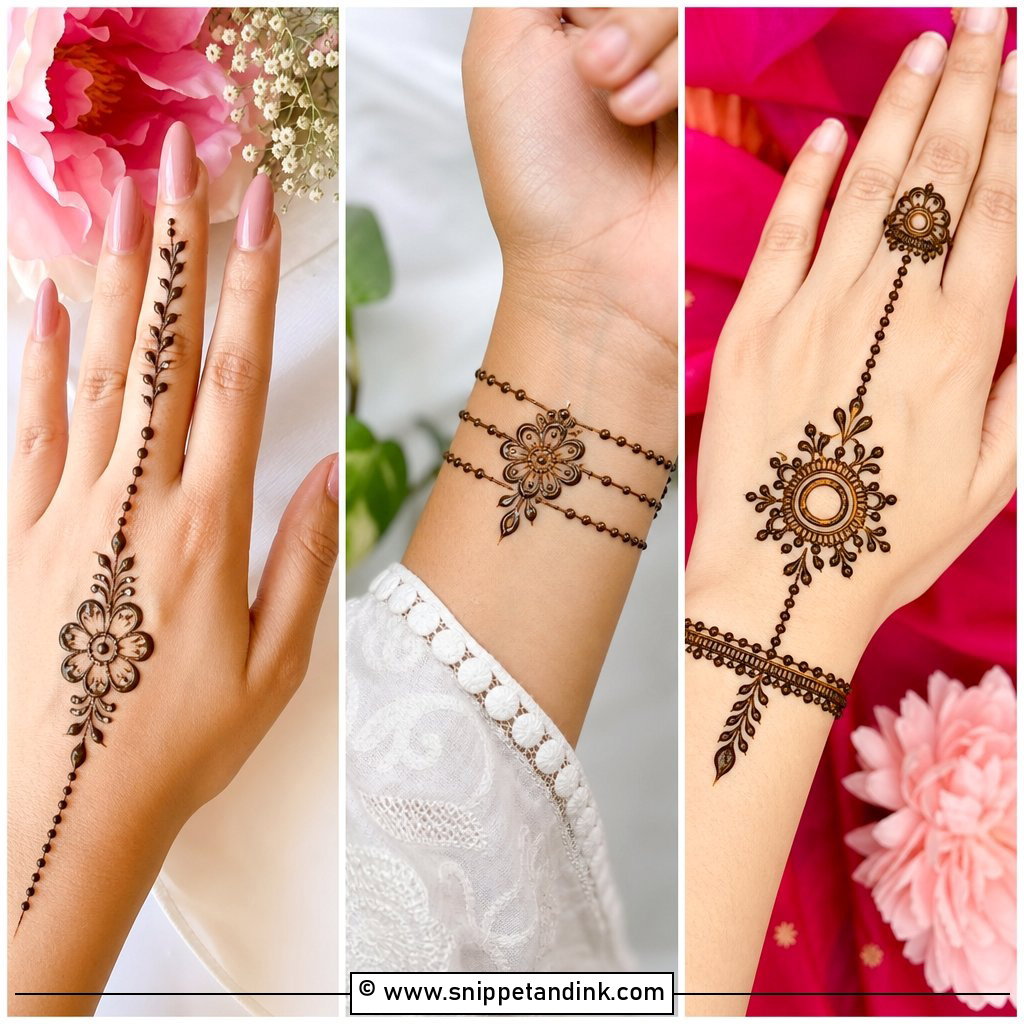
Minimal bridal mehndi covers only selected areas, such as fingers, the wrist and the center of the palm. A small mandala, a floral chain or a slim bracelet pattern is enough to read as bridal. Spacing decides whether it looks deliberate or unfinished, so I always close the design at the wrist with a band. It suits engagements, civil ceremonies and intimate weddings, and it pairs with modern jewelry and lighter outfits. It’s also the right choice if your skin is sensitive and you’d rather keep paste time short.
6. Bridal Back Hand Mehndi Design
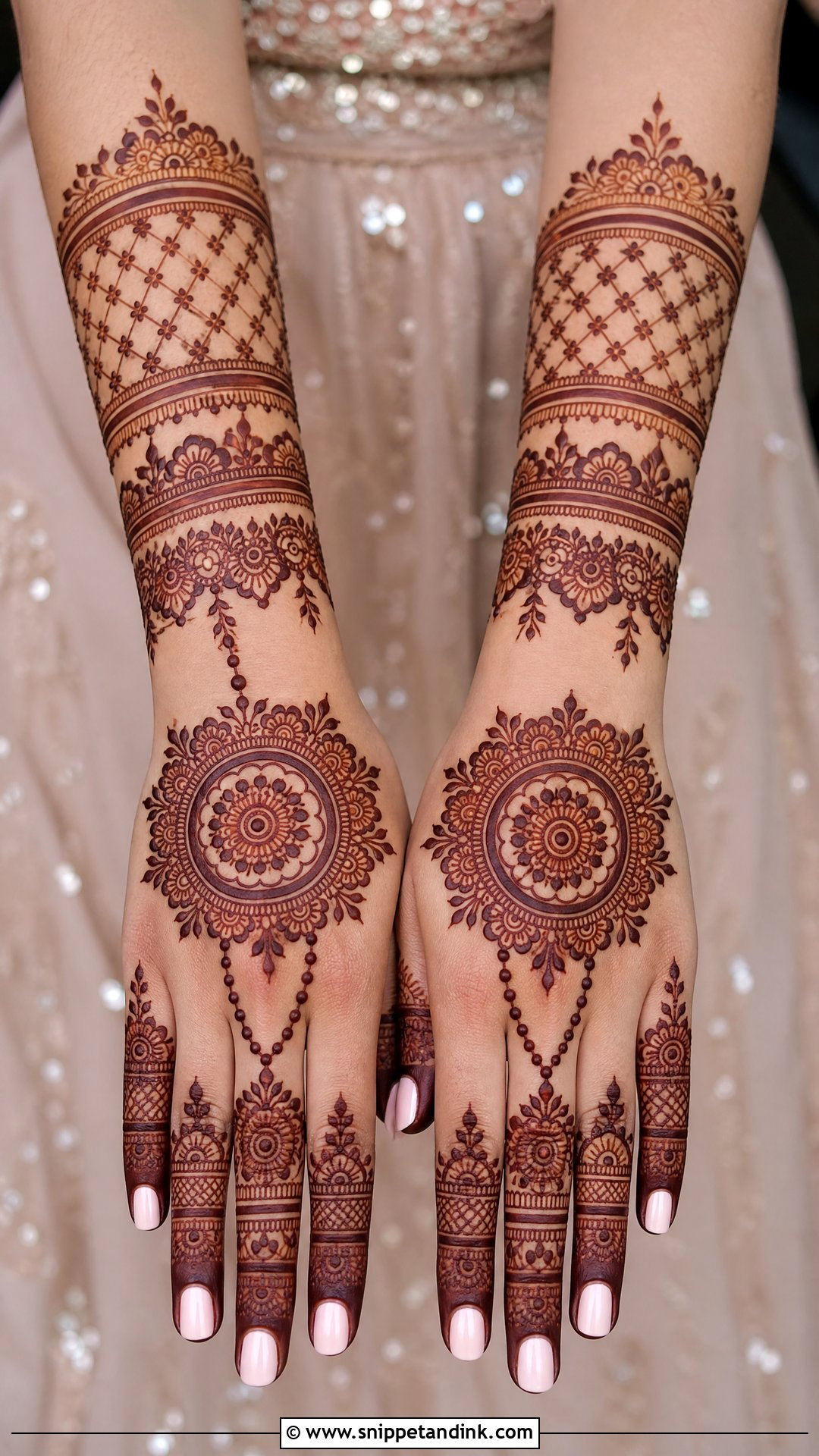
The back of the hand is what shows most in photos: rings, bangles, holding the bouquet, the ring exchange. Back-of-hand skin also stains lighter than the palm, so I draw slightly bolder lines here than on the palm. A strong layout often has a central mandala, a floral bracelet, jaali mesh and detailed fingers, running neatly from wrist to knuckles. Chain details and cuff-style wrists give a jewelry effect. Plan around your rings so the design frames them instead of being hidden under them.
7. Bridal Front Hand Mehndi Design
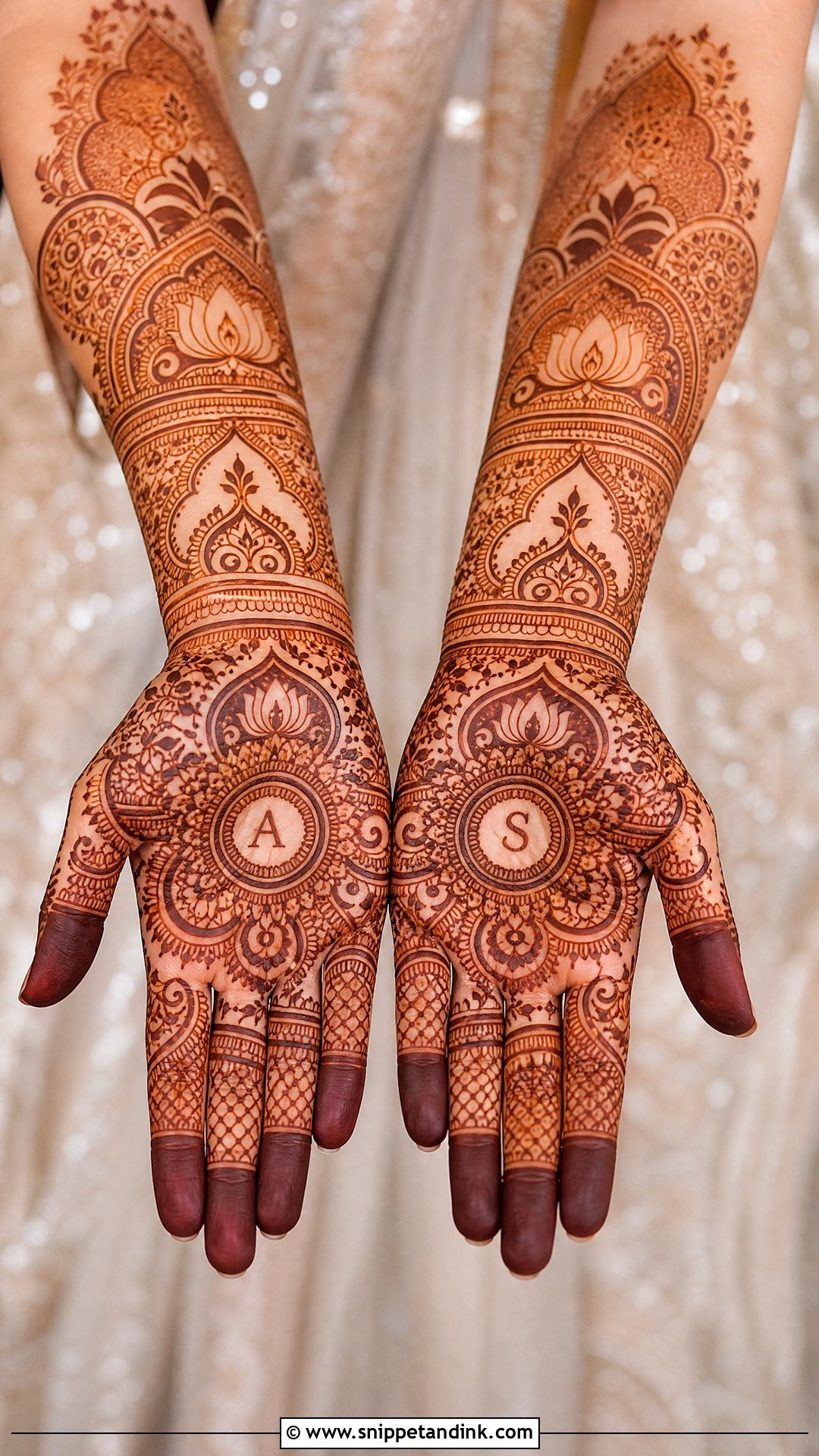
Palms take the deepest stain on the body, which is why the most meaningful details go here. Large mandalas, peacocks, paisleys, lotuses, bride-and-groom portraits or hidden initials all fit. I build each palm around a strong center and finish with fingers and wrist. Many brides like both palms to join into one picture, a heart, mandala or couple portrait, when held together. Ask your artist to check the join with your hands side by side as they draw, not just at the end.
8. Peacock Bridal Mehndi Design
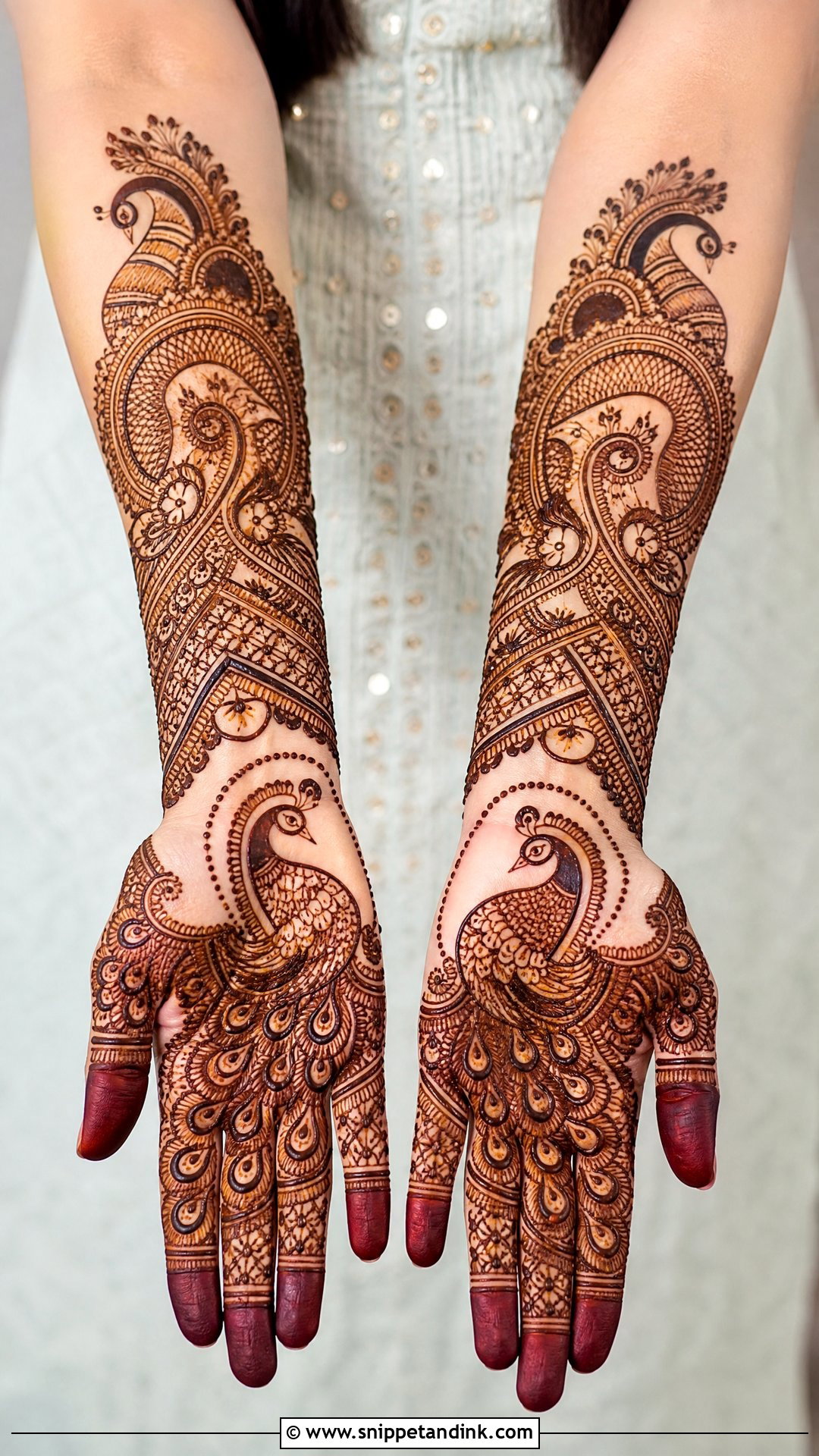
Peacocks bring movement because the feathers can flow into paisleys, florals and curved lines across the palm, wrist or forearm. Feathers filled with tiny checks, dots and shaded petals look best, but very fine fill can blur if the paste is too runny, so I use a fresh cone with a tight tip for this motif. It can be heavy for a royal look or lighter for modern. It works within Indian and Indo-Arabic layouts.
9. Lotus Bridal Mehndi Design
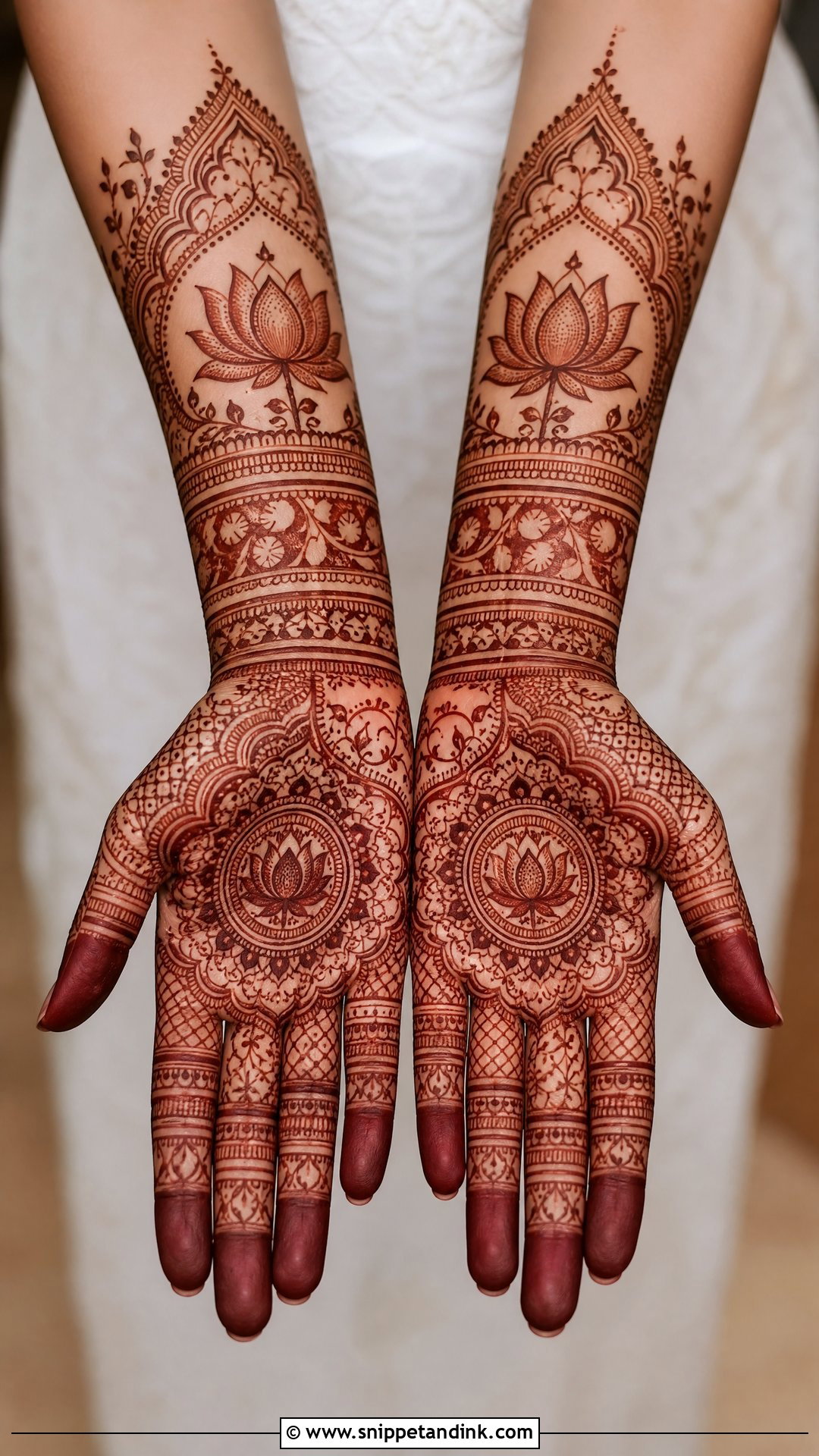
The lotus can sit at the center of the palm, bloom over the wrist or repeat along the forearm. It holds fine lines, scalloped borders, vines and dot work well. For symmetry I’d draw a lotus mandala; for a fuller look, I surround it with paisleys and jaali. It’s one of the motifs I recommend when a bride wants cultural meaning without crowding, because its petals create natural open spaces.
10. Mandala Bridal Mehndi Design
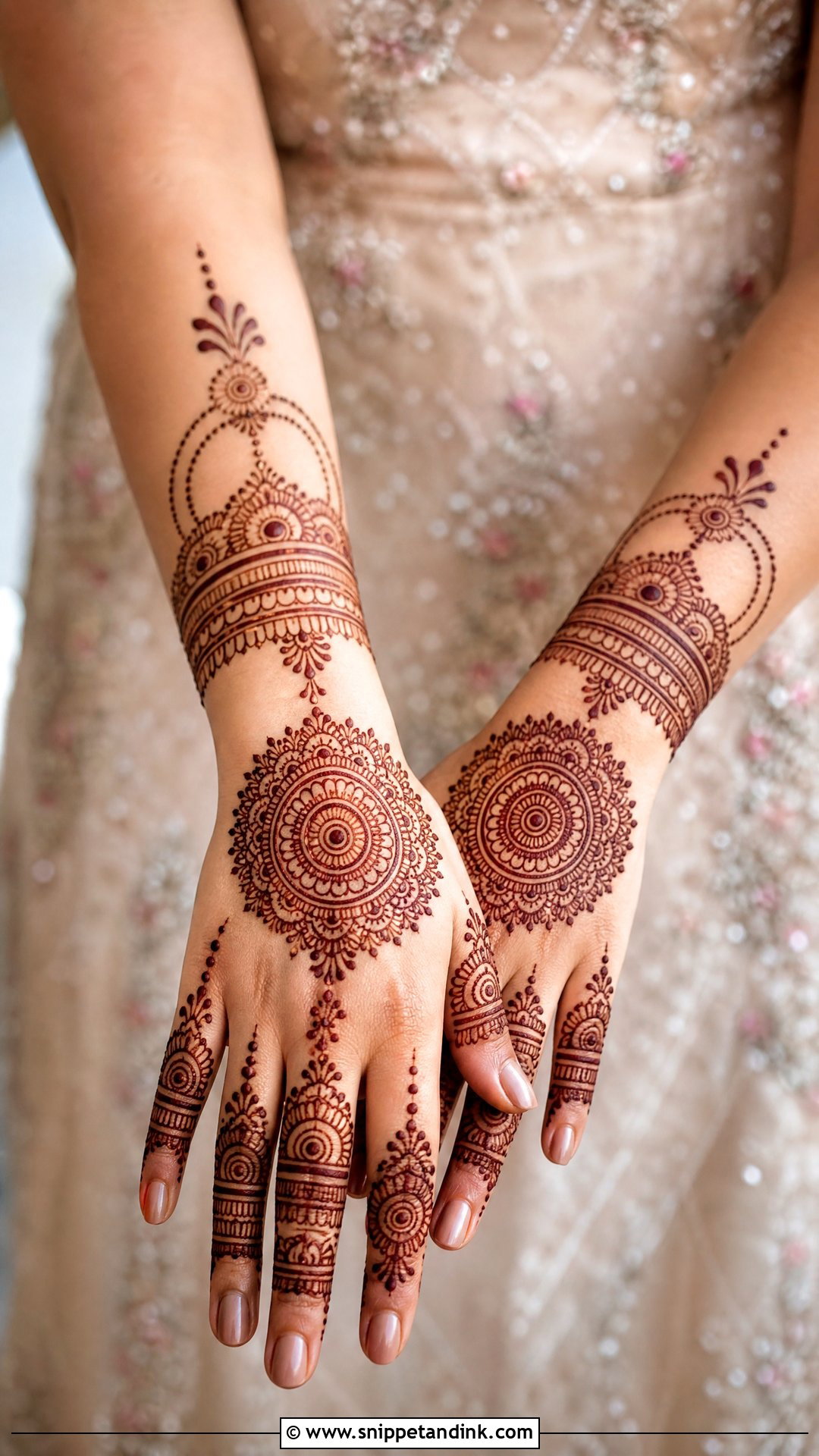
Mandalas are all about symmetry, and they’re one of the hardest motifs to draw by eye. I start with a tiny center dot and build out ring by ring, checking from a distance between rings, because a slightly oval mandala is obvious in close-up photos. For bridal work, add fine circles, petal rings, dotted chains and fillers around the center, then extend to finger details and wrist bands. Placed on the palm or the back of the hand, it reads clearly at any distance.
11. Portrait Bridal Mehndi Design
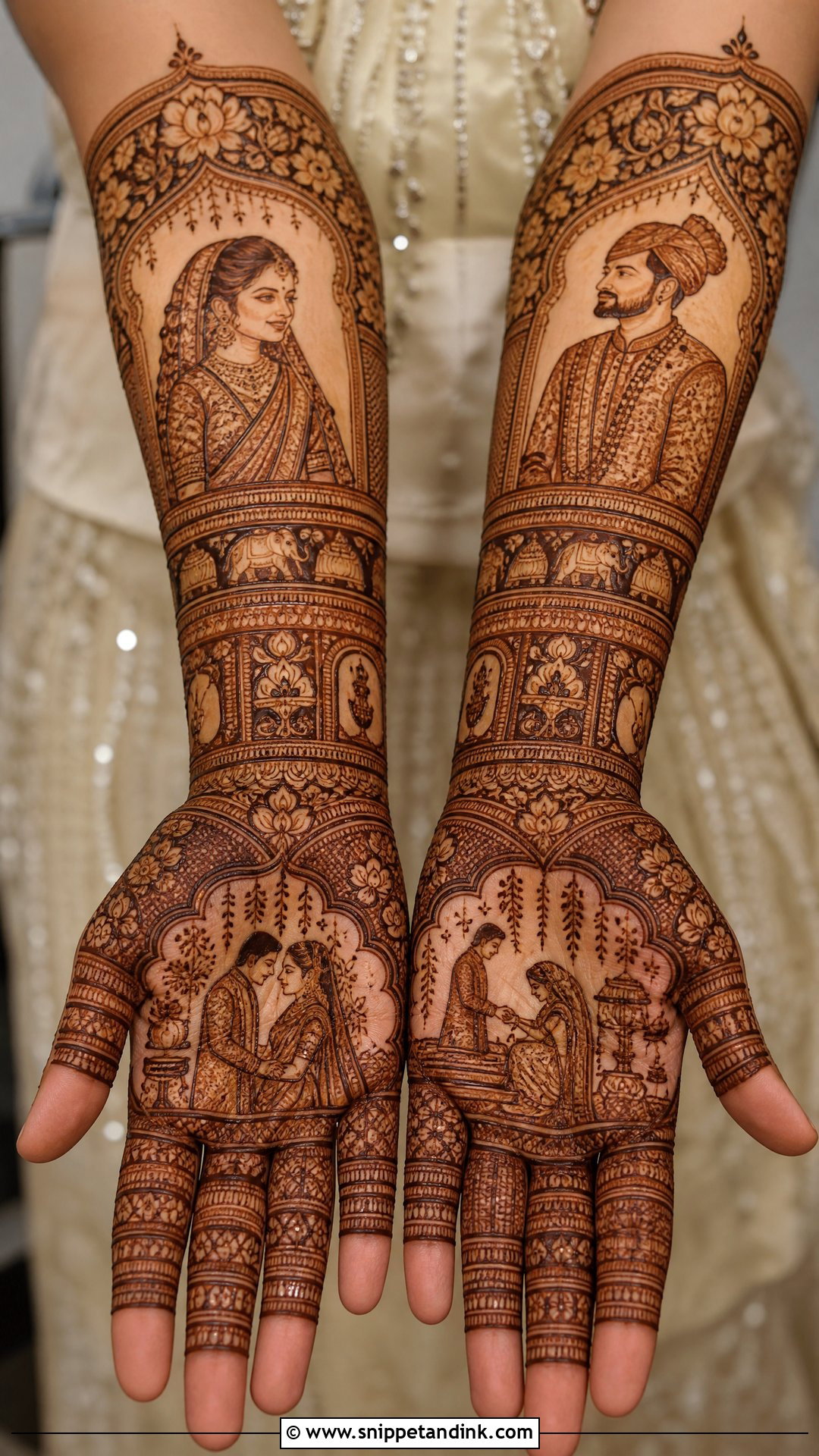
Portrait bridal mehndi design puts a bride and groom, a wedding scene or a proposal moment onto the palms or forearms, surrounded by florals, arches, paisleys and fillers. Faces are unforgiving: a slightly misplaced eye changes the whole expression, so look at an artist’s past portrait work, close up, before you book. Bring clear reference photos if you want a likeness. Initials, dates or cultural symbols can be added around it. When both hands together create one scene, it’s one of the most moving designs I do.
12. Bride And Groom Bridal Mehndi Design
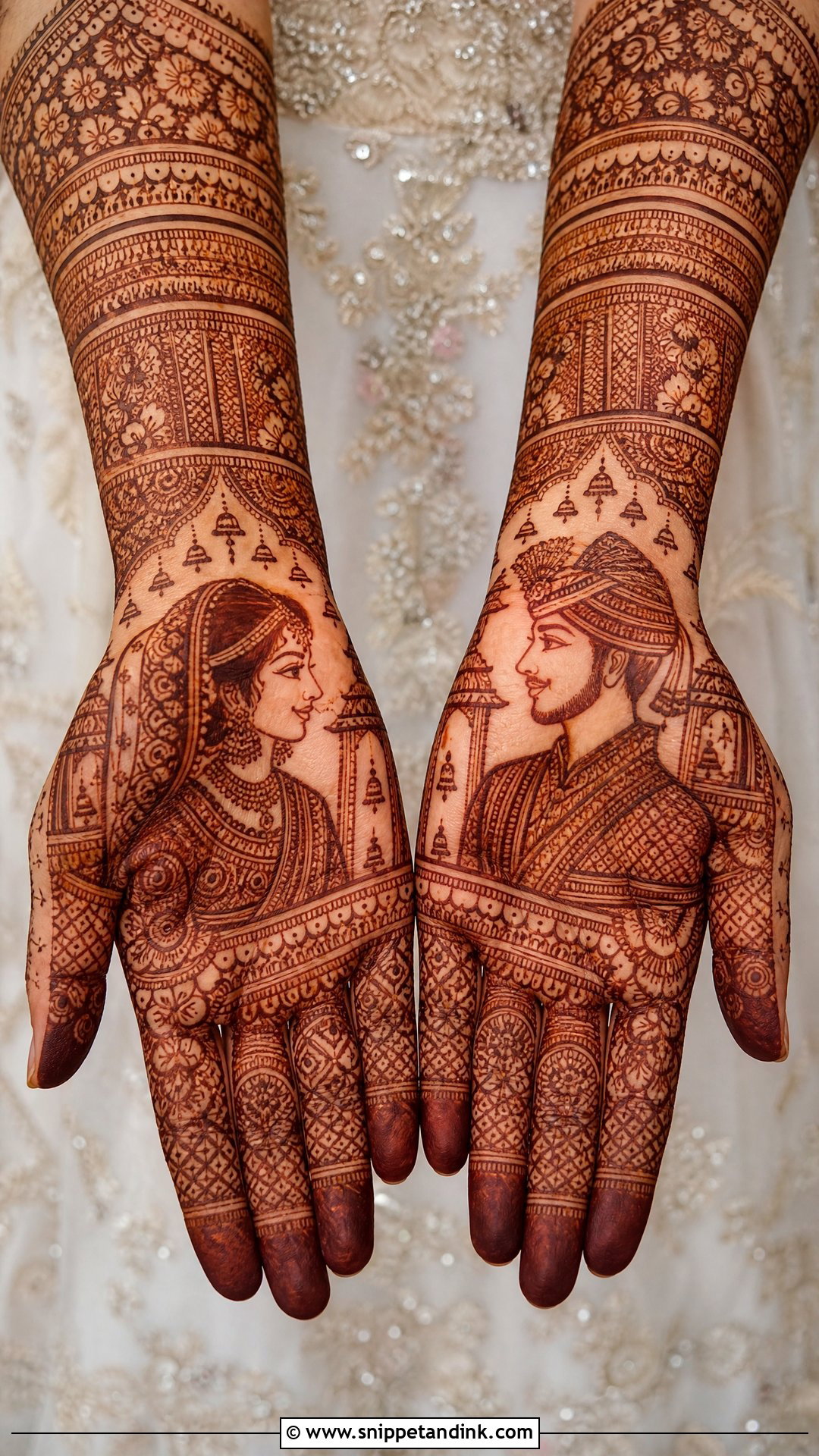
Bride on one palm, groom on the other: the classic. When the hands come together, the design completes itself. Mandap details, floral arches, paisleys, doli motifs or musicians fill the surrounding space. The figures need room, so this works best with full palm and forearm coverage. I usually draw the bride’s hand first and mirror the frame on the groom’s side so the two match in scale. It makes a sweet moment to photograph during rituals.
13. Personalized Bridal Mehndi Design
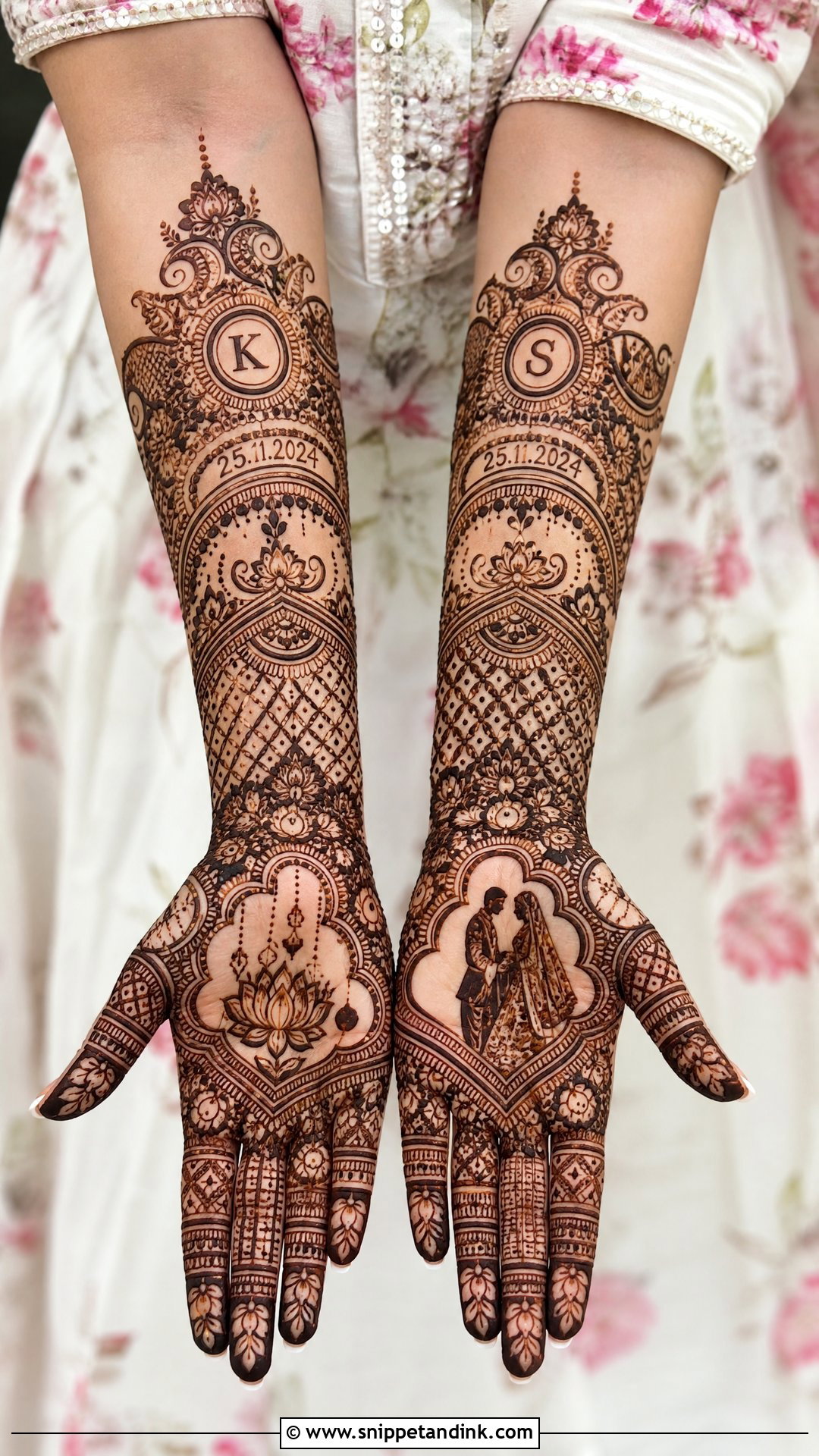
Personal details, such as initials, the wedding date, a meaningful symbol, a favorite flower or a small memory, are best hidden inside a complete layout so they don’t look pasted on. Initials fit naturally inside petals; a date can run within a mandala border. I sketch the details on paper with the bride first, because the size has to suit the space on her hand. It can be heavy, minimal, Indian or Arabic in style.
14. Jaali Bridal Mehndi Design
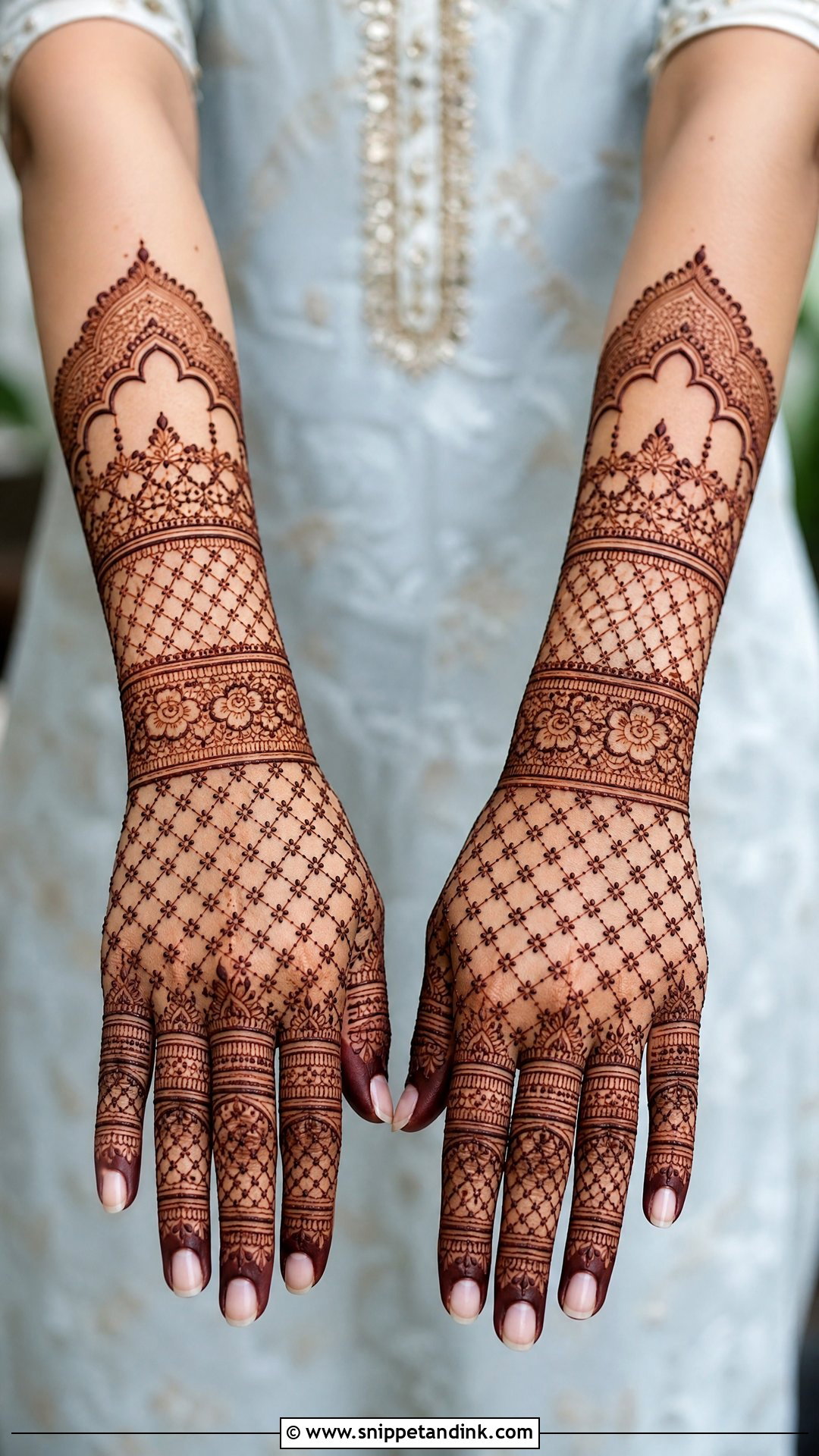
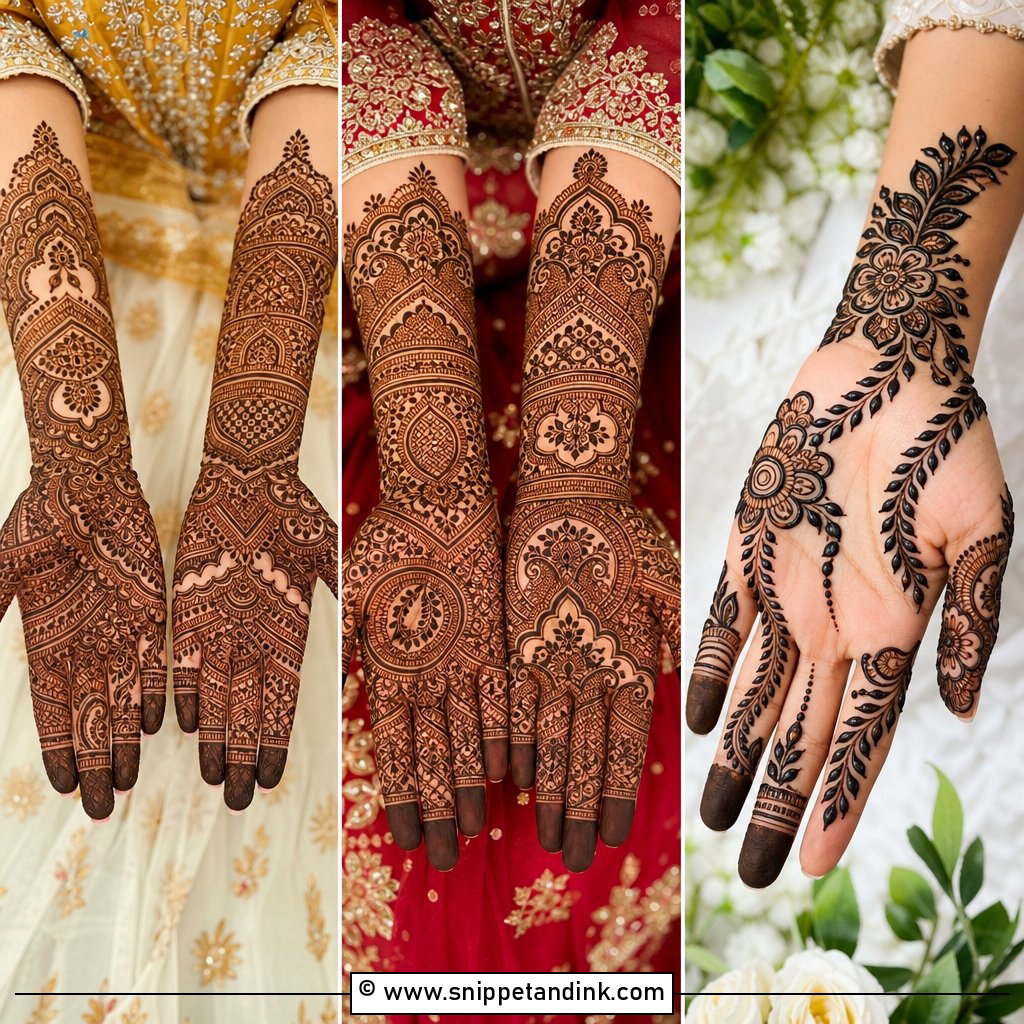
Jaali is a mesh pattern that gives a lace-like finish. Grids, small dots, florals and curved borders combine into something that looks like fabric on the skin. It shows best on the back of the hand, the fingers and the forearm. Even line spacing is everything; if the grid widens or narrows, the eye catches it at once. It can be a full layout or mixed with florals, paisleys and mandalas, and it echoes delicate hand jewelry.
15. Floral Bridal Mehndi Design
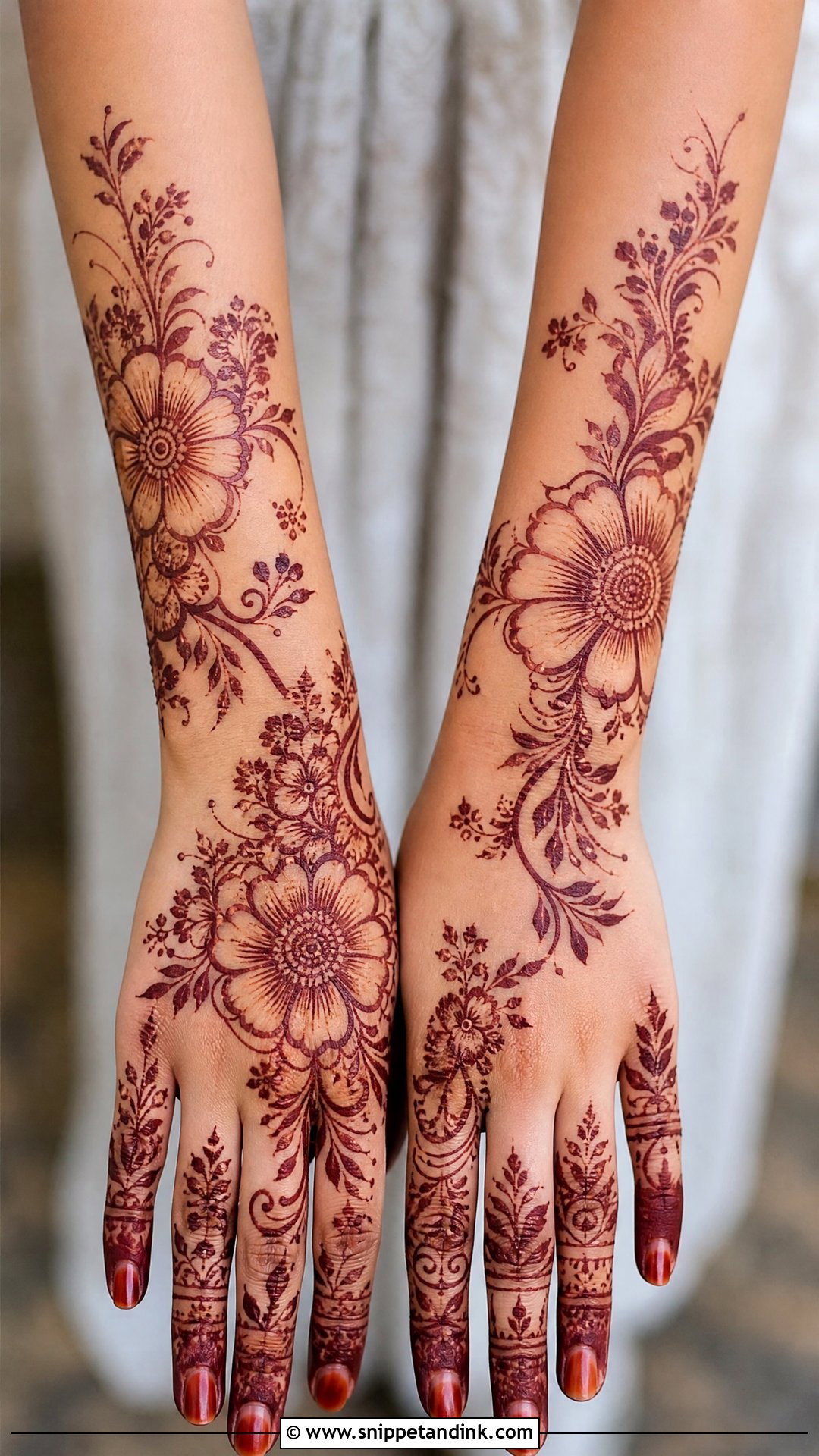
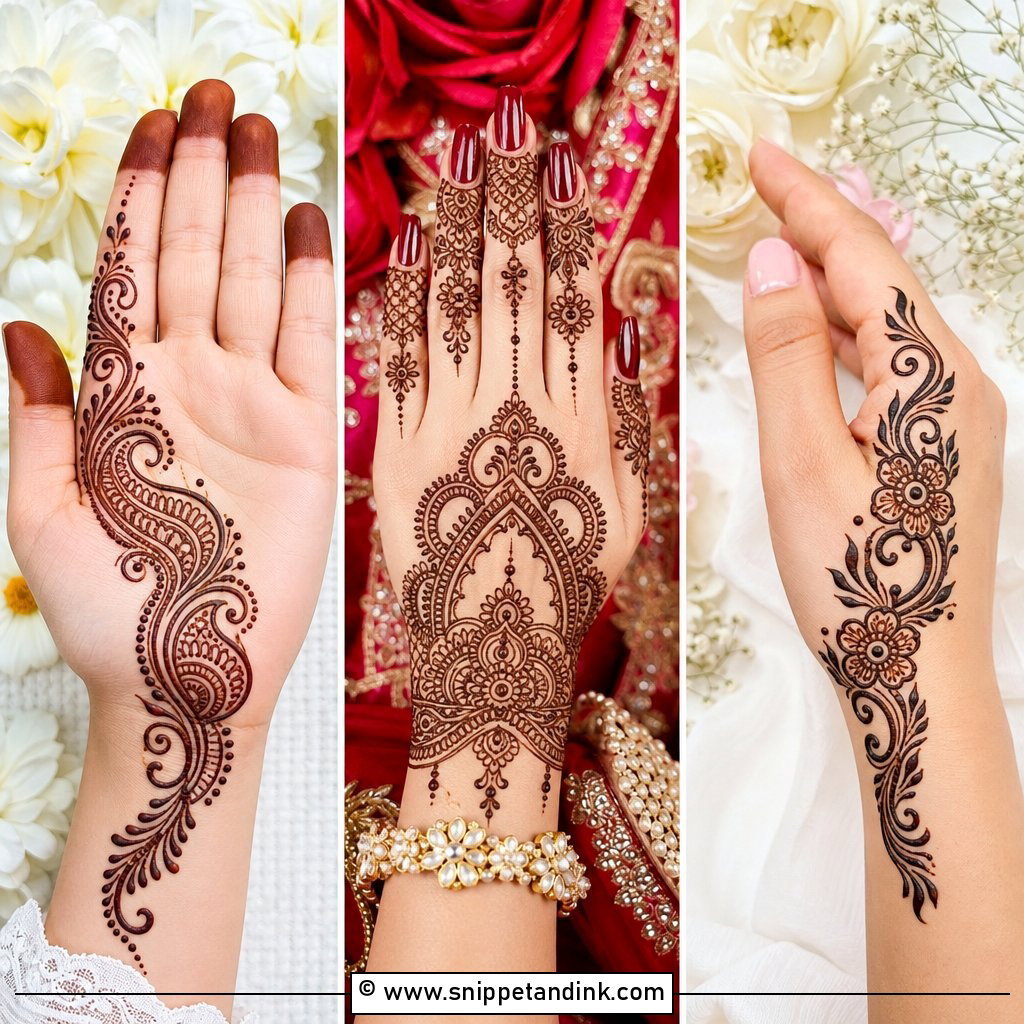
Florals adapt to any hand shape, which is why I often suggest them for small or short-fingered hands. Large Arabic flowers, tiny Indian blossoms, lotus petals, rose clusters or shaded vines all work. For bridal coverage, the flowers should connect across palm, wrist, fingers and forearm. Open spaces make it modern; tight fillers make it traditional. It pairs easily with paisleys, mandalas or bracelet patterns.
16. Paisley Bridal Mehndi Design
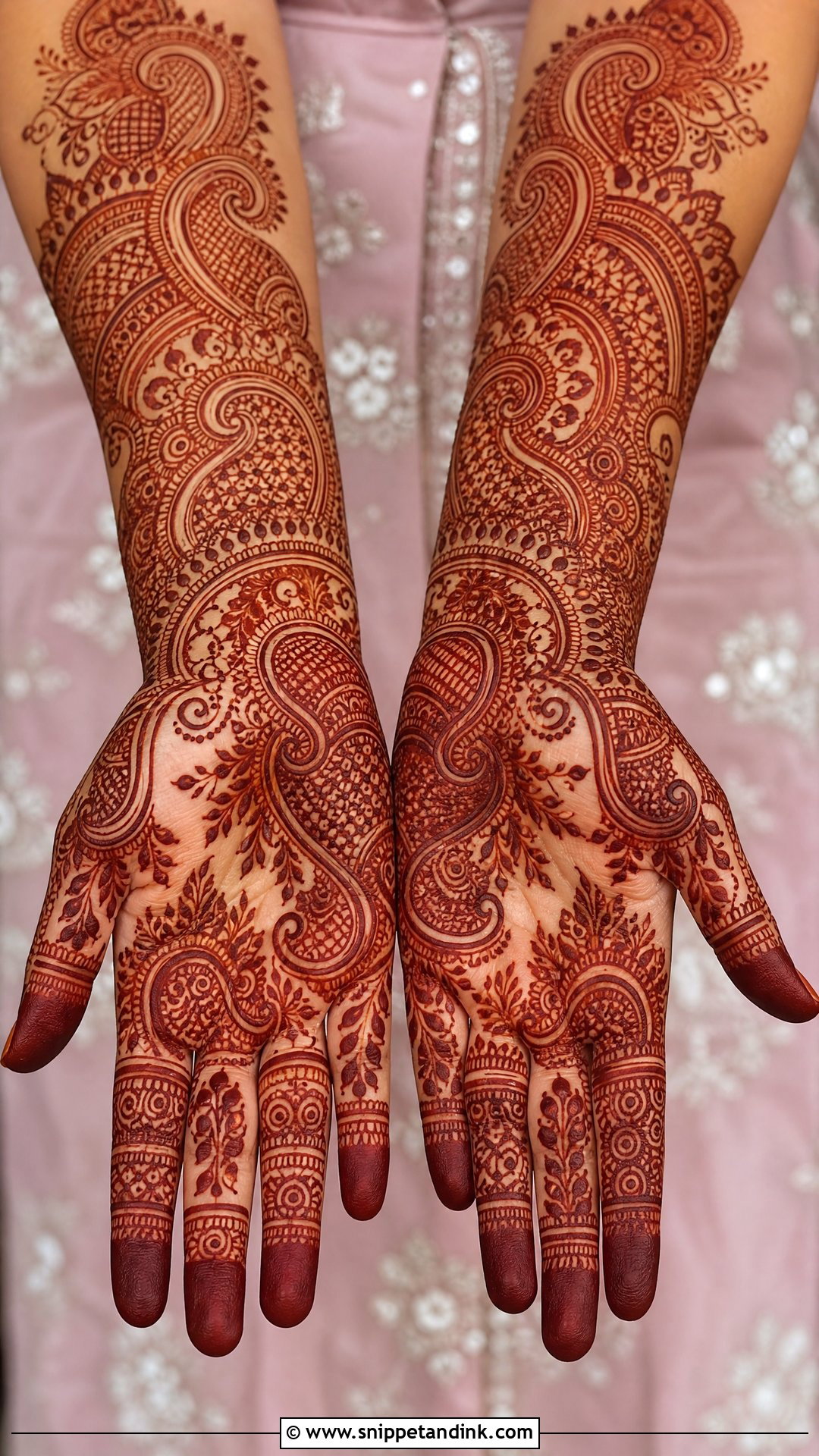
Paisley is the most dependable traditional motif. It can be large and bold or tiny and detailed, and its curve lets the design flow from wrist to palm without looking stiff. I fill paisleys with florals, dots, leaf lines and checks. It works front and back, and it’s an easy main theme for a bride who wants classic mehndi without portraits. It’s also straightforward to scale down for bridesmaids so their hands match yours in style.
17. Modern Bridal Mehndi Design
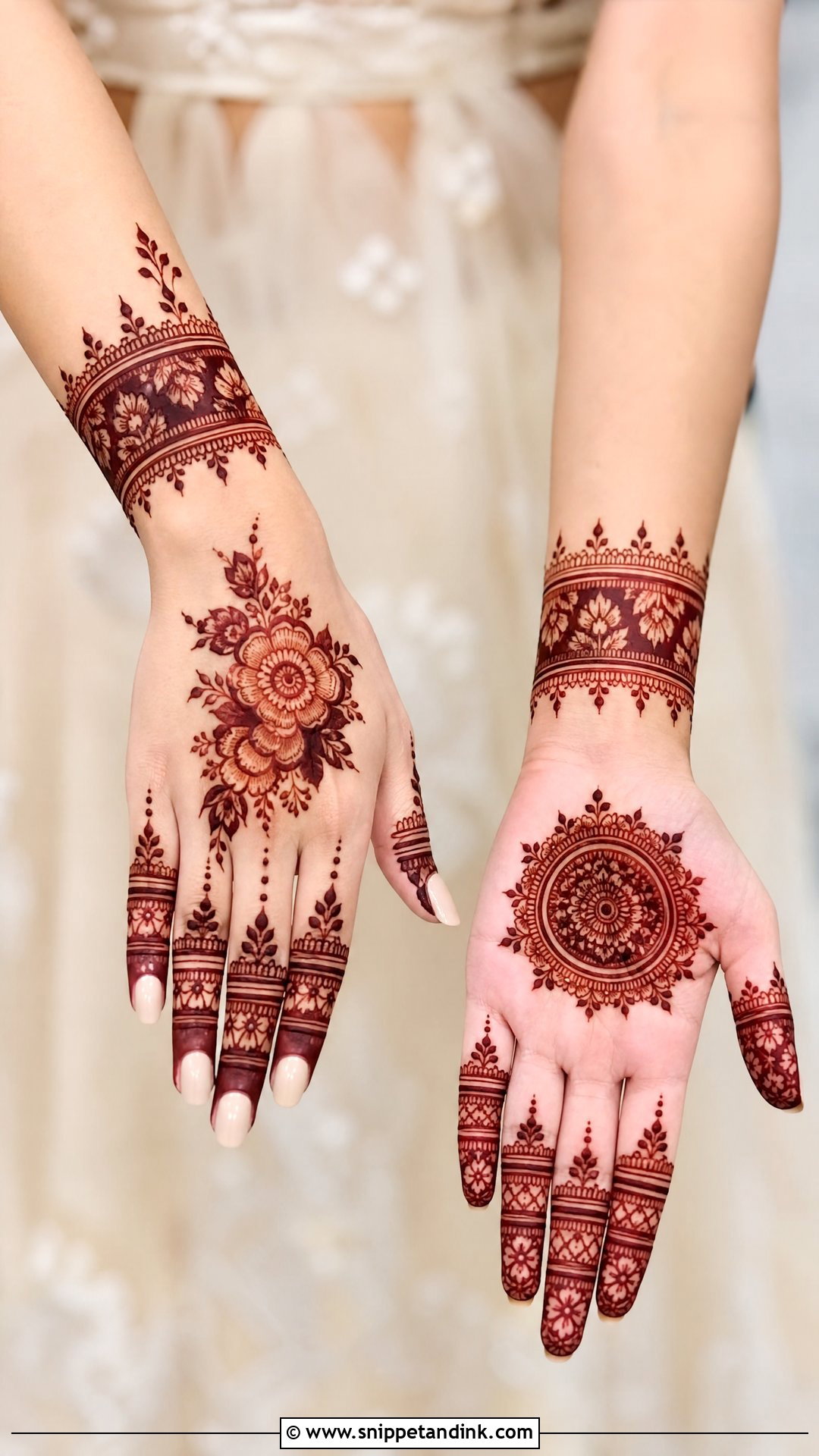
Modern bridal layouts keep the bridal feel with cleaner spacing: bold floral blocks, negative space, geometric bands, slim finger art and neat wrist cuffs. Mandalas, paisleys and initials still fit, but everything is lighter and sharper. Negative space shows mistakes, so precision matters more here than in heavy work. It pairs with pastel outfits, minimal jewelry and contemporary styling, and it should look deliberate from every angle.
18. Simple Bridal Mehndi Design
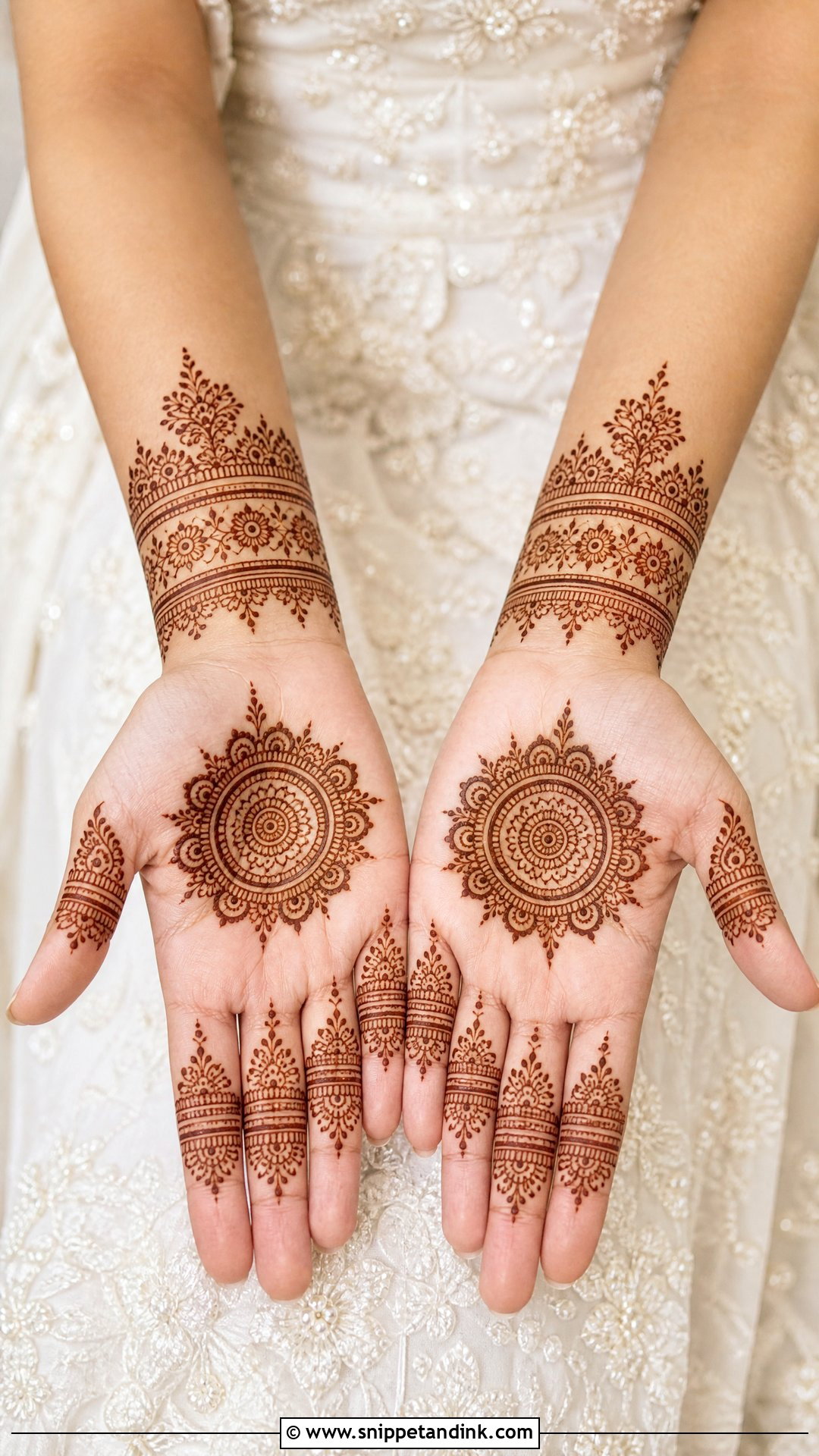
Simple doesn’t mean plain; it means carefully reduced. A palm mandala, floral wrist band, neat fingers and light trails toward the forearm can look complete. It’s shorter to apply, which matters if you’re also hosting guests at your mehndi night, and it’s easier to keep still while it dries. Never leave the wrist or fingers unfinished, as that’s what makes simple designs look rushed. It suits smaller ceremonies and delicate outfits.
19. Heavy Bridal Mehndi Design
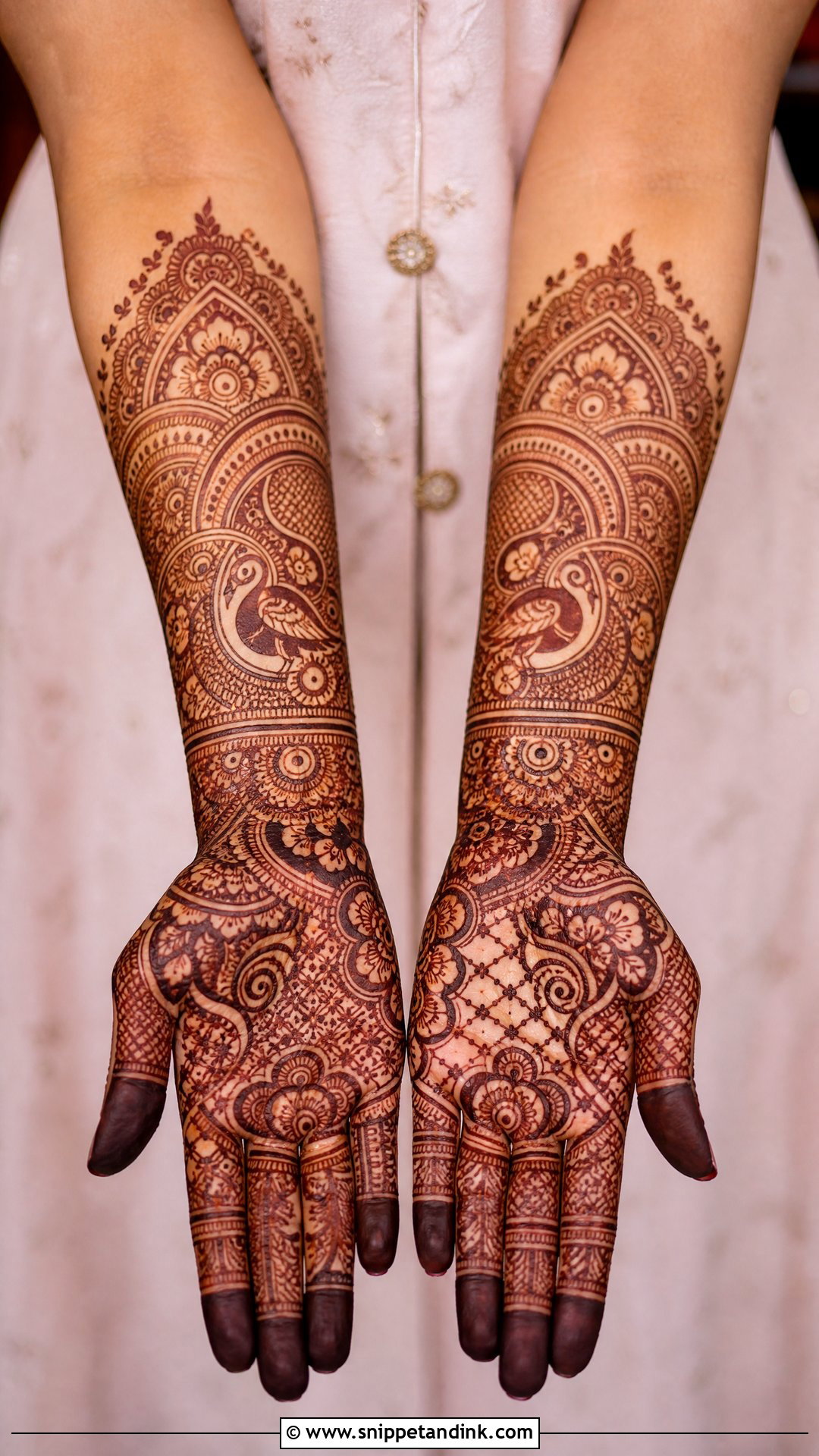
Heavy bridal mehndi fills the hands and forearms with paisleys, peacocks, mandalas, florals, jaali and fine fillers, leaving very little empty skin. The finished stain looks rich, but heavy designs take hours, and you’ll be sitting still with wet paste for a long stretch. Eat beforehand, use the bathroom, and plan someone to feed you water. Clear sections and strong borders stop it from looking cluttered. It suits traditional weddings and elaborate outfits.
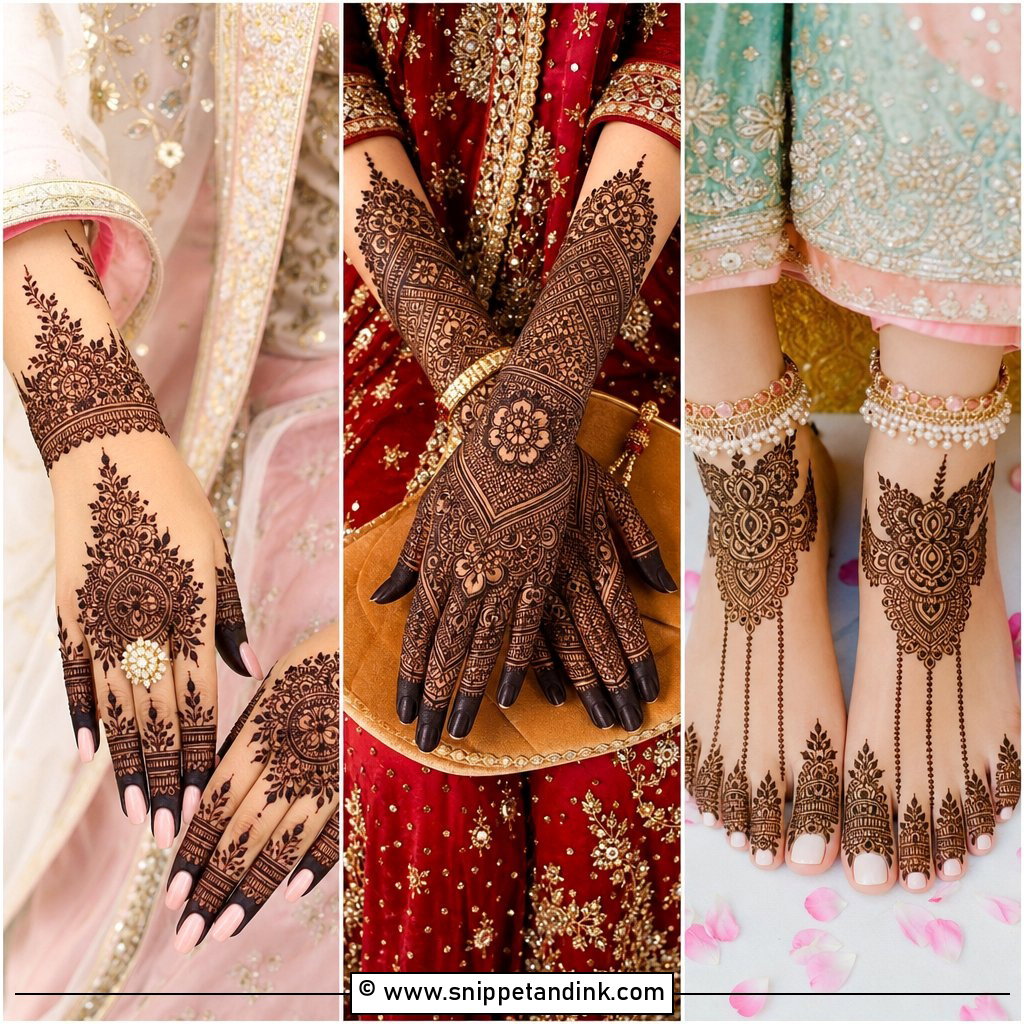
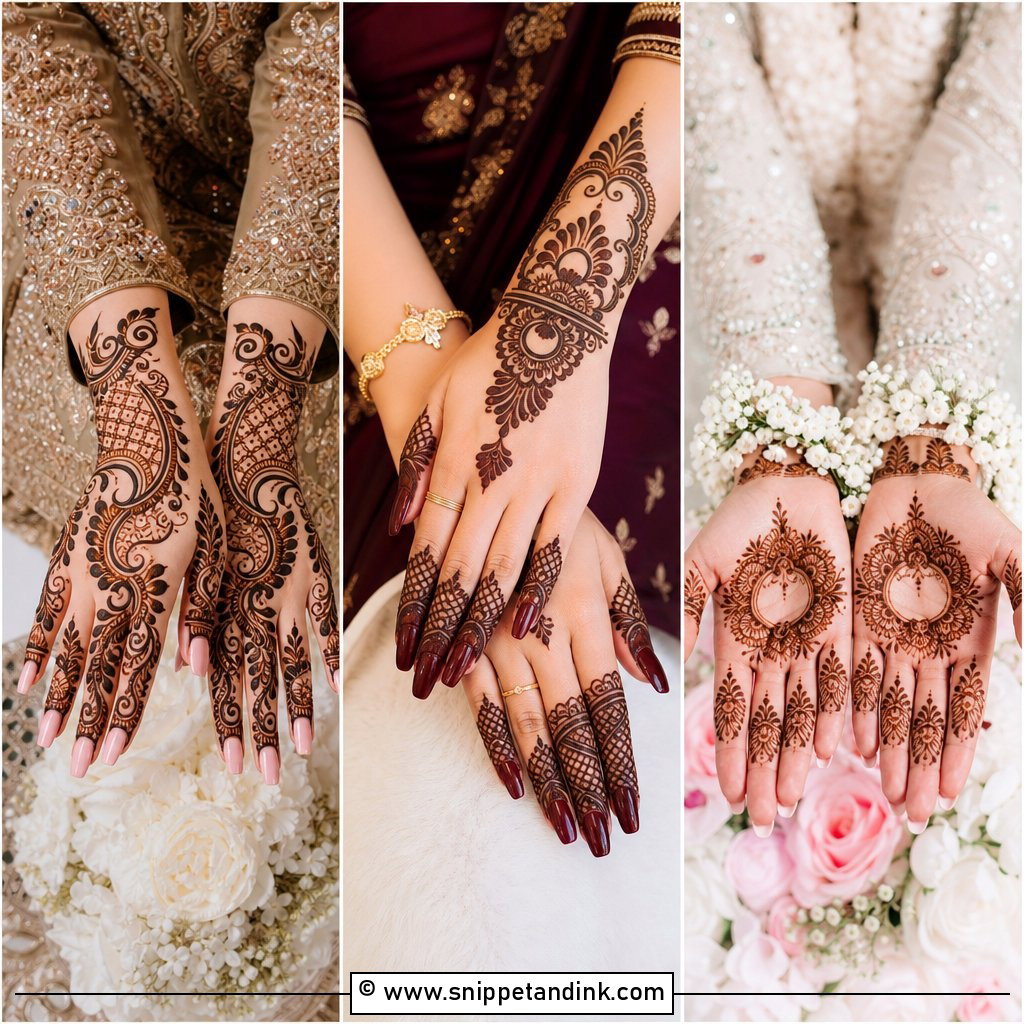
20. Finger Bridal Mehndi Design
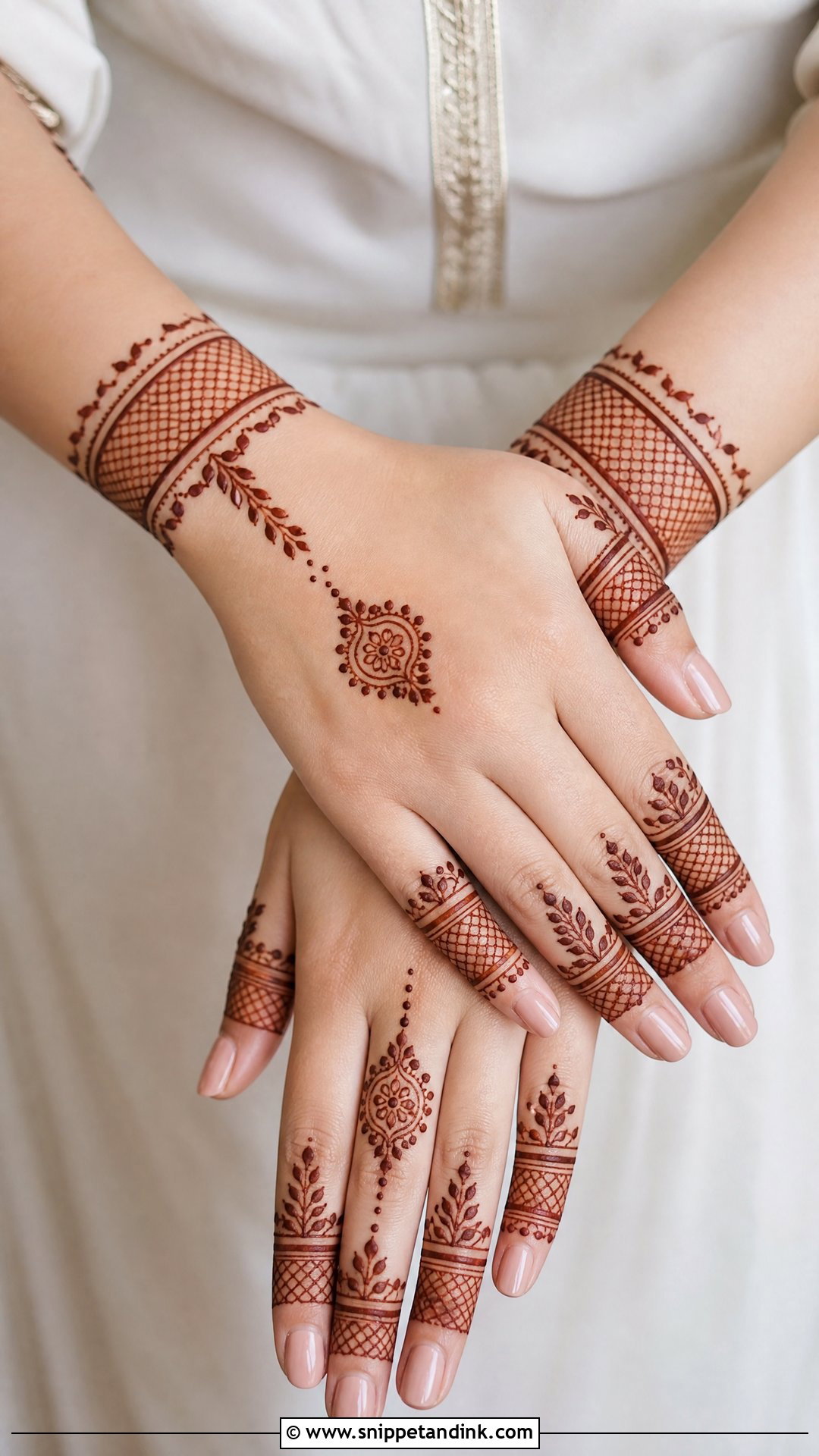
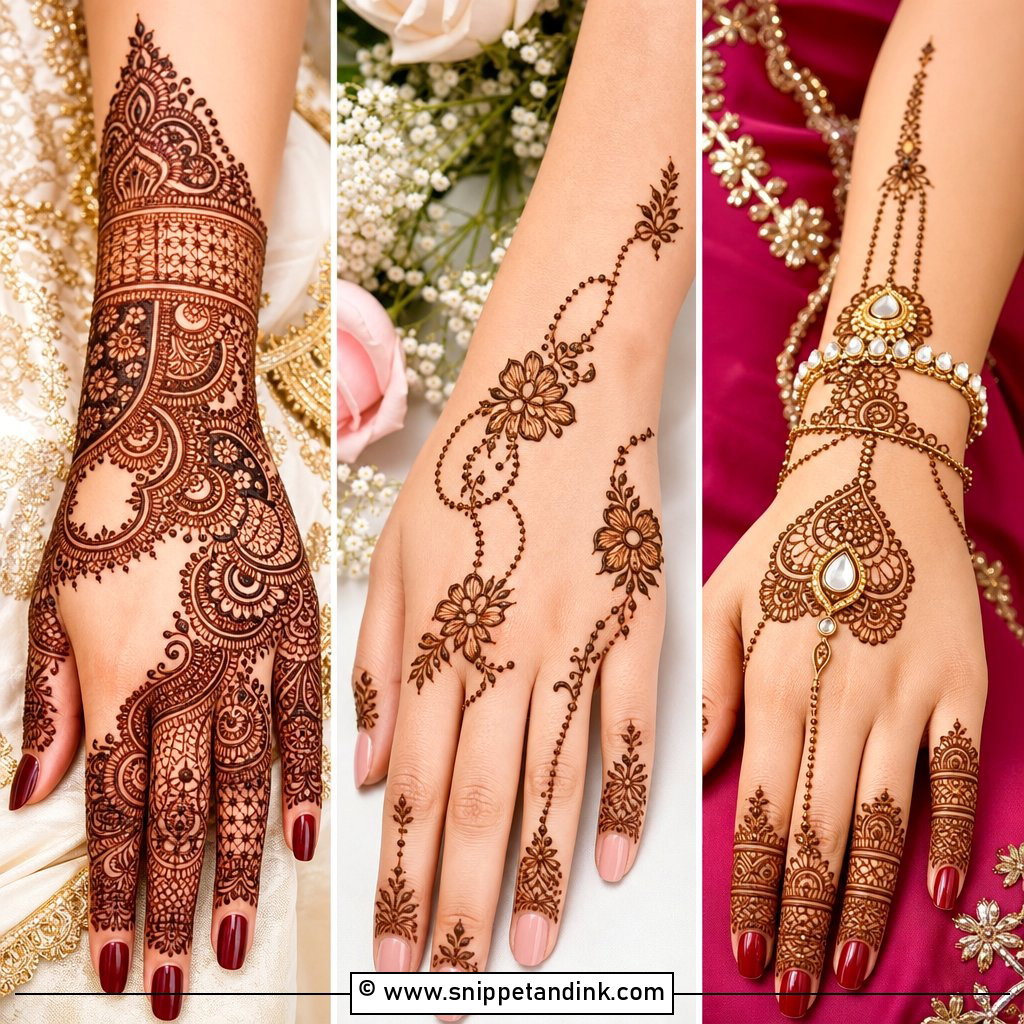
Finger-focused designs put attention on rings, nail color and hand jewelry. Leafy lines, tiny florals, mesh panels, shaded tips and stacked bands decorate the fingers, with a bracelet, mandala or light floral trail tying it to the hand. Fingertips stain very dark, so solid tips look bold; if you want subtle, ask for outlined tips instead. All fingers should coordinate rather than look random. It photographs well during ring ceremonies.
21. Wrist Bracelet Bridal Mehndi Design
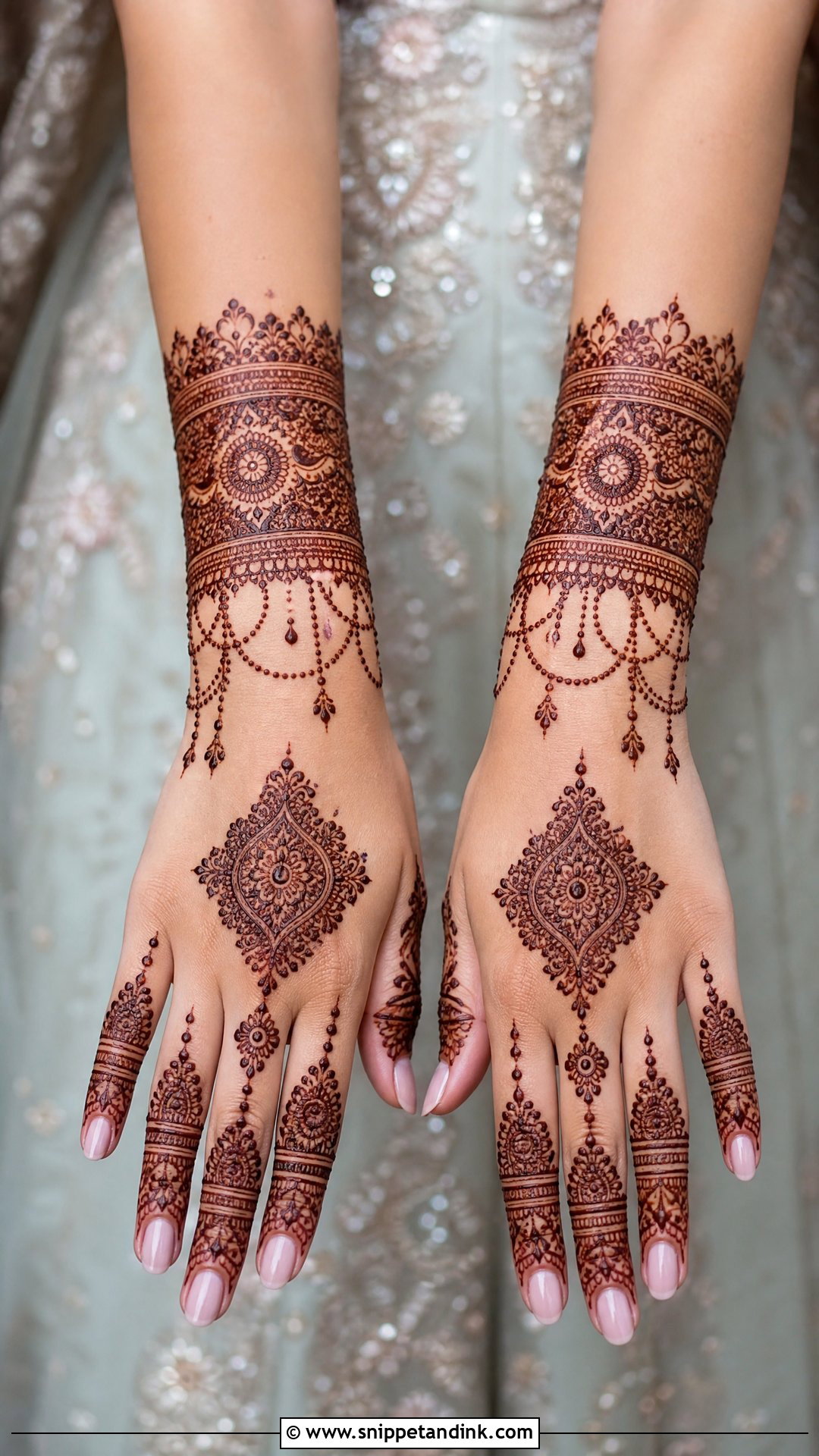
Bracelet designs look like jewelry drawn in henna. A cuff or bangle wraps the wrist and connects to the fingers with chains, dots, leaves or floral strands, much like a haath phool. It’s clearest on the back of the hand. Mandalas, charms, jaali panels or small paisleys can make it more festive. If you’ll wear real bangles, I place the henna cuff just above where they sit, so the two don’t hide each other.
22. Gulf Bridal Mehndi Design
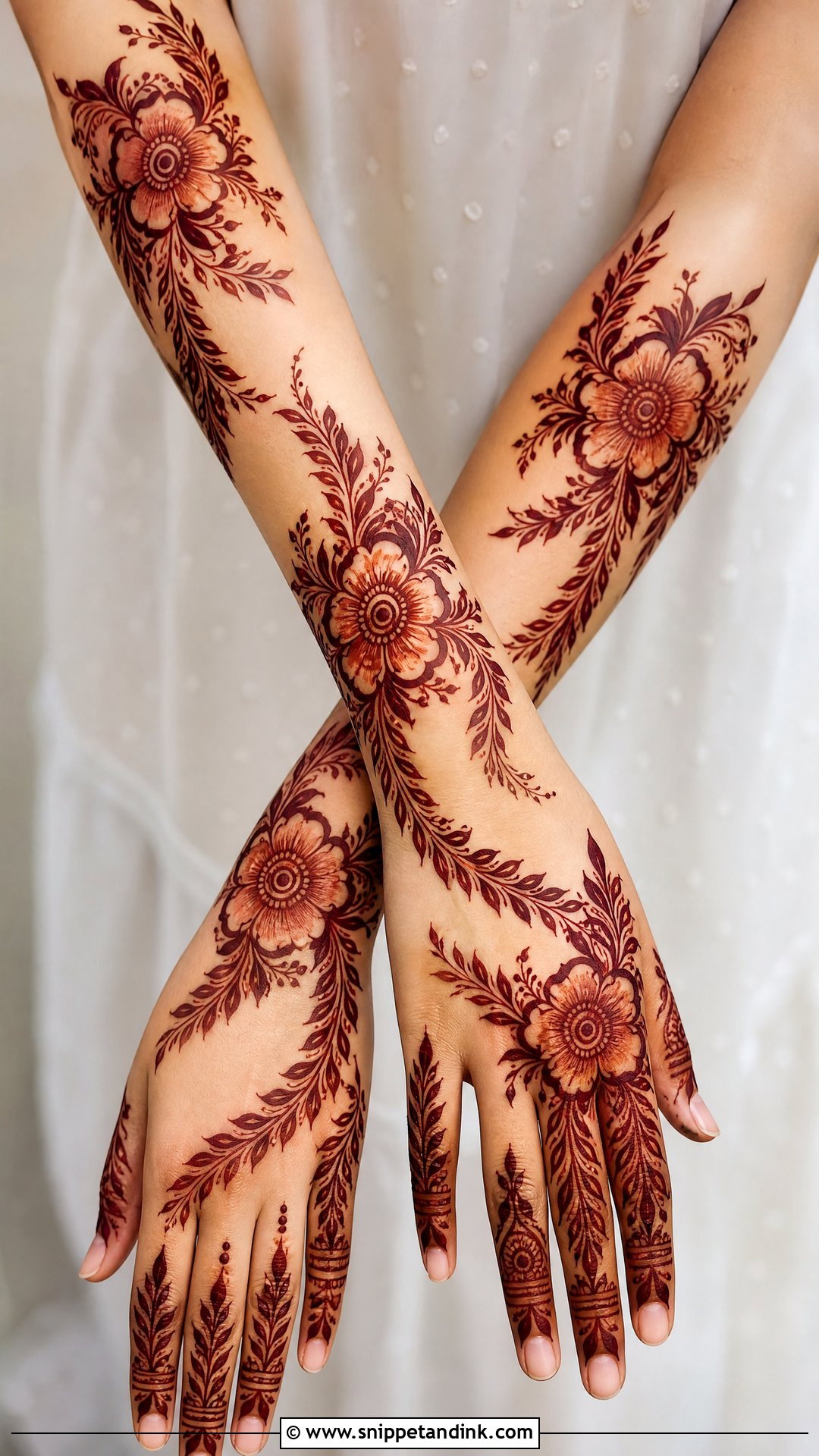
Gulf bridal mehndi, also called Khaleeji-inspired mehndi, uses bold florals, thick outlines, leafy trails and generous open skin, usually flowing diagonally across the hand. Flowers are larger and shading is soft but visible. Thick outlines need a slightly wider cone tip and steady pressure. It looks good on palms, back hands and wrist-to-forearm layouts, and pairs with statement jewelry. If dense Indian fillers aren’t for you, this gives impact with space.
23. Moroccan Bridal Mehndi Design
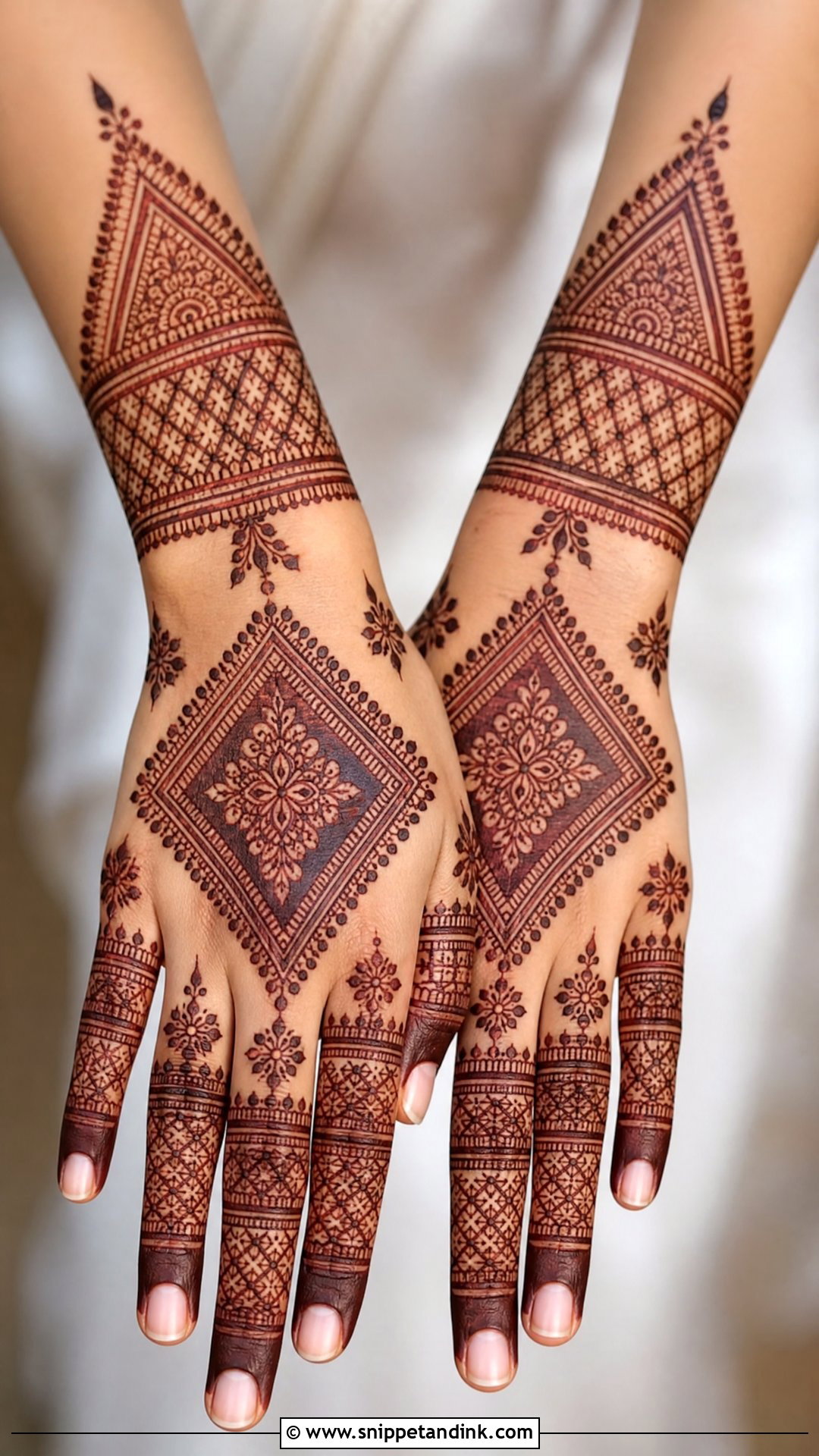
Moroccan-inspired mehndi is geometric: diamonds, lines, triangles, grids and bold borders arranged in panels. Straight lines are harder to draw evenly on a curved hand than flowing ones, so I work in short segments and keep the hand flat on a cushion. For a bridal version, tiny flowers, dots and wrist details soften the geometry. It suits the back of the hand and forearm, and brides who like symmetry and something less common.
24. Pakistani Bridal Mehndi Design
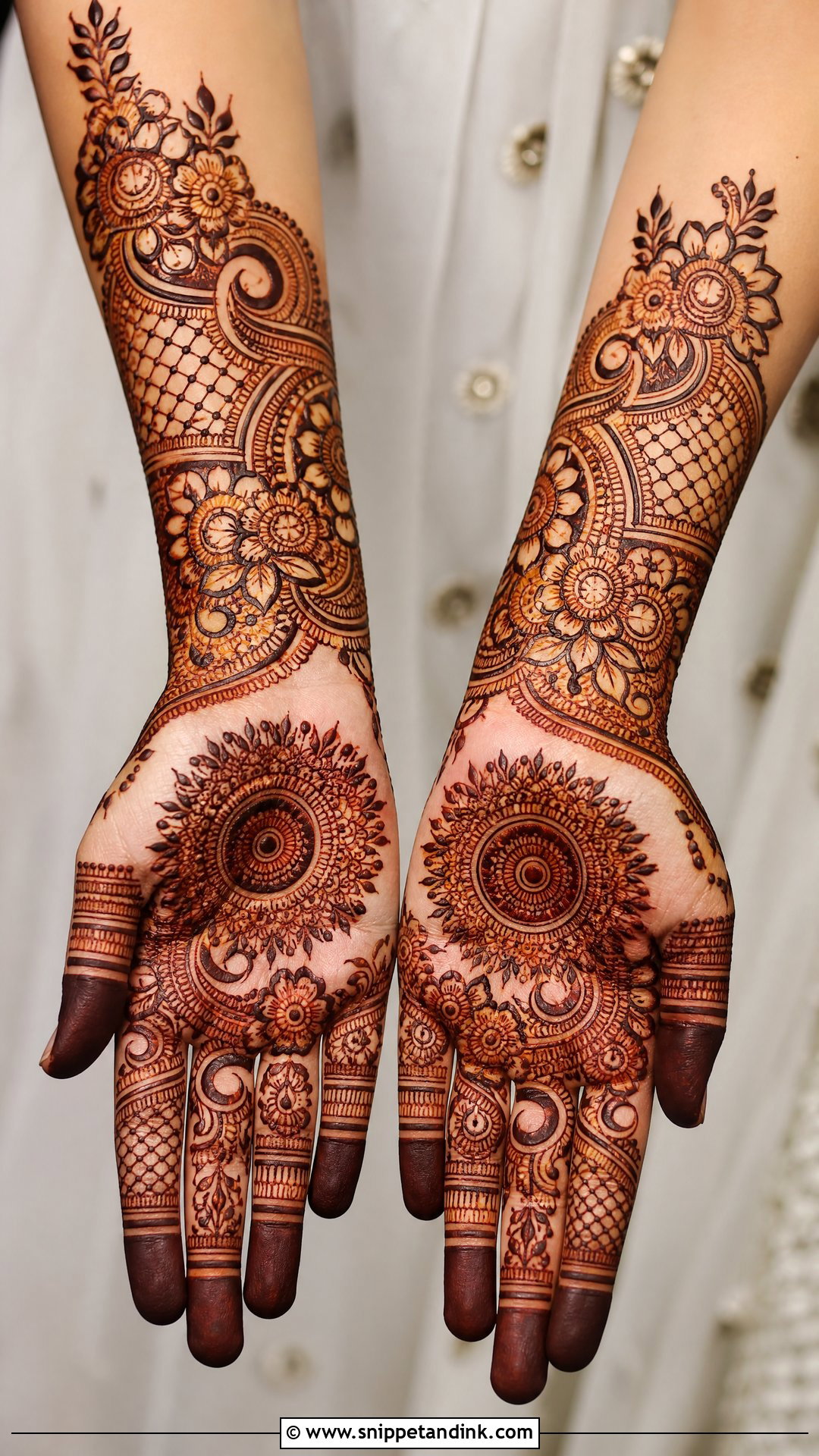
Pakistani bridal mehndi blends Indian detail with Arabic flow: full palms, bold florals, paisleys, shaded leaves, jaali and filled forearms. The palm may carry a mandala or couple motif, with floral trails and ornamental bands on the wrist and arm, and finely lined fingers. It’s rich but a little softer than dense Indian work. I suggest it when detail and movement both matter.



25. Royal Bridal Mehndi Design
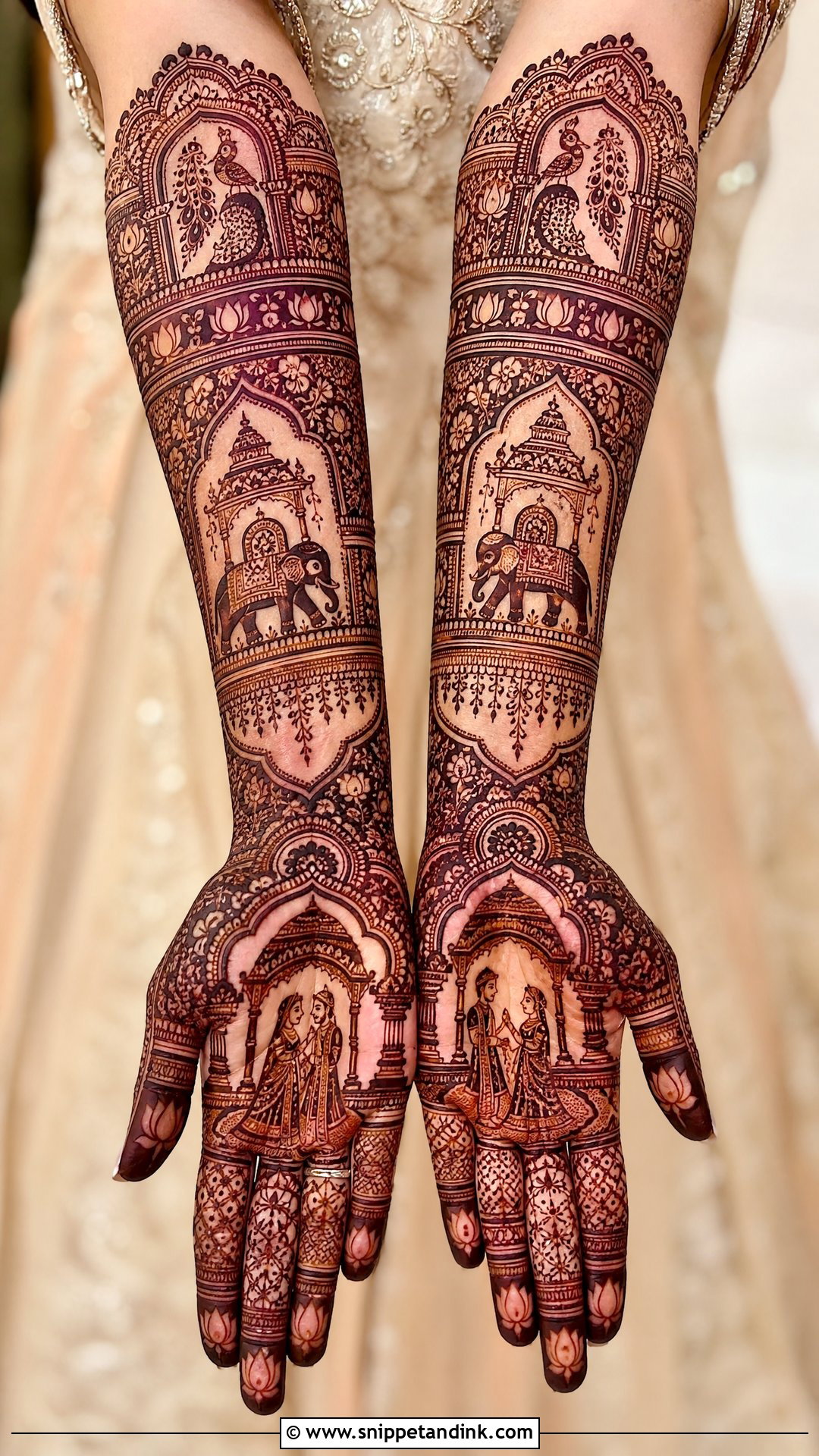
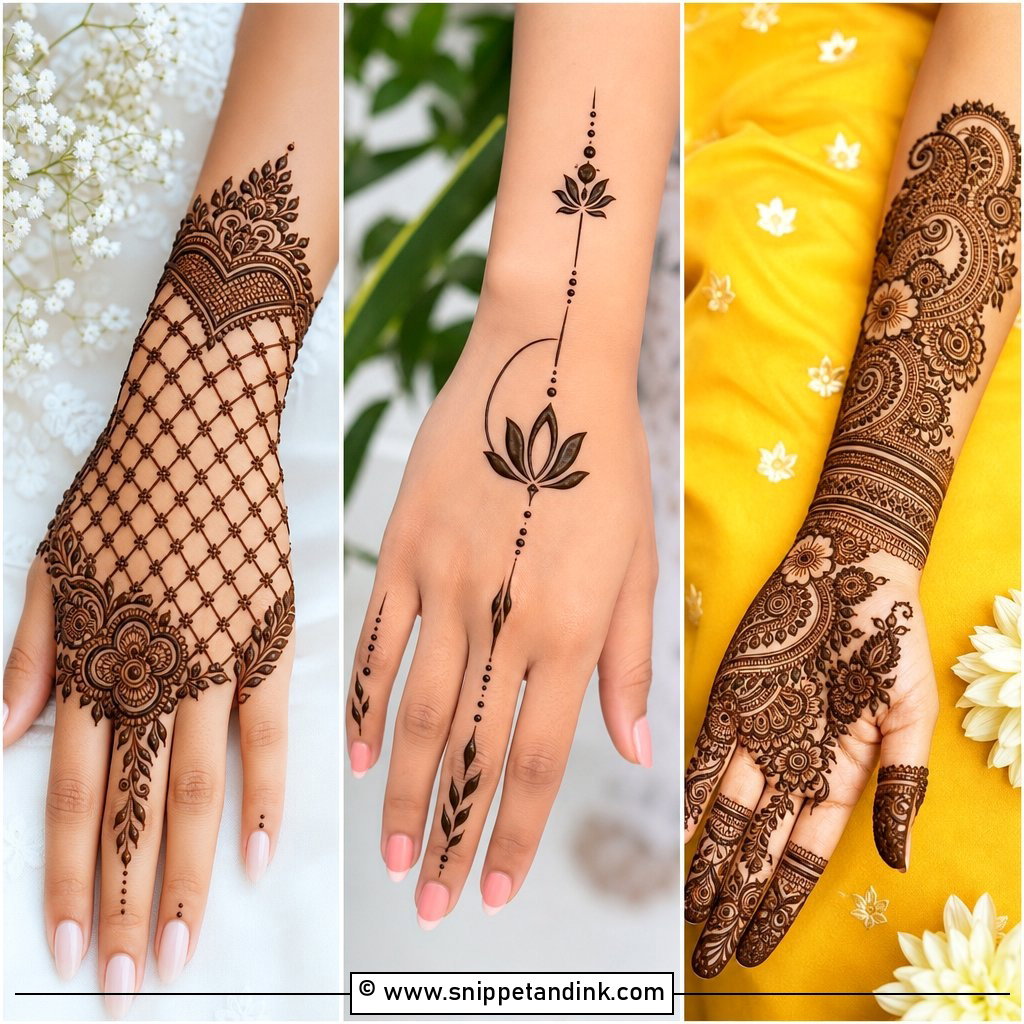
Royal designs use palace arches, elephants, peacocks, lotuses, ornate borders and symmetrical forearm panels. The risk with so many elements is chaos, so I frame a bold palm mandala with architectural shapes and heavy wrist cuffs, and keep the fingers to bands and jaali. It pairs with traditional jewelry, embroidered sleeves and rich wedding colors. Expect a long sitting.
26. Wedding Date Bridal Mehndi Design
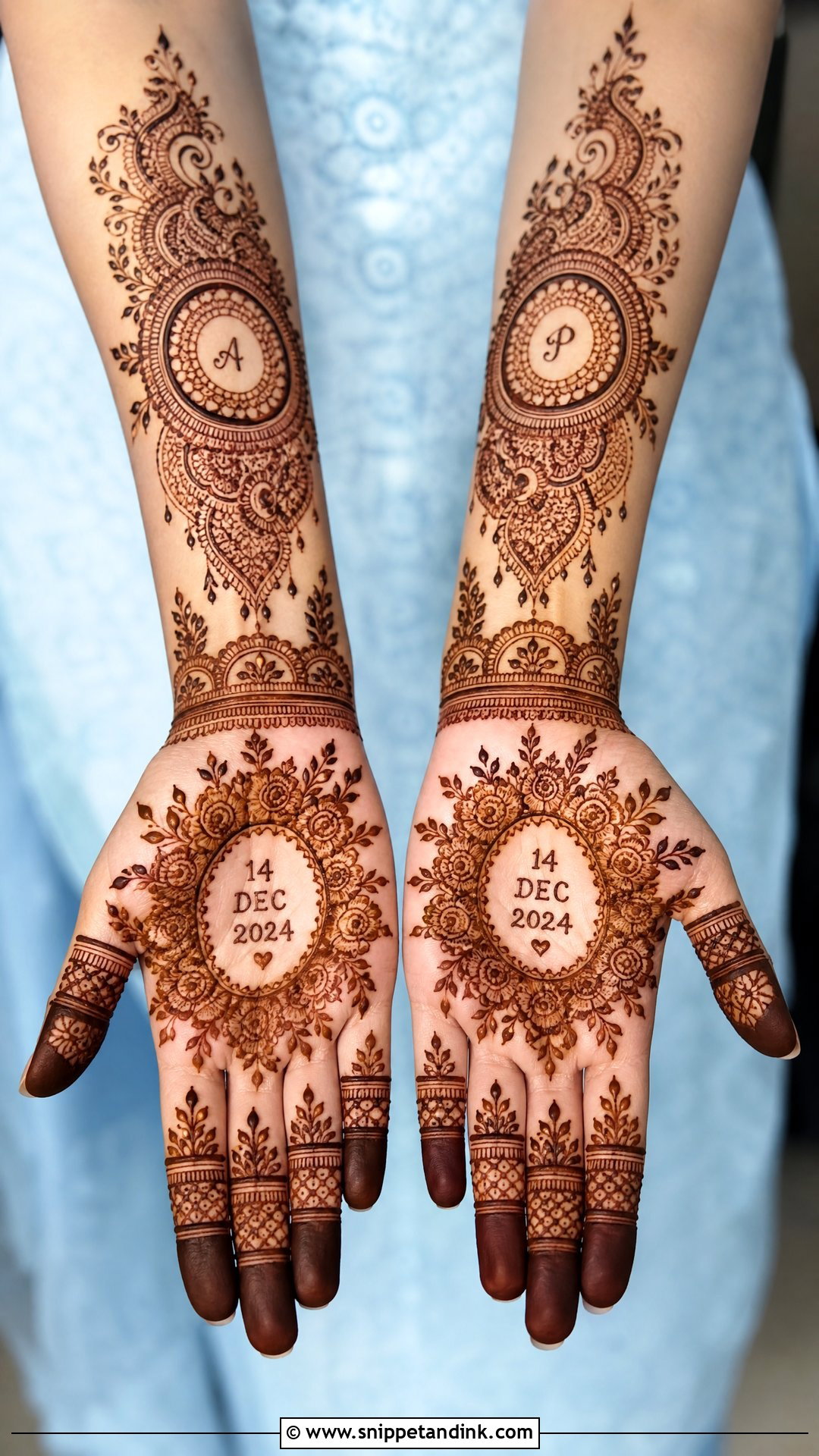
A wedding date can sit in a floral border, along the wrist, in a mandala ring or beside initials. Subtle placement makes it feel like part of the artwork rather than a label. Numbers are easy to smudge before the paste dries, so I add them last and ask the bride to keep that hand still for a few minutes. It works with full Indian, Arabic, minimal or portrait mehndi.
27. Initials Bridal Mehndi Design
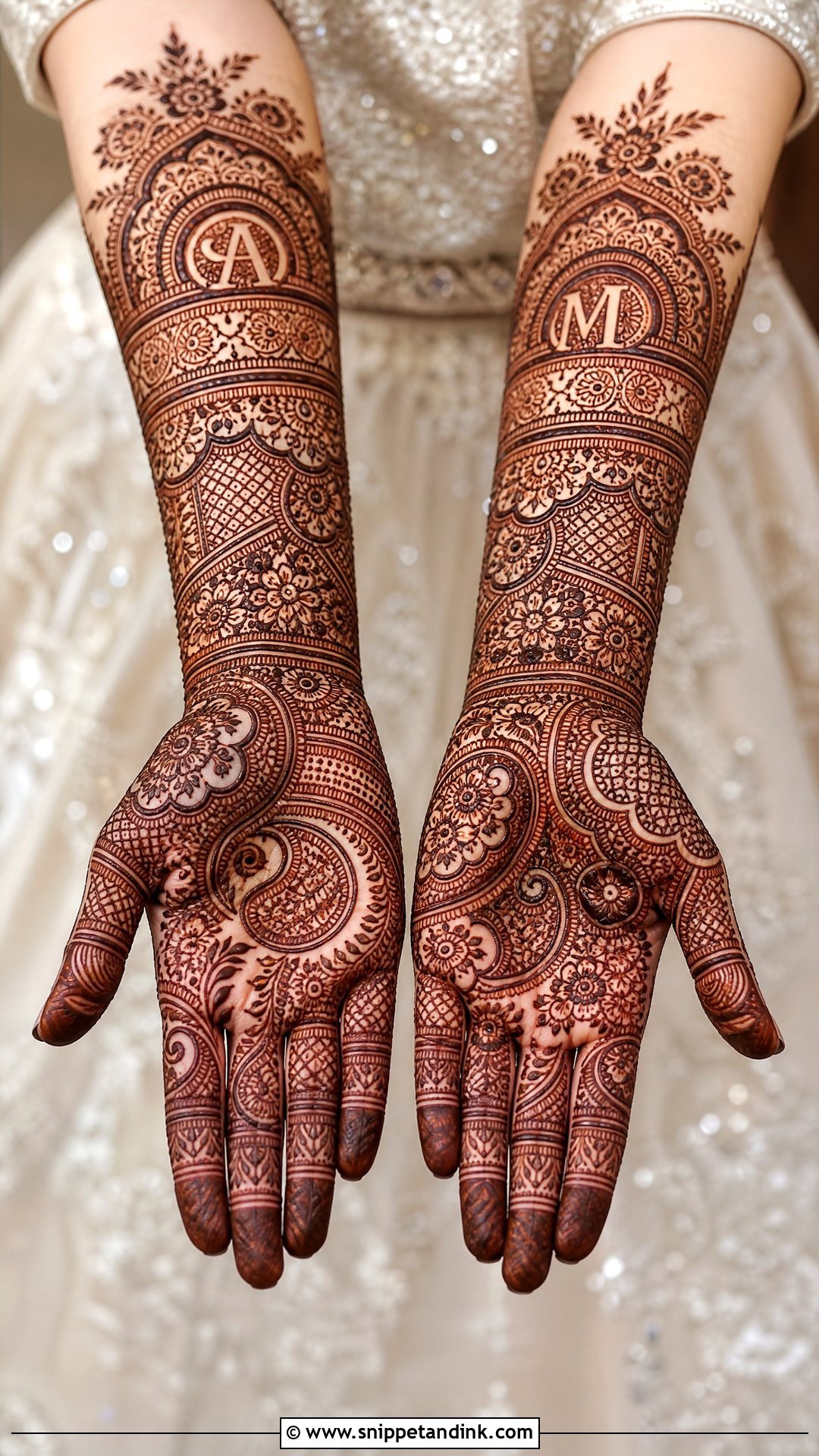
Hiding the groom’s initials in the design is a playful tradition, and the search during the rituals is half the fun. I tuck letters inside paisleys, flowers, mandalas or jaali, sometimes both partners’ initials in a small heart or circle. The skill is hiding them well enough to make the search fun but not so well that he never finds them. It can be added to almost any layout.
28. Half Hand Bridal Mehndi Design
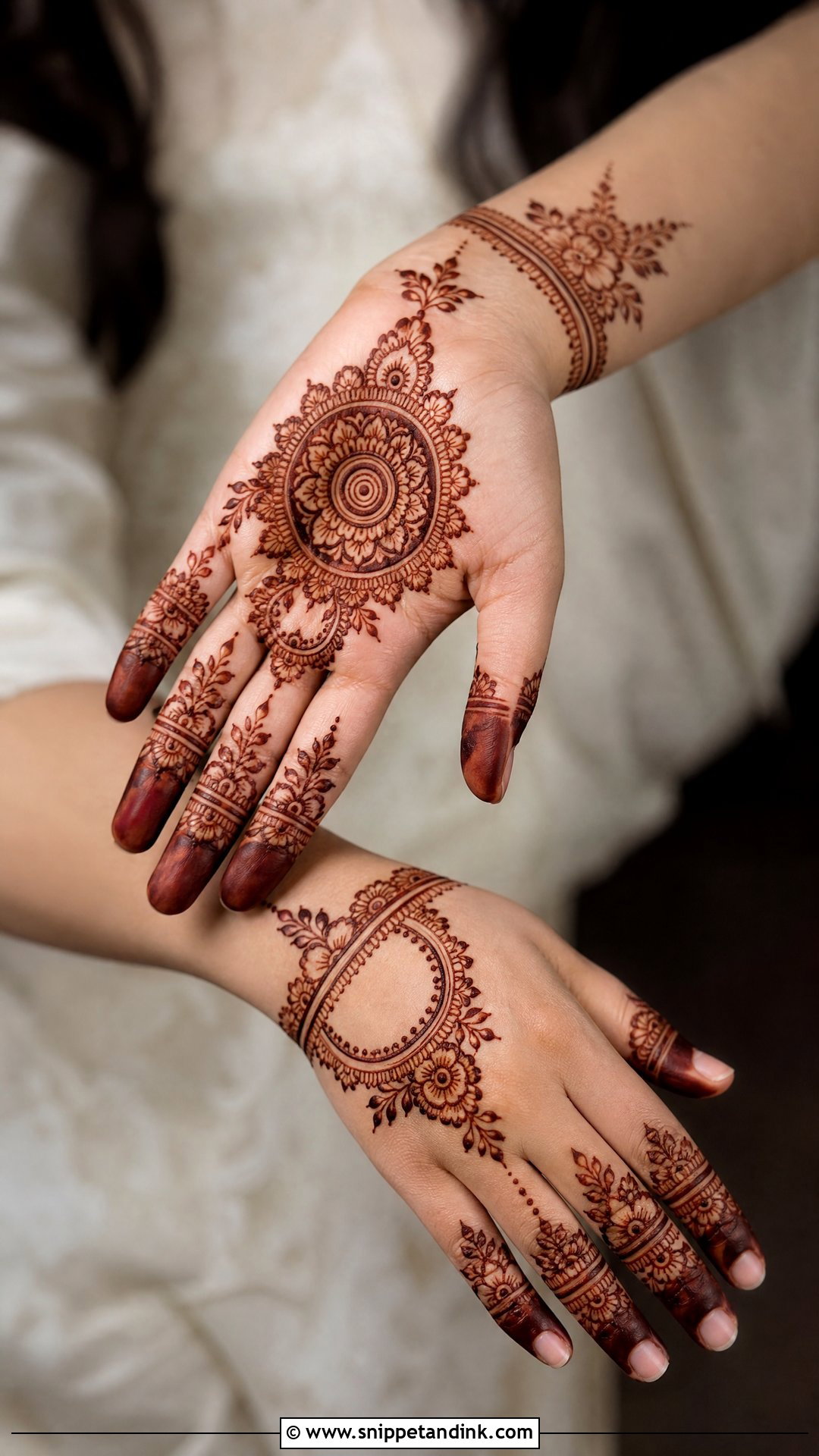
Half-hand designs run from fingertips to the wrist or just above, with a palm mandala, floral border, paisley trail and detailed fingers. Finishing the wrist with a bracelet or cuff is what stops it looking incomplete. It’s quicker and easier to manage during back-to-back functions, and it works well under long sleeves or with heavy bangles.
29. Full Arm Bridal Mehndi Design
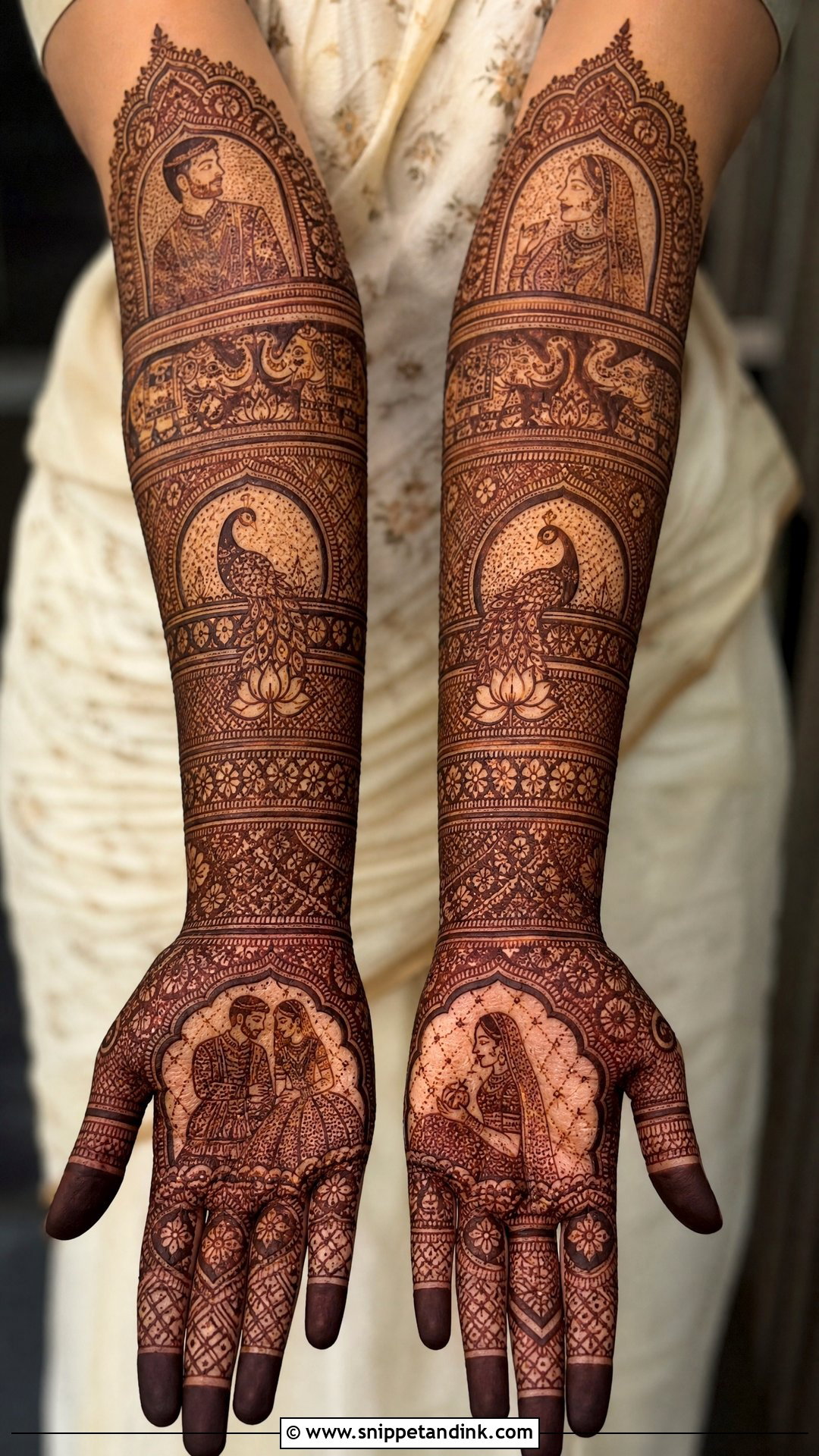
Full-arm mehndi runs from fingertips to the elbow or beyond, with portraits, mandalas, paisleys, lotuses, peacocks, wedding scenes and wide forearm bands. Large coverage needs a plan, separate panels, borders and central motifs, or it looks crowded. The upper forearm stains lighter than the hand, so I keep the boldest detail toward the wrist. It takes a long session, often with two artists working on one bride, and suits grand ceremonies and traditional outfits.
30. Feet Bridal Mehndi Design
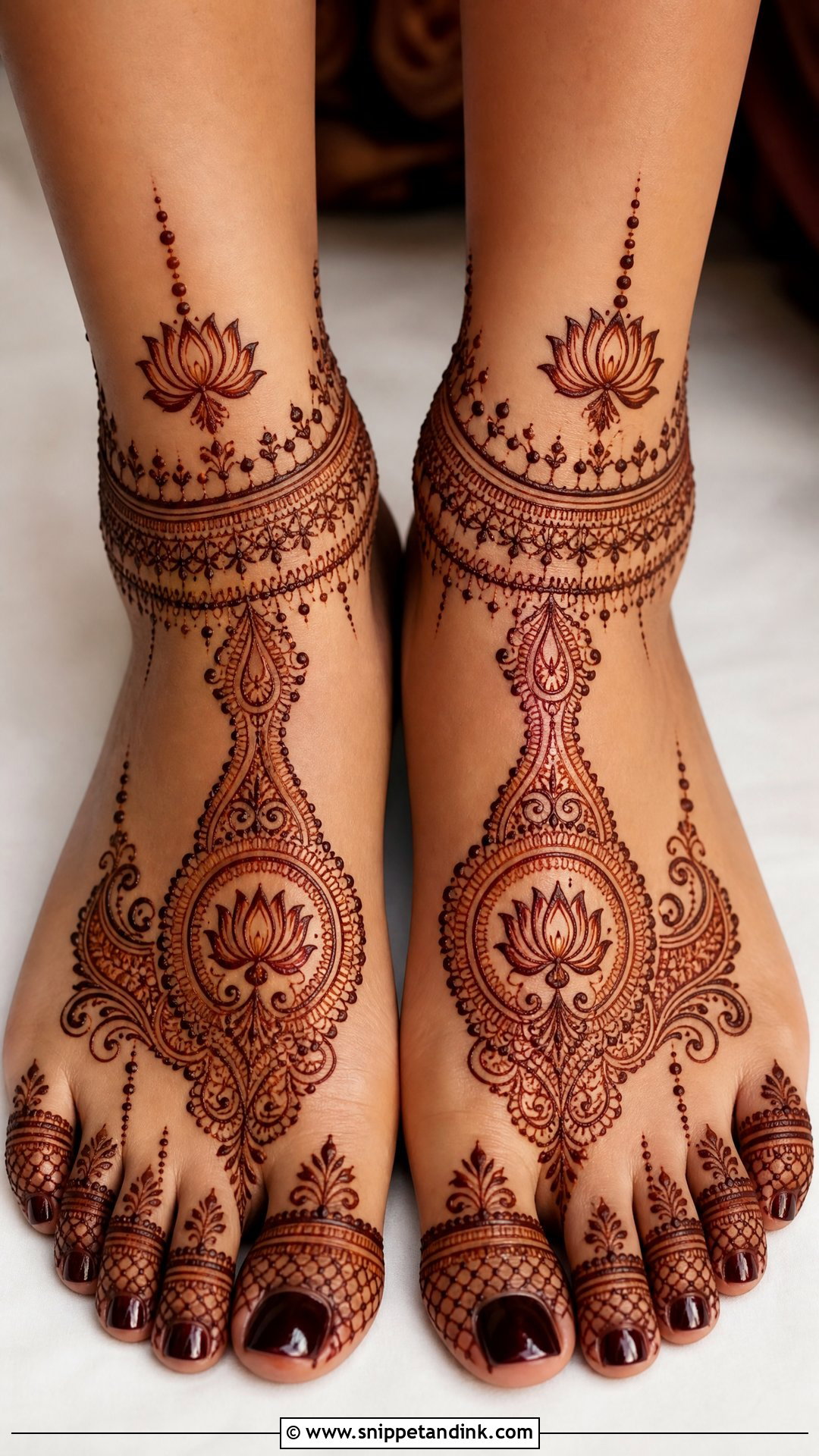
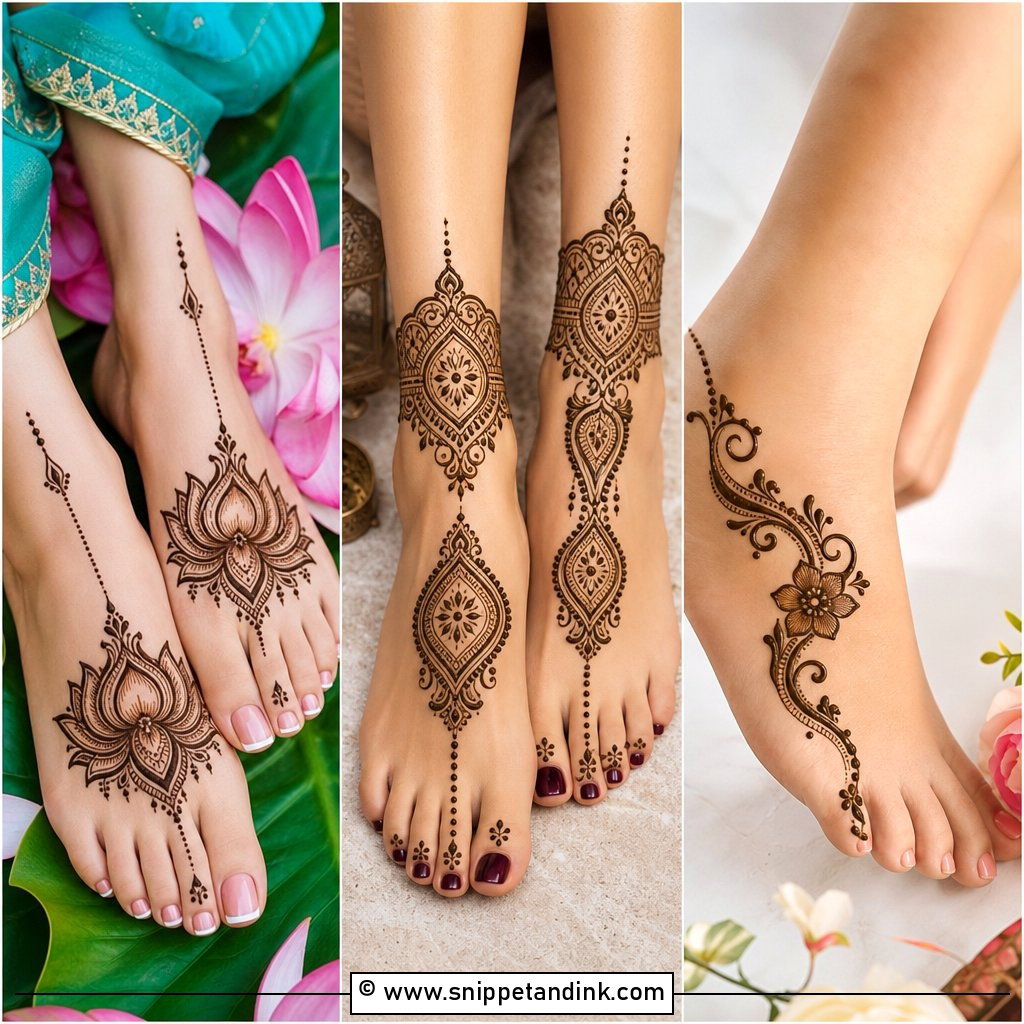
Feet complete the bridal look, especially with anklets, toe rings and traditional footwear. Lotus motifs, anklet-style borders, paisleys, mandalas and fine toe details are common, from heavy coverage across the top of the foot to a delicate ankle-to-toe trail. Feet stain darker than hands because the skin is thicker, so a lighter design still shows well. Match the style of the hands, and keep both feet symmetrical since they’re photographed together. Have the feet done first, or last with time to rest, since you can’t walk until the paste dries.
The First 48 Hours After the Paste Comes Off
Aftercare decides the depth of the color almost as much as the paste does. Once the design is dry, I dab it with a little lemon juice and sugar to keep the paste stuck to the skin, then ask the bride to leave it on as long as she can, ideally overnight.
- Scrape the dry paste off with a blunt edge or your fingers. Don’t wash it off.
- Keep water away from the design for the rest of the day if you can. Water at this stage stops the color developing.
- Rub in a little balm or natural oil to protect the stain from water and soap.
- Stay warm. Warm hands stain darker, so cold rooms and cold water work against you.
- Avoid chlorine pools, harsh cleaning products and hand sanitiser on the design for the first couple of days.
Expect the palms and fingertips to be darkest and the backs of the hands and upper arms lighter. That’s how skin takes henna, not a fault in the application. The stain usually peaks around two days after removal and then fades gradually over one to three weeks as the skin renews.
Which Design Will Your Hands Wear Best?
Your mehndi should suit your outfit, ceremony, comfort and story. Heavy Indian and Rajasthani designs feel traditional and grand; Arabic, Gulf and minimal layouts feel lighter. Portraits, initials and dates add meaning; lotus, peacock, jaali and mandala patterns bring classic beauty. Think about coverage, sitting time, jewelry and photo angles, and ask your artist to adjust the layout to the shape of your hands.
You'll Like These Ideas:






Leave a Reply