
An engagement is the one function where everyone wants to see your left hand up close, so I design engagement mehndi around the ring first and the coverage second. It can be fuller than a party design but usually stops short of wedding density, which keeps the bridal set feeling new a few weeks later. Below are 30 Unique Engagement Mehndi Designs, from Arabic trails and finger work to couple portraits, with notes on where each one helps or fights the ring.
Leaving Room on the Ring Finger
The ring goes on during the ceremony, but your henna goes on the day before, so I’m drawing around a ring that isn’t there yet. My habit is to leave a clean band of skin at the base of the ring finger, roughly the width of the ring plus a little margin. Patterns that run right under the band make the stone disappear in close-ups, and that’s the photo everyone wants.
- Tell your artist which hand the ring goes on. Customs differ between families, and some couples use the right hand.
- If the ring has a wide band or a halo, mention it so the gap is wide enough.
- Keep the nail on that finger in a plain shade; a busy nail plus busy henna crowds the stone.
There’s one more reason to keep that gap clear. Henna that sits under a tight ring for hours rubs and fades faster than the skin around it, so a pattern drawn across the base of the finger often looks patchy by the second day anyway. A clean band avoids the problem entirely, and when the ring comes off for washing, the empty space looks intentional rather than worn away.
1. Full Hand Engagement Mehndi Design
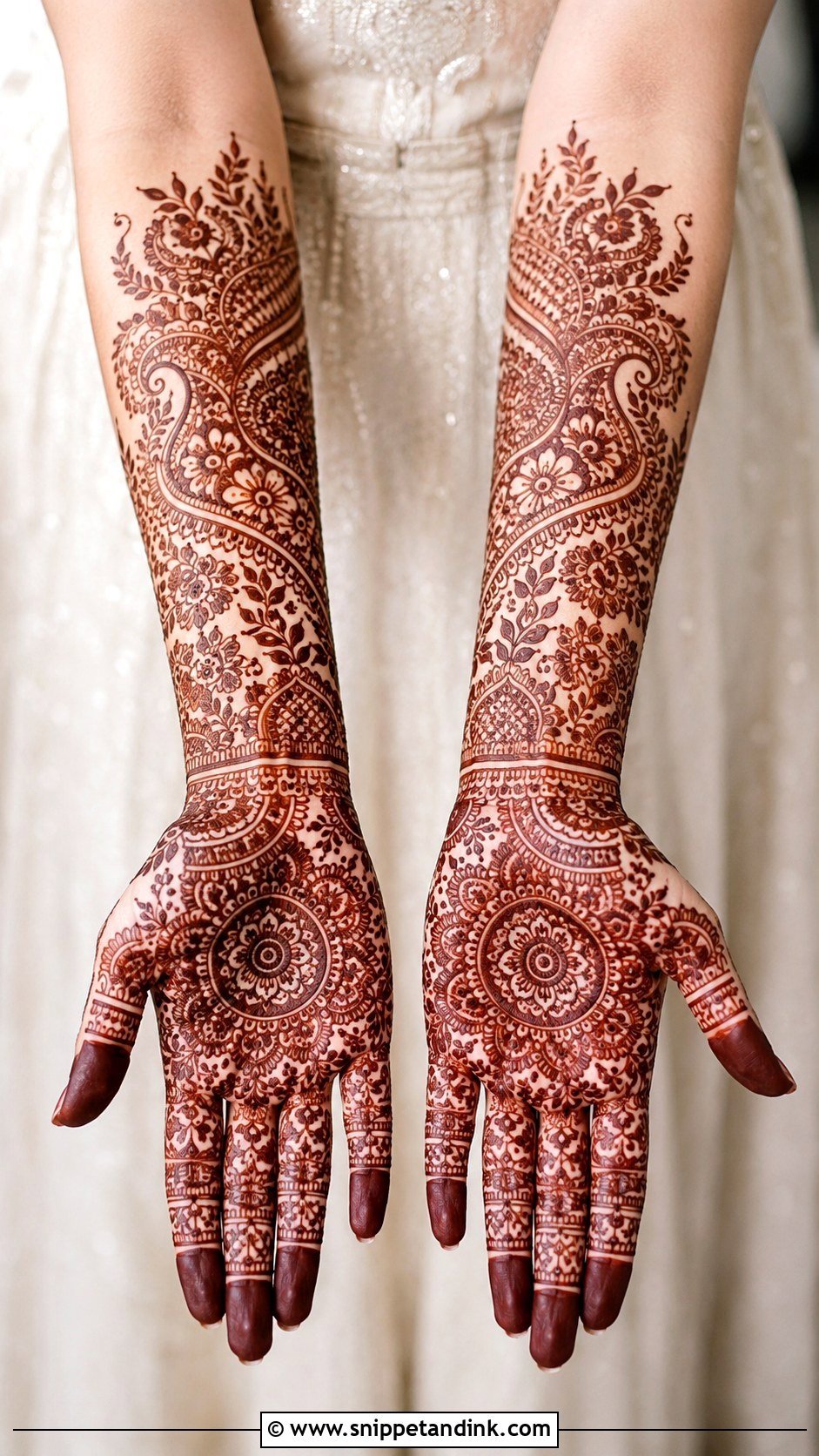
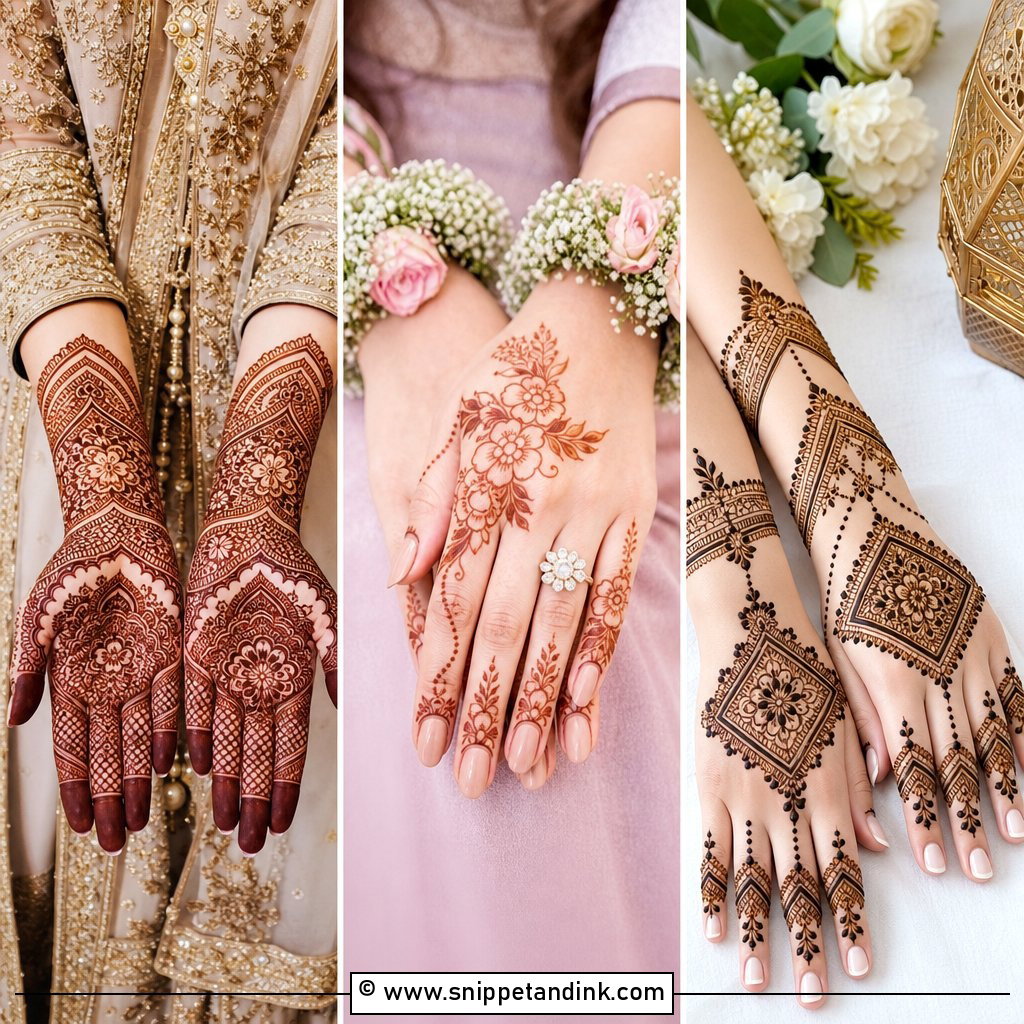
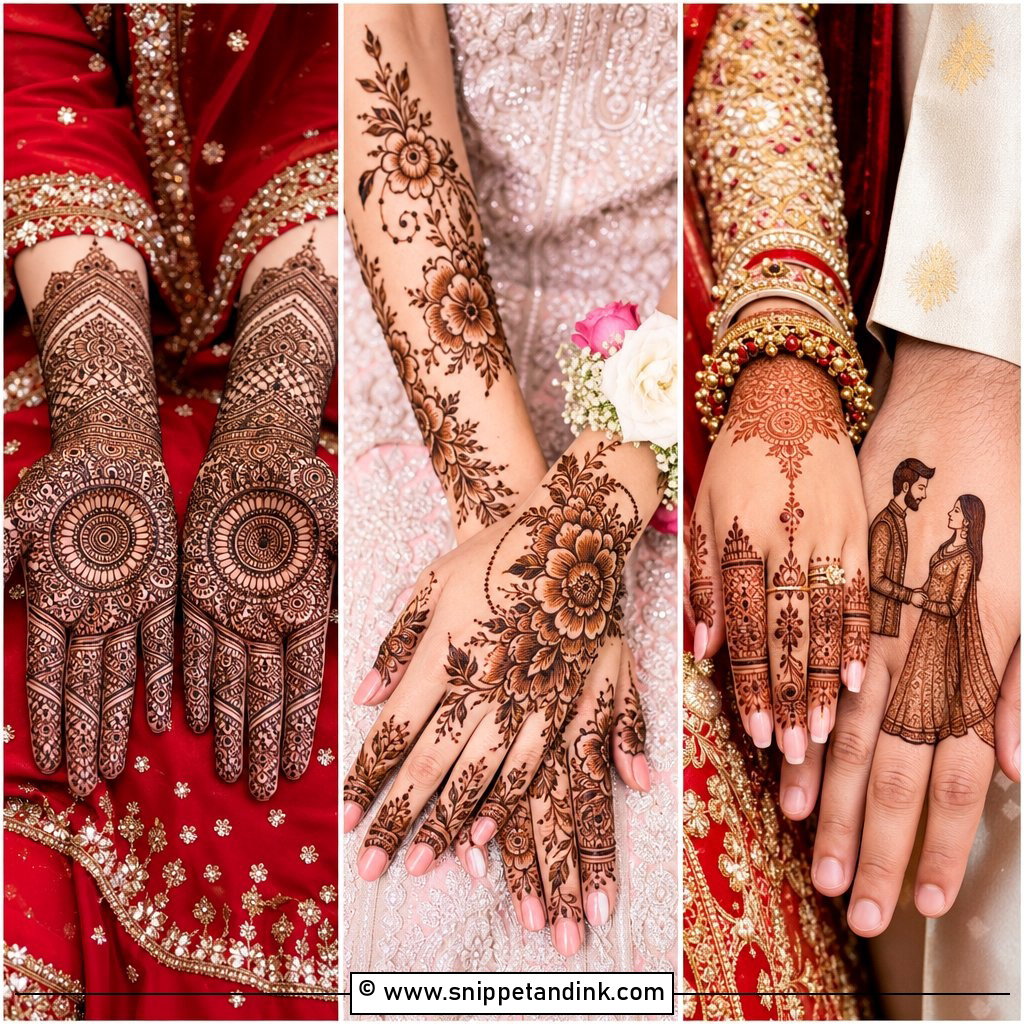
Full hand coverage gives you a bridal feel without spending the wedding motifs early. I fill the palm, fingers and wrist with paisleys, vines and fine filler, then thin the work out near the ring finger so the band and stone don’t vanish into pattern. A palm left semi-open around a mandala looks lighter in photos than a solid palm. If the wedding is close, keep this one a notch lighter than your bridal set.
2. Simple Engagement Mehndi Design
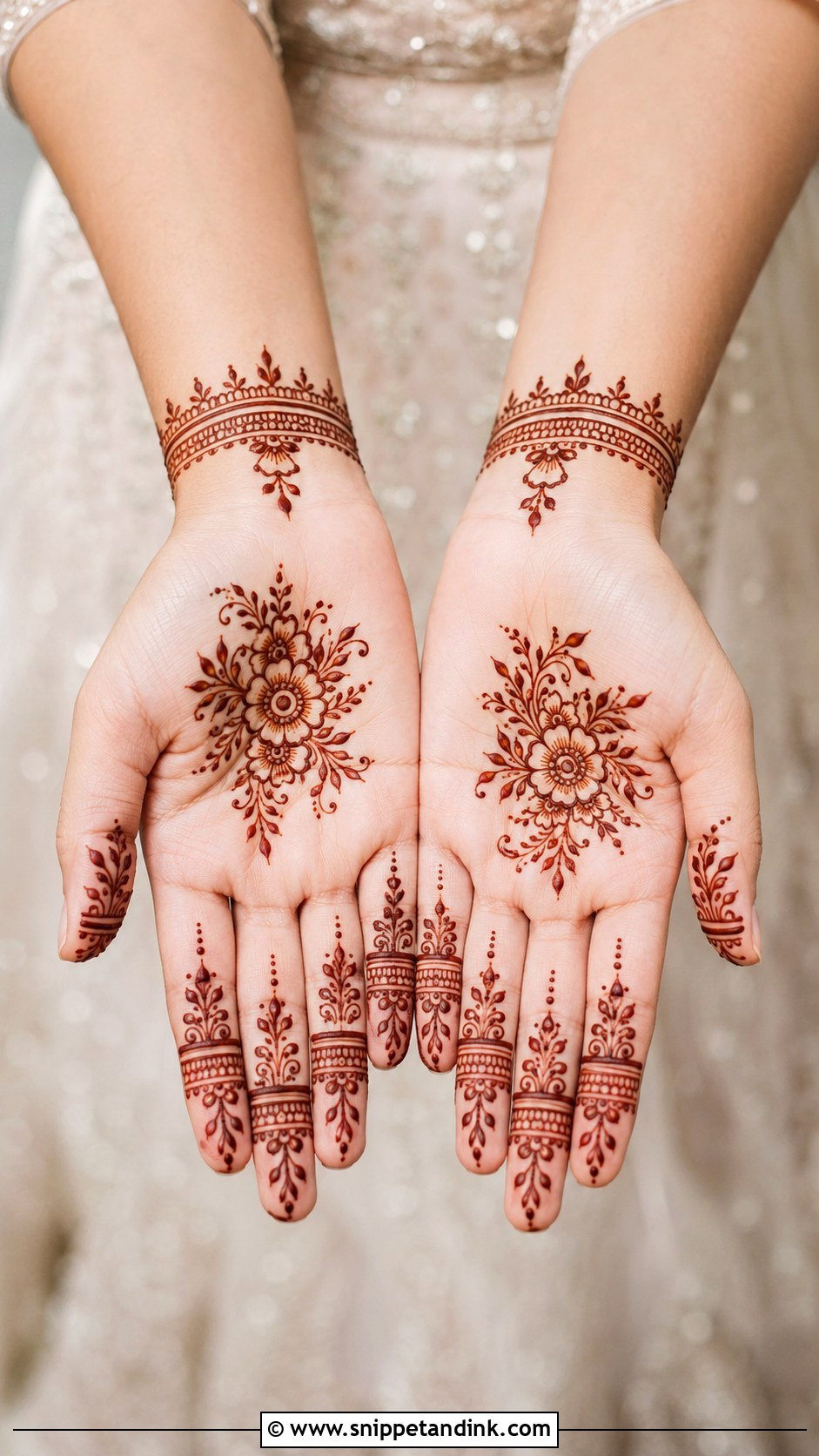
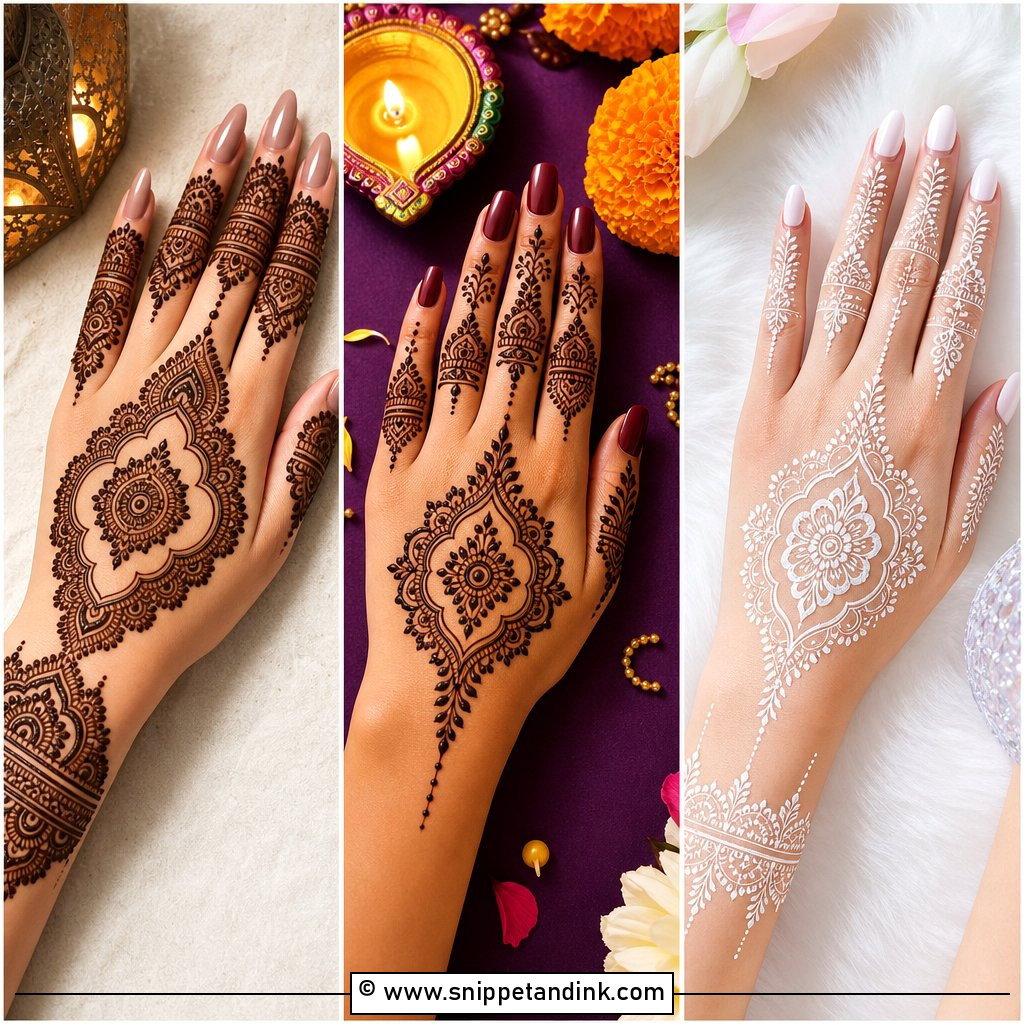
One strong pattern across the palm or back hand, a few small flowers, neat fingers. That’s all a simple design needs. I recommend it when the outfit is heavily embroidered or the jewellery is big, because busy hands next to a busy dupatta just compete. Clean lines matter more here than anywhere, since there’s no filler to hide a shaky stroke.
3. Arabic Engagement Mehndi Design
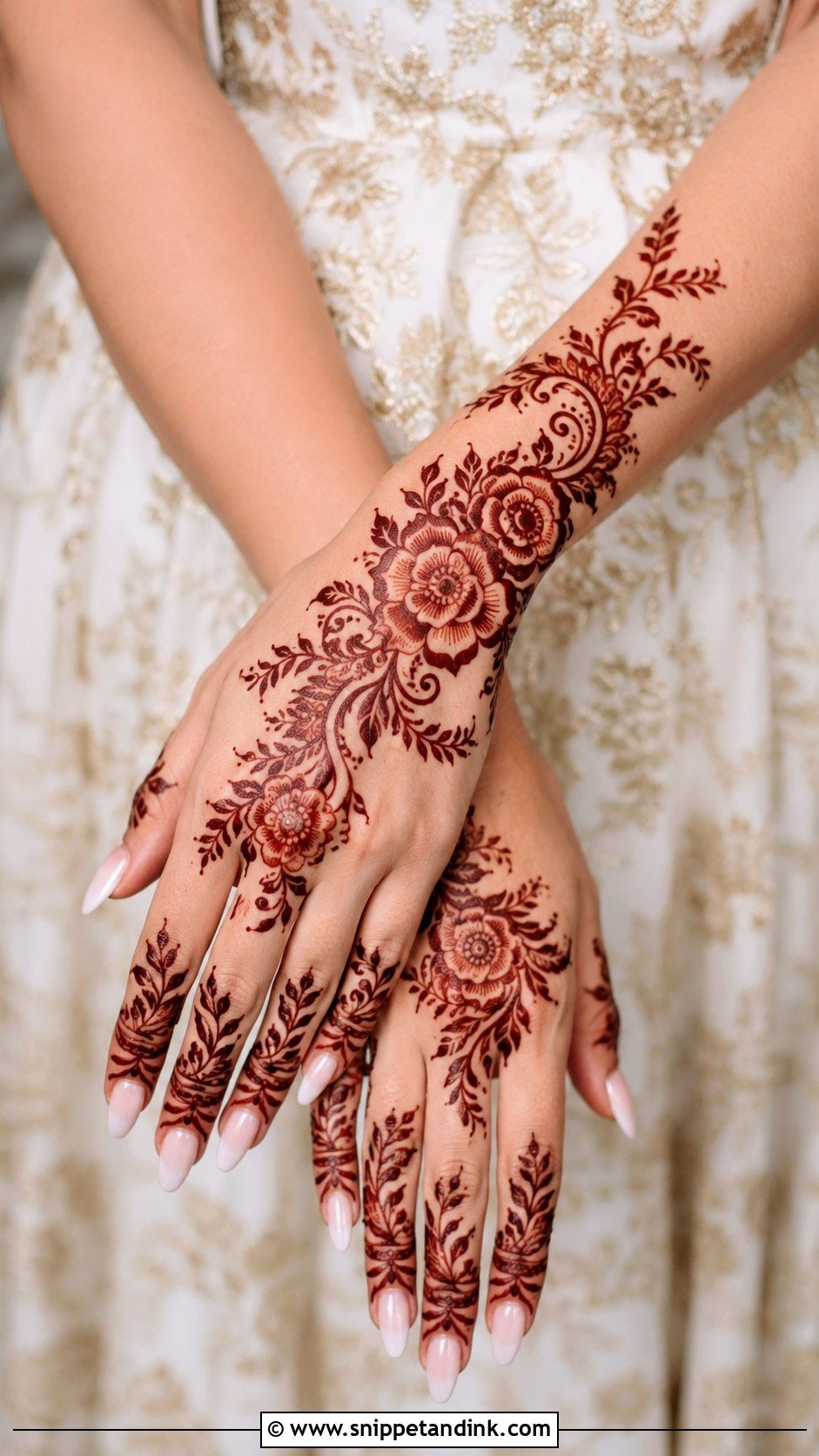
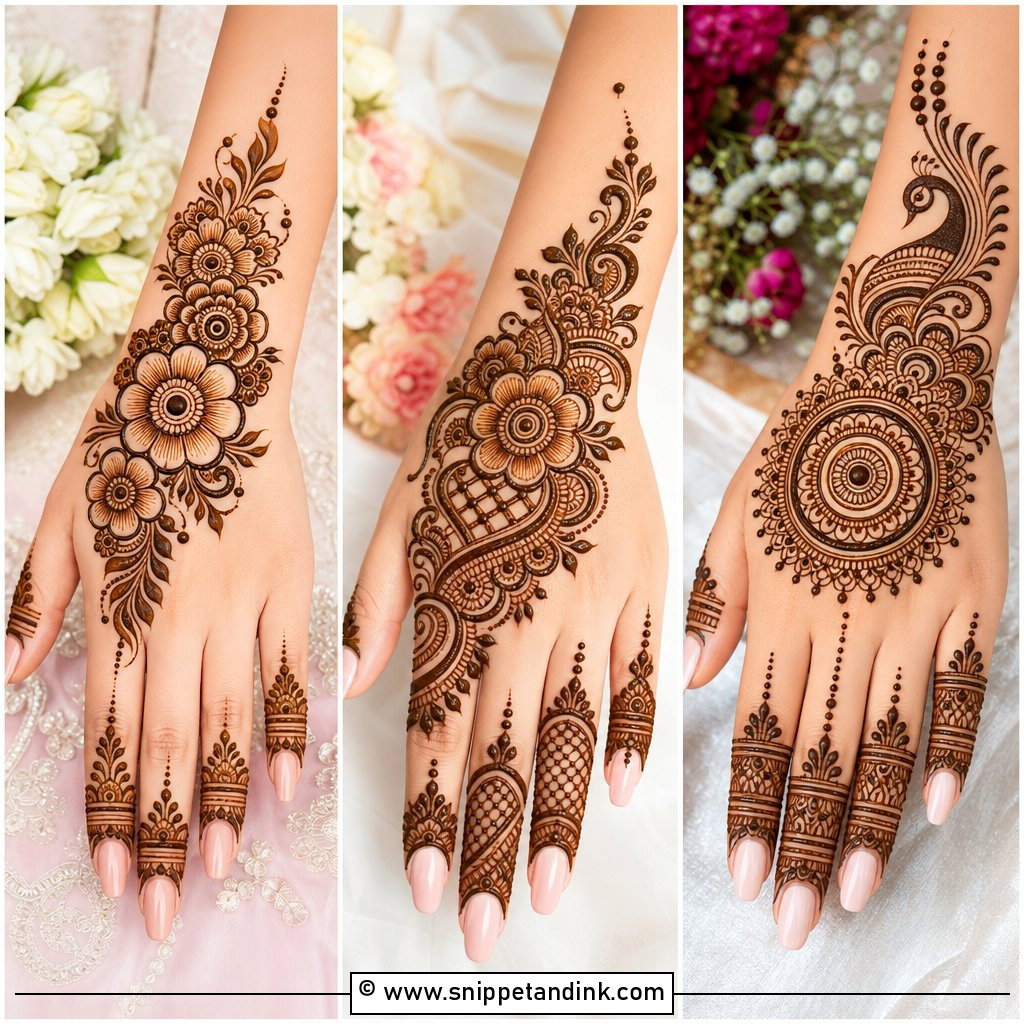
Arabic trails run diagonally from the wrist toward the fingers with bold flowers, shaded petals and plenty of bare skin. The thick outline dries quickly and reads clearly from the back of a hall, which makes it practical for a ceremony where you’re on your feet greeting people. Its weakness is that it can look sparse on a big palm, so I sometimes run a second thin vine alongside the main trail.
4. Indo Arabic Engagement Mehndi Design
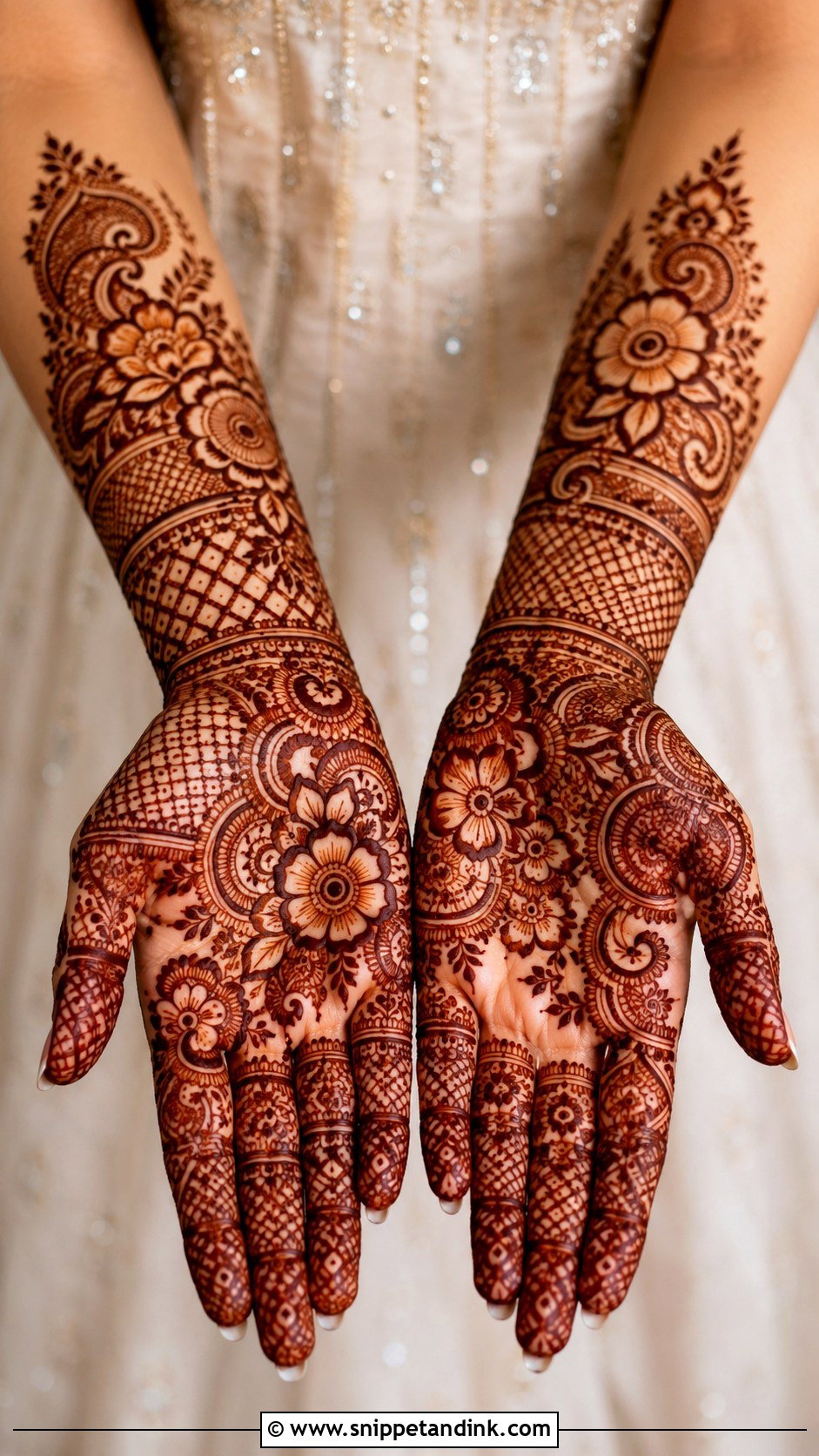
Indo Arabic sits between the two traditions: Arabic flow on the outside, Indian detail inside the motifs. I draw the large flowers and paisleys first, keep them slightly oversized, then fill them with jaali or fine strokes. That order matters. If the fine work goes down first, the bold shapes end up cramped. It’s a good middle ground when simple Arabic feels too plain and full bridal feels too much.
5. Back Hand Engagement Mehndi Design
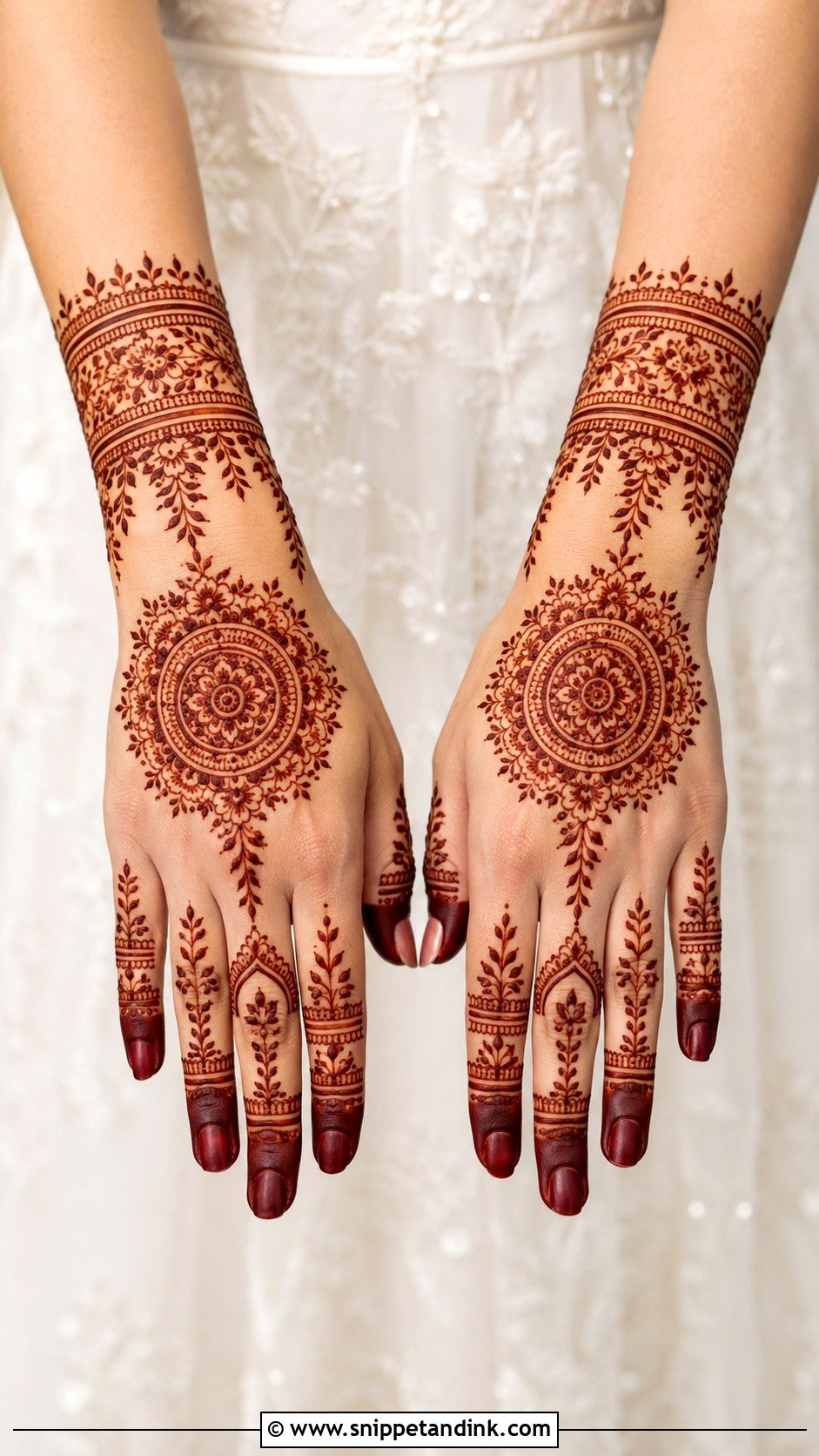
The back hand is what the camera sees during the ring exchange, so I treat it like jewellery. A mandala centre, a bracelet cuff, chains running to one or two fingers. The ring finger stays clear at the base. For a modern feel I use open spacing and thin lines; for a richer version I add jaali and filled fingertips. A fresh manicure in a neutral shade helps the stain look deliberate rather than distracting.
6. Front Hand Engagement Mehndi Design
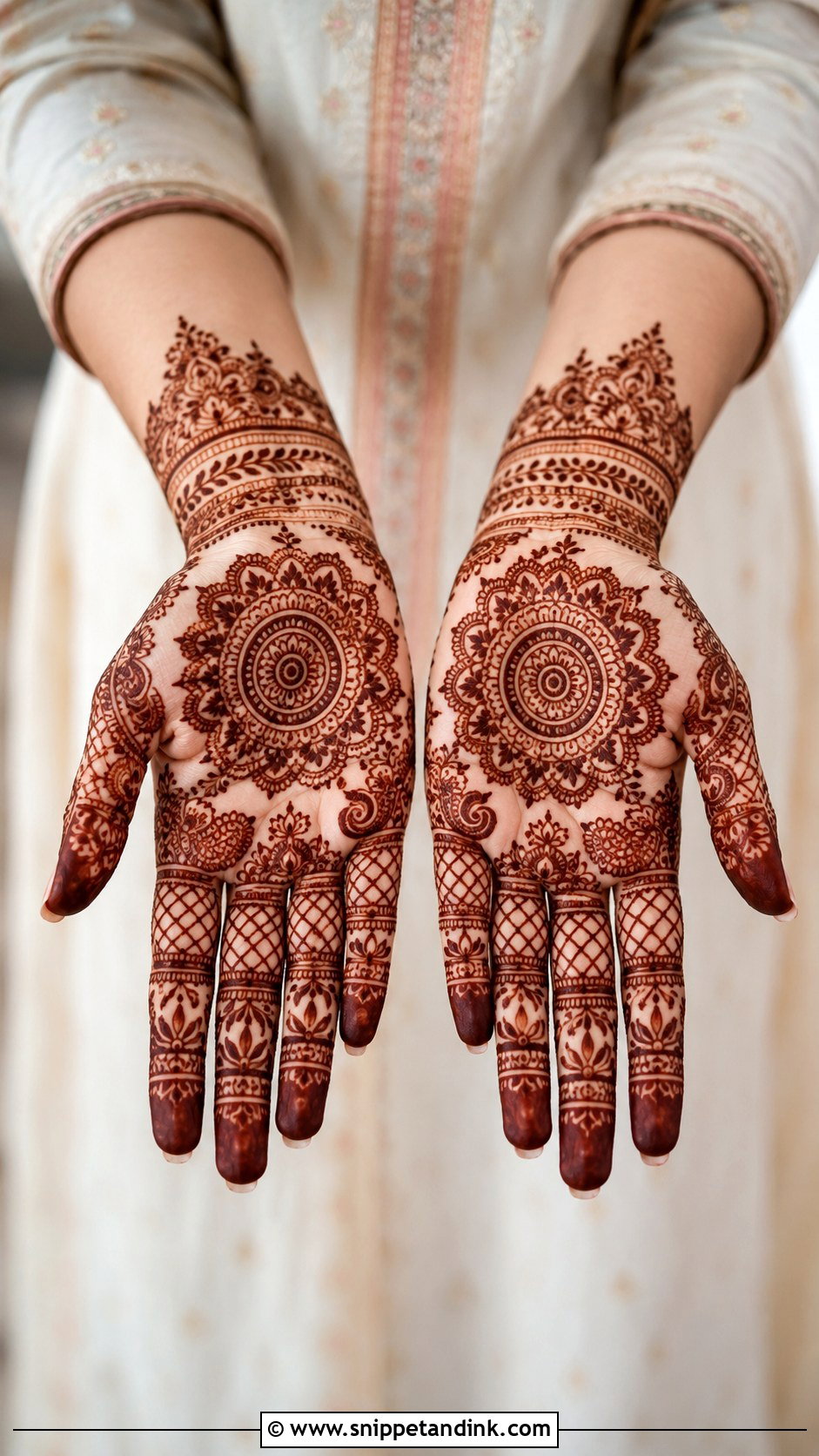
Palms stain darker than the back of the hand because the skin is thicker, so that’s where I put anything emotional: a ring motif, initials, a lotus or paisley cluster. Fingers get leafy bands or fine mesh. I always link the palm to the wrist with a slim cuff, because a palm design floating on its own can look unfinished when you raise your hand for photos.
7. Minimal Engagement Mehndi Design
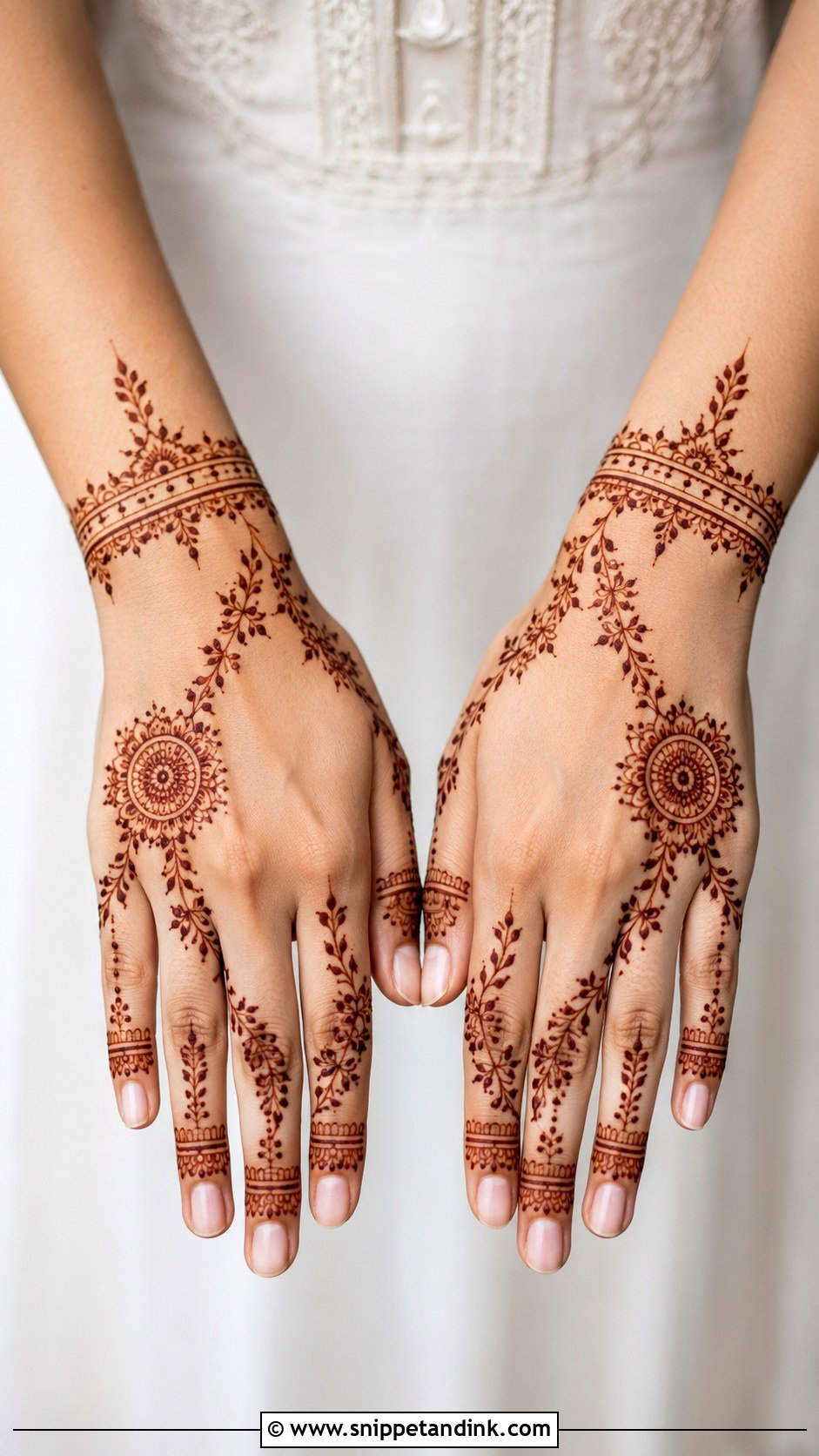
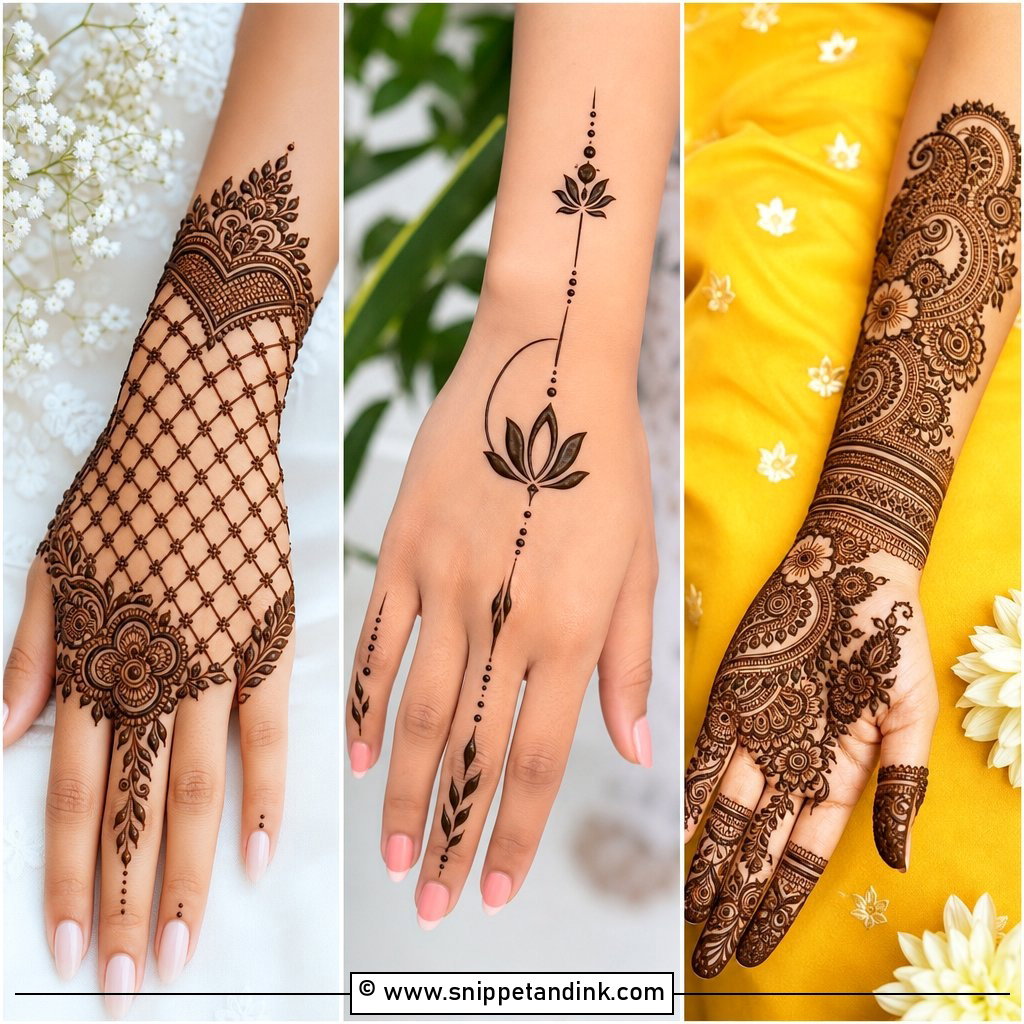
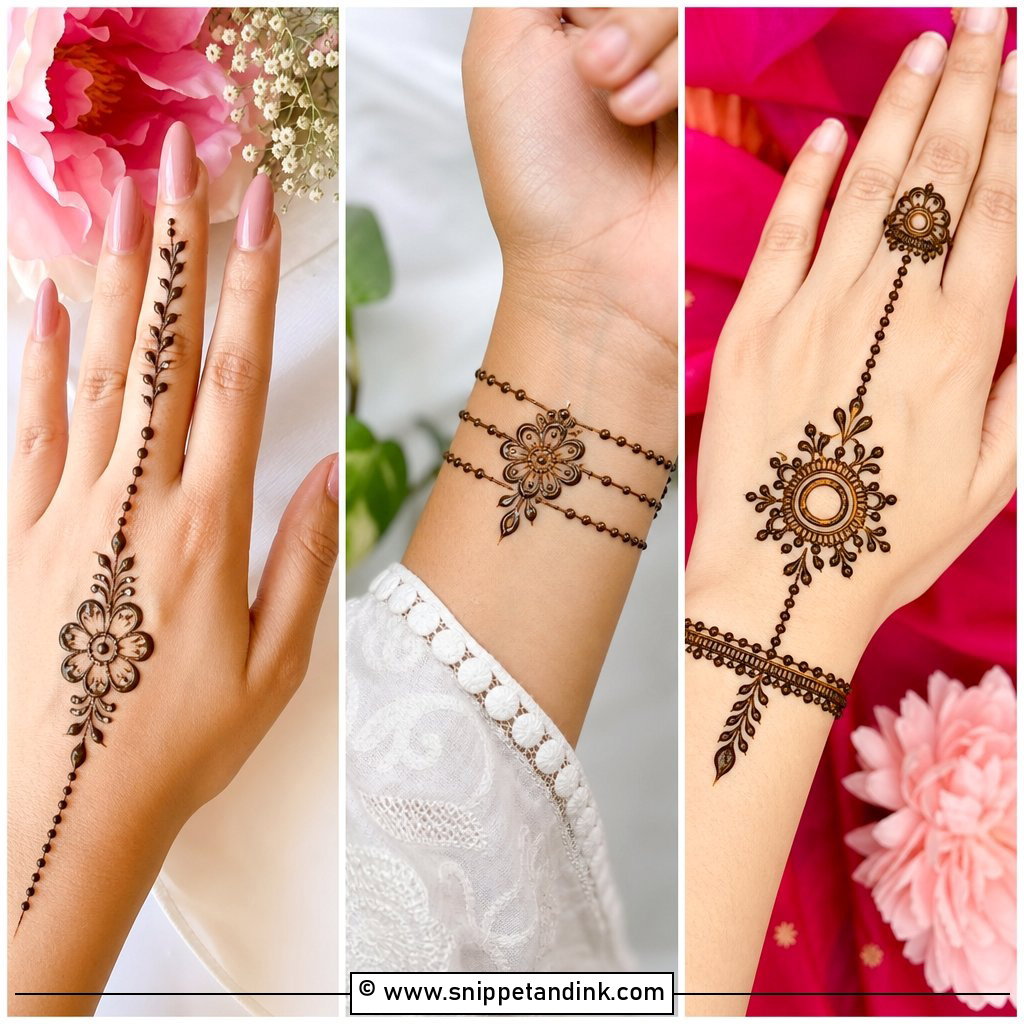
Minimal work means a few fine finger lines, a small mandala, a thin wrist band, and space between everything. It suits pastel outfits, sleek jewellery and small family ceremonies. The secret is restraint: every line needs room. One tiny ring or initial detail on each hand is enough to make it feel like an engagement rather than any Sunday.
8. Bridal Engagement Mehndi Design
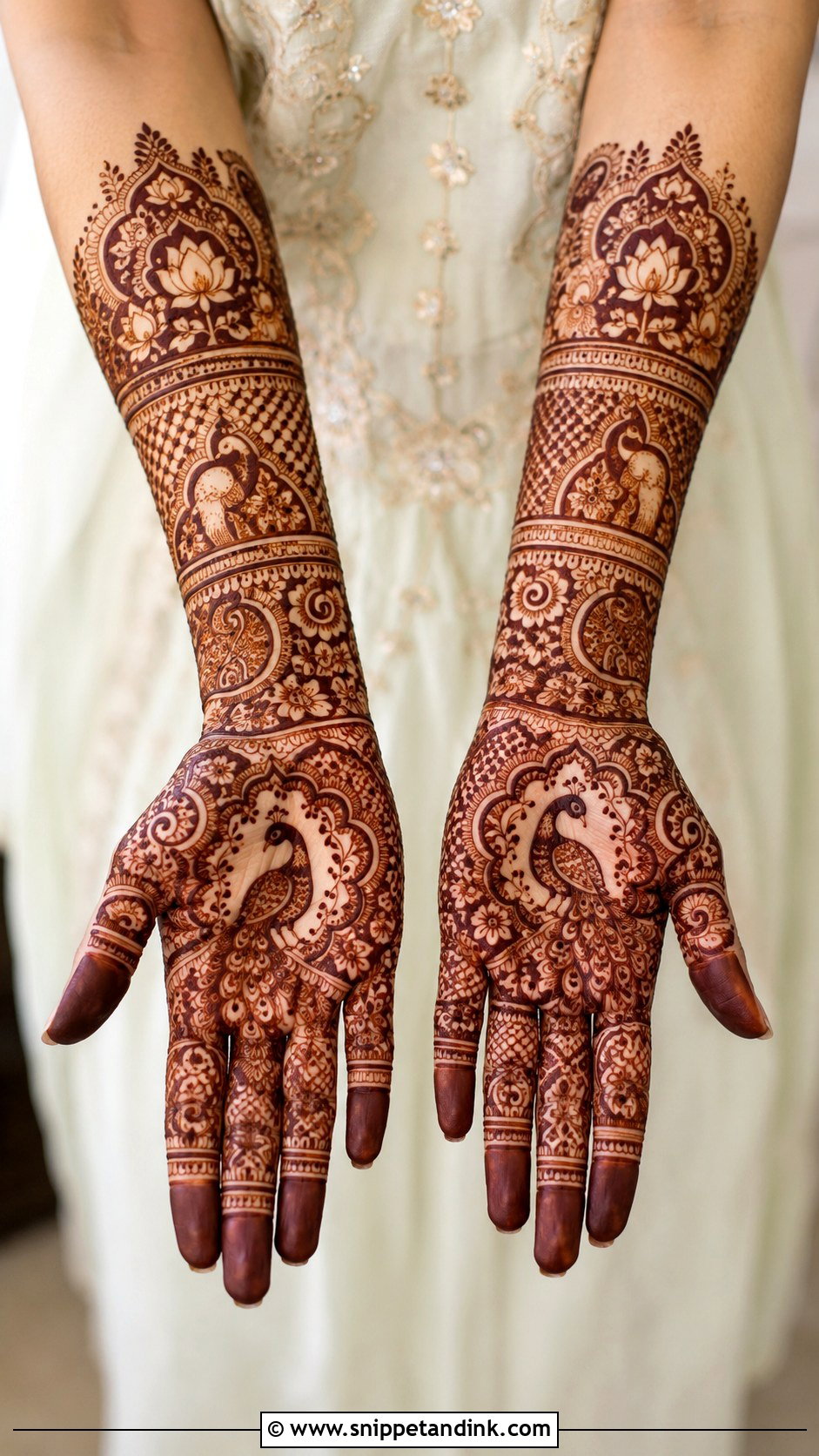
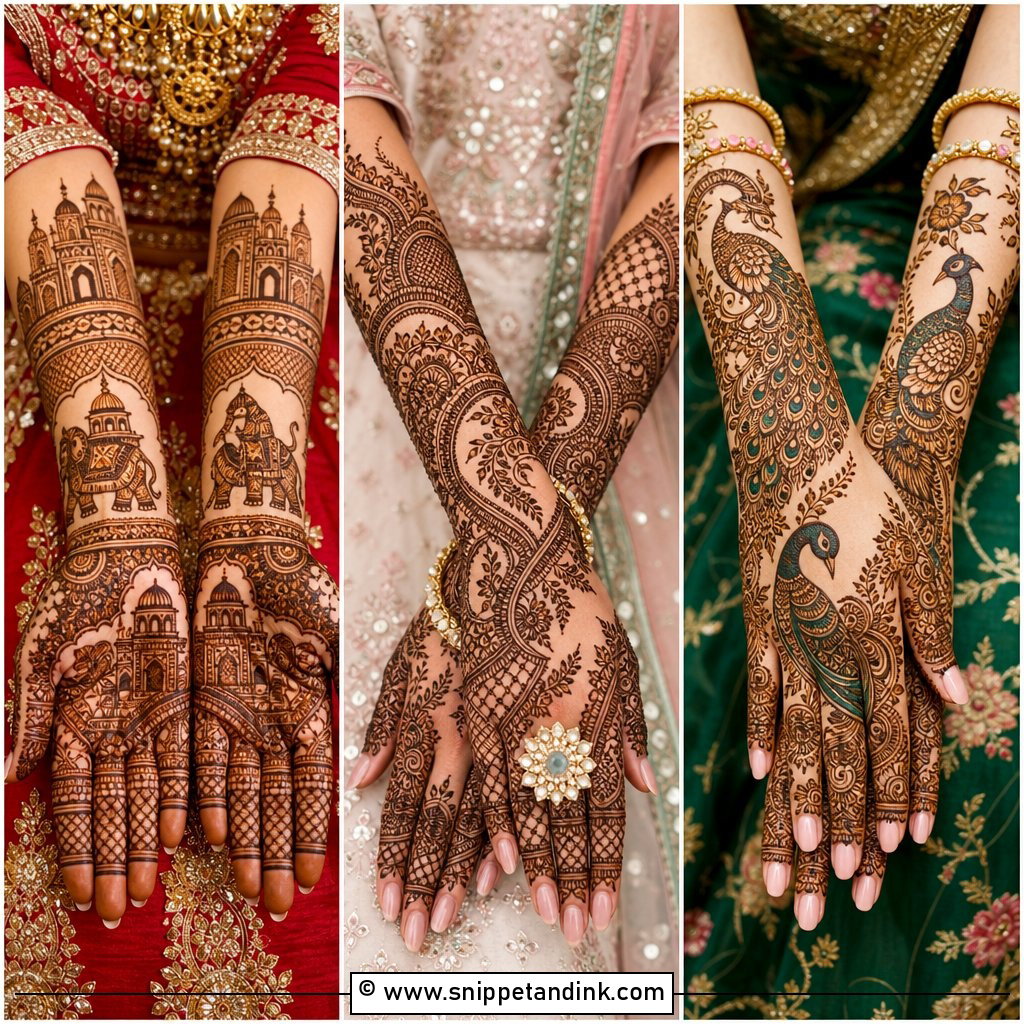
A bridal-style engagement design runs from the fingers to mid-forearm with paisleys, peacocks, lotus and filled fingertips. I suggest it for a grand engagement or a heavily embellished lehenga or sharara. Hold back a signature motif for the wedding, though. If you wear peacocks now, choose lotus or a portrait for the bridal set so the two sets of photos don’t look identical.
9. Engagement Mehndi Design With Initials
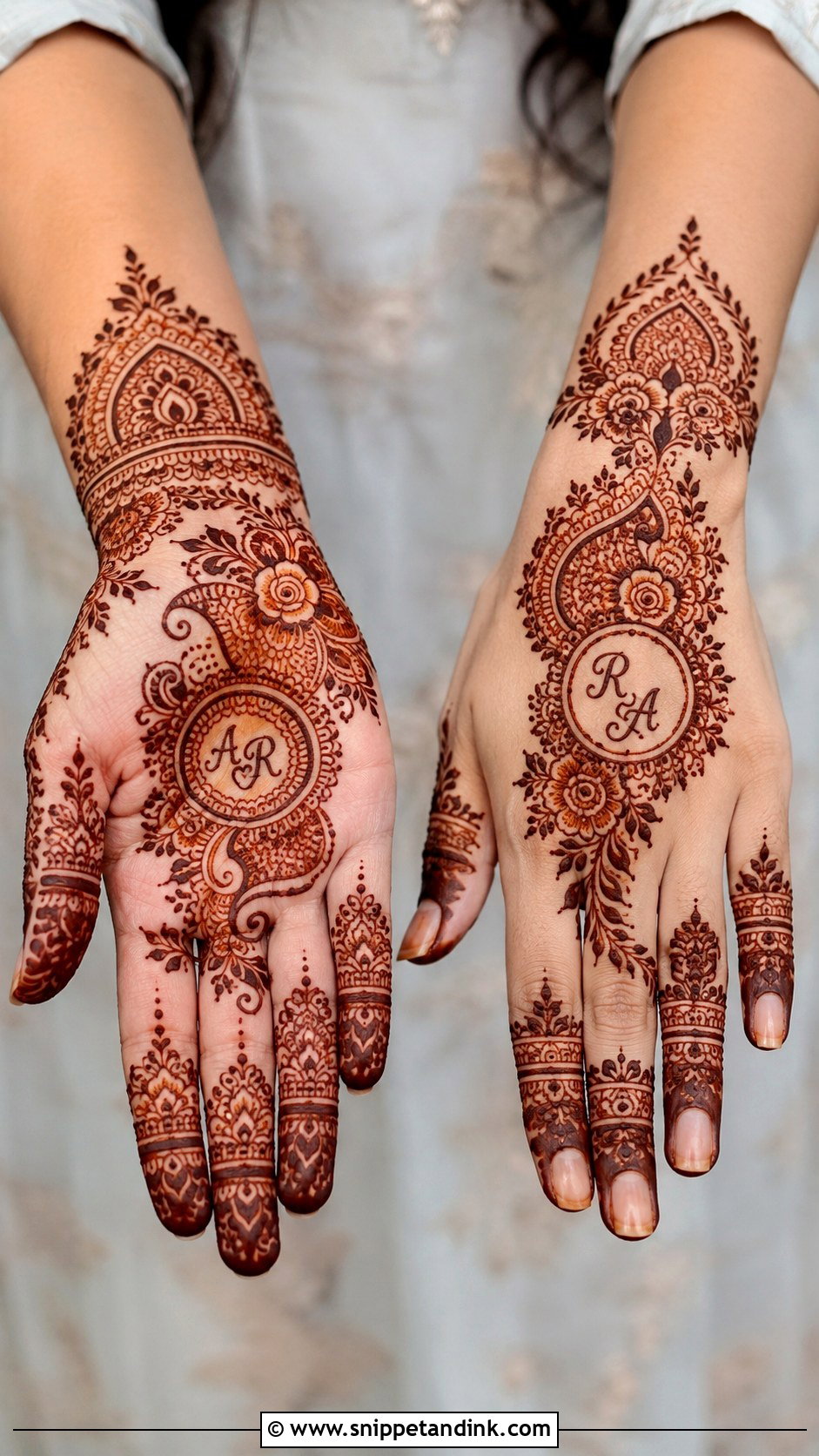
Initials tucked inside a paisley, flower or heart frame turn a pattern into something personal. Letters shrink and blur slightly as henna dries, so I draw them a touch larger than people expect and leave a clear outline around them. Placed near the wrist or palm centre, they’re easy to show in photos. Placed inside dense filler, they become a game for your partner to find.
10. Ring Ceremony Mehndi Design
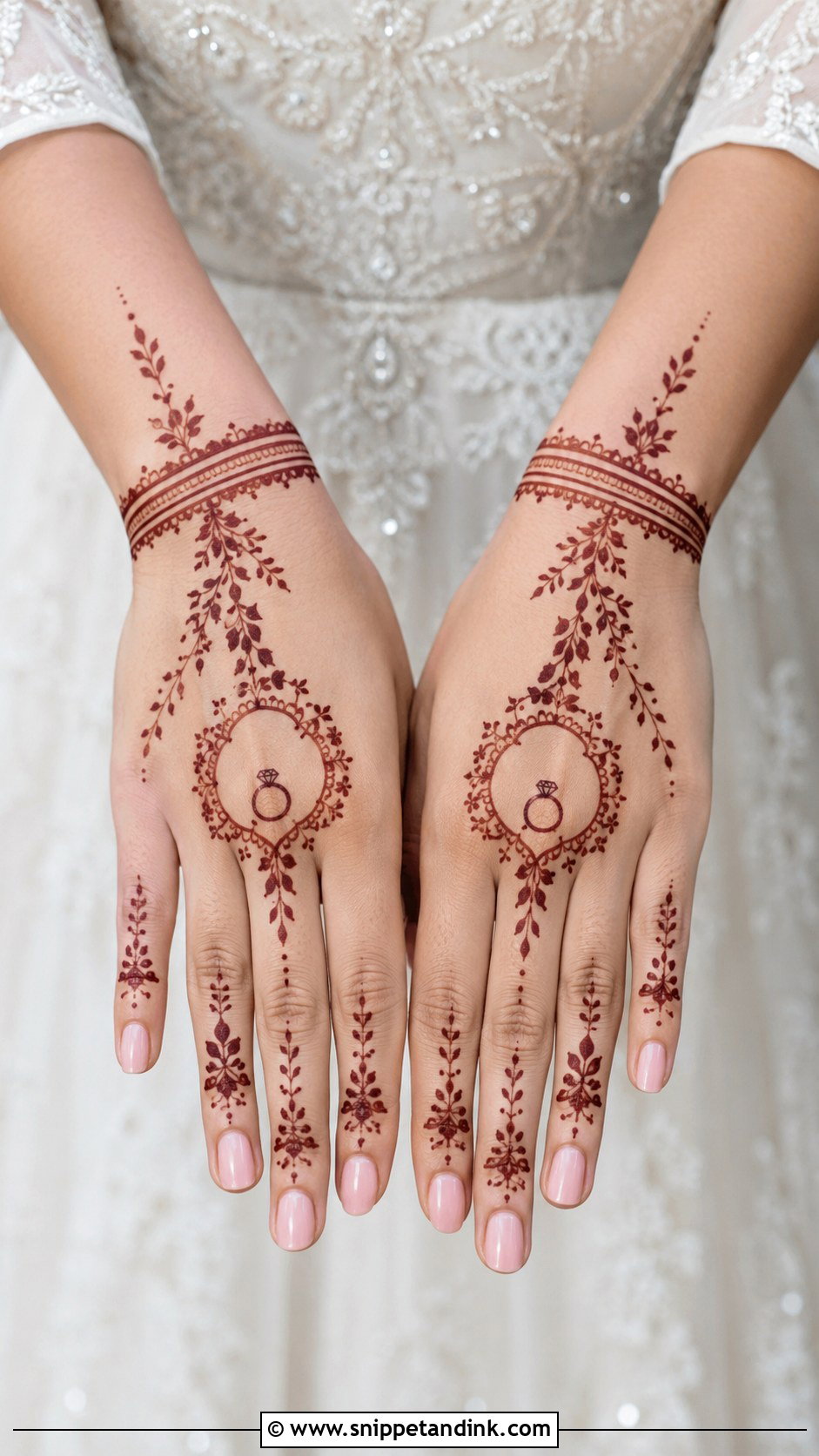
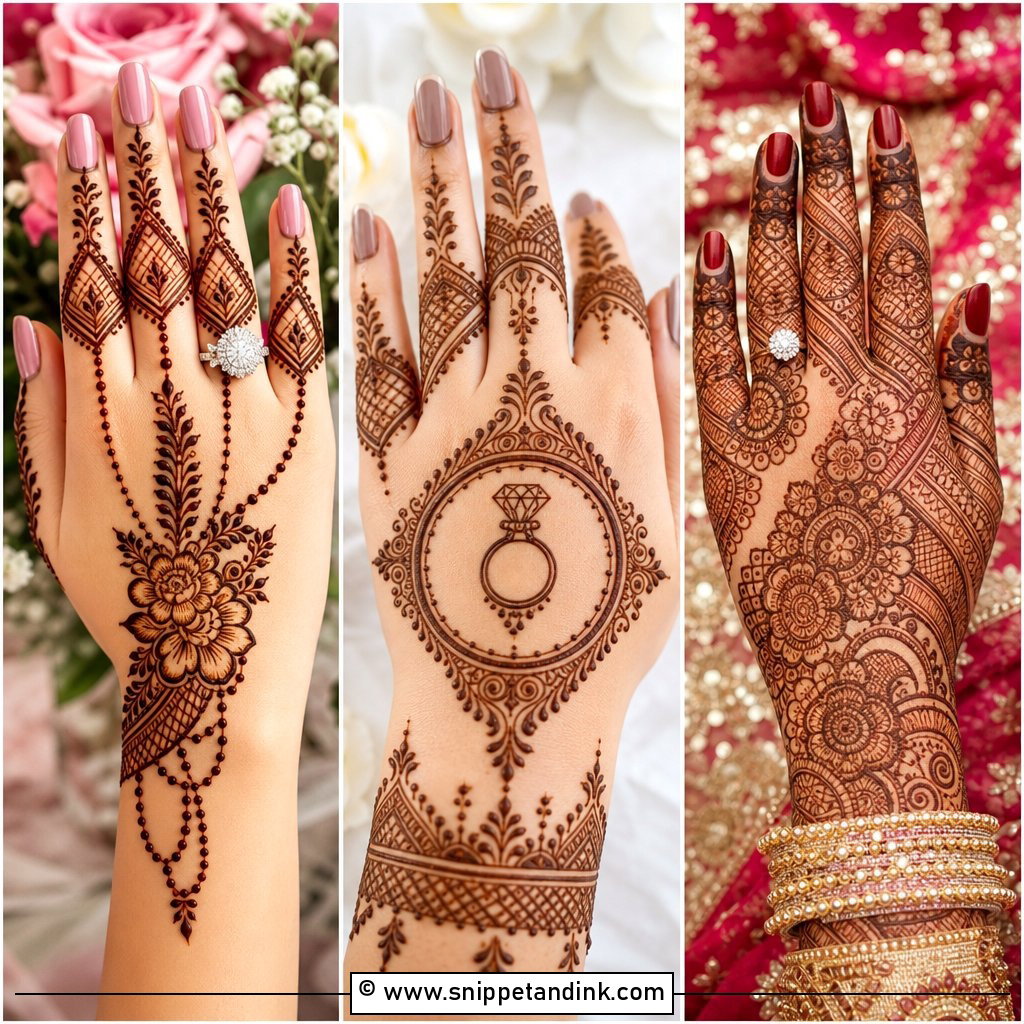
A ring ceremony mehndi design is built for one moment: the ring sliding on. I leave a clean band around the base of the ring finger and decorate the hand around it with florals, chains and wrist bands. On the back hand, the pattern can frame that finger almost like an arch. On the palm, a small ring motif or initials adds meaning without crowding the actual ring.
11. Engagement Mehndi Design For Bride
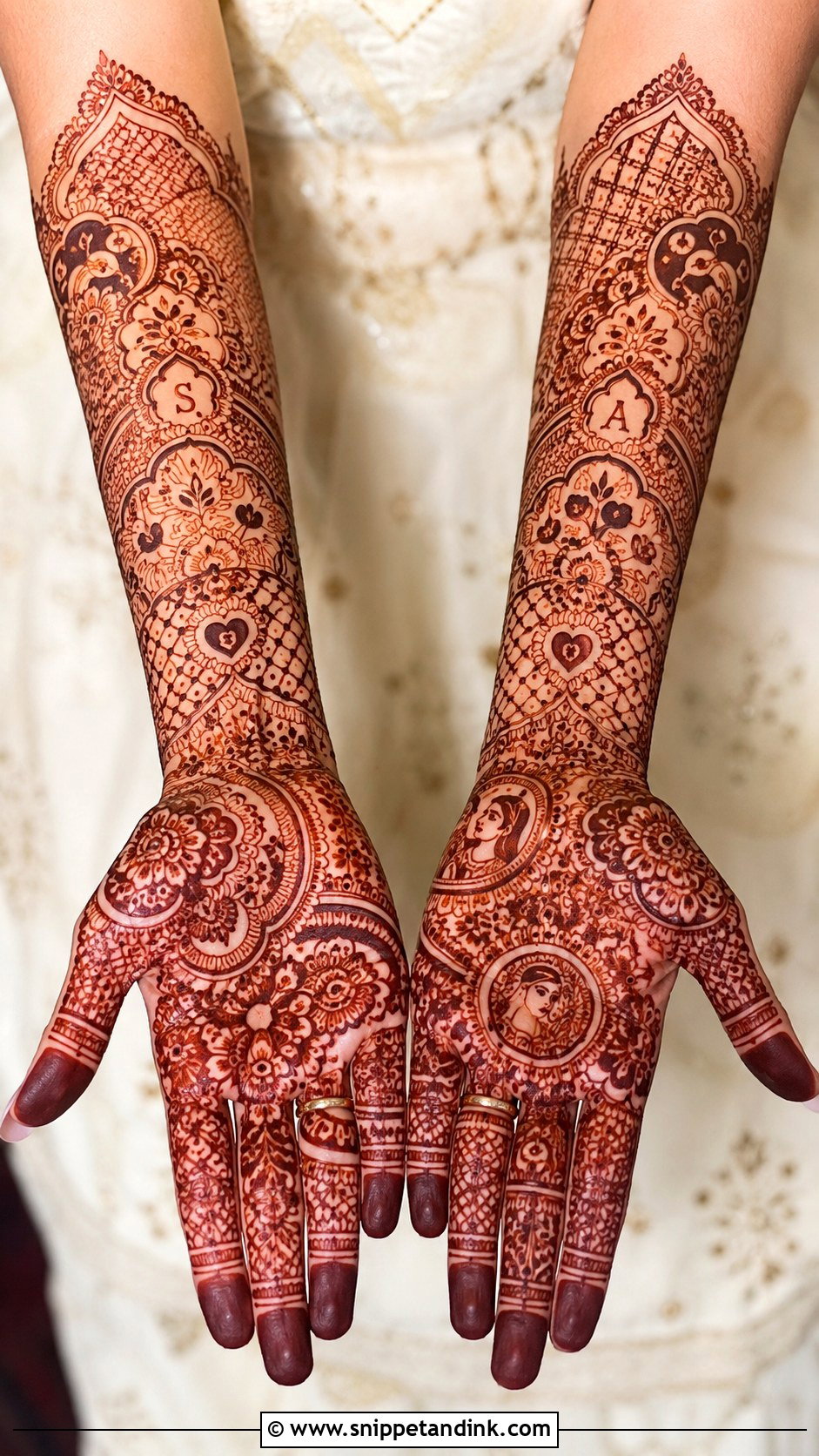
Any layout can work for a bride’s engagement, whether full, half, Arabic or Indo Arabic. What decides it is the outfit and the jewellery. Traditional clothes pair well with paisleys, mandalas and peacocks; modern outfits with florals and geometric spacing. If your wedding henna will be very heavy, I’d go lighter here with one or two personal touches, so the bridal set still feels like the big reveal.
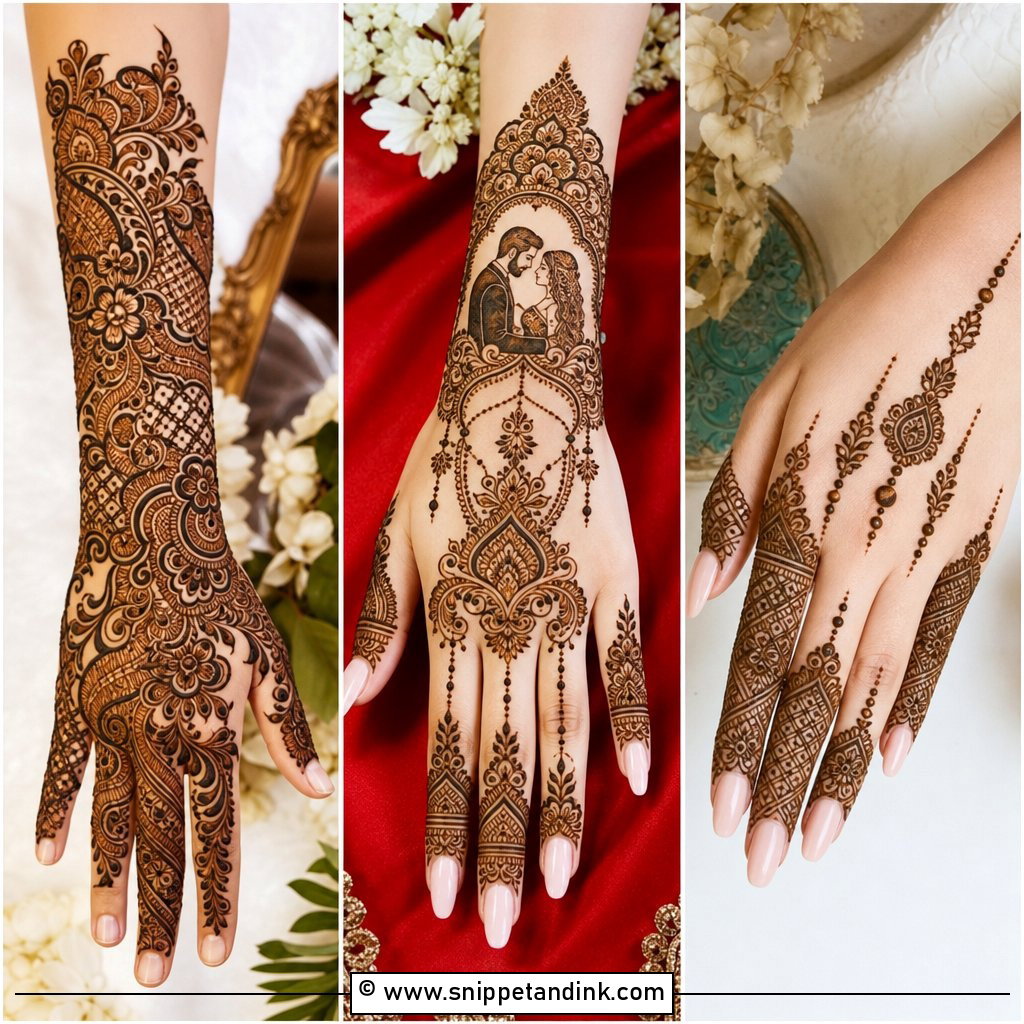
12. Engagement Mehndi Design With Couple Portrait
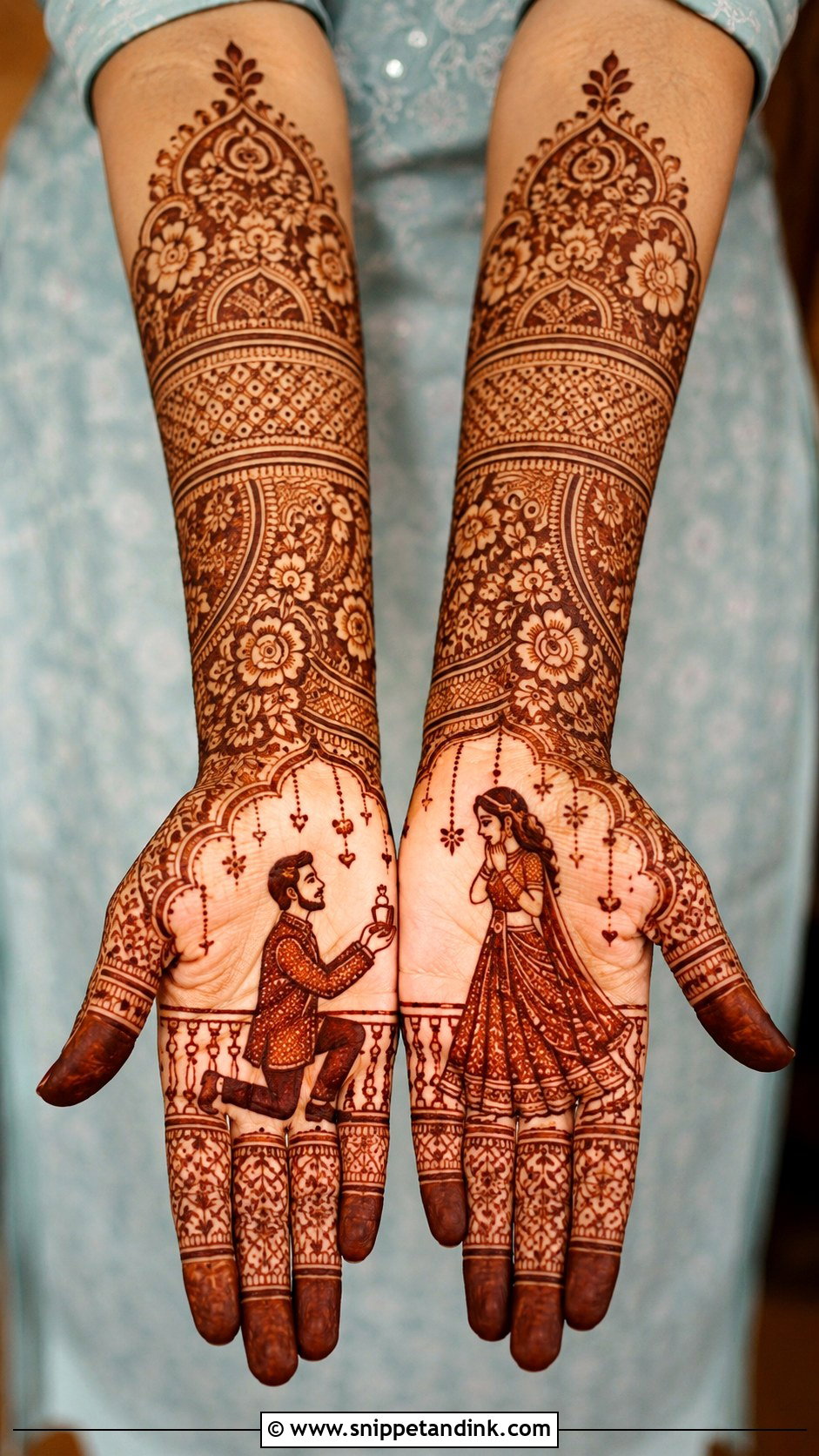
Couple portraits on the palm or forearm need an artist who draws faces with a cone confidently, so ask to see stained results, not paste photos. I keep faces symbolic: a few lines for the profile, a bindi, a turban. Fine features drawn smaller than a fingernail blur as they dry. Surround the portrait with clean borders and soft florals so it stays the focus.
13. Engagement Mehndi Design With Mandala
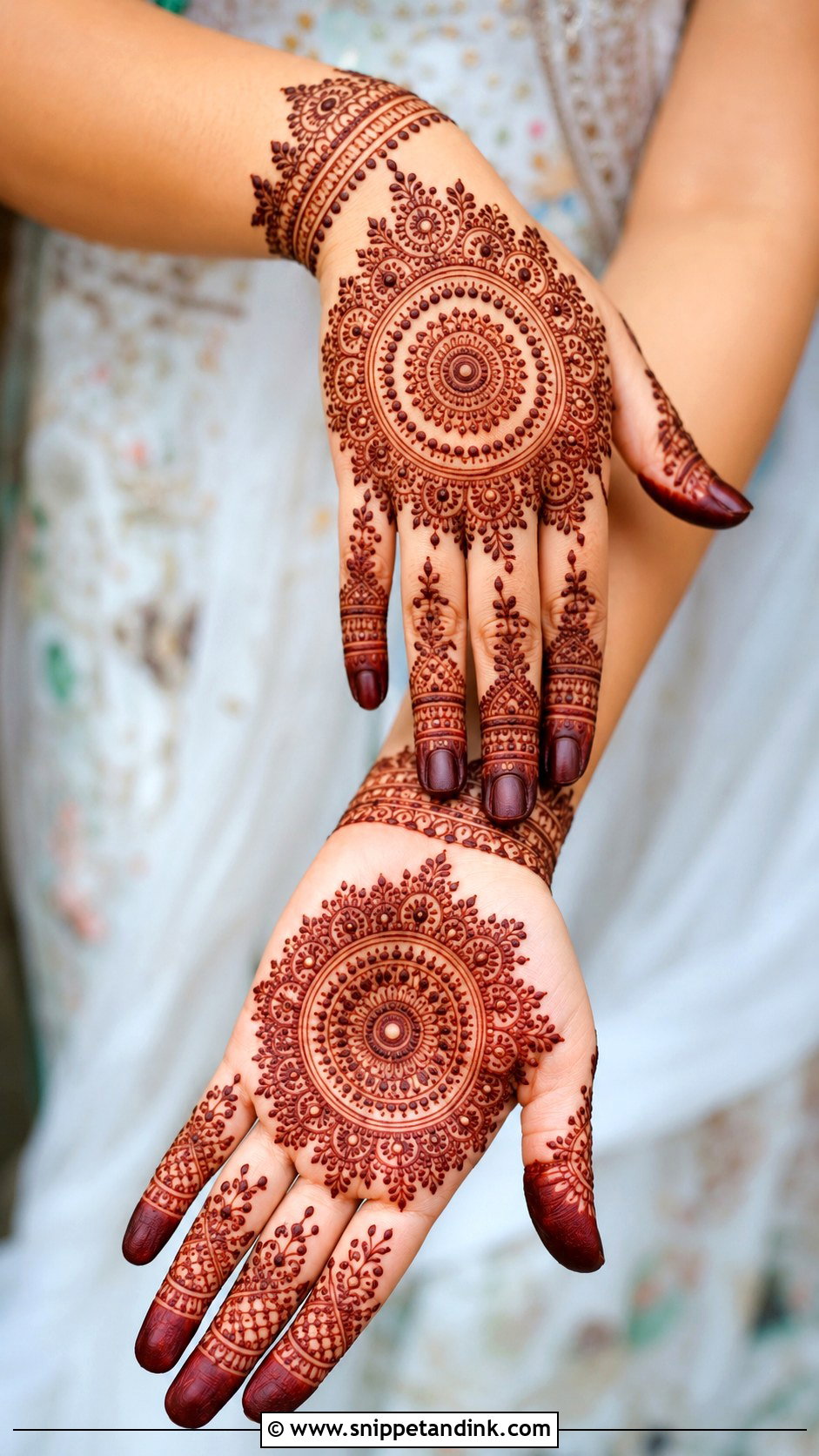
A mandala centres the hand and suits nearly every shape, which is why it’s such a common request. For an engagement I keep it clean: dotted rings, a floral border, fine finger patterns. Wobbly rings are obvious in close-ups, so this design shows an artist’s control quickly. Add paisleys and jaali around it if you want more weight; leave space around it if you don’t.
14. Engagement Mehndi Design With Flowers
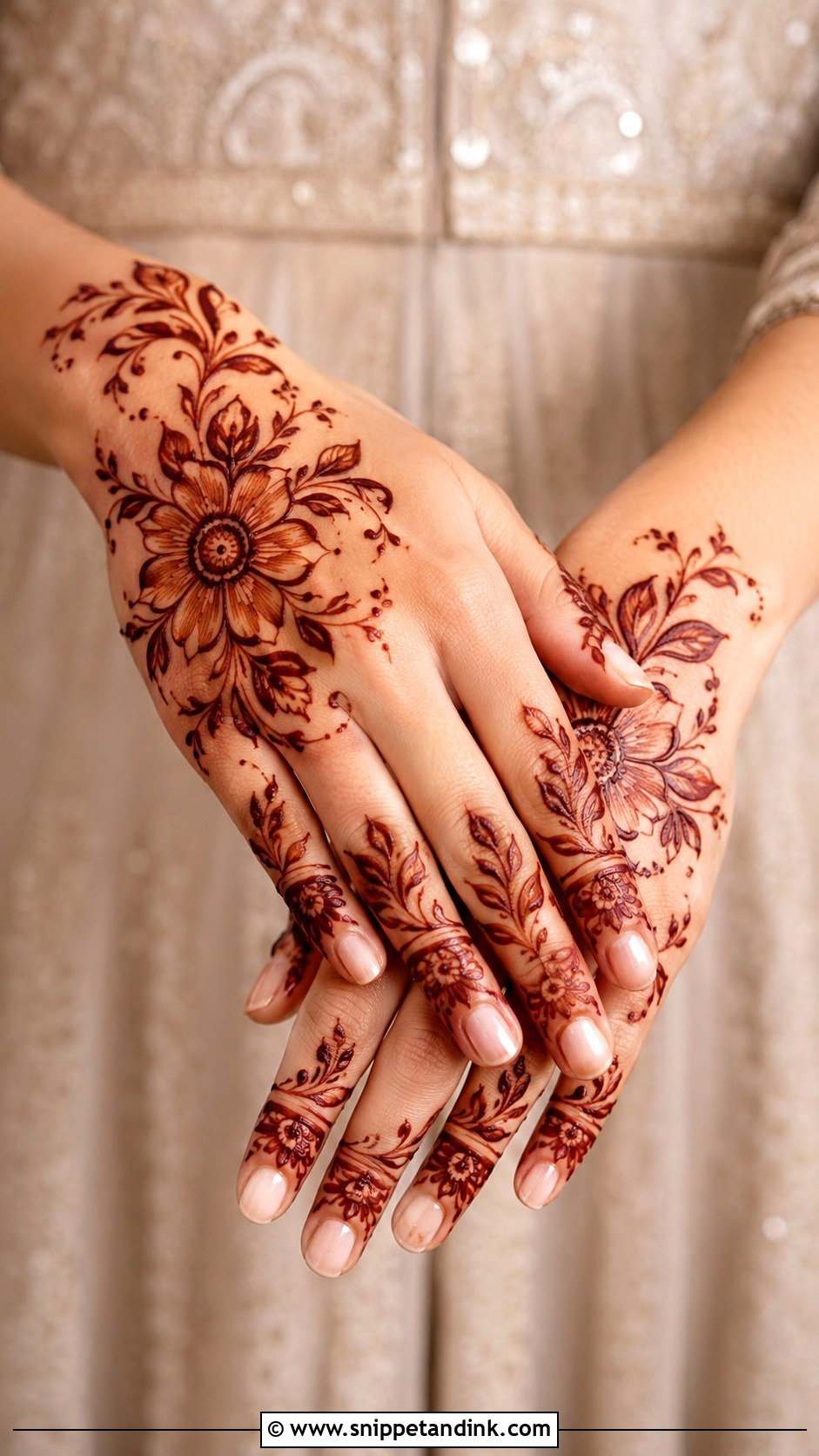
Large flowers with bold outlines give an Arabic effect, while small clustered blooms read as Indian. Floral curves naturally wrap around fingers, which is why florals frame a ring so well. I shade some petals and leave others open; that contrast gives depth without adding density. Roses and lotus shapes mix happily on the same hand.
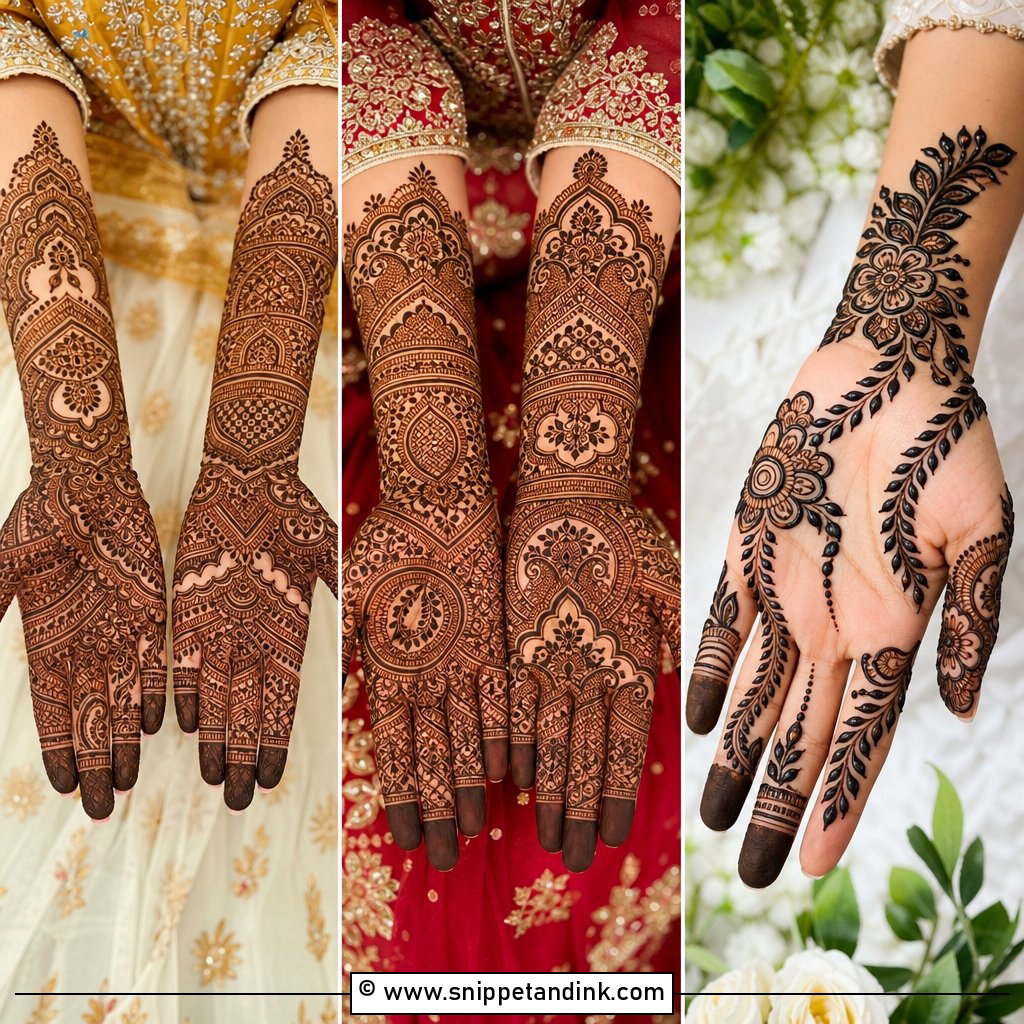

15. Engagement Mehndi Design With Paisley
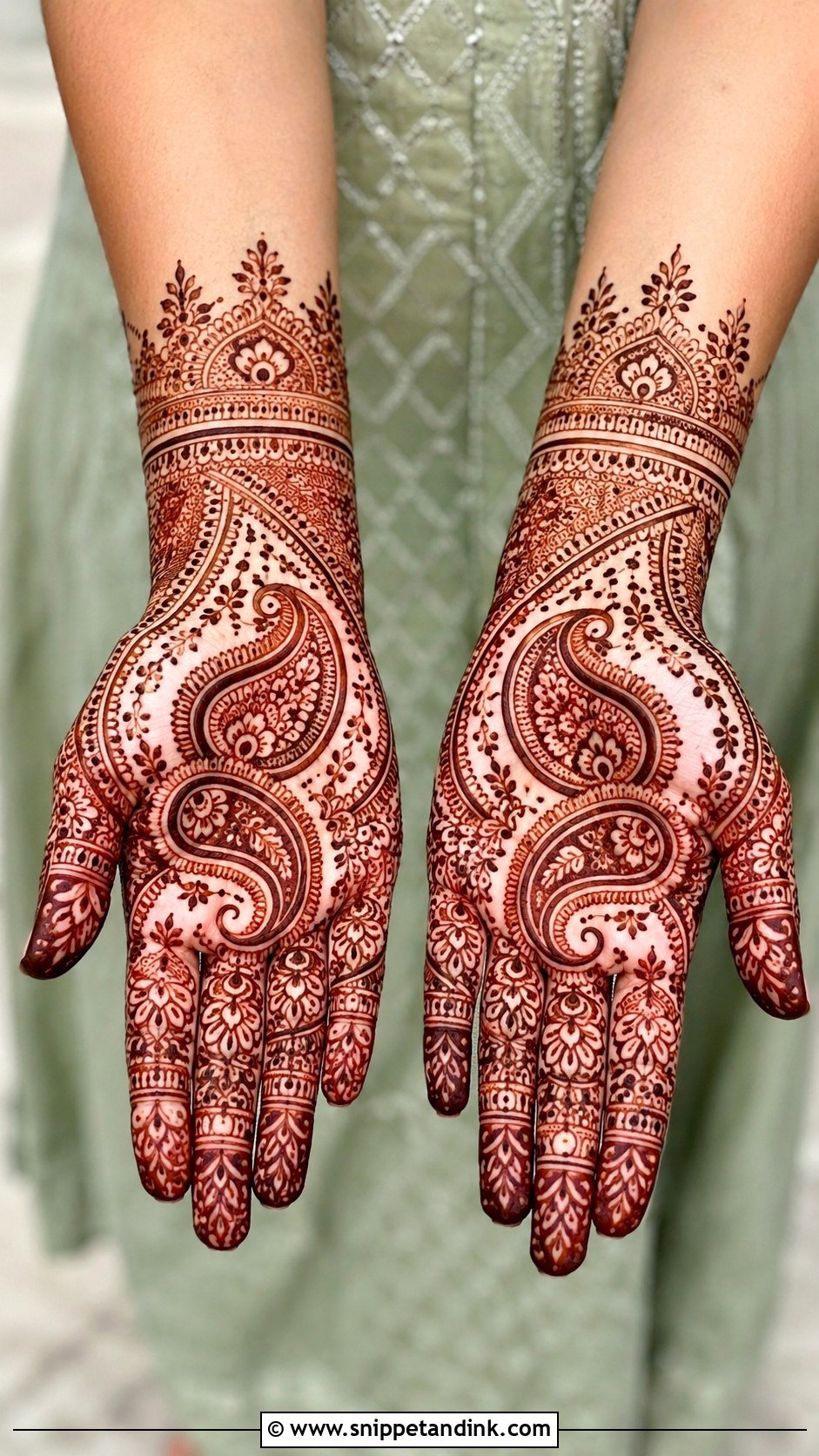
Paisleys, the curved mango shape, give movement without needing full coverage. I run them diagonally across the back hand or let them wrap the wrist. For a modern take, use a few large paisleys with open skin and slim finger lines. For a bridal take, fill each one with dots and tiny leaves. Either way, the curve keeps the design from looking stiff.
16. Engagement Mehndi Design With Peacock
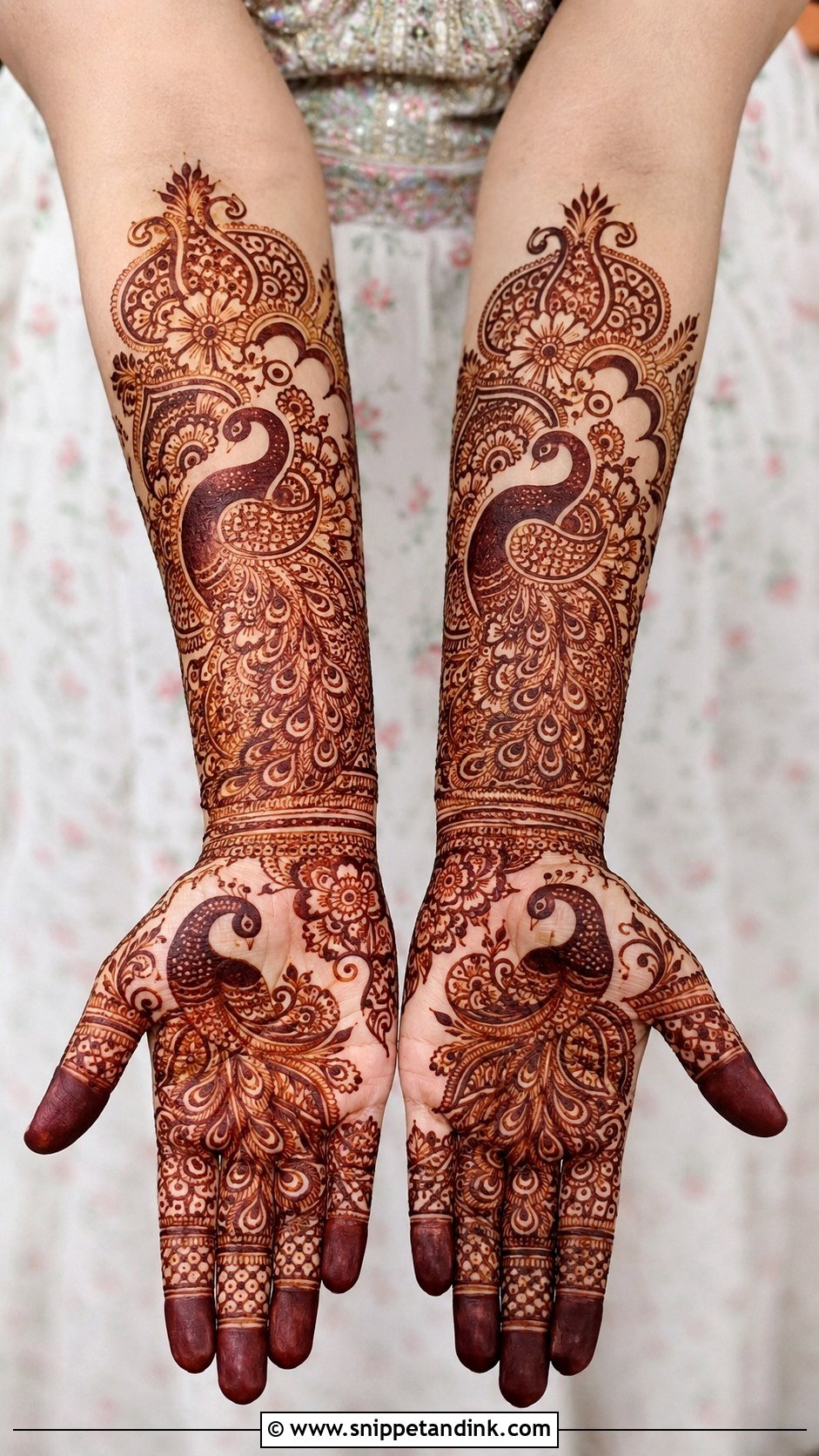
A peacock on the palm or forearm brings a royal note to a formal family ceremony. I draw the neck curving inward and let the feathers become the border toward the wrist. The common mistake is too much filler around the bird; it loses its silhouette. Keep the surroundings lighter and let the peacock carry the hand. Silk sarees and traditional gold sit naturally beside it.
17. Engagement Mehndi Design With Lotus
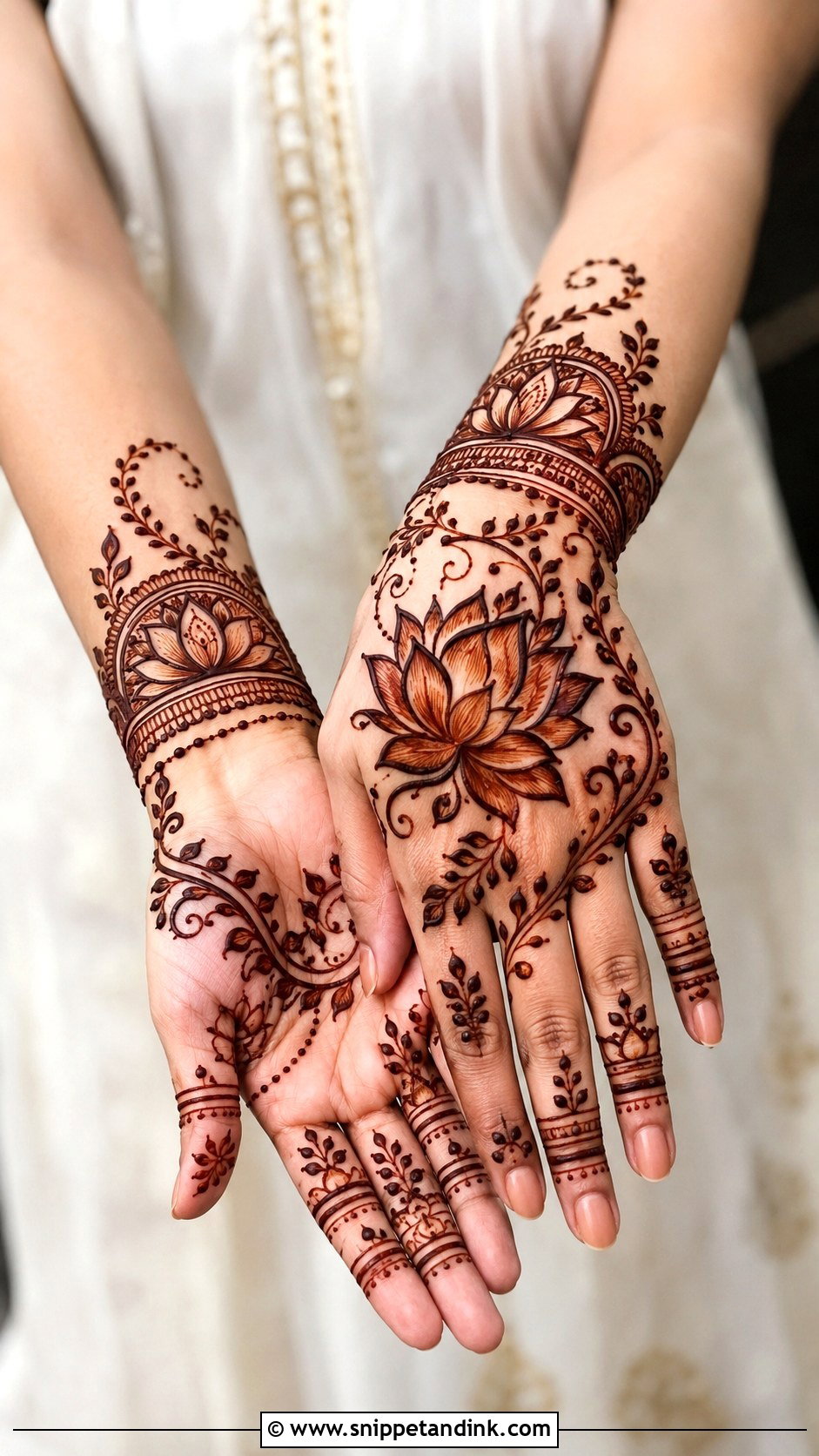
Lotus motifs feel gentle without being faint. A full lotus at the palm centre, half lotuses near the wrist, or a trail of blooms across the back hand all work. Petals can be shaded, outlined or lined finely. Leave a hairline gap between petals or they merge into a blob as the paste spreads. Dotted borders and slim finger lines finish it neatly.
18. Engagement Mehndi Design With Jaali
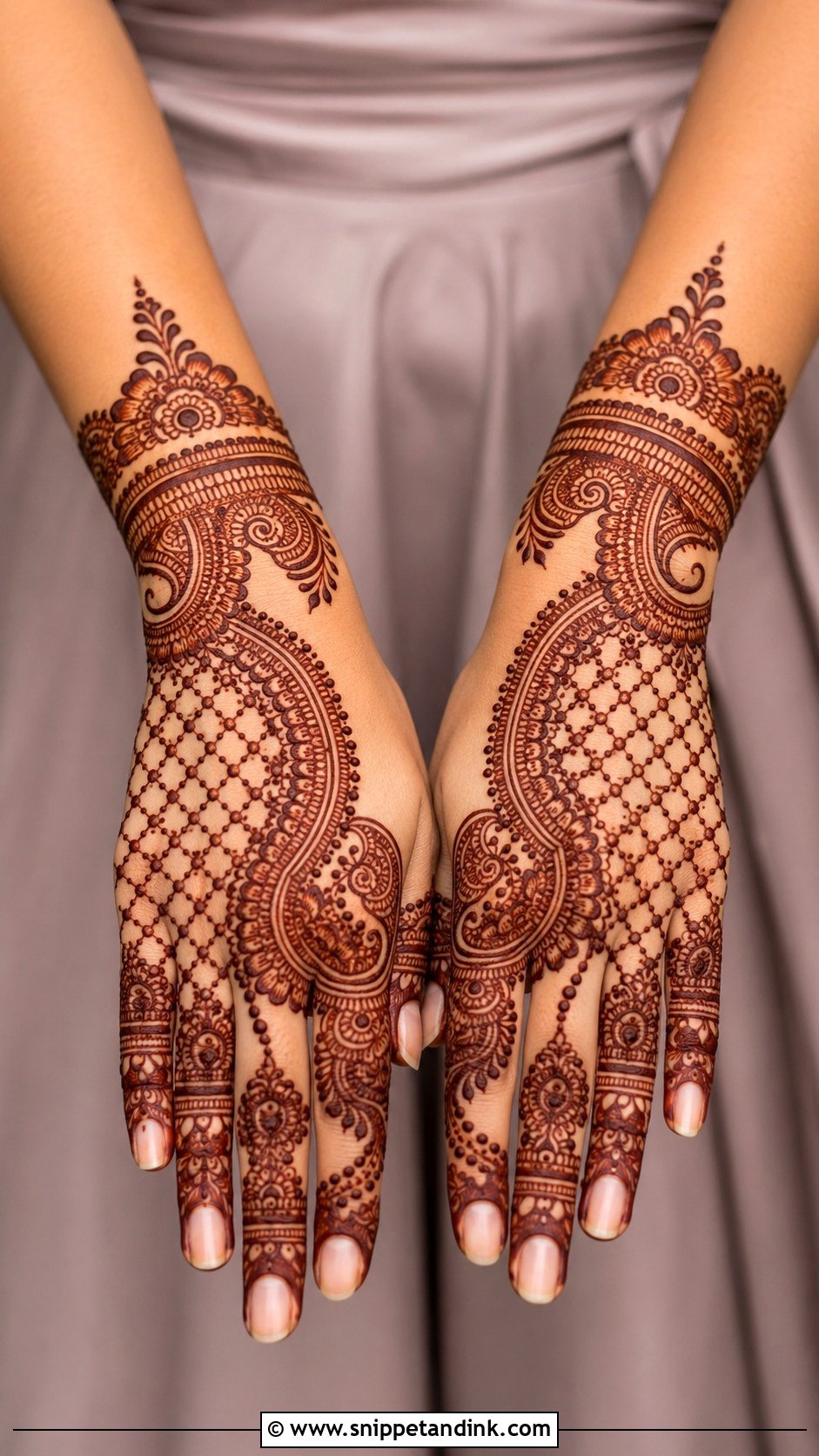
Jaali mesh gives texture without heavy filling, and on the back hand it reads like lace. I keep the grid wide enough that the stain stays crisp; mesh that’s too tight bleeds into a solid patch. Pair the jaali with flowers or a bracelet border so the texture has something solid next to it. In ring photos it looks ornamental without stealing attention from the stone.
19. Engagement Mehndi Design With Bracelet
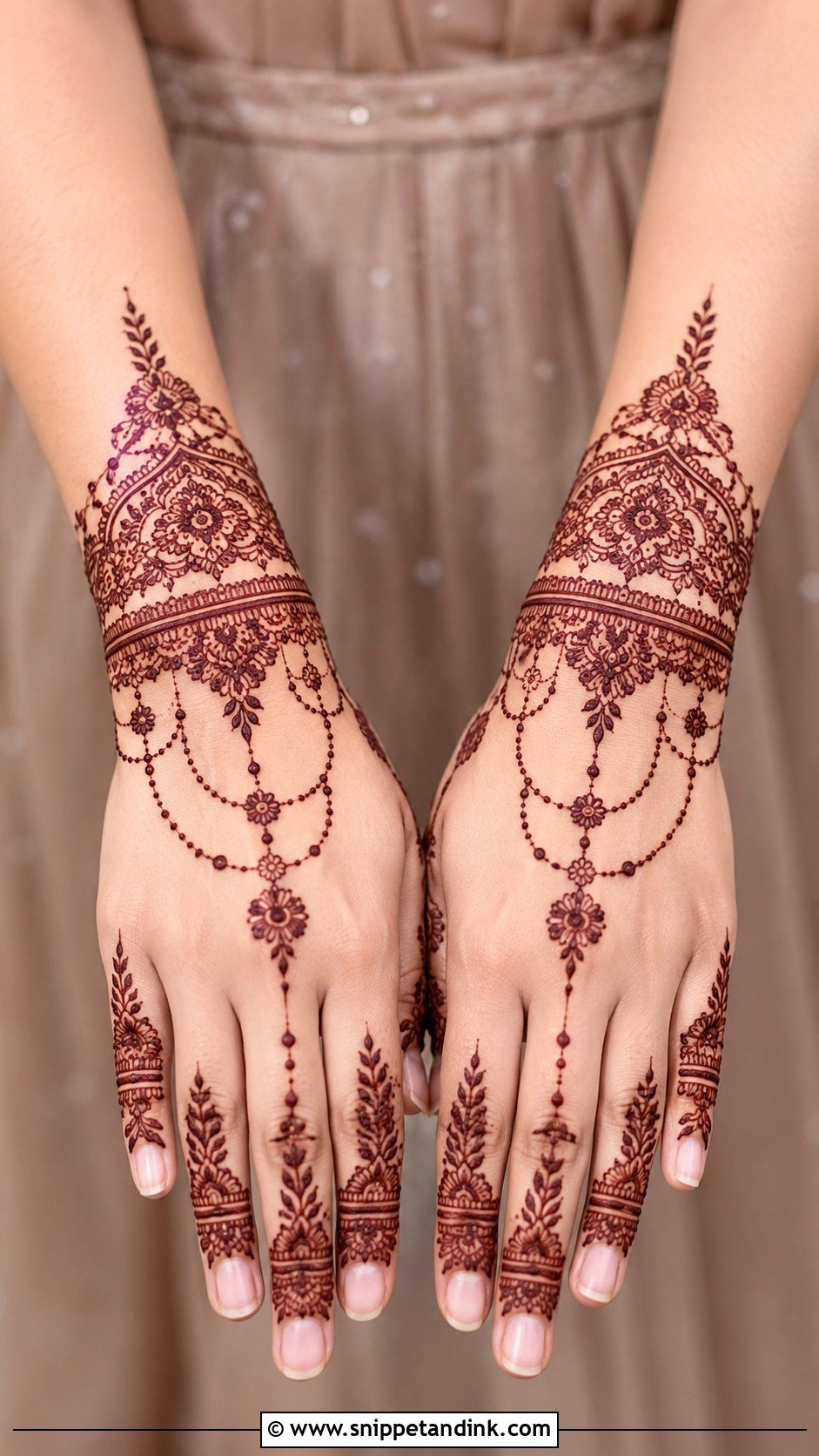
A bracelet design is jewellery drawn on skin: a wrist cuff, hanging dots, chain lines and small charms running up the fingers. It gives impact without covering the whole hand, which is why minimal brides like it. Symmetry is everything. A cuff that sits lower on one side looks like a mistake once you add real bangles beside it.

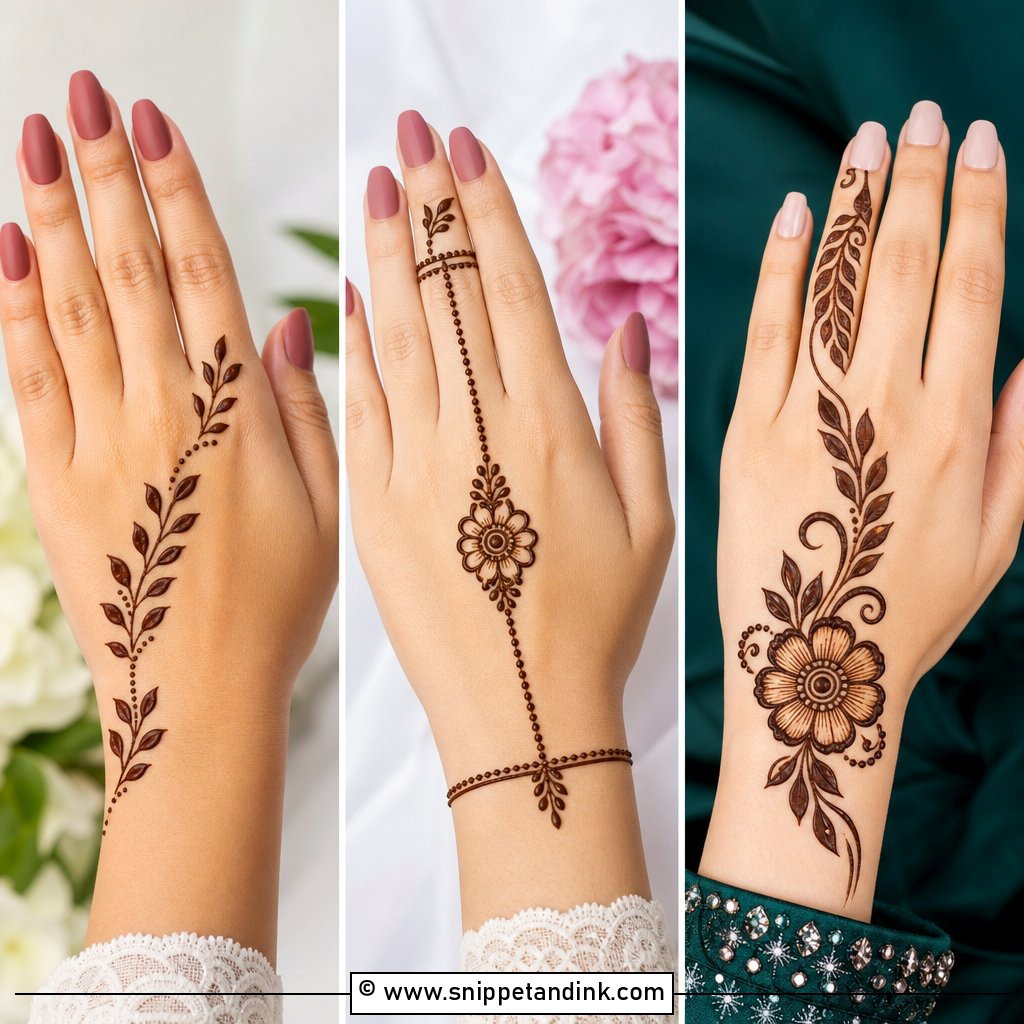
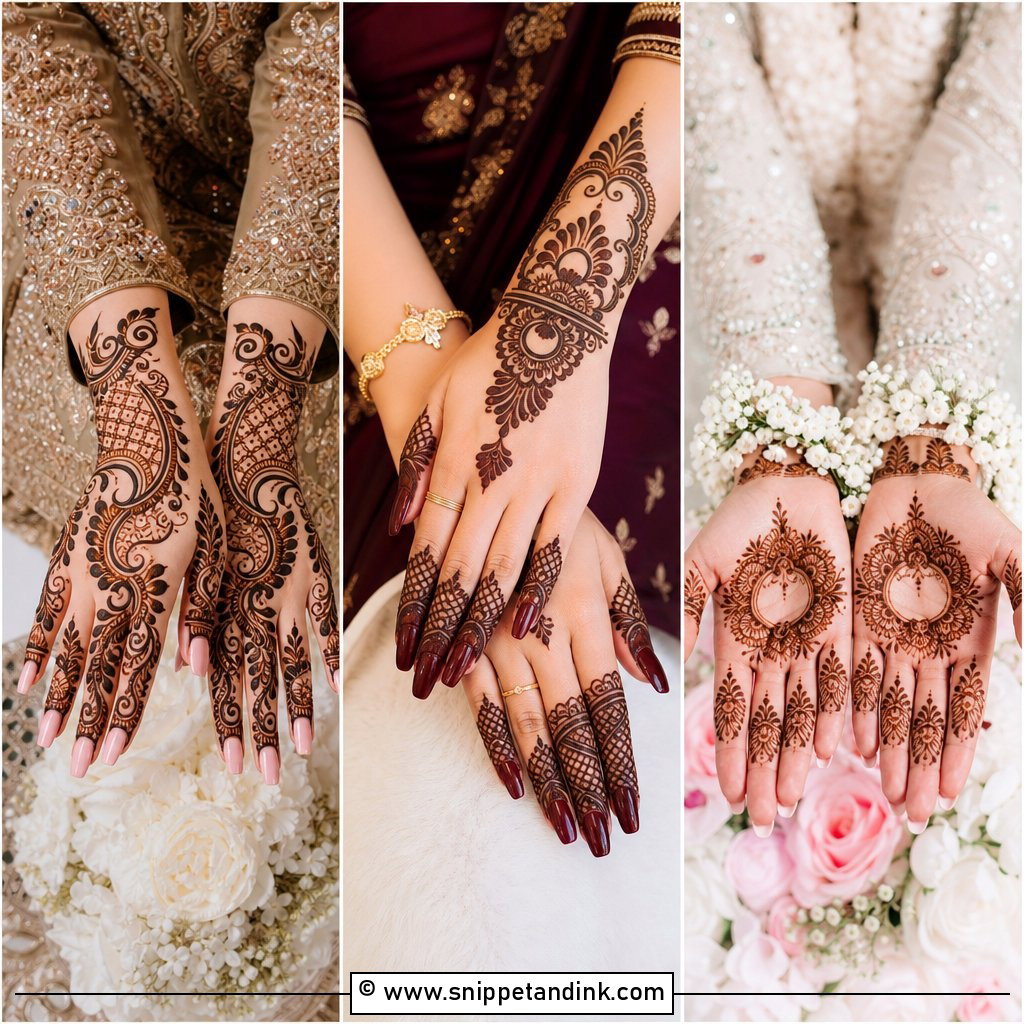
20. Engagement Mehndi Design With Finger Detail
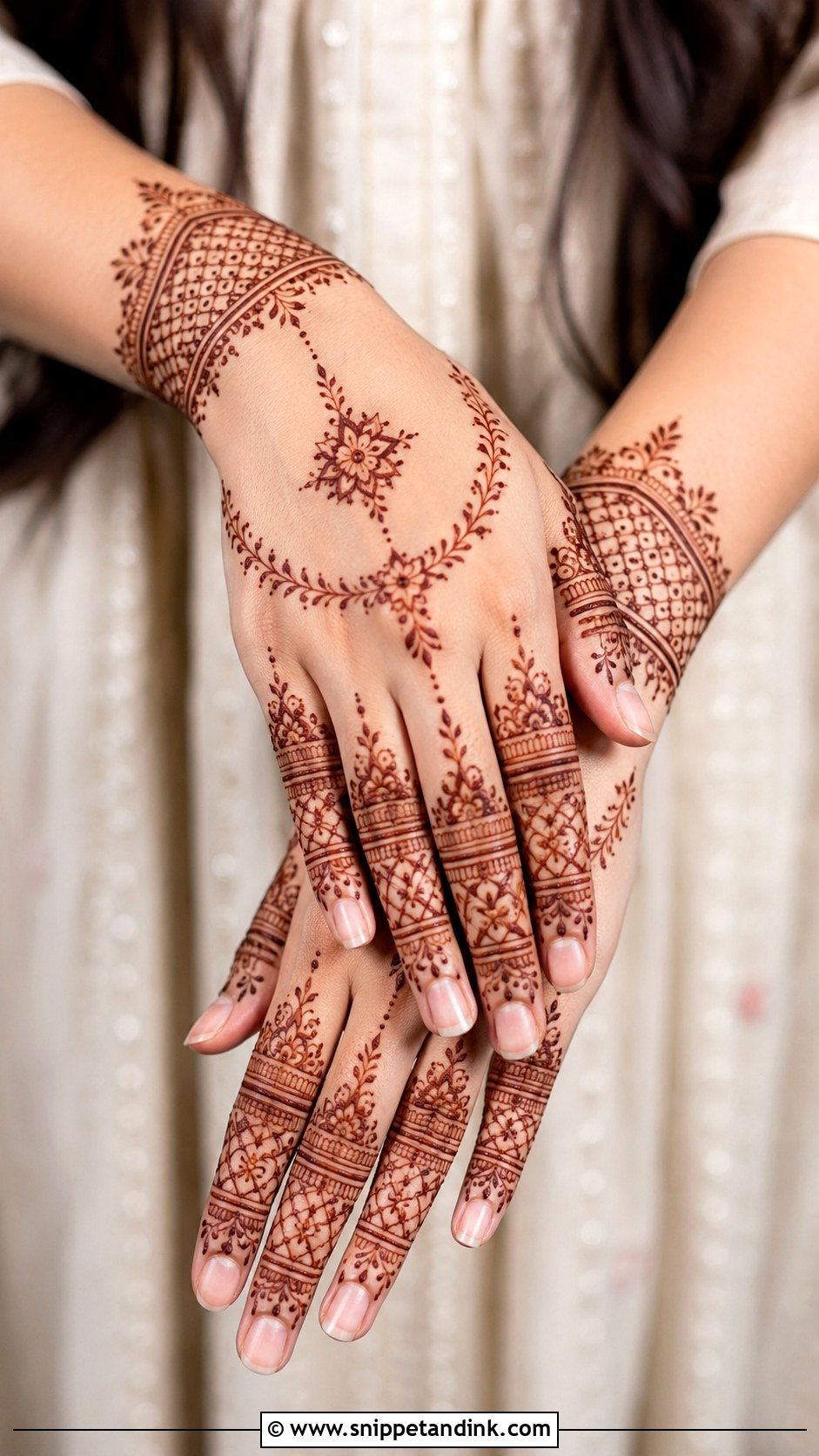
Finger-focused work keeps the palm or back hand light and puts the detail where the ring is. Each finger might carry leafy bands, tiny florals, dots or mini jaali. I design the ring finger last, once I know where the band will sit. A small mandala or wrist bracelet balances it so the fingers don’t look disconnected from the hand.
21. Half Hand Engagement Mehndi Design
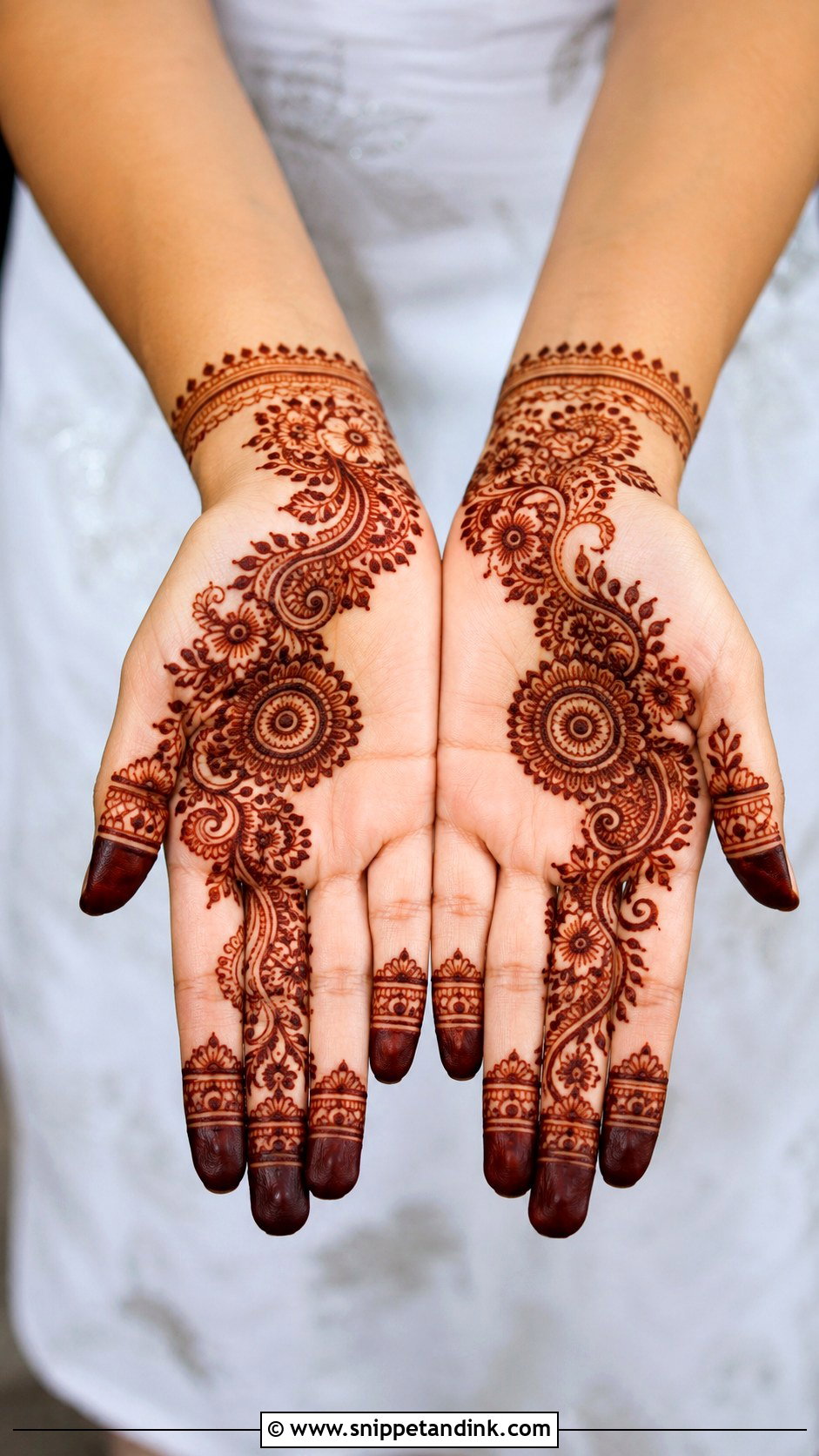
Half hand stops at the wrist or just above it, with a palm mandala, floral trail or Arabic diagonal. It dries faster than full coverage, which matters on a ceremony morning, and it leaves sleeves and cuffs visible. I’d call it the safest engagement length. Neat borders at the wrist are what make it look finished rather than abandoned.
22. Modern Engagement Mehndi Design
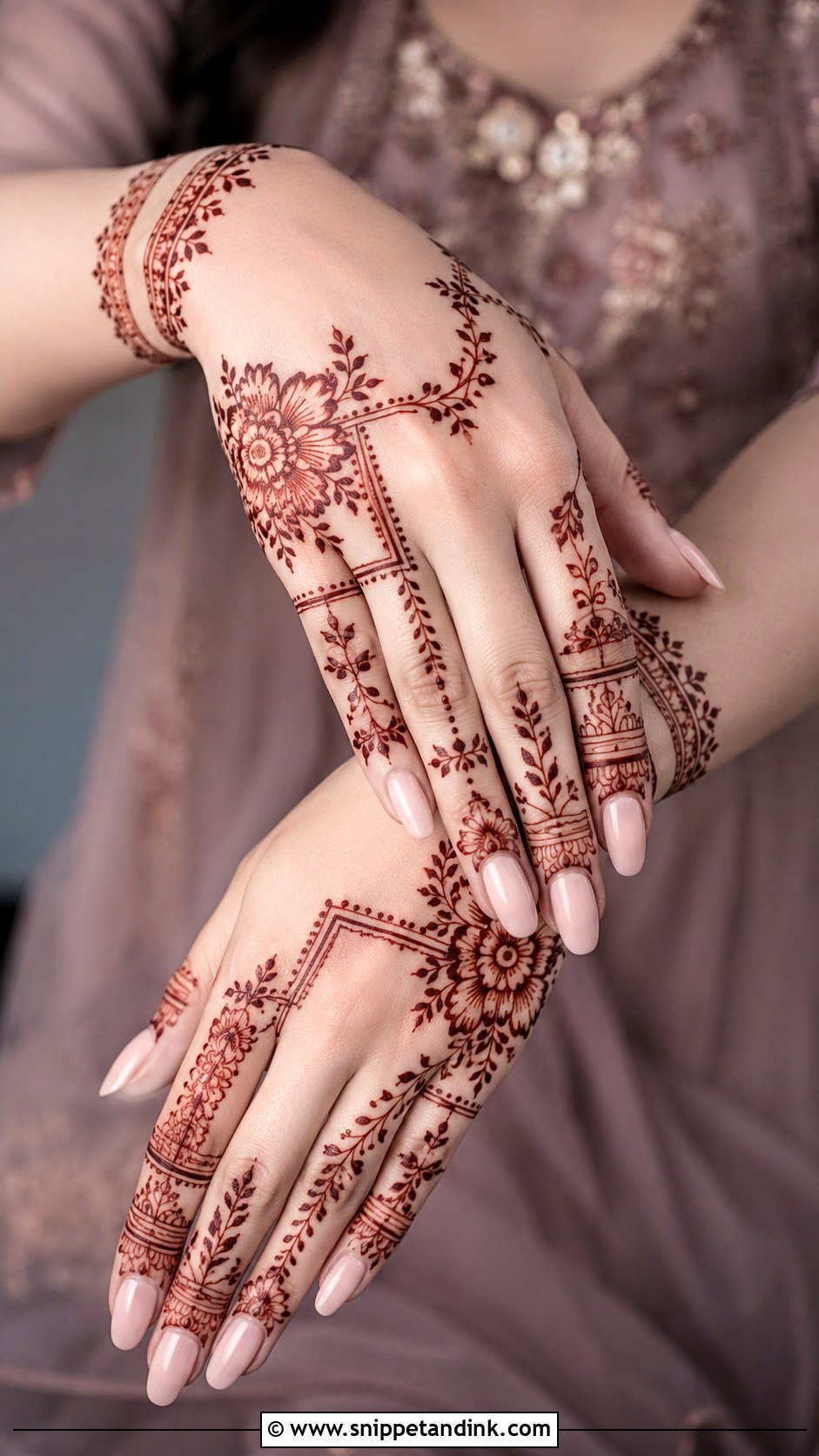
Modern layouts focus on shape and placement instead of filler: slim vines, geometric panels, asymmetric back hand trails. They suit gowns, fusion lehengas and minimalist sarees. With fewer elements, each line matters more, so I avoid tiny fillers entirely. A structured wrist band or one floating floral trail can be enough.
23. Unique Engagement Mehndi Design
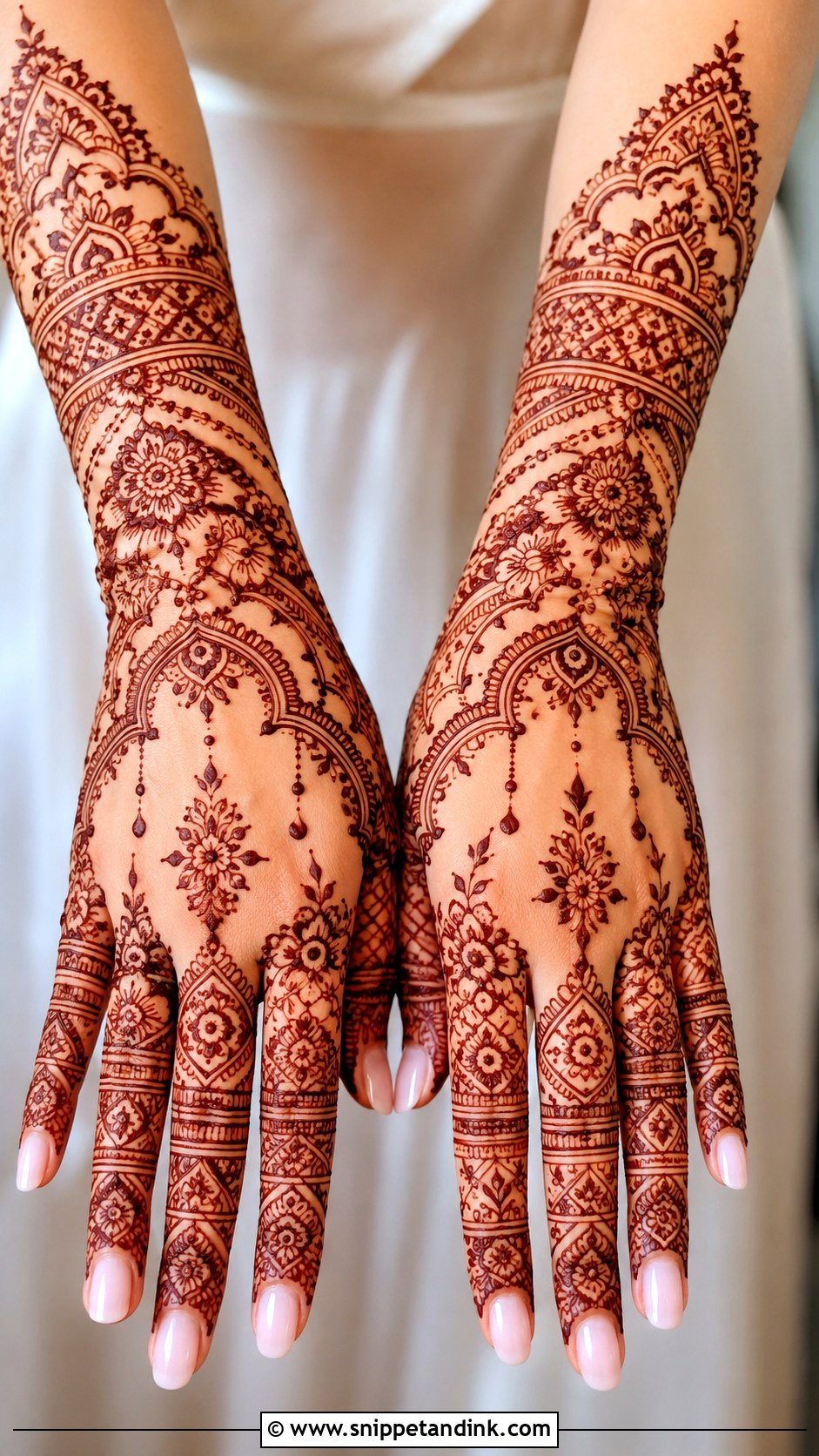
Unique doesn’t mean adding everything. Pick one standout feature, like a proposal symbol, a date, your favourite flower, or a mix such as Moroccan geometry with Indian florals, and build around it. When brides bring five personal ideas, I usually help them choose one or two. The design should still be readable from arm’s length.
24. Engagement Mehndi Design For Small Hands
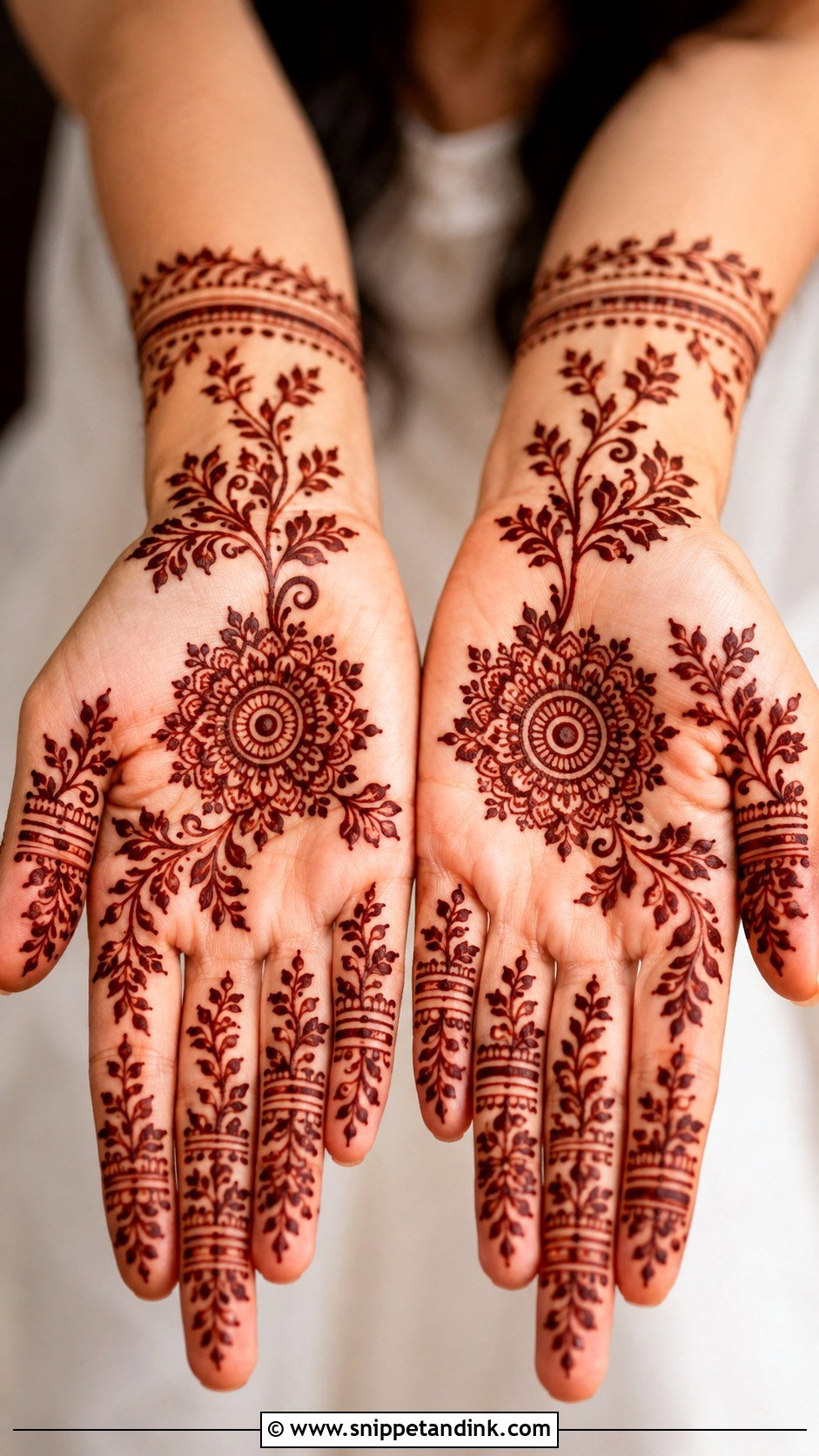
On small hands I use medium motifs with clear spacing. Tiny dense patterns make the hand look cluttered, while oversized motifs overwhelm it. A small palm mandala, slim vines and a light wrist border are a safe start. Arabic trails help because a diagonal line visually lengthens the hand. I run vertical details along the fingers and keep heavy blocks off the knuckles.
25. Engagement Mehndi Design For Long Fingers
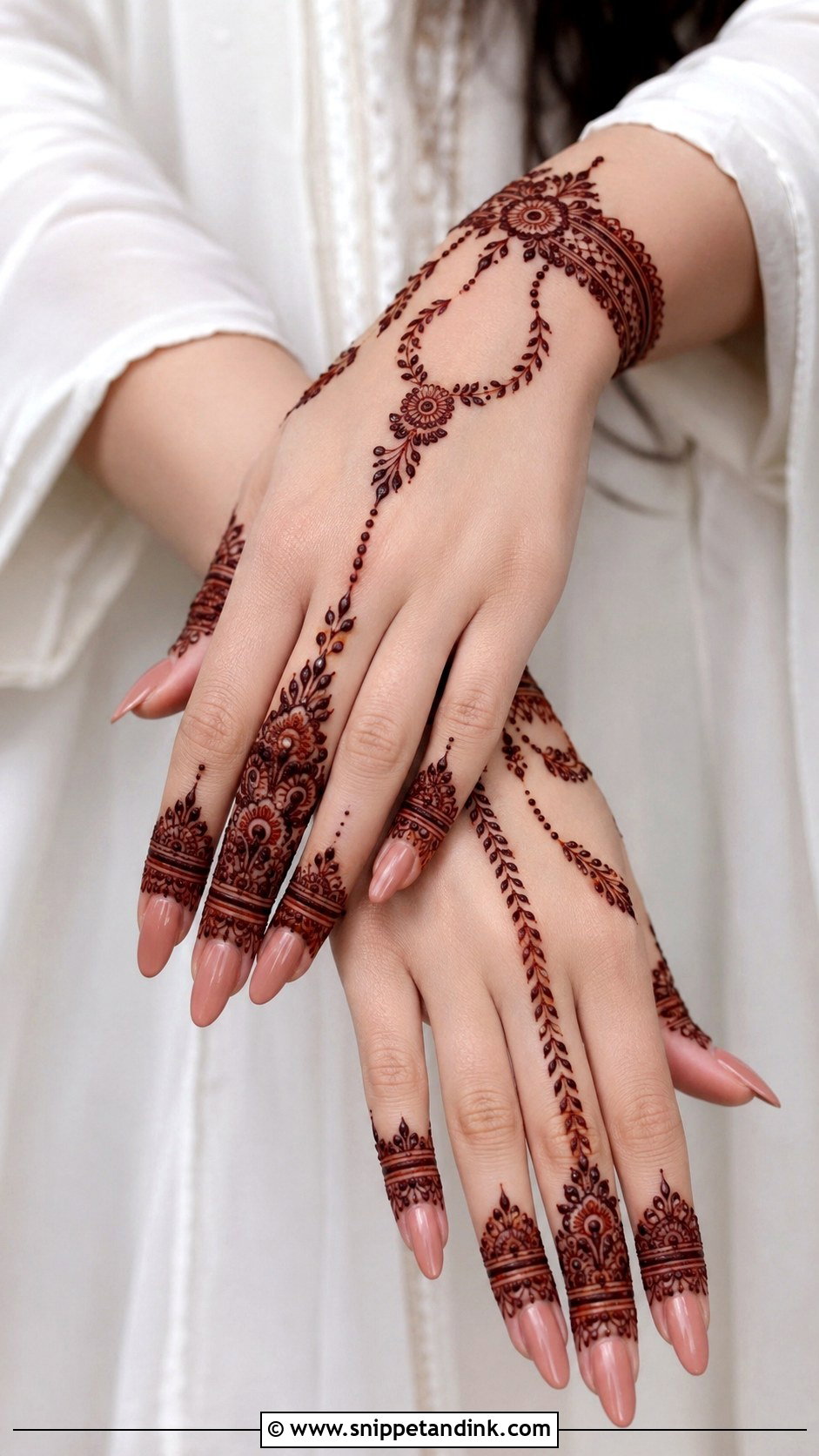
Long fingers give me room for stacked bands, fine jaali and floral tips. I keep the palm or back hand lighter so the fingers lead. Chains from the wrist to one or two fingers look especially good here. Don’t fill every finger heavily, though; alternating filled and open sections is what keeps long fingers from looking gloved.
26. Engagement Mehndi Design For Dark Skin
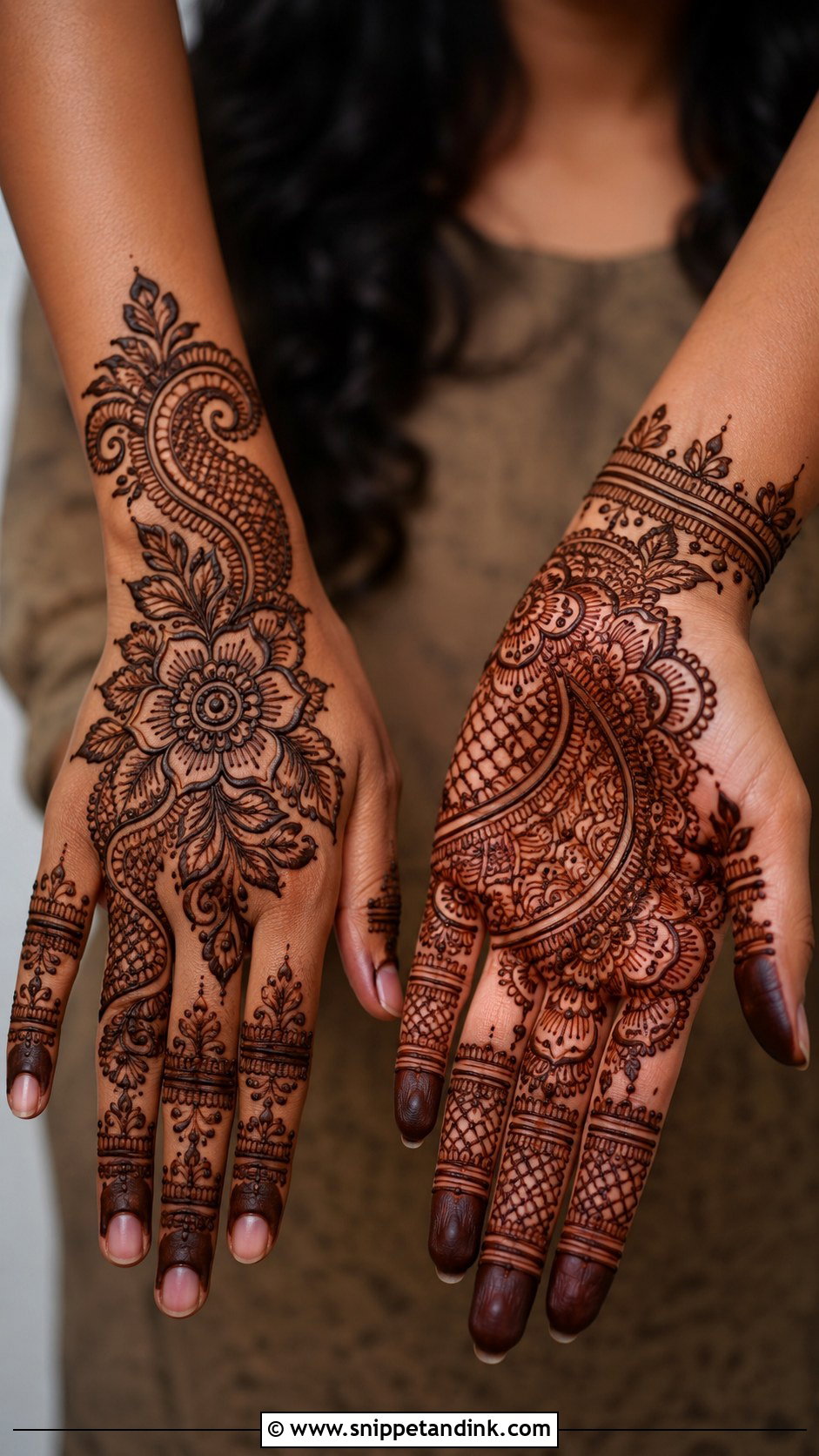
On deeper skin, henna stains a rich reddish brown to maroon, and the design reads best with bold outlines, strong motif shapes and clear spacing. Fine filler can sink into the skin tone, so I lean on thick-and-thin line contrast instead. Florals, paisleys and Arabic trails all work. Fresh natural paste and a long drying time do more for contrast than any design choice.
27. Engagement Mehndi Design For Fair Skin
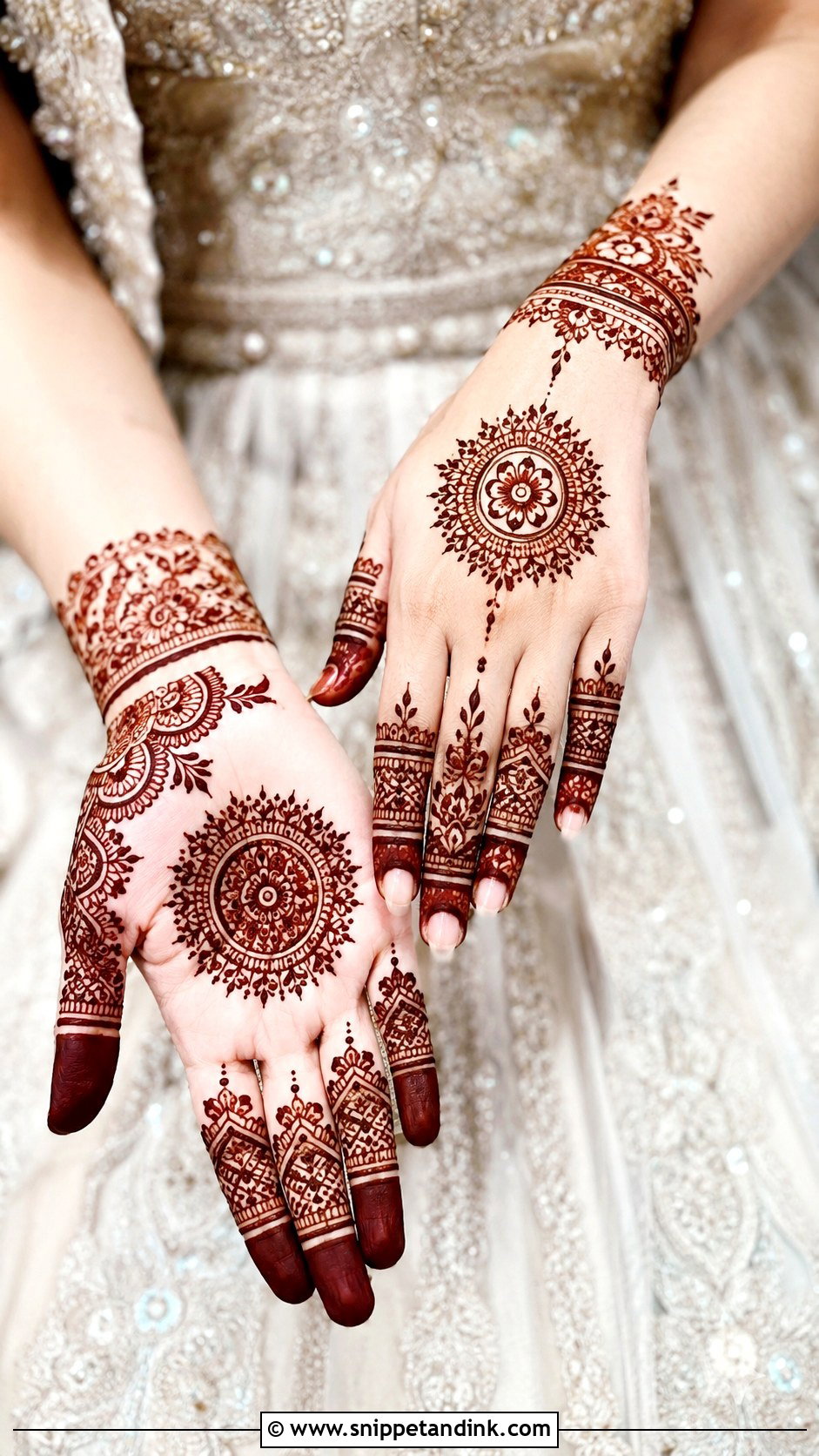
Fair skin shows henna contrast early, so fine lines stay crisp and almost any style works. The flip side is that every wobble shows too. For a bold look, choose thicker outlines and let the stain deepen to maroon; for something softer, keep it airy with open spacing. Neat symmetry matters more on fair skin than on any other.
28. Engagement Mehndi Design For Sister
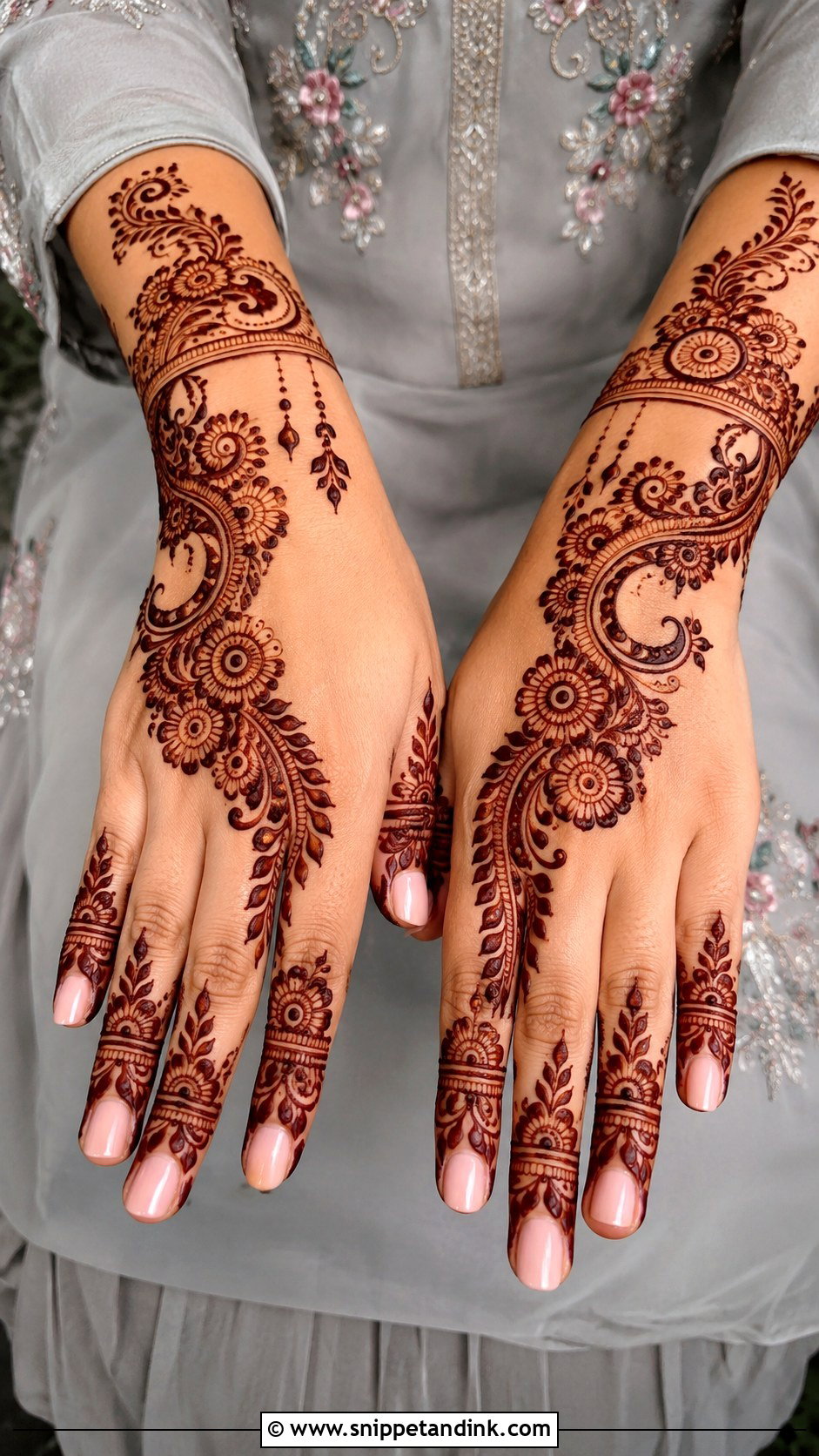
An engagement mehndi design for sister should be festive but clearly lighter than the bride’s. Back hand floral trails, half hand Arabic, bracelet designs or finger work all suit. Sisters are usually running around helping, so quicker drying designs are kinder. Matching one small motif with the bride, a flower or a mini mandala, ties the photos together nicely.
29. Engagement Mehndi Design For Guests
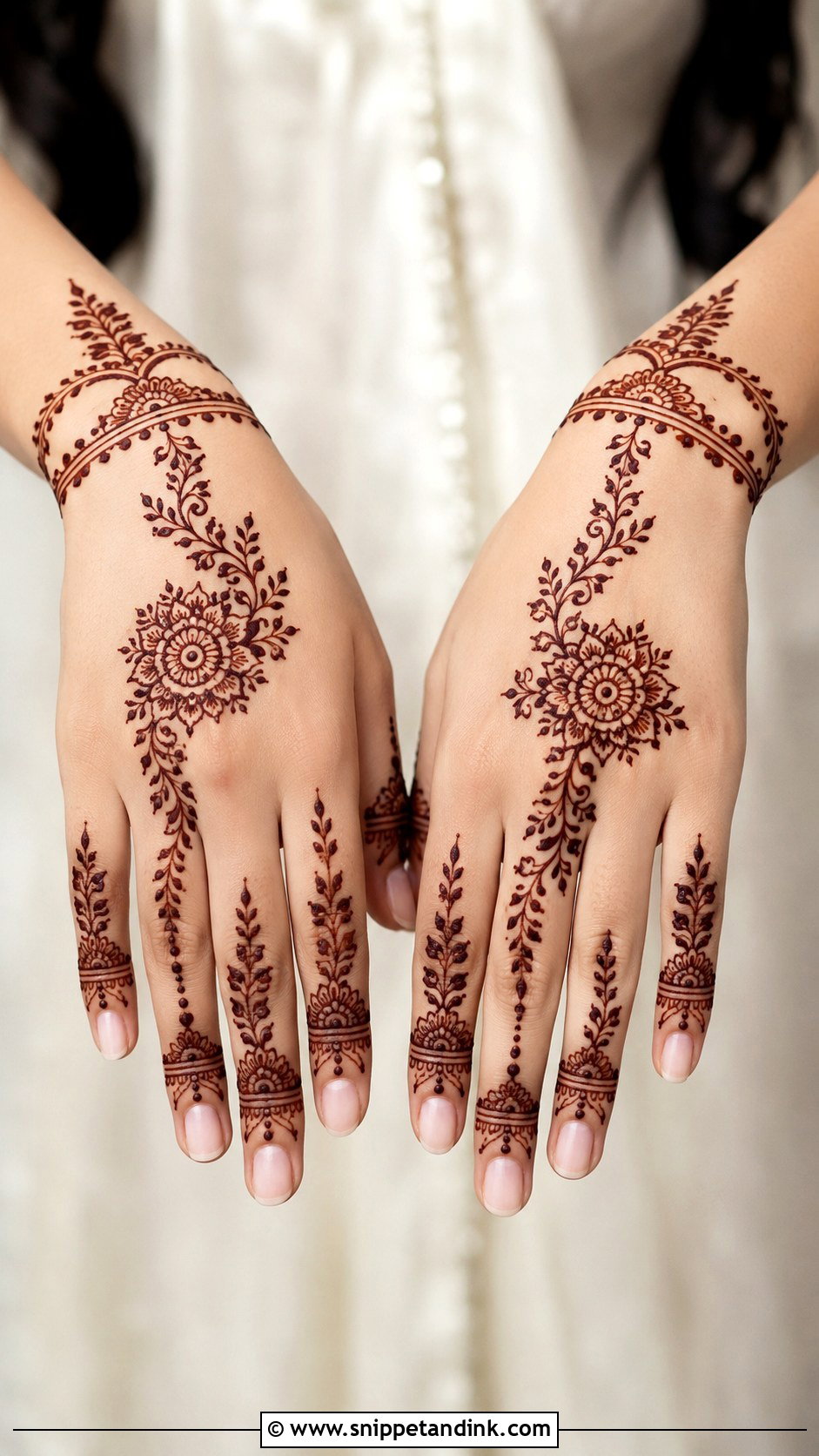
For guests I keep things quick: a back hand Arabic trail, a small palm mandala, leafy finger patterns or a bracelet. Each takes minutes rather than an hour, and open spacing means they dry before dinner. I avoid bridal motifs, portraits and forearm coverage on guests unless the family asks. Cousins, friends and bridesmaids can all wear these without planning outfits around them.
30. Groom Engagement Mehndi Design
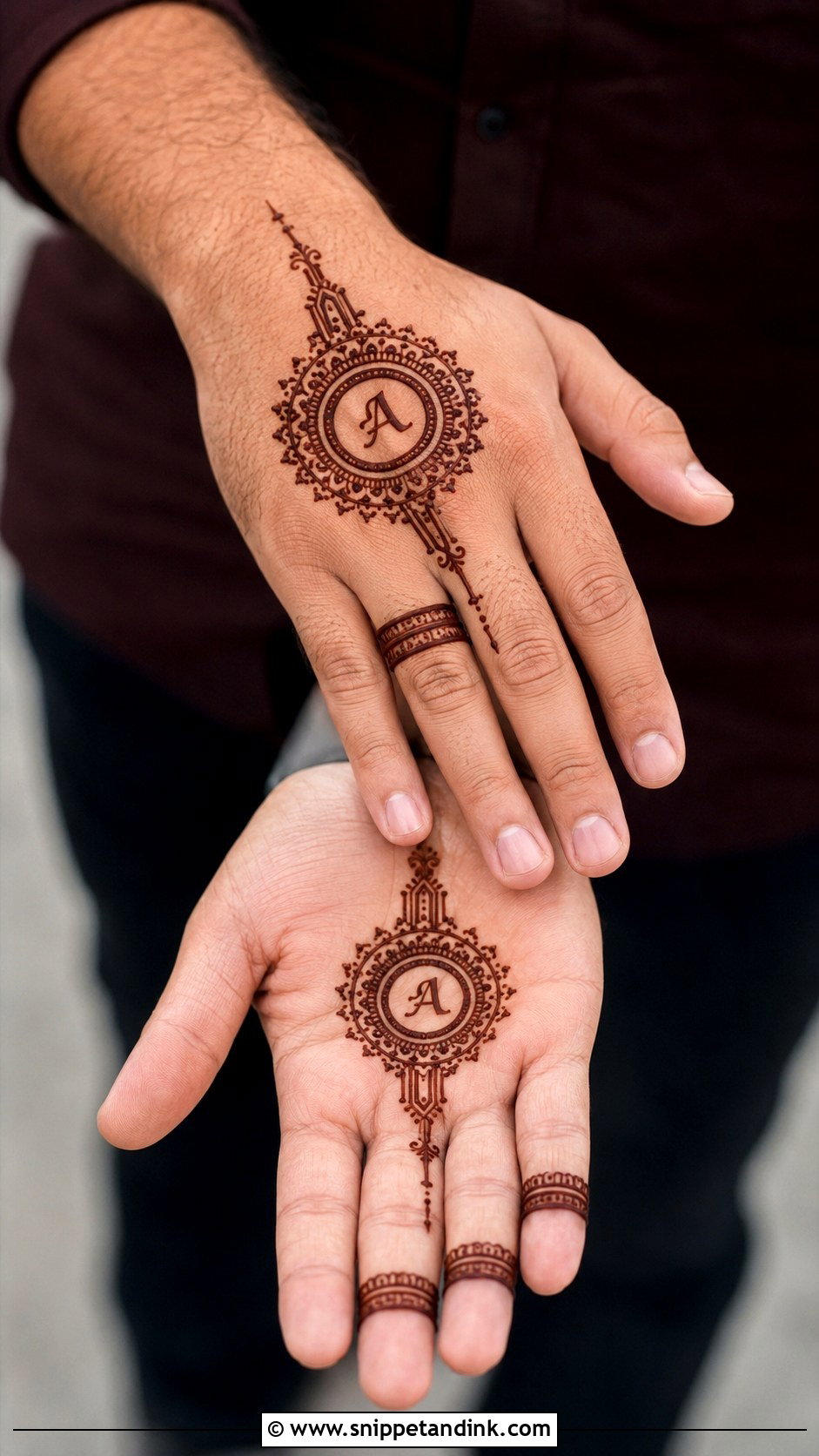
Groom engagement mehndi design is usually small and symbolic: a mandala, initials, a date or a ring motif on the palm or back hand. Some grooms want only one finger done; others match a single element with the bride. I keep the lines bold and the placement centred, since grooms rarely want to sit long. Natural henna’s warm stain suits every skin tone.
When the Engagement and Wedding Are Only Weeks Apart
A henna stain fades gradually over one to three weeks as your skin naturally renews, faster on hands you wash often. If the wedding falls inside that window, the engagement stain will still be visible, patchy and orange, under your bridal design. Fresh henna stains over an old one fine, but the old ghost lines can muddy fine filler.
How I plan two sets close together
- Keep the engagement design lighter, ideally on the back hand and fingers, and save the palms for the wedding.
- Use different main motifs on each so the photos don’t look repeated.
- Exfoliate gently in the week before the wedding mehndi to lift what’s left of the old stain, then stop two days before the application.
If you also want family and friends done at the engagement, tell your artist the head count when you book. A quick back hand design takes a few minutes per person, but twenty guests still add up, and one artist cannot do the bride and a queue of cousins at the same time.
Design for the Ring Shot First
The heaviest design is rarely the right one for an engagement. What works is a pattern that leaves the ring clear, suits your outfit and doesn’t steal the bridal set’s thunder. Before your appointment, save a handful of references, think about how your hand will sit in ring photos, and ask for fresh natural henna. Bring your ring or a photo of it if you can.
You'll Like These Ideas:







Leave a Reply