
Mehndi is the one part of a bridal look that’s drawn directly onto you, line by line, usually surrounded by the women of your family. That’s a lot of meaning for a paste of crushed leaves to carry. The twenty designs here run from heavy Indian and Rajasthani coverage to Arabic, Indo-Arabic, Moroccan and Gulf layouts, plus couple portraits, hidden names, jaali, mandalas and finger-focused modern looks. I’ve treated each as a full bridal design rather than a single motif, and added what I’d tell you at a consultation: how it stains, who it suits and what to watch for. Use them to work out what fits your outfit, your ceremony and your patience.
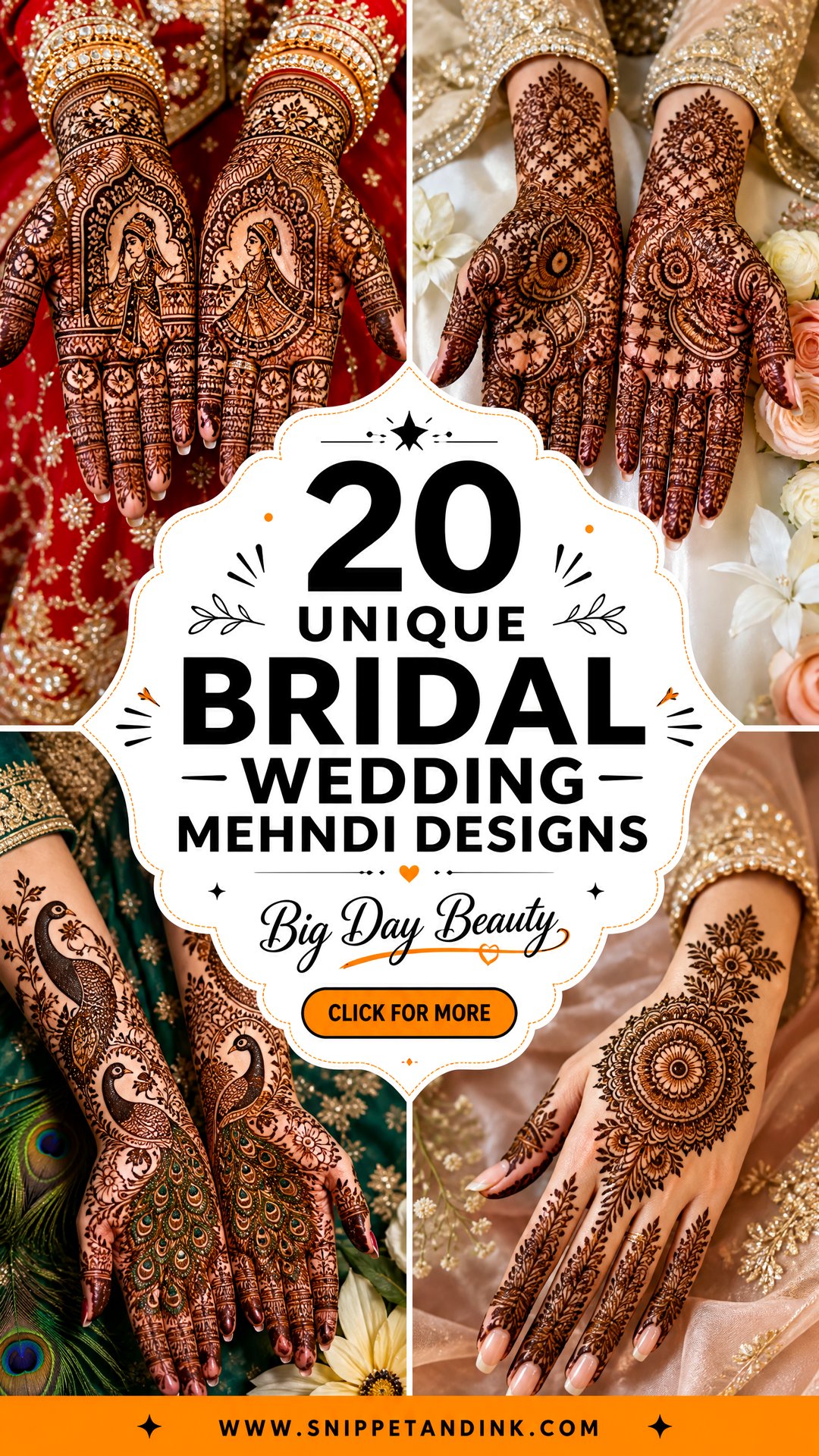
Sketch the Layout With Your Artist Weeks Ahead
The brides whose mehndi turns out best are the ones I’ve met before the day. A short consultation, in person or over video, lets us agree the layout while nobody is rushing. Bring photos of your outfit, especially the sleeves and the colour, and your jewellery if you’re wearing haathphool, kaleere or heavy bangles. I’ll look at your hands too: long fingers can take tall finger designs, while small hands need fewer, larger motifs.
Things worth deciding at that meeting:
- How far up the arm the design goes, measured against your actual sleeve length.
- Which hand gets the groom’s name, the portraits or the main scene.
- Whether the feet are included, since that can add a lot of time.
- Any family or religious symbols you want included, and any you’d rather avoid.
- How many guests also want mehndi, and whether a second artist is needed.
Popular artists get booked early in wedding season, so start looking a few months ahead if you can.
1. Full Hand Indian Bridal Mehndi Design
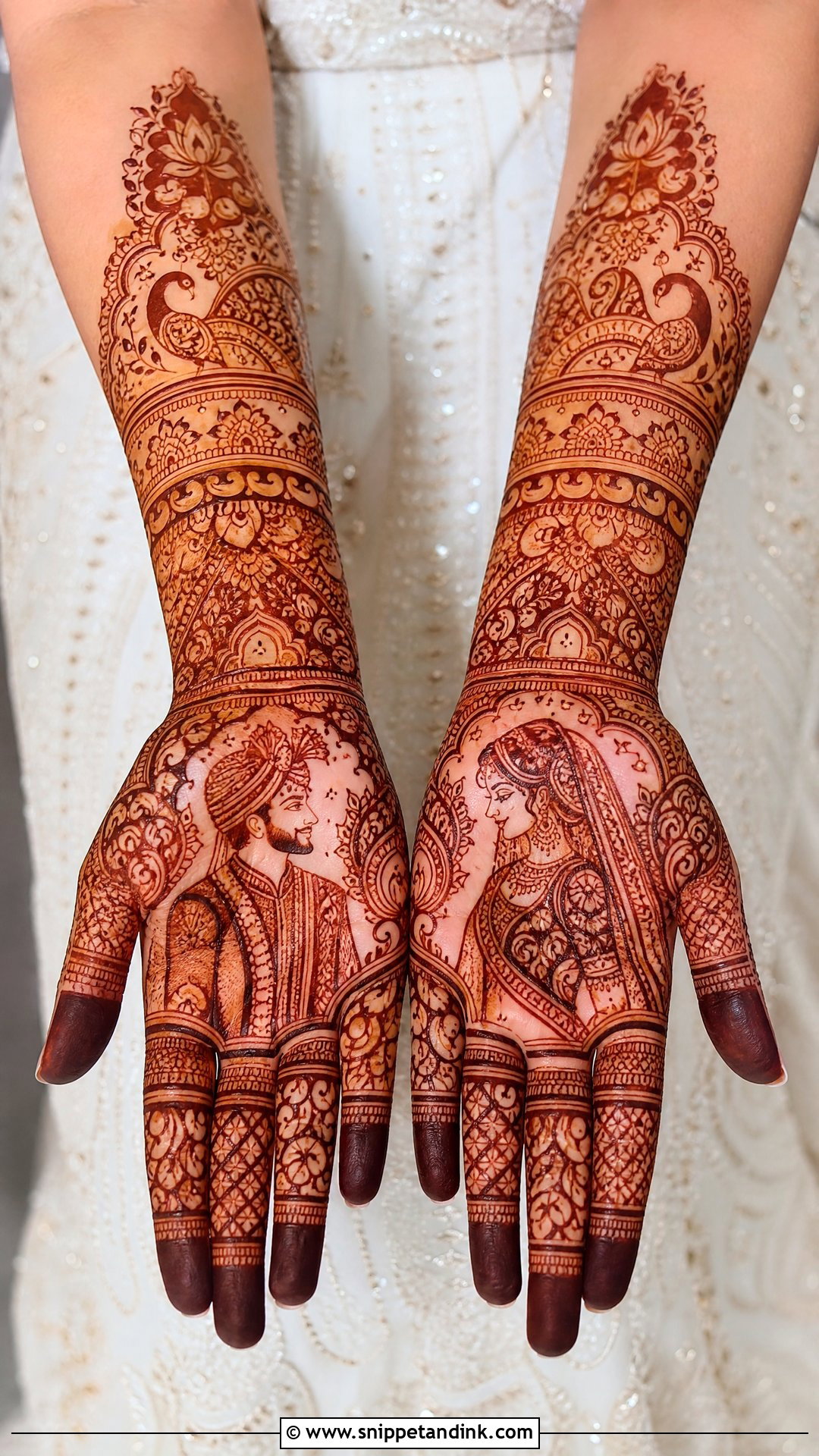
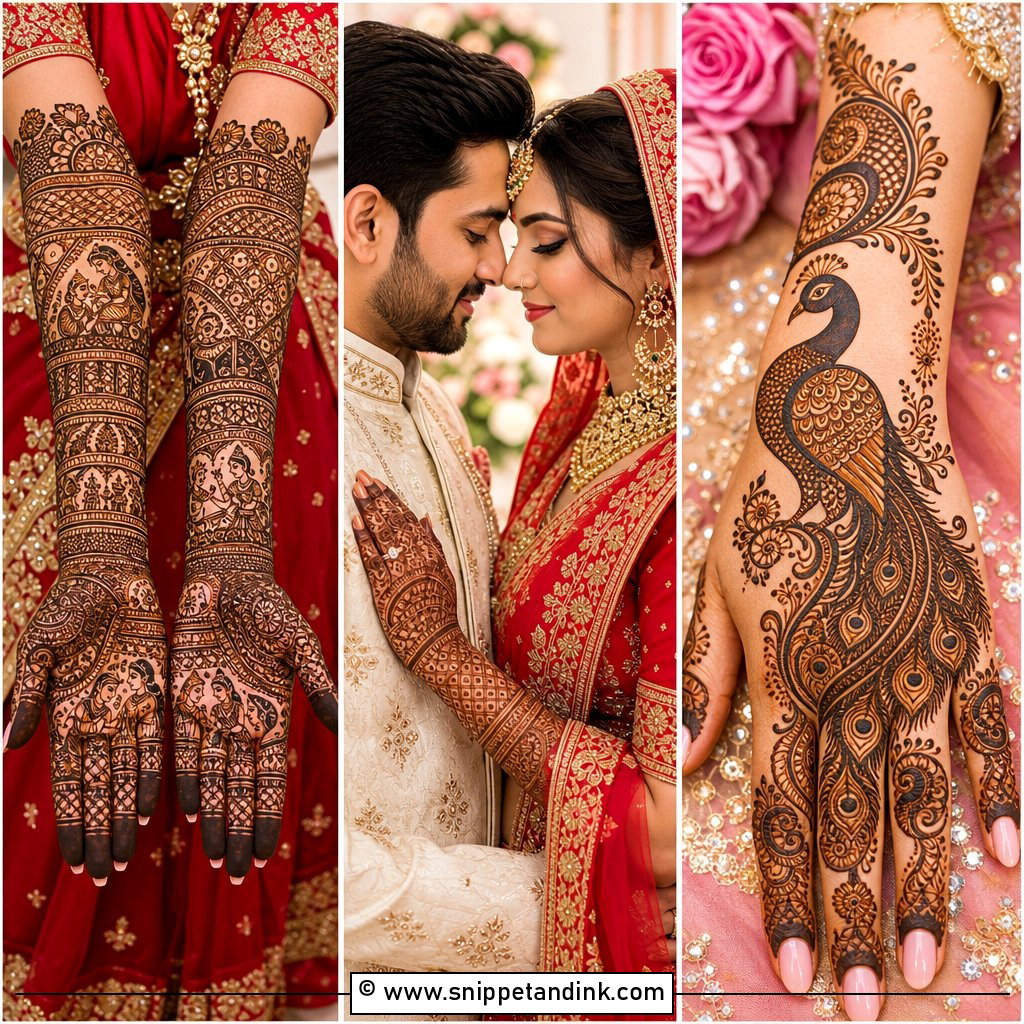
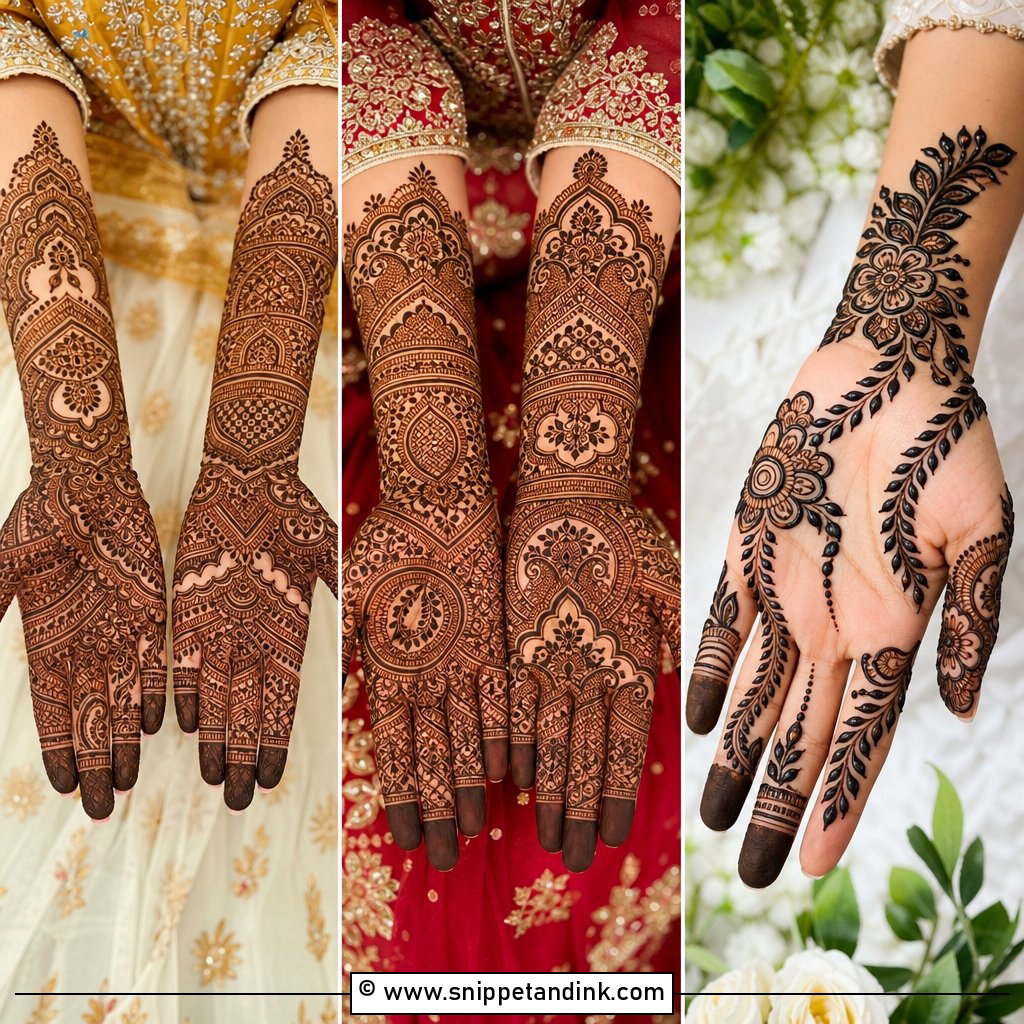
Dense, fingertip-to-forearm coverage is still what most brides picture when they think of bridal mehndi. The palm carries the main story, often bride and groom portraits, lotus, paisleys and peacocks packed with fine filler, while the back of the hand mirrors it with floral bands, a wrist cuff and detailed fingers. It belongs with lehengas, sarees and heavy jewellery. The one thing I insist on is a small margin of bare skin around each main figure. Henna lines spread a little as they stain, and without that breathing room the story turns into a dark mass in photos.
2. Arabic Bridal Mehndi Design
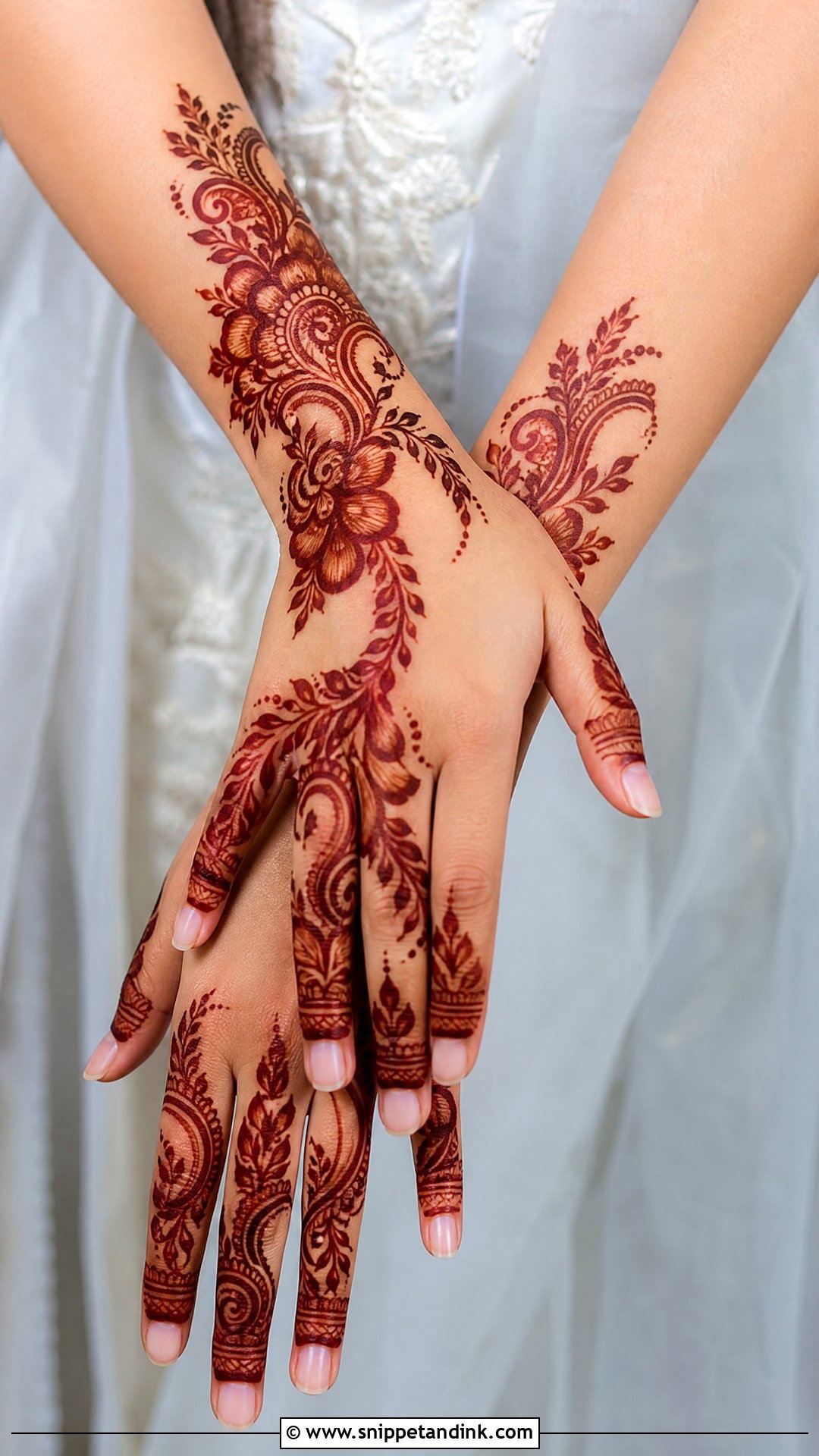
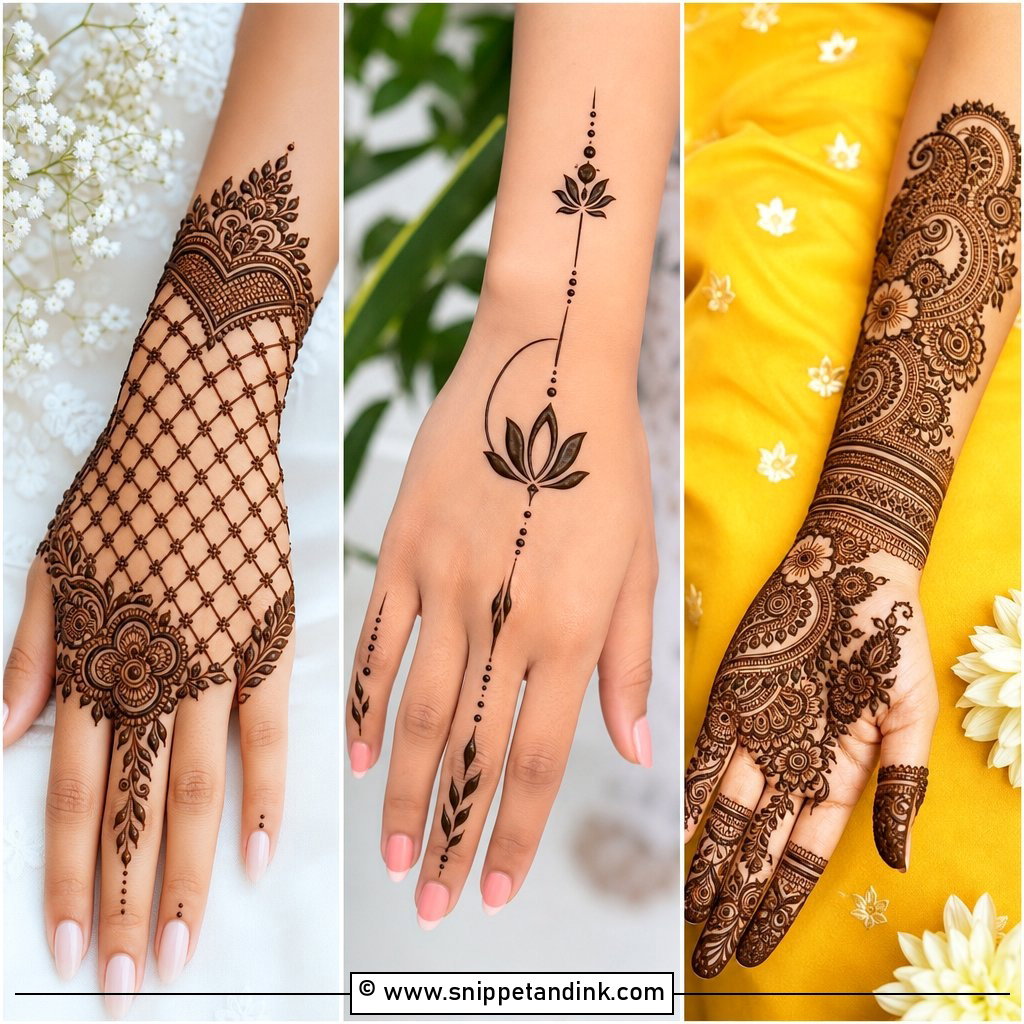
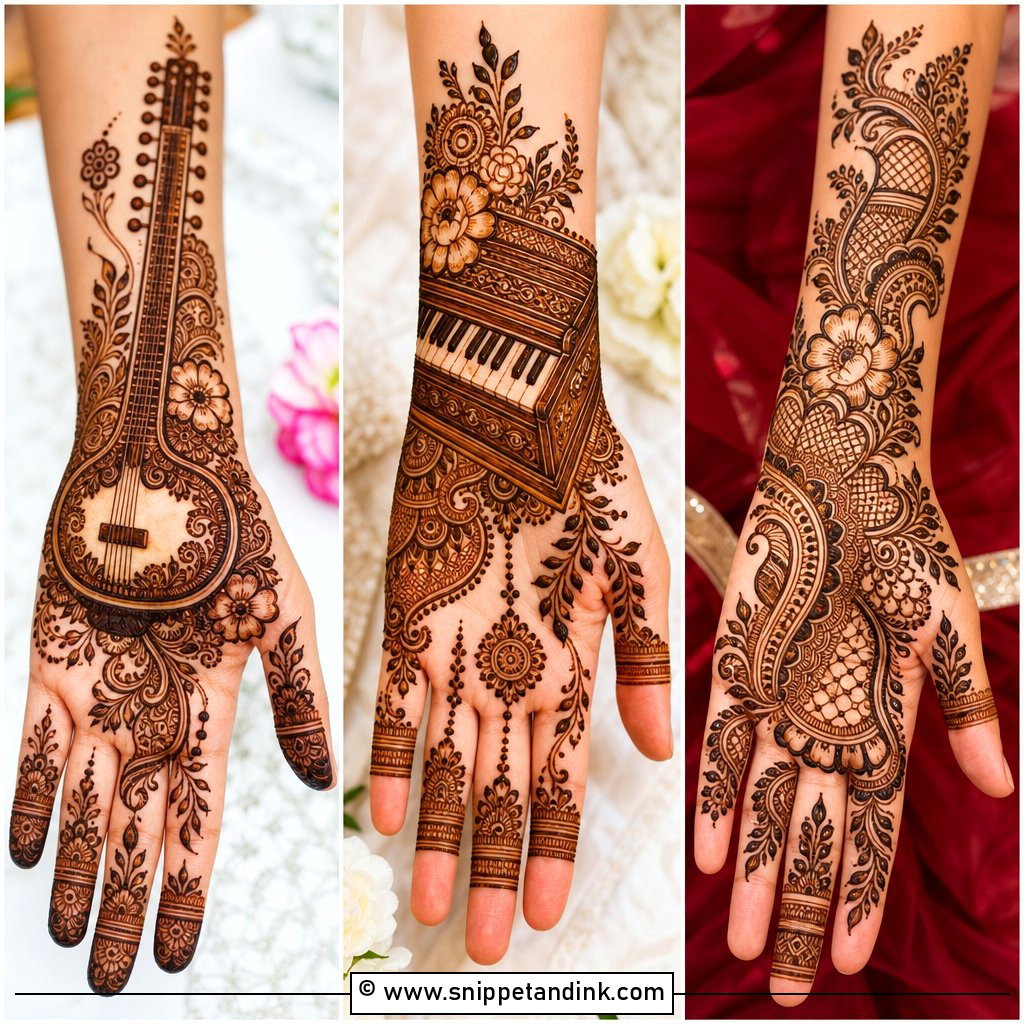
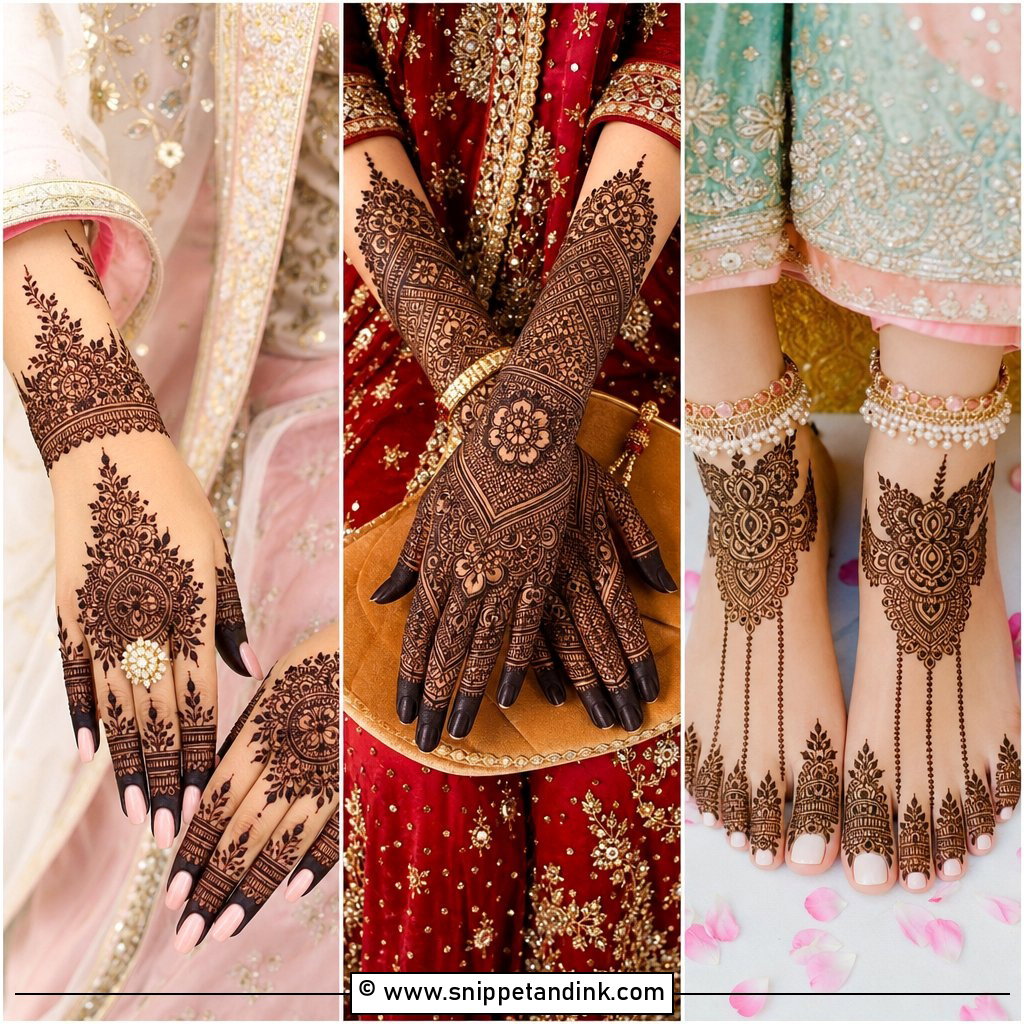
Arabic mehndi is the fastest way to a graceful bridal hand. Bold flowers, leafy vines, paisleys and shaded petals sweep diagonally across the palm or back of the hand, leaving plenty of skin showing. Fingers get leafy lines, dots and small bands, and the wrist finishes in a bracelet shape. It’s quicker to apply and easier to read in photos than dense work. It’s a natural fit for engagements, nikah ceremonies and destination weddings. To make it feel bridal rather than party mehndi, I thicken the wrist cuff and fill the fingertips more heavily.
3. Indo-Arabic Bridal Mehndi Design
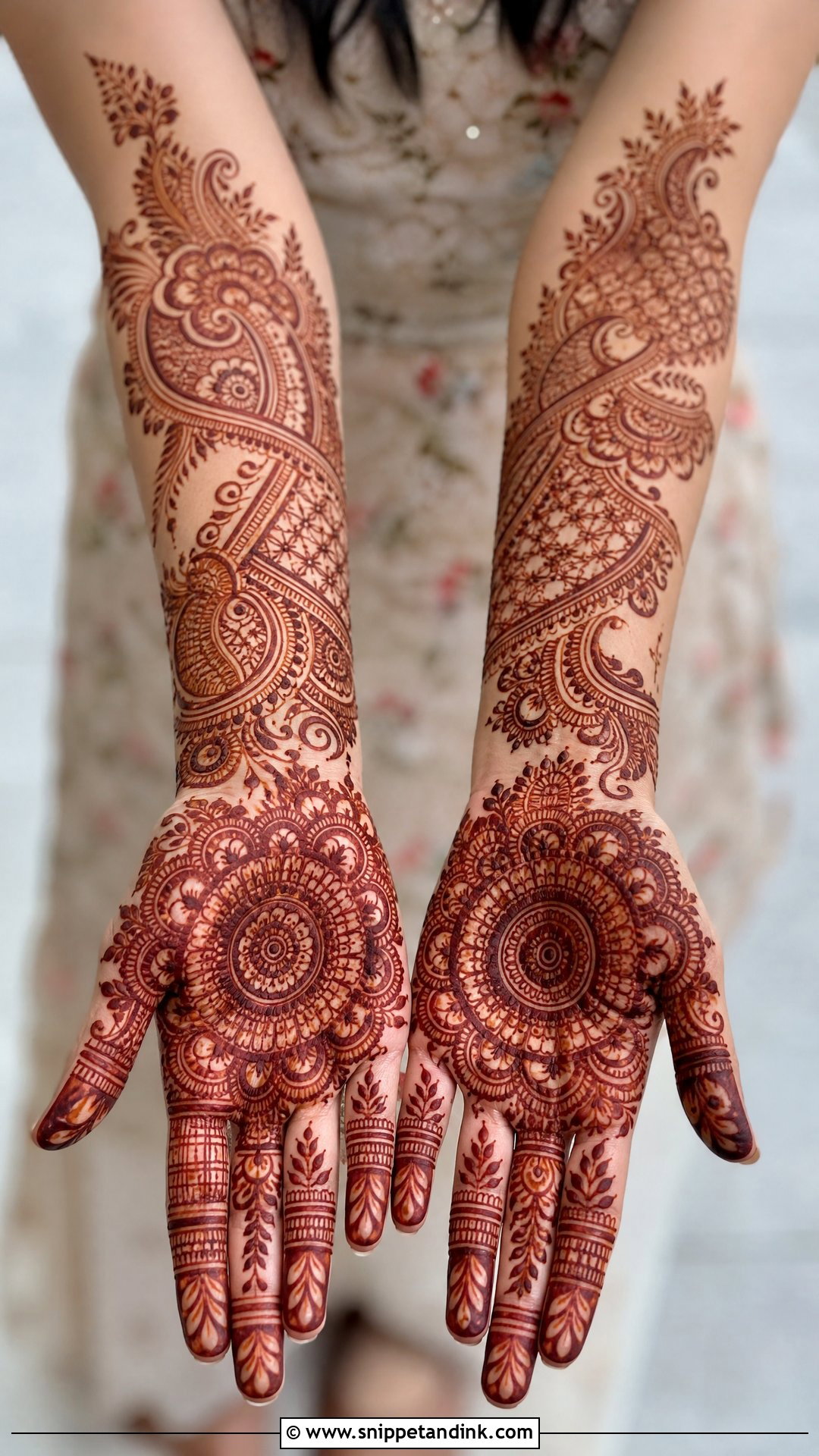
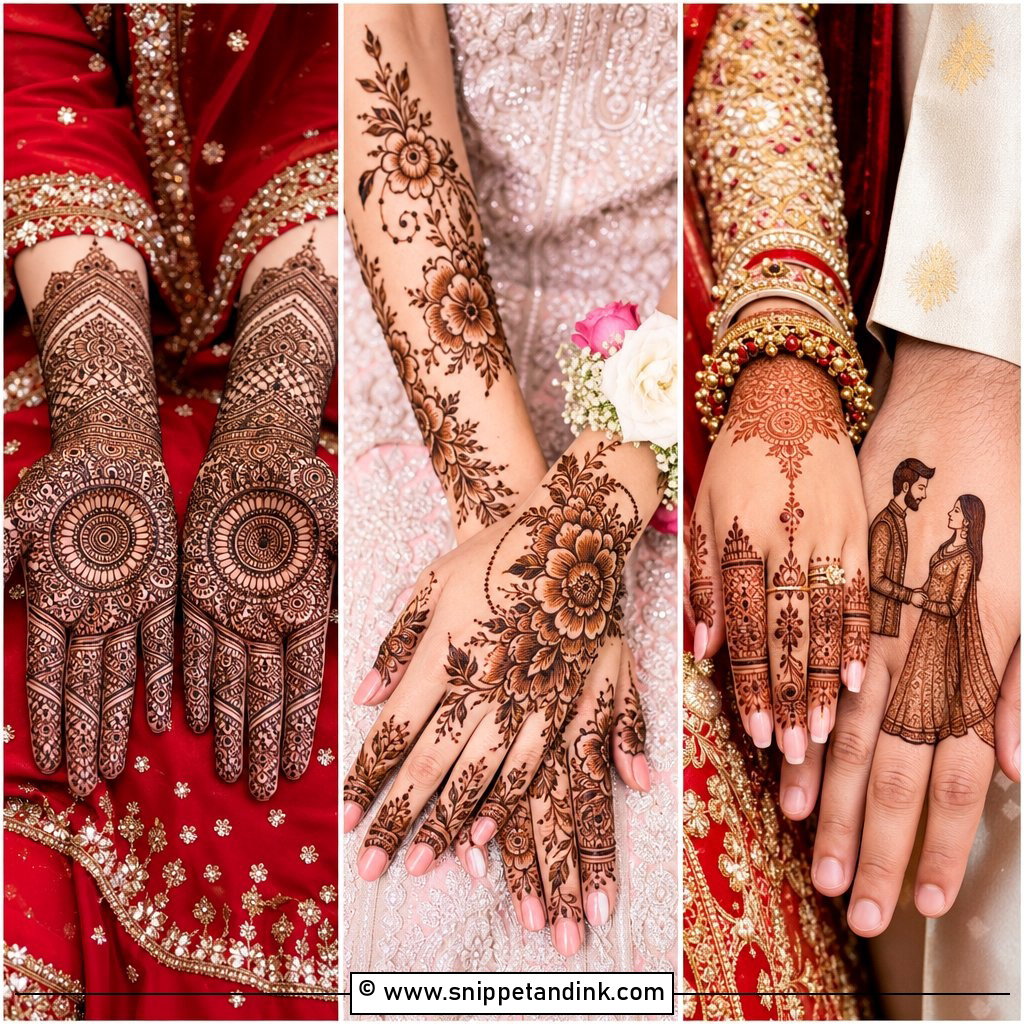
Indo-Arabic bridal mehndi takes the bold flow of Arabic work and fills its gaps with Indian detail. The palm might hold a mandala, a cluster of paisleys or a floral trail, with dots, curves, jaali and tiny leaves tucked into the spaces. The back of the hand gets bracelet bands, finger caps and diagonal floral sections. It looks full without crowding. It’s also the easiest style to adjust on the spot: if you’re running short on time, I can leave more open space; if you have extra time, I add more filler.
4. Rajasthani Bridal Mehndi Design
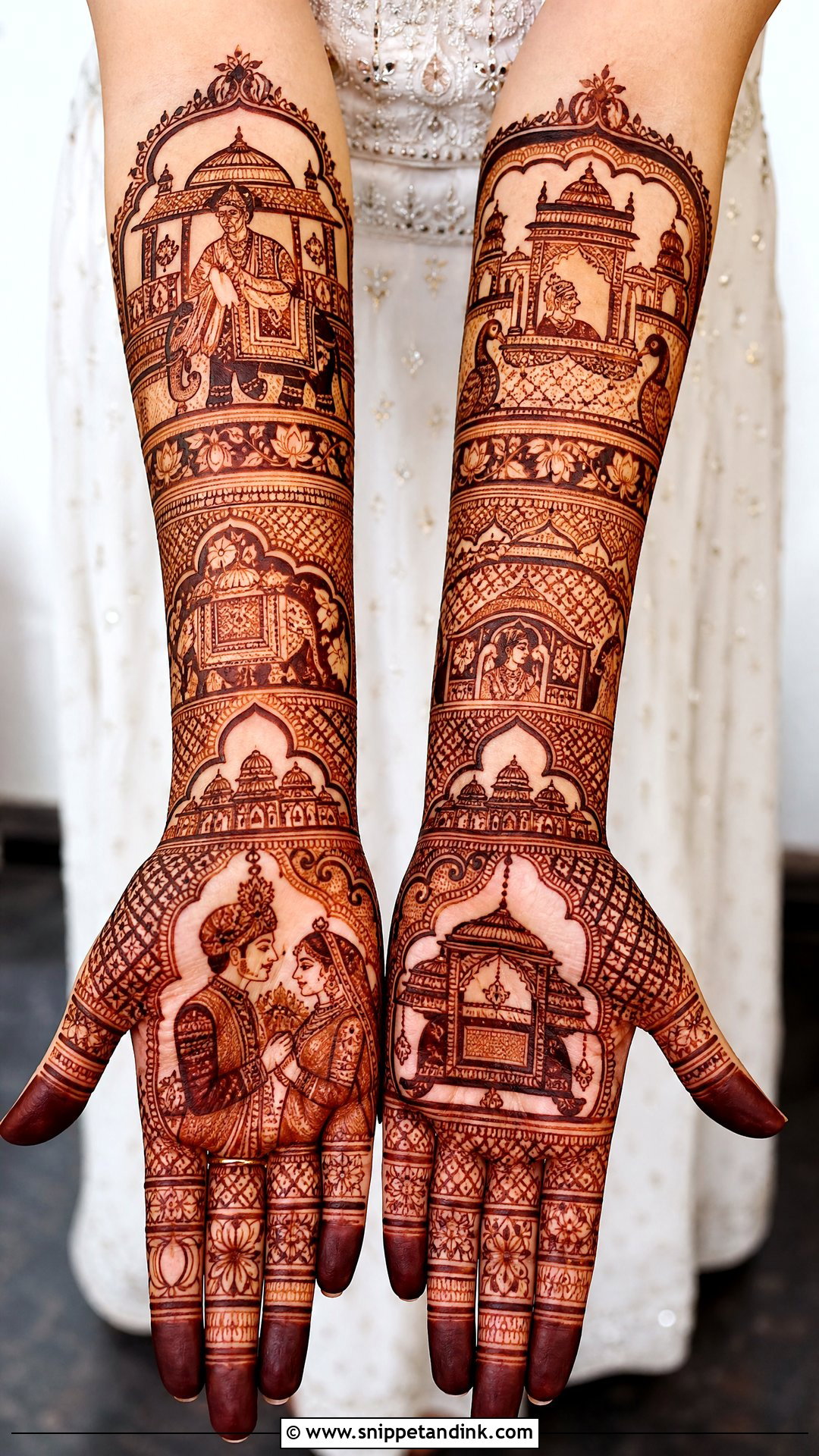
Rajasthani mehndi is narrative work. Bride and groom figures, elephants, palanquins, peacocks, lotus and palace-style borders, often with each hand carrying a different part of the same wedding story. The fingers are filled with fine checks, leaves and curves, and the wrists get ornamental cuffs. It’s dense and deeply cultural, and it can’t be rushed. Book an artist whose portfolio actually shows figure work, and allow generous sitting hours. Once the stain matures it sits wonderfully against red, maroon, gold or ivory outfits.
5. Pakistani Bridal Mehndi Design
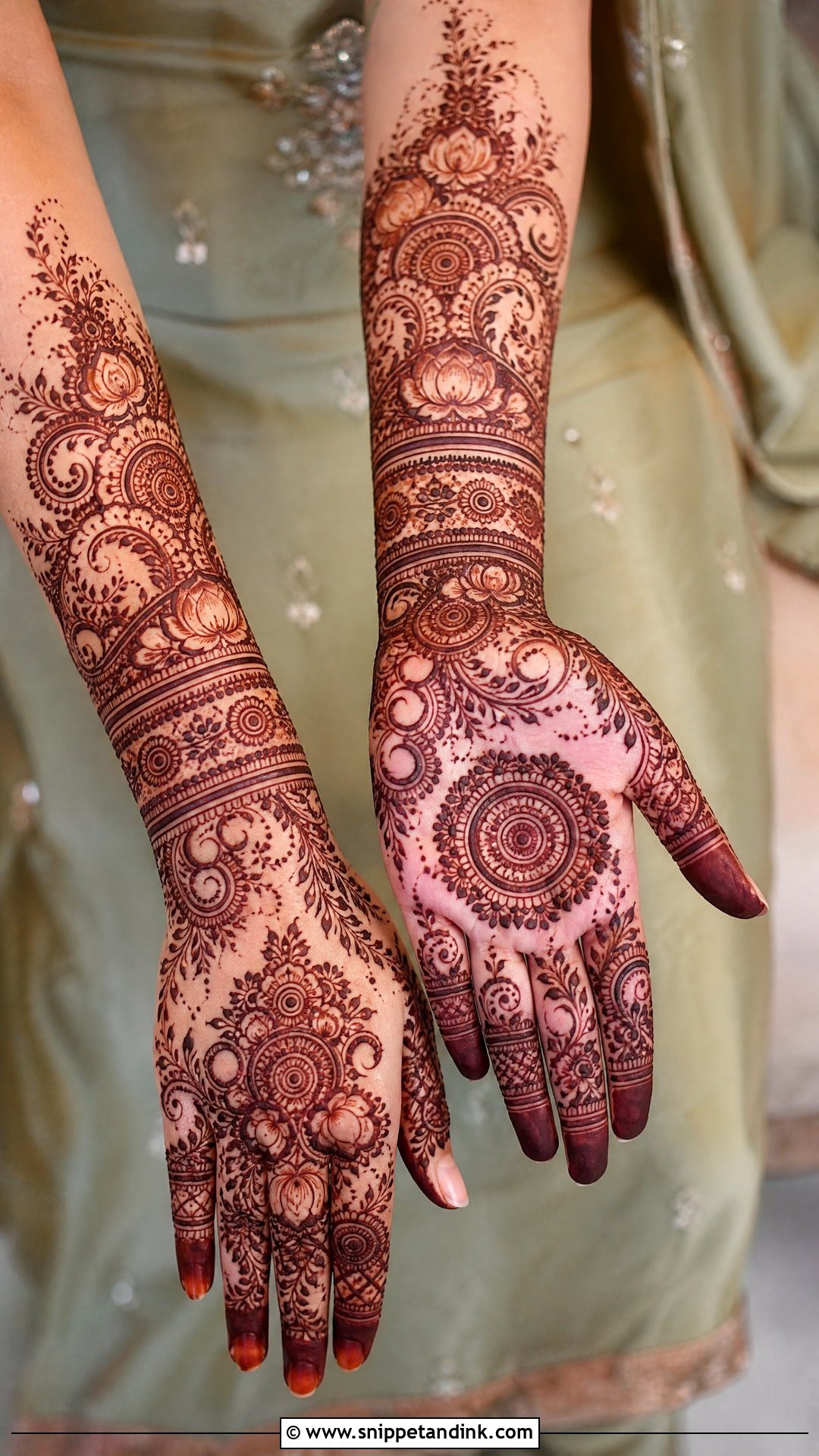
Pakistani bridal mehndi balances bold florals with detailed traditional filling, so it reads rich without feeling packed. The palm often has mandalas, paisleys, leafy curves and circular frames, while the back hand takes floral trails, finger detail and bands running up the forearm. The contrast between heavy and open areas is the point, so I keep the open areas genuinely open. It goes well with shararas, ghararas, lehengas and heavily embroidered outfits. Initials, the date or small symbols can be hidden inside the larger motifs.
6. Moroccan Bridal Mehndi Design
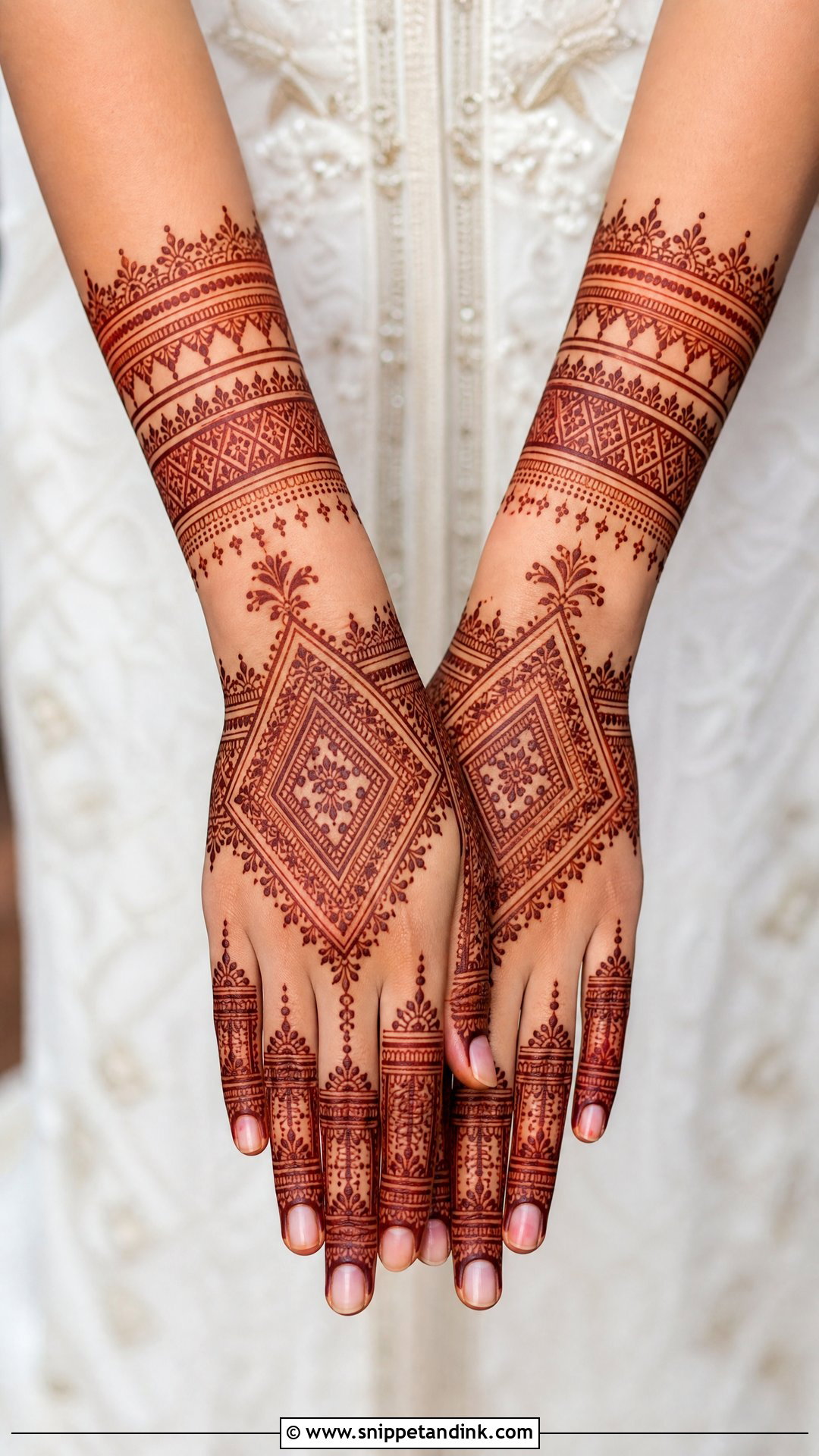
Moroccan mehndi swaps florals for geometry: diamonds, triangles, grids, lines and dots arranged symmetrically across the palm, fingers, wrist and forearm. The back of the hand looks especially sharp with geometric cuffs and long finger patterns. The clean shapes photograph very clearly. It’s less forgiving to draw, since a wobble in a straight line is obvious, so look at your artist’s geometric work specifically. If you’re after a unique wedding mehndi design, ask her to soften the geometry with a few small flowers or fine dots to make it feel bridal.
7. Gulf Bridal Mehndi Design
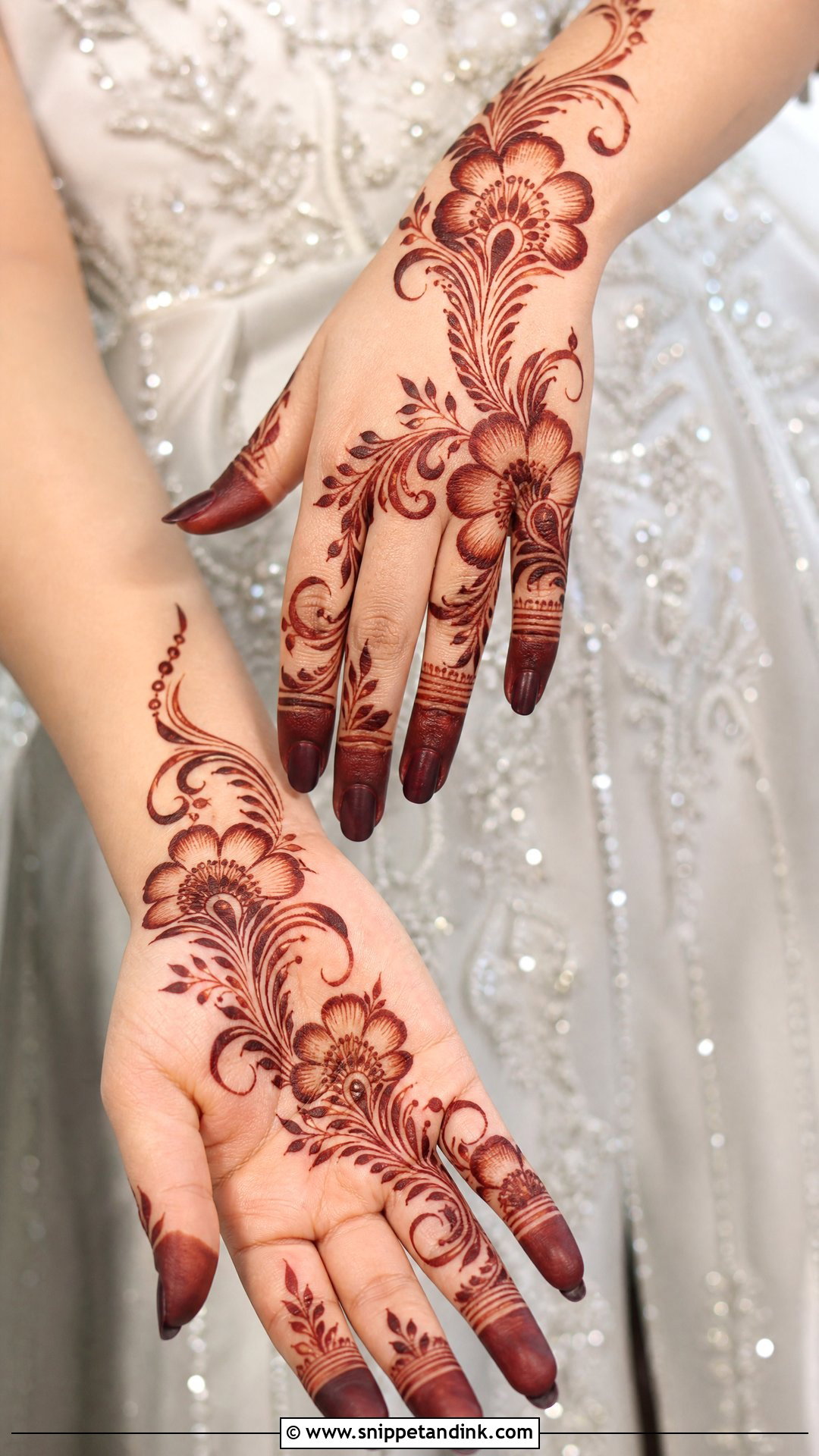
Gulf or Khaleeji mehndi is drawn with a thicker cone tip, so the lines are bolder and hold more paste. That’s why it tends to stain so deeply. Large florals, leafy vines and thick curves sit against open skin, giving a dramatic look without heaviness. The design can run from the fingers to the wrist or carry on up the forearm, and on the back of the hand it reads like a vine wrapping around you. It pairs well with embellished gowns, traditional outfits and statement rings, since the open space leaves room for jewellery.
8. Minimal Bridal Mehndi Design
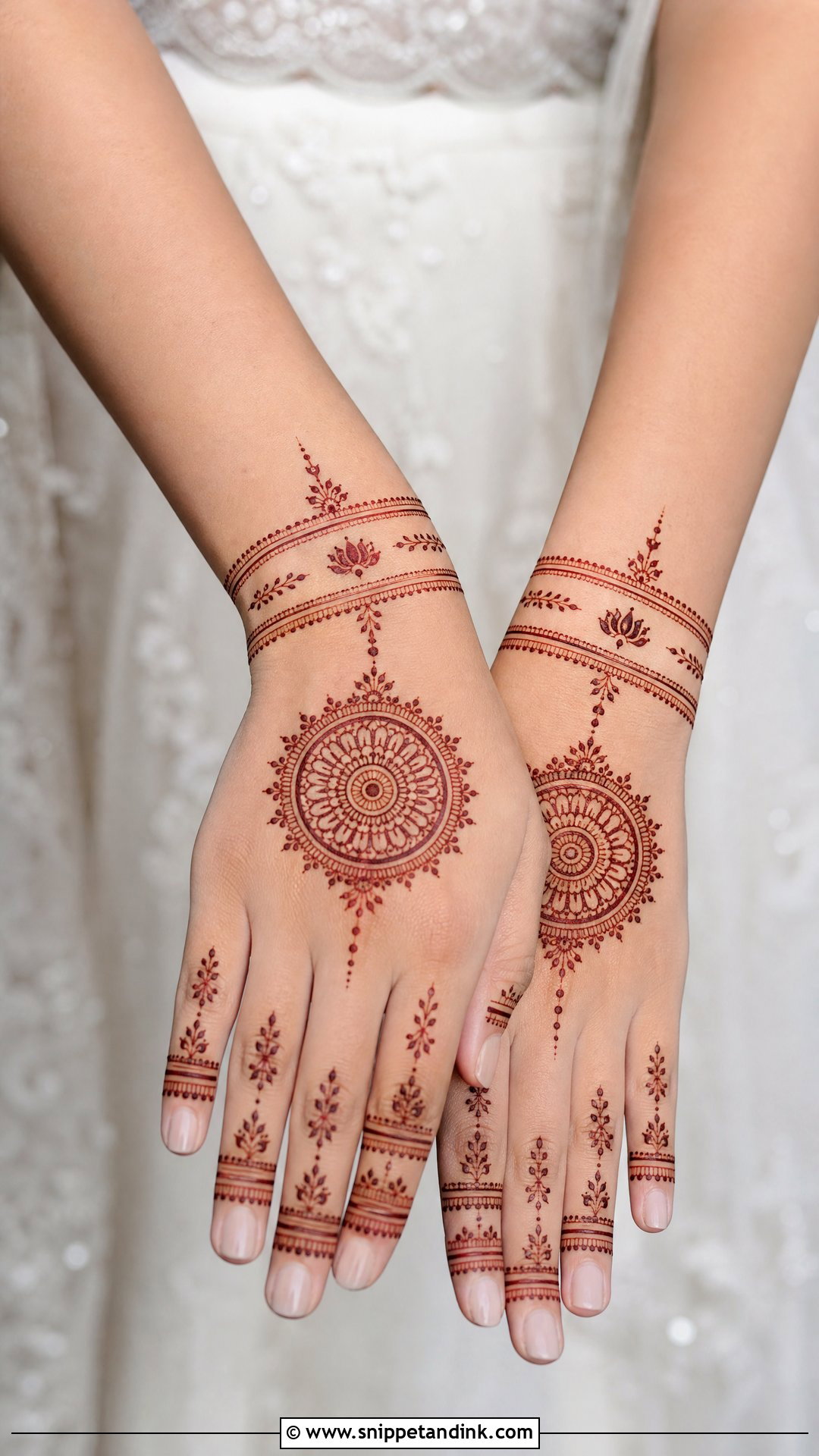
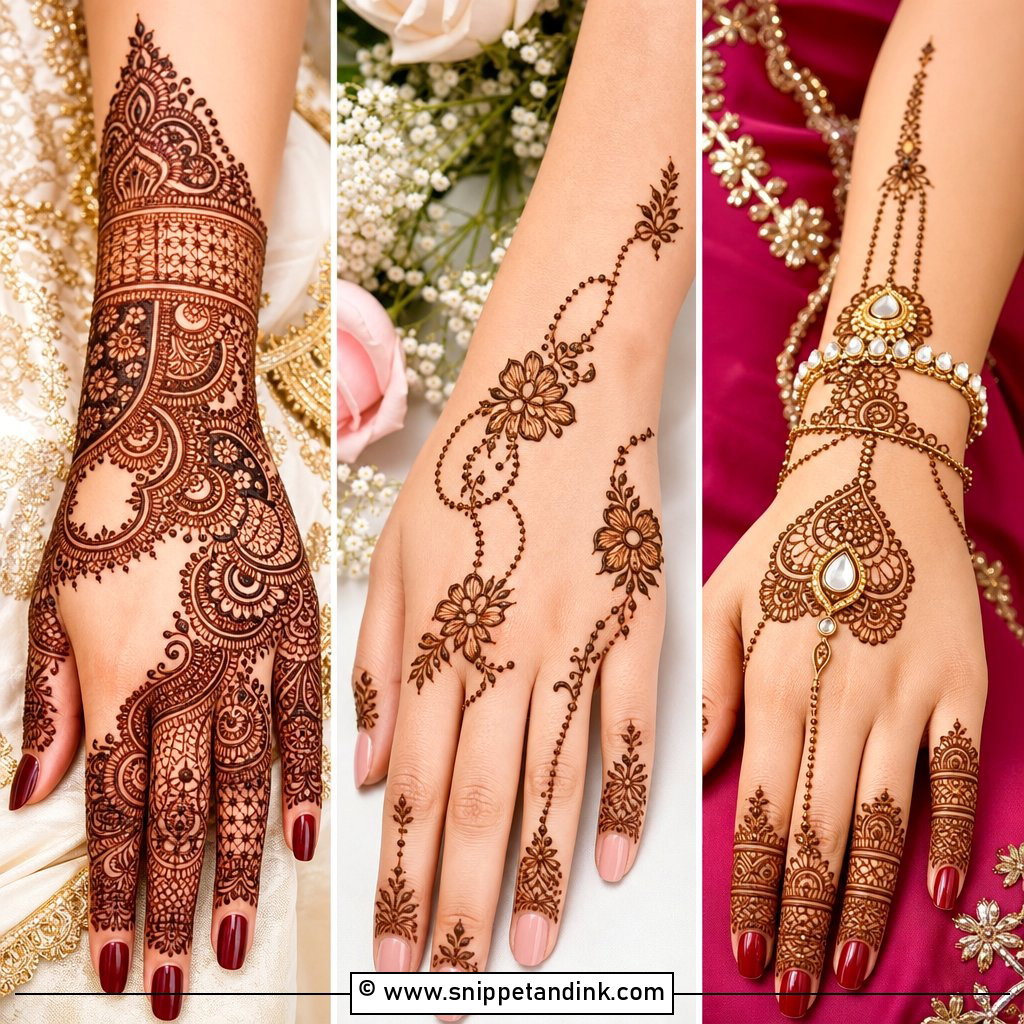
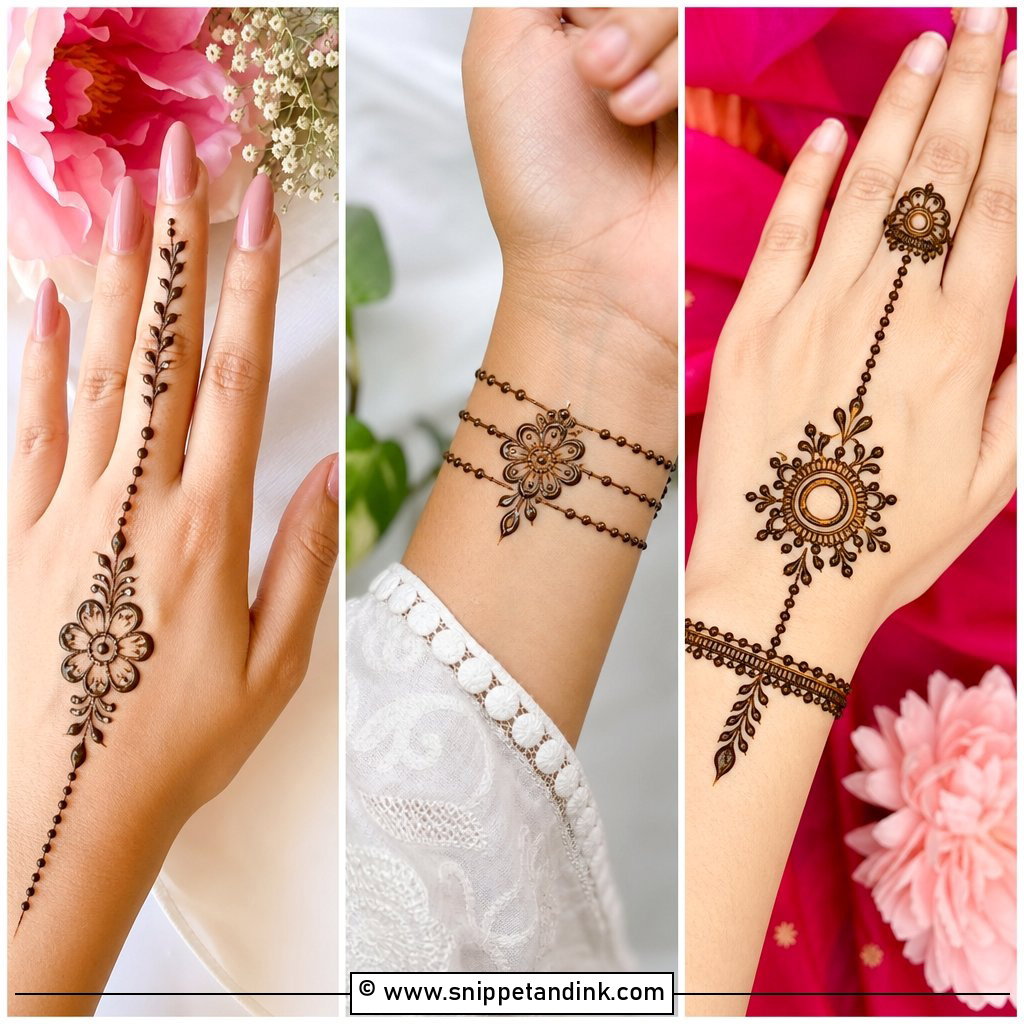
Minimal doesn’t mean casual, but it does mean placement has to be exact. Instead of full coverage, I choose a few areas: the fingers, the centre of the palm, the wrist or the back of the hand. A small mandala, a fine floral trail, a delicate bracelet and neat finger bands can still look bridal. It suits courthouse weddings, small ceremonies, beach weddings and contemporary outfits with lighter jewellery. Keep both hands balanced and add one clear bridal detail, such as initials or a small lotus, so it doesn’t look like something you’d wear to a friend’s party.
9. Mandala Bridal Mehndi Design
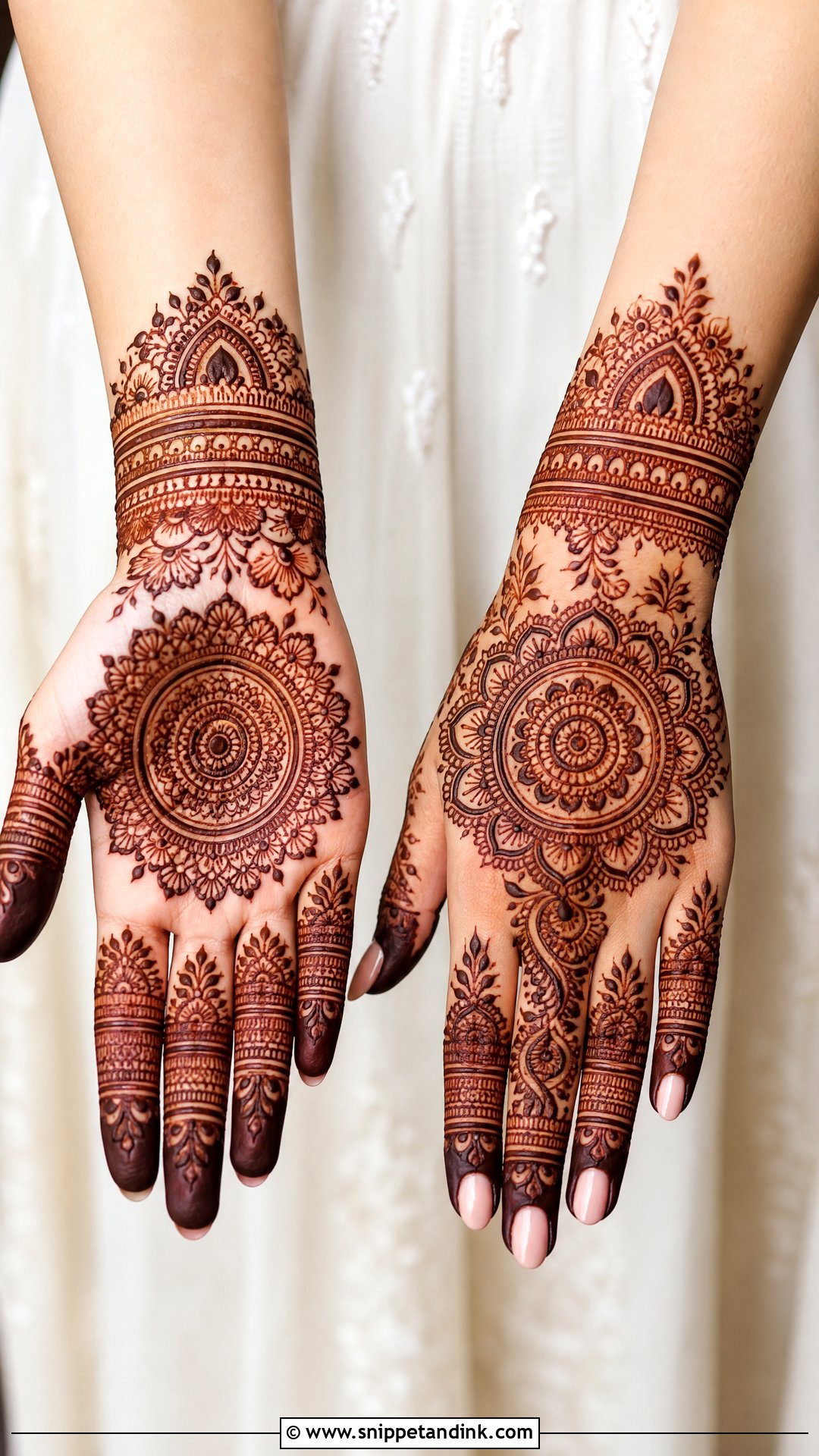
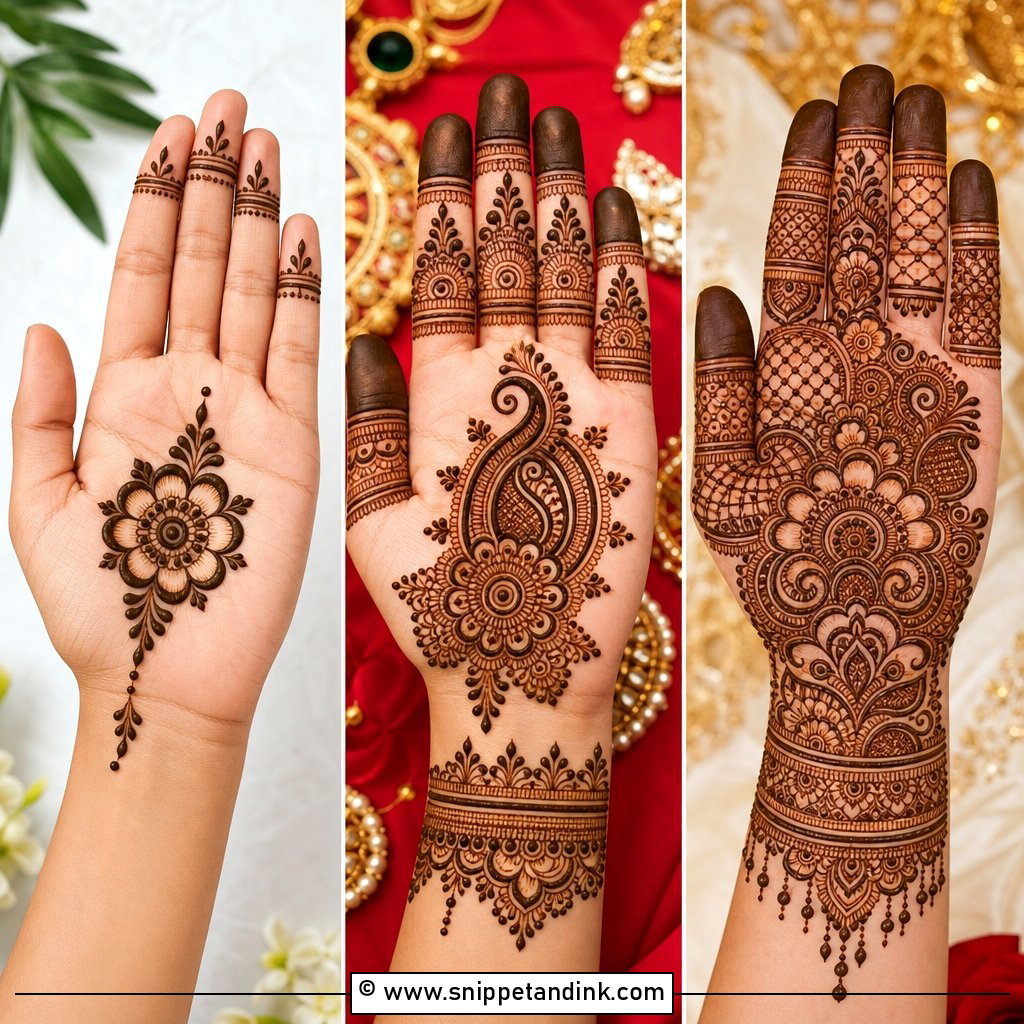
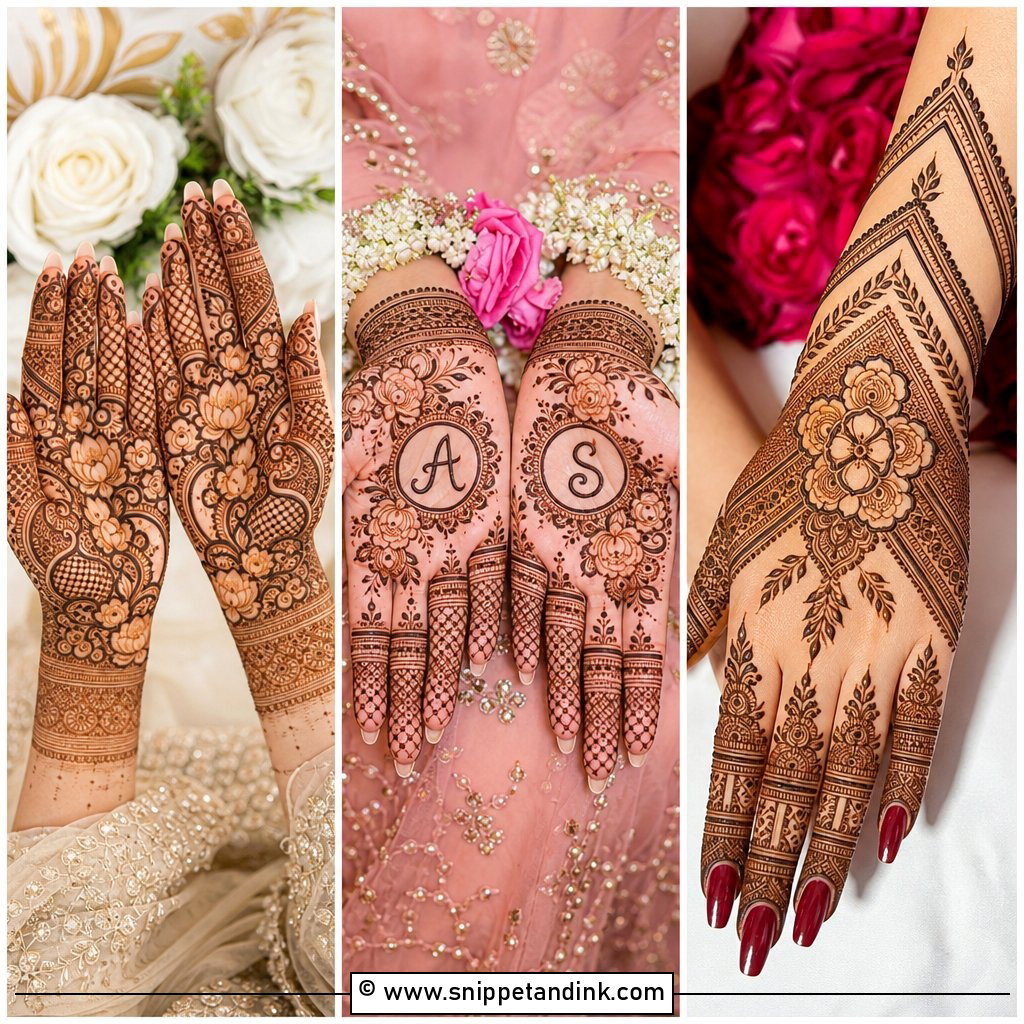
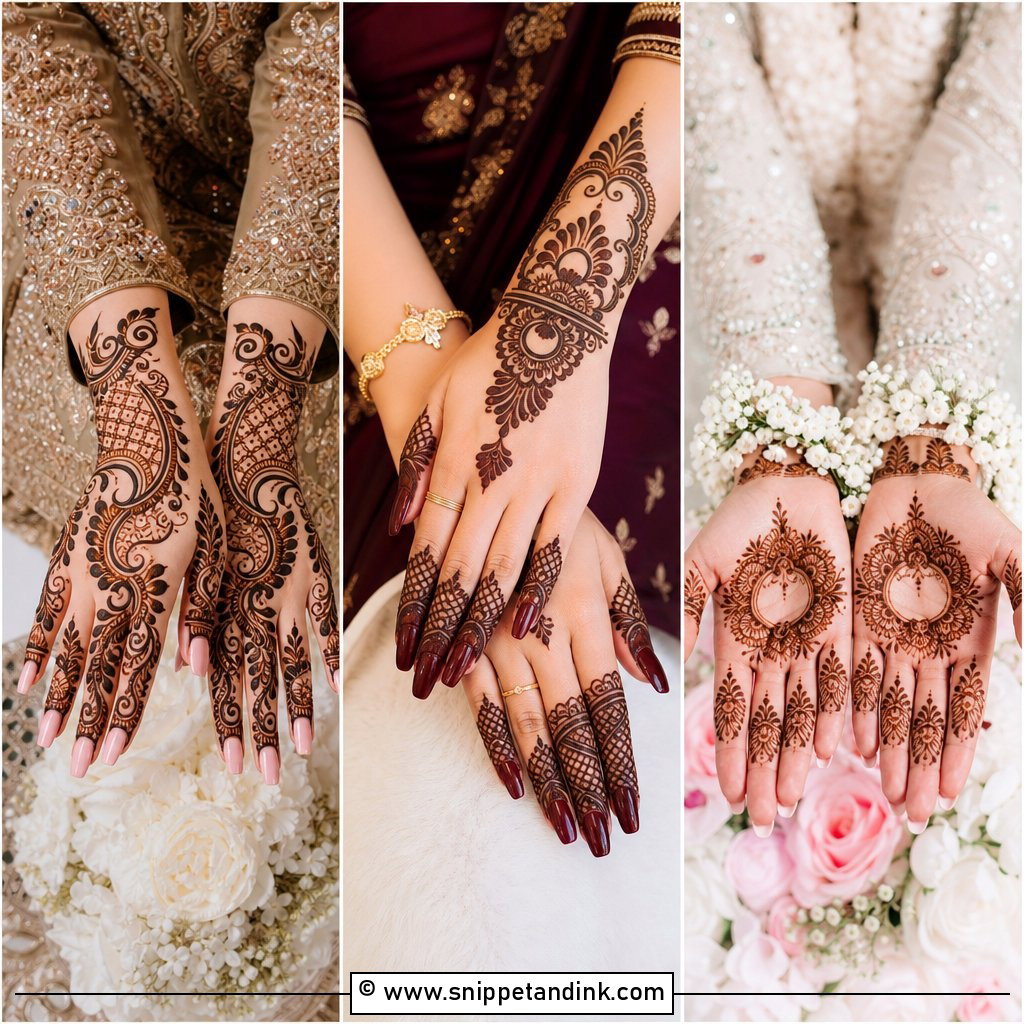
A mandala gives the eye one clear place to land. The central circle is surrounded by petals, dots, paisleys and fine lines, with bracelet-style bands at the wrist. You get symmetry and structure without heavy coverage. A palm mandala shows during rituals when your hands are held open; one on the back of the hand works for ring and bangle shots. Fingers take matching bands, leafy tips or a fine net. To make it more bridal, I extend it into layered wrist cuffs and add small florals around the main circle.
10. Floral Bridal Mehndi Design
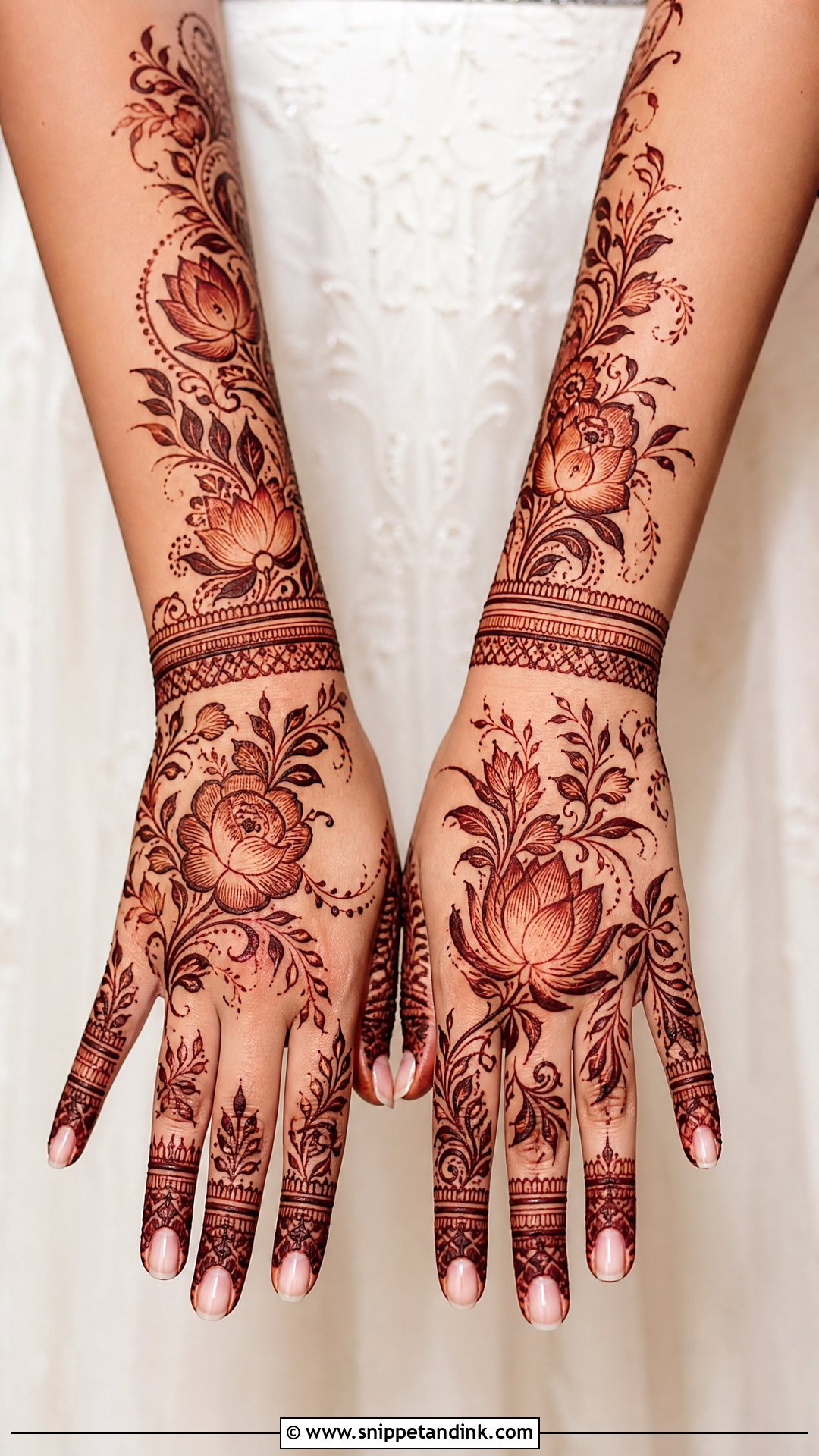
Florals adapt to almost any layout. Roses, lotus flowers, small blossoms, leafy vines and shaded petals can be arranged in Arabic, Indo-Arabic or Indian styles, depending on how much coverage you want. A full version starts with detailed fingertips, moves into large flowers on the palm and finishes with a wrist cuff or forearm trail. It suits brides who’d rather skip figures and symbols. My one rule: vary the flower sizes. Identical flowers repeated across the hand look stamped rather than drawn.
11. Peacock Bridal Mehndi Design
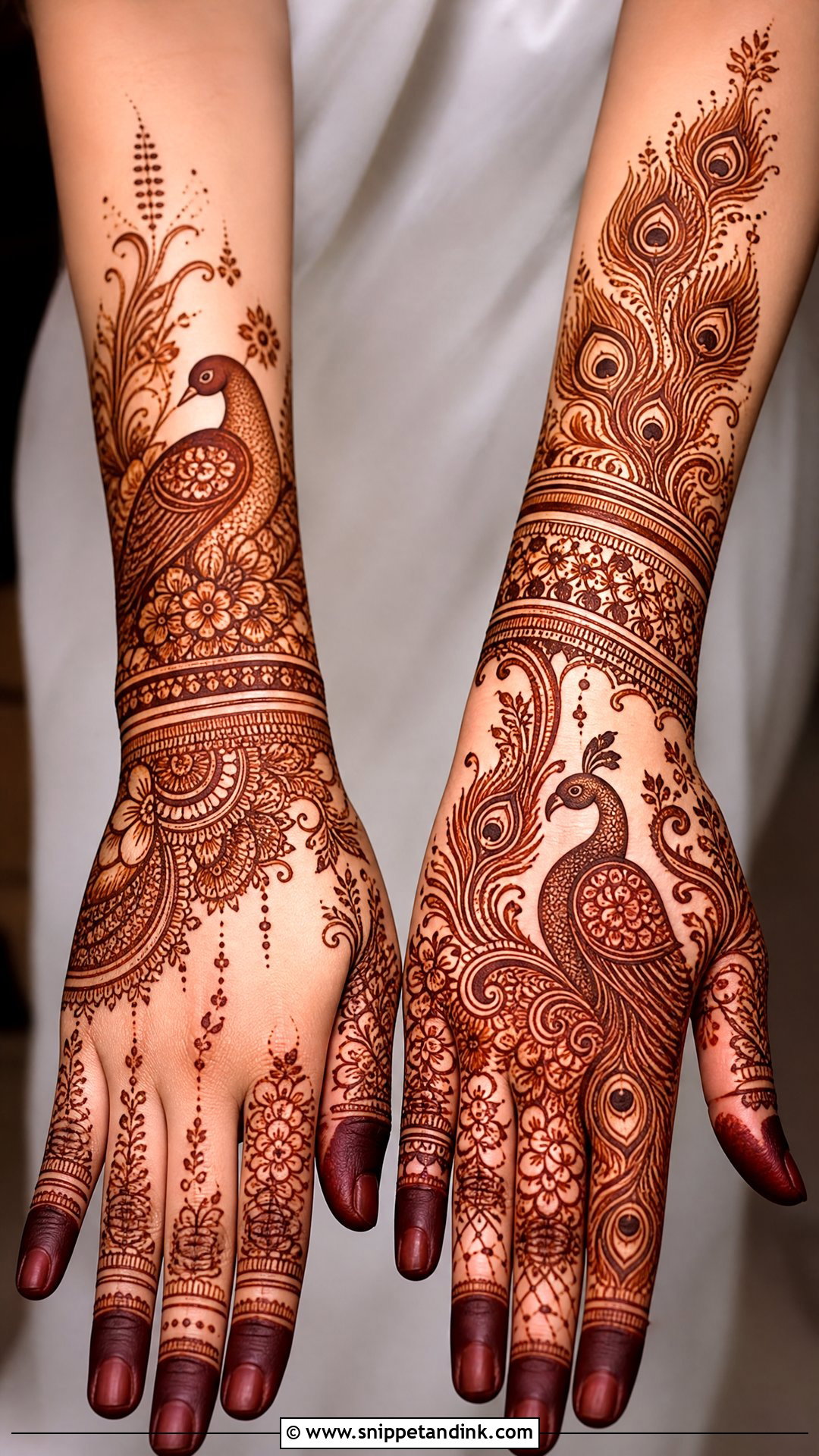
Peacocks belong to traditional Indian mehndi and carry a festive, symbolic feel. The bird can sit on the palm, wrist or forearm with its feathers spreading into paisleys, florals and fine curves. The back of the hand can echo it with smaller feather details, bracelet bands and filled fingers. Where peacocks go wrong is the neck: if it’s drawn too thin, it disappears once the stain develops. I give the body, neck and main feather lines a slightly heavier line than the filler. For a modern feel, one large peacock with space around it works better than many small ones.
12. Bridal Mehndi With Groom Name
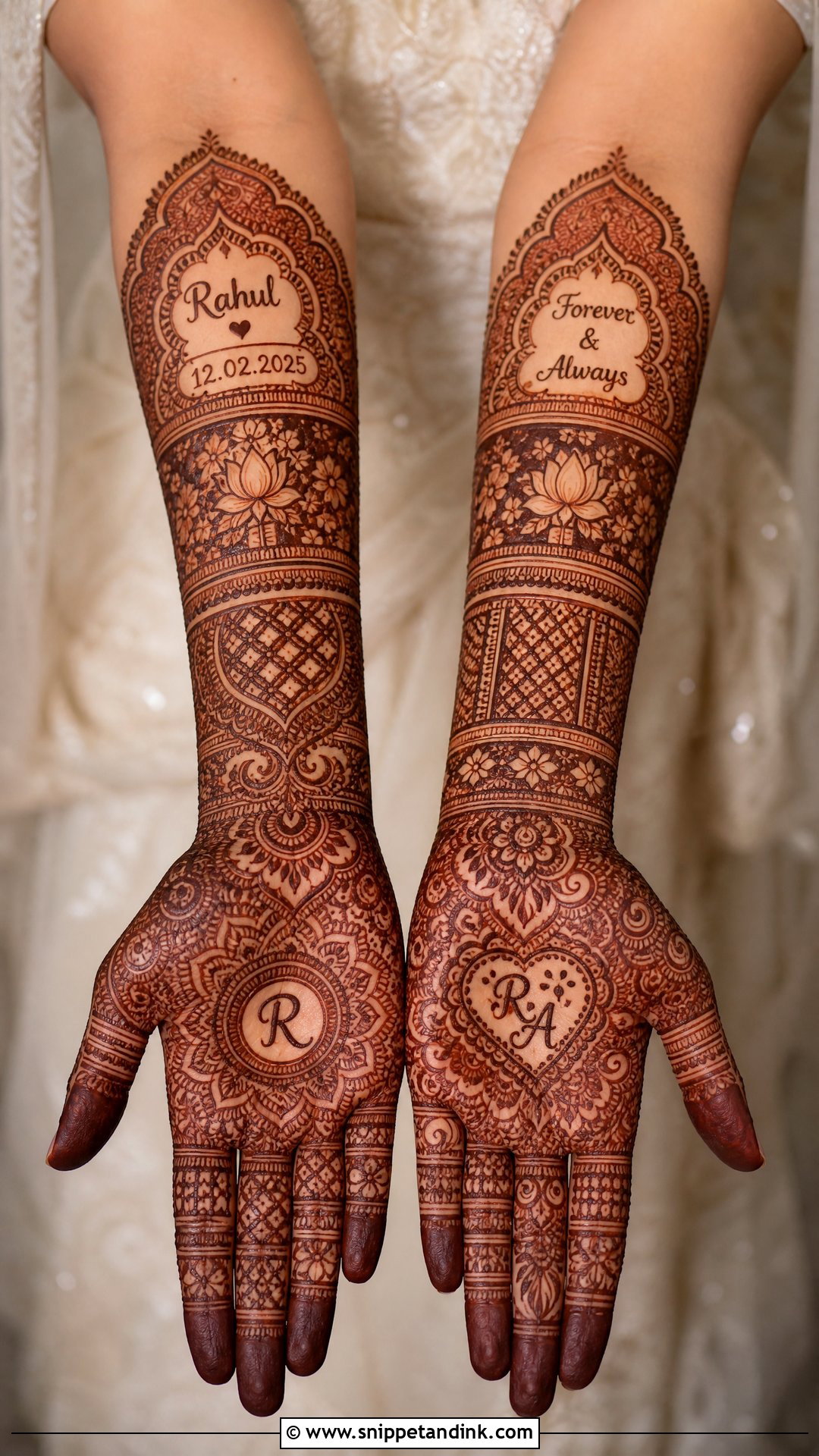
Bridal mehndi with groom name sets up one of the best moments of the wedding: him hunting for it while everyone watches. The name or initials hide inside paisleys, flowers, mandalas, jaali or a wrist band, and the rest of the hand stays traditional with lotus, peacocks, vines and fine filler. Some brides add the date or a small symbol for the couple. The trick is hiding it naturally while keeping the letters readable. If I bury it in dense filler, even I struggle to find it later, so I keep a little clear space around each letter.
13. Bride And Groom Bridal Mehndi Design
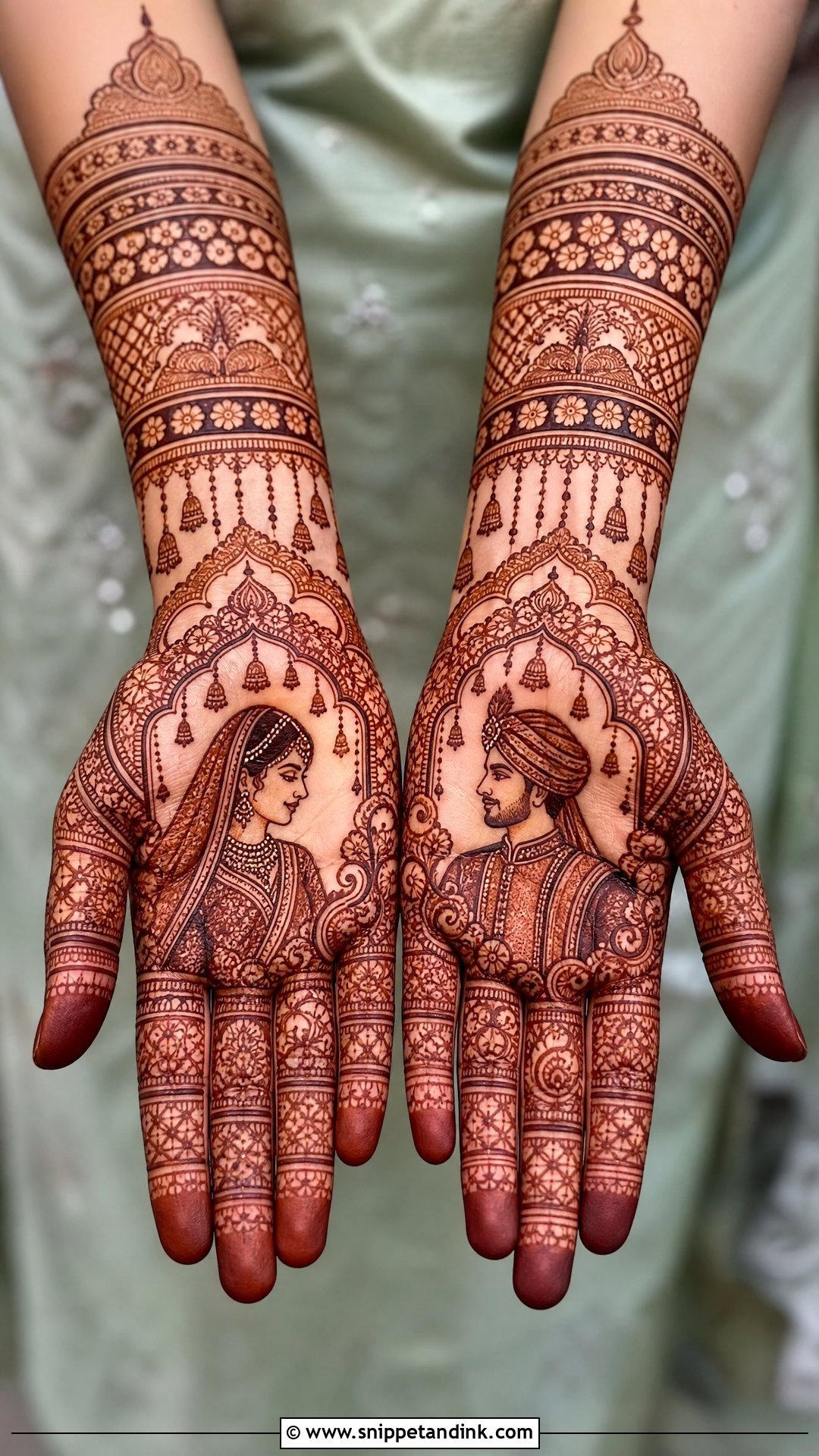
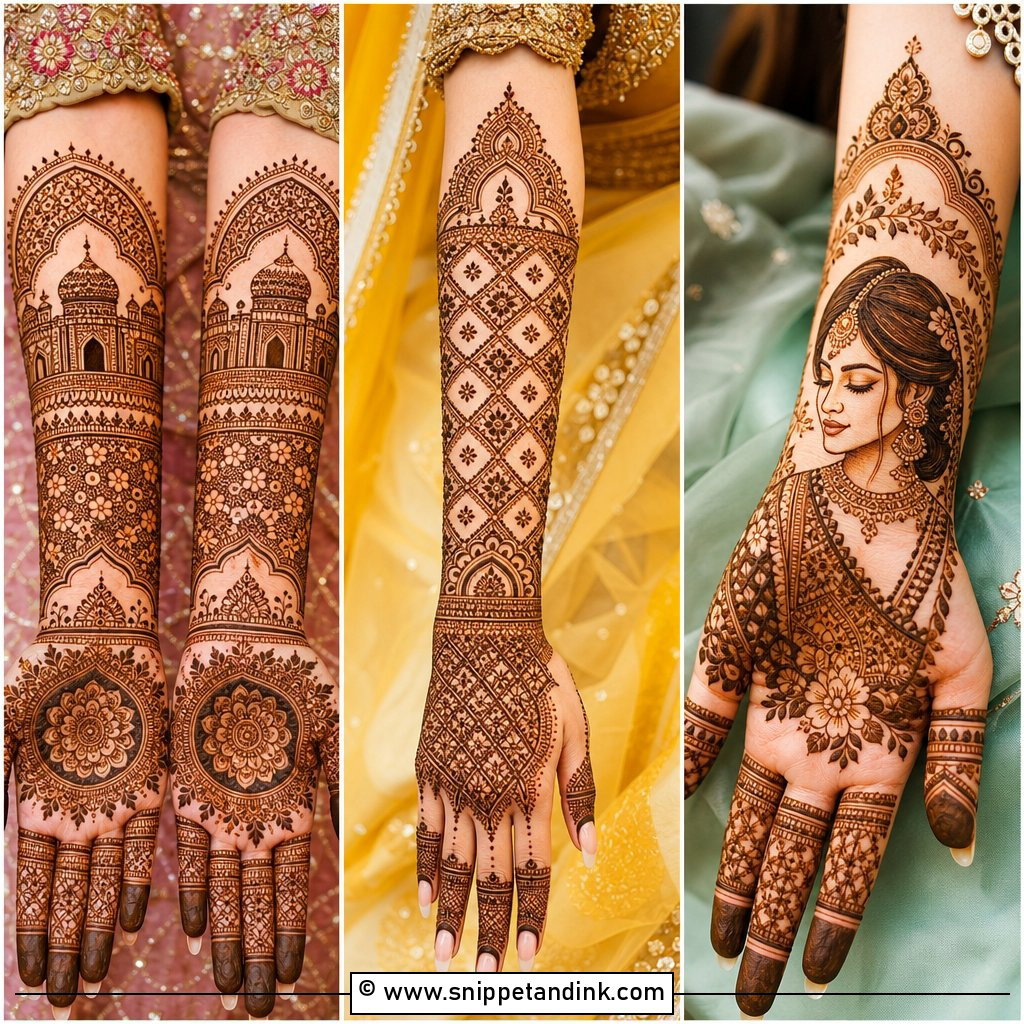
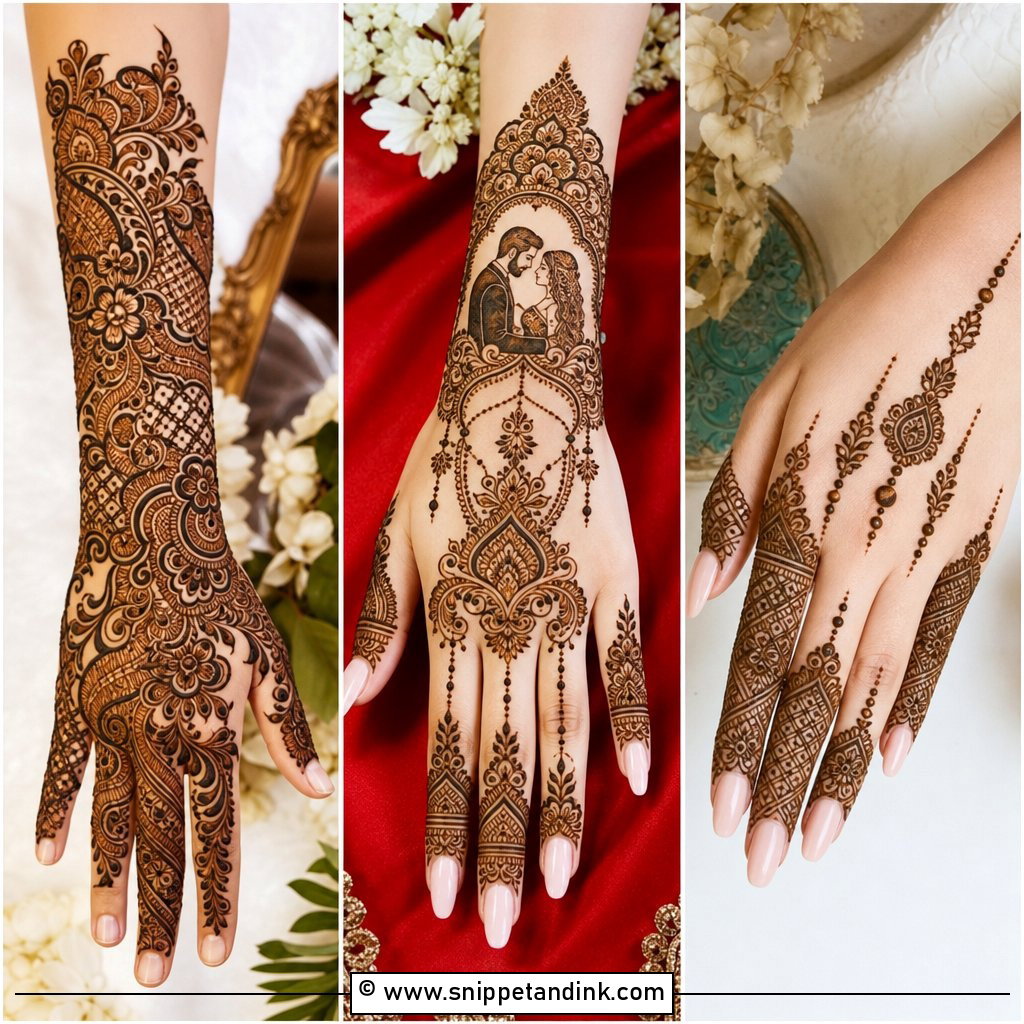
Couple portraits put the wedding on your hands. The bride goes on one palm and the groom on the other, or both appear together inside a framed mandap-style scene, surrounded by florals, paisleys, bells, jaali and borders. It needs full-hand coverage, because portraits need room. Keep the faces simple rather than realistic. A highly detailed face looks clever while the paste is wet, but as the stain darkens the fine shading merges, and a simple outline with a few clear features stays crisp.
14. Back Hand Bridal Mehndi Design
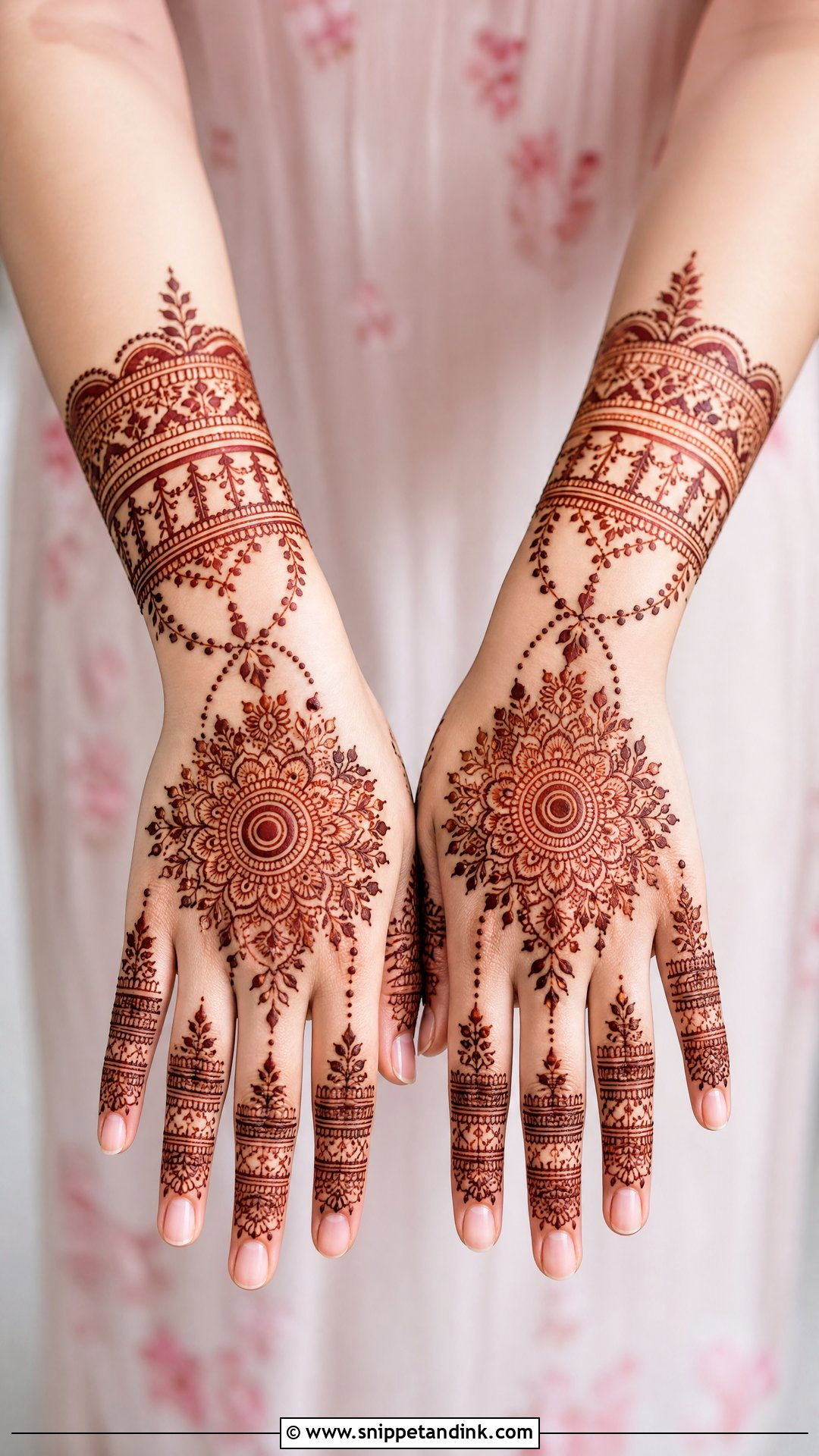
The back of the hand is what shows in ring, bangle and bouquet photos, so it deserves as much planning as the palm. A complete layout can include a central mandala, a floral trail, finger patterns, a wrist cuff and bracelet chains. If you’d prefer a lighter palm, a detailed back hand still makes the look feel finished. Indo-Arabic and Arabic patterns flow especially well here. Connect the finger details to the main design so the fingers don’t look like separate pieces. Expect this side to stain a shade lighter than the palm.
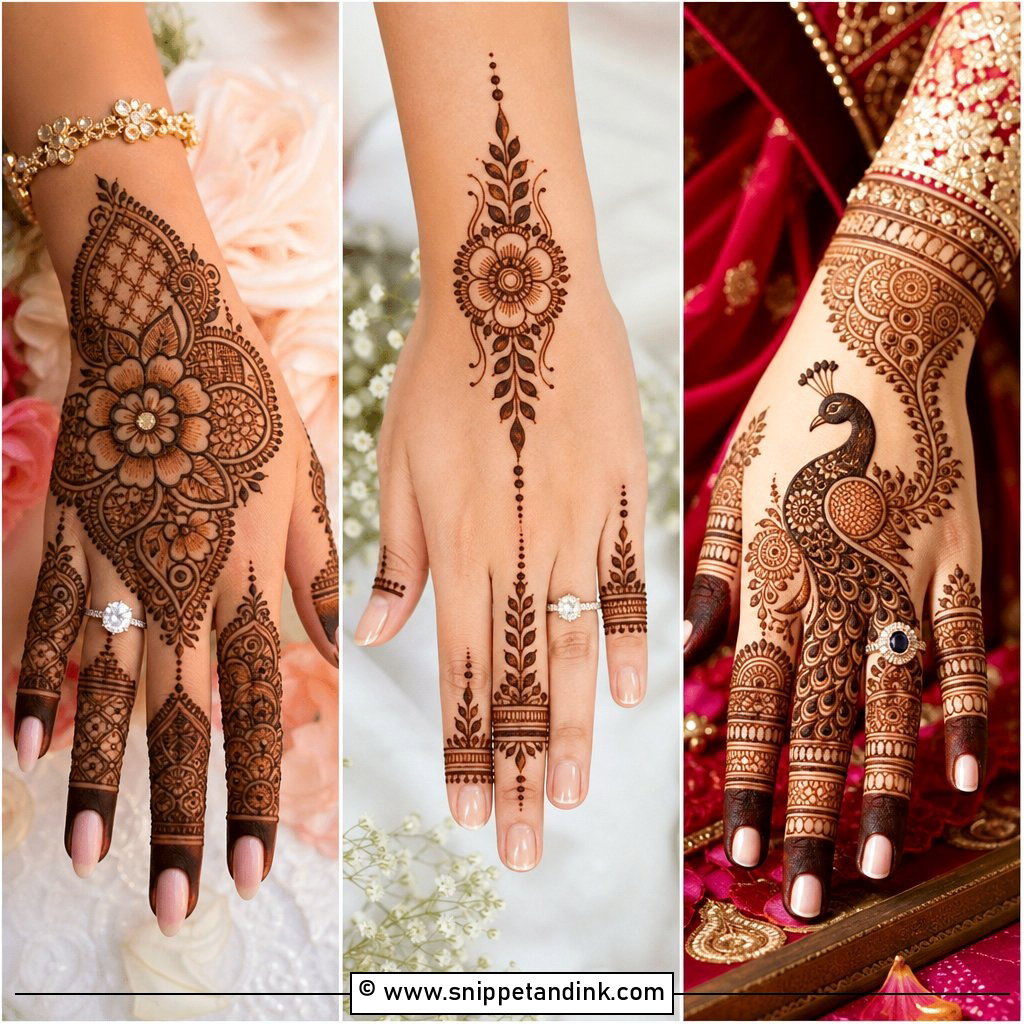
15. Palm Bridal Mehndi Design
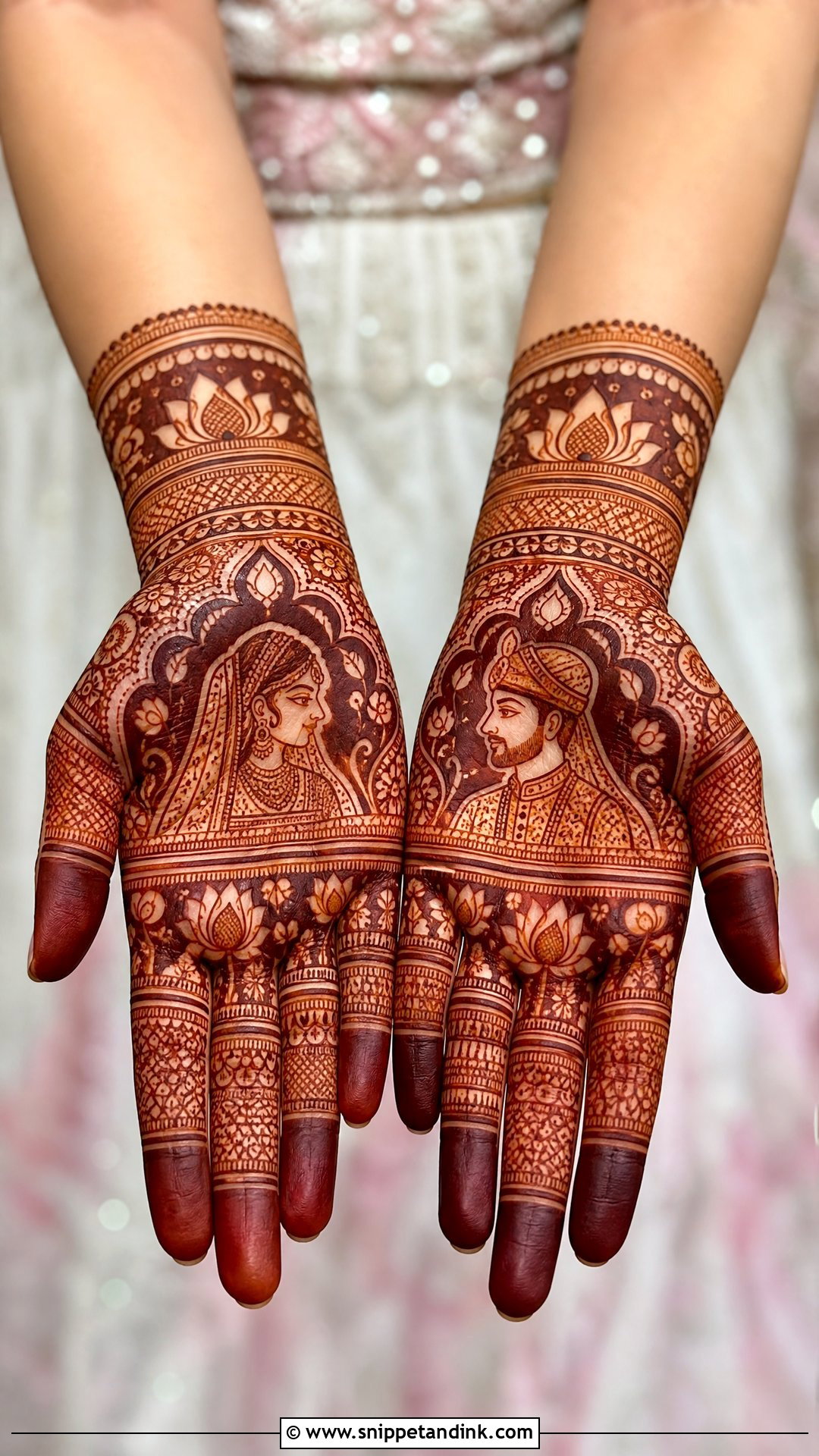
The palm is where your hands are seen during rituals and blessings, held open and close to the camera. A strong palm design might use a mandala, bride and groom artwork, a lotus, paisleys or a circular floral frame, with small bands, leafy details, dots and fine mesh on the fingers. It suits brides who want the focus inside the hands rather than up the arms. It can be dense or semi-open. Keep the centre motif bold and the surrounding details smaller, so the palm still looks orderly when the stain reaches its deepest colour.
16. Wrist To Forearm Bridal Mehndi Design
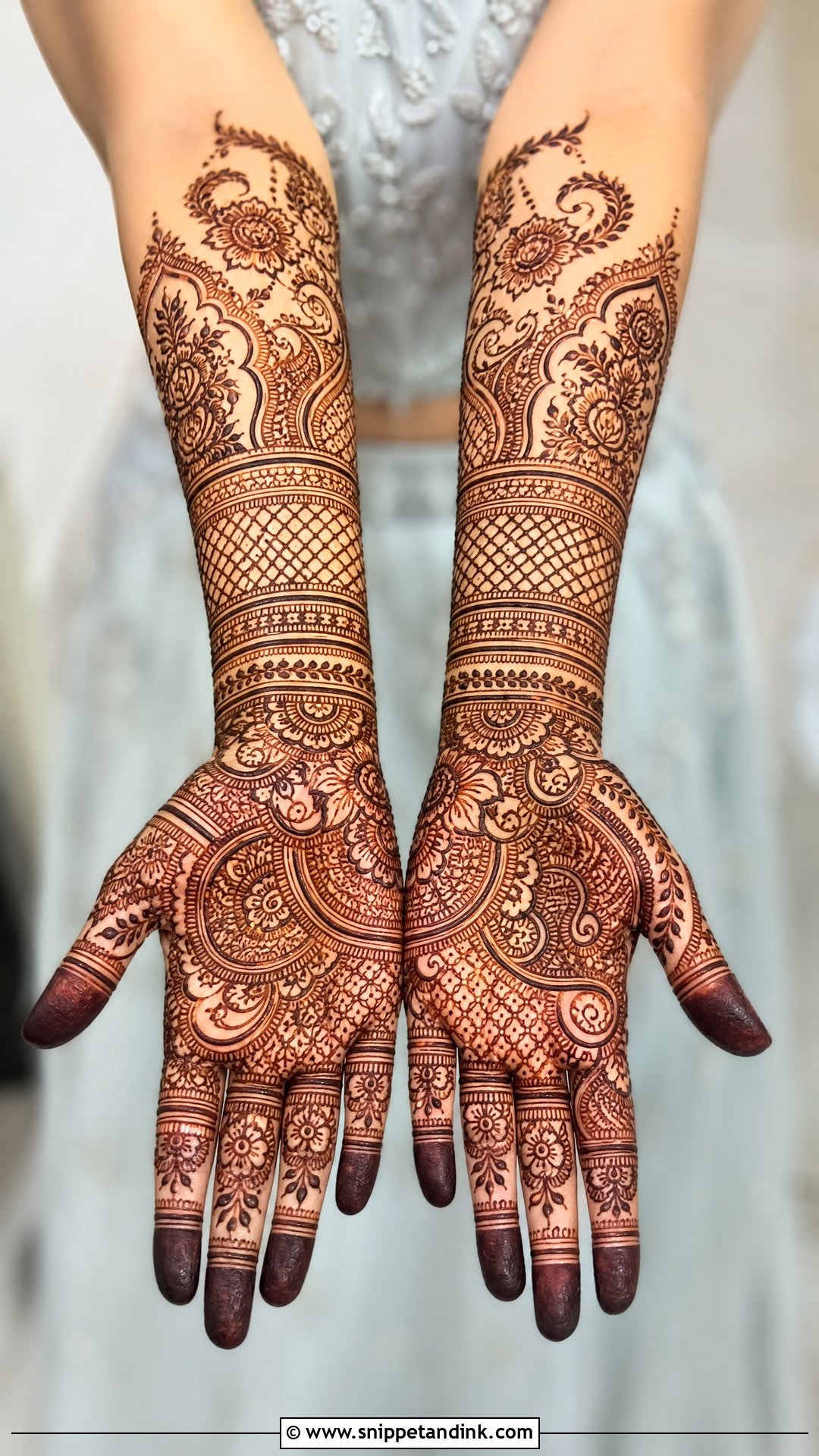
Wrist-to-forearm coverage stops short of the elbow, which gives you a long, graceful line with less sitting time than full arms. The design begins at the fingers, crosses the palm, wraps the wrist and finishes in a floral or paisley trail up the forearm. Bracelet cuffs, vines, jaali bands and mandala frames all suit this layout, and the wrist section looks like jewellery between your bangles. I taper the design as it climbs the arm so it fades out softly. Check the length against your blouse sleeve; you don’t want the end of the trail hidden just under the fabric.
17. Finger Bridal Mehndi Design
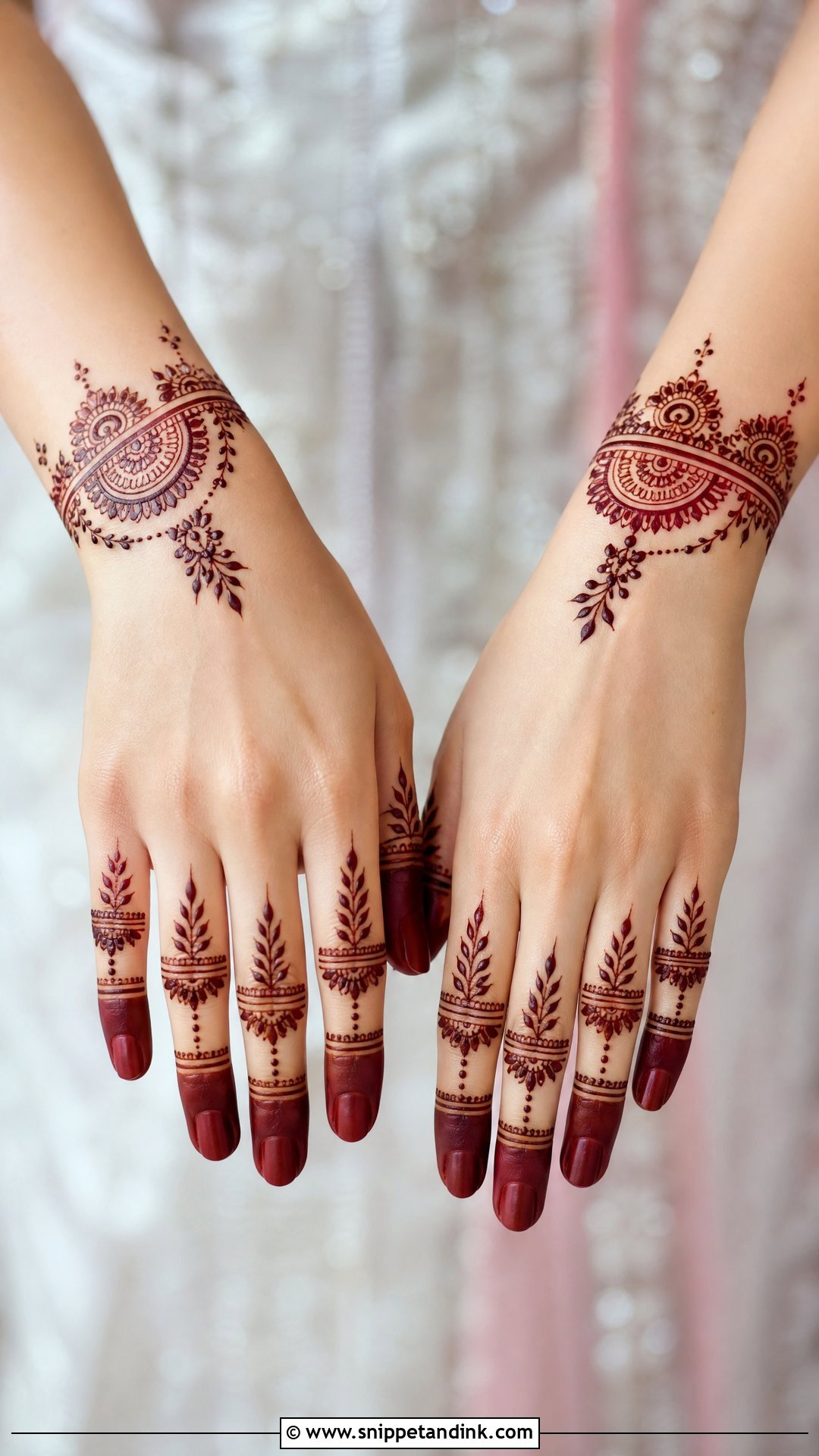
Finger designs are the most modern way to wear bridal mehndi, but they still need to feel connected to the rest of the hand. Filled tips, ring-style bands, leafy lines and small florals run along the fingers, often linked to a wrist or back-hand element. The back of the hand can be left mostly open. It looks sharp with rings and nail polish. Do your manicure before the henna, though, because filing and soaking afterwards fade the fingertips first. A small mandala or floral bracelet at the wrist ties the whole hand together.
18. Jaali Bridal Mehndi Design
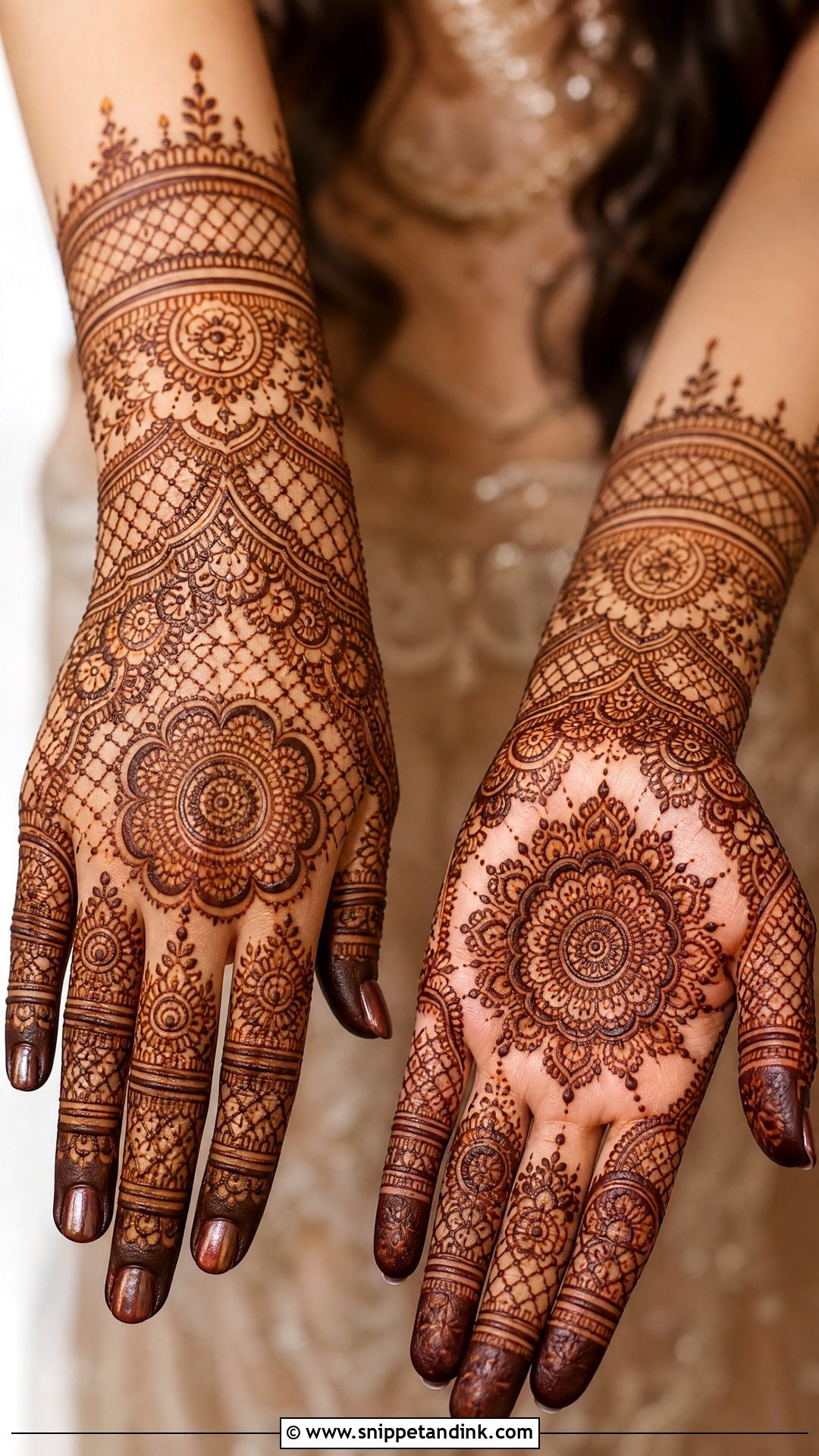
Jaali is a net pattern, and on the hands it reads like lace. It can fill palms, back hands, fingers or wrist cuffs, usually combined with flowers, paisleys and mandalas. It suits brides who want detailed but orderly coverage, and the contrast between lines and open squares photographs well. I use jaali as a background with bold motifs laid over or around it. On its own, a hand full of mesh looks flat and repetitive, and very tight squares close up as the stain spreads.
19. Lotus Bridal Mehndi Design
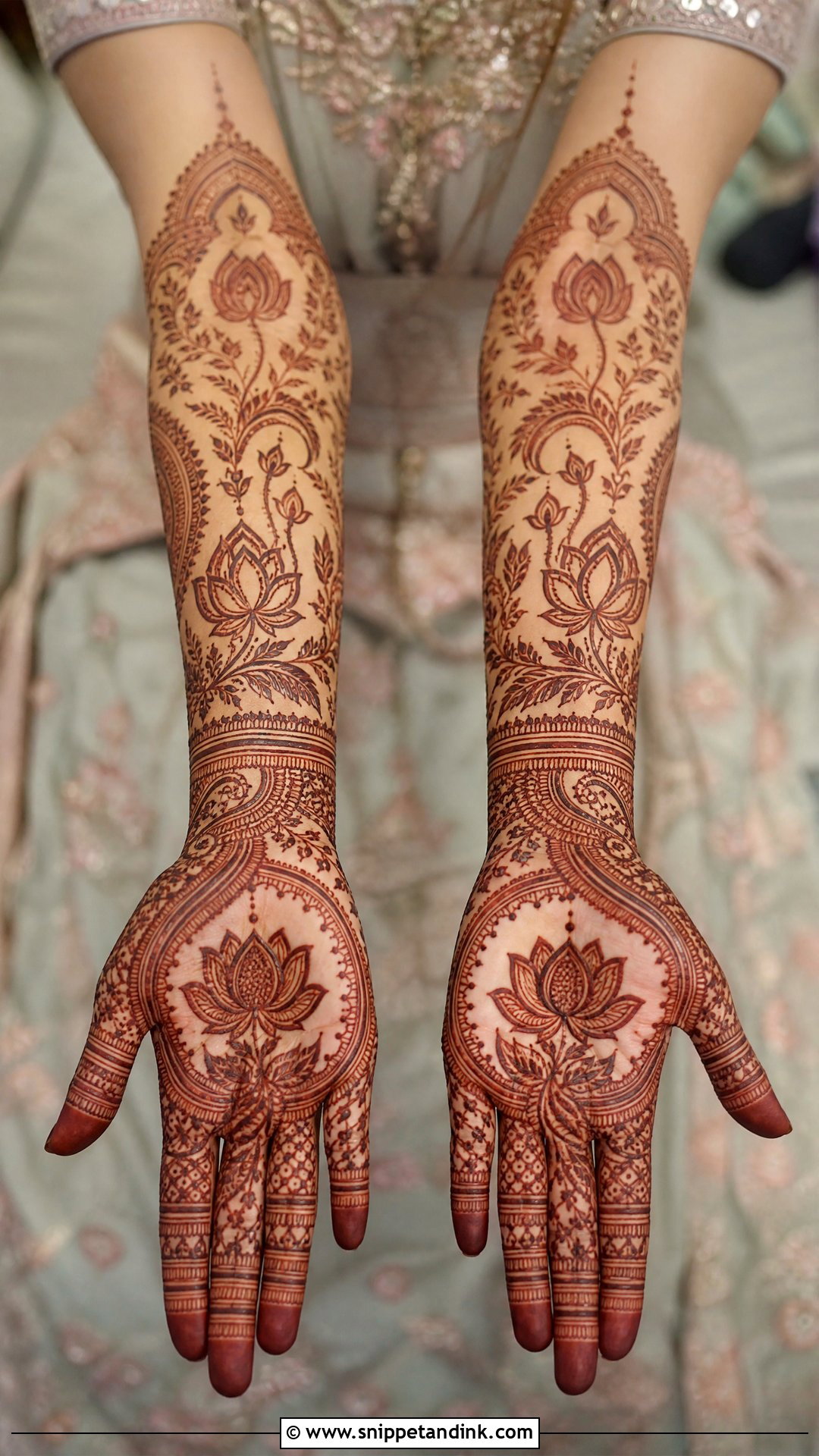
The lotus carries a spiritual meaning for many brides, and it’s softer than portrait work. It can sit in the centre of the palm, along the wrist or repeat through the forearm, pairing well with mandalas, paisleys, dots and fine vines. A lotus layout on the back of the hand looks elegant with rings and bangles. Keep the petals layered and clean so the flower holds its shape after staining. Small lotus buds along the fingers or inside the wrist bands make it feel richer without adding heavy filler.
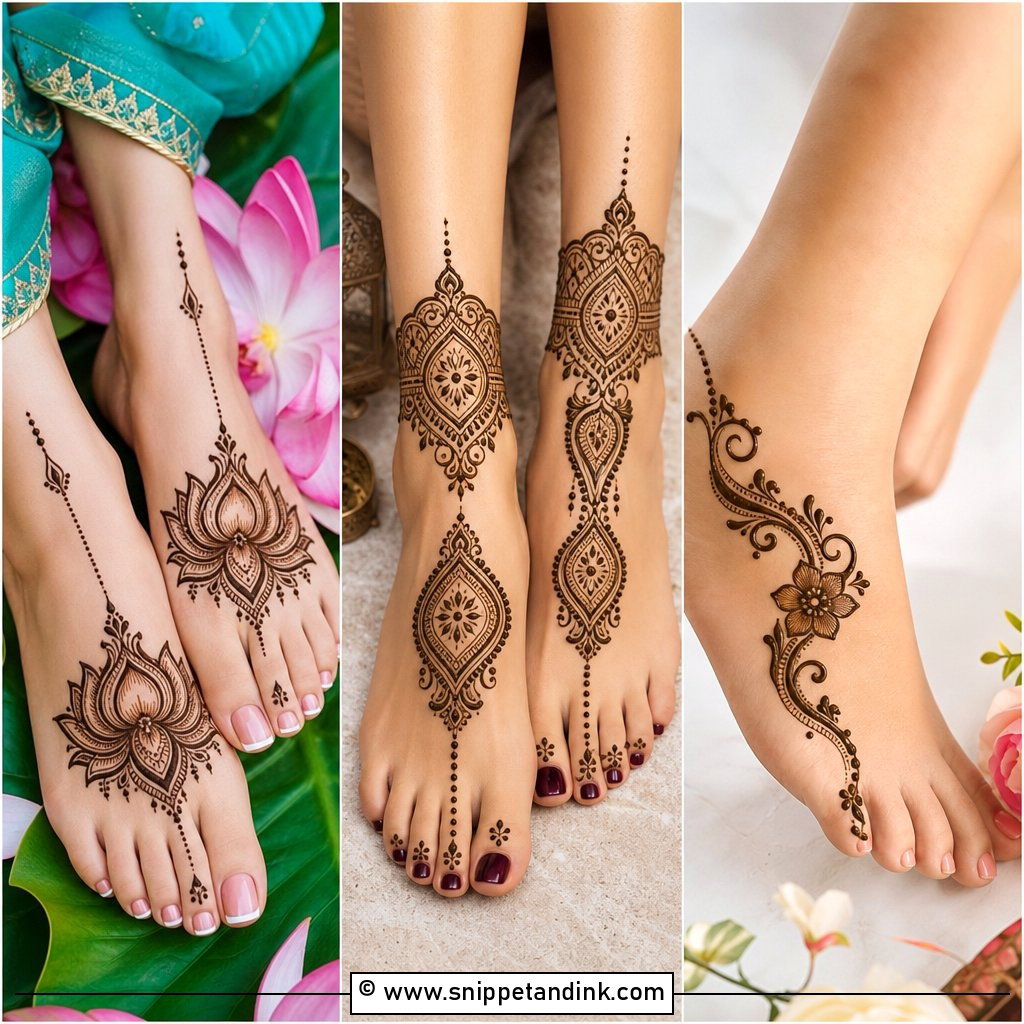
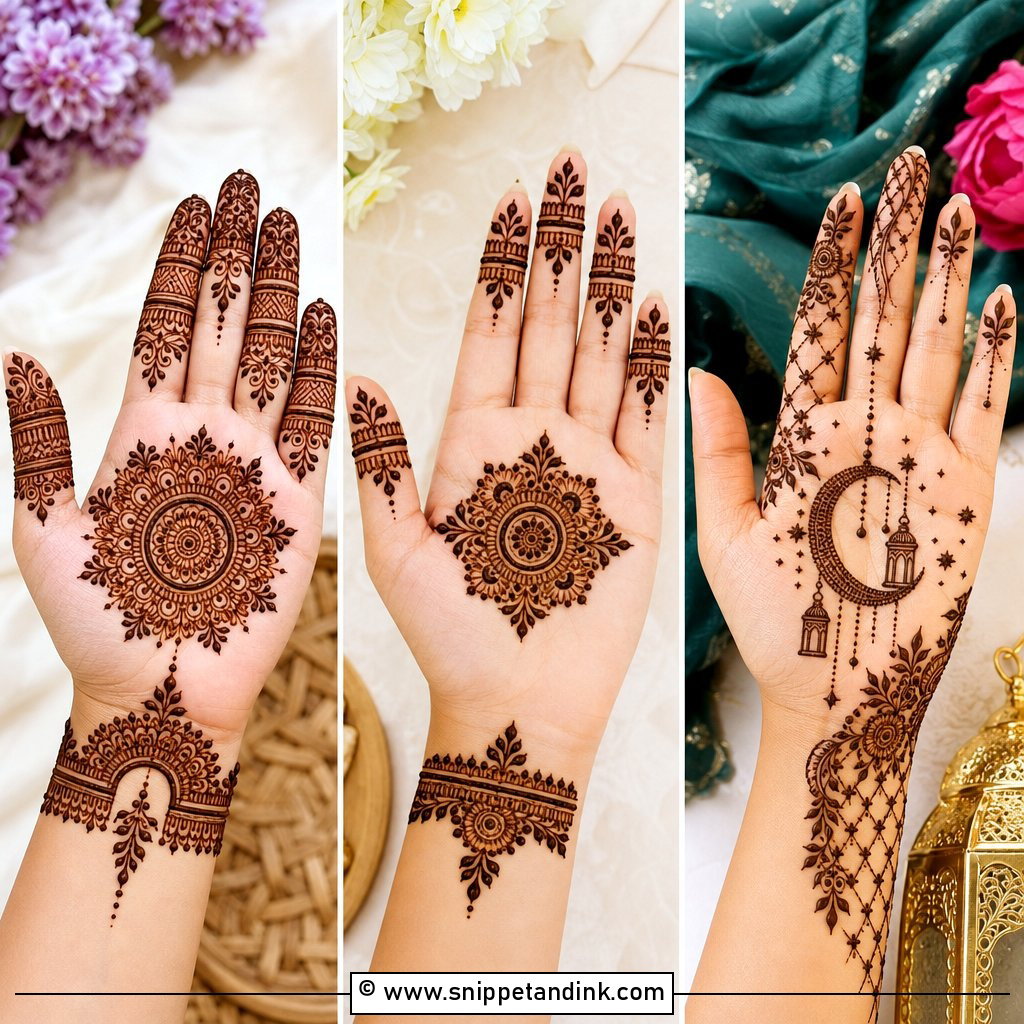
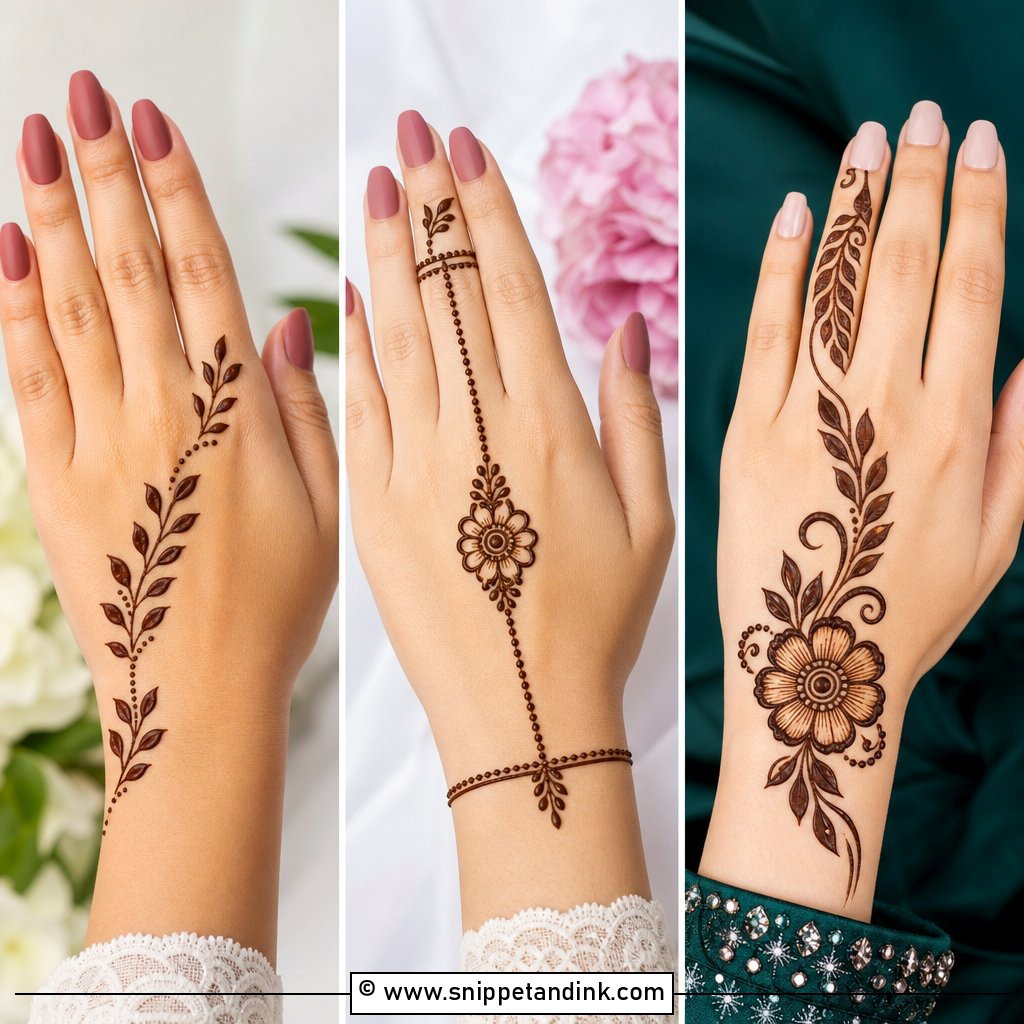
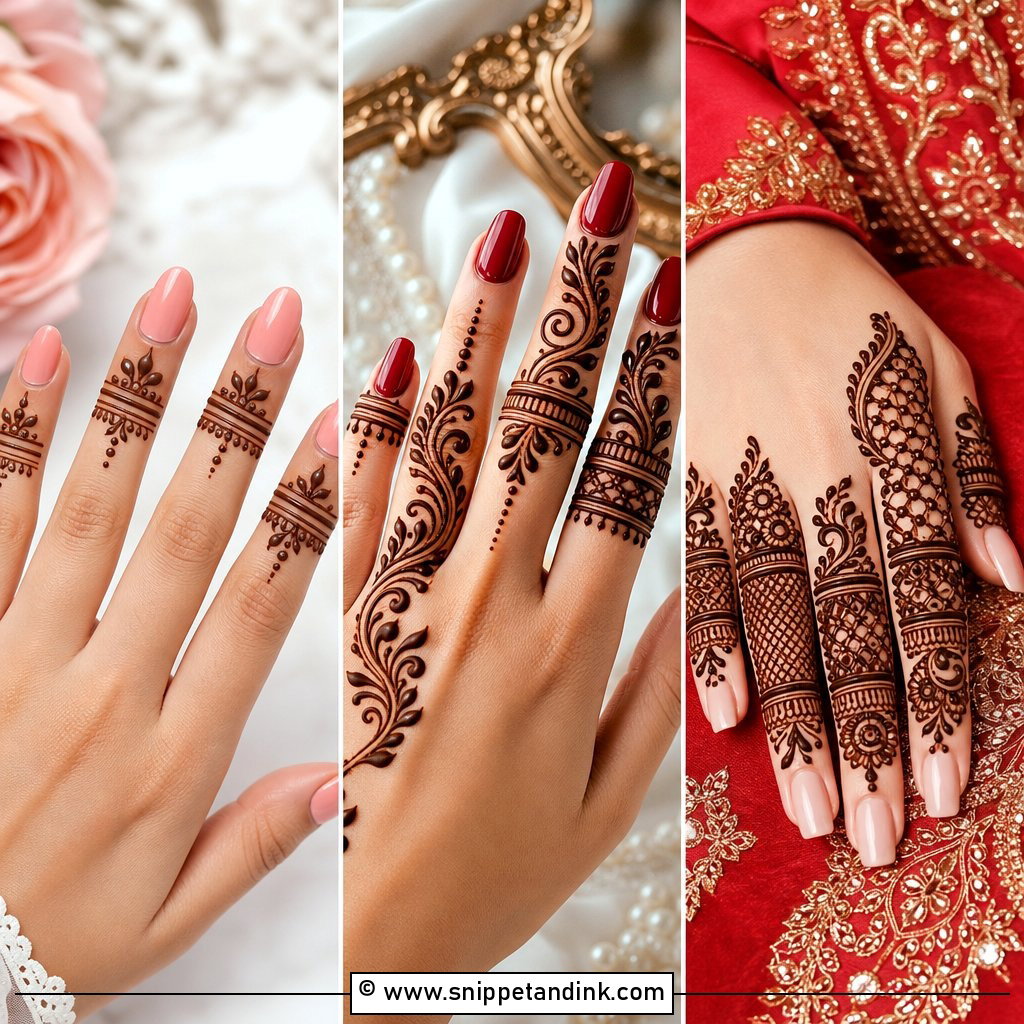
20. Modern Bridal Mehndi Design
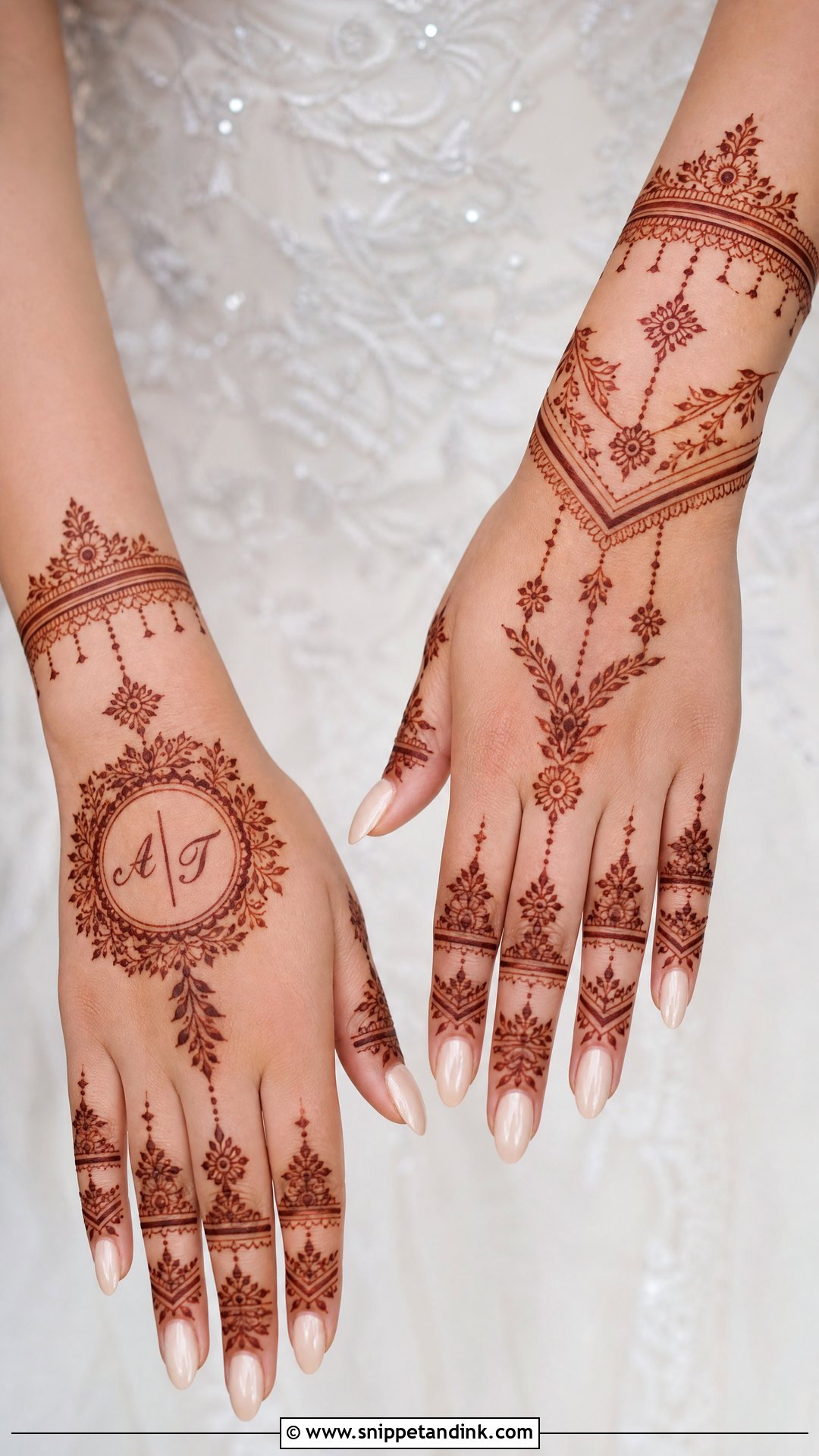
Modern bridal mehndi keeps the tradition and changes the layout. Negative space, clean florals, personal initials, geometric details, soft wrist cuffs and delicate finger patterns take the place of dense filling. It goes with pastel lehengas, fusion outfits, silk sarees and contemporary gowns. The design principle I follow is one main focal point per hand, with wrist and finger details that support it rather than compete. Without that anchor, a modern design can look unfinished instead of deliberate.
If the Stain Comes Out Pale
It happens, and it’s usually not a disaster. Remember that the colour right after removal is orange and will keep darkening for up to two days. Don’t judge it in the first few hours. Warmth helps the dye develop, so keep your hands warm and away from water, and rub a little balm or oil over the design.
The usual causes of a light stain are washing too soon, removing the paste early, cold hands, lotion on the skin before application, or a paste that wasn’t fresh. Skin also varies: some people simply stain lighter on the backs of their hands. Please don’t try to darken it with hair dye or anything sold as instant black. It can burn, and it won’t look like henna. If one area is clearly too light and there’s time, ask your artist whether a careful re-application of fresh paste over those lines is possible.
Guest Mehndi That Doesn’t Compete With the Bride’s
Mehndi nights often have dozens of sisters, cousins and friends waiting their turn. A few habits keep the bride’s hands special. Keep the portraits, the name and the main bridal motifs for the bride alone. Give guests lighter Arabic trails, small mandalas or simple finger designs on one hand, or the backs of both. And do the bride first, or have a separate artist for guests, so she isn’t squeezed for time at the end of the night.
Your Hands, Your Story, and How Many Hours You Can Sit
Your outfit, the ceremony, how long you can sit and the story you want your hands to tell will narrow these down quickly. Heavy Indian, Rajasthani and Pakistani designs feel deeply traditional, while Arabic, Gulf, Moroccan and minimal layouts are cleaner and more modern. Names, portraits, lotus, peacocks, mandalas, jaali and florals can make any of them more personal. Before your appointment, save a few clear references, agree on coverage and ask how long the design will take. Then trust your artist with the details.
You'll Like These Ideas:


Leave a Reply