
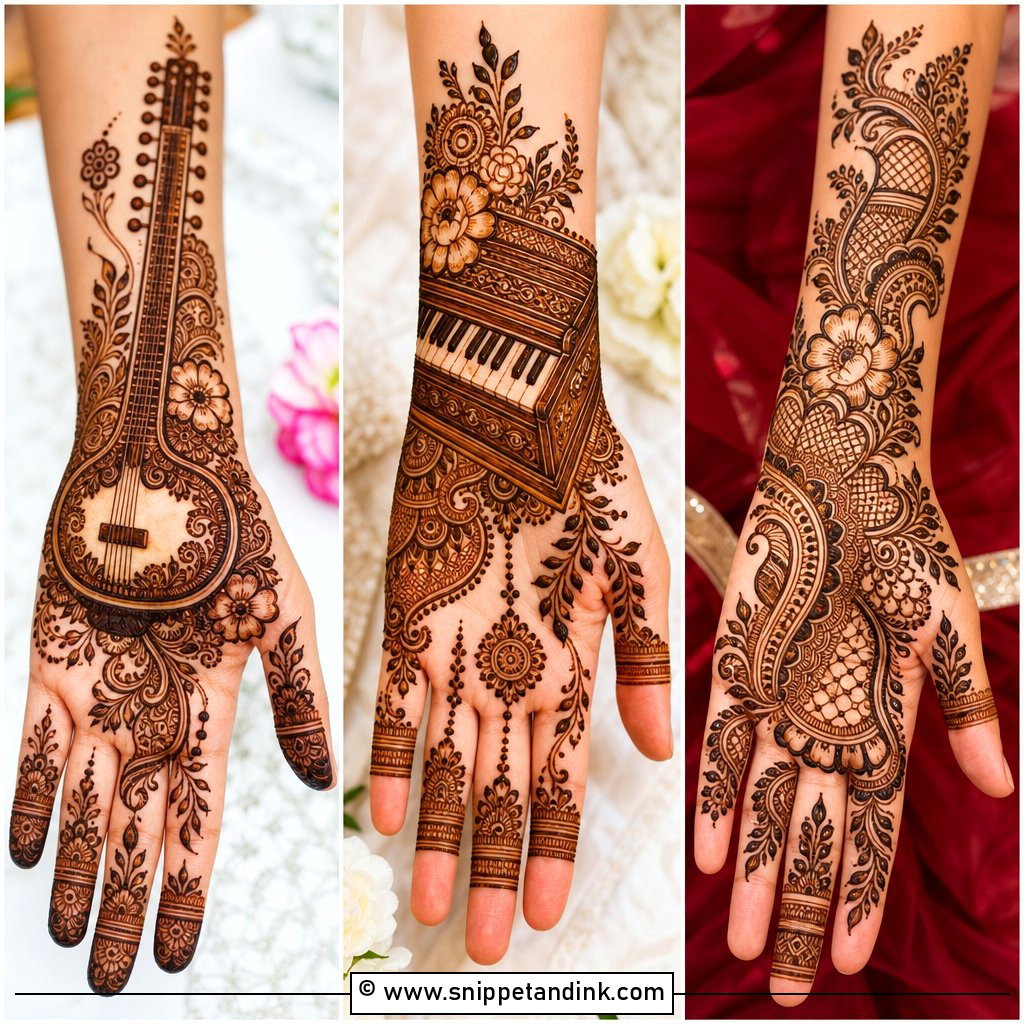
The mehndi I’m asked for now looks quite different from what clients wanted a few years ago. There’s more open skin, one strong focal motif instead of filling everywhere, and a lot of mixing: an Indian mandala in the palm with an Arabic trail up the wrist, or Khaleeji shading on a jewellery-style back hand. Below are thirty full-hand designs I’d happily put on a bride, a guest or a child at Eid, with notes on how long each one takes, how it stains and who it suits. Treat them as fresh inspiration to bring to your own artist, then let her fit the layout to your hands.
How Long Each Style Takes in the Chair
Before choosing a design, it helps to know how long you’ll need to sit still. Application time varies a lot between artists and hands, but as a rough guide:
- Finger-only, bracelet or simple Arabic designs: often under half an hour per pair of hands.
- Half-hand Arabic, Khaleeji or back-hand jewellery designs: roughly half an hour to an hour.
- Full bridal hands and forearms: several hours, and longer again with feet or portraits.
Then the paste needs to stay on for as long as you can manage, ideally six to eight hours or overnight. For a bride, I plan the application one or two days before the wedding, because the stain keeps darkening for about forty-eight hours after the paste comes off.
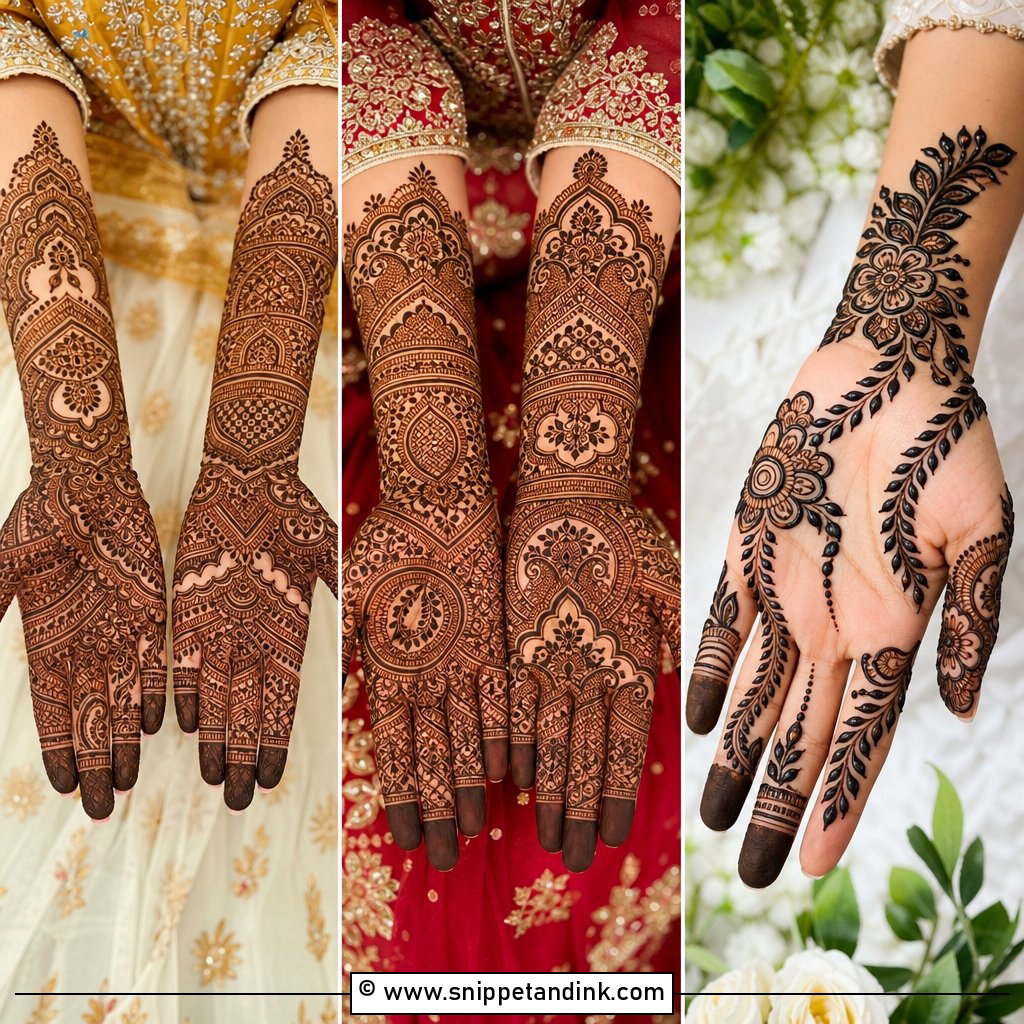
1. Full Hand Indian Bridal Mehndi
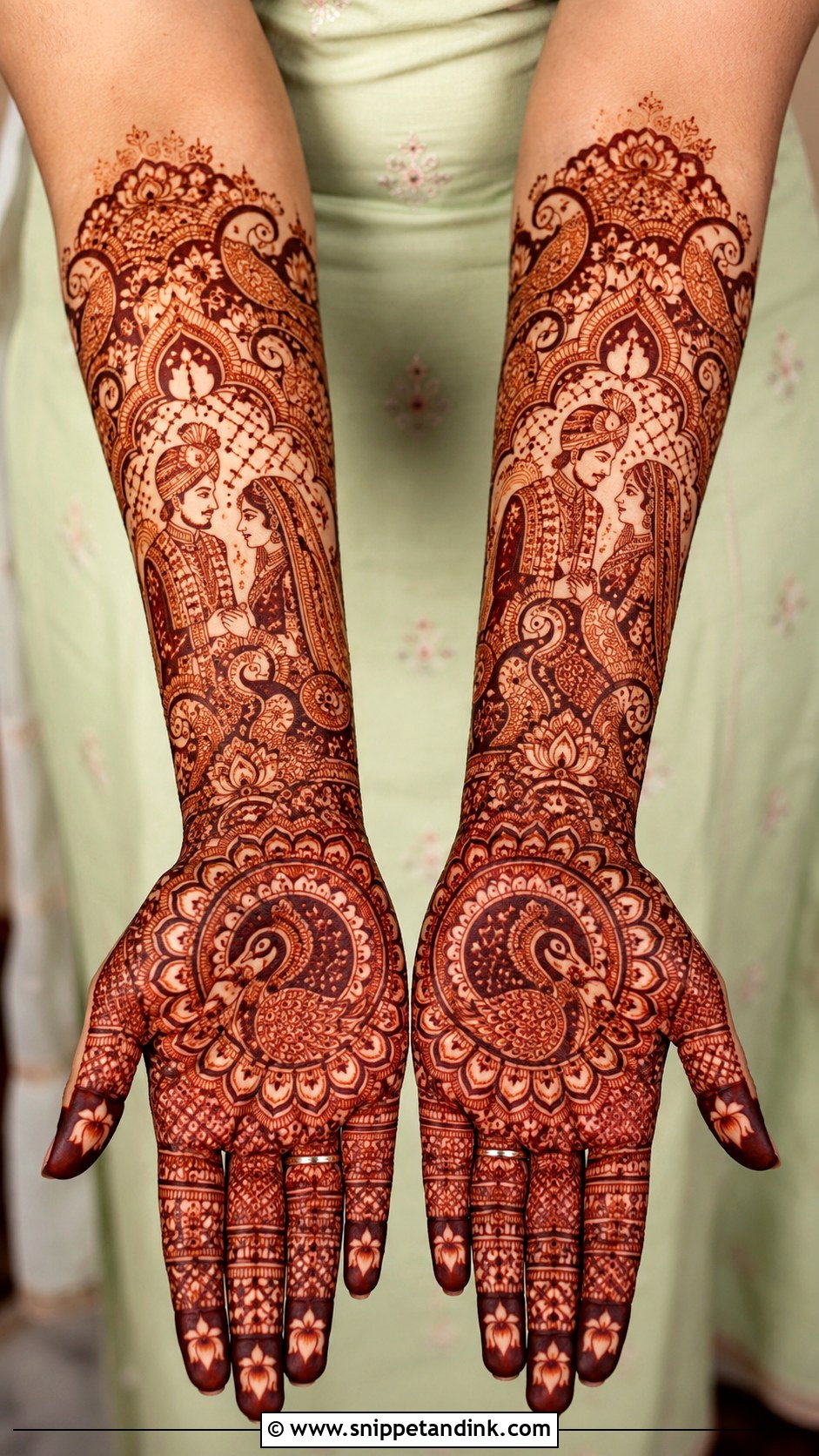
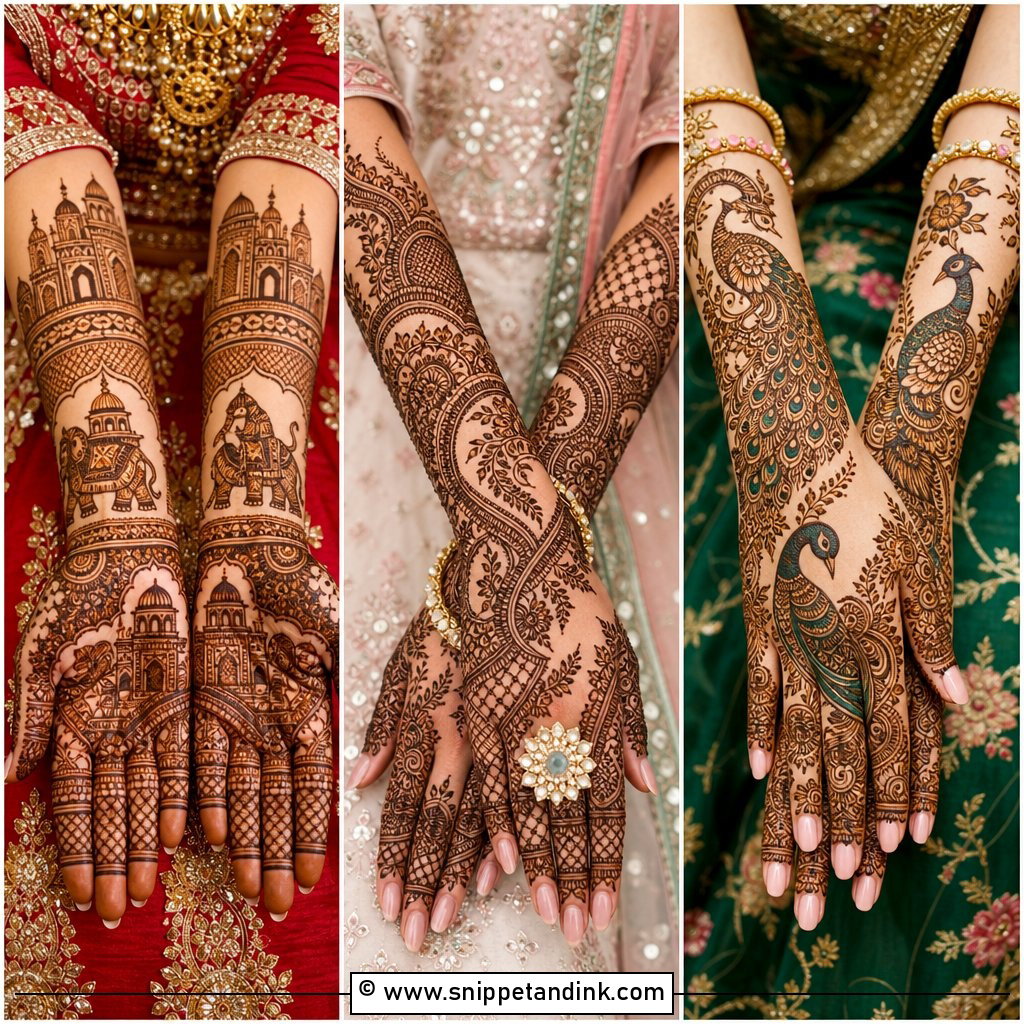
Full-hand Indian bridal mehndi covers palms, fingers and forearms with paisleys, mandalas, peacocks and often the bride and groom. It’s the most time-consuming work I do, and the hours matter, so the bride needs a comfortable seat, a full stomach and someone to help with her phone. What makes it look current rather than crowded is breathing room around the main motifs. I leave a hairline of bare skin around each focal element so it reads clearly when the stain darkens. Hidden initials can go anywhere, but the palm centre is where the groom is most likely to search.
2. Arabic Floral Trail Mehndi
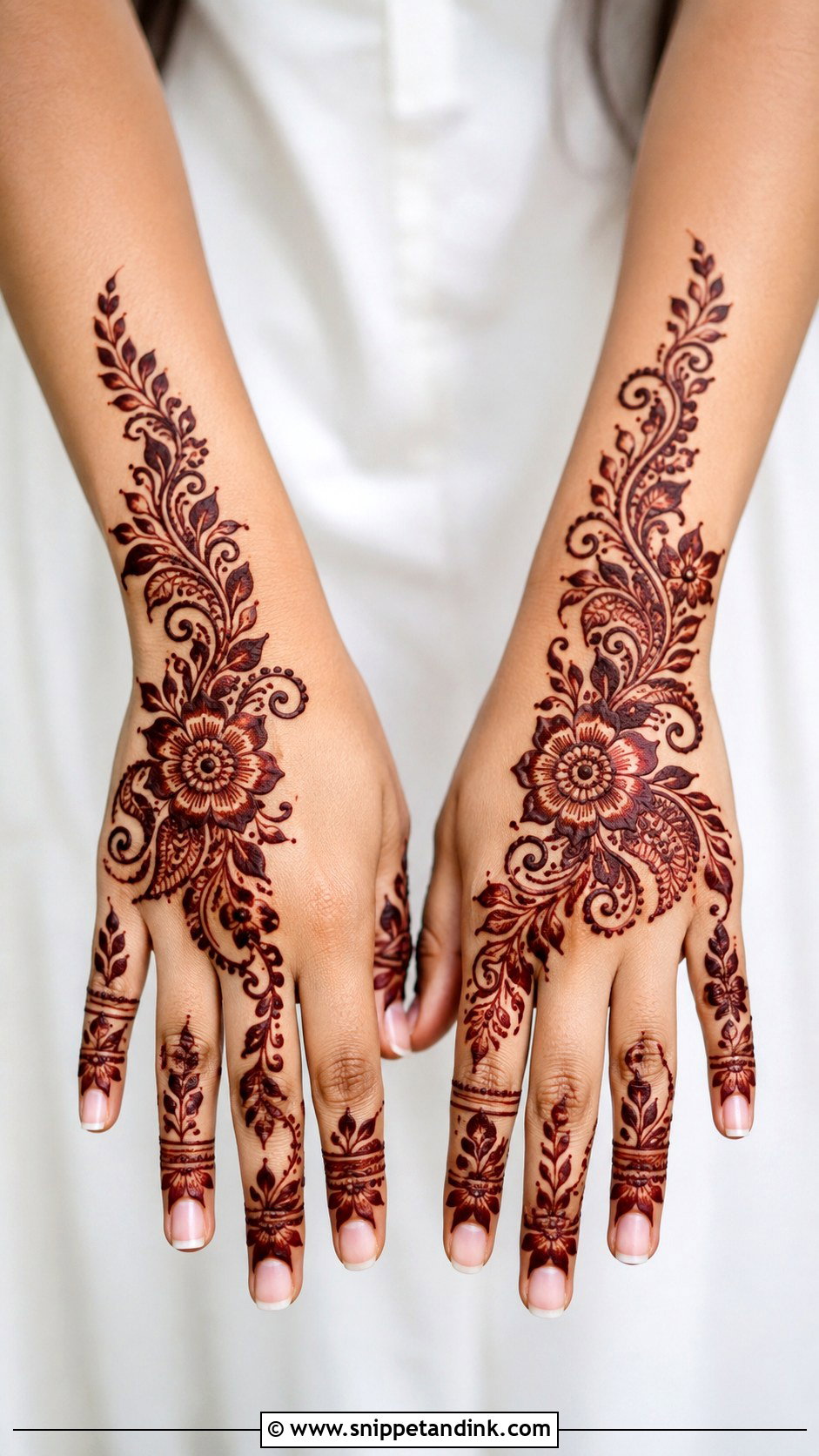
An Arabic floral trail runs diagonally from the wrist across the hand and finishes on the fingers, leaving plenty of skin bare. It’s quick to apply, which makes it popular for Eid and guests at a wedding. The trick is a confident, thick outline, which I pipe with a slightly wider cone tip, followed by light shading inside the petals. Without that bold outline, the shading looks muddy once it stains.
3. Indo Arabic Mandala Mehndi
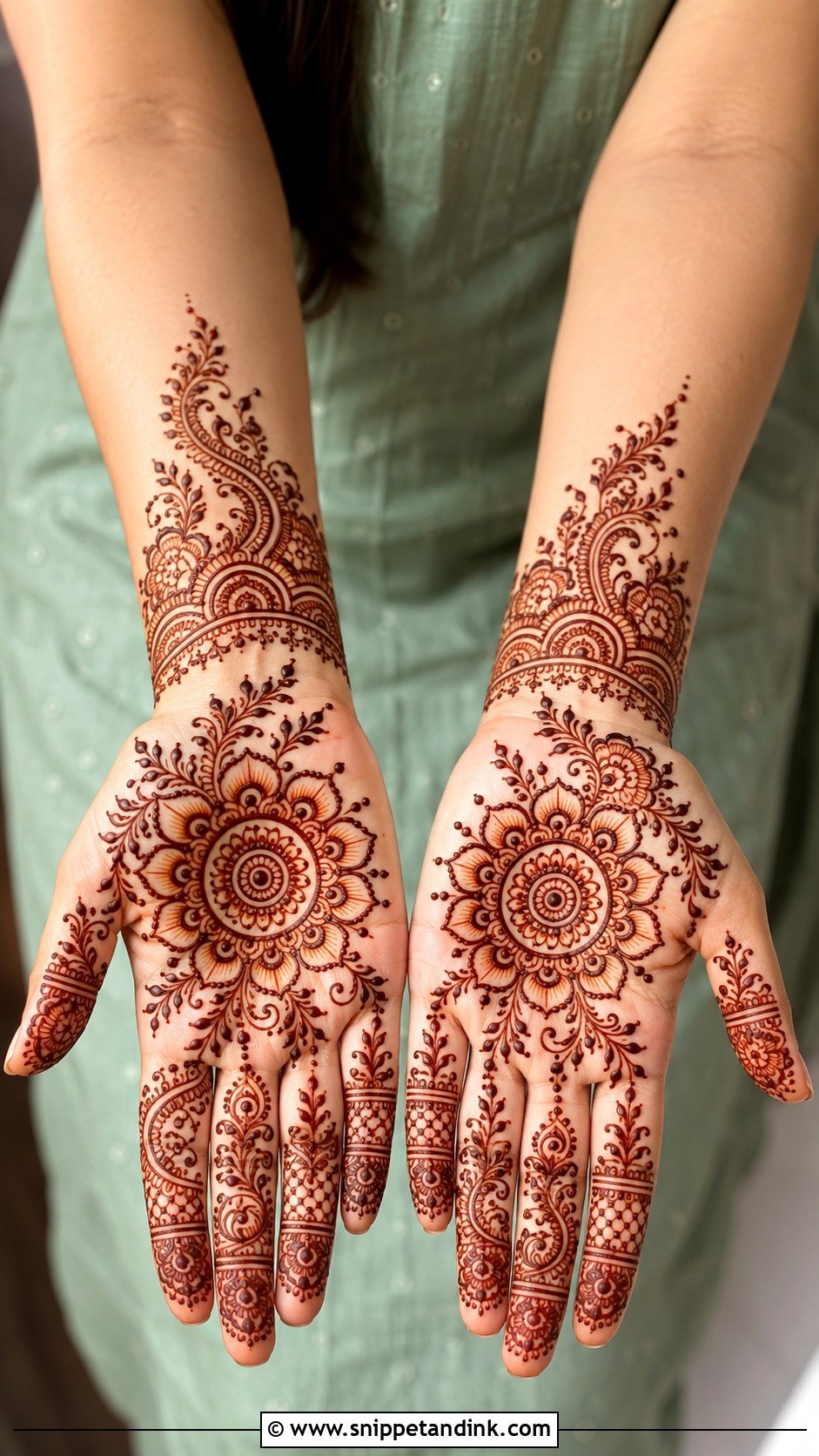
Indo-Arabic mandala work puts a round Indian-style mandala in the centre of the palm or back hand, then lets Arabic florals and vines trail out toward the fingers and wrist. It suits engagements and bridesmaids who want symmetry without full coverage. I draw the mandala first, since it’s the anchor, then plan the trails around it. Dotted halos around the mandala help it stand out from the rest of the design.
4. Moroccan Geometric Mehndi
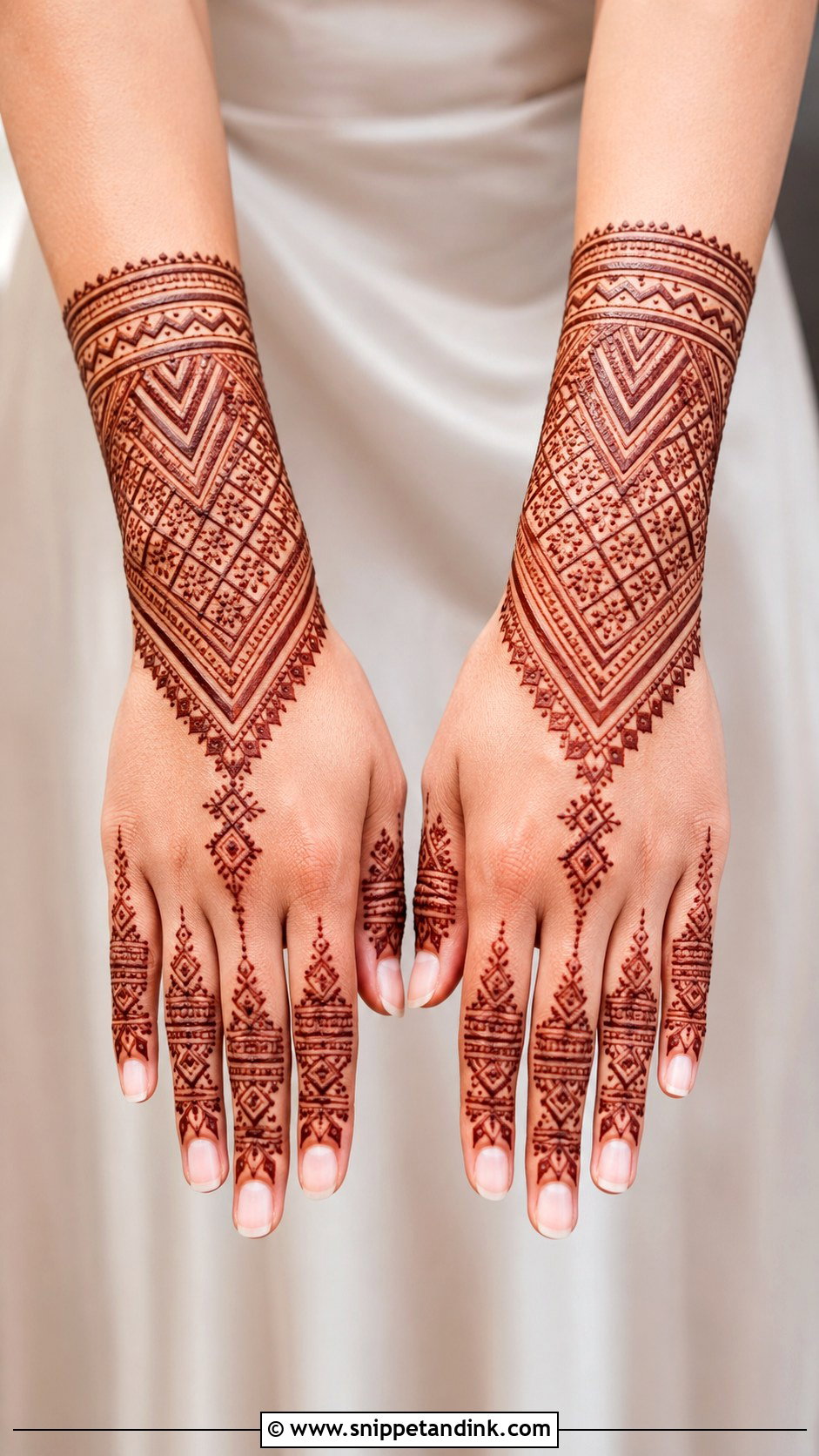
Moroccan geometric mehndi swaps flowers for diamonds, grids, zigzags and straight borders. Straight lines are harder to pipe than curves, because any wobble shows, so I steady my hand on the client’s wrist and work slowly. The style looks especially good on the back of the hand, where it reads like jewellery. Keep one larger frame on the hand and smaller matching patterns on the fingers.
5. Gulf Khaleeji Shaded Mehndi
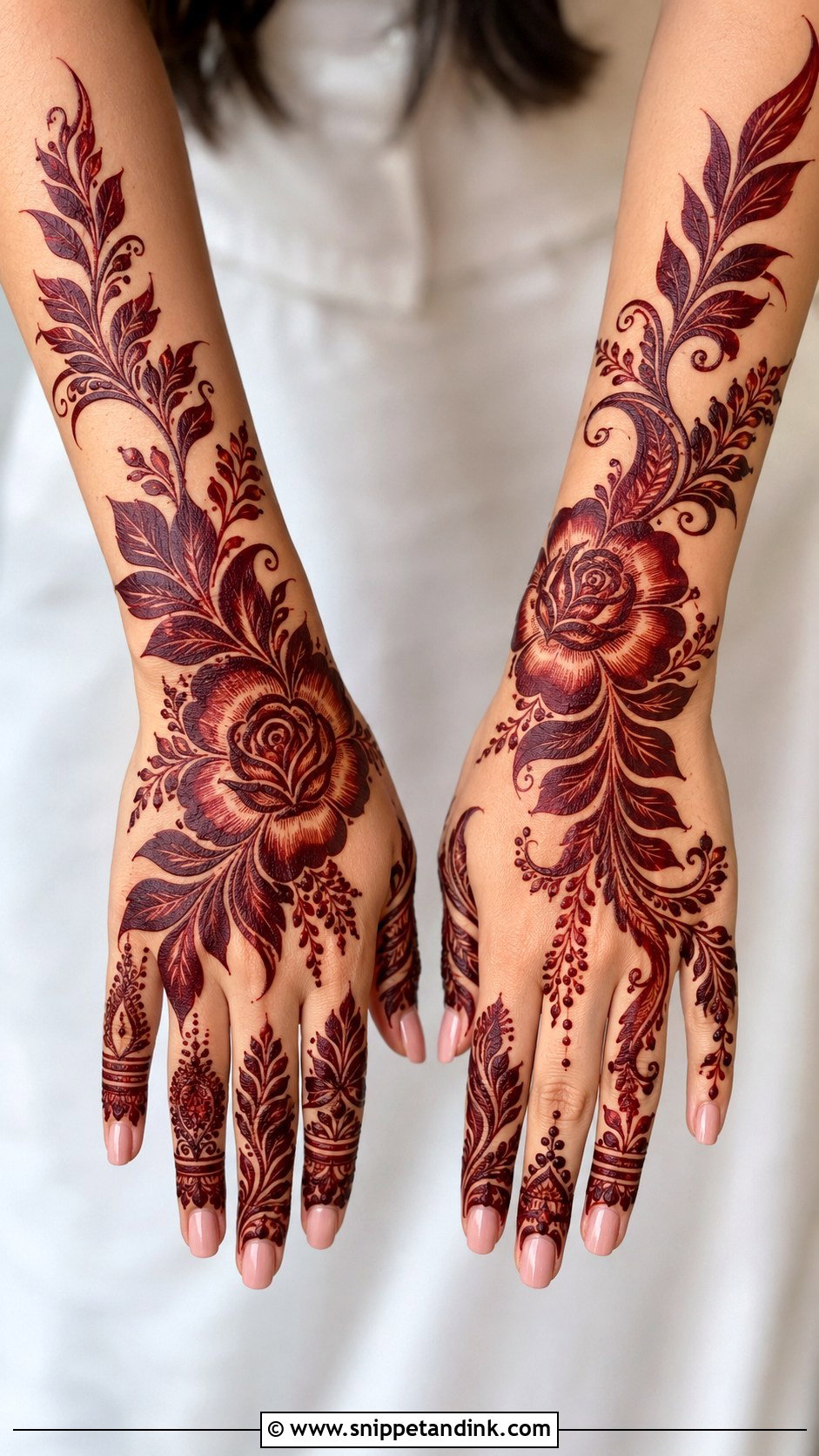
Gulf Khaleeji shaded mehndi uses large roses, thick outlines and deep shading with lots of open skin. It usually runs from the fingers across the back hand to the wrist. The shading is done by thinning the paste on the skin with the cone tip, which gives a lighter stain inside each petal. It suits festive parties and brides who want something bold without tiny traditional filling.
6. Minimal Finger Mehndi
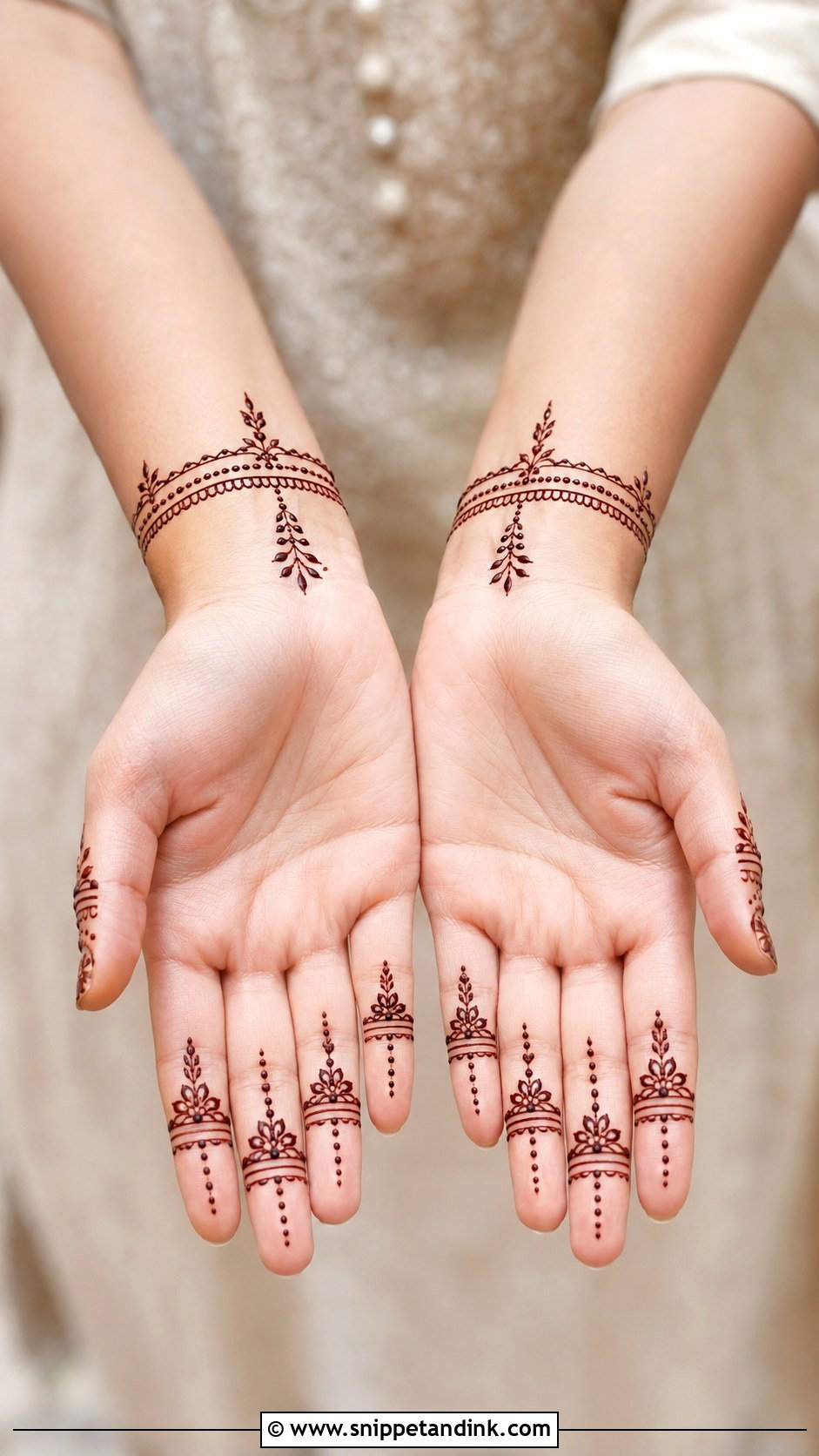
Minimal finger mehndi decorates every finger with rings, leafy lines and tiny florals while leaving most of the hand bare. It’s popular for office events, younger clients and anyone who doesn’t like heavy henna. Fingertips stain darkest, because the skin there is thicker, so even a light finger design shows well. I vary each finger slightly while keeping the line thickness the same.
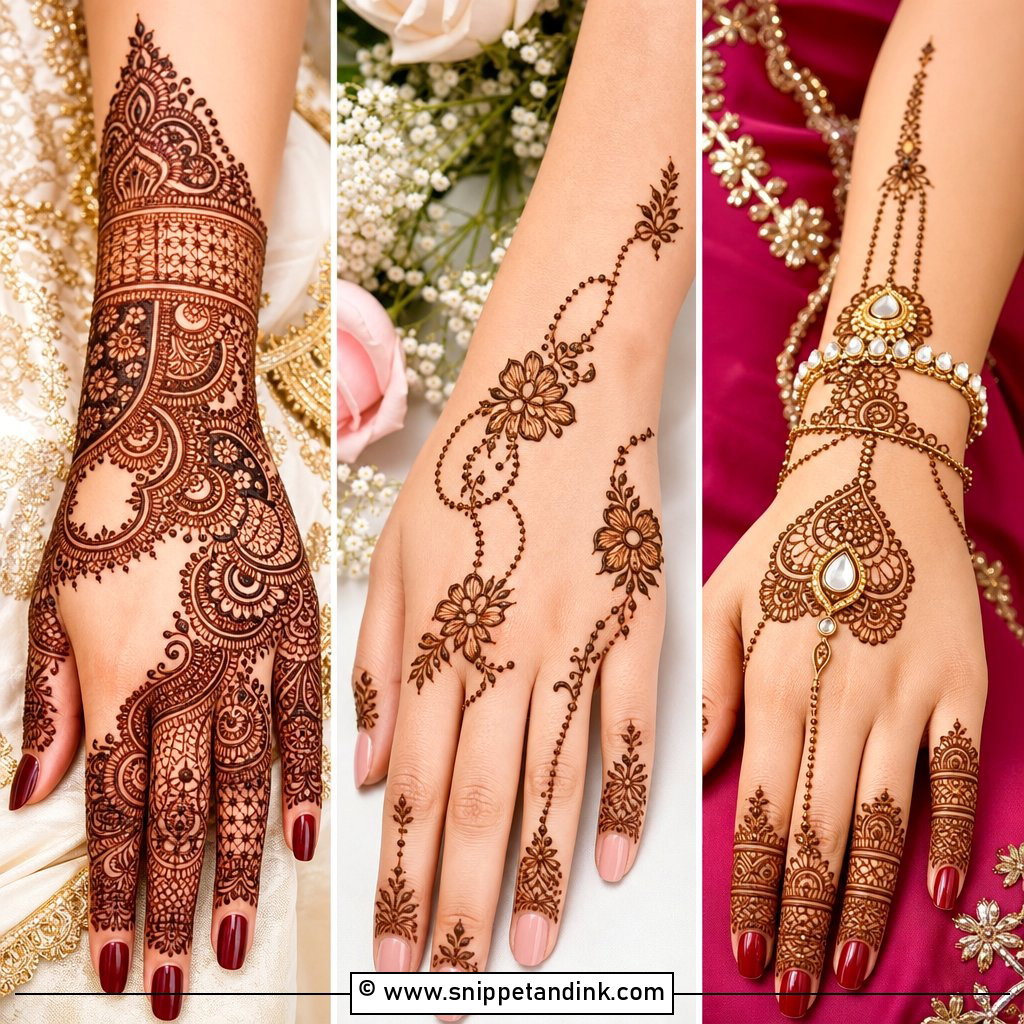
7. Back Hand Jewelry Mehndi
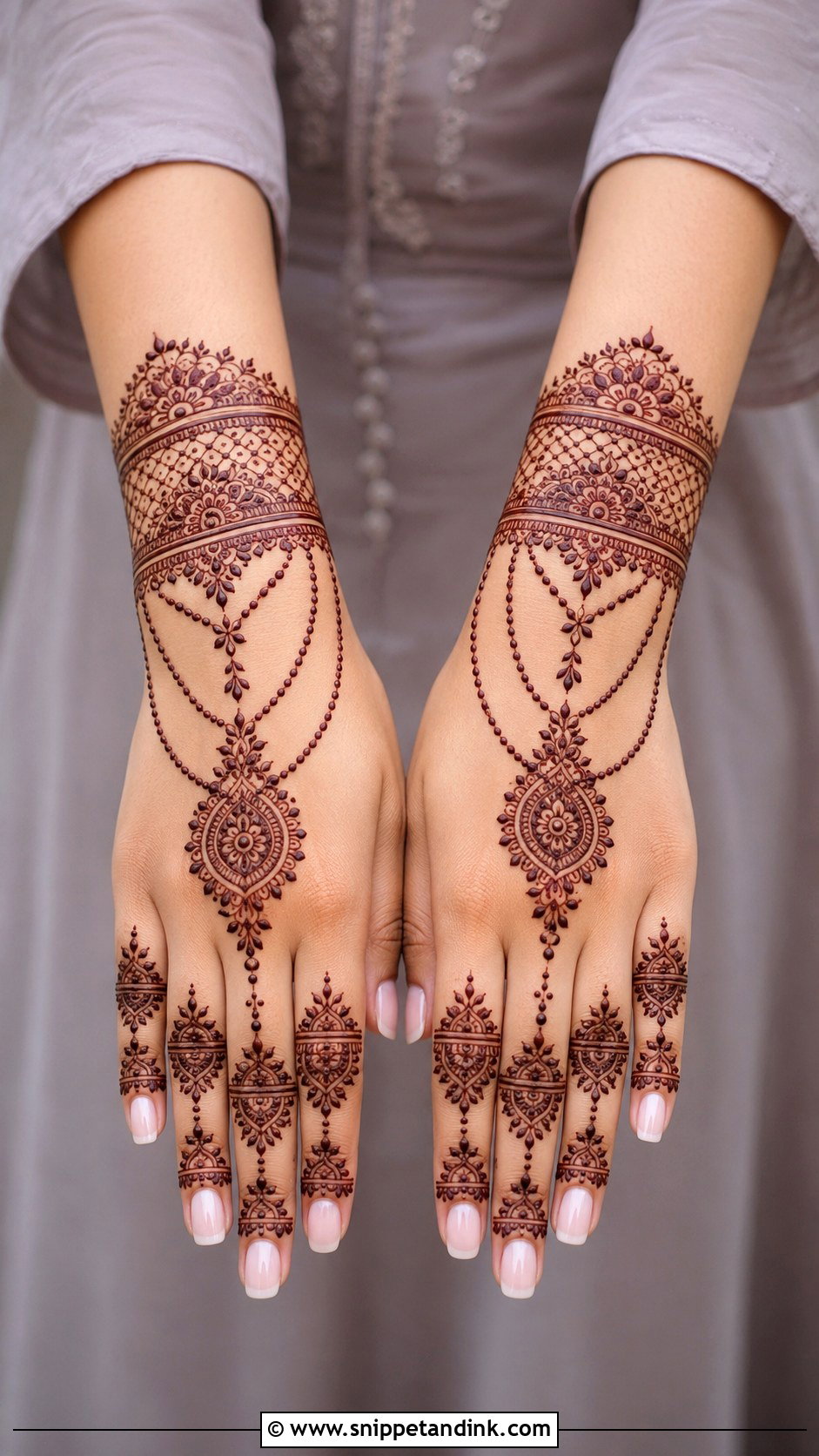
Back-hand jewellery mehndi copies hand ornaments: rings on the fingers, chains across the back of the hand, a pendant motif in the centre and a cuff at the wrist. Chains are where I take the most care, since they need to sit evenly and follow the hand’s natural shape. It suits engagement functions and bridesmaids, and pairs well with real rings and bangles.
8. Front Hand Mandala Mehndi
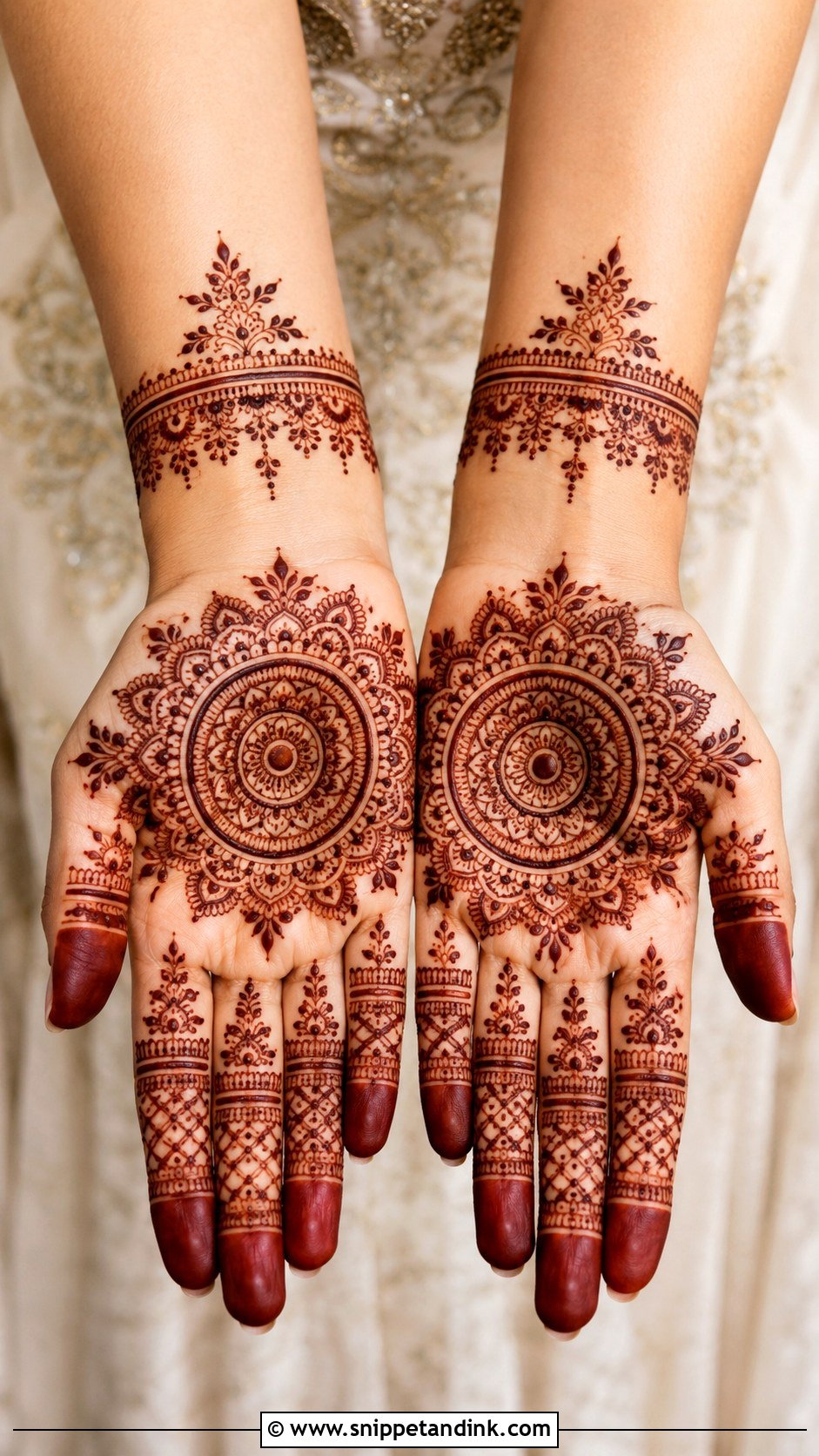
A palm mandala is one of the easiest designs to customise, which is why it’s so often requested. A circular mandala sits in the centre of the palm, with lines, leaves or lace on the fingers and a slim cuff at the wrist. The palm stains deep, so a bold outline with fine inner petals gives a striking contrast. It’s a good first design for someone new to henna.
9. Peacock Bridal Mehndi
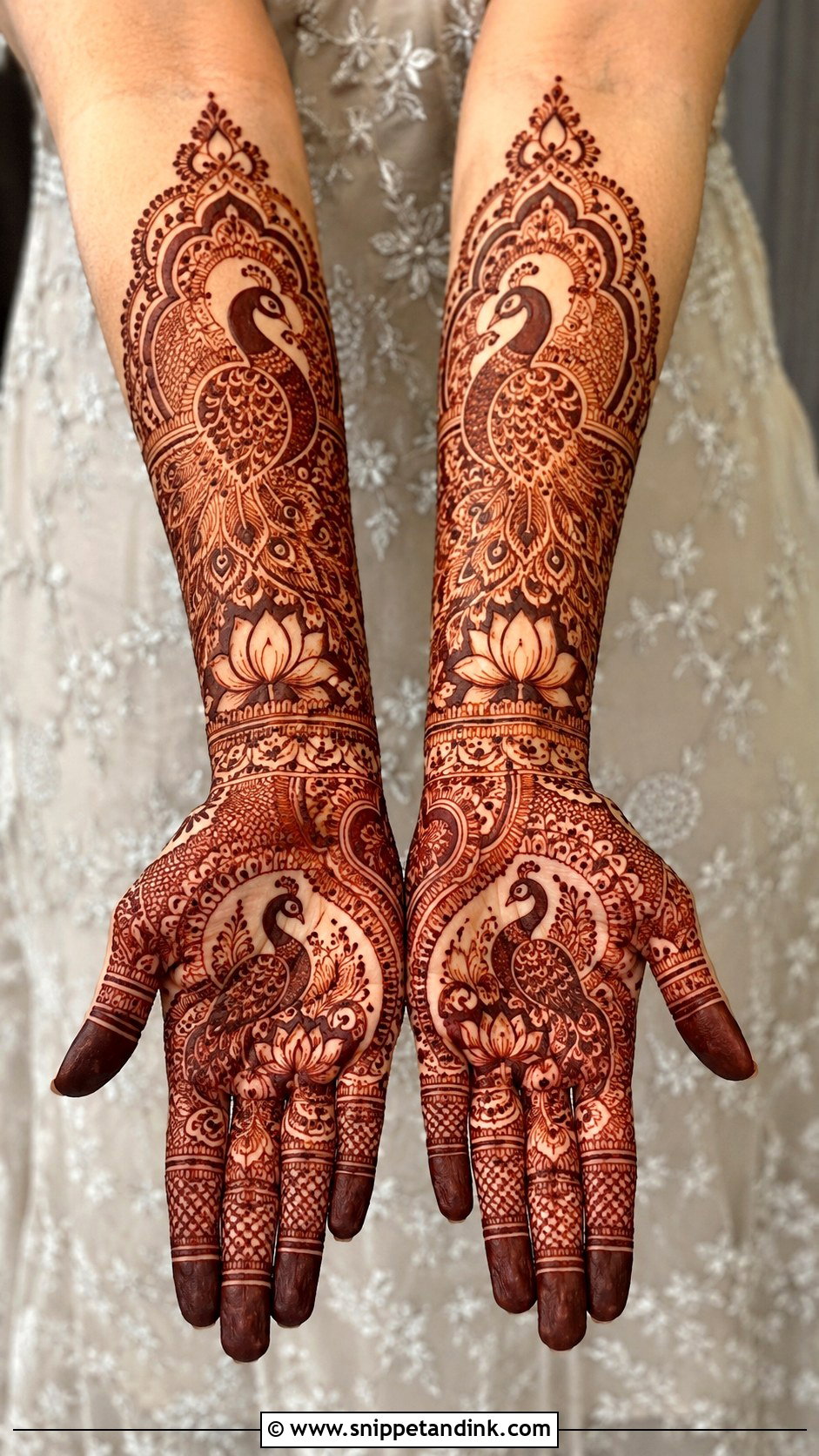
Peacocks are a traditional bridal motif, and their feathers let me add long, sweeping curves and fine detail. I usually place one large peacock on the palm and continue the feather pattern up the wrist and forearm. The feathers need room, so I keep the surrounding paisleys and lotus motifs a little smaller. Dense feather lines on the fingers finish the bridal look.
10. Lotus Bridal Mehndi
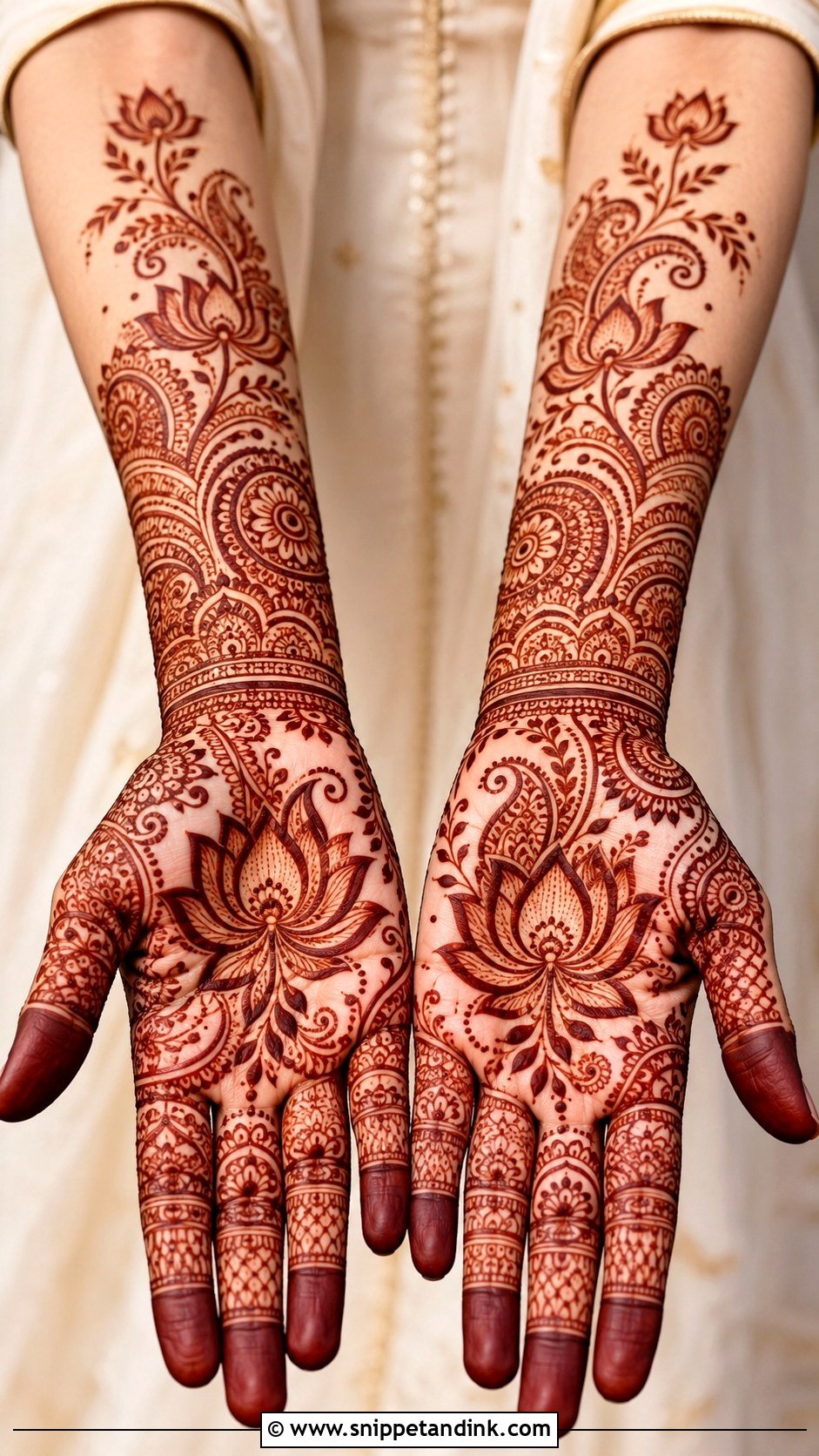
The lotus is a symbol of purity and new beginnings, which is why so many brides choose it. A large lotus on the palm, a lotus cuff at the wrist and smaller buds on the fingers make a complete layout. Lotus petals are broad, so I fill them with fine jaali or shading rather than leaving them blank, which can look unfinished once stained.
11. Rose Back Hand Mehndi
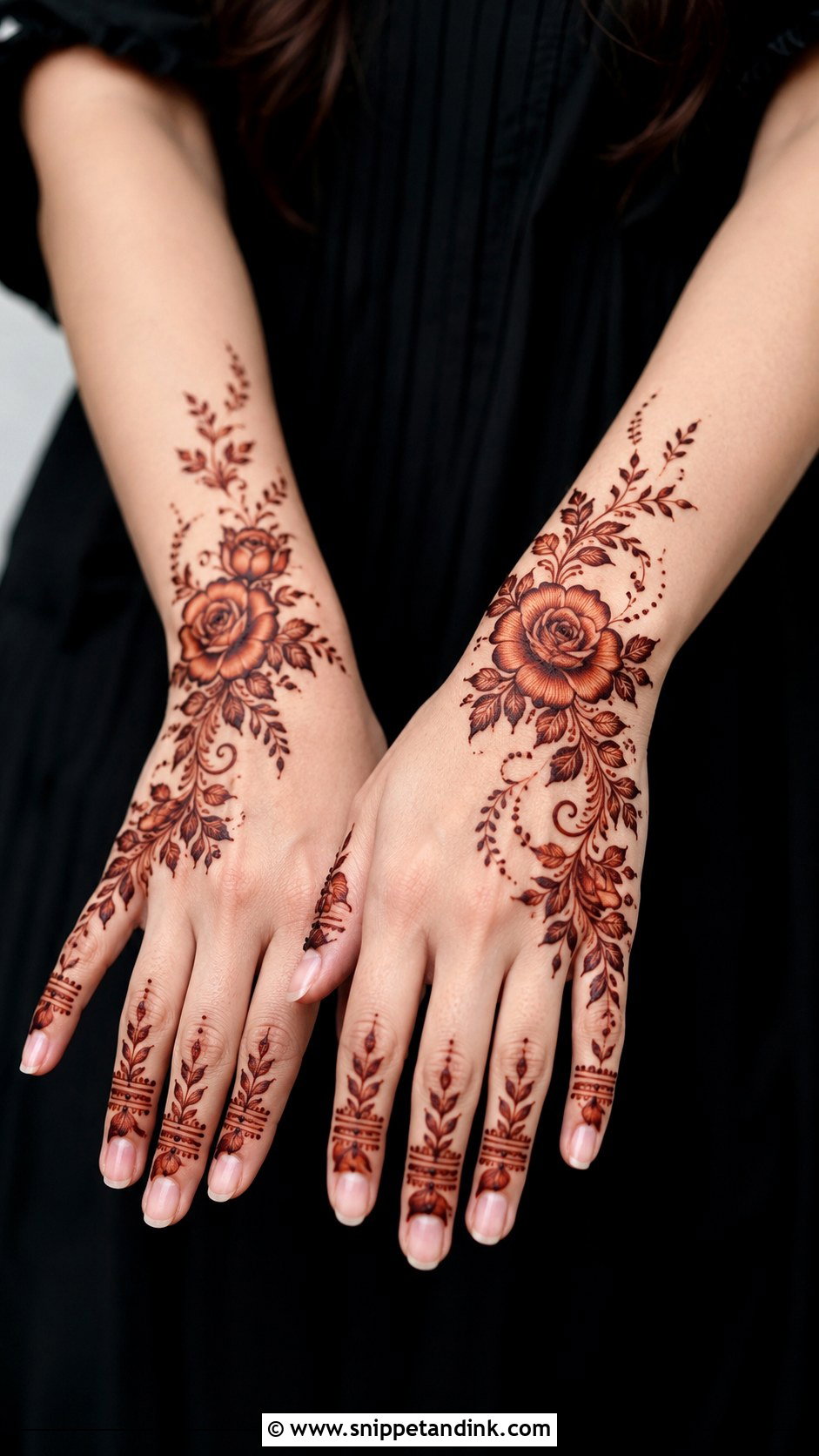
Large roses placed diagonally across the back of the hand look romantic and modern. Shading gives the roses depth, and it’s what separates a good rose from a flat one. I keep the background open and avoid tiny fillers. It’s less dense than bridal work, so it suits parties and festive events.
12. Jaali Mesh Mehndi
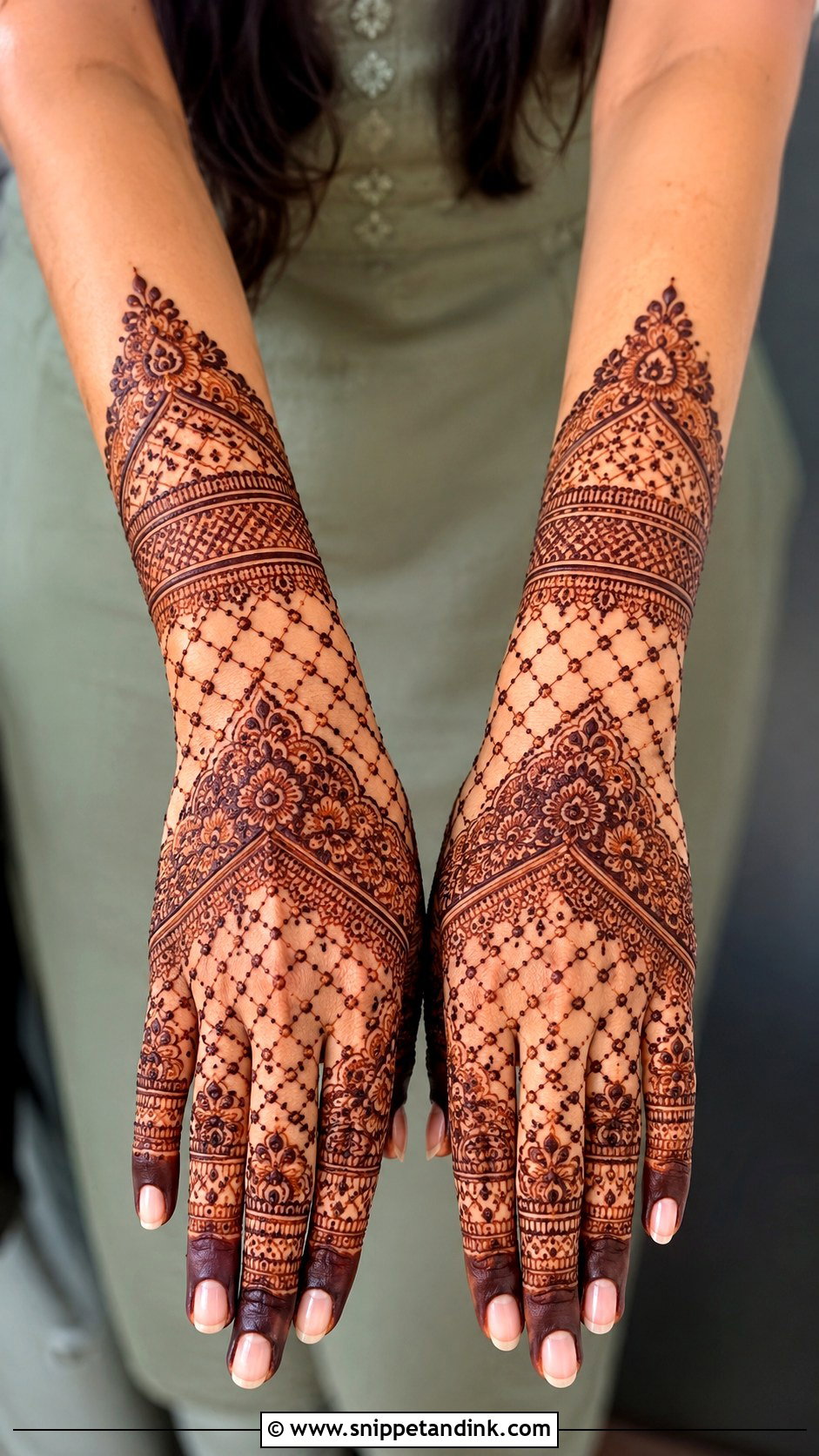
Jaali, or mesh, creates a lace effect with crisscross lines and tiny dots. Even spacing is everything: uneven mesh looks messy, especially once the stain darkens. I use it in one area, such as the back of the hand, and let florals or paisleys fill the fingers and wrist. It suits bridesmaids and guests who want a refined look.
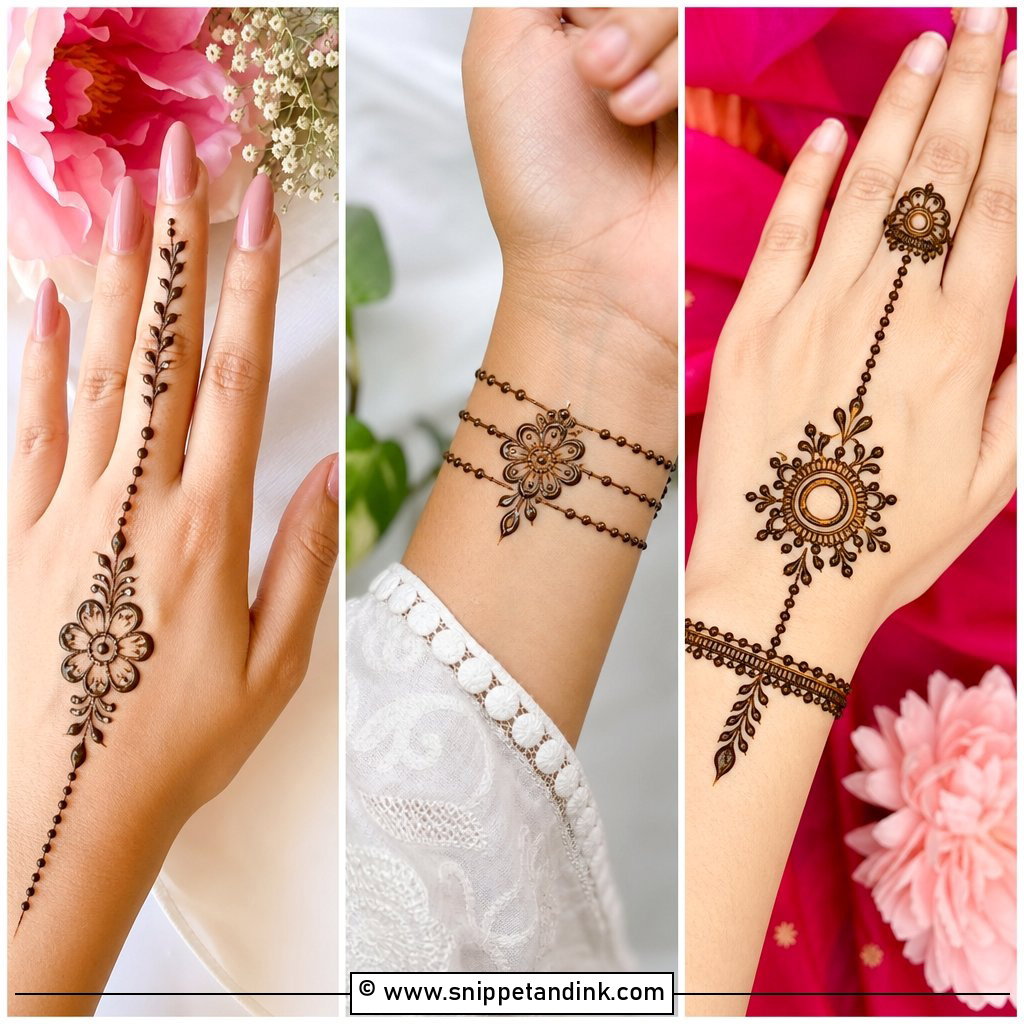
13. Bracelet Mehndi
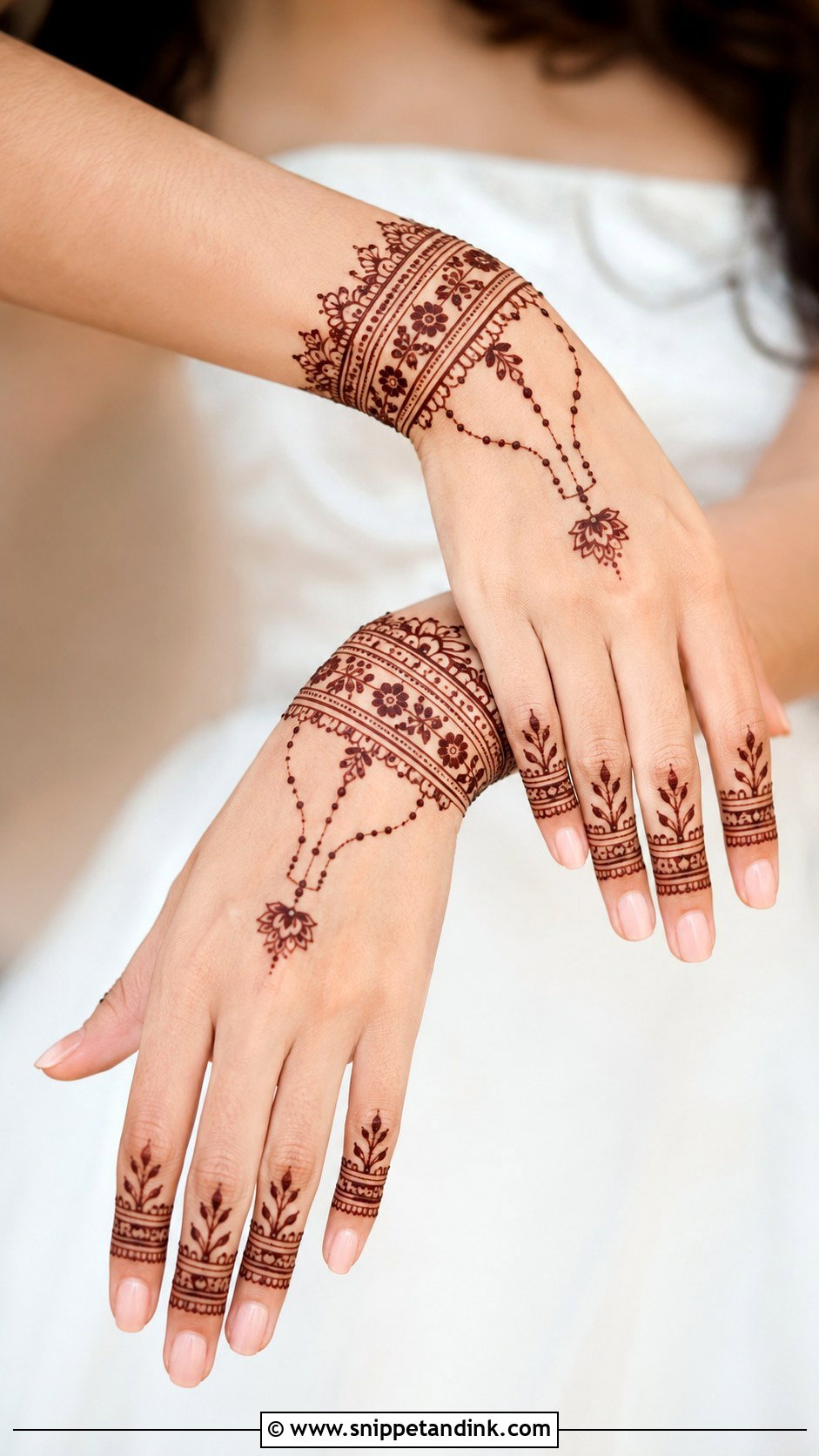
Bracelet mehndi focuses on the wrist, with a detailed cuff that looks like a henna bangle. The fingers get matching rings, and the centre of the hand stays light or carries a small pendant. A layered bracelet with one bold border and one fine lace border looks more finished. The wrist stains lighter than the palm, so I use a slightly thicker paste line there.
14. Haath Phool Mehndi
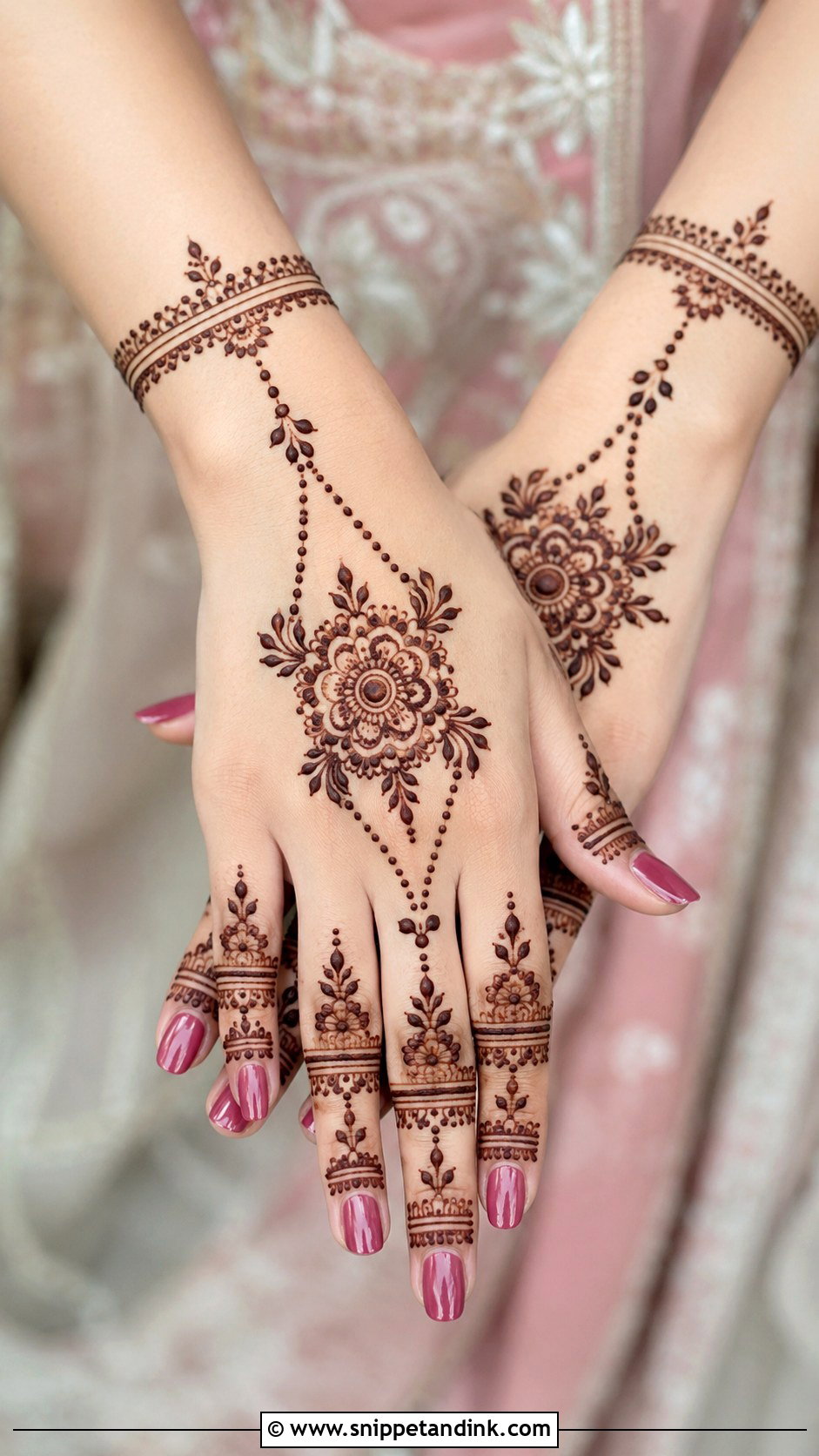
Haath phool mehndi copies the traditional hand ornament: a wrist bracelet, a central flower on the back of the hand and chains linking to the finger rings. Clean connecting lines are what make it work. I use small leaves and dotted chains rather than plain straight lines, which gives a softer, handmade look.
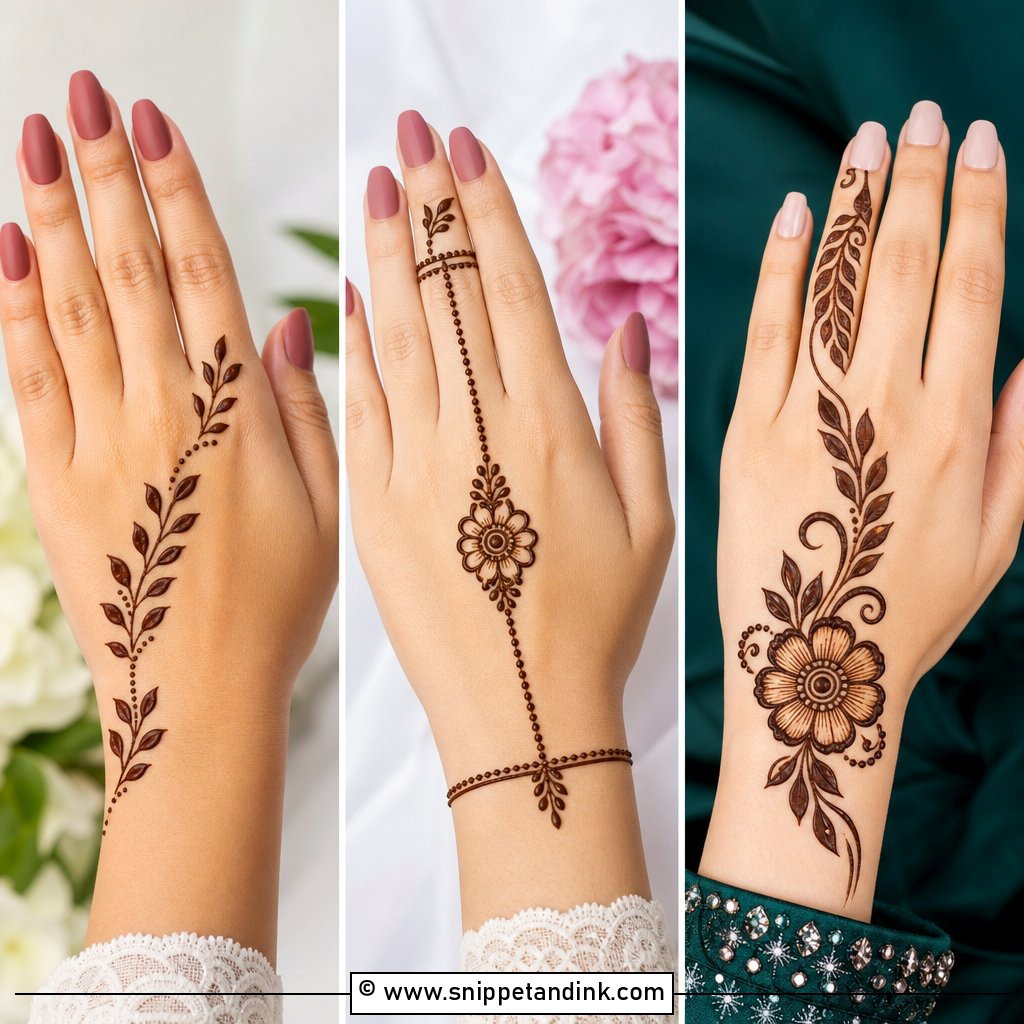
15. Half Hand Arabic Mehndi
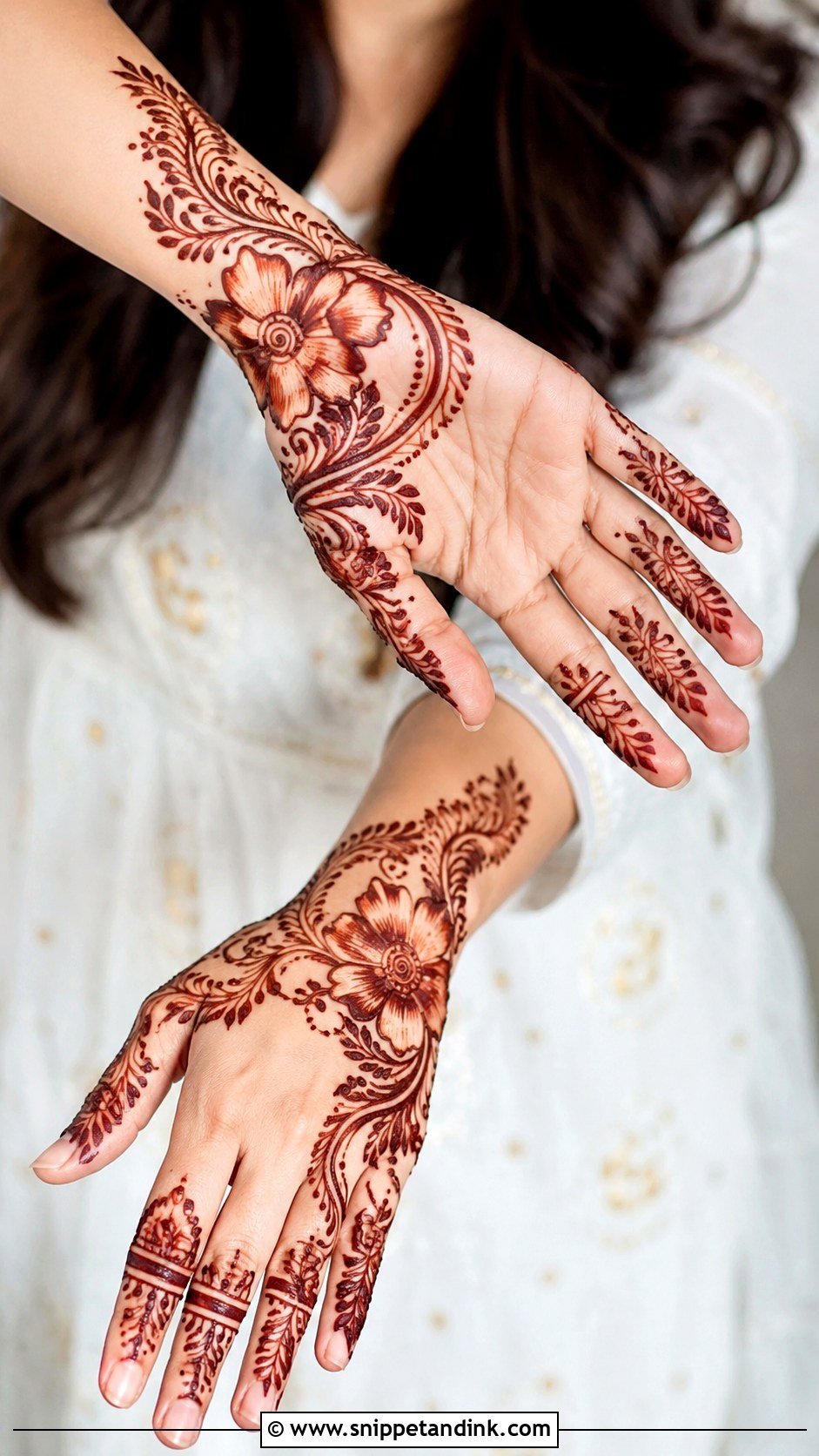
Half hand Arabic mehndi covers one side of the palm or back hand and extends to the wrist and a few fingers. It’s quick, which makes it a good choice for last-minute events. Oversized flowers with thick outlines and plenty of open skin keep it modern. It’s my usual suggestion for guests at a wedding who want visible mehndi without hours in the chair.
16. Full Palm Paisley Mehndi
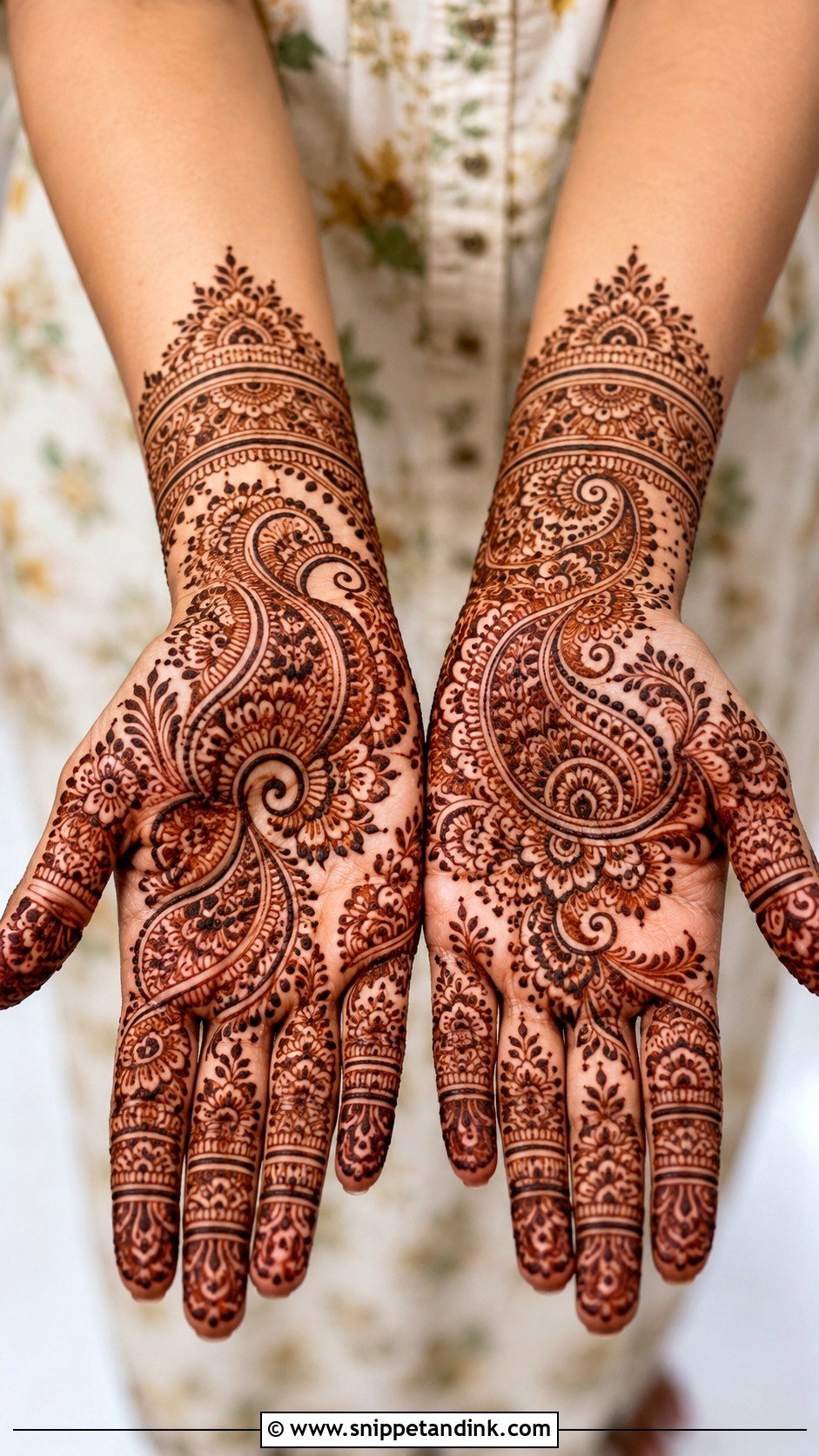
Full palm paisley fills the palm with curved paisleys, swirls and fine borders, with matching patterns on the fingers. Paisleys fit the palm’s shape naturally, so the design looks full without feeling stiff. To modernise it, I make one large paisley the focus and build smaller ones around it, leaving thin gaps between shapes so each one is visible.
17. Modern Negative Space Mehndi
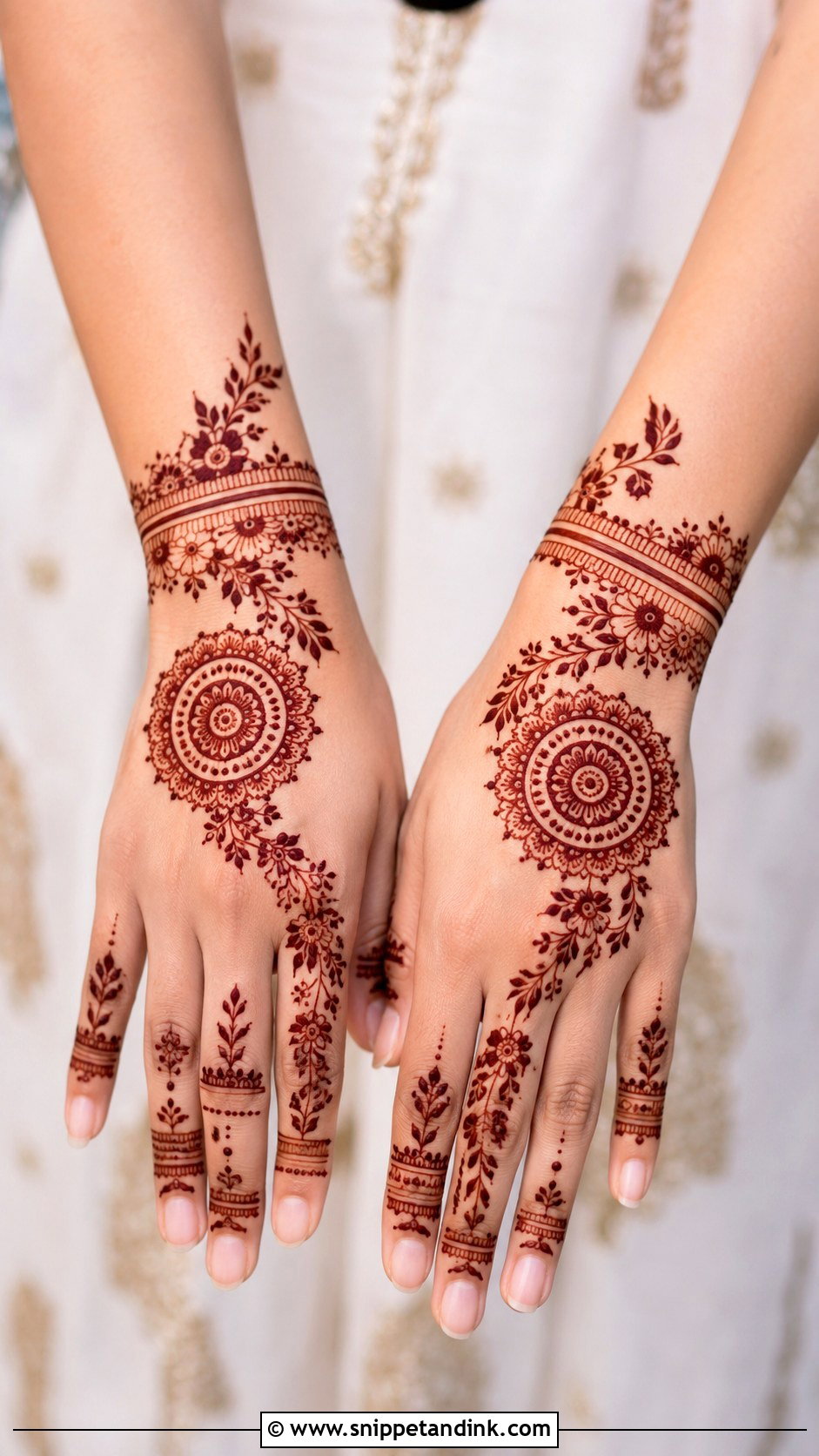
Negative space mehndi uses bare skin as part of the design, with bold motifs and clean gaps. The empty areas need planning; random gaps look unfinished. I sketch the focal point first, then add trails around it. It’s a good choice for hot weather, since less paste on the skin means less sweating under it.
18. Simple Eid Mehndi
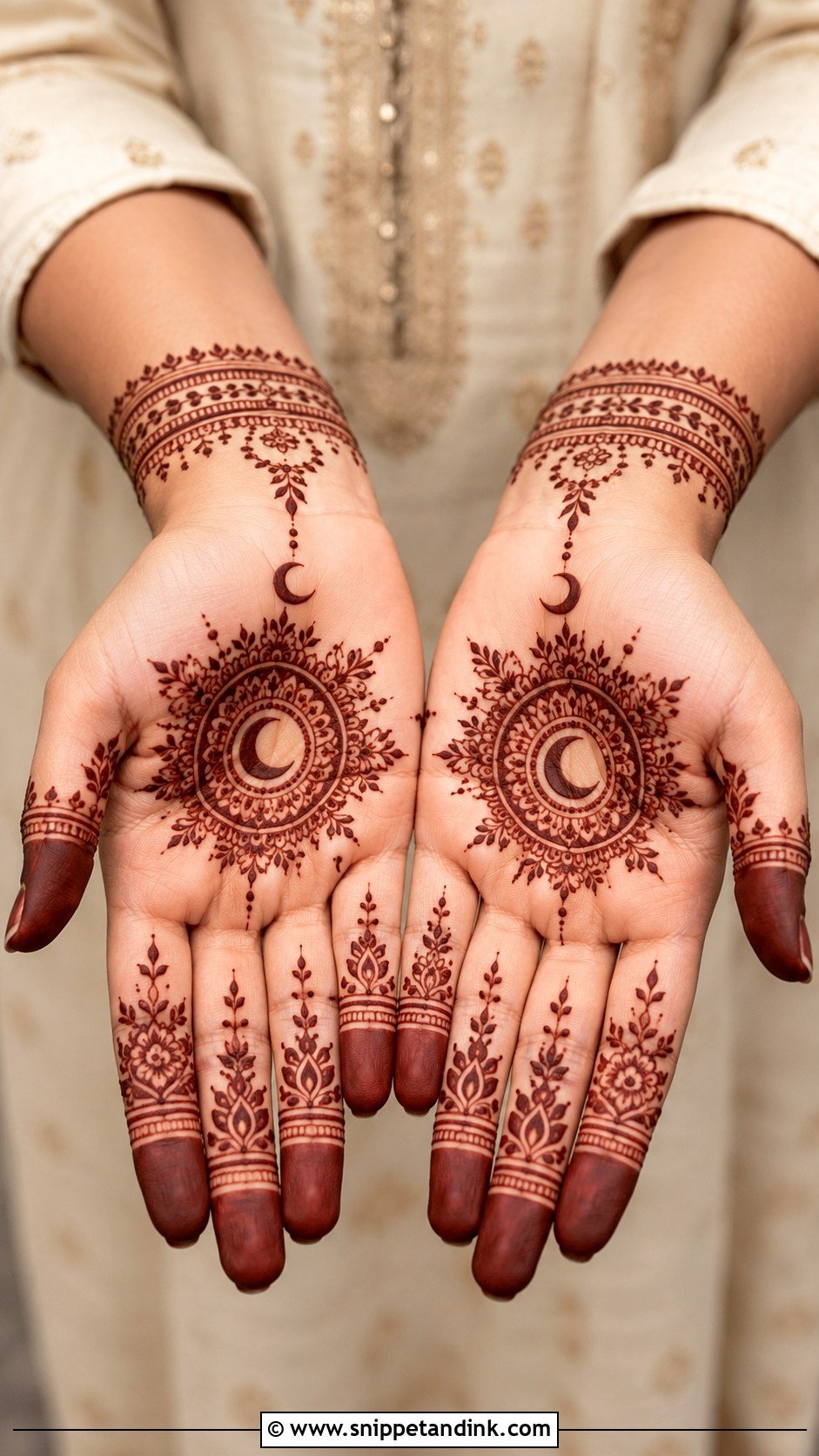
Simple Eid mehndi needs to dry quickly and still stain well before the celebrations. I usually do a palm mandala, leafy fingers and a small wrist band. Apply it on Chand Raat, the night before Eid, so the stain has time to darken by the morning. Small crescents and Arabic florals fit the occasion.
19. Diwali Mehndi
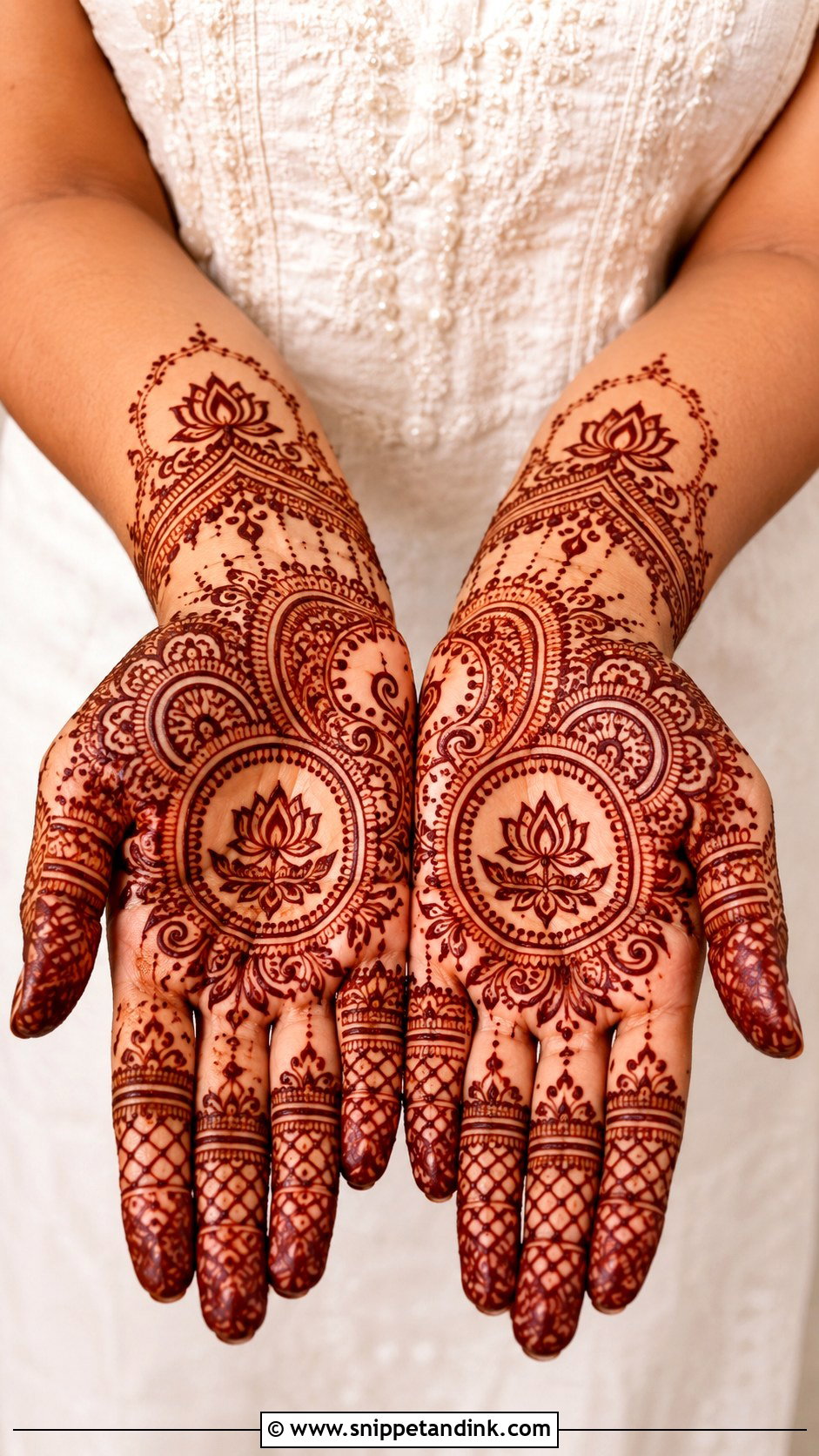
Diwali mehndi often includes mandalas, lotus flowers, paisleys and diya-inspired shapes. Diwali outfits are bright and sparkly, so the mehndi needs to be clear enough to stand out. I leave open space around the main motif instead of filling everything. A natural, deep maroon stain gives the most traditional finish.

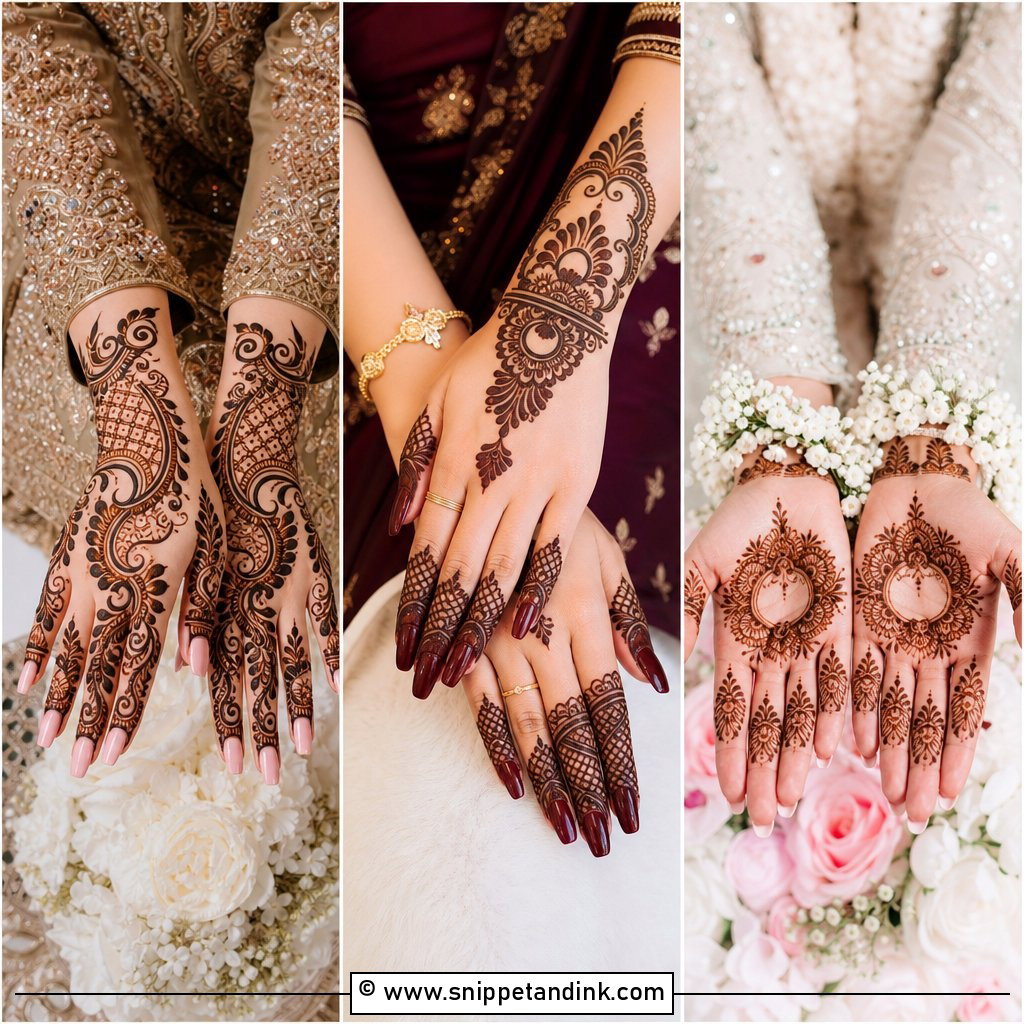
20. Engagement Mehndi
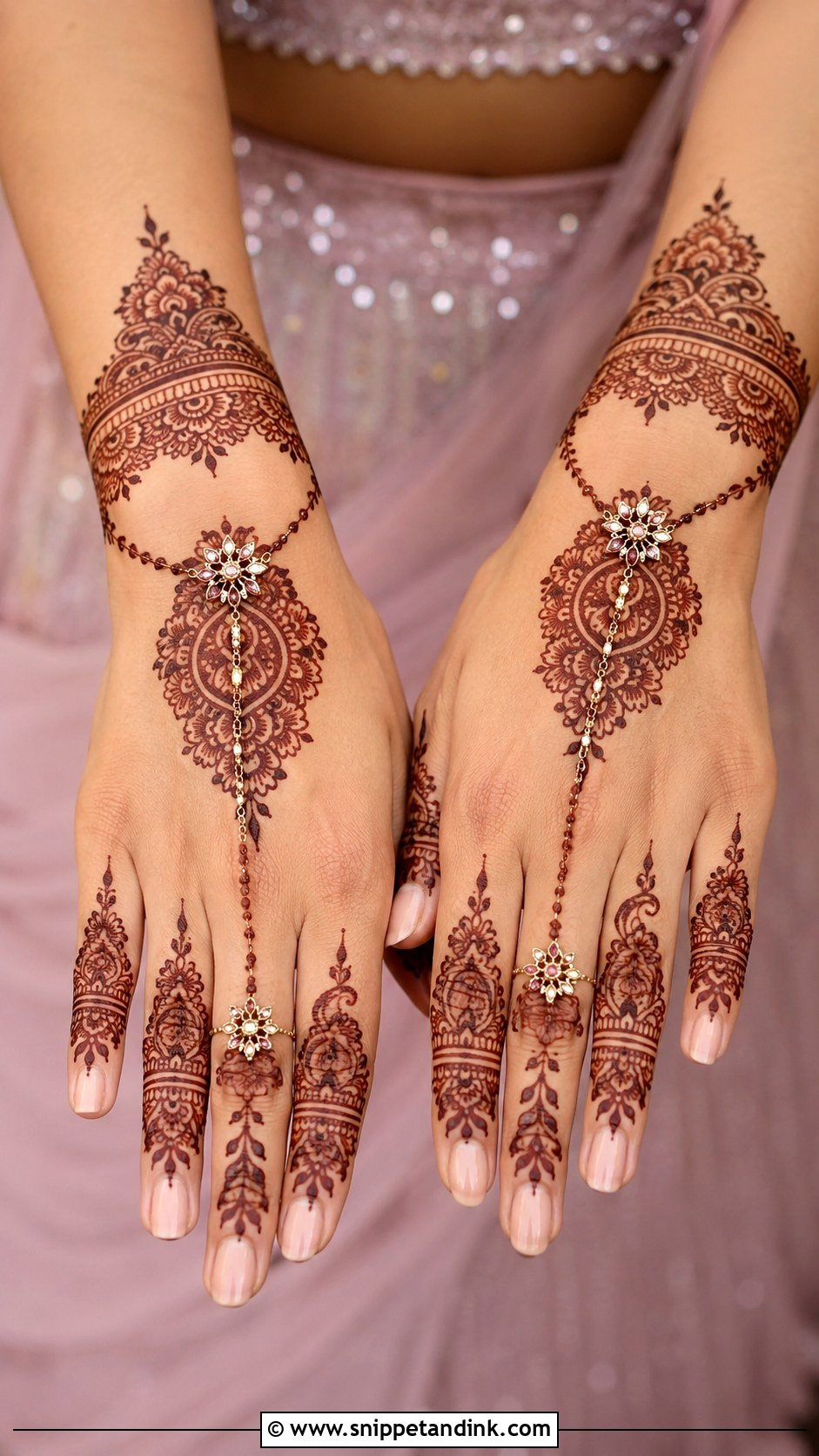
Engagement mehndi is photographed up close during the ring moment, so the ring finger needs extra attention. I keep that finger lighter so the ring is the focus, and frame it with fine lines rather than covering it. A jewellery-style back hand with a central floral pendant and wrist cuff works well. Initials or tiny hearts can be added subtly.
21. Personalized Name Mehndi
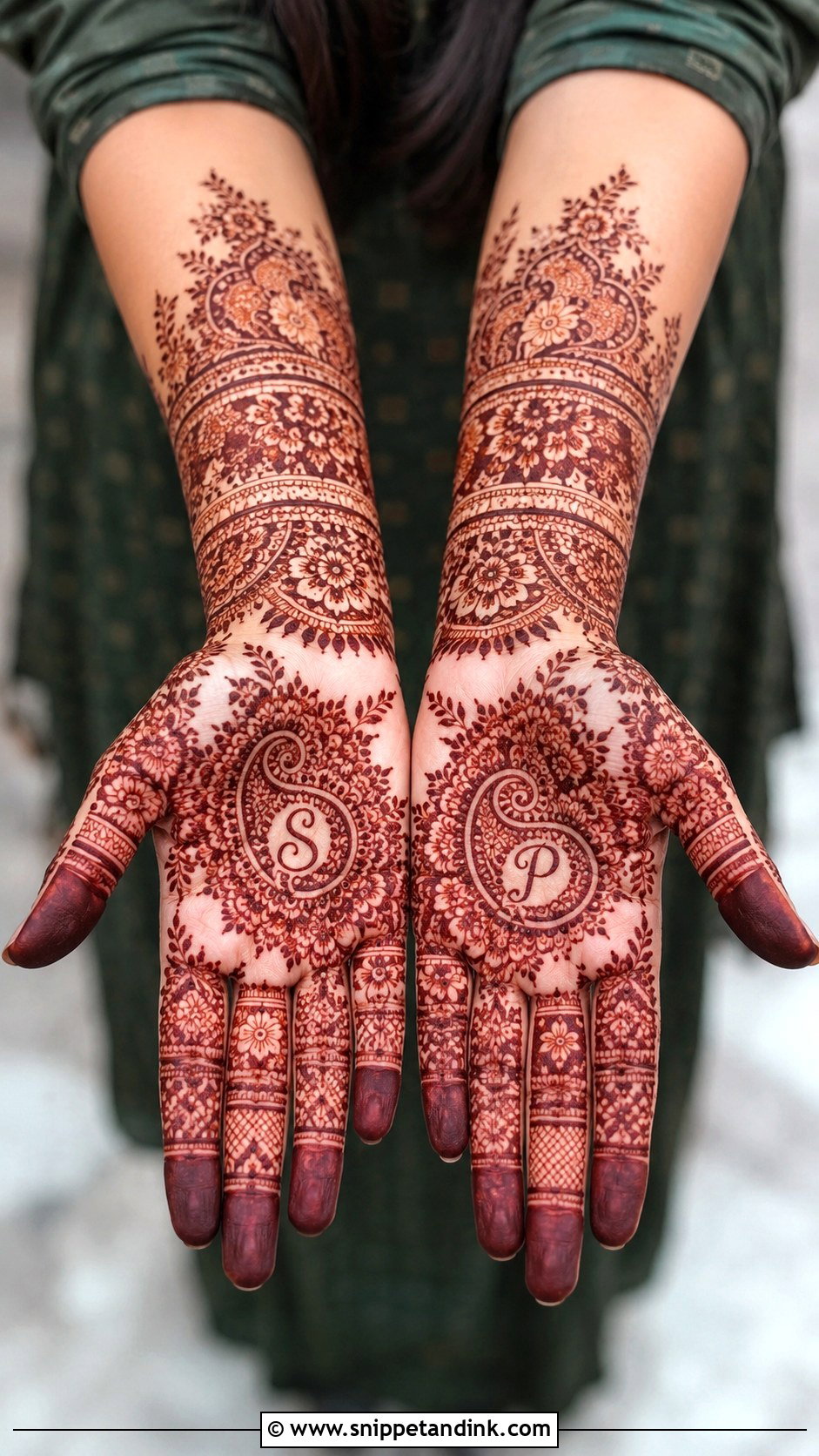
Names or initials can be hidden in paisleys, mandalas or wrist cuffs. On a bride, hidden lettering is part of the fun, with the groom searching for his name. On a lighter design, initials near the wrist work well. The lettering should blend into the artwork; I write it in the same line weight as the surrounding pattern.
22. Portrait Bridal Mehndi
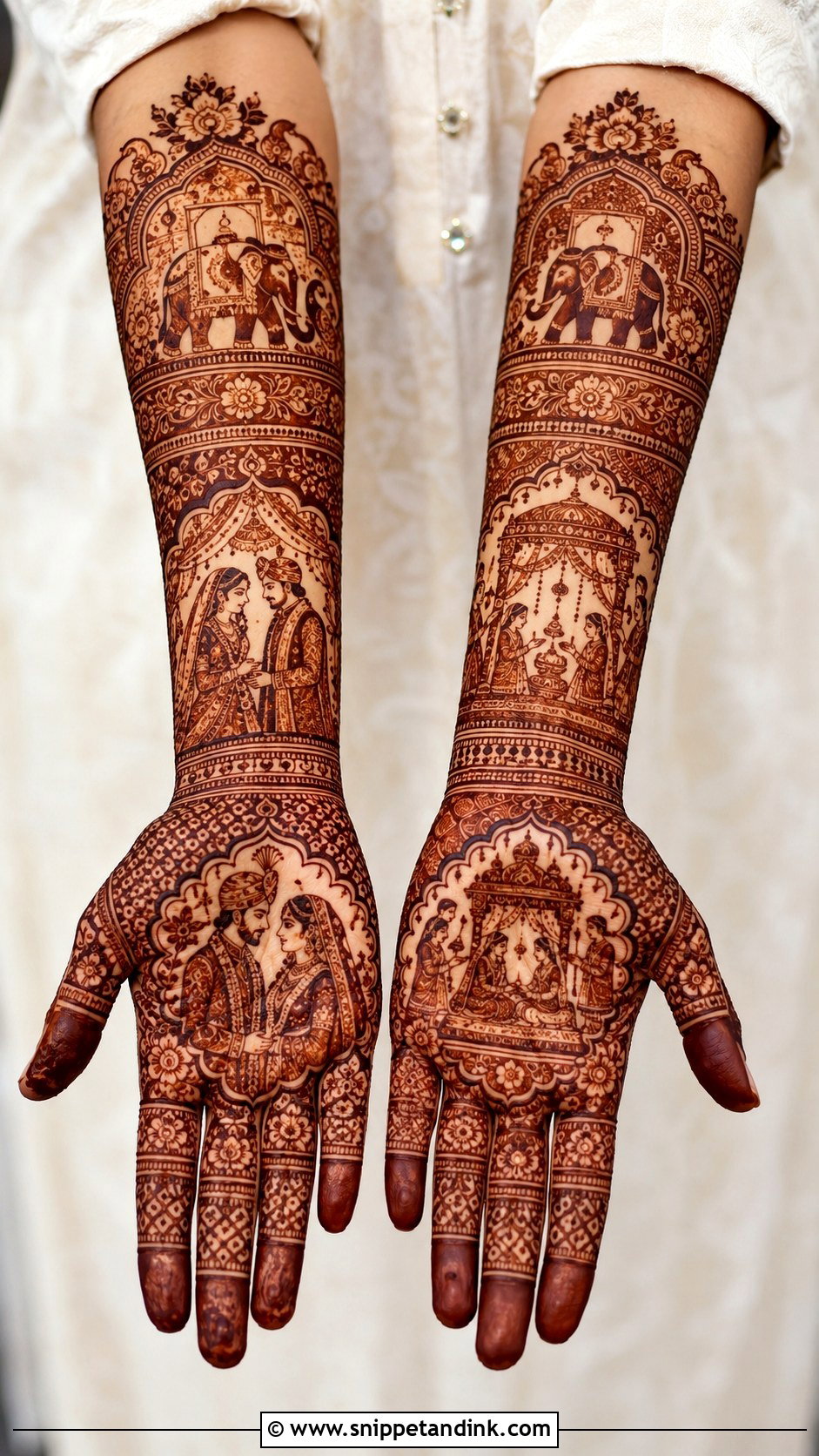
Portrait bridal mehndi shows the bride and groom, wedding scenes, palanquins and elephants across the palms and forearms. It needs an experienced artist, since faces must be drawn with very fine, clean lines. It also takes a long time, so book it well ahead. Using the portraits as focal points and keeping the surrounding patterns balanced stops the hands from looking crowded.
23. Rajasthani Bridal Mehndi
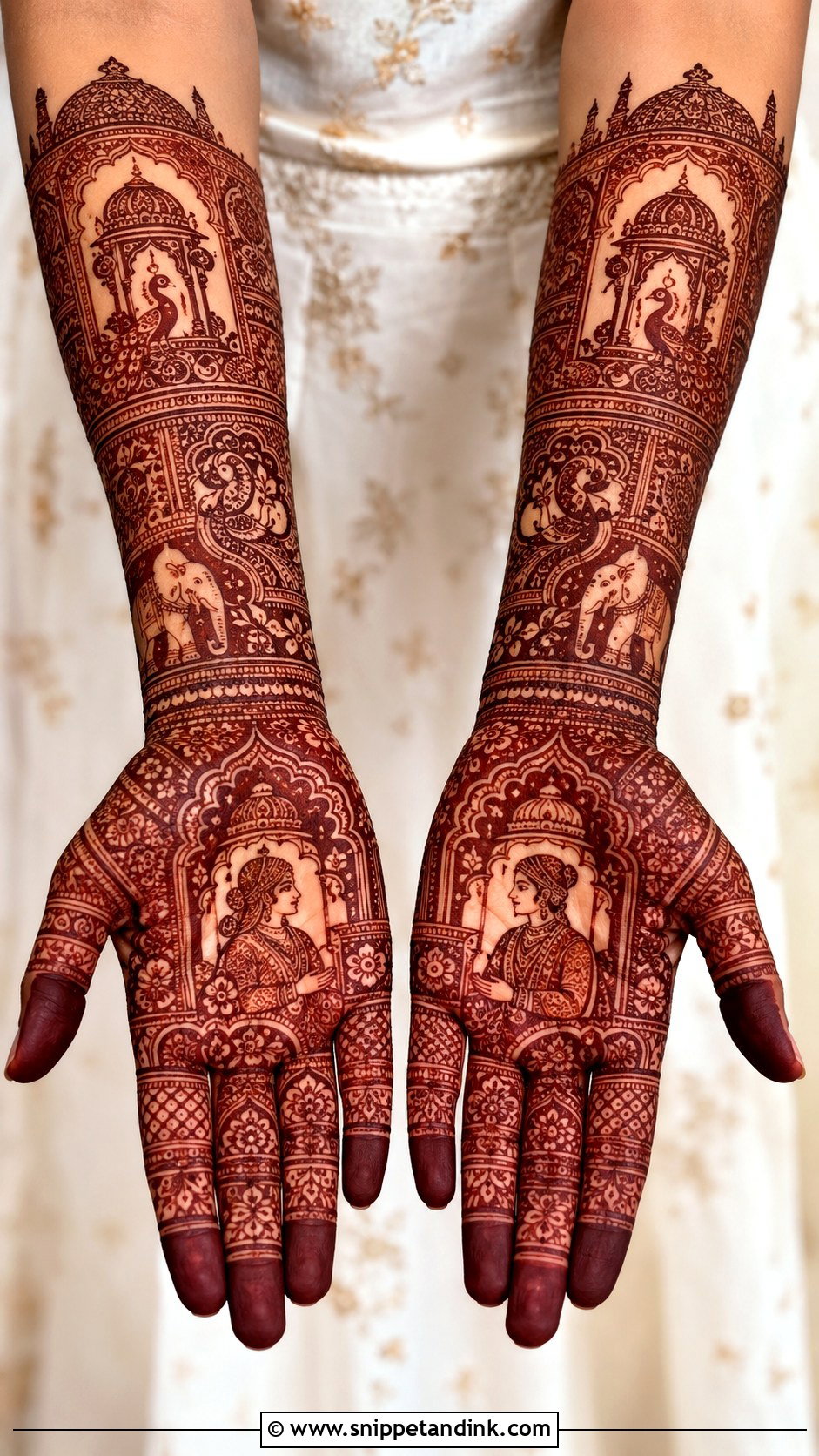
Rajasthani bridal mehndi is dense and symmetrical, with peacocks, elephants, bride and groom figures, arches and fine mesh. It usually covers the hands and forearms almost completely. I split it into clear panels instead of one continuous texture, so each motif can be seen. It suits brides who want a richly traditional look.
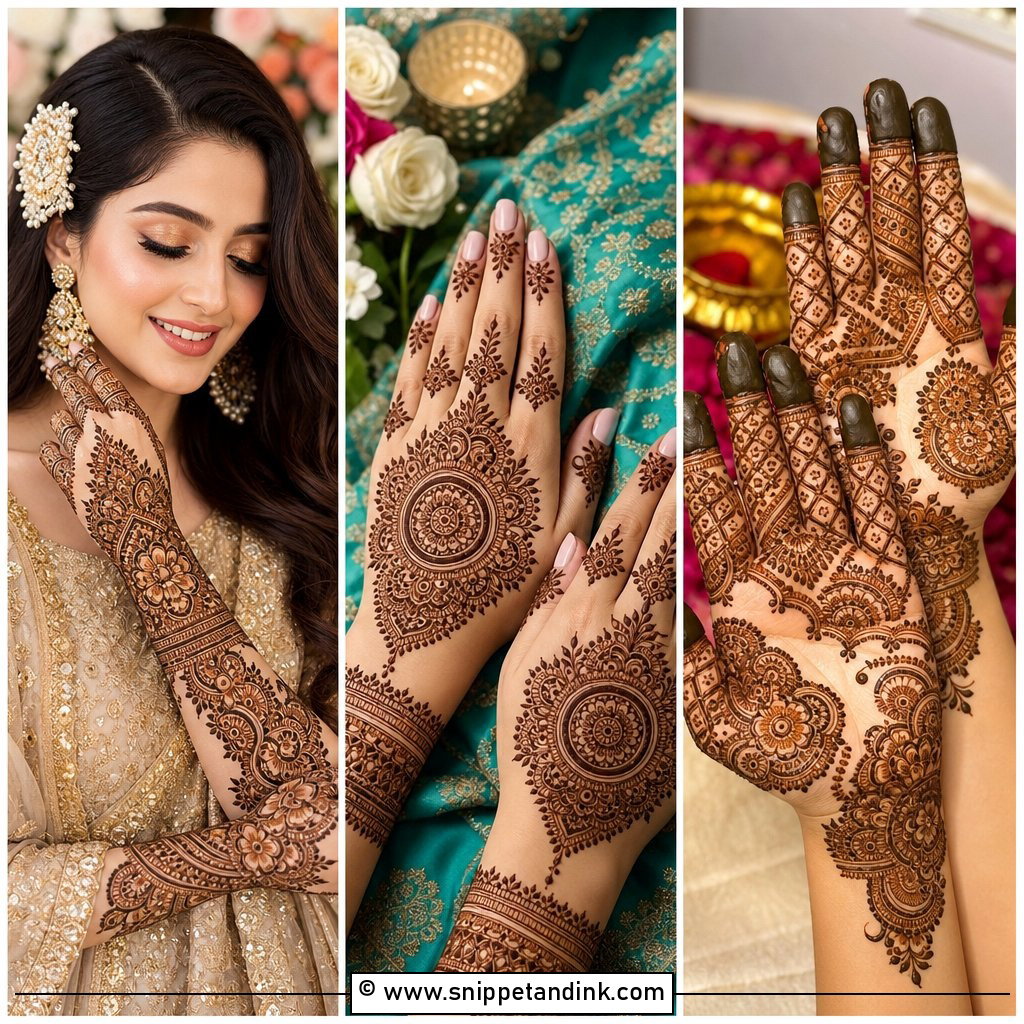
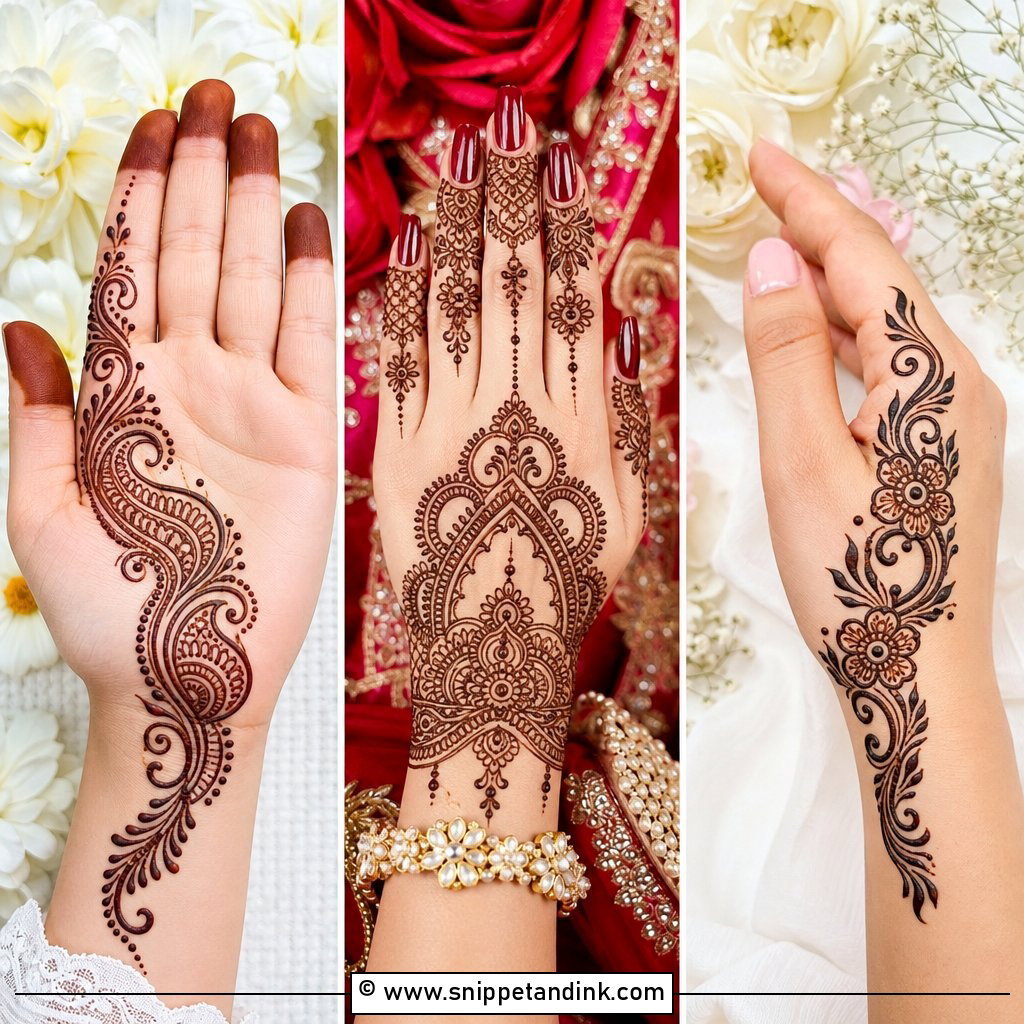
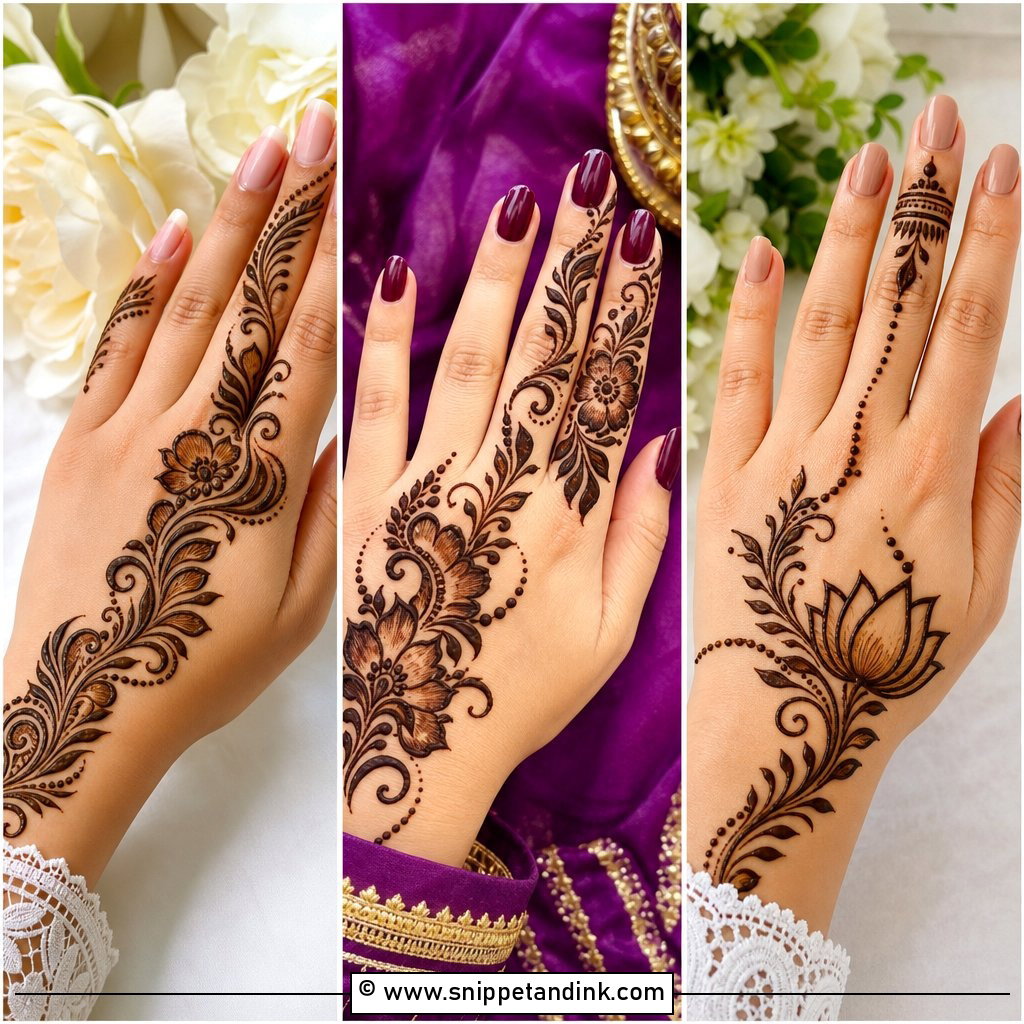
24. Pakistani Mehndi
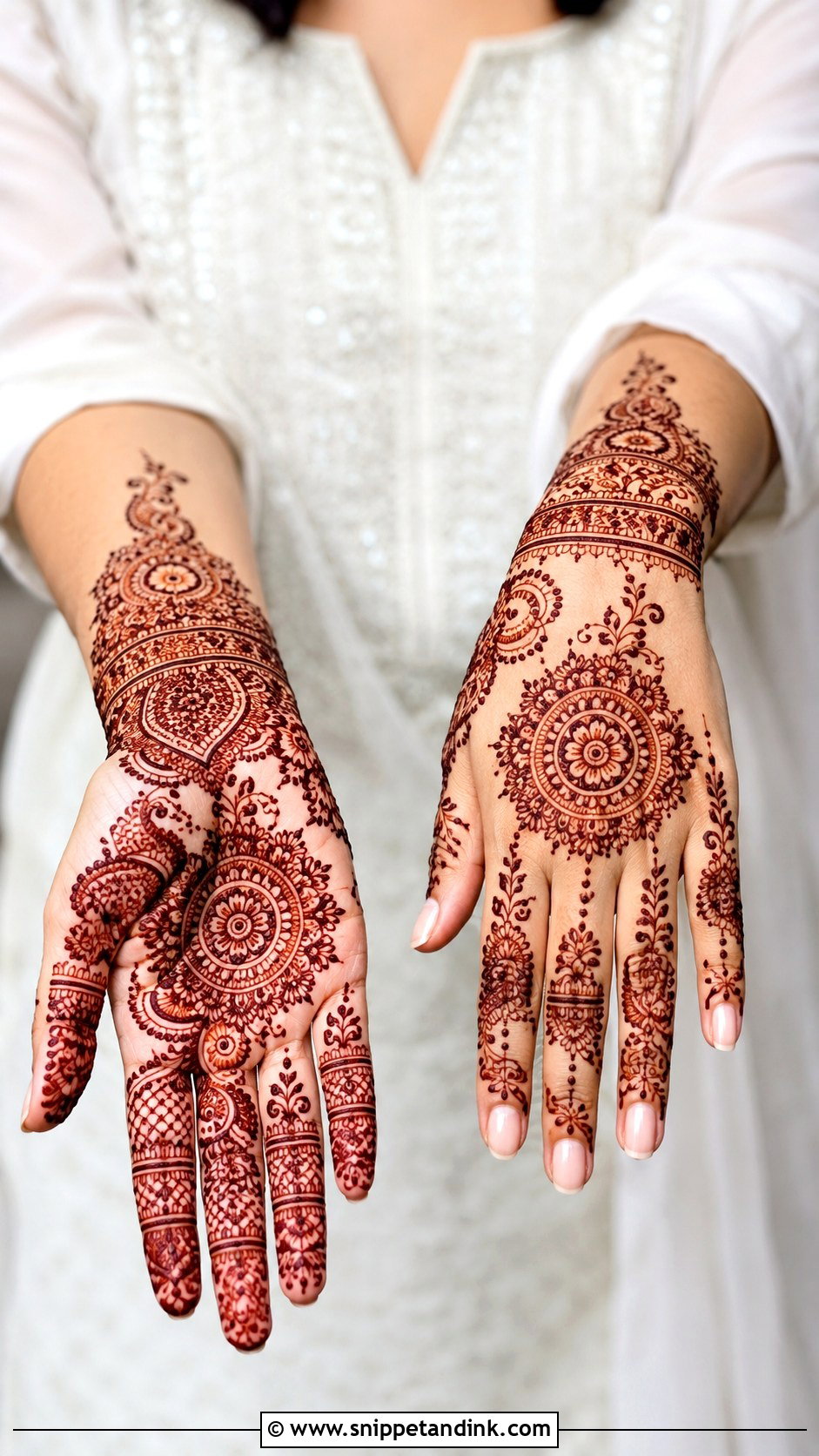
Pakistani mehndi mixes Indian detail with Arabic flow. A detailed palm mandala, Arabic florals across the wrist and fine finger patterns make a balanced design. It can be dense for brides or lighter for Eid. Bold outlines with delicate inner detail are what make the style recognisable.
25. Khafif Mehndi
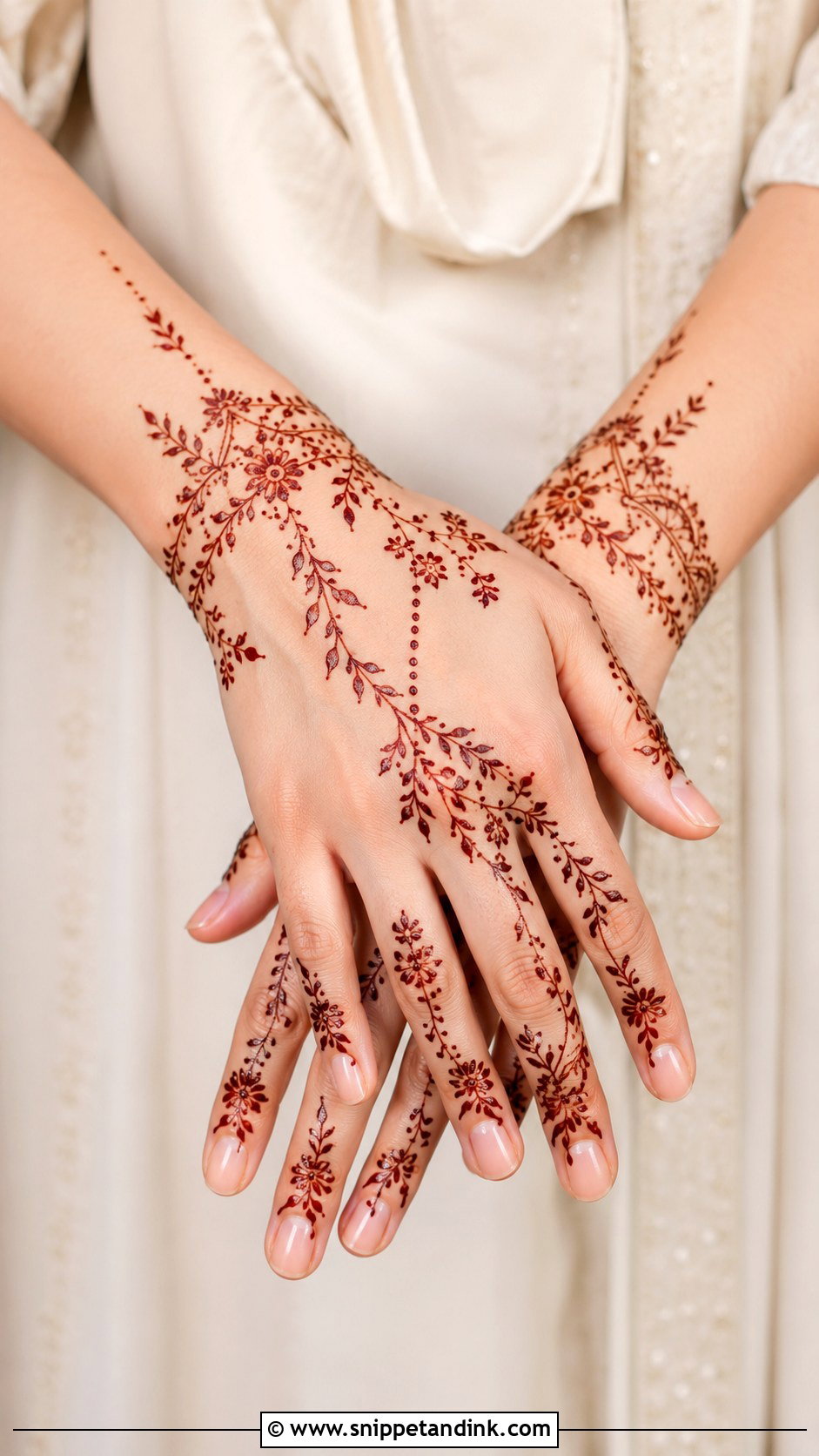
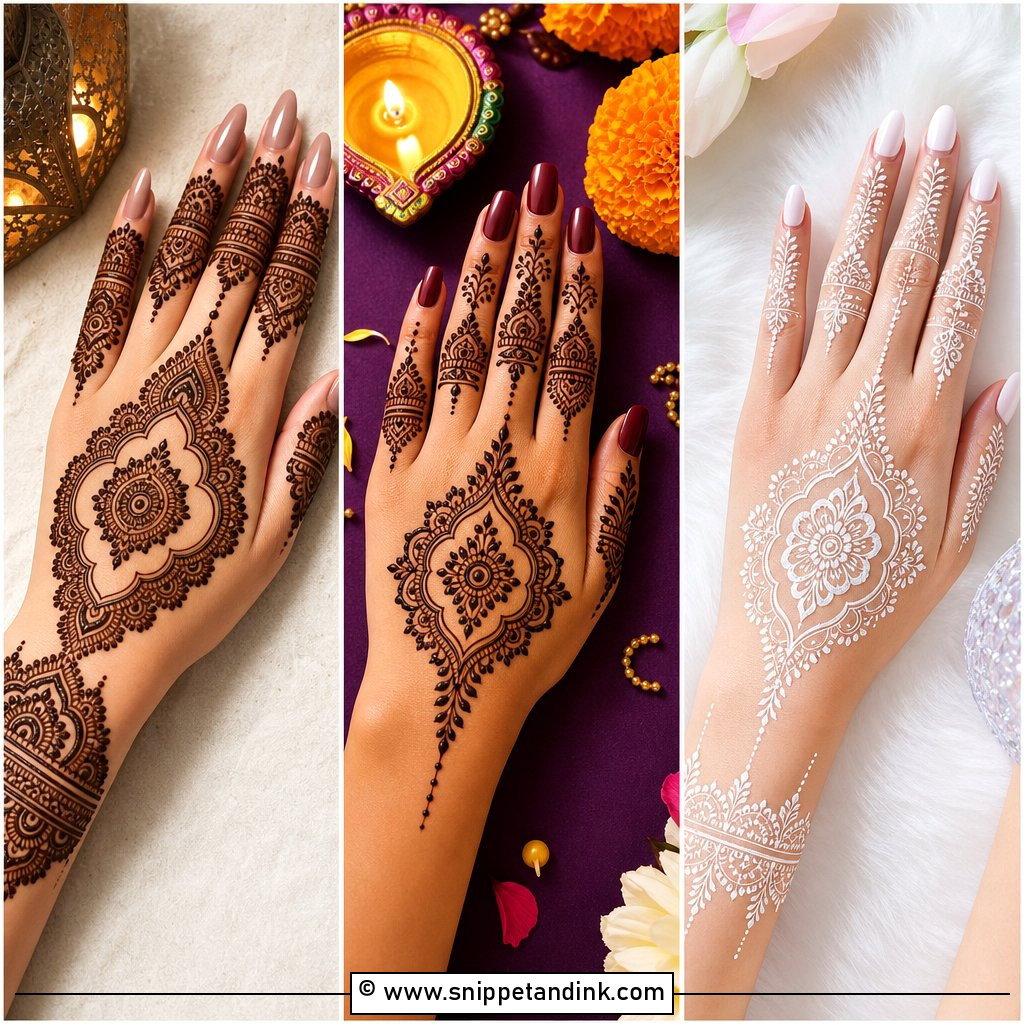
Khafif mehndi is fine and delicate, with slim florals, lace-like vines and tiny leaves. It’s lighter than Khaleeji work and much less dense than Indian bridal mehndi. I use a fine cone tip for it, and the paste needs to be smooth, since lumps break the thin lines. It looks especially good on the back of the hand and fingers.
26. Kids Mehndi
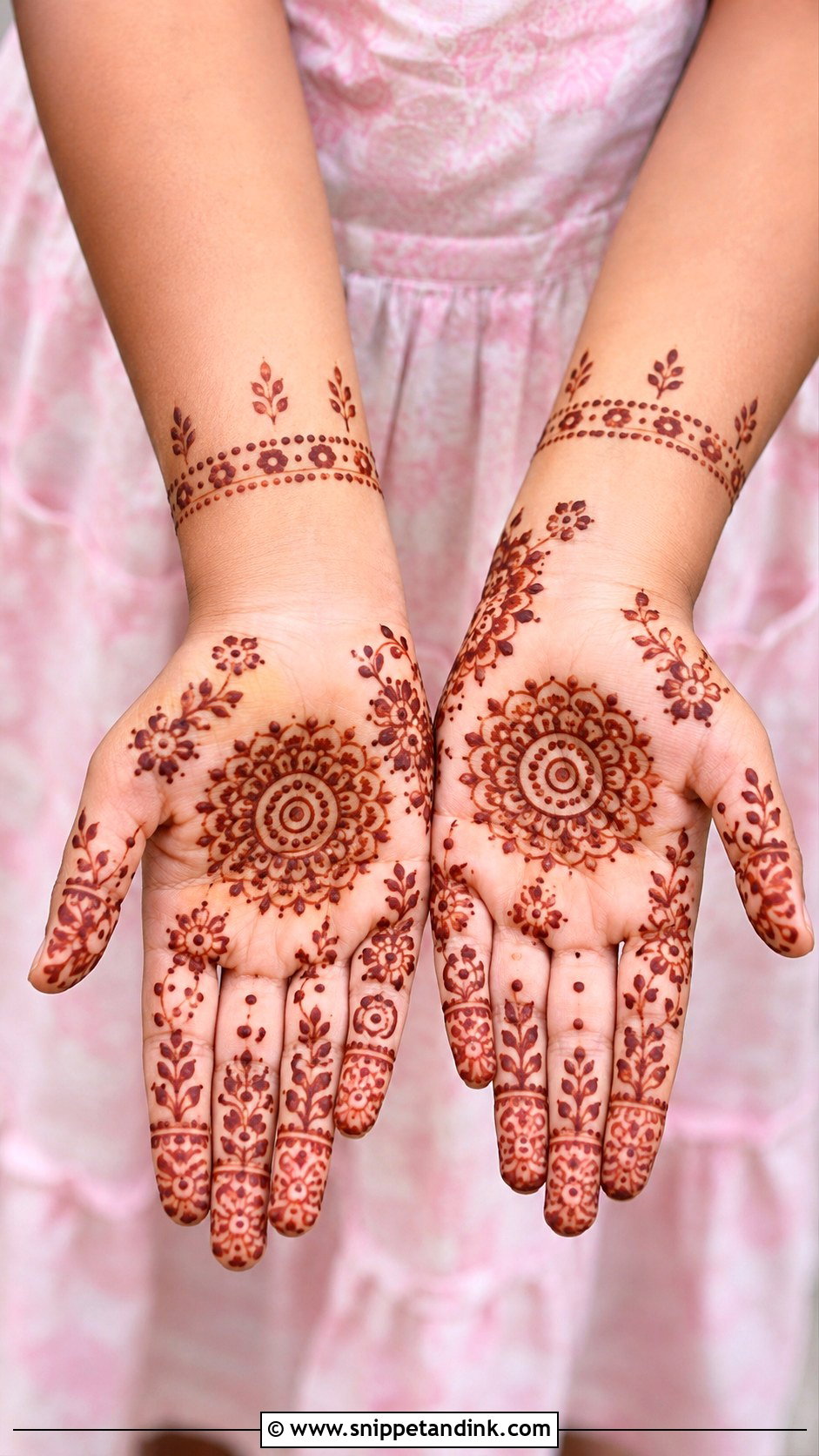
Kids mehndi should be quick and simple, because children rarely sit still for long. A small palm mandala, little flowers and a tiny bracelet are plenty. I use only natural henna on children and avoid anything labelled black henna. Matching mini designs on both hands look neat.
27. White Henna Mehndi
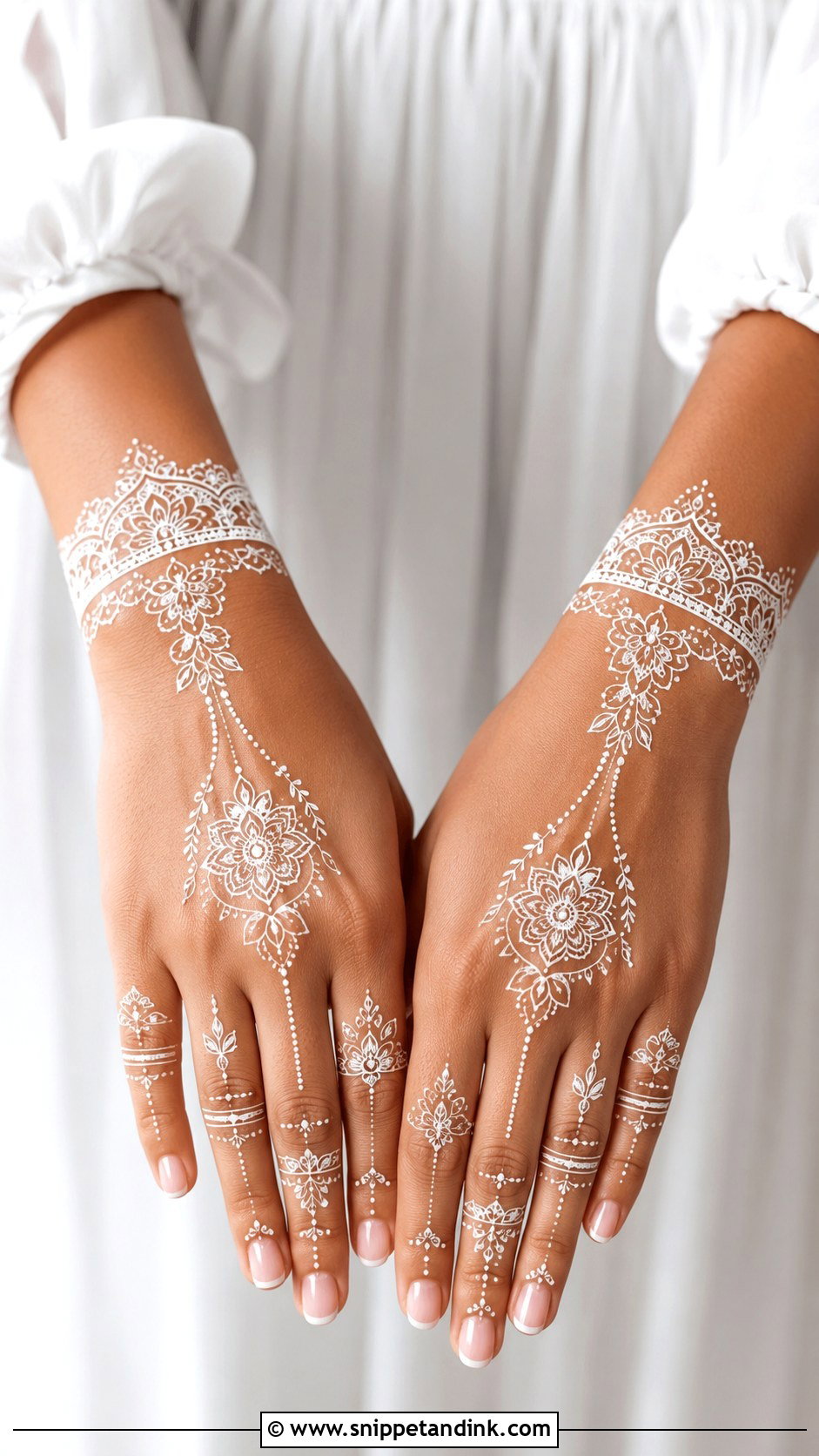
White henna isn’t henna at all; it’s body paint or a cosmetic adhesive applied in henna-style patterns. It sits on top of the skin and lasts a day or two at most. It looks striking on deeper skin tones and suits photo shoots and short events. Jewellery-inspired or lace patterns work best, rather than dense filling.
28. Glitter Mehndi
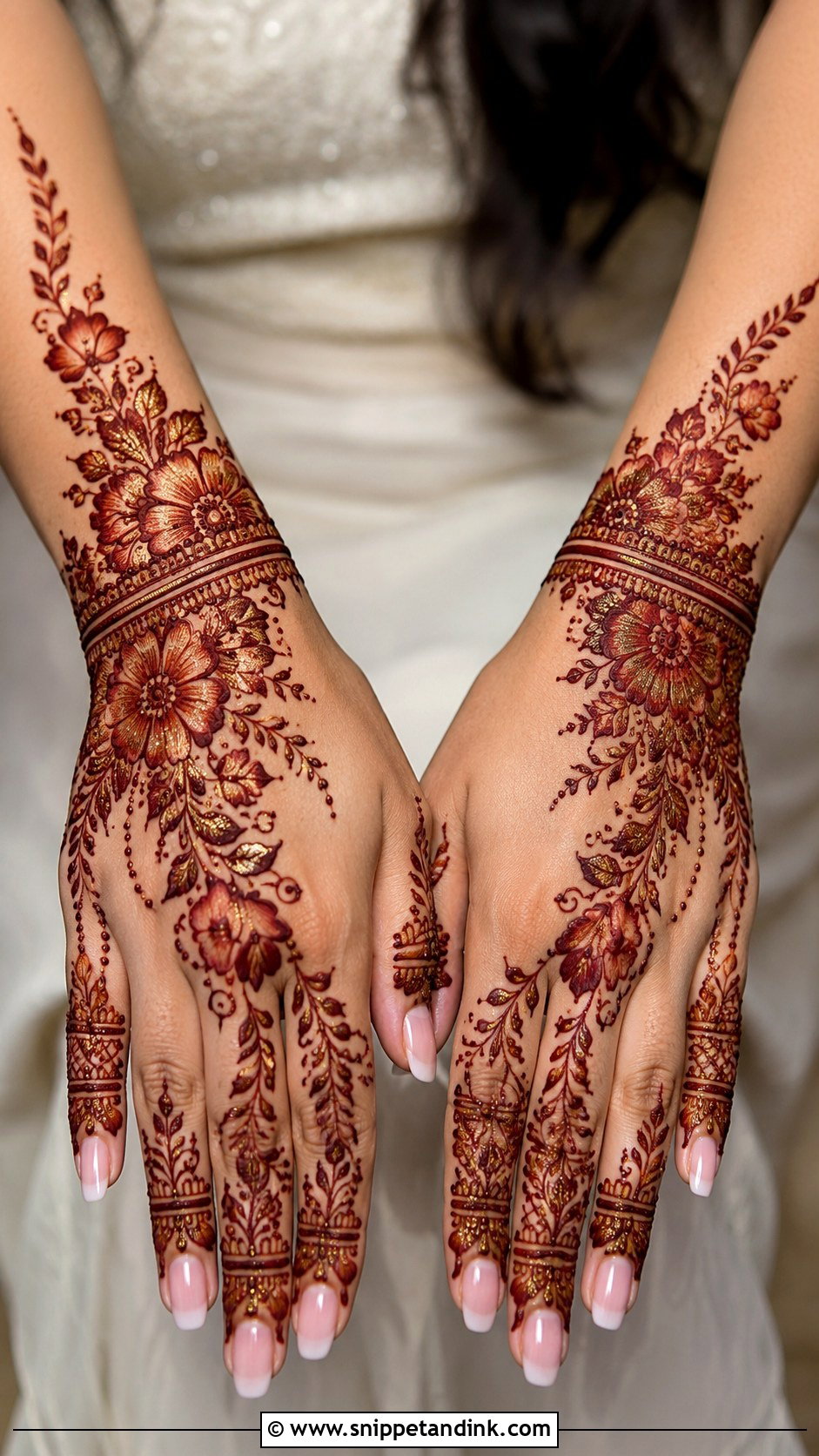
Glitter mehndi adds shine to selected flowers, borders or cuffs. The glitter is applied with cosmetic adhesive, usually after the henna is removed, or over a temporary design. Use it sparingly; too much hides the detail. Gold, bronze and deep red glitter suit traditional outfits at a sangeet or party.
29. Finger Ring Mehndi
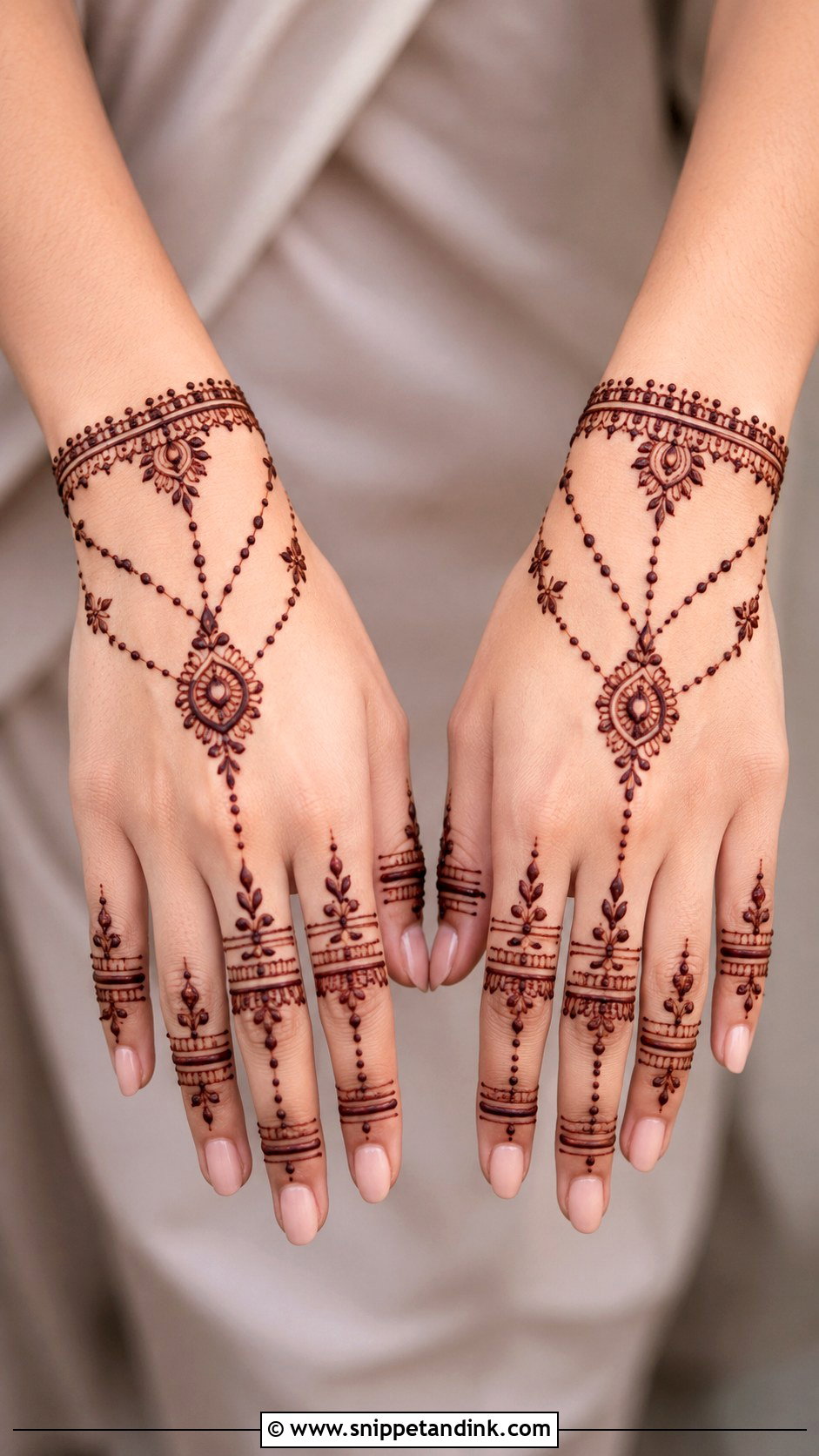
Finger ring mehndi decorates each finger with bands, small floral tips and dotted chains, often linked to a central motif and a wrist bracelet. It suits minimal henna lovers and pairs well with real rings. I vary the ring pattern on each finger while keeping one theme throughout.
30. Wrist To Forearm Mehndi
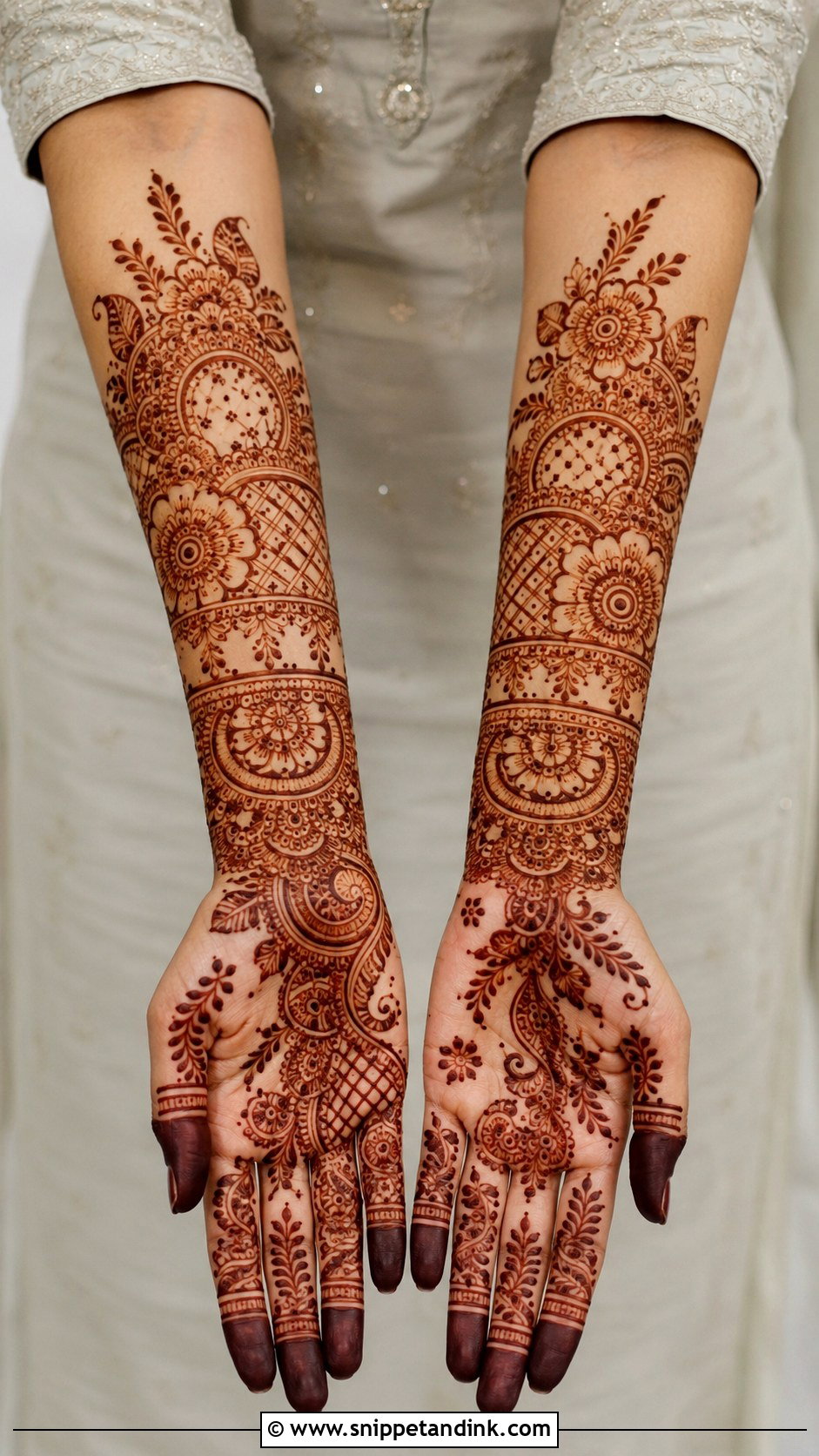
Wrist-to-forearm mehndi starts at the wrist and travels up the arm, with florals, paisleys, jaali or geometric bands. The hand stays lighter. The forearm stains lighter than the palm, so I keep the paste lines there a little bolder. It looks good with short sleeves and bangles, and suits brides, bridesmaids and festive events.
The Stain Starts Orange, and That Is Normal
When the paste comes off, the stain is bright orange. That’s normal. Over the next day or two it oxidises and darkens to reddish brown or maroon. How dark it gets depends on your skin, your body heat and how you look after it in those first hours.
- Keep the paste on as long as possible. Once it starts to dry, I dab on a little lemon and sugar mix so it stays stuck to the skin.
- Scrape the dried paste off with a blunt edge or rub it off; don’t wash it off.
- Avoid water for as long as you can, ideally the rest of the day. Water stops the stain from developing.
- Keep your hands warm. A little heat helps the stain darken.
- After the first day, rub a balm or natural oil over the design before showering, to protect it from soap and chlorine.
The palms and fingertips stain darkest, and the back of the hand and forearm stain lighter, because the skin is thinner there. That’s why designs that extend up the arm look lighter at the top.
Black Henna and Other Things I Won’t Put on Skin
Real henna paste is made from the dried leaves of the henna plant and stains in shades from orange to deep maroon. It never stains black. Products sold as black henna usually contain a hair-dye chemical called PPD, which can cause serious allergic reactions, blistering and scarring. I never use it, and I’d encourage you to ask any artist what’s in her paste.
If you have sensitive skin or allergies, ask for a small patch test on the inner arm a few days before your appointment. Natural henna paste usually contains just henna powder, lemon juice or water, sugar and an essential oil, and a good artist will tell you exactly what she uses.
Bring These Designs to Your Artist, Then Let Her Fit Them to Your Hands
The occasion, the time you have and how much coverage you want will decide your design. Brides often choose full Indian, Rajasthani, portrait, lotus or peacock work. Festive guests may prefer Arabic trails, Eid patterns or Pakistani fusion. Minimal lovers can pick finger rings, bracelets or haath phool. For something bolder, try Moroccan geometry, Khaleeji shading or glitter accents. Bring photos to your artist, then let her adjust the spacing and motifs to your hands.
You'll Like These Ideas:








Leave a Reply