
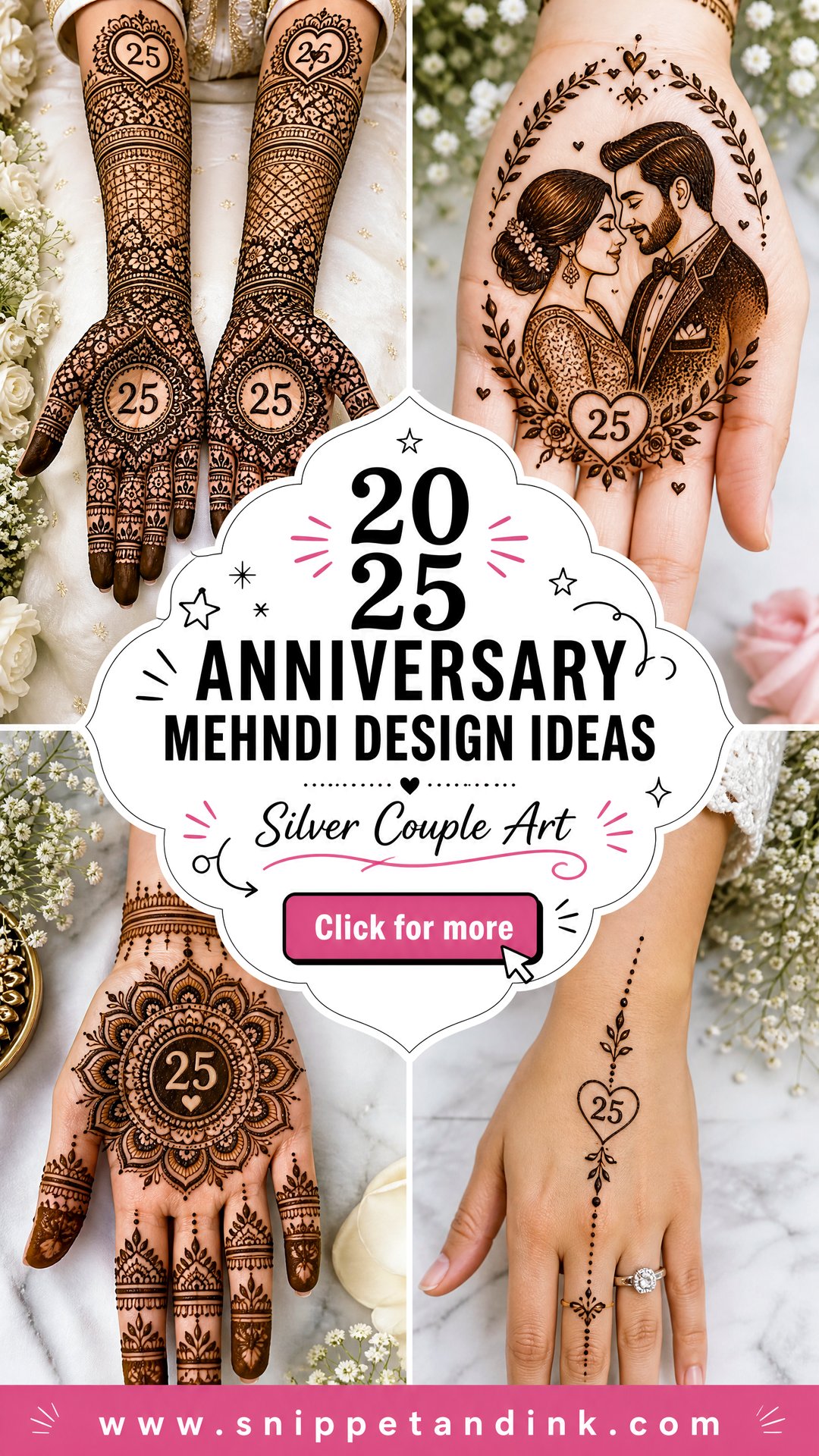
Silver jubilee mehndi is a different job from bridal work. The woman in my chair usually wants something festive and personal, but lighter than the full bridal coverage she wore 25 years ago, and she often has a party to host the same week. That changes how I design. Initials, dates, hearts, mandalas, jaali, couple portraits and a hidden “25” all appear in the ideas below, from full hands for a large function to a single back-hand motif for a family dinner. Pick by the event and by how much time you can sit still, not just by the photo.
When to Book the Henna Before a Silver Jubilee Party
Henna doesn’t show its real color when the paste comes off. It starts out orange and deepens over the next day or two, so I schedule anniversary appointments one to two days before the event, never the morning of. That way the stain is at its darkest when the guests arrive.
Plan for the paste to stay on for several hours after application, ideally overnight, which means no cooking, no washing up and no greeting relatives with a hug. Many of my anniversary clients are also the hosts, so I suggest getting the house and food sorted first and booking the henna for the evening.
- Minimal or single back-hand designs take the least time; full hands with portraits or names take much longer, so ask your artist for an estimate.
- Come with clean, lotion-free skin. Oils and creams on the hand stop the paste from staining well.
- Ask for natural henna only. Dark instant “black henna” often contains PPD, a hair-dye chemical that can cause painful skin reactions.
If you have sensitive skin or have never had henna before, a small patch test a few days ahead is a sensible precaution.
1. 25th Anniversary Full Hand Mehndi Design
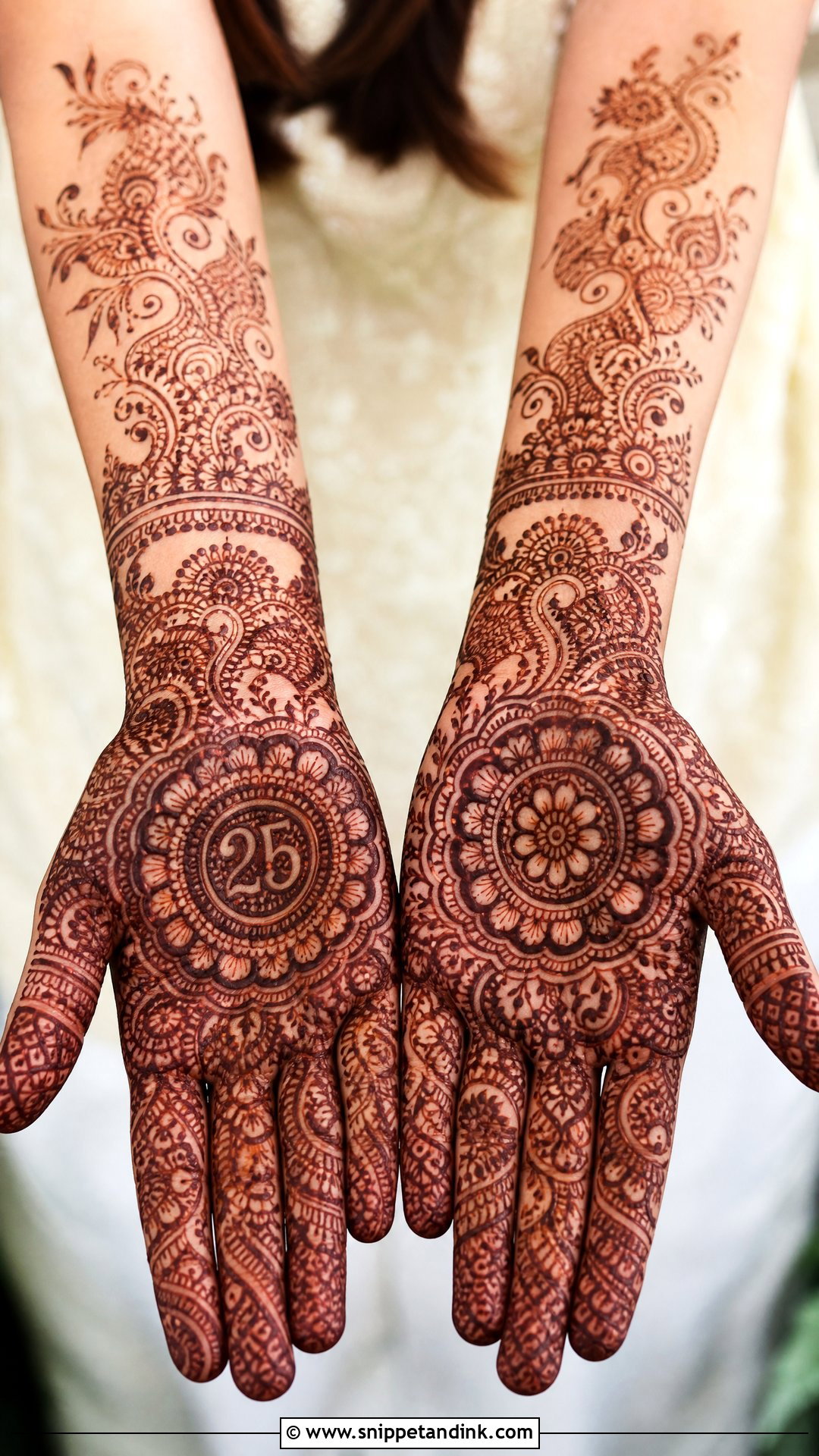
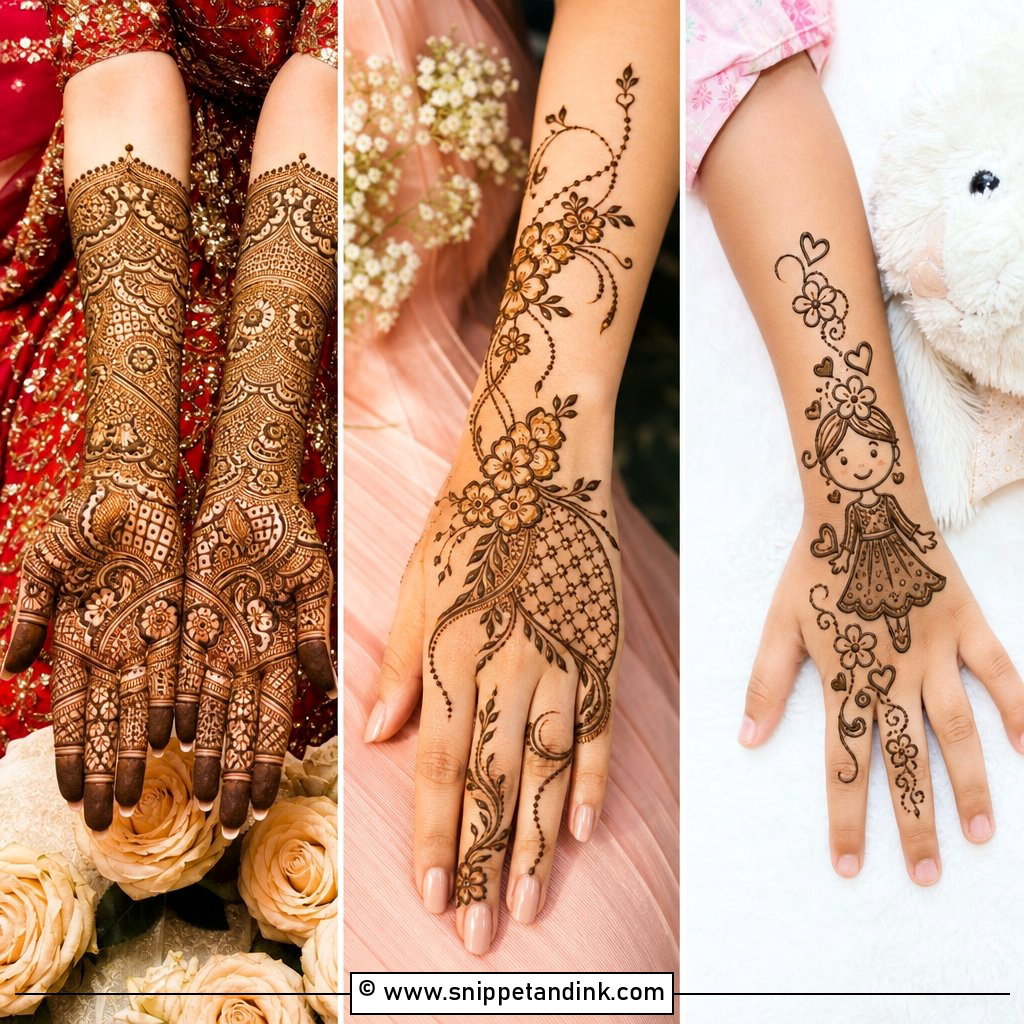
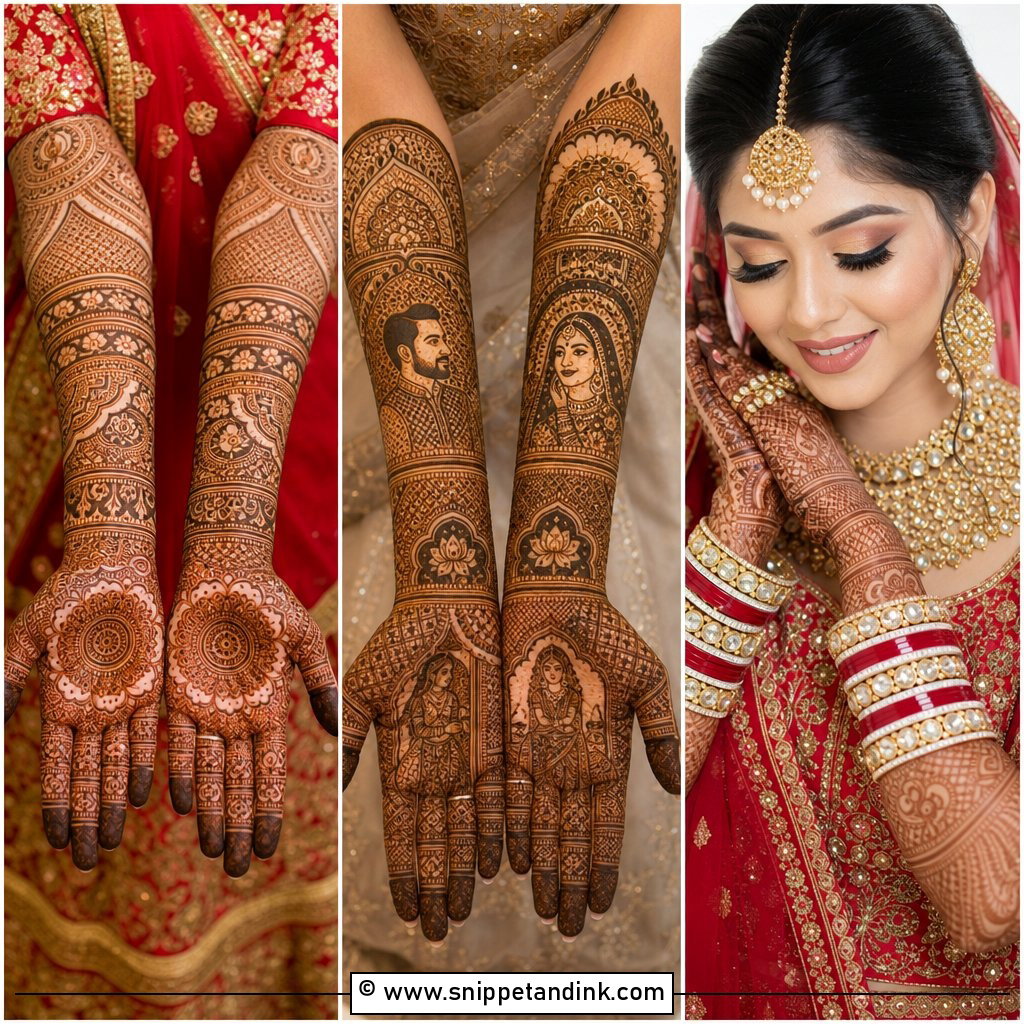
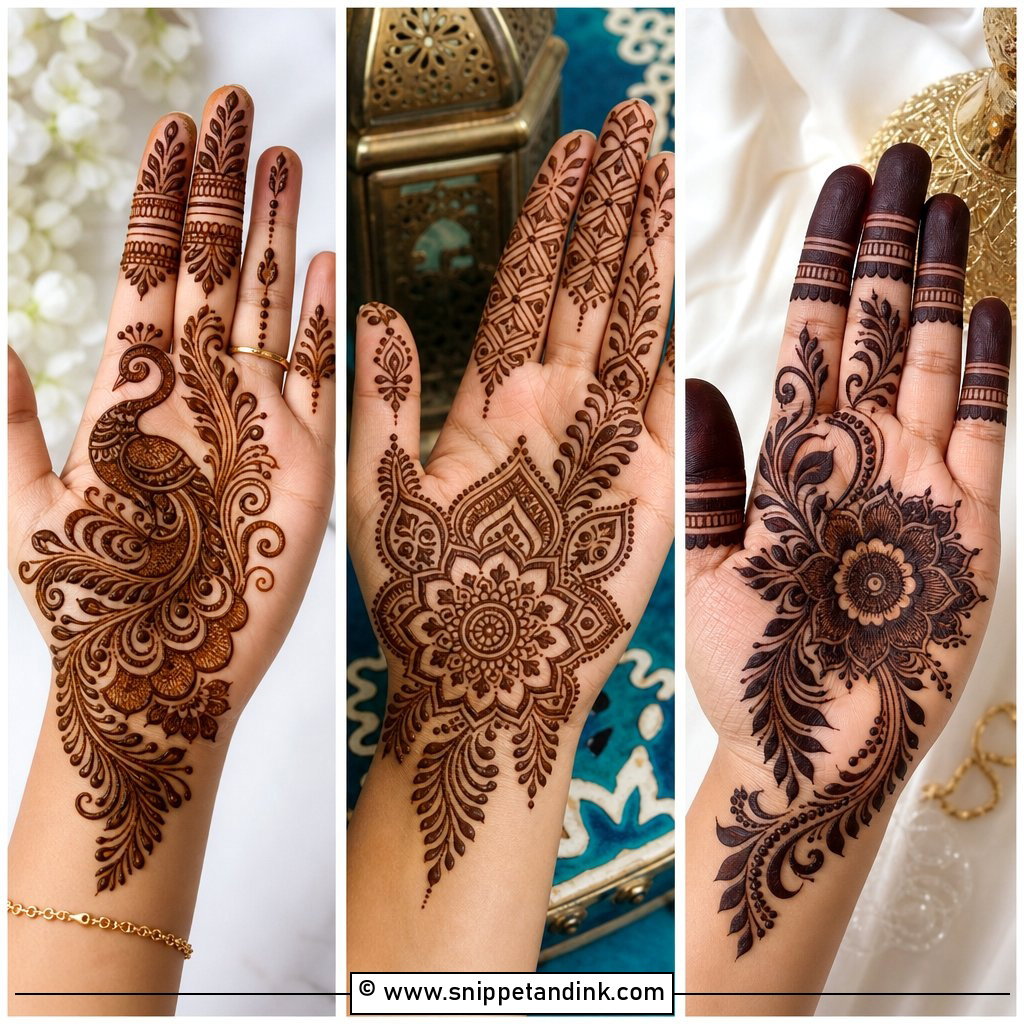
A full hand design suits a large 25th anniversary function, where hands will be in a lot of pictures. I build it from the center out: a mandala on the palm, then paisleys, vines and small florals, with fine filler lines toward the wrist and up part of the forearm. A “25” sits neatly at the wrist, or I hide initials inside the pattern for guests to find. What separates this from bridal coverage is spacing. I leave thin channels of bare skin between motifs, which keeps the stain readable and the whole hand less heavy. It sits well with sarees, lehengas and anarkalis.
2. Silver Jubilee Mehndi Design For Hands
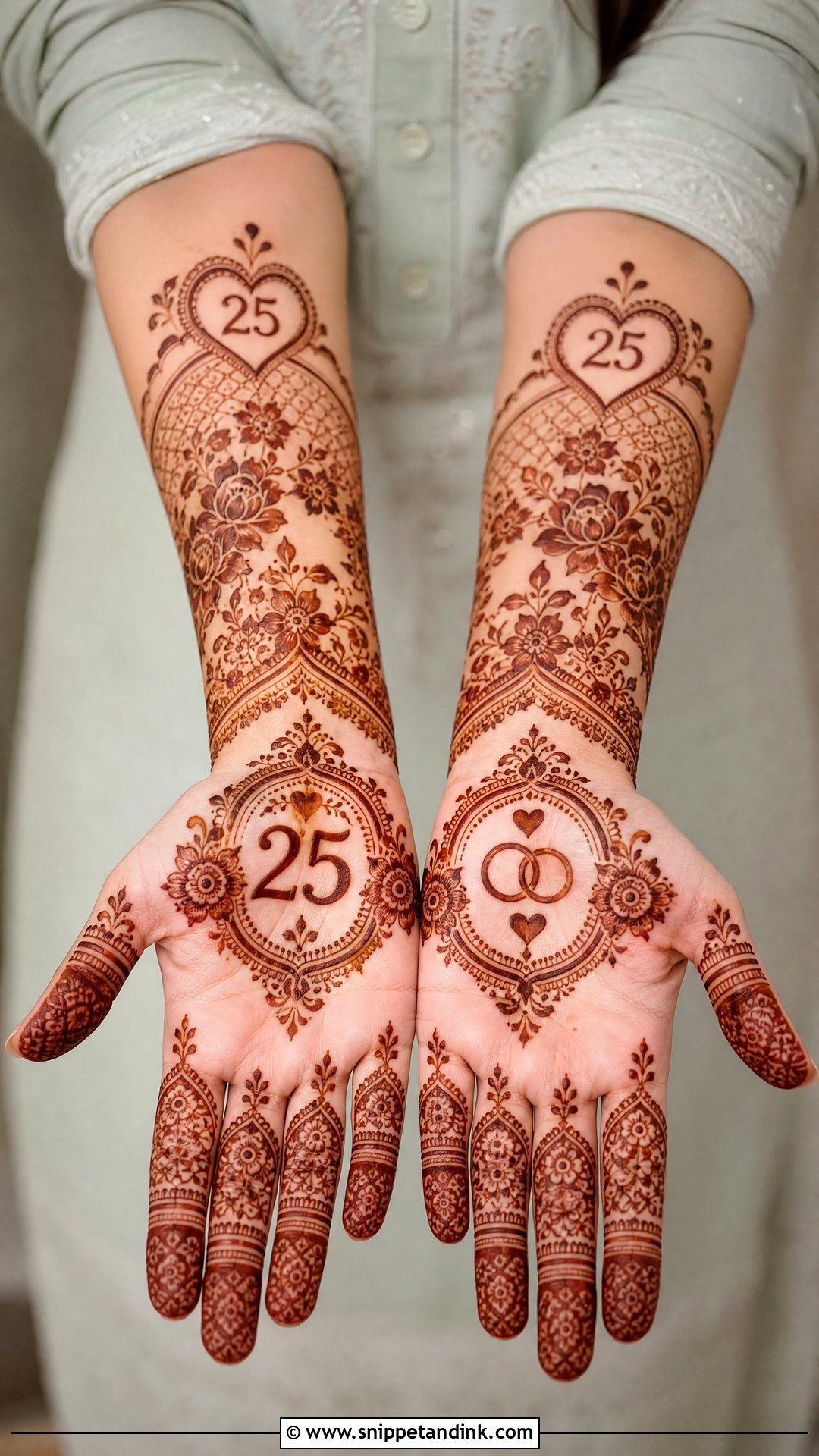
The silver theme belongs in the pattern, not the paste. Natural henna stains reddish-brown, and any “silver” product sold for skin is a glitter or body paint layered on top, not real mehndi. So I bring the jubilee in through symbols: a “25”, interlocked rings, small hearts and fine lettering. The layout starts with a bold palm motif, opens into floral borders and soft vines, and the fingers get slim bands and leafy tips rather than heavy filling. Writing the wedding year on one hand and this year on the other is a quiet touch that suits a vow renewal or family dinner.
3. Anniversary Couple Portrait Mehndi Design
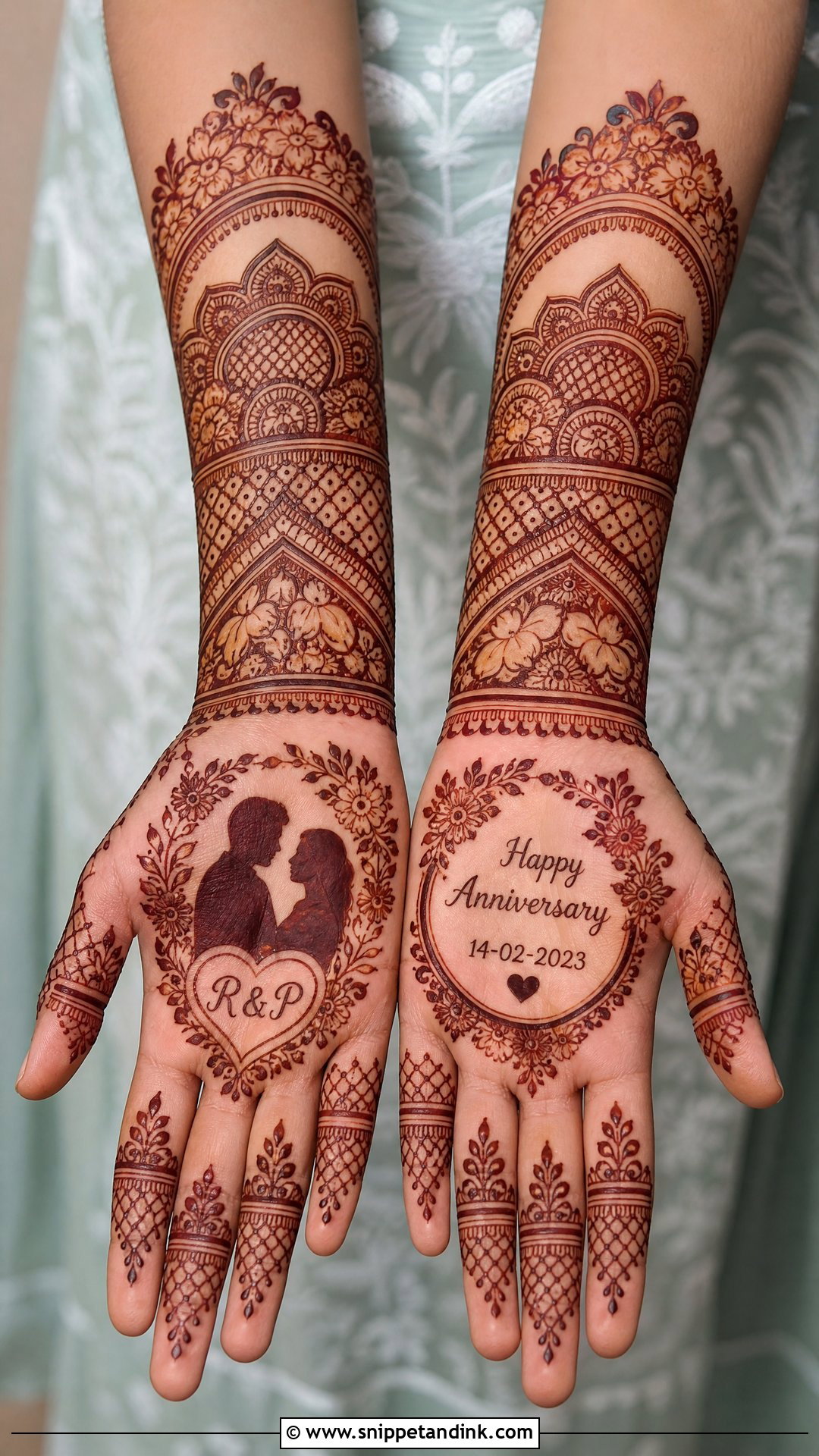
Couple portraits are the most demanding design in this list. Two faces, a pair holding hands or simple profiles sit in the center of each palm, framed by flowers, mandalas, jaali and small hearts, with “25 years” or the wedding date near the wrist. Henna lines spread slightly as they stain, so tiny facial details like eyes and lips blur first. I draw faces larger than people expect and keep the background around them open. Book an artist who can show you portrait work she has actually done, since symmetry and expression are hard to fake.
4. Simple Anniversary Mehndi Design
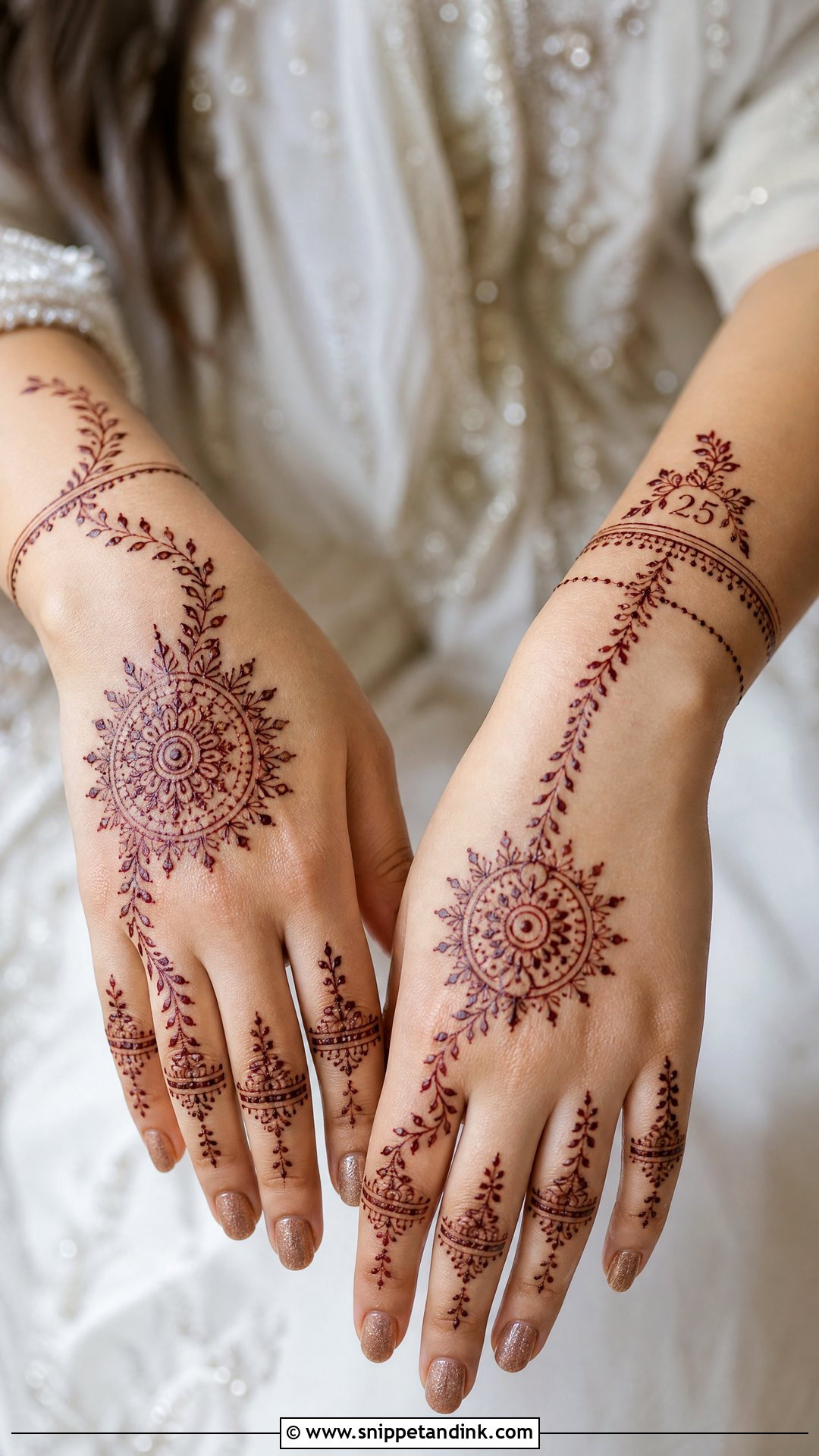
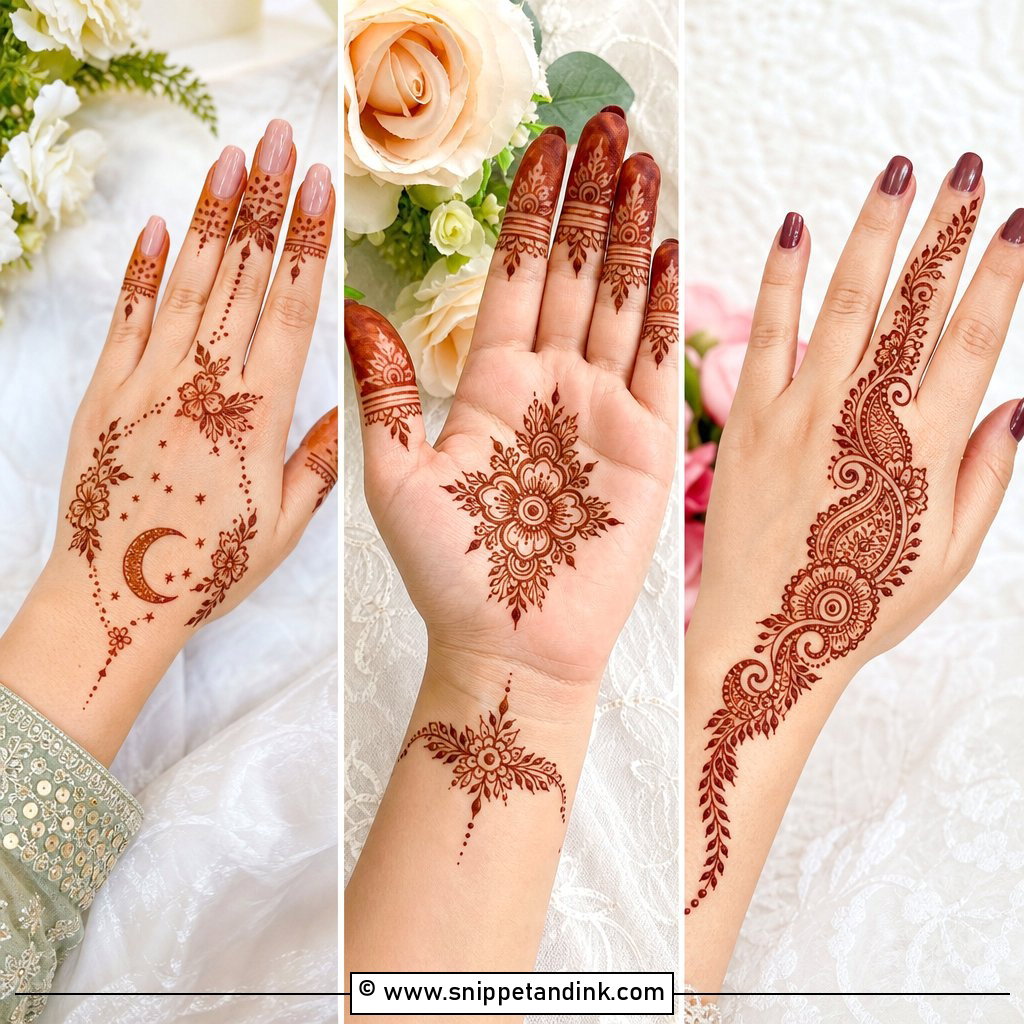
Not everyone wants to sit for hours. A simple back-hand design, a central floral mandala with leafy trails and lightly decorated fingers, takes a fraction of the time and still looks festive. I tuck a “25” at the wrist or a partner’s initial inside a flower. This is the design I suggest when someone is cooking for the party or going to work the next morning, because the palm stays free and the paste is less likely to smudge while she gets on with her day.
5. Arabic Anniversary Mehndi Design
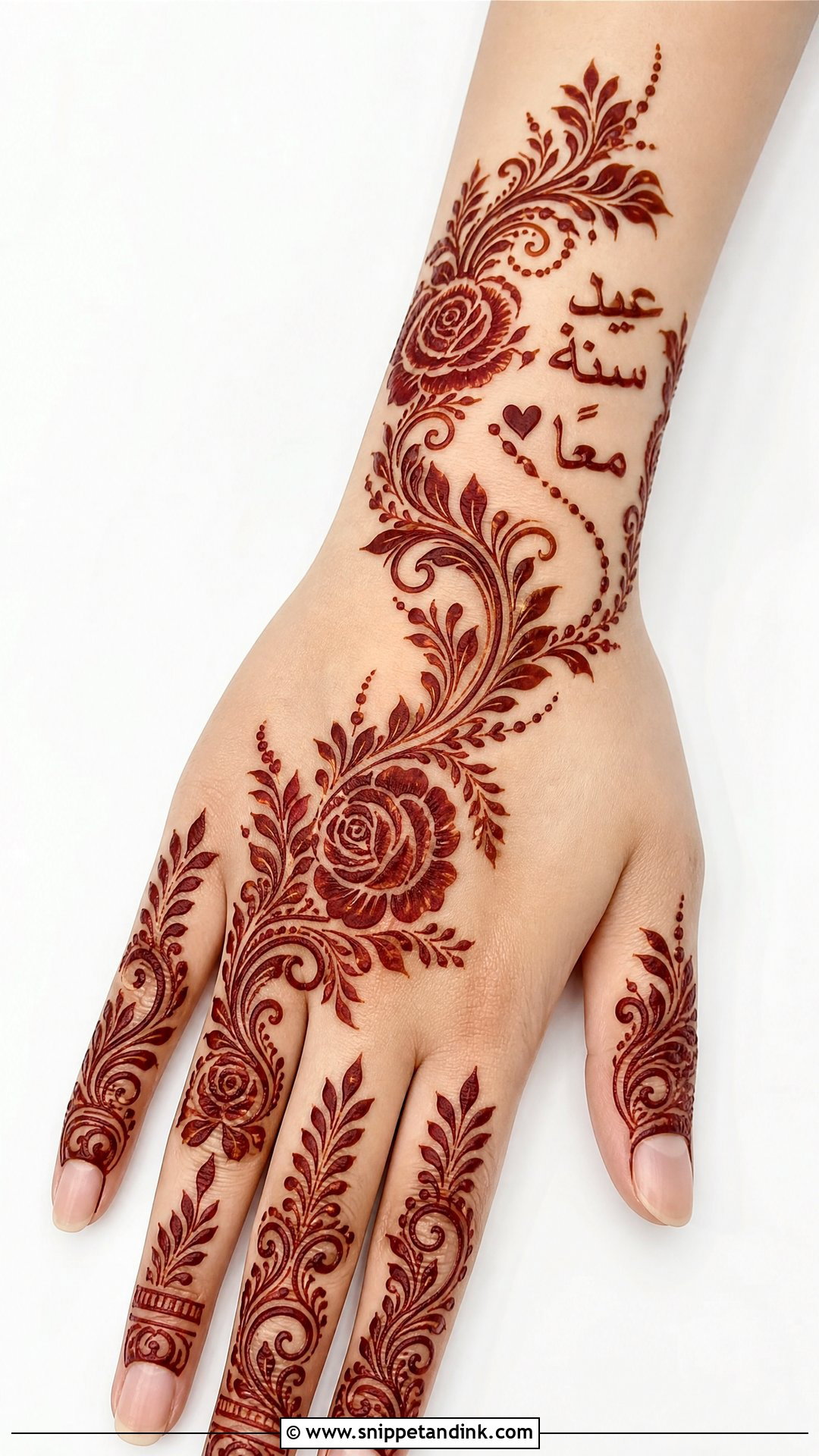
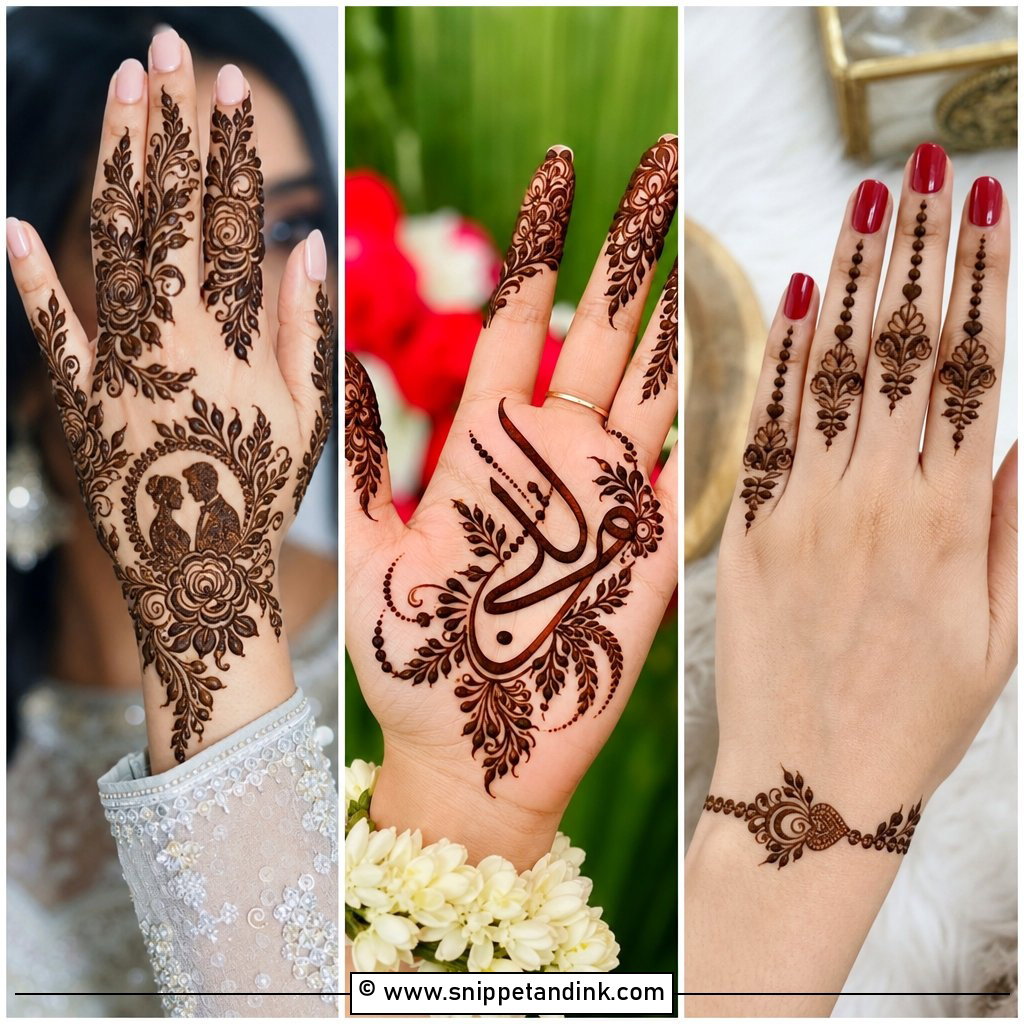
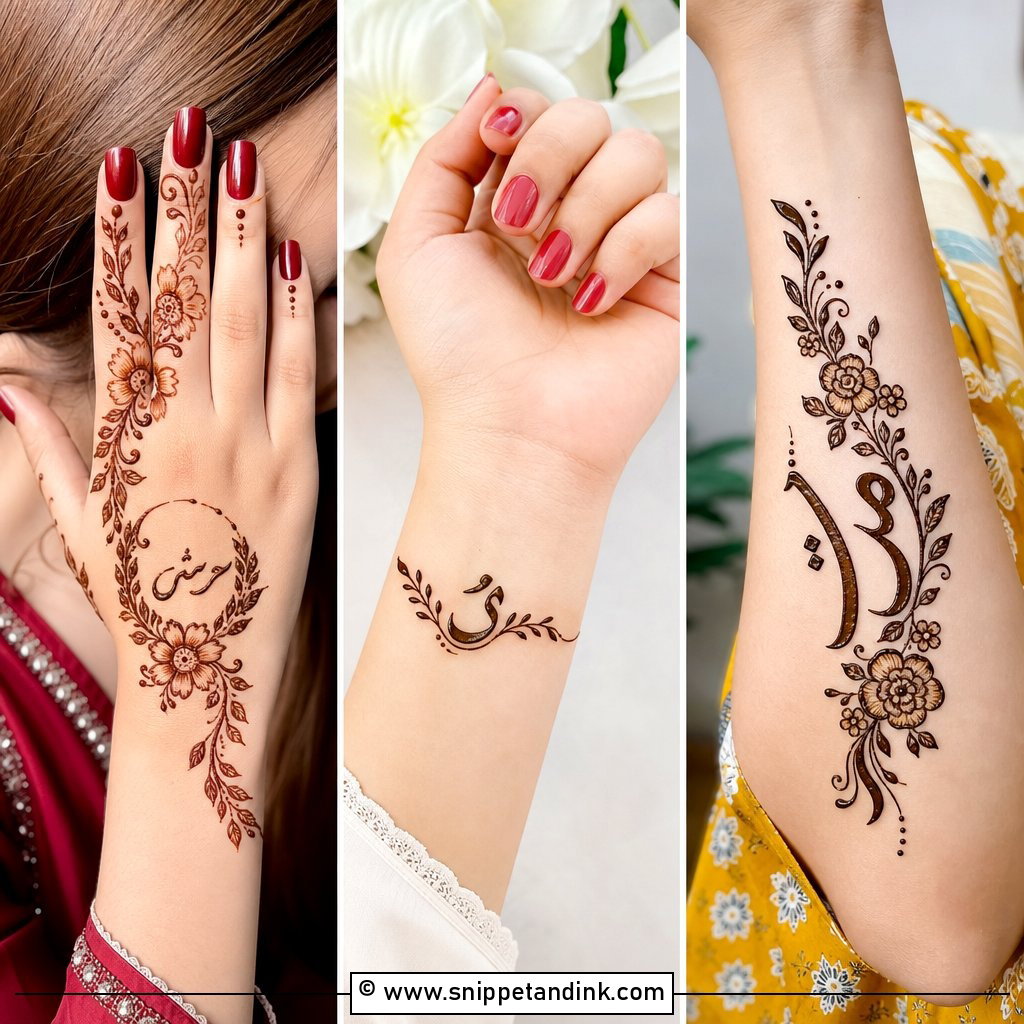
Arabic mehndi flows on a diagonal: one trail starting at the side of the wrist and climbing across the hand toward the index or middle finger, with bold flowers and wide open spaces. For an anniversary I work roses, paisleys, curved leaves and small hearts into the trail and frame a little “25” near the wrist. It’s quick to apply, which makes it practical when I’m doing several family members before an event. The trade-off is that the bold, thick strokes show any shakiness, so steady cone control matters more than in filled designs.
6. Indo-Arabic Anniversary Mehndi Design
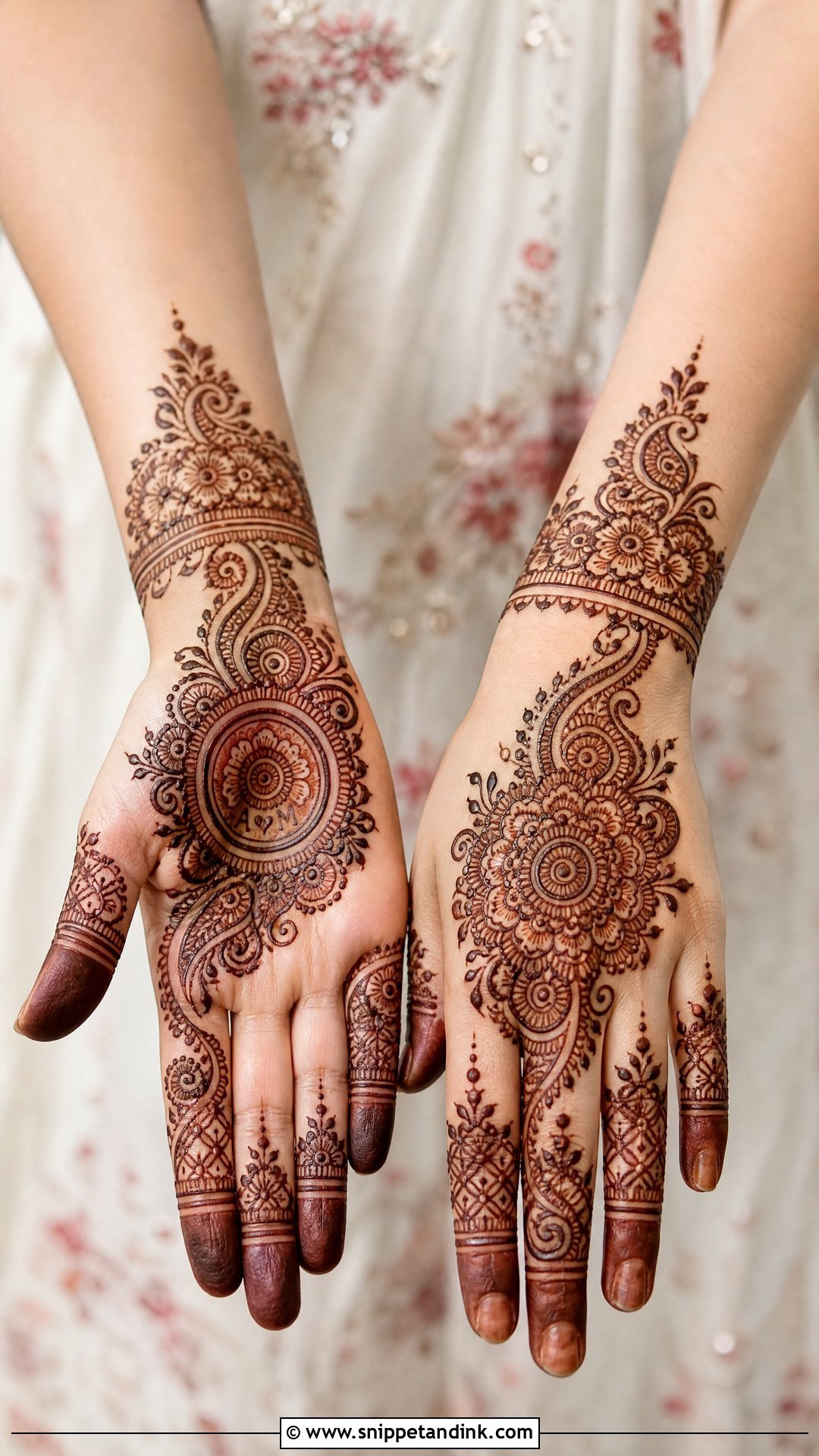
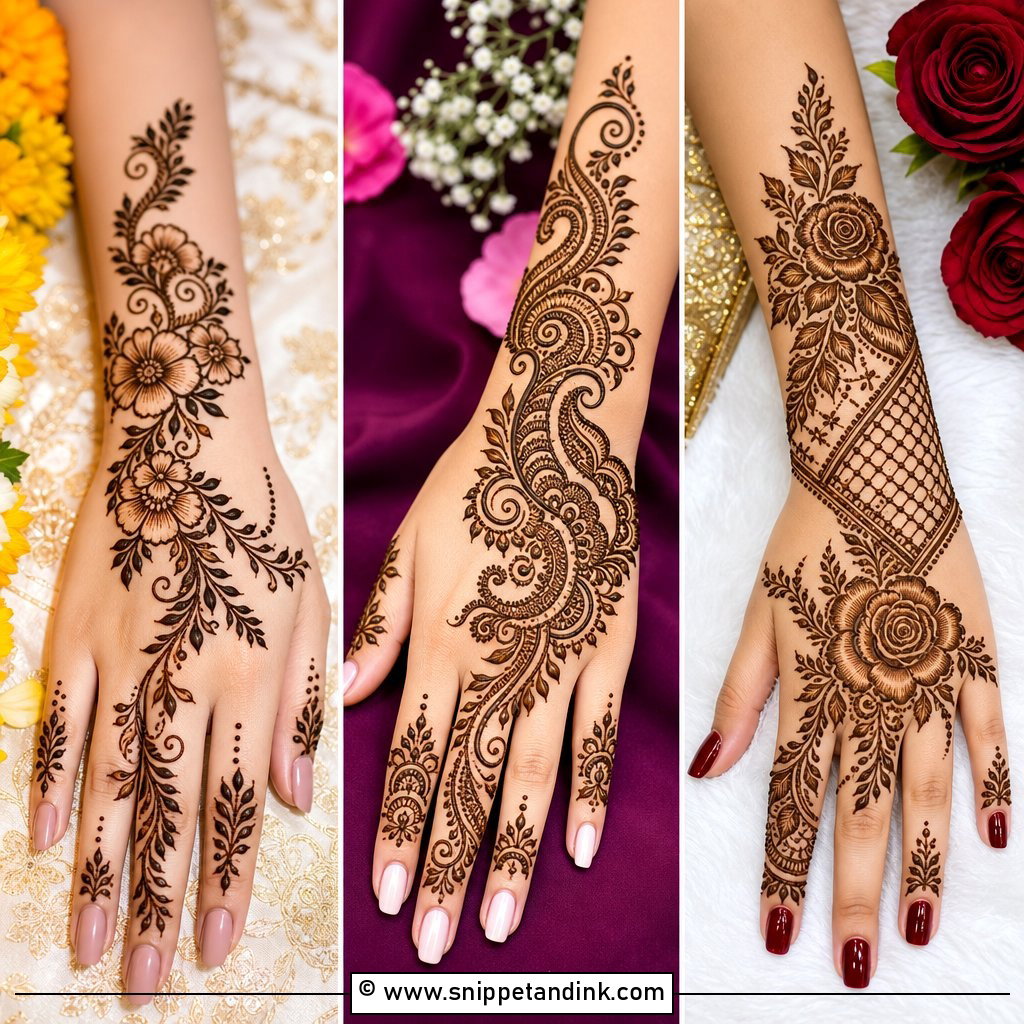
Indo-Arabic sits between the two styles: the detail of Indian patterns with the open, flowing direction of Arabic work. A typical layout has a mandala on the palm, diagonal floral vines, paisley borders and semi-filled fingers, running down to the wrist with some negative space. Initials, the wedding year or a tiny “25” fit nicely inside a wrist cuff. I like this style for women who find full traditional coverage too much but still want detail to look at up close.
7. Back Hand Anniversary Mehndi Design
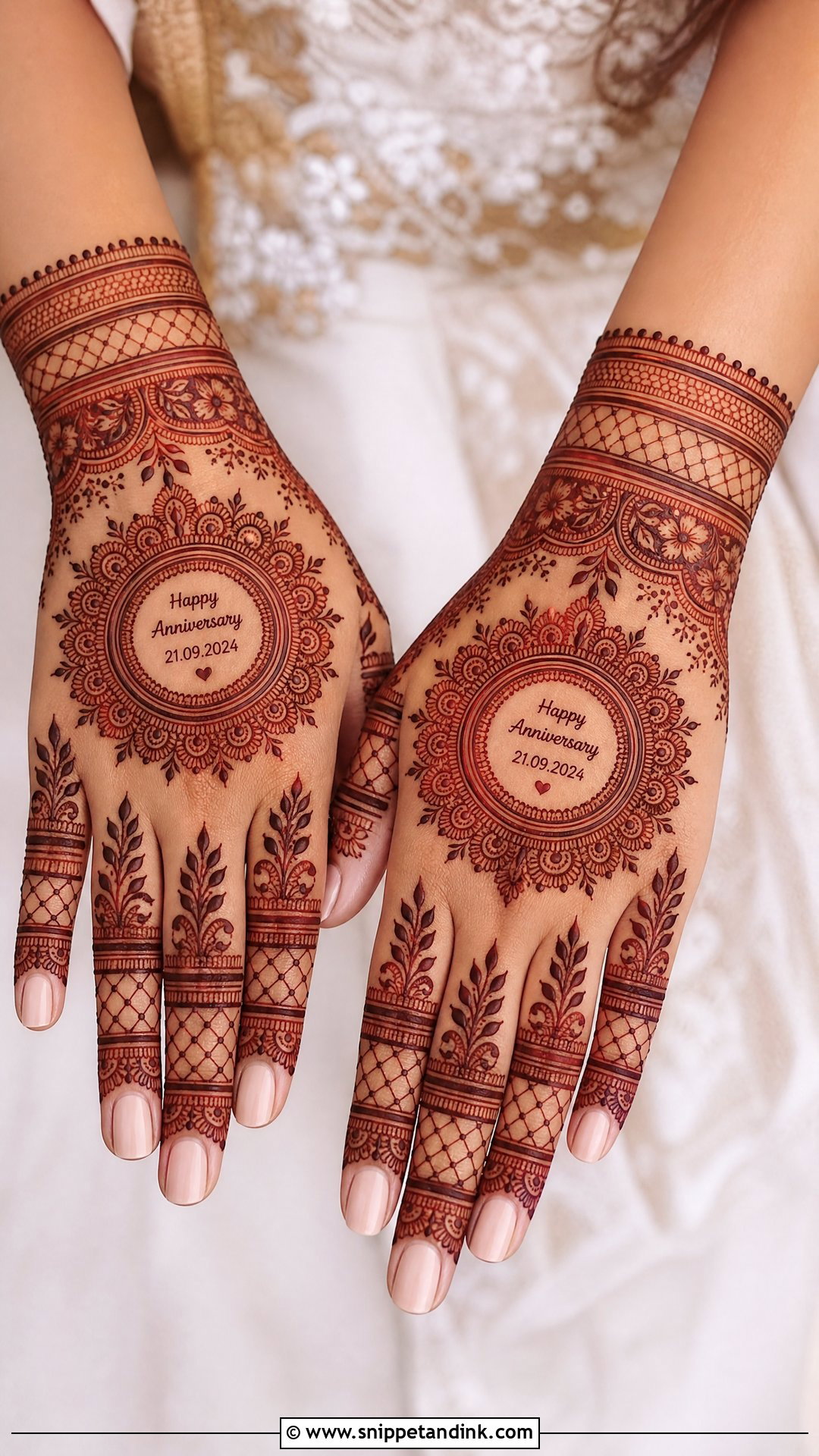
The back of the hand is what shows in photos when you hold flowers, a gift or your partner’s hand, so it’s the most requested placement for anniversaries. A full back-hand design has a large central mandala, bracelet-style wrist work and leafy finger bands. Leave the area around the mandala open for a softer look, or fill it with jaali and florals for a richer one. Expect a lighter stain here than on the palm, since the skin on the back of the hand is thicker and cooler. I warn people about that up front so they aren’t disappointed on day two.
8. Front Hand Anniversary Mehndi Design
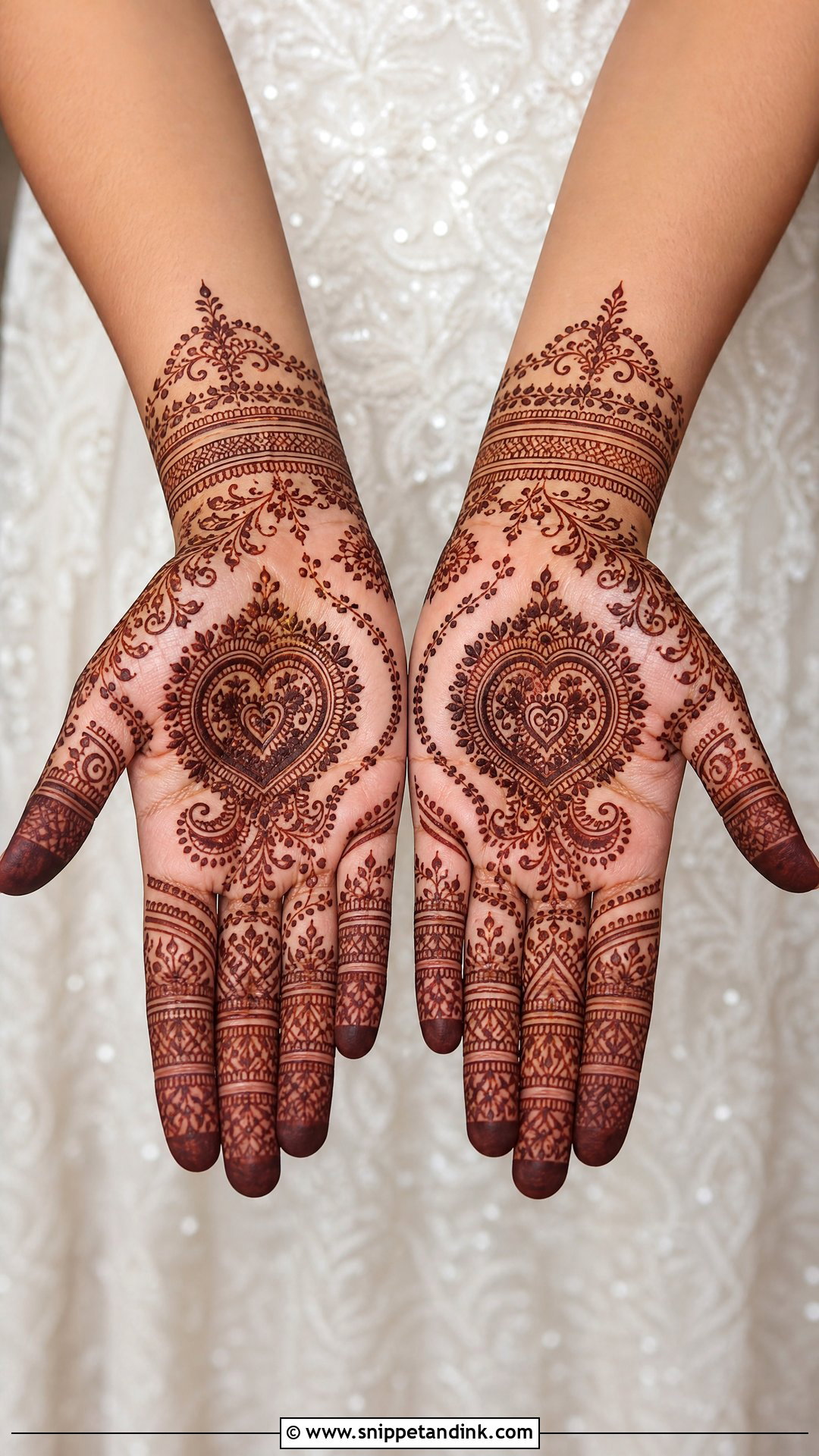
The palm has the most space for personal details and also takes the darkest stain on the hand, so it’s where I put whatever matters most: names, initials, a wedding date or the jubilee number. Start with a central palm motif such as a mandala, heart frame or floral circle, then build out with paisleys, vines, dots and fine lines, small repeating patterns on the fingers and a cuff at the wrist. The one catch is that palm designs smudge easily while wet, so plan to sit with your hands open until the paste dries.
9. Anniversary Name Mehndi Design
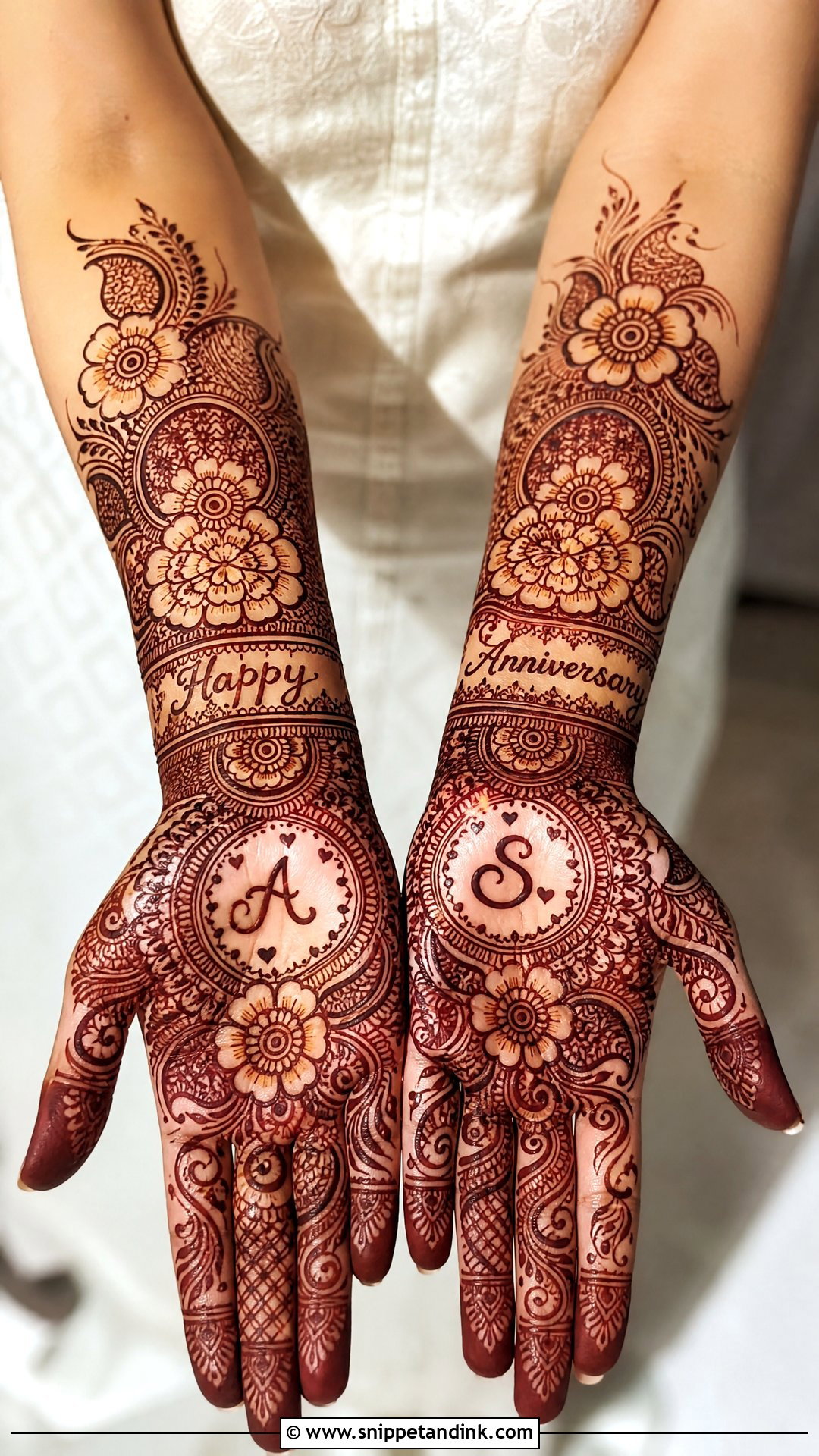
A name mehndi design turns the pattern into a keepsake. I write one partner’s name on each hand, or both initials, or a short phrase, and hide them inside vines, mandala petals or paisley curves so they’re found rather than announced. The wedding date can sit under a wrist bracelet. One practical point: lettering needs to be written so it reads the right way up from where people will see it, which is usually facing the viewer, not the wearer. I always confirm that before I start.
10. Anniversary Date Mehndi Design
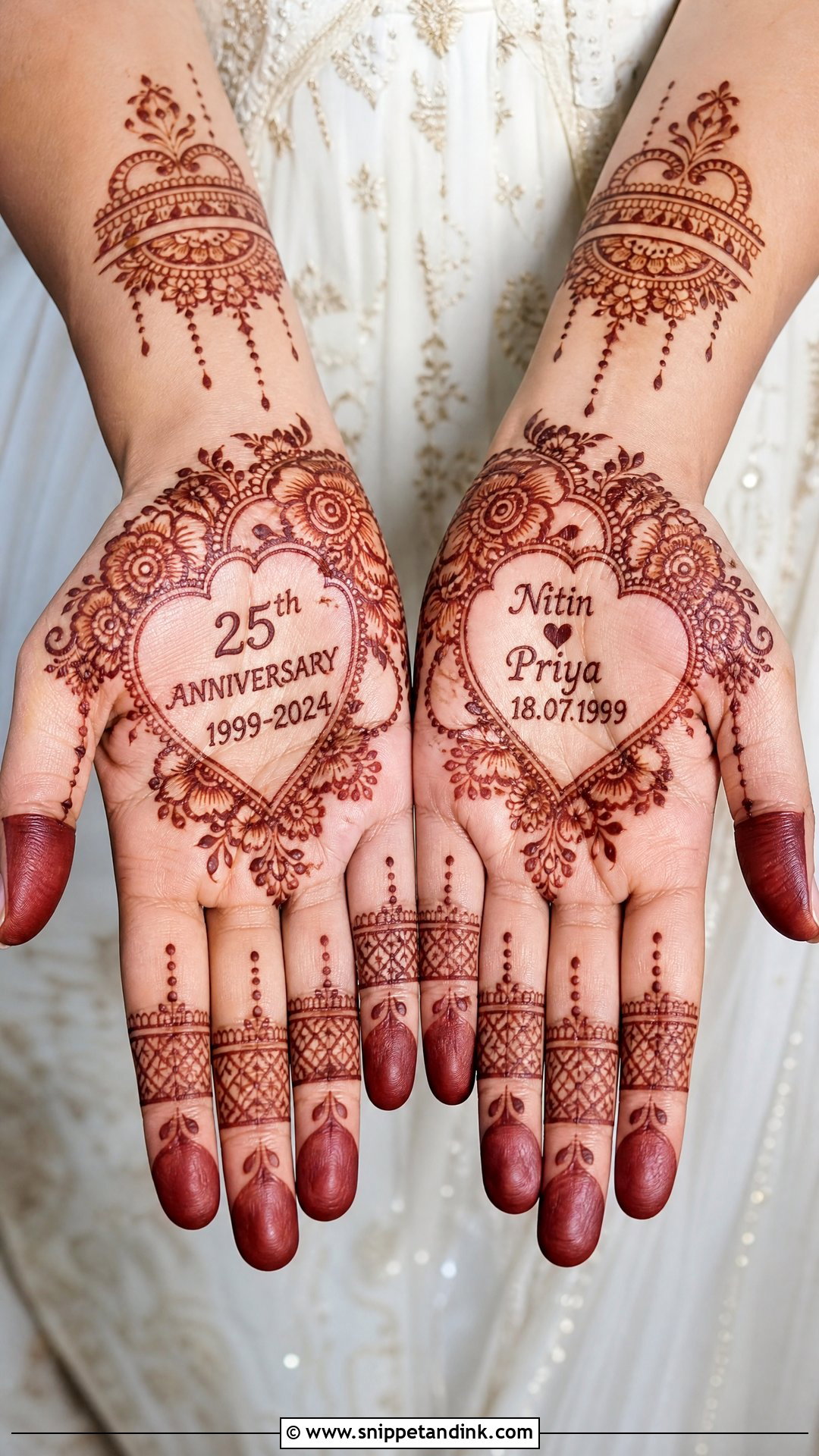
A date design honors the day it all began. It can sit near the wrist, inside a heart, below a mandala, or split across both palms, with the wedding date on one hand and the 25th year on the other. Numbers blur faster than any other element, so I write them noticeably larger than you’d expect and keep at least a hairline of skin between strokes; a 6 or an 8 drawn too small closes up into a blob once it stains. Surround them with flowers, leafy trails, jaali and soft dots. It works especially well for a vow renewal or a close-up photo shoot.
11. Heart Anniversary Mehndi Design
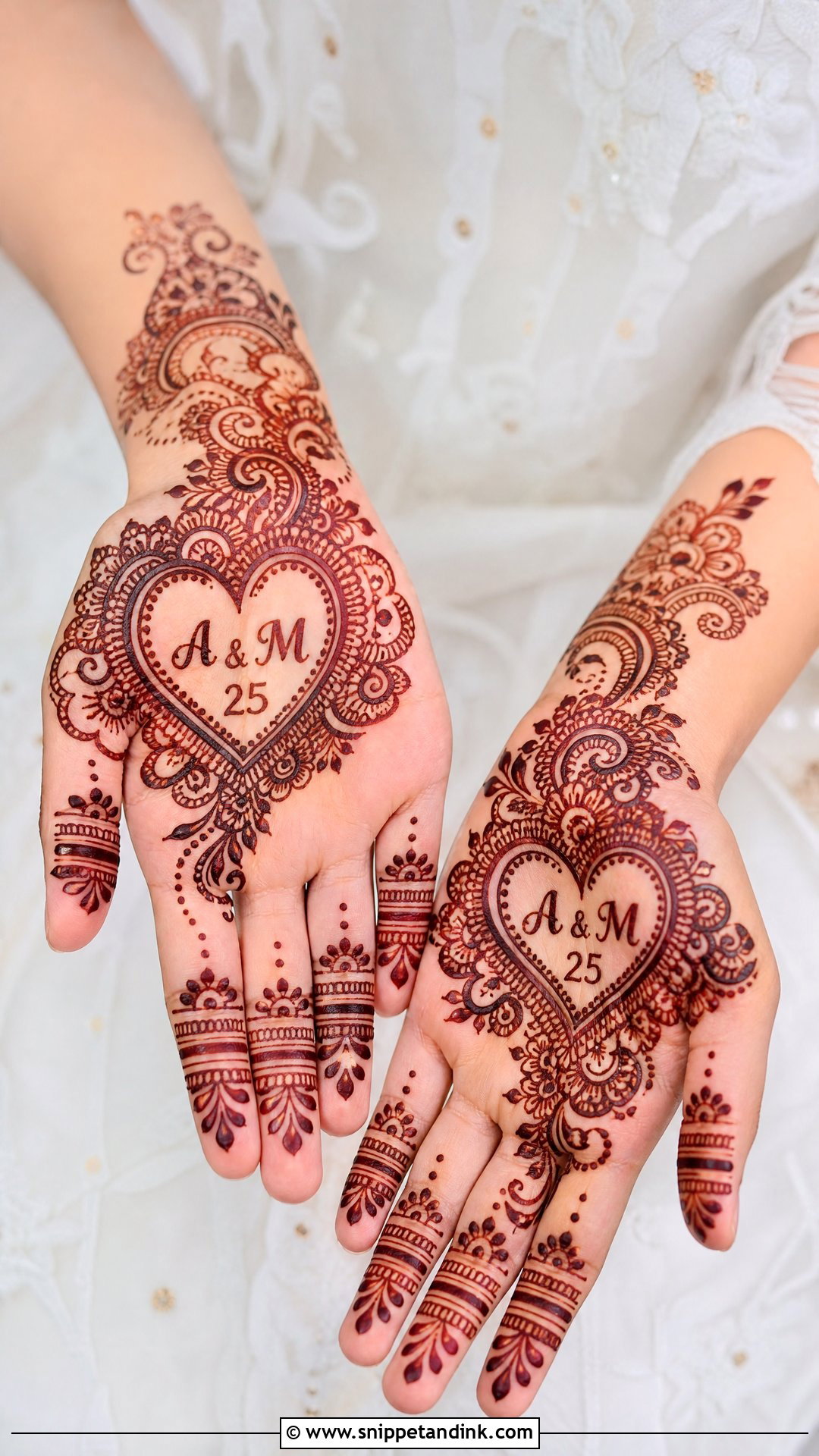
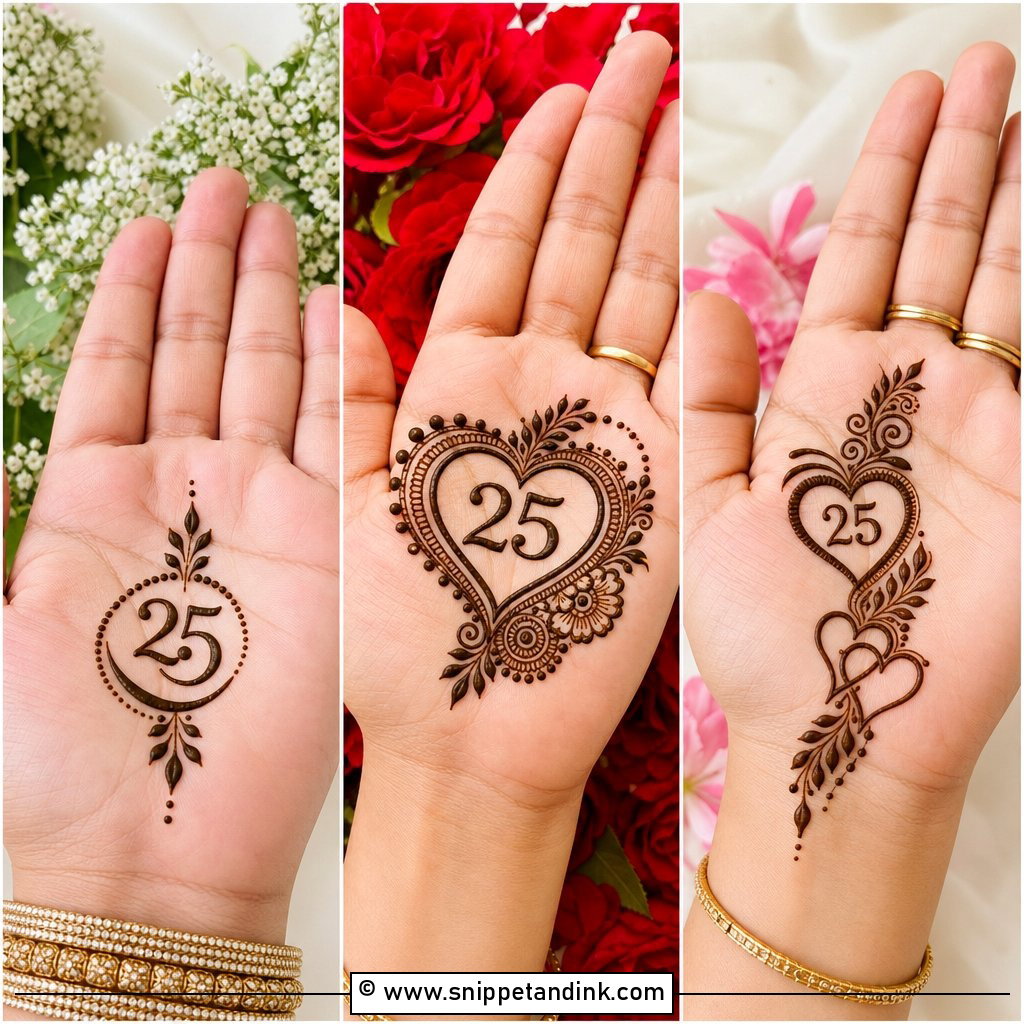
One large plain heart can look young on a mature hand, so I treat the heart as a frame rather than the whole design. It sits in the center of the palm or back hand, filled with tiny florals, dots, initials or a small “25”, and surrounded by paisley curves, lace-like borders and leafy vines. Fingers get simple bands so the heart stays the focus. Fine lines and neat spacing keep the result romantic without feeling girlish, and it suits a small, intimate celebration.
12. Mandala Anniversary Mehndi Design
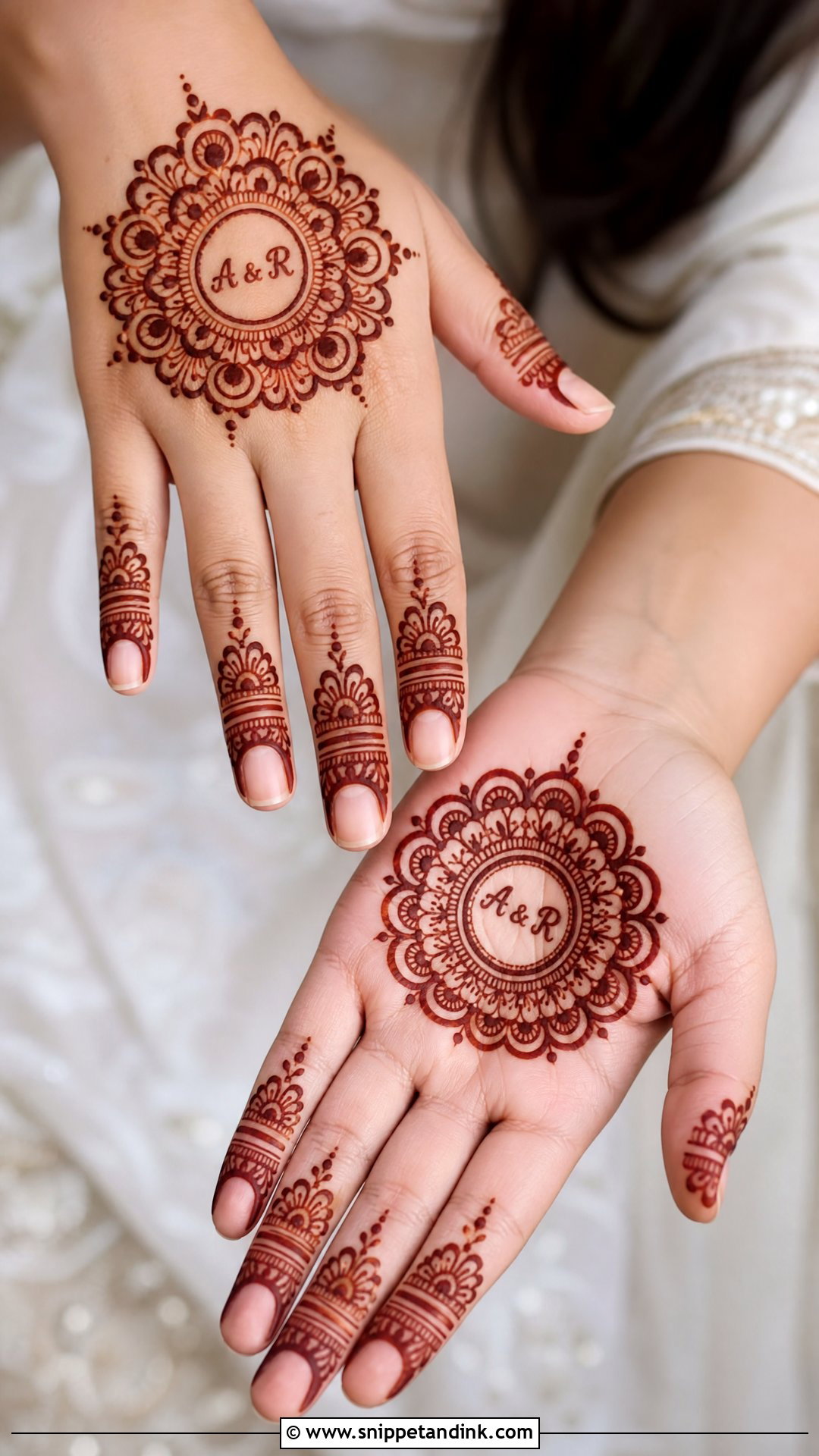
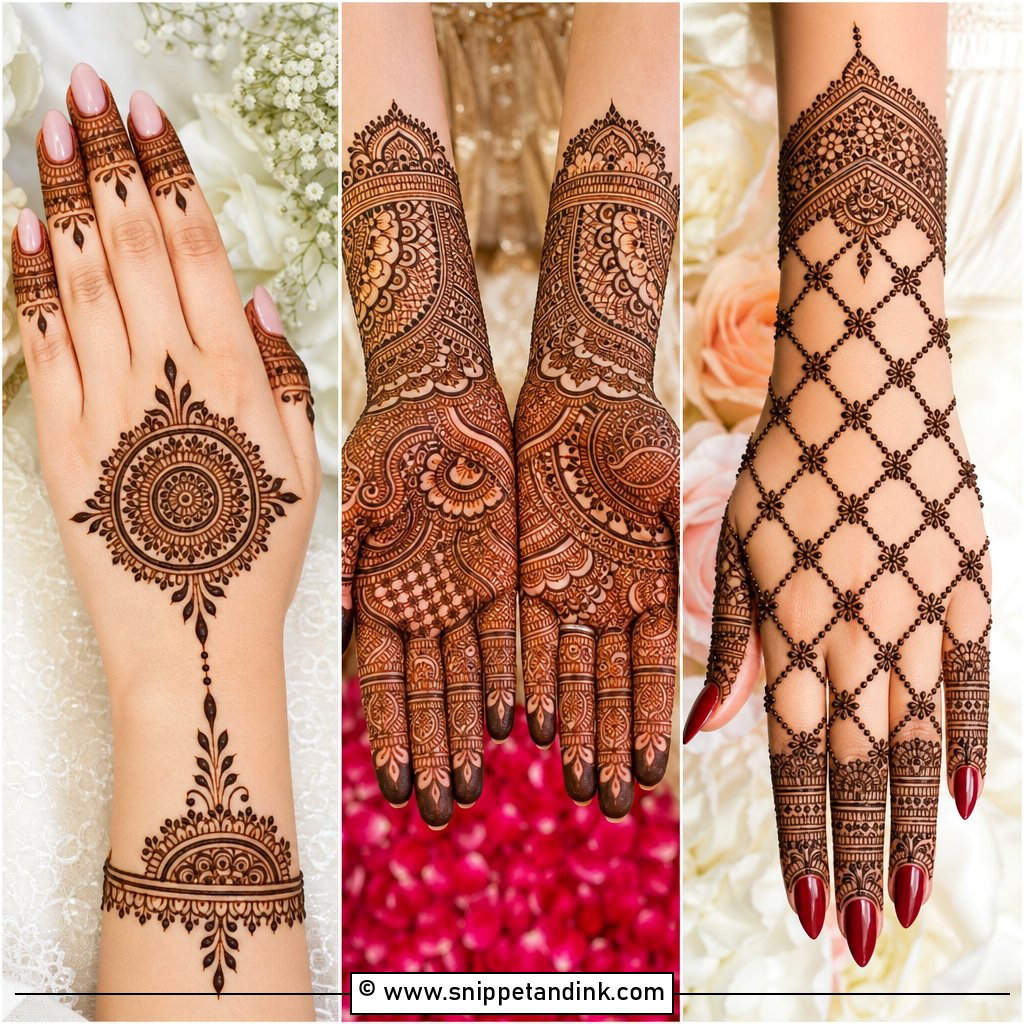
Mandalas are the design I reach for when someone can’t decide. The circle draws the eye to the center of the hand and works on palms and back hands alike. I put a small “25” or initials in the very center, then ring it with petals, dots, scallops and fine lines, adding matching finger bands and leafy tips. It scales easily: two rings for a dinner, six for a big function. On mature hands the symmetry gives a polished look without needing heavy coverage, which is why so many anniversary clients end up here.
13. Floral Anniversary Mehndi Design
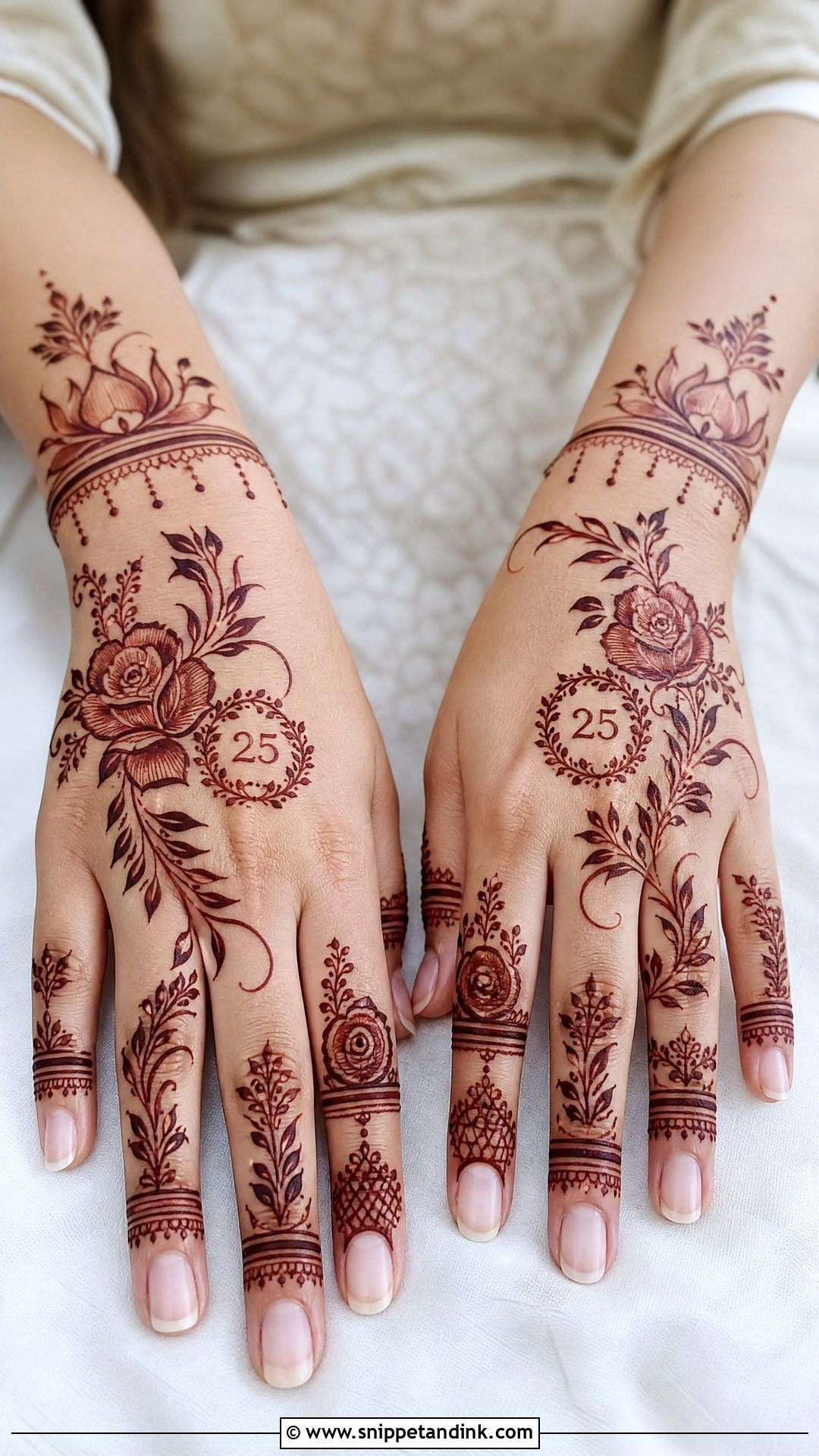
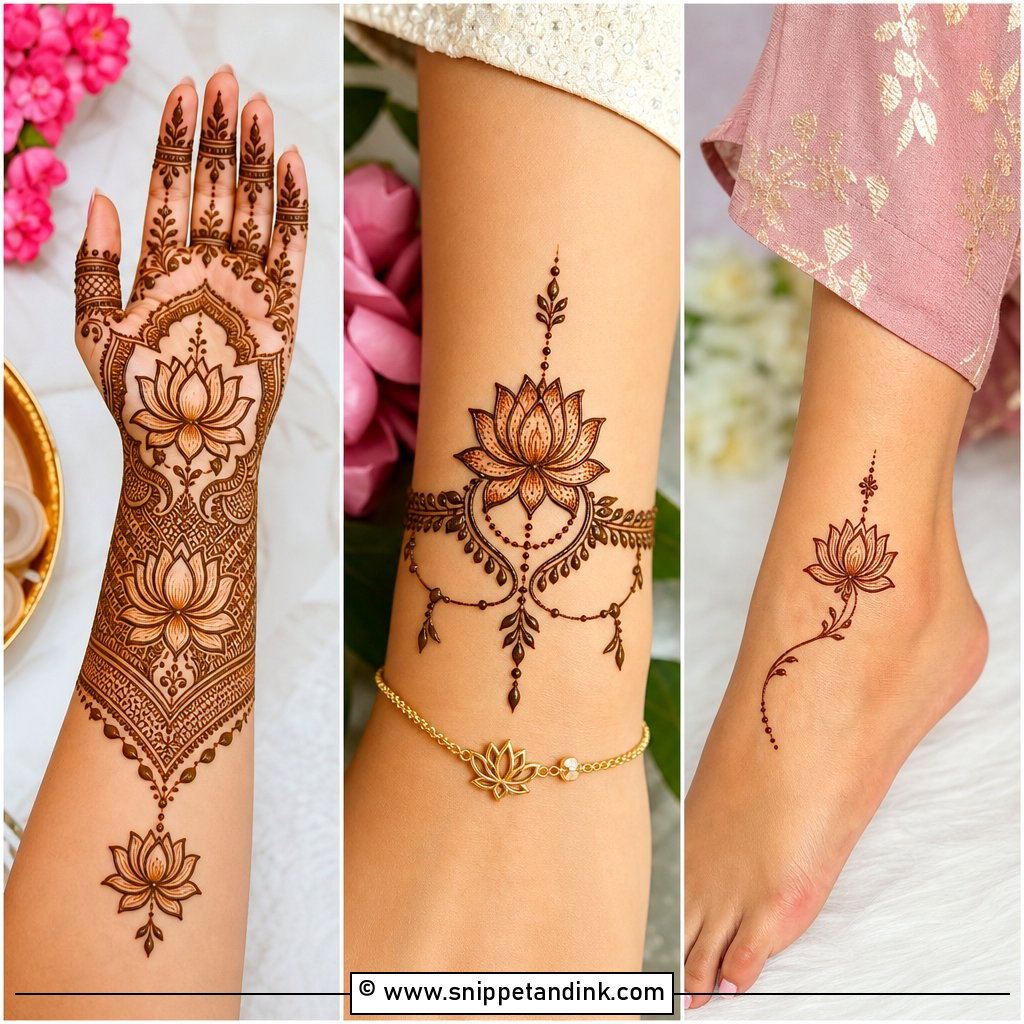
Floral designs adapt to almost any hand. Roses, lotus petals, leafy vines and curved branches can travel across the palm or back of the hand, with a date, initials or “25” inside a floral wreath at the wrist. Bold flowers stay visible from across a room; fine ones look delicate up close but lose definition from a distance, so I ask how the hands will mostly be seen. Light fingertips feel modern, fuller florals feel traditional. They sit well against pastel outfits, silk sarees and embroidered suits.
14. Paisley Anniversary Mehndi Design
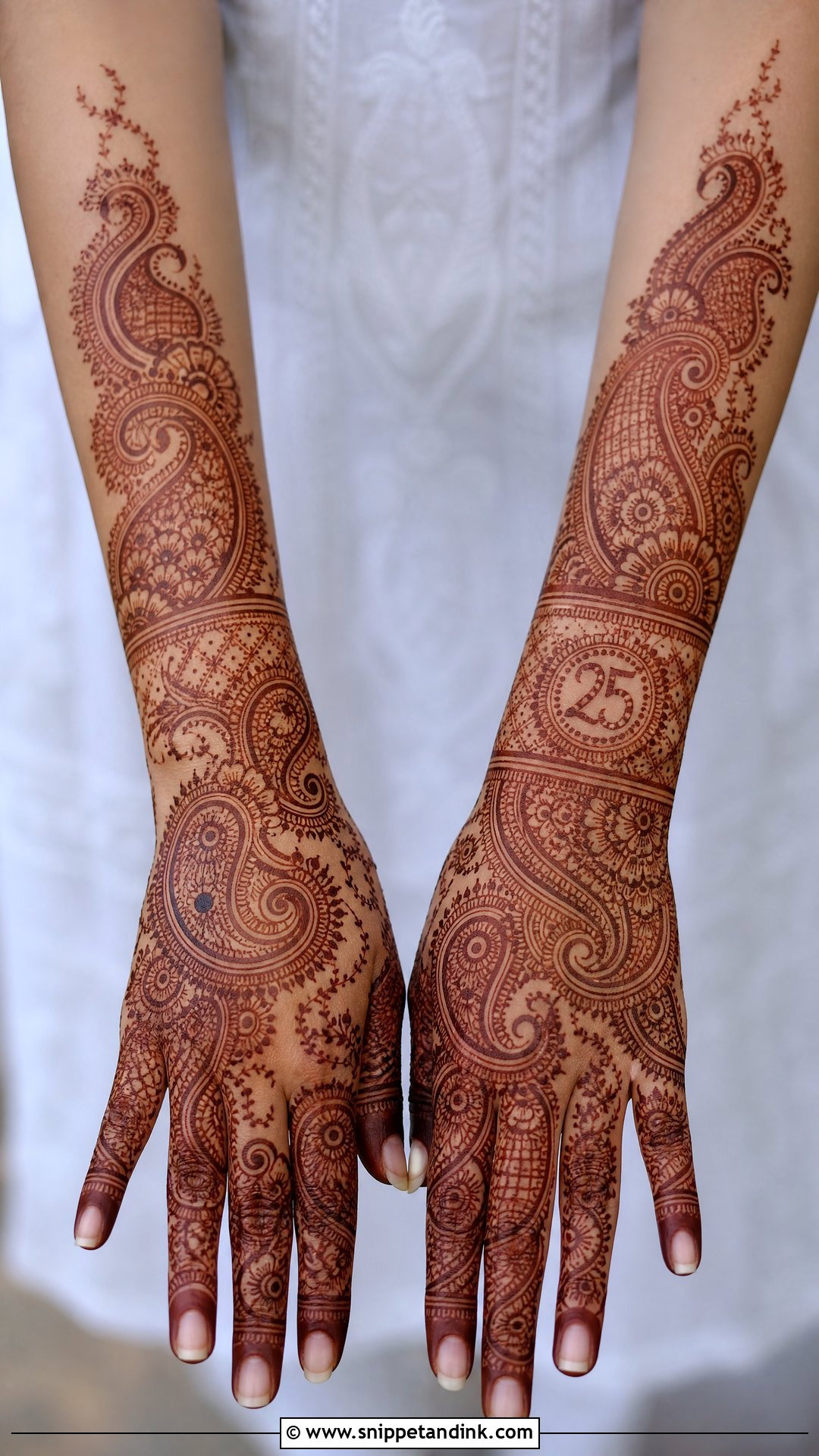
Paisley is the most traditional motif here and the most flexible, since it can be tiny or fill half a hand. For a complete look I place two large paisleys on the palm or back hand and link them with vines, dots, florals and curved borders, with a wrist band that hides the jubilee number. Paisleys fill space without looking busy, which makes them my first choice for full-hand designs that still need to look tidy. They pair naturally with traditional outfits and either gold or silver jewelry.
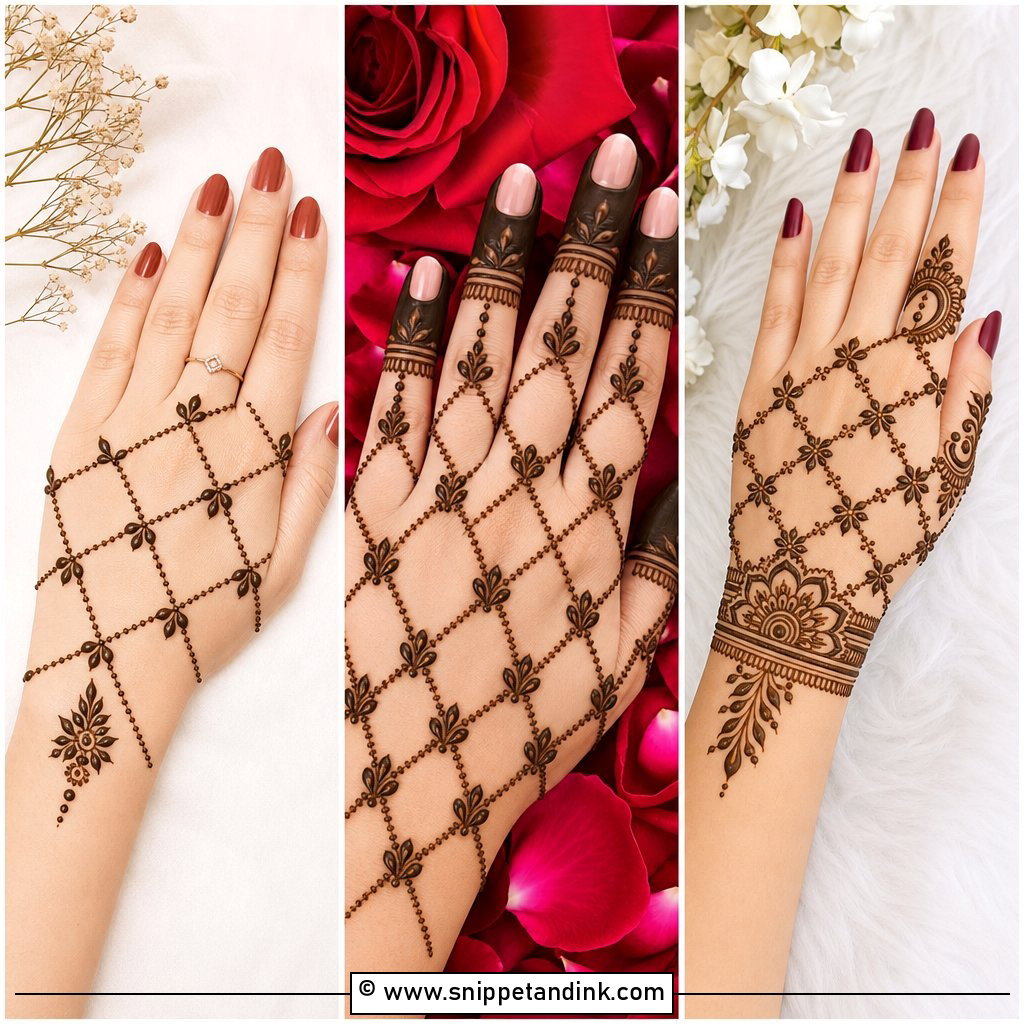
15. Peacock Anniversary Mehndi Design
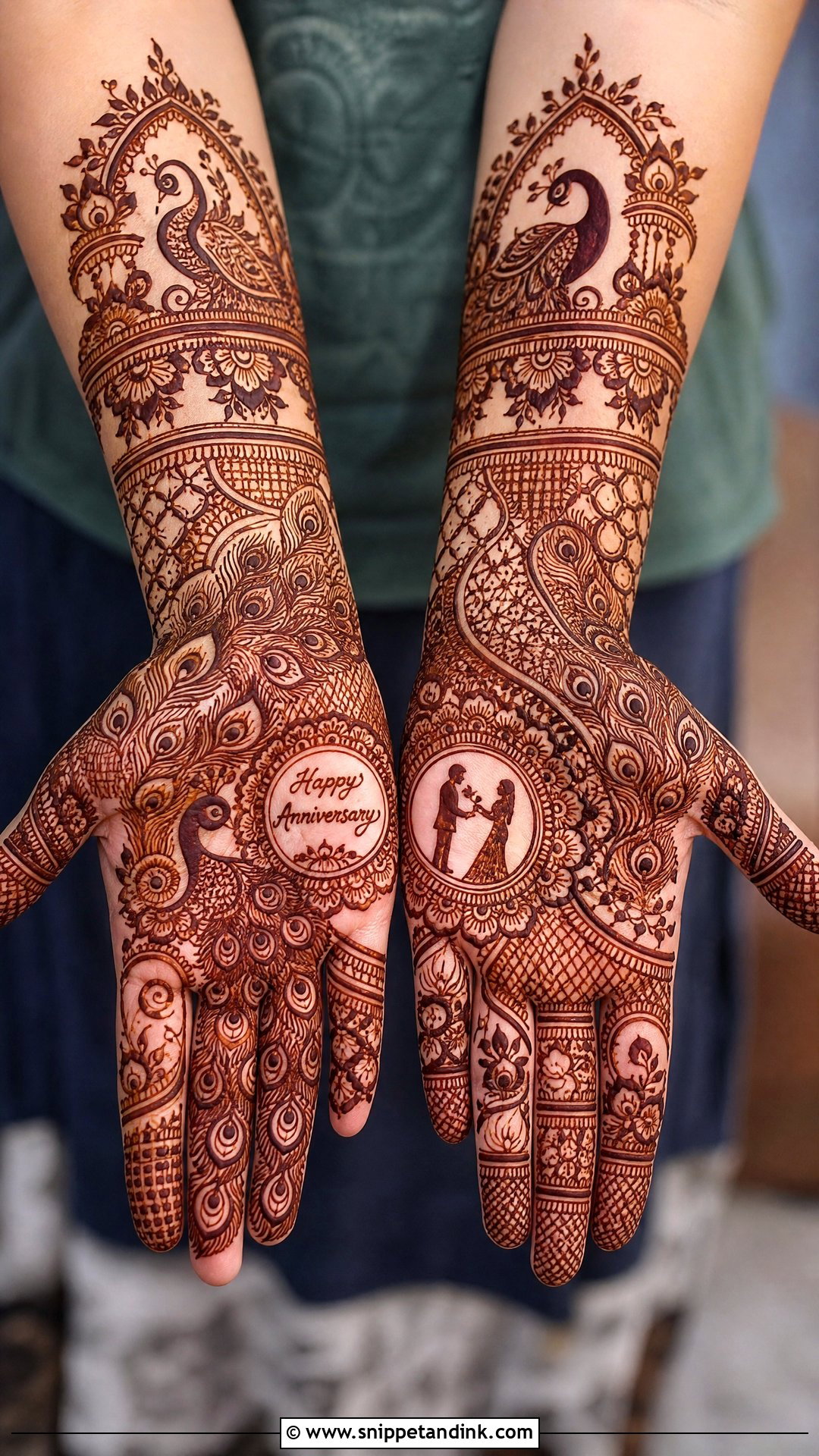
The peacock earns its place in mehndi because its curved neck, body and feathers fit the flowing lines of henna so naturally. I place one bird on the palm or back hand and surround it with feather detail, paisleys, flowers and fine mesh, with a small “25” at the wrist or hidden in the feathers. The body needs to be filled solid and drawn bold enough to stay clear once the stain develops; a peacock outlined too thinly looks like a scribble from a distance. Choose this if you want one strong focal point in an otherwise traditional design.
16. Minimal Anniversary Mehndi Design
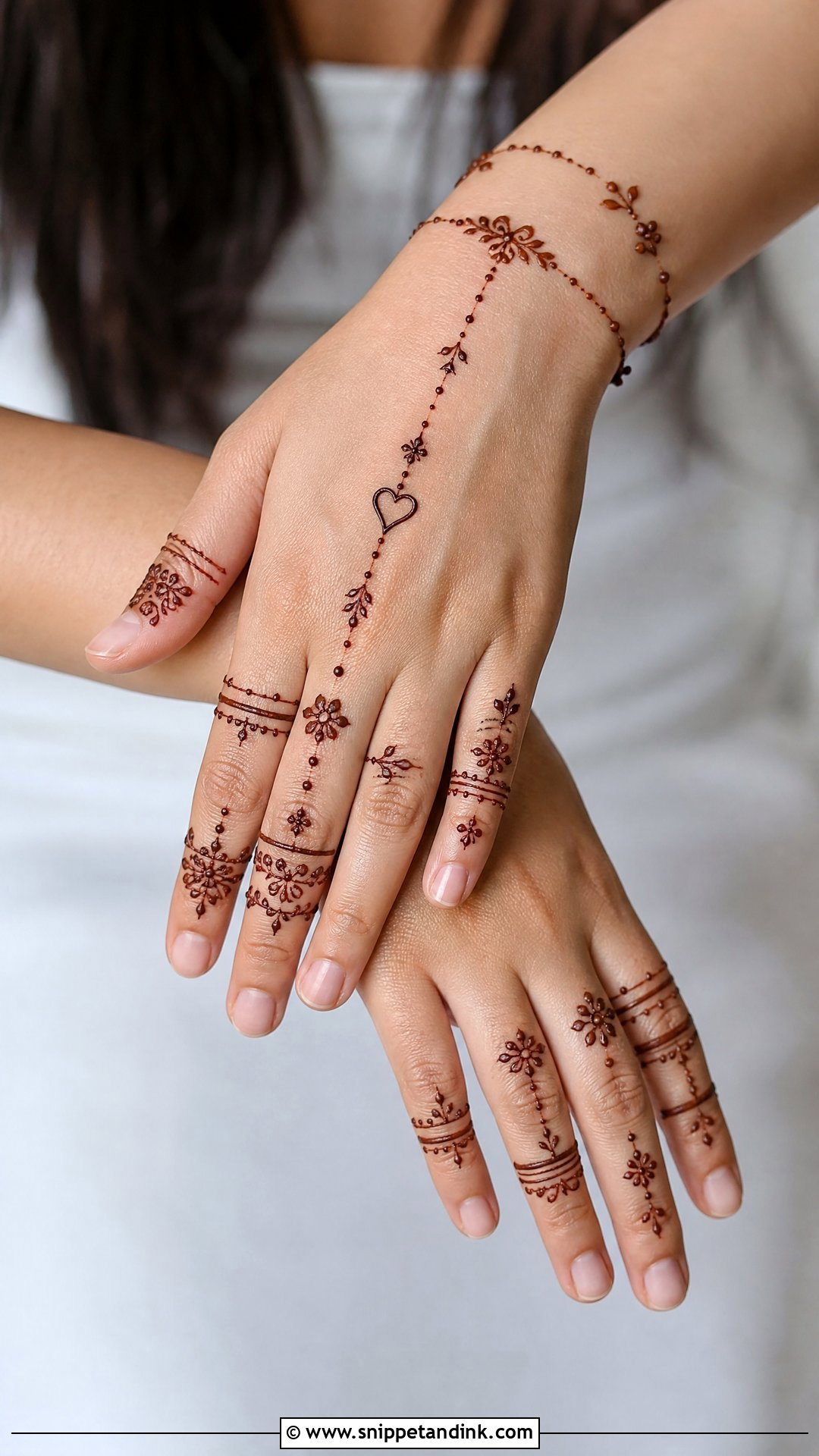
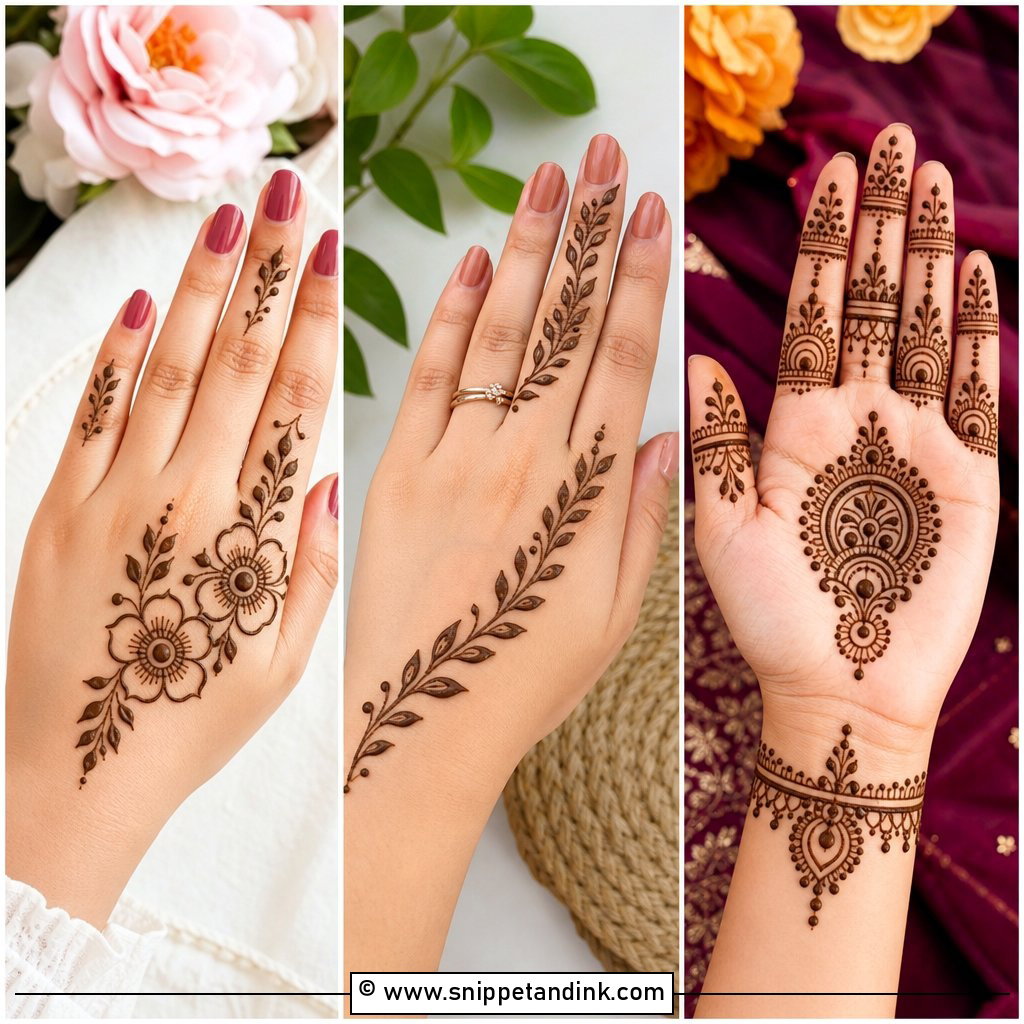
Minimal designs rely on bare skin: slim finger patterns, a small wrist bracelet and one delicate motif on the back of the hand or palm, with a tiny heart, initials or “25” for meaning. Thin lines, small dots and soft florals do the work. It suits small gatherings and dinners, and women who simply don’t want a bridal-style hand. The open skin is also forgiving as the stain fades, because there’s less patchy filling to look uneven in week two. Minimal mehndi is quick to apply and easy to look after.
17. Bracelet Anniversary Mehndi Design
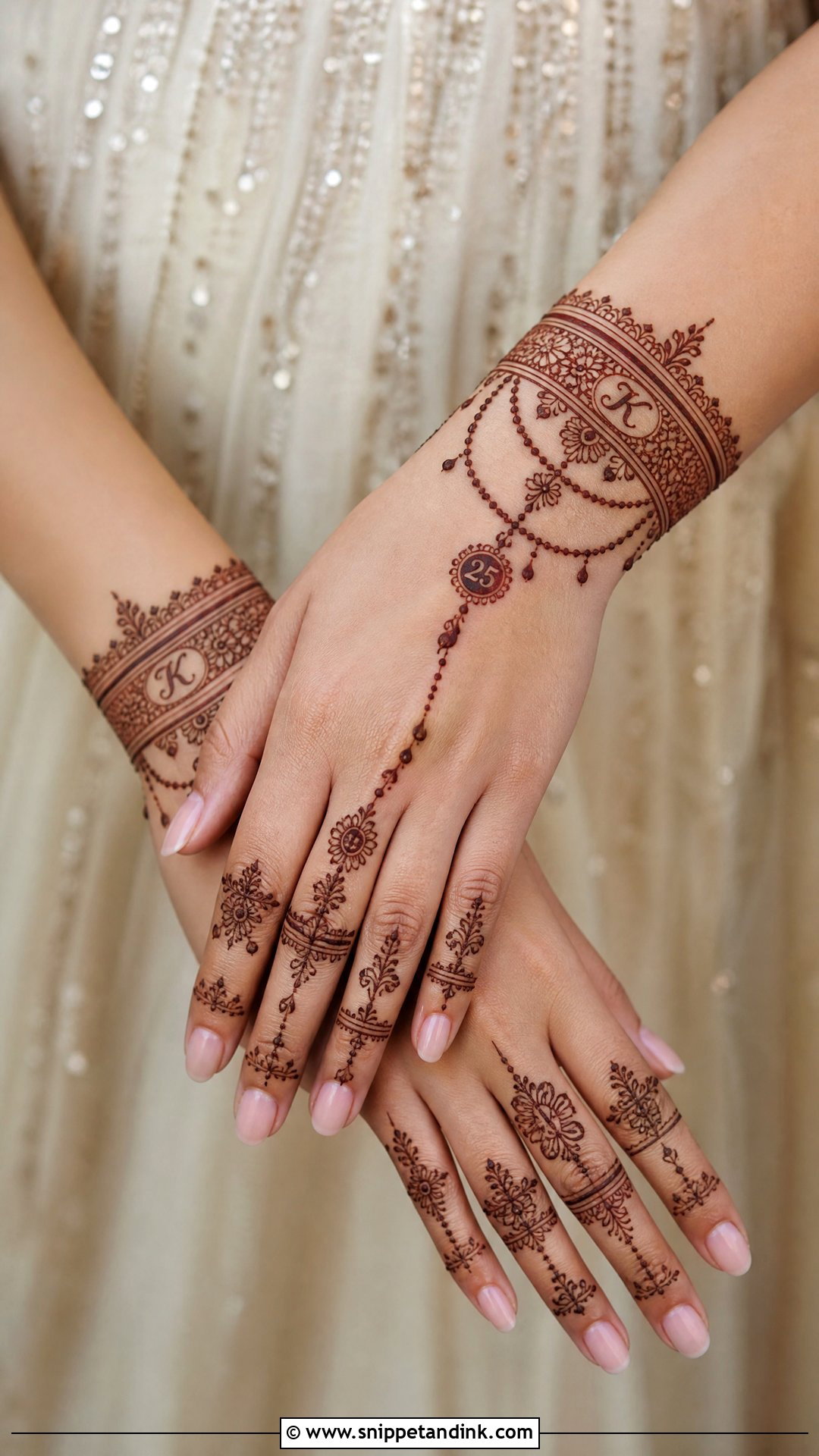
A bracelet design treats the wrist like jewelry: a cuff with hanging chains, small flowers and dots, leading to a central motif on the back hand. A tiny charm-shaped “25” or the couple’s initials can hang from the chain. Because the design frames the hand rather than covering it, it sits well beside bangles and rings. I keep the fingers to light matching bands. If you wear a watch or tight bangles, take them off before the session, since rubbing on wet paste blurs the cuff.
18. Ring Finger Anniversary Mehndi Design
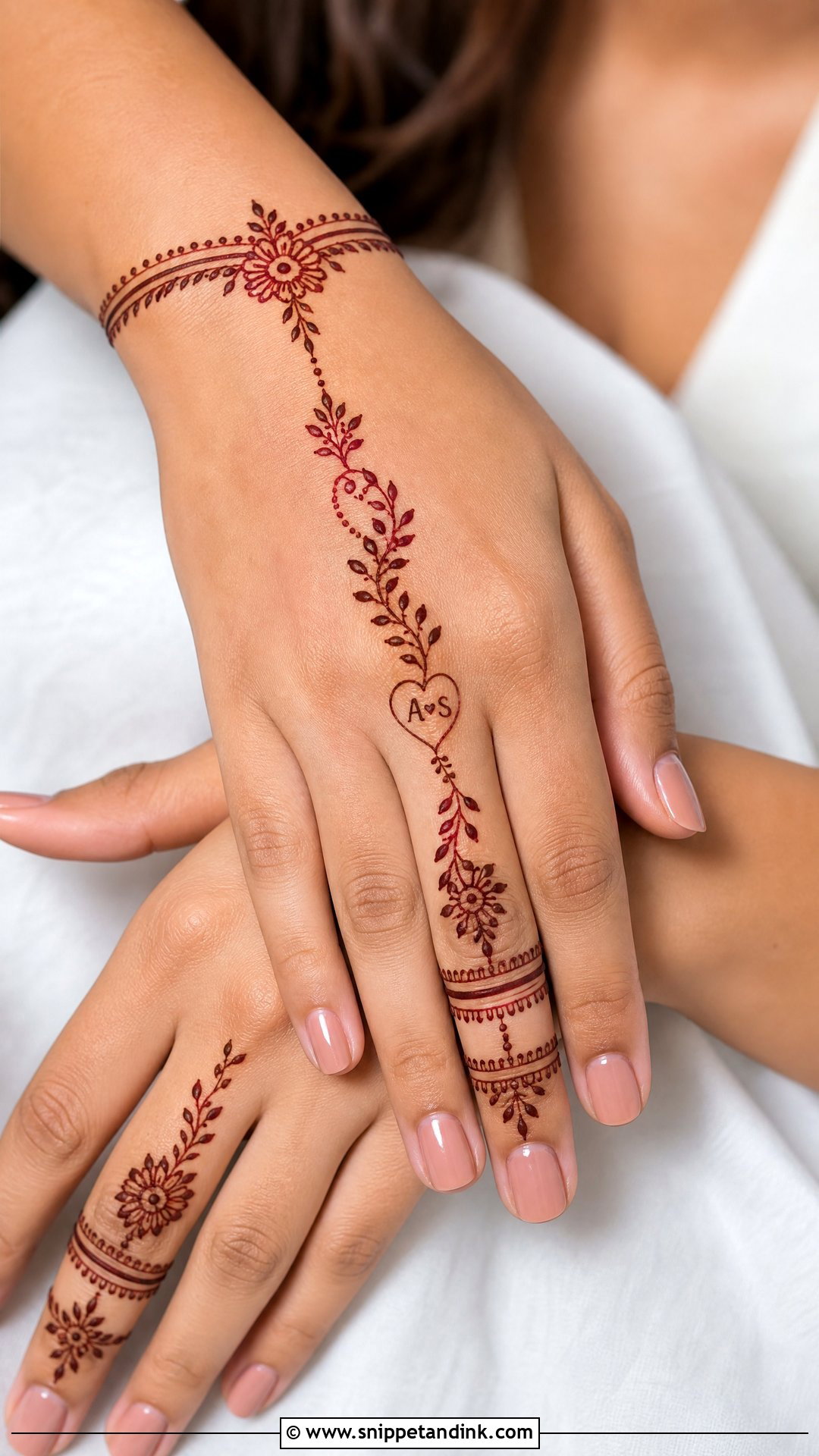
Ring finger designs carry the meaning of the day in one small place. I start with a delicate band around the ring finger and let it run into leafy trails, small florals and a wrist motif, adding a tiny heart, date or initial at the base of the finger. It reads best on the back of the hand. Real rings sit right on top of this area, so I ask clients to wear their wedding band slightly loose or remove it while the paste dries, then put it back once the paste is off. Keep the finger uncluttered so the ring shape stays clear.
19. Matching Couple Anniversary Mehndi Design
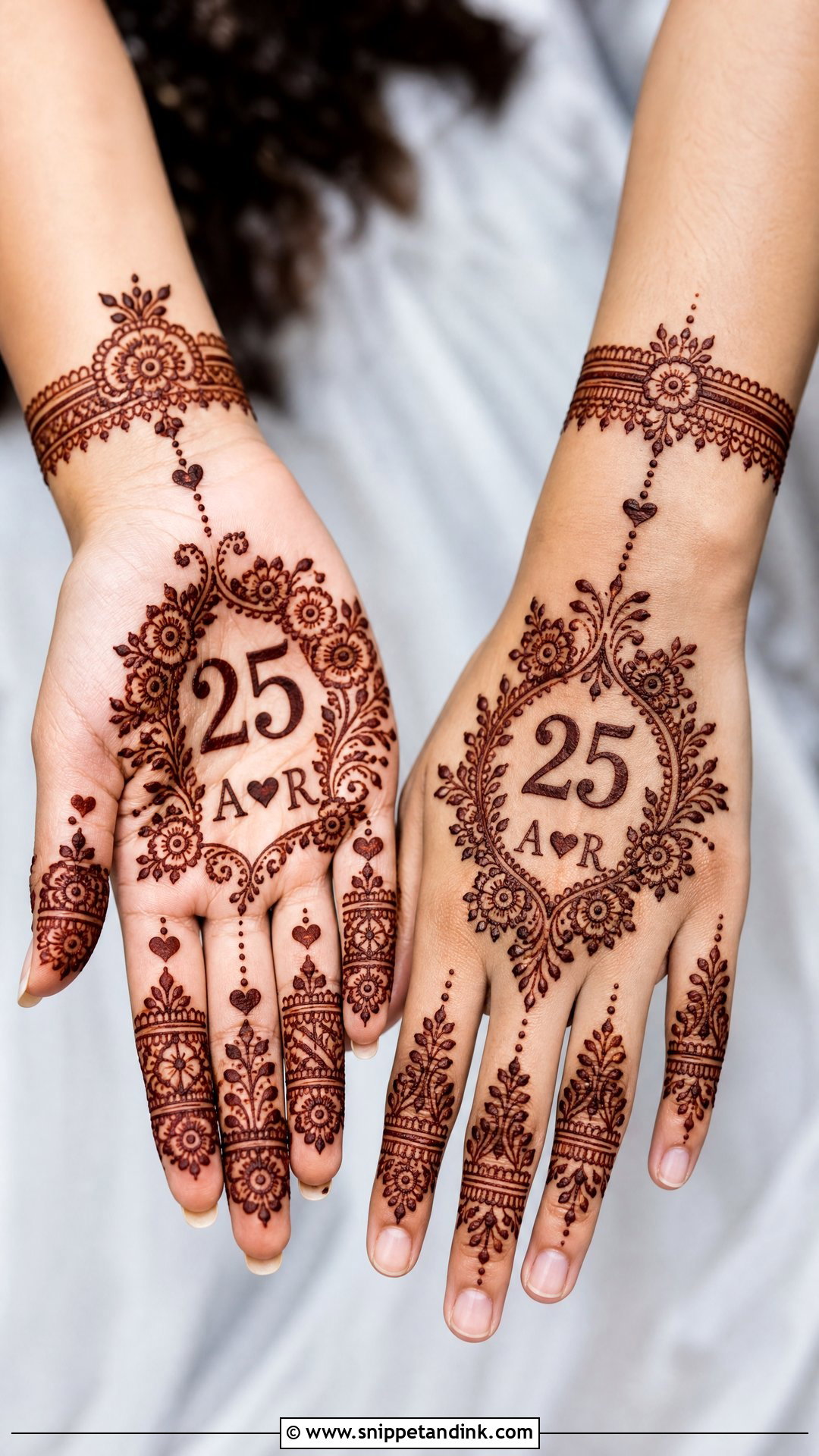
Matching couple mehndi lets both partners take part. Hers can be detailed, while his is usually a small palm or wrist motif with initials, a date or one symbol, and both share the same “25”, wedding date or heart. They don’t need to match fully; one shared detail is what ties them together. Men who are new to henna usually prefer something small on the palm, which is easy to hide at work and still shows up in a hands-together photo.
20. Modern 25th Anniversary Mehndi Design
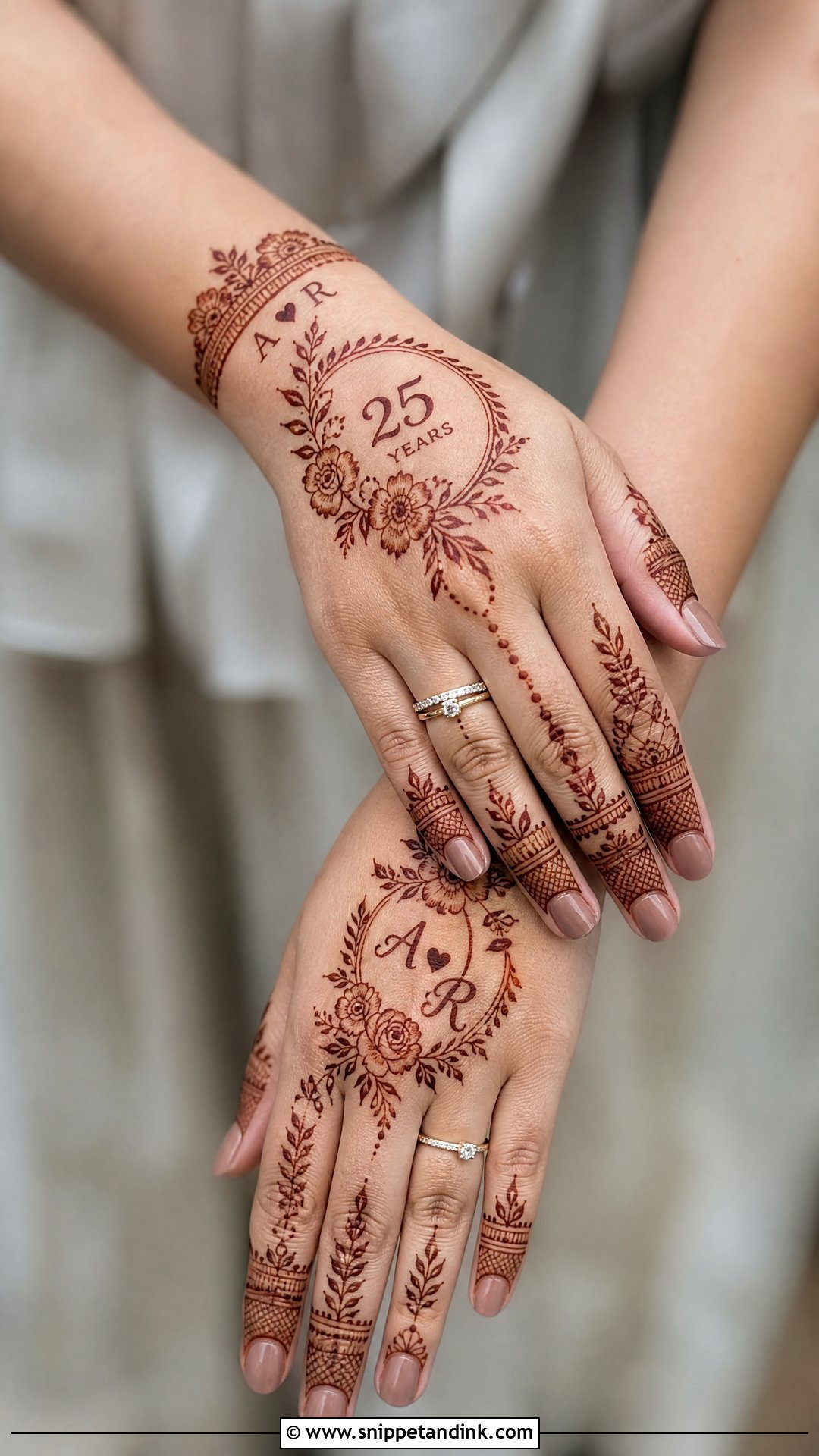
A modern design leans on negative space: fine-line florals, geometric borders and small meaningful text instead of dense filling. A neat “25 years” at the wrist can be the main feature, with simple rings, initials or a small date in a minimal frame. It goes well with gowns, fusion outfits, sarees or simple ethnic wear. Fine lines need fresh, well-mixed paste and a narrow cone tip, so this is a style where the artist’s paste quality shows more than the pattern itself.
Darkening the Stain and Keeping It Through the Week
What you do after I finish matters almost as much as the design. Once the paste dries, a light dab of lemon and sugar helps it stay stuck to the skin. Leave it on as long as you can, then scrape it off rather than washing it, and keep water away from your hands for the rest of the day.
Warmth deepens the stain, so keep your hands warm and covered for the first night. Palms and fingertips will always come out darker than the back of the hand and the wrist; that’s how henna works, not a flaw in your paste.
Making it last past the party
- Rub a little natural oil or balm over the design before washing up or bathing.
- Wear gloves for dishes and avoid chlorinated pools and harsh scrubs.
- Skip hand sanitizer gel where you can, since it dries the skin and speeds fading.
- Expect the design to fade gradually over one to three weeks as the skin renews.
If one area stains unevenly, don’t try to scrub it out. It evens out as the whole design fades, and by the time the photos are printed nobody will notice.
Henna for 25 Years, Hand by Hand
Silver jubilee mehndi should match the celebration and how comfortable you are sitting for it. Heavier full-hand work suits a big family function; a back-hand motif or a minimal design is enough for an intimate dinner. Indian, Arabic, name and date designs, mandalas, hearts and jubilee symbols can all carry the same personal touch: initials, a wedding year or a small “25”. Even a simple design feels meaningful when it holds something only the two of you would recognize.
You'll Like These Ideas:



Leave a Reply