
A partner’s name hidden in bridal henna is one of my favorite requests, because it turns the design into something that belongs only to that couple. Brides rarely want the name written plainly anymore. They ask me to weave in initials, full names, the wedding date and small love-story symbols, in traditional, Arabic, Indo-Arabic or minimal layouts depending on the outfit and how long they can sit. Then comes the fun part after the paste dries: the groom hunting for his name among florals, paisleys, jaali, mandalas and portraits. Below are twenty complete hand designs, each with a note on where I’d place the name so it stays readable once the stain develops.
Spell It Out for Your Artist Before the Cone Touches Skin
Lettering is the one part of bridal mehndi I can’t hide a mistake in. A wobbly petal melts into the pattern; a wrong letter in a name does not. So before the appointment I ask every bride for four things:
- The name written exactly as you want it, sent by message, not said out loud. Names that sound alike are often spelled differently.
- The script. English, Urdu, Hindi and Gurmukhi letters take up very different amounts of space, and flowing scripts often hide more naturally inside vines.
- First name, full name, nickname or initials. A long name needs a forearm or a big palm panel; initials fit almost anywhere.
- How hidden you want it. Tell me whether it should be a real challenge or a gentle hunt for the photos.
I keep letters out of the wrist folds, the knuckles and the deep palm lines, because the stain breaks there and a letter can lose half its stroke. I also write names a touch thicker than the filler lines. Lettering that’s too fine tends to blur as the stain darkens.
1. Full Hand Bridal Name Mehndi Design
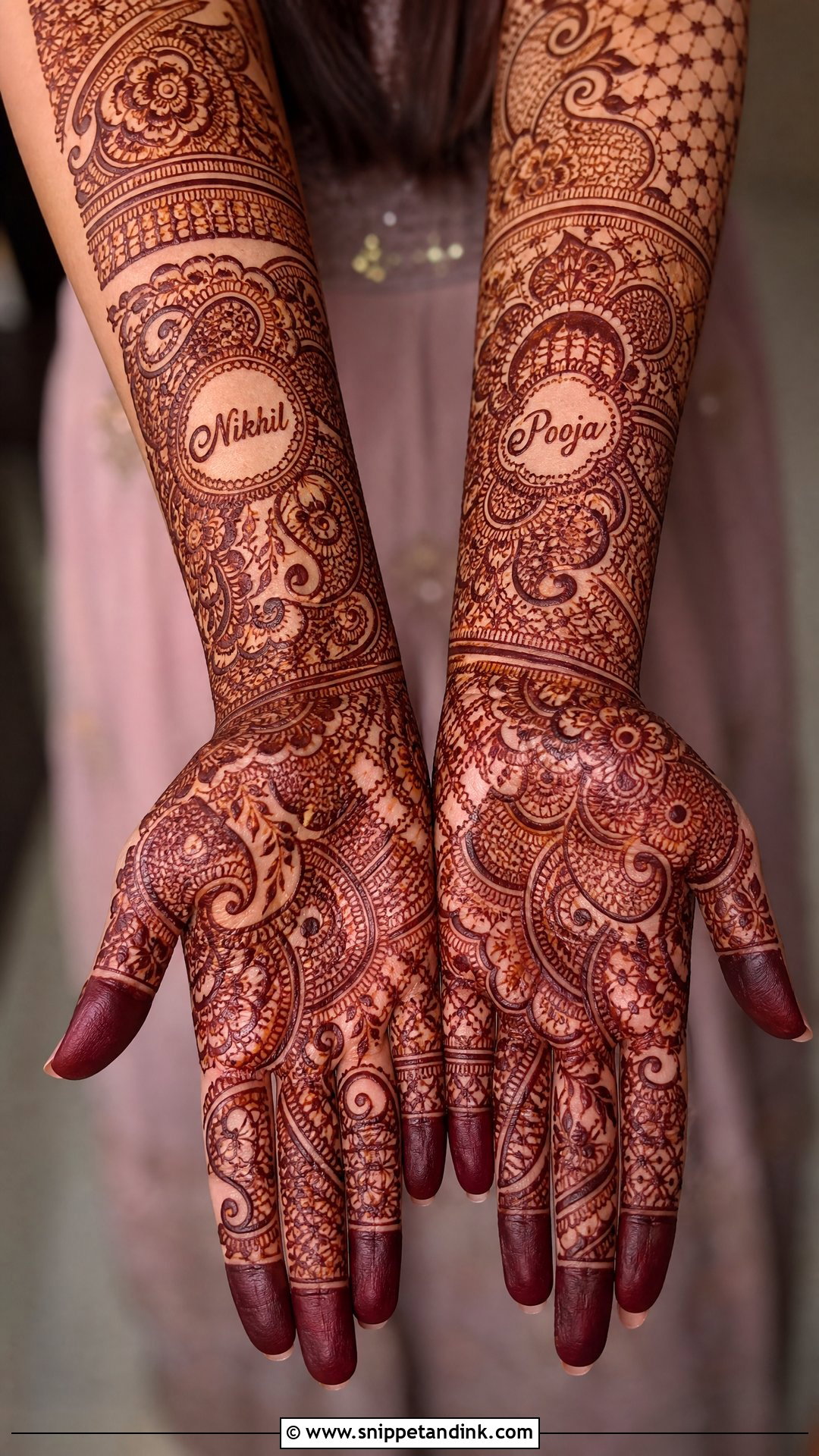
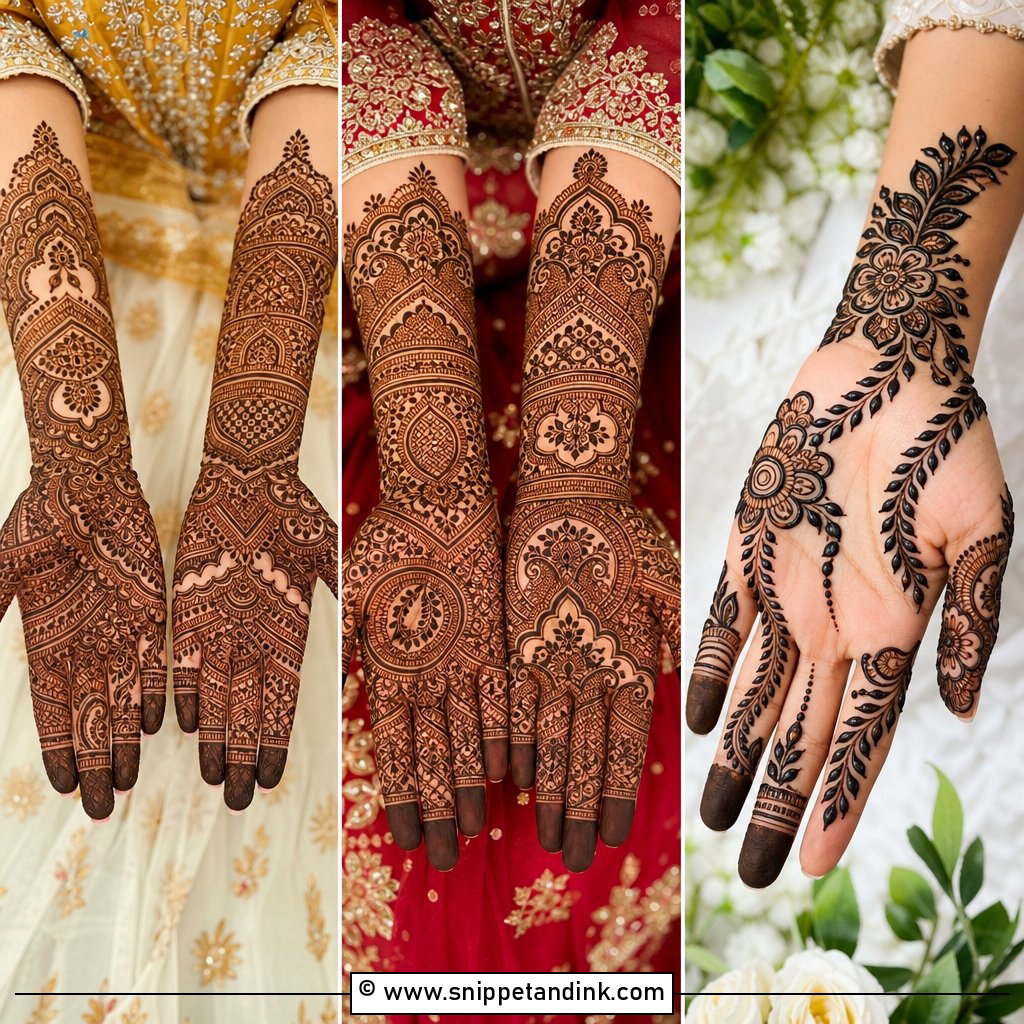
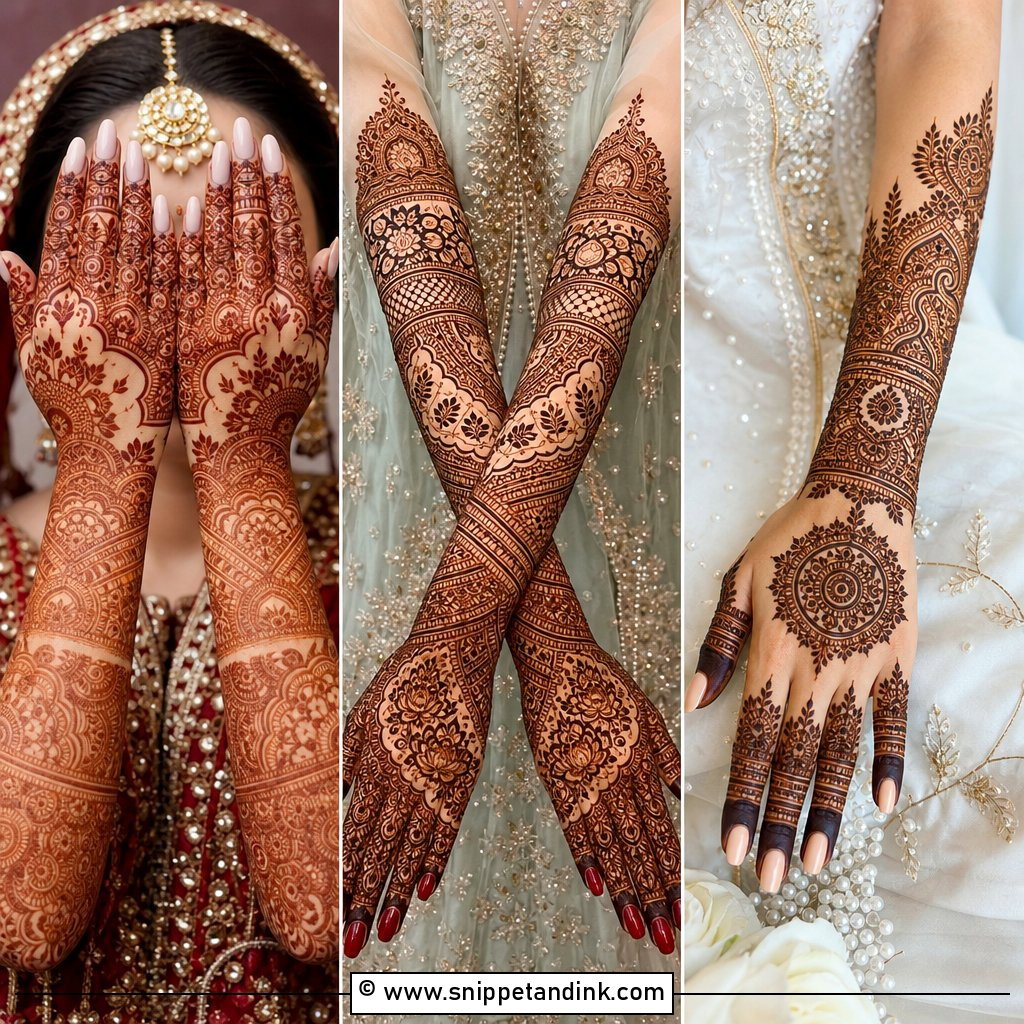
Full coverage from fingertips to forearms gives me the most hiding places. In dense Indian mehndi every section has a job, so the name usually goes into a paisley curve, a floral vine or a small negative space near the wrist. The palms hold the big motifs, such as mandalas, bride and groom figures, lotus blooms or wedding symbols, while the fingers stay packed with fine lines and leaves. I write the name in a slightly bolder line than the filler around it, so it’s findable without being obvious. Plan for a long sitting; a full bridal set like this takes hours.
2. Hidden Groom Name Mehndi Design
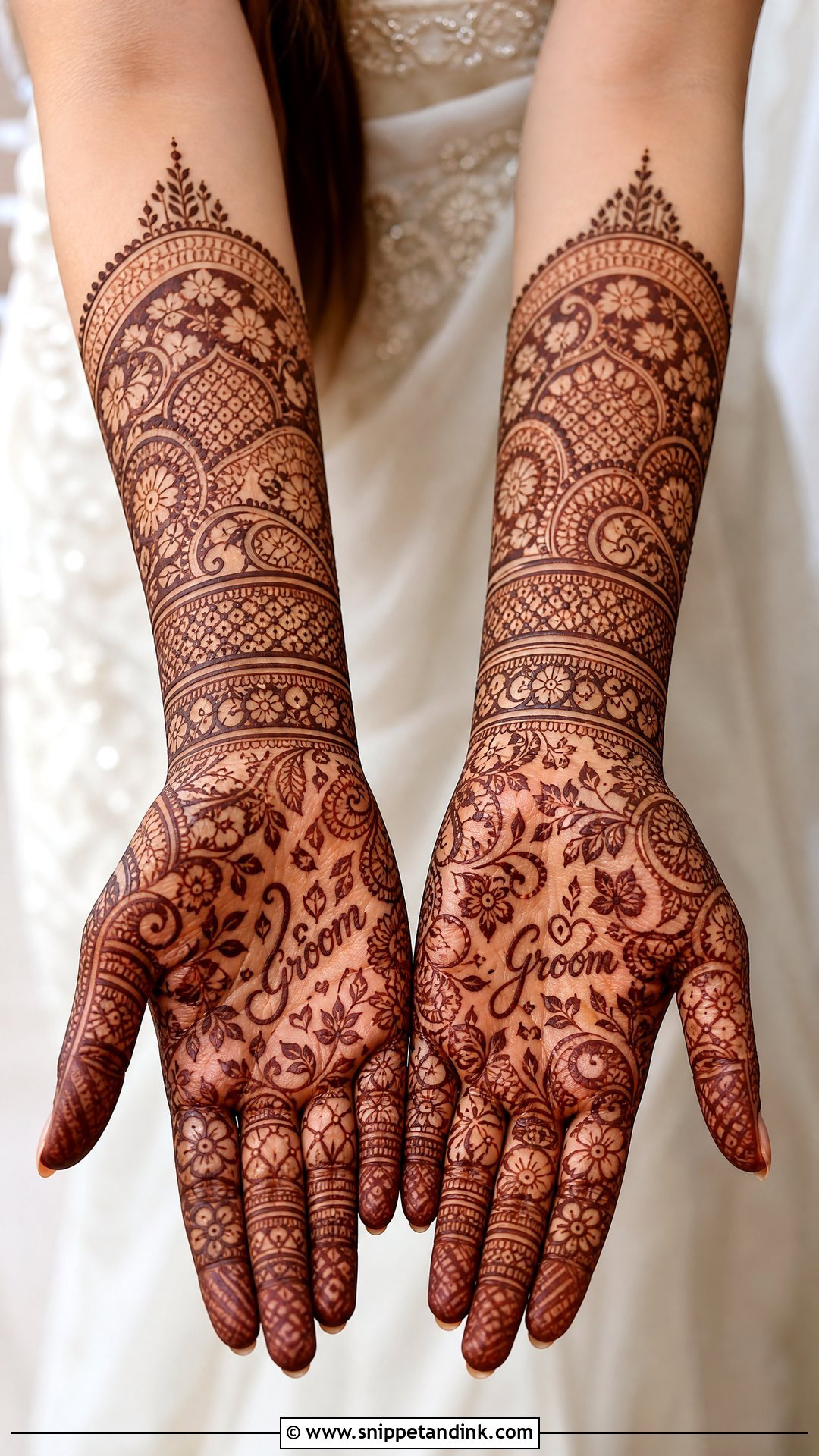
Here the name is woven into petals, jaali panels, paisley borders or a bracelet-like wrist band, so it reads as pattern until you know where to look. The trick I rely on is shaping the letters to match the strokes around them, curving them along a vine or tucking them inside a petal outline, so they blend in rather than sitting on top. The design can cover both palms and run up the forearms. This is the classic layout for the search-after-the-ceremony tradition.
3. Bride And Groom Name Mehndi Design
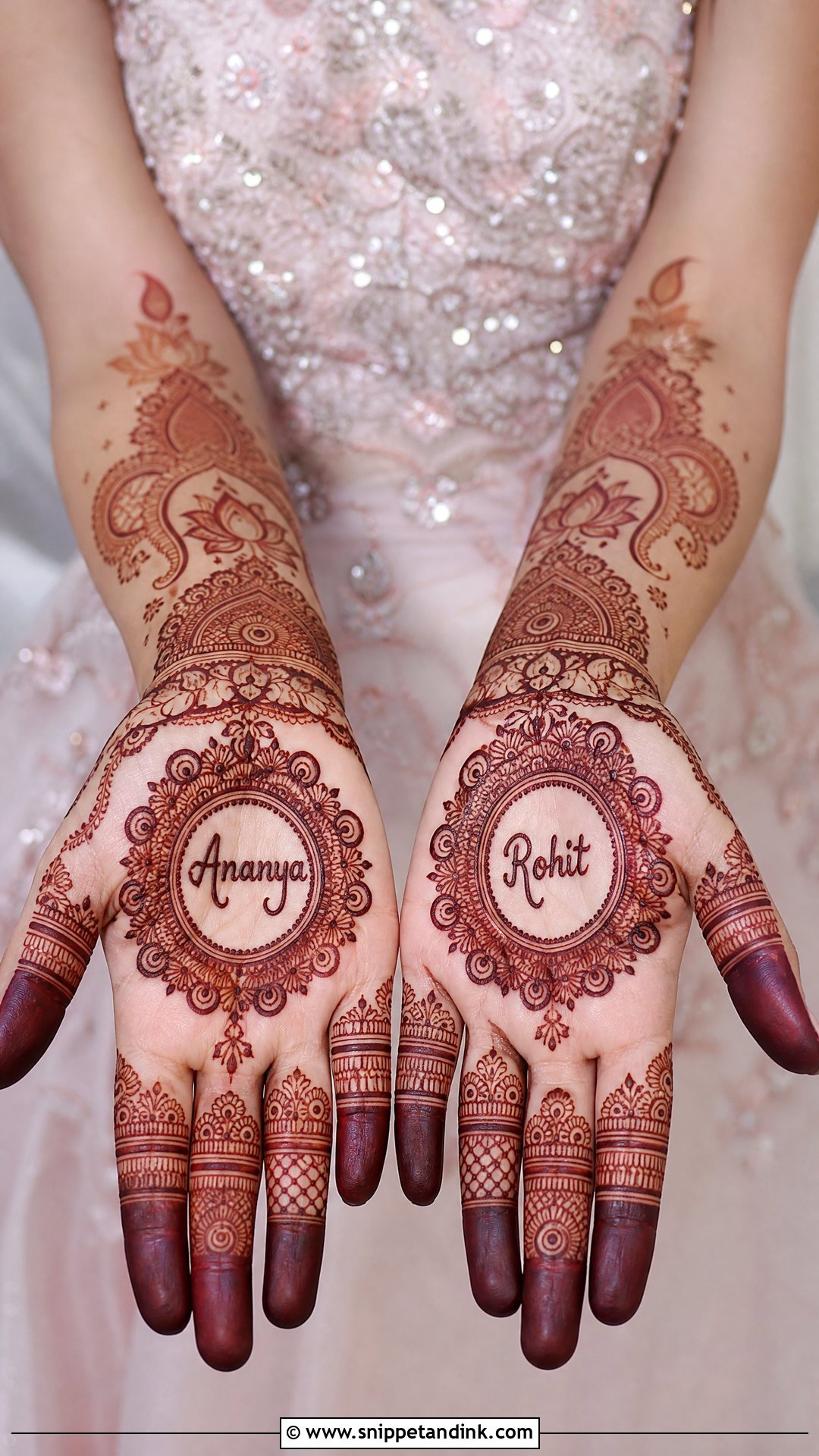
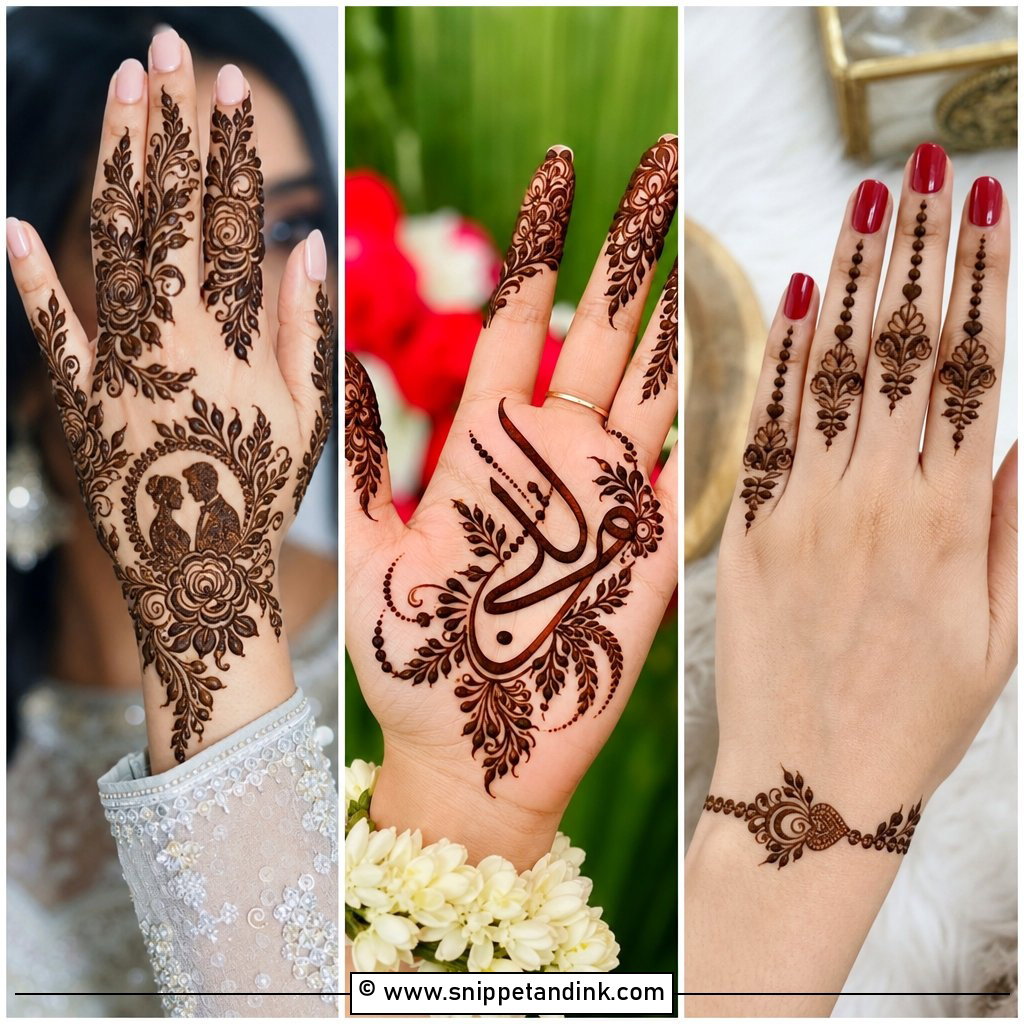
Giving each partner a hand makes the henna a shared story: the bride’s name on one palm, the groom’s on the other, with matching mandalas, mirrored paisleys, lotus borders or small wedding bells around them. It works best in full palm or full hand coverage, and it photographs well when both hands are held side by side. I keep to one main name placement per hand. Crowd the letters with heavy motifs and they vanish once the stain darkens.
4. Initials Bridal Mehndi Design
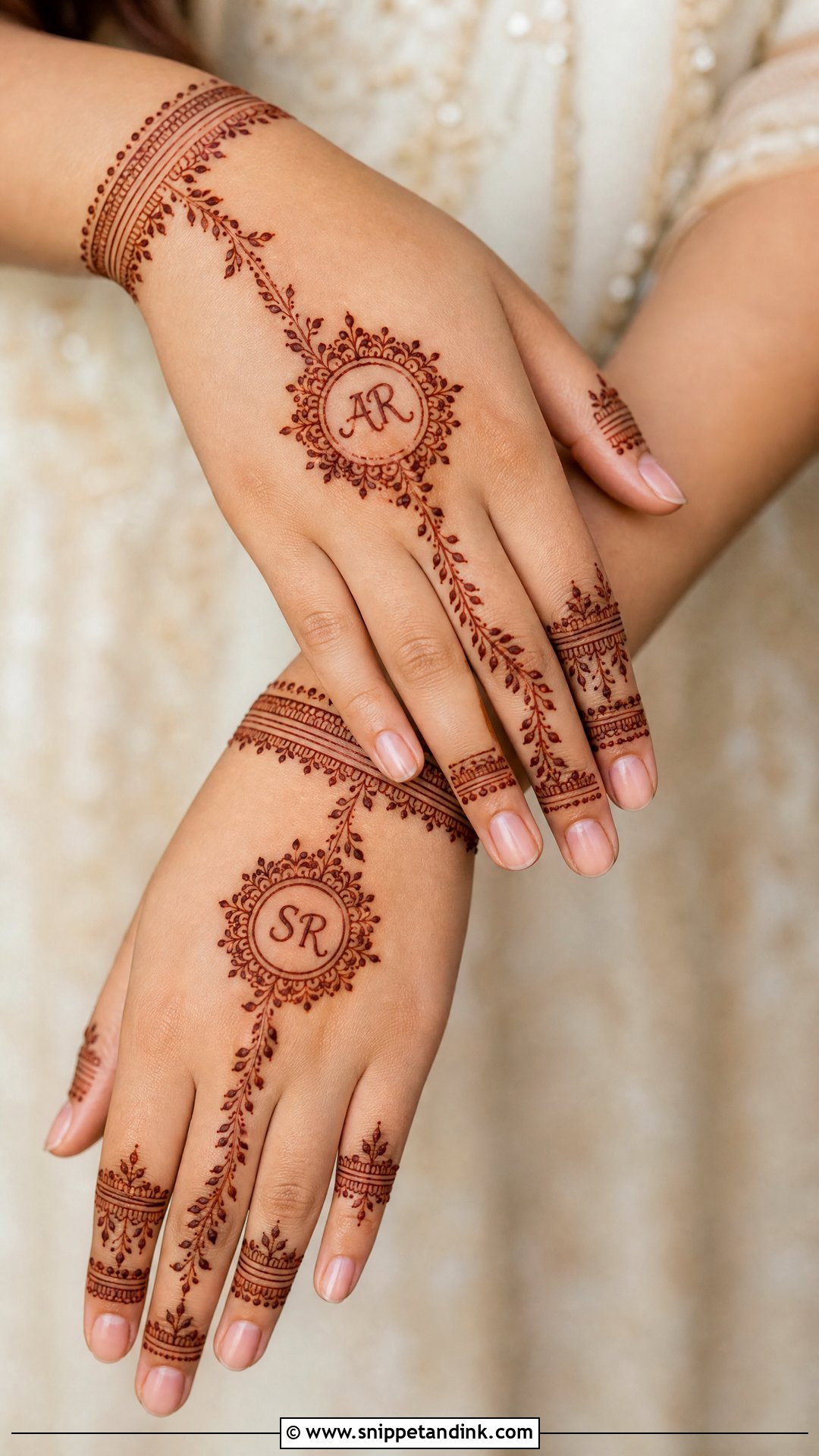
Not every bride wants a full name, and initials carry the same meaning in far less space. The couple’s initials can sit inside a central mandala, along the wrist cuff or between the finger patterns. Because they’re compact, initials slot easily into Arabic, Indo-Arabic and minimal designs where a long name would crowd things. I soften them with small hearts, dots, vines or a tiny lotus. They work just as well for engagement functions as for the wedding.
5. Wedding Date Name Mehndi Design
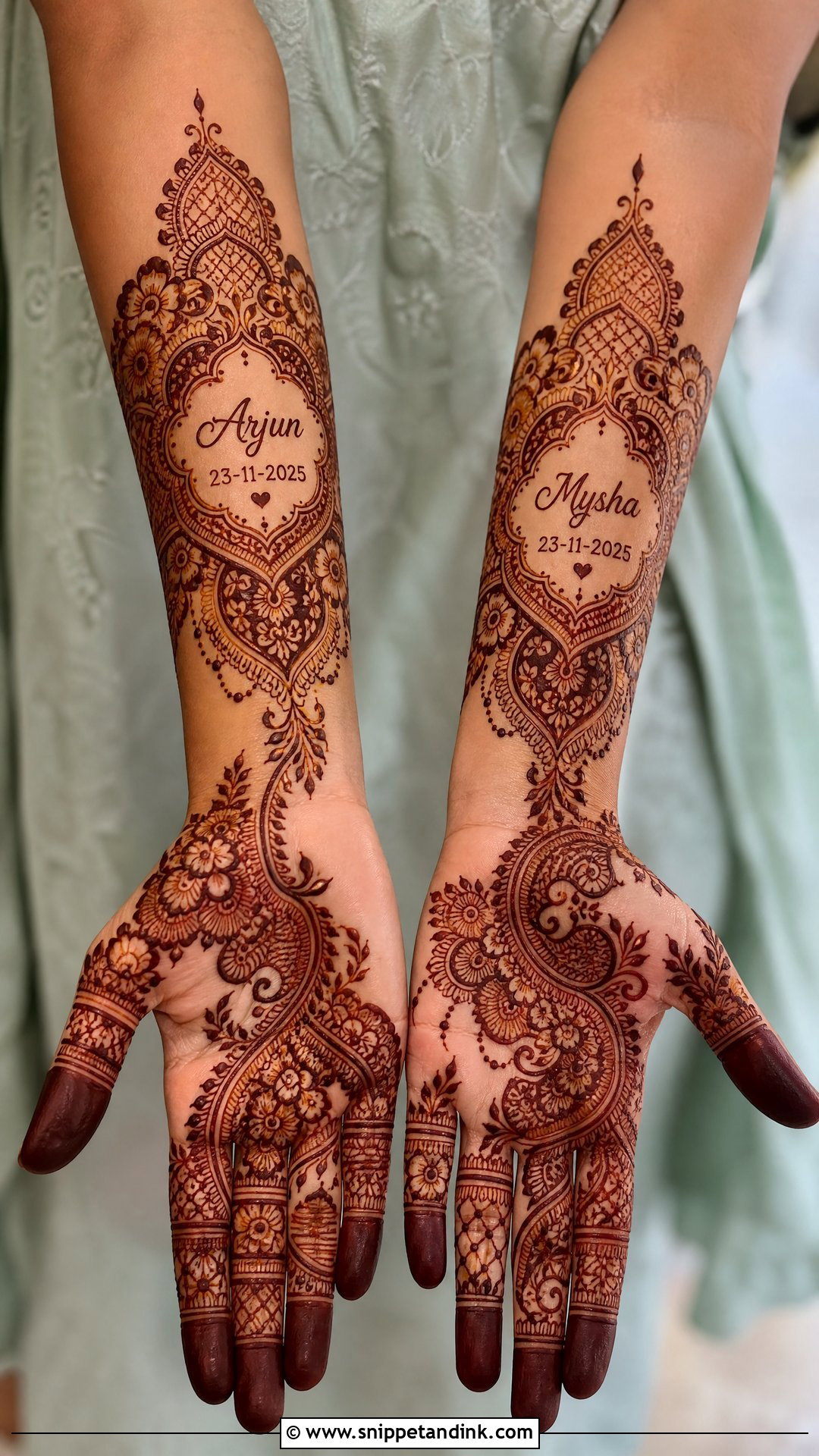
Pairing the name with the wedding date turns the hands into a keepsake. I place them near the wrist, inside a mandala ring or along a curved floral trail. Numerals are less forgiving than letters, because a smudged 3 can read as an 8, so I write them small and neat, each in a single clean stroke, inside a framed section away from any shading. Traditional motifs fill the palms around it, with matching borders on both hands.
6. Arabic Bridal Name Mehndi Design
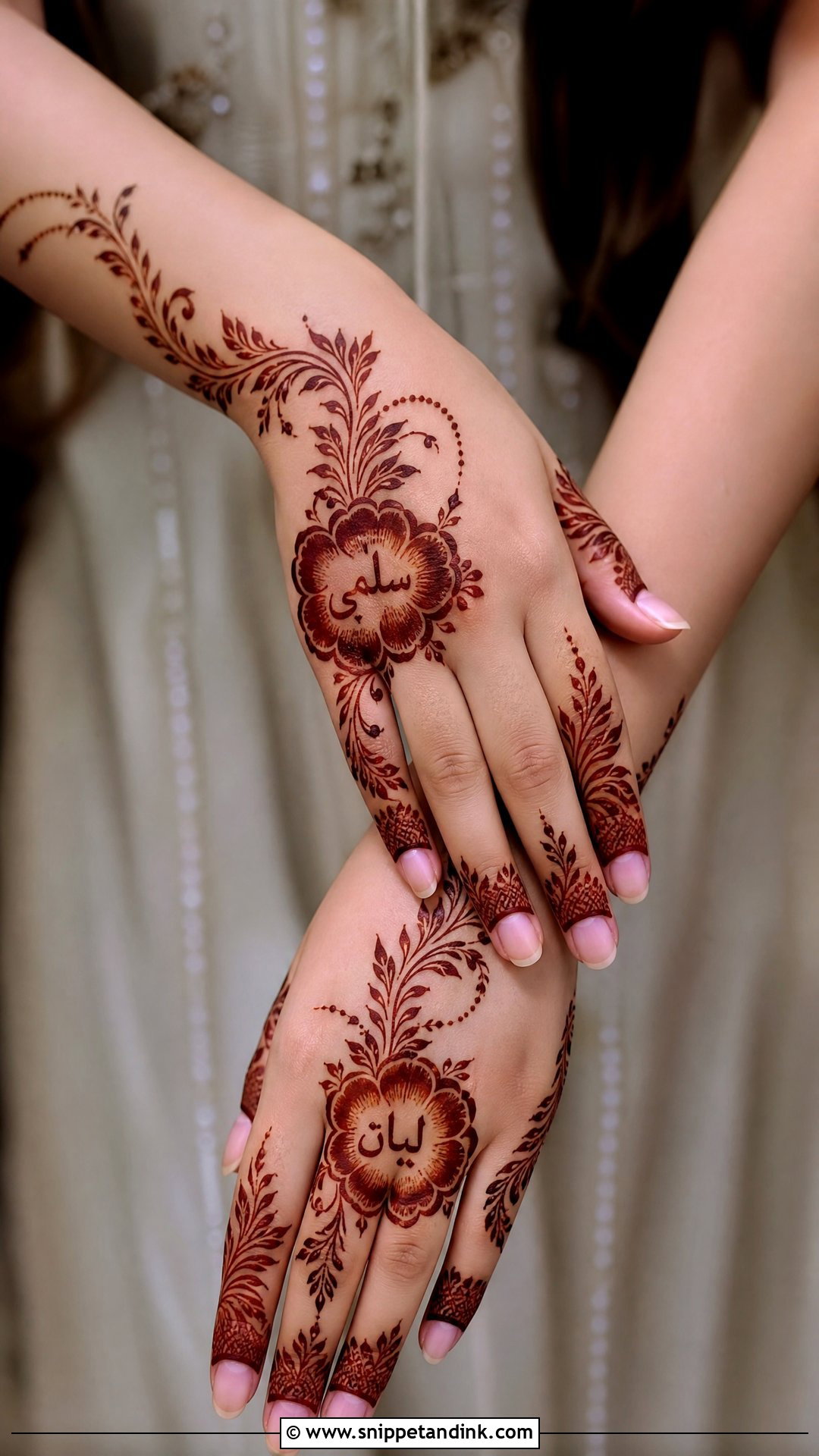
An Arabic bridal name mehndi design leaves far more skin showing than dense Indian work, with bold flowers, open spaces and flowing diagonal trails. That openness means there are fewer places to hide a name, so I place it carefully: inside a large petal, along a leafy curve or within a thick vine running from wrist to fingers, often on the back of the hand or the wrist cuff. It’s quicker to apply than heavy bridal mehndi and comfortable to wear. Bold Arabic outlines also stain clearly, which helps lettering read.
7. Indo Arabic Name Mehndi Design
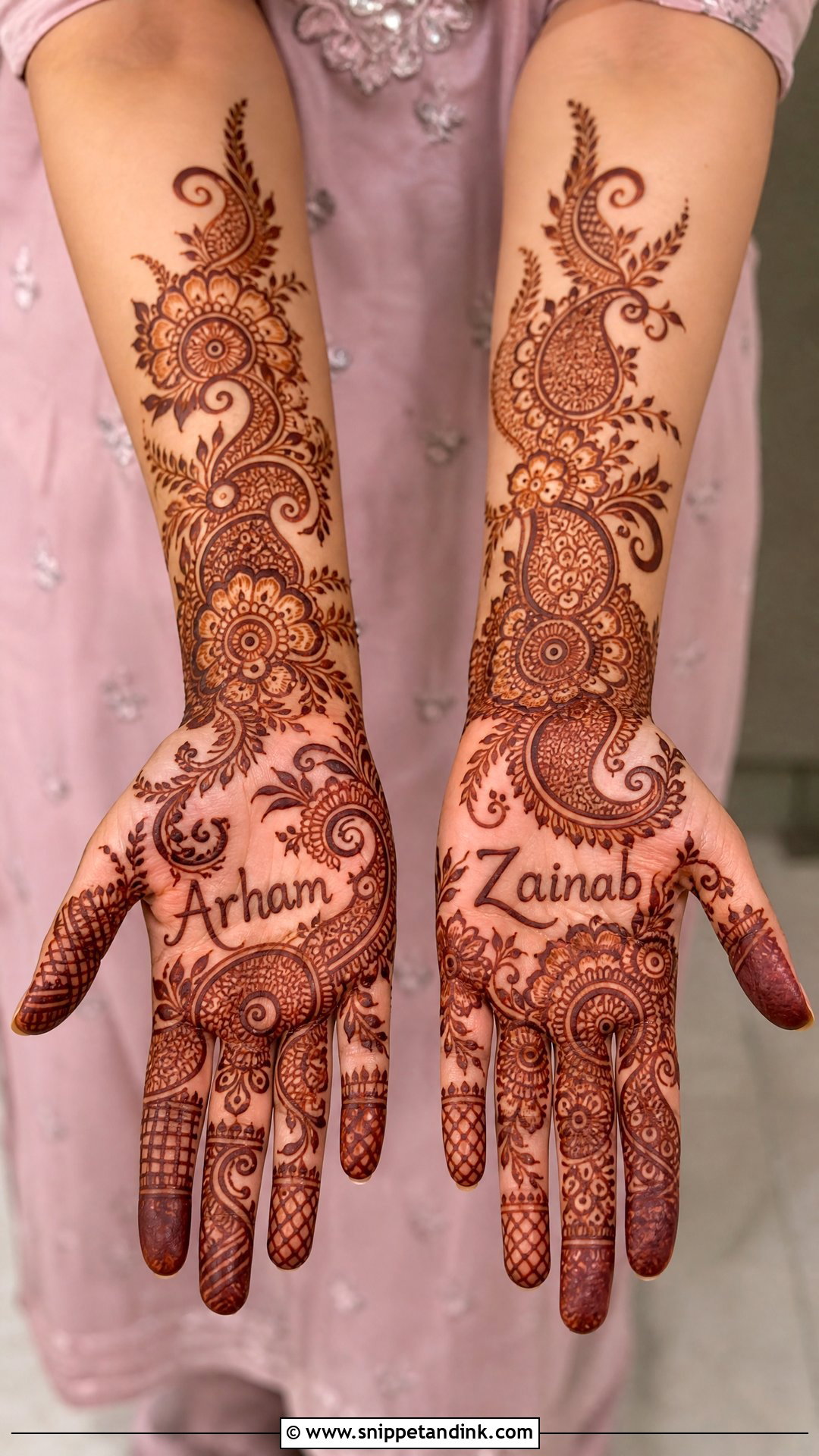
Indo-Arabic mixes the detail of Indian mehndi with the flow of Arabic work, so it looks full without feeling crowded. The name can sit inside a paisley cluster, a floral trail or a mandala, while the fingers carry fine Indian-style detailing. That breathing space is useful because it lets the personal detail stay visible. I curve the name slightly so it moves with the trail instead of cutting across it. It pairs well with outfits that mix traditional embroidery and modern cuts.
8. Mandala Bridal Name Mehndi Design
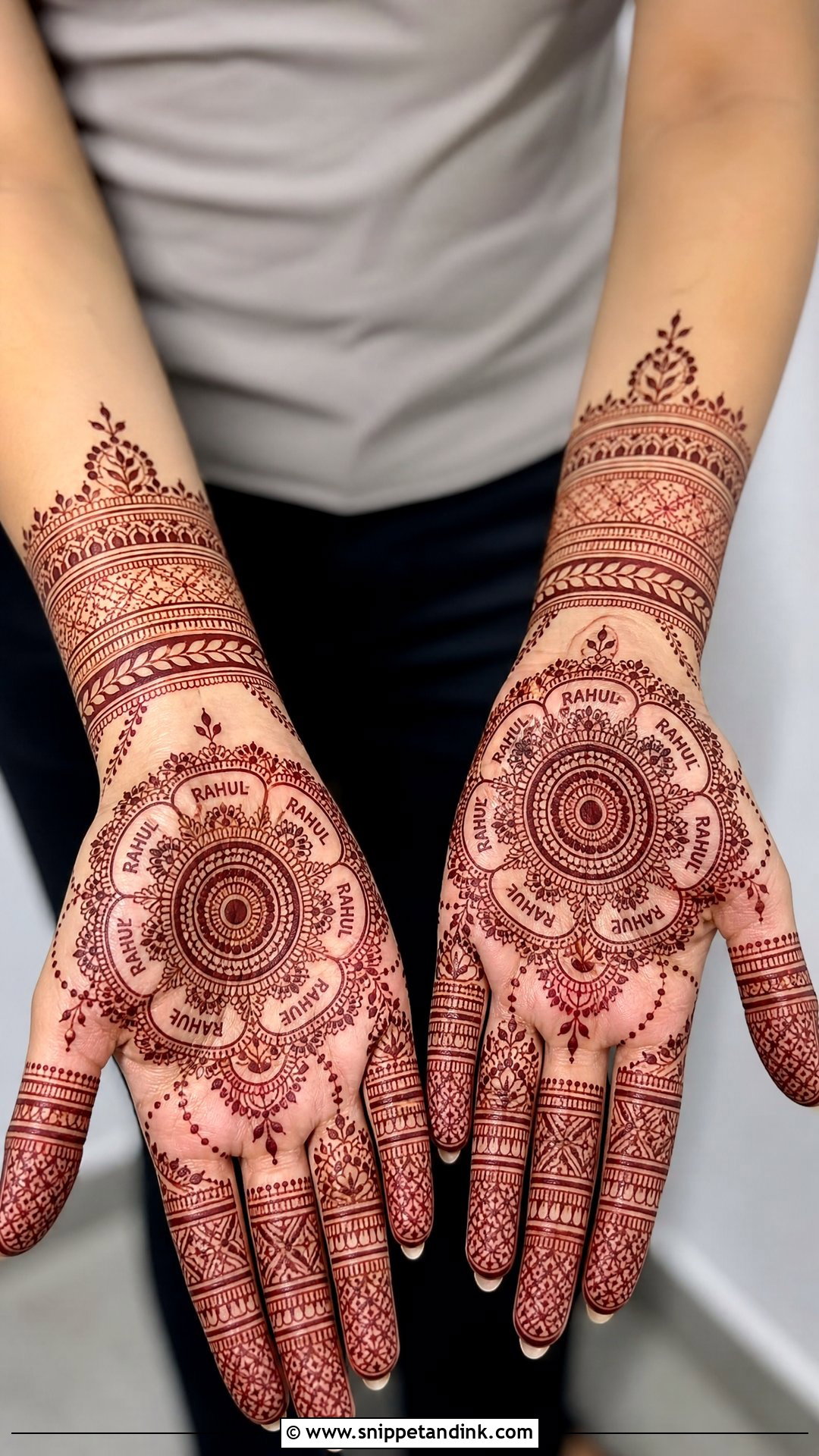
A mandala gives the design a strong center, and its circular border is a natural place for a name. I either run the letters around the outer ring or tuck them between the petal layers, which keeps the symmetry intact. The fingers take dots, vines and fine bands. One large mandala per hand, with the name as a hidden circular detail, is the cleanest version. Make sure the center sits on the flat of the palm rather than across the deep crease, or the circle looks broken.
9. Peacock Bridal Name Mehndi Design
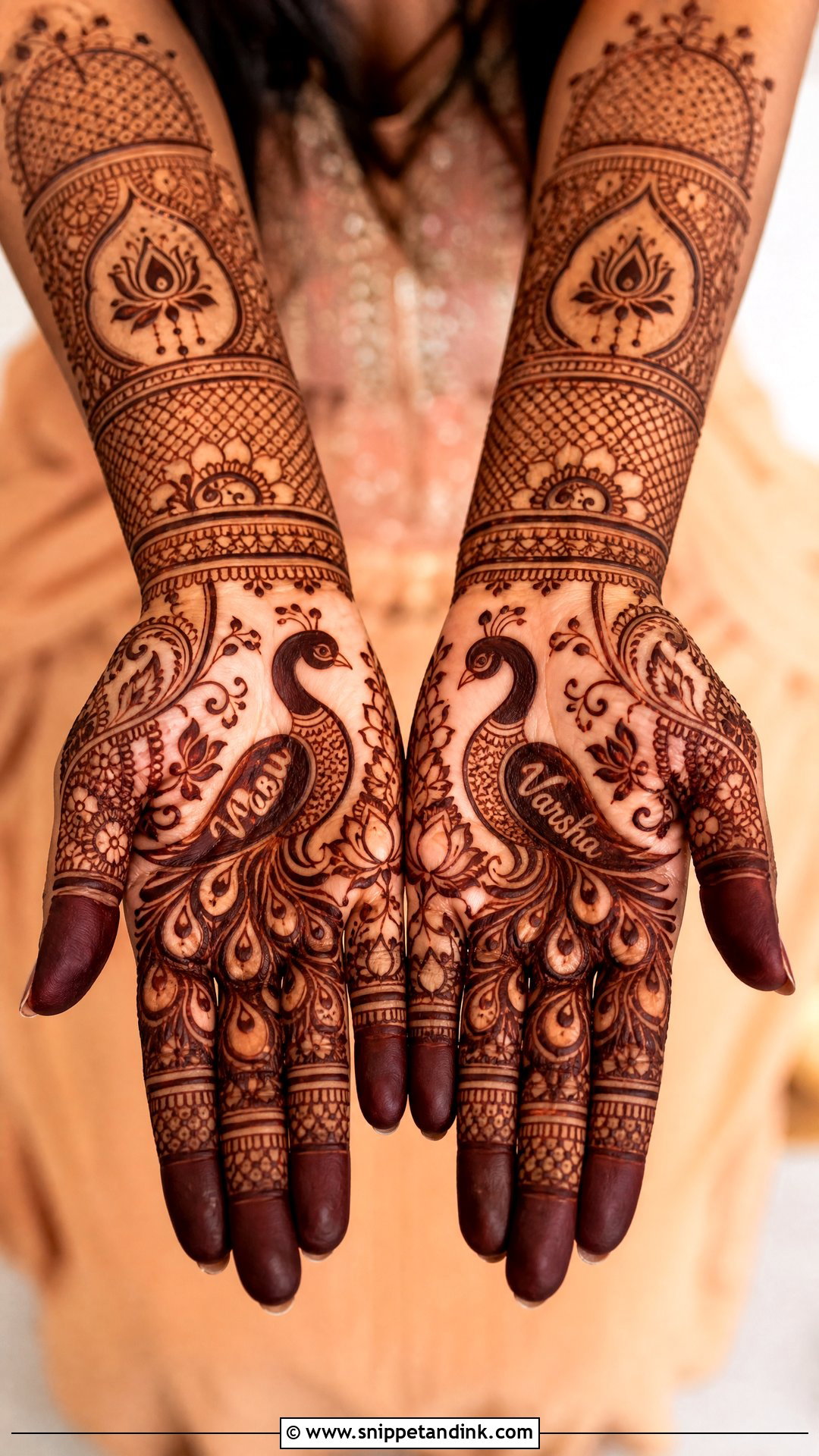
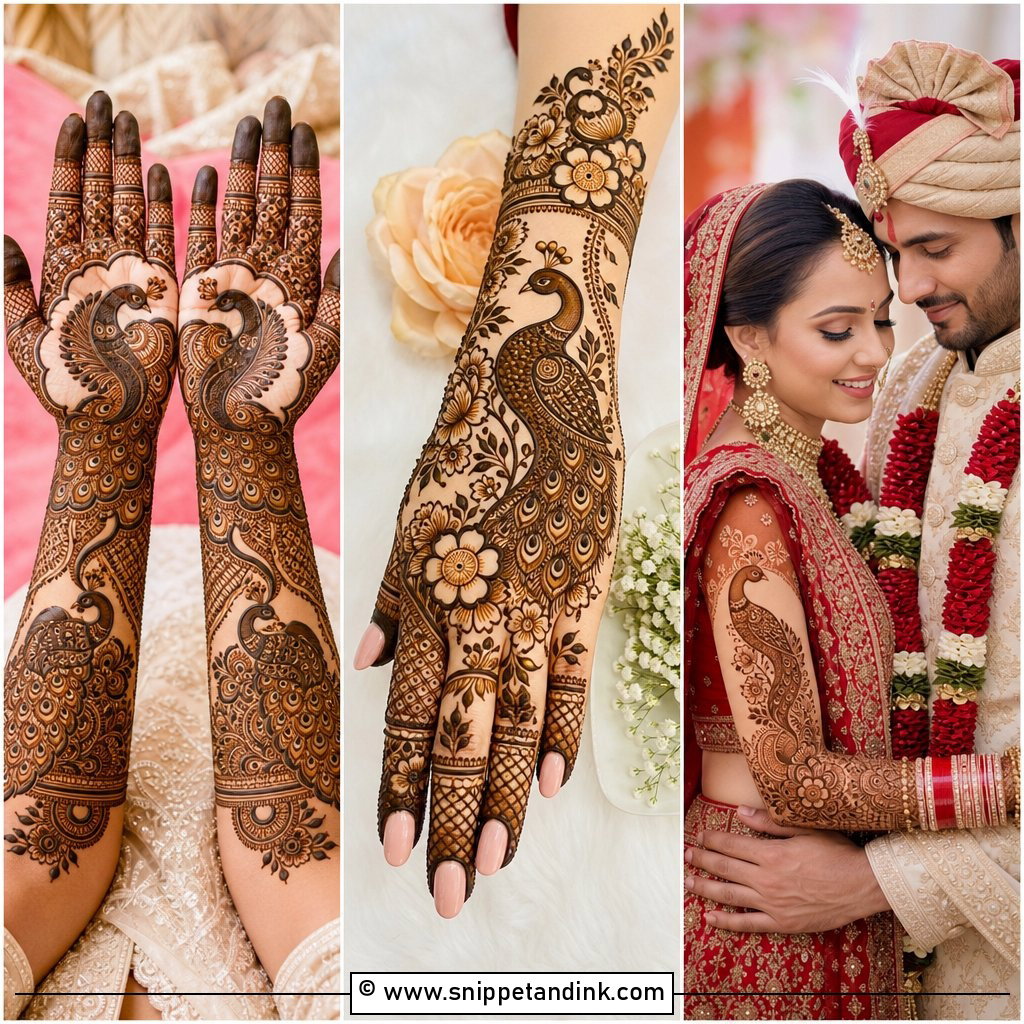
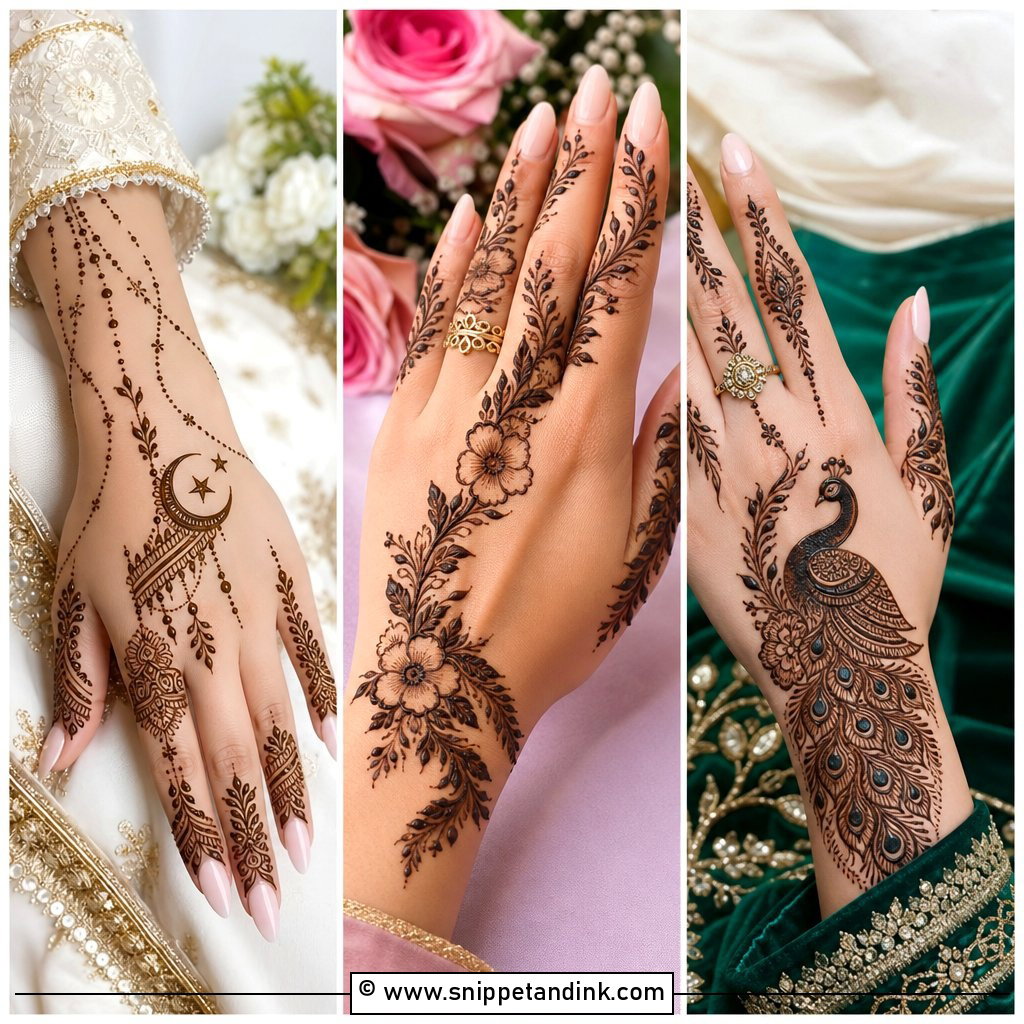
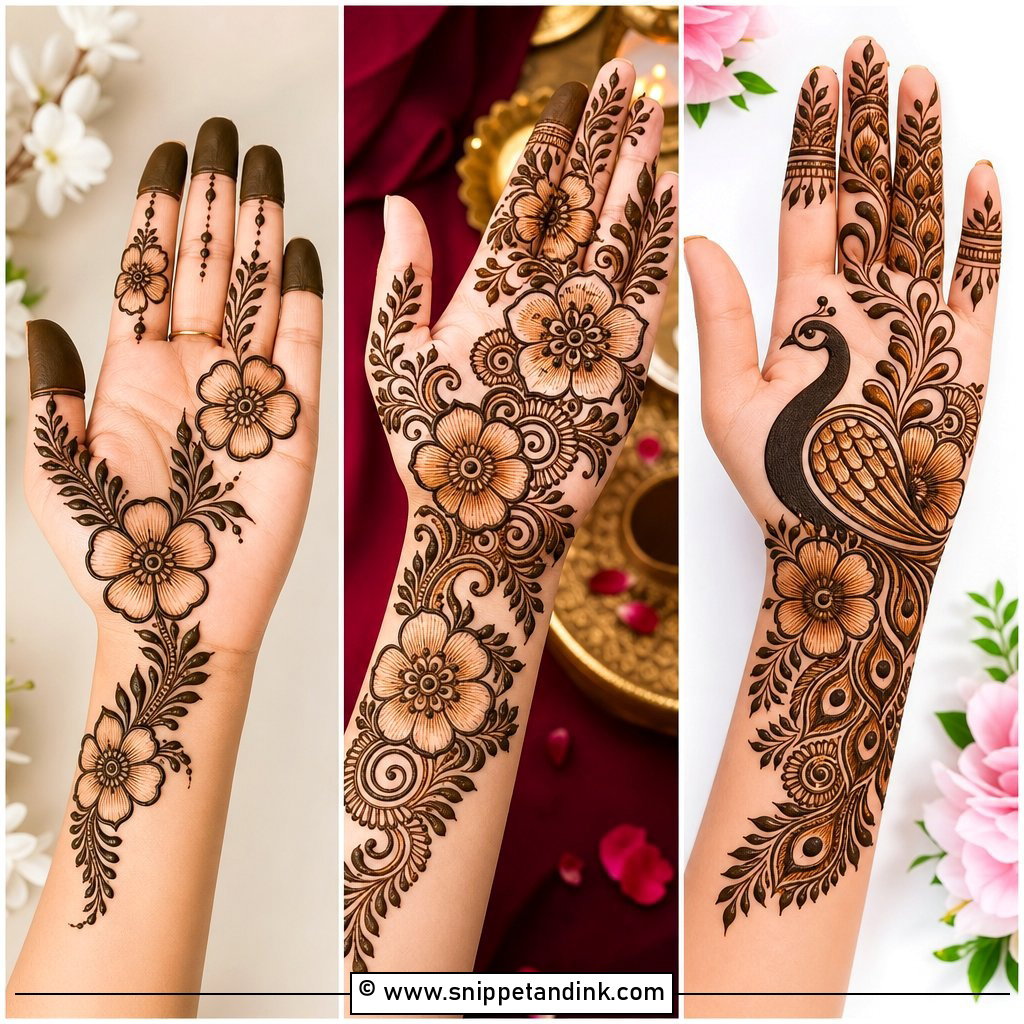
Peacocks bring a royal feel, and the bird is full of hiding places: feathers, wing curves and the decorated body. I usually write the groom’s name along the feather lines so the letters follow the same strokes as the plumage. It suits dramatic full-hand coverage, with paisleys, flowers and fine mesh around the bird. One large peacock on the palm or a mirrored pair across both hands both work. Peacock work takes time, so book a longer slot.
10. Floral Bridal Name Mehndi Design
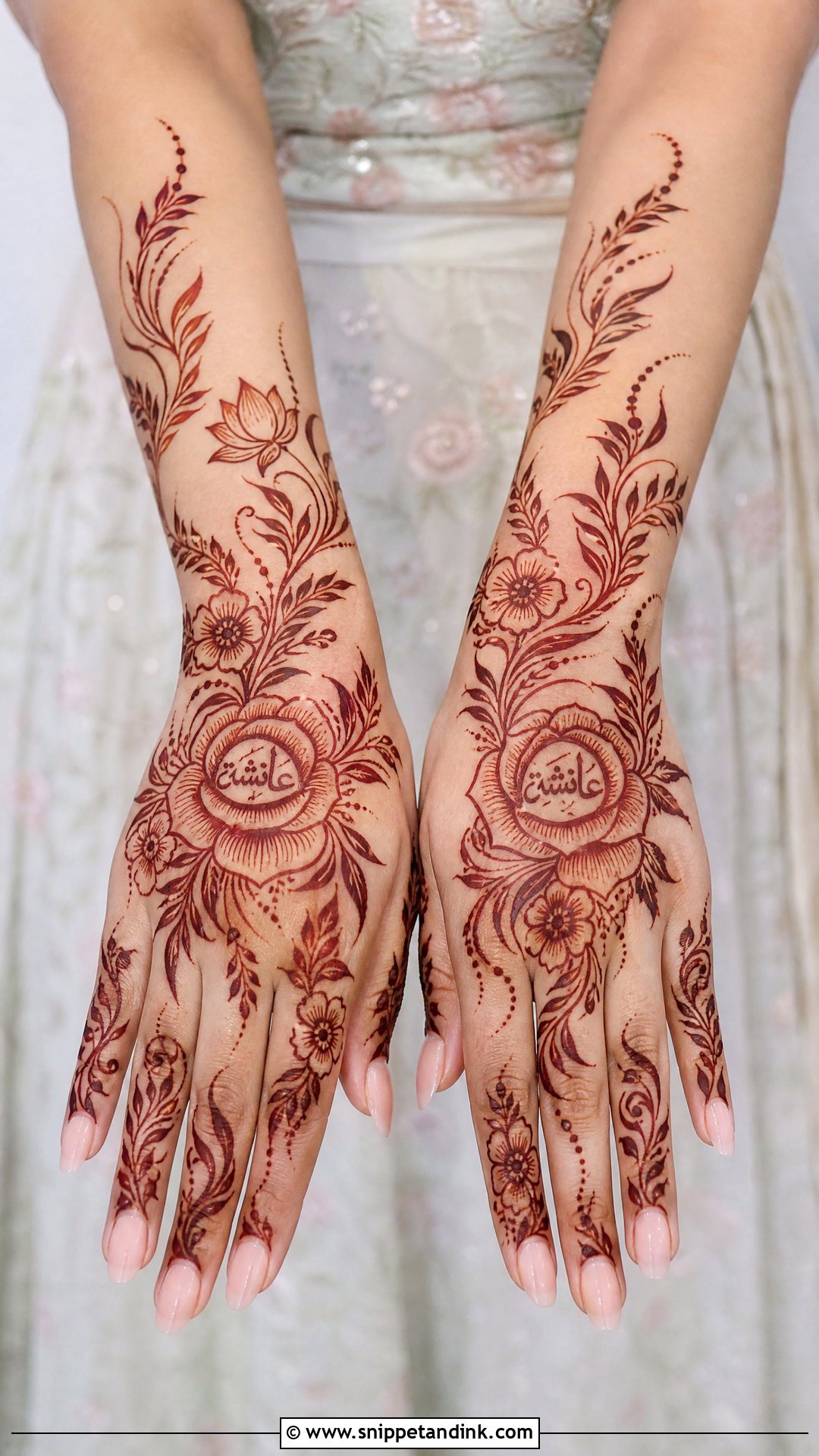
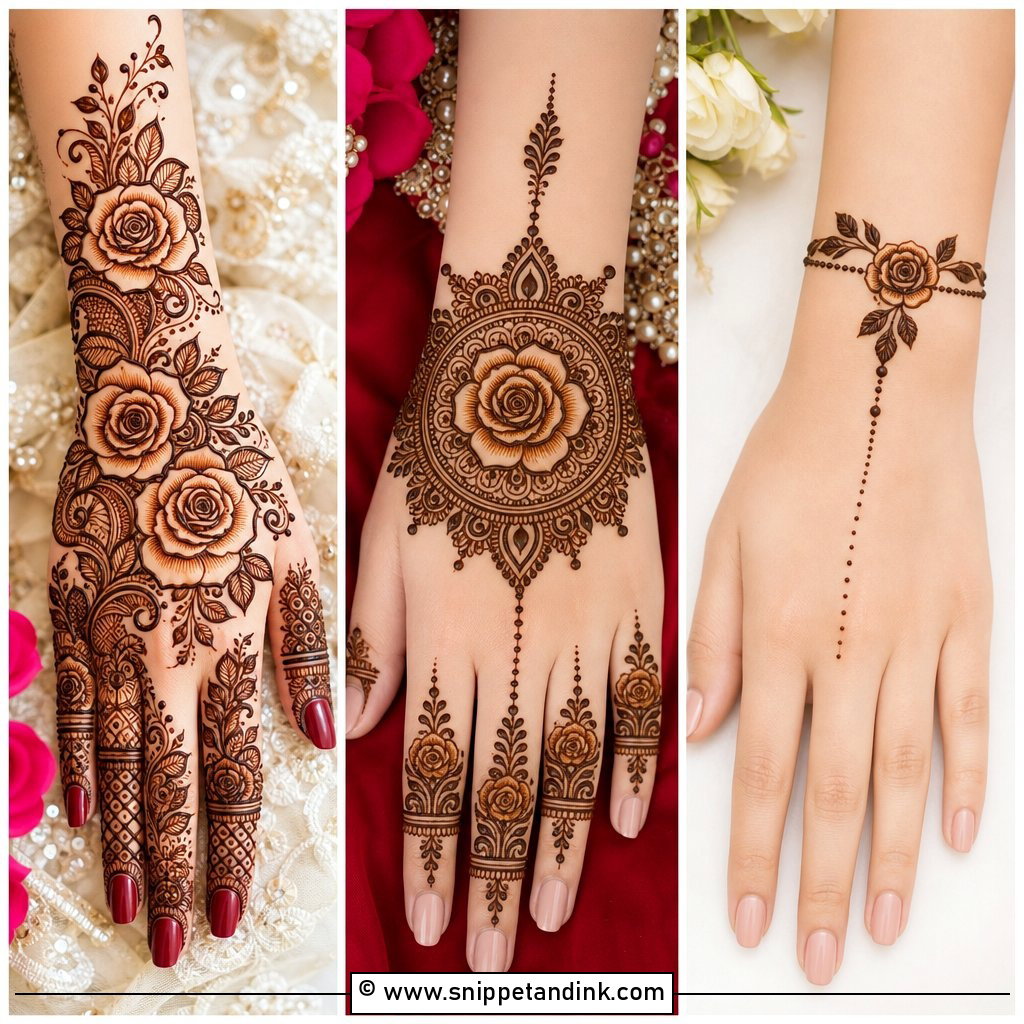
Florals adapt to any coverage, from palms to back hands to forearms, which makes them the easiest base for a name. The letters can sit inside rose petals, lotus outlines, leafy trails or a flower-centered wrist band. I draw larger flowers around the main name area and smaller filler toward the fingers, which quietly pulls the eye to the right spot. It’s a good fit if you’d rather skip heavy figures.
11. Paisley Bridal Name Mehndi Design
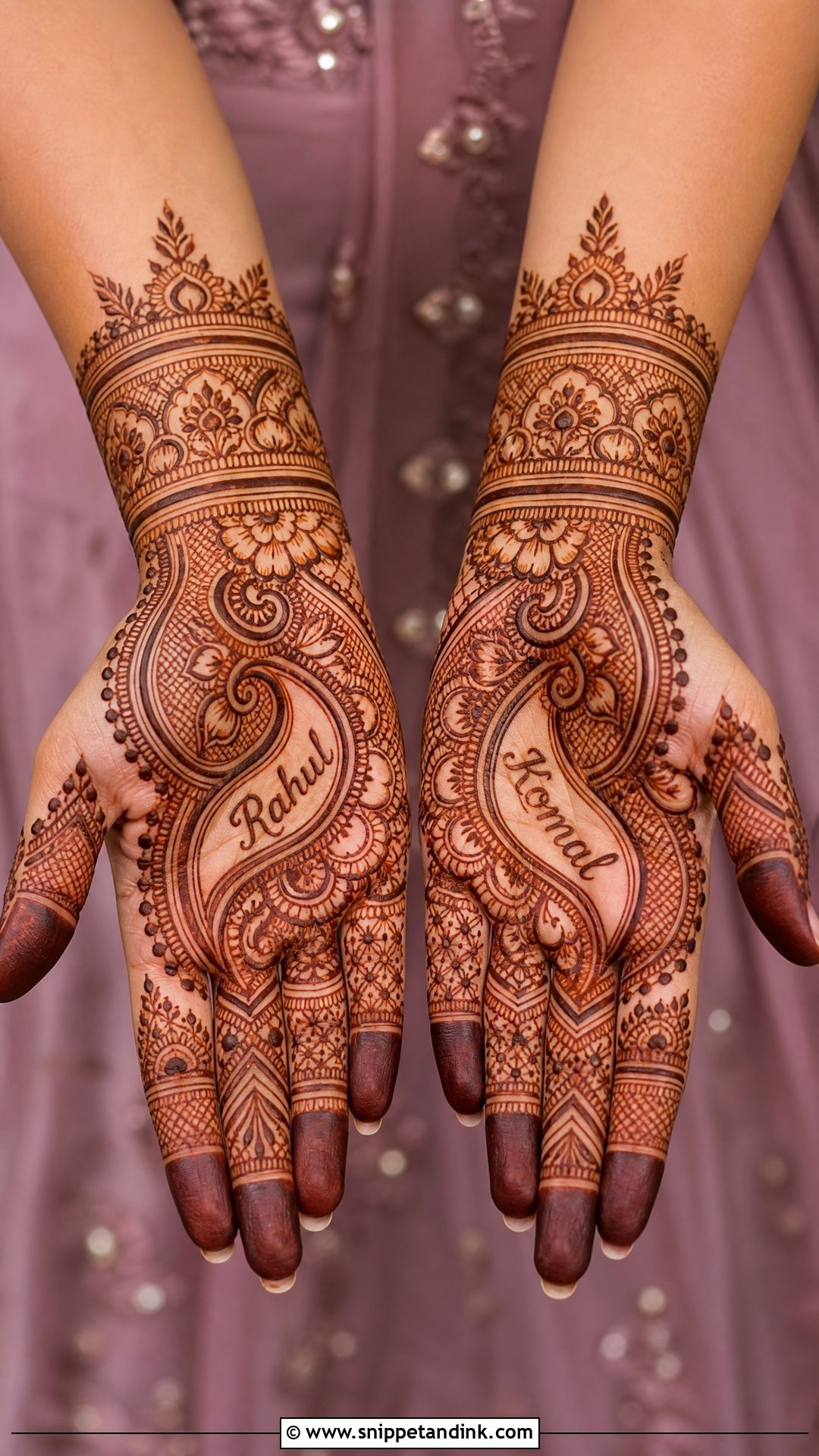
The curved belly of a paisley is shaped almost perfectly to hold a word. In this design, layered mango-shaped motifs, leaves, dots and fine shading cover the palm and move into the wrist, and I write the name along the inner curve of the largest paisley, hidden but readable. It’s a classic Indian look with strong cultural roots. Balance the paisleys on both hands, and finish the fingers with chevrons, mesh and small floral caps.
12. Jaali Bridal Name Mehndi Design
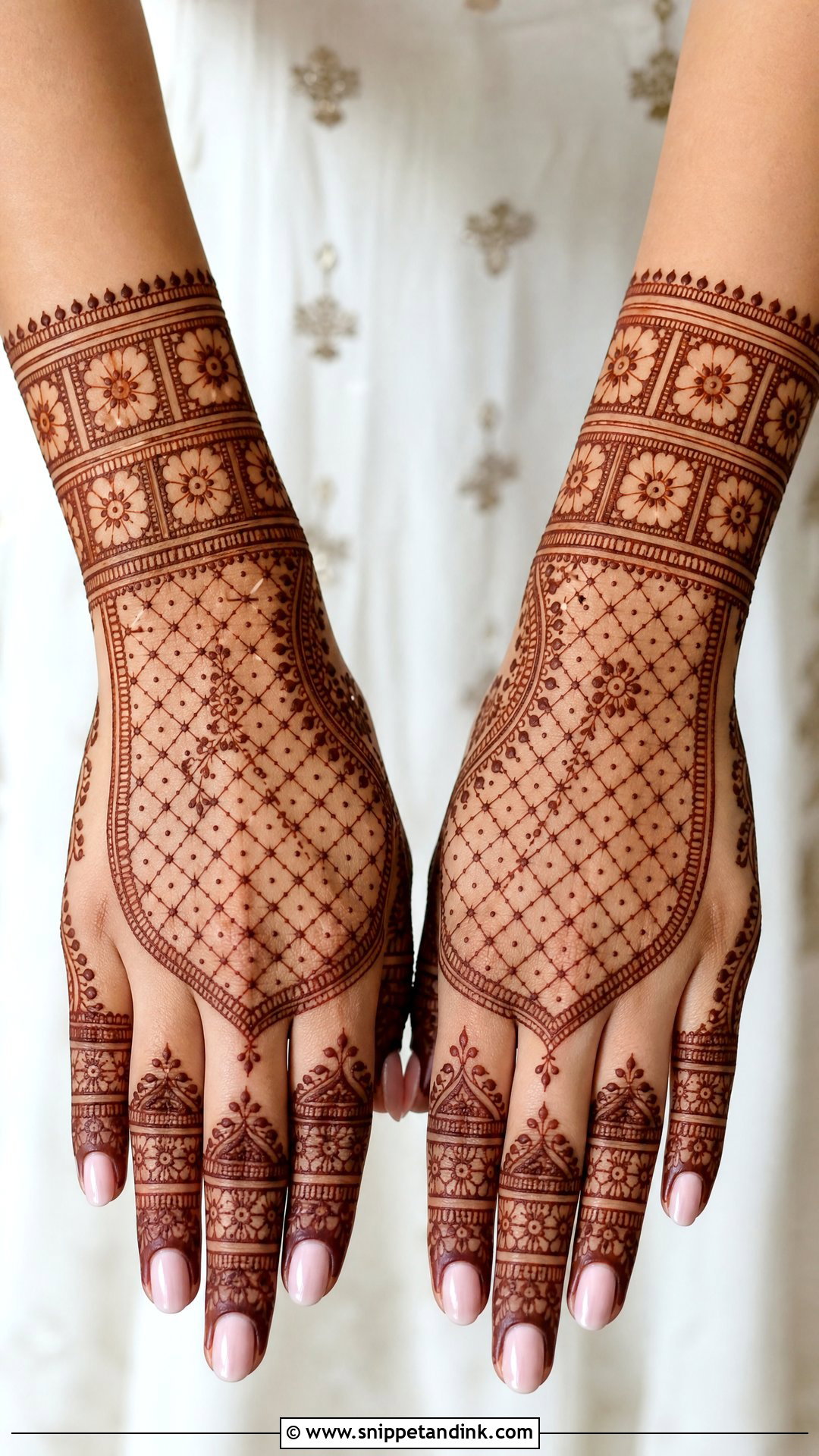
Jaali is net-like, so a name can sit between diamond grids, inside little floral boxes or along the edge of the mesh. On the back of the hand the net reads clearly in photos, and it pairs with wrist cuffs and finger bands for a jewelry-like finish. The risk is that grid lines and letters end up the same weight. I always make the name slightly thicker than the mesh; otherwise nobody, groom included, will find it once the stain darkens.
13. Portrait Bridal Name Mehndi Design
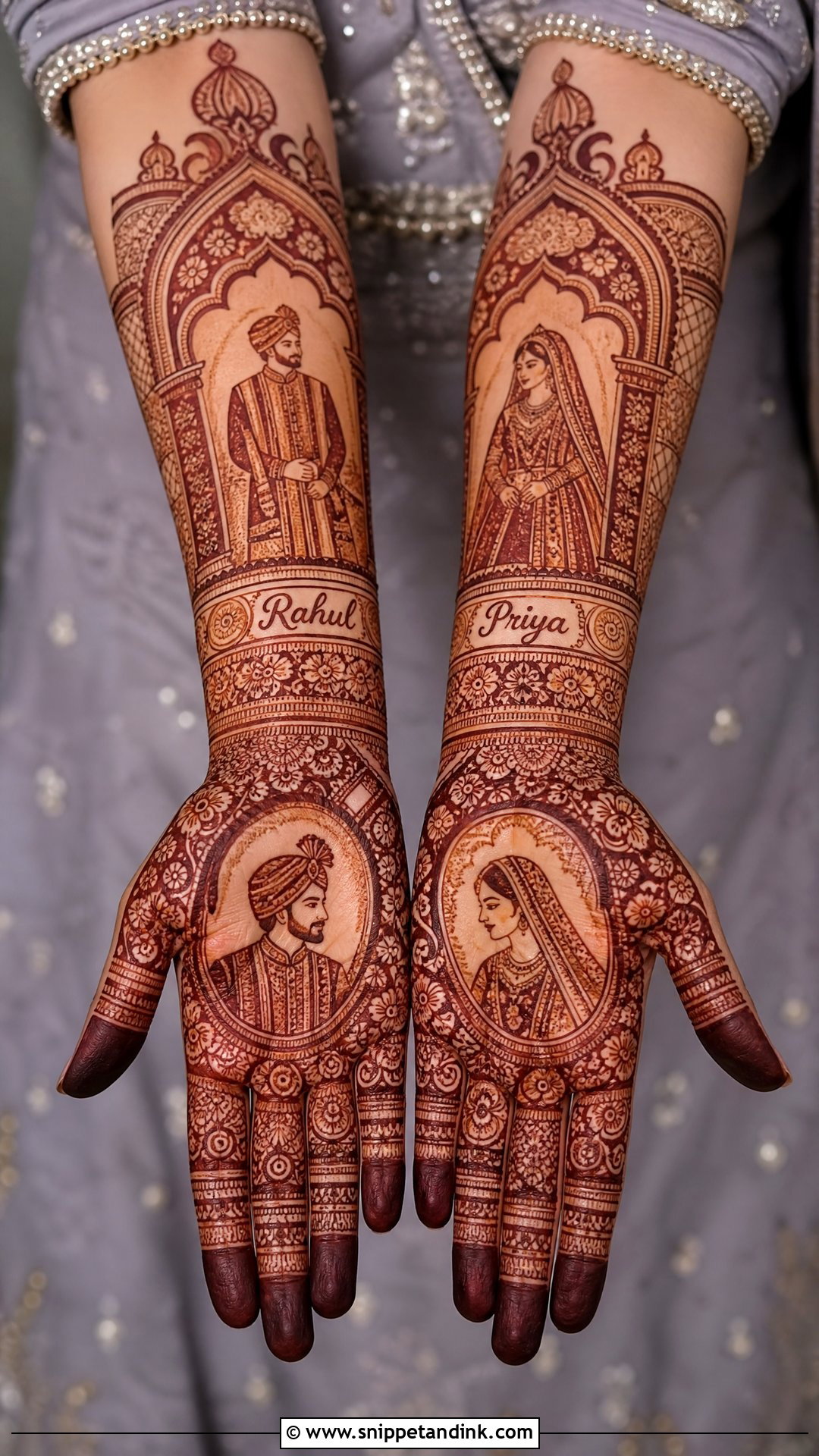
Portrait mehndi turns the hands into a wedding scene: the bride on one palm, the groom on the other, and the name hidden around the frame, a dupatta, a turban or a floral arch. Faces are the hardest thing to draw in henna, since one slip in an eye or mouth line changes the whole expression, so choose an artist who can show you portraits she has actually done. It needs full hands and forearms for space, with mandalas, palace arches and paisleys balancing the figures. Keep the name small so the portraits stay the focus.
14. Love Story Name Mehndi Design
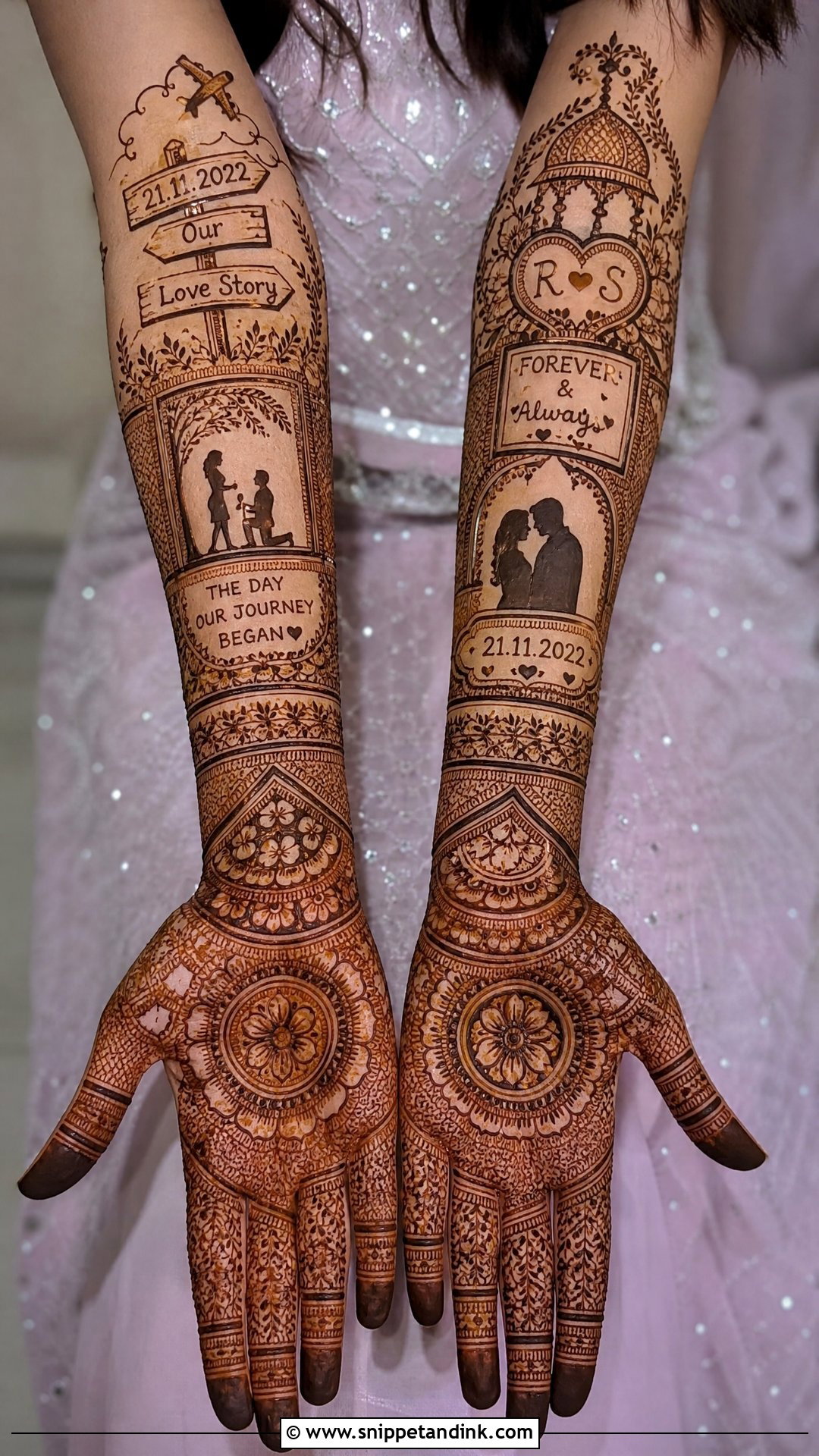
Story designs pull in moments that matter to the couple: the name beside a small proposal scene, a travel sign, the date, a favorite flower or shared initials. Each palm can hold one chapter, with vines, mandalas and patterned bands carrying on up the forearms. The usual mistake is wanting every memory in. I’d ask you to pick three or four symbols at most, because small motifs drawn at henna line width blur together. The finished hands should read as a memory map, not a crowded sketch.


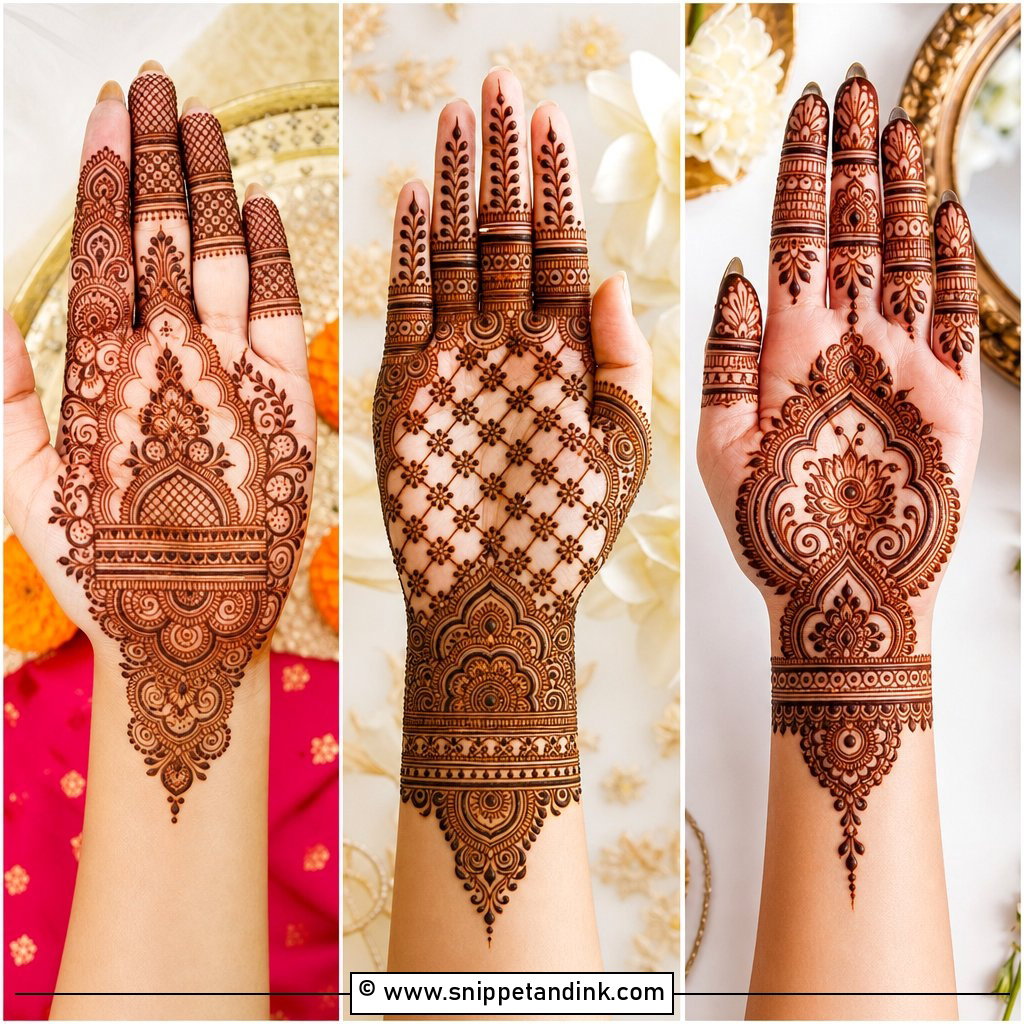
15. Minimal Bridal Name Mehndi Design
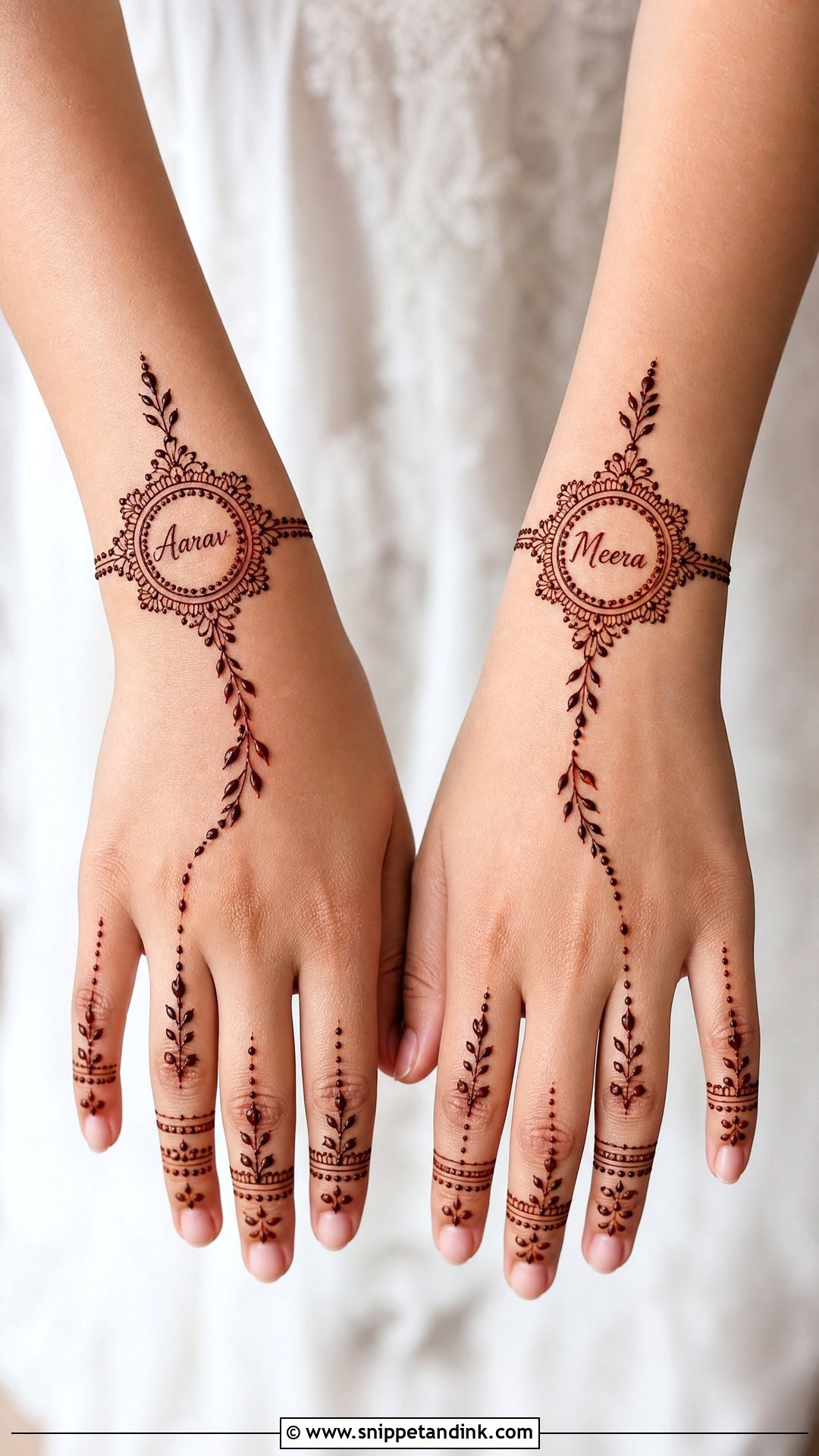
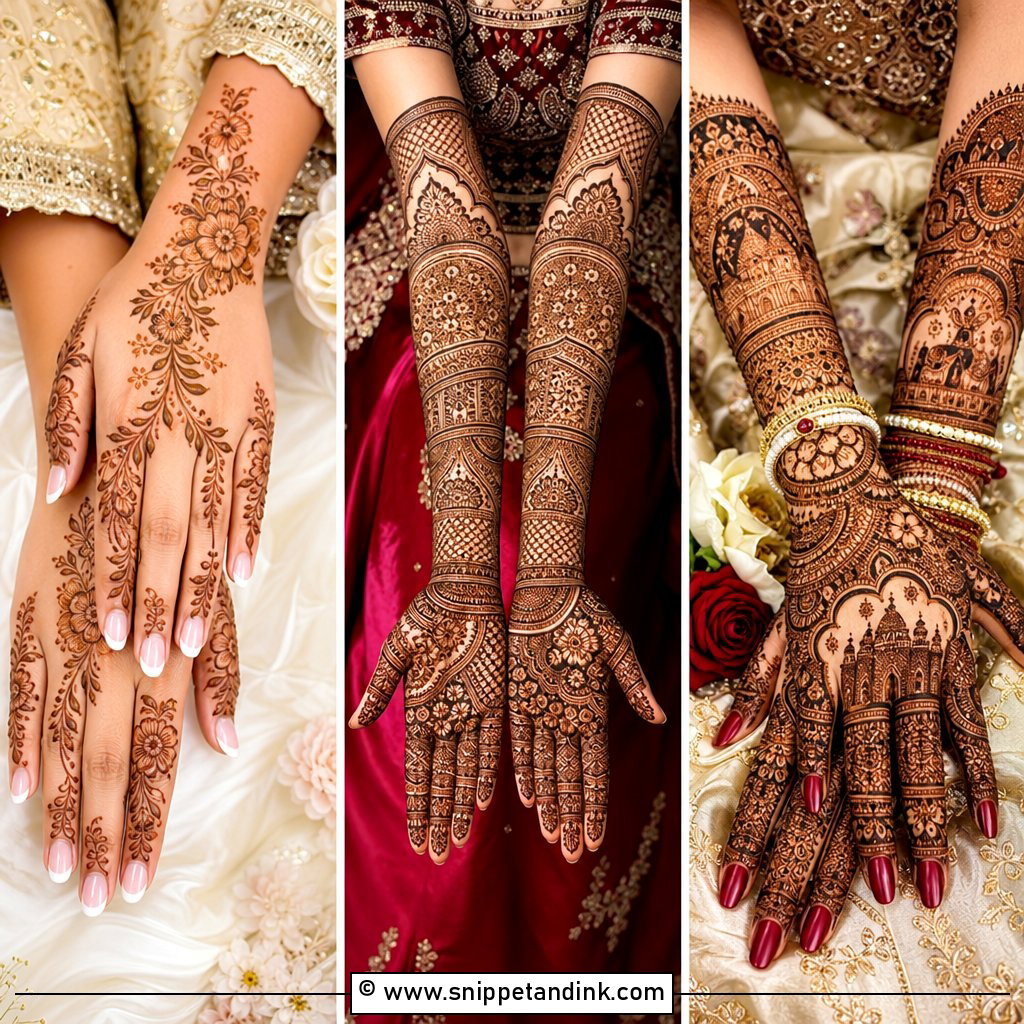
Minimal designs give you the personal detail without hours in the chair. The name can sit inside a small mandala, a wrist bracelet, a finger trail or a light back-hand pattern, which suits smaller ceremonies or anyone who prefers lighter henna. I frame it with fine dots, simple florals and thin leafy lines. Spacing does all the work here. With so little coverage, one gap that looks accidental makes the whole hand look unfinished, so every motif has to support the name.
16. Back Hand Bridal Name Mehndi Design
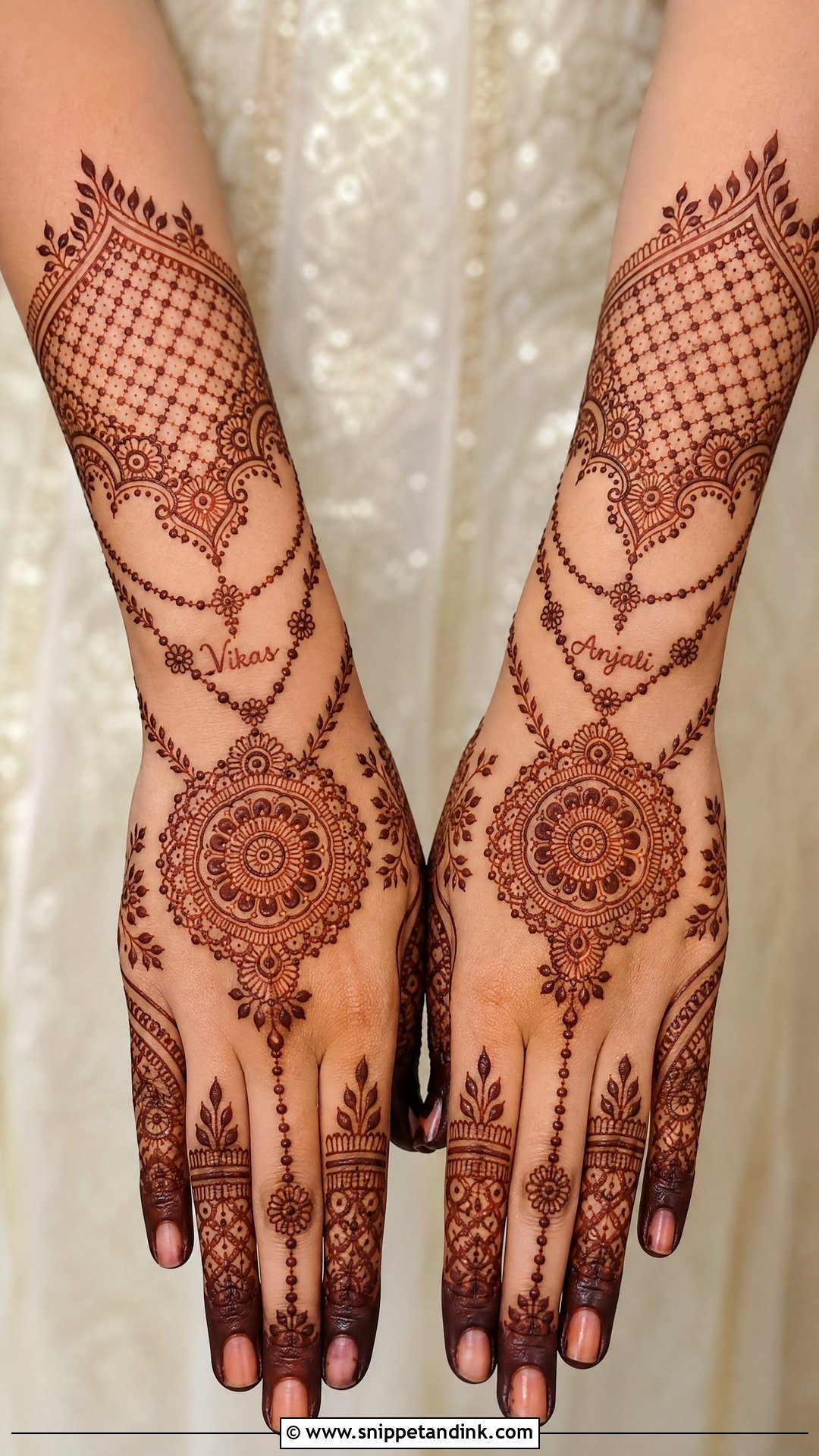
A back hand bridal name mehndi design reads like hand jewelry, with the name hidden in a bracelet band, a ring chain, a floral trail or a central mandala. This is the side that shows in close-ups with bangles and rings, and it can run from the fingers to the wrist or further up the forearm. One honest note: the back of the hand stains lighter than the palm, so I give the lettering a slightly fuller line here. Keep the name off the knuckle creases as well, because the stain breaks where skin folds.
17. Palm Bridal Name Mehndi Design
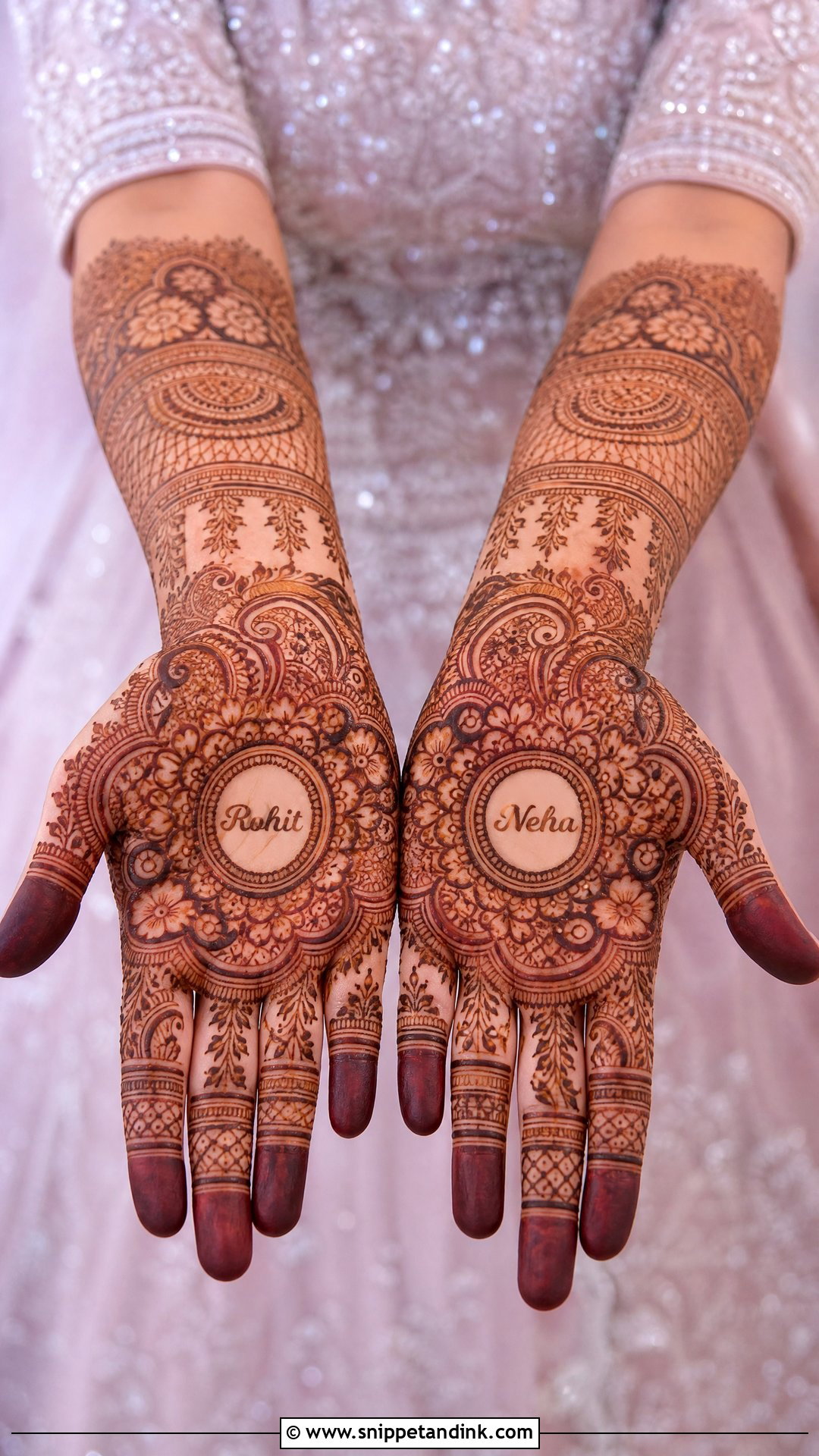
Palms stain the darkest of anywhere on the hand, so they’re my first choice for crisp lettering. I put the name inside a central mandala, a floral frame, a paisley border or a bride and groom scene, and even small letters stand out once the paste comes off. Dense fingertips and wrist detailing complete the look. Keep the name clear of heavy shading, or it gets swallowed.
18. Finger Name Bridal Mehndi Design
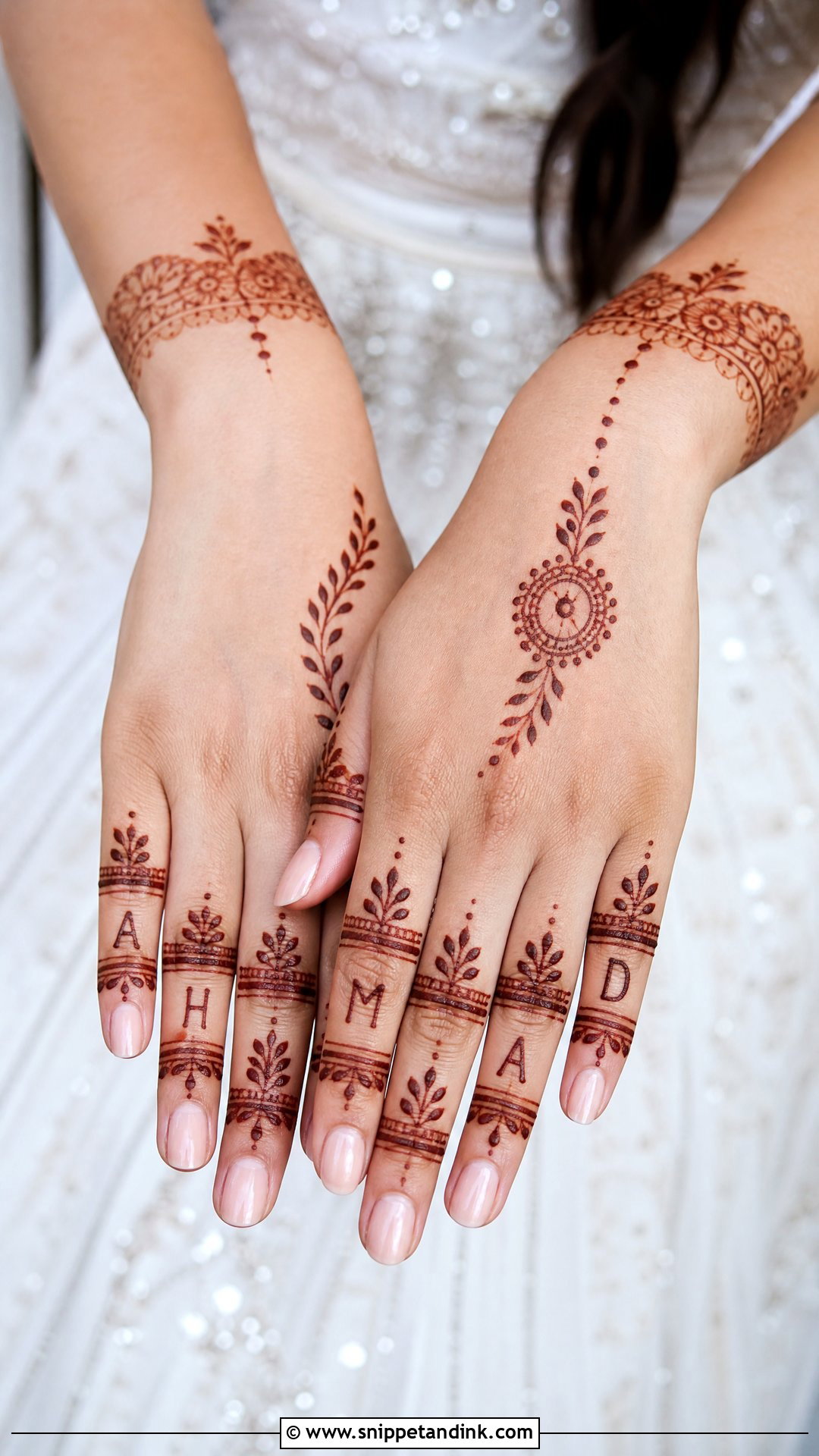
Finger designs feel modern and are easy to spot. The name or initials can be split letter by letter across the fingers, run along one finger or hide inside ring-style bands, with decorated tips, slim vines, wrist bracelets and light back-hand work around them. The palms can stay simple or carry a small mandala. Show me where your rings sit before I start, so the lettering doesn’t end up under your engagement ring. Fingers stain well, which makes this one show up clearly in engagement photos and bridal close-ups.
19. Wrist Cuff Name Mehndi Design
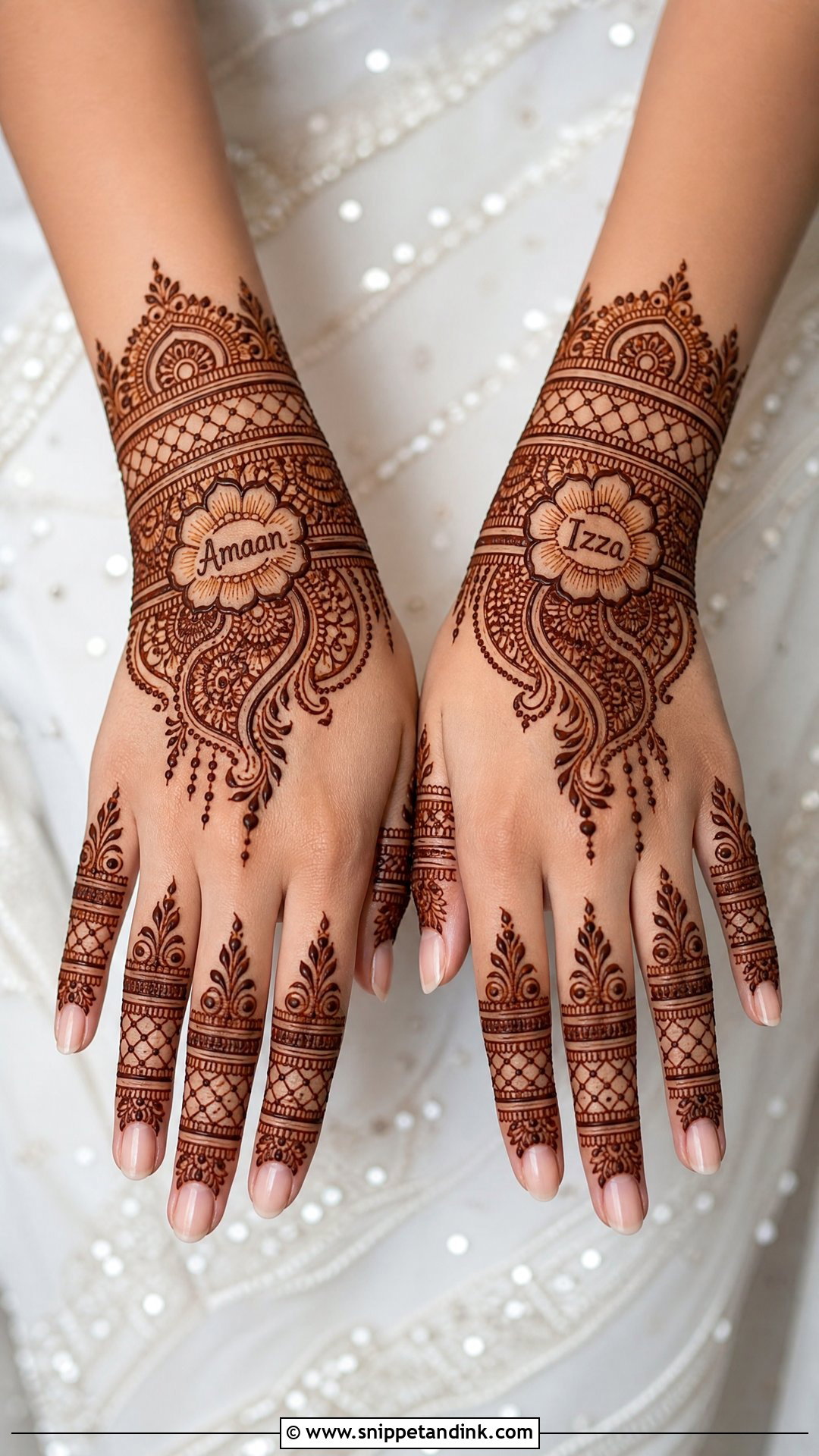
A wrist cuff is a henna bracelet with a secret inside, the name worked into a band of florals, paisleys, jaali or small mandala chains. With full-hand mehndi it gives a clean stopping point before the forearm, and it keeps the name findable rather than lost in the palm. I curve the letters with the band so they read from every angle, then add hanging bead-like details and leafy borders. Bangles sit right over this area, so plan the placement with your bangle stack in mind.
20. Forearm Bridal Name Mehndi Design
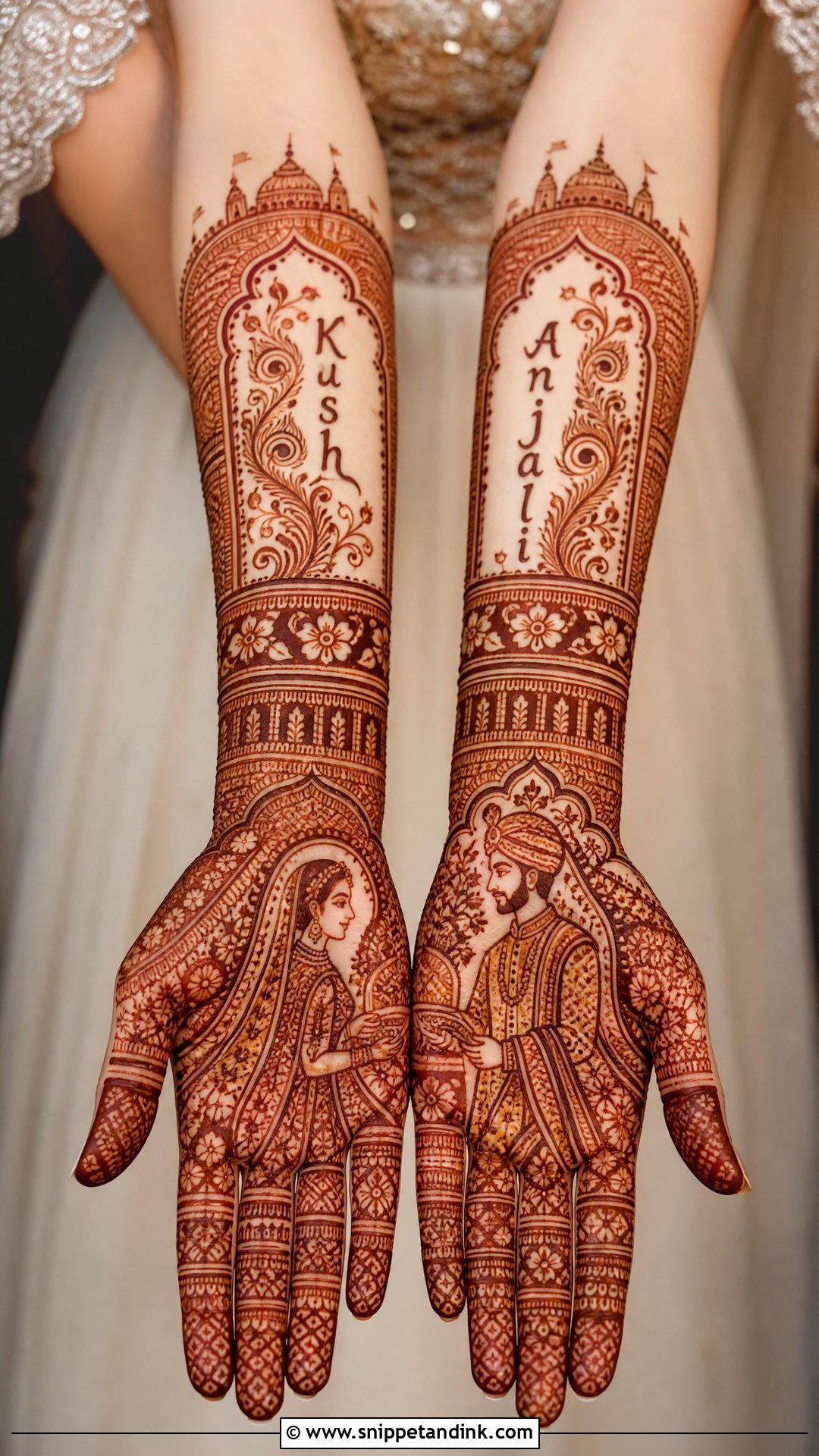
The forearm is the biggest canvas, which is where long names go without looking squeezed. I hide them in vertical floral panels, palace arches, peacock feather trails or a bride and groom scene. Paired with dense palm and finger work, it creates a grand bridal look, especially with short or sheer sleeves. Forearm skin stains lighter than the palm, so I keep the lettering bold and frame the panel with borders on both sides so it belongs to the whole pattern.
Aftercare That Keeps Fine Lettering Sharp
Names are the finest work on the hand, so they’re the first thing to suffer from rushed aftercare.
- Keep your hands still for the first twenty to thirty minutes while the paste sets. Fresh letters smudge the moment they brush fabric.
- Leave the paste on as long as you comfortably can, ideally six hours or overnight. Longer contact means a deeper stain.
- Once it’s dry to the touch, dab on a little lemon and sugar so the paste stays stuck to the skin, but don’t drench it.
- Scrape the dried paste off instead of washing it, and keep your hands away from water for as long as you can afterward.
- Expect orange at first. The stain deepens over the next day or two, and that’s when the name is easiest to read.
Use natural henna only. So-called black henna can contain chemical dyes that cause serious skin reactions, and no hidden name is worth that. If your skin is sensitive, ask your artist for a small patch test well before the wedding.
How the Name Hunt Usually Plays Out
In many families the groom is given a little time to find his name, often on the wedding night or in front of relatives, with good-natured stakes; in some homes he owes the bride a gift if he gives up. Customs differ from family to family, so ask yours. My practical advice is to tell your photographer where the name is so they catch the moment he spots it, and to hide it well enough to make him look, but not so well that the search drags on.
A Name Only the Two of You Will Spot First
A hidden name is more than decoration; it brings feeling and a bit of play to a bride’s hands. Whether you go for the groom’s name tucked in a petal, matching initials, a date, a portrait scene or a light back-hand design, the right one fits your comfort and your ceremony. Ask for readable lettering, balanced placement and motifs that hold the name instead of burying it. In skilled hands the personal detail blends in so naturally that it becomes part of the whole design, simply waiting to be found.
You'll Like These Ideas:





Leave a Reply