
What people book me for has shifted. Fewer clients want every inch filled; more want clean negative space, one bold floral and fine-line fingers that still read as festive. The designs below cover front hands, back hands, full hands, bridal work, Eid patterns, Arabic trails, Indian motifs, Indo-Arabic blends and quick minimal henna. Each one is a complete hand rather than a single motif, so you can point to it and know roughly what you’re getting. As you scroll, think about the event, your outfit, your hand shape and how long you can sit.
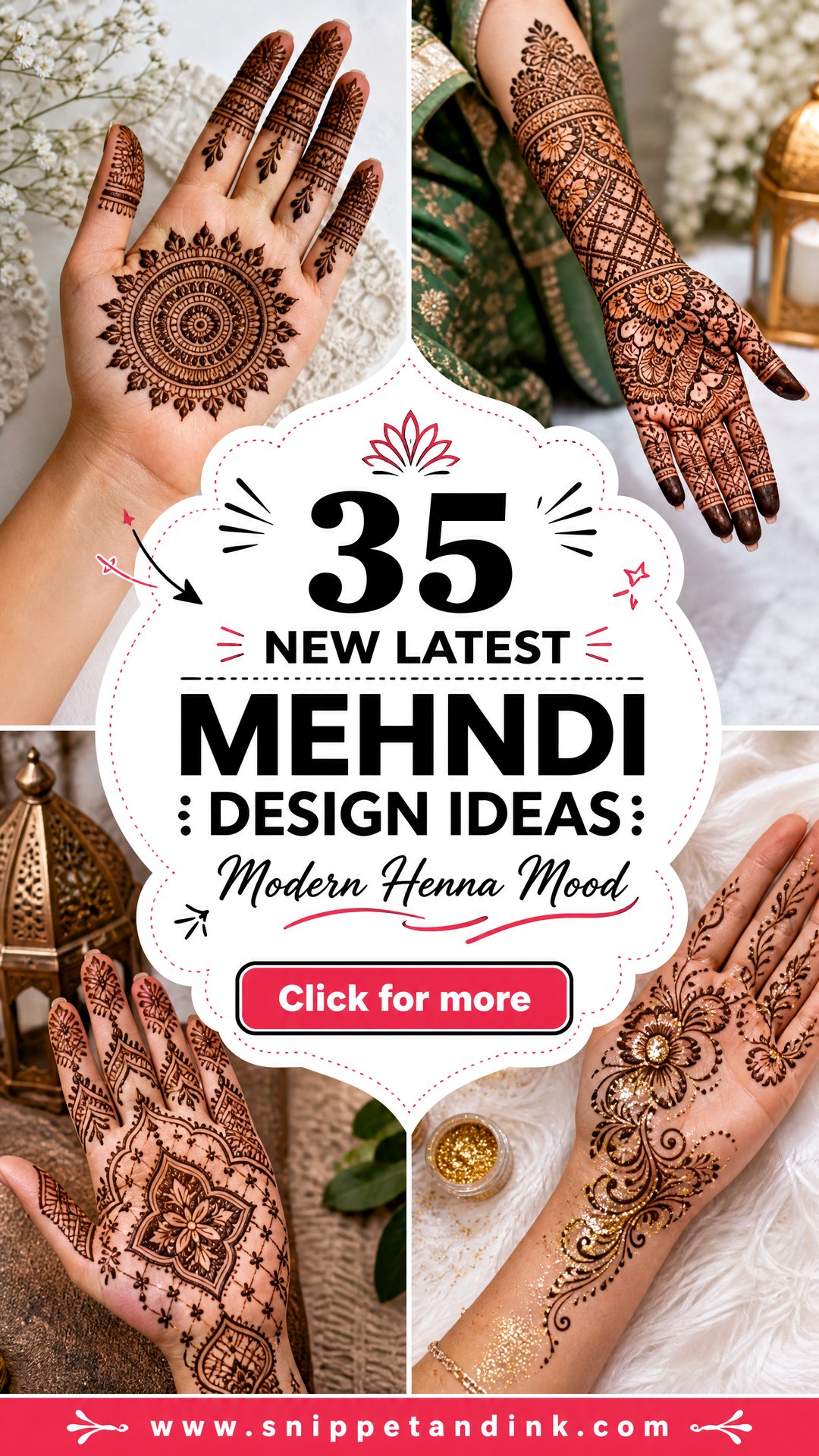
Ten Minutes or Five Hours? Matching Henna to Your Evening
The first thing I ask a client isn’t which design. It’s how much time they have. Application time varies with the artist and the hand, but these are the rough bands I work with:
- Finger-only or minimal: often 10 to 20 minutes per hand.
- Arabic back-hand trail or a palm mandala: roughly 20 to 40 minutes per hand.
- Full-hand Arabic or Indo-Arabic: closer to an hour or more for both hands.
- Full bridal with forearms and feet: most of a day, with breaks.
Drying time comes on top. The paste needs to stay on for several hours to stain well, which means no washing up, no packing a car and no holding a baby during that time. For Eid or a festival night, a design applied the evening before has a better stain by morning than one rushed in an hour before you leave.
1. Simple Front Hand Mehndi Design
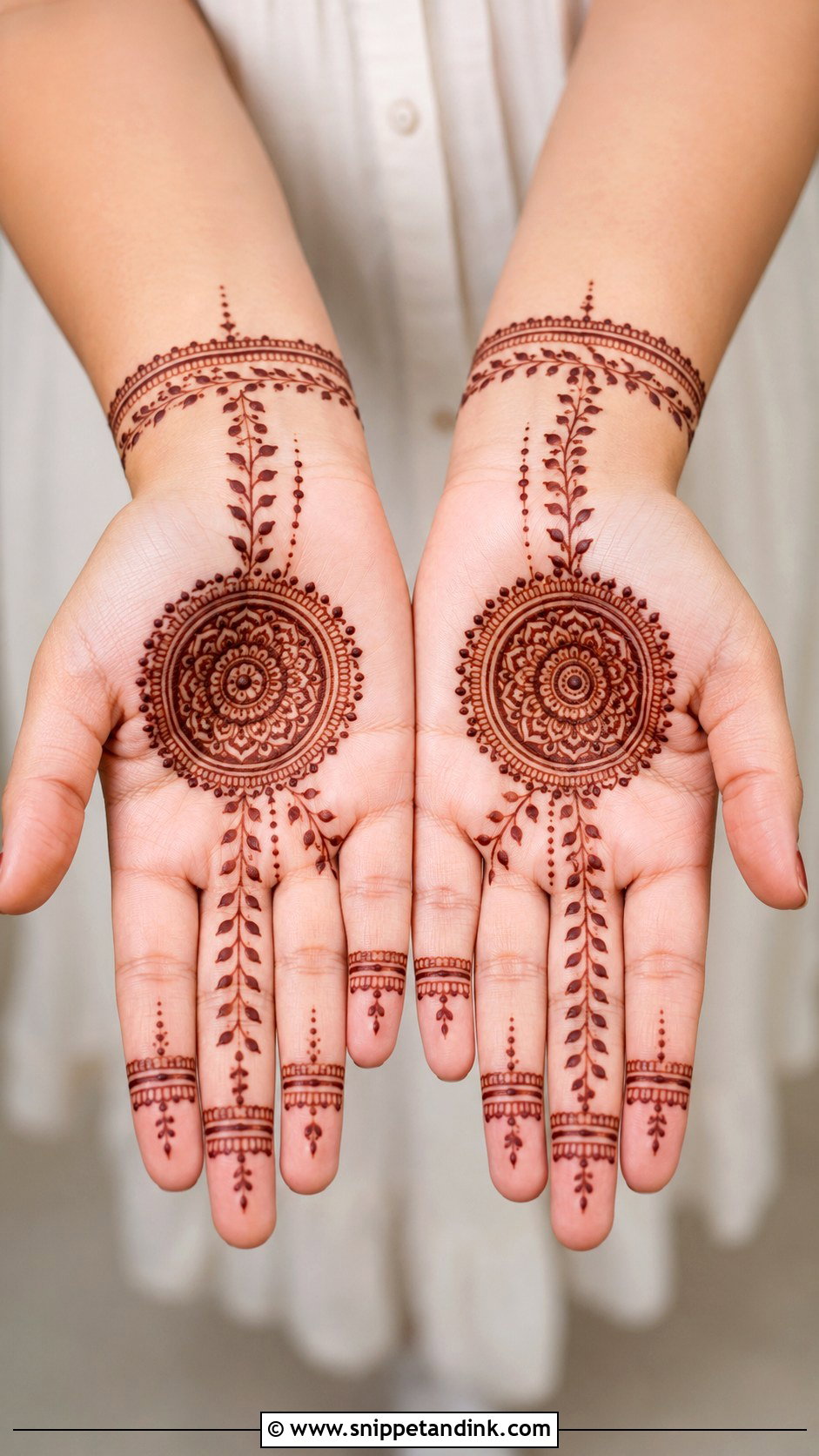
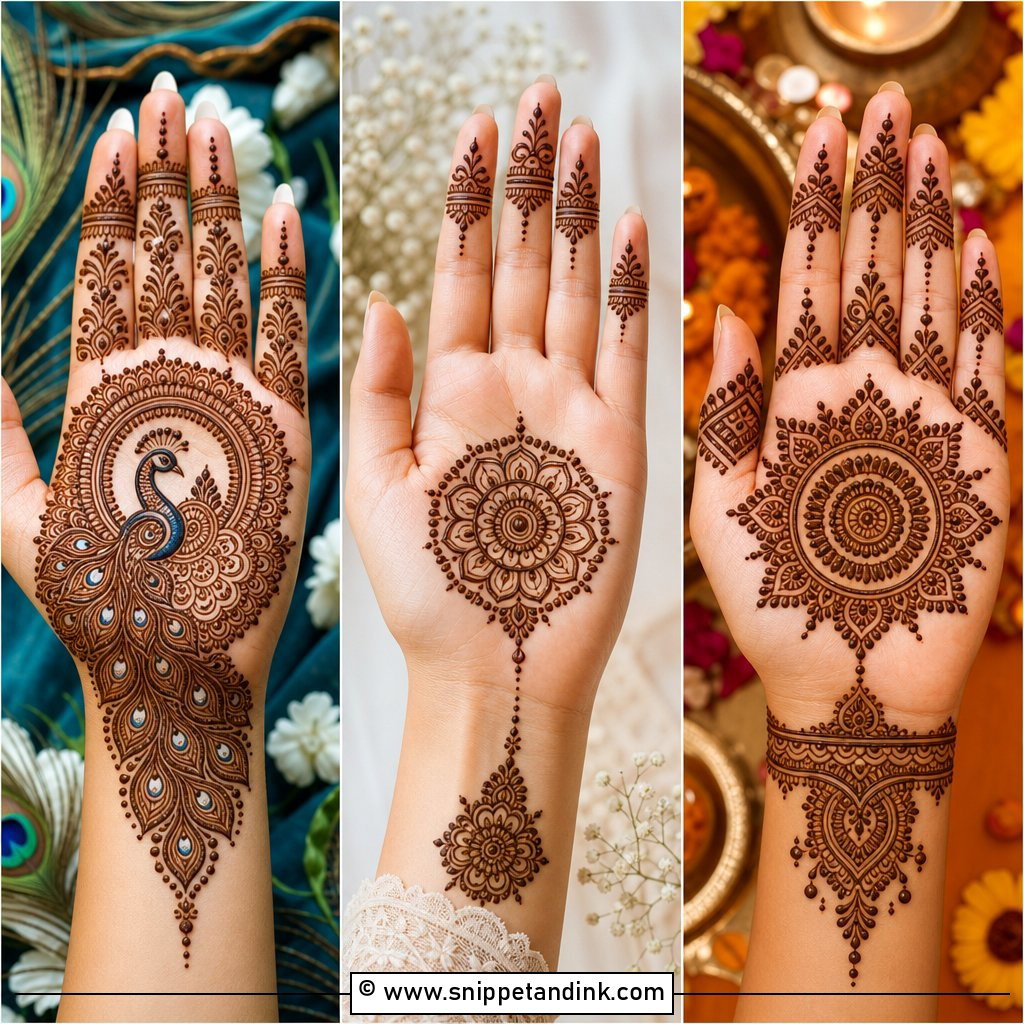
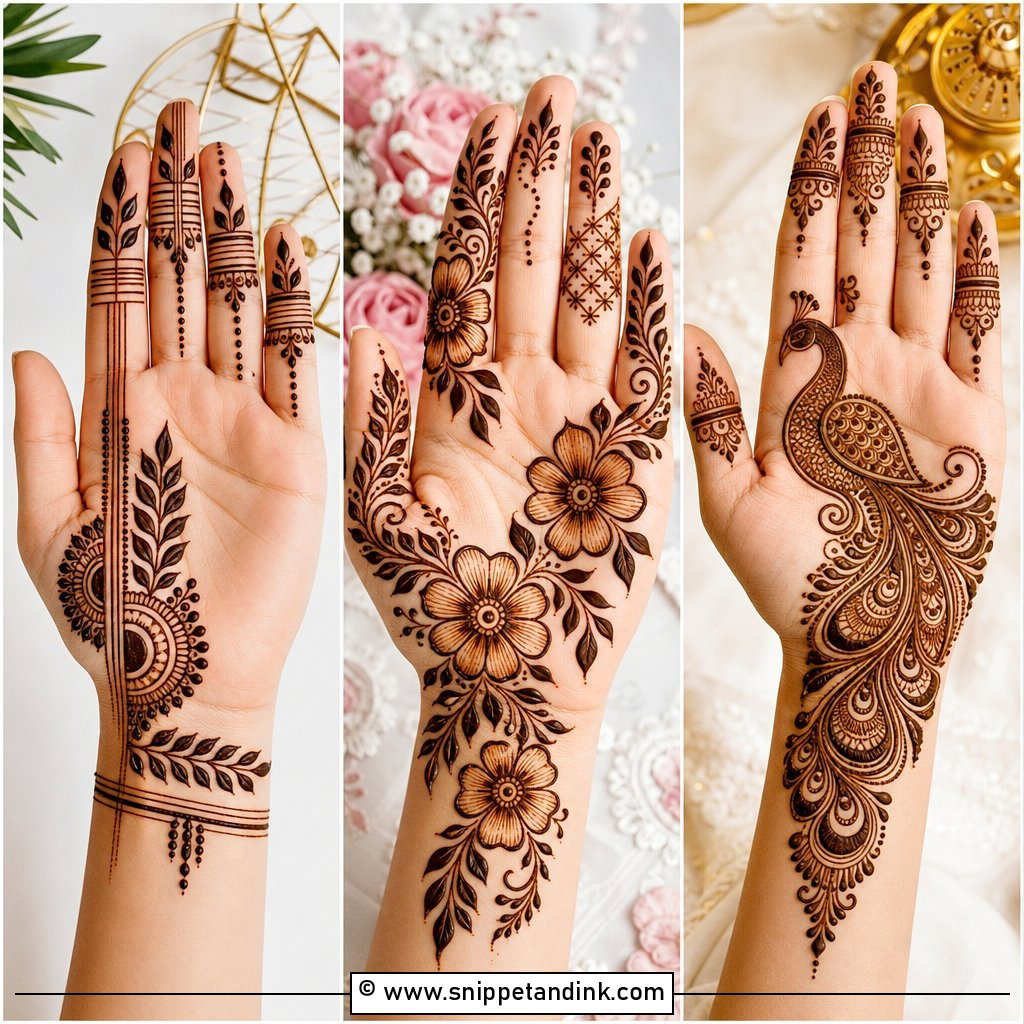
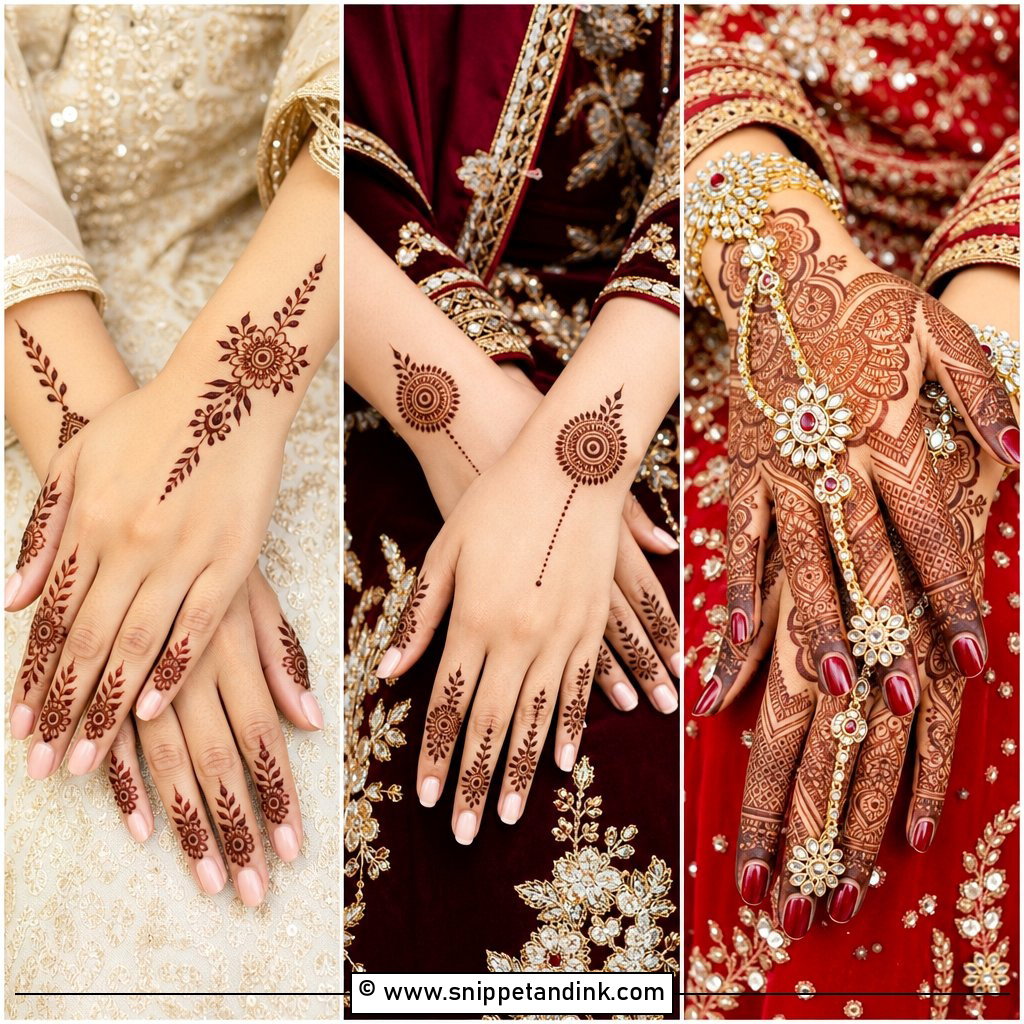
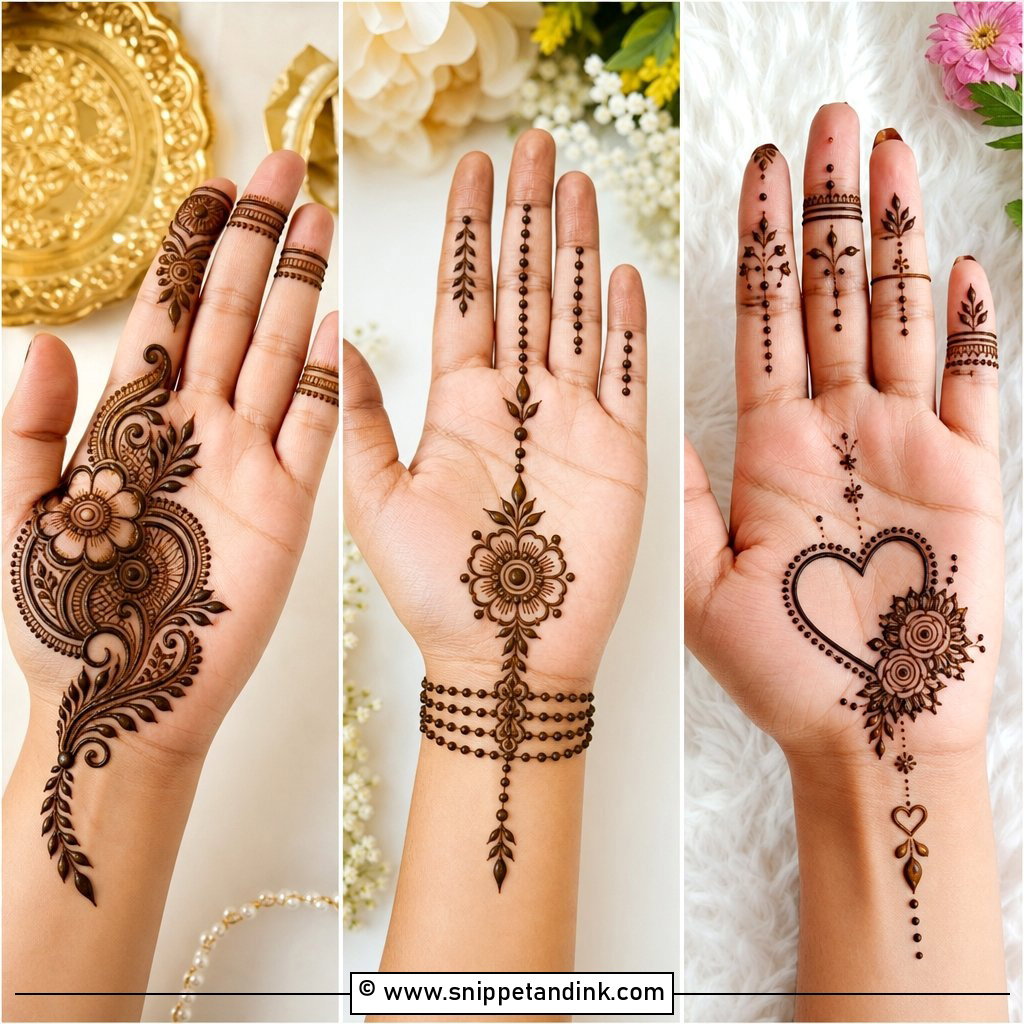
This is the design I draw most at family functions. A round mandala or floral circle goes in the center of the palm, slim leafy lines run toward the fingers, and the wrist gets a light bracelet band or a dotted chain. The palm stains darker than anywhere else, so even this small amount of henna comes up rich. I usually shade fingertips lightly rather than filling them solid; it looks fresher and fades more evenly. Quick, neat and suited to Eid gatherings or a first henna.
2. Back Hand Arabic Mehndi Design
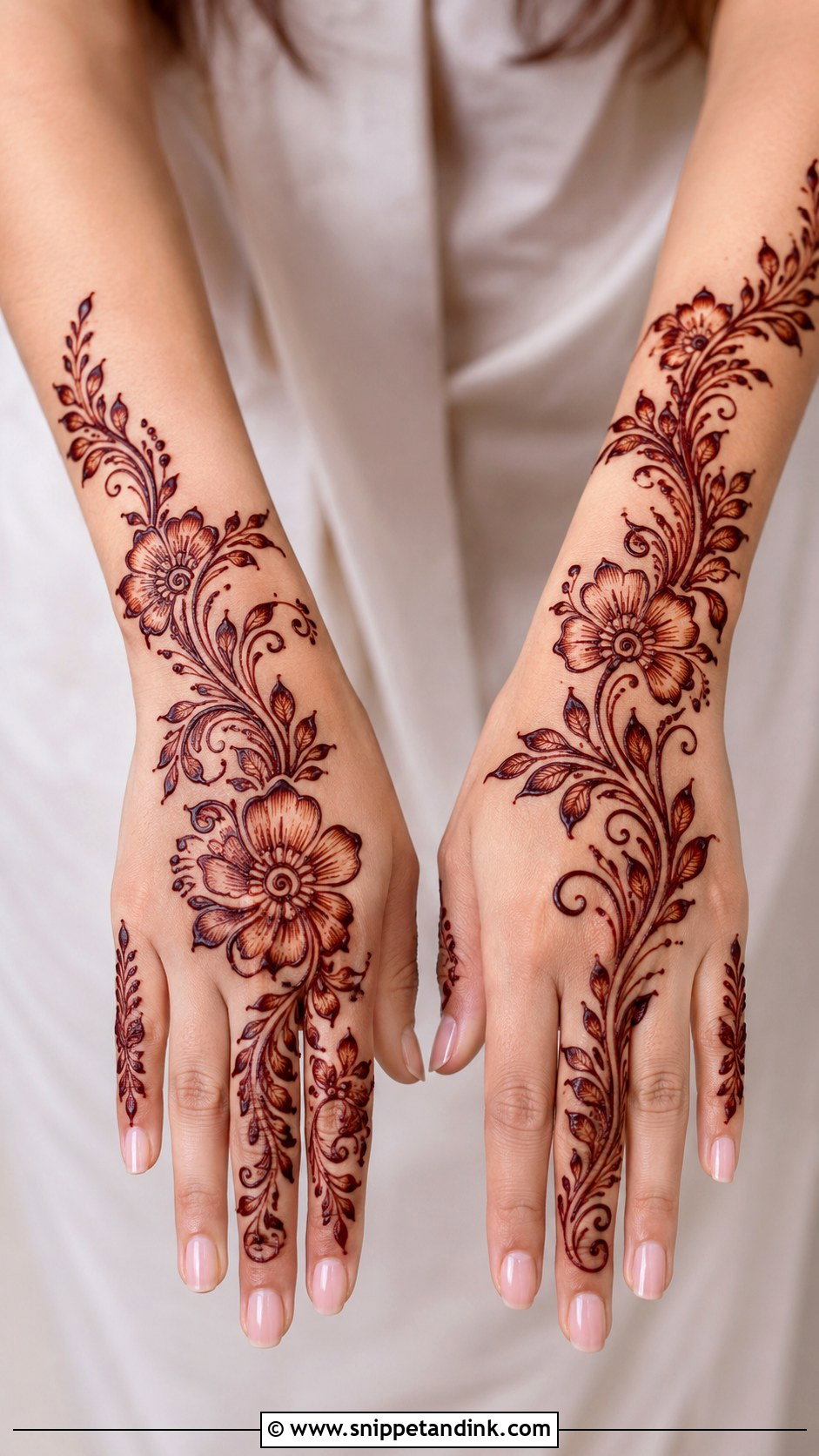
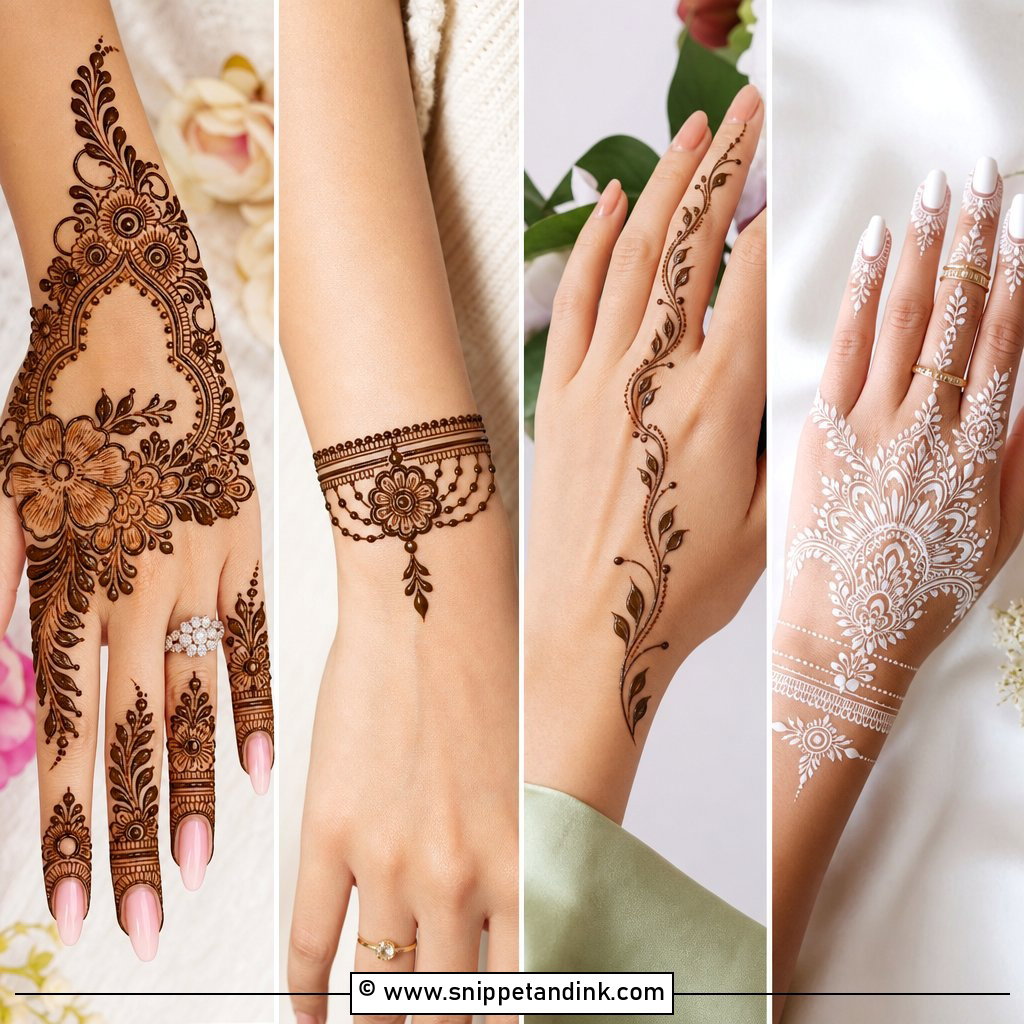
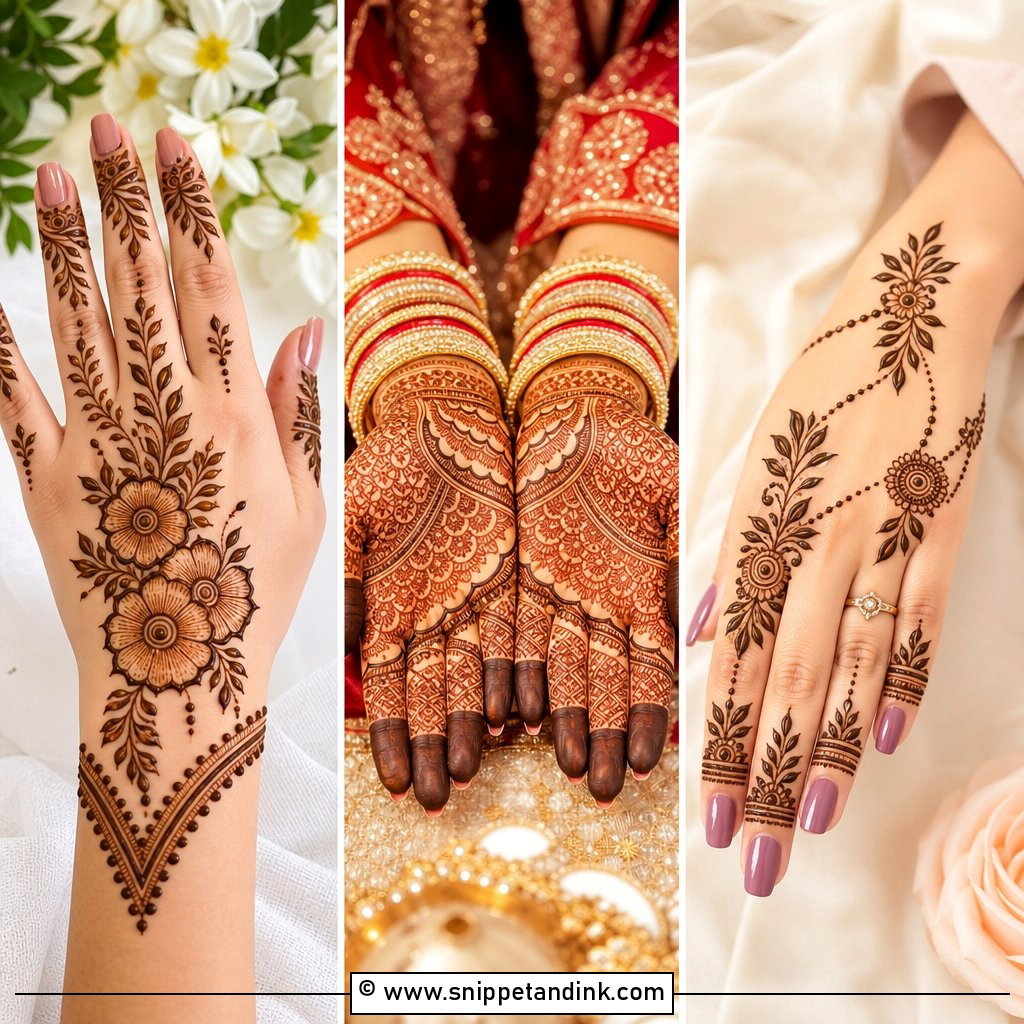
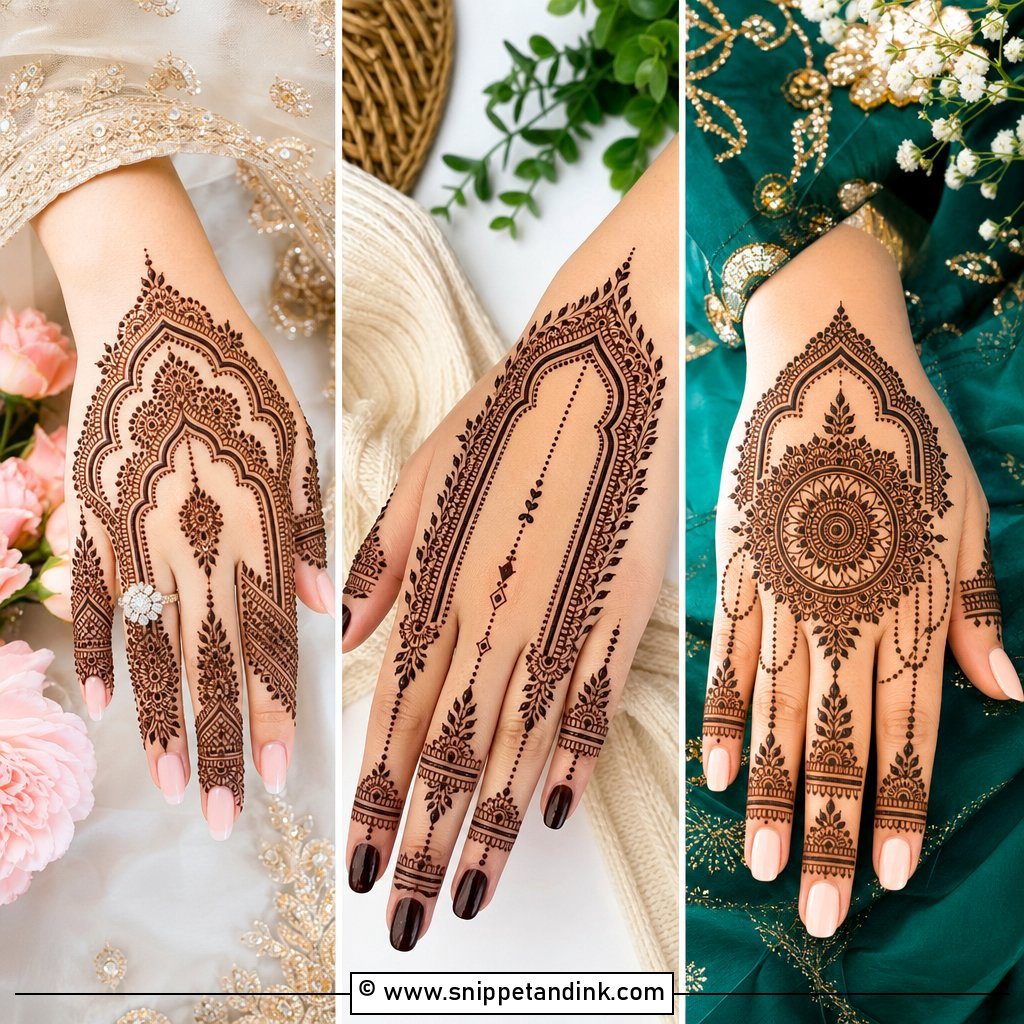
Arabic back-hand work starts at one side of the wrist and sweeps diagonally across the hand toward the index finger, with large flowers, leafy vines and shaded petals forming the line. The empty skin is part of the design. I keep the fingers in matching vines instead of solid blocks, which keeps it modern and airy. It’s my standard suggestion for wedding guests and engagement parties, because it reads clearly from across a room and takes far less time than dense Indian work.
3. Full Hand Bridal Mehndi Design
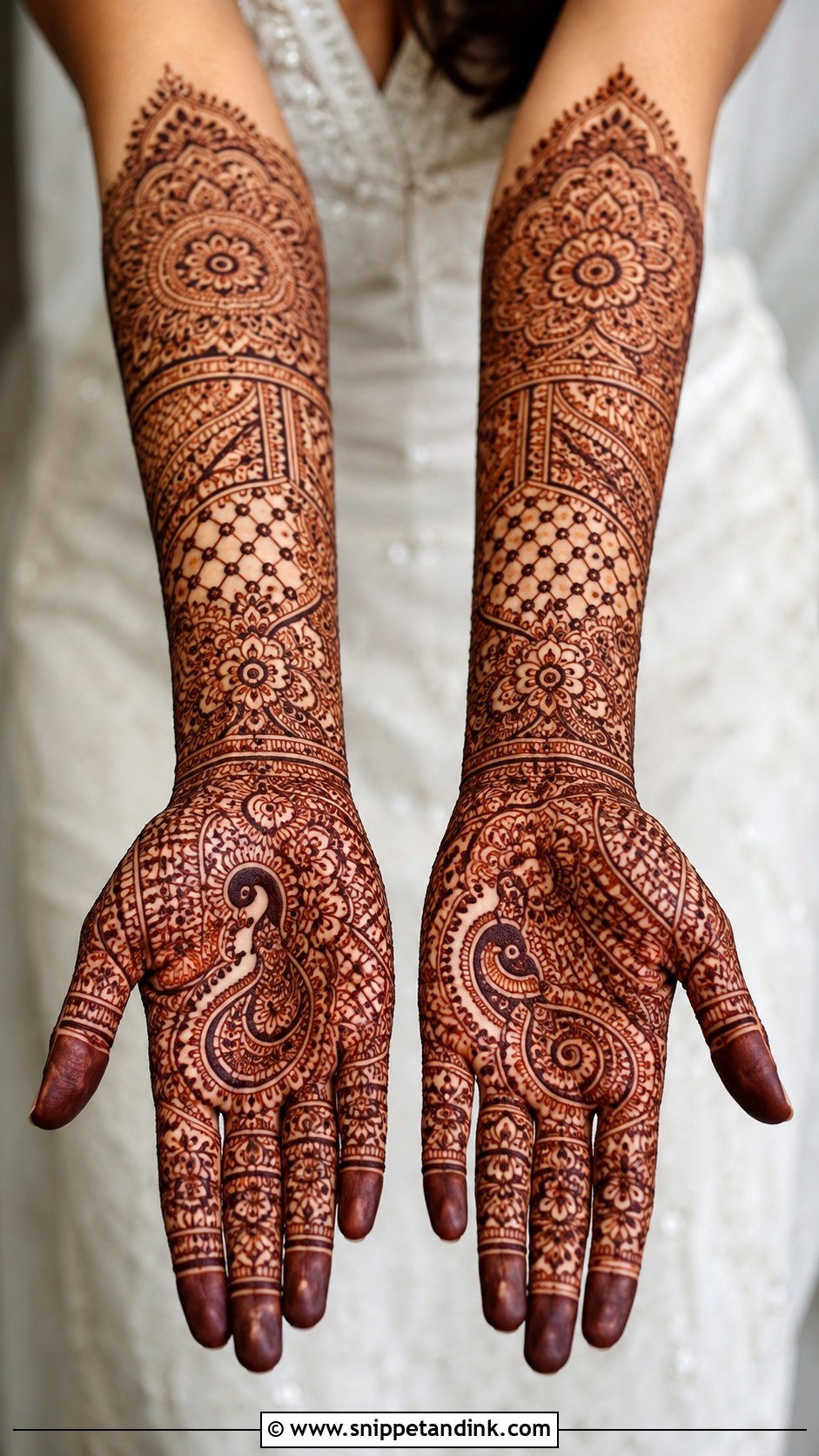
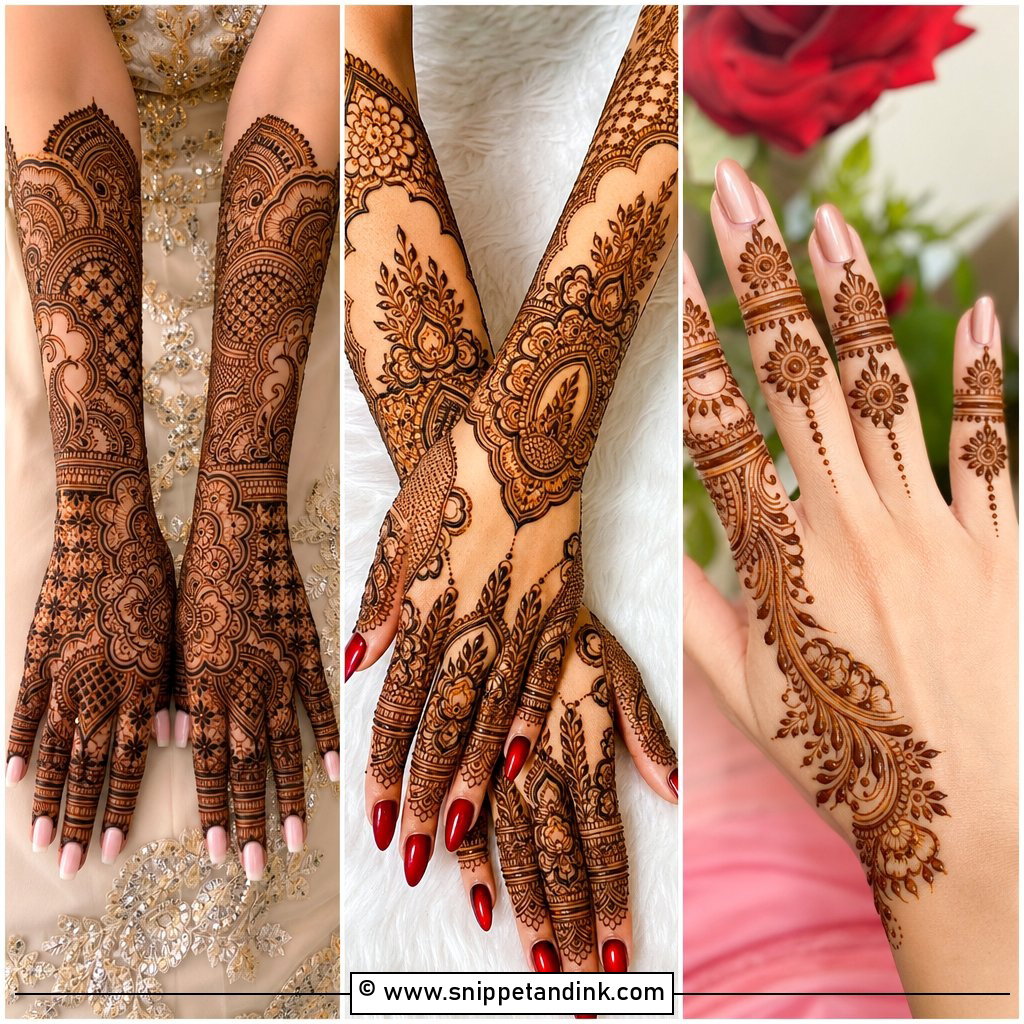
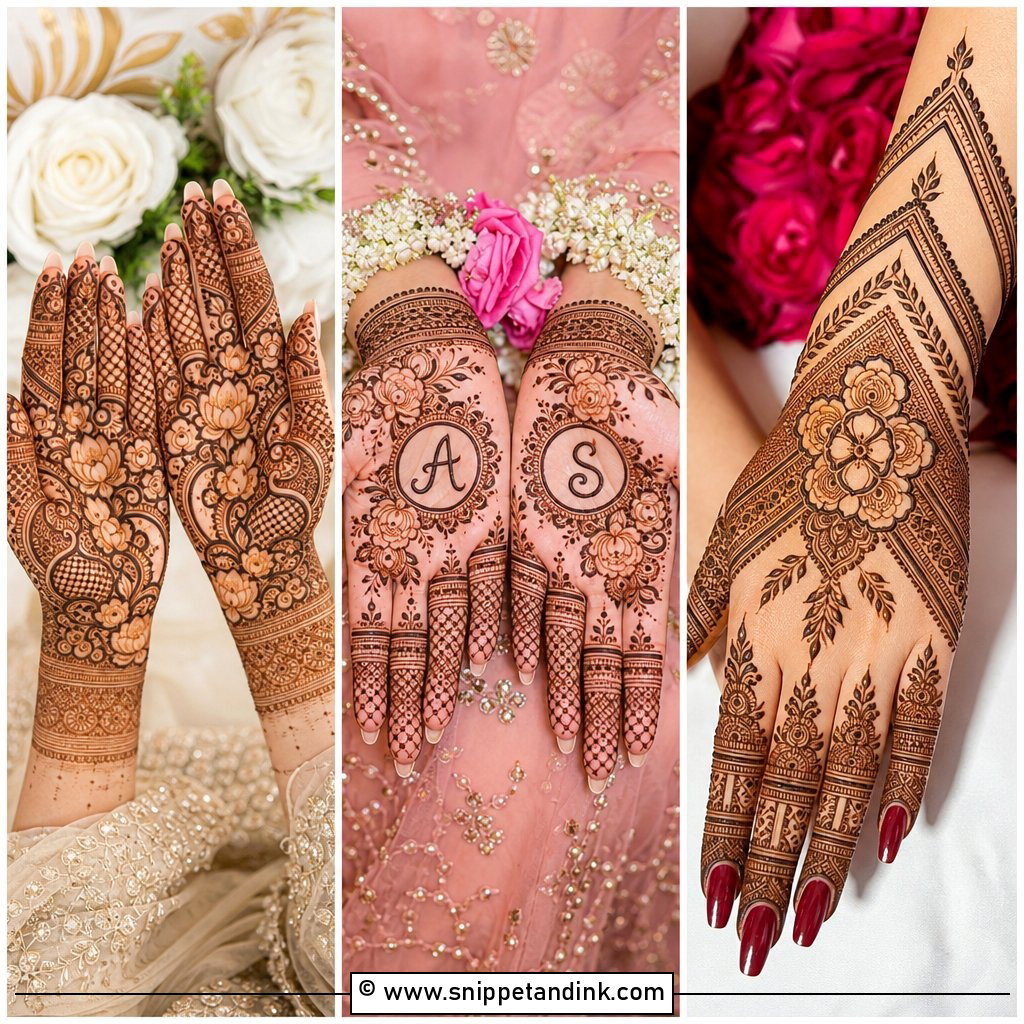
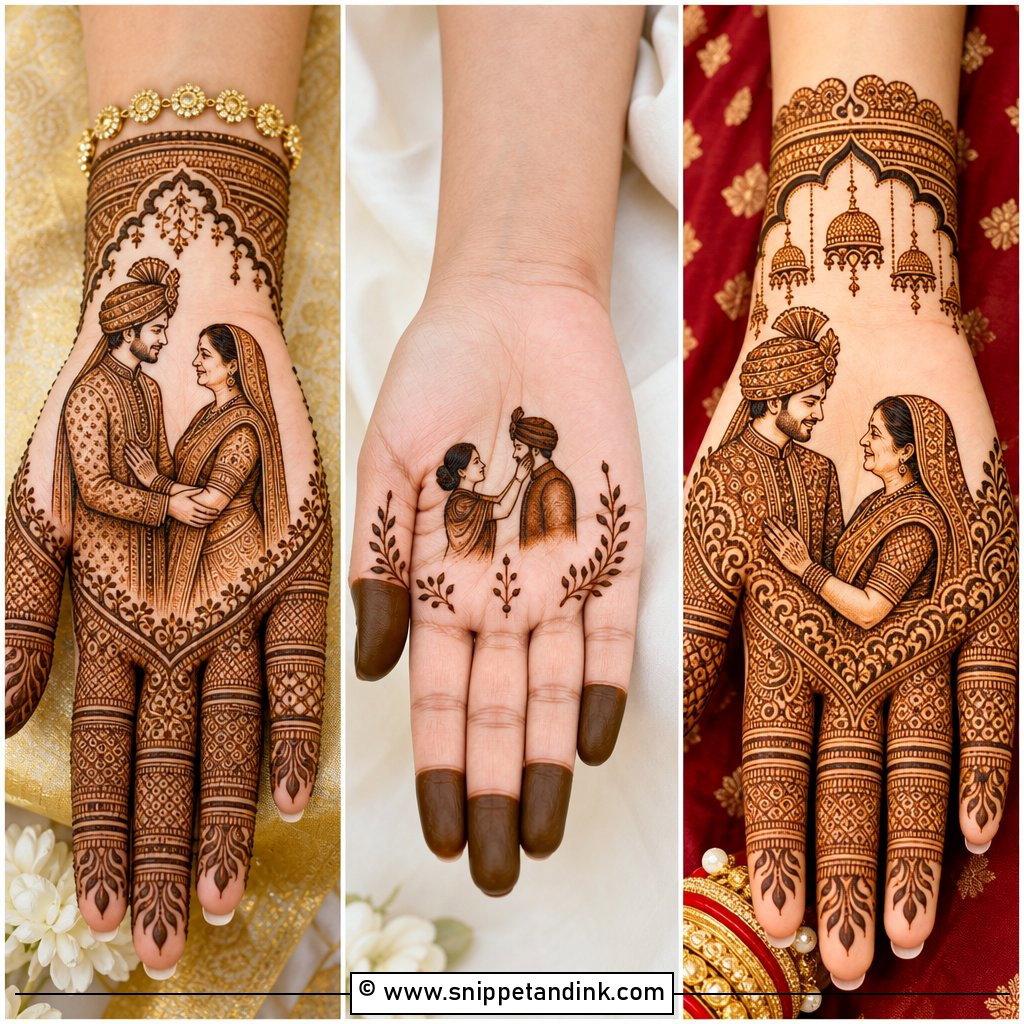
Full bridal hands run from the fingertips to the wrist and often onto the forearm, combining paisleys, mandalas, peacocks, jaali and bride and groom figures. Planning is the difference between rich and crowded. I divide the hand into sections before I start, put the story on the palm and keep fine lines and leaf bands for the fingers. Expect it to take hours. Once the stain matures to maroon, the details sharpen considerably in photos.
4. Minimal Mehndi Design For Hands
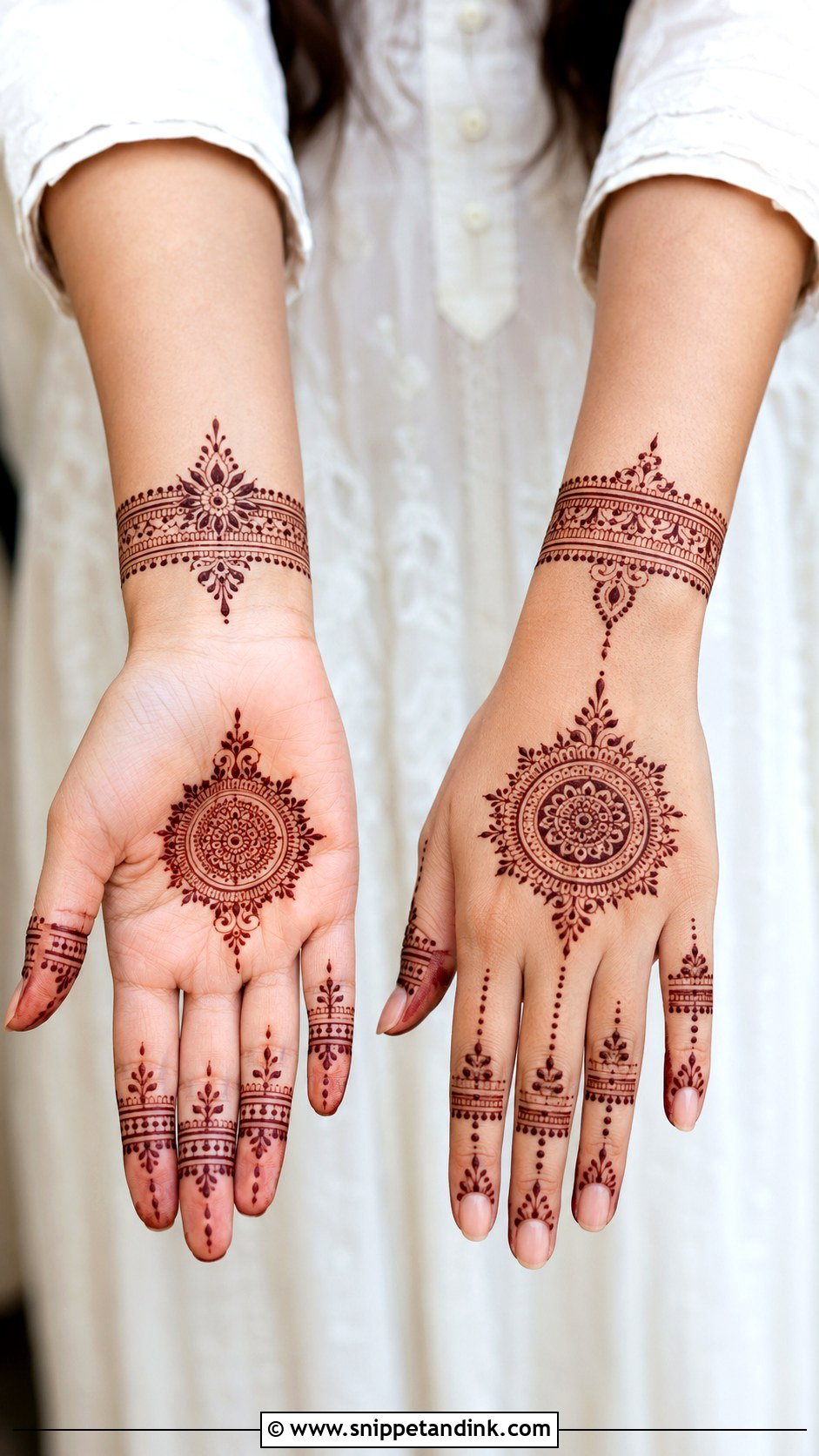
Minimal henna leaves most of the skin visible: a small palm mandala, fine finger lines, a tiny floral trail and a clean wrist cuff. It’s the design I suggest for office celebrations, college functions and anyone nervous about their first application. Because there’s so little of it, mistakes show, so I keep spacing even and use no more than two or three motifs. Dots, leaves and curves are plenty.
5. Indo Arabic Mehndi Design
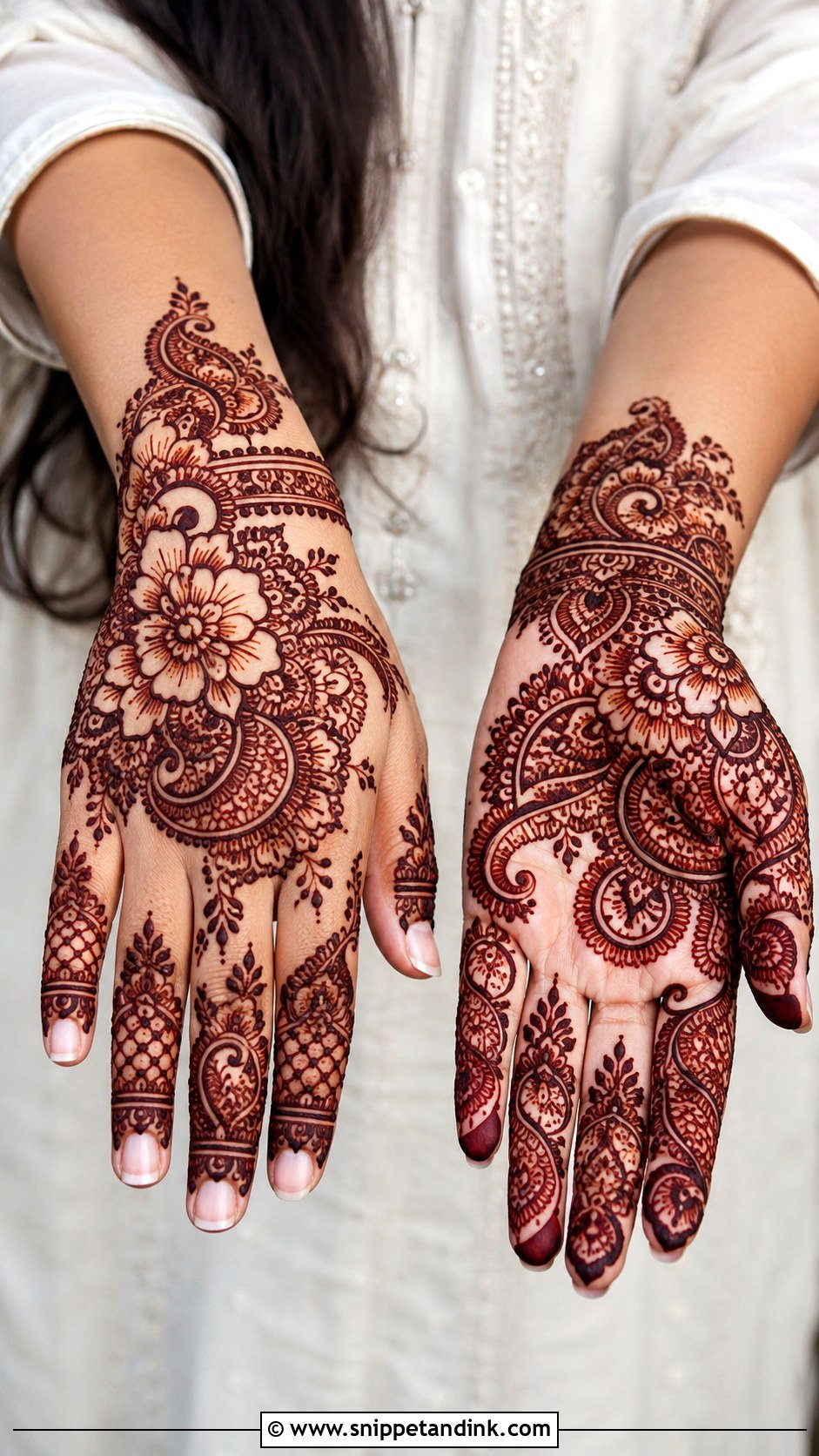
Indo-Arabic takes the bold outline and flow of Arabic henna and fills parts of it with fine Indian detail. That middle ground makes it the most versatile layout I offer, heavier than an Arabic trail yet lighter than bridal coverage. My usual version starts at the wrist, crosses the palm with a large floral, adds a paisley curve and finishes with detailed fingers. The trick is deciding which outlines stay hollow. Fill them all and you’ve drawn an Indian design by accident.
6. Front Hand Mandala Mehndi Design
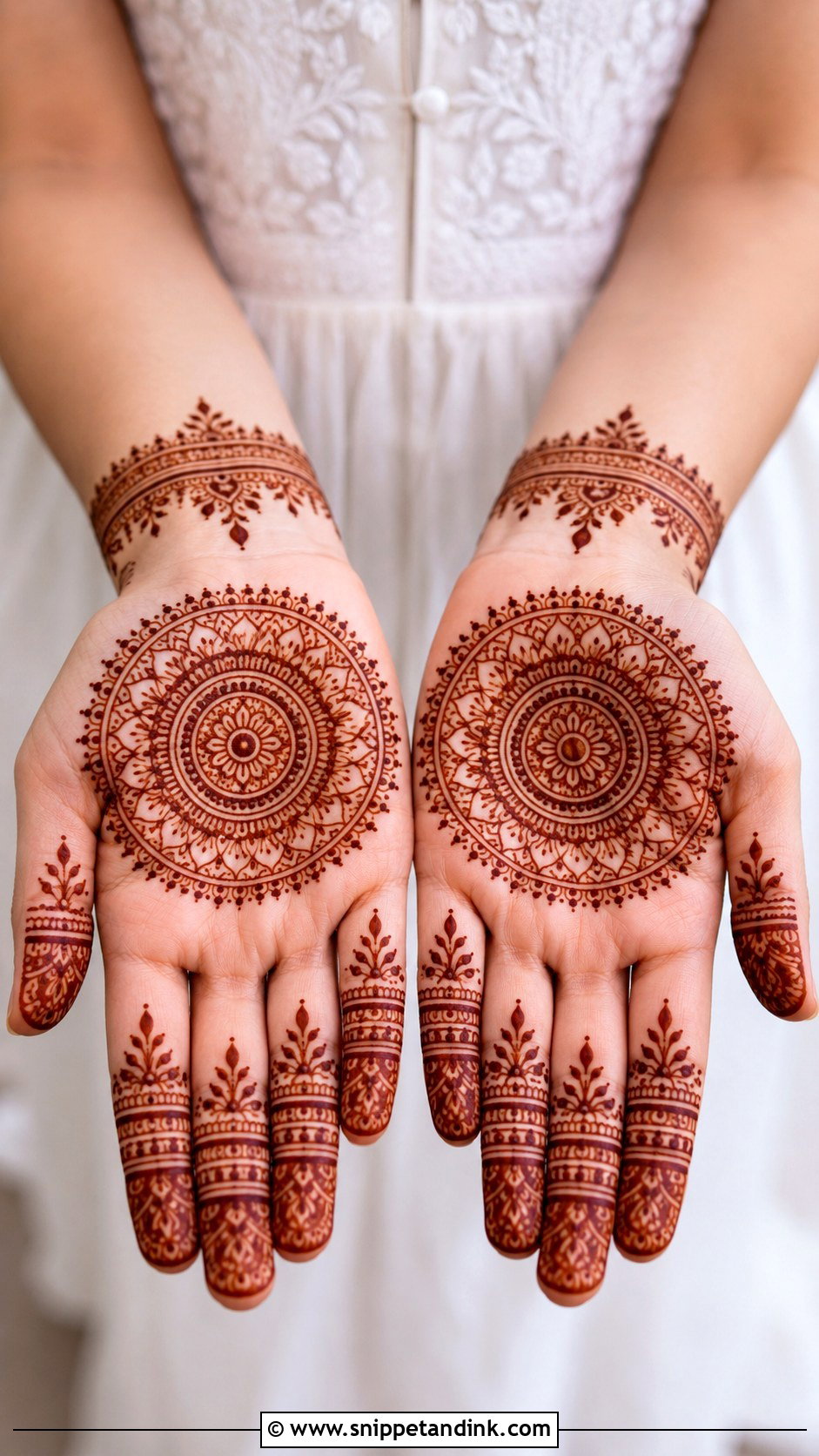
A palm mandala is symmetrical, traditional and easy to scale up or down. Layered petals, rings and dots build out from the center, with half-mandala fingertips or leafy bands on the fingers and a cuff or chain at the wrist. I’d always choose a clear mandala with breathing room over one packed with tiny elements; overfilled circles blur into a dark disc once the stain develops. Keep it small for a casual function or build it outward for a wedding.
7. Back Hand Mandala Mehndi Design
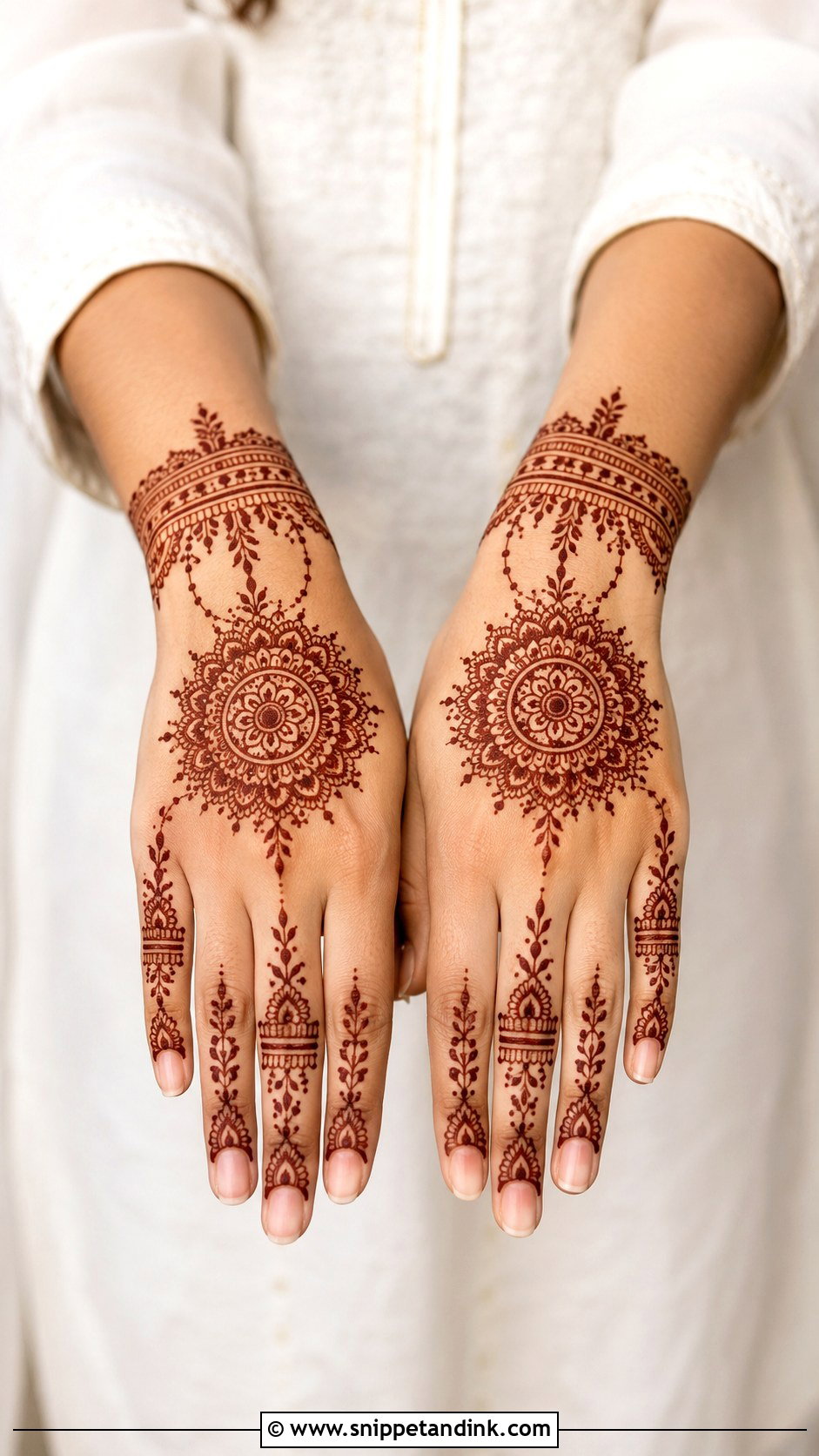
On the back of the hand, a mandala sits between the knuckles and wrist like a piece of jewelry, joined to the fingers by thin lines. Leaves, dots and a bracelet band finish it without weight. The back of the hand stains a shade lighter than the palm, so I draw this one with slightly bolder lines than I’d use inside the hand. Bridesmaids and engagement guests ask for it often, and it shows naturally in photos with bangles.
8. Floral Mehndi Design For Hands
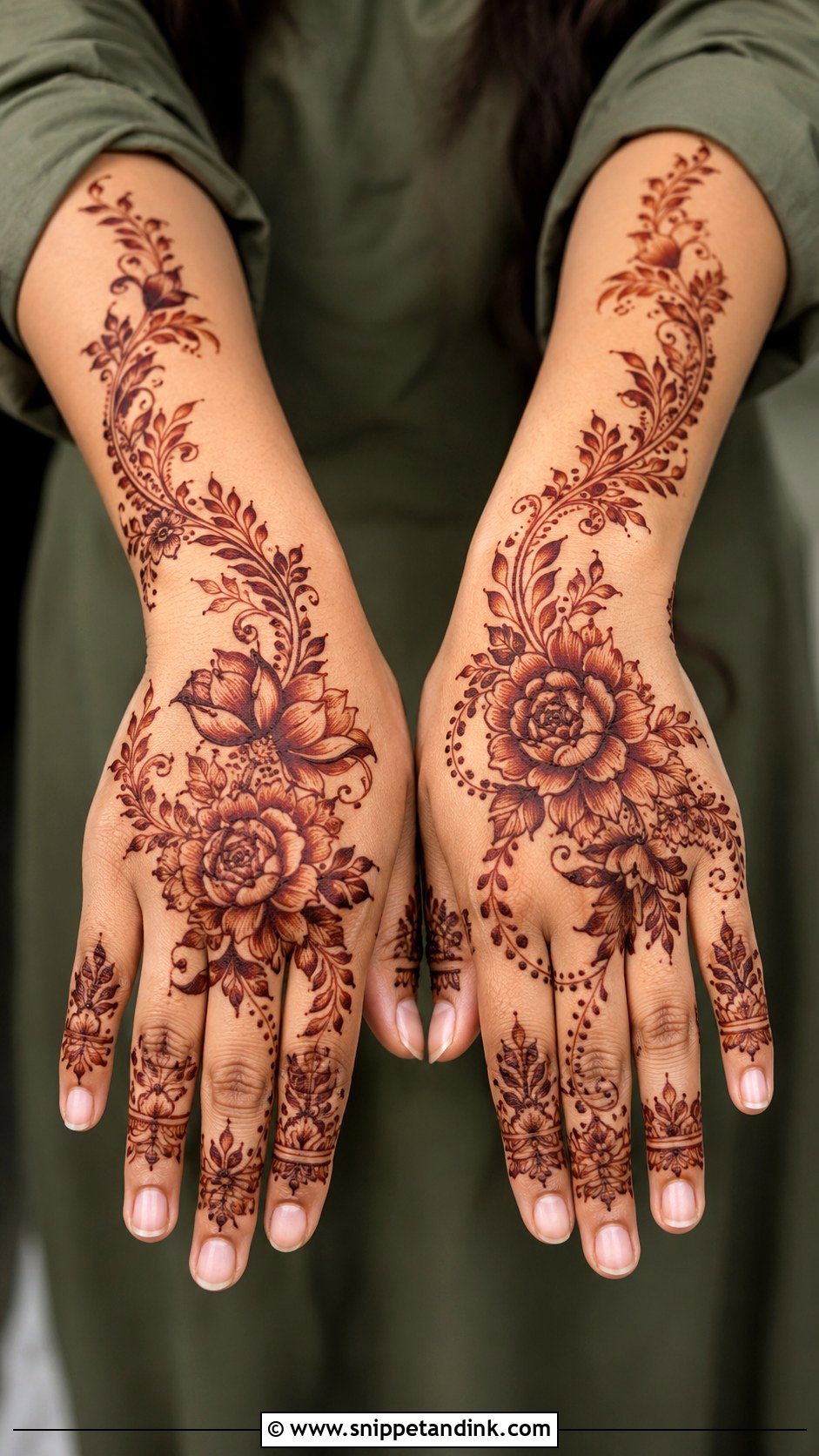
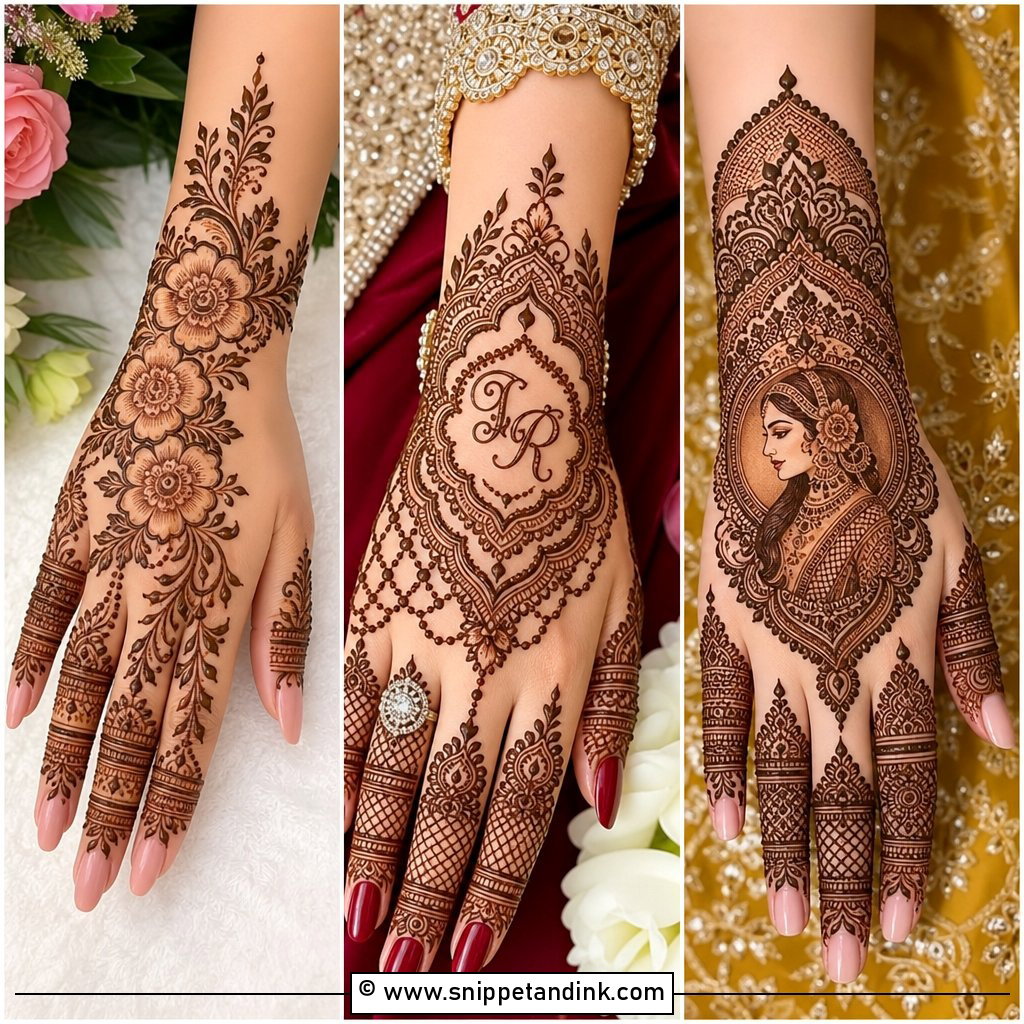
Flowers can go two ways. Run them in a diagonal trail and the design reads Arabic; repeat small blossoms across the whole hand and it reads Indian. Roses, lotus petals, vines and shaded blooms all suit. The detail I care most about is contrast: thick outlines with fine inner lines. Without that, a floral design loses its edges once the stain darkens, and the petals merge.
9. Finger Mehndi Design
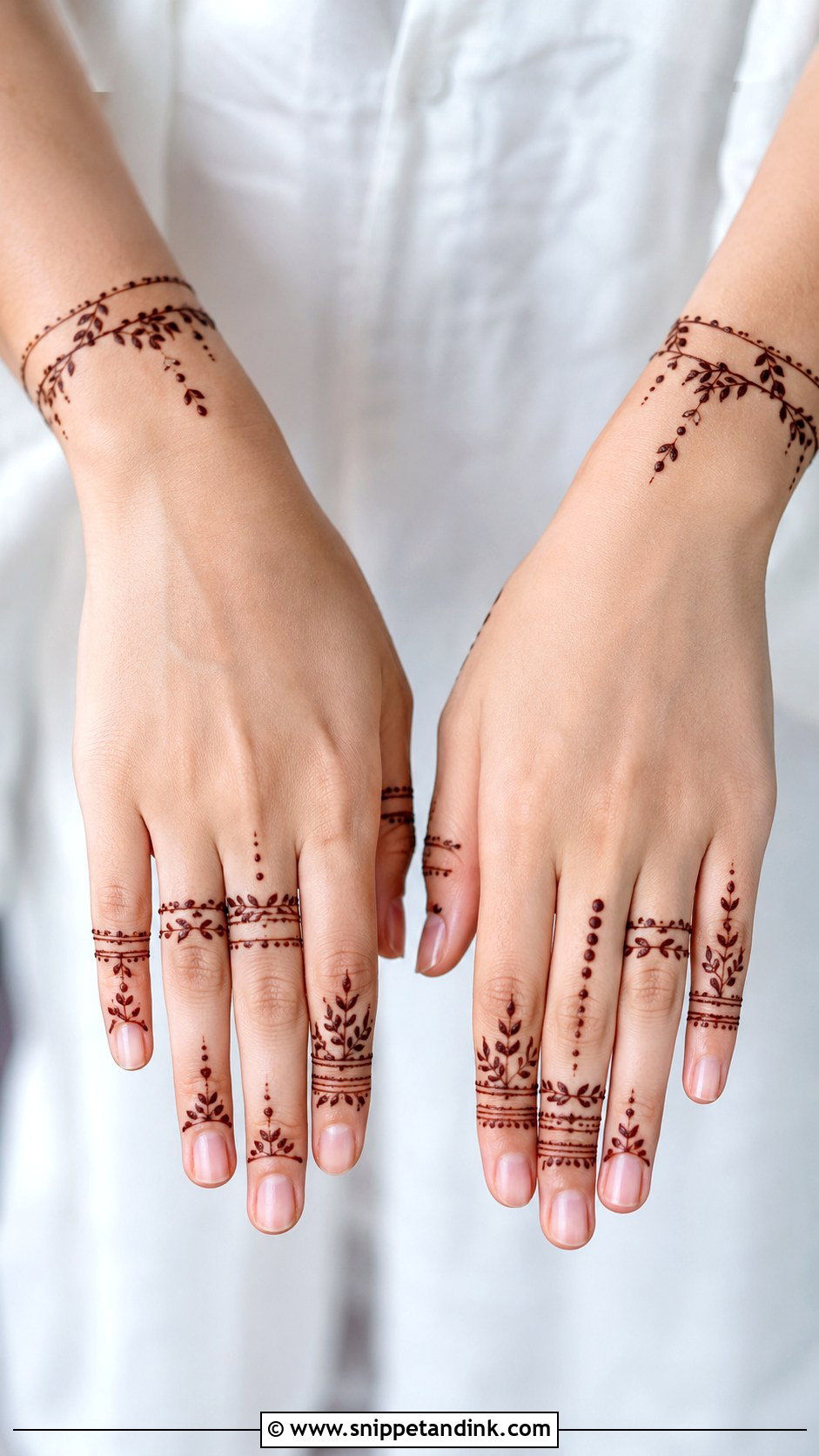
Finger-only henna keeps the focus on the fingers and knuckles, sometimes with a slim wrist band, while the rest of the hand stays almost bare. Lines, dots, leaf chains and ring shapes work well. Symmetry carries it. When I do this, I match each finger to its neighbor so it reads as one design, not leftovers. One practical note: finger stains fade unevenly because you use your hands constantly, so this look is best a day or two before an event, not a week.
10. Full Hand Arabic Mehndi Design
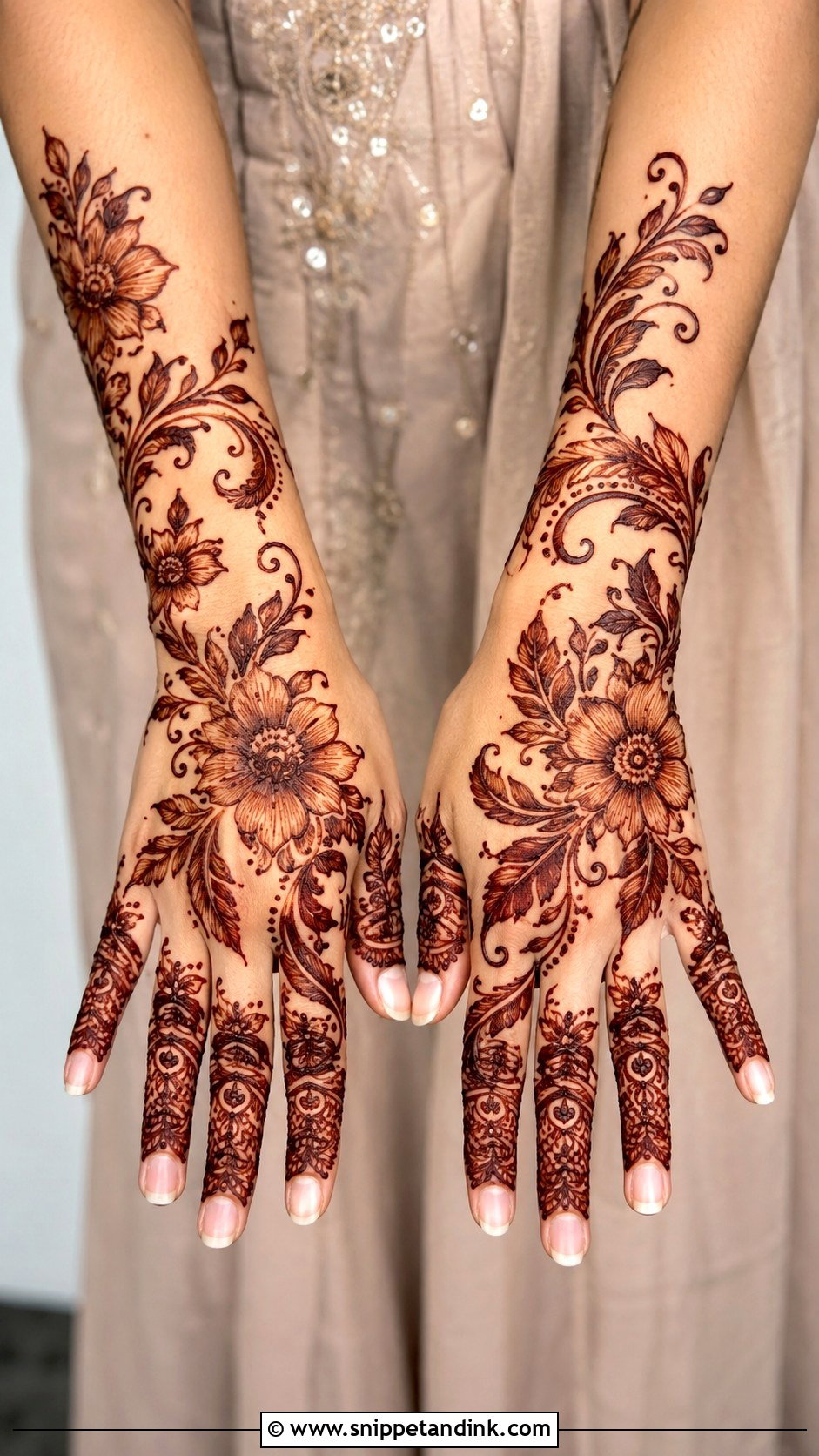
Full-hand Arabic gives more coverage than a single trail while keeping the open spaces. Large flowers, bold vines and shaded petals cross the palm, wrist and fingers, stopping at the wrist for a festival or extending up the forearm for a wedding. It’s lighter to sit for than dense bridal work. Coordinated finger patterns are what make it look finished rather than sparse.
11. Indian Mehndi Design For Full Hand
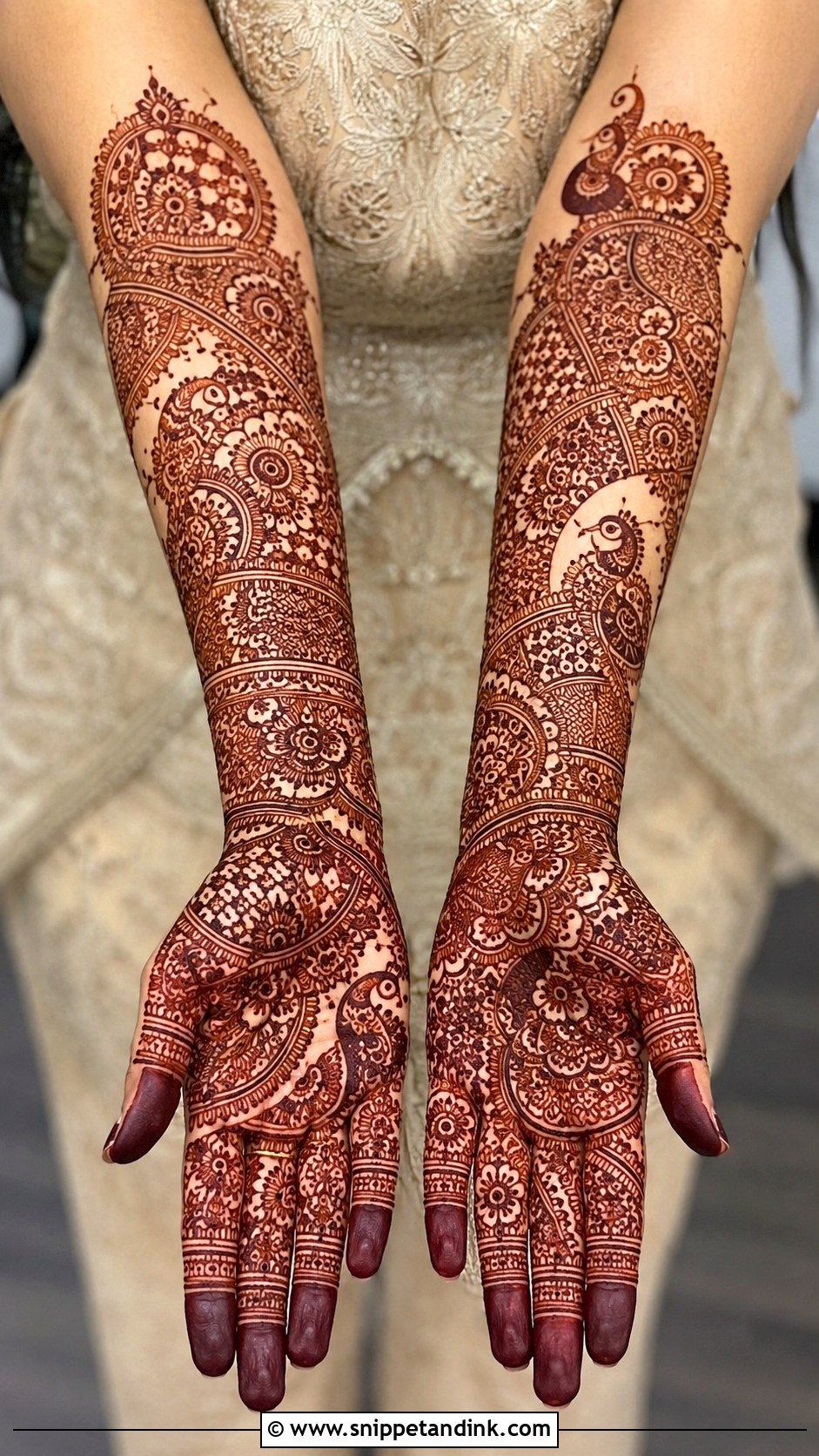
Dense Indian work covers the palm, fingers, wrist and lower forearm with paisleys, peacocks, mandalas, checks and fine fillers. It’s the traditional choice for weddings, karva chauth and sangeet nights. Every inch can carry pattern, but I still give the hand a clear center and a direction of flow, so the eye travels from wrist to fingertip instead of getting lost. A deep stain is what makes the tiny details visible, so leave the paste on as long as you can.
12. Easy Mehndi Design For Beginners
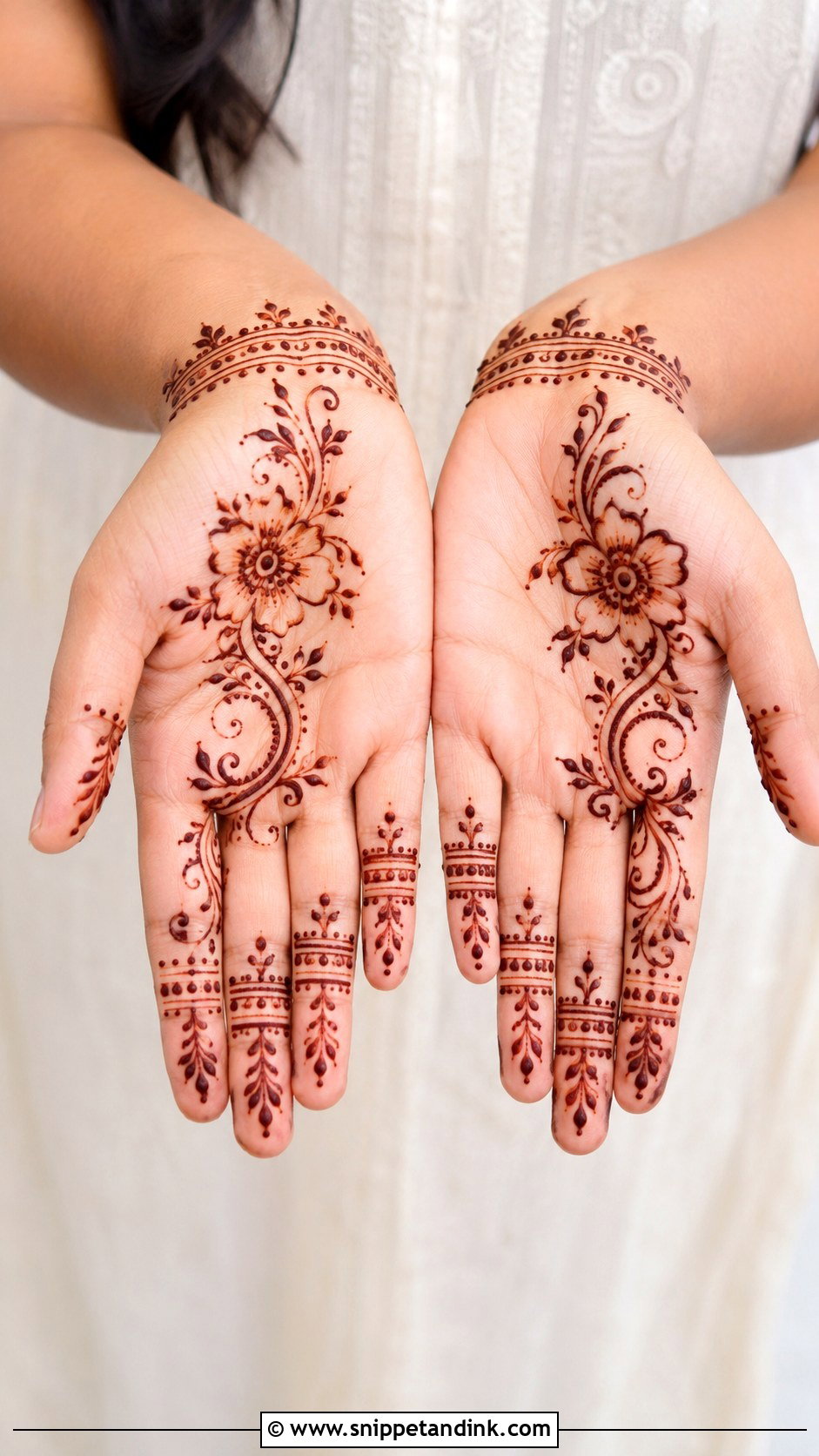
If you’re learning, pick a design that forgives wobbly lines: a center flower, curved leafy vines, dotted borders and plain finger bands. Leave jaali and figures for later. Larger motifs are easier to control and still look good when the line isn’t perfect, which fine work never does. Two or three parallel lines with tiny leaves are enough at the wrist. Clean spacing will improve a beginner’s design more than adding shapes.
13. Eid Mehndi Design For Hands
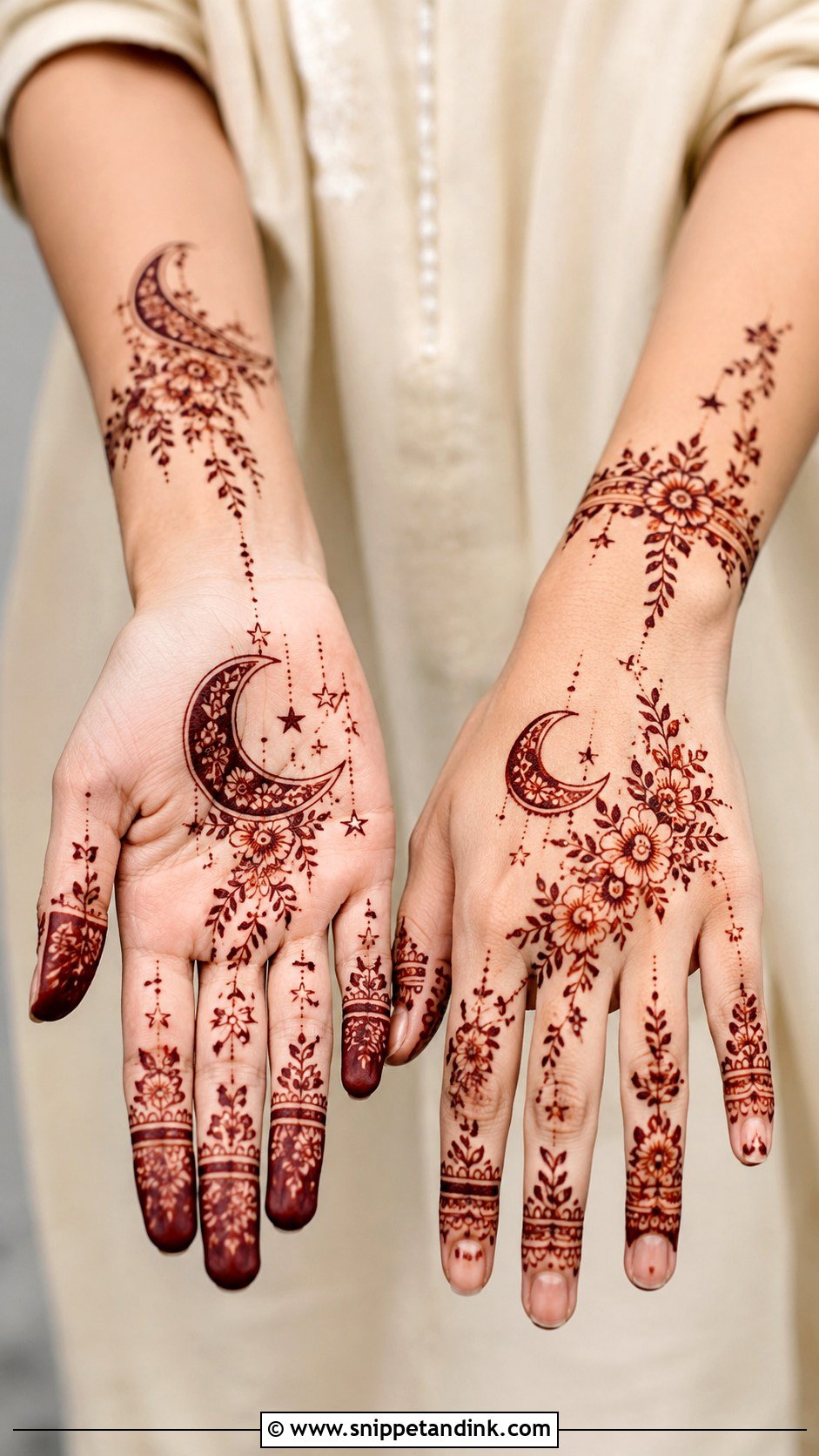
Eid henna should feel festive without bridal hours in the chair. Floral trails, Arabic vines, palm mandalas and delicate fingers are the usual picks, often front hands for daytime prayers and a fuller back hand for the evening. Crescent moons and star-like dots add the occasion when used lightly. Chaand raat is the busiest night of my year, so I tell clients to book early or apply a day before. A reddish-brown stain by the morning of Eid is the goal.
14. Bridal Back Hand Mehndi Design
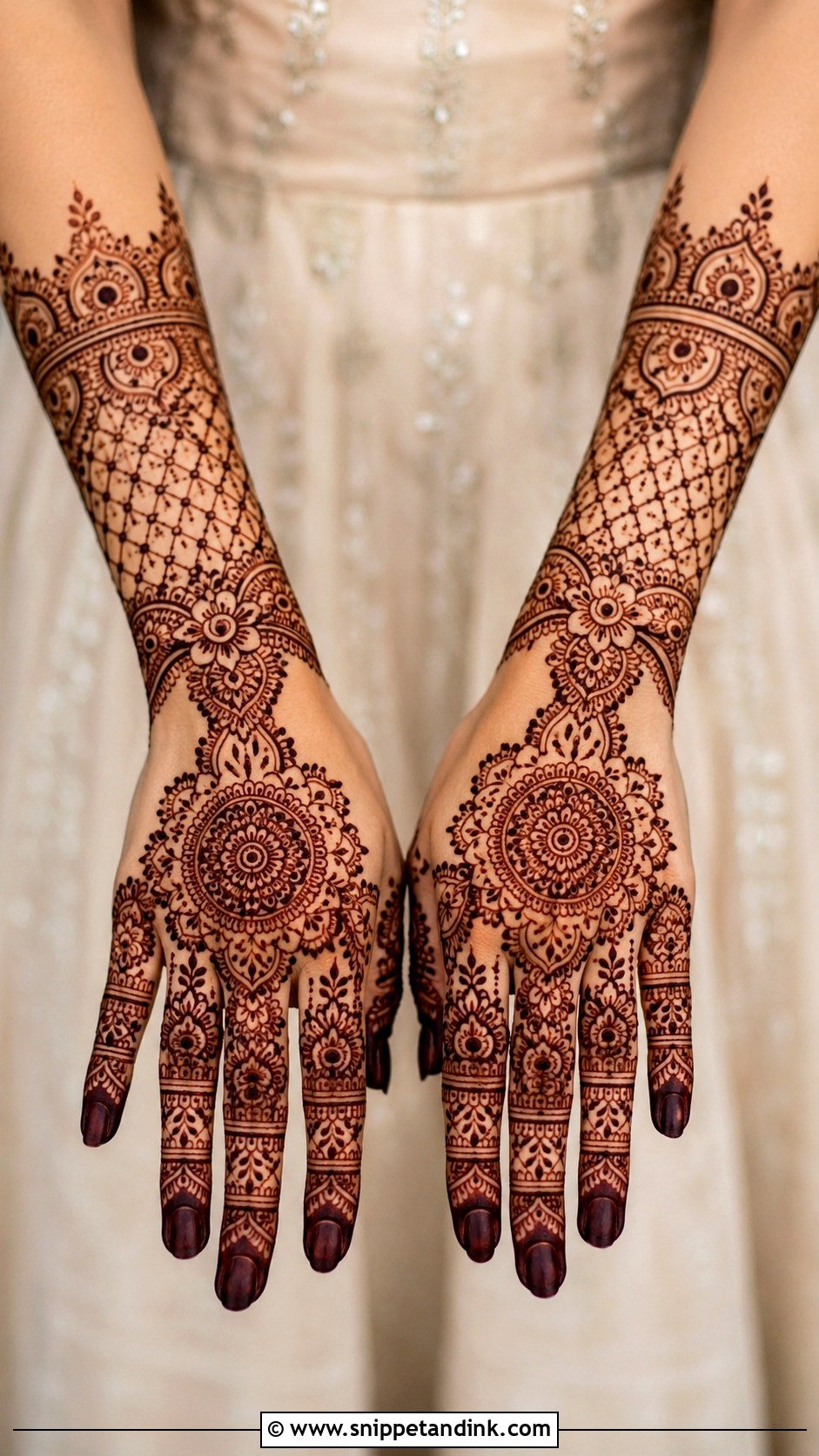
The bridal back hand appears in ring, bangle and bouquet photos, so it needs firm structure. I build it around a central mandala, add jaali, floral cuffs and paisley borders, and run decorated fingers into the forearm so the hand looks complete. Fine filling inside bold outlines gives depth without flattening it. Initials near the wrist are a nice touch. From across a room it should still read clean.
15. Peacock Mehndi Design
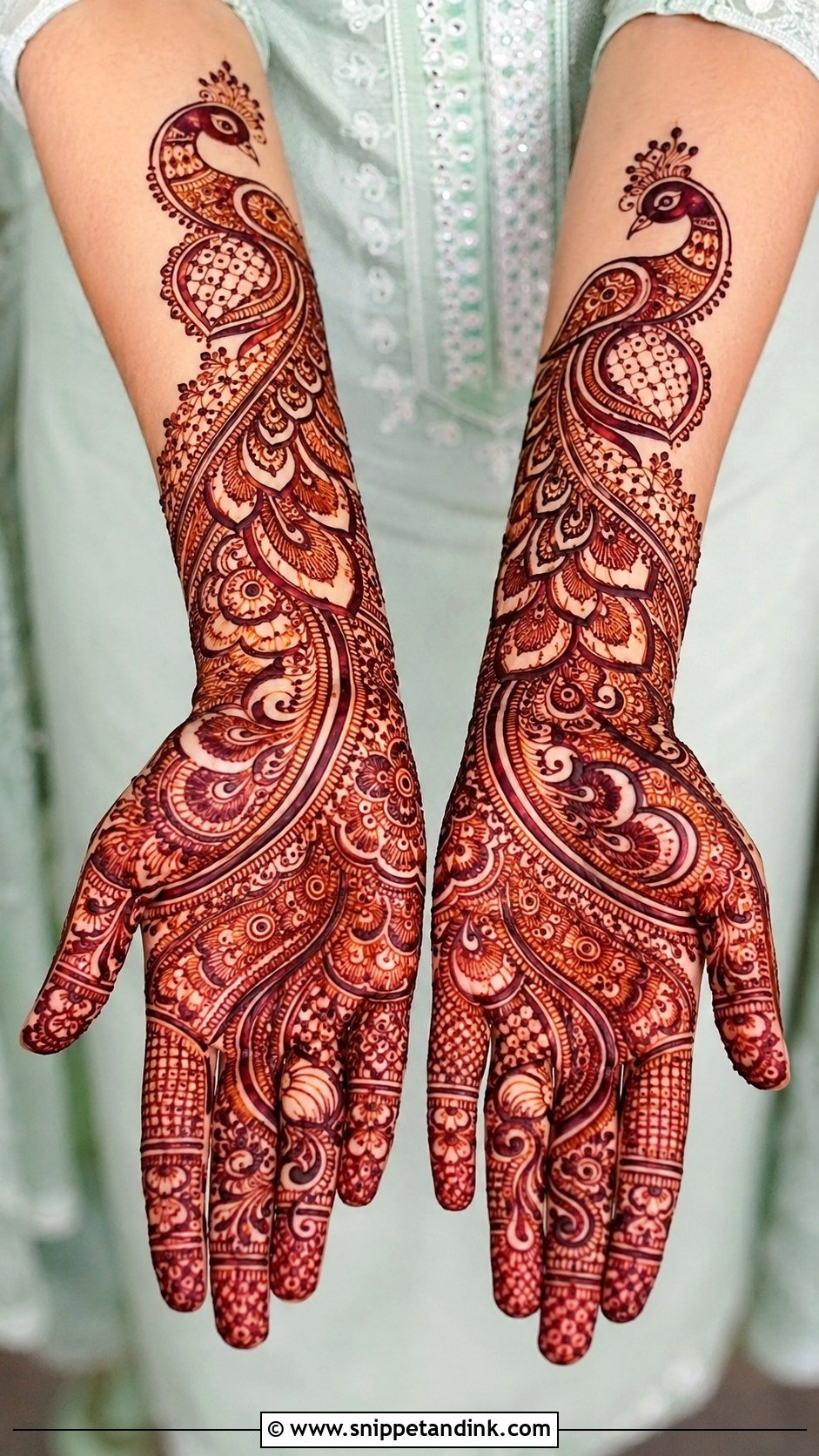
A peacock needs room. When the bird is too small, the neck and crest blur into a squiggle after staining, so I size it to fill most of the palm or run it up the forearm where there’s space. Feathers flow into paisleys, vines and fillers around it. One bold peacock with open skin reads modern; several small ones read traditional and busy. It suits bridal, festive and engagement hands equally.
16. Paisley Mehndi Design
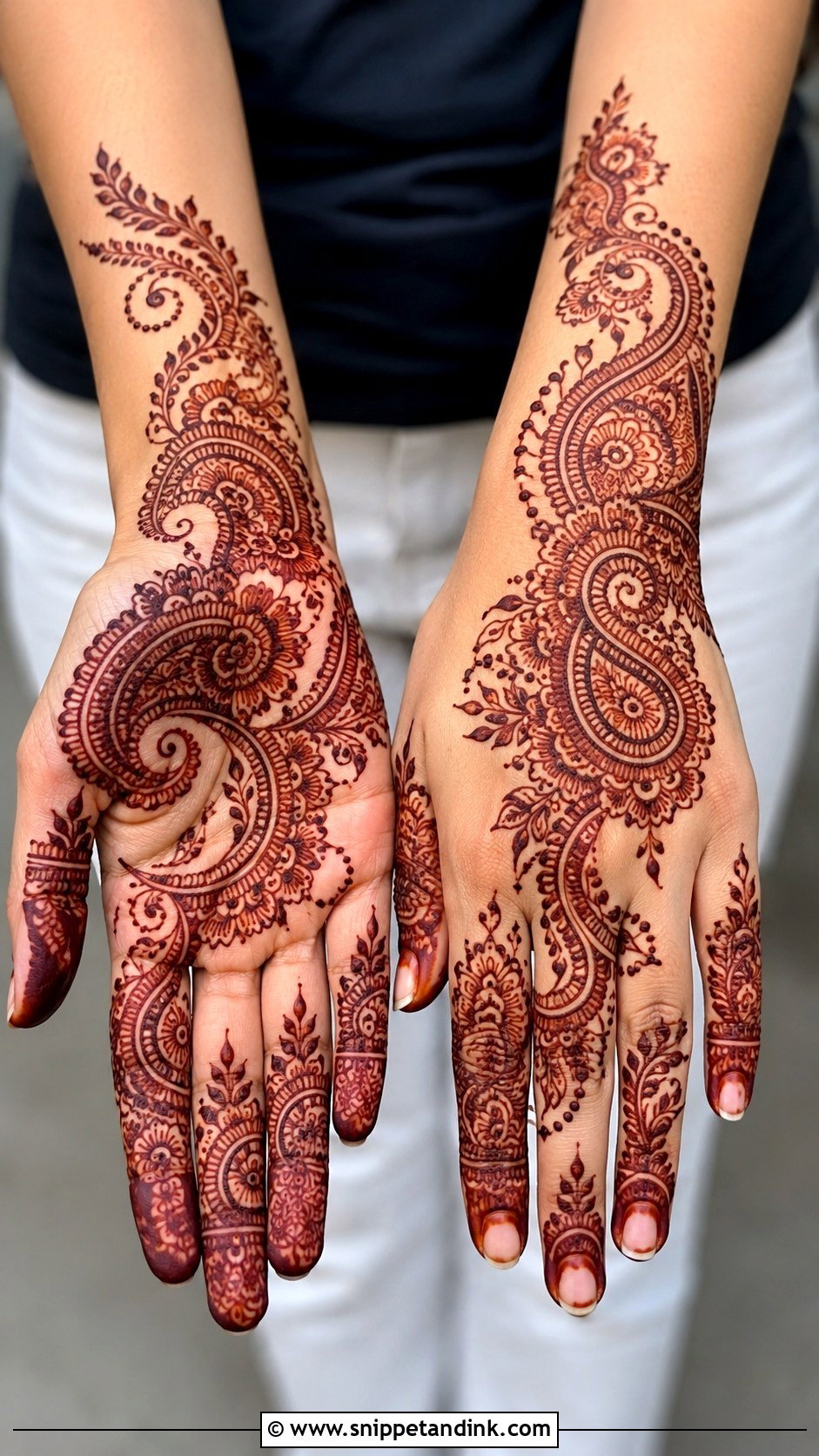
Paisleys curve across the palm, sit at the wrist or flow across the back hand in a layered trail. The secret is direction. All the paisleys should lean the same way, like leaves on one vine, and when they do, the design looks full without feeling heavy. Tiny flowers, spiral fillers and dotted outlines fill the shapes. It works for Indian, Pakistani and Indo-Arabic hands, light for a festival or dense for a bride.
17. Jaali Mehndi Design
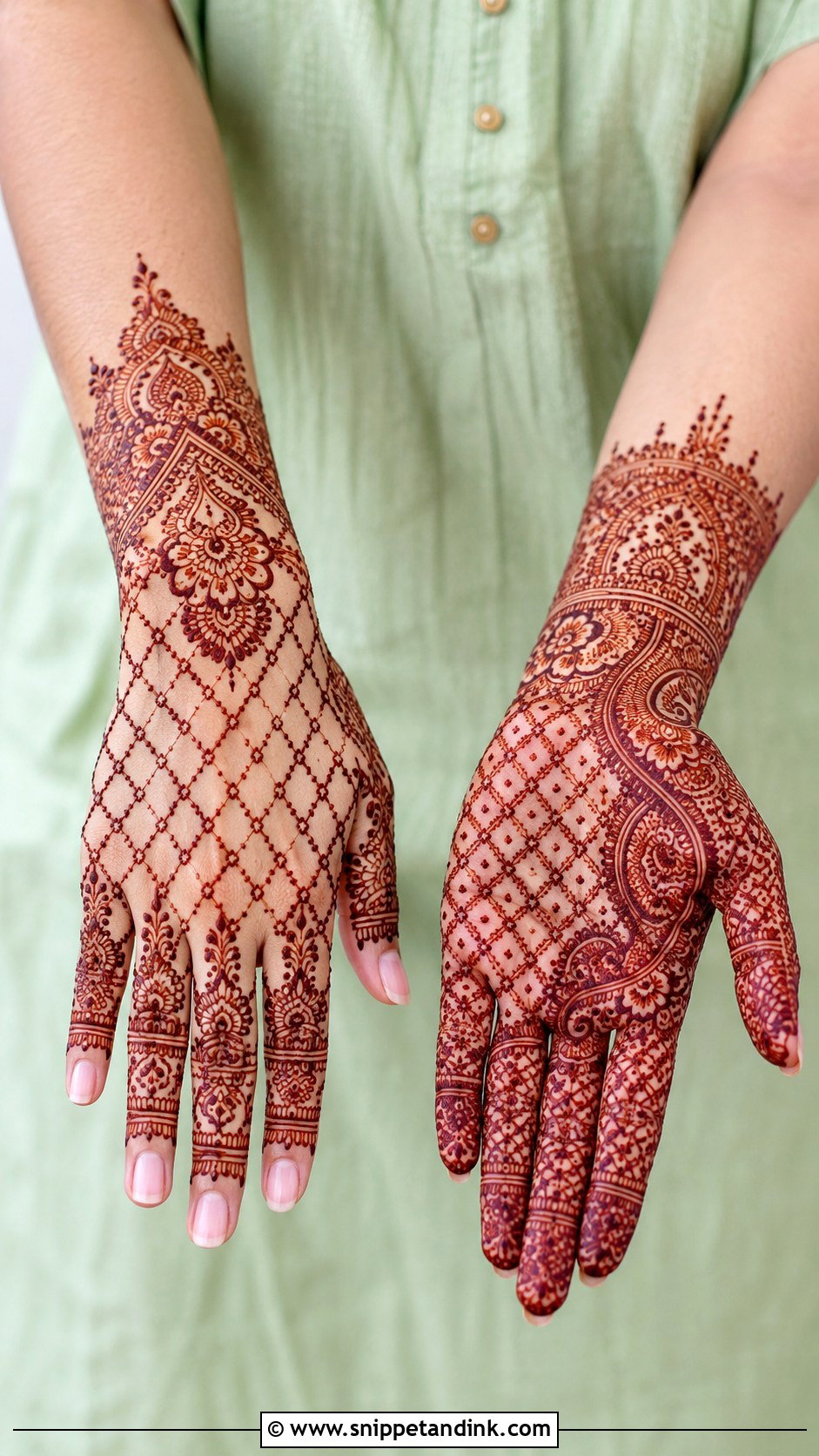
Jaali is a lace of net lines with skin showing through the squares or diamonds. It pairs with florals, mandalas or bracelet bands on palms, back hands and fingers. Lines have to be even and not too close; mesh drawn tightly tends to bleed into solid patches as the henna darkens. I add small dots inside a few chosen squares, not all of them, which keeps the texture lively.
18. Bracelet Mehndi Design
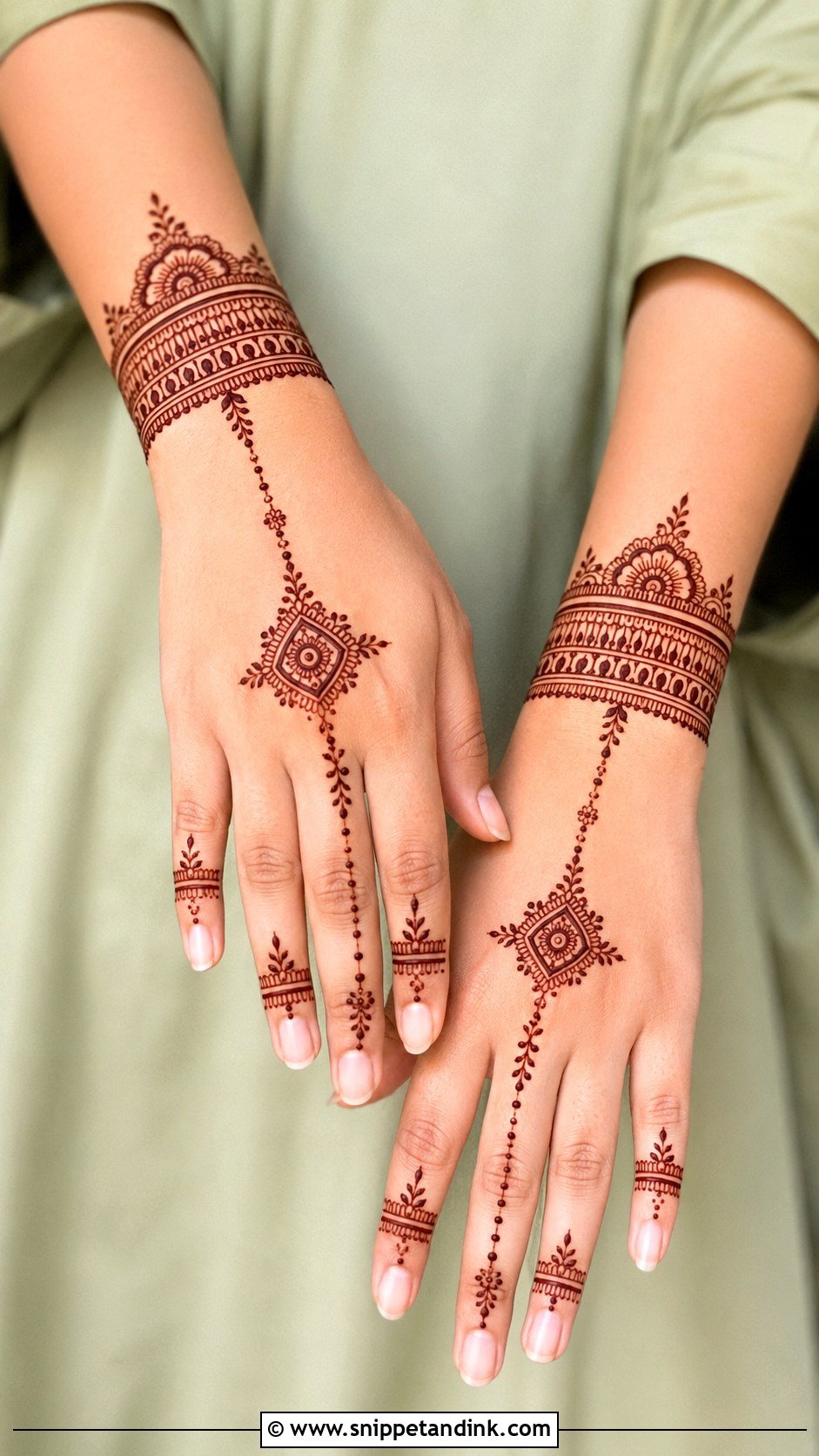
Bracelet henna is jewelry drawn on: a wrist cuff, chain lines, ring patterns and a small central motif on the back hand, sometimes linked to a finger to create a haath phool effect. Floral, geometric or lace bands can form the cuff. I keep the palm mostly empty so the jewelry illusion stands out. Minimal brides, bridesmaids and engagement guests love it, and it suits bangles particularly well.
19. Modern Mehndi Design
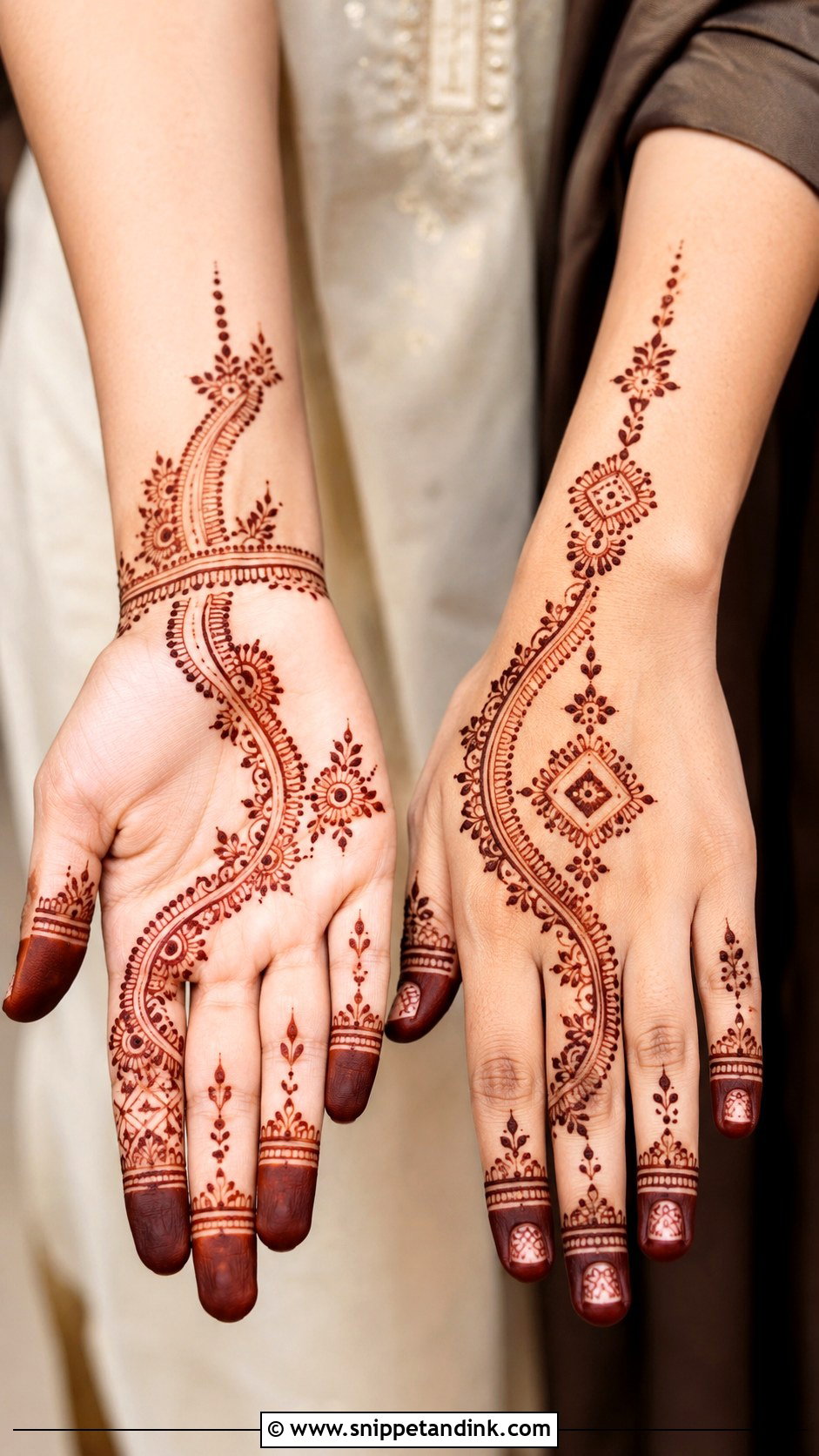
Modern designs rely on placement more than quantity: one bold trail, a half-hand layout, geometric lines, or a minimal mandala with detailed fingers. The best ones have a single focal point that everything else supports; random placement is what makes modern henna look unfinished. Florals, leafy arcs and open space are common. Wear it to parties, festivals or smaller wedding functions.
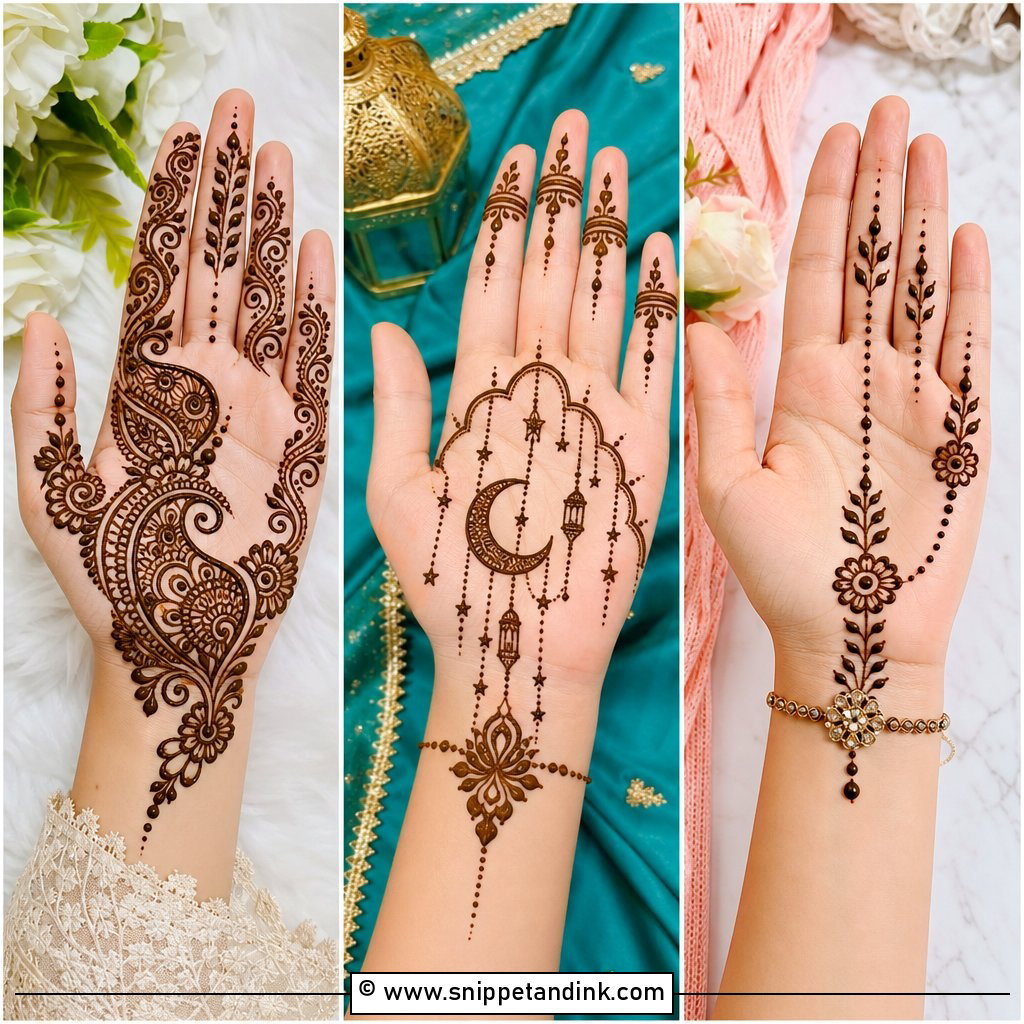
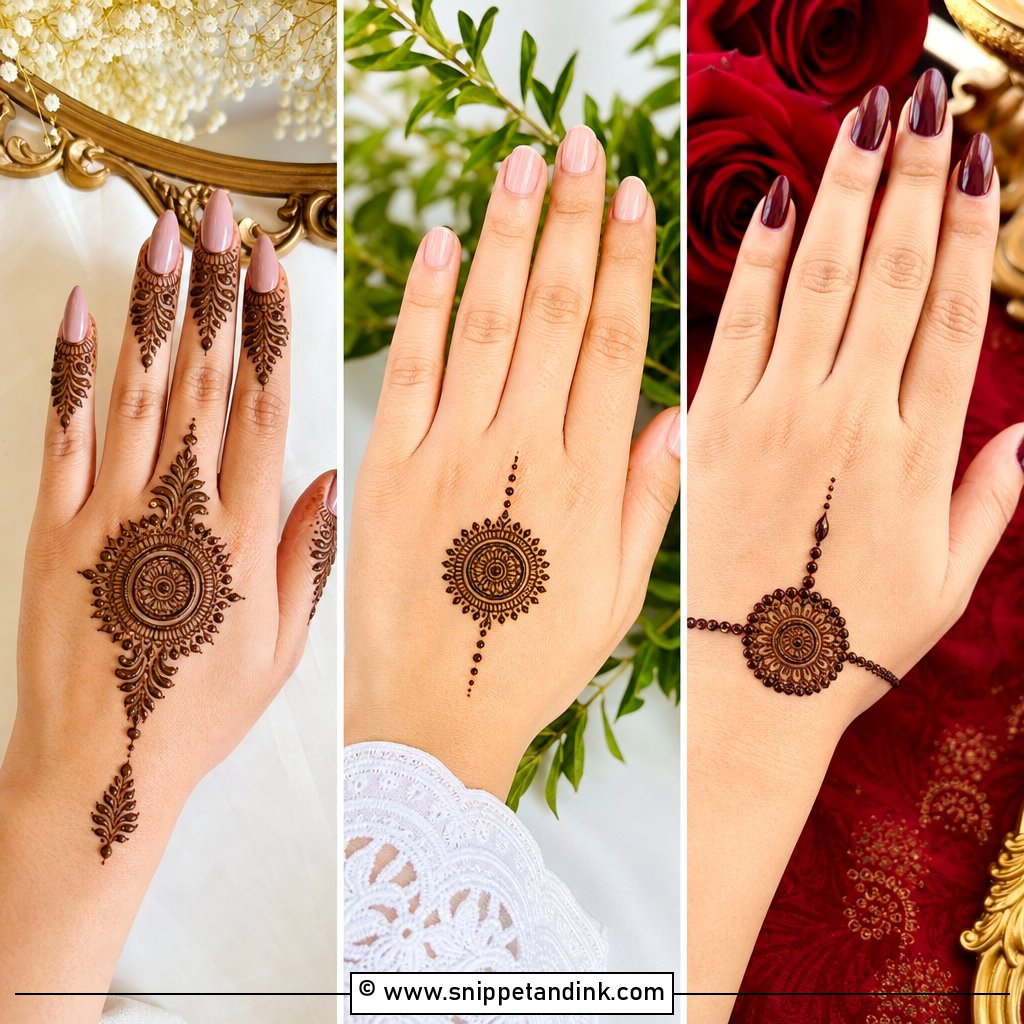
20. Khafif Mehndi Design
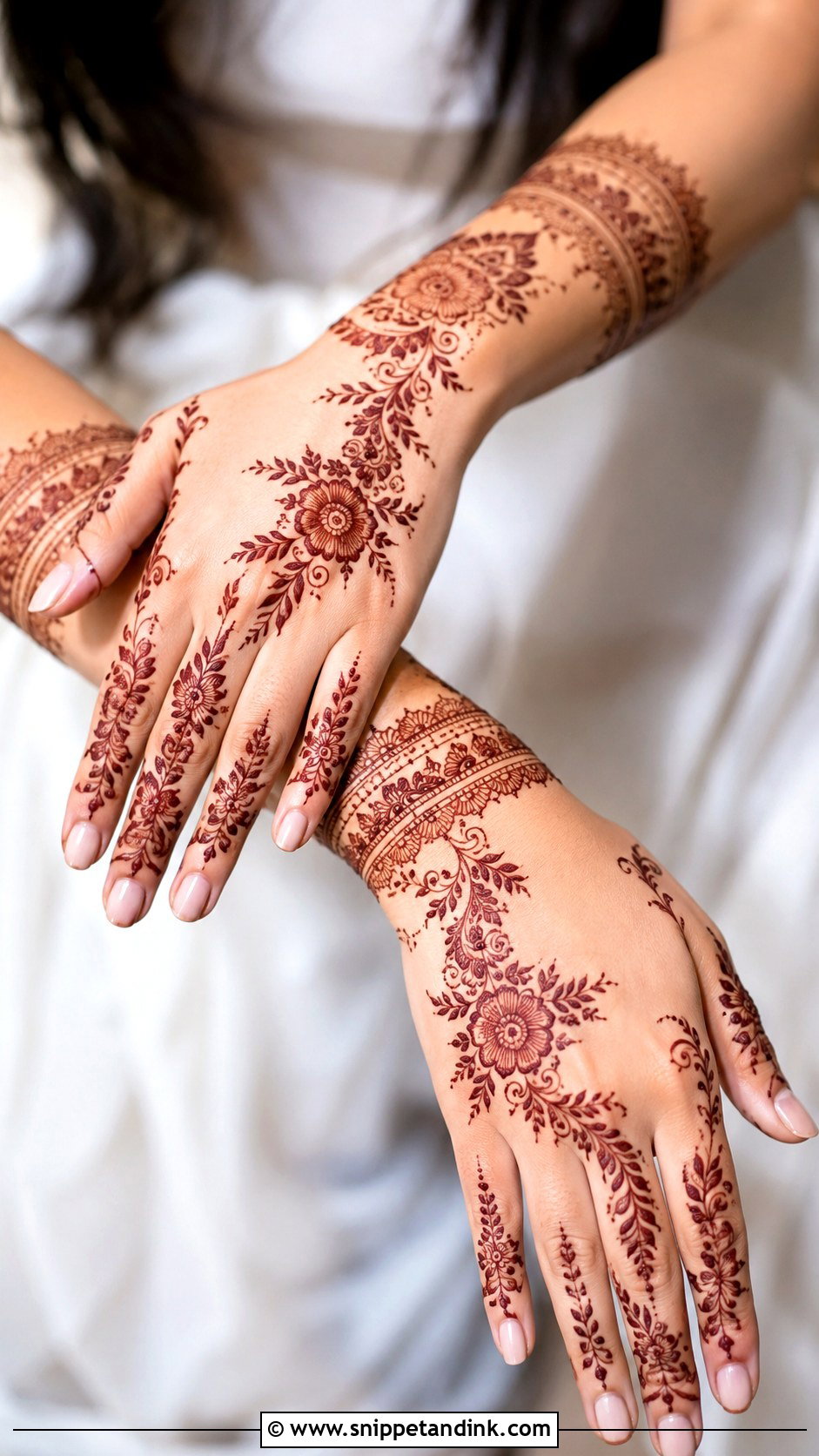
Khafif is fine and delicate: slim vines, small florals, leafy curls, tiny dots and soft shading. It’s common in Arabic and Gulf-inspired mehndi, usually starting at the wrist and moving diagonally over the back hand to detailed fingers. Fine lines need a very small cone tip and steady pressure, and they need the paste left on long enough to stain; thin lines removed after an hour come up faint. Avoid thick block filling here. It should look airy.
21. Gulf Mehndi Design
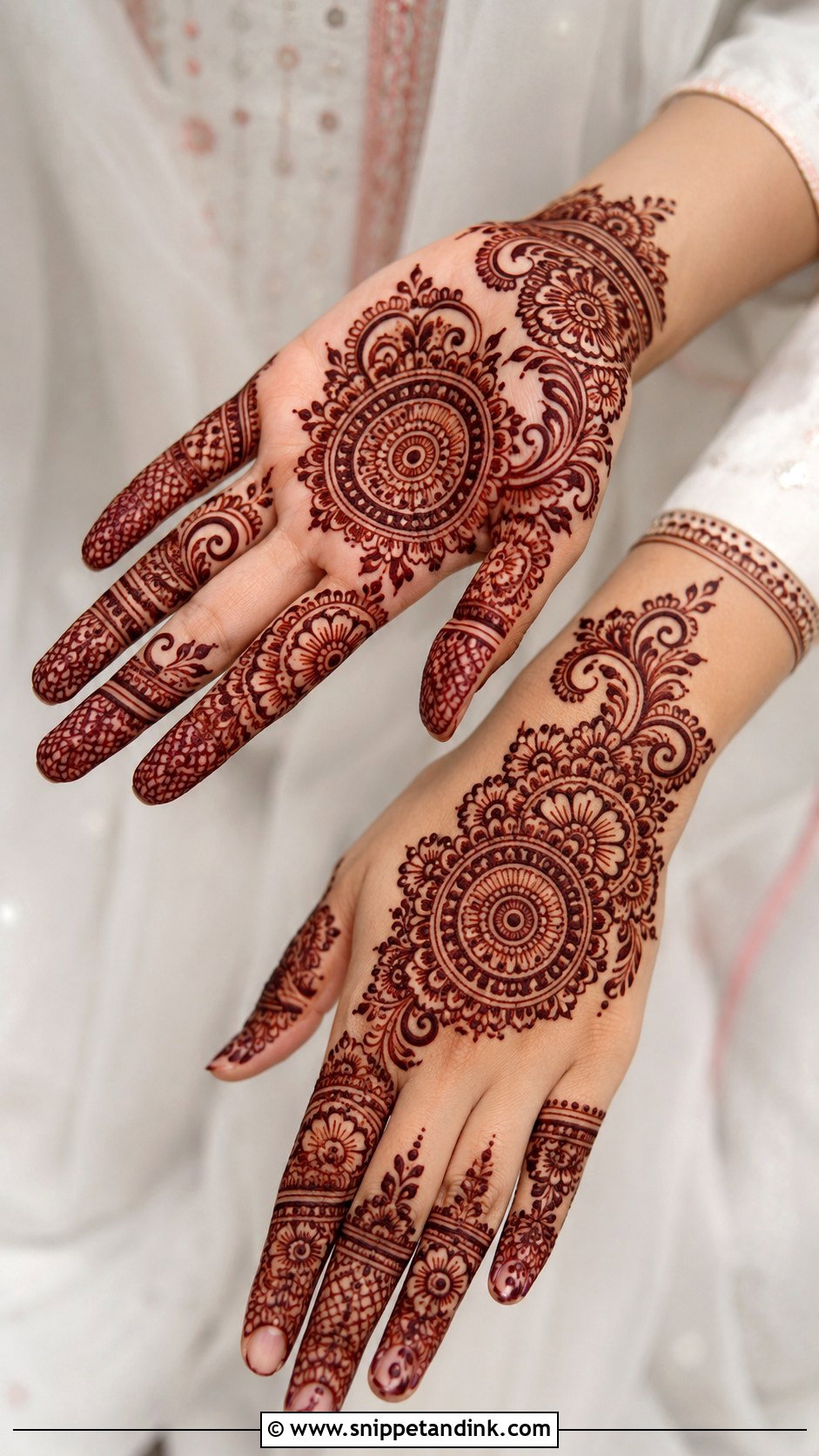
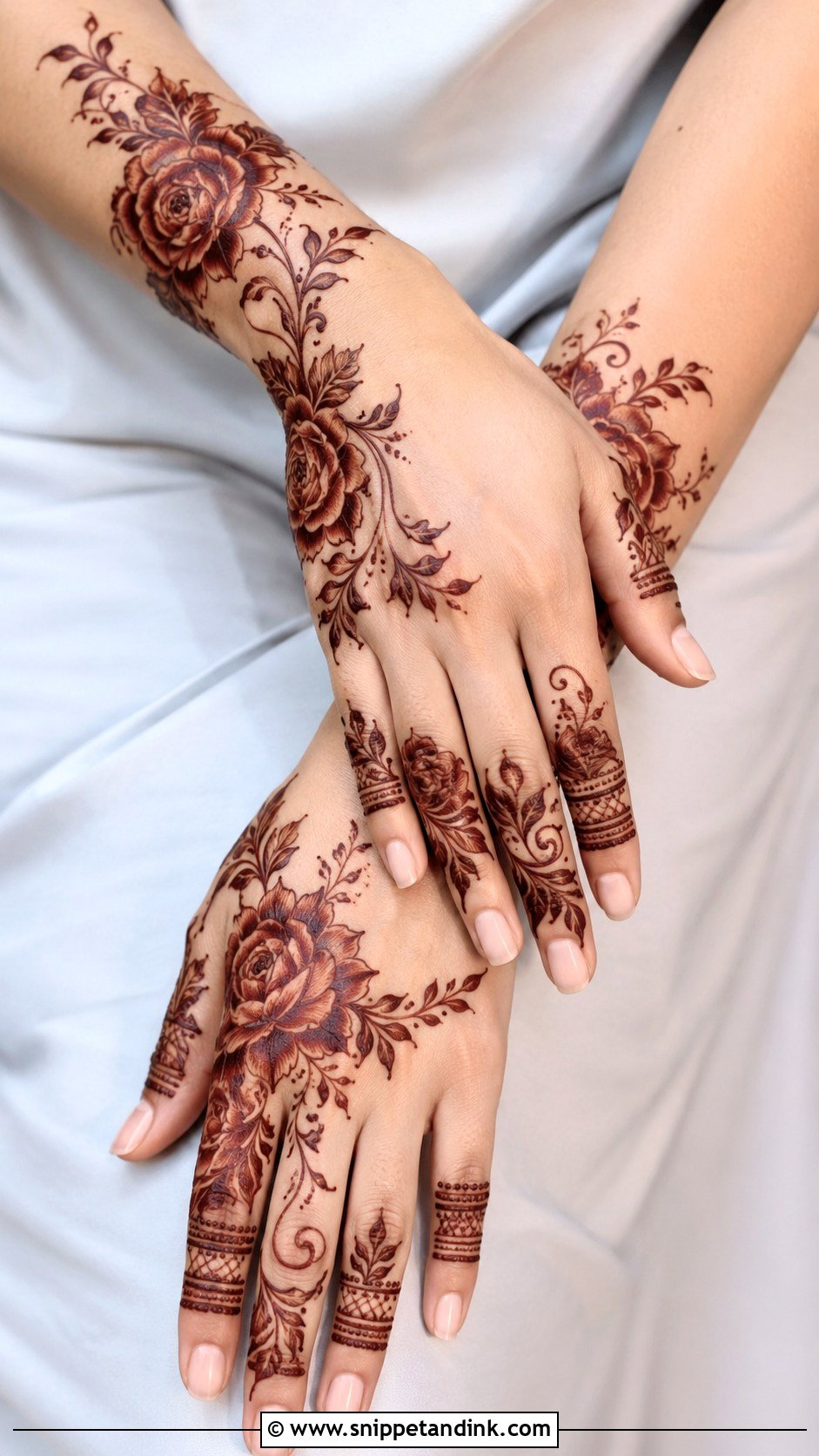
Gulf or Khaleeji-inspired henna uses bold roses, shaded leaves and curved vines with open skin between them, more dramatic than minimal work but much less dense than Indian. It stretches well across the back hand and forearm. Bold shading needs thick, well-mixed paste and a slightly larger cone tip, so the filled petals stain evenly instead of patchy. Neat finger bands and leafy tips complete it for Eid, weddings and parties.
22. Moroccan Mehndi Design
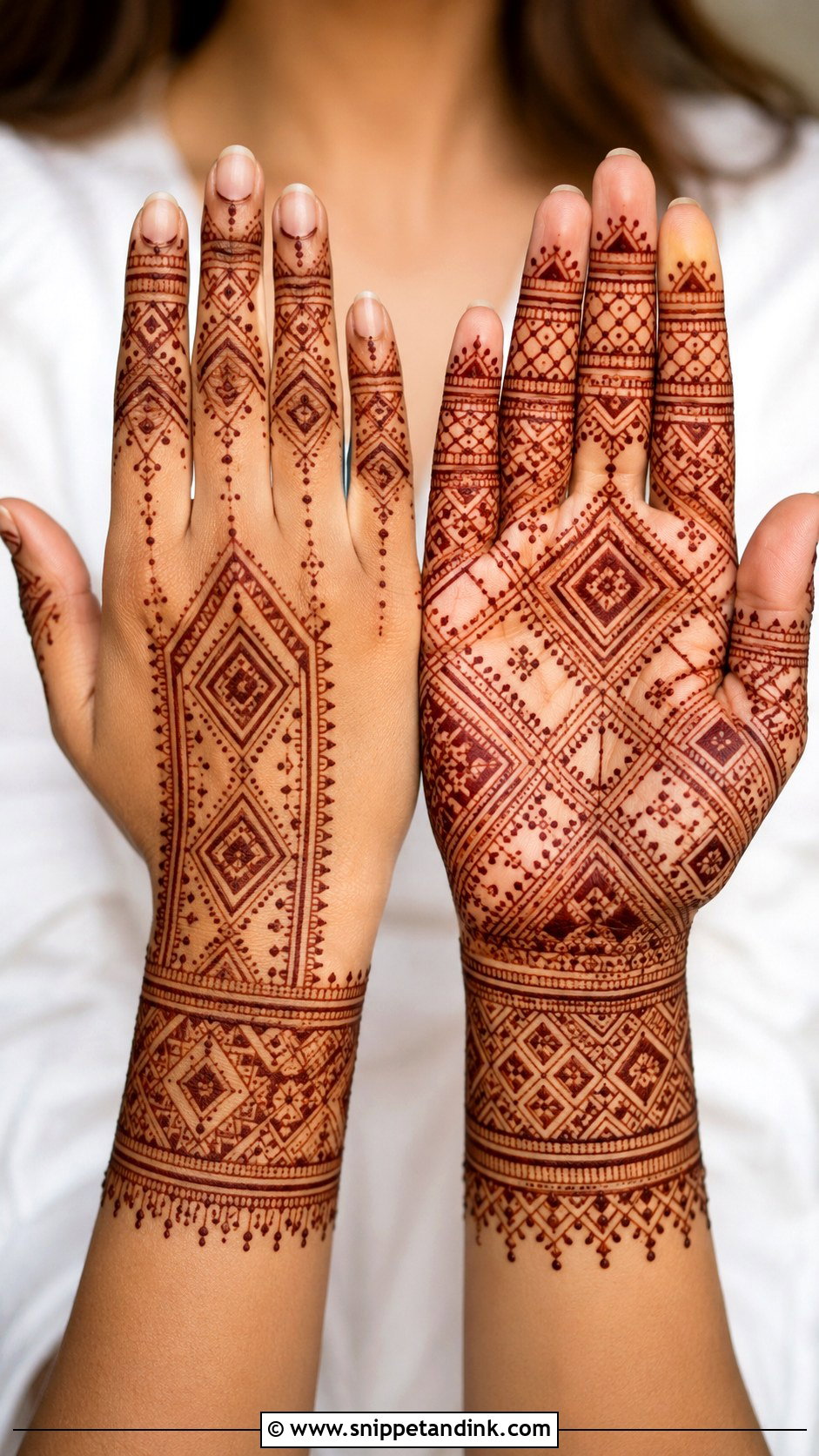
Moroccan-style henna is graphic: straight lines, diamonds, triangles, grids and strong symmetry, often in structured panels on the palm with matching finger lines and a wrist cuff. It suits people with minimal, modern taste. I mark a few guide dots before pulling long lines, because a grid that drifts across the palm is obvious. Tiny dots or leaf accents can soften it, and both hands should match closely.
23. Rajasthani Bridal Mehndi Design
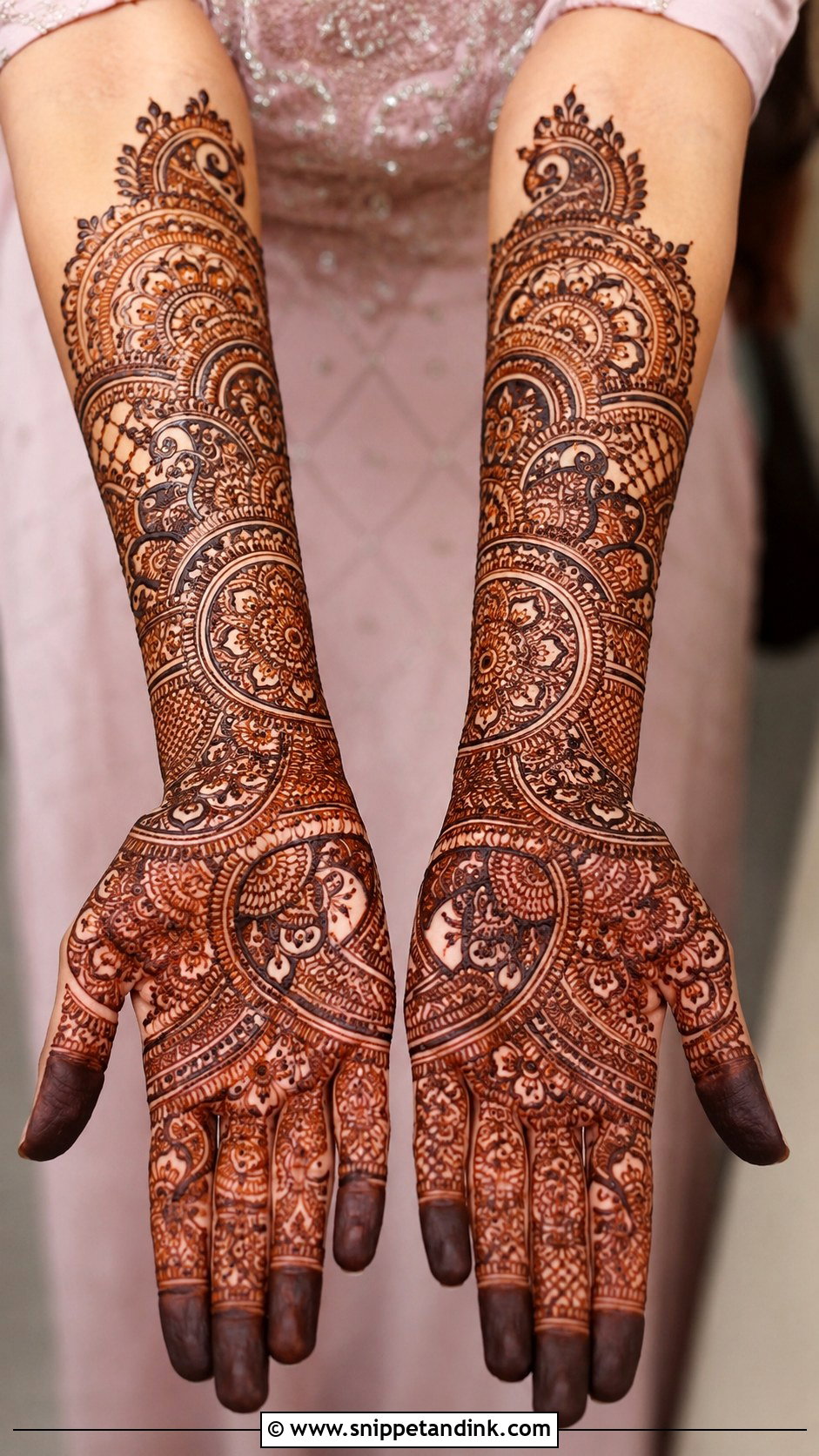
Rajasthani bridal work is storytelling: bride and groom portraits, elephants, peacocks, paisleys, mandalas and fine checks covering both hands and climbing the forearms. With this much detail, I work in clear sections so each motif stays readable. Fingertips are filled, the palm carries the main scene, and initials can hide in the fillers. It takes most of a day, and the final stain looks richest once it turns deep reddish-brown.
24. Pakistani Mehndi Design
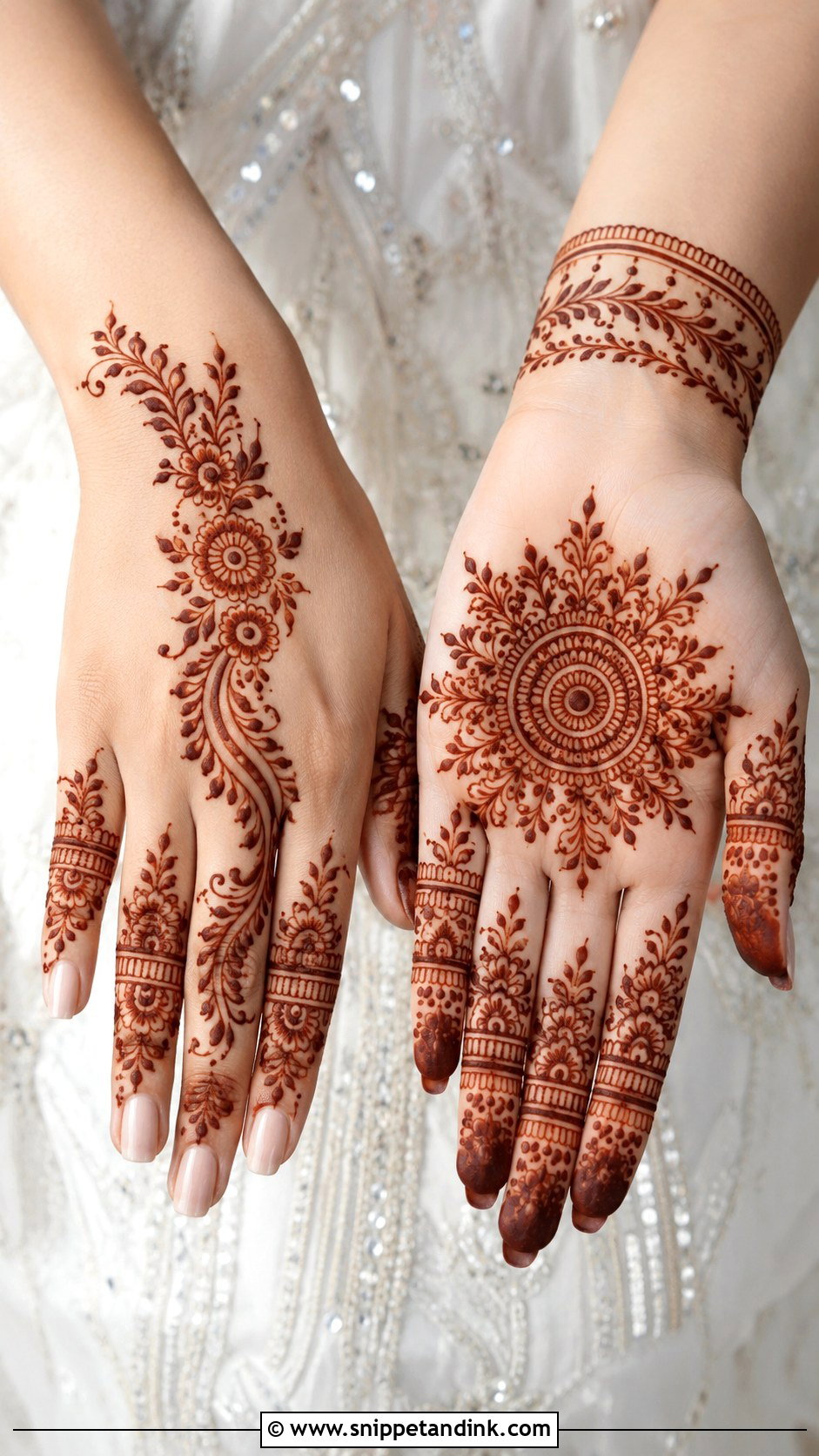
Pakistani mehndi design blends Indian detail with Arabic flow: mandalas, paisleys, florals, leafy trails, jaali and bold wrist cuffs. Strong finger decoration is a signature, and it makes the hand look complete even when the palm has open space. Dense for brides, lighter for Eid and family functions. For a modern version, I keep one main palm motif and let flowing side patterns frame it.
25. Engagement Mehndi Design
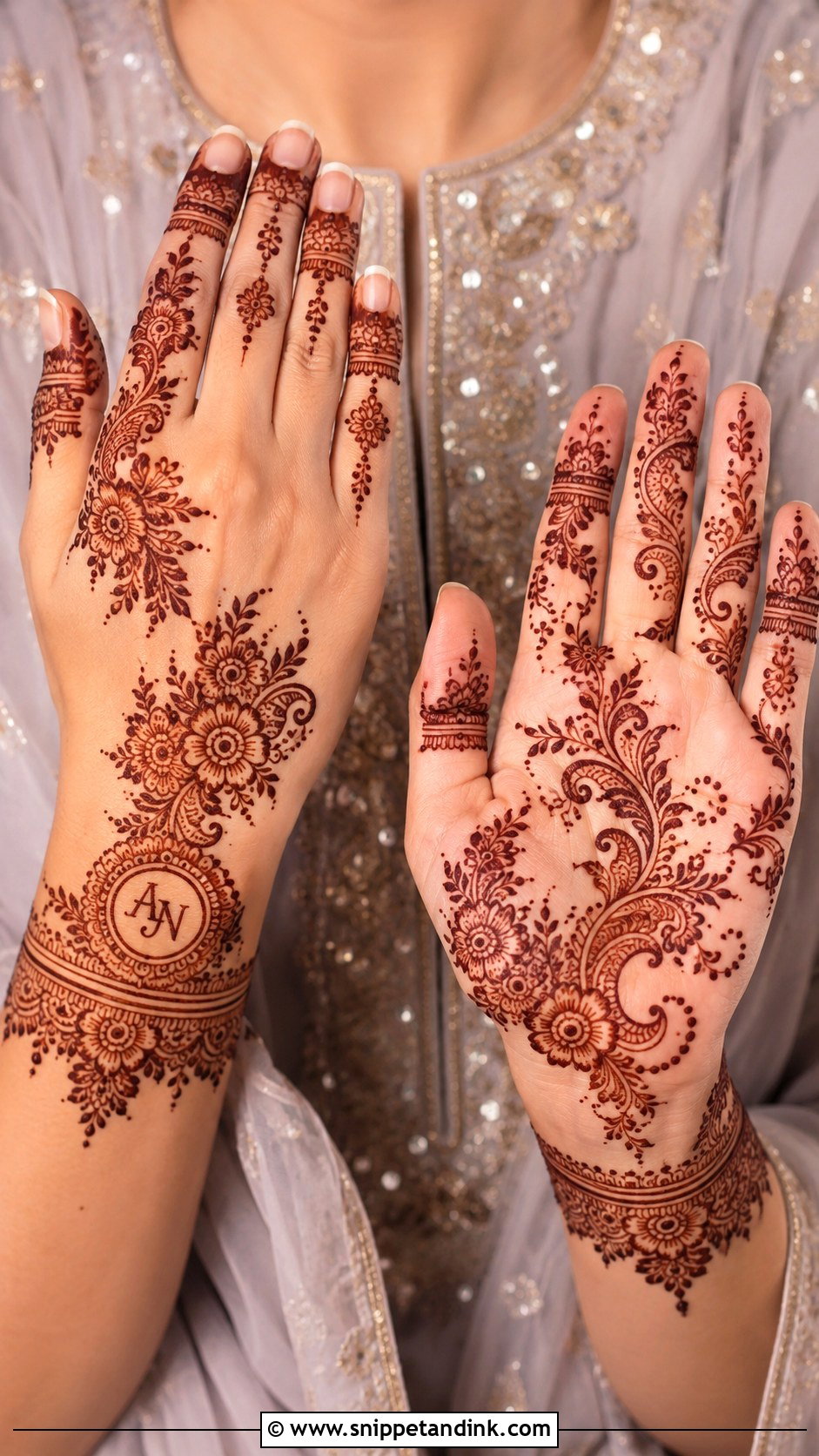
Engagement mehndi design should feel special but stop short of bridal coverage. A back-hand mandala, ring-style finger patterns, soft florals and a bracelet cuff work well, with a balanced palm on the front. The ring finger is the one everyone photographs, so I leave a clean band of skin at its base where the ring sits. Initials or a date can go in quietly. Medium-coverage Indo-Arabic is usually right.
26. Wedding Guest Mehndi Design
As a guest, your henna should look festive without competing with the bride. A back-hand Arabic trail, a simple palm mandala, a floral cuff or an Indo-Arabic half hand all work, and they’re quick enough to fit in during a busy mehndi night. Match it to your outfit: a heavy outfit wants cleaner henna, a simple one can take bolder florals. If you’re one of thirty guests in line, a design that takes ten minutes a hand is a kindness to the artist too.
27. Half Hand Mehndi Design
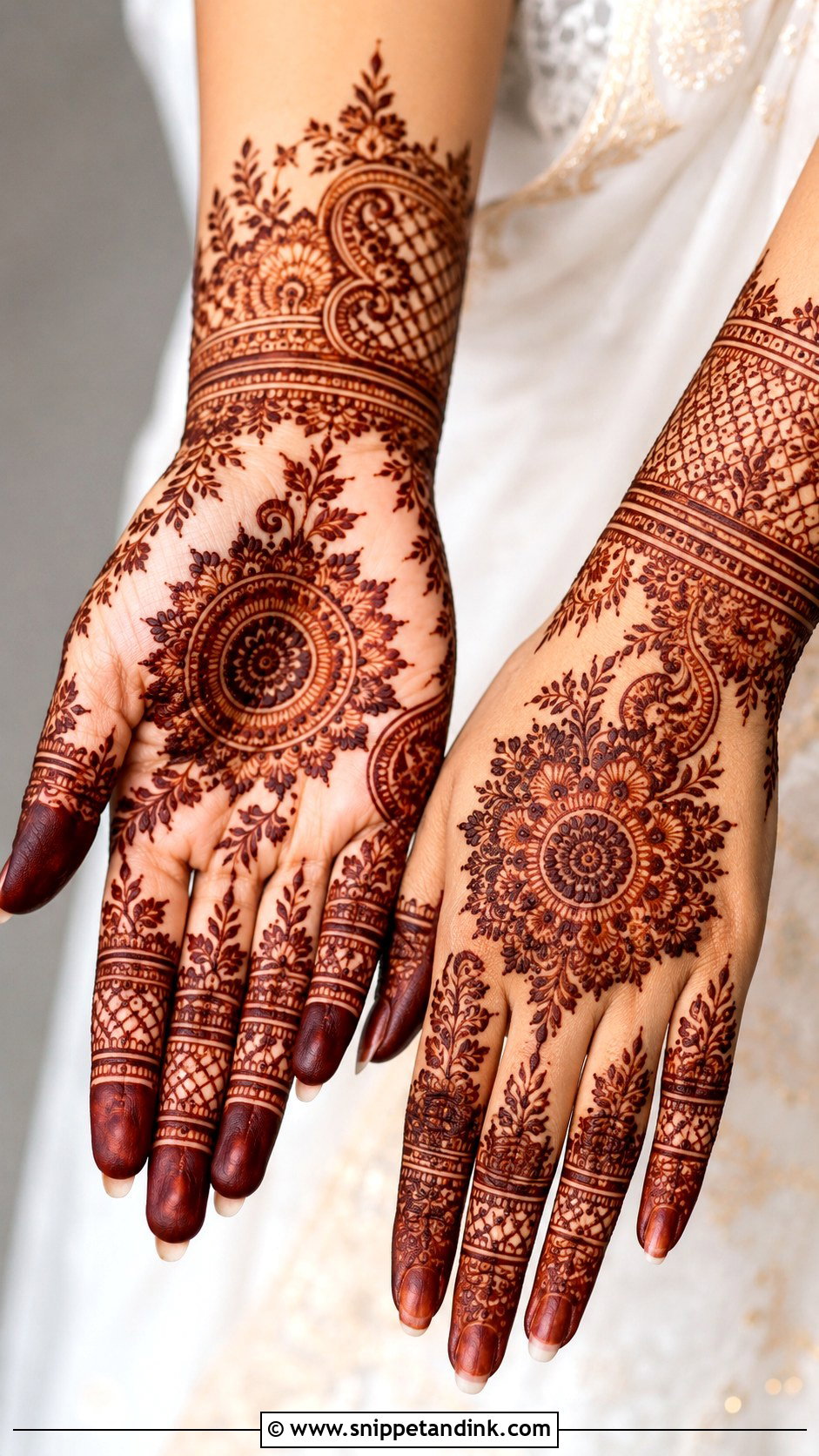
Half-hand henna covers the fingers and palm center, or the back hand and wrist, and leaves the forearm bare. A mandala, floral trail, paisley curve and matching fingers make it complete. The edges are where half-hand designs fail. I always finish with a border or cuff, because a pattern that just stops looks like the artist ran out of time. Faster application, still noticeable.
28. Heavy Mehndi Design
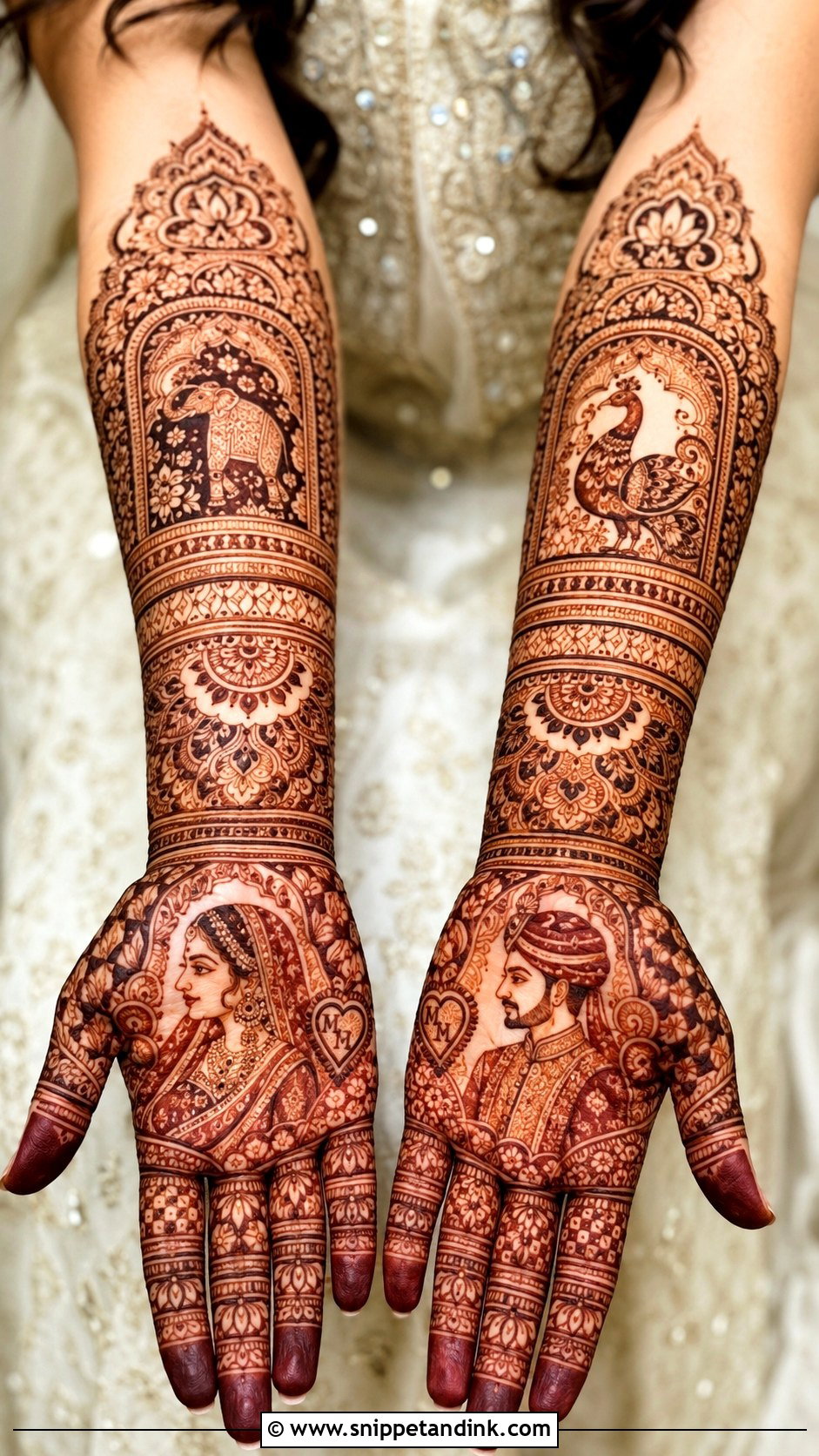
Heavy henna covers most of the hand with layered paisleys, florals, mandalas, jaali, peacocks and fillers. It belongs at major celebrations. Heavy shouldn’t mean messy: strong structure, clear borders and repeated patterns guide the eye. I leave hairline gaps between sections on purpose, because henna lines spread very slightly as they stain, and without those gaps dense work merges into blotches.
29. Rose Mehndi Design
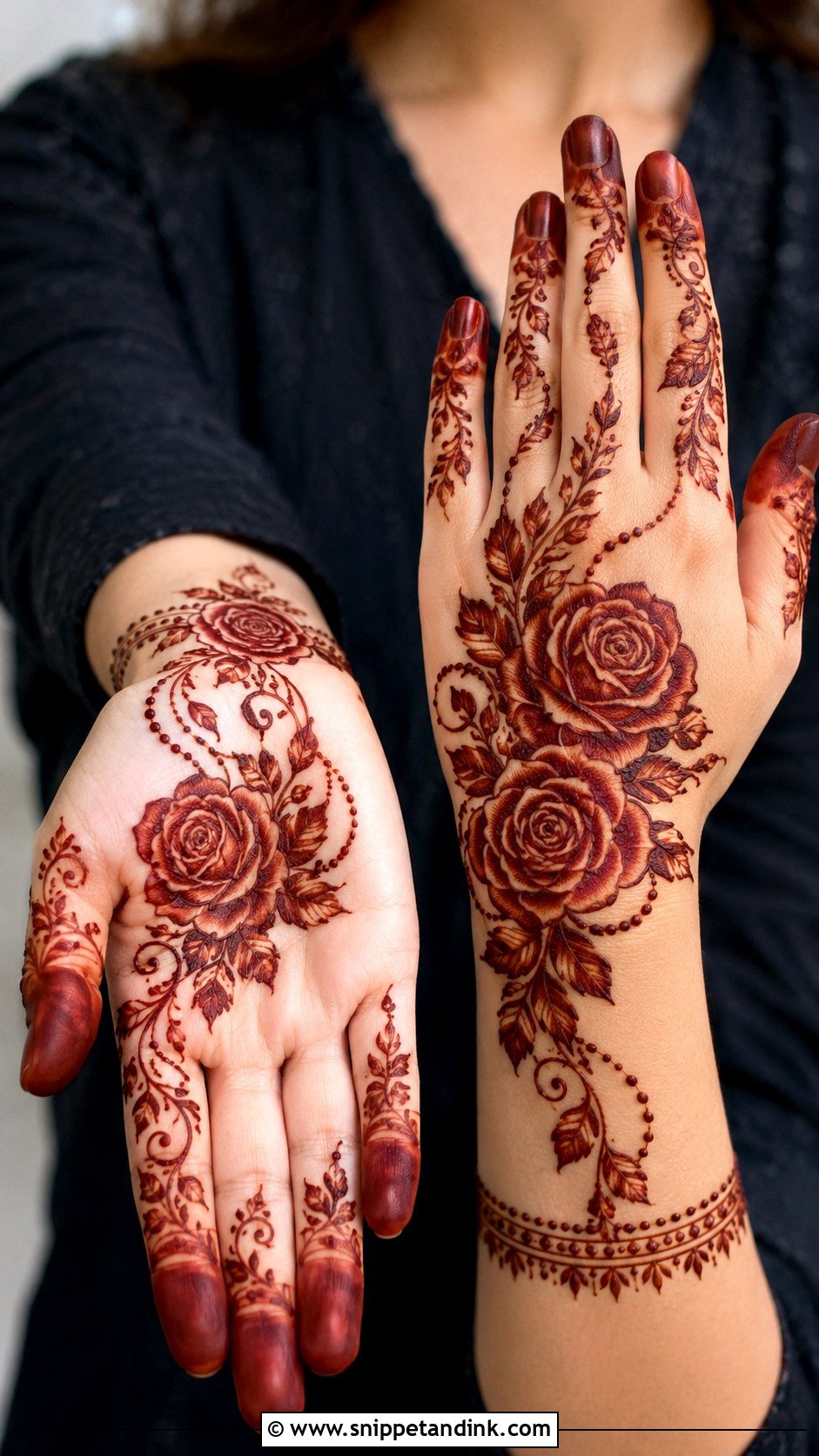
Roses are bold and easy to recognize, which makes them a favorite for Arabic, Gulf and modern henna. Large blooms on the back hand, curved stems across the wrist and small buds on the fingers make a full design. I build each rose from the center spiral outward, shading the inner petals and leaving the outer ones open, which gives depth after the stain develops. Keep petals rounded. It suits engagements, Eid and bridesmaids.
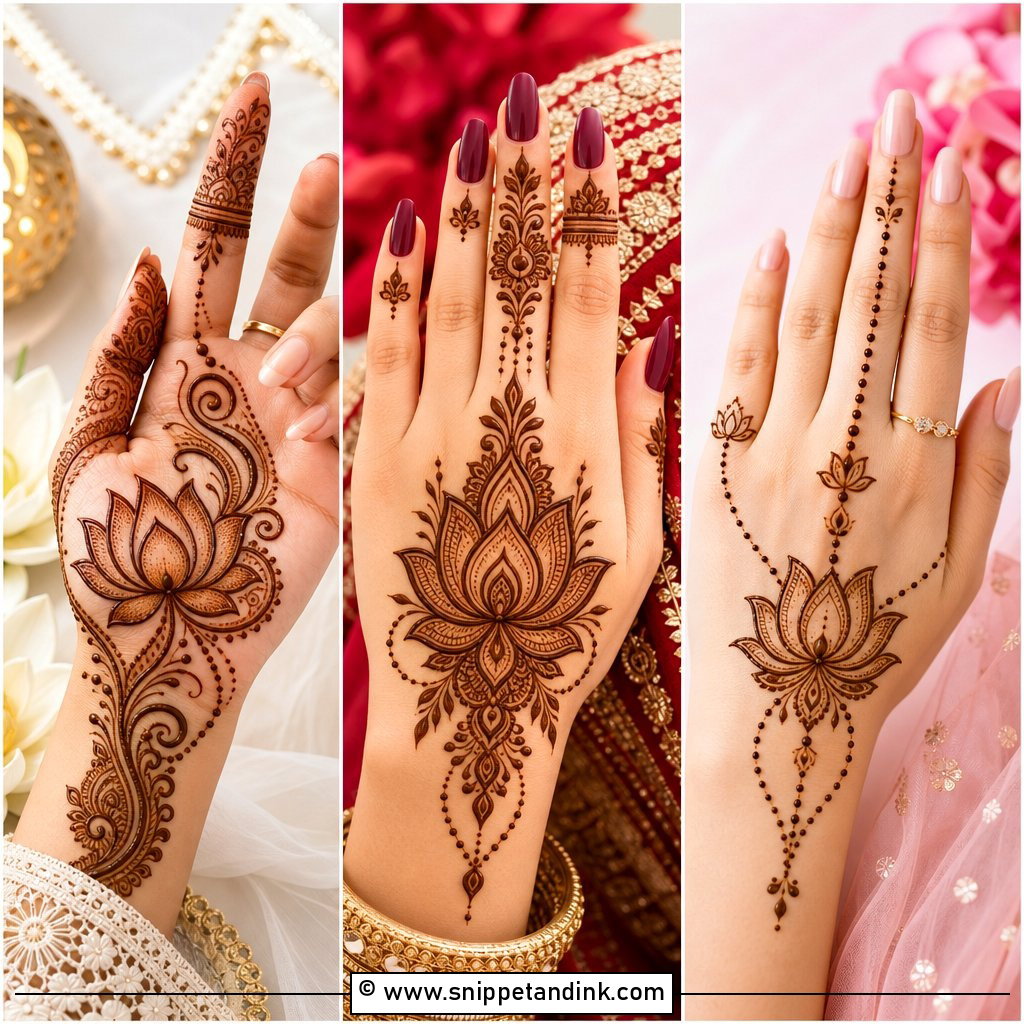
30. Lotus Mehndi Design
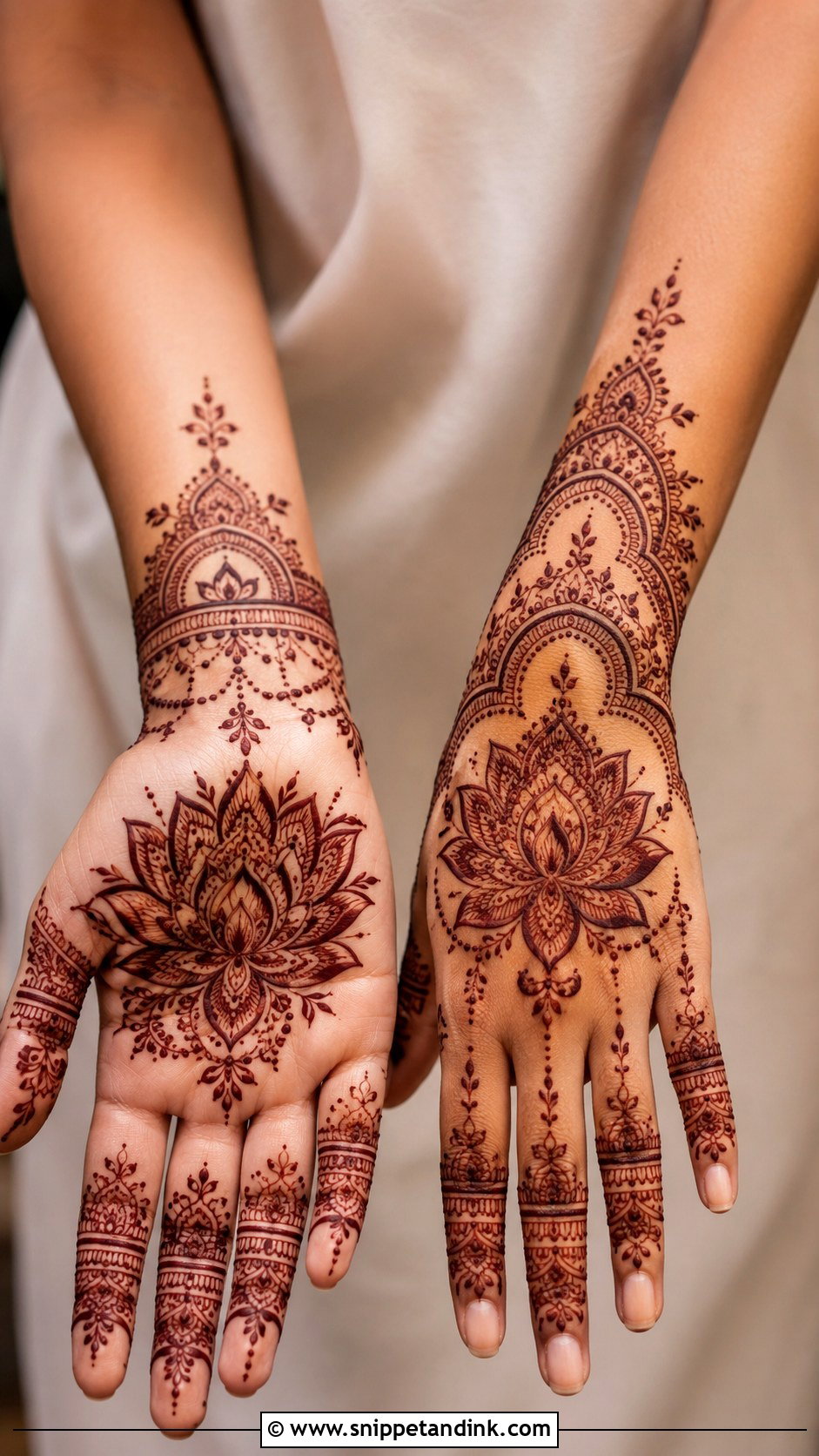
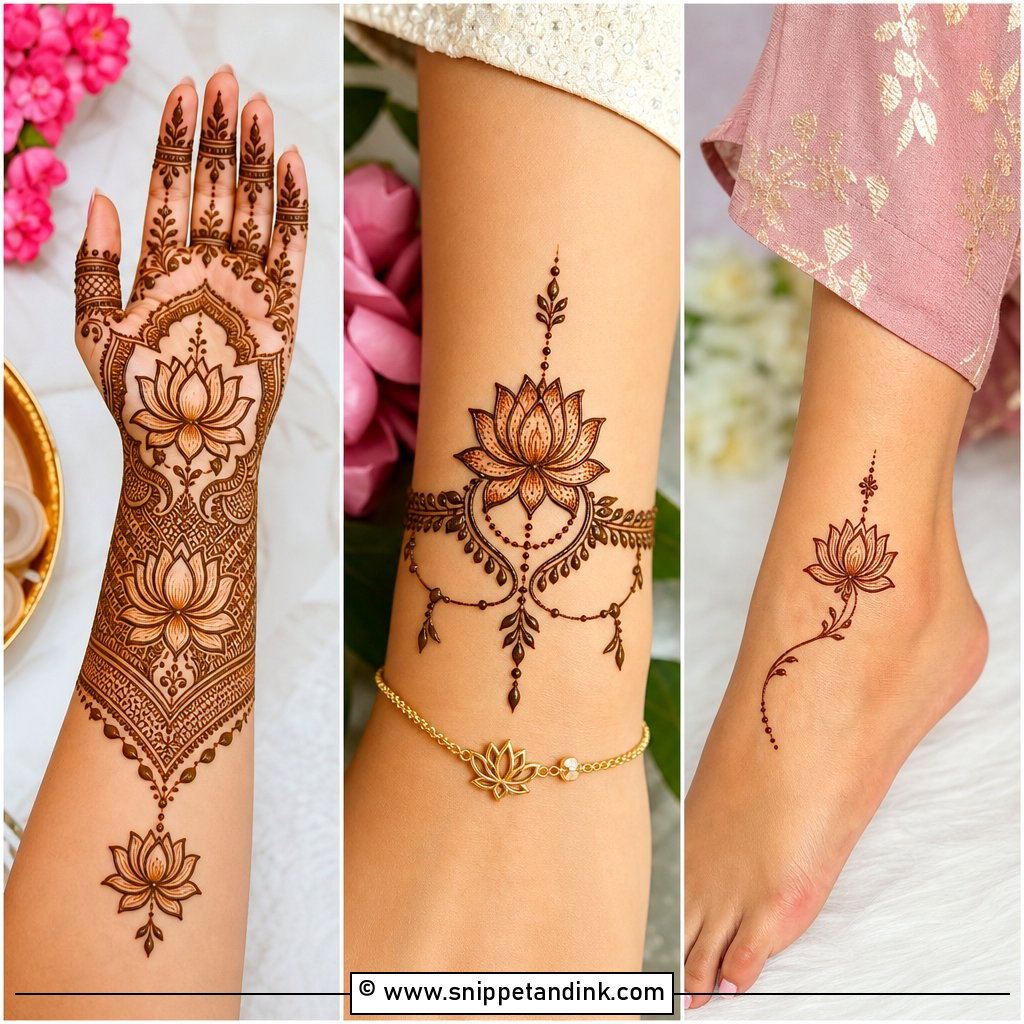
A lotus works as a palm centerpiece with layered petals and vines toward the wrist, or as a lotus mandala or half-lotus trail on the back hand. It pairs naturally with paisleys, dots and fine arches. Its shape is the whole point, so I keep open space around it and resist filling every petal; an overcrowded lotus is unrecognizable once the stain darkens. Bridal, festive and spiritual occasions all suit it.
31. Lace Mehndi Design
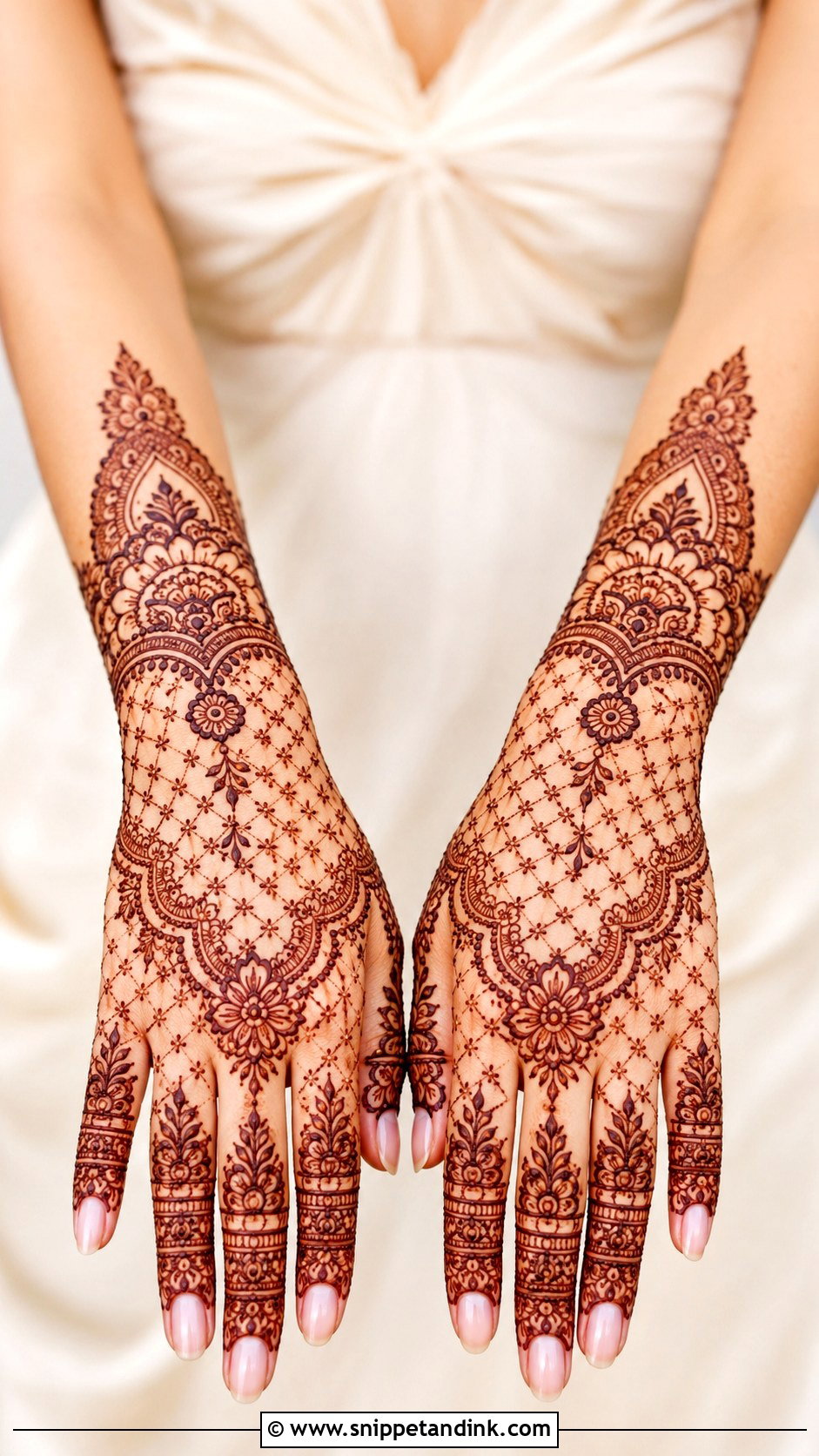
Lace henna looks like a fine glove: mesh on the back hand, scalloped edges, floral cuffs and ring-like finger bands. It’s popular for engagements and receptions. It also takes time and a steady hand, because the fine lines that create the lace effect show every wobble. I’d only book it when you can sit without rushing. Simple rings or bangles suit it best.
32. Kids Mehndi Design
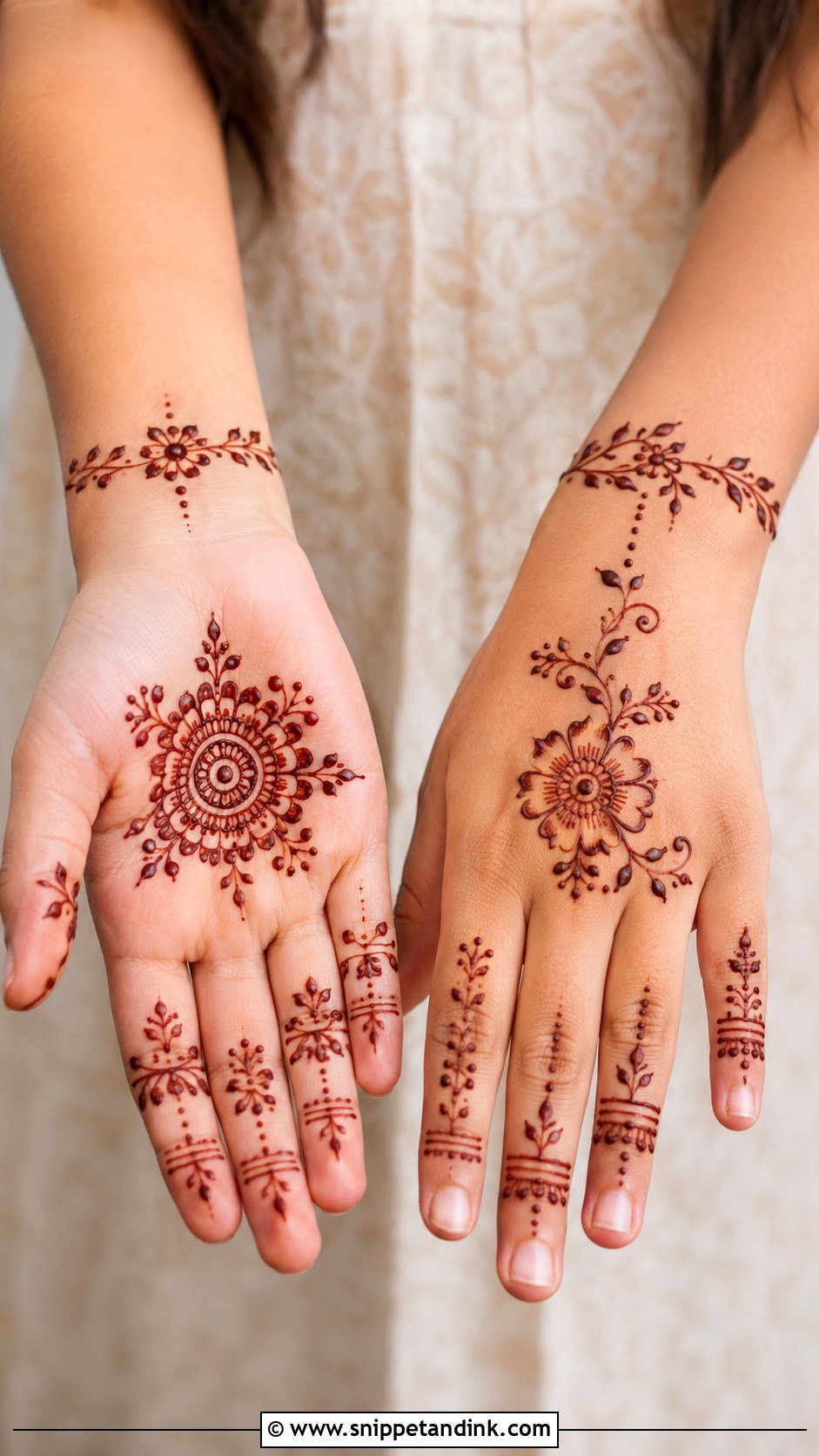
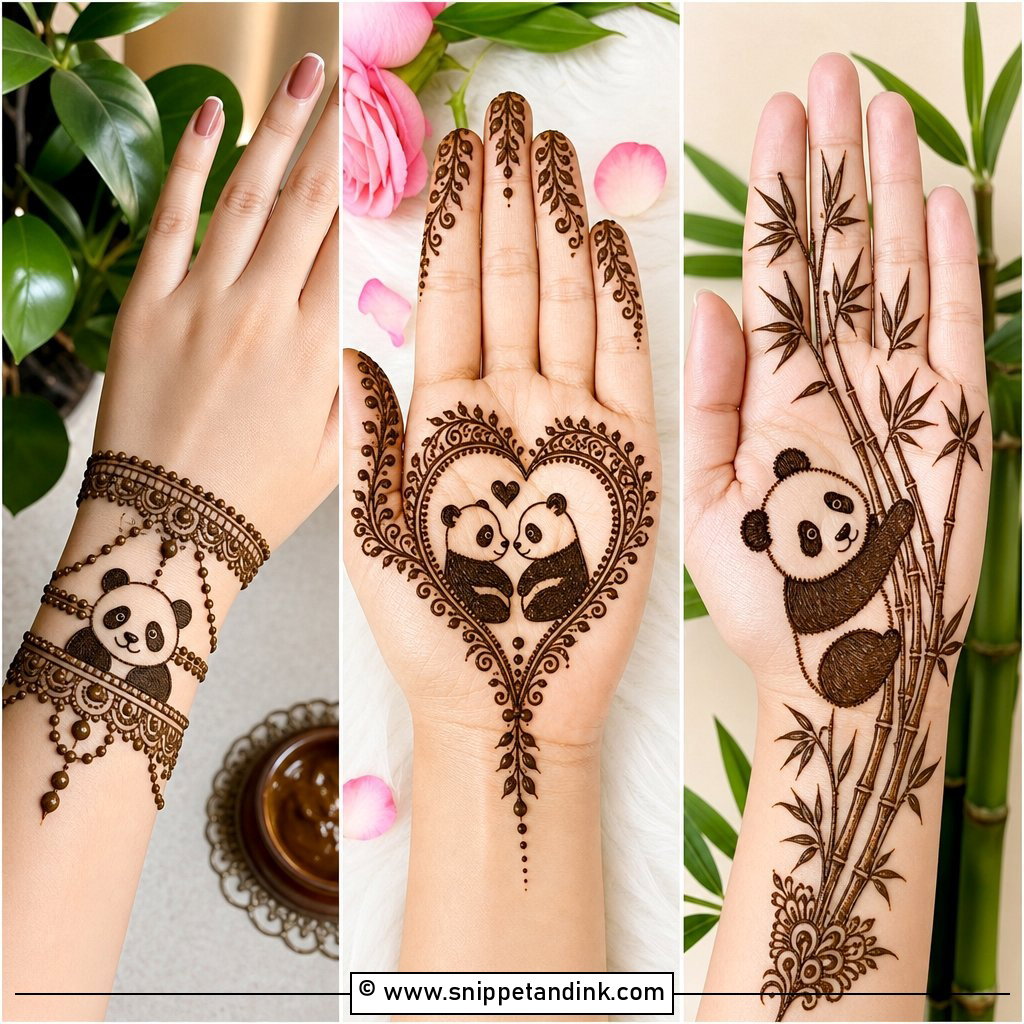
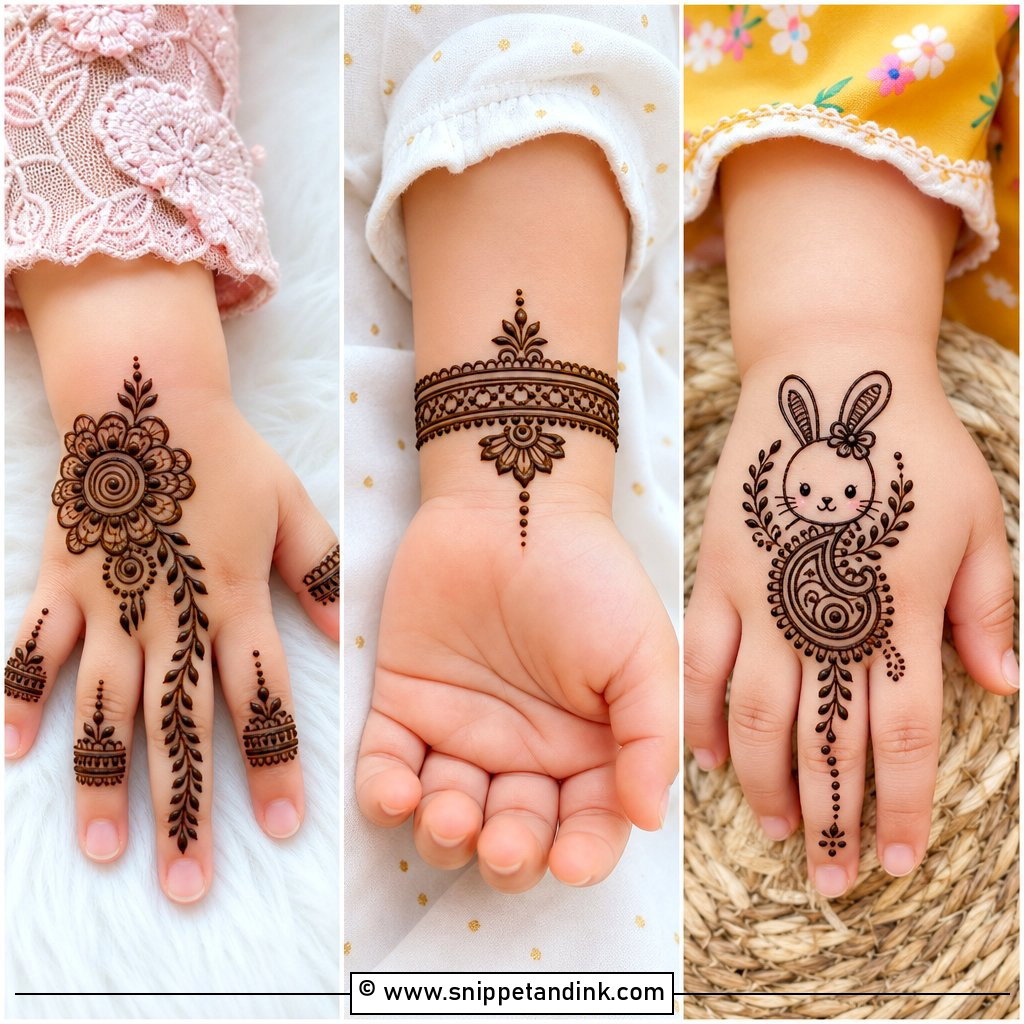
For children, speed and comfort matter more than detail. A small flower, a heart-shaped floral, a butterfly-inspired pattern, a simple mandala or a leafy bracelet on one side of the hand is plenty, since most kids won’t sit still for long. Big shapes are easier to see and dry faster before little hands smudge them. Only use plain natural henna on children, never black henna or unknown chemical cones, and do a small patch first.
33. Forearm Mehndi Design
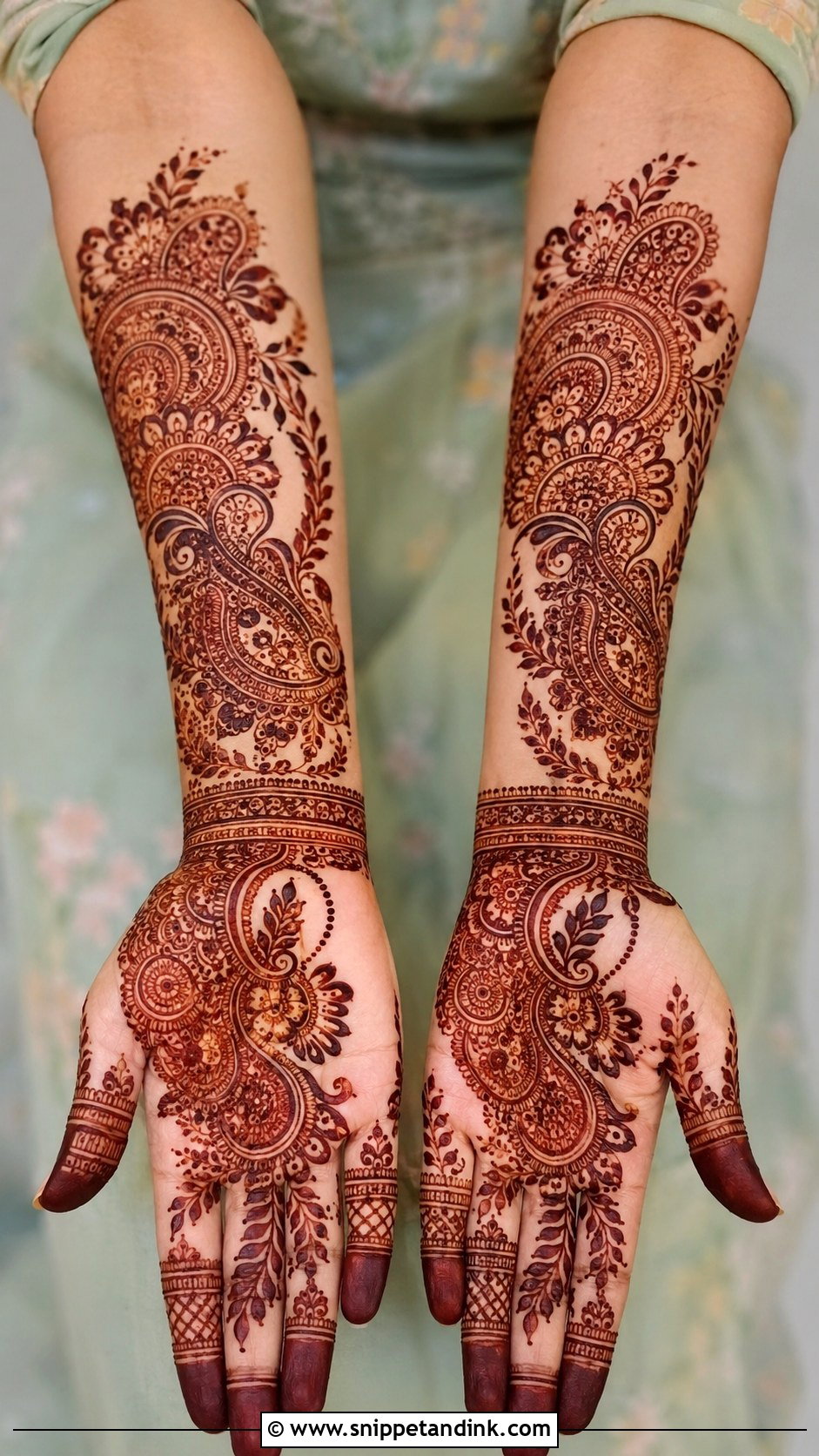
Forearm designs extend the hand into a longer line: from the fingers through the palm or back hand into a cuff, vine, mandala chain or paisley panel. Floral trails with open skin feel modern; dense Indian motifs feel traditional. The design should narrow and widen with the arm’s natural shape. Expect the forearm to stain lighter than the hand, which is normal and gives a soft fade toward the elbow.
34. White Mehndi Design
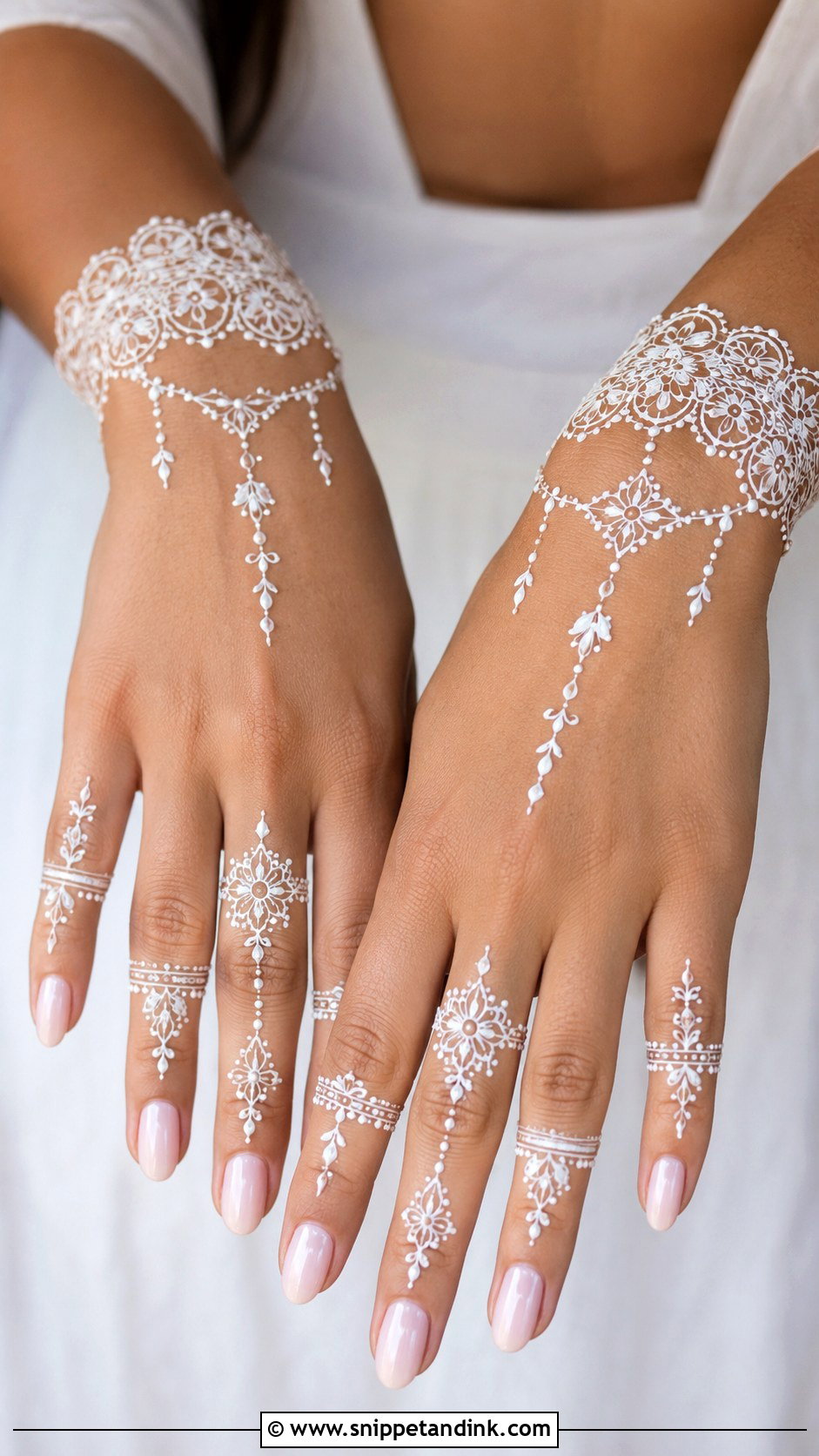
White mehndi isn’t henna and doesn’t stain. It’s a skin-safe body paint that sits on the surface for a day or so, used for fashion shoots, parties or a different look at a reception. Lace on the back hand, floral cuffs, ring-style fingers and wrist chains suit it, and it shows strongly on deeper skin tones. Patch test it first like any cosmetic. Simple lace, florals and dots look more refined in white than dense patterns.
35. Glitter Mehndi Design
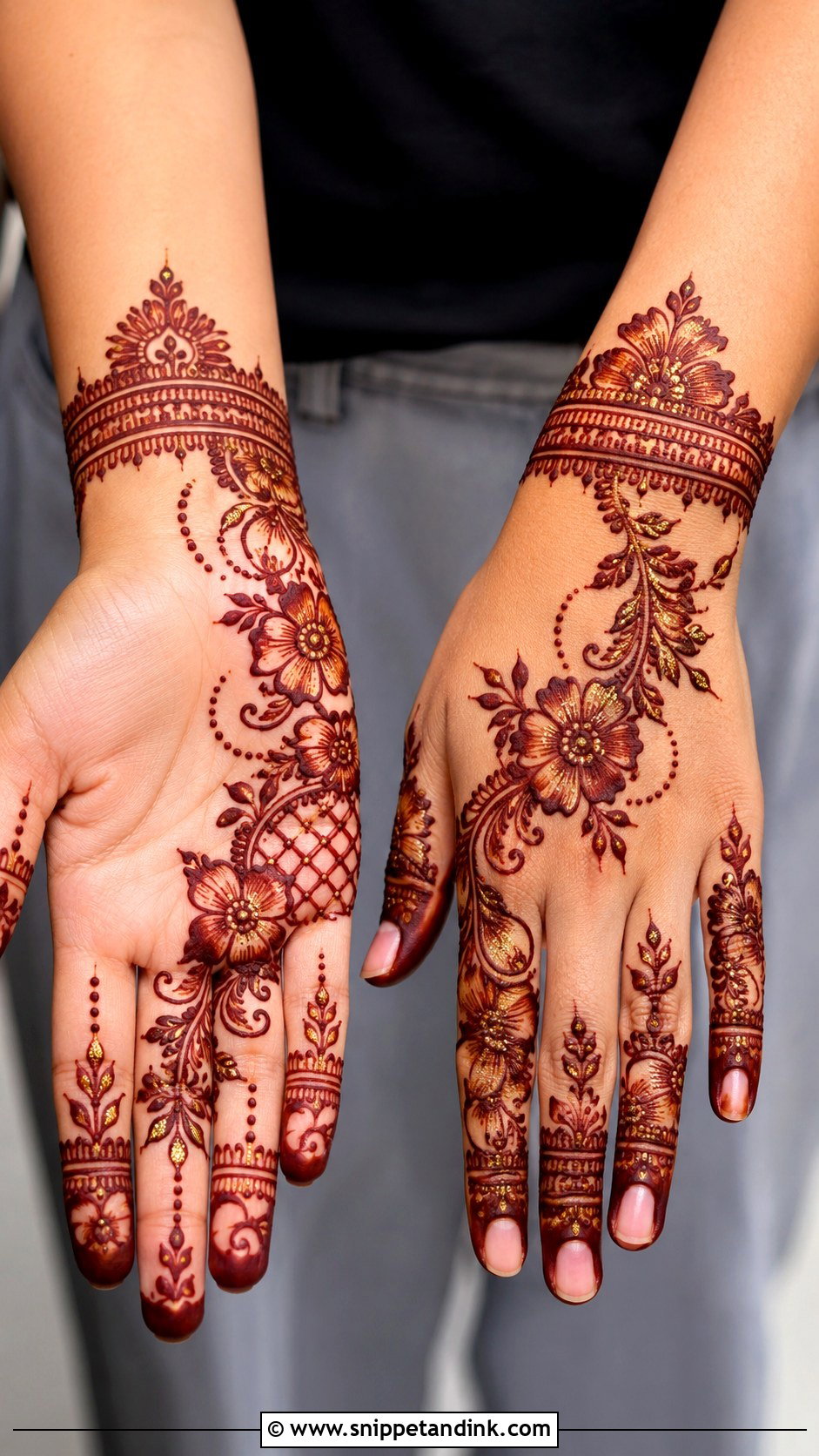
Glitter starts with an ordinary henna design, then cosmetic glitter is added to flower centers, borders or cuffs. Use it sparingly so the henna stays visible. Gold, bronze and maroon suit traditional outfits. I add glitter after the paste has dried, using a skin-safe cosmetic adhesive, and only glitter made for skin; craft glitter doesn’t belong on a body. It lasts as long as the evening, so wear it for one event.
Drawing Henna Yourself With a Home Cone
Several of these designs are easy enough to try at home. The paste matters more than the pattern. Fresh natural henna should be smooth, about the consistency of toothpaste, and it should smell earthy or of essential oils, not of chemicals. Cones meant to last months on a shop shelf at room temperature often contain additives; fresh paste is usually kept frozen and used soon after thawing.
- Snip the tip of the cone very slightly. You can always cut more; a big hole means thick, uncontrollable lines.
- Hold it like a pen and squeeze gently with steady pressure, lifting the tip just above the skin rather than dragging it.
- Practice on a plastic sheet or paper first, especially vines and leaves, until the line thickness stays even.
- Work from the side away from your drawing hand, so your wrist doesn’t smudge what you’ve finished.
Getting Through the Patchy Fade
A henna stain doesn’t wash off; it fades as your skin naturally sheds, usually over one to three weeks. Fingertips and palms you use constantly fade first and unevenly, which is the stage most people dislike. To keep the stain longer, moisturize, wear gloves for dishes and avoid scrubbing. To speed up the fade before another event, gentle daily exfoliation and warm soapy soaks will lift it faster. I’d avoid bleach, harsh scrubs or anything that irritates the skin; the stain isn’t worth a rash.
A Design That Fits the Night You’re Wearing It To
The right henna fits the occasion, your comfort, your outfit and your taste. Some people want full traditional coverage; others want a light Arabic trail, a neat mandala or a modern finger-focused look. Weddings, Eid, engagements and family evenings each have room for all of them. Before you sit down, decide how much time you have, how dark you want the stain and whether you prefer open space or dense art. Clean application makes even a simple design look considered.
You'll Like These Ideas:


Leave a Reply