
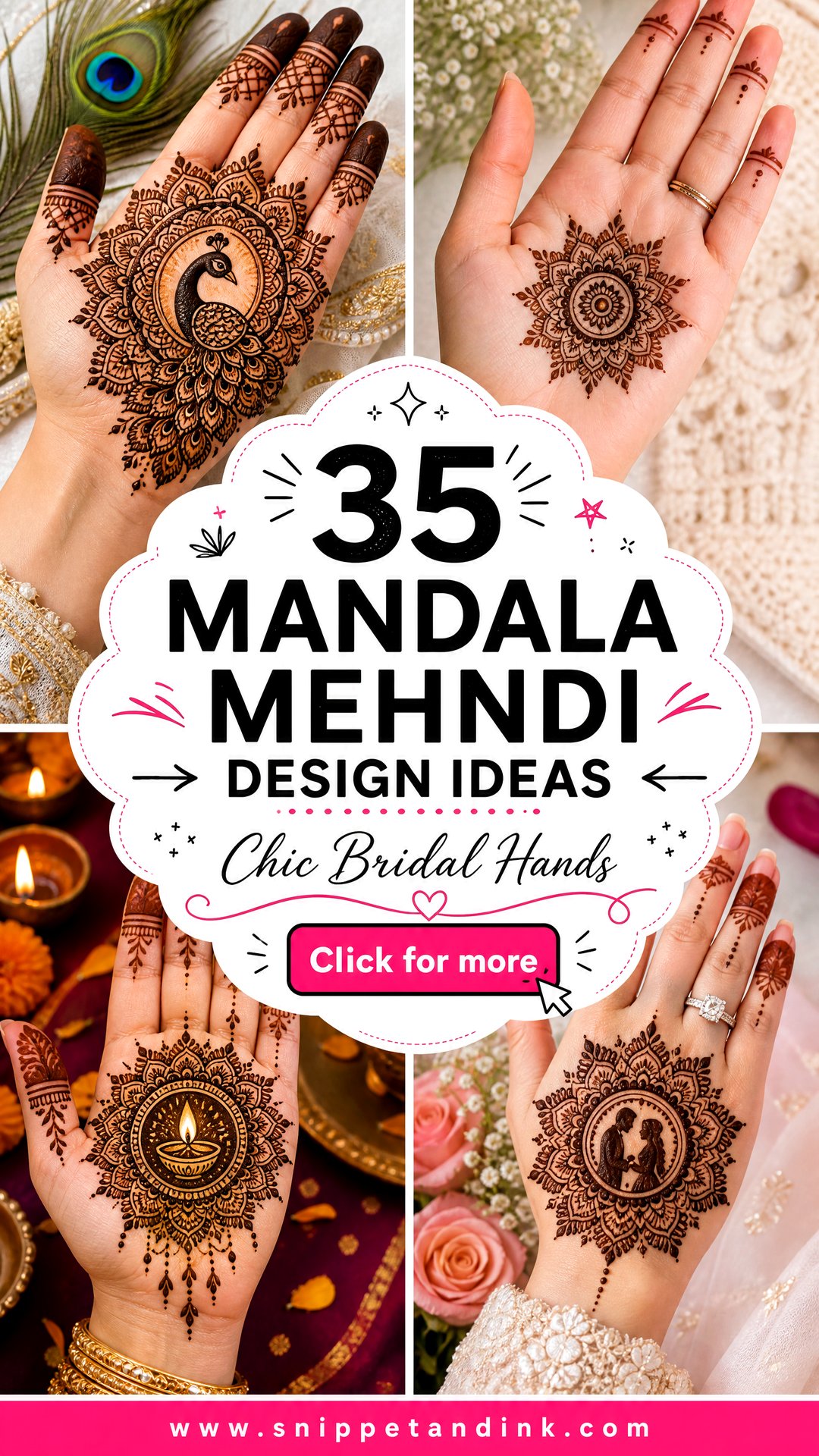
Ask me what to learn first, and I’ll say the mandala. Everything grows out from one dot, ring by ring, so you can stop at any ring and the design still looks finished. That’s also why it scales so well: three rings for an Eid morning, a dozen with paisleys and jaali for a wedding. Below are front-hand, back-hand, bridal, Arabic, Indo-Arabic, minimal and festive mandalas for Eid, Diwali, parties, family events and weddings. For each I’ve added what I watch for when I draw it and which hands it suits.
Drawing a True Circle on a Hand That Isn’t Flat
Many of these designs are perfectly doable at home, and a mandala is the best place to start. The challenge is that a hand curves in every direction, so a circle that looks round from one angle looks oval from another. This is how I lay one out.
- Relax the hand on a cushion, fingers slightly apart, the way it naturally rests. Don’t press it flat on a table, or the circle will distort when the hand relaxes.
- Place the centre dot. On the palm, that’s slightly below the middle crease; on the back, in line with the middle finger, a little above the wrist.
- Add four guide dots around it, top, bottom and both sides, at the same distance. These mark the first ring.
- Draw the first ring of petals through the guide dots, then step back and look from your own eye level before adding the next ring.
- Keep every ring the same distance from the last. Uneven gaps are what make a mandala look homemade.
Getting the paste right
Paste that’s too thick drags and gives blobby lines; too thin and it bleeds into the next ring. It should hold a line without spreading, a bit like toothpaste. Practise a few rings on paper first, and if your cone starts to spit or skip, squeeze out a little onto a tissue before going back to the hand.
1. Simple Mandala Mehndi Design
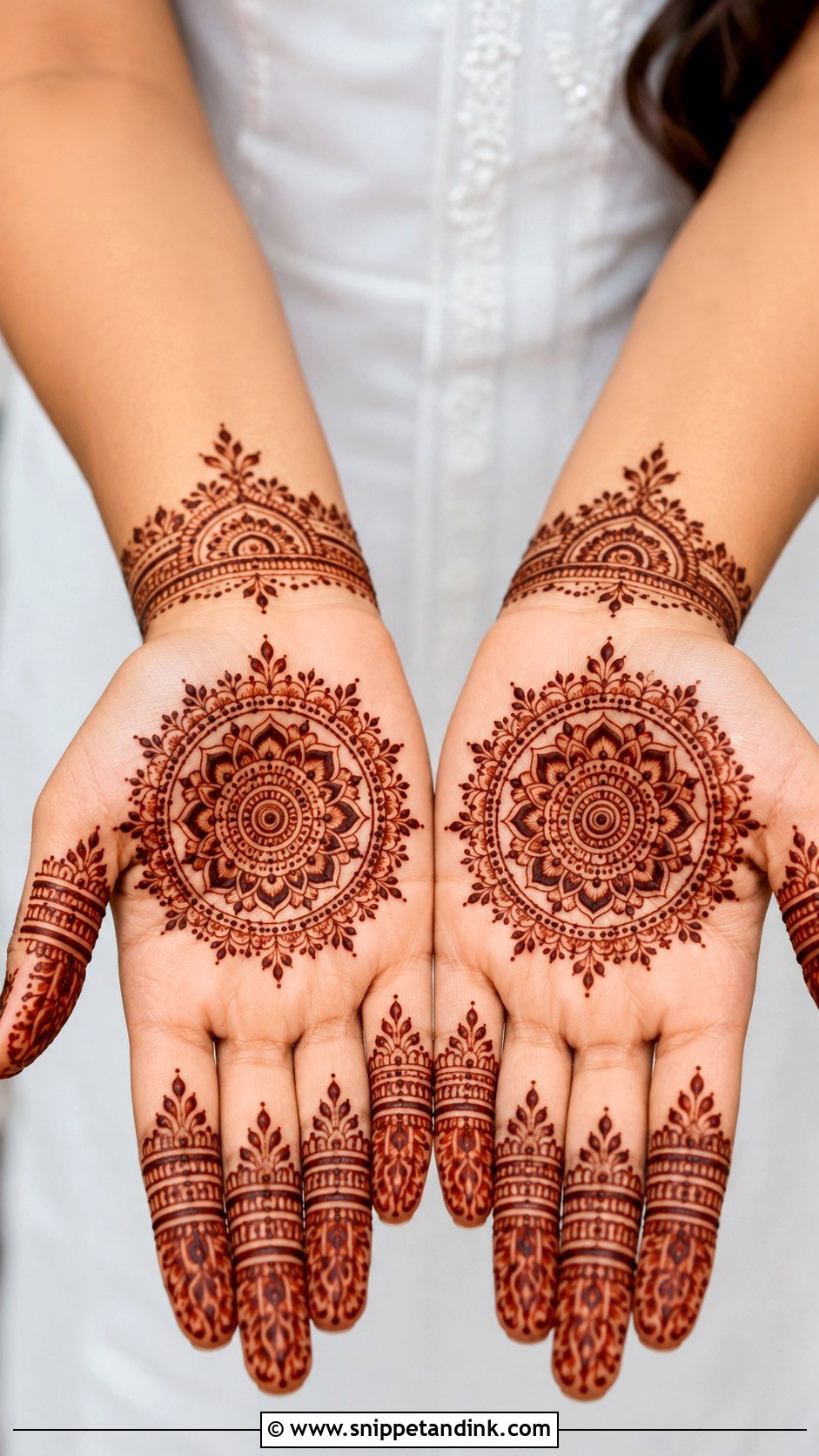
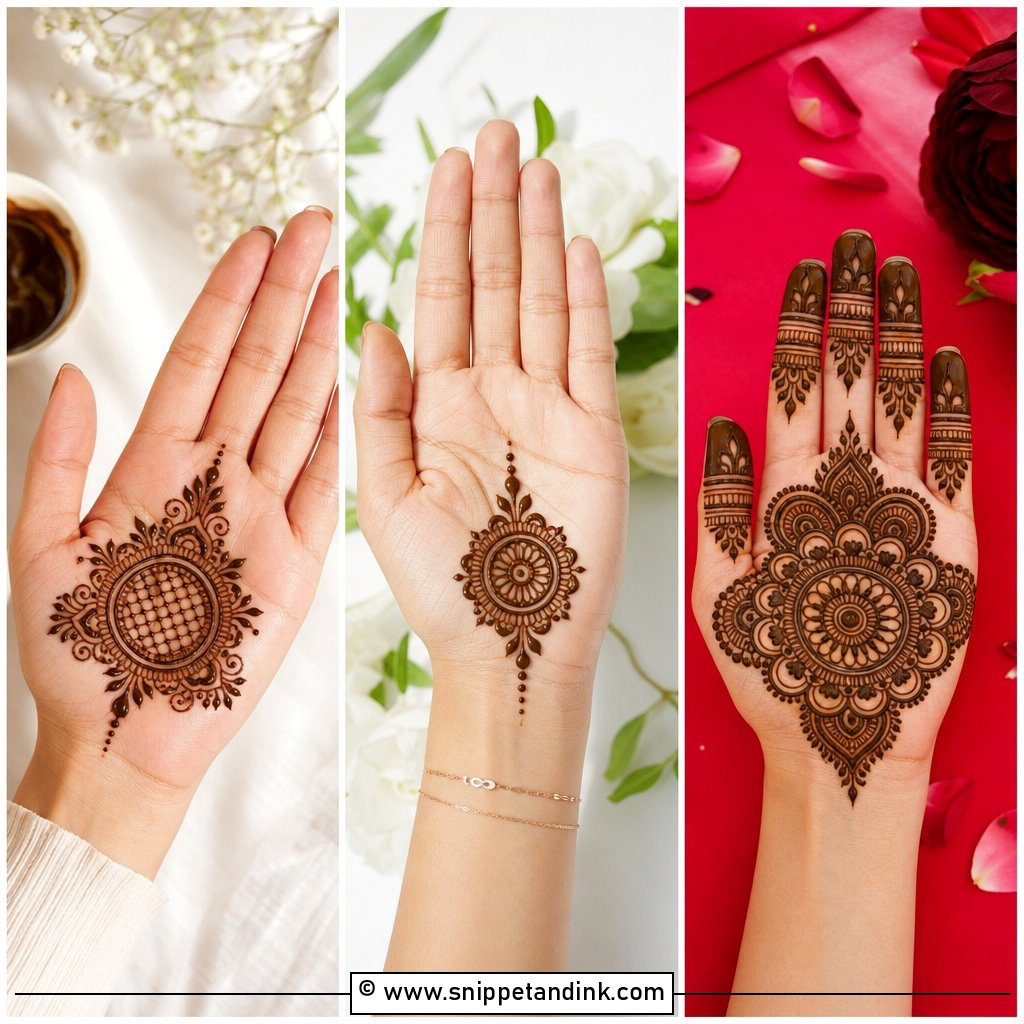
One circle in the middle of the palm or back of the hand, a few soft petal rings, tiny dots and clean finger lines. It’s the main circle doing all the work here, so it has to be round. I keep the outer rings open so it doesn’t look crowded. Fingers need only slim leaf strokes, small bands or dotted tips. It’s quick enough for a small pooja or an Eid morning when the house is busy.
2. Front Hand Mandala Mehndi Design
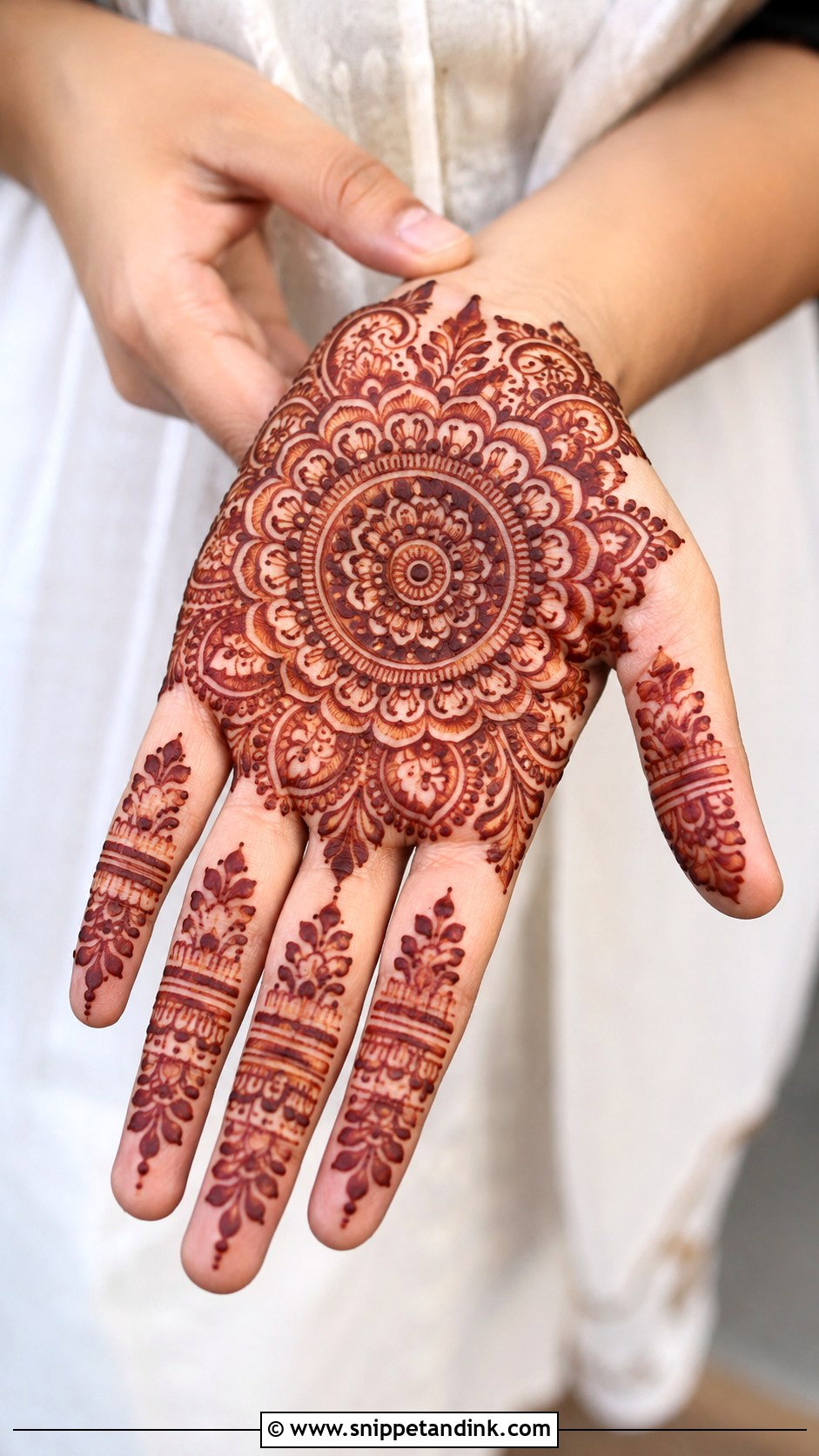
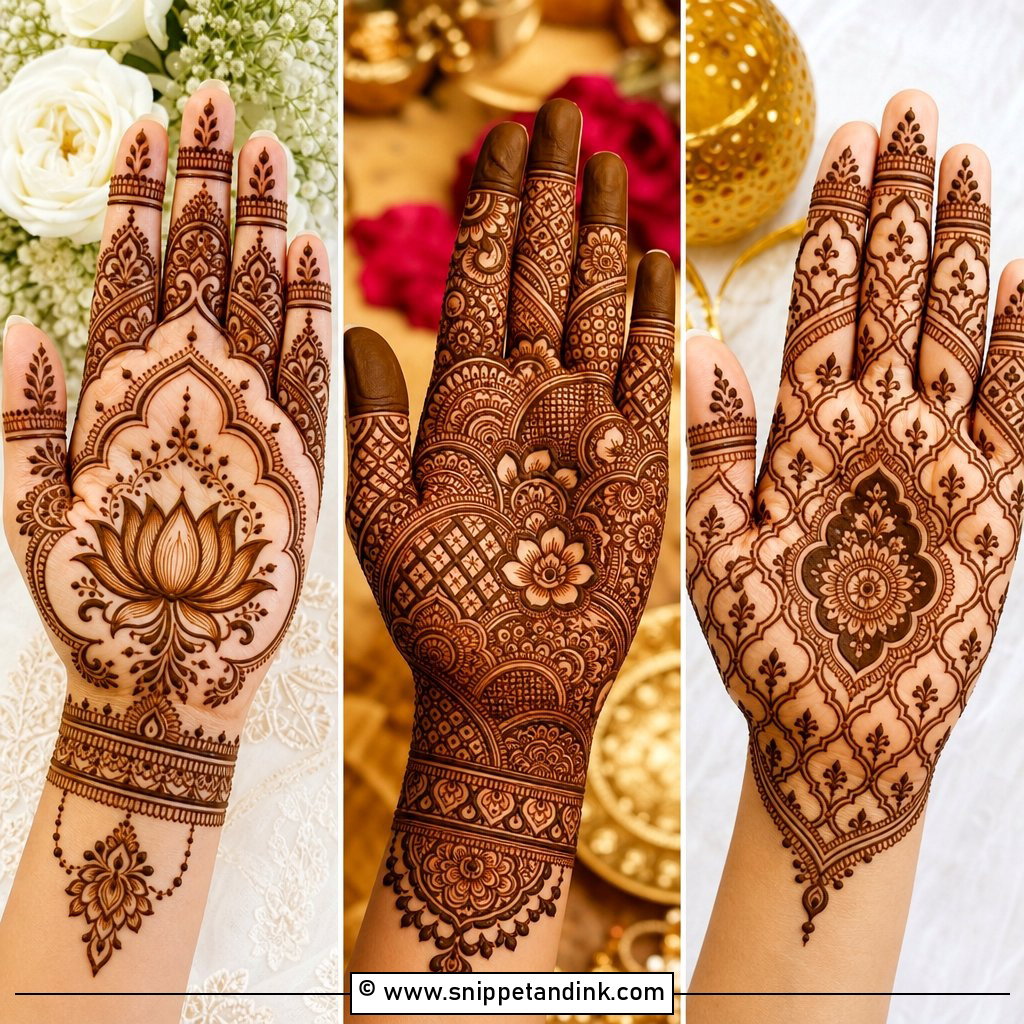
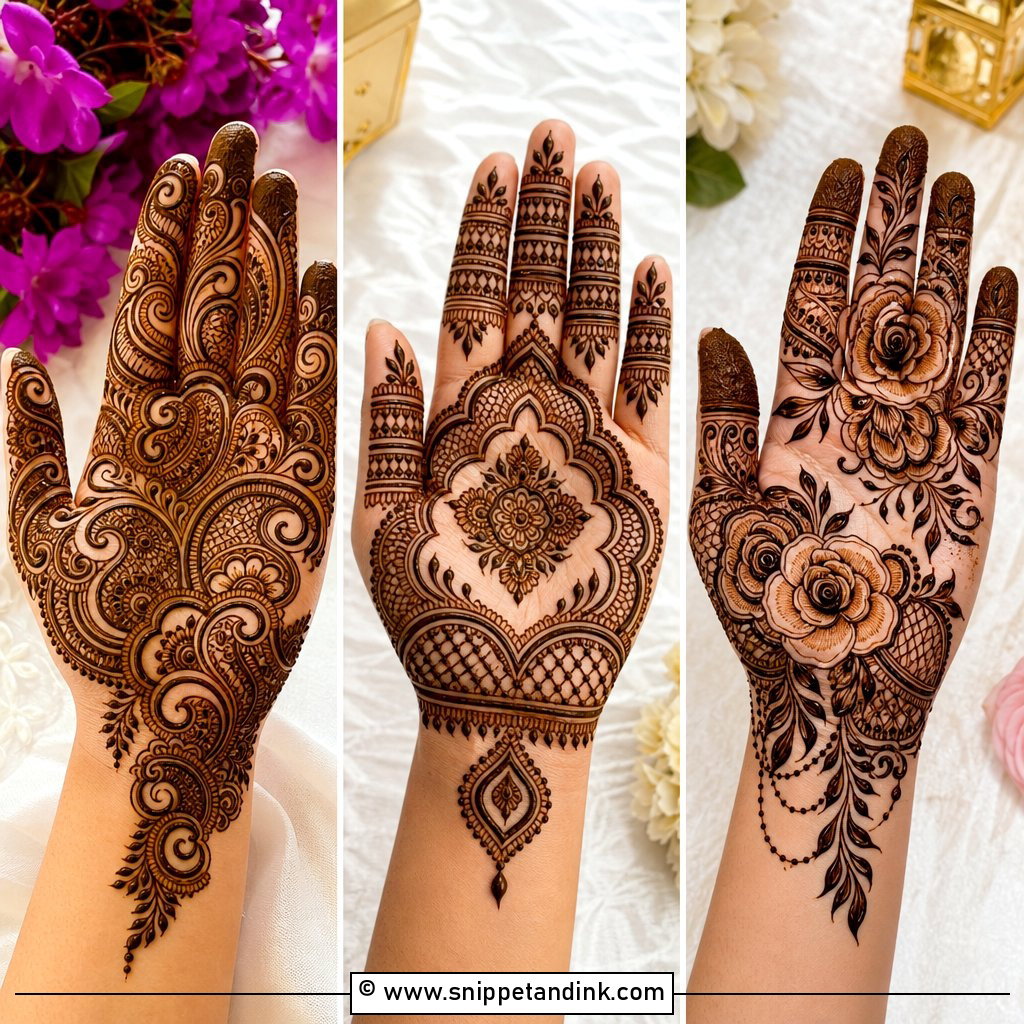
The palm holds a round motif like a frame, and palm skin stains deepest, so even a modest mandala turns out bold and reddish-brown. I start with a small dot or flower, then build rings of petals, scallops, paisley curves and fine lines. The palm isn’t flat, though: it dips in the centre and rises at the mound below the thumb. I draw the rings slightly wider on the thumb side so they look round when the hand is relaxed, not just when it’s flat on a table. Fingers can carry matching bands, vines or a little mesh.
3. Back Hand Mandala Mehndi Design
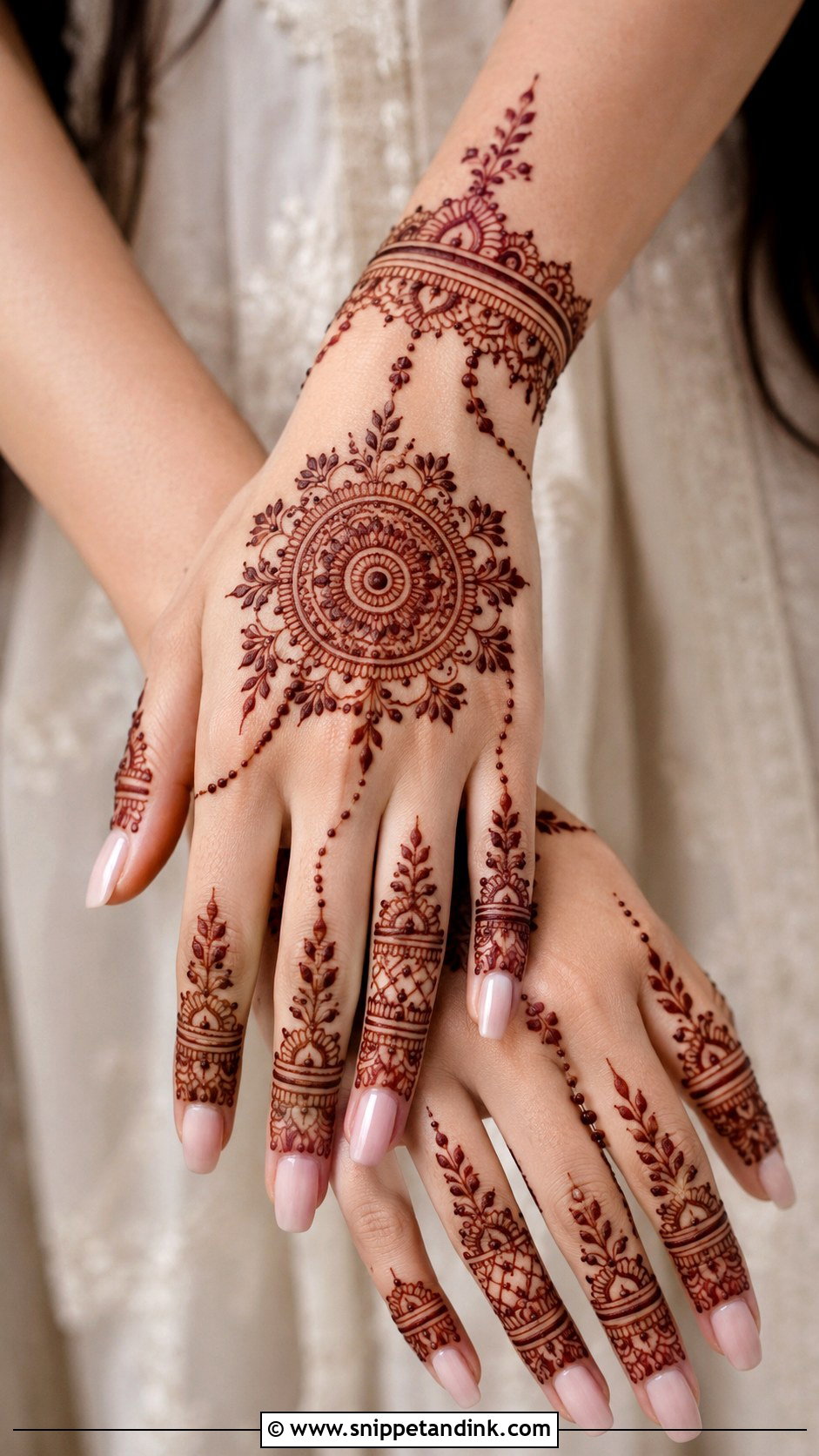
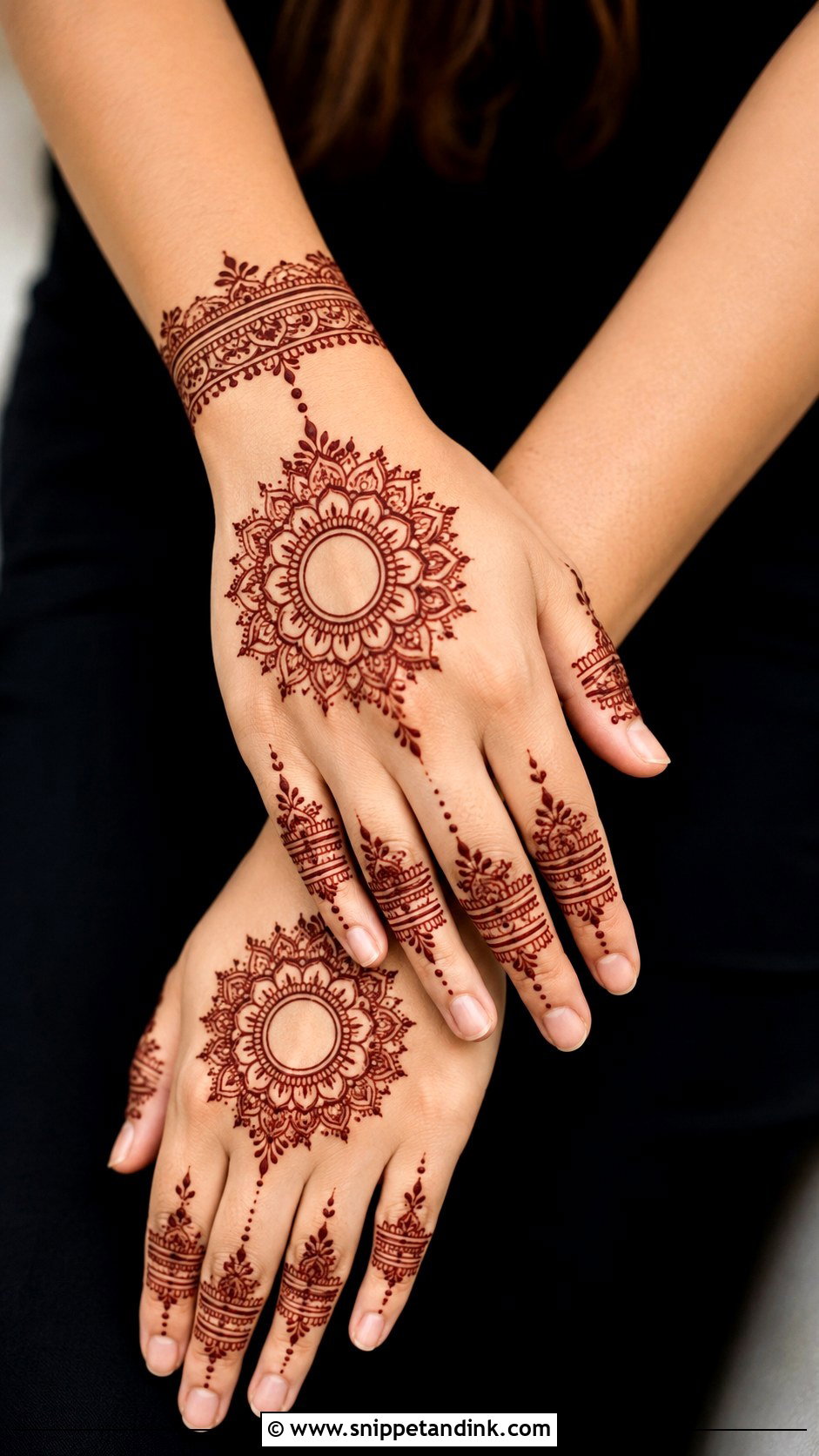
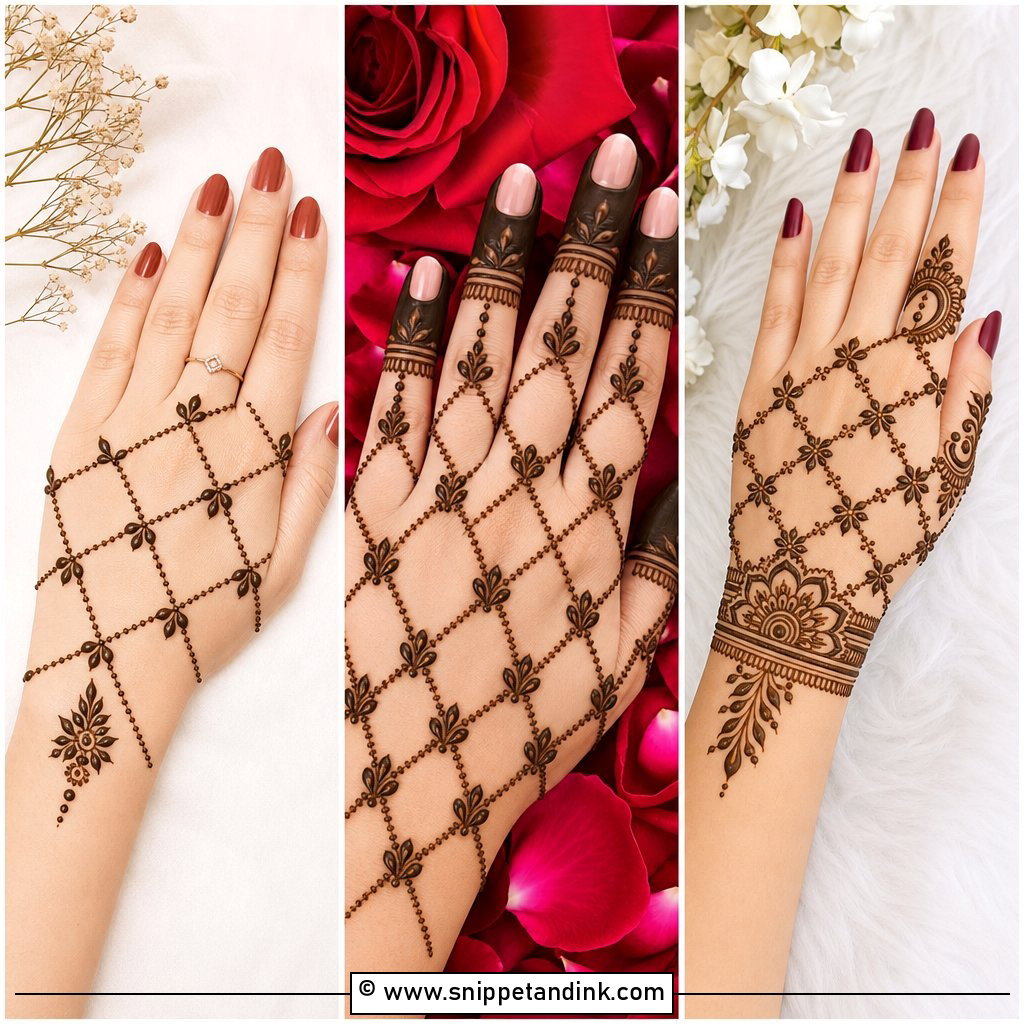
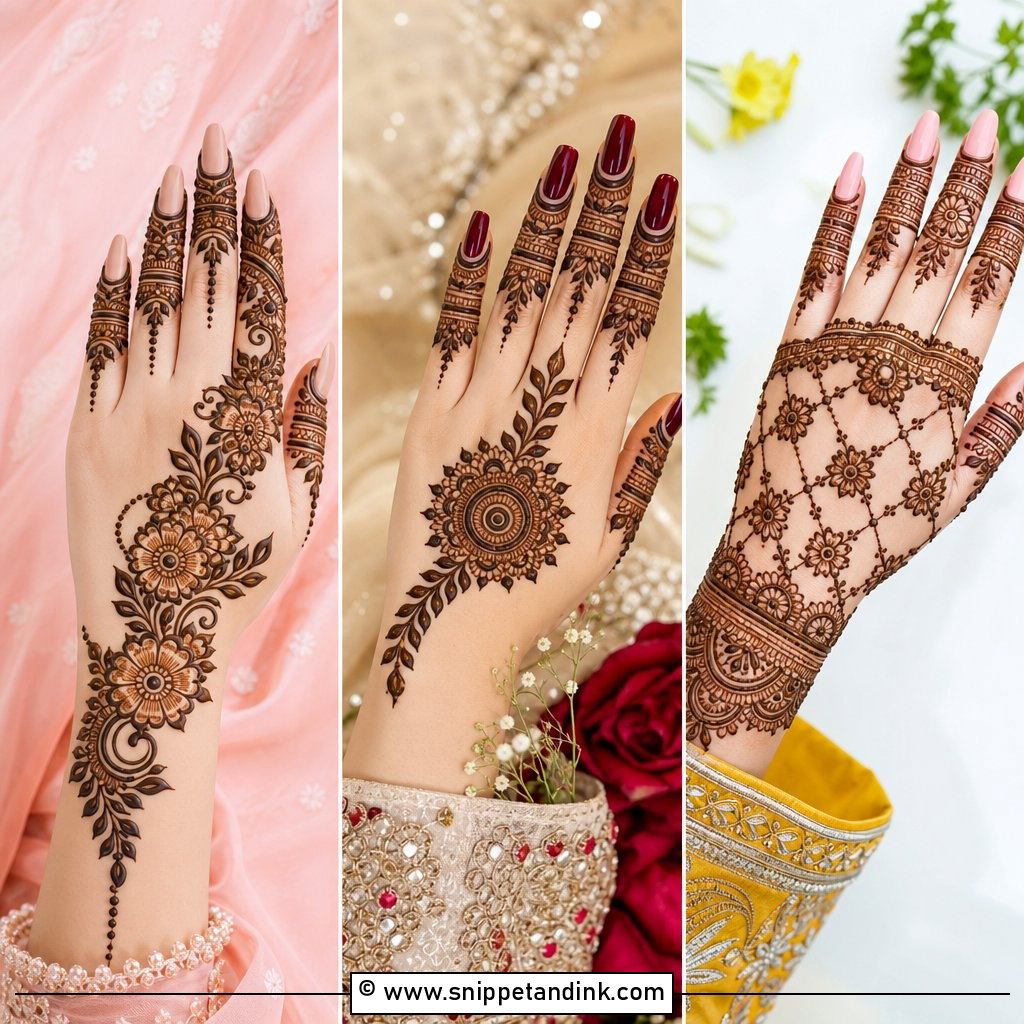
When hands are held together for a photo, the backs show, which is why this placement ends up in so many pictures. The mandala sits in the centre of the back of the hand and spreads toward the knuckles and wrist, with a bracelet cuff to finish. Semi-filled fingertips, slim vines or ring bands link the fingers back to the circle. It suits bridesmaids and engagement guests who want visible mehndi without dense palms. The back of the hand stains a little lighter than the palm, so bolder outlines help here.
4. Bridal Mandala Mehndi Design
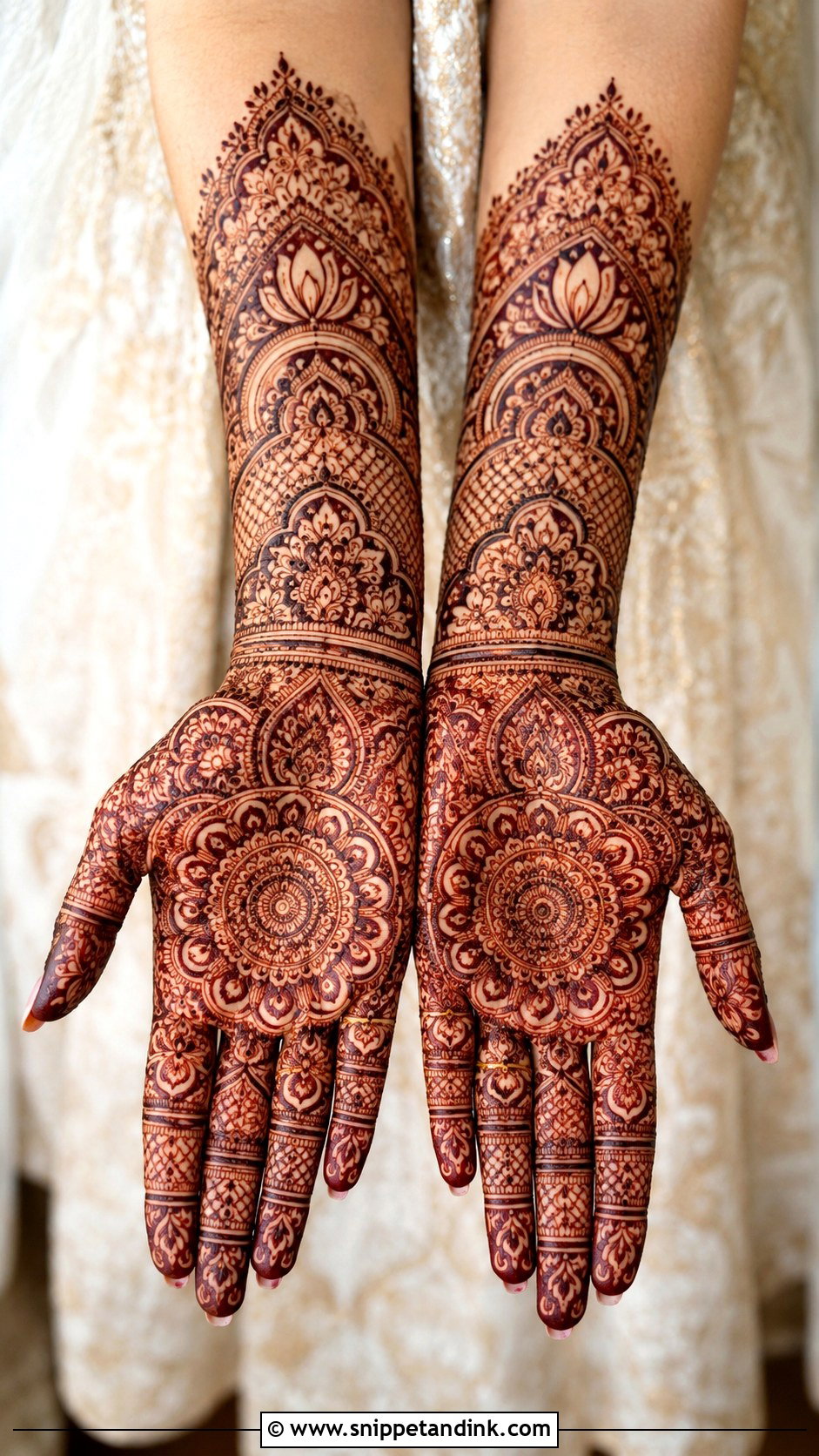
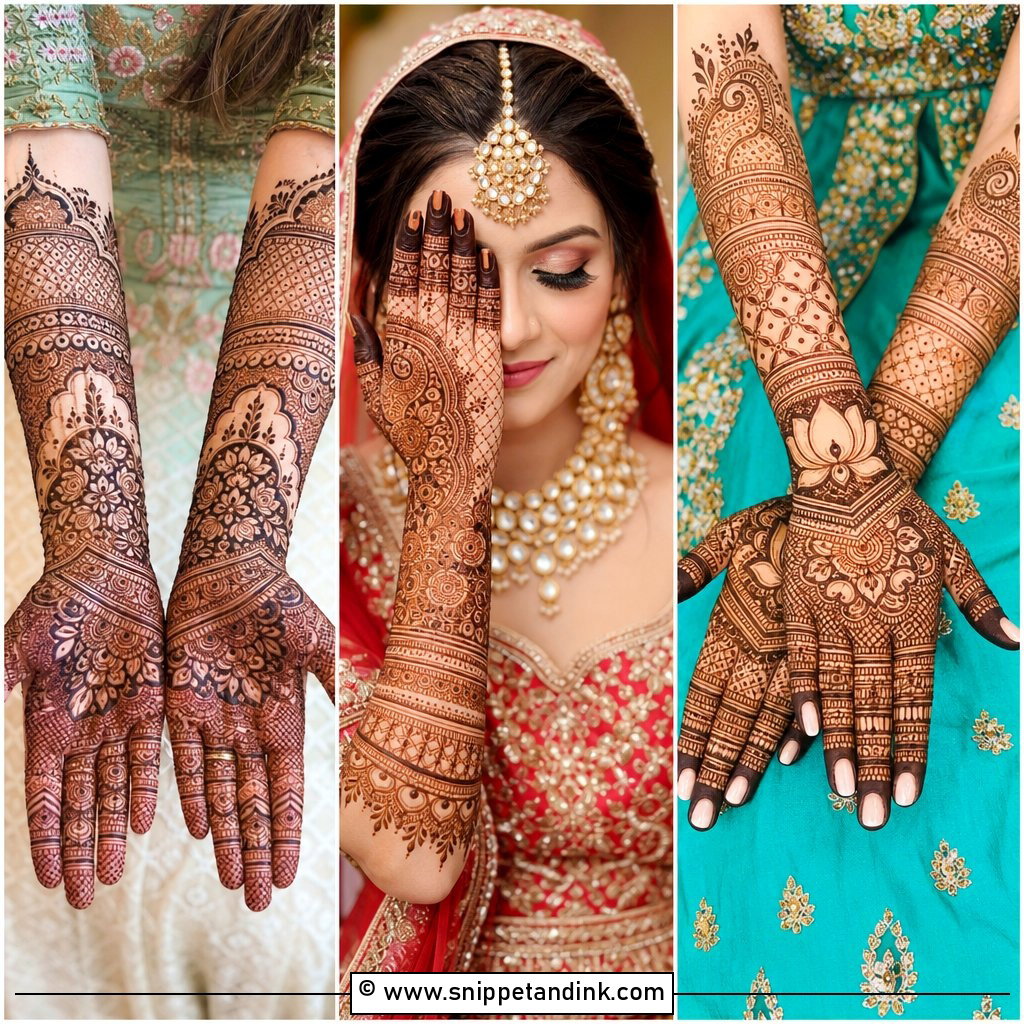
A bridal mandala mehndi design keeps the circle but surrounds it with paisleys, lotus petals, jaali, vines and fine fillers, then carries the design up the wrist and forearm. My concern with bridal work is that the mandala gets swallowed. I draw its outer ring a touch thicker than everything around it and leave a hairline of bare skin outside it. Initials or small wedding symbols tuck neatly into the outer rings. It’s for a bride who loves symmetry and a clearly planned hand.
5. Full Hand Mandala Mehndi Design
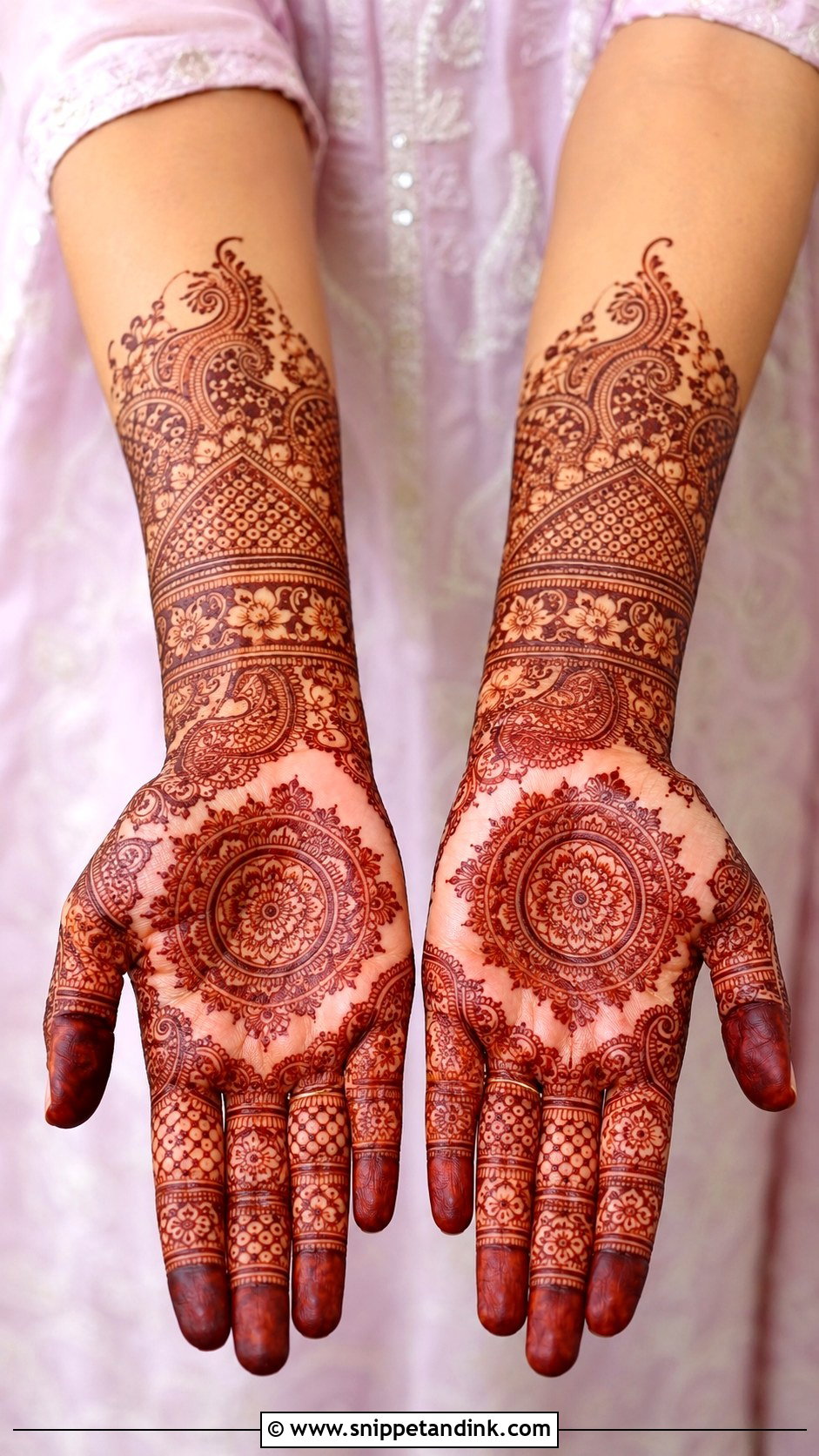
Full coverage built around a mandala anchor: florals, paisleys, checks, vines and wrist bands flowing out from the circle. On the palm, the circle sits centrally and grows toward the fingers; on the back, it connects to chains and cuffs. Balance is everything. I alternate dense zones with slightly lighter ones, so the hand doesn’t read as one heavy surface. It’s a long sitting, suited to weddings, sangeet nights and big family occasions.
6. Half Hand Mandala Mehndi Design
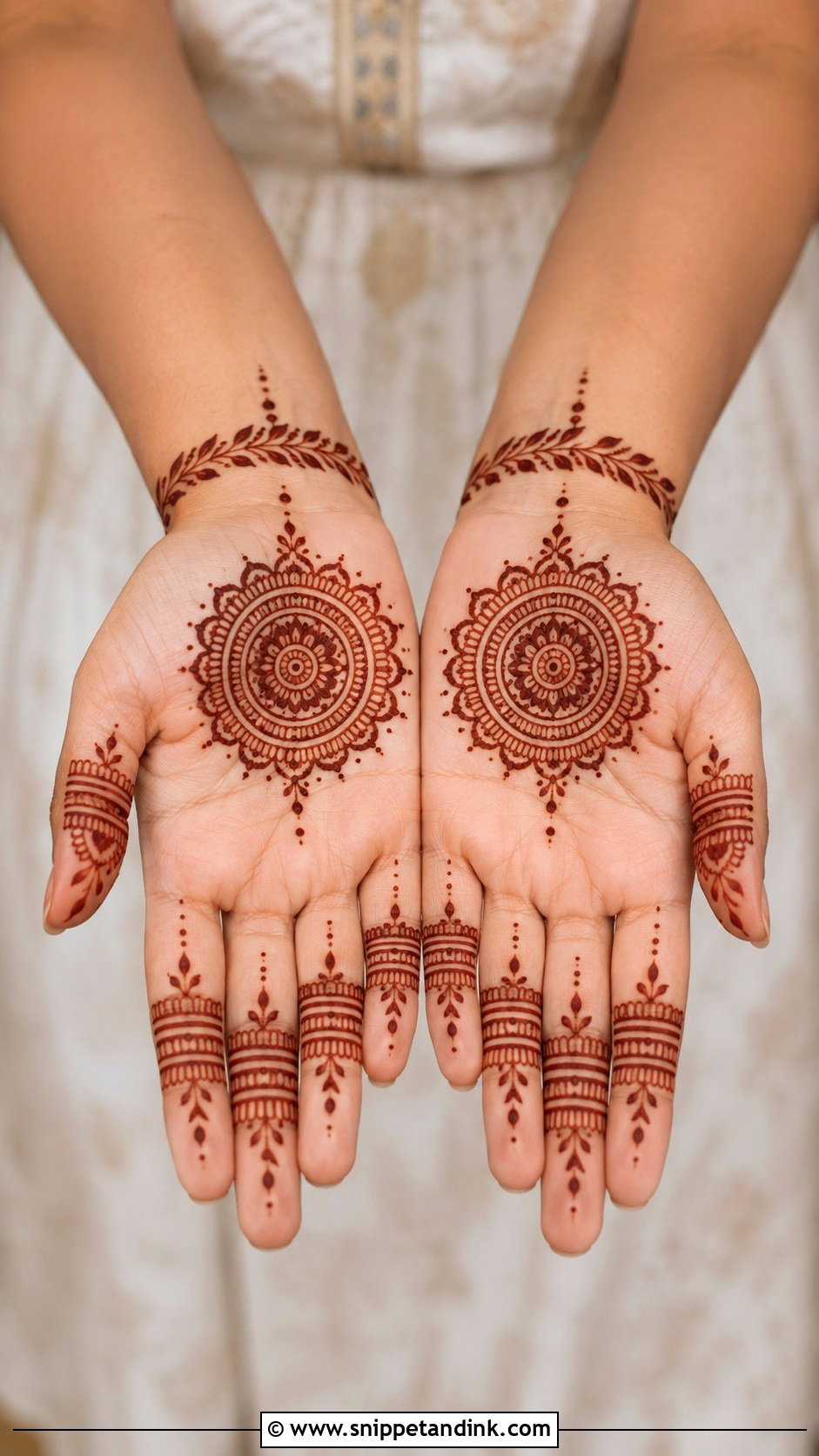
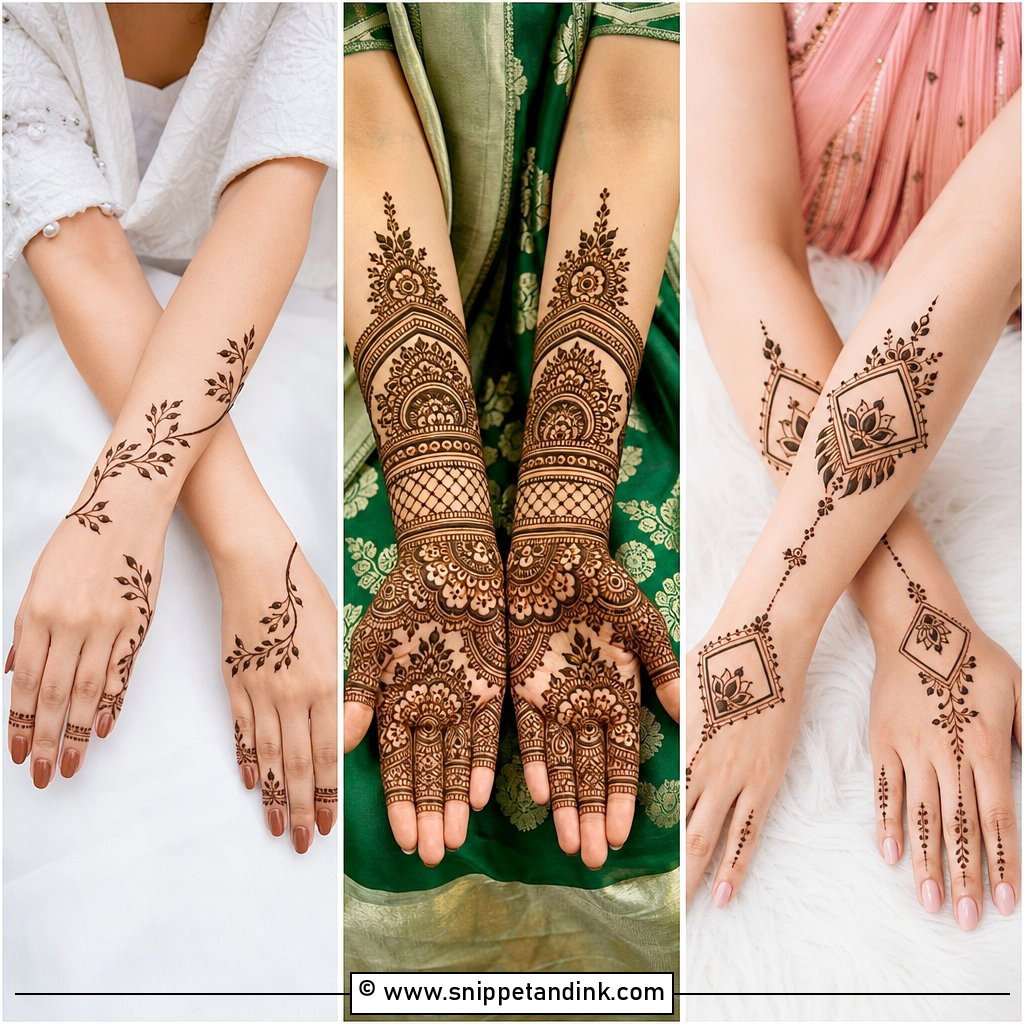
Half-hand designs cover the palm or the back of the hand and stop at the wrist, leaving the forearm bare. A centred mandala anchors it, with finger details and a small wrist border. Lotus petals and paisleys make it traditional; negative space and thin geometric lines make it modern. It’s practical for guests and sisters of the bride who need to use their hands during the event, and it dries faster than full coverage, which matters on a busy wedding day.
7. Arabic Mandala Mehndi Design
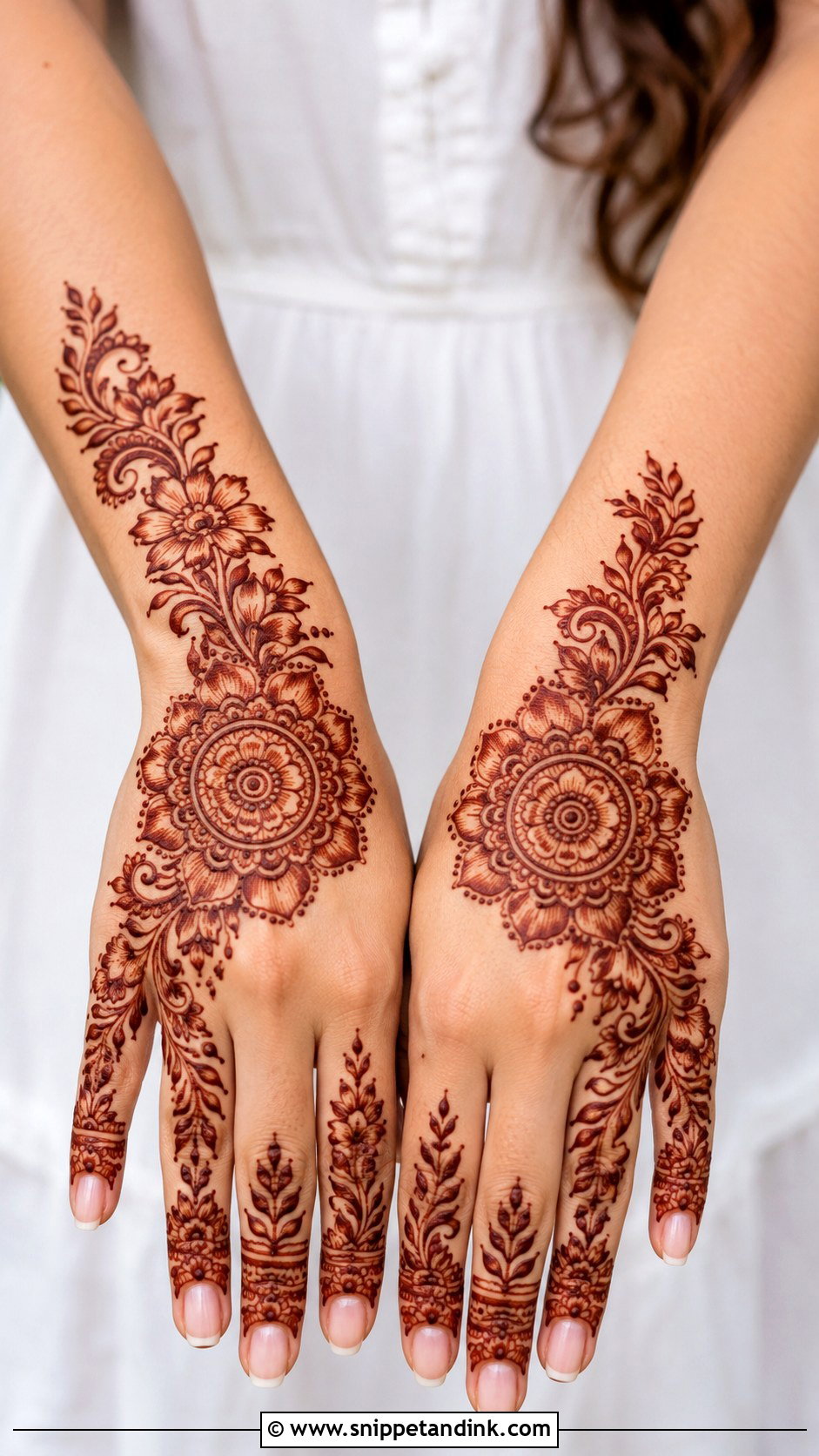
A circular focal point with flowing vines and bold floral trails, and plenty of gaps. The mandala sits on the back of the hand or palm, and leafy strokes run diagonally toward the wrist or fingers. I use thick outlines for the flowers and thinner work inside the circle; that contrast is what makes it read Arabic rather than Indian. Eid, parties and engagement functions suit it. It’s lighter to wear and quicker to apply than a fully filled mandala.
8. Indo Arabic Mandala Mehndi Design
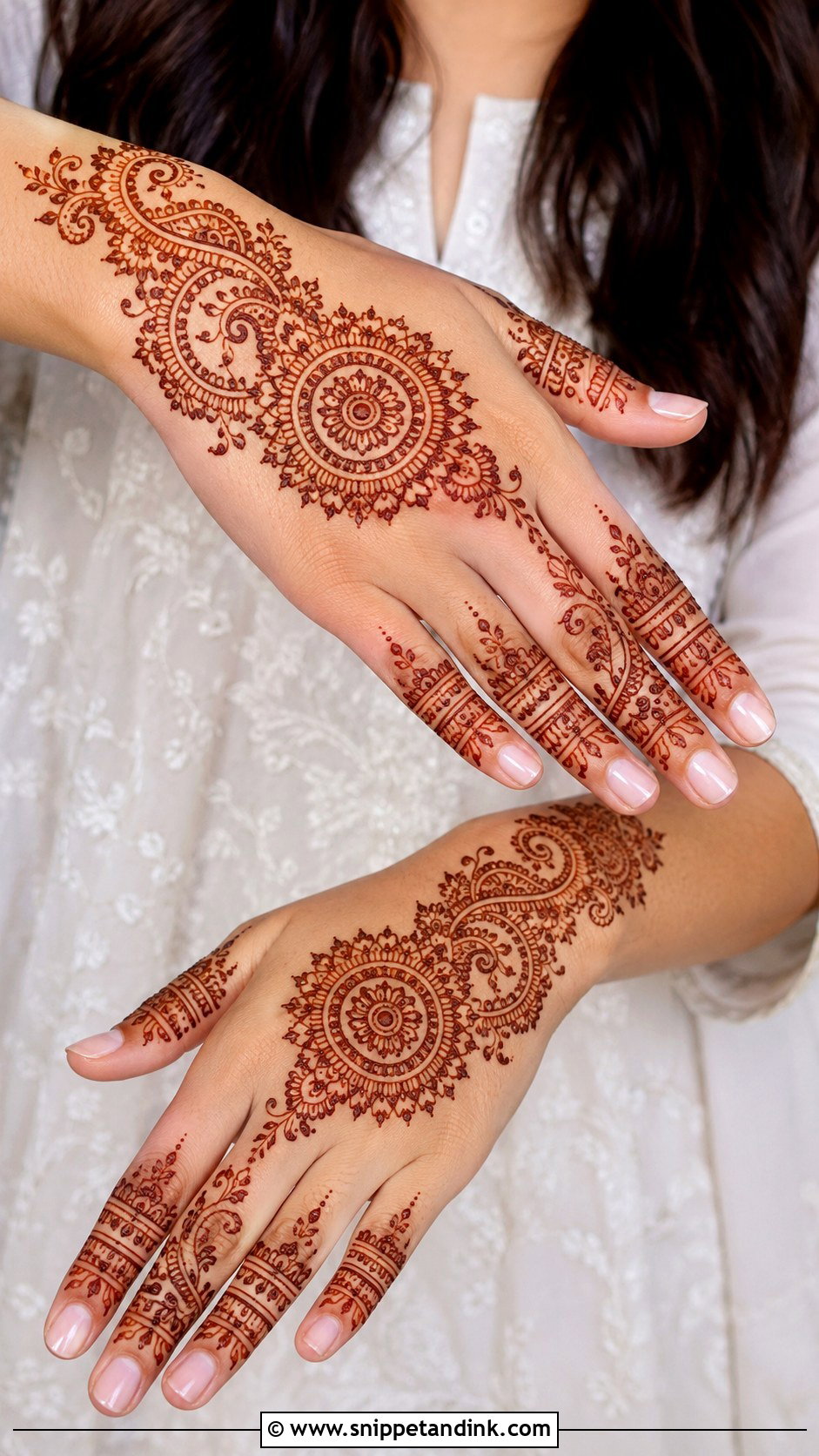
A bold centre mandala with paisley curves, floral vines and shaded petals, and open space around it. The Indian side brings dots, fine fillers and symmetry; the Arabic side keeps the layout flowing. Fingers get alternating bands and leaves rather than full packing. I plan where the empty space will go before I fill anything, since Indo-Arabic only works if some gaps are left on purpose. Bridesmaids and wedding guests like it because it’s detailed but still reads clearly in photos.
9. Flower Mandala Mehndi Design
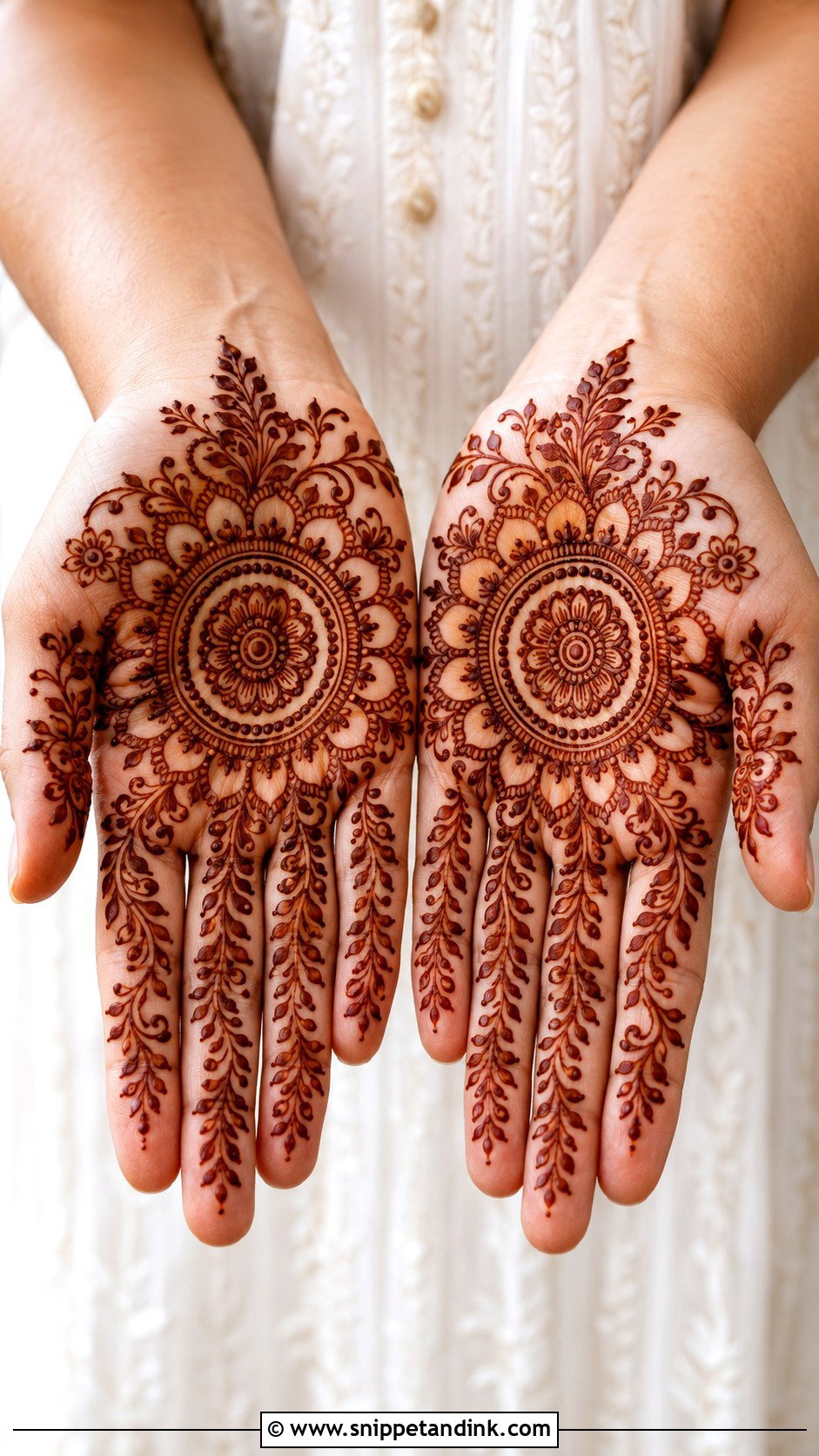
Petals, blooms and leafy curves soften the geometry. The centre can start as a small flower and grow into rings of rounded petals, scalloped borders and buds. On the back of the hand, vines move toward the fingers and wrist; on the palm, it reads traditional. Keeping the petal rings even is the main skill, and I count petals before I start each ring so they line up. It suits spring functions, haldi, bridal showers and Eid, and it’s pretty on every age.
10. Lotus Mandala Mehndi Design
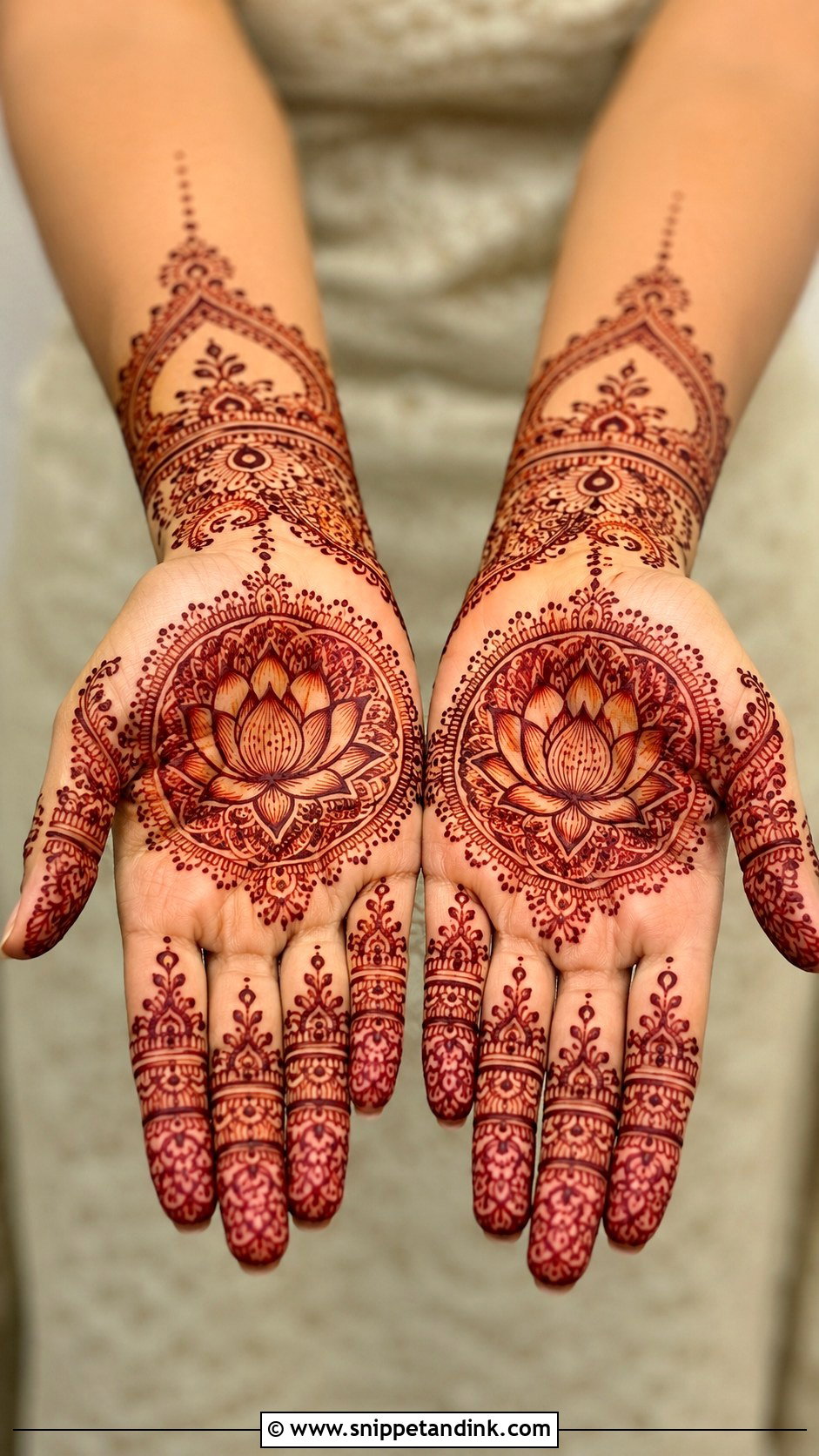
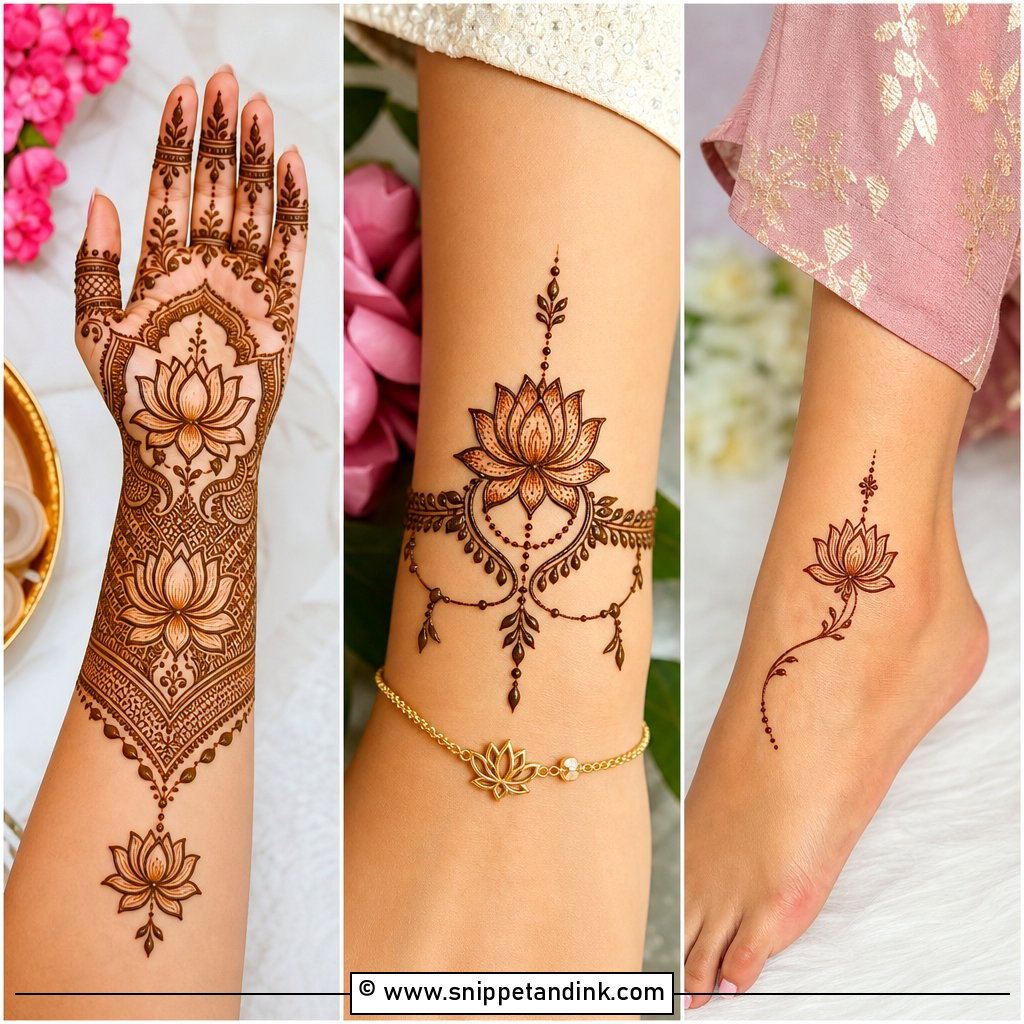
Lotus petals create a natural symmetry, which makes this one of the calmest mandalas to look at. The centre starts as a dot, spiral or bloom and grows into layered petals with fine lines inside each one. Dots, leafy borders or small paisleys finish the outer ring. I keep the gaps between petals clean, because henna spreads slightly as it stains and crowded petals merge. With a deep maroon stain and bold petal outlines, it’s lovely for brides and traditional ceremonies.
11. Peacock Mandala Mehndi Design
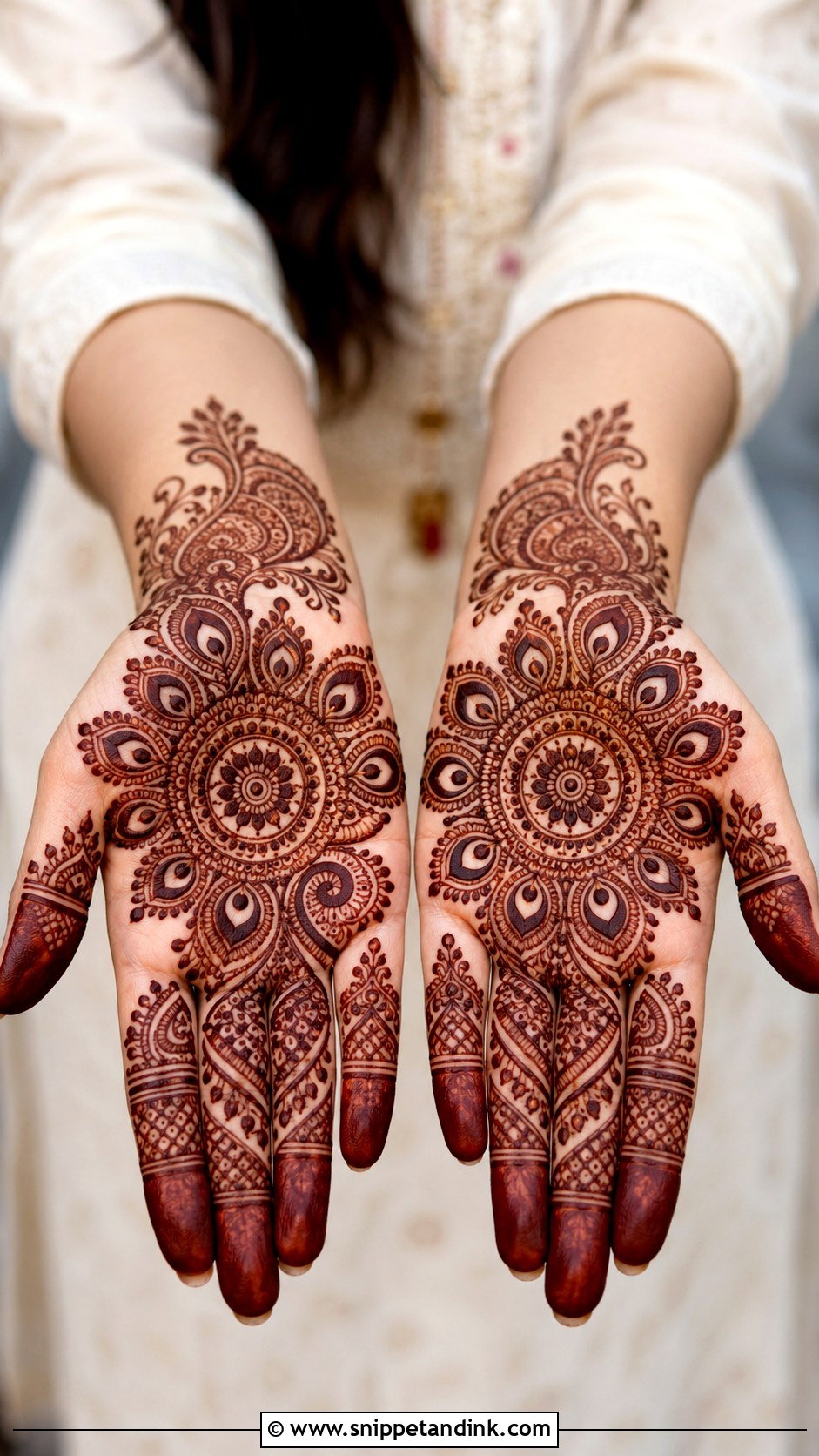
A mandala base with peacock feathers or a small peacock shape adds a regal note. Feather-like petals with tiny eye details can form the outer ring itself. On the palm, it pairs with paisleys and finger bands; on the back, a feather trail can extend toward the wrist. The mandala must stay readable, so I keep the feather eyes simple and the feathers outside the circle rather than across it. Brides and close family events suit it.
12. Paisley Mandala Mehndi Design
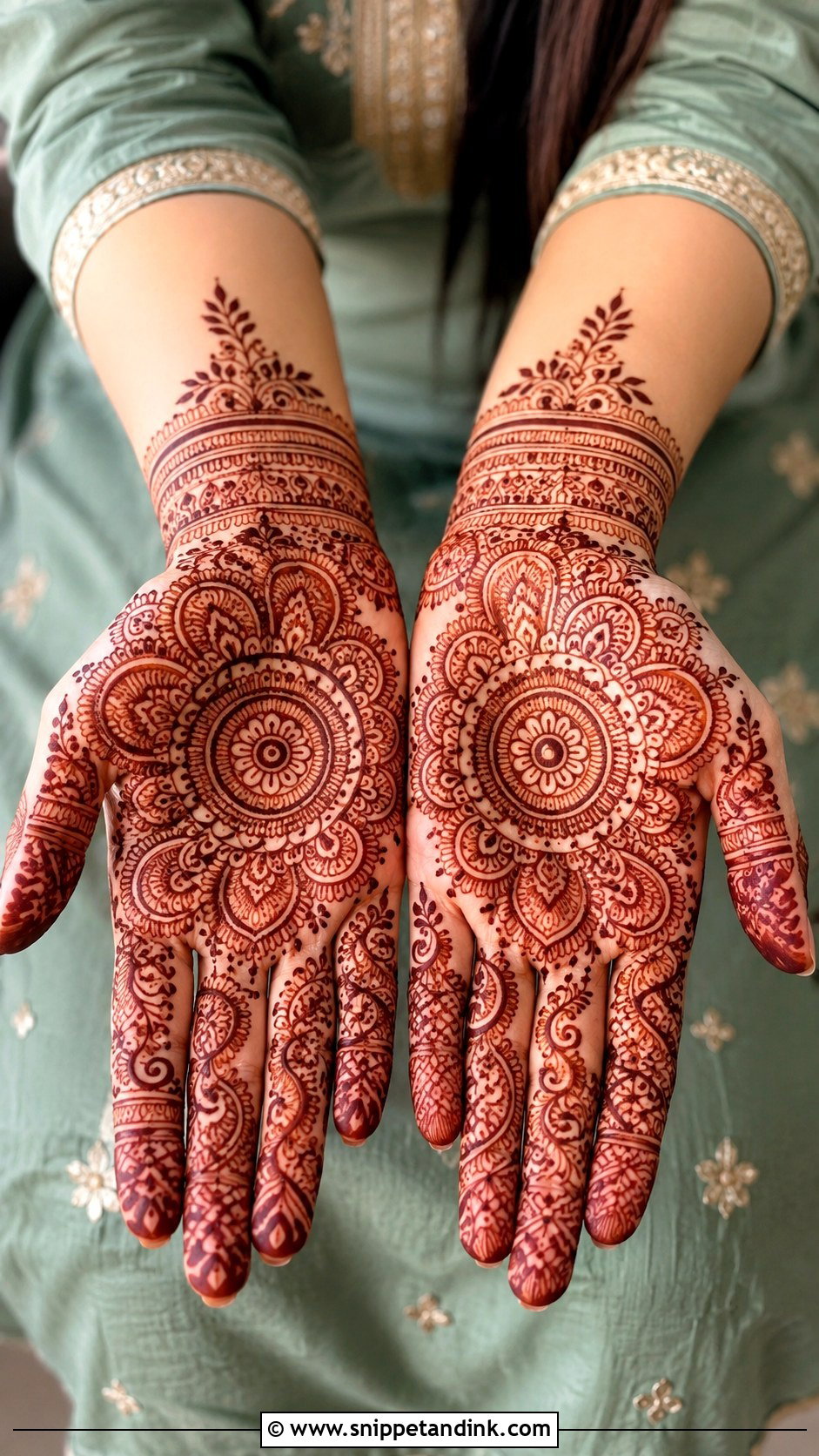
The mandala gives structure; small mango-shaped paisleys curving around its edge give movement. Each paisley can hold dots, checks, petals or shading, and longer trails can reach toward the wrist and fingers. It suits traditional outfits and weddings, and older hands too, since paisleys follow the curves of the hand without demanding tight detail. Smooth, even outlines are what keep it looking refined. Wobbly paisley tips are the first thing you notice when it’s stained.
13. Geometric Mandala Mehndi Design
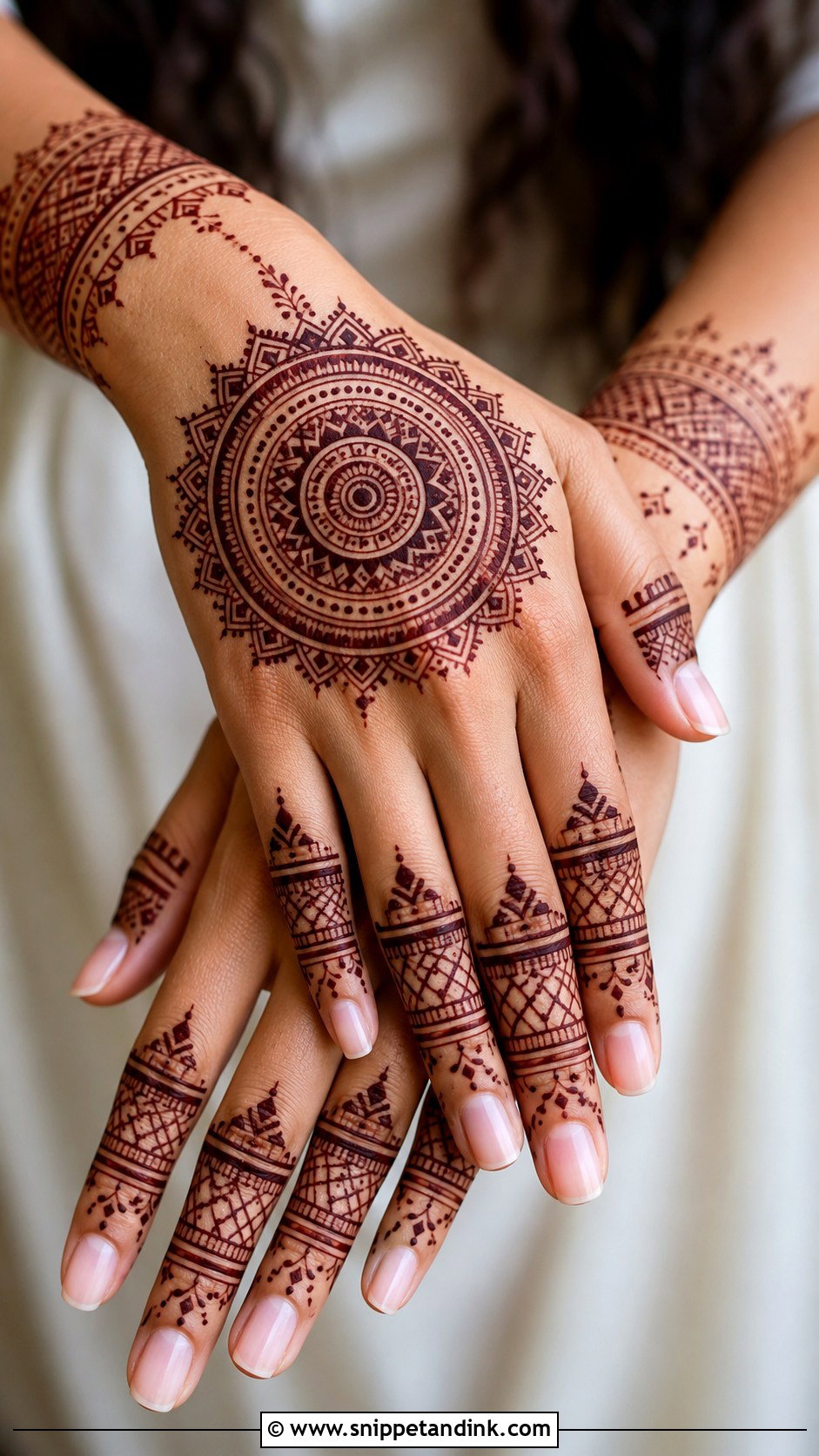
Triangles, diamonds, squares, hexagons and straight borders replace petals, so the rings feel sharp and architectural around a round centre. Negative space between shapes keeps it crisp, and fingers can carry chevrons, small grids or straight bands. The back of the hand is the right place for it, because geometric lines distort on the cupped palm. It suits a pared-back bride, college events and modern festive looks. Straight lines take a steady hand, so check your artist’s geometric work before booking it.
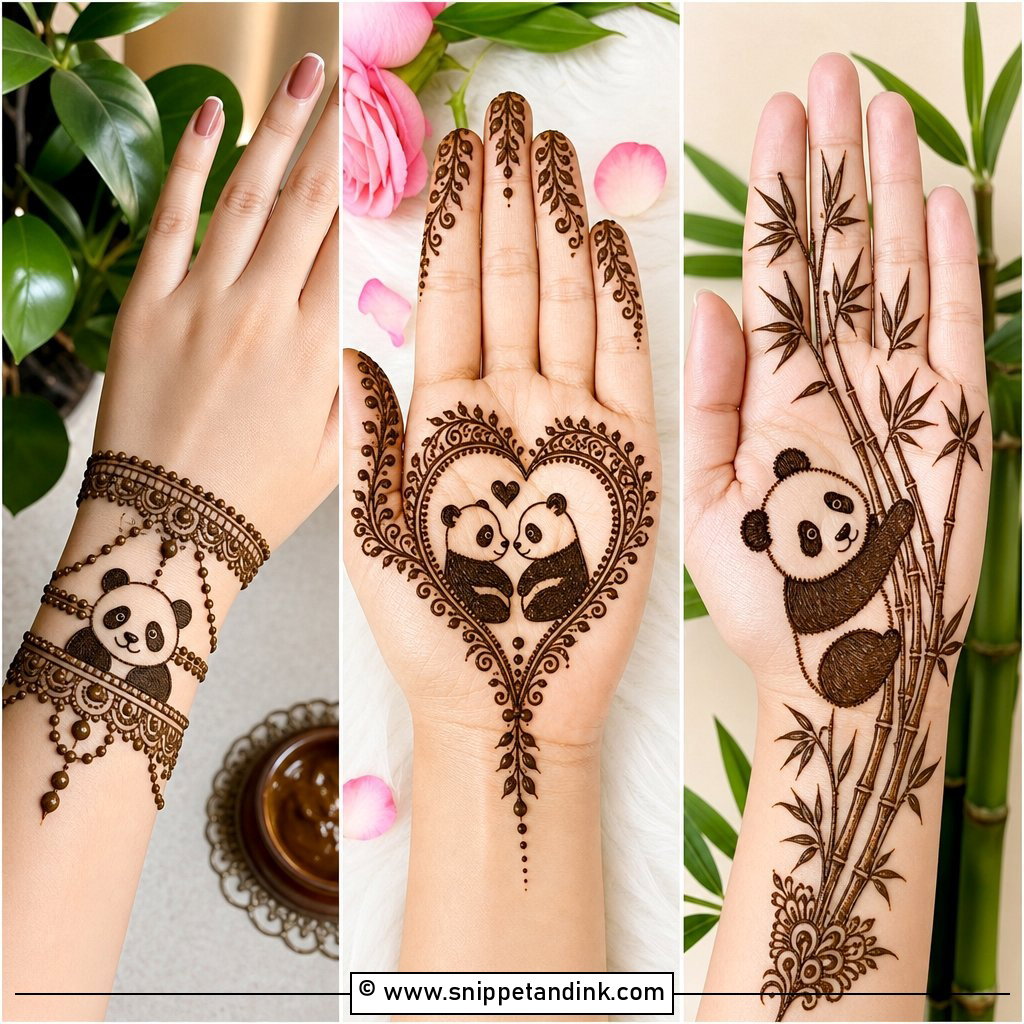
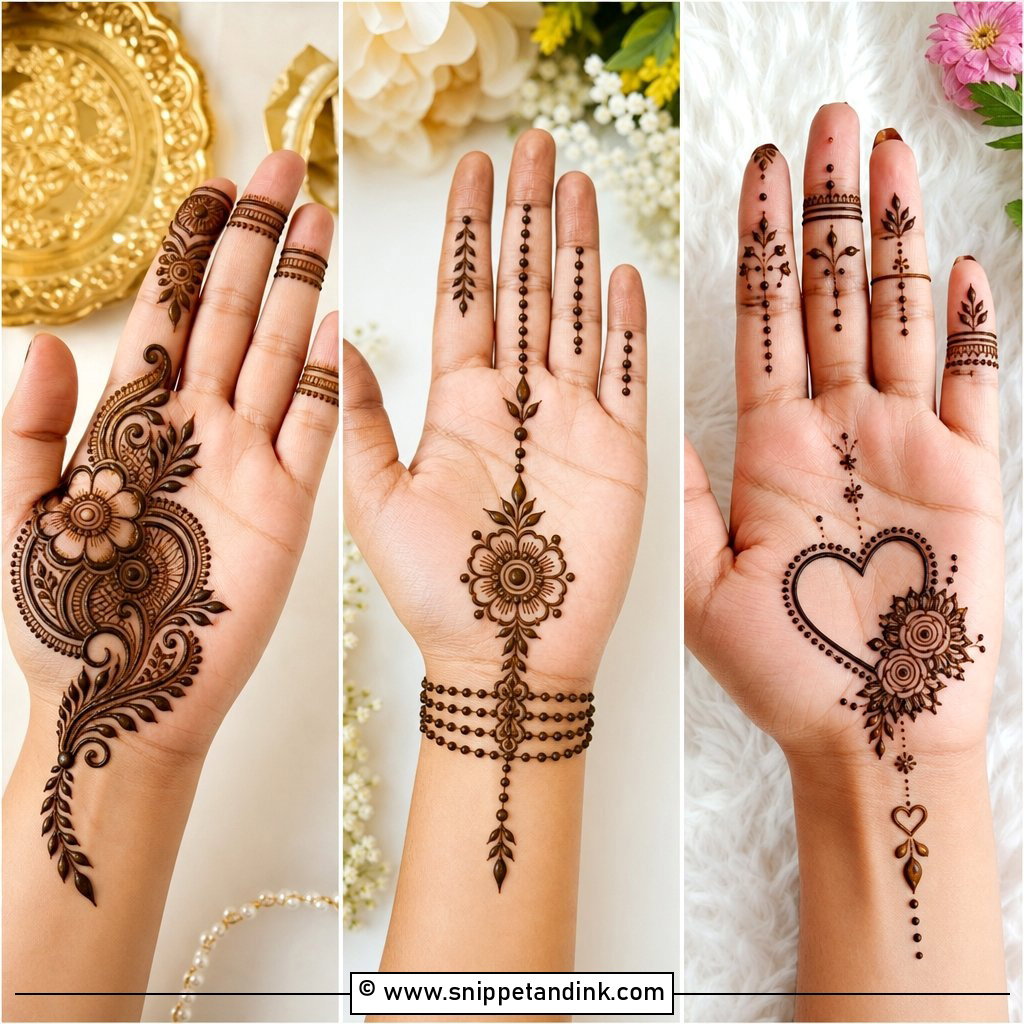
14. Minimal Mandala Mehndi Design
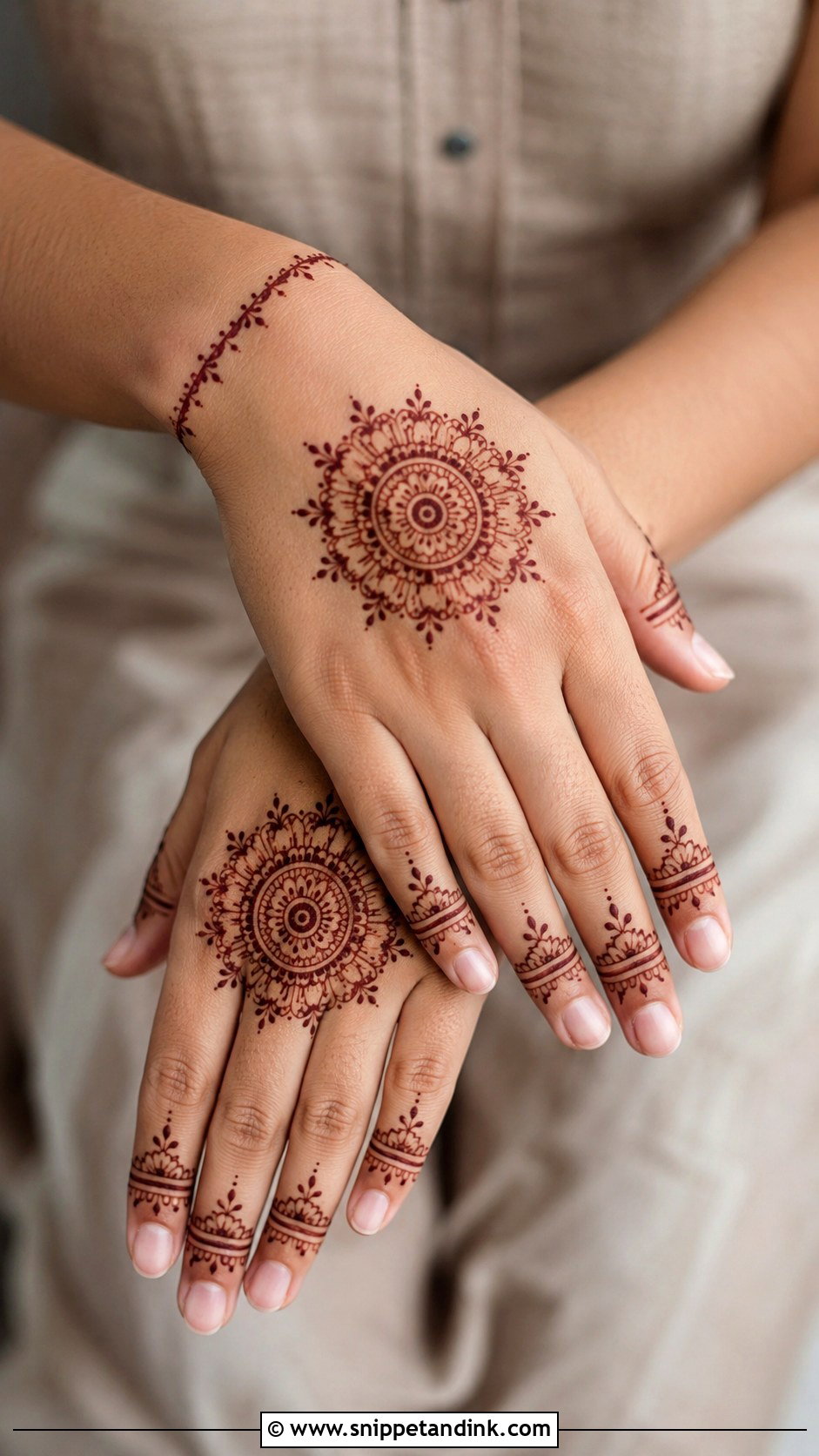
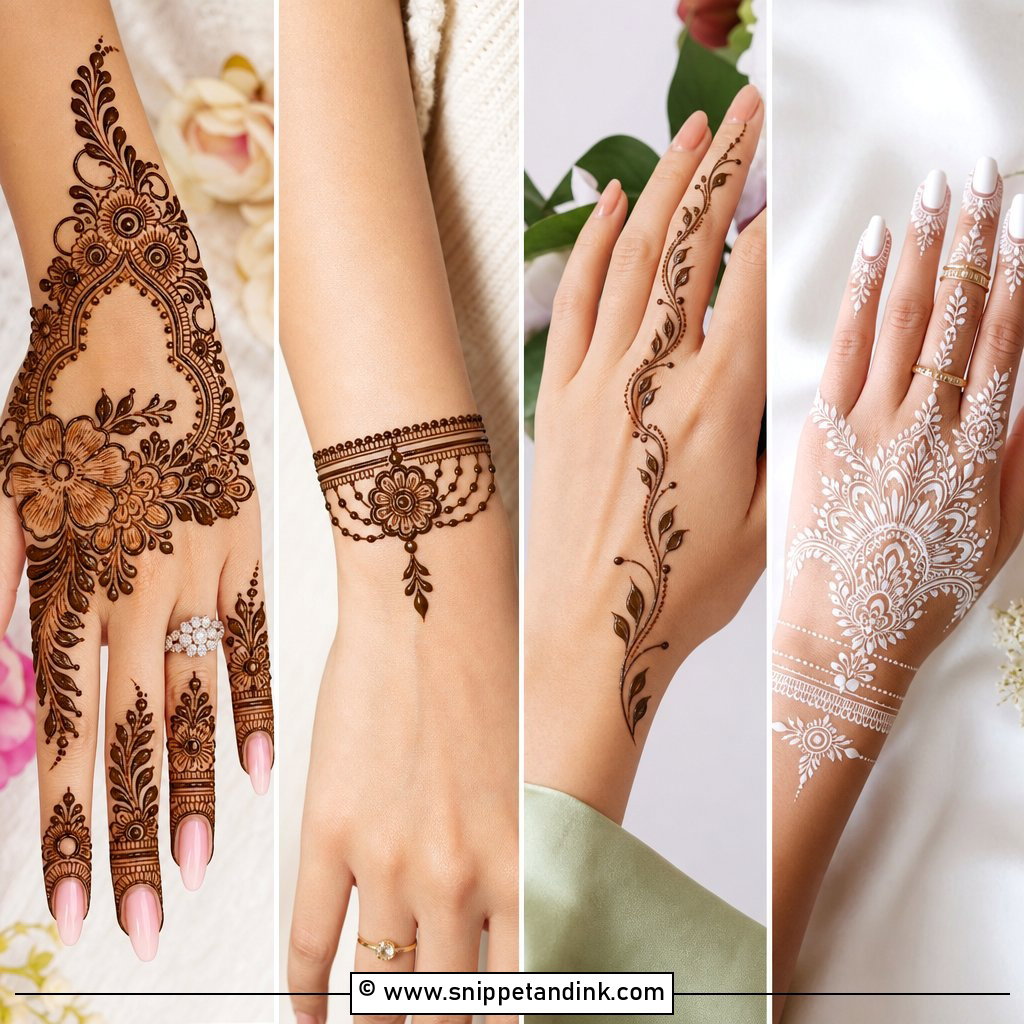
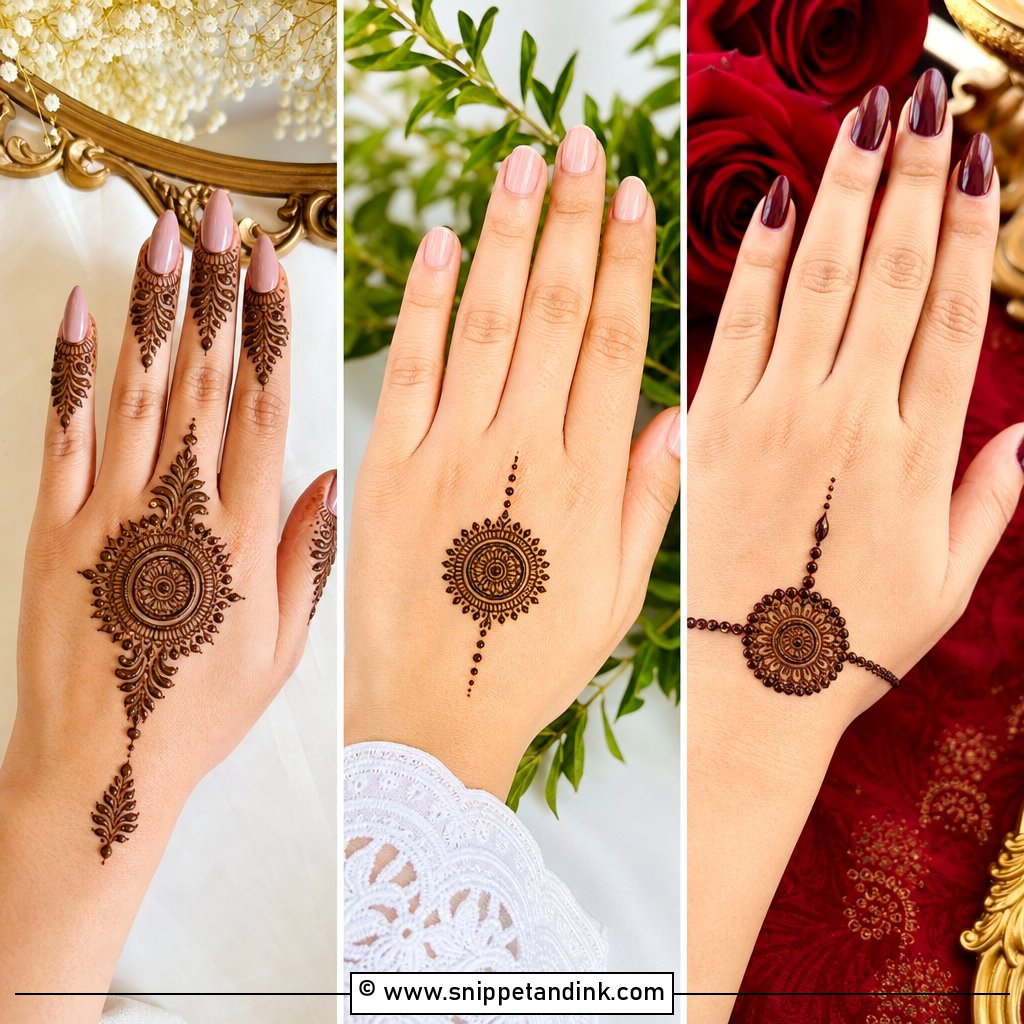
A neat central circle, soft petal rings, clean spacing, and maybe fingertips and a slim wrist band. Nothing more. It’s quick, office-appropriate and good for last-minute plans. On the back of the hand, it can read almost like jewelry. Small designs have nowhere to hide uneven lines, so I use a fine tip and a slower hand. Also keep in mind that thin lines stain thinner; if your skin stains light, choose slightly bolder lines even on a minimal design.
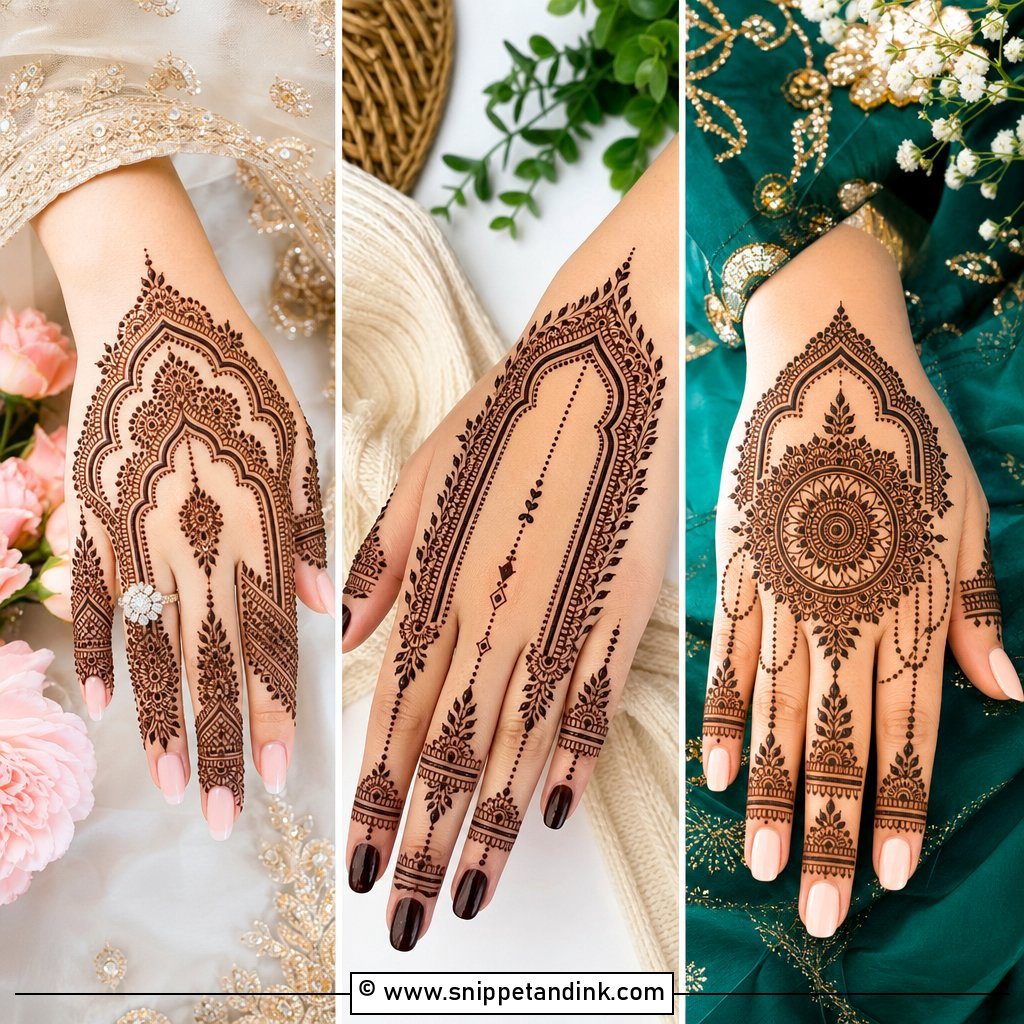
15. Heavy Mandala Mehndi Design
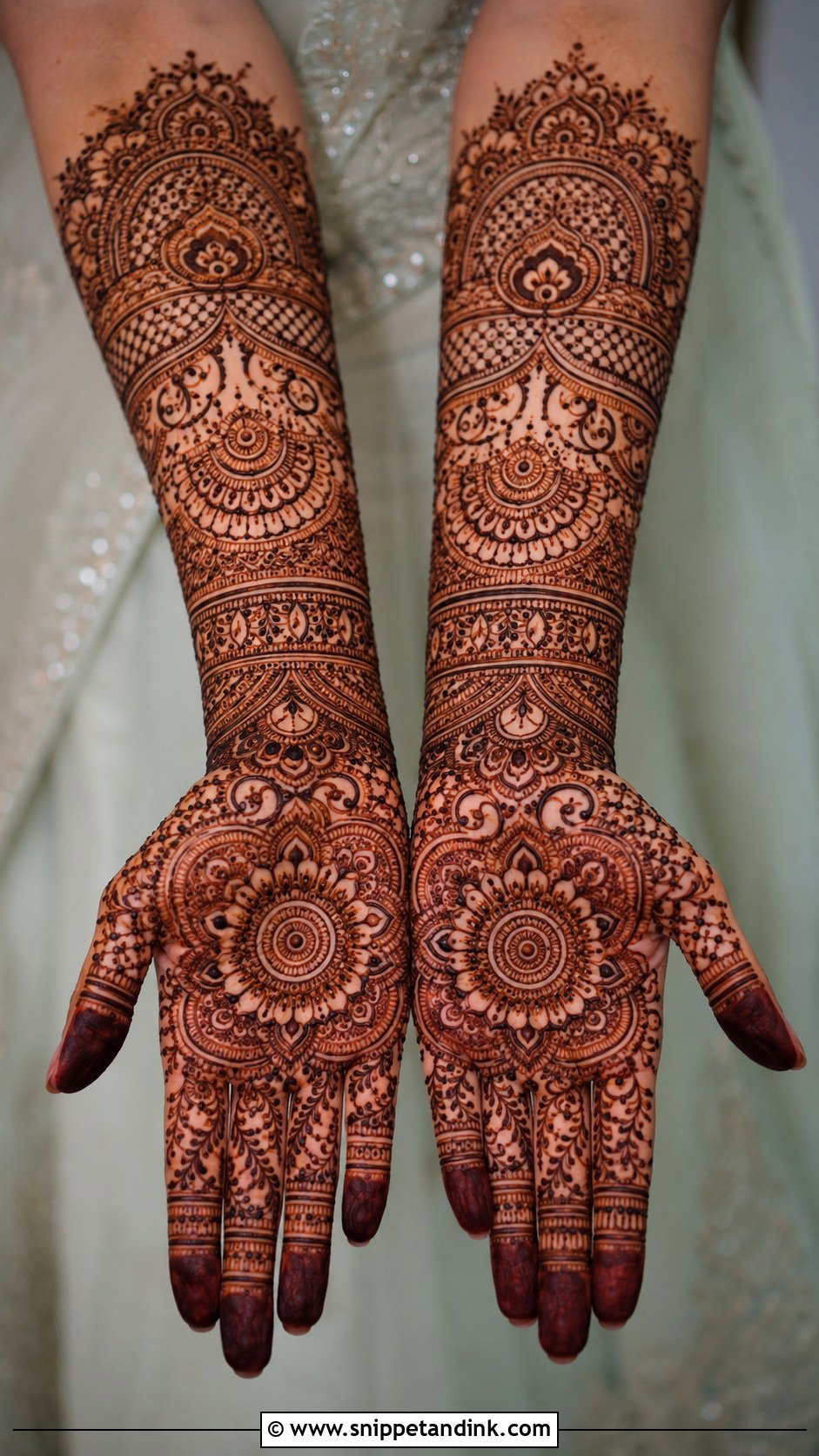
Multiple rings, dense fillers, shaded petals, checks, dots and scalloped outlines, then paisleys, florals, jaali and extensions up the forearm. It’s for weddings and big festivals. Planning is what separates rich from messy. I work in zones: bold centre first, then the surrounding fillers, then the fingers, and I check the two hands against each other at each stage. With natural henna and a good long time on the skin, heavy designs stain deep and even.
16. Easy Mandala Mehndi Design
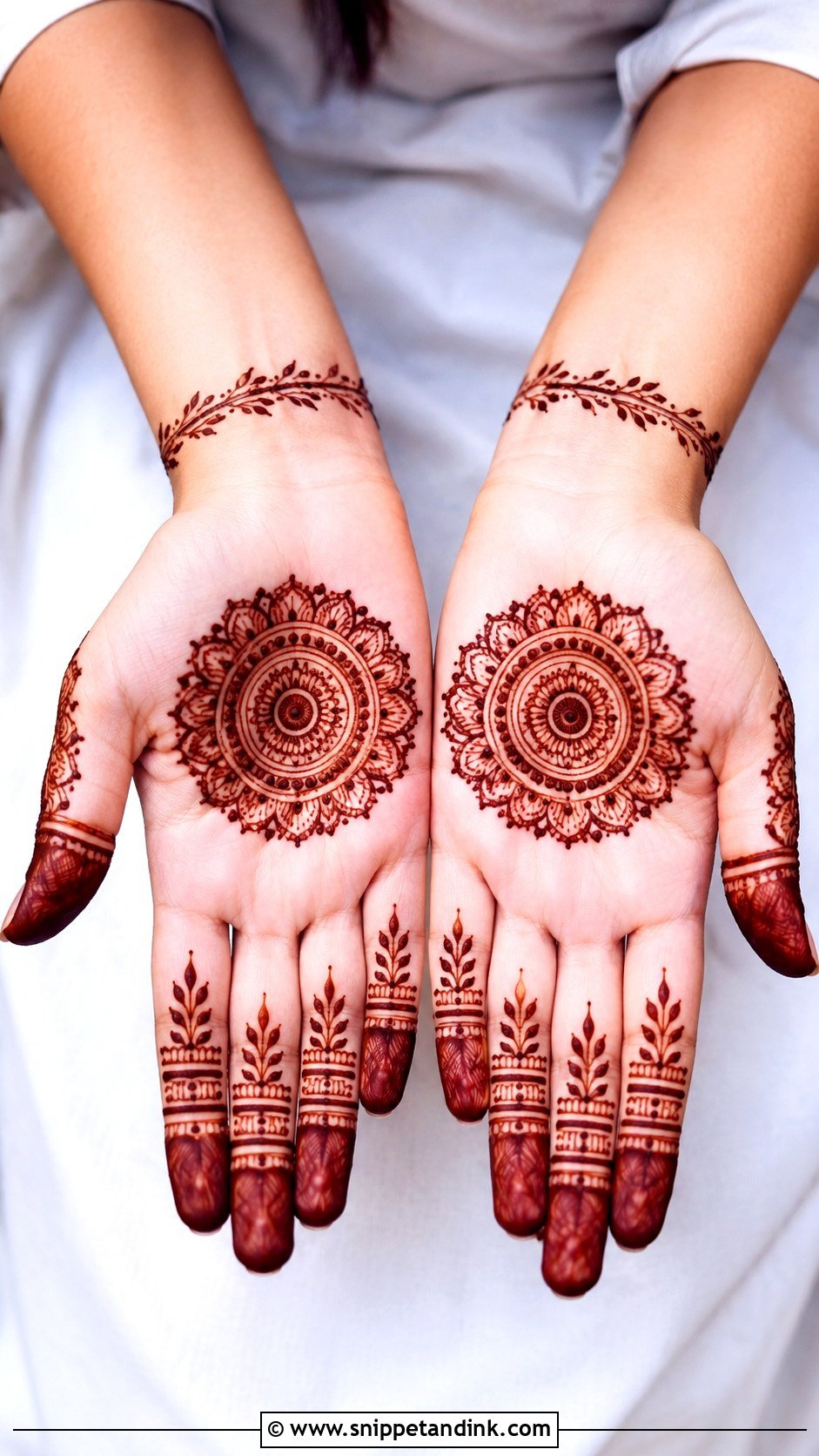
A dot, a small circle, a ring of petals, then repeat larger rings. That’s the whole method. Dots, scallops, leaves and thin bands are enough decoration. Put it on the palm for a classic look or on the back for something more modern, and keep fingers to lined tips or tiny vines. I teach this one to anyone learning, and it’s a good choice for young girls who won’t sit still long. Practise on paper first to get the ring spacing even.
17. Round Mandala Mehndi Design
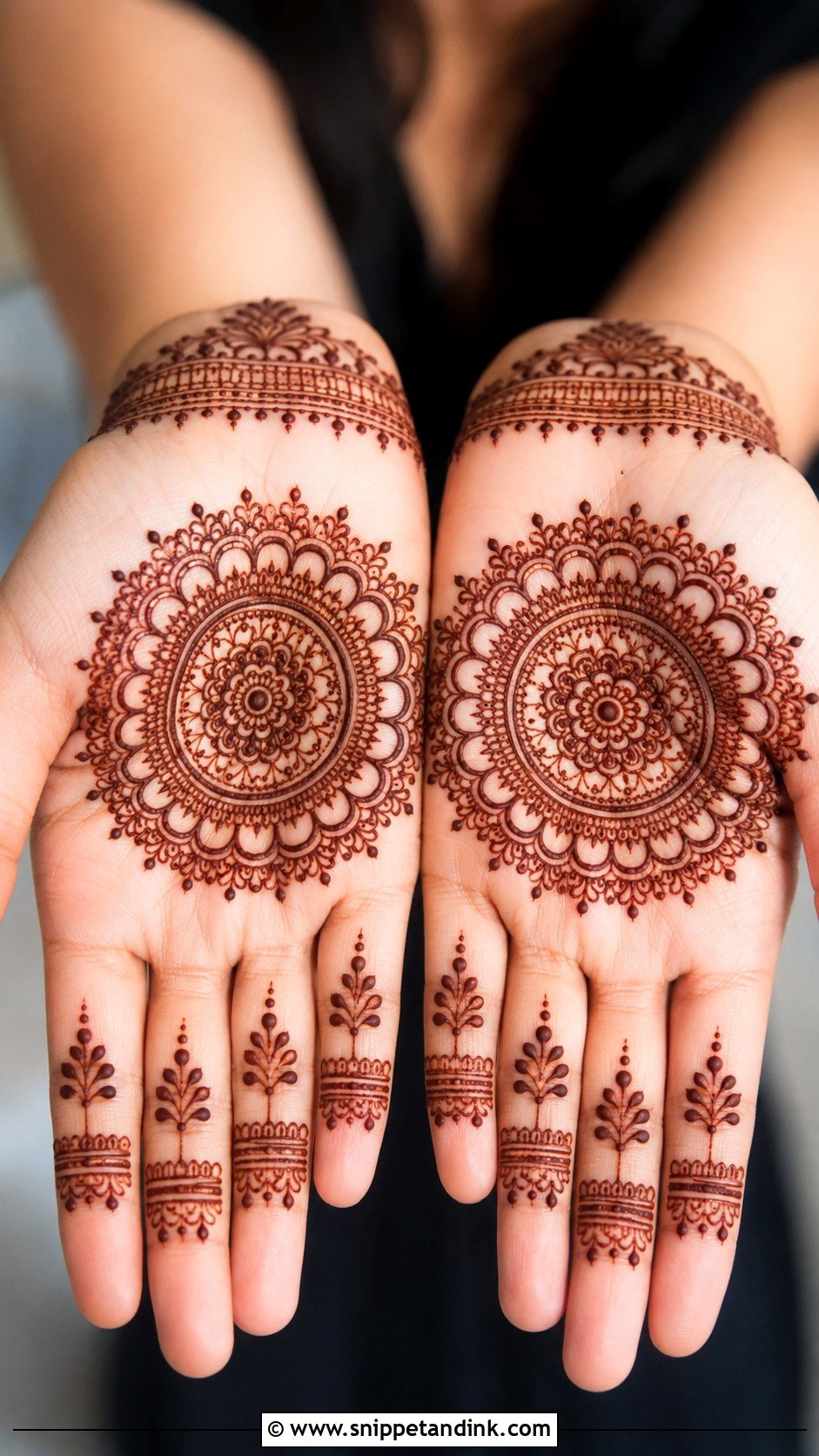
Even spacing, clean rings and a clear centre: this design is all about the circle. It can be a few layers or many. If you’re learning, tracing lightly around a coin or bangle is a perfectly good guide; professionals often place four or eight small guide dots instead. Petals, dots, lace-like scallops or tiny paisleys fill the outer rings. Fingers look best kept slim and matching. It’s a reliable choice for festivals and family functions.
18. Small Mandala Mehndi Design
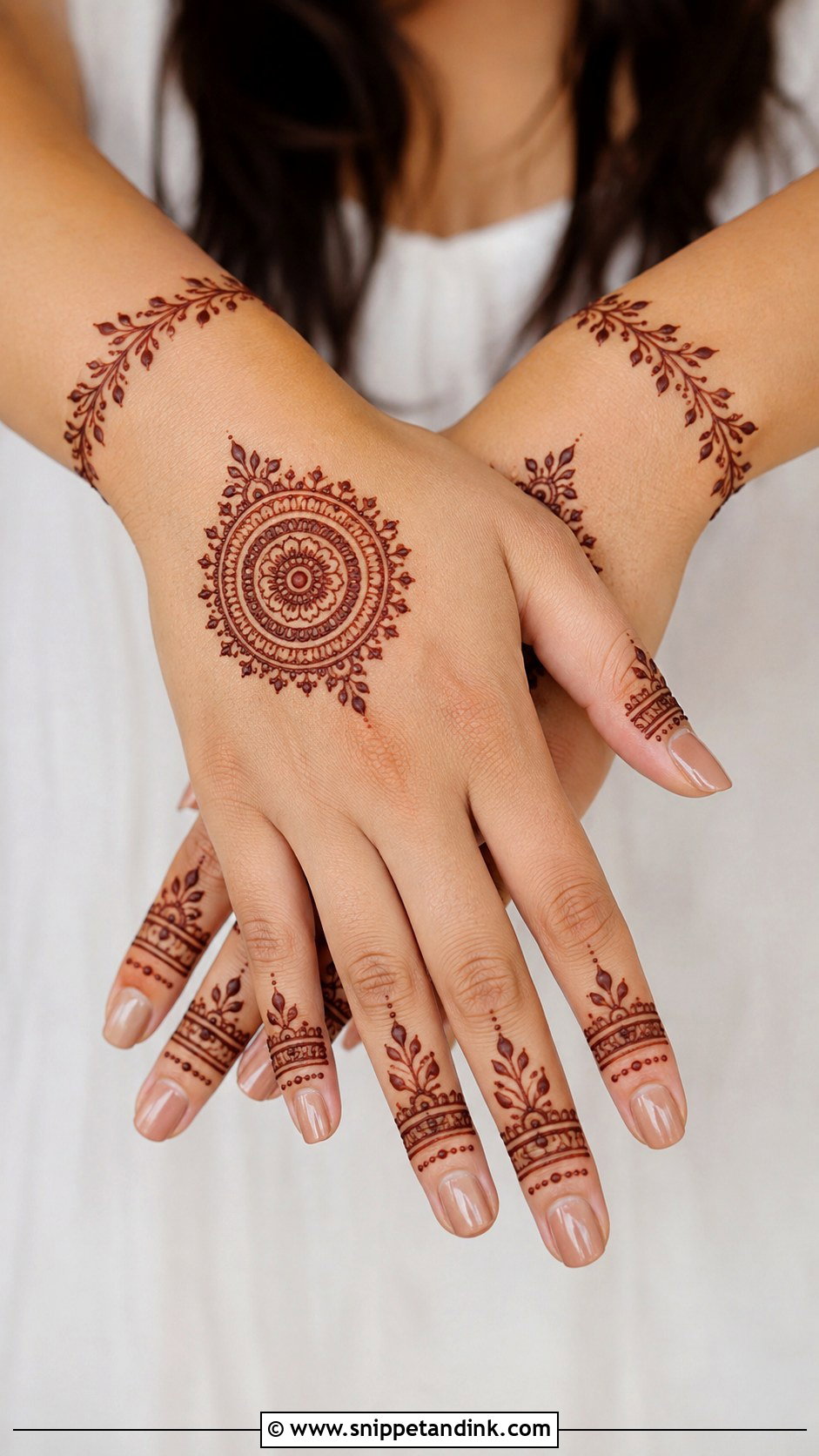
A compact mandala in the centre of the palm, the back of the hand or near the wrist, with a few dots, small petals and leaves. Simple finger bands or a short vine to the wrist complete it. Teenagers and anyone who likes light henna tend to pick it. Small doesn’t mean easy, though: in a small circle, a slightly off-centre dot shows straight away. I mark the centre carefully before drawing a single petal.
19. Big Mandala Mehndi Design
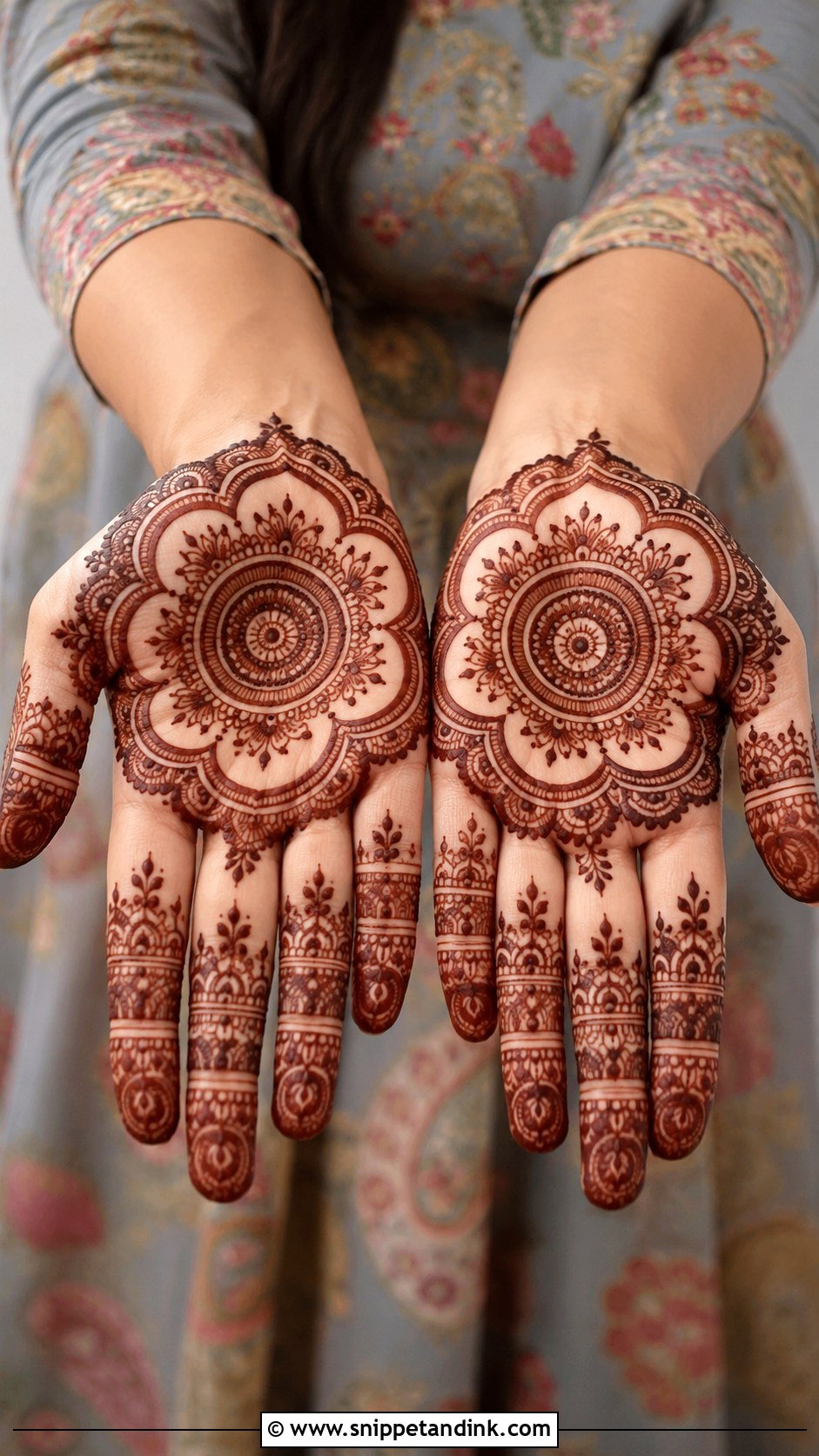
One large mandala with strong outlines, big petals, detailed inner rings and dotted borders. The open palm or back of the hand gives it room. Because the circle is large, I keep the fingers simpler so the hand doesn’t feel crowded, and add a bracelet cuff if you want it to look finished. Big circles are harder to keep round than small ones, especially across the back of the hand where the knuckle bones sit. It’s dramatic in close-ups without covering every inch.
20. Negative Space Mandala Mehndi Design
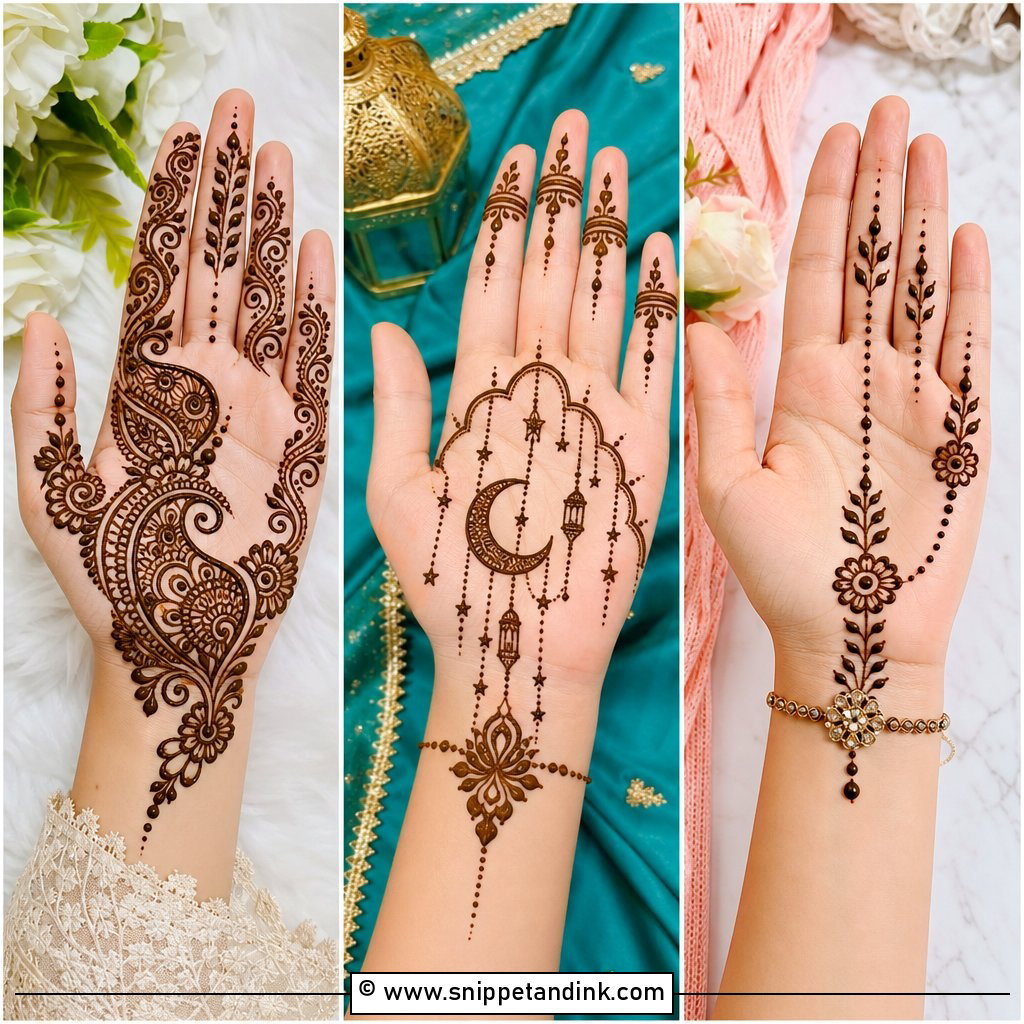
Bare skin becomes part of the pattern. Clean gaps between petals, circles and borders make the mandala sharp and easy to read, and the stained lines stand out more against the open skin. It’s a fresh, modern look on the back of the hand, with thin finger bands, dotted trails or a simple cuff. The gaps have to be planned, not leftover; I decide which rings stay open before drawing. Modern bridesmaids and festive parties suit it.
21. Shaded Mandala Mehndi Design
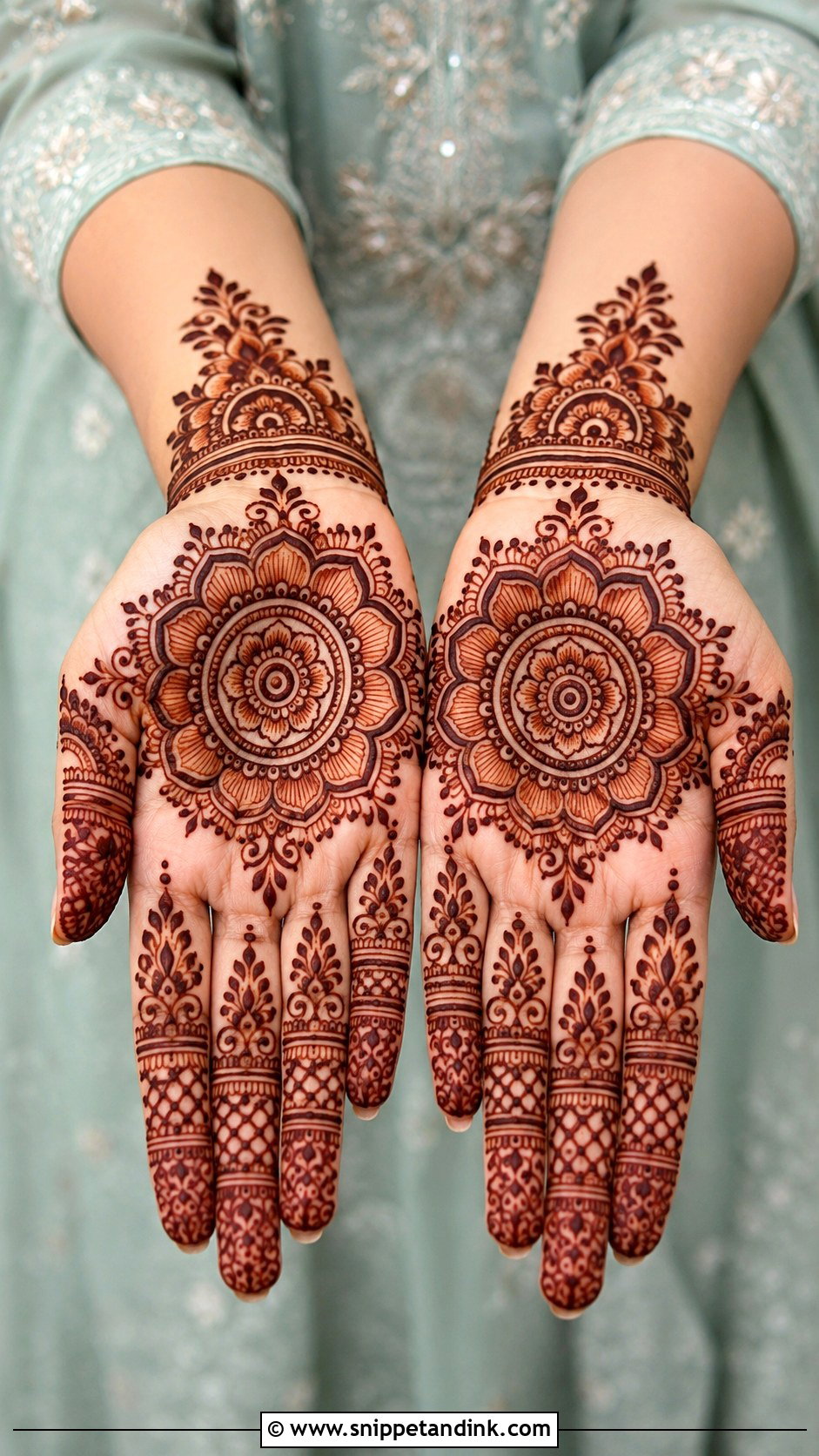
Soft filled areas inside petals, leaves and borders give depth: bold at the centre, lighter toward the outer rings. I draw the outlines first, then shade selected petals with fine strokes, laying more paste at the base of each petal and less at the tip so the stain develops a gradient. On the palm, it feels traditional; on the back, softer and more artistic. Uneven shading looks smudged, so this needs patient, even work. Weddings, Eid and Diwali all suit it.
22. Jaali Mandala Mehndi Design
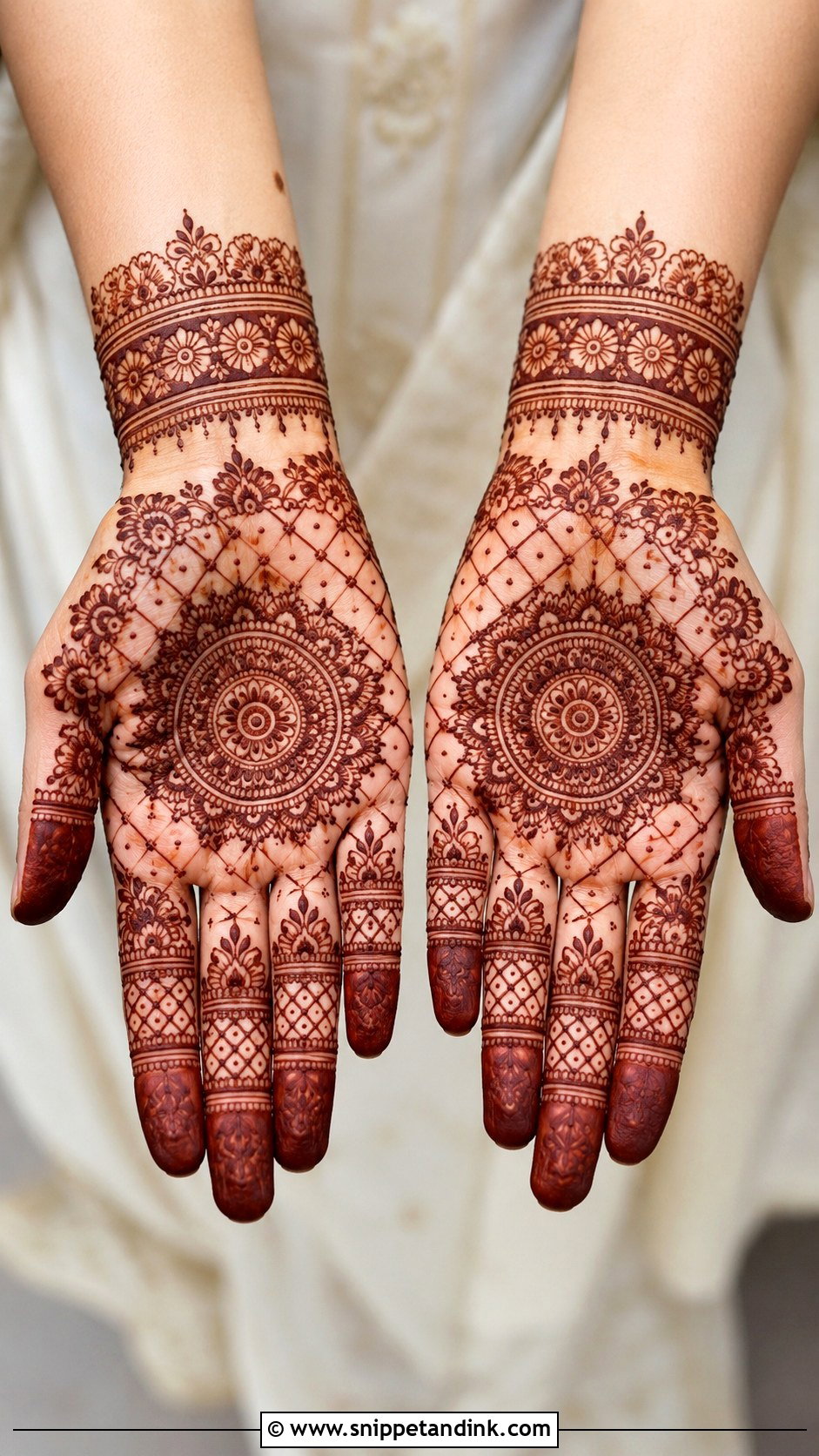
A circular centre surrounded by crisscross mesh, dots and small floral fillers, on the palm or back of the hand. The jaali gives structure, so even a detailed design looks organised. It suits bridal and semi-bridal hands, with a wrist cuff and decorated fingers. Mesh lines must be thin and evenly spaced or the lace effect turns heavy. I size the grid slightly larger on the palm, where the deep stain tends to fill in small squares.
23. Bracelet Mandala Mehndi Design
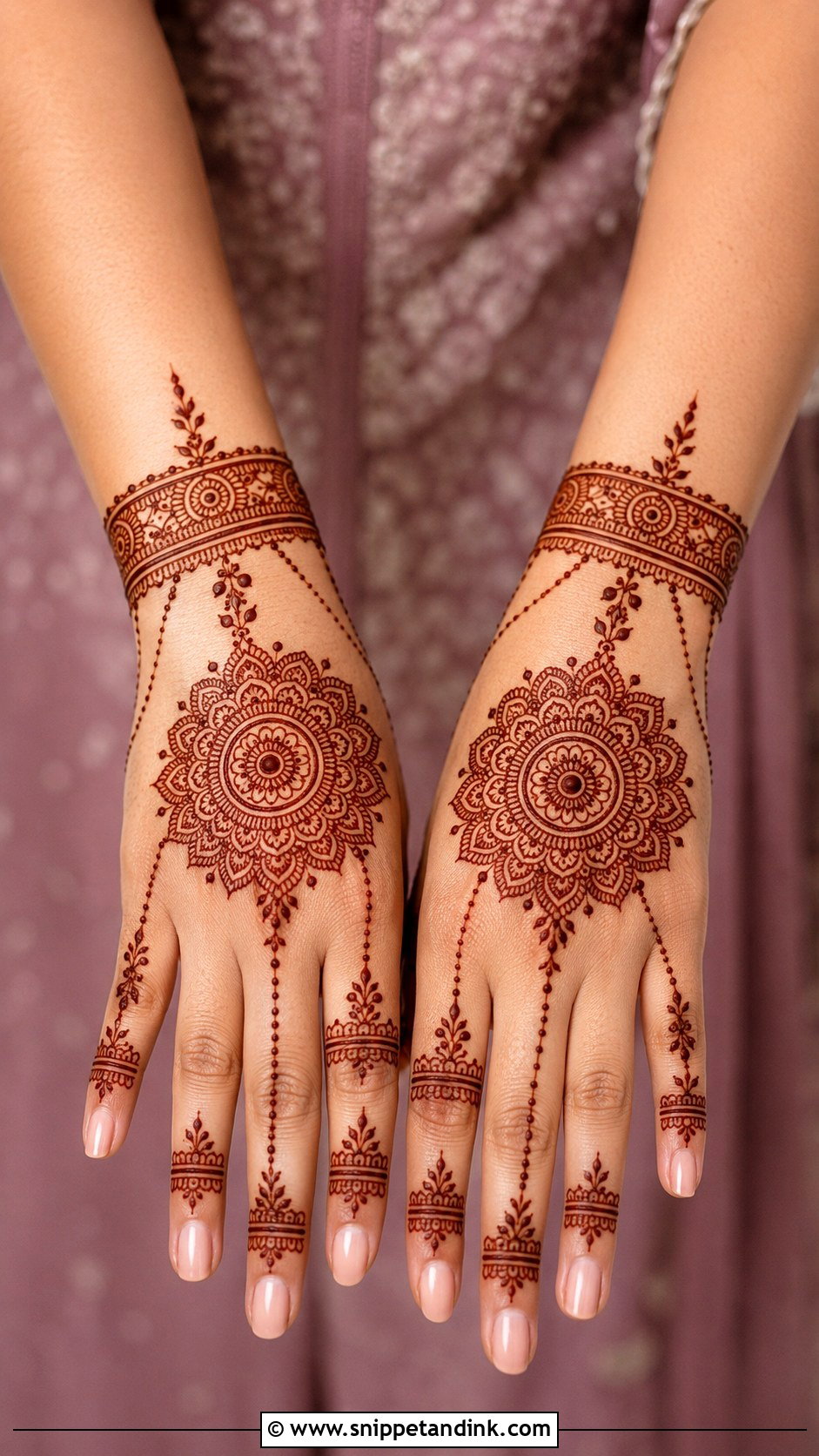
The hand dressed in henna jewelry: a mandala on the back, chains and curved lines connecting it to a wrist cuff, and finger rings or bands. Engagements, festive events and bridesmaids favour it. Keep the mandala clean and the chain lines matched on both hands. Tiny leaves along the chains soften it. Chains are long, thin strokes, and they need smooth paste to stay unbroken. Ask your artist to test the cone flow on paper first.
24. Finger Mandala Mehndi Design
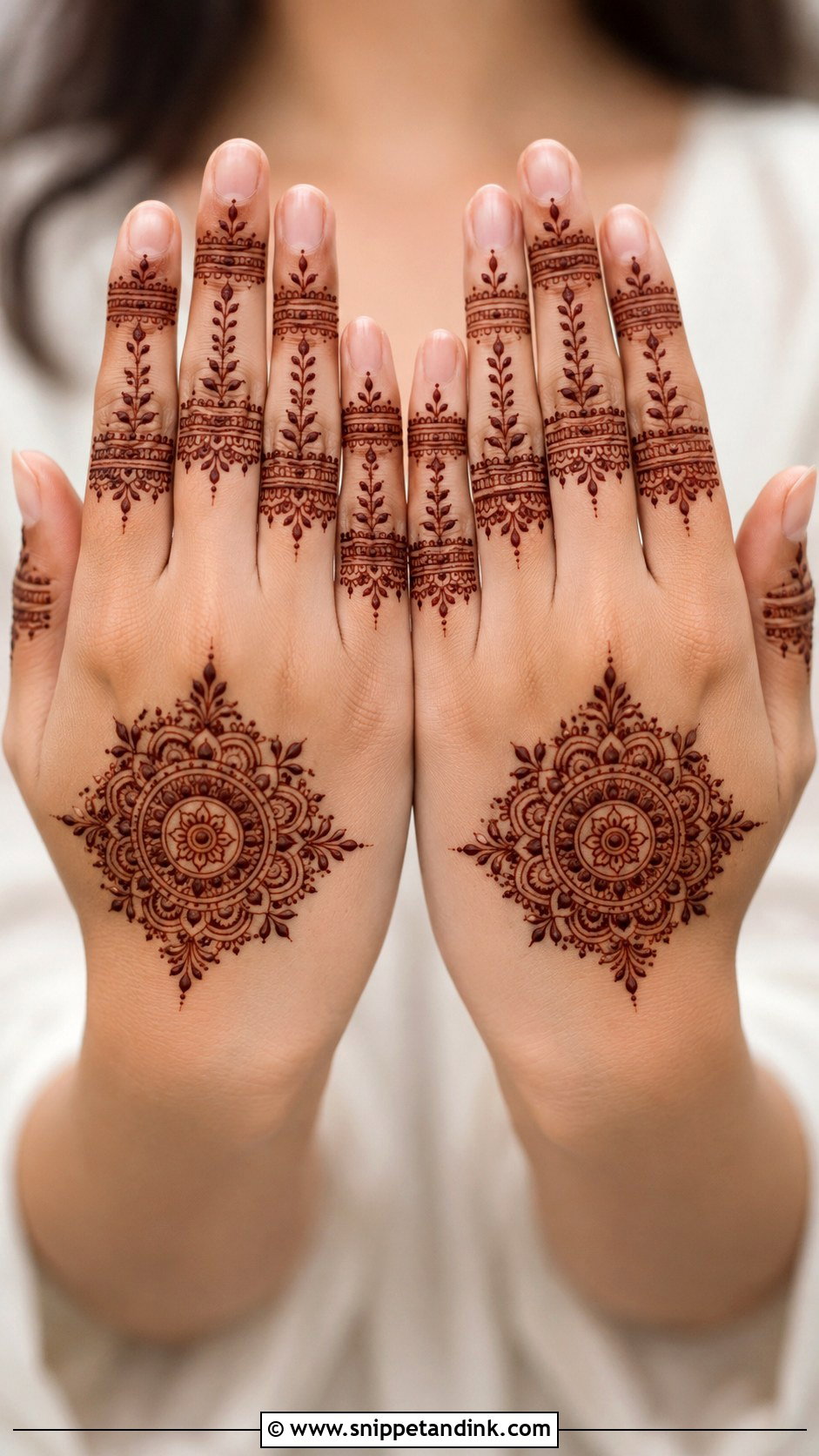
The mandala anchors the hand, but the fingers get the extra attention: bands, dots, leafy strips, tiny florals or geometric lines. It gives a complete look without full coverage. For a modern finish, I leave clear space around the mandala; for a traditional one, I add a wrist border. Finger joints crease when you bend them, so I keep the bands between the knuckle lines rather than across them, where wet paste cracks.
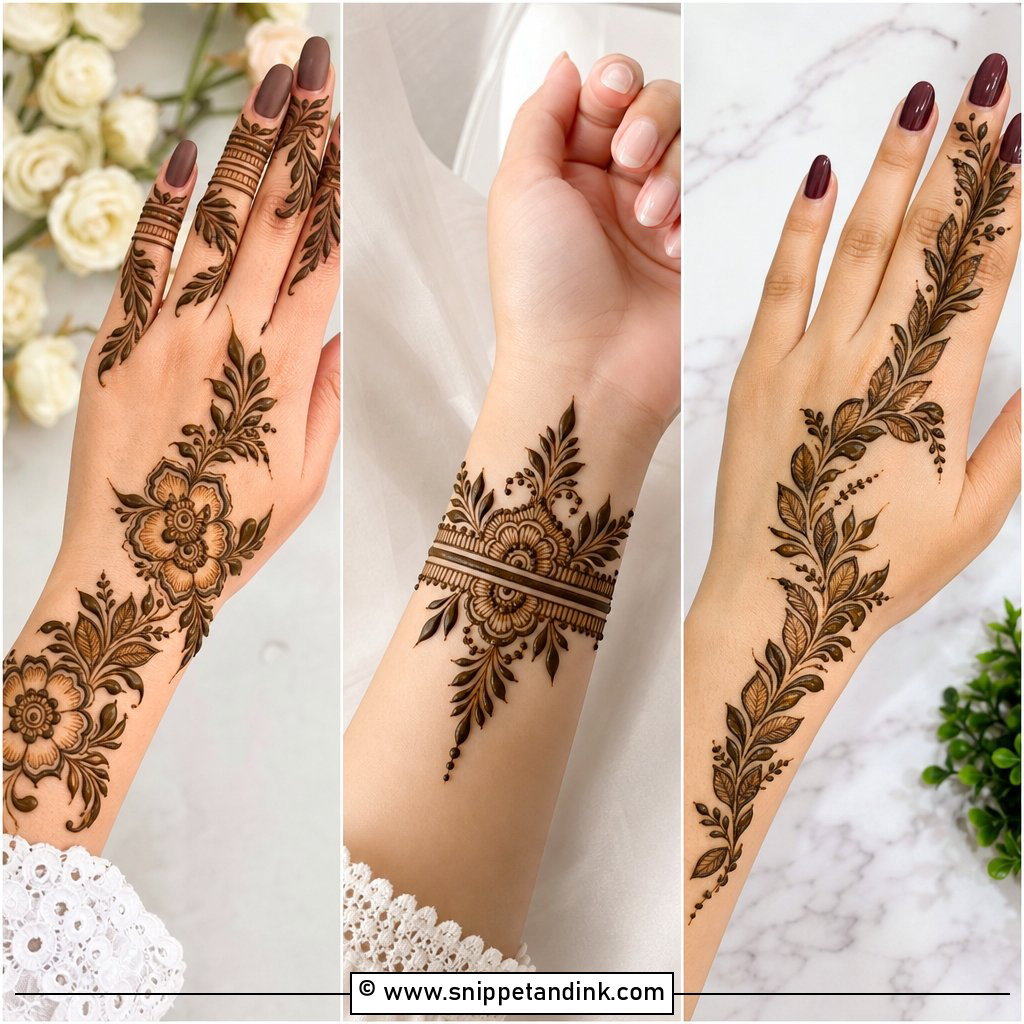
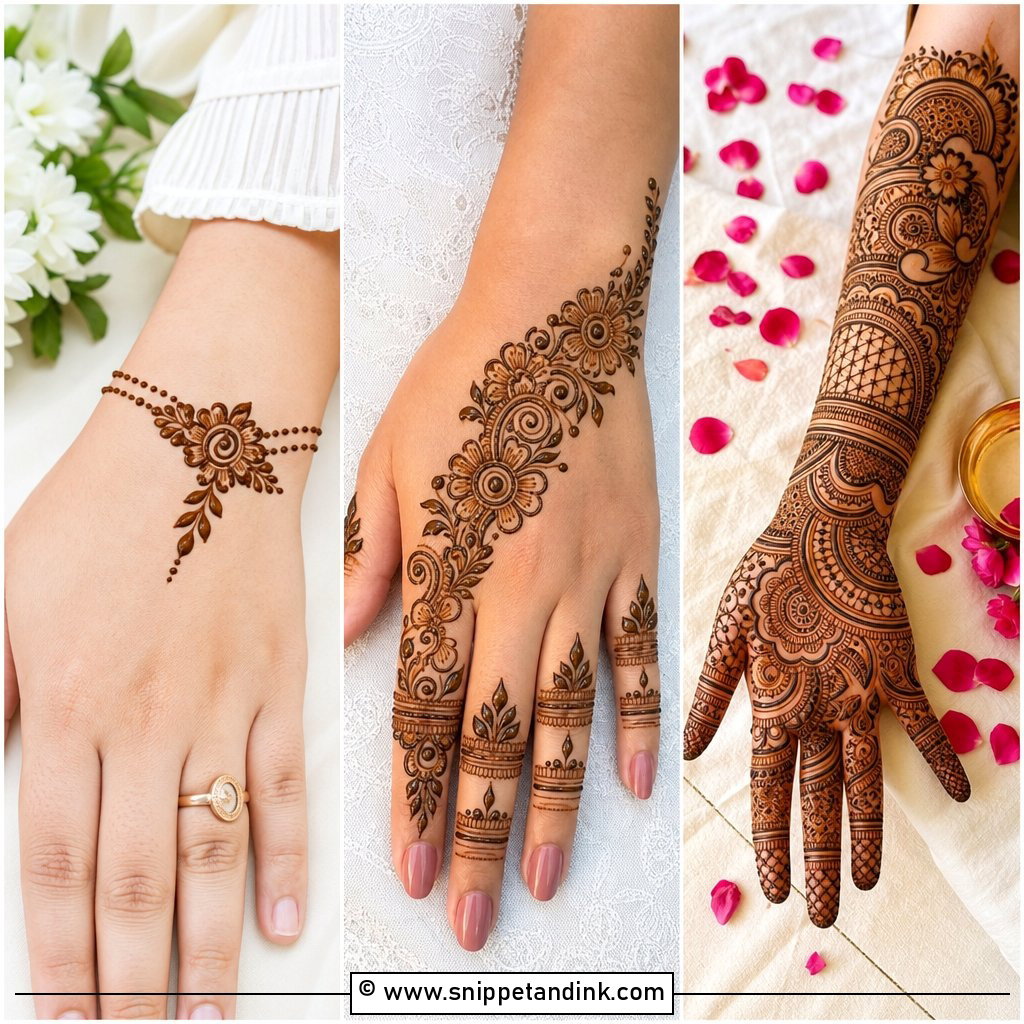
25. Wrist Mandala Mehndi Design
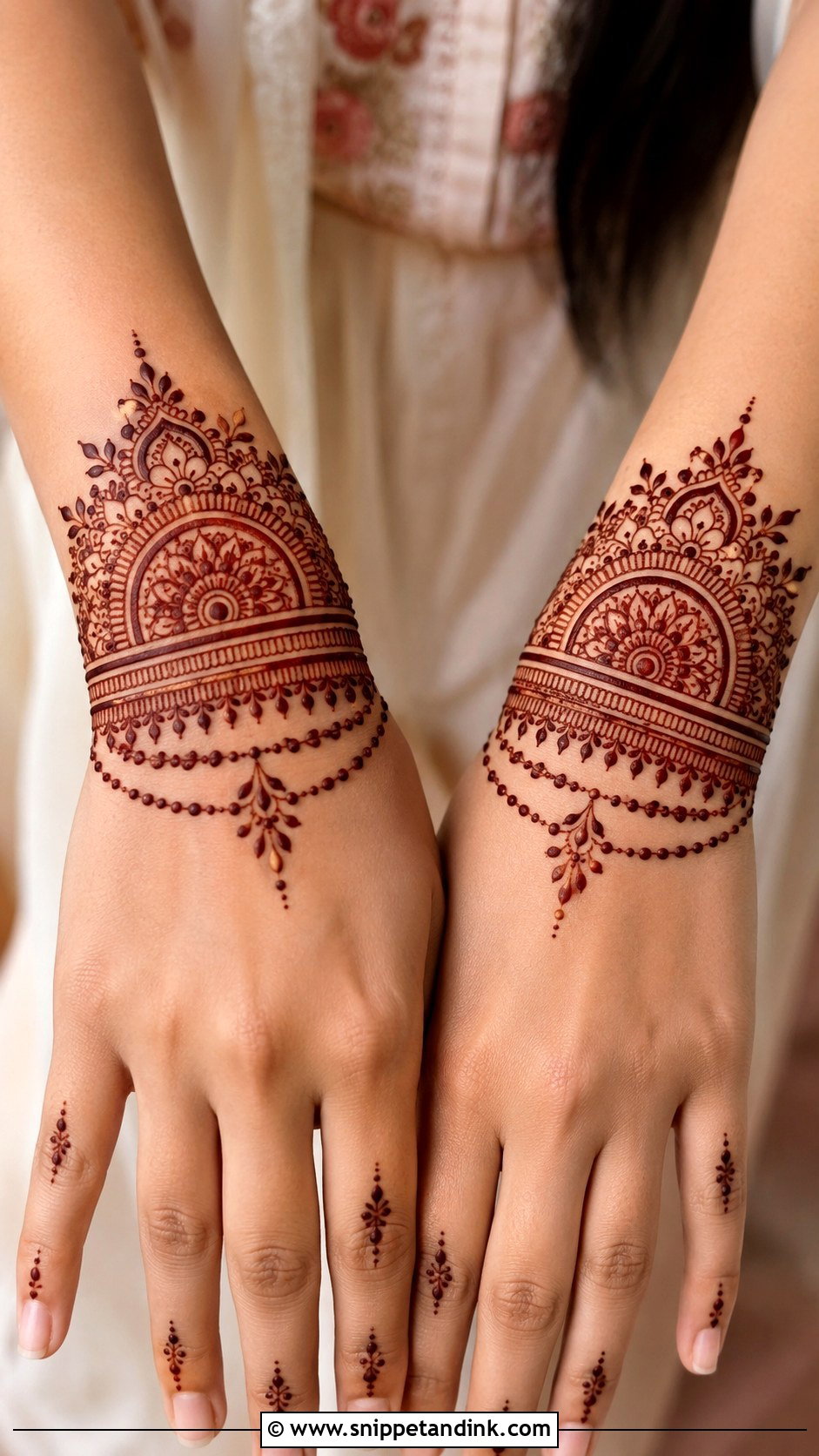
The main circle moves to the wrist, as a half or full mandala sitting like a cuff with petals radiating toward the back of the hand or palm. Slim lines, dots and bracelet bands complete it, and fingers can stay minimal. It’s a less common placement, which is part of the appeal. It sits naturally with bangles, as long as the bangles rest below the mandala rather than over it. The inner wrist also stains lighter than the palm, so I keep the lines there slightly bolder.
26. Half Mandala Mehndi Design
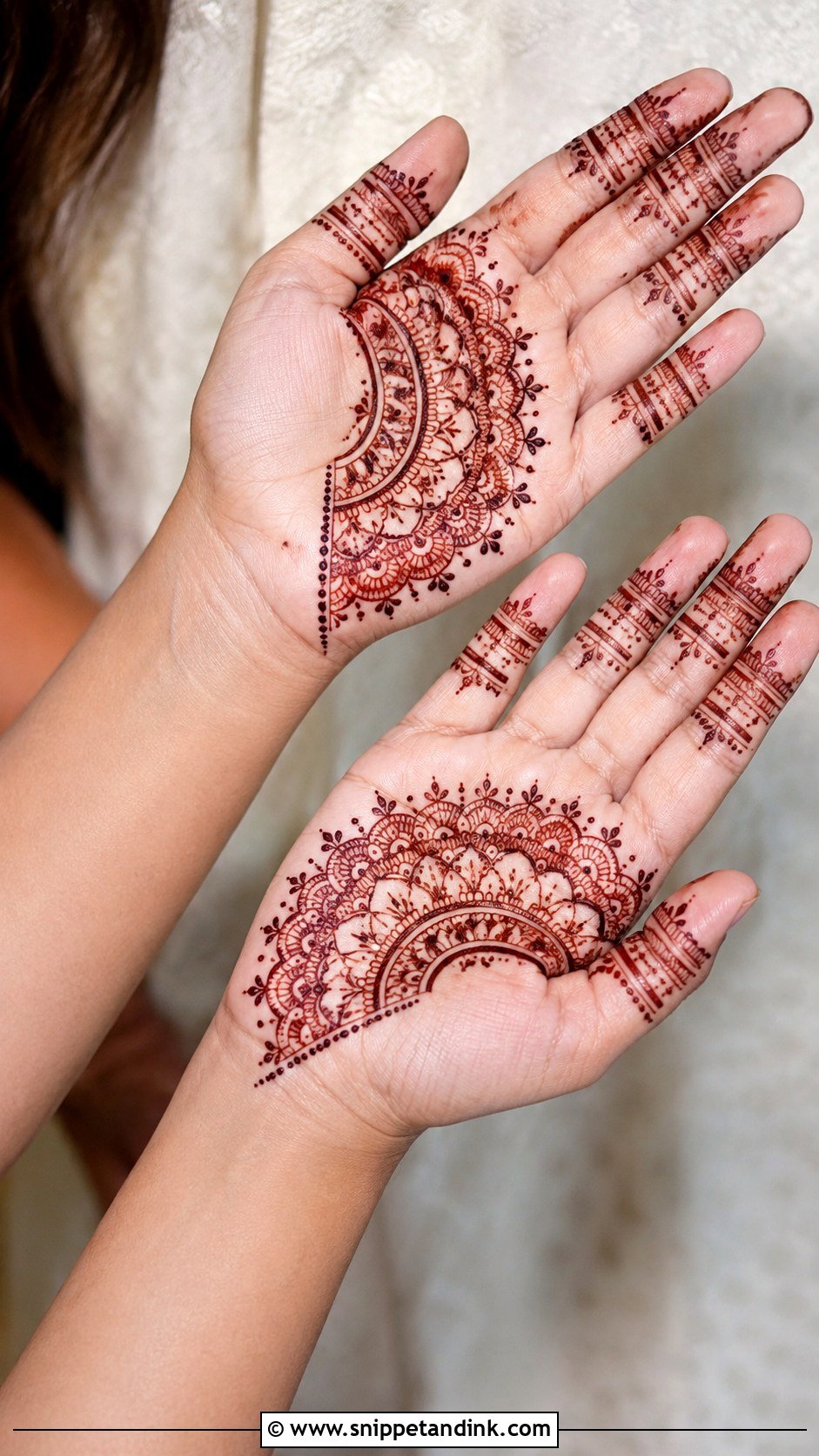
Half mandala mehndi design uses one side of the circle, usually at the wrist, the side of the palm or the edge of the back of the hand. The flat edge gives a clean border and the curved side grows outward with petals, dots and scallops. It’s quick and suits narrow hands, where a full circle would run off the sides. It’s also forgiving for beginners, since half a circle is far easier to keep symmetrical. Eid, Diwali and family gatherings all suit it.
27. Side Mandala Mehndi Design
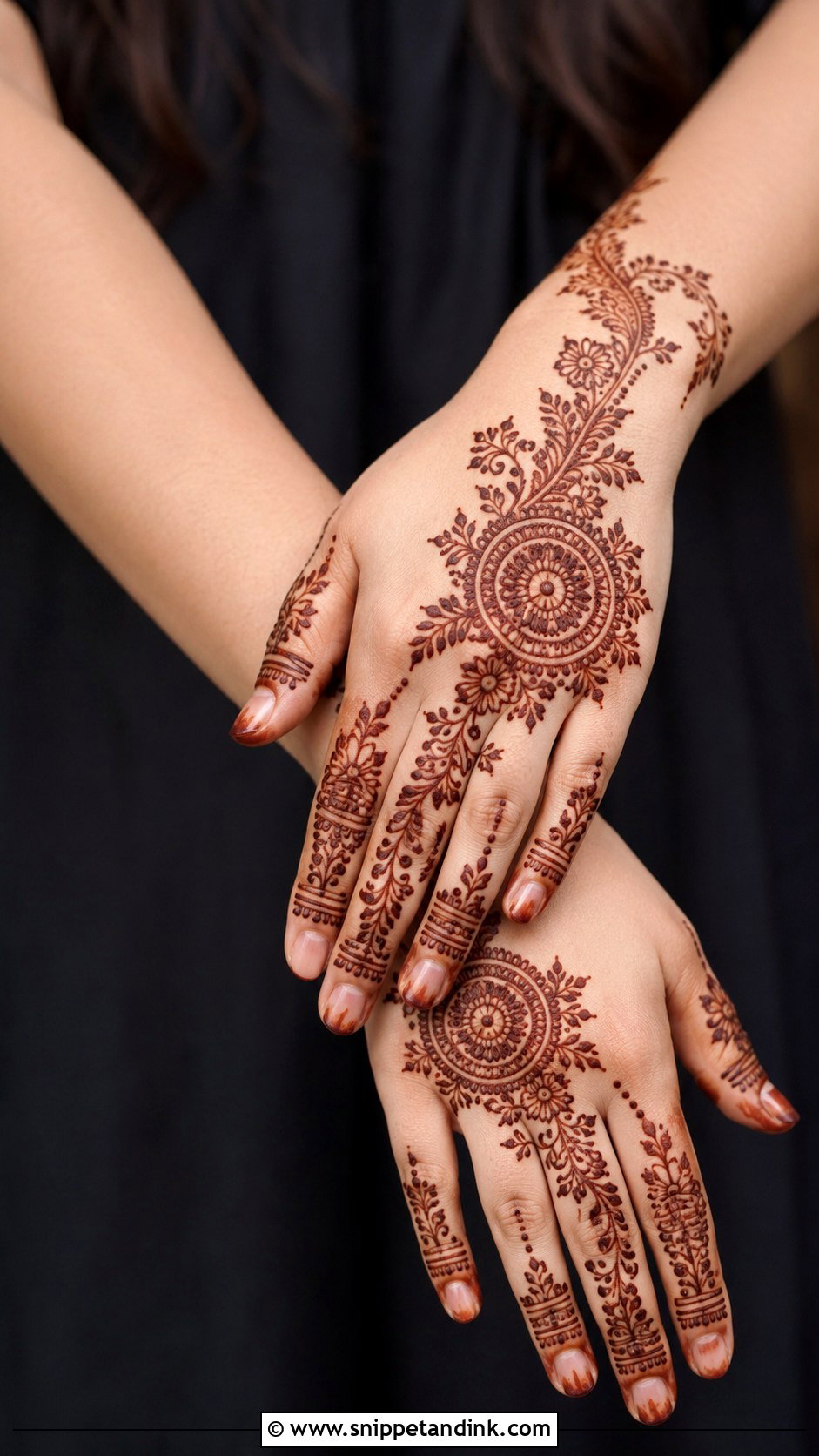
The circle sits off-centre, near the thumb, the wrist or the edge of the palm, with vines moving diagonally across the hand. One side is detailed and the other open. It’s a good change from the usual centred mandala, and the diagonal flow gives a slightly Arabic feel. On the back of the hand, an off-centre mandala placed toward the thumb lines up with the index finger and makes the hand look longer. Light finger details keep it feeling complete.
28. Diagonal Mandala Mehndi Design
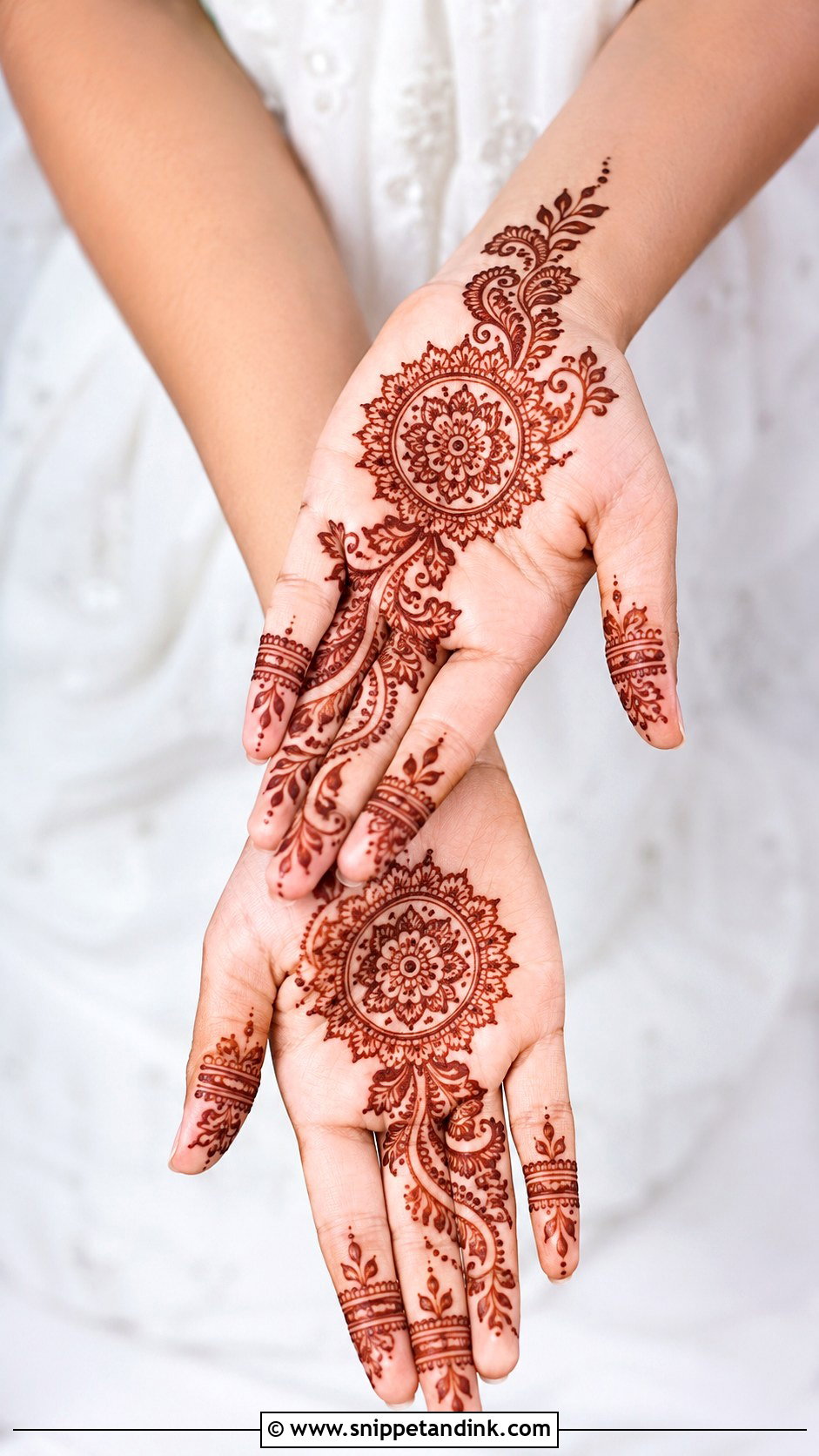
A mandala linked to a diagonal trail of flowers, leaves, paisleys or dotted lines, running from the wrist to the index finger or from the thumb across the palm. It’s a common layout in Arabic and Indo-Arabic work. The trail should support the circle, not upstage it, so I keep the trail motifs smaller than the mandala’s outer ring. Parties, Eid and wedding guests suit it, and it’s comfortable to wear for a long event.
29. Eid Mandala Mehndi Design
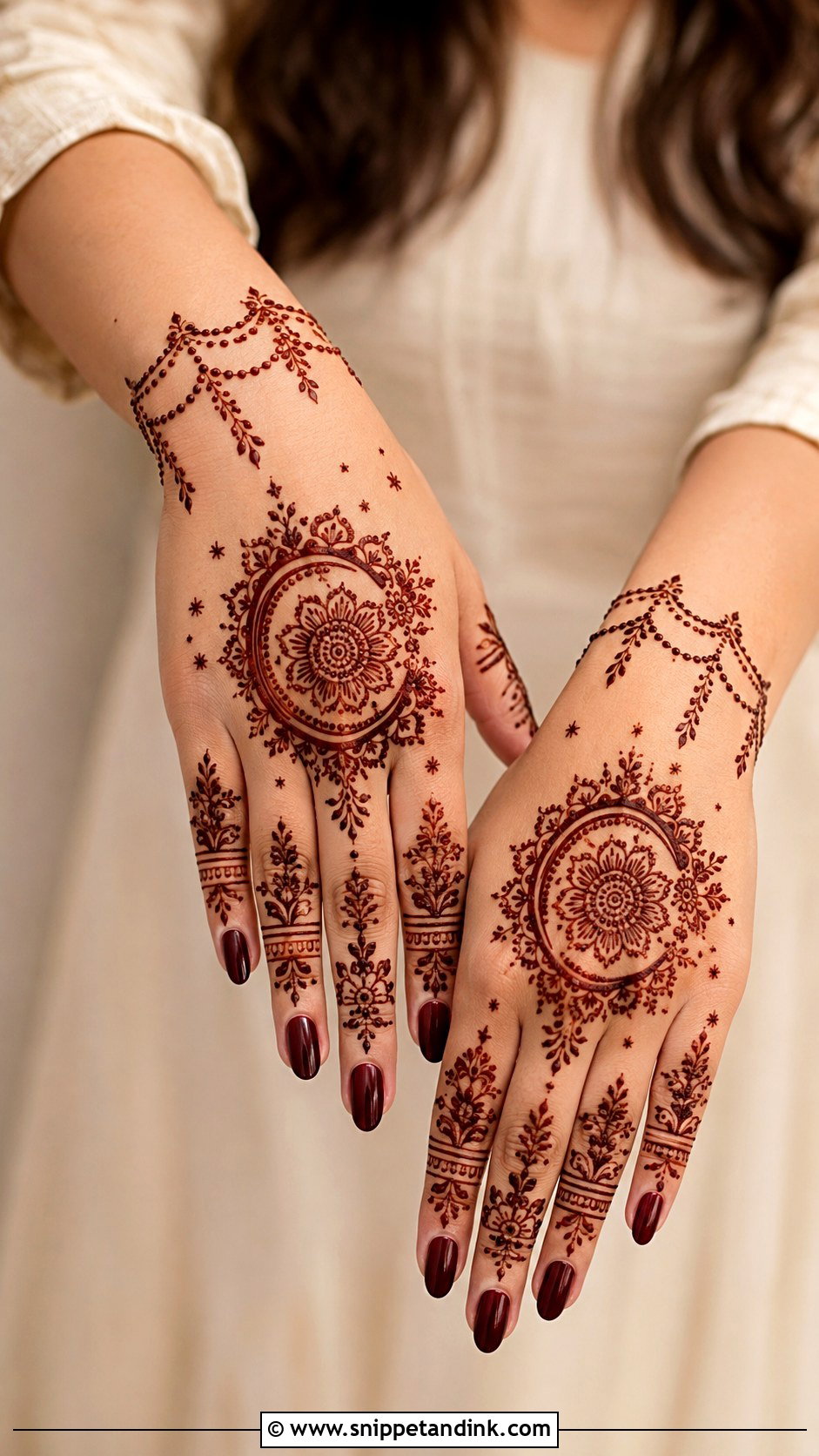
Eid mandalas are usually lighter than bridal ones and often done the night before for the whole family in a row. A central mandala pairs with crescent-inspired curves, stars, florals, leafy trails or dotted borders. The palm can stay simple with banded fingers, or the back can carry a mandala and cuff. For younger girls, I keep it small with open spacing; for adults, more petals, mesh and finger detail. Speed matters when there’s a queue, so I plan each layout before starting.
30. Diwali Mandala Mehndi Design
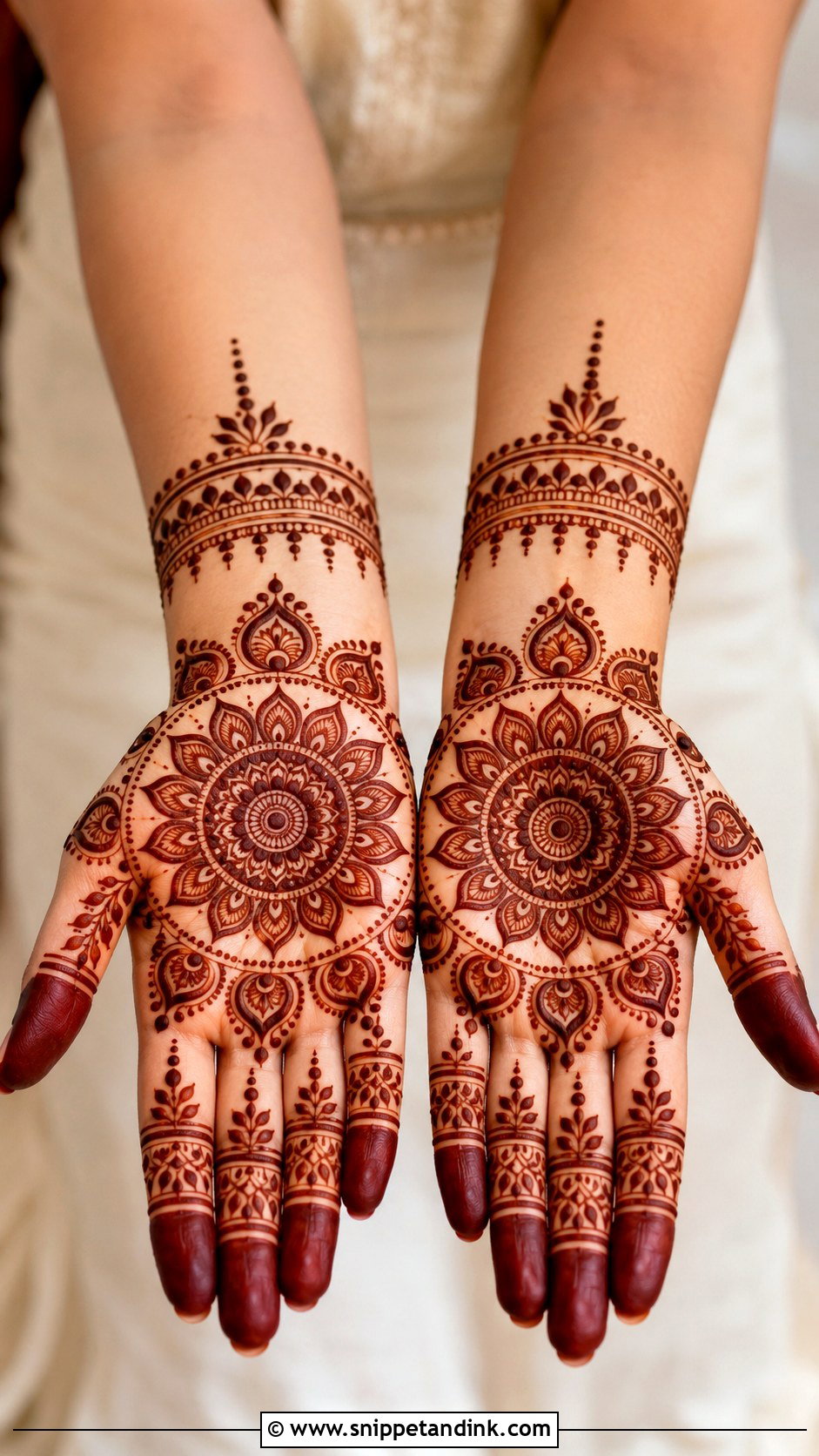
A blooming circle with petals, dots and small diya-inspired shapes around the outer ring, plus finger bands, vines or a wrist cuff. It suits puja, family dinners and festive photos. I recommend medium density for Diwali: enough detail to look festive, with enough open skin for the stain to read clearly. The week involves a lot of cleaning, cooking and washing, so applying it a day or two before the main evening gives the colour time to deepen first.
31. Engagement Mandala Mehndi Design
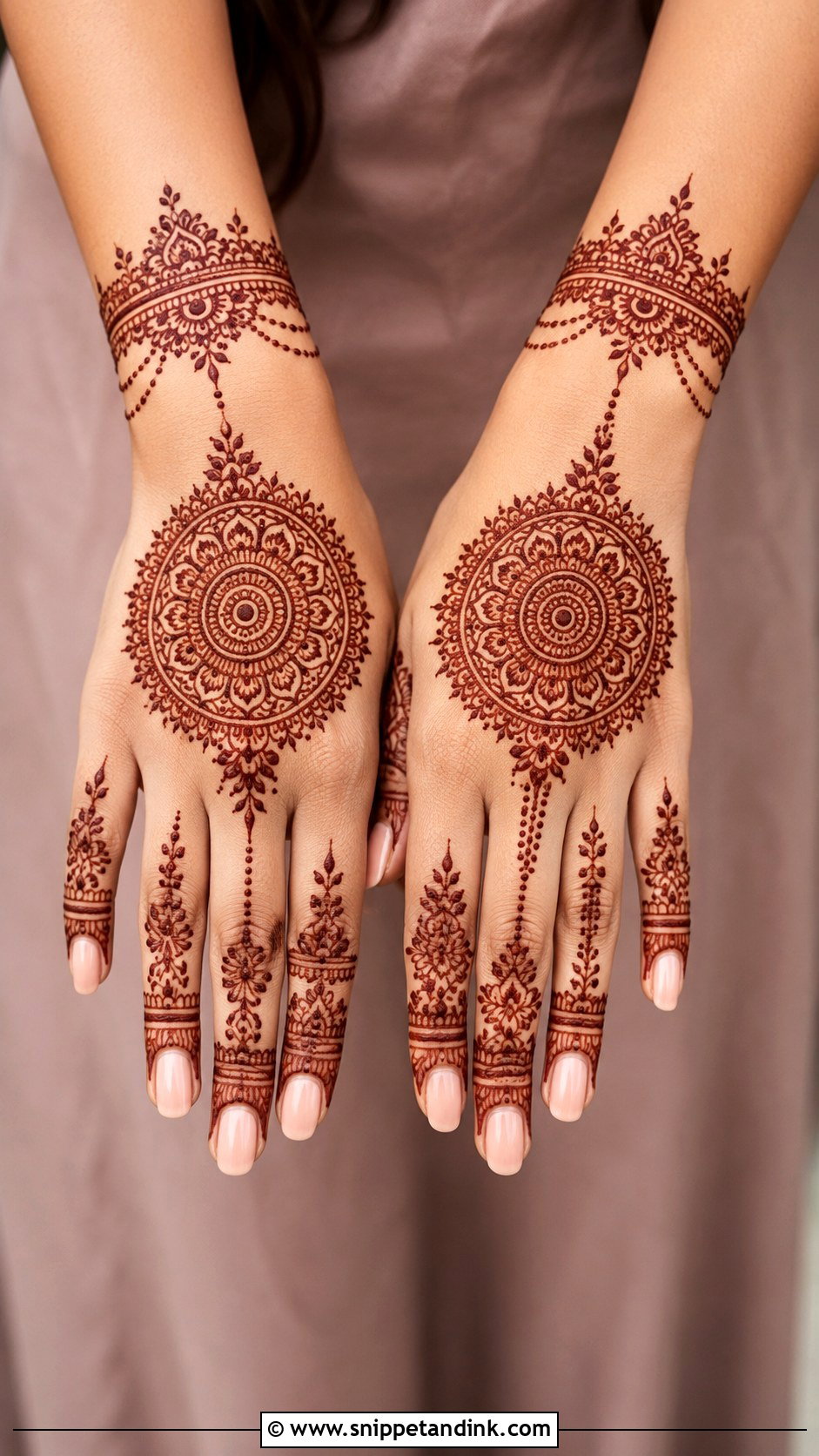
The back of the hand shows in ring photos, so that’s where an engagement mandala belongs: neat in the centre, linked to delicate finger details and a bracelet band. Tiny florals, dots and light mesh add charm. I keep the base of the ring finger lightly drawn so the ring sits on clear skin. On the palm, a small mandala with initials or a few heart-like curves feels personal. It should stay lighter than the wedding design that’s coming later.
32. Karwa Chauth Mandala Mehndi Design
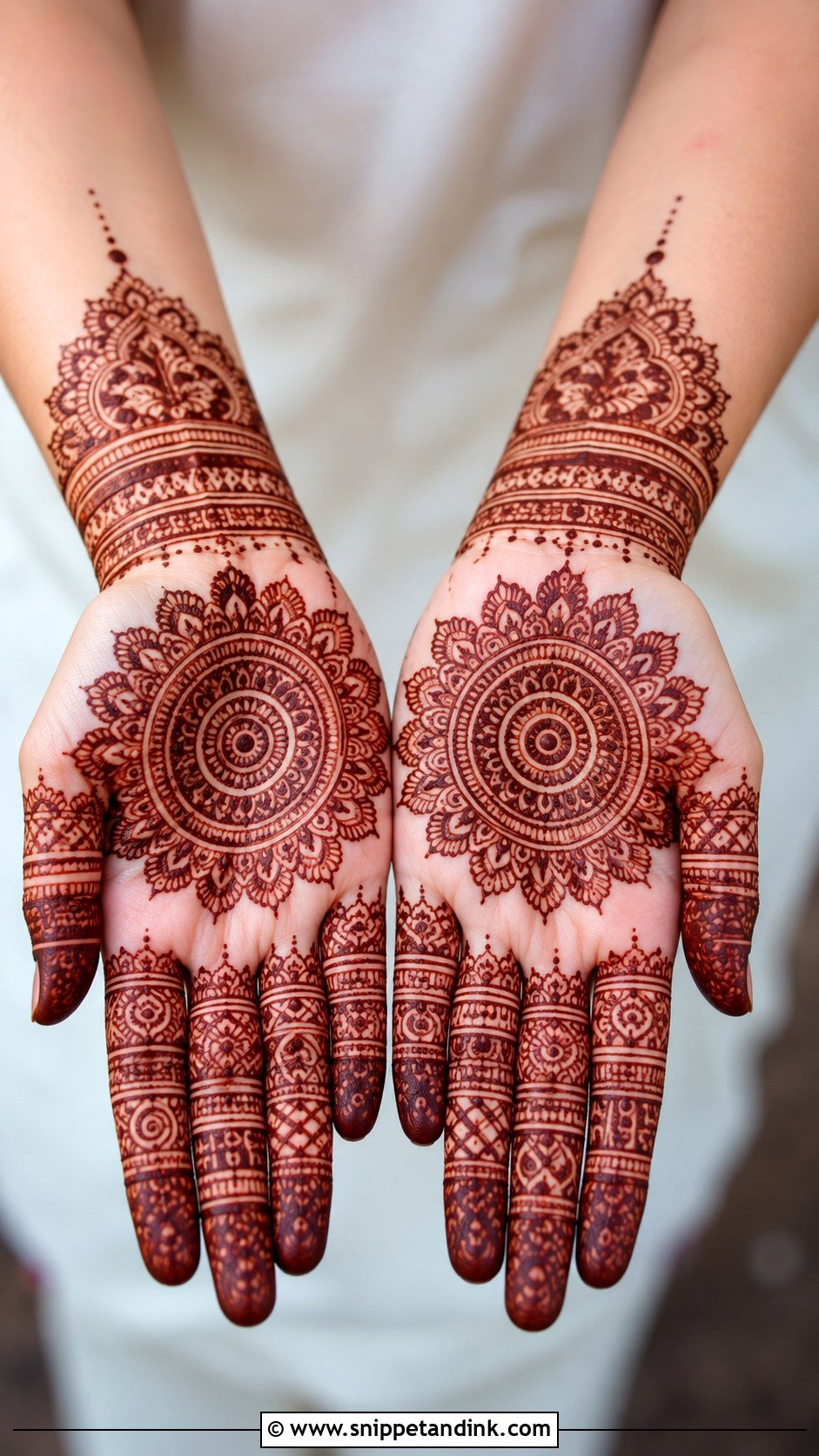
A palm-centred mandala surrounded by paisleys, lotus petals, dotted circles and small wrist borders, with leafy bands or fine lines on the fingers. Back-hand versions use a mandala with bracelet details and decorated fingertips. It sits well with bangles and festive outfits. The stain matters on this day, so leave the paste on as long as possible and keep water off afterwards. Applying a day or two before the fast gives the darkest colour on the evening itself.
33. Moroccan Mandala Mehndi Design
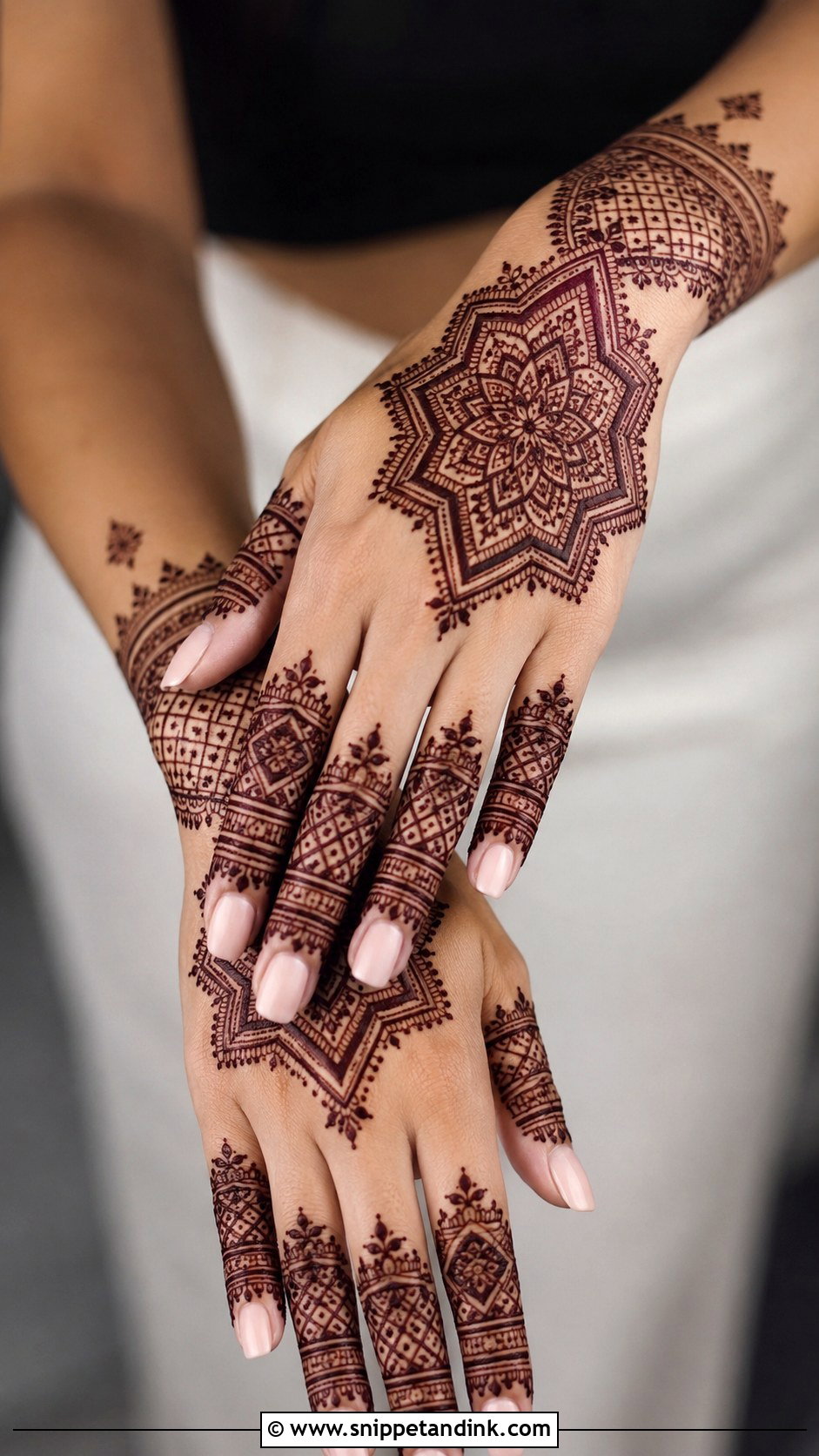
Diamonds, grids, straight lines, angular petals and sharp borders give the circle a bold geometric twist. Place it on the back of the hand with matching geometric fingers, or on the palm with a clean wrist band. It suits anyone tired of florals. Strong outlines and controlled spacing keep it crisp. Angular shapes leave no room for wobble, so I draw them slowly, pulling the cone toward me rather than pushing it away, which gives a straighter line.
34. Gulf Mandala Mehndi Design
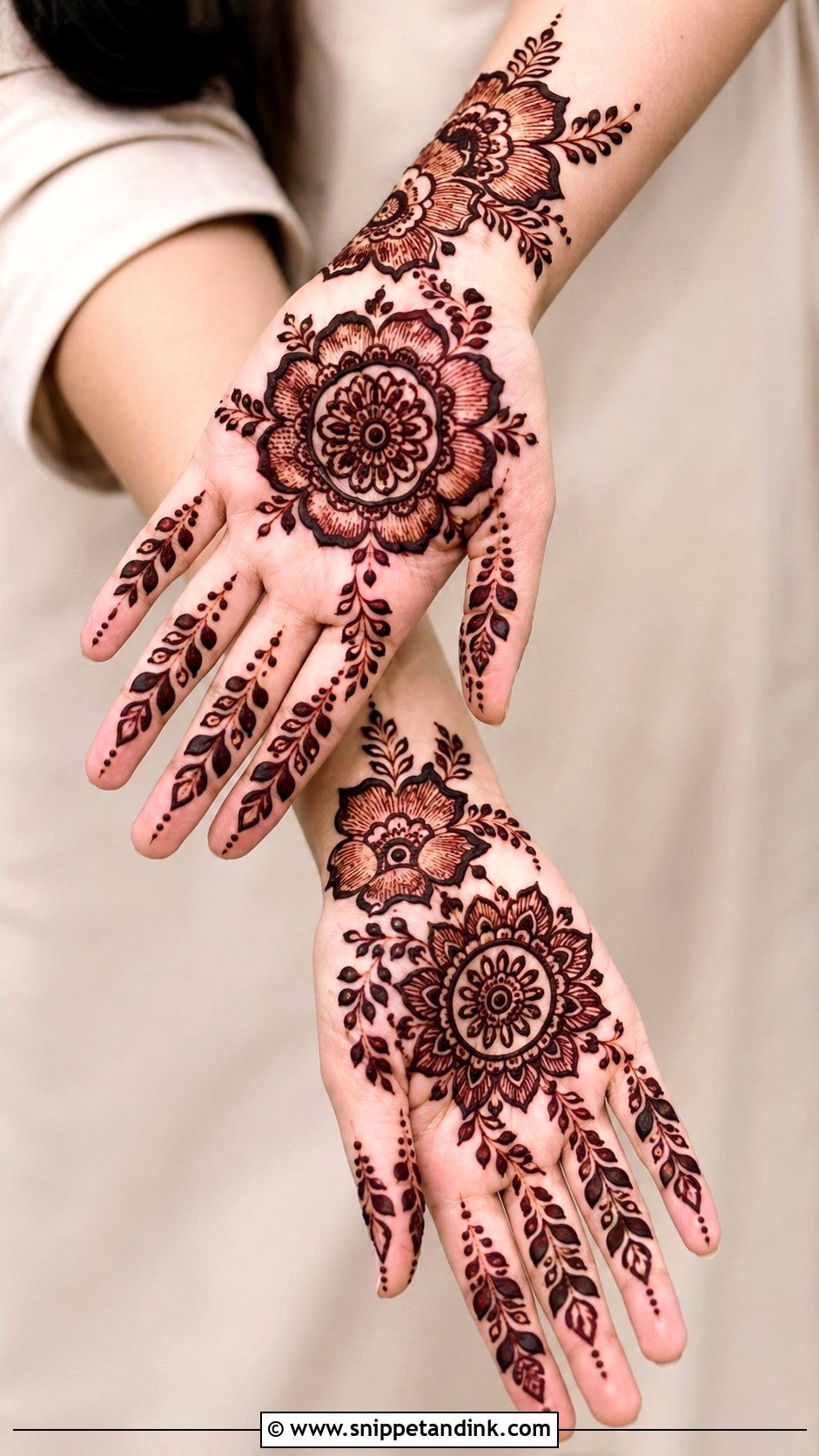
Khaleeji-inspired mandalas combine a circle with large florals, leafy trails, open spaces and dark, thick outlines. The bold shapes stand out because the rest isn’t overfilled. The pattern flows from the mandala on the back of the hand or palm toward the wrist and fingers. Thick outlines carry plenty of paste, which usually gives a strong stain. Eid, weddings and evening events suit it, especially if you like a dramatic but uncluttered look.
35. Modern Mandala Mehndi Design
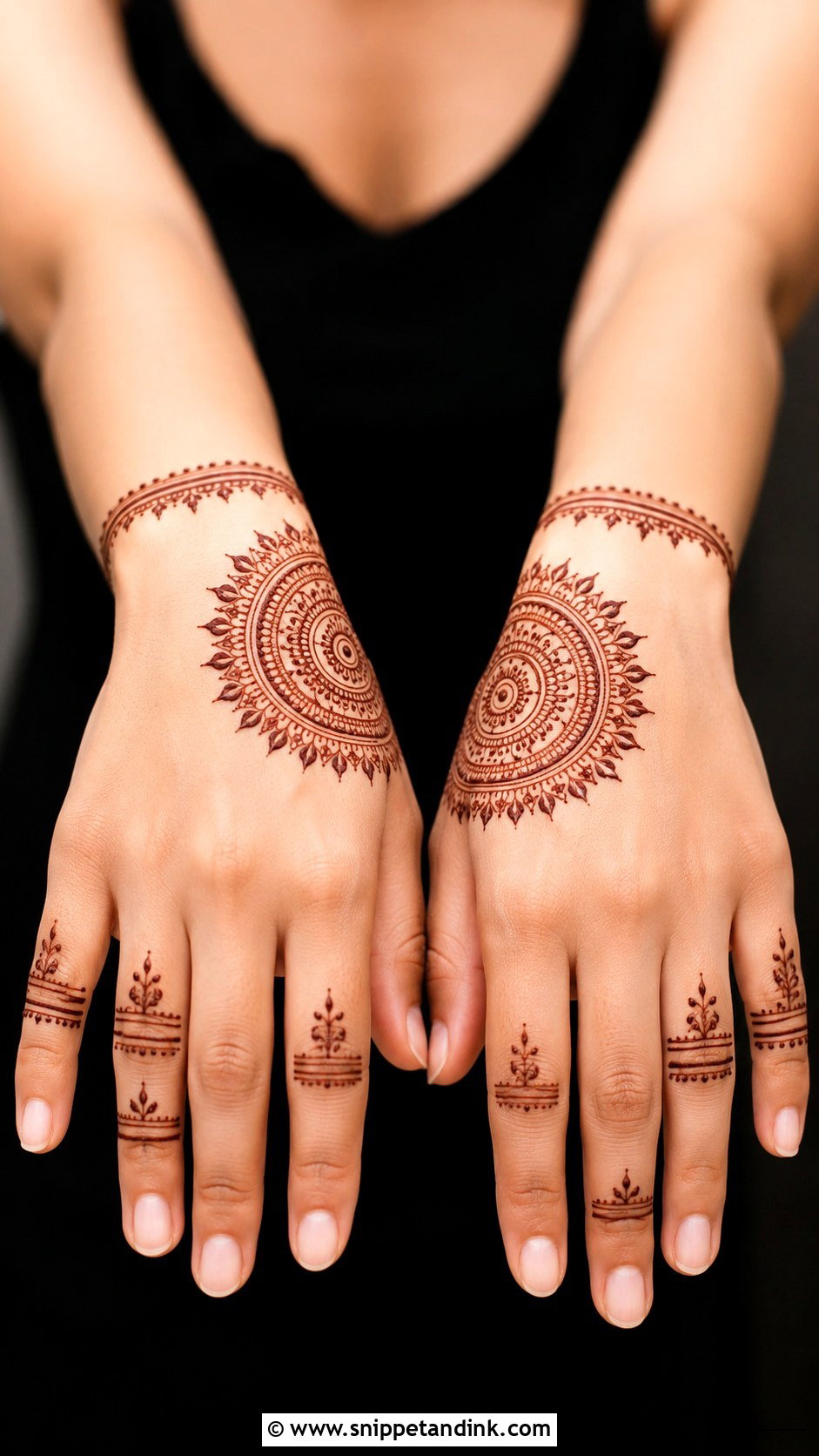
Negative space, thin lines, asymmetric placement, geometric rings or minimal finger details: a modern mandala doesn’t have to be traditional at all. It might sit off-centre, link to a bracelet cuff or be a small detailed circle with lots of bare skin around it. It pairs naturally with contemporary outfits. The discipline is in what you leave out. I stop adding fillers earlier than feels natural, because every extra element pulls a modern design back toward a traditional one.
Twenty Hands in One Mehndi Night, Without Upstaging the Bride
Mandalas are the easiest designs to scale across a bridal party, which is why I use them so often at mehndi nights. The trick is deciding the levels in advance, so nobody ends up with a design heavier than the bride’s and the queue keeps moving.
- The bride: a full or heavy mandala, ideally applied in a separate session earlier in the day or the day before, so she isn’t sitting still while everyone else celebrates.
- Sisters and close family: a half-hand or bracelet mandala, recognisably related to the bride’s design but lighter.
- Guests: a small mandala on the back of one hand, which takes a fraction of the time and still looks finished.
- Children: a single small circle with dots, done early before they get tired.
Ask the host for a quiet corner with good light and a few cushions for drying hands, and a jug of lemon and sugar mix for sealing. Guests should know not to rush to the buffet with wet paste; plates and dupattas are where most smudges happen. The busier the evening, the more it helps to have more than one artist, so ask early how many hands your artist can comfortably manage in the time you have.
How Many Rings Does Your Occasion Need?
The mandala lasts because it’s easy to understand and easy to adapt. A small palm circle is sweet and minimal; a full bridal mandala is rich and traditional. Between them sit floral, paisley, Arabic, Indo-Arabic, geometric, jaali, bracelet and negative-space versions. Work out how much time you have and what your outfit shows, then decide how many rings you need. The right mandala fits your hand, your event and your patience in the chair.
You'll Like These Ideas:


Leave a Reply