
The henna a bride wears to her barat gets photographed more closely than almost anything else she has on: hands on the lap during the nikah, a ring being slipped on, kaleeras, the hand on the doli. So it’s usually denser and more carefully planned than mehndi for any other function, and it has to be timed so the stain is at its darkest on the day. Below are twenty designs I’d offer a barat bride, from full-coverage traditional work to lighter Arabic and modern layouts, with notes on how each one stains, wears and photographs.
Counting Back From Barat Day to Your Henna Appointment
Natural henna starts orange when the paste comes off and darkens over the next one to two days, reaching its deepest reddish-brown somewhere around 48 hours. That’s why the bridal mehndi is usually applied one or two days before the barat, not the morning of. Apply it too early and it starts fading by the wedding, apply it the night before and you’ll be wearing a lighter, orange-toned stain in the photos.
- Exfoliate and wax a day or two before, not after. Skin should be clean and free of lotion or oil when the henna goes on.
- Keep the paste on for as long as you comfortably can, ideally overnight. I seal it with a light lemon and sugar mix so it stays moist and keeps contact with the skin.
- Scrape the dried paste off, don’t wash it. Avoid water on the design for several hours afterward.
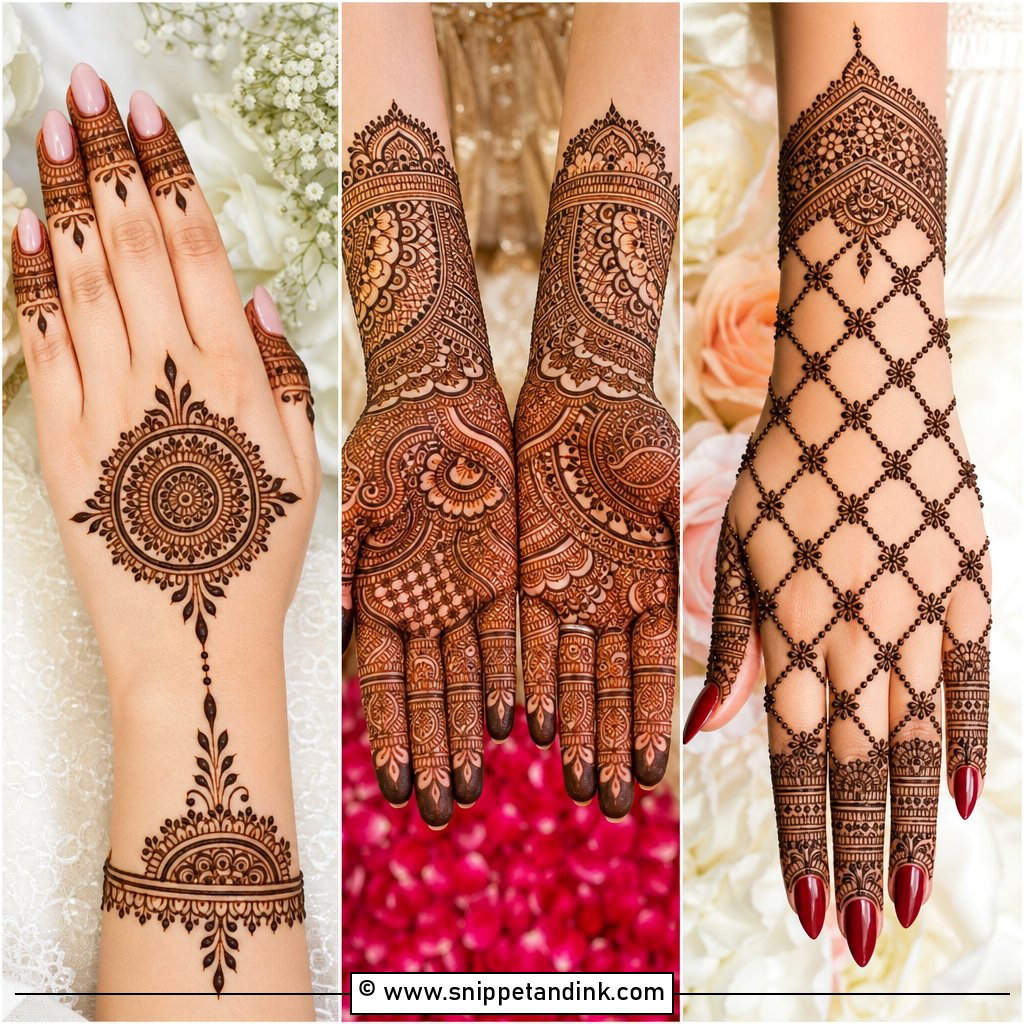
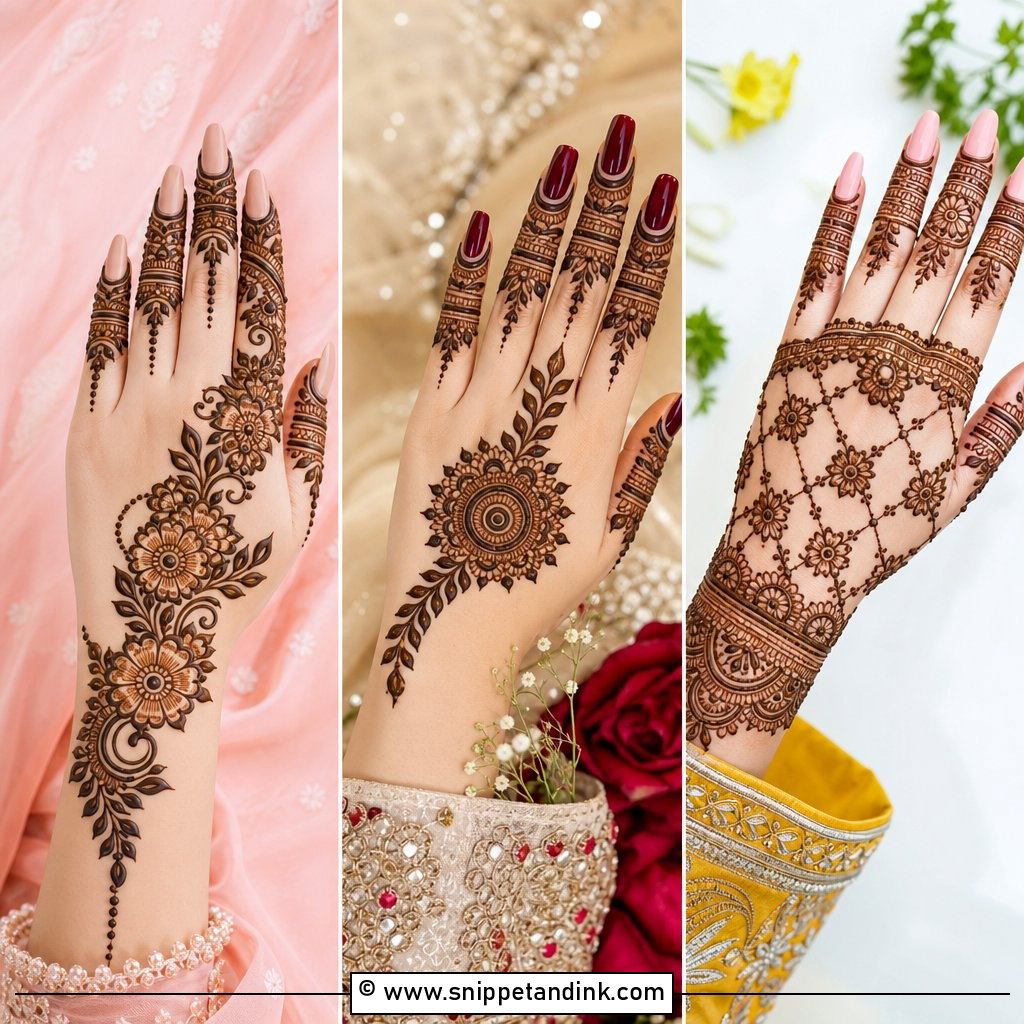
- Keep your hands warm. A cold room slows the stain; warmth helps it develop.
Arrange the appointment so you don’t need your hands for anything afterwards. Eat beforehand, use the bathroom, and have someone available to help with your phone and drinks.
1. Full Hand Barat Mehndi Design
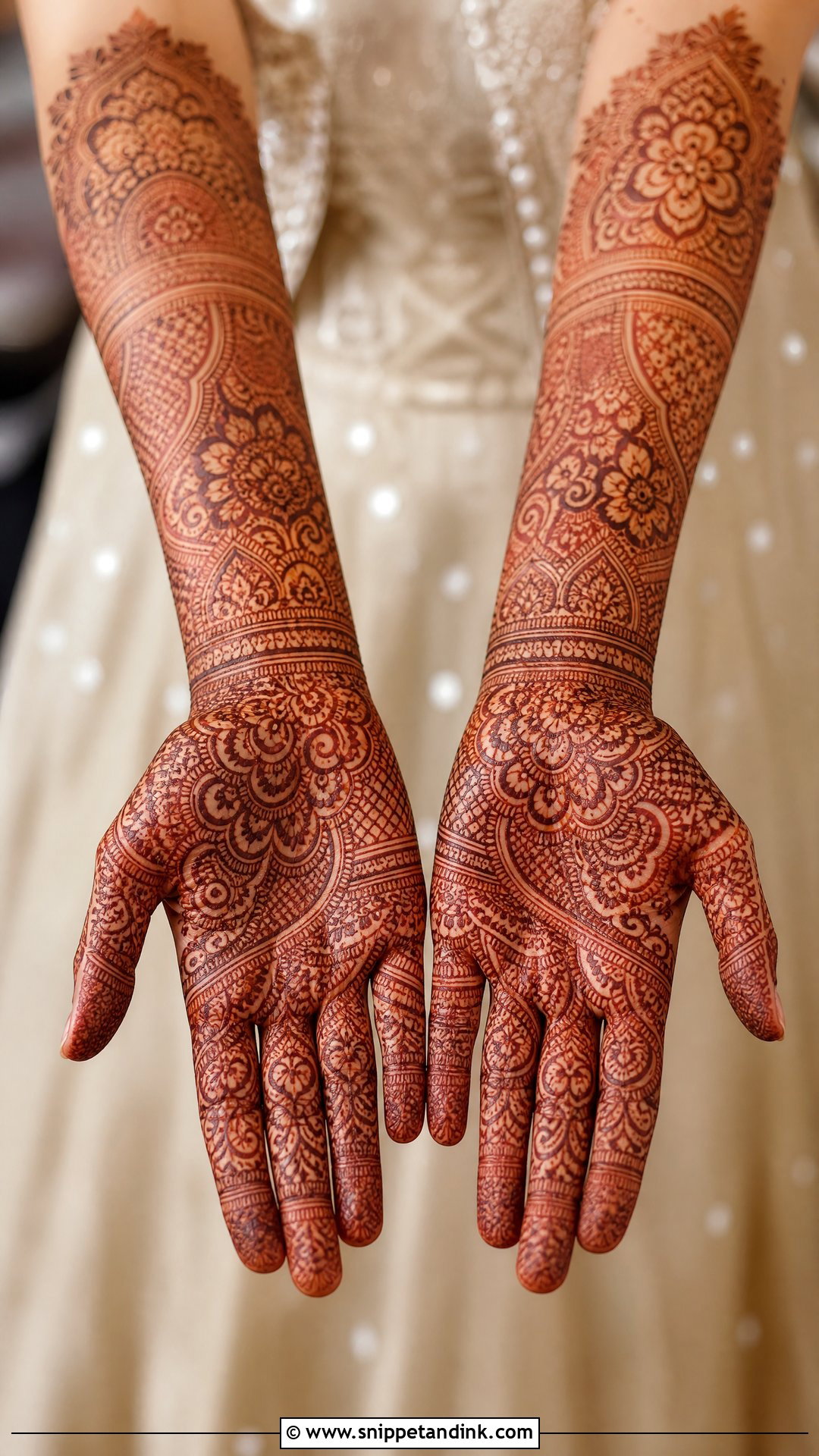
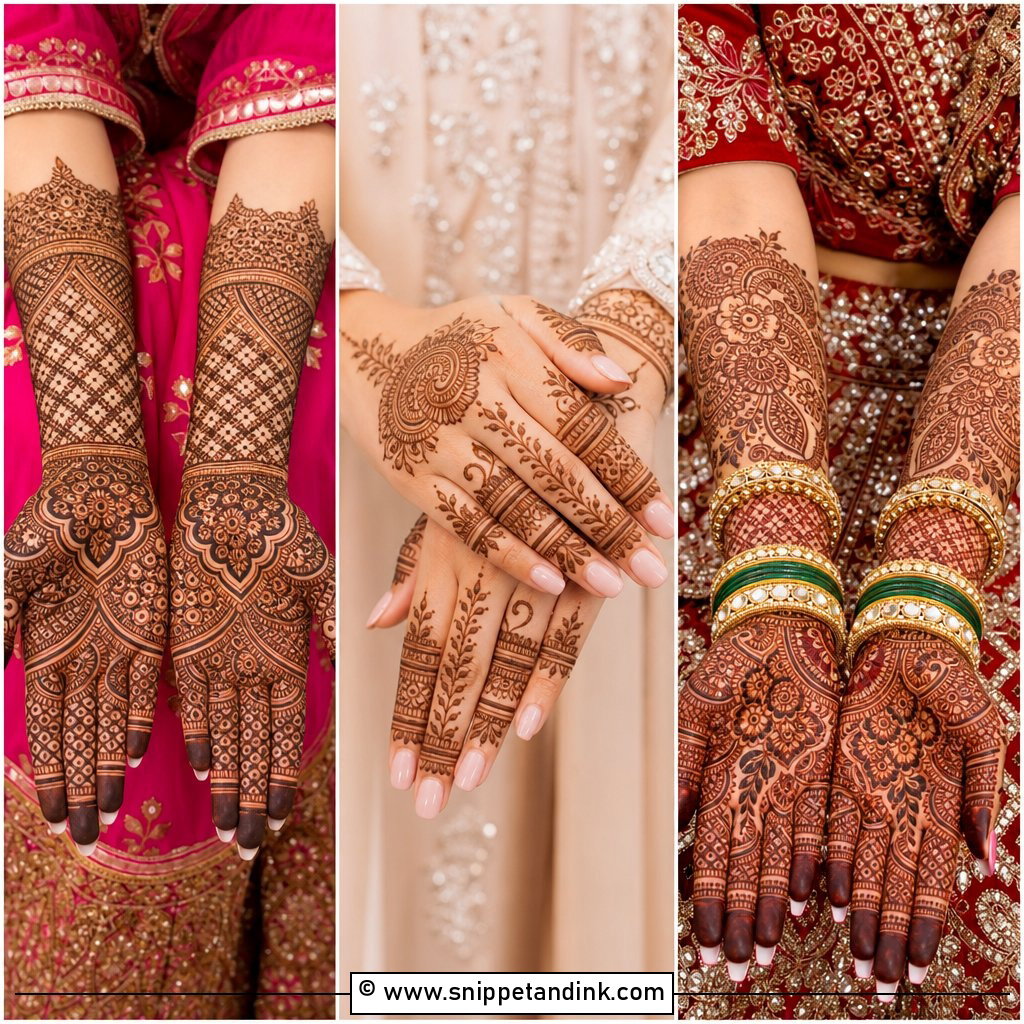
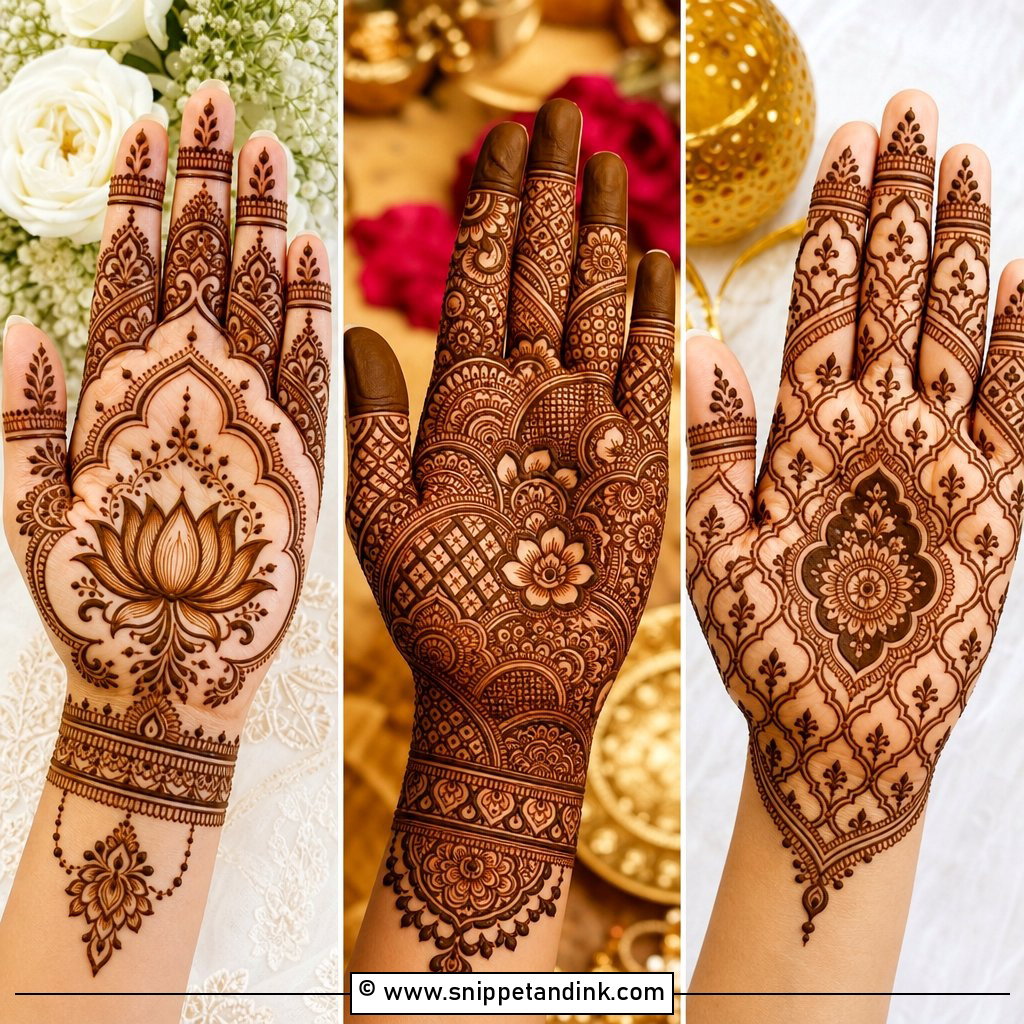
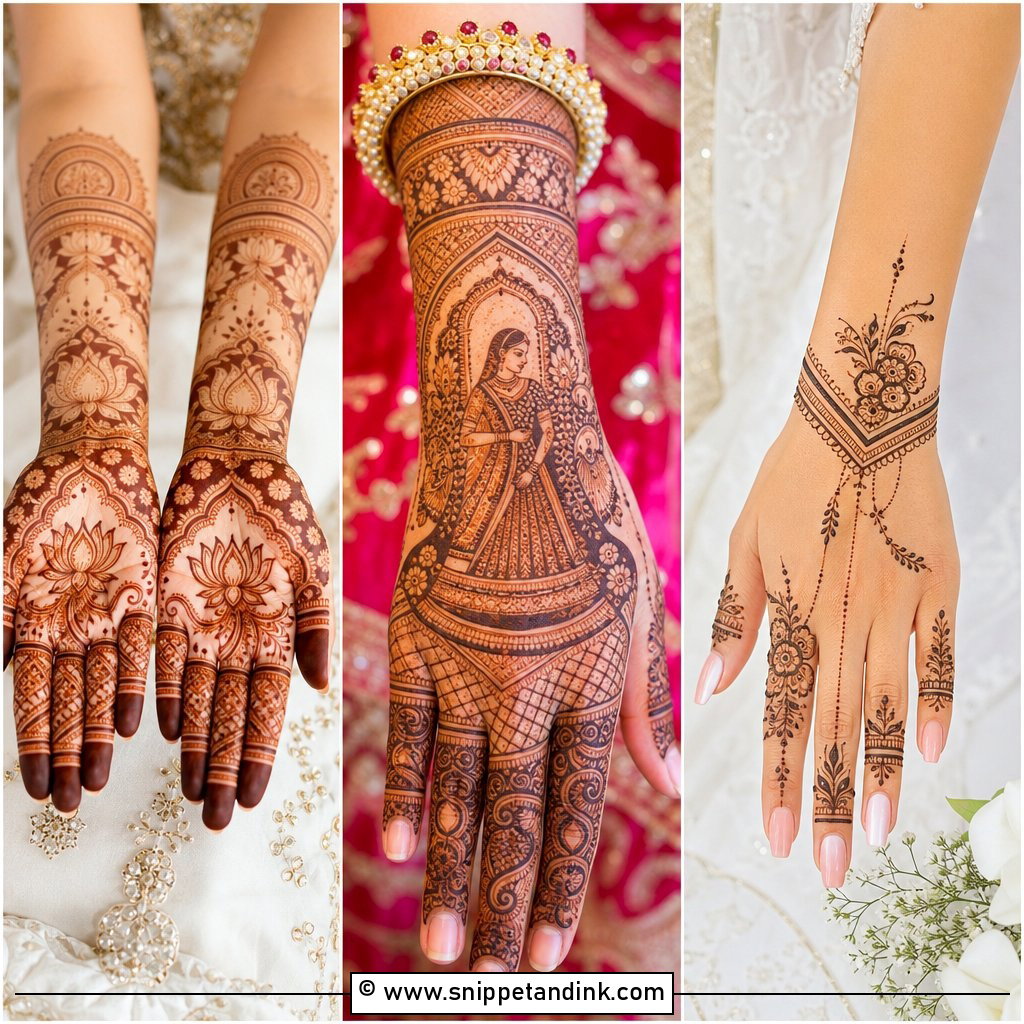
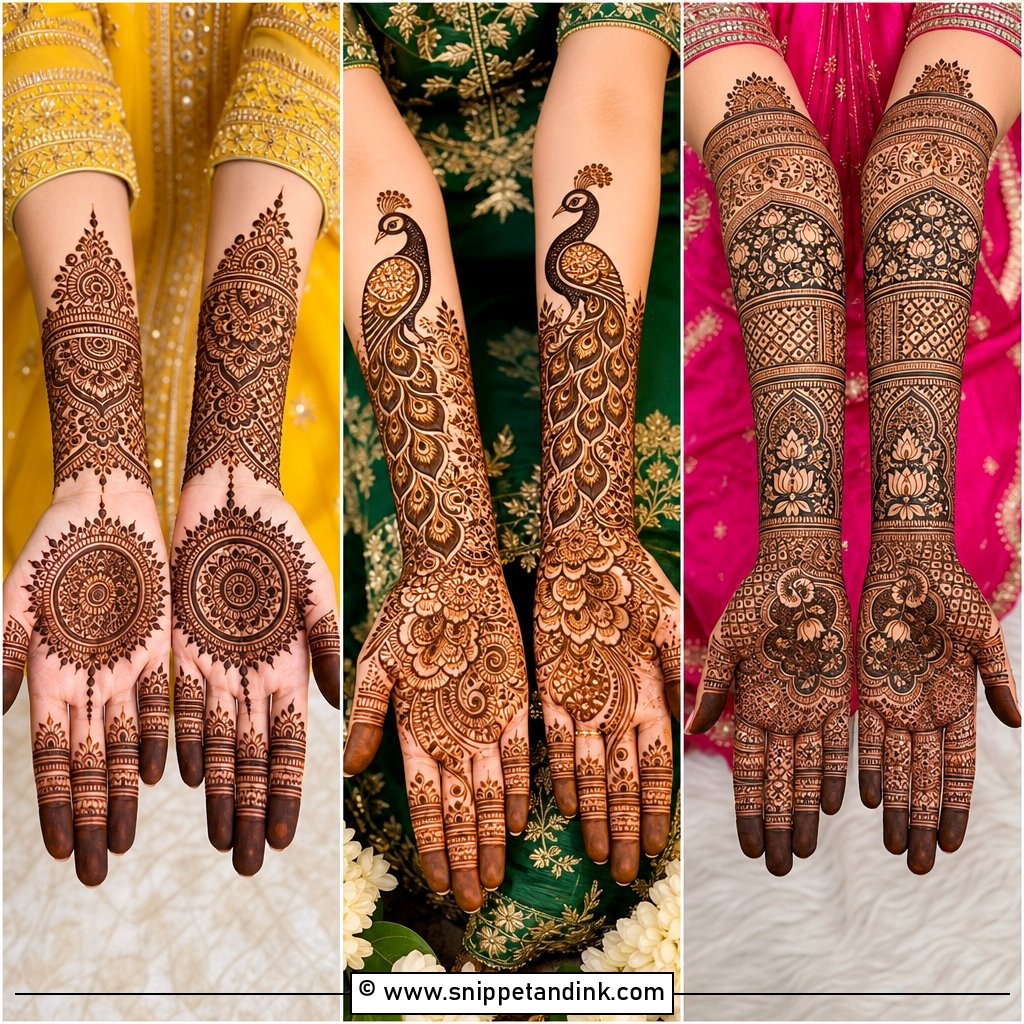
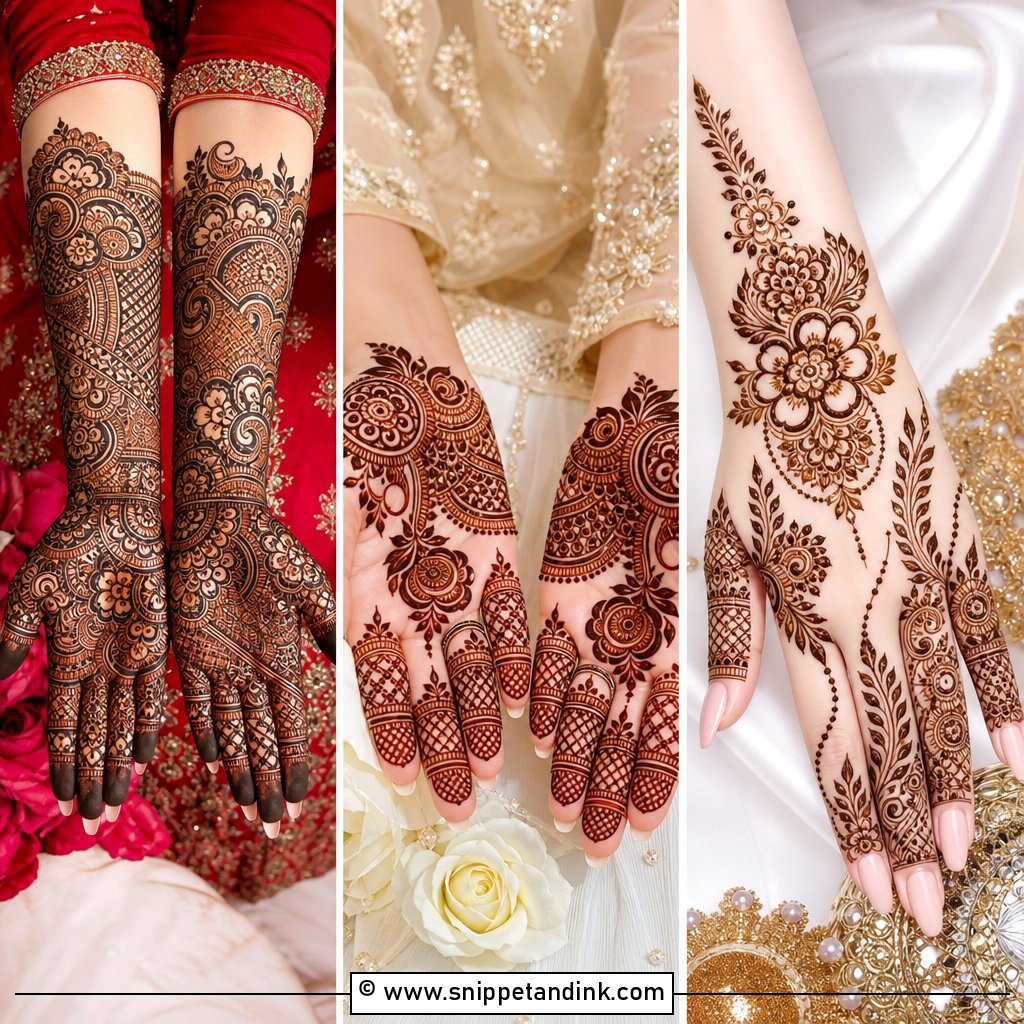
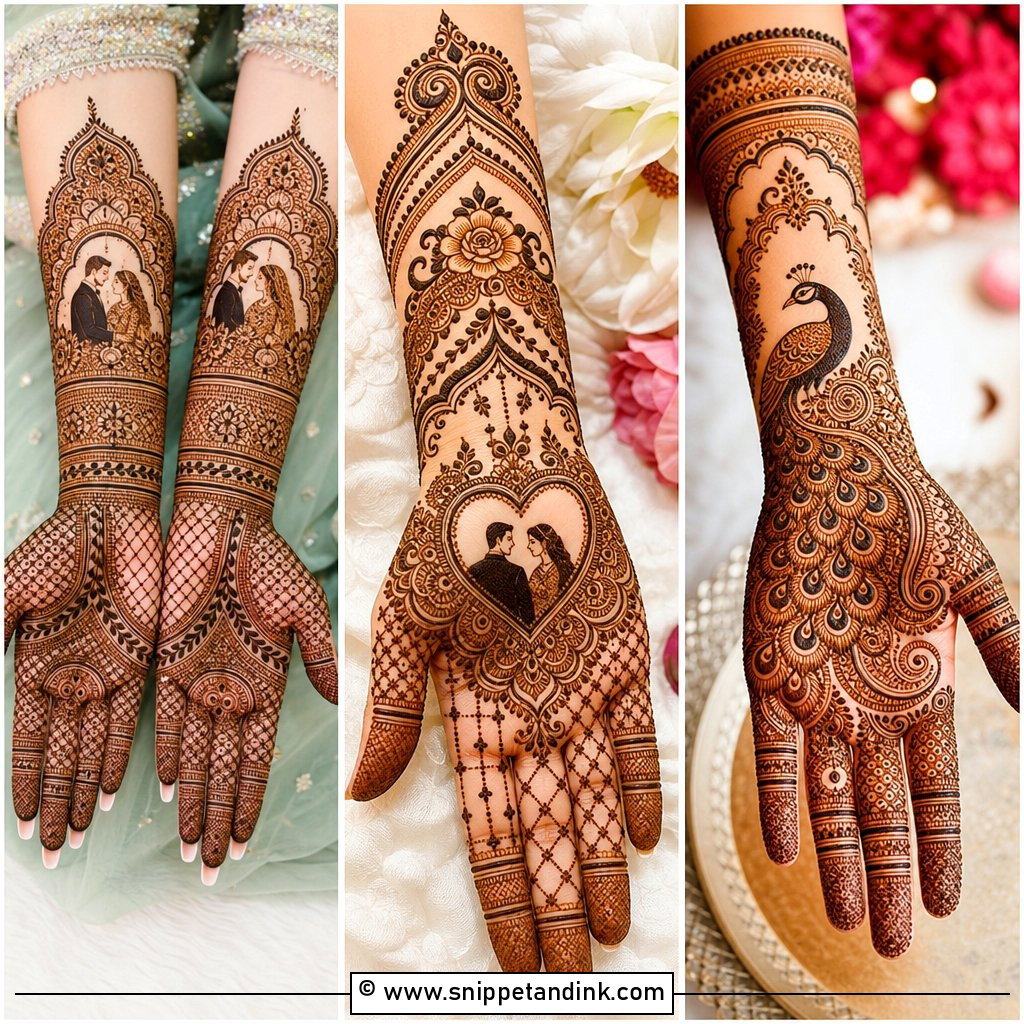
Full coverage across palms, fingers, wrists and forearms is still what most brides picture for the barat. Paisleys, florals, vines, mandalas, jaali and fine fillers all work together. The way I balance it is to give the palm the main motifs and let the forearm carry layered bands, so the eye has somewhere to rest. One honest note: the palm stains darkest and the forearm noticeably lighter, because skin there is thinner and cooler, so a full design always reads as a gradient. It suits red, maroon, gold, ivory and deep green outfits equally.
2. Indian Barat Mehndi Design
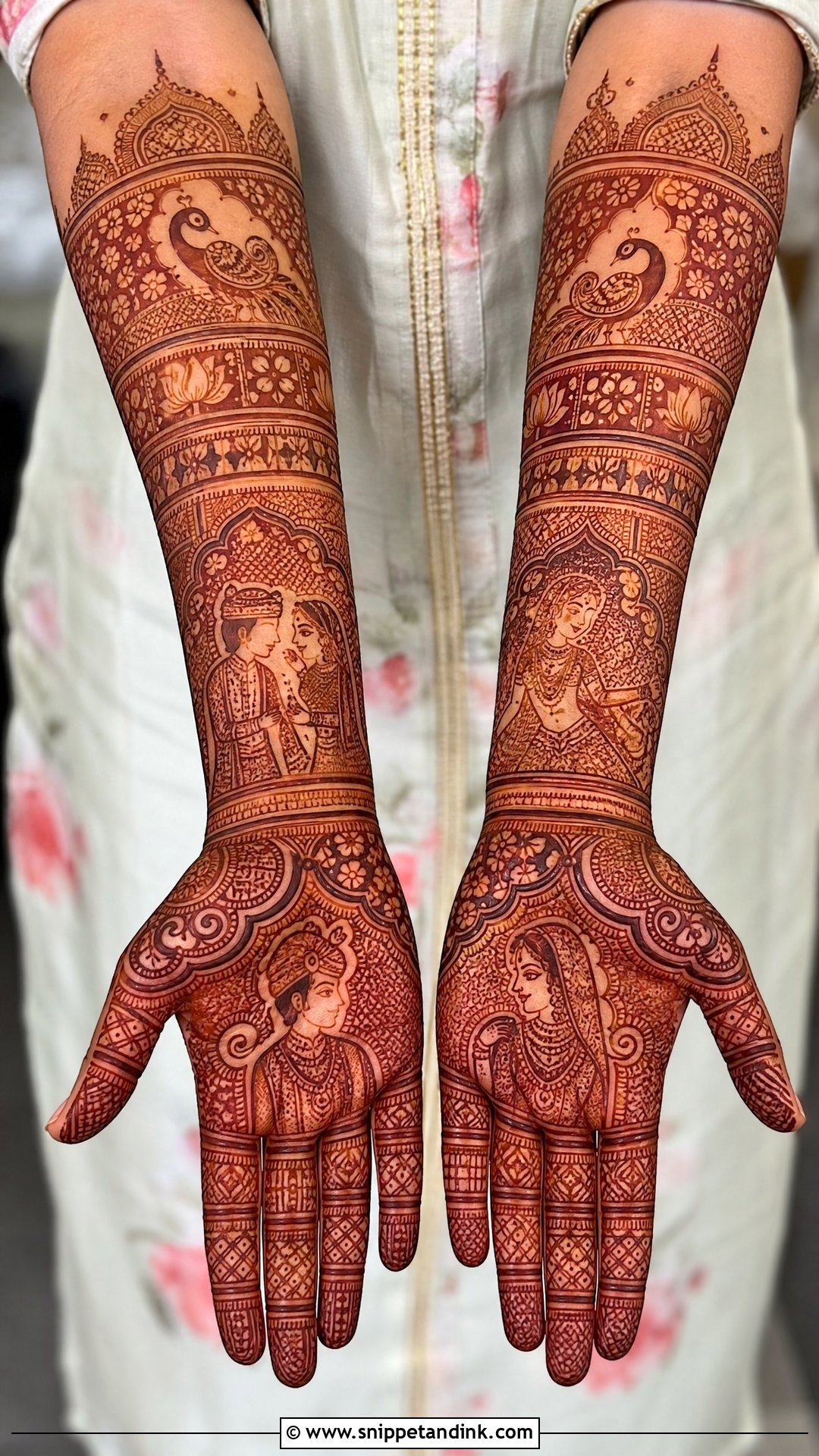
Traditional Indian bridal work fills the hand from fingertips to forearm with peacocks, lotus, paisleys, bride and groom figures, kalash motifs and fine shaded fills, with every section carrying a piece of the wedding story. It leaves very little empty skin. The risk with dense work is that it turns into a dark blur once the stain deepens, so I keep main outlines bold and fillers truly fine, with hairline gaps between them. Those gaps are what keep the design readable on day two, alongside heavy bangles, kaleeras and an embroidered lehenga.
3. Arabic Barat Mehndi Design
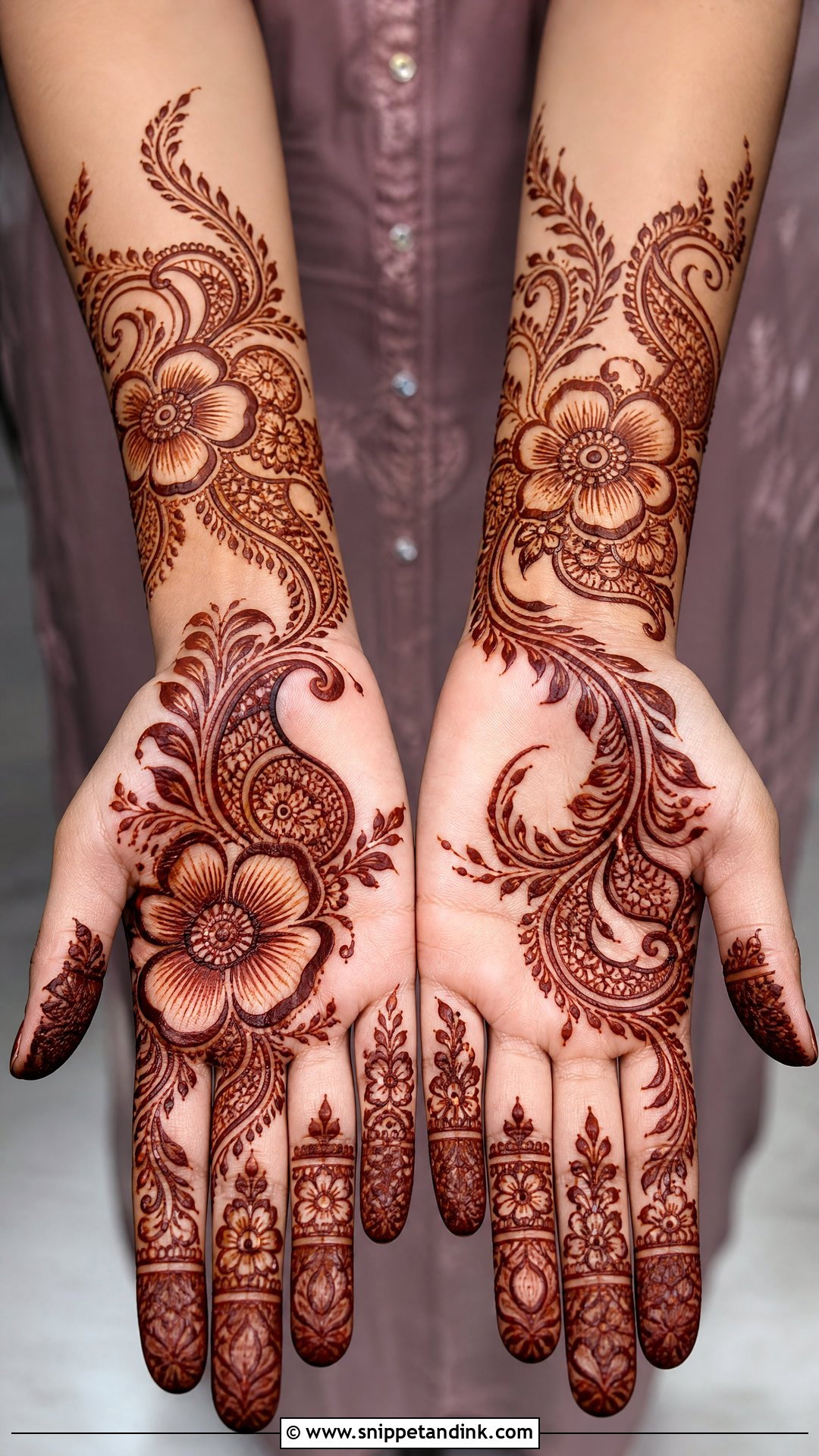
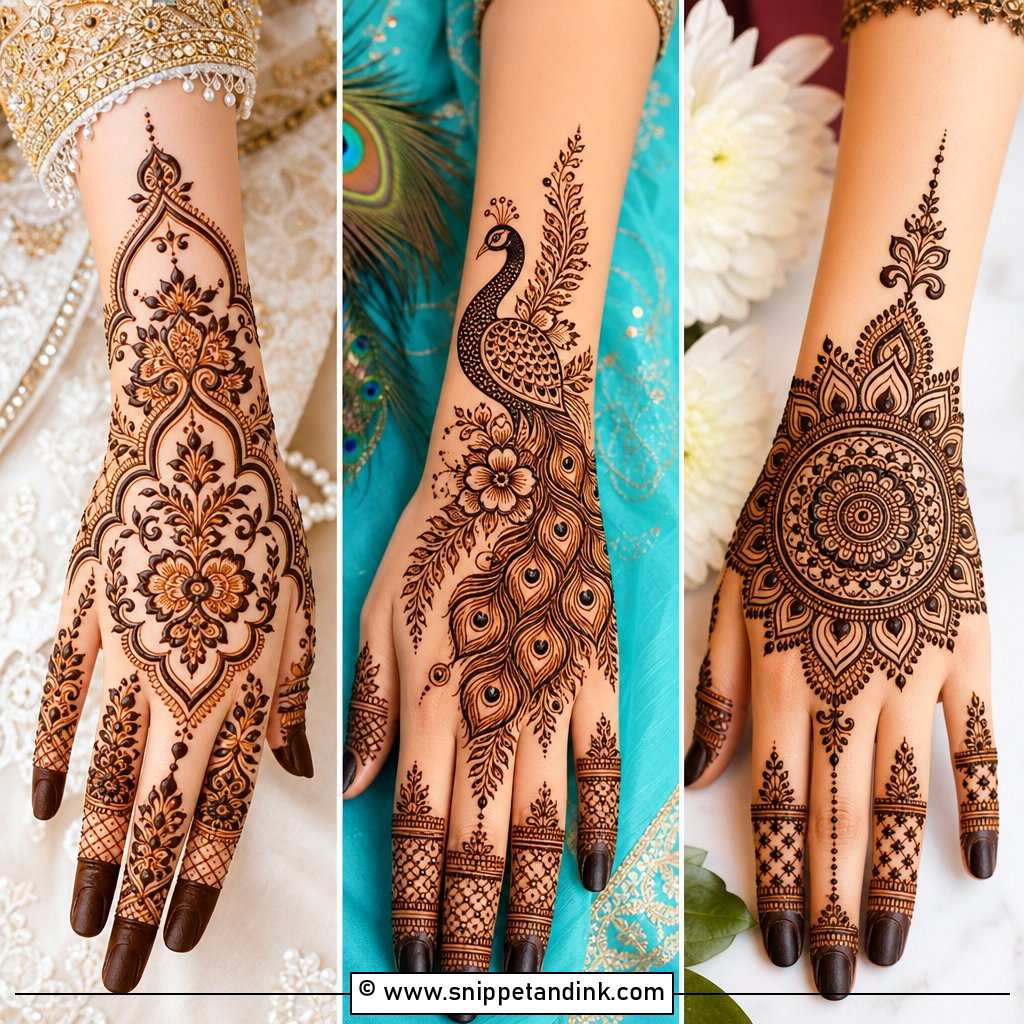
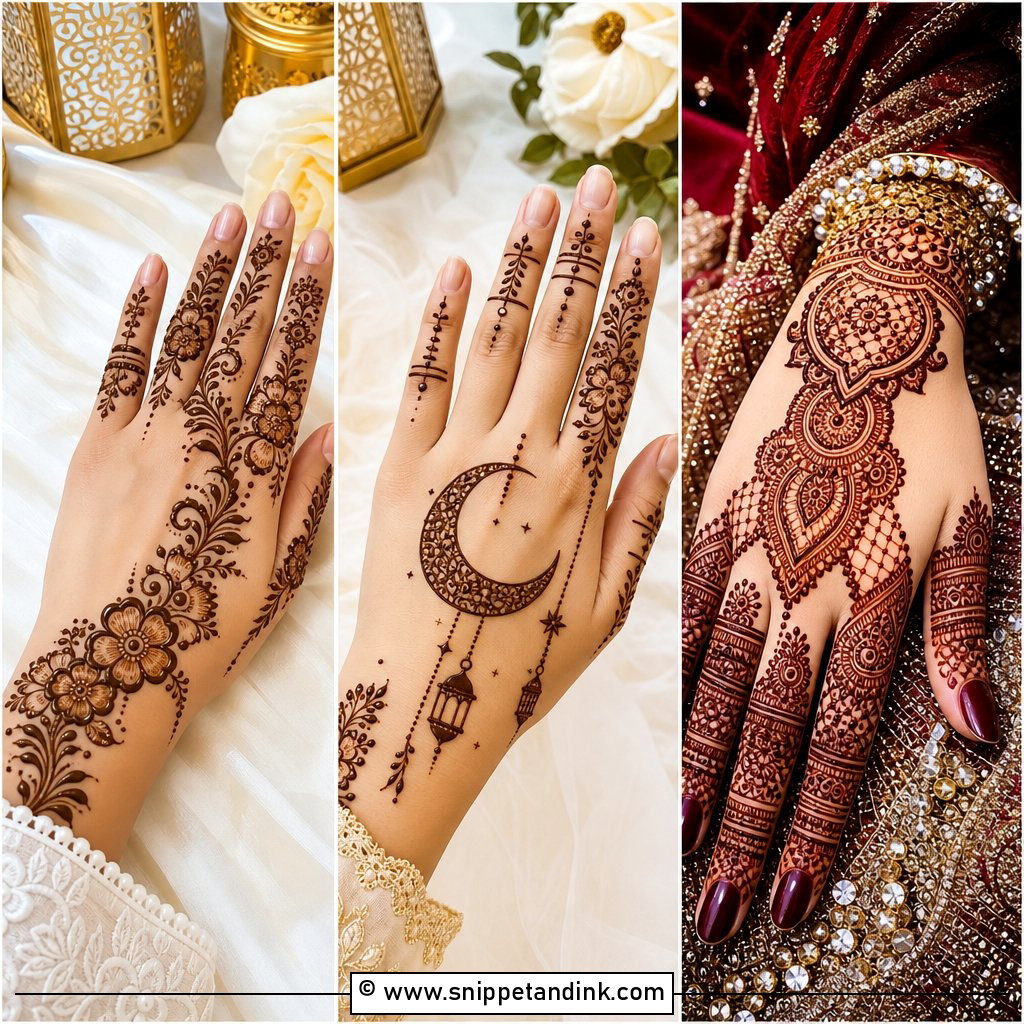
Arabic layouts use flowing floral trails, leafy vines and large paisleys with plenty of open skin, which makes the pattern easy to read from across a room and quick to apply. The diagonal from one side of the palm to the wrist is the classic placement. For a bride I extend it to the forearm and fill the larger shapes with soft shading so it feels wedding-weight. If you have small hands, Arabic often looks better than dense work, which can make small hands look crowded.
4. Indo Arabic Barat Mehndi Design
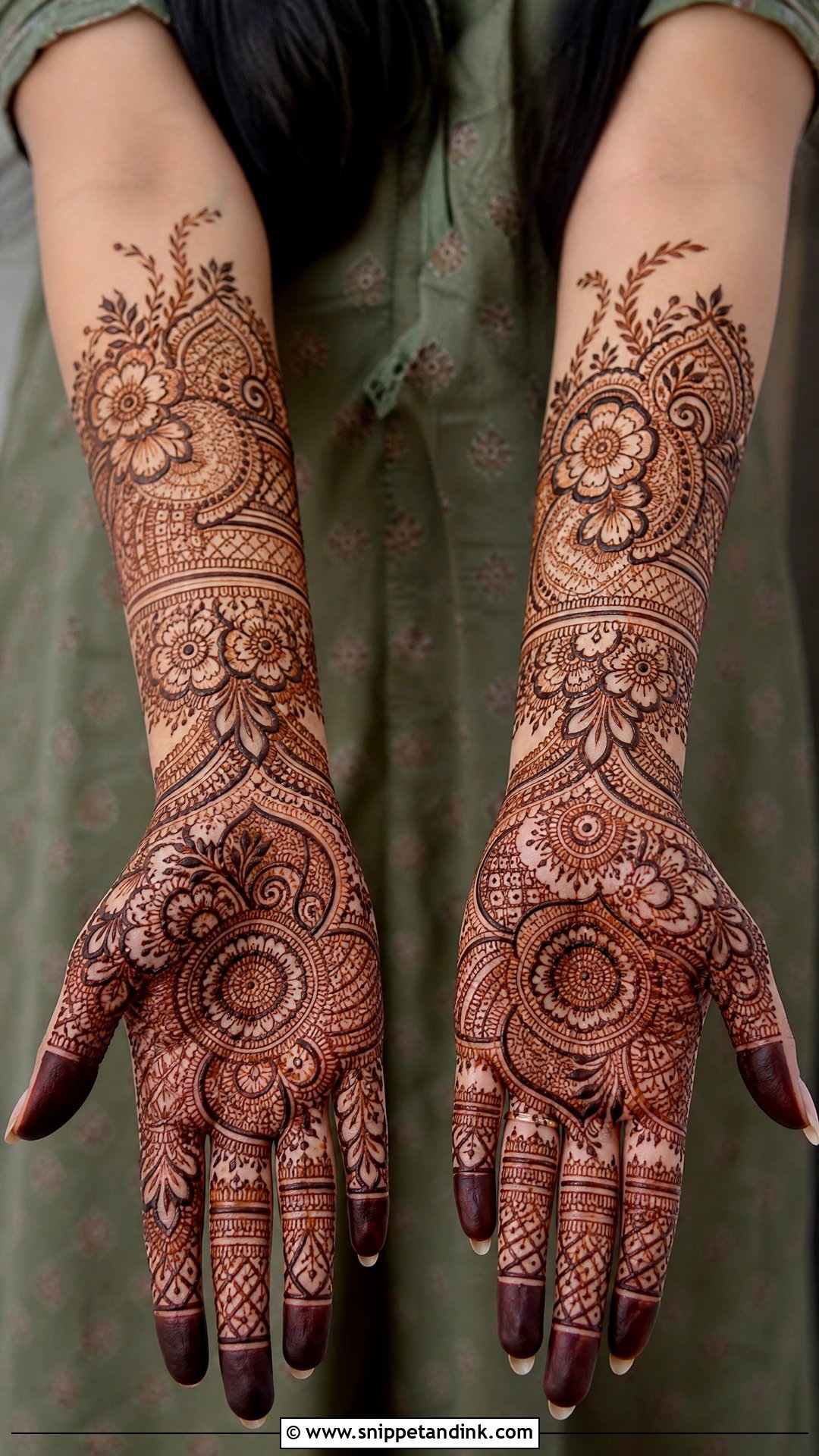
Indo-Arabic takes the bold spacing of Arabic work and adds the fine detailing of Indian bridal patterns. The palm might carry a mandala, paisley or floral cluster, with detailed fingertips, while the forearm gets bands, domes or net work. It’s a good middle ground if you want a full-looking design but can’t sit for six hours. Bridesmaids often wear a lighter version of it, so for the bride I add density in the palm and fingers to set hers apart.
5. Front Hand Barat Mehndi Design
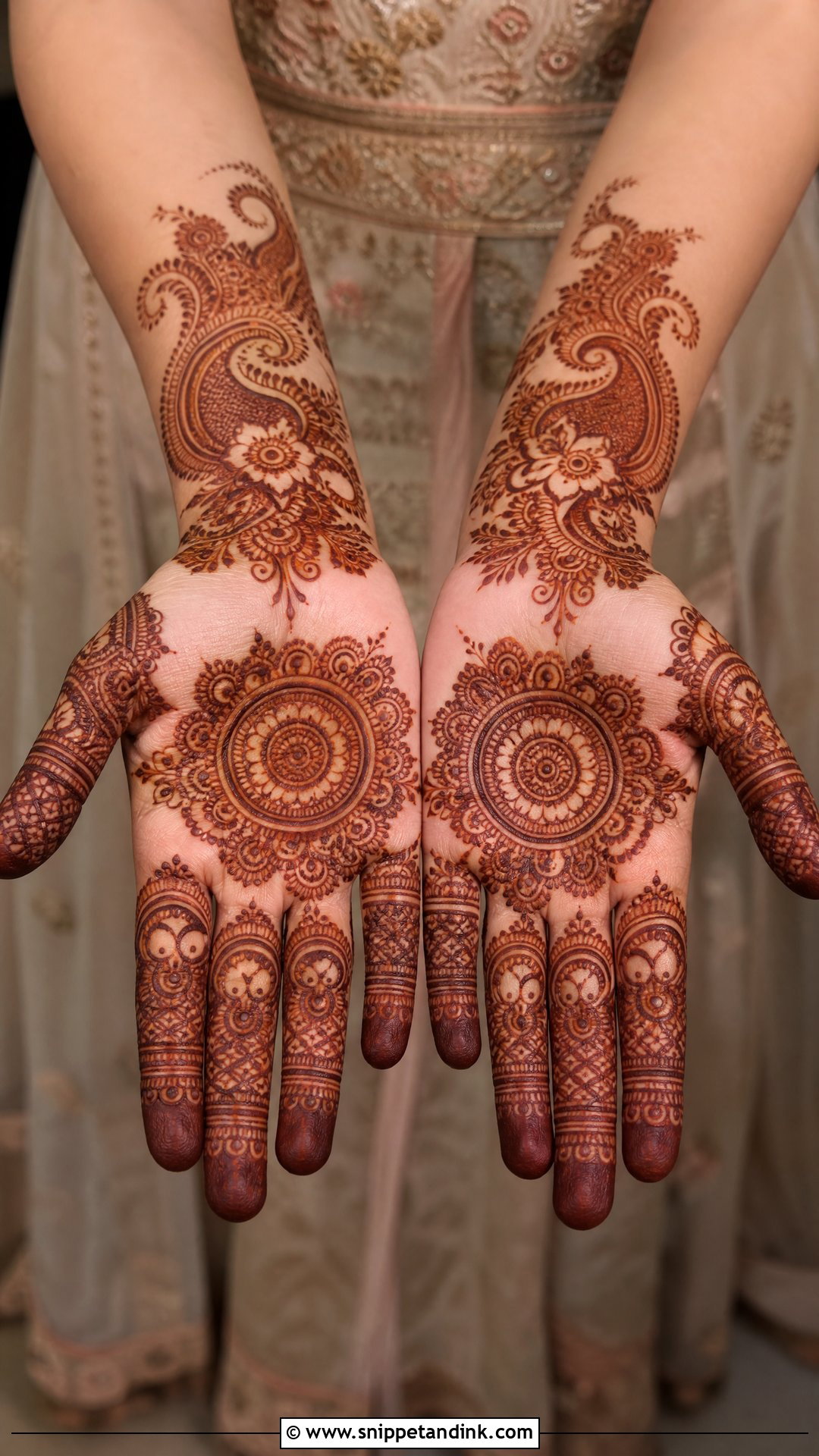
Front hand barat mehndi design is what people see when you hold flowers, sit for rituals or turn your palms up for photos, so it needs a strong centre: a mandala, a portrait pair, a peacock pair or a lotus. Paisleys, curved vines, fine dots and shaded florals fill the rest. Fingers can be fully covered or banded. The two hands don’t need to match, but they should carry the same visual weight, so I plan both before starting either and alternate between them for the borders.
6. Back Hand Barat Mehndi Design
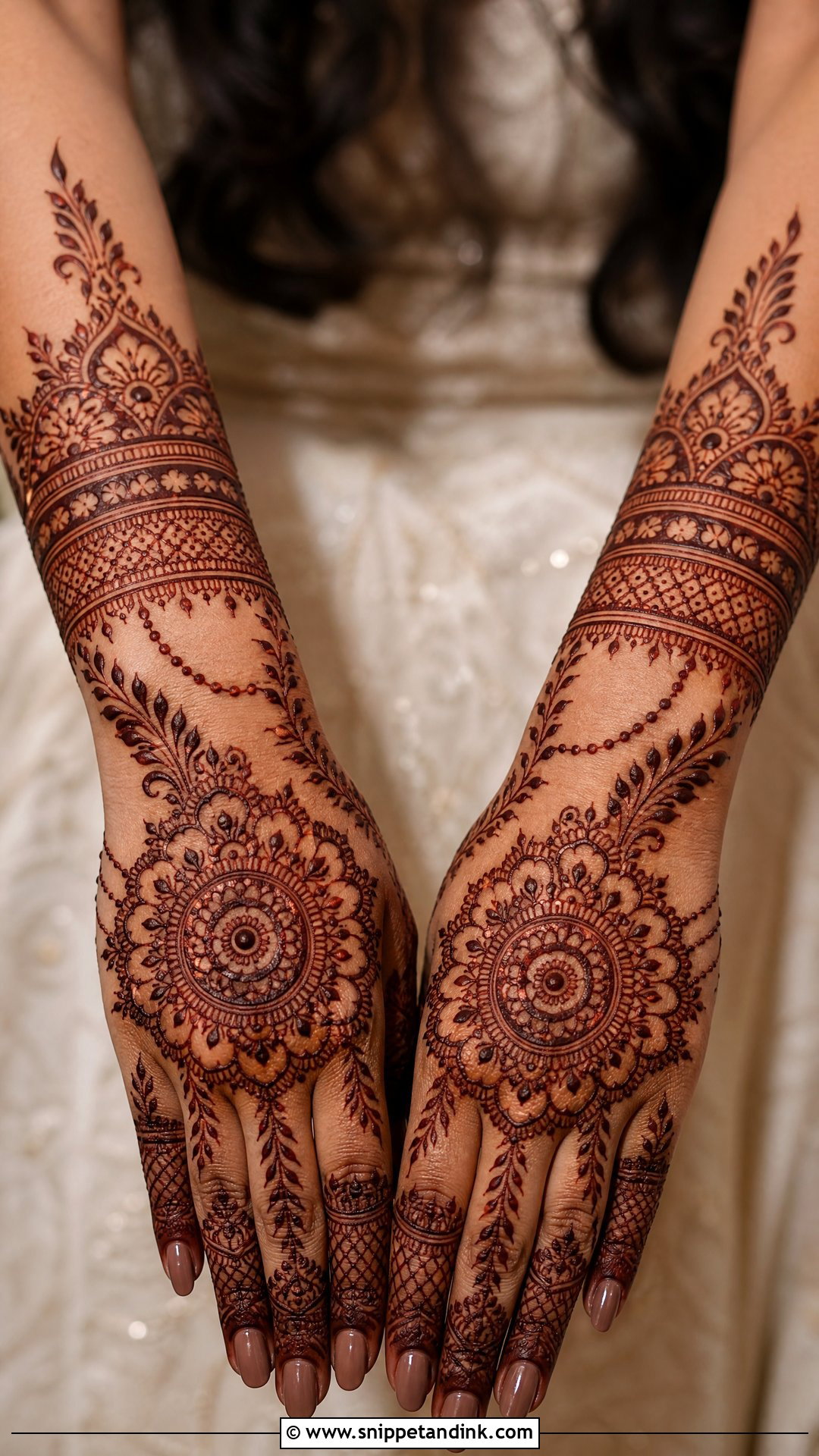
The back of the hand is where rings and bangles are photographed, so it deserves as much planning as the palm. I usually start with a central mandala or floral circle, or a bracelet-like wrist band, and move toward the fingers with vines, chains, jaali or leaf trails. Cuff details near the wrist and fine finger panels give it a royal feel next to bridal rings and hand jewellery. The back of the hand stains a little lighter than the palm and the skin moves more, so crisp, slightly thicker outlines hold up better here.
7. Bridal Portrait Barat Mehndi Design
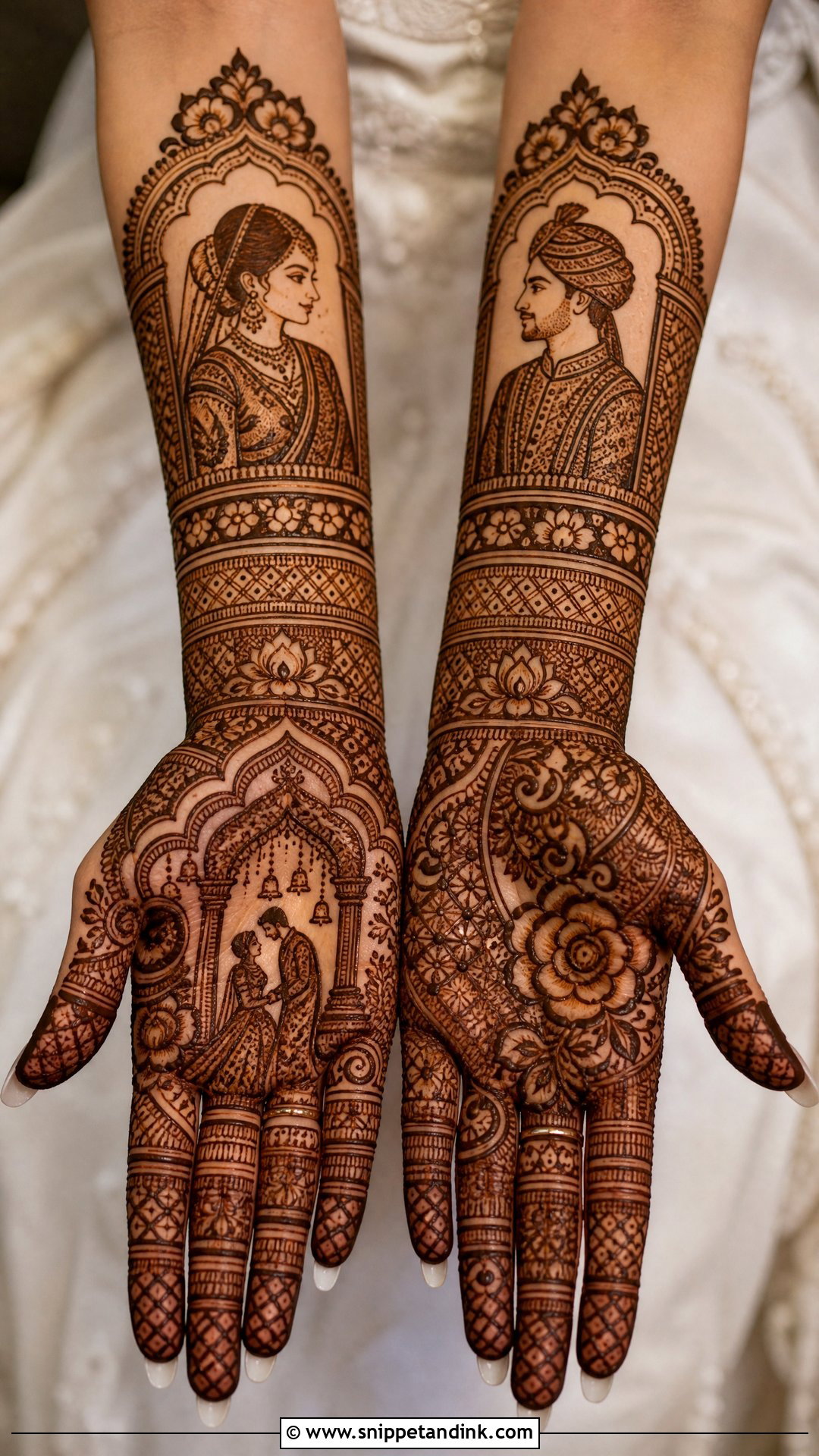
A bridal portrait barat mehndi design puts the bride on one palm and the groom on the other, framed by florals, arches and paisleys. Many brides hide the groom’s name, the wedding date or a tiny baraat procession in it. Faces are the hardest thing to draw in henna, because a line slightly too thick changes an expression, so look at an artist’s portraits specifically before booking. I keep the fillers around faces delicate, so the portraits stay the focus once the stain darkens.
8. Peacock Barat Mehndi Design
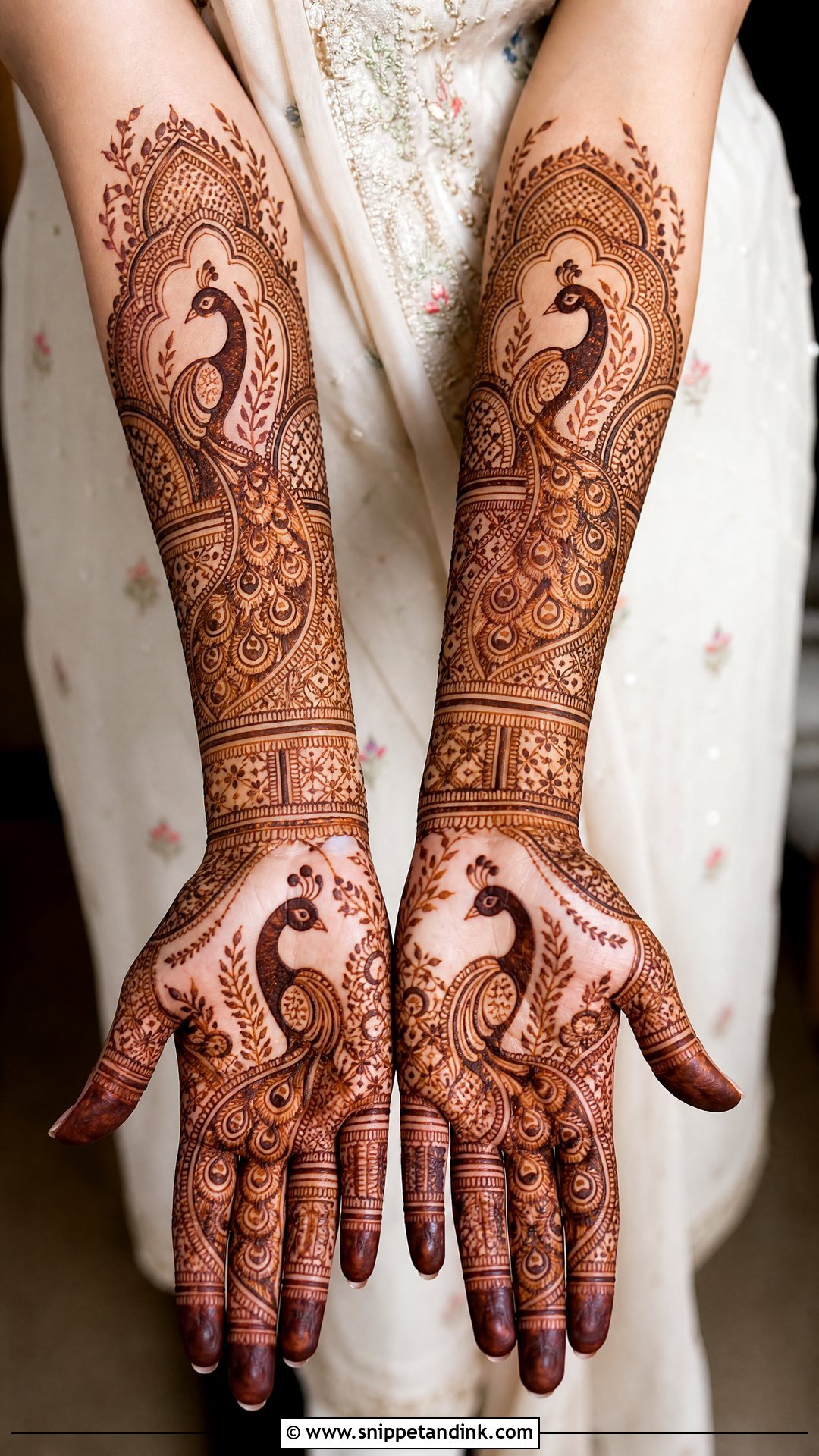
A peacock can sit on the palm, stretch along the forearm or face its partner across both hands. The feathers give room for fine lines, dots, scallops and floral fills, which makes it a natural pick if you’d like traditional work without portraits. One or two main peacocks is enough; I support them with paisleys, vines and mandalas rather than adding more birds, which crowds the hand. It reads well against outfits with zari, mirror work or heavy embroidery.
9. Mandala Barat Mehndi Design
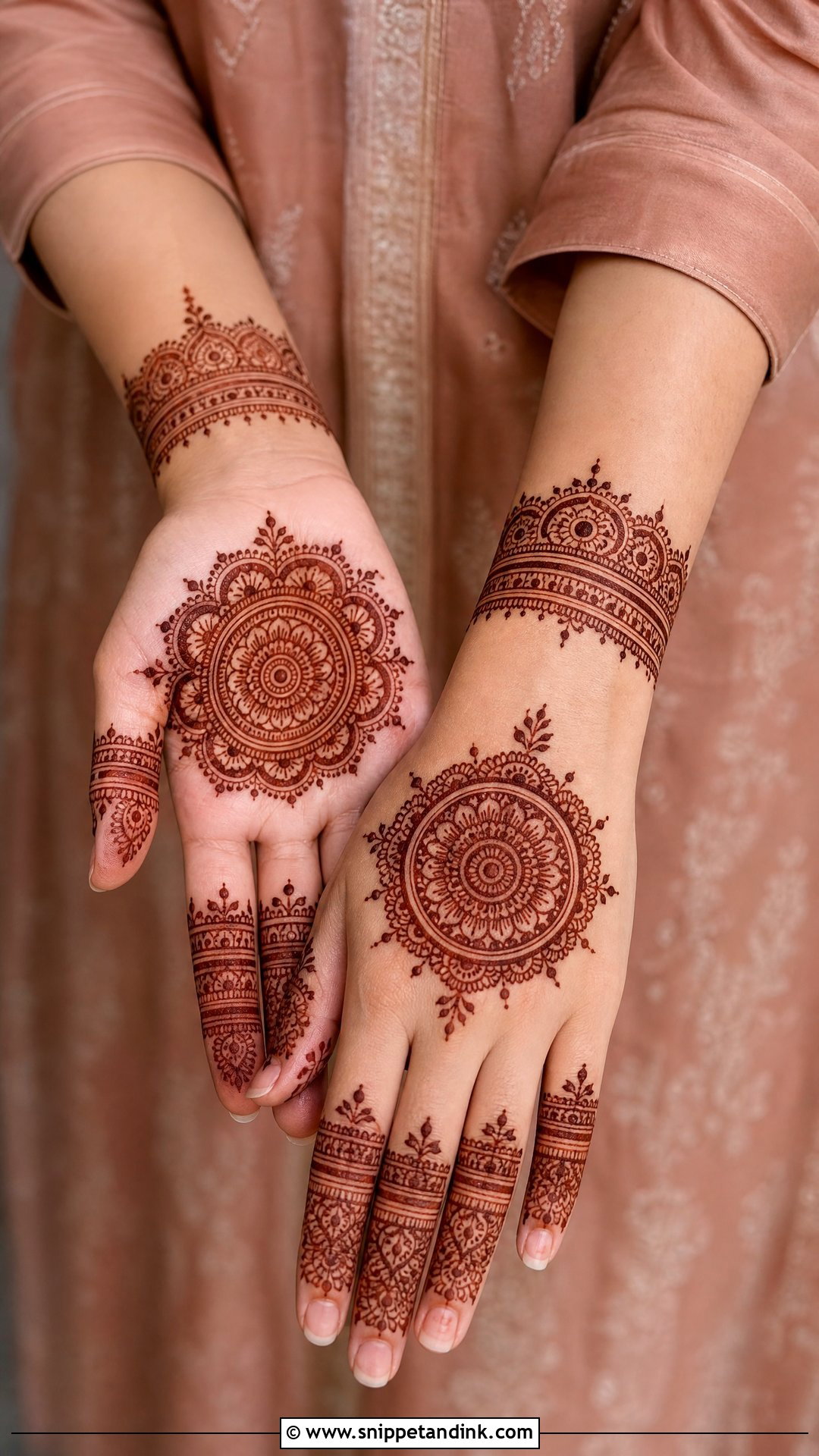
A large mandala in the centre of the palm or on the back of the hand gives symmetry and calm structure, finished with detailed fingers and wrist bands. For a barat, the mandala has to be fuller than a festive one, with layered petals, tiny dots, fine grids and a paisley border. Symmetry is unforgiving: if one petal is longer than the others, the eye finds it straight away. I mark the centre point and four quarters lightly before building the rings.
10. Paisley Barat Mehndi Design
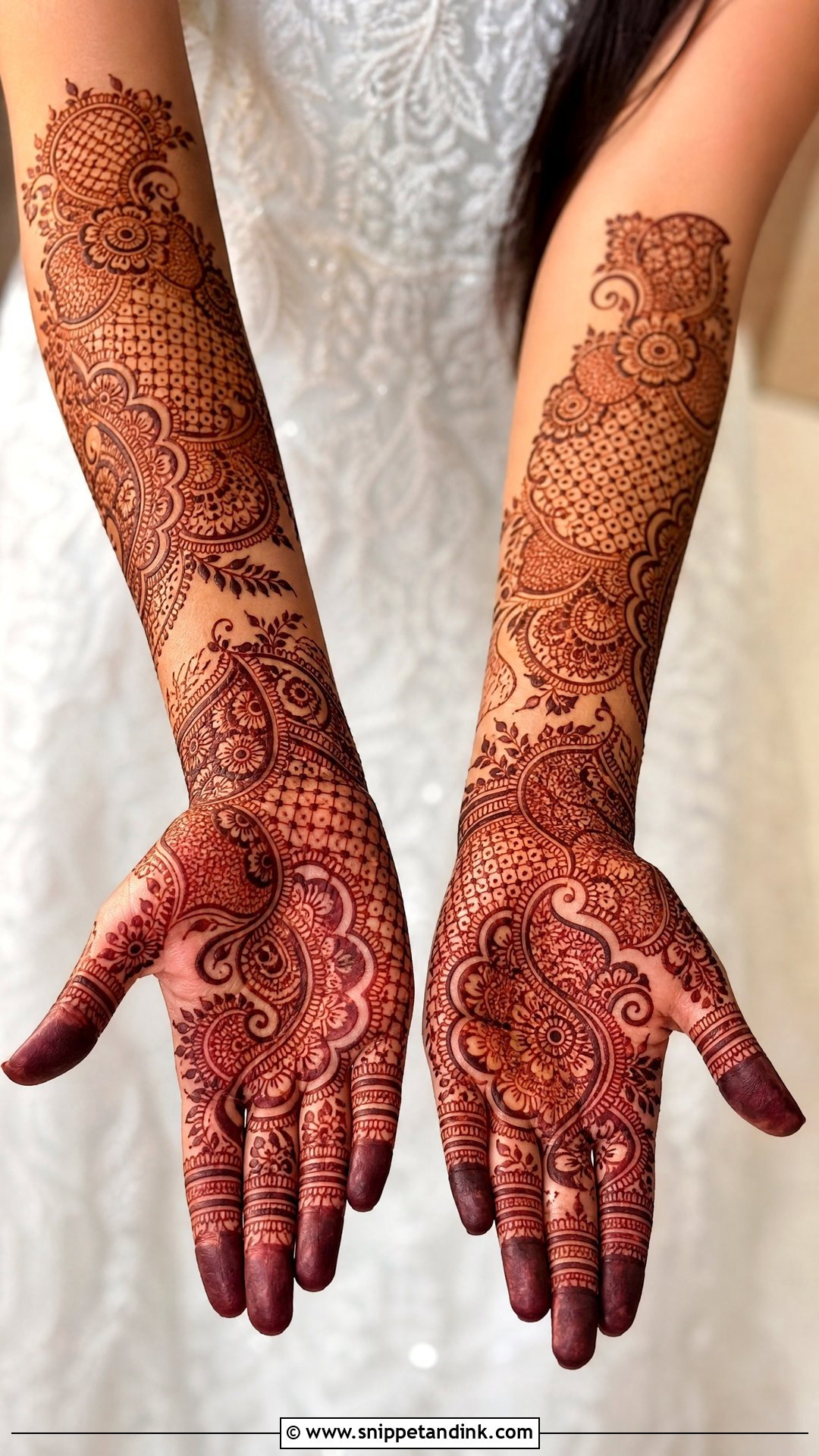
Paisleys are curved and easy to blend with flowers, leaves, dots and mesh, which is why they appear in almost every bridal design. A paisley-led layout can flow from the palm up the forearm in layered sections, or use one large paisley as the focal point on each hand with smaller clusters around it. I vary the sizes deliberately; identical paisleys in a row look stamped and flat in photos. It goes with nearly every outfit.
11. Floral Barat Mehndi Design
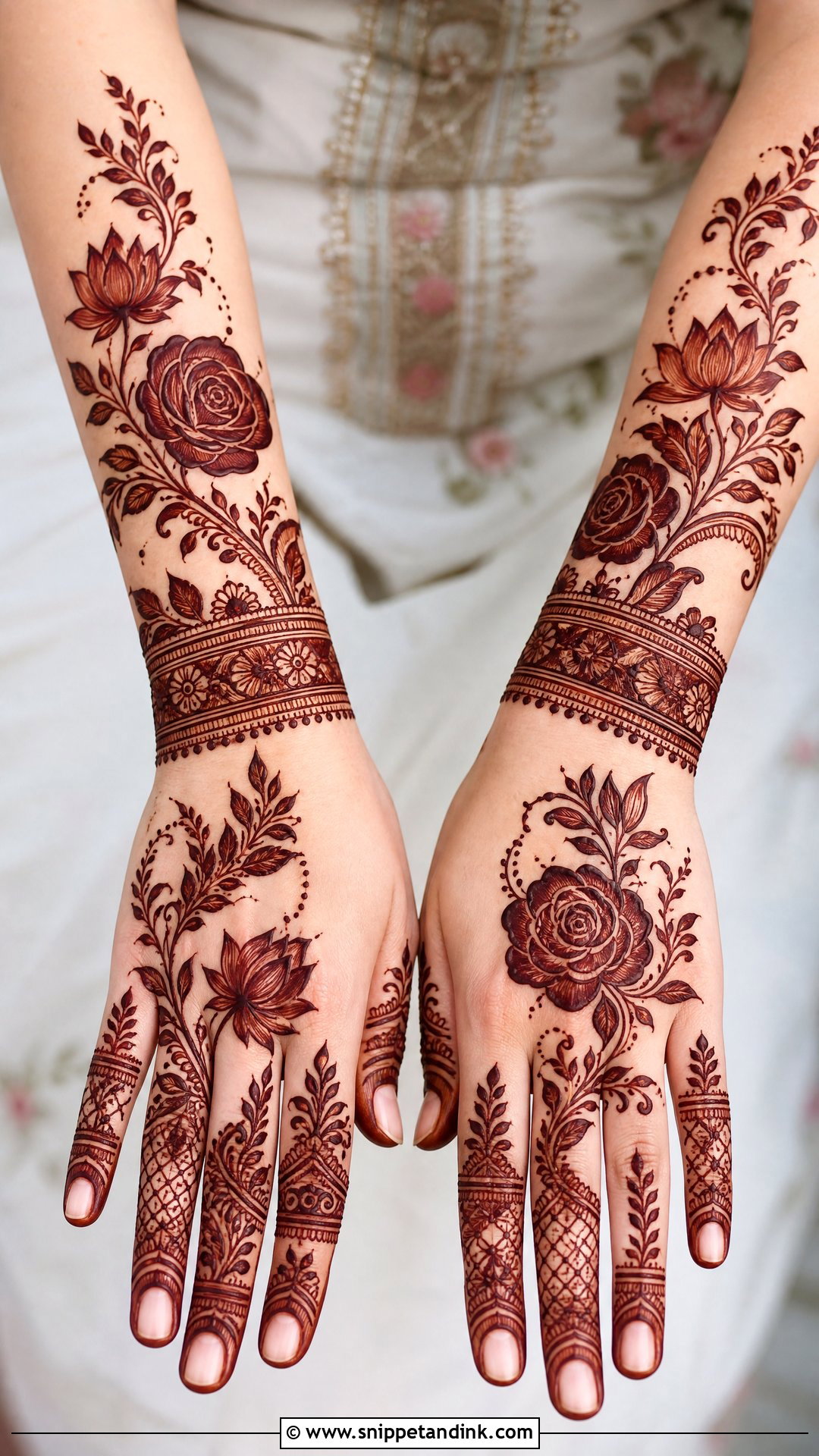
Roses, lotus, small buds and leafy vines can cover palms, fingers and forearms without any figures. Large flowers create focus while tiny florals and shaded petals fill the gaps, and the detail holds up well in close-up photography. For a barat, floral work can feel thin if the flowers are too sparse. I add wrist cuffs, finger panels and fine background lines so it reads as bridal. It sits well with pastel, gold and traditional red.
12. Jaali Barat Mehndi Design
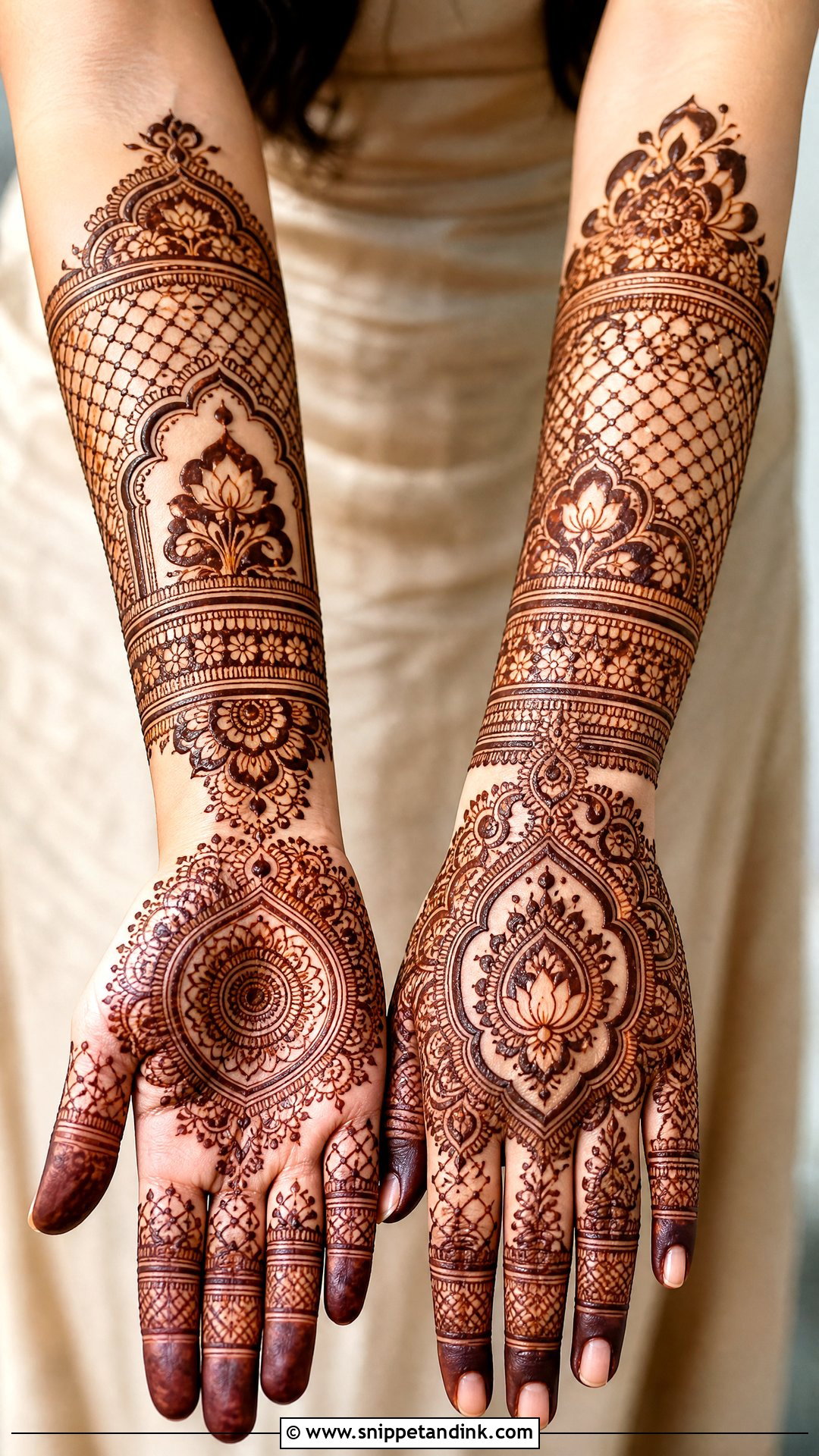
Jaali is mesh work, and on skin it looks like lace or a textile. It can go on palms, backs of hands, wrists or forearms, and for a bride I pair it with florals, paisleys, mandalas and bold borders, so the fine grid contrasts with larger motifs. It mirrors the detail of heavily embroidered sleeves. Jaali is all about even spacing: uneven lines look obvious once stained, and cone pressure has to stay constant for the whole grid. That’s a good test of an artist’s hand.
13. Rajasthani Barat Mehndi Design
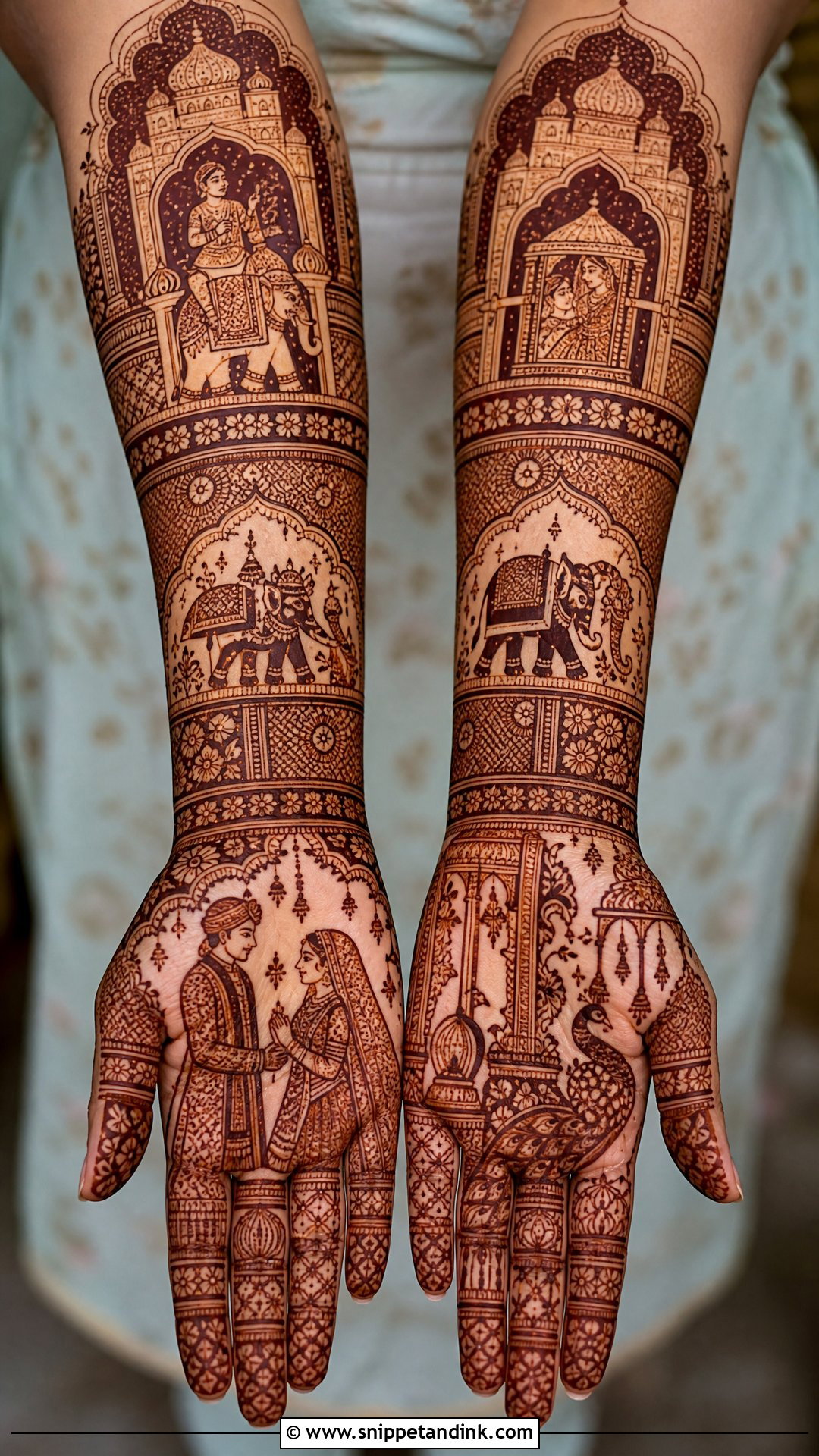
Rajasthani barat mehndi design is dense, figurative and full of story: dulha-dulhan figures, elephants, palanquins, peacocks, musicians and palace arches. Each hand can carry a different scene while still balancing. It takes a long time to apply, often several hours, and it needs a long time on the skin afterwards, so schedule it with enough room before the barat for the stain to develop fully. For brides who enjoy cultural detail, it’s the most complete artwork on this list.
14. Mughlai Barat Mehndi Design
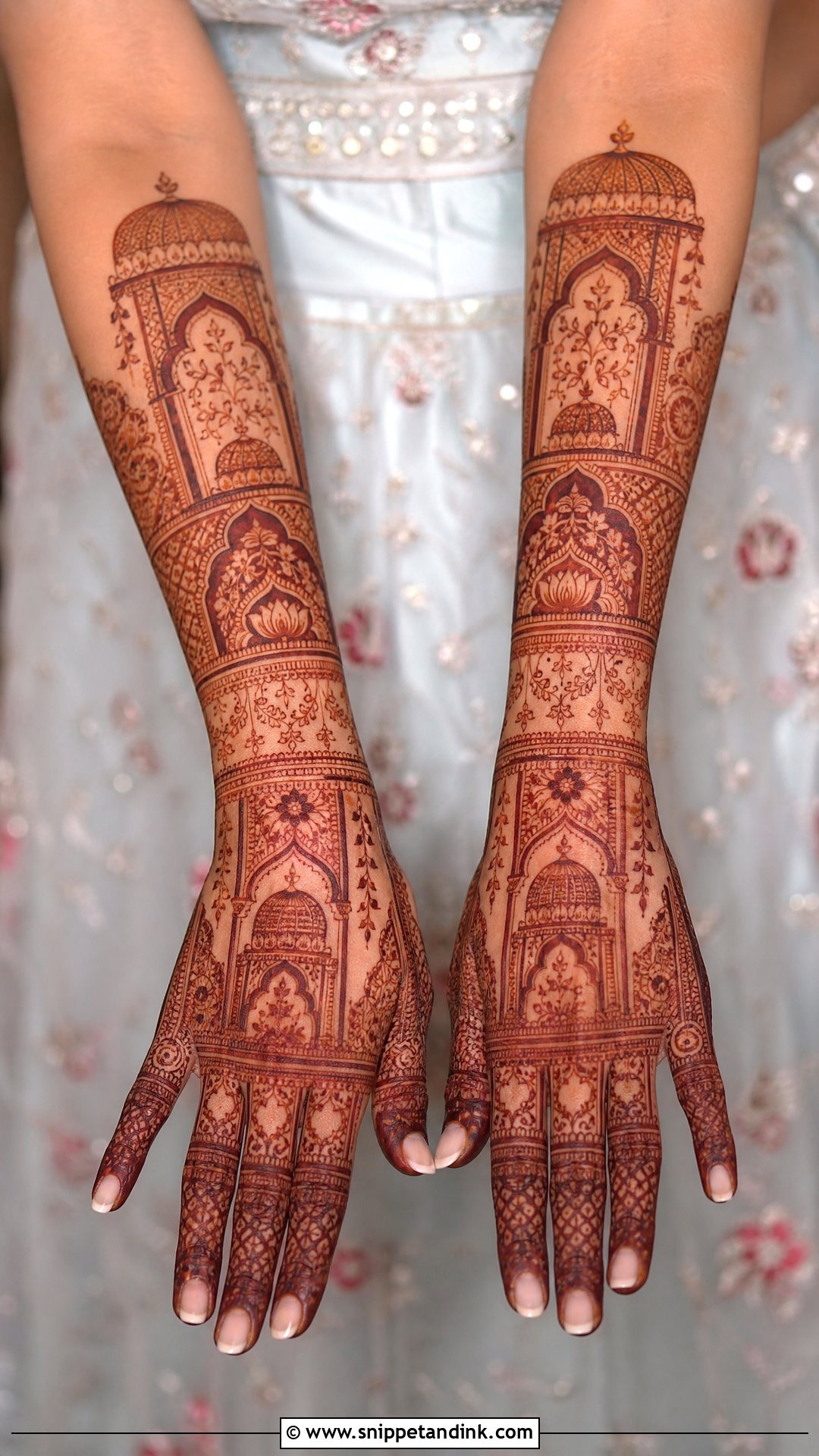
Mughlai work draws on domes, arches, vines, lotus and ornamental borders, and reads refined rather than playful. Front and back hands carry symmetrical panels and palace frames with delicate floral fill. A Mughlai forearm pattern suits long bridal sleeves and traditional jewellery. I leave small pockets of negative space around the main arches; without them the architecture blurs into one dark shape when the stain deepens.
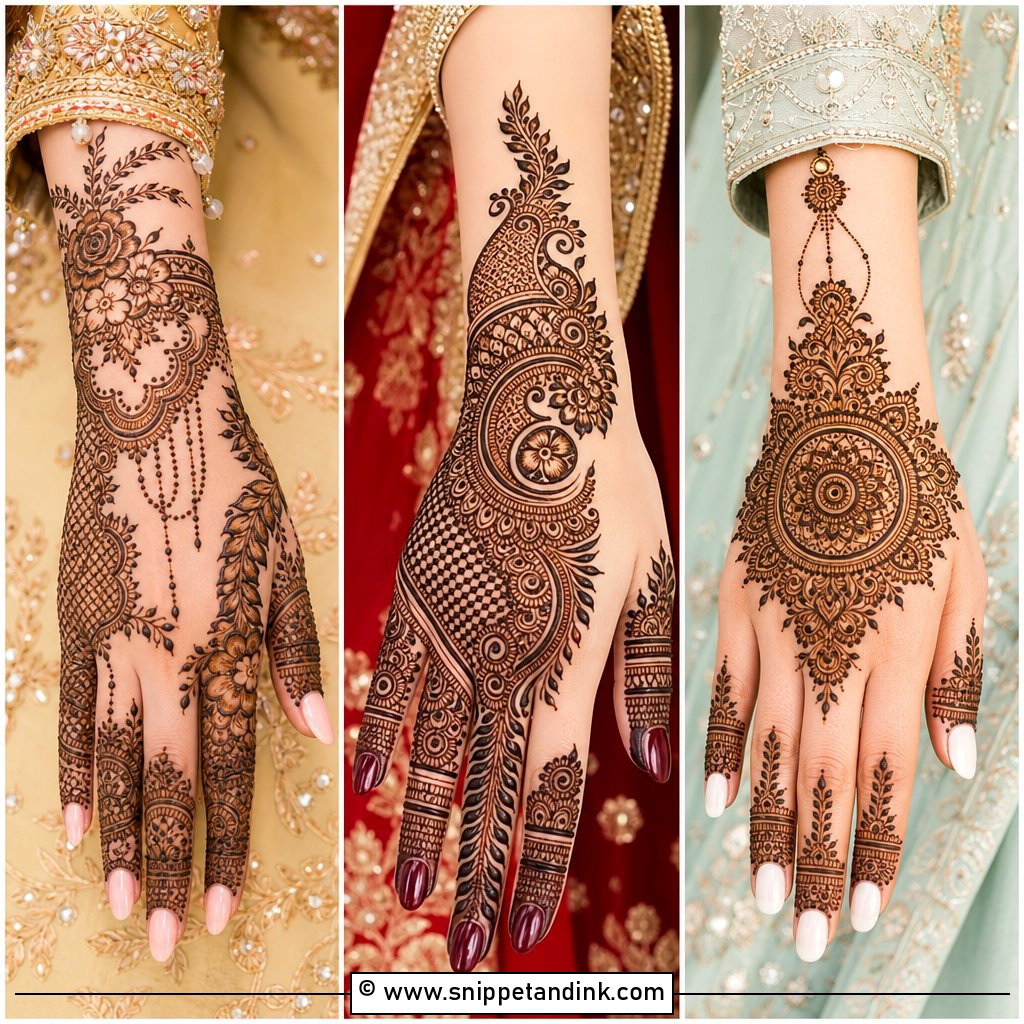
15. Minimal Barat Mehndi Design
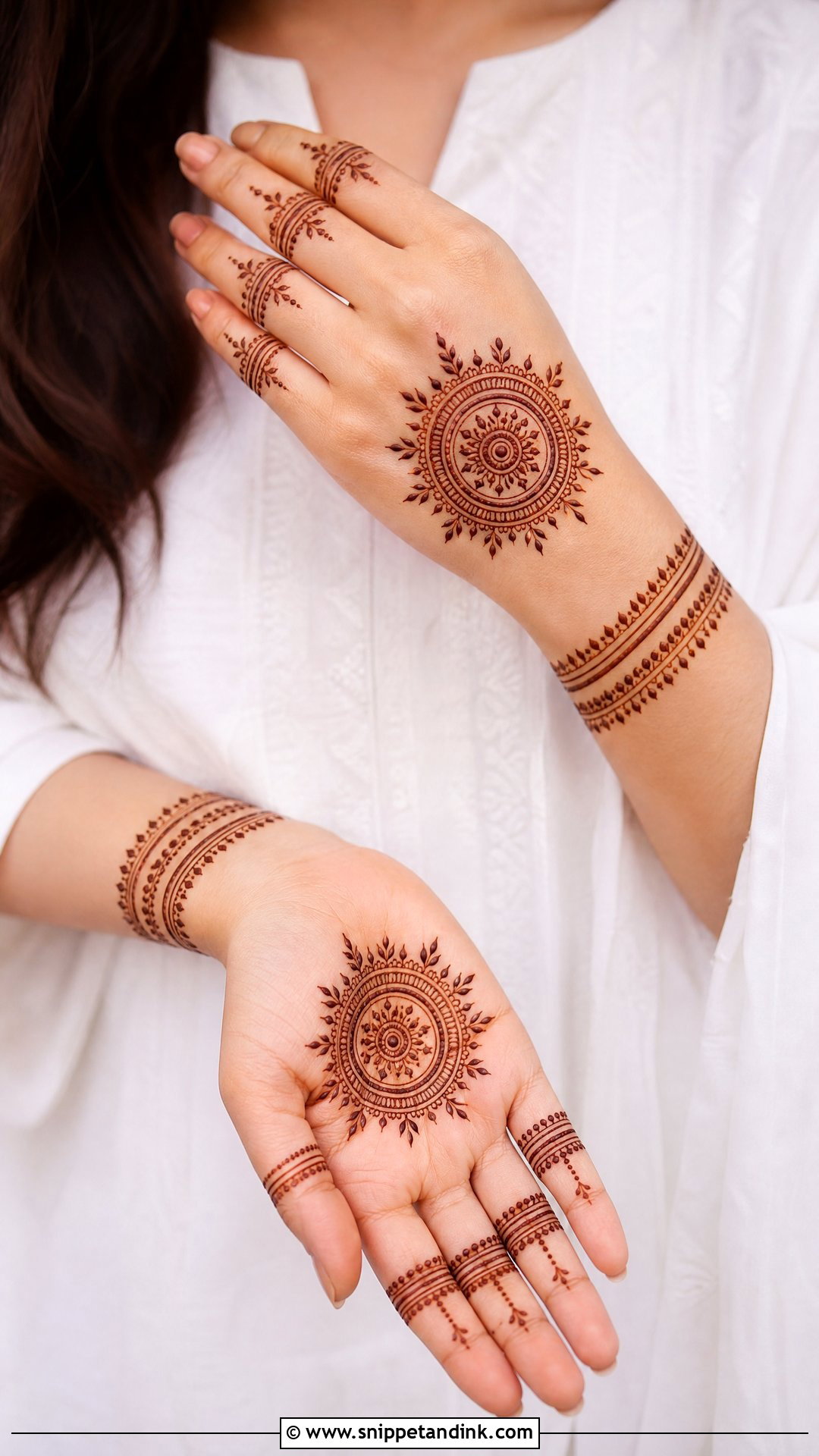
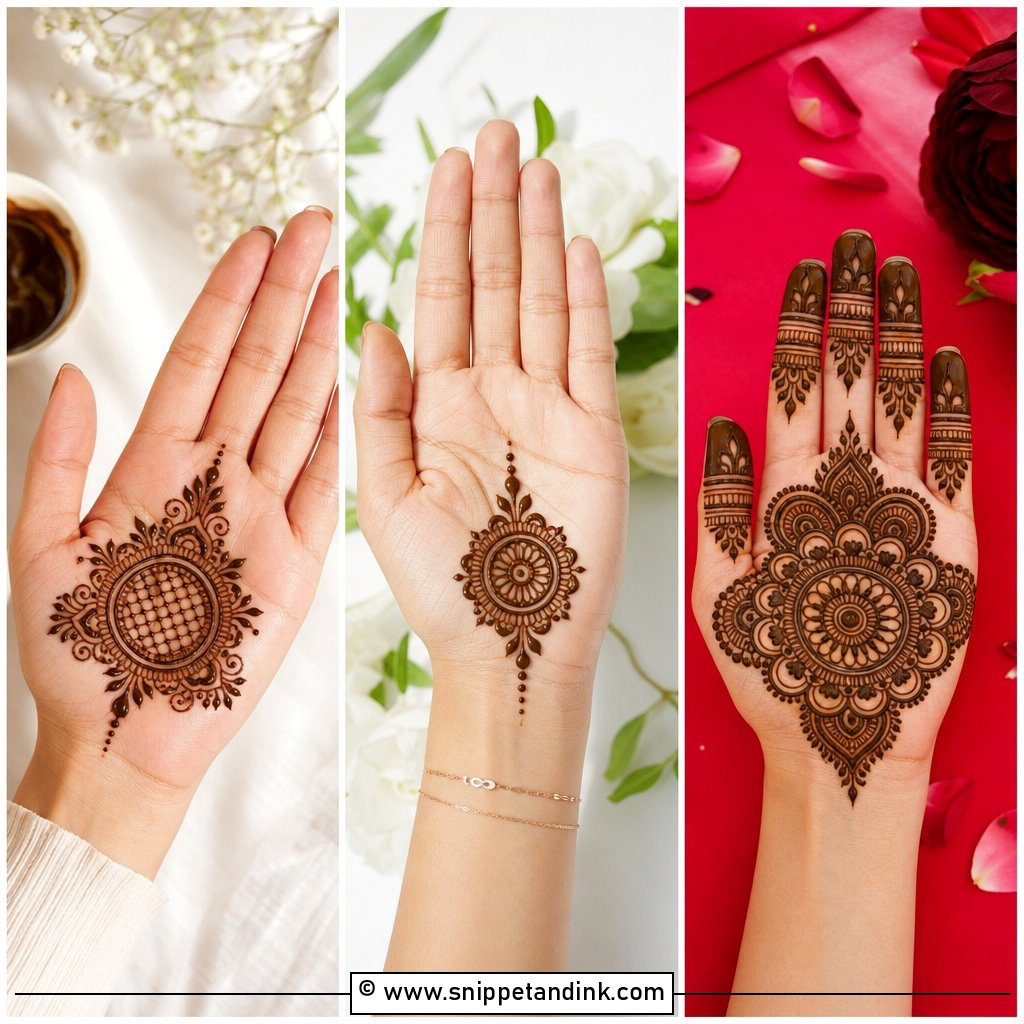
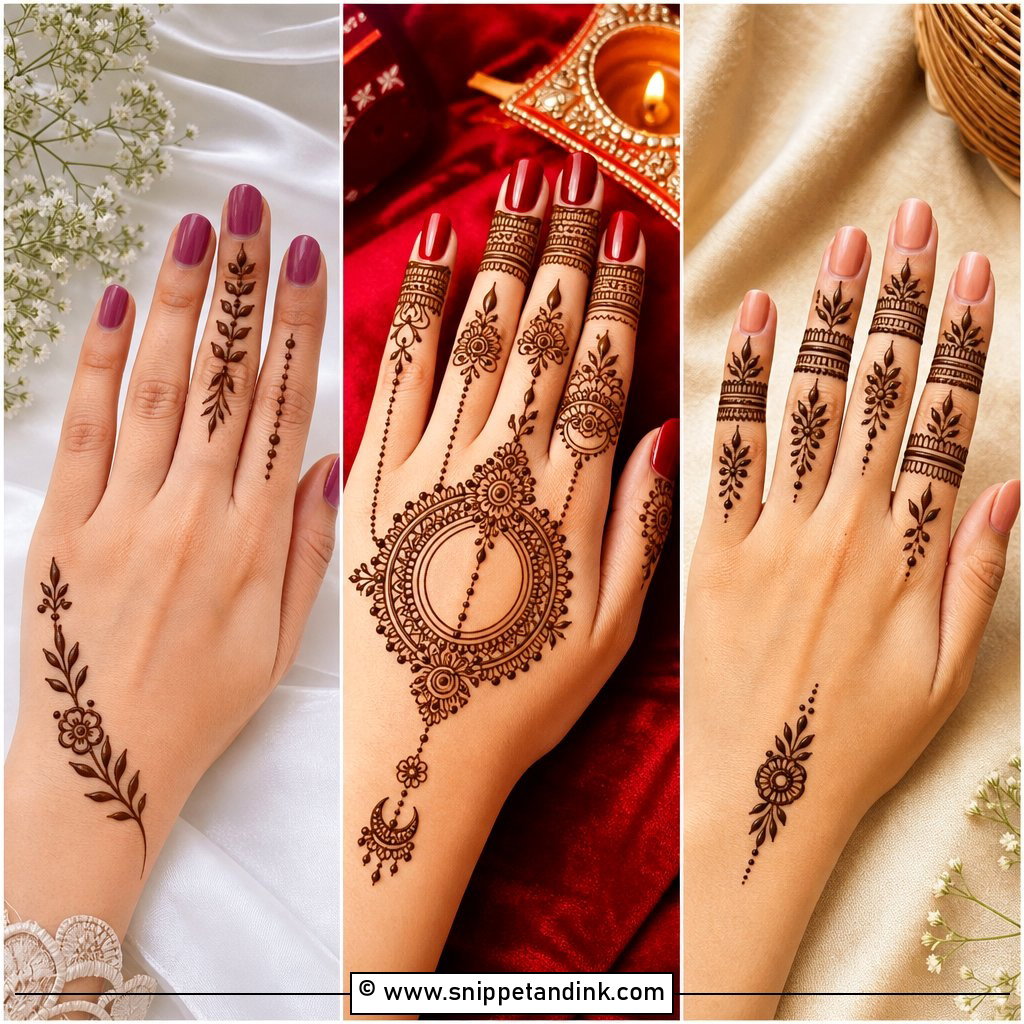
A lighter design can still feel bridal: a central mandala, delicate fingers, bracelet bands and small floral trails, stopping short of the forearm. It suits modern outfits, softer makeup and simple jewellery. The trap is going too fine. Very thin, tiny motifs disappear in photos taken at any distance, so for a barat I keep lines sharp and motifs slightly bolder than you might expect, with clean negative space between them.
16. Modern Barat Mehndi Design
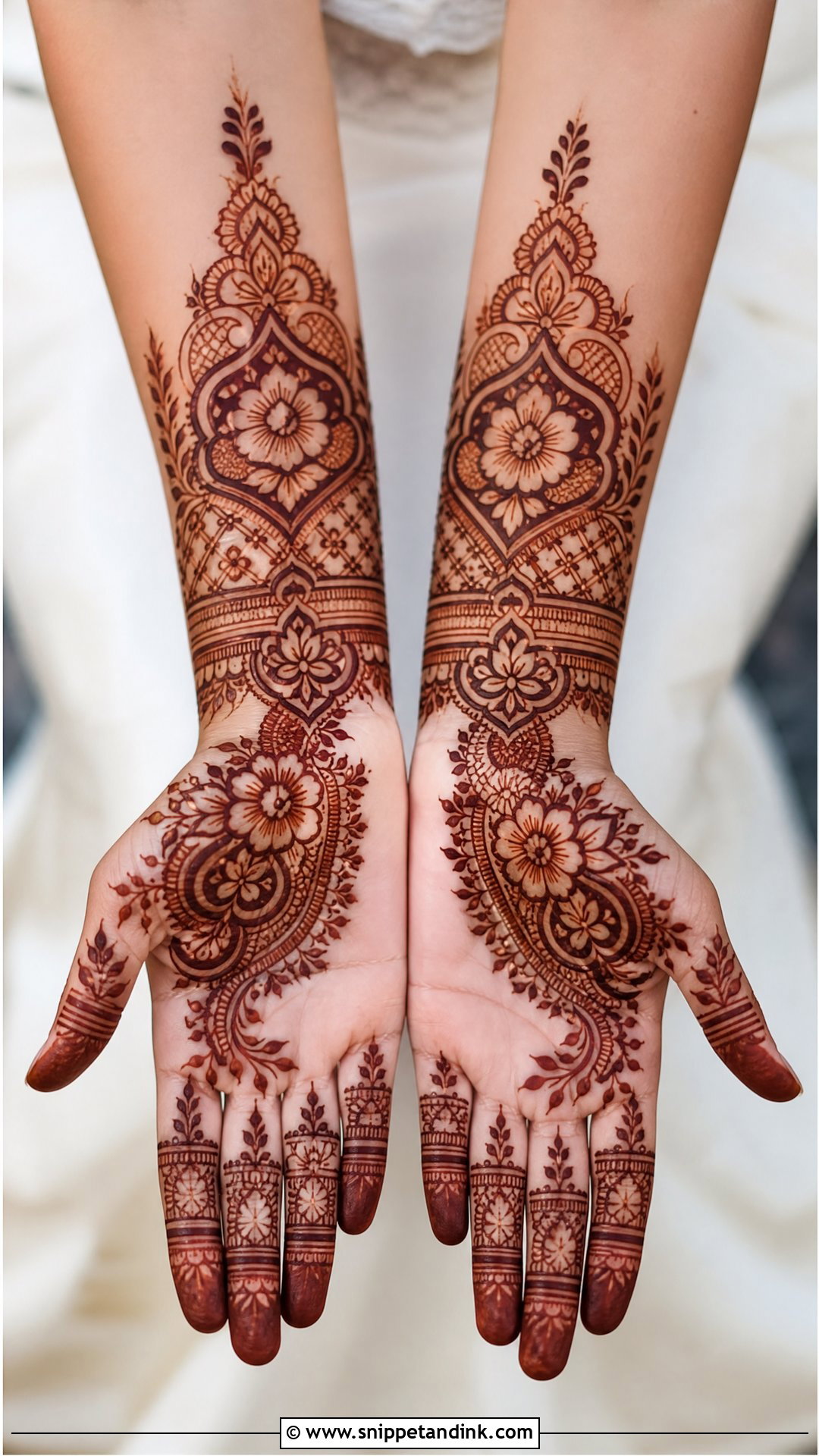
Modern layouts use open spaces, bold florals, structured wrist cuffs, half-and-half palms and clean finger work, highlighting chosen areas of the hand rather than filling everything. Some brides add initials or small personal symbols. It suits contemporary lehengas, shararas, gowns and fusion outfits. To stop it looking casual next to bridal jewellery, I make sure there are detailed borders and the coverage is balanced across both hands.
17. Glitter Barat Mehndi Design
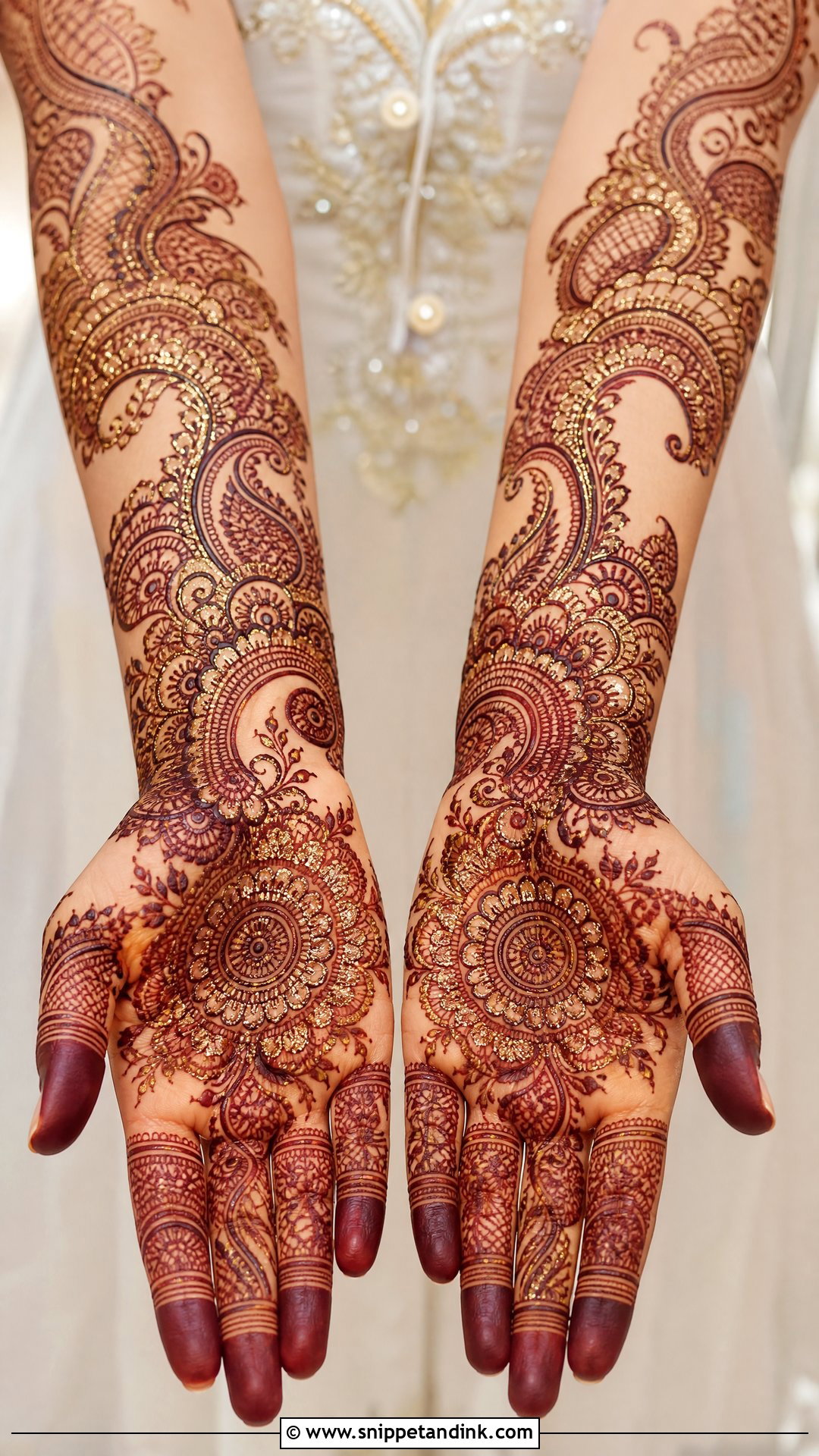
Glitter adds shine for stage moments and evening lights. The henna is applied and stained first; fine cosmetic glitter is added on the day, only over flowers, borders, mandalas or cuffs. Gold, copper, champagne or maroon tones suit bridal outfits. I treat glitter as an accent; covering too much hides the stain, which is the part that actually matters. It also rubs off on fabric, so keep it away from the palms if you’re wearing a light-coloured outfit.
18. White Barat Mehndi Design
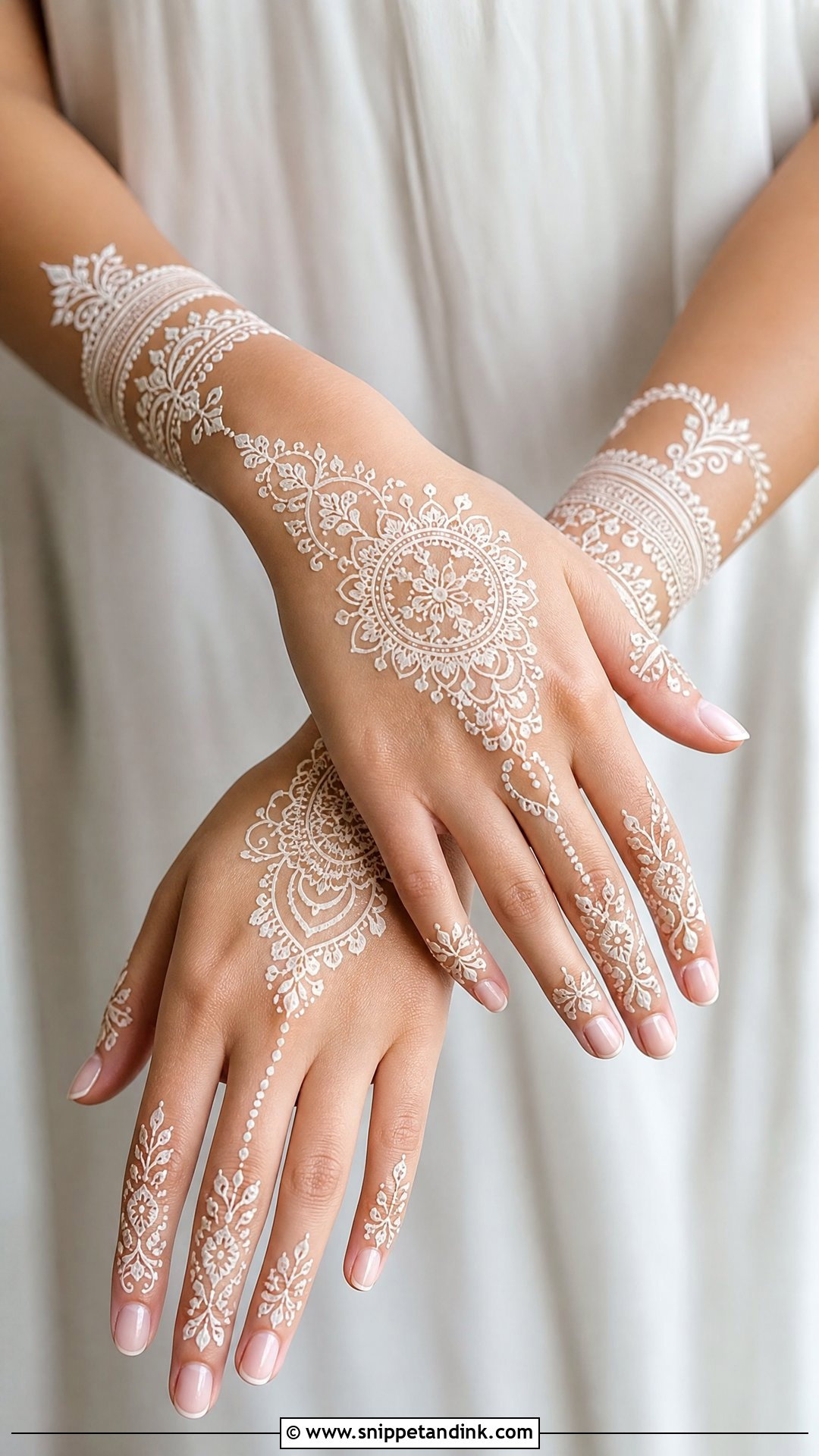
White mehndi isn’t henna at all. It’s a skin-safe body paint or adhesive-based design that sits on top of the skin and doesn’t stain, so it lasts a day or so and peels or washes off. It suits ivory, silver, pastel or pearl-toned outfits and can include lace-like florals, mandalas, wrist cuffs and finger details. Keep the design fine and airy, since white patterns look heavy when crowded. Patch-test the product on your inner arm a few days before, as adhesive-based paints can irritate sensitive skin.
19. Half Hand Barat Mehndi Design
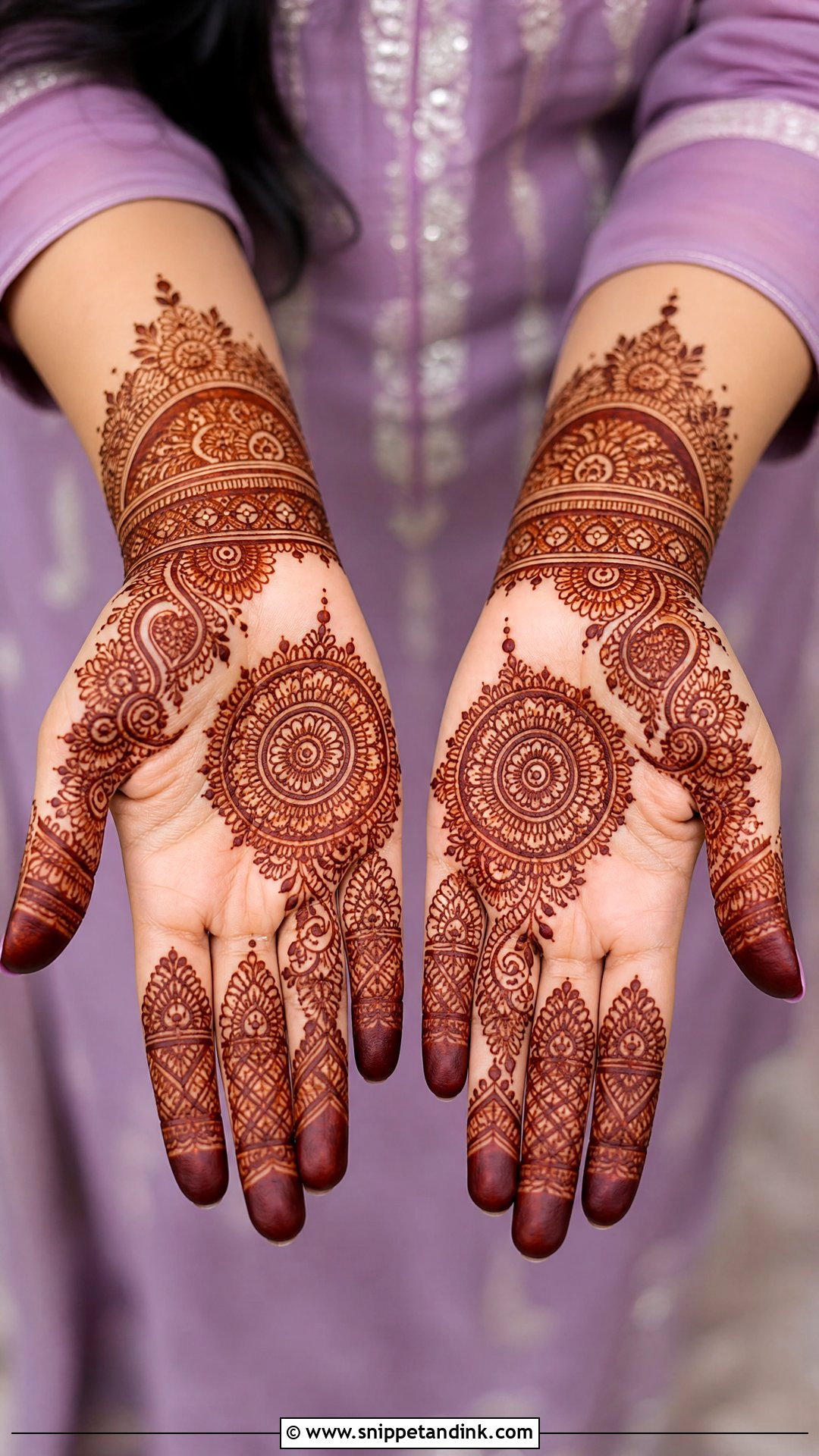
Half-hand coverage stops before mid-forearm and takes much less time to apply, which helps if you have several functions close together. It can still look rich with a strong palm motif and a bracelet-style finish at the wrist. It suits long sleeves and brides who prefer lighter henna coverage. For a barat I’d use paisleys, florals, jaali or mandala sections rather than simple vines, so it looks intentional, not unfinished.




20. Feet Barat Mehndi Design
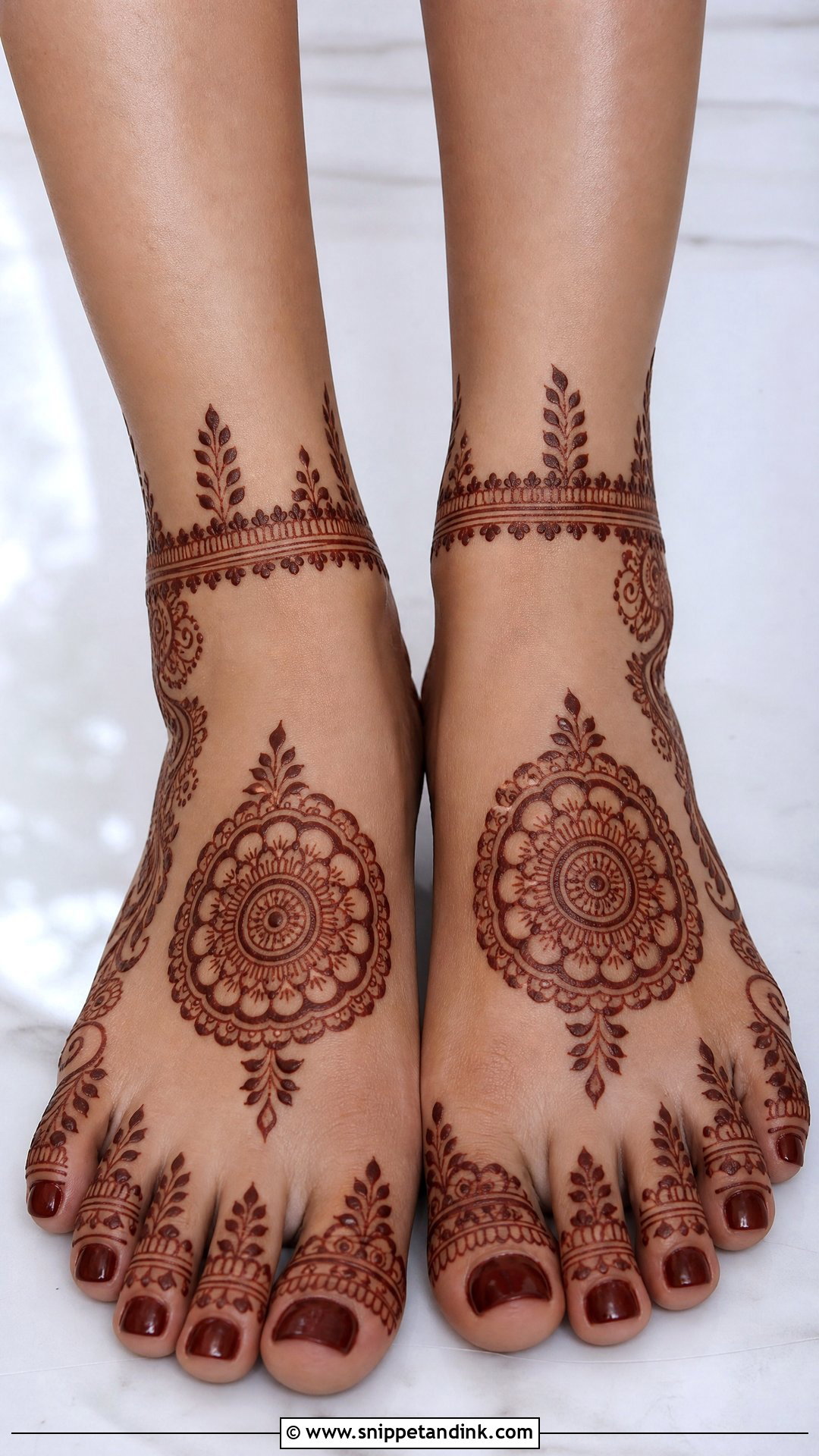
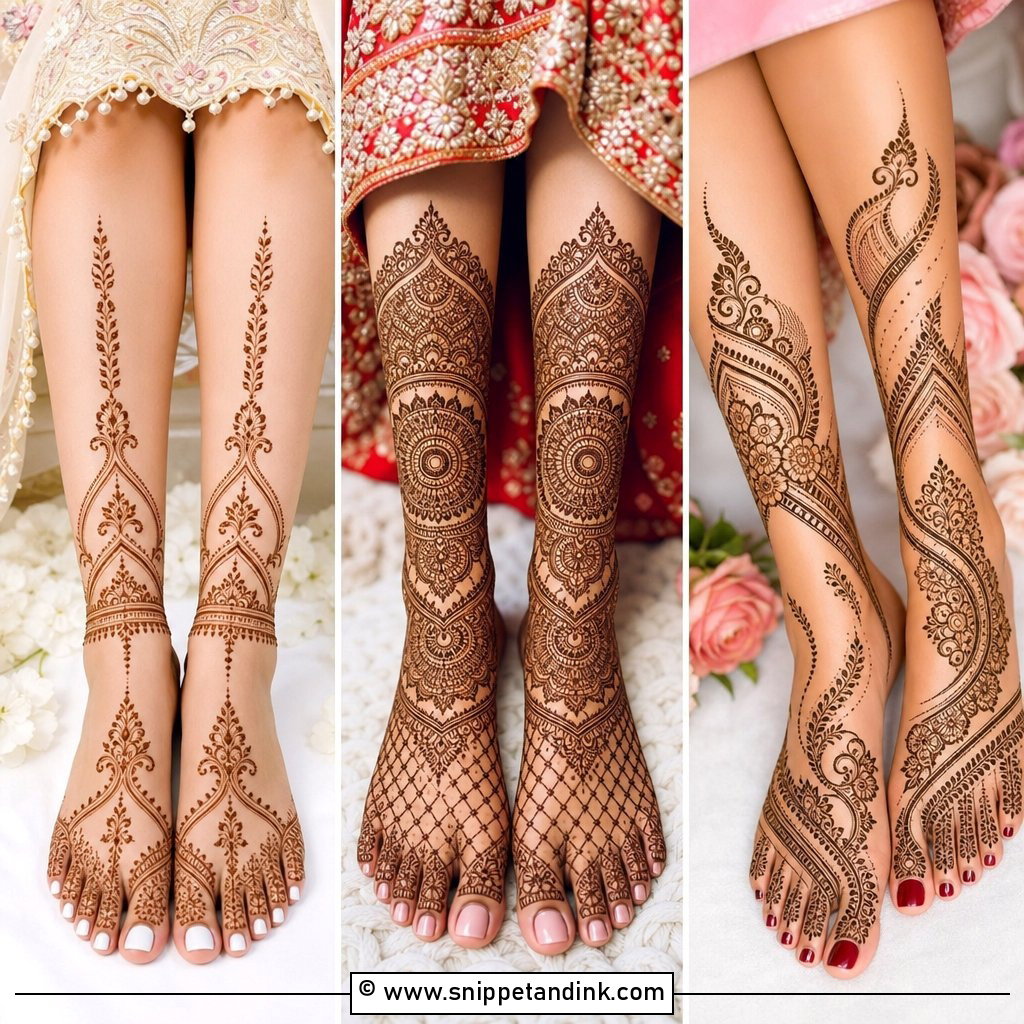
Feet barat mehndi design finishes the look from head to toe, and it matters if your feet will show in sandals, anklets or during rituals. Floral anklets, toe patterns, mandalas on the top of the foot and paisley trails along the sides all work. Feet usually stain darker than hands, so clean lines matter more here; any wobble becomes very visible. I apply feet last so you can rest them while everything dries, and keep the mood matched to the hands.
Natural Cones, Chemical Cones and Why I Patch Test
Real henna paste is made from dried henna leaf powder, a liquid like lemon juice or water, sugar and essential oils. It stains orange first and darkens slowly. Some ready-made cones contain chemical dyes, and so-called black henna can contain PPD, a hair dye ingredient that can cause severe skin reactions and lasting scars. A cone that stains black within an hour, or smells of chemicals, should not go on your skin.
Ask your artist what’s in her cones and how fresh they are. Fresh, natural paste is usually kept in the freezer between jobs. If you have sensitive skin, ask for a small dot on your inner wrist a few days before the wedding.
Bangles, Kaleeras and Sleeves Hide More Than You Think
A lot of the forearm disappears under a chooda, bangles or long sleeves on the day. Before the design starts, put your bangles on and mark where they sit. I keep the detailed work where it’ll be seen and use simpler bands where bangles cover, which also saves hours of sitting.
Which Hands Do You Want in Your Album?
Start with your outfit, your sleeves and how many hours you can sit. If you love detail and story, full Indian, Rajasthani, Mughlai, peacock or portrait work suits you. For something lighter, Arabic, minimal, half-hand or modern layouts still read as bridal. Floral, jaali, glitter, white and feet designs round out the look. Book an artist whose bridal work you’ve seen in stained photos, not just fresh paste, ask what’s in her cones, and give the stain enough time to develop.
You'll Like These Ideas:



Leave a Reply