
Khafif means light, and in henna it describes designs that decorate the hand without covering it. Think of delicate henna patterns built from Arabic flow and Gulf-style spacing, where bare skin does as much work as the paste. Because so little is drawn, every line has to be placed with intent, and that is harder than it sounds. I draw khafif hands for Eid mornings, nikah ceremonies, guests at a mehndi night and brides who simply do not want a packed palm. The 35 ideas below run from a single wrist band to airy bridal coverage, with notes on where each one tends to go wrong.
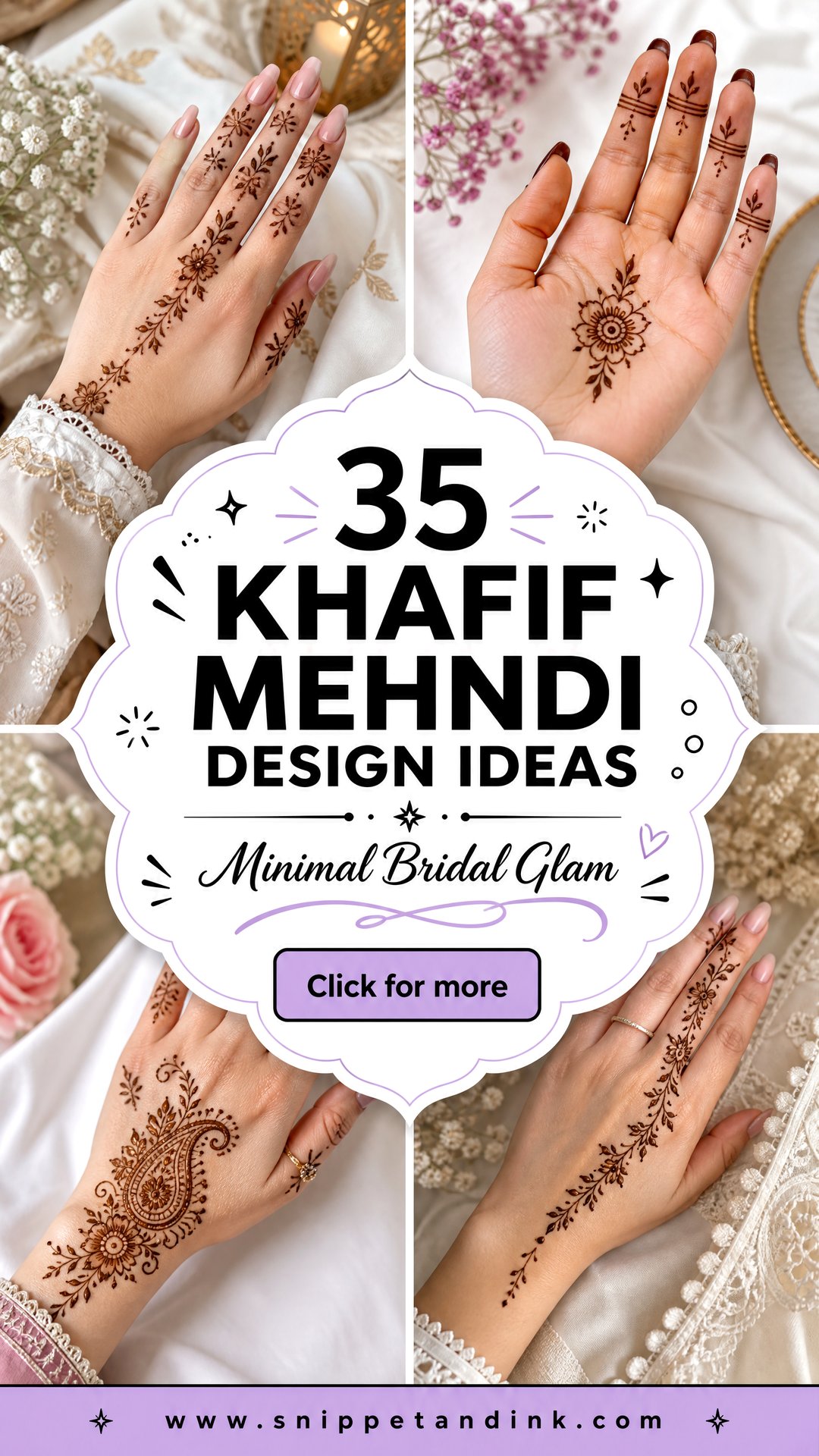
Spacing Is the Design: How I Lay Out a Khafif Hand
With dense henna, small mistakes disappear into the filling. With khafif work, the empty skin is visible, so the layout matters more than any single motif. Before I touch the cone, I look at the hand: finger length, palm width, where the knuckles sit, and which way the client naturally holds her hands in photos.
Pick one direction
Most khafif designs follow a single path, usually a diagonal from the wrist to the index or middle finger. Choosing that line first keeps every flower and leaf travelling the same way. Two competing directions on one hand is the most common reason a light design looks random.
Leave roughly half the skin bare
I do not measure it, but if more than about half the hand is covered, the design stops reading as khafif. When I am unsure, I step back and squint. If the bare skin forms clean shapes of its own, the spacing is right.
Go bolder than you think
Thin lines are part of the style, but very fine lines on the back of the hand can stain faintly. I use a fine tip for detail and a slightly wider line for the main outlines, so the structure of the design survives even as the colour fades.
1. Khafif Mehndi Design For Front Hand
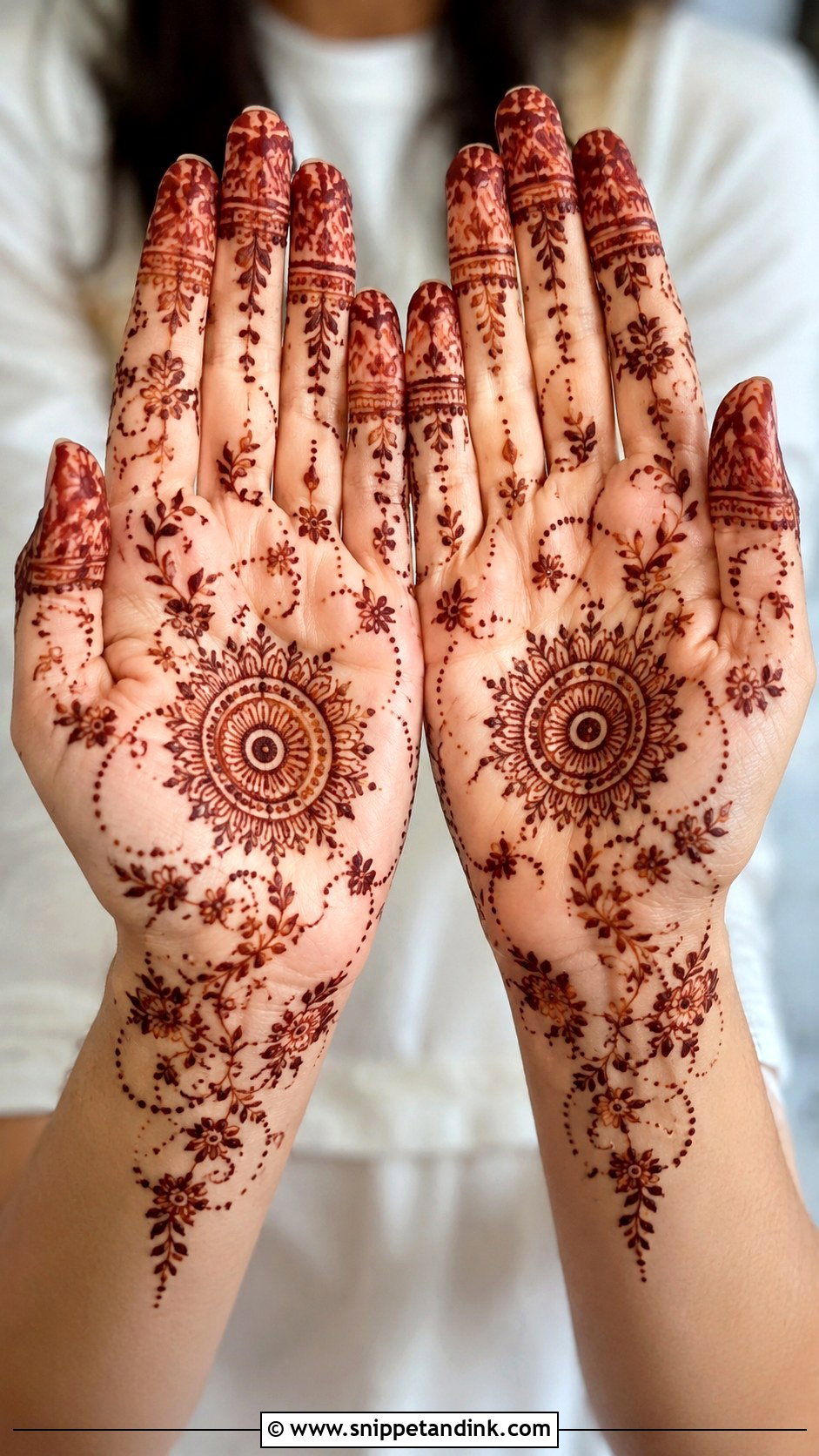
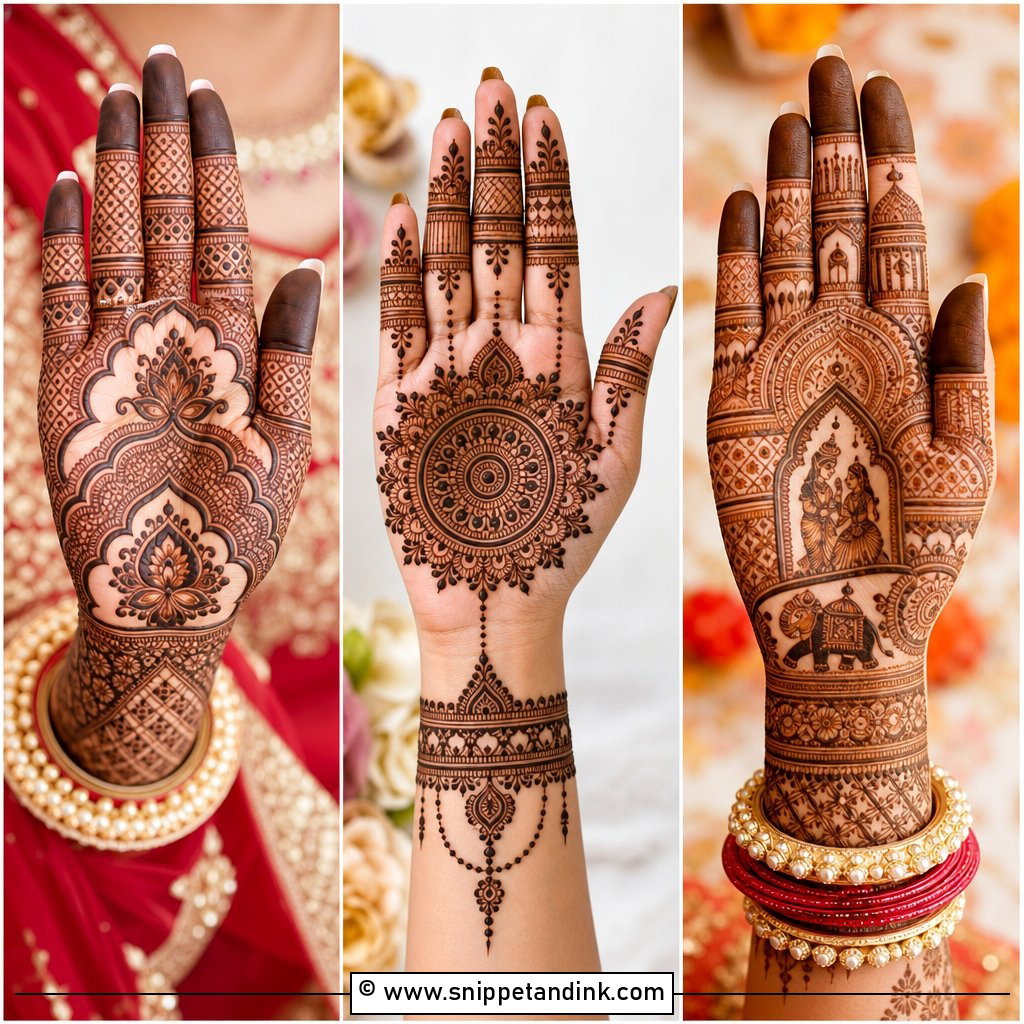
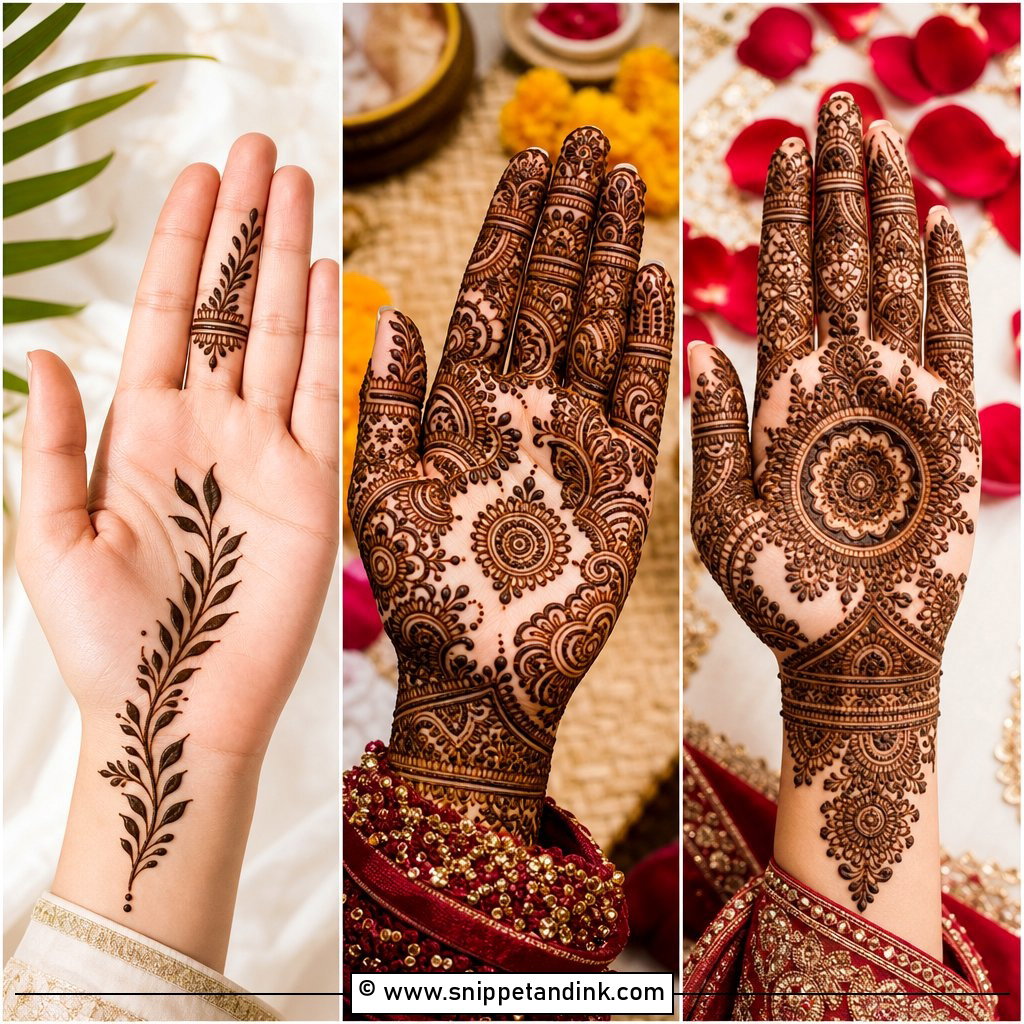
On the palm, I start small: one mandala, flower or paisley a little above centre, then thin vines and dots reaching toward the fingers. The open skin between elements is what keeps it khafif, so I stop each vine before it touches the next motif. Fingers get leaf trails, slim bands or half-filled tips. Palms stain darkest of anywhere on the body, which means even this light layout comes up rich. It takes me a fraction of the time of a full palm, and it is a sensible first design for someone learning.
2. Khafif Mehndi Design For Back Hand
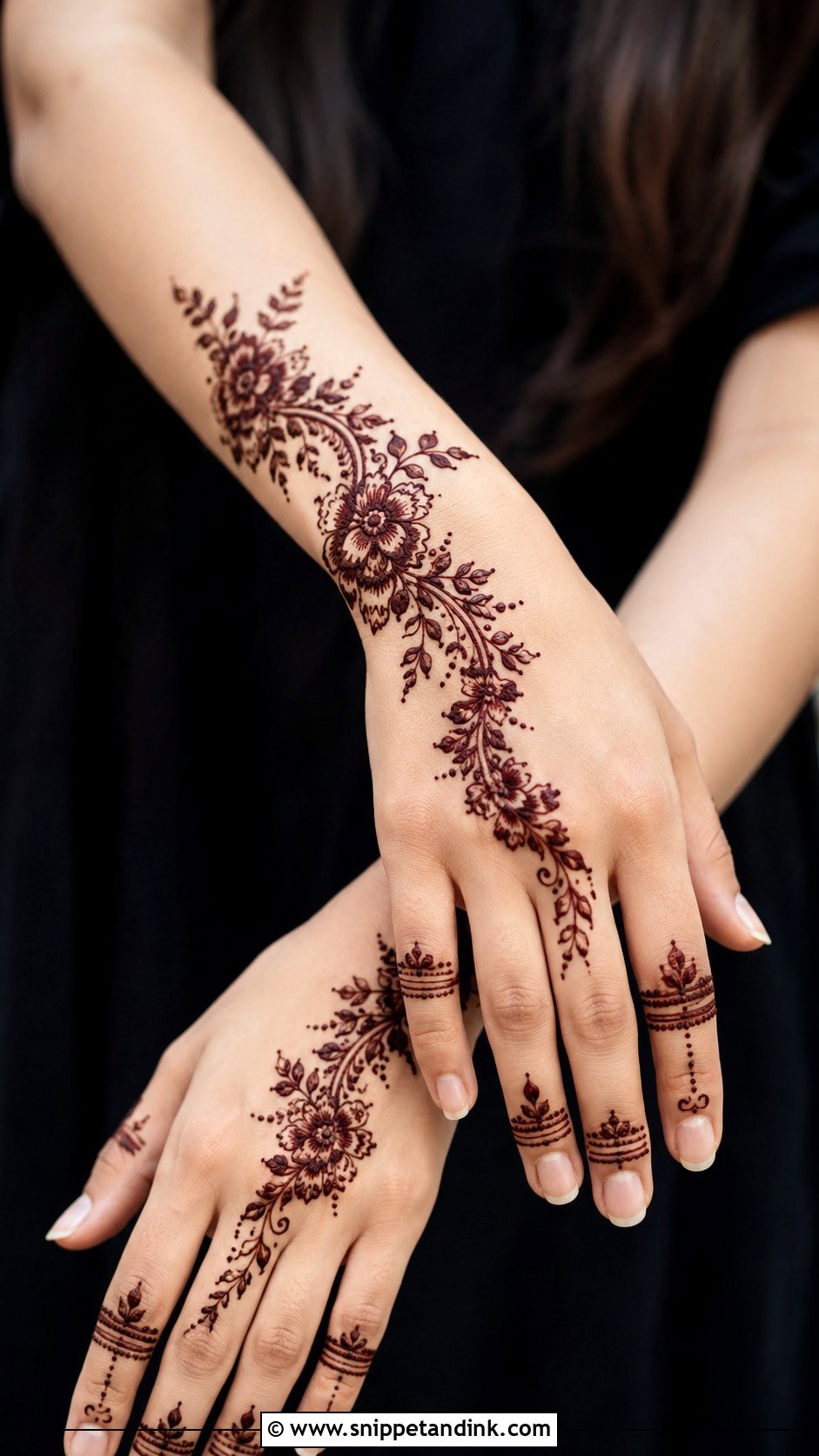
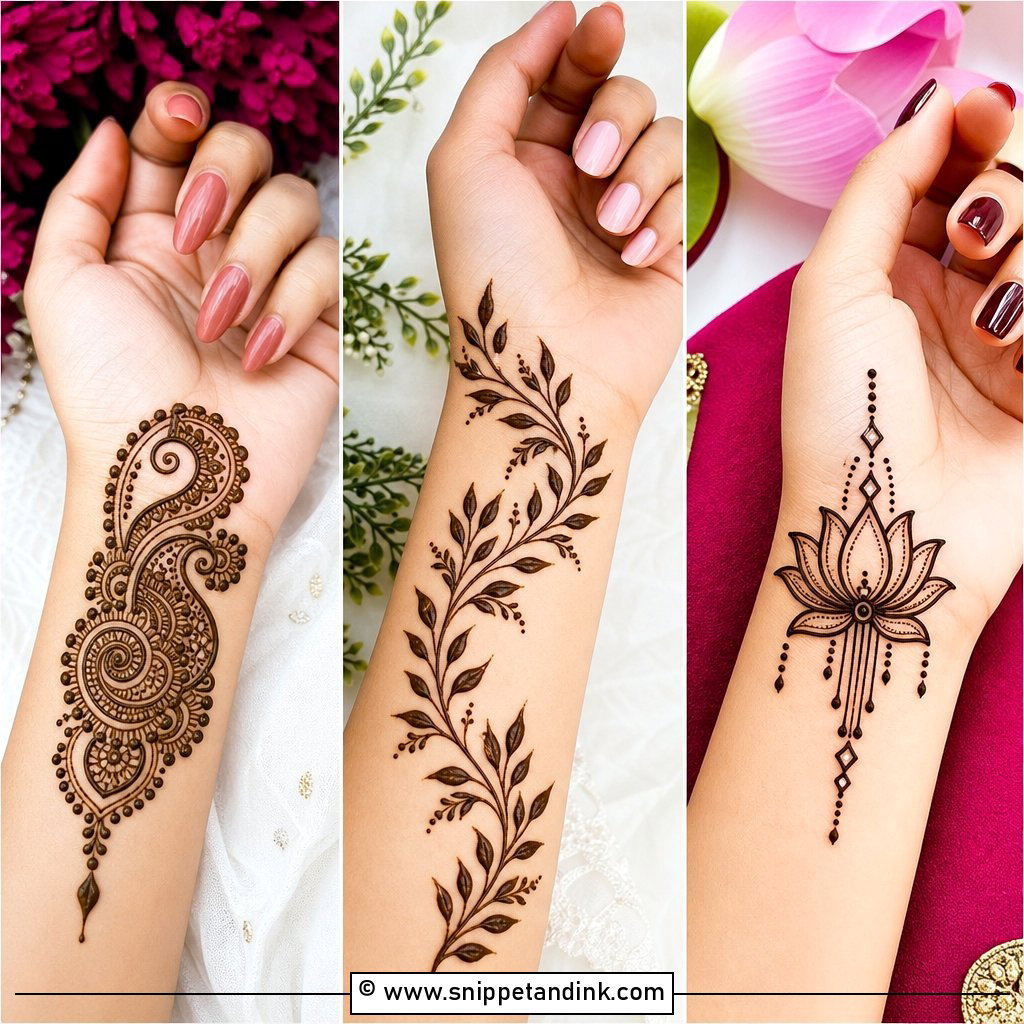
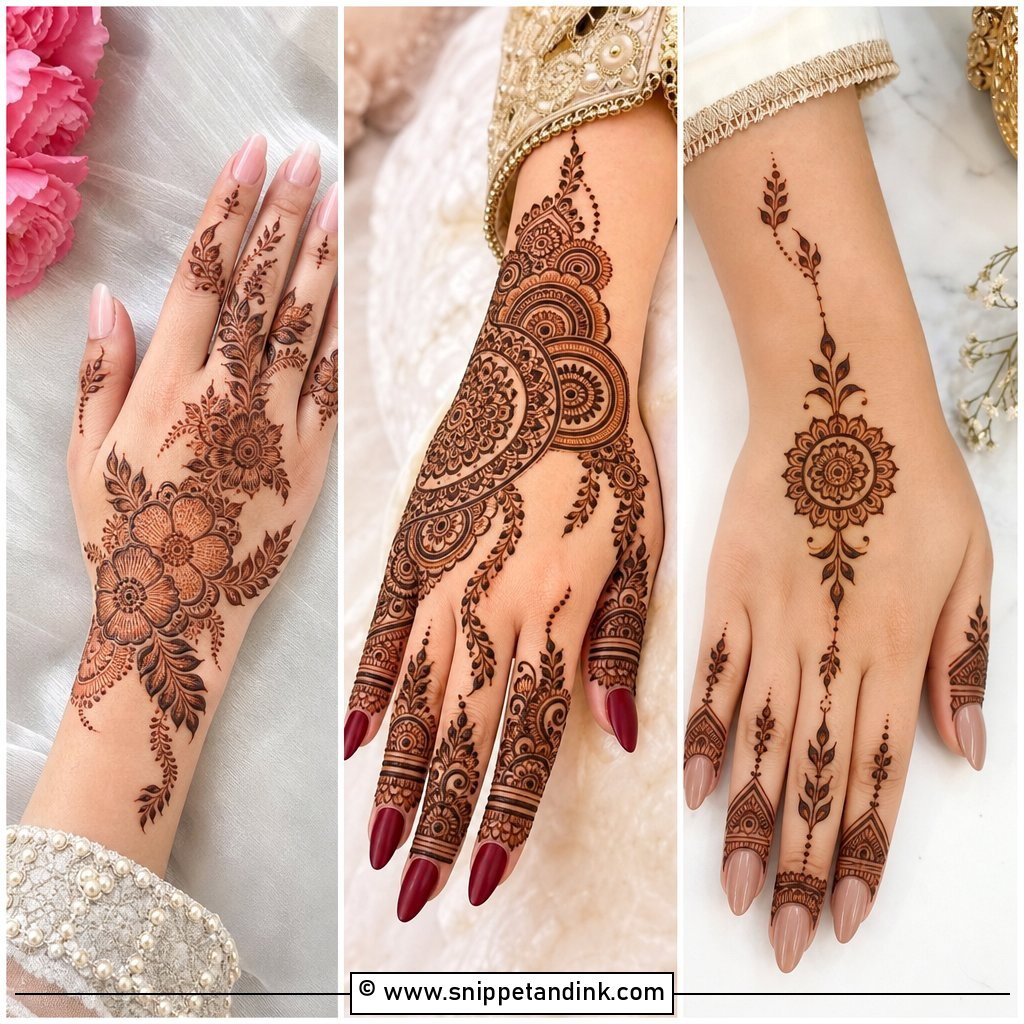
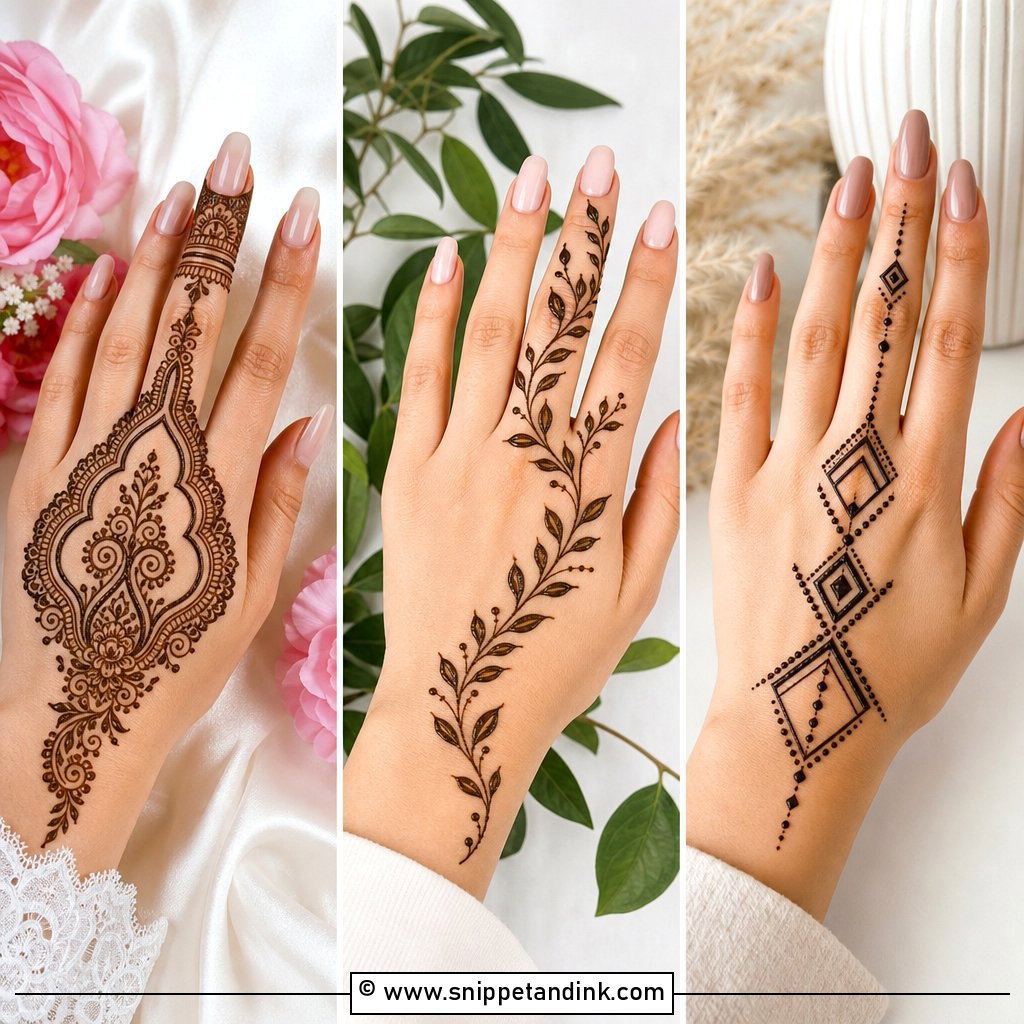
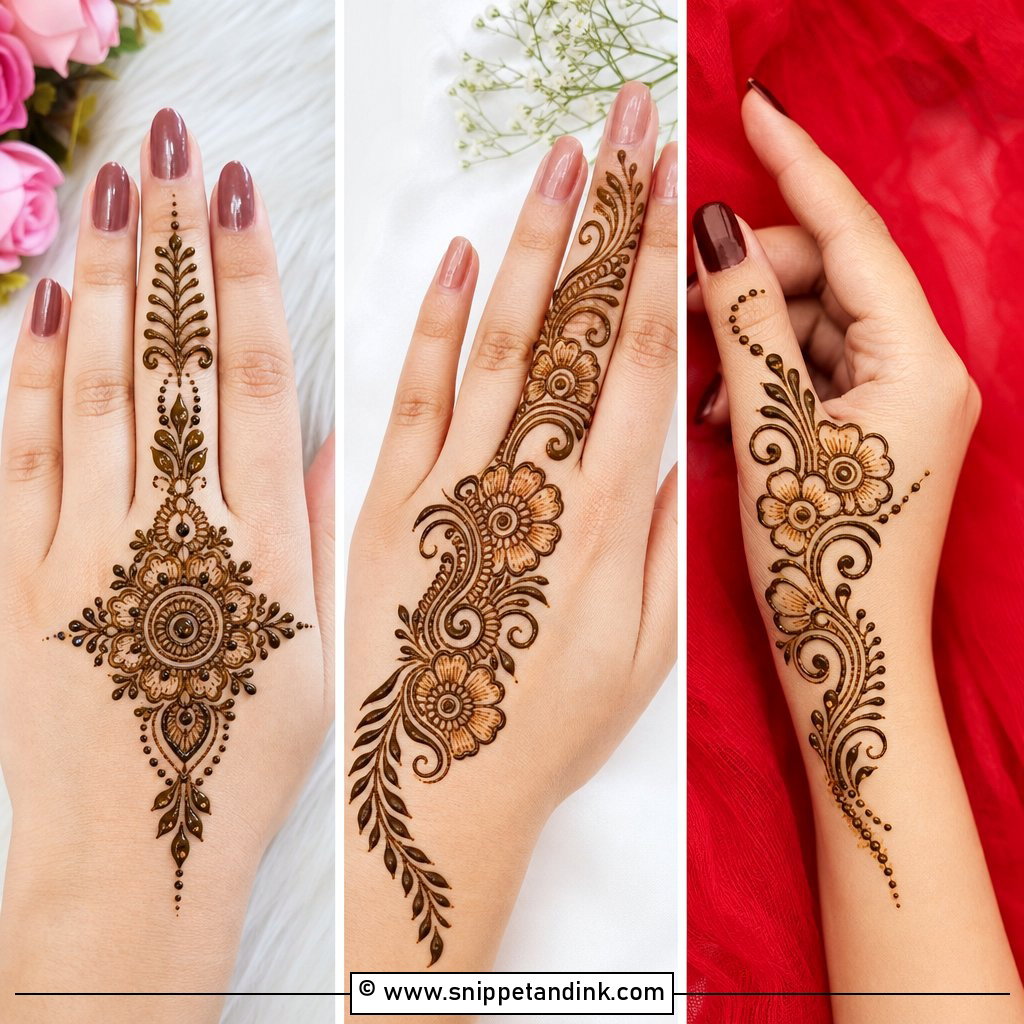
The back of the hand is what people see in photos, so I treat it as the main canvas for khafif work. My usual layout is a diagonal floral trail from the wrist toward one finger, with small leaves and thin paisleys along it and clear skin over the knuckles. Leaving the knuckles bare is practical too: paste cracks when you bend there. I often load one or two fingers and leave the rest light. Expect the stain here to come up a shade lighter than on the palm.
3. Simple Khafif Mehndi Design
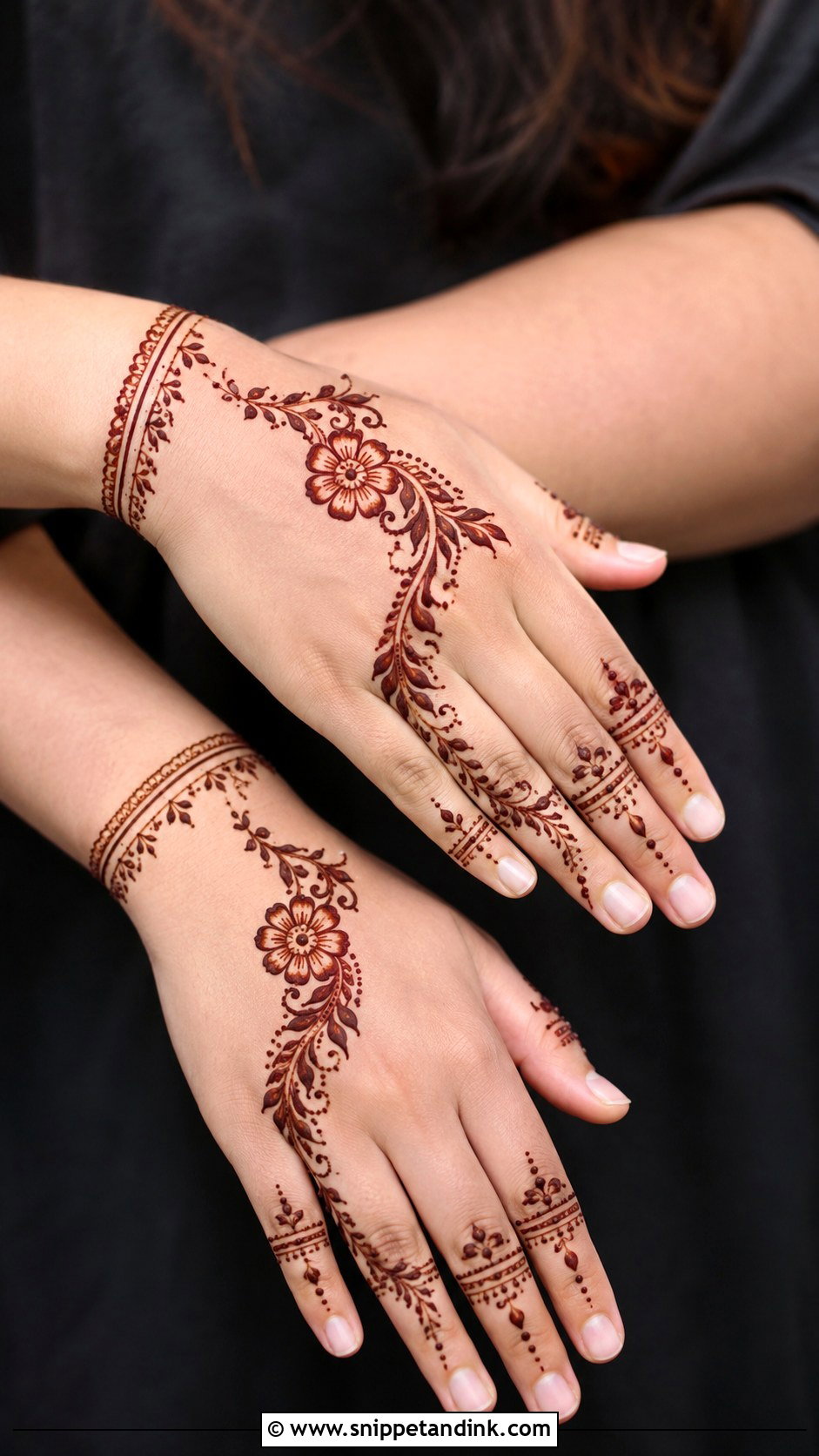
Simple khafif is one focal point and a few curving vines, nothing more. The temptation is to fill the gaps, and that is the habit I ask beginners to break first. Tiny flowers, dots, small leaves and slim finger lines are enough to finish the hand. I suggest this to anyone applying at home, or for school and office functions where a bold hand would feel out of place.
4. Arabic Khafif Mehndi Design
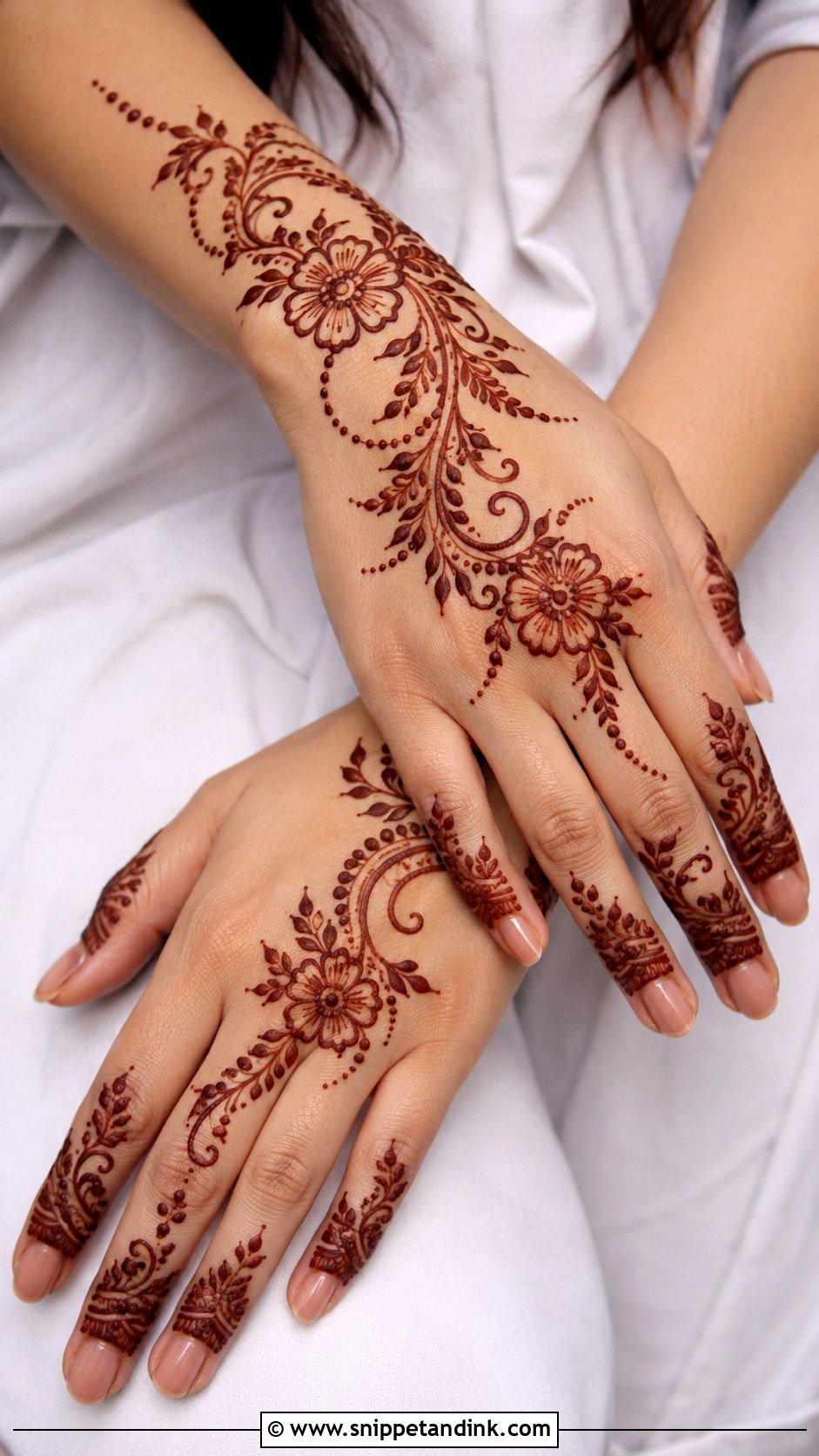
Arabic khafif mehndi design is built on movement: bold flowers, curved vines and leafy trails set in a loose diagonal from the wrist toward the index or middle finger. I outline in one confident stroke rather than sketching in short dashes, because broken lines look hesitant once stained. A few dots and fine outlines finish it. On long fingers the diagonal stretches the hand visually; on very short hands I angle it more steeply so it does not look cut off. It is my go-to for a quick salon slot before Eid or a dinner.
5. Indian Khafif Mehndi Design
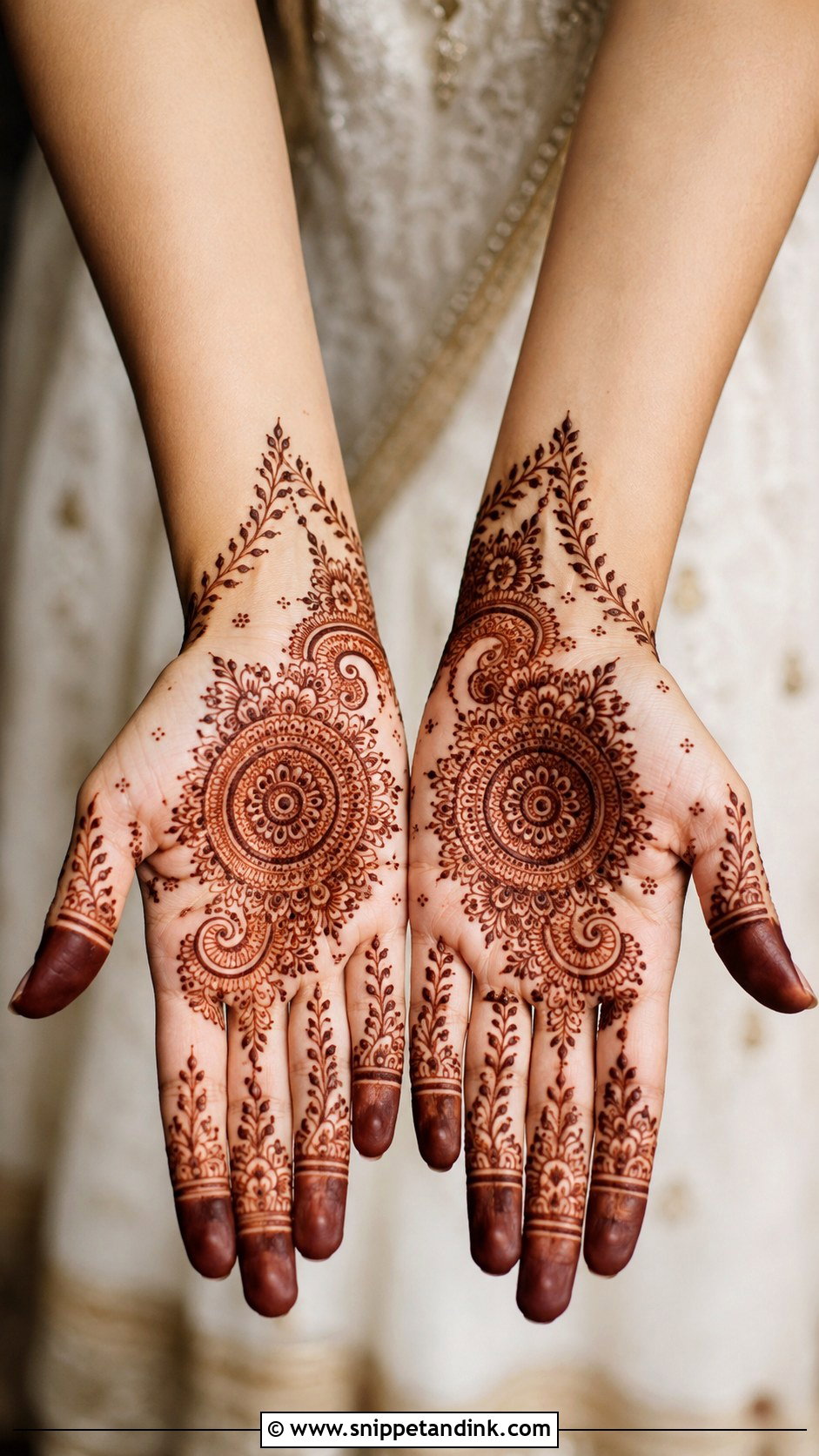
Indian khafif keeps the familiar vocabulary of Indian henna, mandala, paisley curves, small flowers and leafy borders, but drops the density. A small central mandala with paisleys around it and lightly filled fingertips gives a cultural hand without hours in the chair. I draw this for sisters, cousins and bridesmaids who want to look festive and still be able to help with the evening. Push it toward tradition with more paisleys, or toward modern with wider spacing.
6. Indo Arabic Khafif Mehndi Design
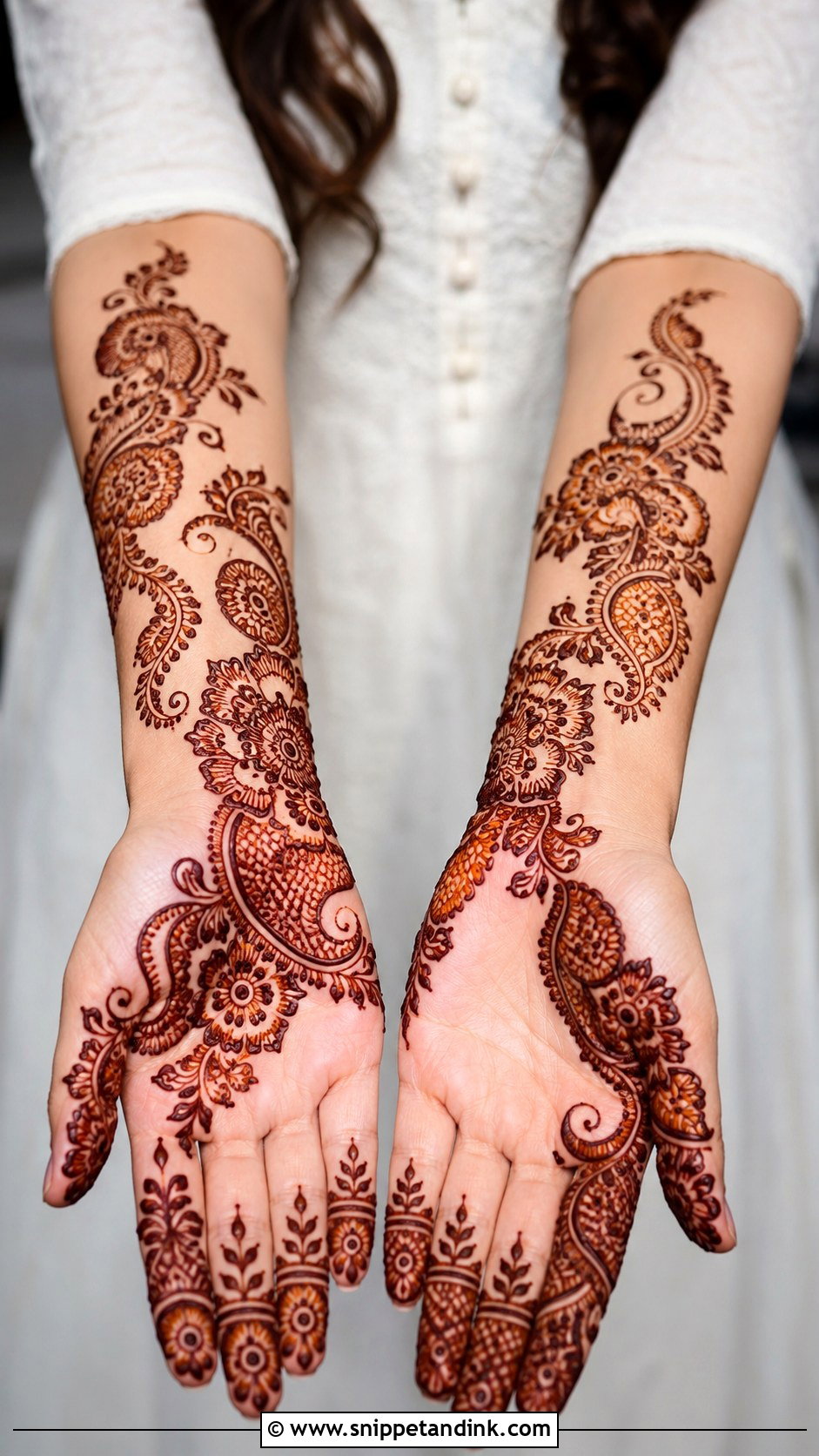
Indo Arabic khafif mehndi takes the open flow of Arabic layouts and adds Indian-style fill only inside chosen motifs: a bit of mesh in one paisley, fine lines in one flower. The rest of the skin stays clear. The discipline is in choosing which motifs get filling. I pick two or three at most, usually the largest, so the eye has somewhere to land. It sits well at mehndi nights and semi-formal gatherings.
7. Khafif Mehndi Design With Mandala
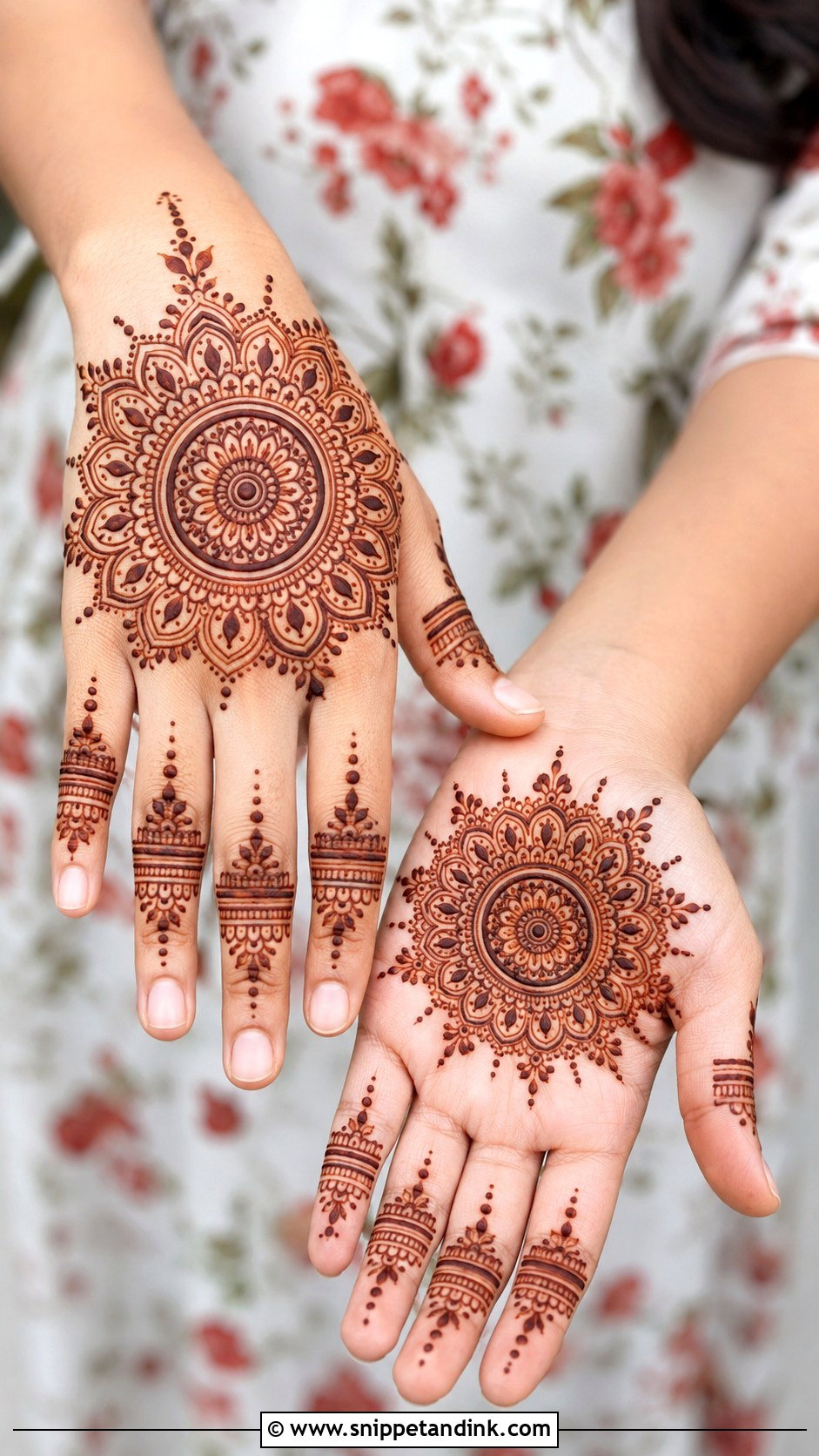
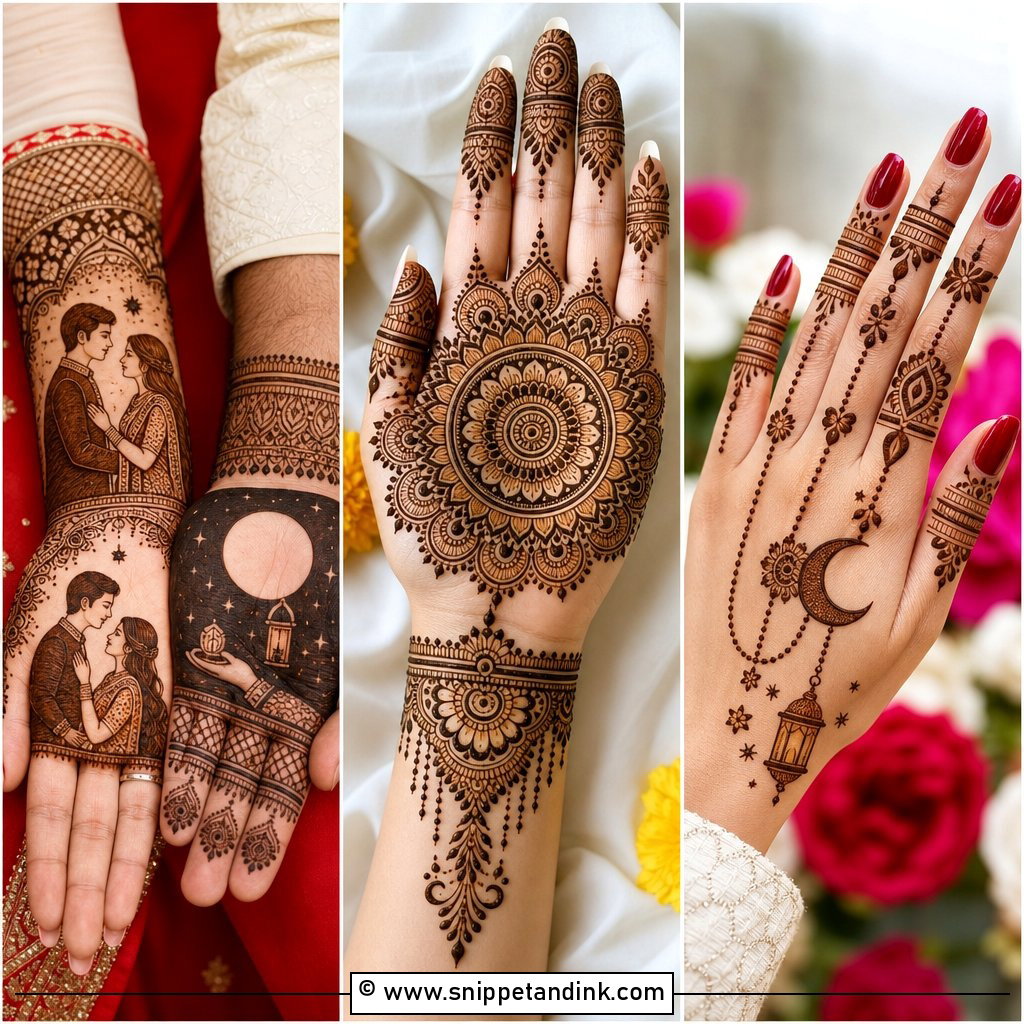
A single mandala in the middle of the palm or back hand, ringed with small petals, dots and fine circles, is about as calm as henna gets. I keep the fingers light with thin bands or delicate tips. What I check first is the size of the circle against the hand: too big and it stops being khafif, too small and it looks lost. On most adult hands I aim for roughly the width of three fingers. It is quick, and it suits teenagers and grown women equally.
8. Khafif Mehndi Design With Floral Trail
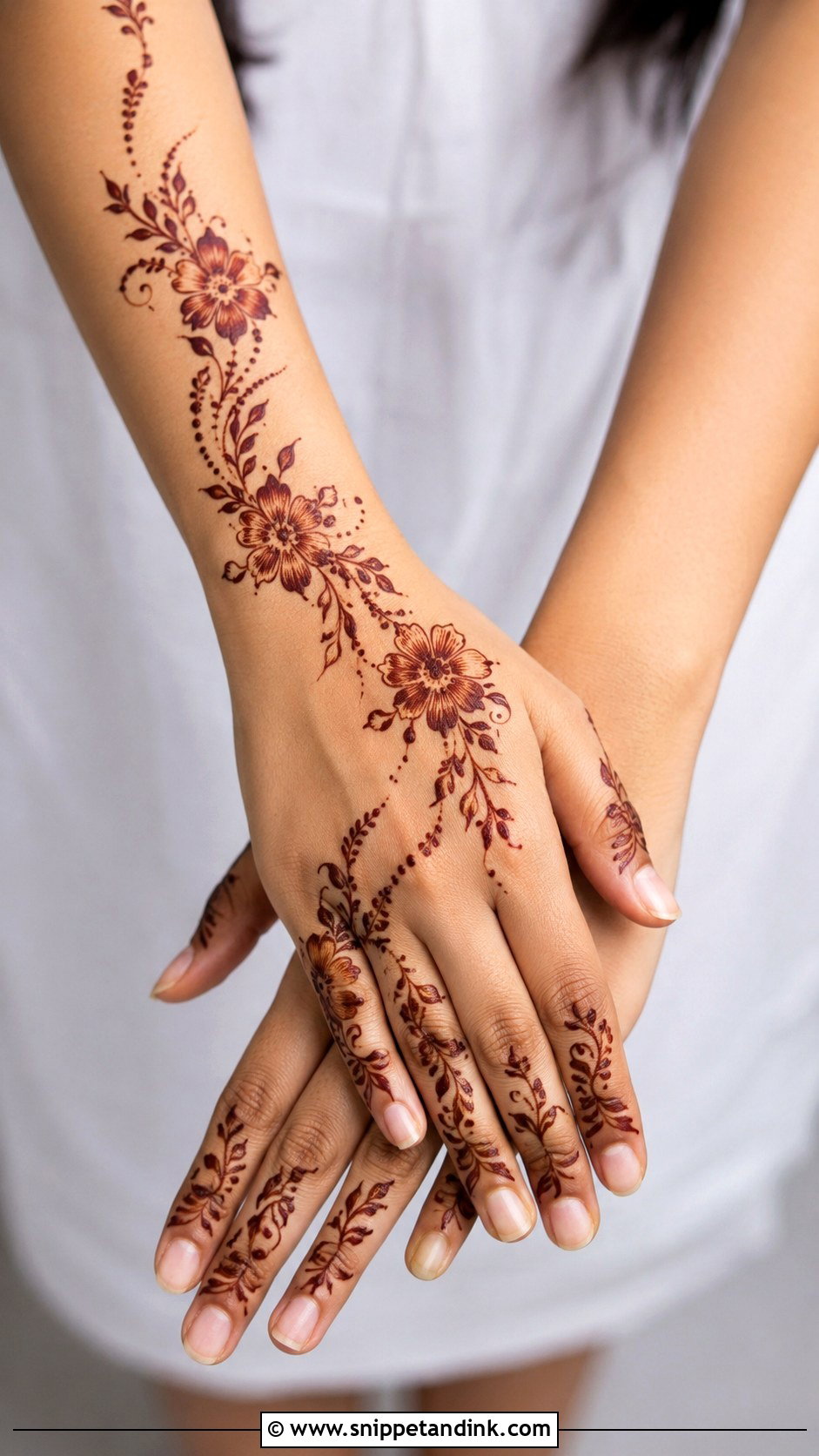
Floral trails are the backbone of khafif henna. Mine begin at the wrist and curve across the hand with medium flowers, slim leaves and dotted vines. Spacing is everything; I leave at least a flower’s width between blooms. The fingers pick up matching small vines or simple rings. The back of the hand shows the movement of a trail best, especially in candid photos where the hands are relaxed.
9. Khafif Mehndi Design With Finger Details
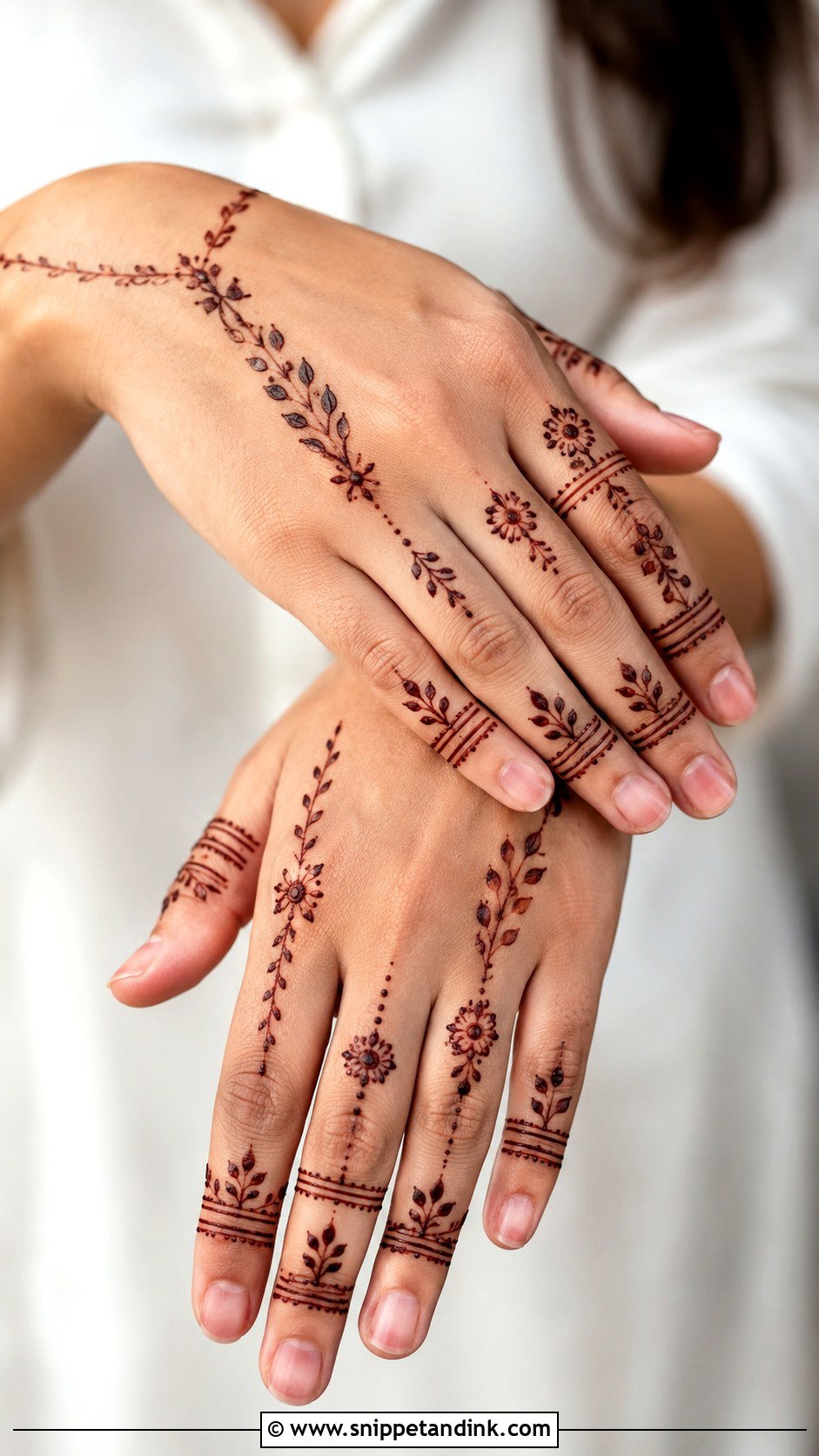
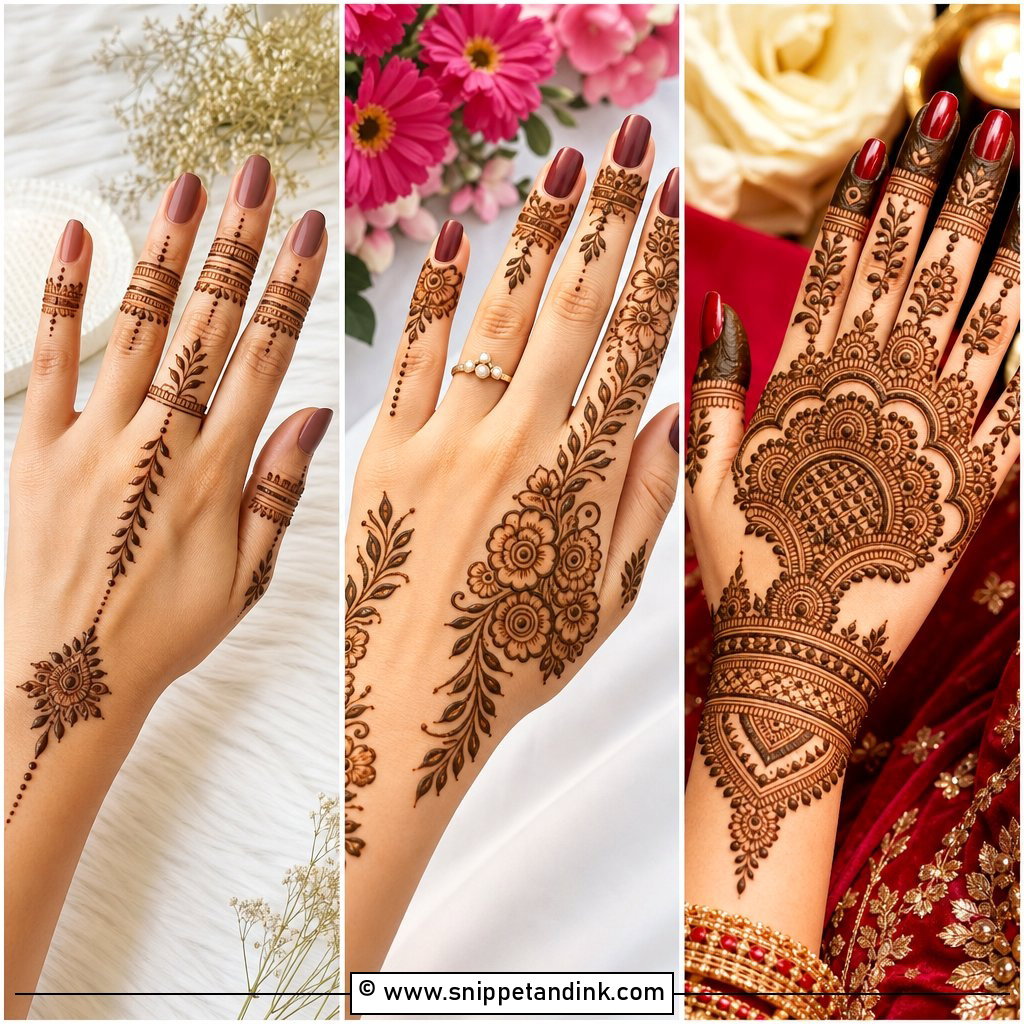
When the fingers carry the design, the hand itself stays almost bare: slim bands, leafy lines, tiny flowers and ring shapes on each finger, tied together with a small wrist bracelet or a motif at the base of the fingers. It reads modern and looks like real jewellery from a distance. Fingertips and finger pads stain deeply, so these designs hold their colour well. I would steer you away from it only if your fingers are very short, where heavy finger work can crowd them.
10. Khafif Mehndi Design With Bracelet Pattern
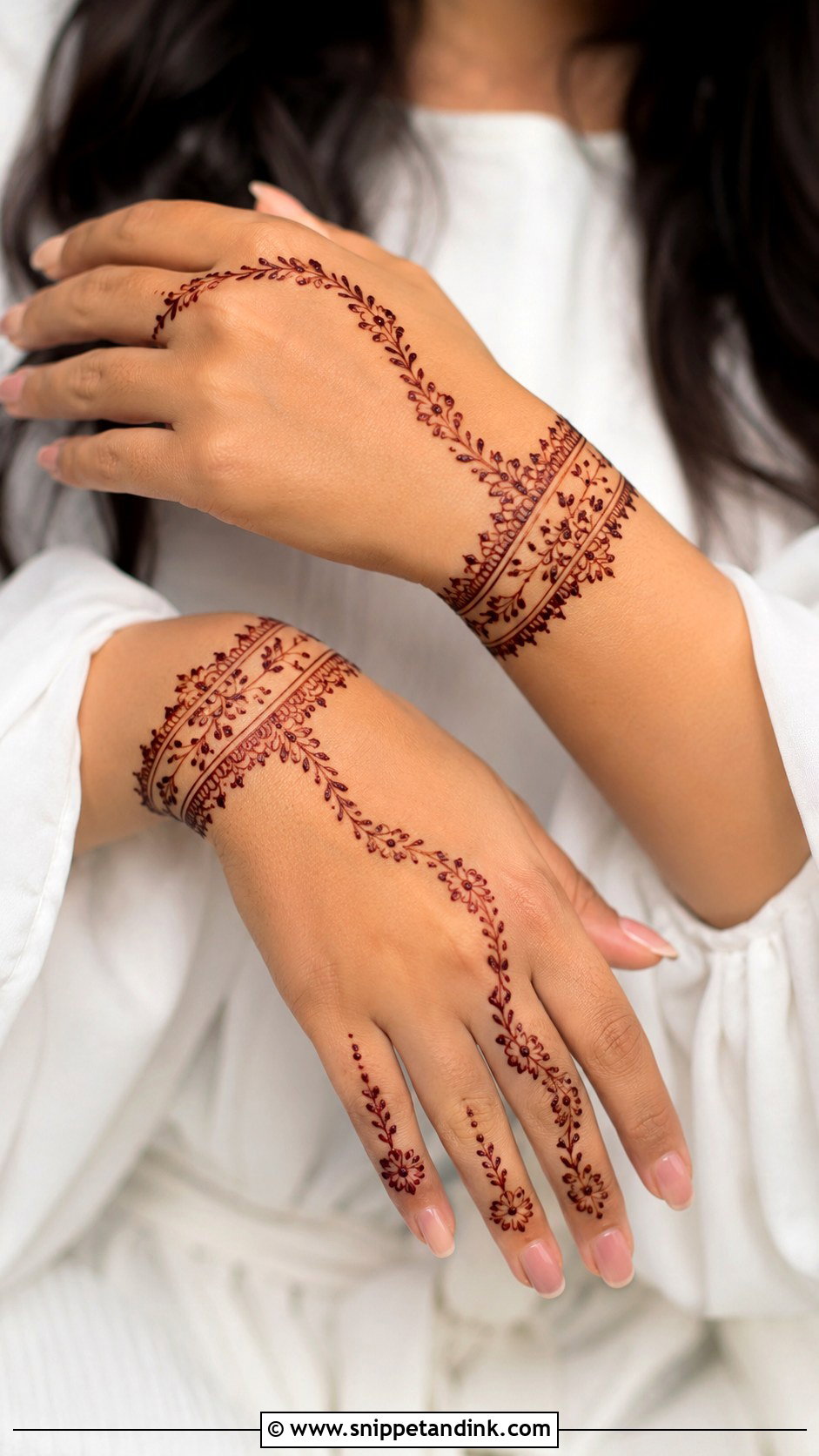
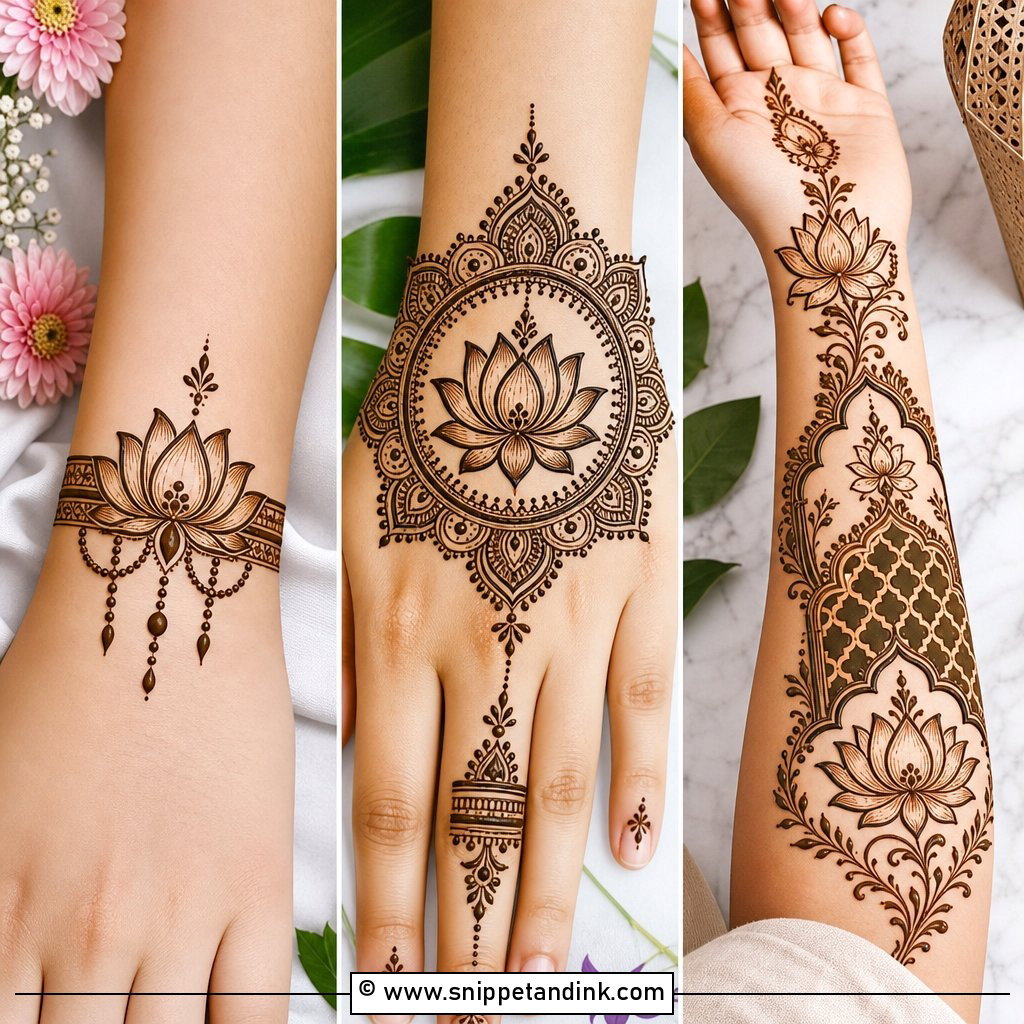
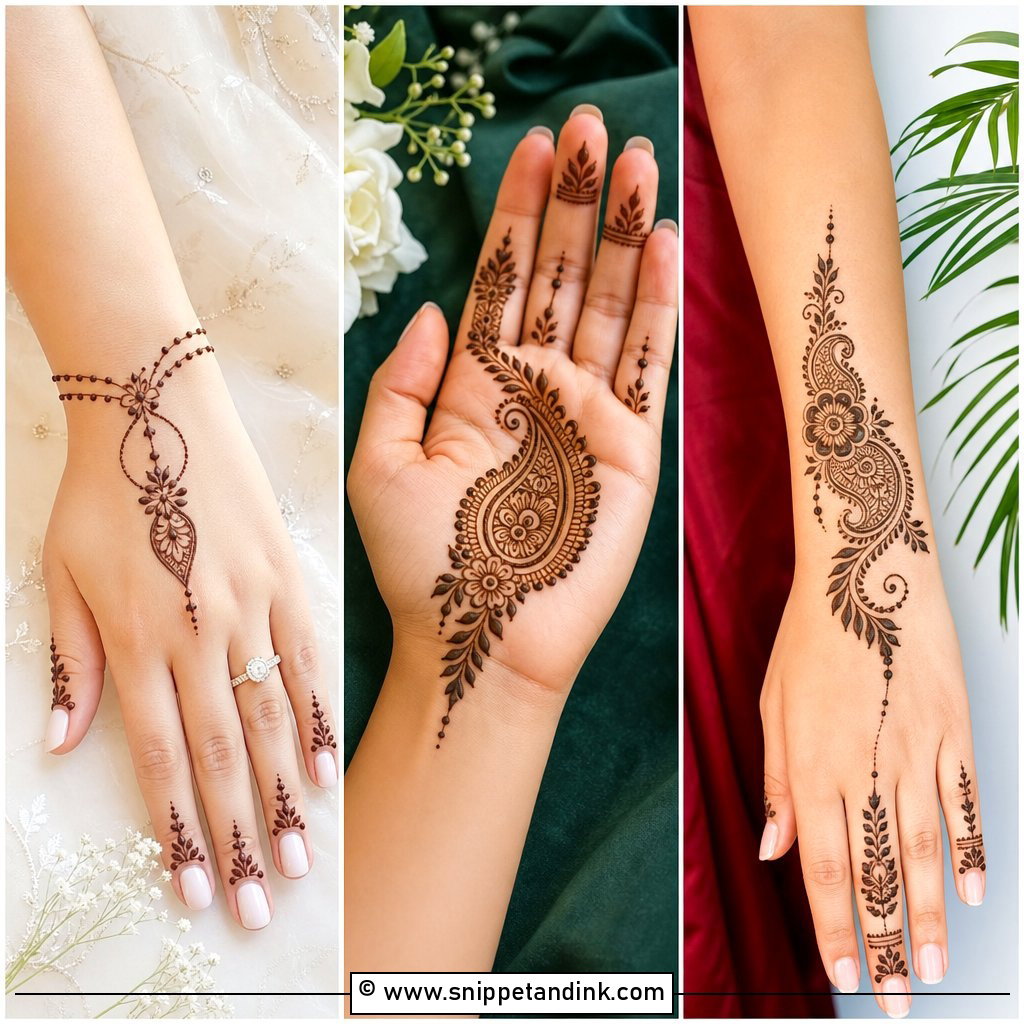
A bracelet pattern turns the henna into an accessory. I build a thin wrist band of dots, leaves, small flowers or jaali, then run a delicate chain toward one finger for a hand harness effect, keeping the rest of the hand empty. Sleeves that end at the wrist frame it well, which makes it a natural fit for engagements and nikah functions. If you wear lots of bangles, ask your artist to set the band a finger’s width higher so the metal does not hide it.
11. Khafif Mehndi Design For Eid
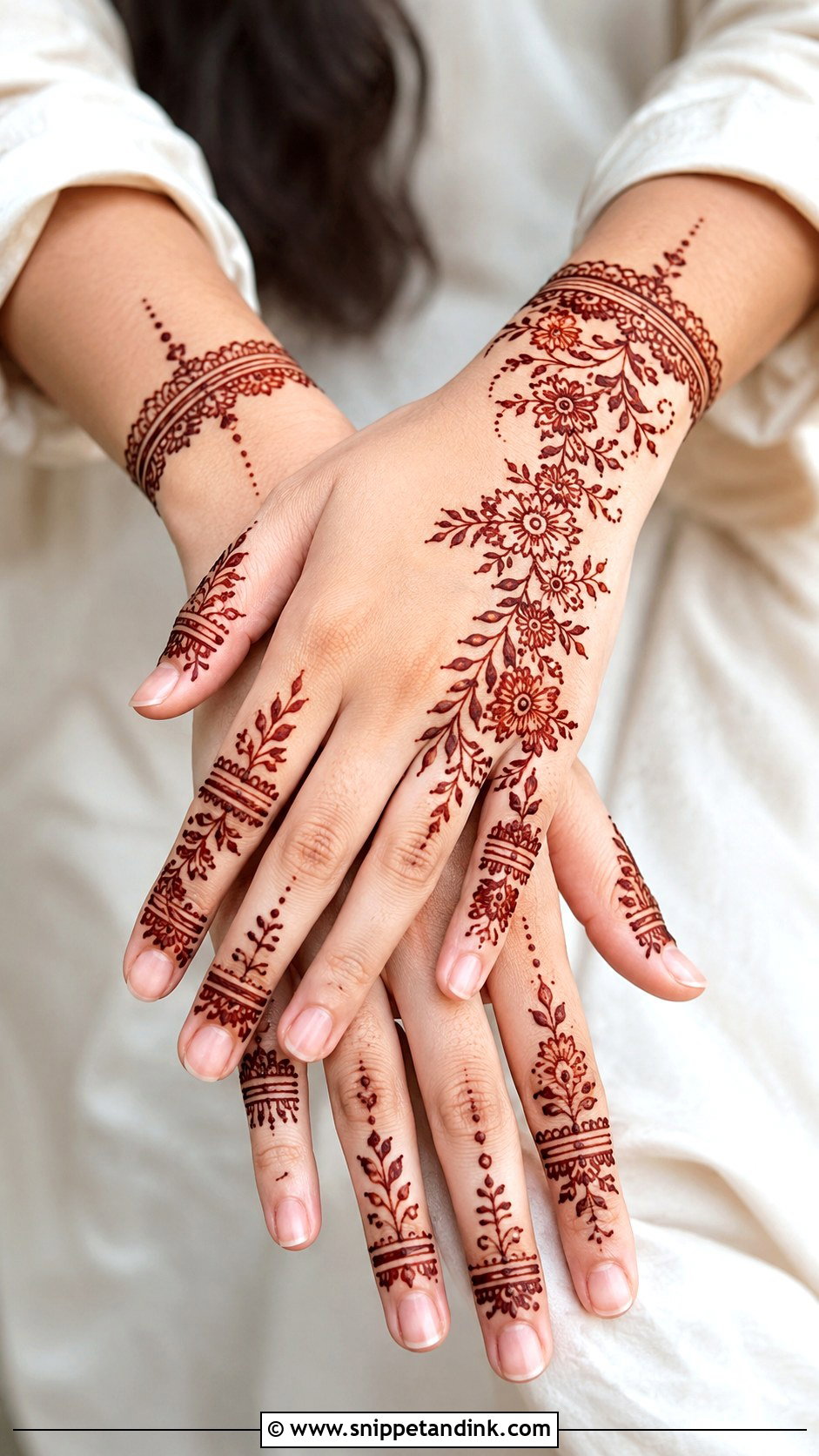
Eid mehndi is often drawn for a whole household in one evening, which is exactly where khafif designs shine. A back-hand floral trail, a couple of finger rings and a light wrist border can be done quickly per person and still look festive. For palm lovers, a small mandala with curved vines works just as fast. Apply the night before Eid if you can. Paste left on through the night gives a much deeper stain by morning than anything applied a few hours before prayers.
12. Khafif Mehndi Design For Nikah
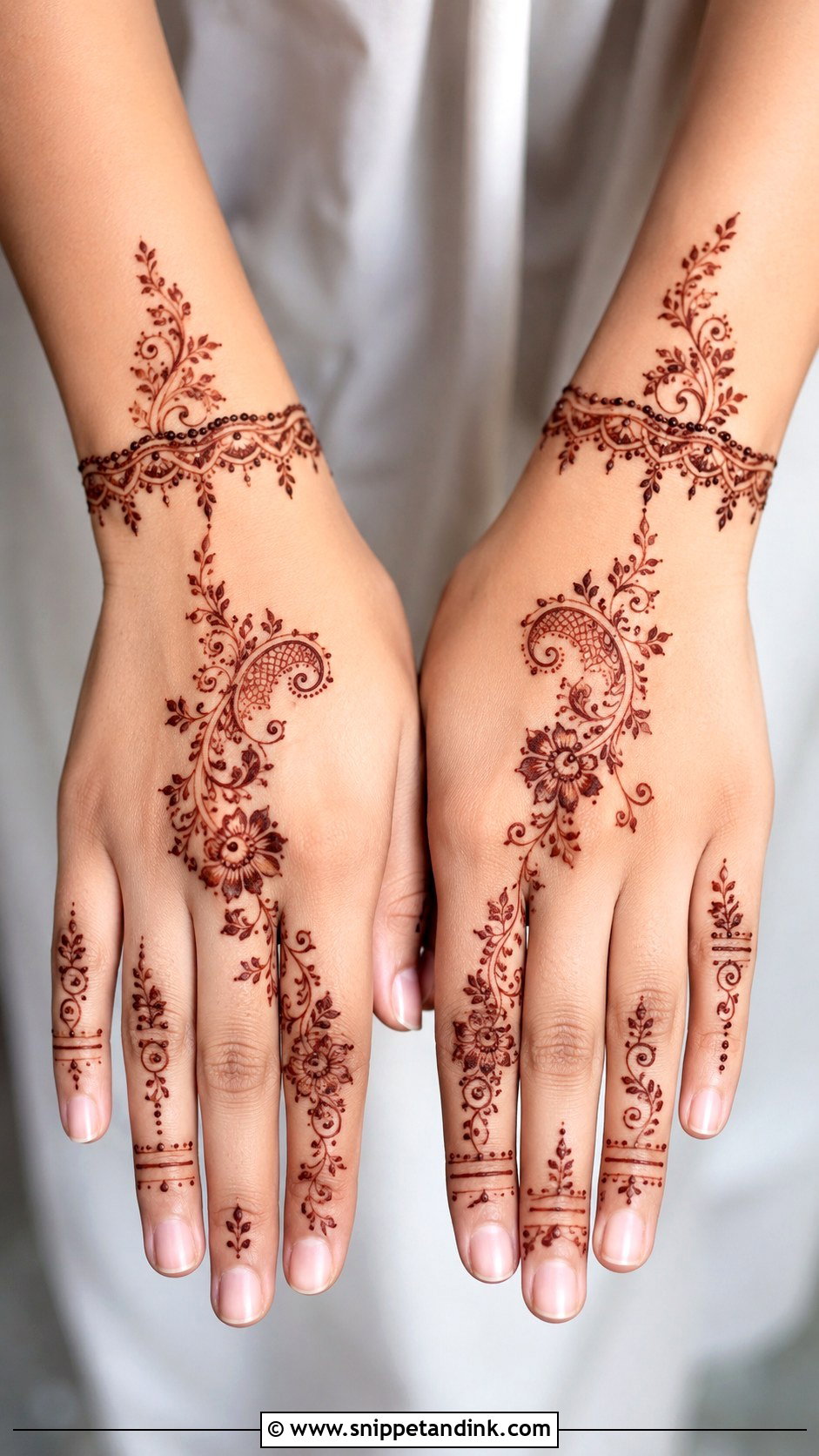
For a nikah, I draw fine vines on the back of the hand, a delicate bracelet and lightly decorated fingers, with a small paisley or mandala if the bride wants a traditional note. No heavy shading; thin outlines and tiny dots keep it graceful in close-ups when the ring and signature photos are taken. Brides who choose this usually want their jewellery and outfit to lead, and the henna supports them. Sisters and friends can wear a lighter version of the same design to tie the photos together.
13. Bridal Khafif Mehndi Design
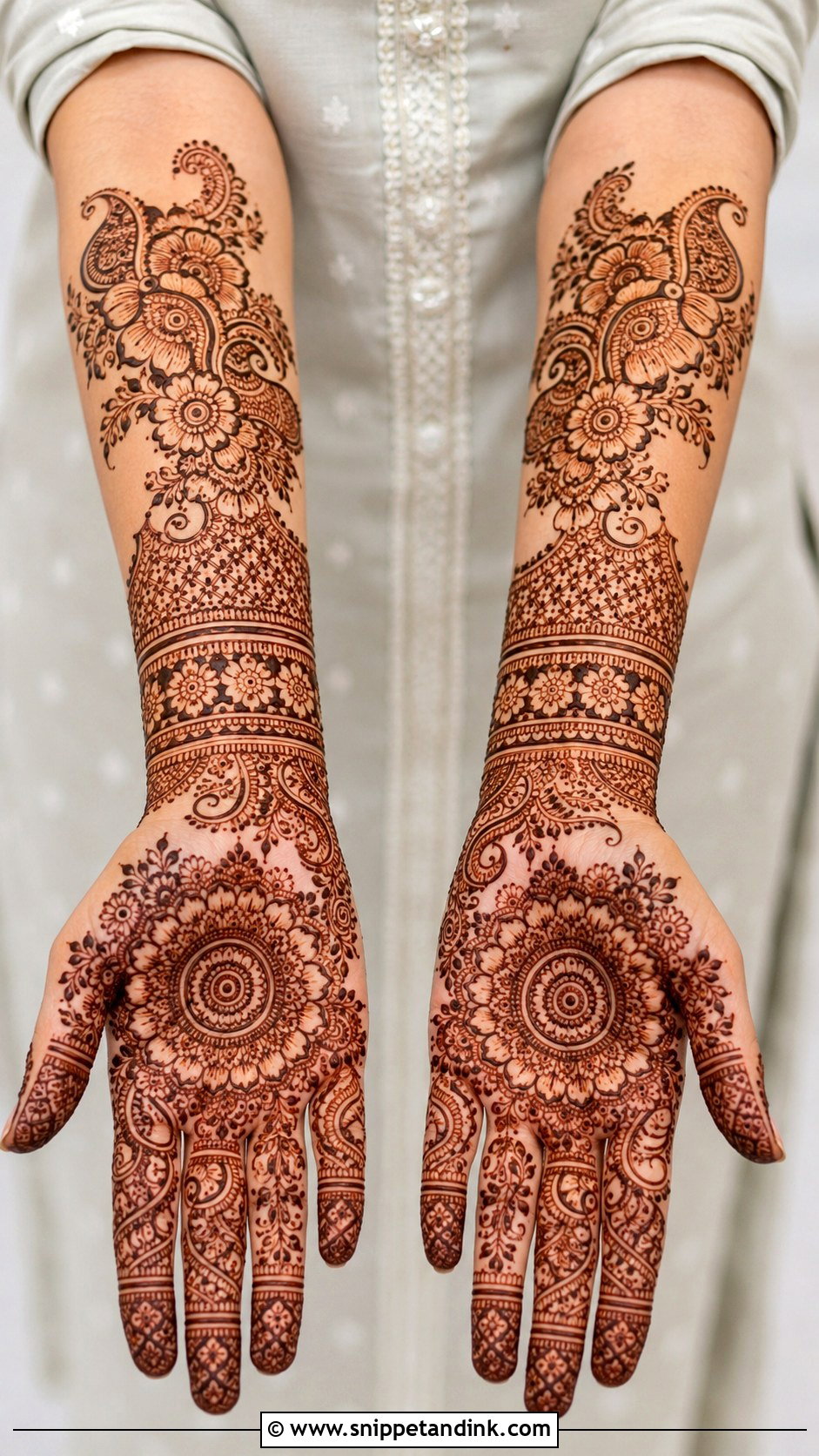
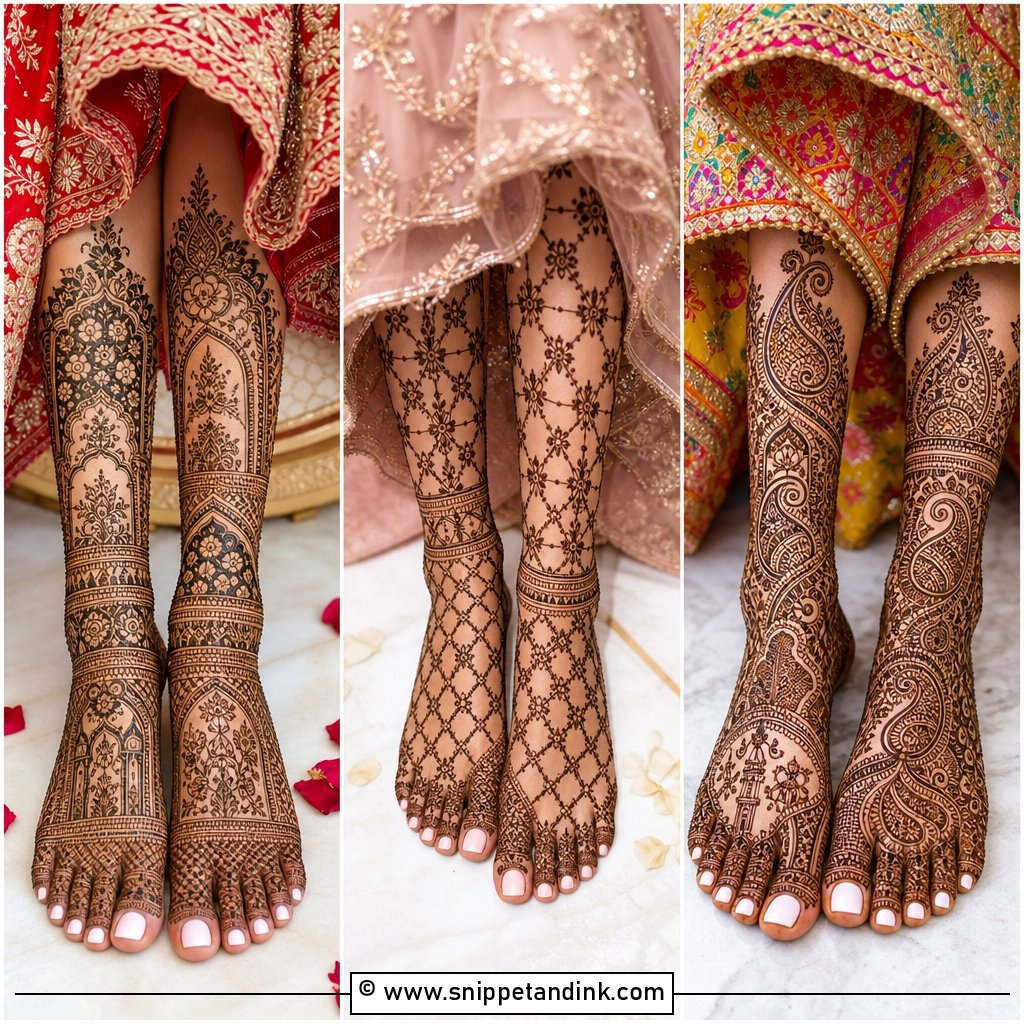
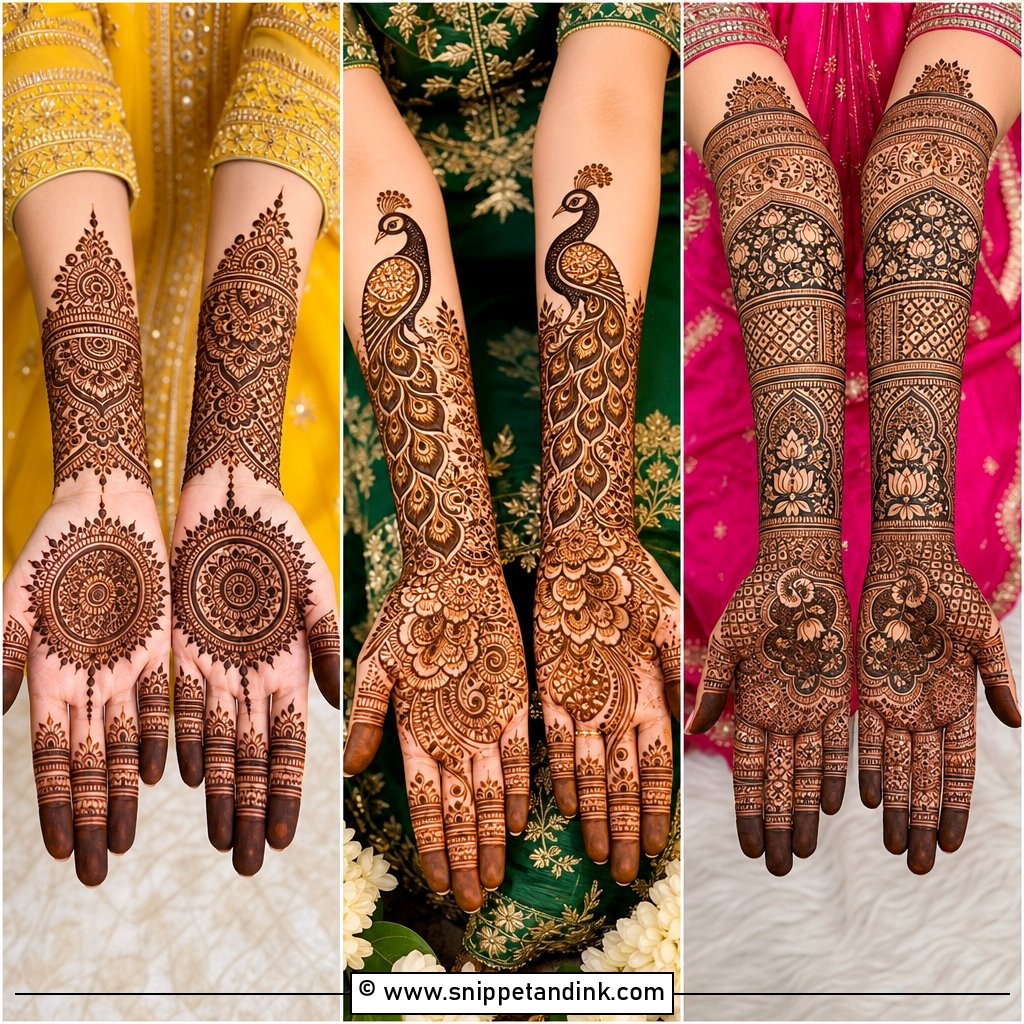
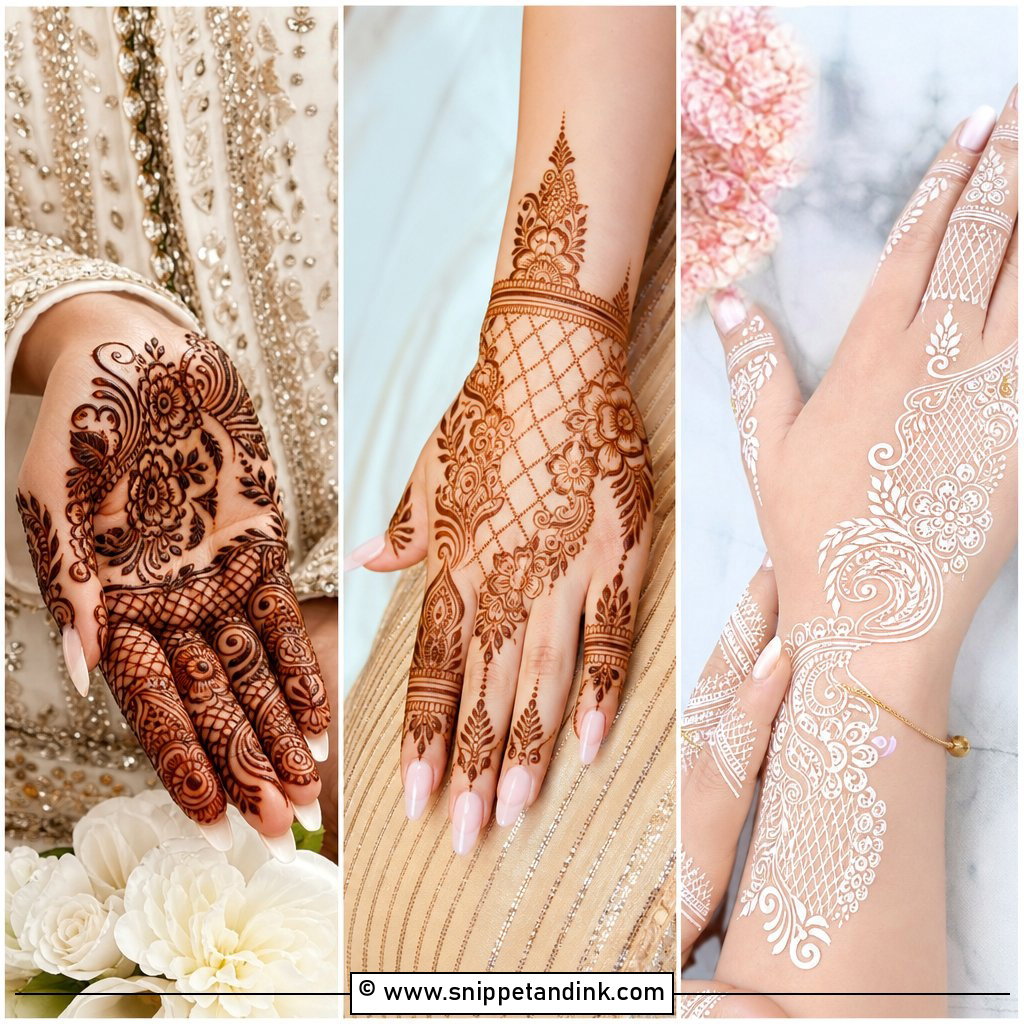
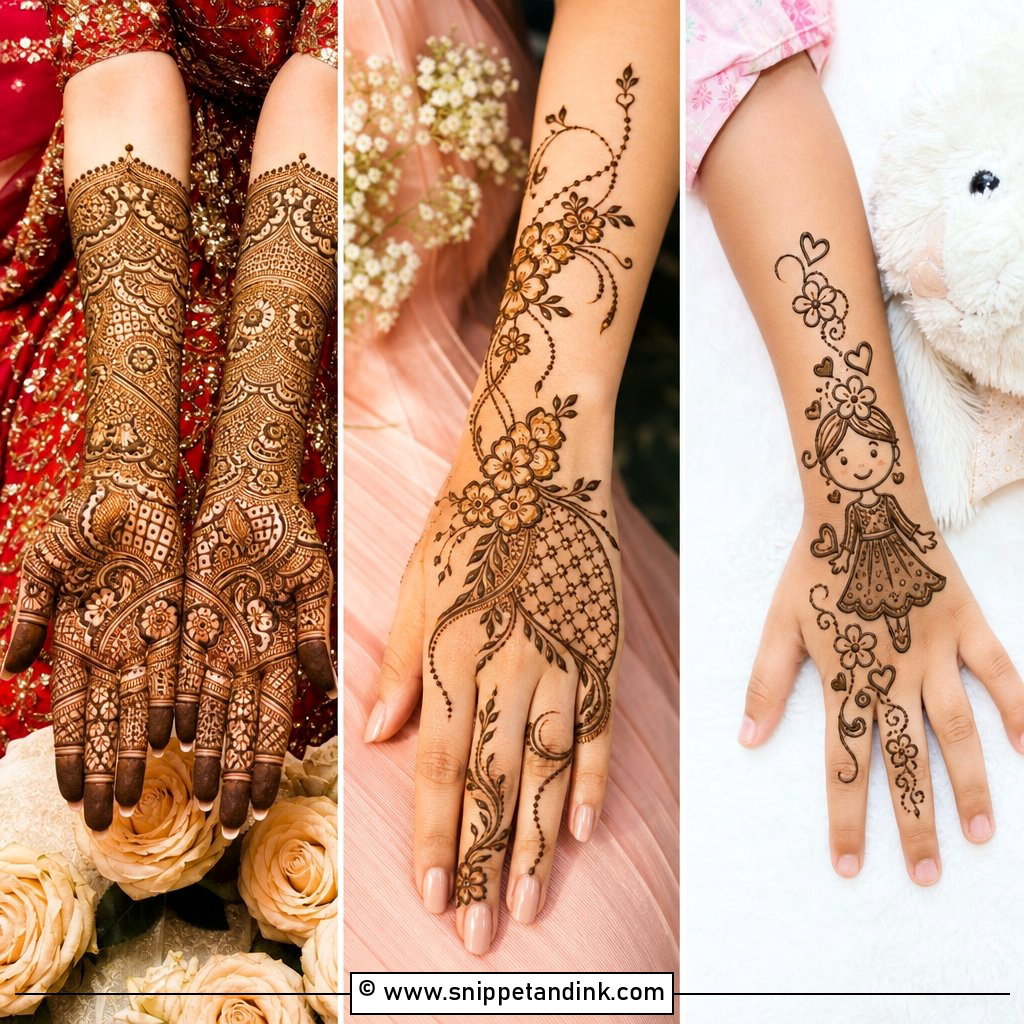
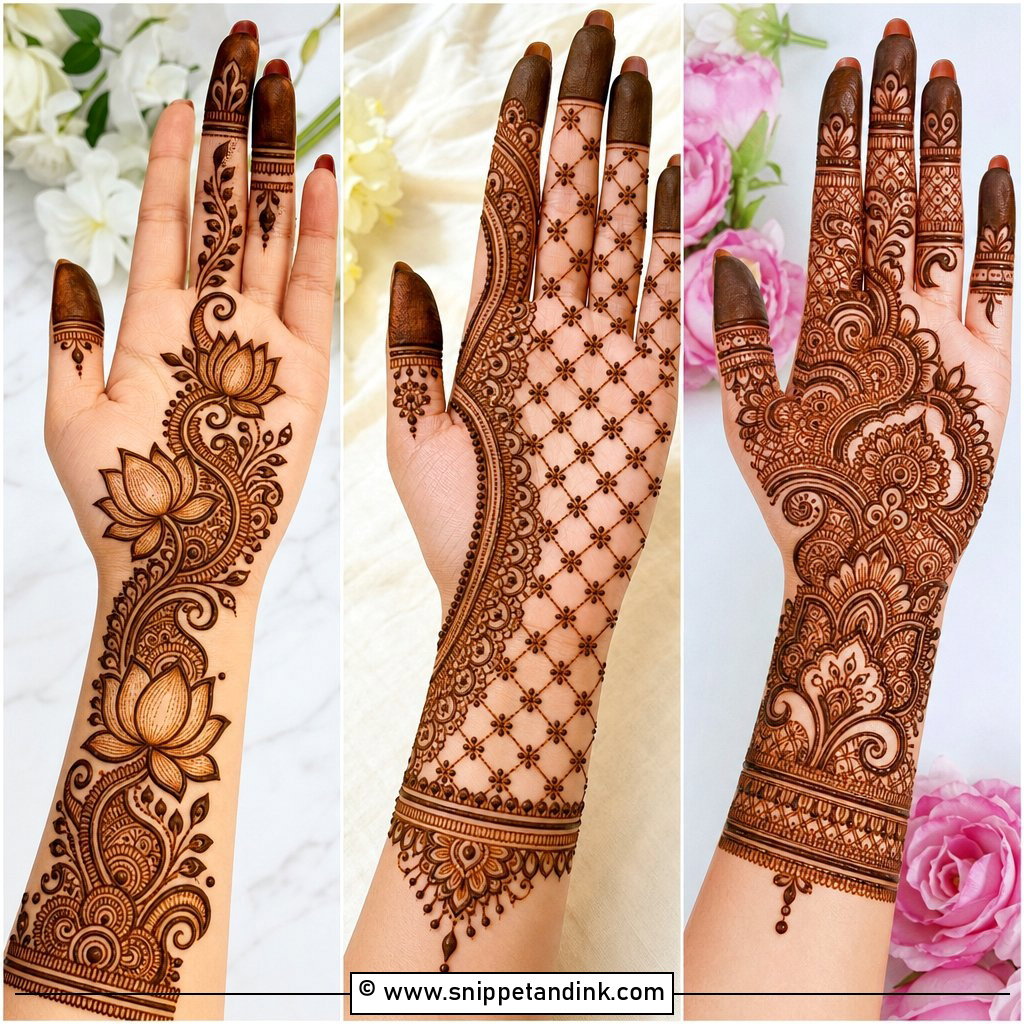
Bridal khafif can still run from fingertips to forearm; it just stays airy. I use larger florals, spaced paisleys, small jaali panels and wrist bands, with clear skin separating each section. The fingers carry the most detail for a bridal touch, and the palm gets one neat mandala or a heart-shaped floral cluster. I recommend this for intimate weddings or brides who find full coverage uncomfortable. One caution: plan the layout on paper first, because sparse bridal work shows every spacing decision.
14. Khafif Mehndi Design For Bridesmaid
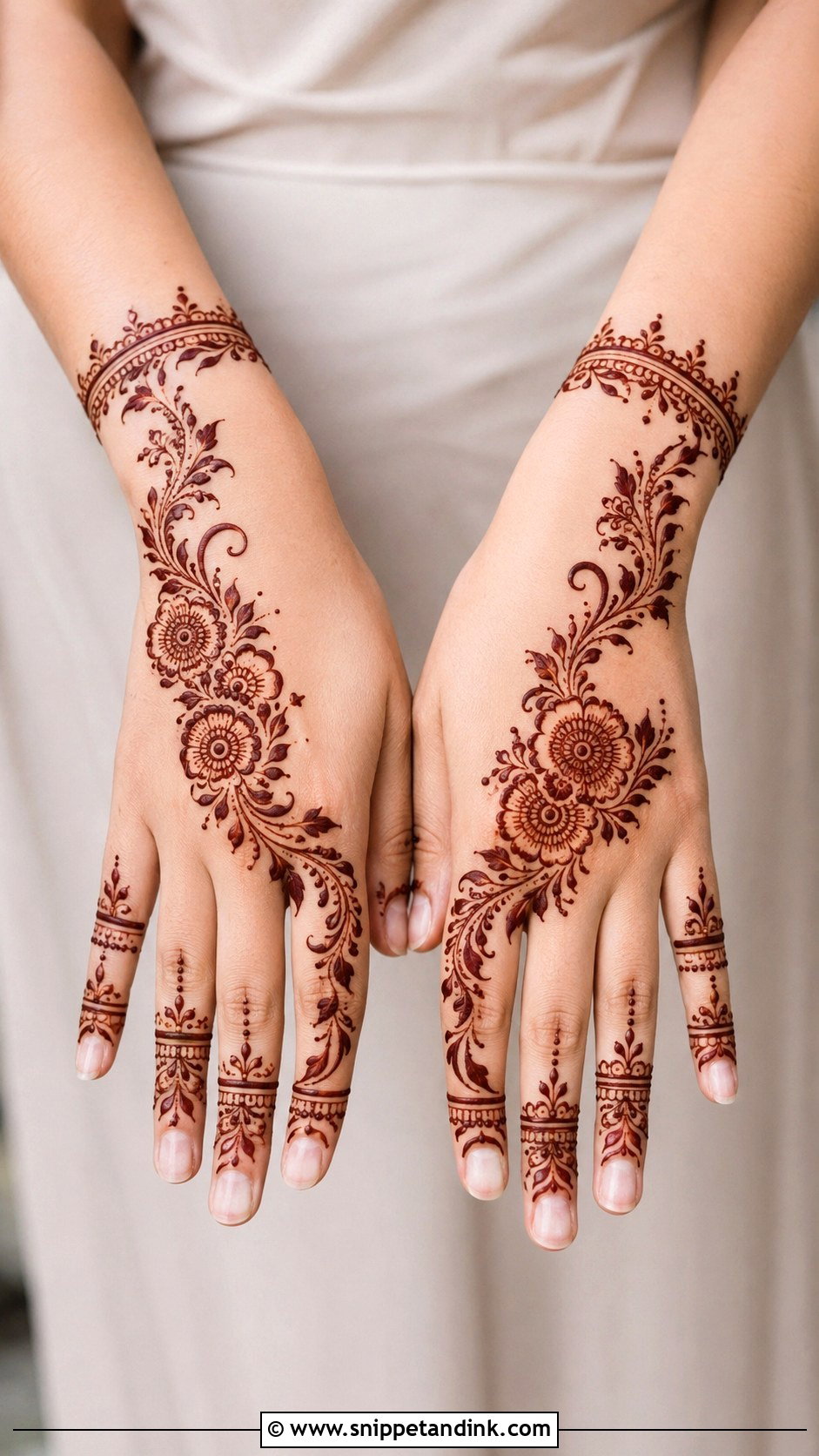
A bridesmaid’s hand should look festive without matching the bride’s. I give bridesmaids a back-hand trail with medium flowers, simple finger bands and a bracelet at the wrist, and keep the palm plain or very light. In group photos, coordinated designs look tidy, so I often use the same flower across the whole party. Speed matters here too; bridesmaids usually get their henna in a queue on a busy evening.
15. Khafif Mehndi Design For Kids
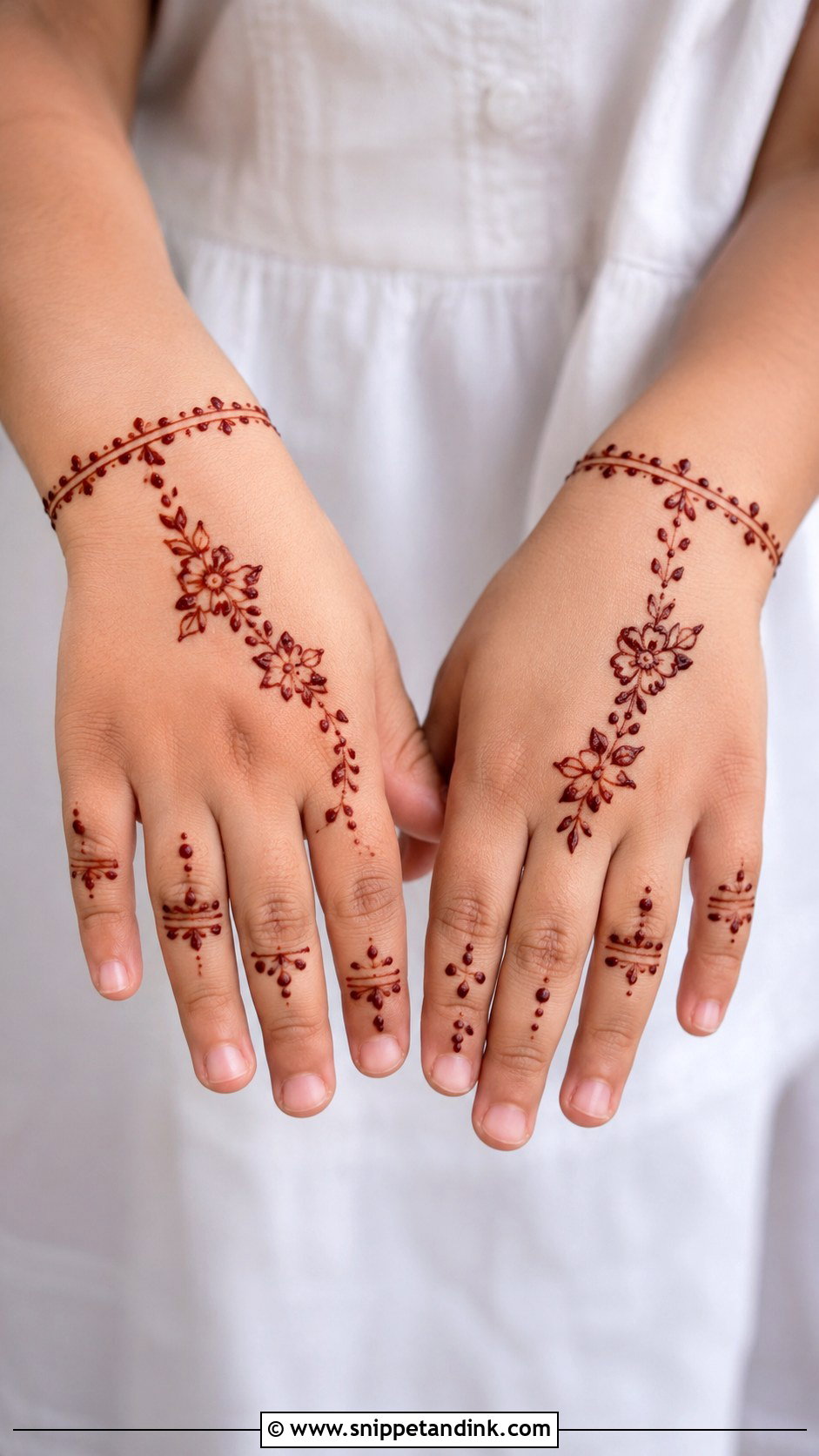
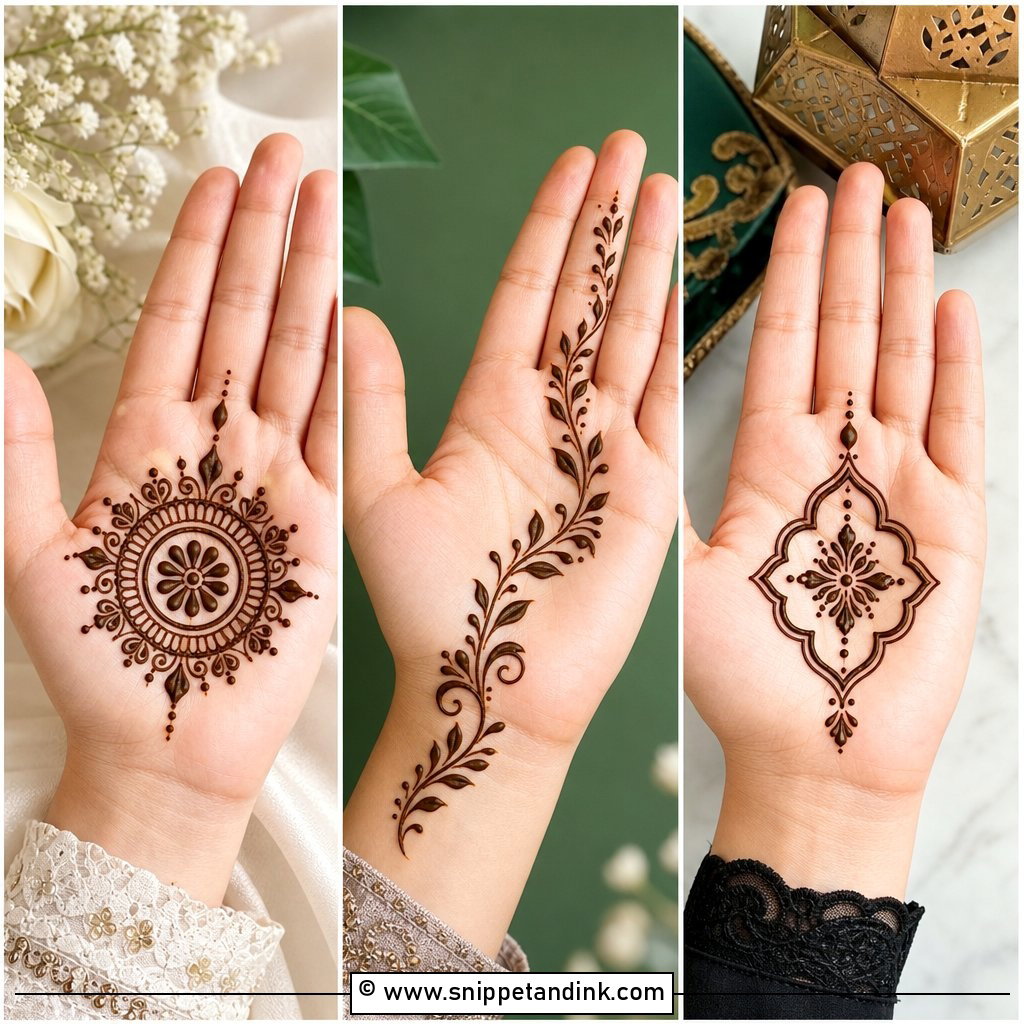
With children, the clock is the design brief. A khafif mehndi design for kids might be one small flower, a tiny mandala or a heart-shaped vine on the back of the hand, finished with a dotted wrist band. I skip finger detail because small hands move and smudge it. Natural henna only for children, always. Check the paste is free of added dye, and keep it to a small area on very young skin.
16. Khafif Mehndi Design For Short Fingers
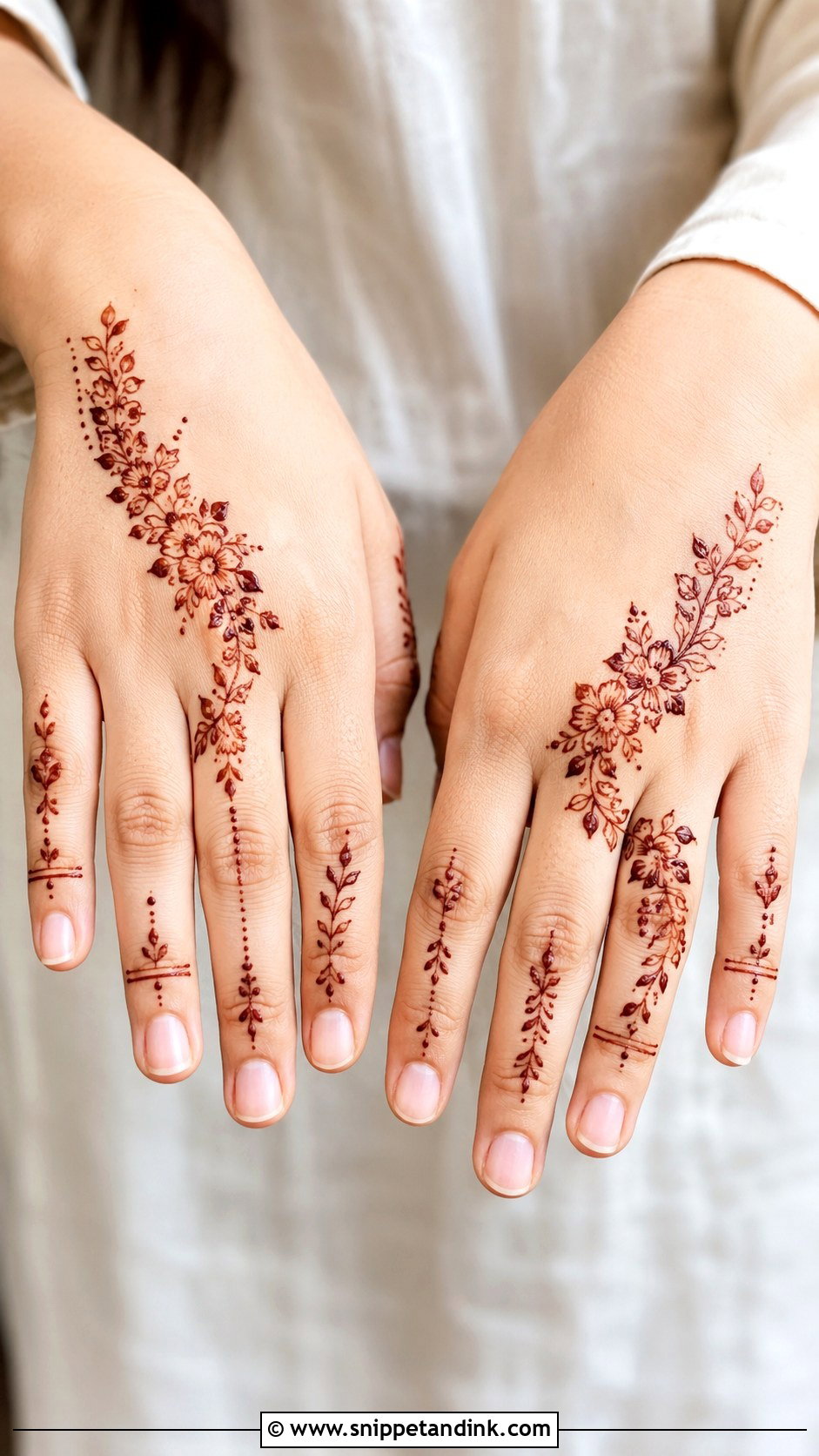
Short fingers benefit from designs that lead the eye upward. I use thin vertical lines, small leaf trails and slim bands set higher on each finger, and I avoid solid fingertip caps, which make short fingers look stubbier. On the back of the hand, a diagonal trail aimed at the middle finger draws the eye toward the tip. Clean skin around the knuckles helps the hand look longer.
17. Khafif Mehndi Design For Long Fingers
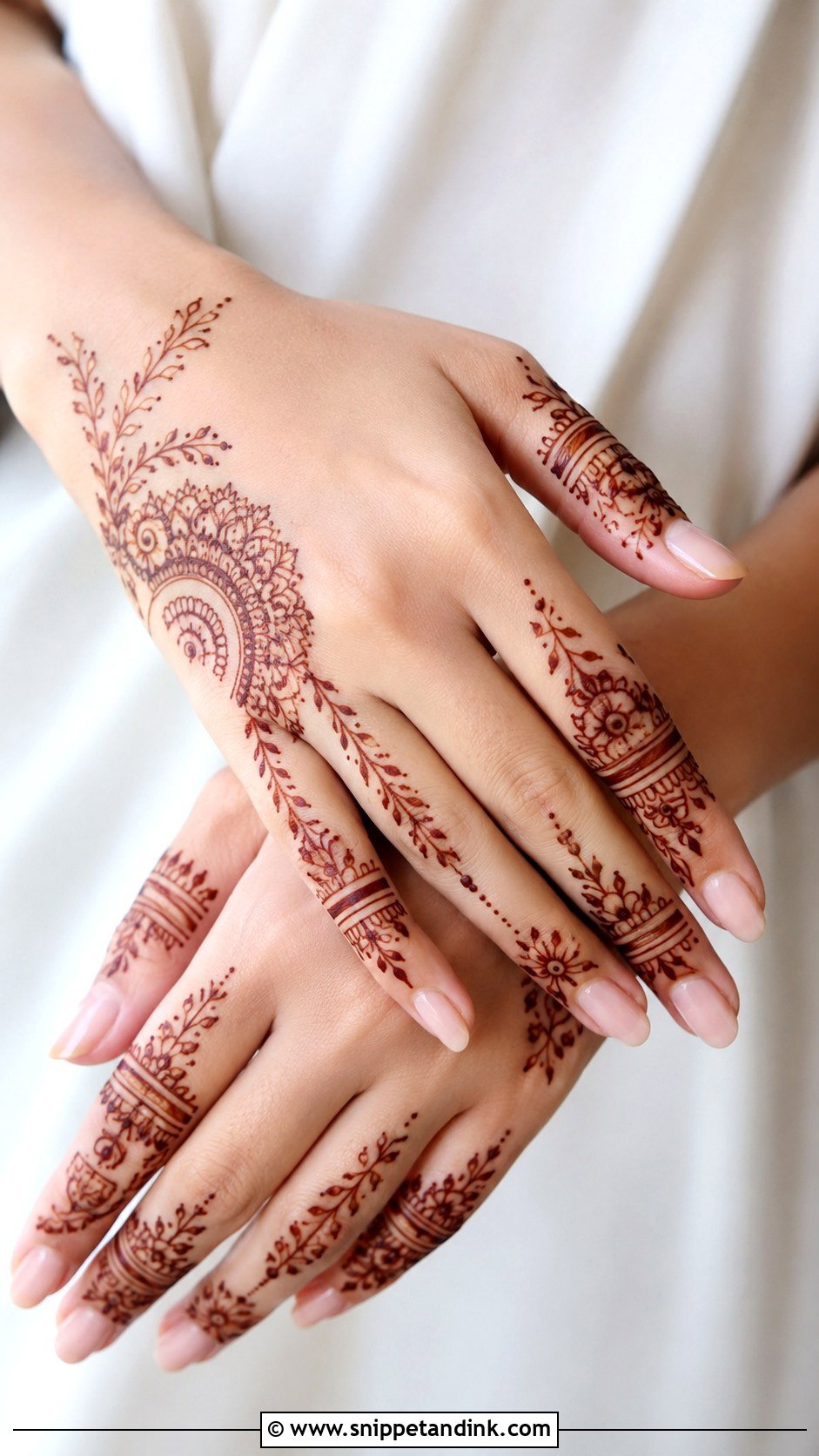
Long fingers give me room for detail: ring bands, thin vines and small florals running down each one. A light mandala or diagonal vine on the hand connects them back to the wrist. I watch for one problem with long fingers, which is leaving some of them empty; a bare finger next to decorated ones reads as unfinished. Either decorate every finger lightly or make one finger the clear focus.
18. Khafif Mehndi Design For Palm
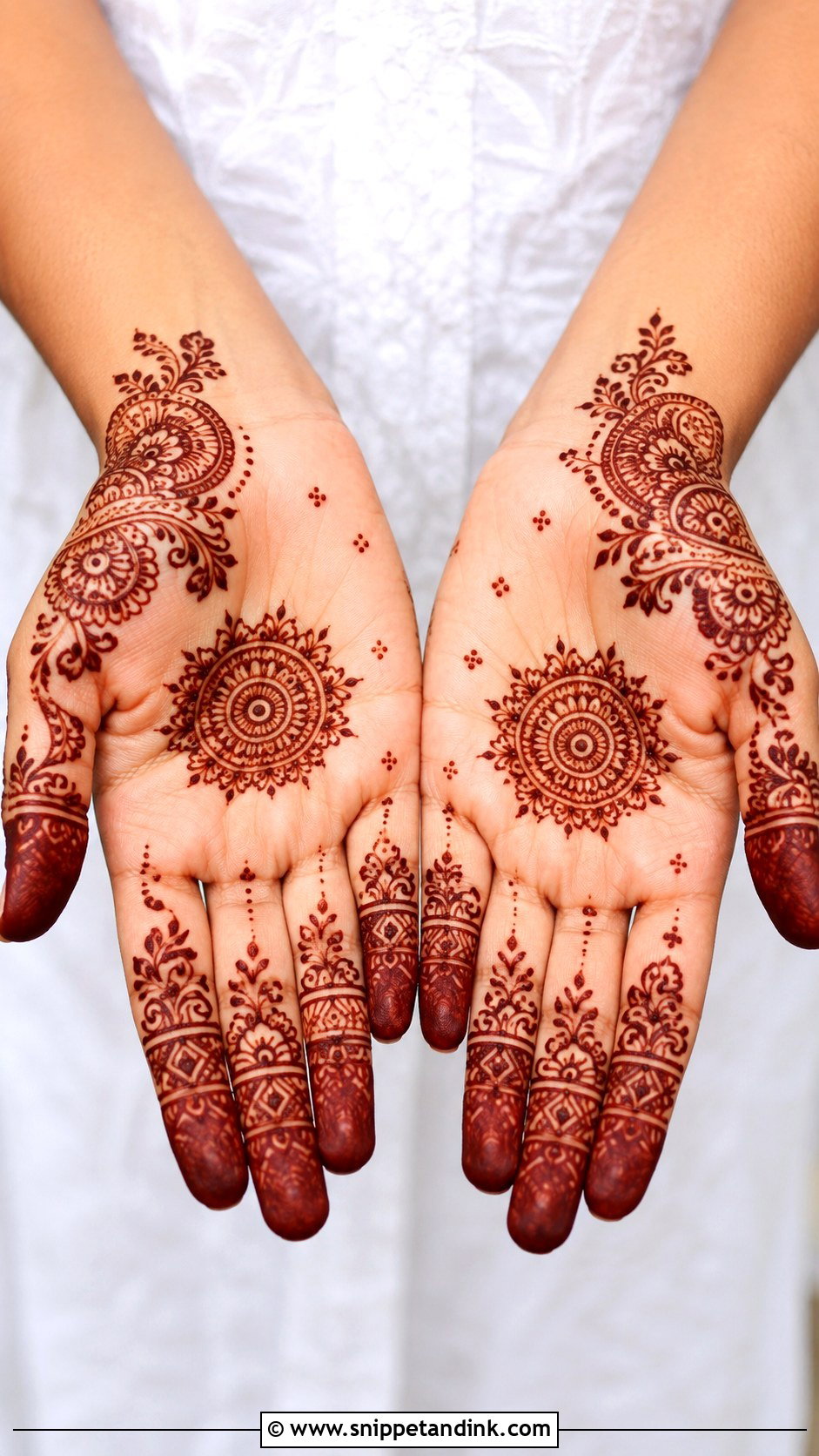
Palm khafif should read clearly from a glance: a small mandala, floral circle or paisley cluster in the middle, with curved vines toward the fingers and wrist. Since palm skin takes the deepest stain, simple lines here come up a rich reddish brown, so you do not need much. I lightly shade the fingertips or add small bands. It is a good fit for Eid morning or a family wedding when you want your open hands to look festive during greetings.
19. Khafif Mehndi Design For Full Hand
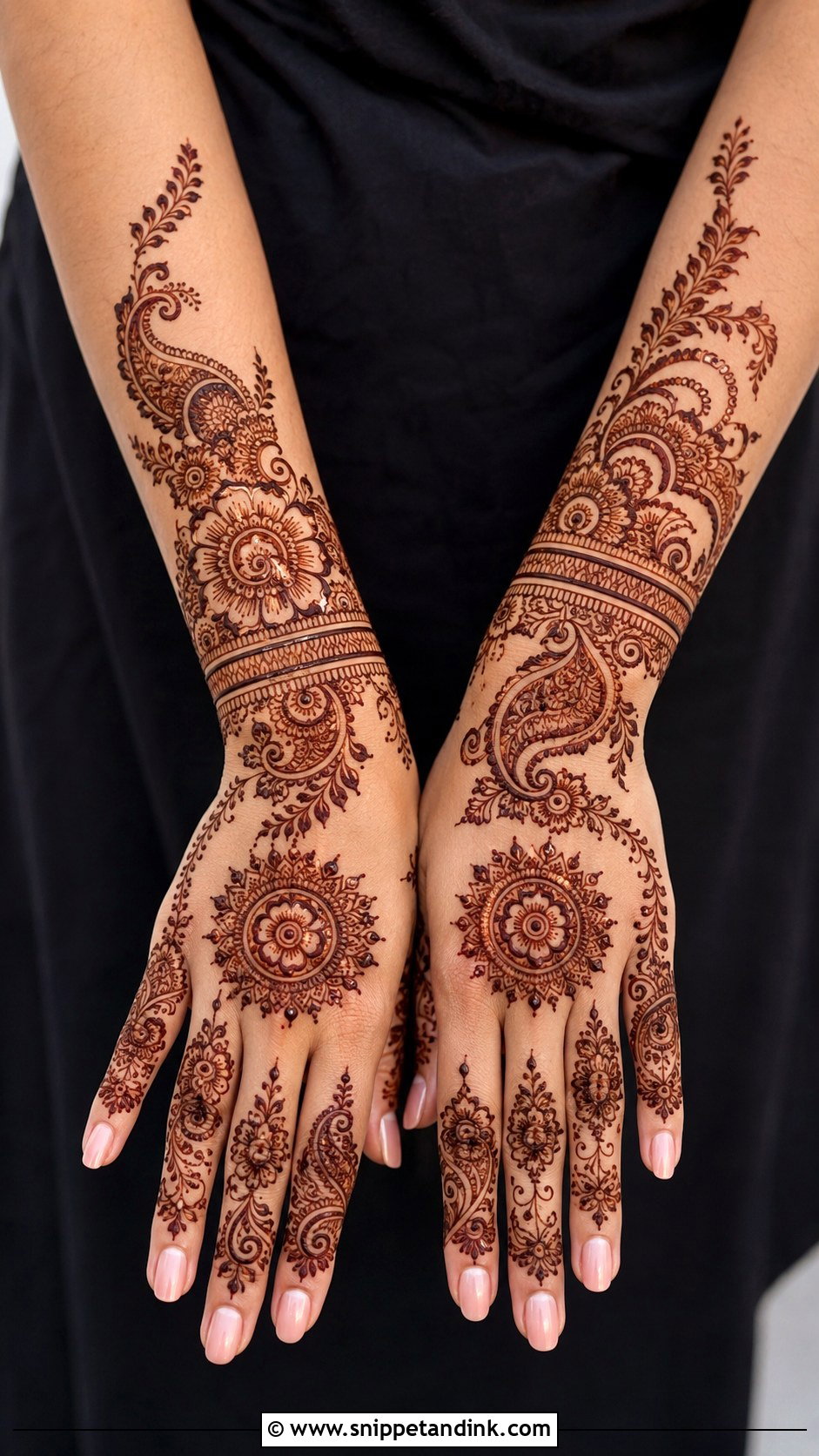
Full-hand khafif sounds like a contradiction, but it is really about sectioning. I divide the hand into floral clusters, paisleys, vines and bracelet bands from fingers to wrist, then leave thin gaps of bare skin between every section. Fingers can be detailed while the palm and back hand keep their breathing space. It gives guests and bridesmaids complete coverage that still looks softer than traditional bridal henna.
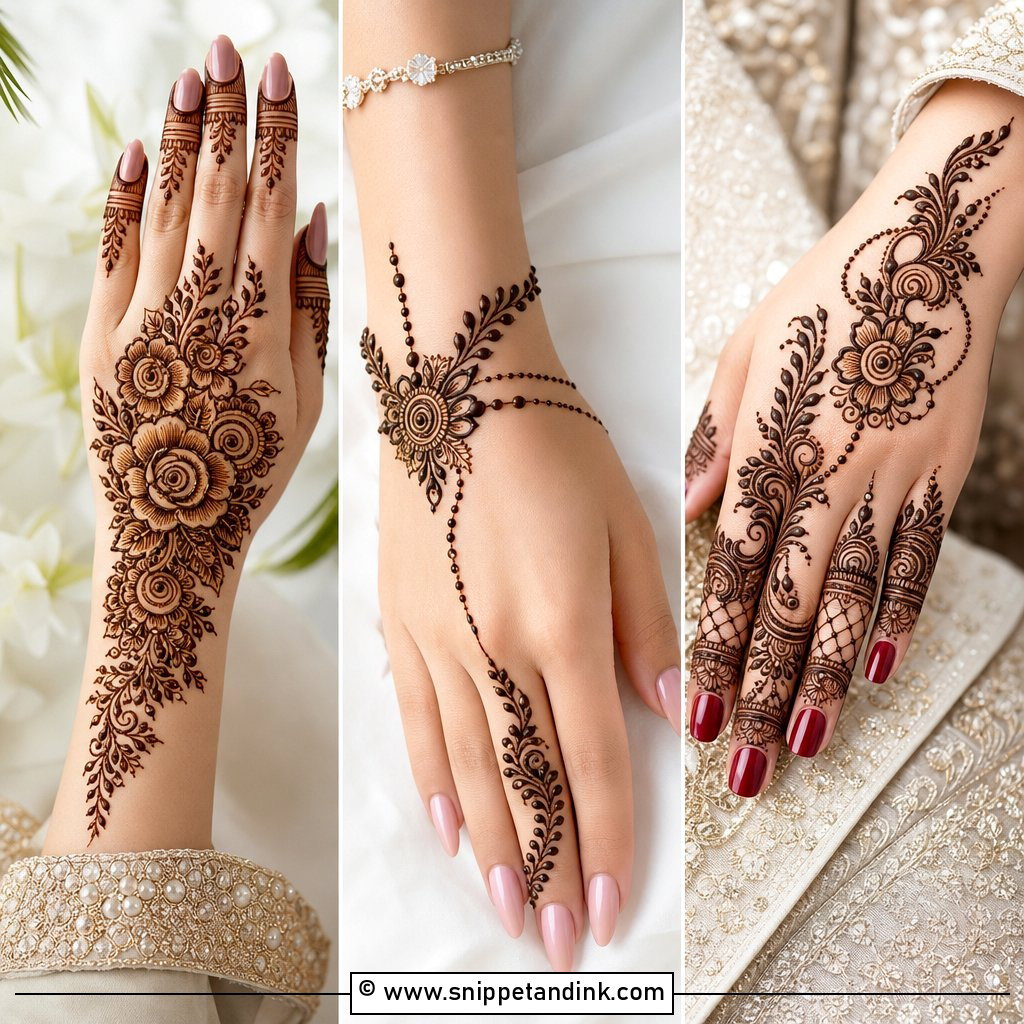
20. Khafif Mehndi Design For Wrist
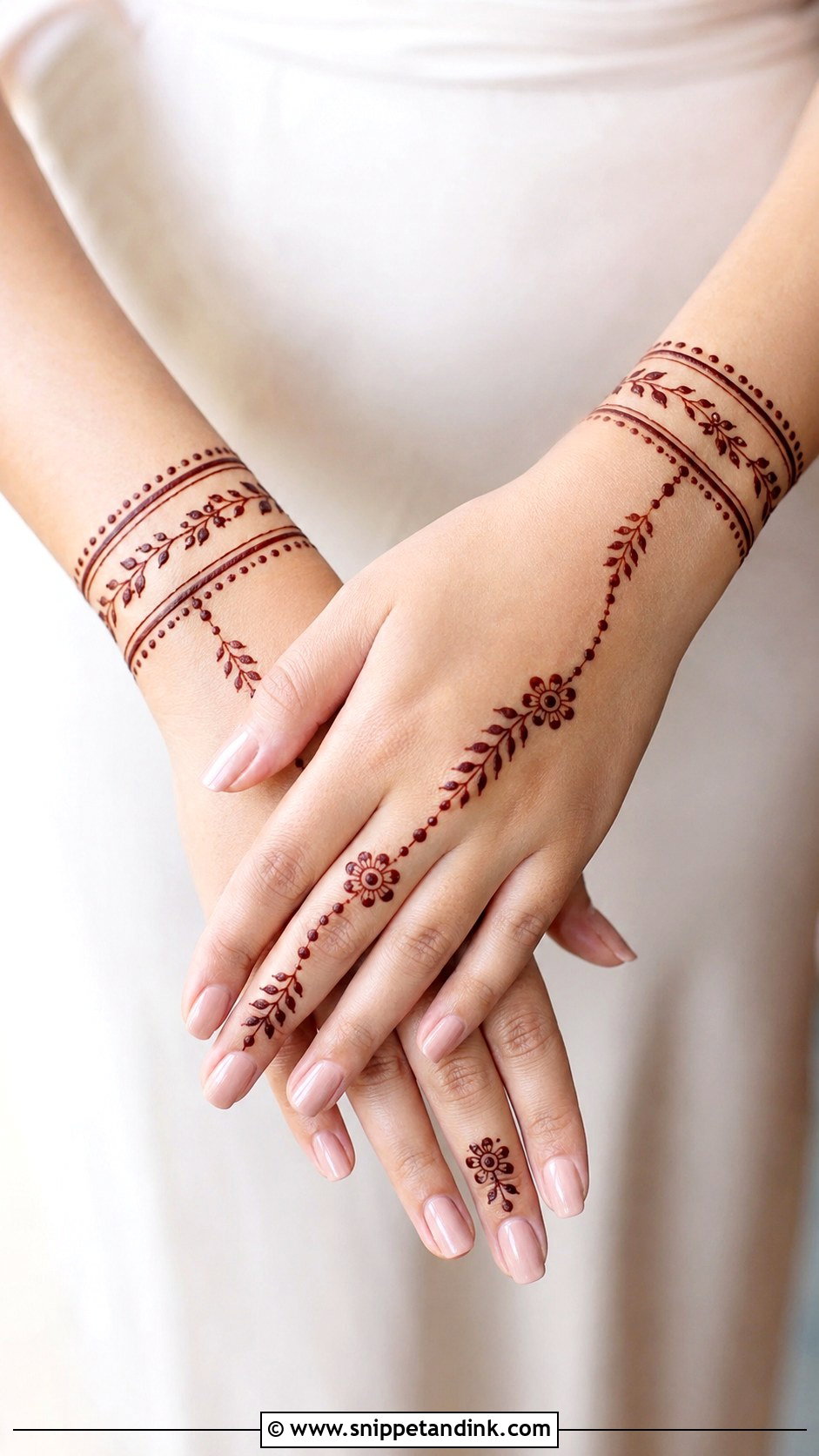
Wrist designs are the quickest way to look decorated. I draw two or three thin bands of dots, leaves and small flowers, then let one fine vine run onto the back of the hand or palm, sometimes linked to a single finger. The rest of the hand stays open. If you wear a watch daily, put the bands on the other wrist or keep them low, since a strap rubbing over fresh henna wears it away fast.
21. Khafif Mehndi Design For Forearm
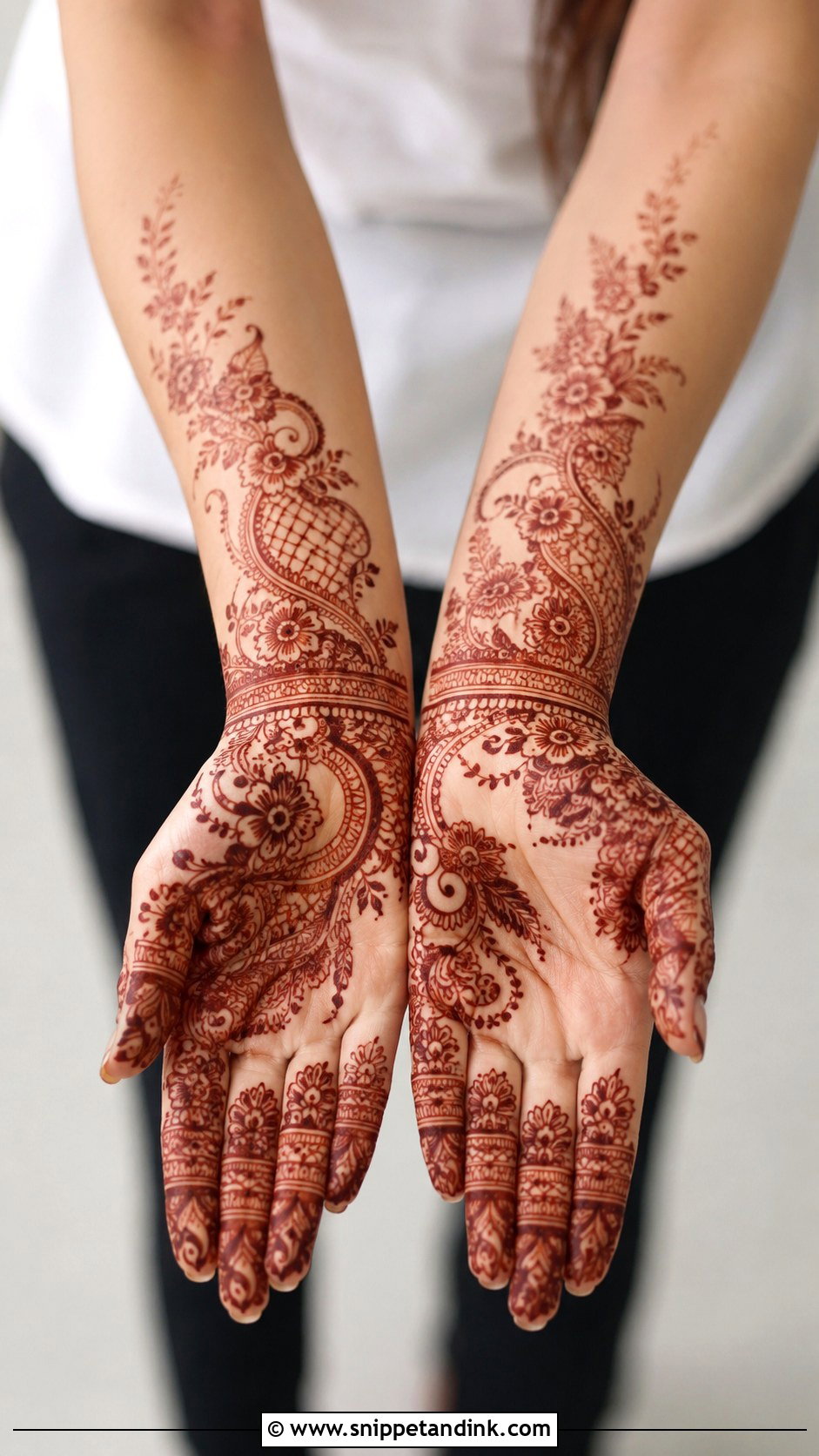
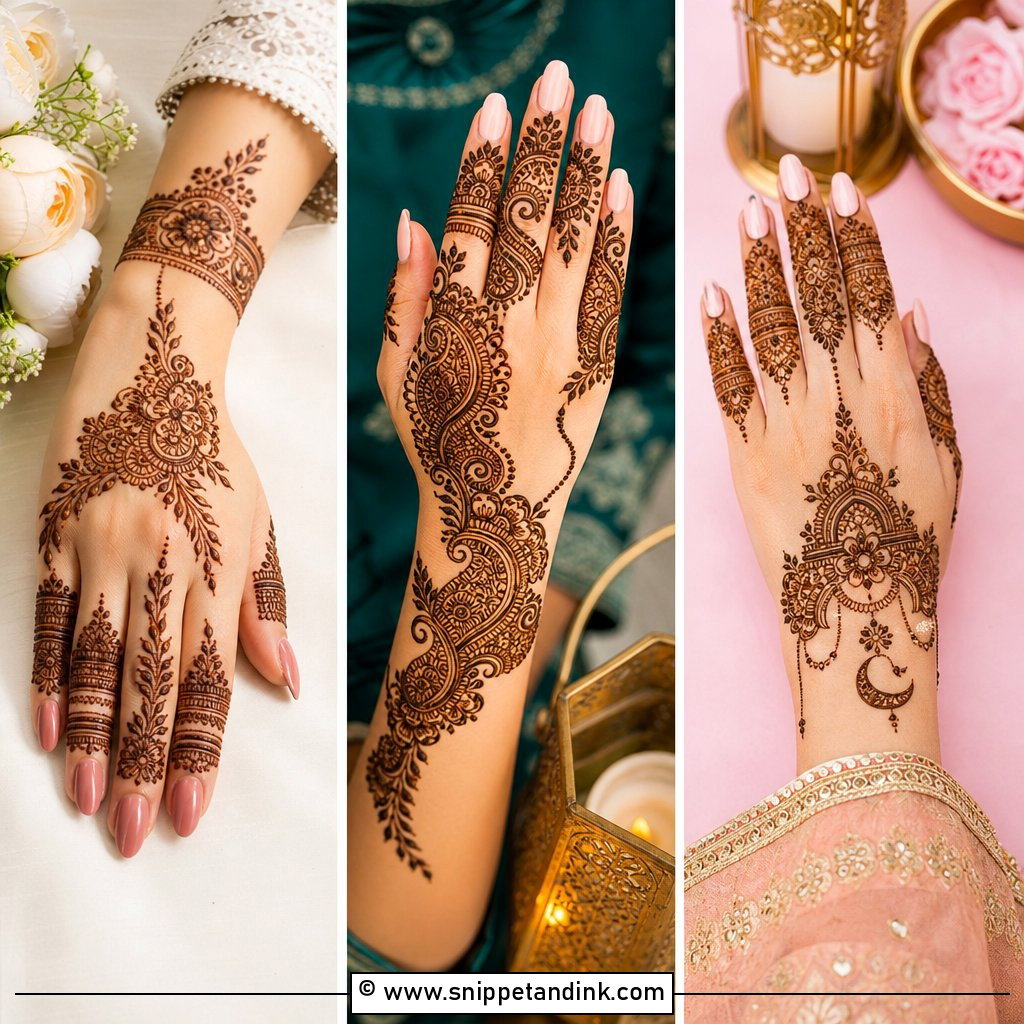
On the forearm, I start with a detailed wrist bracelet and let spaced vines, paisley curves or thin jaali panels climb upward, getting lighter as they go. That taper is what keeps it khafif rather than bridal. Forearm skin stains lighter than the hands, so I make the lines a touch bolder there. Three-quarter or short sleeves show it off. Brides who want arm coverage without the weight of full bridal henna often settle on this.
22. Khafif Mehndi Design With Paisley
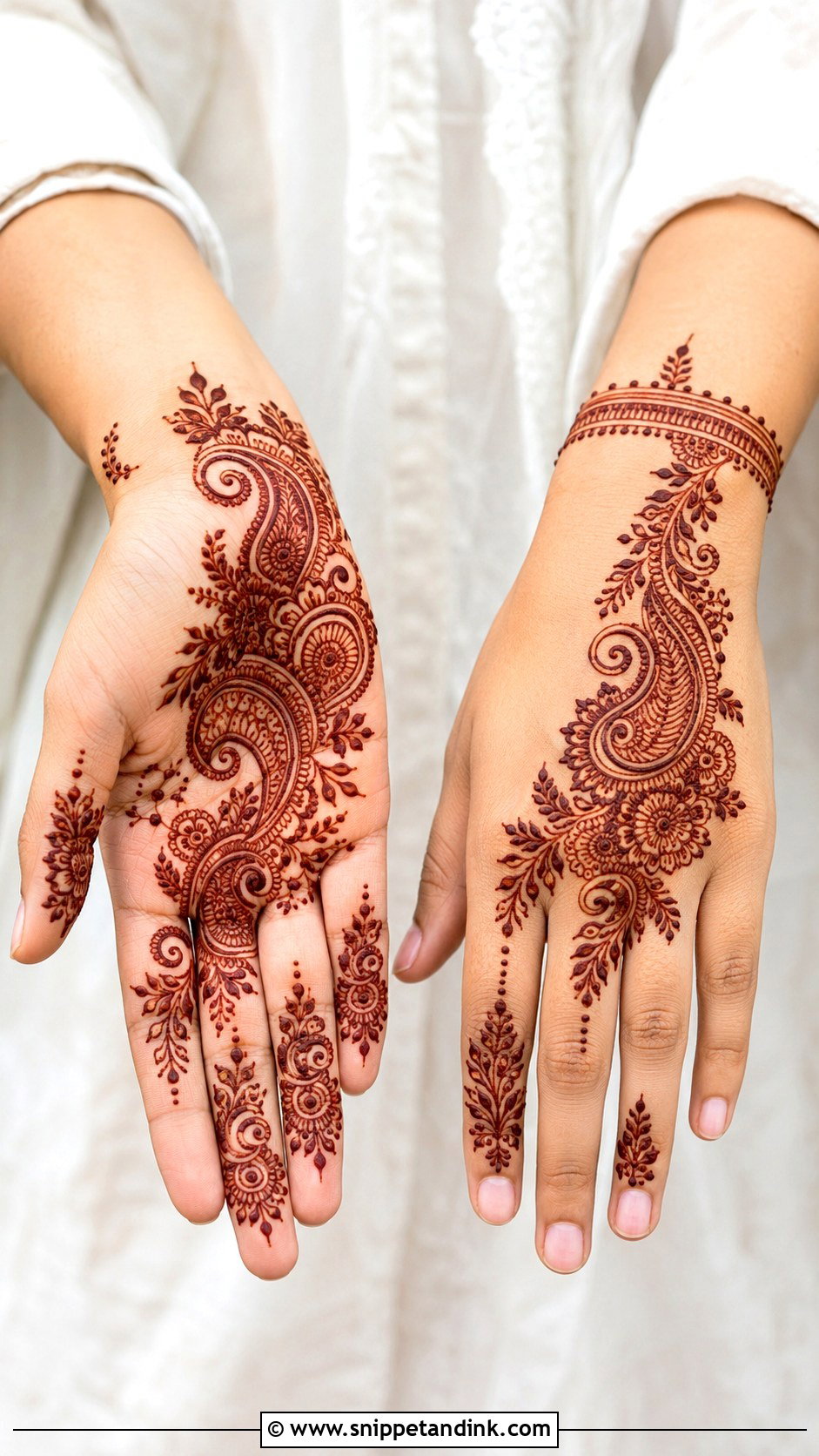
One or two paisleys on the palm or back hand, ringed by small leaves and dots, bring a traditional note to an otherwise minimal hand. I keep the inner fill simple, fine lines or tiny petals, because a densely filled paisley becomes the heavy spot on a light design. A slim wrist border and light finger work complete it. It is familiar enough for an aunt’s taste and light enough for a younger guest.
23. Khafif Mehndi Design With Jaali
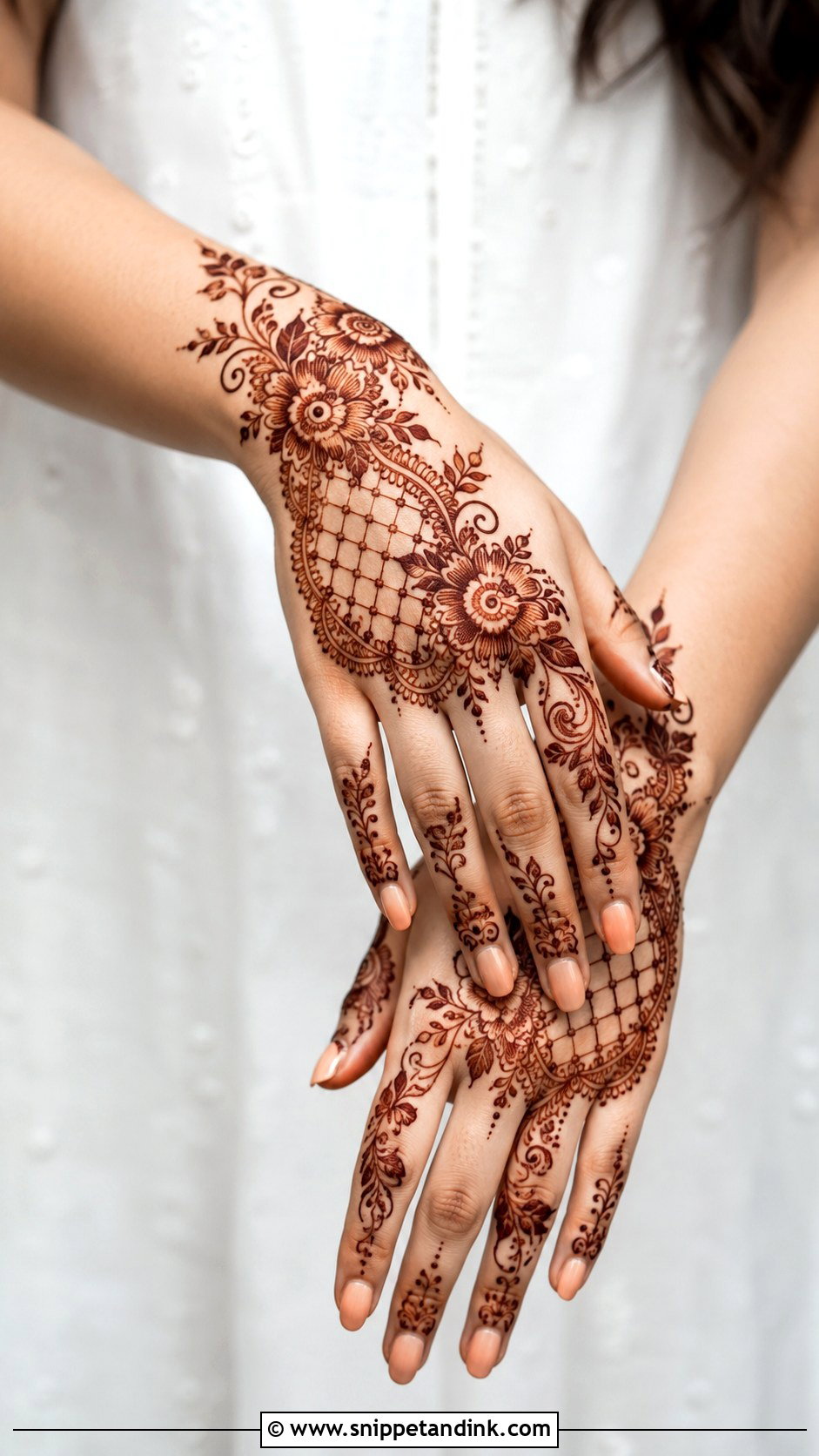
Jaali works in khafif designs as a small accent: a patch of mesh on the back of the hand, at the wrist or inside one paisley, softened with flowers and dots around it. The mesh has to be even. Uneven netting is the fastest way to make a light design look messy, and it is where an artist’s hand control shows. On the back of the hand it gives a lace effect that suits nikah outfits with embroidered sleeves.
24. Khafif Mehndi Design With Rose
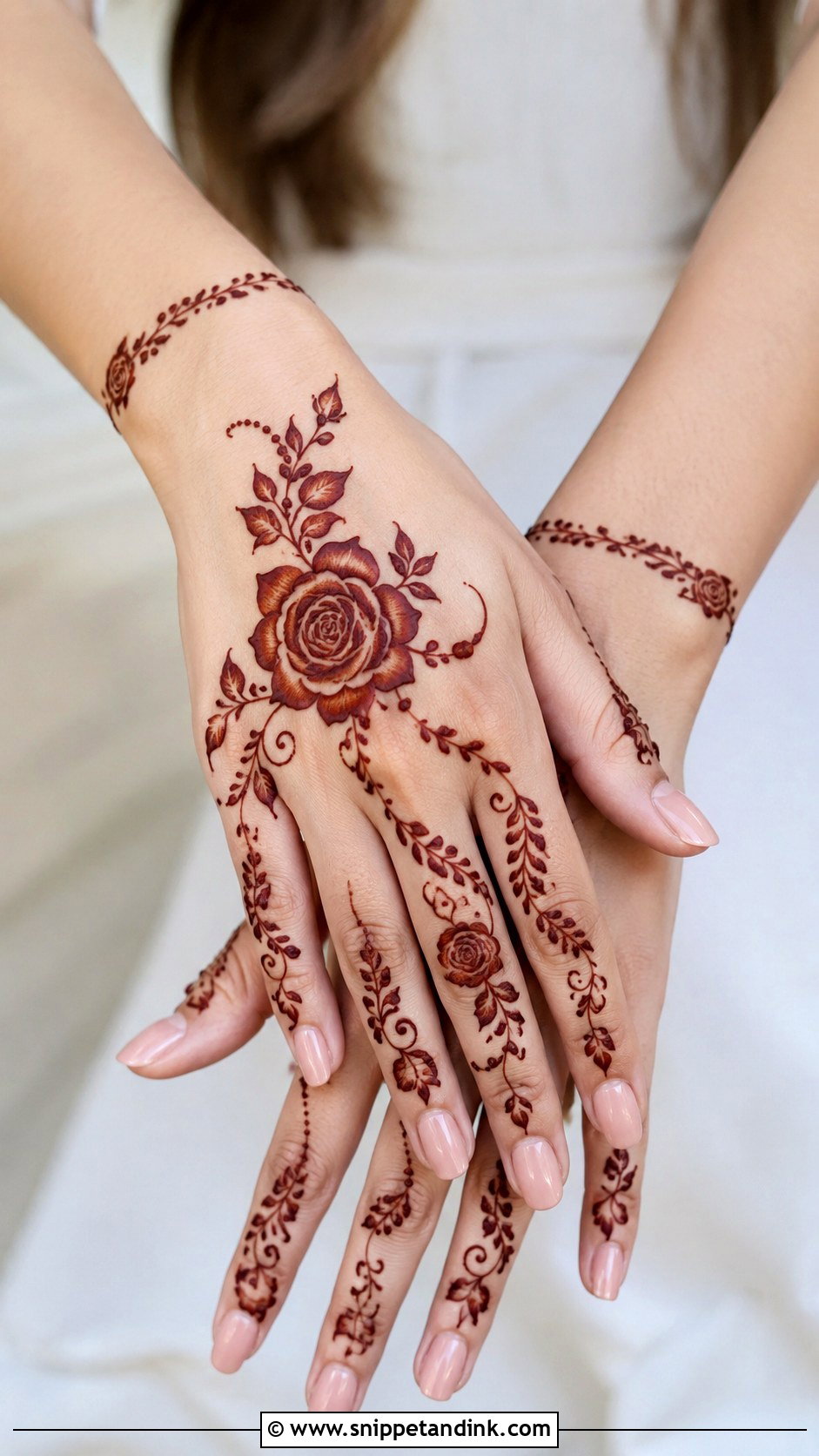
A rose is one of the few motifs people recognise instantly in a photo, even from across a room. I draw one large rose on the back of the hand or palm, then smaller buds and leafy vines heading toward the fingers. Clear petal outlines matter more than filling; I shade only the inner curl. Tiny dots and curved lines give it movement, and a thin bracelet closes the design. It sits well with floral outfits at engagement parties.
25. Khafif Mehndi Design With Leaves
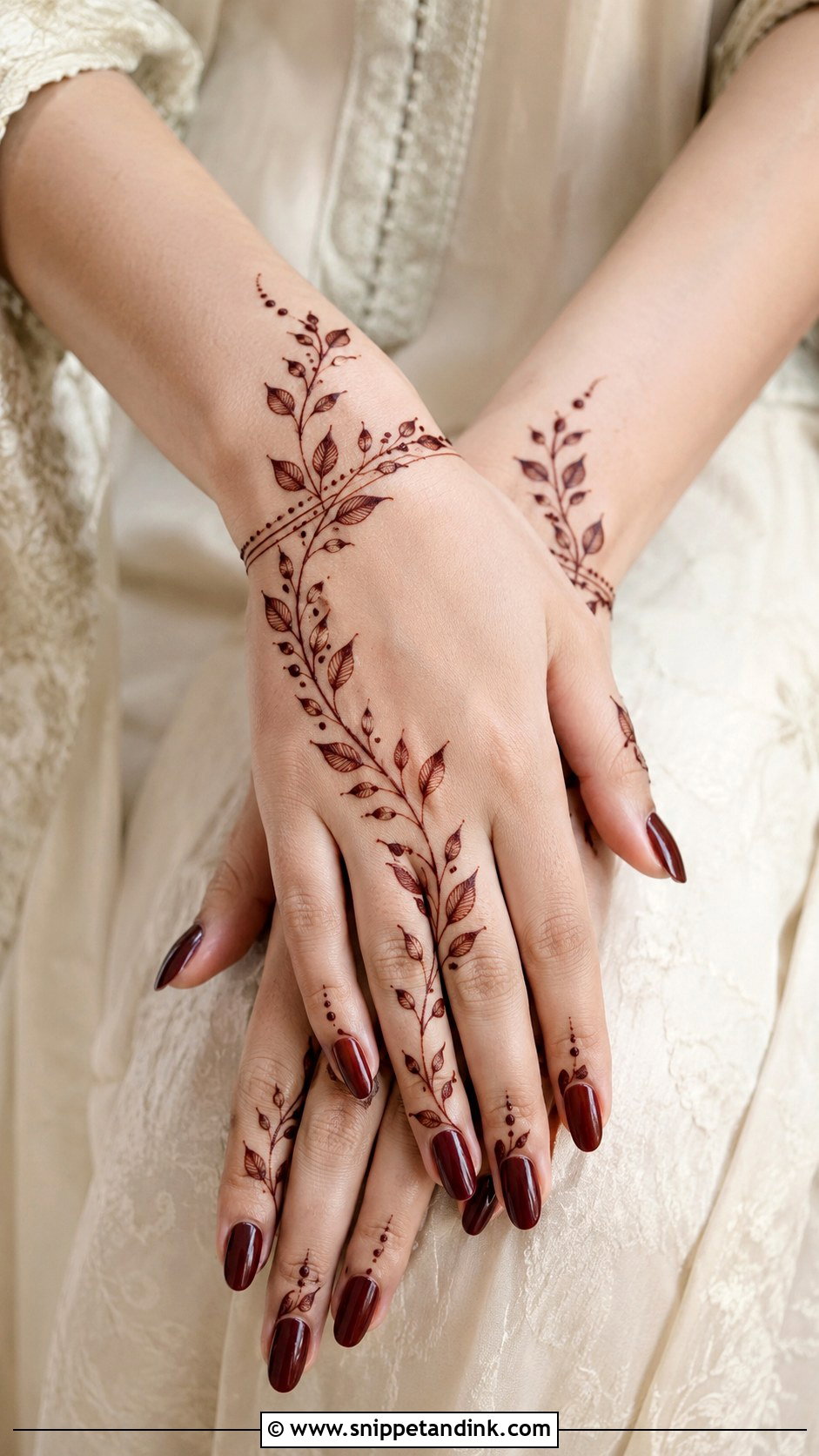
Leaves are where I start every student, because a leaf is two curves and a centre line. A leafy khafif design can run as a single vine from wrist to finger or curve around the edge of the palm. Mixing leaf sizes keeps it natural; identical leaves look stamped. Thin lines, no heavy filling and a few dots between leaves are enough. It suits everyday wear and casual gatherings, and it fades evenly because there are no dense patches.
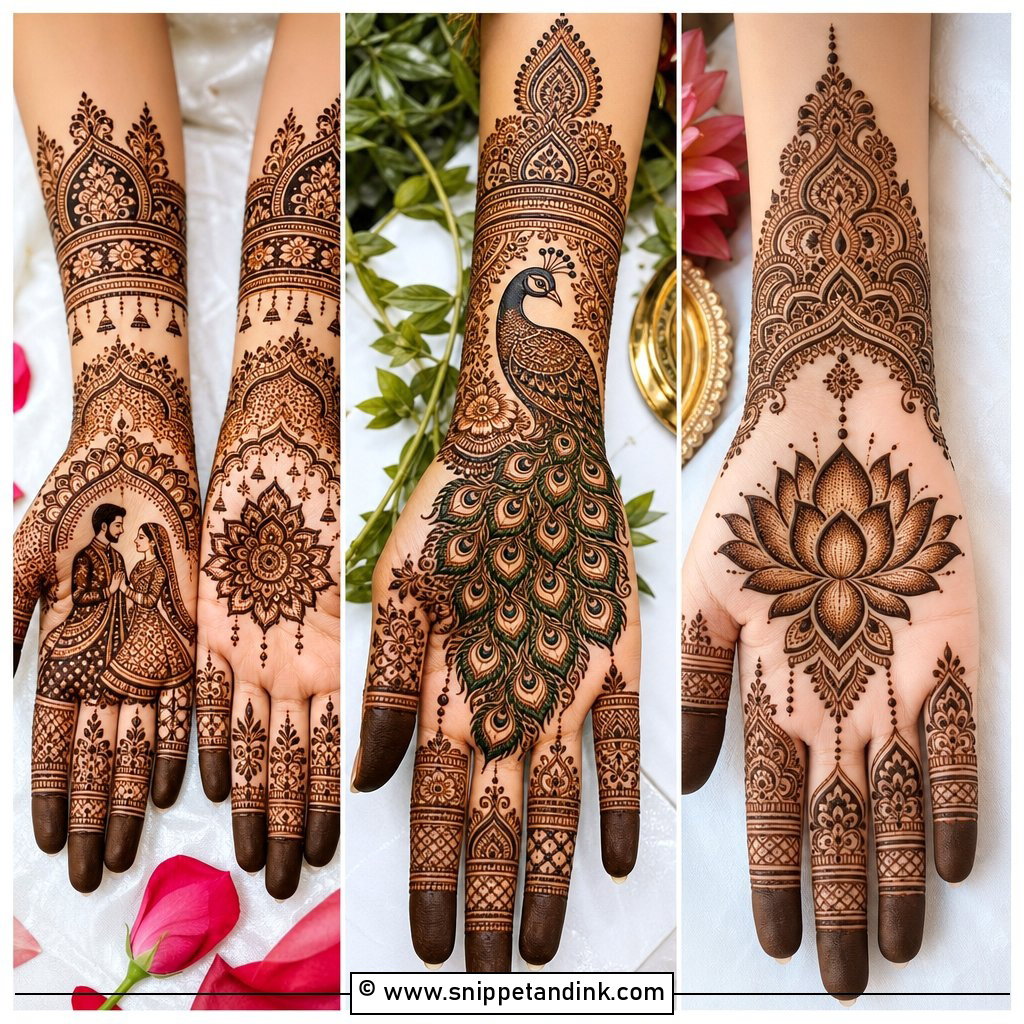
26. Khafif Mehndi Design With Peacock
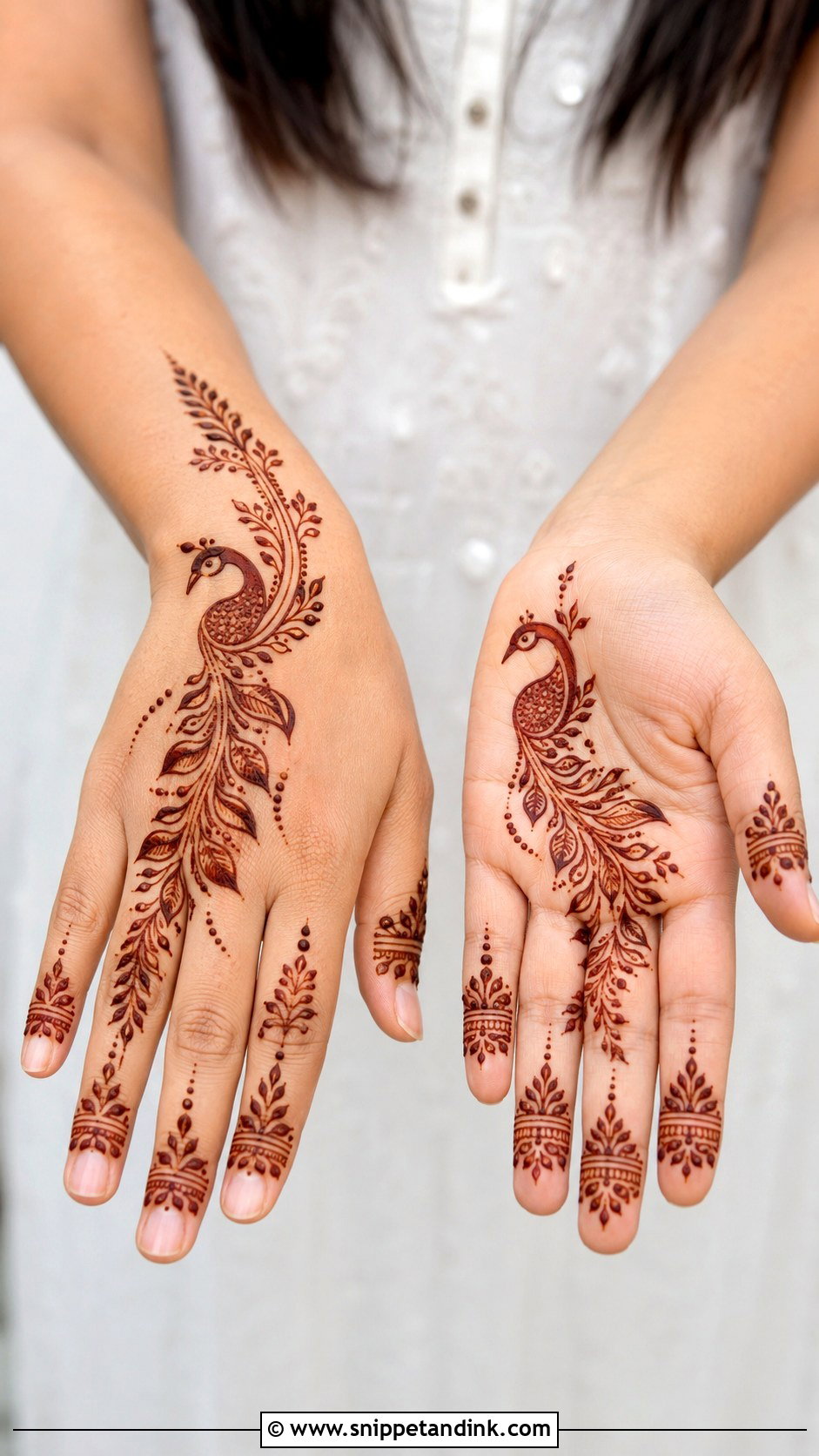
In a light design, the peacock shrinks. I draw a small bird on the palm or back hand and let the feather trail carry the detail with dots, leaves and tiny florals, leaving open space inside the feathers. A clear outline for the body and neck is essential; if the head gets fussy, it blurs into a blob. Fingers can take simple bands or small feather strokes. It brings a classic Indian character to weddings and cultural evenings without the heaviness.
27. Khafif Mehndi Design With Ring Pattern
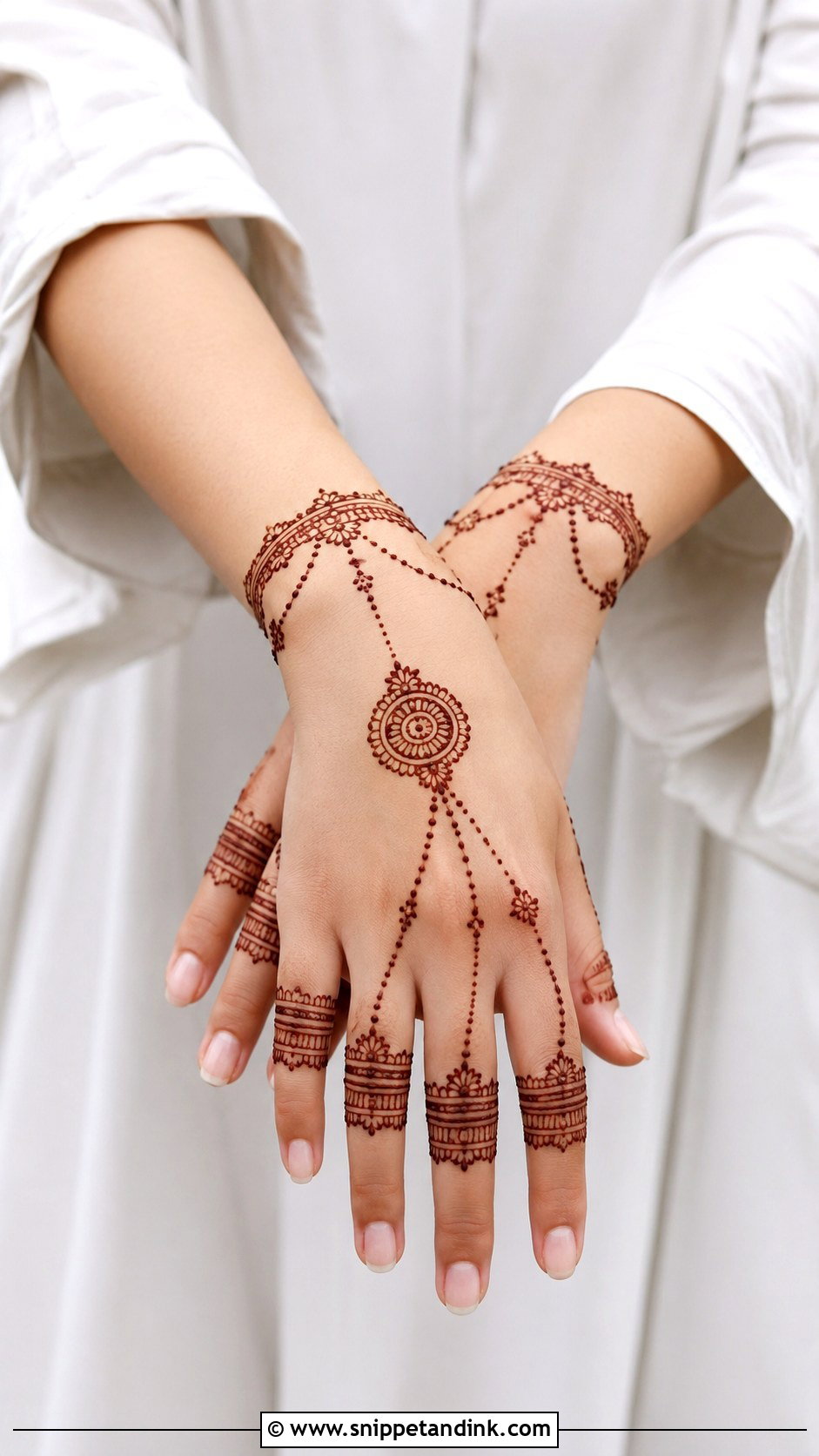
Ring patterns draw jewellery directly onto the hand: circles around one or two fingers, linked by small chains or vines to a wrist bracelet. I keep the back of the hand mostly empty so the jewellery effect is obvious, sometimes with a tiny flower at the centre. Wear it with real rings and a neat manicure. Fresh nail polish and henna do not mix well, though, so paint your nails before your appointment or after the paste is off.
28. Khafif Mehndi Design With Minimal Lines
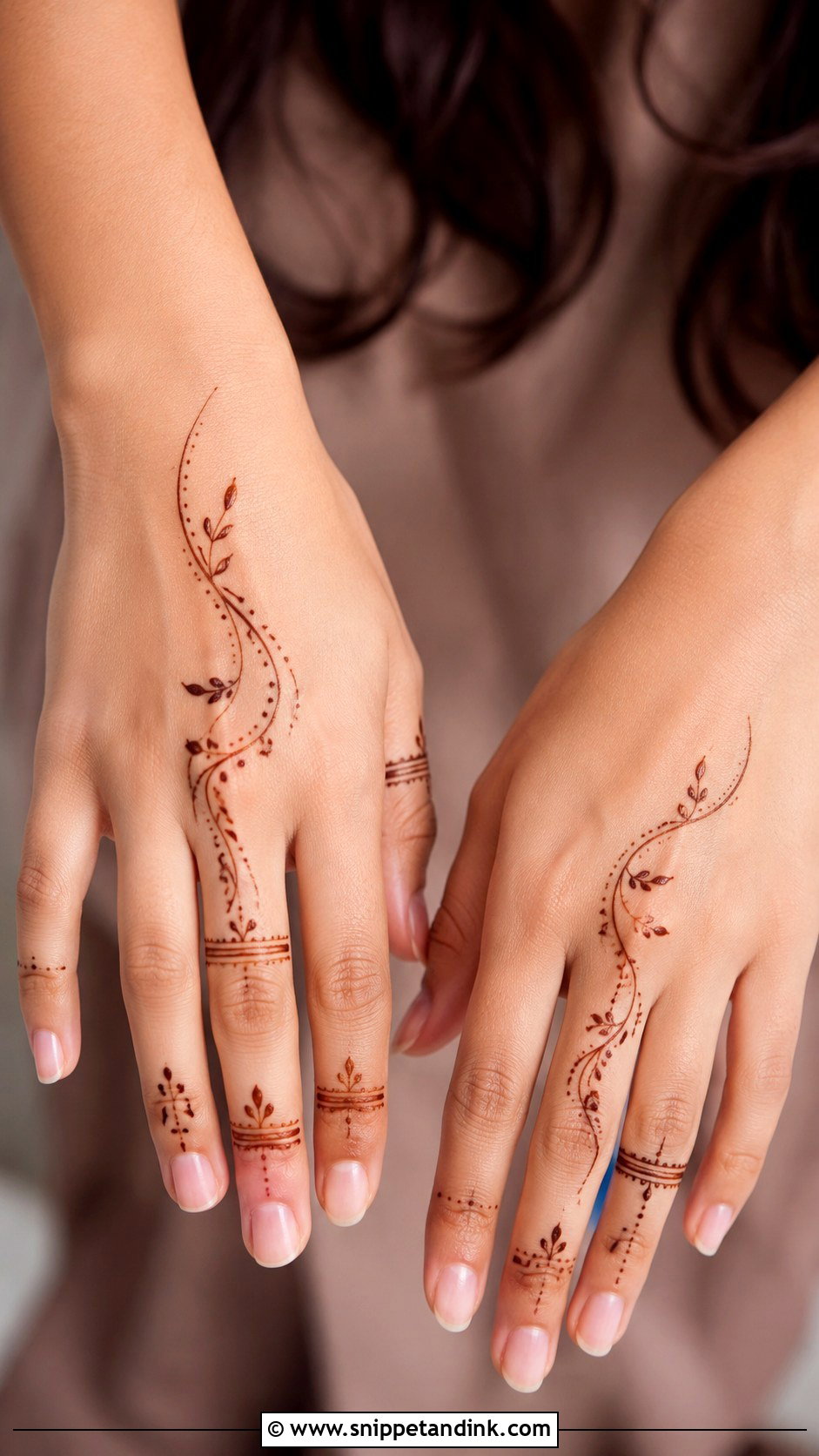
Minimal line work is the most exposing style I draw. A single flowing line from wrist to ring finger, with small dots, tiny leaves and simple bands, can be the whole design, but only if that line is smooth and confident. I hold the cone at a steady height above the skin and move from the elbow rather than the wrist for long strokes. It suits office events and anyone who finds traditional henna too busy.
29. Khafif Mehndi Design With Shaded Flowers
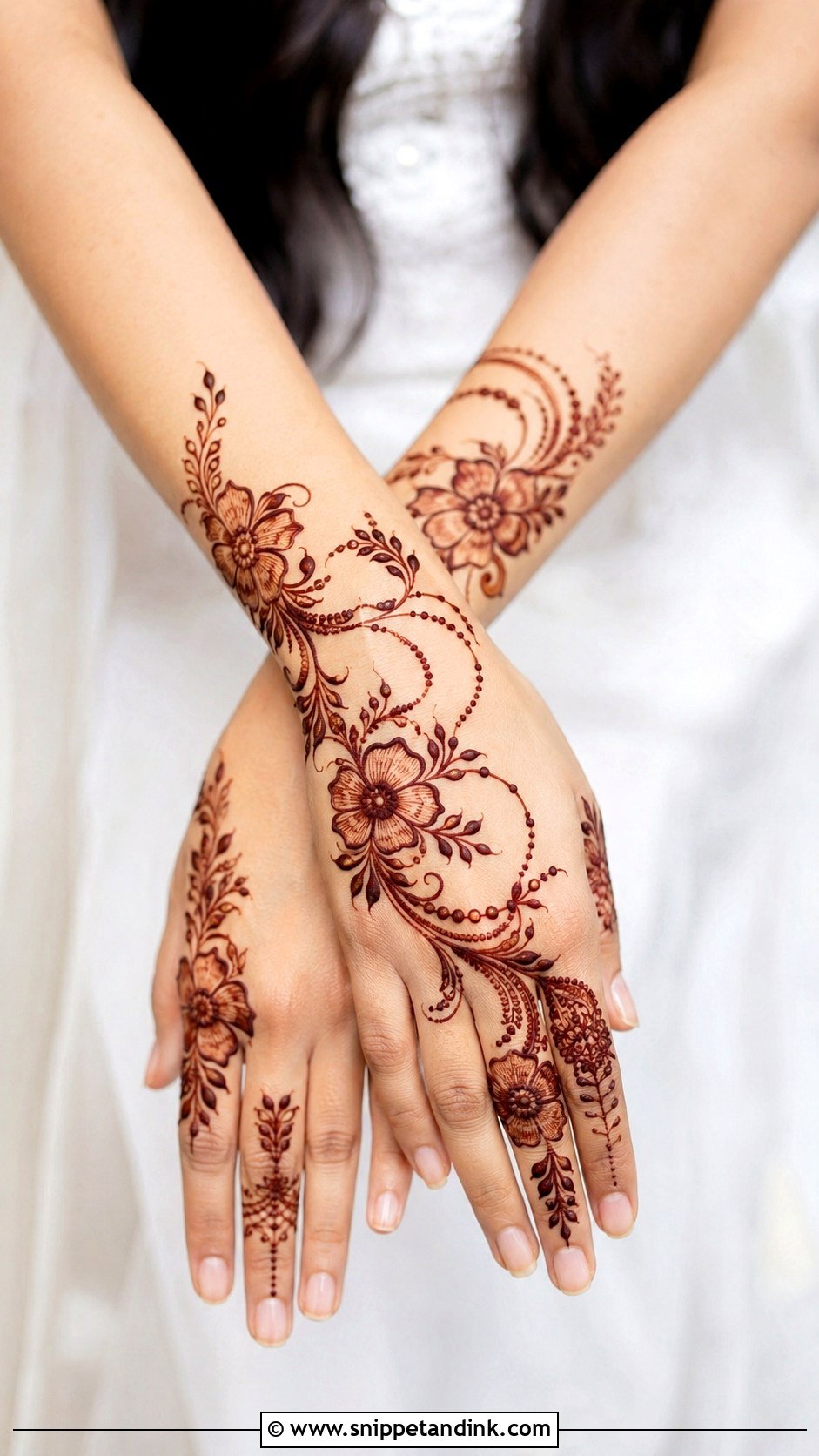
Shading gives depth without adding motifs. I outline one or two medium flowers, then fill just part of each petal with a thin layer of paste, which stains lighter than the solid lines and creates a two-tone effect. Thin leaves, dots and open vines surround them, and the rest of the hand stays simple. Shaded flowers look best on the back of the hand and forearm, where they can flow along the skin. Thin shading fades first, so expect the depth to soften after the first few days.
30. Khafif Mehndi Design With Side Trail
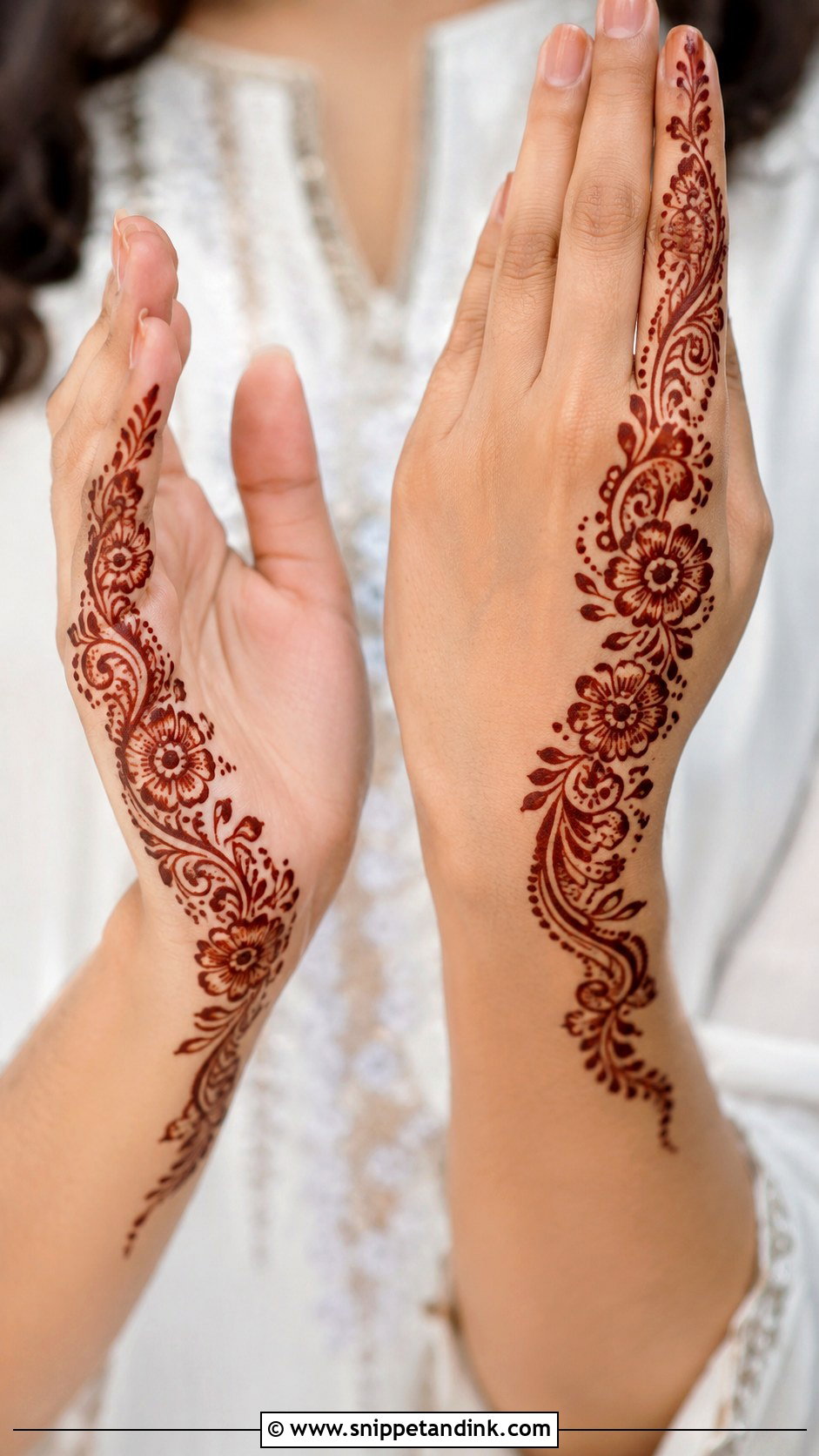
A side trail decorates one edge of the hand, from the wrist along the outer side of the palm or back hand, with flowers, leaves, paisleys and dots in a slim line. The centre stays clear. Because only one side carries detail, it is fast to apply, and the long vertical line lengthens the hand. I usually run it on the outer edge of the hand rather than the thumb side; it shows better when your hands are resting in your lap.
31. Khafif Mehndi Design With Round Tikki
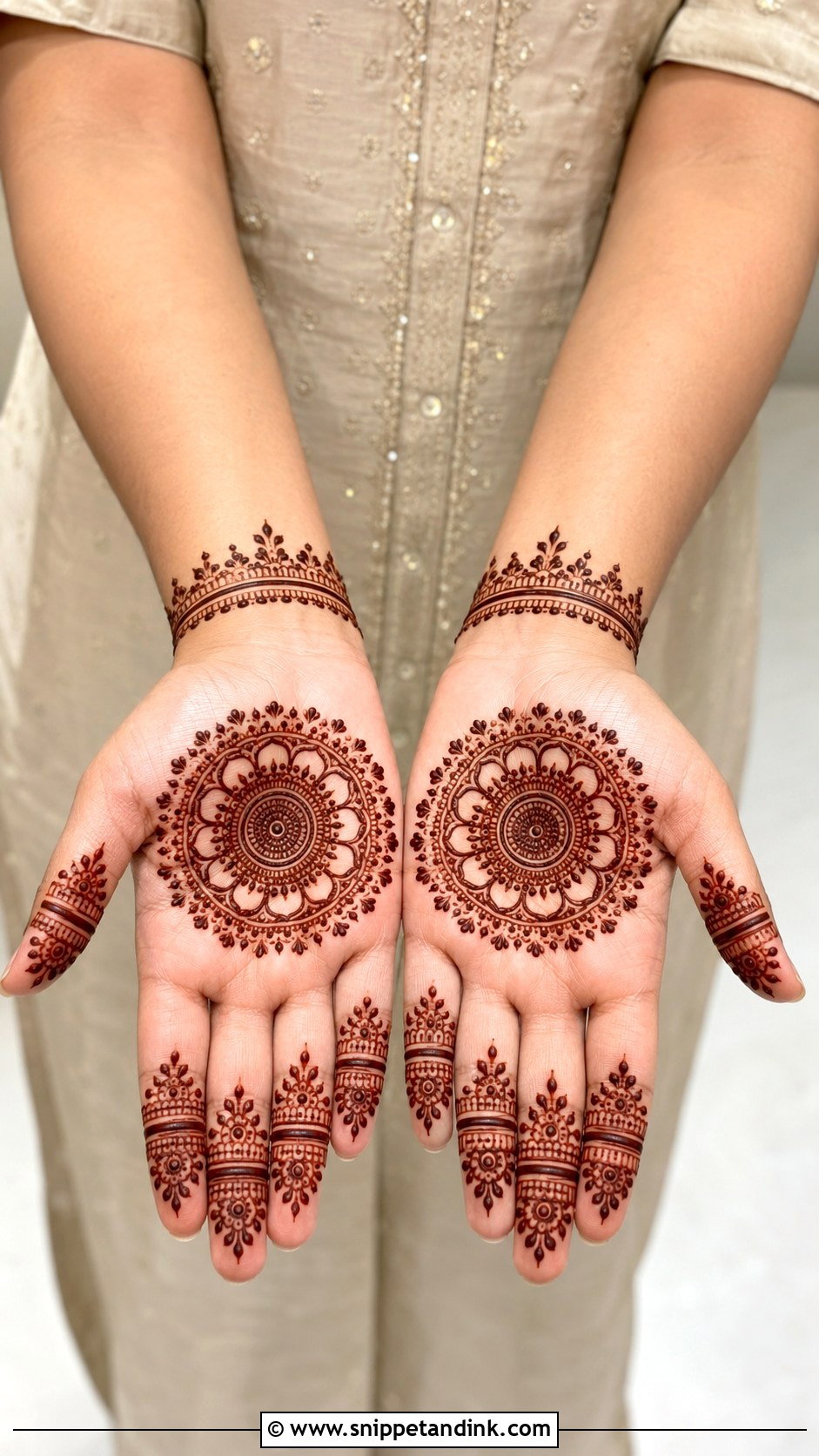
The round tikki is a classic Indian motif: a filled circle in the centre of the palm. In a khafif version, I keep the tikki small and ring it with fine petals, dots and thin circular borders, then add small bands on the fingers and a light wrist detail. The open space around it is what updates the look. A solid tikki stains very dark on the palm, so I keep it no bigger than a coin to stop it looking like a blot.
32. Khafif Mehndi Design For Engagement
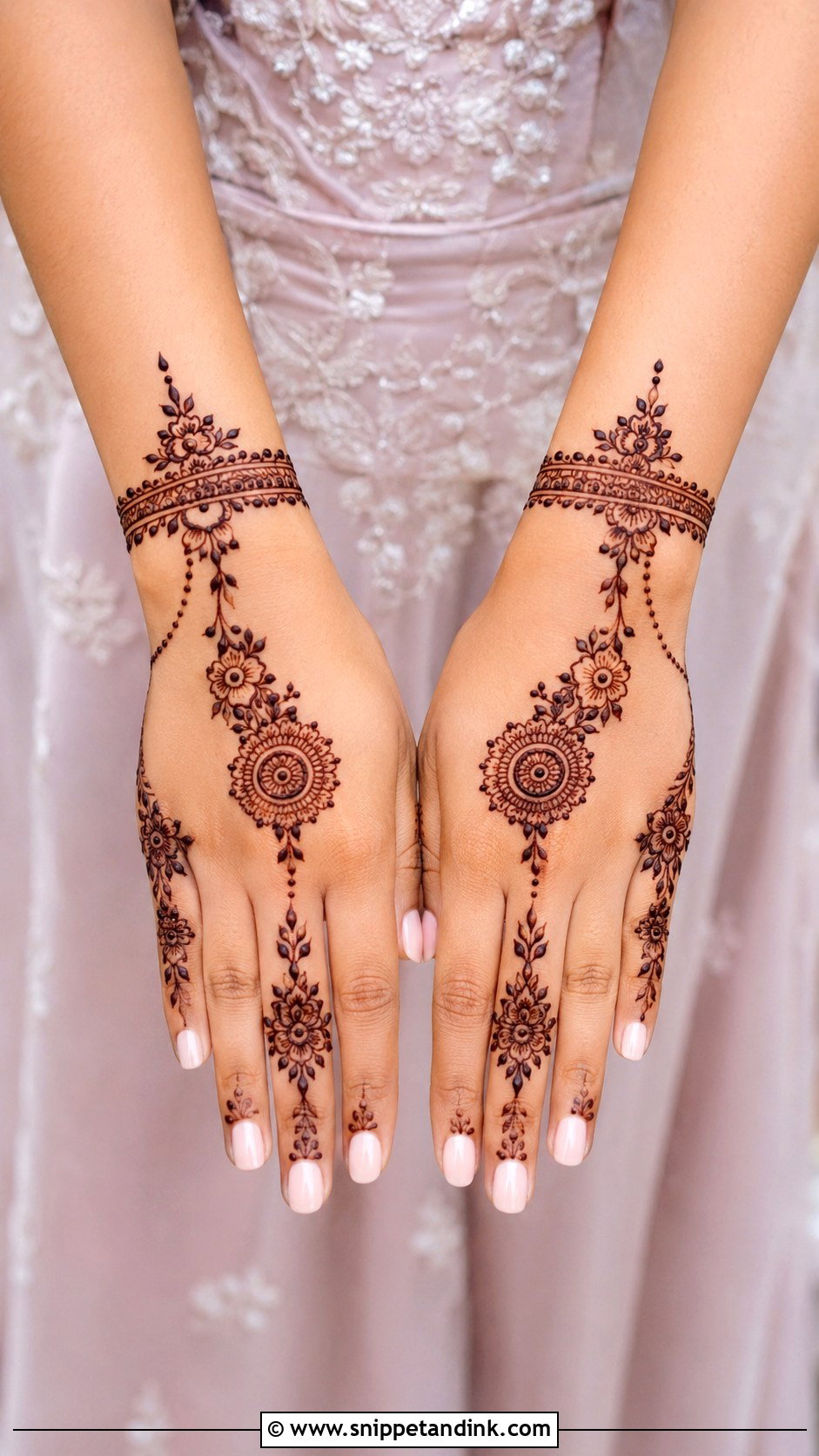
Engagement photos zoom in on the left hand and the ring, so I design around that finger. A back-hand jewellery layout with floral vines, ring details and a soft wrist bracelet, with the ring finger slightly more decorated than the rest, gives the photographer a clear focal point. Leave the base of the ring finger bare where the ring sits, so the band is not lost against the henna. Small flowers or a fine mandala near the centre balance the hand.
33. Khafif Mehndi Design For Party
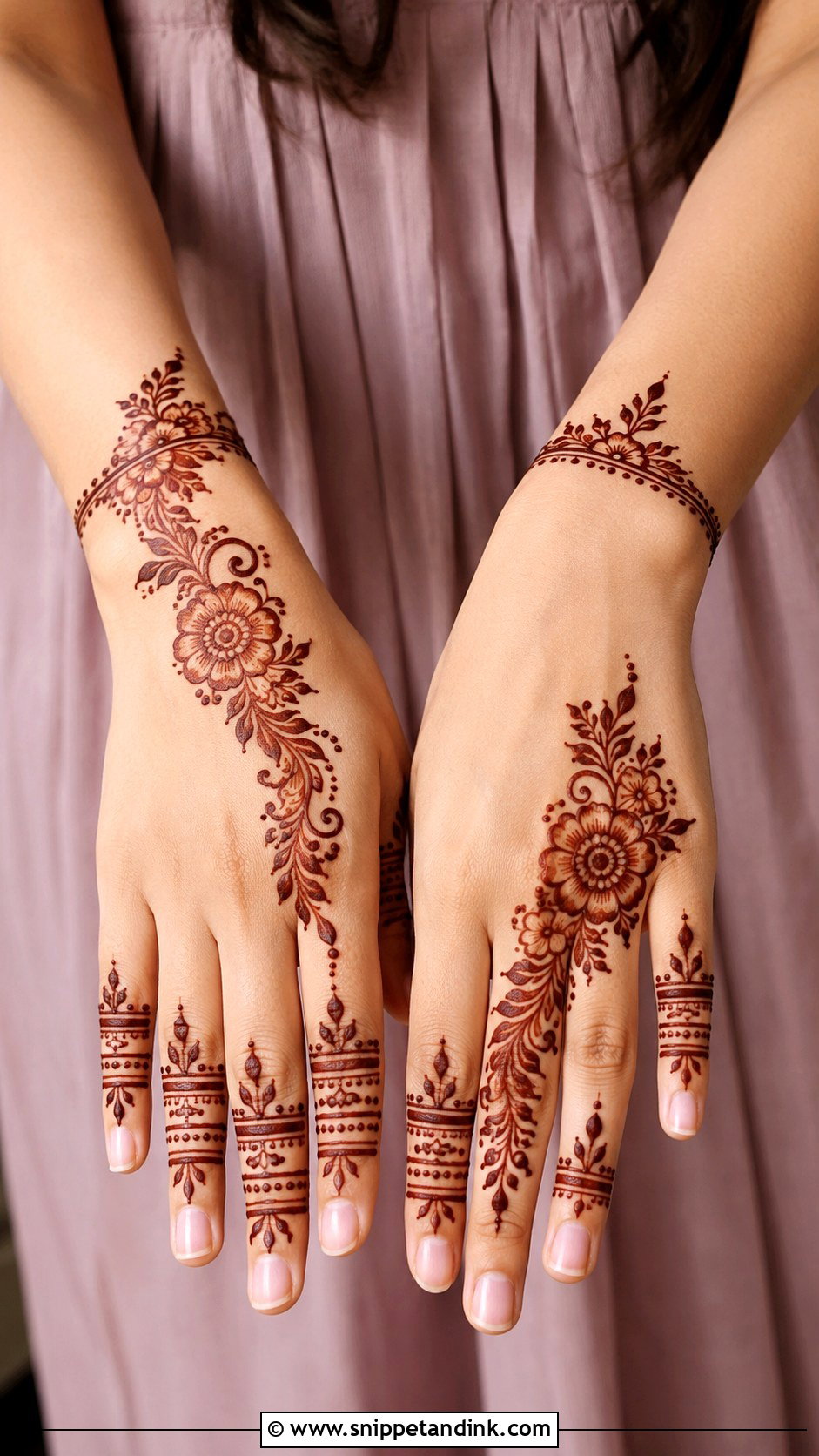
For a party, I lean into contrast: a diagonal floral trail on the back of the hand, clean finger bands and a thin wrist accent, with a little shading inside the flowers if you want more drama. The surrounding skin stays open. This is the design for an evening when you have an hour, not an afternoon. Bright party lighting flattens fine detail, so slightly bolder outlines than usual help the design hold up in photos.
34. Khafif Mehndi Design For Beginners
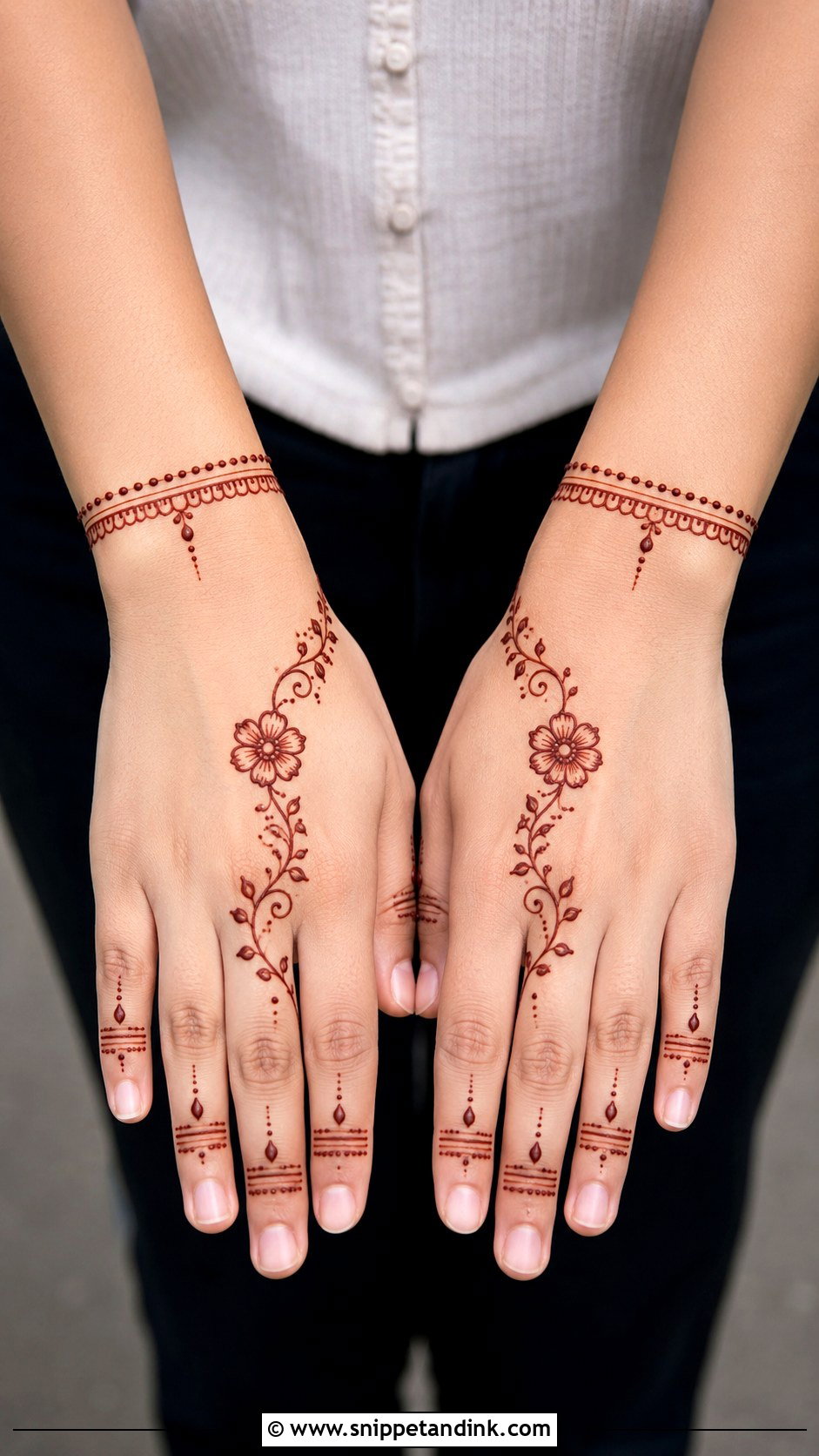
If you are learning, this layout is forgiving. A small flower or mandala on the back of the hand, one curved vine toward a finger, a simple wrist band, dots to bridge gaps and basic lines or tiny leaves on the fingers. It does not need symmetry, which removes the hardest part of henna for a beginner. Practise on paper or a plastic sheet first to learn how much pressure gives an even line, then move to skin.
35. Latest Khafif Mehndi Design
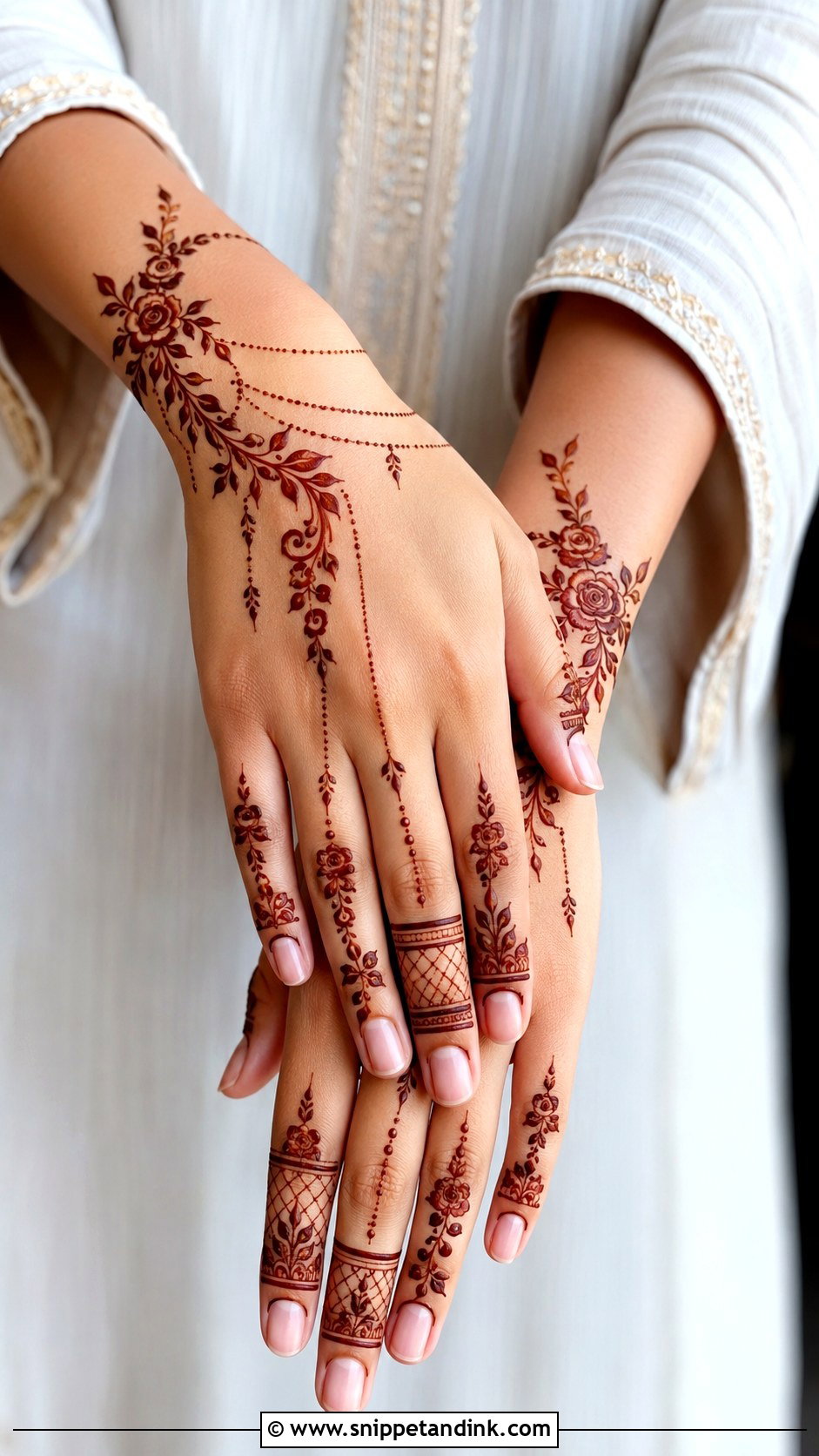
The latest khafif mehndi design trends lean toward negative space, fine lines, jewellery patterns and soft floral trails. A current layout might pair a slim wrist bracelet with a chain-like vine across the back of the hand and detailed rings on the fingers, dotted with small roses and leafy curves. These designs sit comfortably with both traditional and modern outfits. I adapt them to the hand in front of me rather than copying a screenshot line for line, because a layout drawn for long, narrow fingers rarely suits a broad palm.
Will Thin Lines Still Show by Day Five?
They will, if you look after them. Natural henna comes off the skin bright orange and deepens to reddish brown over the next day or two. From there, it slowly fades as the outer layer of skin renews, usually over one to two weeks. Light designs fade evenly, which is one of their quiet advantages: there are no dense patches turning patchy while the fine lines vanish.
Thin outlines and shaded petals are always the first to go. To keep them sharp for longer:
- Keep the paste on for several hours, ideally overnight, and scrape it off rather than washing it.
- Avoid water on the design for the first several hours after removal, and pat a little balm or oil on before you wash your hands.
- Skip scrubs, exfoliating soaps and long swims in chlorinated pools for the first week.
- Wear gloves for washing up and cleaning, since detergent and hot water fade henna quickly.
- Go easy on alcohol hand sanitiser, which dries the skin and speeds up fading.
If you need the design to look its best on a particular day, such as a nikah or Eid, have it applied one to two days before. The stain will be at its darkest on the day itself.
Less Paste, More Planning
Light henna depends on spacing, line quality and placement more than on how much paste goes on. The ideas above cover nearly every occasion, from front-hand mandalas and floral trails to bracelets, ring patterns and airy bridal work, and each can be scaled to your hand shape and the time you have. Decide where people will see your hands most, on the palm during greetings or on the back of the hand in photos, and let the design live there. Use natural paste, leave it on as long as you can, and the open skin will make every line count.
You'll Like These Ideas:





Leave a Reply