
The palm is the part of the hand henna loves most. Its skin is thicker and warmer than the back of the hand, so the same paste stains darker there, and fine detail that would fade elsewhere stays sharp. That makes a covered palm the place for the work you most want to see: a mandala, a story, a hidden name. Below are thirty palm layouts, from packed bridal palms to open Arabic trails, Moroccan geometry and quick designs for kids and beginners, with the placement notes I’d give you at the table.
Palm Shape Decides More Than the Pattern Does
Two brides can bring me the same reference photo and leave with different designs, because palms aren’t the same shape. Before I start, I have you open your hand flat, then cup it, and I watch where the creases fall and how the fingers sit against the palm.
Wide palm, shorter fingers
I avoid a big round mandala dead centre, which makes a wide palm look wider. A diagonal trail or a vertical arrangement of motifs, carried up the fingers in long slim lines, lengthens the hand.
Narrow palm, long fingers
This hand can take a central circle and horizontal bands at the base of the fingers. Busy vertical work here can make long fingers look spindly, so I break the length with rings and cuffs.
Deep creases
Fine lines drawn straight across a deep crease tend to crack as you flex your hand while the paste dries, leaving a broken stain line. I let crease lines act as natural borders between sections instead of drawing through them.
1. Full Palm Mandala Mehndi Design
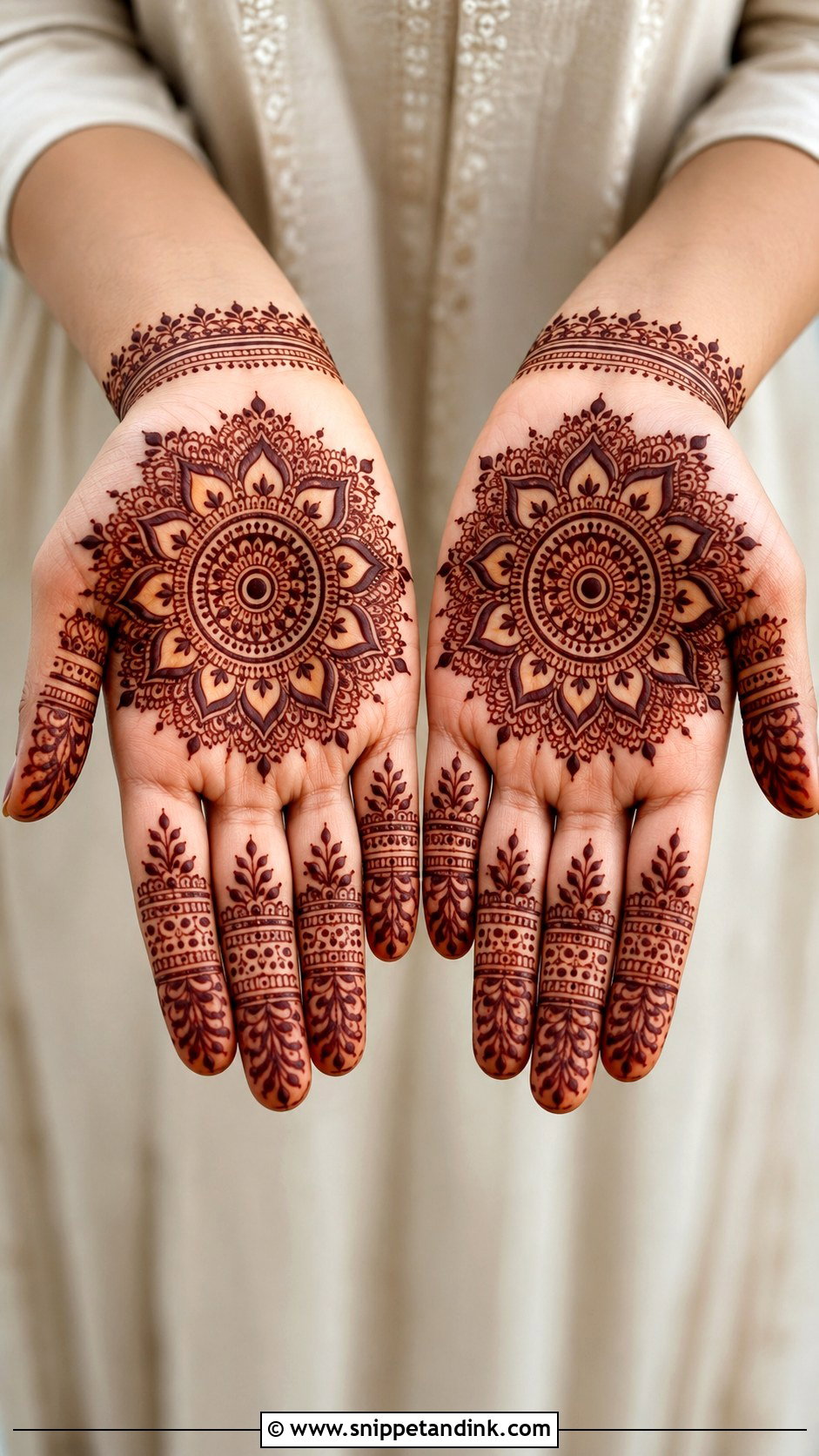
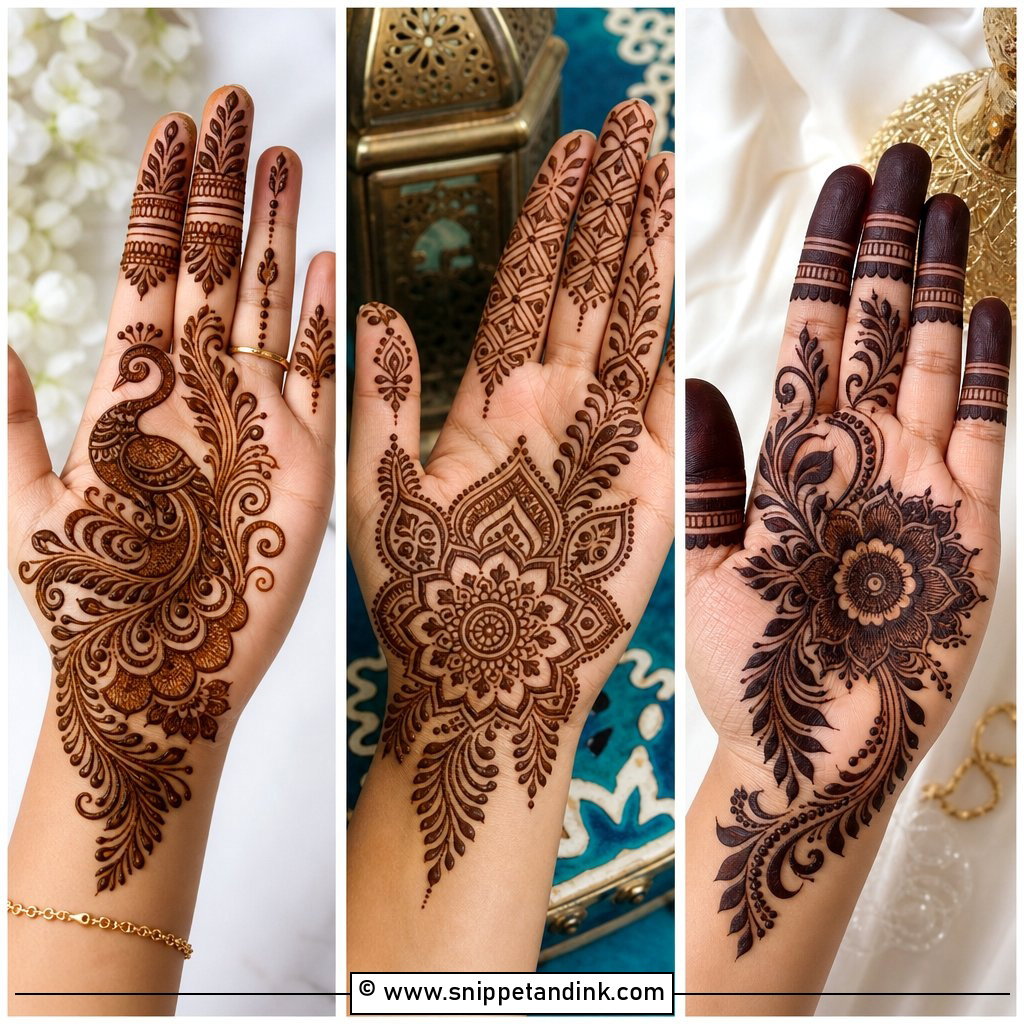
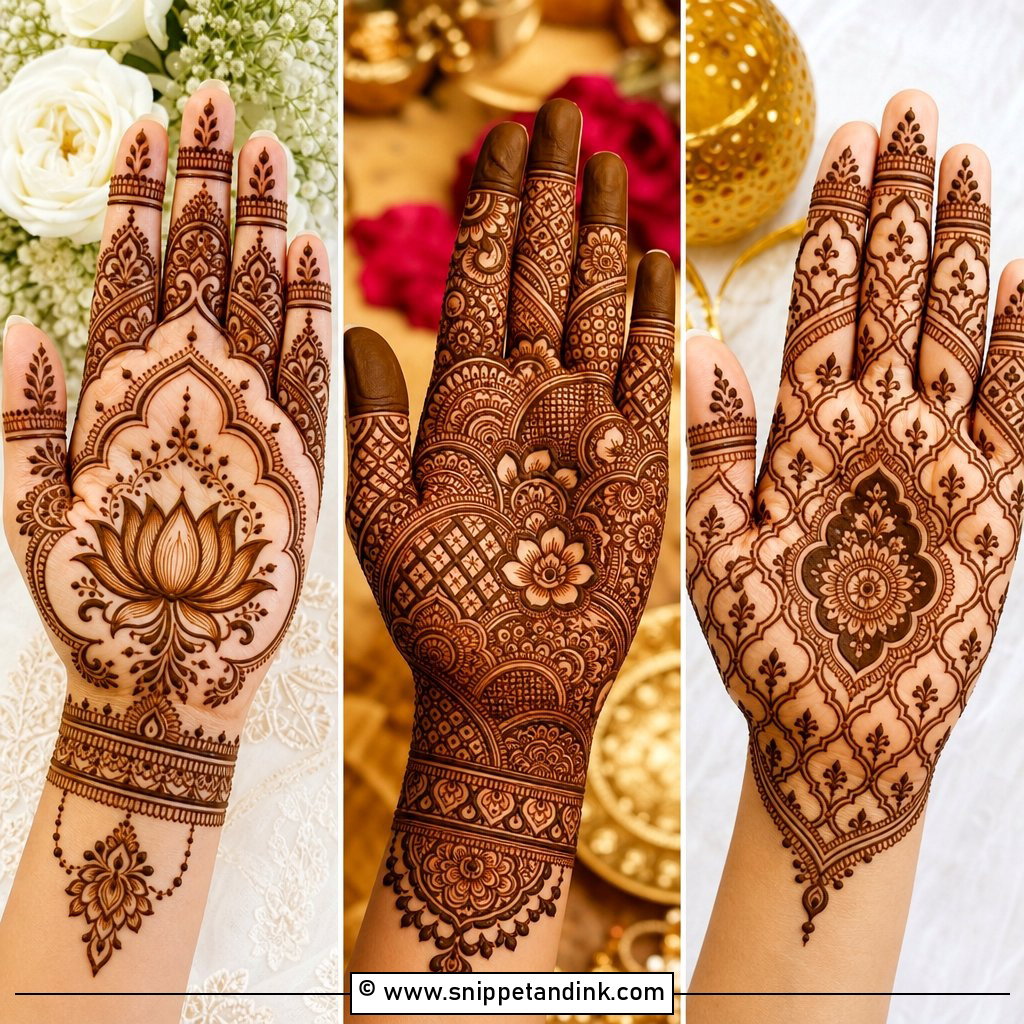
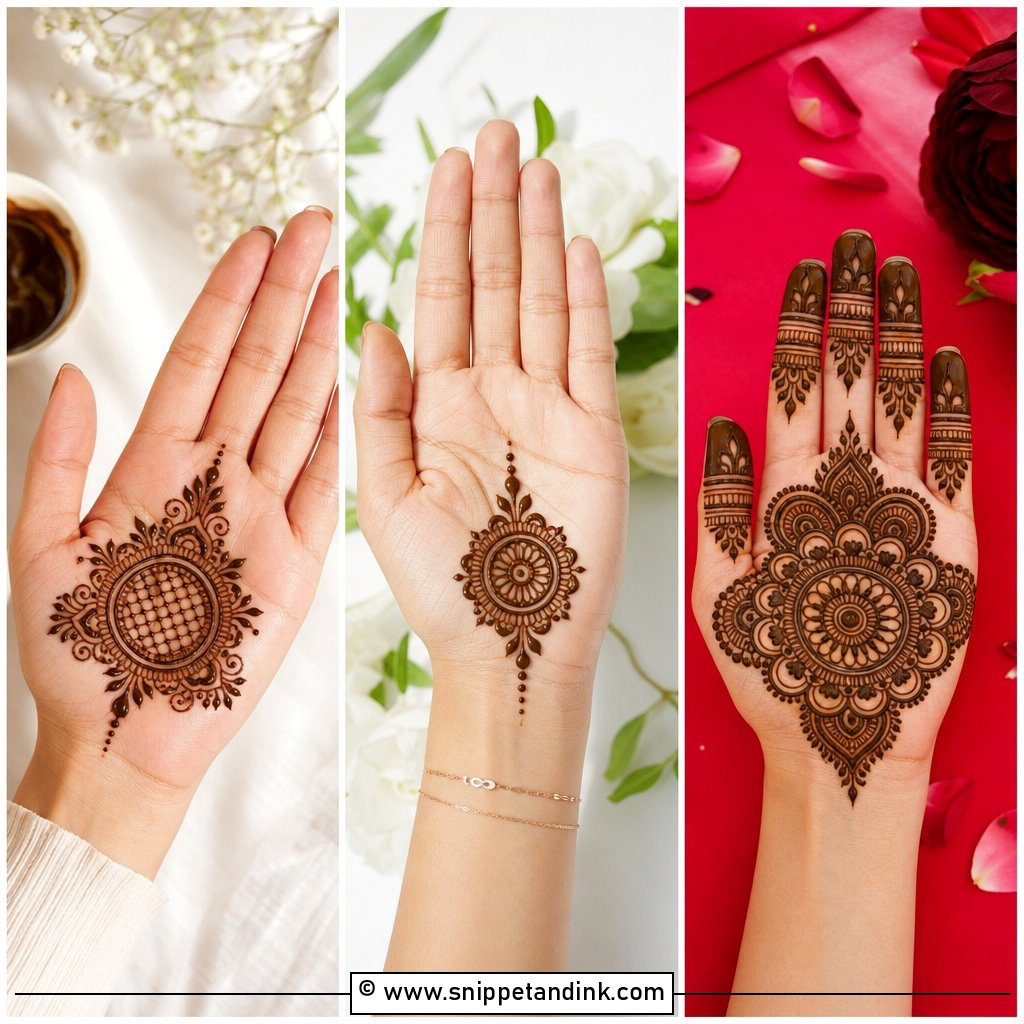
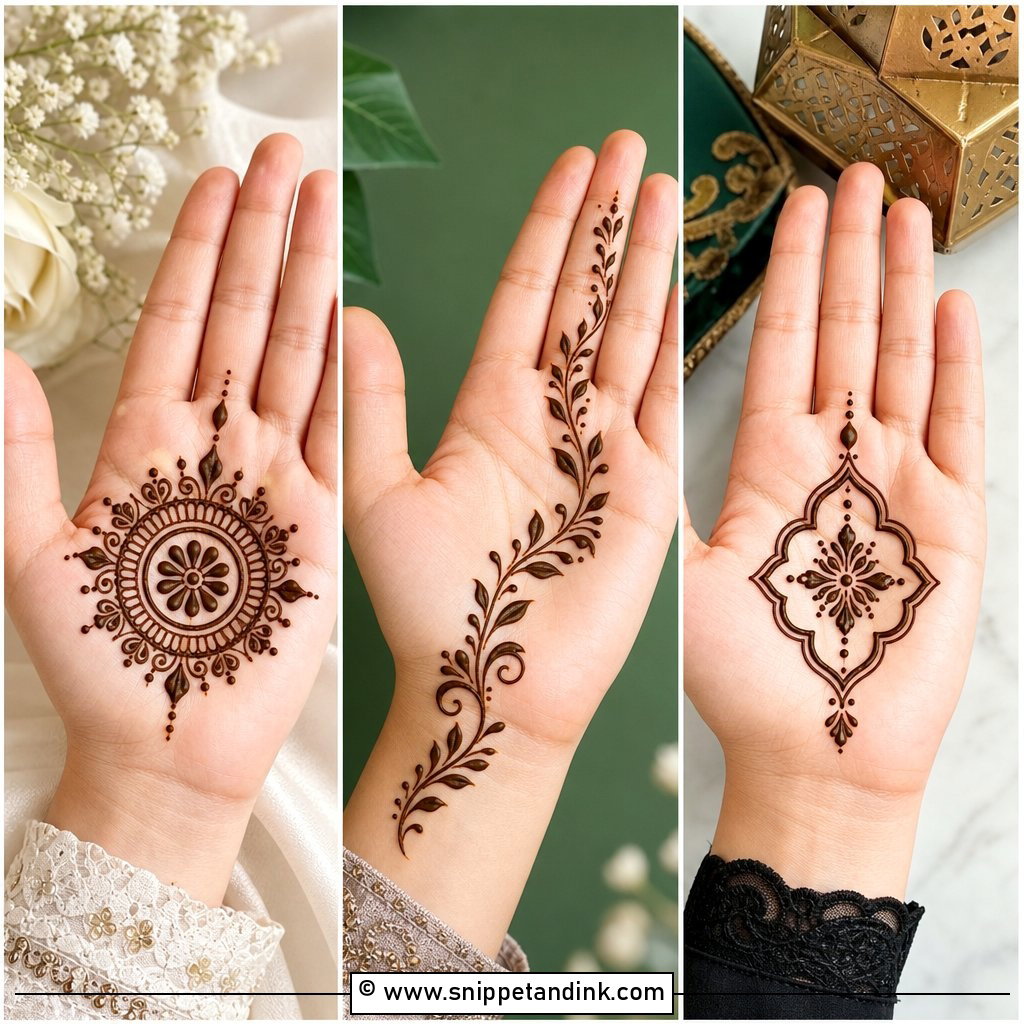
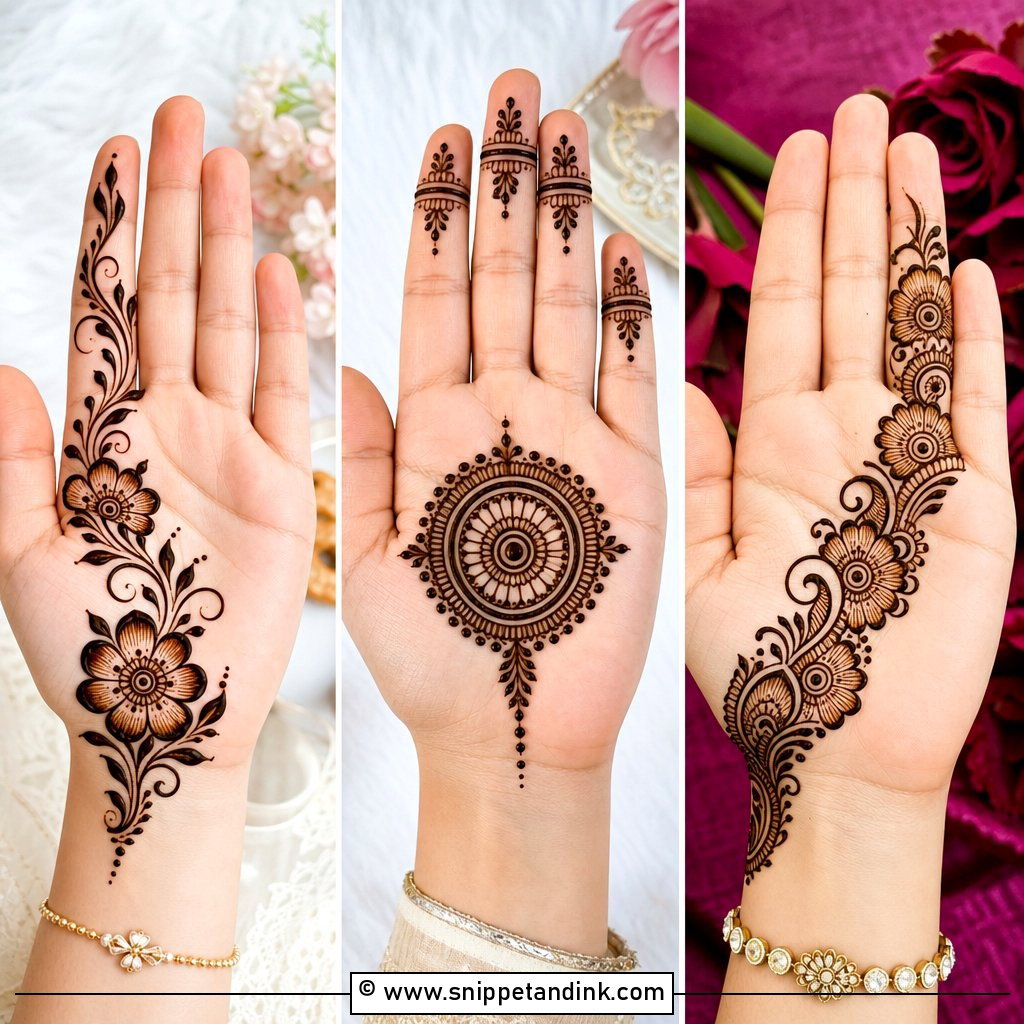
A palm cups naturally around its centre, so a circle sits there without any fight. I build the mandala outward in rings of petals, scallops and dots, and I stop each ring before it runs into the base of the fingers, where the skin folds. Leafy lines, mesh or shaded caps then fill the fingers. It’s the layout I teach beginners first because the structure is obvious, and for weddings I add paisleys around the outer palm and a couple of wrist bands.
2. Full Palm Bridal Mehndi Design
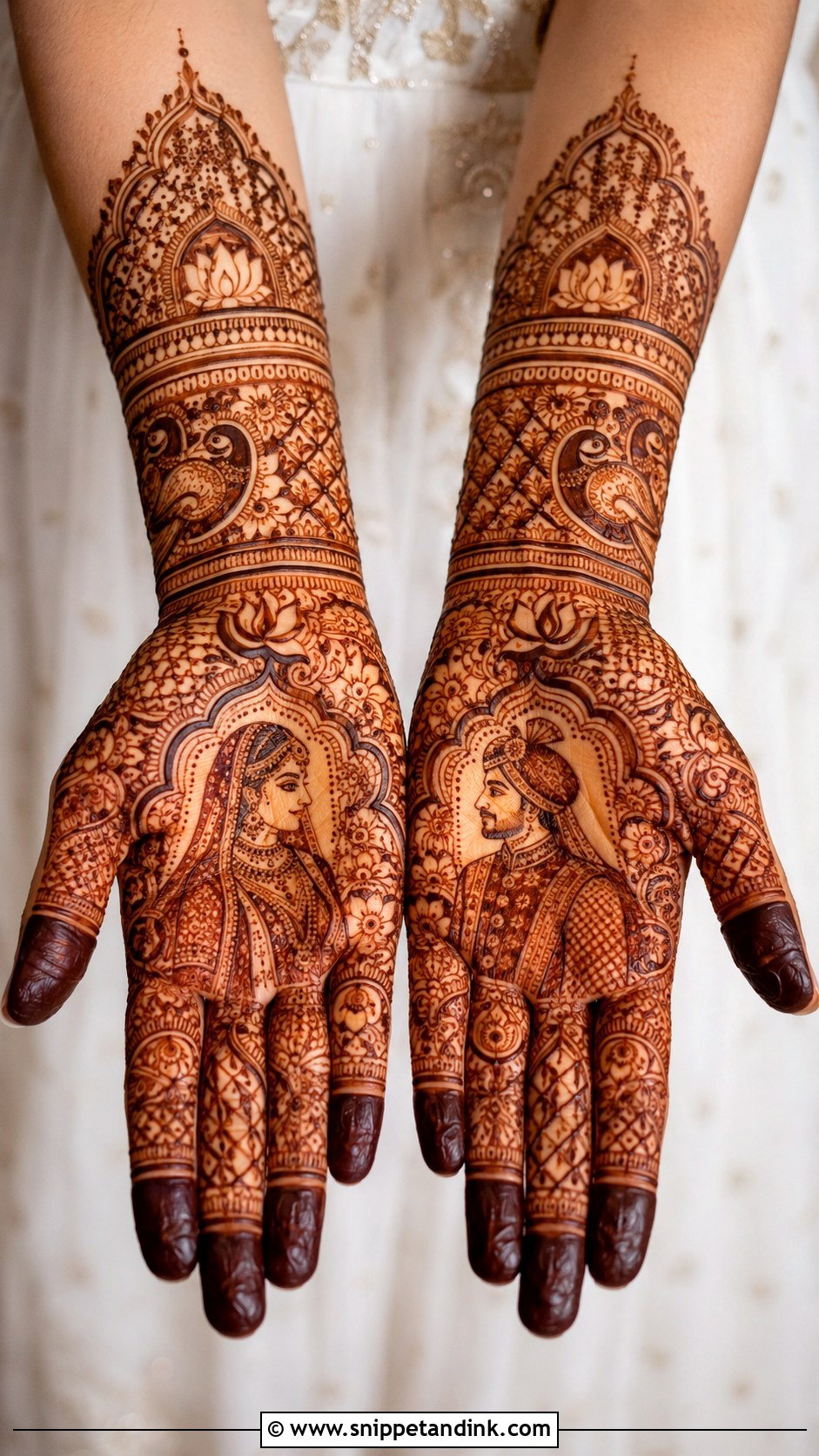
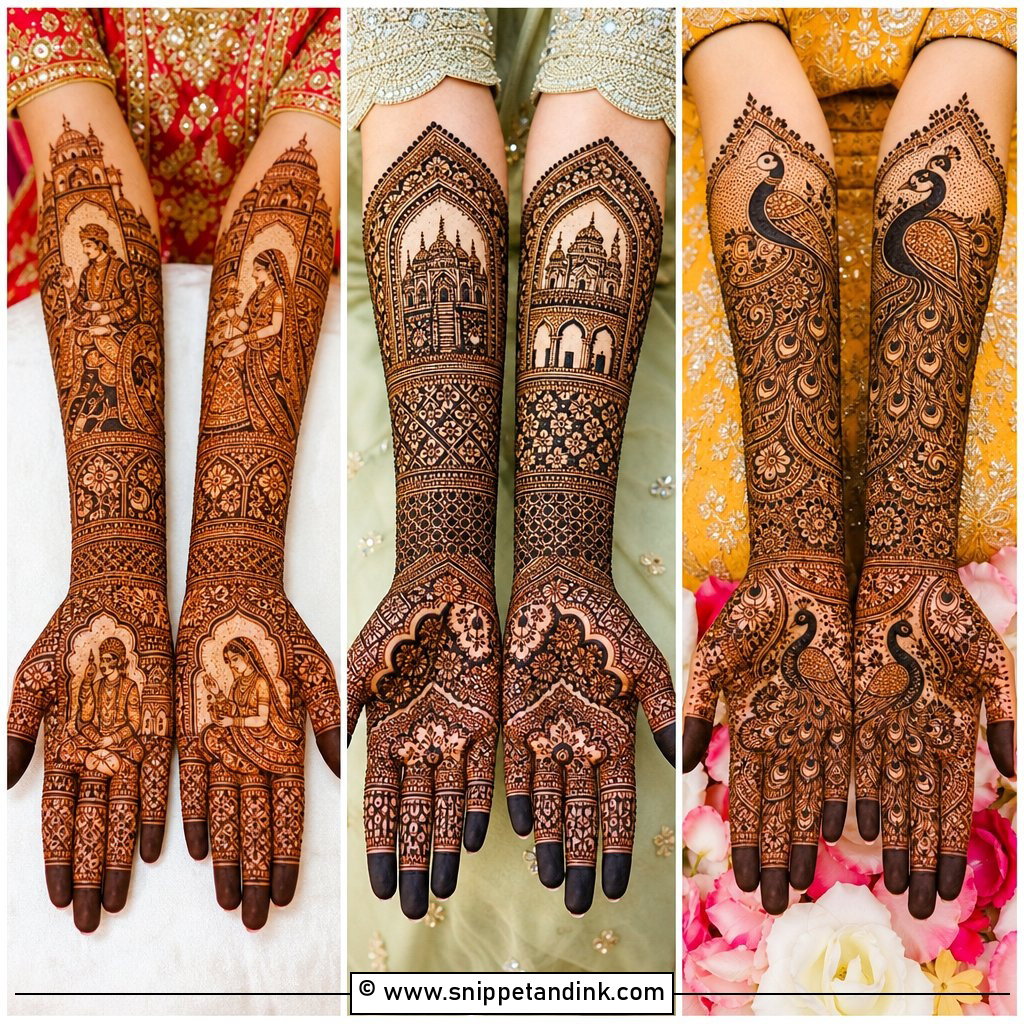
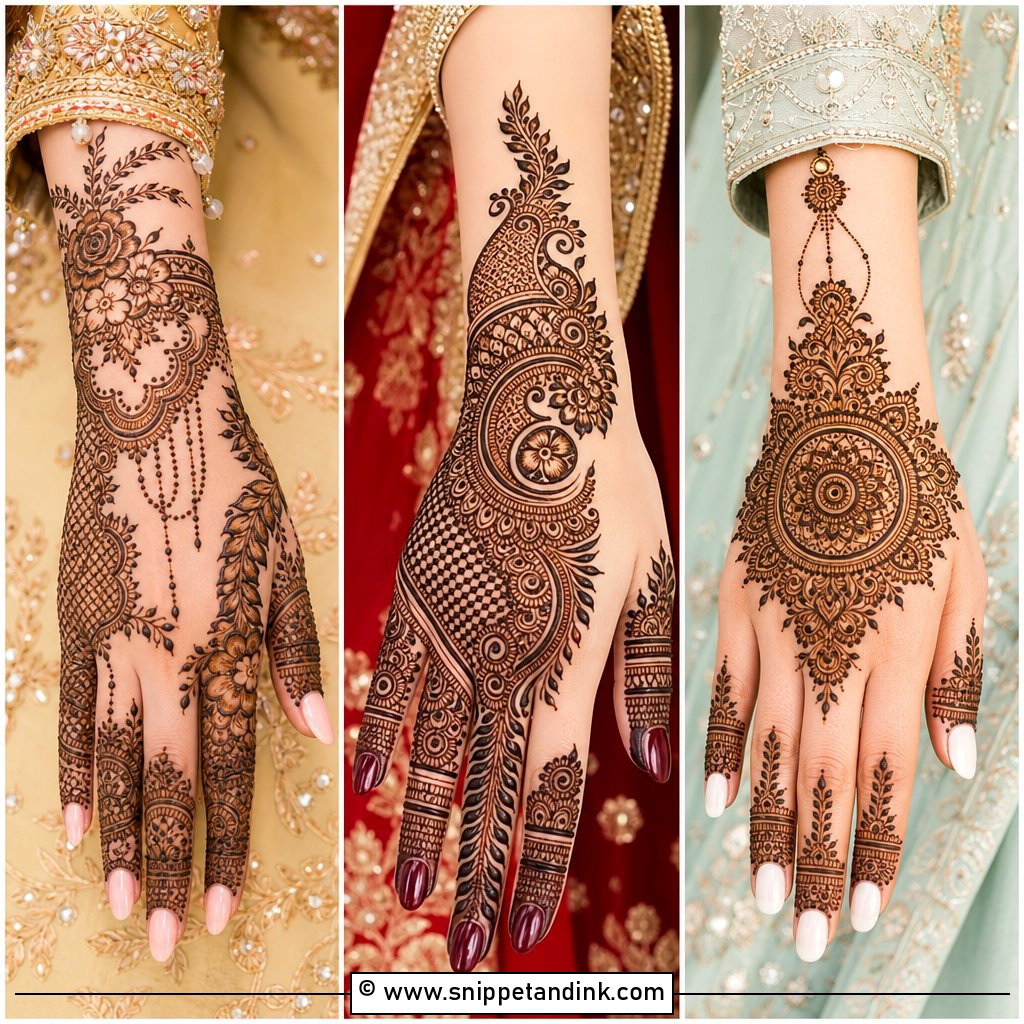
Bridal palms carry the story: dulha-dulhan portraits, wedding symbols, paisleys, lotus, jaali and hidden initials, all packed in layers. The fingers get dense lines and shaded tips, and the wrist continues into a cuff. The faces need the most room, so I place them first and fit everything else around them. Fine slivers of bare skin between sections keep the heavy work from going flat once the colour peaks.
3. Full Palm Arabic Mehndi Design
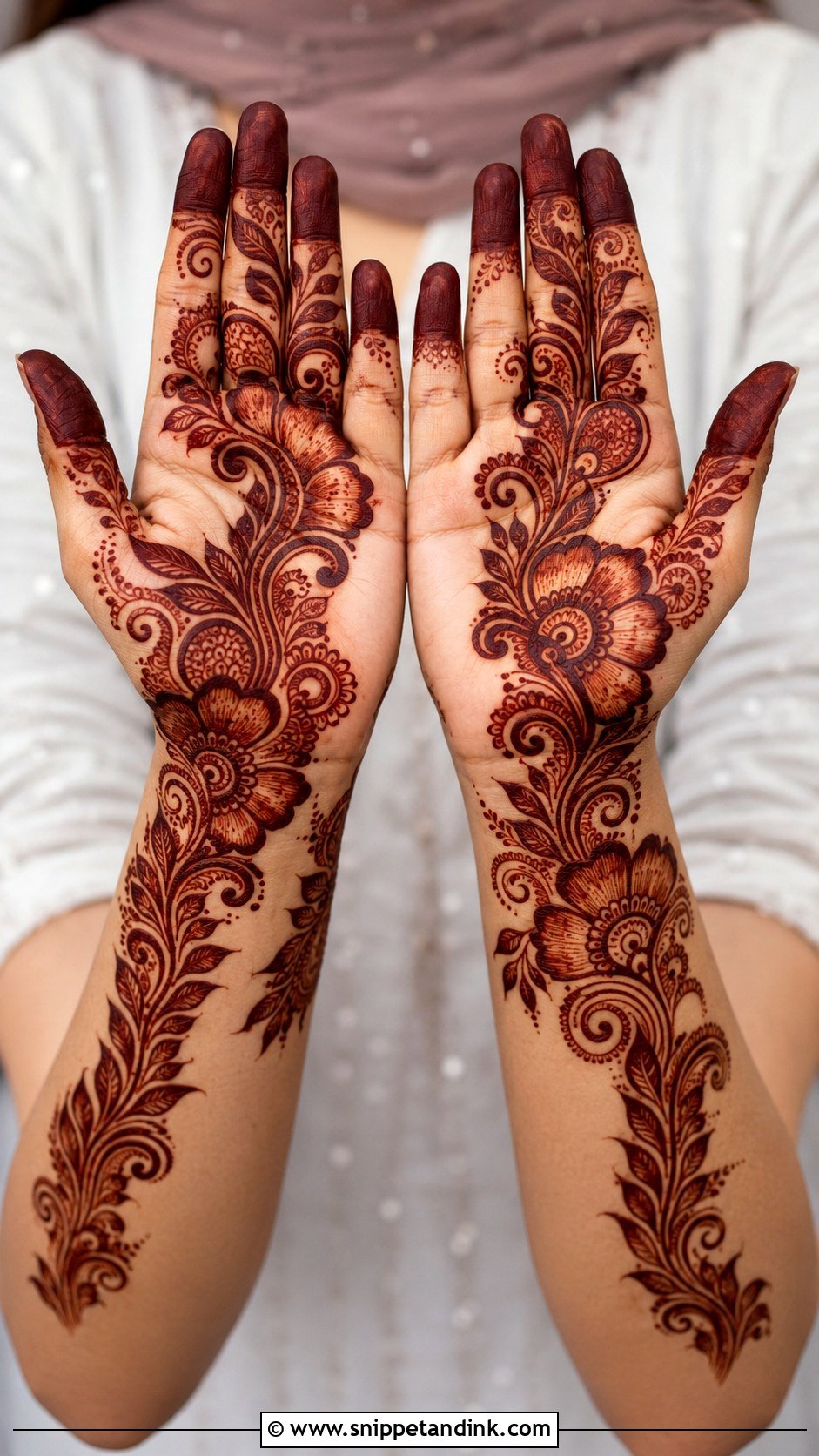
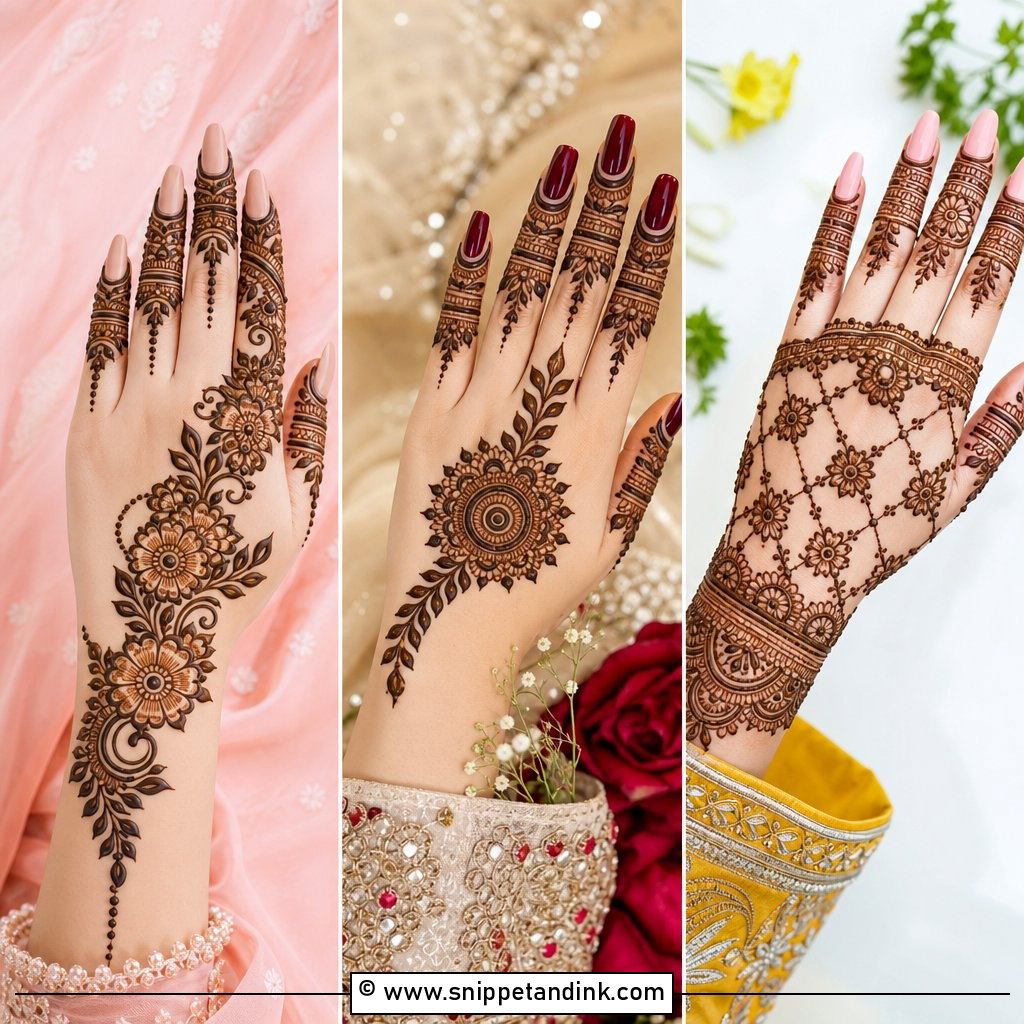
Arabic palms leave space on purpose. A floral trail with thick outlines, leaves, paisleys and soft shading runs diagonally from the heel of the hand toward the opposite fingers. It’s quicker than dense Indian work, which is why it suits Eid and busy family functions. Dotted fillers and curved vines between the main motifs make it feel fuller, and dark fingertips frame the whole palm.
4. Full Palm Indian Mehndi Design
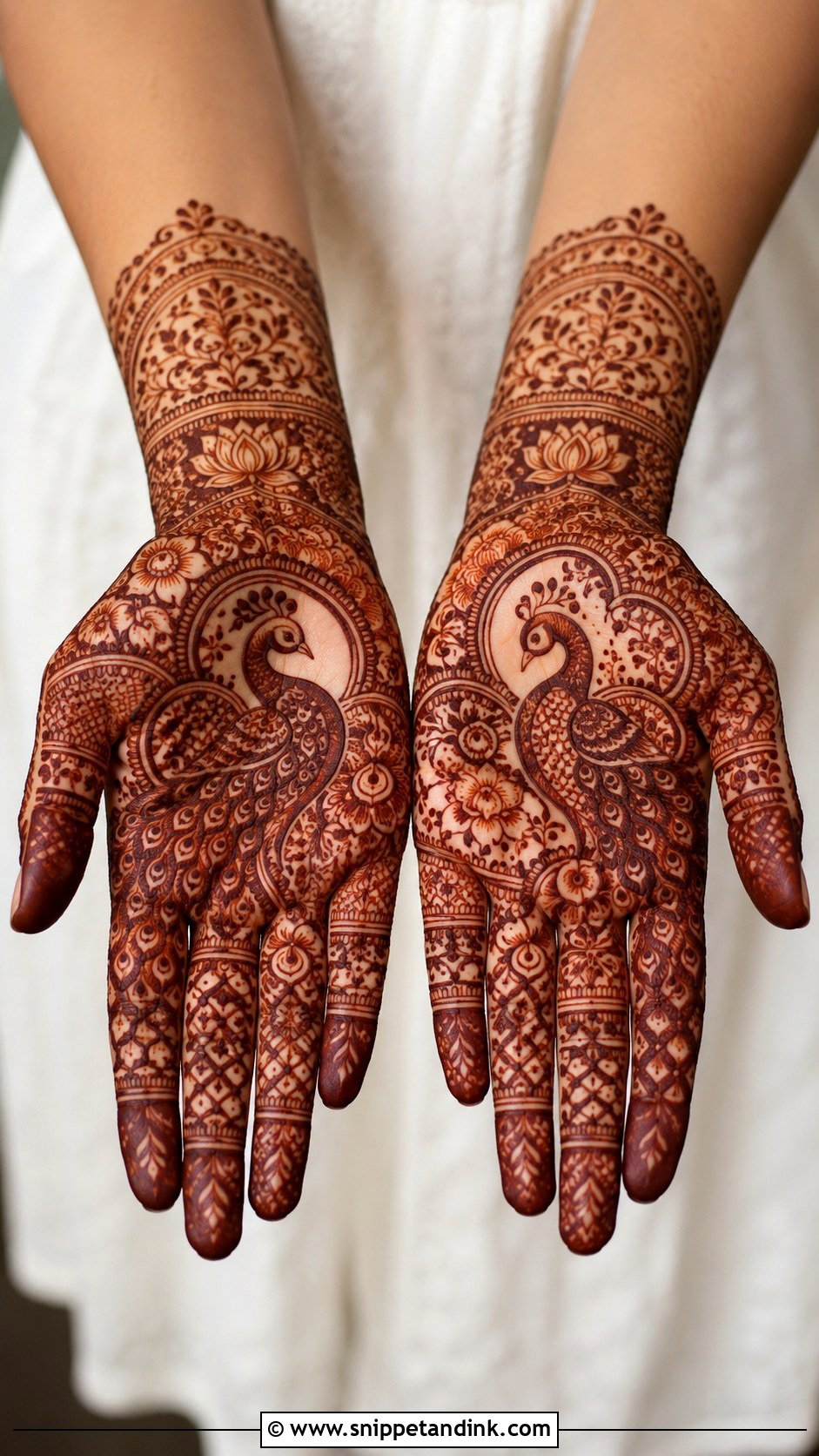
Full palm Indian mehndi design means close detail: paisleys, peacocks, lotus, mandalas, vines, grids and layered borders across the whole palm. I always set the largest motifs first and only then add the small fillers, otherwise the big shapes end up squeezed into whatever space is left. Fingers echo the palm with repeated dots, leaves and curved bands. Karwa Chauth, Diwali and weddings are its usual home.
5. Full Palm Indo Arabic Mehndi Design
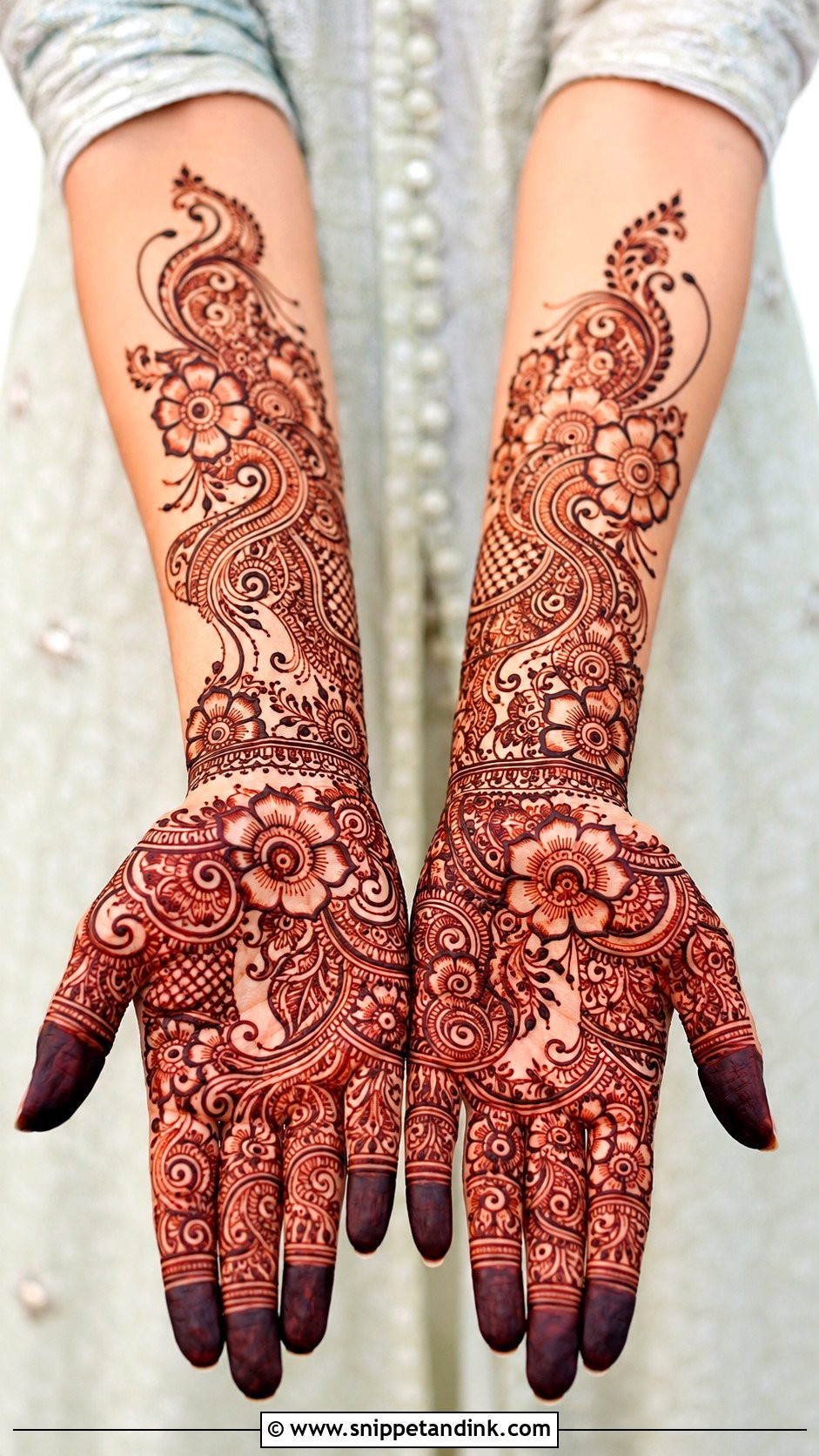
Indo-Arabic palms outline big flowers, paisleys and vines boldly, then fill them with tiny checks, dots, petals and parallel lines. The diagonal flow suits most hand shapes, and it’s a quiet trick for short fingers because it draws the eye upward. A wrist cuff and covered fingertips finish it. Heavier fills make it bridal; open spaces keep it fresh for guests.
6. Full Palm Paisley Mehndi Design
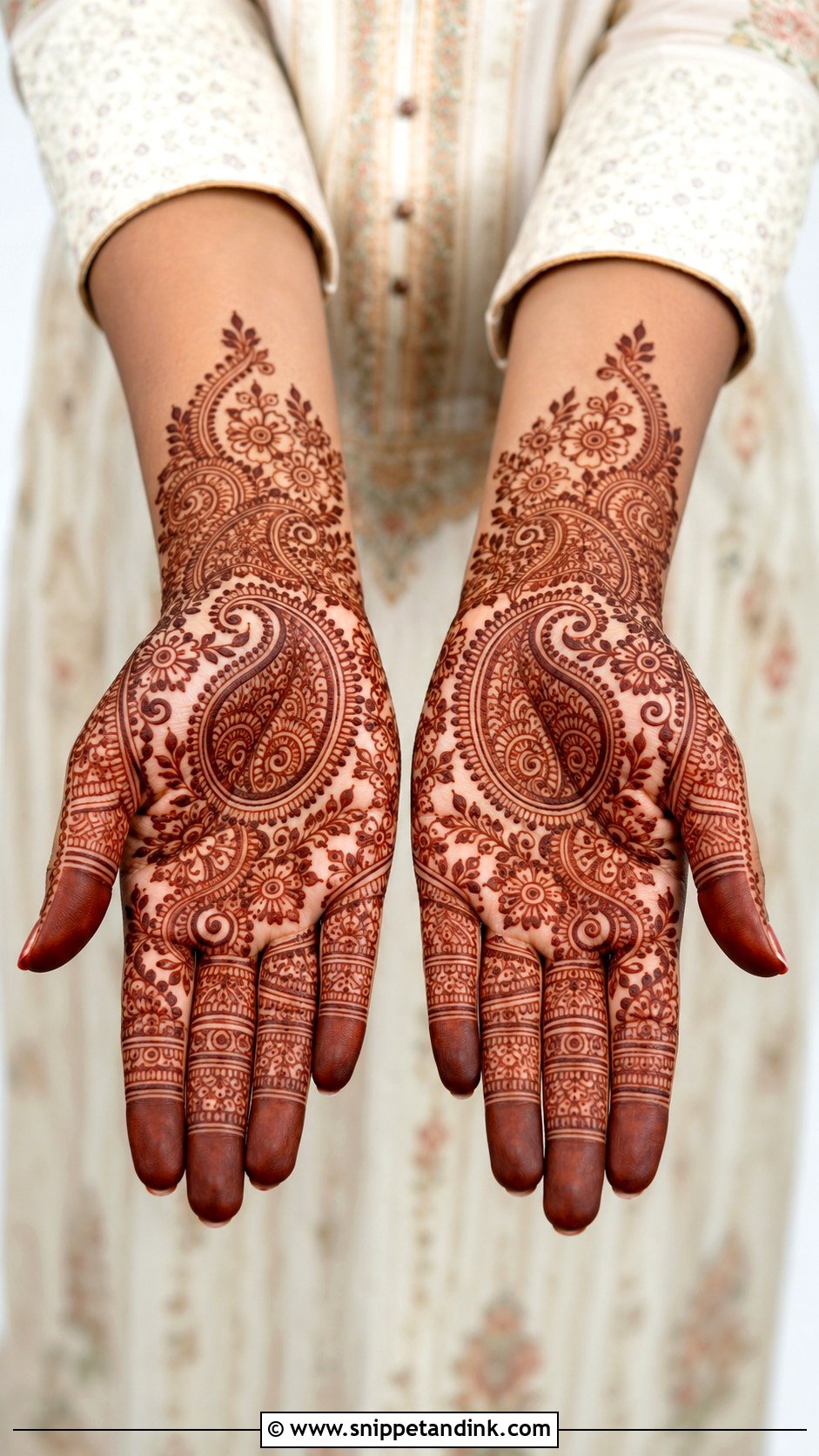
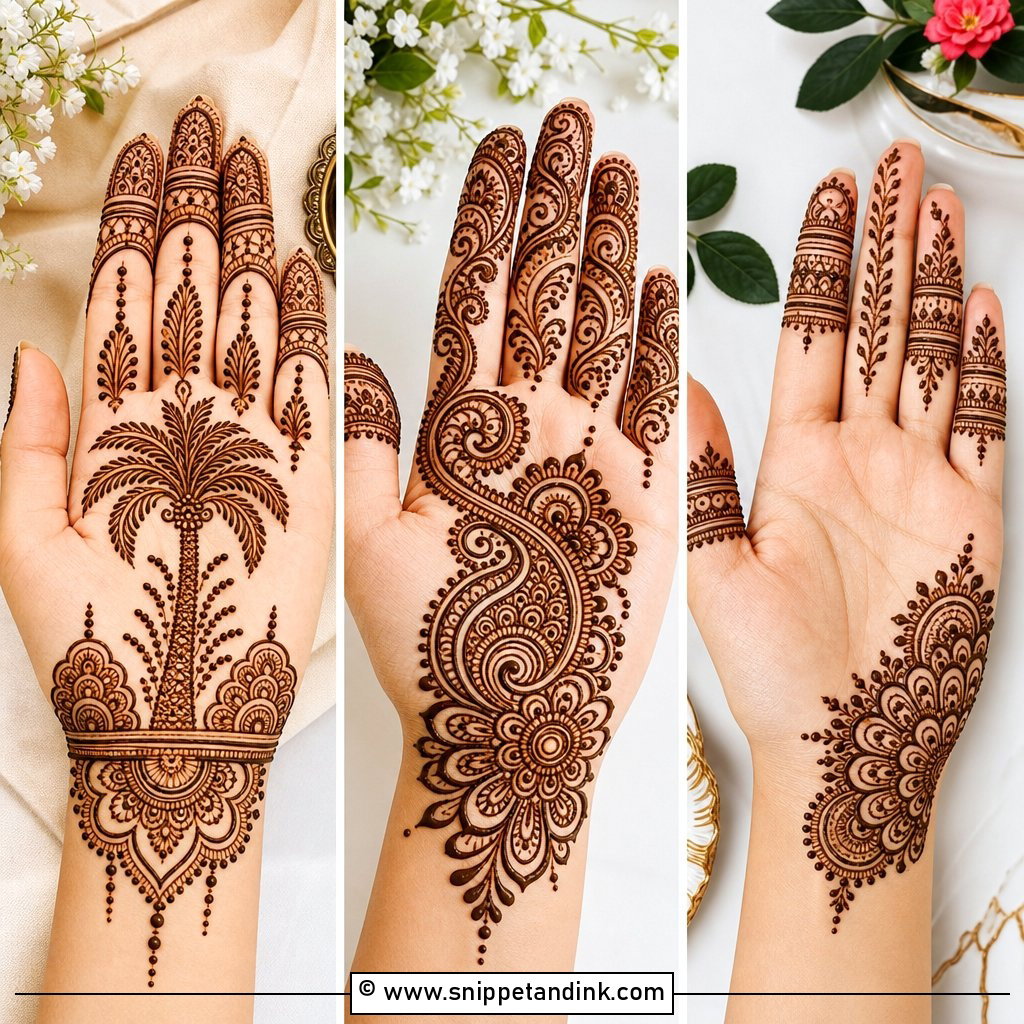
Paisleys can sit in the centre, run along the outer edge of the palm or form a chain from wrist to fingers, and each one can hold tiny flowers, spirals and leaves. Their curve fills awkward palm space better than any other motif. I mix two or three large paisleys with smaller fillers and leave thin gaps between them so the shapes stay distinct. Striped fingers or floral tips close it neatly.
7. Full Palm Floral Mehndi Design
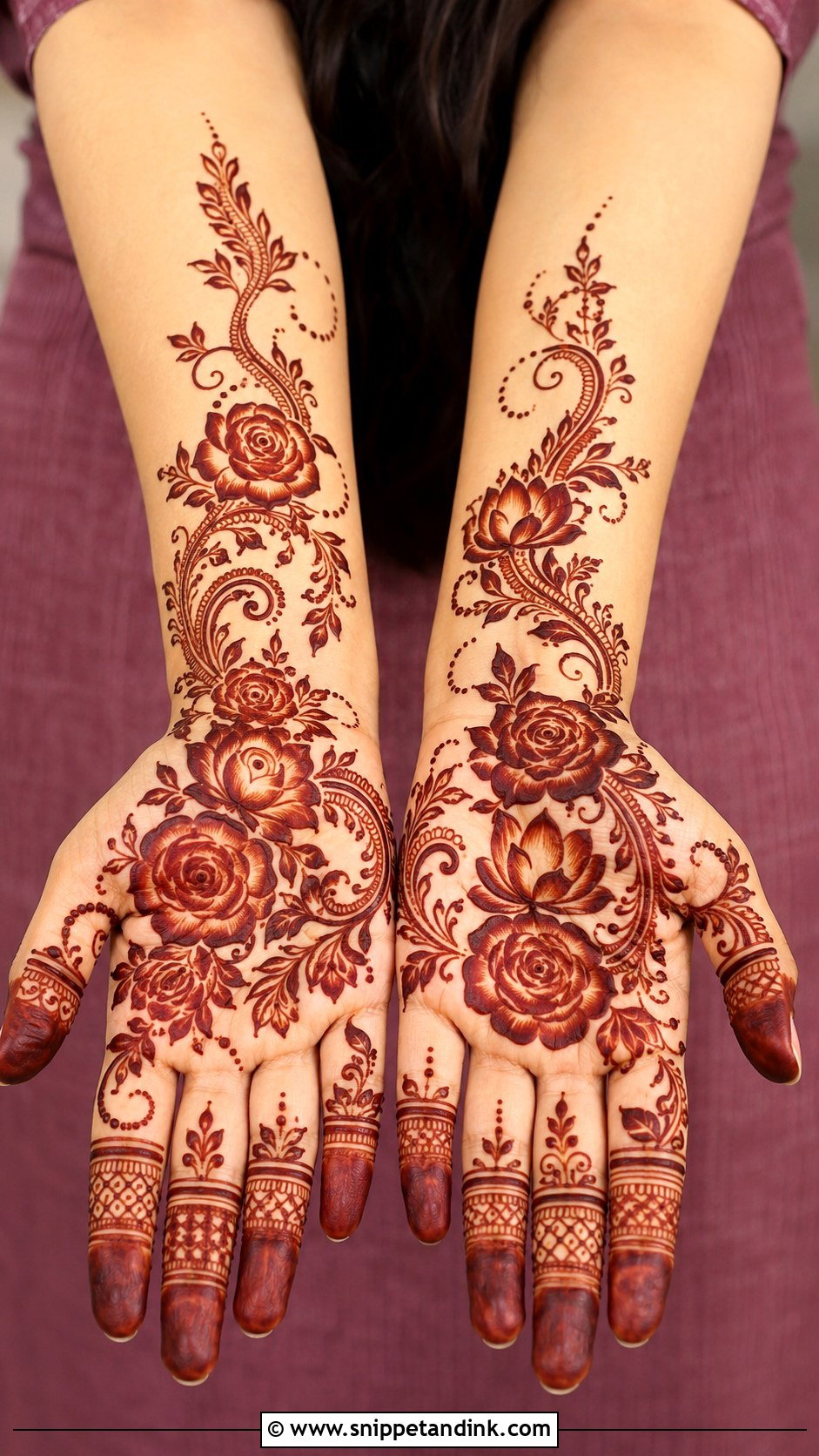
Floral palms adapt to almost any event. Roses, lotus blooms, five-petal flowers or little garden clusters can circle a mandala, follow a diagonal trail or spread evenly. Shaded petals give the colour dimension. Keep negative space around the flowers for a modern take, or fill gaps with dots, vines and mini leaves for a traditional one; I’d decide based on the outfit, since a busy print looks better next to a cleaner palm.
8. Full Palm Peacock Mehndi Design
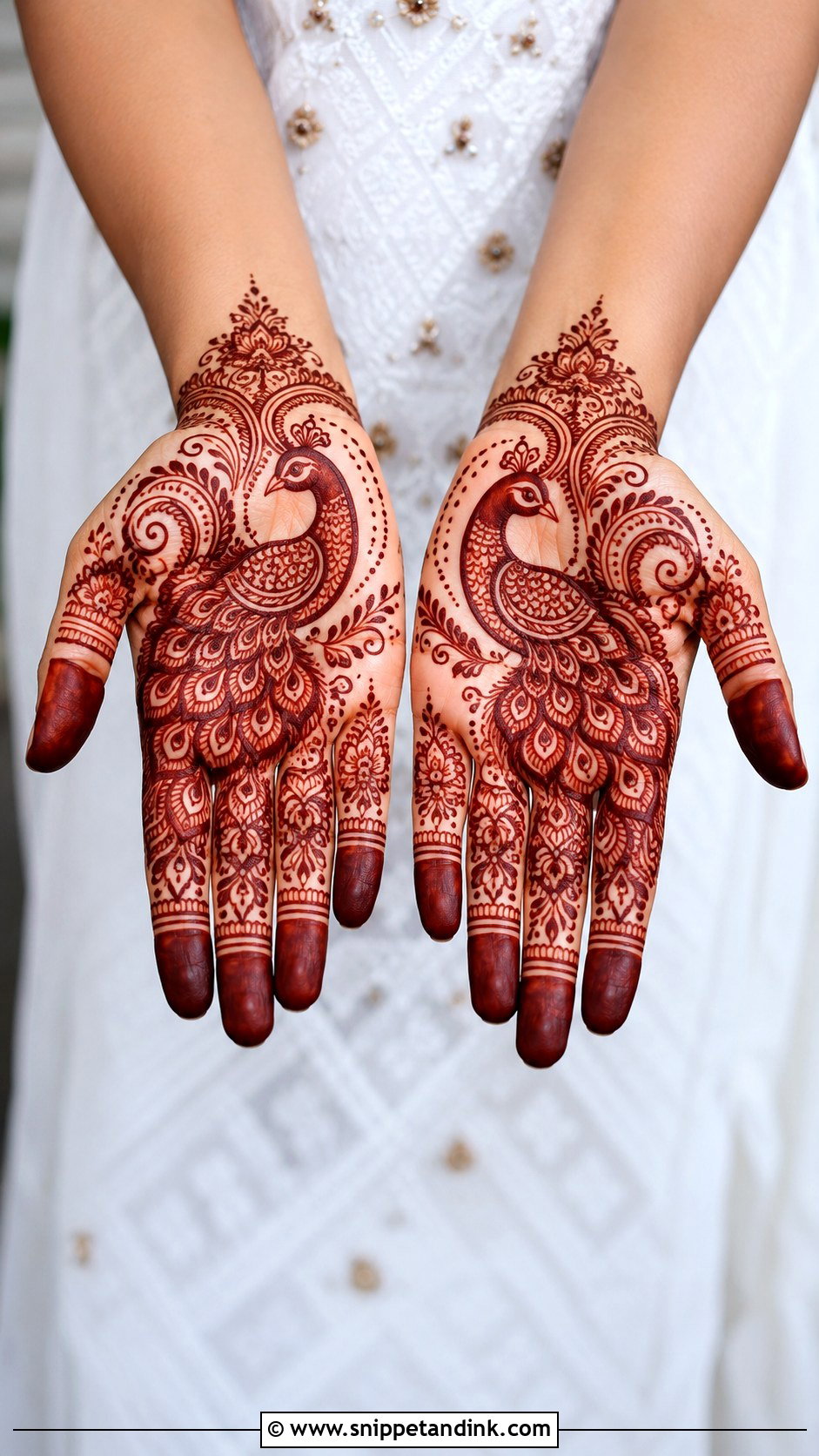
A peacock across the palm needs its curved neck and tail to follow the hand, not cut against it. I usually let the tail sweep toward the wrist, where there’s more length, and fill the feathers with paisleys, petals, jaali and dots. For a cleaner version I draw one bold bird with open shading around it. Filled fingertips and a plain wrist border keep the attention on the palm.
9. Full Palm Jaali Mehndi Design
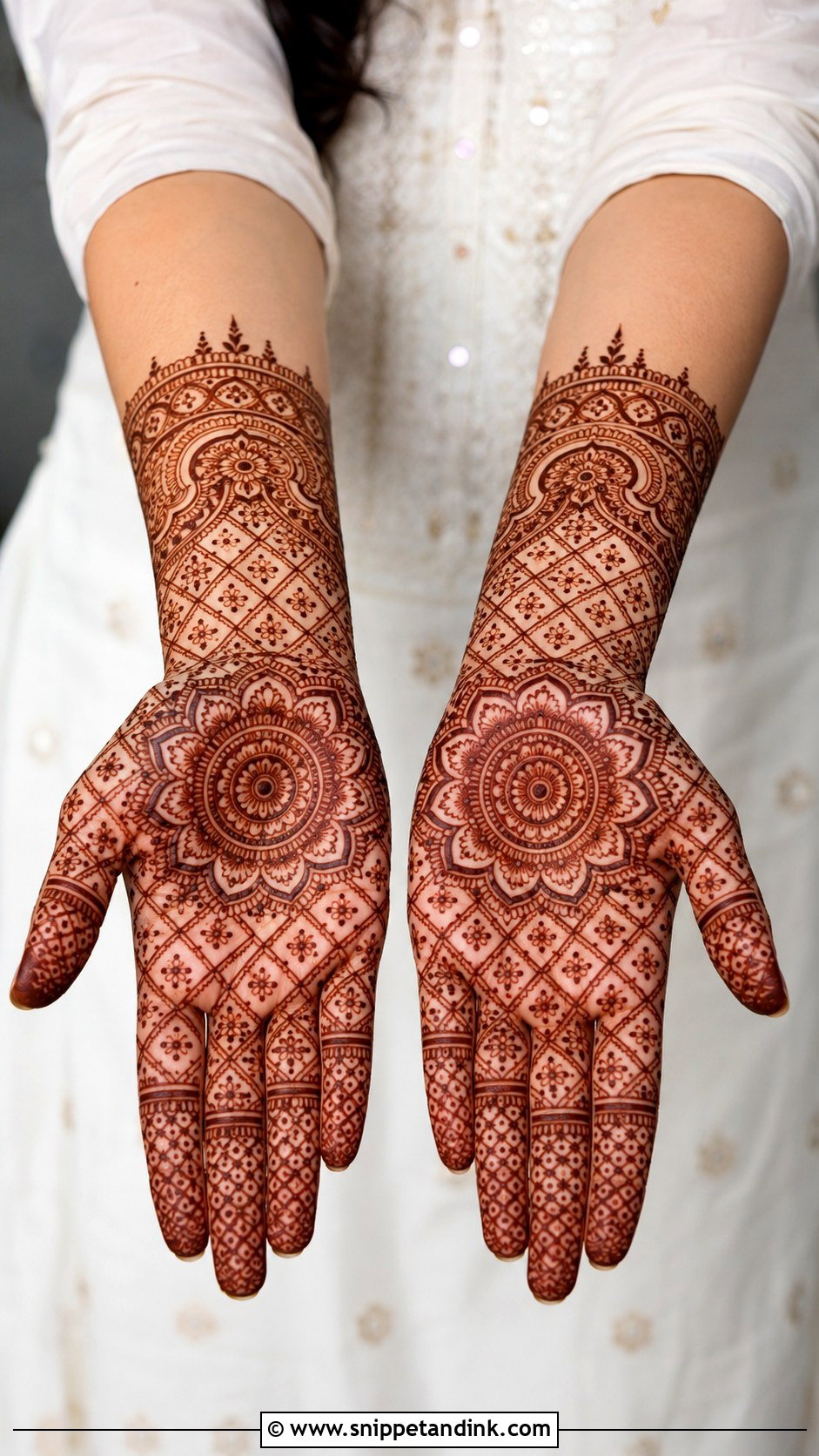
Jaali turns the palm into a lattice of diamonds, squares or curved net shapes, with small dots, flowers or leaves sitting inside some of the cells. It adds texture without needing many motifs, so it pairs easily with mandalas, paisleys and wrist cuffs. The mesh lines must stay thin and evenly spaced; uneven cells are obvious the moment the stain darkens. Floral finger bands or dark tips complete it.
10. Full Palm Simple Mehndi Design
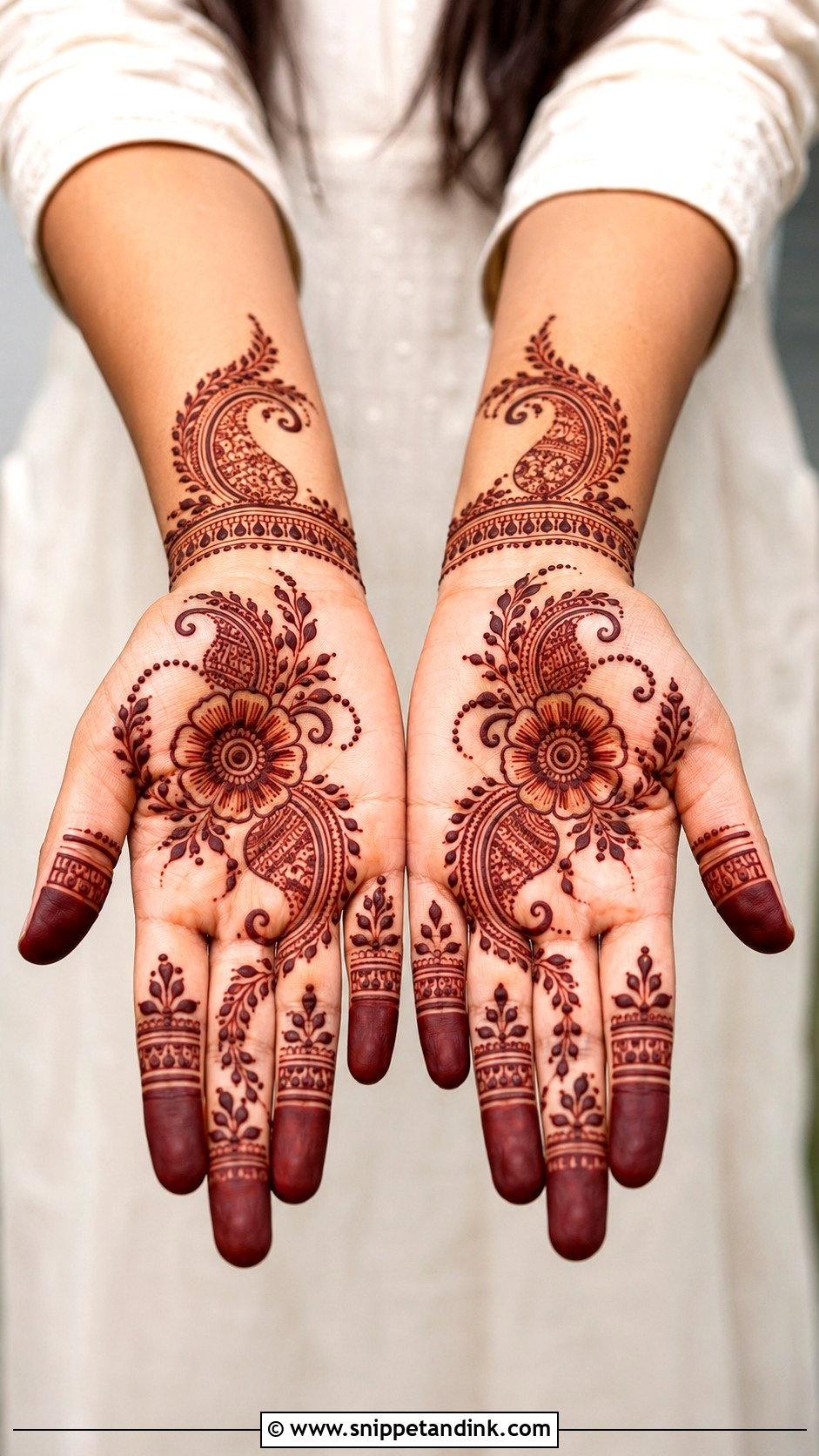
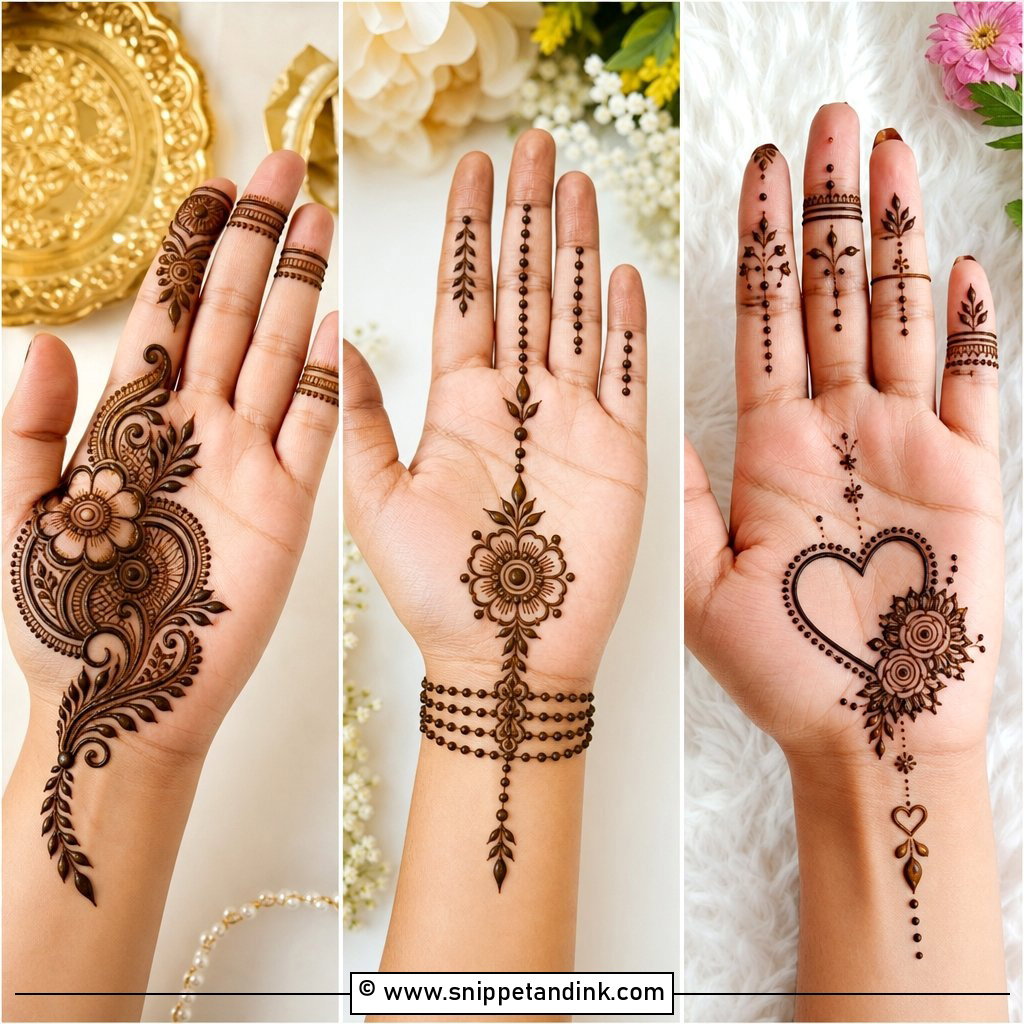
Simple palms rely on repetition. One central flower, a few paisleys, light vines, dotted curves and easy finger bands are enough. I tell anyone in a hurry to skip the tiny fillers, because they take the longest to draw and add the least once stained. Clear spacing and the same motif repeated in a balanced way make it look finished, and shaded fingertips do the rest.
11. Full Palm Modern Mehndi Design
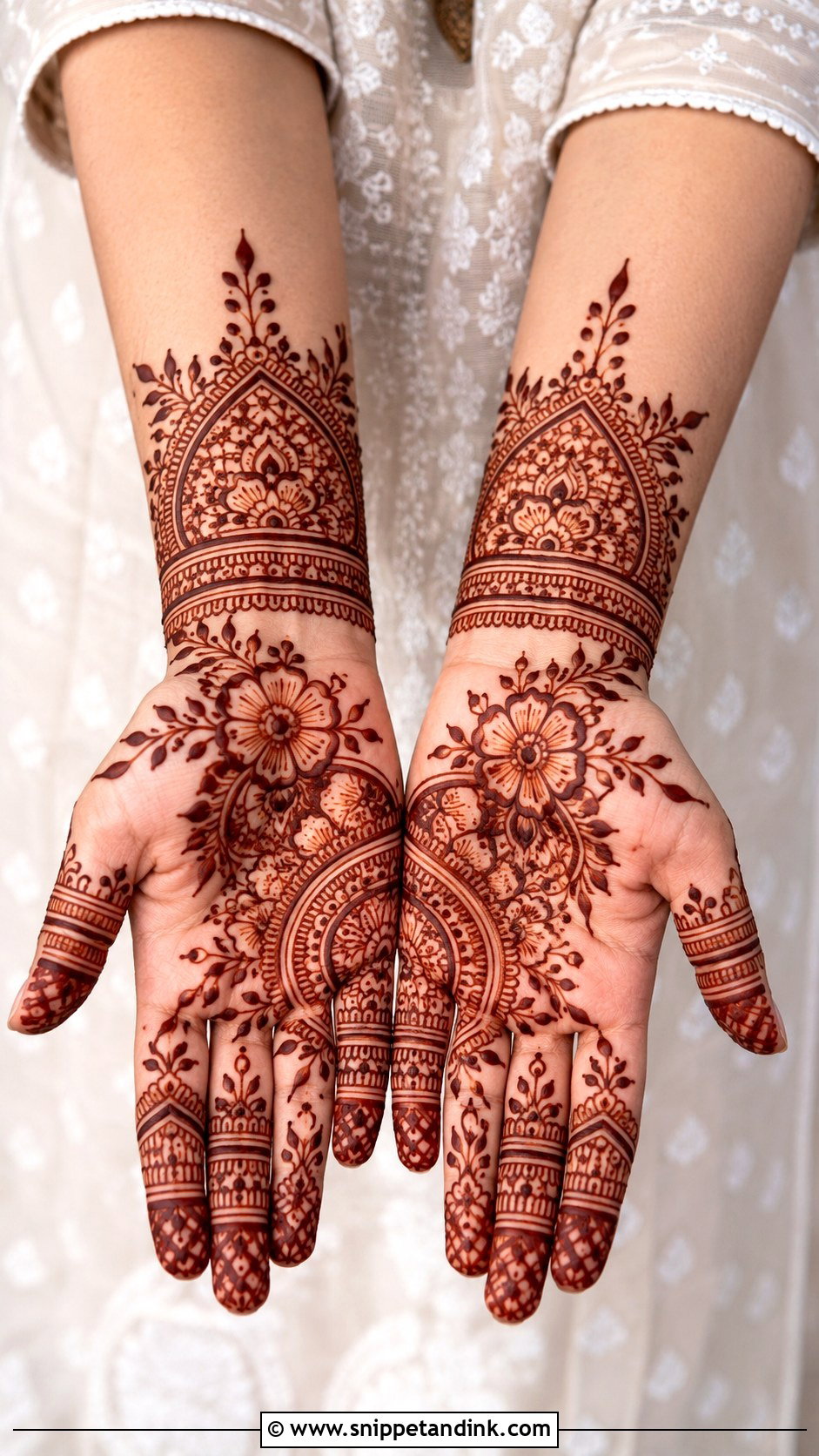
Modern palms rearrange tradition: bold florals, geometric panels, half-mandalas, leafy trails and open skin. The whole palm can be covered and still feel airy. Thin lines and crisp borders carry the look, so the artist’s hand has to be steady. I like pairing a central motif with open sides, or a diagonal pattern that leaves parts of the palm bare. College events, engagements and bridesmaids suit it.
12. Full Palm Minimal Mehndi Design
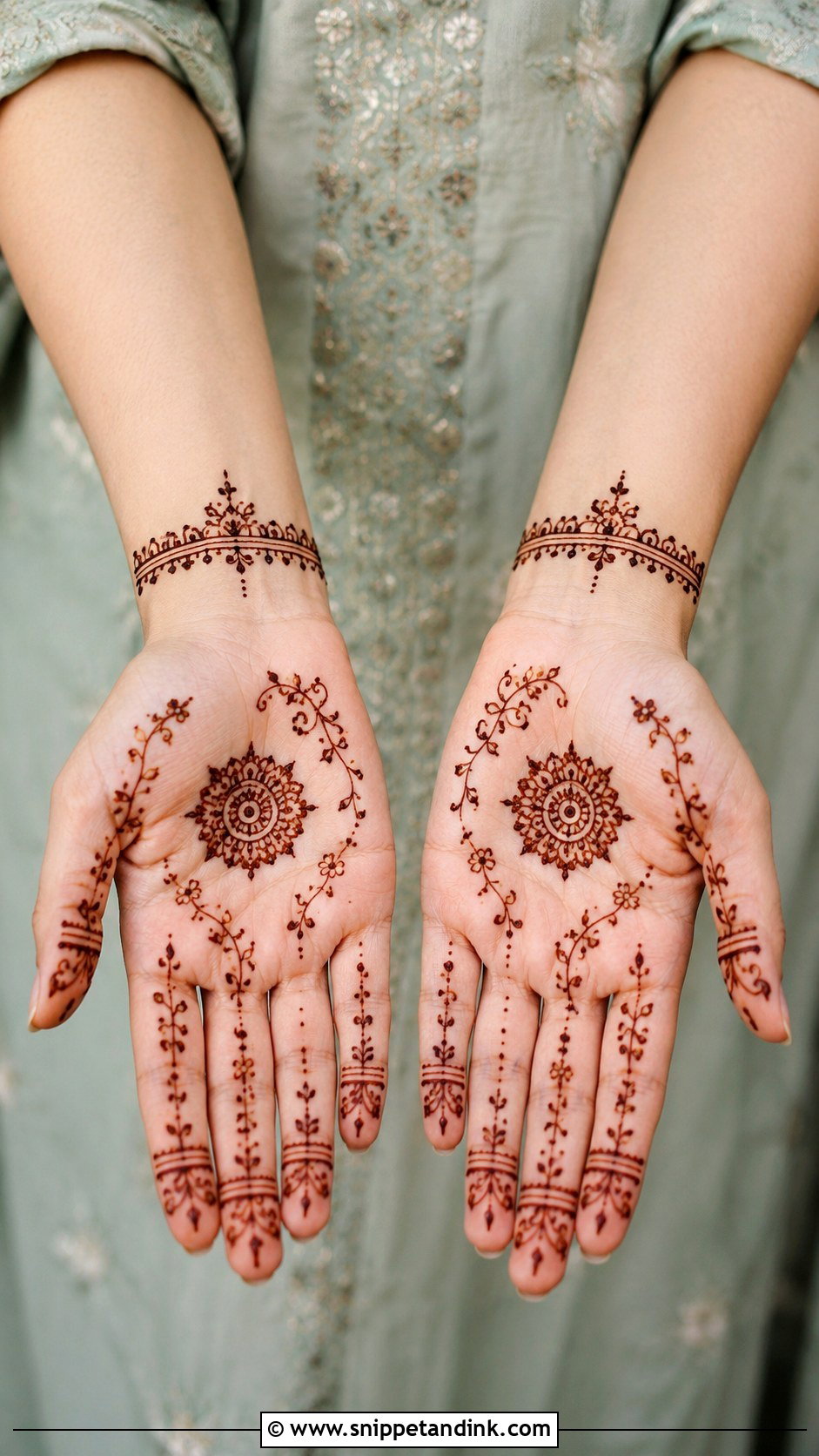
Want coverage without weight? Minimal palms use fewer motifs, soft outlines, small flowers, tiny dots and delicate finger details. A small mandala with thin vines covers the palm without crowding it, and a single bracelet line is enough at the wrist. It’s a gentle first experience of mehndi, and it suits office-friendly festivals and casual gatherings.
13. Full Palm Heavy Mehndi Design
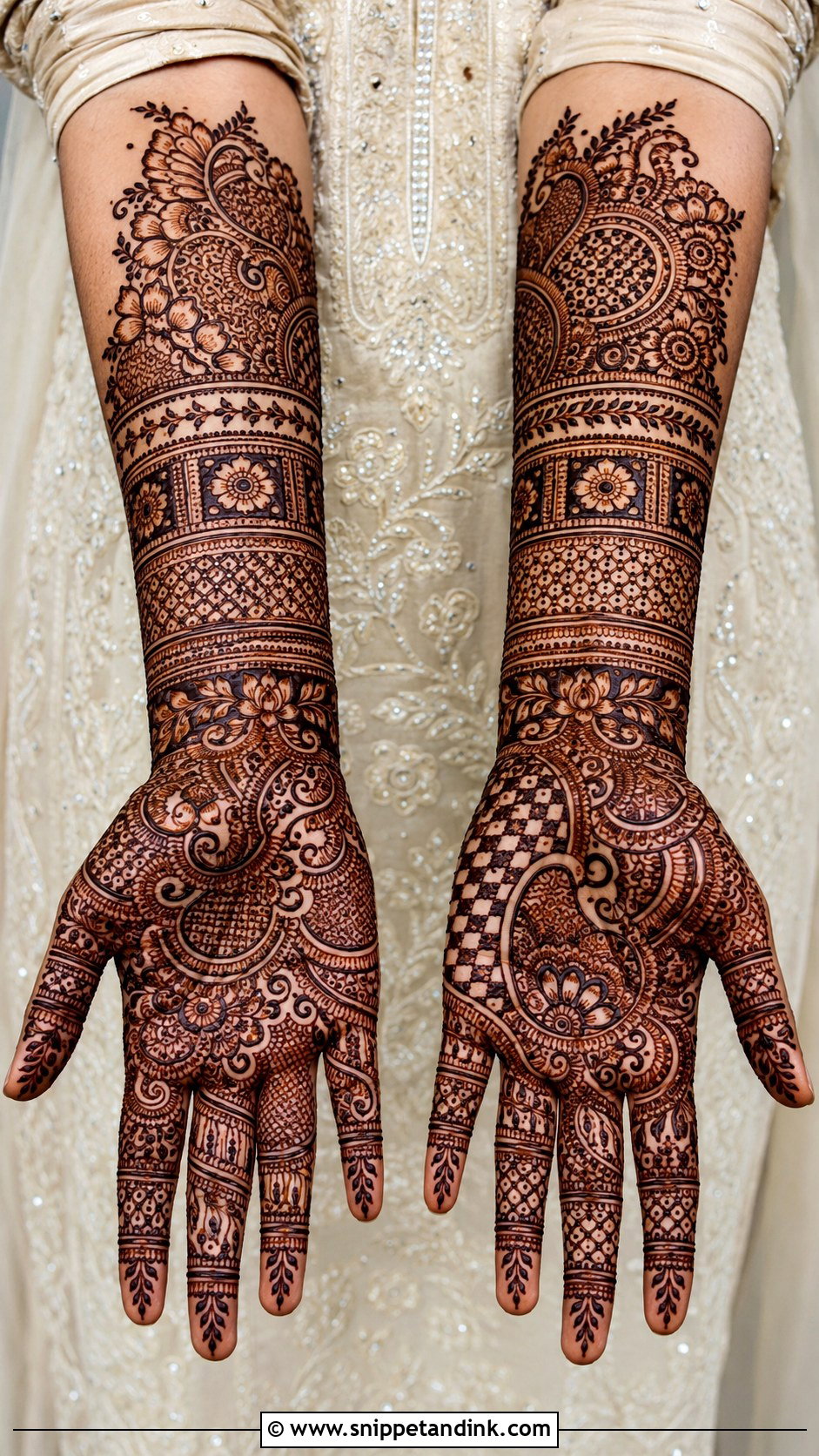
Heavy palms fill every area with fine lines, paisleys, flowers, checks, dots, leaves and layered borders. The deeper colour comes from that density, but density without variety looks like a blot. I vary motif size deliberately: large shapes for structure, tiny fillers for depth. Fingers get dense bands and shaded tips, and the wrist continues the same richness. Brides, close family and major festivals are where I draw it.
14. Full Palm Front Hand Mehndi Design
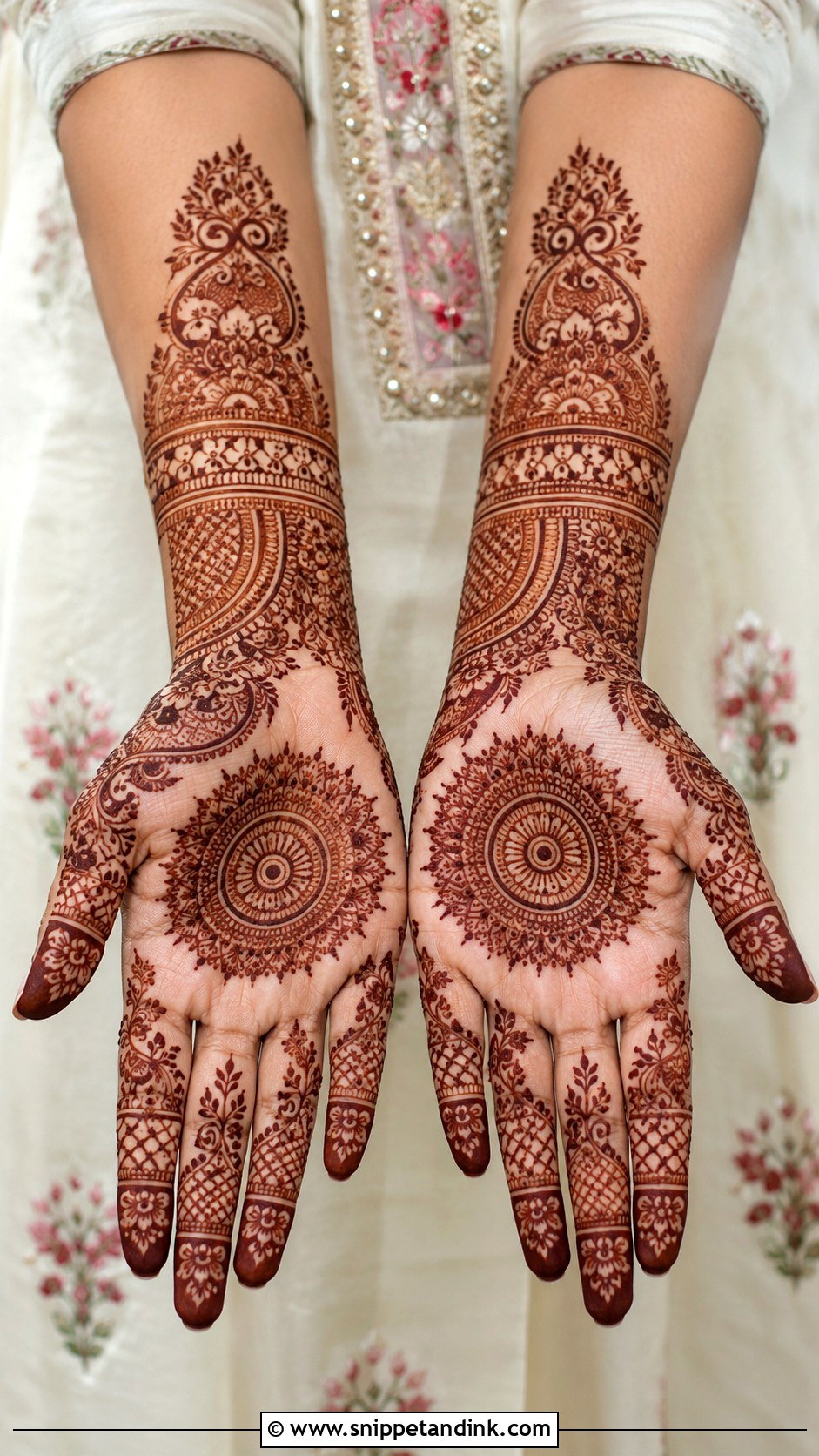
An open palm is shown off when you hold flowers, show bangles or pose for ritual photos, so the layout has to read as one piece. I place the main motif in the centre and build curved sections around it, linking palm, fingers and wrist. Short fingers look longer with vertical lines and slim leafy trails. A wide palm benefits from side borders that give it a shaped outline.

15. Full Palm Back To Front Mehndi Design
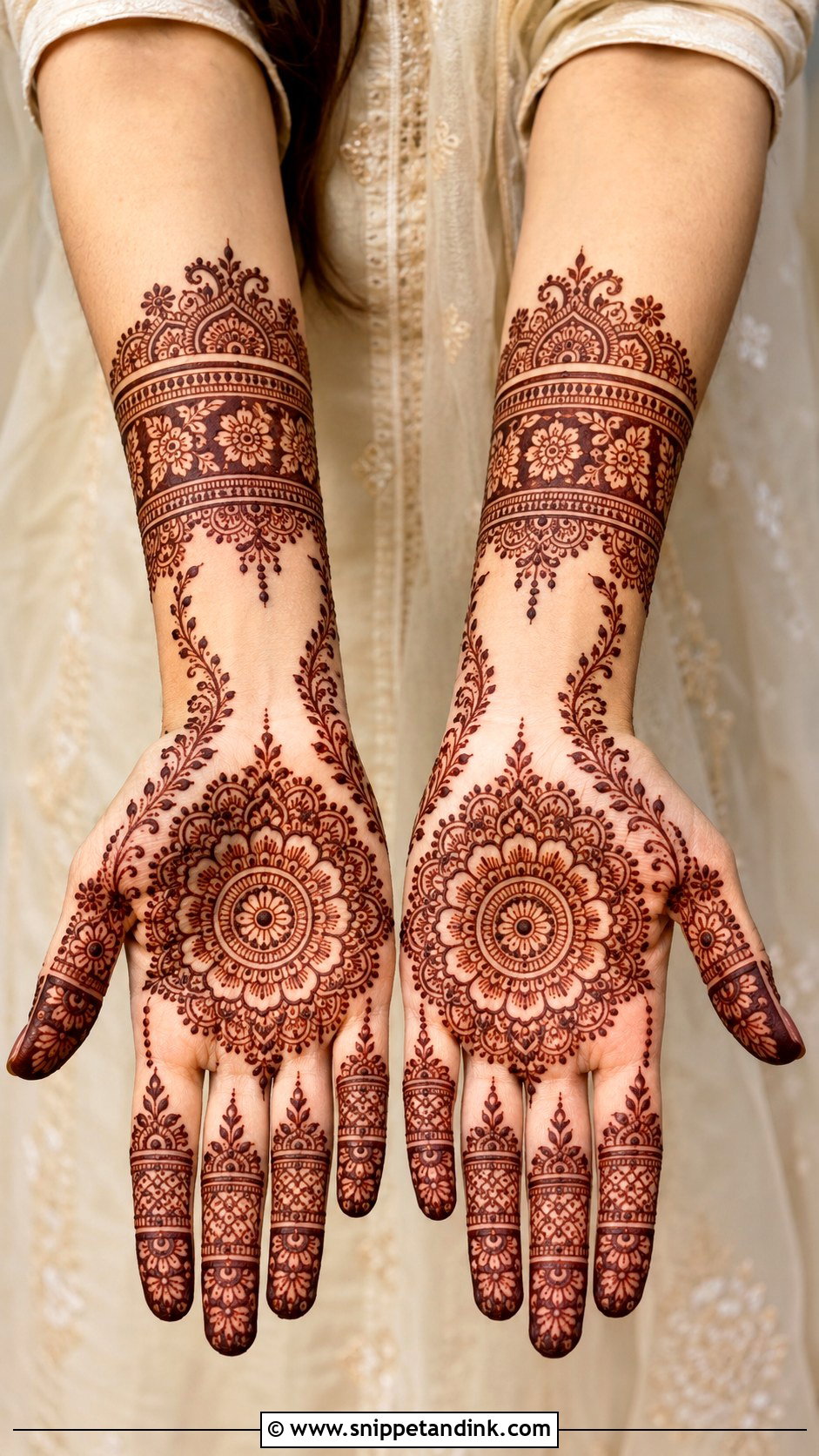
Back-to-front designs let the palm pattern wrap slightly around the sides of the fingers and hand, so both sides feel connected without committing to a heavy back-hand design. The palm keeps its full mandala, paisley or floral layout and stays the star, while the wrap details stay clean. A wrist cuff that matches both sides ties it together for sangeet, Eid and family celebrations.
16. Full Palm Finger Mehndi Design
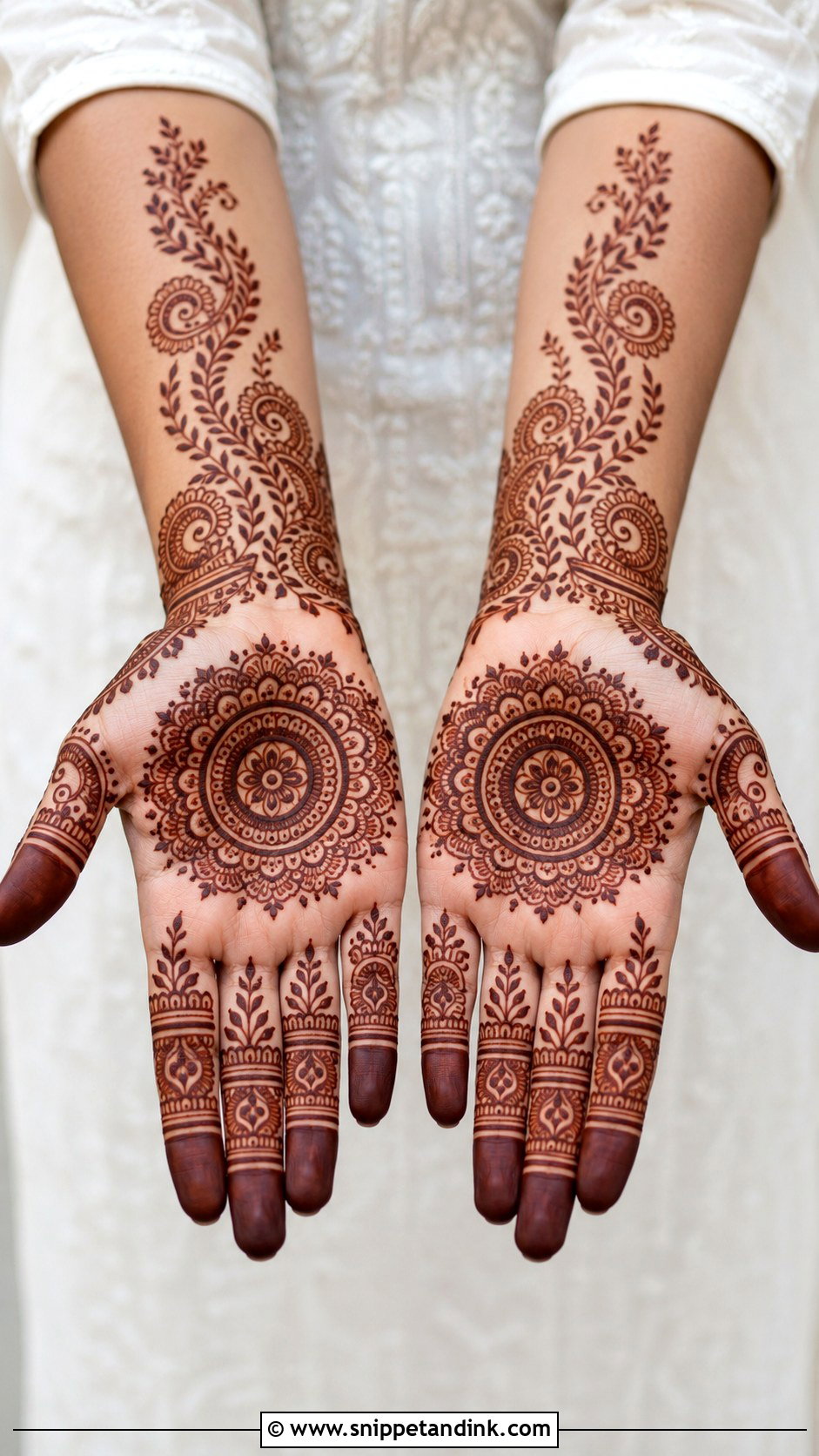
Finger-focused palms still fill the palm with a mandala, jaali or floral cluster, but the fingers carry the detail: bands, leafy chains, spirals and shaded tips. Identical finger patterns give symmetry; varying each finger looks more artistic. The thumb is the one people forget. I always tie it into the palm design, because a bare thumb beside detailed fingers looks like the artist ran out of time.
17. Full Palm Wrist Cuff Mehndi Design
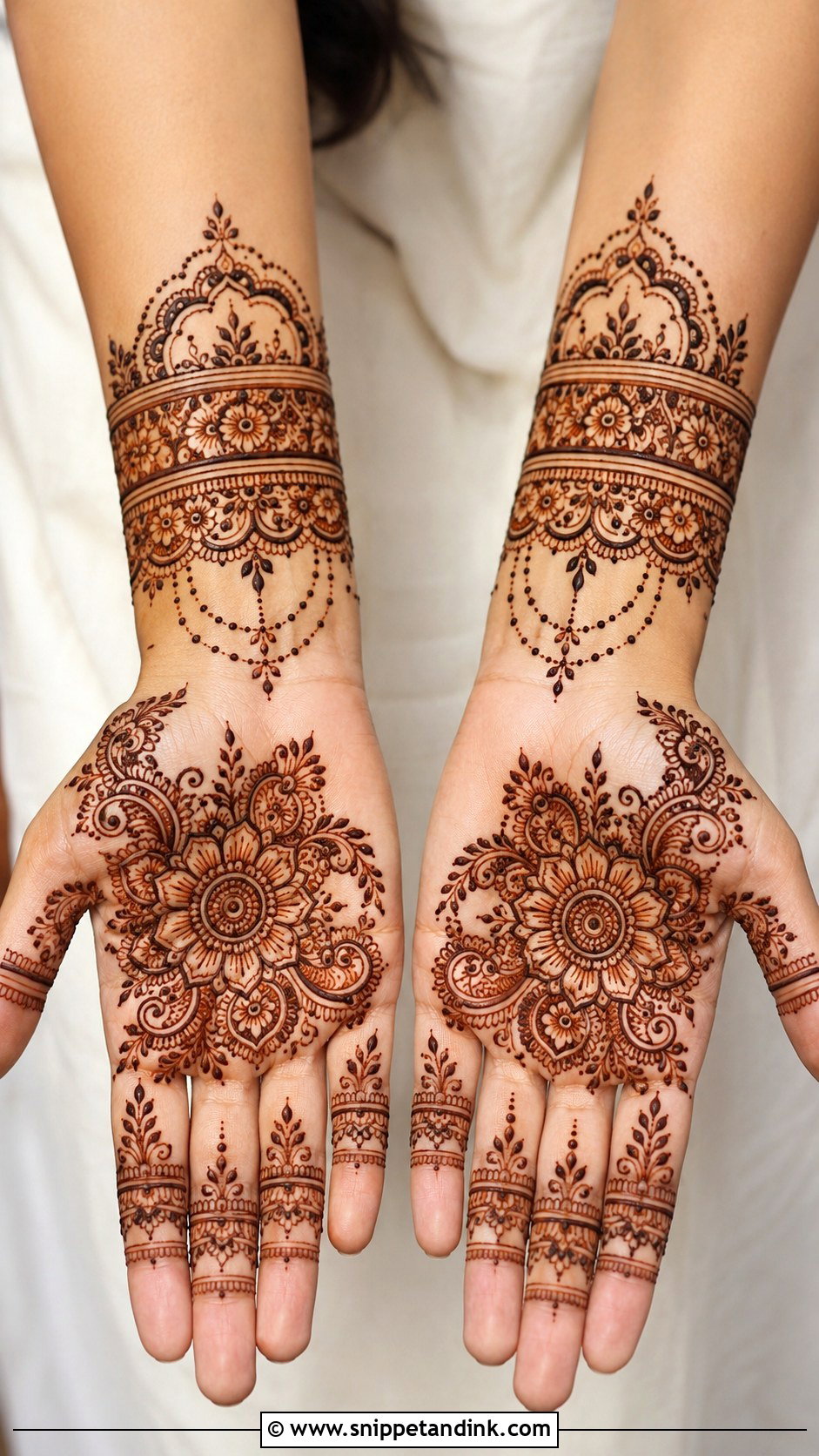
This one draws jewelry at the wrist. The palm carries a central motif, floral trail or paisley layout, and the wrist gets bracelet bands, chains, dots and scalloped borders that blend with real bangles. I line the cuff up with the centre of the palm so the two read as one. Keep the cuff bold and the palm open for a modern take; add more bands and dense fillers for a bridal one.
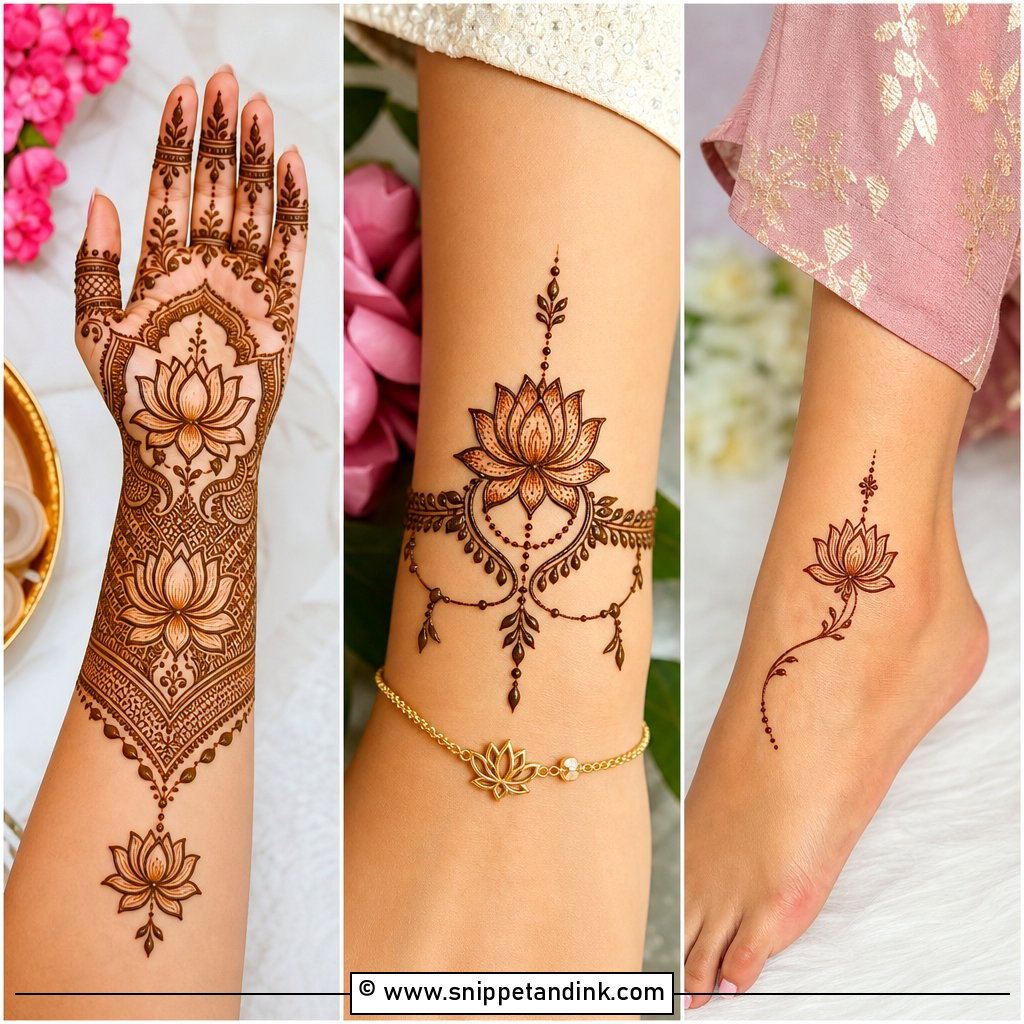
18. Full Palm Lotus Mehndi Design
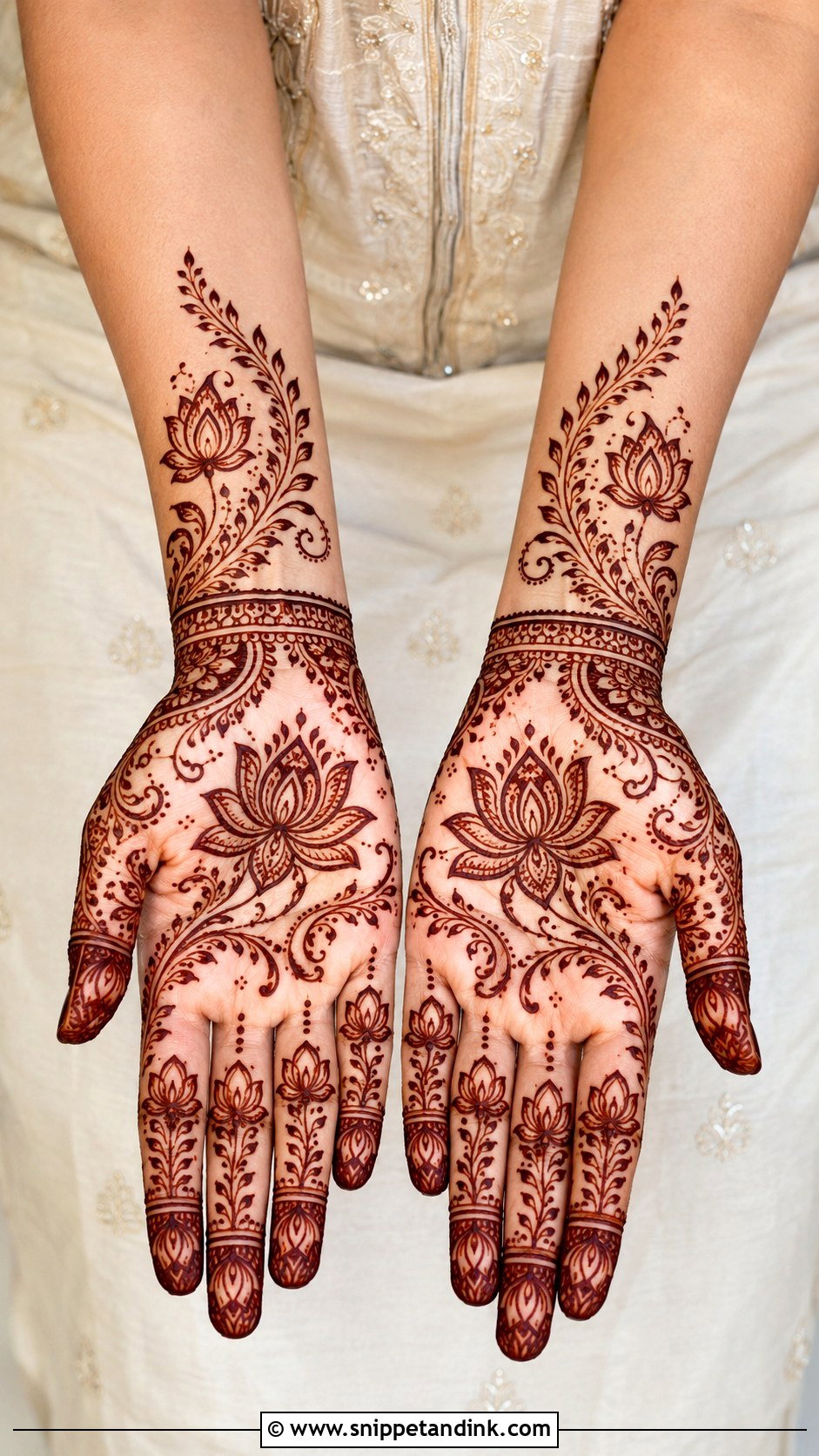
Lotus petals layer naturally, so a single bloom can fill the palm without looking busy. I place it centrally or opening from the wrist, or repeat smaller blooms across the hand. Dots, fine lines and leafy borders around the petals enrich it, and the fingers can carry small buds or petal bands. A firm outline on each petal is what keeps the flower legible once the colour deepens. Pujas, Diwali and bridal events all suit it.
19. Full Palm Rose Mehndi Design
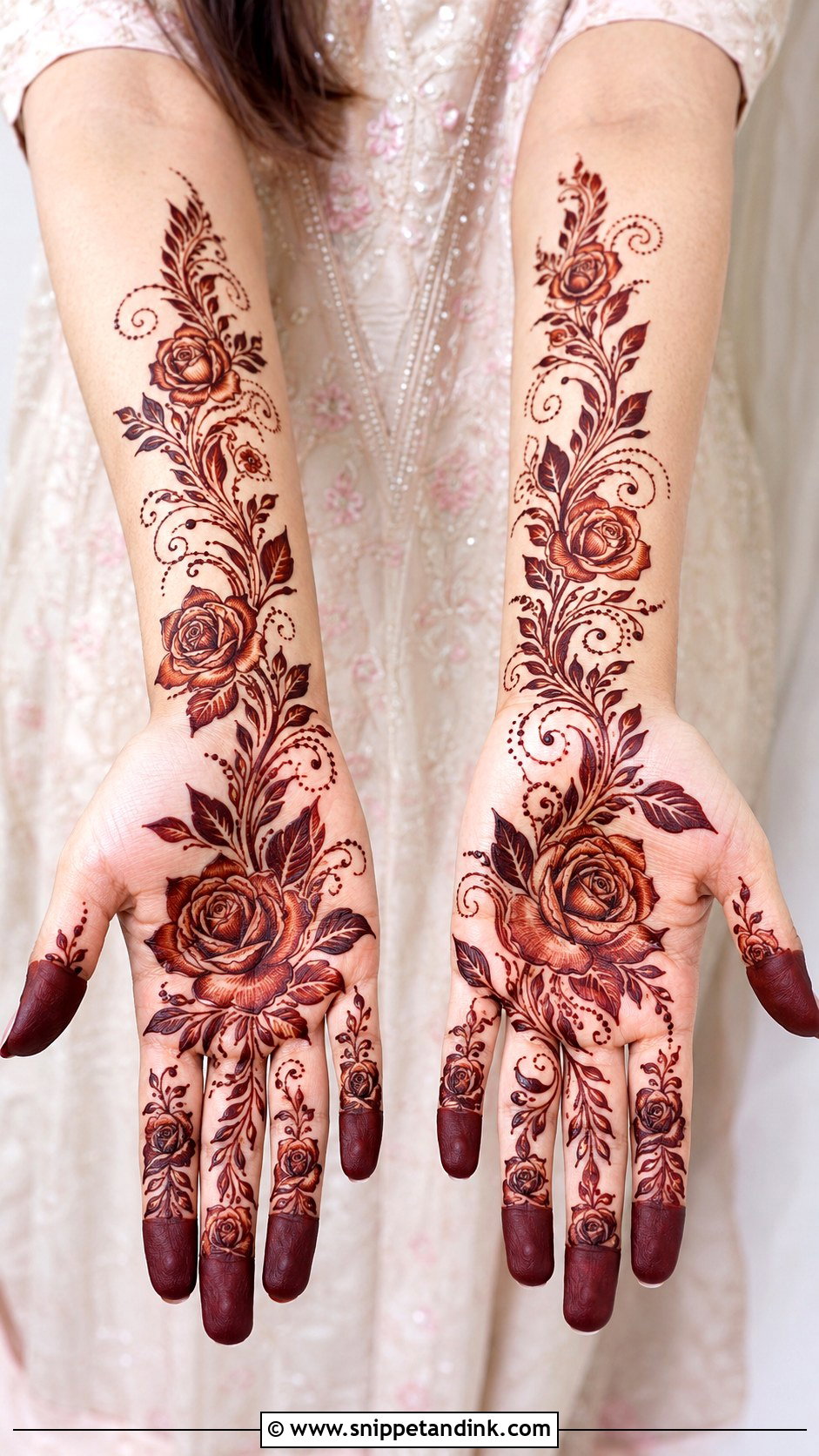
Roses on the palm can trail diagonally, circle a central motif or spread like a small garden. They depend on shading for depth, so I keep it thin inside each petal and pair it with fine leafy vines. Small dots, swirls and leaves fill the gaps between roses. Rose buds, curved lines and dark fingertips carry the theme up the fingers for engagements and party looks.

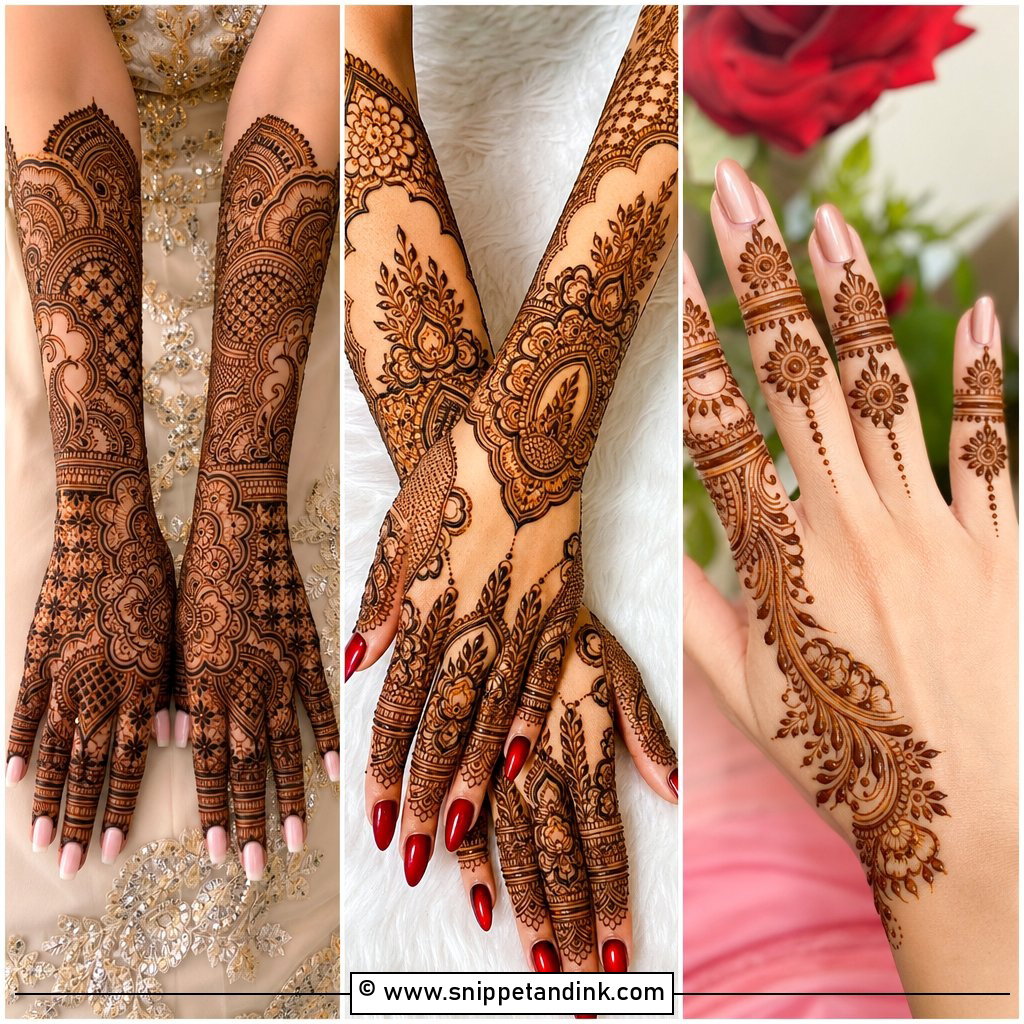
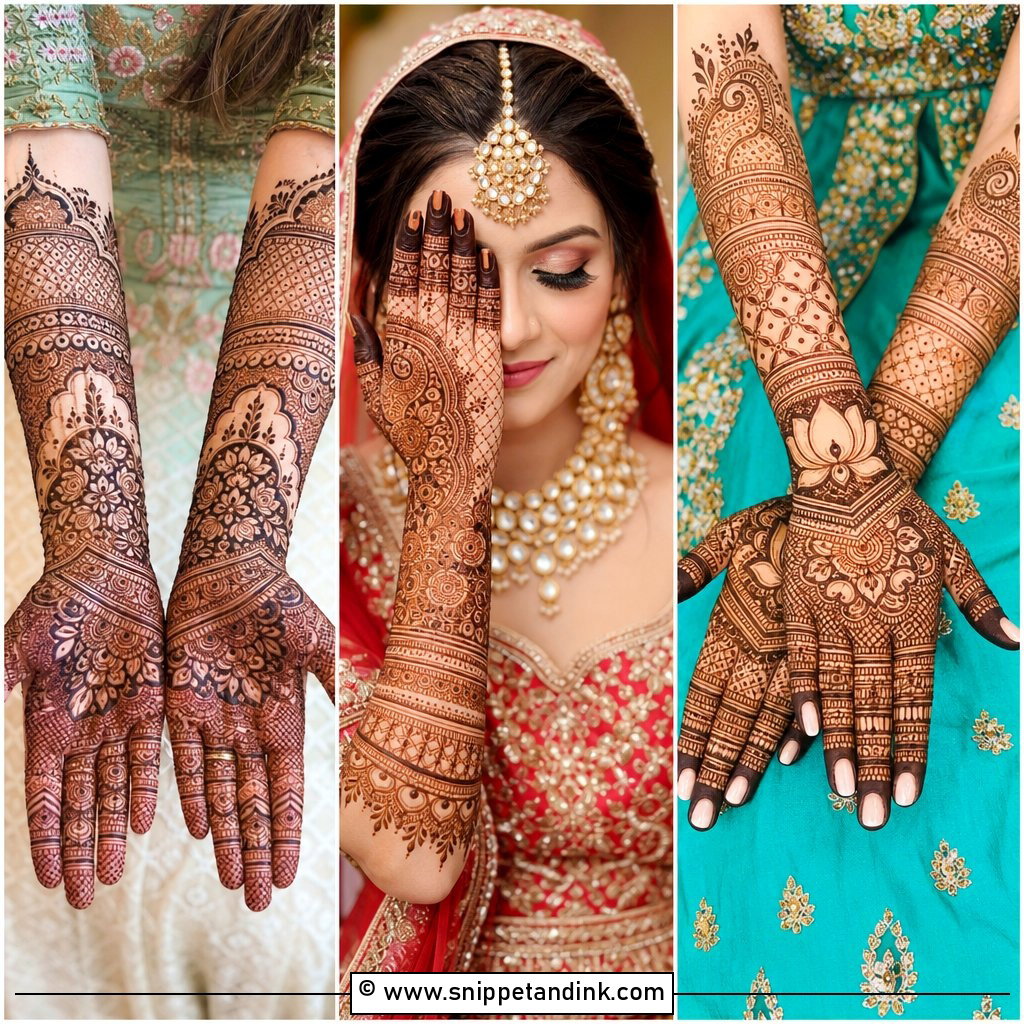
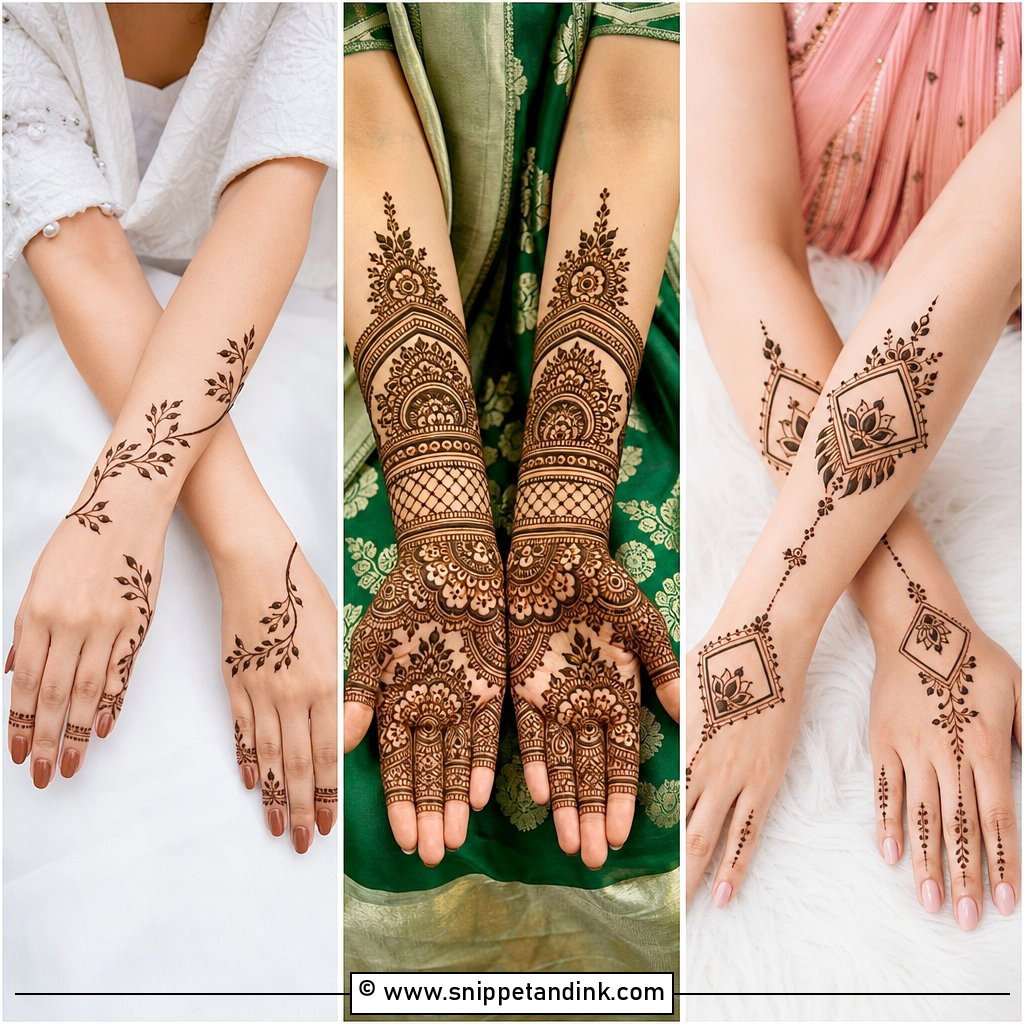
20. Full Palm Moroccan Mehndi Design
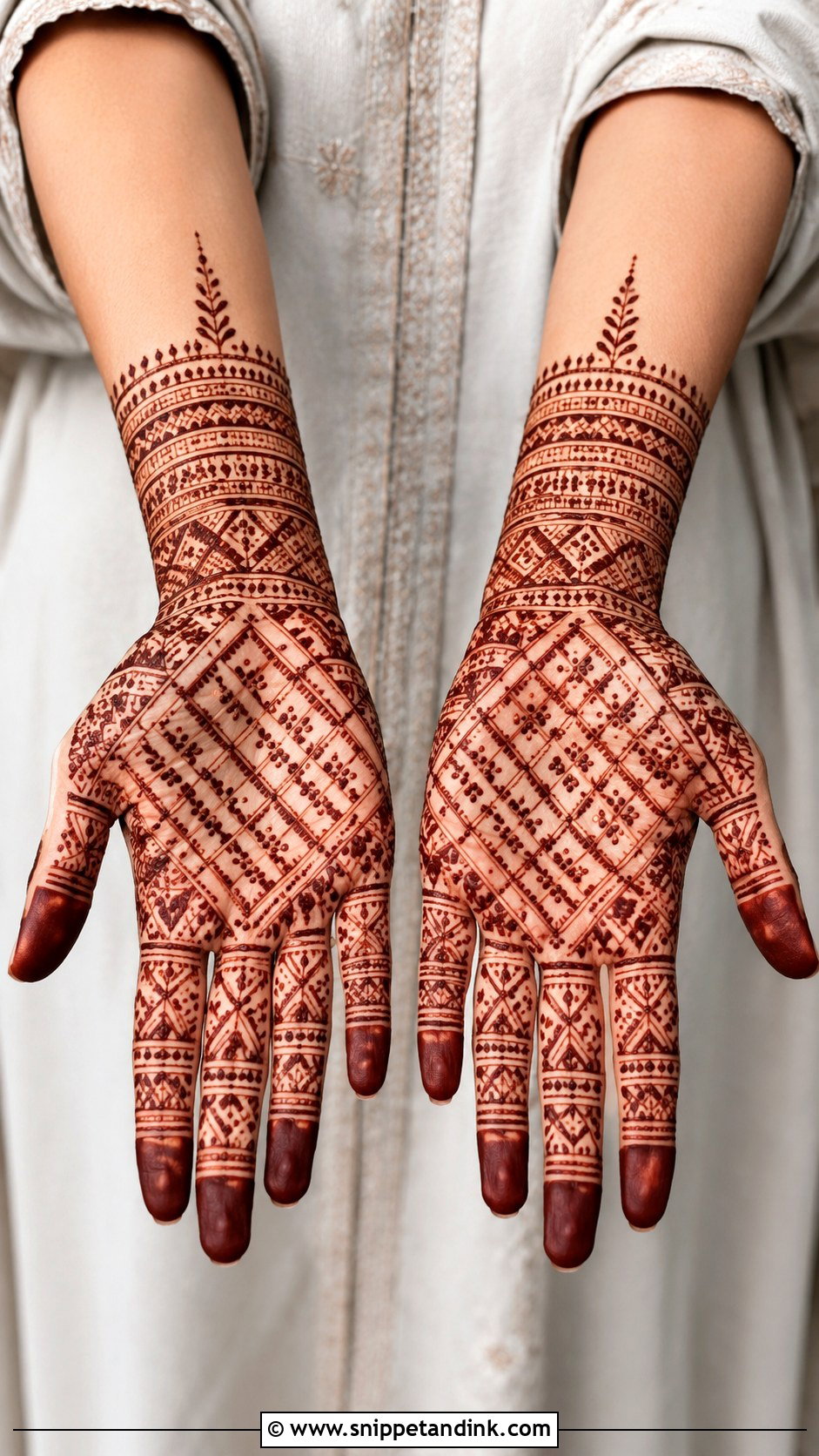
Moroccan palms are built from diamonds, triangles, grids, chevrons, straight lines and symmetrical blocks. The pattern can climb from the wrist in panels or radiate from the centre. Straight lines are harder than curves on a palm because the skin isn’t flat, so I ask the client to keep the hand gently stretched while I draw. Dotted borders and filled fingertips soften the geometry without losing its character.
21. Full Palm Gulf Mehndi Design
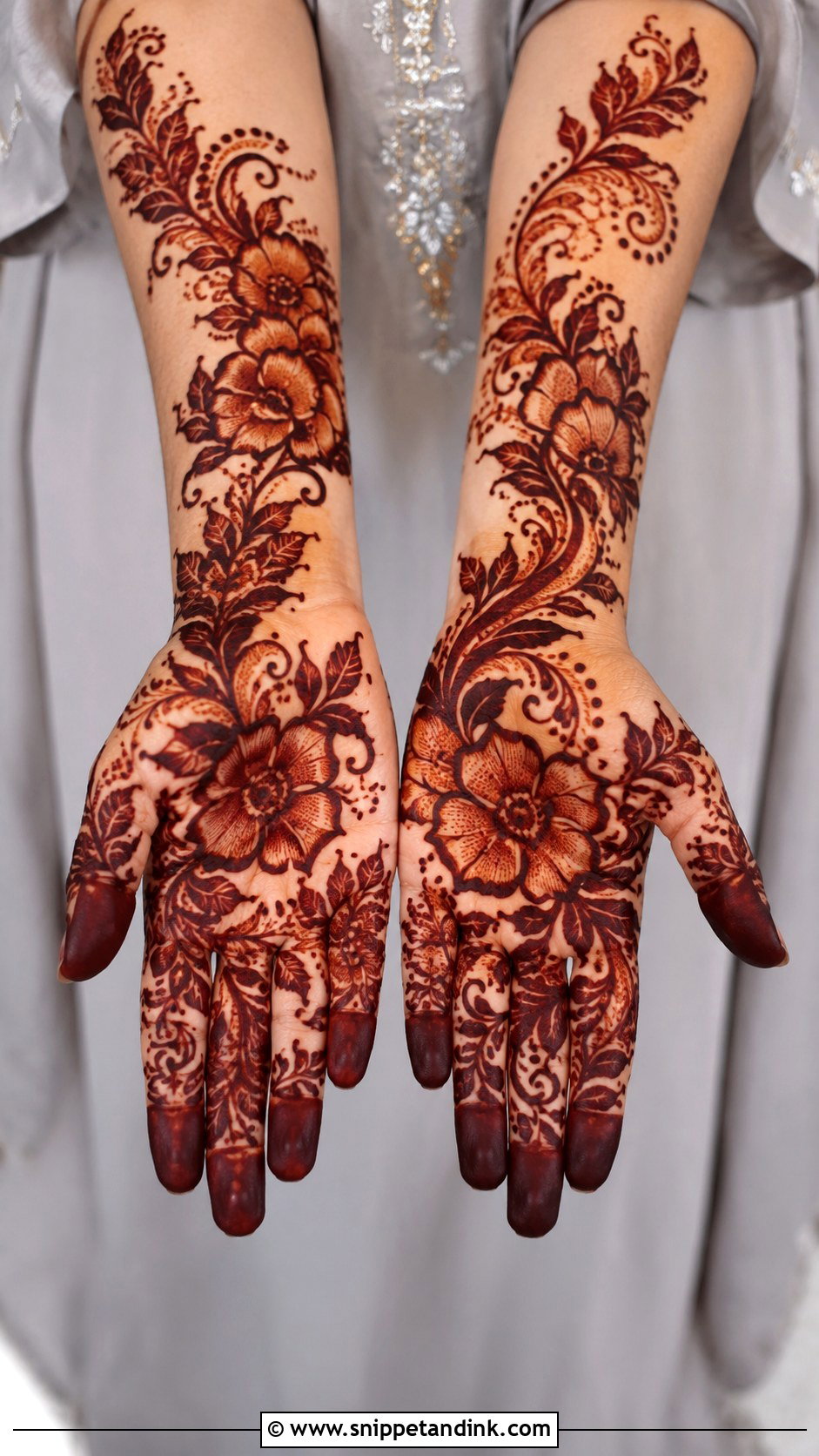
Gulf palms, inspired by Khaleeji henna, run one strong floral trail from the wrist to the fingers with thick outlines and generous spacing. The open skin is what makes the colour look so dark and luxurious against it. Shaded flowers and dark fingertips are typical. Curved side vines and dots around the trail fill the rest of the hand without crowding the main flowers.
22. Full Palm Eid Mehndi Design
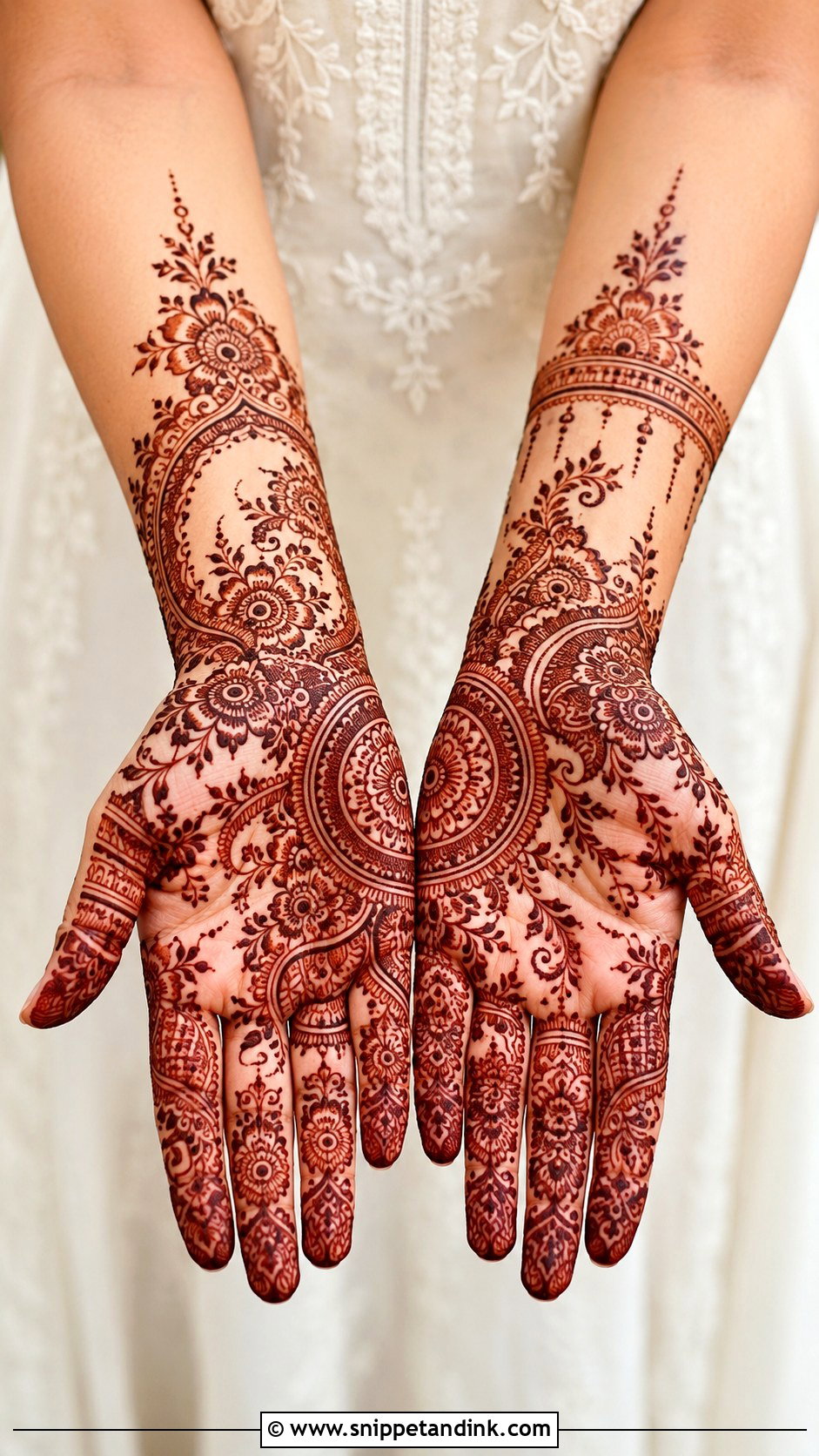
Eid palms lean on Arabic florals, mandalas, paisleys, crescent curves, leafy trails and delicate wrist bands. Most people apply the night before Eid, so I keep the design full but breathable enough to dry before bed. A diagonal floral palm with filled fingers stains evenly and suits most outfits. A central mandala with paisley borders gives a traditional look; open vines and dotted chains give a lighter one.
23. Full Palm Diwali Mehndi Design
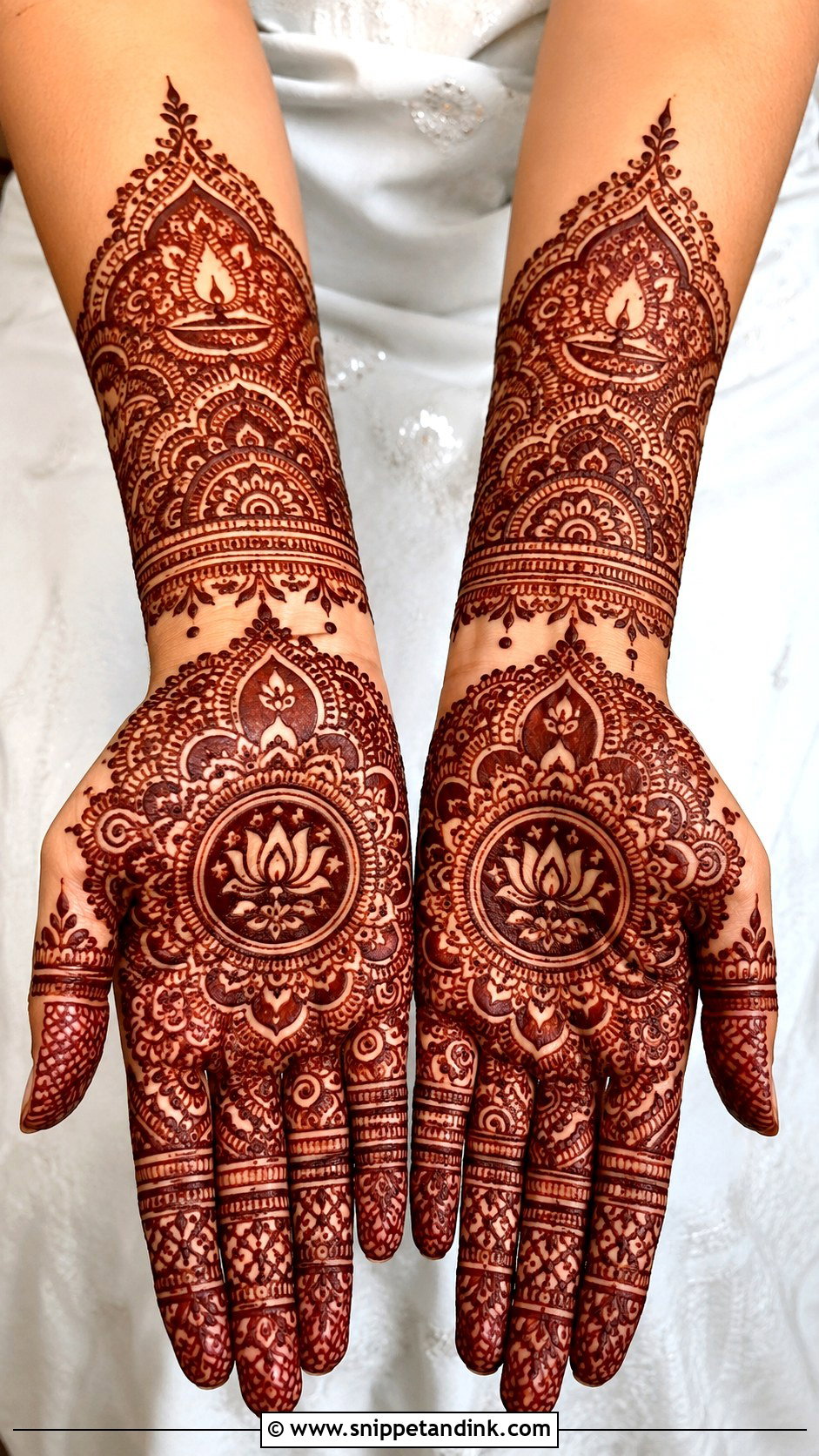
Diwali palms feel like rangoli: a circular centre with lotus, paisleys, diya shapes and detailed finger bands around it. Small dots and leafy borders fill it out without making it bridal-heavy. It needs to look complete for puja and family photos and still be quick enough to fit into festival preparations. A neat cuff or single bracelet line finishes the wrist.
24. Full Palm Karwa Chauth Mehndi Design
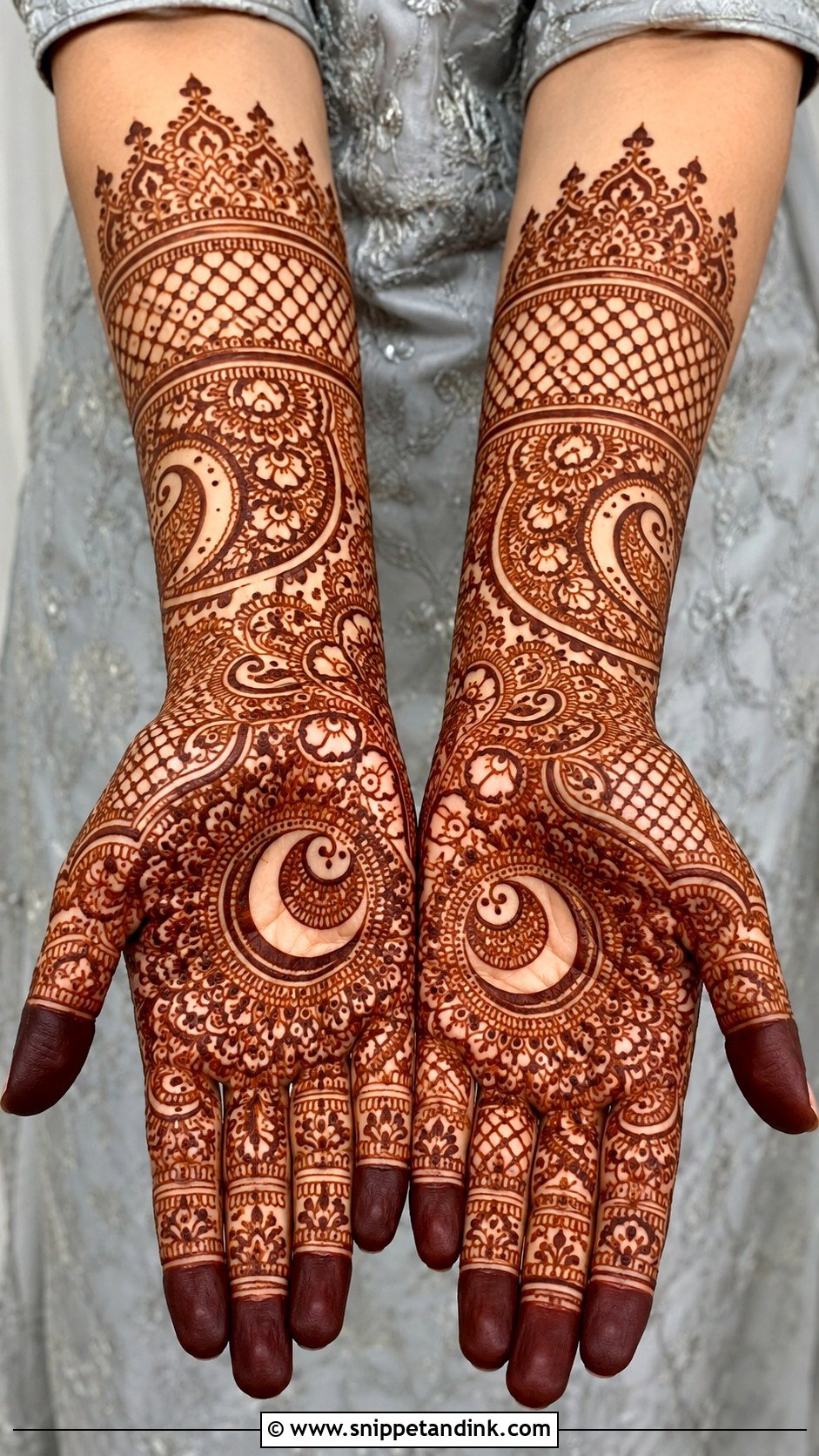
Karwa Chauth palms tend to be traditional and detailed: paisleys, mandalas, bridal symbols, moon curves and fine finger work. Hands are held open during the rituals and photographed that way, so I check the balance with the palm flat and fingers spread before I finish. Dense Indian patterns give the classic version; one central motif with surrounding details gives a modern one. Dark fingertips and a wrist cuff complete it against bangles.
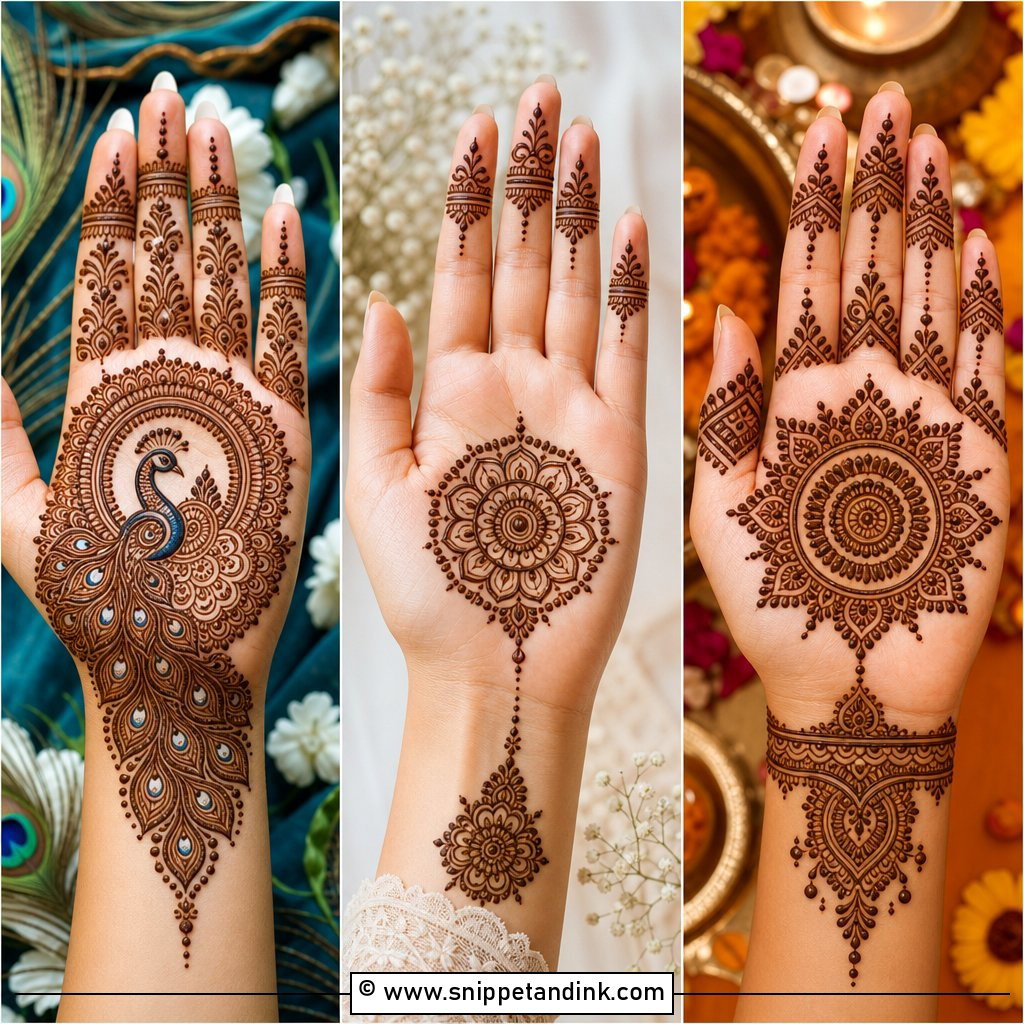

25. Full Palm Engagement Mehndi Design
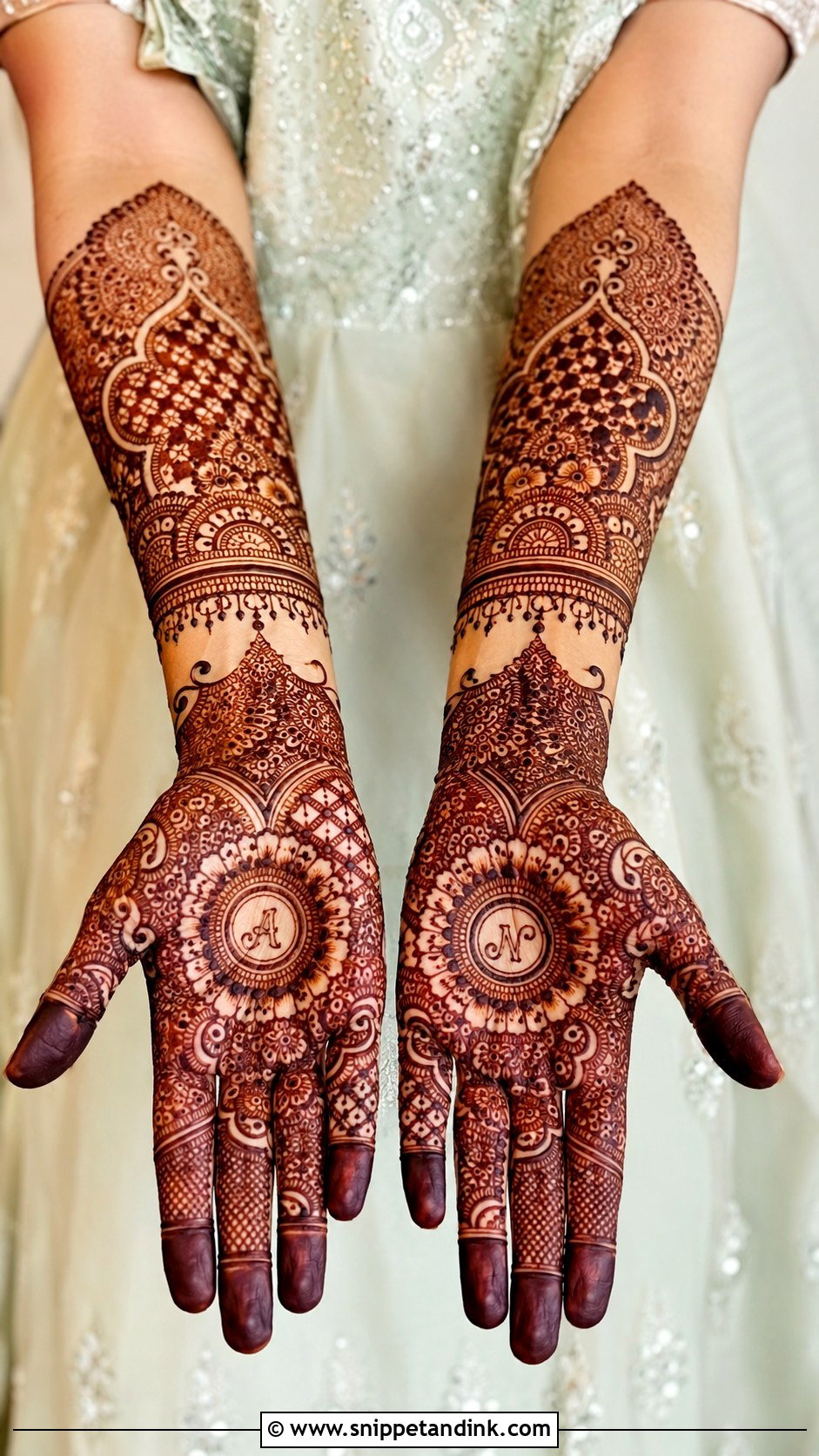
Engagement palms can include ring motifs, initials, floral mandalas, soft paisleys and fine jaali, lighter than bridal but still full. A central flower with curved vines toward the fingers and a slim wrist bracelet is a layout I draw often. During the ring exchange, both palm and fingers are in frame, so I keep the finger patterns clean around the ring finger so the jewelry doesn’t get lost.
26. Full Palm Wedding Guest Mehndi Design
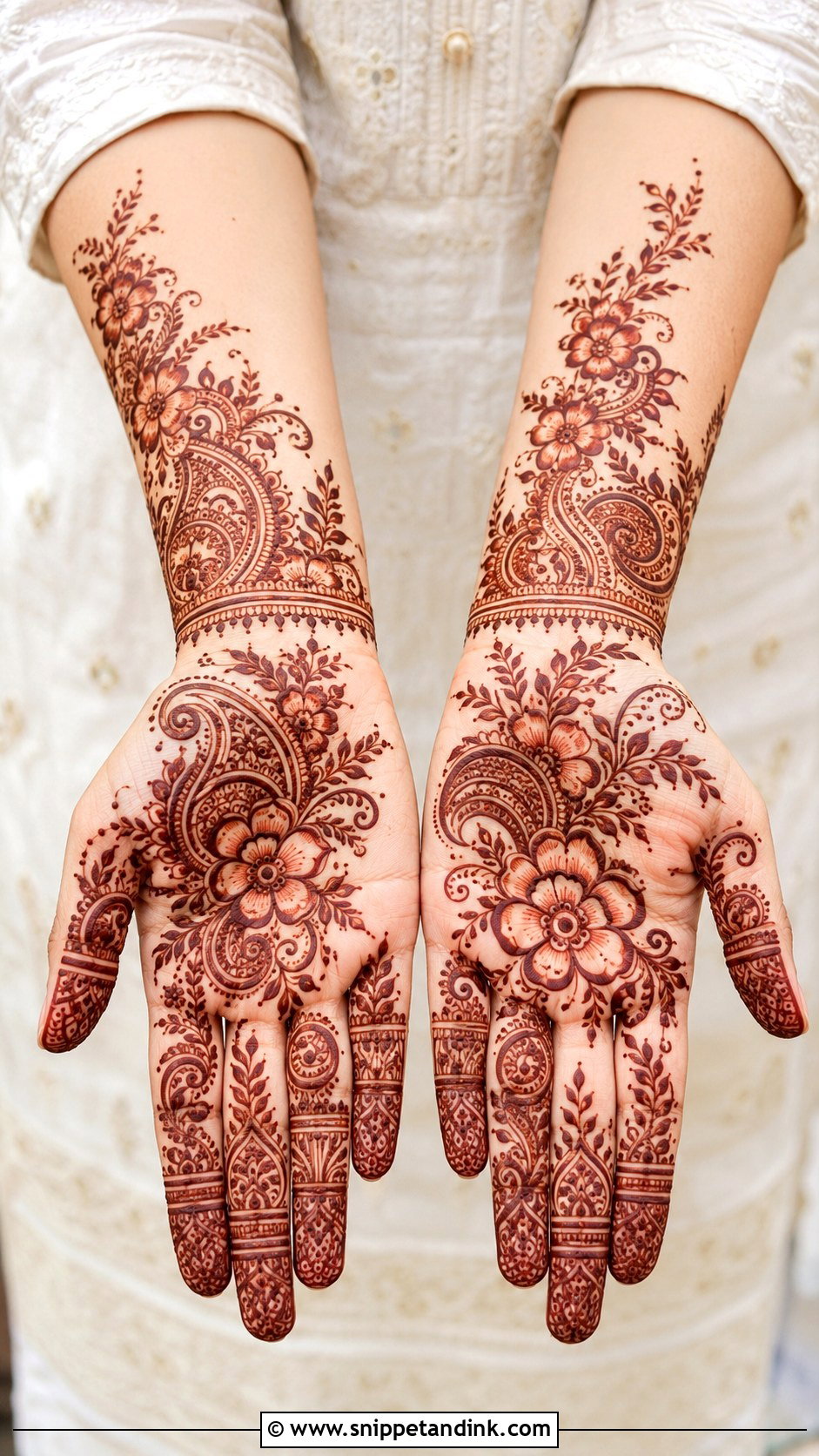
A full palm wedding guest mehndi design should be festive without approaching bridal weight. Florals, paisleys, leafy trails, mandalas or jaali patches covering the palm neatly are enough, and Arabic or Indo-Arabic layouts apply quickly when the queue is long. Let the palm carry the decoration and keep the wrist simple. If you wear rings, skip crowded finger work. A diagonal trail with shaded petals is the dependable choice.
27. Full Palm Kids Mehndi Design
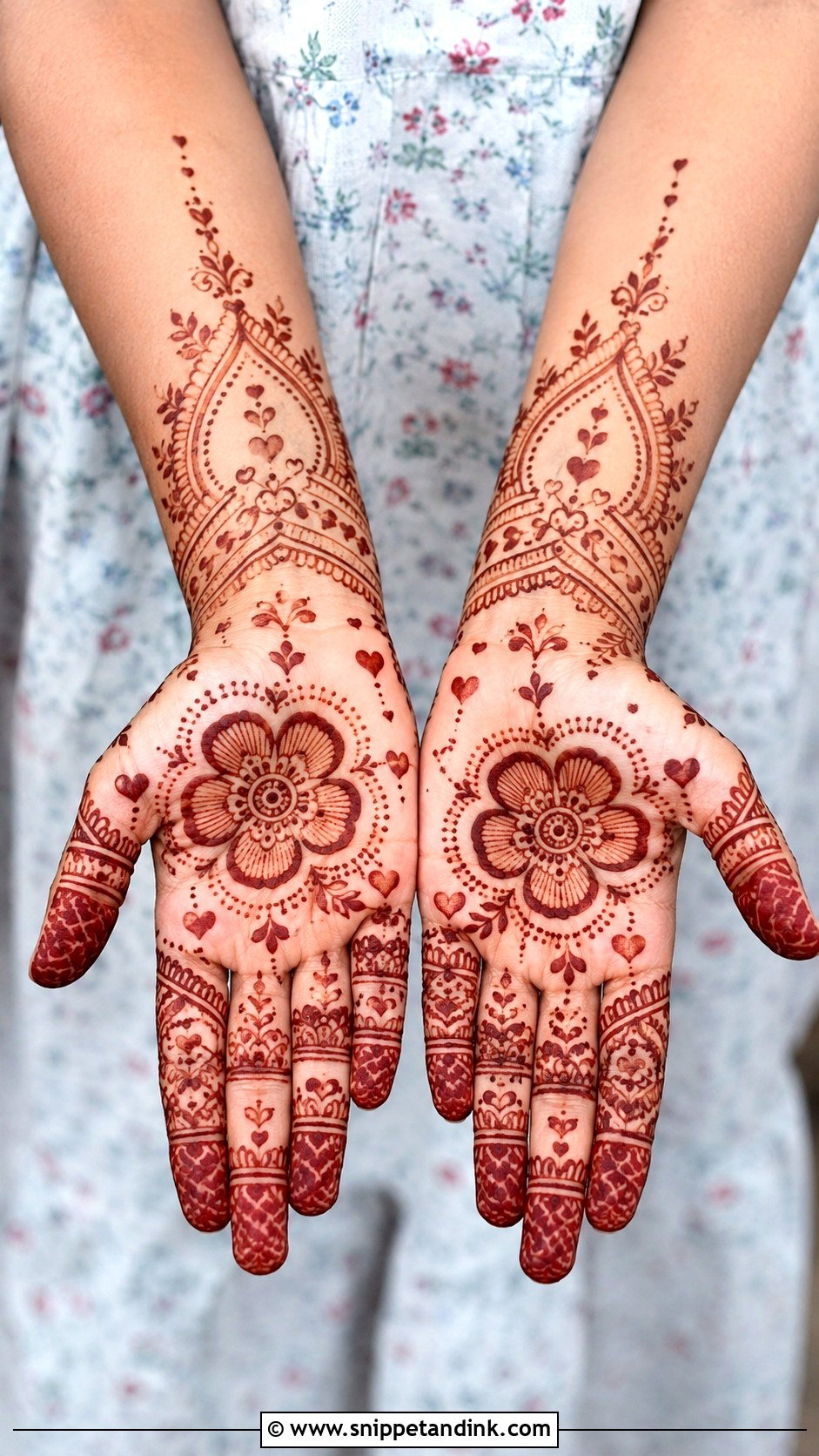
Children won’t sit still for long, so I keep kids’ palms bold and fast: simple flowers, hearts, small mandalas, leafy vines, dots and easy fingertips. Round shapes and firm outlines dry quickly and survive small hands touching everything. Use only natural henna on children, never a black or instant-dark cone. Eid, weddings and school cultural days are when I see the most little hands.
28. Full Palm Beginner Mehndi Design
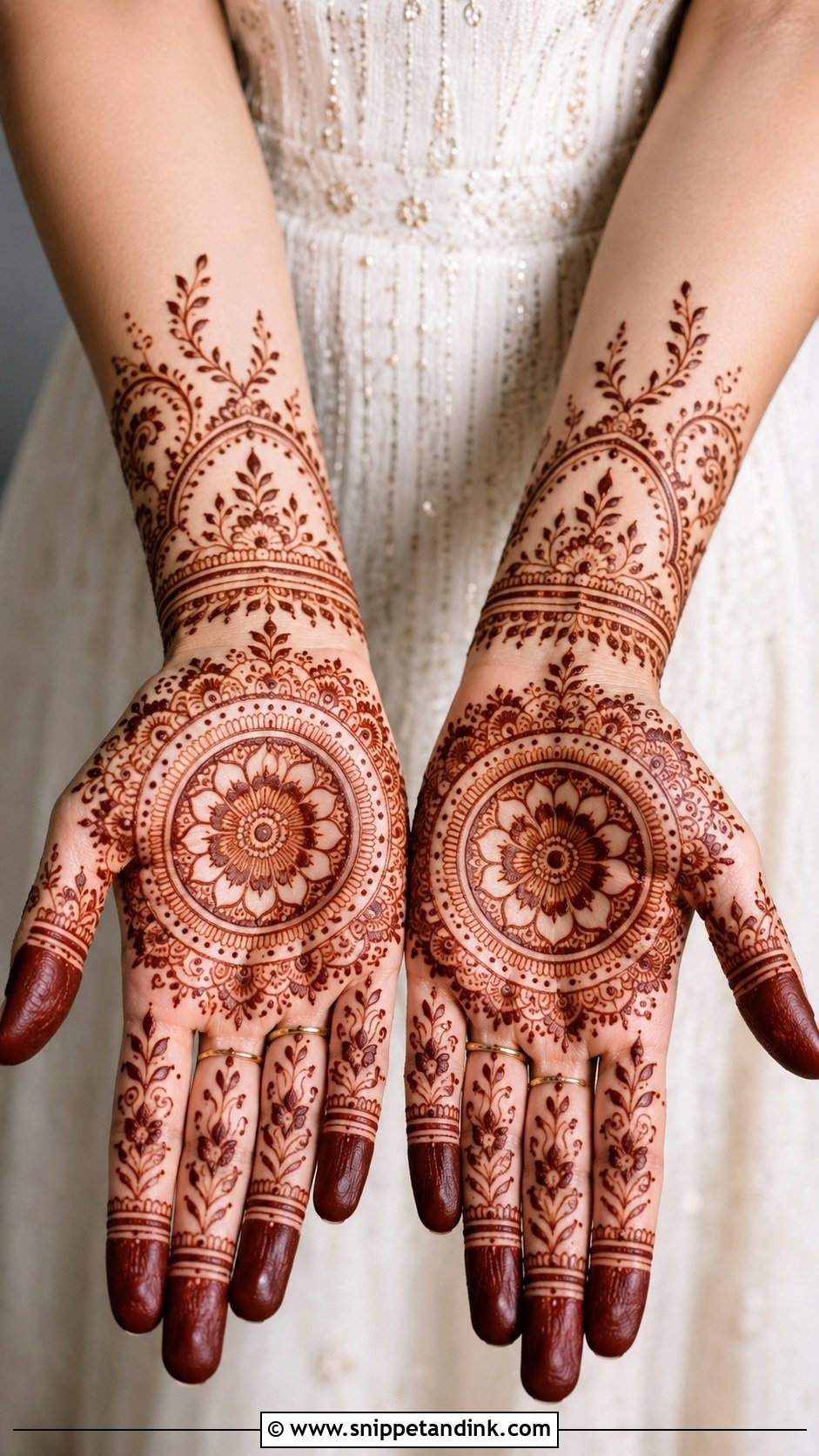
For a first attempt, start with a large central flower or mandala and add curved vines, dots, leaves and simple borders around it. Fingers get repeated lines, tiny leaves and filled tips, all easier than complex patterns. This is how you learn spacing, symmetry and even cone pressure. Big motifs cover the palm naturally; tiny fillers are where practice is needed, so leave them for later. A simple wrist band finishes it.
29. Full Palm Shaded Mehndi Design
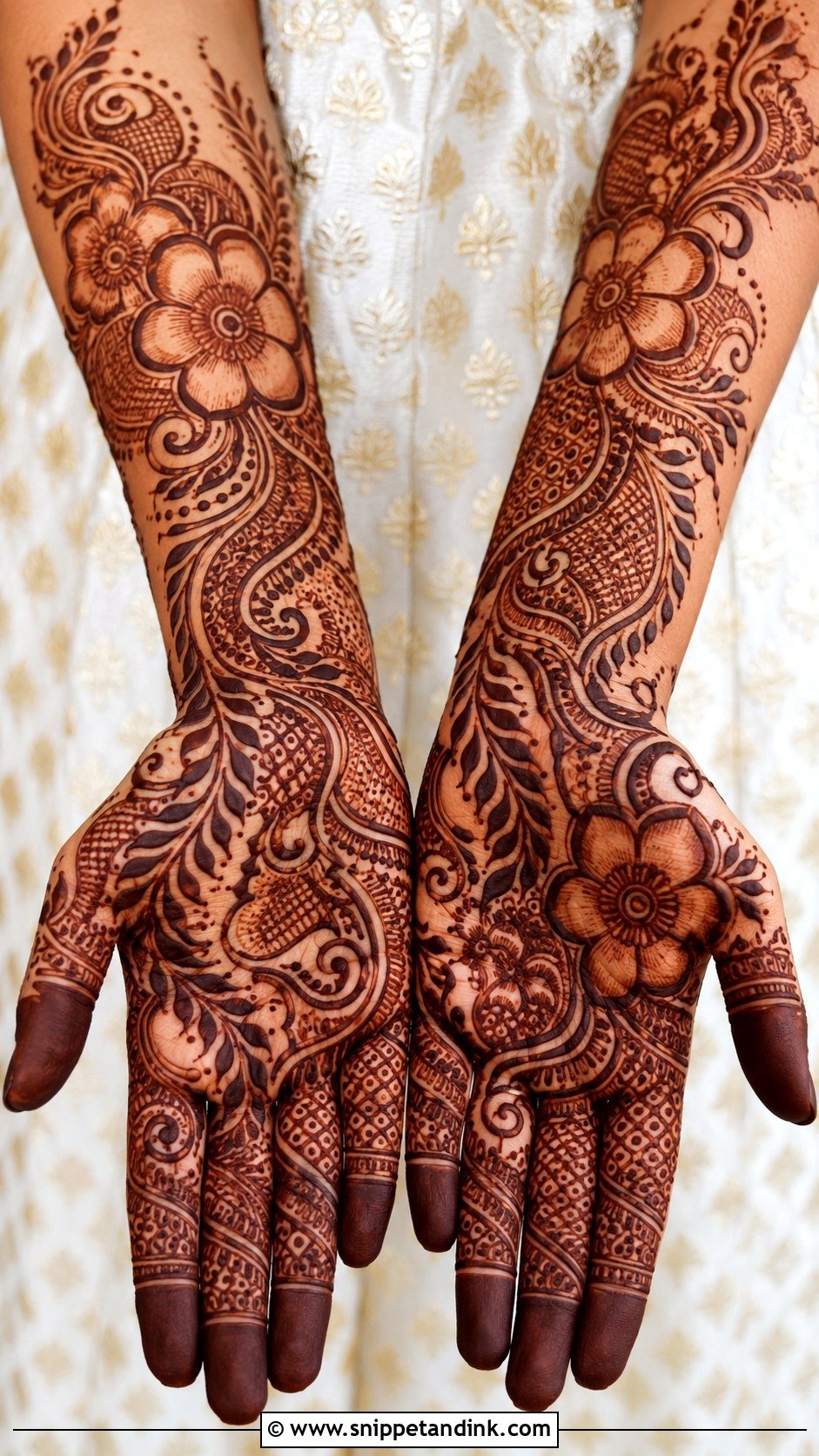
A full palm shaded mehndi design adds depth with soft filling inside flowers, leaves, paisleys and curved panels, so motifs look full without extra lines. Arabic and Gulf palms use it most, since their large flowers need dimension. One major floral trail or a mix of mandala and paisley shapes works. Bold outlines matter, because the shaded areas stain lighter by design and need a clear edge to hold them.
30. Full Palm Jewelry Mehndi Design
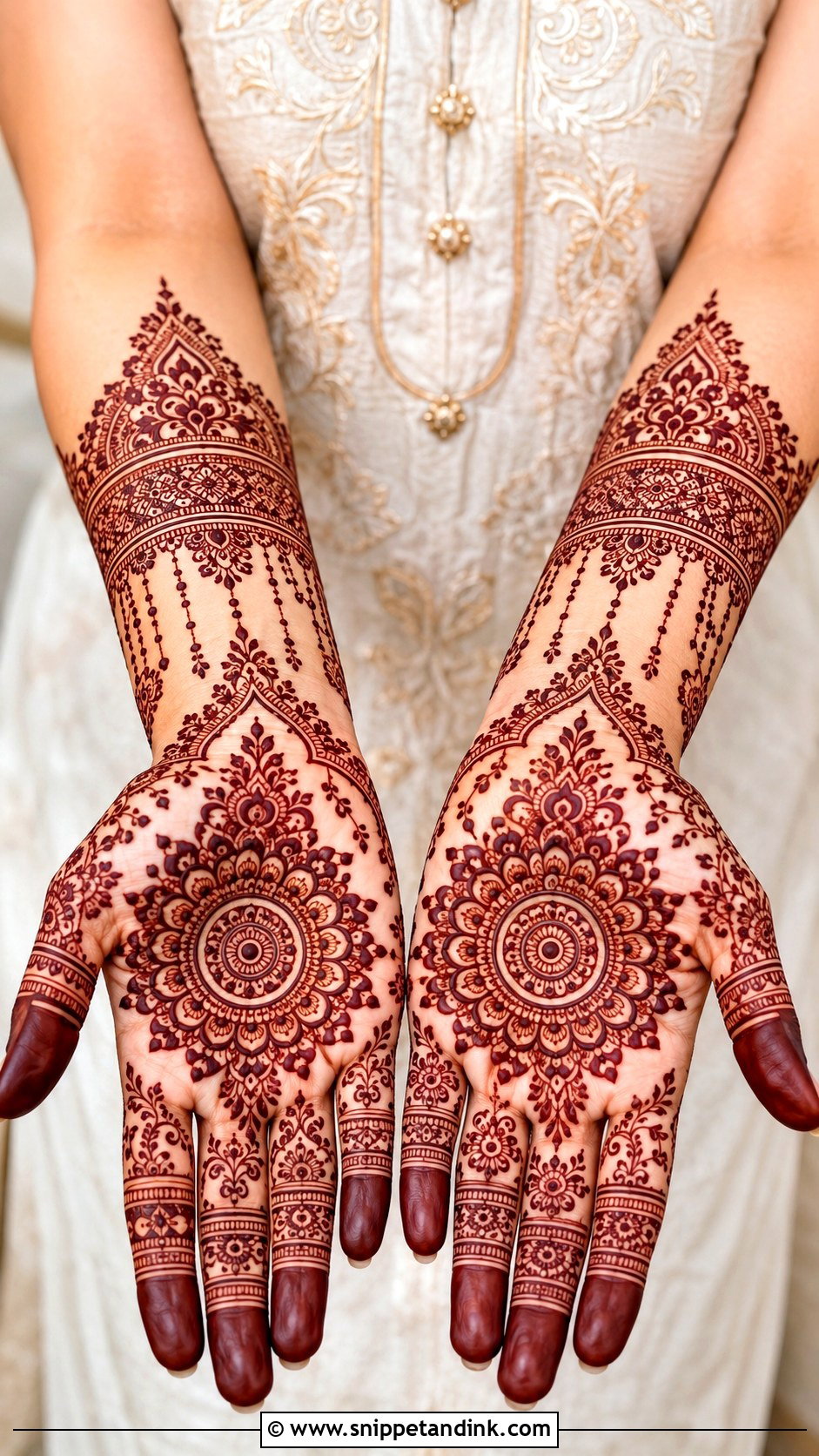
Jewelry palms borrow from rings, chains, bracelets and the haath phool: a central mandala or floral pendant, dotted chains running toward the fingers and wrist, finger rings and small hanging dots. Keep the chains thin and the pendant bold so the structure shows. With minimal outfits, the hand becomes the accessory, which is exactly why bridesmaids and modern guests ask for it.
Six Hours Without Using Your Palms
Covered palms take your hands out of action in a way back-hand designs don’t. You can’t hold a phone, open a door, eat or use the bathroom without risking the paste, and the longer it stays on, the darker the colour. So plan the evening around it.
- Eat and use the bathroom before you sit down, and keep someone nearby for the next few hours.
- Charge your phone and set it face-up on a stand; you’ll be tapping it with a knuckle.
- Once the paste is dry, a light dab of lemon and sugar helps it cling. Don’t drench it, or it will run.
- For sleeping, I wrap dried palms loosely in tissue and slip them into old cotton socks or gloves. It keeps the paste on your skin and off the bedsheets.
- In the morning, scrape it off dry. Hold off on washing for as long as you can.
Small Hands and Sensitive Skin
Natural henna paste is plant powder, lemon or water, sugar and an essential oil that helps release the dye. Some skins react to the oil, so for children and anyone with sensitive skin I do a small patch on the inner wrist first and wait. Avoid any product that promises a black stain or instant dark colour on a child. If a design itches, swells or blisters, wash it off and get it looked at instead of waiting for the colour to finish.
The Palm Is Where Your Darkest Colour Lives
The palm gives you the darkest colour and the most room, so it deserves the design you care about most. A classic mandala, a heavy bridal palm, an Arabic trail, Moroccan geometry or a soft floral can all work; let the occasion, outfit, hand shape and your patience for sitting decide. For a darker stain, use natural henna, let it dry fully and keep water off it as long as you can. The rest is spacing and a steady cone.
You'll Like These Ideas:







Leave a Reply