
Light henna is what most people actually wear: a design that goes on in under an hour, sits comfortably with everyday clothes and still looks festive in a family photo. This collection covers front hands, back hands, fingers, wrists, palms and light full-hand work, drawing on Indian, Arabic, Indo-Arabic, Moroccan, Gulf and minimal henna patterns. They share the same building blocks, florals, paisleys, mandalas, leaves, jaali and bracelet bands, used sparingly with plenty of open skin. I’ve added notes on where each design sits on the hand, what to watch for while piping it, and when I’d choose something else.
Mirror the Two Hands, or Let Them Differ?
One question I ask at every appointment is whether you want matching hands. A mirrored pair looks formal and traditional, which suits a bride or a puja. It also doubles the time, because the second hand has to copy the first exactly.
For a lighter look, I often make the hands complementary rather than identical: a fuller design on one hand and a trail or finger work on the other, sharing the same motifs and line weight. It looks deliberate and saves time. Another option many people like is the palm on one hand and the back on the other, so both sides show in photos.
- Keep the same style on both hands; an Arabic hand next to a dense Indian hand looks mismatched.
- Repeat one motif, such as a rose or a paisley, on both hands to link them.
- If you’re right-handed, wear the fuller design on the left, since the right is used more and wears faster.
1. Simple Front Hand Mehndi Design
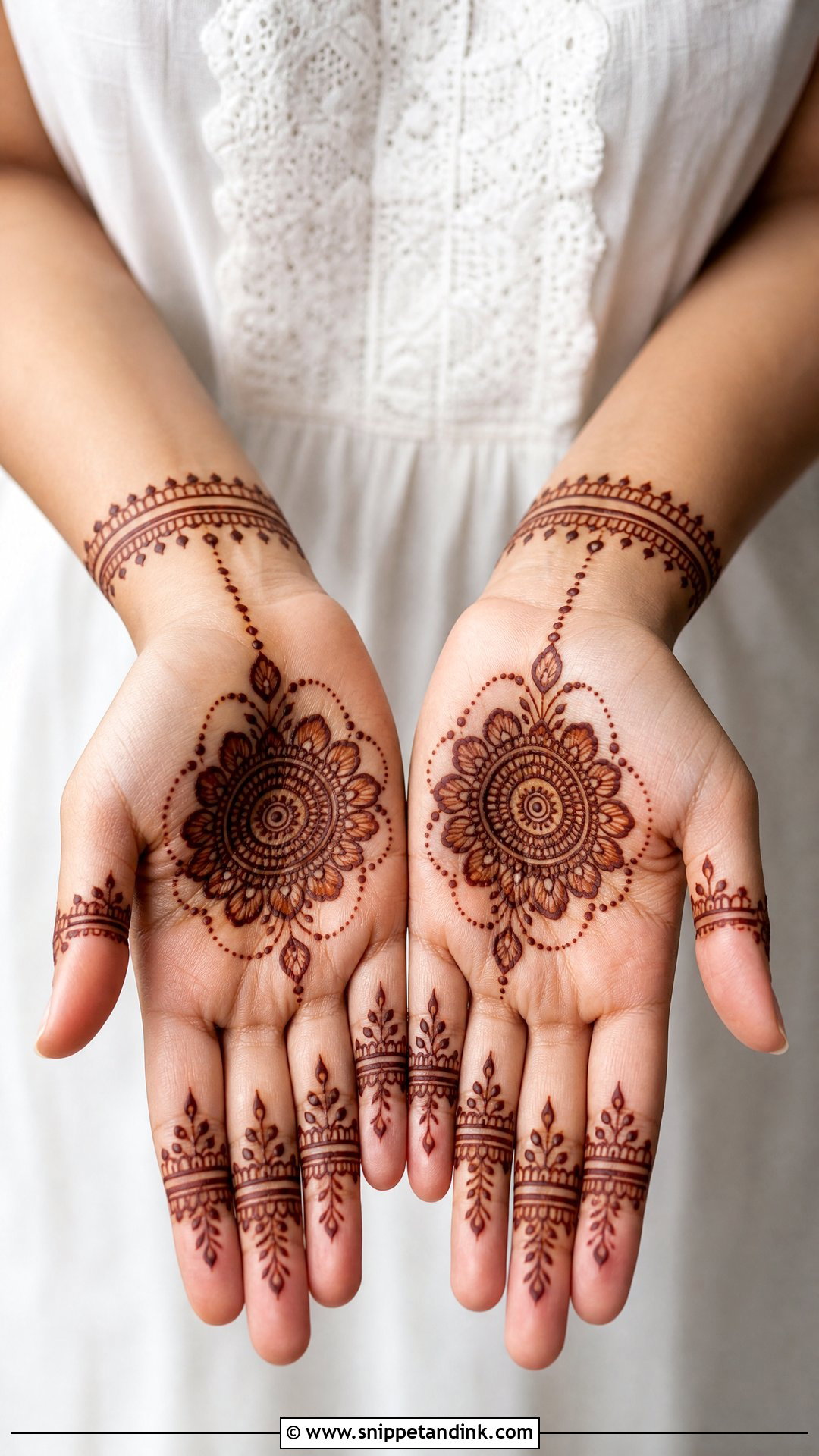
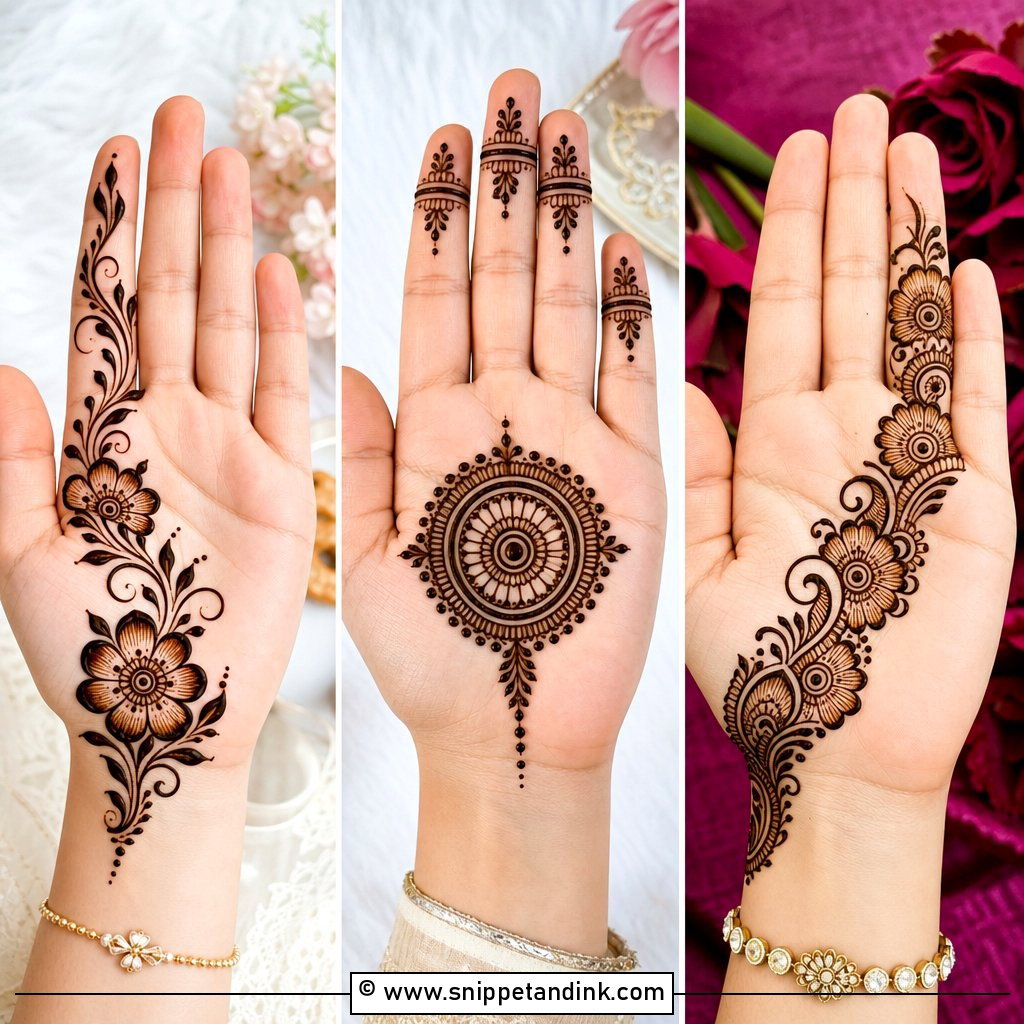
A medium mandala in the center of the palm, ringed with small petals, dots and curved vines, gives the palm one clear focus. The fingers take thin leafy strips, small flowers or clean bands. I keep the mandala medium rather than large, because on the palm a big one runs into the crease lines and distorts every time you close your hand. Small gaps between motifs keep it airy, and it dries quickly enough to wear to a gathering the same evening.
2. Simple Back Hand Mehndi Design
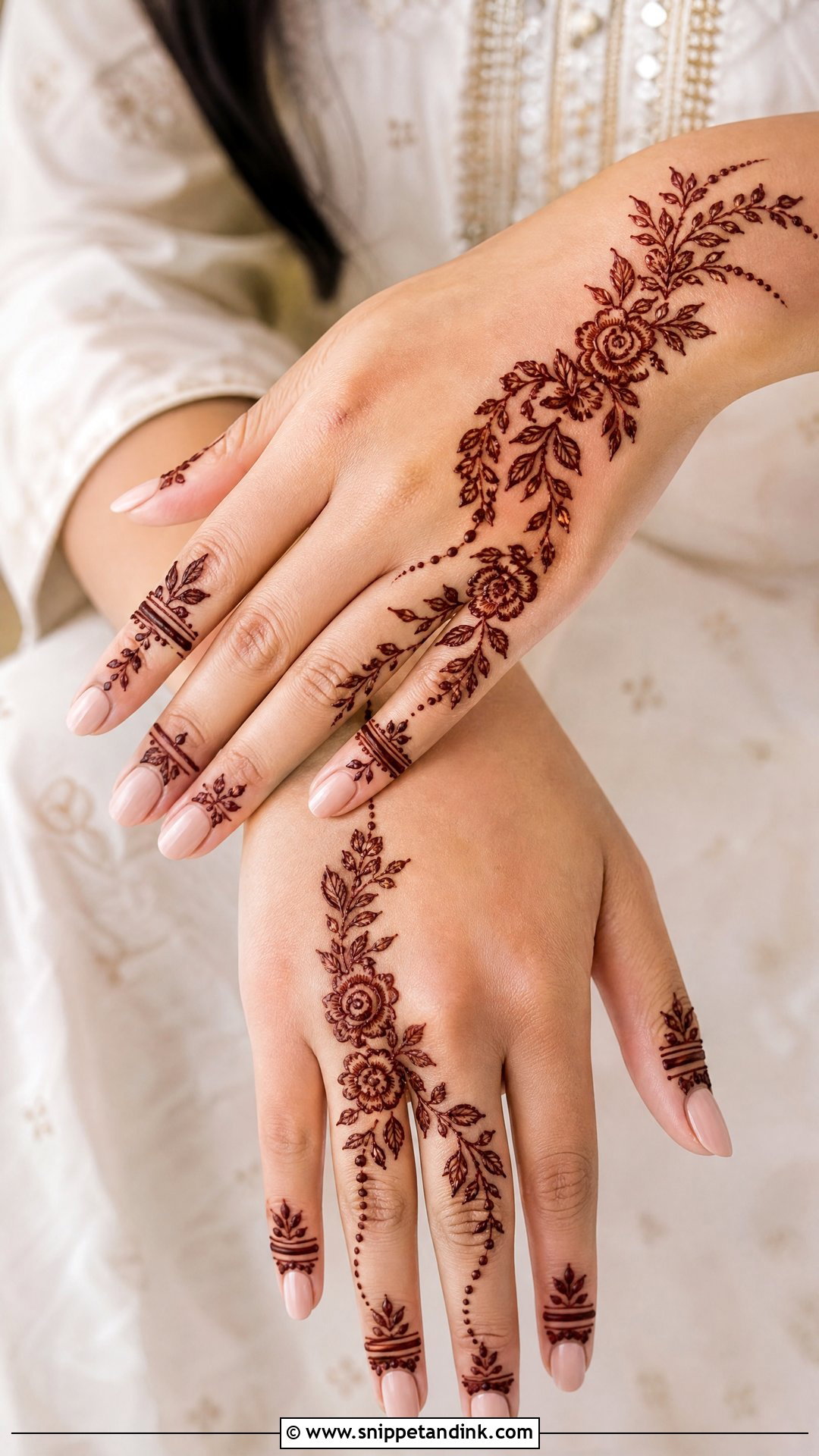
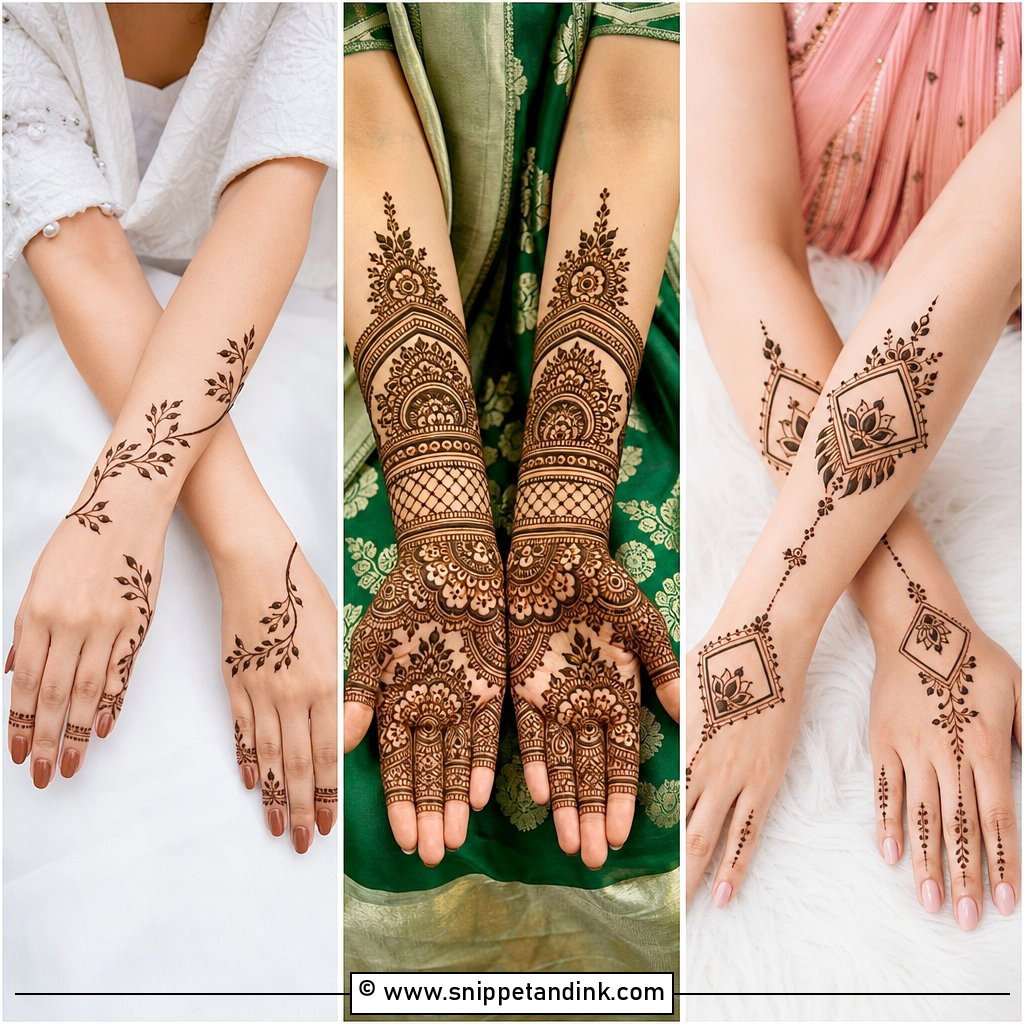
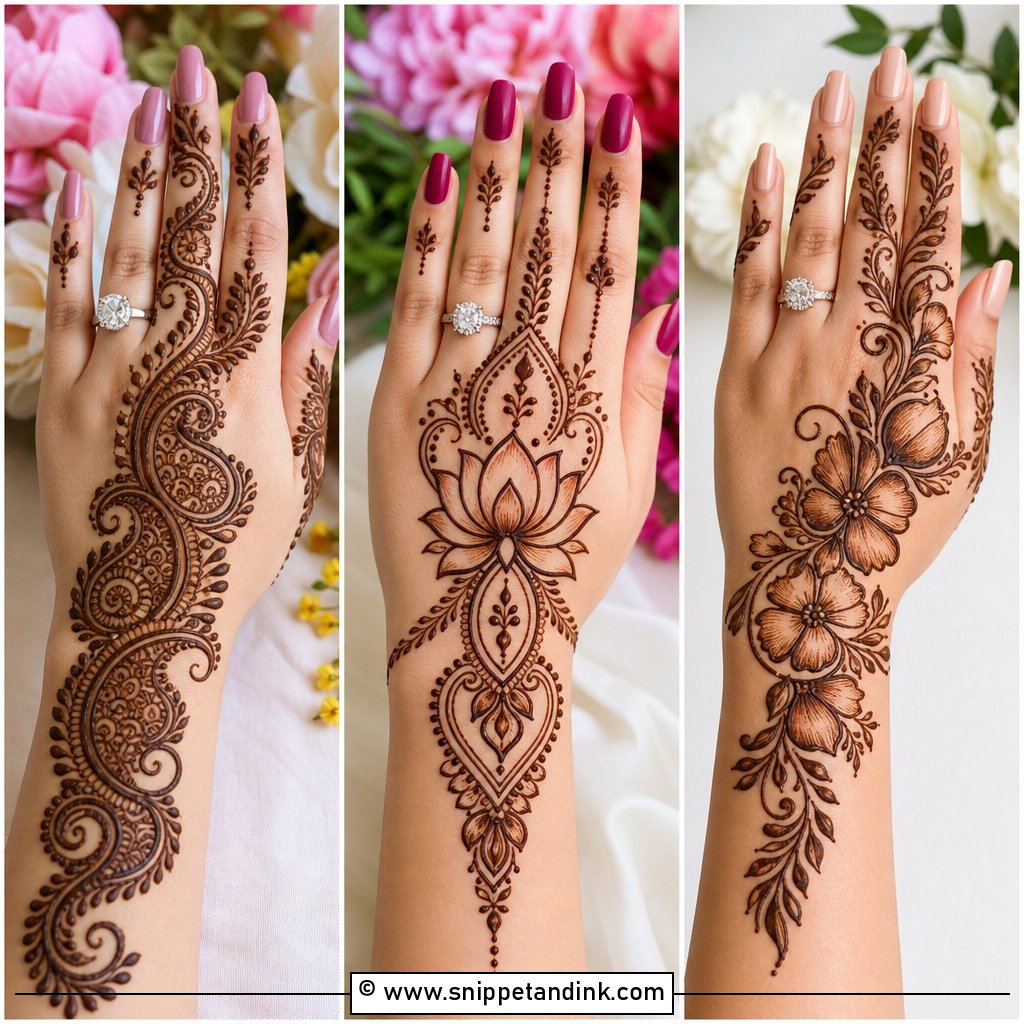
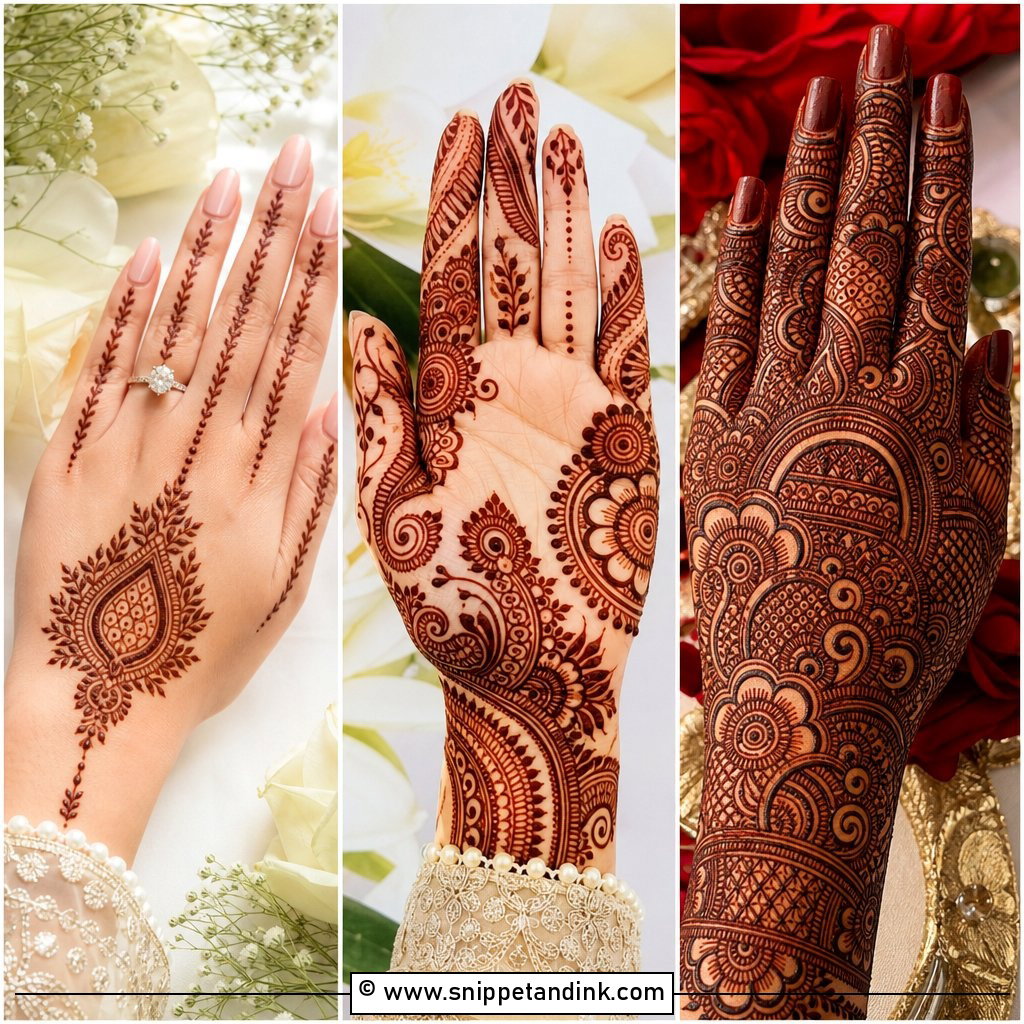
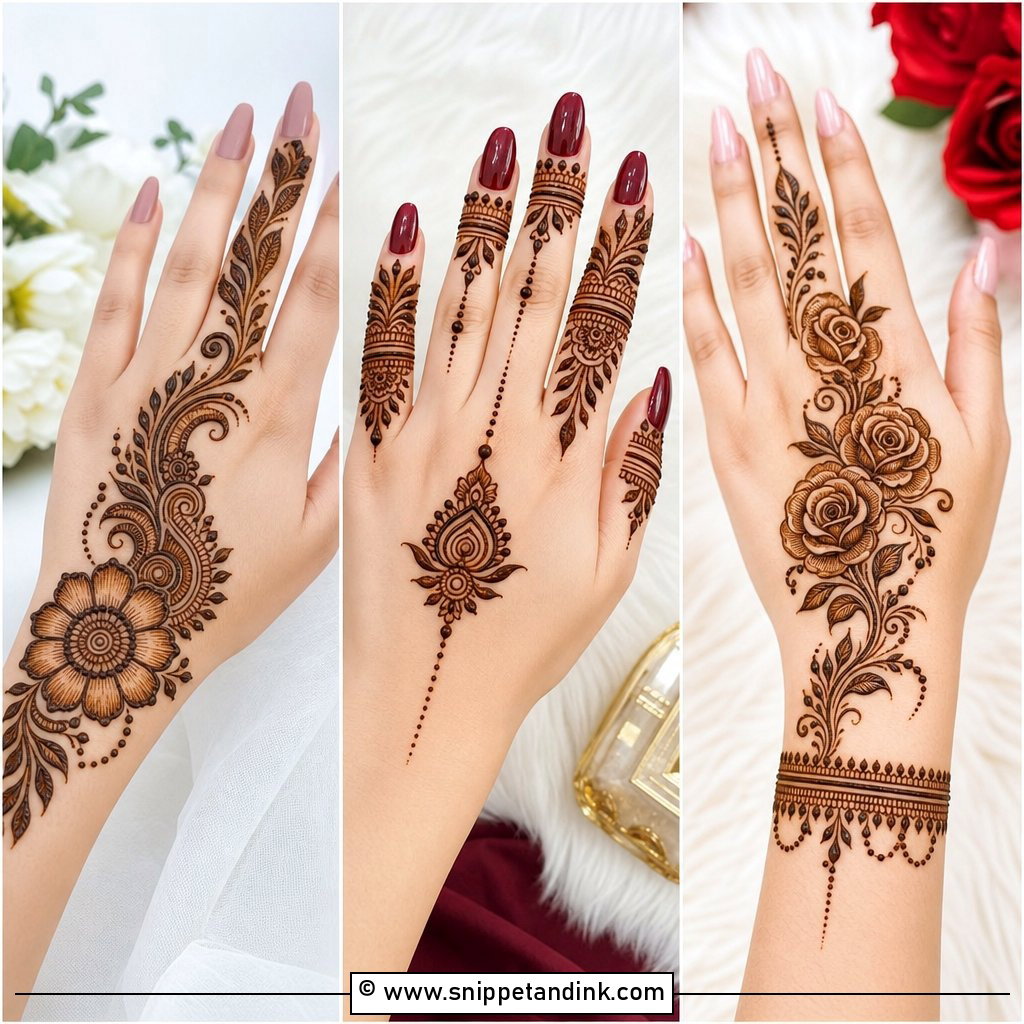
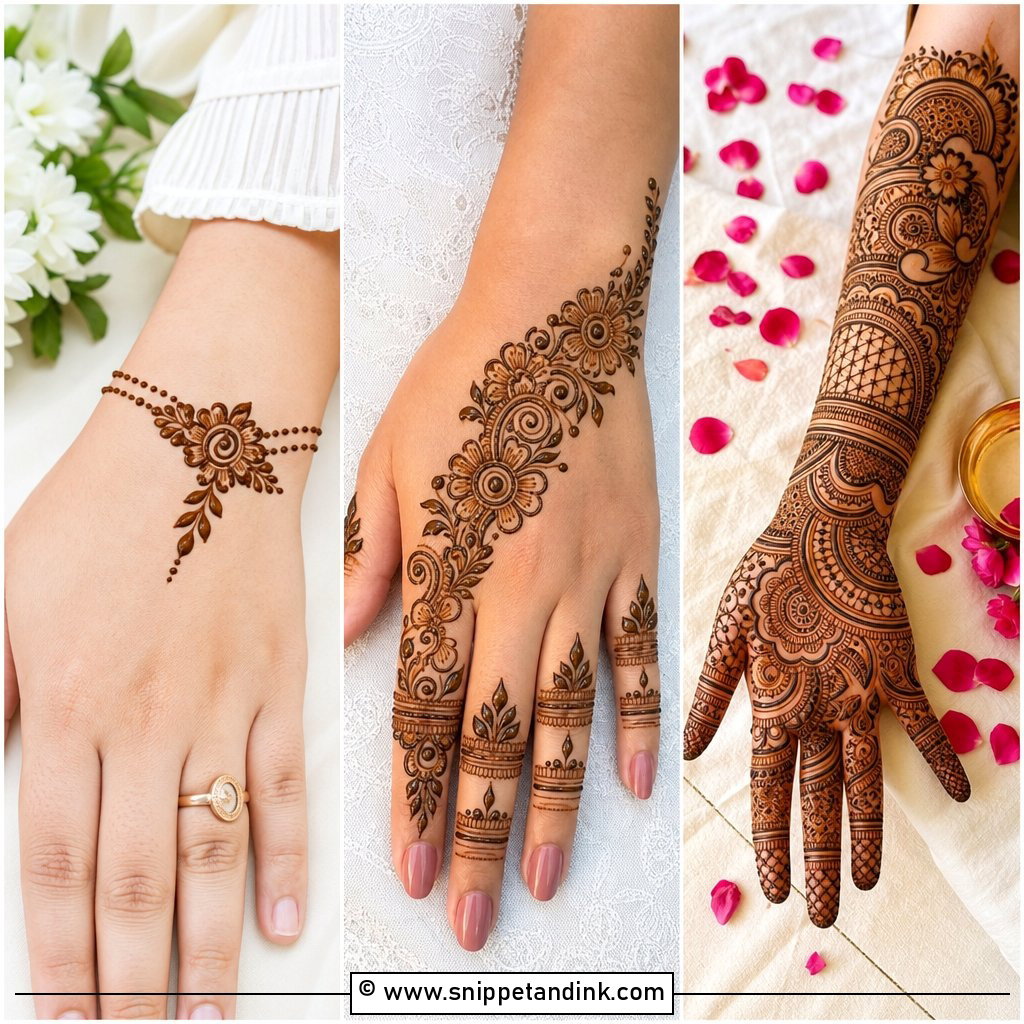
A floral trail that starts near the wrist and climbs toward the index or middle finger follows the hand’s natural line, so it never looks forced. Small leaves, dots and curved stems give it movement, and the other fingers take thin rings, half-flower tips or leafy bands. The open spaces matter for photos: in a close-up of a hand holding a glass or a bouquet, a sparse trail reads clearly where a dense pattern turns into texture. It sits easily beside bangles and rings.
3. Simple Arabic Mehndi Design
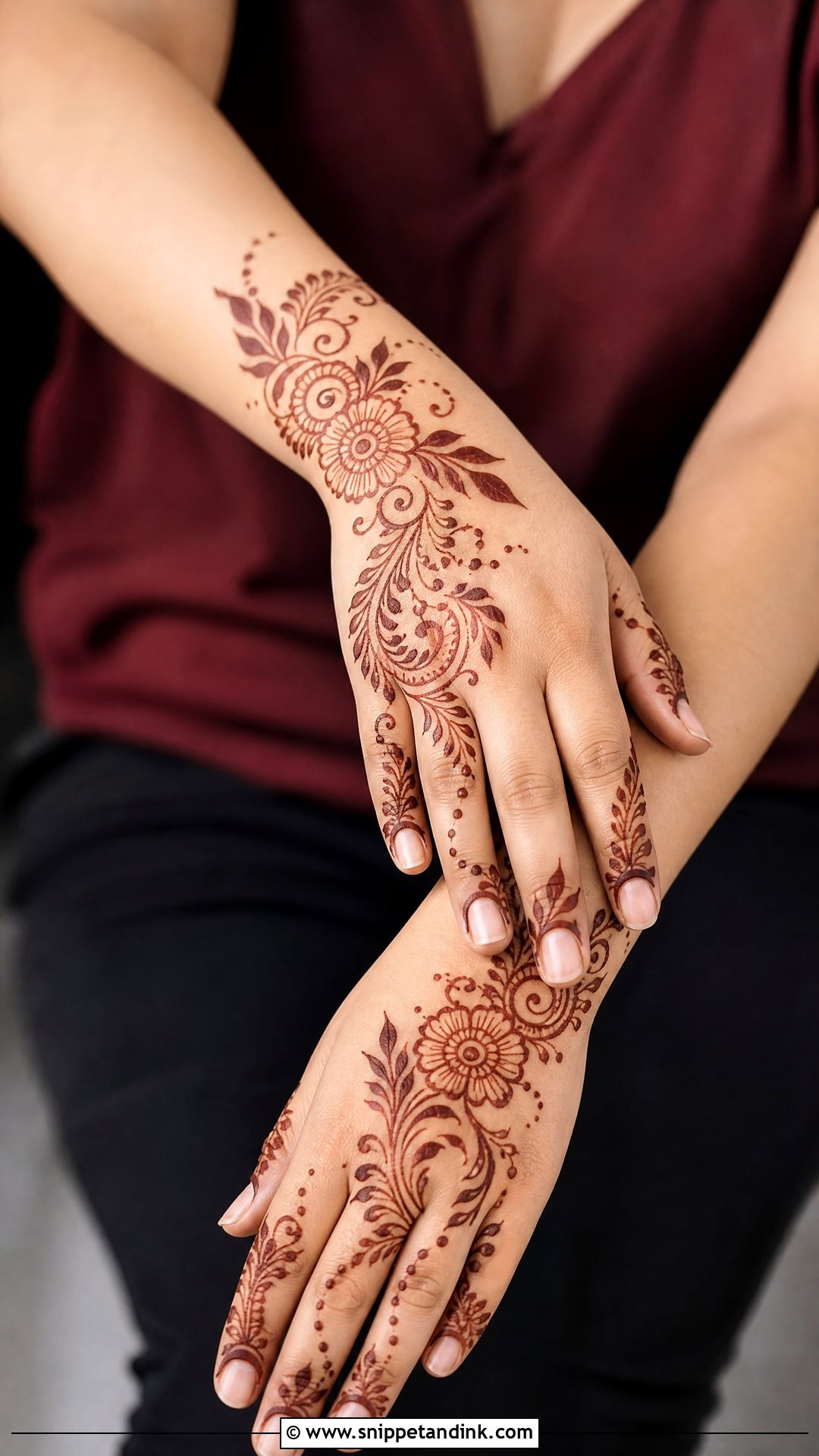
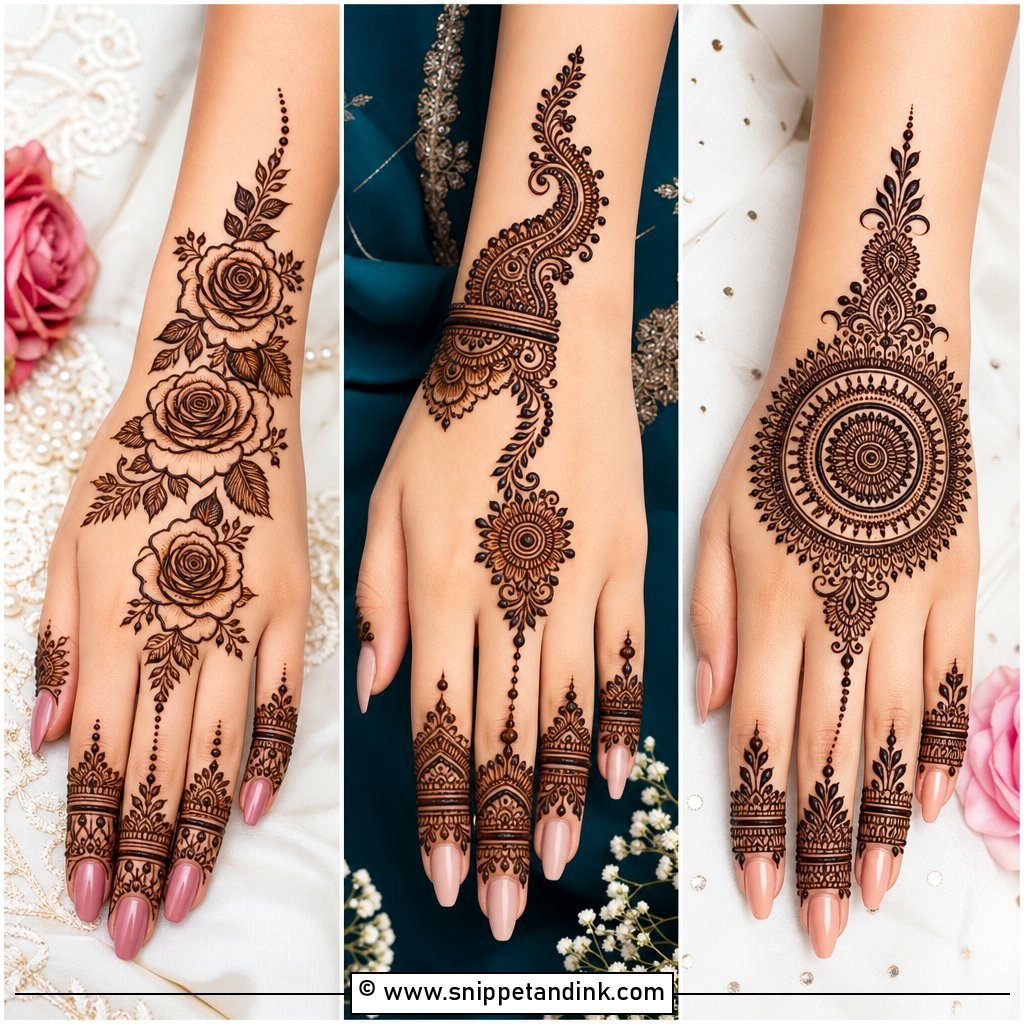
Arabic work is all about flow. A diagonal trail starts at one side of the wrist and crosses the palm toward the fingers, carrying large flowers, curved leaves, small paisleys and fine dots. I leave open skin between each motif and keep the fingers to vine lines or small floral tips. Its strength is speed: it covers the hand visually with a fraction of the paste of an Indian design, which is why it’s such a reliable pick for Eid or an engagement dinner.
4. Simple Indian Mehndi Design
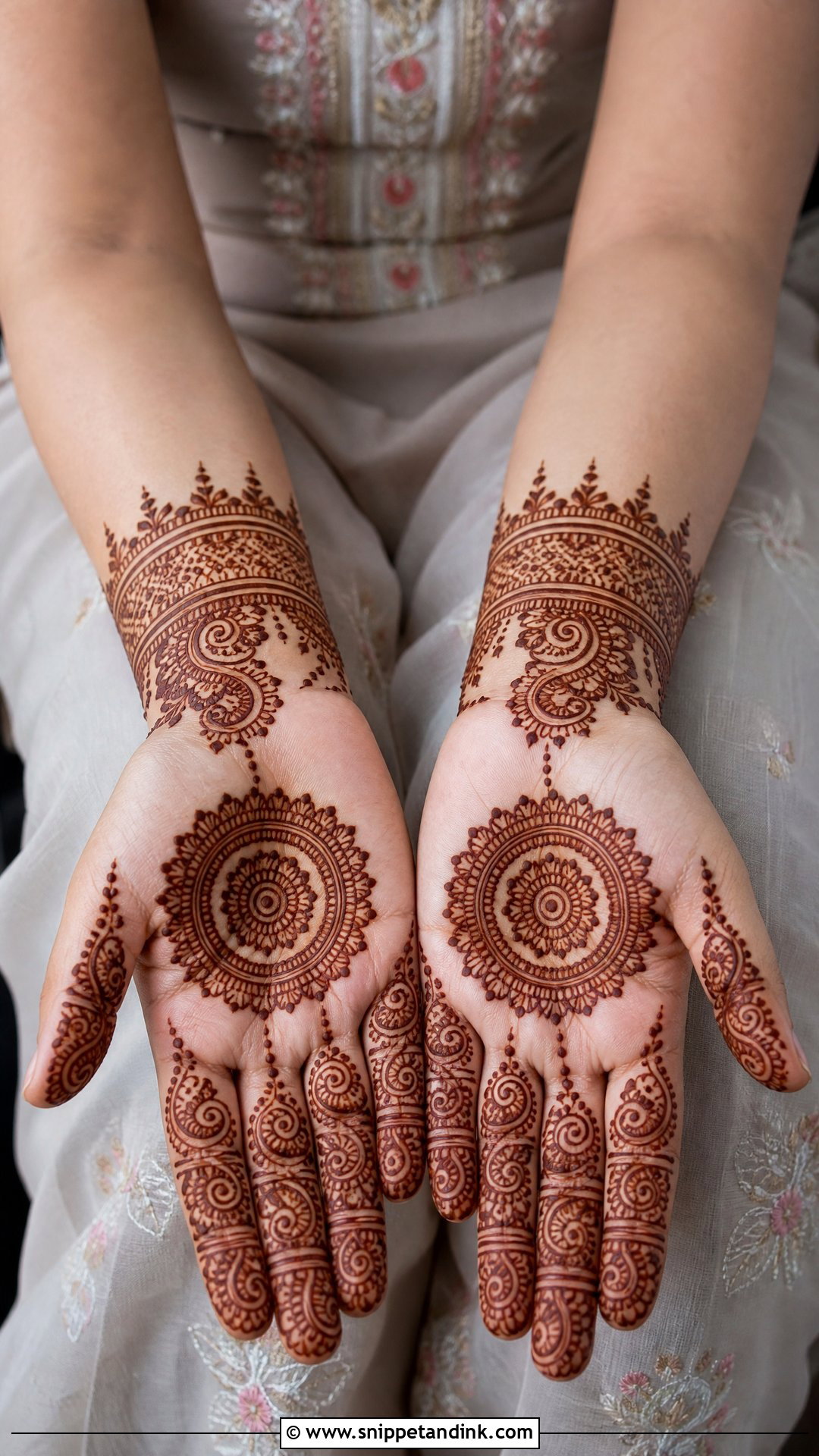
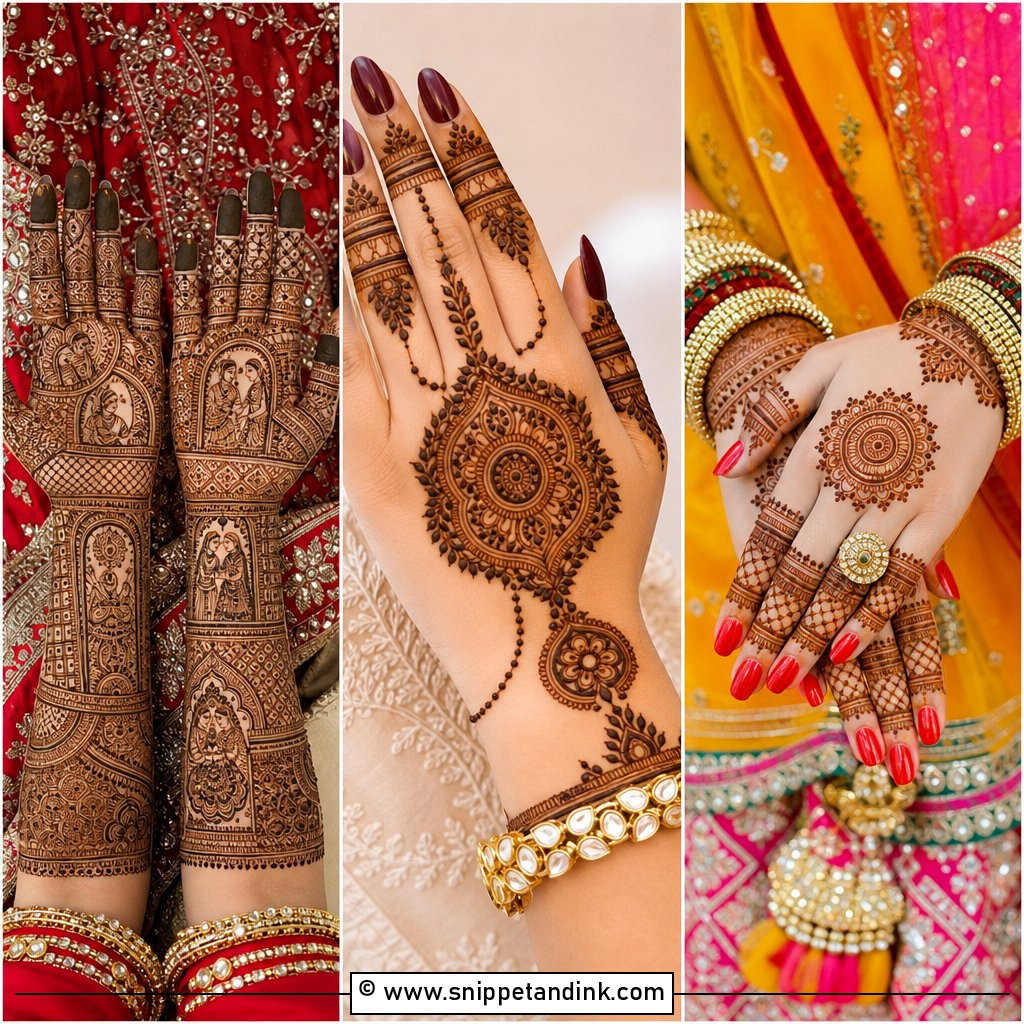
Indian mehndi can be light if the layout is planned before the cone touches skin. A round tikki or mandala sits in the palm, surrounded by small paisleys, petal borders and dotted curves, with a slim cuff at the wrist. On the fingers, I use small checks, leaves and curved lines instead of heavy filling. The checks are worth practicing: evenly sized squares on each finger segment give the look its traditional character. It suits Diwali, Karwa Chauth and puja mornings.
5. Simple Flower Mehndi Design
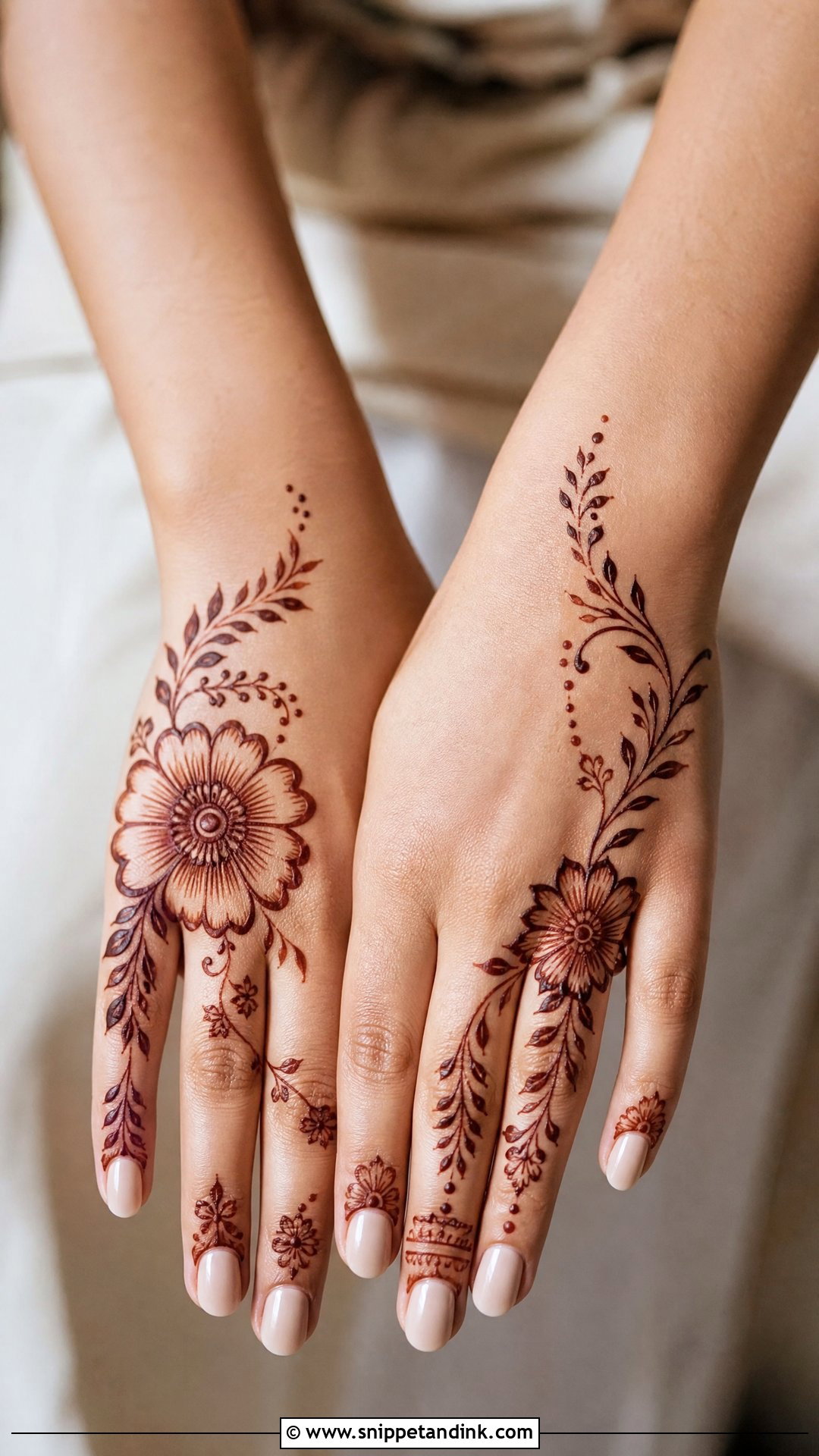
One large flower on the palm or the back of the hand, with smaller flowers stepping toward the wrist and fingers, joined by leaves, dots and thin swirls. The petals should be bold enough to stand out, but I never fill every space between them. I size the flowers in clear steps, large, medium, small, so the eye travels along them. It suits sisters and bridesmaids who want something sweet but light.
6. Simple Mandala Mehndi Design
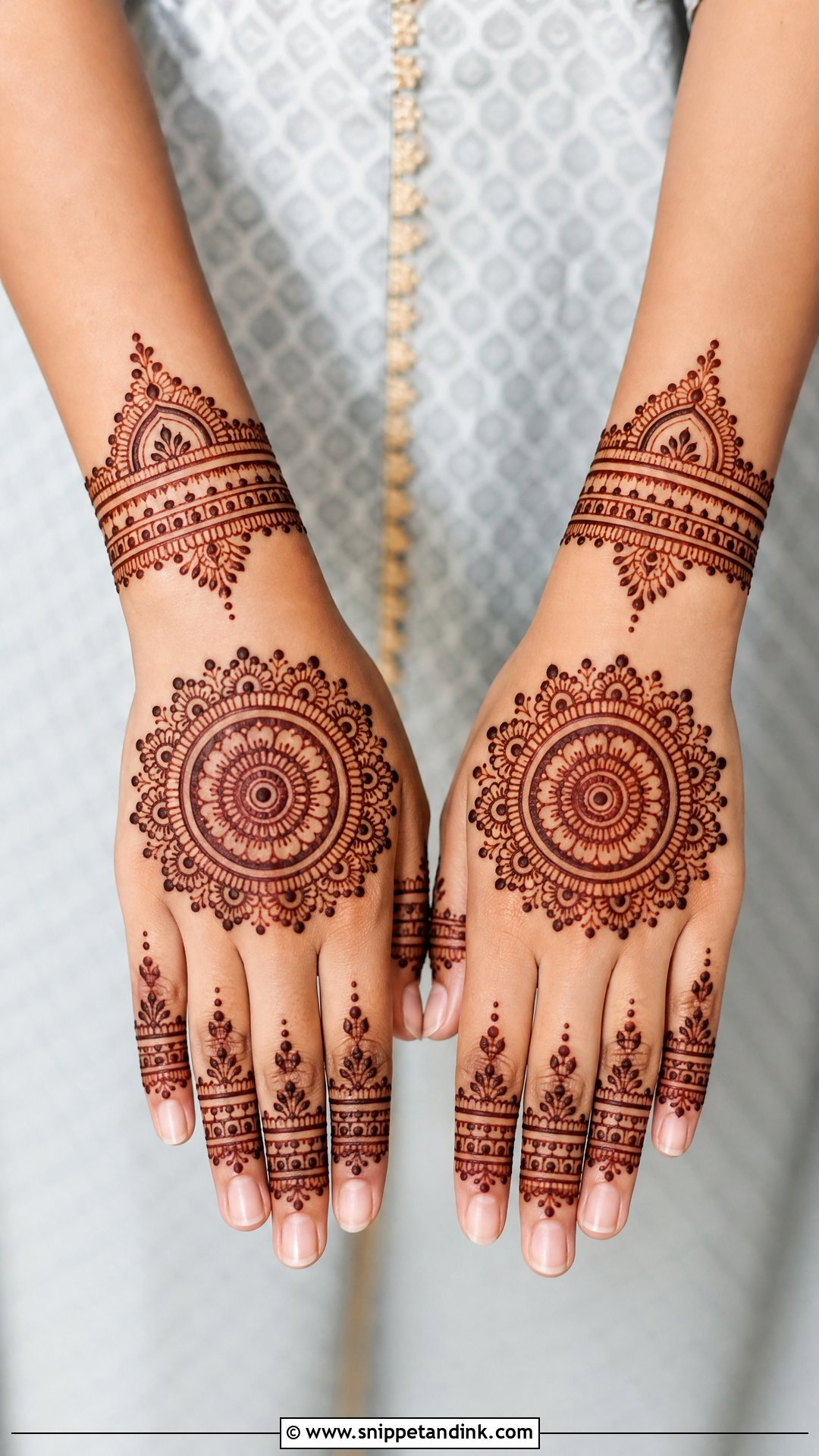
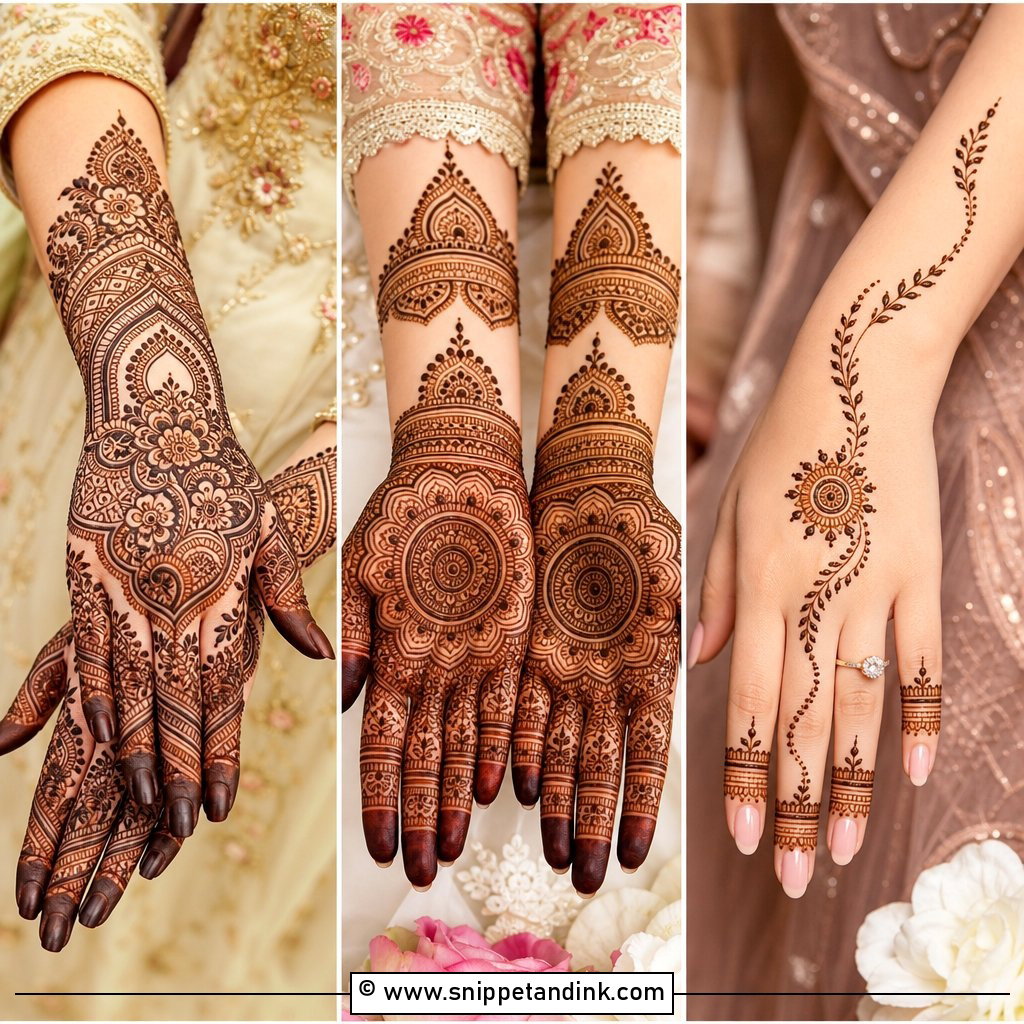
A round mandala in the middle of the palm or the back of the hand, built from circles, small petals, dots and fine scalloped edges, needs open space around it to look its best. Small bands, dots and leaf tips on the fingers complete it. The pattern repeats, so it’s easy to control and a good practice piece. The first circle sets everything else; if it’s slightly off, every ring after it exaggerates the error, so I pipe that one slowly.
7. Simple Finger Mehndi Design
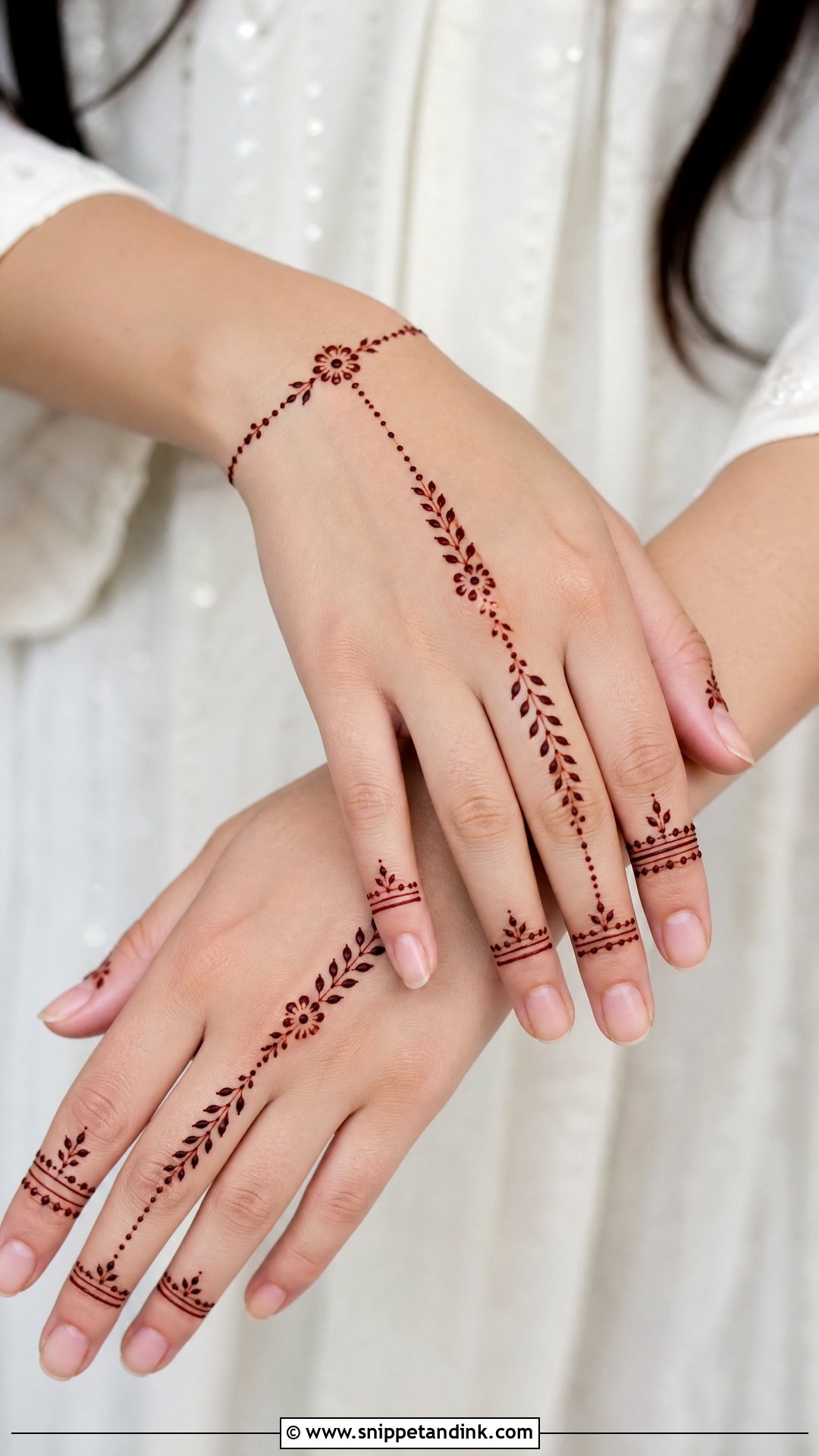
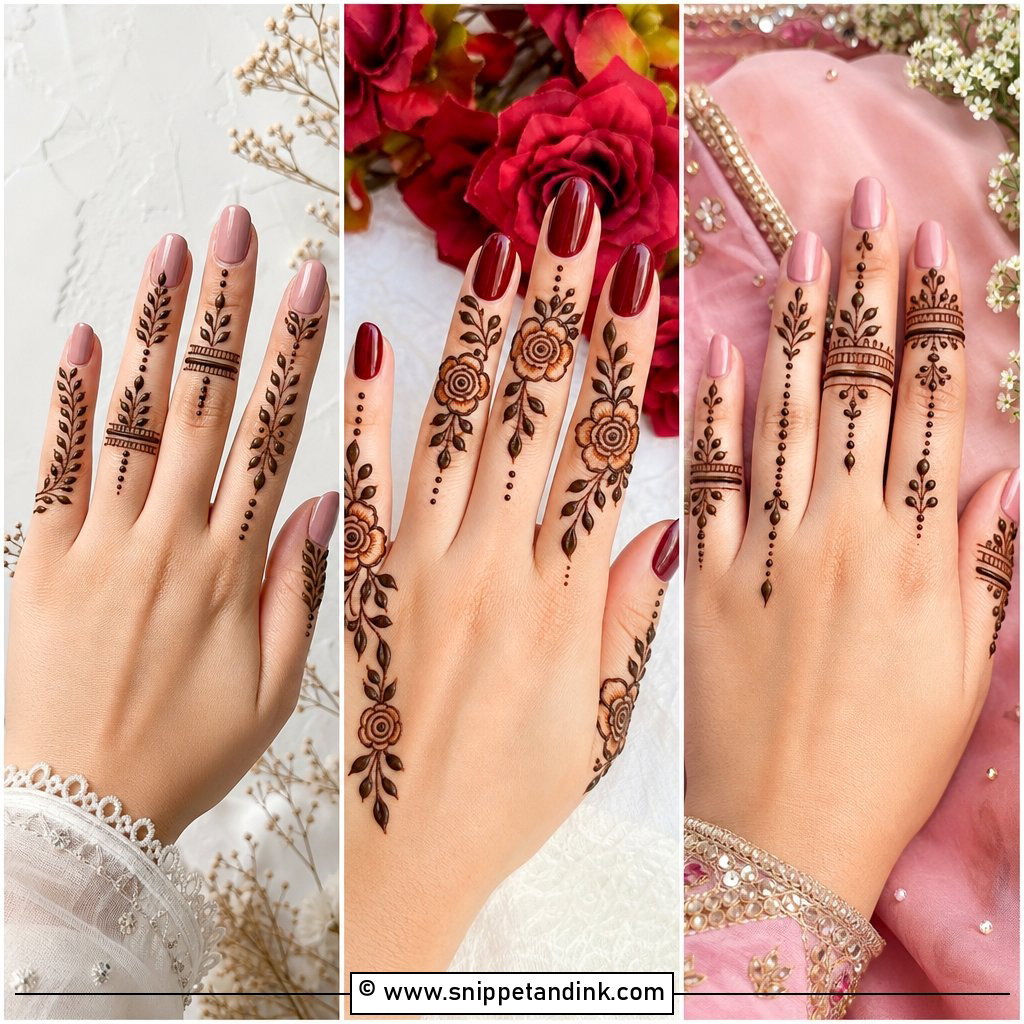
Finger-focused work keeps the palm or back of the hand mostly open while each finger gets its own pattern: leafy lines, ring bands, small flowers or dotted chains. A small wrist bracelet or a tiny palm motif ties it together. I vary the motif between fingers but keep the line weight the same, which makes the set look planned. It’s quick to apply, dries fast and pairs well with nail color and rings.
8. Simple Full Hand Mehndi Design
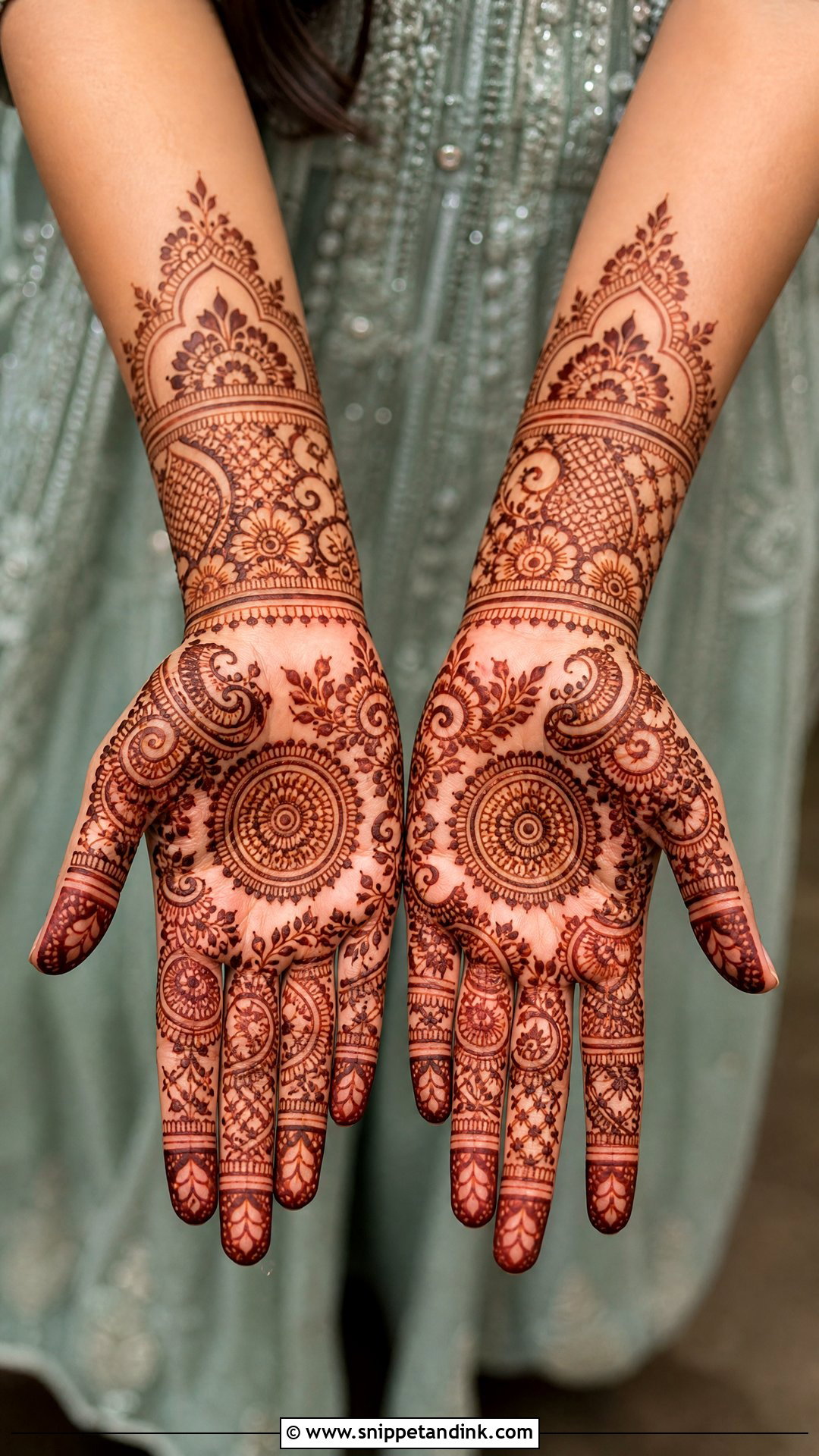
Full coverage stays light when you use larger motifs instead of tiny filling. I start with a palm mandala, add floral sections around it, then run paisley and leaf trails to the wrist and fingers. Small gaps between sections let the skin show through, and the fingers take clean lines, dots and small checks. It feels like a fuller design but takes noticeably less time, which helps when you’re one of many hands at a family function.
9. Simple Bracelet Mehndi Design
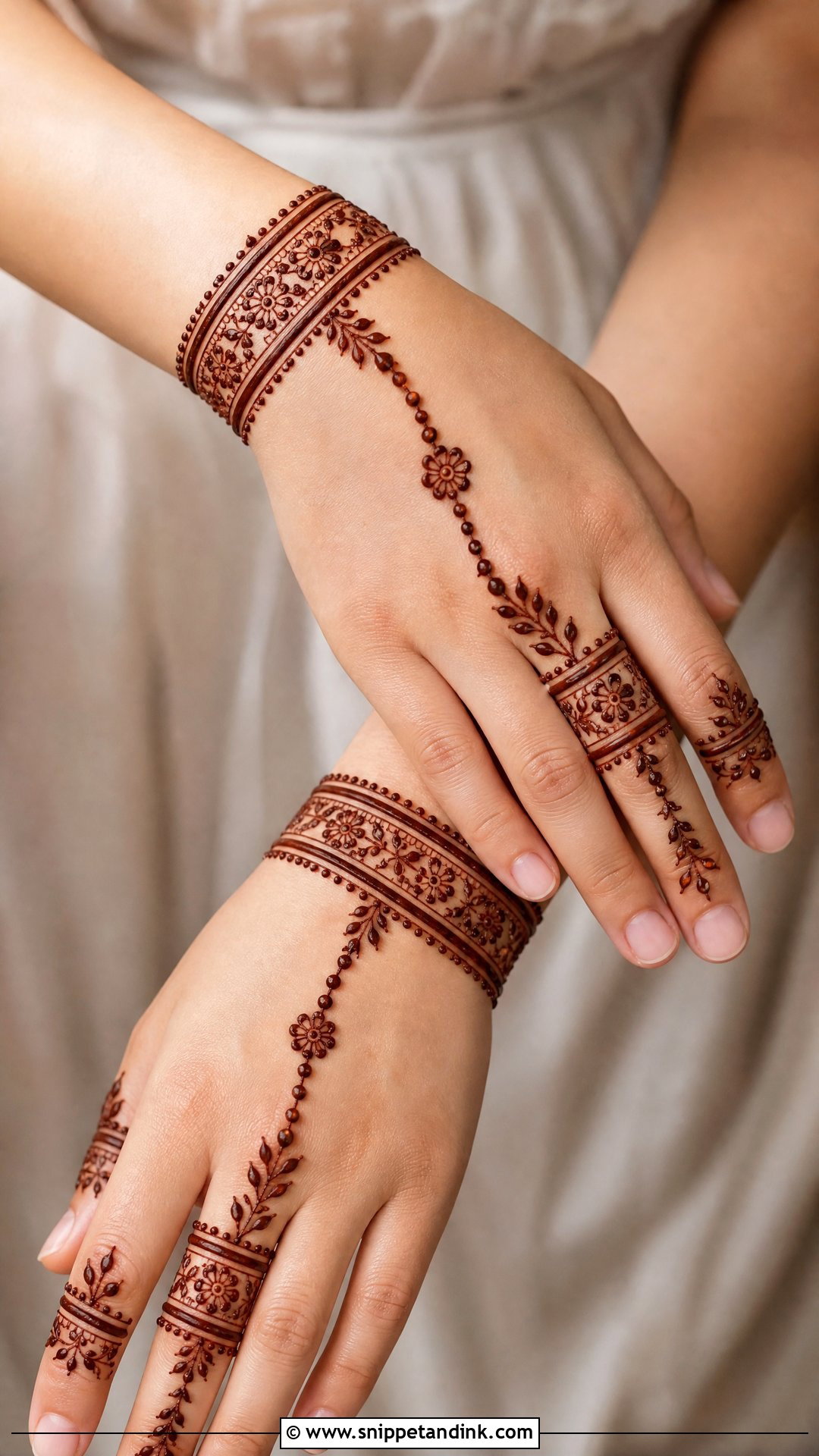
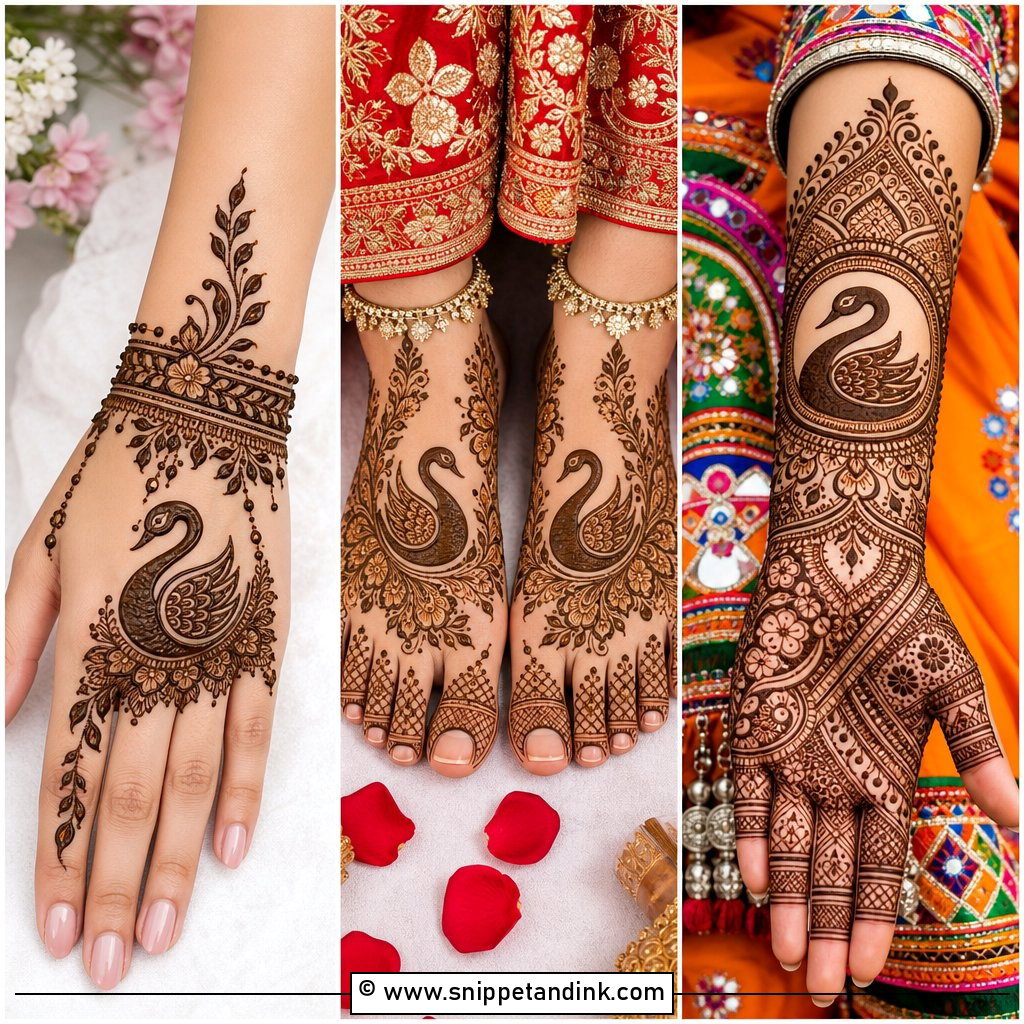
The wrist becomes the focus here: a bangle-like cuff of lines, dots, petals and tiny leaves, linked by a single fine chain across the back of the hand to a ring-style pattern on one finger. Small flowers along the chain soften it. If you’ll wear real bangles, place the henna cuff a little higher up the wrist so the jewelry sits below it rather than covering it. The open center keeps it light.
10. Simple Palm Mehndi Design
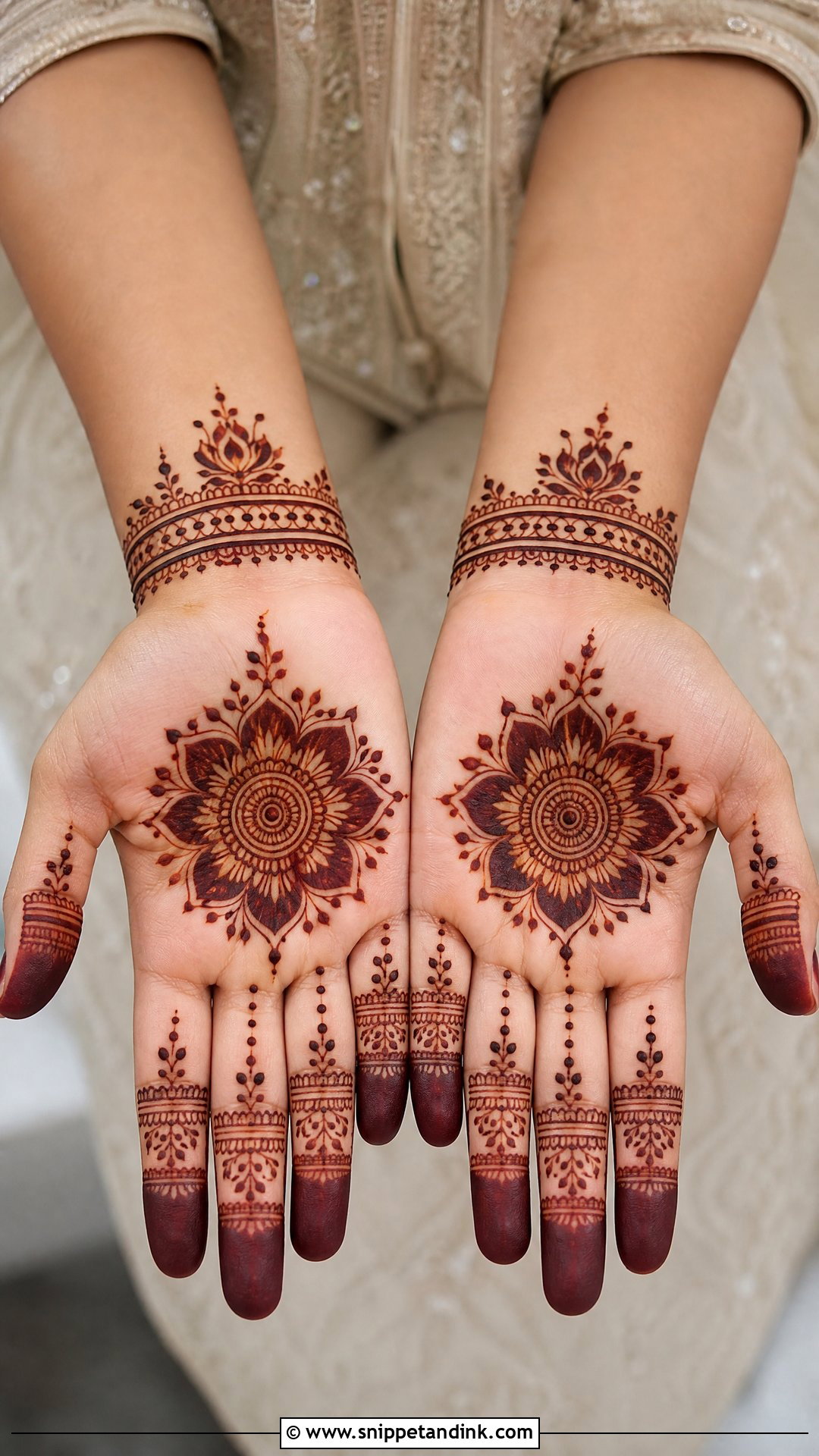
A simple palm mehndi design keeps the attention on the inner hand. A round tikki, a lotus or a small paisley cluster sits in the center of the palm, with curved vines around it and a slim border at the wrist. Fingertip caps, dotted lines or leafy strips finish the fingers. The palm usually stains deepest, so this is the side to choose when you want strong color. Keep the shapes clear and not too small, or they blur as the stain develops.
11. Simple Back Finger Mehndi Design
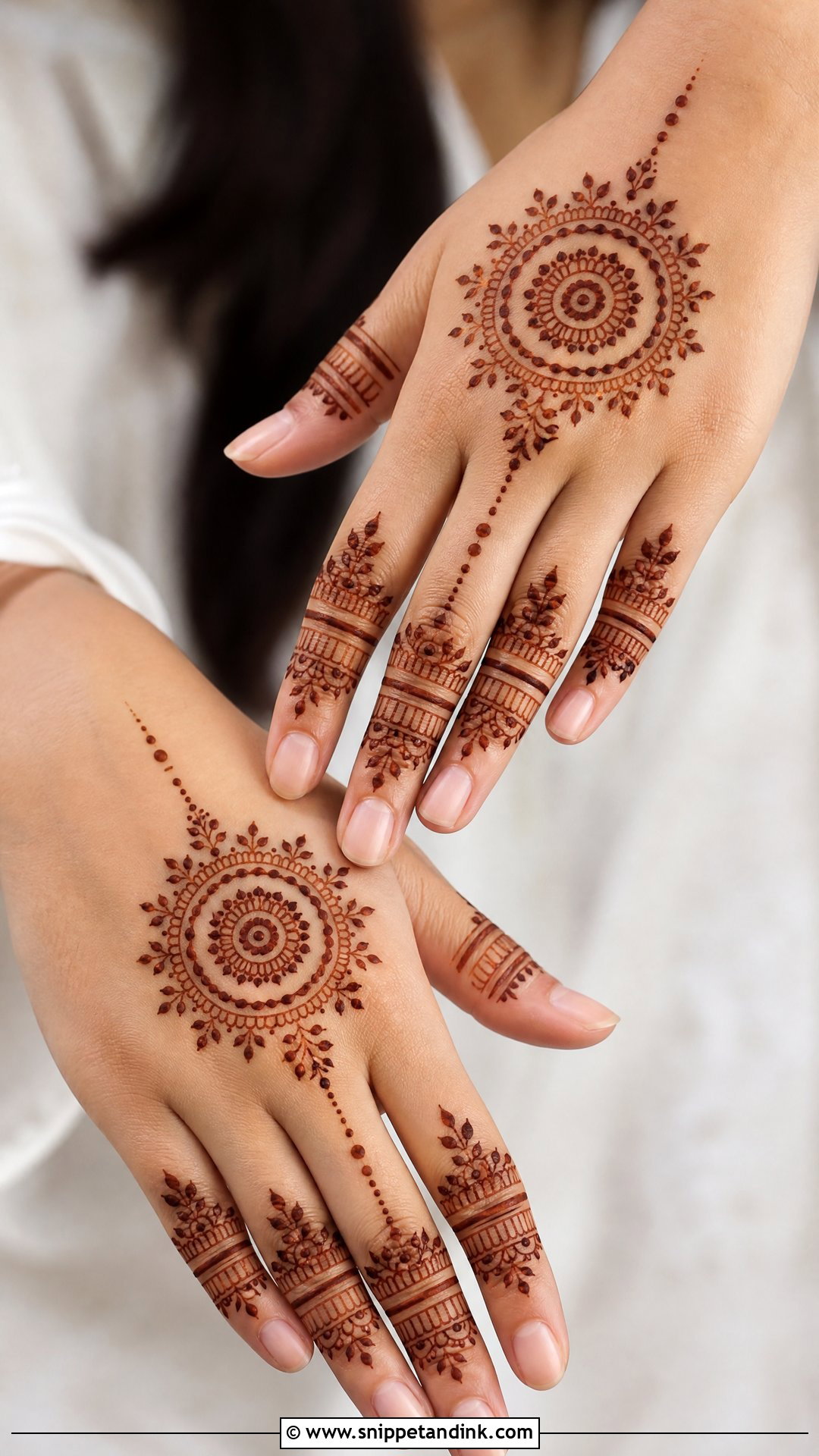
The backs of the fingers take slim bands, small leaves, dots and tiny floral curves, linked to a small mandala or flower near the center of the back of the hand, with a thin wrist line or mini bracelet. It’s neat enough for everyday wear. Because each part is separate, a small mistake on one finger is easy to wipe and redo before it stains. I’d steer anyone with very short fingers toward thin bands here rather than wide ones.
12. Simple Paisley Mehndi Design
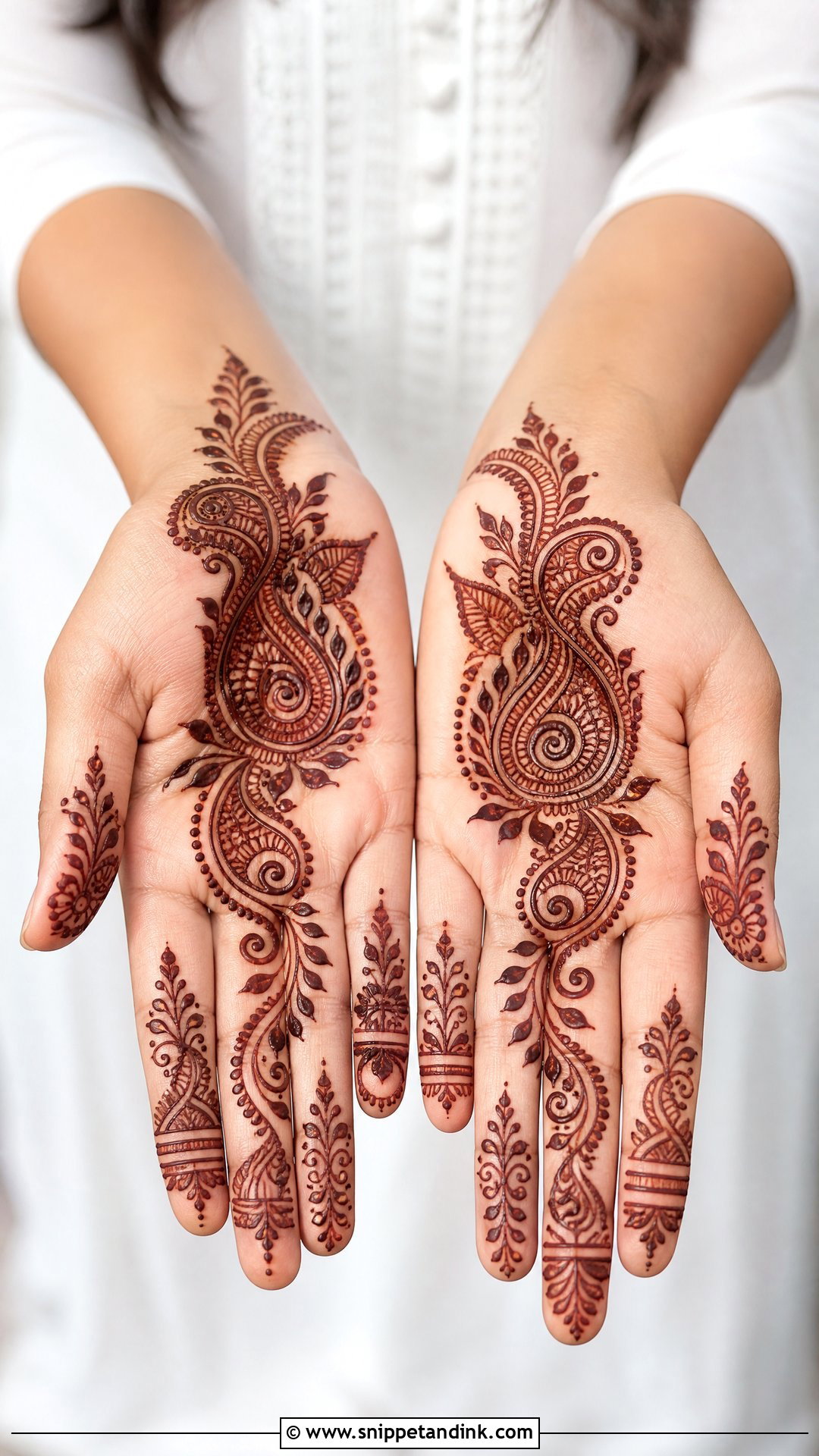
One large paisley on the palm or the back of the hand, with smaller paisleys trailing around it, joined by leaves, dots and curved lines. Inside, I keep the filling simple, parallel lines, tiny petals or small checks, so the outline stays strongest. Matching paisley tips or slim bands on the fingers echo the main shape. The curve is easy to adjust as you pipe, which makes it forgiving for younger hands and adults alike.
13. Simple Eid Mehndi Design
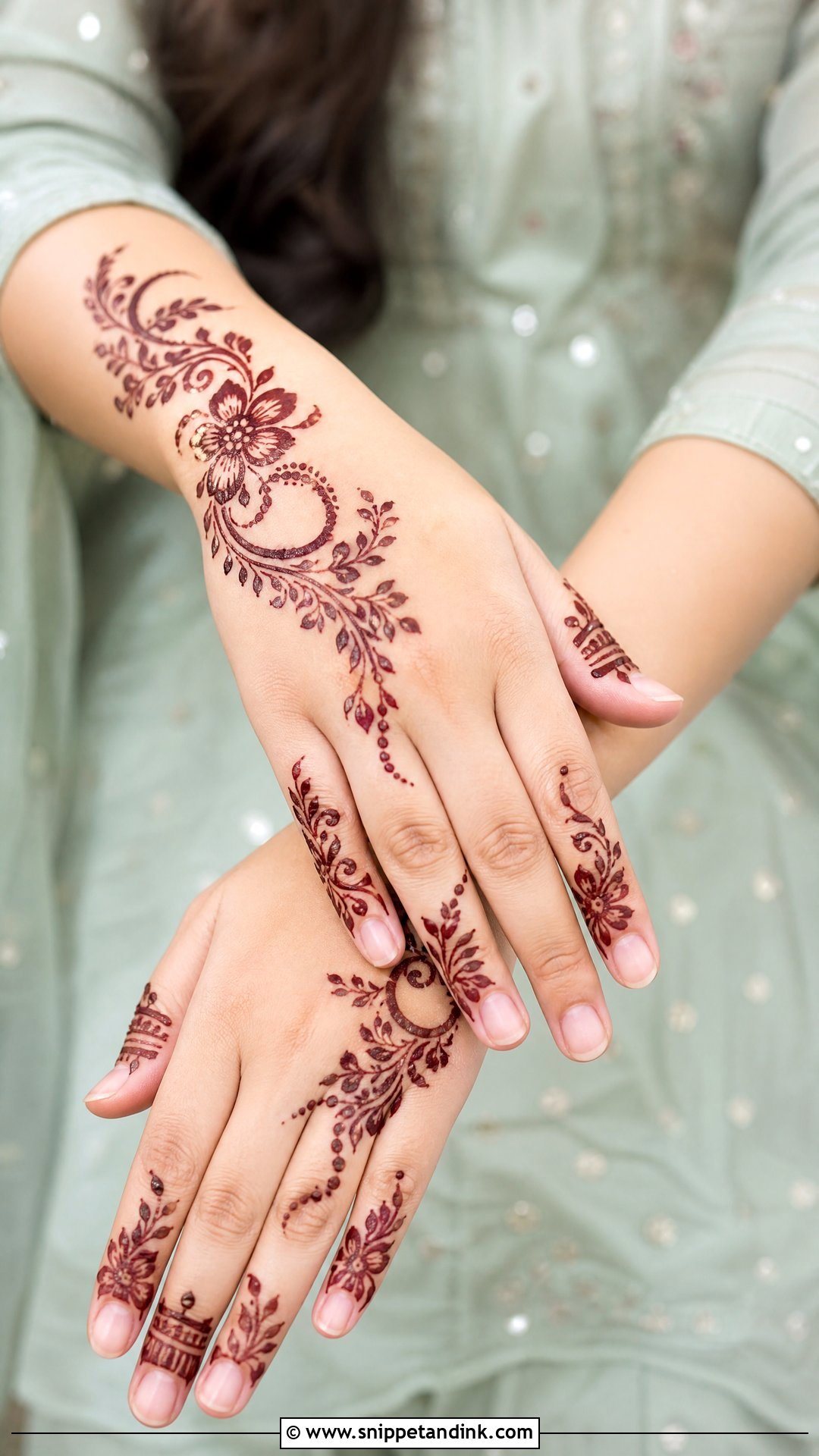
Eid henna should go on quickly, the evening before, and an Arabic floral trail does that well. It starts at the wrist, curves across the palm or the back of the hand, and ends on one or two fingers, with flowers, leaves, dots and a small crescent curve for a festive note. Open spaces let it sit nicely with jewelry and bright clothes. If you’re doing several family members in one evening, this is the layout I’d repeat with small variations.
14. Simple Bridal Mehndi Design
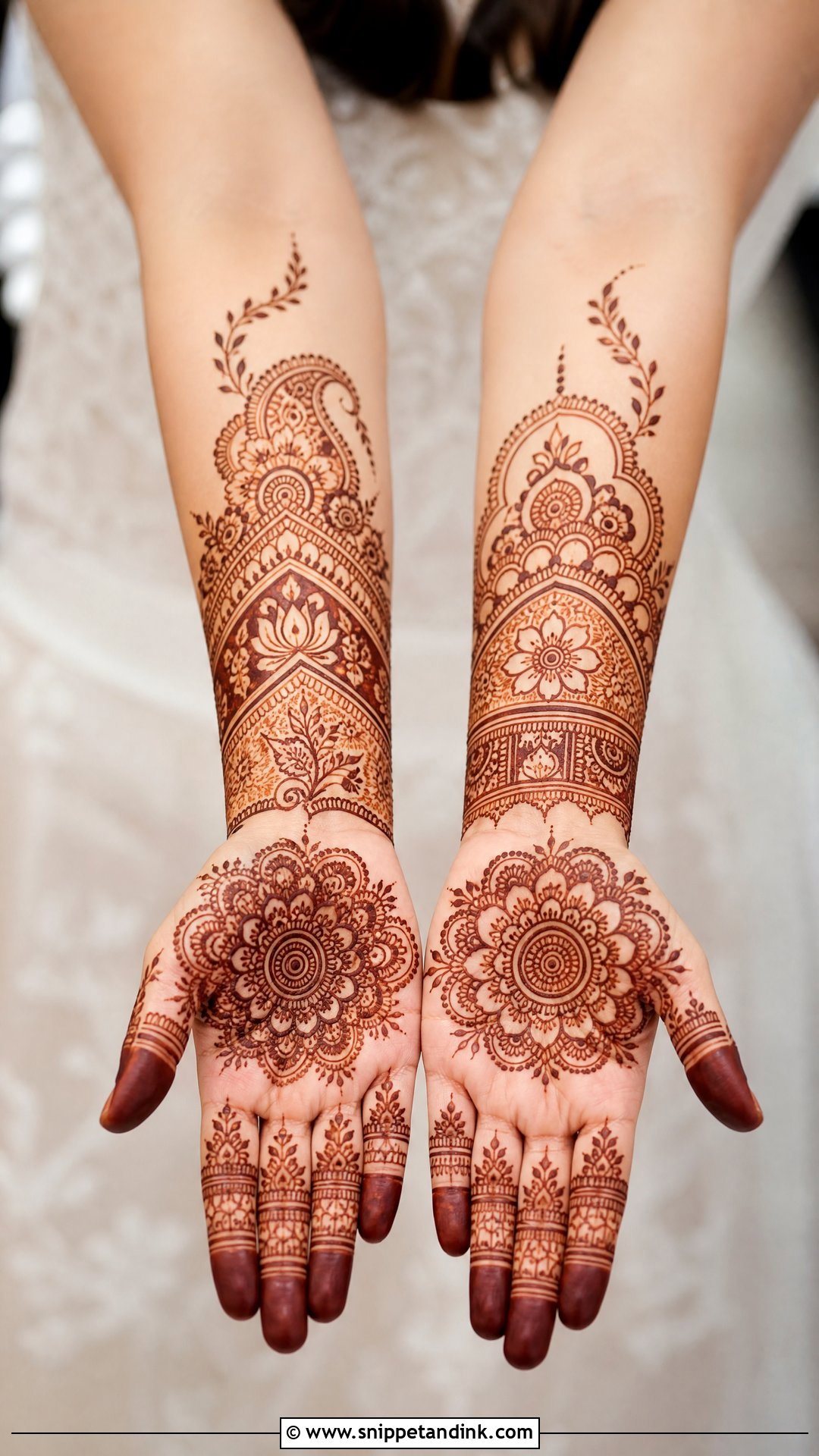
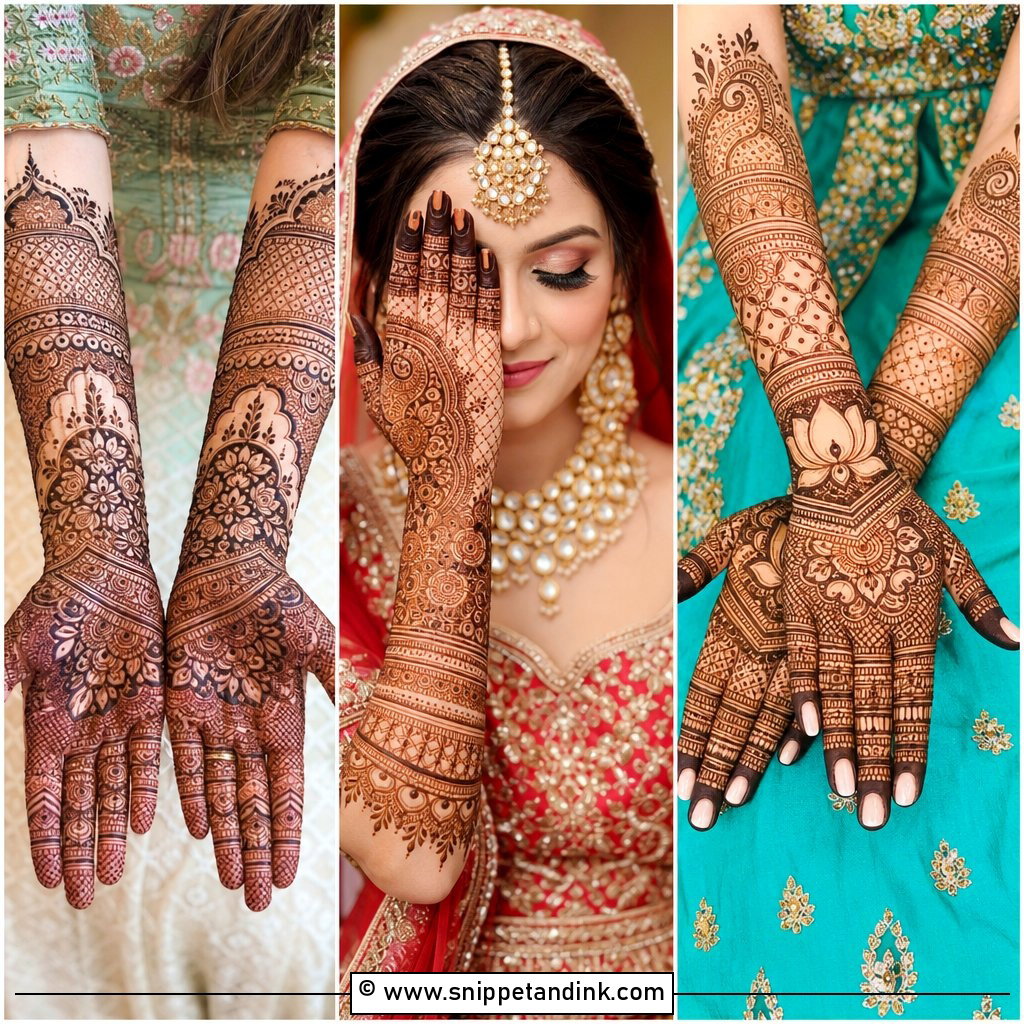
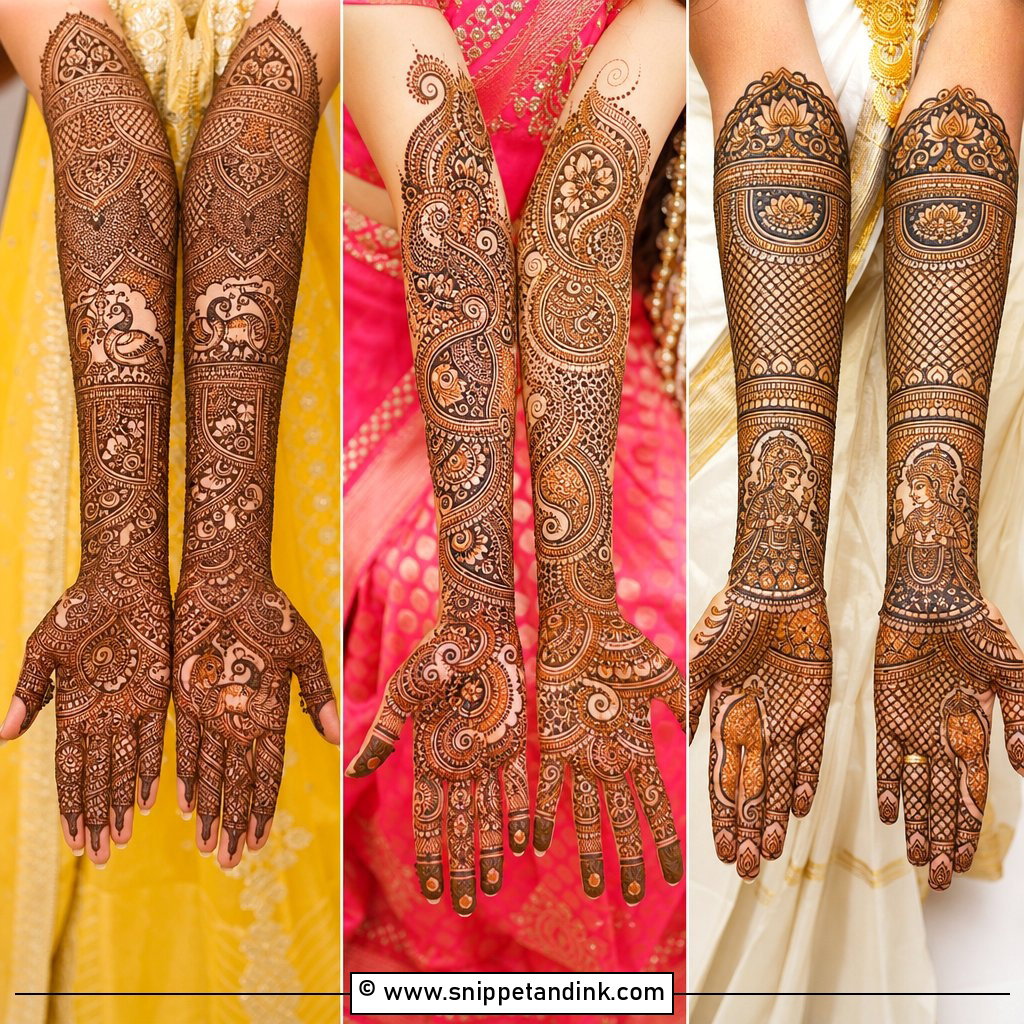
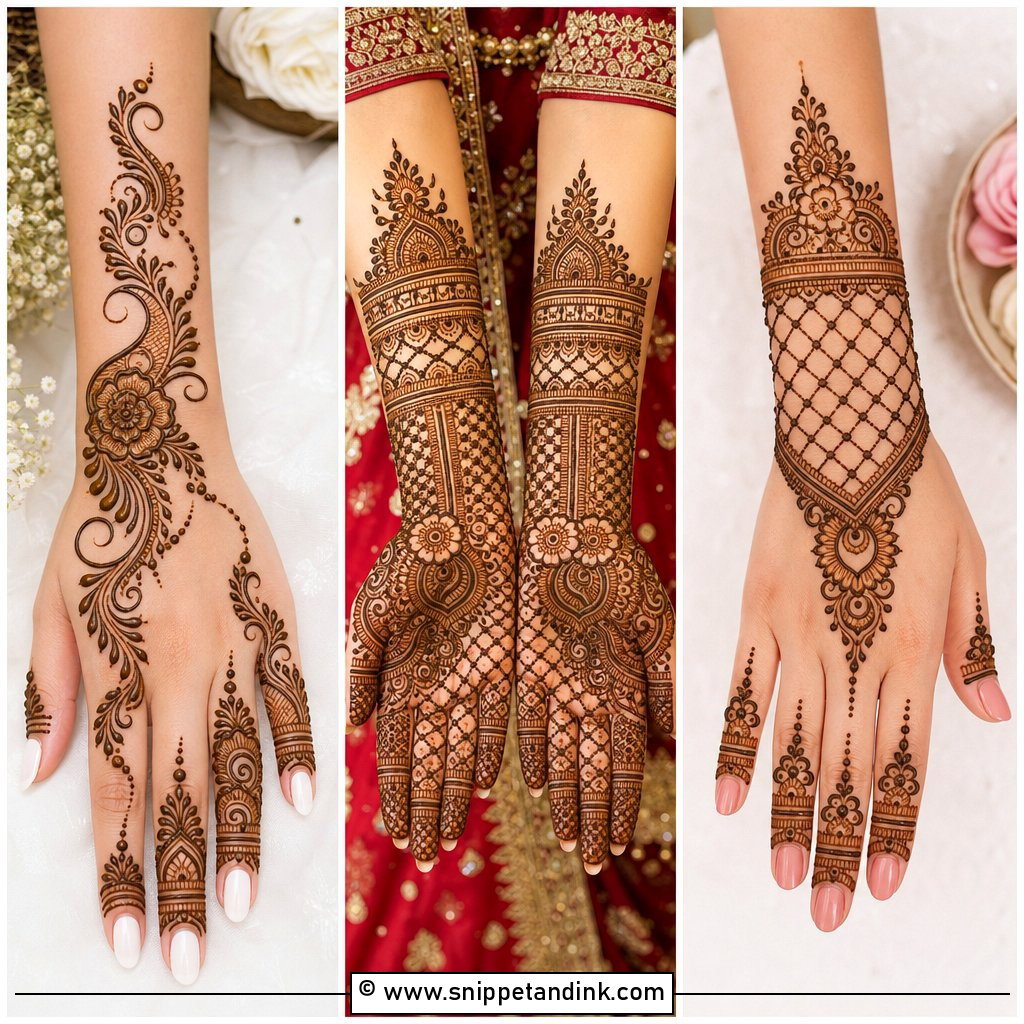
A lighter bridal design uses a fuller palm pattern, mandala, paisley, flowers and a wrist cuff, extending lightly toward the forearm, with neat finger bands and small leaf trails. Some open space around each section keeps it from looking crowded. It suits brides who prefer less coverage, or pre-wedding events such as an engagement, haldi or mehndi night. It’s also far easier to sit through; heavy bridal work can take several hours, and a lighter layout cuts that a lot.
15. Simple Indo Arabic Mehndi Design
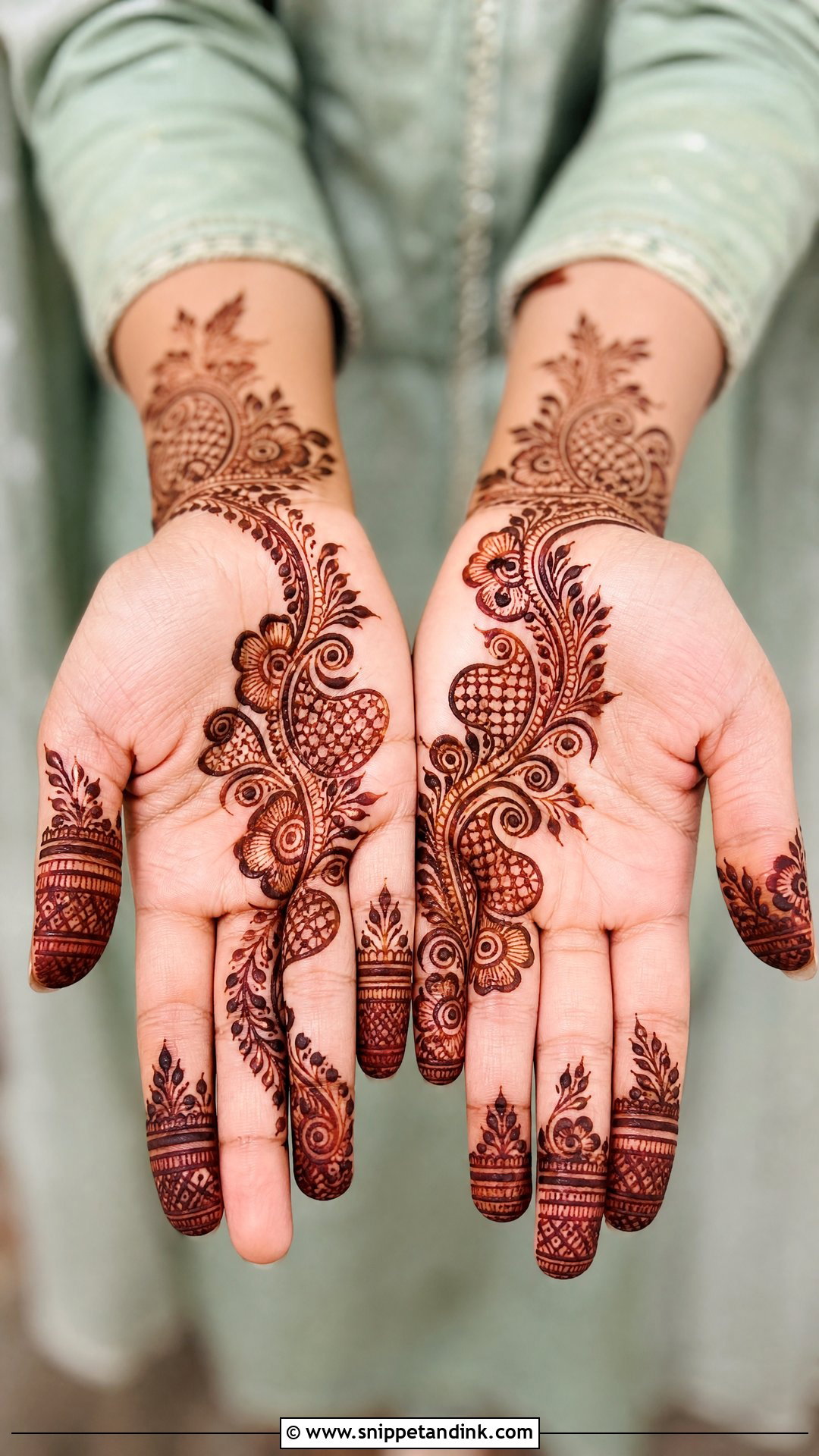
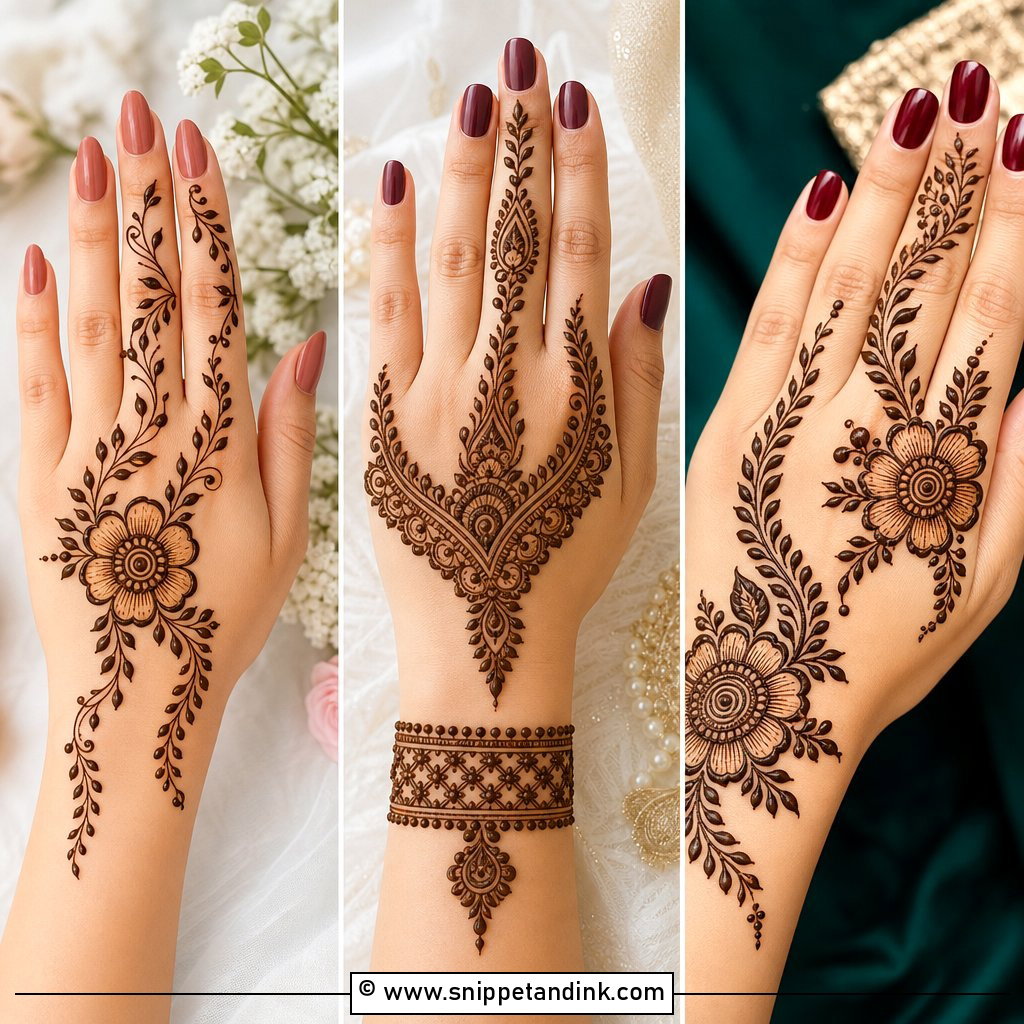
Indo-Arabic work combines bold Arabic spacing with Indian detail. A diagonal floral and paisley trail crosses the palm or the back of the hand, and a few selected motifs get Indian-style dots, leaf borders and light jaali inside. The fingers can each take a different mini pattern, checks, petals or leafy bands. The rule I follow is bold outline, fine accent: the outline gives the design its shape from a distance, and the fine work rewards a closer look.
16. Simple Jaali Mehndi Design
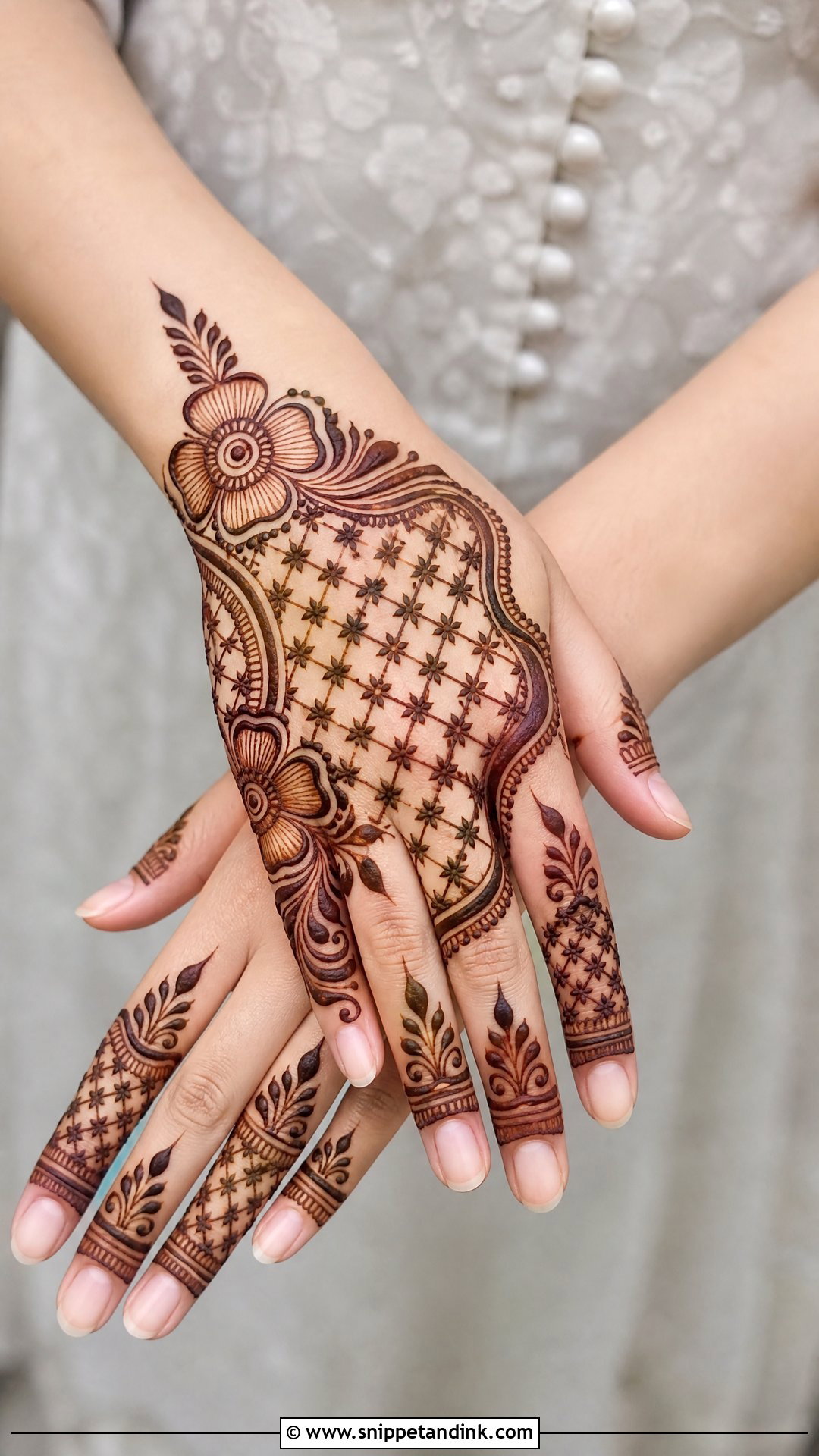
Jaali mesh works best on one part of the hand only: the wrist cuff, the center of the back of the hand or one side of the palm. Flowers, leaves and curved borders around it balance it out, and the fingers can echo it with small checks, dots or thin bands. Covering the whole hand in mesh looks busy and takes a long time to pipe evenly. On the back of the hand, a small jaali panel reads like lace.
17. Simple Rose Mehndi Design
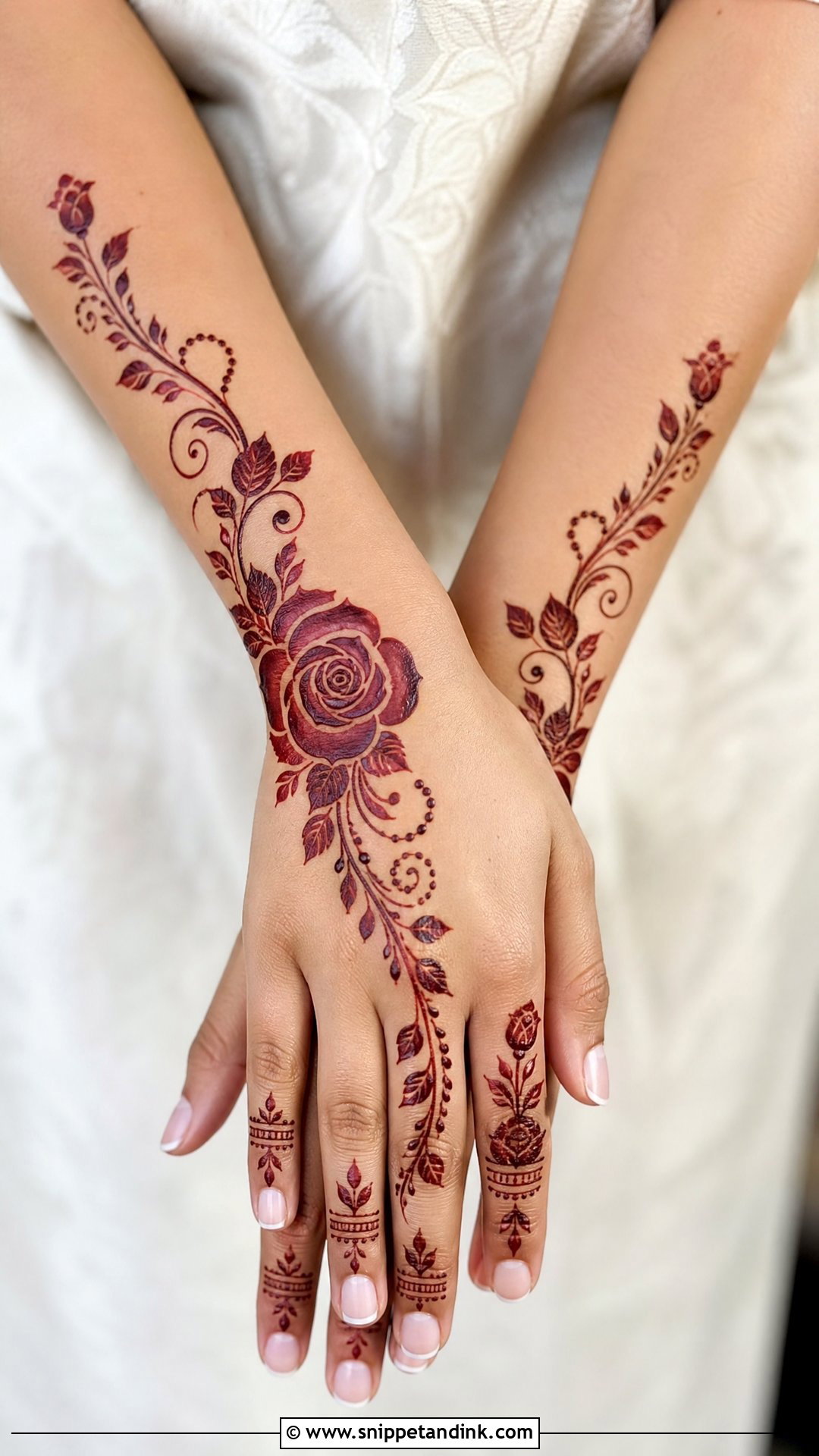
One rose on the back of the hand or the palm, with a curved vine heading to the wrist and fingers, small rosebuds, leaves and dots. The petals need to be bold and rounded so the flower stays recognisable; tight spirals fill in as the stain darkens. The fingers stay light with tiny leaf lines or ring bands. A rose is one of the few motifs that suits a fusion or Western outfit as comfortably as traditional wear.
18. Simple Leaf Mehndi Design
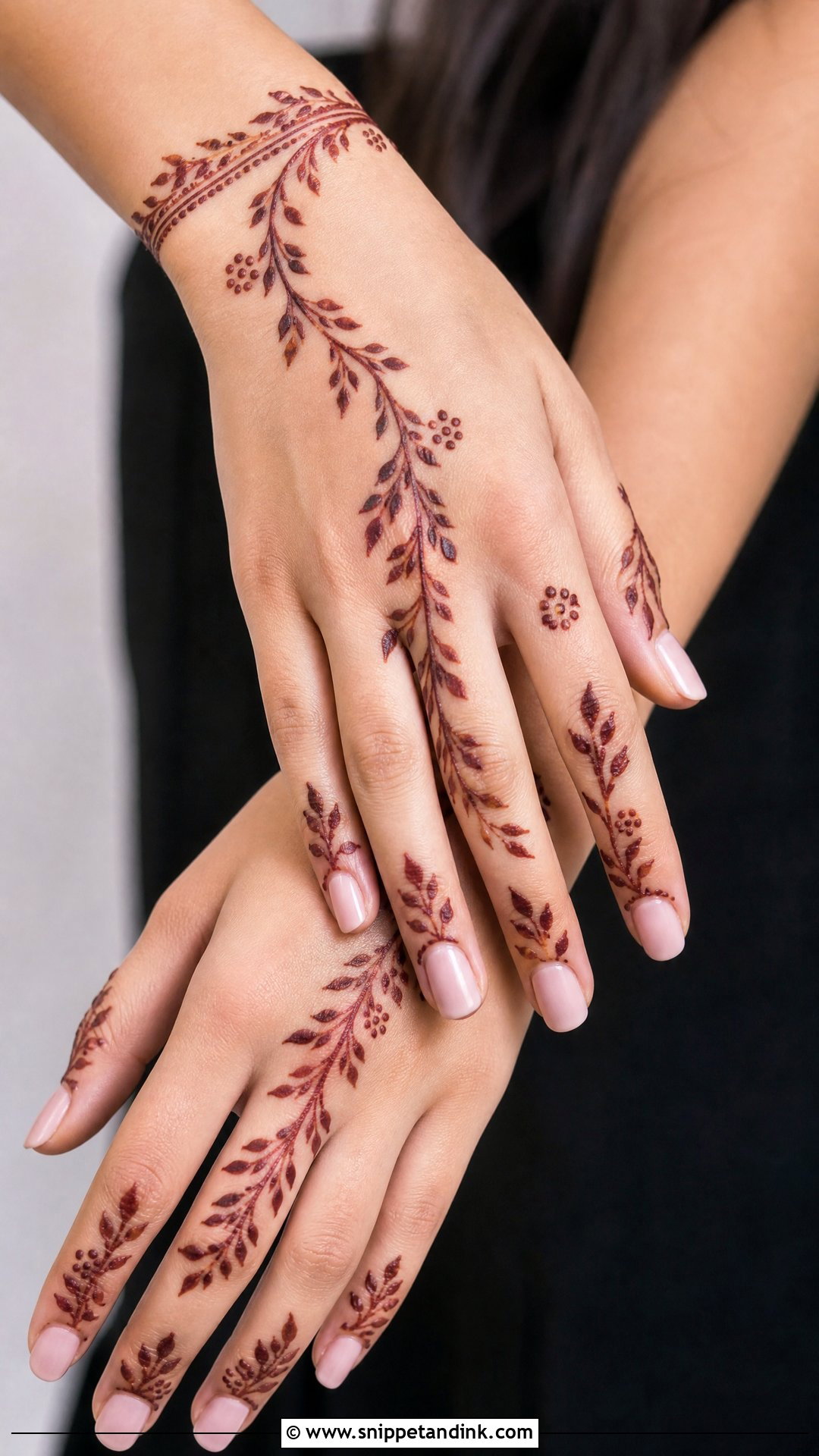
Fresh leaf patterns start with a leafy vine running from the wrist to one finger, with small flowers or dots between the leaves, and the rest of the hand left open apart from a slim wrist border. Leaves are easy to repeat and adjust, and I draw them in slightly different sizes so the vine looks natural. It suits front or back hands, and it’s quick enough for a school event or a casual day.
19. Simple Moroccan Mehndi Design
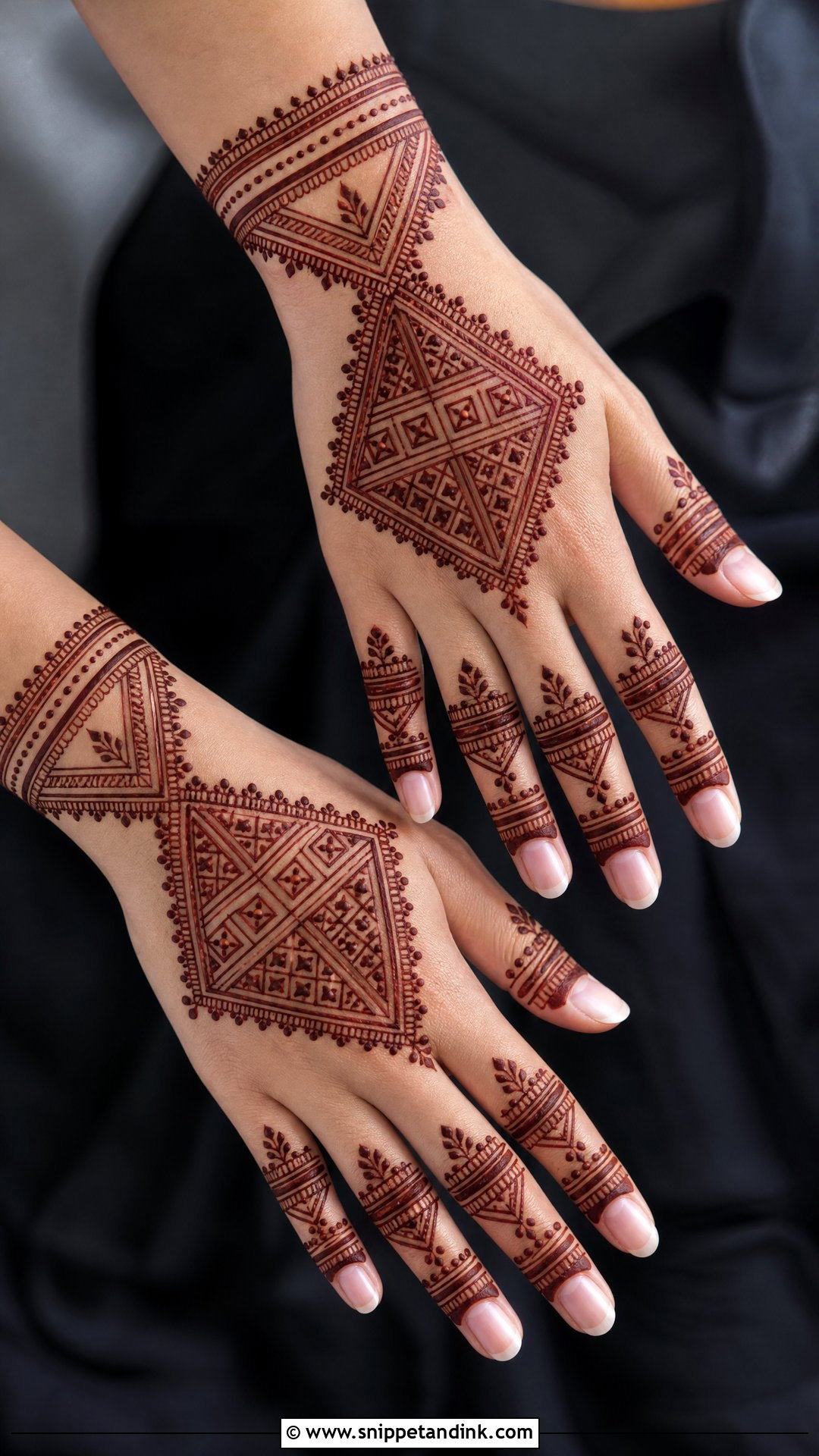
Moroccan-style work uses diamonds, triangles, straight lines, dots and small grids, arranged as one structured panel from the wrist to the middle finger, with matching finger bands and the rest of the hand open. It looks graphic rather than floral. The challenge is straight lines; I keep the cone moving at an even speed and never pause mid-line, since a pause leaves a blob that stains darker. It suits anyone wanting something different.
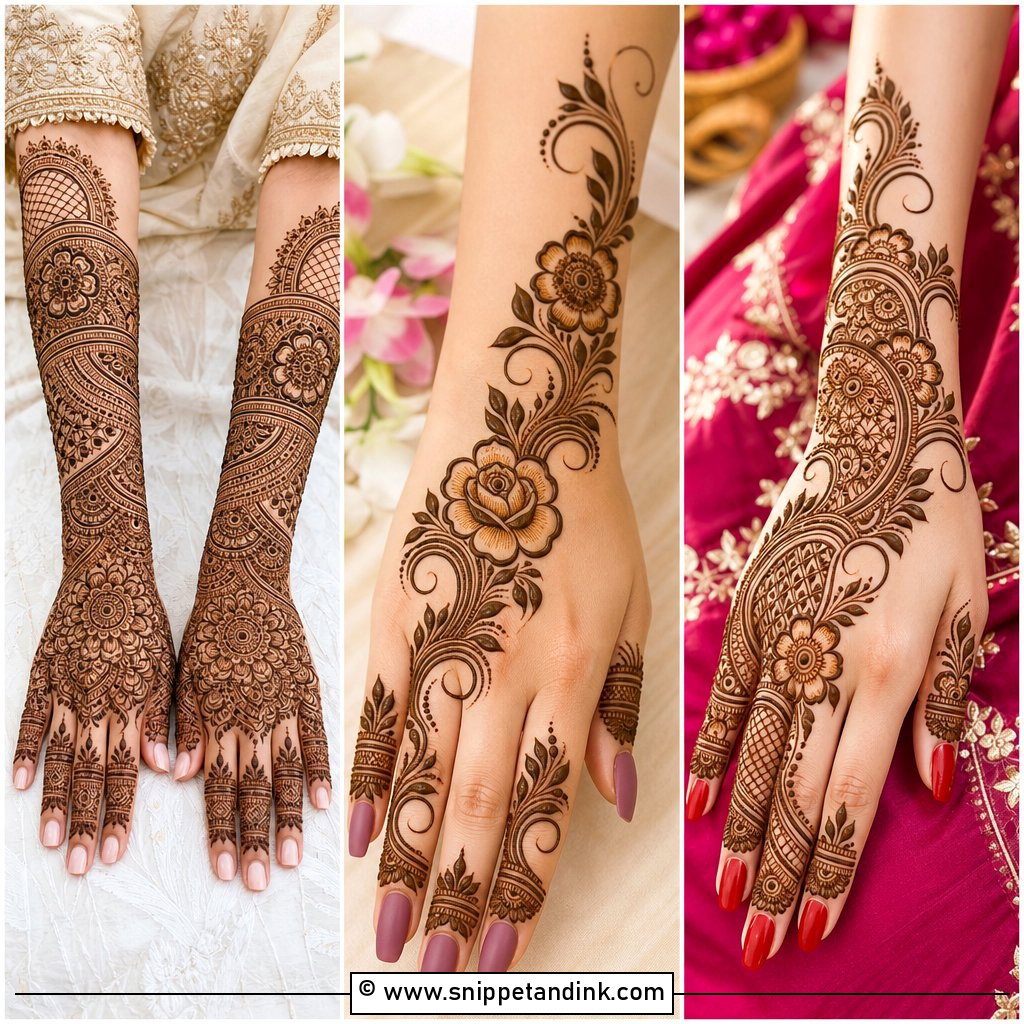
20. Simple Gulf Mehndi Design
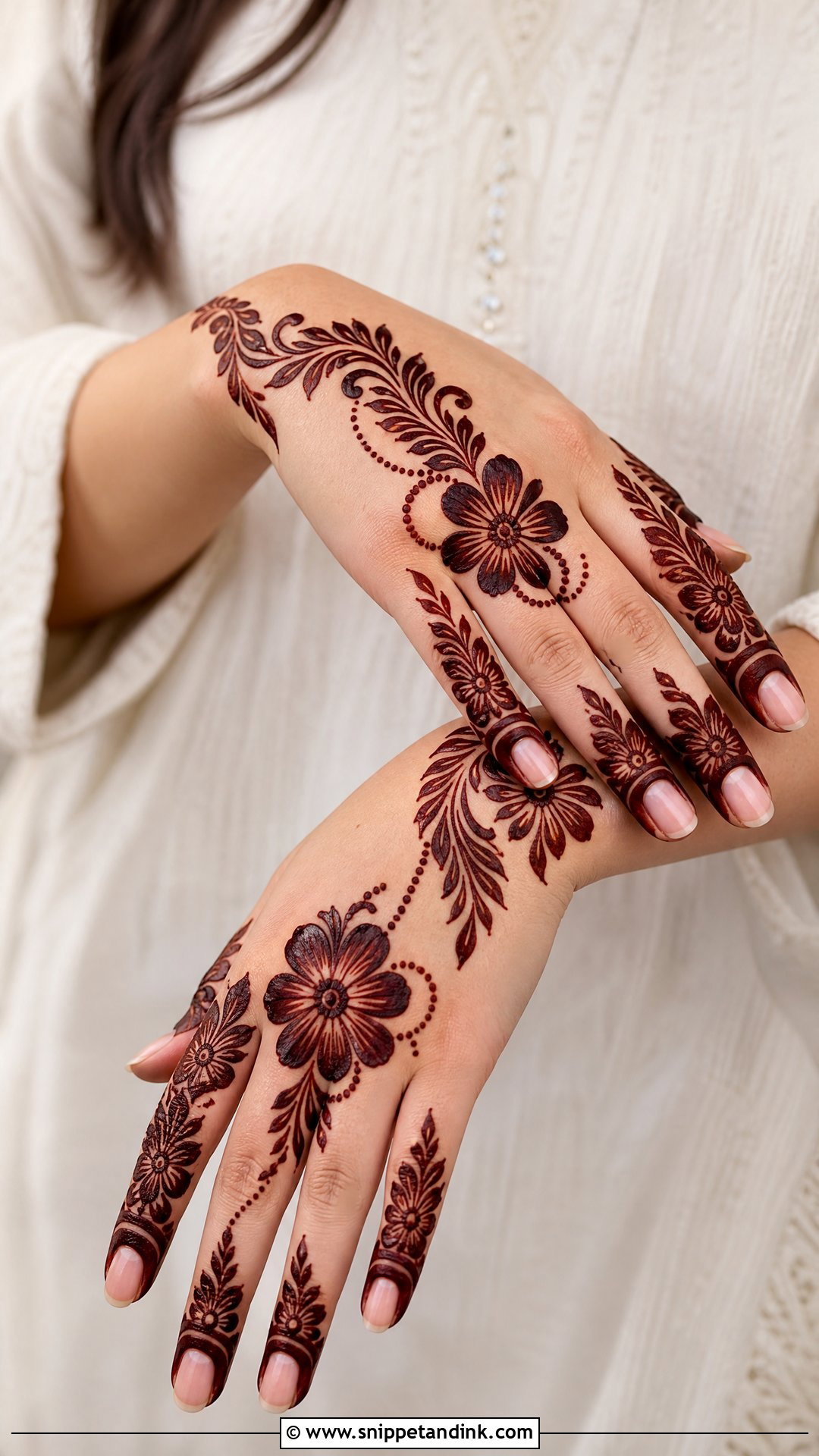
Gulf, or Khaleeji, mehndi uses bold flowers with open spacing. On the back of the hand, large flowers sit near the wrist or the side, connected by leafy curves toward the fingers, with thick outlines and little inner filling. The fingers take small floral caps or dotted trails. Thick lines carry more paste and give a darker stain, so this style tends to come out strong. It’s a common choice for Eid, weddings and evening gatherings.
21. Simple Tikki Mehndi Design
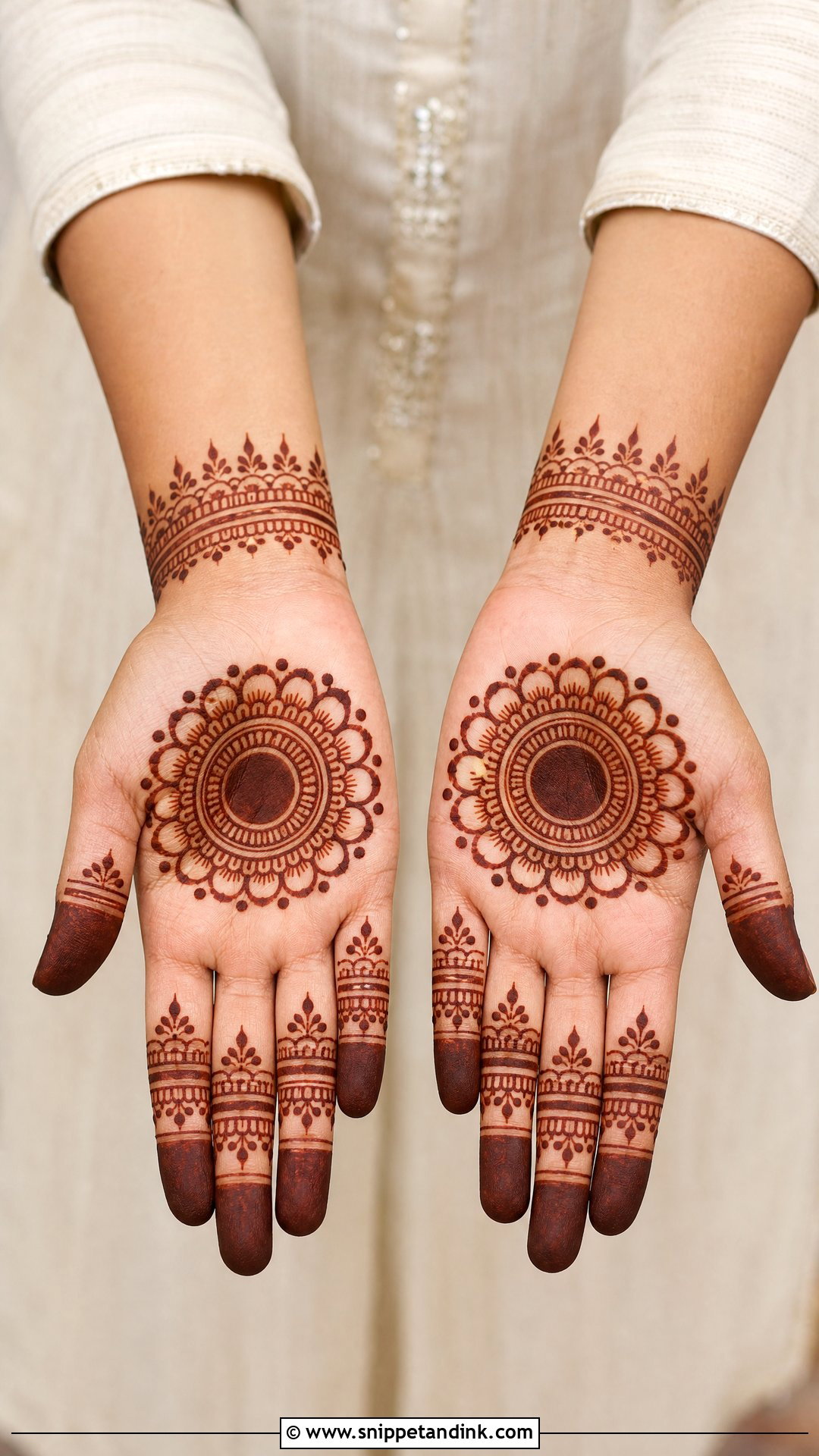
A simple tikki mehndi design places a round tikki in the center of the palm, surrounded by petals, dots and small circular borders, with slim finger patterns and a neat wrist band. Its appeal is symmetry. The main circle guides the rest of the design, which makes it a good beginner’s layout. I mark the center with a single dot first, with the hand relaxed, so the tikki doesn’t end up drifting toward the thumb.
22. Simple Half Hand Mehndi Design
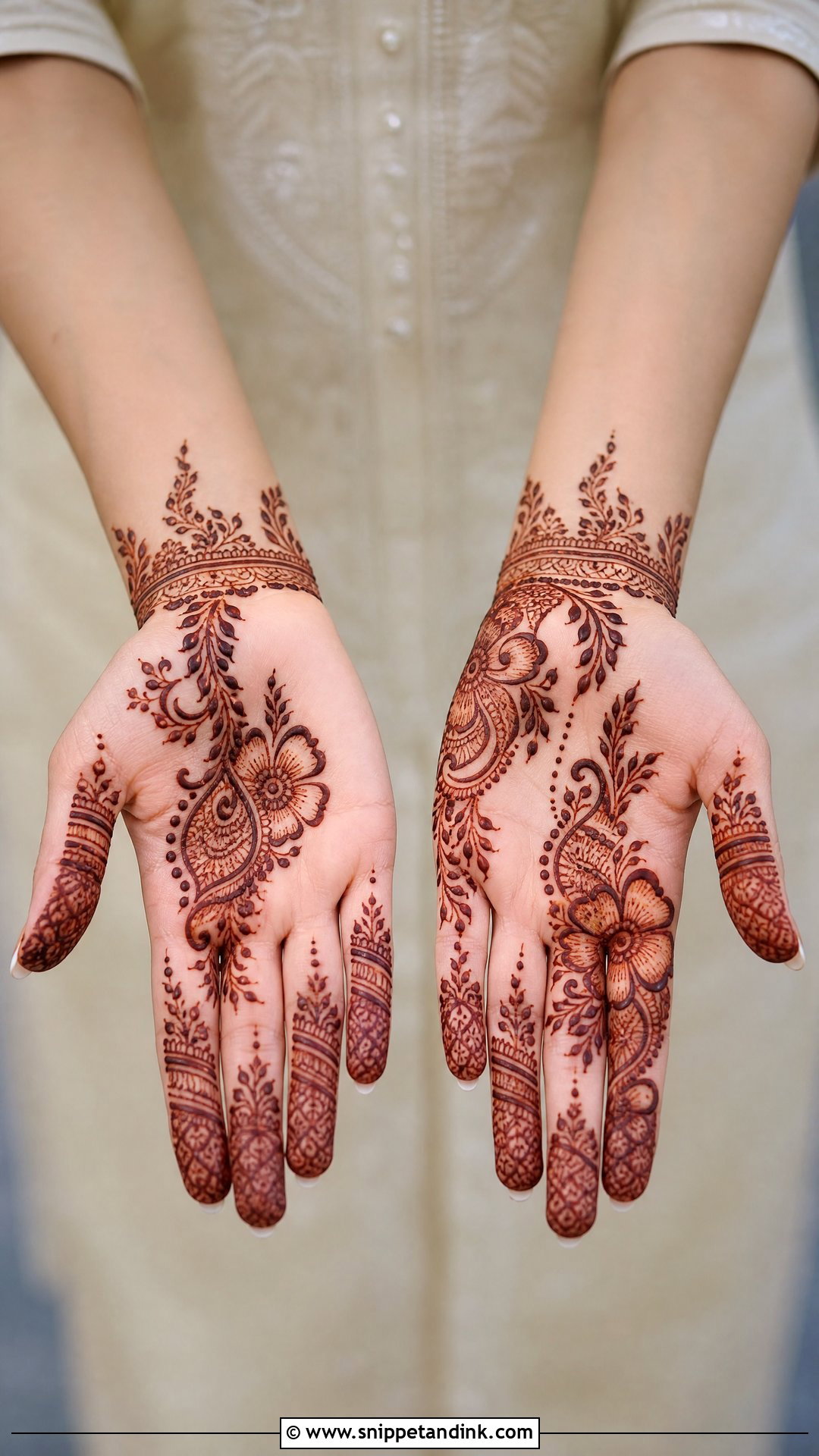
Half-hand work covers the palm or the back of the hand up to the wrist with flowers, paisleys, leaves and dots, leaving the forearm empty or giving it a slim bracelet border. The fingers are filled lightly. It’s more noticeable than finger mehndi but lighter than a full hand, and quick to apply. Open spacing keeps it wearable, so I resist adding extra filler at the end.
23. Simple Minimal Mehndi Design
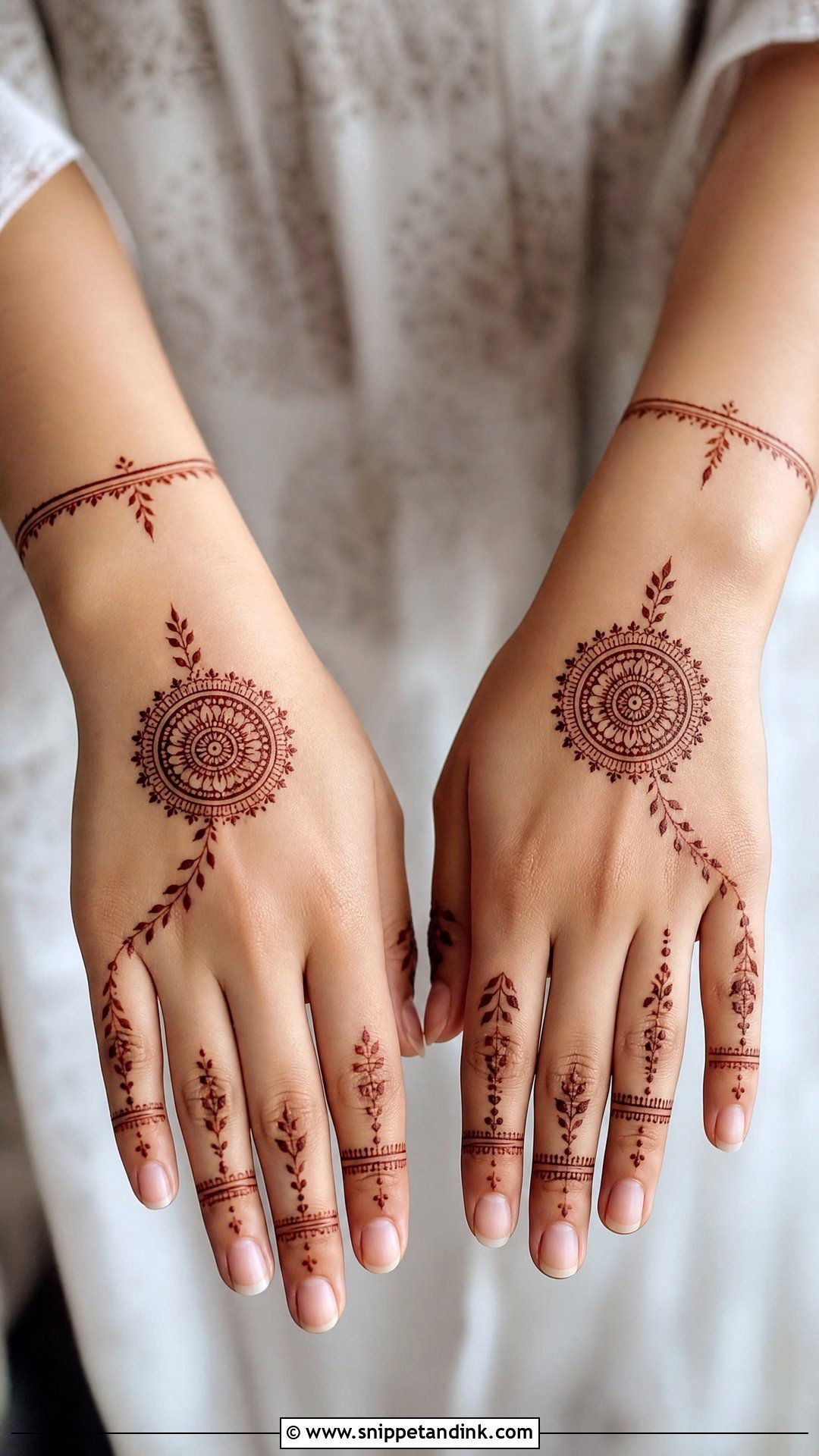
Minimal mehndi relies on clean placement and empty space: a tiny mandala on the back of the hand, one bracelet line at the wrist and small finger bands, with a few dots or leaves to link them. It’s neat enough for an office event. The catch is that every line is visible, so minimal designs show mistakes more than any other kind. I’d recommend practicing the motif on paper a few times first.
24. Simple Peacock Mehndi Design
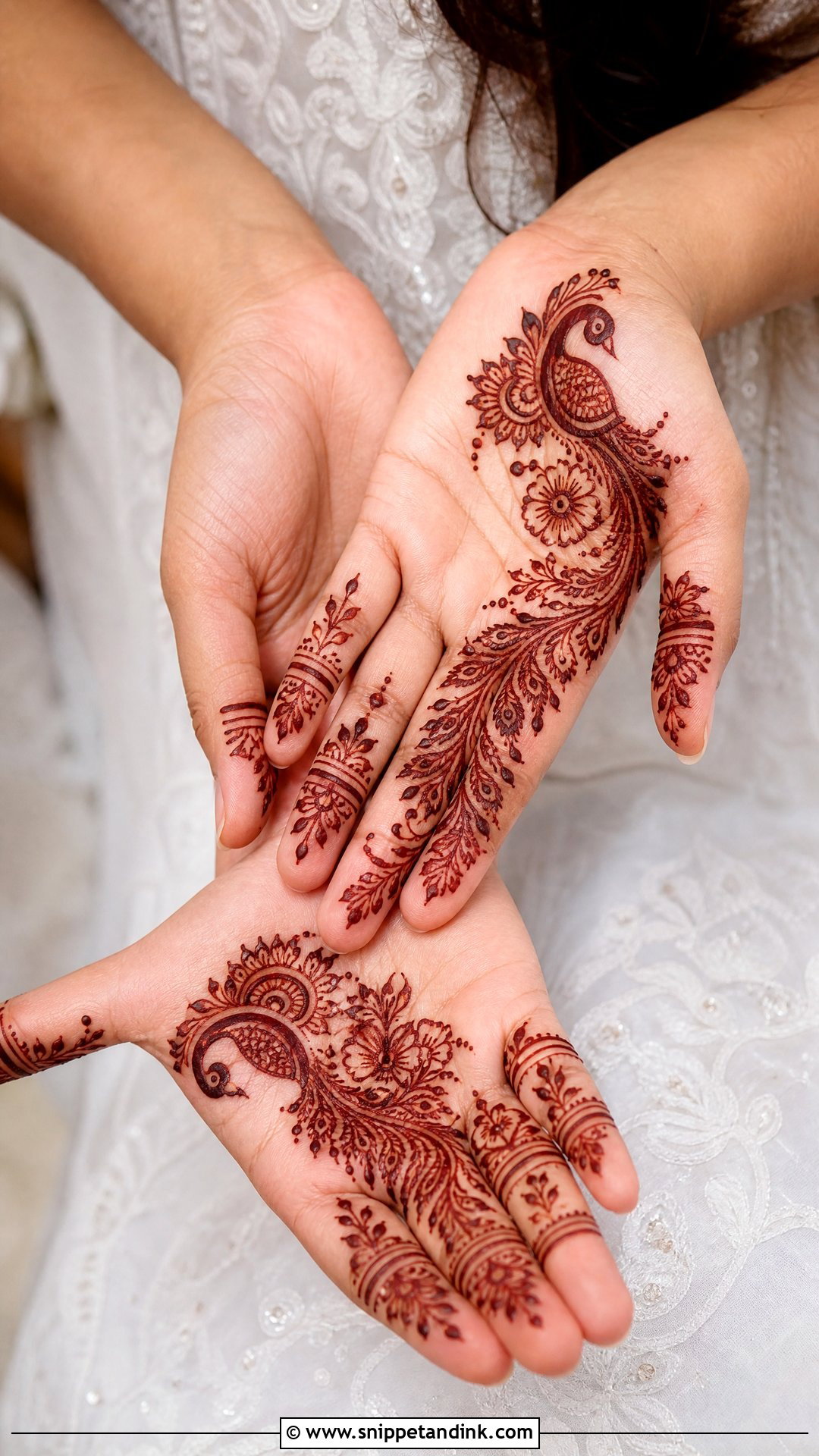
A small peacock on the palm or the back of the hand, with a curved feather trail of leaves, dots and tiny flowers. The body should be bold and the feather section open, so the bird reads clearly. The fingers take slim bands or small feather-like strokes. I keep detail inside the body to a minimum, since fine lines there merge into one dark shape once the stain develops. It suits weddings and cultural functions.

25. Simple Lotus Mehndi Design
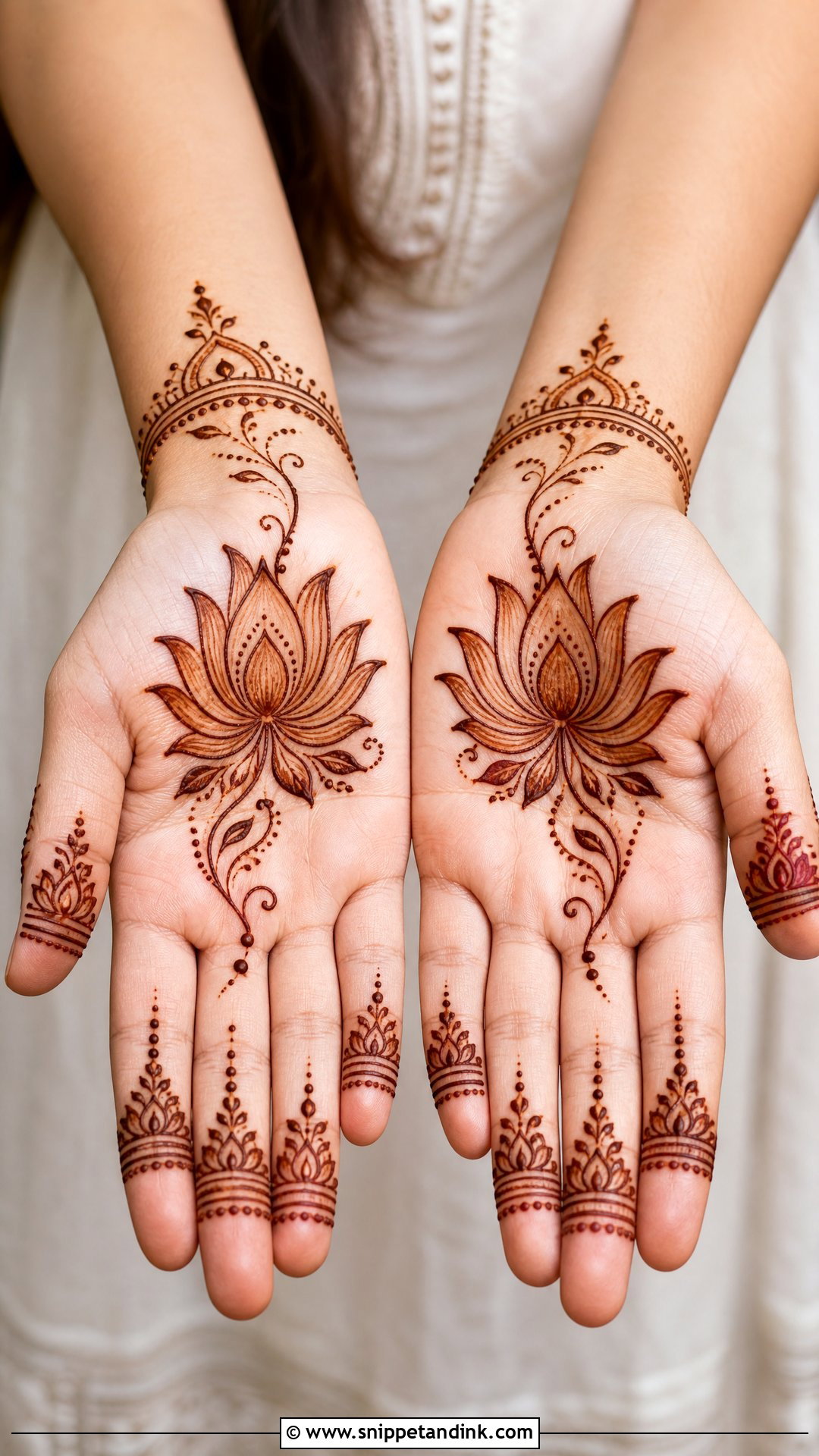
A lotus in the center of the palm, or near the wrist on the back of the hand, with soft curves, leaves and dotted lines around it. The fingers take slim patterns that echo the petal shape. Lotus petals are long and close together, so I keep them open and lightly detailed; filled petals merge into a single blot. It suits puja, Diwali and family functions.
26. Simple Wrist Mehndi Design
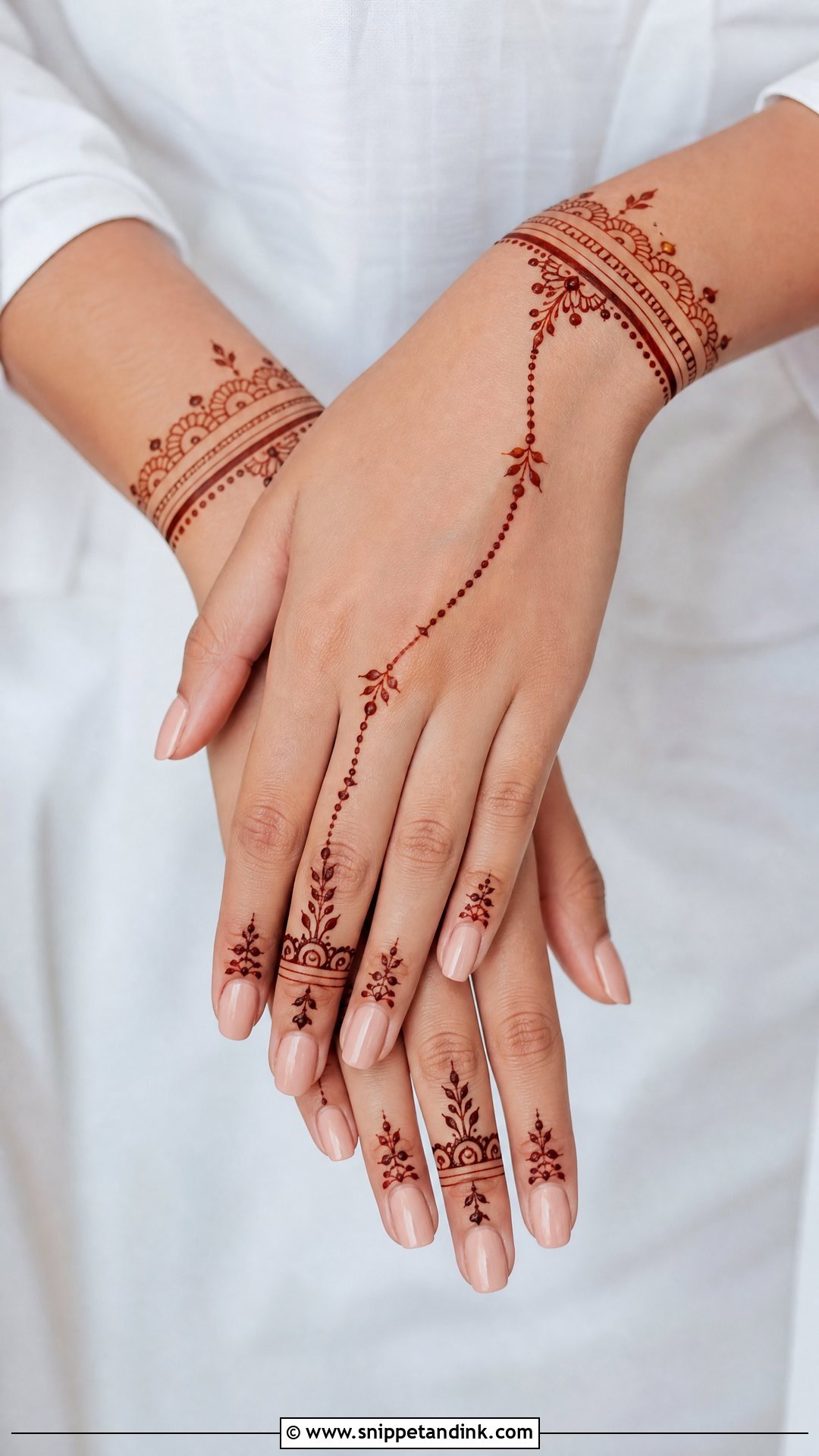
Two or three slim bands around the wrist, built from dots, petals, leaves and tiny scallops, with a small chain toward one finger or a tiny flower on the back of the hand. It’s quick and suits anyone who doesn’t want palm coverage. Watches and bangles both sit right on the wrist, so I’d set the bands slightly above where you wear them, or the jewelry will hide the work and rub the paste while it’s still drying.
27. Simple Side Hand Mehndi Design
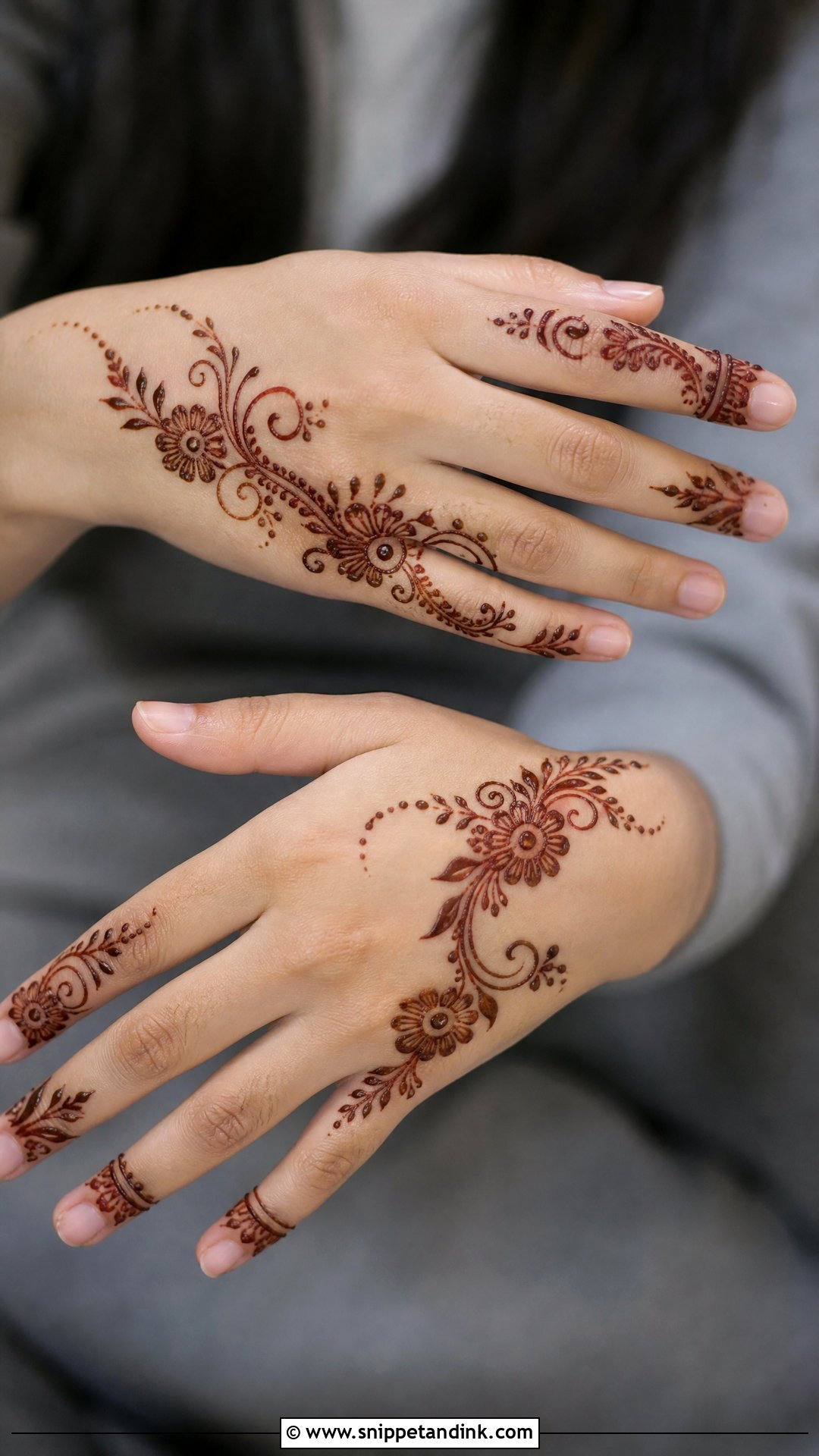
The pattern runs along one edge of the hand, starting near the wrist and moving up the side of the palm or the back of the hand with flowers, leaves and curved vines, toward the little finger or the index finger. The center stays open. It follows the hand’s outline, so it’s easy to place, and it makes a good alternative to a central mandala. Side designs also show well in close-up photos of a hand resting on a table.
28. Simple Kids Mehndi Design
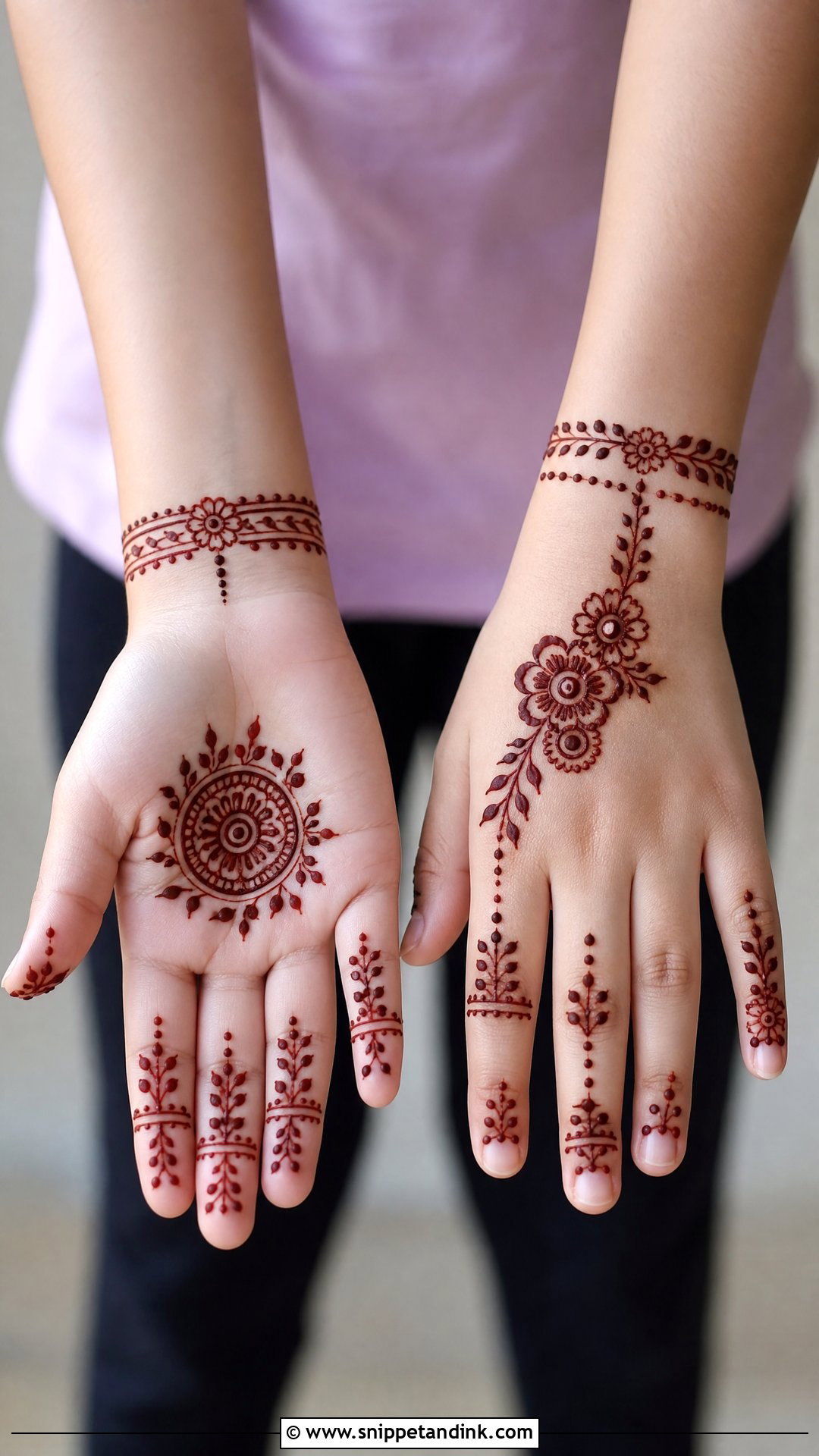
Children need designs that are fast and simple: a small flower, heart-like petals, leaves, dots and a tiny wrist band, kept small so it dries quickly. Avoid thin, crowded details, since young children move before the paste is set. A mini mandala with finger dots also works. I use only natural henna on children, never a cone promising an instant black color.
29. Simple Modern Mehndi Design
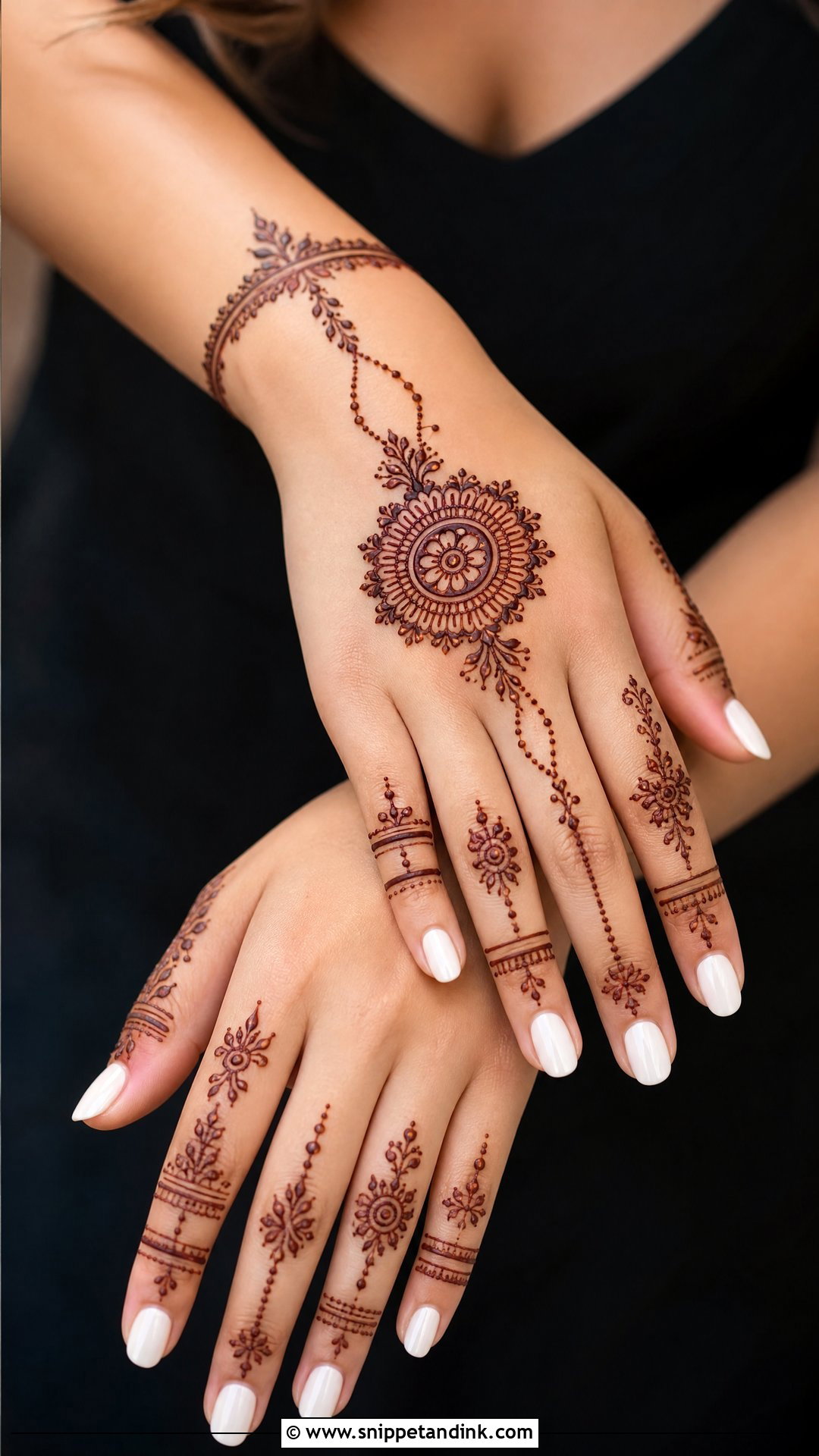
Modern designs use clean spacing and fewer motifs: a small mandala on the back of the hand, a chain to the middle finger, slim ring bands and a soft wrist bracelet. Geometric lines combined with flowers give a fusion feel. The back of the hand stays mostly open. The design should feel intentional, not empty, so I make sure every piece is connected, by a chain, a line or a row of dots.
30. Simple Beautiful Mehndi Design
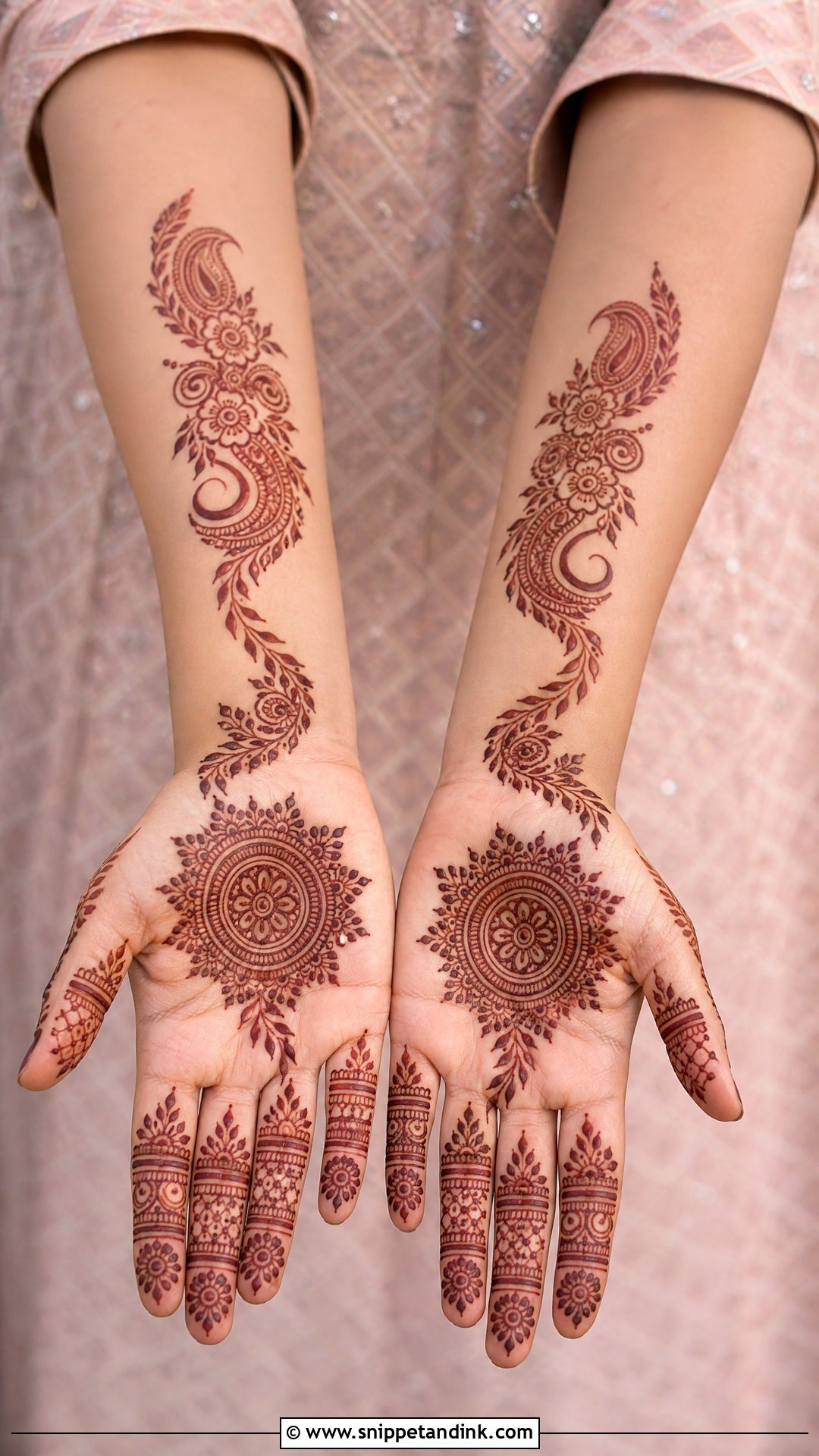
This design draws together the best of the easy elements: a neat palm mandala, a small floral trail, light paisley accents and clean finger bands, with dots and leaves only where they connect things. Enough open space keeps every motif visible. It’s neither plain nor heavy, which makes it the safest choice when you can’t decide. With steady outlines, it can be done quickly and still look complete.
A Light Design Starts With a Clear Brief
Artists tend to fill space by habit, so if you want a light design, say so clearly. I find a few reference photos and a sentence like “back of the hand only, fingers lightly done, nothing past the wrist” saves a lot of back and forth. Tell your artist the occasion and the outfit, how long you can sit, and whether you’ll need to use your hands soon after. Prices vary widely by region and coverage, so ask what’s included per hand before you start.
Sensitive Skin, Essential Oils and G6PD
Natural henna is well tolerated by most people, but the paste usually contains essential oils that help release the dye, and some skin reacts to those. If you have sensitive skin, ask what oils are in the mix, and try a small patch on the inner arm a day or two before the event.
Anyone with G6PD deficiency should avoid henna altogether, since it can trigger a serious reaction, and that matters especially for babies and young children. If you’re pregnant, check with your doctor about the oils in the paste. And whatever the circumstances, never accept a cone that promises a black stain; true henna stains orange to brown, never black.
Neat Lines Matter More Than Extra Motifs
Light henna can look as special as heavy bridal work when the layout is clean and balanced. Between front hands, back hands, fingers, wrists, palms and light full-hand designs, there’s a layout for almost any occasion: floral trails for softness, mandalas for symmetry, Arabic patterns for flow and geometric work for a modern feel. Let your time, outfit and hand shape guide the choice. Keep lines neat, leave room for the skin to show, and use bolder motifs when you’re short of time.
You'll Like These Ideas:






Leave a Reply