
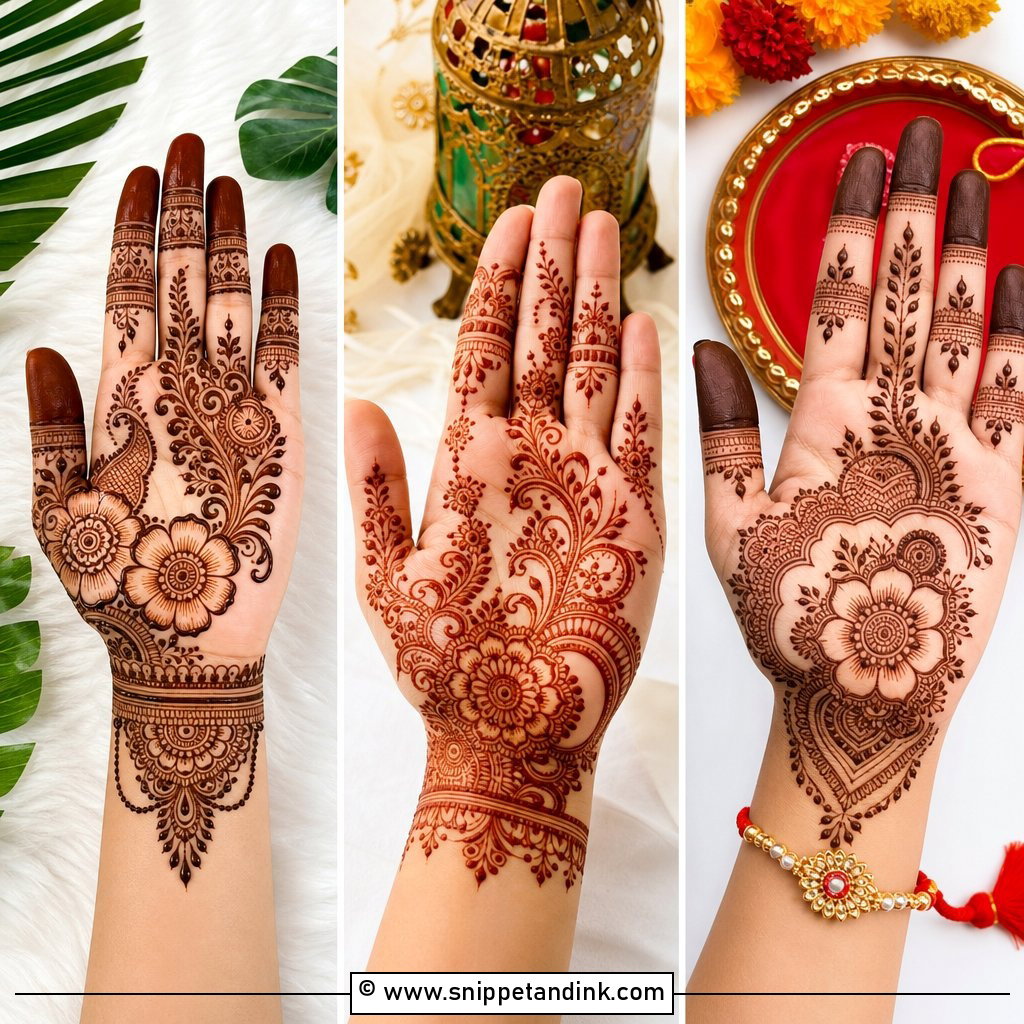
Twenty-five years in, most women I apply henna for want something that feels celebratory without pretending to be their wedding mehndi all over again. A silver anniversary can be a big family function, a vow renewal or dinner at home, and the design should match the size of the day. Below are twenty ideas I’d actually put on a hand for this occasion, from full Indian coverage and couple portraits to light back-hand work, hidden initials and airy Arabic trails. Most of them can carry a small “25” somewhere in the pattern. For each one I’ve noted where it sits on the hand, how long it keeps you in the chair, and where it tends to go wrong.
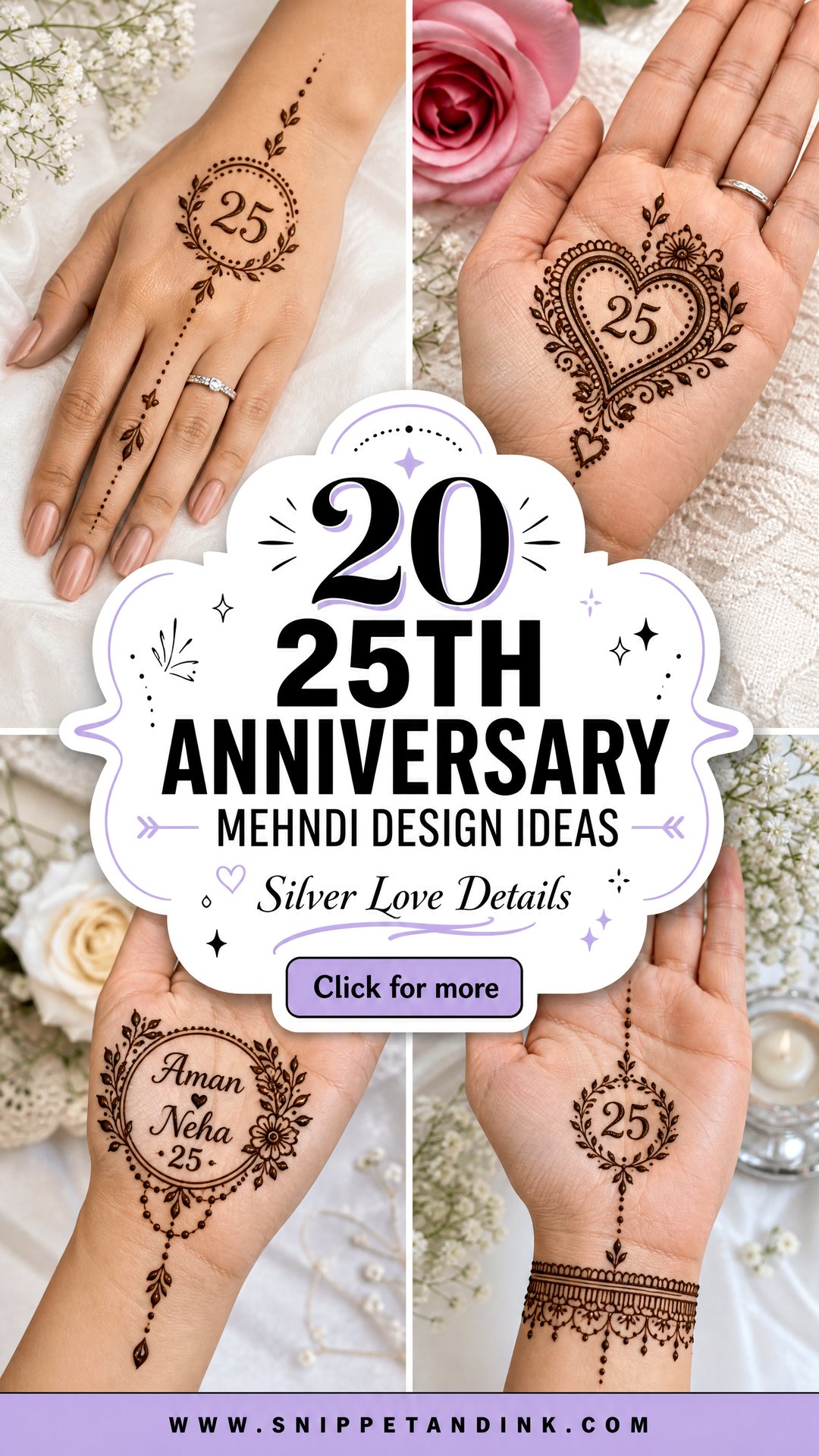
Timing Anniversary Henna So the Stain Peaks at the Party
Fresh henna comes off orange, not brown. The colour deepens over the next day or two as the dye oxidises, and it usually looks darkest around 48 hours after application. That’s why I book anniversary clients one or two days before the party, never on the morning itself. A design applied that day will still look bright orange in the photos.
Once the paste is on, leave it as long as you can bear, ideally six hours or overnight. This is what I tell every client to do:
- Arrive with clean, dry hands and skip lotion, oil and sunscreen that day. Anything coating the skin blocks the dye.
- Let the paste dry, then dab on a little lemon and sugar so it stays stuck to the skin.
- Scrape the dried paste off with a blunt edge or rub it off with a little oil. Don’t wash it off.
- Keep your hands away from water for the first 12 to 24 hours, and keep them warm. Cold hands stain lighter.
Bring a photo of your outfit and decide in advance where the “25”, the names or the dates should go. Ask how long your design will take before you agree to it. A dense full hand can run for hours, which is a lot to ask of your back, and an Arabic trail may give you most of the effect in a fraction of the time.
1. 25th Anniversary Full Hand Mehndi Design
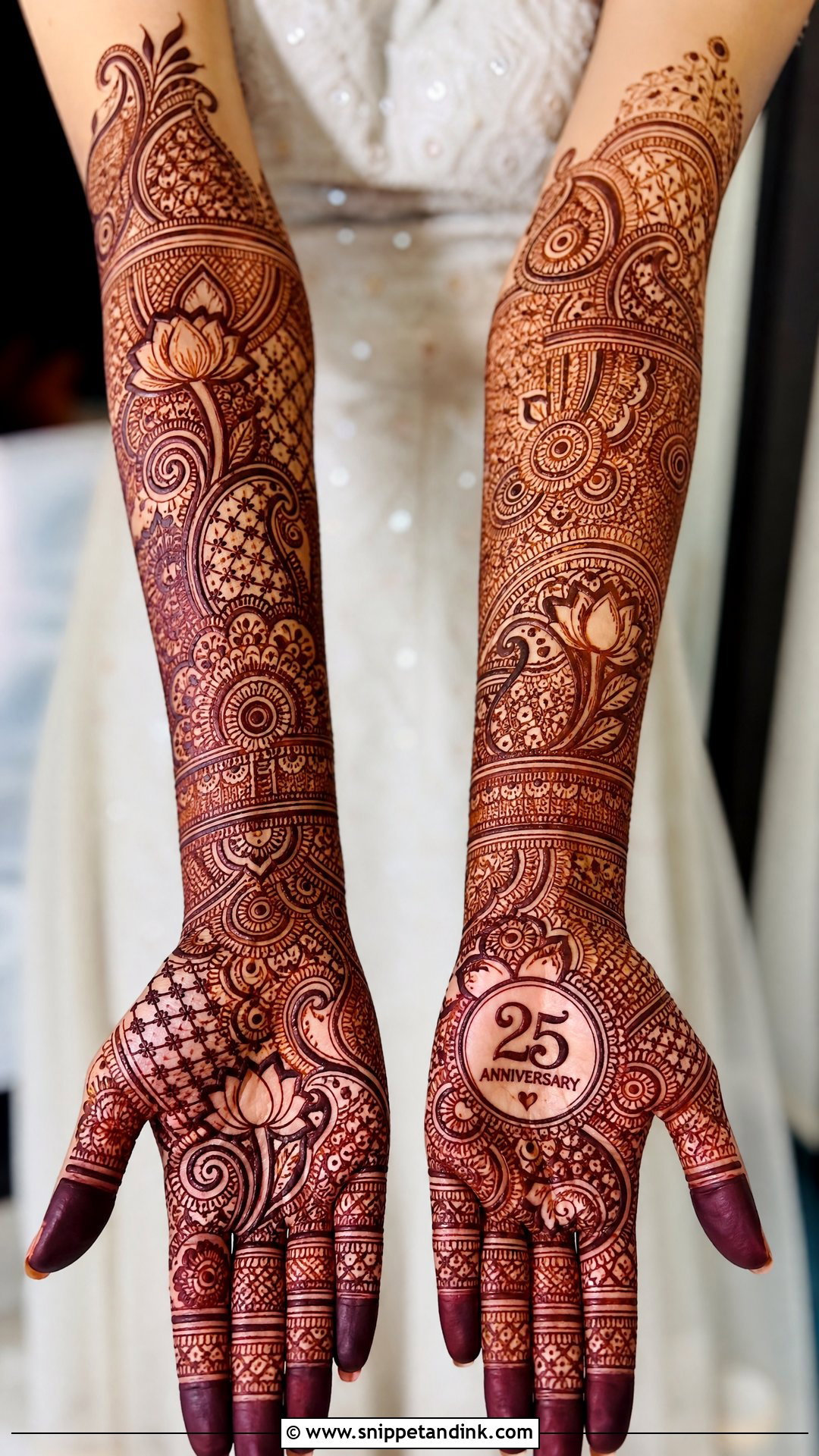
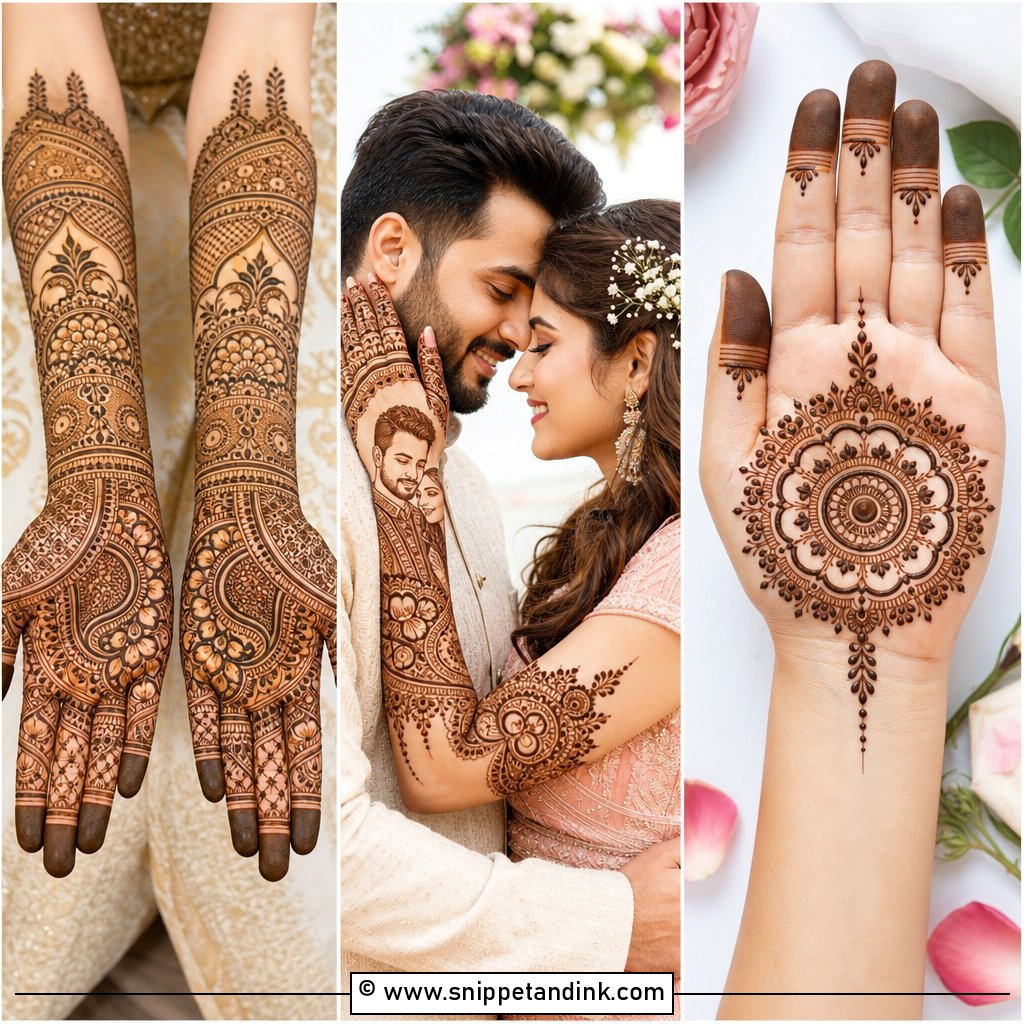
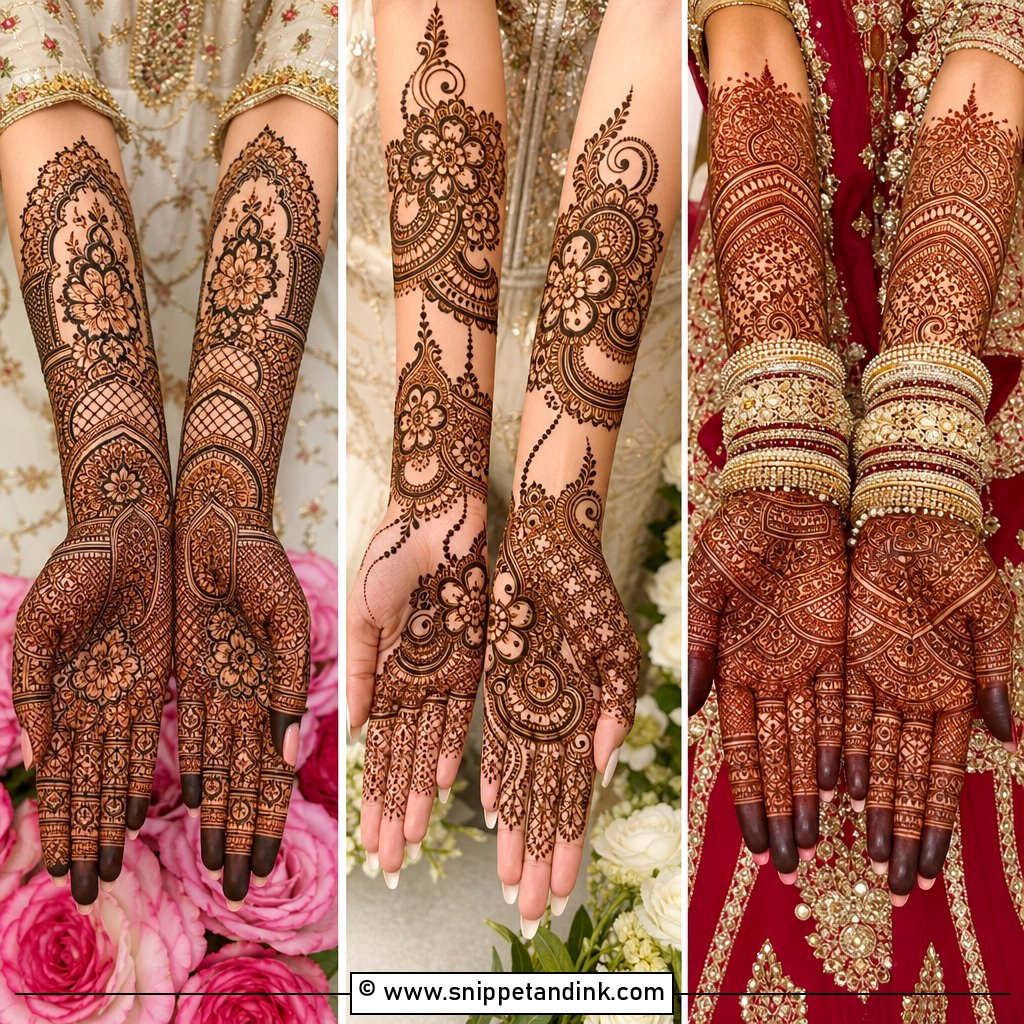
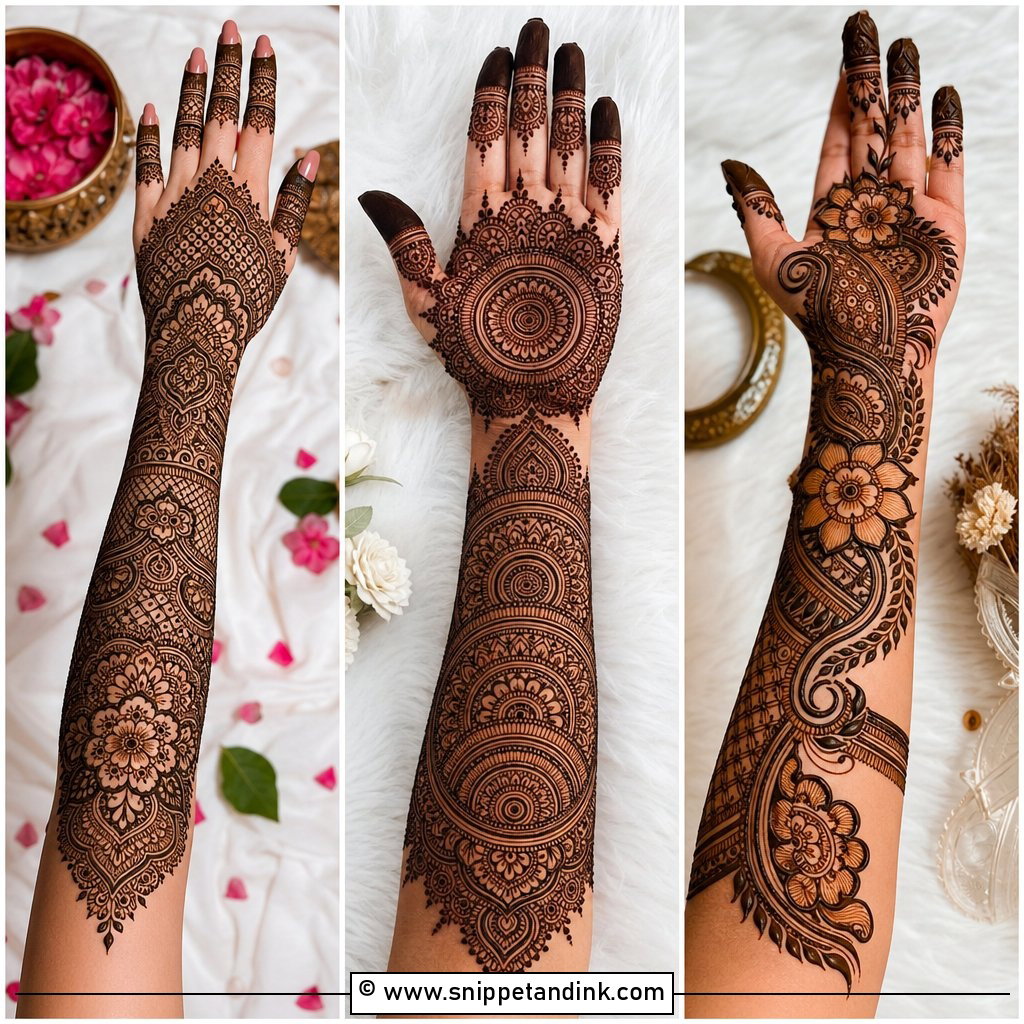
Full coverage from fingertips to forearm is what I suggest when the anniversary is being run like a wedding function, with an evening of music and the whole family dressed up. I build it the bridal way: paisleys and lotus on the palm, vines climbing the wrist, fine filling in between, and one central motif where a “25” can sit inside a mandala or tuck into a paisley. Plan on several hours in the chair, so eat first. I keep the fingertips solid and a little heavier than the palm, because thin fingertip lines disappear in group photos. Natural paste needs time on the skin, so don’t book this one for the morning of the party.
2. 25th Anniversary Couple Portrait Mehndi Design
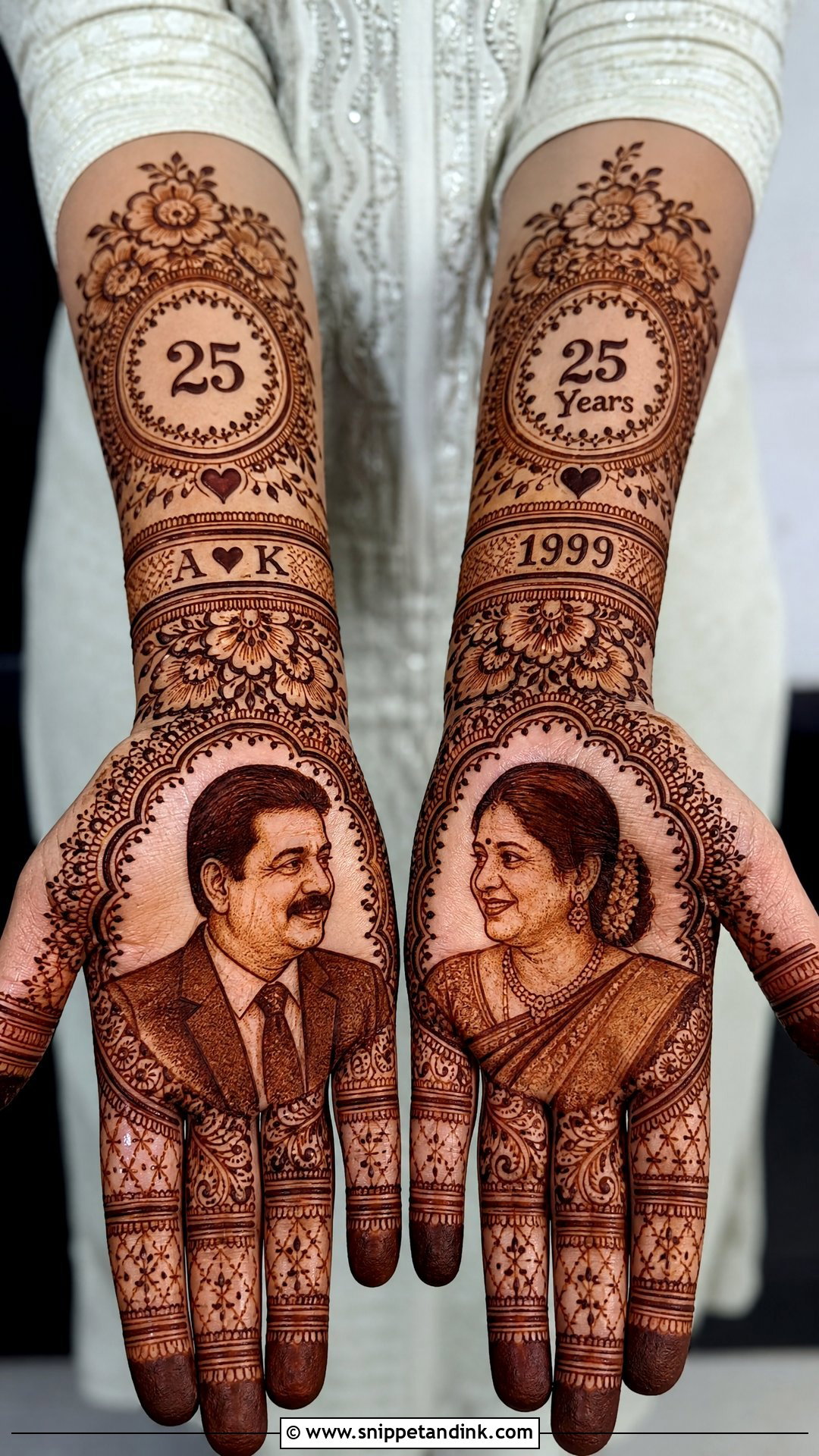
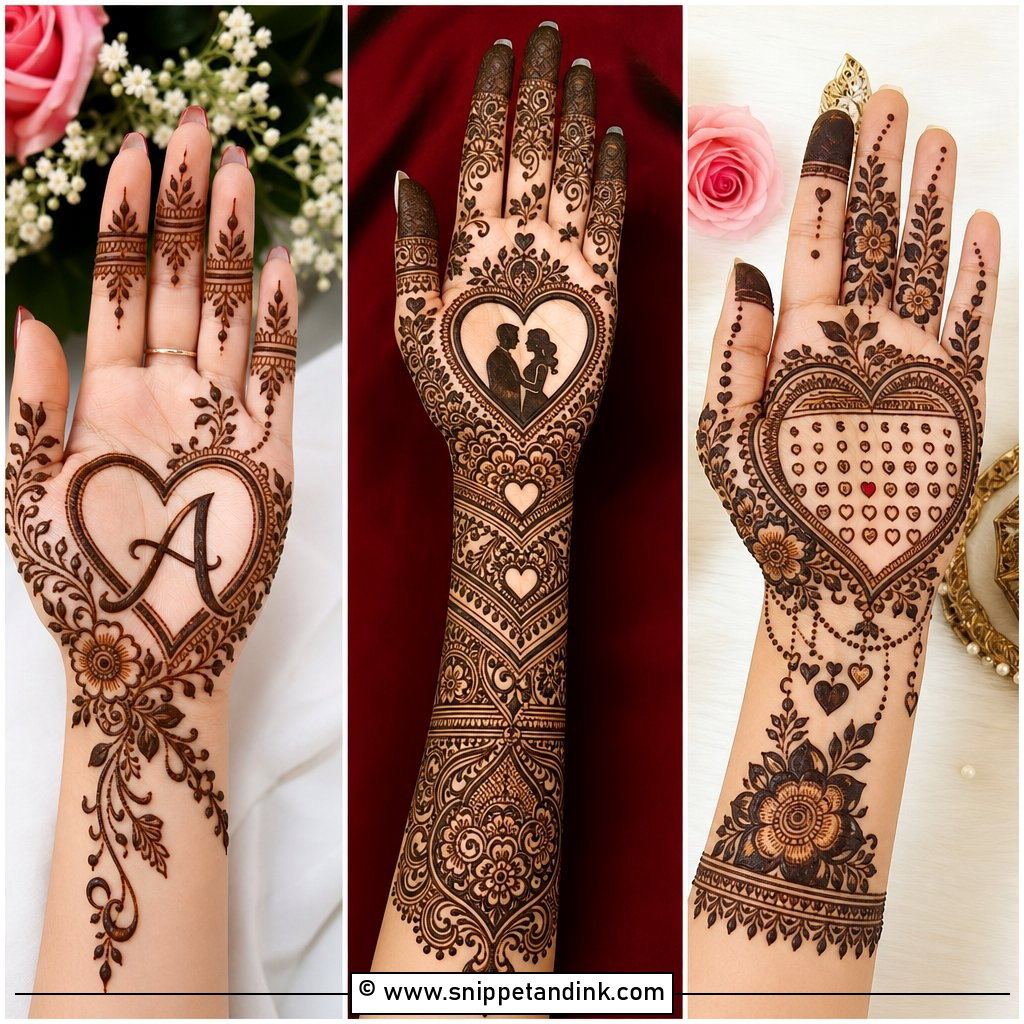
Portrait work turns the palms into a small album of the two of you: his face on one hand, hers on the other, or a simple silhouette of the couple if faces feel like too much. Wedding bells, a floral border and a few small hearts frame them. Honestly, this is only worth doing with an artist who can show you portraits she has already stained, because paste spreads a hair as it sits and a face loses its likeness quickly when lines bleed. I keep the background light so the faces stay readable, and I often write the wedding year and this year near the wrist. Expect the longest sitting of anything here.
3. 25th Anniversary Arabic Mehndi Design
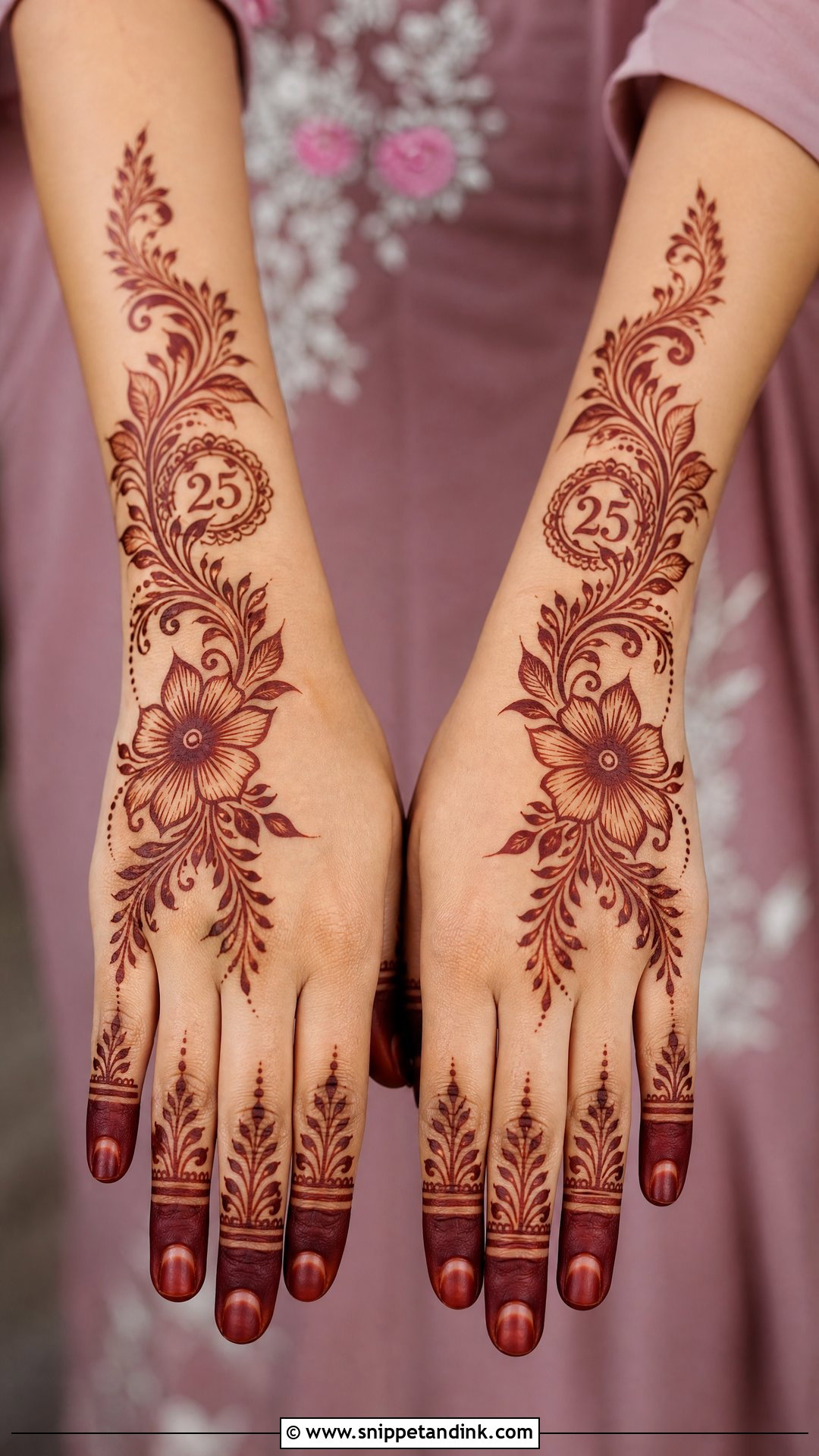
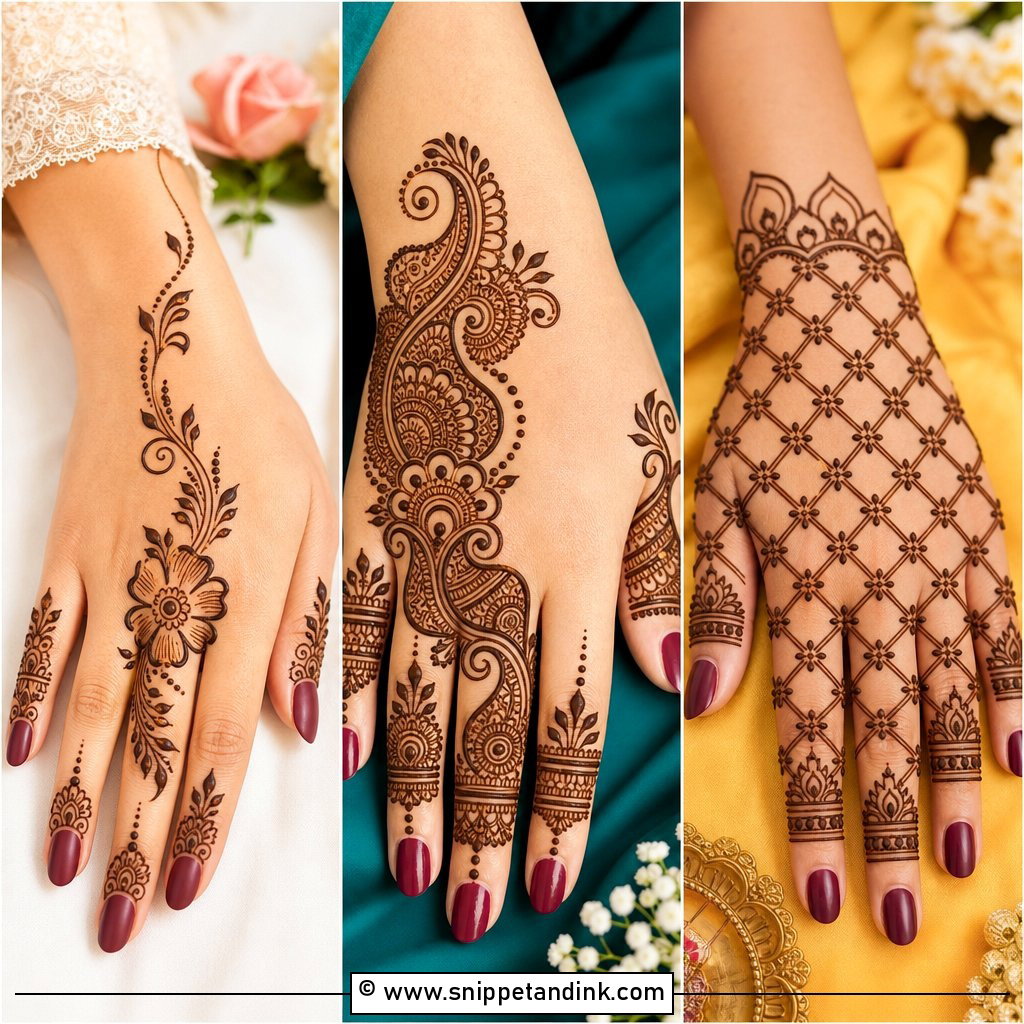
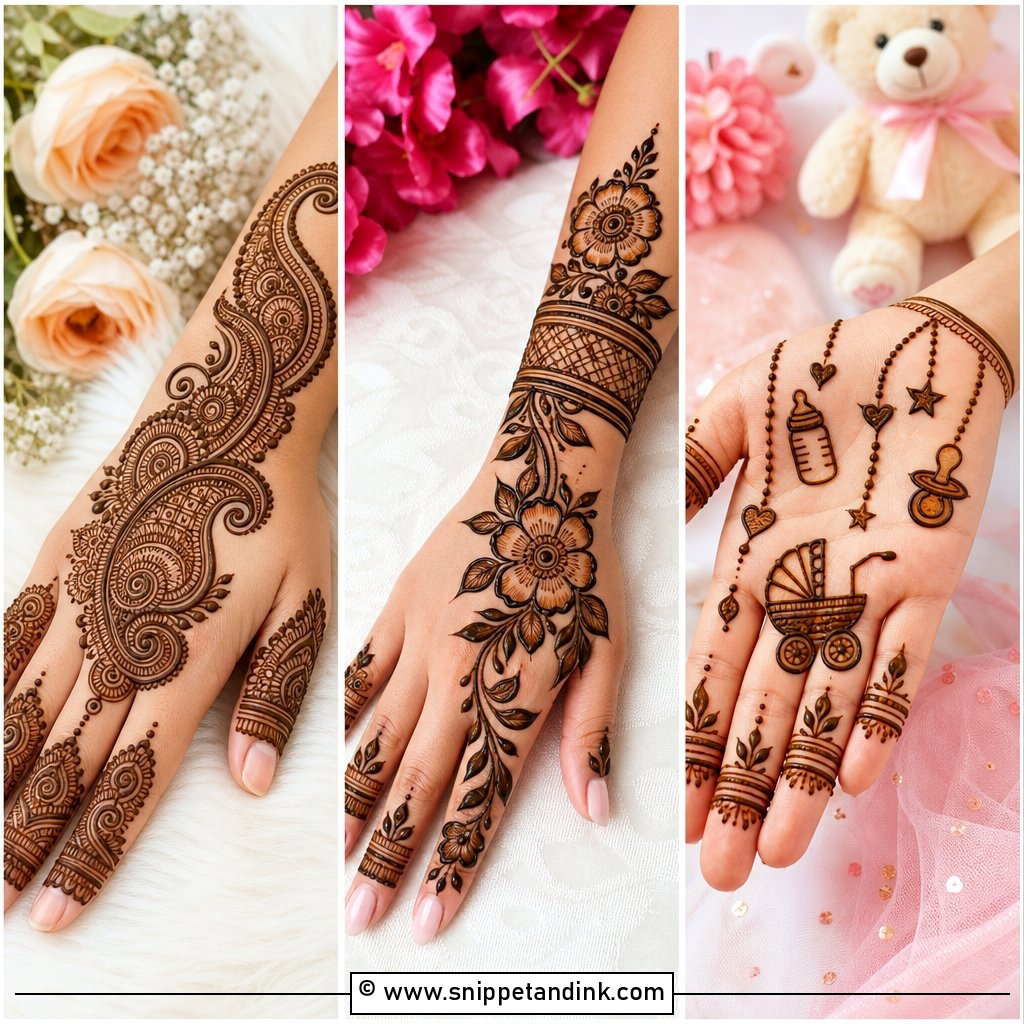
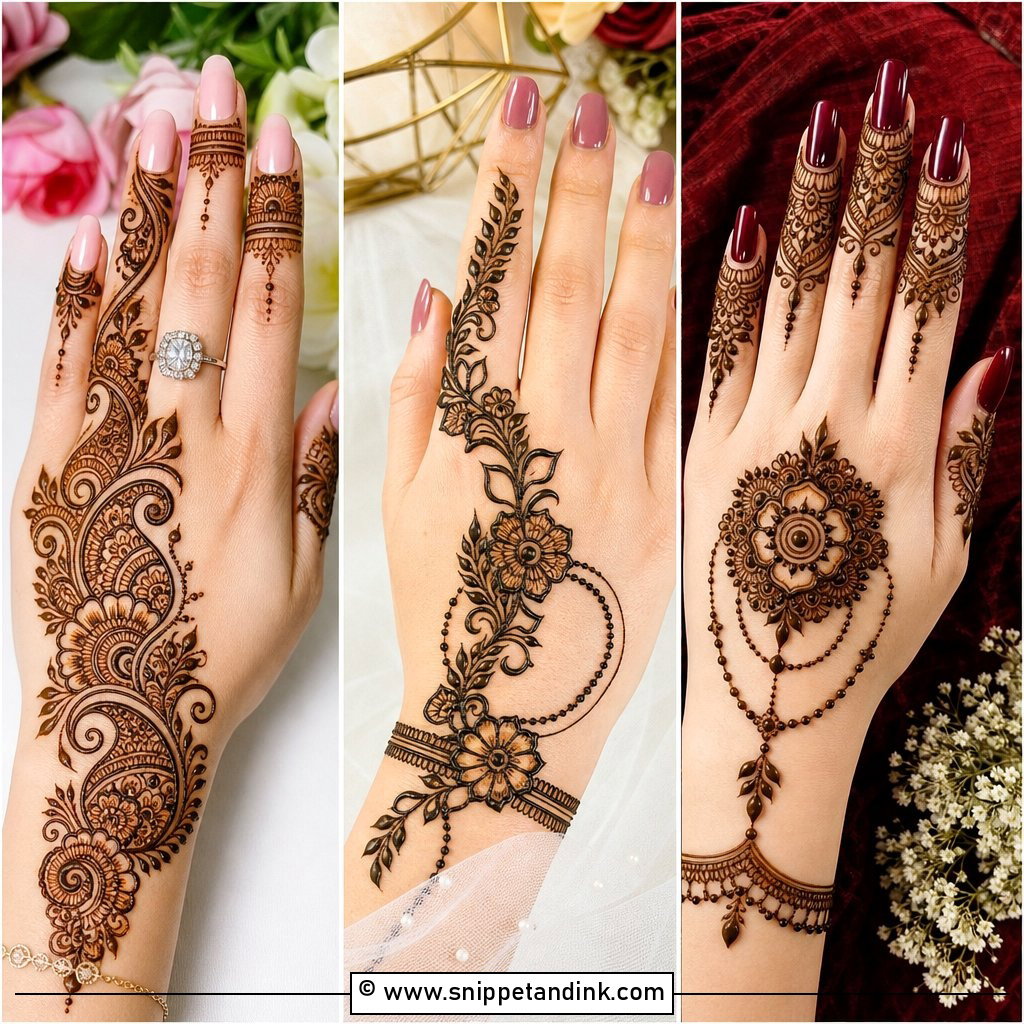
An Arabic mehndi design runs diagonally from the fingertips across the palm or the back of the hand, with bold flowers, leafy vines and shaded curves separated by open skin. That open skin is what makes it read as grown-up rather than bridal. A “25” fits neatly into a flower centre or a wrist band. The diagonal flow lengthens shorter fingers, which is why I reach for it so often, and it takes a fraction of the time a dense bridal hand does. A saree, a gown or a simple festive suit all sit comfortably with it.
4. 25th Anniversary Back Hand Mehndi Design
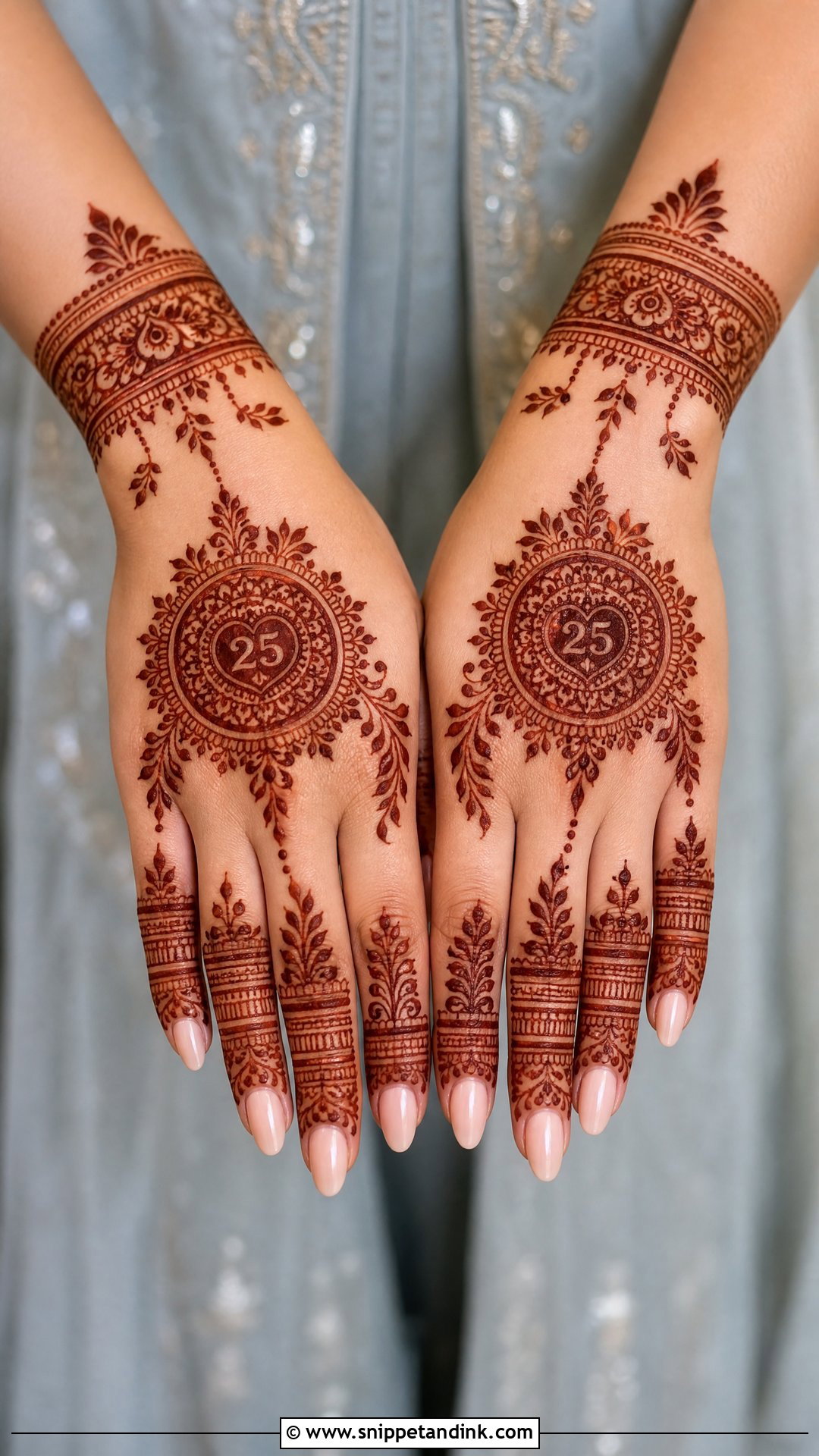
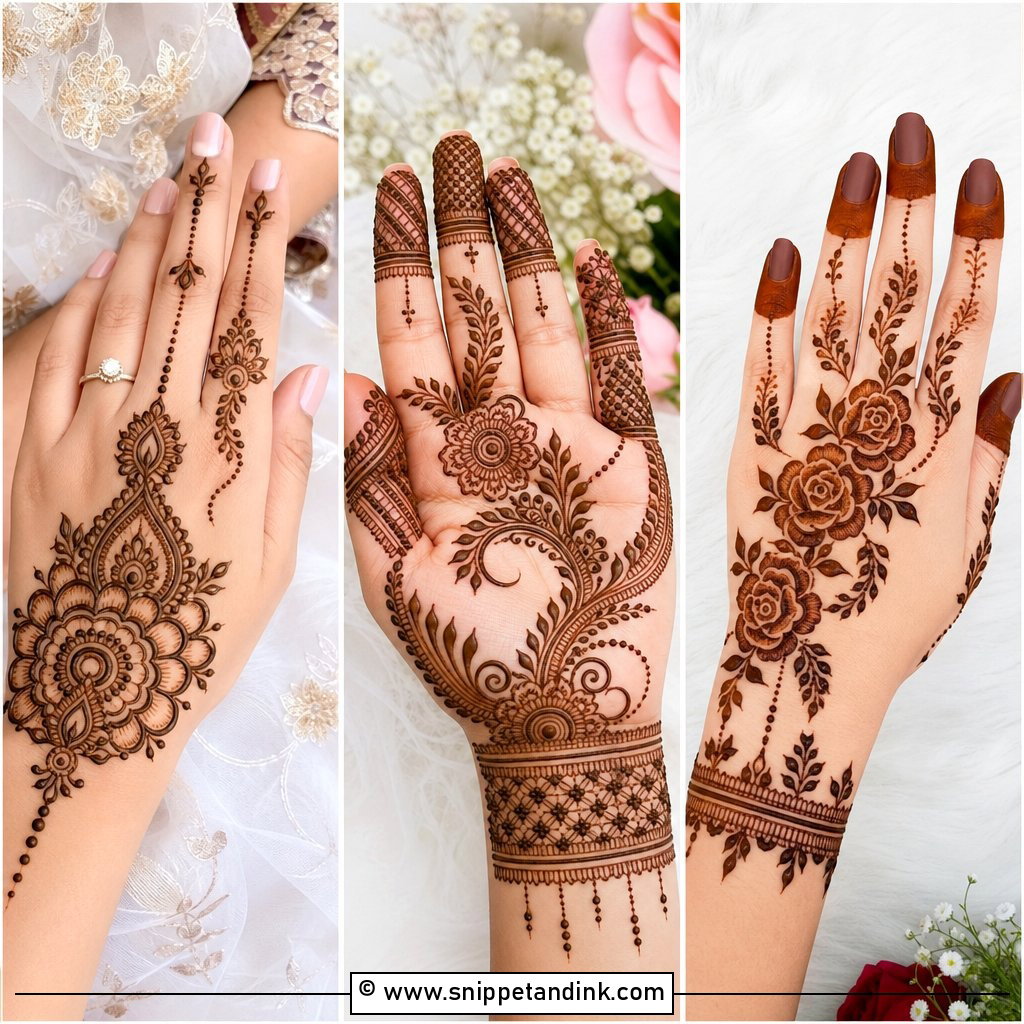
The back of the hand is the side cameras see most, every time you hold flowers, a gift or your husband’s hand. I start with a central mandala, add ring-style details on each finger and finish with a wrist cuff that reads like jewelry, then run small leafy trails from the wrist to the middle finger. The “25” goes near the wrist or inside the mandala. Skin on the back of the hand is thinner than the palm and usually stains a shade or two lighter, so I make the outlines a little bolder here. Leaving the palm bare means you can host, eat and greet guests without worrying about smudging.
5. 25th Anniversary Palm Mehndi Design
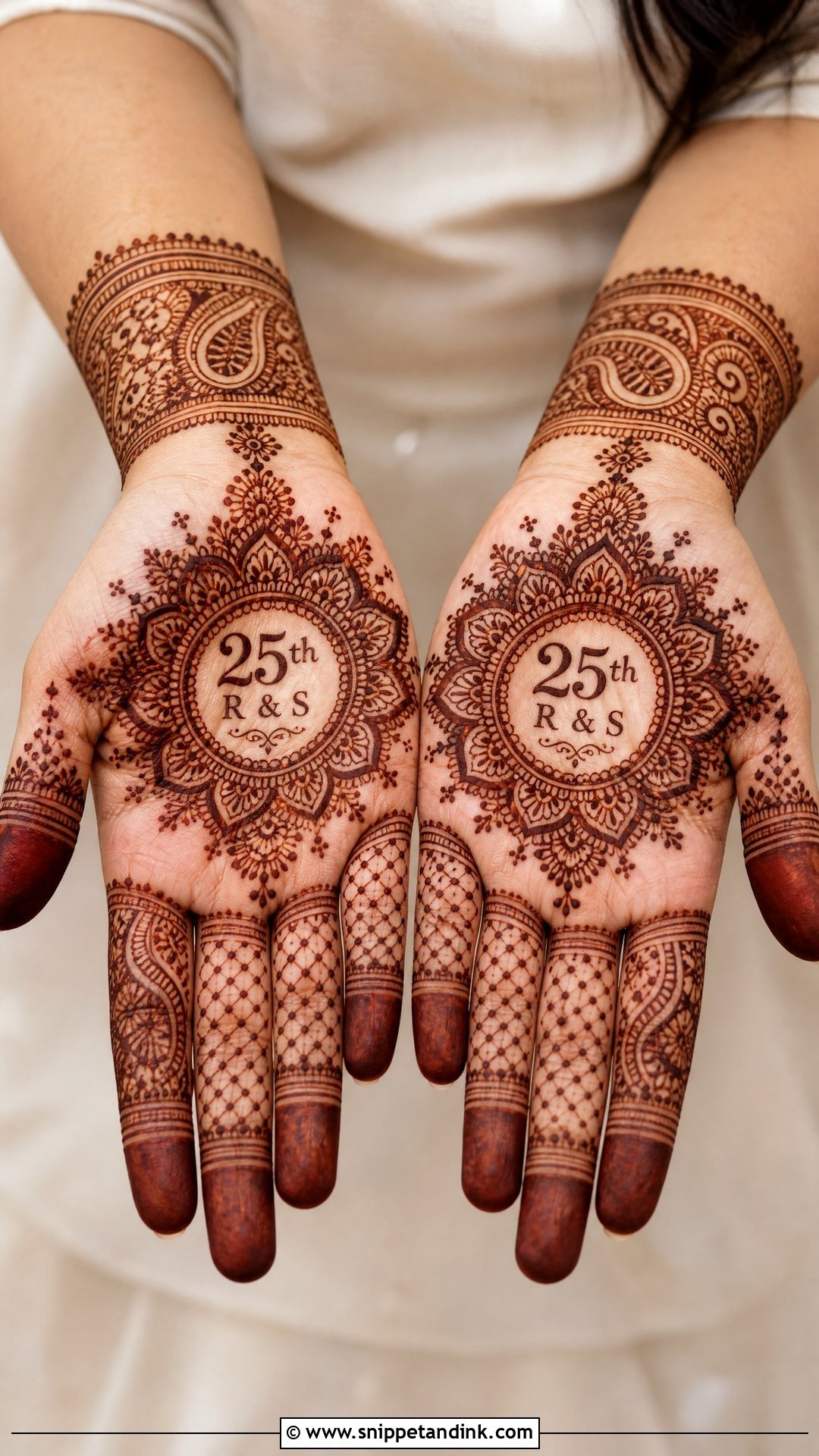
Palm work is the most private placement, because the artwork only shows when the hand opens. I like to treat the two palms as two halves of a story: a wedding-style mandala on one, and initials, a “25” or a small couple motif on the other, ringed by paisleys, dots and jaali. Palms take the darkest stain anywhere on the body, so this is where fine detail pays off most. Mature hands have plenty of room for clear motifs here, though I keep fine lines out of the deepest creases, where they break up every time the hand flexes. Filled fingertips give the palm a frame and make the centre look finished.
6. 25th Anniversary Initials Mehndi Design
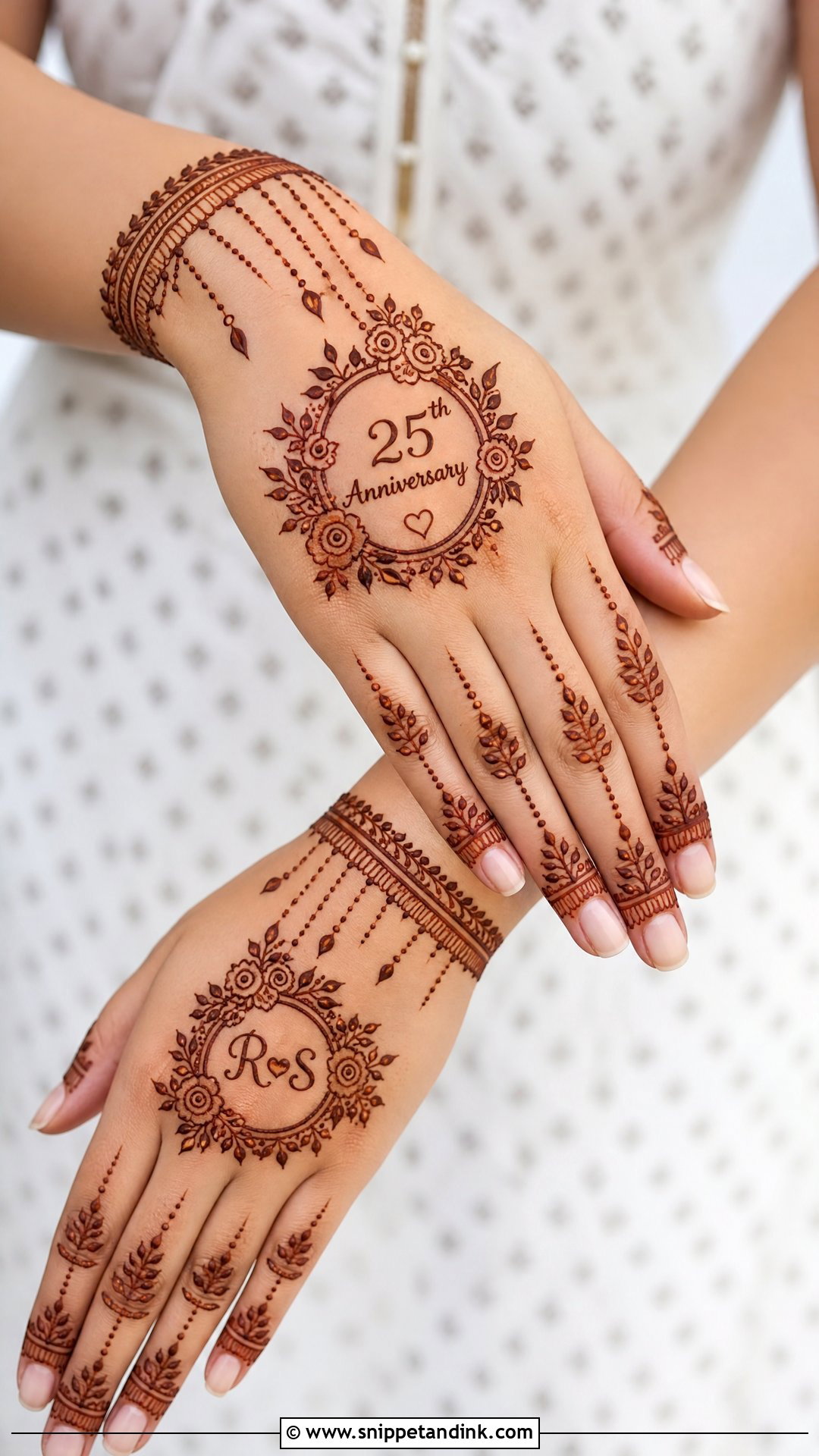
Initials are the quickest way to make an anniversary mehndi design personal without a complicated layout. I set both initials inside a heart, a paisley or a small floral frame, usually at the centre of the back of the hand with a bracelet band at the wrist. For more coverage, leafy lines and small flowers can carry the pattern up the fingers. Ask for clear block letters if you want guests to read them, or let the artist weave them into the filling so only the two of you know where they are. Write the letters down for her before she starts. A reversed initial can’t be wiped away once the stain sets.
7. 25th Anniversary Mandala Mehndi Design
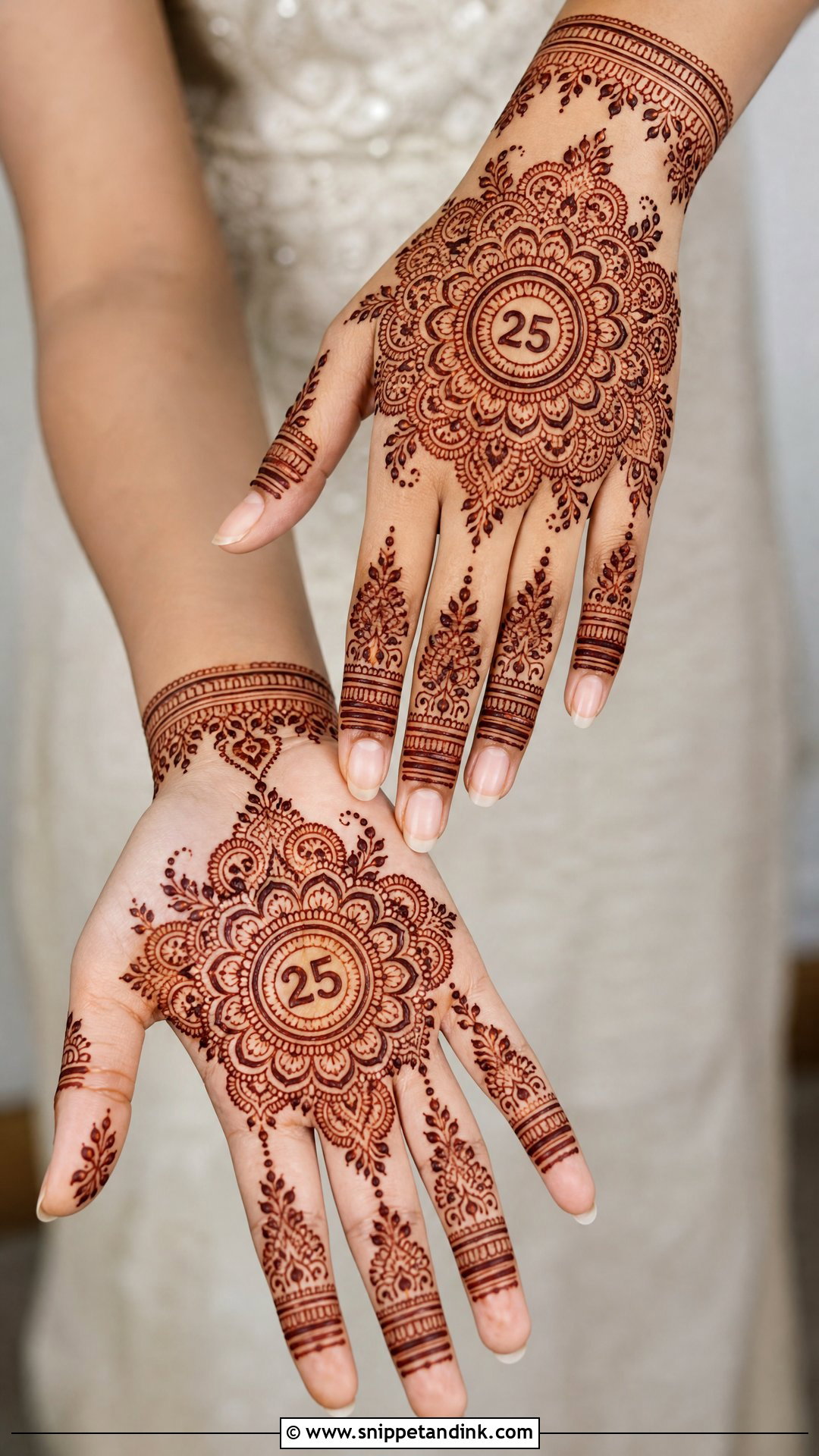
A round mandala is the design I can scale most easily to the time you have. It starts as a bold circle in the centre of the palm or back of the hand and grows outward in rings of dots, petals, paisleys and fine lines, stopping wherever you want it to. The “25” sits in the middle or along the wrist border. Symmetry is unforgiving, though. A lopsided ring is obvious from across the room, so I mark the centre point first and check it against the wrist before drawing the outer rings. Kept open, it’s quick. Filled densely, it can carry a formal outfit.
8. 25th Anniversary Floral Mehndi Design
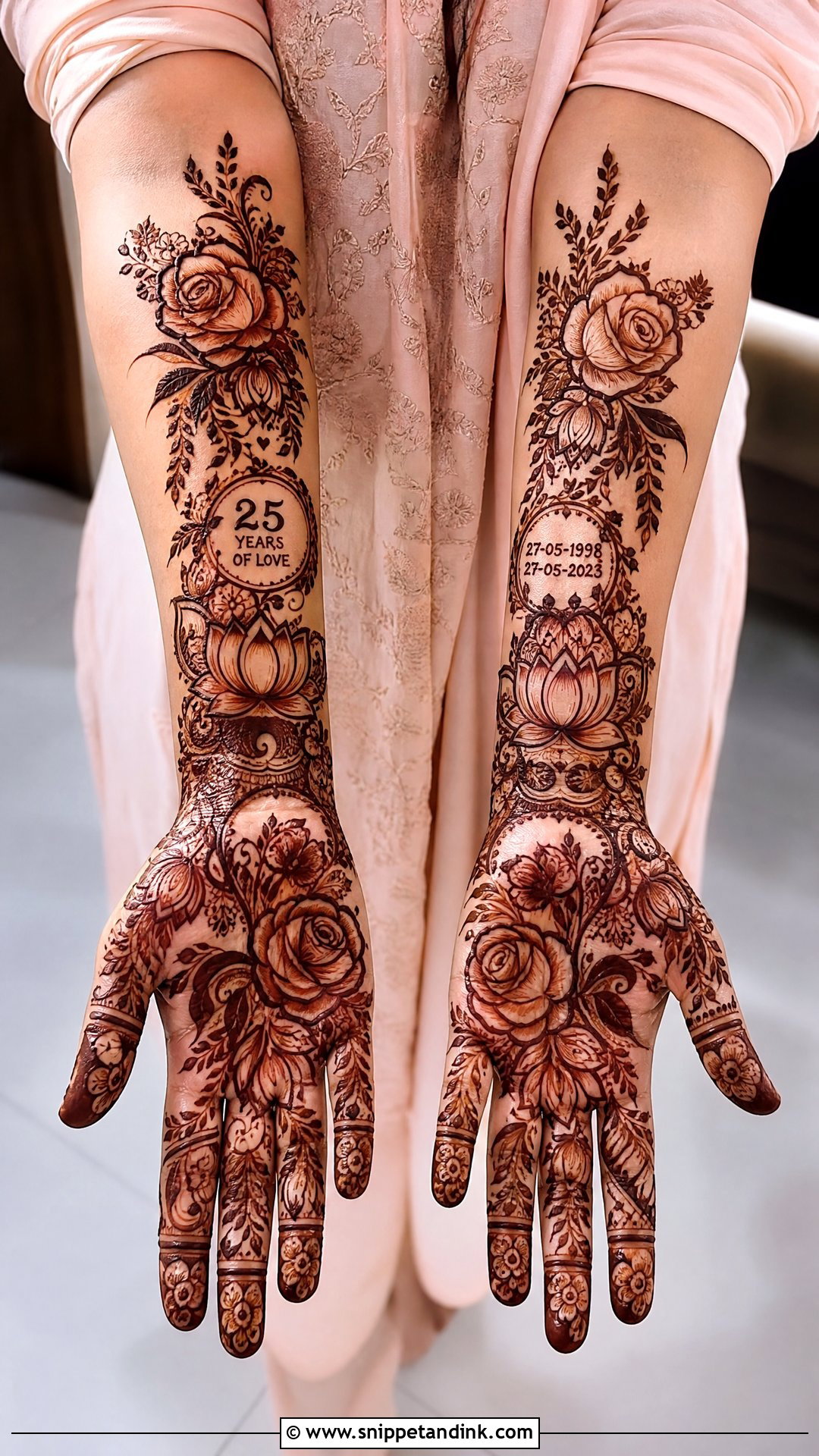
Flowers suit an anniversary because they read as celebration rather than ceremony. Roses, lotus blooms and leafy vines can cover the palm, the back of the hand or the stretch from wrist to forearm, with the anniversary date written inside a flower band. I draw petal outlines with a thicker cone line so the design holds up at a distance, then add fine filler inside for depth. A light Arabic floral trail keeps it festive rather than bridal. A full Indian floral layout is the grander route for a larger party.
9. 25th Anniversary Peacock Mehndi Design
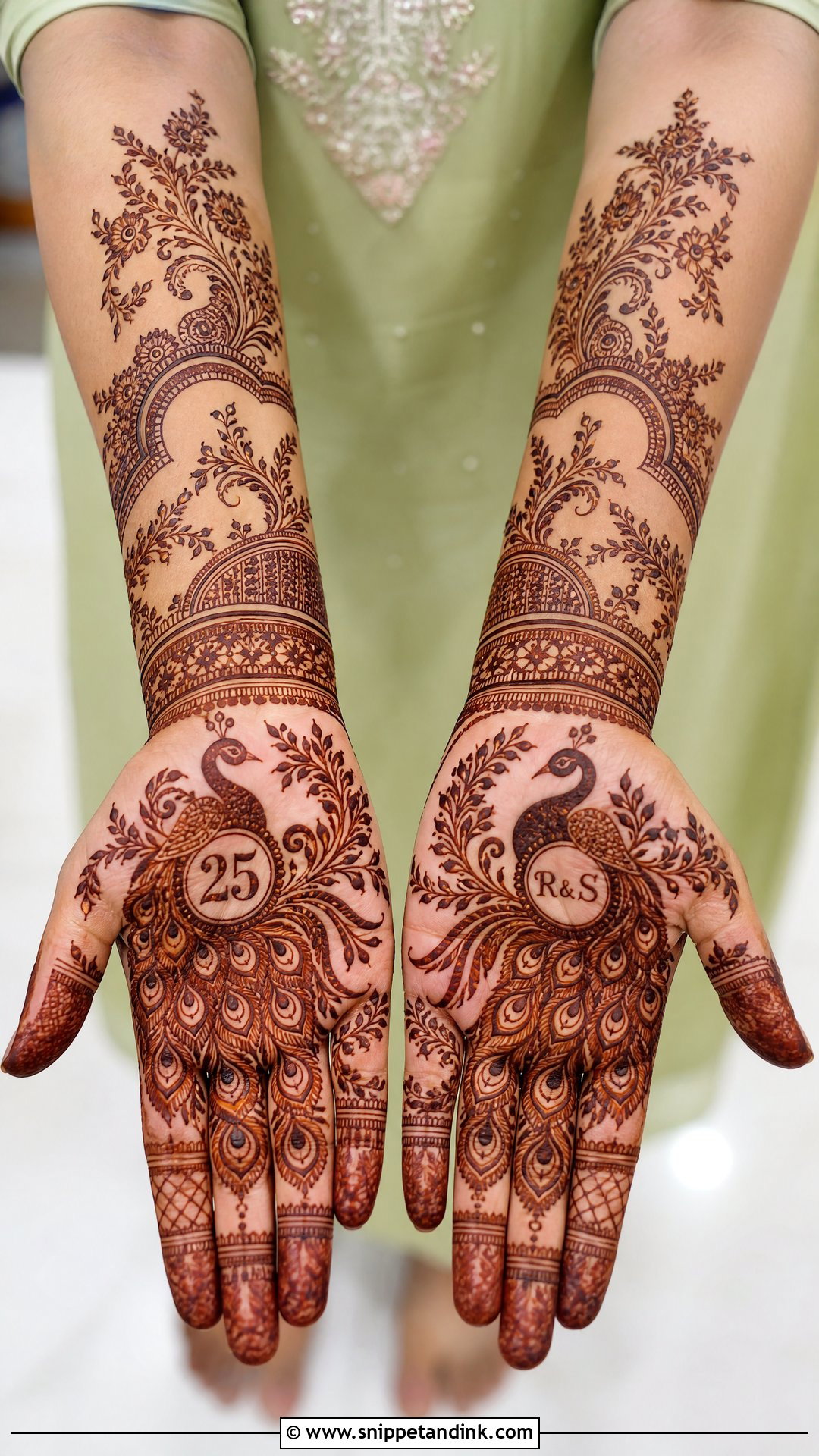
Peacocks bring the most traditional mood of anything here. The bird can sit on the palm, the back of the hand or the forearm, with its feathers spilling into paisleys, flowers and curved vines, and the feather eyes are a natural hiding place for tiny “25”s or the couple’s initials. My rule is to keep the body clean and almost bare and put all the richness into the feathers. A fully filled body turns into a dark blob once the stain deepens. Silk sarees and heirloom jewelry suit it best.
10. 25th Anniversary Bracelet Mehndi Design
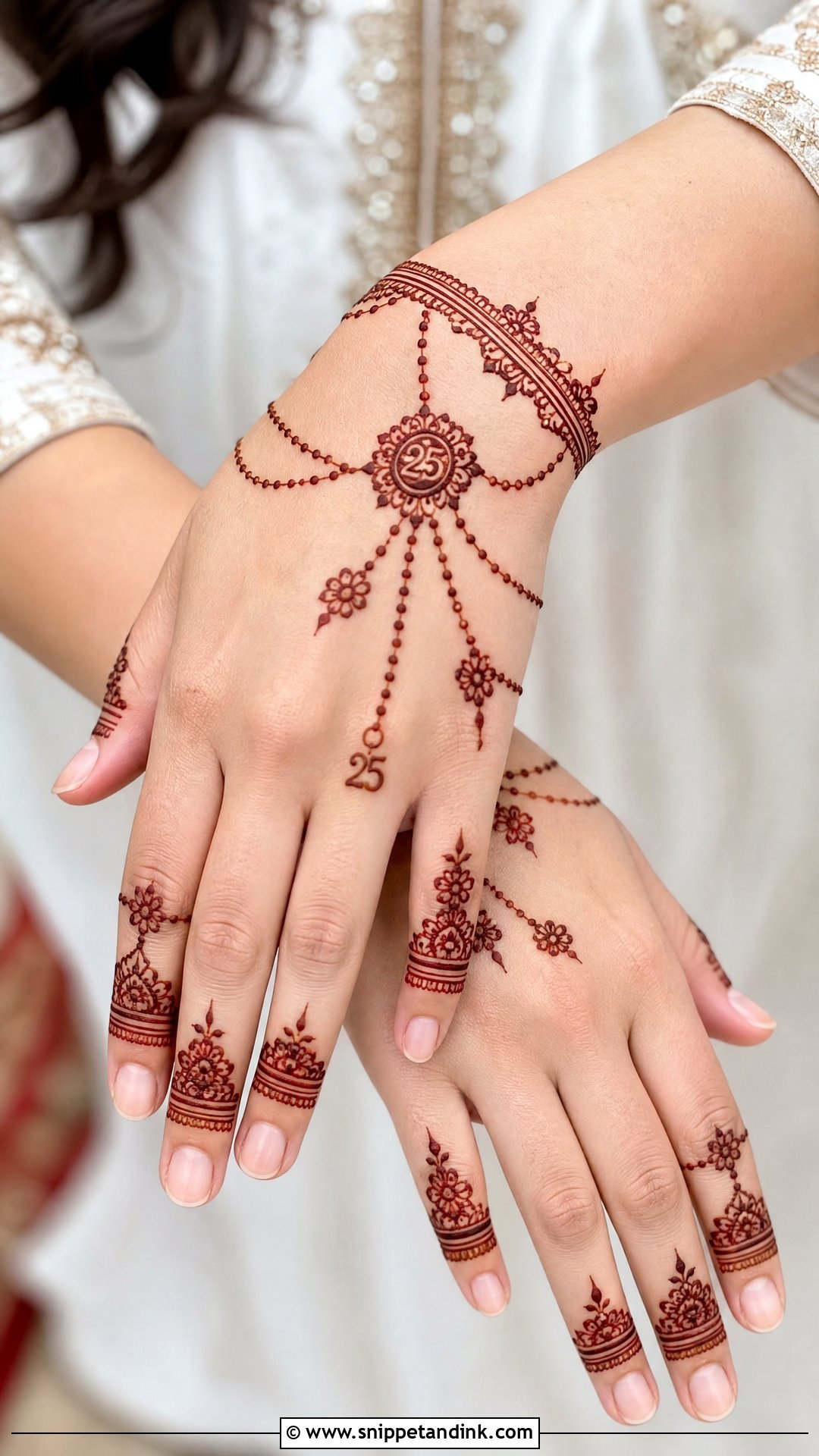
A bracelet mehndi design wraps the wrist like a fine bangle and then sends chains of dots, small flowers or leafy strings up to the fingers. For the anniversary, I hang a little charm from the band holding a “25” or the couple’s initials. It sits on the back of the hand and gives a jewelry effect with very little coverage, which makes it my usual suggestion for daughters, sisters and guests, or for the woman being celebrated if she prefers minimal henna. Placement matters if she’ll wear real bangles. I draw the band just below where they rest, otherwise the metal hides the best part of the design.
11. 25th Anniversary Finger Mehndi Design
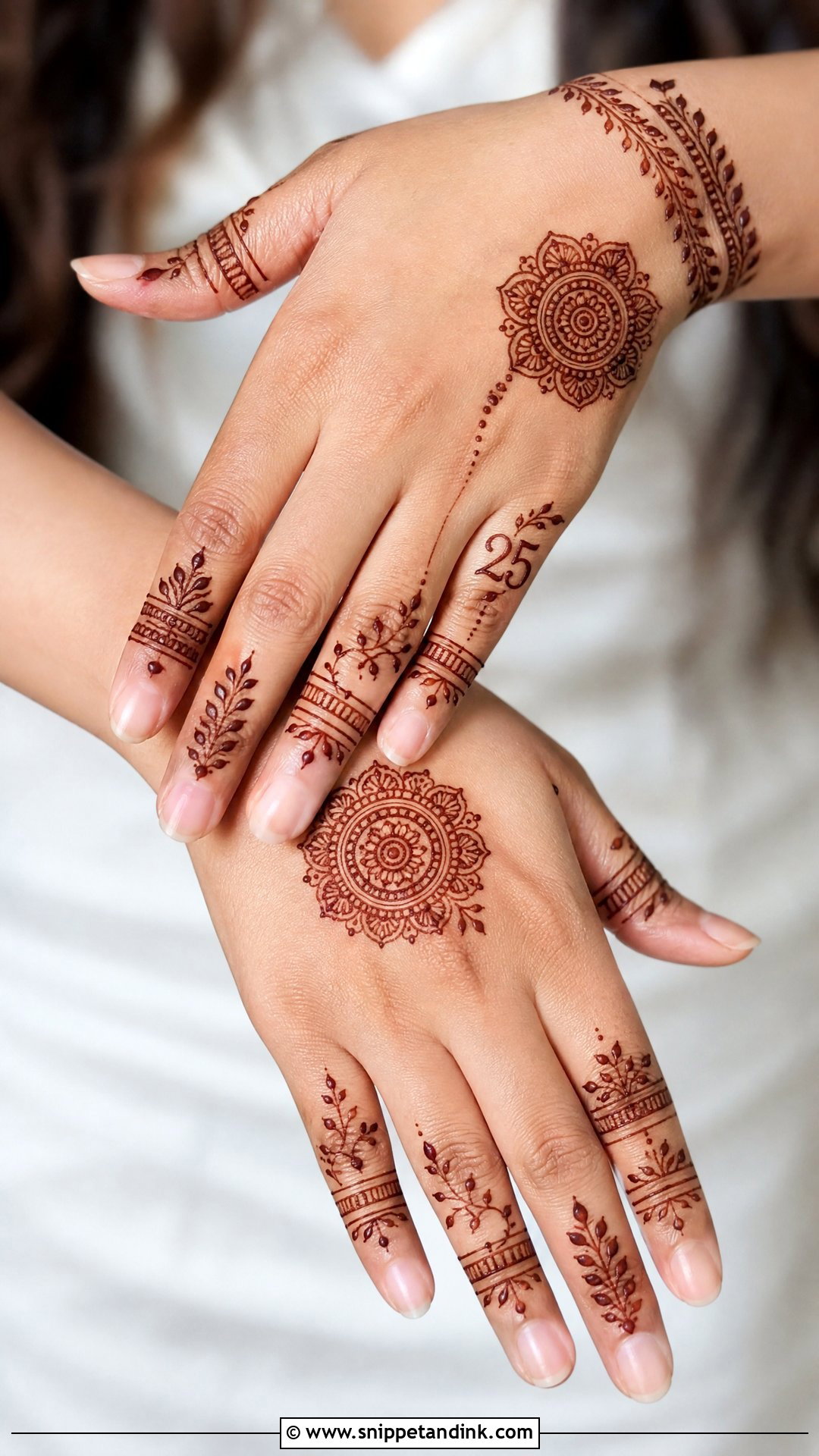
Some women want the festive feeling without covering the hand at all, and finger work answers that. Leafy bands, mini mandalas, dots and ring motifs go on each finger, with a small wrist detail or a tiny “25” at the base of the thumb to tie it to the occasion. It’s done in well under an hour. Book your manicure before the henna, not after, since a long soak and scrubbing in the first day will fade fresh stain around the nails. Keep the rings light, too. A stack of them can cover most of the work.
12. 25th Anniversary Minimal Mehndi Design
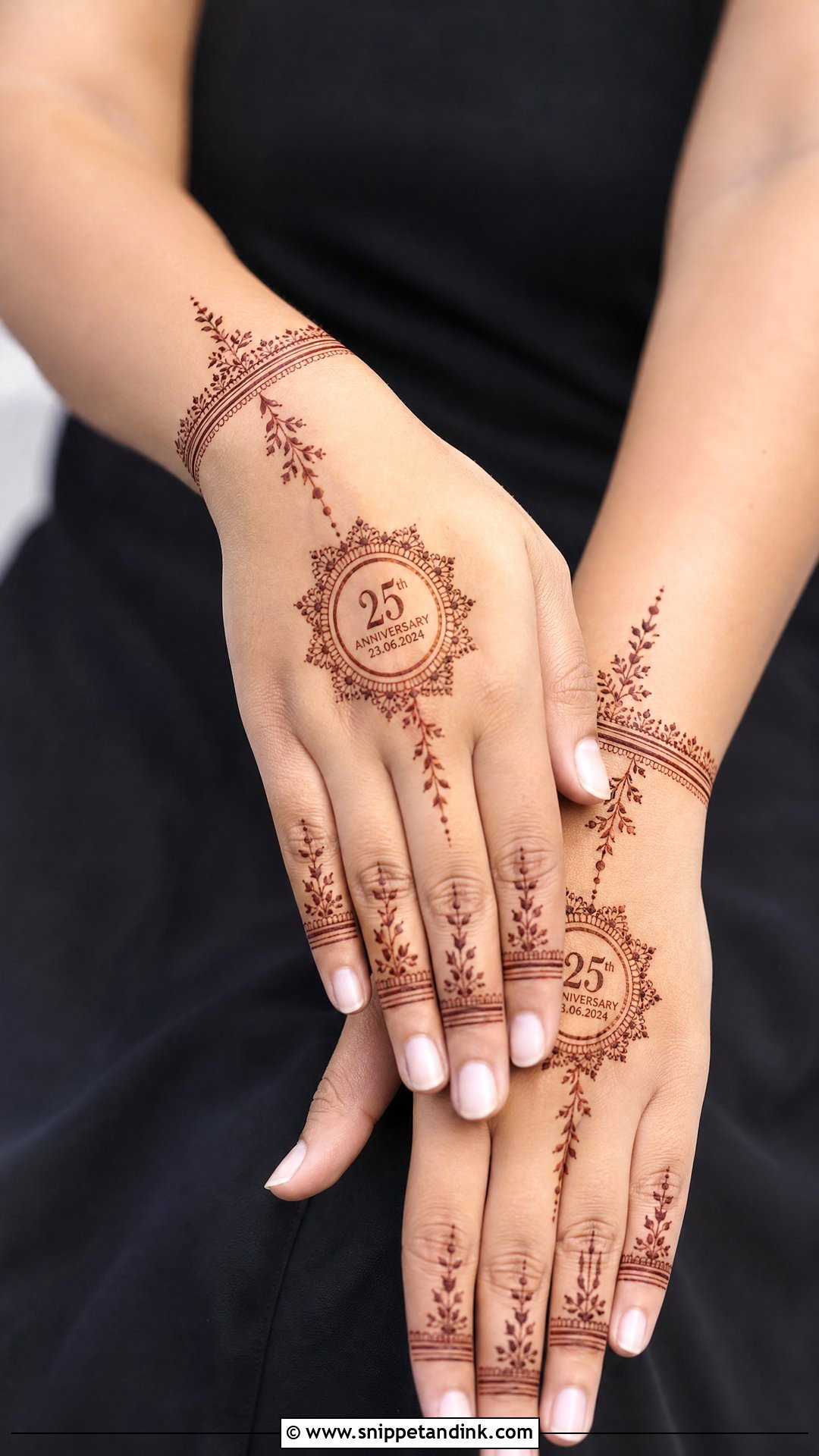
Minimal designs only work when every element has a reason to be there. My usual layout is a small mandala on the back of the hand, a few floral trails on the fingers and a slim wrist band, with “25” in a tiny frame or the anniversary date in fine script. It fits a home celebration, a lunch party or a quiet vow renewal, and women whose everyday style is clean and simple. With so few elements, uneven spacing shows immediately, so I’d rather leave more bare skin than squeeze in an extra motif. One strong focal point keeps it looking complete.
13. 25th Anniversary Indo Arabic Mehndi Design
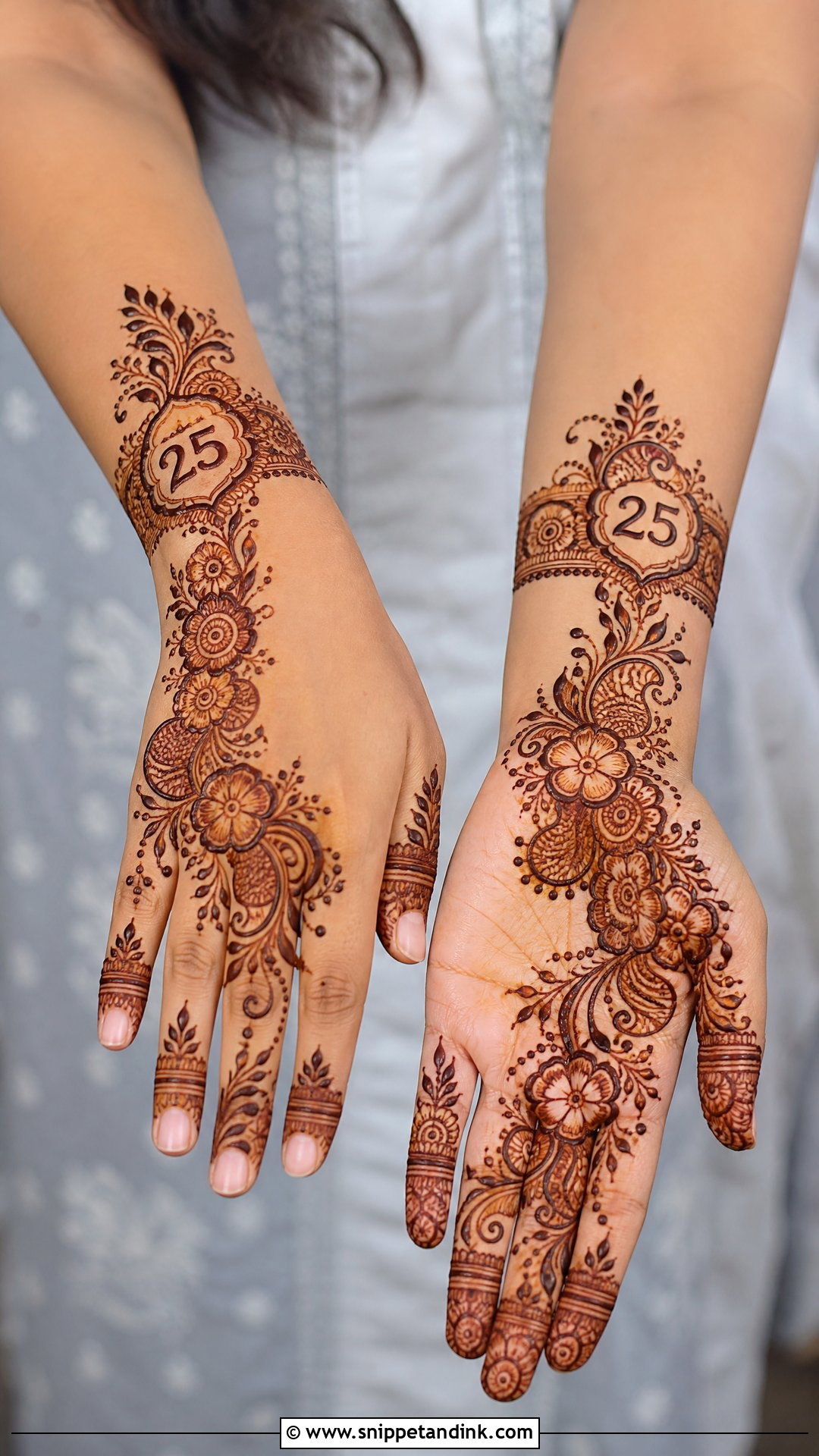
Indo-Arabic combines the bold diagonal flow of Arabic work with the detailed filling of Indian mehndi, which suits a 25th well: festive, but with room to breathe. A diagonal floral trail crosses the palm, and the gaps take small paisleys, dots and shaded leaves. A wrist cuff with a “25” at its centre personalises it, and I use it on front and back hands alike. The trap is overfilling. Every gap you fill takes away the open skin that makes the Arabic half work, so I always leave a few empty pockets on purpose. Those bold outlines stay readable in photos taken across a room.
14. 25th Anniversary Jaali Mehndi Design
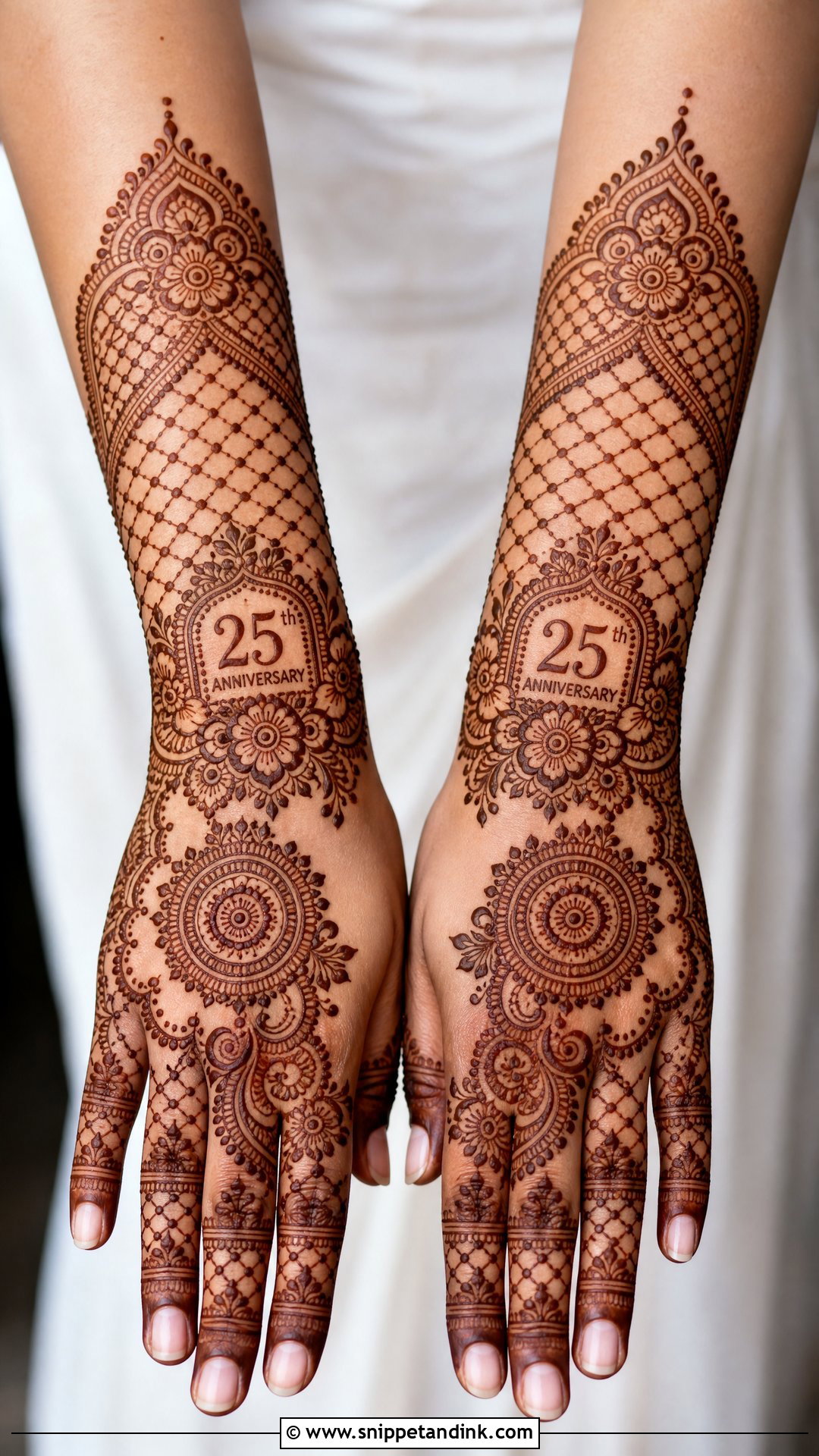
The lace effect of Jaali mehndi reads as mature and quietly formal. For an anniversary I usually draw the mesh over one side of the back of the hand or palm, with floral corners and a bold wrist border, and balance the other side with a mandala or a paisley cluster. The “25” goes in a small frame near the wrist so it doesn’t interrupt the lace. Mesh is the hardest thing in henna to keep even. If the grid drifts, the whole hand looks messy, so I’d only ask for this from an artist with a very steady line. Under bright evening lights the detail really shows.
15. 25th Anniversary Heart Mehndi Design
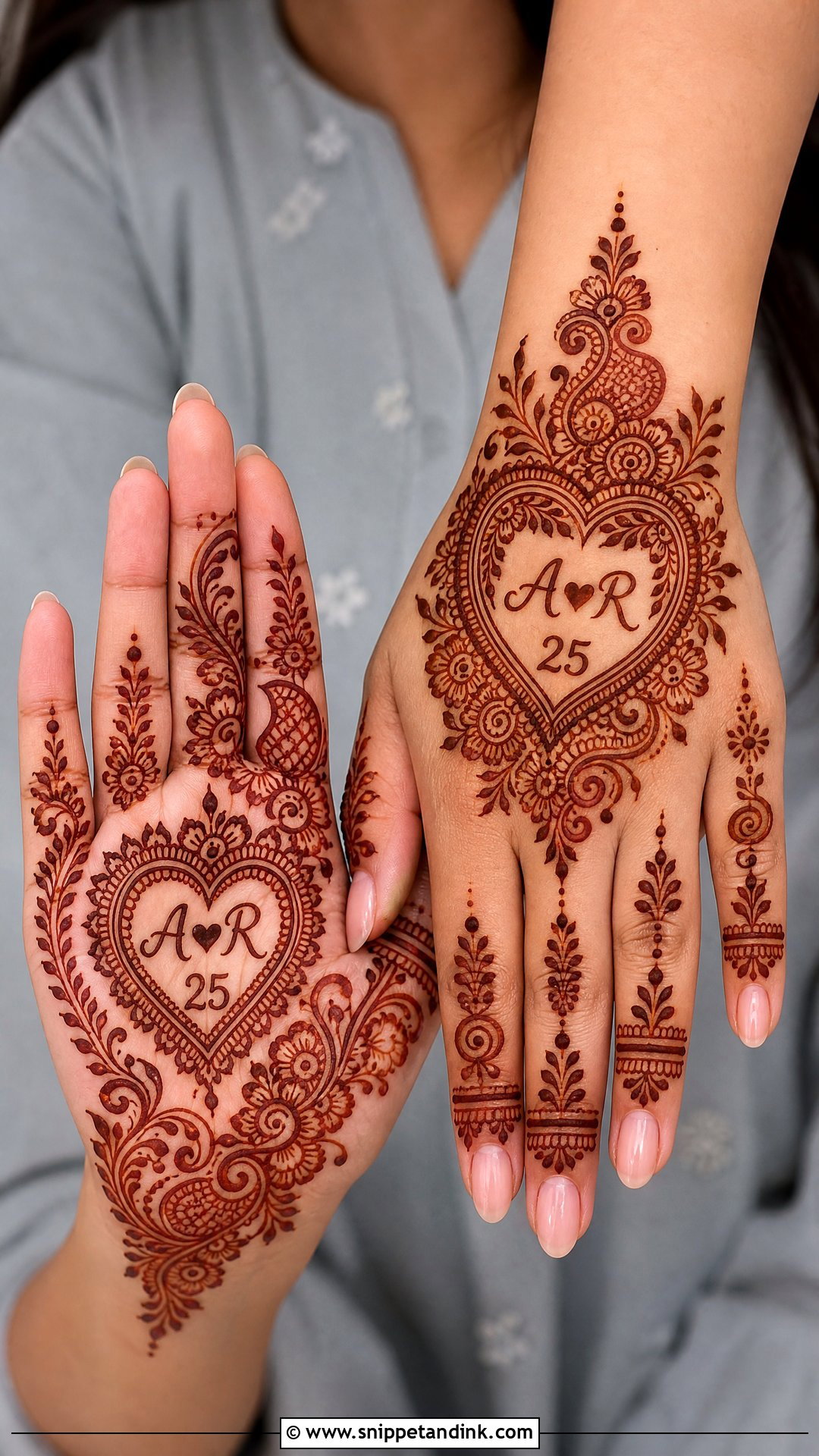
Hearts can look childish on a grown woman’s hand unless they’re treated as a frame rather than a symbol. I draw a heart-shaped outline in the centre of the palm or back hand and fill it with flowers, dots, initials and tiny paisleys, then surround it with traditional borders, leafy vines and mandala accents. A “25” can sit inside the heart, or you can split the 2 and the 5 across both hands so they only read together when you hold them side by side. That split version is a favourite for couple photos.
16. 25th Anniversary Name Mehndi Design
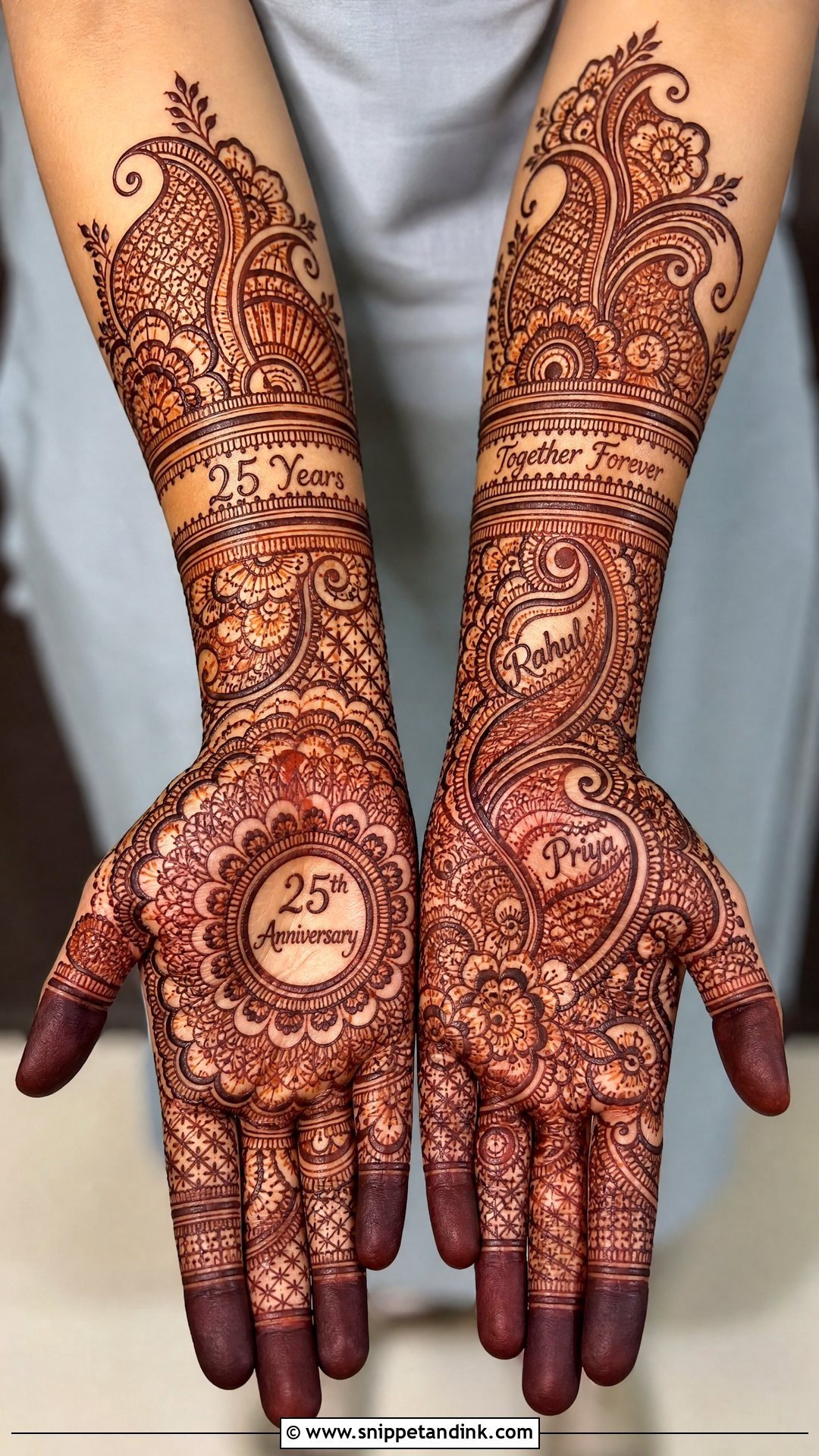
Hidden names have been part of mehndi for generations, and at a silver anniversary the search becomes a game for the whole table. I tuck the partner’s name into a floral trail, a paisley border or the mandala filling, or write both names near the wrist like a bracelet inscription. Letters need surrounding pattern to disappear into, so this works best on a medium or full-hand layout. On a minimal design the name just sits there in plain view. Initials are the softer option, and either traditional or Indo-Arabic filling will carry them.
17. 25th Anniversary Wrist To Forearm Mehndi Design
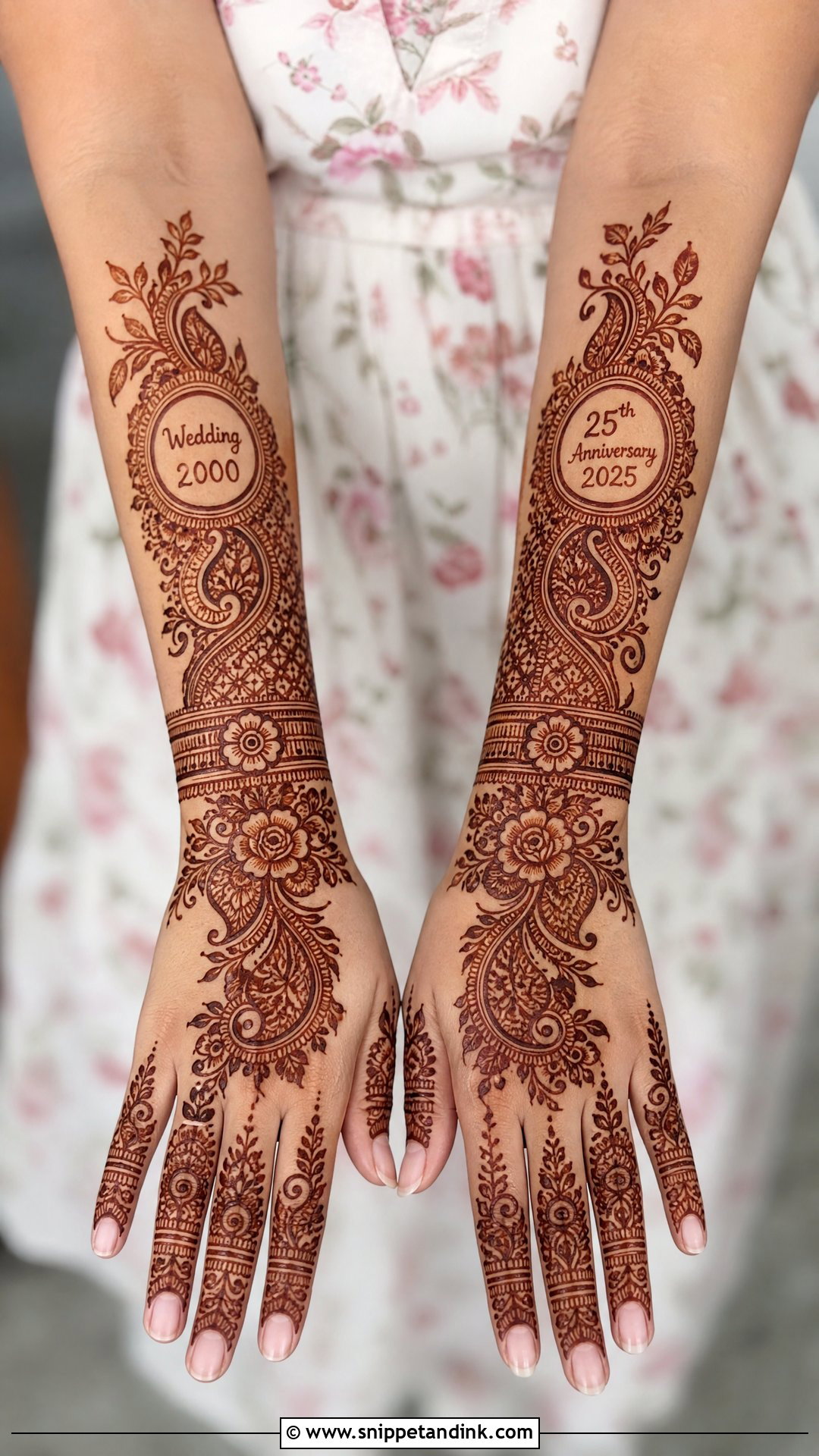
When the sleeves are short, I let the design climb. It starts with a bracelet band at the wrist and extends up the forearm with flowers, paisleys and vines, while the hand itself stays lighter. A small decorative panel on the forearm can hold the wedding year, this year, or “25 years”. Expect the forearm to stain lighter than the palm, since the skin there is thinner and cooler, so I go a touch bolder on those lines. Check your sleeve length before the appointment, because a three-quarter sleeve can cut that panel in half. Done right, it shows up nicely in close-ups during the ring exchange or the cake cutting.
18. 25th Anniversary Simple Front Hand Mehndi Design
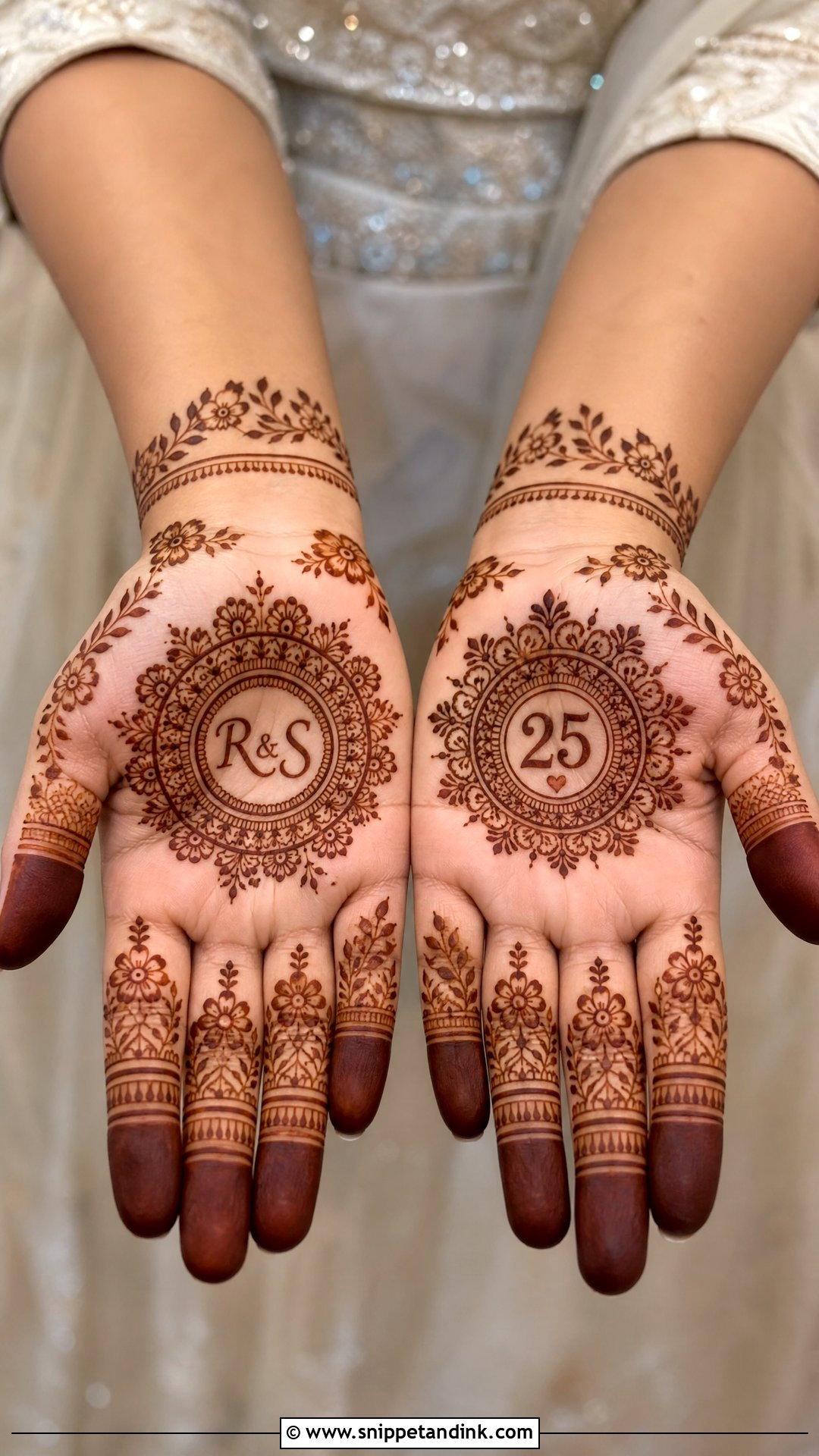
Front-hand mehndi doesn’t have to be dense to look finished. A central palm mandala, filled fingertips, a few small flowers and a light wrist border are enough, with a tiny “25” or initials beside the mandala. It’s quick, comfortable at any age, and the version I suggest for mothers, aunts and guests who want to join in. On small hands I keep the motifs medium-sized, because tiny ones on a small palm blur together once the stain darkens. Balanced spacing does more for this design than extra detail.
19. 25th Anniversary Modern Mehndi Design
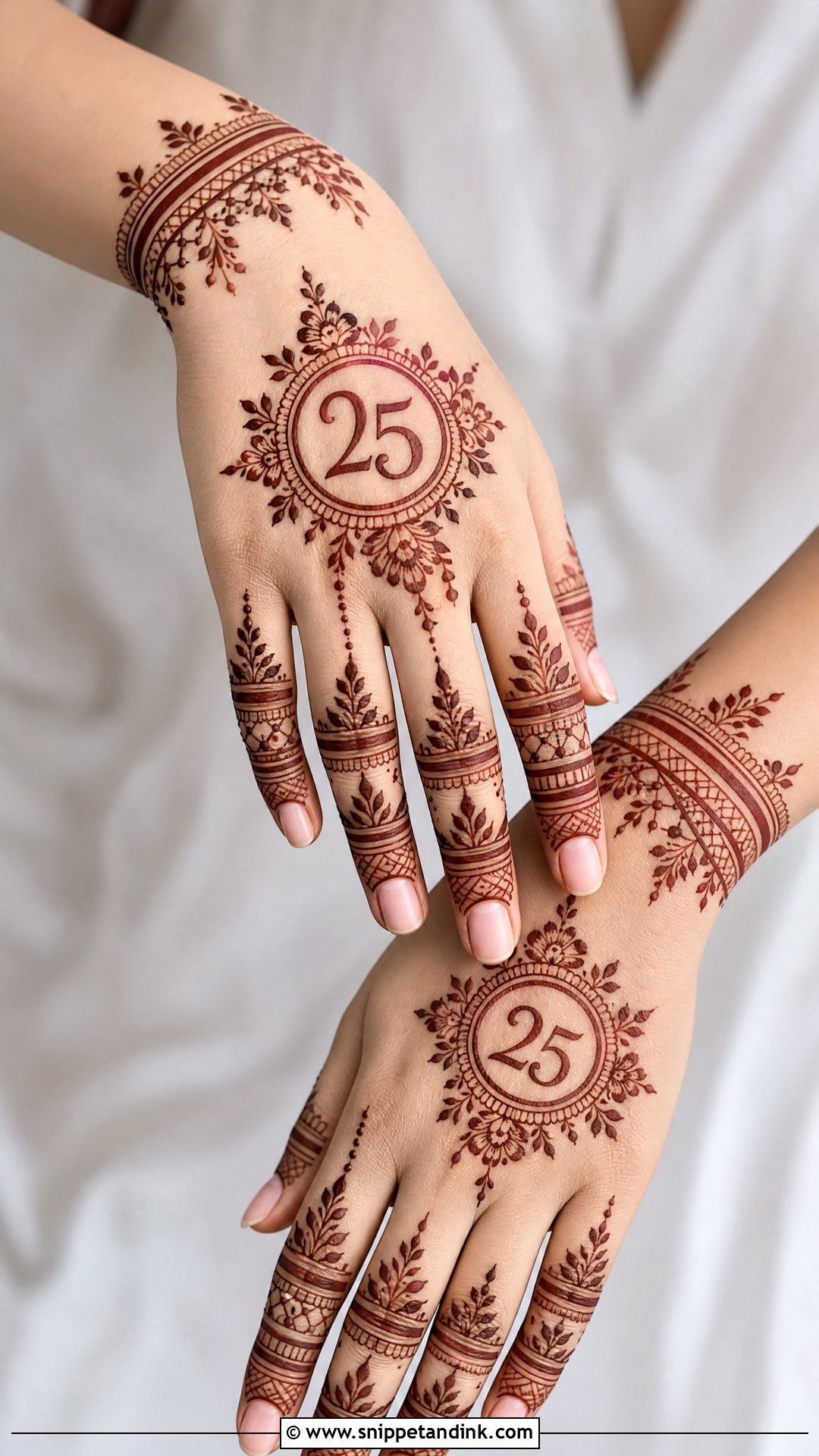
Contemporary outfits call for a different kind of henna: clean negative space, fine-line florals, geometric bands and ring patterns, with the “25” inside a sleek circle, a diamond frame or a slim wrist cuff. It relies on sharp spacing rather than fill, so the lines have to be confident. A wobble shows more here than anywhere else. I’ll put it on the back hand alone or on both hands as a matching pair. Gowns, fusion wear and tailored suits all sit well with it.
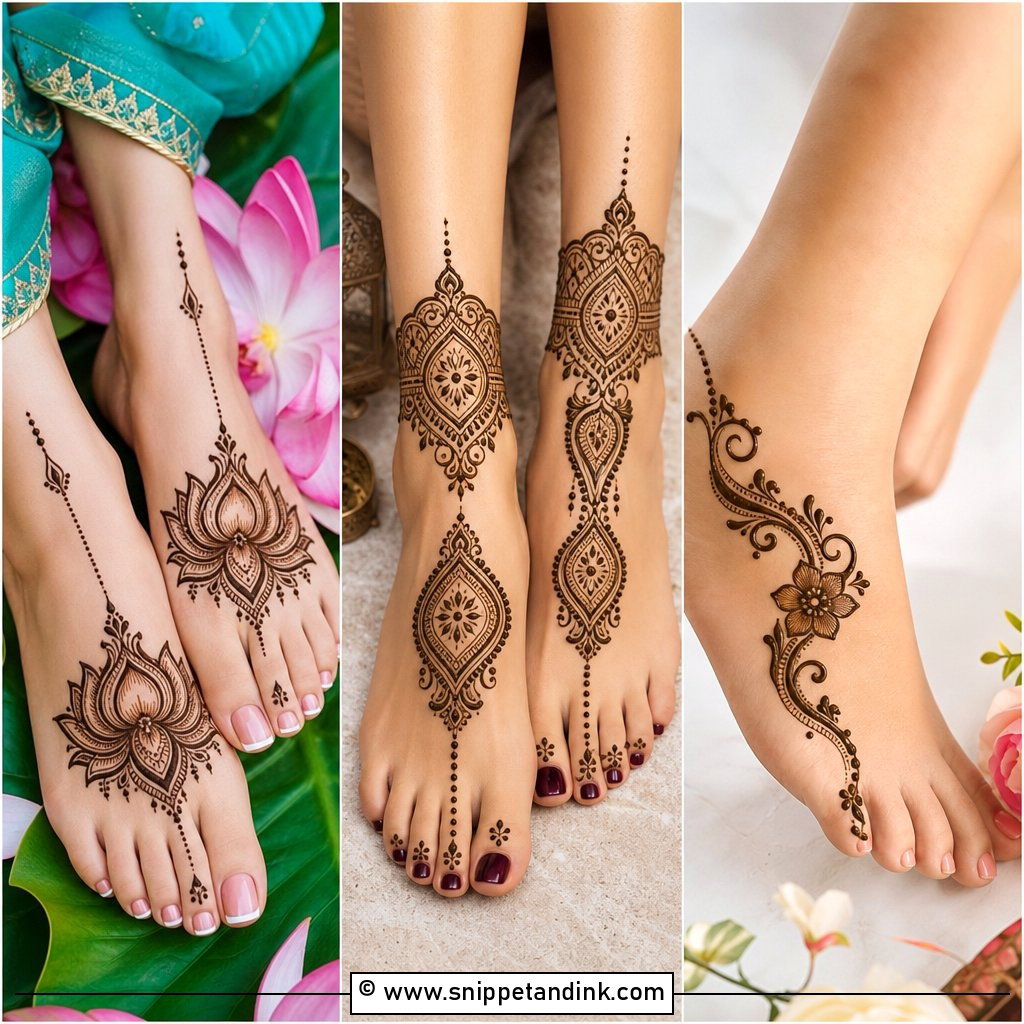
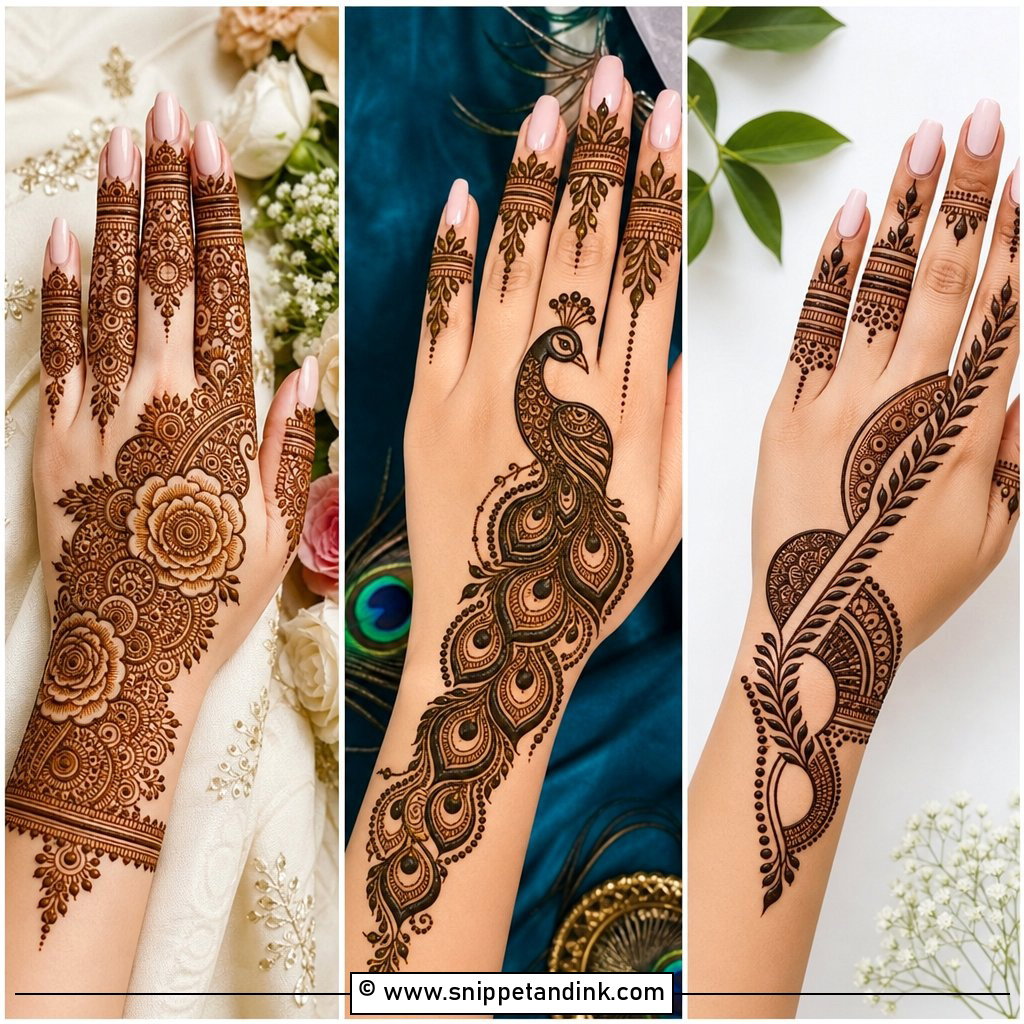

20. 25th Anniversary Silver Theme Mehndi Design
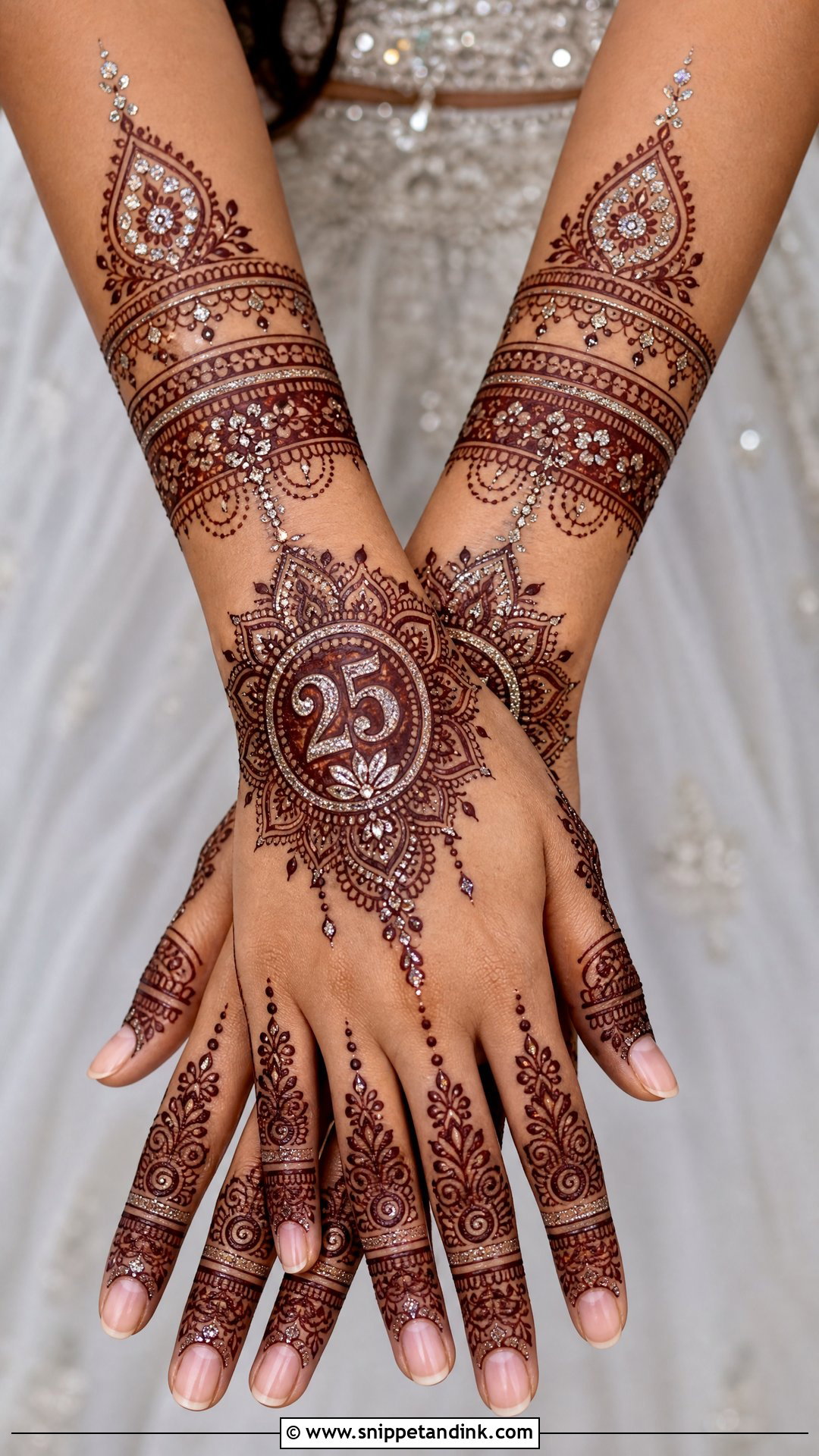
Henna can’t stain silver. Natural paste develops from orange to reddish-brown or deep maroon, so the silver theme has to come through the motifs instead: jewelry-inspired bands, diamond shapes, dot work that suggests sparkle, clean mandalas and a “25” centrepiece. If the event allows it, a touch of cosmetic-grade silver glitter can go on after the paste has come off and the hand is dry, but it should sit on top of real henna, never replace it. I’d save this one for evening parties and formal family gatherings, where it ties straight back to the silver milestone.
What Happens to the Ring You’ve Worn for 25 Years
Most women who sit down with me for an anniversary design are still wearing their wedding band, and plenty haven’t taken it off in years. Henna can’t stain the skin under a ring, so if it stays on, you’ll find a bare stripe across that finger the next time it comes off. When the ring slides off easily, I remove it for the application and you put it back once the paste is scraped. When it won’t come over the knuckle, I don’t force it. I draw a ring-shaped band right up to its edge so the gap looks planned.
Why I Won’t Use Black Henna, Even for a Silver Theme
Every so often someone asks for black henna, hoping it will look closer to silver or skip the wait. I say no. Black cones usually get their colour from PPD, a hair-dye chemical that can cause blistering, scarring and a lasting allergy, and it doesn’t belong on skin. Real henna is only ever orange to maroon-brown.
Be just as wary of ready-made cones with no ingredient list or a promise of instant dark colour. Ask your artist what’s in her paste. A good one mixes her own or can tell you exactly what she uses. If your skin is sensitive, a small patch test a couple of days ahead costs nothing. For the silver touch, glitter or body jewels go on top afterwards, never into the paste.
Let the Party Decide How Much Henna You Wear
The size of the celebration is usually the best guide. A full hand suits a wedding-scale function, while Arabic trails, mandalas, initials and bracelet patterns are lighter and quicker to sit through. Portraits, names, dates and a “25” add meaning, and none of them needs heavy coverage to work. Before you book, think about your sleeves, when the party starts and how long you can comfortably stay still. Use natural henna, give it two days to darken, and the stain will be at its richest when the guests arrive.
You'll Like These Ideas:





Leave a Reply