
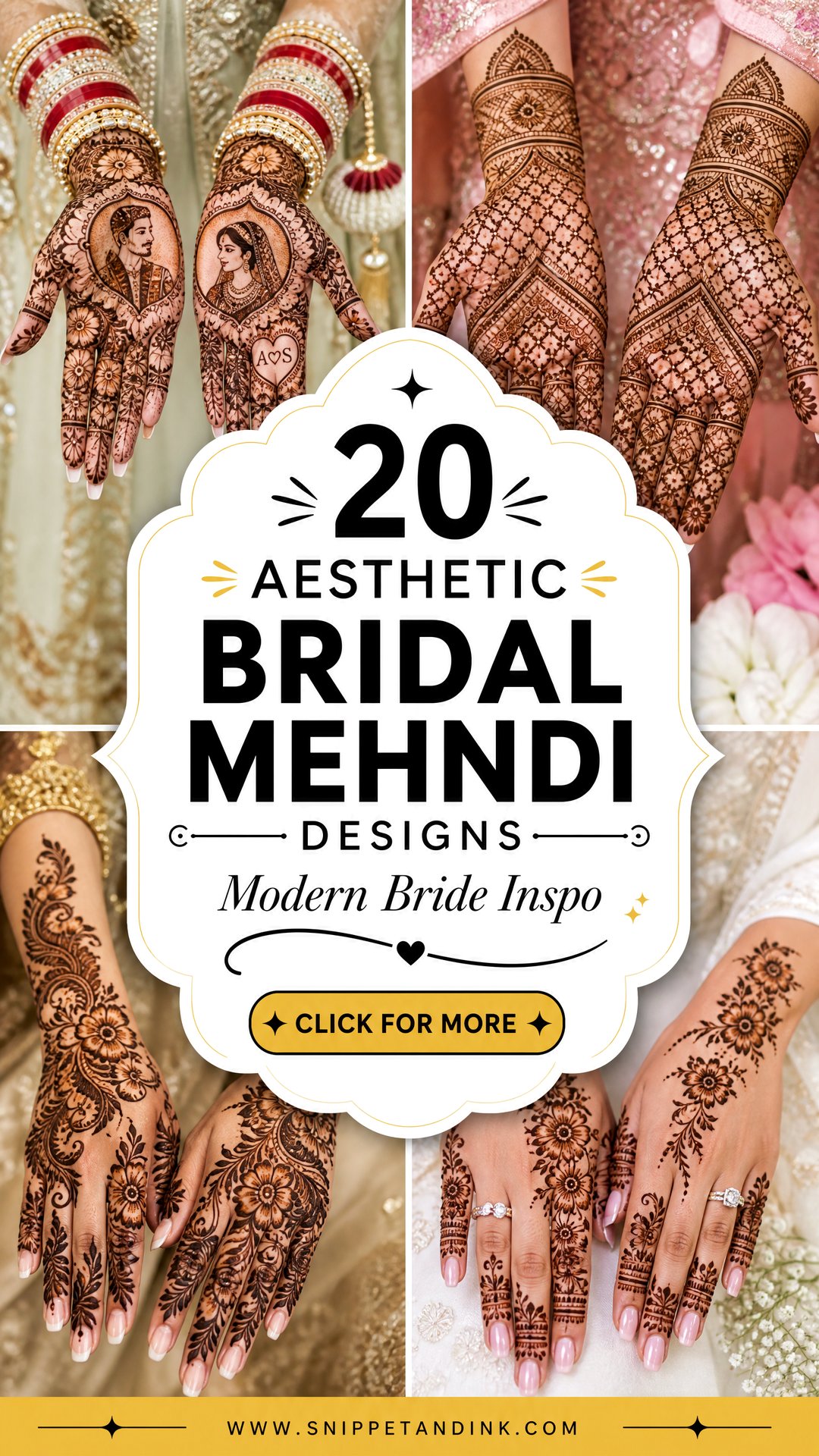
Bridal mehndi works best when it fits the bride’s outfit, her ceremonies and how long she can actually sit still. Some brides want dense Indian full-hand work with tiny story details; others are happier with airy Arabic vines or one clean mandala. When I sketch for a bride, I’m thinking about two things at once: how the pattern reads in a close-up ring photo, and how it will look on day two when the stain has turned from orange to deep maroon. Below are twenty layouts I return to, from jaali mesh and lotus bands to portraits and negative-space work, with notes on who each one suits and where it tends to go wrong.
How Many Hours You Can Sit Decides the Design
Before we talk motifs, I ask every bride how long she can realistically stay still. Coverage turns directly into time. A simple palm and finger design can be done fairly quickly, full hands to the wrist take several hours, and elbow-length work plus feet can fill most of an evening. Speed varies a lot between artists and with the detail, so get an estimate for your exact layout rather than a general one.
When it goes on matters as much as how long it takes. Natural henna doesn’t show its true color when the paste comes off; it starts orange and darkens over the next 24 to 48 hours. That’s why I schedule bridal application one to two days before the wedding, never the morning of. Going too early has its own cost, because palms begin to fade after about a week as the skin renews.
- Decide on feet early. They add a sizeable block of time and change the whole schedule.
- Eat a proper meal before you sit down. Once both hands are wet, you can’t.
- Take a bathroom break before the second hand starts.
- Wear a loose, front-opening top you don’t mind marking.
1. Full Hand Bridal Mehndi Design
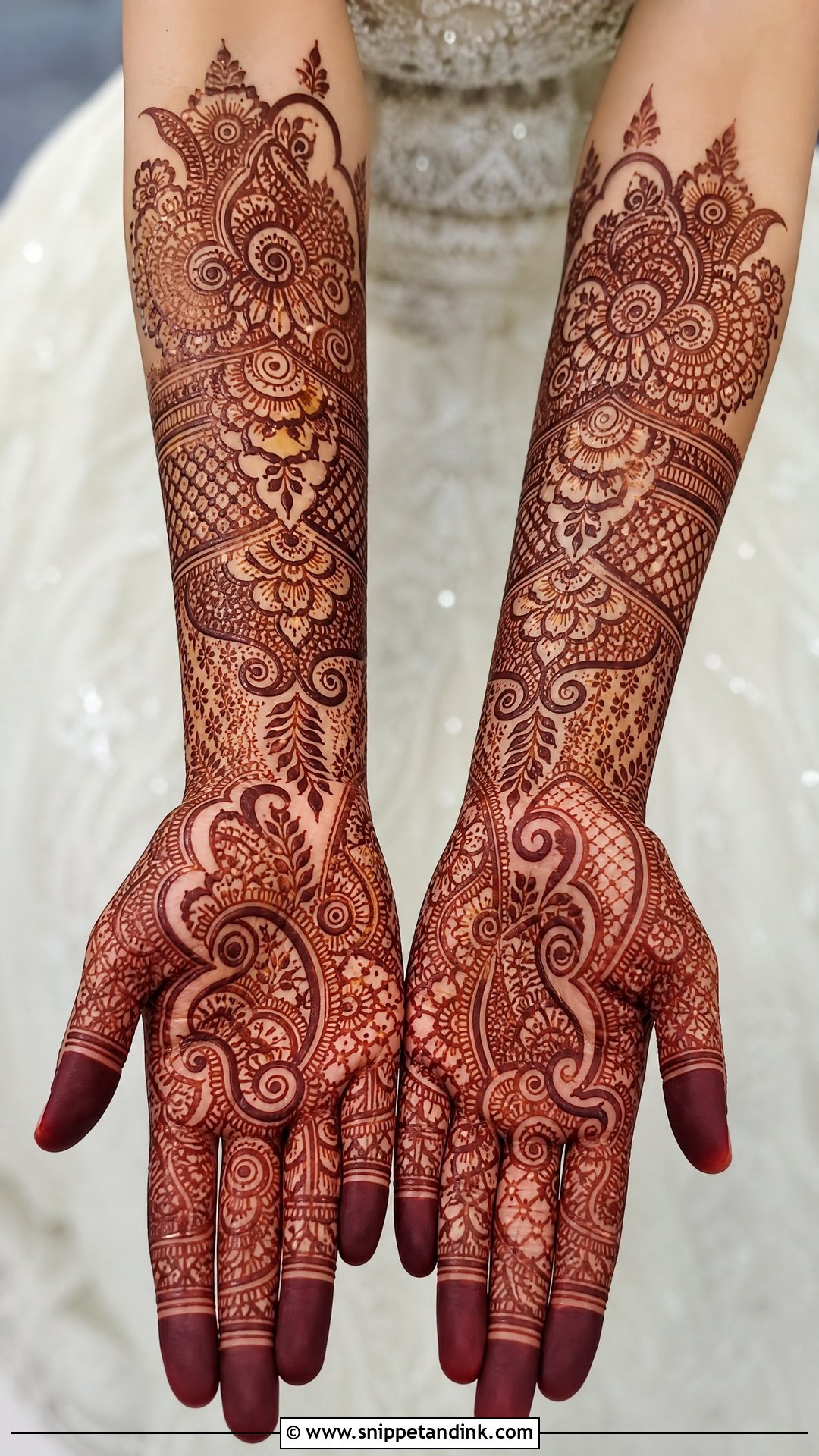
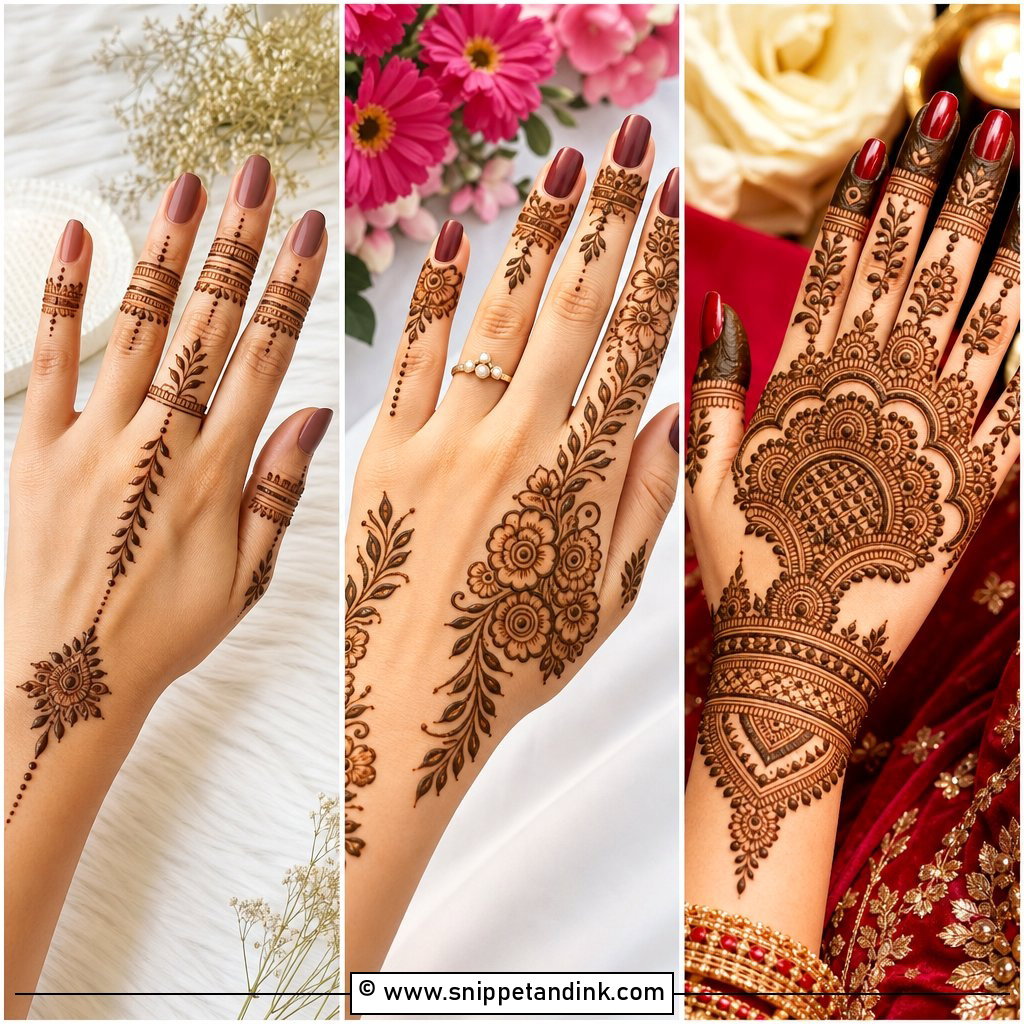
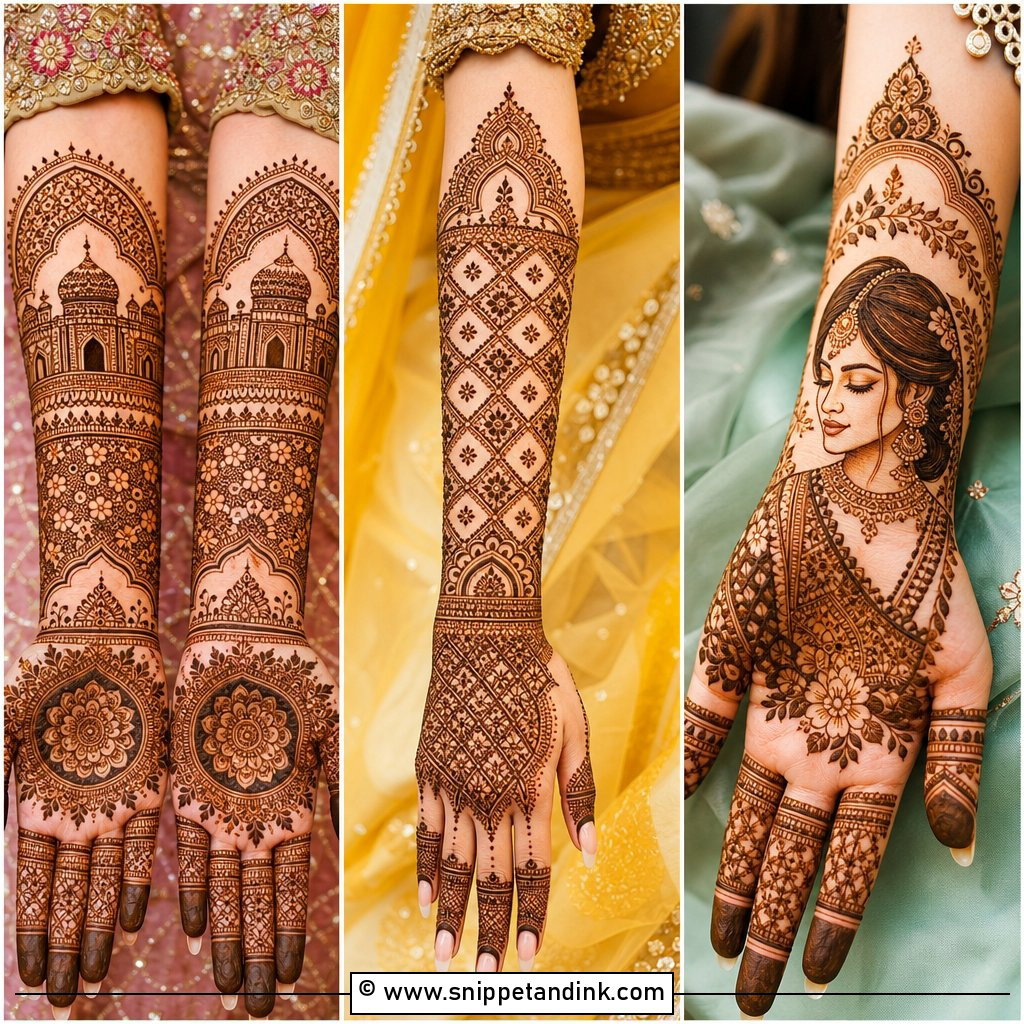
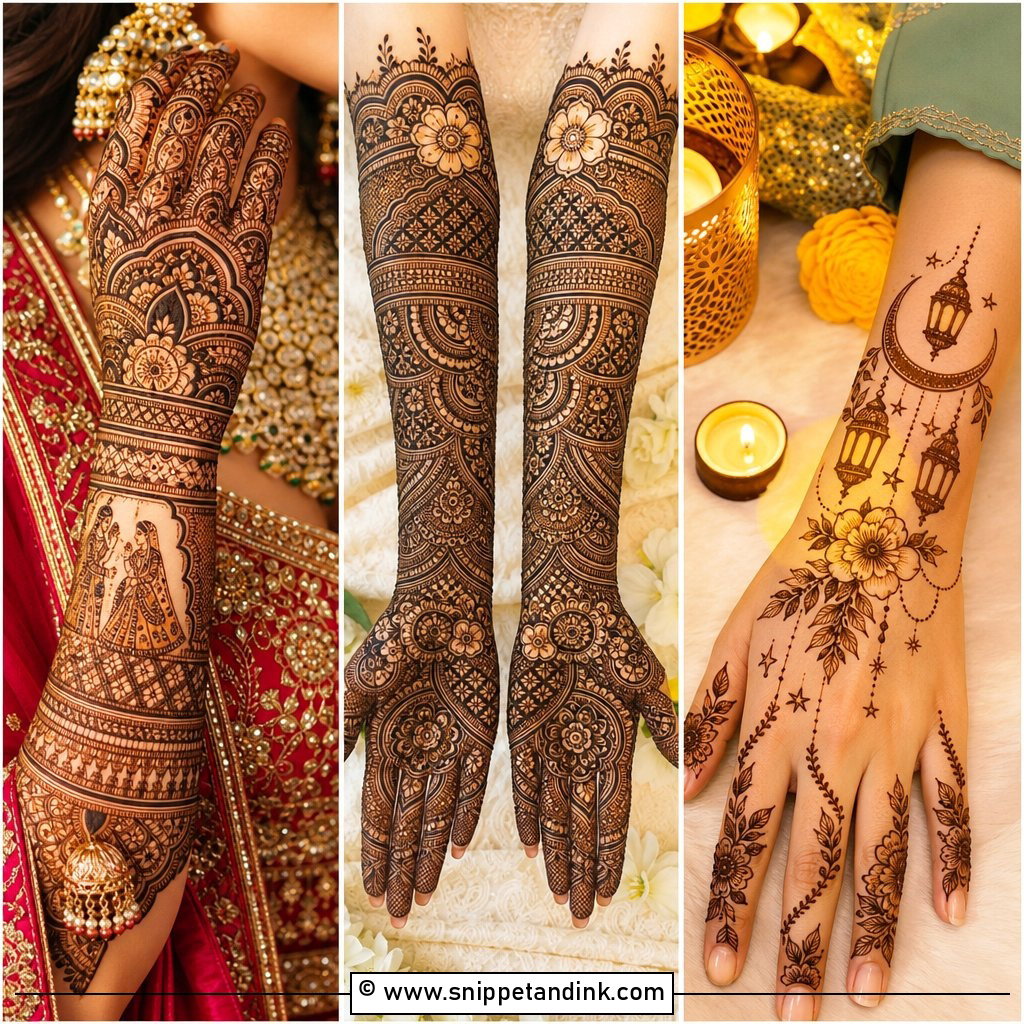
Full coverage from fingertips to wrist, or further up the forearm, is the traditional bridal standard, built from paisleys, florals, vines and mandalas with fine filler between them. It sits naturally with heavily embroidered lehengas and sarees because the hands carry the same weight as the outfit. The mistake I see most is filling every gap. If the main motifs don’t have a slightly bolder outline than the filler, the whole hand turns into a brown blur from a few steps away. Plan for a long sitting: this is the design where your back and patience run out before the cone does.
2. Arabic Bridal Mehndi Design
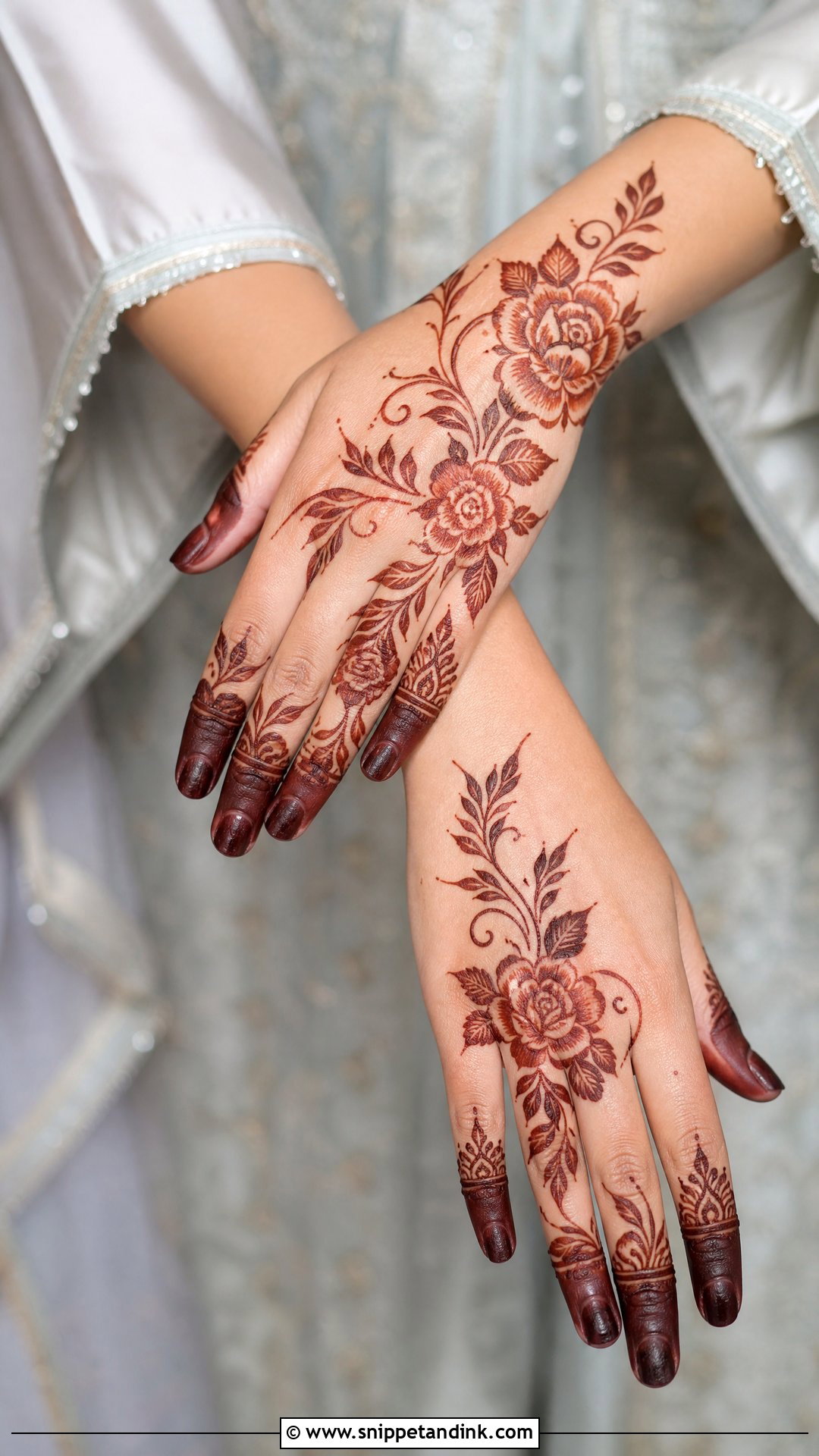
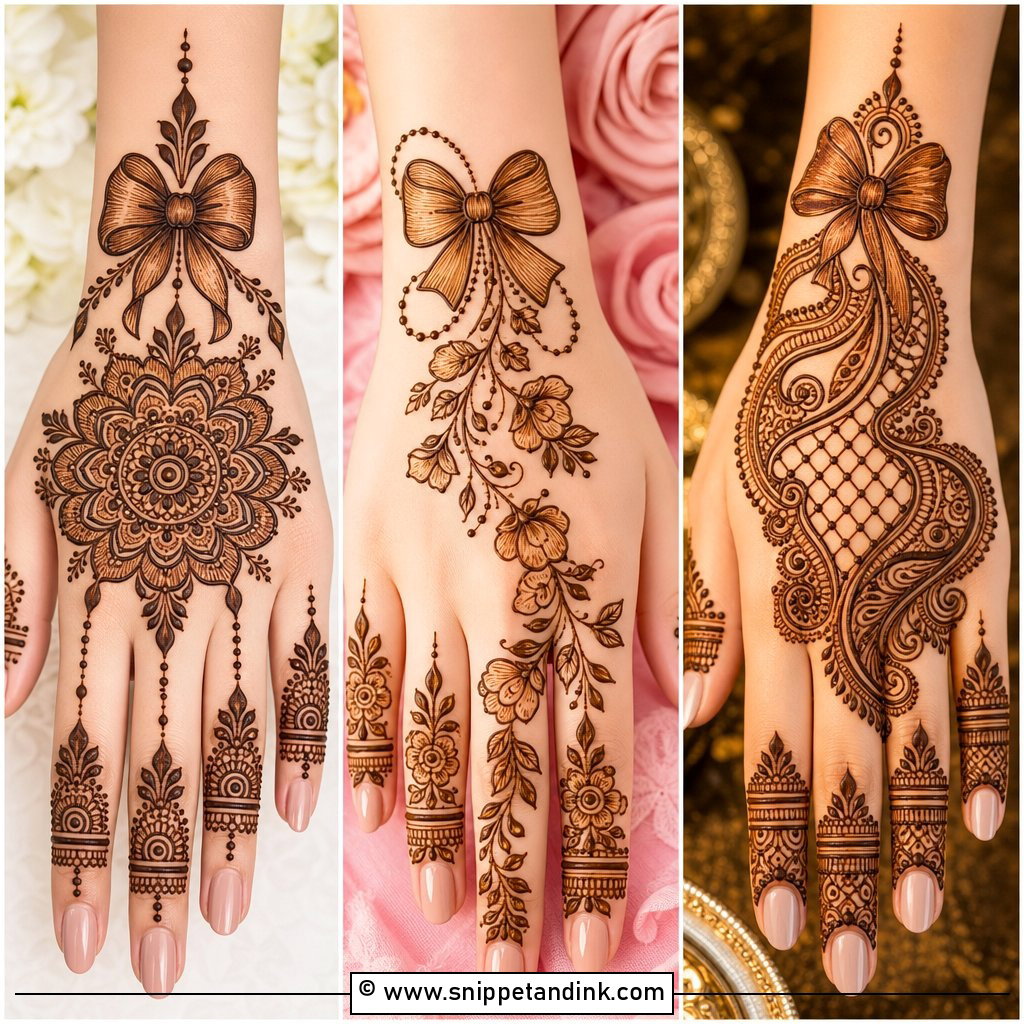
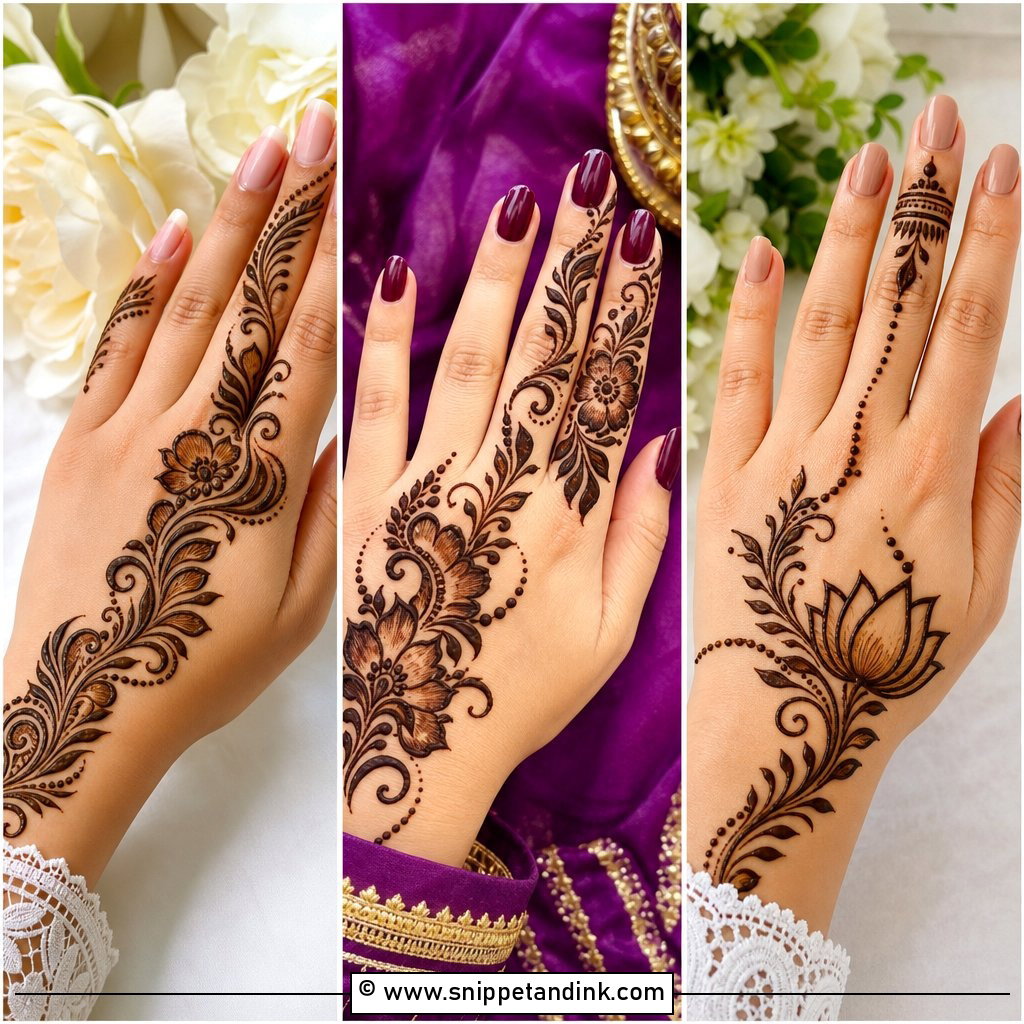
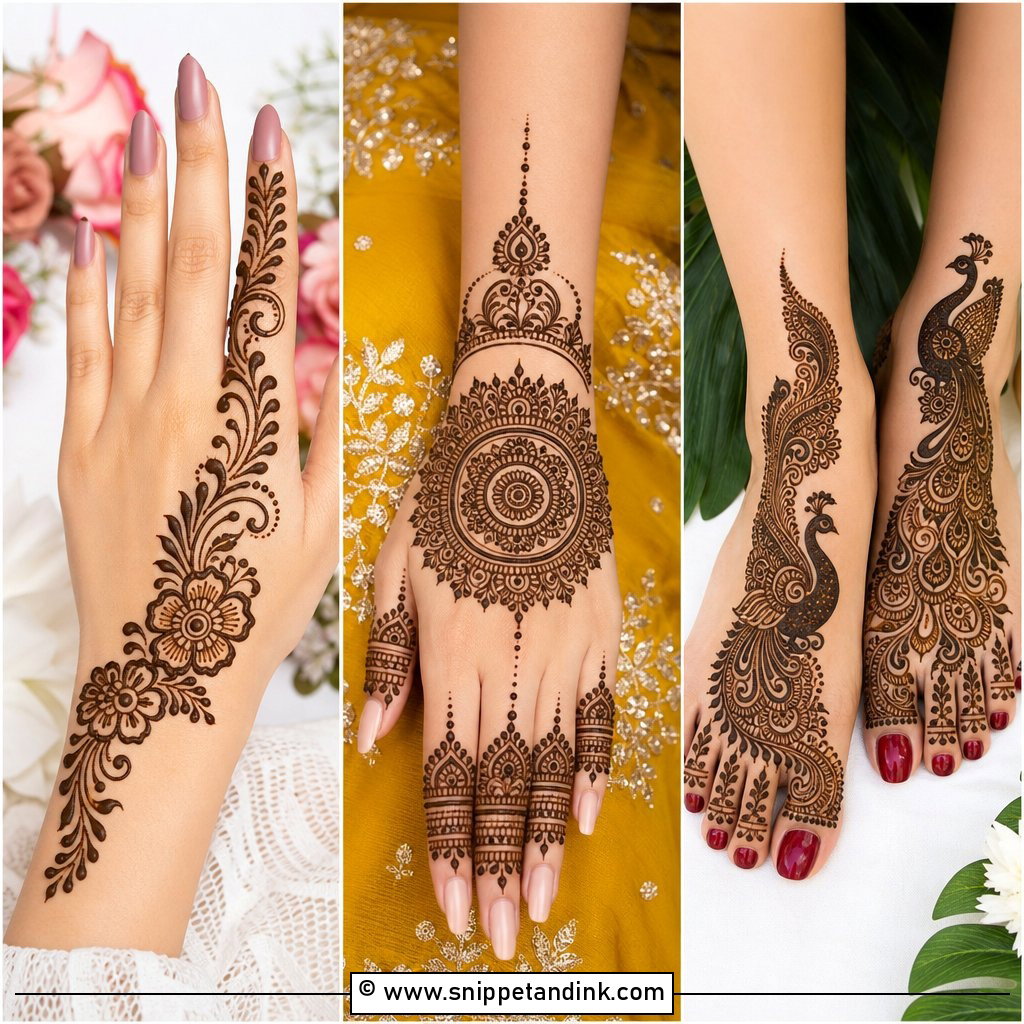
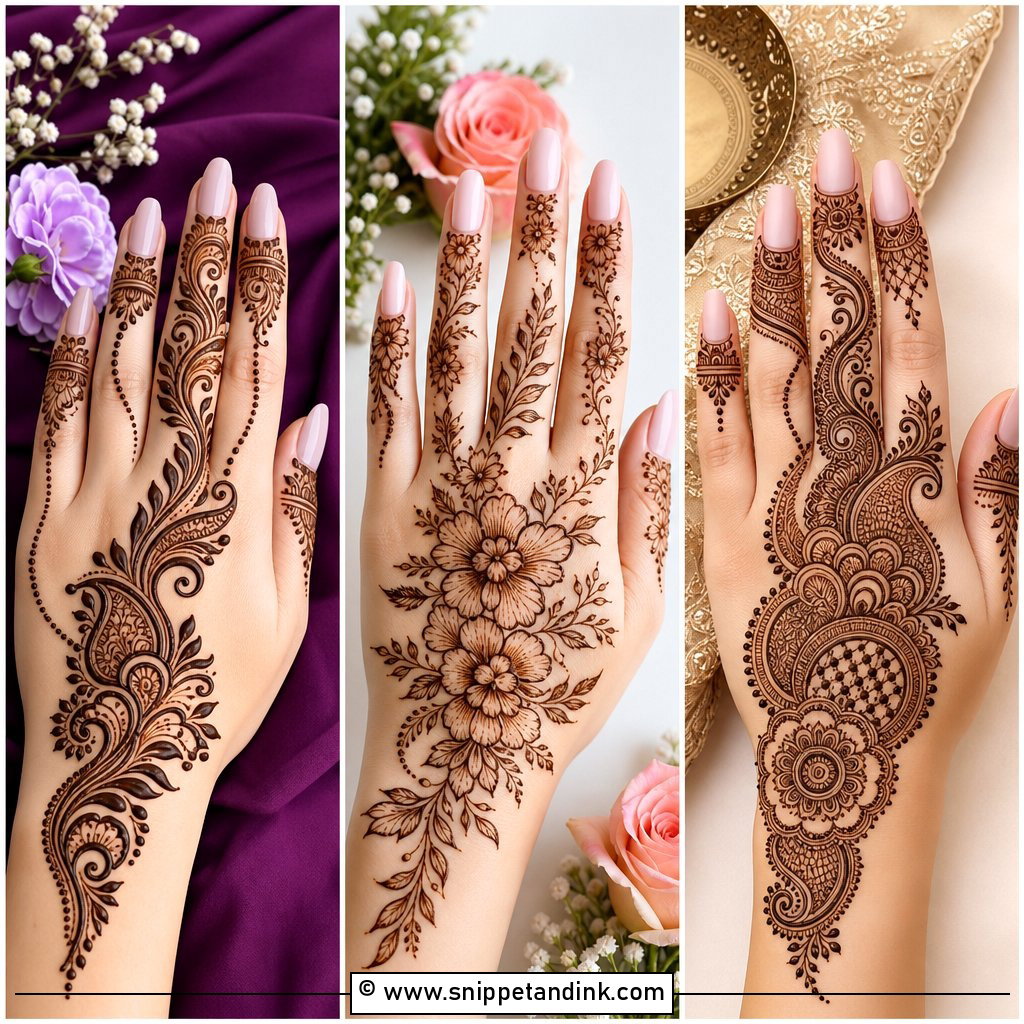
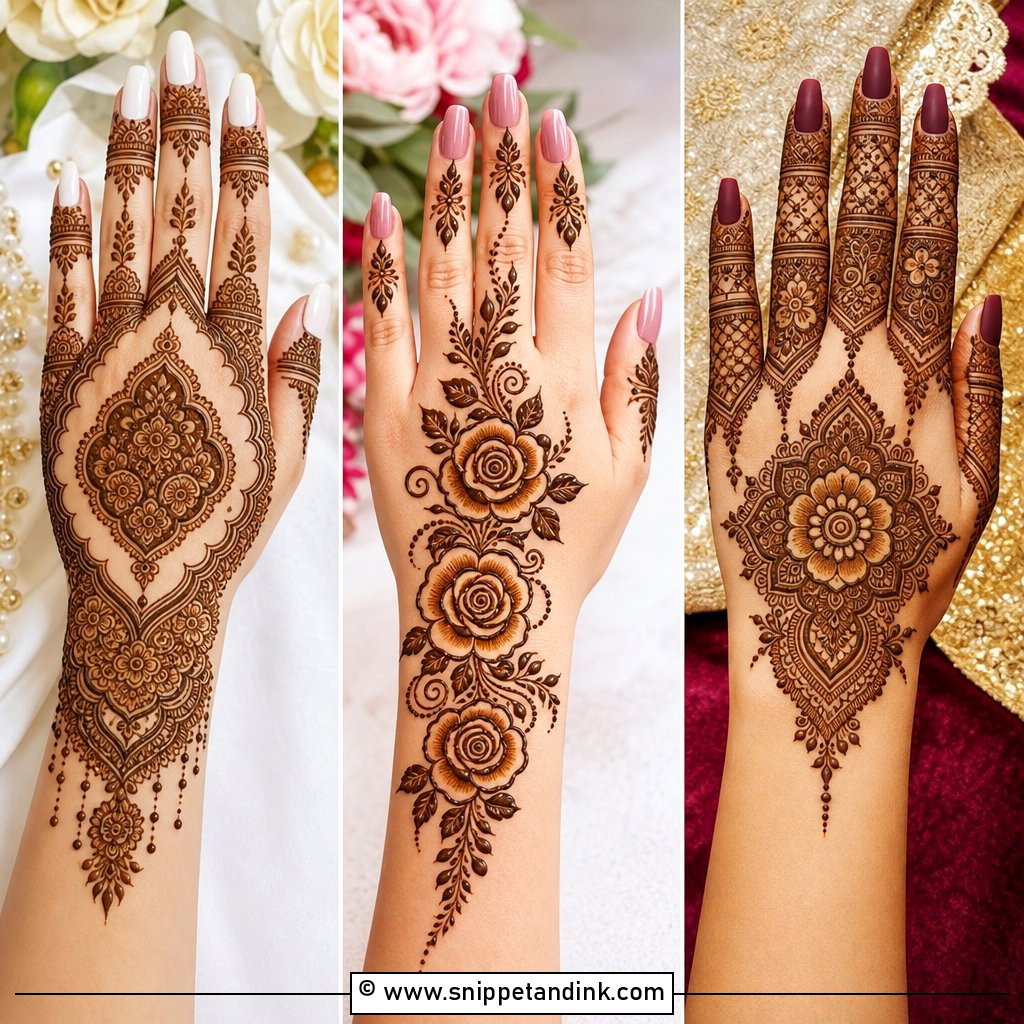
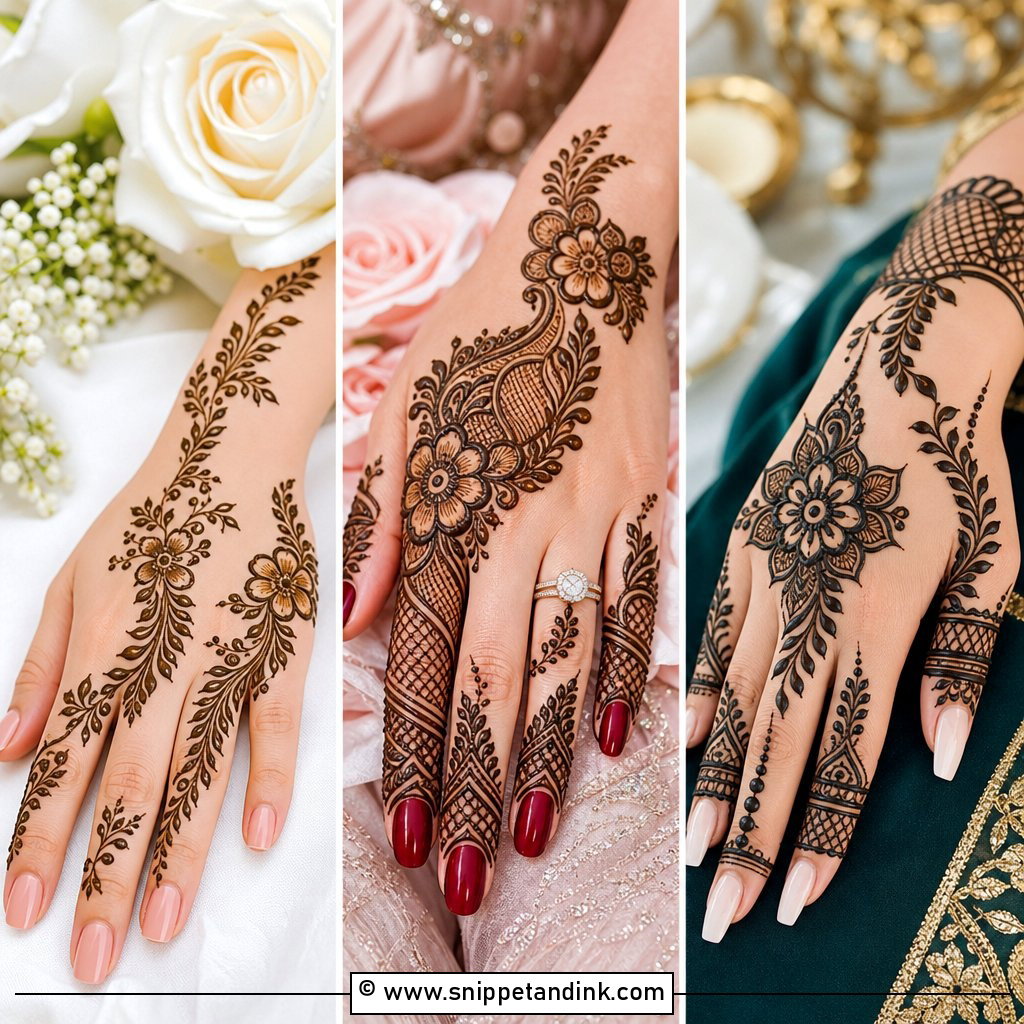
Arabic layouts travel diagonally across the palm or back of the hand in large flowers and trailing leaves, leaving plenty of bare skin. That contrast is the whole point, since open skin makes a dark stain look darker. Brides who want a lighter hand that still reads as bridal often land on Arabic mehndi, and it carries over well to nikkah, engagement and reception looks. I shade the petals with a thinner paste line so they don’t fill in solid. Smooth vines matter more than extra flowers here; a wobbly trail is very visible against all that skin.
3. Indo Arabic Bridal Mehndi Design
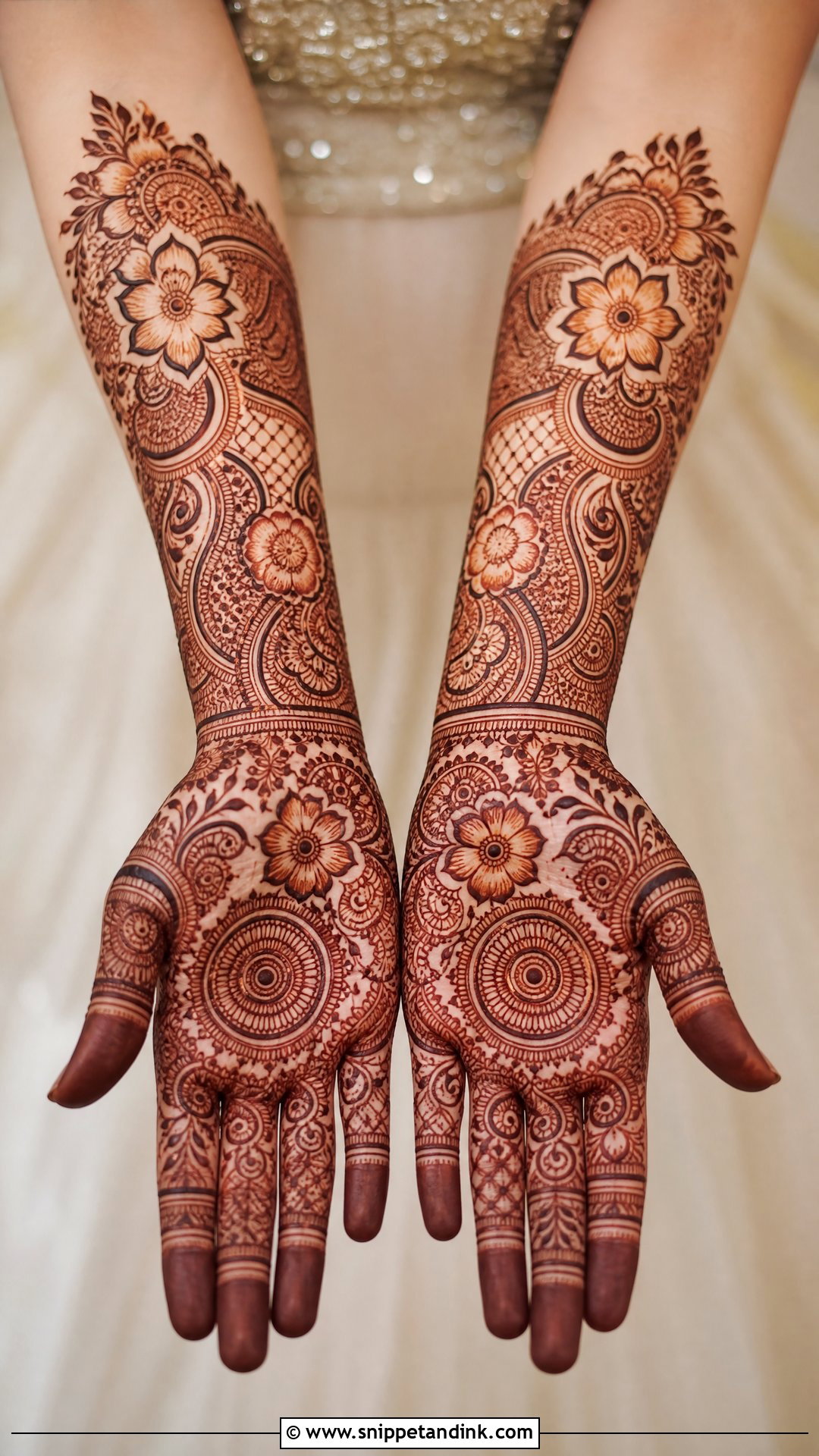
Indo Arabic bridal mehndi design takes the bold flow of Arabic work and fills parts of it with Indian detail: shaded petals, paisley frames, a small mandala centre, patches of mesh. It’s my usual suggestion for a bride who finds full Indian coverage too heavy but feels a pure Arabic trail is too bare. Bridesmaids can wear a reduced version so the group looks related without copying the bride. If you’d like initials or a small symbol hidden in it, the negative spaces between trails are the natural spot, and guests find them more easily there than inside dense filler.
4. Indian Bridal Mehndi Design
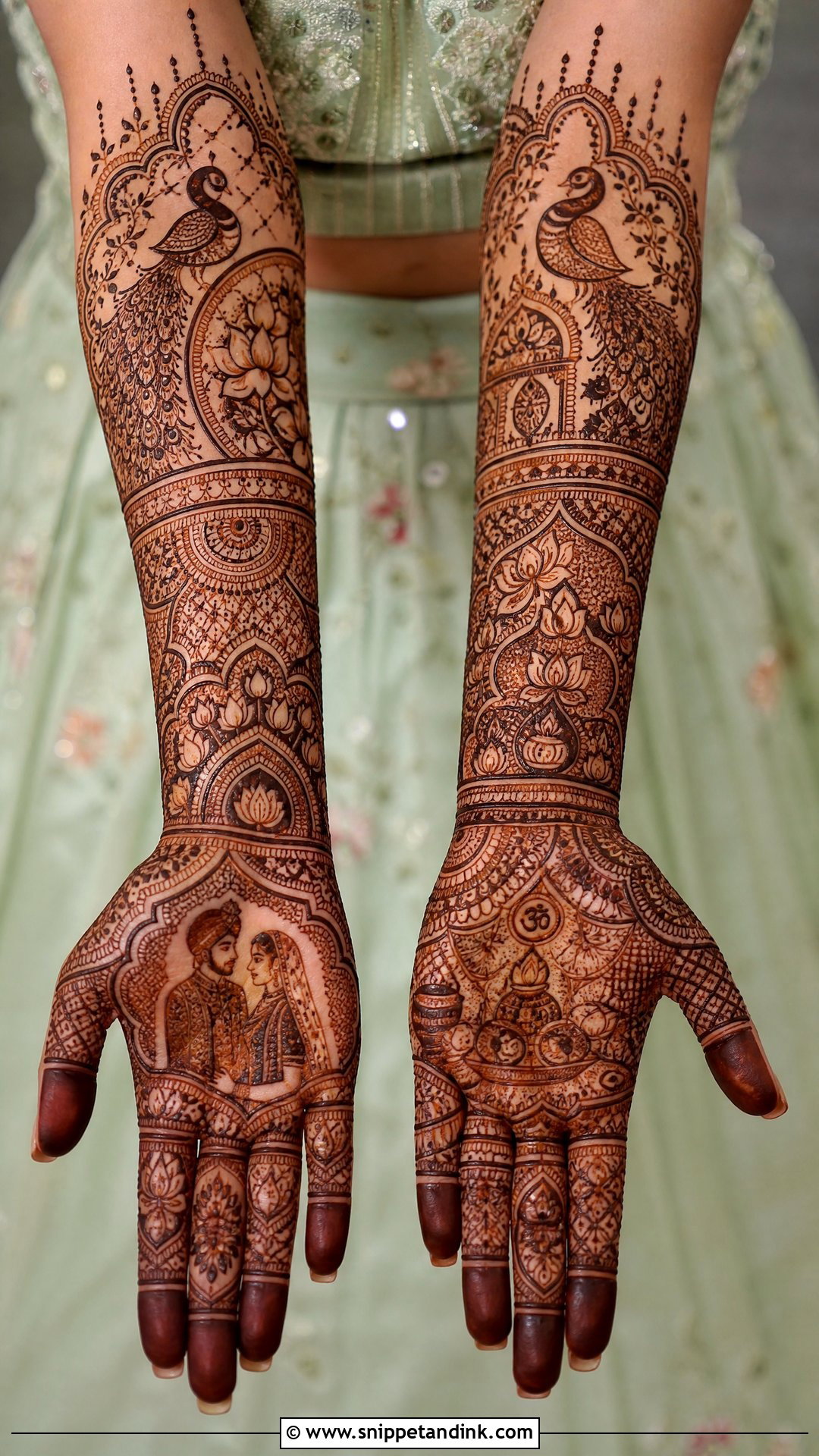
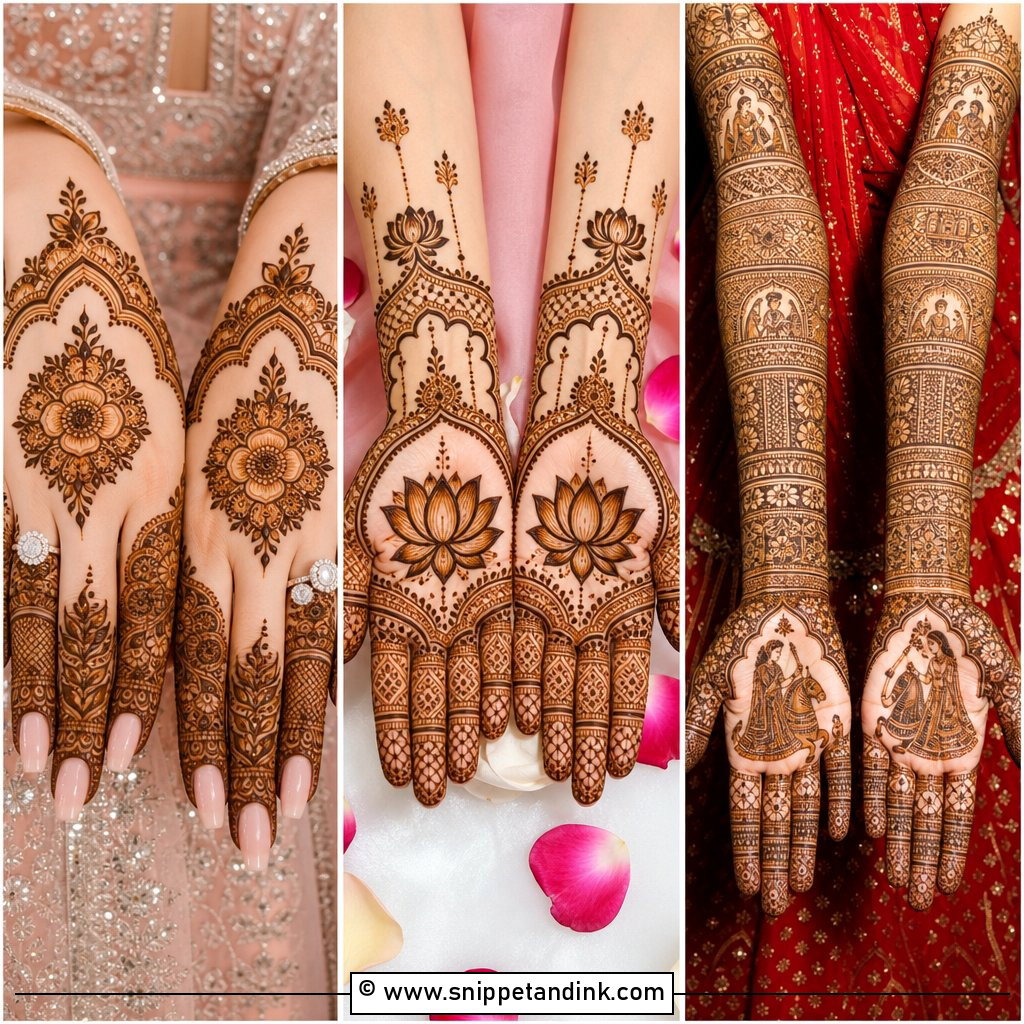
Dense Indian bridal work tells a story: paisleys, lotus, peacocks, elephants, dulha-dulhan figures, mandalas and ceremonial details, often running past the wrist and sometimes to the elbow. Symmetry is where it lives or dies. I map both hands before I start so the borders land at the same height, even when each palm shows a different scene. Elbow-length coverage also means you’ll need help eating, dressing and using your phone for most of the evening, so arrange that before the cone comes out.
5. Minimal Bridal Mehndi Design
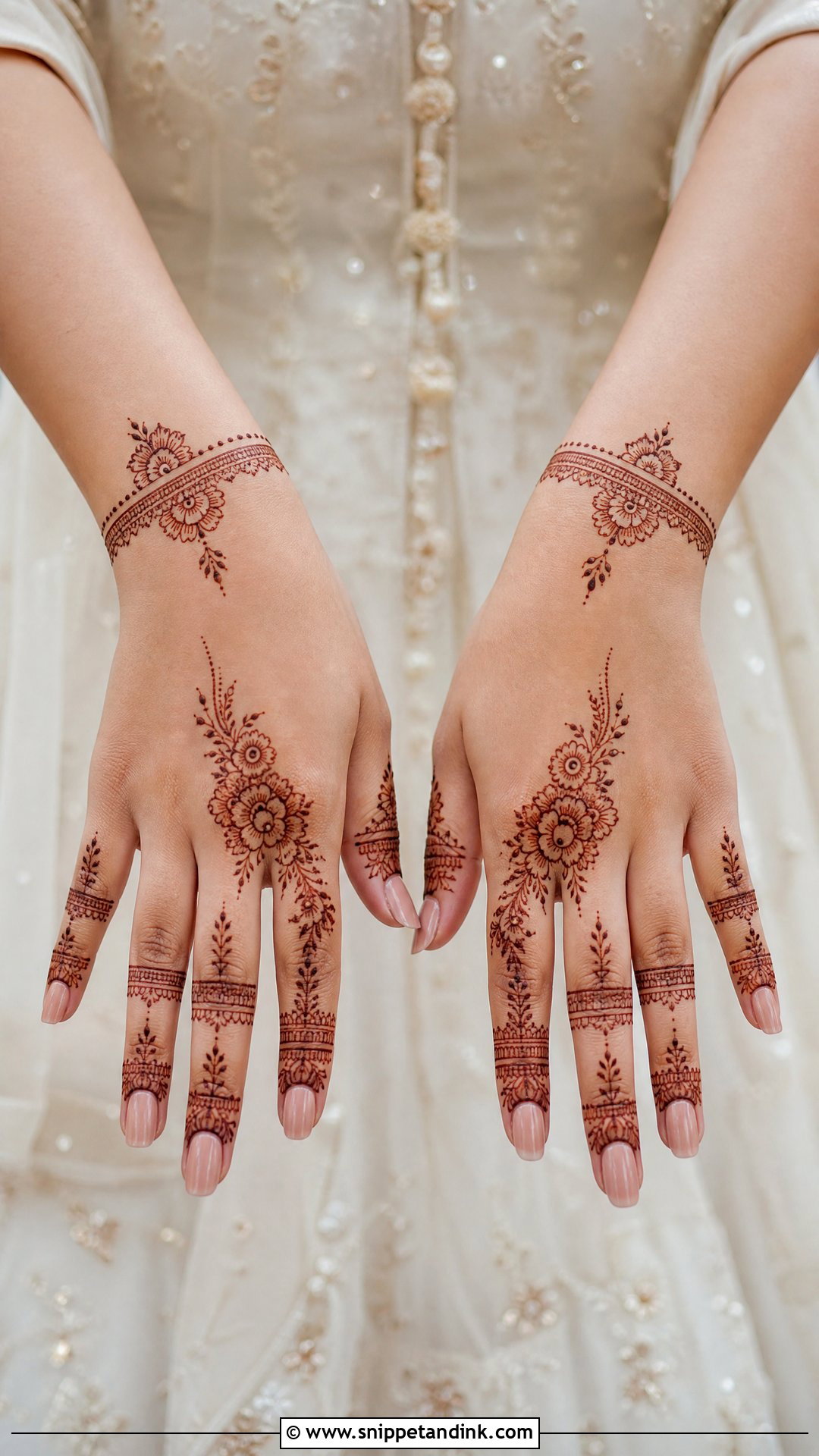
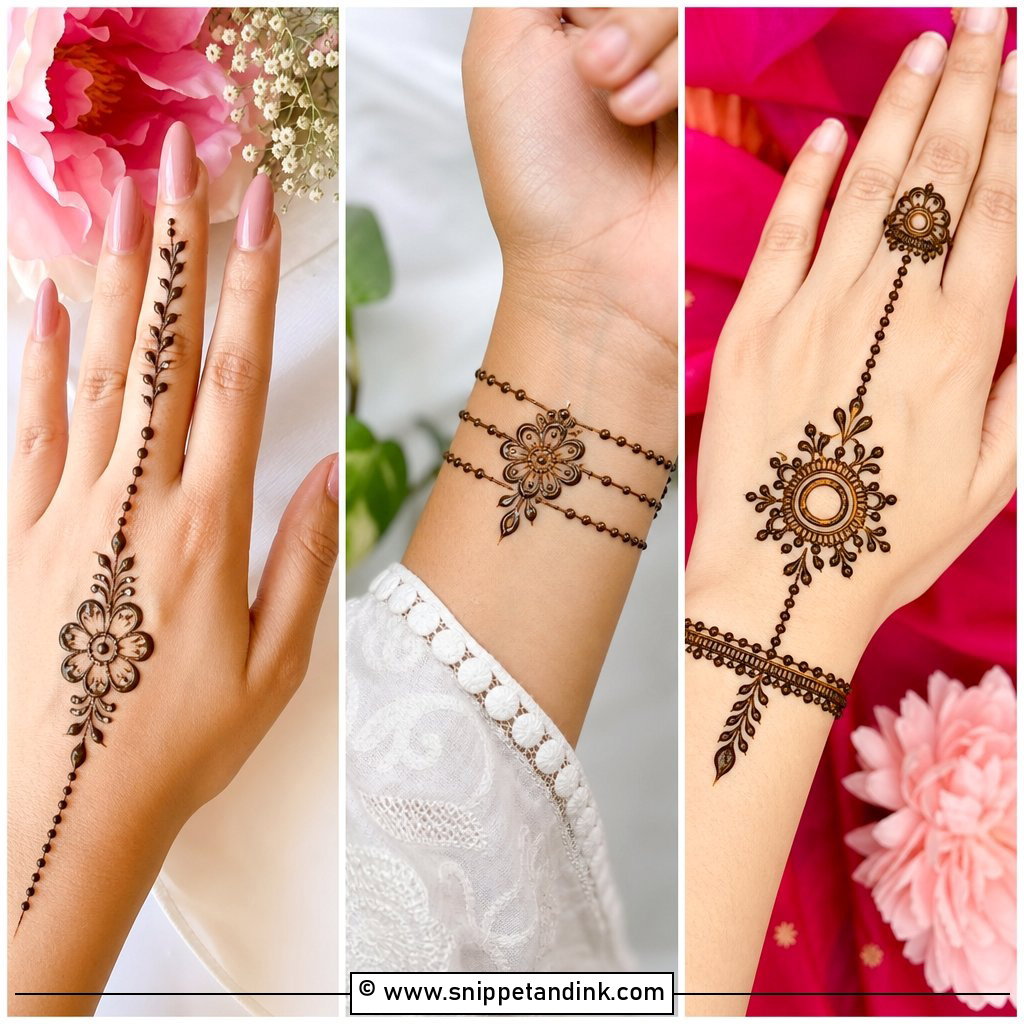
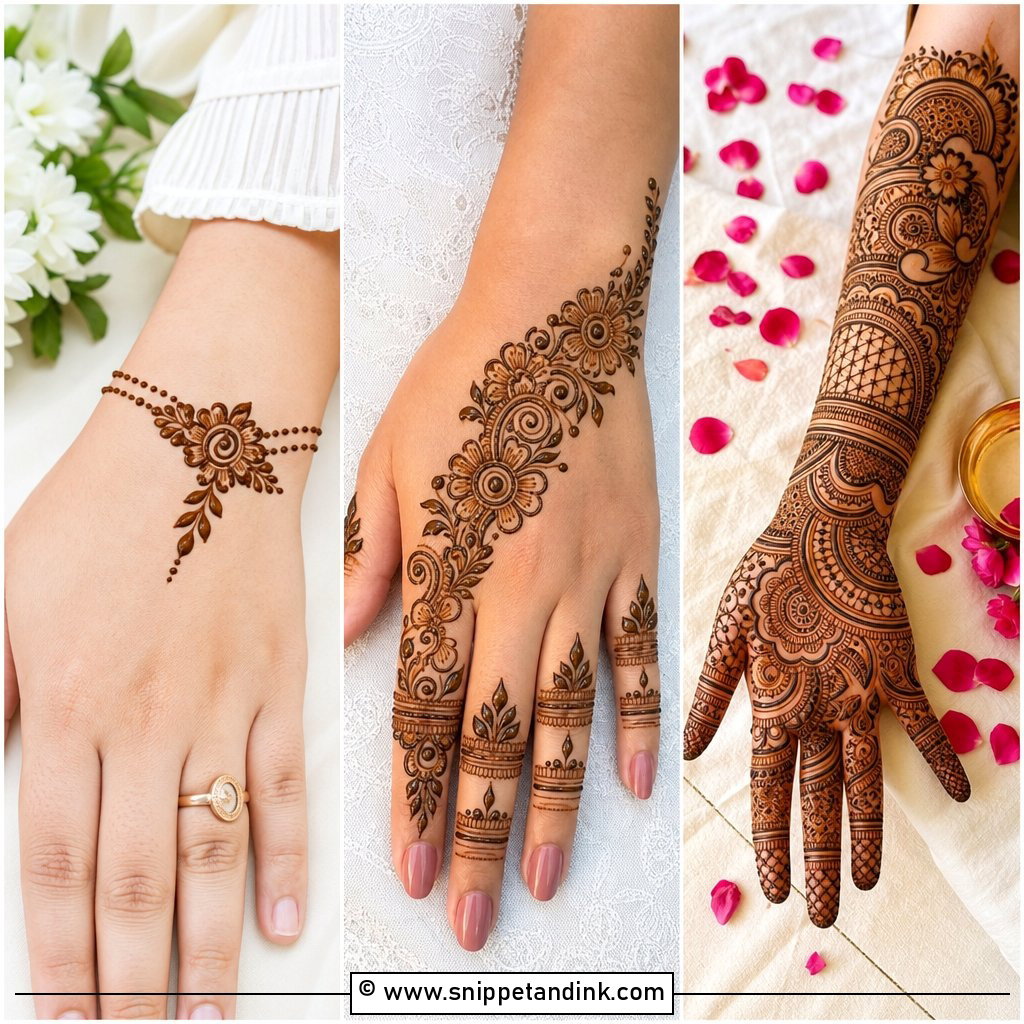
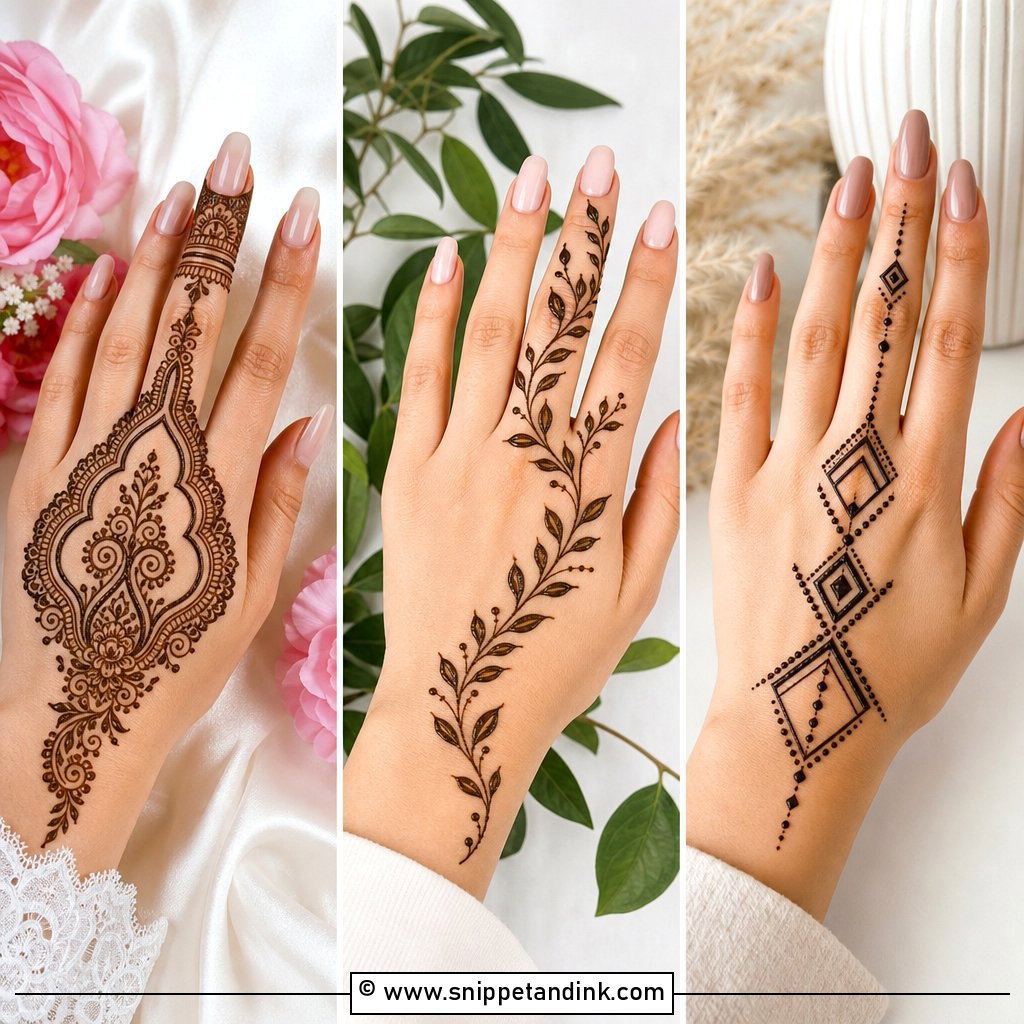
Minimal work relies on fine lines, small florals and finger detail with lots of open skin. It reads as bridal only when the placement is deliberate; three tiny motifs scattered across a palm look like a practice sheet. I’d rather do one strong centre piece and matching finger caps than spread the same amount of paste thin. It suits courthouse ceremonies and small weddings where the jewelry is doing the talking. One honest caveat: very fine lines stain lighter than thick ones, so a minimal design needs good paste and a long wear time to show up properly.
6. Front Hand Bridal Mehndi Design
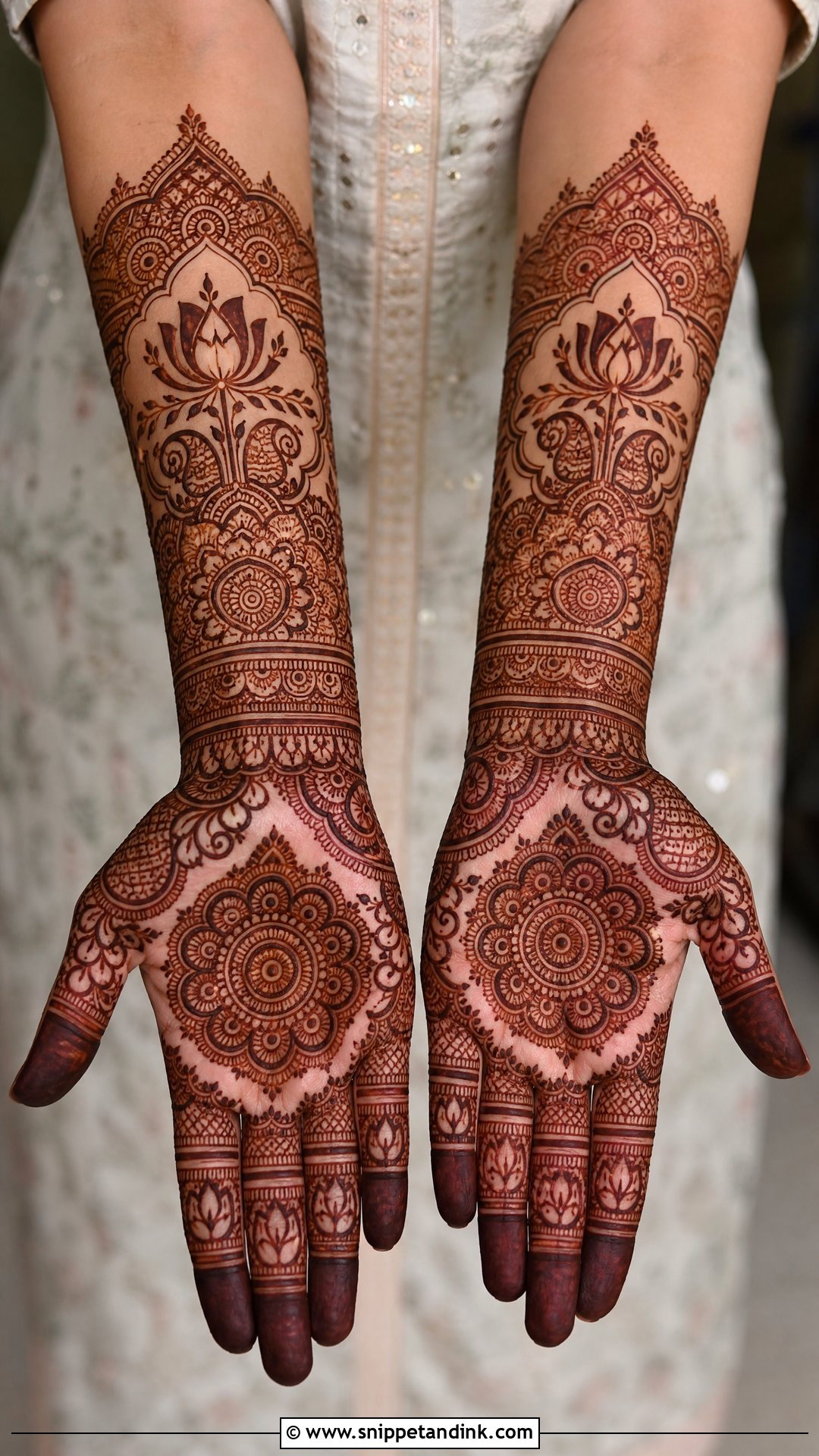
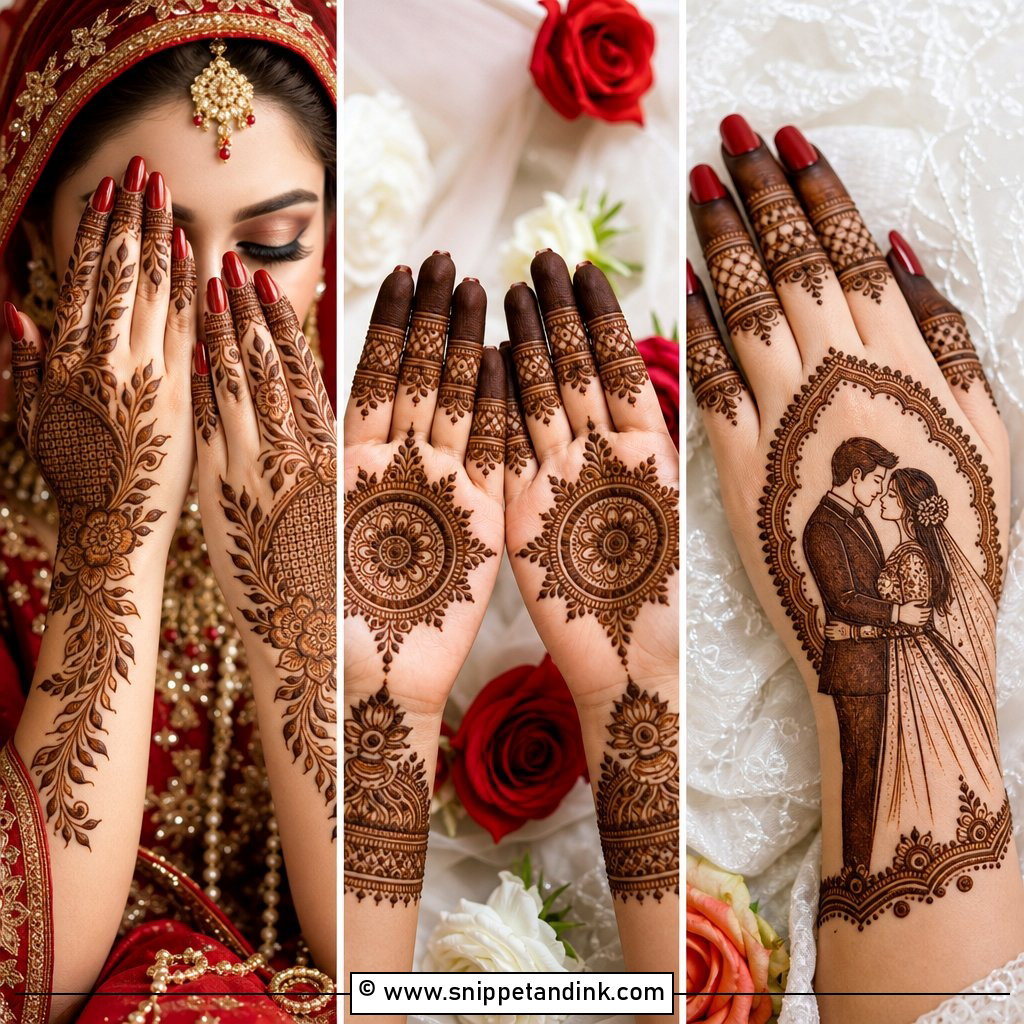
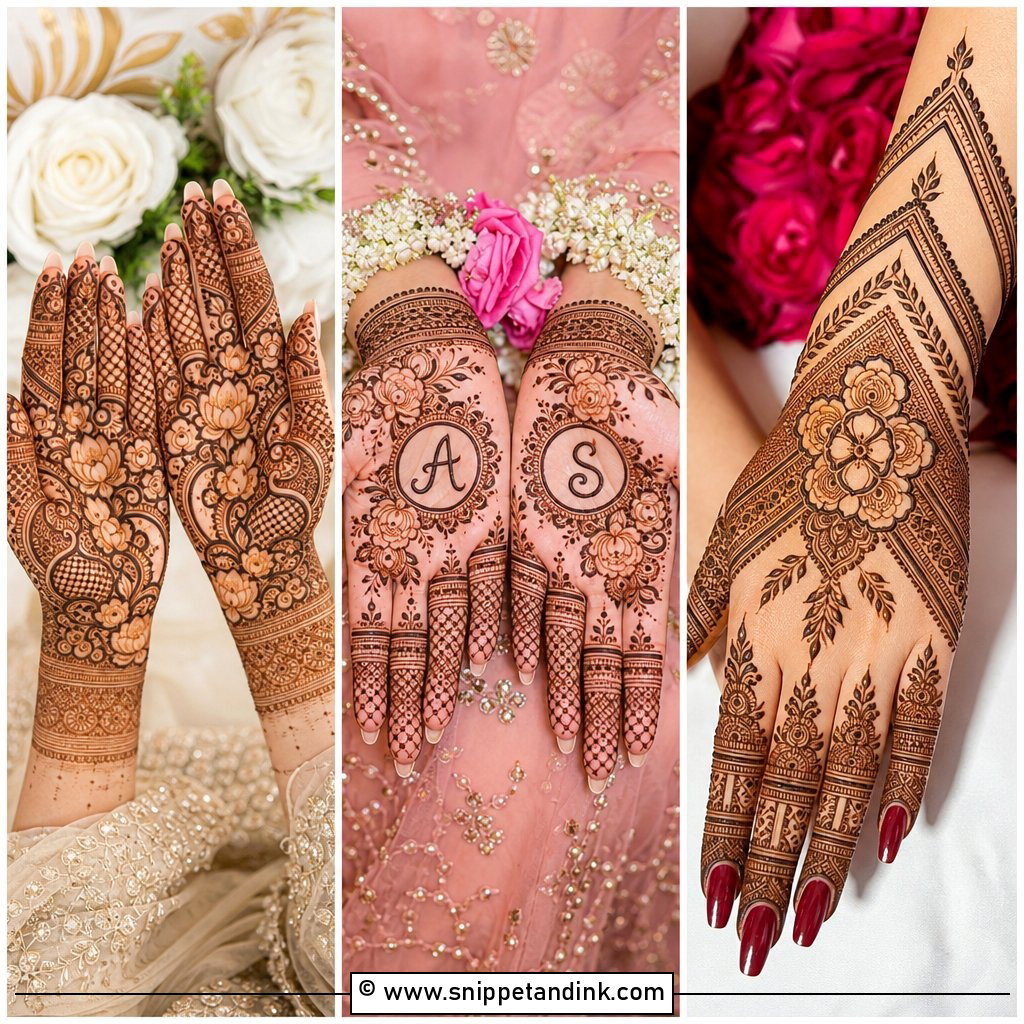
Palms are on show during rituals, blessings and every ring photo, so I build front-hand designs around a strong centre: a mandala, a lotus, a pair of portraits or mirrored patterns across both hands. Borders, finger work and a wrist extension then support it. Palm skin takes the darkest stain on the body, which is why filled areas near the palm centre and fingertips come out richest. Dense work feels traditional, while open spacing looks more modern. Think about which of your ceremonies turns your palms toward the camera, then design for that moment.
7. Back Hand Bridal Mehndi Design
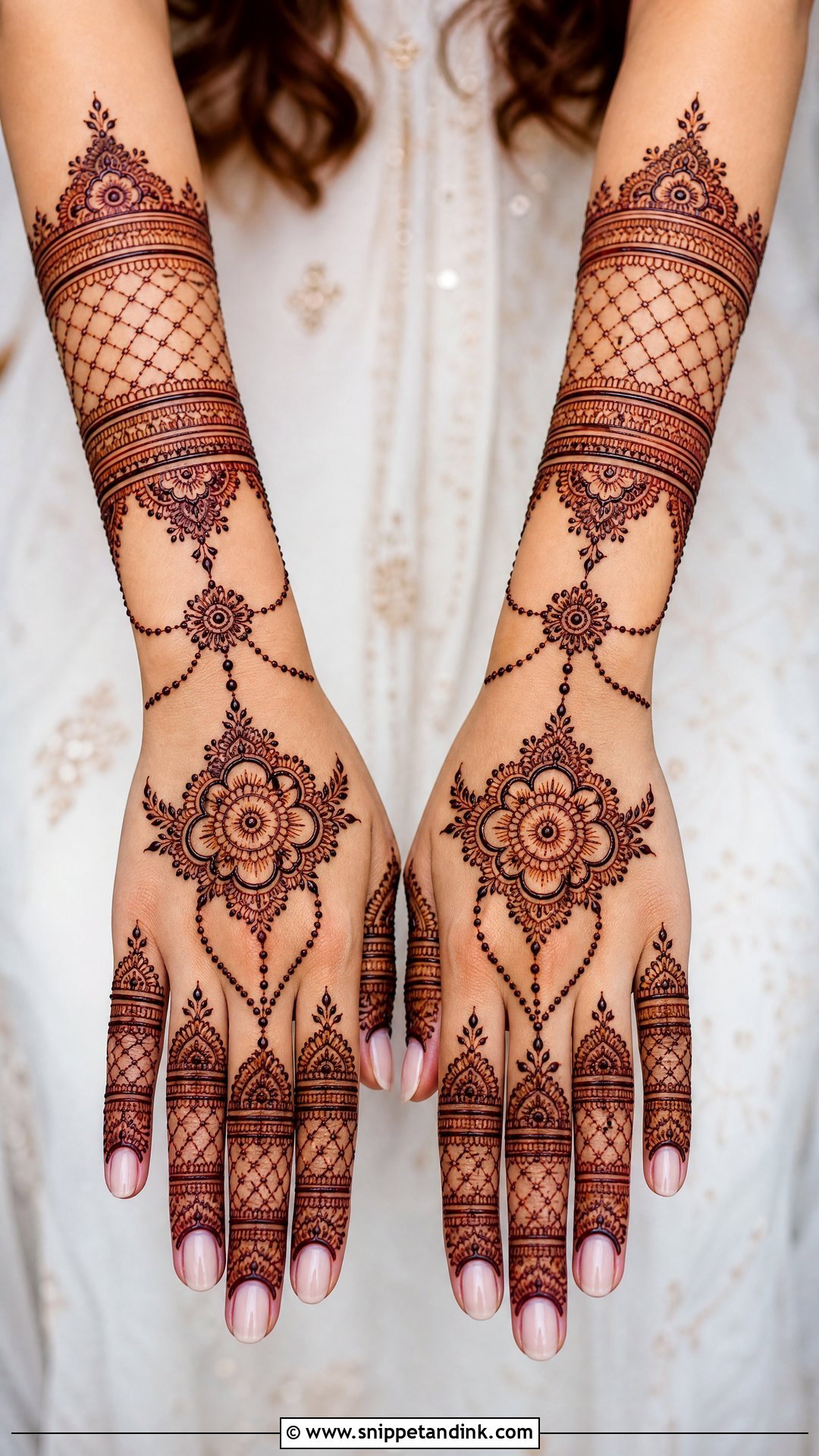
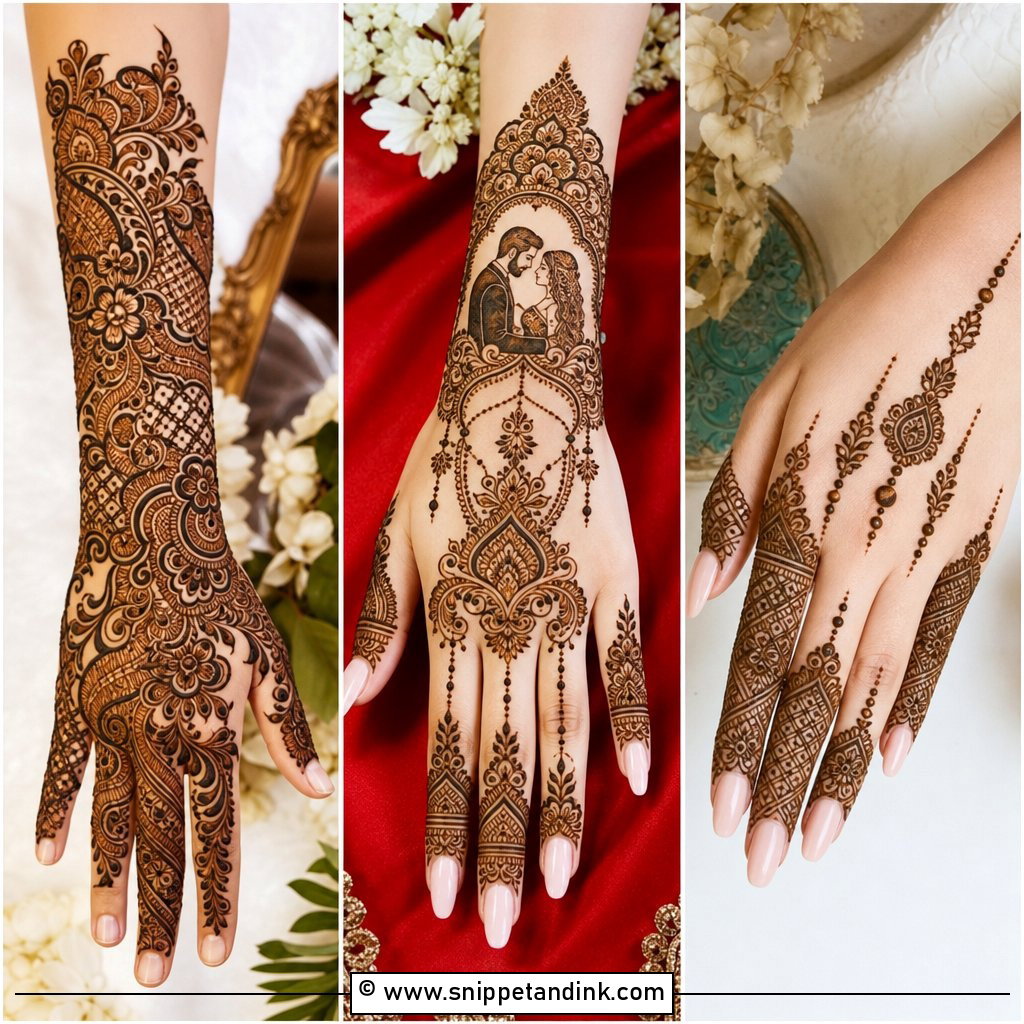
Back hand bridal mehndi design has to share space with rings, bangles, hathphool and kaleeras, so I like to design it with the bride’s jewelry in front of me. Hathphool layouts, bracelet bands, mandala centres, jaali and finger chains all work, as long as the piece connects to the fingers through dots or a fine vine. Skin on the back of the hand usually stains a shade lighter than the palm, which is another reason not to crowd it. Leave more open skin around the knuckles for a modern look, or carry matching bands up the forearm for a heavier one.
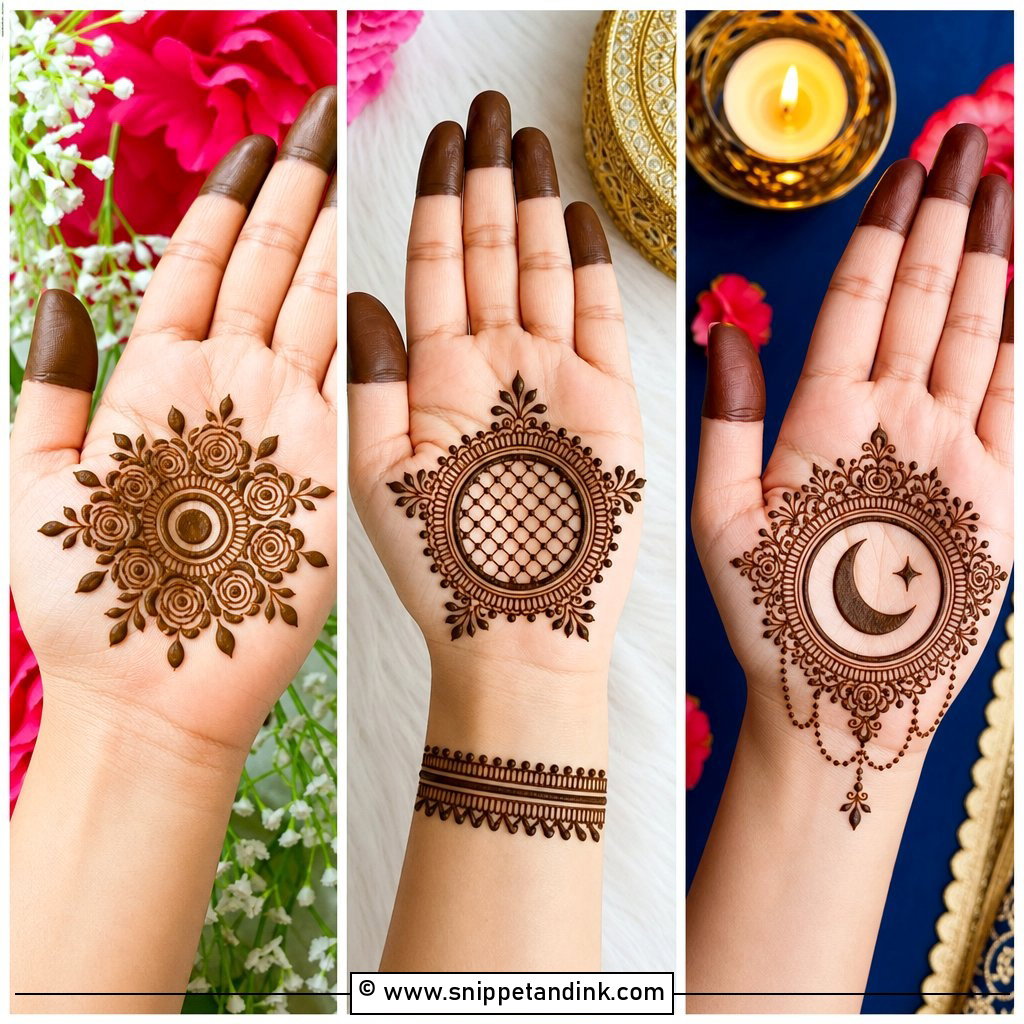
8. Mandala Bridal Mehndi Design
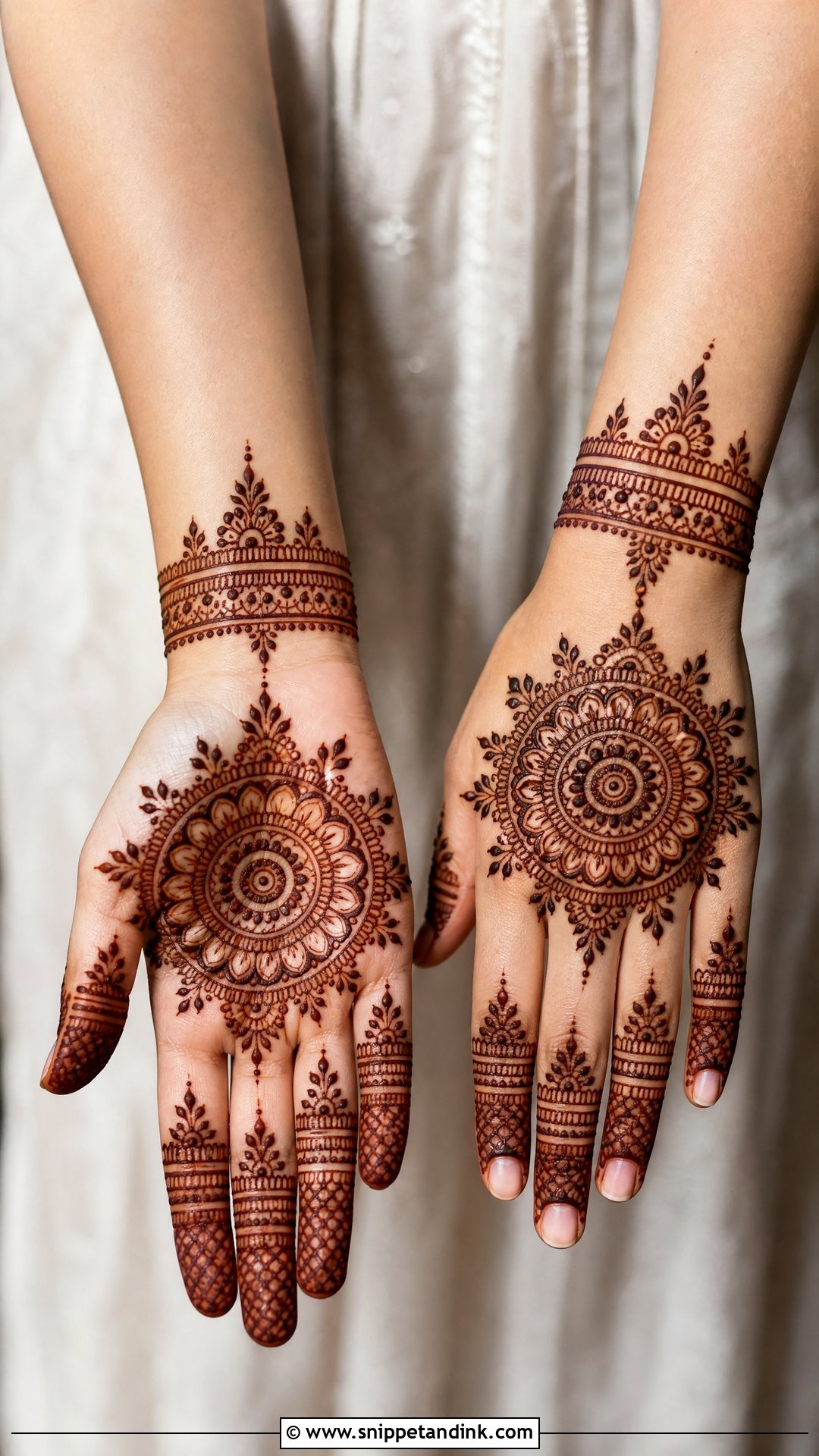
A mandala starts as one round centre on the palm or back of the hand, then grows outward in rings of petals, dots and fine borders. It’s forgiving on almost any hand shape because a circle sits comfortably on wide palms and narrow ones. The part that takes skill is keeping each ring the same width all the way round; a lopsided outer ring is the first thing people notice. For a bridal hand I add detailed fingers and a wrist cuff, then decide between jaali filling and paisley frames depending on how much coverage the bride wants.
9. Peacock Bridal Mehndi Design
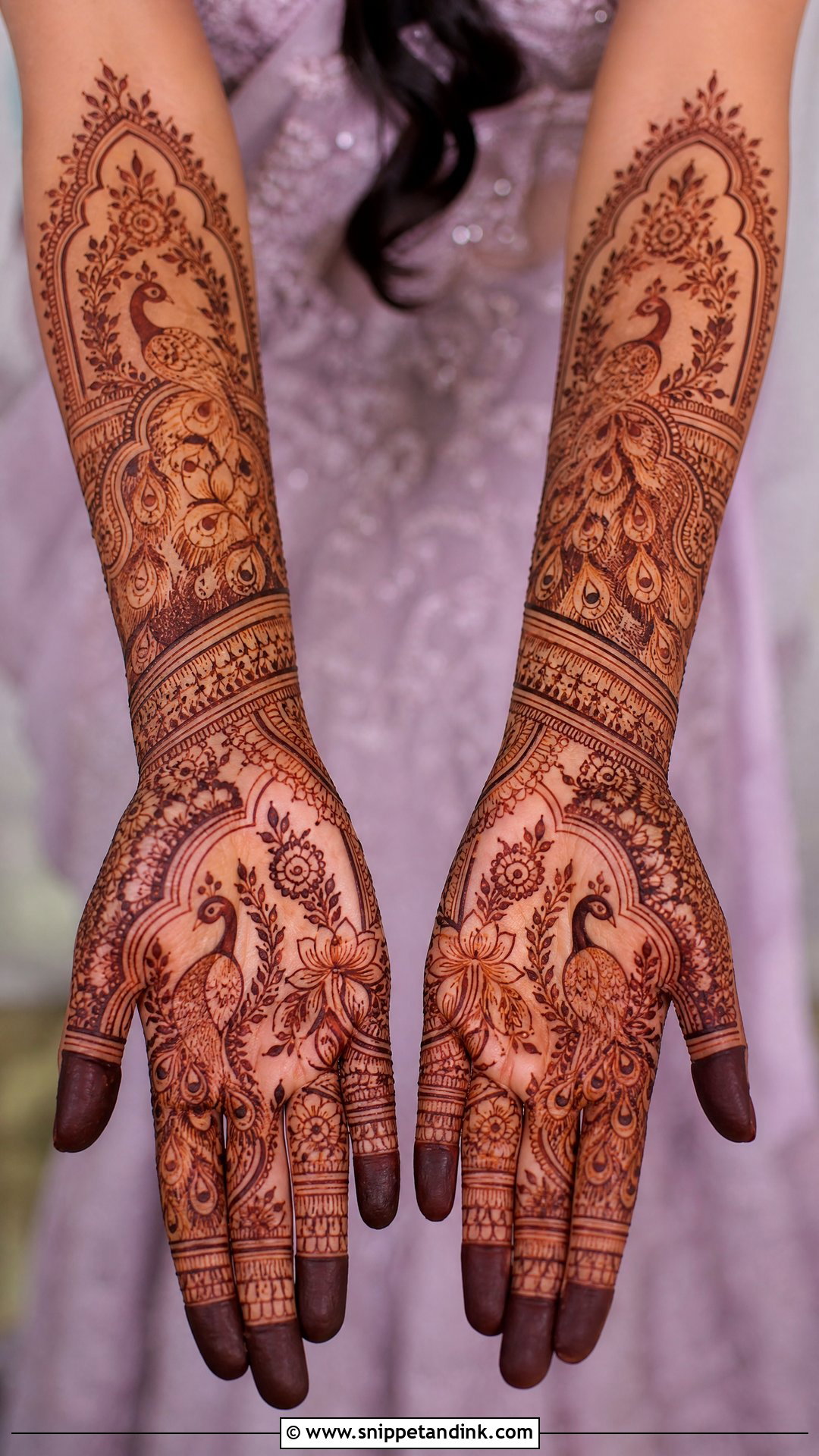
Peacocks bring a royal, traditional mood, either as one large bird on the palm, a mirrored pair across both hands, or a back-hand design where the tail sweeps toward the wrist. Feathers give me room for tiny curved strokes and shading, and that’s also the risk. Pack too much into the plumage and the bird disappears once the stain deepens. I keep the neck and head as one clean, solid shape so the bird stays recognizable from across a room, and let paisleys and lotus petals do the supporting work.
10. Dulha Dulhan Bridal Mehndi Design
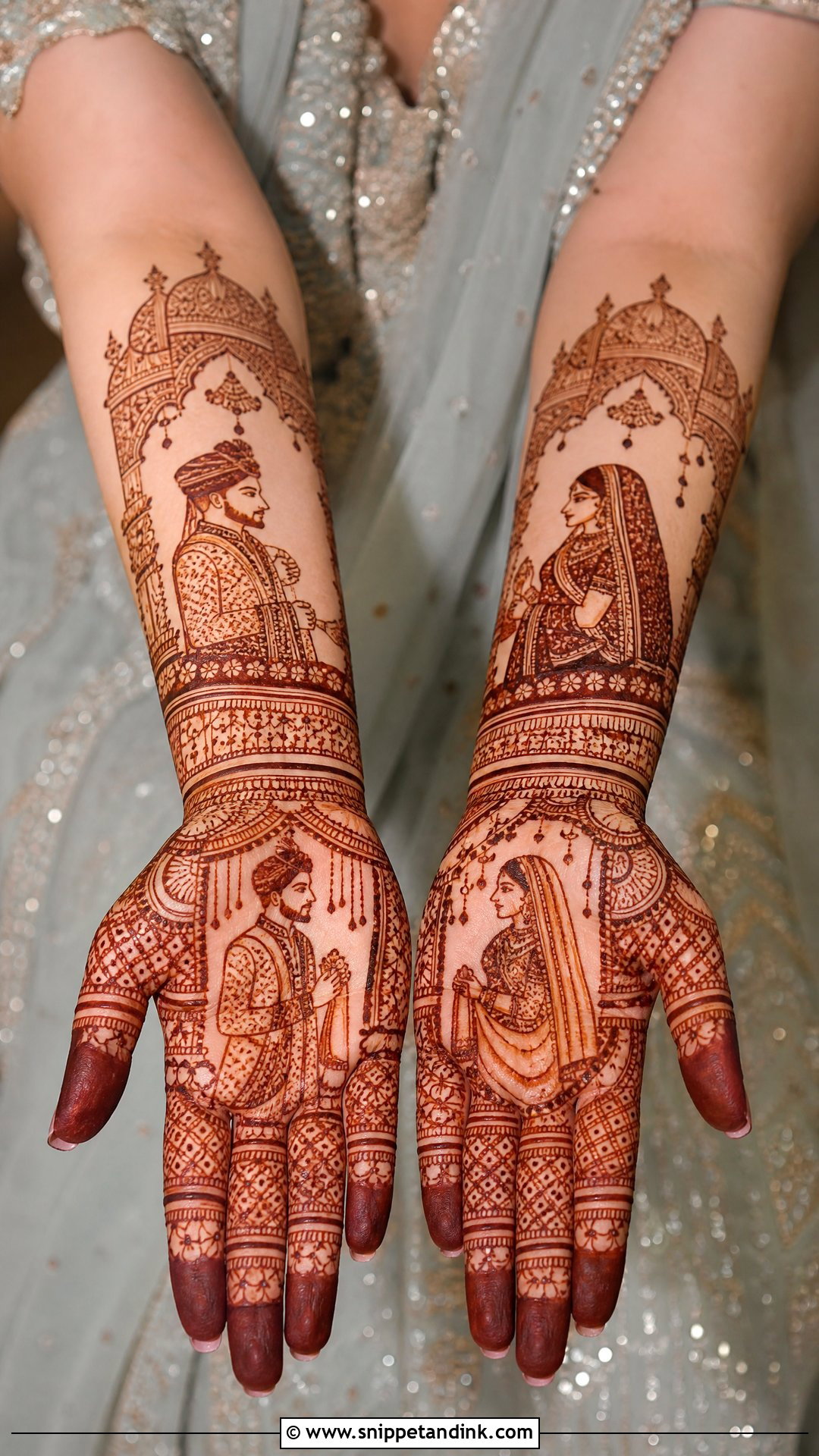
Groom on one hand, bride on the other, framed by flowers, a mandap, dhols, a kalash or a doli. Portraits need space, so this layout only really works with full palm or full hand coverage. I keep the faces to a few confident lines. Eyelashes, nostrils and jewelry drawn inside a face the size of a coin tend to merge as the stain develops, and a blurred face looks far worse than a simple one.
11. Personalized Bridal Mehndi Design
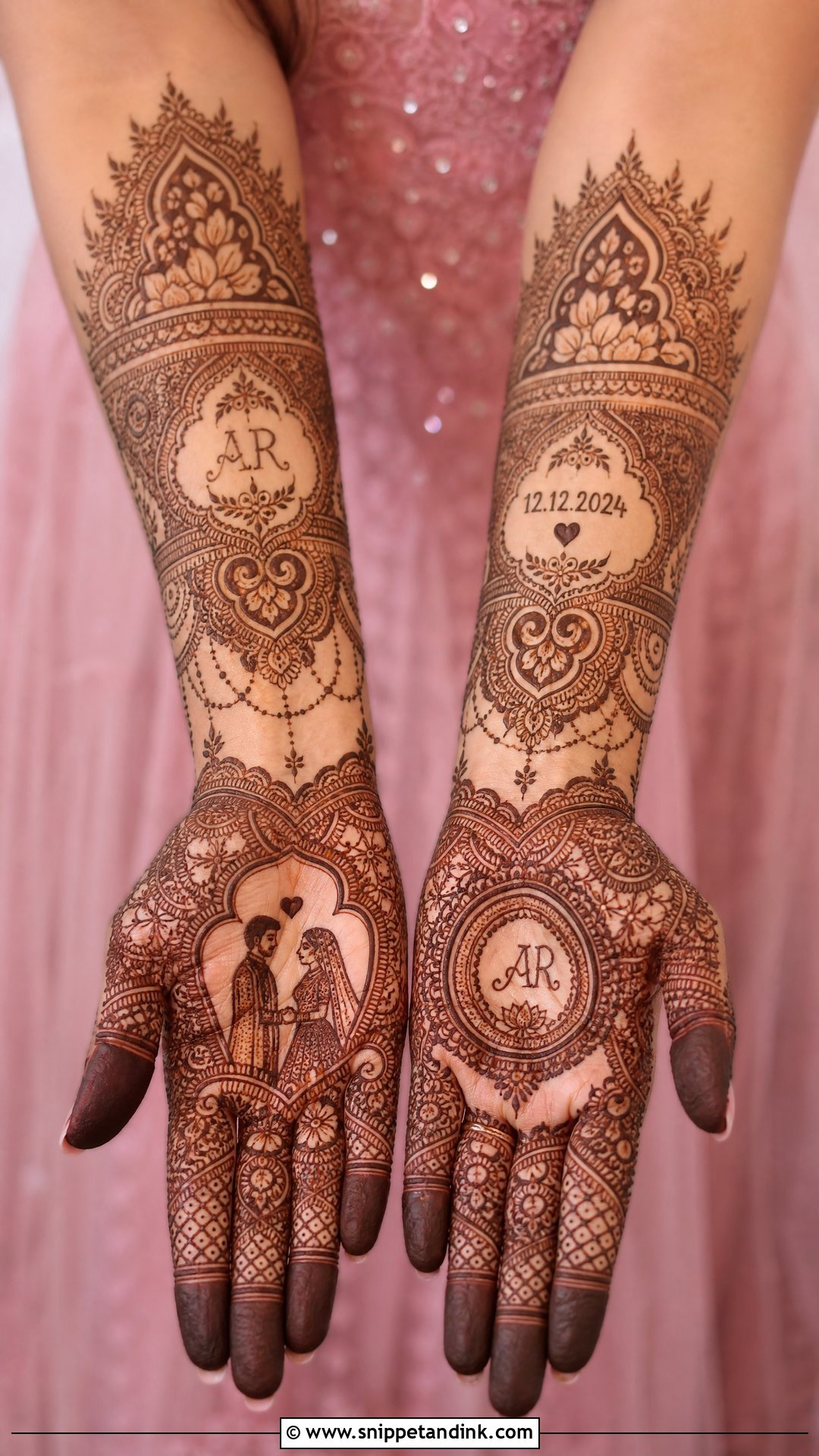
Personal details belong to the couple alone: initials, the wedding date, a favorite flower, a pet, the place you met. They still need a bridal structure around them, so I tuck them inside paisleys, borders or mandala petals instead of floating them in open skin. Guests love hunting for the groom’s name, and that game only works when it’s actually hidden. One or two meaningful elements per hand is plenty; by the fifth symbol the design starts to look like a scrapbook.
12. Lotus Bridal Mehndi Design
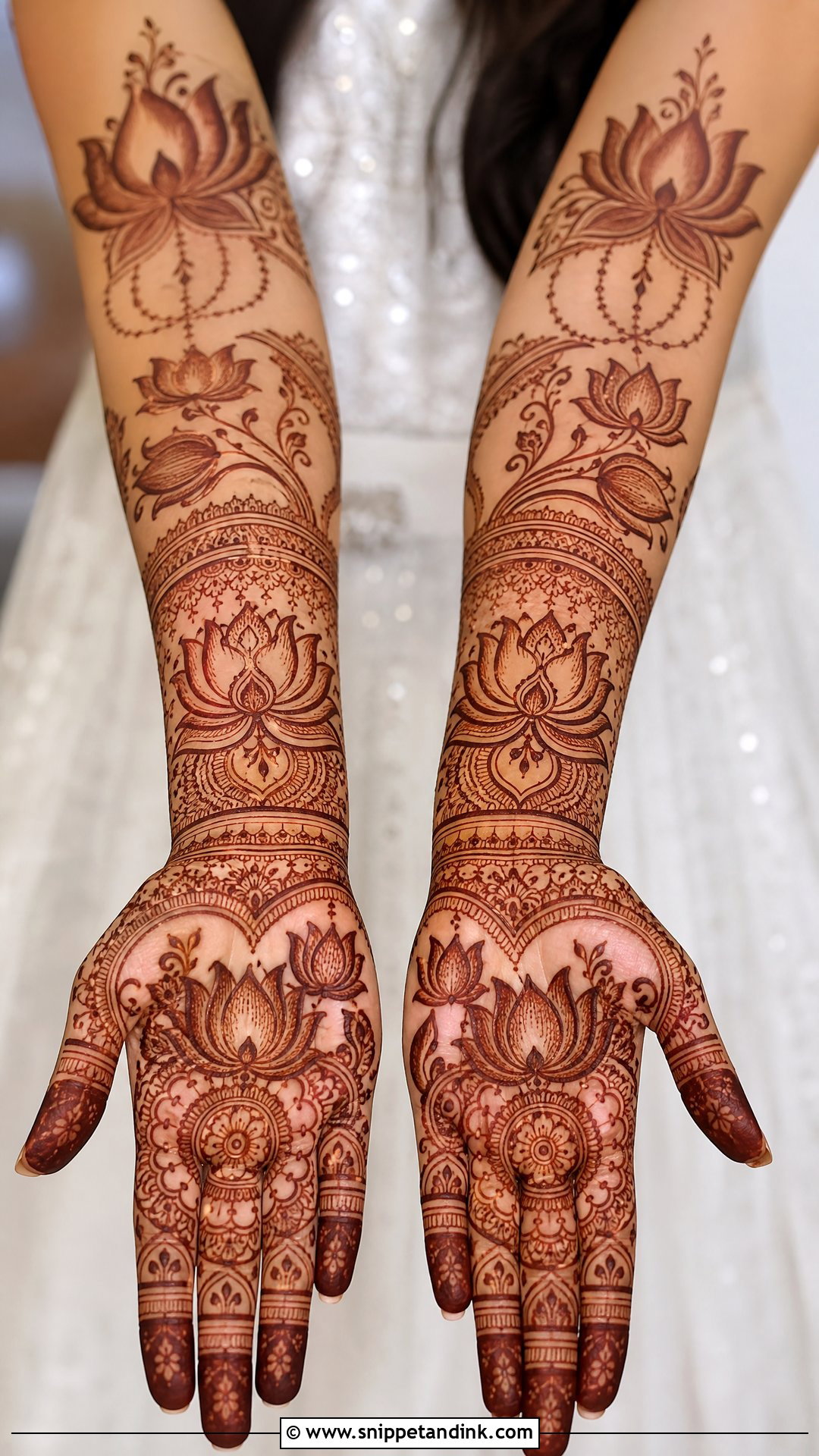
Layered lotus petals create natural symmetry, which is why the motif sits well on palms, wrists, back hands and forearms. You can use one large lotus centre, a lotus band around the wrist, or several lotuses woven through vines and mandalas, and it pairs especially well with silk sarees and temple jewelry. For a modern finish I keep the petals bold and surround them with fine dots and leaves. For a traditional one I add paisleys, jaali and filled fingertips. Outline the petal tips crisply, because rounded, mushy tips make a lotus read as any old flower.
13. Jaali Bridal Mehndi Design
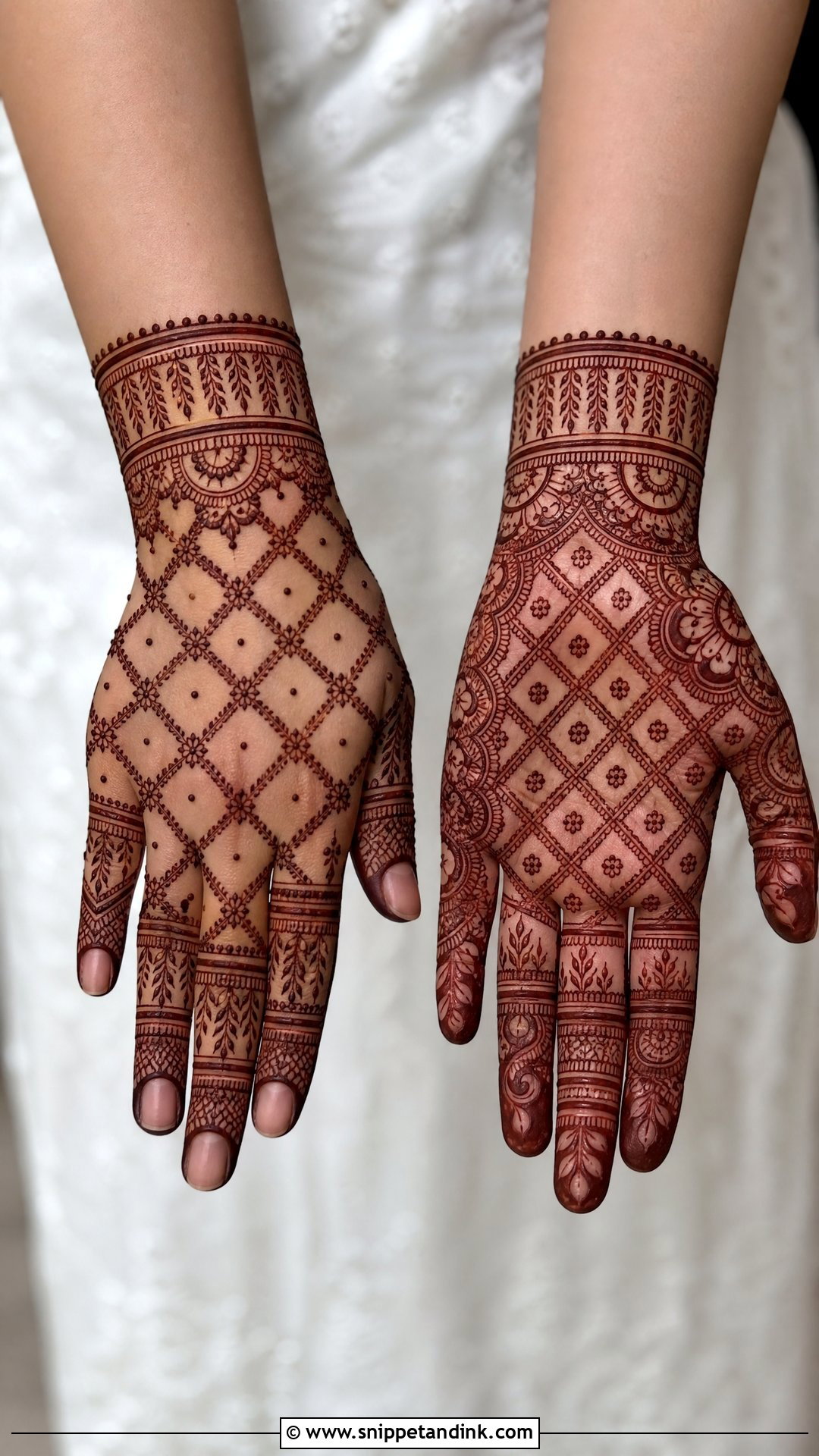
Jaali is a net of crossing lines laid over the palm, back hand, fingers or forearm, usually framed by flowers, paisleys or bracelet borders. Spacing is everything. Stain edges soften slightly as the color develops, so a grid that looks fine in wet paste can close up and read as solid by day two. I draw the mesh wider than feels necessary and mark the intersections with tiny dots. Done that way, it reads like lace next to embroidered sleeves and diamond bangles.
14. Moroccan Bridal Mehndi Design
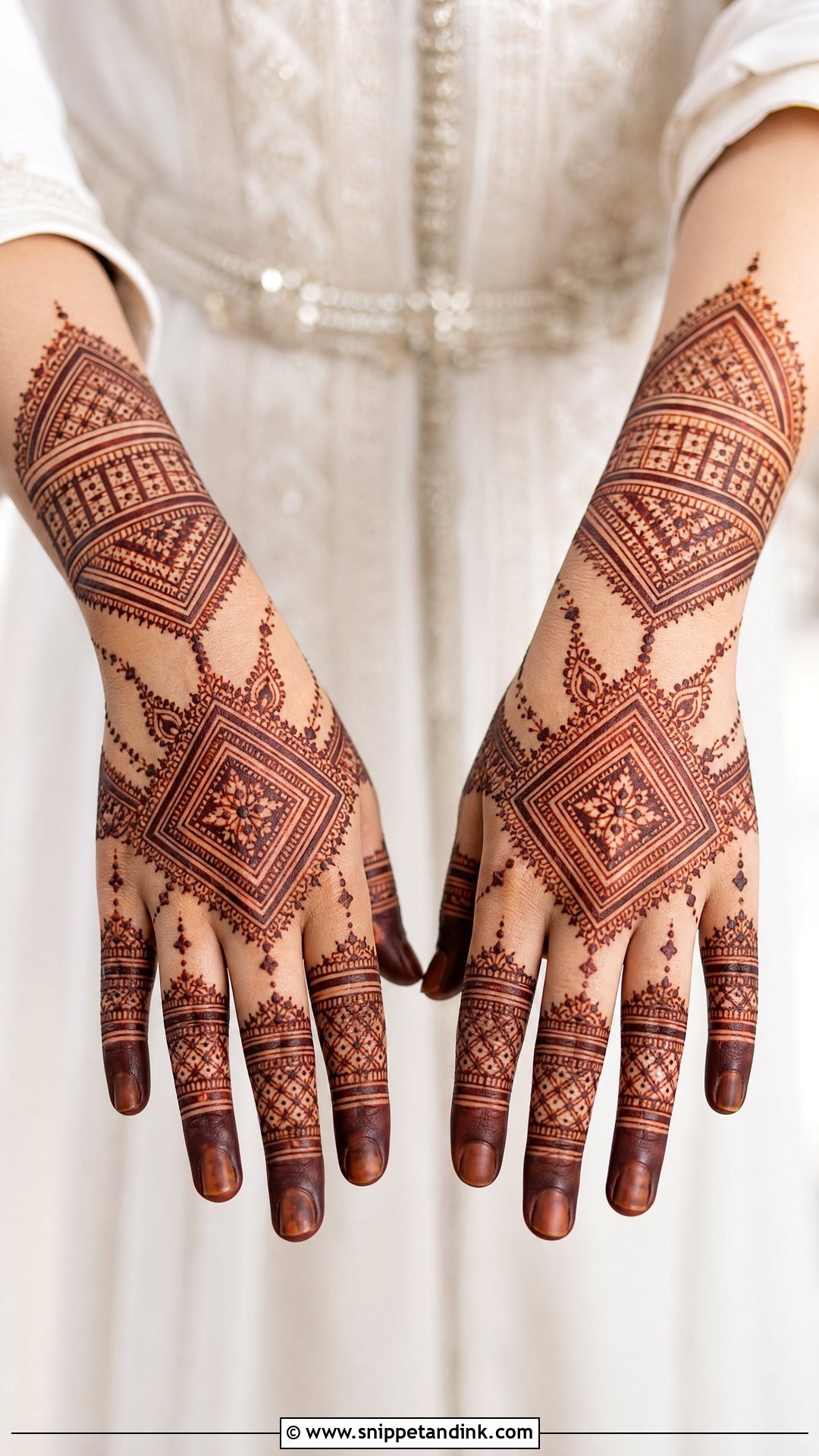
Moroccan work swaps florals for geometry: diamonds, squares, chevrons, grids and structured borders. A bridal version covers the palm and back hand in symmetrical panels, sometimes softened with dots or a small flower. It suits fusion weddings and contemporary outfits better than a heavy lehenga. Geometry is unforgiving, so I’d only book it with an artist whose straight lines you’ve seen in person or in unfiltered photos. A line that drifts slightly is invisible in a floral and obvious in a grid.
15. Gulf Bridal Mehndi Design
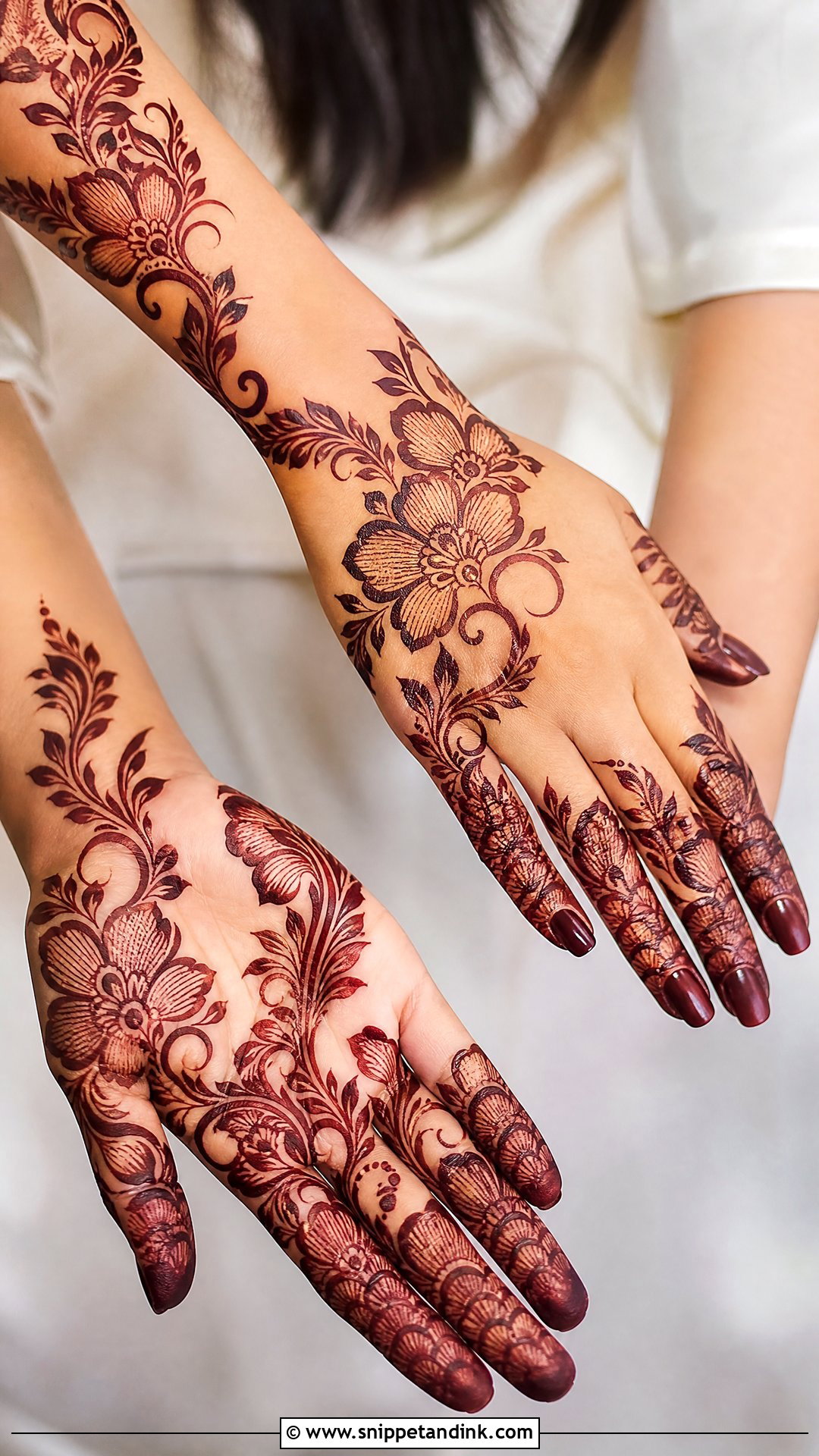
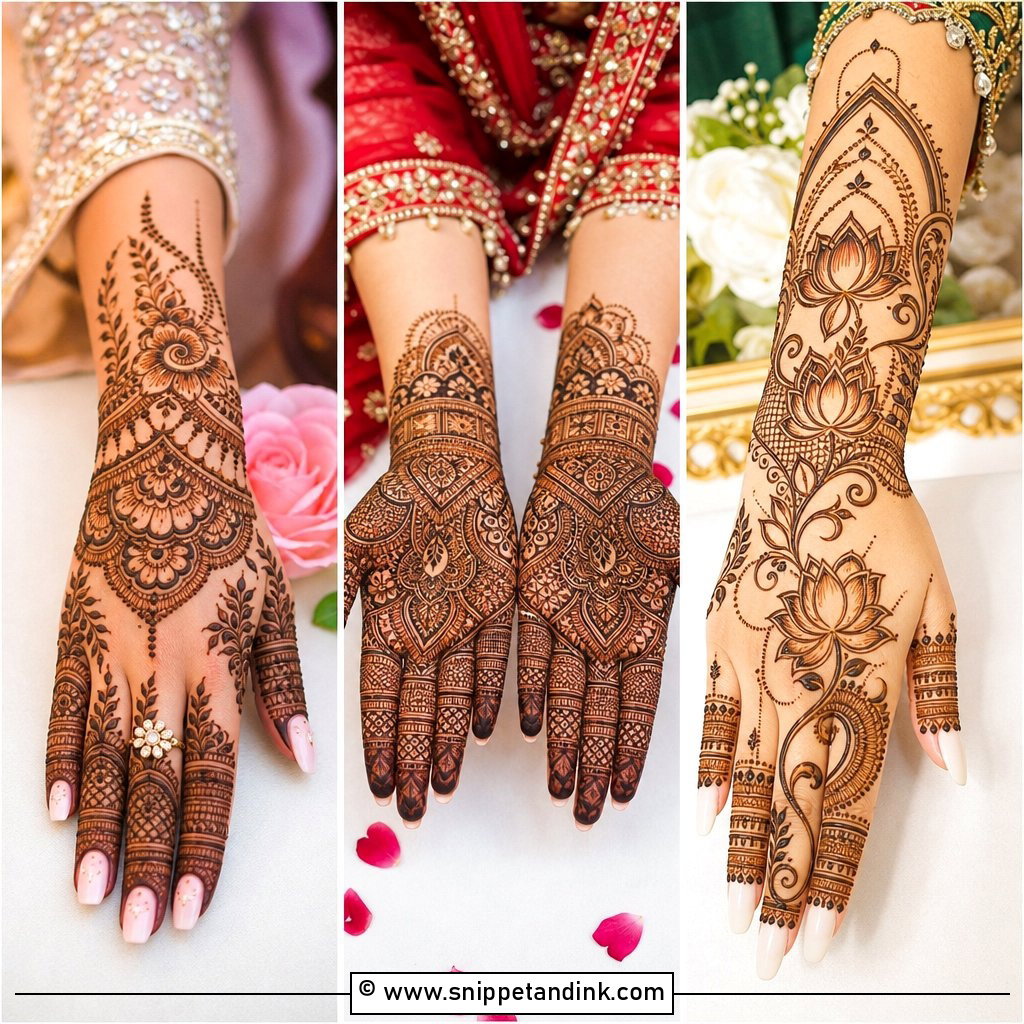
Gulf or Khaleeji-inspired mehndi uses bold flowers, leafy curves and dramatic spacing, usually on the fingers, back hand and wrist. It’s lighter than dense Indian bridal work but still festive. The technique sits in the contrast: the outer outline goes on thick so each flower has depth, while the inner shading stays fine. Ask for a few matching palm accents so the hand doesn’t look unfinished when you turn it over during a ritual.
16. Bracelet Bridal Mehndi Design
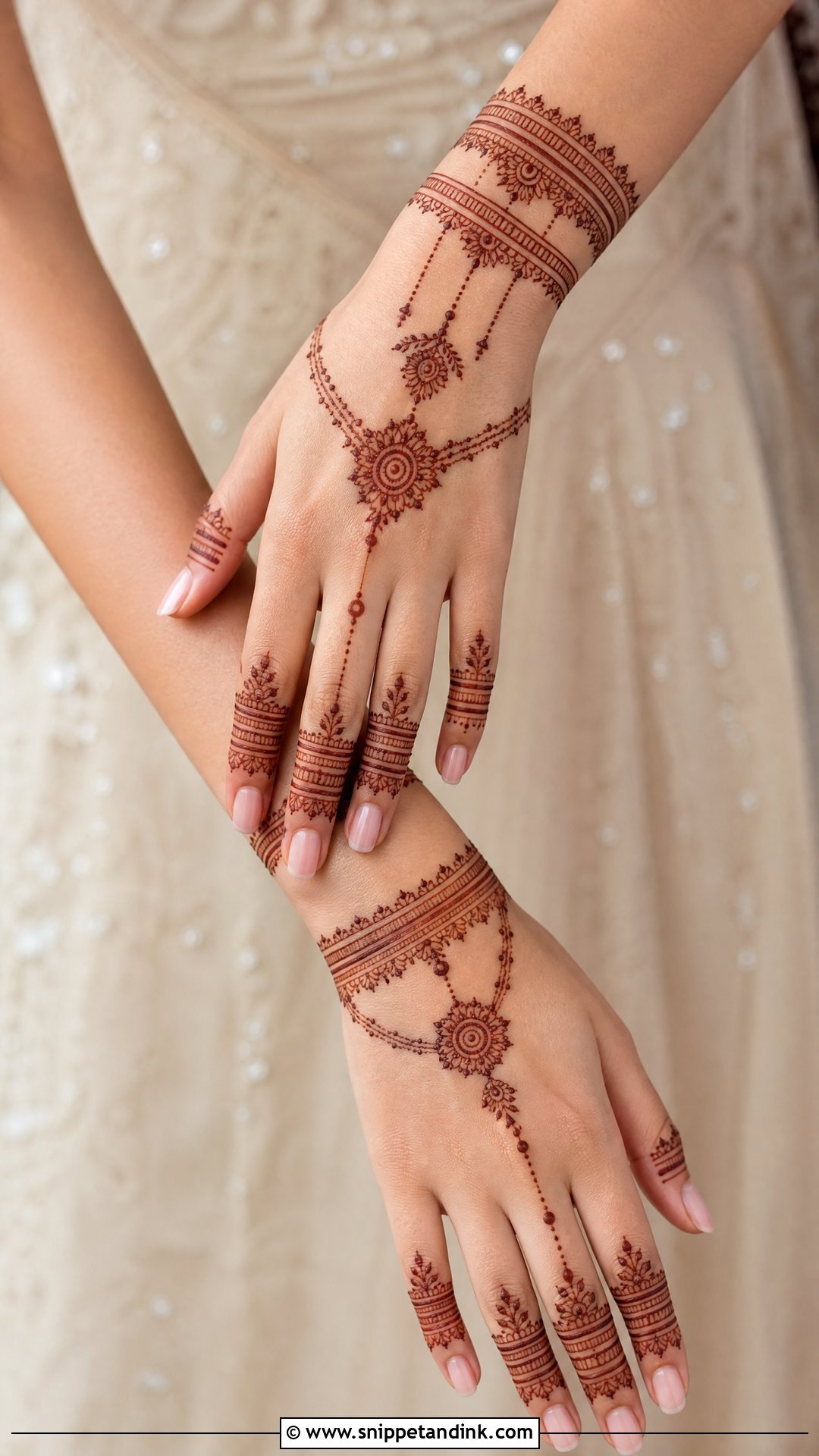
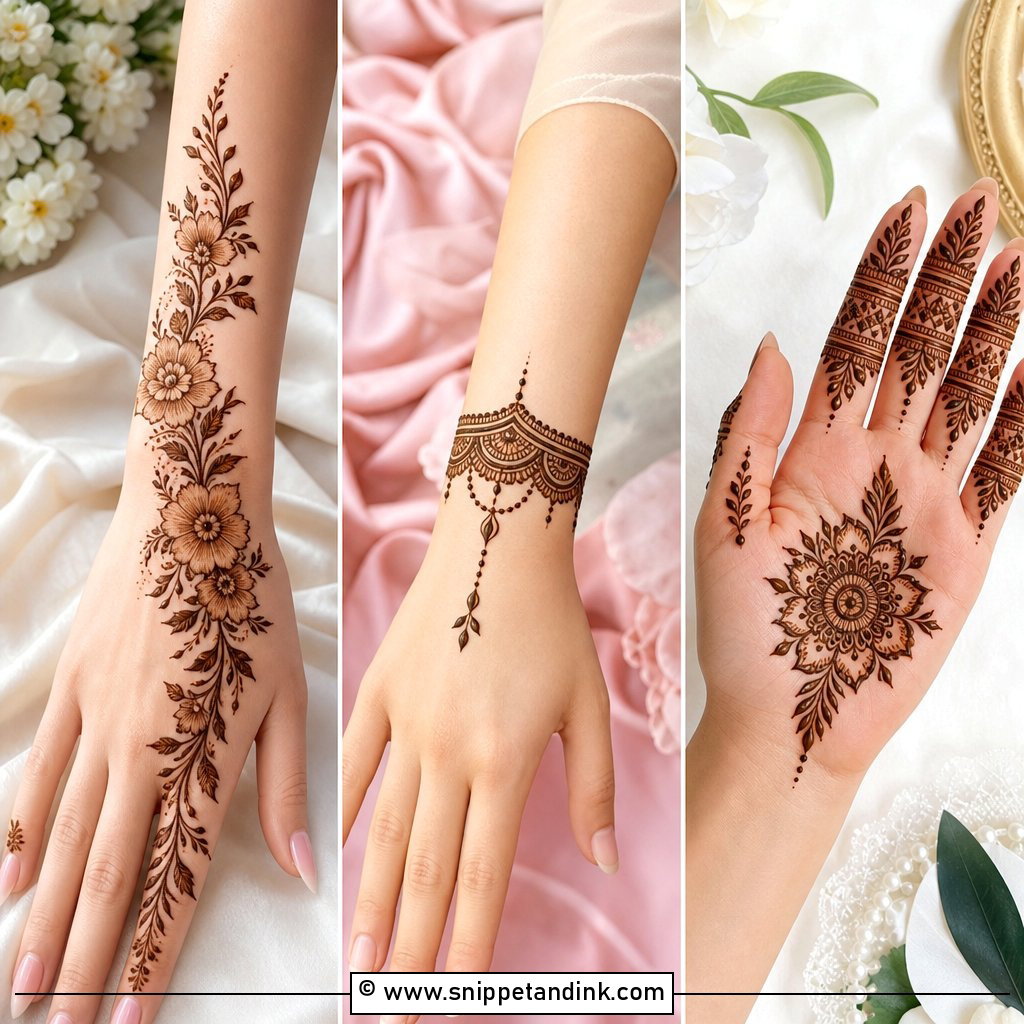
Bracelet layouts imitate hand jewelry: a wrist cuff, chains of dots, finger rings and a central pendant joined by small floral links. They follow the natural shape of the back of the hand, which is why they flatter almost everyone. For a bride I usually extend the cuff a little up the forearm and fill the fingers more than I would for a guest. Even spacing in the chains is what sells the jewelry effect; uneven dots just look rushed. Add a small palm motif so the hand works from both sides.
17. Khafif Bridal Mehndi Design
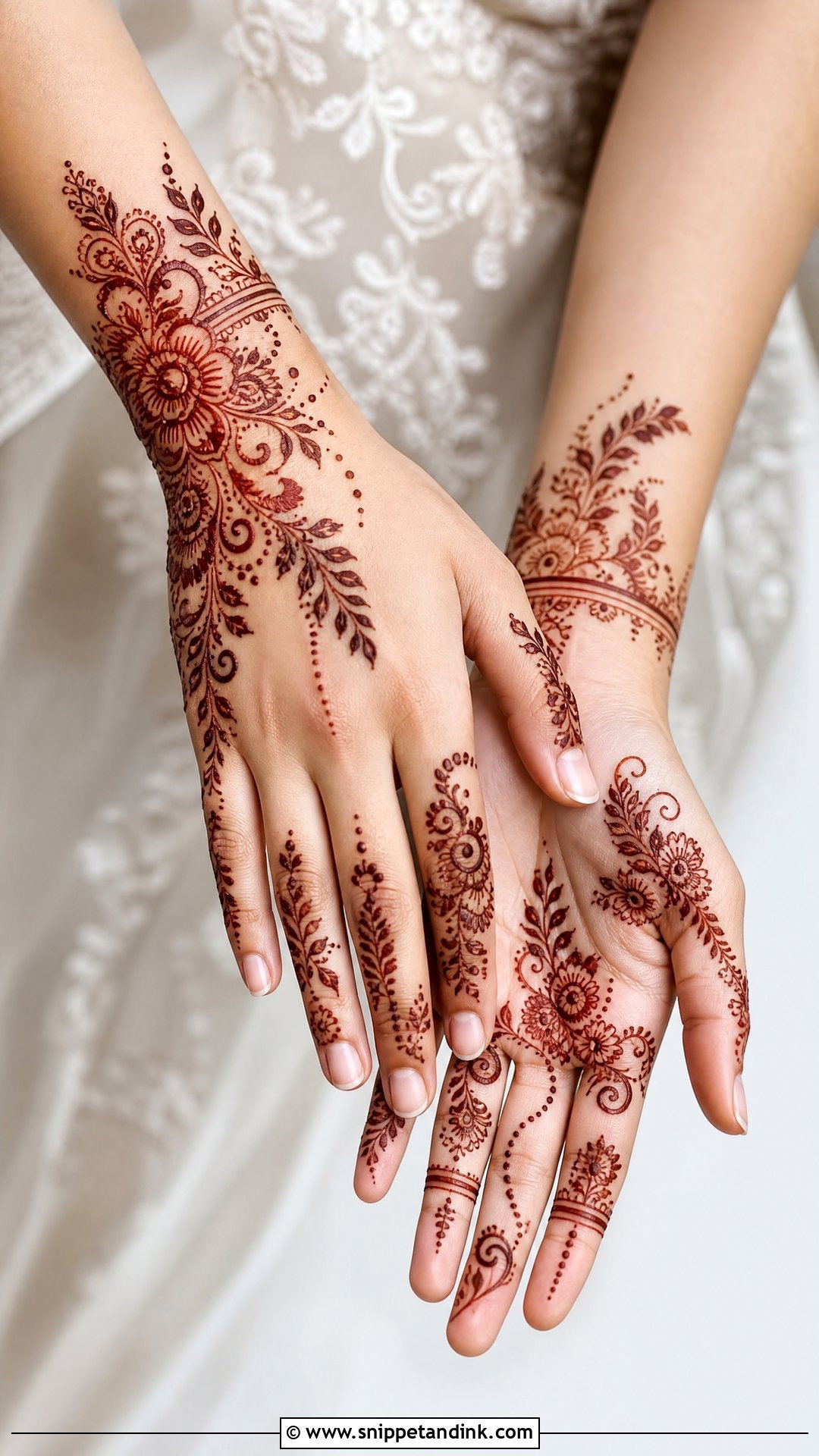
Khafif is all about line control: thin vines, tiny flowers, leafy curves, dots and light shading, flowing from the fingers to the wrist. The cone needs a very fine tip and a steady hand, and I keep the paste silky for it so the lines don’t break mid-stroke. Pastel outfits and softer makeup sit well with it. The trade-off is depth. Thin lines hold less paste, so khafif stains lighter than bold work and needs every hour of wear time you can give it.
18. Rajasthani Bridal Mehndi Design
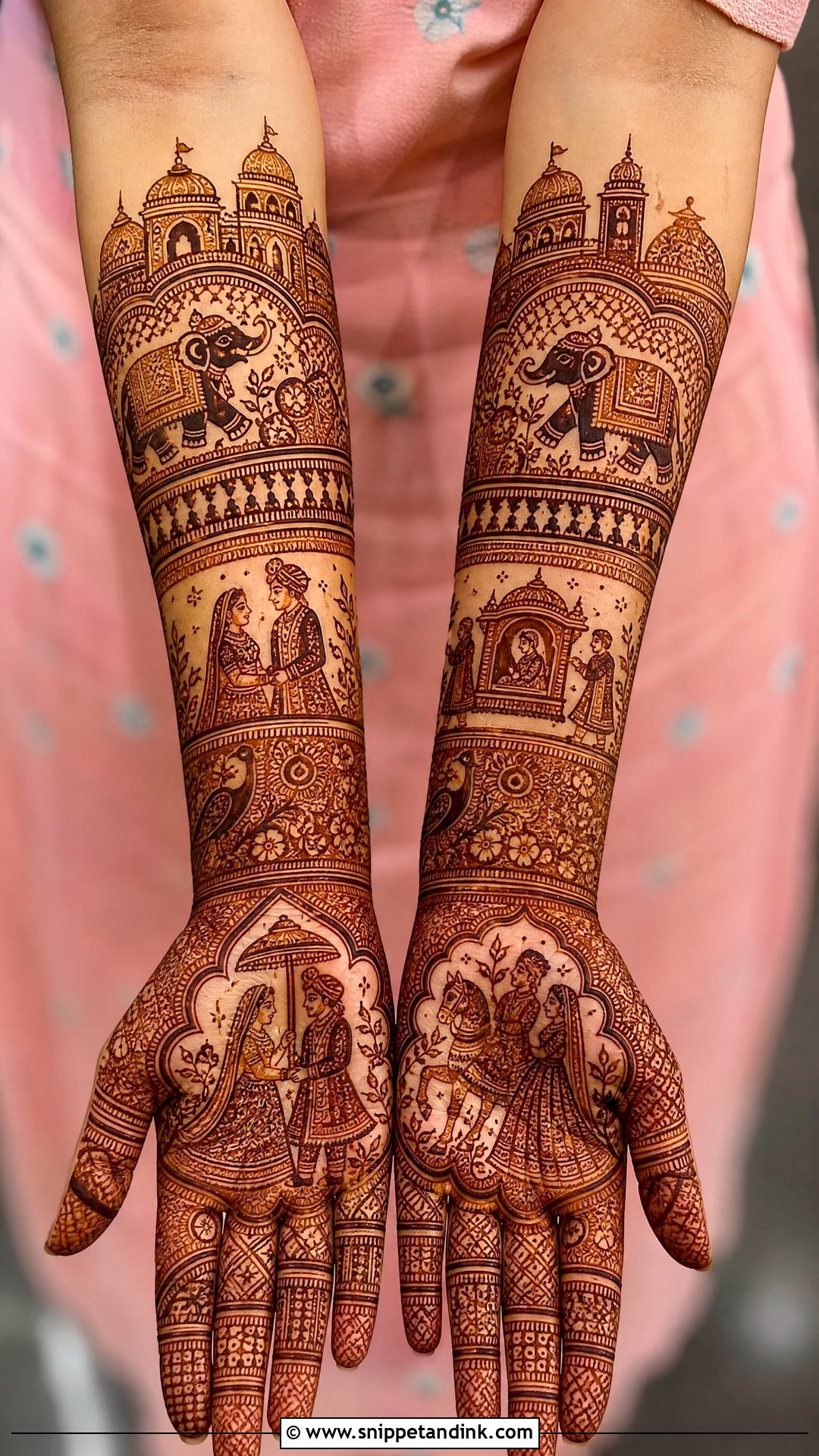
Rajasthani bridal work is pure storytelling: elephants, palaces, peacocks, the bride and groom, a doli procession, musicians and detailed borders, all in dense coverage. The best versions are planned so both hands form one scene when held side by side, which means I draw the meeting edges first. Expect a long session, and have someone ready with water and snacks. Heavy traditional lehengas and kundan sets suit it; with a minimalist gown it can overpower the outfit.
19. Modern Bridal Mehndi Design
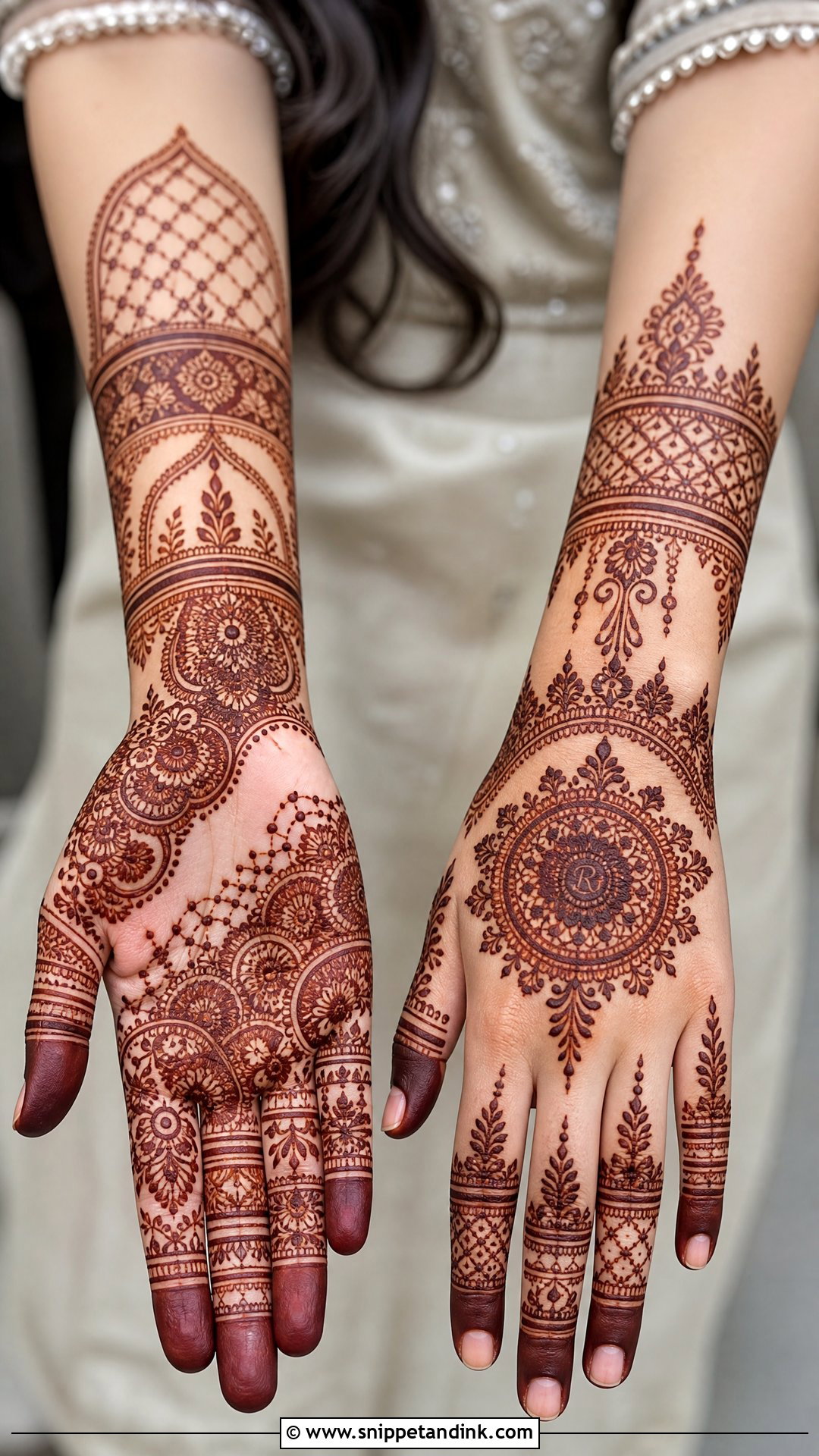
Modern bridal mehndi keeps the bridal weight but rearranges it: mandalas beside Arabic florals, finger-focused work, a geometric border, open skin between sections. I tailor it to sleeve length, since a three-quarter sleeve will hide anything past mid-forearm anyway. Fewer fillers and clearer sections are what make it look current. Because it sits comfortably with a classic lehenga and a contemporary gown, it’s handy for brides changing outfits between events.
20. Simple Bridal Mehndi Design
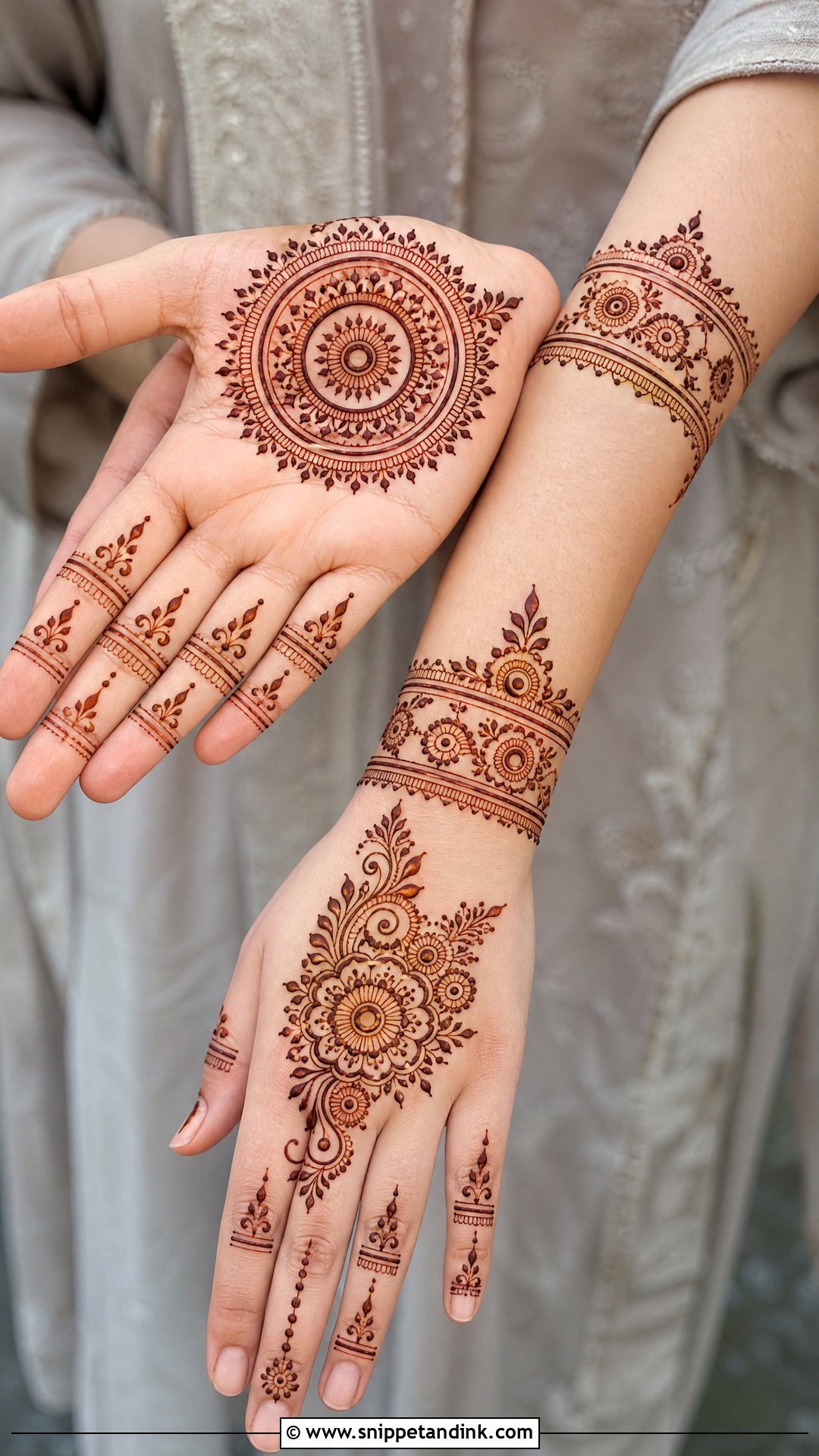
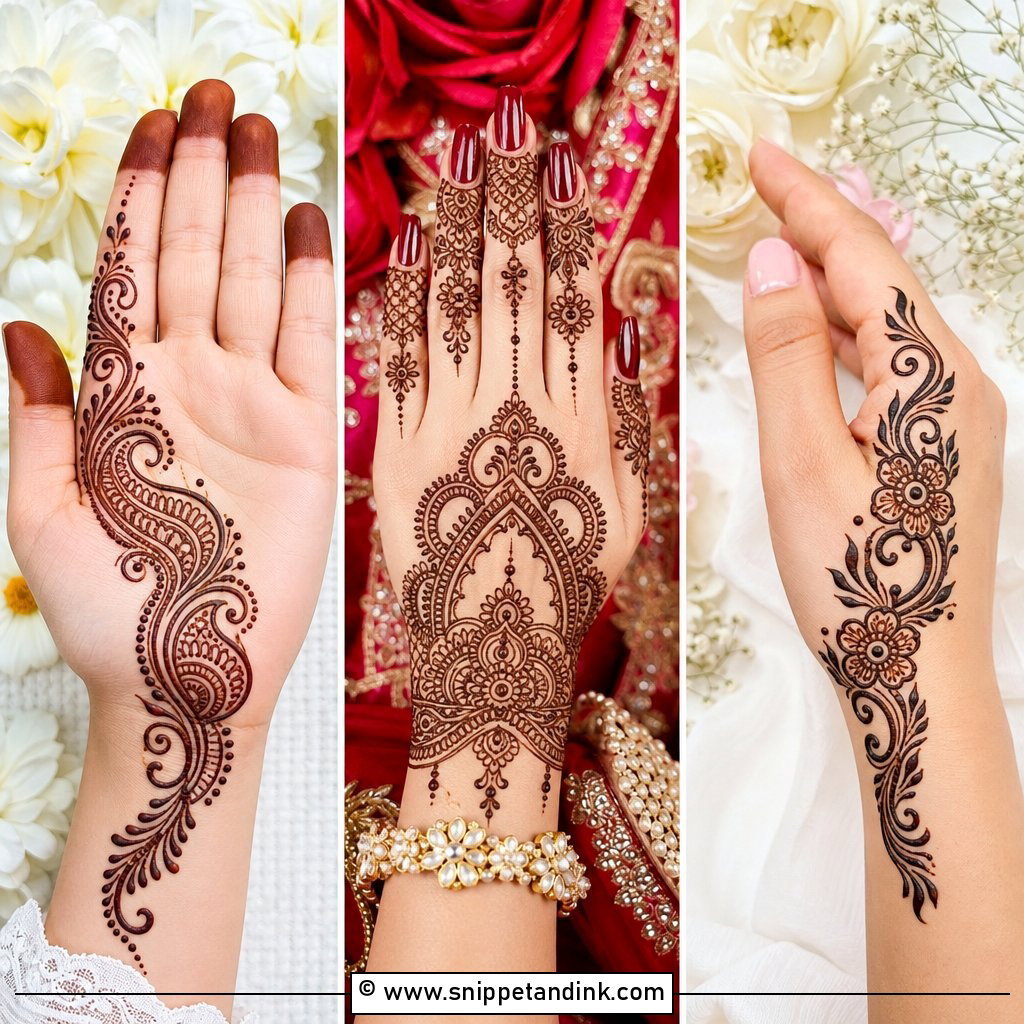
A simple bridal hand might be a neat palm mandala, a floral wrist band, detailed fingers and a few paisley or vine accents. It takes a fraction of the sitting time of full coverage, which matters if your mehndi night is also your packing night. Some brides with sensitive skin prefer less coverage too, though pure henna rarely causes trouble; reactions usually trace back to additives in the cone. Neatness carries this one. Matching detail on both hands is what makes a light design look planned.
What Happens to Your Stain After the Paste Comes Off
Leave it on longer than feels sensible
The dye in henna needs time to move into the skin. I ask brides to keep the dried paste on for at least six to eight hours, and overnight is better. A light dab of lemon and sugar once the paste is dry helps it stay stuck, but don’t soak it, because a dripping hand smudges detail. Wrap loosely in tissue or cotton gloves to sleep.
Scrape it off, keep water away
Remove the dry paste by scraping with a blunt edge or rubbing your hands together over a bin. Keep water off the design for as long as you can afterward, ideally until the next day, and skip soap and sanitizer for that first stretch. Warmth helps the color develop, so a cosy room does more for you than an air-conditioned one.
Day two shows the real color
Expect orange on day one. It moves through red-brown to maroon by the second day. Palms and fingertips go darkest, while the back of the hand and forearm usually stay a shade lighter. That difference is normal and not a sign of weak paste.
Why I Refuse Black Henna and Instant-Stain Cones
A cone promising a black stain, or a dark result within an hour, almost certainly contains added dye, often PPD, the same chemical used in hair dye. It can cause blistering and lasting skin sensitivity, and a bride days from her wedding is the last person who should be testing that. Natural henna is powdered leaf mixed with lemon juice or water, sugar and an essential oil, and its color always sits in the orange to maroon family.
Ask your artist what goes into her paste and whether she mixes it herself. If you’ve never worn henna before, a small patch a week or two ahead shows you how your skin takes the stain and rules out a reaction to the oil.
Matching the Pattern to Your Outfit, Hours and Stain
A pretty pattern is only half the decision. The other half is your outfit, your hand shape, the jewelry you’ll stack on top, which ceremonies put your hands in front of a camera, and how many hours you can give the artist. Dense Indian and Rajasthani work feels royal; Arabic and Gulf layouts look bold and airy; mandalas, jaali, lotus and bracelet designs sit in between. Save a handful of references, agree on coverage with your artist early, and leave enough days between application and the wedding for the stain to reach its darkest.
You'll Like These Ideas:


Leave a Reply