
A bajuband is an armlet, and bajuband mehndi draws that piece of jewelry in henna: a band around the upper arm, the lower arm or the forearm. I love doing them because they change the whole silhouette of an outfit with very little paste. A narrow band reads like a bracelet, a wide one like a royal cuff, and a peacock or floral centerpiece can tie it to the hand design below. Below are the armlet styles I draw most often for brides, bridesmaids and festival days, with notes on placement, how each one stains on the arm, and who it suits.
Placing the Band So It Closes Neatly Around the Arm
A bajuband is the only henna design I draw that has to meet itself. The pattern goes all the way round the arm, and somewhere on the inside it has to close. Most of the work happens before the cone touches the skin.
- Find the height with the outfit on. I mark where the blouse sleeve ends, then place the band about two finger widths below it, so the sleeve doesn’t rub the wet paste or cover the top border.
- Put the centerpiece at the front. With your arm relaxed by your side, the front of the upper arm faces the camera. That’s where the main motif goes.
- Hide the join. I close the band on the inside of the arm, which faces your body and is rarely photographed. Any small mismatch in the repeat ends up there.
- Match both arms. I draw the second arm with the first one in view and check the height at the shoulder, because two bands at different heights is the first thing people notice.
Wear a sleeveless or loose top to the appointment. Upper-arm skin also stains lighter than your hands, so expect a softer brown there and leave the paste on as long as you comfortably can.
1. Simple Bajuband Mehndi Design
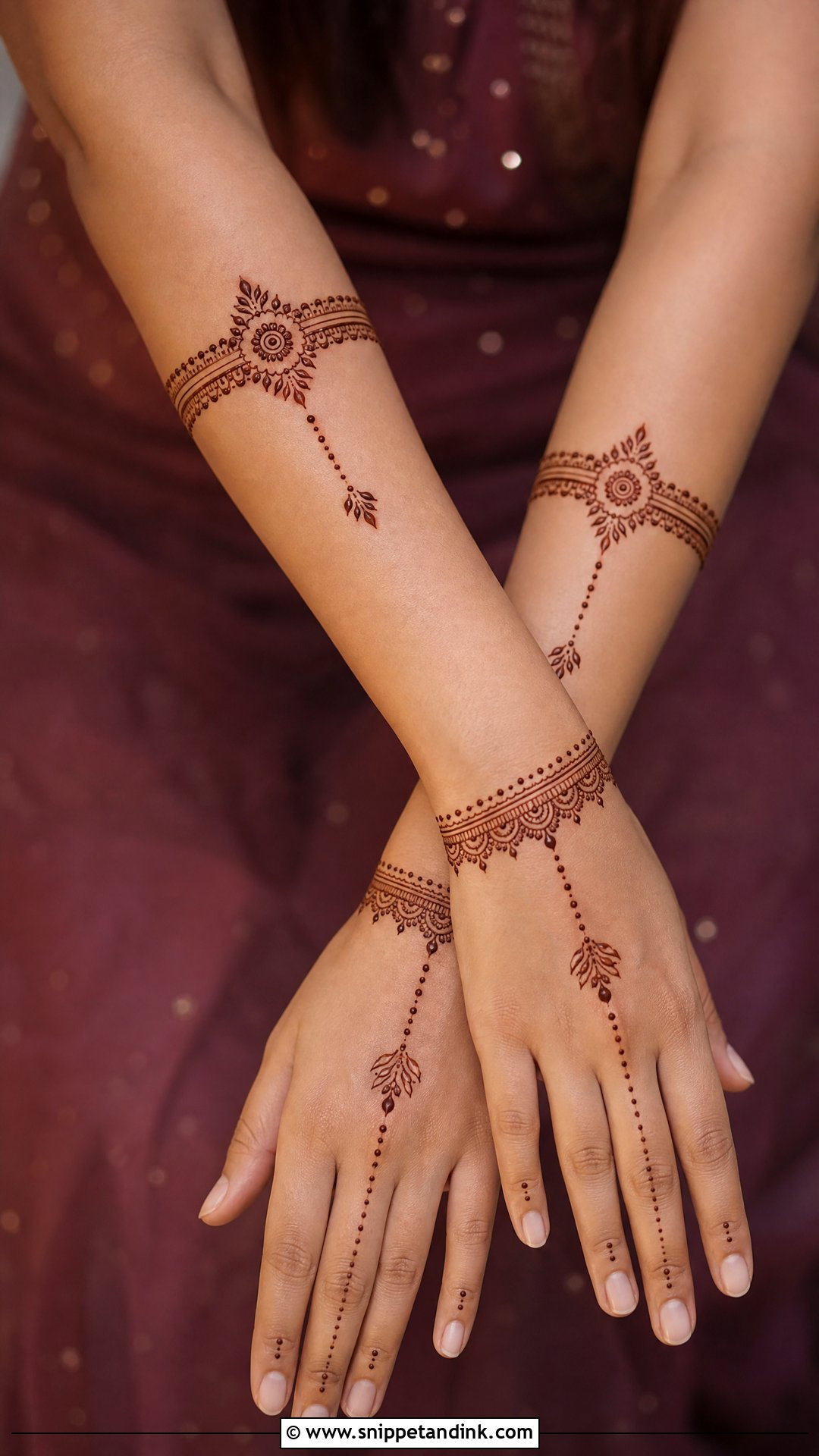
One clean band with a small flower, mandala or paisley at the center is where I’d start anyone new to armlets. Thin vines, dots, and tiny leaves run out from either side so it doesn’t look like a stripe. I make the outer borders a little bolder than the inside, because the upper arm stains lighter than the hands and fine lines there can fade to almost nothing. It suits teens, bridesmaids and anyone in a sleeveless or short-sleeve top.
2. Bridal Bajuband Mehndi Design
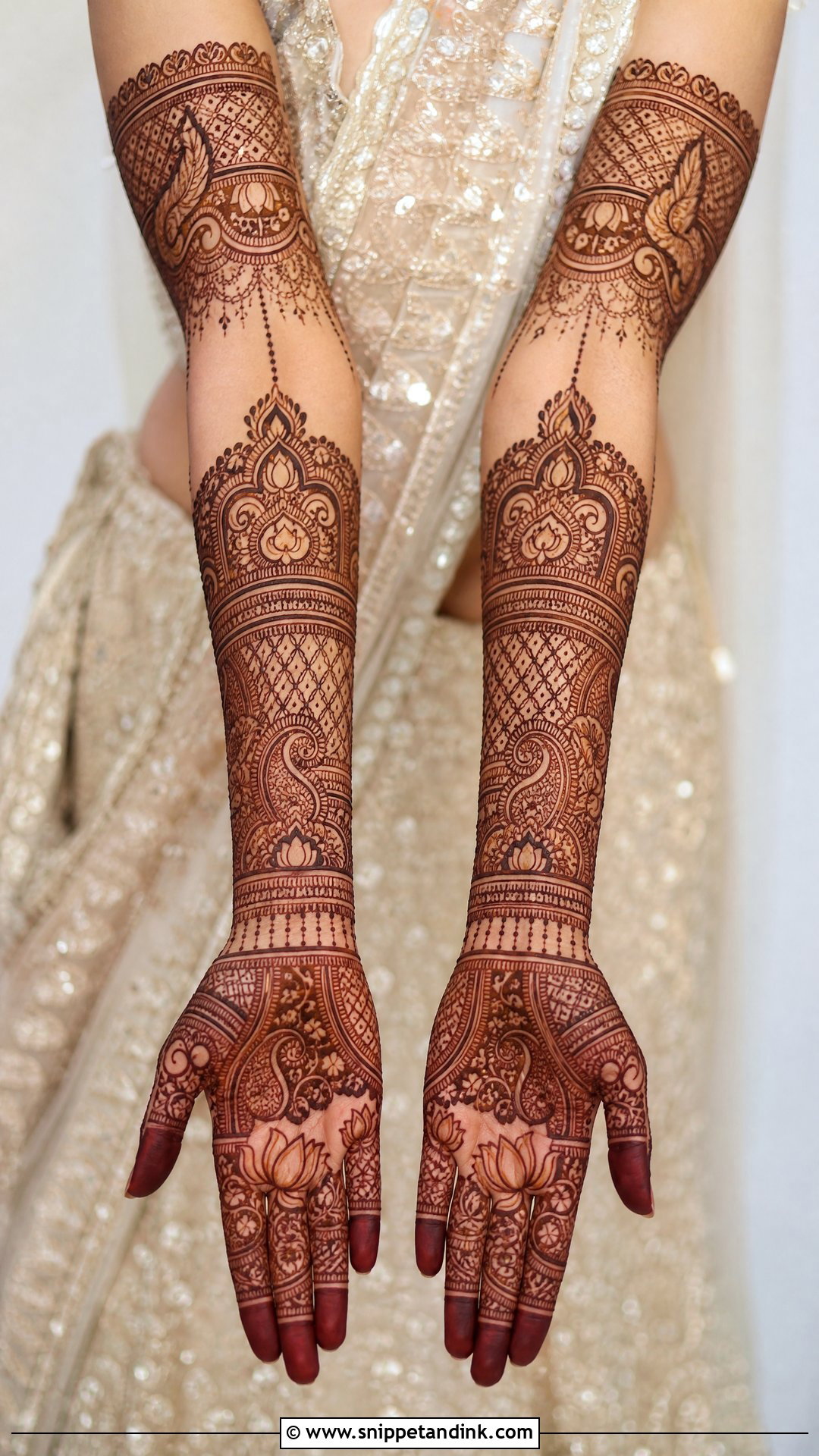
On a bride, the armlet has to belong to the rest of her henna. I match a wide band of paisleys, lotus flowers, jaali and shaded leaves to the motifs on her hand, wrist, or forearm mehndi, so the arm reads as one design. Little hanging chains or bead dots below the band add the jewelry effect. If the blouse is heavily embroidered, I keep the borders plain. Two busy edges side by side just cancel each other out in photos.
3. Arabic Bajuband Mehndi Design
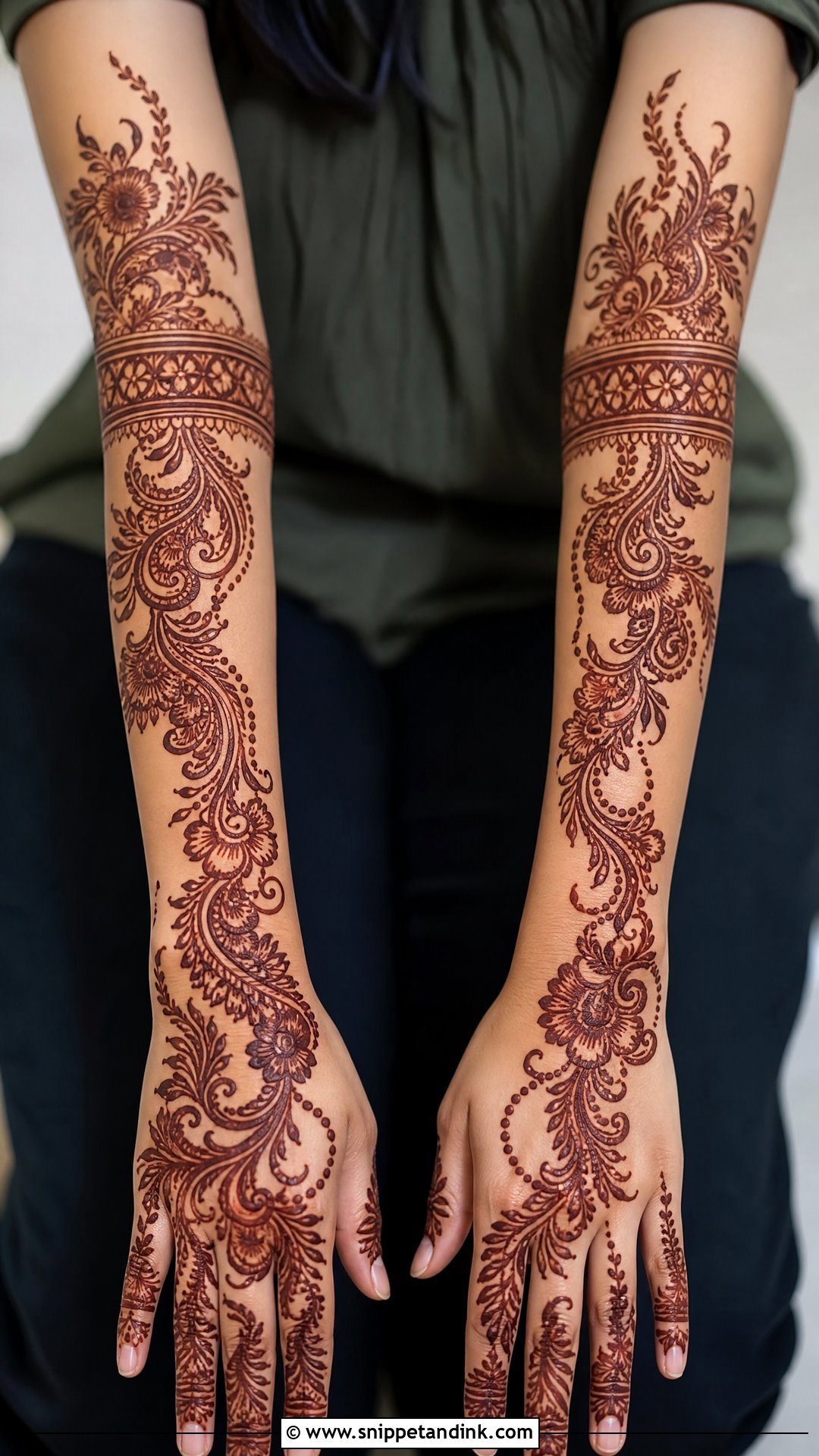
An Arabic bajuband mehndi design uses a diagonal vine that wraps into a band, with large flowers, leafy curves, paisley edges and dotted trails, and plenty of open skin. That open space is what makes the stain look crisp. It’s also the quickest style to apply on an arm, since the motifs are large and spaced. I suggest it for party wear, Eid outfits and engagements where you want the armlet noticed without a heavy traditional look.
4. Floral Bajuband Mehndi Design
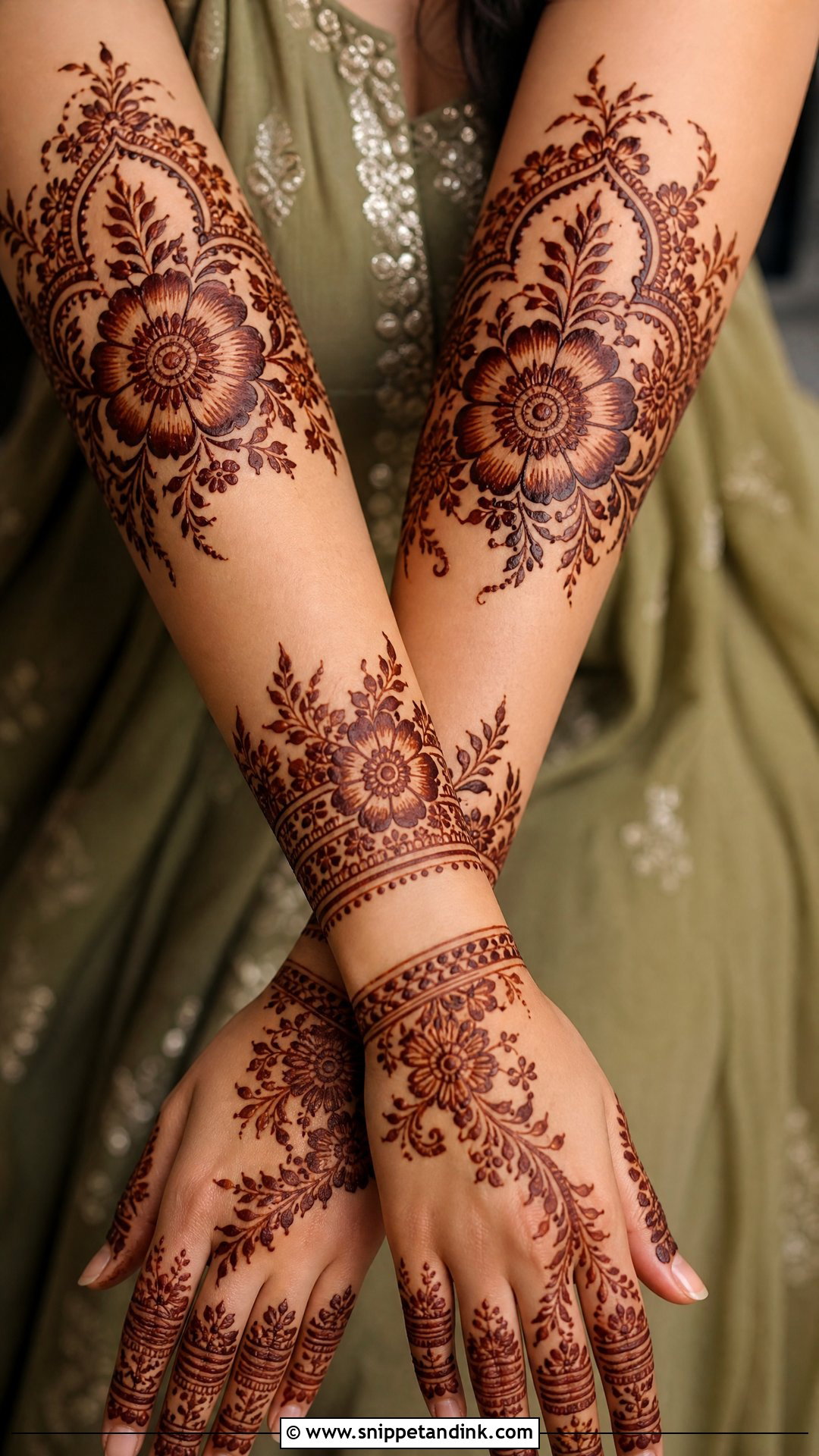
Florals soften the arm. I build the band around one large flower, then let smaller flowers and leaves spread around the arm, with curved vines above and below for movement. Roses, lotuses and simple five-petal flowers all work. The main flowers get bold outlines and light shading inside. Flowers are also the easiest motif to resize, so I widen or narrow the band to suit a slim or fuller arm without redrawing the whole idea.
5. Peacock Bajuband Mehndi Design
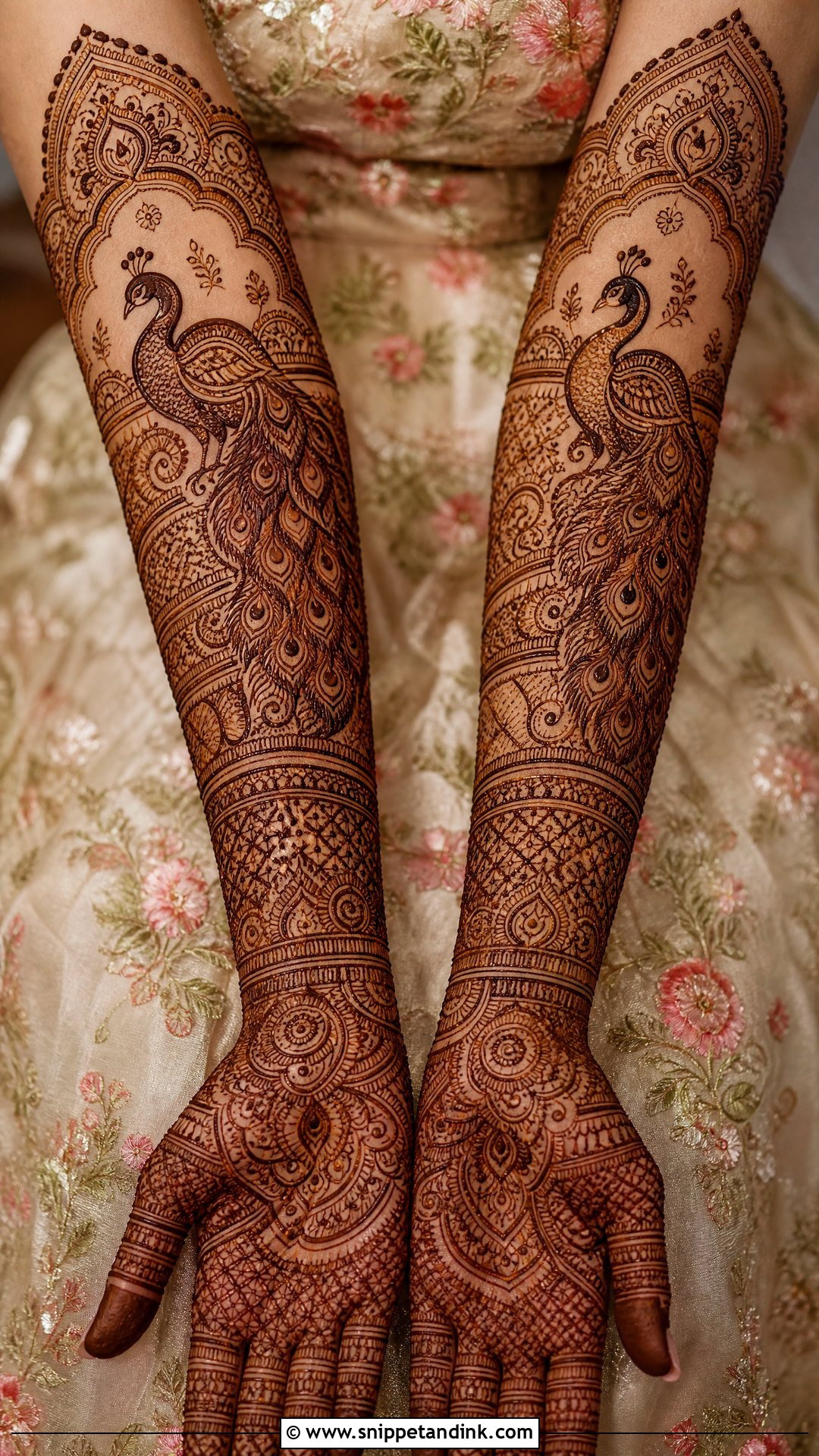
A peacock at the center of the band, with feathers fanning around the arm in curved layers, is the most traditional armlet I draw. Fine lines, scalloped feathers, dots and paisley fillers give it detail. For a bold version I fill the body darker and pack the feathers with tiny checks. For a lighter one I keep the outline simple and leave space around it. Peacocks need room, so this works better on the upper arm than on a narrow forearm. It’s a natural fit for sangeet nights and classic Indian outfits.
6. Mandala Bajuband Mehndi Design
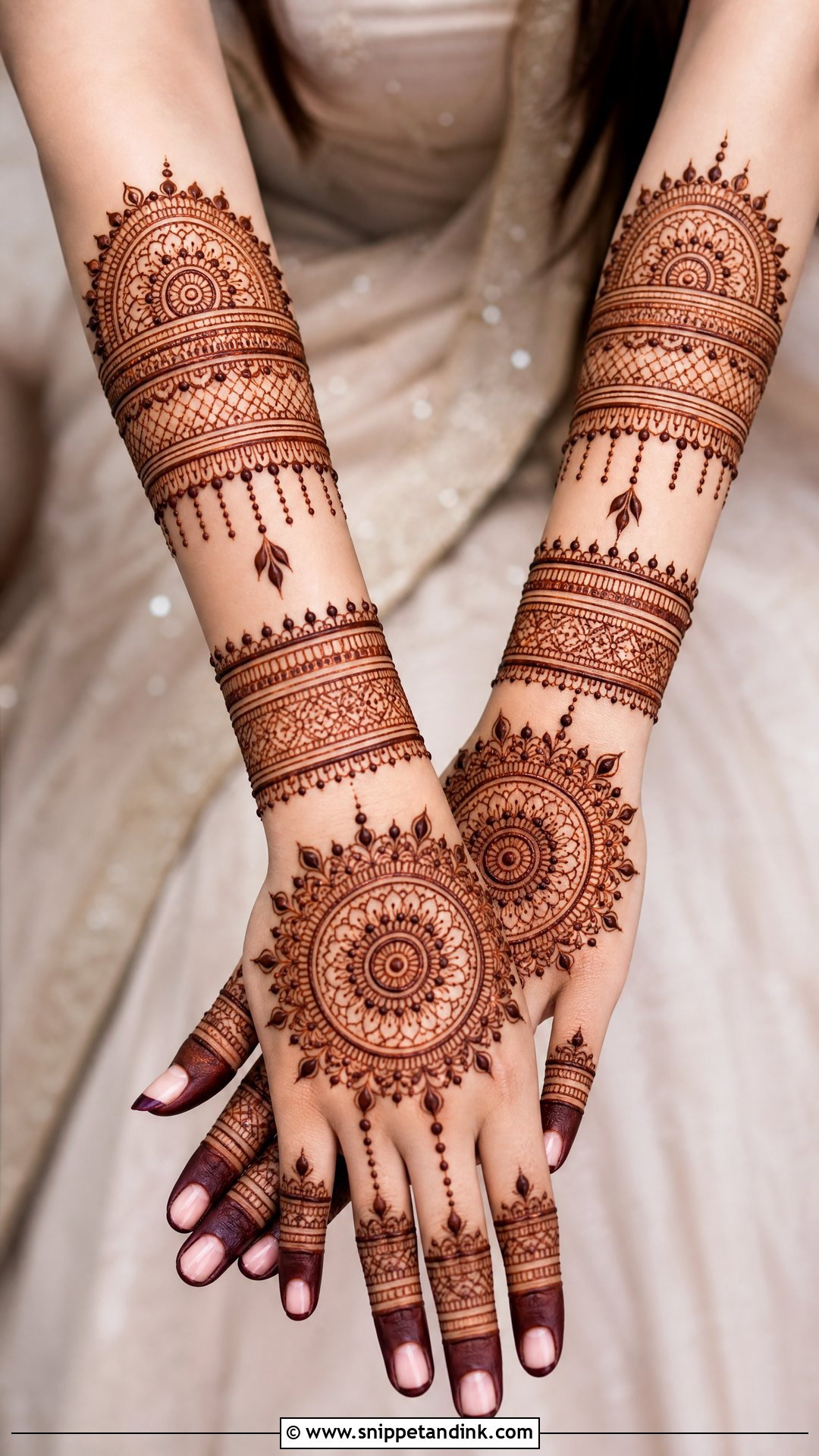
A round mandala in the middle of the upper arm or forearm, with thin bands, petals and small geometric lines wrapping away from it, gives the most symmetrical armlet. I size it medium. A large mandala on the upper arm wraps around the curve and looks stretched from the front. Hanging dots below the band add a jewelry touch. It’s the design I’d suggest for festivals and family functions when you want something noticeable but simple.
7. Jewelry Bajuband Mehndi Design
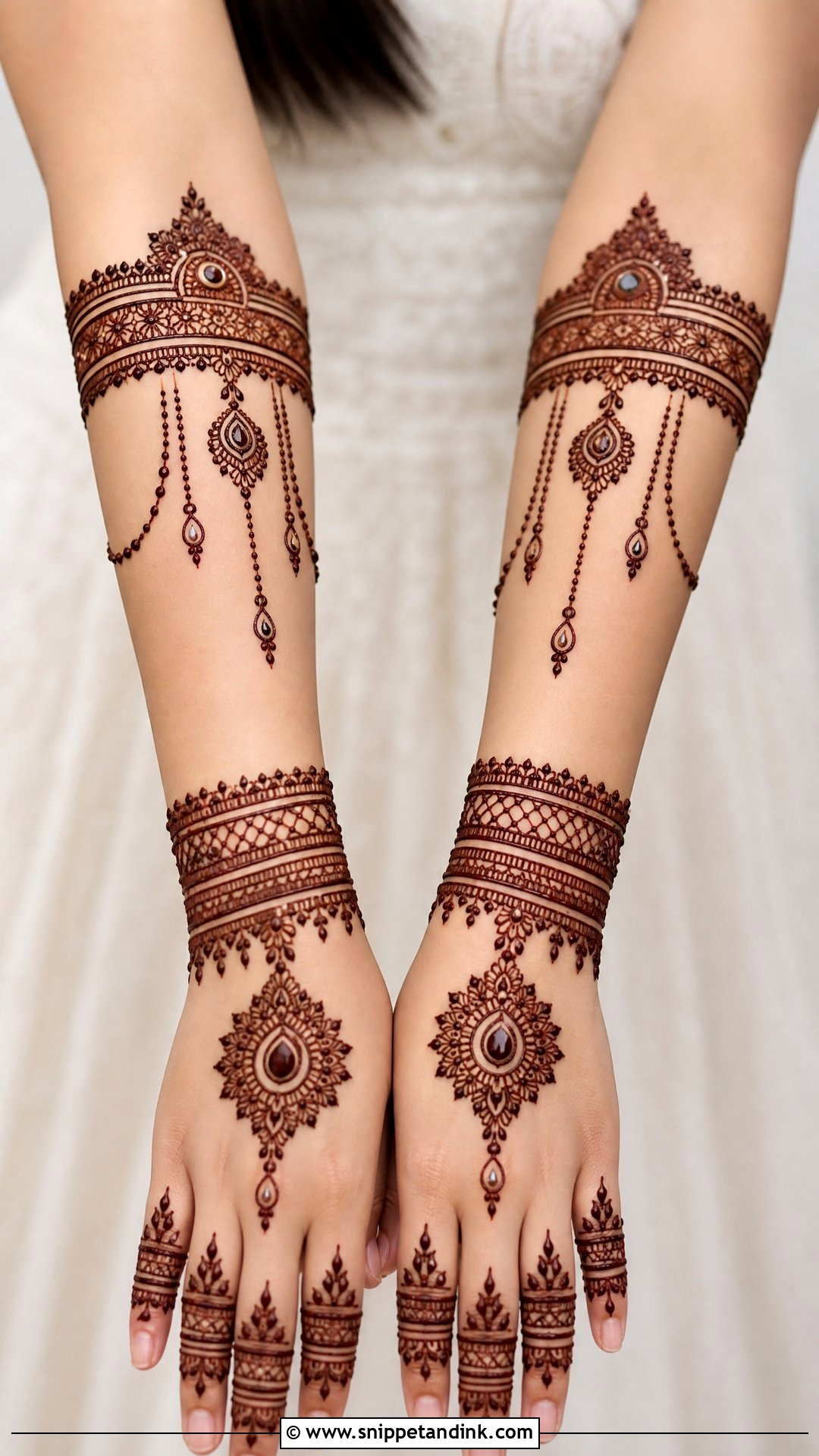
This is the design that looks most like a real armlet: layered bands, chain drops, bead dots, pendant shapes and a center motif drawn like a stone setting. It can be narrow and delicate or wide and royal. To get the metal-and-stone illusion, I keep the top and bottom borders dark and leave tiny gaps between the chain links. A small dangling pattern below the band adds movement. Brides and the bride’s sisters often choose it instead of wearing a real bajuband.
8. Full Arm Bajuband Mehndi Design
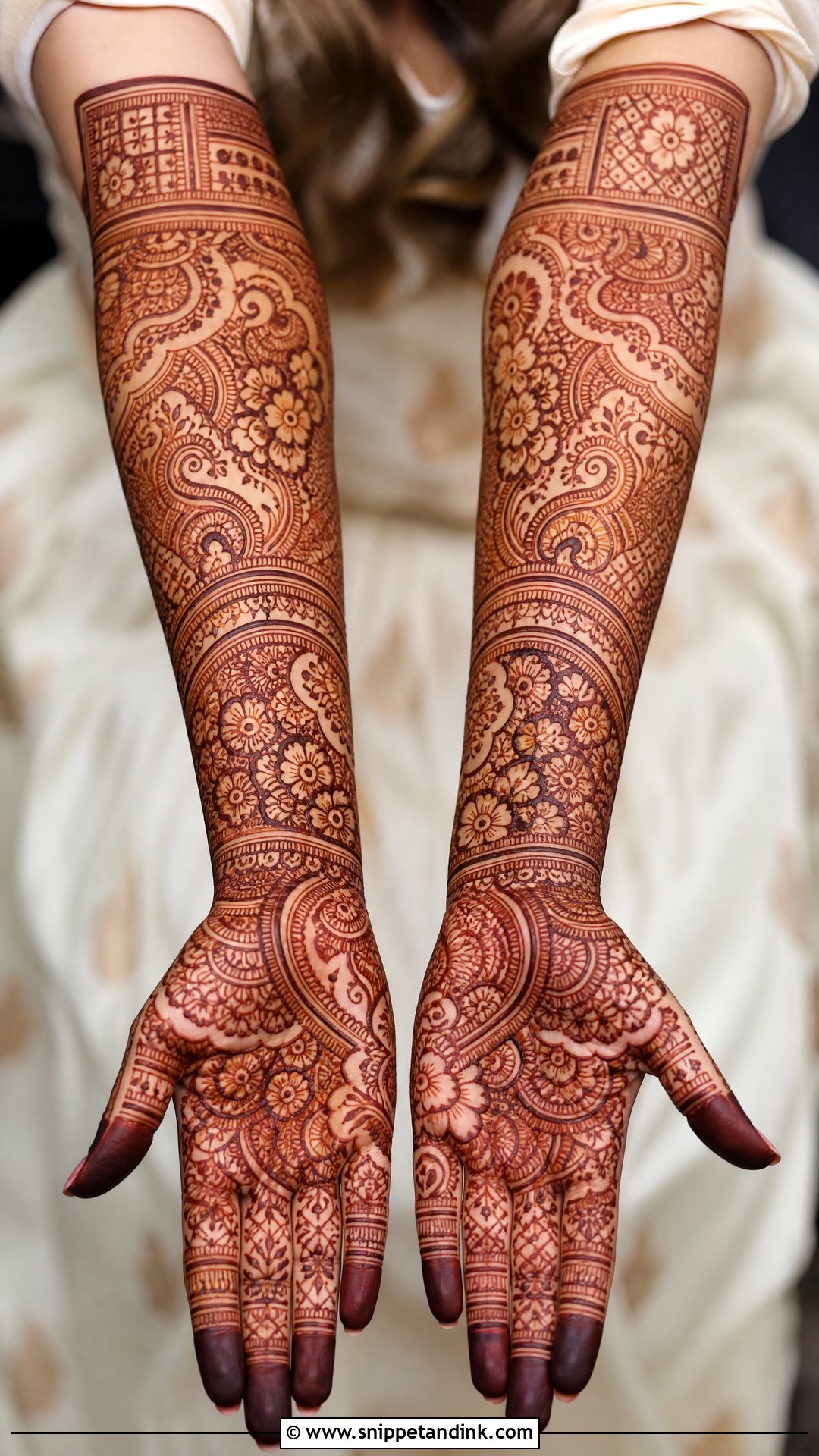
Full-arm designs connect the upper arm, the elbow, the forearm and the wrist into one piece. A wide band sits high on the arm, and vines, paisleys and jaali panels flow down toward the hand. It takes a long sitting and a bride who’s happy to keep her arm still while it dries. Balance is the hard part. I leave open skin between sections, and I keep the inside of the elbow lighter, because that crease bends constantly and cracks the paste early.
9. Modern Bajuband Mehndi Design
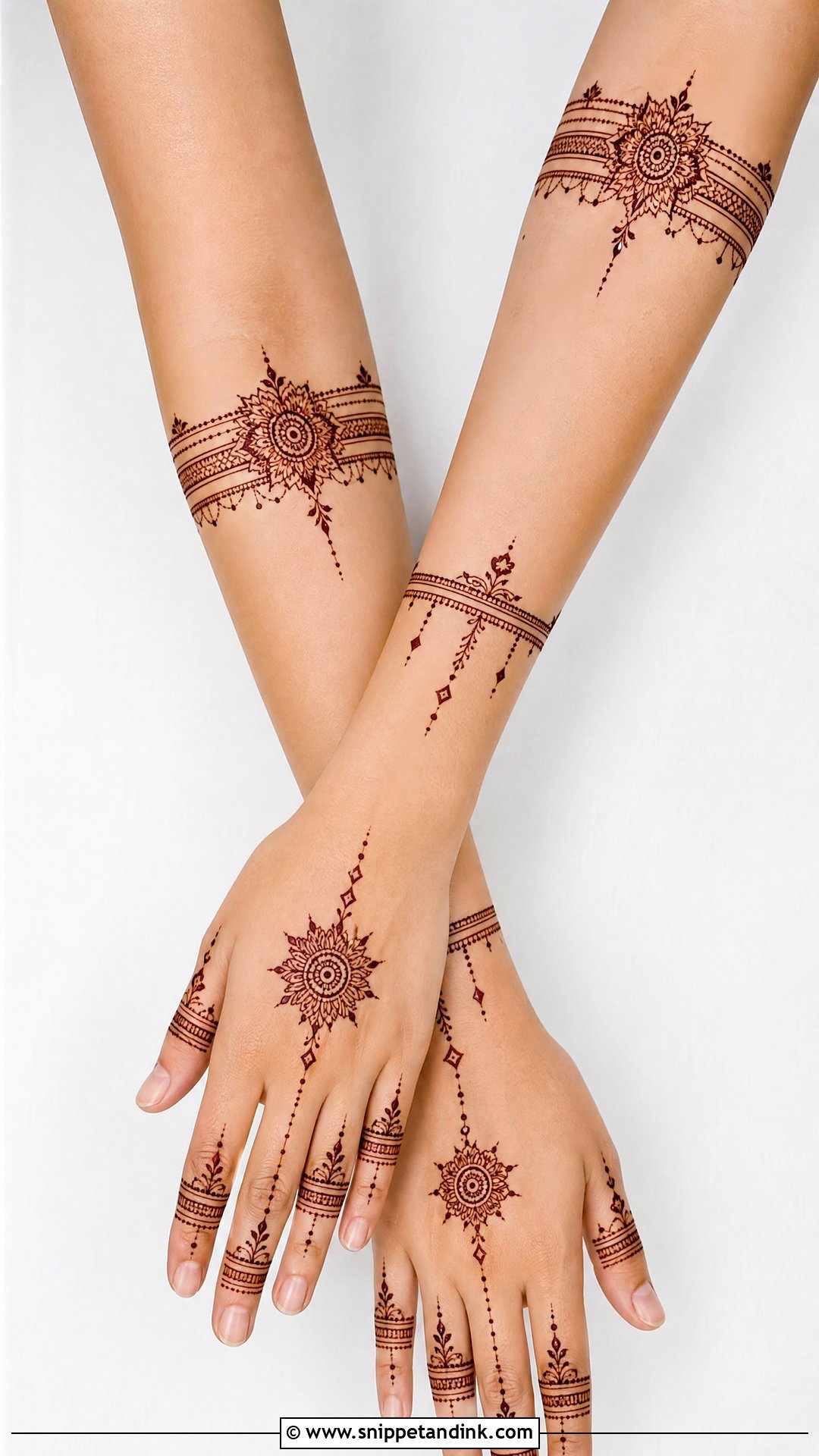
Modern armlets lean on slim bands, negative space, simple florals, dotted chains and a few geometric accents. One strong centerpiece and light line work around it is the formula I use, with sharp placement doing the work rather than dense filling. It can sit on the lower arm, just above the elbow or as a slim upper-arm band. It suits Indo-western outfits and anyone who dresses minimally but still wants something festive.
10. Traditional Bajuband Mehndi Design
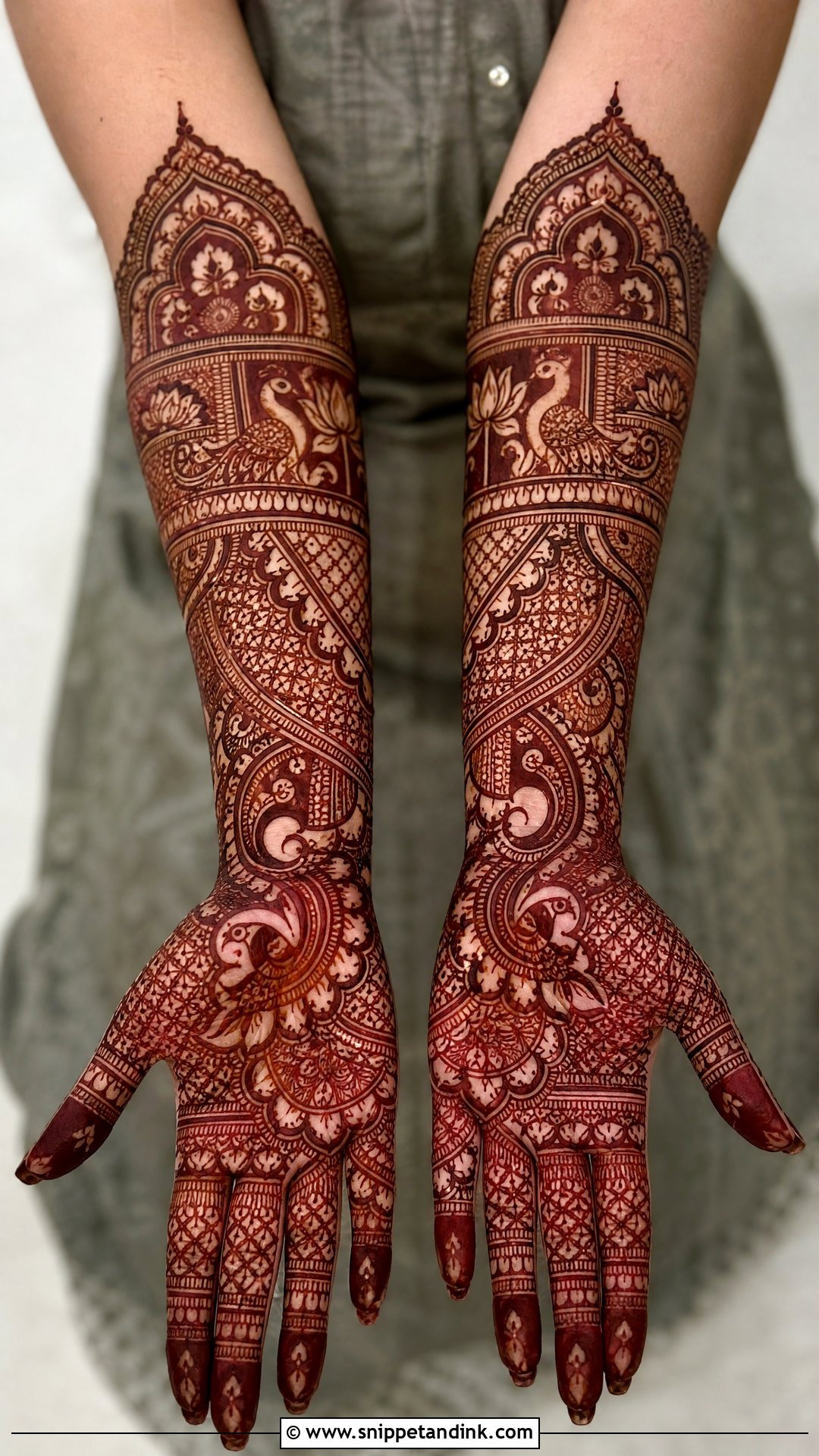
The traditional armlet draws on paisleys, mango leaves, lotus petals, domes, peacocks and thick decorative borders, rooted in classic Indian mehndi art. I place one large motif in the center and repeat smaller ones on both sides, then add fine lines, dots and shaded petals for depth. The band can be medium or wide. It belongs at weddings, festivals and religious functions, worn with sarees, lehengas, anarkalis and traditional jewelry.
11. Paisley Bajuband Mehndi Design
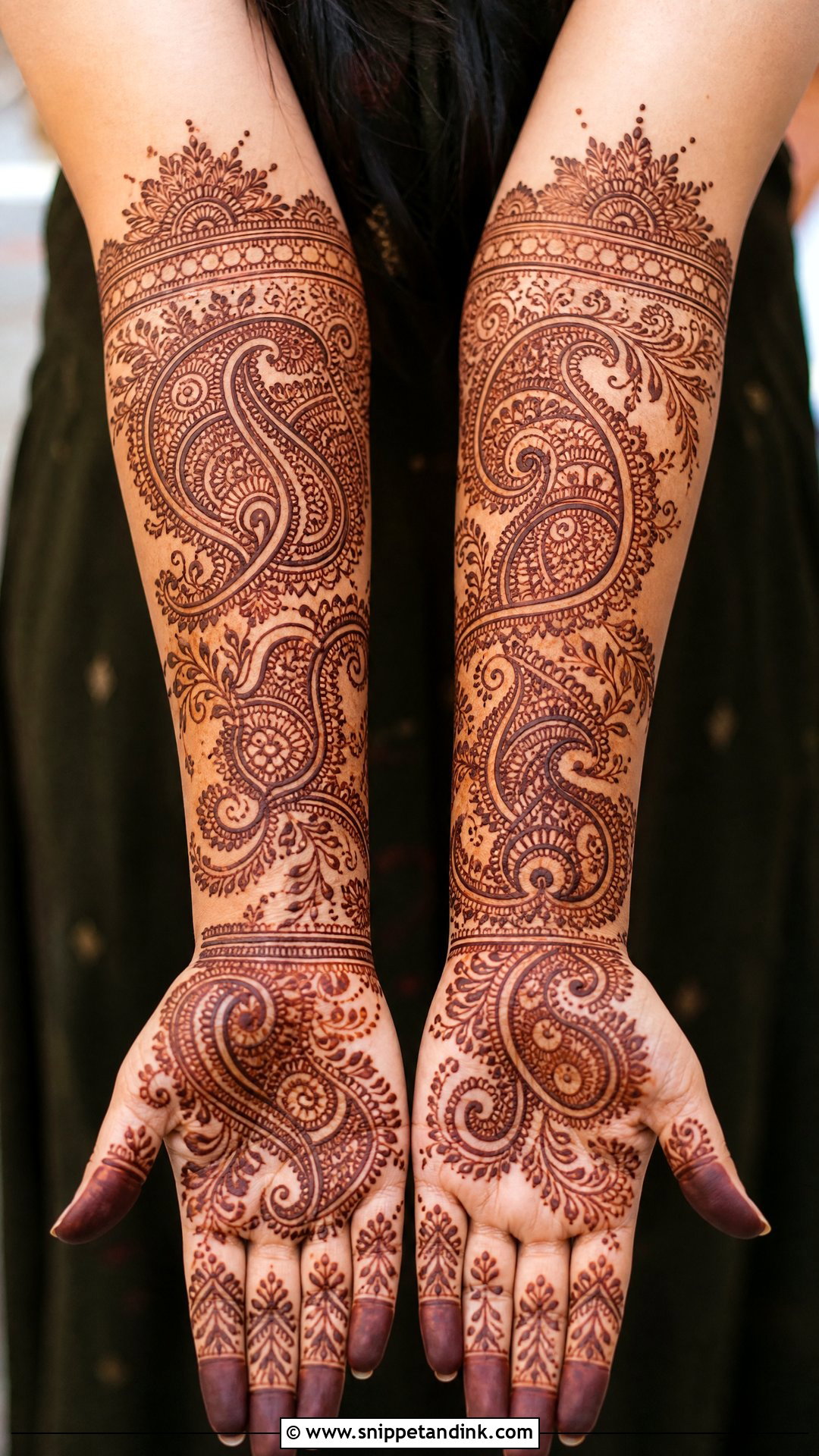
Paisleys can face each other at the center of the band or repeat around the arm like a patterned cuff, with small flowers, vines and curved borders filling the gaps. They’re the most adaptable motif in an armlet, since each one can be filled with lines, dots, checks or petals depending on how heavy you want it. I keep the largest paisley at the front of the arm and let the smaller ones run toward the sides. That way the front, which faces the camera, carries the weight.
12. Lotus Bajuband Mehndi Design
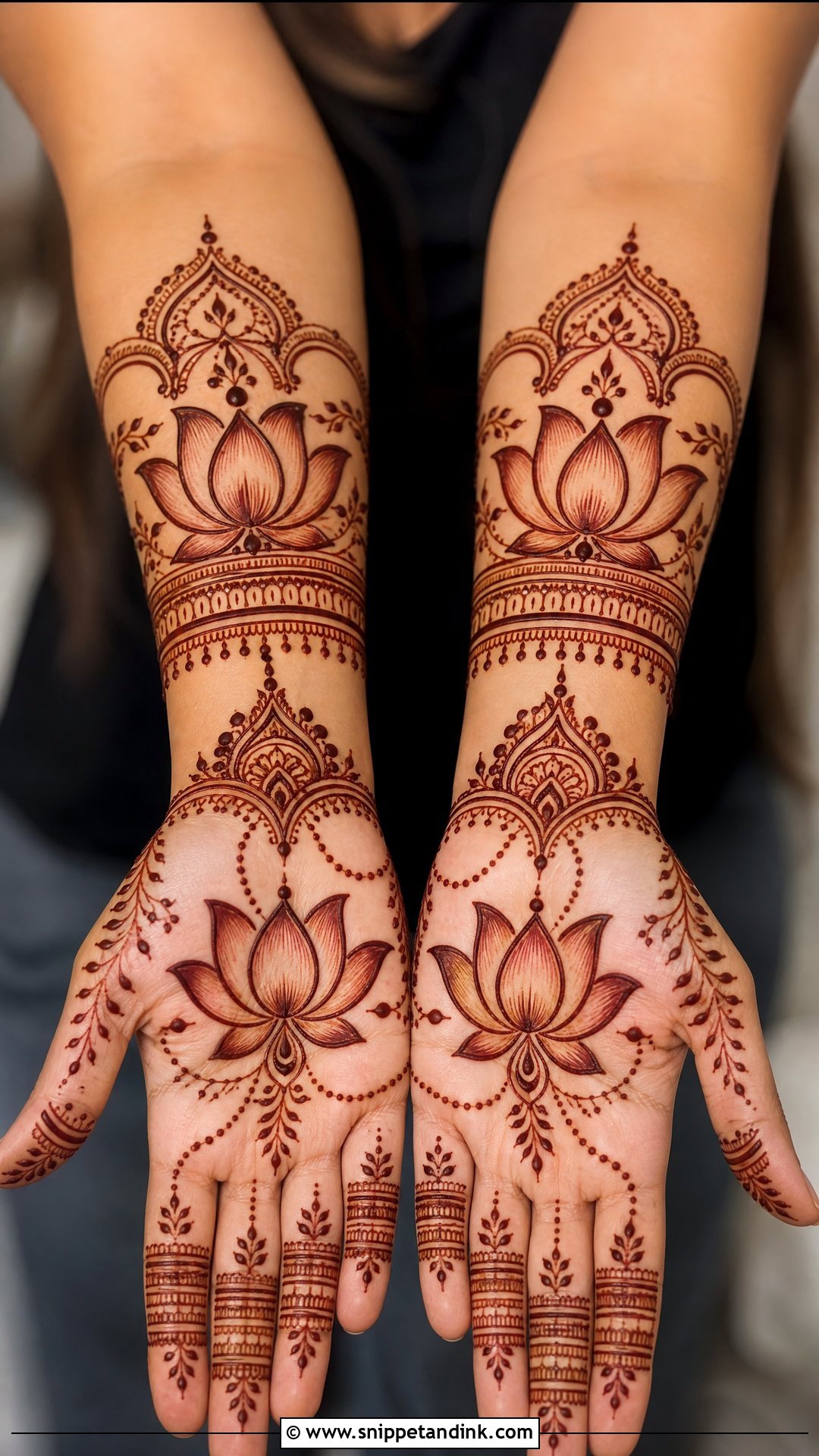
A lotus opening outward at the center of the band, with slim bands wrapping the arm and leafy curves, dots and fine arches around it, has a calm and traditional feel. It pairs well with mandala or jaali details. For a soft finish, I leave space between the petals. For a heavier look, I shade the base of each petal and add small fillers inside the band. Brides and festive pujas are where I draw it most.
13. Geometric Bajuband Mehndi Design
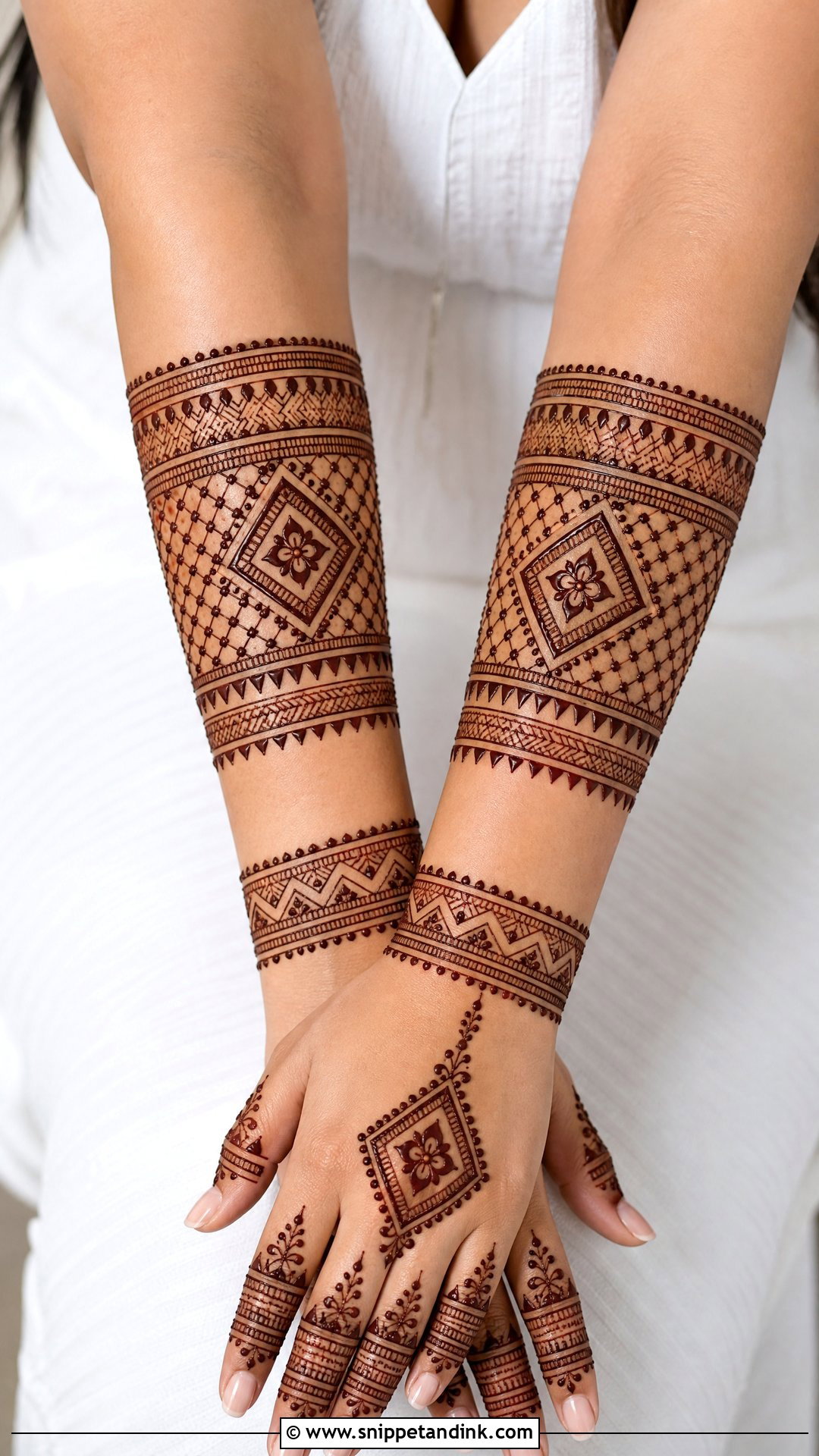
Diamonds, triangles, chevrons, grids and dotted borders make a sharp, modern armlet, often with a central diamond and matching side bands. Getting straight lines to meet neatly around a curved arm is the hard part, so I mark a few guide dots all the way round before I commit. Small flowers or leaf borders stop it looking too plain. It scales easily from slim to wide and sits well on either the forearm or the upper arm.
14. Chain Bajuband Mehndi Design
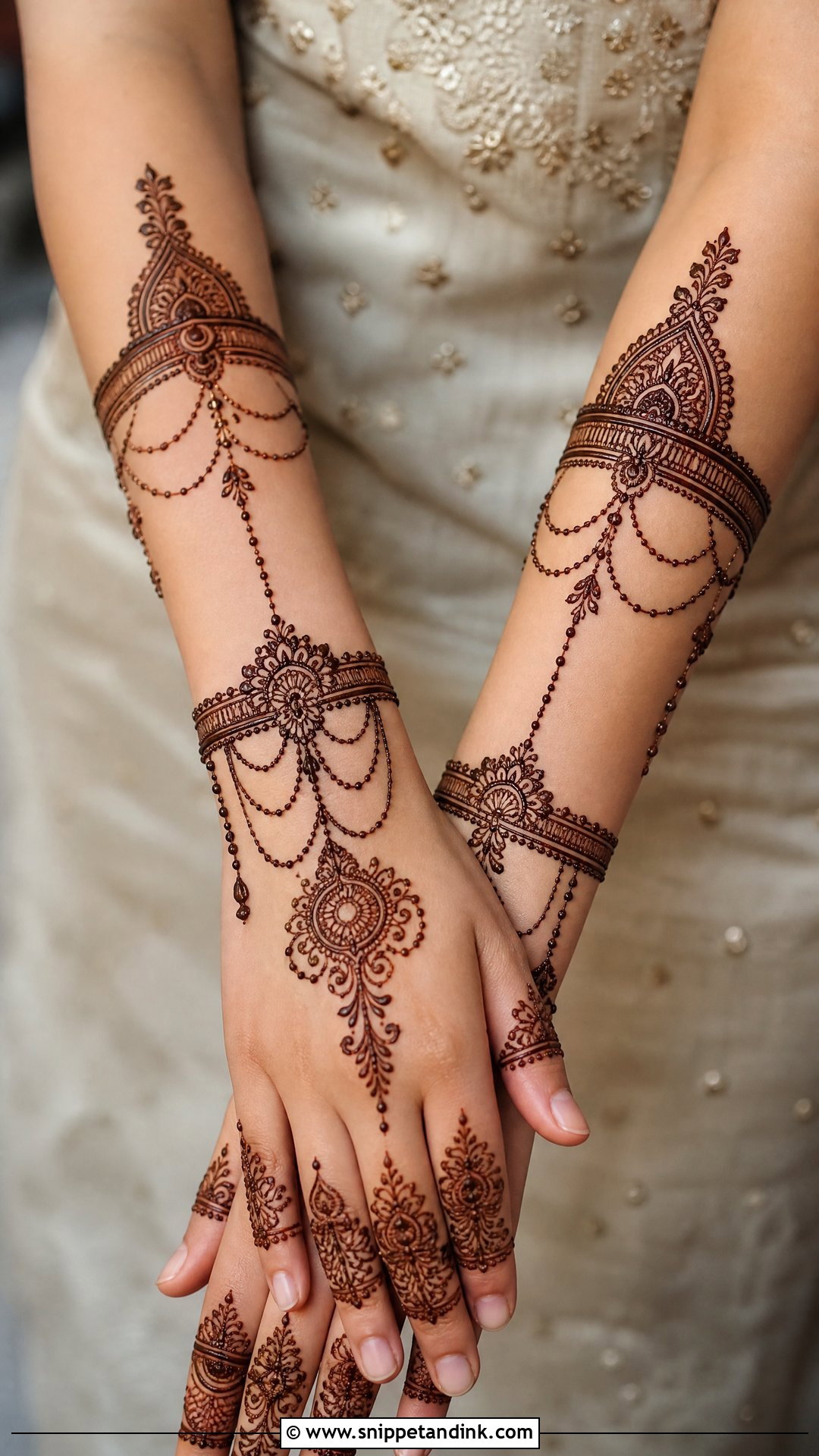
A chain armlet starts with a simple band and drops fine chain lines below it, finished with dots, beads or tiny floral charms. Some versions layer two or three chains. The chains should follow the natural curve of the arm. If I draw them straight across while the arm is raised, they hang crooked once it drops. A slightly bold center keeps it visible from a distance. Bridesmaids and younger girls at a mehndi night like this lighter option.
15. Cuff Bajuband Mehndi Design
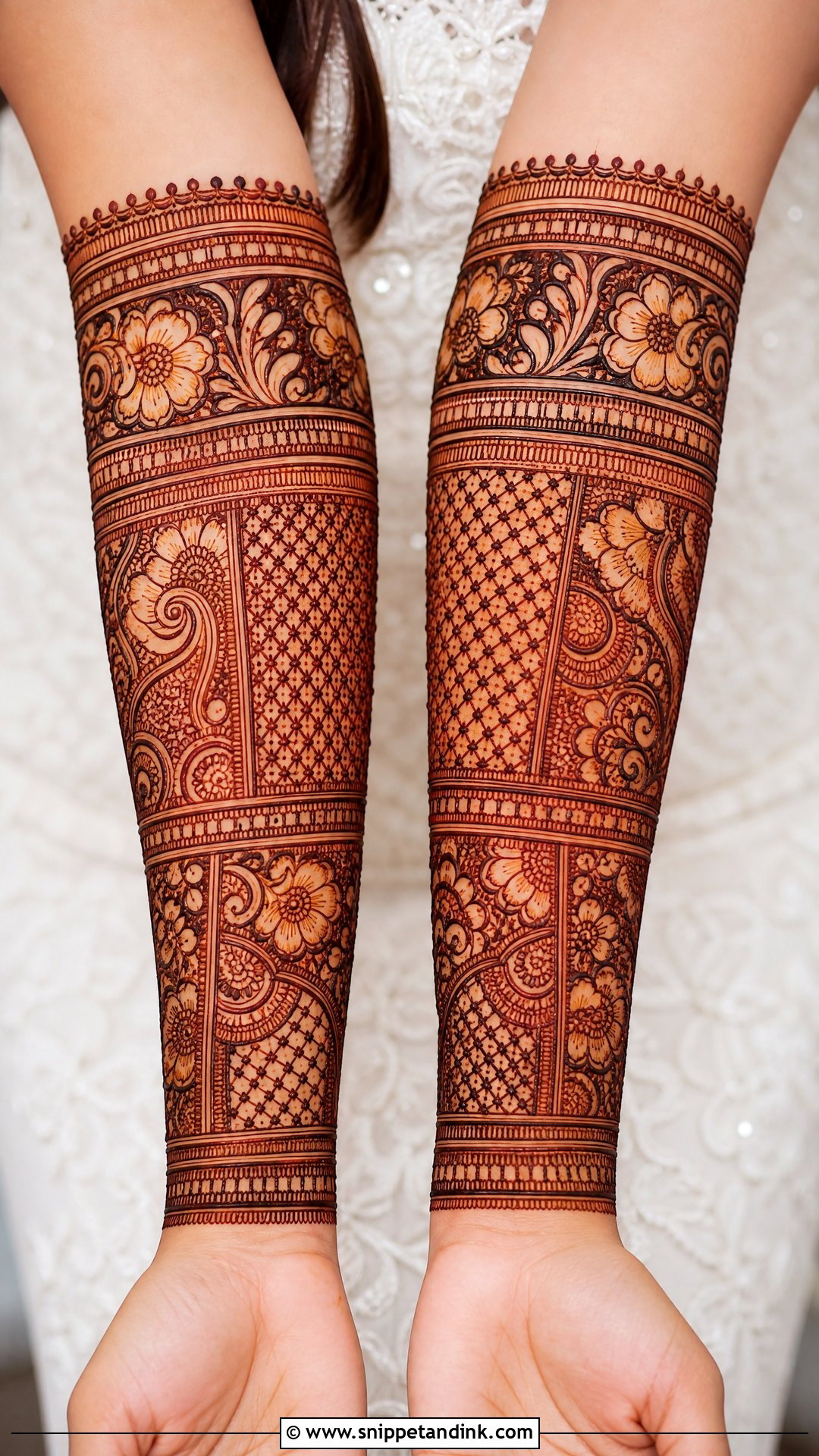
A cuff is wider than a simple band, often covering a few inches of the upper arm or forearm, filled with layered borders, floral panels, jaali, paisleys and shaded sections. Its strength is a clean top and bottom edge, which is what makes it look like a solid piece of jewelry. I repeat one pattern inside rather than mixing many. It’s the right choice for sleeveless blouses, where the arm is fully on show, and for anyone who wants henna to stand in for jewelry.
16. Minimal Bajuband Mehndi Design
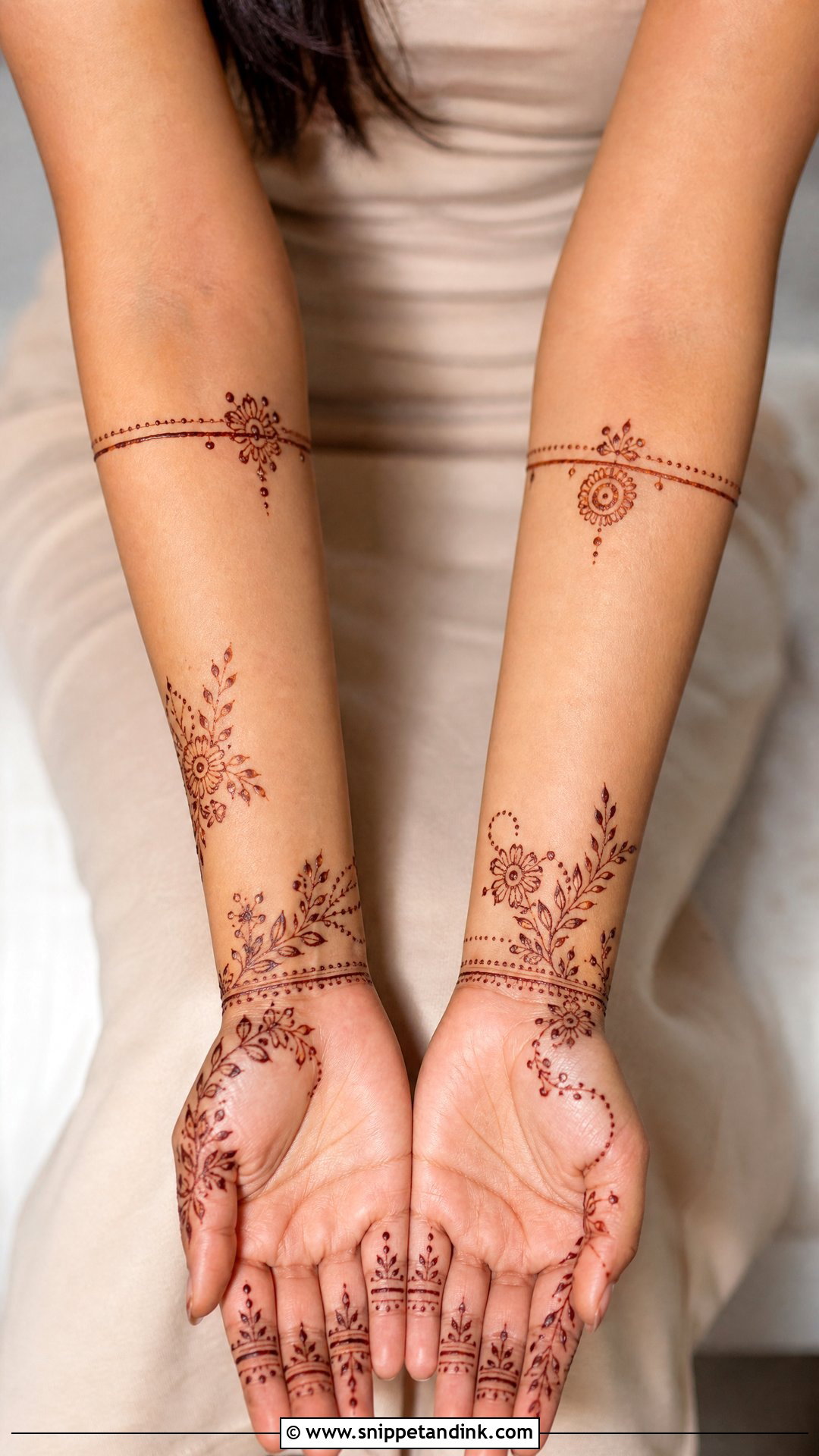
Minimal armlets are a thin line around the arm, a small mandala or floral charm and a few dots. Nothing heavy, yet the arm still looks dressed. I keep the line work fine and the fillers few, since crowding a minimal design defeats the point. It’s my usual suggestion for office parties, casual festive days, small family events and anyone trying an armlet for the first time.
17. Indo Arabic Bajuband Mehndi Design
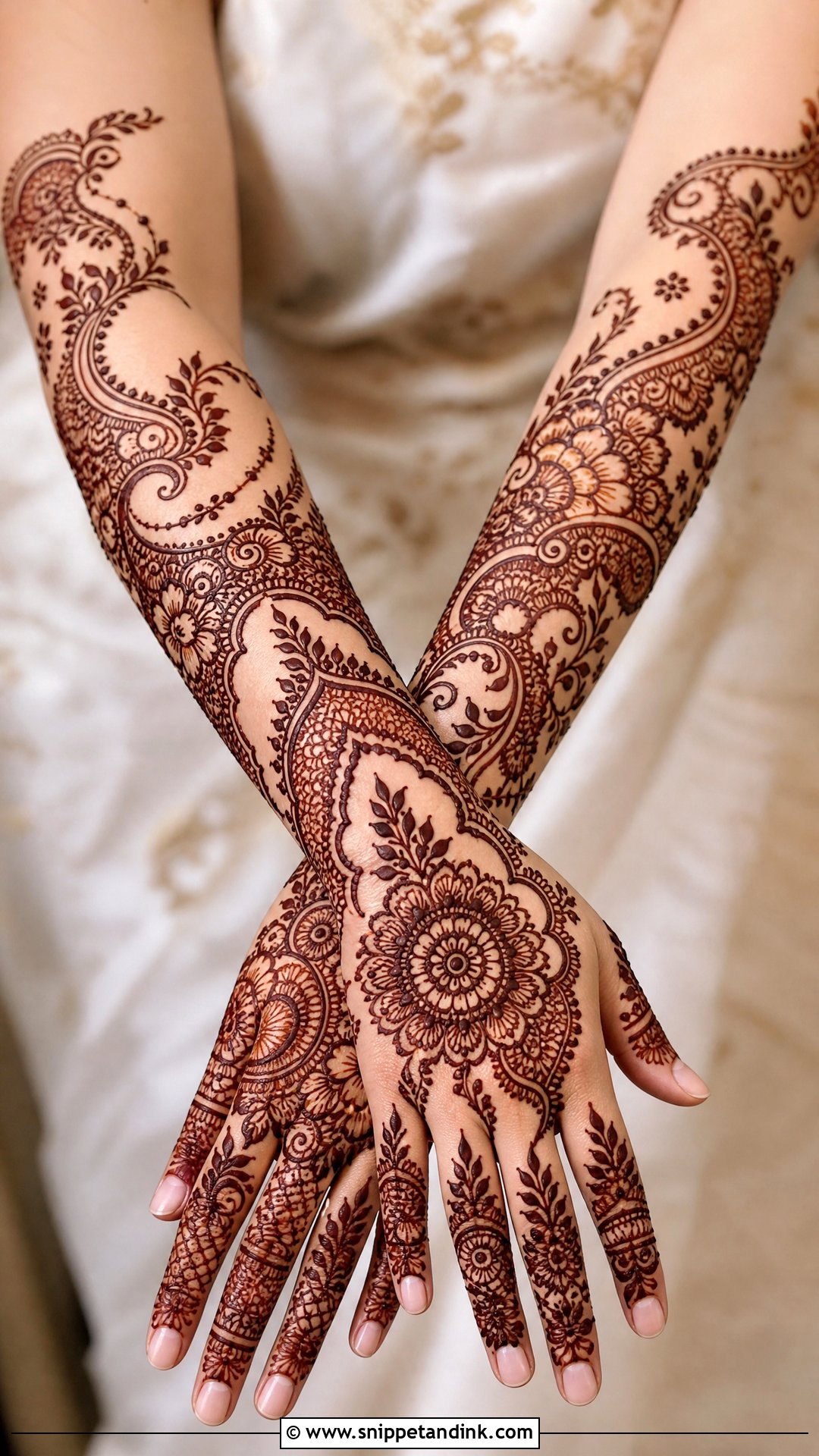
Indo-Arabic armlets combine a bold floral or paisley center with open Arabic vines and Indian fillers like dots, checks and small leaves. I often make one side of the band heavier than the other, which gives a graceful asymmetry that suits the curve of the arm. Thick outlines go on the main motifs and lighter lines on the trailing vines. It’s rich without being dense, and it fits weddings, Eid, engagements and festive gatherings.
18. Moroccan Bajuband Mehndi Design
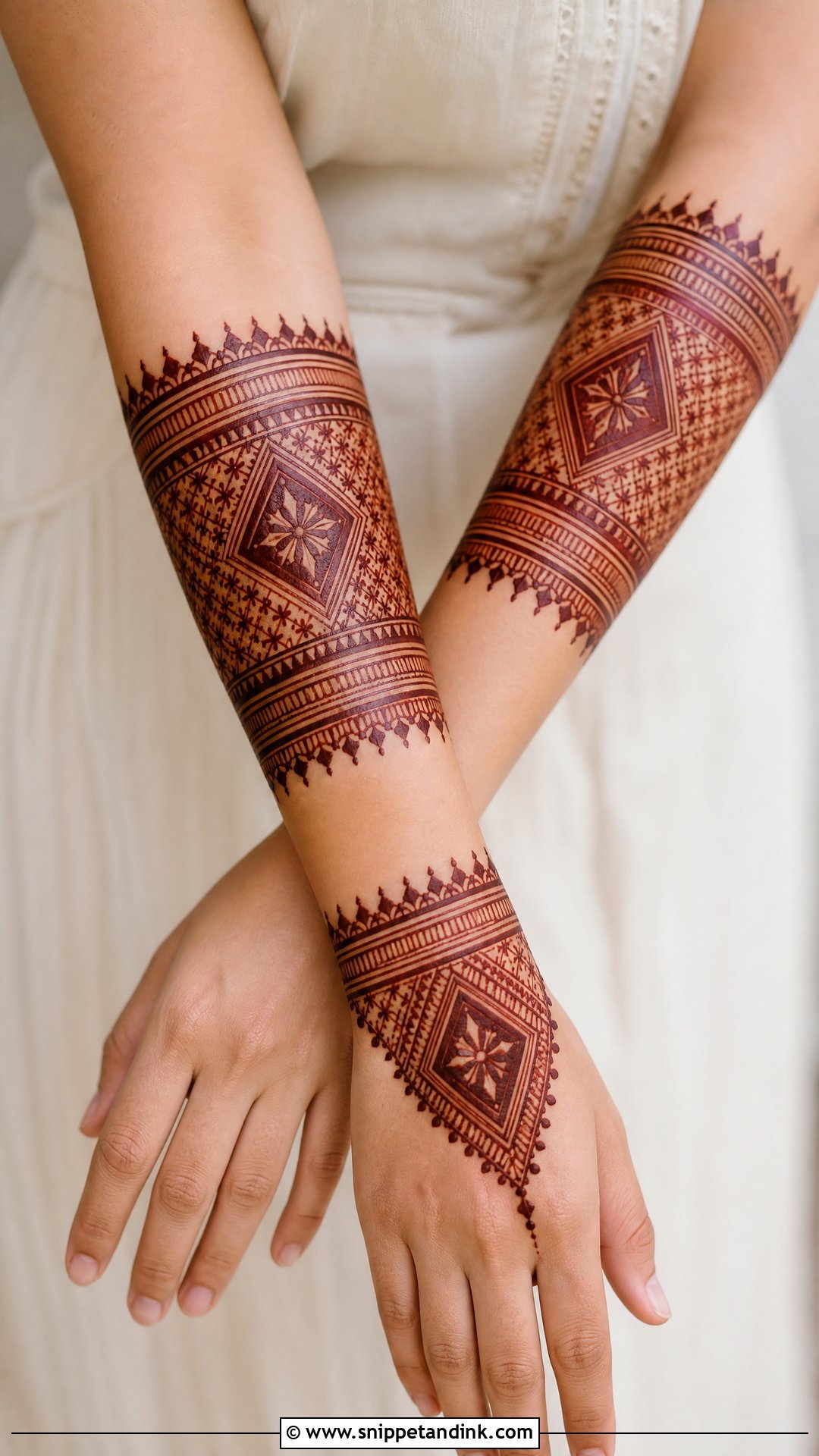
Moroccan armlets are built from lines, angles, diamonds, grids and tribal-inspired details rather than florals. Repeated diamond panels, dotted borders and narrow line bands make up the band. I like it on the forearm, where the arm is flatter and the straight patterns stay readable from the front. Even spacing and crisp borders are essential. It’s a good choice for anyone tired of the usual paisley armlet.
19. Gulf Bajuband Mehndi Design
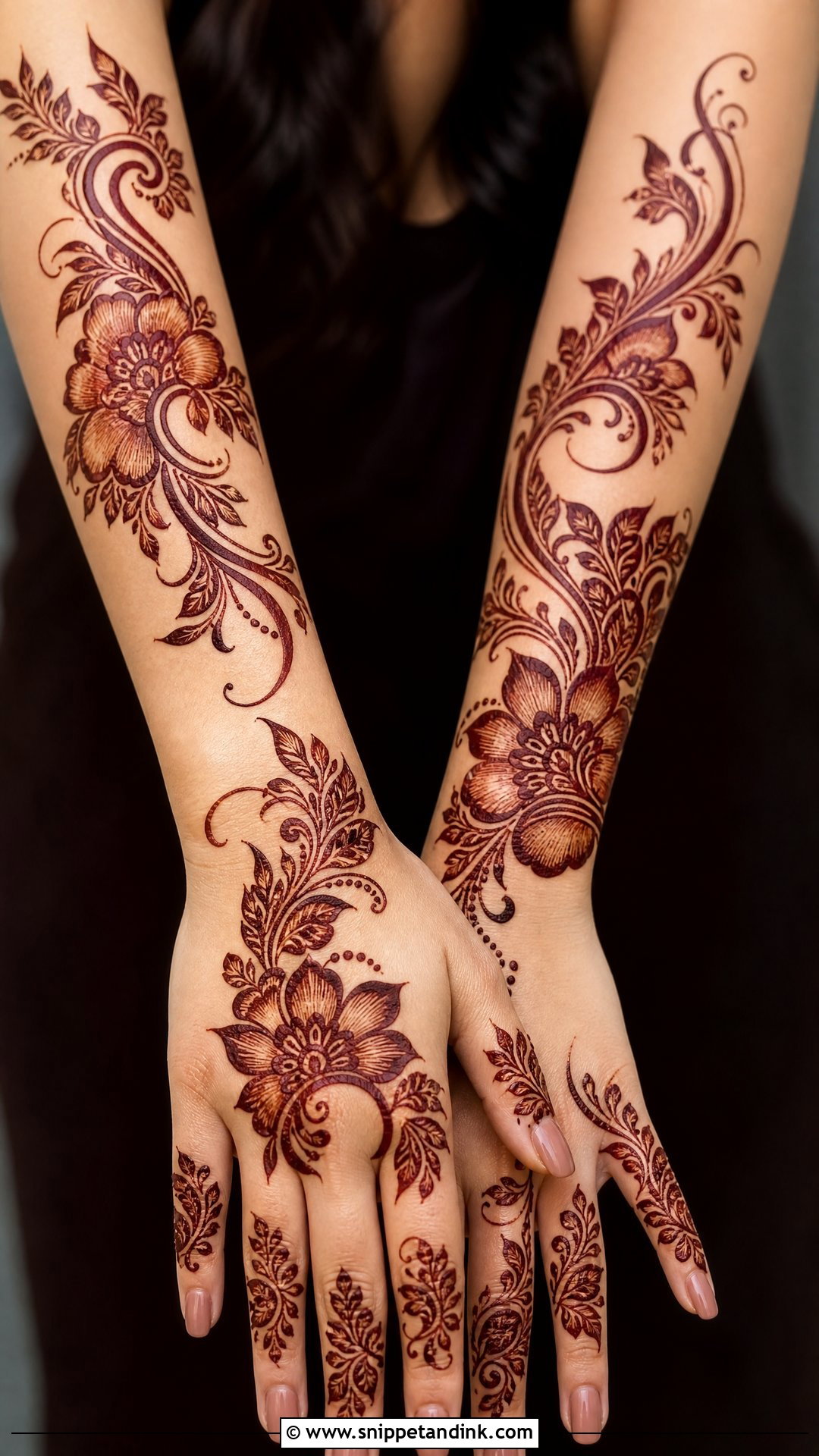
A Gulf armlet, drawn as Khaleeji-inspired henna, wraps oversized floral clusters and curved vine bands around the arm, with shaded petals and open spaces instead of tiny fillers. The large motifs read clearly in photos even where the stain is lighter. I outline the flowers dark and shade softly inside. It suits festive parties, Eid, wedding guests and anyone who loves bold henna.
20. Kids Bajuband Mehndi Design
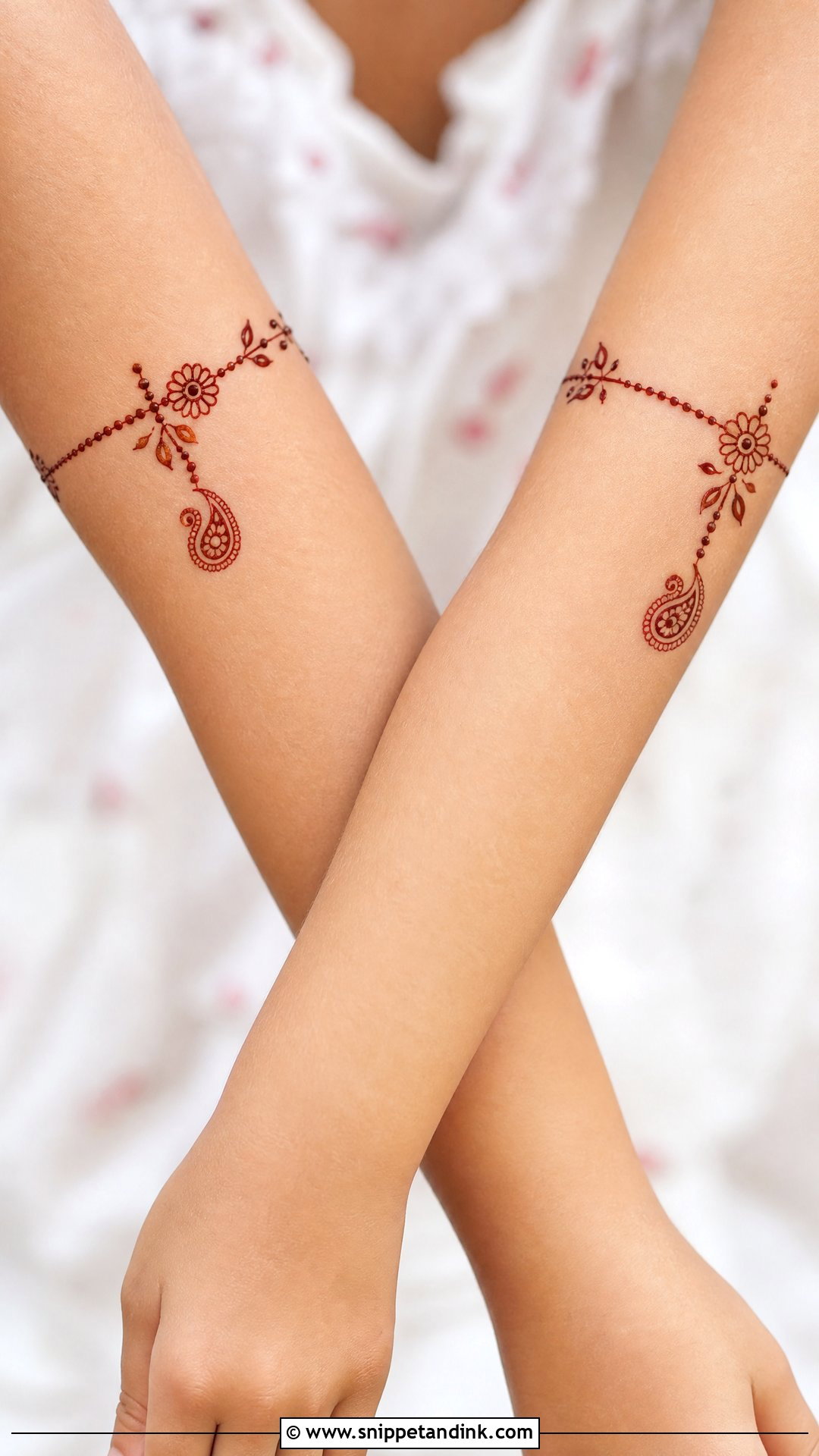
For children I draw a kids bajuband mehndi design as a narrow armlet with one small motif: a flower, a heart-shaped paisley, a mandala or a little butterfly, plus dots, mini leaves and a soft chain. Children rarely sit still, so I keep it quick and avoid dense filling, which also means it dries before they knock it. Use only natural henna on young skin. Rounded, playful shapes suit family weddings, Eid and school cultural days.
Fitting an Armlet Into a Full Bridal Mehndi Day
Brides often add the bajuband as an afterthought, then discover it takes real time and changes how they spend the rest of the evening. A little planning keeps it from smudging.
Do the arms before the hands
I draw the armlets first, while your hands are still free. Once both hands are covered in wet paste, you can’t adjust a strap or lift your sleeve, and holding your arm away from your body becomes much harder.
Give it room to dry
An upper-arm band touches your side every time your arm relaxes. Keep your arm slightly away from your body until the paste sets, which usually takes about half an hour or more depending on the room. A fan on low helps. Pressing it against fabric doesn’t.
Overnight
If you sleep with paste on, wrap the band loosely with medical tape or tissue and sleep on your back. Skin on the arm is softer than on the hands, so if it starts to itch or feel tight, tell your artist rather than scratching. Most of the color comes from those first hours under the paste.
Which Armlet Goes With Your Sleeves and Your Schedule?
An armlet adds the charm of traditional jewelry to henna, and there’s a style for every age and occasion, from a single thin band to a bridal cuff. Start with your sleeve length and how long you can sit. For light henna, choose a minimal or chain armlet. For a grand look, go for a bridal, cuff or full-arm design, and plan the extra time it needs.
You'll Like These Ideas:


Leave a Reply