
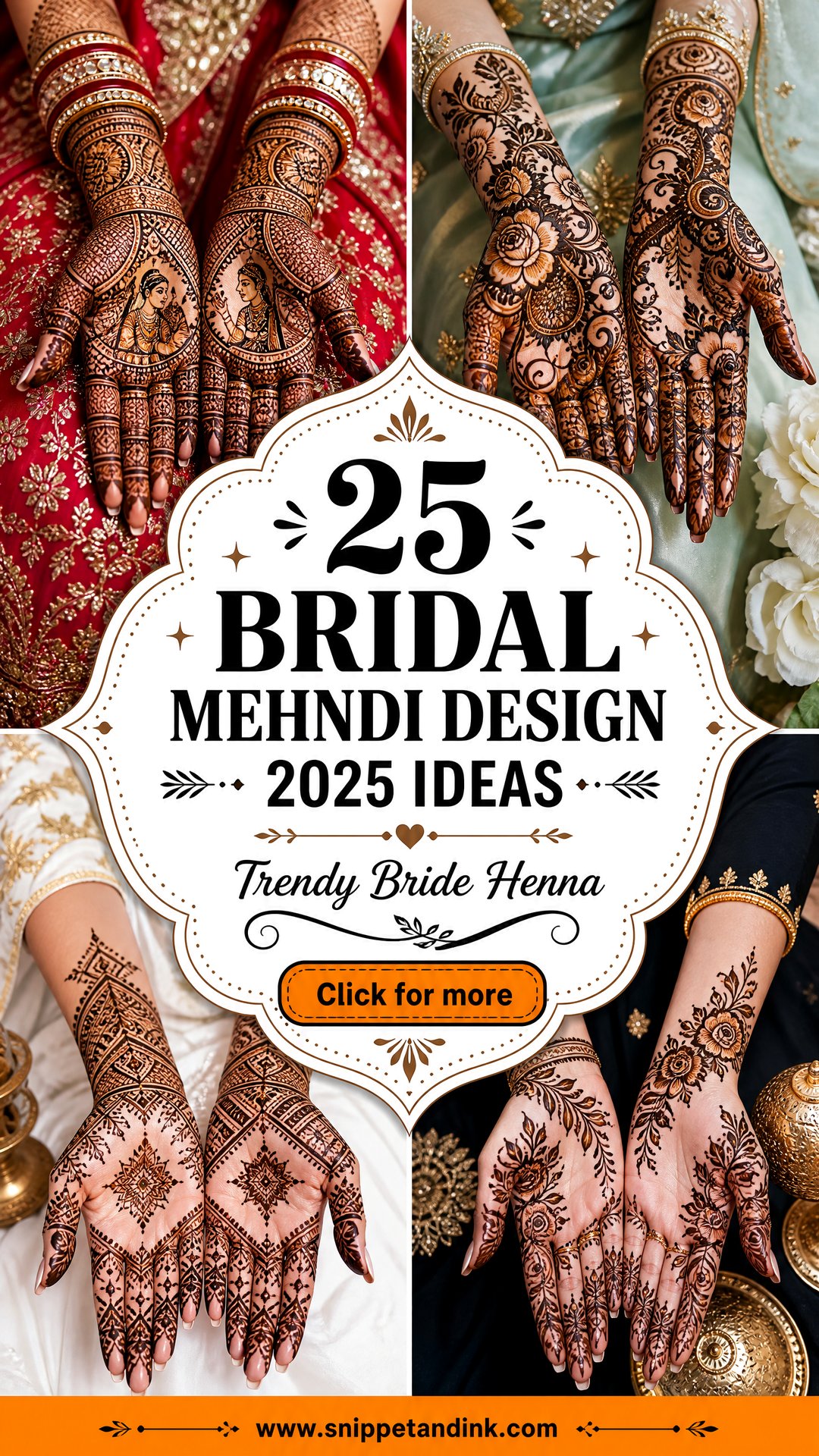
Bridal mehndi has moved a long way from the single dense pattern every bride once got. On my table this season I’m drawing traditional Indian full hands, Arabic floral trails, Indo-Arabic fusion, mandala palms, jaali back hands, portraits and patterns built around open skin. Some brides still want elbow-length coverage; others want lighter work that lets their bangles and rings do some of the talking. The right design depends on your outfit, how your ceremony runs, the shape of your hands and how many hours you can realistically sit still. Below are the 25 styles I’m asked for most this year, with what I’ve learned about how each one is drawn and how it stains.
How Far Up the Arm, and How Many Hours?
The first question I ask a bride isn’t which motif she likes. It’s how long she can sit. A pair of palms in a simple layout can take an hour or two, while full bridal hands to the elbow plus feet can take most of a day, with the paste needing to stay on and undisturbed for hours afterwards. That number decides more about the design than any photo on a mood board.
Coverage also has to suit your outfit. Elbow-length work makes sense with short or sheer sleeves; if your blouse has long sleeves, most of it will be hidden and you’ve sat through extra hours for nothing. I ask brides to send me a photo of the sleeve and the jewellery before we fix the length.
- Wrist length suits small ceremonies, busy schedules and heavily worked outfits.
- Mid-forearm is the comfortable middle ground for most brides.
- Elbow length needs a long, quiet evening and an artist with a steady pace.
- Feet add at least another hour, and you can’t walk freely while they dry.
Book your artist early in the season you marry in. The weeks around big wedding dates fill up quickly, and a trial on one hand a few weeks before shows you how dark the paste stains on your skin.
1. Full Hand Bridal Mehndi Design
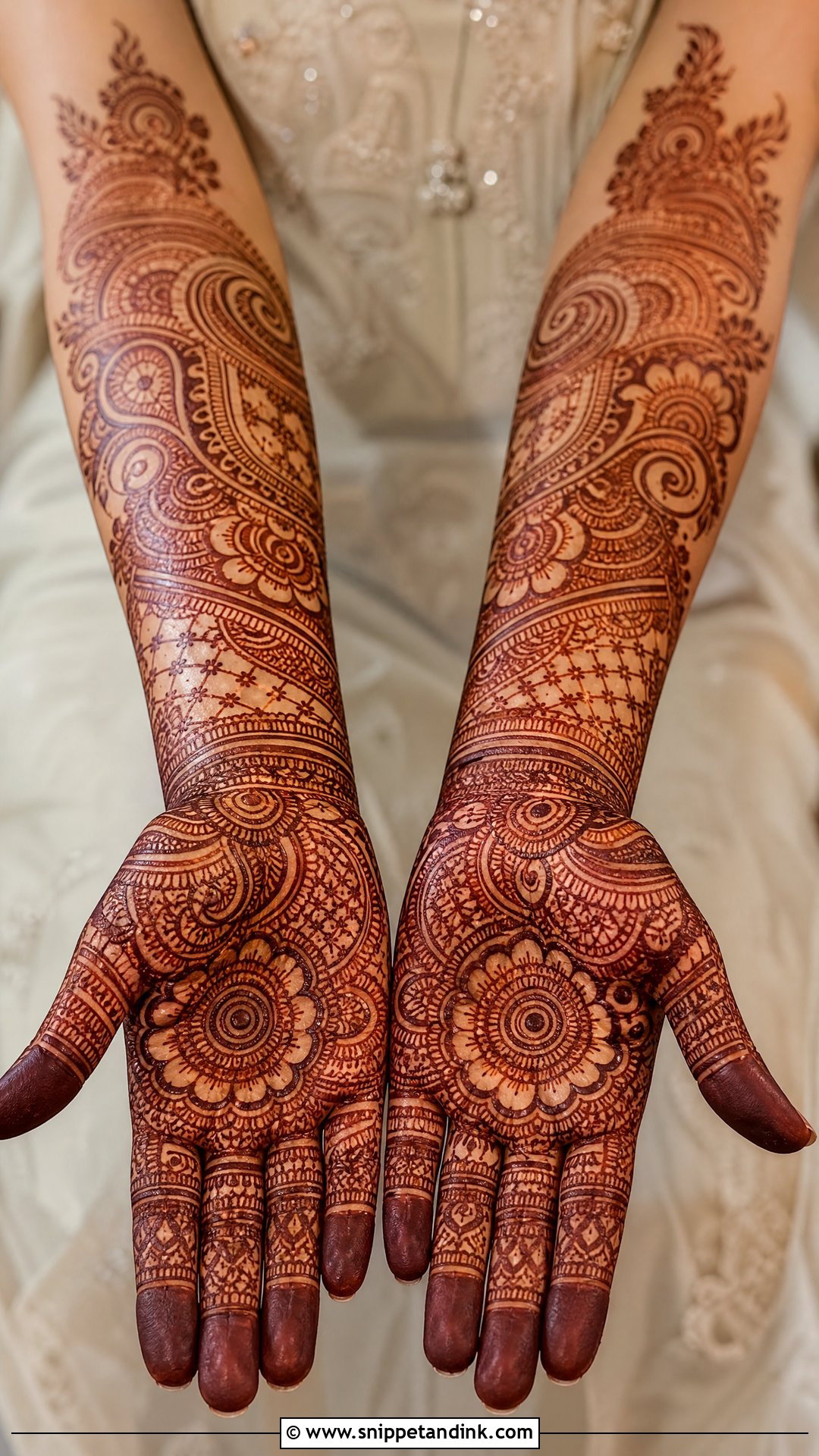
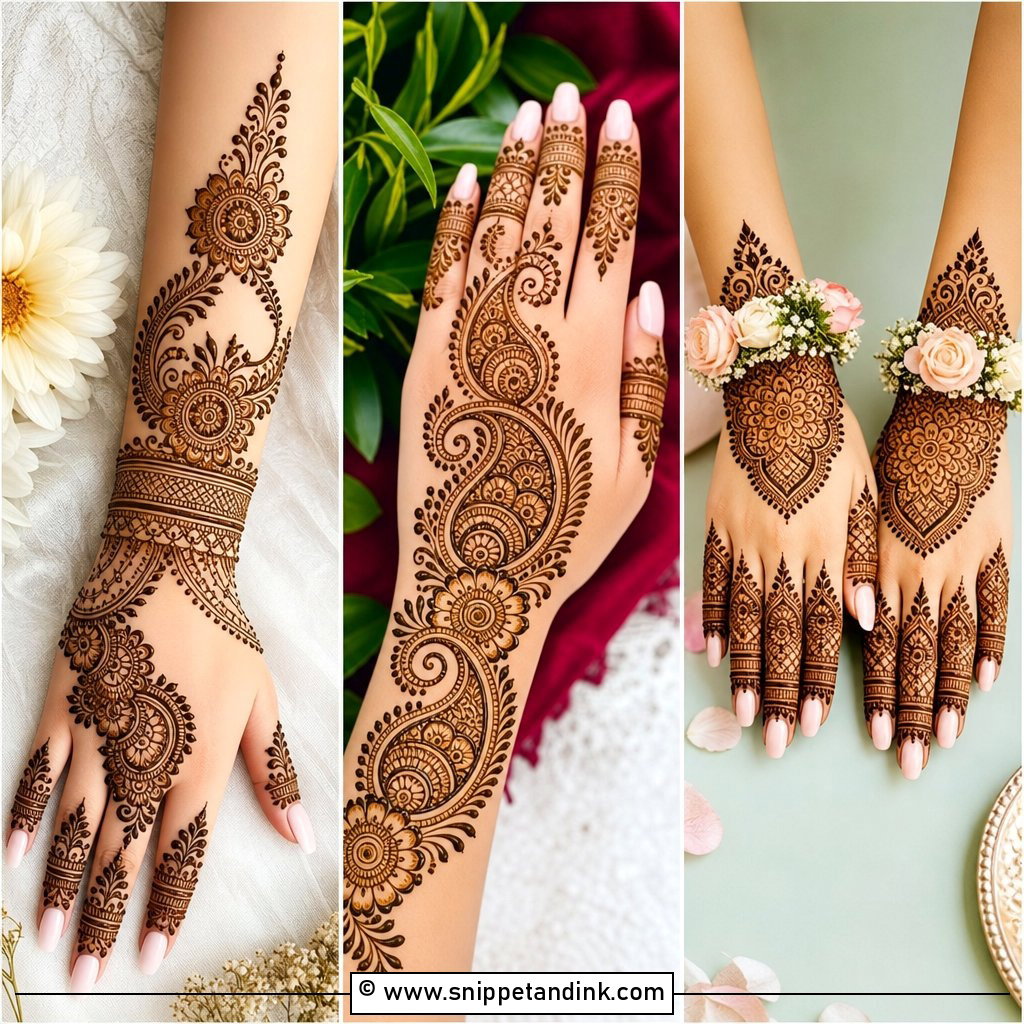
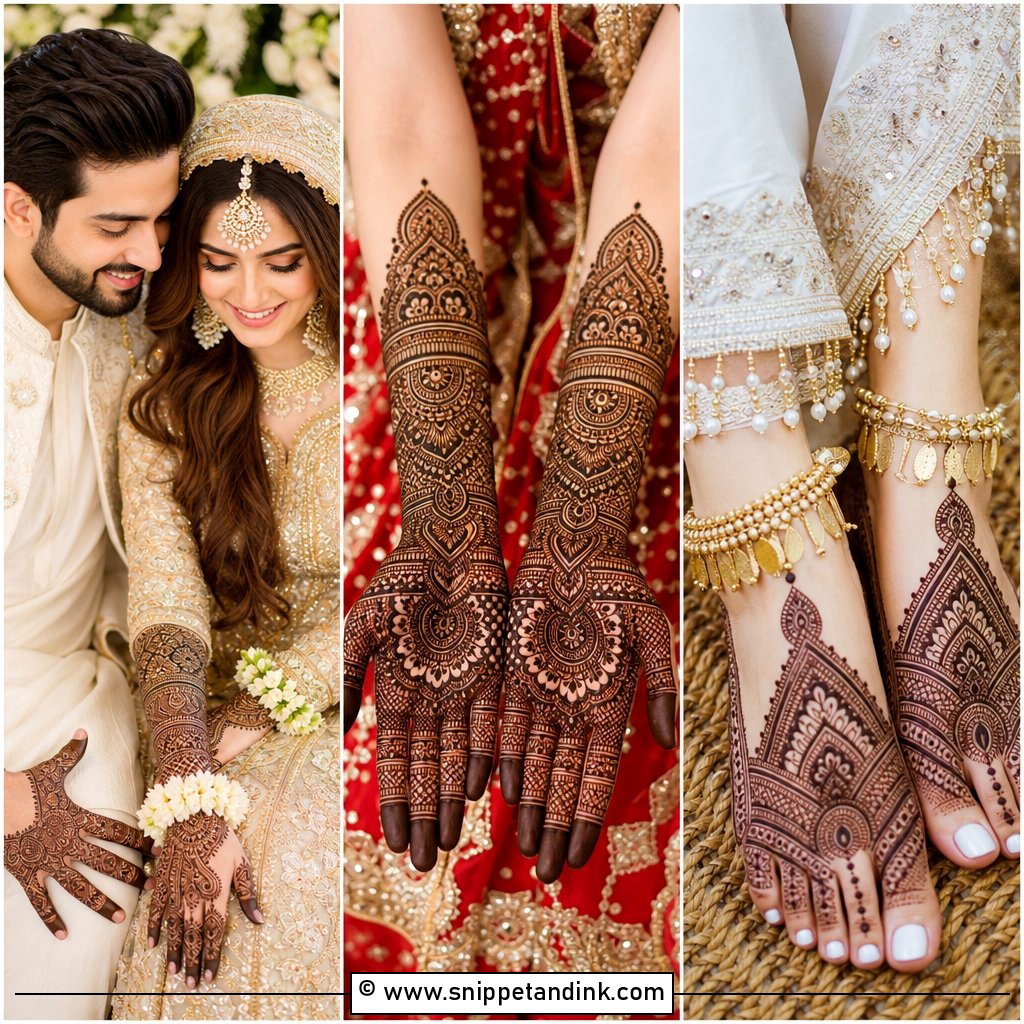
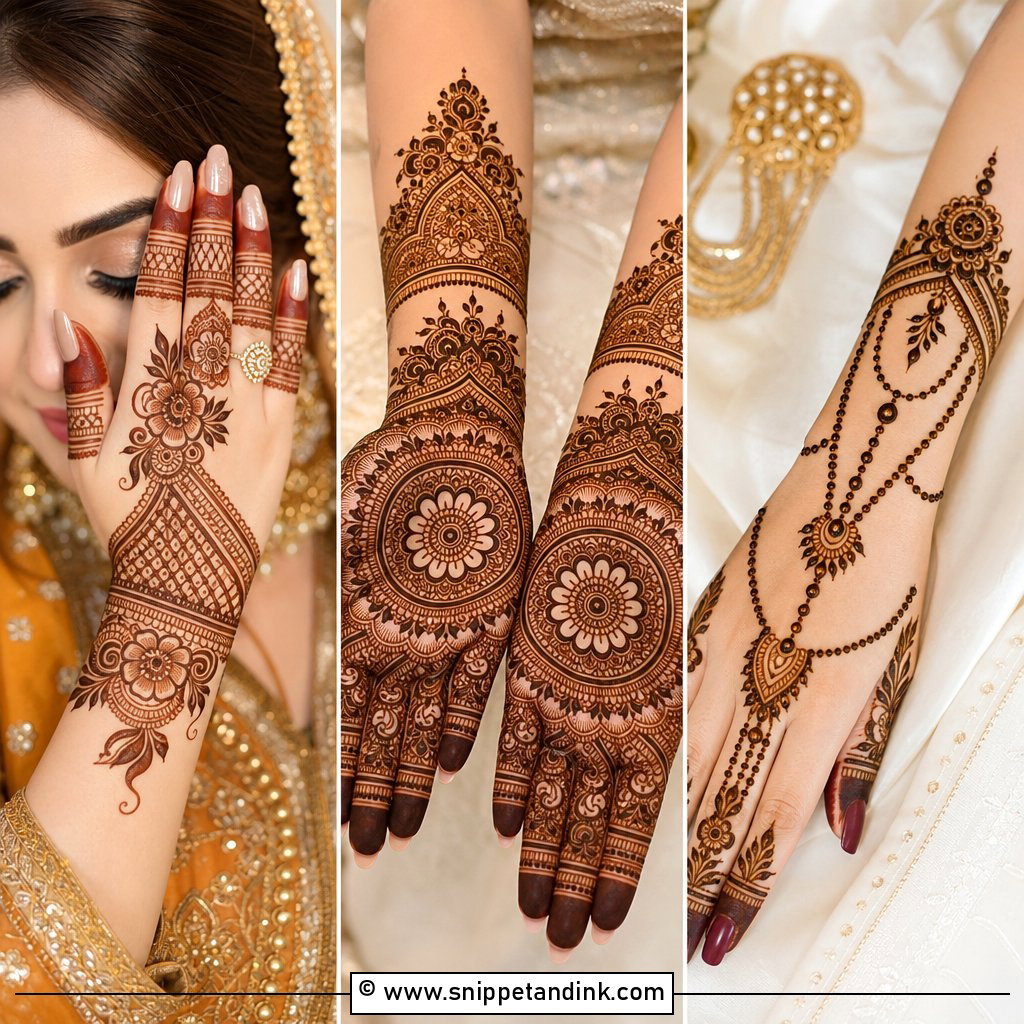
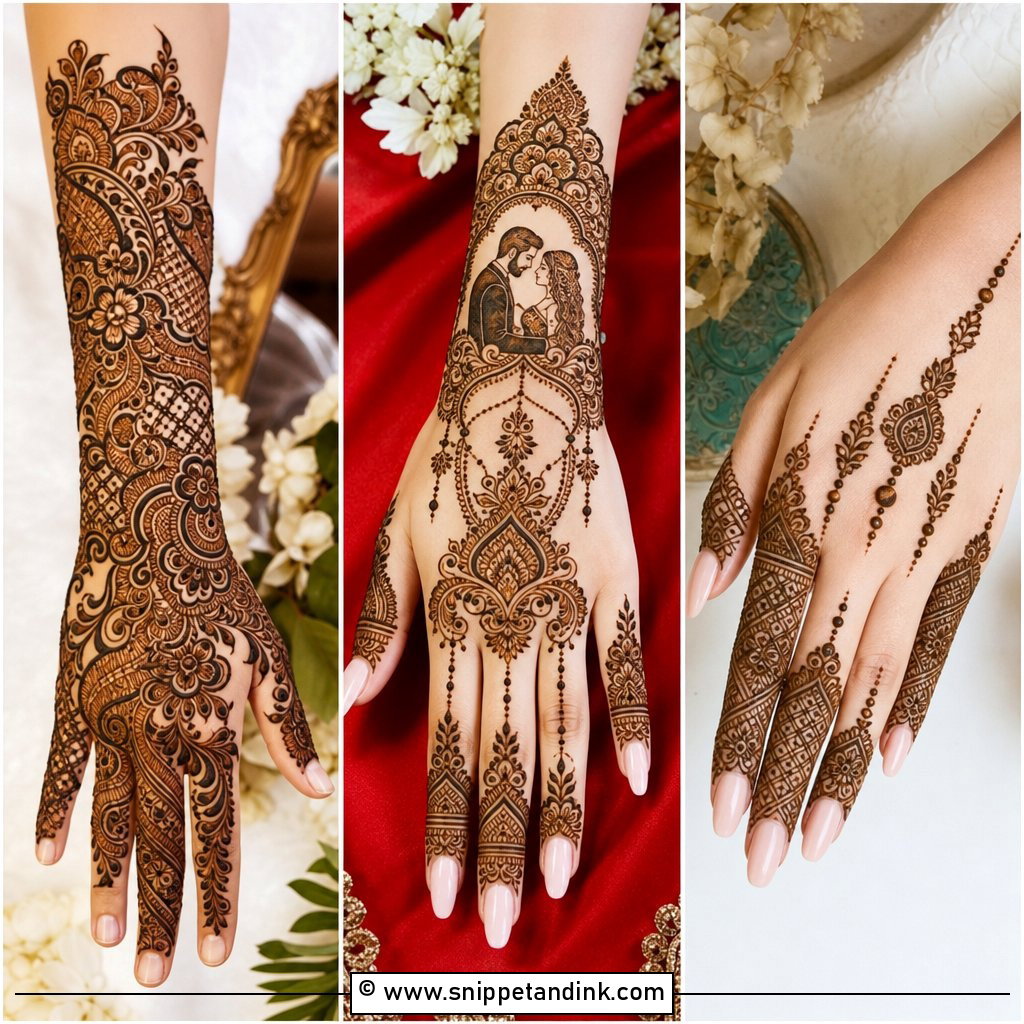
Full hand coverage runs from the fingertips to the forearm, covering palm, back hand, fingers and wrist with very little bare skin. Paisleys, flowers, vines, mandalas and fine fillers build that heavy bridal finish, and it sits naturally with lehengas, sarees, shararas and deep red or maroon outfits. The thing I watch most is balance between the two hands, because ring shots and joined-hand photos put them side by side. This year I break the dense areas with slim borders and tiny gaps of skin, which stops the stain reading as one dark smudge from a few feet away. Plan for a long sitting: a full pair of hands to the forearm is a whole evening.
2. Indian Bridal Mehndi Design
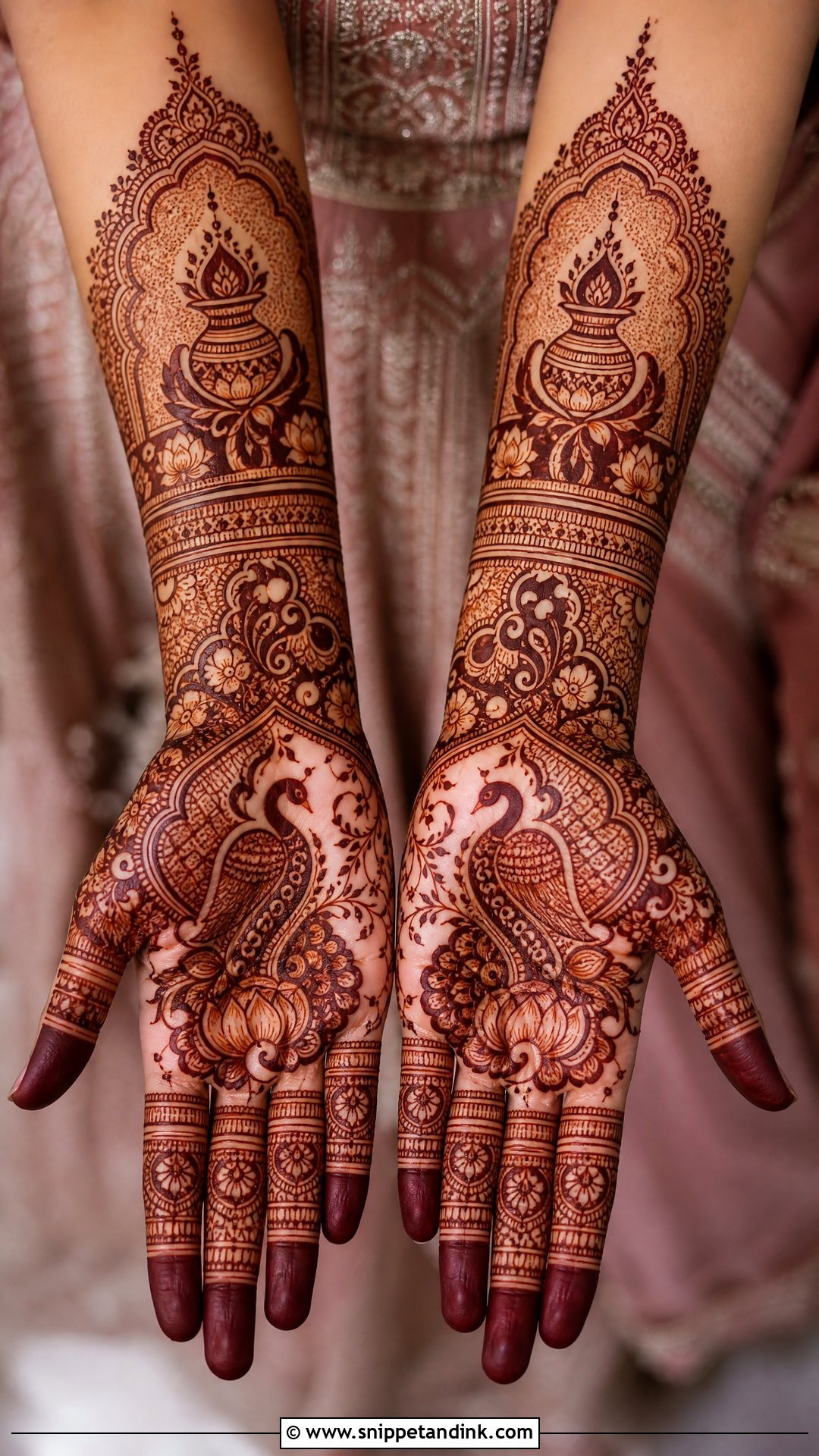
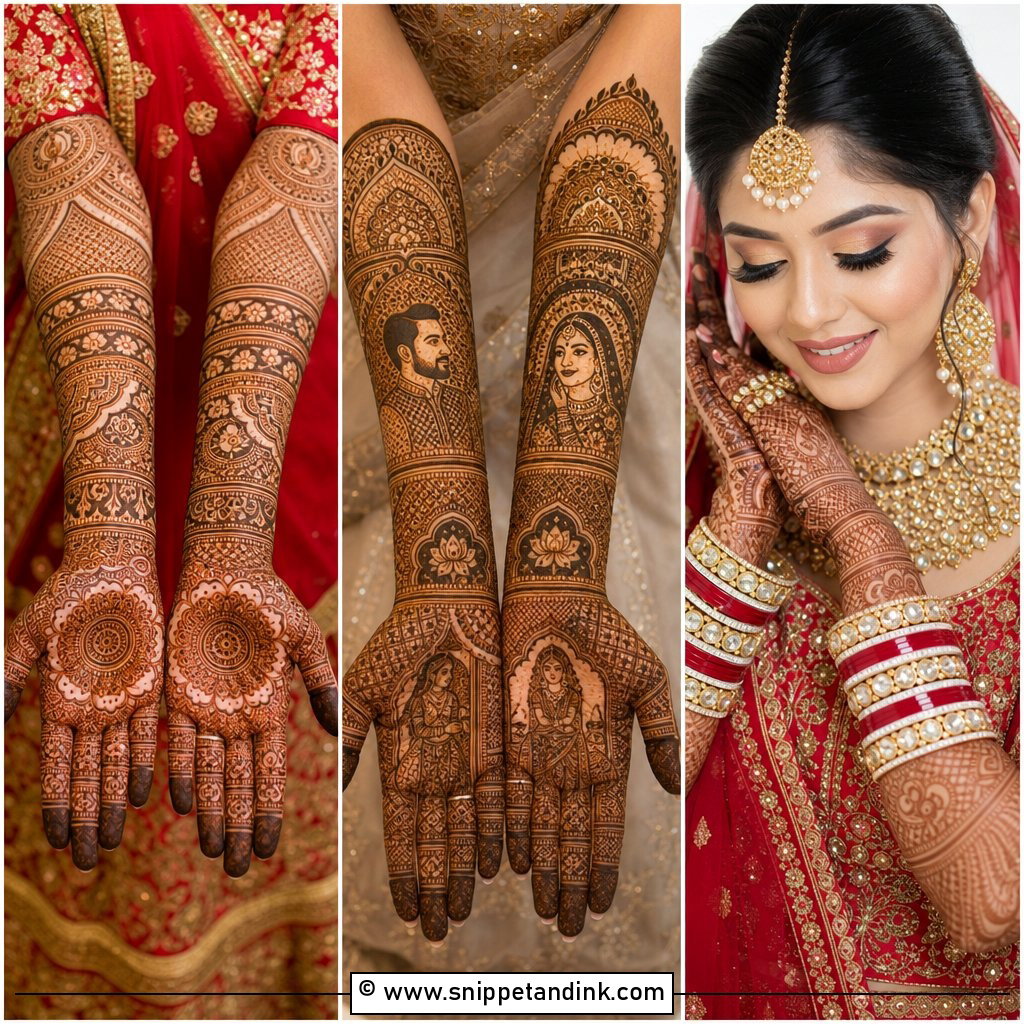
Indian bridal work is all about symbolism and detail. Peacocks, lotus flowers, paisleys, kalash details, dulha-dulhan figures and decorative wrist bands all have a place, and brides who choose it usually want every part of the hand to mean something. I tend to give the palm one large mandala or wedding scene and keep the fingers fully patterned with lines, dots, leaves and tiny florals. My one change from older versions: I draw the motifs a little larger and space them more cleanly, because henna lines spread slightly as the paste sits, and very tight work can close up into a blur.
3. Arabic Bridal Mehndi Design
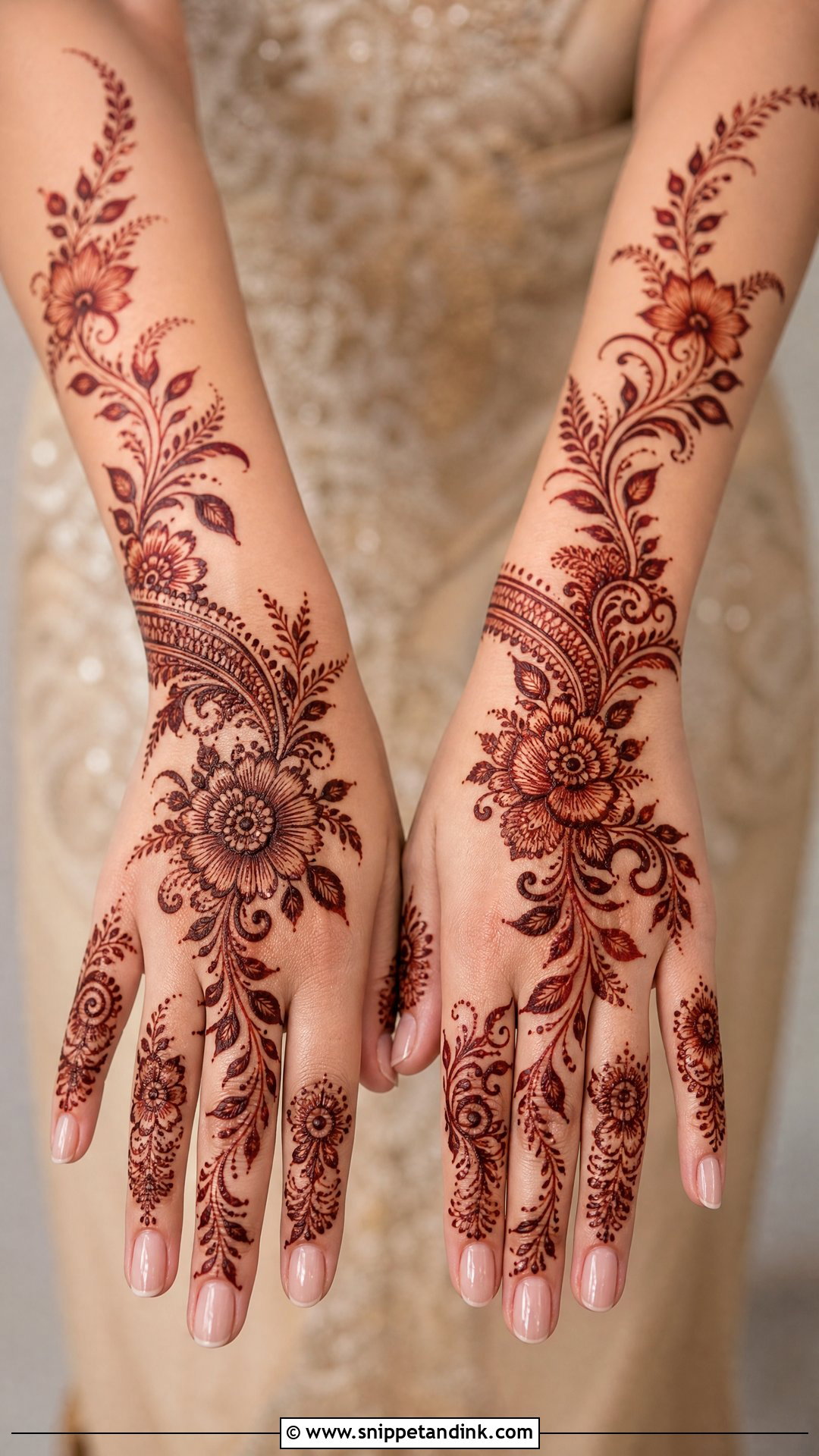
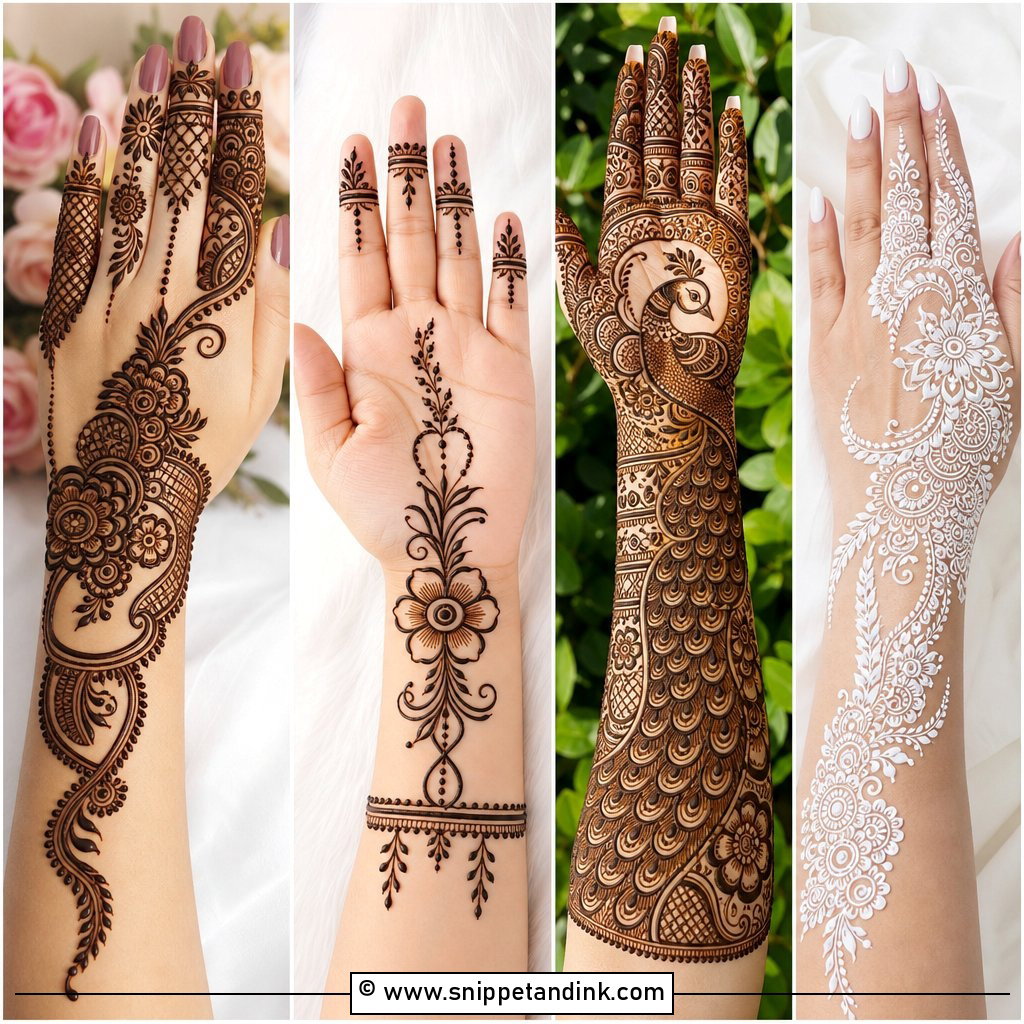
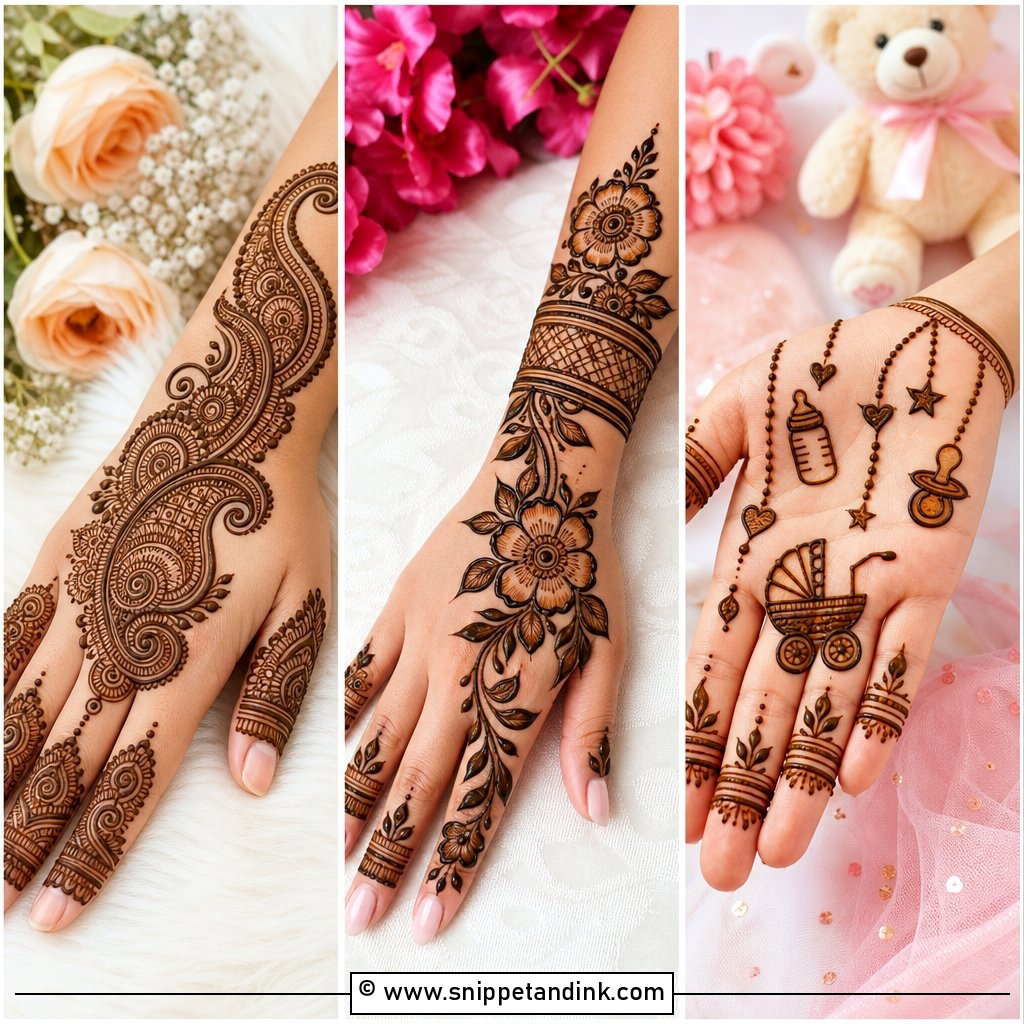
Arabic layouts suit the bride who wants bold hands without full packing. The design usually runs diagonally across the hand with large flowers, leafy vines, thick outlines and plenty of open skin. It’s quicker to apply than dense Indian work, which matters if you have a short window before the wedding. For a bridal version I carry the trail from the fingers across the palm to the wrist or forearm. Shaded petals and bold roses read best here, and I keep the fingertips crisp, since that’s where the eye lands first.
4. Indo Arabic Bridal Mehndi Design
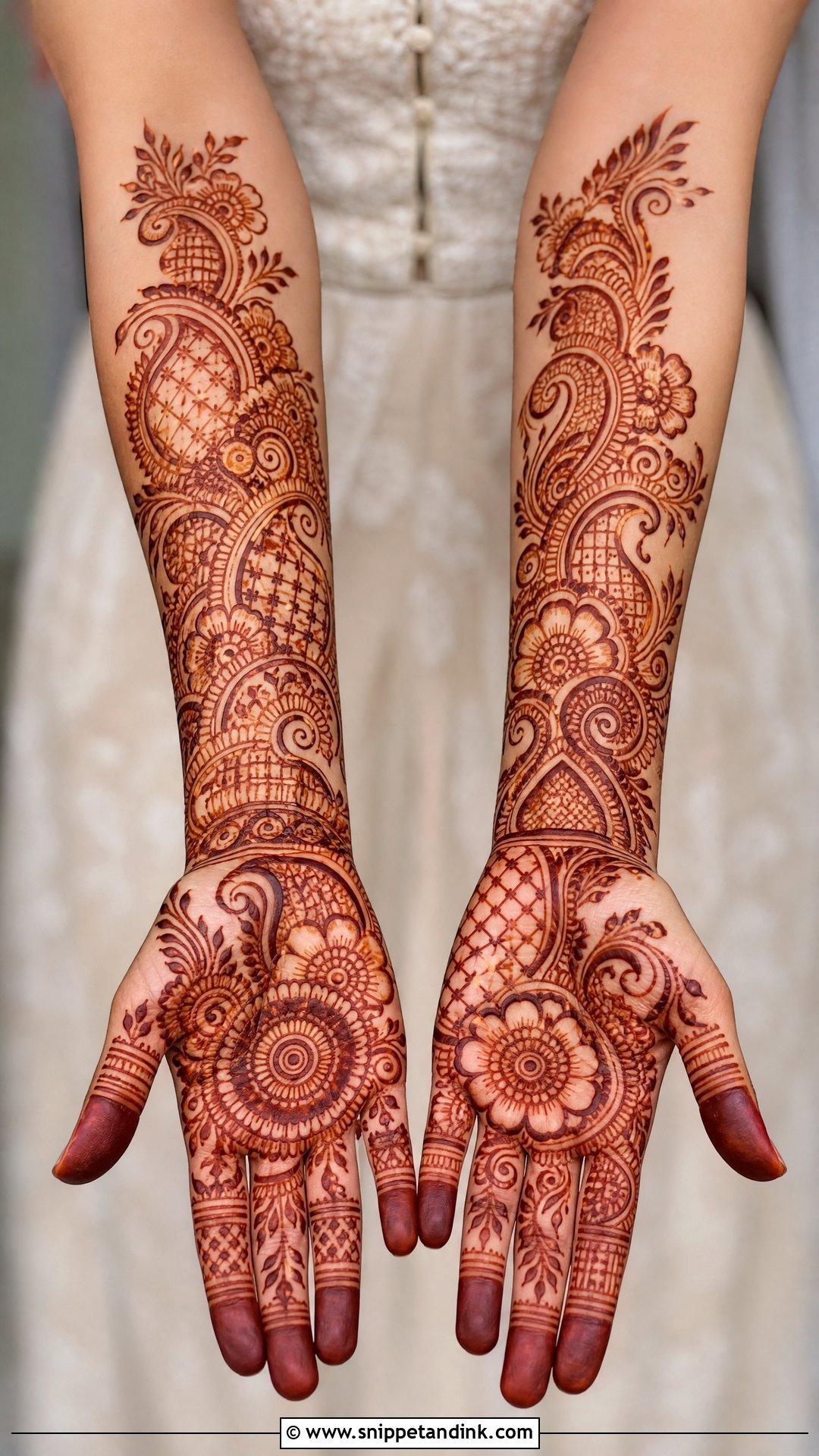
An Indo Arabic bridal mehndi design borrows the flow of Arabic work and the fine detailing of Indian patterns. You get floral trails, paisley panels, mandala centres, shaded leaves and slim jaali sections, all readable from across a room. I usually keep the palm more detailed and let the back hand flow, which gives you some open skin without losing the traditional feel. It’s the style I suggest most often to brides who can’t decide between the two, because it doesn’t force the choice.
5. Rajasthani Bridal Mehndi Design
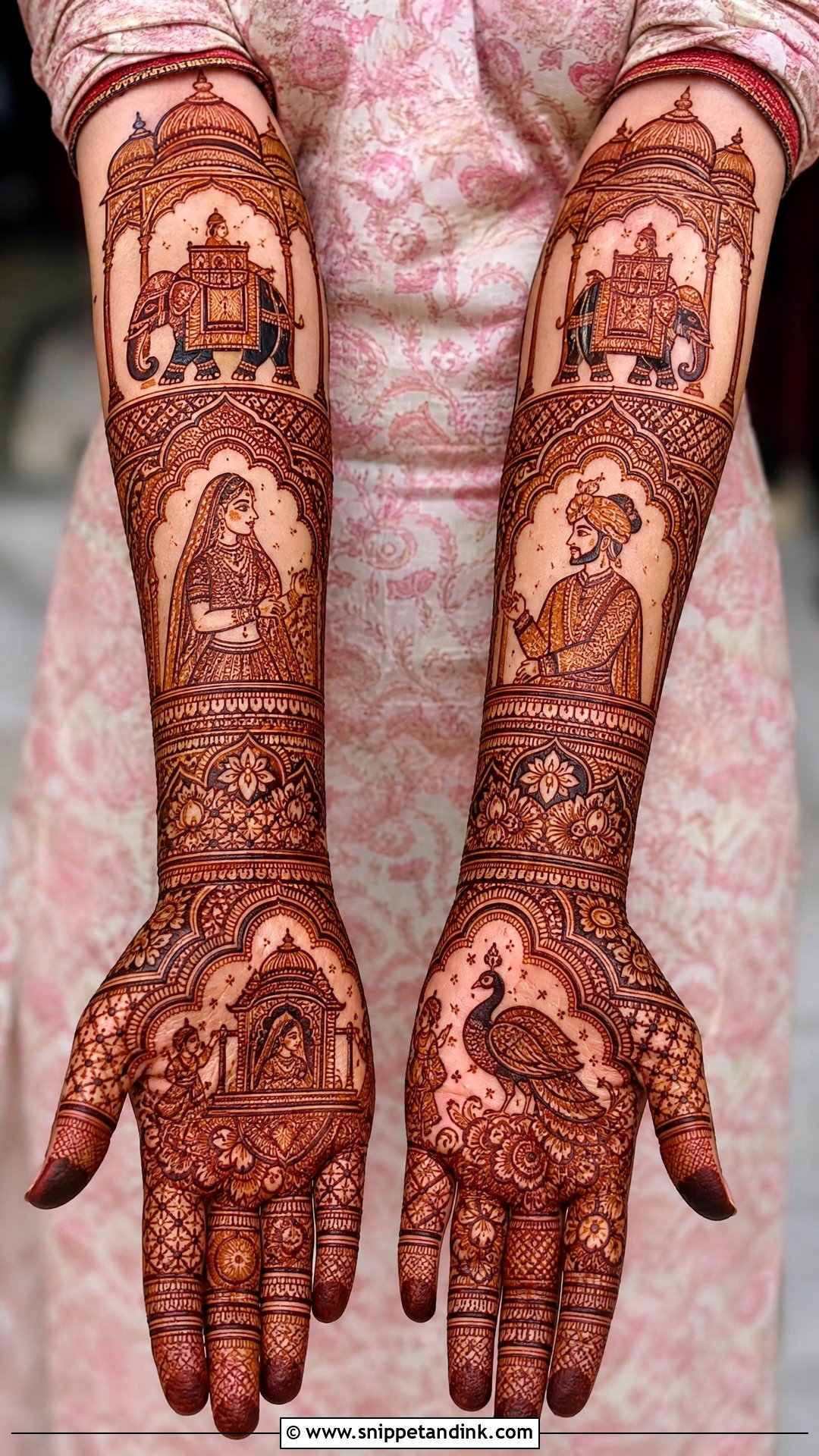
Rajasthani mehndi tells a story: bride and groom figures, elephants, palaces, doli scenes, peacocks and traditional borders, often dense from fingertips to forearm and sometimes up to the elbow. It sits naturally with grand ceremonies and heavily embroidered outfits. Be honest with yourself about the artist, though. Small figures need a very steady cone and a fine tip, and in less practised hands the faces turn into smudges once the stain darkens. I frame the portraits in neat panels and let florals and paisleys fill the rest so each scene stays readable.
6. Dulhan Mehndi Design
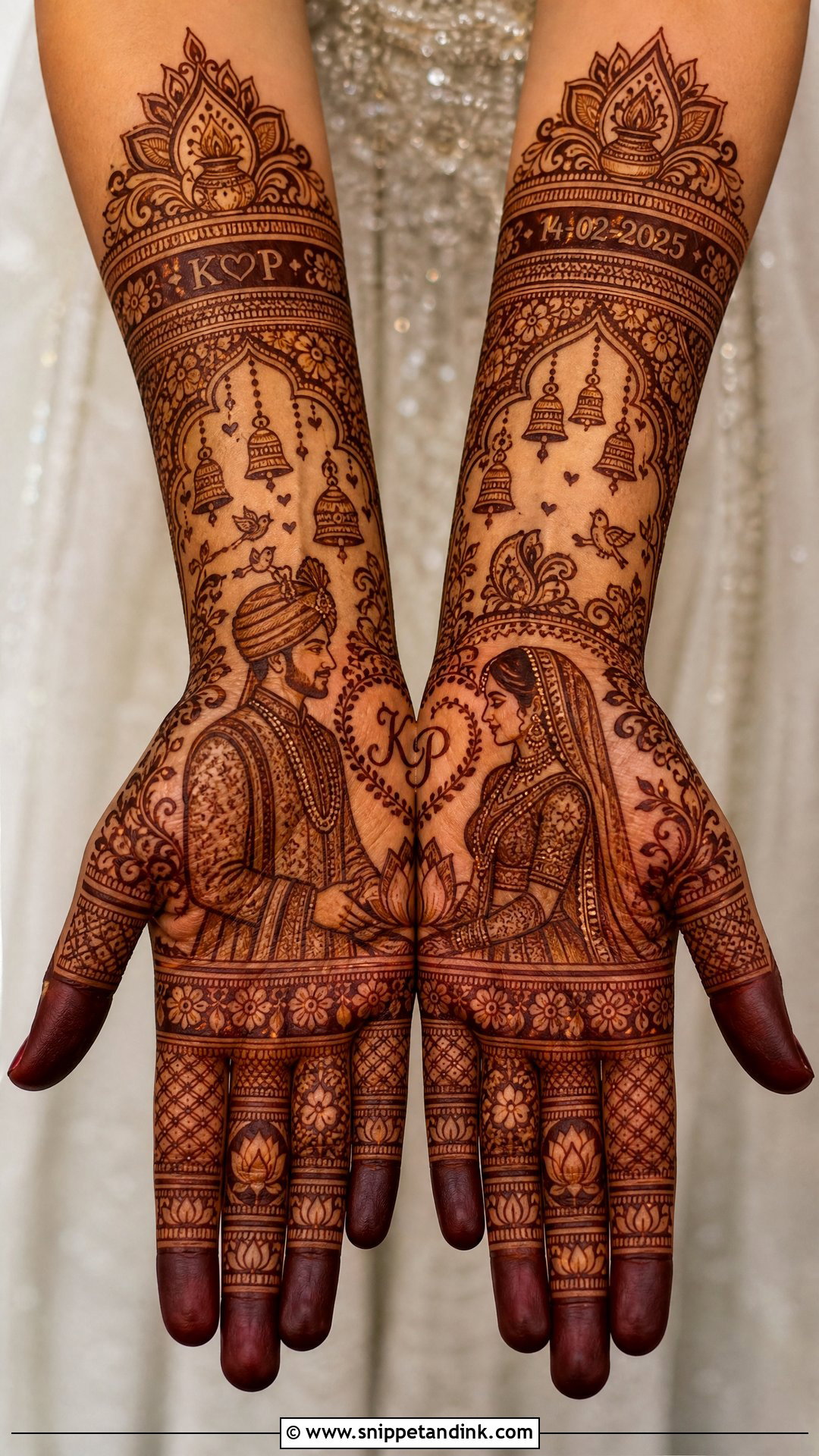
A dulhan mehndi design is heavier and more personal than festive mehndi. It may carry the groom’s initials, the wedding date, couple portraits, kalash motifs, lotus patterns, peacocks and decorative wrist cuffs. When I plan one, I put the personal elements where people will actually see them: the centre of the palm, the inner wrist or the lower forearm. Hide the initials in the fingers and nobody finds them, which is fun for the groom’s search game but not if you want them in photos.
7. Bridal Front Hand Mehndi Design
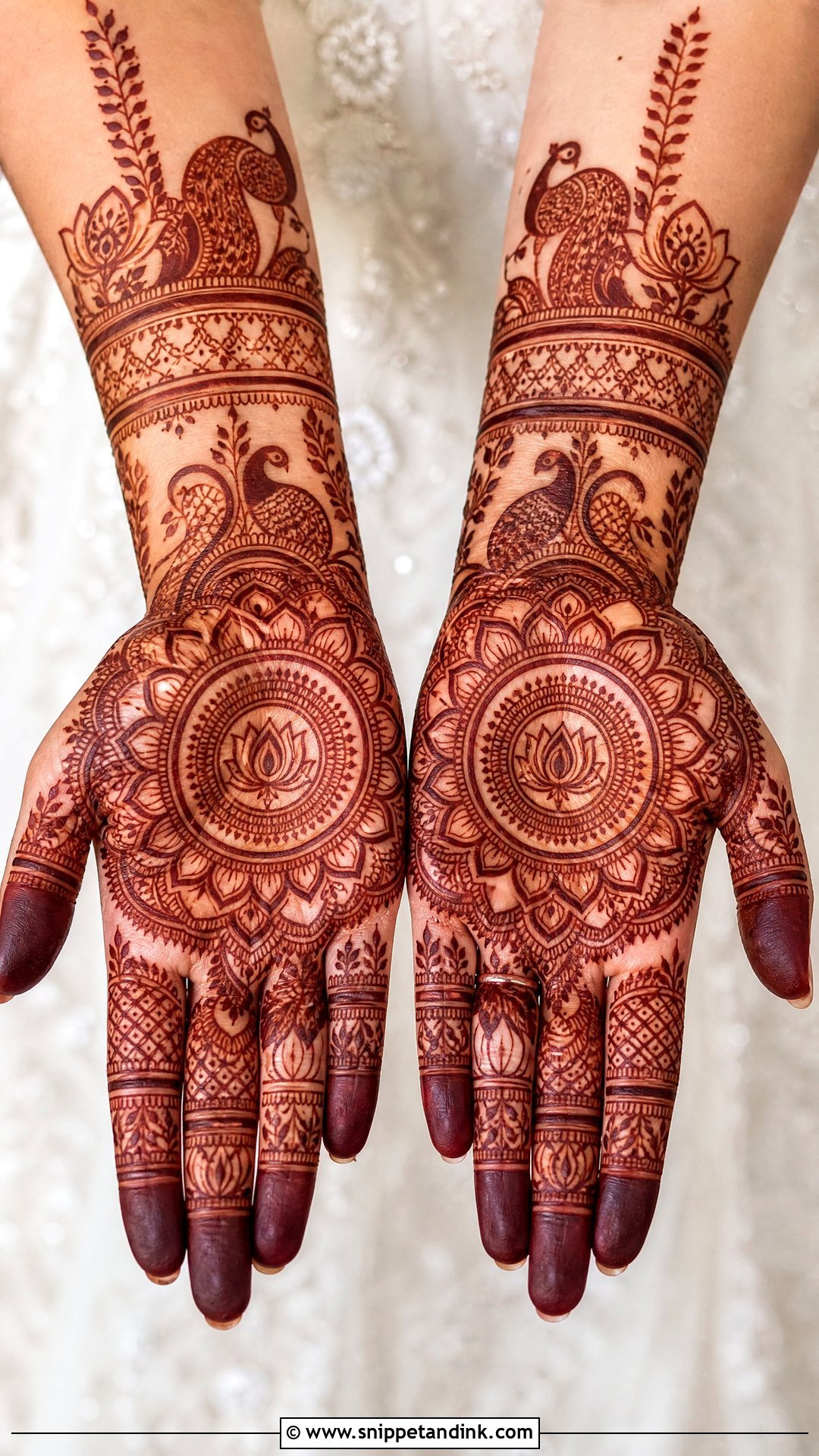
Most rituals and close-ups happen on the palm side, so front hand designs carry a lot of weight. A strong one has a central mandala, lotus, peacock, paisley cluster or dulha-dulhan portrait, with fingers filled in fine lines, leaves, checks and small floral bands. The palm stains darkest of anywhere on the body because the skin there is thick, so detail shows up clearly. I’ve moved away from busy palms toward one clear focal point with detailed borders around it; it reads far better when you’re holding flowers or showing your ring.
8. Bridal Back Hand Mehndi Design
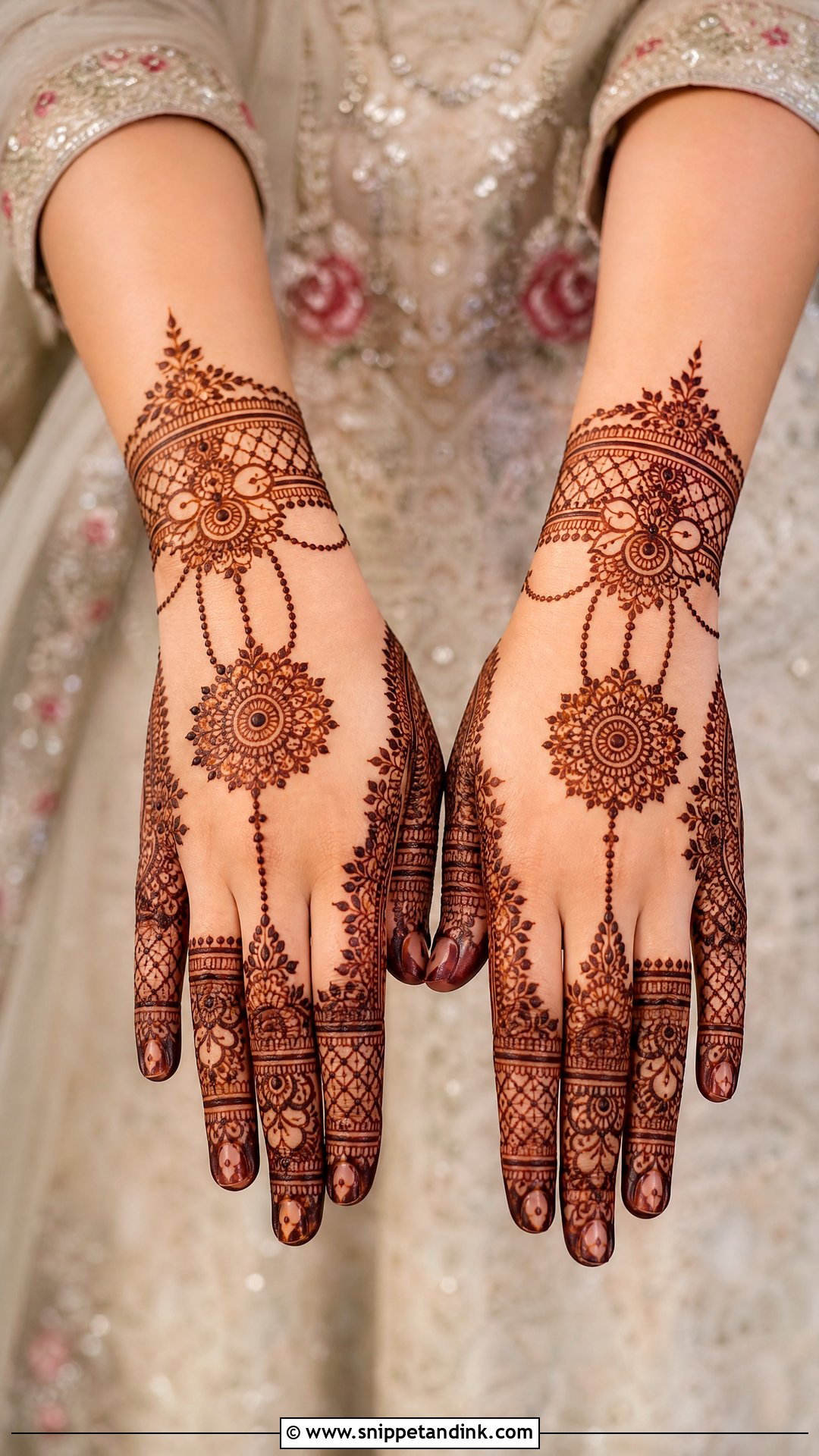
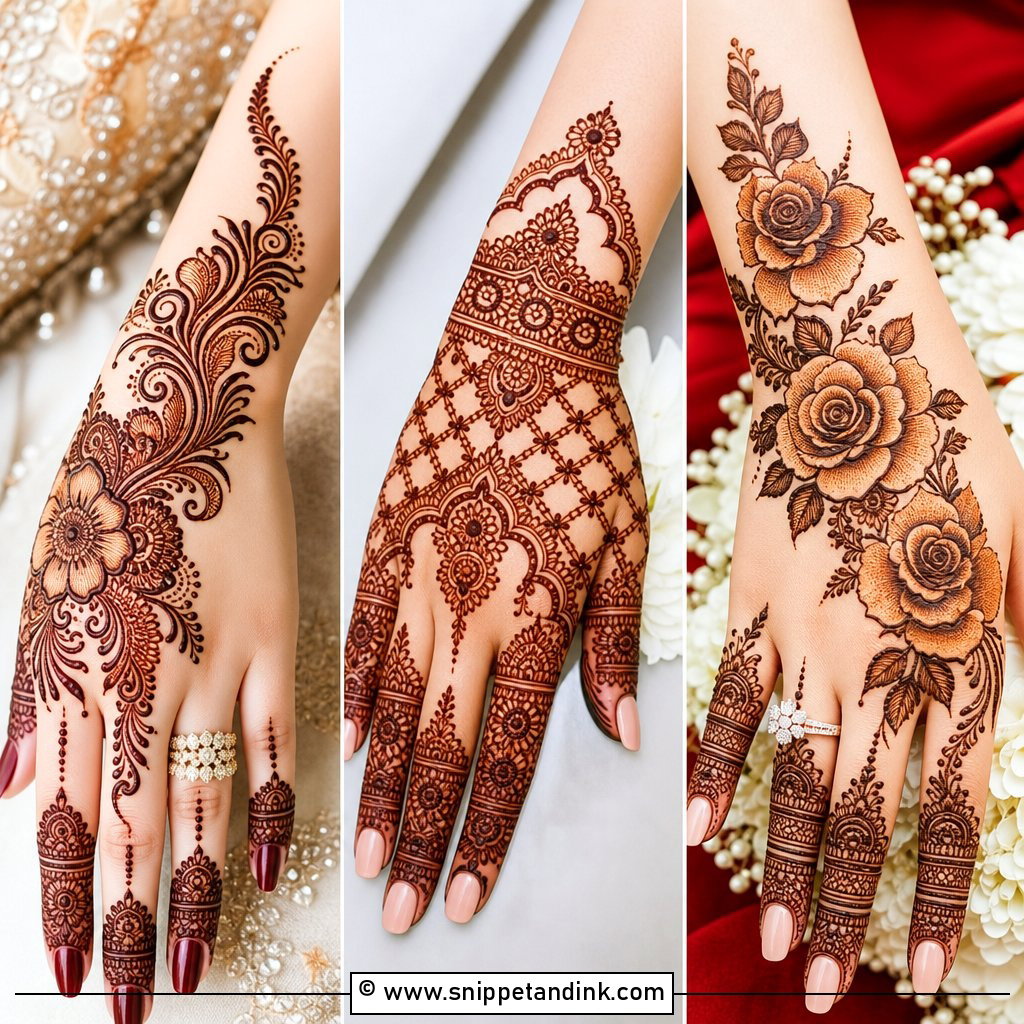
Bangles and rings look even better against back hand mehndi. The back of the hand takes floral trails, mandalas, bracelet bands, jaali mesh and finger patterns, and it can be full or quite open. One thing brides don’t expect: the back of the hand stains a shade or two lighter than the palm, because the skin is thinner, so I outline it a touch bolder. Designs that read like henna jewellery are popular right now, with chain details running from the wrist to the fingers. Keep the fingertips symmetrical; this is the side in every engagement ring shot.
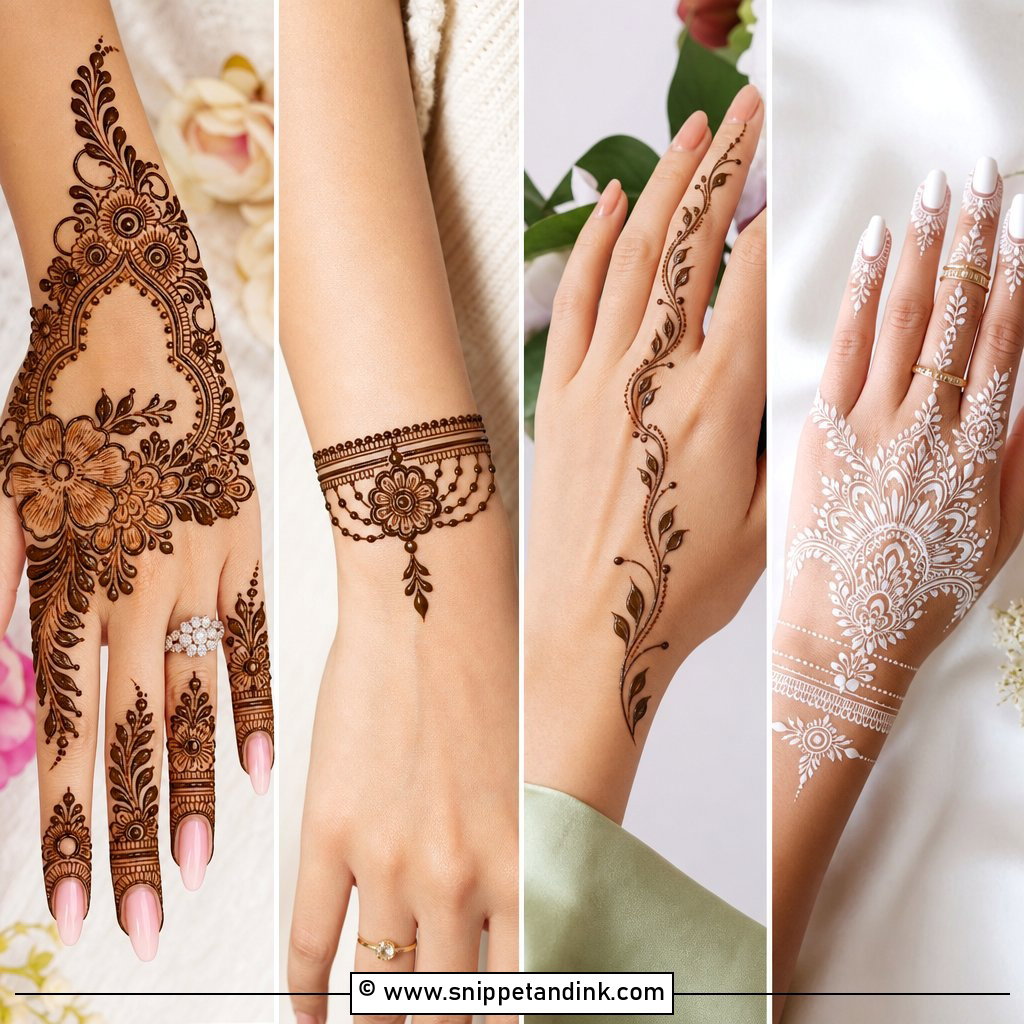
9. Simple Bridal Mehndi Design
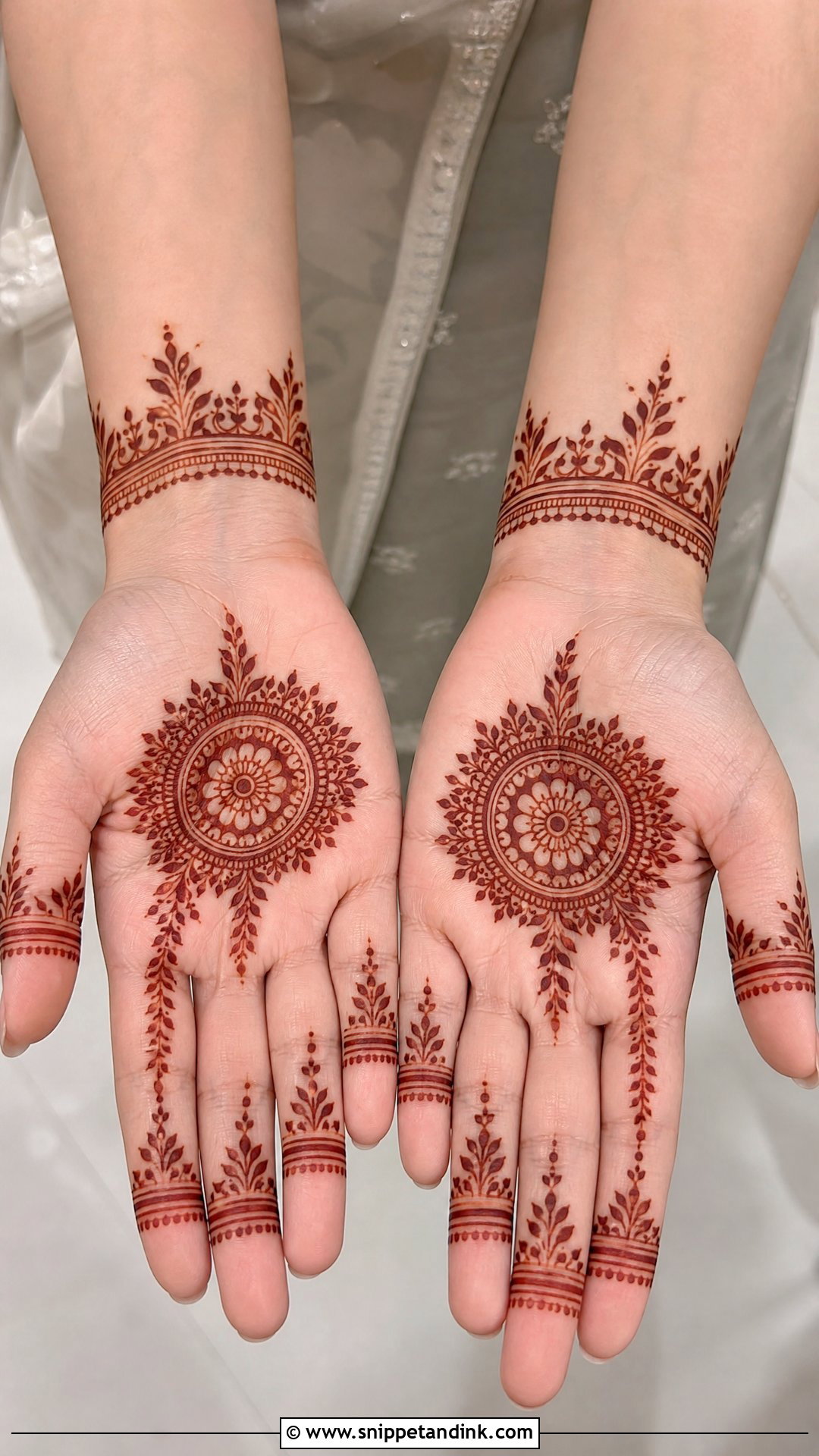
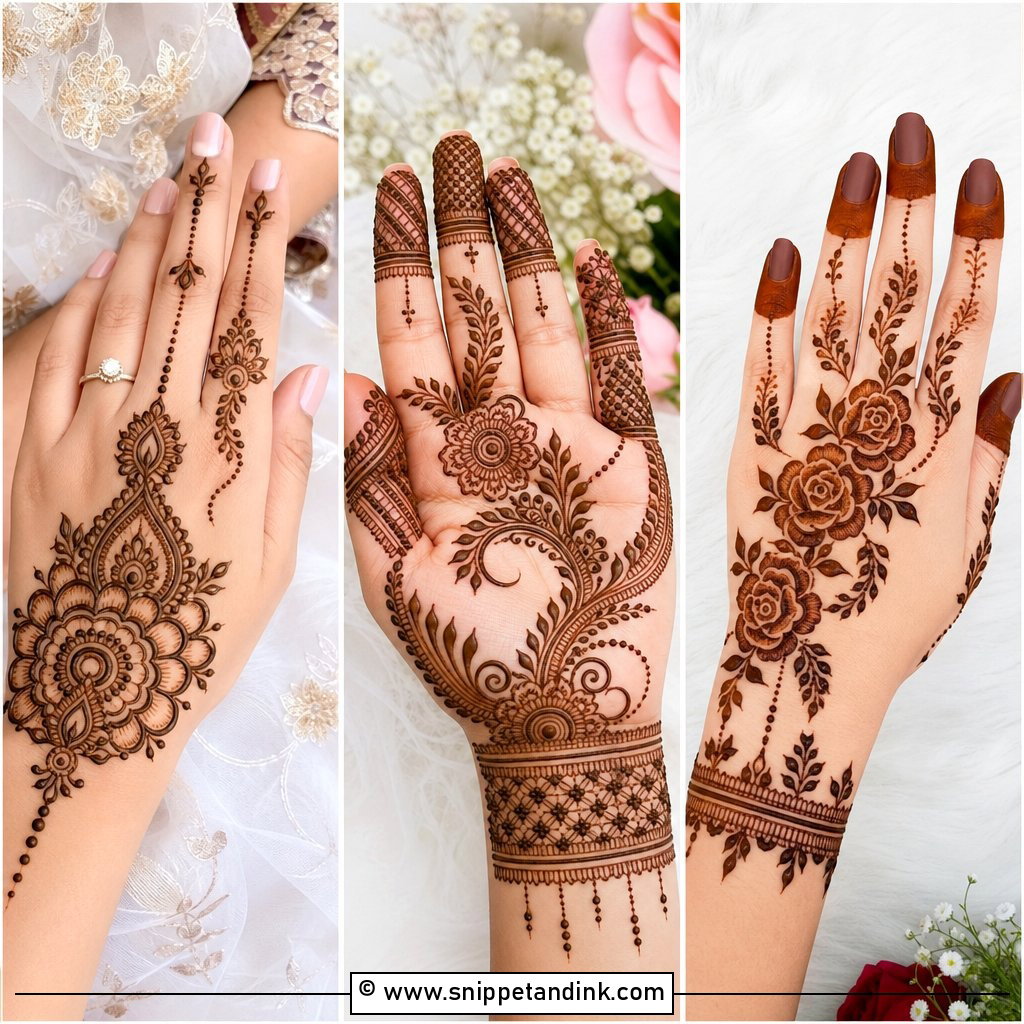
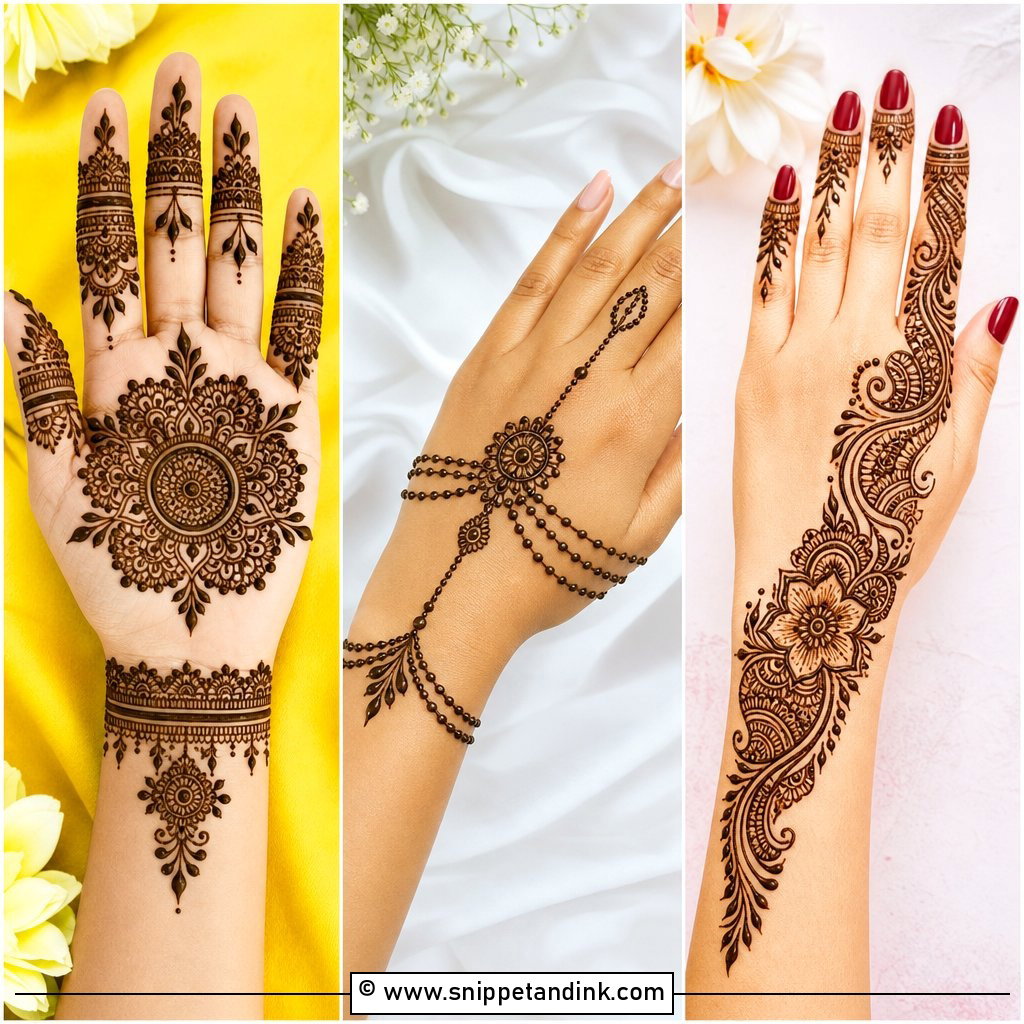
Simple bridal mehndi still has to look finished. A mandala palm, slim floral trails, delicate fingers and a light wrist band are usually enough. I recommend it for civil ceremonies, small weddings, destination trips and brides who can’t sit for four or five hours. If your outfit is already heavily embellished, lighter hands often look more balanced next to it. Where simple designs go wrong is uneven spacing, so I map the open skin as deliberately as the pattern.
10. Minimal Bridal Mehndi Design
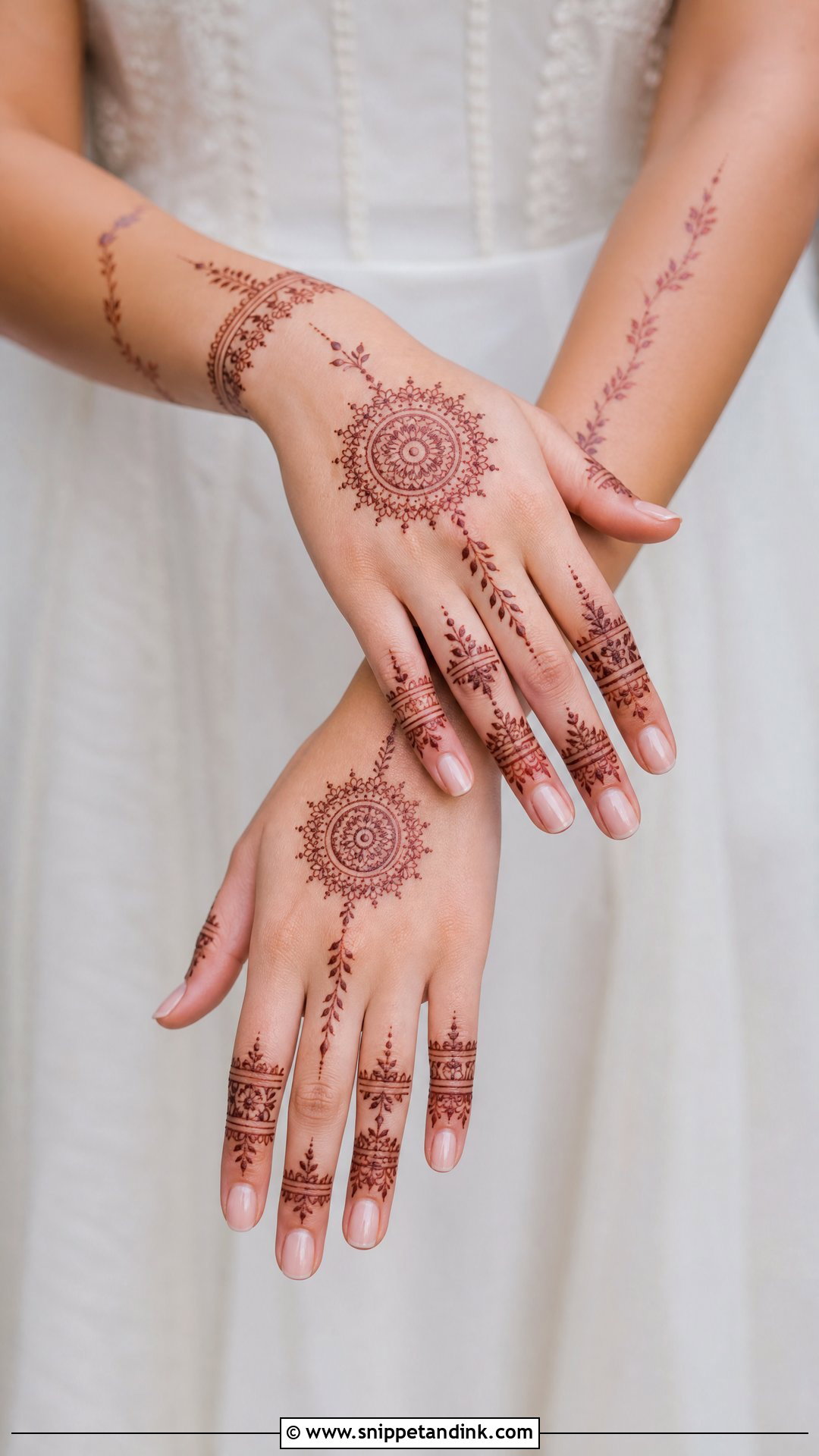
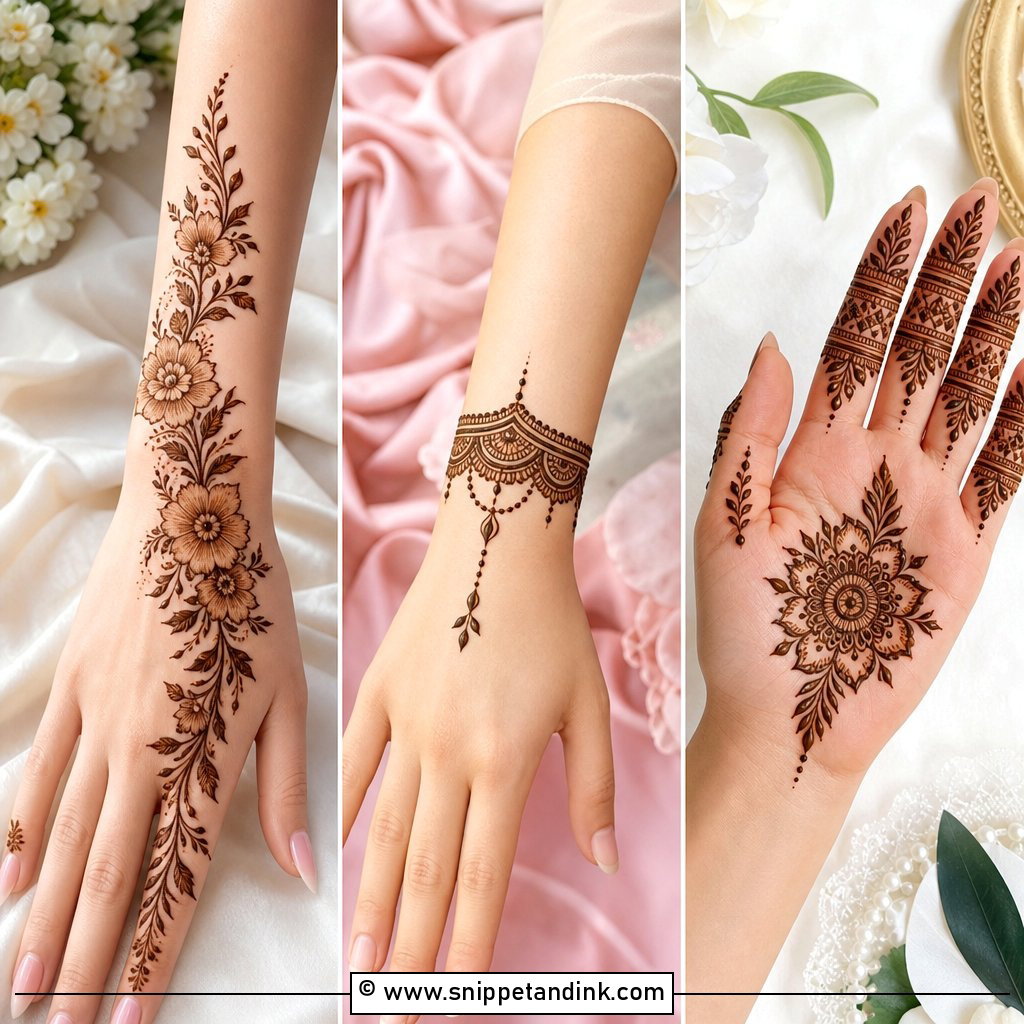
Minimal mehndi relies on open space, small motifs and fine lines: a little palm mandala, finger rings, leafy trails and a thin wrist cuff. It lets your jewellery, nails and outfit stay in front, and it suits beach weddings and daytime ceremonies. I don’t see it only on nontraditional brides anymore. The catch is that with so little on the hand, every wobble shows, so symmetry and clean spacing matter more here than in any dense style.
11. Modern Bridal Mehndi Design
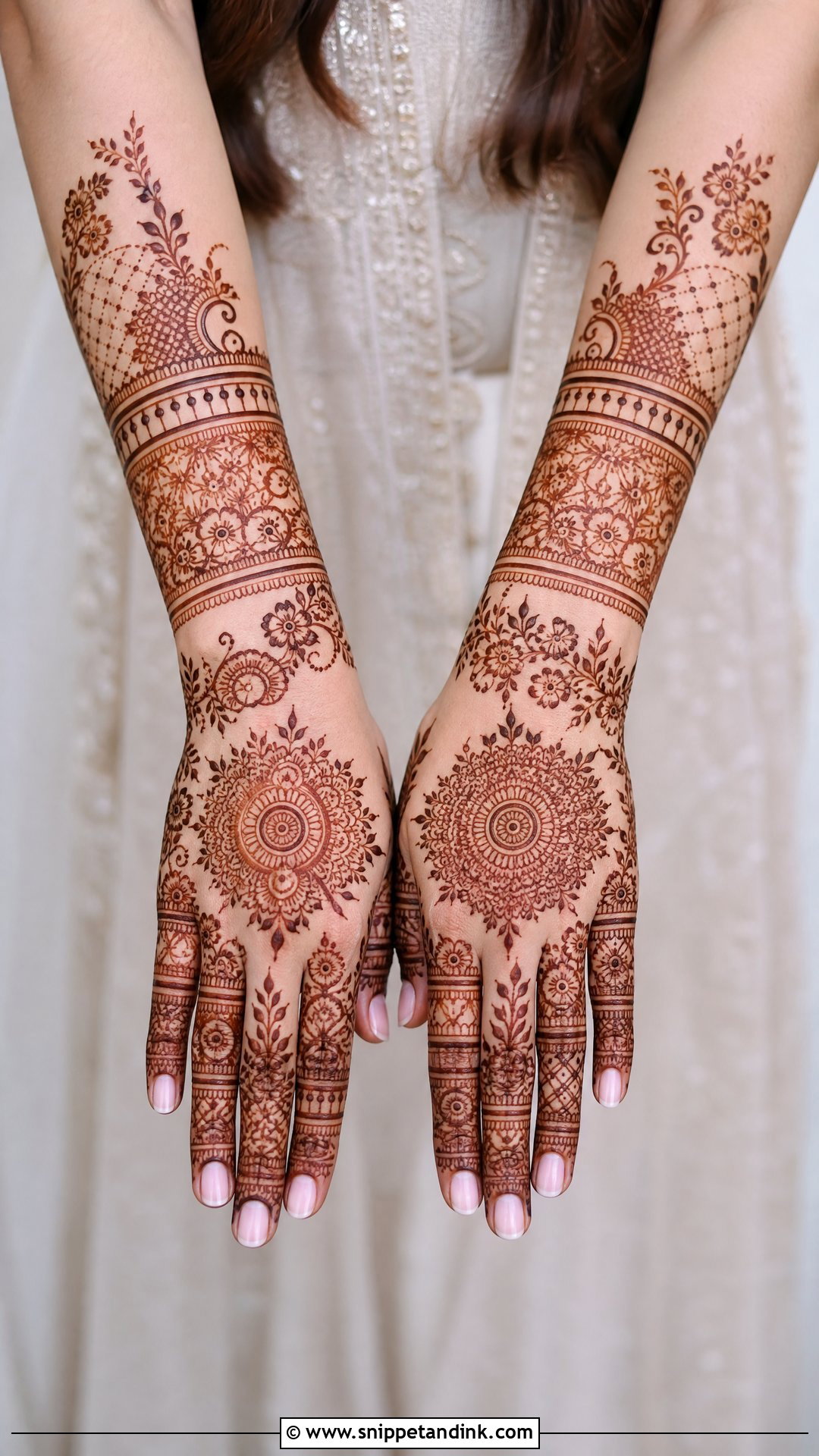
Modern bridal mehndi keeps the tradition but changes the layout. Rather than filling every area, I build strong focal points, negative space, geometric borders and clean florals, sometimes mandalas against straight lines or Arabic vines with Indian fillers. The trick is contrast: some areas breathe while others carry the detailed work. Brides with long ceremonies like it because there’s less paste to protect while it dries, and it reads much lighter than wall-to-wall traditional coverage.
12. Mandala Bridal Mehndi Design
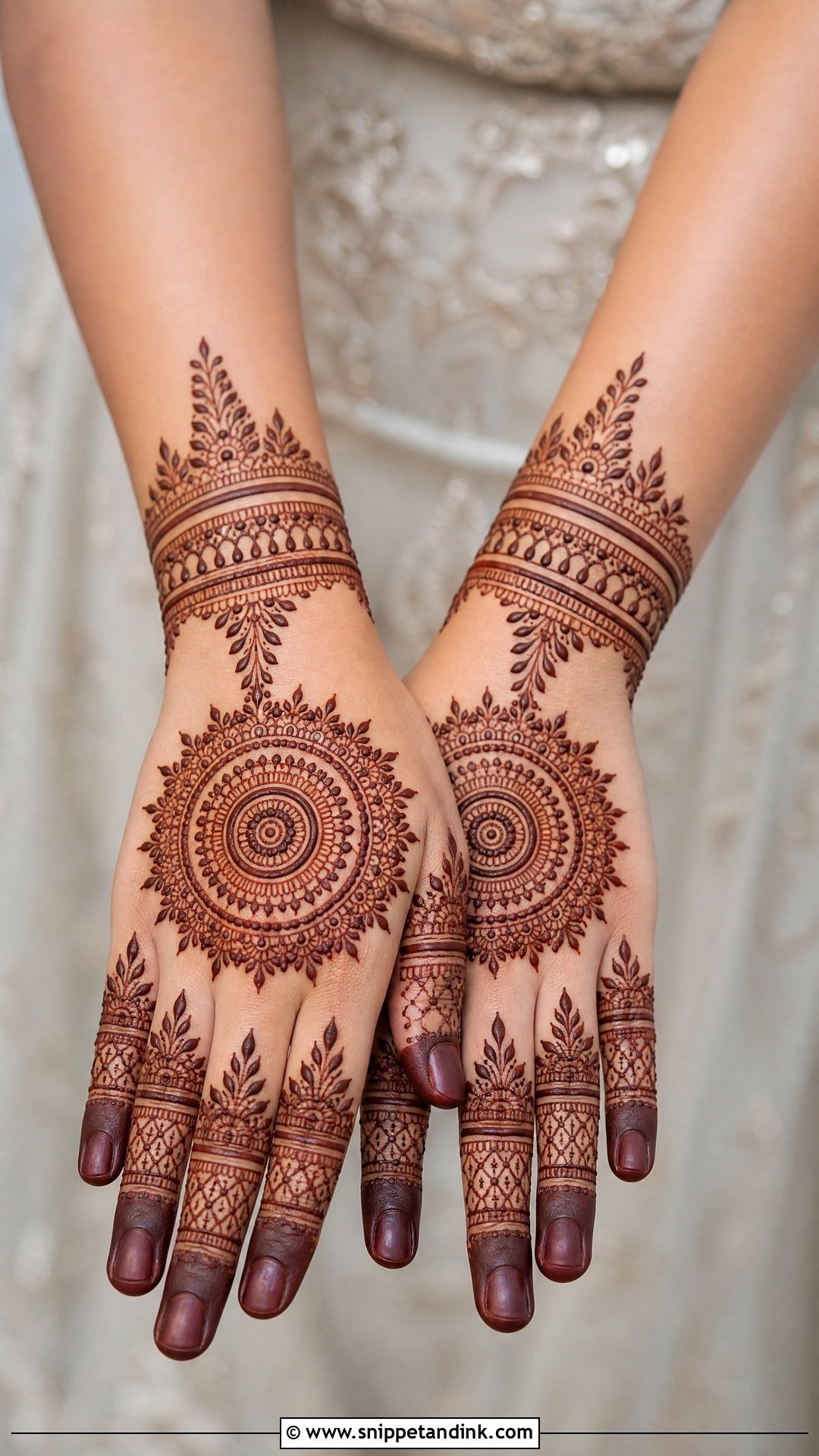
A mandala is the calmest motif I draw. It can sit in the centre of the palm, on the back hand or as a large circle near the wrist, surrounded by petals, dots, vines, jaali and finger details. It works in simple and full-hand designs alike. When I draw one I start from the centre dot and build outward ring by ring, because starting at the edge almost always ends in a slightly oval circle. Keep the circle bold, the space around it clean, and match the finger bands so both hands feel like a pair.
13. Lotus Bridal Mehndi Design
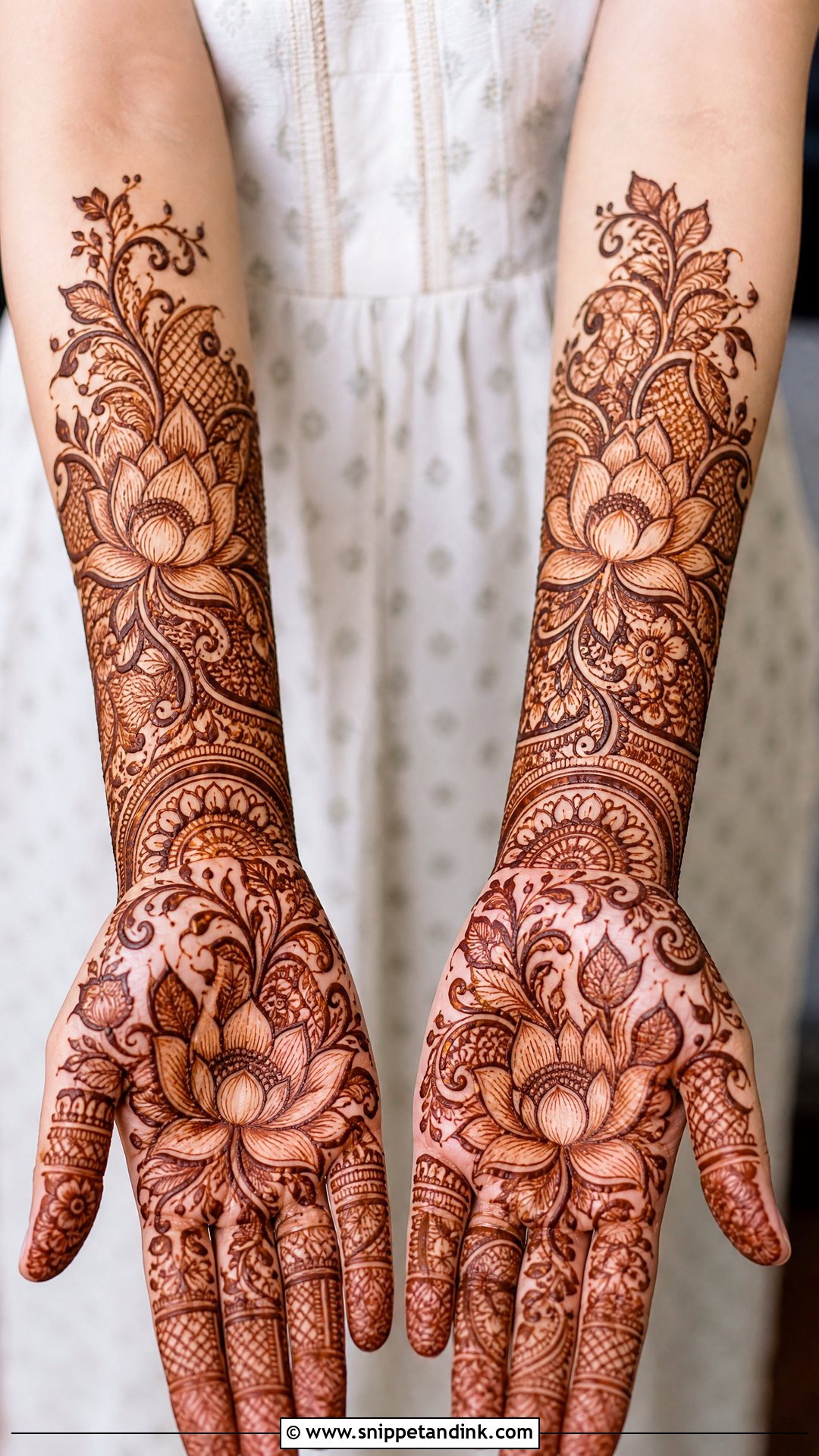
The lotus suits almost any outfit, from pastel and ivory to gold or traditional red. It can be the main motif on the palm, wrist, forearm or back hand, with paisleys, mandalas, vines and shaded petals around it. I draw large lotus flowers as the statement and add finer work around them. That order matters: if the fine filler goes on first, there’s no room left for the flower to open properly, and it ends up cramped.
14. Peacock Bridal Mehndi Design
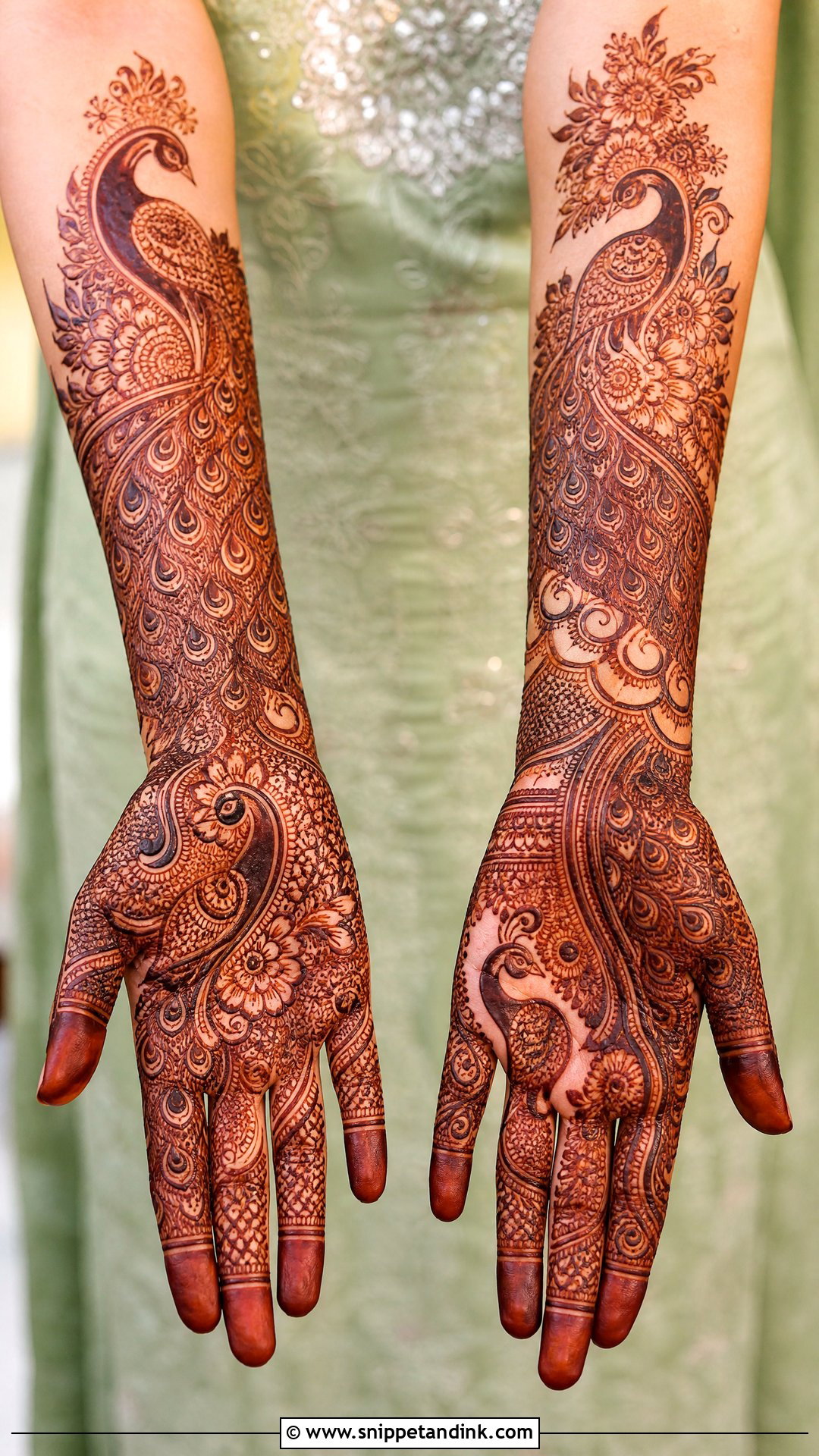
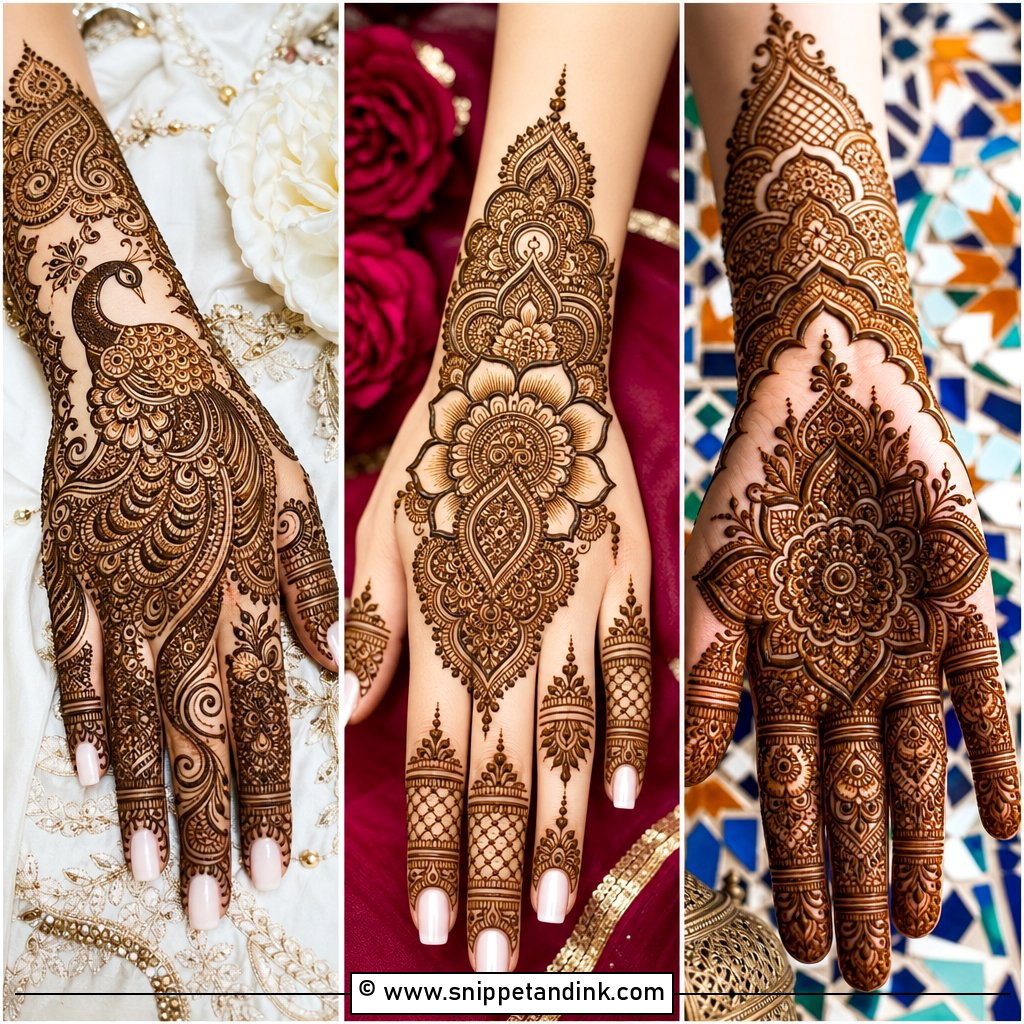
Peacocks belong on palms, forearms or back hands, framed by feathers, flowers, paisleys and fine fillers. Spacing decides whether the design looks traditional or slightly modern. My advice is to keep the bird’s outline clean and not bury the neck and body in filler, because the shape is the whole point. One large peacock on each hand, facing each other when you hold your palms together, makes the pair feel connected.
15. Portrait Bridal Mehndi Design
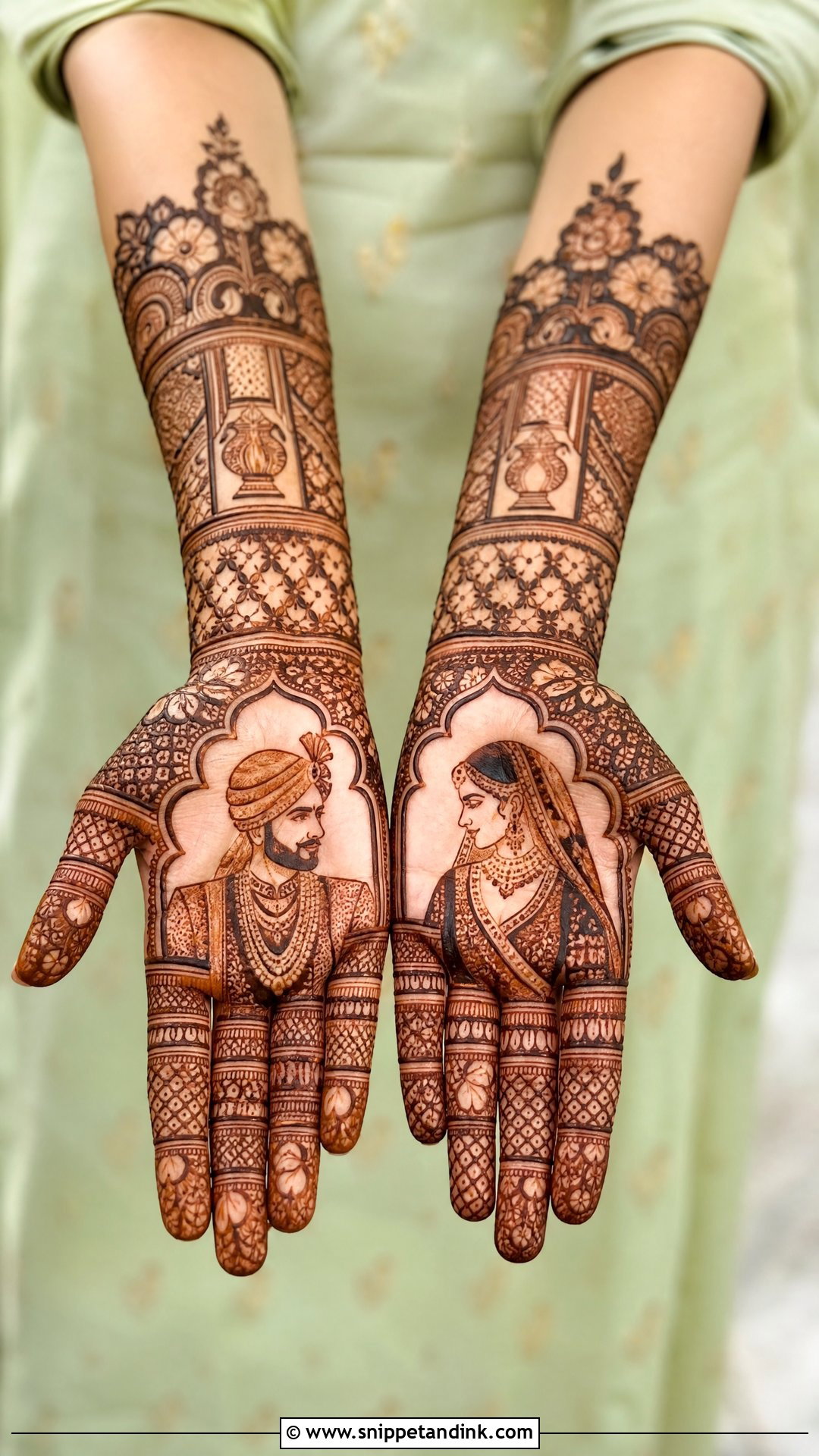
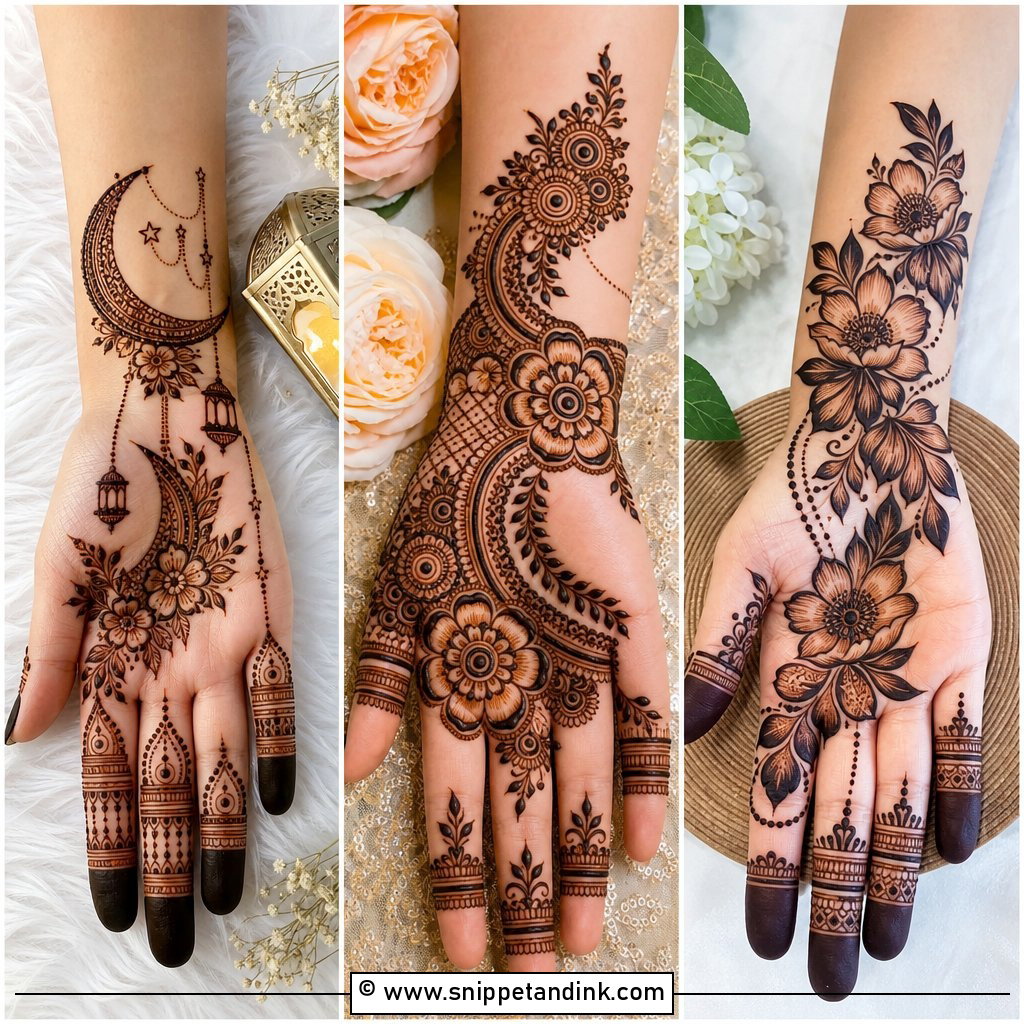
Portrait mehndi usually puts the bride on one palm and the groom on the other, sometimes with outfits, initials, dates or ceremony symbols. Ask to see close-up photos of an artist’s past faces before you book; fine facial lines are the hardest thing in henna and the first thing to blur if the paste is too wet. I frame faces inside mandalas, arches or palace panels and keep the surrounding pattern tidy so the portraits stay the main event. Also expect this design to add real time to your sitting.
16. Personalized Bridal Mehndi Design
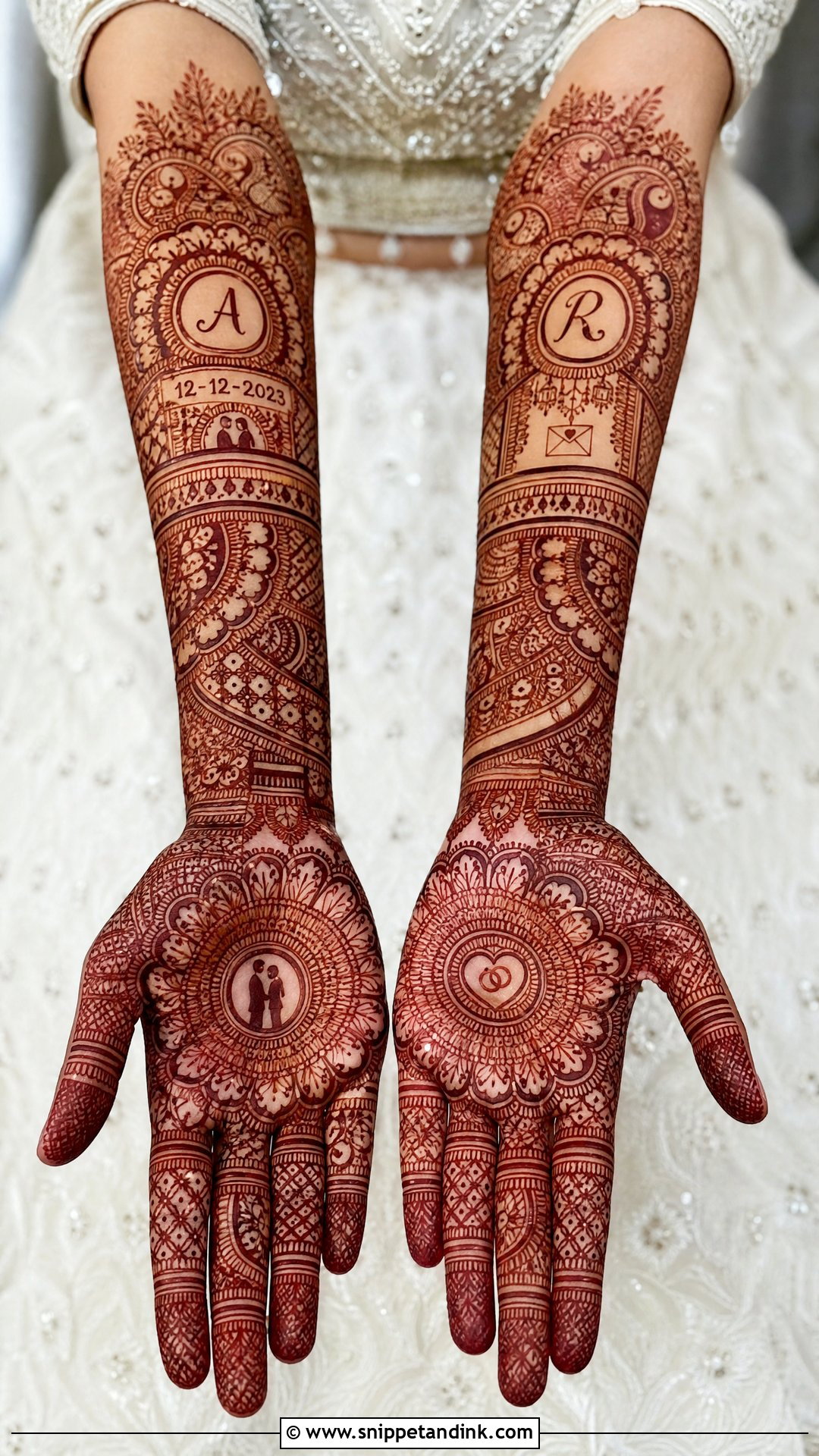
Personalized mehndi turns your hands into a small wedding story. The groom’s initials, the date, a proposal symbol, a venue detail, a pet or a shared hobby can all be worked in. I hide these inside vines, paisleys, mandalas or wrist bands so they feel part of the design instead of stuck on top. Pick two or three meaningful details, not ten. When every element is a story, none of them reads clearly.
17. Jaali Bridal Mehndi Design
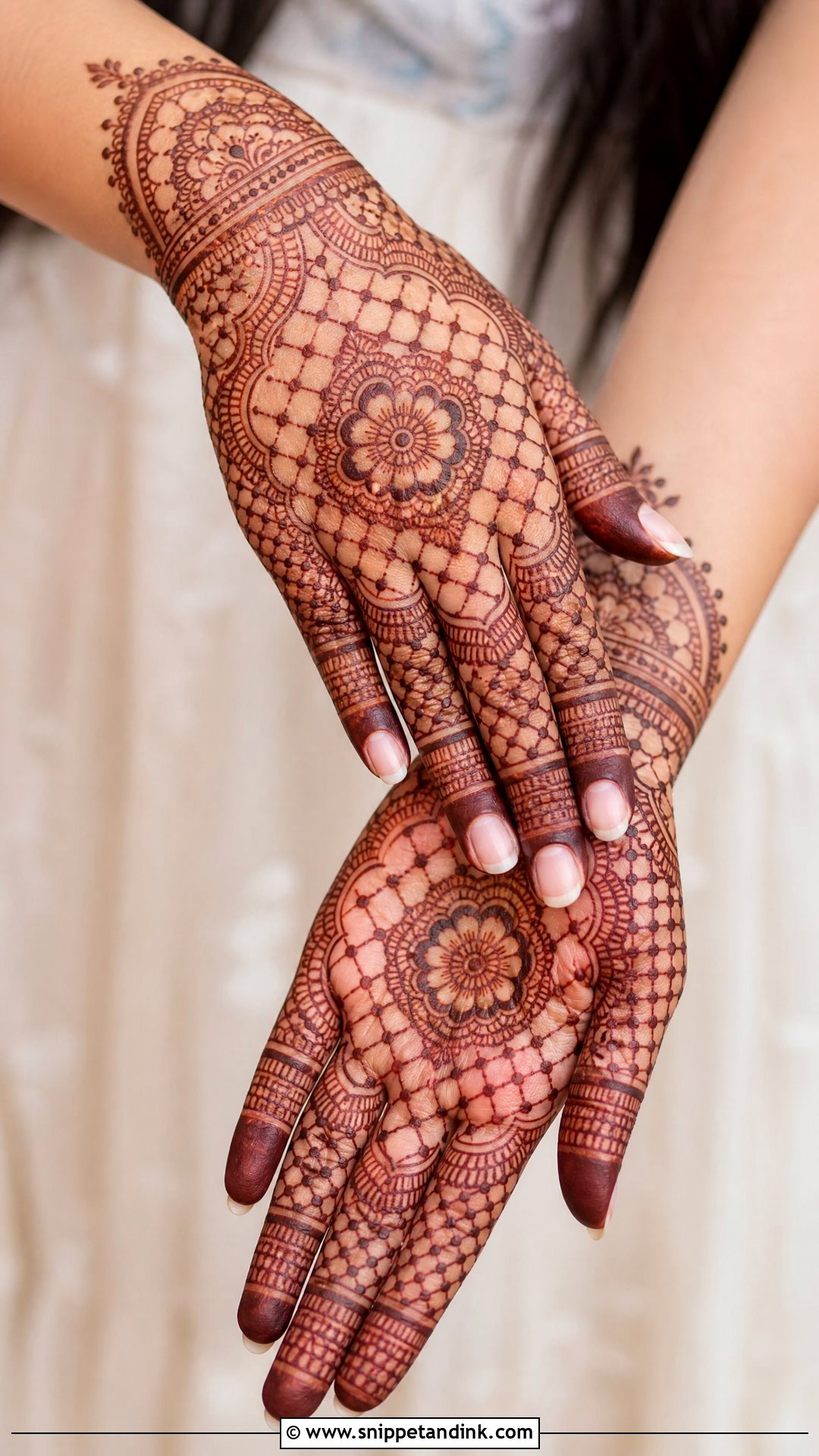
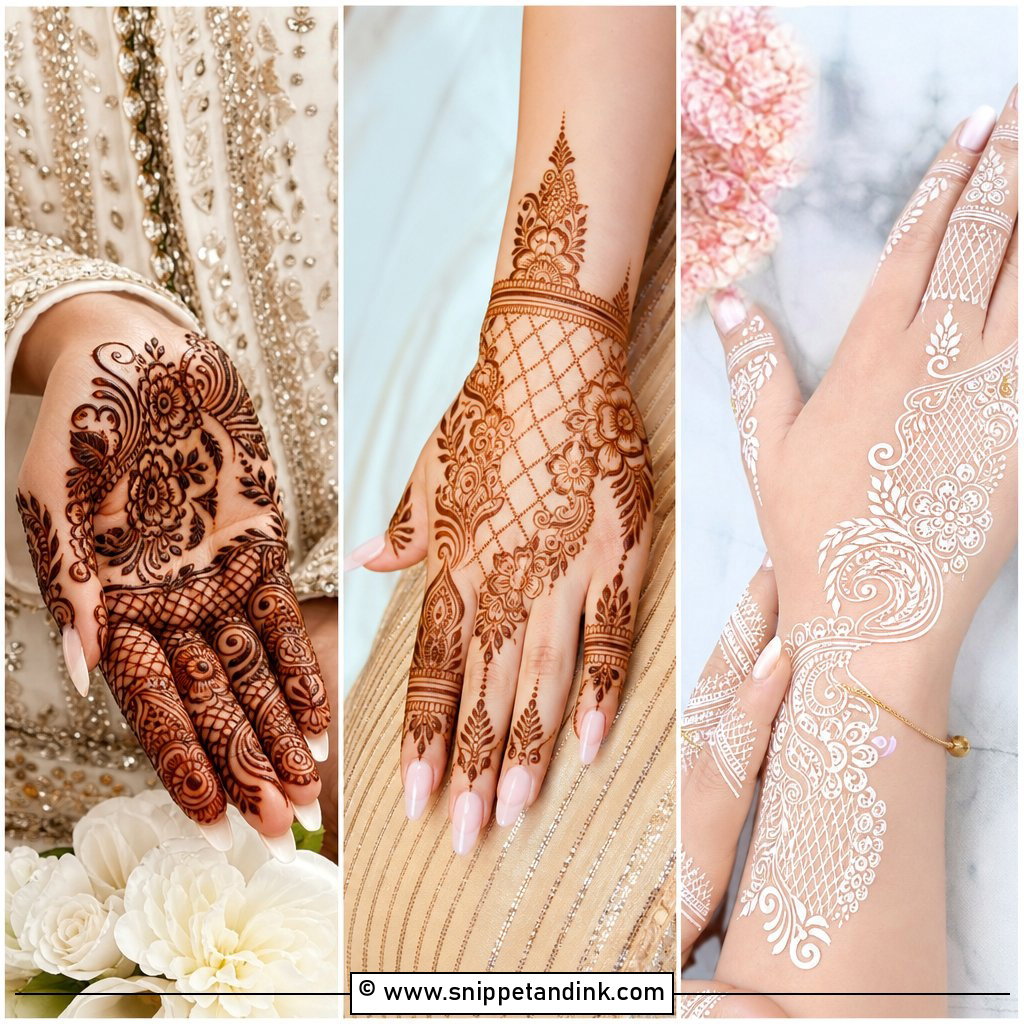
Jaali gives a lace effect with net patterns, crisscross lines, dots, florals and borders. It looks most like bridal gloves on the back hand, wrist and forearm, and it can sit behind flowers or paisleys on the palm. The grid is where skill shows: lines need to be the same thickness and evenly spaced, or the mesh looks wobbly once it stains. I’m drawing larger grid squares this year and pairing them with bold florals so the lace has something to contrast with.
18. Floral Bridal Mehndi Design
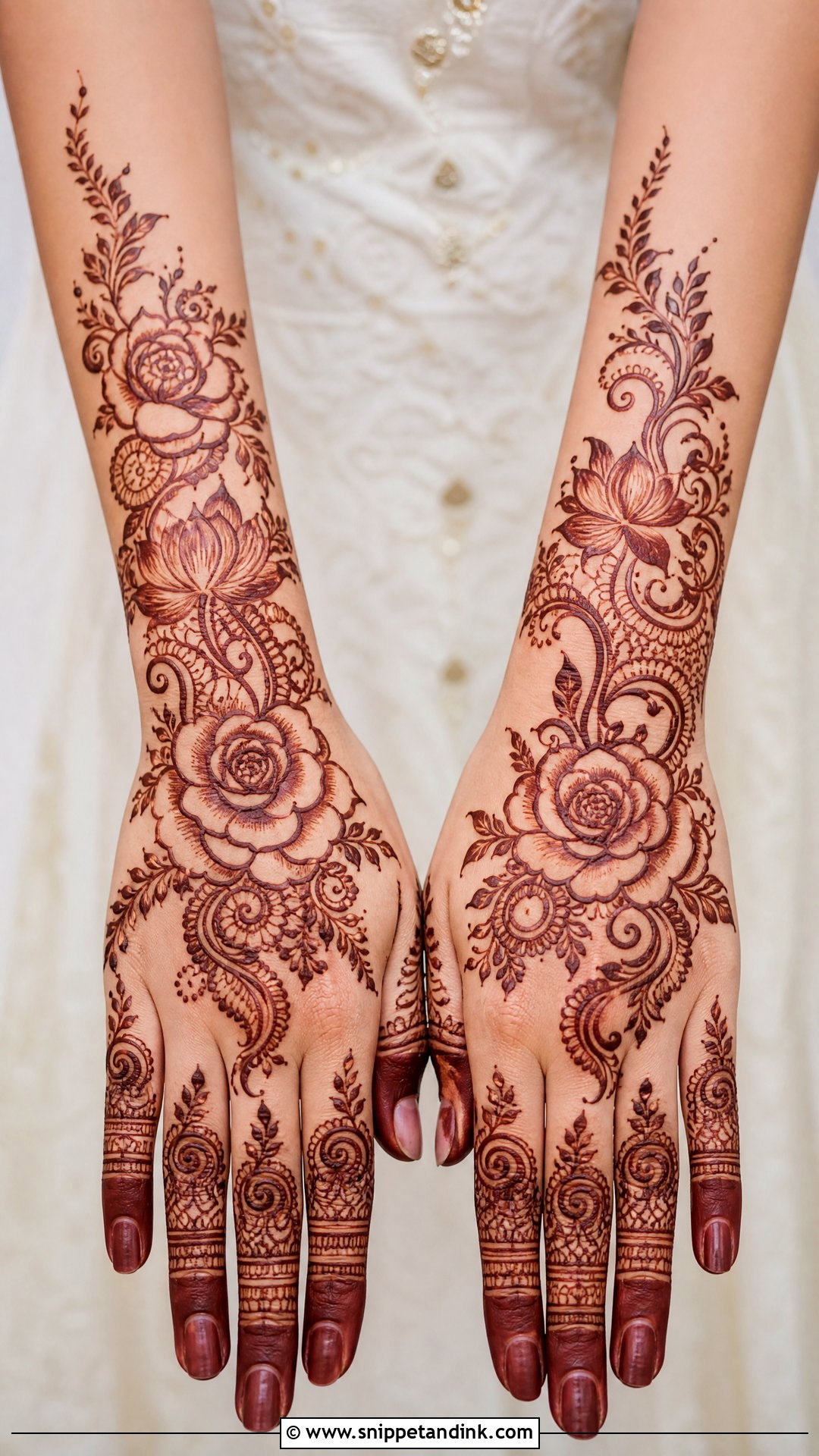
Florals work in Arabic, Indian and Indo-Arabic layouts and suit brides who want a feminine design without much symbolism. Roses, lotus flowers, small blossoms, vines, shaded petals and curved trails all fit. For a full bridal effect I let the flowers travel from the fingers across the palm toward the wrist. Bigger blooms with shading and open skin around them look fresher than dozens of tiny flowers, and they hold their shape better as the stain deepens over the first two days.
19. Paisley Bridal Mehndi Design
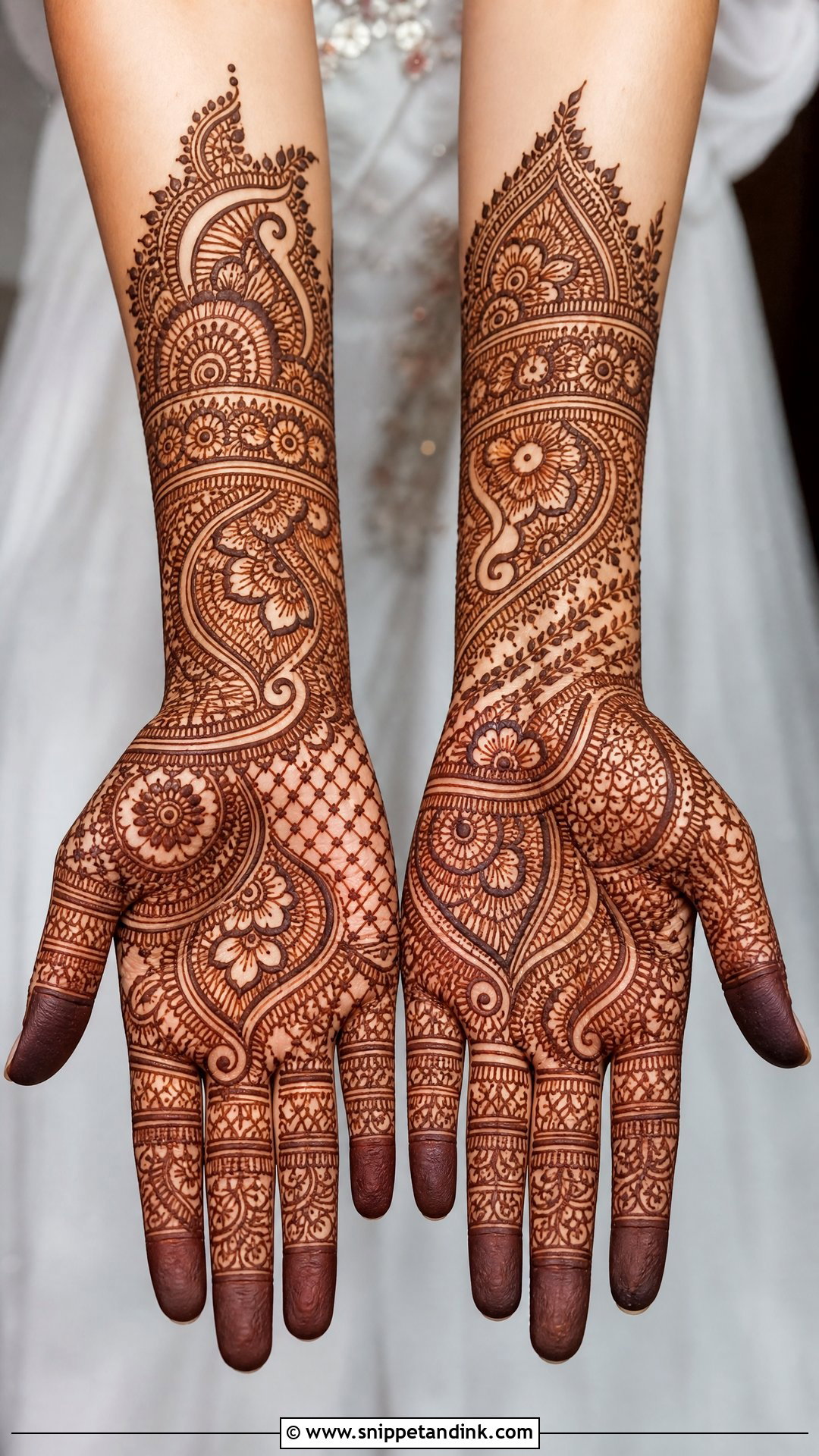
The paisley is one of the oldest bridal motifs, and it’s still on most of the hands I draw. Paisleys can be large and bold or small and intricate, and they curve naturally around the palm and forearm, which is why they work so well in full coverage. I use them as statement panels rather than tiny repeats everywhere: a bold outline with delicate inner detail gives depth while keeping the design clear.
20. Negative Space Bridal Mehndi Design
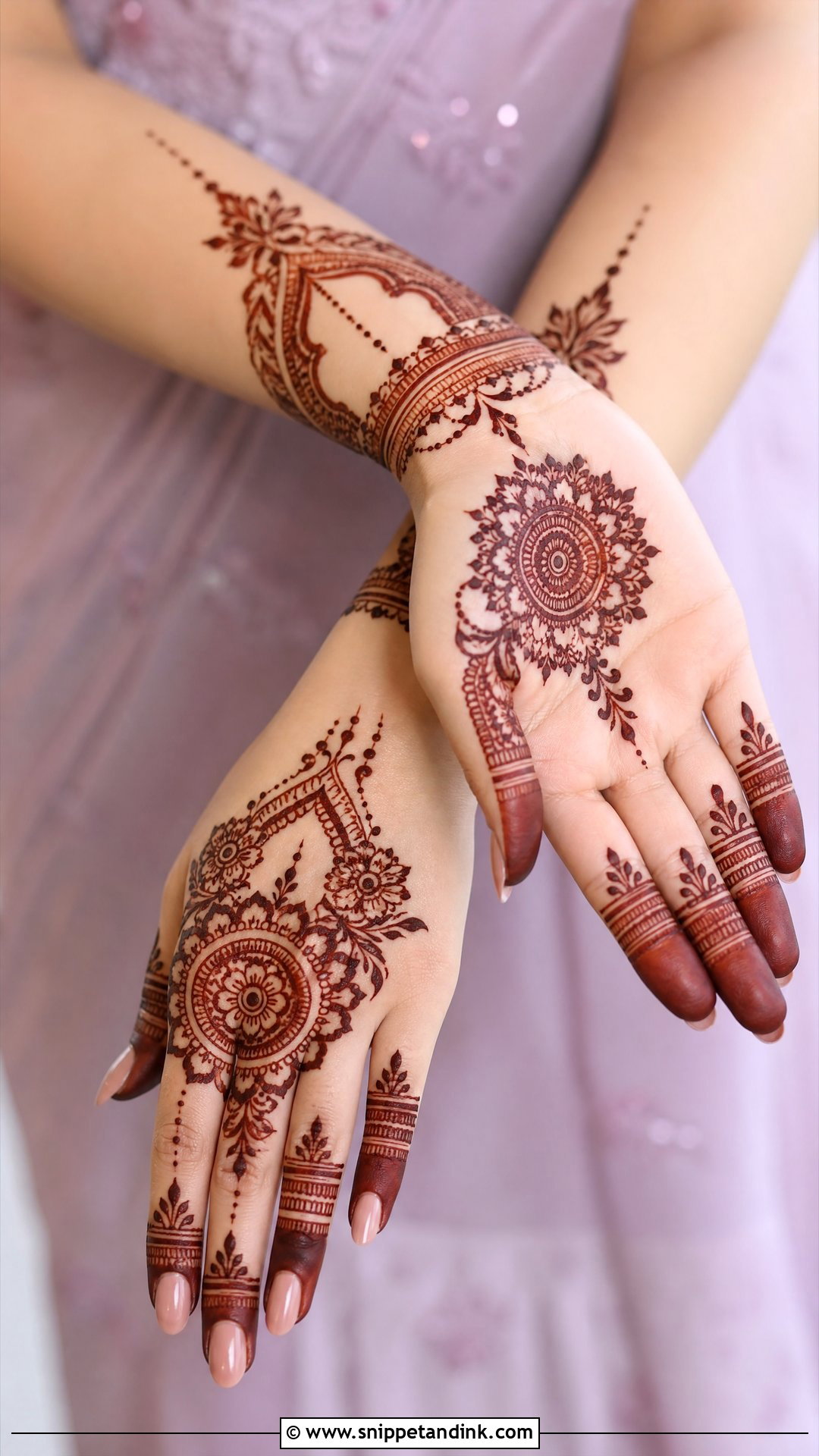
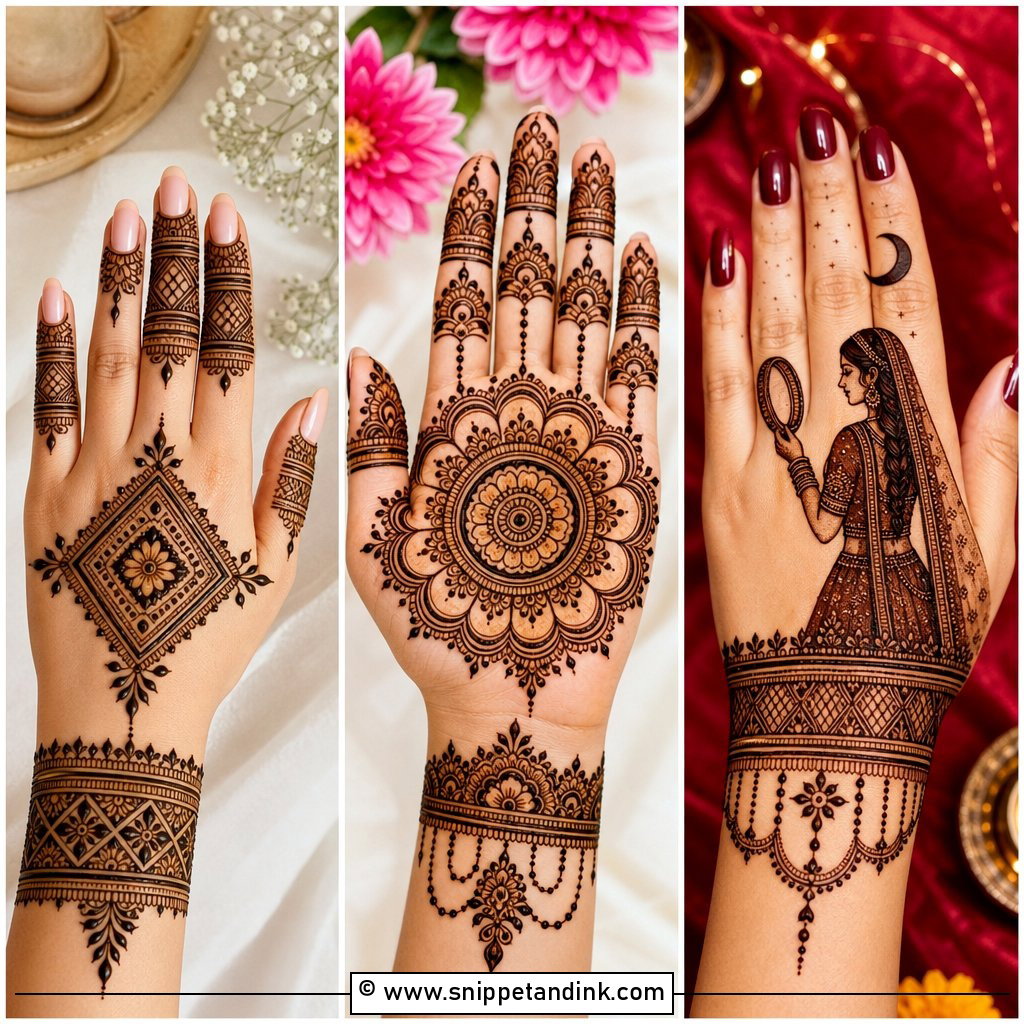
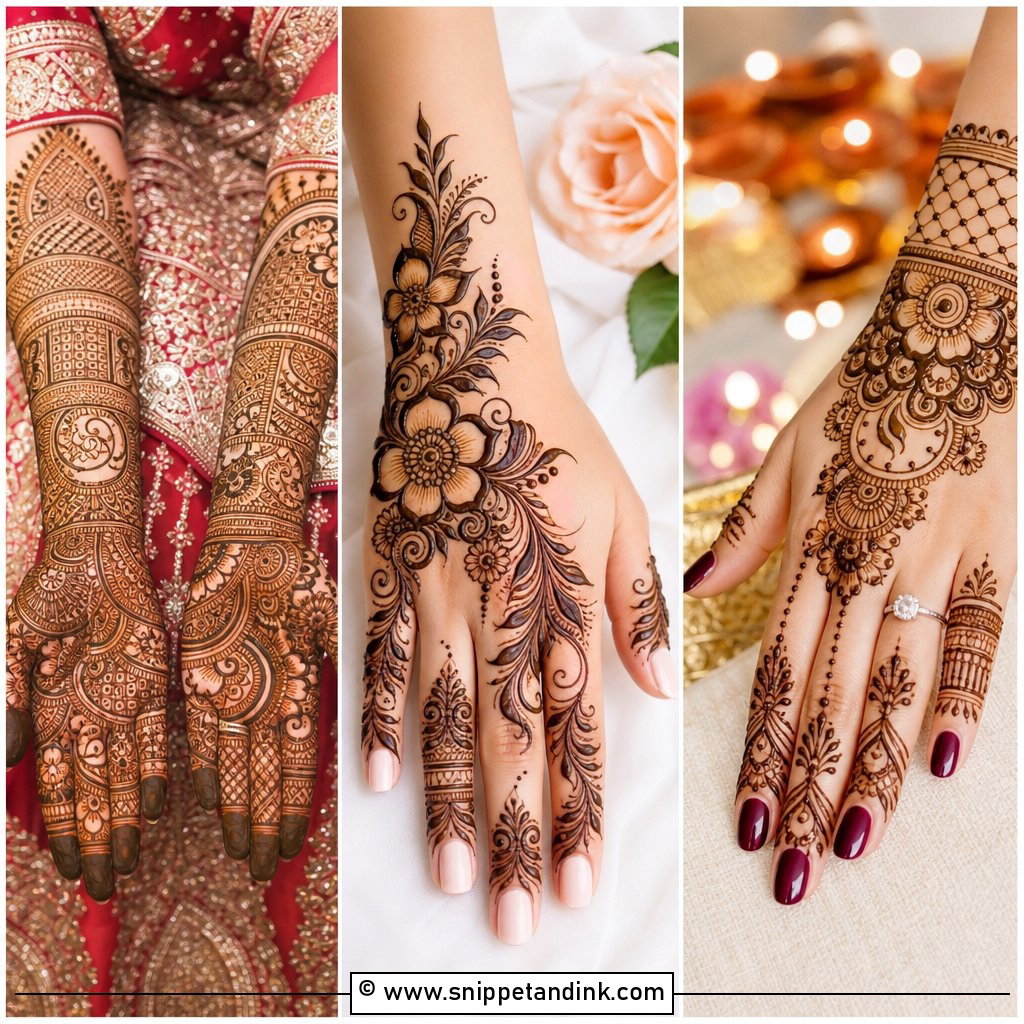
Negative space design leaves planned gaps of skin between motifs, which makes the flowers, mandalas, lines and paisleys look sharper. It photographs well in bright daylight and can go on the palm, the back hand or the whole hand. Balance is everything. Too much empty skin looks unfinished, so I sketch where the gaps fall before the cone touches the hand, rather than leaving space wherever the pattern happens to stop.
21. Geometric Bridal Mehndi Design
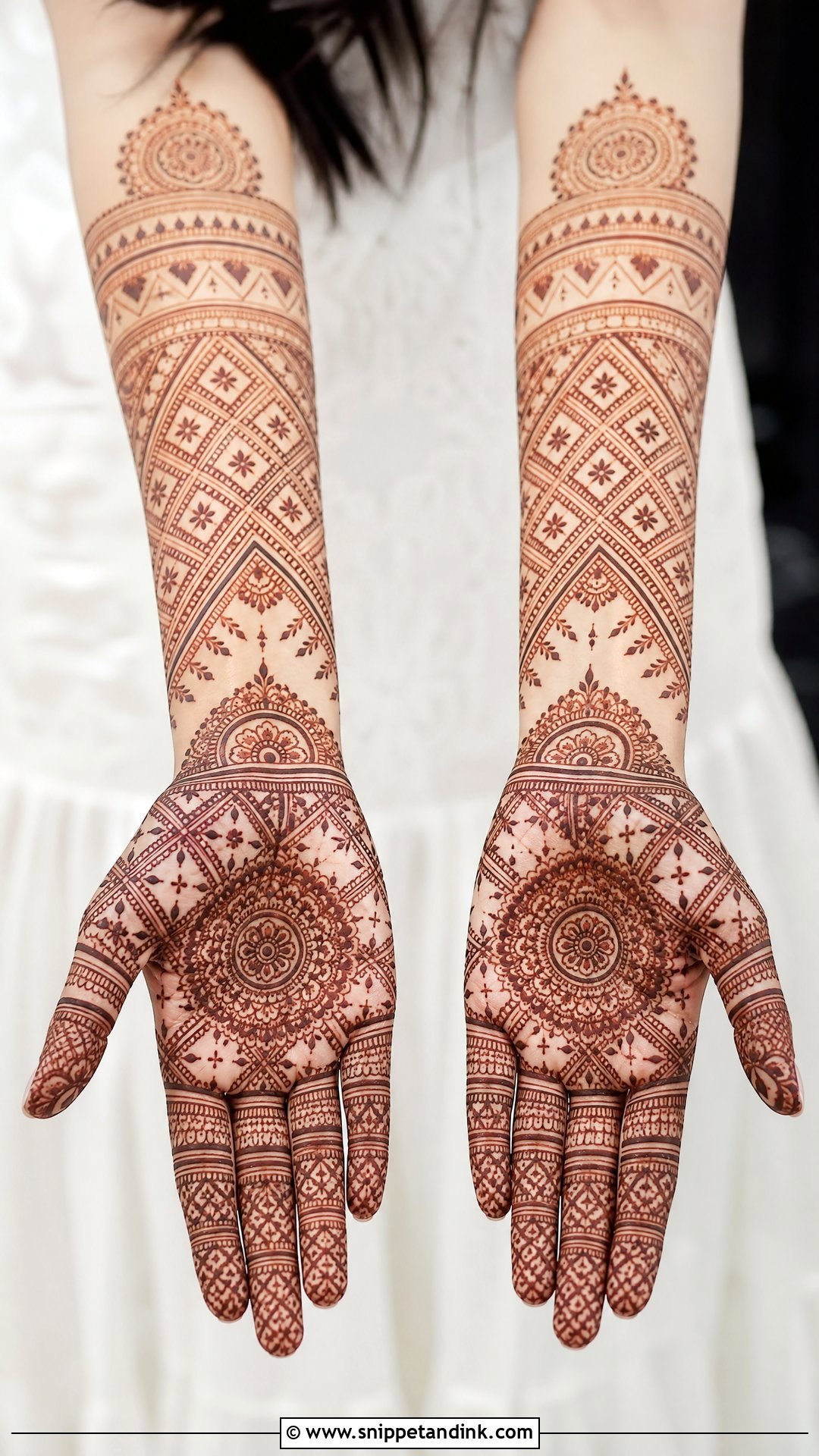
Geometric mehndi uses lines, diamonds, triangles, grids, arches and repeating shapes, often mixed with florals or mandalas. It suits brides who like order and contemporary outfits, fusion lehengas or minimal jewellery. I put geometric panels on the palm, bracelet bands at the wrist and clean finger patterns. Straight lines are less forgiving than curves on a hand that bends, so I soften the design with a few floral accents; pure geometry can look harsh once the skin creases.
22. Moroccan Bridal Mehndi Design
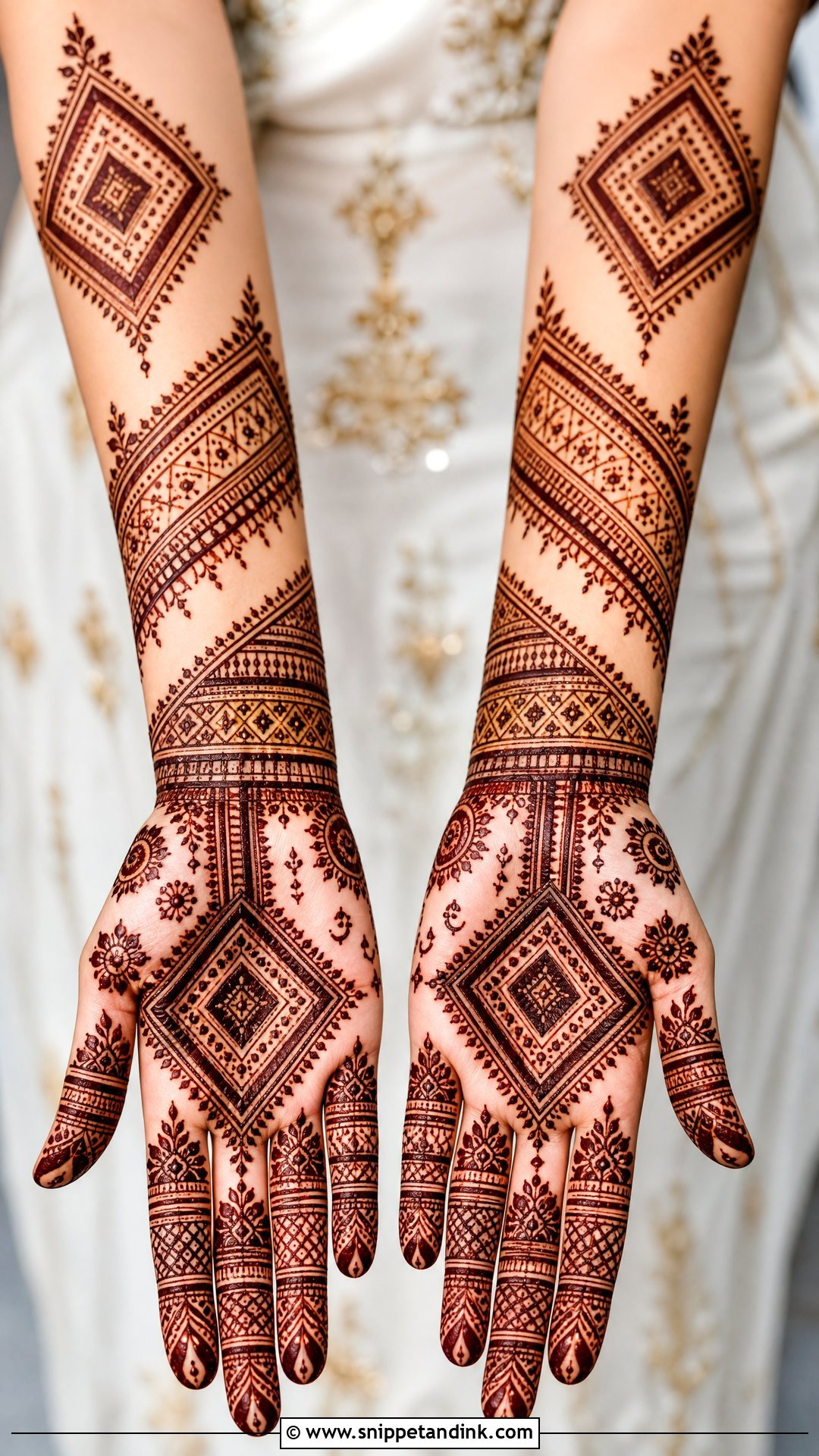
Moroccan designs feel bold and structured, with diamonds, lines, dots, chevrons and geometric blocks across the palm, fingers, wrist and forearm. It’s a good match for modern outfits and fusion looks, and it gives a real break from floral-heavy work. Even spacing is essential, so I measure by eye across the knuckles before drawing. A few leafy details make it easier to wear with traditional jewellery. It’s less soft than Arabic mehndi, and that’s exactly why some brides choose it.
23. Gulf Bridal Mehndi Design
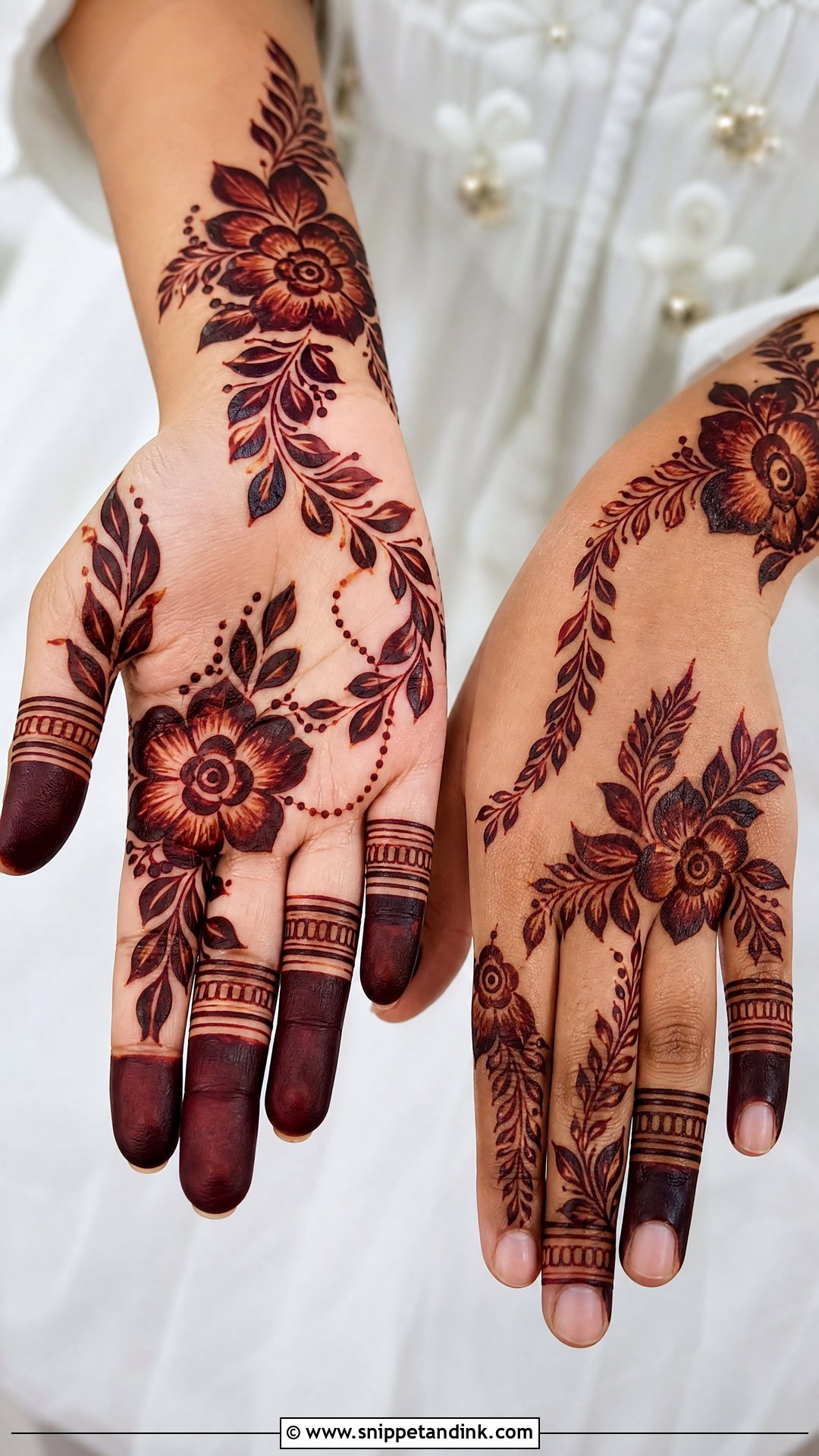
A Gulf bridal mehndi design, also called Khaleeji-inspired mehndi, is known for bold florals, leafy trails, shading and striking open spaces. Large flowers flow across the palm or back hand while the fingers carry clean bands and dots. It looks luxurious without covering every inch, which makes it a favourite for pre-wedding functions. The shading is done by thinning the paste line rather than adding a second colour, so it needs a well-mixed, smooth paste to look right.
24. Bridal Feet Mehndi Design
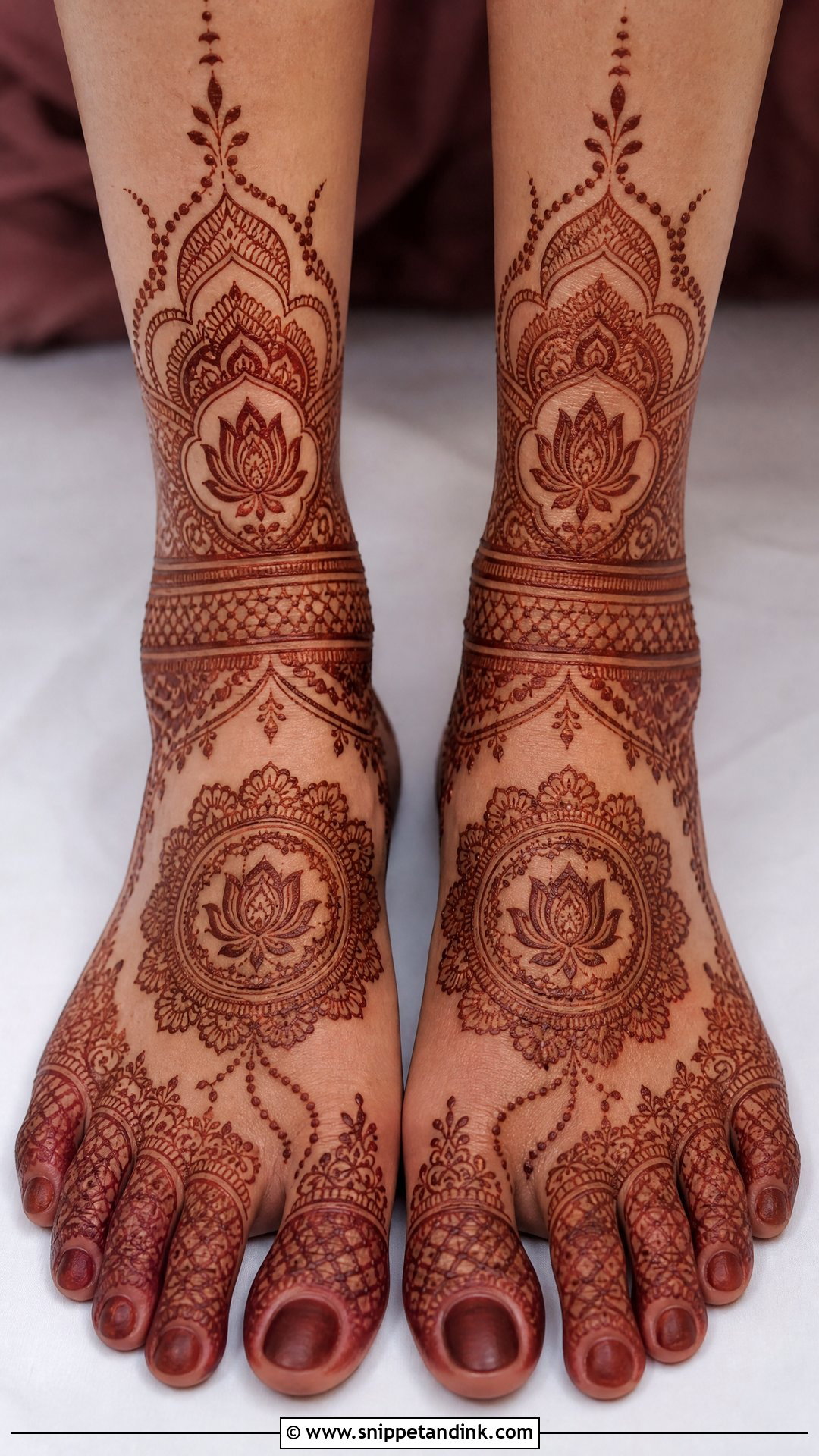
Feet mehndi rounds off the look for brides in lehengas, sarees, anklets or open sandals. It can cover the toes, the top of the feet, the ankles and sometimes the lower legs, using lotus flowers, anklet bands, mandalas, paisleys, jaali or vines that echo the hands. Feet often stain darker than the back of the hand, but they’re also the hardest to keep still and dry, so I do them last, once the hands are drying. Neat toe details and a balanced ankle cuff matter more than density, since feet mostly appear in walking shots.
25. White Bridal Mehndi Design
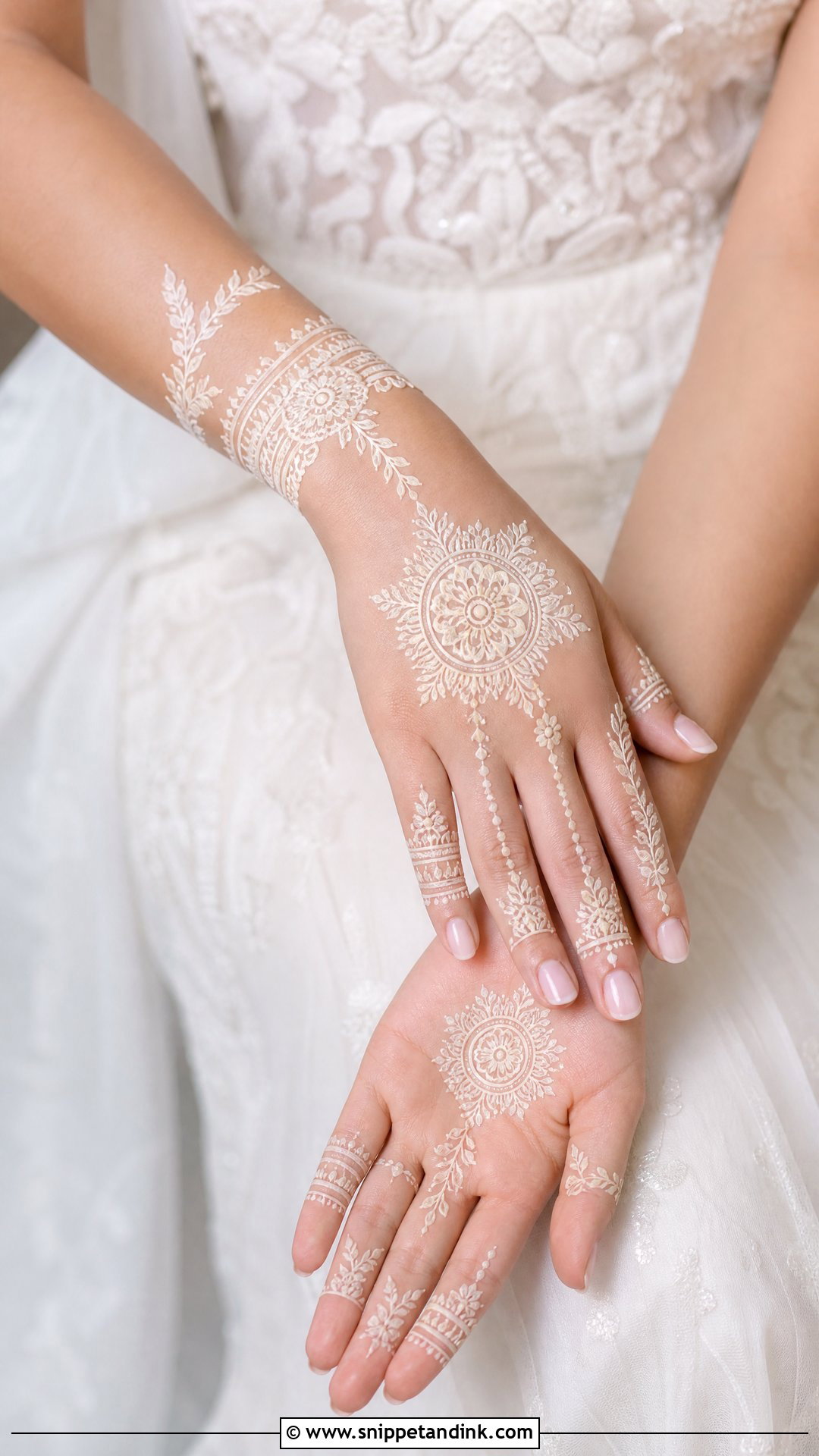
White mehndi isn’t henna at all. It’s a cosmetic body paint or body-art paste, and it sits on top of the skin instead of staining it, so it lasts a day or so and rubs off. That makes it a fun option for pre-wedding shoots, receptions or fashion-led ceremonies, especially with ivory, silver, pastel or contemporary outfits. Lace, florals, mandalas and finger-jewellery patterns all work. Treat it as decoration for an event, not your bridal mehndi, and do a small patch test first if you have sensitive skin.
Getting the Deepest Stain Before the Wedding Day
Henna paste doesn’t leave its final colour straight away. When the dried paste comes off, the stain is bright orange, and it deepens toward maroon or brown over roughly the next 24 to 48 hours. That’s why I apply bridal mehndi one to two days before the wedding, never the morning of it.
- Arrive with clean, dry skin and no lotion, oil or sunscreen on your hands or feet.
- Keep the paste on as long as you can manage, ideally six hours or overnight.
- Let me dab on a light lemon and sugar seal once the paste is touch-dry; it keeps the paste moist and stuck to the skin.
- Scrape the dried paste off with a blunt edge or your fingers. Don’t wash it off.
- Keep the design away from water for the first day, and warm your hands gently rather than scrubbing them.
Palms and fingertips will always stain darker than the back of the hand or the arm, and stain depth varies from person to person, so a slightly lighter wrist isn’t a fault. Exfoliating scrubs, chlorine and heavy hand washing fade it faster, so save the pedicure and swimming for after the wedding.
Natural Henna Versus Black Paste
Real henna paste is made from dried henna leaf powder, an acid such as lemon juice, sugar and essential oils, and it is brownish green when it goes on. Be wary of any cone that promises jet black colour within an hour. These products often contain PPD, a hair-dye chemical that can cause painful blistering and lasting skin reactions. Ask your artist what is in her paste, and if anything stings or itches, wash it off at once.
A small dot of paste on your inner wrist at your trial also tells you how your skin reacts and how dark it develops, which is far more useful than any photo of somebody else’s hands.
Matching the Pattern to the Way Your Wedding Actually Runs
The right mehndi isn’t the trendiest one. It’s the design that sits naturally with your outfit, ceremony, jewellery, hand shape and personality. A traditional bride might love full Indian or Rajasthani hands, while a modern bride may lean toward Arabic, minimal, negative-space or geometric patterns. Add initials, portraits or dates if you want meaning; choose floral trails, mandalas or jaali back hands if you want something lighter. Whatever you pick, give the stain its full two days to develop before the wedding photos.
You'll Like These Ideas:





Leave a Reply